The New Frontier Joke Book

Pick up a book like The New Frontier Joke Book and be reminded that humor doesn’t age well. With some exceptions, of course.
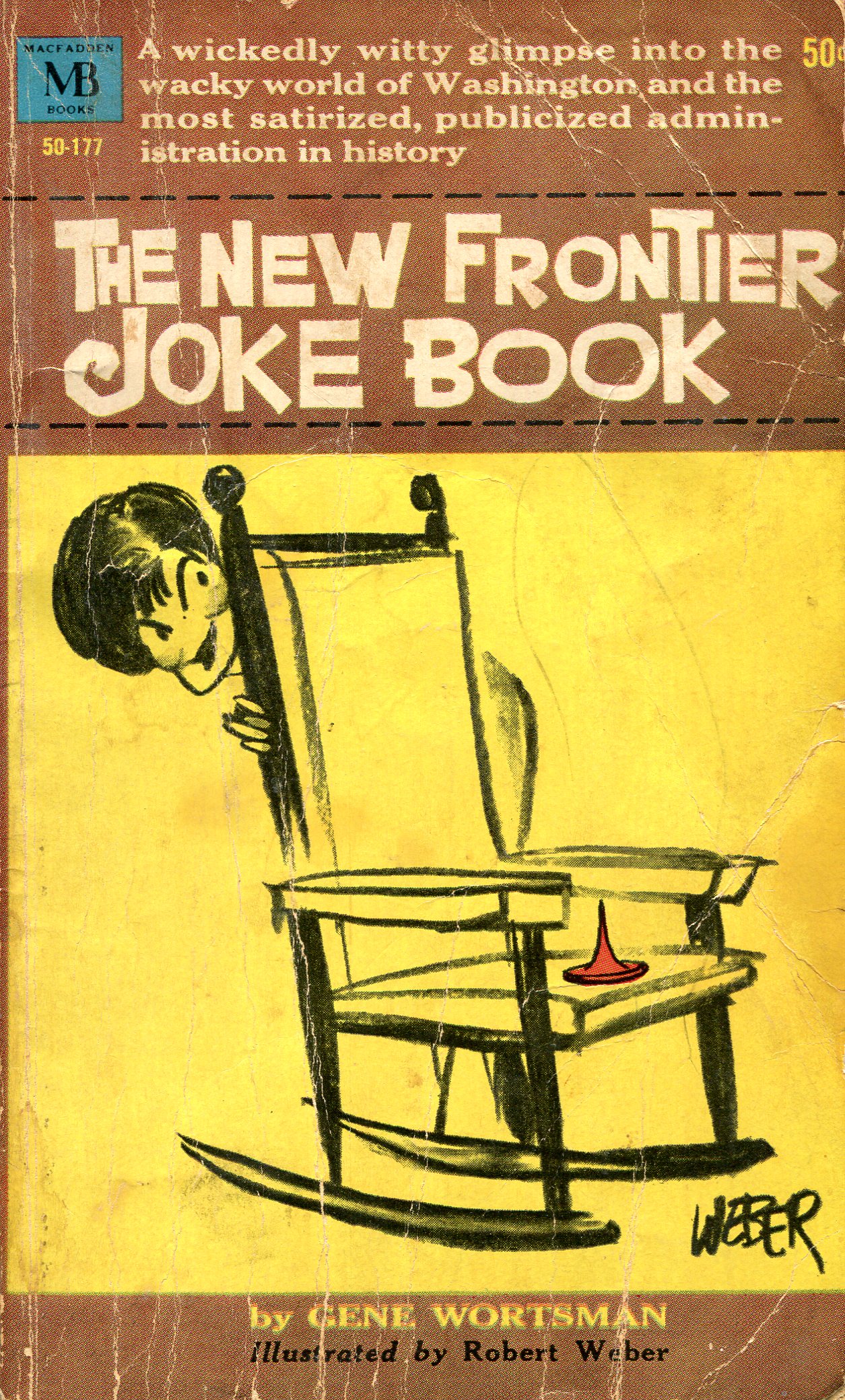
I picked up the paperback at my mother’s house some years ago and now it reposes on one of my bookcases. I assume my parents bought it new. That is to say, in 1963, which is the copyright date. Meaning that not long after it was published, sales fell as flat as Vaughn Meader’s career.

Still, enough copies must have sold to make the book a non-rarity on Amazon in our time. If you want one, you can get it for $2.30. The original price was 50 cents, or about $4.20 in current money.

Gene Wortsman was the author (aggregator, really). He was a newspaperman from Alabama, covering Washington for the Birmingham Post-Herald, which ultimately folded in 2005. Apparently he also wrote a book about Phenix City during the 1950s, which seems like a thing a newspaperman from the region would do, though Ray Jenkins of Columbus, Ga. (who died only last October), was better known for his coverage of Sin City, USA.

The promotional text on the back cover of The New Frontier Joke Book says, “Use this sparkling collection of the newest, brightest, and fanciest quips and cartoons about THAT FAMILY in the White House. Read it aloud, for the delight of your friends. Or save it for your private enjoyment — as a sure cure for the frustrations of thinking about the Cuban situation, income taxes, government spending, or any of the other joys of modern living.”

I thumb through it, looking for something that’s still funny. It isn’t easy. This was worth a chuckle:

“Son,” said a corpulent businessman, “it gives me a glow of pride to know you hate Kennedy the way I hated FDR.”

Other quips are mildly puzzling.

Thanks to Postmaster General Day, the nickel wins the award for the greatest comeback of the decade.

I assume that had something to do with an increase in the price of a first-class stamp.

These days, everyone in Washington wants to know if the President is off his rocker.

Ah, yes. The president was known to spend time in rocking chairs. (Which would account for the book’s cover art.) Bad back, you know. You can still buy one of the style he used for $549.

Some are Johnny Carson sorts of jokes, on his weaker nights.

Averell Harriman went on a mission to Moscow for FDR and a mission to India for JFK. That guy has more missions than the Salvation Army.

It isn’t true that JFK had a locksmith go through the White House and replace all of the Yale locks.

There are jokes about Jackie Kennedy’s wardrobe, the John-Bobby rivalry, the president’s relative youth, taxes, LBJ chaffing at the vice presidency, the size of the Kennedy family, Khrushchev, the space race, etc. etc.

Even one making fun of the Secretary of Agriculture.

So the Yankees are still winning baseball games. The only way to stop them is to put Orville Freeman in charge of their farm system.

Not a very good joke — I think, it’s a little hard to tell at this late date — but I suppose that was better for the secretary than being known for telling a remarkably crude joke.
Davis-Kidd Booksellers, Nashville & Squeezebox Books and Music, Evanston

I have envelopes containing paper debris — keepsakes, if you’re in a generous mood — from various periods in my life. They aren’t quite rigorously organized, since that wouldn’t fit my temperament, but most of the items evoke a certain bit of the past.

Such as the pleasant times I spent at Davis-Kidd in Nashville in the mid-1980s. The store gave away bookmarks. I still have one.

Davis-Kidd Booksellers bookmark

There are few pleasures like browsing a bookstore, especially an independent, intelligently stocked one, as Davis-Kidd was. It wasn’t enough to browse, either. I also bought books there.

Of course I have to report that the store is gone. About nine years gone, at least the one in Nashville. Nine years ago, the betting money was on the complete disappearance of the independent bookstore. Fortunately, that hasn’t quite happened. I do my part when I can, though such bookstores, new or used, are thin on the ground in the suburbs around me.

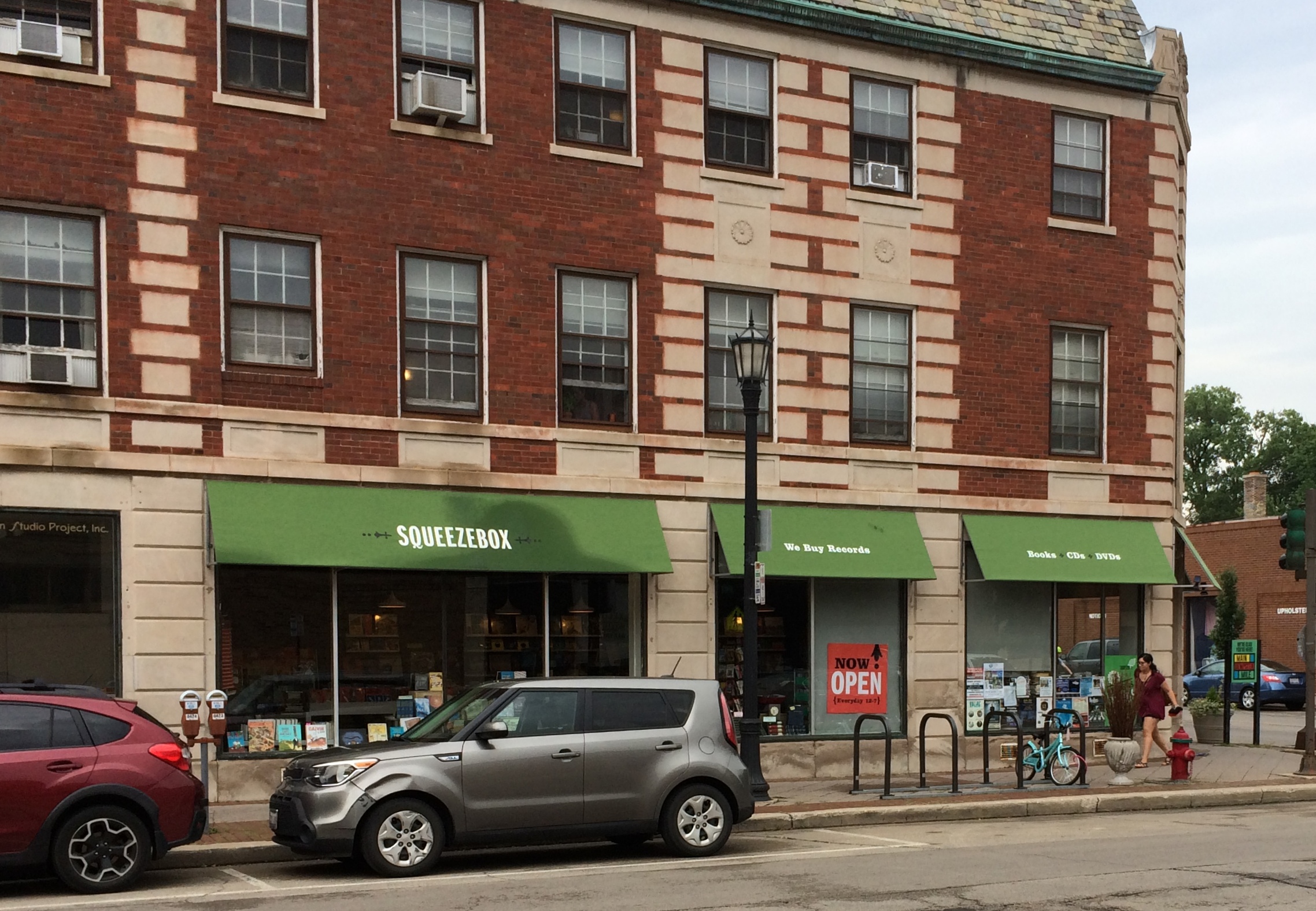
But I still find them further away. Last summer, for instance, I chanced across Squeezebox Books and Music when I was in Evanston.

Squuzebox, Evanston

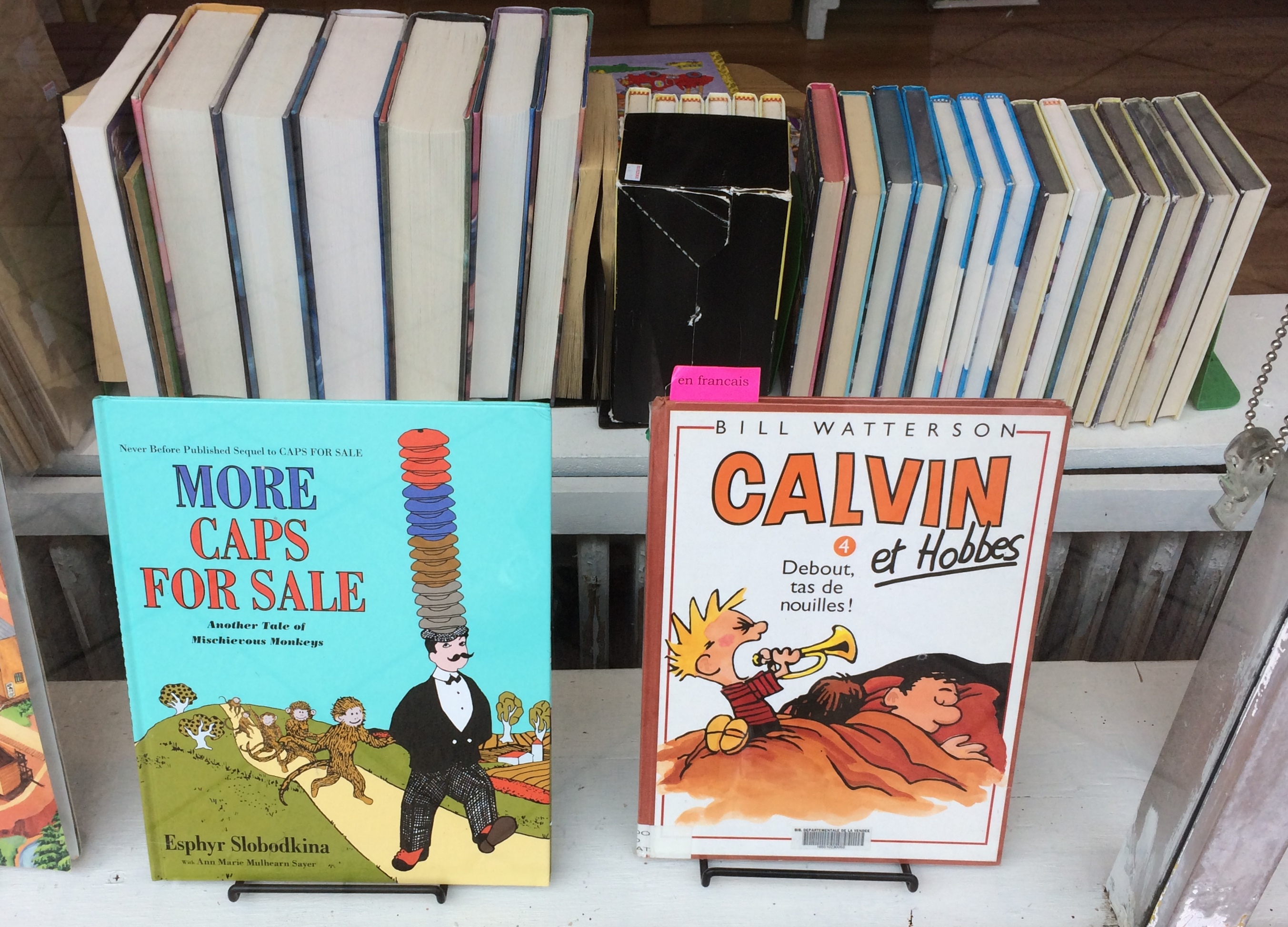
I like a shop that has non-English versions of Calvin & Hobbes for sale.

Squeezebox, Evanston

I didn’t buy any books there — I don’t buy as many as I used to, since I have so many — but I did buy postcards.

The Edgar Allan Poe Museum

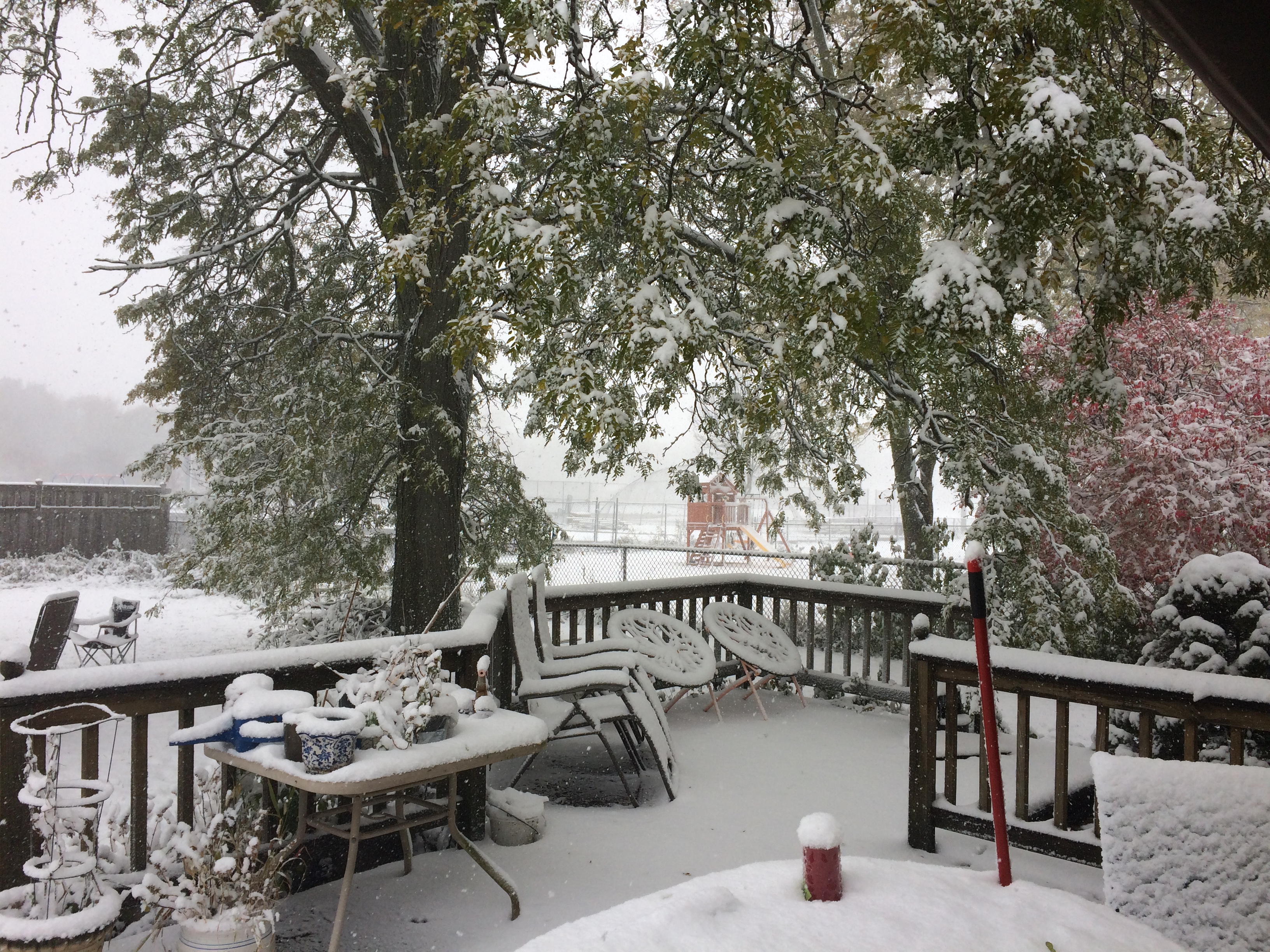
Halloween snow today. Mid-morning.Halloween Snow

Mid-afternoon. Of course, it will melt in a day or two.

I’ve spent a fair number of Halloweens in the North; this is the first time snow has fallen. Cold rain, sometimes, but no snow. Sometimes warm fall days or blustery cool ones, like the Halloween of 2001, when Lilly was so unnerved by the dark and the strong winds while out trick-or-treating that she insisted that I carry her home. She wasn’t quite four, so it was possible — but tiring.

Speaking of Halloween, I’ve been listening to “Danse Macabre” lately.

In high school, I made the mistake of calling the piece “Halloween music” in front of my band director. He let me have it. It’s a tone poem! It’s serious music from France! It’s blah blah blah. Know what, Mr. W? I was right. It can be all those other things and Halloween music as well. Halloween as in spirits roaming our world before All Hallow’s, not the candy-gathering custom.

The last place we visited during the recent Virginia trip was the Edgar Allan Poe Museum in the Shockoe Bottom neighborhood of Richmond.

Poe Museum Richmond

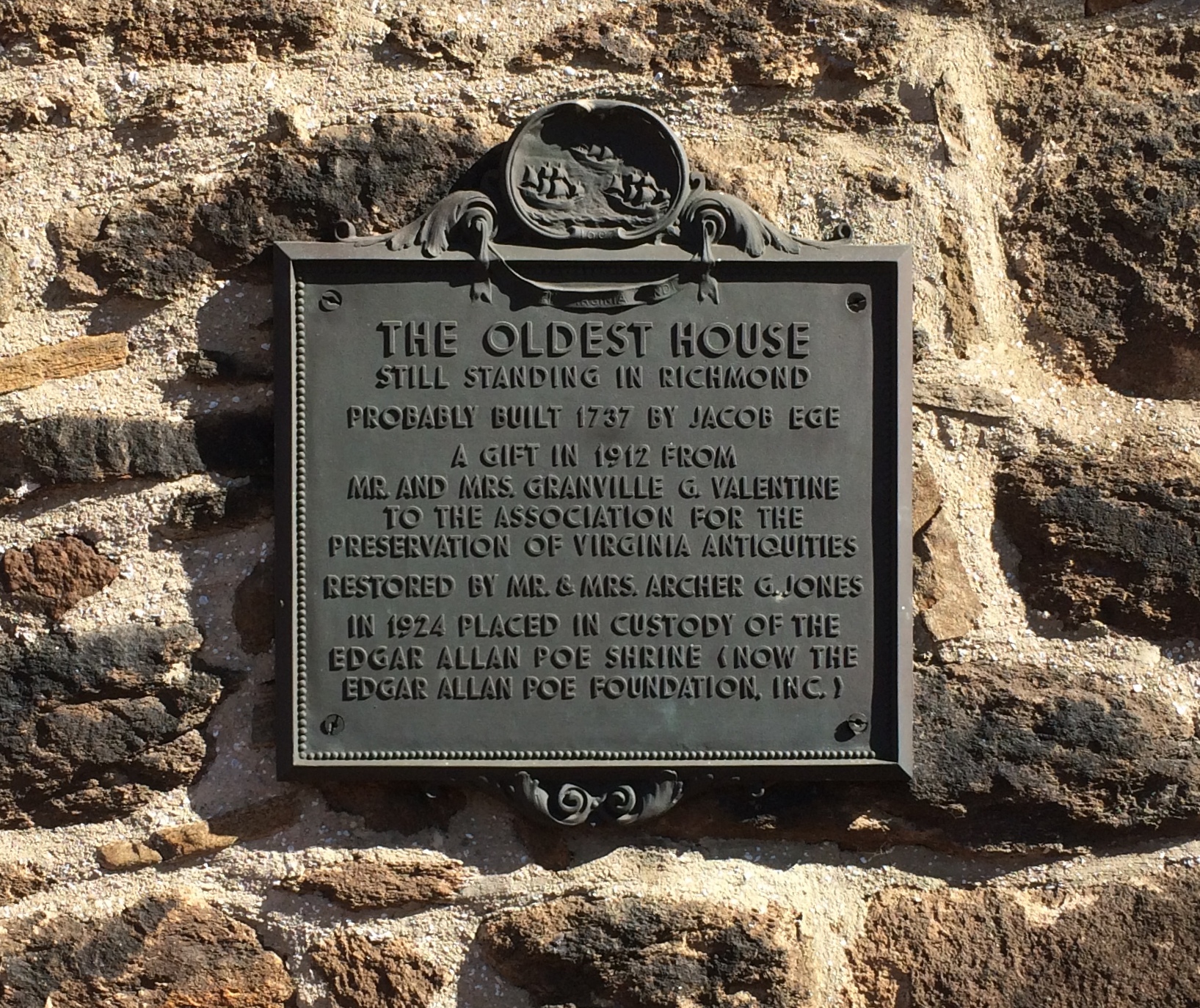
A small, specialized museum not in a house that Poe lived in — one of the places he lived was a few blocks away, long demolished — but including a building that is suitably old. In fact, according to a plaque on the wall, the oldest house still standing in Richmond, the Ege House.

All in all, an interesting little museum. Ann thought so too. I found out things I didn’t know, such as that Poe was a gifted athlete at the University of Virginia. Also heard more about things I did know, such as that after Poe died, his enemy Rufus Griswold wrote damning and largely false accounts of the author — vestiges of which still cling to Poe.

The museum is essentially three rooms: Poe’s early life, which was haunted by Death; Poe’s literary career, which was informed by Death; and Poe’s early and mysterious death, which was literally about Death. Some of the artifacts were owned by Poe or his family, or were portraits of them. Other items evoked his life and literature.

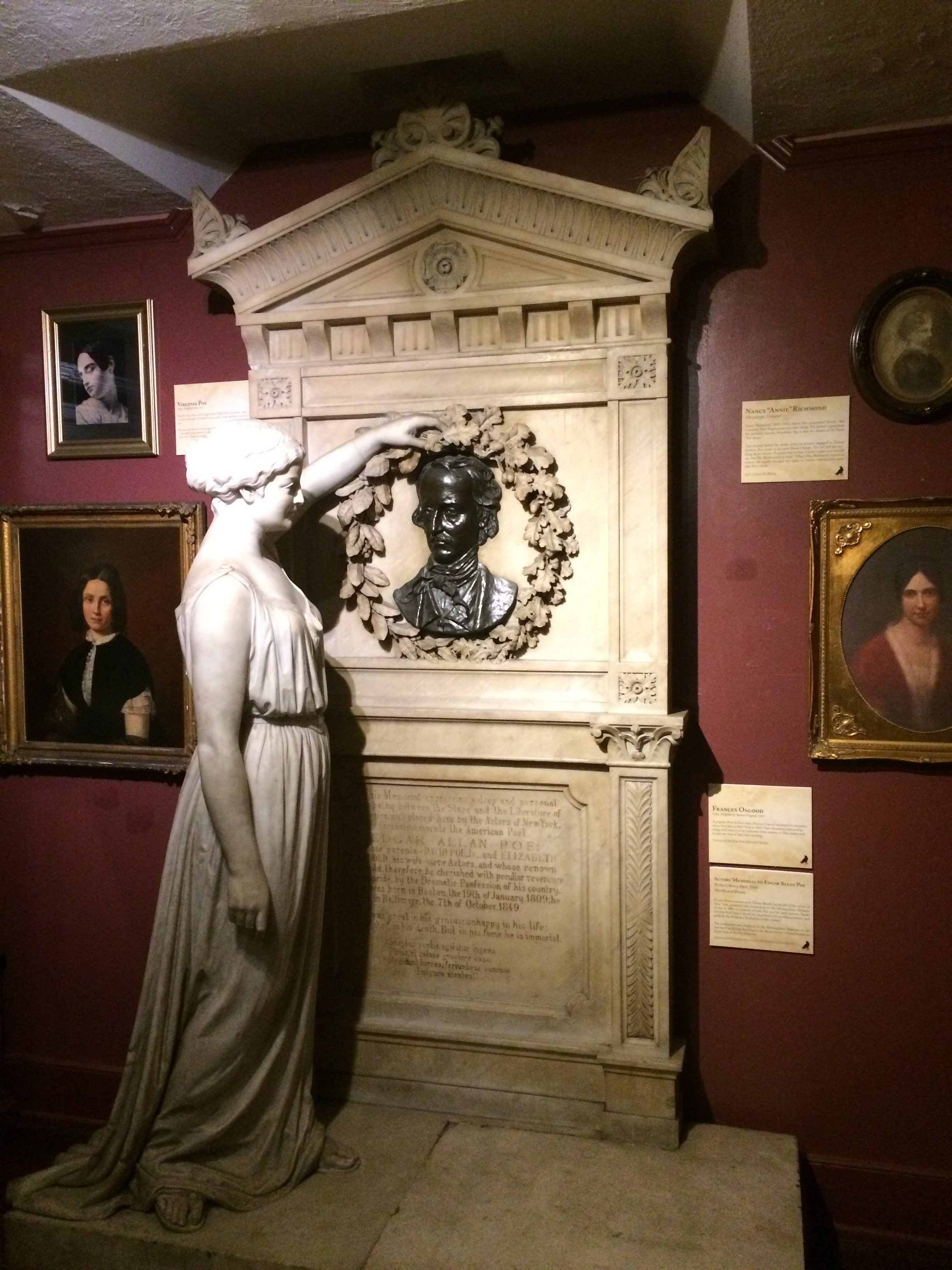
Such as this marble-and-bronze memorial to Poe.

The sign says, “… Edwin Booth, on behalf of the actors of New York, presented this monument to the Metropolitan Museum of Art in 1885 in memory of Poe…” Eventually, I guess, the Met got tired of it, and it ended up in Richmond.

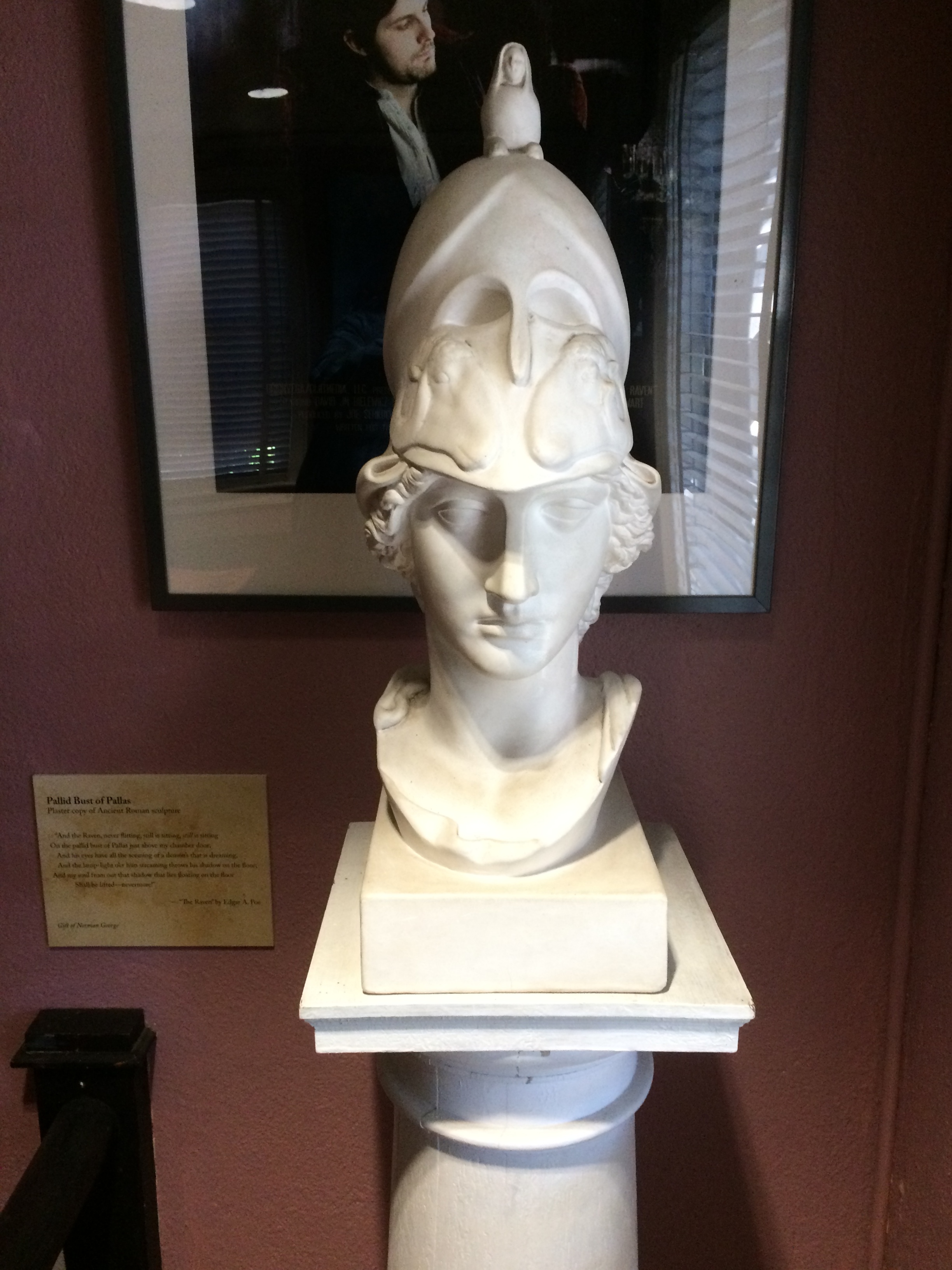
Or this bust of Pallas, a copy of a Roman sculpture. Can’t call yourself a Poe museum without that, though a depiction of Night’s Plutonian Shore would be good as well.

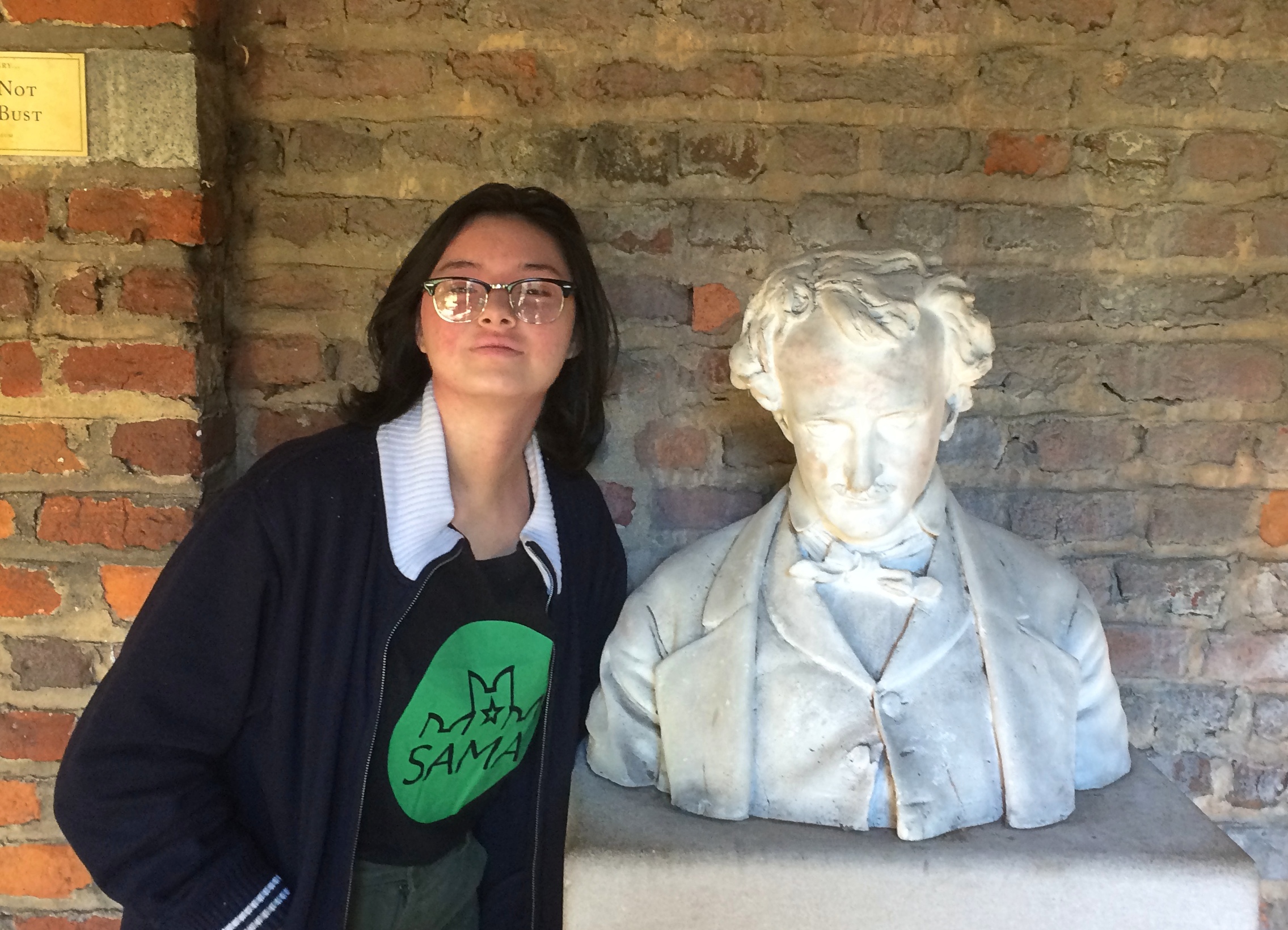
Poe himself in stone out in the garden.

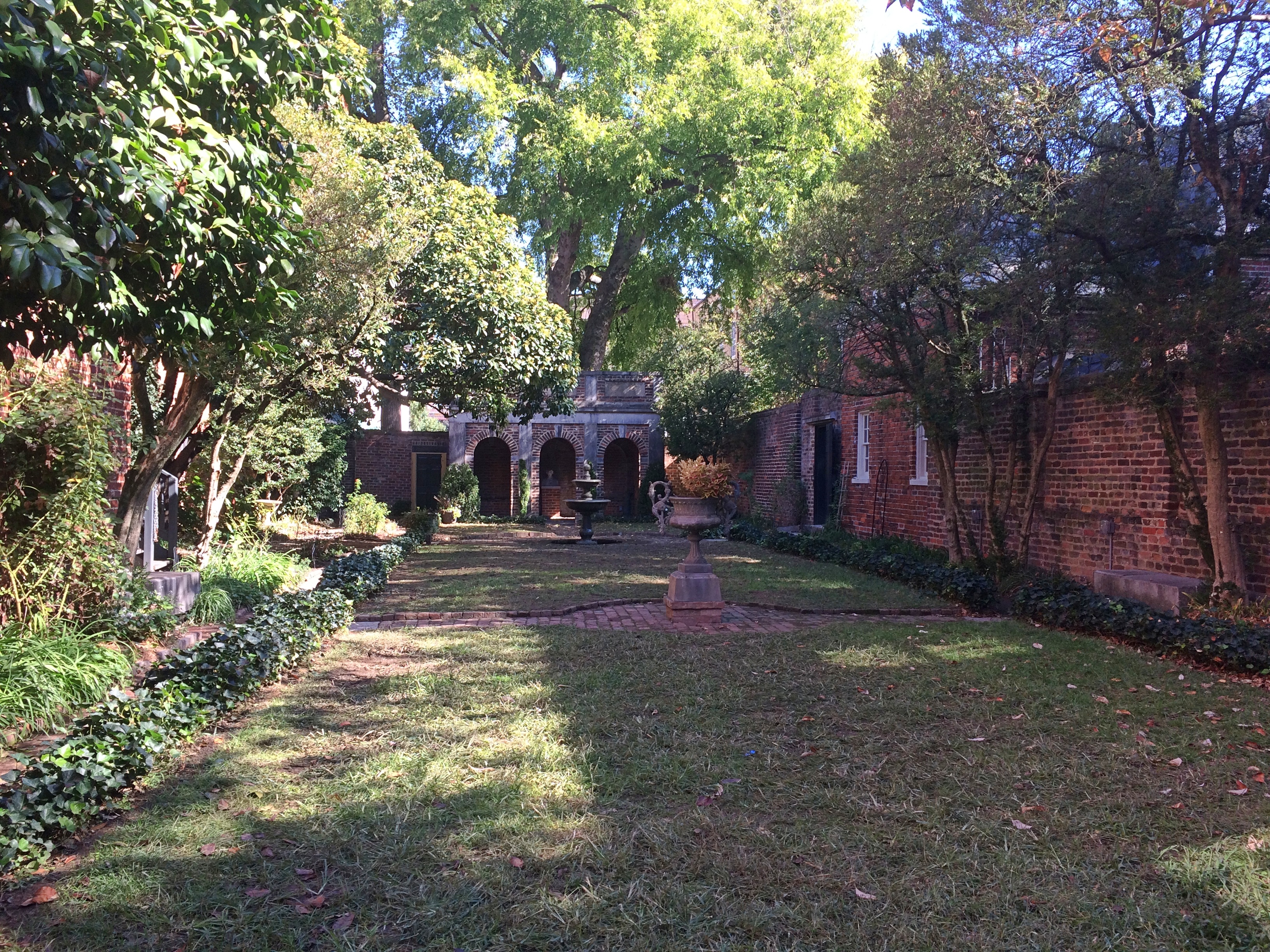
The garden is a pretty little space. People get married there, apparently.

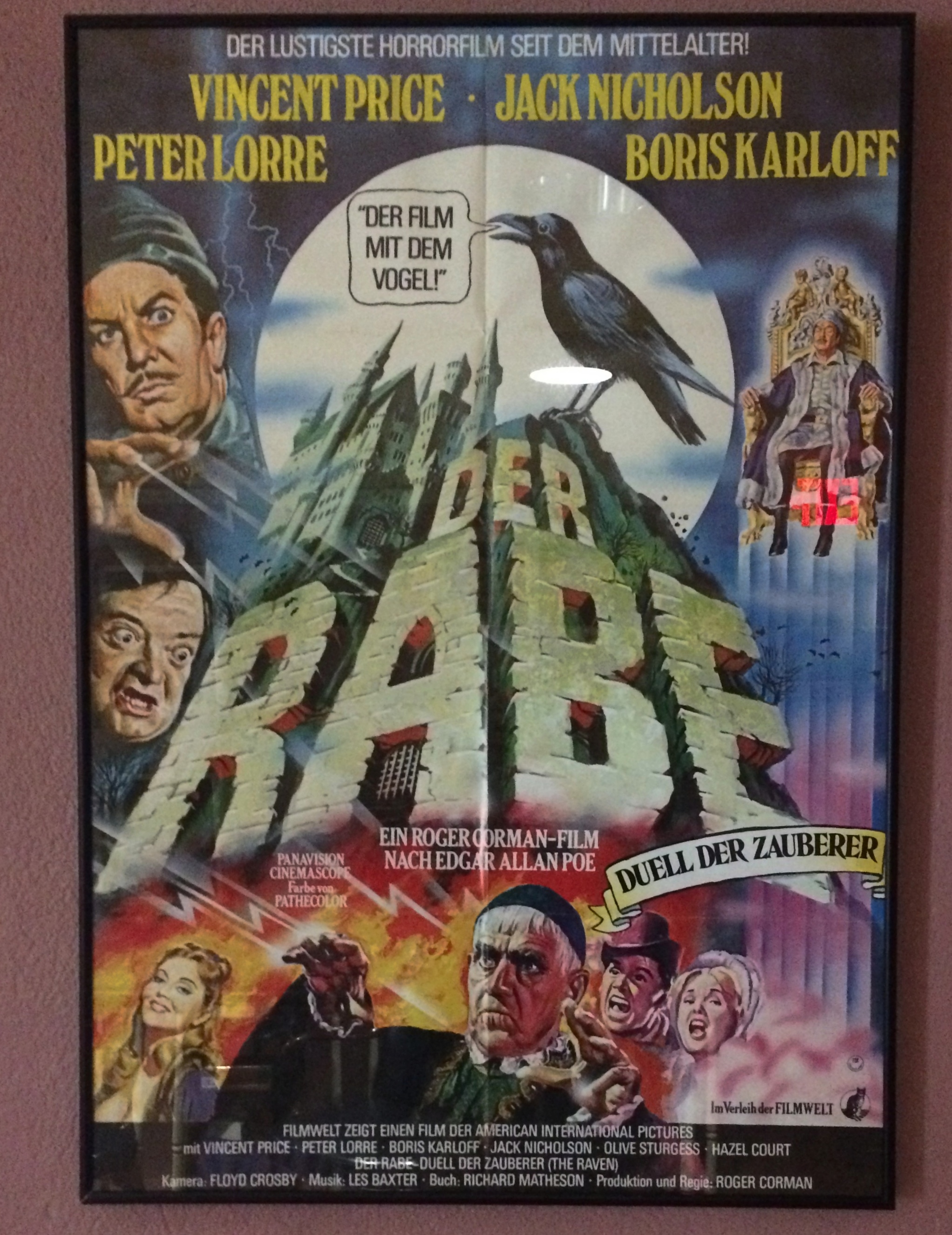
My own favorite item.

I haven’t seen The Raven, but a movie with Vincent Price and Peter Lorre and Boris Karloff and Jack Nicholson, directed by Roger Corman, who did a lot of Poe-inspired movies, has to be worth a look.

Thursday Scraps

Declining summer is a touch melancholy, but it has its charms. Such as soft cricketsong by night.

Late July and early August were drier than the wet weeks of late spring and early summer, but we did get some rain this week, mostly the non-thundering, gentle sort. Earlier this week, I stood outside under the eave over my back door, and heard water flowing vigorously.

Not something you necessarily want to hear near your roof. Soon I figured it out, to my relief. The dry spell had completely dried the gutters out, so that the new water flowed much more freely. That was the sound: rainwater as it coursed through the gutters on its way to the downspout.

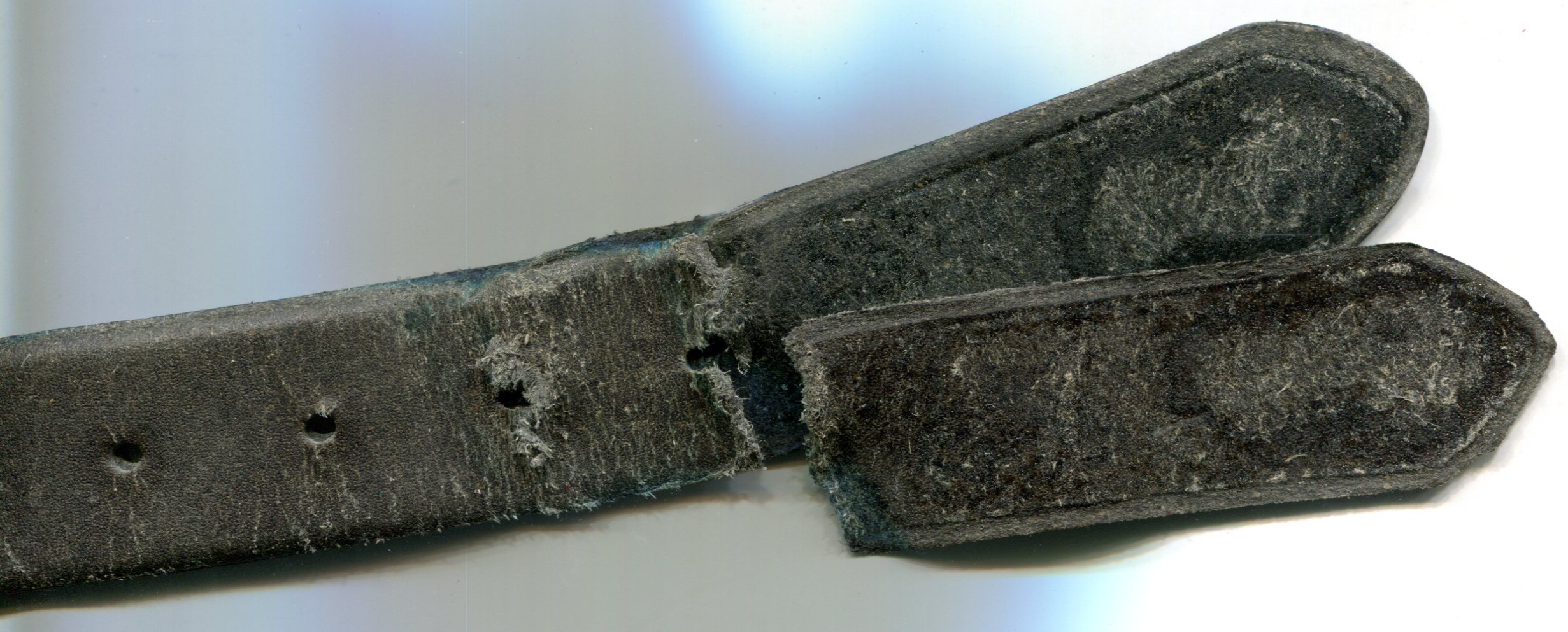
Something I’ve noticed in recent years: when you buy an inexpensive men’s belt, you don’t get a decent belt that lasts a few years, though a little worn at the end. You get cheap crap.

That’s the latest belt of mine to fall apart. There’s an industry for you to disrupt, Mr. Millennial looking for the main chance. Make decent belts. Probably someone’s doing that. Decent, maybe, but also priced five times an ordinary belt.

Recently I finished Everybody Behaves Badly,  subtitled “The True Story Behind Hemingway’s Masterpiece The Sun Also Rises,” by Leslie M.M. Blume (2016). Well written and full of interesting anecdotes. I knew Sun was a roman à clef but I didn’t know much detail or just how lightly Hemingway fictionalized some of the events, much to the embarrassment of the people who went to Spain with him in the summer of ’25.

Some tidbits: in an early draft of the novel, one of Brett’s brief affairs was said to be with an American named Tom who kept polo ponies. Possibly an allusion to the character Tom Buchanan in The Great Gatsby. Didn’t make the final cut.

Robert Cohn was based on Harold Loeb, an unflattering portrait that shadowed Loeb the rest of his life. Loeb and Hemingway didn’t quite come to blows in Pamplona, however, unlike their characters. They were angry enough at each other to fight, but apparently thought better of it.

Not long after the book came out, Hemingway left his first wife for the woman who would become his second. As part of the divorce, he agreed to give wife #1 Hadley Richardson the royalties from Sun, which would have been considerable. Then again, in marrying wife #2 Pauline Pfeiffer, he was marrying into money.

Now I want to read something different than that milieu. So I picked up a book of Eudora Welty short stories.

Gentlemen Who Invented Pharmacy

Not long ago I was finally inspired to find out something that has eluded me for many years. Maybe eluded isn’t the word. I haven’t tried to nail down the information very hard. Or at all, because it isn’t that important.

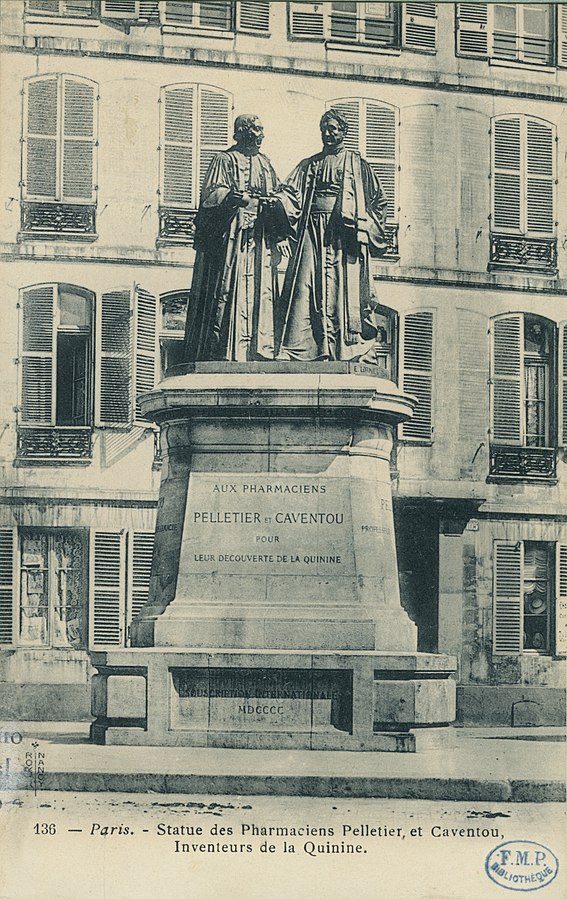
Non-importance shouldn’t be an obstacle to curiosity, however. So I did some looking around and found out that the statue mentioned in passing by the wisecracking and ever-so-tight Bill Gorton in The Sun Also Rises — literally in passing, since the characters are walking by it — is that of Pelletier and Caventou, which in the mid-1920s was on the Boulevard St. Michel.

Wiki: “In 1820, French researchers Pierre Joseph Pelletier and Joseph Bienaimé Caventou first isolated quinine from the bark of a tree in the genus Cinchona – probably Cinchona officinalis – and subsequently named the substance.”

Sun (Chapter 8): “We walked down the Boulevard [St. Michel]. At the juncture of the Rue Denfert-Rochereau with the Boulevard is a statue of two men in flowing robes.

” ‘I know who they are.’ Bill eyed the monument. ‘Gentlemen who invented pharmacy. Don’t try and fool me on Paris.’ ”

This is what that statue looked like in the time of Sun, courtesy of a card from the collection of Bibliothèque interuniversitaire de santé. Erected in 1900.
As far as I can tell, Rue Denfert-Rochereau — actually Avenue — doesn’t meet Boulevard St. Michel in our time. Close, but not quite. Either the streets have been reconfigured in 90 years or Hemingway was wrong.

In any case, the statue of two men in flowing robes is gone. One of many Paris bronzes melted down by the Germans during the occupation, various sources tell me. Now Pelletier and Caventou have a less literal memorial, or at least they did as of last summer, according to Google Street View.

A reclining figure on a plinth at Boulevard St. Michel and Rue de l’Abbé de l’Epée, evidently part of a fountain, since the memorial is called La fontaine des pharmaciens. Maybe the figure’s stricken with malaria. If I ever make it back to Paris, I’ll make a point of walking by. But I probably won’t be tight.

Jaume Plensa, Here and There

Here’s a line from The Sun Also Rises that I didn’t much appreciate until recently. In one of the many conversations among the protagonists, the subject of the character Mike’s bankruptcy is broached:

“How did you go bankrupt?” Bill asked.
“Two ways,” Mike said. “Gradually, then suddenly.”

A lot of things happen that way. Learning often happens that way. Or at least awareness. Fortunately, I don’t have the experience of bankruptcy in mind. Still, a minor example of gradually-suddenly just happened to me.

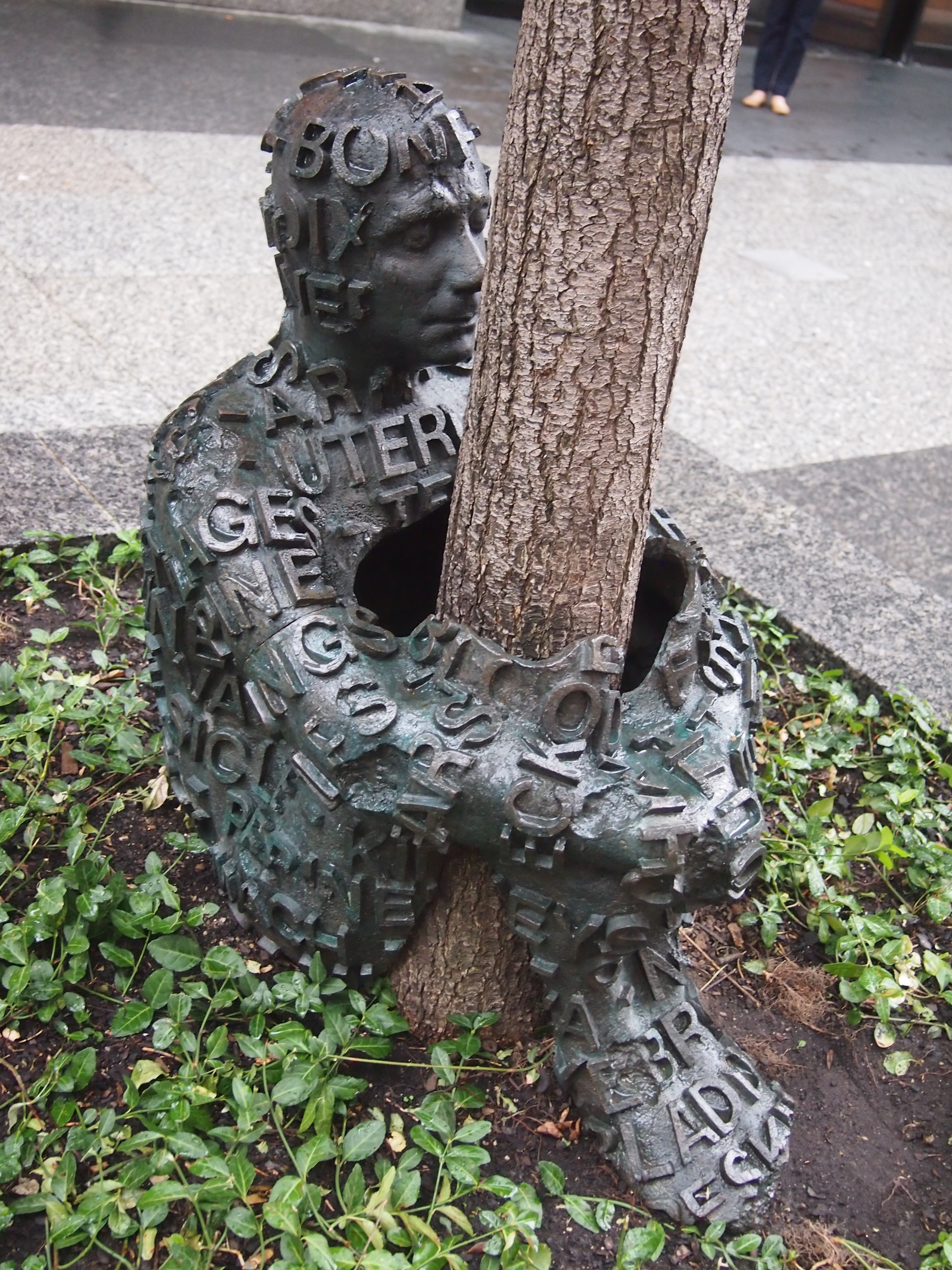
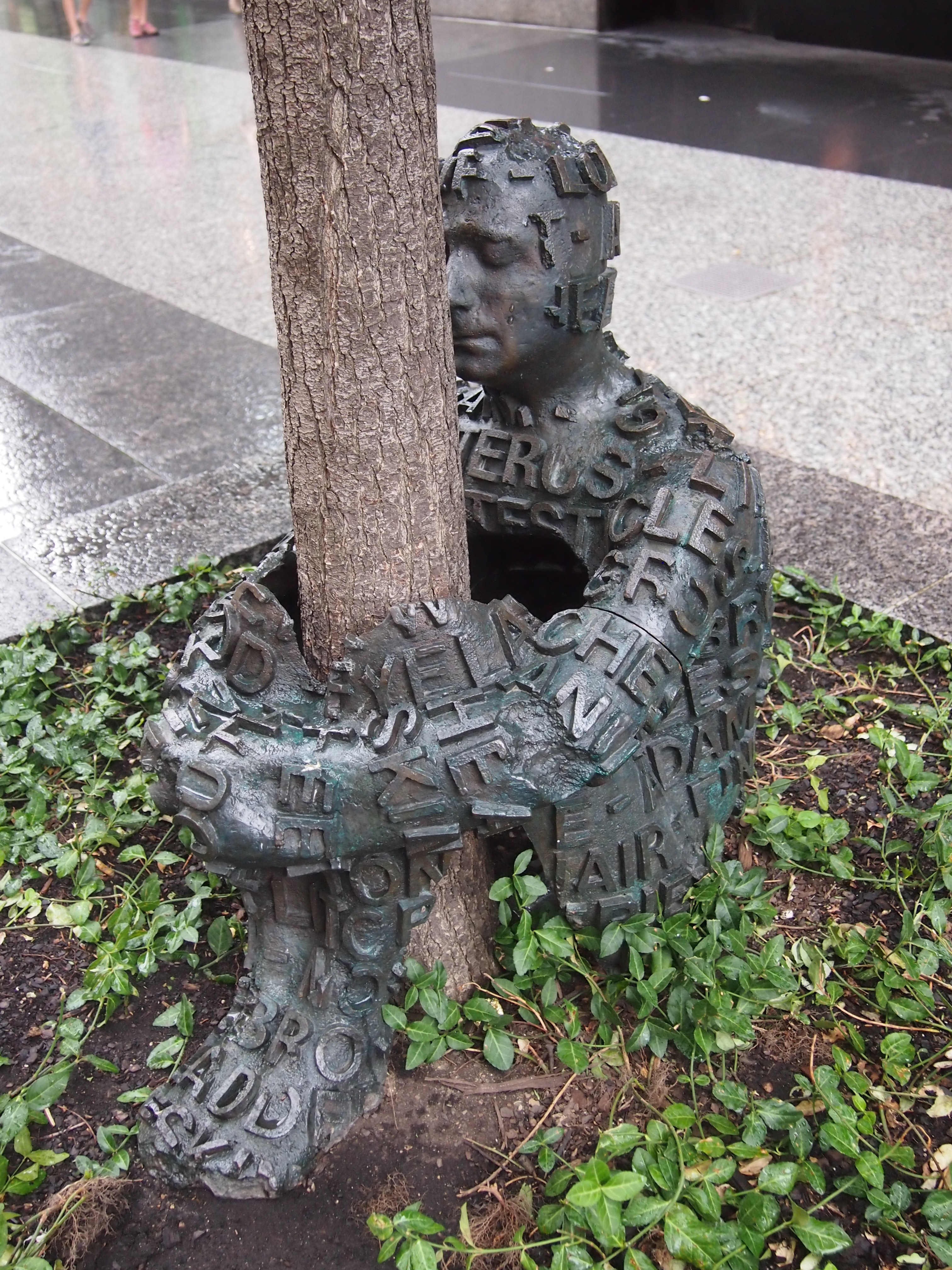
Back in 2008, we visited the Frederik Meijer Gardens & Sculpture Park in Grand Rapids, Mich. One of the works was by Jaume Plensa, “I, you, she or he…”
In 2014, I took note of Plensa’s monumental head, temporarily placed in Millennium Park in Chicago, “Looking Into My Dreams, Awilda.” I also knew at the time that the Catalan artist had also done Crown Fountain in the park as well.

Interesting that the vitriol against “Dreams” in the comments of this Chicago Reader item obsesses about the size of the head. When I happen across public art, I judge it by an admittedly subjective standard: does it make the space more interesting? By that standard, all the Plensas I’ve seen are successful works.

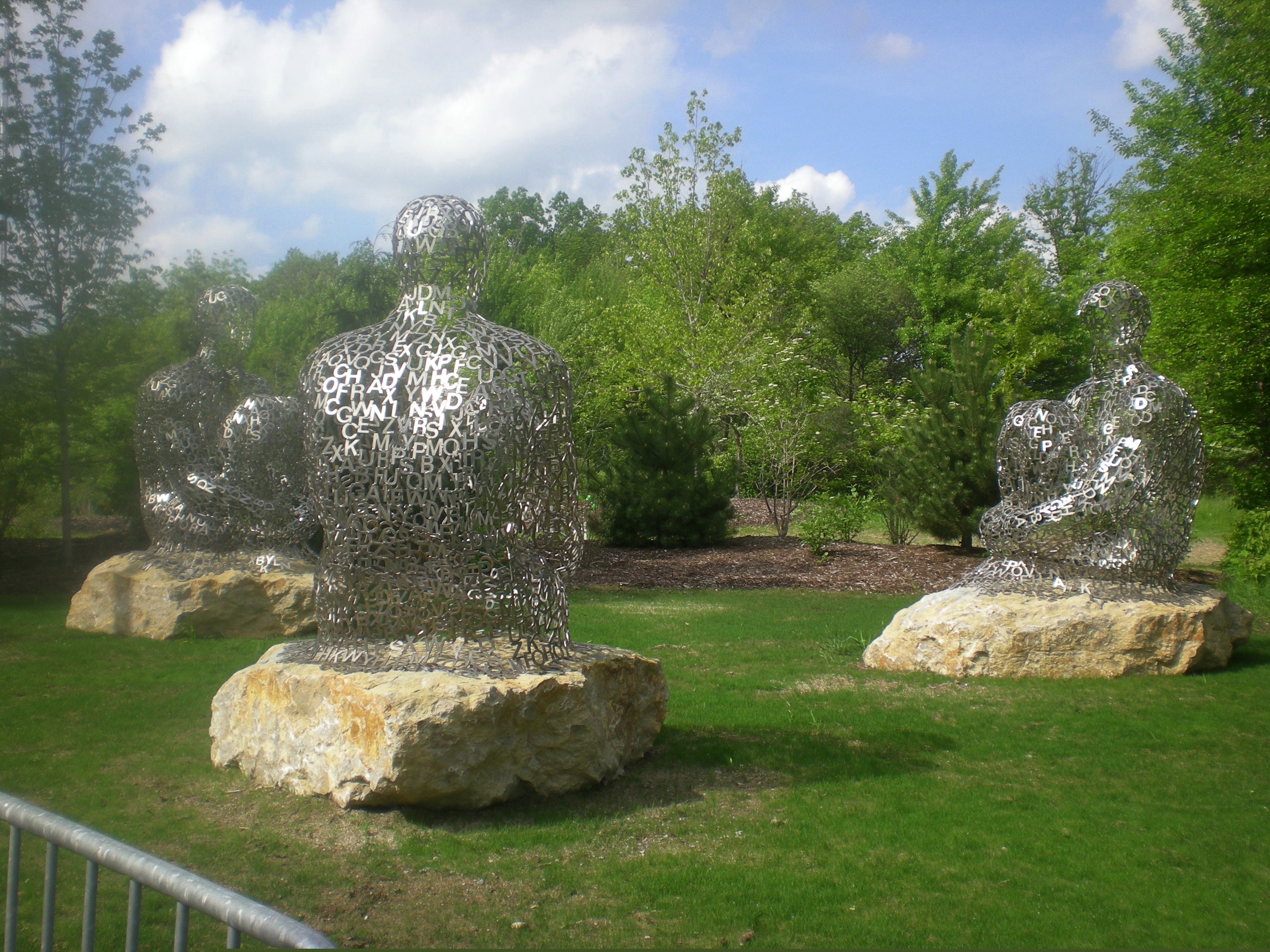
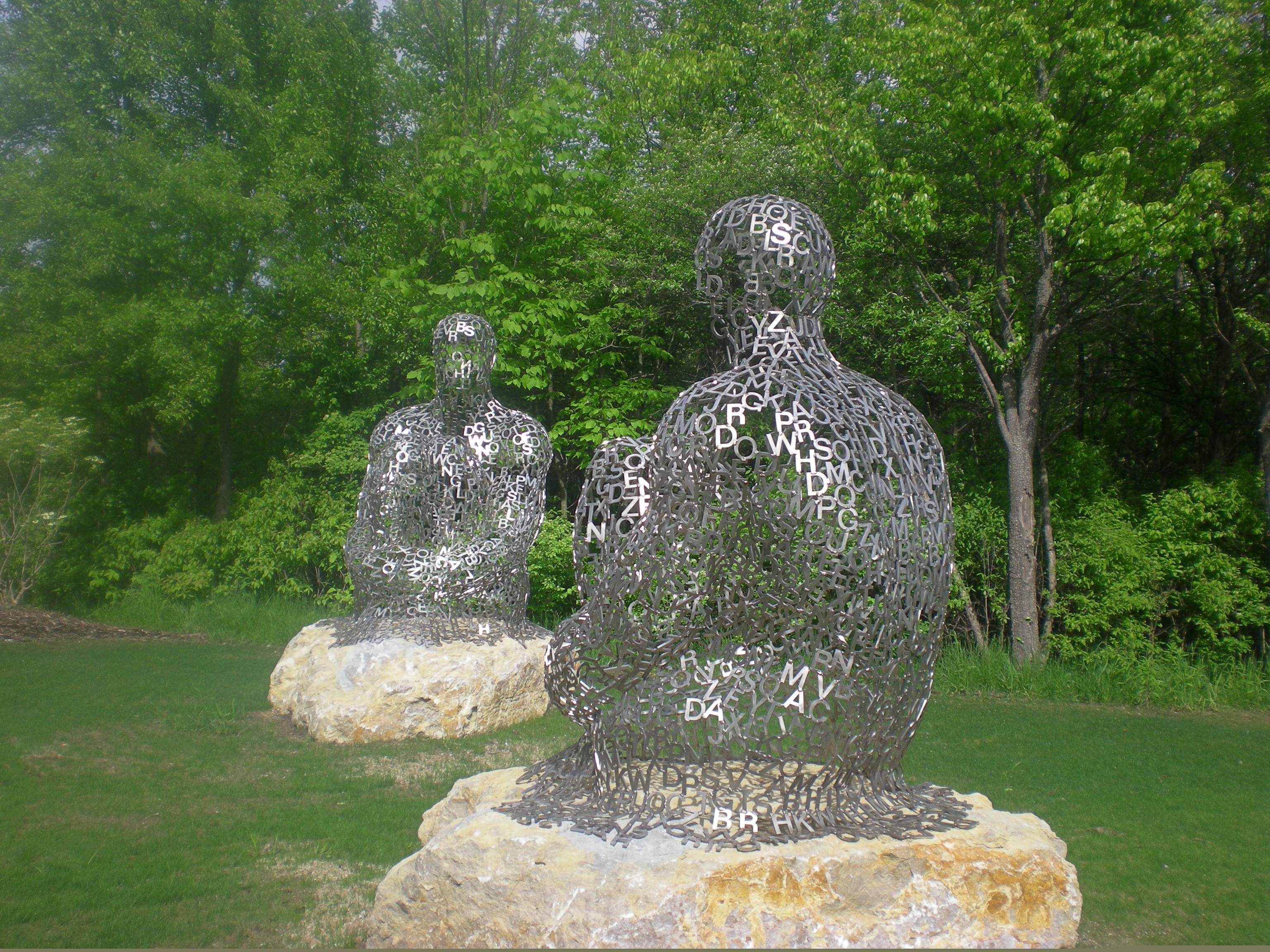
Today I was looking at pictures I’d taken in August 2013, and happened across these — two images of the same work in Chicago.
Self Portrait With Tree - Chicago - Jaume PlensaSelf Portrait With Tree - Chicago - Jaume Plensa“Self Portrait With Tree,” by none other than Plensa. I’d forgotten about it, and when I took the picture, probably didn’t associate it with the other works of his I’d seen. “Self Portrait” was next to the Hancock Tower on E. Chestnut St. I checked the Street View of that block, dated July 2018, and the work is gone. It was put up by the nearby Richard Gray Gallery, so perhaps it found a buyer.

All that is the gradual part. Somehow or other, Plensa hadn’t made much of an impression on me over the years. But when I looked at the 2013 images, I suddenly wanted to know more about him, since I don’t make a close study of sculpture or public art. If I had, I would have known how widespread his works are. (Had we walked further along Buffalo Bayou in Houston in May, we’d have come across yet another.)

Is it important that I know this? Maybe, maybe not. But better to err on the side of knowing something, however small.

Hercules Mulligan, Patriot

I had ramen at home for lunch on Friday. Unremarkable, except I ate my ramen sitting out on the deck. No coat necessary to keep warm. The setting made the tasty noodles, vegetables and broth that much better.

The warmth didn’t last. It couldn’t. By the evening, drizzle. By Saturday, a late winter chill that hasn’t gone away even yet. Today came the bonus of wind gusts blowing the only way wind blows in cold weather: in your face.

Croci and a few weeds and a purple flower or two now poke out of the ground to tease us about spring. Maybe that counts as cruel. But April is also the month when, suddenly, the grass will be green again.

A couple of weeks ago, I decided it was time to read Ron Chernow’s biography of Alexander Hamilton, which has been on my shelf for quite a while. I don’t regret it. It’s a weighty book, as befits a weighty subject, but also a lively read that illuminates Hamilton’s character and ideas.

There are also plenty of interesting and sometimes entertaining supporting characters. My favorite so far: Hercules Mulligan, only partly for the name. Hamilton met him not long after coming to New York, just before the Revolution.

“[Hamilton] had all the magnetic power of a mysterious foreigner and soon made his first friend: a fashionable tailor with the splendid name of Hercules Mulligan….” Chernow writes. “Born in Ireland in 1740, the colorful, garrulous Mulligan was one of the few tradesmen Hamilton ever befriended. He had a shop and home on Water Street, and Hamilton may have boarded with him briefly…

“Later, during the British occupation of wartime New York, Mulligan was to dabble in freelance espionage for George Washington, discretely pumping his foppish clients, mostly Tories and British officers, for strategic information as he taped their measurements.”

Later, regarding the events associated with Evacuation Day in New York — November 25, 1783 — Chernow relates the following: “The morning after he entered New York, Washington breakfasted with the loquacious tailor, Hercules Mulligan… To wipe away any doubts about Mulligan’s true loyalties, Washington pronounced him ‘a true friend of liberty.’ ”

Mulligan ought to have a plaque somewhere on Water Street. He’s buried in Trinity churchyard in Lower Manhattan. If I’d known that last year, I might have looked for him.

As for Evacuation Day, New York holidays aren’t any of my business, but that’s one that ought to be brought back, even if it’s more-or-less at the same time as Thanksgiving.

Reading About the Wazir of Wham in the Pit of Winter

Sliding into the pit of winter. The abyss. The Mariana Trench. With any luck temps won’t be any colder in February.

The snow was intense enough this morning that school was cancelled and garbage pickup didn’t happen on our street today as scheduled, though the recycle truck came more-or-less on time in the mid-morning, even before the plows.

I decided to go ahead and read the biography of Babe Ruth that I have handy, Babe Ruth: His Life and Legend by Kal Wagenheim (1974). Not overly scholarly, but fun. A book about good-time Babe Ruth that isn’t fun isn’t trying very hard. Also, it was written long enough ago that plenty of old timers were still around to tell stories about Ruth.

Been a while since I read any baseball books. Can’t remember the last one. Might have been You Gotta Have Wa.

One amusing thing to read about is the array of nicknames that sports writers invented for the Babe. The Sultan of Swat or the Bambino, everyone knows (or should), but less-well known is the Colossus of Clout or the Behemoth of Bust. Or the Caliph of Clout, Wazir of Wham, Maharajah of Mash, Rajah of Rap, Mammoth of Maul, Wali of Wallop, the Mauling Monarch and the Terrible Titan.

Thursday Bunkum

Our latest snow was less convenient than previous ones this winter, falling in mid-week. I spent a fair chunk of Wednesday shoveling more snow around, this time wetter masses than the last snowfall. Now an arctic blast is blasting its way toward northern Illinois. Subzero temps ahead.

Ah, fun. We’ve been down this road before, of course.

I just found out today that the Emperor of Japan is going to abdicate on April 30. That was news in December, but I missed it. I chanced across the information in a copy of the bilingual Chicago Shimpo, a paper Yuriko picks up for free periodically at the Mitsuwa grocery store.

The Imperial Household Agency, known for its mossback ways, is on board with that?  Yet abdication from the Chrysanthemum Throne isn’t unknown. The most recent abdication was of Kōkaku, who quit in 1817. Pretty recent, considering the longevity of the Yamato Dynasty.

In even earlier times, back when the emperor was more of a political football than in recent centuries, one emperor was sometimes forced out to make way for another.

Now that I’ve finished reading Stalin — which I read after John Wayne: The Life and Legend by Scott Eyman (2014), an excellent book — I’ve decided to read some more biographies. A biography bender. Next I want to pick one from around the house, one that I haven’t read.

My choices, at least those I’ve found so far, include works on Francis Bacon, Benedict Arnold and Babe Ruth.

Something called Indywire asserted recently that: Coen Brothers Shock With ‘Buster Scruggs’ Oscar Nomination

I’m not shocked. I’ve seen five of the six stories in the The Ballad of Buster Scuggs so far and they’re really good, especially “Meal Ticket” and “The Gal Who Got Rattled.” Not that being good necessarily gets a movie nominations, but it helps.

All the stories get the Coen Brothers treatment, so you know that something bad is going to happen to at least one of the characters. In the “The Gal Who Got Rattled,” the feeling was particularly poignant, because as the story moved along, both the man and woman evolved into remarkably sympathetic characters. Then one of the dangers of the 19th century smites them.

Parts of the movie were based on sources much closer to the 19th century than our own, such as “The Girl Who Got Rattled” by Stewart Edward White and Jack London’s “All Gold Cañon,” while other parts evoke cowboy pictures of yore.

That only goes to show that there’s a vast and largely untapped galaxy of source material for movies — books, short stories, historic events, myths, graphic novels and on and on. Do moviemakers show any interest in mining these riches? Mostly not, seems like, and if they do, commercial pressures disabuse them of the notion. The Coens are exceptions. I’m glad they’re able to make the movies they want to.

Joe the Georgian in Story and Song

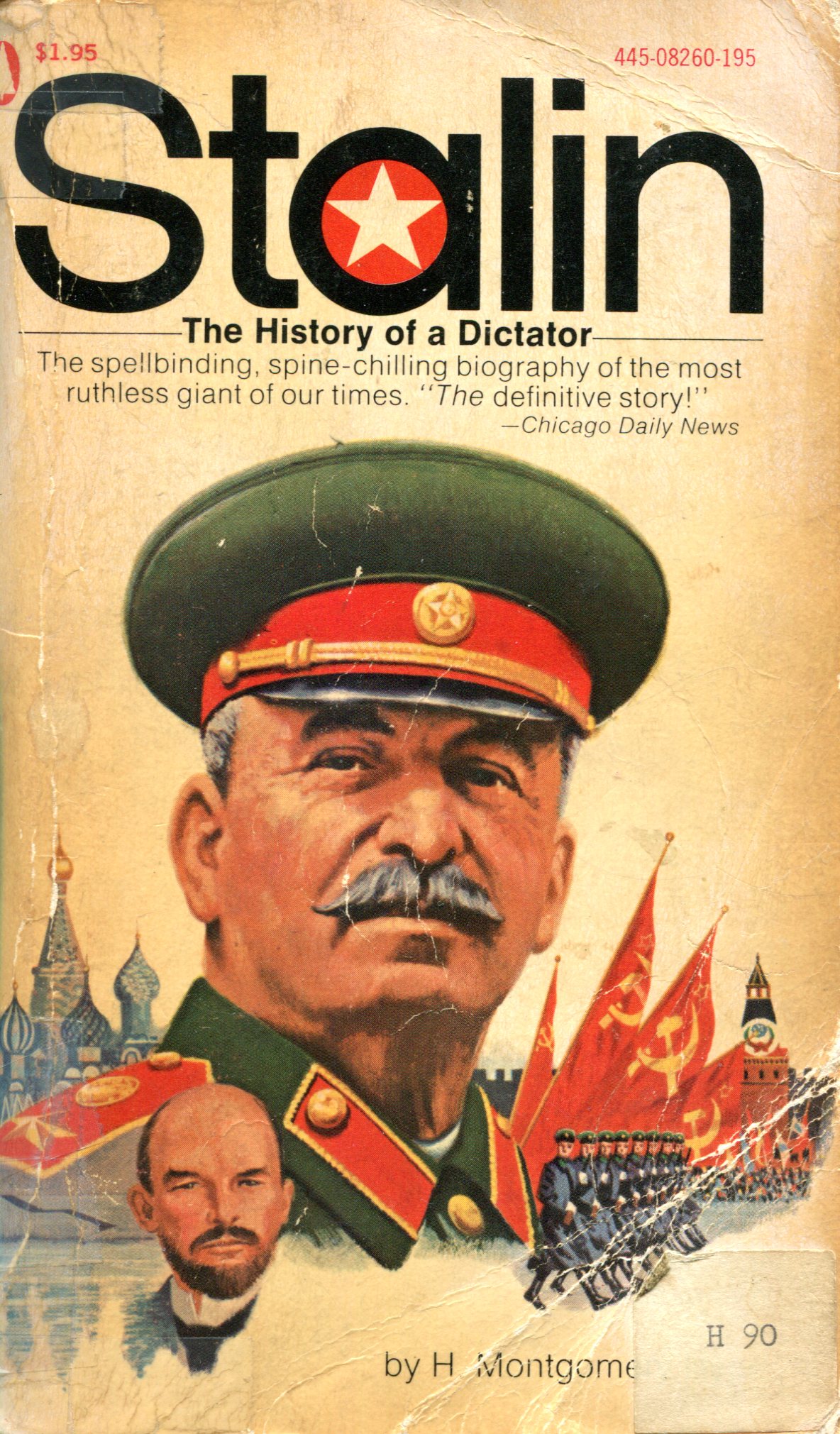
Sometimes you pick up a book that’s been on the shelf unread for many years and you think, time to read it. So it was around the beginning of the year with a copy of Stalin, subtitled “The History of a Dictator,” by H. Montgomery Hyde (1907-89).

It’s a paperback, originally published in 1971 and which no doubt my brother Jay bought. The copy’s pages are yellow and a little brittle with the passage of so much time, and the front cover is partly torn — and repaired with tape — but the book withstood my reading it. Not bad for a paperback not meant to last long.

Of course there are newer biographies of Stalin, such as the work of Stephen Kotkin, whose three-volume bio had its second volume published in 2017. Those sound really good. Later books have the advantage of at least partly open former Soviet or other Communist archives, including things unimaginable in 1971, but even so I wanted to read Hyde’s book. For one thing, it’s on my shelf.

More than that, I was curious how Hyde approached the subject without access to those archives. With a fair number of workarounds, it turned out, and perhaps leaning a little too much on Khrushchev, who has to count as an unreliable narrator. On whole, though, I’d say Hyde did a good job with the material he had to work with.

Sometimes, Hyde pointed out, history and the fate of millions (very possibly) turn on a small event: “If the final stroke of apoplexy had been delayed for a few months or weeks, or even days, Lenin might have succeeded, even without Trotsky’s help, in ousting Stalin from his place of power, such was the immense following Lenin could command in the Party and country. But it was not to be.” (p. 203)

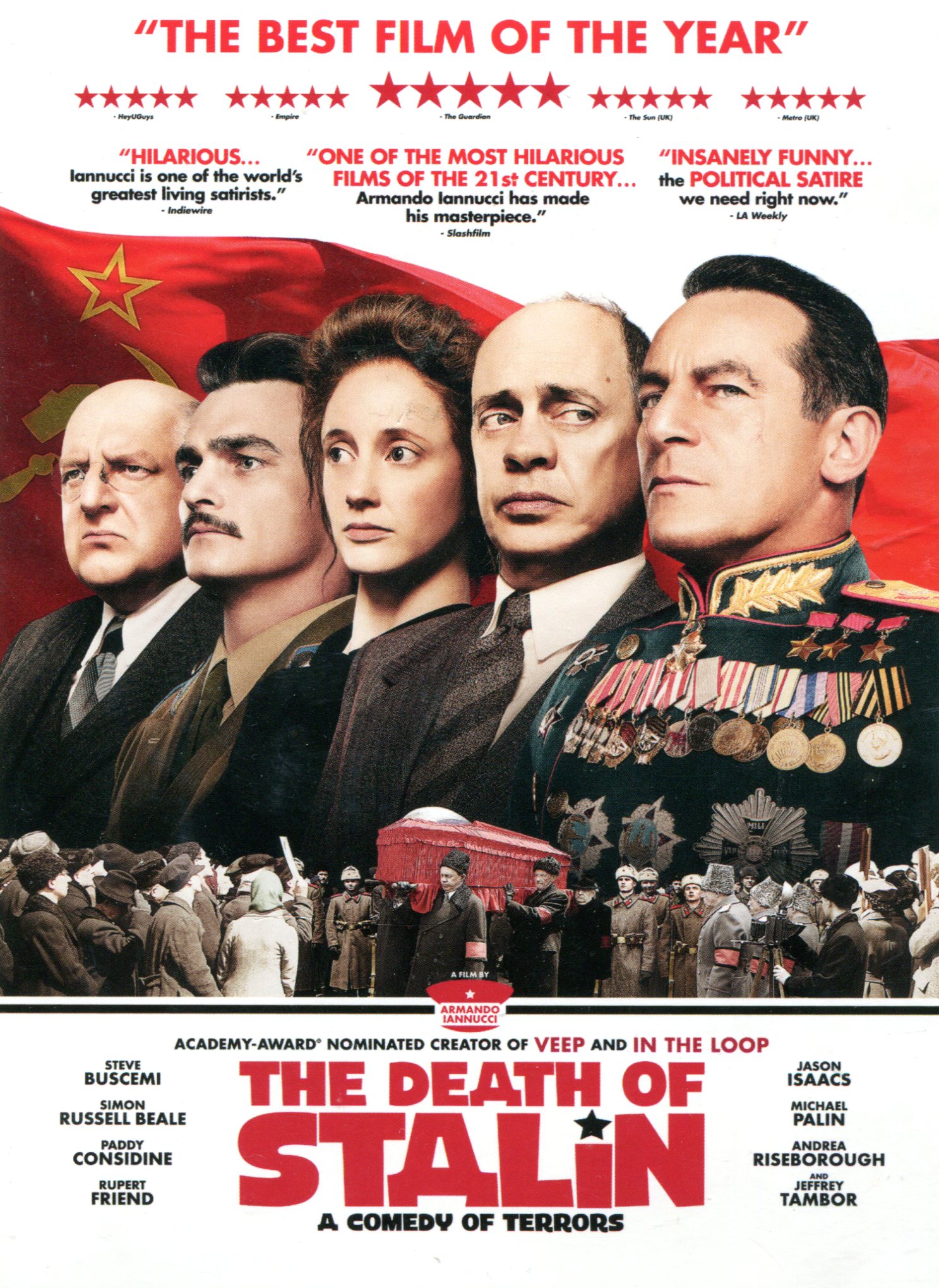
The book isn’t the only Stalin-related diversion for me lately. As in the last year or so. While in New York last March, I went to the Brooklyn Academy of Music’s Rose Cinemas, where I paid New York prices to see The Death of Stalin, then a first-run movie.

It was worth full price. As dark as comedy gets, Death managed to be a funny movie about one of history’s most unfunny subjects, Stalinism. Loosely based on actual events and hardly solid history, but that didn’t matter because of the rule of funny.

Another reason to like the movie: it irritated humorless, authoritarian bureaucrats. According to the imdb: “The movie was banned in Russia on January 23, 2018, two days before it was due to be released… One member of the Culture Ministry’s advisory board was quoted as saying, ‘The film desecrates our historical symbols — the Soviet hymn, orders and medals, and Marshal Zhukov is portrayed as an idiot,’ and added that the film’s release in advance of the 75th anniversary of the end of the Battle of Stalingrad (February 2nd), would be ‘an affront to Russia’s World War II veterans.’ ”

Whatever, Ivan. I will point out that Zhukov wasn’t played as an idiot, but as canny and flamboyant. Canny the real Zhukov surely was, but flamboyant I doubt. Again, the rule of funny. The movie Zhukov was a hoot.

One more Stalin-oriented bit of entertainment: “Joe the Georgian,” an Al Stewart song (1995). Back when I saw him at the Woodstock Theatre in 2008, he sang it, and did his usual patter beforehand. I don’t remember the exact words, but he said that his agent or his label or someone encouraged him to write a dance song. Dance songs sell.

“So I wrote a dance song,” he said. “The trouble was, it was about Joseph Stalin.” Enormous laughter from the audience.

In the song, an unnamed Old Bolshevik, newly arrived in Hell, ponders how he got there.

We all set off together
On this sorry ship of state
When the captain took the fever
We were hijacked by the mate
And he steered us through the shadows
Upon an angry tide
And cast us one by one over the side

His consolation is that when Stalin arrives in Hell, as he surely will, the Old Bolsheviks will torment him with heated pitchforks for “the next few million years” while they “dance, dance, dance.”