Thursday Detritus

The rains have cleared away, leaving cold air in their wake. This pattern will keep repeating in the coming months, getting successively colder until snow replaces rain and mere cold air is a polar vortex or some such. Bah. At least the trees are coloring up nicely.

An open question for YouTube: how, in the age of digital spying on consumers — so I hear — can YouTube offer me such wildly off-the-mark ads? Lately I’ve been getting a lot of anti-vapping ads, for instance. Aimed at teenagers. Not, I have to add, ahead of much content that that demographic might watch on YouTube. The chances of me taking up vapping are pretty close to zero, YouTube.

Some time ago I picked up a copy of The Shipping News by Annie Proulx (1993) for $1 at Half Price Books. Now I’m reading it. It’s a good read and there are some good lines in it. Here’s one that helps introduce a character:

For the devil had long ago taken a shine to Tert Card, filled him like a cream horn with itch and irritation.

One of the author’s idiosyncrasies is constructions like that, with “filled” instead of “filling.” But you get used to it, and it works. That’s a wonderful sentence that pretty much sets the tone for Tert Card. We’ve all met people like that.

From a press release over the transom the other day, a subject I have no professional interest in. I’m more interested in how the thing was written. I suspect the writer is a fairly fluent but nevertheless non-native speaker of English (all sic):

Businessmen hailing from UAE have an interest in making some investments in Armenia. The trade turnover in between the two countries has risen 10-folks from twenty-five million to about 250 million USD in the last five years as told by Zaki Nusseibeh, the Minister of the State after the sidelines of the ministerial conference of 17th Francophonie summit…

After Ruddigore on Saturday, Ann wanted ice cream. At about 10 in the evening in Evanston, Andy’s Frozen Custard seemed the only place still open serving something close to ice cream. She agreed that was close enough, so we went.

That image doesn’t have many people in it, but not long after we got there, the place was packed. Seems that selling frozen custard late on Saturday evenings near a major university is a pretty good business.

I’d never been to Andy’s before. Turns out there are about 60 of them, mostly scattered around the central U.S., though as far north as metro Chicago and as far south as central Florida. Andy’s makes a good frozen treat. Too good, in fact. I should have gotten a small triple chocolate instead of a medium.

Who did the score for Doctor Zhivago? I found myself wondering that yesterday. Maybe that’s something I should know, but I looked it up: Maurice Jarre.

That came to mind because I’d turned on the TV and DZ was playing. In fact, the very scene in which Yuri and Lara reunited. The Lara’s theme leitmotif was part of the action. I watched about 15 minutes of it.

“What’s this movie about?” Ann asked. I had to think. It’s been how long since I’ve seen it? In the summer of ’81 at the Texas Union Theatre, or in Japan in the early ’90s, when I saw so many movies on VHS? Either way, over 25 years ago.

“Well, let’s see. Doctor Zhivago, that’s him there, Omar Sharif. He’s a doctor of course, and he has a wife. He likes her well enough, but he really loves this other woman, who’s on screen now. I don’t remember who played her. Anyway, there’s a love triangle and they all get caught up in the Russian Revolution and are often in danger. Bolsheviks show up. Zhivago’s also a poet and sensitive fellow. He spends a lot of time looking off in the distance. And there’s a lot of scenery. Wide shots of the steppes of Russia. It’s an epic of a movie. Did I mention that it’s over three hours long? It’s an epic of epic proportions.”

Despite my flip description, I remember liking the movie whenever I saw it. Odd how details of most movies you see or books you read or music you hear or places you go tend to evaporate over the years, leaving a residue like the one I told to Ann.

Never have read Pasternak, so I don’t even have a residue of the book. Maybe I should, but life is short and Russian novels are long. The most recent one I read, a few years ago, was August 1914. Pretty soon into it, I gave up trying to keep track of all of the many characters.

Maurice Jarre, I learned, is the father of Jean-Michel Jarre, known to me for Oxygène. Back when people had record collections, there was always one kid on each floor of each dorm at your college who had unusual records, things no one else had ever heard of. I can’t remember the lad’s name, but he was on my hall freshman year, and that was one of the records he had.
Oz Park

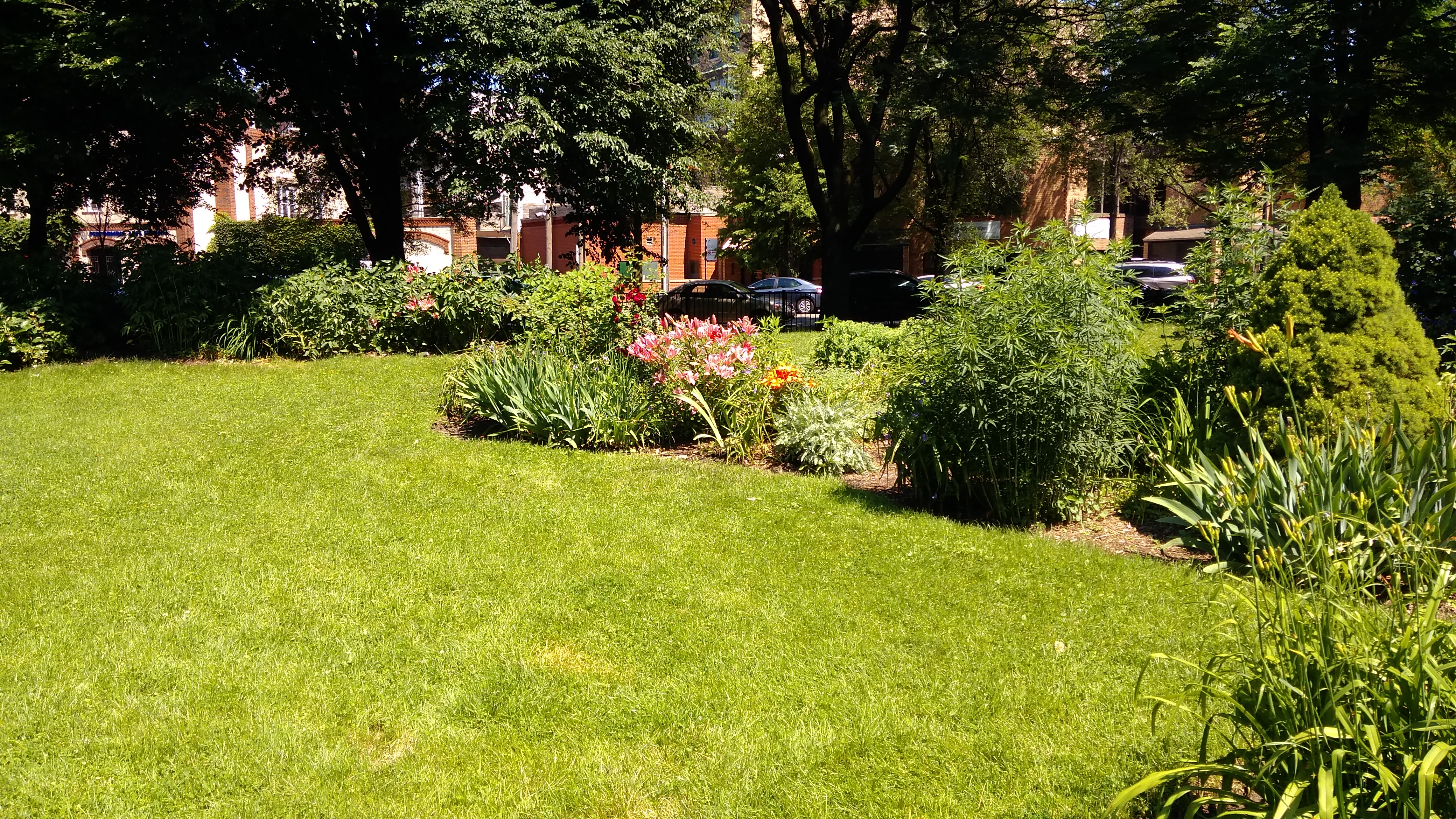
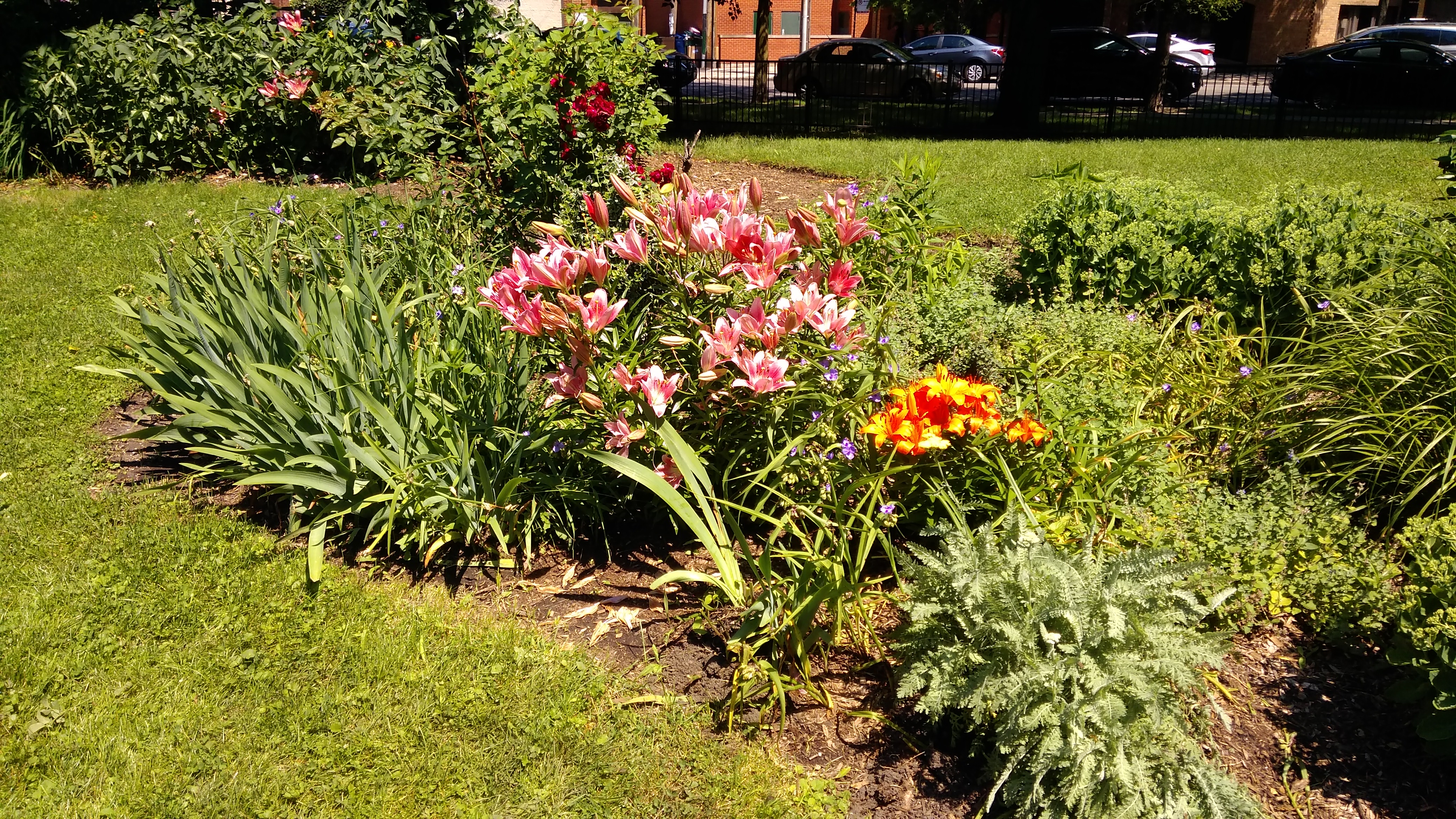
Oz Park is a mid-sized green space on the North Side of Chicago, bounded by W. Webster Ave. on the north and W. Dickens Ave. on the south, though there’s a patch of it south of Dickens; and N. Larrabee St. on the east and N. Burling St. on the west, which is a block east of Halsted.

After strolling north on Halsted recently, I visited Oz Park. Baseball fields and tennis courts take up much of the park, and people were using them to the fullest the day I wandered by. A fair share of the park is wooded or grassy, with walking or bicycling paths snaking through. Occasionally life is a walk in the park.

Oz Park is a successful example of urban renewal. That movement gets a bad rap, and it mostly should, but there are worthwhile spots as a result.

“In the 1960s, the Lincoln Park Conservation Association approached the City of Chicago in efforts to improve the community, and the neighborhood was soon designated as the Lincoln Park Urban Renewal Area,” the Chicago Park District says.

“The urban renewal plan identified a 13 acre-site for a new park, and in 1974, the Chicago Park District acquired the land. In 1976, the park was officially named Oz Park in honor of Lyman Frank Baum (1856-1919), the author of The Wonderful Wizard of Oz.”

Baum didn’t live in Lincoln Park, but he did live in Chicago, so close enough. Certain aspects of the park honor his work, such as the Emerald Garden.

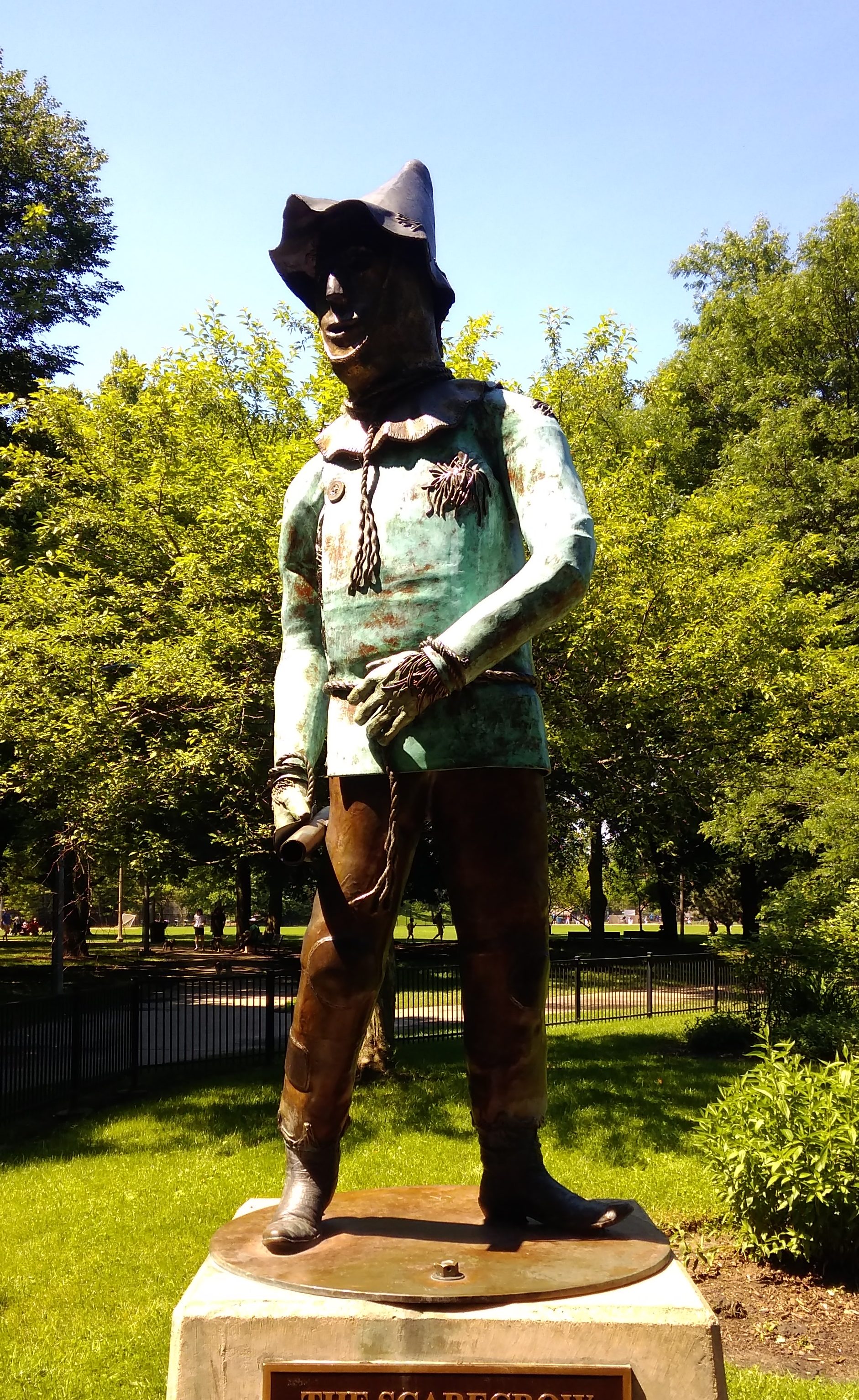
In more recent decades, Wizard of Oz characters have come to the park, such as the Scarecrow, who’s at one of the Emerald Garden entrances.
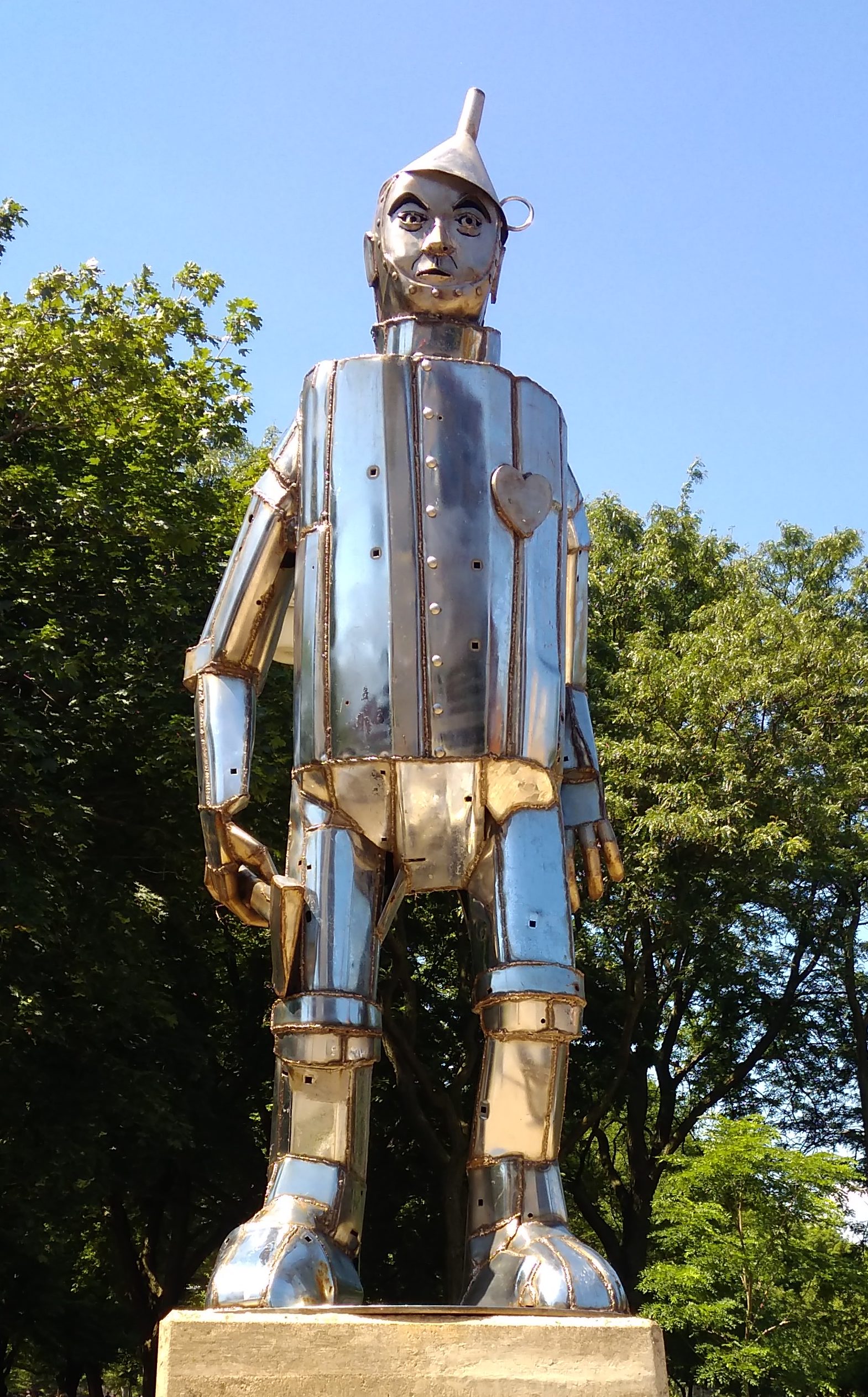
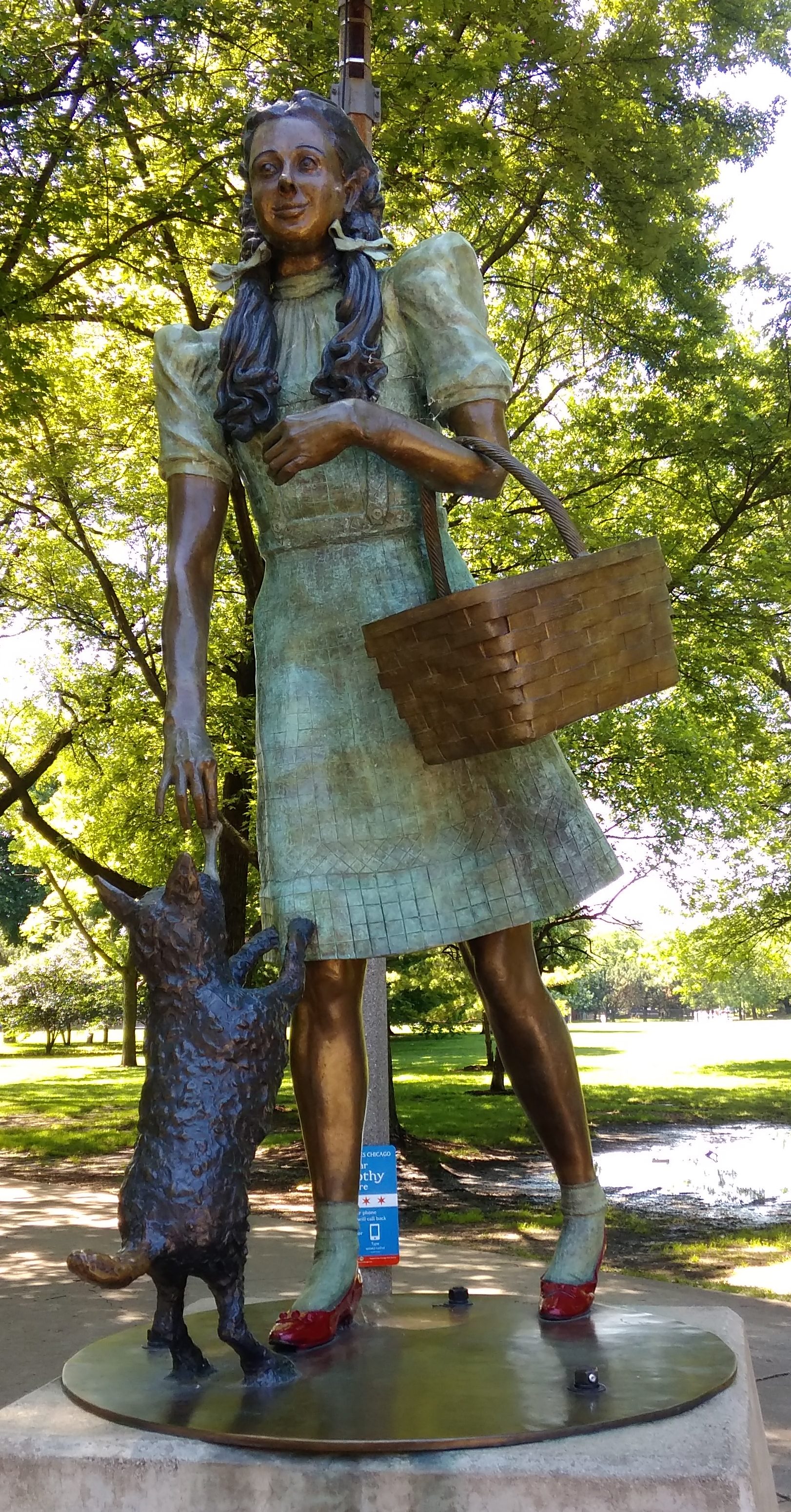
“In the early 1990s, the Oz Park Advisory Council and the Lincoln Park Chamber of Commerce commissioned artist John Kearney to create a Tin Man sculpture, installed in October 1995, the Cowardly Lion, installed in May 2001, and the 7 ft., 800 lb. cast bronze Scarecrow, installed June 2005,” the park district says. “In Spring 2007 Dorothy & Toto joined their friends in the park.”

Being first, the Tin Man is the most prominent, standing in a highly visible spot where Larabee, Webster and Lincoln Ave. meet (Lincoln’s a diagonal that passes by the northeast corner of the park).

West of the Tin Man are Dorothy and Toto, standing back a bit in the shade.
Note the Ruby Slippers, not Silver Shoes. Artist’s prerogative, I guess.

I didn’t see the Cowardly Lion, but I figured he was elsewhere was in the park. As he is.

Space Odyssey

I’m much of my way through reading Space Odyssey by Michael Benson, which was released this year in time for the 50th anniversary of 2001. The book is subtitled “Stanley Kubrick, Arthur C. Clarke, and the Making of a Masterpiece.”

The book doesn’t pretend to be a biography of either Kubrick or Clarke, but a tale of creating the movie, beginning with the extended deliberations by Kubrick about what to do after Dr. Strangelove and the critical ideas Clarke contributed to the genesis and eventual shape of the movie, and taking the story through production, post-production and release, all of which were behind schedule and over budget.

Both Kubrick and Clarke come across as towering intellects, which no doubt they were, but with certain flaws. If he thought it was good for the end product, Kubrick was perfectly willing to take advantage of Clarke or put his actors in danger on the set. For his part, Clarke couldn’t stand up to Kubrick, or say no to a money-sucking leech of a lover, though eventually his association with the project made him wealthy indeed (indirectly, because he had no points in the movie itself).

Since movie-making is such a collaborative effort, a lot of other contributors to the ultimate outcome make appearances in the book. Each is fascinating in his own way, such as the very young man who shot highly kinetic scenes from a helicopter over Scotland, for part of the Star Gate sequence; the mime who choreographed the movements for — and played — the lead ape-man in the Dawn of Man sequence; the designer who built the astonishing centrifuge set; or the stuntman who did the incredibly risky shots of astronaut Poole floating in space.

Perhaps the most astonishing thing about the movie that the book makes clear is how much of 2001 — a multimillion-dollar project with a large staff — was essentially made up on the fly by Kubrick. A fair number of bad ideas were winnowed out along the way, and good ideas came from various and unexpected sources, all of which the director wasn’t shy about using.

I’ve gotten to the chapter that describes the filming of the Dawn of Man. Reading about that process in detail reminds me of the reaction to the movie by someone I recommended it to years ago (in college in fact). He wasn’t impressed by 2001 or its mystique. Afterward, one of the things he asked me was, “What were those damned monkeys doing?”

Arthur and Arcola 2018

On Saturday, we were at a small bookstore and antique shop in Arthur, Ill., down in what’s known as the Illinois Amish country of the east-central part of the state, and as we were leaving, Ann mentioned that she’d seen some Amish romance novels in the store.

Just another thing I’d never thought of. The world keeps tossing things like that at me. According to Time, at least, the Amish romance novel is quite a thing:

“In Amish romance novels, there is no sex, but lots of babies; no nakedness, but layer upon layer of clothing is removed; and no physical contact between unmarried couples— unless perhaps God wills it through a tornado, or a house fire, or a buggy accident — and, well, it turns out that happens between attractive Amish singles quite a lot.”

It also turns out that most of the readers and most of the writers of such yarns aren’t Plain People at all, though the magazine does mention one example:

“The authors of Amish fiction freely admit that most of them are not Amish, either. ‘I can think of only one Amish writer I know of,’ says [author Beverly] Lewis, who made a point of living with Amish families to learn more about them. ‘She’s Old Order Amish, Linda Byler, and she has a bishop who’s given her permission to write Amish novels. She had an electric typewriter reconfigured to have batteries in it, which are allowed in Amish culture, so she can write.’ ”

Wonder what actual Old Order Amish think of all the weird attention the rest of the world pays to them. Maybe not much. They’re probably pretty busy doing other things most of the time.

We drove down to that part of Illinois over the weekend just to look around, and it is a little odd as a destination. I’ve never seen any Amish, or Mennonites either, wandering around looking at the Chicago suburbs just because they’re different from home.

This was our second visit; the first time was in 2007. This time we spent time in Arthur, at the book store, and at a small street festival, a few antique stores, and an ice cream shop. Tasty soft serve, served by women in bright-colored Mennonite dresses: purple for one, nearly lime green for another. We also poked around Arcola for a while, including a visit to the Visitors Information Center, located in a renovated Illinois Central depot, ca. 1885, and an antique store.

As far as I could remember, not much had changed in either town, or the farmland between (fairly dense with farmhouses), except that one of the restaurants we went to in Arcola had closed, and so had the distinctly non-Amish Raggedy Ann Museum in Arcola.

Not to worry, the woman at the desk at Visitors Information Center told us. A new one was opening up. Or maybe had just opened, though a lot of the old one’s collection went to the National Toy Museum in Rochester, New York. We decided not to follow up on that tip. Visiting a Raggedy Ann museum is a thing you need to do only once.

Whatever the status of the museum, Arcola hasn’t forgotten Ragged Ann and Andy. In 2016, the town unveiled these painted bronzes near the Visitors Information Center.
The artist is named Jerry McKenna, a Texas Hill Country sculptor.

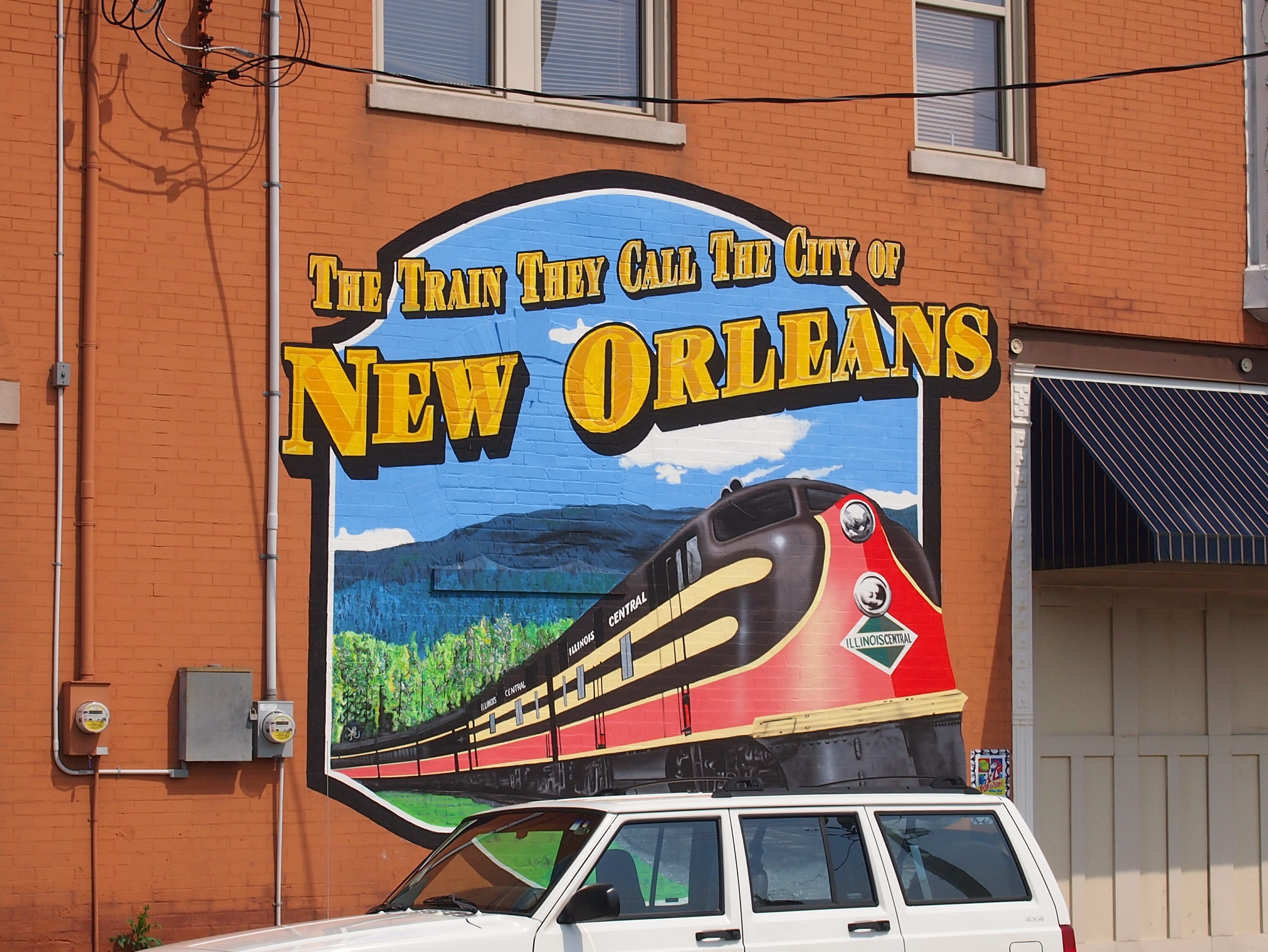
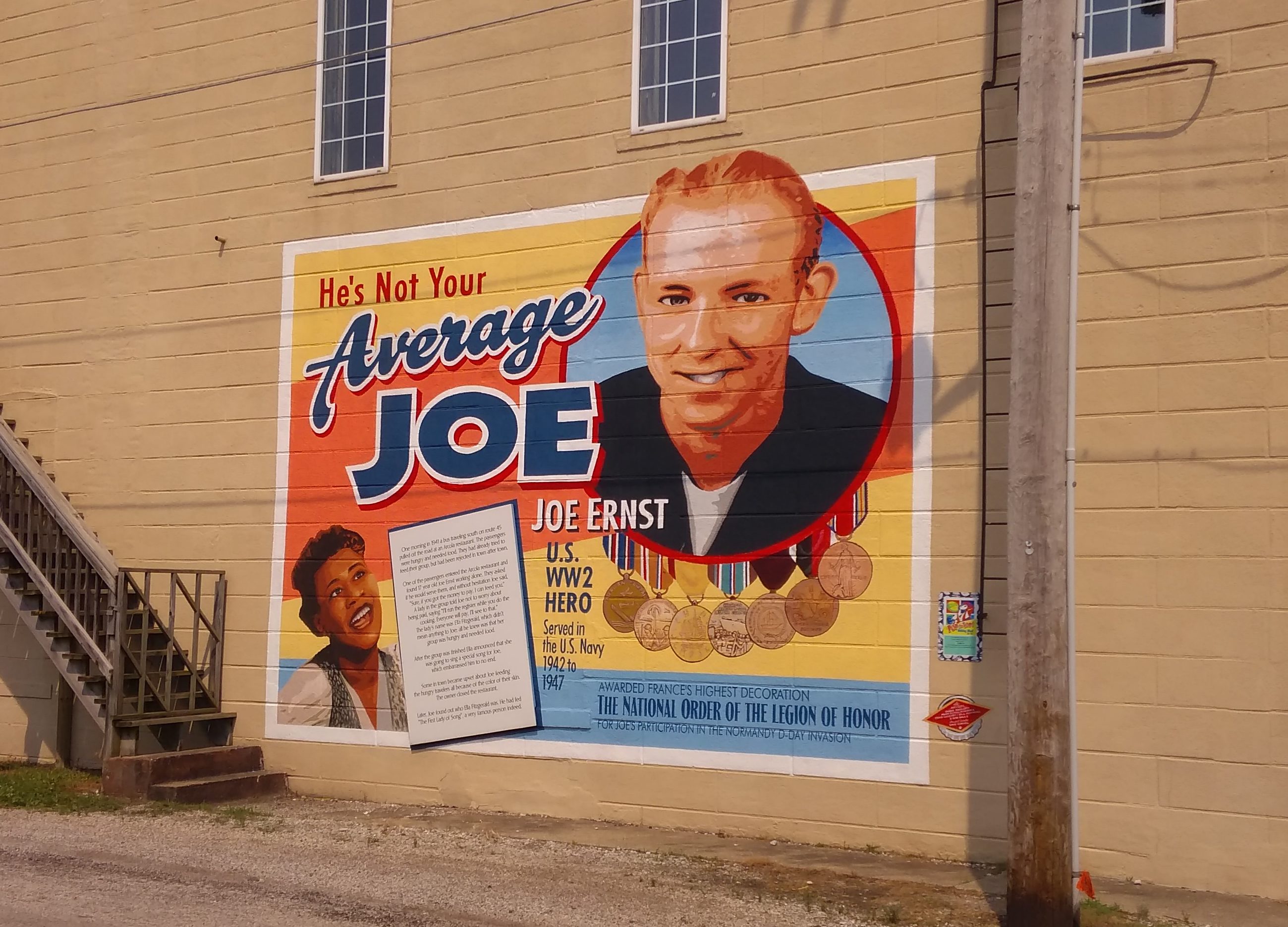
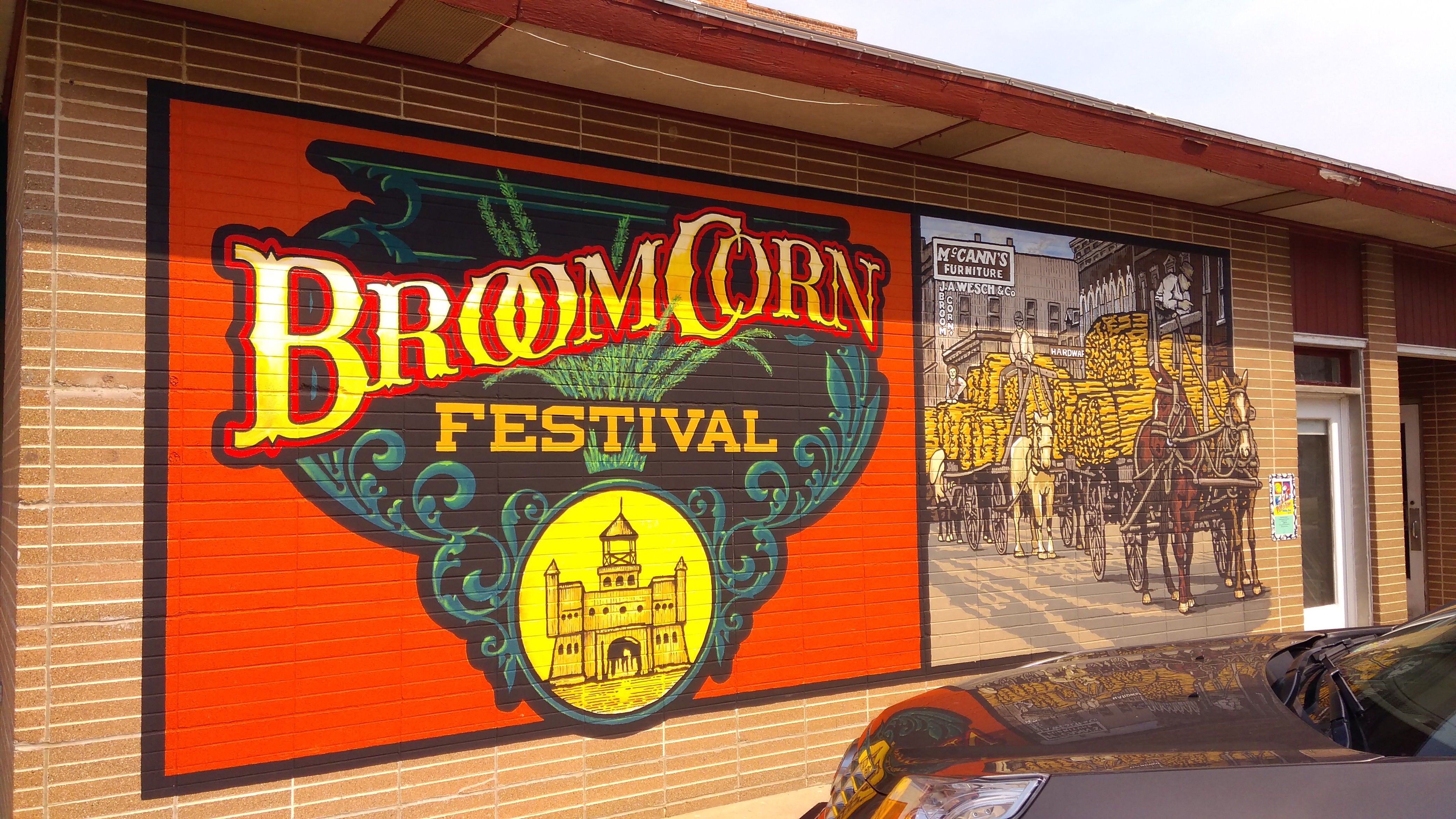
We also looked at a few of Arcola’s wall murals. They weren’t there in 2007.
“During the week of June 20-24, 2012, over 130 artists from across the United States as well as Canada, New Zealand, Scotland and Australia descended upon Arcola leaving behind 15 historic murals,” the town’s web site says. “Known as the Walldogs, the loose affiliation of sign painters, graphic artists and other talented individuals reunite annually to entertain and transform a community with their special brand of artistic interpretation, entertainment, and friendship.”

Thursday Stew

Back again on Tuesday, May 29. Memorial Day is pretty close to Decoration Day this year, but not quite. The next time they will coincide will be 2022.

I finally got around to looking at the professional photographer’s pictures from my nephew’s wedding last month. Quite a selection. She was really busy.

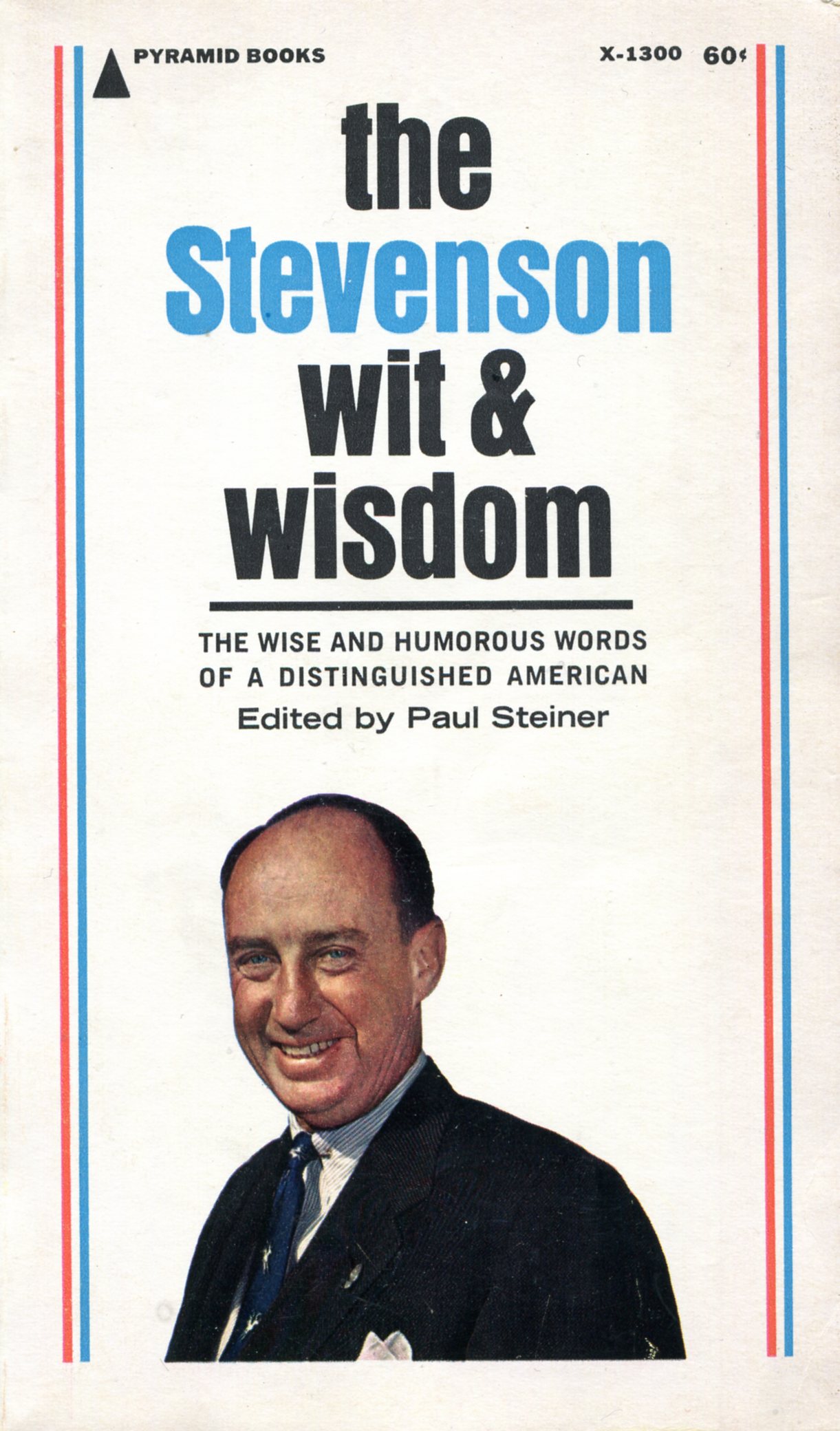
File this book under relics of the midcentury, subfile: things unlikely to inspire a period TV show on cable, unlike Madison Avenue, Pan Am, Camelot, etc.

I found it at my mother’s house and, considering my interest in U.S. presidents and candidates for that office, borrowed it for a bit. It’s a first edition, with Pyramid Publications putting it out in August 1965. In other words, just as soon as possible after Adlai Stevenson died.

I’m sorry to report that, after reading a fair sample of the book, wit is pretty thinly represented. Maybe he had some wit about him in person that didn’t translate into print. More likely, Oscar Wilde, he was not. But I can sense some wisdom in the pages.

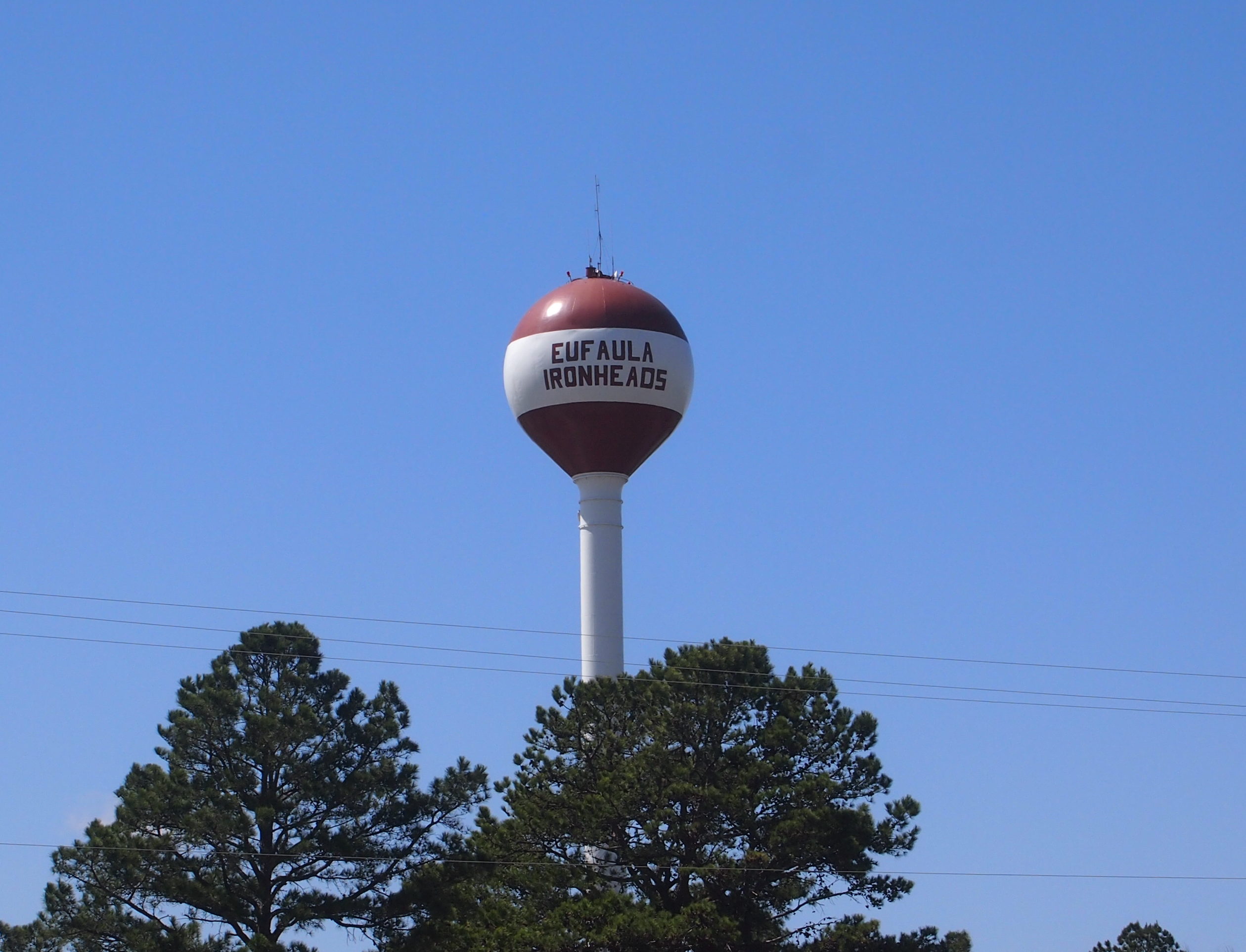
What’s the mascot of Eufaula High School in Eufaula, Oklahoma, a town of about 2,800?

The Ironheads. I drove through Eufaula last month and happened to be stopped at a place where I could appreciate the water tower.

Merriam-Webster offers two definitions: 1) a white stork (Mycteria americana) with black wing flight feathers and tail that frequents wooded swamps from the southeastern U.S. to Argentina — called also wood ibis; 2) a stupid person. I bet the school was thinking of the first definition.

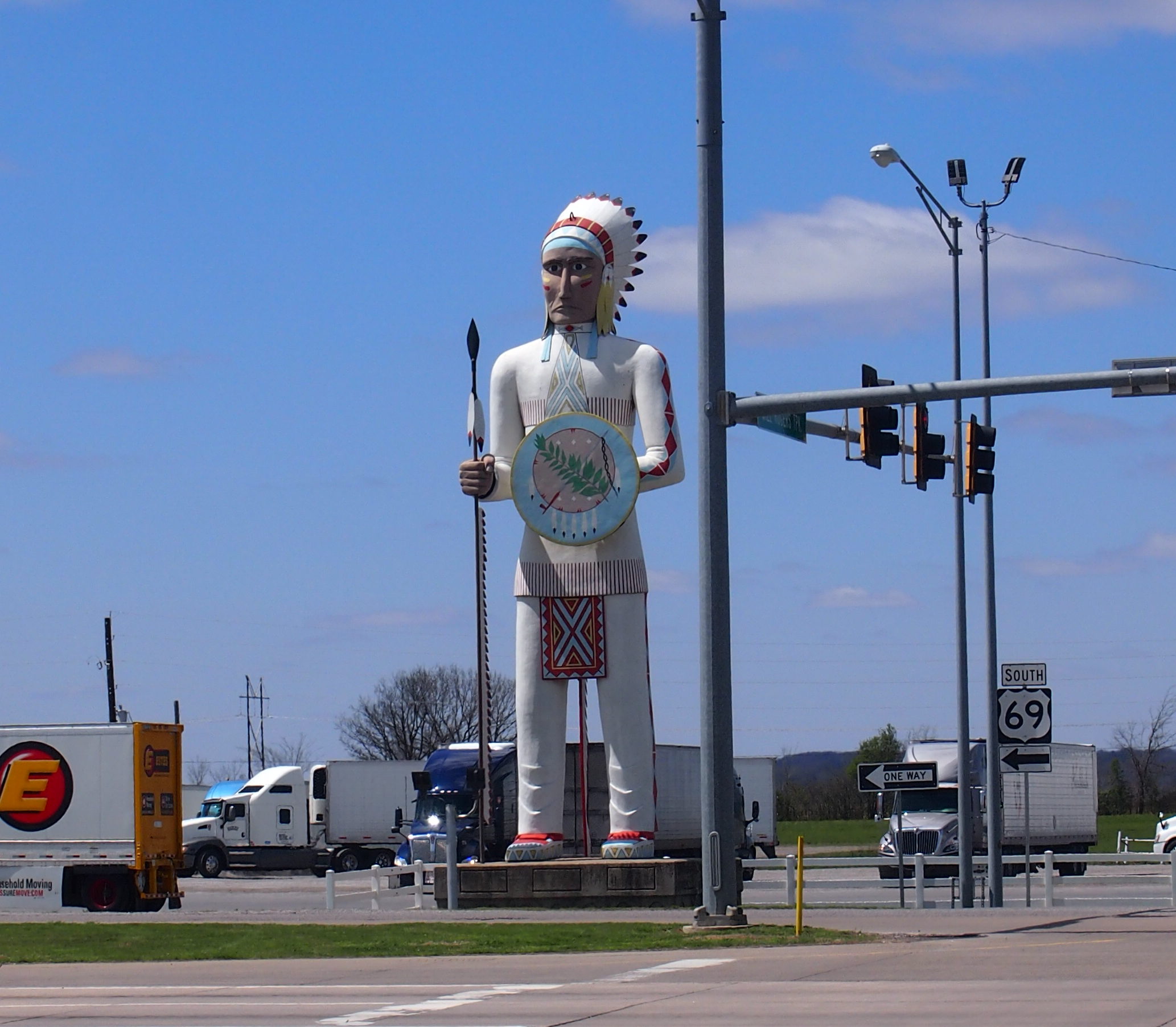
Also in Oklahoma, just off of the Will Rogers Turnpike at Big Cabin.
All the usually wordy Roadside America has to say about the statue: “Standing Brave is over 50 feet tall, and guards an Indian tax-free cigarette store.”

The Swamp

The following is the kind of color I want from history books, not the kind of experience I want for myself:

April 12: Did nothing but send off express to Fort Deynaud at 4 a.m. and mourn my existence the rest of the day. Mosquitoes perfectly awful.
April 13: No peace from mosquitoes… Stayed up all night… Mosquitoes awful. 1,000,000,000 of them.
April 18: Mosquitoes worse than ever. They make life a burden.
April 19: I am perfectly exhausted by the heat and eaten up by the mosquitoes… They are perfectly intolerable.

The time: 1856. The place: Florida, during the Third Seminole War. Pre-DEET Florida. The writer: Alexander Webb, with the U.S. Army at the time. He survived the mosquitoes (not everyone did), was later a hero at Gettysburg and died in 1911.

The diary extract is quoted in The Swamp by Michael Grunwald (2006). Subtitled “The Everglades, Florida and the Politics of Paradise,” it’s a history of human interaction with the Everglades, and an interesting book with a large cast: Calusa Indians, Ponce de Leon, Andrew Jackson, the Seminoles, James Gadsden, Osceola, competing Florida Reconstruction governors Gleason and Reed, land speculator Hamilton Disston, John James Audubon, Napoleon Bonaparte Broward and Henry Flagler. That’s just up to the 20th century, when the only organization up to the task of draining much of the Everglades came to the fore: the U.S. Army Corps of Engineers.

Of course, draining or otherwise modifying the Everglades is now universally regarded as a mistake, and a remediation as slow as the Everglades is under way.

Early on, Grunwald pointed out that large parts of the ecosystem are actually marshes, with only some counting as swamp, but never mind. The Swamp it is.

Then it occurred to me that “drain the swamp” is an ossified metaphor. No one in the developed world advocates draining real swamps any more. We want more wetlands. As usual, language is a laggard. But that’s not always a bad thing.

New Library in the Neighborhood

A Little Free Library has appeared on my block. I’m pretty sure it wasn’t there a few days ago, the last time I walked by. Dog walking usually takes me by that front yard.

Today I took a moment to look into the new Little Free Library. Looks like the family that put it up stocked it, for now, with children’s books that their daughters no longer want. I know them slightly: husband, wife, two daughters younger than mine, but not little kids any more. And a dog smaller than mine. Sometimes they sniff each other through the back yard fence.

I’ll have to contribute a volume or two, to be neighborly. Right now, though, I’m looking for my copy of The Right Stuff. Wonderful book. I read it again last year, after first reading it ca. 1991. Now I want to re-read a favorite part, about the trials of Enos the space chimp.

Quasi-Spring Break

The vernal equinox might have just passed, but every time I go outside, winter reminds me that it’s decided to linger. Have one for the road. Take another turn around the block.

Then again, we’ve seen a few robins. The croci are emerging. In the evening, Onion is way off to the southwest. All the usual signs of spring are here. So time for a kind of spring break. Back to posting Easter Monday, which is April 2 this year.

Till then, a few items.

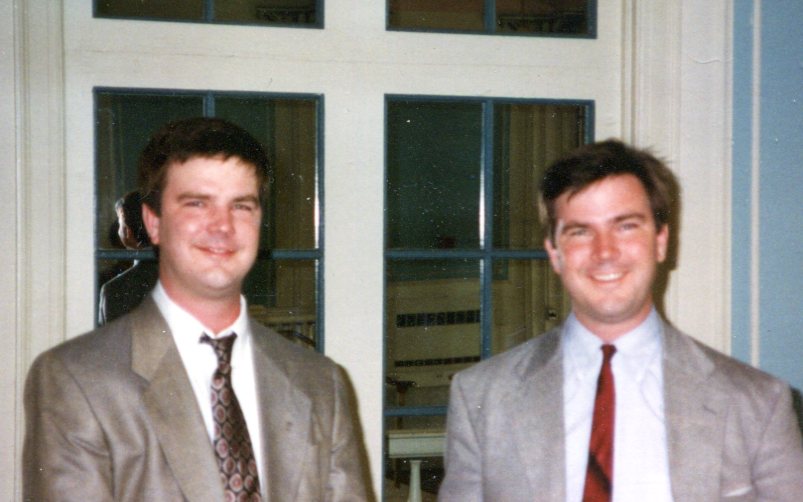
Without looking for it — the only way to find many things — I came across this picture the other day.

That’s Mike and Steve Johnson, in a picture I took at a wedding of a mutual friend of ours on July 6, 1996. Mike died in 2016. I’m sorry to report that his twin brother Steve died earlier this year.

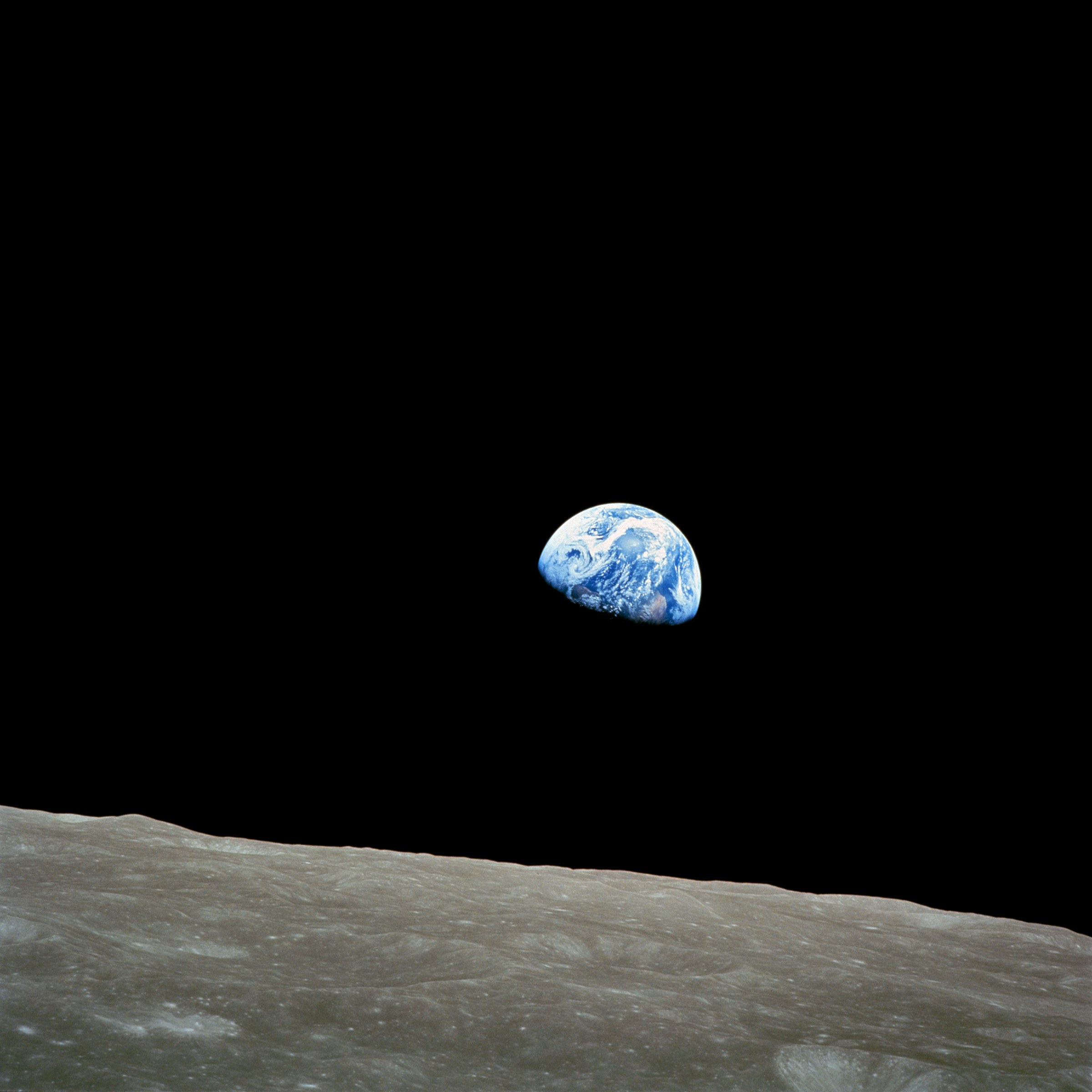
Recently I finished Apollo 8, subtitled “The Thrilling Story of the First Mission to the Moon,” by Jeffrey Kluger (2017). Thrilling indeed. Covers much of the same ground — rather, space — as the Apollo 8 chapter of A Man on the Moon: The Voyages of the Apollo Astronauts, though naturally in more detail.

The author characterizes the mission as the most “audacious” decision NASA ever made, and I’ll go along with that. Reading about any of the Apollo voyages, but especially this one, gives you (or should give you) a sense of just how dangerous it all was. Worth the risk, of course, but I’m surprised none of the Apollo astronauts bought it on the Moon, or in space, as opposed to the awful fate of the Apollo 1 crew.

A footnote: all of the Apollo 8 crew are still alive. Frank Borman just turned 90, James Lovell will turn 90 next Sunday, and Bill Anders is the youngest at 84. None of the other full Apollo crews are alive, though for now there’s at least one left from each mission except Apollo 14.

About 20 years ago, I saw Lovell speak at a real estate conference. I don’t remember much about what he said, other than to praise the movie Apollo 13, but it was a kick to see him anyway.

Recently we saw Vertigo at the theater. Been a long time since I last saw it, more than 30 years. These days, it gets high critical praise. Perhaps, I thought, I’d admire it more with a few more decades behind me, since I remember not being overly impressed by it as a young man.

It’s certainly a remarkable movie, interesting in a lot of ways. But it didn’t speak to me any more now than it did before. Maybe the story’s serious implausibilities got in the way. Not sure I can quite put my finger on it. A good movie, maybe a great one, but best? Naah.

Presidential Real Estate

“Presidents Day” weekend has rolled around again. Late last week I managed to make professional use of my slight knowledge of the presidency — or more exactly, the various U.S. presidents — to write an article about a selection of their houses. The final title: “The Fabulous Real Estate (And A Few Modest Digs) Of Past Presidents.”

It was a fun article to write. I didn’t want to make it overly long, so of course most of the presidents were left out. But I did have a nice selection from different eras: Madison, Jackson, Van Buren, Wm. Henry Harrison, Lincoln, Benjamin Harrison, Theodore Roosevelt, Hoover and Lyndon Johnson.

My sources included my own visits in some cases, online information, and two books that I own. One is the bare-bones Presidents, subtitled “Birthplaces, Homes, and Burial Sites,” by Rachel M. Kochman. I can’t quite remember where I got it, but it’s the kind of book that sells in national park or national monument or national historic site bookstores. Acquired sometime in the late 1990s probably, since it’s the 1996 edition, with the most recent president covered being Bill Clinton.

Bare bones because while extensively illustrated, all the photos and drawings are black and white. That’s no problem, really, but it’s set in an ugly sans serif. That makes what should be a browsing book less pleasant to browse. Still, the book includes a lot of information on presidential sites.

I also have a coffee table book called Homes of the Presidents by Bill Harris, 1997, so it too ends with Clinton. A remainder table find. The text is a little uneven, but not bad. The pictures are the thing, of course, and they are well selected.

Mid-February Natterings

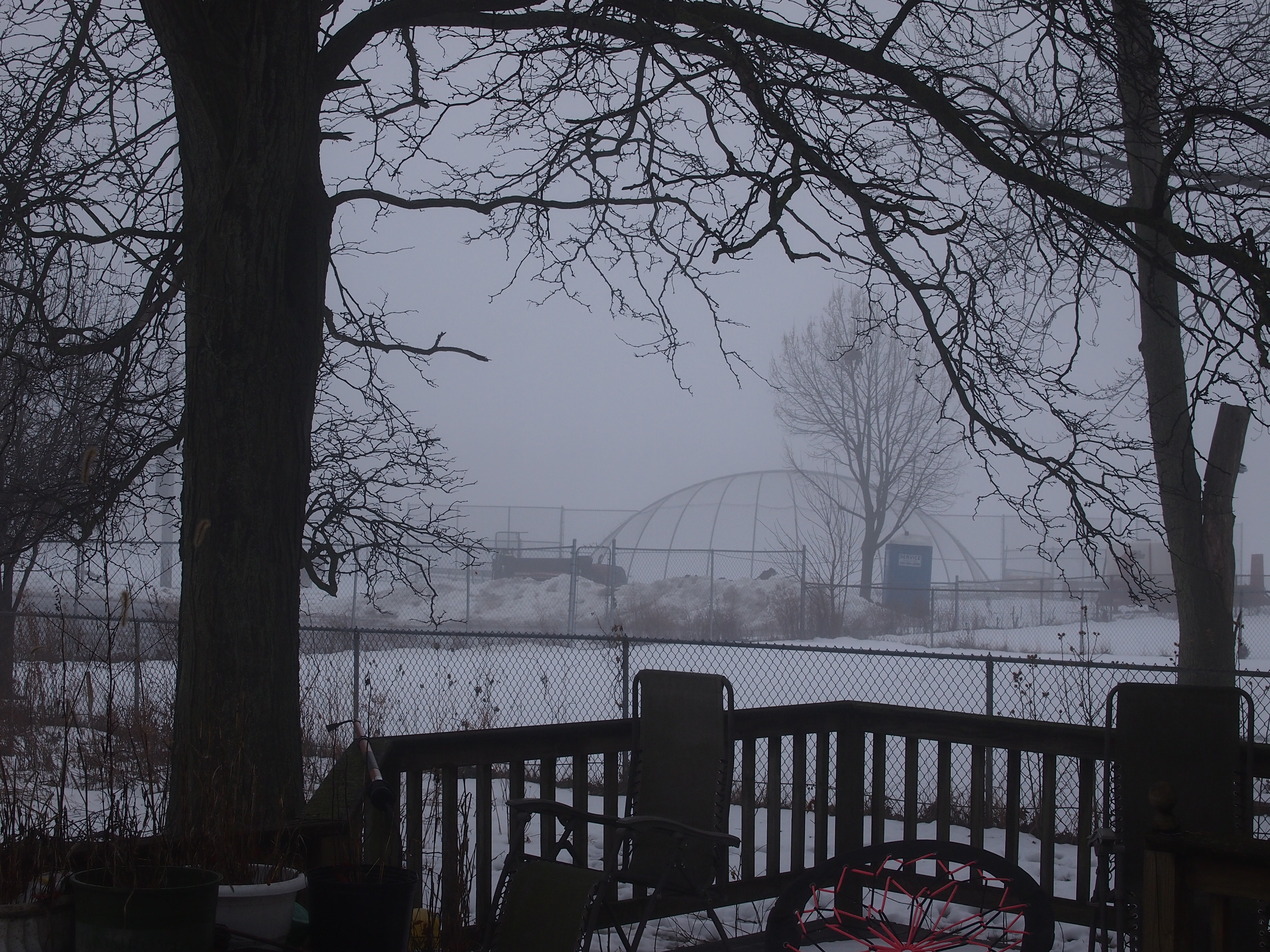
Remarkably foggy day Thursday.
Above freezing, too, reducing the snow cover and making random puddles.

Reading a book about Lincoln’s assassination puts me in a counterfactural frame of mind. Not so much What If Lincoln Lived — a lot of consideration has been given to that — but what would have happened to Booth had he capped his murderous impulse that day, and not gone through with it? What would have happened to him?

I picture him living into the early 20th century, since he was only in his mid-20s in 1865, a star of the American and European stage in the pre-movie years, so he was mostly forgotten by later generations. He did have a small part as an elderly wise man at the court of Cyrus the Great in D.W. Griffith’s Intolerance (but nothing in The Birth of a Nation, which was never made). Also, one of Booth’s sons founded Booth Studios in the early 1900s, which was later acquired by MGM.

In his memoir, published in 1899, Booth confessed that he had a strong impulse to murder Lincoln right at the end of the war, and was glad he never acted on it.

Got a form letter from the chancellor of the University of Illinois the other day. Let’s call it a worrywart letter. It seems that the public houses in old Champaign-Urbana are encouraging students, perhaps tacitly, to celebrate St. Patrick’s Day in a blotto state of mind. The university frowns on such goings-on and wants me to know it will do what it can to educate the students about the perils of demon rum. Or more likely in this context, whisky.

Not that alcohol isn’t a form of poison, with risks. I expect that a handful of students manage to off themselves across the years under its influence, mostly via reckless driving. But do I need a form letter about this?