A Cartoon History of United States Foreign Policy Since World War I

Not long ago I looked up the Foreign Policy Association. Turns out the organization has a mission statement.

“The mission of the Foreign Policy Association today, as it has been for over 100 years, is to serve as a catalyst for developing awareness, understanding, and informed opinion on U.S. foreign policy and global issues. Through its balanced, nonpartisan programs and publications, the FPA encourages citizens to participate in the foreign policy process.”

By gar, that’s positively Wilsonian in its optimism that citizens can influence foreign policy, and that in fact U.S. foreign policy can be a force for good in this wicked world. Maybe it can. It’s certainly pretty to think so.
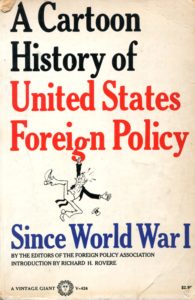
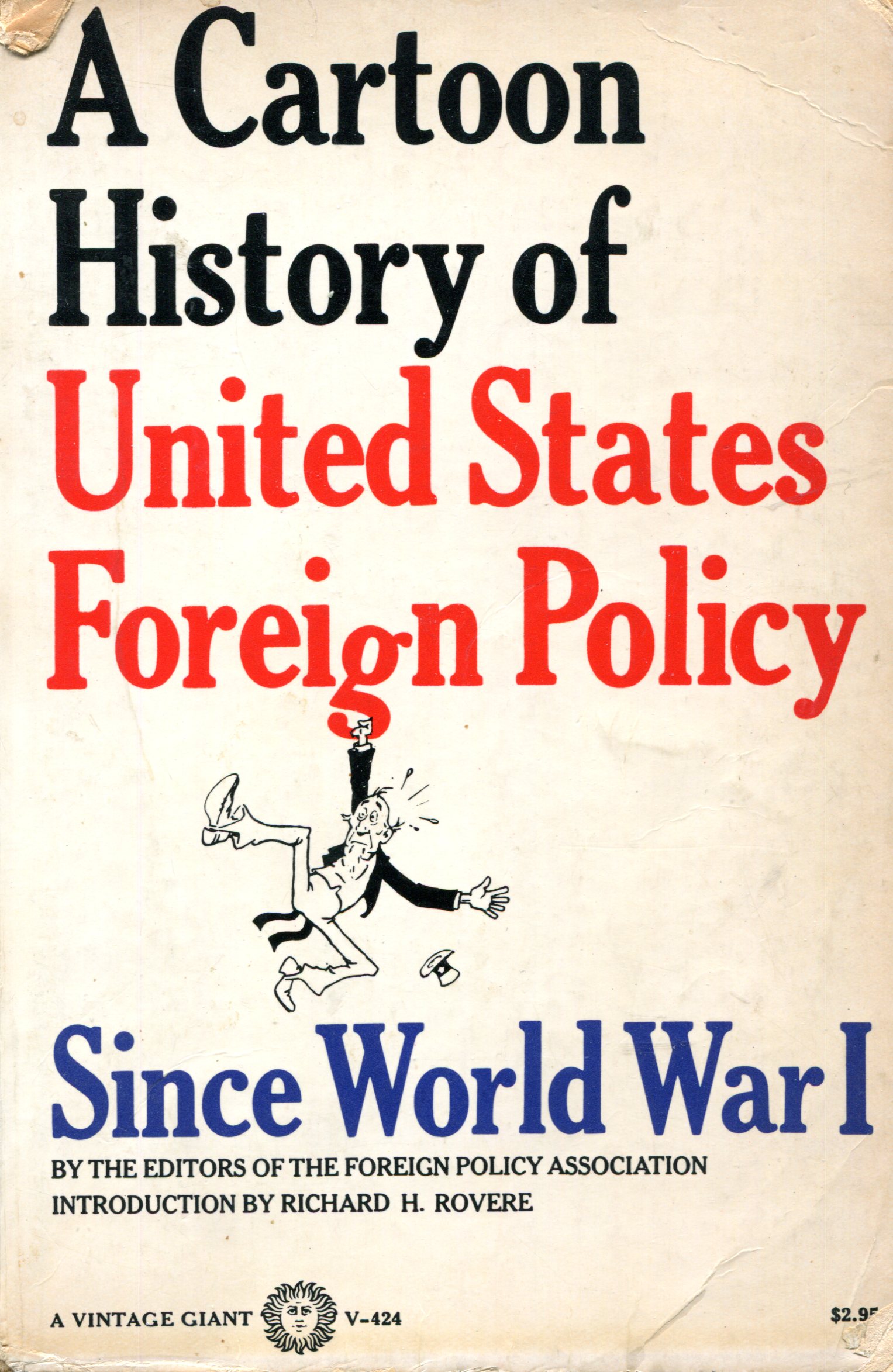
Another of the books I liberated from my mother’s house in recent years is A Cartoon History of United States Foreign Policy Since World War I — by the Editors of the Foreign Policy Association, the cover says, published in 1967. In the book’s acknowledgement, one Norman Jacobs is given as the editor of the association, but he thanks half a dozen people who participated. A group effort book, then.

The book includes about 250 editorial cartoons in 19 chapters. Actually, two examples are comic strips that editorialize, but they are exceptions, with most of the content one-panel cartoons. (Remarkably, included is a B.C. strip: two ants are watching two larger animals fight, and one ant says, “If we had ‘the bomb,’ we could intervene.”)

The editors provide a few lines of context for most of the cartoons, usually going out of their way to be nonpartisan and mostly nonjudgmental, at least as far as U.S. policy was concerned. For instance, before the U.S. entry into WWII, there are cartoons for and against intervention in European affairs and then the war itself.

The chapters, and the cartoons, are more-or-less chronological, beginning with the argument about U.S. participation in the League of Nations, continuing through the prewar years and the rise of fascism and then the U.S. in WWII. After that, as you’d expect, comes the Cold War and all its complications and players, which was ongoing as the book was published.

Lots of famous things are touched on — Munich, isolationism, Pearl Harbor, the atomic bomb, the founding of NATO, the wars in Korea and Vietnam, sputnik, the Berlin blockade and wall, and the Cuban missile crisis. Other less-remembered events were the subject of cartoons as well: the Washington disarmament conference, the sinking of the Panay, riots in Poznan, Poland, American marines landing in Lebanon in 1958, and so on.

I probably first read the book in junior high. I learned a great deal from it — maybe as much as in some of my classes — about the history referenced, but also a notion of how things considered settled now were once contentious.

One good example is the Marshall Plan and the creation of NATO. Few would consider those mistakes now, or even 50 years ago, but in the late ’40s not everyone was on board, as illustrated by a cartoon that shows a man — labeled Our Global Meddlers — happily offering a diving board to a character called U.S. Senate. The board is labeled Atlantic Pact and it’s leading to shark-infested waters (labeled War Dangers).

I read through the book enough times over the years that many of the images are still familiar when I look them now. A Cartoon History of United States Foreign Policy Since World War I was also an introduction to some first-rate, or at least then-famous editorial cartoonists, and the art of such cartoons, which has been slipping away from us in recent decades.

The index is instructive. You can tell which cartoonists appeared the most in the book, such as John Fischetti (1916-80), Herblock (1909-2001), Bill Mauldin (1921-2003), Edmund Valtman (1914-2005) and Ralph Yardley (1878-1961). Other cartoonists rated a few examples, and many more only one. One editorial cartoonist not represented: Theodor Geisel, who had a lot to say.

Looking at it now, I’m interested to see the many ways the cartoonists used Uncle Sam. A quick glace has Uncle Sam as the bridegroom of Foreign Entanglements, surrounded by lions, one of the Wise Men, looking on as Europe burns, someone who’s tied cans to the tail of Hitler’s dog (it makes sense in context), as Gulliver tied down, a robbed man with empty pockets, a soldier in Korea, and many more.

Curiously enough, depictions of Uncle Sam seem to slack off in the late ’50s and early ’60s. More often presidents — Eisenhower, JFK and LBJ — stand in for their administrations in those years, though Wilson, FDR and Truman appeared often enough before then. Yet Uncle Sam isn’t completely gone, even in 1967: the second-to-last cartoon has Uncle Sam as a knight, riding (barely holding on to) a horse called U.S. Power. “Of course I’m in charge — I think,” he says (Bob Bastian, San Francisco Chronicle).

Plenty of non-American characters also appear, such as Hitler and Stalin, many times, but also Mussolini, Neville Chamberlain (but not, oddly, Churchill), Chiang Kai-Shek, Khrushchev (many times, but not Brezhnev — too new, I guess), Nasser, Mao, Charles de Gaulle and Fidel Castro, among others.

A few panels are outstanding examples of the editorial cartoon. One is “High Noon” by Bill Crawford (1913-82), which is exceptionally simple and effective. It depicts a top slice of a globe. Toward the bottom of the panel is an arrow on a rocket launcher, ready to fly; a world away, at the edge of the globe almost out of sight, is another arrow, the exact same one on an exact same launcher. The arrows are pointing at each other. This of course illustrates the height of the Cuban missile crisis.

One by C. D. Batchelor (1888-1977) from 1948 shows two figures heading up a luminous (golden) staircase, into heavenly clouds. They are holding hands. One figure is Czech Liberty. The other is Jan Masaryk.

An August 1945 cartoon by Daniel Fitzpatrick, “Journey’s End,” is also simple and effective. Small figures, looking much like the flagraisers on Iwo Jima, are on top of a globe raising a banner that says, VICTORY.

Finally, the two I consider the best in the book, and which were by the same cartoonist: Sir David Low (1891-1963), also known as the creator of Colonel Blimp. I believe both of the cartoons are also better known than the others in the book, and for good reason. Interestingly, neither are directly about U.S. foreign policy, just events that concerned the nation very much.

One is 1939’s “Rendezvous,” which has Hitler and Stalin politely bowing to each other over the body of Poland, whom they just murdered.

Hitler: “The scum of the Earth, I believe?”
Stalin: “The bloody assassin of the workers, I presume?”

The next year, after the fall of France, Low drew a tommy on a beach, invading airplanes overhead, waves crashing around. He holds a fist high. “Very well, alone” is the caption.

Both of these Low cartoons are here, along with a lot of other good ones he did.
Bennett Cerf’s Treasury of Atrocious Puns

Who knows Bennett Cerf any more? I’d guess that out a 100 randomly picked men and women on the street, the number who did would be a small scattering, if that. Even people my age wouldn’t really have much of a clue, despite United States v. One Book Called Ulysses, which ought to (does?) come up in school.

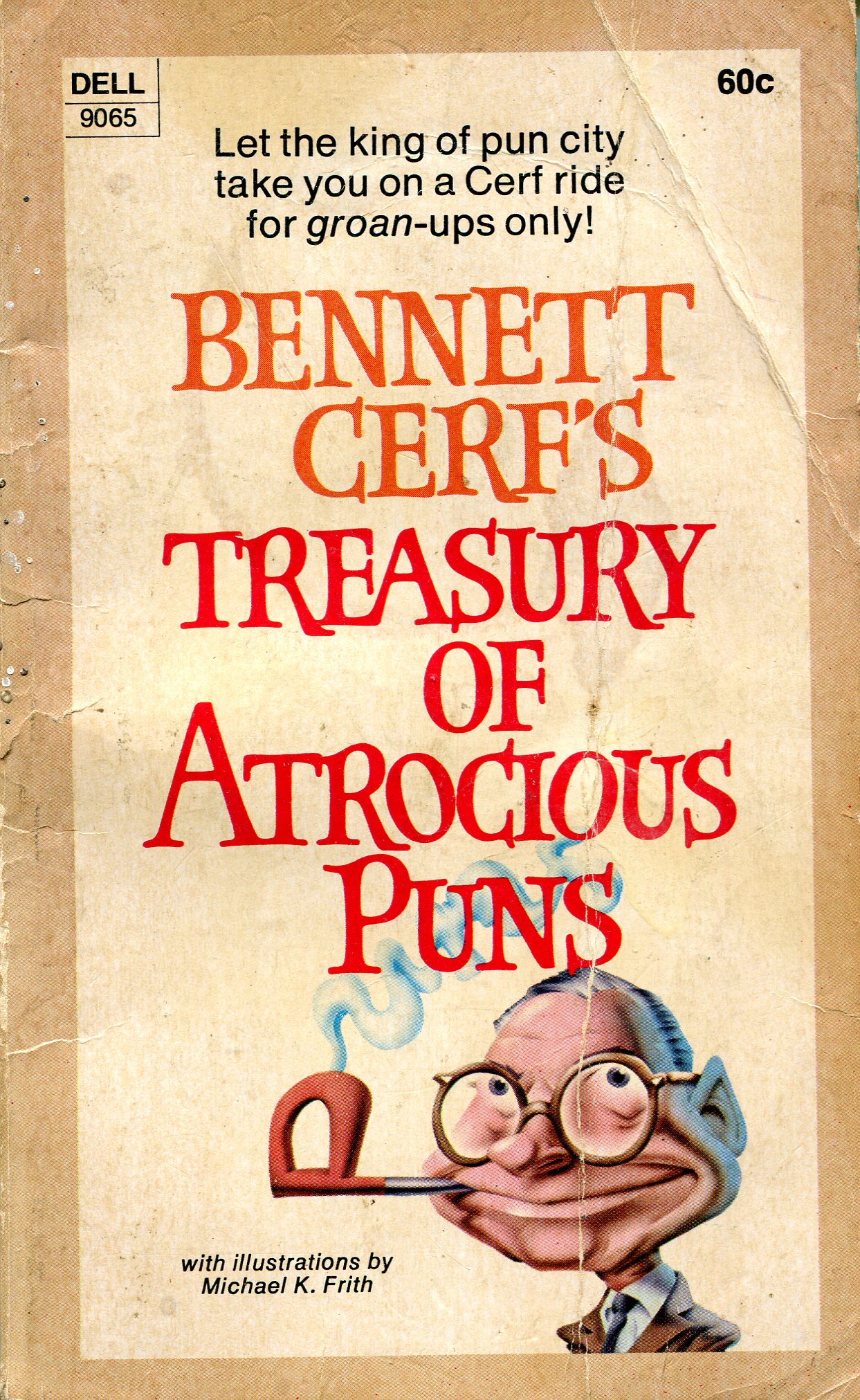
I might not know much about him myself except for a paperback we had around the house when I was growing up: Bennett Cerf’s Treasury of Atrocious Puns. It was published in 1968, toward the end of Cerf’s life, since he died in 1971 — another reason my cohort wouldn’t know him.

If he’d lived longer and appeared on game shows in the ’70s, maybe we would. He might have taken Wally Cox’s place on the Hollywood Squares when he died. Then again, Cerf was part of the New York literary milieu, and might not have been interested in a California game show.

I brought our copy home from San Antonio not long ago. It’s more amusing than the 1963 topical New Frontier Joke Book, though some of the puns are 1968 topical, too. Such as the captions for a drawing in the book that depicts someone being electrocuted by a wall outlet. Three other people are watching, and their speech balloons say: “A real life wire.” “One of the turned-on generation.” “Socket to me.”

Mostly, though, the punning reflects an earlier 20th-century vintage that isn’t necessarily moored to its time but does expect the audience to know certain things. Such as these lines from Cerf’s introduction: “In Rome, the great Caesar (the roamin’est noble of them all), when asked by his friend Brutus at the Forum one afternoon, ‘How many hamburgers did you consume at luncheon today, Julius?’ couldn’t resist answering, ‘Et two, Brute.’ ”

After the intro — in which Cerf assets that the pun isn’t the lowest form of wit — the book groups its puns into various chapters, including puns about animals, show business, education, sex, food and drink, commerce, health, the law, literature, music, sports and more. There are also puns on signs and punning definitions for words.

Many examples feature a few paragraphs or even half a page of build up before you get to the pun. Mostly more than I want to transcribe, so I’ll do only one — one of the more convoluted examples in the book, I think.

A resourceful Floridian not only harbored four playful porpoises in a pool beside his house, but discovered a way to keep them alive forever. All he had to do was feed them sea gulls.

So he ventured out in Biscayne Bay and trapped a quantity of gulls. When he tried to re-enter his house, however, he found his way blocked by a peace-loving, toothless old lion who had escaped from the zoo and was stretched clear across the doorway. As our intrepid hero jumped over the dormant beast, a posse of game wardens burst from the surrounding shrubbery and took him into custody.

The charge: Transporting gulls across a staid lion for immortal porpoises.

Which, in an aside, Cerf points out is a quintuple pun.

Other puns are shorter. Such as these “Daffynitions.” (By Webster? Noah! Noah!)

Bulldozing: Falling asleep during a political speech.
Disbar: As distinguished from some other bar.
Exchequer: A retired supermarket employee.
Gambit: Bitten in the leg.
Hangover: The wrath of grapes.
Hypotenuse: The washroom upstairs is occupied.
Incongruous: Where the laws are made.
Molasses: Additional girls.
Pasteurize: Something you see moving.
Polygon: A dead parrot.
Ramshackle: A chain used to tie up a he-goat.
Specimen: An Italian astronaut.

Supposed real people and the places they live:

Quoth D. Raven: Never, Mo.
I.M. Phelin: Slightly, Ill.
C.U. Sunday: Early, Mass.

A few of these made me laugh, but mostly — if you have any taste for puns — the book is good for smiles. Except for the puns about sex, which are very dated.

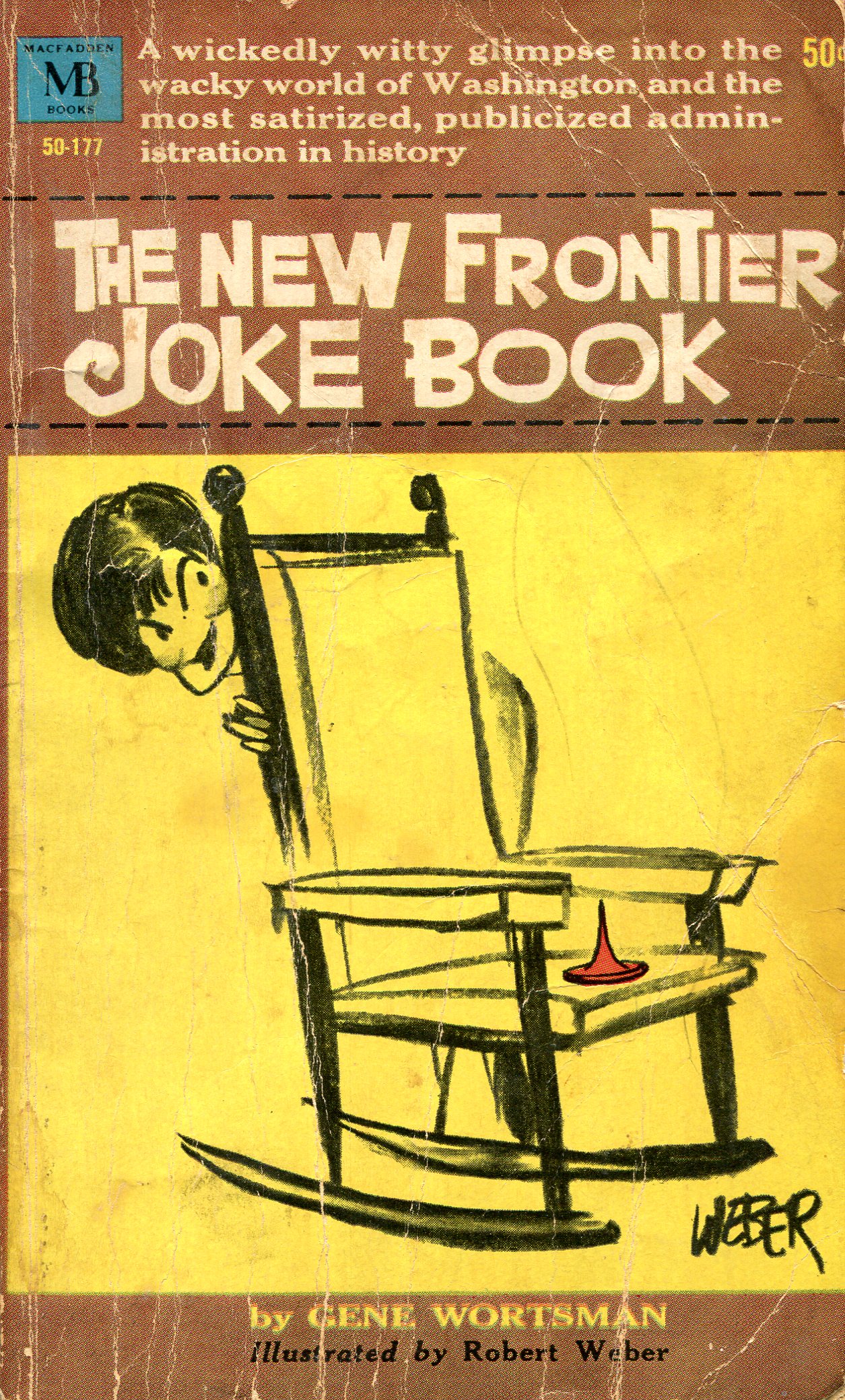
The New Frontier Joke Book

Pick up a book like The New Frontier Joke Book and be reminded that humor doesn’t age well. With some exceptions, of course.

I picked up the paperback at my mother’s house some years ago and now it reposes on one of my bookcases. I assume my parents bought it new. That is to say, in 1963, which is the copyright date. Meaning that not long after it was published, sales fell as flat as Vaughn Meader’s career.

Still, enough copies must have sold to make the book a non-rarity on Amazon in our time. If you want one, you can get it for $2.30. The original price was 50 cents, or about $4.20 in current money.

Gene Wortsman was the author (aggregator, really). He was a newspaperman from Alabama, covering Washington for the Birmingham Post-Herald, which ultimately folded in 2005. Apparently he also wrote a book about Phenix City during the 1950s, which seems like a thing a newspaperman from the region would do, though Ray Jenkins of Columbus, Ga. (who died only last October), was better known for his coverage of Sin City, USA.

The promotional text on the back cover of The New Frontier Joke Book says, “Use this sparkling collection of the newest, brightest, and fanciest quips and cartoons about THAT FAMILY in the White House. Read it aloud, for the delight of your friends. Or save it for your private enjoyment — as a sure cure for the frustrations of thinking about the Cuban situation, income taxes, government spending, or any of the other joys of modern living.”

I thumb through it, looking for something that’s still funny. It isn’t easy. This was worth a chuckle:

“Son,” said a corpulent businessman, “it gives me a glow of pride to know you hate Kennedy the way I hated FDR.”

Other quips are mildly puzzling.

Thanks to Postmaster General Day, the nickel wins the award for the greatest comeback of the decade.

I assume that had something to do with an increase in the price of a first-class stamp.

These days, everyone in Washington wants to know if the President is off his rocker.

Ah, yes. The president was known to spend time in rocking chairs. (Which would account for the book’s cover art.) Bad back, you know. You can still buy one of the style he used for $549.

Some are Johnny Carson sorts of jokes, on his weaker nights.

Averell Harriman went on a mission to Moscow for FDR and a mission to India for JFK. That guy has more missions than the Salvation Army.

It isn’t true that JFK had a locksmith go through the White House and replace all of the Yale locks.

There are jokes about Jackie Kennedy’s wardrobe, the John-Bobby rivalry, the president’s relative youth, taxes, LBJ chaffing at the vice presidency, the size of the Kennedy family, Khrushchev, the space race, etc. etc.

Even one making fun of the Secretary of Agriculture.

So the Yankees are still winning baseball games. The only way to stop them is to put Orville Freeman in charge of their farm system.

Not a very good joke — I think, it’s a little hard to tell at this late date — but I suppose that was better for the secretary than being known for telling a remarkably crude joke.

Davis-Kidd Booksellers, Nashville & Squeezebox Books and Music, Evanston

I have envelopes containing paper debris — keepsakes, if you’re in a generous mood — from various periods in my life. They aren’t quite rigorously organized, since that wouldn’t fit my temperament, but most of the items evoke a certain bit of the past.

Such as the pleasant times I spent at Davis-Kidd in Nashville in the mid-1980s. The store gave away bookmarks. I still have one.

Davis-Kidd Booksellers bookmark

There are few pleasures like browsing a bookstore, especially an independent, intelligently stocked one, as Davis-Kidd was. It wasn’t enough to browse, either. I also bought books there.

Of course I have to report that the store is gone. About nine years gone, at least the one in Nashville. Nine years ago, the betting money was on the complete disappearance of the independent bookstore. Fortunately, that hasn’t quite happened. I do my part when I can, though such bookstores, new or used, are thin on the ground in the suburbs around me.

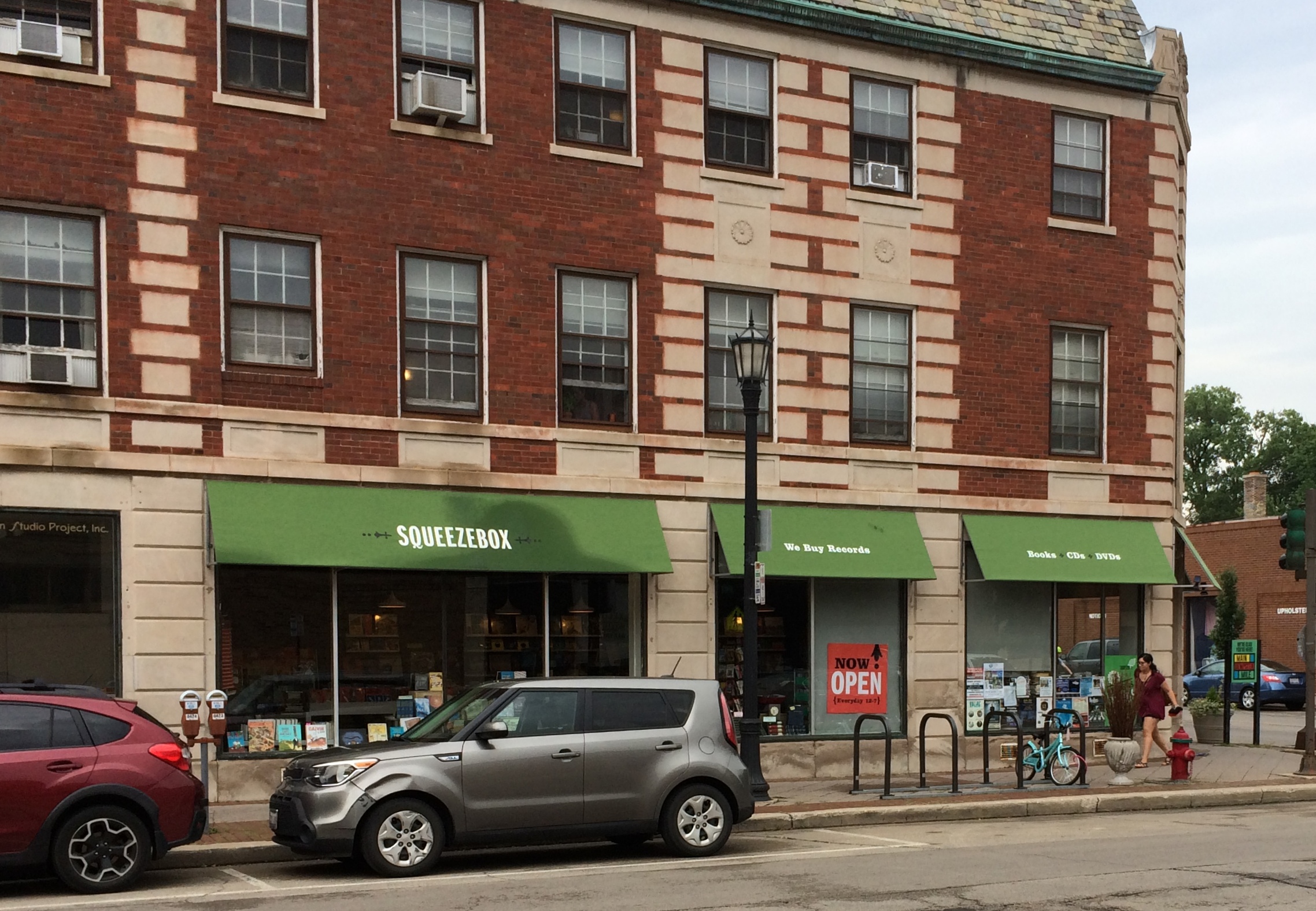
But I still find them further away. Last summer, for instance, I chanced across Squeezebox Books and Music when I was in Evanston.

Squuzebox, Evanston

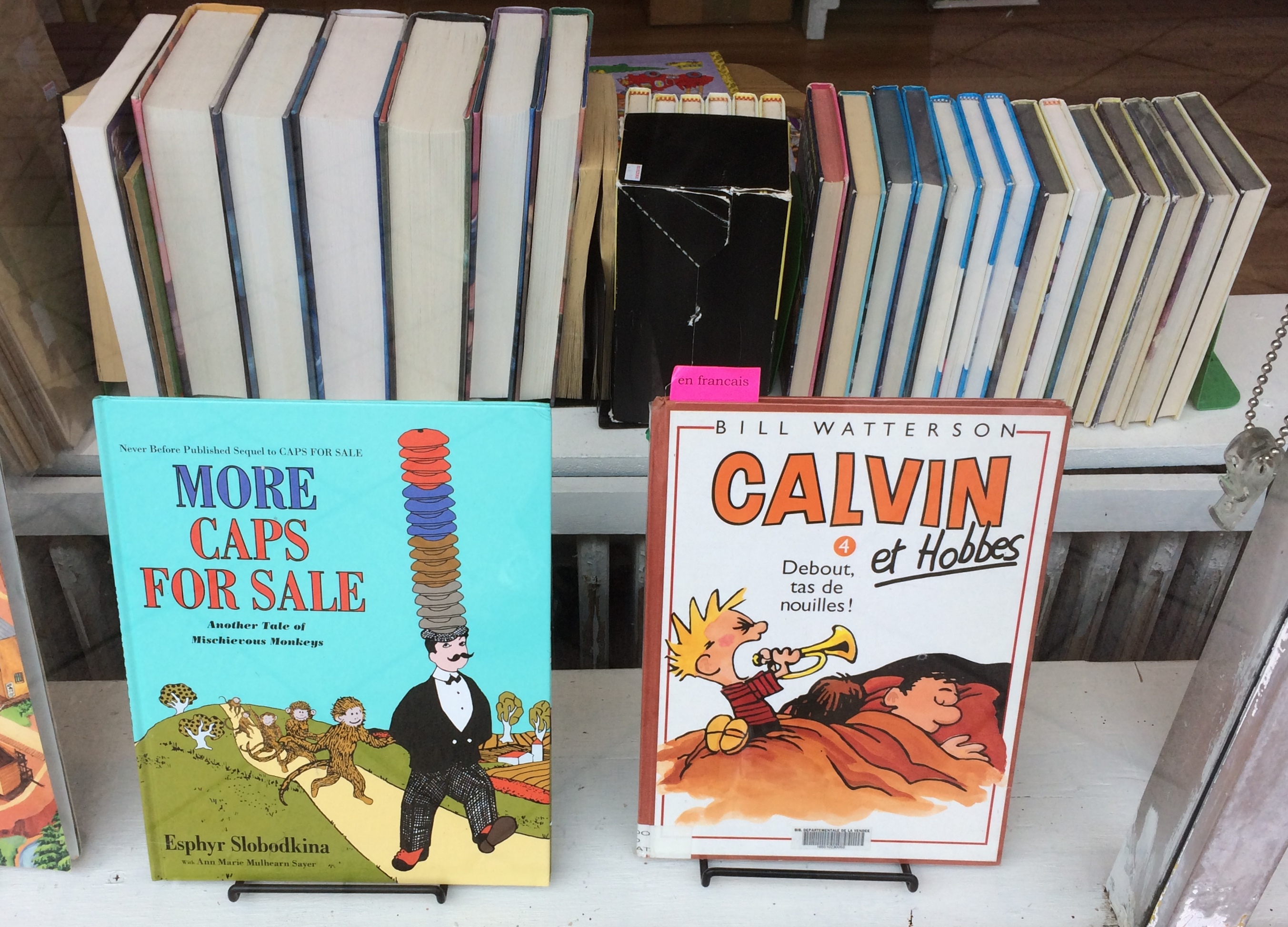
I like a shop that has non-English versions of Calvin & Hobbes for sale.

Squeezebox, Evanston

I didn’t buy any books there — I don’t buy as many as I used to, since I have so many — but I did buy postcards.

The Edgar Allan Poe Museum

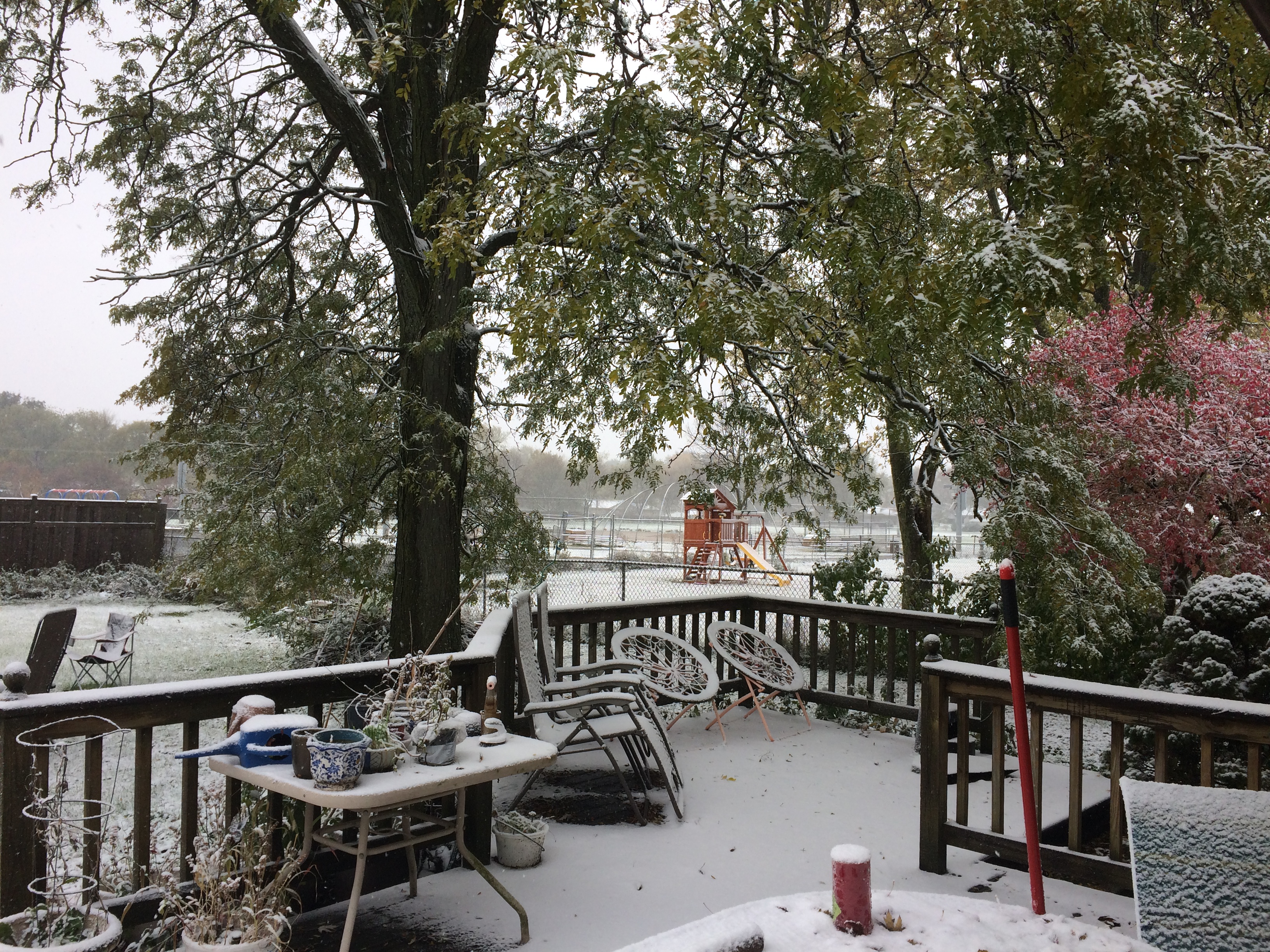
Halloween snow today. Mid-morning.Halloween Snow

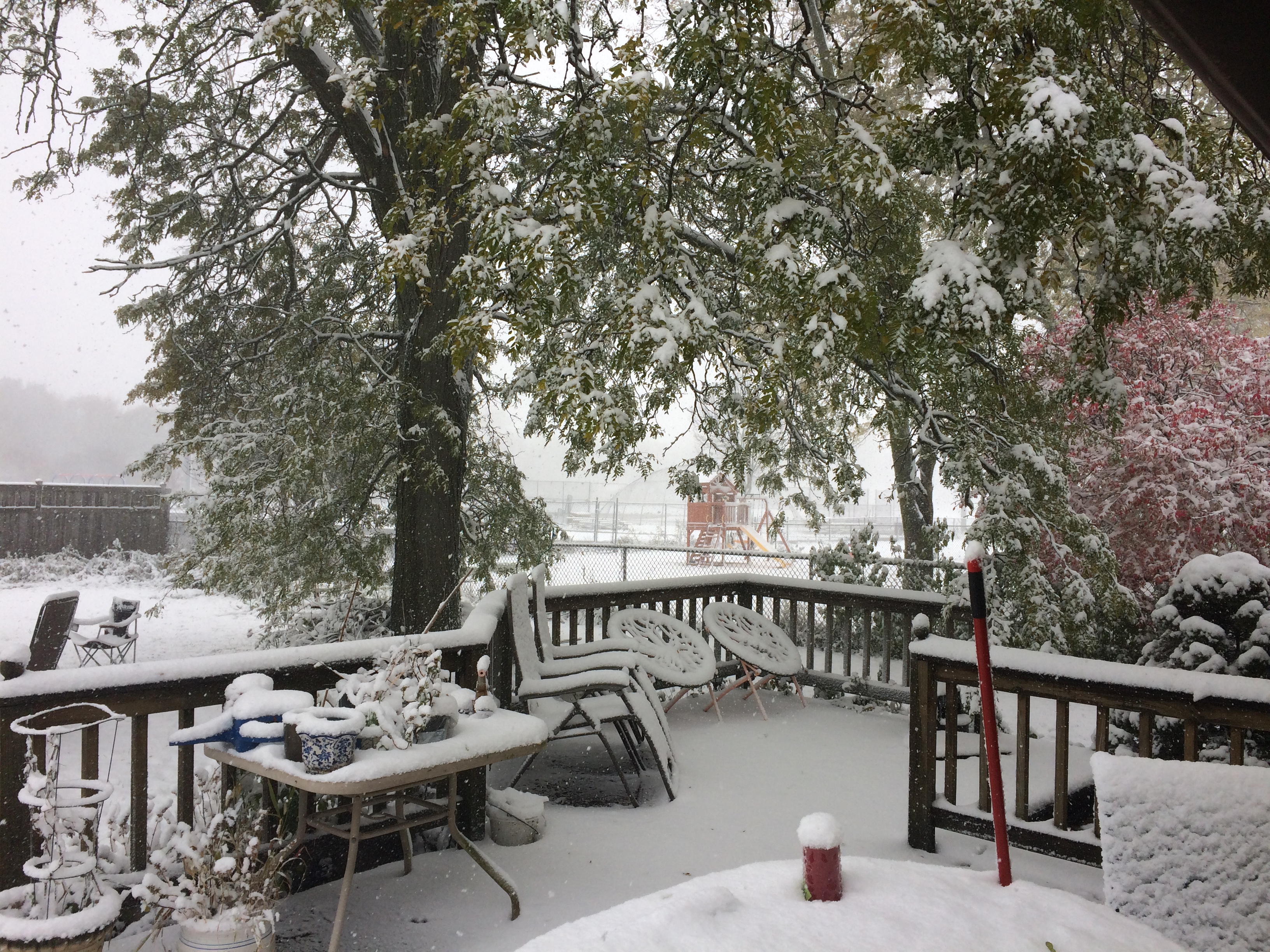
Mid-afternoon. Of course, it will melt in a day or two.

I’ve spent a fair number of Halloweens in the North; this is the first time snow has fallen. Cold rain, sometimes, but no snow. Sometimes warm fall days or blustery cool ones, like the Halloween of 2001, when Lilly was so unnerved by the dark and the strong winds while out trick-or-treating that she insisted that I carry her home. She wasn’t quite four, so it was possible — but tiring.

Speaking of Halloween, I’ve been listening to “Danse Macabre” lately.

In high school, I made the mistake of calling the piece “Halloween music” in front of my band director. He let me have it. It’s a tone poem! It’s serious music from France! It’s blah blah blah. Know what, Mr. W? I was right. It can be all those other things and Halloween music as well. Halloween as in spirits roaming our world before All Hallow’s, not the candy-gathering custom.

The last place we visited during the recent Virginia trip was the Edgar Allan Poe Museum in the Shockoe Bottom neighborhood of Richmond.

Poe Museum Richmond

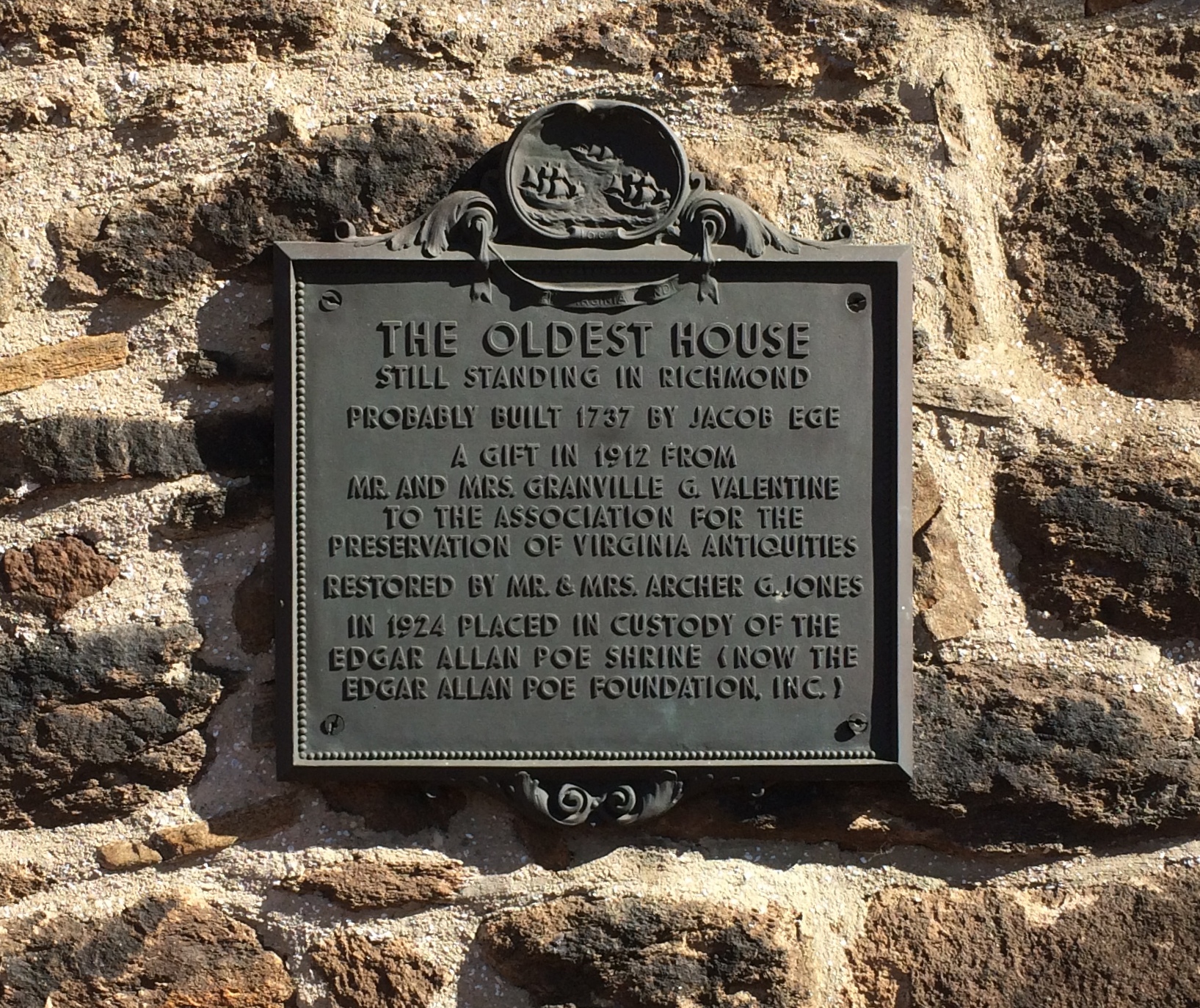
A small, specialized museum not in a house that Poe lived in — one of the places he lived was a few blocks away, long demolished — but including a building that is suitably old. In fact, according to a plaque on the wall, the oldest house still standing in Richmond, the Ege House.

All in all, an interesting little museum. Ann thought so too. I found out things I didn’t know, such as that Poe was a gifted athlete at the University of Virginia. Also heard more about things I did know, such as that after Poe died, his enemy Rufus Griswold wrote damning and largely false accounts of the author — vestiges of which still cling to Poe.

The museum is essentially three rooms: Poe’s early life, which was haunted by Death; Poe’s literary career, which was informed by Death; and Poe’s early and mysterious death, which was literally about Death. Some of the artifacts were owned by Poe or his family, or were portraits of them. Other items evoked his life and literature.

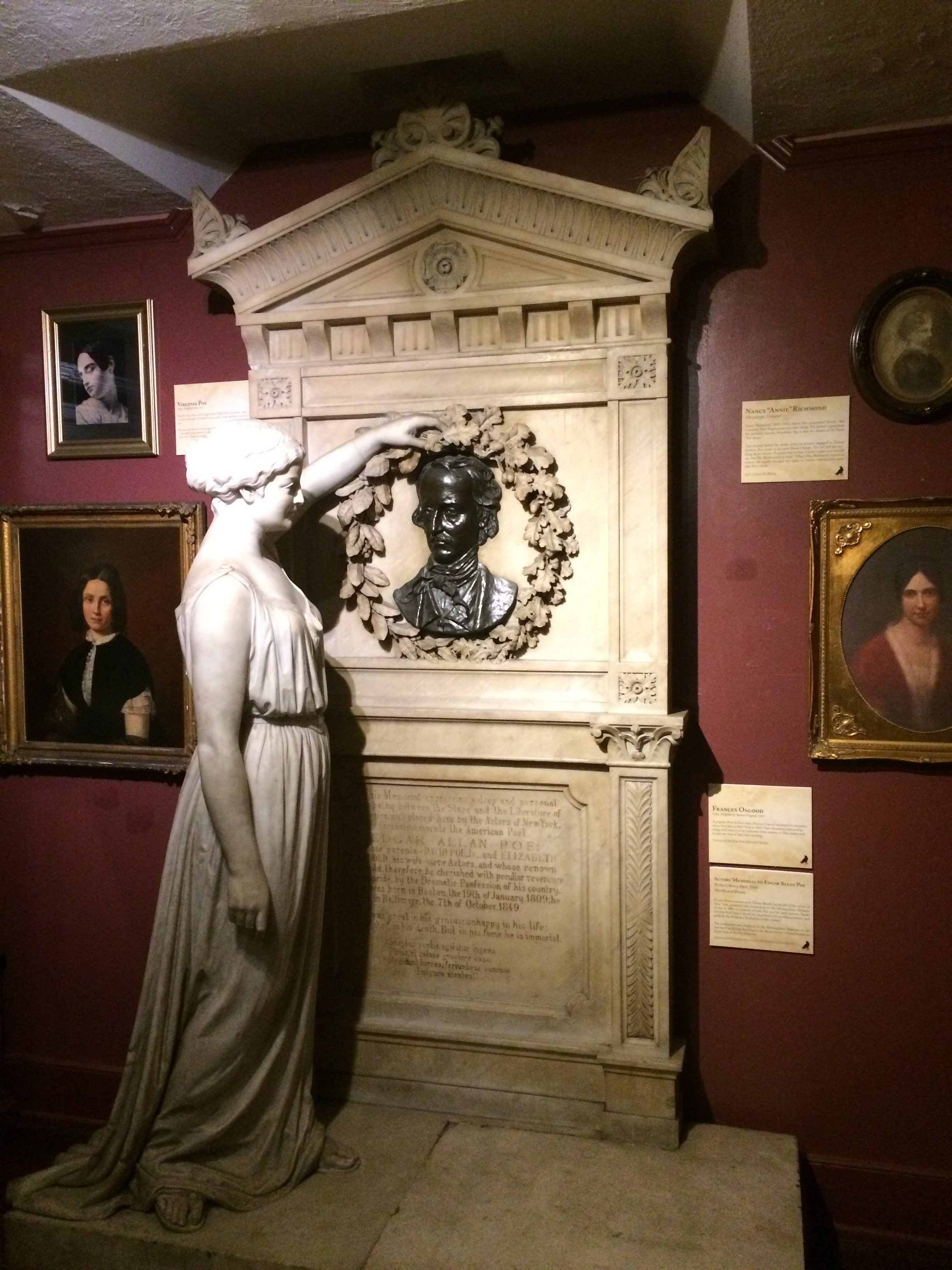
Such as this marble-and-bronze memorial to Poe.

The sign says, “… Edwin Booth, on behalf of the actors of New York, presented this monument to the Metropolitan Museum of Art in 1885 in memory of Poe…” Eventually, I guess, the Met got tired of it, and it ended up in Richmond.

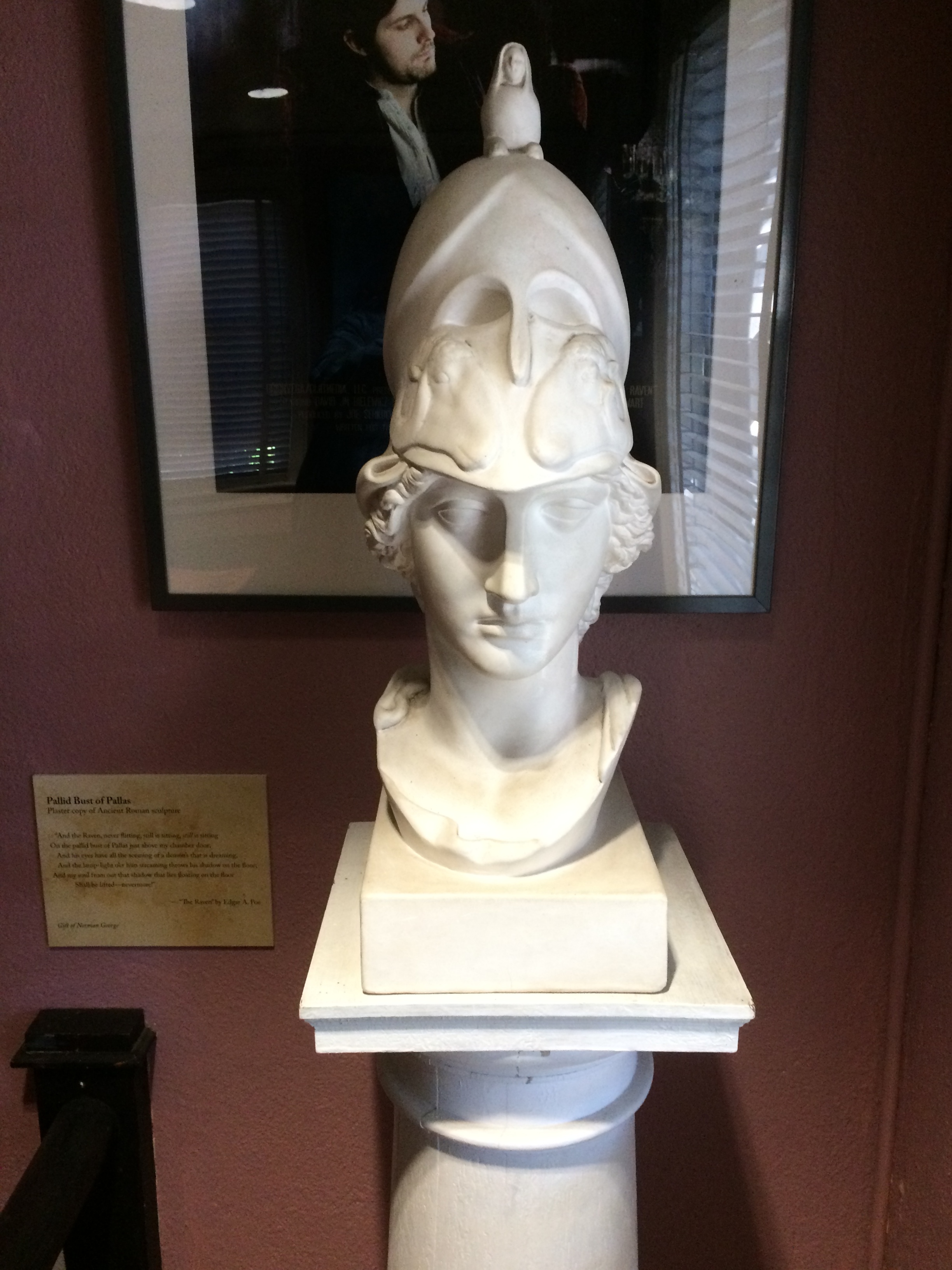
Or this bust of Pallas, a copy of a Roman sculpture. Can’t call yourself a Poe museum without that, though a depiction of Night’s Plutonian Shore would be good as well.

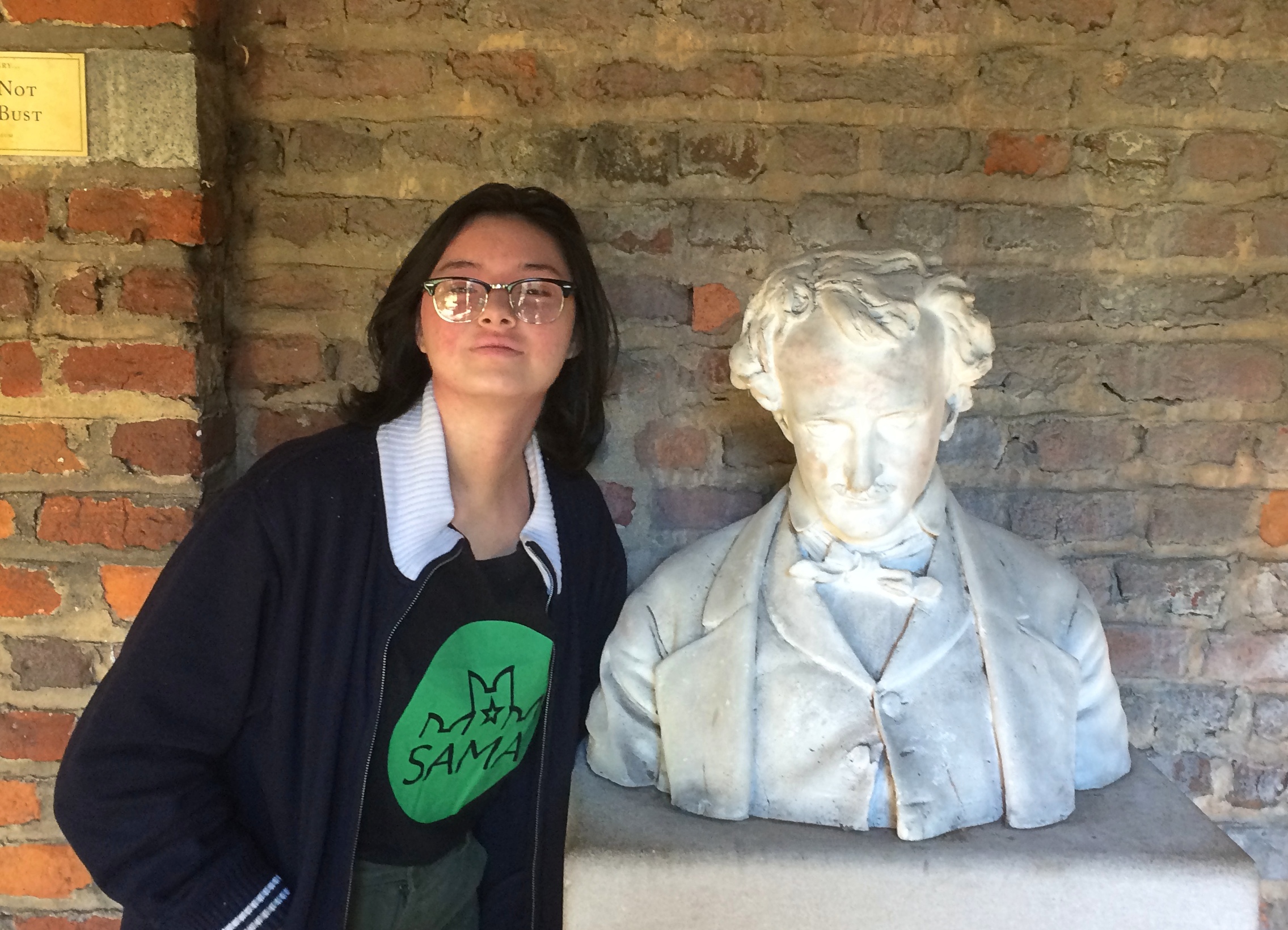
Poe himself in stone out in the garden.

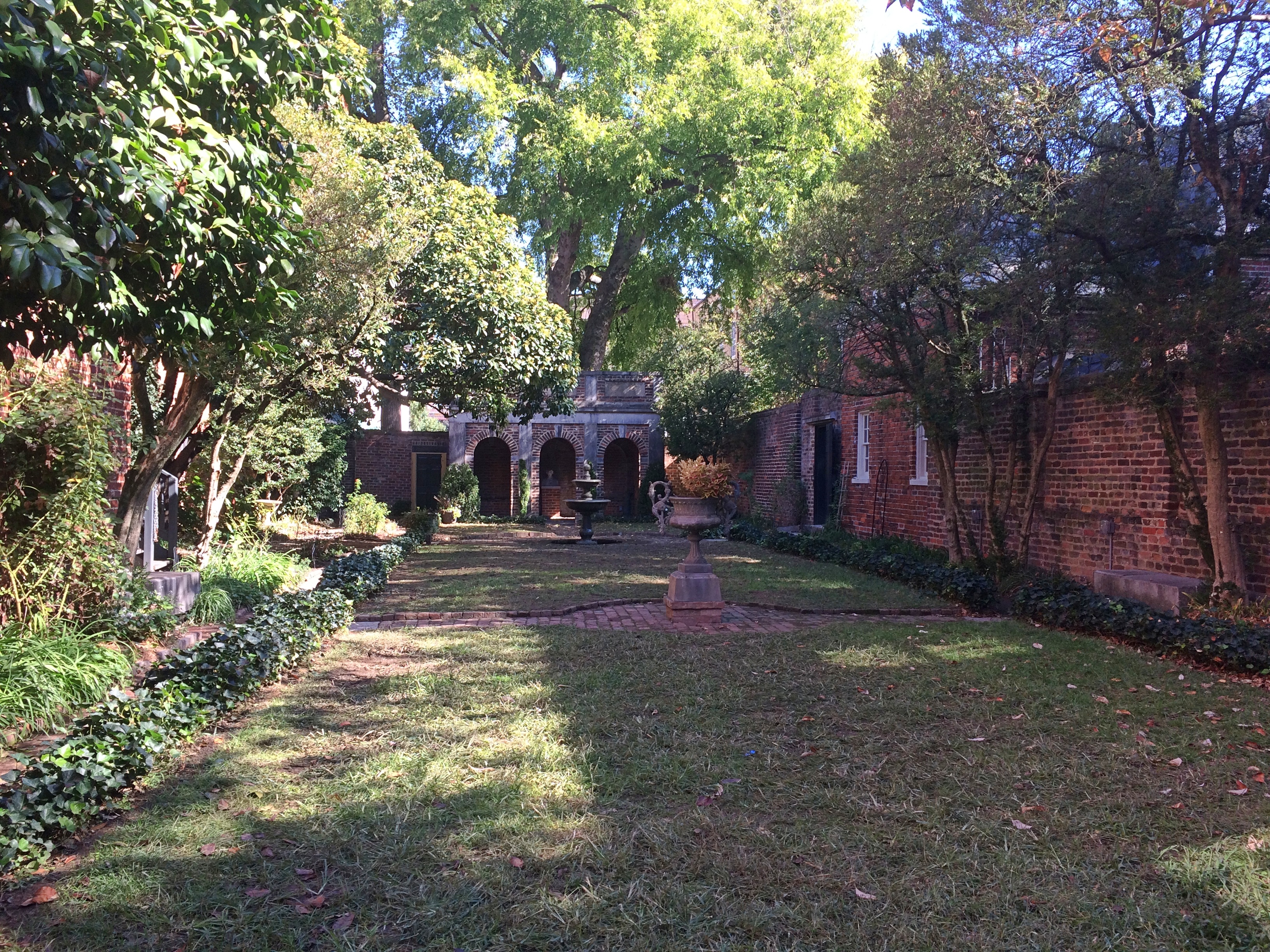
The garden is a pretty little space. People get married there, apparently.

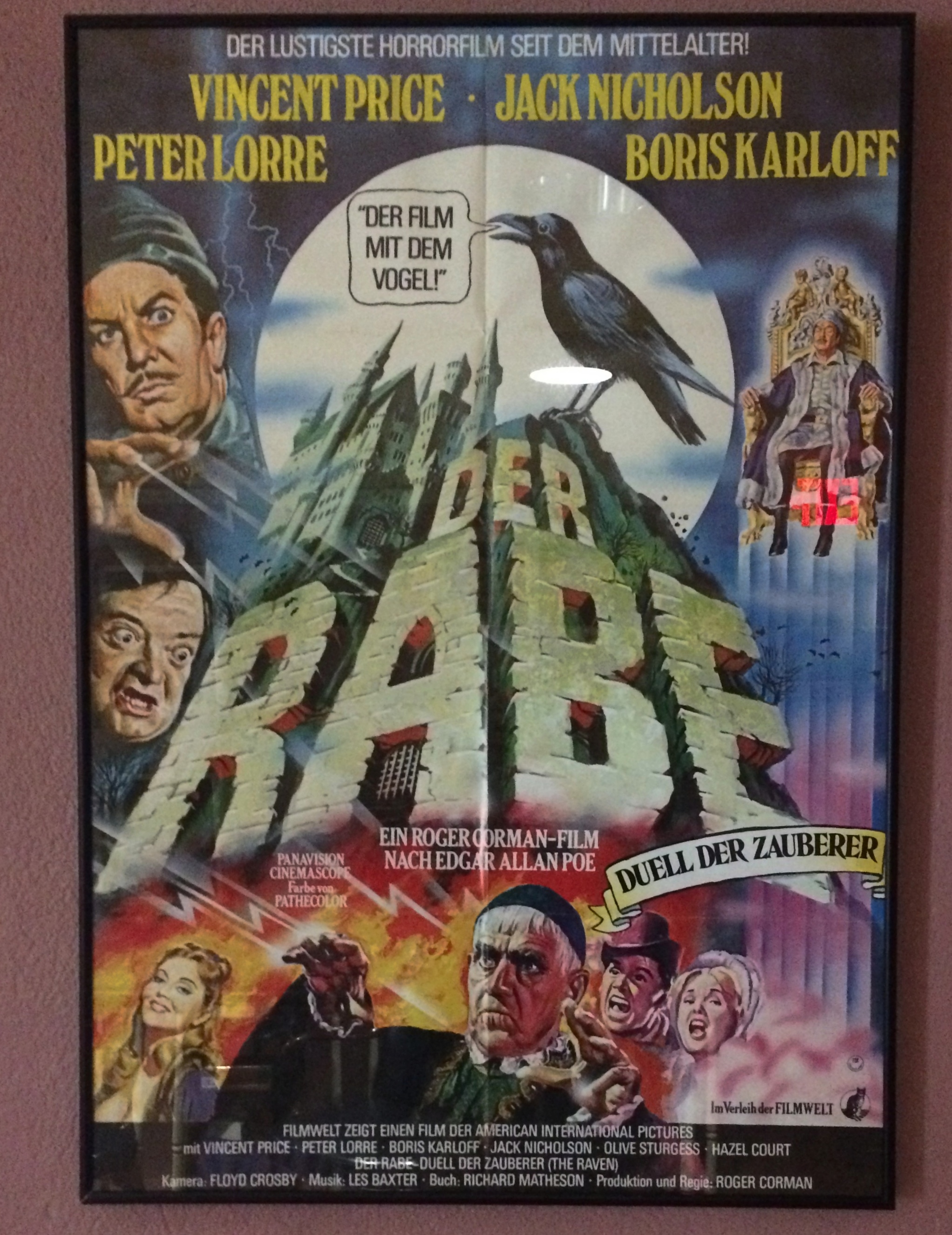
My own favorite item.

I haven’t seen The Raven, but a movie with Vincent Price and Peter Lorre and Boris Karloff and Jack Nicholson, directed by Roger Corman, who did a lot of Poe-inspired movies, has to be worth a look.

Thursday Scraps

Declining summer is a touch melancholy, but it has its charms. Such as soft cricketsong by night.

Late July and early August were drier than the wet weeks of late spring and early summer, but we did get some rain this week, mostly the non-thundering, gentle sort. Earlier this week, I stood outside under the eave over my back door, and heard water flowing vigorously.

Not something you necessarily want to hear near your roof. Soon I figured it out, to my relief. The dry spell had completely dried the gutters out, so that the new water flowed much more freely. That was the sound: rainwater as it coursed through the gutters on its way to the downspout.

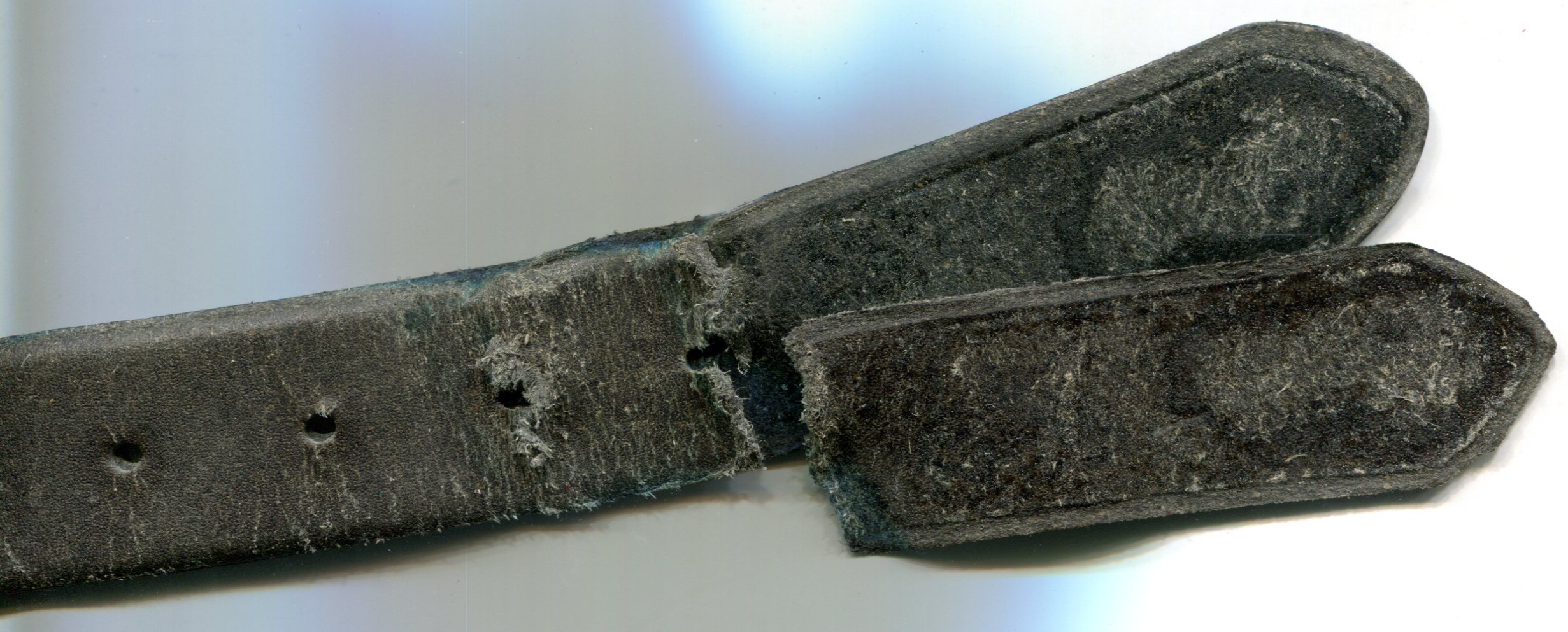
Something I’ve noticed in recent years: when you buy an inexpensive men’s belt, you don’t get a decent belt that lasts a few years, though a little worn at the end. You get cheap crap.

That’s the latest belt of mine to fall apart. There’s an industry for you to disrupt, Mr. Millennial looking for the main chance. Make decent belts. Probably someone’s doing that. Decent, maybe, but also priced five times an ordinary belt.

Recently I finished Everybody Behaves Badly,  subtitled “The True Story Behind Hemingway’s Masterpiece The Sun Also Rises,” by Leslie M.M. Blume (2016). Well written and full of interesting anecdotes. I knew Sun was a roman à clef but I didn’t know much detail or just how lightly Hemingway fictionalized some of the events, much to the embarrassment of the people who went to Spain with him in the summer of ’25.

Some tidbits: in an early draft of the novel, one of Brett’s brief affairs was said to be with an American named Tom who kept polo ponies. Possibly an allusion to the character Tom Buchanan in The Great Gatsby. Didn’t make the final cut.

Robert Cohn was based on Harold Loeb, an unflattering portrait that shadowed Loeb the rest of his life. Loeb and Hemingway didn’t quite come to blows in Pamplona, however, unlike their characters. They were angry enough at each other to fight, but apparently thought better of it.

Not long after the book came out, Hemingway left his first wife for the woman who would become his second. As part of the divorce, he agreed to give wife #1 Hadley Richardson the royalties from Sun, which would have been considerable. Then again, in marrying wife #2 Pauline Pfeiffer, he was marrying into money.

Now I want to read something different than that milieu. So I picked up a book of Eudora Welty short stories.

Gentlemen Who Invented Pharmacy

Not long ago I was finally inspired to find out something that has eluded me for many years. Maybe eluded isn’t the word. I haven’t tried to nail down the information very hard. Or at all, because it isn’t that important.

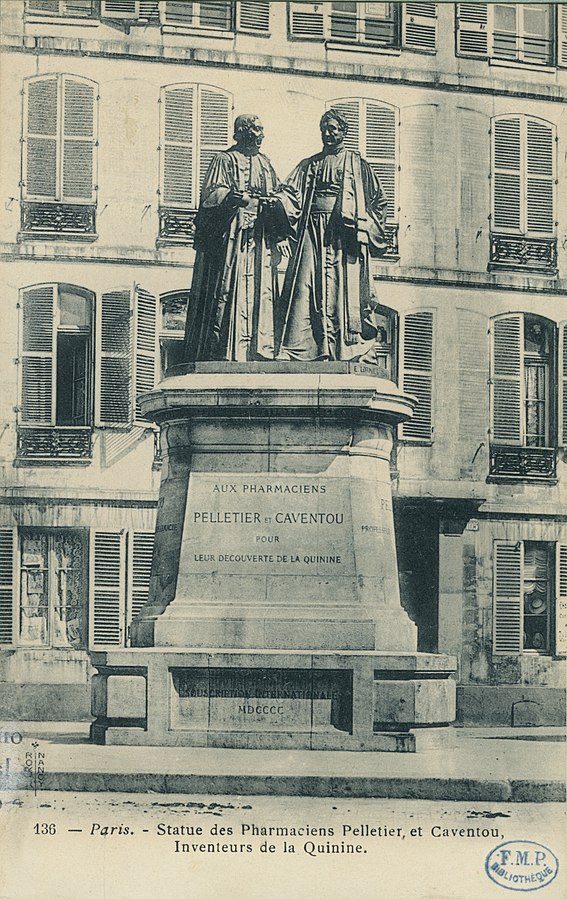
Non-importance shouldn’t be an obstacle to curiosity, however. So I did some looking around and found out that the statue mentioned in passing by the wisecracking and ever-so-tight Bill Gorton in The Sun Also Rises — literally in passing, since the characters are walking by it — is that of Pelletier and Caventou, which in the mid-1920s was on the Boulevard St. Michel.

Wiki: “In 1820, French researchers Pierre Joseph Pelletier and Joseph Bienaimé Caventou first isolated quinine from the bark of a tree in the genus Cinchona – probably Cinchona officinalis – and subsequently named the substance.”

Sun (Chapter 8): “We walked down the Boulevard [St. Michel]. At the juncture of the Rue Denfert-Rochereau with the Boulevard is a statue of two men in flowing robes.

” ‘I know who they are.’ Bill eyed the monument. ‘Gentlemen who invented pharmacy. Don’t try and fool me on Paris.’ ”

This is what that statue looked like in the time of Sun, courtesy of a card from the collection of Bibliothèque interuniversitaire de santé. Erected in 1900.
As far as I can tell, Rue Denfert-Rochereau — actually Avenue — doesn’t meet Boulevard St. Michel in our time. Close, but not quite. Either the streets have been reconfigured in 90 years or Hemingway was wrong.

In any case, the statue of two men in flowing robes is gone. One of many Paris bronzes melted down by the Germans during the occupation, various sources tell me. Now Pelletier and Caventou have a less literal memorial, or at least they did as of last summer, according to Google Street View.

A reclining figure on a plinth at Boulevard St. Michel and Rue de l’Abbé de l’Epée, evidently part of a fountain, since the memorial is called La fontaine des pharmaciens. Maybe the figure’s stricken with malaria. If I ever make it back to Paris, I’ll make a point of walking by. But I probably won’t be tight.

Jaume Plensa, Here and There

Here’s a line from The Sun Also Rises that I didn’t much appreciate until recently. In one of the many conversations among the protagonists, the subject of the character Mike’s bankruptcy is broached:

“How did you go bankrupt?” Bill asked.
“Two ways,” Mike said. “Gradually, then suddenly.”

A lot of things happen that way. Learning often happens that way. Or at least awareness. Fortunately, I don’t have the experience of bankruptcy in mind. Still, a minor example of gradually-suddenly just happened to me.

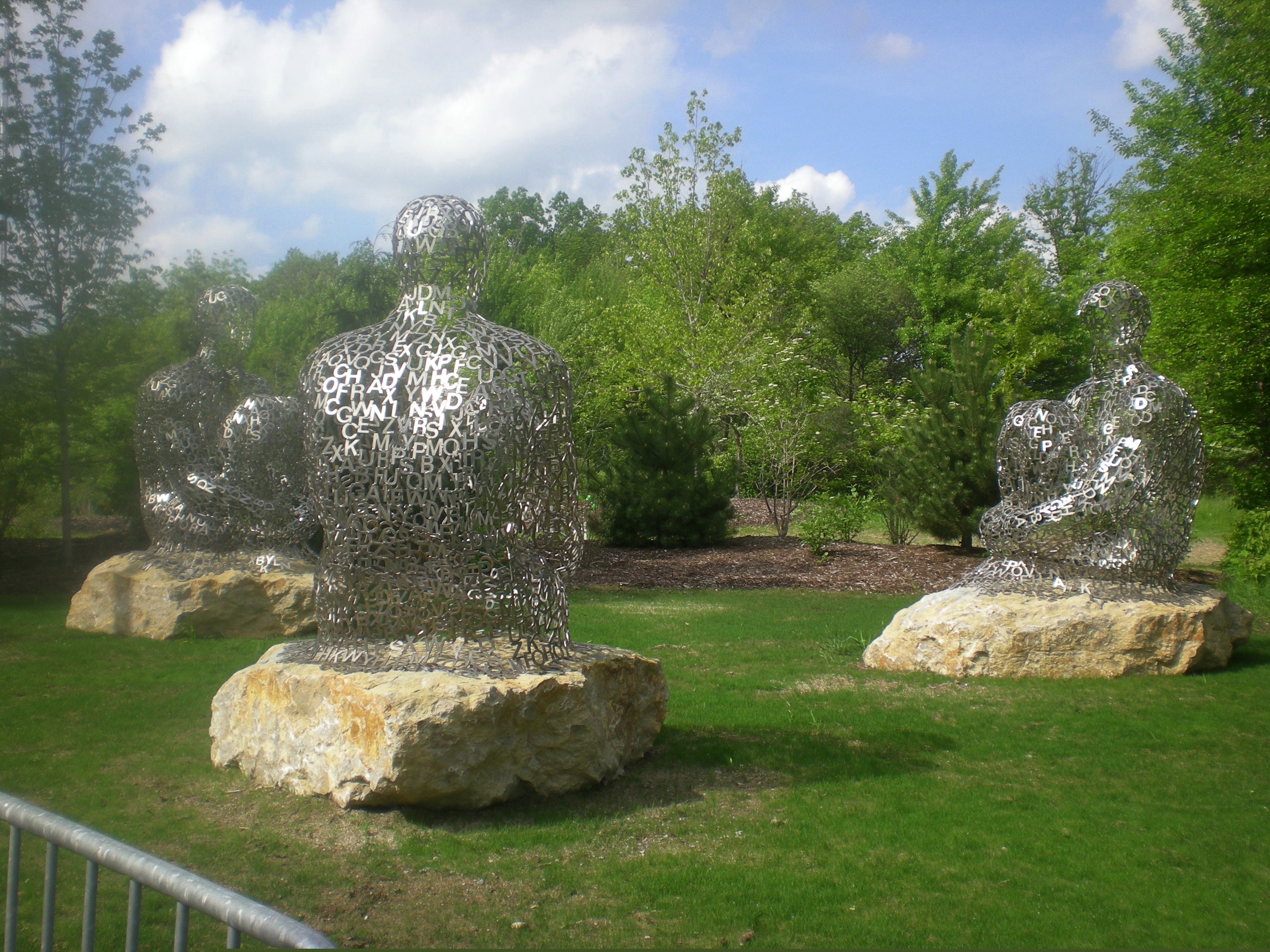
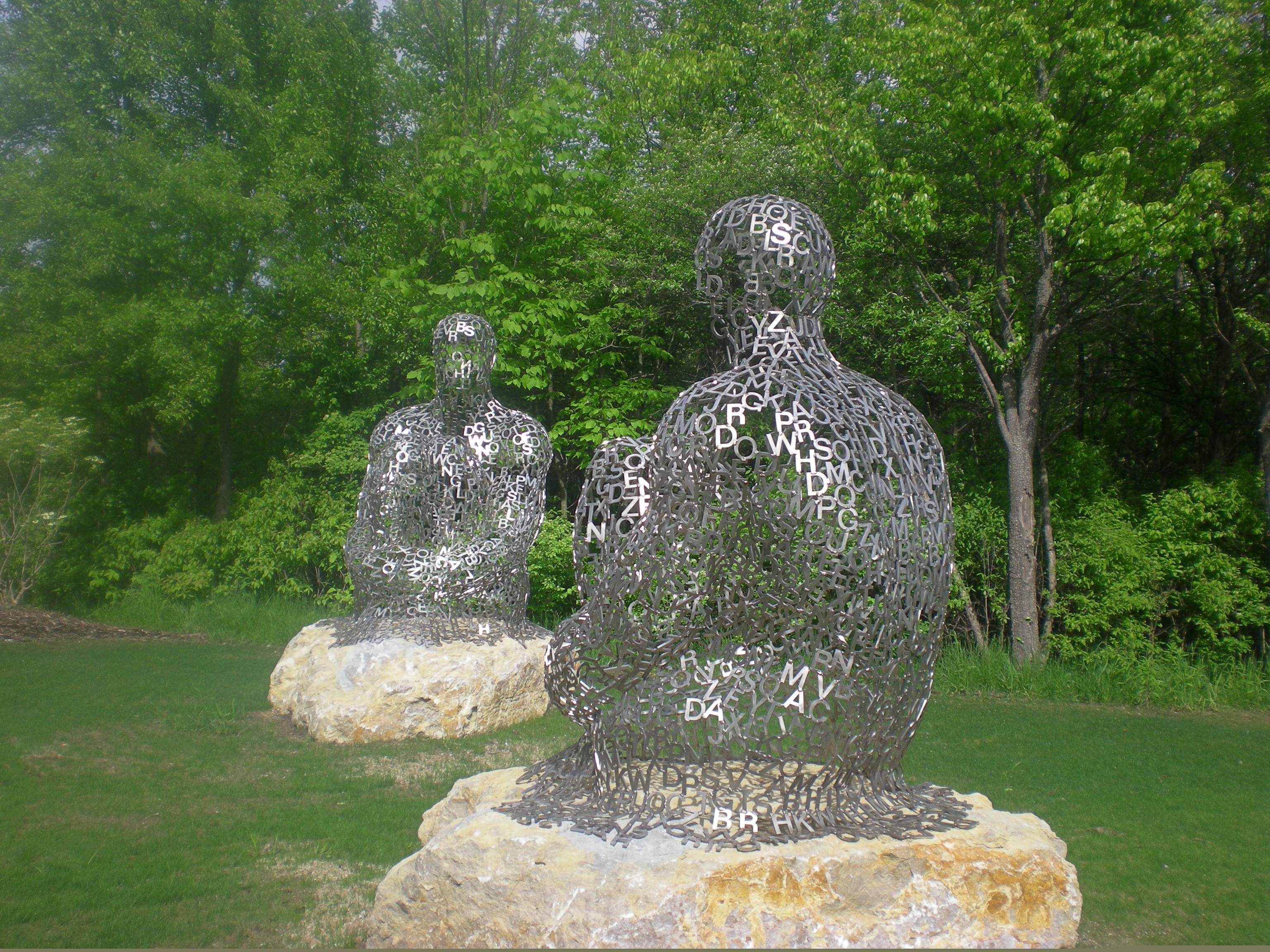
Back in 2008, we visited the Frederik Meijer Gardens & Sculpture Park in Grand Rapids, Mich. One of the works was by Jaume Plensa, “I, you, she or he…”
In 2014, I took note of Plensa’s monumental head, temporarily placed in Millennium Park in Chicago, “Looking Into My Dreams, Awilda.” I also knew at the time that the Catalan artist had also done Crown Fountain in the park as well.

Interesting that the vitriol against “Dreams” in the comments of this Chicago Reader item obsesses about the size of the head. When I happen across public art, I judge it by an admittedly subjective standard: does it make the space more interesting? By that standard, all the Plensas I’ve seen are successful works.

Today I was looking at pictures I’d taken in August 2013, and happened across these — two images of the same work in Chicago.
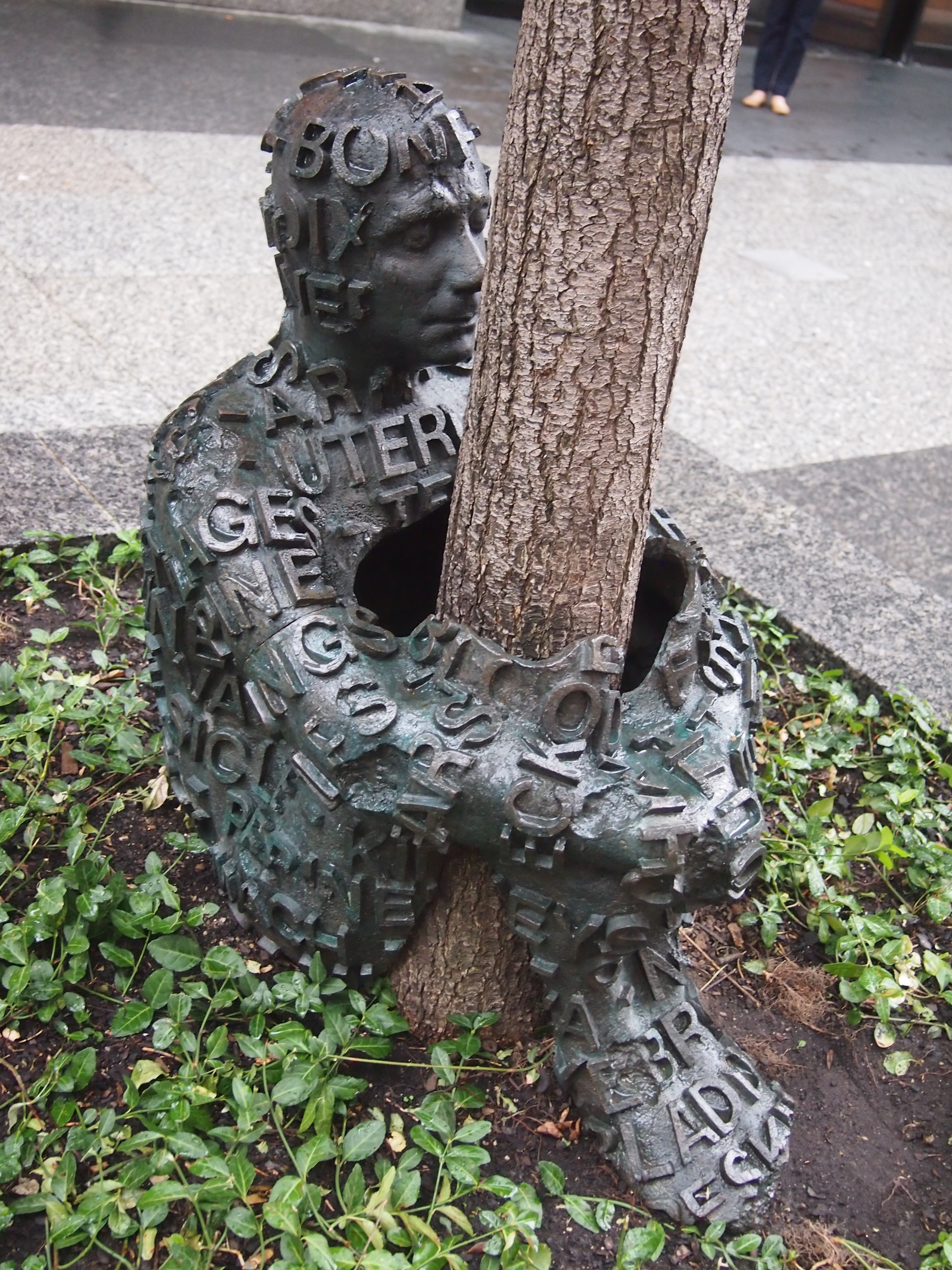
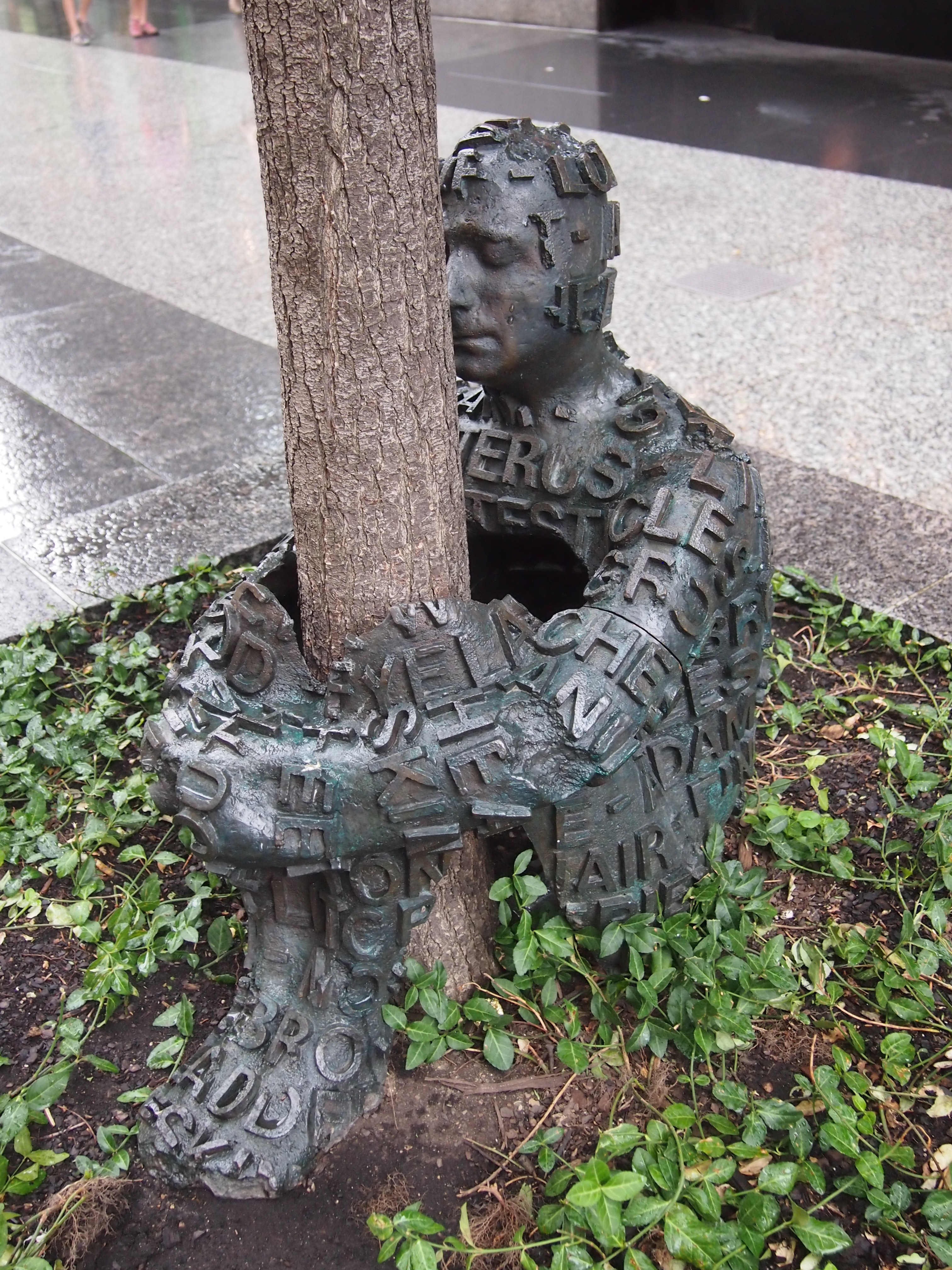
Self Portrait With Tree - Chicago - Jaume PlensaSelf Portrait With Tree - Chicago - Jaume Plensa“Self Portrait With Tree,” by none other than Plensa. I’d forgotten about it, and when I took the picture, probably didn’t associate it with the other works of his I’d seen. “Self Portrait” was next to the Hancock Tower on E. Chestnut St. I checked the Street View of that block, dated July 2018, and the work is gone. It was put up by the nearby Richard Gray Gallery, so perhaps it found a buyer.

All that is the gradual part. Somehow or other, Plensa hadn’t made much of an impression on me over the years. But when I looked at the 2013 images, I suddenly wanted to know more about him, since I don’t make a close study of sculpture or public art. If I had, I would have known how widespread his works are. (Had we walked further along Buffalo Bayou in Houston in May, we’d have come across yet another.)

Is it important that I know this? Maybe, maybe not. But better to err on the side of knowing something, however small.

Hercules Mulligan, Patriot

I had ramen at home for lunch on Friday. Unremarkable, except I ate my ramen sitting out on the deck. No coat necessary to keep warm. The setting made the tasty noodles, vegetables and broth that much better.

The warmth didn’t last. It couldn’t. By the evening, drizzle. By Saturday, a late winter chill that hasn’t gone away even yet. Today came the bonus of wind gusts blowing the only way wind blows in cold weather: in your face.

Croci and a few weeds and a purple flower or two now poke out of the ground to tease us about spring. Maybe that counts as cruel. But April is also the month when, suddenly, the grass will be green again.

A couple of weeks ago, I decided it was time to read Ron Chernow’s biography of Alexander Hamilton, which has been on my shelf for quite a while. I don’t regret it. It’s a weighty book, as befits a weighty subject, but also a lively read that illuminates Hamilton’s character and ideas.

There are also plenty of interesting and sometimes entertaining supporting characters. My favorite so far: Hercules Mulligan, only partly for the name. Hamilton met him not long after coming to New York, just before the Revolution.

“[Hamilton] had all the magnetic power of a mysterious foreigner and soon made his first friend: a fashionable tailor with the splendid name of Hercules Mulligan….” Chernow writes. “Born in Ireland in 1740, the colorful, garrulous Mulligan was one of the few tradesmen Hamilton ever befriended. He had a shop and home on Water Street, and Hamilton may have boarded with him briefly…

“Later, during the British occupation of wartime New York, Mulligan was to dabble in freelance espionage for George Washington, discretely pumping his foppish clients, mostly Tories and British officers, for strategic information as he taped their measurements.”

Later, regarding the events associated with Evacuation Day in New York — November 25, 1783 — Chernow relates the following: “The morning after he entered New York, Washington breakfasted with the loquacious tailor, Hercules Mulligan… To wipe away any doubts about Mulligan’s true loyalties, Washington pronounced him ‘a true friend of liberty.’ ”

Mulligan ought to have a plaque somewhere on Water Street. He’s buried in Trinity churchyard in Lower Manhattan. If I’d known that last year, I might have looked for him.

As for Evacuation Day, New York holidays aren’t any of my business, but that’s one that ought to be brought back, even if it’s more-or-less at the same time as Thanksgiving.

Reading About the Wazir of Wham in the Pit of Winter

Sliding into the pit of winter. The abyss. The Mariana Trench. With any luck temps won’t be any colder in February.

The snow was intense enough this morning that school was cancelled and garbage pickup didn’t happen on our street today as scheduled, though the recycle truck came more-or-less on time in the mid-morning, even before the plows.

I decided to go ahead and read the biography of Babe Ruth that I have handy, Babe Ruth: His Life and Legend by Kal Wagenheim (1974). Not overly scholarly, but fun. A book about good-time Babe Ruth that isn’t fun isn’t trying very hard. Also, it was written long enough ago that plenty of old timers were still around to tell stories about Ruth.

Been a while since I read any baseball books. Can’t remember the last one. Might have been You Gotta Have Wa.

One amusing thing to read about is the array of nicknames that sports writers invented for the Babe. The Sultan of Swat or the Bambino, everyone knows (or should), but less-well known is the Colossus of Clout or the Behemoth of Bust. Or the Caliph of Clout, Wazir of Wham, Maharajah of Mash, Rajah of Rap, Mammoth of Maul, Wali of Wallop, the Mauling Monarch and the Terrible Titan.