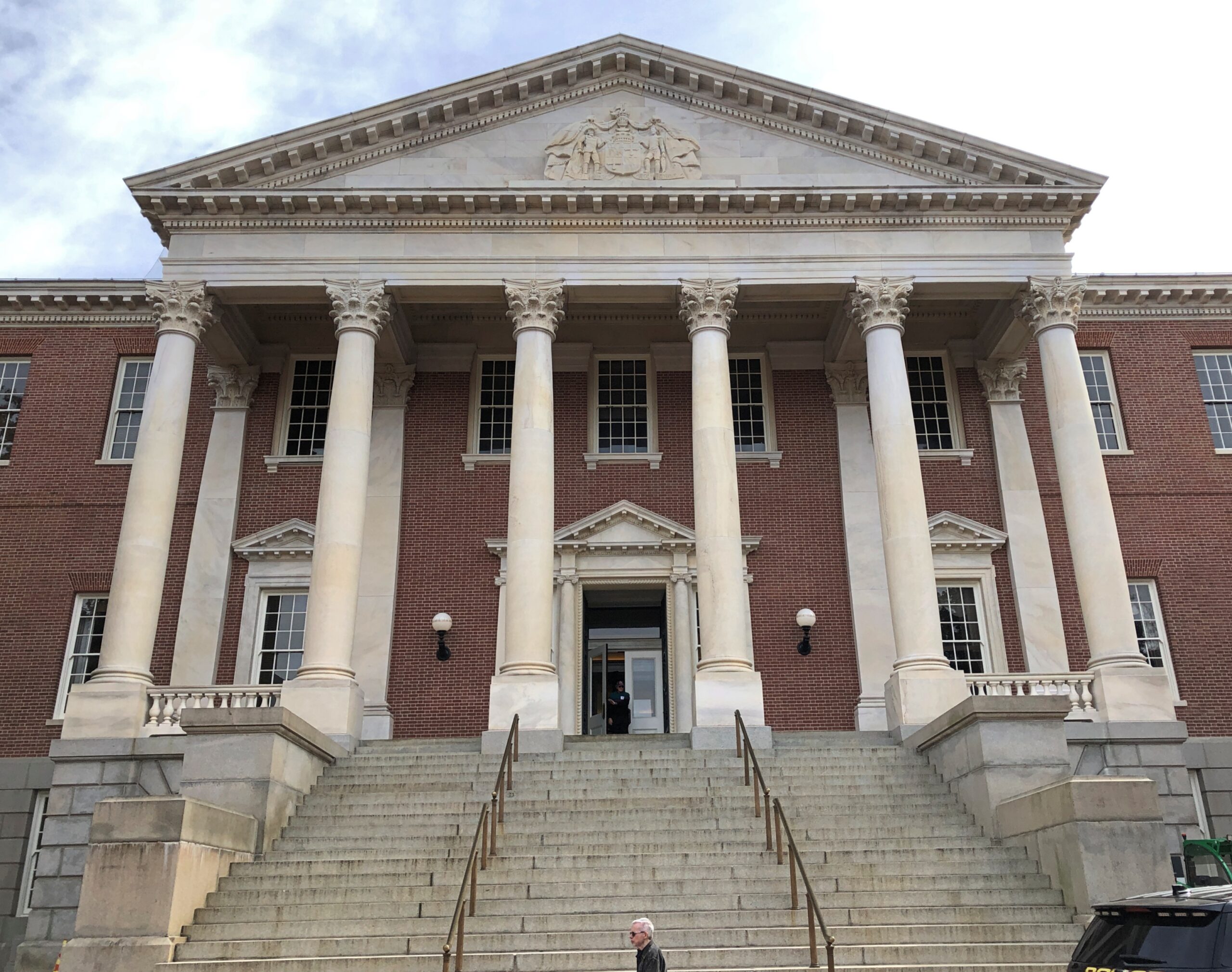
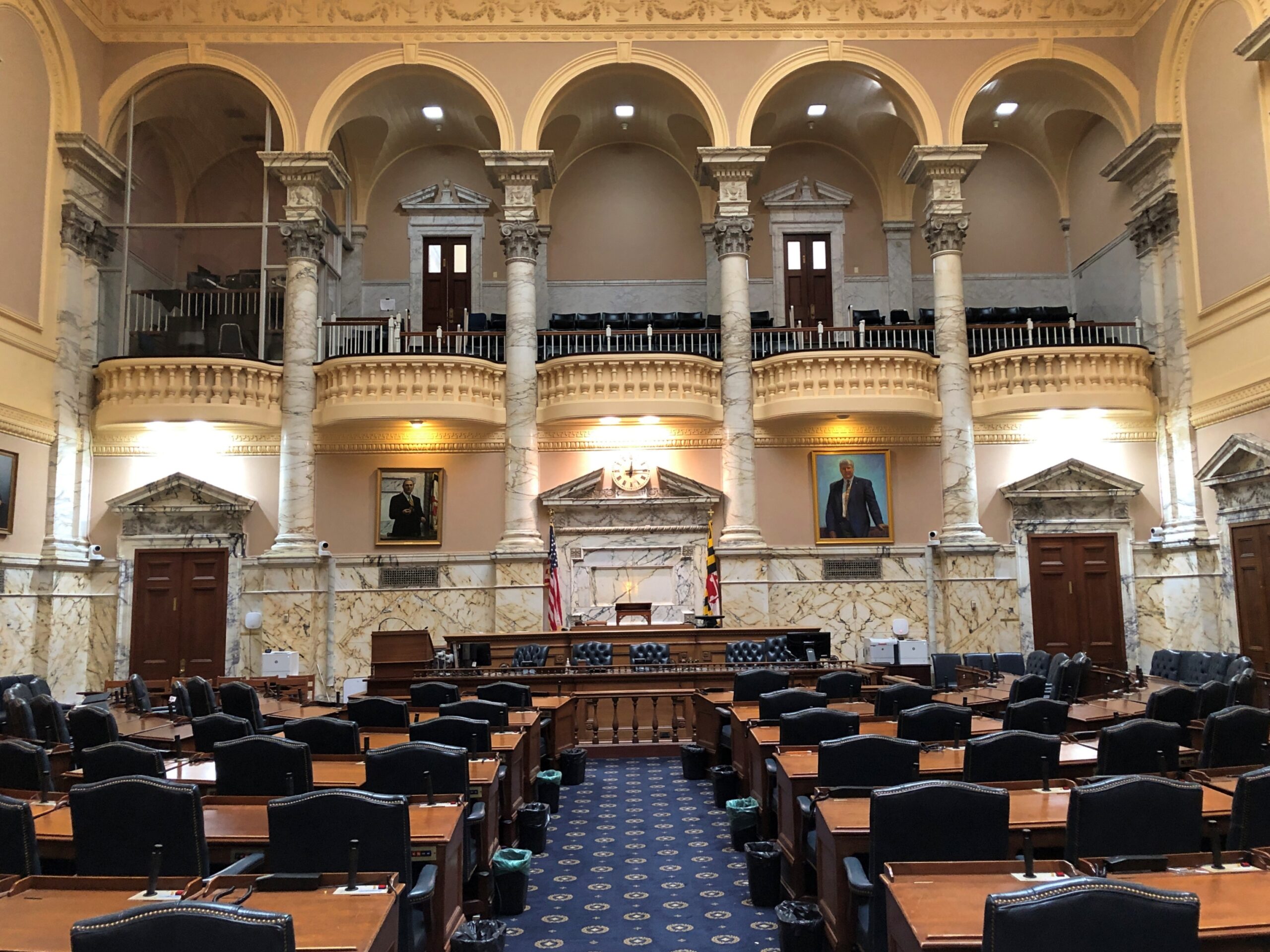
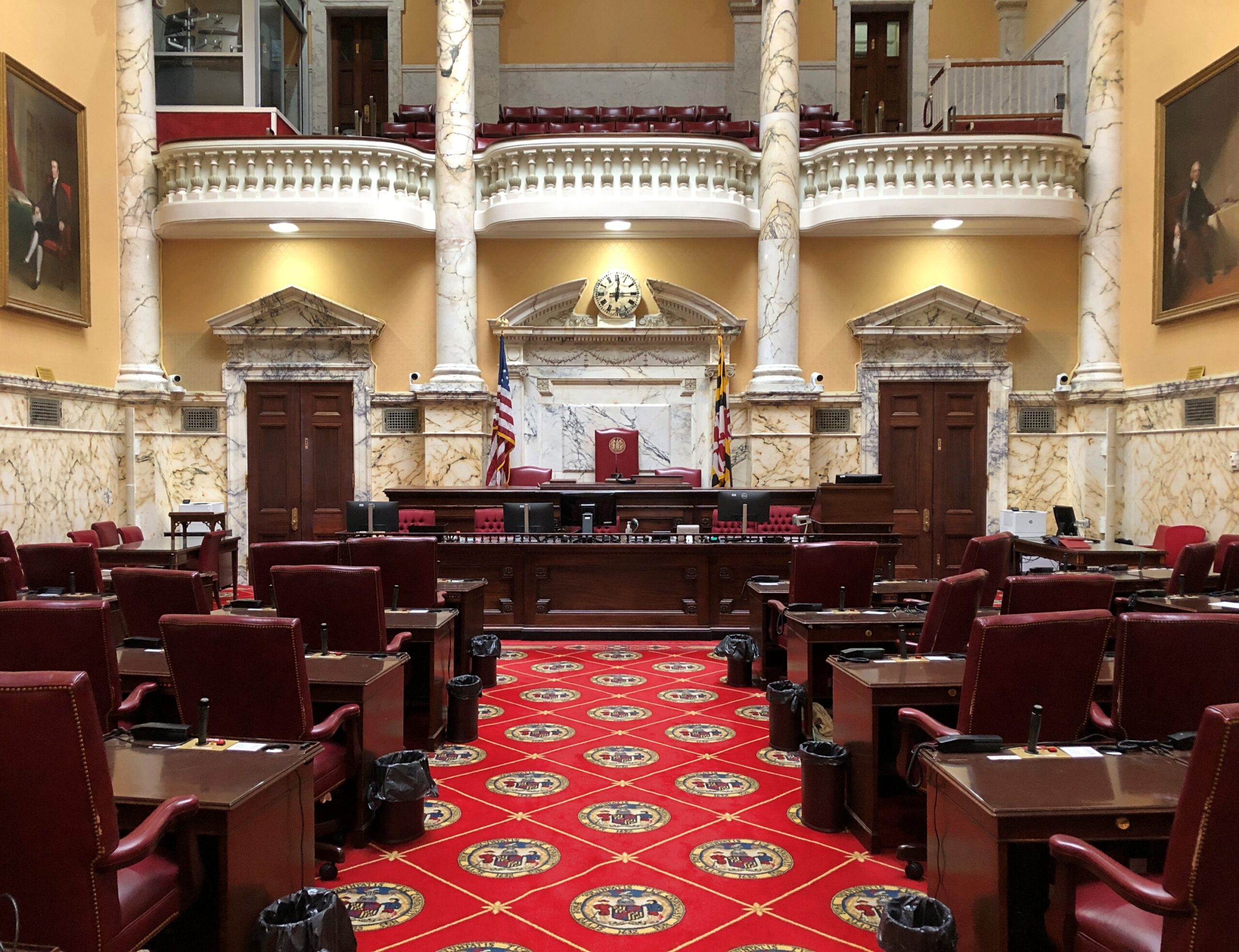
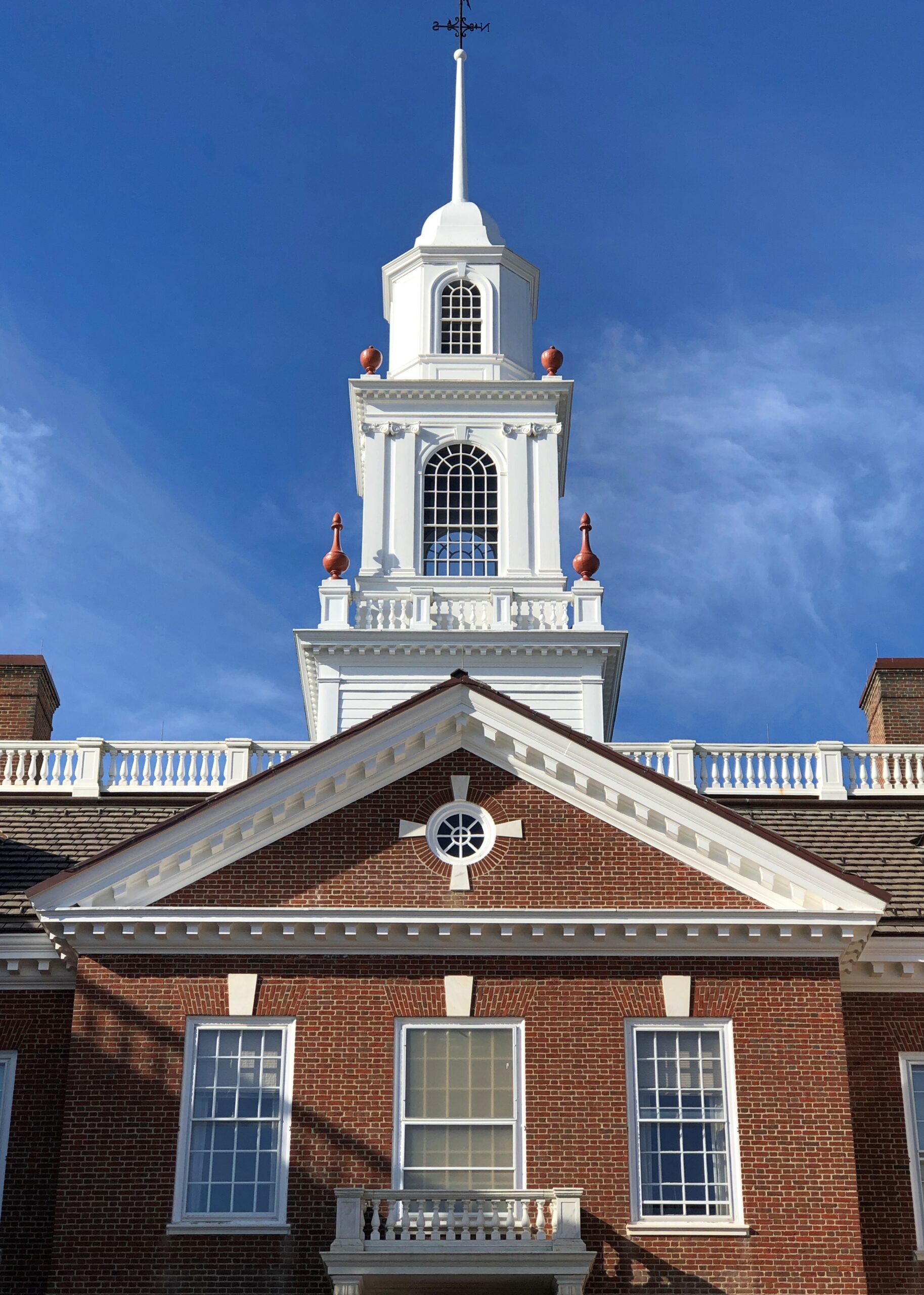
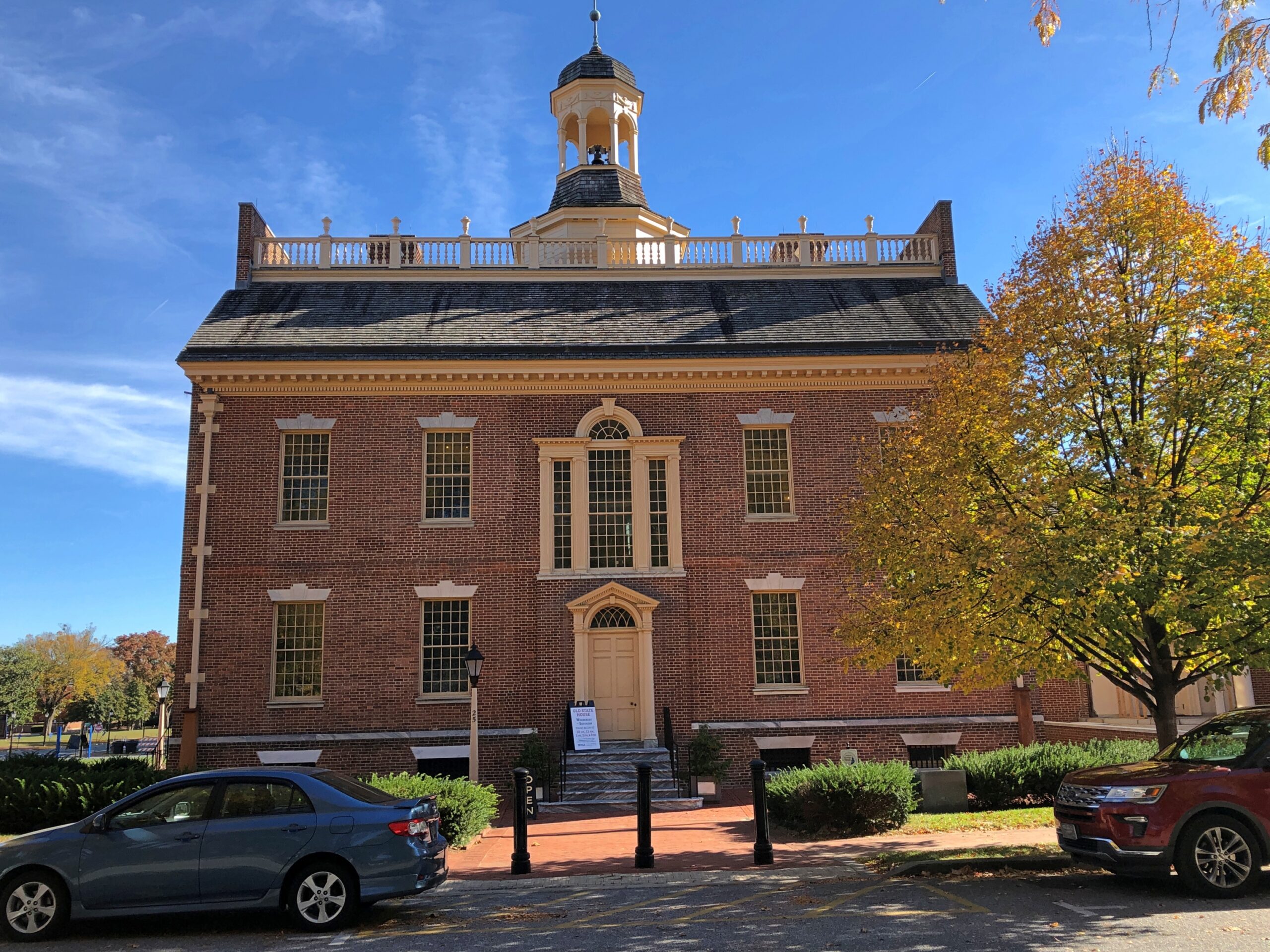
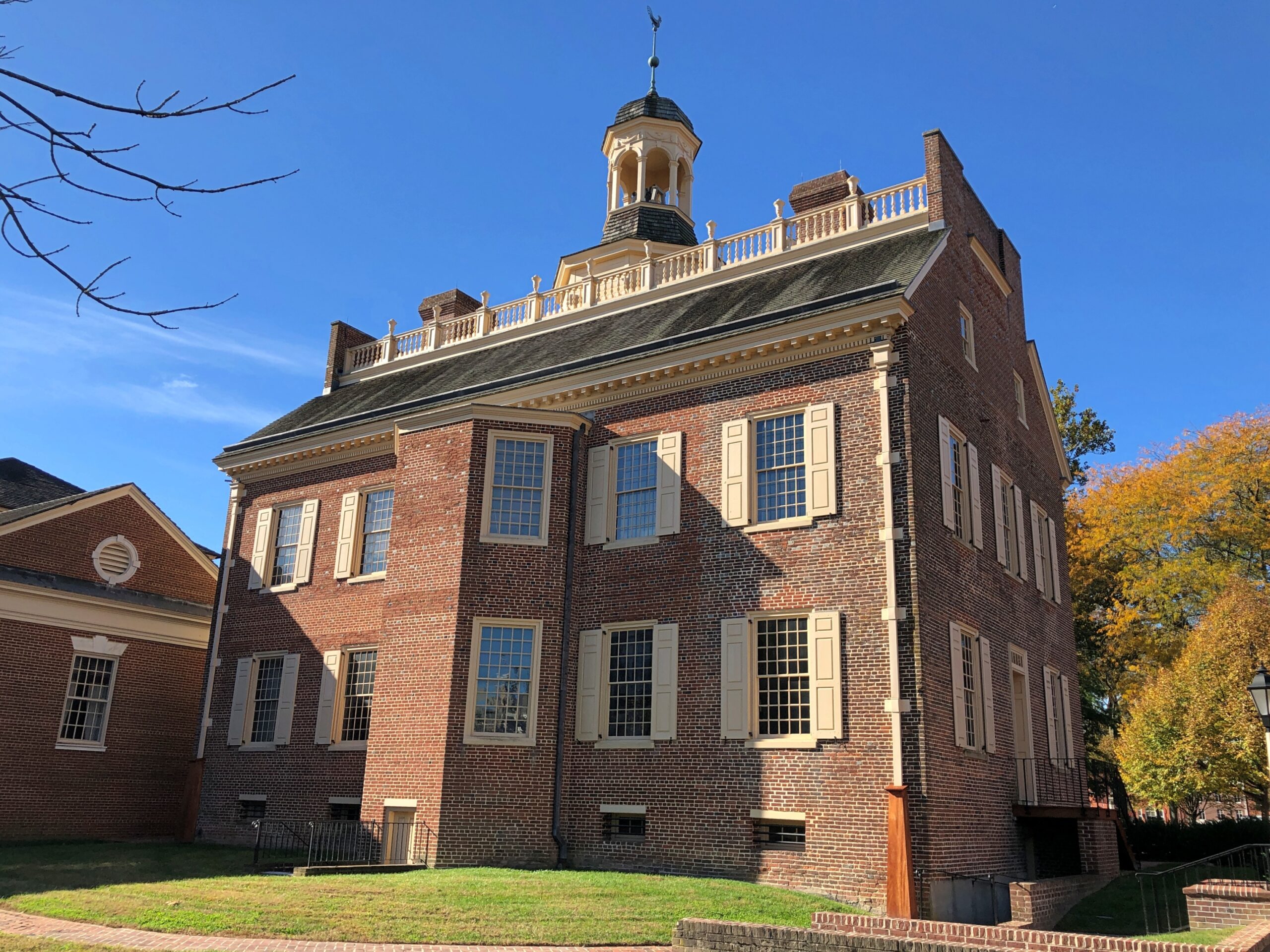
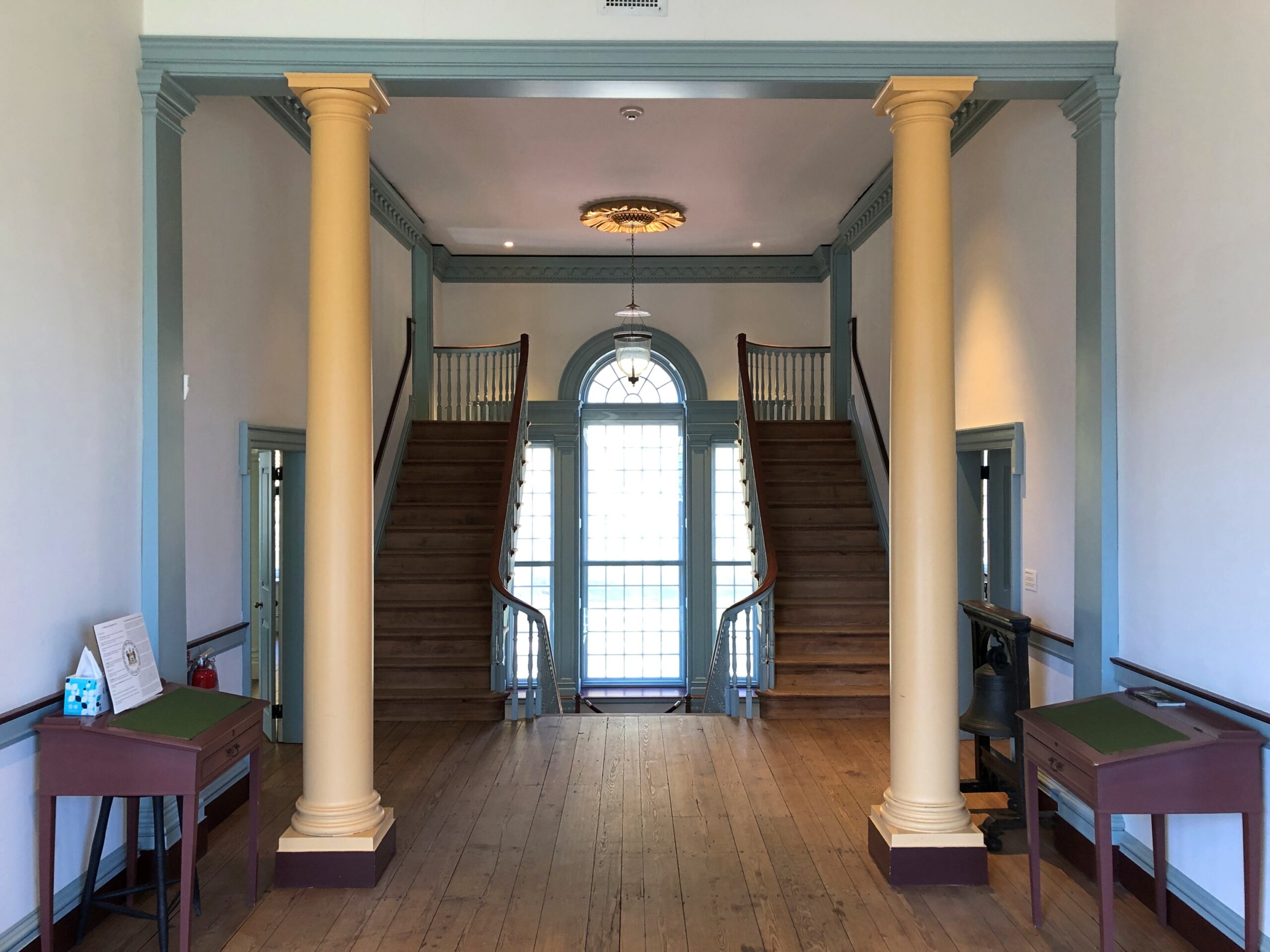
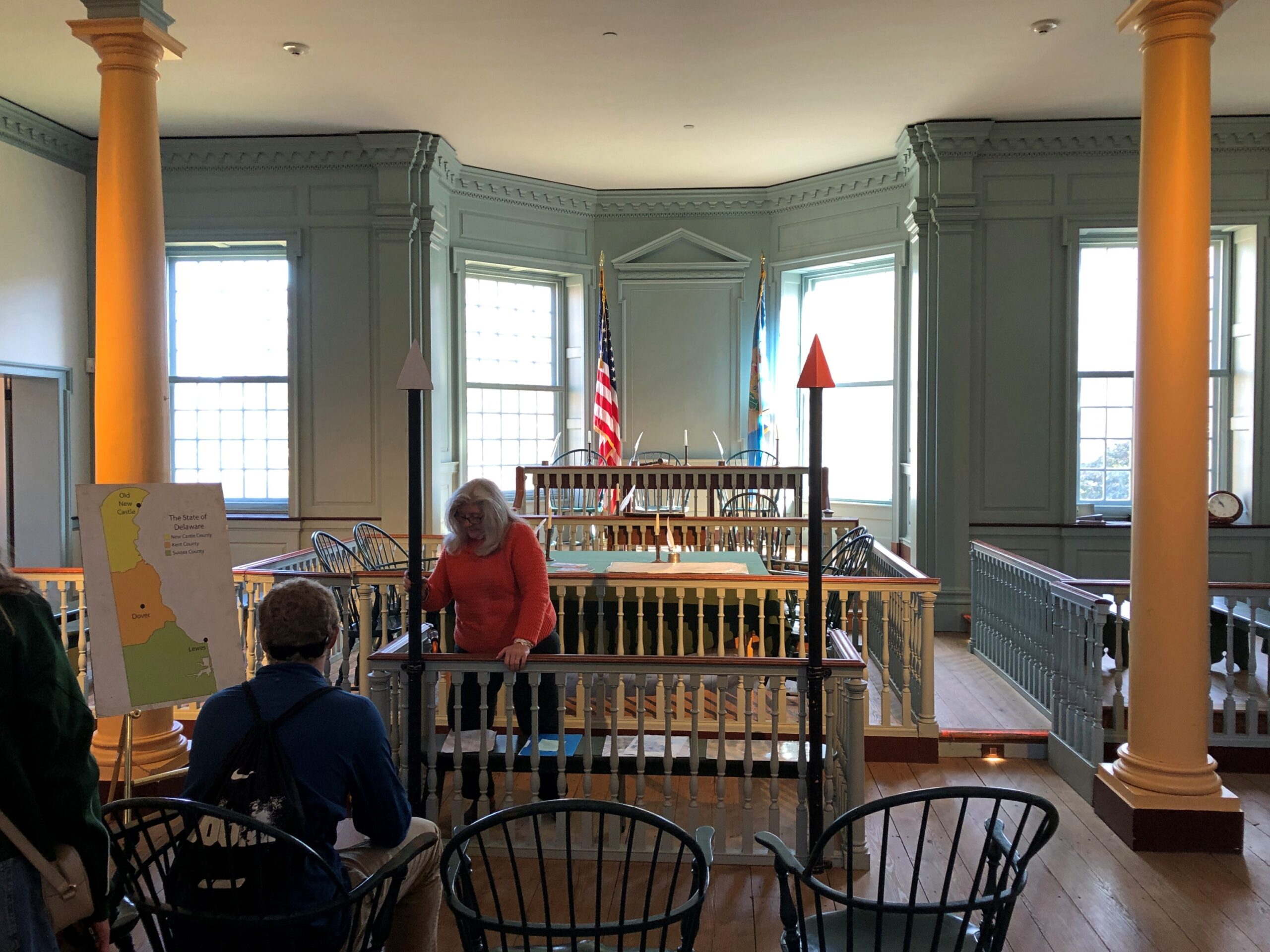
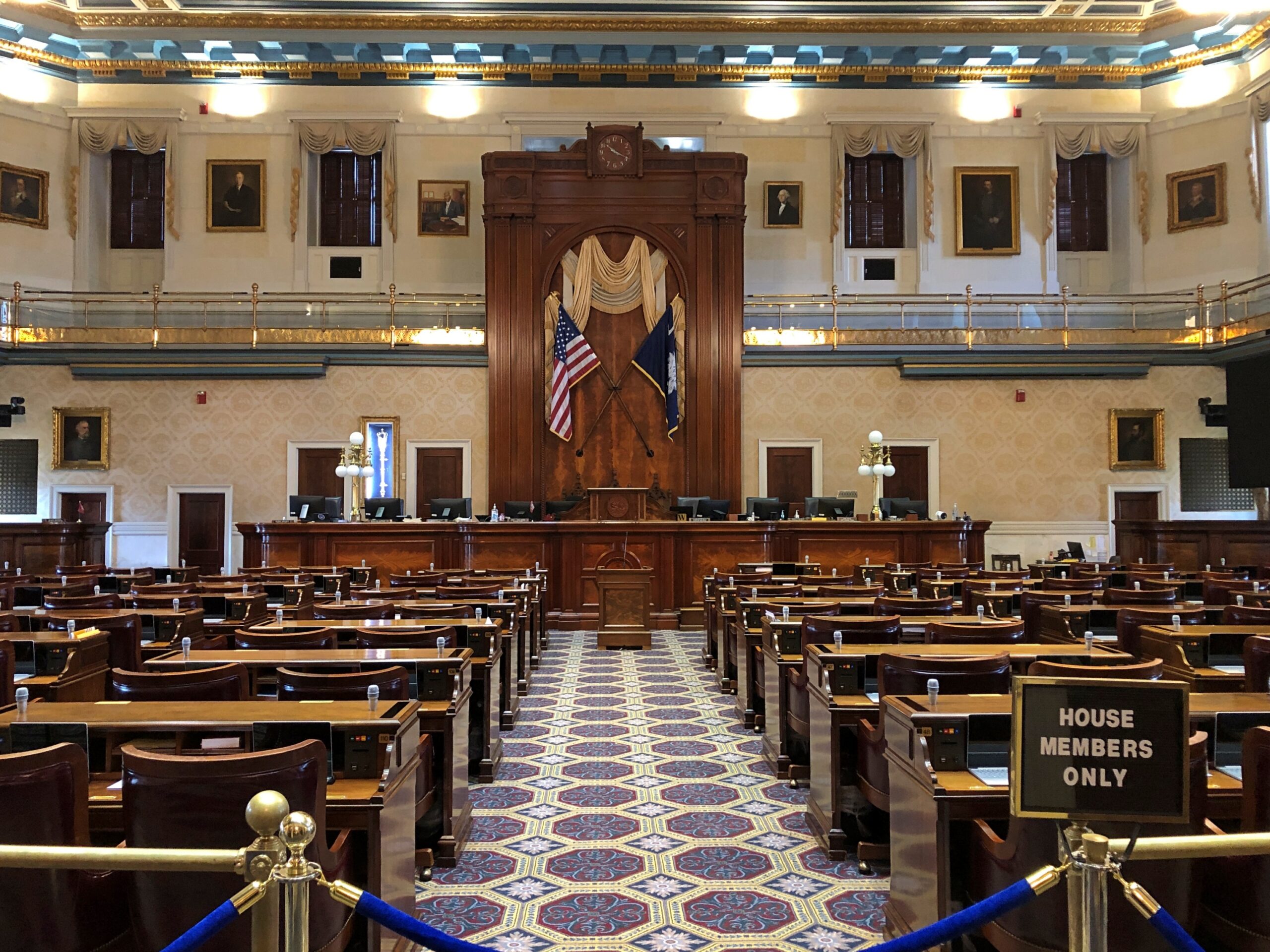
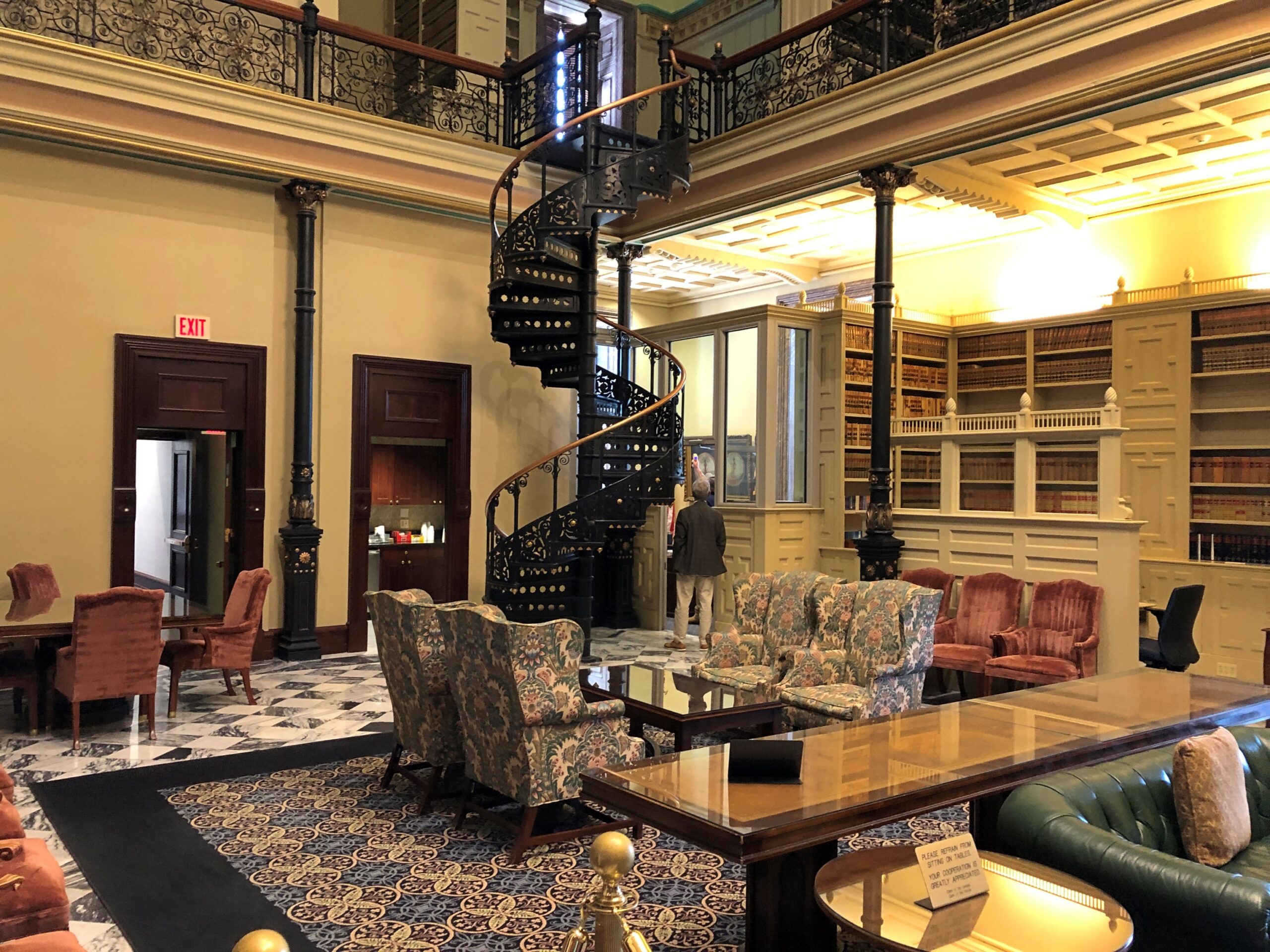
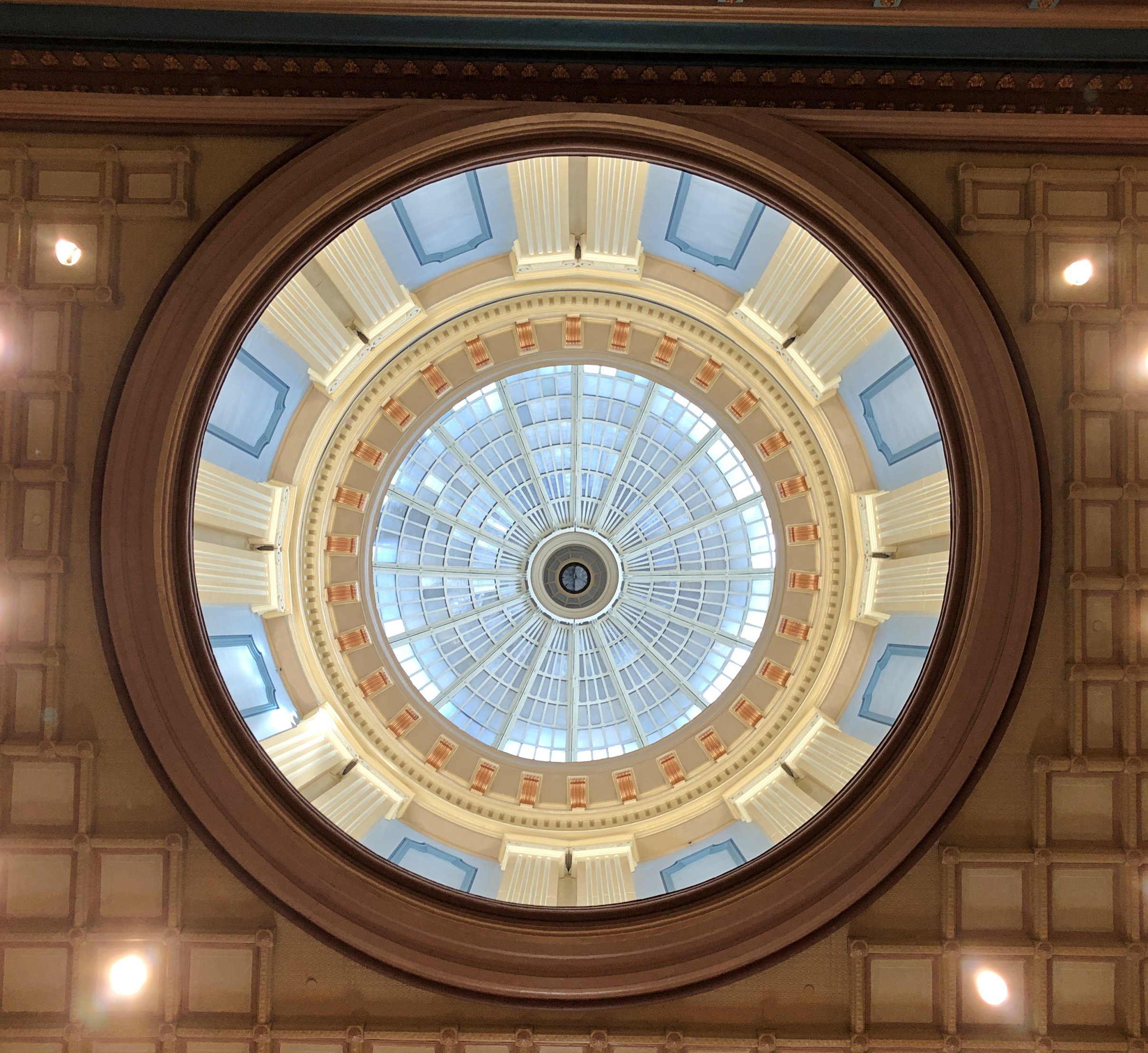
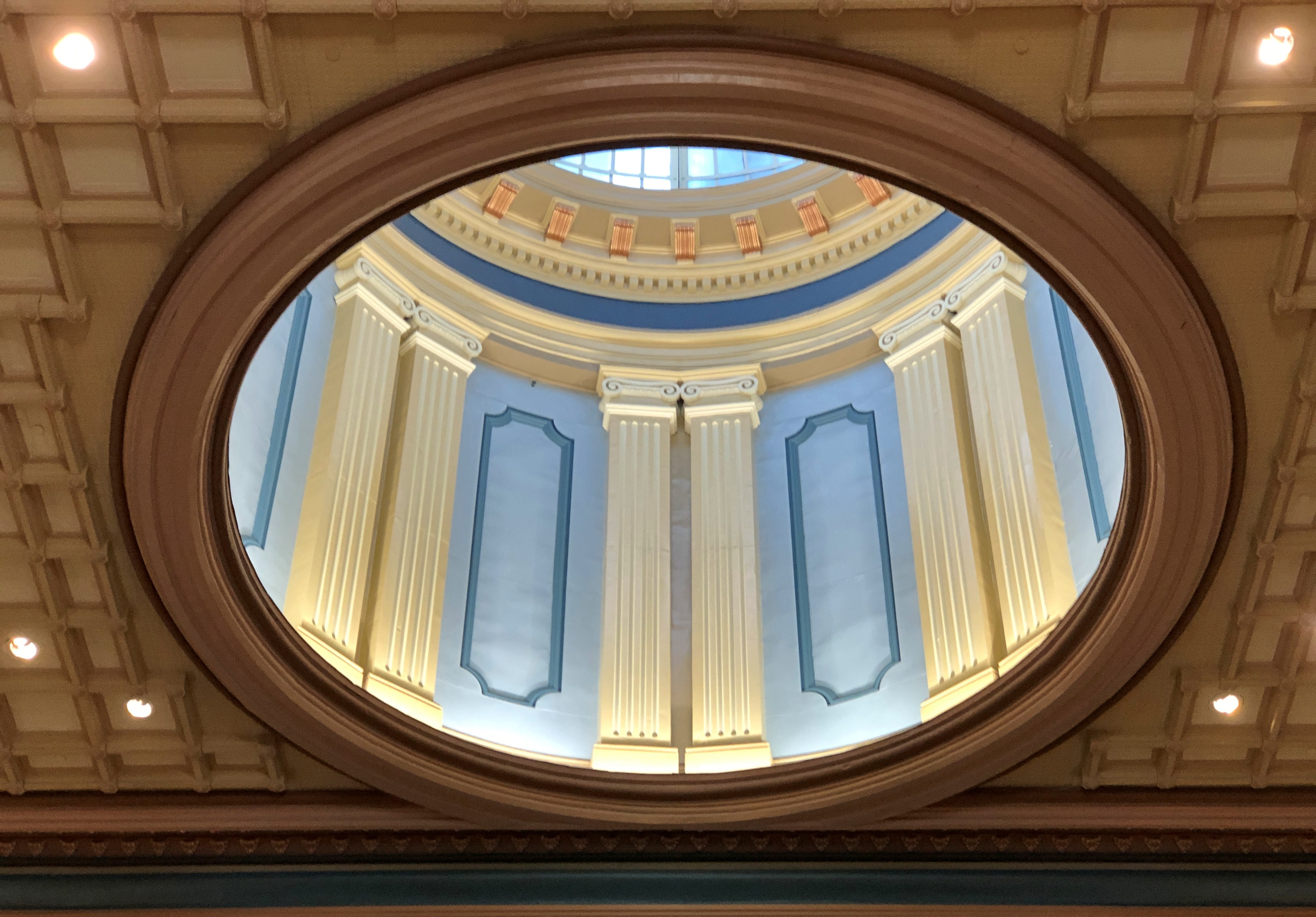
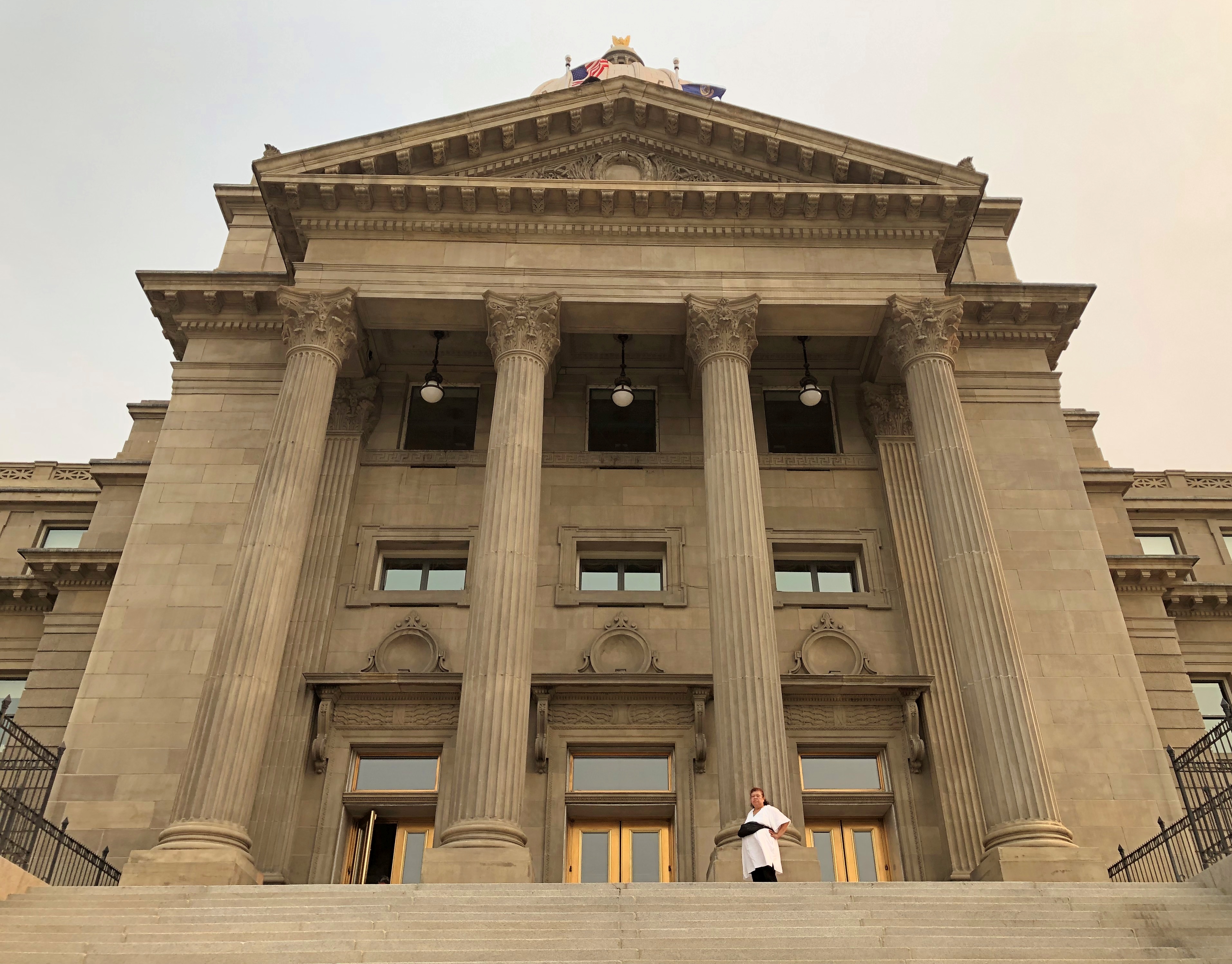
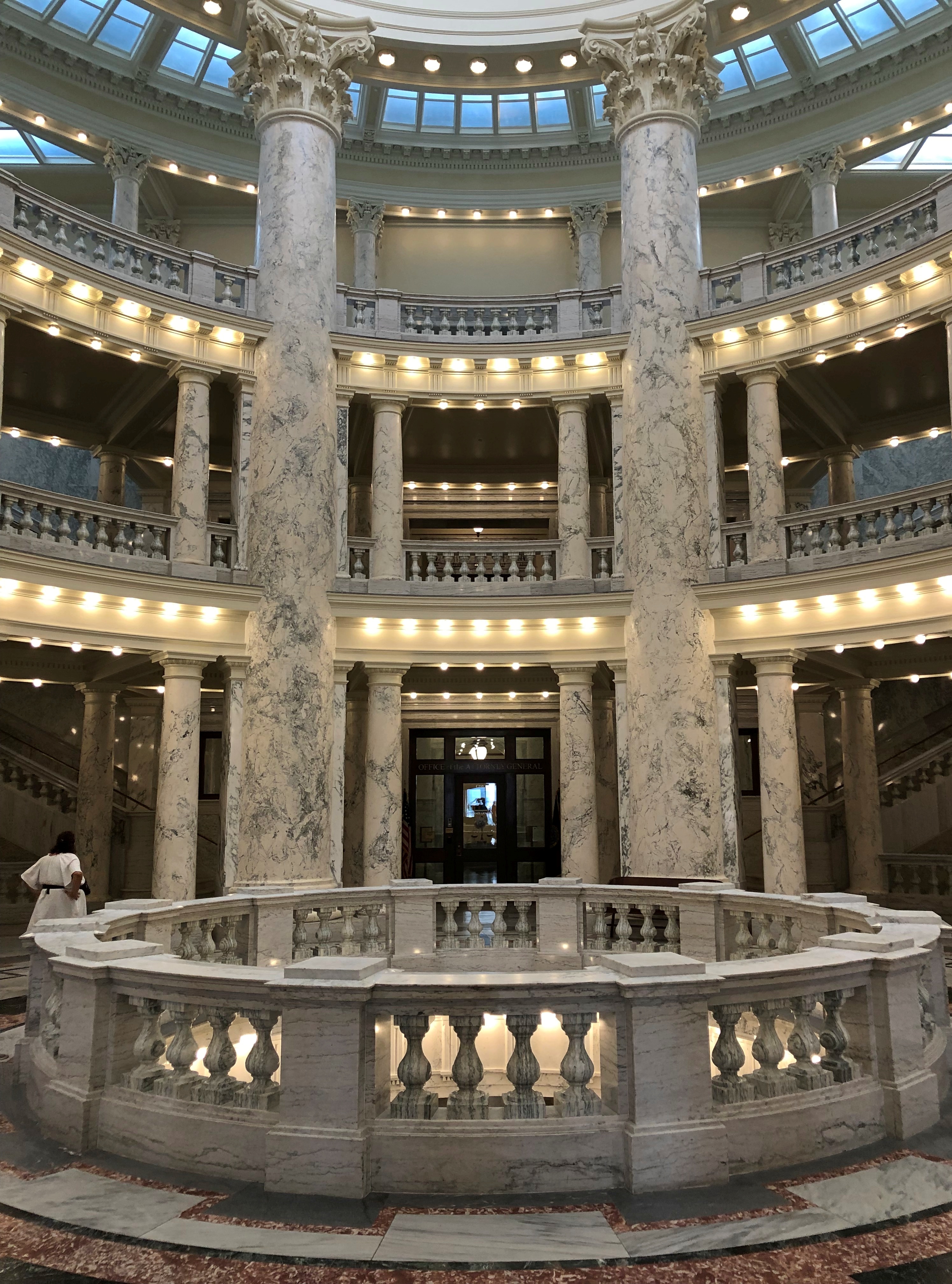
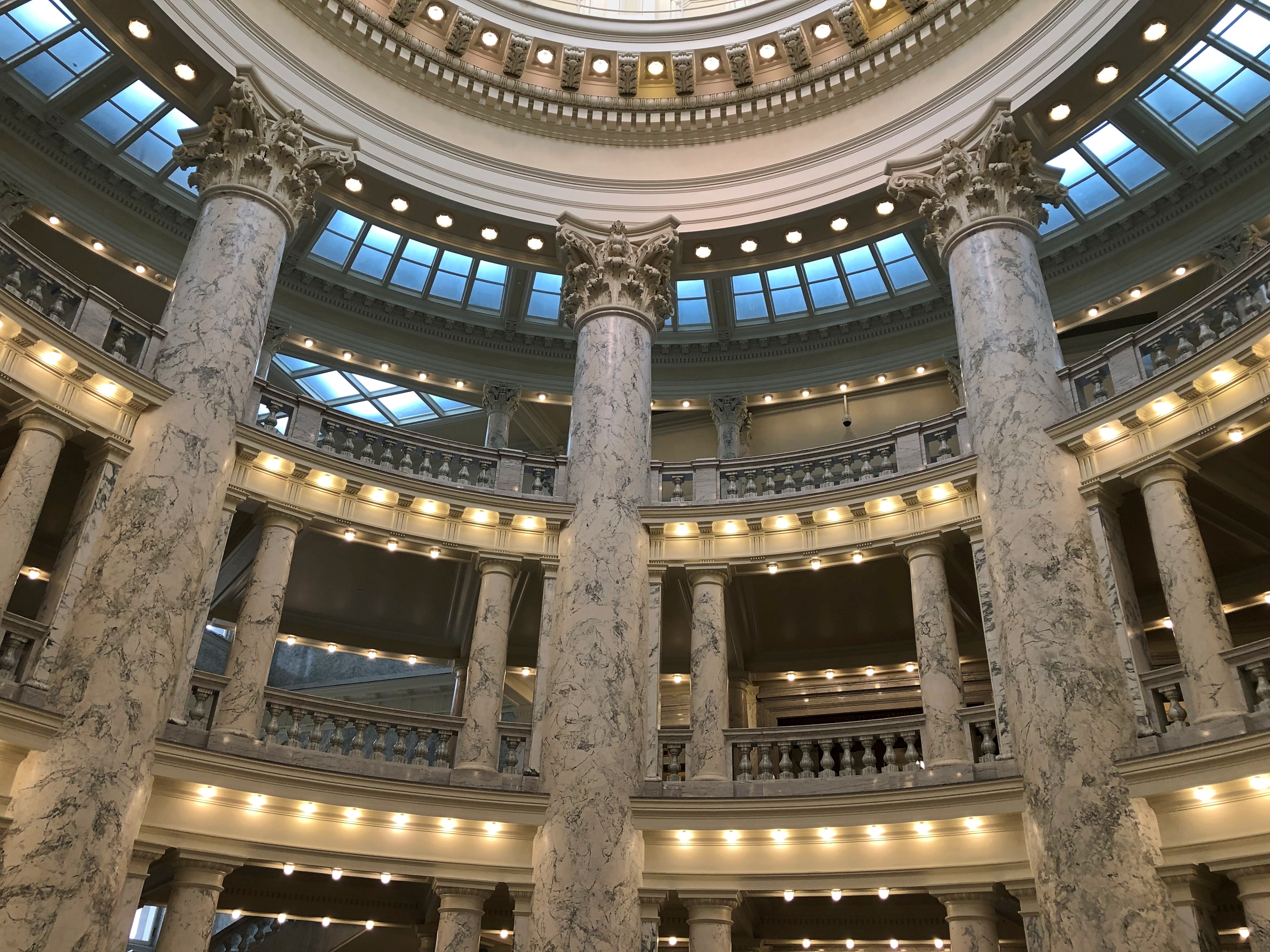
The Maryland State House

Yesterday I asked ChatGPT a question. I had my reasons.

Human (me)-generated question: How many U.S. state controllers or comptrollers have been honored with bronze statues?

Machine-generated answer (entirely sic): As of my knowledge cutoff in 2023, two U.S. state controllers or comptrollers have been honored with bronze statues:

William S. “Billy” McKeller (Tennessee) – McKeller was the Comptroller of the Treasury for Tennessee from 1923 to 1953. He was honored with a bronze statue that stands at the State Capitol in Nashville. The statue was unveiled in 1956, following his retirement.

Edward J. “Eddie” O’Neill (Massachusetts) – O’Neill was a longtime Comptroller for the Commonwealth of Massachusetts. He was known for his tenure and service, and a bronze statue of him was placed at the Massachusetts State House.

Both statues honor the legacy of these public servants for their dedication and leadership in state finance and governance.

However, it’s worth noting that statues of public officials in general tend to be more common for governors, senators, or prominent historical figures, so the specific recognition of state comptrollers or controllers through bronze statues is quite rare. There may have been updates or new statues since my last update, so I recommend checking local state records or news sources for the most current information.

Wow, that’s a solid example of an AI hallucination. There may have been human beings named William S. McKeller and Edward J. O’Neill living at some point in Tennessee and Massachusetts, respectively, but neither of them held that office. See the Tennessee Blue Book for a list comptrollers of the treasury in that state. As for Massachusetts, comptroller isn’t a constitutional office, so a list of them is a little elusive. (The commonwealth has an elected “treasurer and receiver-general.”)

Just as dispositive is a list produced by the commonwealth that lists the artwork at the Massachusetts State House. A bronze honoring Edward J. “Eddie” O’Neill isn’t one of them.

That said, the machine is probably correct that “specific recognition of state comptrollers or controllers through bronze statues is quite rare,” but, considering that the machine’s examples are bogus, that ranks as nothing but educated speculation that I didn’t need ChatGPT to create for me. I can guess that myself.

Just as damning, however, is that the machine missed a perfectly real example.
Annapolis

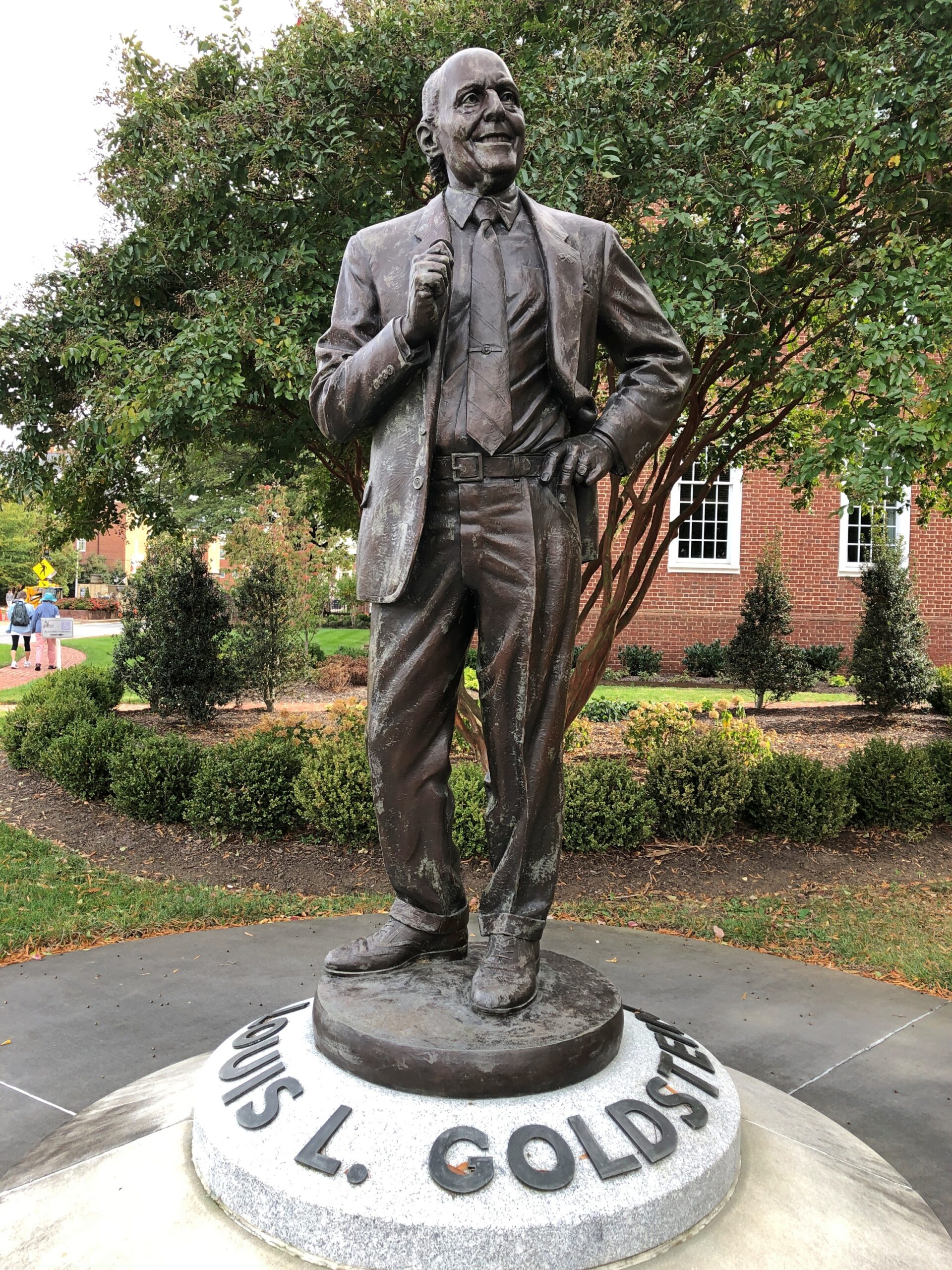
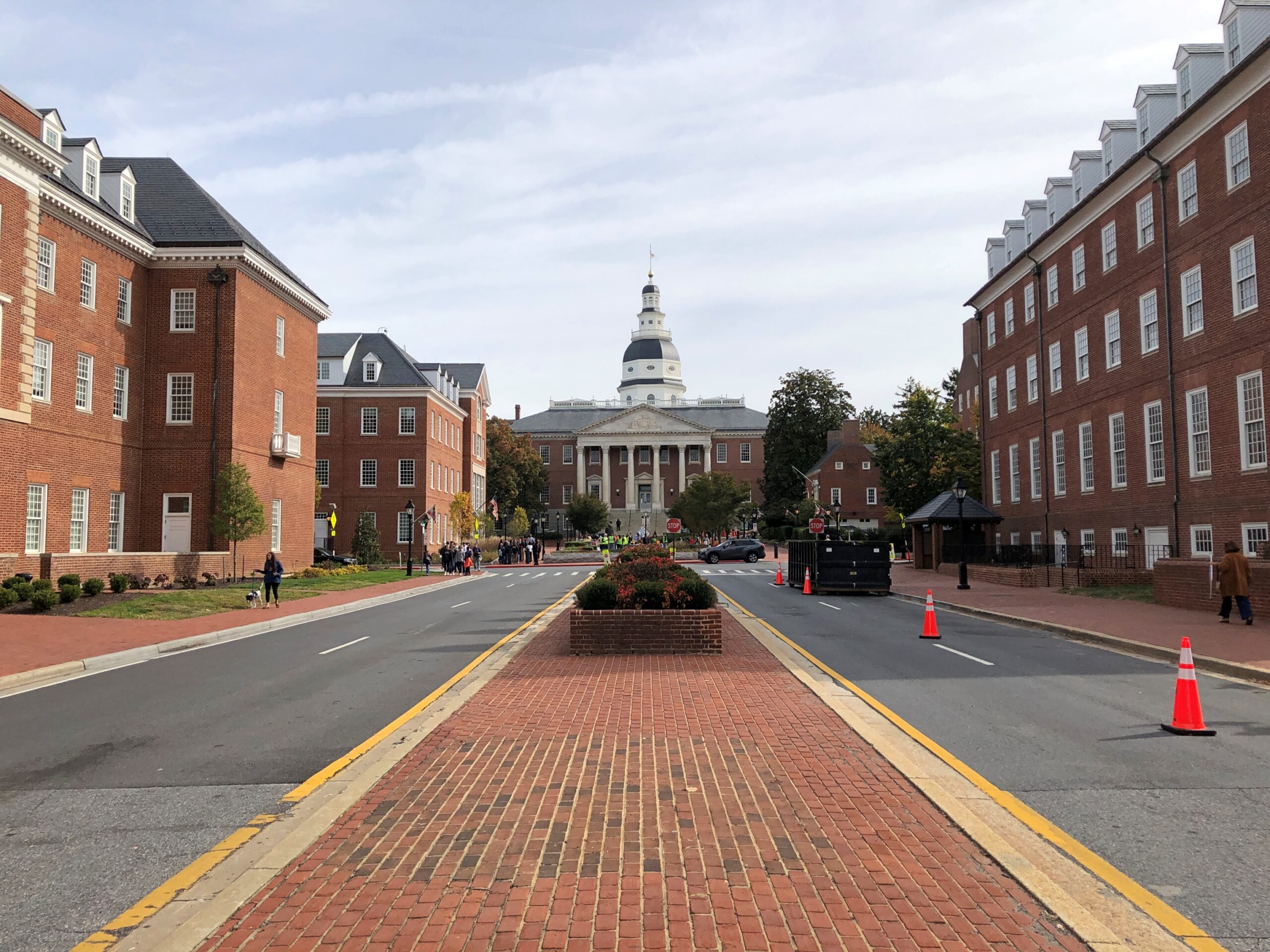
During my visit to Annapolis, Maryland in late October, I chanced to meet Louis L. Goldstein. His memorial, that is, a bronze at the corner of Bladen and Calvert streets, about a block from the Maryland State House.
Annapolis

The statue is in front of the office building occupied by the state comptroller. Goldstein was comptroller of Maryland from 1959 until his death in 1998 and, it seems, a character. A character who was also a successful politician, which is an increasingly rare combination, unless you count those pretending to be wingnuts.

“Many recognized Goldstein as the state’s white-haired, robustly outgoing goodwill ambassador, a handshaker’s handshaker, passing out fake coins as souvenirs and bestowing his trademark greeting, ‘God bless y’all, real good,’ “ the Washington Post reported at the time of his passing.

More politicos should pass out fake coins. I have fond memories of the aluminum Silber Dollar we had around after the 1970 election in South Texas. It’s probably still around.

Admittedly one ChatGPT answer is a small sample size, but still – how is it that three years have passed since I asked the machine to come up with examples of a certain kind of real estate deal in the past, and it spat out five completely make up ones? Shouldn’t this kind of thing be less likely by now? Apparently not.

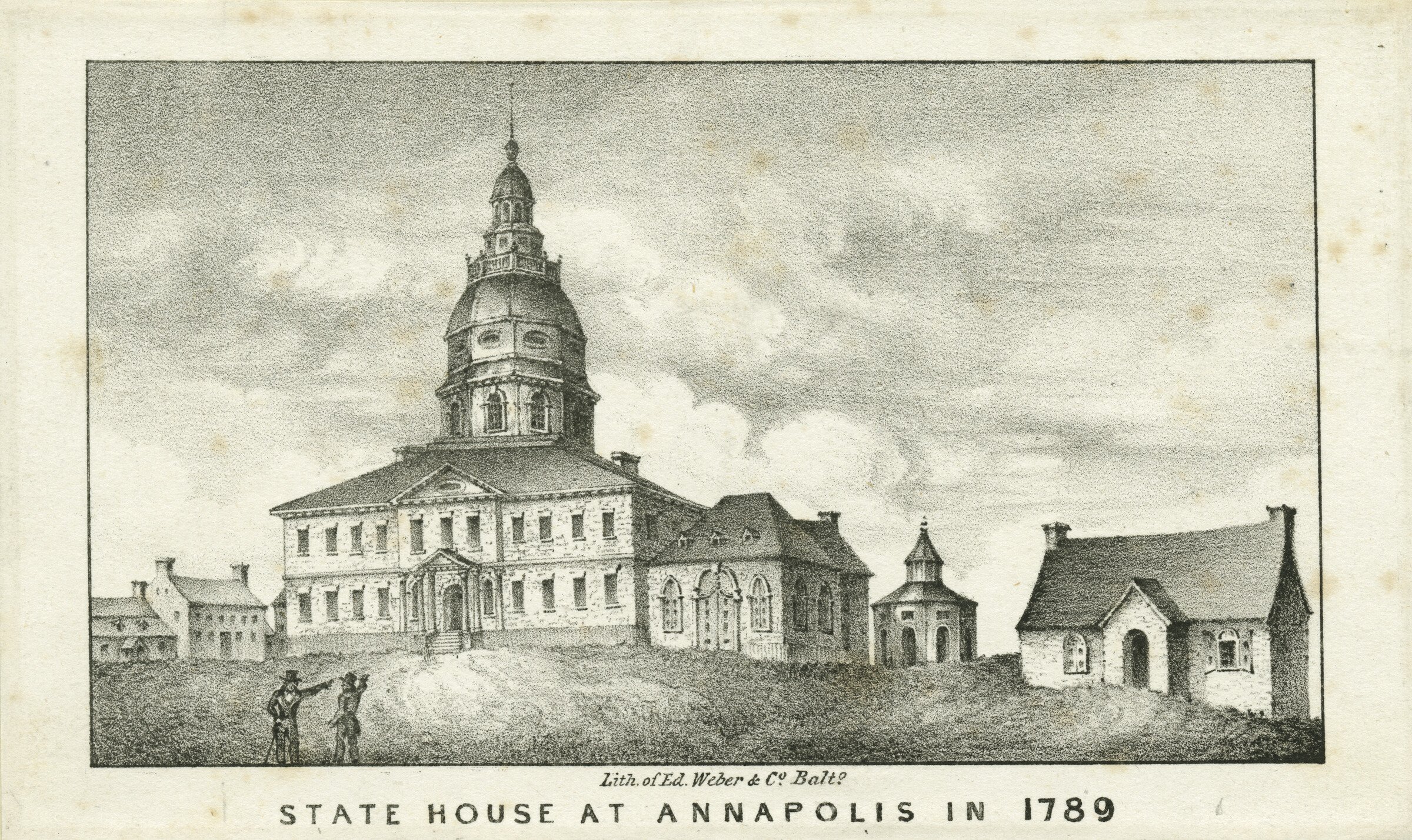
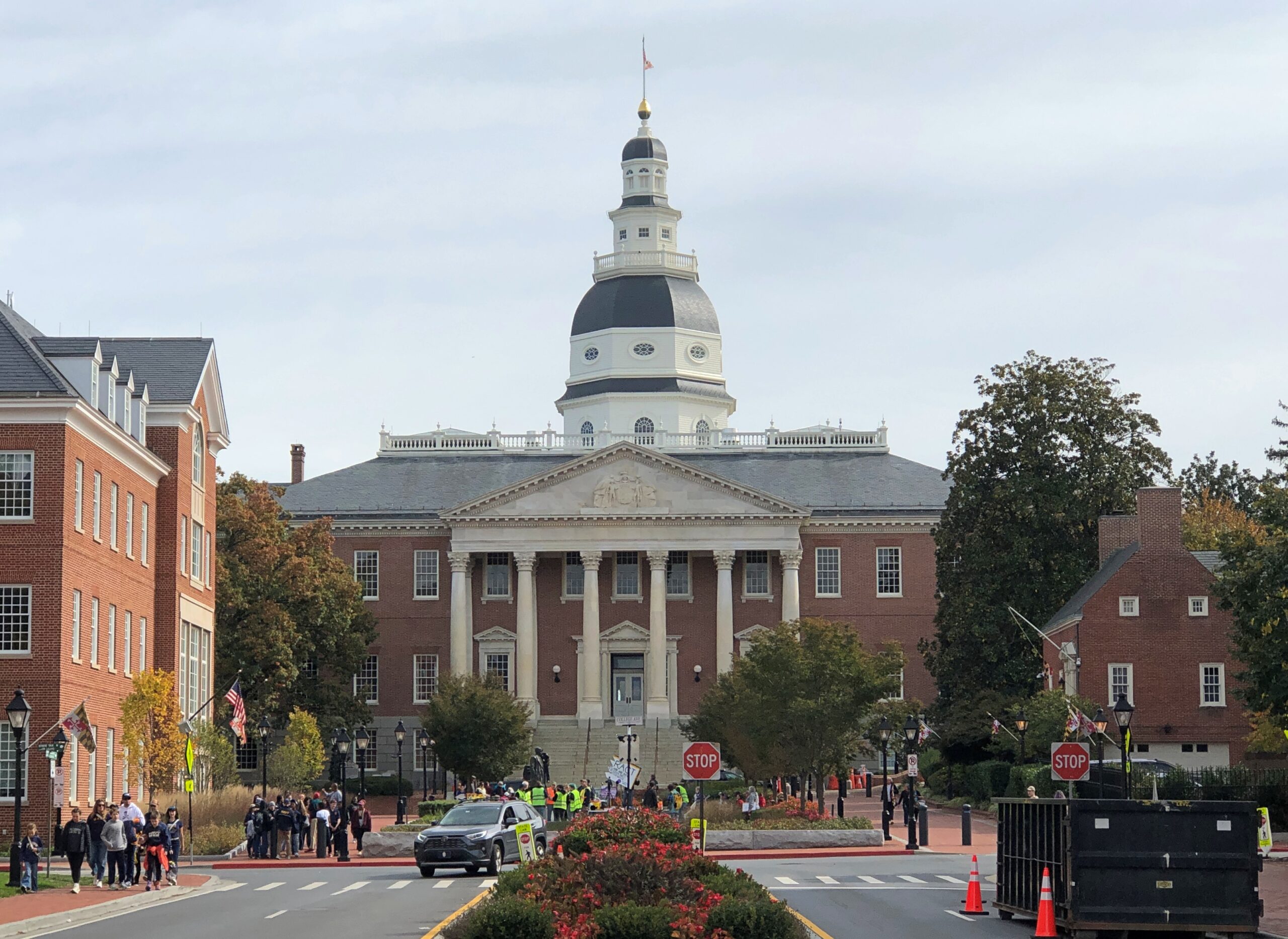
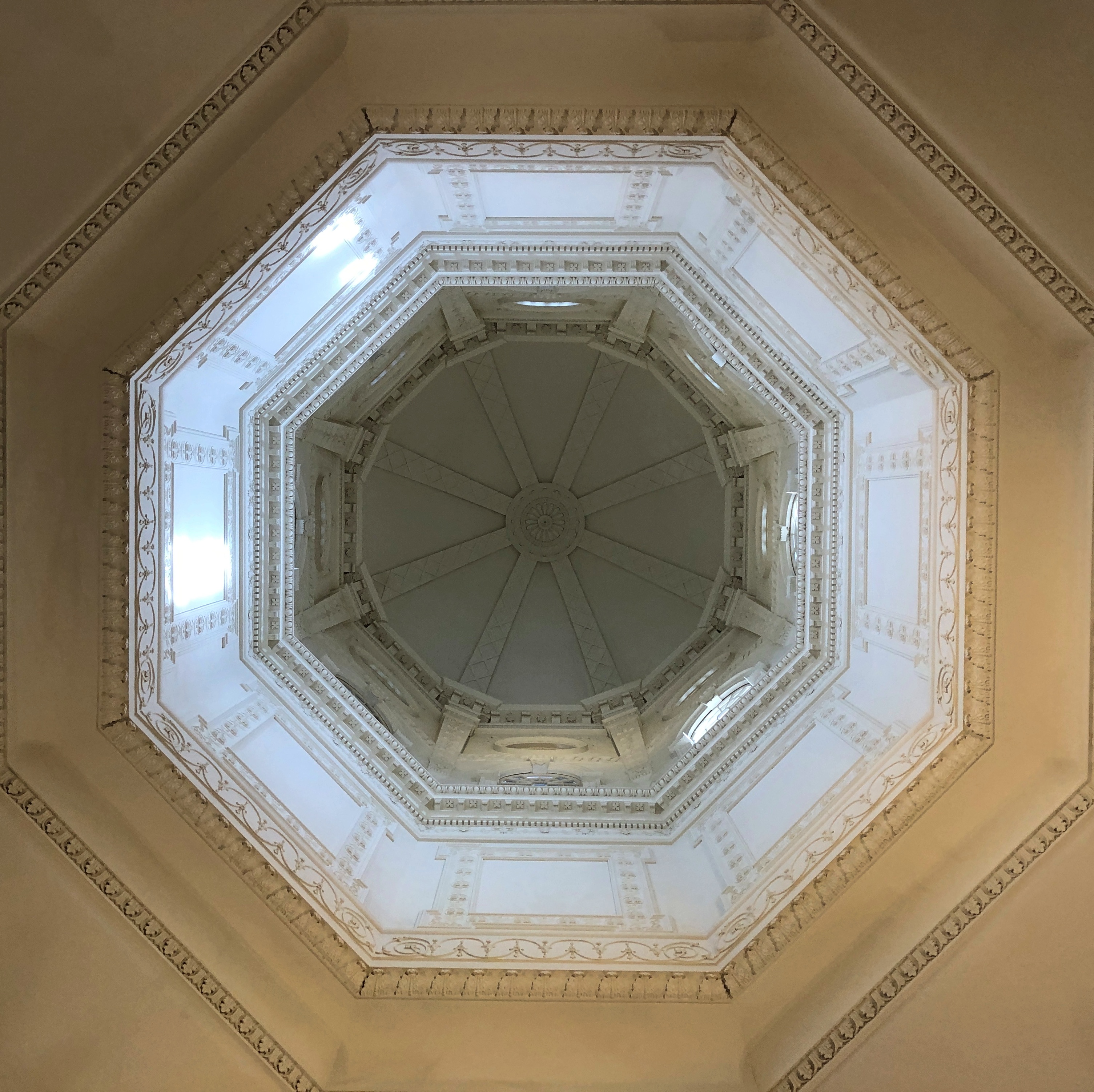
Never mind, Maryland has a handsome capitol, one built remarkably enough in the 1770s – beginning before the Revolution and completed in the throes of that war, in 1779.
Annapolis
Annapolis

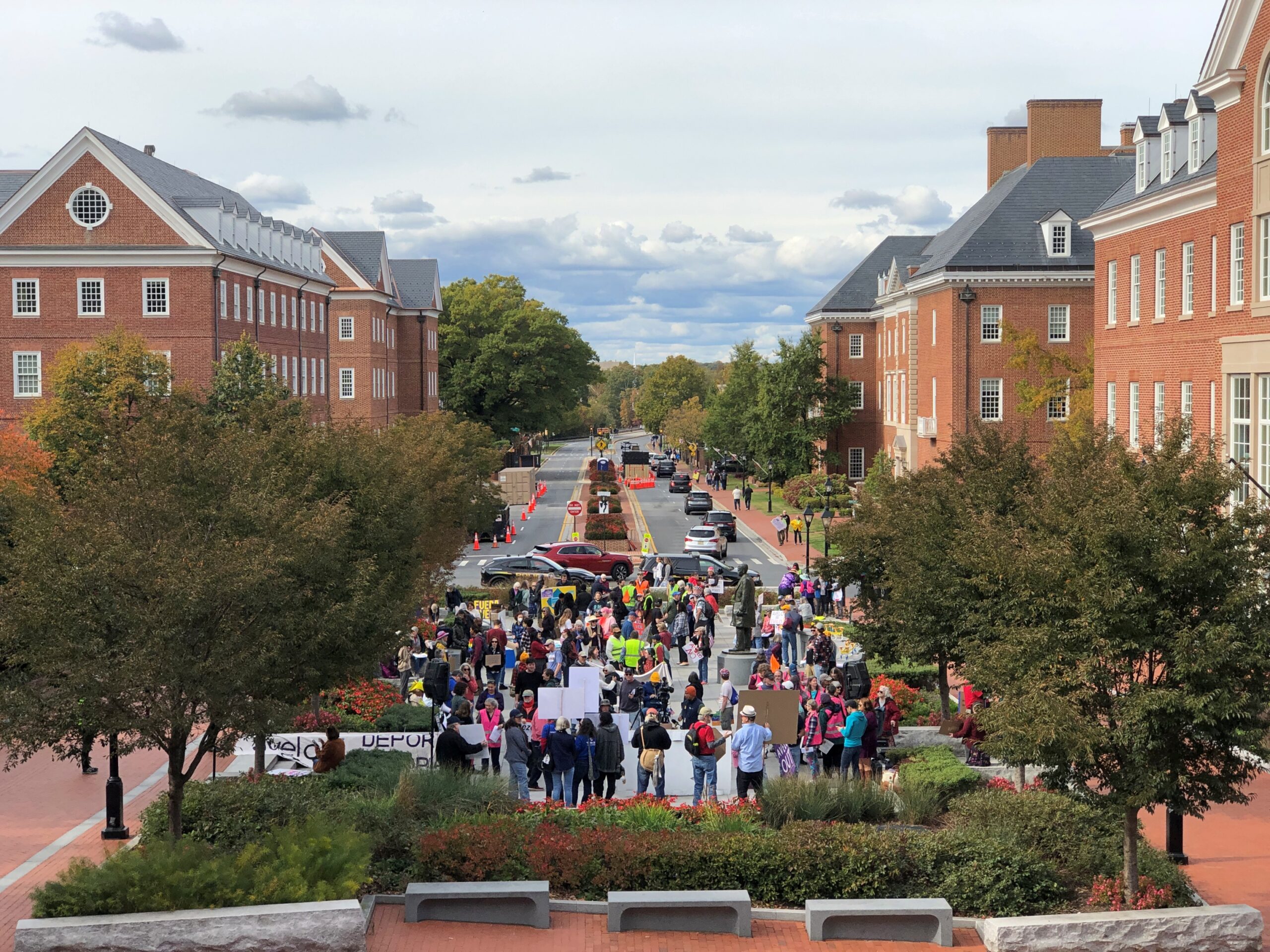
The view from the steps. The small rally below, at a place called Lawyers Mall, is demanding that Maryland Gov. Wes Moore to kick Avelo Airlines out of BWI airport, for its deportation flights for ICE.
Annapolis

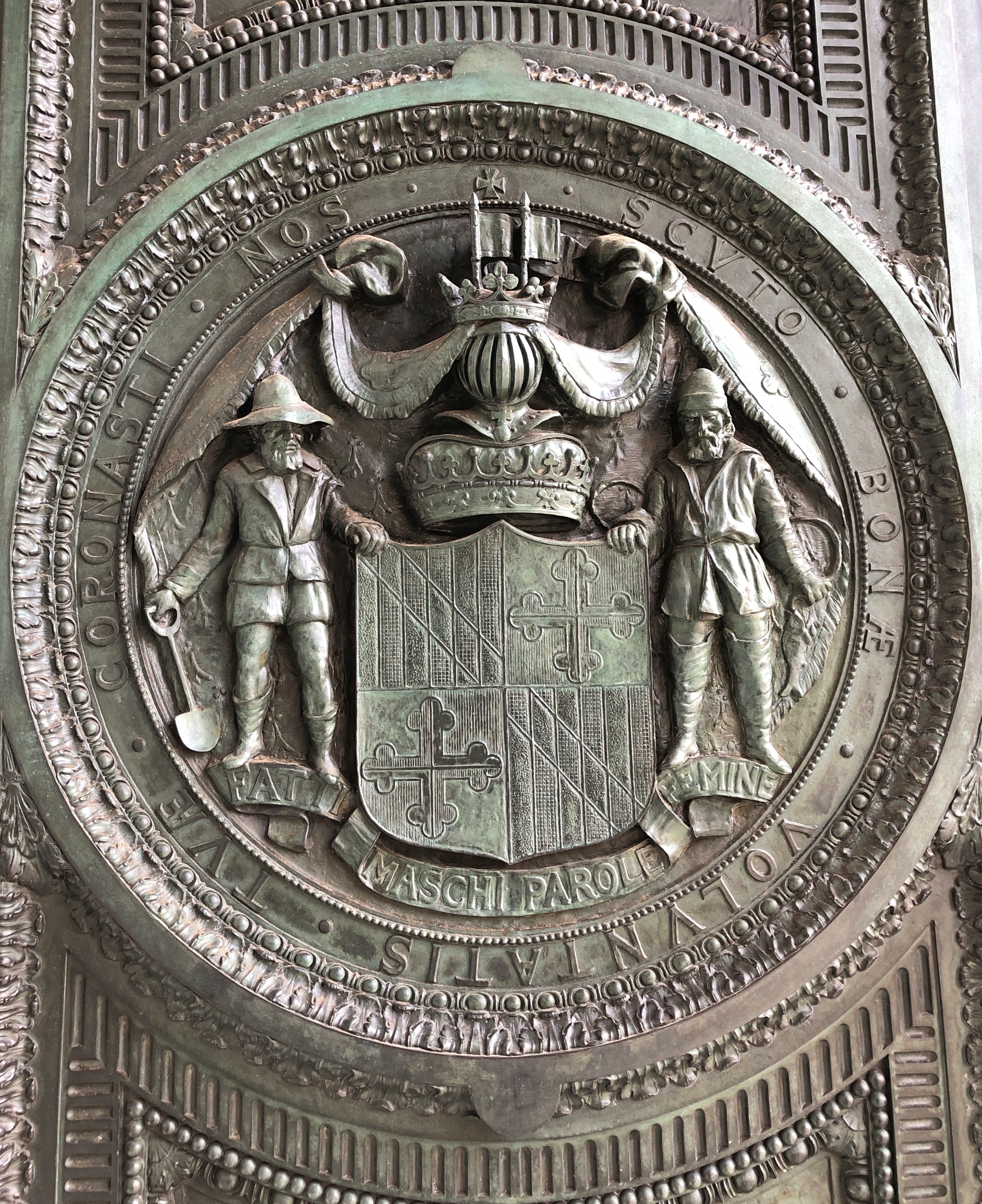
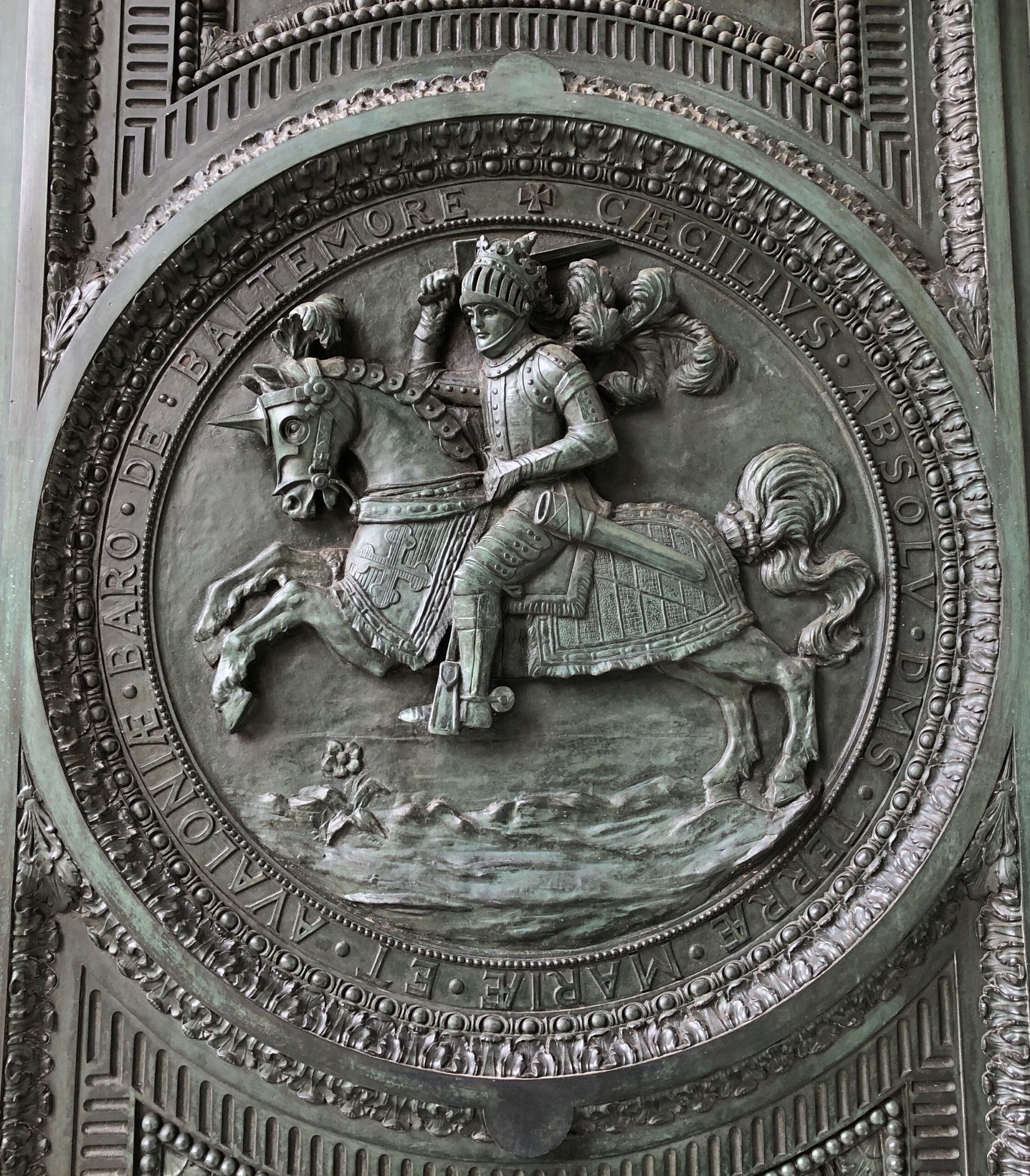
Detail on the exterior: the obverse and reverse of the Great Seal of Maryland.
Annapolis
Annapolis

A cool seal, if you asked me. Including an Italian motto used, for obscure reasons, by the Calvert family. Fatti maschii, parole femine has drawn criticism, enough that the state has an innocuous “official translation,” which is fine, if a little silly.

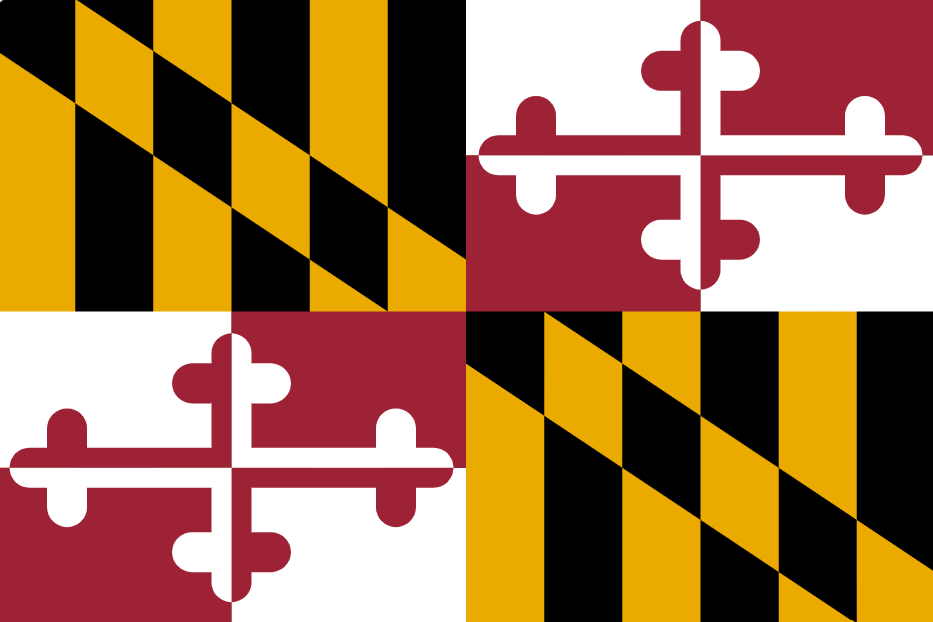
Of course, Maryland also has a cool flag, the heraldic banner of arms of Cecil, Second Baron Baltimore, acknowledging the state’s founding as a proprietary colony of the Calvert family. It’s also worth noting that the flag wasn’t official until 1904, by which time the family had become merely a colorful part of History. 
Unlike Delaware, Maryland’s capitol was open on a Saturday.
Maryland State House

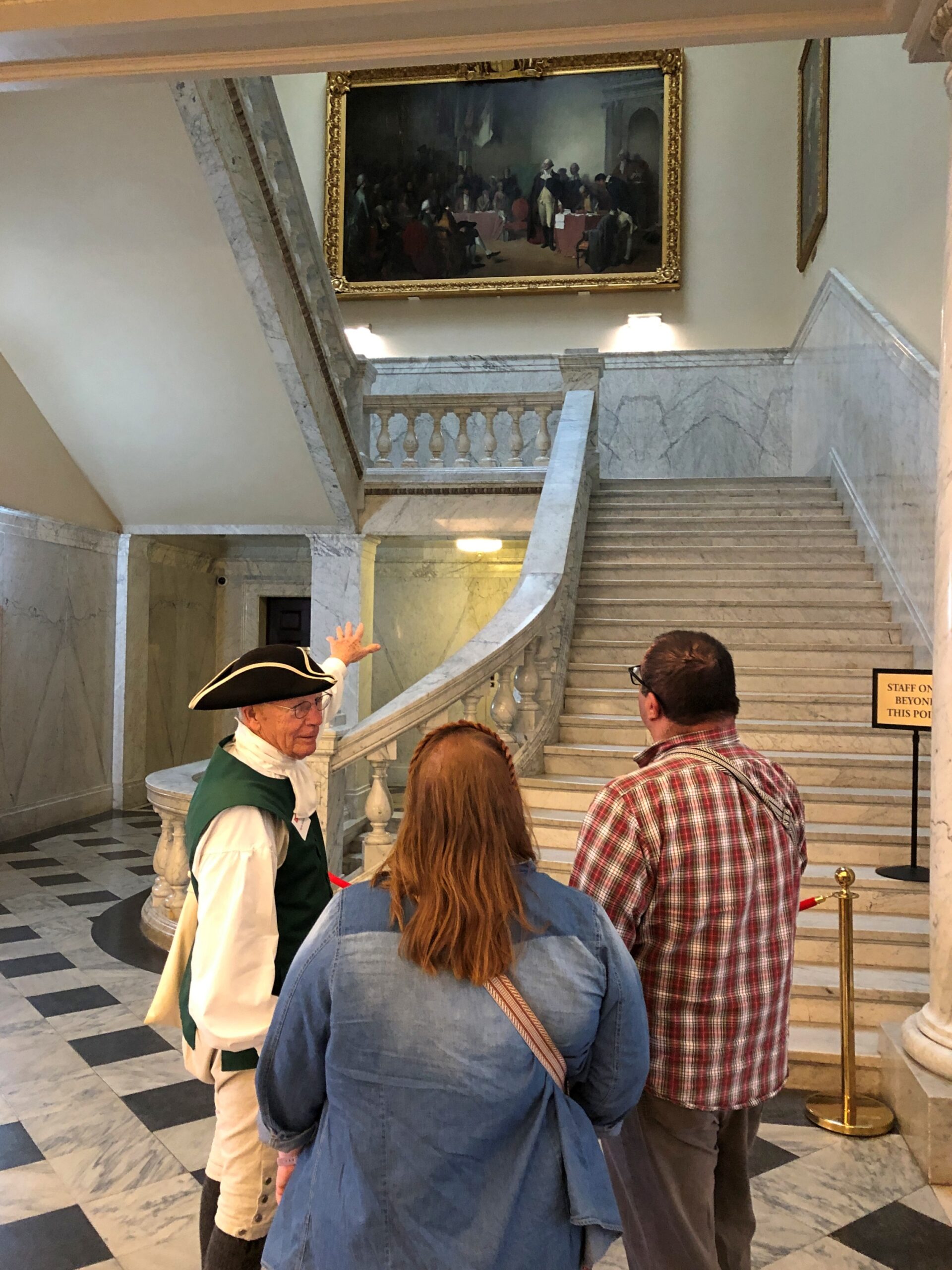
With a few volunteers talking to visitors.
Maryland State House

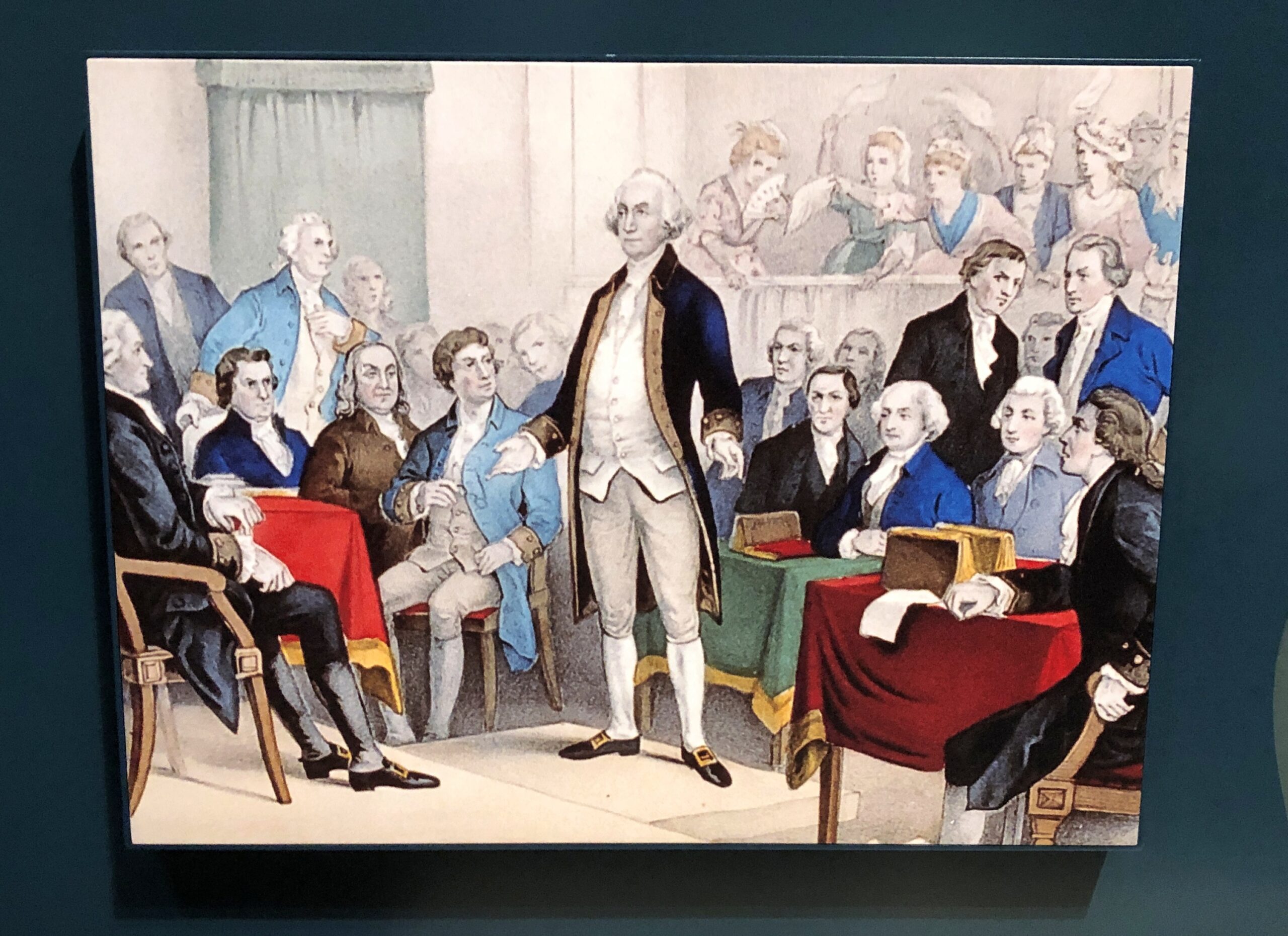
The Maryland State House has the distinction of being the capital of the United States, from November 26, 1783 to August 13, 1784. Two important events happened in the building during that narrow window: George Washington came before the Confederation Congress to resign his commission as commander-in-chief of the Continental Army, and Congress ratified the Treaty of Paris, which acknowledged U.S. independence.

Maryland doesn’t want you to forget that Washington stepped down in the state house. On display are artifacts and artworks to illustrate the point.
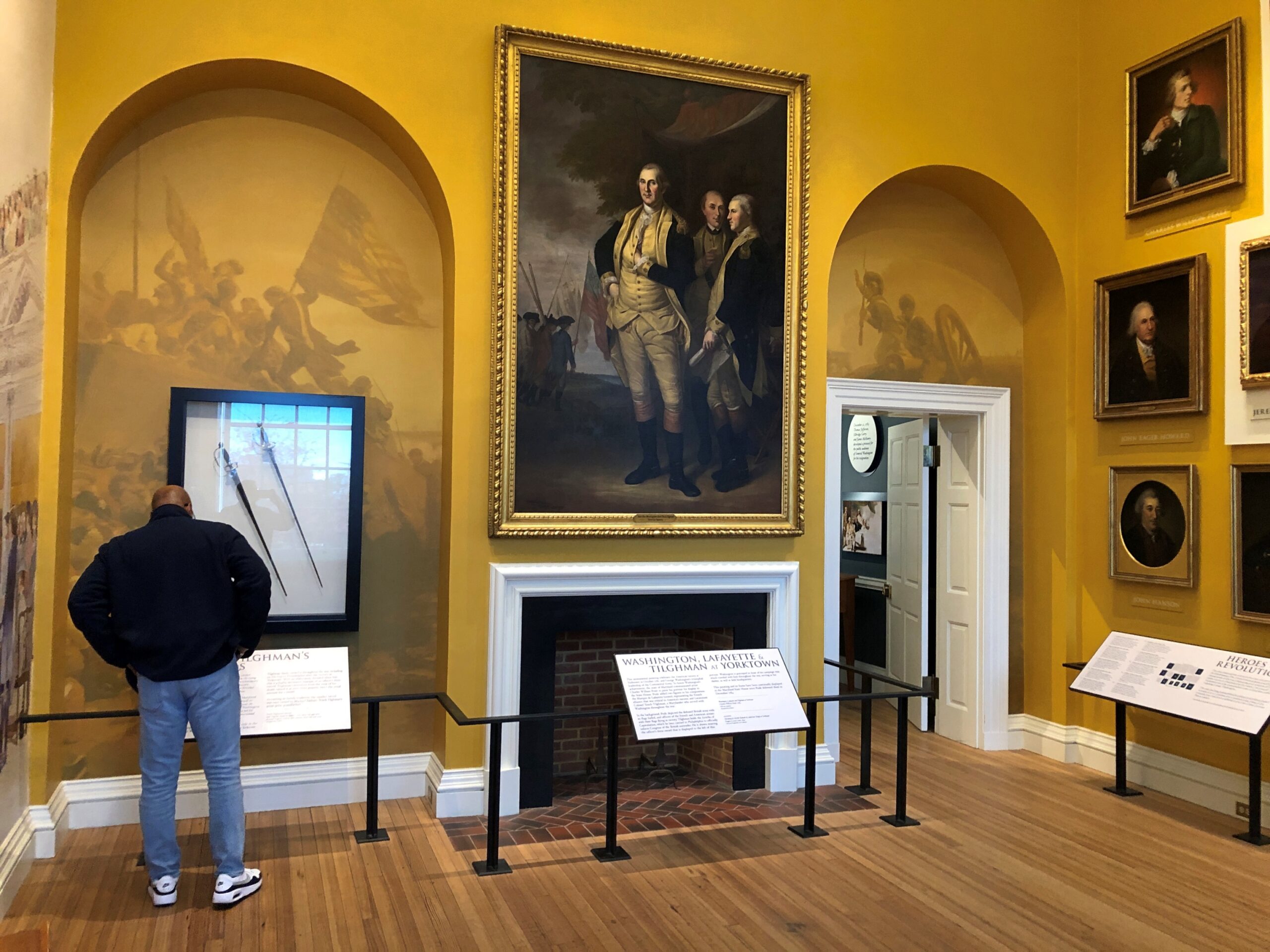
Maryland State House

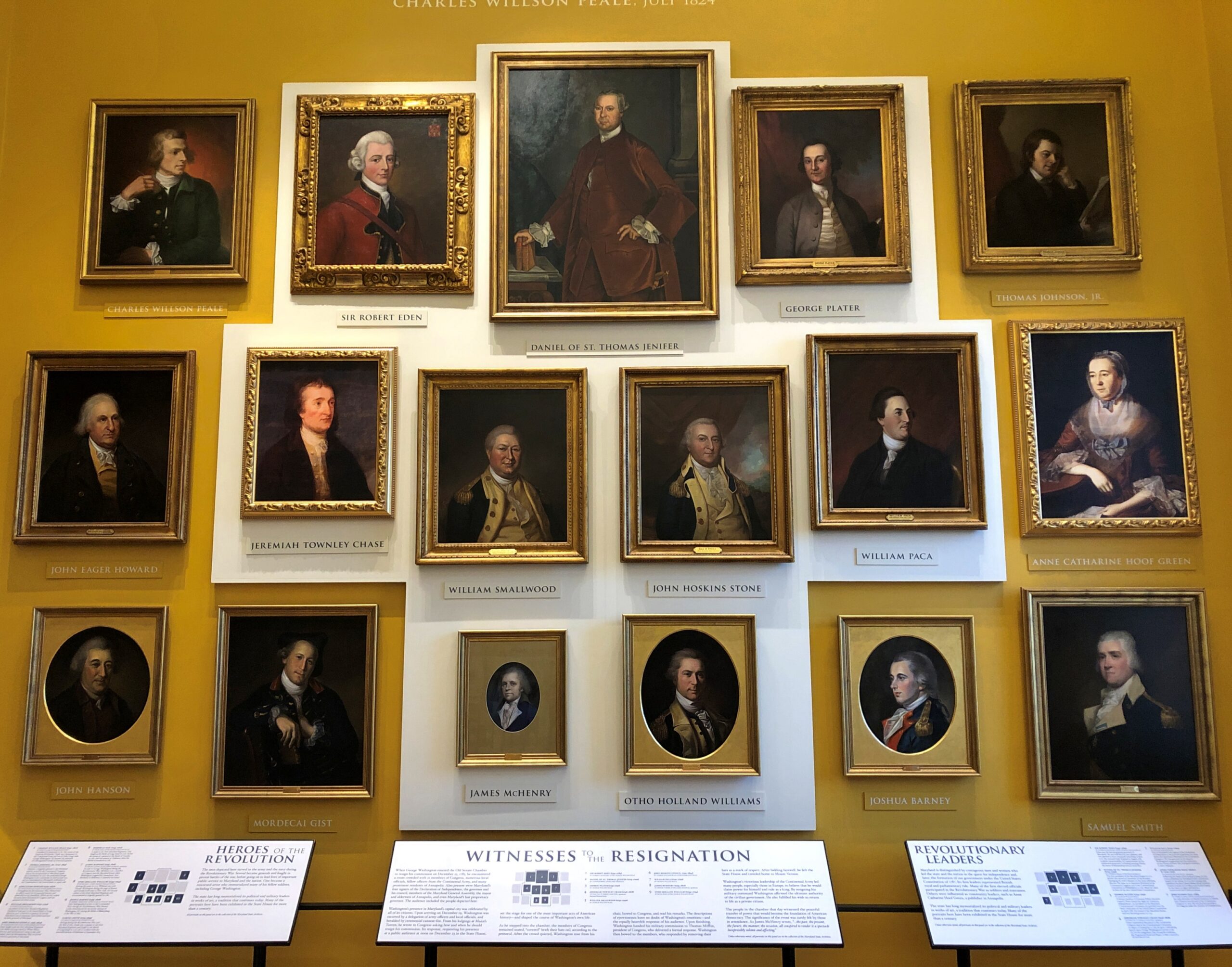
Including portraits of those who were there for the event. Some of those who were, I assume.
The scene itself, depicted later, and on display at the state house.
The speech. Washington had a gift for brevity. A more prolix (and vain) fellow might have gone on at length about the virtuousness of Cincinnatus — hint, hint, like a certain other man you might know — but I suspect he knew that his audience, and maybe posterity, would make the comparison without it being explicit.
First State, Last State

The Avalon Project, run by Yale Law School, has a remarkable trove of “documents in law, history and diplomacy,” as the site says. If you’re looking for a translation of the Code of Hammurabi or the Athenian Constitution, there are links. You can also find the annotated text of Magna Carta, the Mayflower Compact, and the many founding documents of the United States, just to mention some of the more famous ones.

If you’re after something less well known, try The Combinations of the Inhabitants Upon the Piscataqua River for Government, October 22, 1641 or Money and Trade Considered With a Proposal for Supplying the Nation with Money by John Law 1705 or Agreement Concerning Trade-Marks Between Brazil and the United States (1878).

Also within the Avalon Project is the text of the Ratification of the U.S. Constitution by the State of Delaware, December 7, 1787. To wit:

We the Deputies of the People of the Delaware State, in Convention met, having taken into our serious consideration the Federal Constitution proposed and agreed upon by the Deputies of the United States in a General Convention held at the City of Philadelphia on the seventeenth day of September in the year of our Lord one thousand seven hundred and eighty seven, Have approved, assented to, ratified, and confirmed, and by these Presents, Do, in virtue of the Power and Authority to us given for that purpose, for and in behalf of ourselves and our Constituents, fully, freely, and entirely approve of, assent to, ratify, and confirm the said Constitution.

Delaware ratified before any other state, and so claims “First State” as its nickname. I have my own private nickname for Delaware. At least I do now, since waking up on the morning of October 25 in my rented room in Dover: “Last State.” As in, the 50th state I’ve spent the night in. That isn’t an achievement of any kind, just a reflection of the fact that I’ve been fortunate enough to have the time and resources necessary to go that many places. Also, that I’m eccentric enough to keep track.

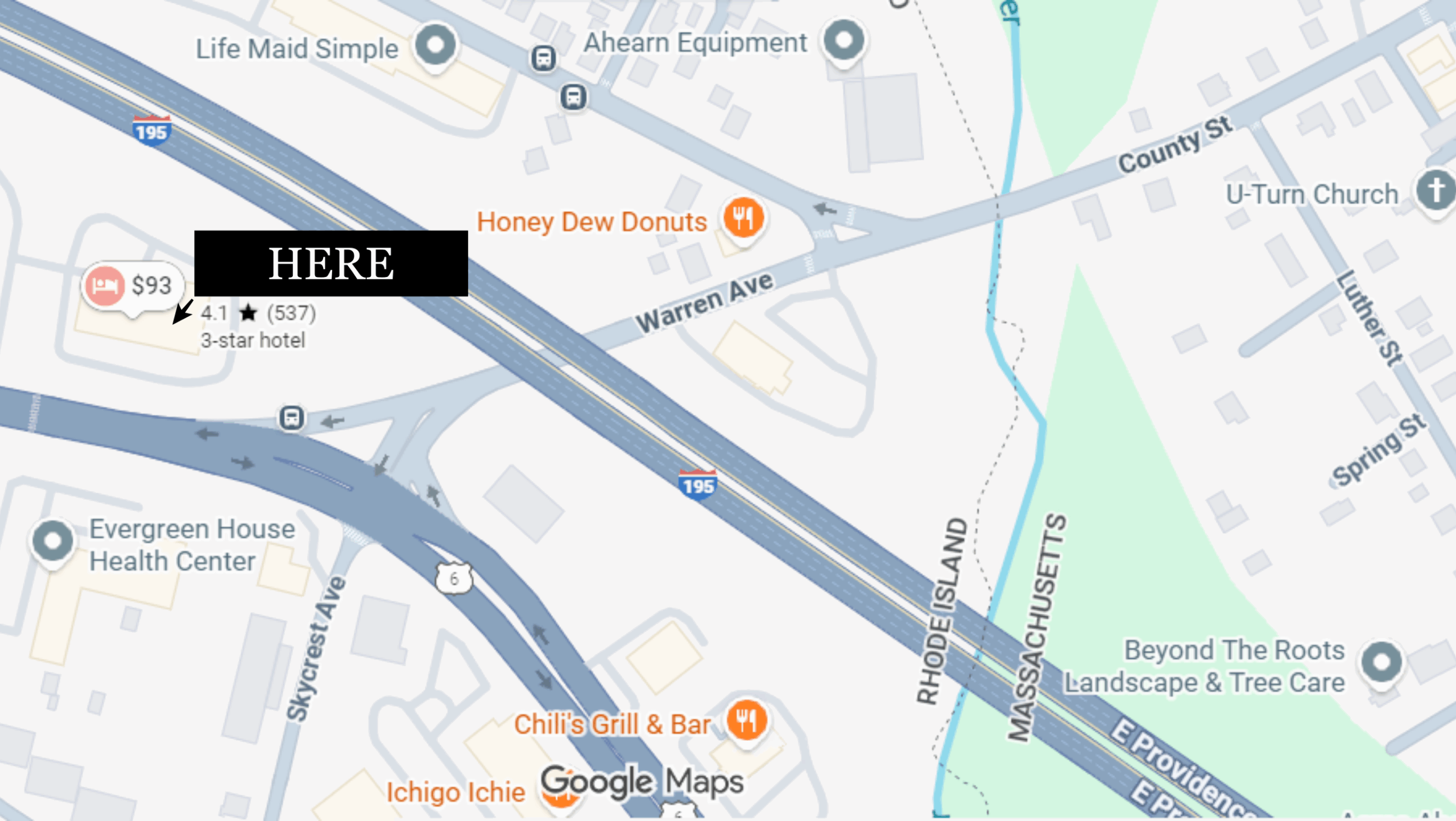
After dallying in Concord on the 23rd, and spending some time in Attleboro, Massachusetts, I arrived in East Providence, Rhode Island for the night. The point of that stop was entirely to spend the night in Rhode Island, since I’d never done that either. So RI was number 49. My hotel was just barely in that state.

I noticed the Honey Dew Donuts even closer to the border. I’d seen other locations driving in. The breakfast at my “3-star” hotel was meager, so I went to Honey Dew for a second breakfast. I wish I could say I’d discovered a great regional doughnut shop along the lines of Tim Horton’s, but it was only OK. Maybe I’ll give the brand another chance sometime.

Since I’d wanted to go from eastern Massachusetts to central Delaware, I should have broken that day’s journey somewhere in New Jersey. But that wouldn’t have involved stopping for the night in Rhode Island, which had been a short stop back in the summer of ’91 – a few hours to look around Providence, and especially the capitol – and the destination of a day trip in ’95, to Newport.

As for Delaware, my entire previous experience with the state was the Wilmington interstate bus station, a break in a bus ride from Washington DC to Boston, which was a leg of the Great Bus Loop of 1982. I’m not even sure I got off the bus, though I usually did when it stopped for long enough.

Getting to Delaware last month involved an aggravating day’s drive, mostly on I-95, spending a lot of time in traffic jams. Counting the cars on the New Jersey Turnpike, bah: more than grains of sand on a beach or stars in the sky.

Even so, there were a few worthwhile moments. I finally got to see (from the turnpike) the enormous American Dream mall, adjacent to the Meadowlands Sports Complex. Reportedly now second largest in the nation, after only the Mall of America. I’d been reading about American Dream for years, since “chronic delays” always figured in real estate reporting on the project, but now it’s more or less complete. (If the developers had asked me, they’d have kept the much cooler earlier name: Meadowlands Xanadu.)

At the Vince Lombardi Service Area on the NJ Turnpike, I parked in the very large parking lot and headed for the very large building and its very large men’s room. As I walked along, a small group of Hasidim went around me, not running but at a brisk pace, headed the same direction. By the time I got to the bathroom, they were almost done with their business, and off they went. Nothing unusual about seeing Hasidim, certainly not in New Jersey, but I have to note that October 24 was a Friday, and it was mid-afternoon. So they were racing the clock. Or, more accurately, the sun.

A digression: service areas on the New Jersey Turnpike and the Garden State Parkway are named for famed New Jerseyans. A list is here. I suppose it’s fine that musicians such as Frank Sinatra, Whitney Houston, Jon Bon Jovi and Celia Cruz are honored, but where’s Bruce Springsteen? It isn’t a matter of posthumous naming, since Bon Jovi is still alive – as is Bruce Willis, who also gets an area, and Connie Chung, who does as well, though she isn’t actually from New Jersey. The ways of the NJ Turnpike Authority are mysterious.

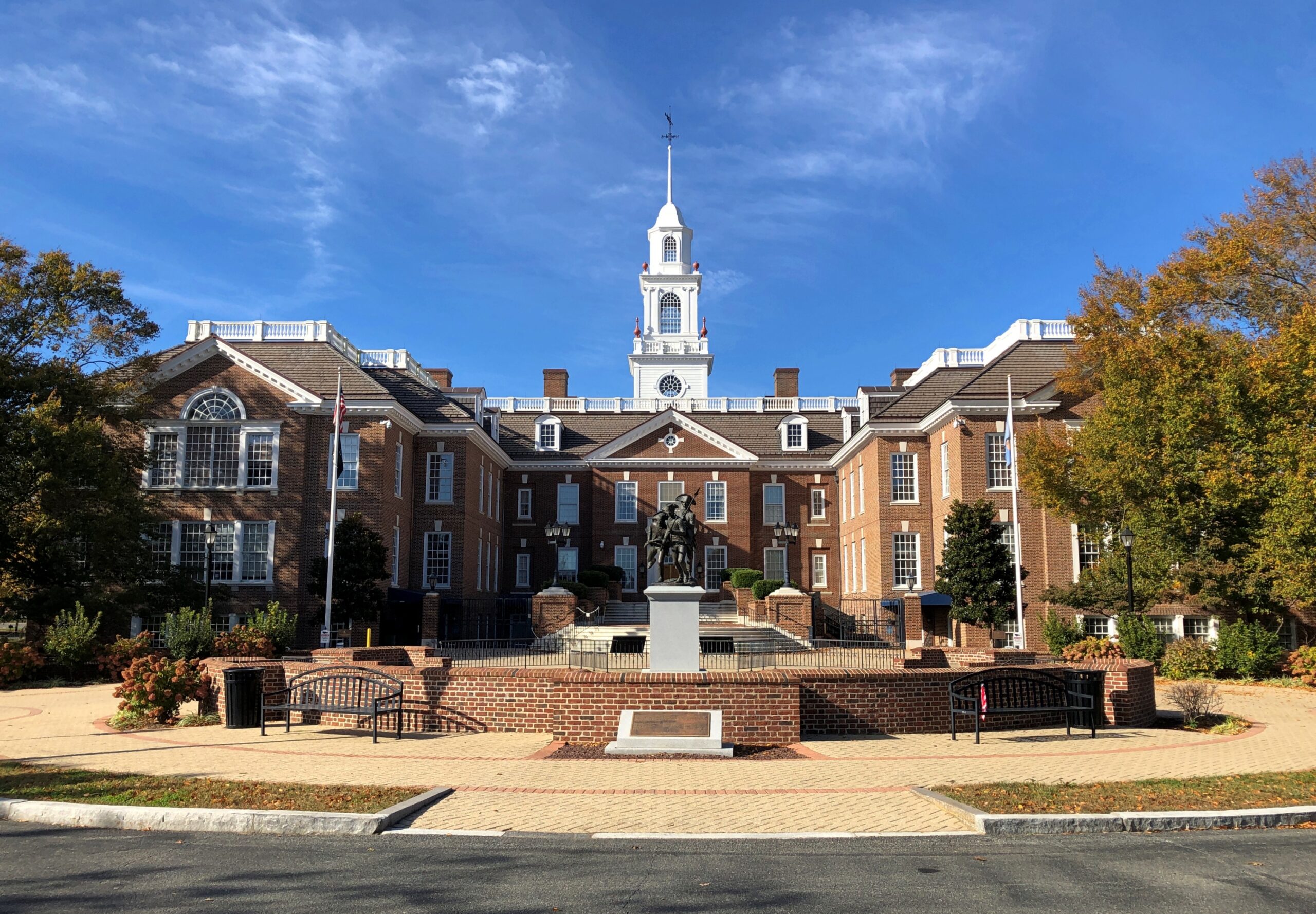
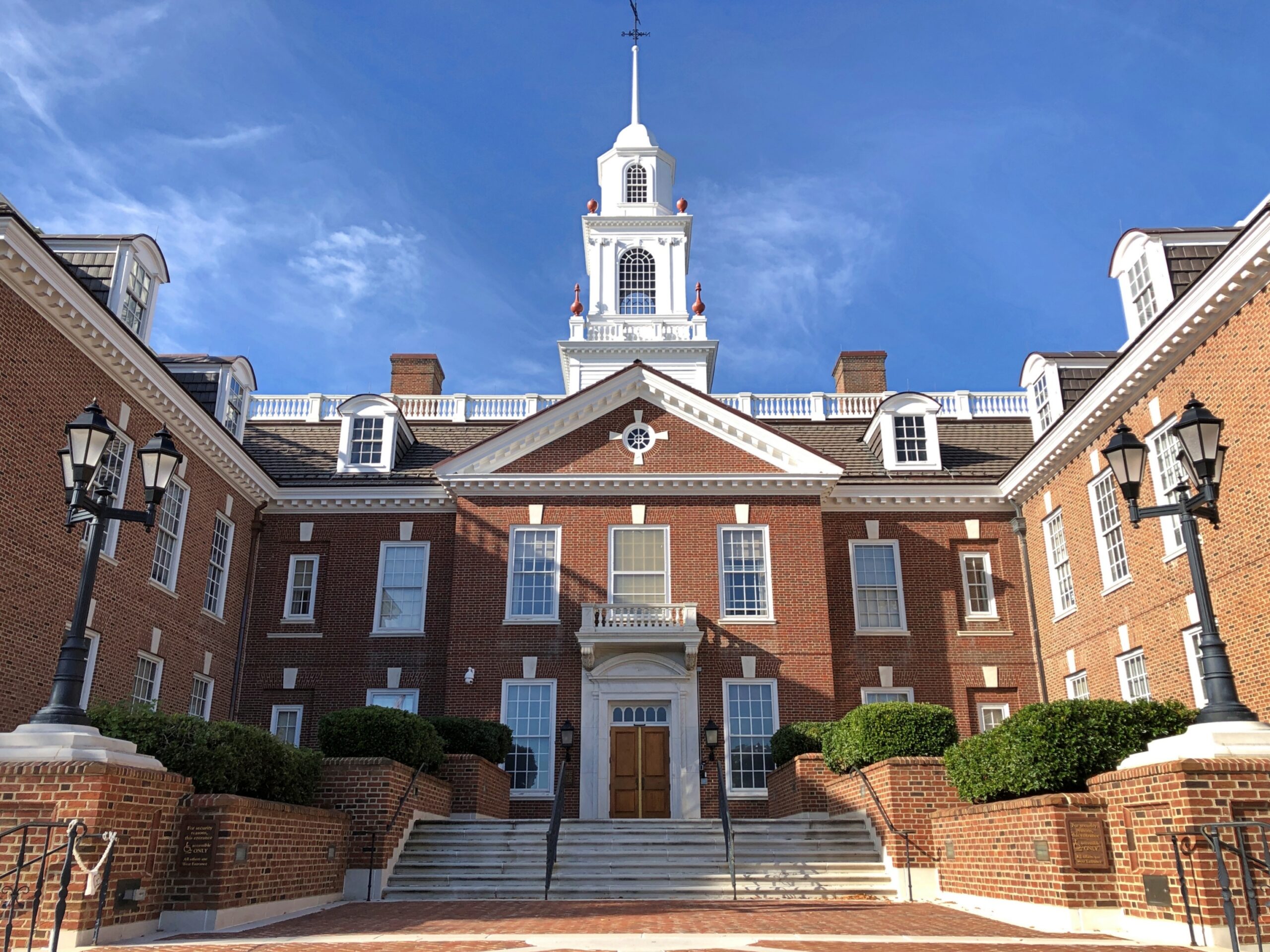
I arrived in Dover late on the October 24. The next morning, a Saturday, I left fairly early. First stop: the Delaware State House. It was closed for the weekend. My reaction: what kind of Mickey Mouse operation is this? I got a good look at the exterior, at least.

Delaware State House

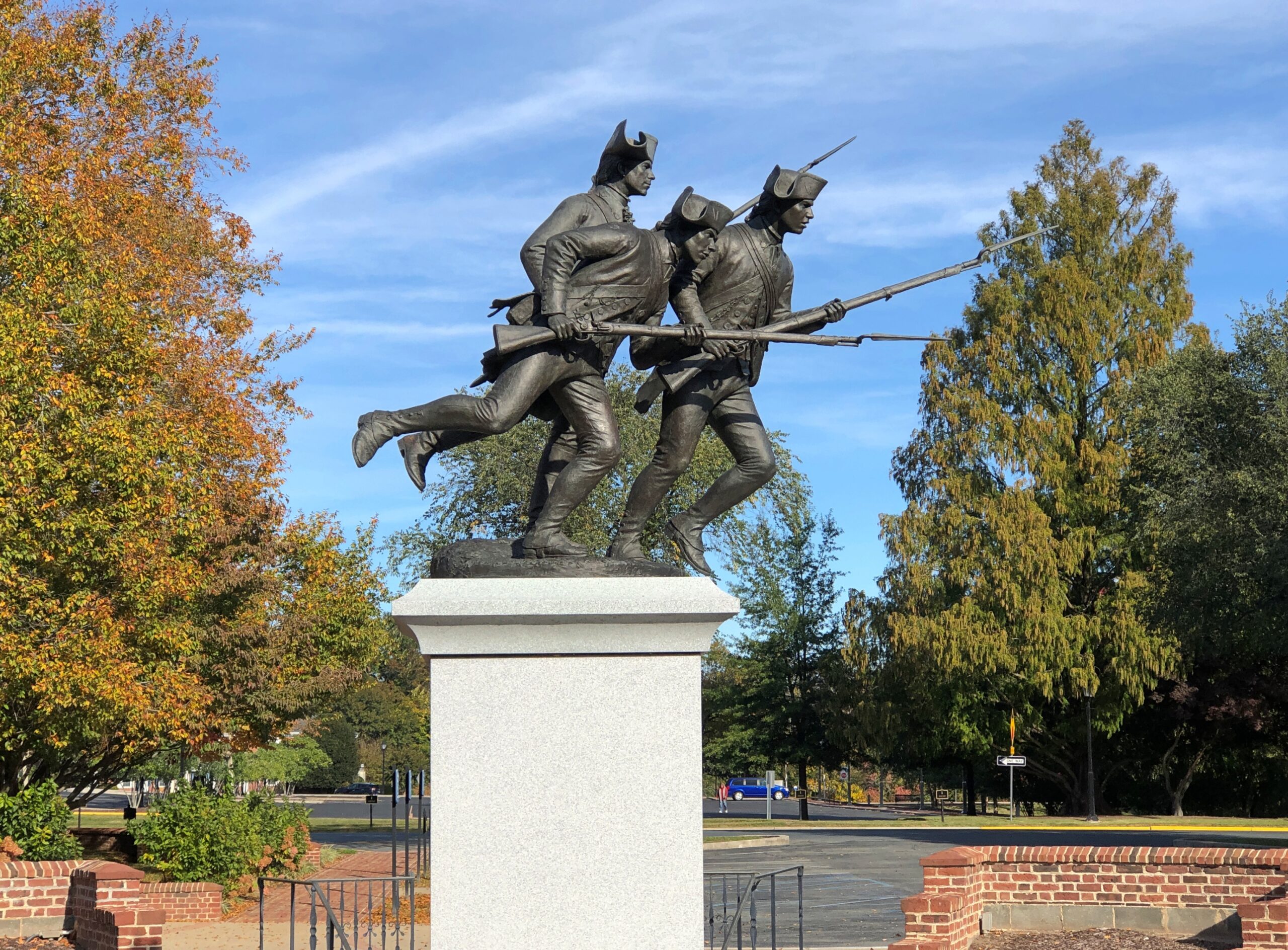
A fairly new sculpture, in front of the capitol: The Delaware Continentals.

Delaware State House

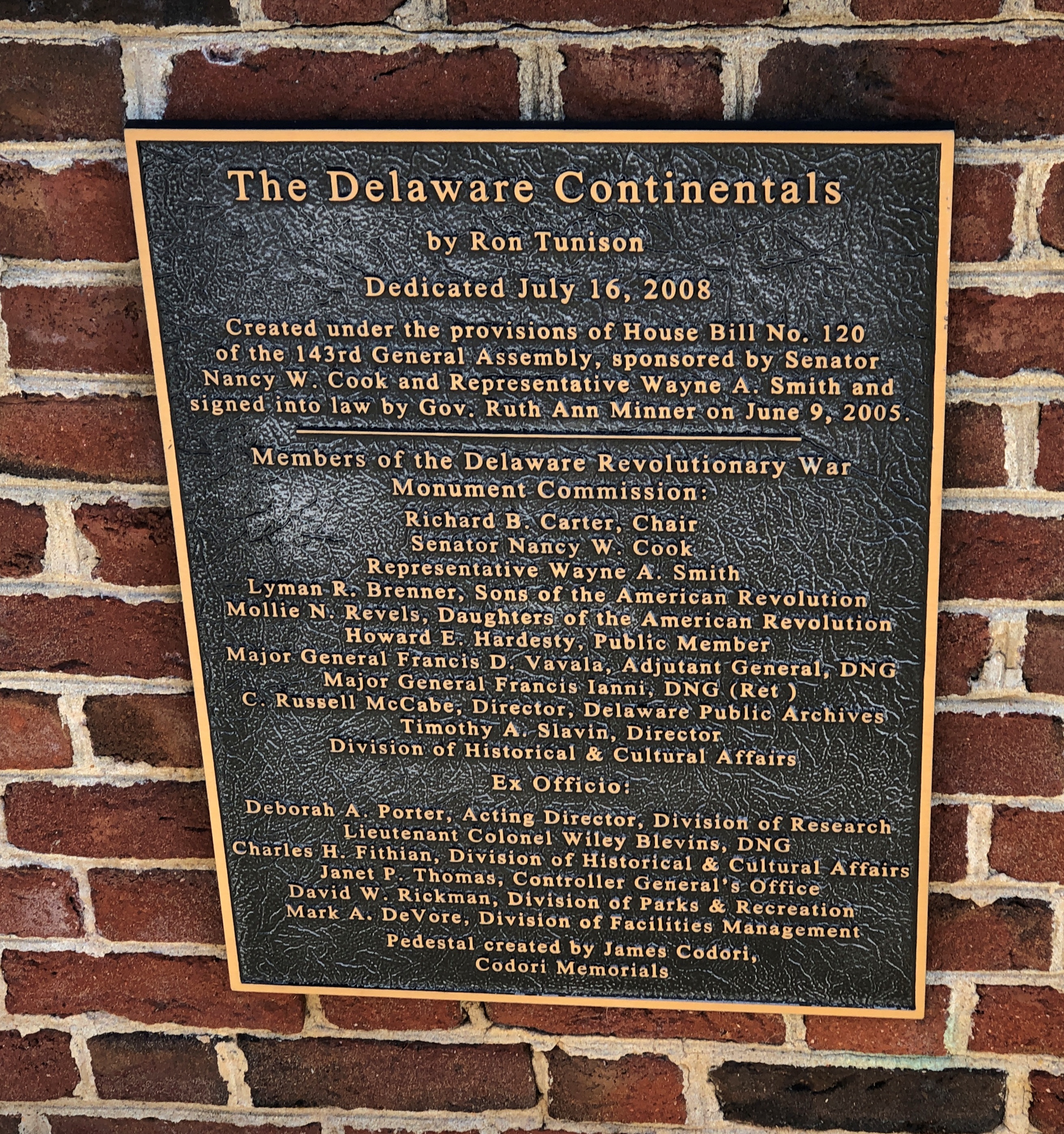
The plaque is long on functionaries’ names, short on information about the Delaware Continentals. An historic plaque up in Wilmington says of them:

Commanded by Colonel John Haslet, the Delaware Regiment consisted of more than 500 battle-ready troops when they marched northward to join the Continental Army in August 1776. After expiration of enlistments and Haslet’s death, the Regiment was reorganized in the winter of 1776-77 under the leadership of Colonel David Hall. Participants in many of the major battles of the Revolution, their conduct earned the praise of their superiors and the respect of their enemies. Forced to endure great hardship, the Regiment was widely acclaimed for its discipline and bravery. Greatly depleted in number, they returned to Delaware victorious in January 1783.

That was hardly the end for the regiment. The 198th Signal Battalion in the Delaware Army National Guard traces itself directly to the Delaware Regiment.

Not far from the current capitol is the former state house, now a museum. It was open.

Old Delaware State House

In fact, I got a tour.

Old Delaware State House

I was happy to learn that here, in this very room, the delegates to the Constitutional ratifying convention met, and made their quick and unanimous decision.

The Kansas State Capitol

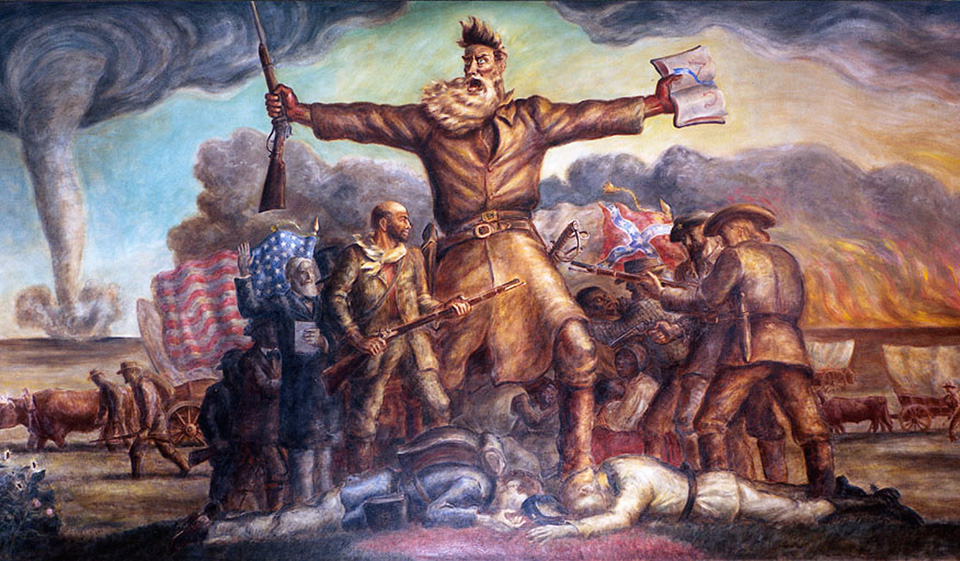
One fine day in the Kansas State Capitol last month, I turned a corner and found myself looking up at Old Testament John Brown. Larger than life, as he has loomed these 160+ years.

The mural, actually called “Tragic Prelude,” is more than 11 feet tall and 31 feet long, taking up an entire wall in the capitol. The lighting isn’t particularly good for taking images of the whole work – a ceiling light in particular washes out much of John Brown’s (let’s say) emphatic expression. Luckily, the image seems to be in the public domain.

A plaque under the mural says:

Sponsored by Kansas Press Association, aided by Kansas school children, these murals were painted in 1940-41 by John Steuart Curry, who was born near Dunavent, Kansas. In John Brown’s outstretched left hand is the word of God. In his right, a “Beecher’s Bible.” Beside him, facing each other, are contending Free Soil and Pro-Slavery forces.

The plaque does not say that the many members of Kansas legislature hated the painting at first, and refused to hang it in Curry’s lifetime (he died in 1946). Curry had had the temerity to depict Bleeding Kansas, by far the most interesting period in the history of the territory and state; the interesting times no one wants to live through. Maybe they thought it glorified John Brown — which it half way does, but with more than a tinge of madness in him as well. Bottom line, the work apparently didn’t sit well with those who might have wanted a Kansas of doughty farmers and hardy pioneers and fertile landscapes.

Eventually, to its credit, the legislature did have the work installed. Whatever you think of John Brown, it’s a striking piece. I’d seen depictions of it, but either never knew or had forgotten that it hangs in the Kansas State Capitol, which made coming across it all the more memorable.

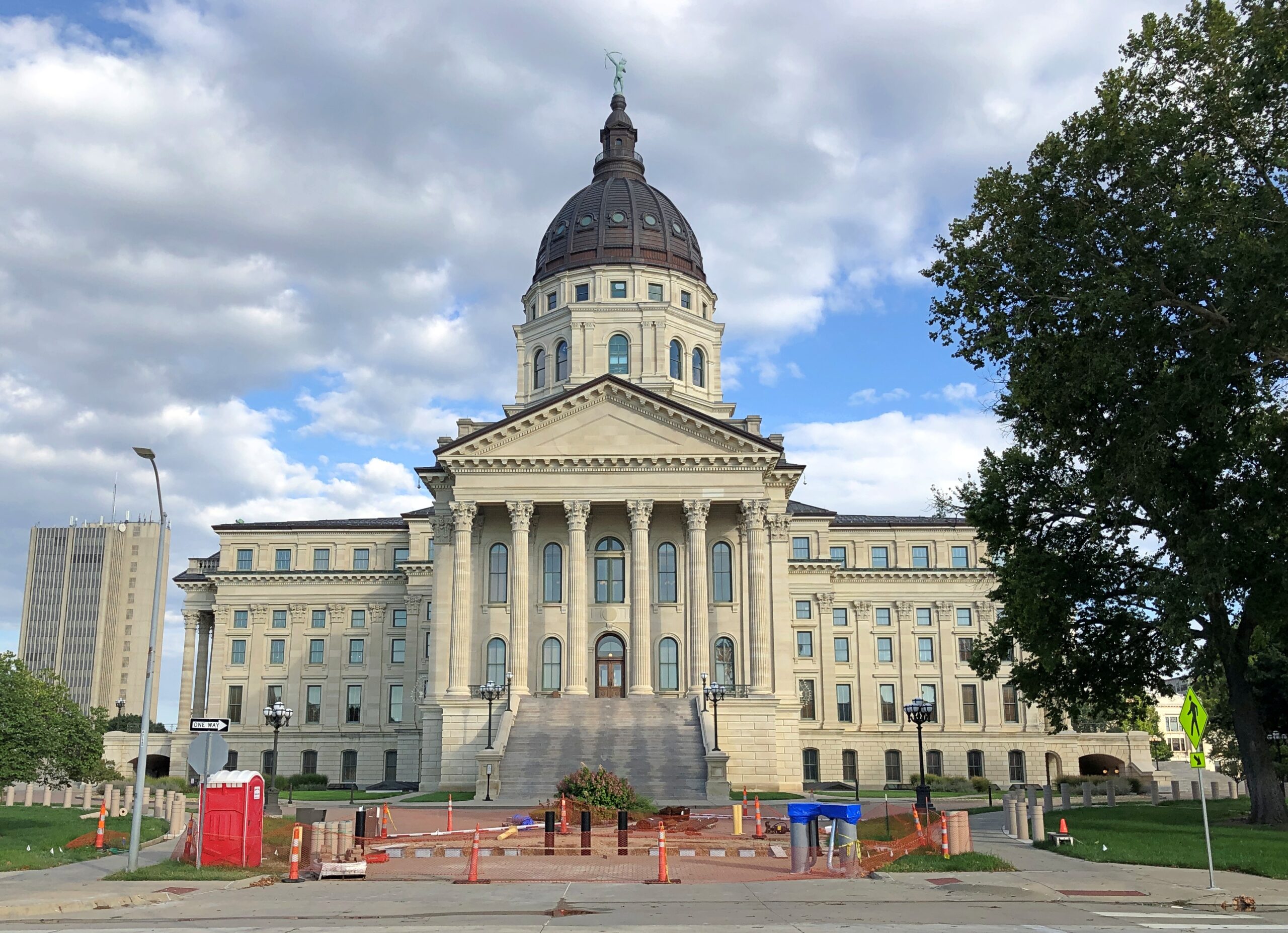
I almost missed it, having dawdled in Salina and Abilene for most of that day (September 24), but I made it to Topeka and the capitol about 30 minutes before it closed.

Kansas State Capitol

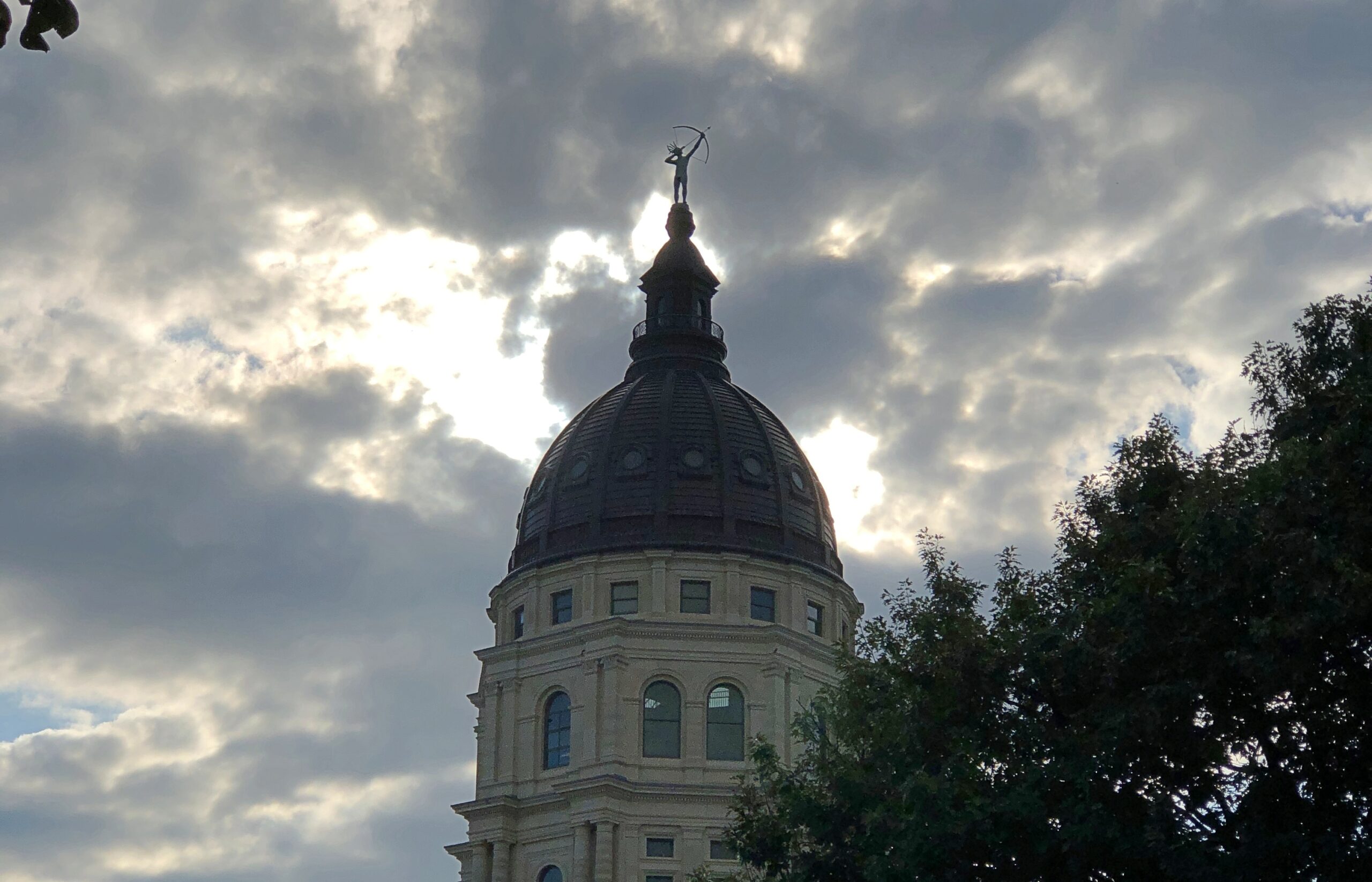
Like any number of monumental edifices, this one took time: construction finished in 1903 after 37 years in the works, not counting renovations or the comparatively recent addition of the 4,420-pound, 22-foot tall bronze “Ad Astra” on top of the dome, which was in 2002. The figure is an acknowledgment of the Kaw Nation (Kansa), who lent their name to the state.

Kansas State Capitol

Architect E. Townsend Mix (d. 1890) designed the capitol, though he didn’t live to see its completion. Most of his work is in Milwaukee, where he lived the longest, including St. Paul’s Episcopal in that city.

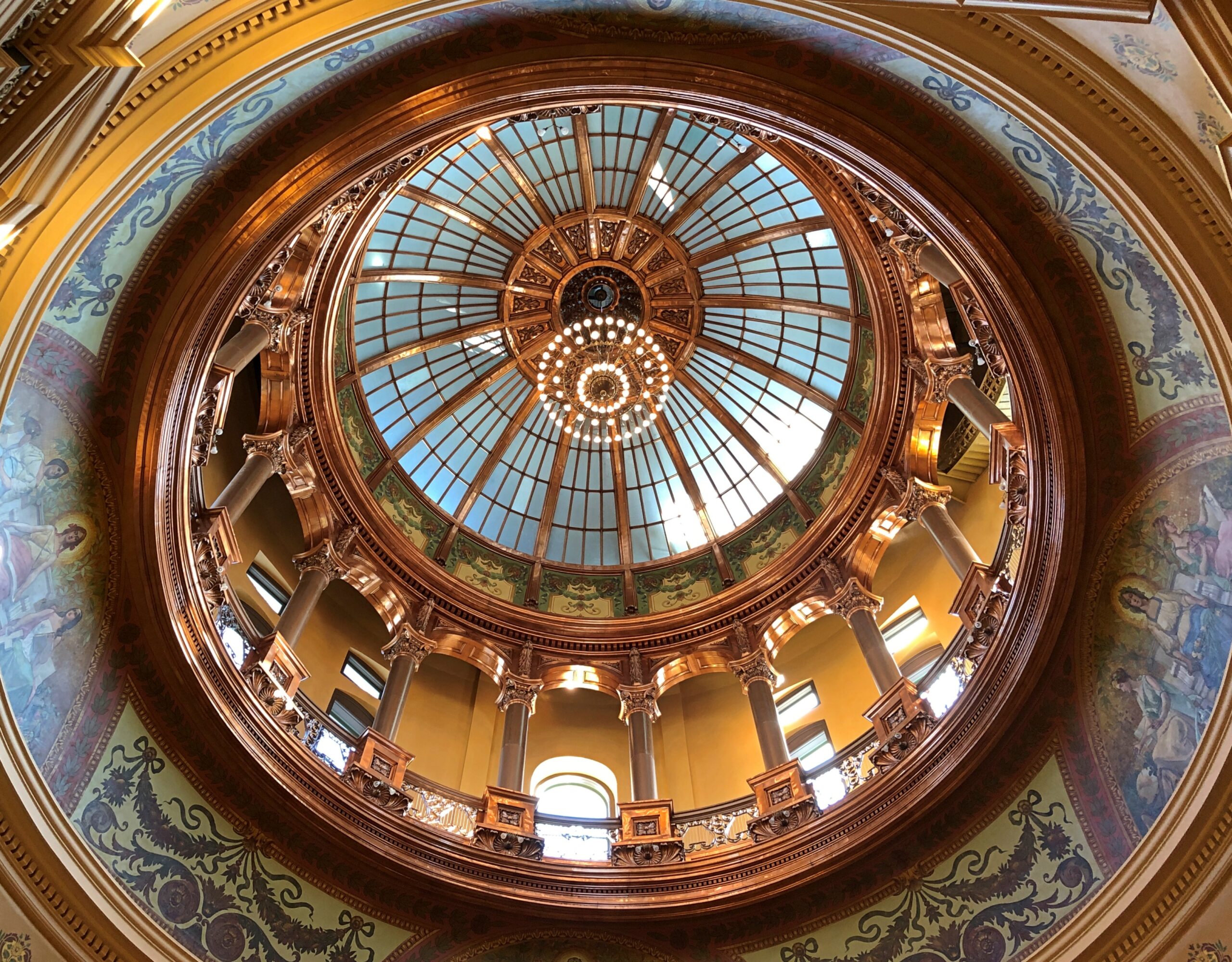
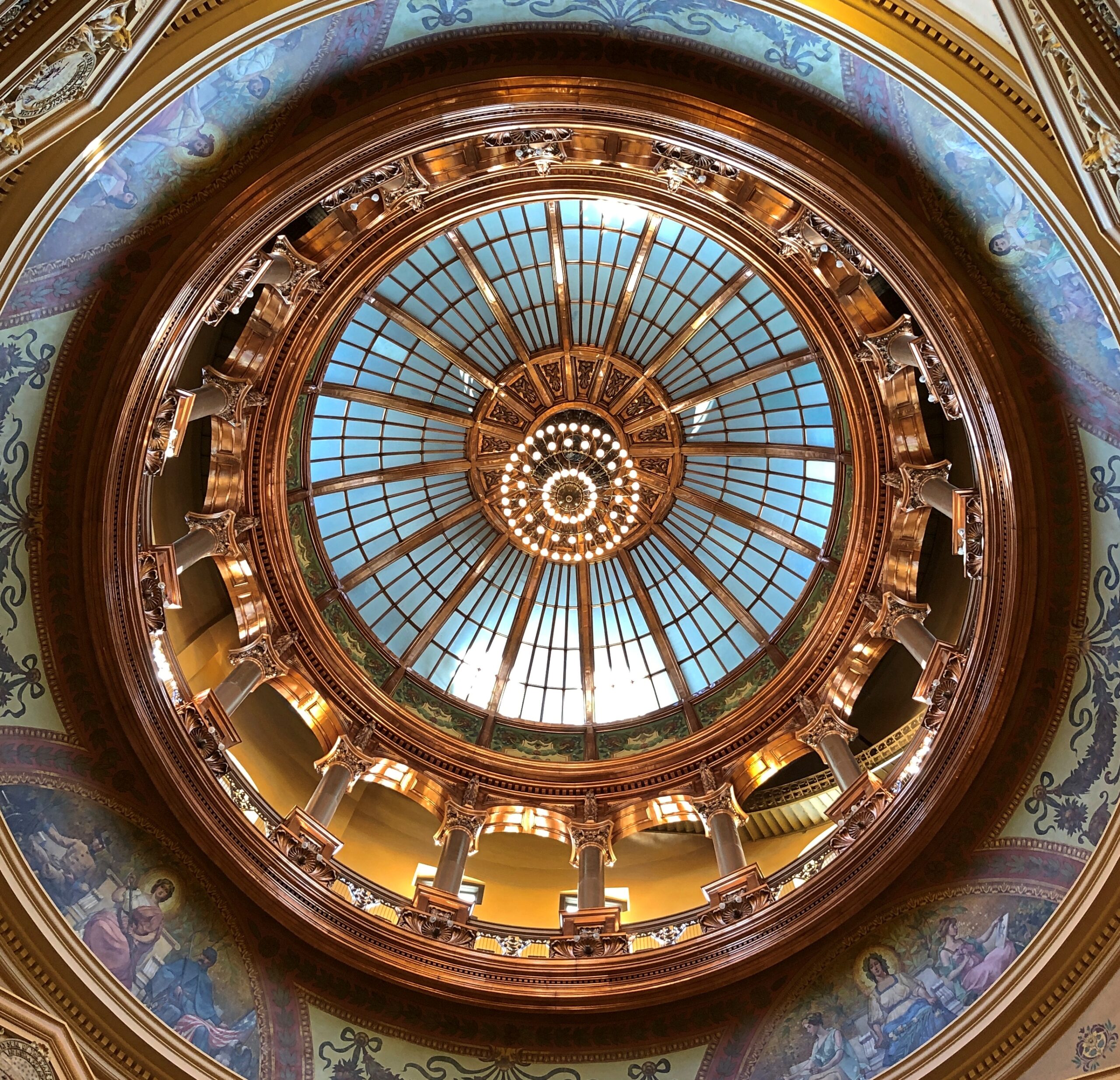
A fine dome.

Kansas State Capitol

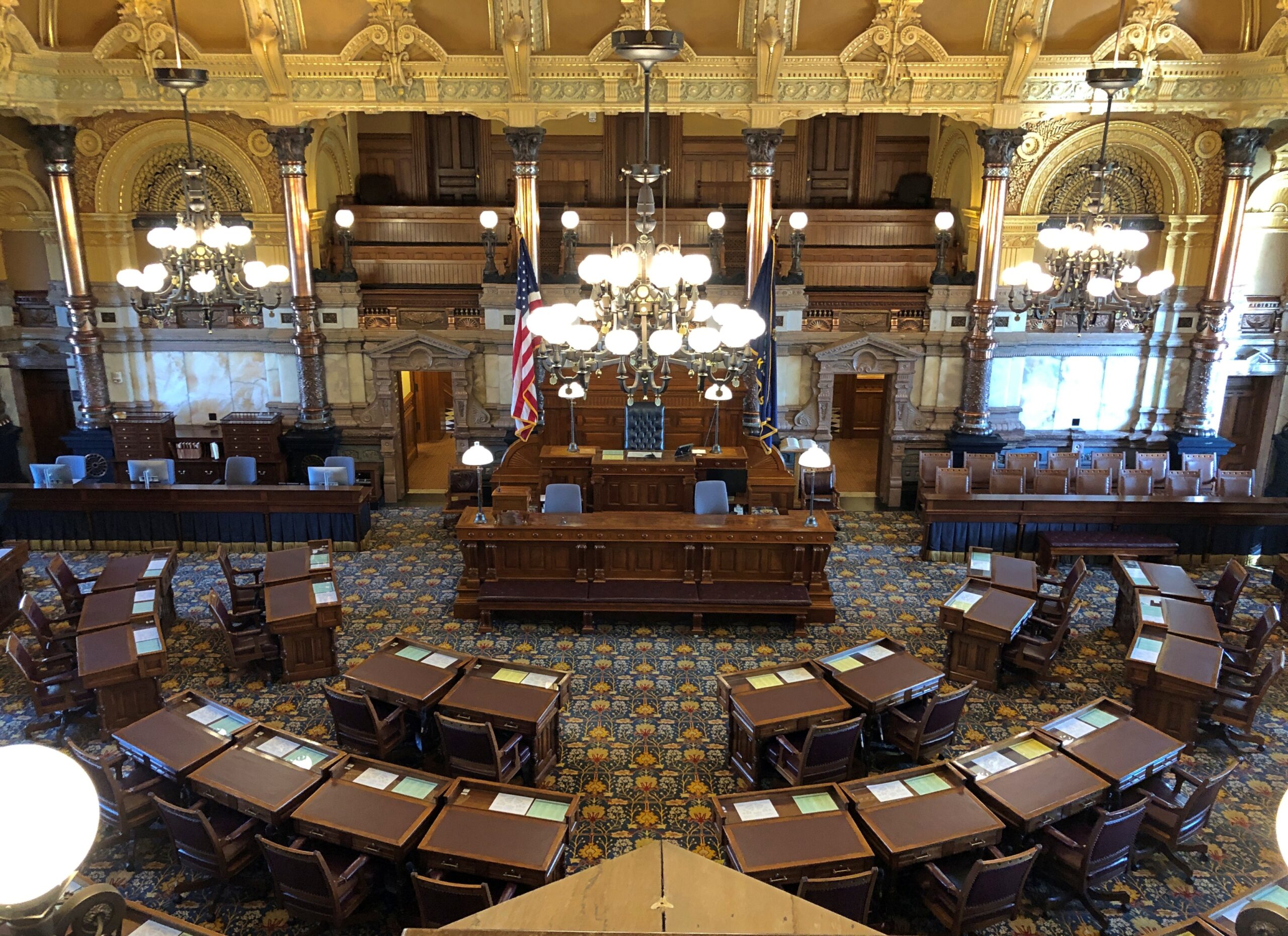
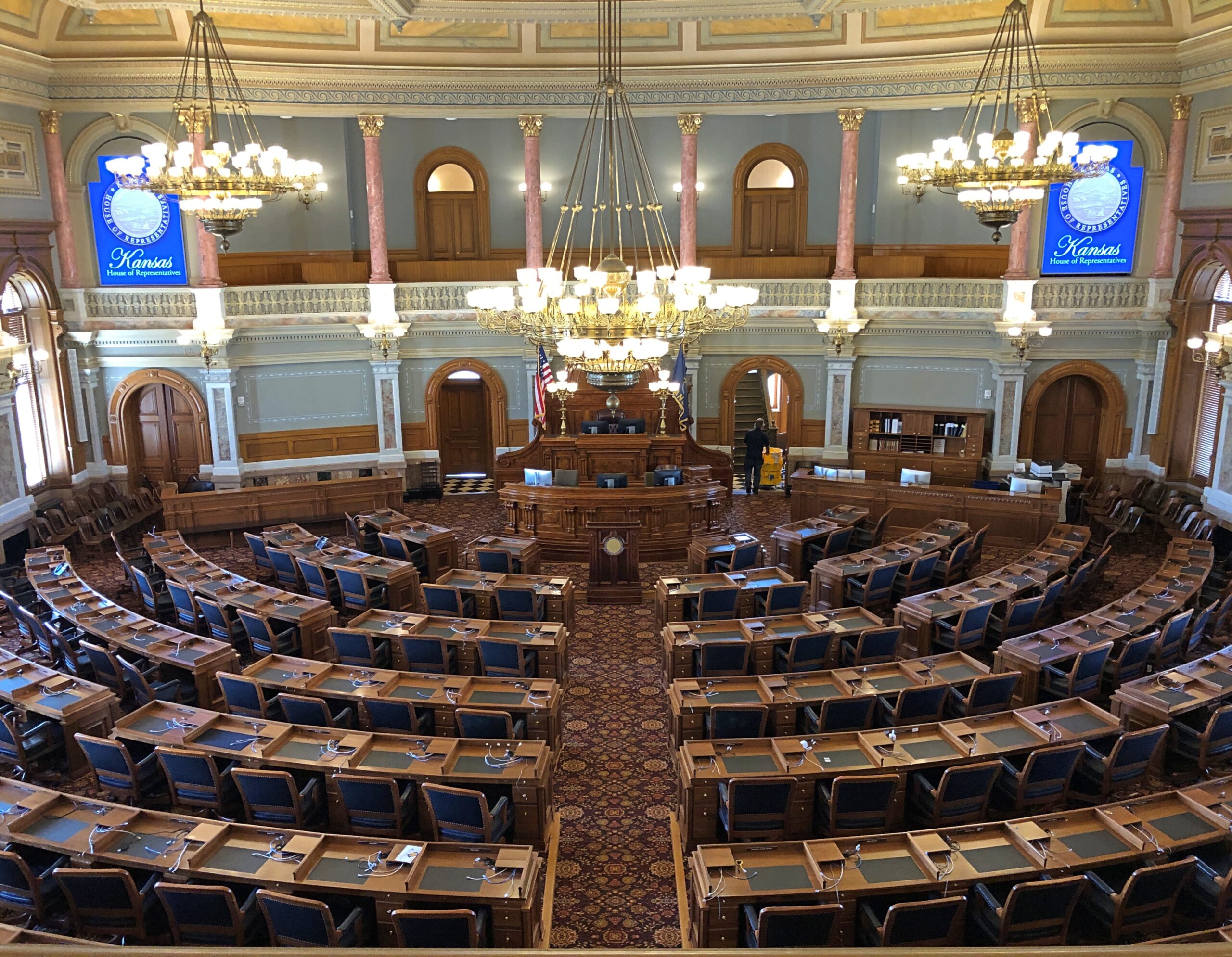
Well-appointed chambers.

Kansas State Capitol

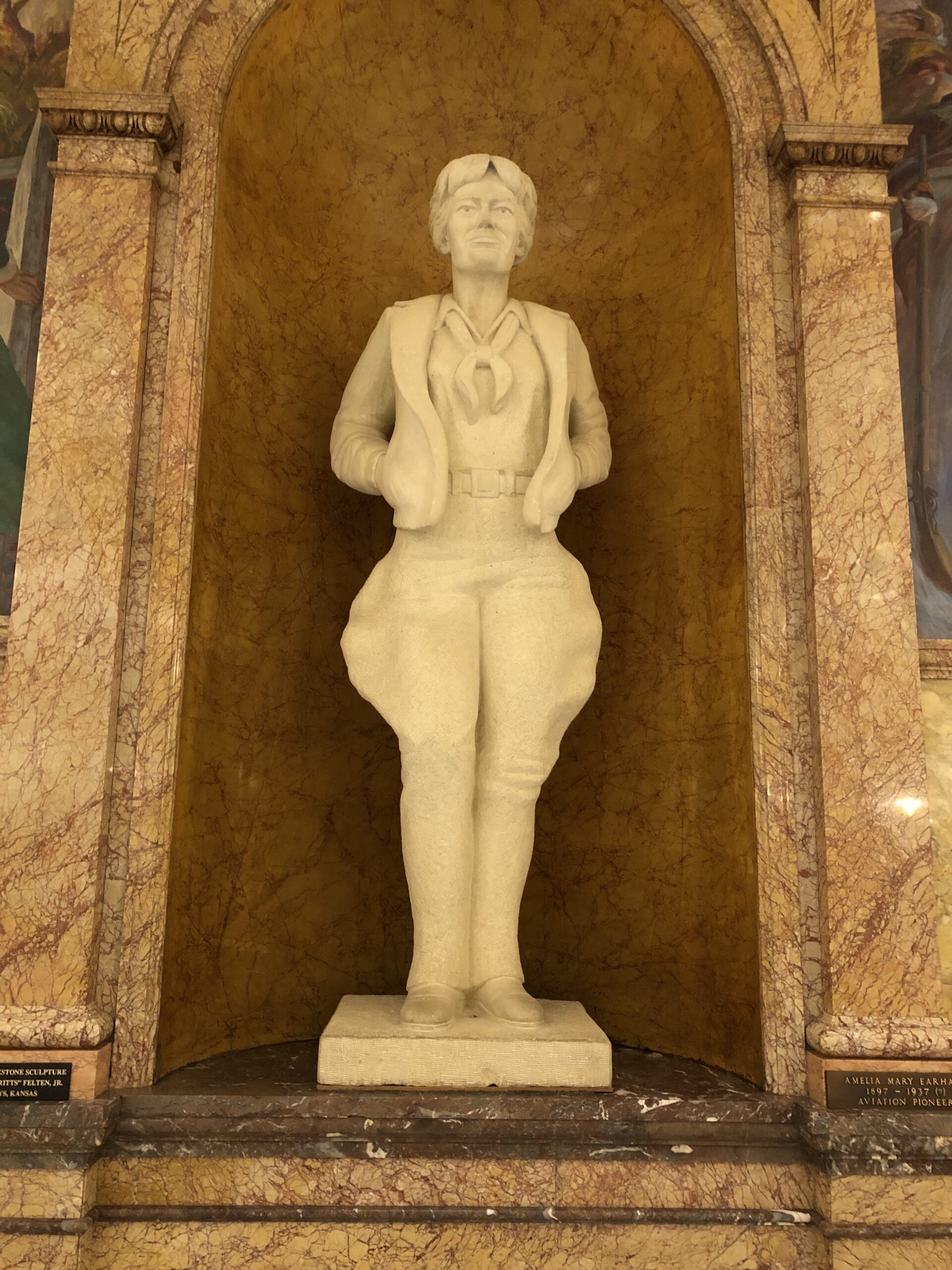
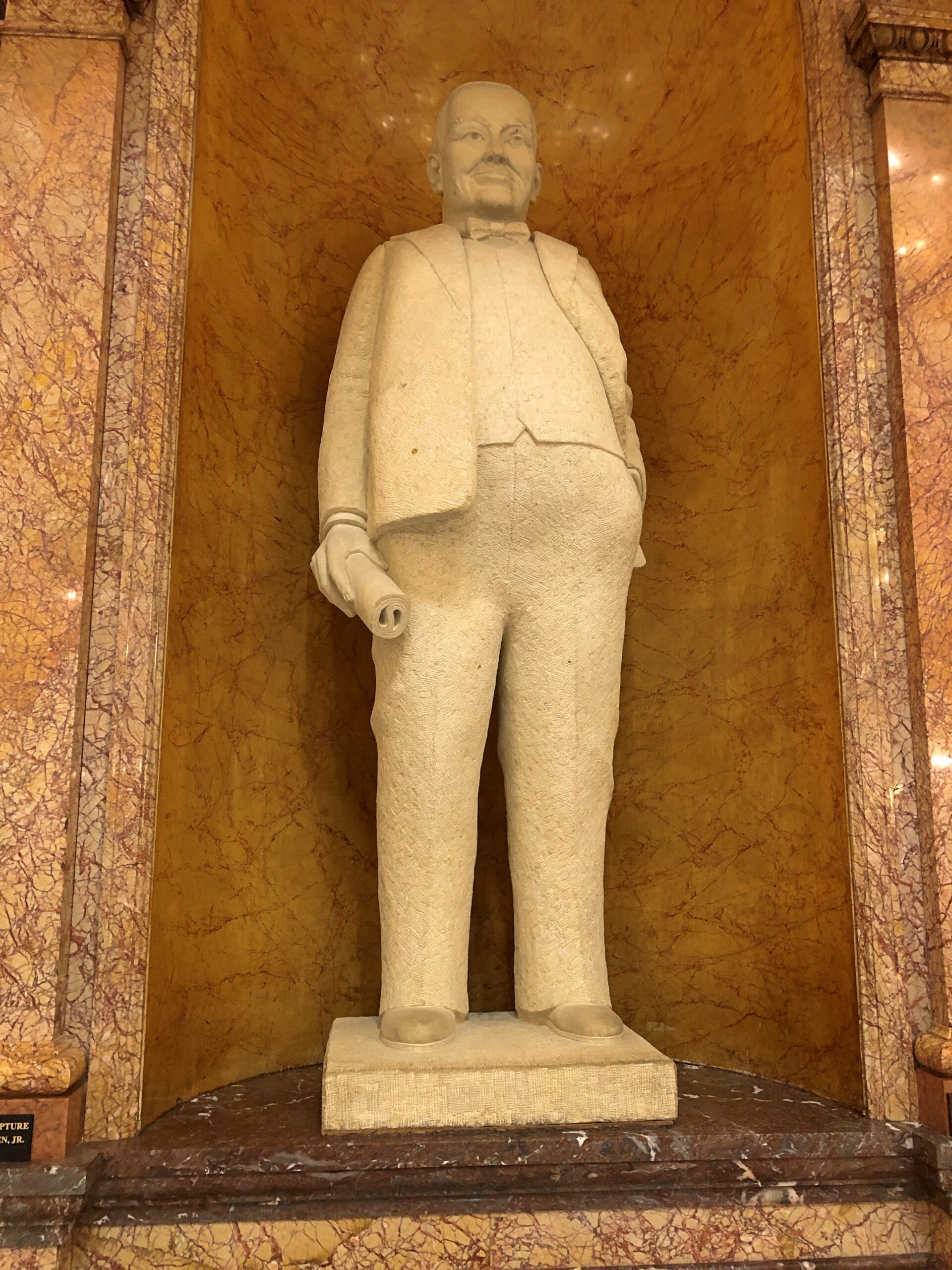
The capitol interior is fairly art-intensive. Not all capitols are. For instance, there are limestone statues in large niches — native limestone, a sign says — of famed Kansans, by Peter “Fritts” Felten Jr. of Hays, Kansas. Such as one of the aviatrix from Atchison.

Kansas State Capitol

Amelia Earhart is immediately recognizable, which is no mean feat for someone who is (very likely) been dead for nearly 90 years.

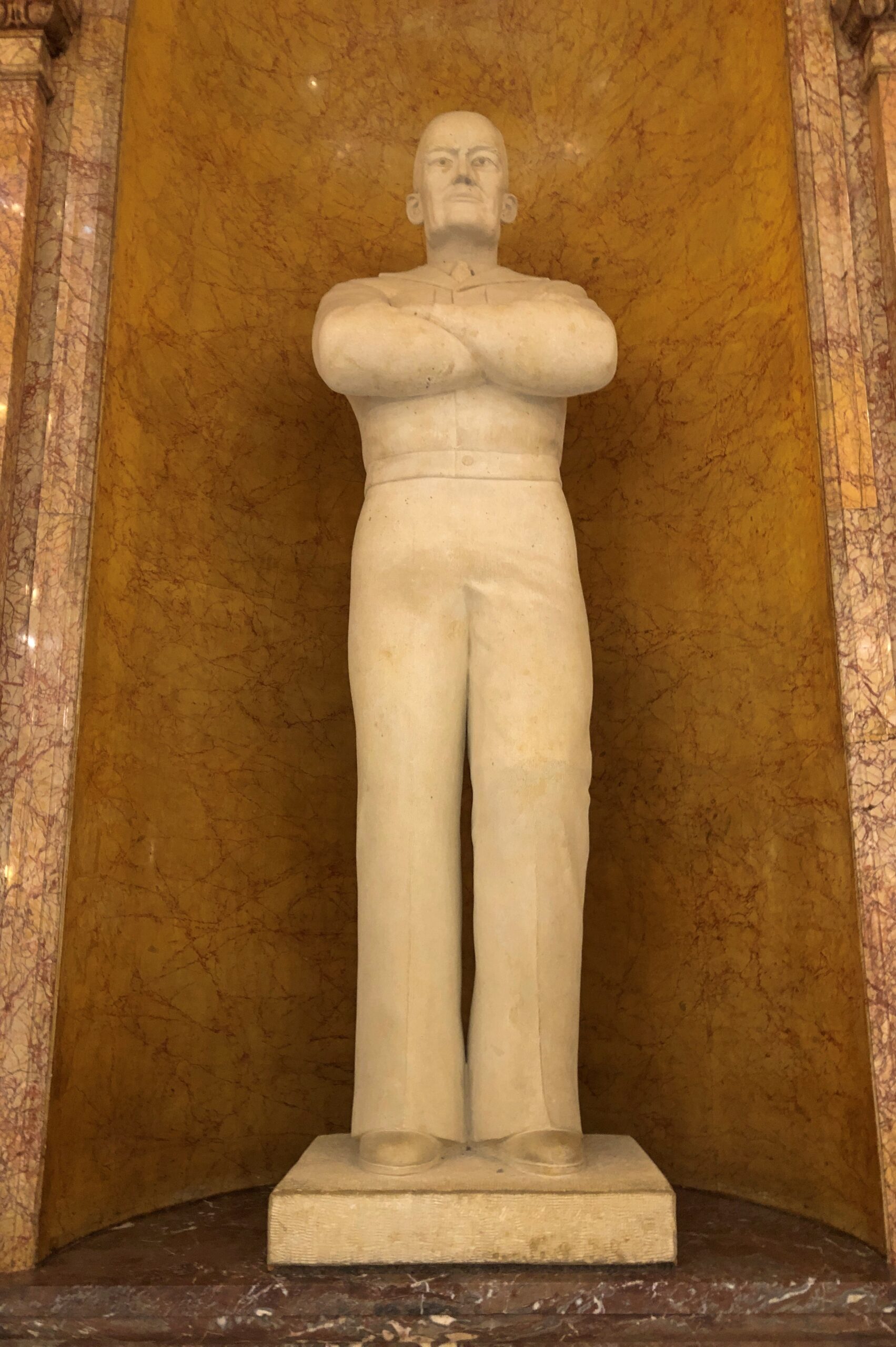
I like Ike, but this?

This figure is also more-or-less recognizable – though a depiction of him that’s a little strange, looking for all the world like Mr. Clean. Only a little like that Ike fellow on an Eisenhower dollar.

The fellow below’s fame has, I’m afraid, shriveled up like a balloon that lost its helium: William Allen White (d. 1944) Probably not even known in Kansas any more, since he was a noted journalist, a profession whose posthumous fame tends to be brief. Editor, Pulitzer Prizewinner, his plaque says. A Progressive Through-and-Through, it does not say. That might not play in Kansas at the moment.

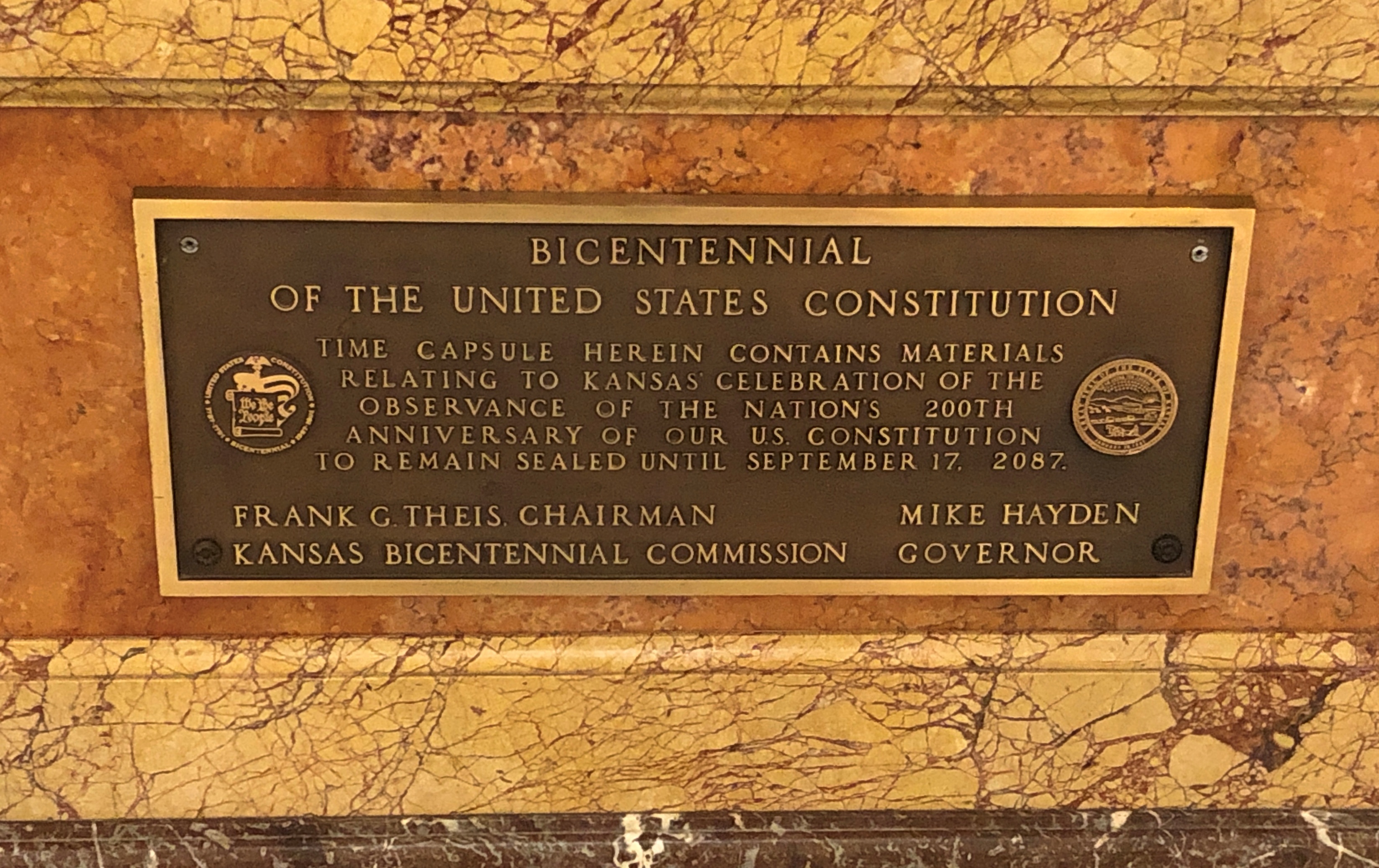
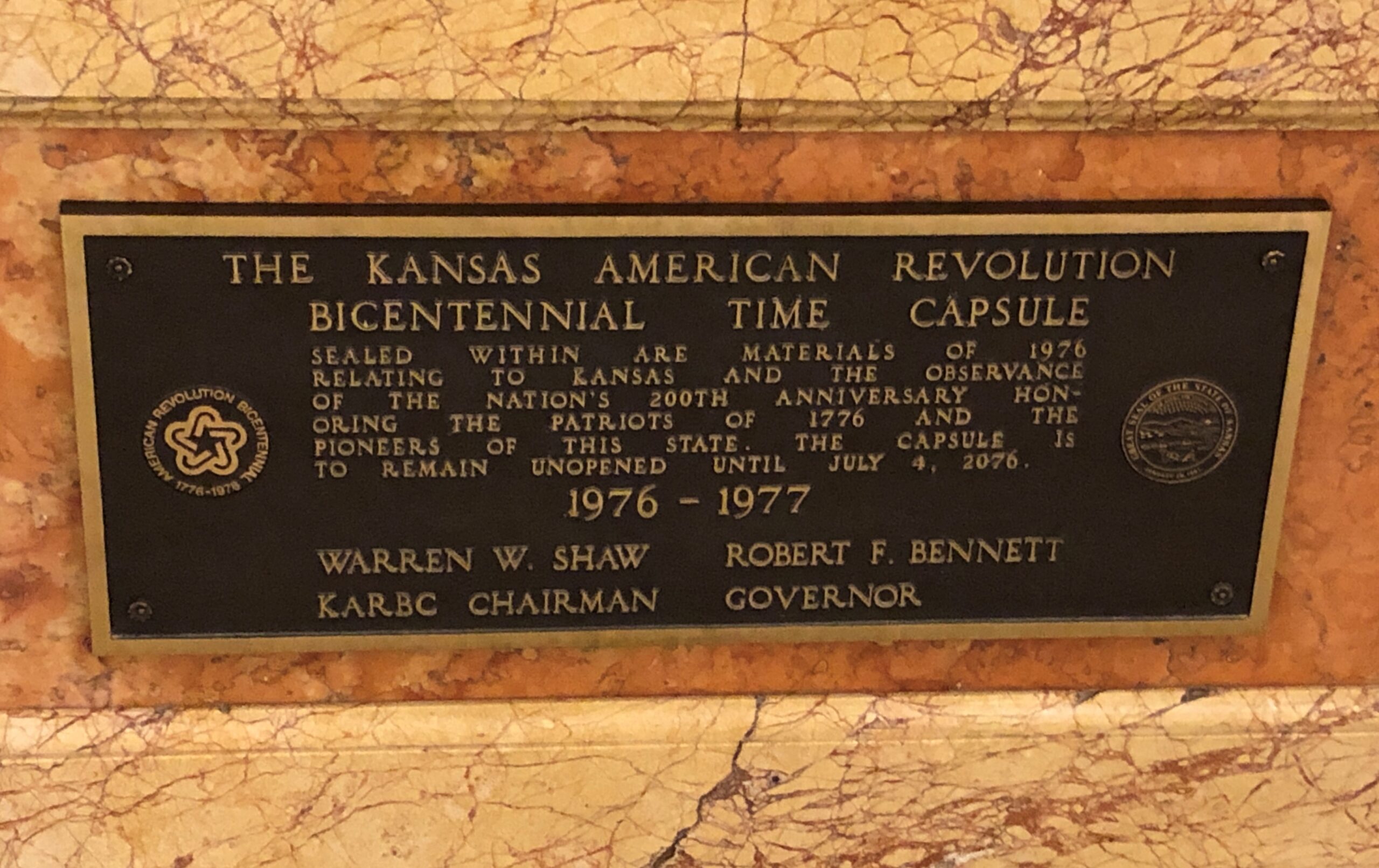
Not one, but two time capsules reside with the capitol walls. At least two that I saw.

Kansas State Capitol

This is a digression, but one thing still leads to another on line, and I came across a list published in 1991 by the International Time Capsule Society: “10 Most Wanted Time Capsules.” That is, a list of time capsules whose location had been lost and thus were (up till then) unrecoverable. The page notes that two have been found over the last 30+ years, but eight are still beyond the ken of man. Such as:

MIT Cyclotron Time Capsule.

In 1939 a group of MIT engineers placed a brass capsule beneath an 18-ton-magnet used in a brand new, state-of-the-art cyclotron. The capsule was to be opened in 50 years but was not. No one remembered the time capsule was there (the cyclotron had long since been deactivated). But when reminded of its existence, MIT was faced with another problem: how do you get a time capsule out from under a 36,000-pound lid?

Bicentennial Wagon Train Time Capsule.

This capsule was supposed to hold the signatures of 22 million Americans. But on July 4, 1976, when President Gerald Ford arrived for the sealing ceremony in Valley Forge, Pennsylvania, someone stole the capsule from an unattended van in the bicentennial wagon train. The capsule’s maker, the Reynolds Company, had broken the mold. The thief’s identity and the whereabouts of the capsule are unsolved mysteries.

Further investigation reveals that the whereabouts of the papers that Americans signed in 1976 – a good many pounds of it – mysteriously disappeared, and that theft from a van was one idea, though organizational misdirection sounds more plausible to me. To the same warehouse as the Ark of the Covenant, in other words. Anyway, there’s a 12-episode streaming service comedy in that incident.

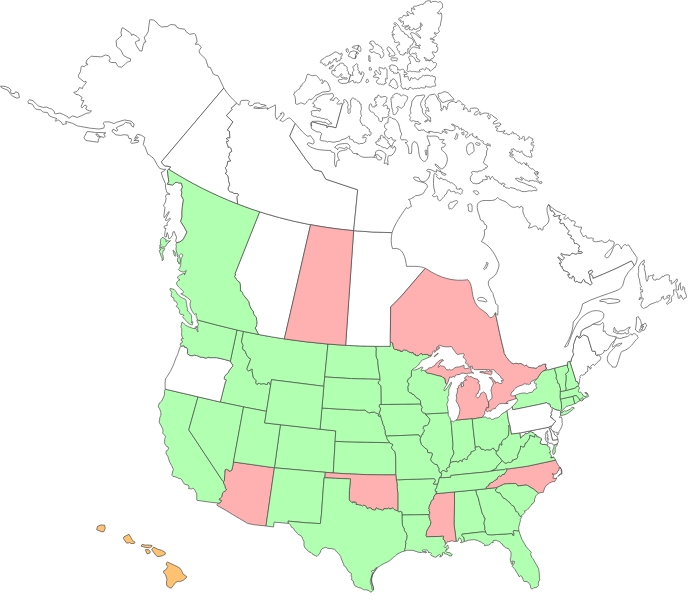
Back to capitols. It’s now easier to keep track of the ones I haven’t seen than otherwise.

Green for an interior visit, orange for exterior only, gold representing uncertainty, and white no visit.
The Wyoming State Capitol

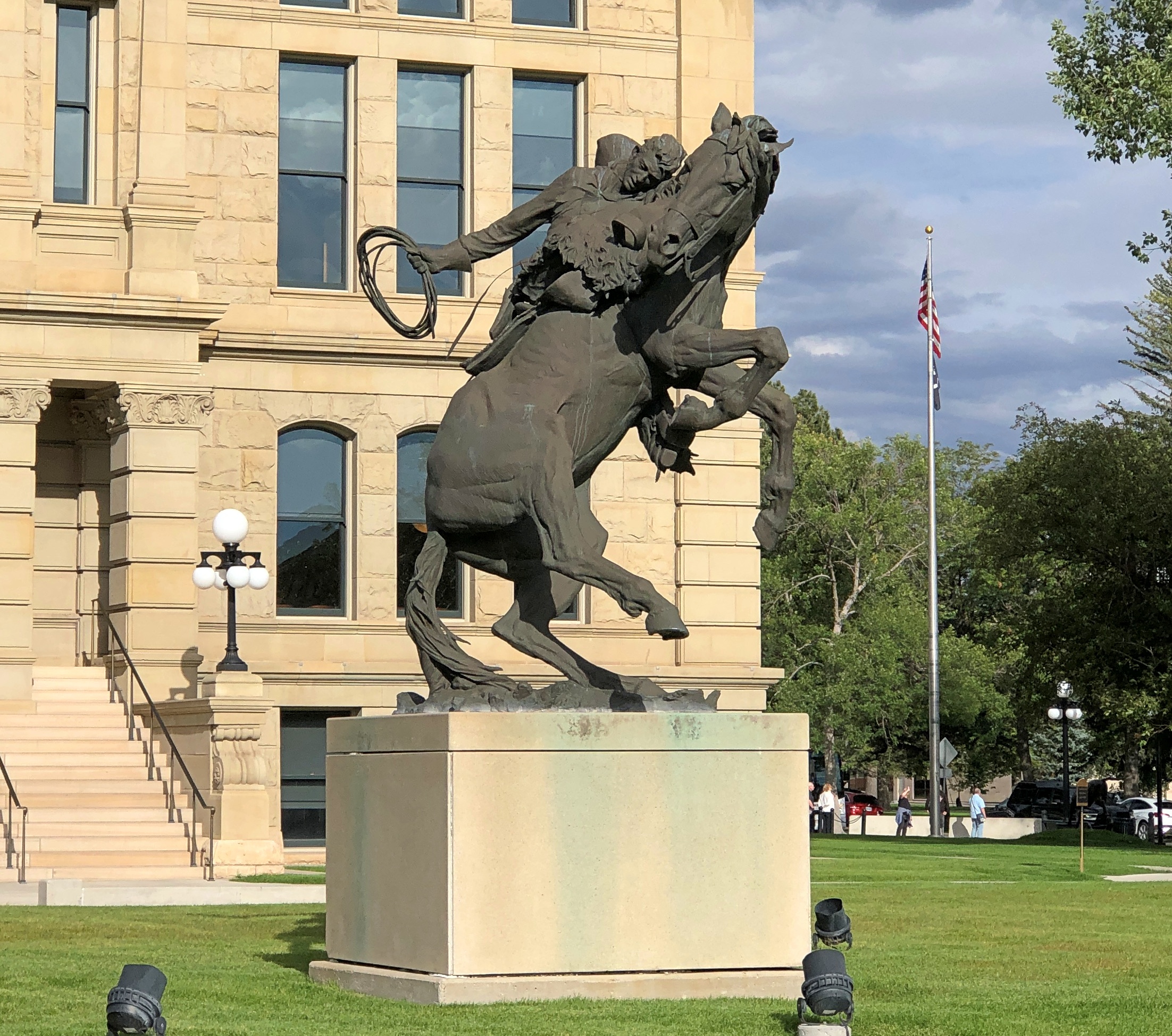
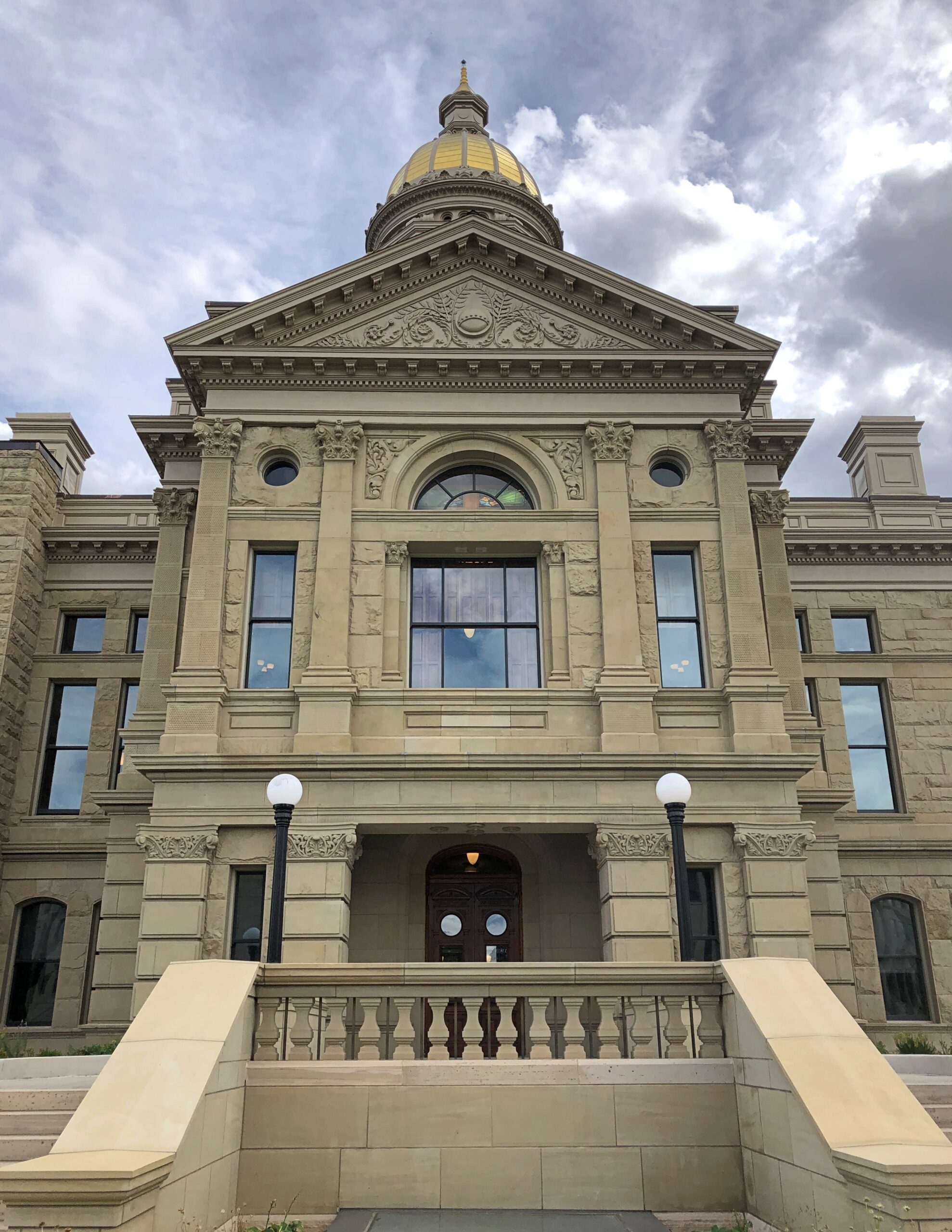
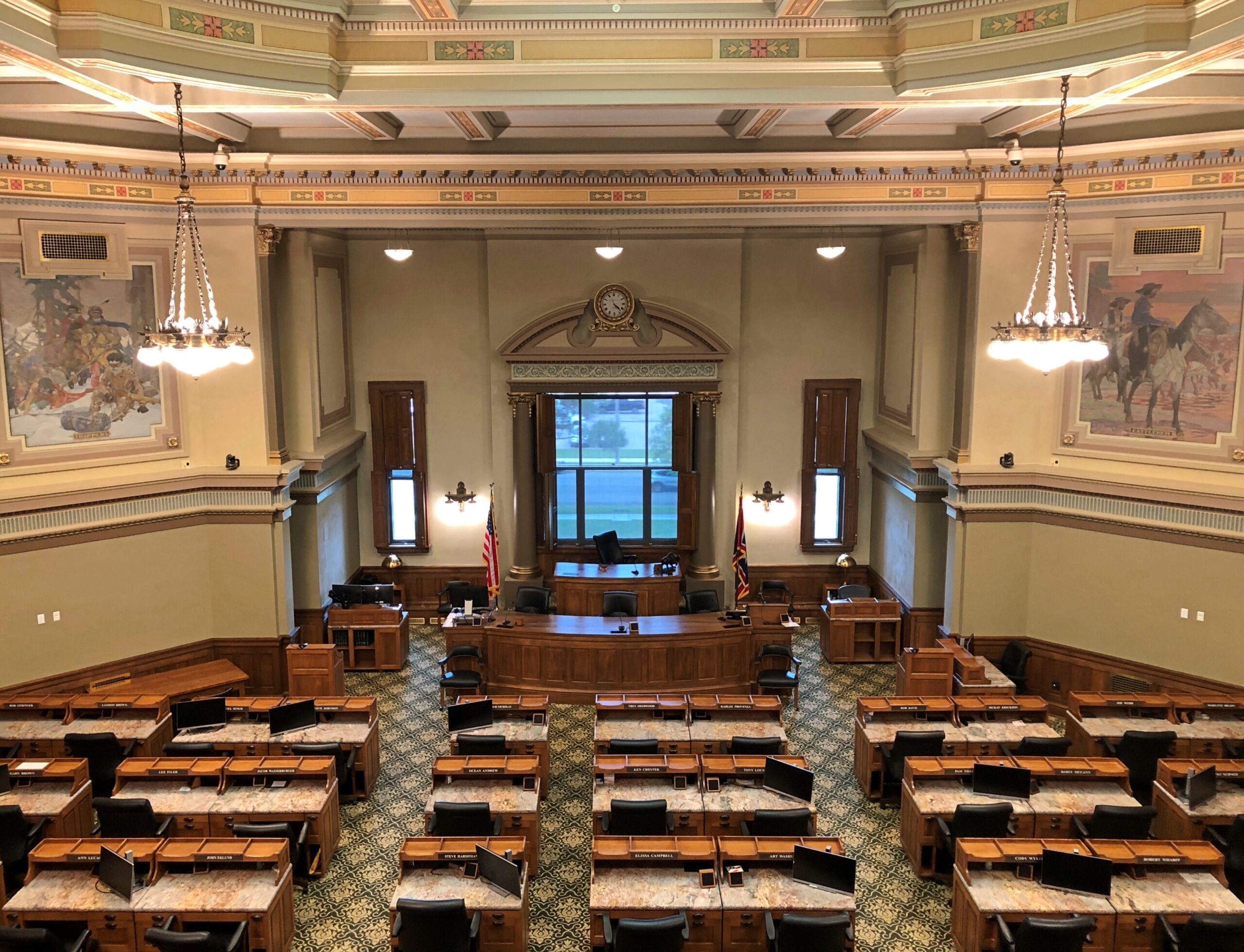
No skeletons were to be found at the Wyoming State Capitol last month, but you can hardly expect too many bone collections on display at state houses. The state of Wyoming does, however, want to remind visitors that they are in Wyoming.

Wyoming State Capitol

The work is called “Spirit of Wyoming,” and it stands on the capitol grounds, created by artist Edward J. Fraughton (d. 2024). The more I look at it, the more there is to think about. Which I suppose is at least one indication of a good work of art. So the Spirit of Wyoming involves the immediate risk of catastrophic injury by being thrown from a horse? Probably not what the legislature had in mind.
Rather, it might be the determination to hang on, no matter how much or madly the horse bucks. Especially in territorial and early statehood days, that sort of determination applied to a lot of Wyomingites, whether they were cowboys or not.

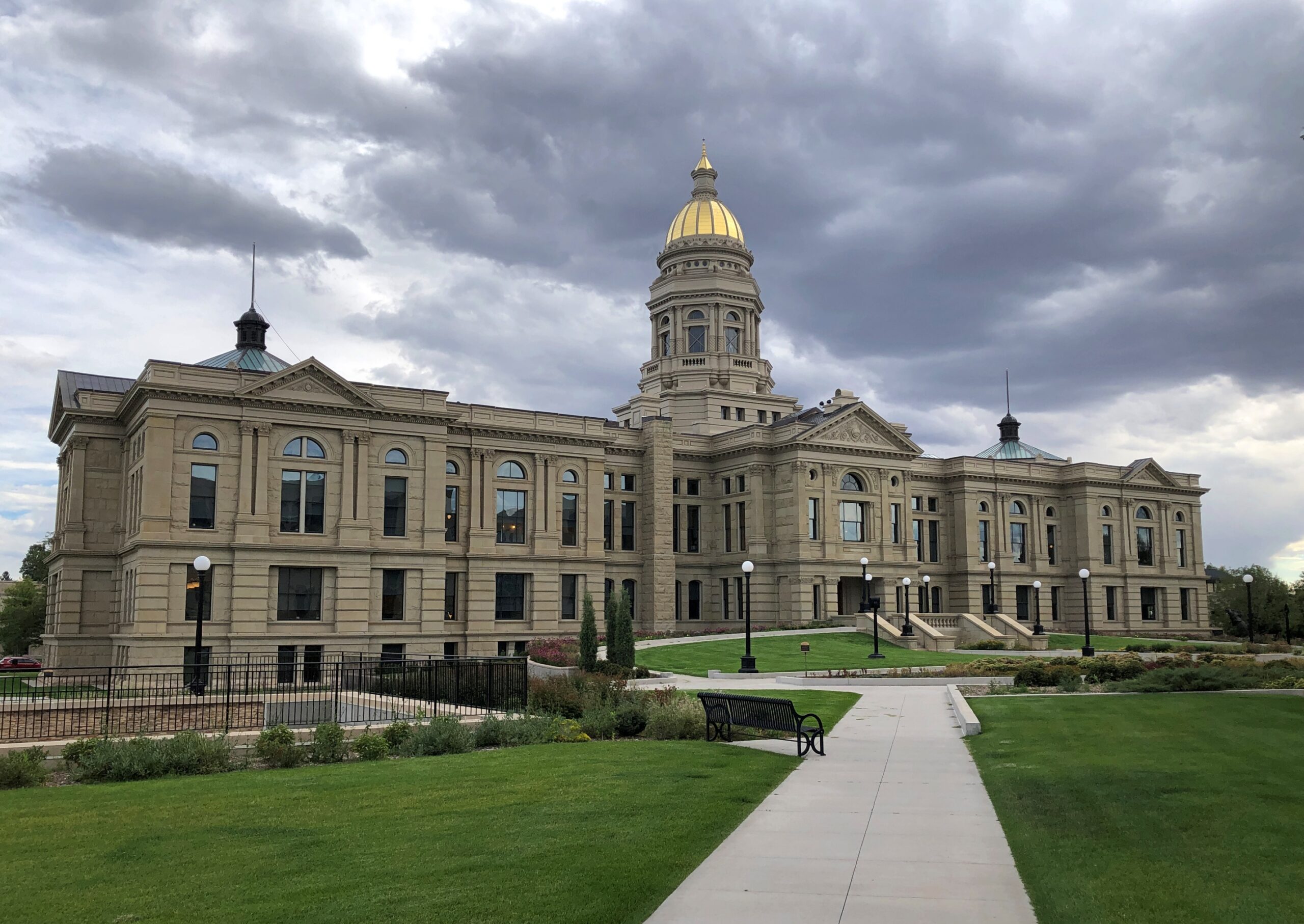
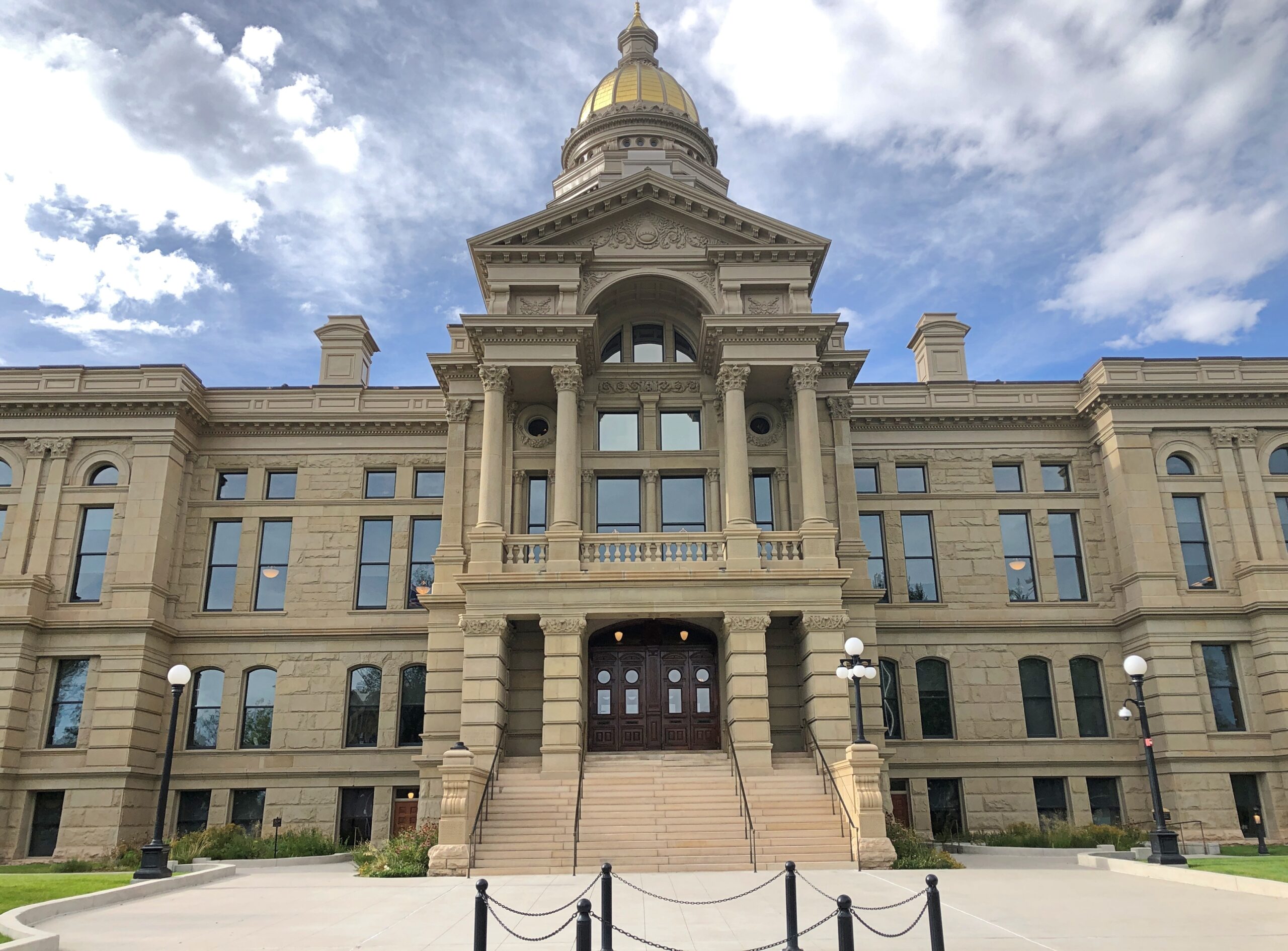
I had the opportunity to walk all the way around the capitol after arriving on the cloudy but warm afternoon of September 8.

WY state capitol
WY state capitol
WY state capitol

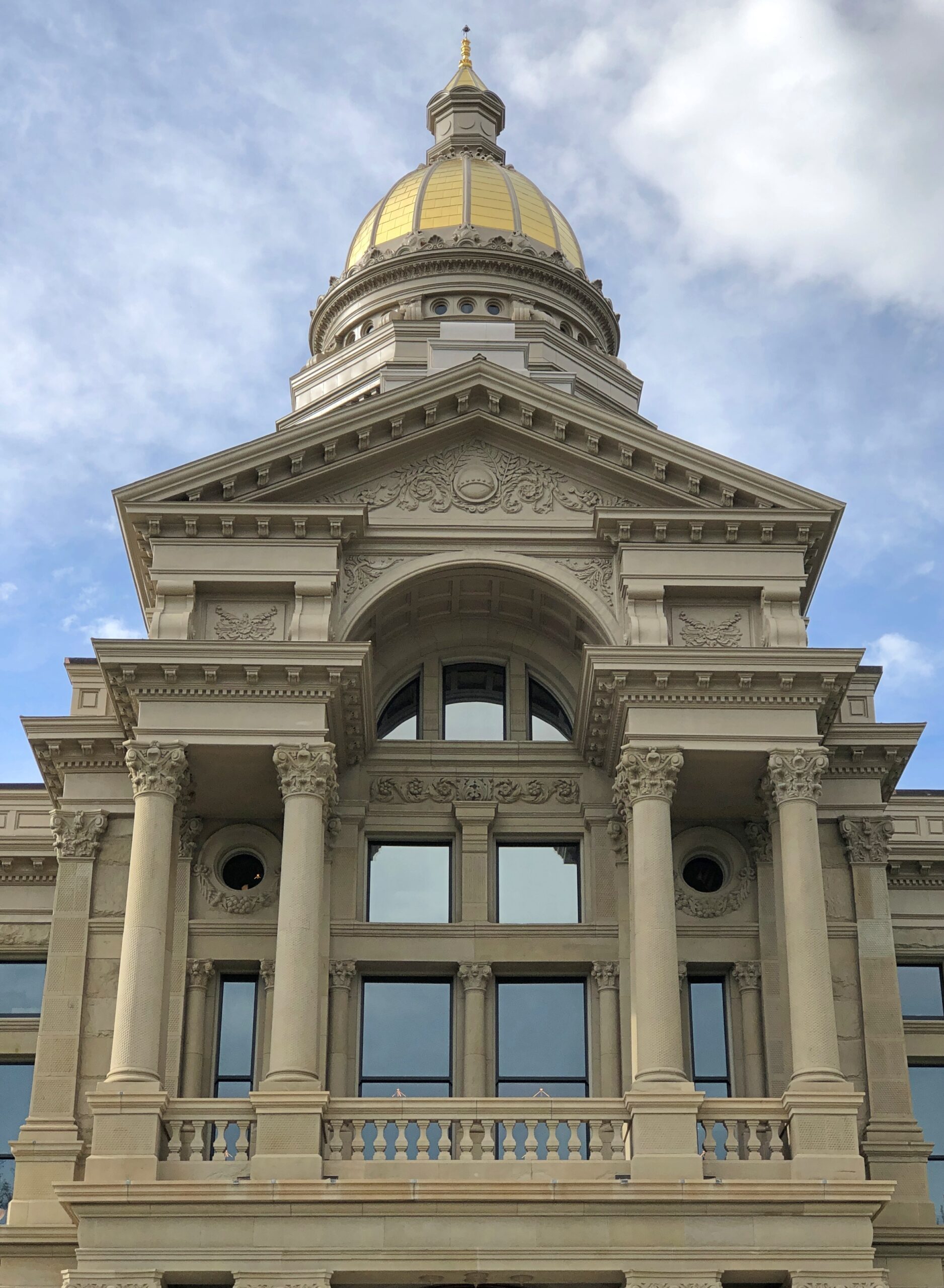
Golf leaf on a copper dome. Gold probably because it’s gold, not because Wyoming has ever produced that much. As of 2025, the state isn’t even among the top 10 all-time U.S. state producers.

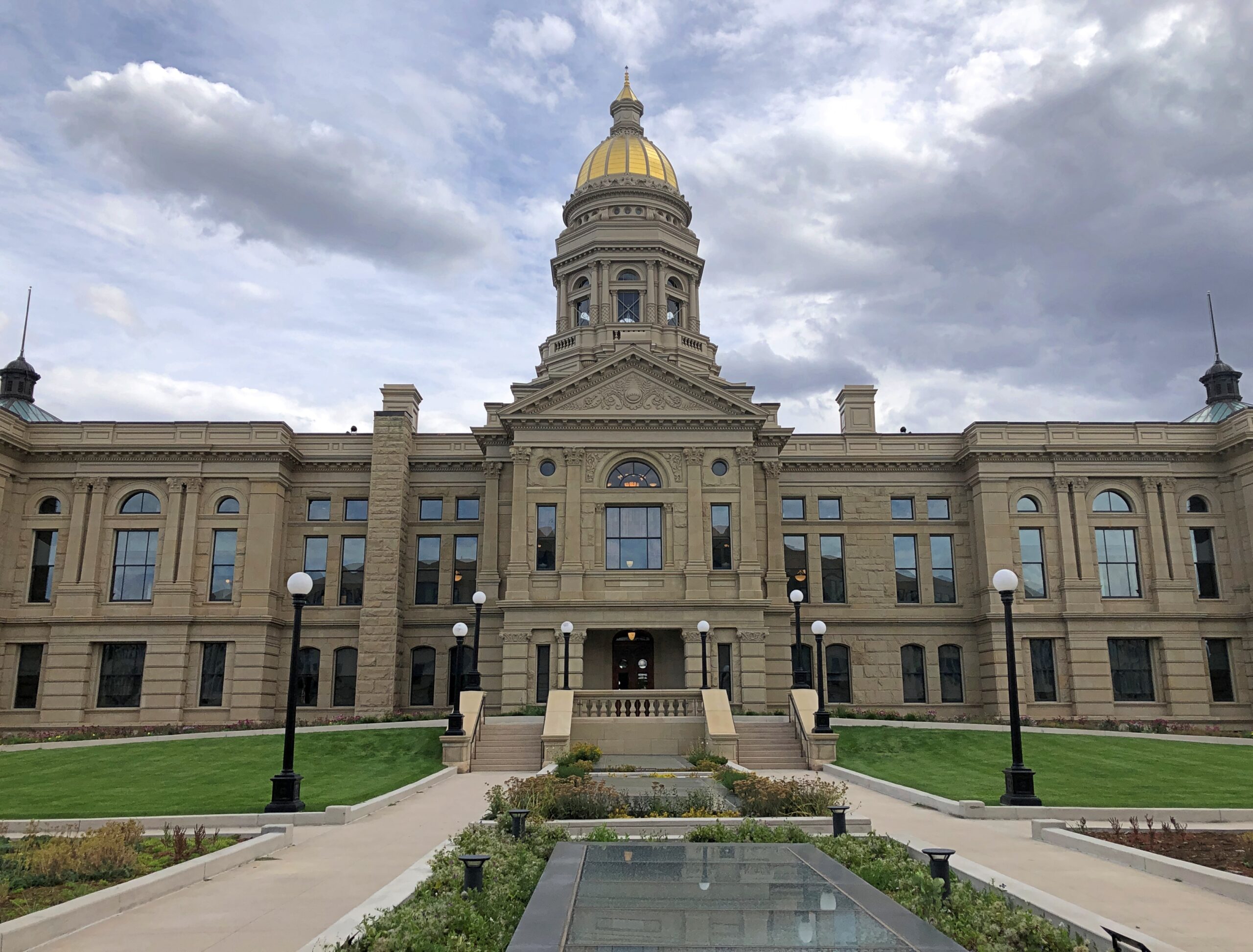
I think this was the front.

WY state capitol
WY state capitol

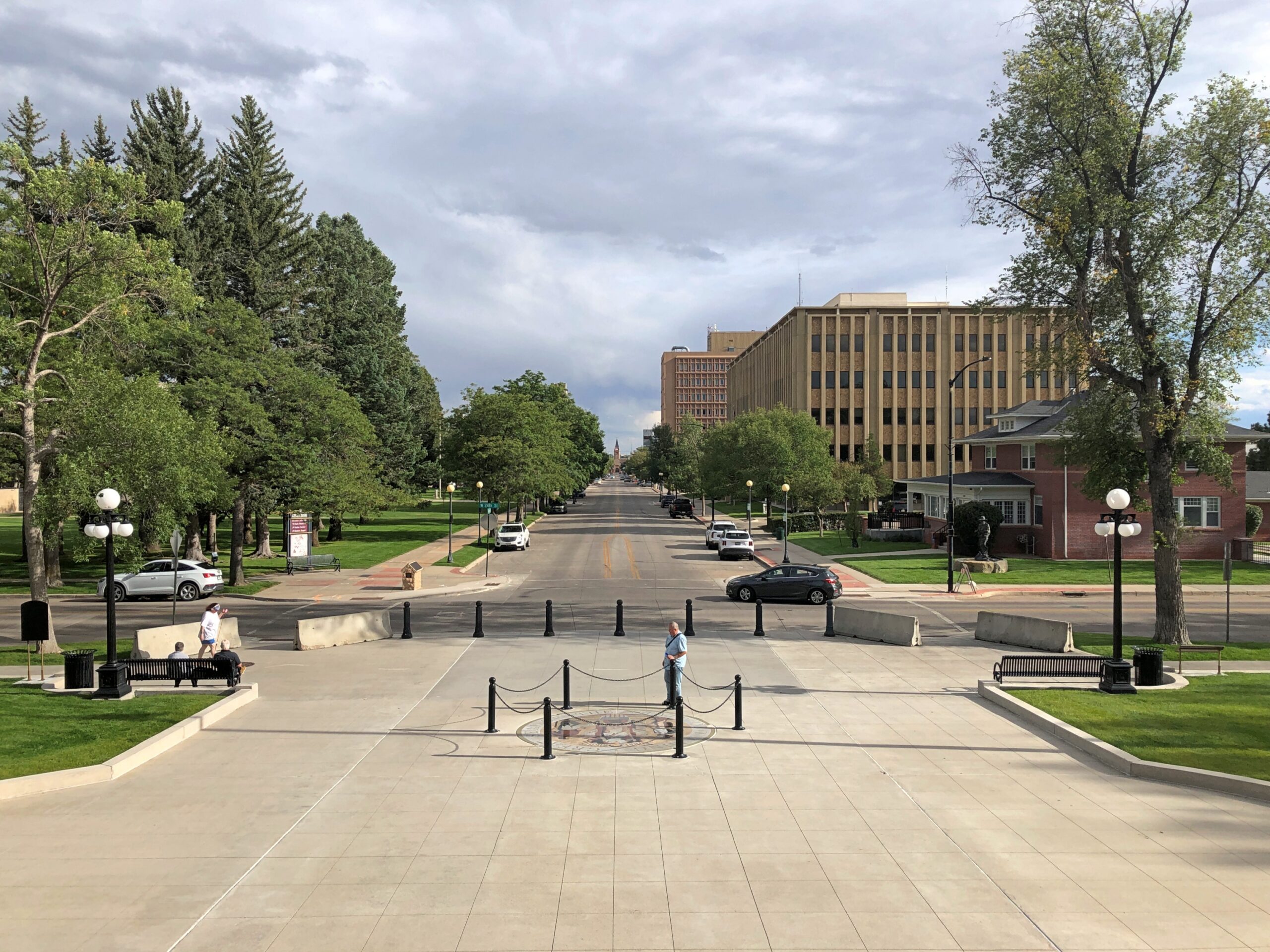
It faces a long avenue. It was a Monday. Cheyenne isn’t, just yet, cursed with heavy traffic.

Cheyenne Wyoming

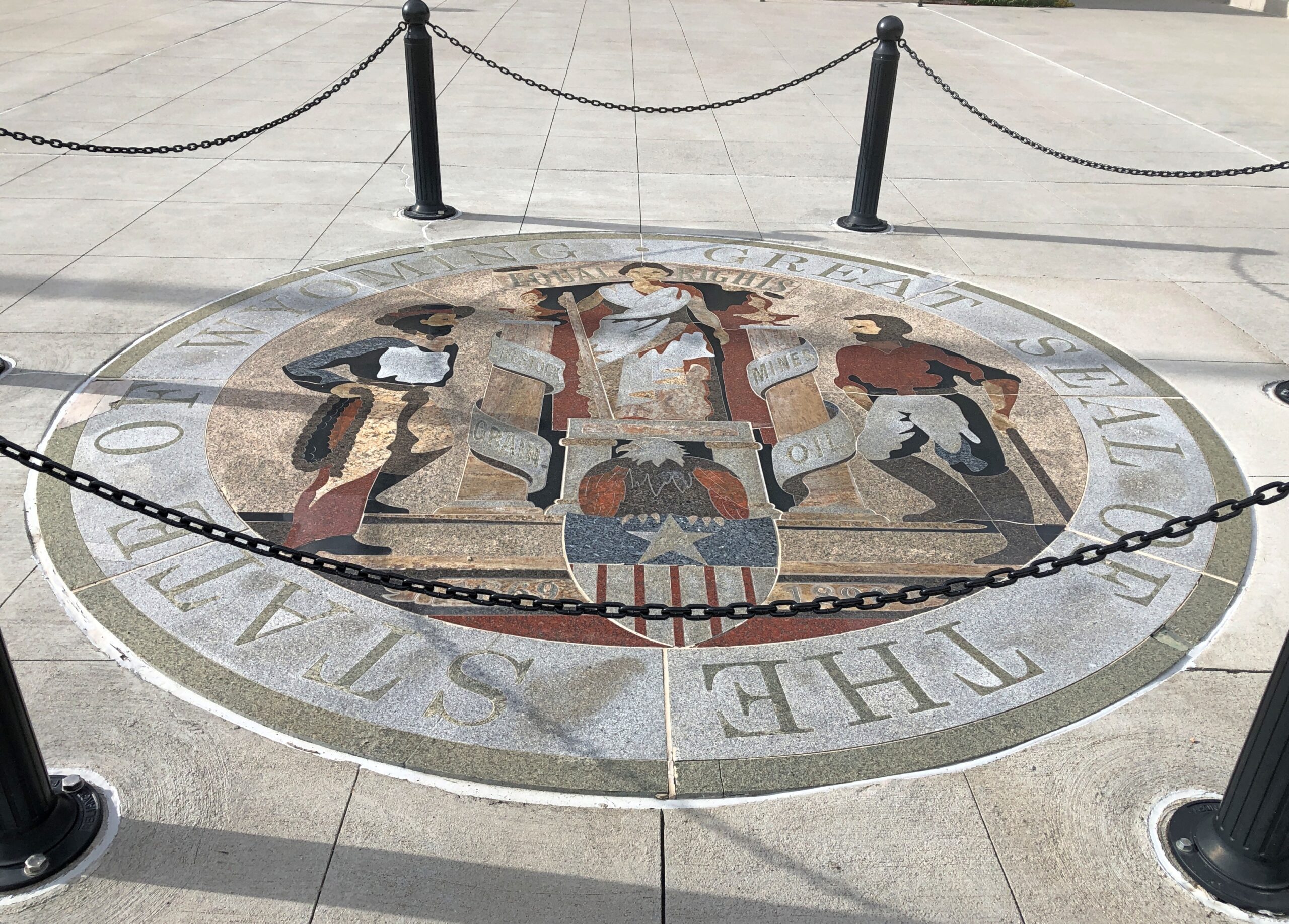
Also, the Wyoming state seal was to be found on that side of the building, in the sidewalk. Like in Virginia, except that you can walk on that one, like the slain tyrant it depicts. No treading on Wyoming.

WY state capitol

Adopted in 1893, not long after statehood, and revised in 1921, the seal lists four sources of wealth and livelihoods, unusually (I think) for a state seal. They go with the cowboy and miner figures: livestock, grain, mines and oil. In our time, farming and mineral extraction, at least in terms of employment, are declining industries in Wyoming. Maybe the seal will be revised someday to include data centers, as they sprout in the Equality State.

On the other hand, Wyoming is still a major energy producer among the several states, especially when it comes to coal: 41.1 percent of the total nationwide (EIA stats), though national coal output is a much smaller pie – a dirty pie, to be sure – than it used to be. Also worth mentioning: a quarter of net electricity generation in the state is by renewables, roughly the same percentage as nationally. There is no nuclear power generation in Wyoming. When those data centers eventually get small modular reactors, that would change.

Another distinction of the Wyoming capitol is that work started on it before statehood, with ground broken in 1886. David Gibbs – later mayor of Oklahoma City, of all things – and the prolific William DuBois (a Chicago trained architect) did the design, one of restrained elegance.

It faces a long avenue.

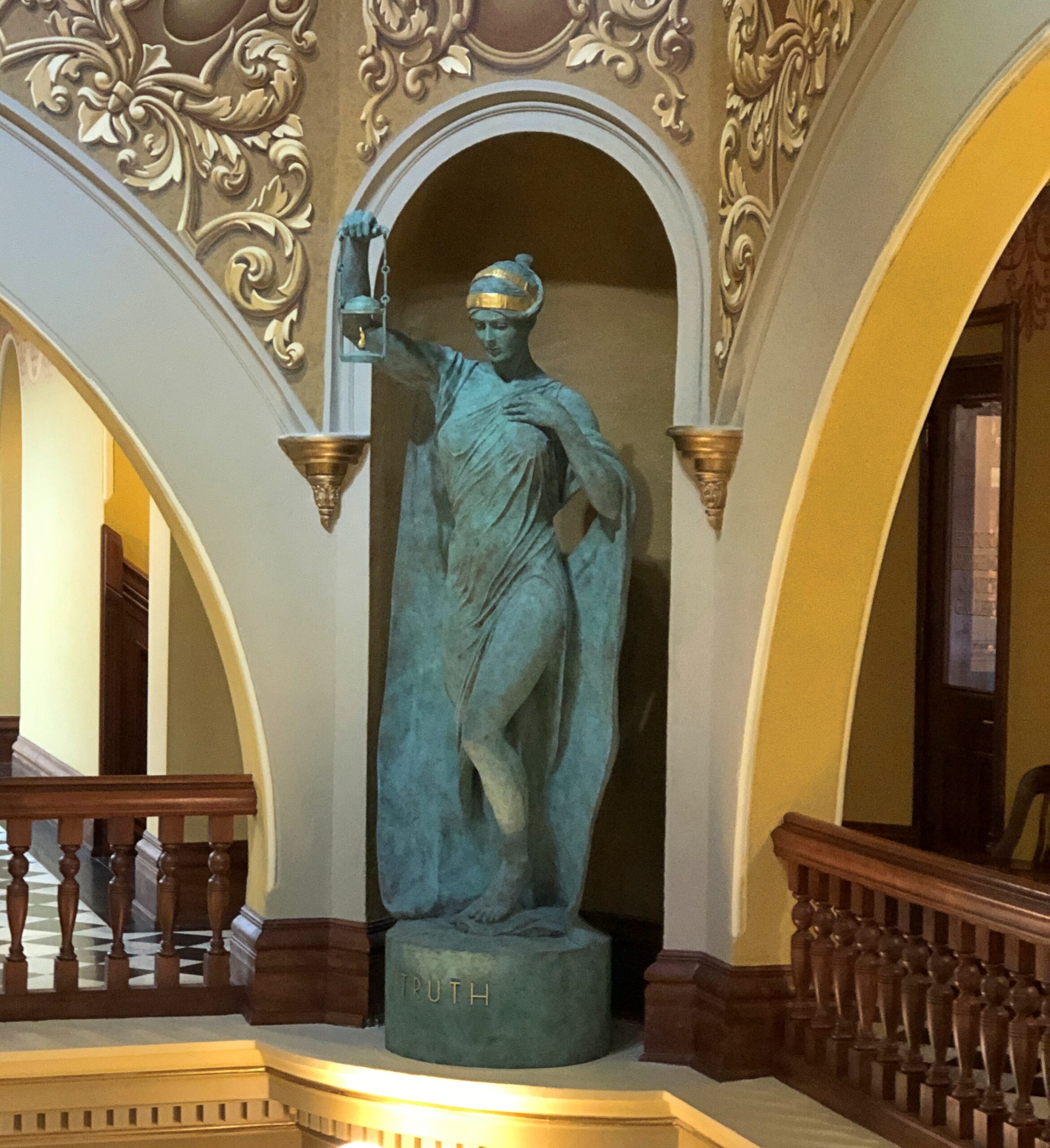
This is one of the four statues at the capitol known as the Four Sisters: Truth. The others are Justice, Courage and Hope.

It faces a long avenue.

Though they look vintage, their niches remained empty for 131 years “for reasons that remain unclear,” according to a sign in the capitol. In more recent times, the state tapped the mononymous sculptor Delissalde to fill the niches, and the works were unveiled only in 2019.

They’re way up there.

WY state capitol

One more thing to note: a display in the capitol lauds the state – actually the territory – for its enfranchisement of women in 1869, the first place anywhere to do so. Why Wyoming? You could chalk it up to the toughness of frontier women, but certainly women in all the other 19th-century territories were plenty tough. The broader movement to expand the franchise was already underway, though early in the game – and from the sound of things in this article at least, the territory’s move was something of a retroactively happy result “for a large, strange mix of reasons.”

The Iowa State Capitol

Think of the 50 state capitols as, collectively, a giant free museum of U.S. history, complete with grand buildings and a collection of artifacts with some consistent themes, such as images of elected officials, relics of war, and memorials to officially worthwhile individuals or causes. Some capitols explicitly have museum cases or whole museum floors, with a wide variety of stories and items from a state’s early years.

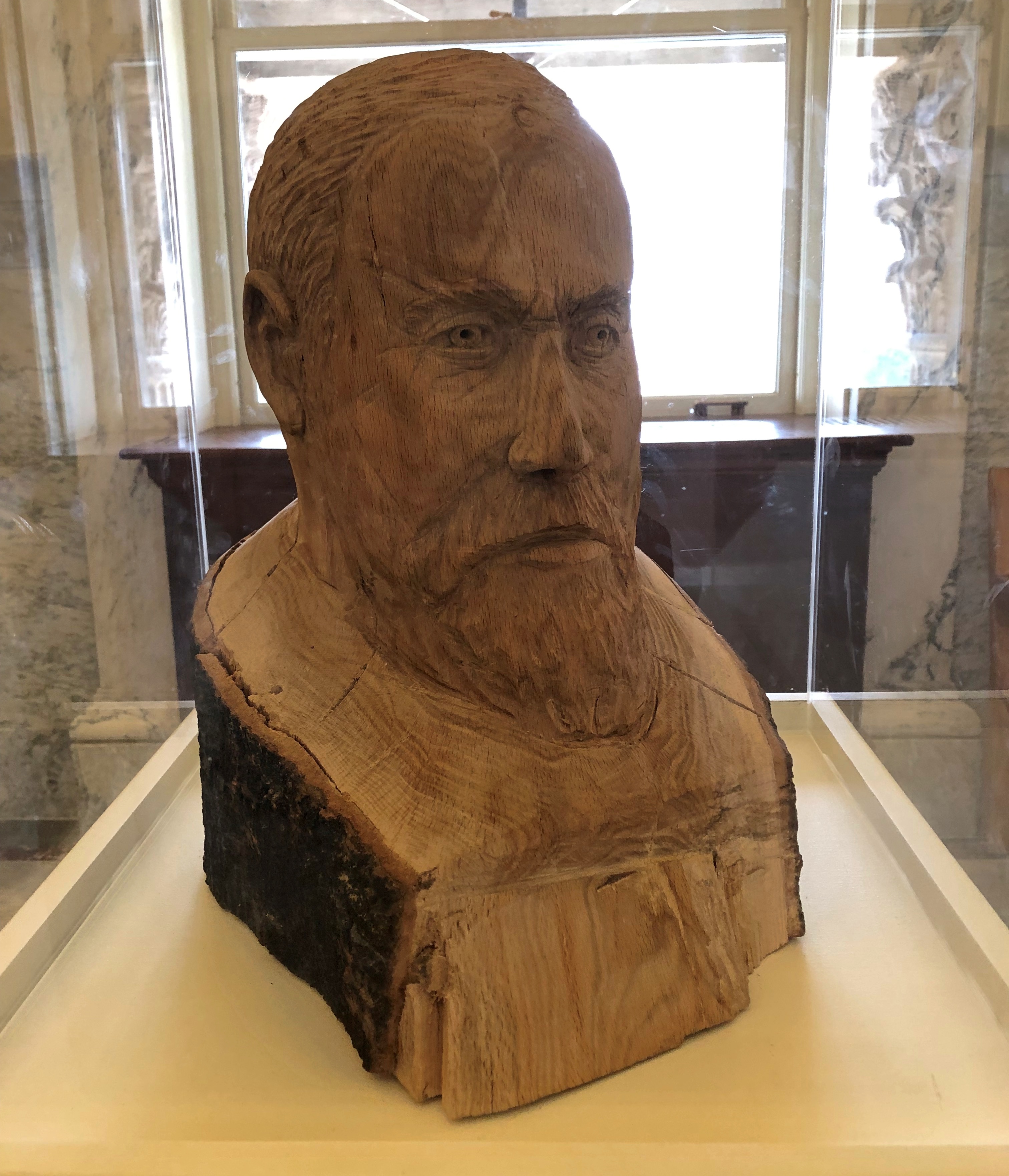
The collections can be a little staid. But sometimes, oddities are tucked away. Not too often, but there was that time I saw a two-headed calf at the Georgia State Capitol, or the miniature Western movie set at the Utah State Capitol. Or a bust of President Benjamin Harrison, carved from a tree stump. In Idaho. Then, at the Iowa State Capitol last month, this fellow.

Iowa State Capitol

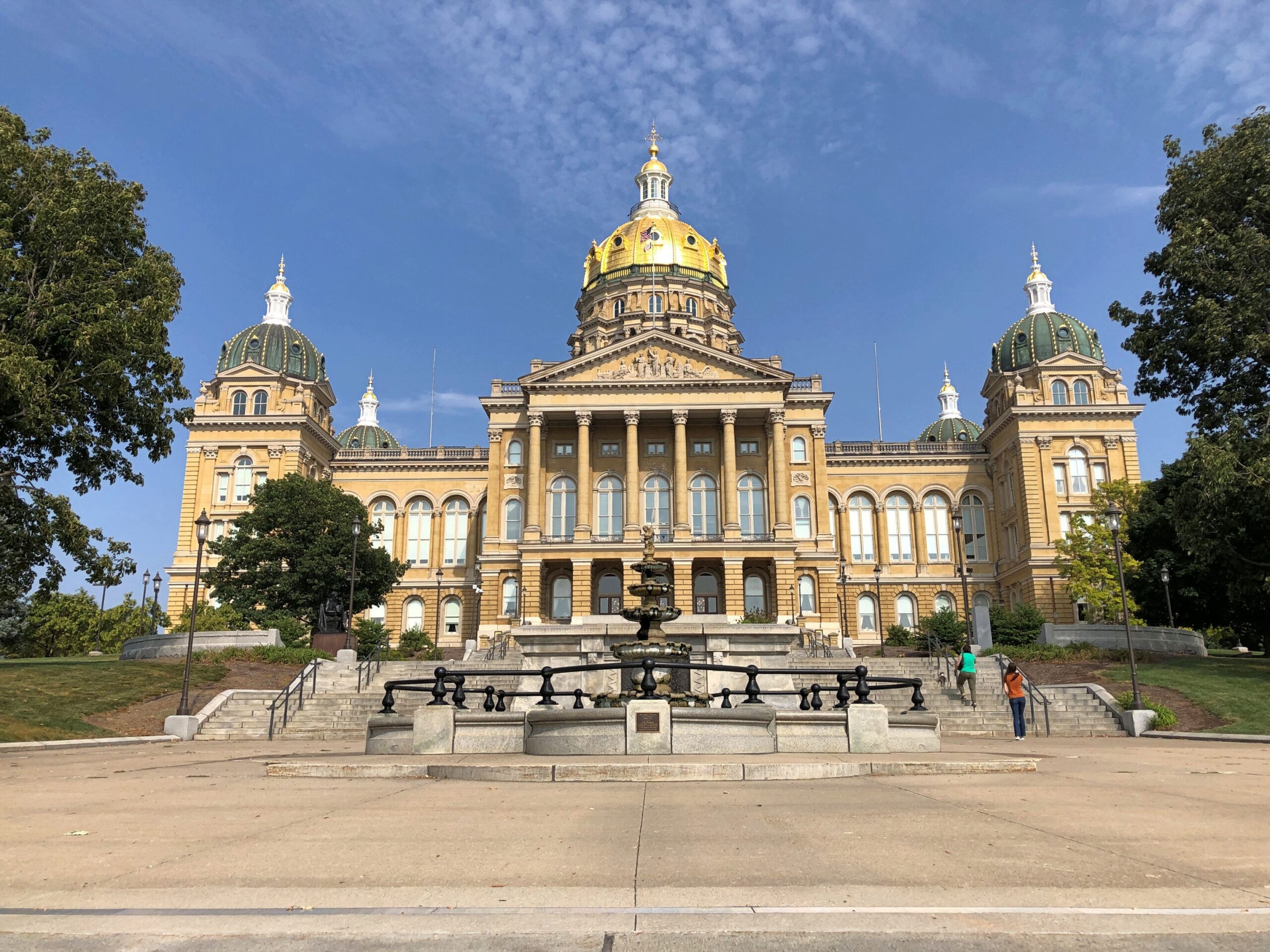
Last time I visited the Iowa State Capitol, I arrived about 10 minutes after it closed. So I — we, Ann was with me – looked at an assortment bronzes on the grounds, including the memorable (and mammary) Mother Iowa, and admired the gold-leaf dome. This time around, Des Moines was the destination for my first day of driving, September 4, and I was determined to see the interior.

It’s a grand edifice, as capitols usually are.

Iowa State Capitol
Iowa State Capitol

A series of architects oversaw the design, including Chicagoan John C. Cochrane, who also designed the Illinois State Capitol and, less well known, the handsome stick-style All Saints Episcopal in Chicago.

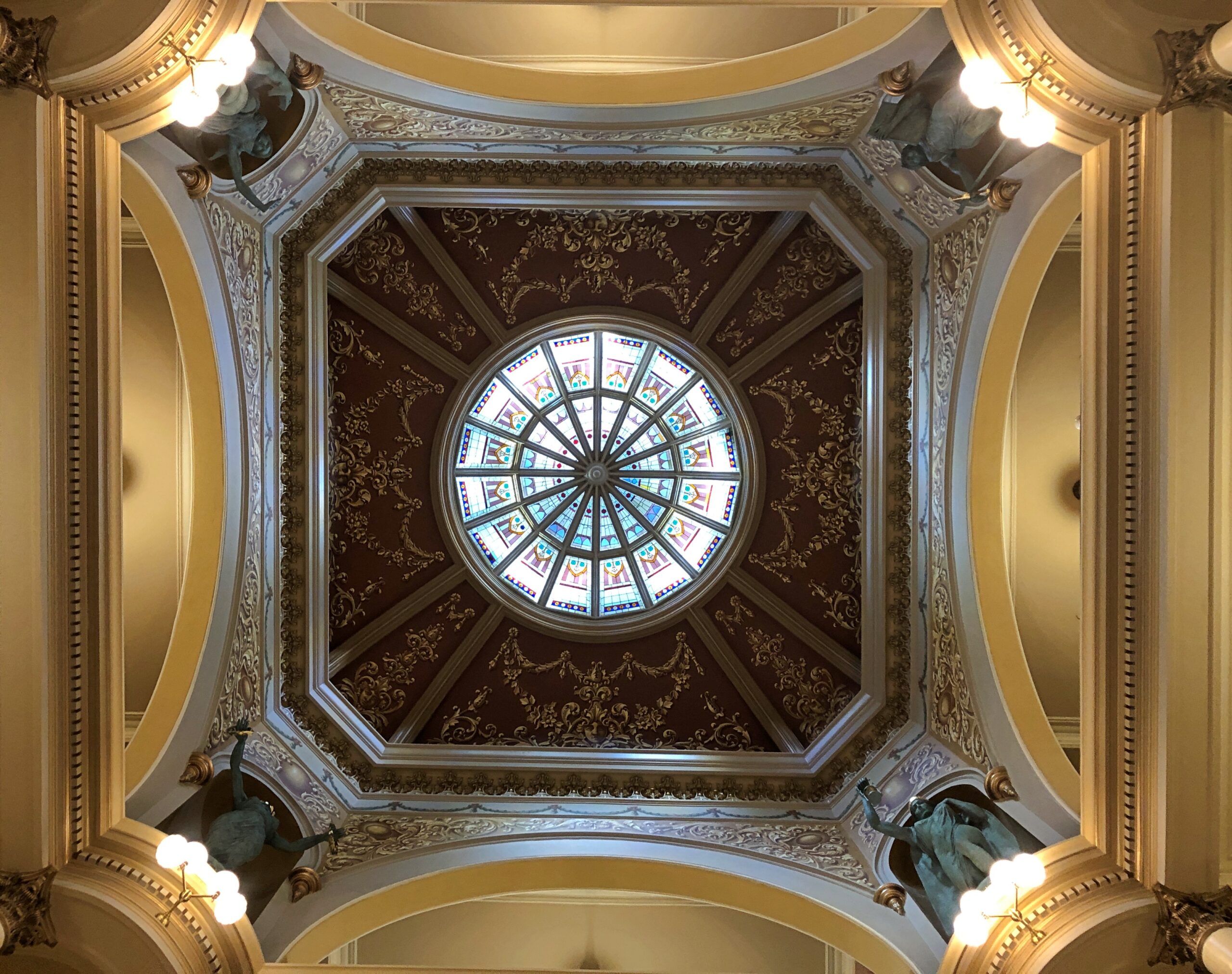
I’d forgotten that four smaller domes flank the main dome, forming in quincunx of domes. I understand that Iowa is the only such five-domed state capitol in the nation. I’m not sure how important that distinction is, but it is a distinction.

Iowa State Capitol

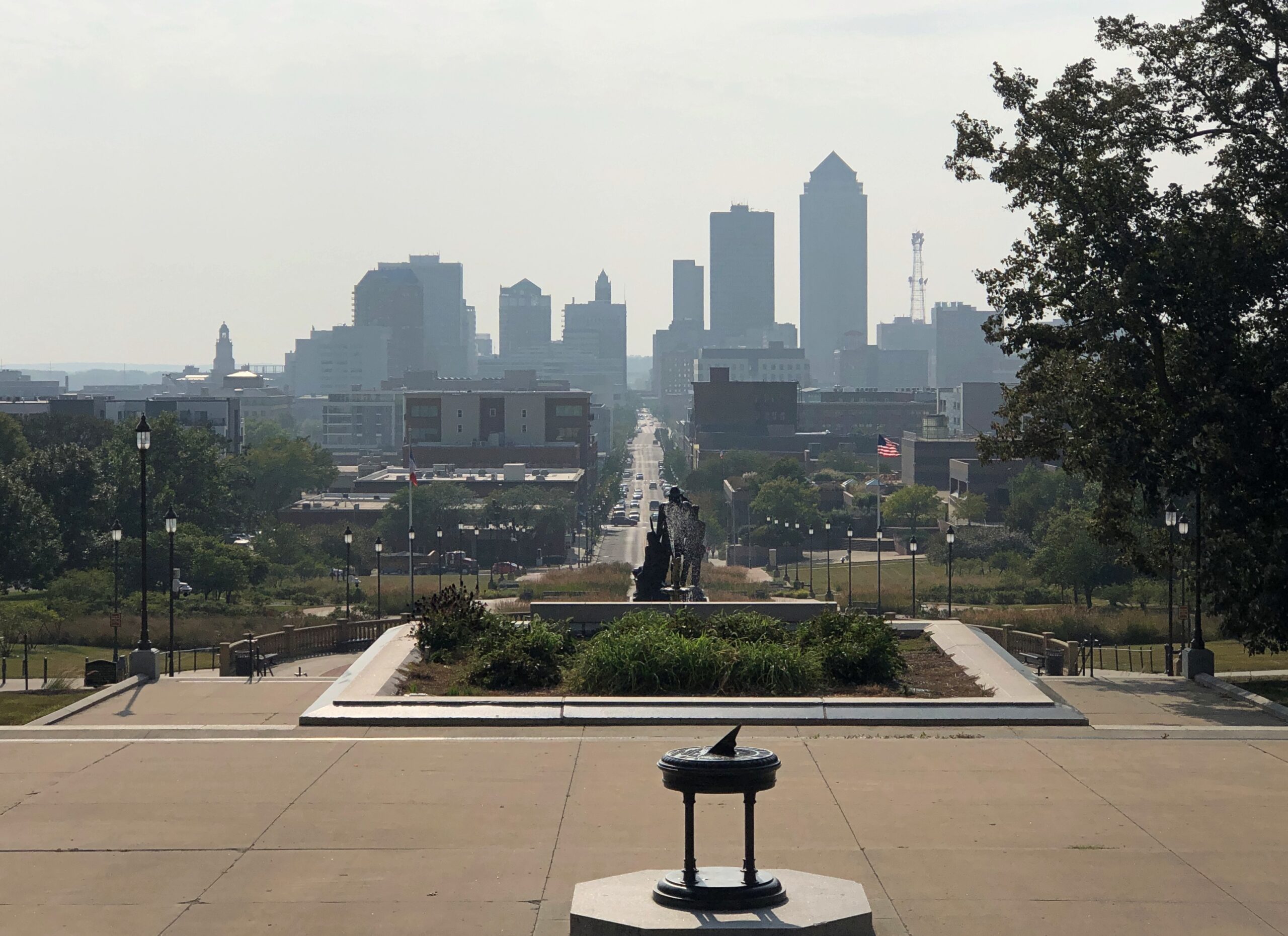
On a clear day, there’s a good view of downtown Des Moines from the capitol steps (and sundial). It was a hazy day, the result of Canadian wildfires.

Iowa State Capitol

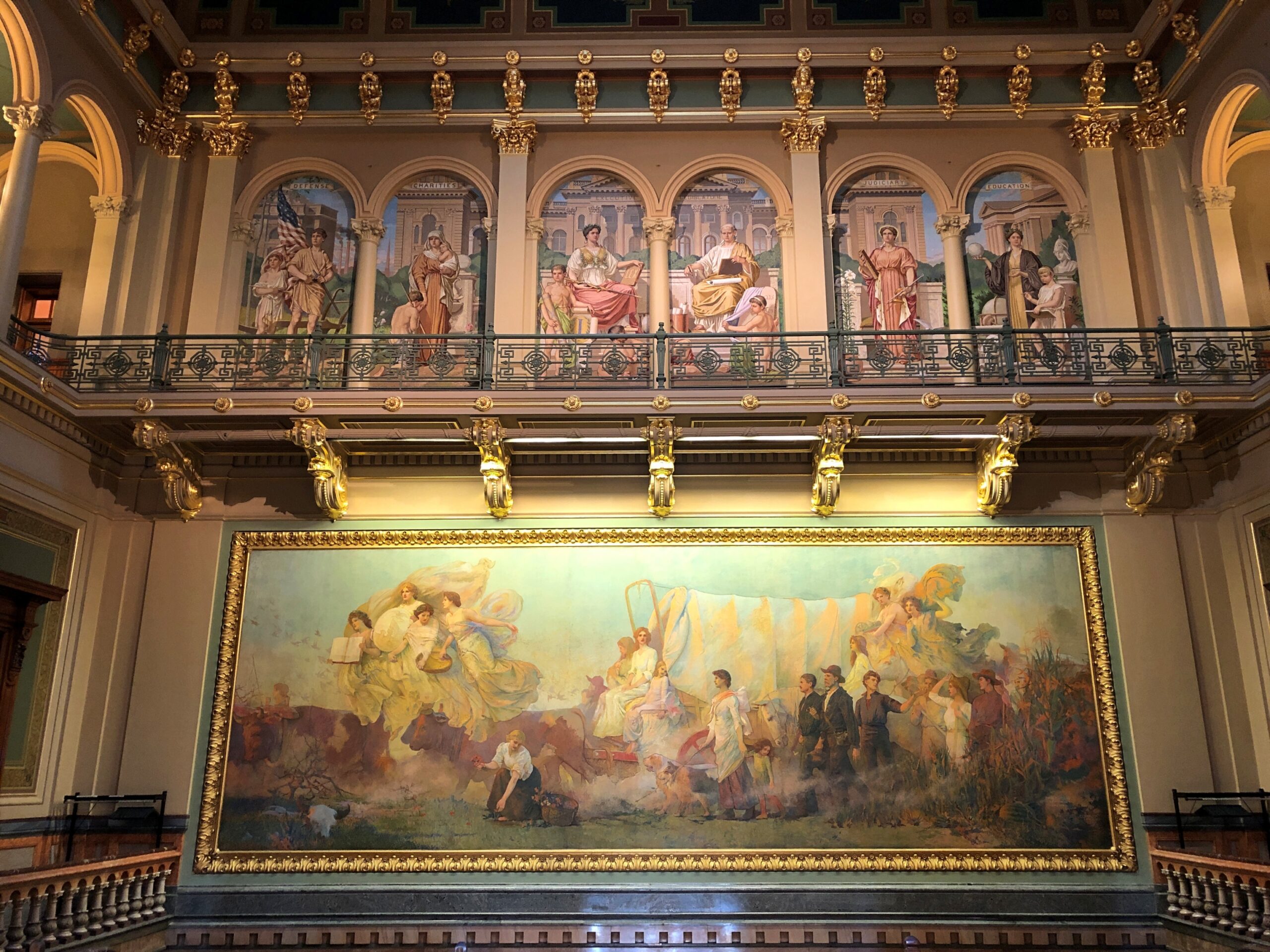
I arrived before closing, and experienced the grandness of the inside. Such as murals.

Iowa State Capitol

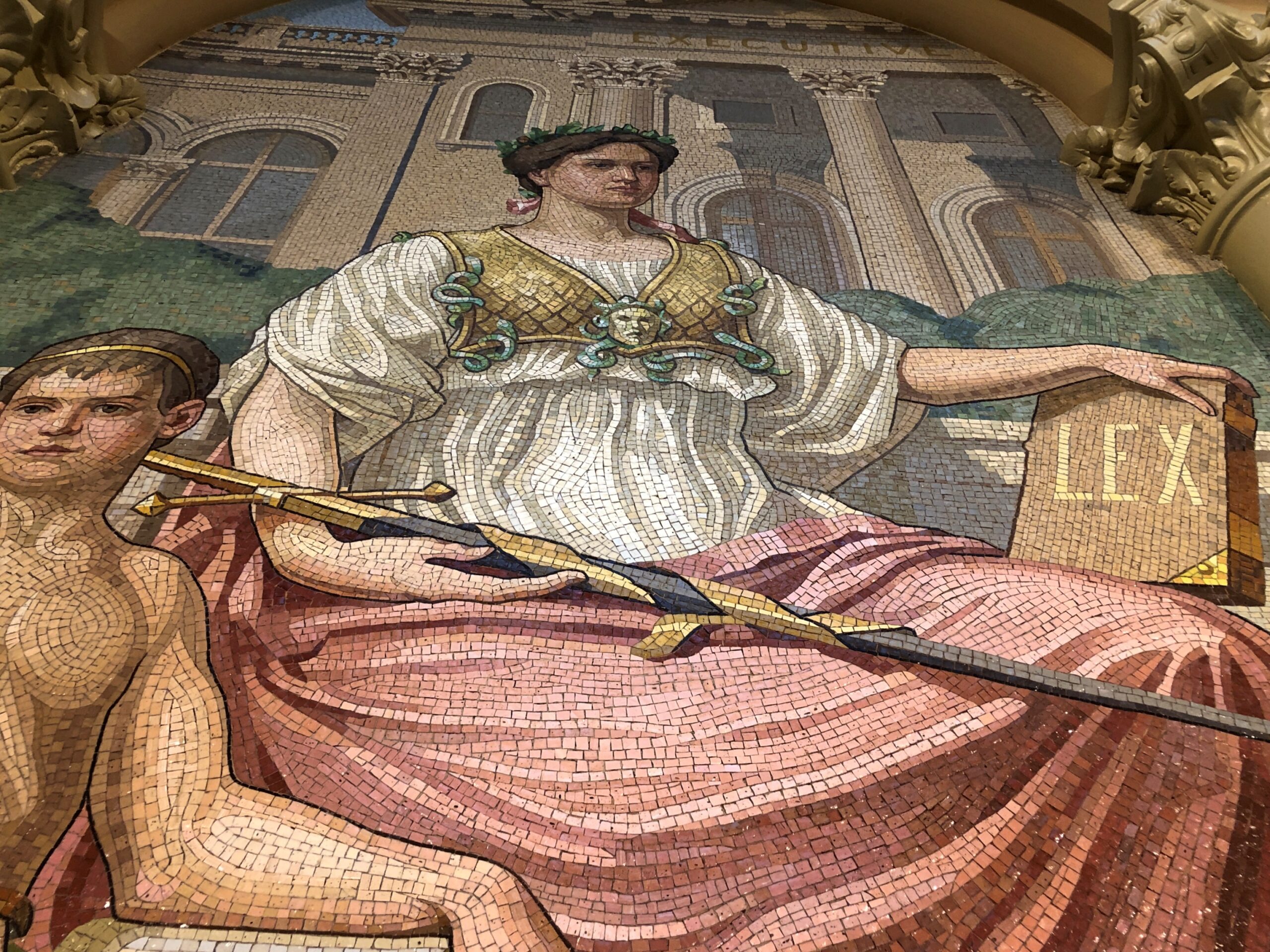
Allegories done in mosaic. Law, for instance. There was no backing up further to get a fuller image of Lex, since that would be over the edge of a balcony.

Iowa State Capitol

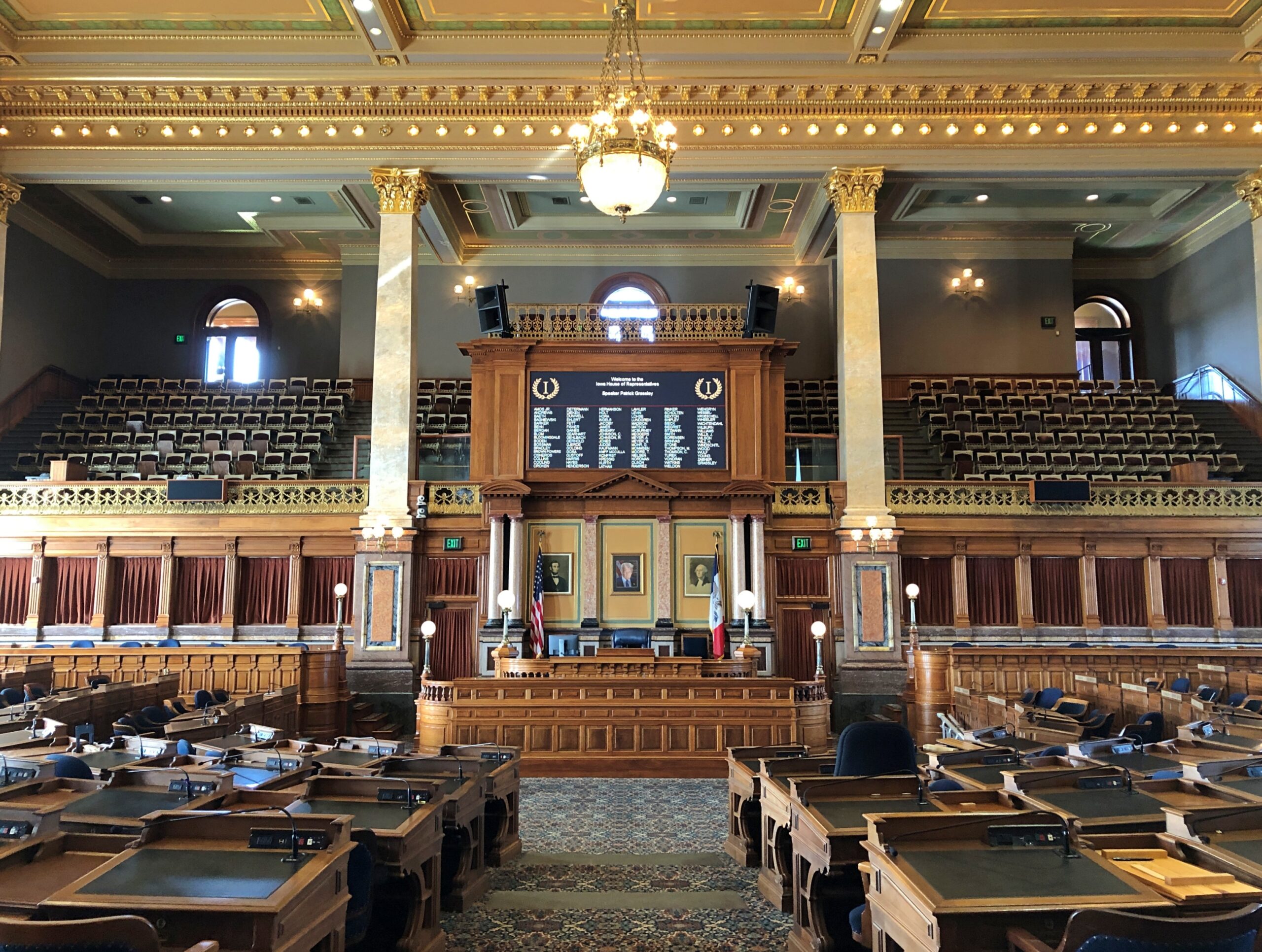
The House of Representatives.

Iowa State Capitol

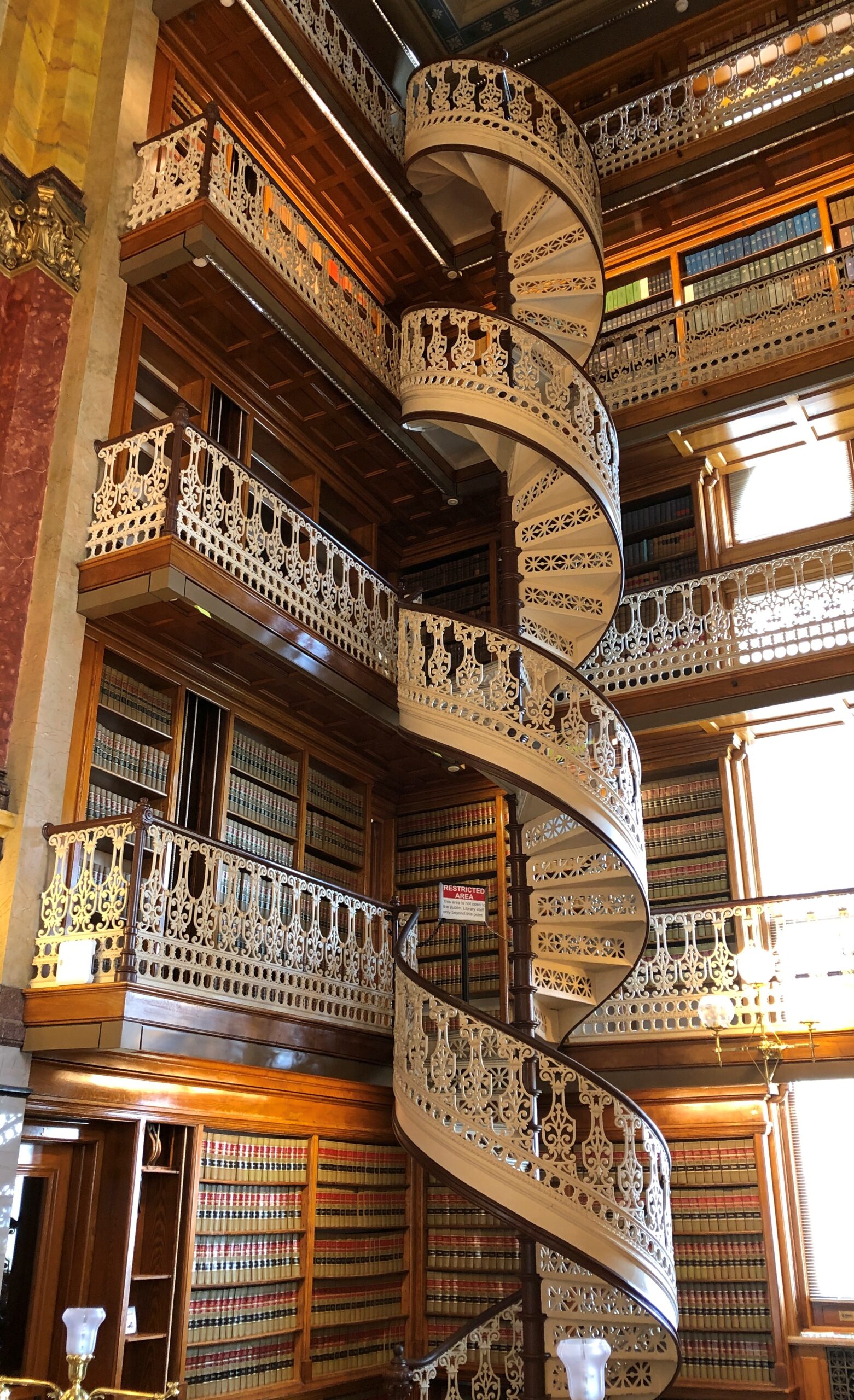
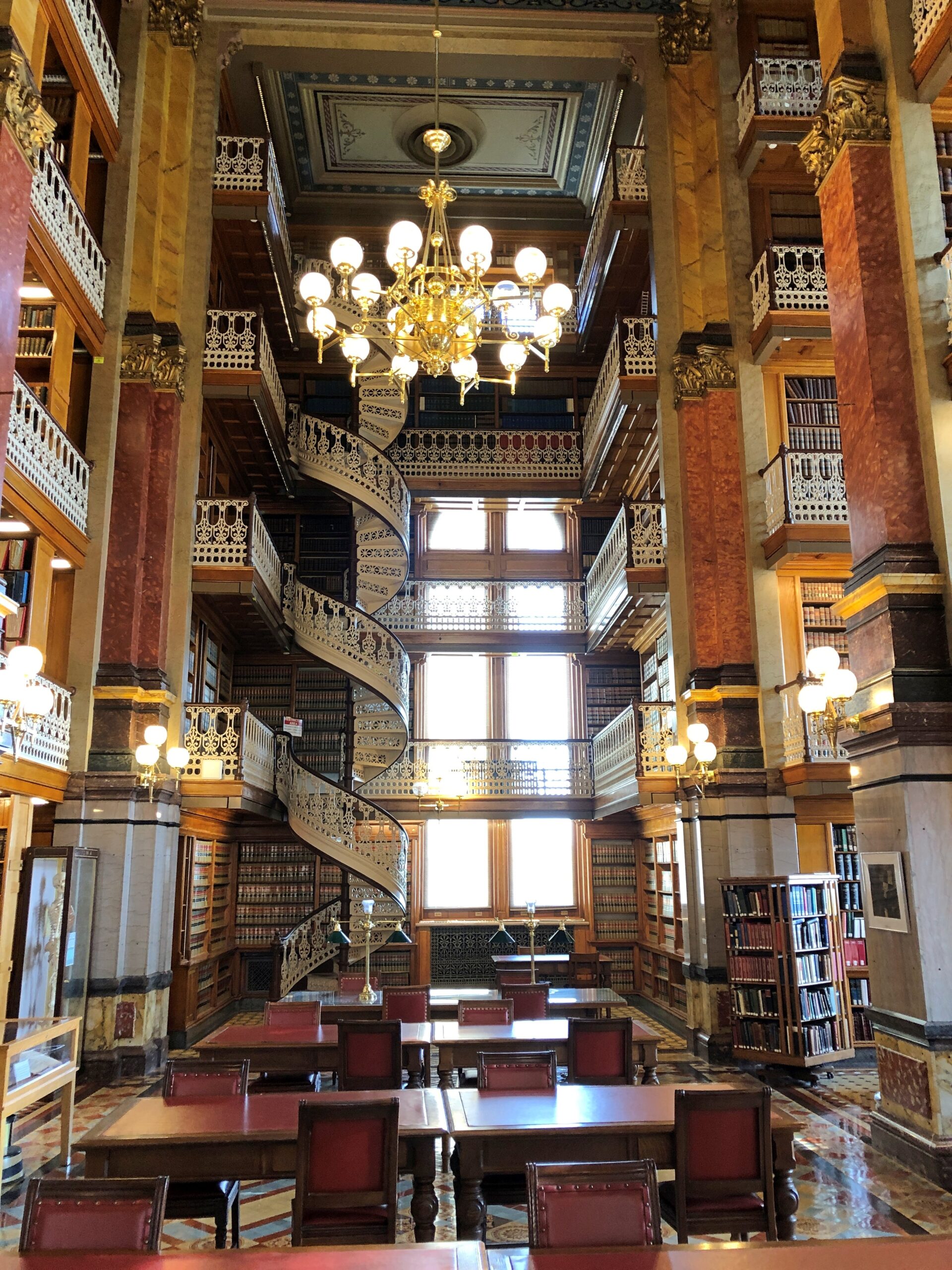
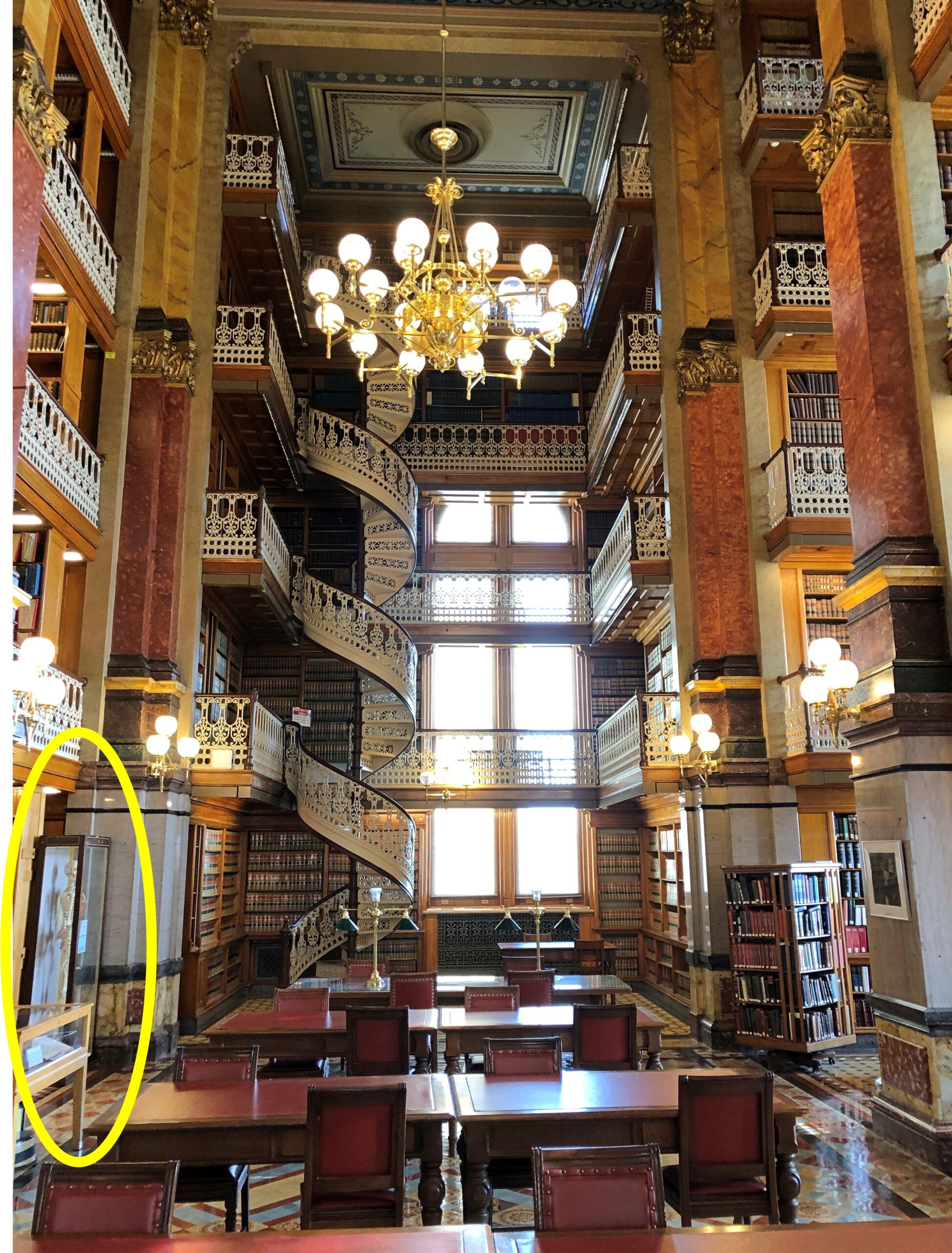
The Iowa State Law Library. The most gorgeous of the spaces, I thought. Just like canyon pictures, an image does no justice to the brilliance of the place itself.

Iowa State Capitol
Iowa State Capitol

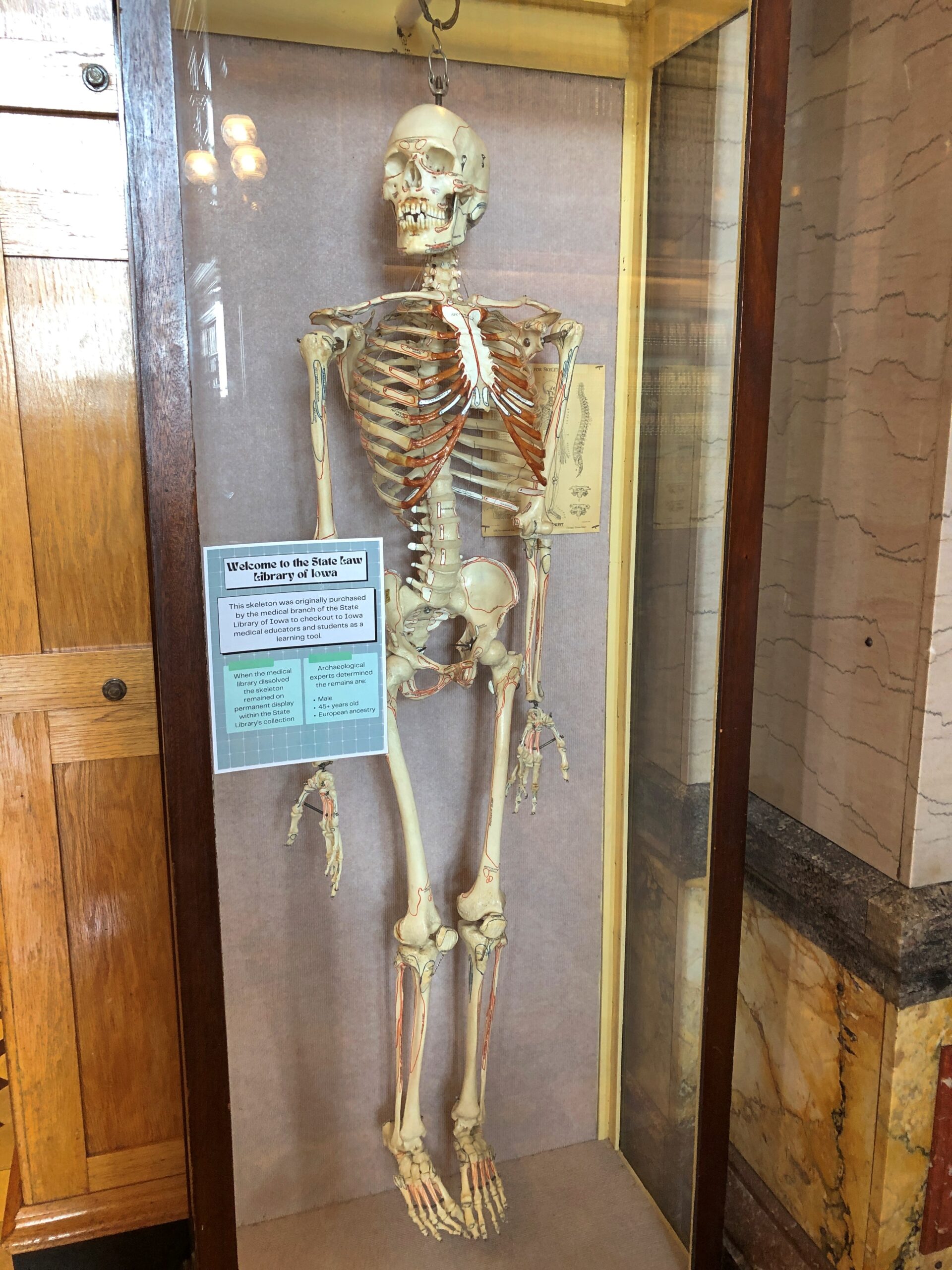
Note that the skeleton is behind glass in the Law Library.

Iowa State Capitol

What’s he doing in the Law Library? Showing how strict the library used to be about returning materials late? (Or the smartass answer: “Nothing, really.”)

The sign on the case says, This skeleton was originally purchased by the medical branch of the State Library of Iowa to checkout [sic] to Iowa medical educators and students as a learning tool. When the medical library dissolved, the skeleton remained on permanent display with the State Library’s collection. Archaeological experts determined the remains are male, 45+ years old, European ancestry.

Check out a skeleton from a library? Learning that such a thing ever happened was worth the effort, all by itself, to get to the capitol.

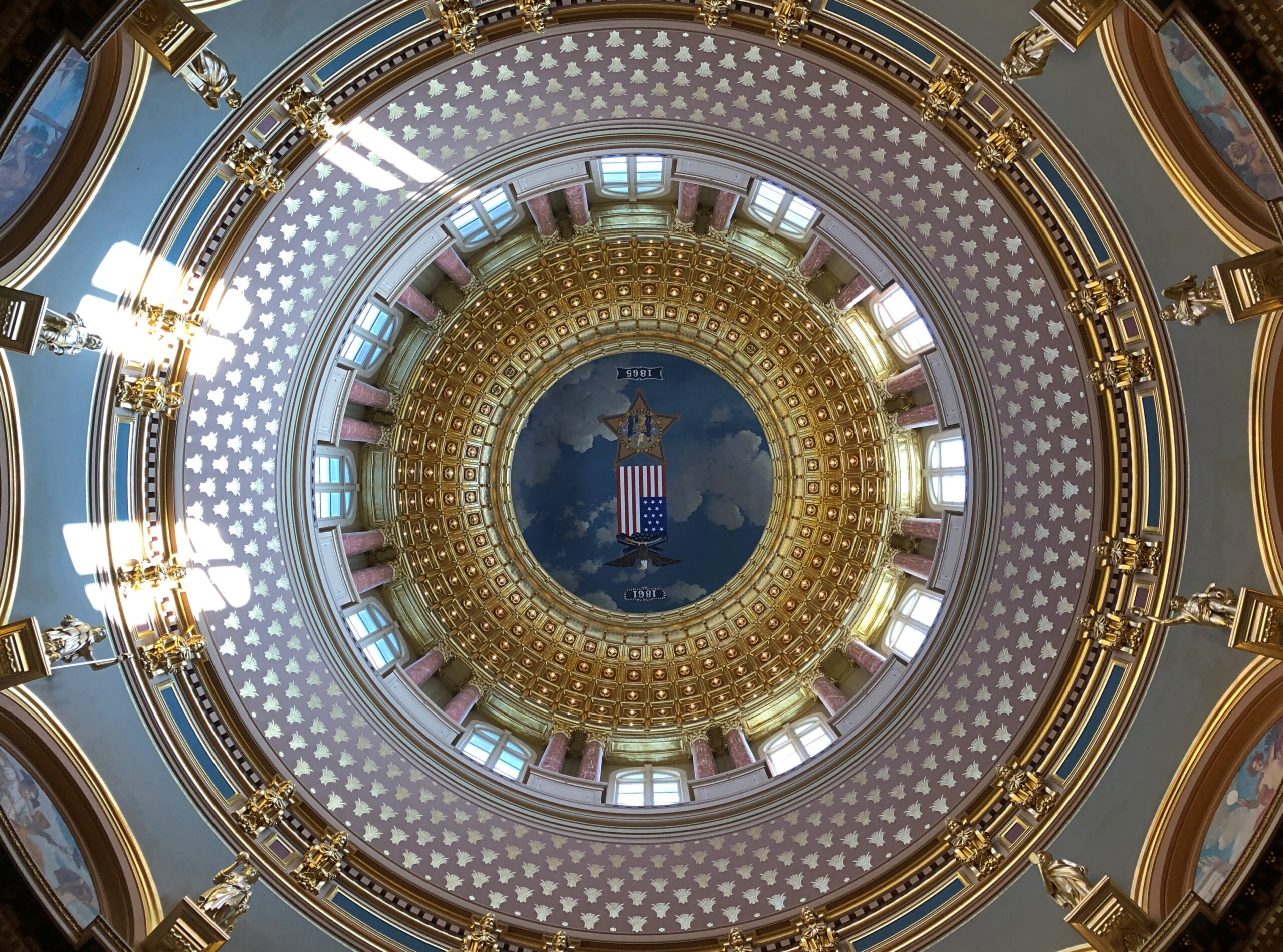
The dome is a little unusual, too, a little more representational that you usually see.

Iowa State Capitol

It features a memorial – in this case to the Grand Army of the Republic, with the name of the organization, a 13-star flag, and the dates 1861 and 1865. Considering that the development of the current capitol happened between 1871 and 1886, a GAR memorial of some kind isn’t a surprise, and I suppose the organization had the political heft at the time to get such a prominent spot.

Wiki tells me that more than 76,200 Iowa men fought for the Union out of a population of nearly 675,000 (in 1860), and about 13,000 died for it, two-thirds of whom by disease. Iowans supported the Union by about as lopsided a margin as imaginable. Seventy-six residents of Iowa are known to have served the Confederacy, and very likely most of those had recently moved to Iowa from the South.

The South Carolina State House

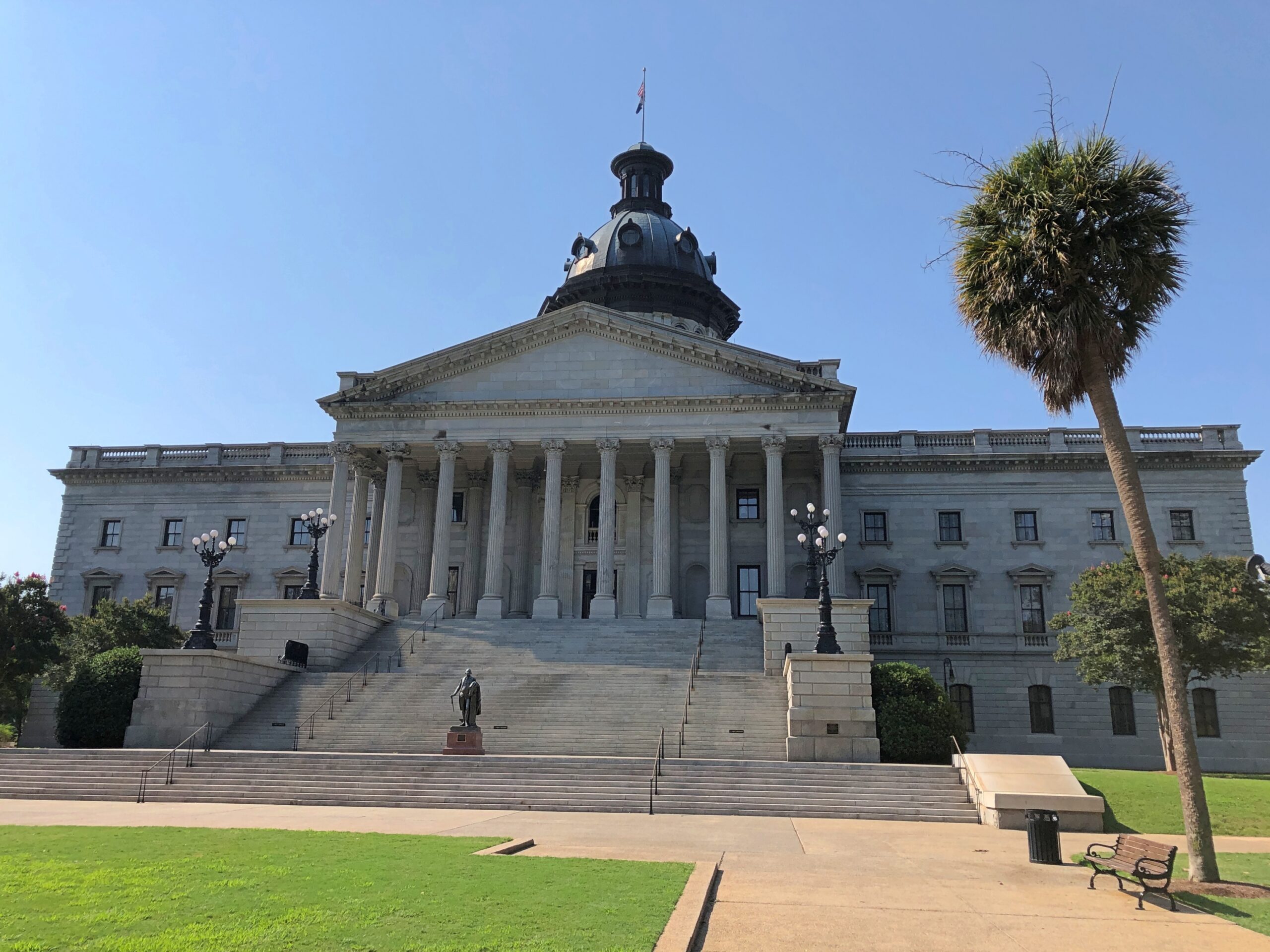
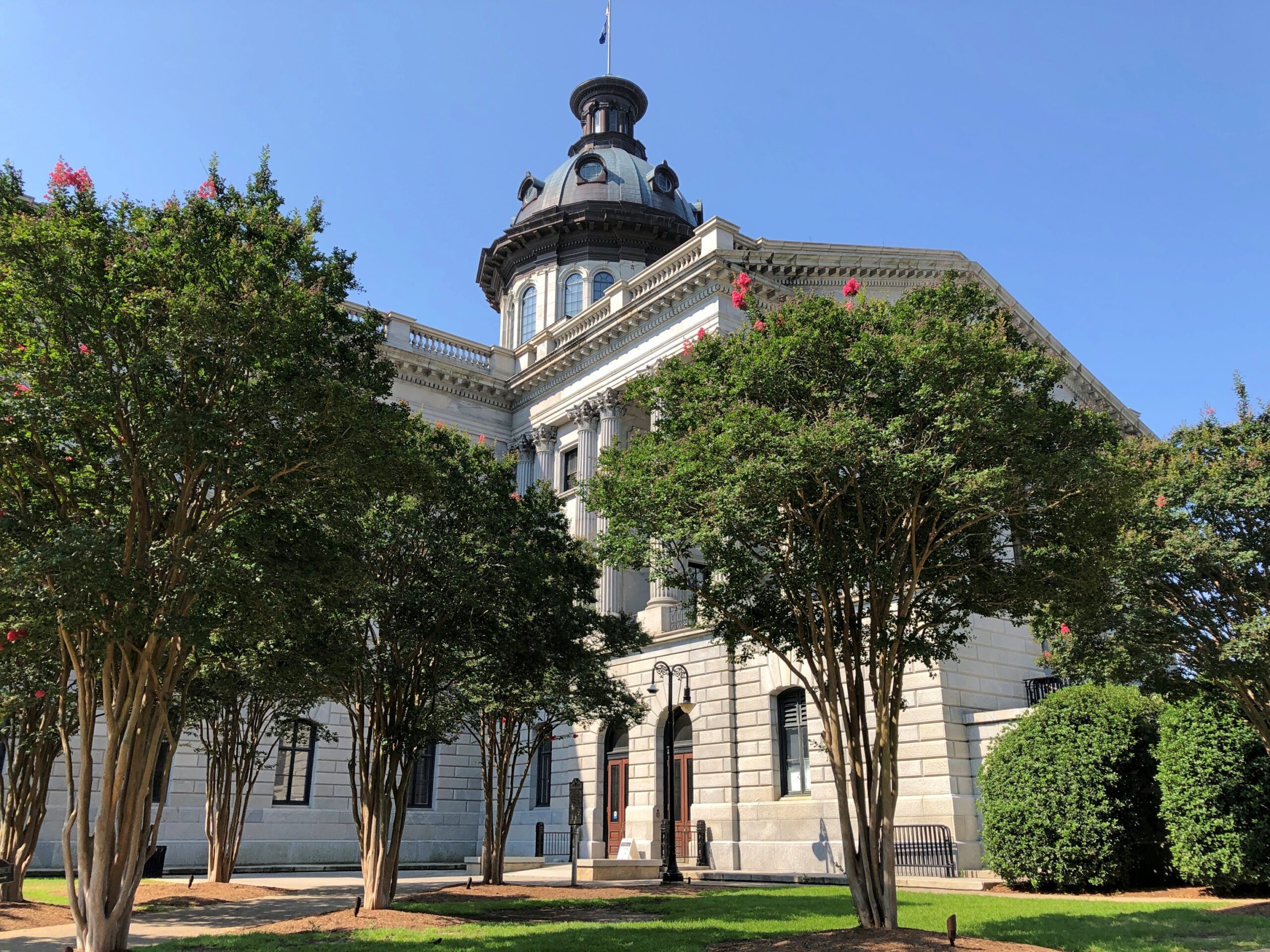
Columbia, SC, is centrally located in its state, the result of a post-Revolutionary (1786) decision by the new state legislature to move from Charleston to somewhere more central, namely the area around the confluence of the Saluda and Broad Rivers, which merge at Columbia to form the Congaree River. The South Carolina State House is now centrally located in that centrally located city, and on the way back west from Myrtle Beach, I decided it was high time I saw it.
SC State House
SC State House

Washington stands in front. Work on the building started in the 1850s from a design by John Rudolph Niernsee (d. 1885), but what with one thing and another – the burning of Columbia in 1865, for instance – finishing the capitol took more than 50 years, and indeed its final design work was overseen by Niernsee’s son, Frank, and other architects.
Other downtown structures tower nearby, but the capitol is set back fairly far, as capitols tend to be.

Downtown Columbia SC

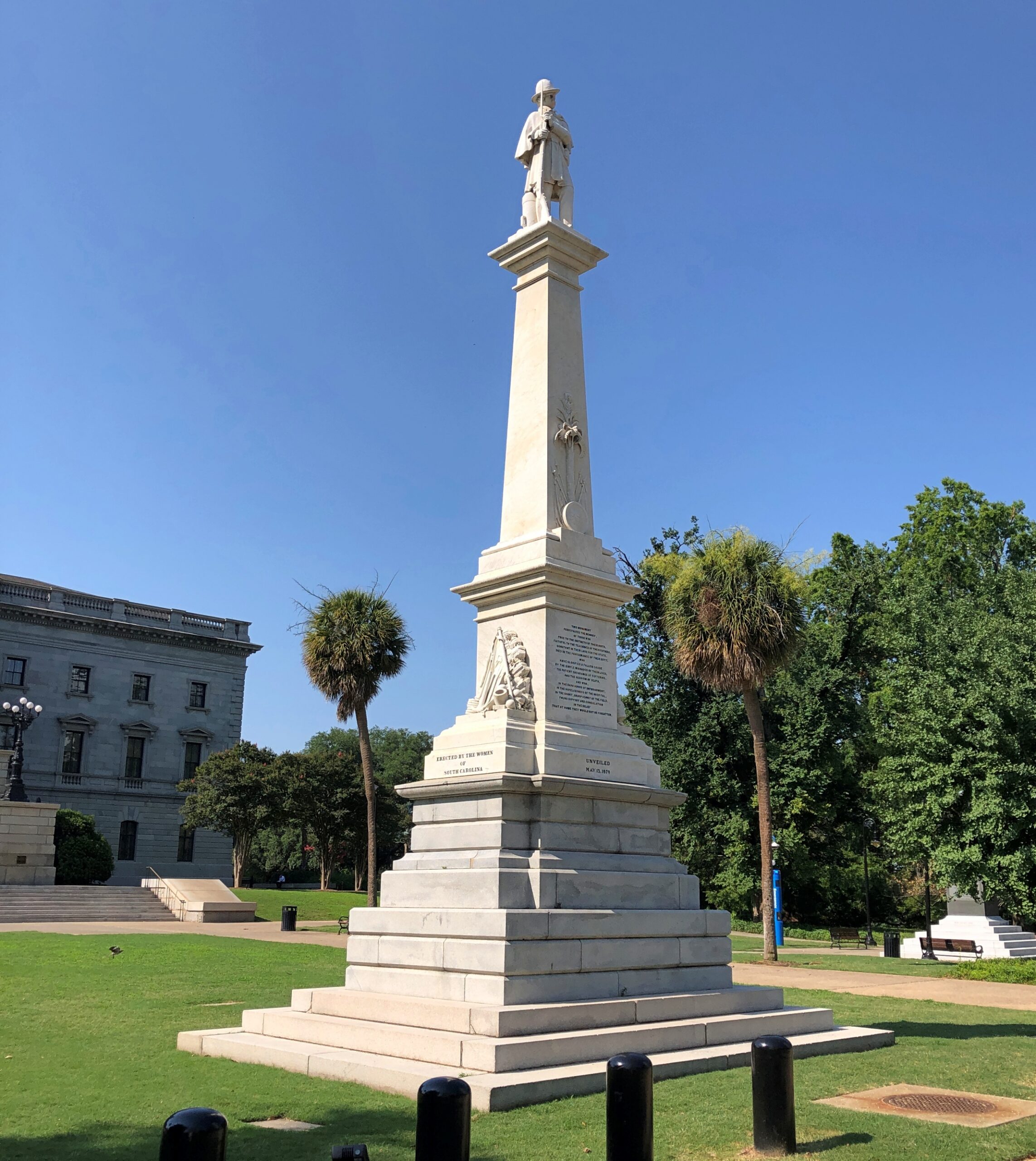
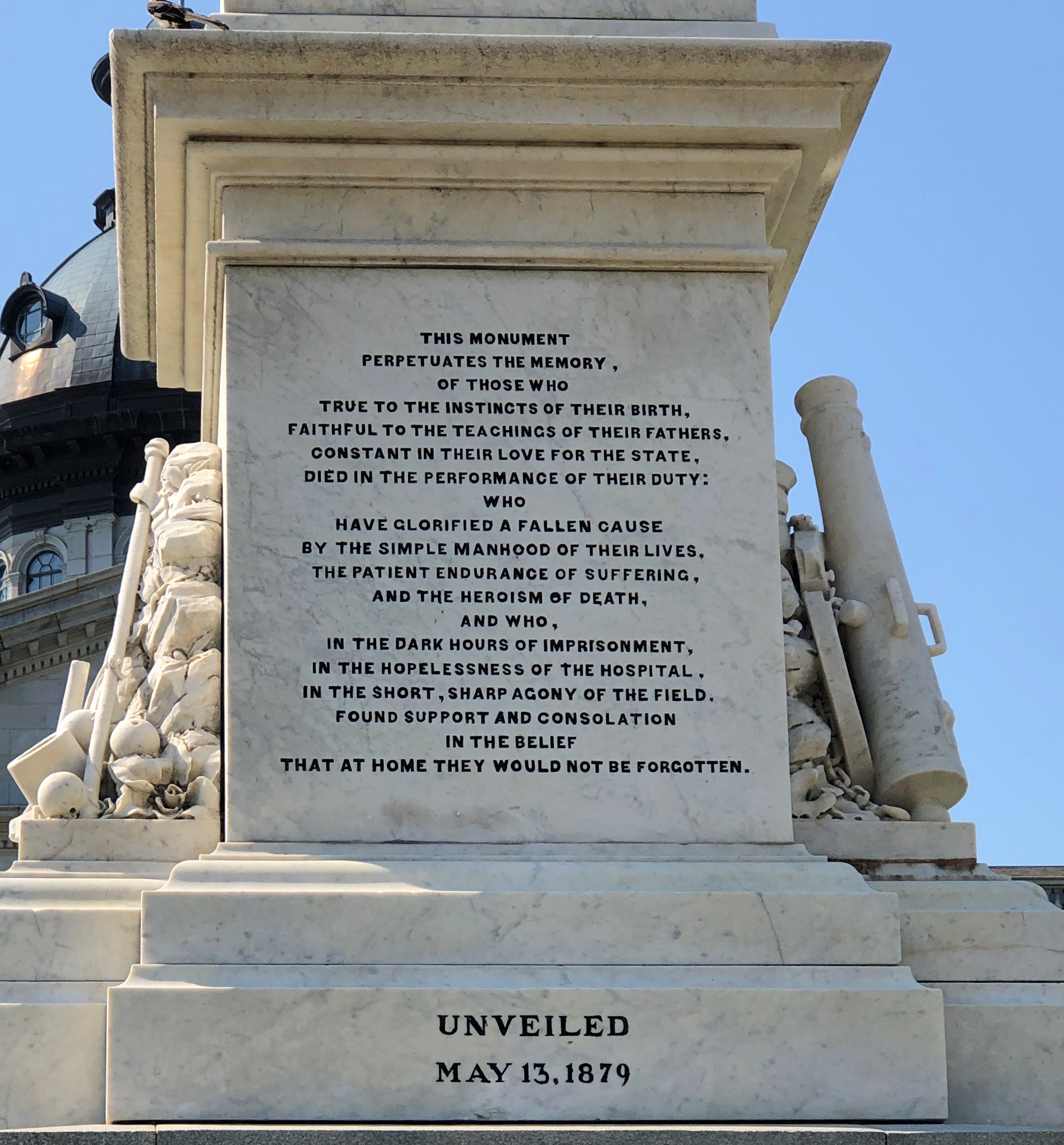
The memorial to the Confederate dead is prominently placed in front of the capitol.

SC State House
SC State House

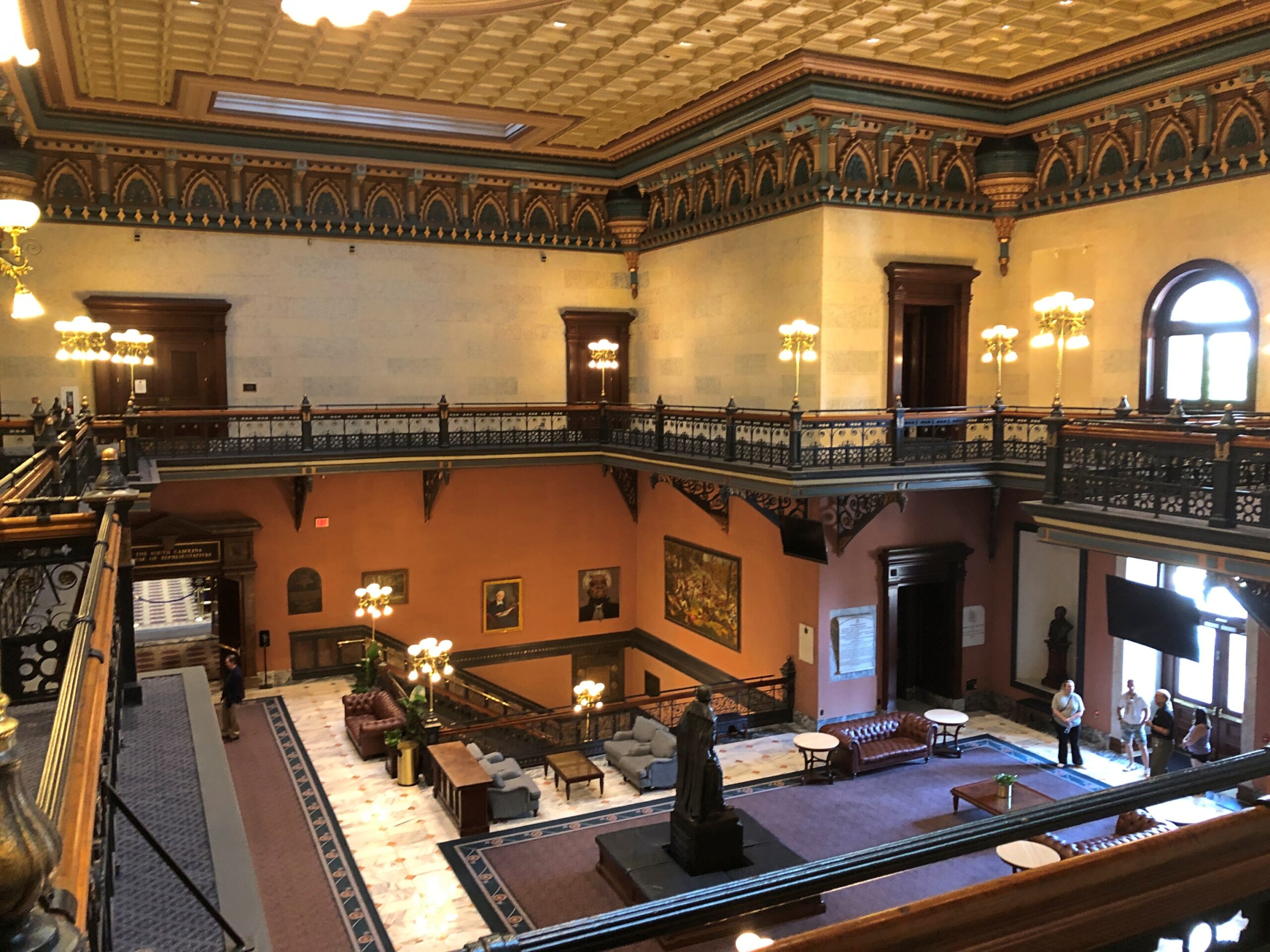
Plenty of other memorials stand on the grounds, such as a unique one honoring the Palmetto Regiment of Volunteers of South Carolina, memorializing SC participants in the war with Mexico, but I saw few, since the heat of the day encouraged me to head inside. There I found a resplendent interior indeed.

Including the capitol library.

SC State House

The interior of the dome.

SC State House

Other unique-to-South Carolina detail.

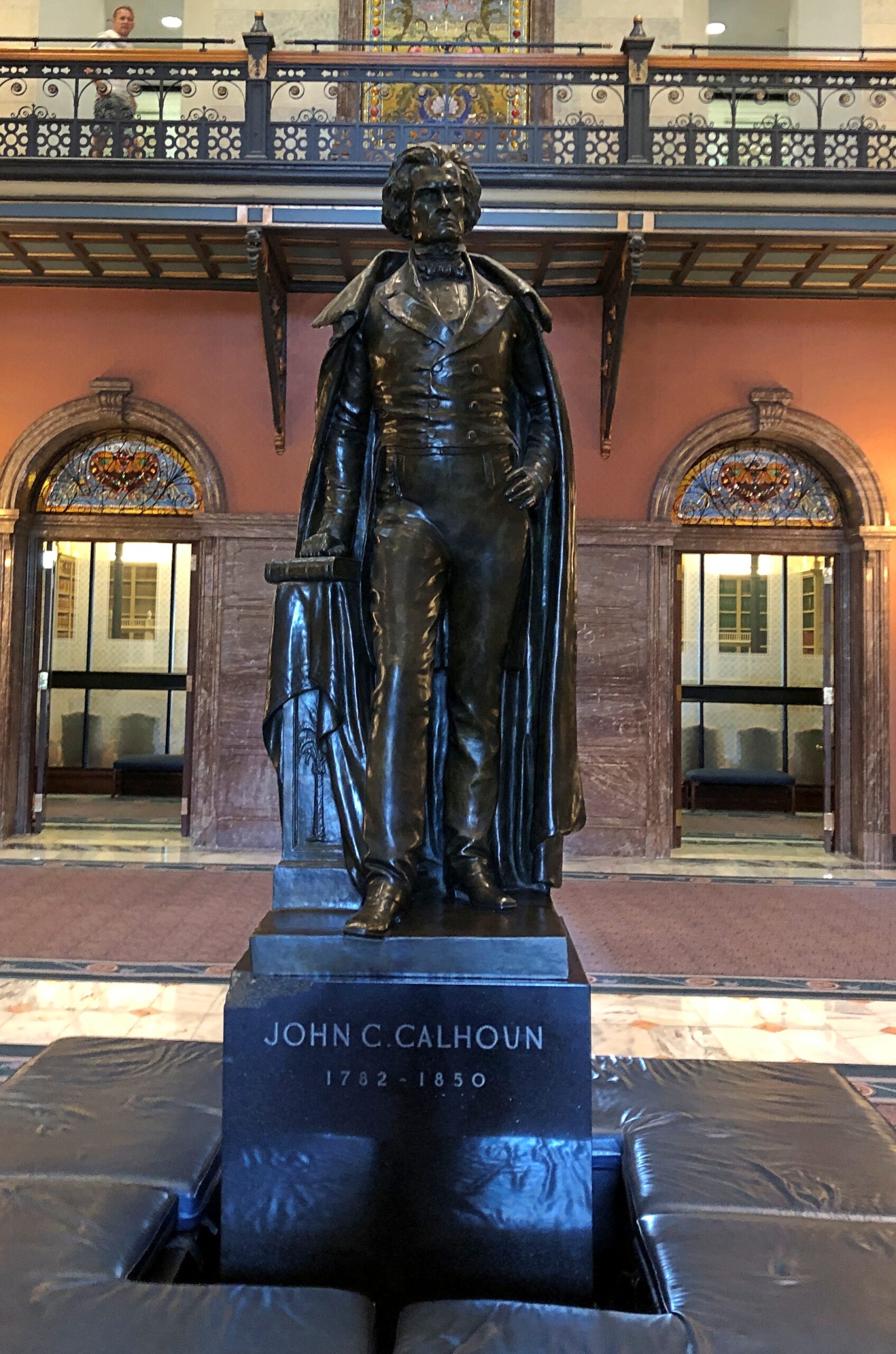
John C. Calhoun rates a prominent bronze in the rotunda and a painted portrait in the Senate chamber. His likeness went down in Charleston, I understand, but not at the capitol just yet.

SC State House

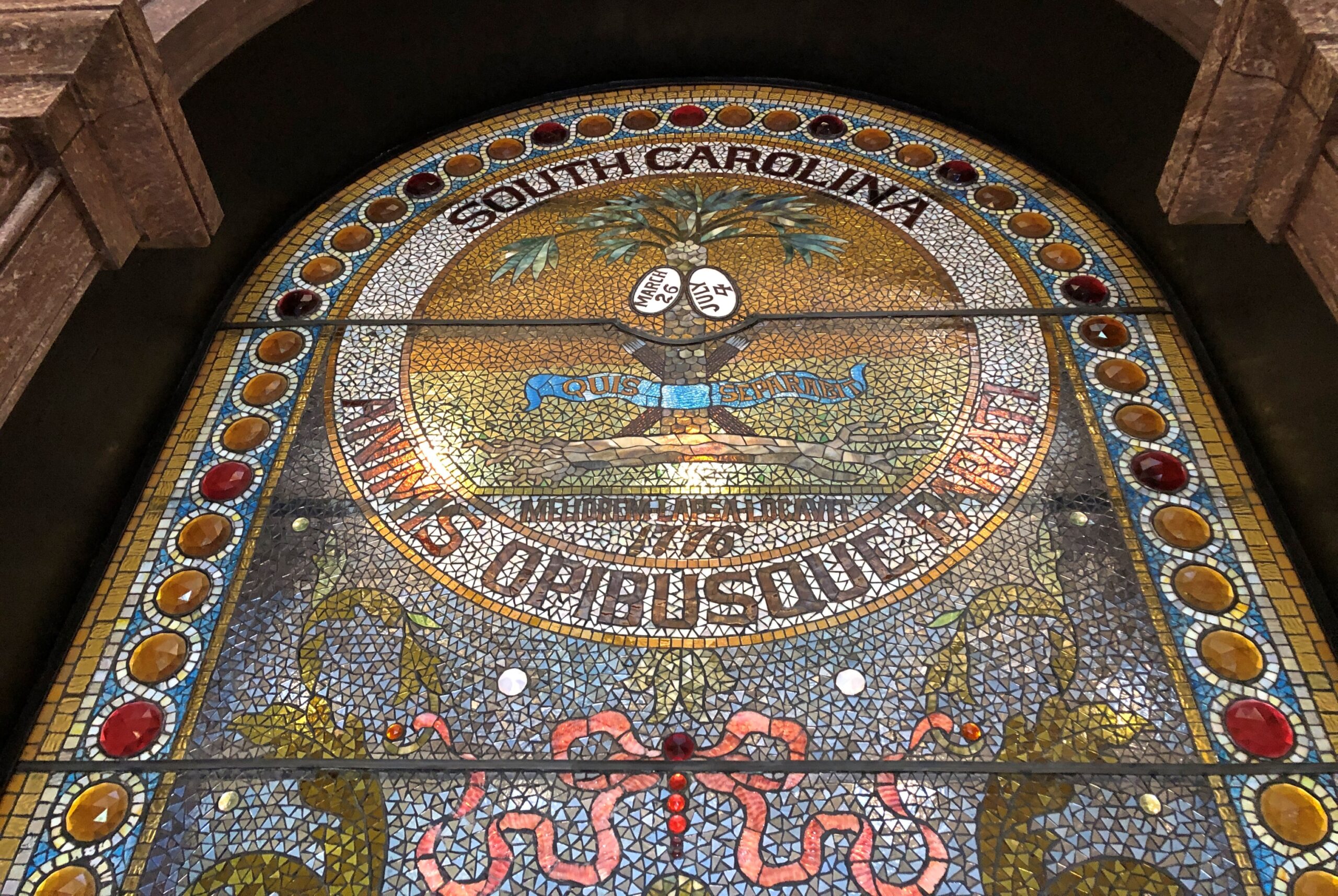
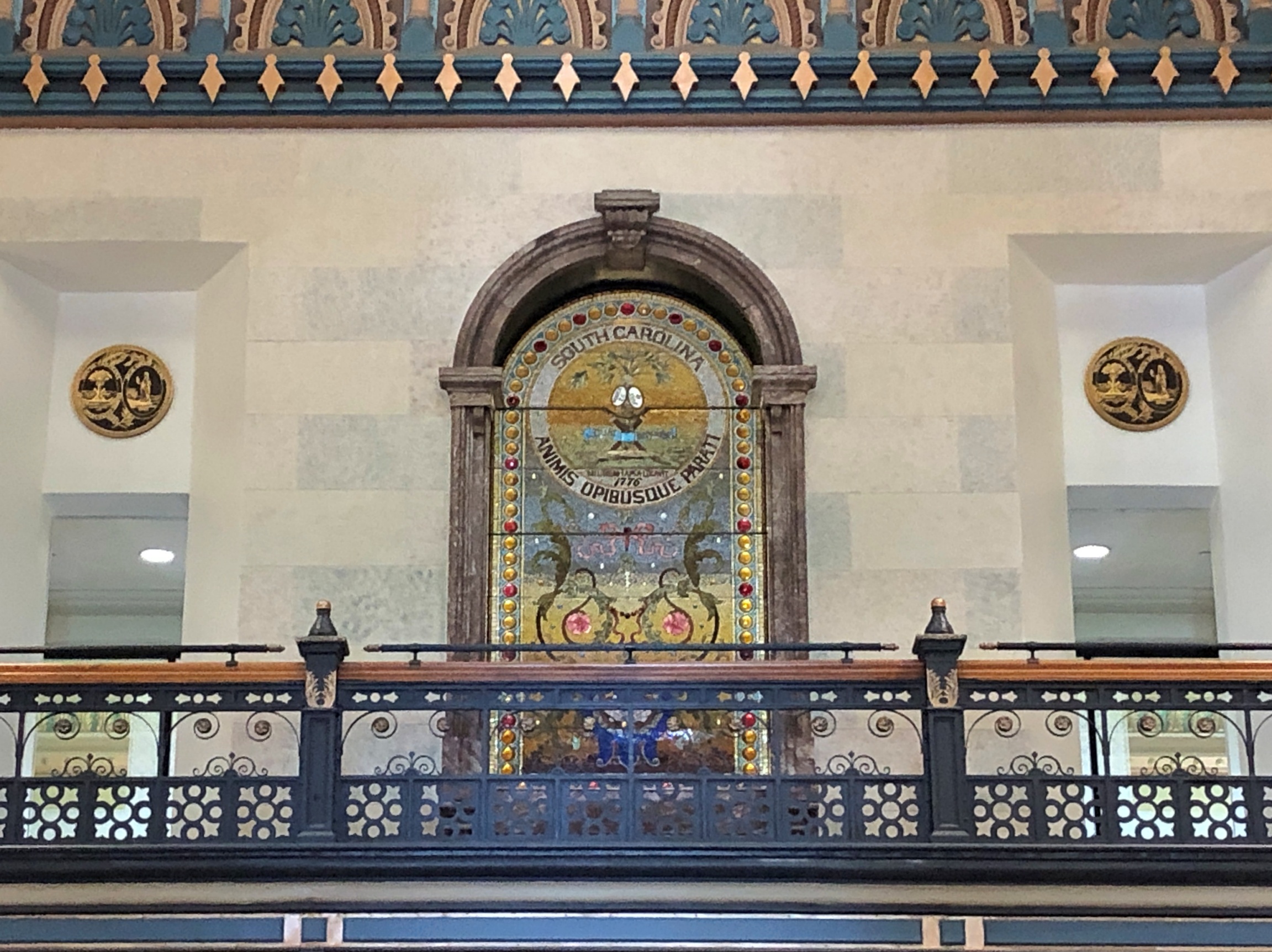
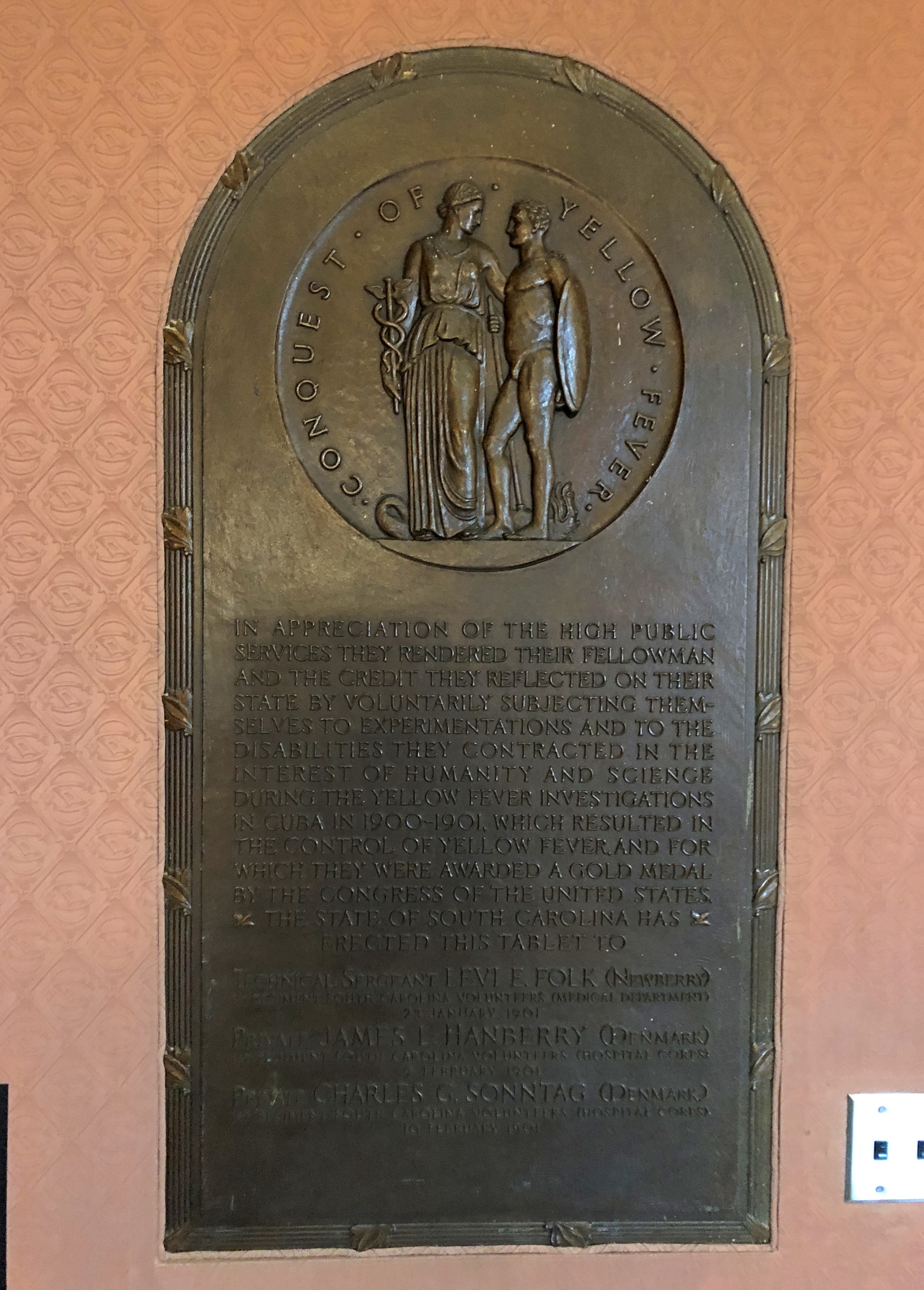
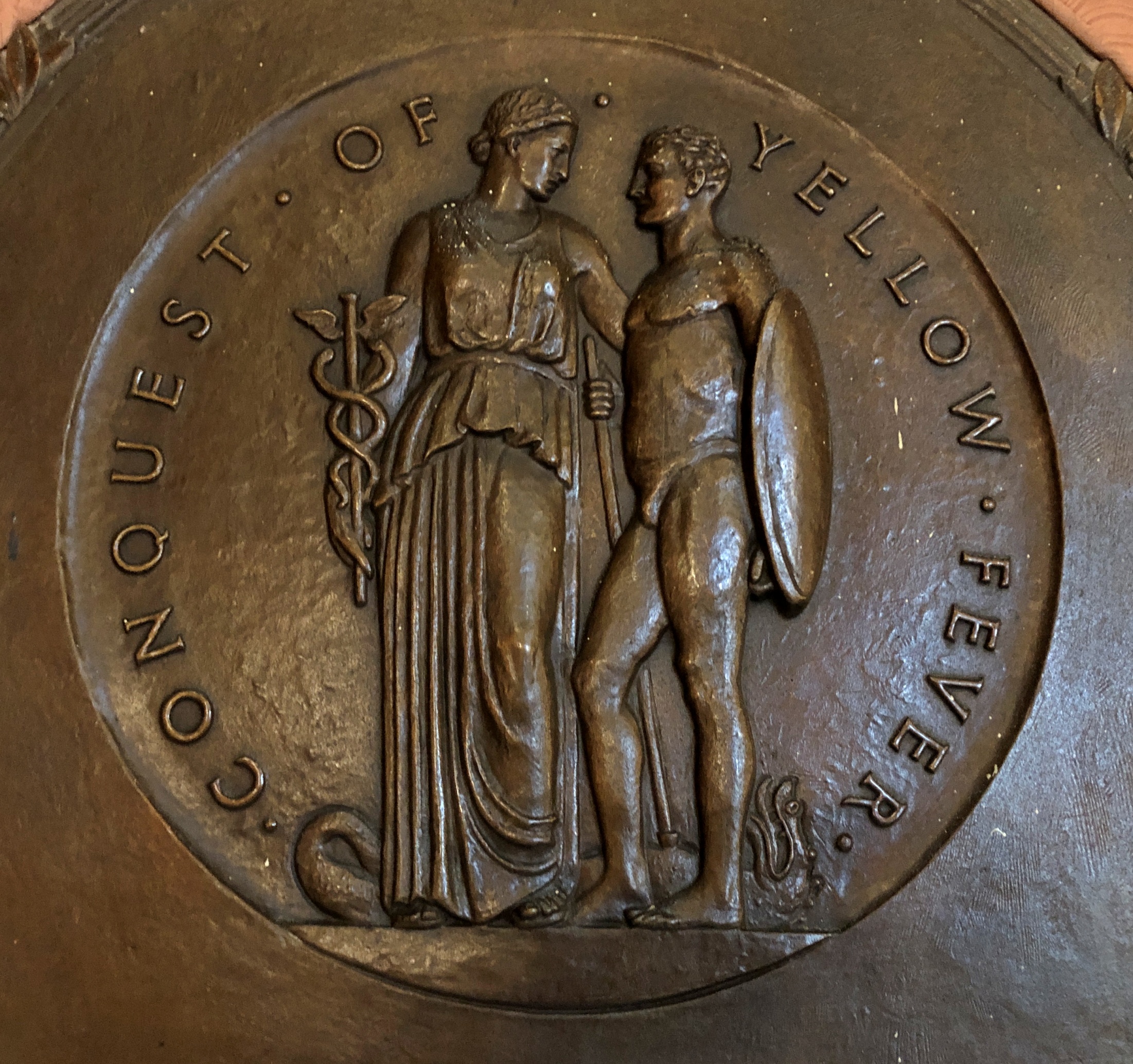
An unusual memorial hints at the state’s awful experience with yellow fever in pre-modern times.

SC State House

It’s hard to read, but the plaque memorializes three U.S. soldiers from South Carolina, TS Levi E. Folk and Privates James L. Hanberry and Charles G. Sonntag. They were among the 30 or so soldiers who volunteered to be bitten by yellow fever-infected mosquitoes in the famed (used to be famed, anyway) experiments conducted by Maj. Walter Reed in 1900-01 in Cuba that once and for all proved mosquitoes to be the vectors.

SC State House

Before the 20th century, yellow fever plagued South Carolina relentlessly. The Encyclopedia of South Carolina on the disease: “Yellow fever, like falciparum malaria, was introduced into South Carolina as a result of the African slave trade. The first major epidemic struck Charleston in 1699, killing about fifteen percent of the population, including many officials. At least five and perhaps as many as eight major epidemics occurred between 1706 and 1748. The disease was probably present in several other years as well. For several decades after 1748 no large epidemics occurred, although it appeared sporadically in some years. Between the 1790s and 1850s Charleston hosted numerous epidemics.”

Glad all that is over here in North America. Unless it isn’t.

Tryon Palace

Talk much about colonial North Carolina and Blackbeard is going to come up – at least when talking with my old friend Dan, who had a fascination with the buccaneer even back in college. An artful storyteller, which surely helped him in his former career as an ad man, Dan can regale you with Blackbeard stories, detailing his short but colorful pirate career, including the fiery display he made of his person to scare onlookers witless. A pirate needs to be known for more than mere thievery on the high seas.

“In battle [Edward] Teach would have a sling over his shoulders that held at least three flintlock pistols and would often stick lit matches under his hat to give a smokey and fearsome appearance,” the Golden Age of Pirates explains, though without the Dan’s storytelling gusto, illustrating Blackbeard’s pyrotechnical flair with gestures all his own.

Dan and his wife Pam recently moved to New Bern, NC, very near Blackbeard’s haunts, including the site of his swashbuckler’s death in action off Okracoke Island. I don’t believe their retirement move from Alabama was to be near Blackbeard, but it certainly couldn’t have hurt during site selection. On the first evening of my visit to New Bern, Dan and I spent had a fine time out on his deck, perched near a small inlet ultimately connected to the wider ocean, watching the stars slowly emerge and talking of old times and newer things but not, at that moment, about Blackbeard.

That was the next day, as we toured Tryon Palace, even though the original structure was built many decades after Blackbeard’s newly severed head wound up tied to the bowsprit of the sloop Jane, put there by pirate hunter Robert Maynard. One colonial subject leads to another.

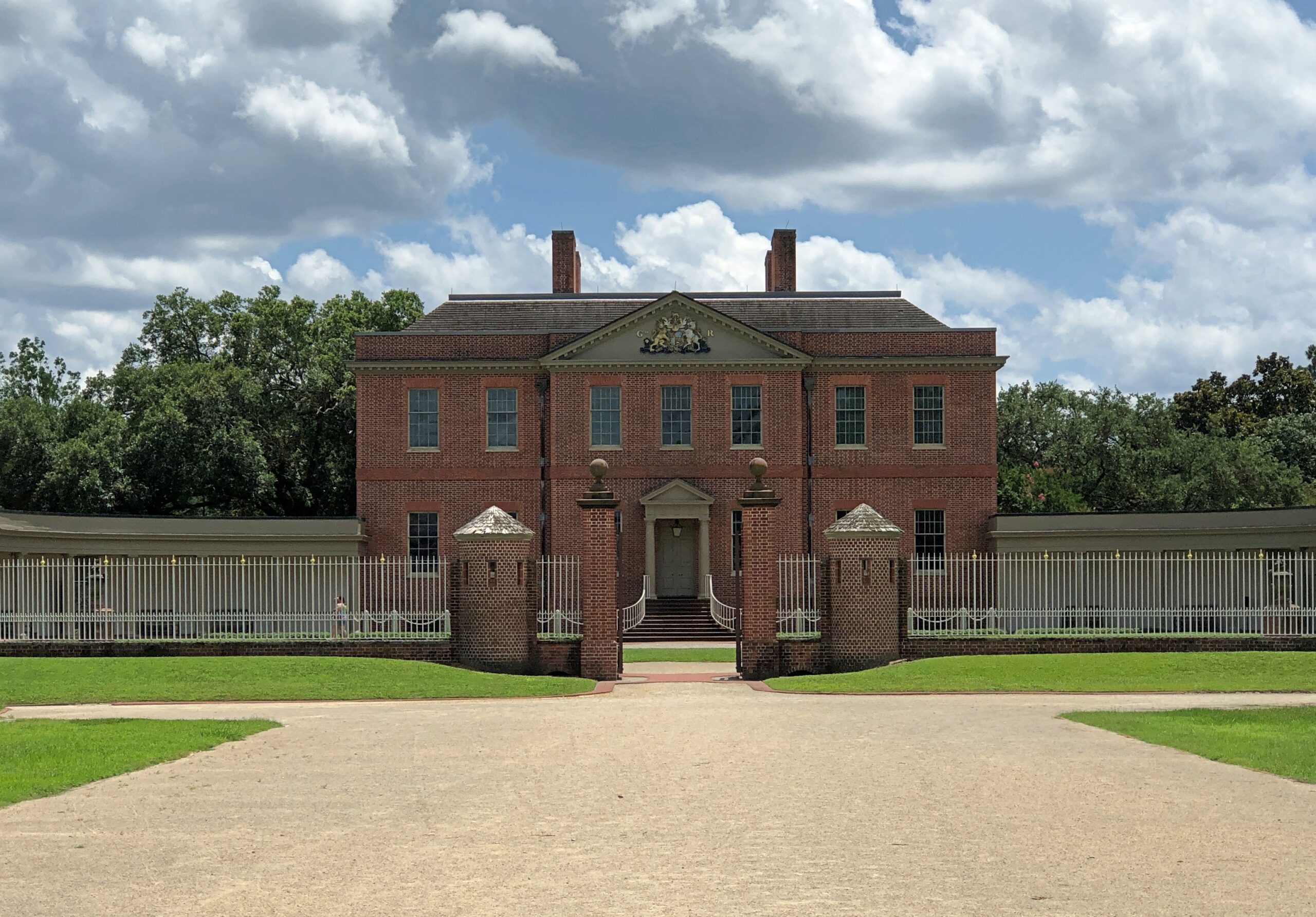
Tryon Palace is crown jewel of historic sites in New Bern, except that it’s actually a recreation of the 20th century. Somehow that doesn’t take away from its historic appeal.

Tryon Palace

When you stand in front of it, you’re peering not only back to 1770, when the colonial government of North Carolina completed, at great expense, a structure that looked like this one. You’re also looking at a building completed within living memory, in 1959, which is considered a faithful restoration of the one that NC Gov. William Tryon had erected.

“When the colonial Assembly convened in [New Bern] on 8 Nov. 1766, Tryon presented a request for an appropriation with which to construct a grand building that would serve as the house of colonial government as well as the governor’s residence,” says the Encyclopedia of North Carolina.

“Less than a month later, the Assembly acceded to the governor’s wishes by earmarking £5,000 for the purchase of land and the commencement of construction. The appropriated sum was borrowed from a fund that had been established for the construction of public schools. To replenish the depleted school fund, a poll tax and a levy on alcoholic beverages were imposed.”

Just about the worst kind of taxes when it came to irritating the non-coastal non-elites of the colony, a discontent that eventually erupted as the Regulator Rebellion. Ultimately Gov. Tryon, in personal command of the colony’s militia, crushed the Regulators – untrained men who seem to have been foolish enough to meet Tryon’s trained men in an open field at the Battle of Alamance in 1771. (Which isn’t entirely forgotten.)

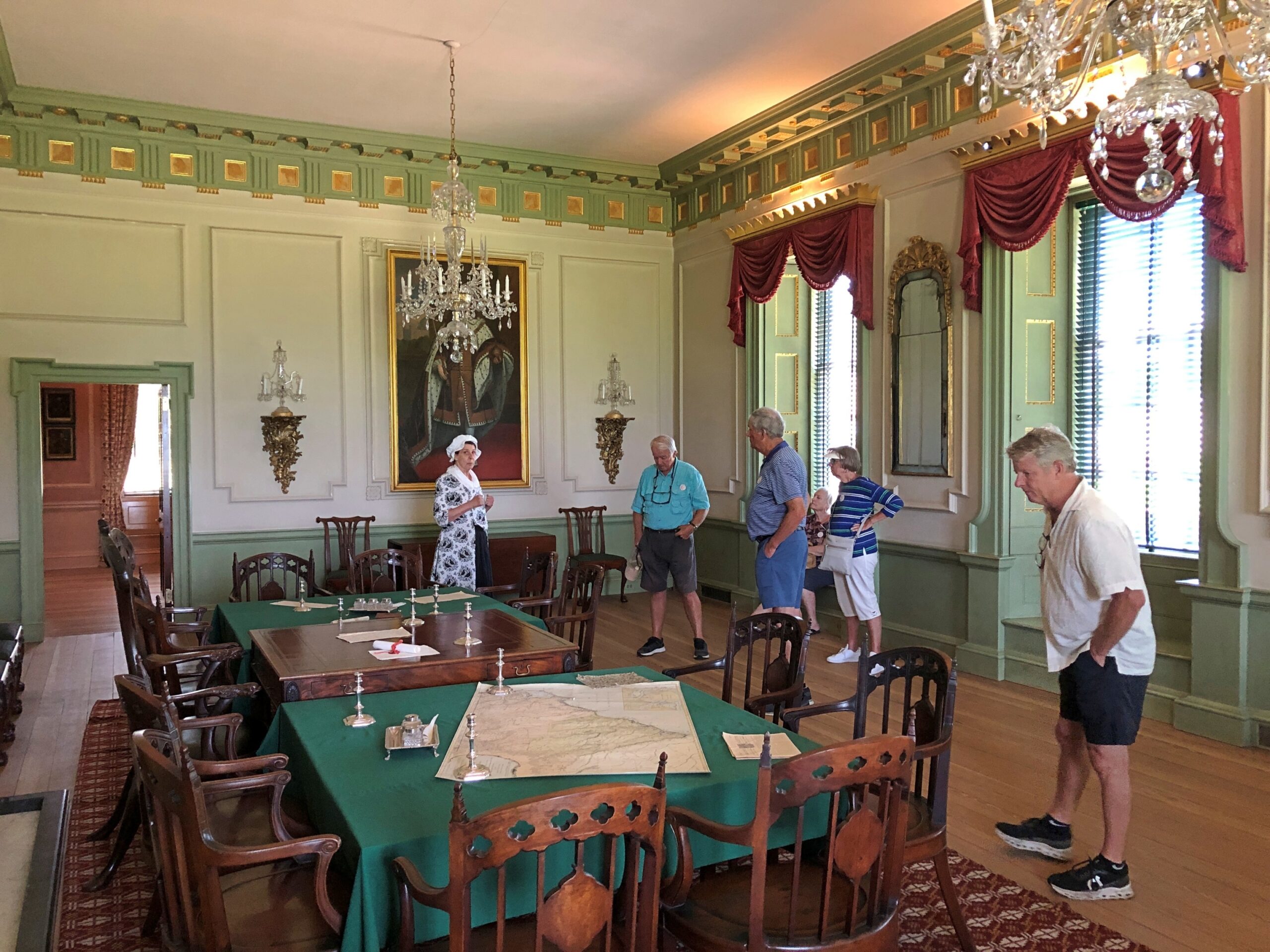
We took an early afternoon tour of Tryon Palace, guided by a woman in period costume. She told us about Tryon – no mention of Alamance, however – and his successor, Josiah Martin, the only other royal governor to use the palace. Gov. Martin spent more on furnishing the place, only to be obliged to skedaddle come the Revolution. We also heard about architect and master builder John Hawks (d. 1790), who came to North Carolina from England to build the palace which, of course, is only a palace by canebrake standards of the colony. It is a stately manor house, however.

Tryon Palace

The colonial legislature and the new state legislature both used the palace for a while, so it counts as the first capitol of North Carolina. That meant I was visiting yet another state capitol, without realizing it at first. A former capitol, that is, including ones I’ve seen in Illinois, Texas (counting Washington-on-the-Brazos as such), Virginia, Florida and Iowa. Abandoned as a government building after the NC capital left New Bern, fire consumed most of Tryon Palace just before the end of the 18th century. Its west wing survived for other uses over the next century-plus.

In the 20th century, along came Maude Moore Latham, a wealthy local woman with a taste for historic restoration. If much of colonial Williamsburg up in Virginia could be restored, so could colonial New Bern in North Carolina. Despite the fact that a road and houses had been built on the site of old Tryon Palace, she eventually facilitated the restoration, made possible (or at least more accurate) by the fact that John Hawks’ plans for the building had survived.

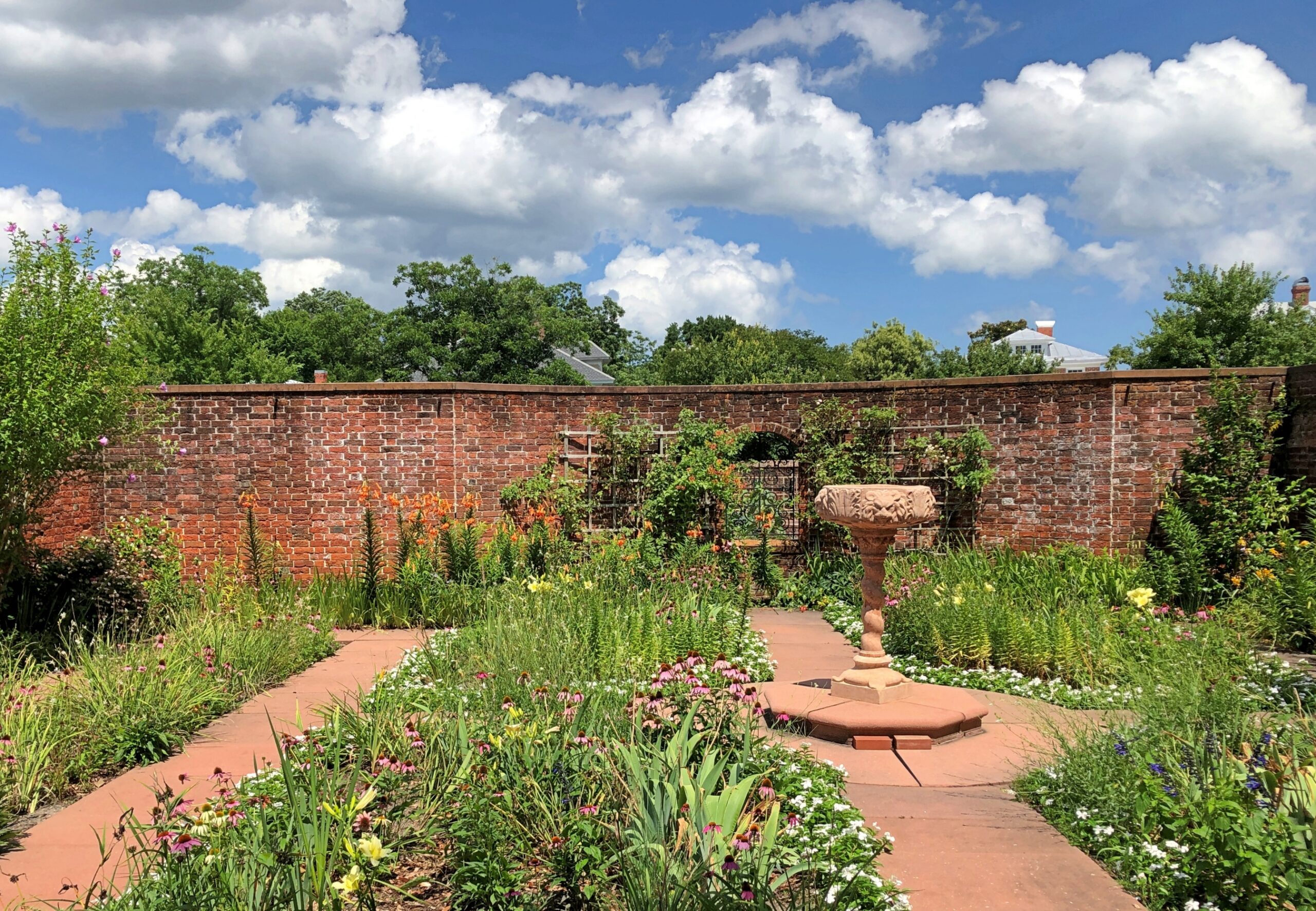
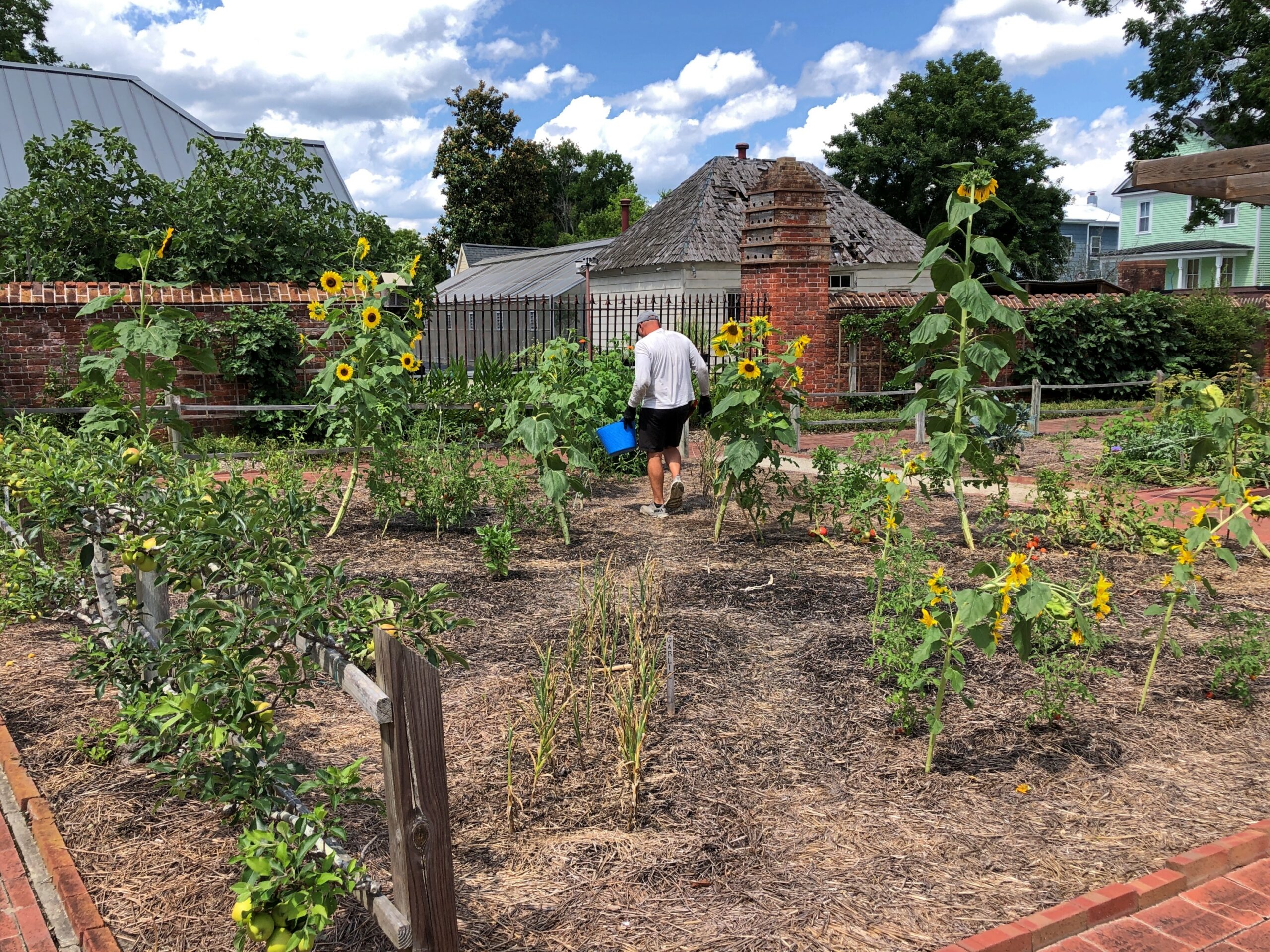
Also restored: The gardens of Tryon Palace, flower and vegetable. Despite the heat, we couldn’t miss that.

Tryon Palace garden
Tryon Palace garden

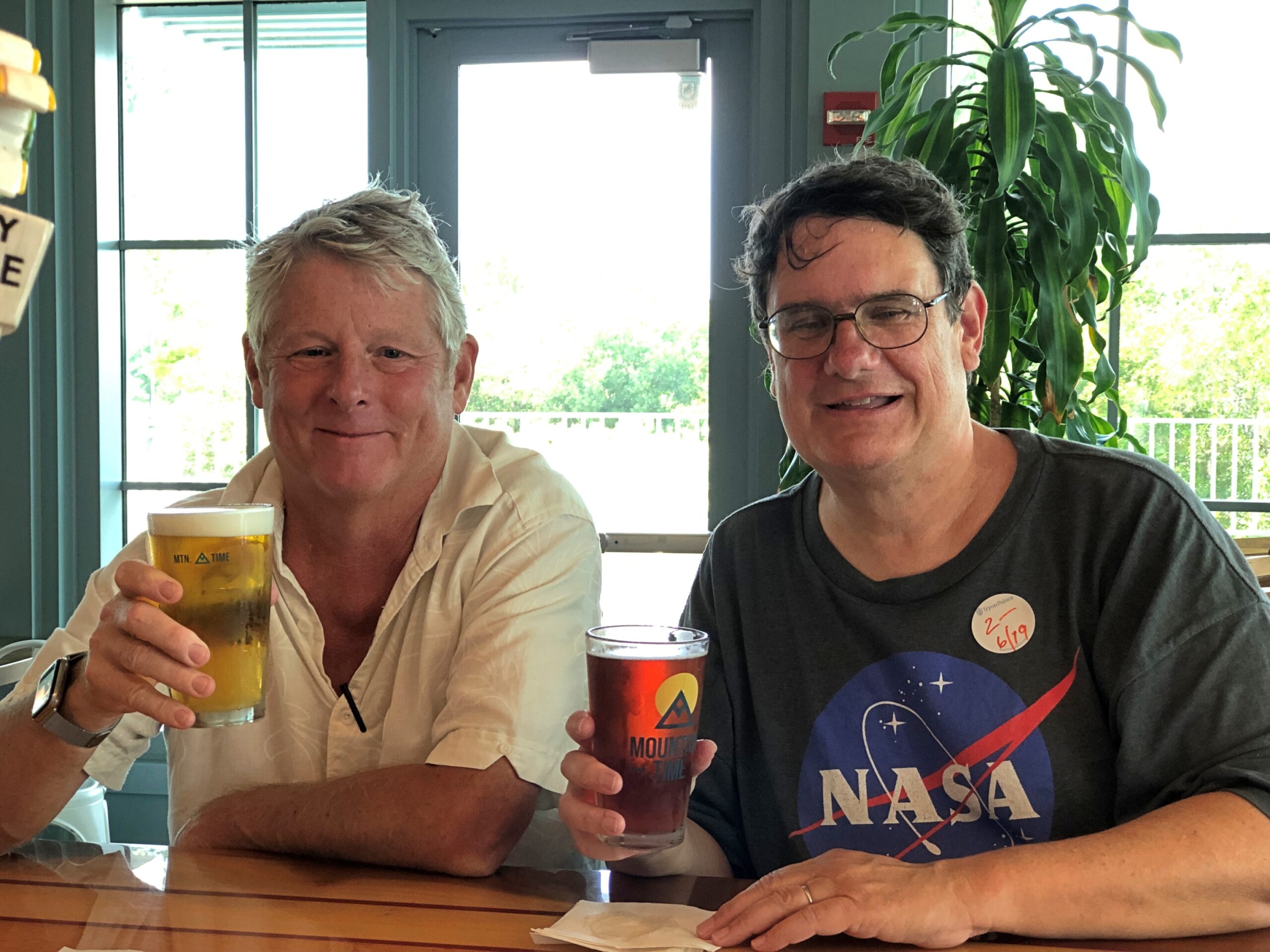
After our sweaty visit to the palace and gardens, Dan and I repaired to the restaurant in the nearby North Carolina History Center, called Lawson’s On The Creek, for refreshing beverages and more talk of Blackbeard and many other things. We closed the joint down over beer, at 4 p.m.

Dan and Dees

Downing a beer was just the thing. That was our homage to those days of yore. In colonial America, beer was no mere refreshing beverage, but an essential one.

The Idaho State Capitol & Bits of Boise

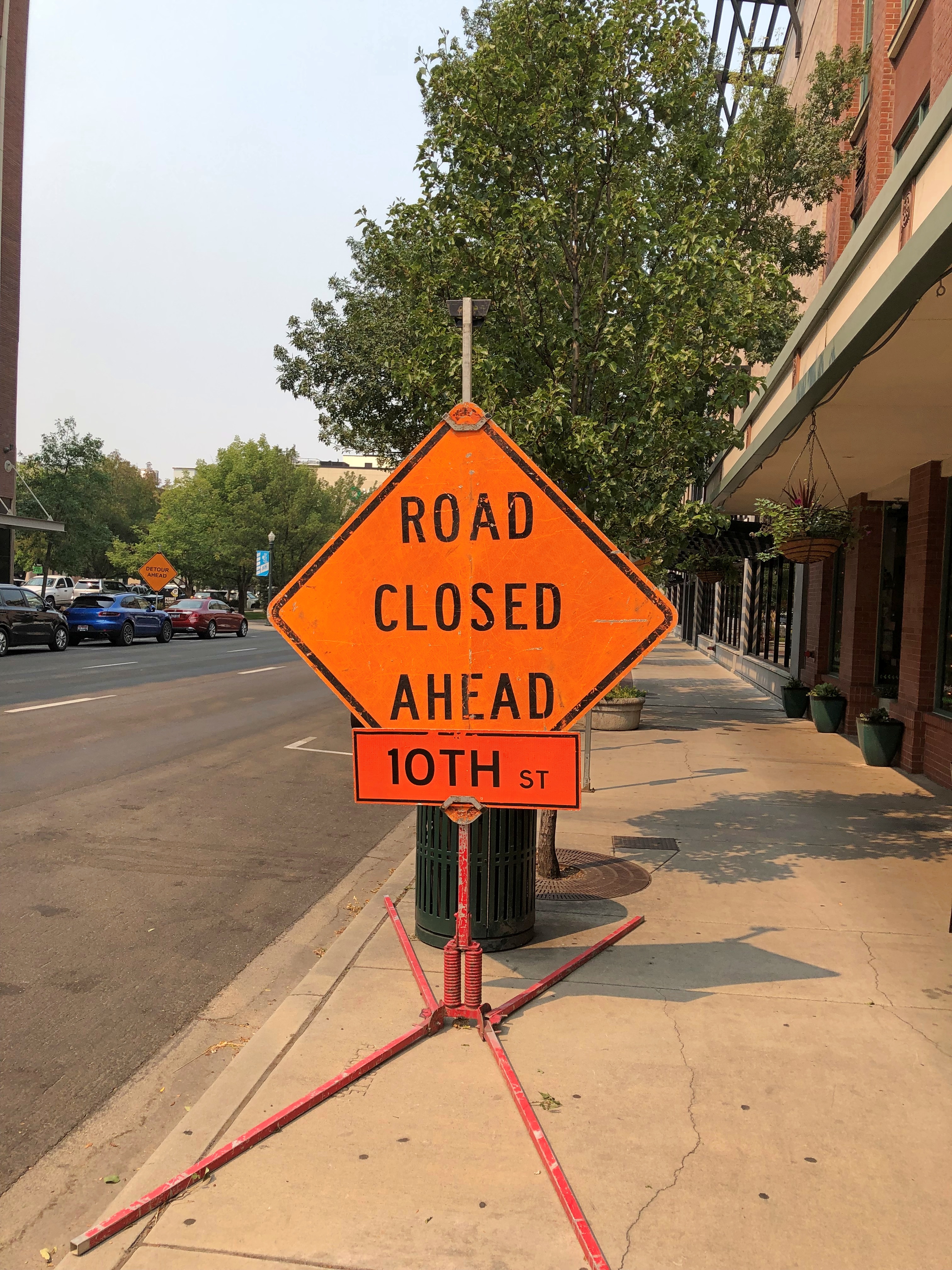
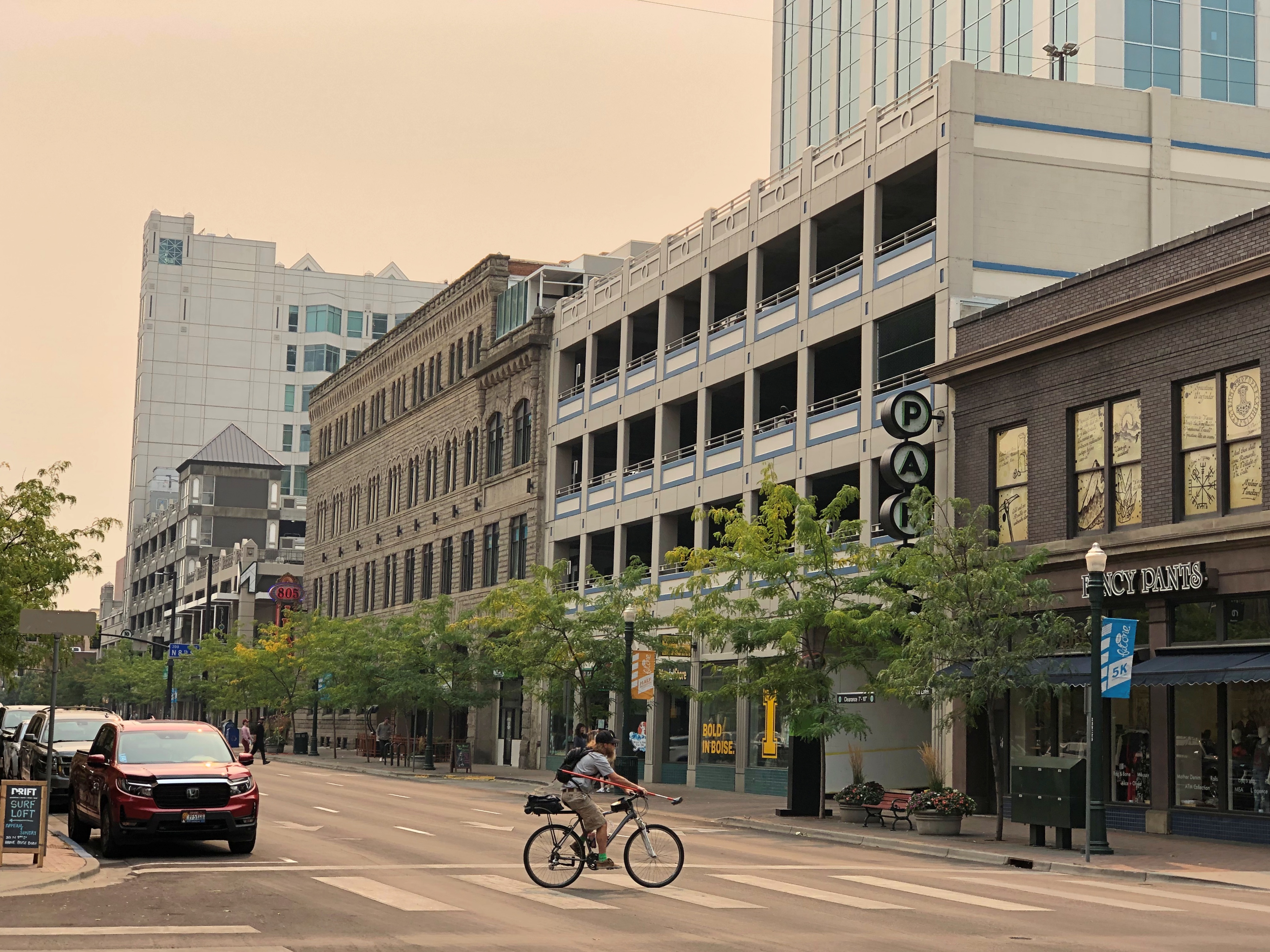
Boise is a growth town. I know that because the Census Bureau reported a population of about 235,600 in 2020, compared with 205,600 in 2010. Not only that, driving in downtown Boise was a pain in the ass last month, considering how many streets were closed for construction. That’s usually a growth indicator. Boise Idaho

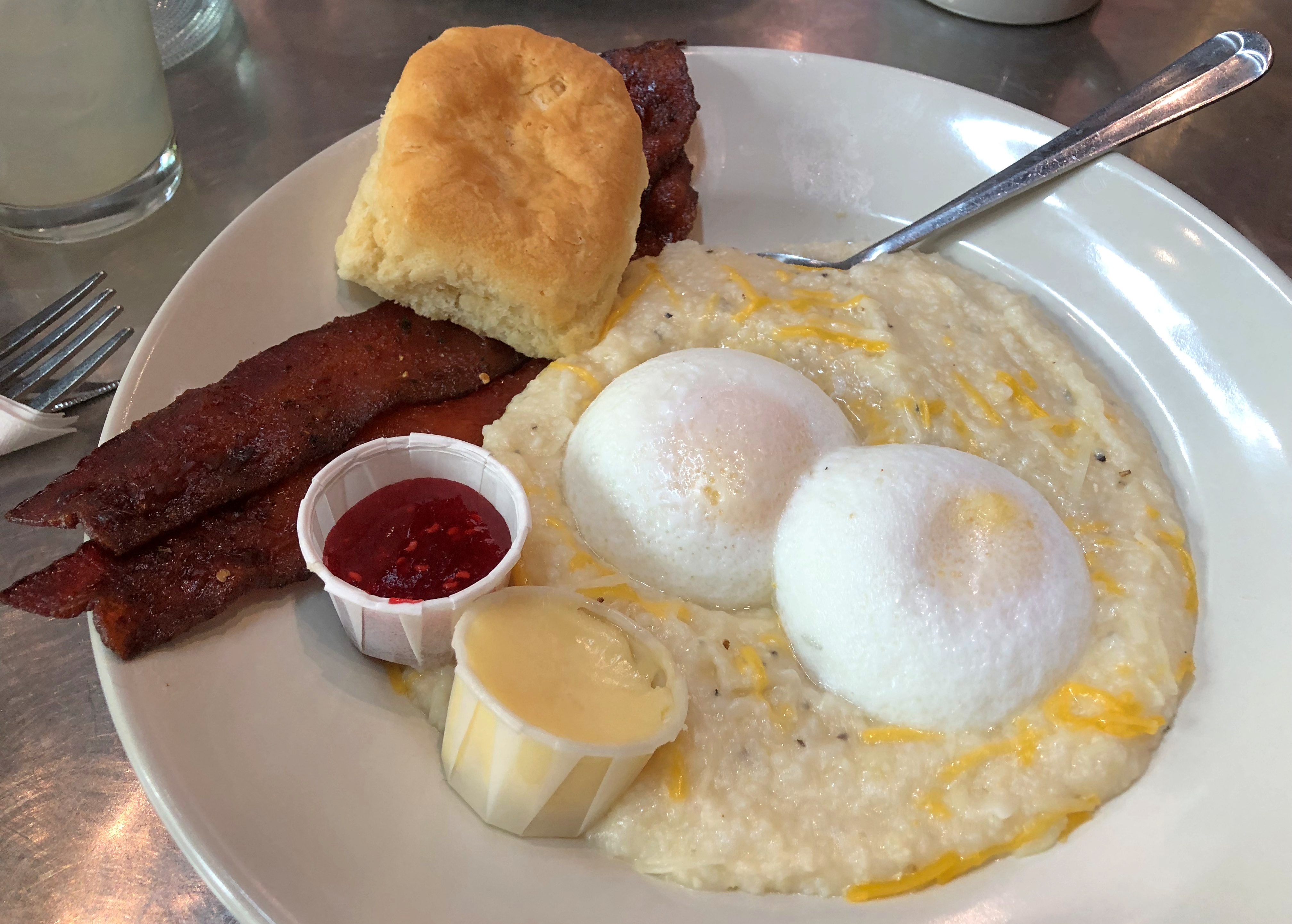
Adding to the irritation is the fact that many of downtown’s one-way streets (that are still open) go opposite of the way you want to go. But when you’ve found a place to park, and arrive at a restaurant like Bacon in downtown Boise, you forget all that. Nice tip before we left Seattle from Dan, who has spent some time in the area.Boise Idaho Bacon

Maybe not good to eat in the long run, but in the short run, it makes you glad you spent the night in Boise and headed out for breakfast the next day. Also, downtown Boise looked interesting, especially on foot.Boise Idaho Boise Idaho Boise Idaho

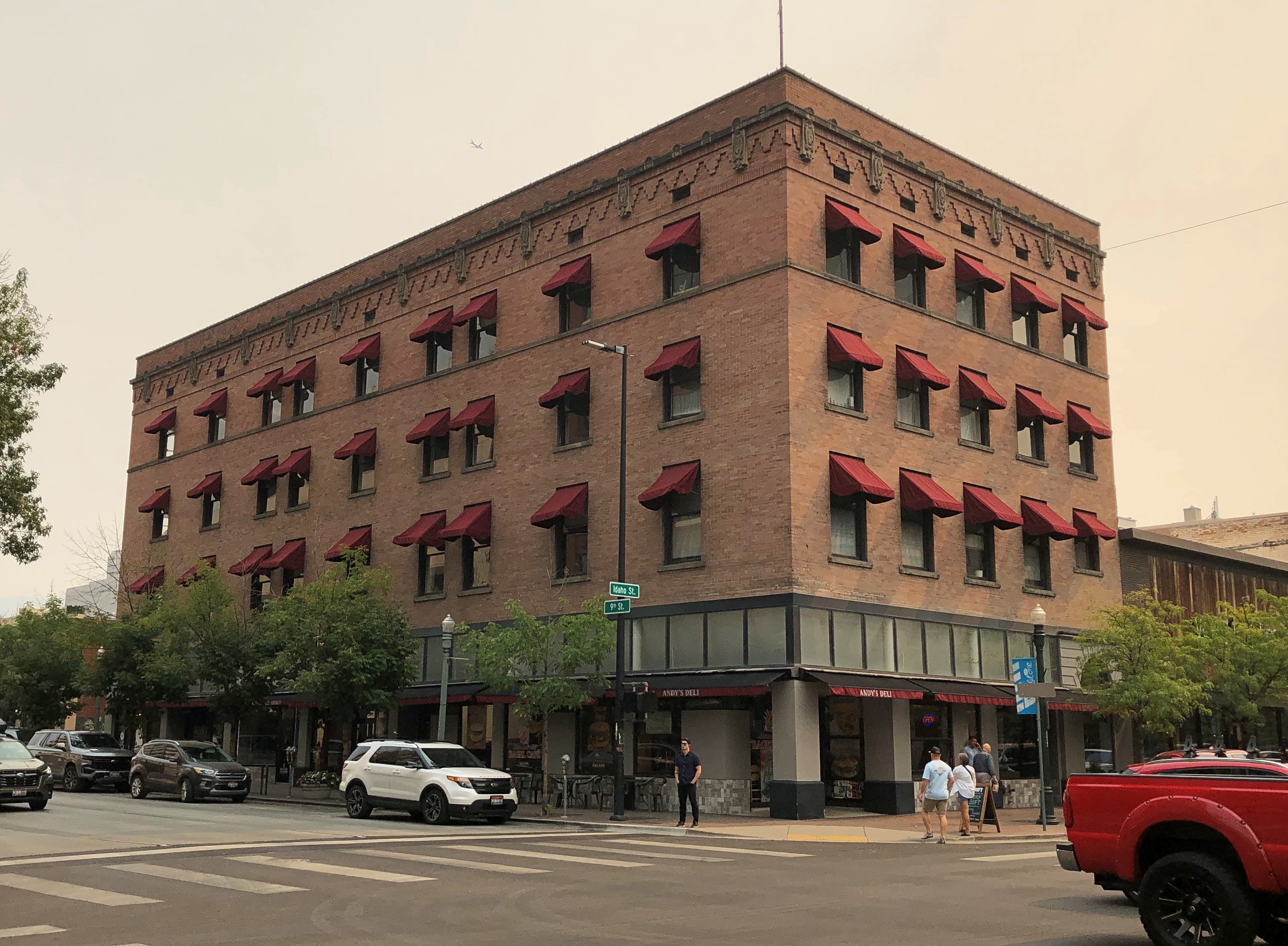
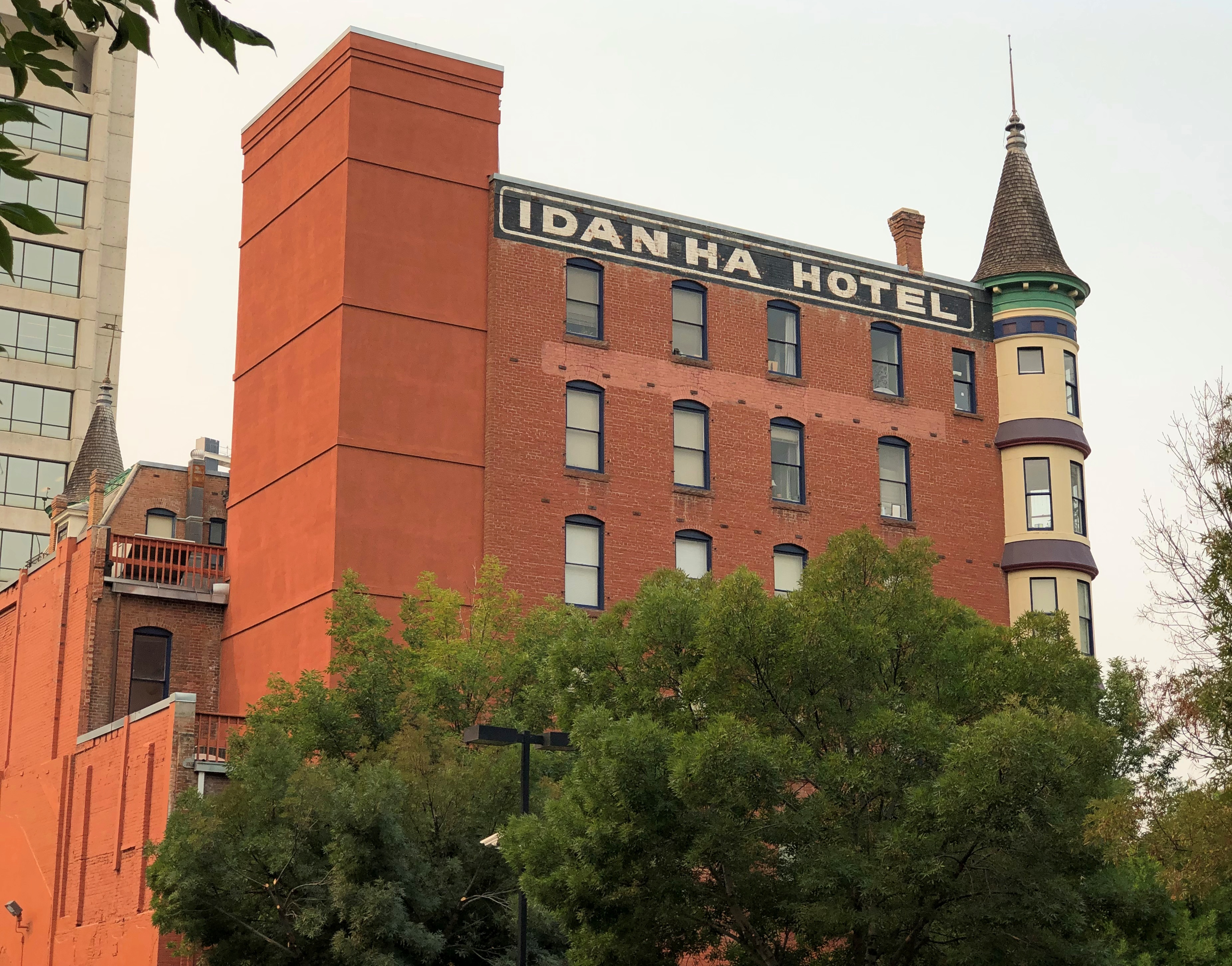
The former Idanha Hotel, which opened exactly at the turn of the 20th century – January 1, 1901 – and is now a multifamily residential property. Its architect, a Scotsman named W.S. Campbell, founded a firm in the late 19th century in Boise that’s still around: CSHQA.Idaho State Capitol

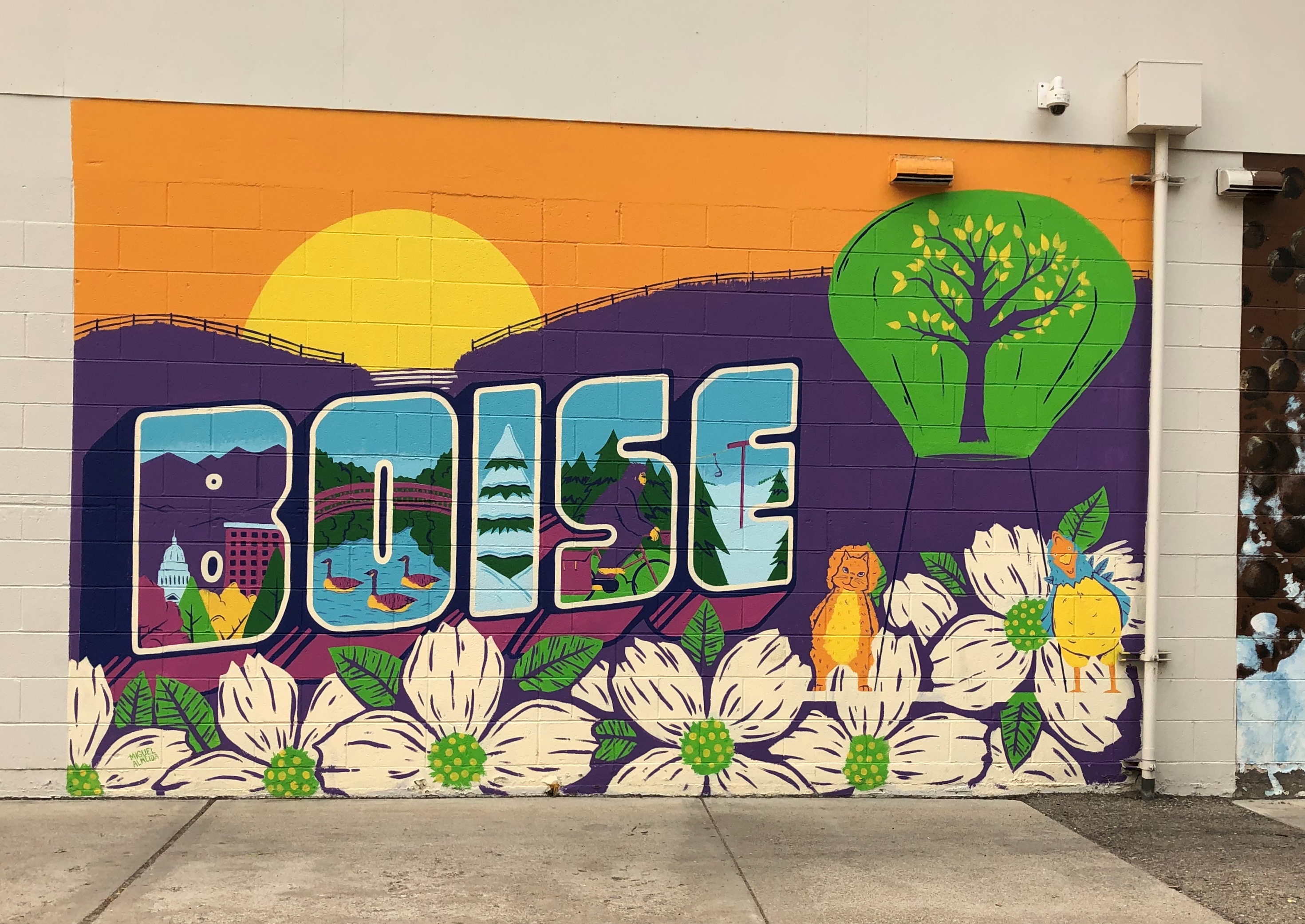
Everywhere has one of these murals, though usually they say, Welcome to…Idaho State Capitol

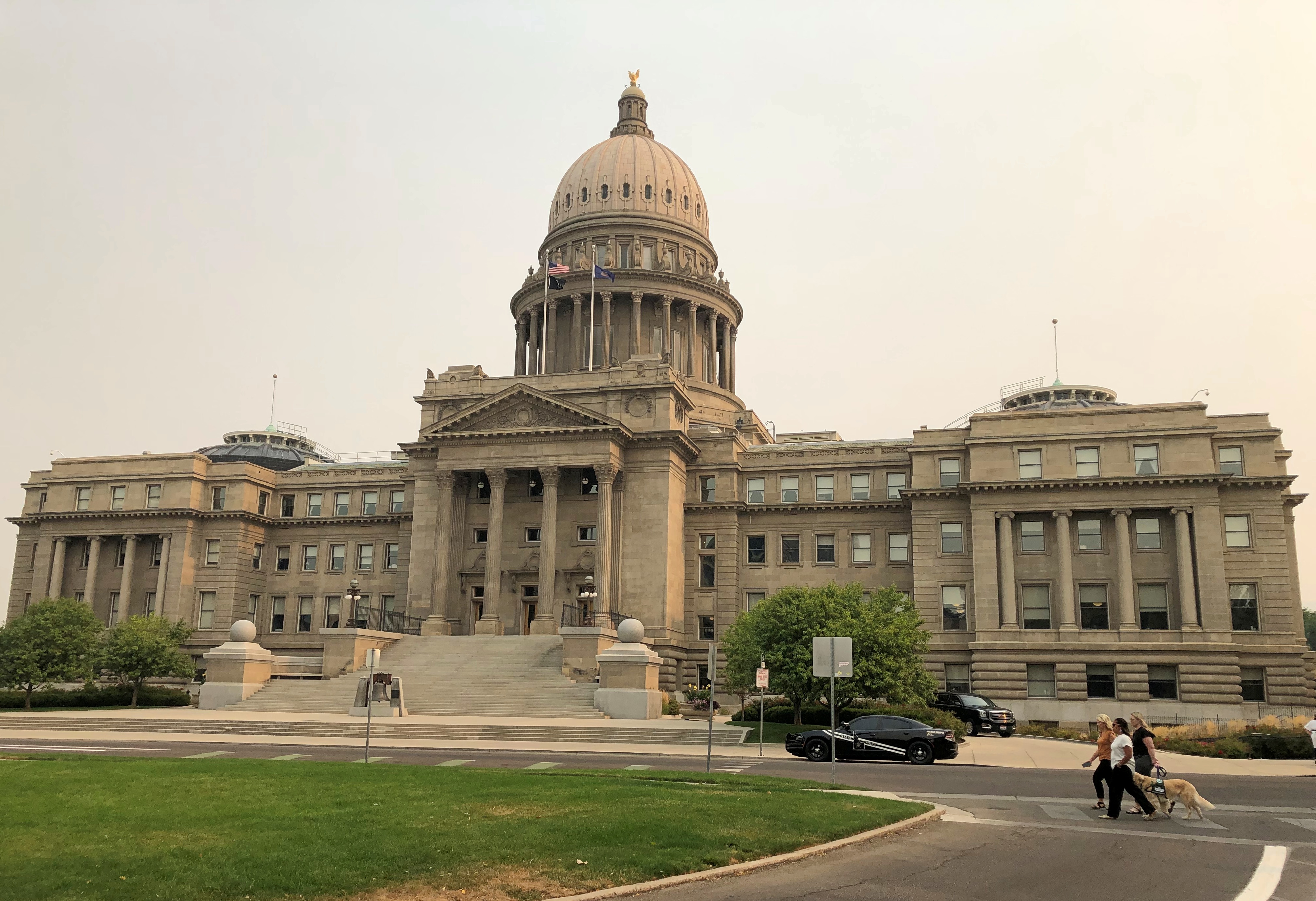
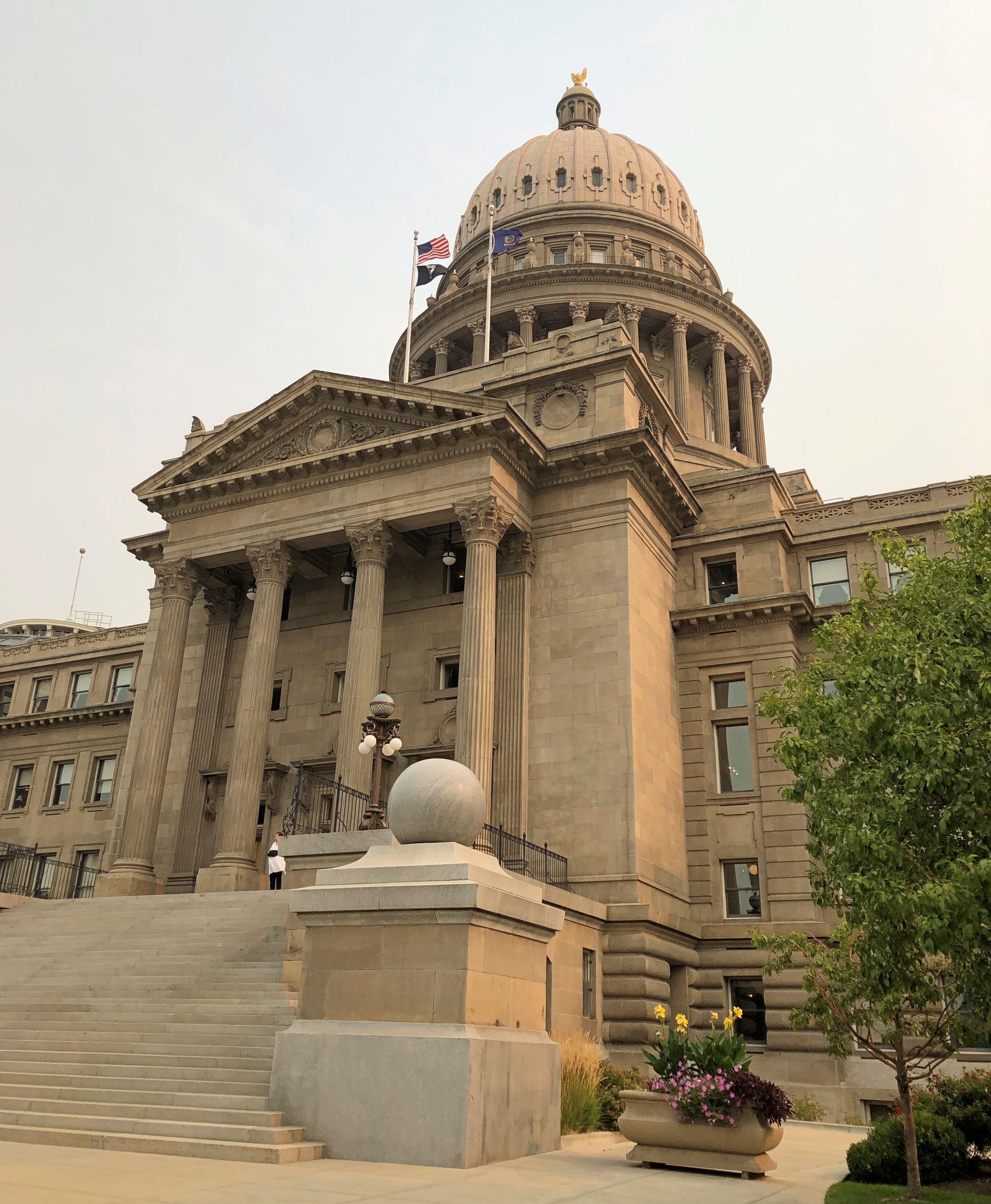
Eventually, by way of Boise’s unpredictable streets, we made our way to the Idaho State Capitol. I saw it briefly in ’89, but only from the outside. A grand edifice.Idaho State Capitol Idaho State Capitol Idaho State Capitol

Grand inside as well.Idaho State Capitol Idaho State Capitol Idaho State Capitol

John E. Tourtellotte & Co. designed the capitol, completing much of it in 1912, though the House and Senate wings came a few years later. Tourtellotte is another one of those architects of yore who did a lot of work.

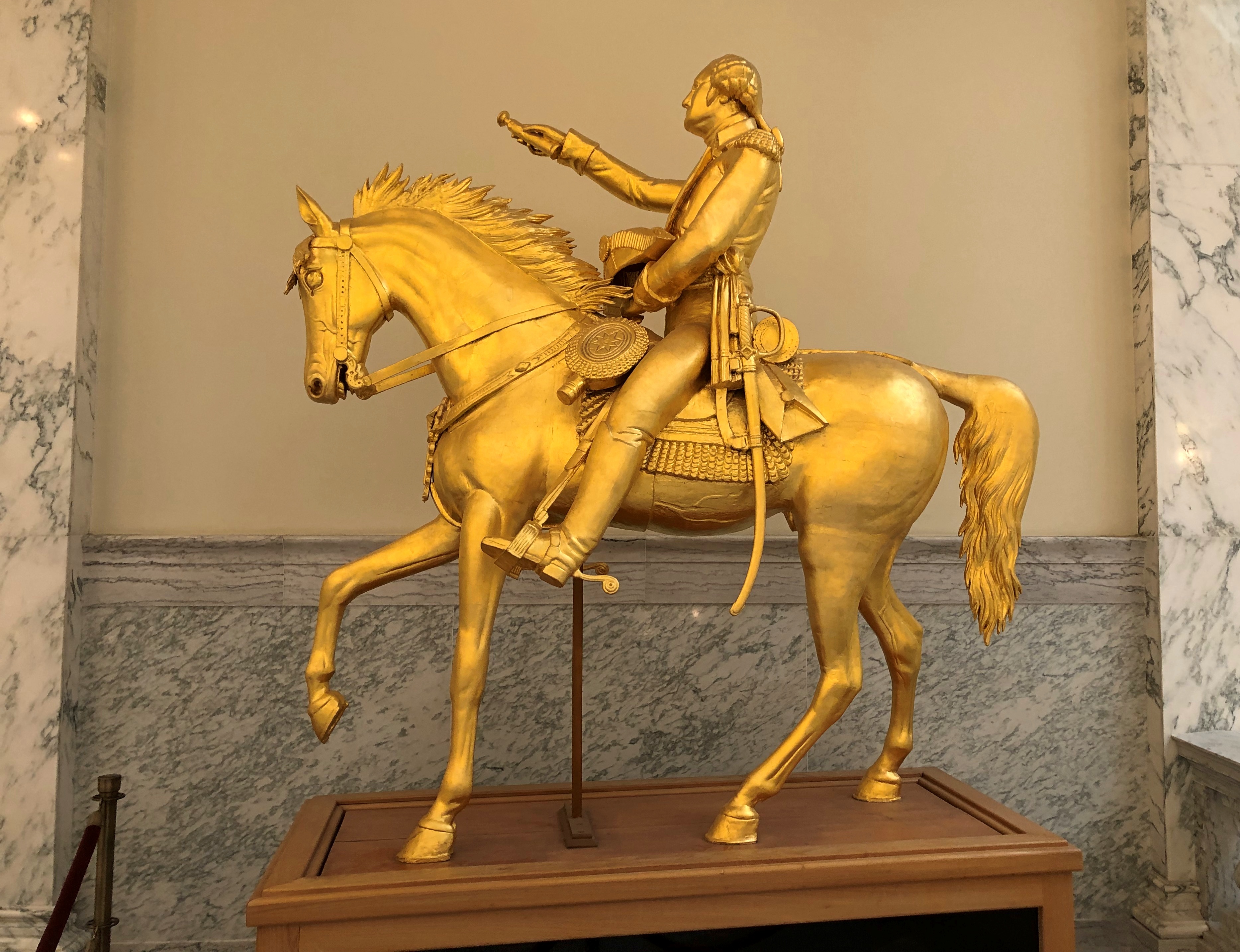
The Idaho State Capitol has a gilded Washington on a gilded horse.Idaho State Capitol

“Austrian immigrant [Charles Ostner] carved George Washington from a single pine tree,” the capitol web site says. “With a postage stamp to guide him, Ostner took four years to create his masterpiece. His young son was said to have frequently held a candle to light his workroom after darkness fell.

“Once completed, Ostner gave his rendition of our first president to the Territory in 1869. In return, Idaho’s leadership paid him $2,500.” Later, it was gilded and much later, restored.

Any capitol can have an image of George Washington. But how many have a Benjamin Harrison?Idaho State Capitol

Idaho is, of course, another of the six Benjamin Harrison states, entering the union with his signature in 1890 as number 43, just days ahead of Wyoming. A nearby sign says the Harrison bust was carved in 2009 by one Steve Ussing using wood from a red oak planted by the president himself.

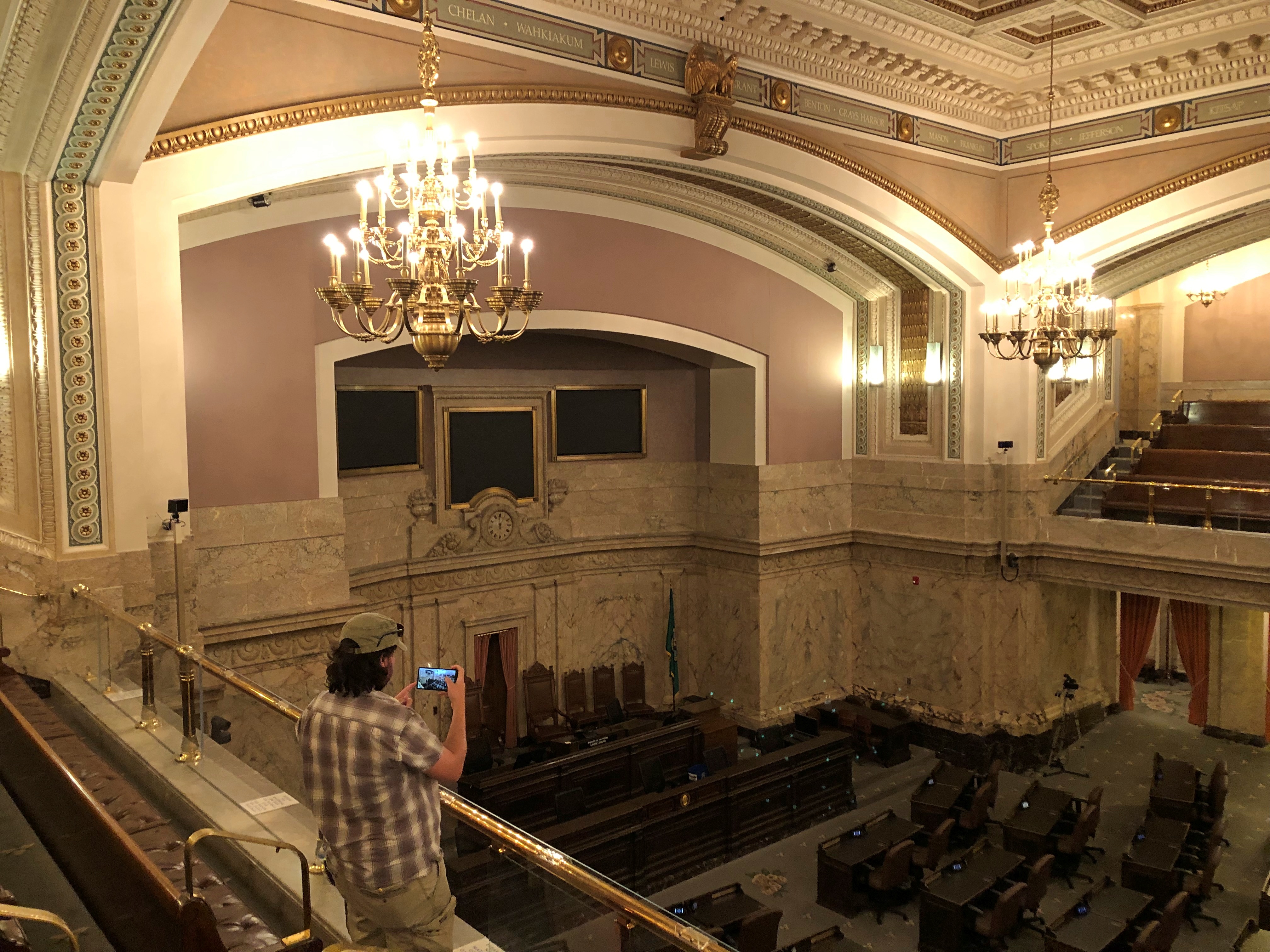
The Washington State Capitol

My travels in ’85 took me through Olympia, Washington, for a visit to the Washington state capitol. Thinking back on that, the visit is mostly a blank.

Nearly 40 years will do that. But I remember a lot of other things about that trip. Driving on small rural roads through unfamiliar kinds of woods, dodging log trucks, I admired the brilliant gold Scotch broom in bloom in profusion on the roadside without knowing it is an invasive species in North America. Along a not-difficult hike under the tallest trees I’d ever seen, I remember that the trail passed by a van-sized fallen tree trunk marked by graffiti reporting itself to be from the 1930s. I remember that Butchart Gardens, gem of parks and light show in Victoria, BC, wowed me completely; so did Victoria and the drive to Duncan, BC where I bought lunch in a diner that immediately reminded me of a favorite diner in Nashville, and acquired a dictionary in a nearby bookshop that promised to be authoritative in Canadian English. Know what else British Columbia had? Really good Hungarian food. I remember visiting the Space Needle on my 24th birthday, watching David Letterman destroy watermelons on late-night TV while staying with my Seattle friends, listening to Laurie Anderson talk-sing on the radio (from United States Live) as we took a ferry to Bainbridge Island, our car the last one shoed into that particular vessel. While on the island we discussed the uses of Slug Death – a product that I’d never heard of, and was glad of it. I heard about geoducks for the first time as my companions tried to dig one up on the beach, fruitlessly.

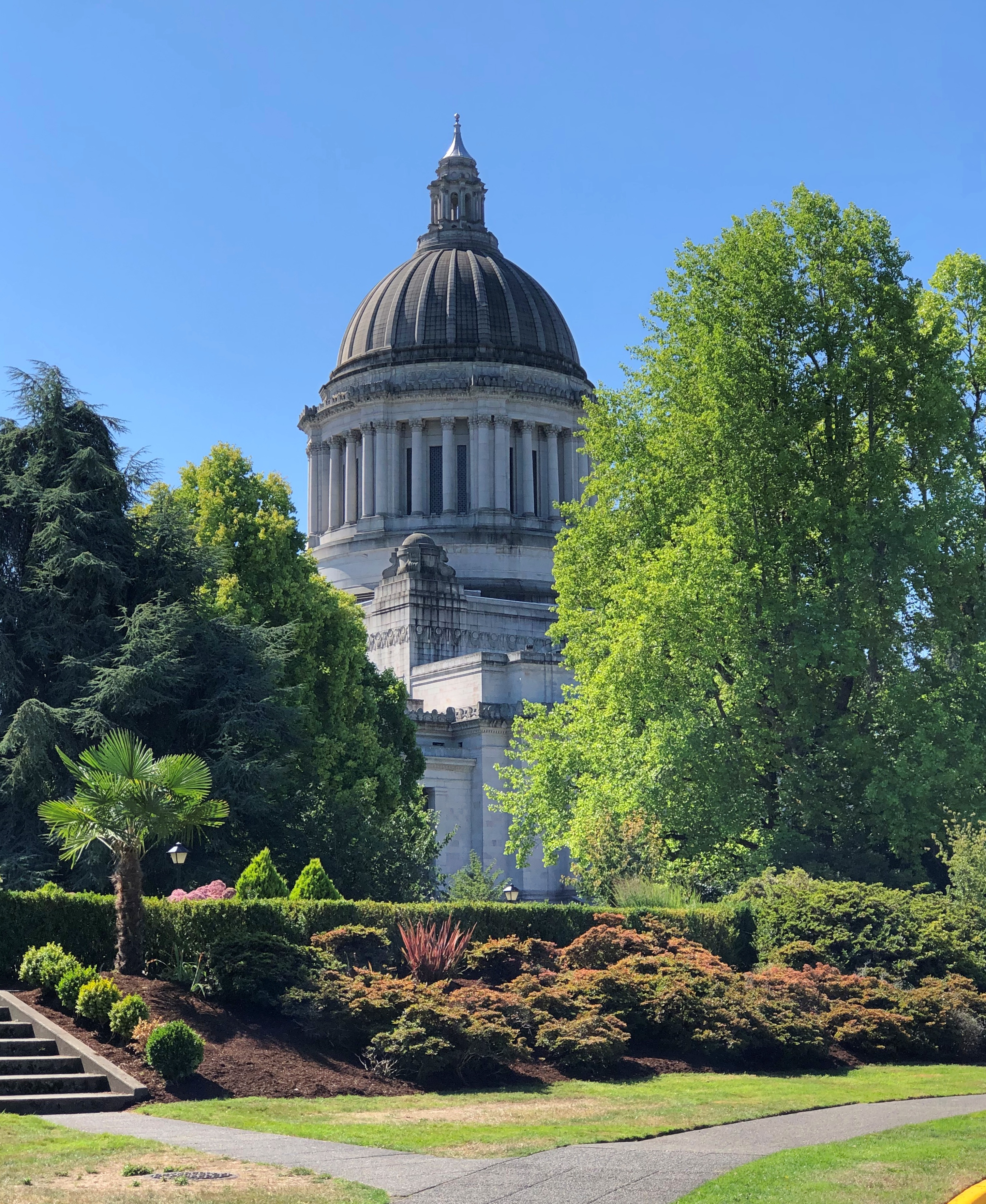
It so happened that the first two nights on the return from Seattle would be in Portland. It also happens that Olympia, Washington, is pretty much on the way to Portland, just a stop on I-5. Stop we did, arriving late in the morning of the last day of August.Washington State Capitol

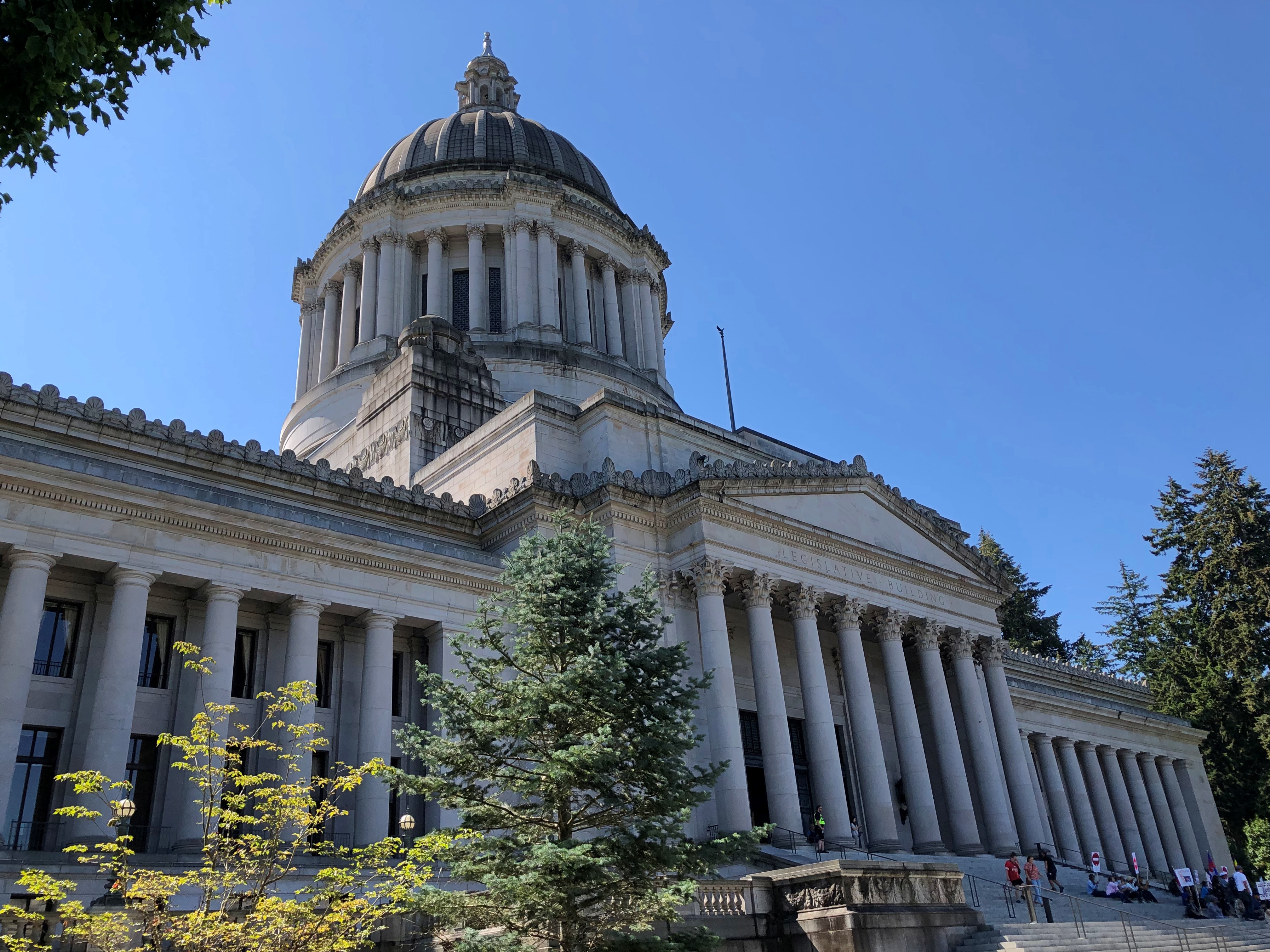
The crowning dome is the tallest self-supporting masonry dome in the United States, and among the tallest in the world, up there with the likes of the famed high points of St. Peter’s Basilica and St. Paul’s Cathedral.Washington State Capitol

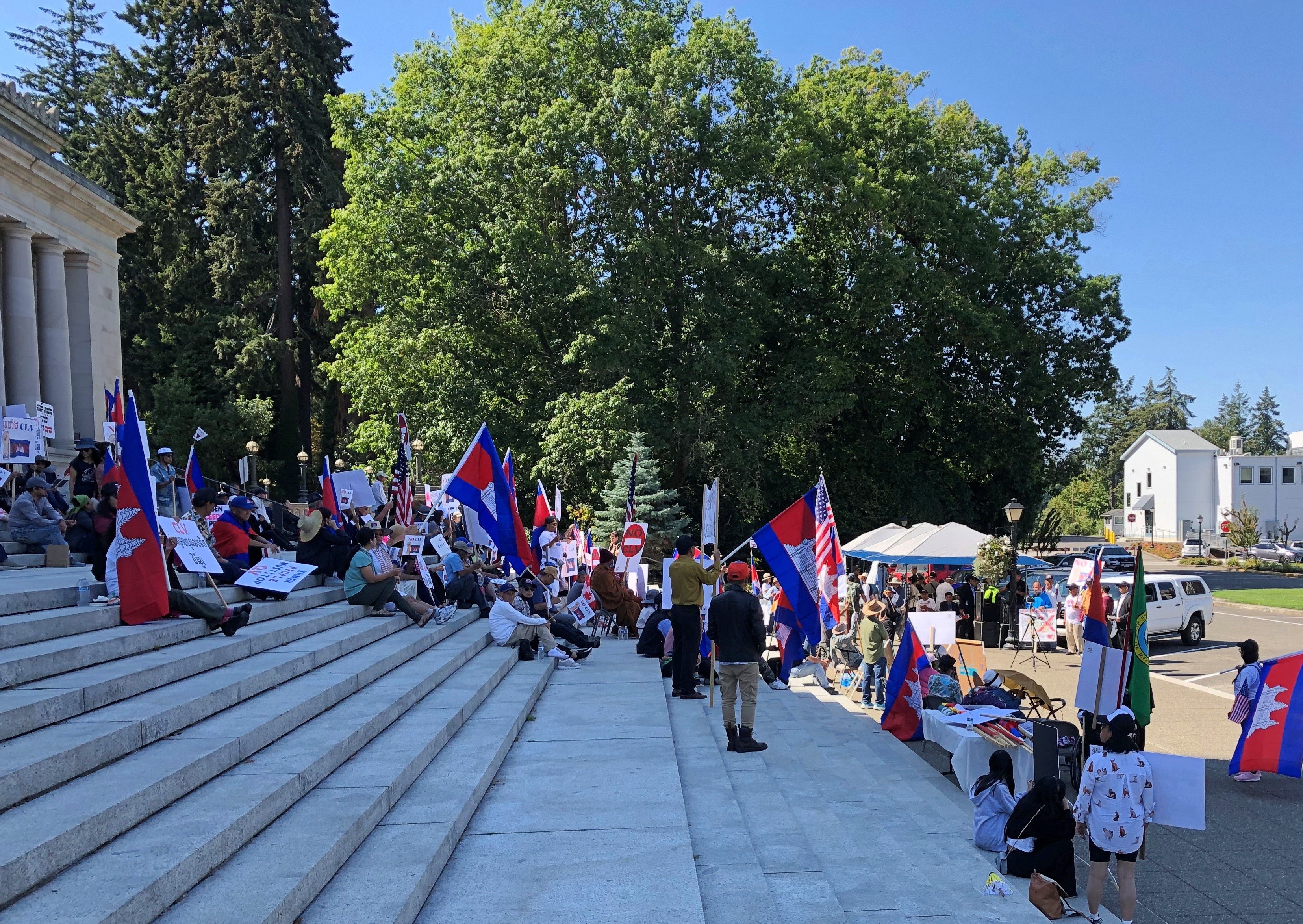
A protest was going on in front, an assemblage waving Cambodian flags and signs in Khmer script. The speech must have been in Khmer. Of course that’s unintelligible to the likes of me, but no language skills were necessary to hear the stridency in his voice. Protesting the current authoritarian government in their country would be my guess.Washington State Capitol

Forty-two steps to the entrance, Washington being the 42nd state to join the union, in 1889. One of the Benjamin Harrison states. He signed bills for six, more than any other president.

The capitol took a while to build, delayed by the Panic of 1893, a fit of austerity on the part of the executive branch, and other disputes about this and that for a few decades. The domed structure wasn’t finished until 1927, a little late for that style. If the delay had been longer, Washington might have gotten something like Nebraska’s capitol.

Inside.Washington State Capitol Washington State Capitol

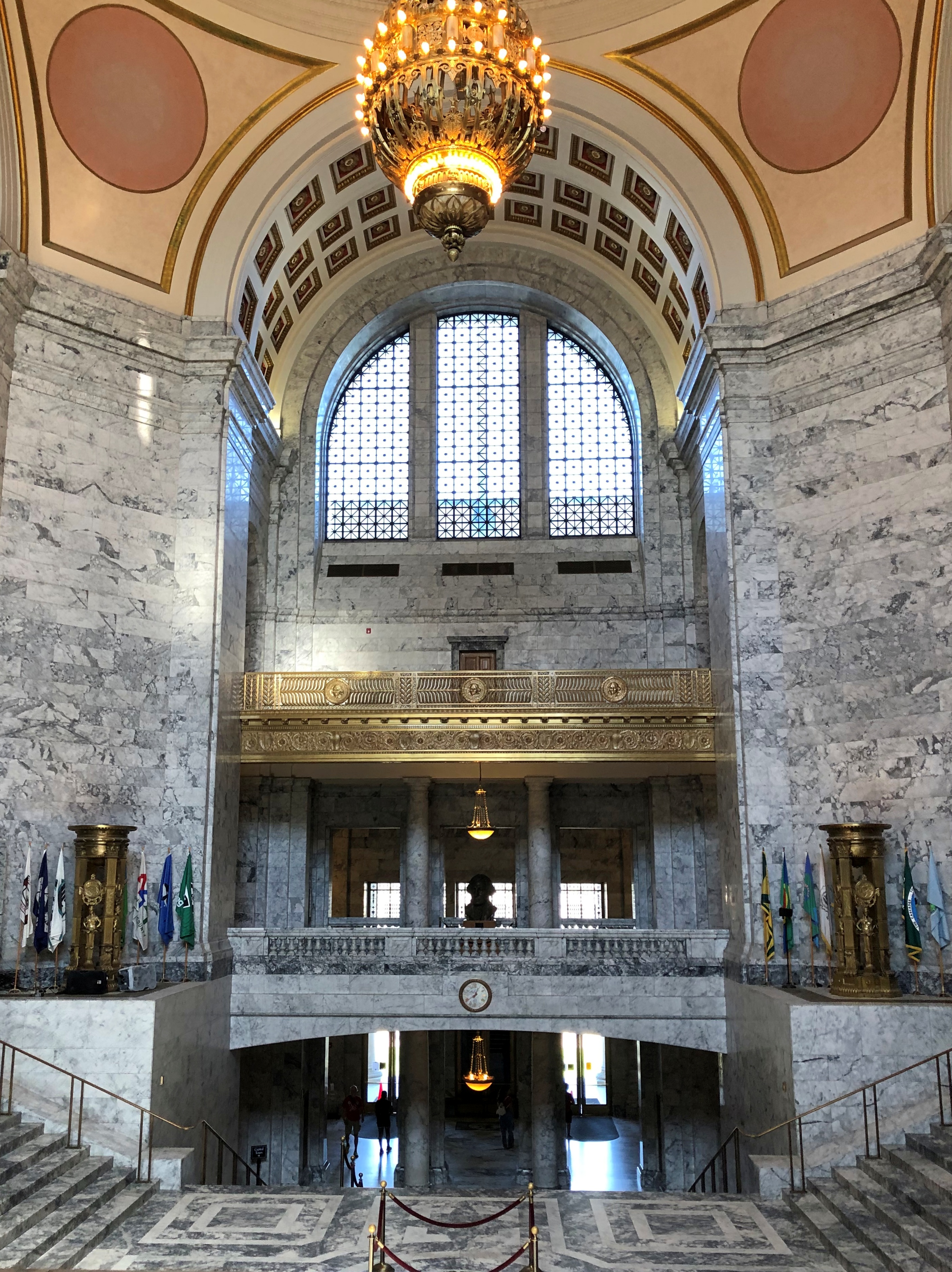
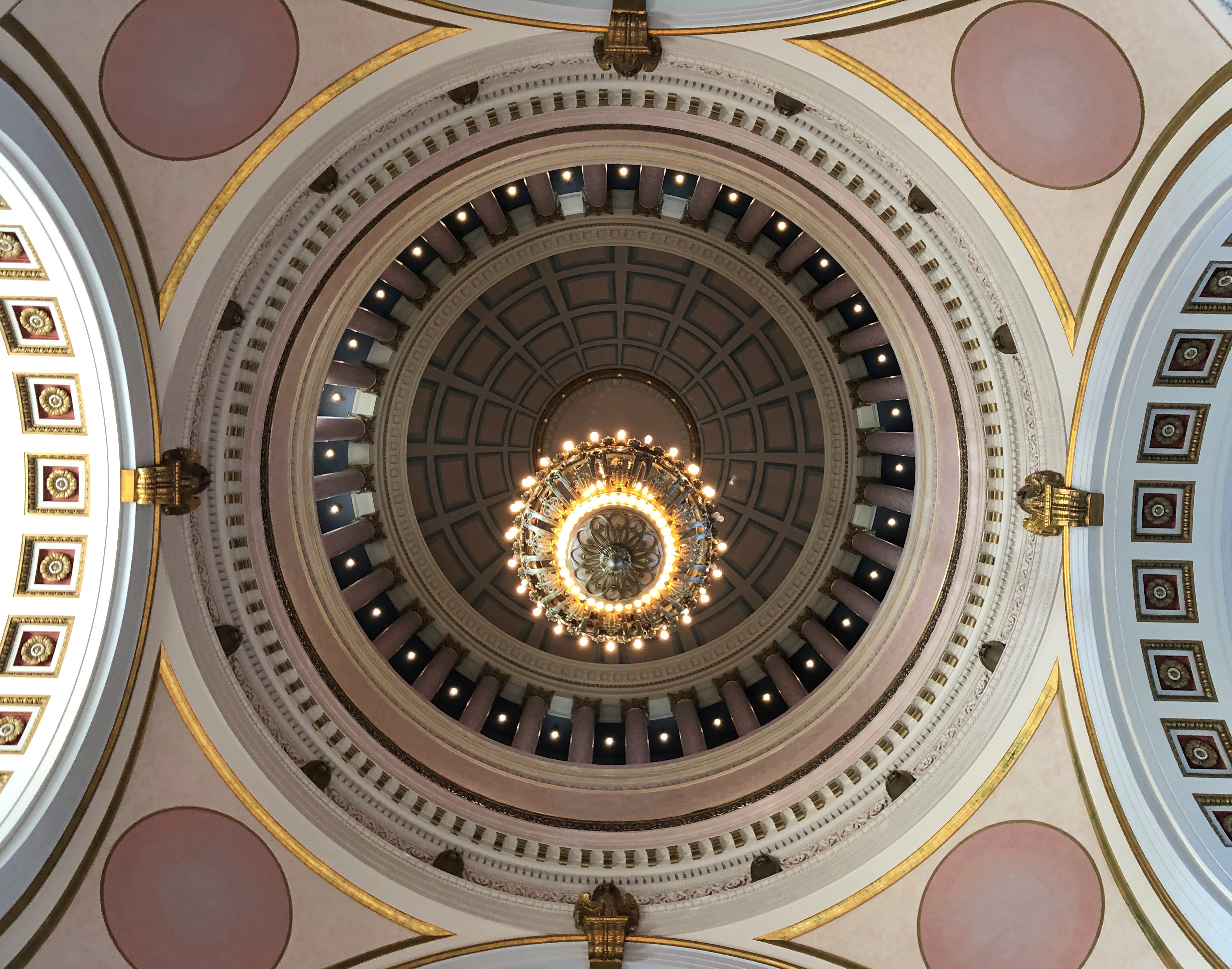
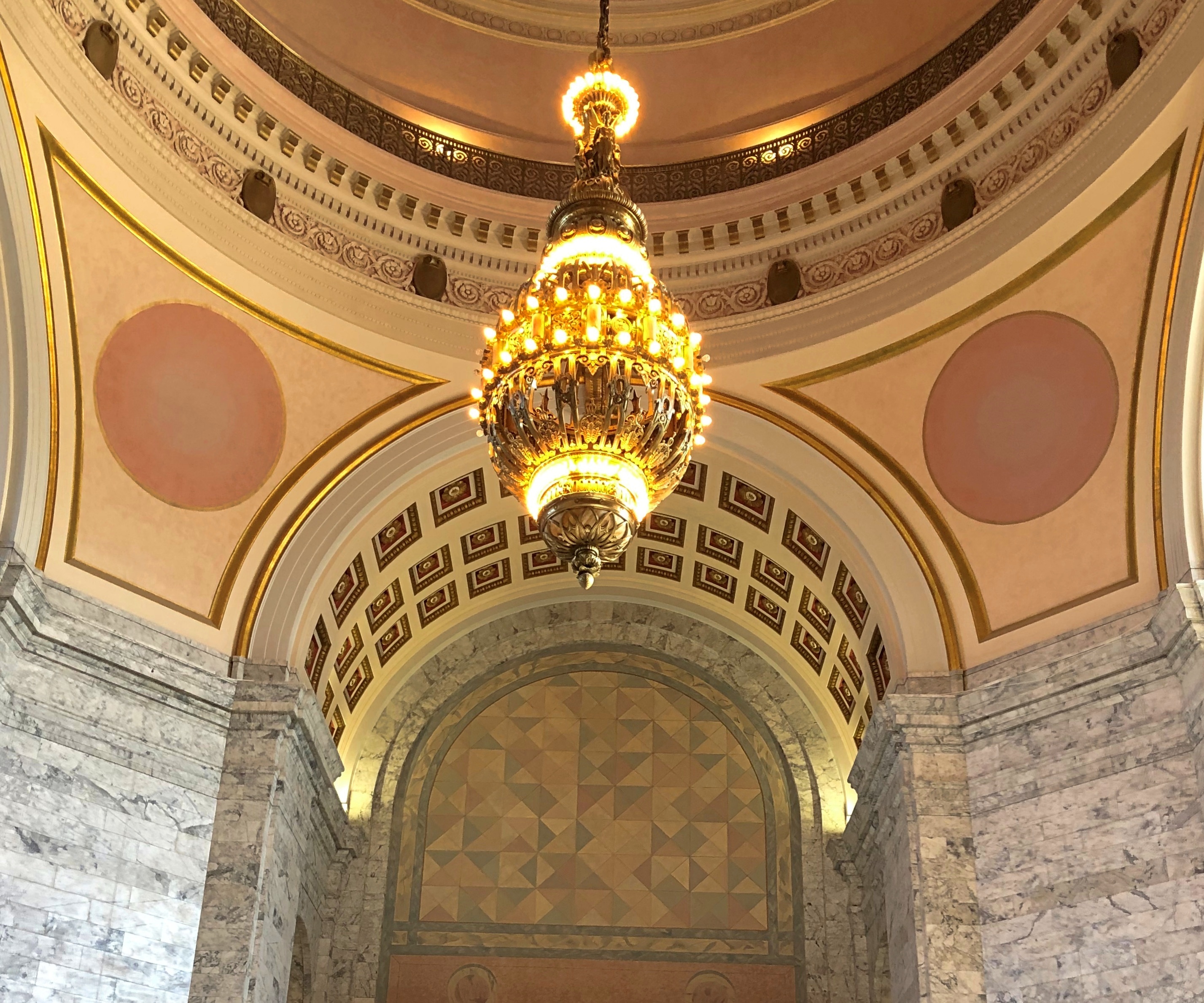
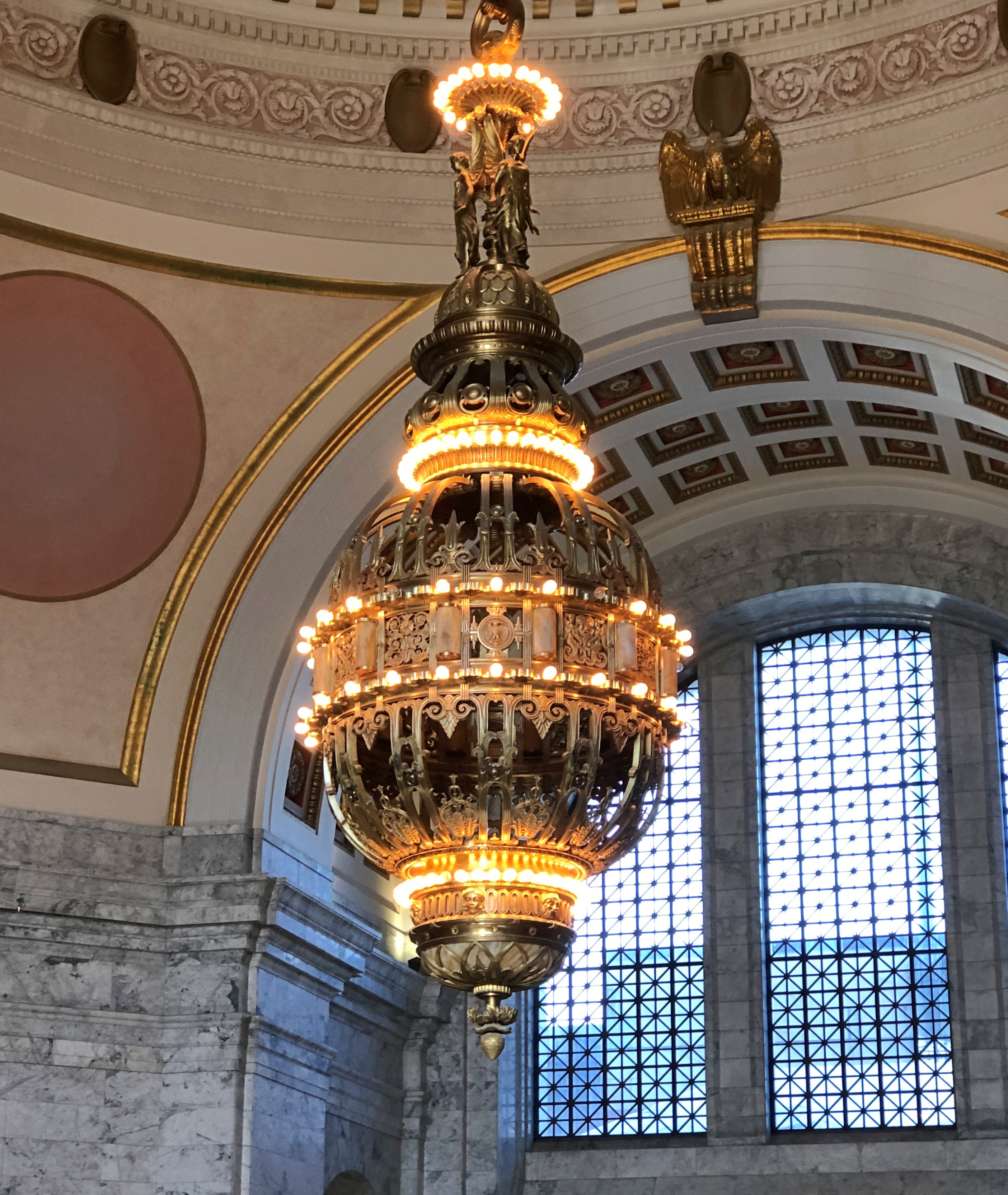
The chandelier under the dome is by Tiffany & Co. The largest thing that studio ever made, I’ve read, and the last job Louis Tiffany oversaw himself. With 200+ bulbs, it’s a massive thing, dangling up there, full of potential energy at a weight of five tons.Washington State Capitol Washington State Capitol

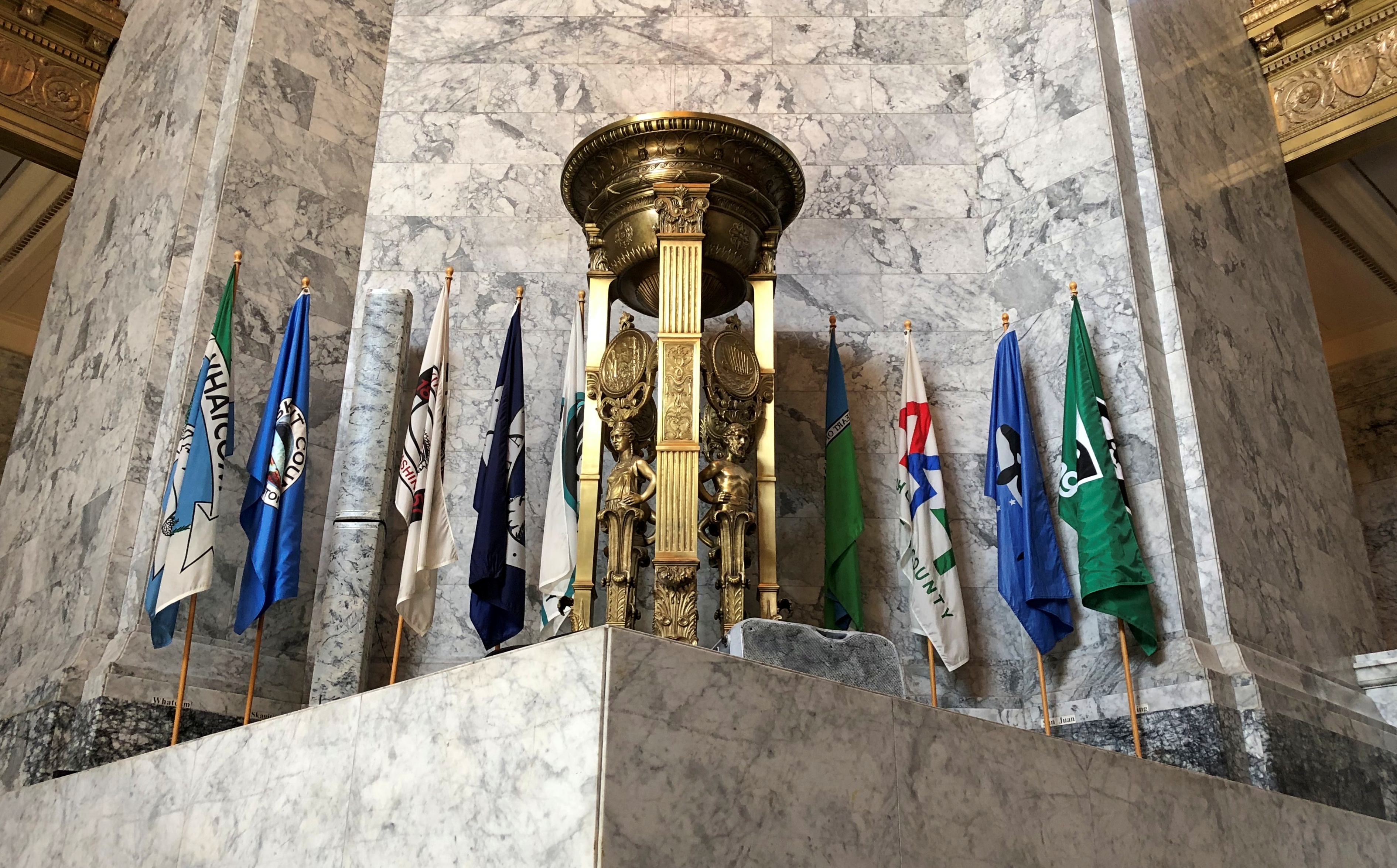
Tiffany also did the Roman fire pots, something I don’t believe I’ve seen in any other capitol, despite how well they evoke republican government. There are four all together, one each at the four corners of the room, and each surrounded by flags from Washington counties. Never actually used to hold fire these safety-conscious (-paranoid?) days.Washington State Capitol

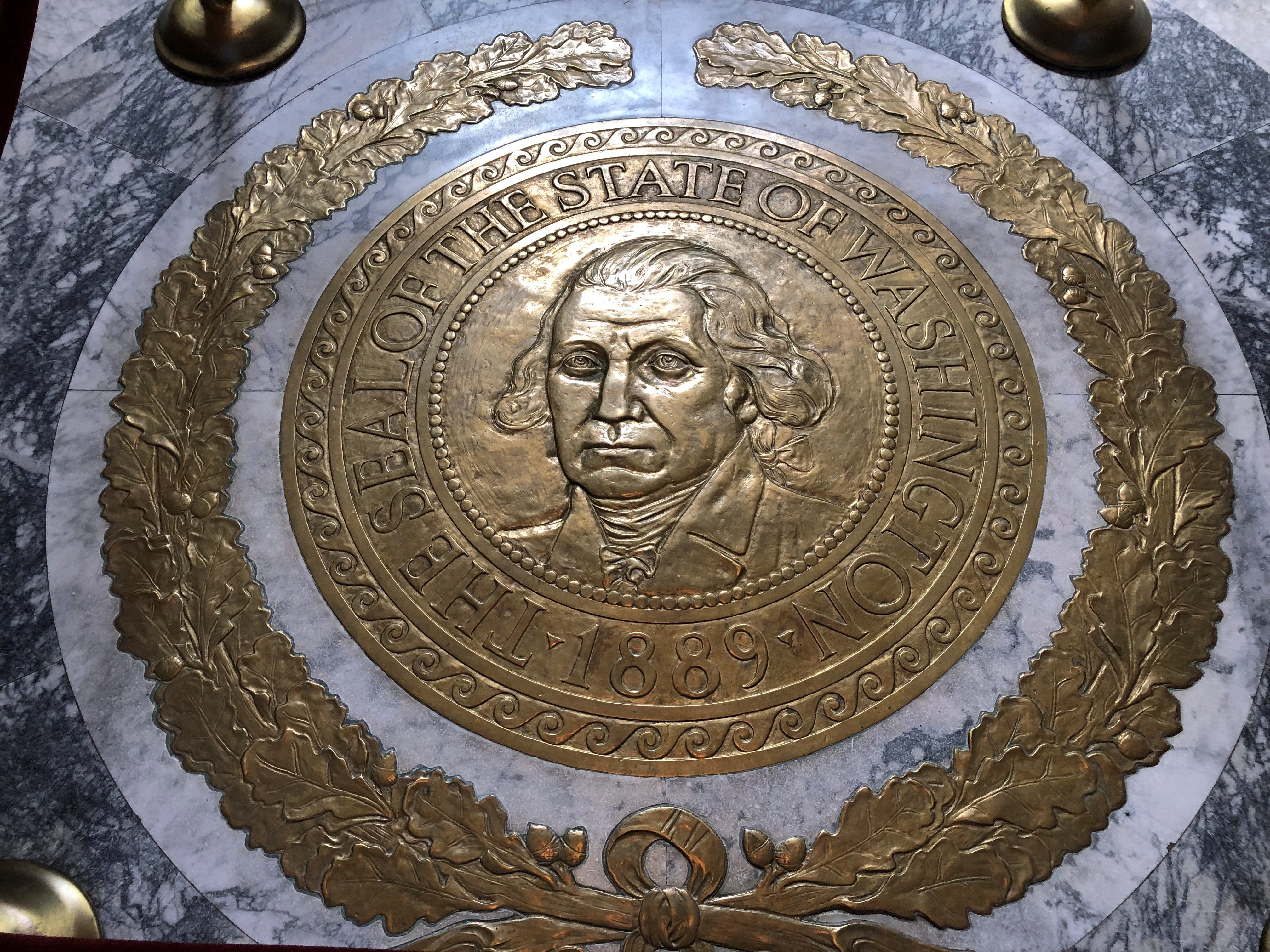
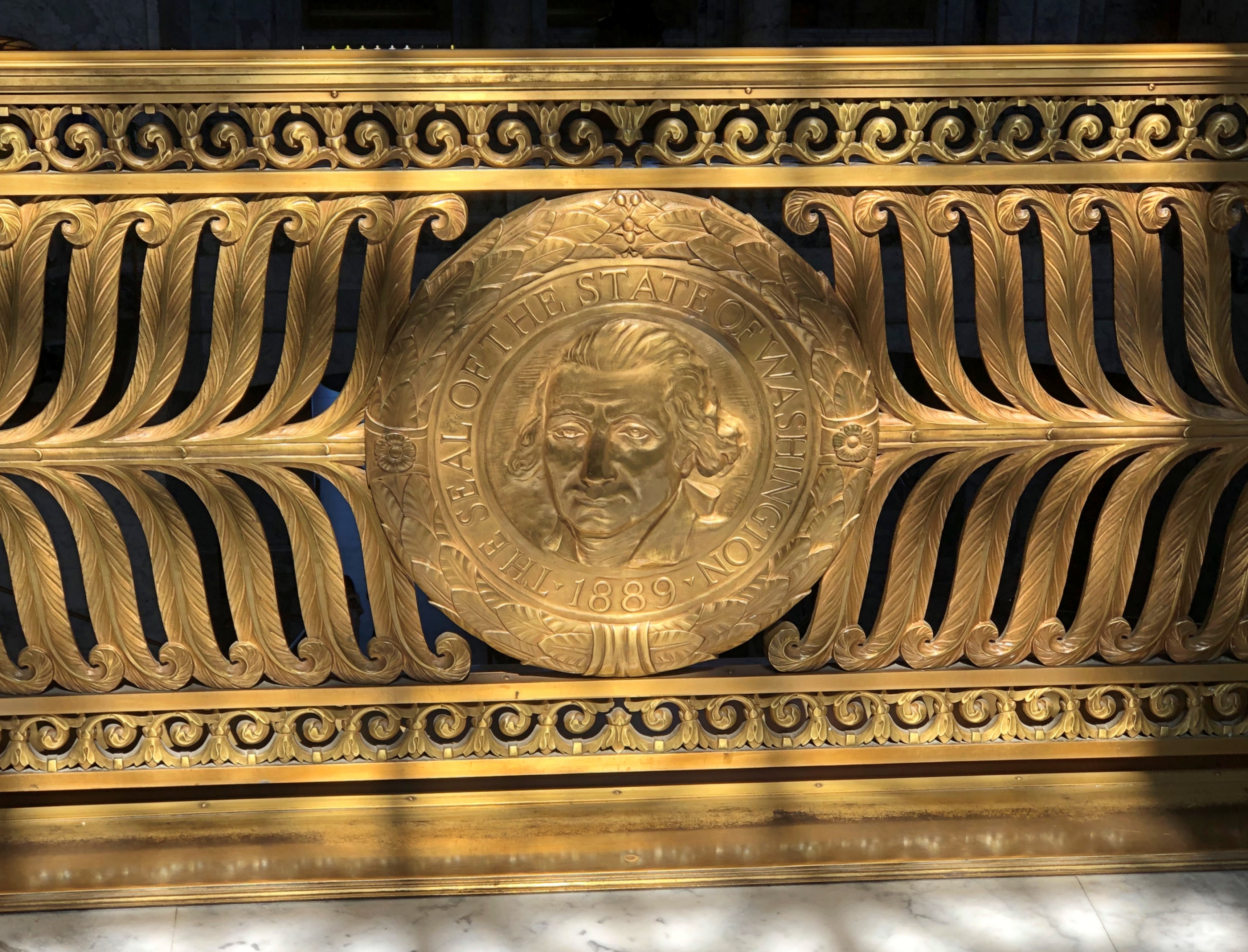
On the floor, straight below the dome. Roped off from feet that would casually tread on President Washington.Washington State Capitol

The House chamber.Washington State Capitol

Him again. Who do they think he was, the Father of Our Country?Washington State Capitol

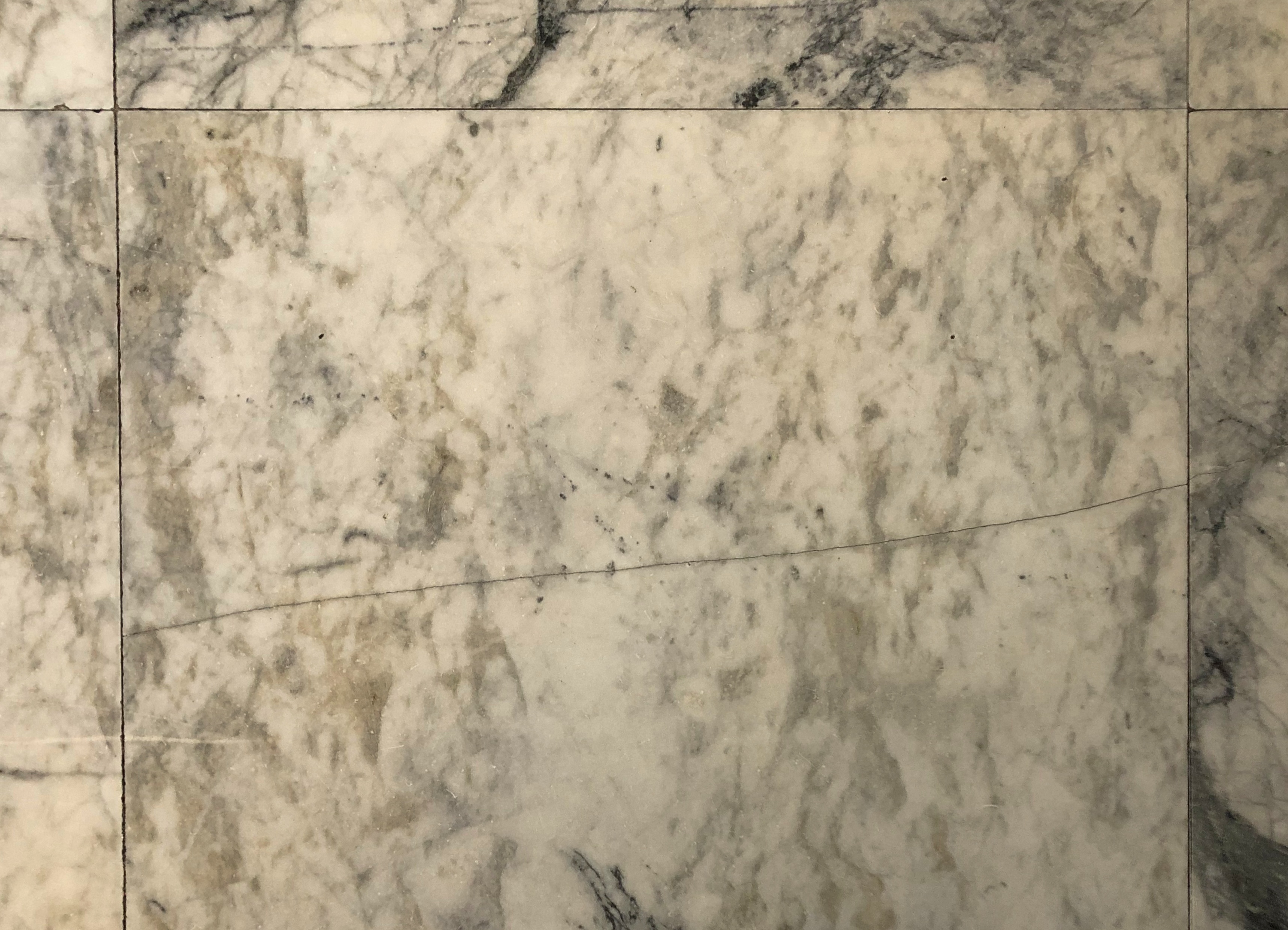
The 2001 Nisqually earthquake moved the Washington state capitol dome by three inches or so. Since then anchors besides gravity have been retro-engineering into the dome. The quake also left cracks on the floor stone. A capitol might convey permanence to the human mind, but impermanence has already gained a foothold.Washington State Capitol

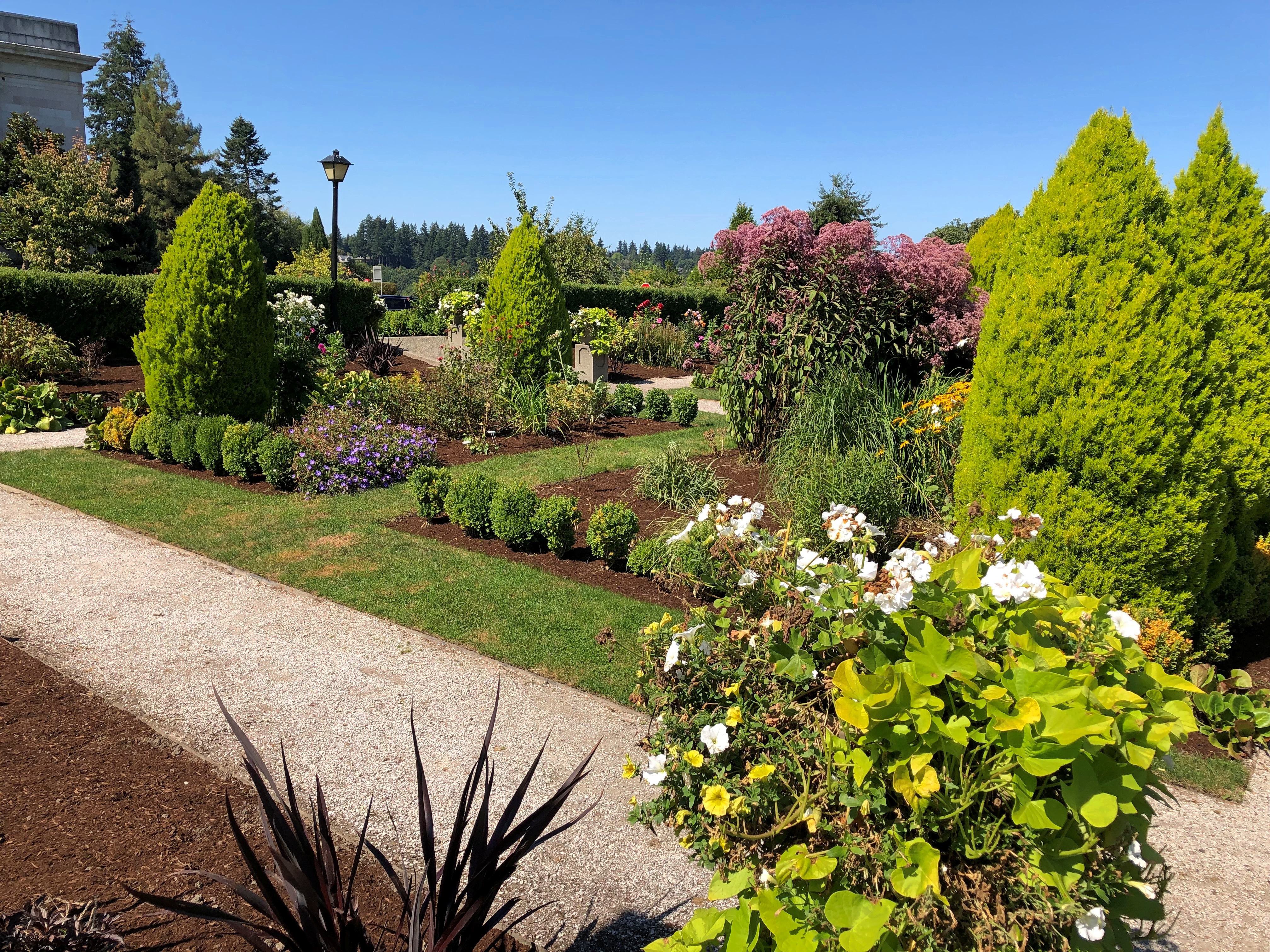
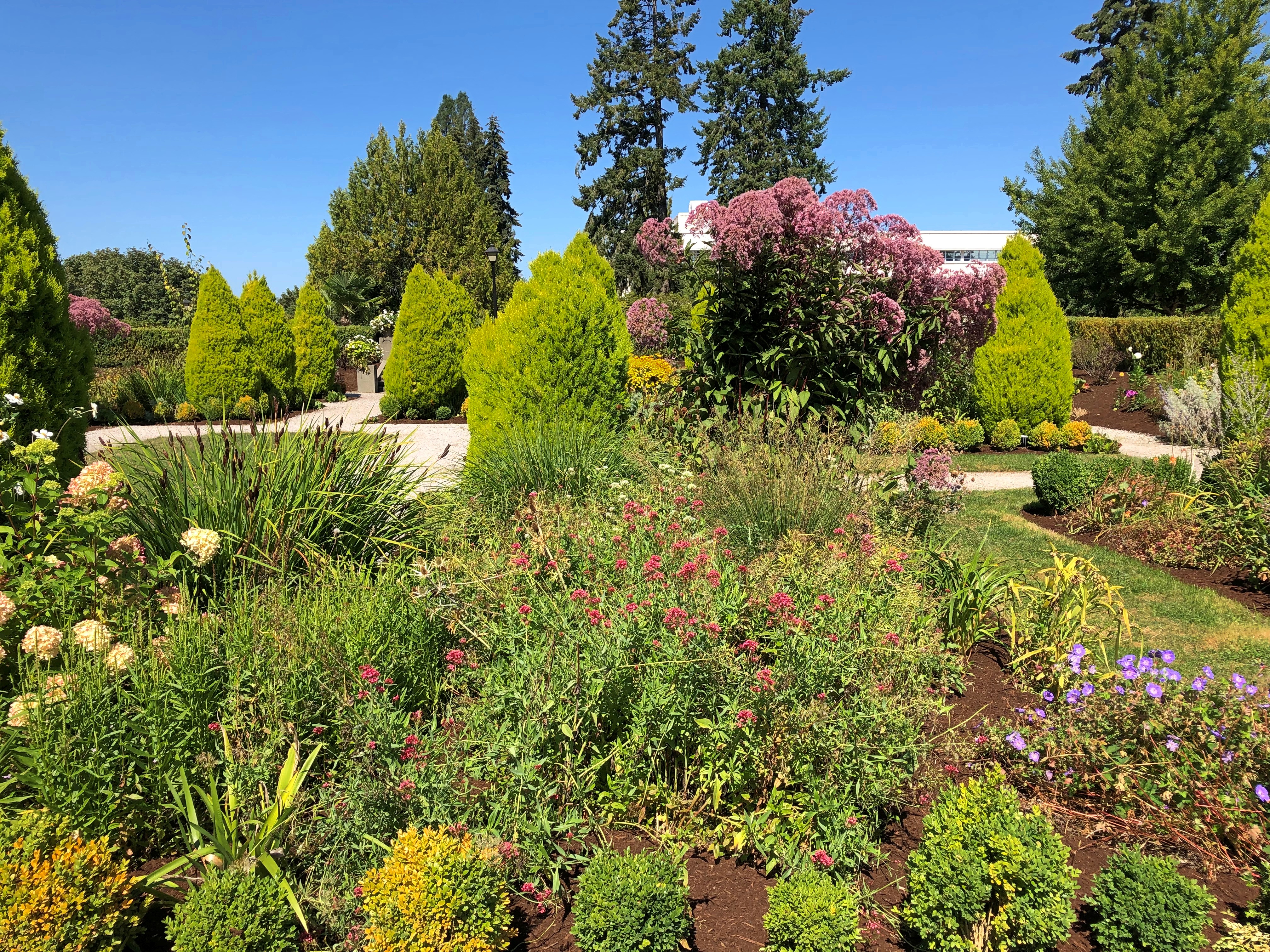
A capitol isn’t built of stone and bronze alone. The Olmsted brothers, sons of Frederick Law Olmsted, did the landscaping of the capitol grounds, with earth and vegetation as their raw materials. Anything by father or sons is usually worth a stroll through, especially on a warm summer day with blooms all around.Washington State Capitol campus Olmsted Washington State Capitol campus Olmsted Washington State Capitol campus Olmsted Washington State Capitol campus Olmsted

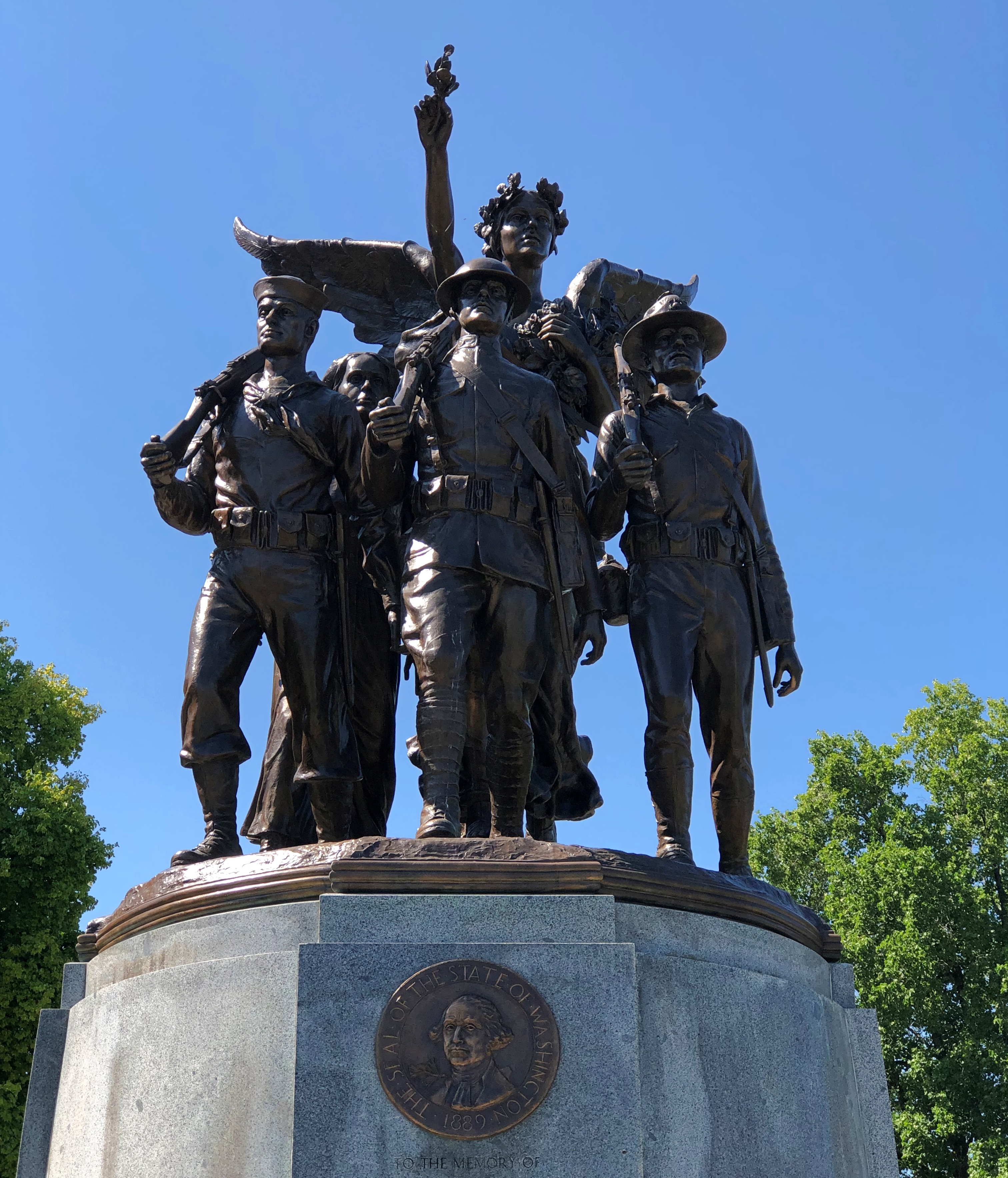
I knew at once it was a monument to those from Washington who died in the Great WarWashington State Capitol campus WWI memorial

Sure enough. “Winged Victory,” by Alonzo Victor Lewis (d. 1946), known in the Pacific Northwest for his works.

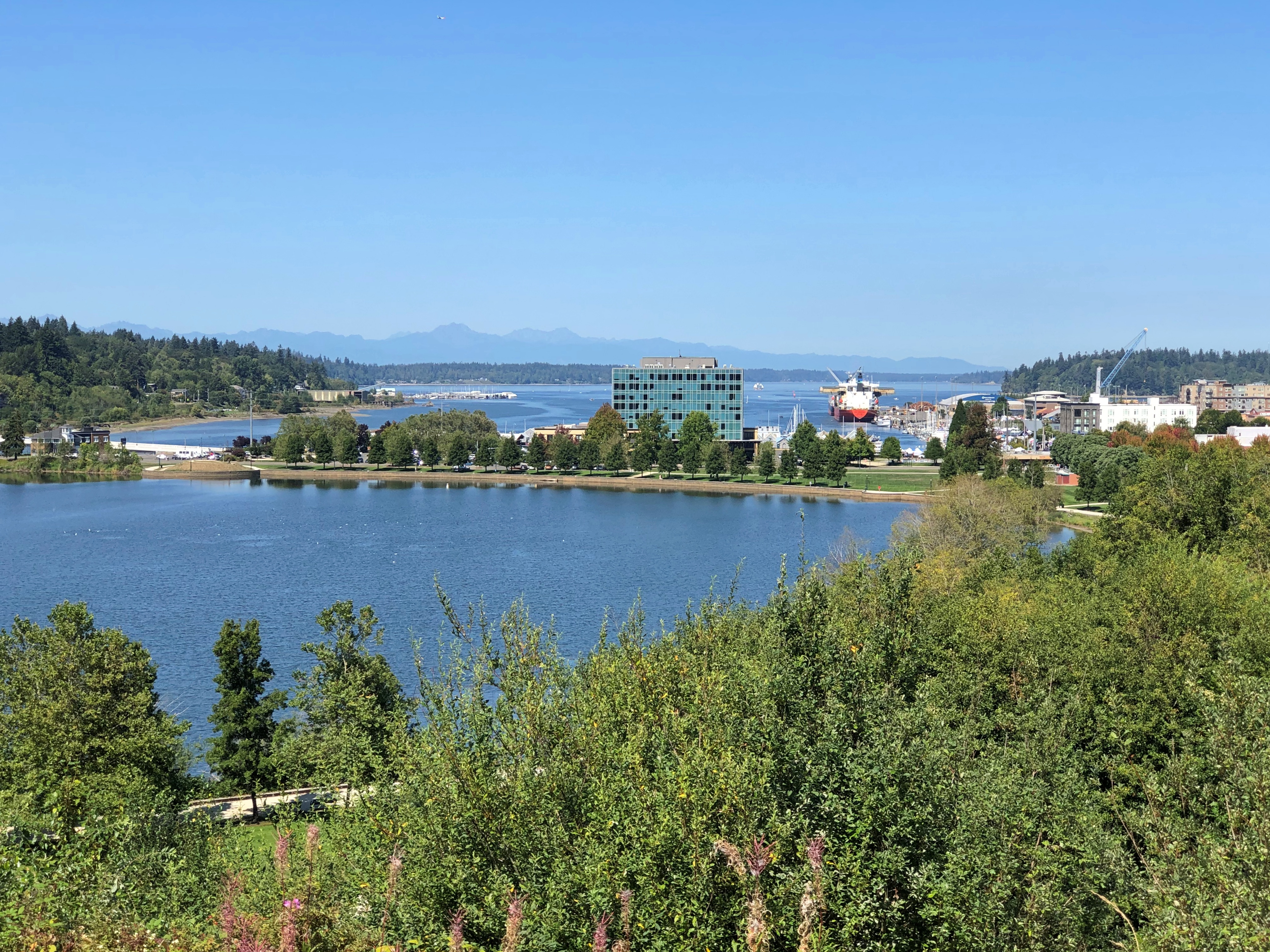
One more feature of the capitol grounds: a view. Capitol Lake, created by the damming of the Deschutes River in 1951.Washington State Capitol

One of these days – as a larger movement to de-dam U.S. waterways is under way – the dam might be removed, returning to the estuary it once was. Naturally, there are arguments against taking the dam down. As much as I admired the behemoth likes of Bonneville and Grand Coulee, I could also be persuaded that a lot of the smaller dams were built simply because that’s what you did, and whatever economic justification they once had is long gone.

Helena, Montana

Missing a hike around Devils Tower meant we had time for other things, including a fine second breakfast in Hulett, Wyoming (pop. 300+). I asked the waitress what it was like a few weeks earlier, during the Sturgis Rally.

“Crazy,” she said, adding that the rally started on her third day on the job, for that extra measure of crazy.

She and her husband and daughter had been living on a boat for five years until recently, she also said, including a sail through the Panama Canal once. She mentioned that almost in passing, as if five years on a boat is something people often do, followed by relocating far away from any oceans. Though not Sturgis-busy, the place had more than a few customers, so I wasn’t able to get more detail.

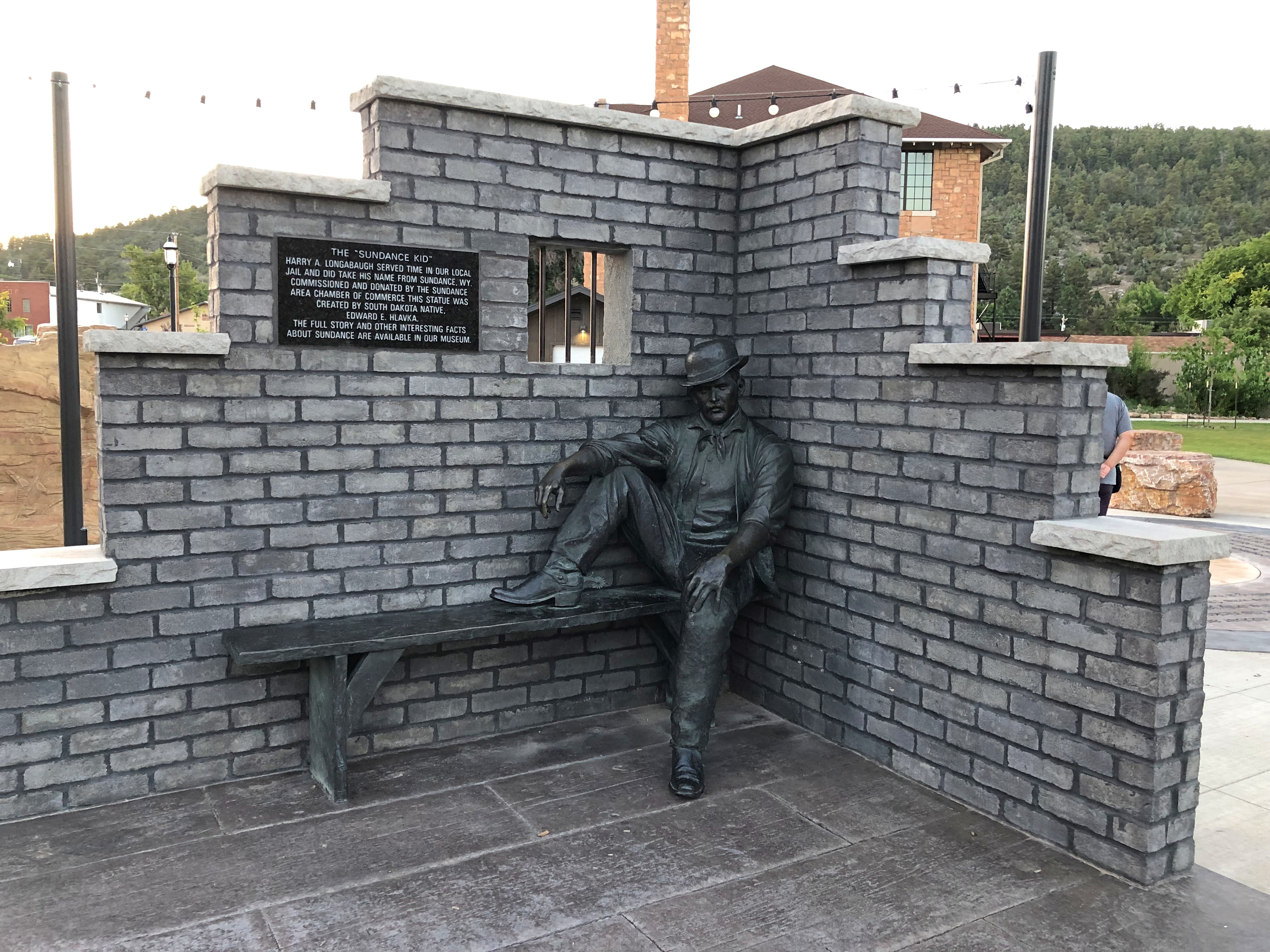
We had time to look around Sundance, Wyoming before we left. Turns out Harry A. Longabaugh spent some time in the local jug for a bit of thieving near Sundance, and so he became known as the Sundance Kid. The town of Sundance (pop. just over 1,000) wants you to know this, communicating it to passersby with a memorial in the town’s main municipal park.Sundance, Wyoming

Despite his long history of criminal shenanigans, that was apparently the only time he was imprisoned. Guess you can get away with a lot when you have the dashing good looks and vim of a young Robert Redford.

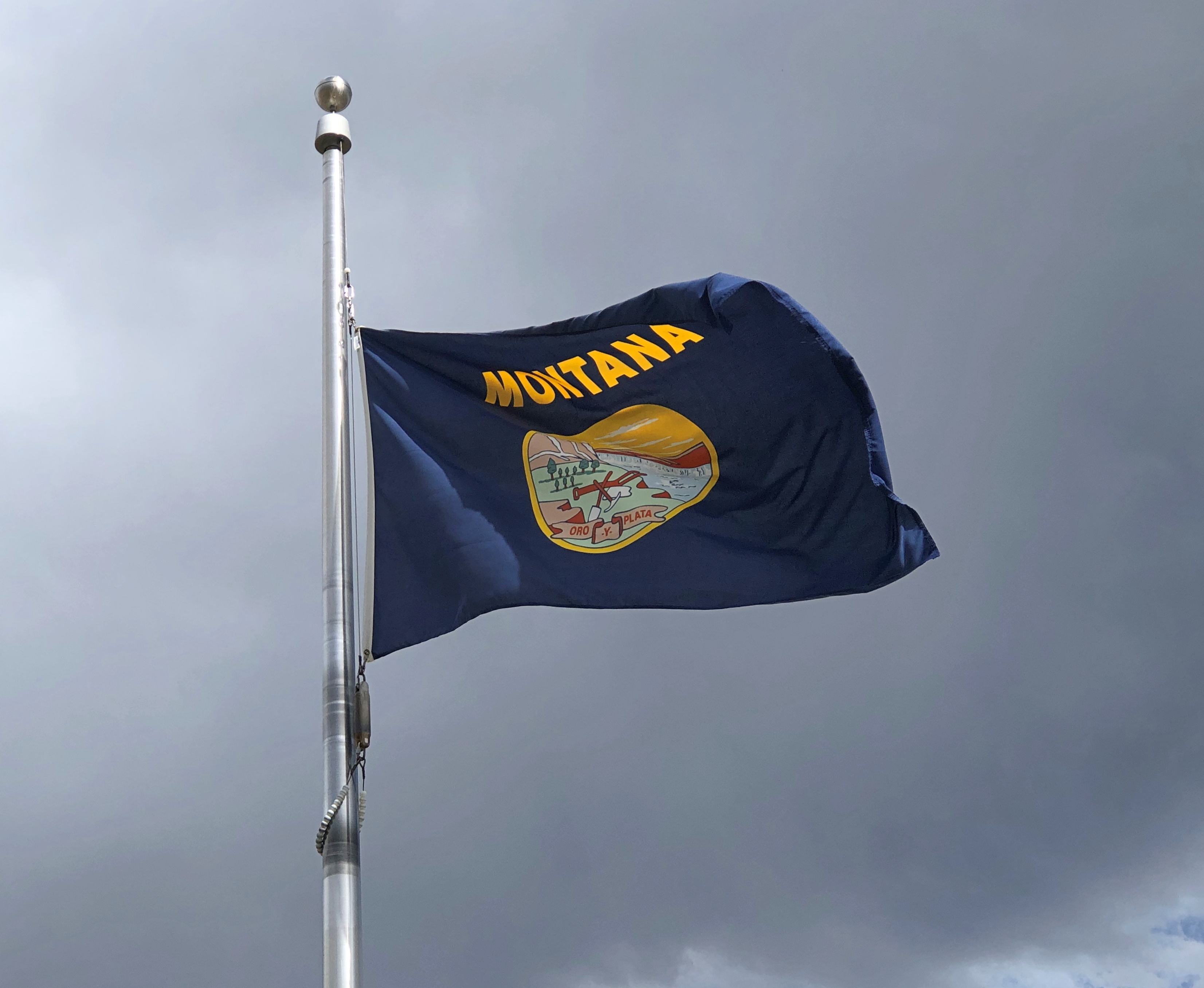
The drive from Sundance into Montana and on to Helena took up most of the day on August 21.Montana flag

Billings, Montana, bears further investigation if we’re ever out that way again. All it takes to impress me sometimes is a terrific lunch, and that we found at Spitz Mediterranean Street Food in downtown Billings. It didn’t seem like a chain – and I’d never heard of it – but there are about 20 of them, and it seems that Billings can support one. Other locations are in such usual-suspect retail markets as southern California, Denver, Portland, Ore. and DFW.

We spent the night in Helena and woke the next morning to more than a hint of a wildfire in the air, from elsewhere in Montana, but less than an air action day.

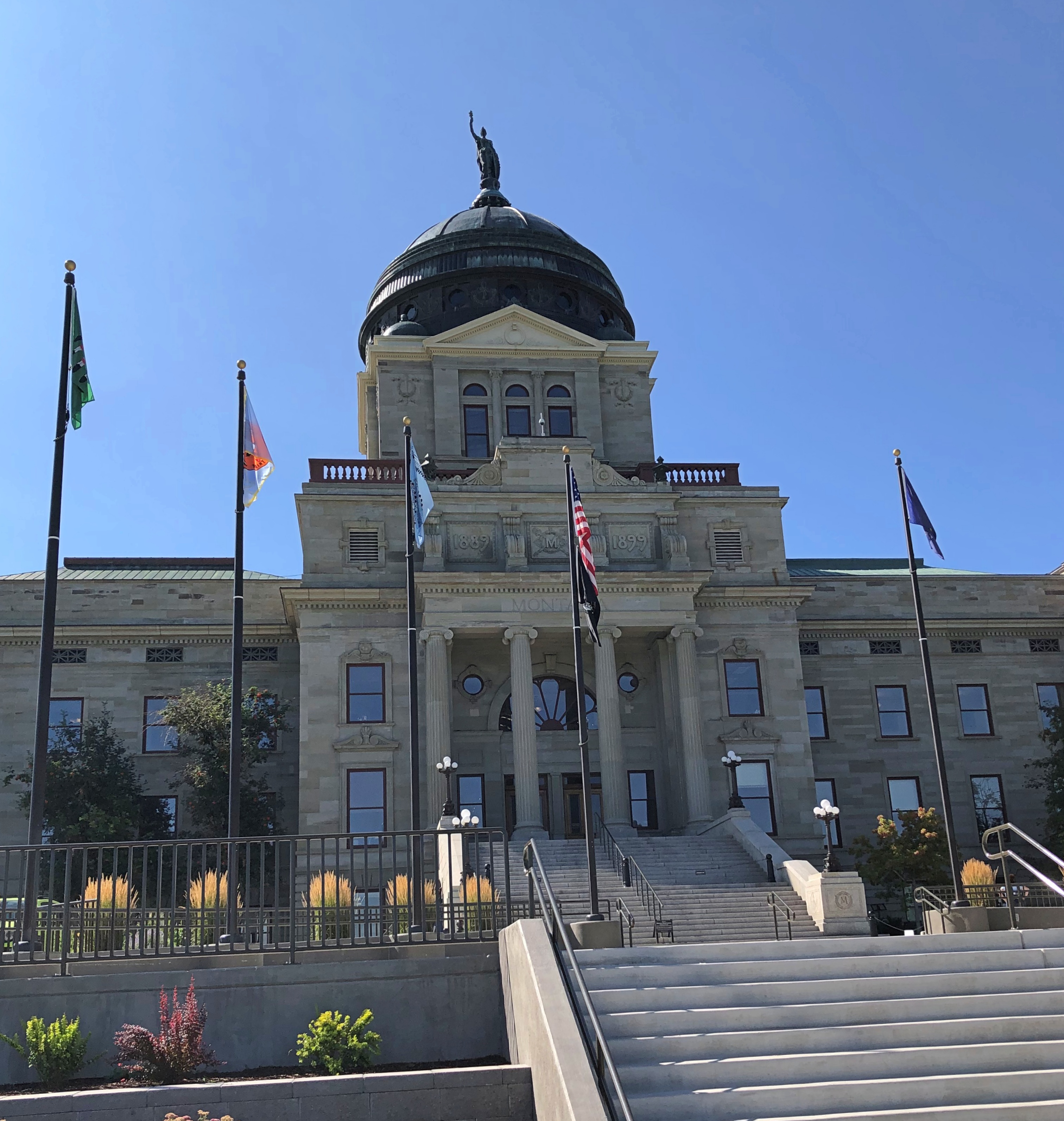
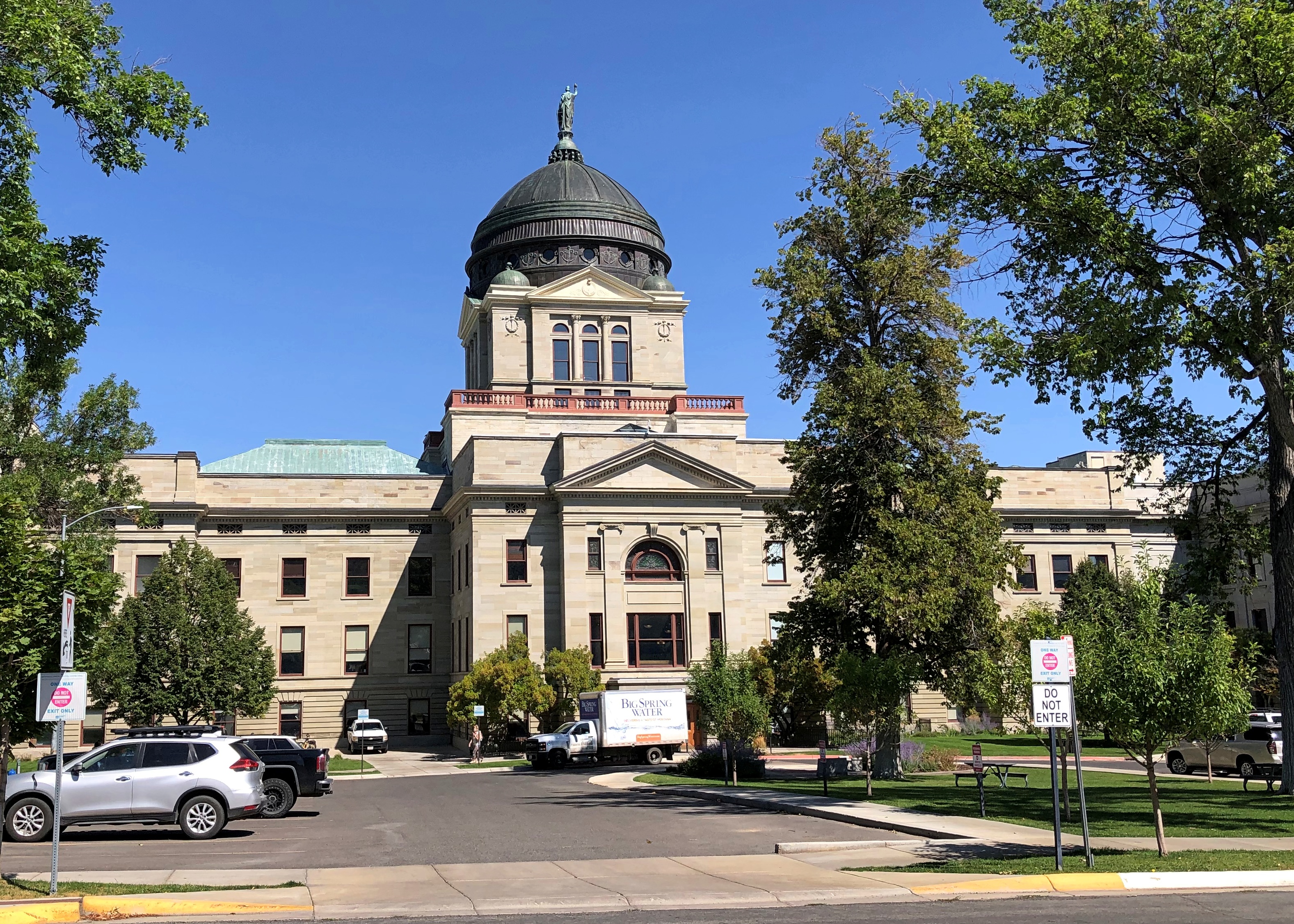
We planned to drive to the entrance of Glacier NP that day, but we couldn’t leave the capital of Montana without seeing the capitol. Front and back.Montana State Capitol Montana State Capitol

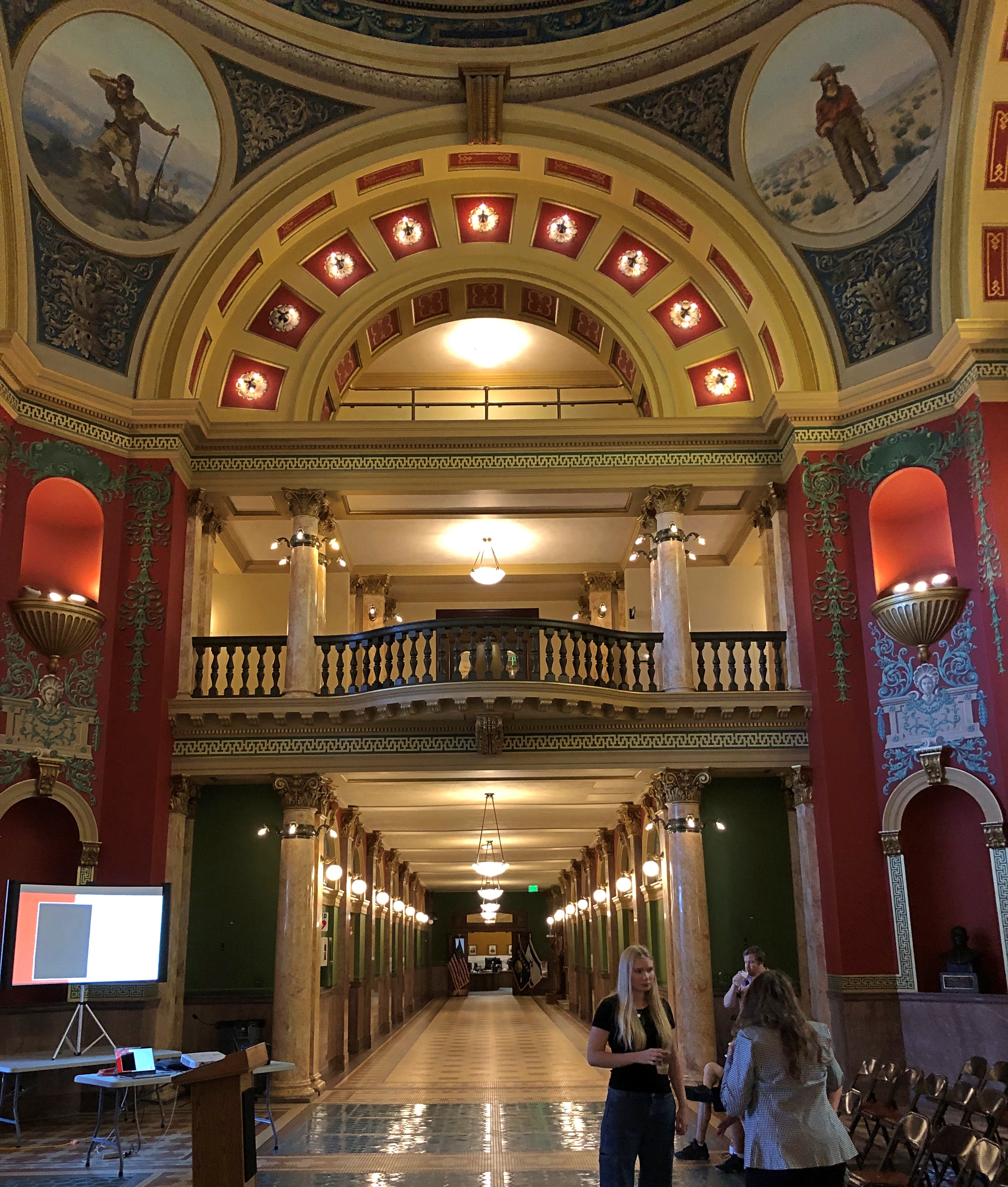
Inside.Montana State Capitol Montana State Capitol

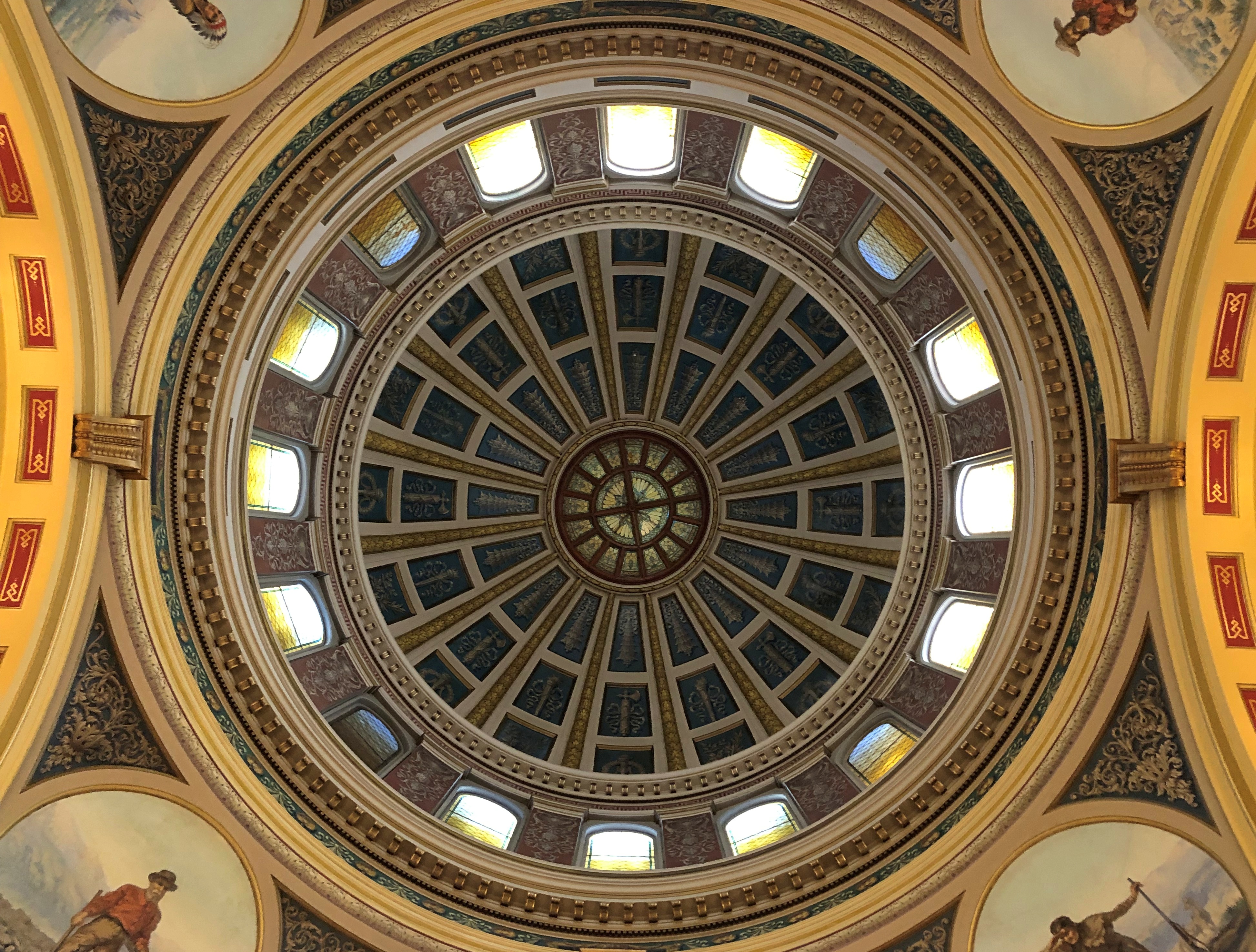
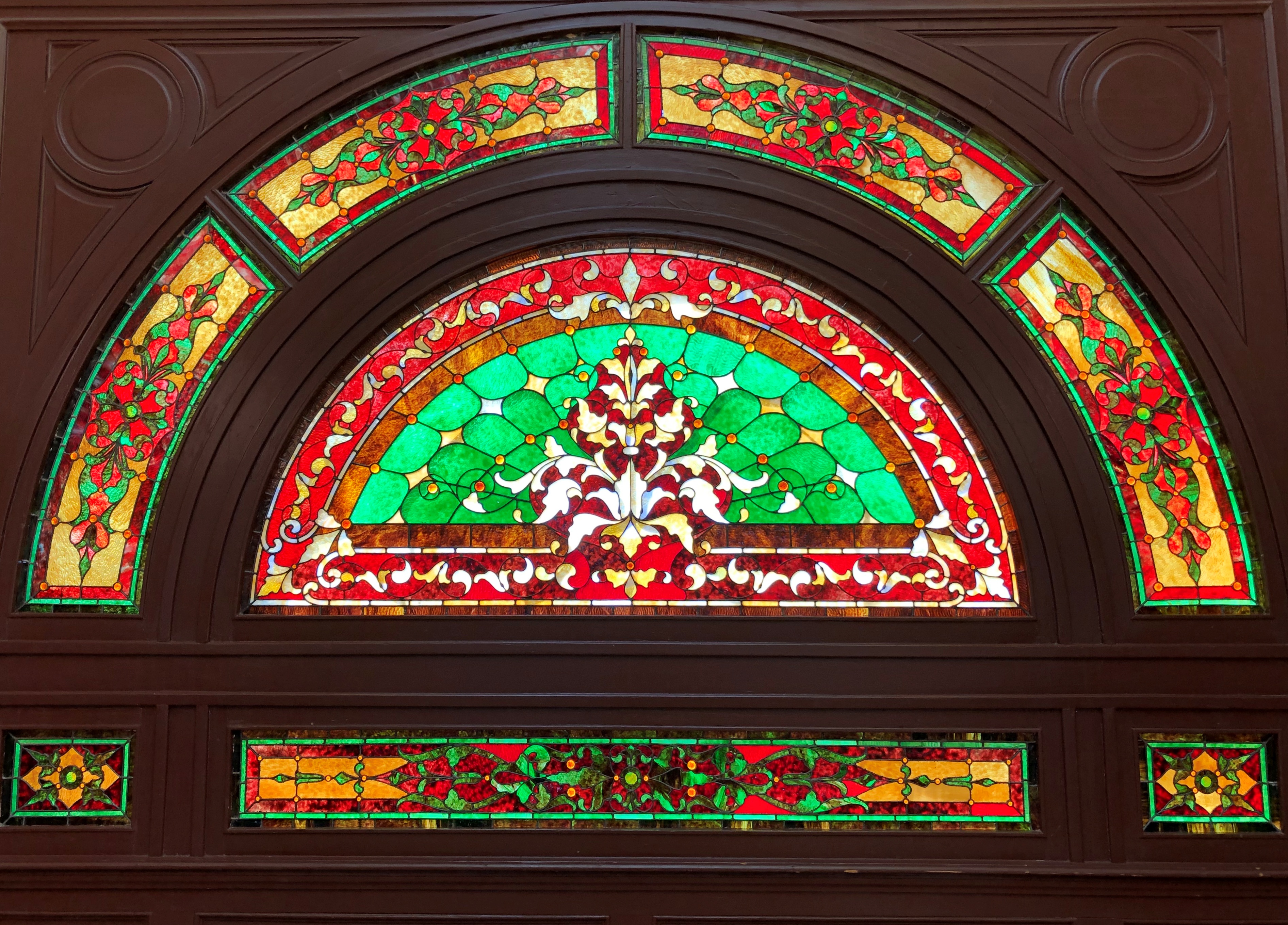
Stained glass is a little unusual in a capitol, but not unheard of.Montana State Capitol

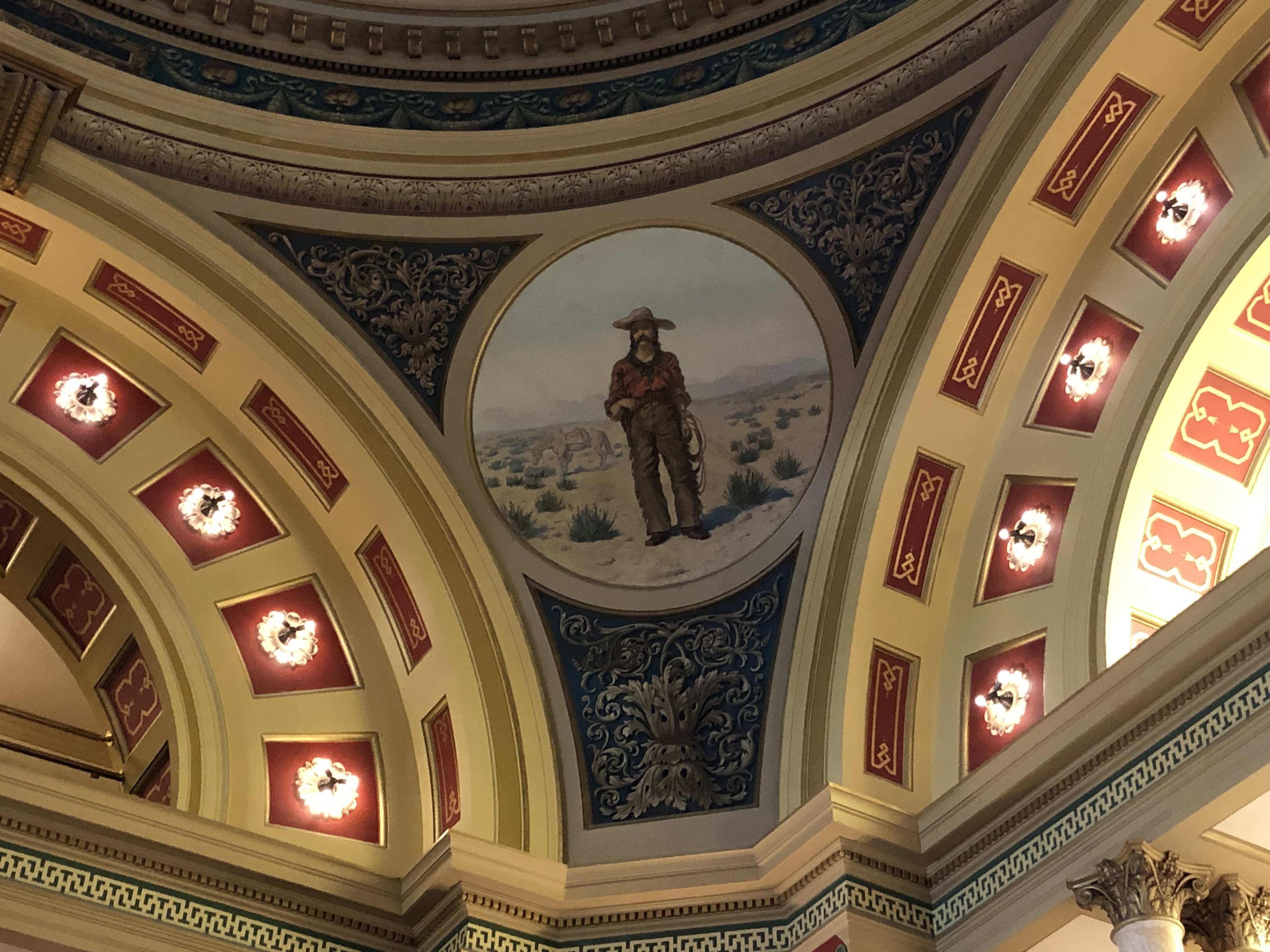
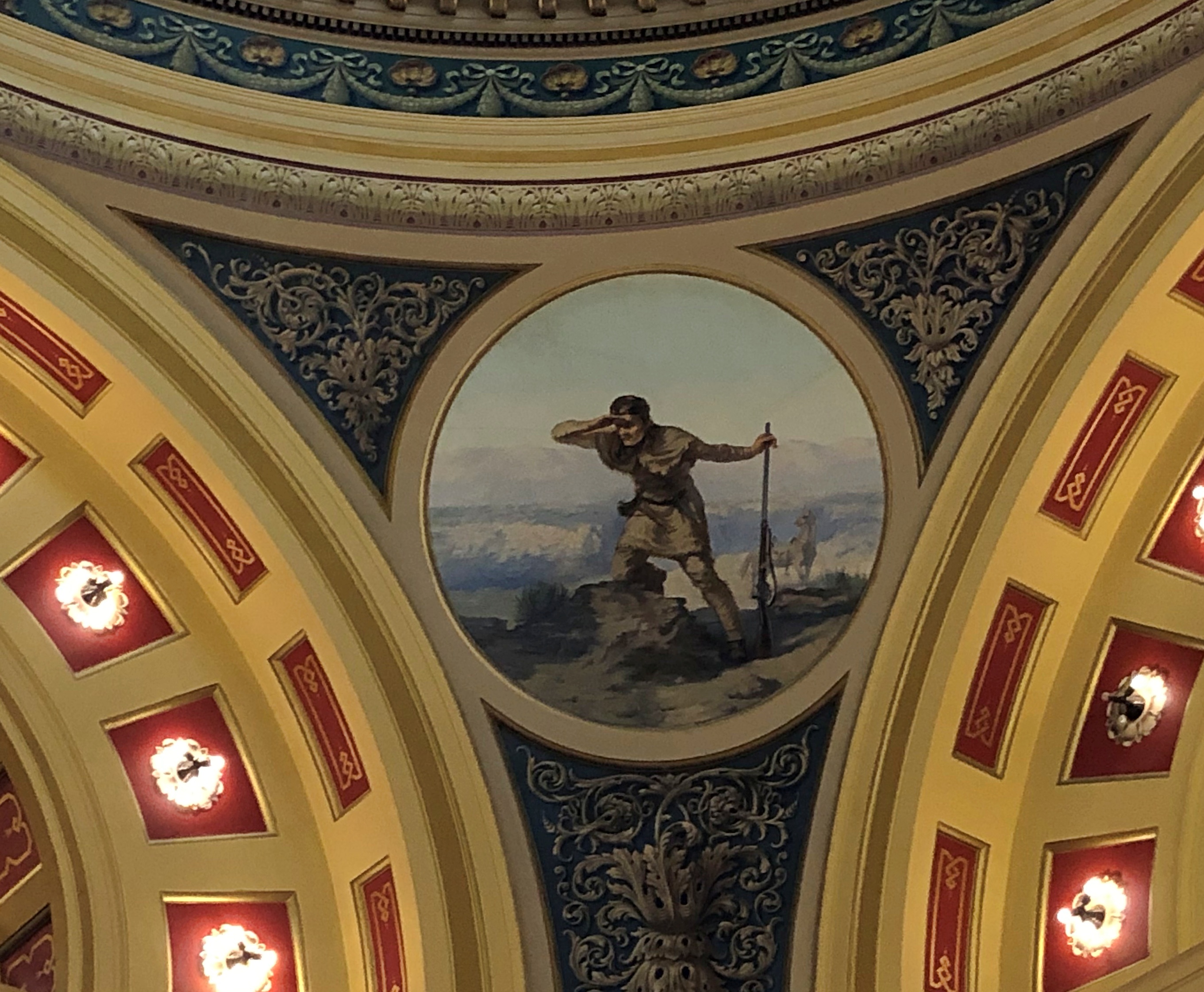
Murals are more common. Some clearly from an earlier period.Montana State Capitol Montana State Capitol

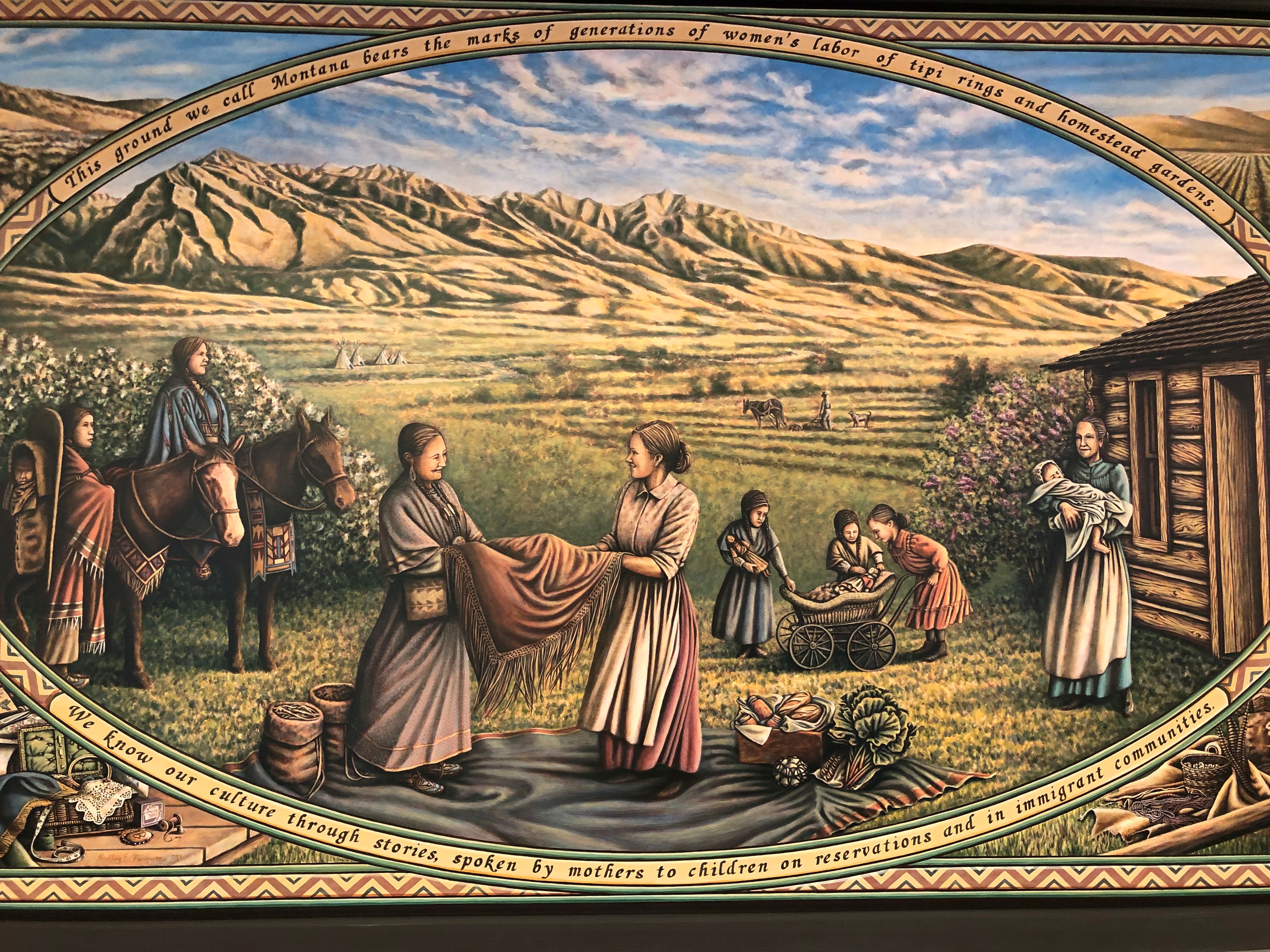
More recent murals depict scenes like this, the cooperative spirit between native and settler women.Montana State Capitol

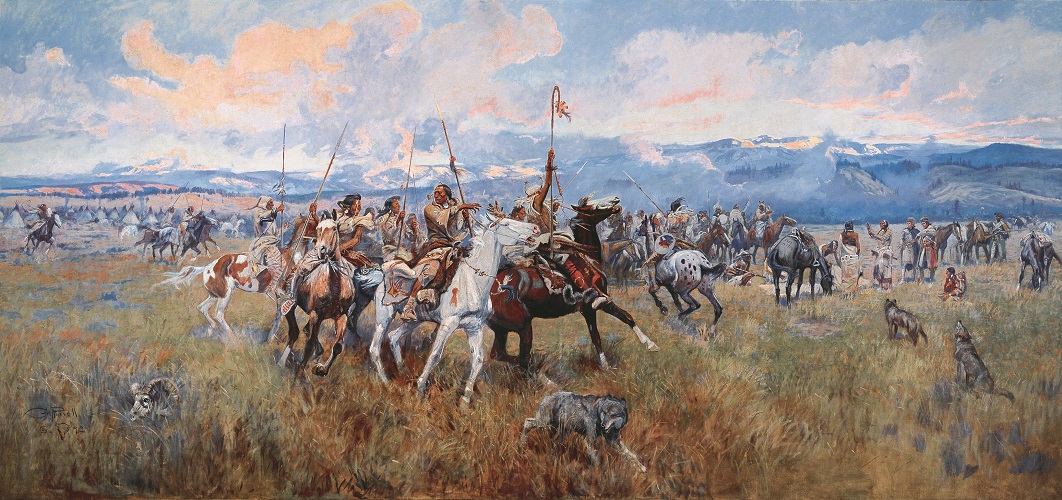
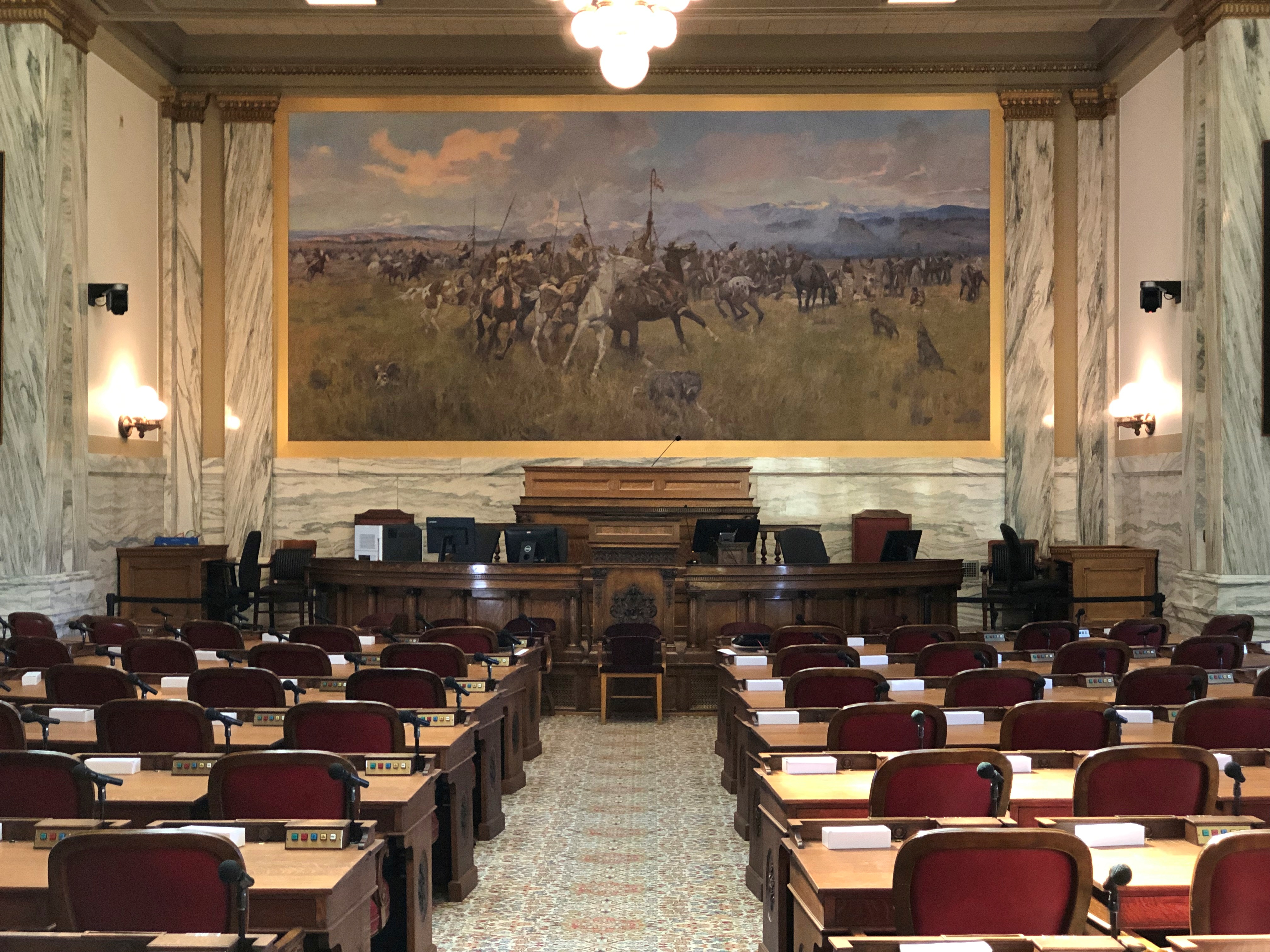
On display in the Montana House of Representatives chamber – and the reason its door is always locked, to protect it, a sign said – is the painting “Lewis and Clark Meeting the Flathead Indians at Ross’ Hole,” by Montana artist Charlie Russell (d. 1926). It is a highly esteemed work of his.

In situ:Montana State Capitol

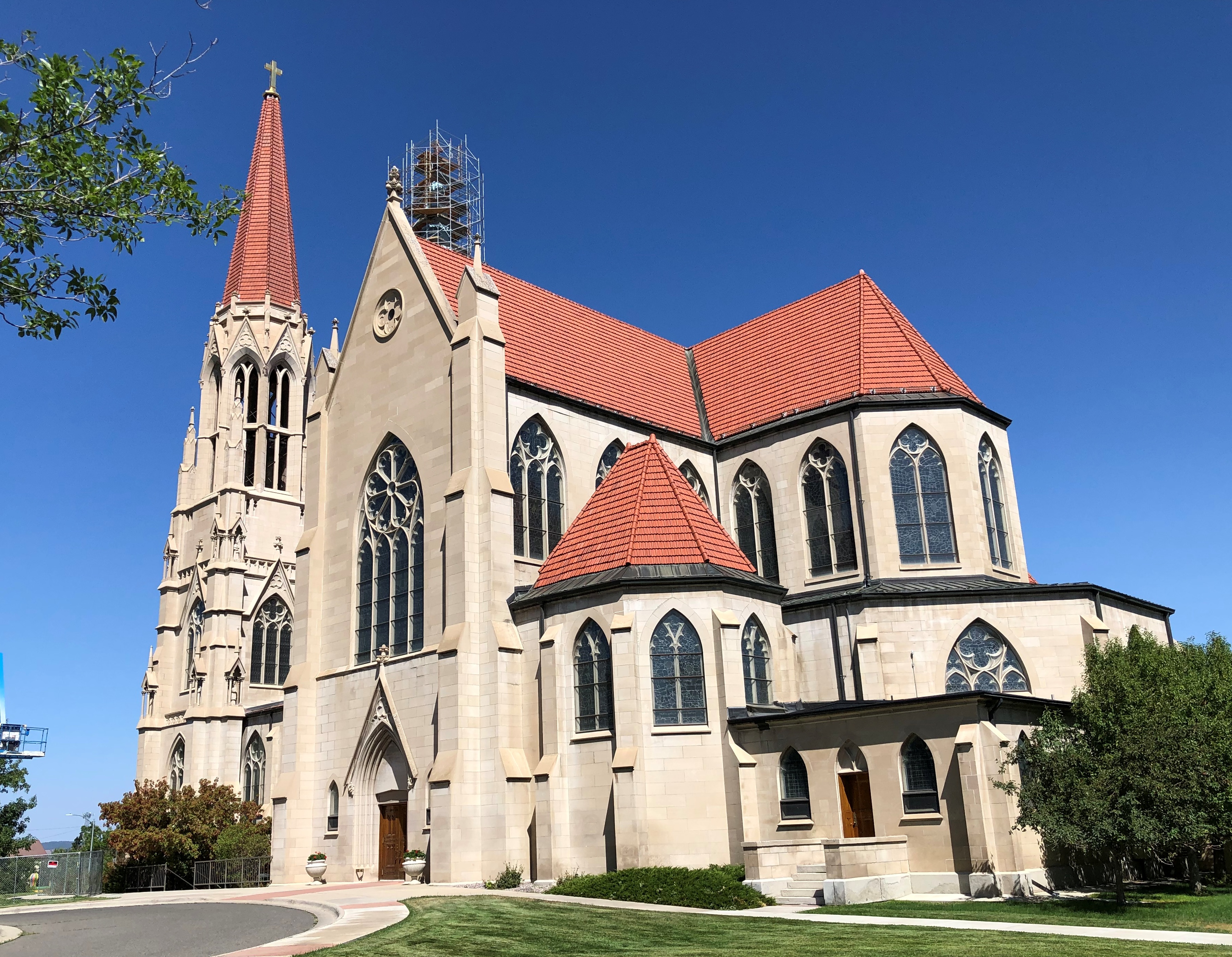
Only a few blocks from the capitol is the Cathedral of St. Helena, which is undergoing exterior renovation.Cathedral of St. Helena Cathedral of St. Helena Cathedral of St. Helena

It was open.Cathedral of St. Helena Cathedral of St. Helena

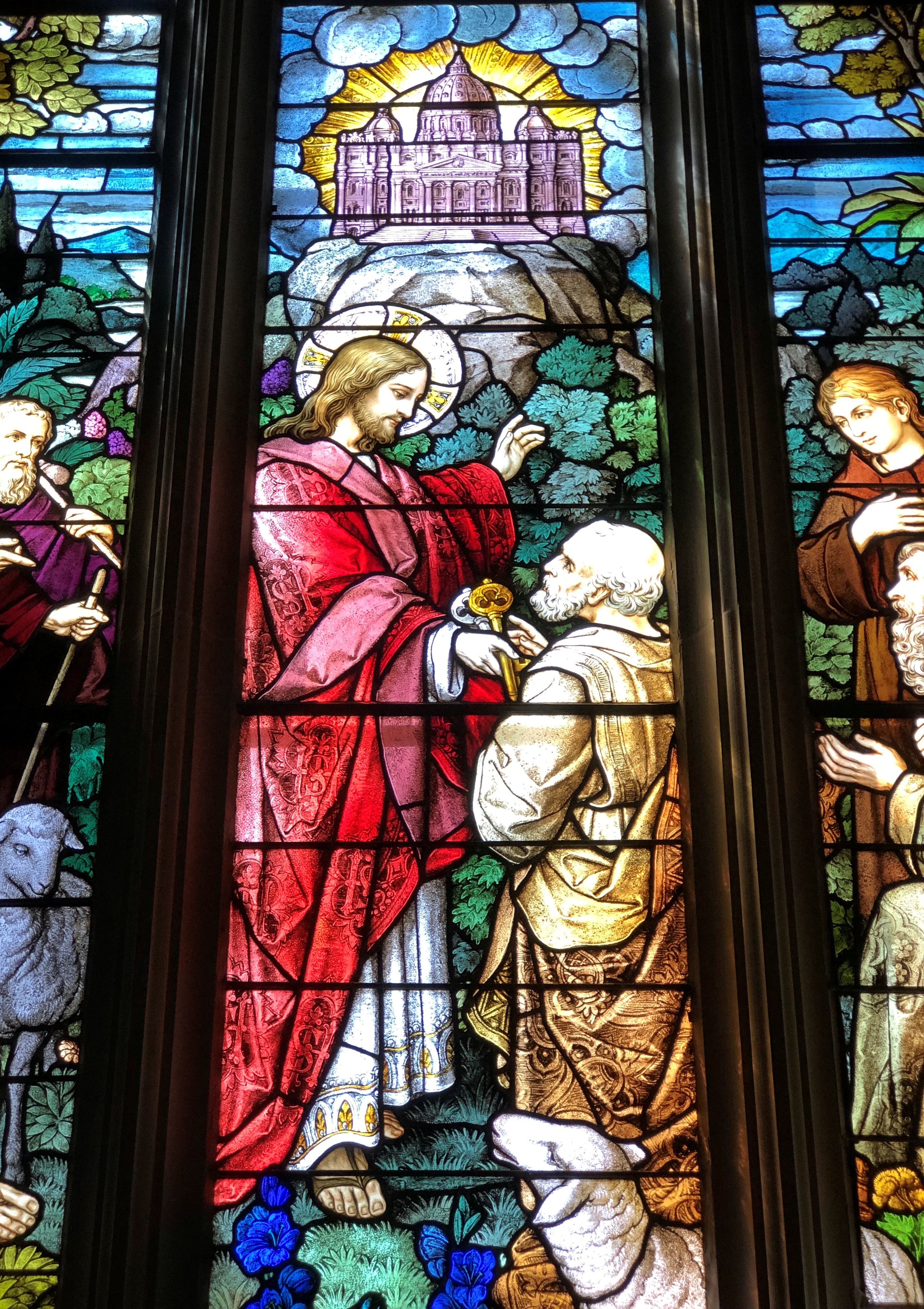
Some magnificent stained glass.Cathedral of St. Helena

Before leaving town, we visited downtown Helena. Helena, Montana

Soon we made our way to N. Last Chance Gulch Street, which is a pedestrian thoroughfare. At least, that’s what Google Maps calls it.

The Helena As She Was web site says of this street, in answer to what its real name is:

“The answer is: Both. Last Chance Gulch is the name of the actual gulch in which gold was discovered in 1864. The thoroughfare which was built down the Gulch was originally named Main Street. It remained that way for some 85 years, until July 20 1953, when acting Helena Mayor Dr. Amos R. Little, Jr. signed an ordinance officially changing the name of Main Street to Last Chance Gulch. Both names are still used locally for what was once the grand thoroughfare of Helena’s business district.

“Last Chance Gulch meanders as it does because it was originally routed between mining claims; it was not designed that way to lower fatalities from stray bullets, as some promotional literature has claimed.”

Stray bullets, eh? Helena wouldn’t be the only place that trades on a history of (fortunately) long-ago violence. That kind of thing is a dime a dozen west of the Mississippi, and not unknown to the east.

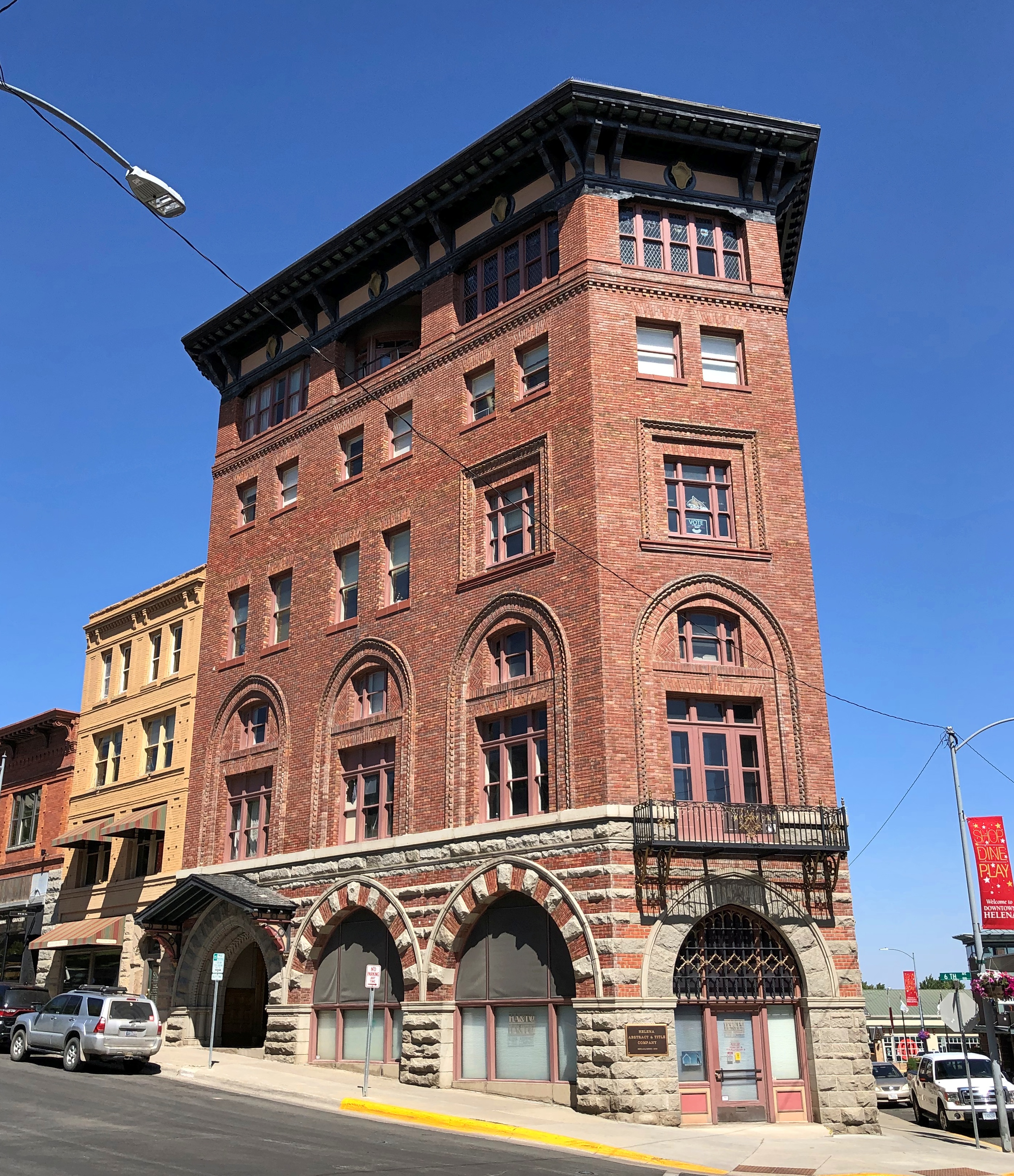
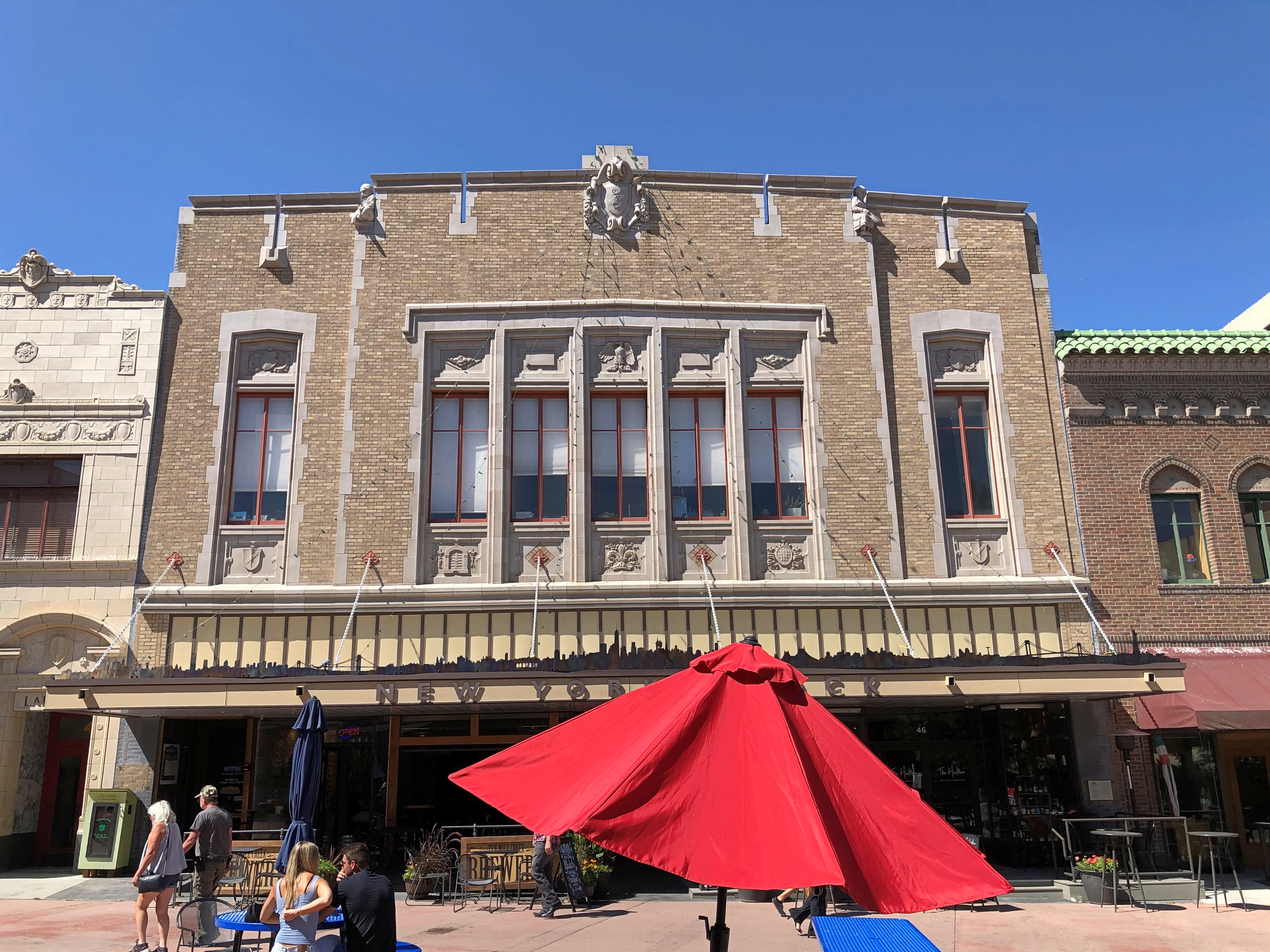
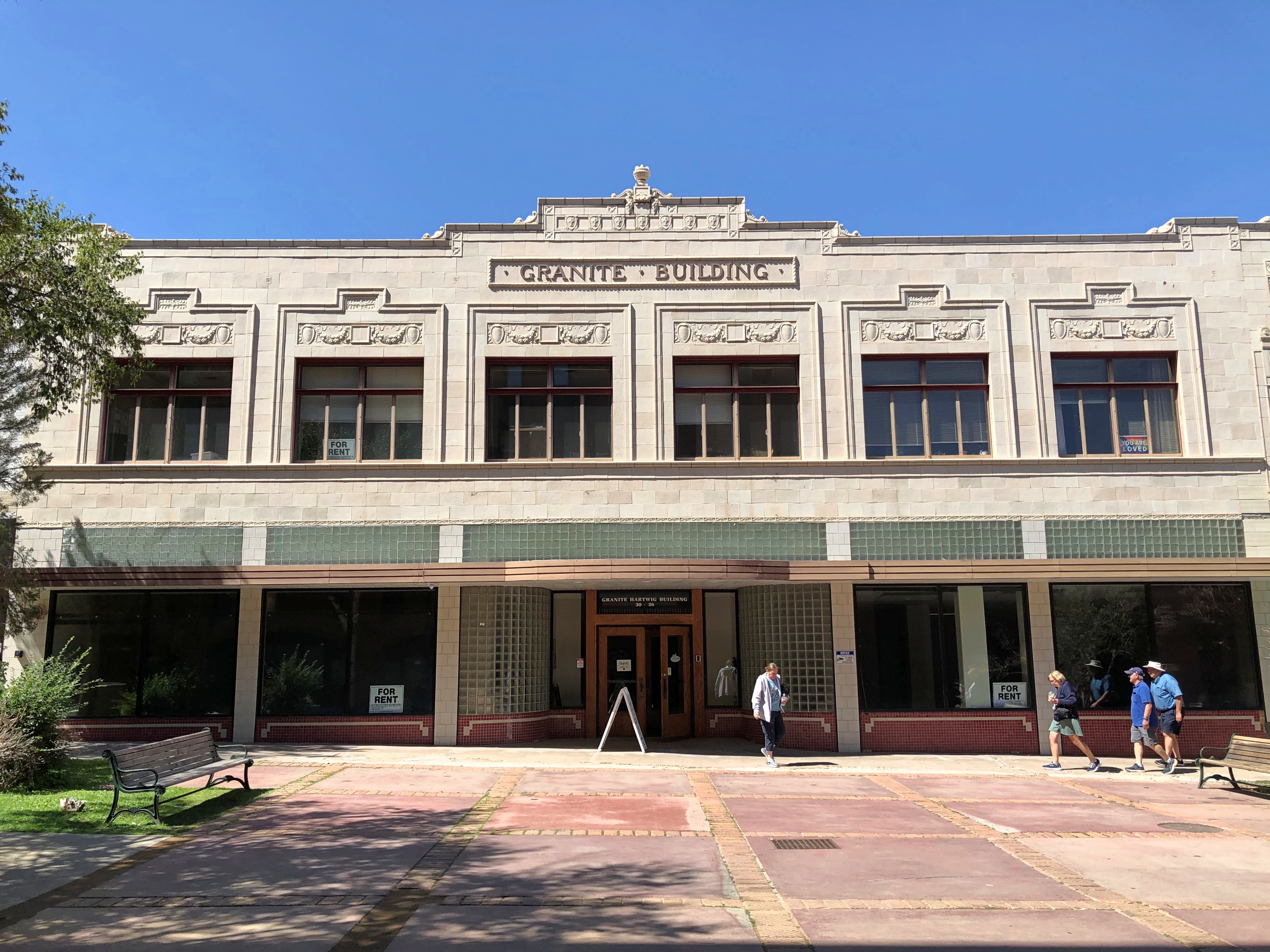
Along N. Last Chance Gulch. And there is a S. Last Chance Gulch, though we didn’t walk that far.Helena, Montana Helena, Montana Helena, Montana

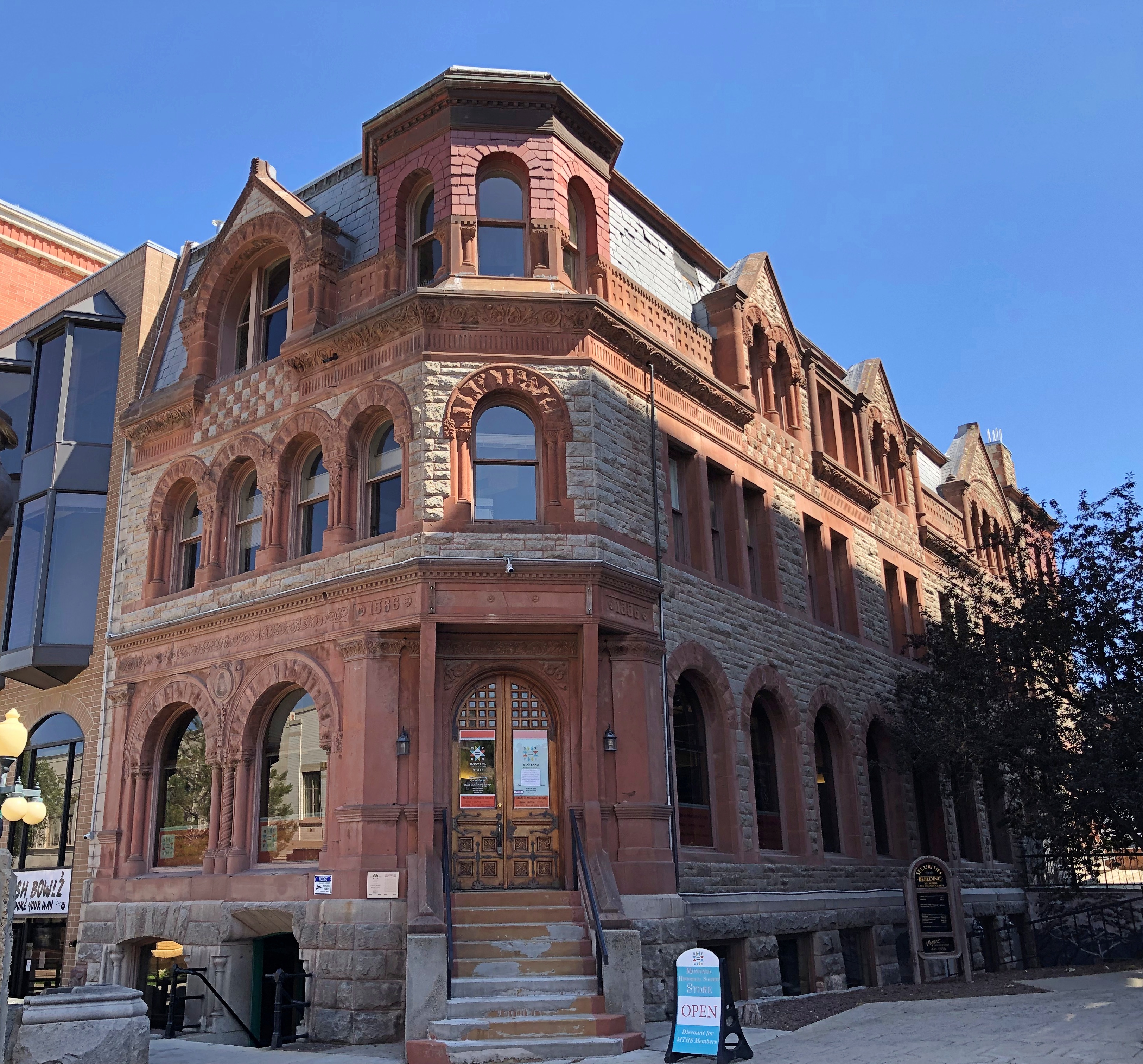
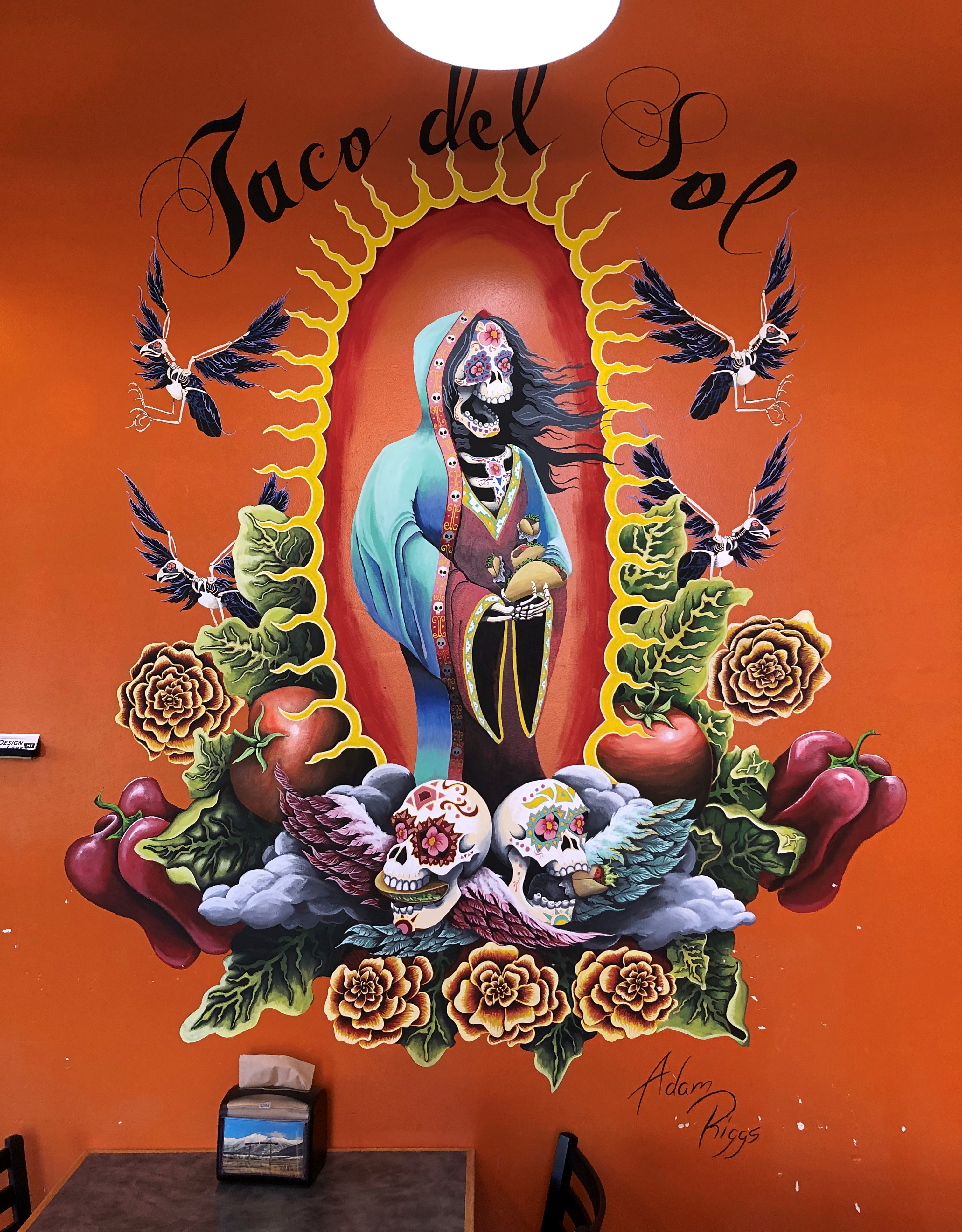
We found Taco del Sol on N. Last Chance Gulch. Unlike Spitz, a standalone operation.

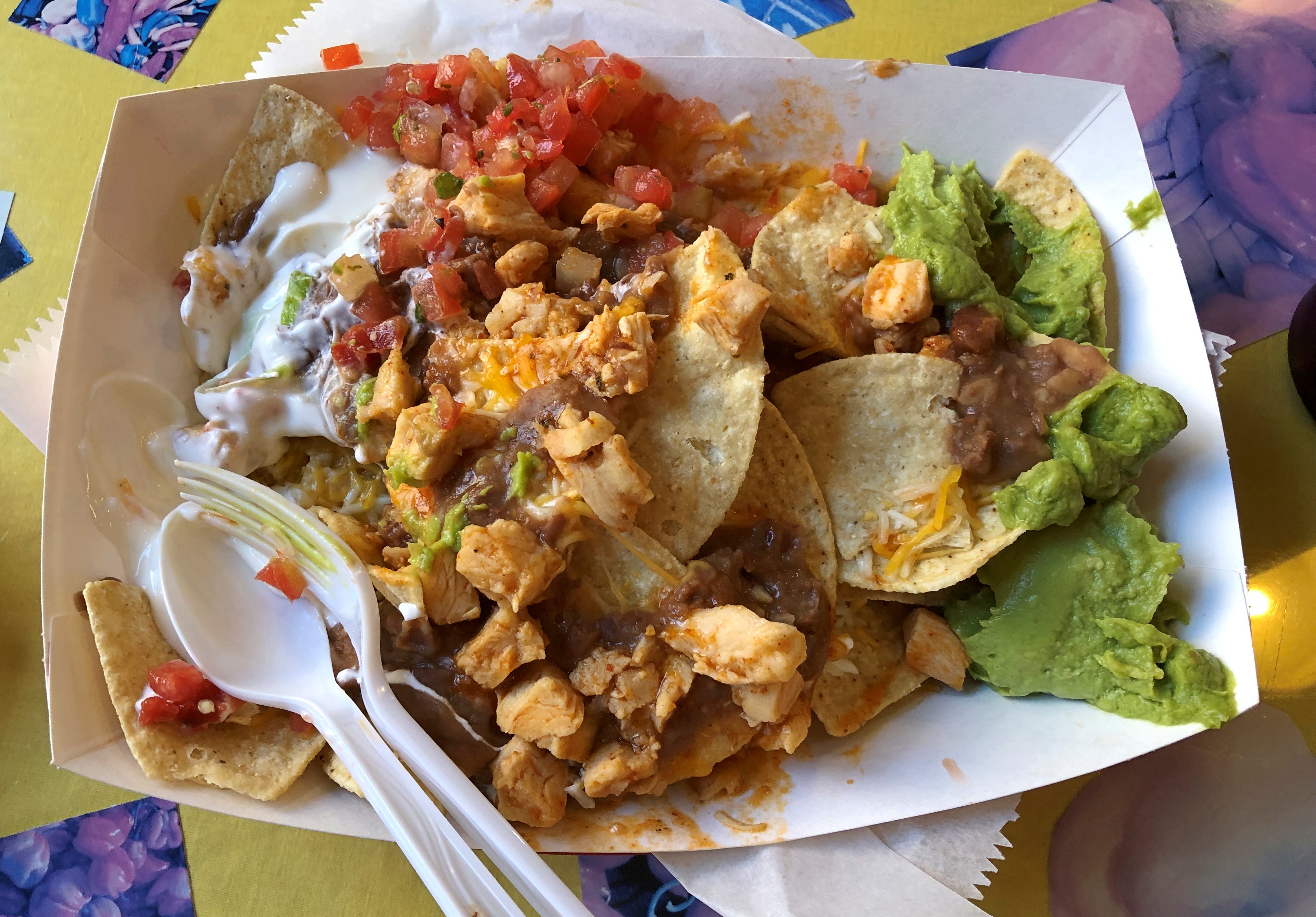
If you want tasty nachos in Helena, Montana, Taco del Sol is your place.