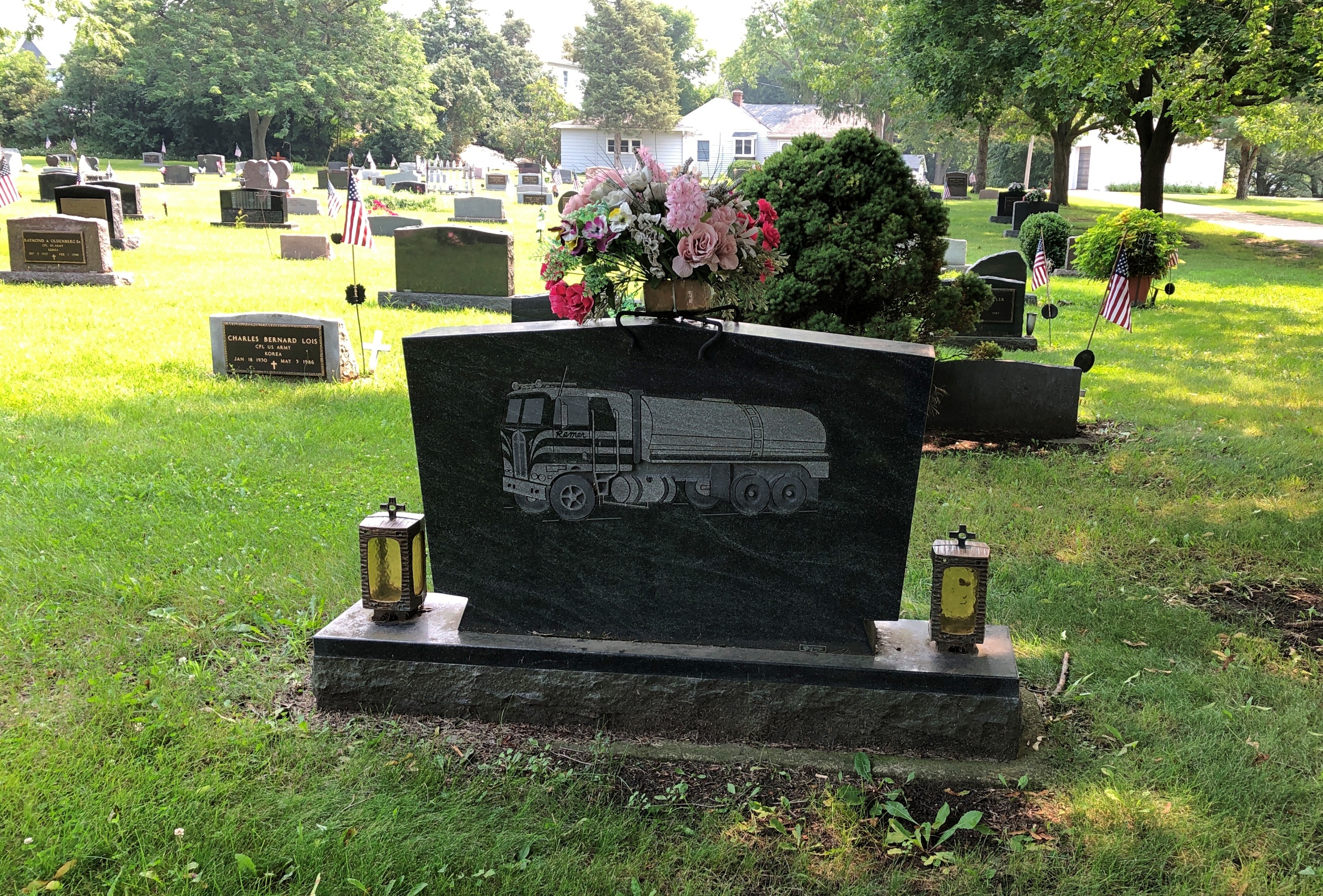
Something I’d never seen on a gravestone: a truck. I’ll bet most people can say that.
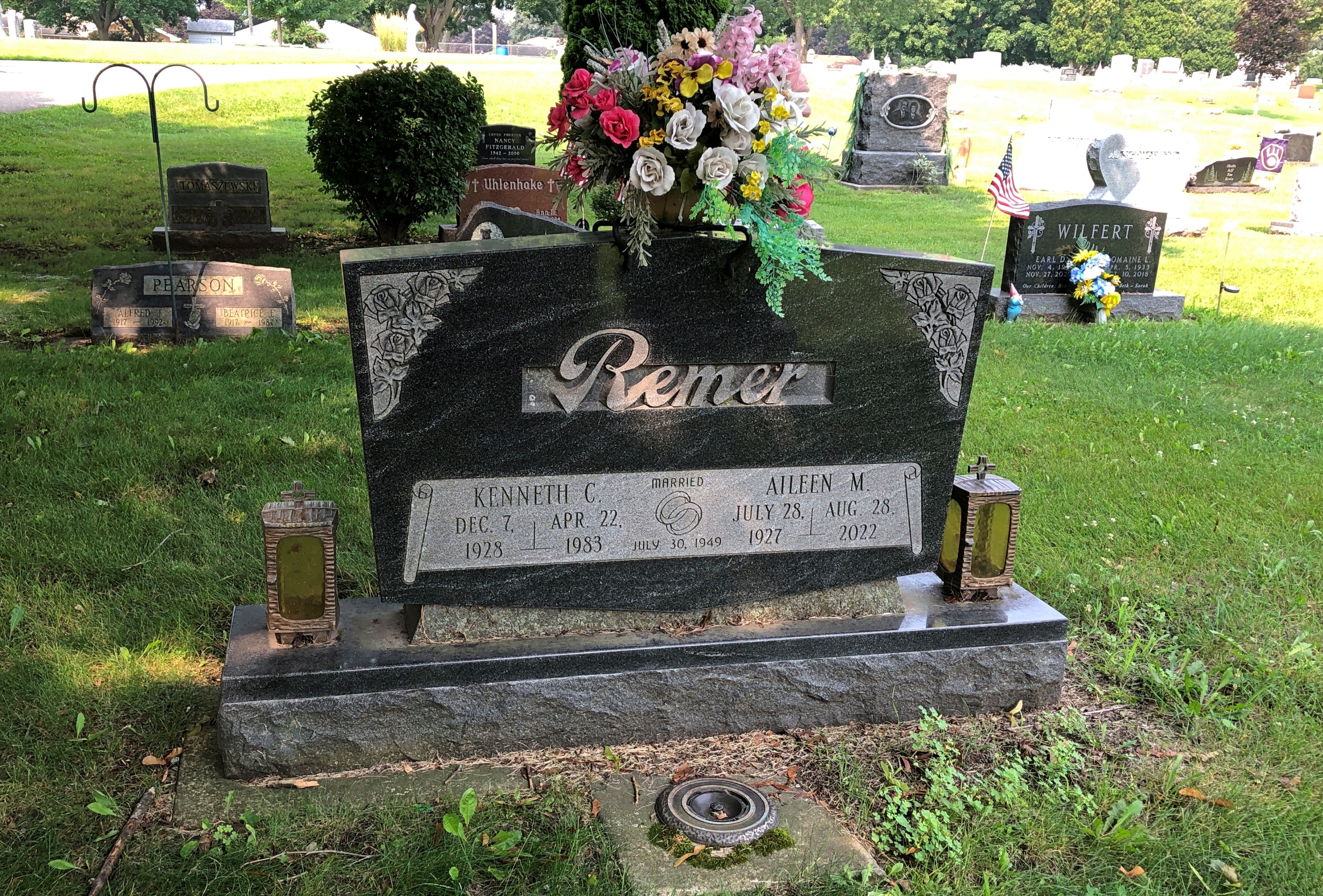
My best guess when I saw it was that Kenneth C. Remer was a trucking man who, among other things, lived through the short romanticization of trucking men in the mid-1970s. Something I’m sure is lost on later generations, as if that matters. If I were silly enough to say “That’s a big 10-4” to either of my daughters, I wouldn’t expect comprehension. That bit of code wasn’t invented by truckers, but even so.
I looked him up, as one can in our time. His obit says he was a “partner in Remer Milk Service.” So could be he drove a milk truck, at least sometimes. That is a liquid-hauling truck depicted on the stone. Not something celebrated in song and story, but useful work all the same.
Another thought on that: though “Convoy” was much more popular, C.W. McCall’s “Wolf Creek Pass” is by far the more entertaining song. (And it’s a real place.) A better song about driving a truck is “Willin’,” originally by Little Feat. Of all people, the inestimable Linda Ronstadt did a remarkable cover of it.
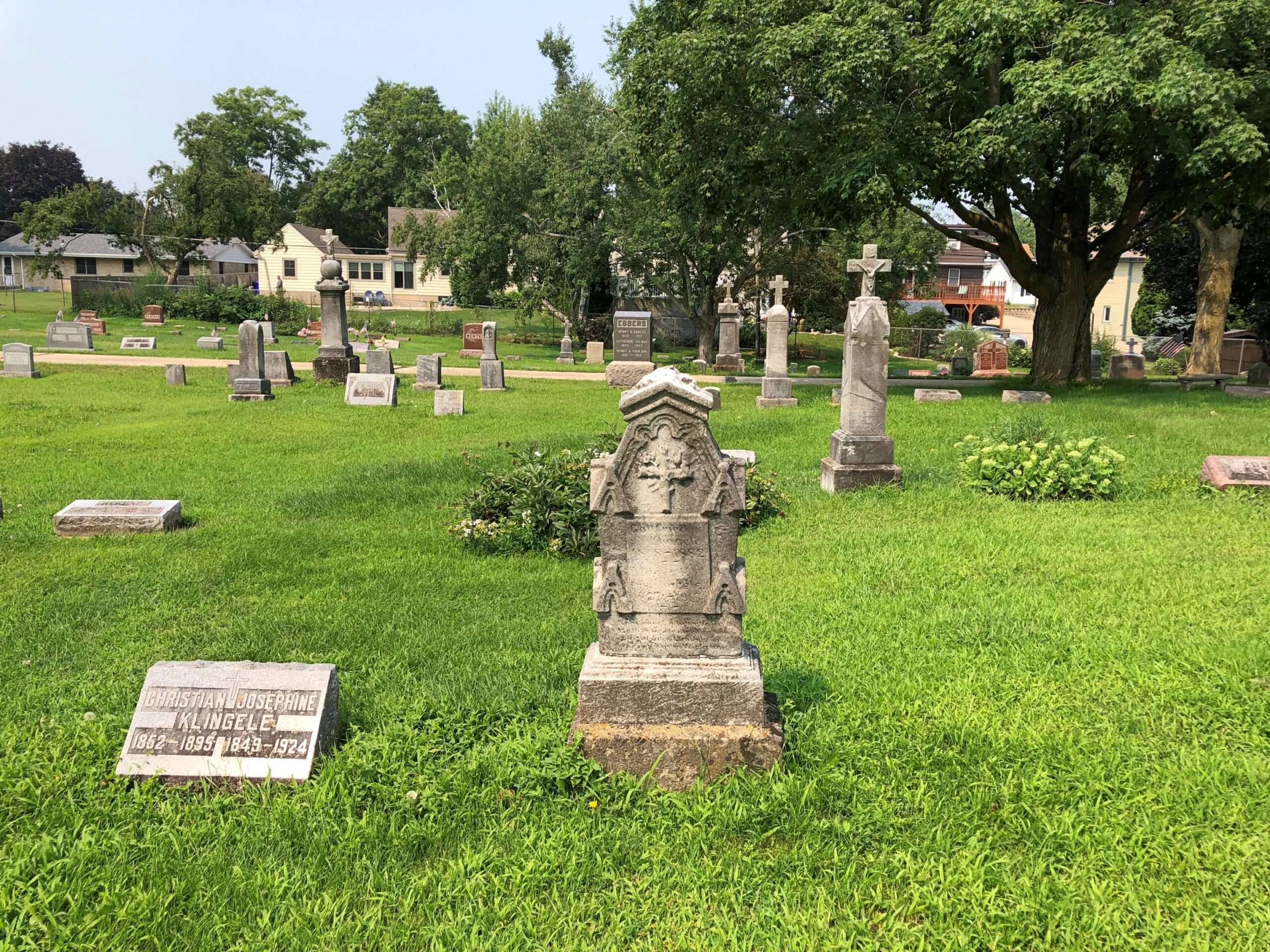
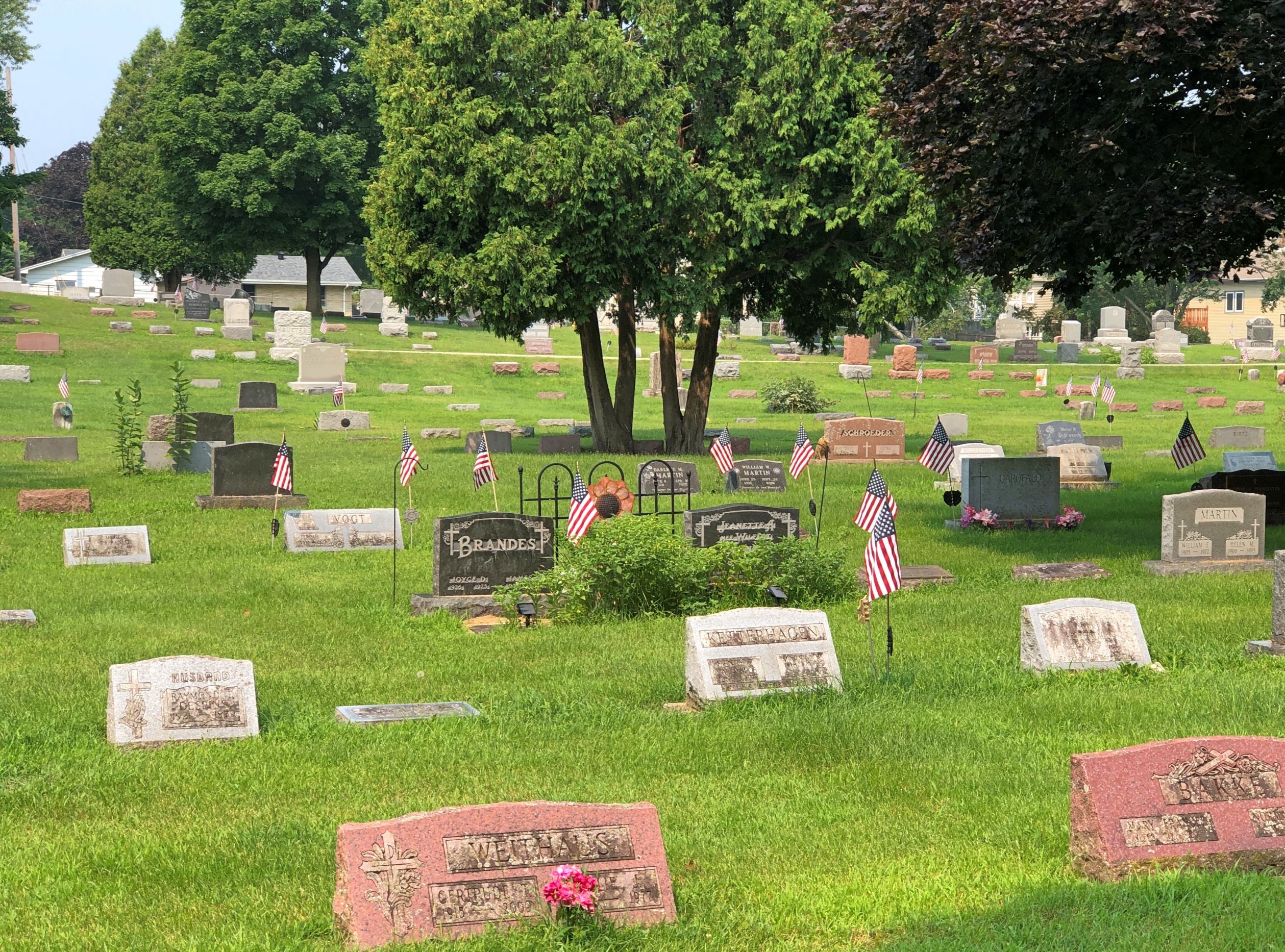
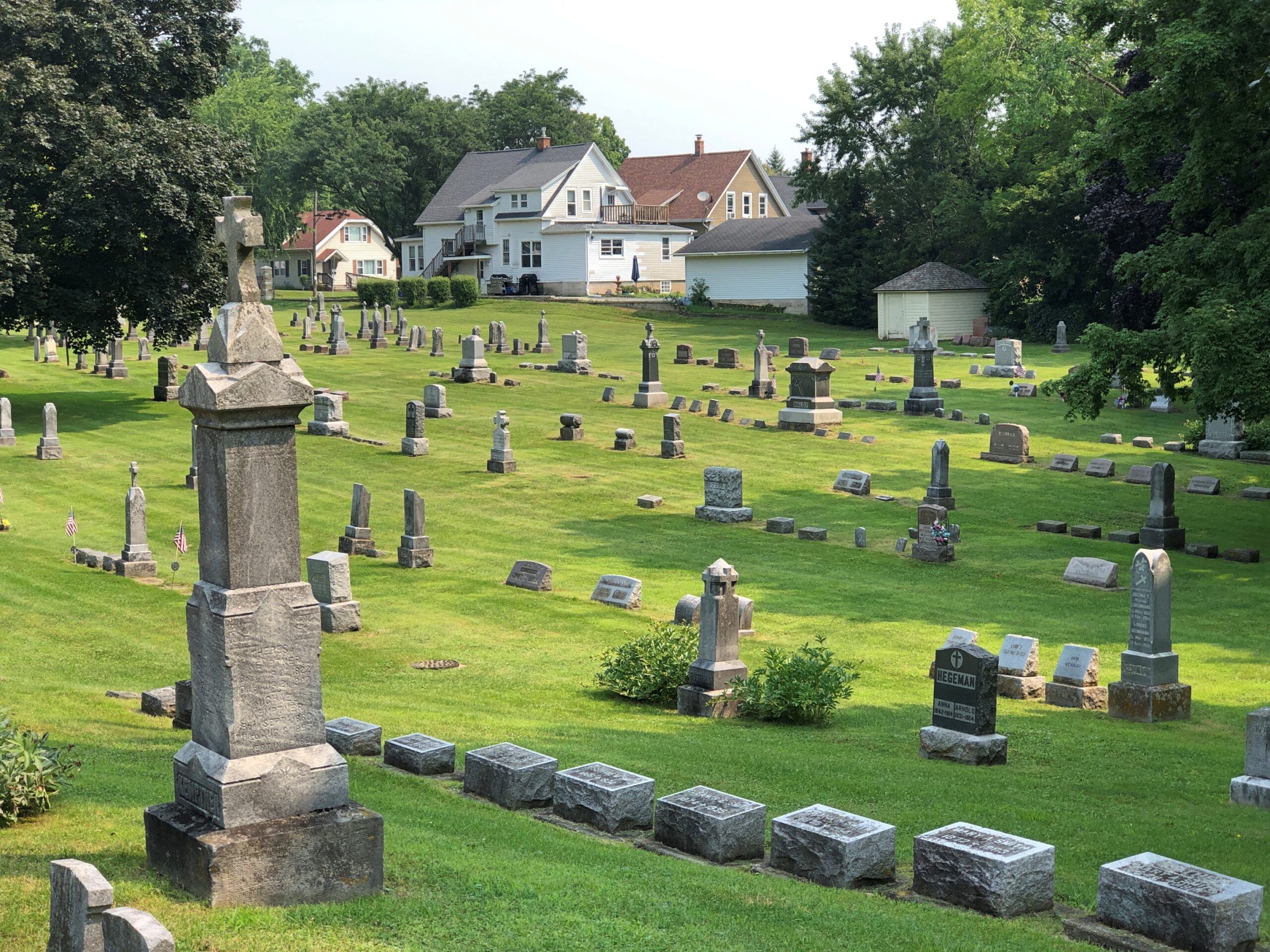
I encountered Mr. and Mrs. Remer at St. Mary’s Cemetery in Burlington, Wisconsin last month. A Catholic cemetery with a nice assortment of stones.
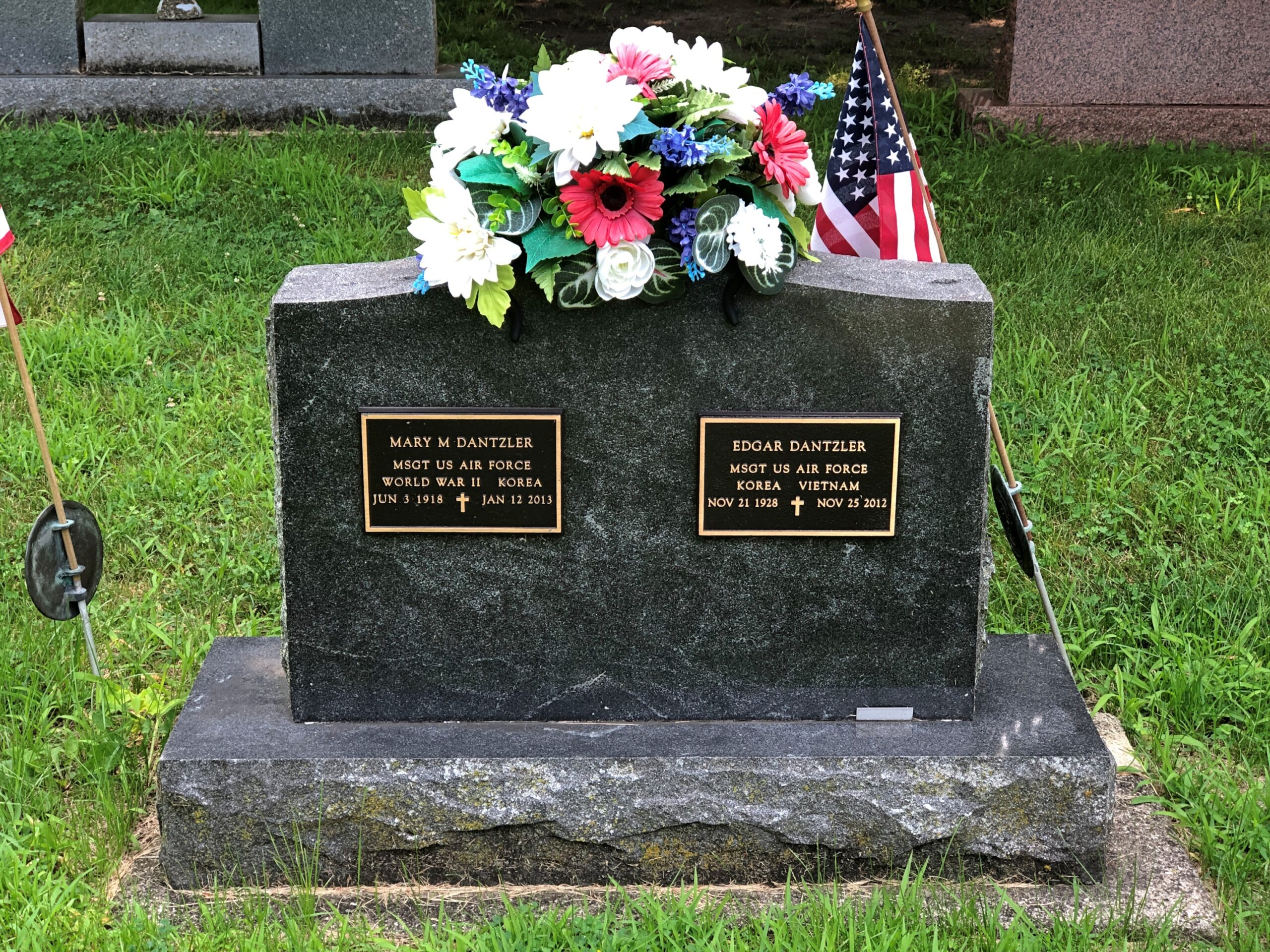
Unusual: two Air Force (I assume originally Army Air Corps) Master Sergeants, married to each other.
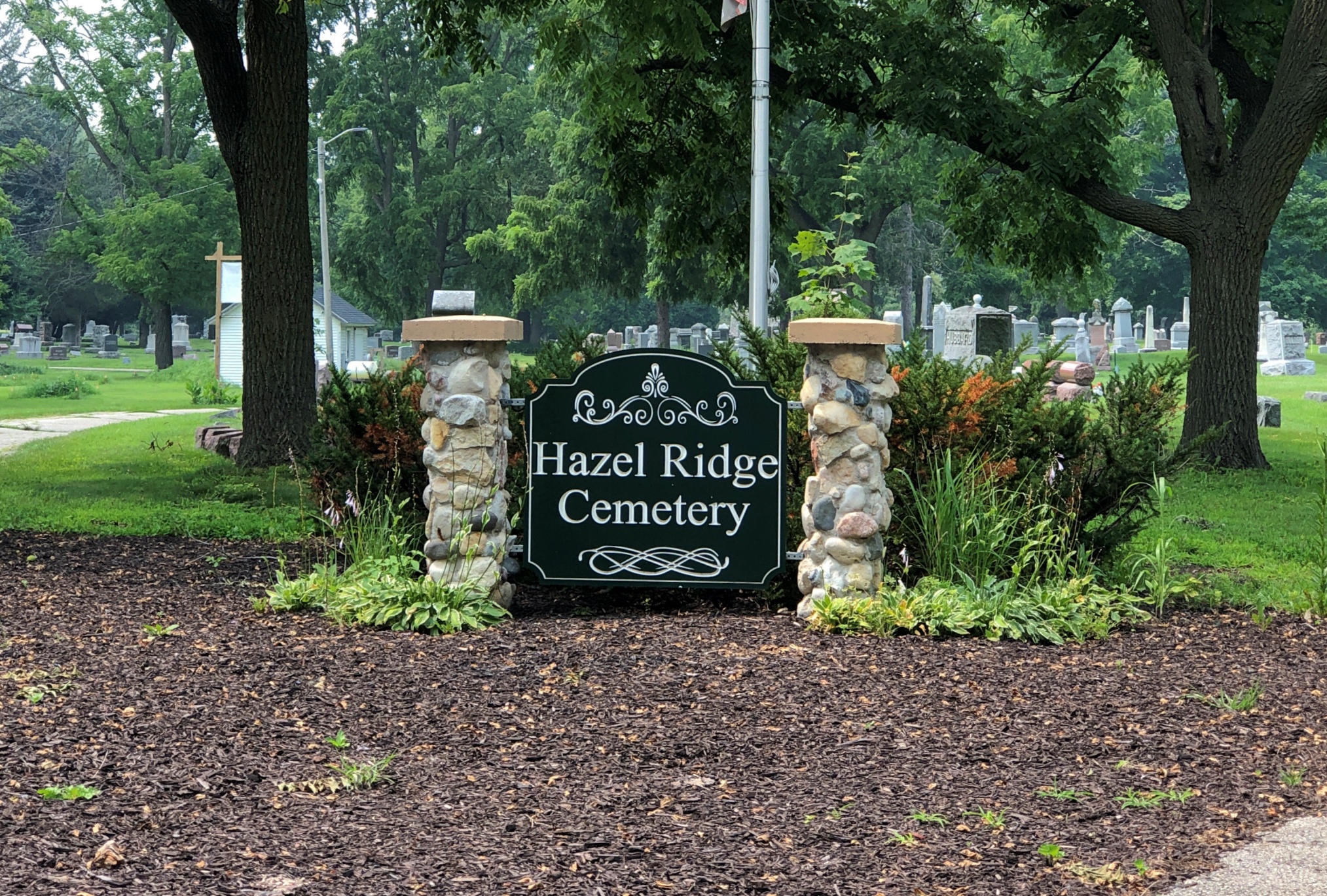
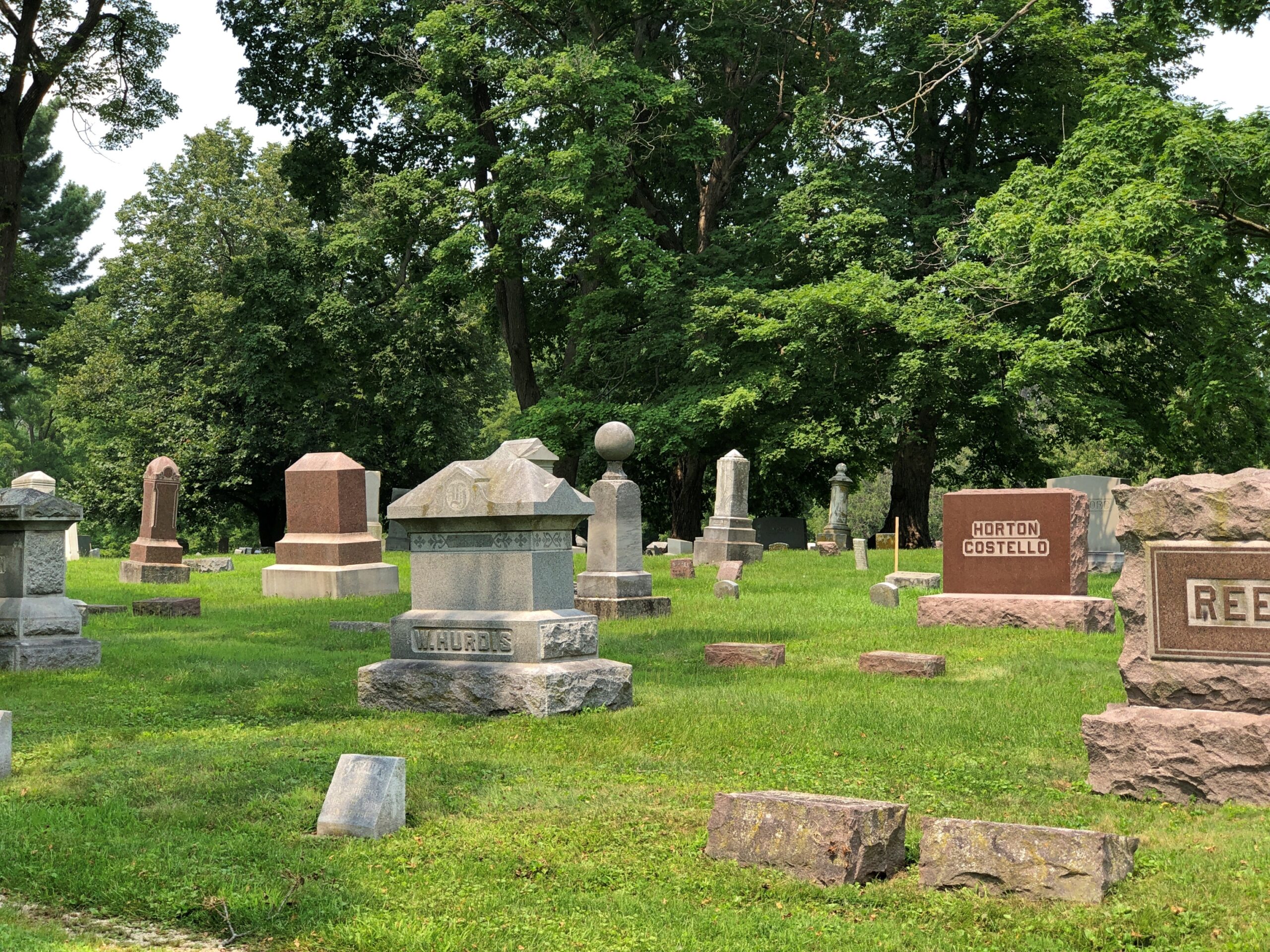
During my recent visit to Elkhorn, Wisconsin, I did no more than look for an “historic cemetery” on Google Maps to find Hazel Ridge Cemetery. Historic for sure, founded more than 150 years ago.
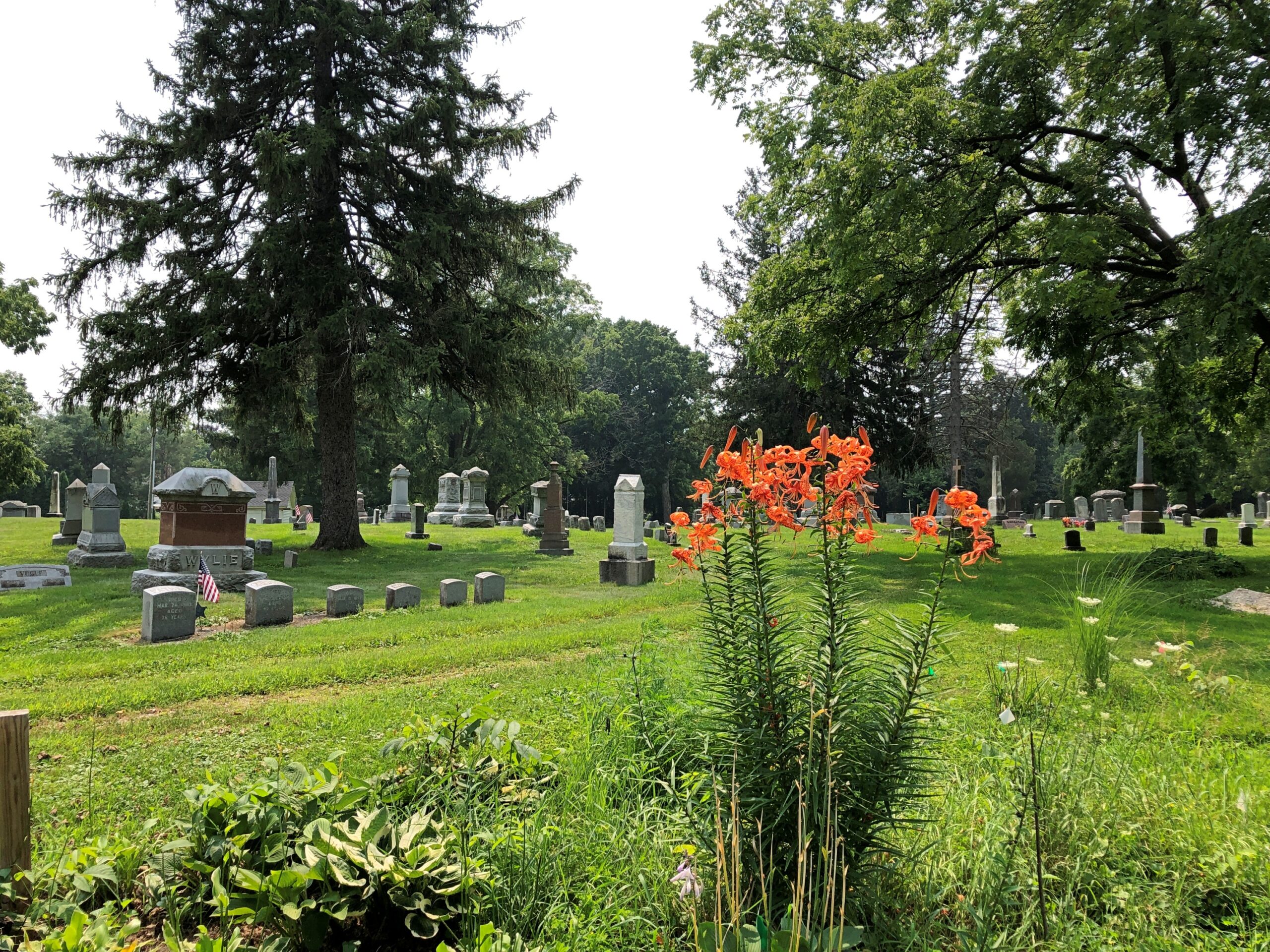
It too has a fine collection of memorials. The cemetery is also an arboretum, with more than 25 native species and ornamental varieties.
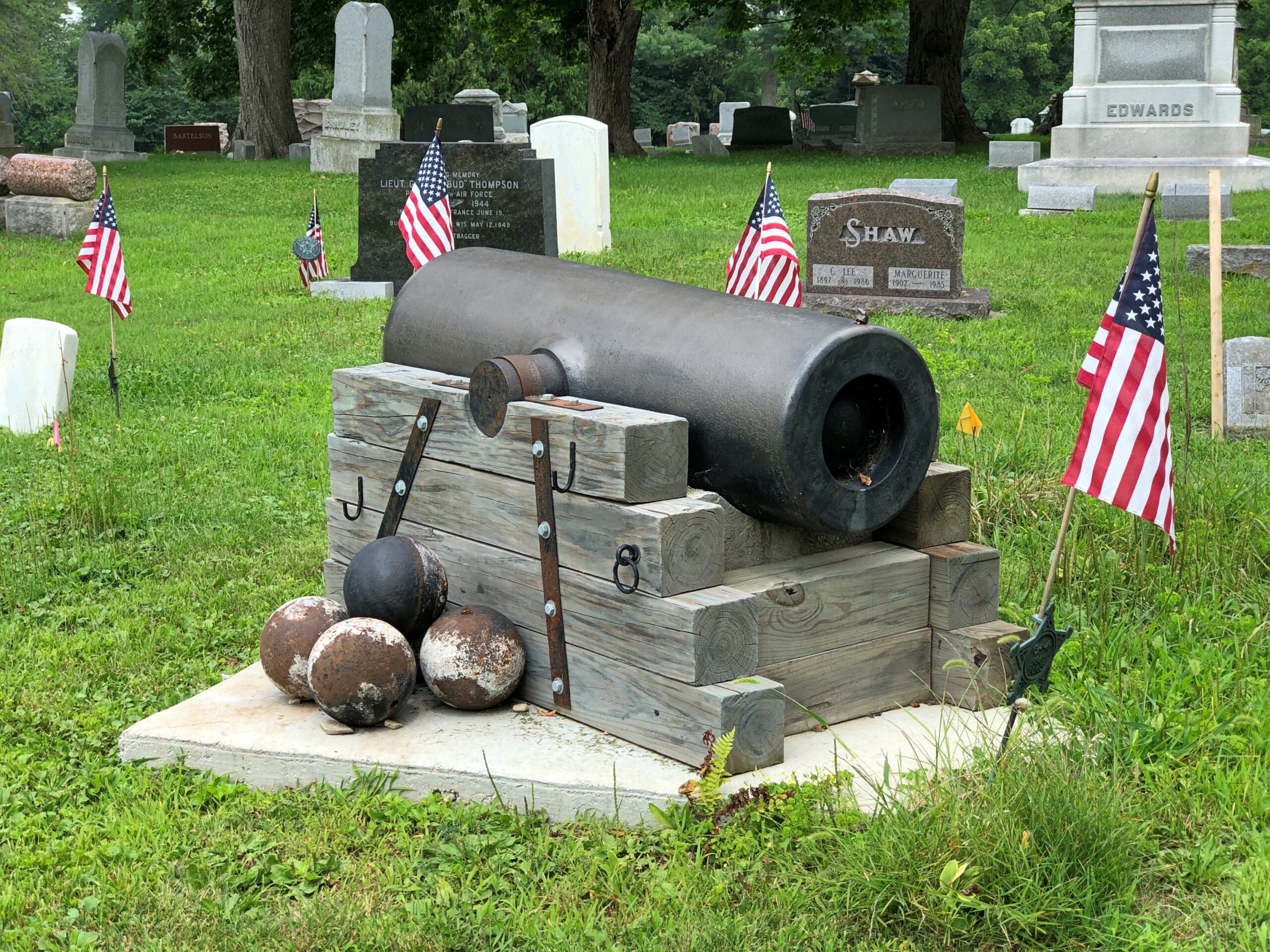
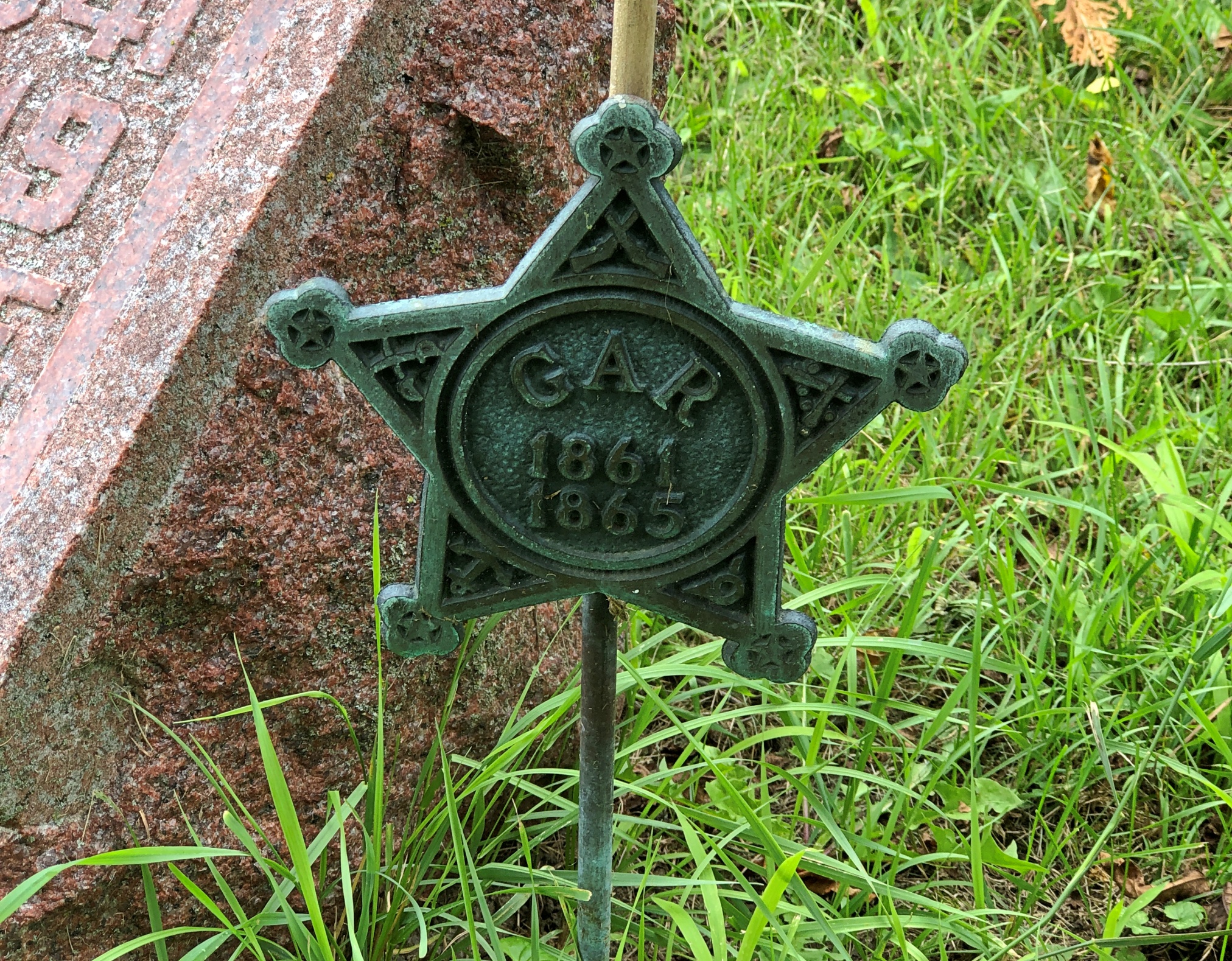
Hazel Ridge has a clutch of war dead memorials, including an 8-inch siege Howitzer as the centerpiece of a Grand Army of Republic memorial.
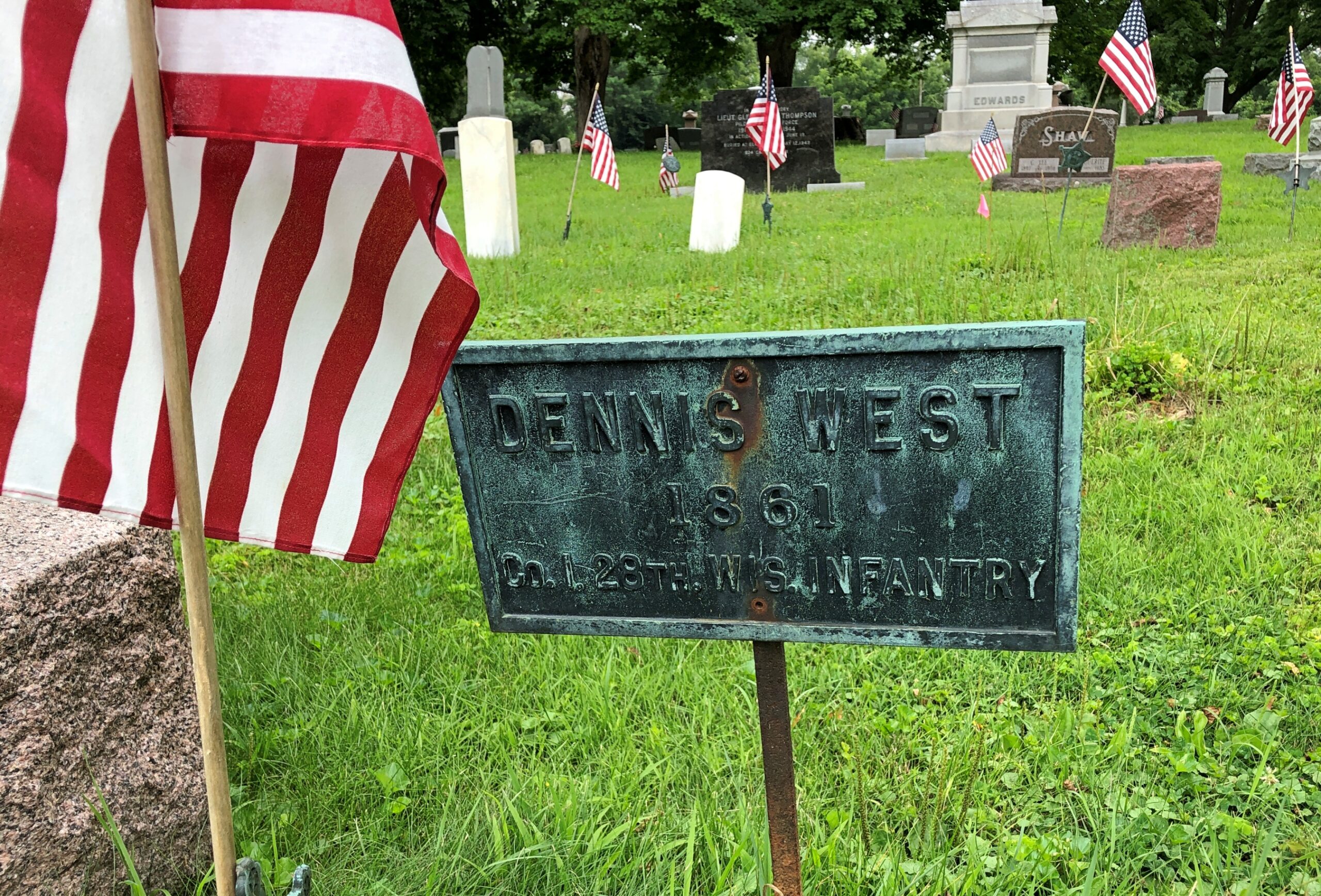
This particular cannon, according to a nearby sign, was made in 1862 at the Fort Pitt Foundry in Pittsburgh. I assume it did its part for the Union. Nearby are soldiers who did likewise.
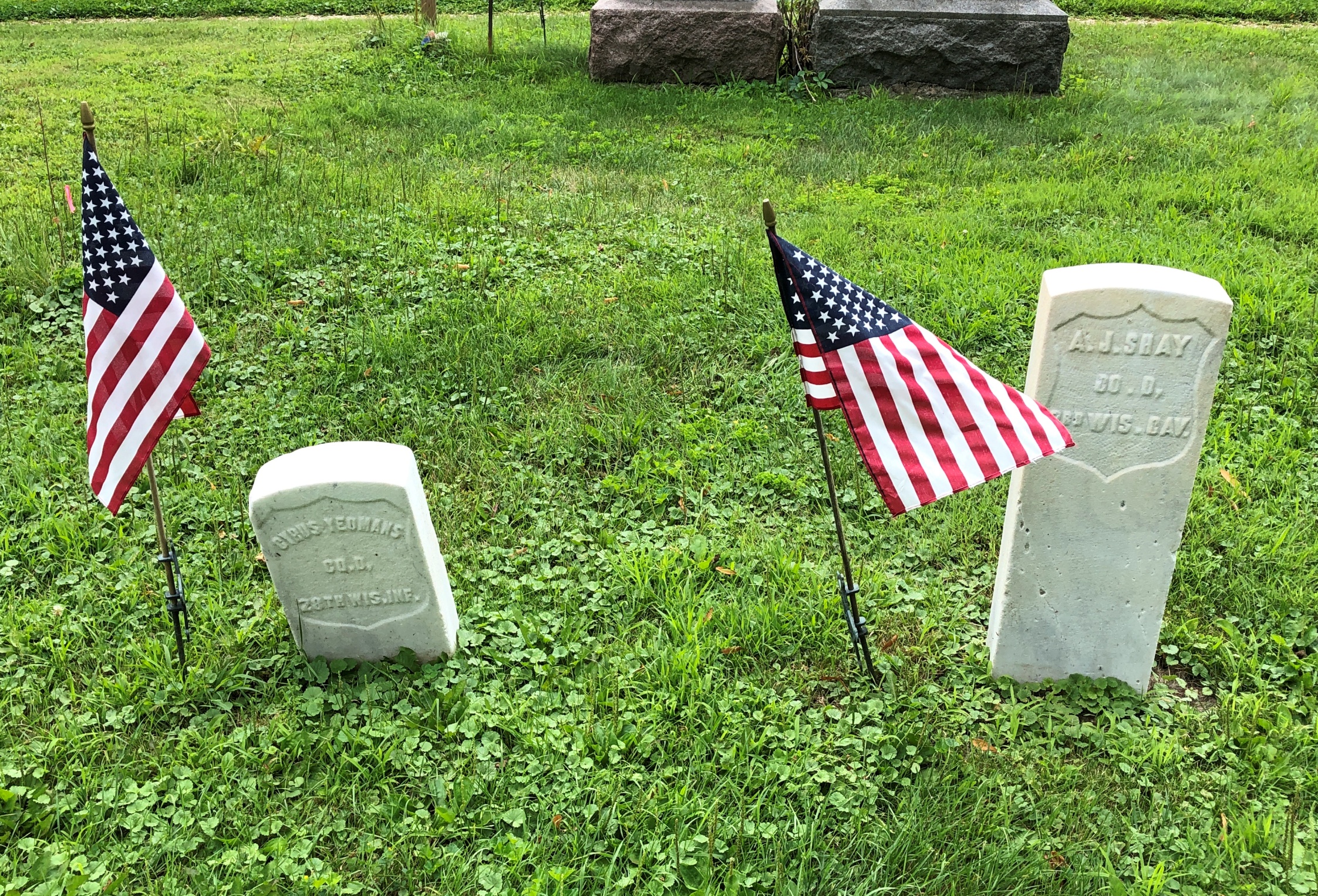
And those who died in later wars.
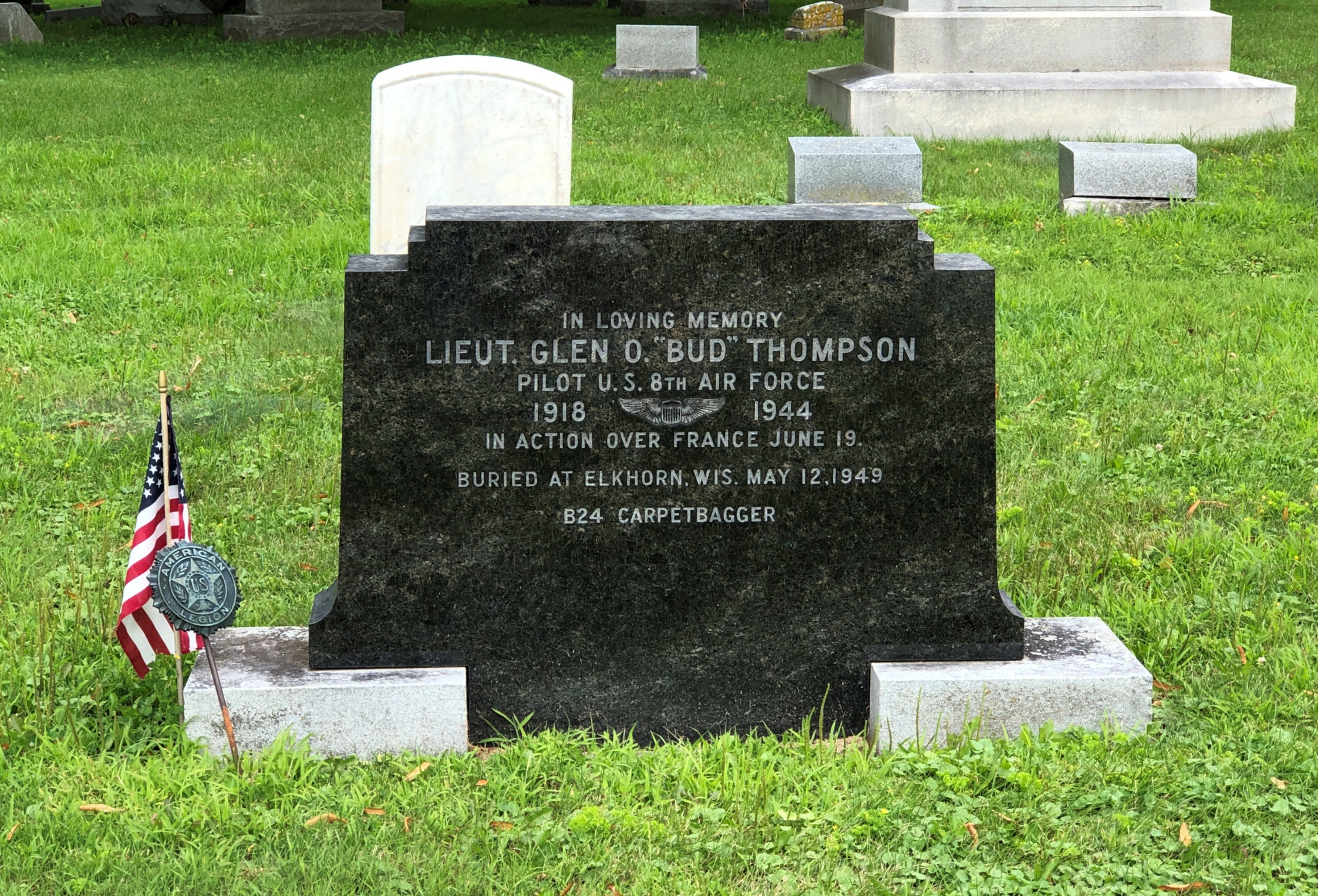
The single word “Carpetbagger” on the stone tells quite a story. Operation Carpetbagger involved black-painted B-24s flying low and slow by night, dropping supplies and agents to the resistance in France before and after the Normandy invasion. Clearly dangerous work. RIP, Bud.
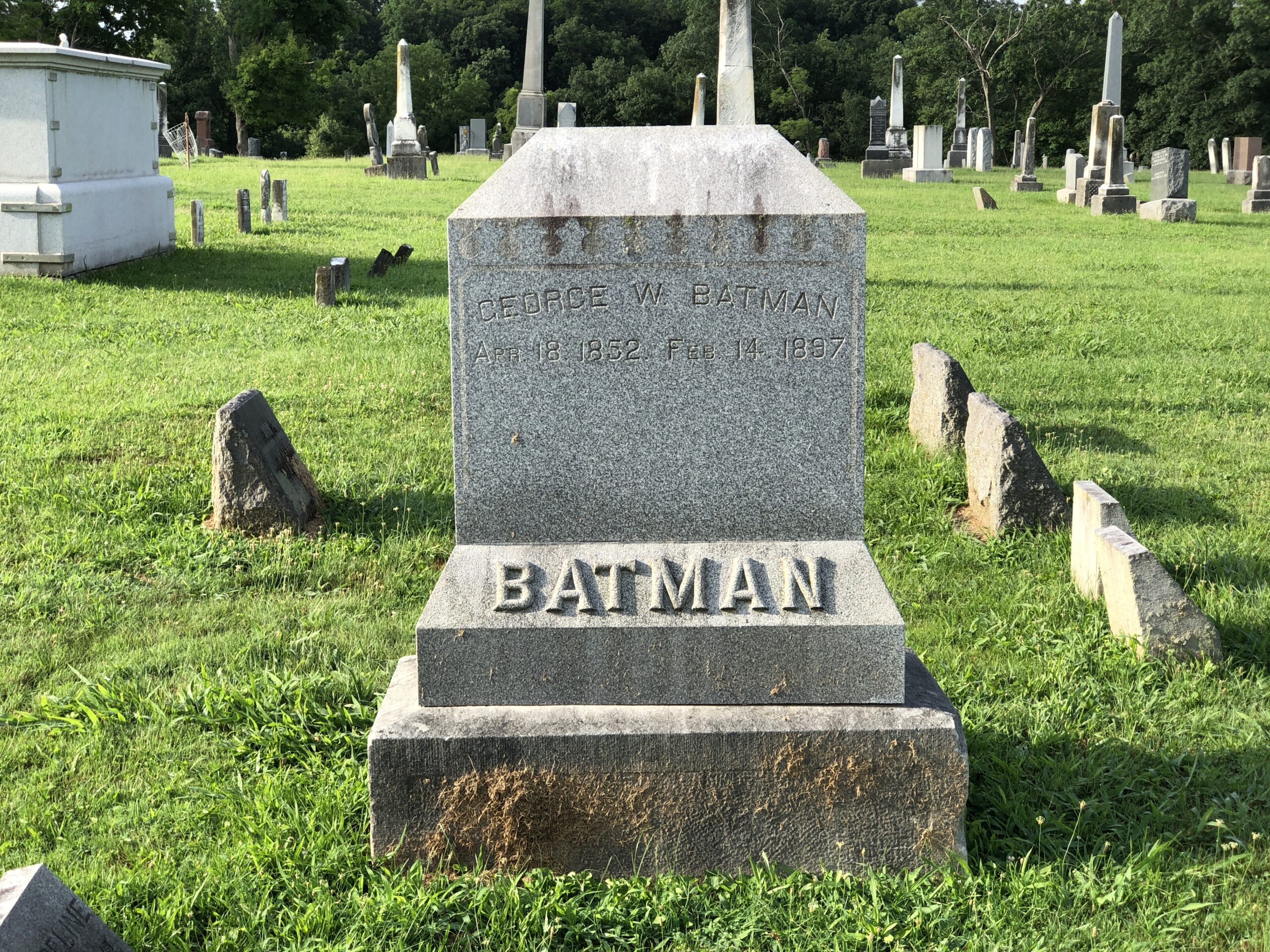
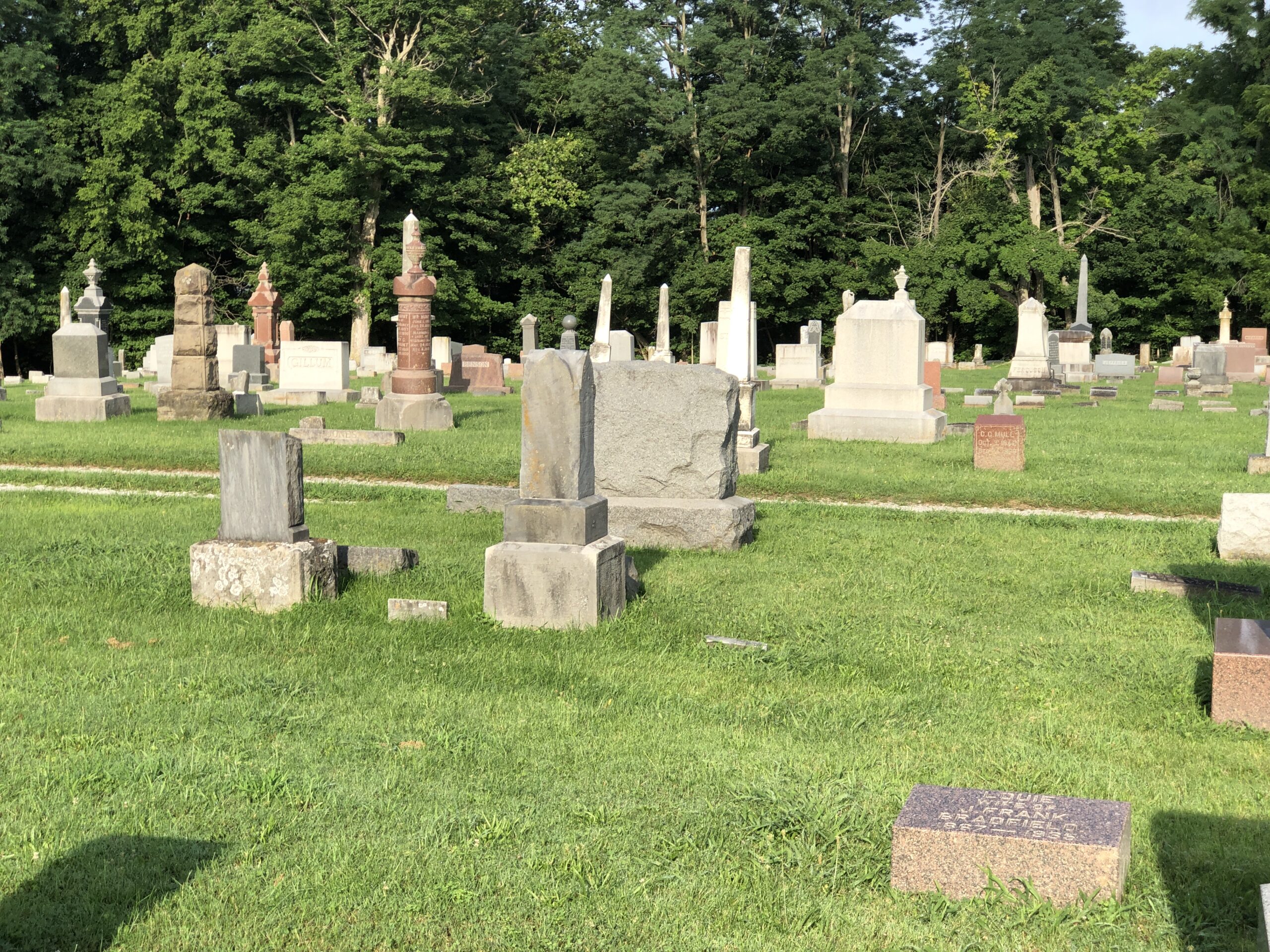
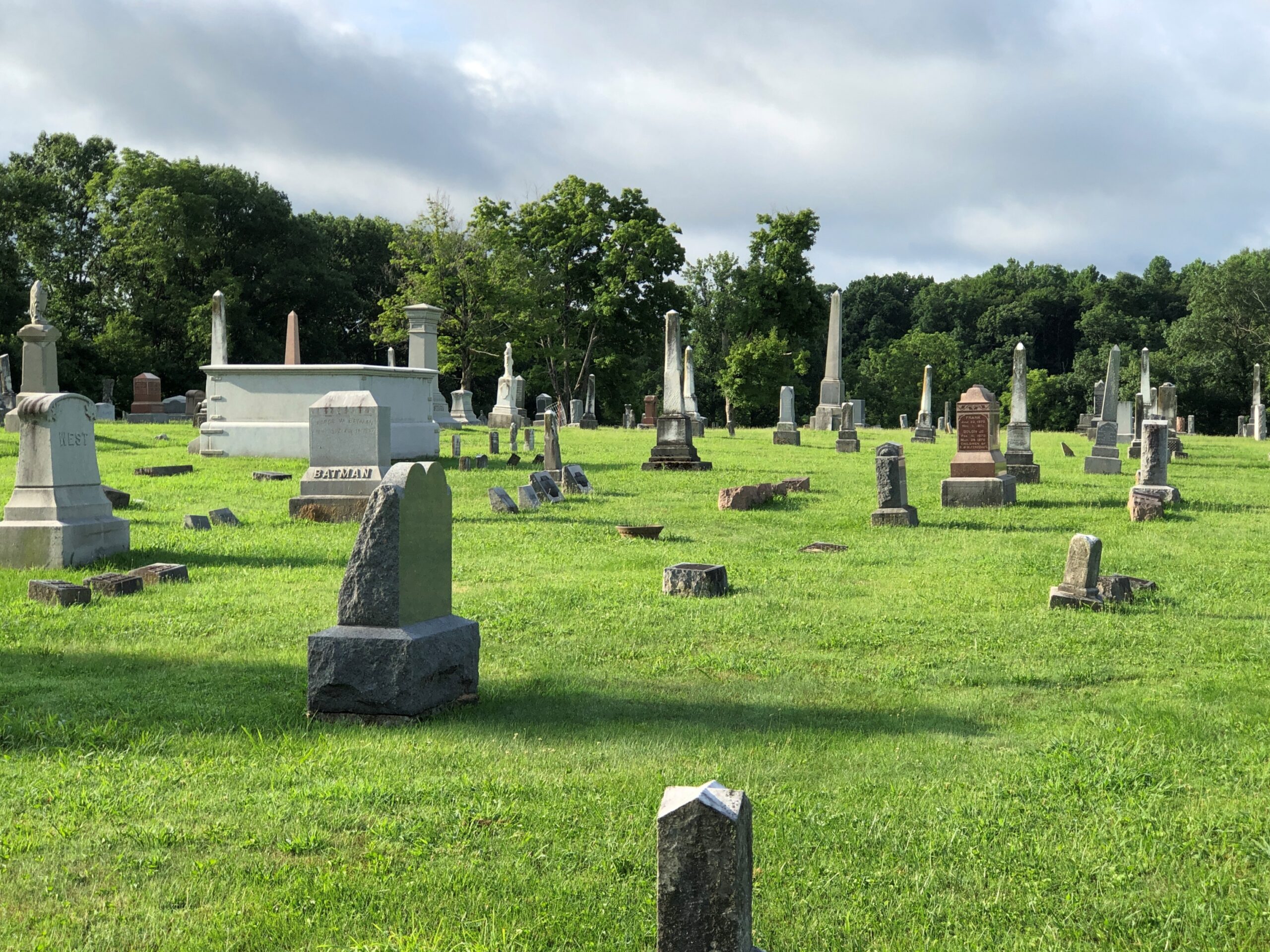
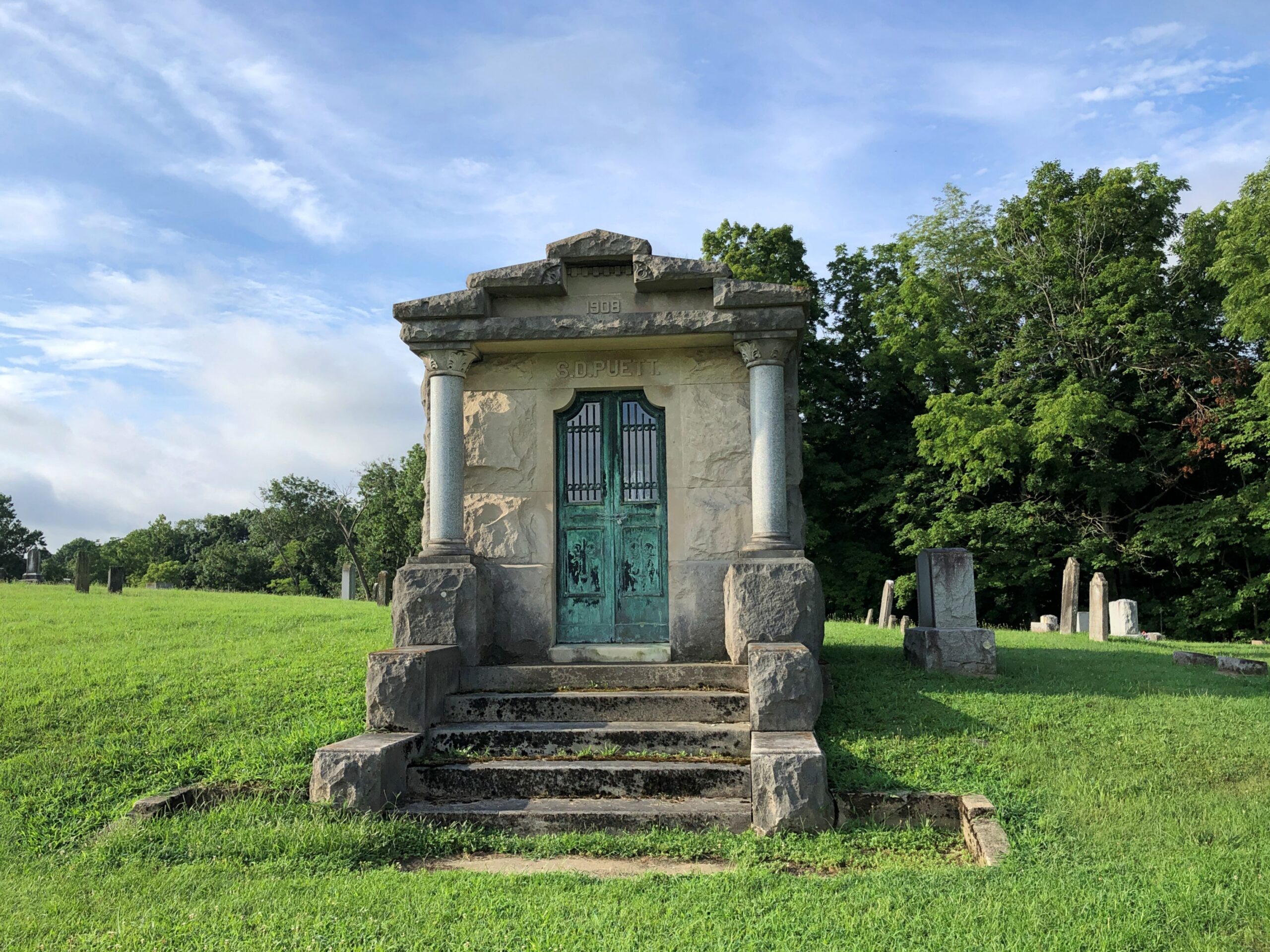
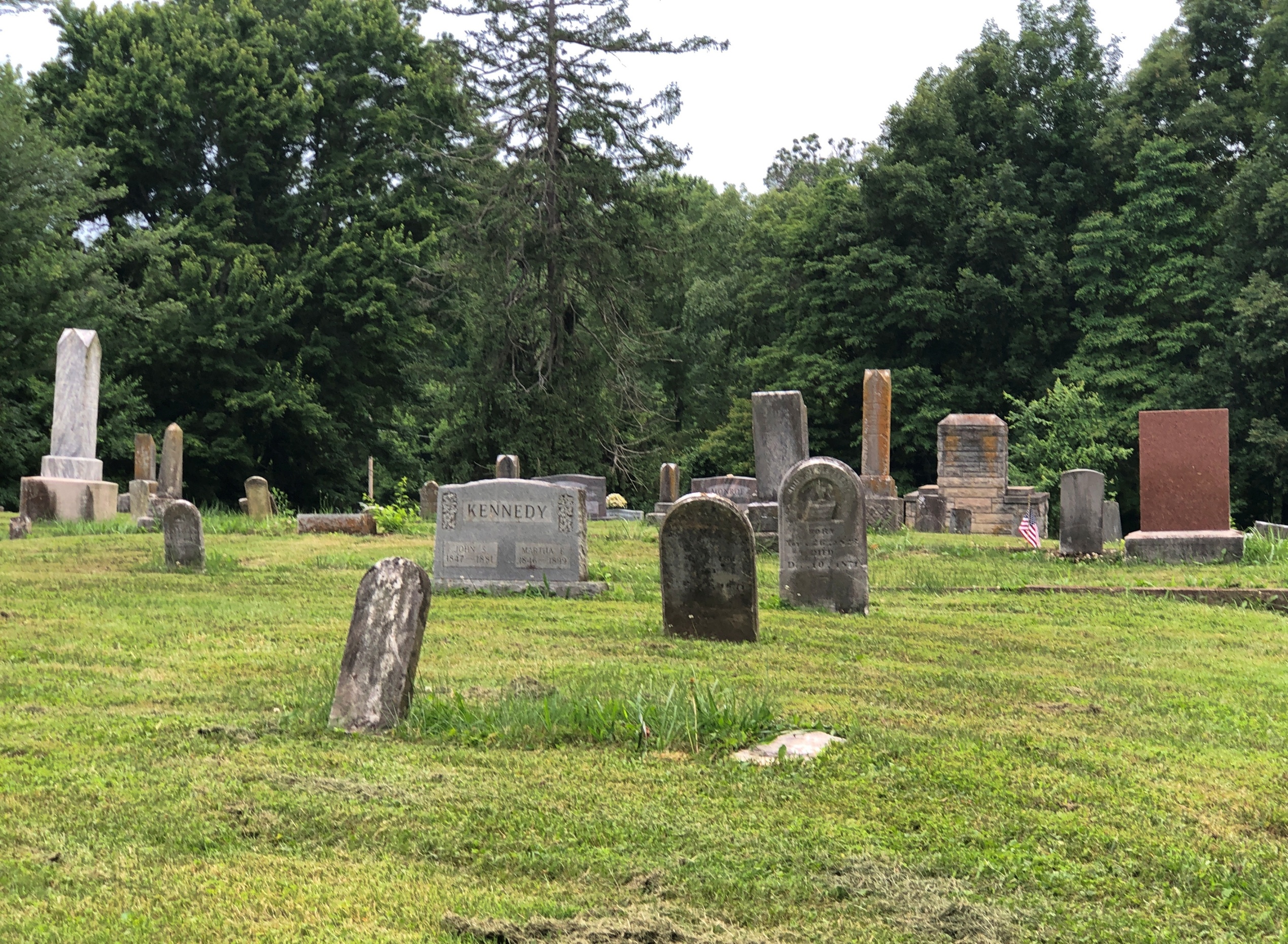
George W. Batman, that is, who died in 1897, so he never lived to see his surname put to the other uses we all know so well. Variants of his name include Bateman, Battman and Baitman, meaning that Batman really isn’t that odd. Except it does look odd on that large stone, but only because of recent conditioning by a particularly successful fictional character. George W. happens to repose at Rockville Cemetery in Rockville, Indiana, and I happened to visit early one Sunday morning in late July.
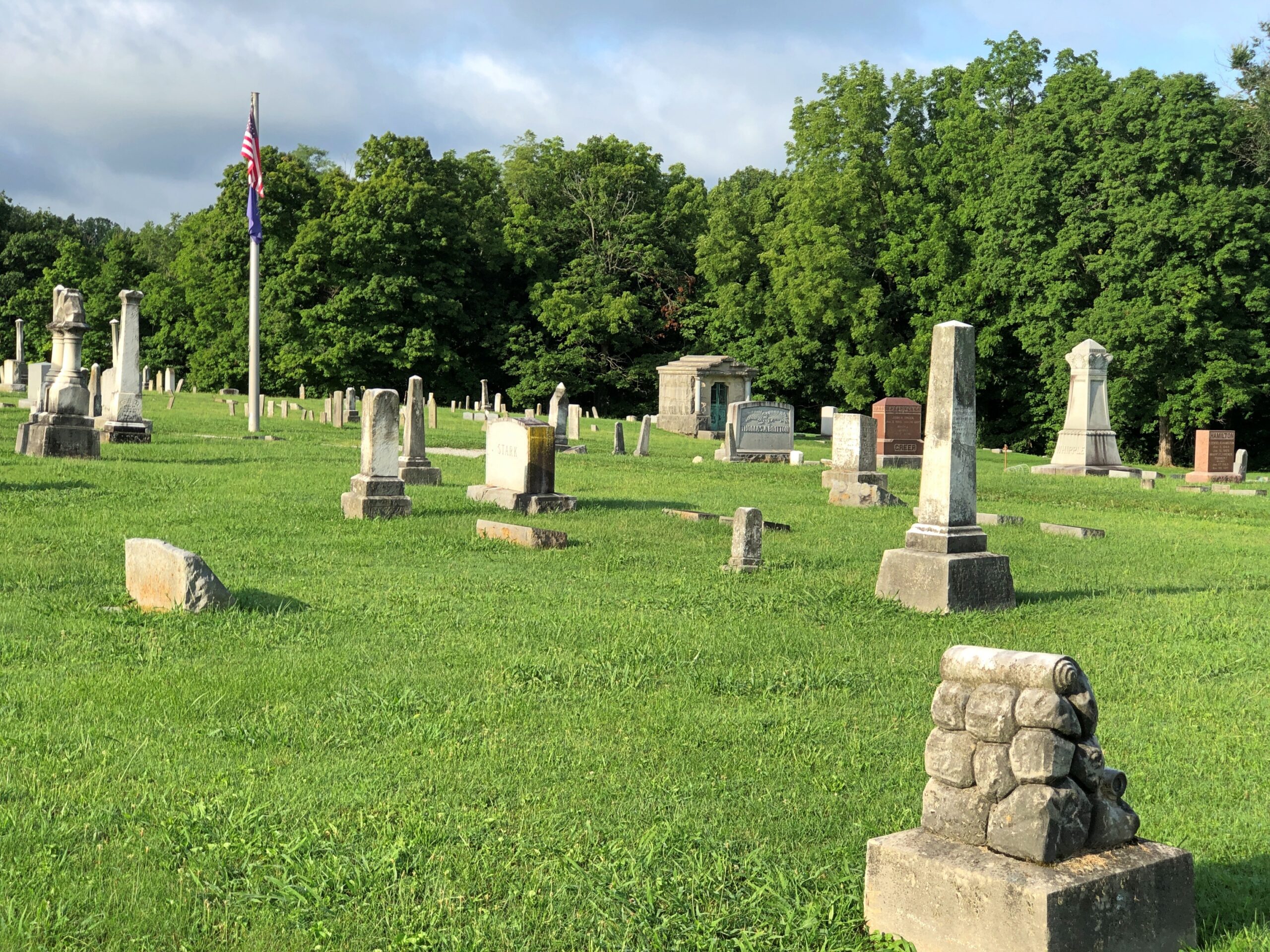
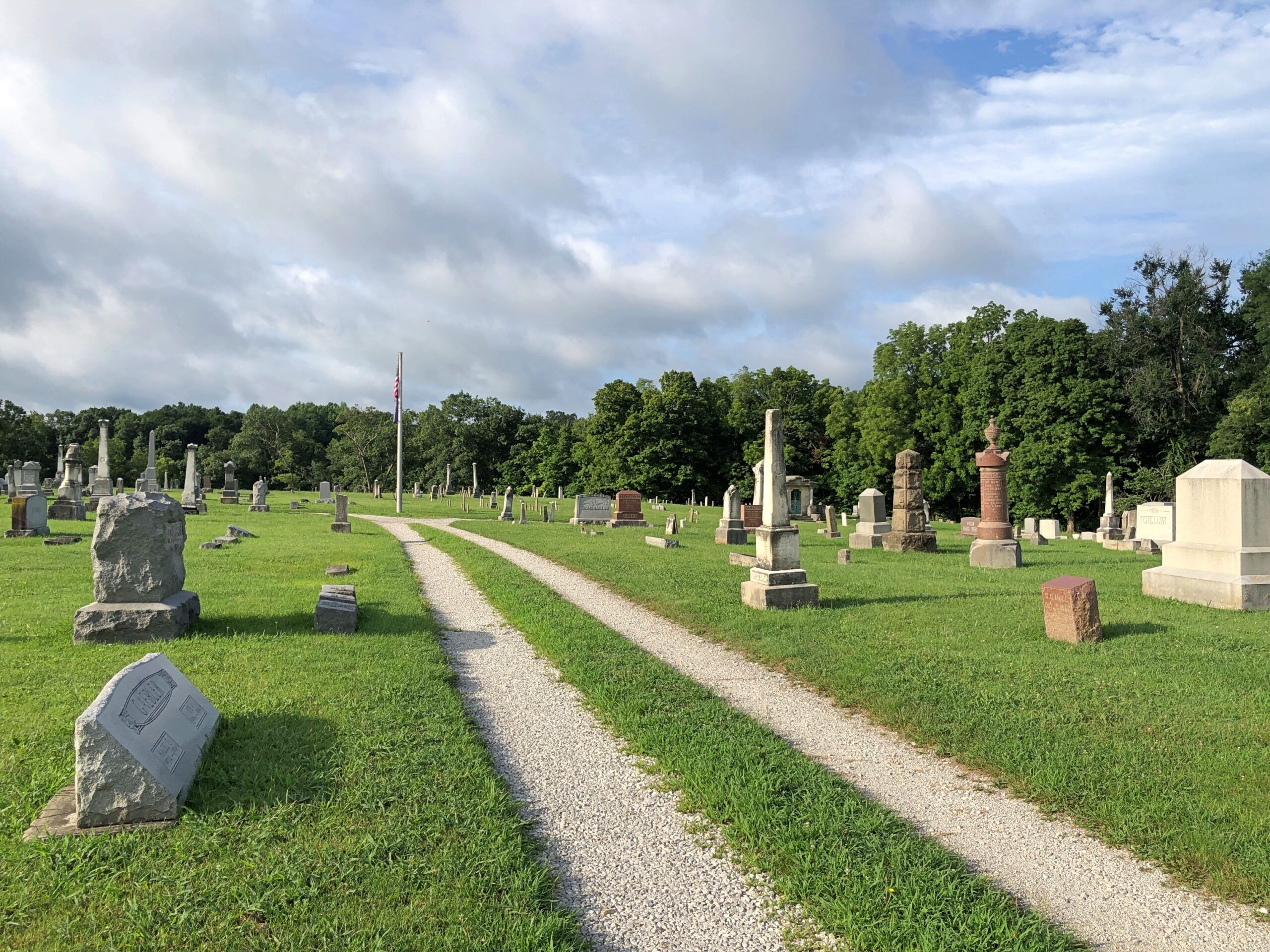
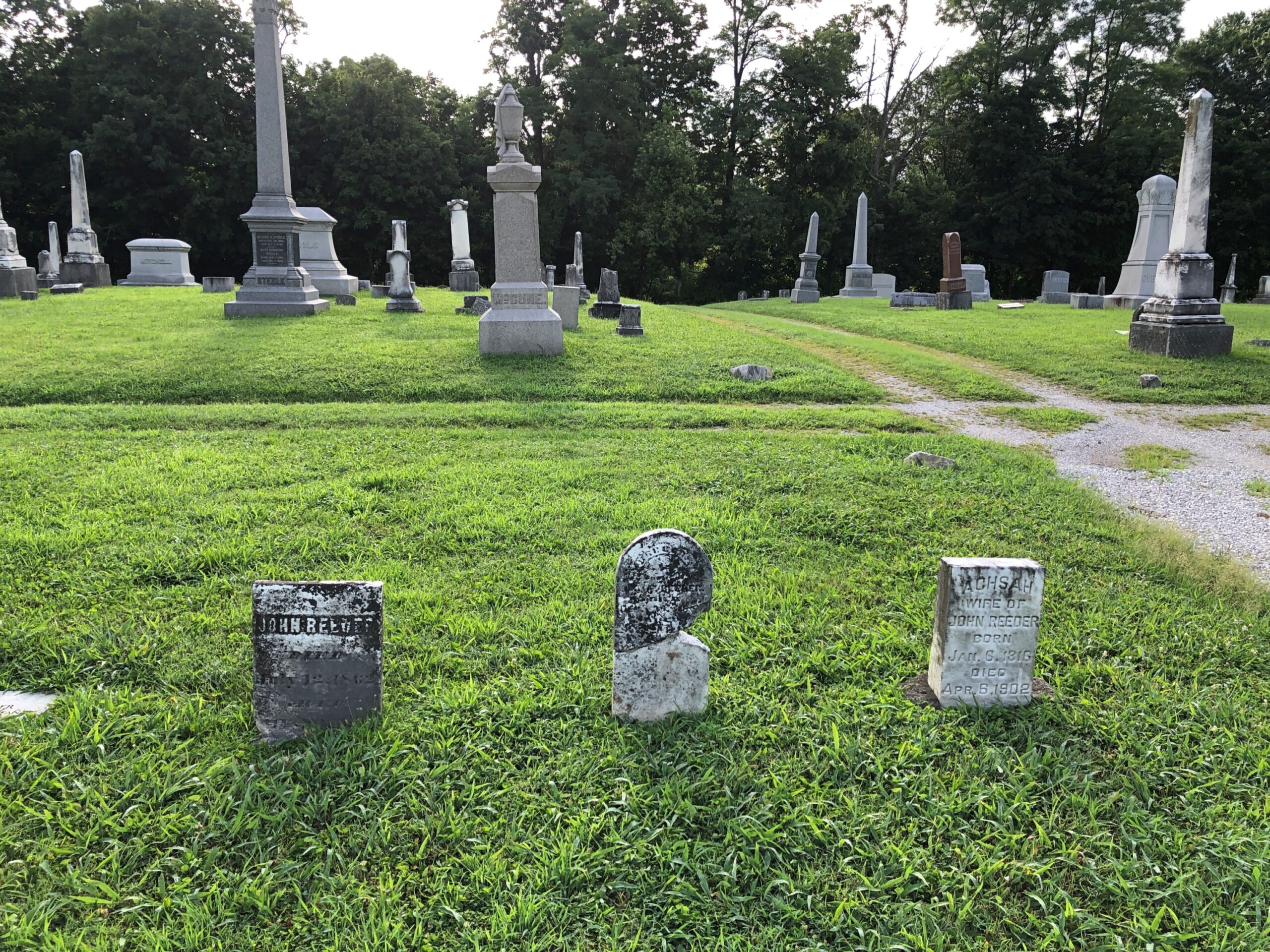
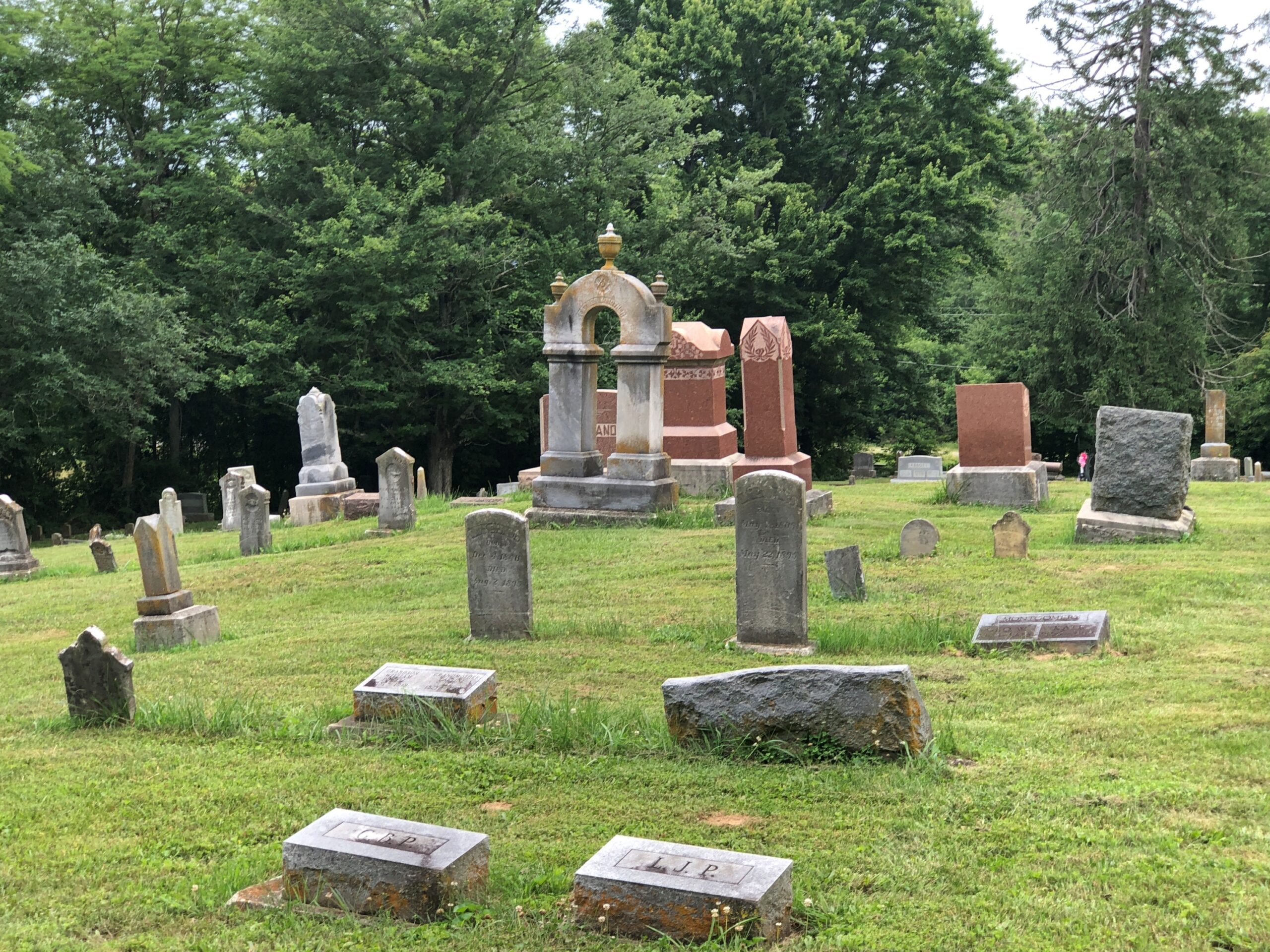
A pleasant graveyard, founded in 1824 — same year as the town itself — and well marked by upright stones, but not overly landscaped.
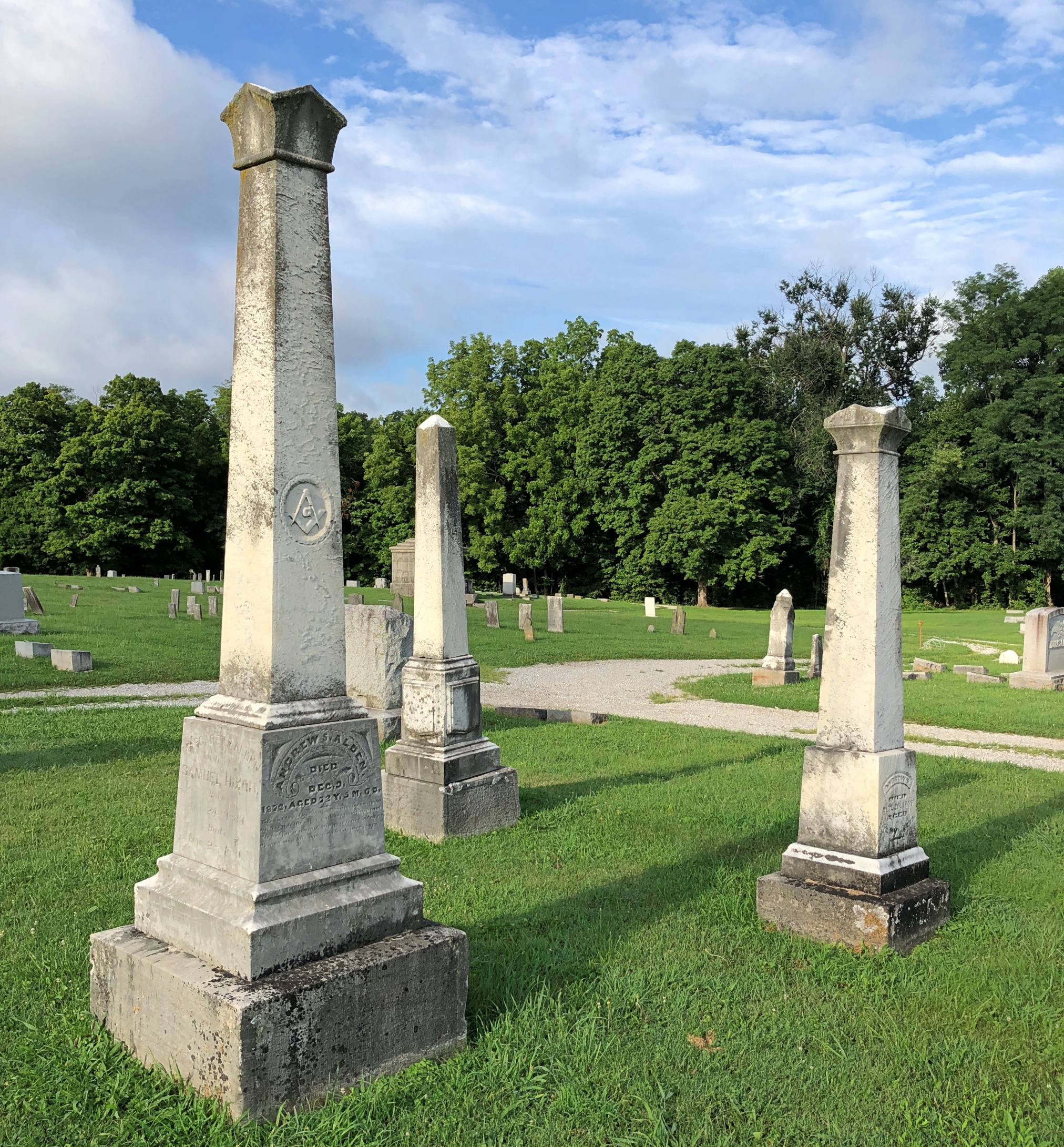
A few memorials reach upward, but not that far.
A few mausoleums denote formerly big fish in the small pond that is Rockville, seat of Parke County.
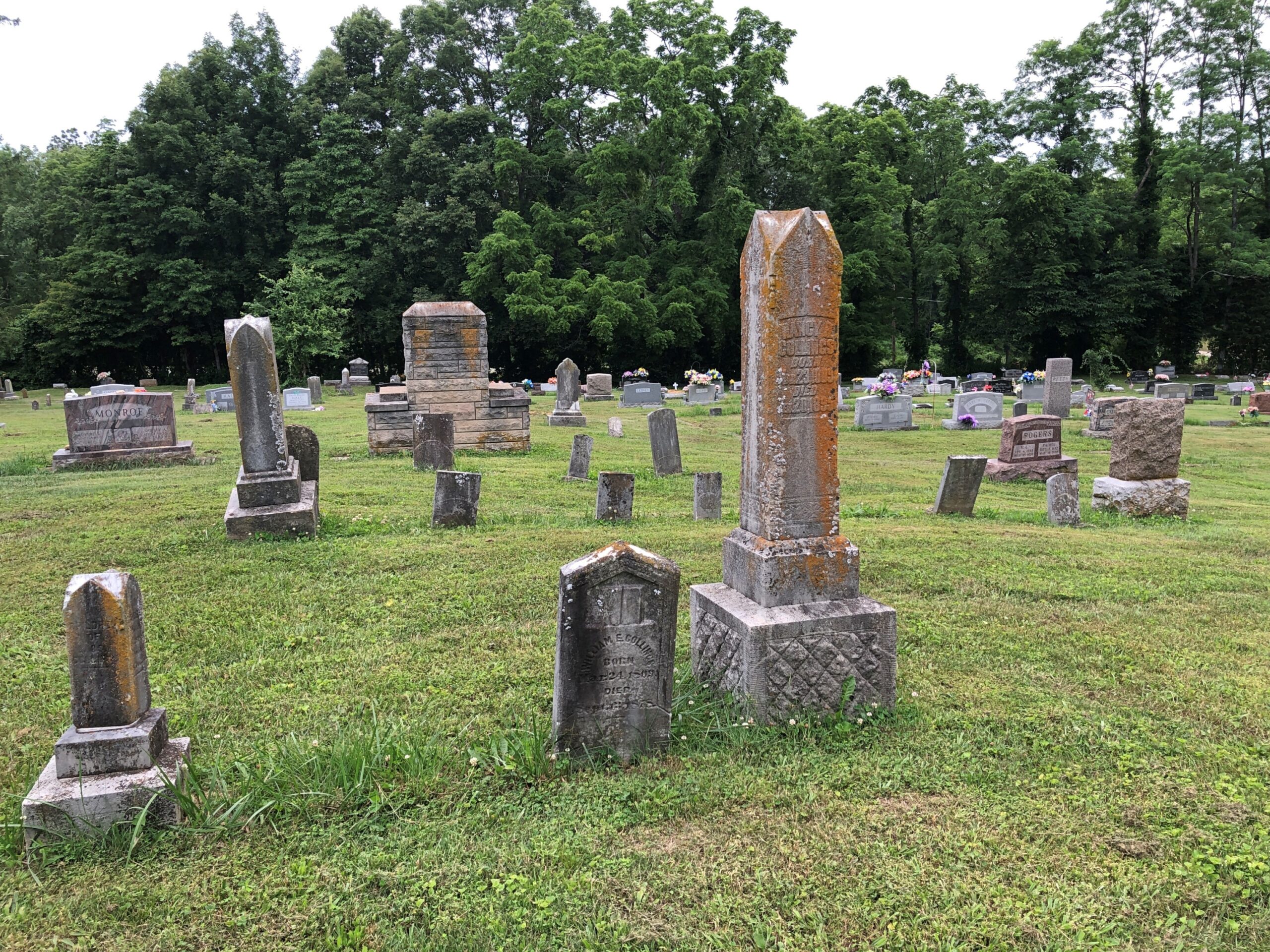
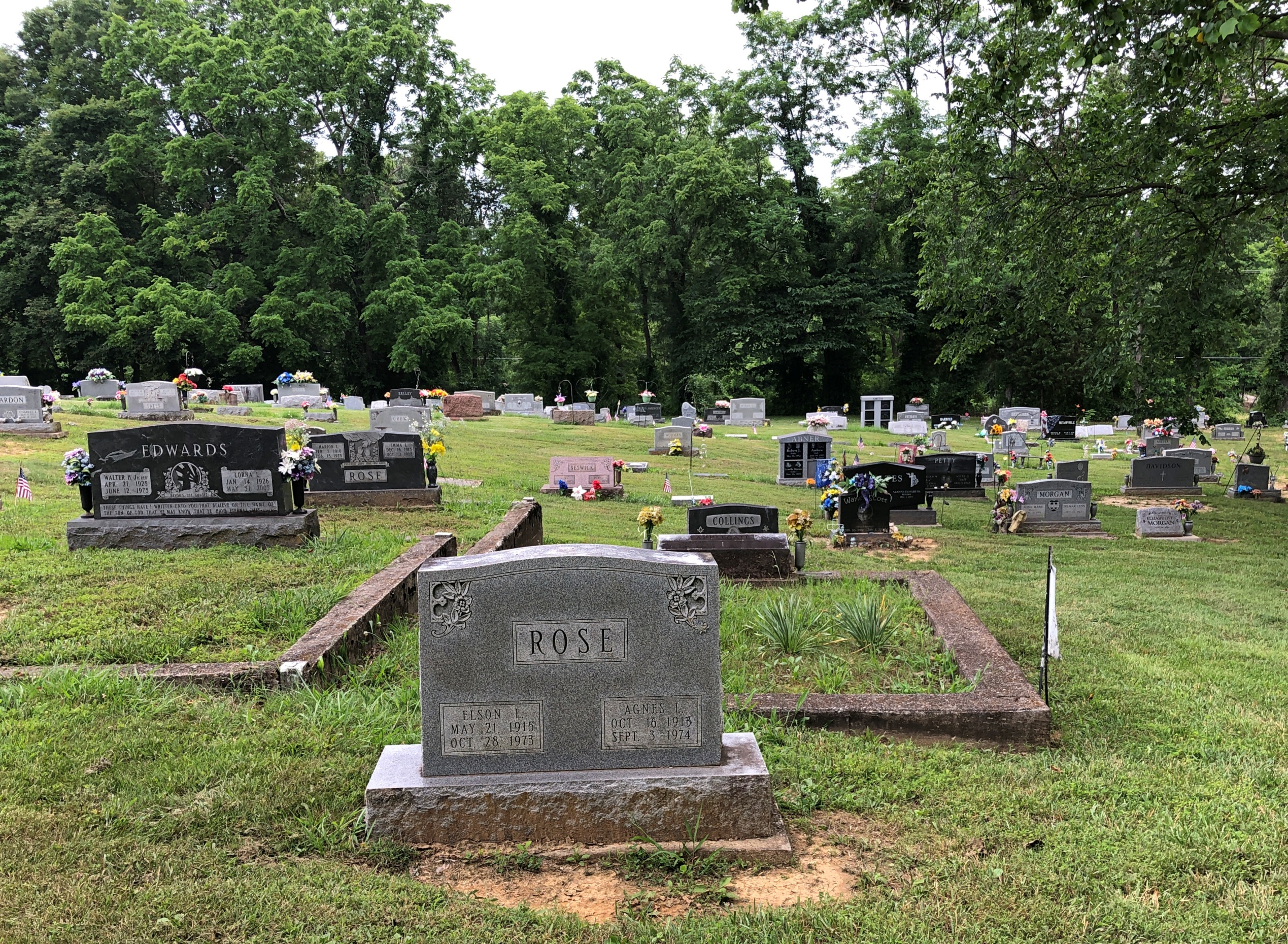
Mostly modest stones populate the cemetery, presumably for regular folks of the past.
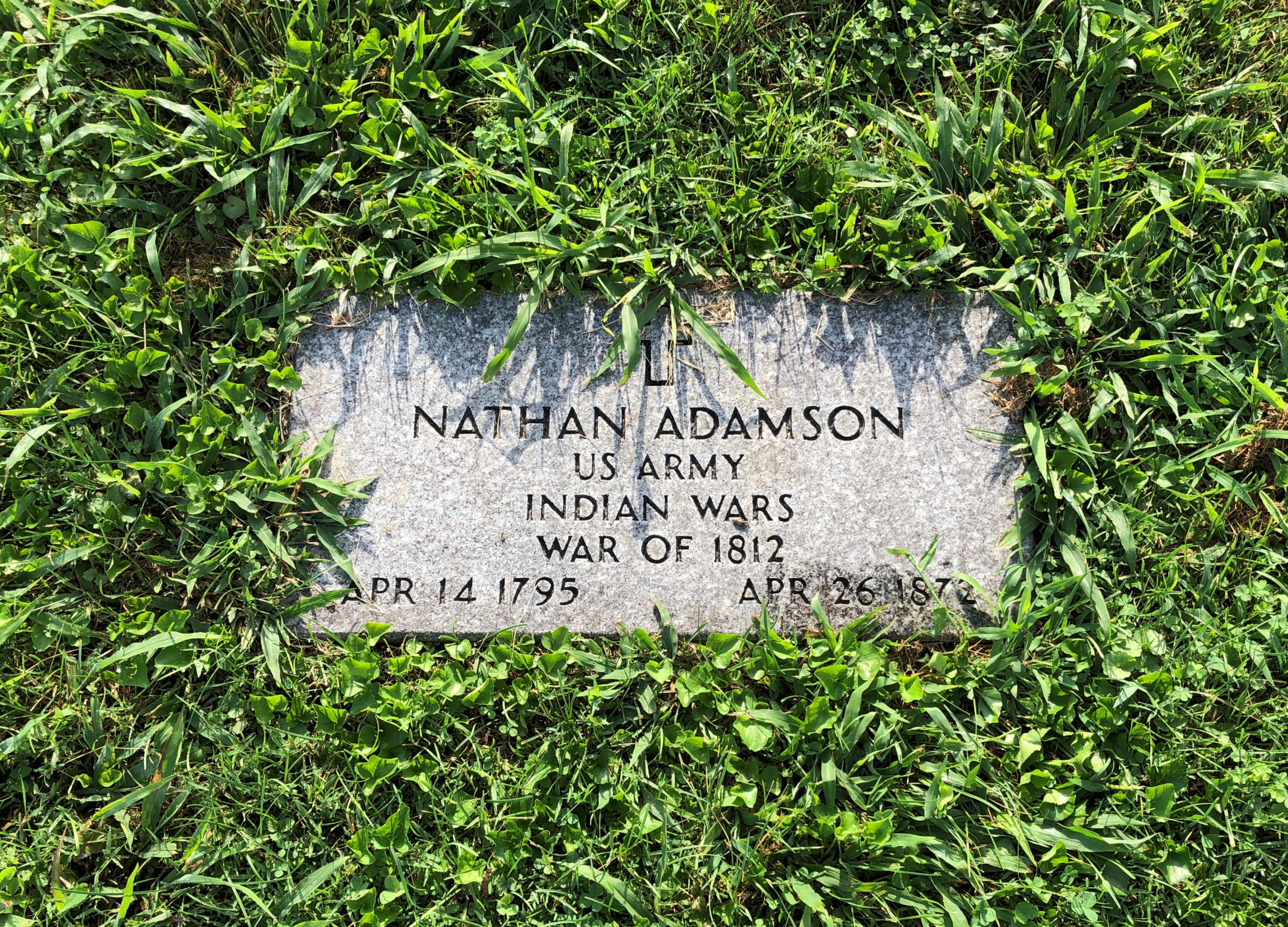
It isn’t too often that you see veterans of the War of 1812 (but not never).
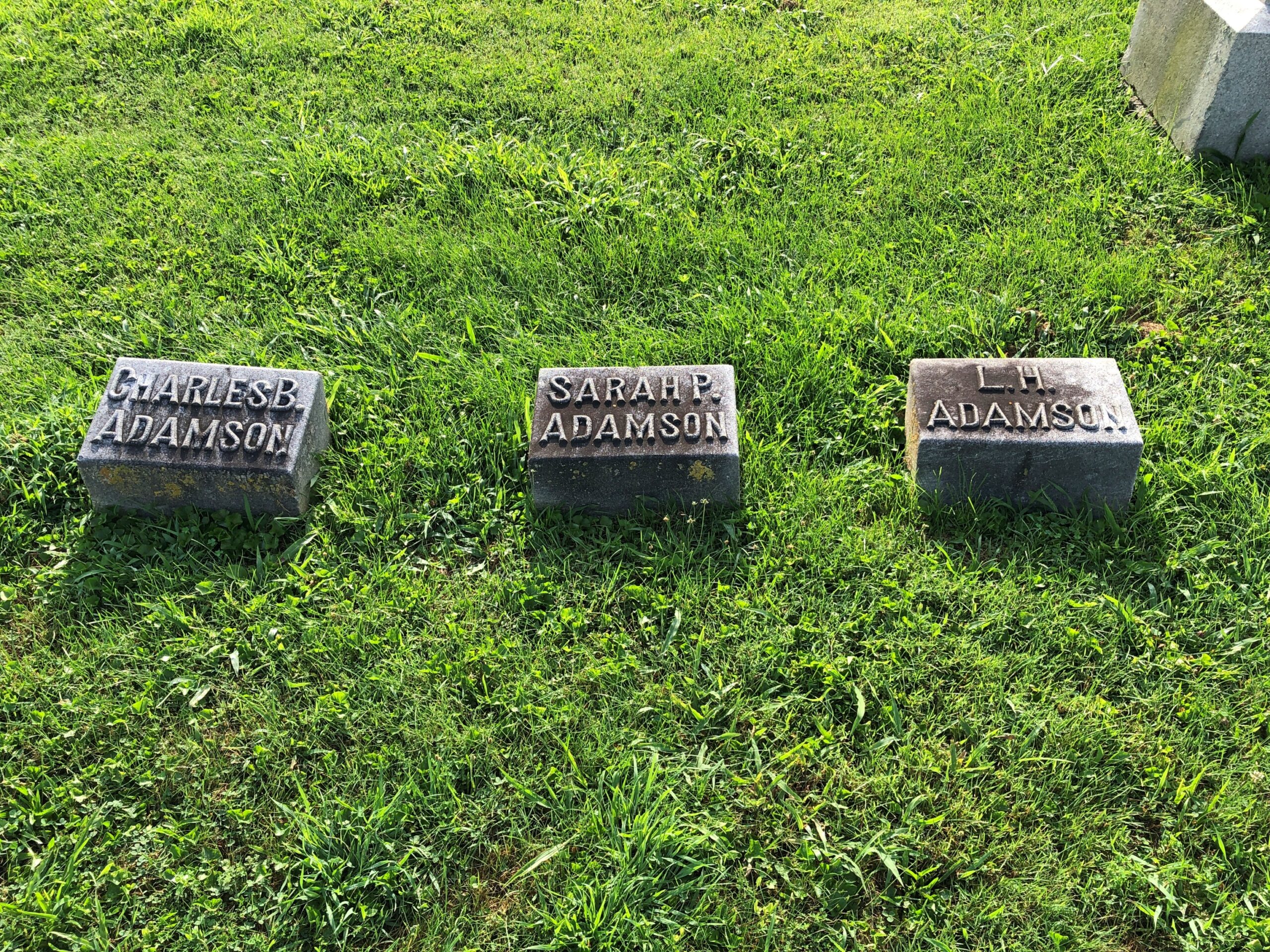
Numerically speaking, there just weren’t that many compared to later, greater wars, and probably many of their graves aren’t marked as such. Nathan was near the other Adamsons, and indeed two of them (per Find-A-Grave) are his children.
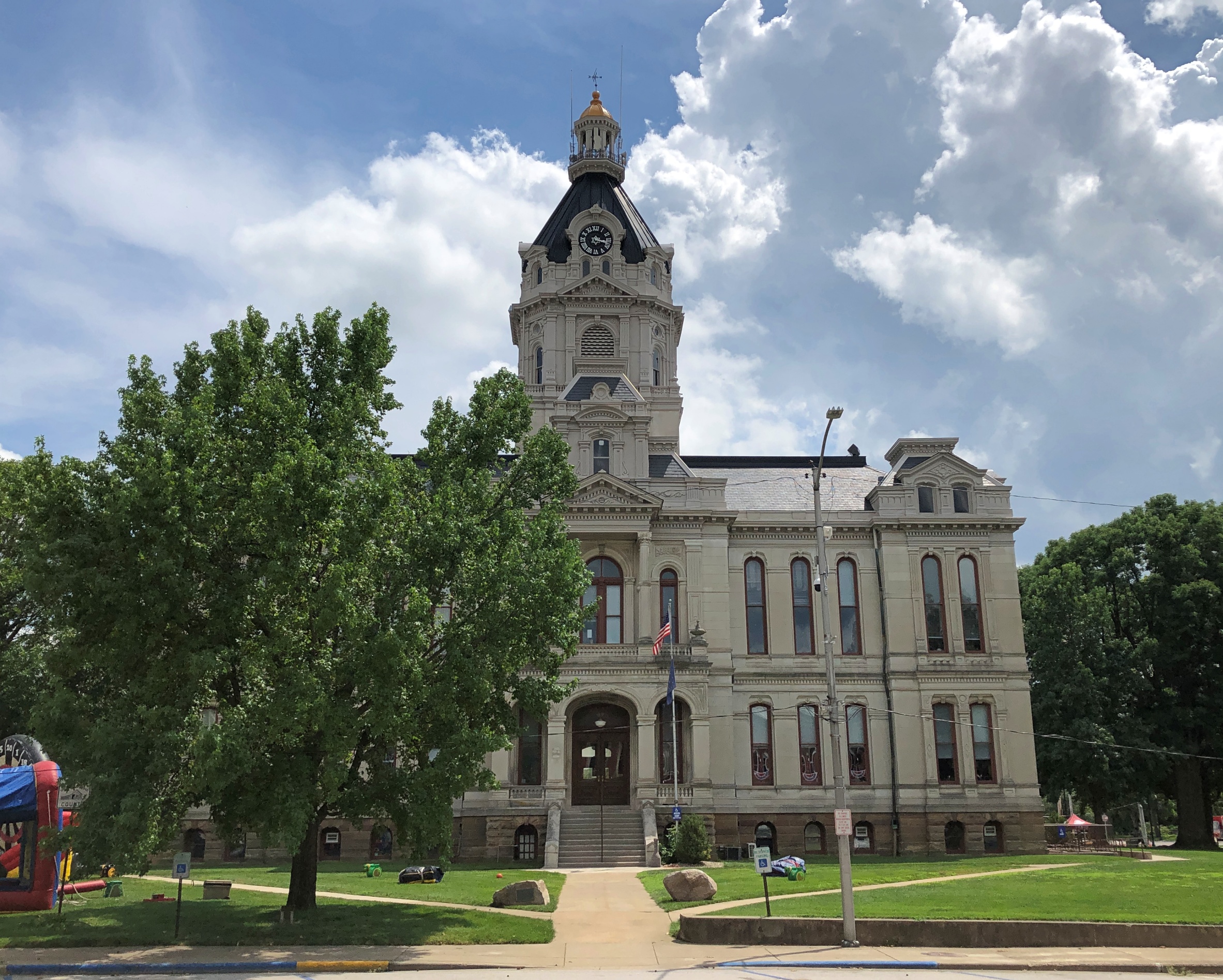
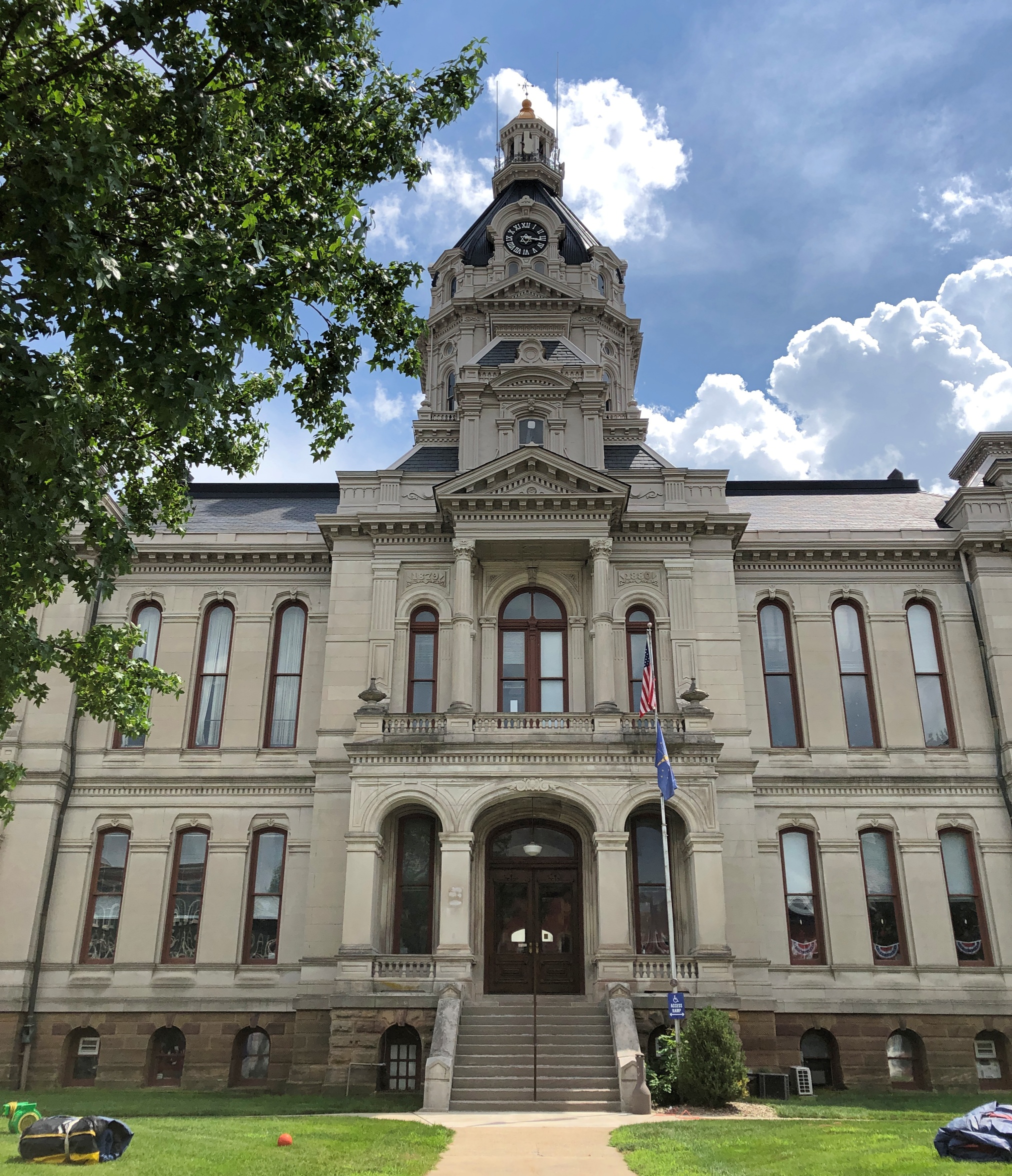
Not too many blocks from the cemetery is the Parke County Courthouse. We encountered it on Saturday afternoon, soon after arriving in Rockville (pop. about 2,600), when temps were about as high as they would be that day. Sweaty 90s.
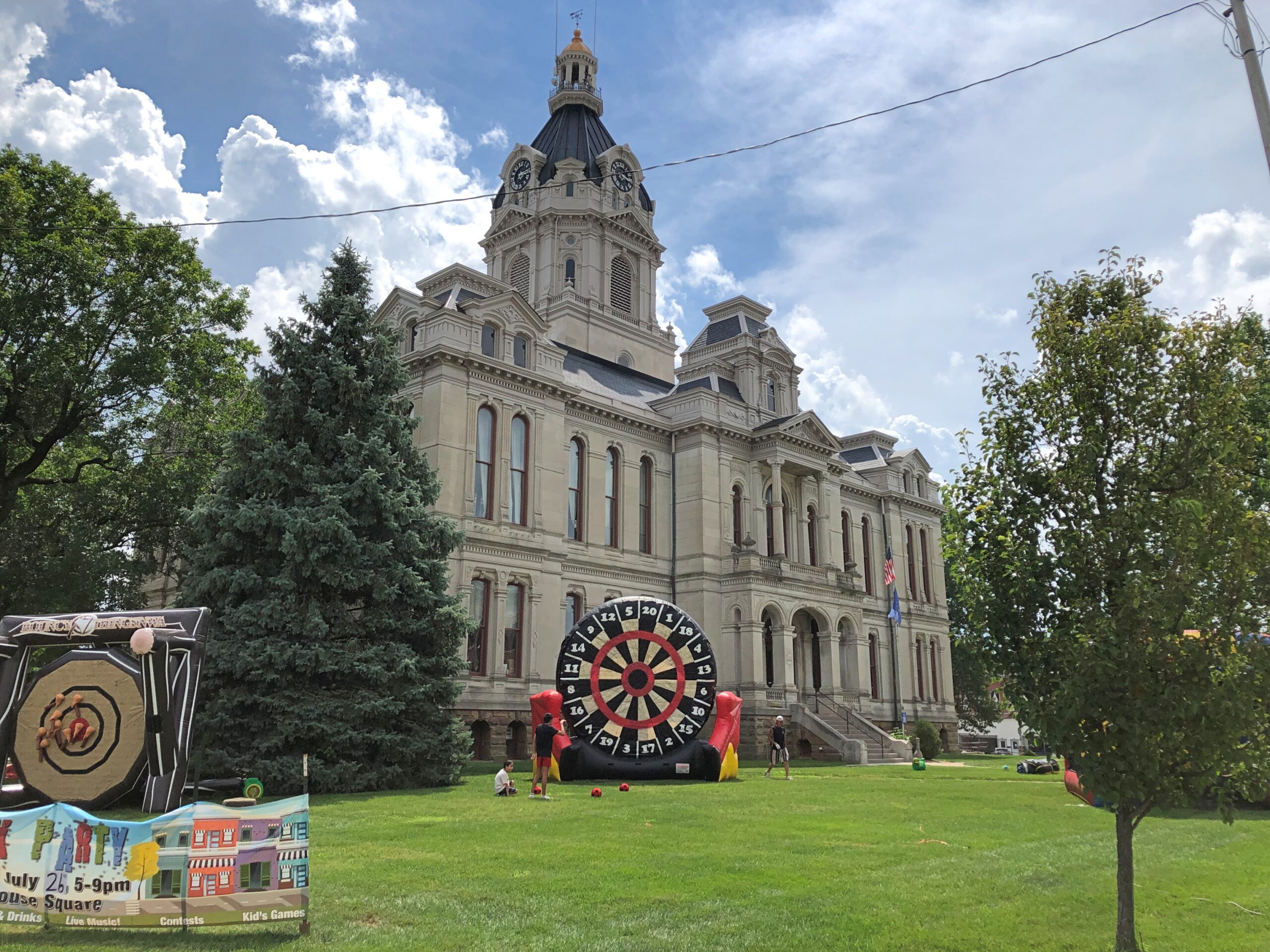
The courthouse is a grand Second Empire pile with some Beaux Arts added to the mix, completed in 1882, during the golden age of U.S. courthouses. Designed by T.J. and Brentwood Tolan, a father and son team. They did a lot of courthouses.
The giant dartboard isn’t something you see too often on courthouse grounds. Could it be the Dartboard of Justice? That’s how sentencing is done for crimes that call for one to 20 years in the jug; a toss by the judge, or the jury foreman.
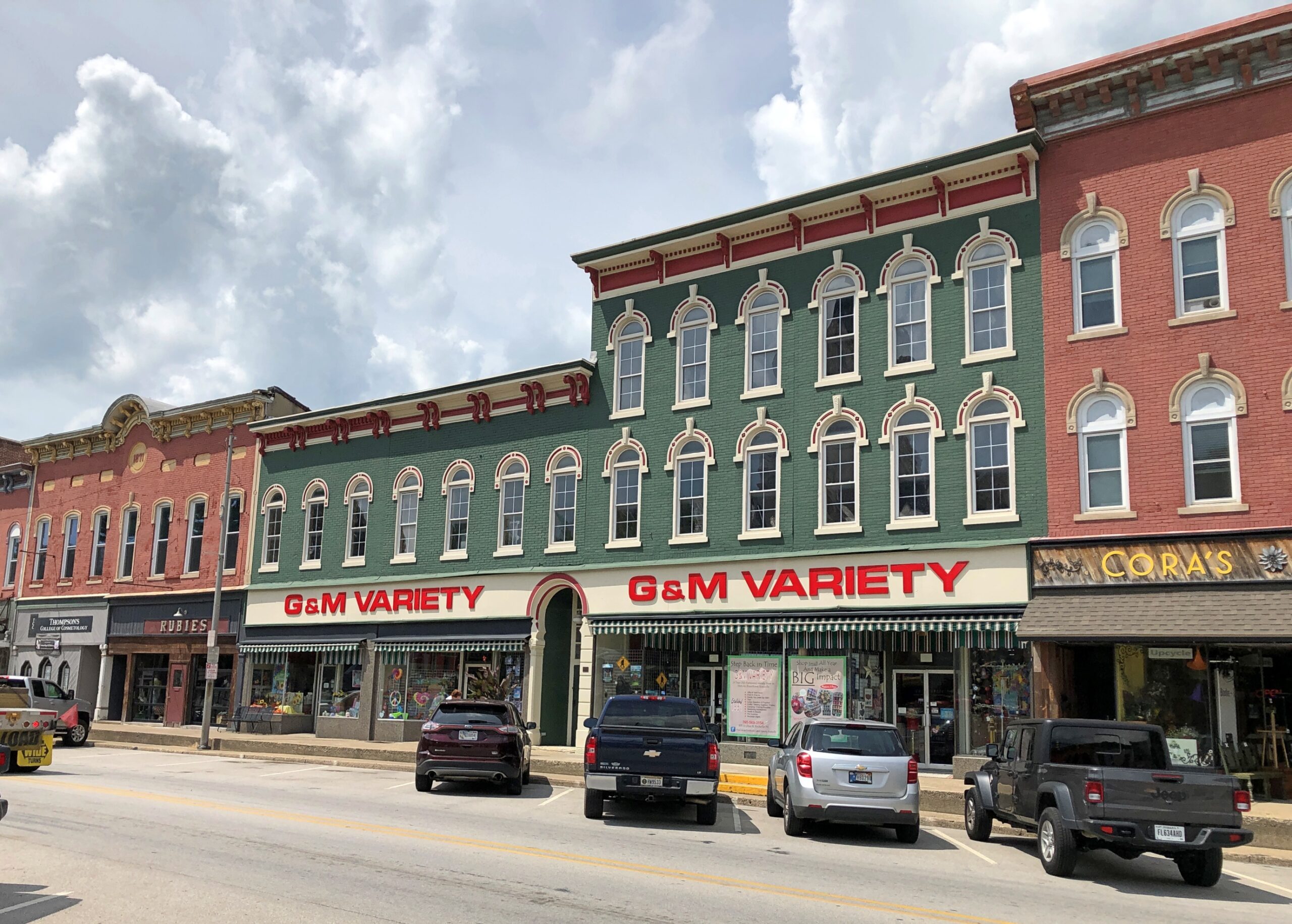
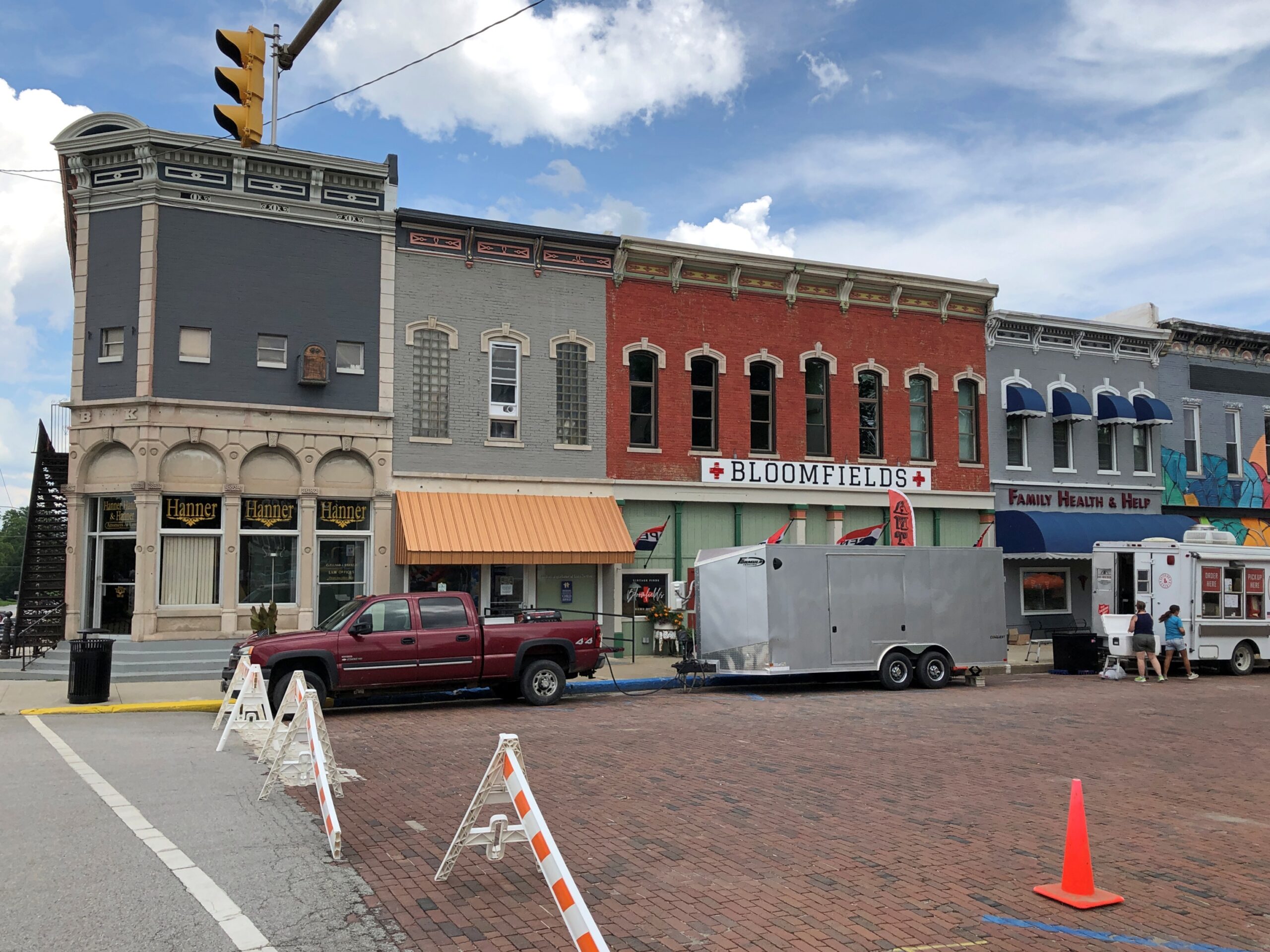
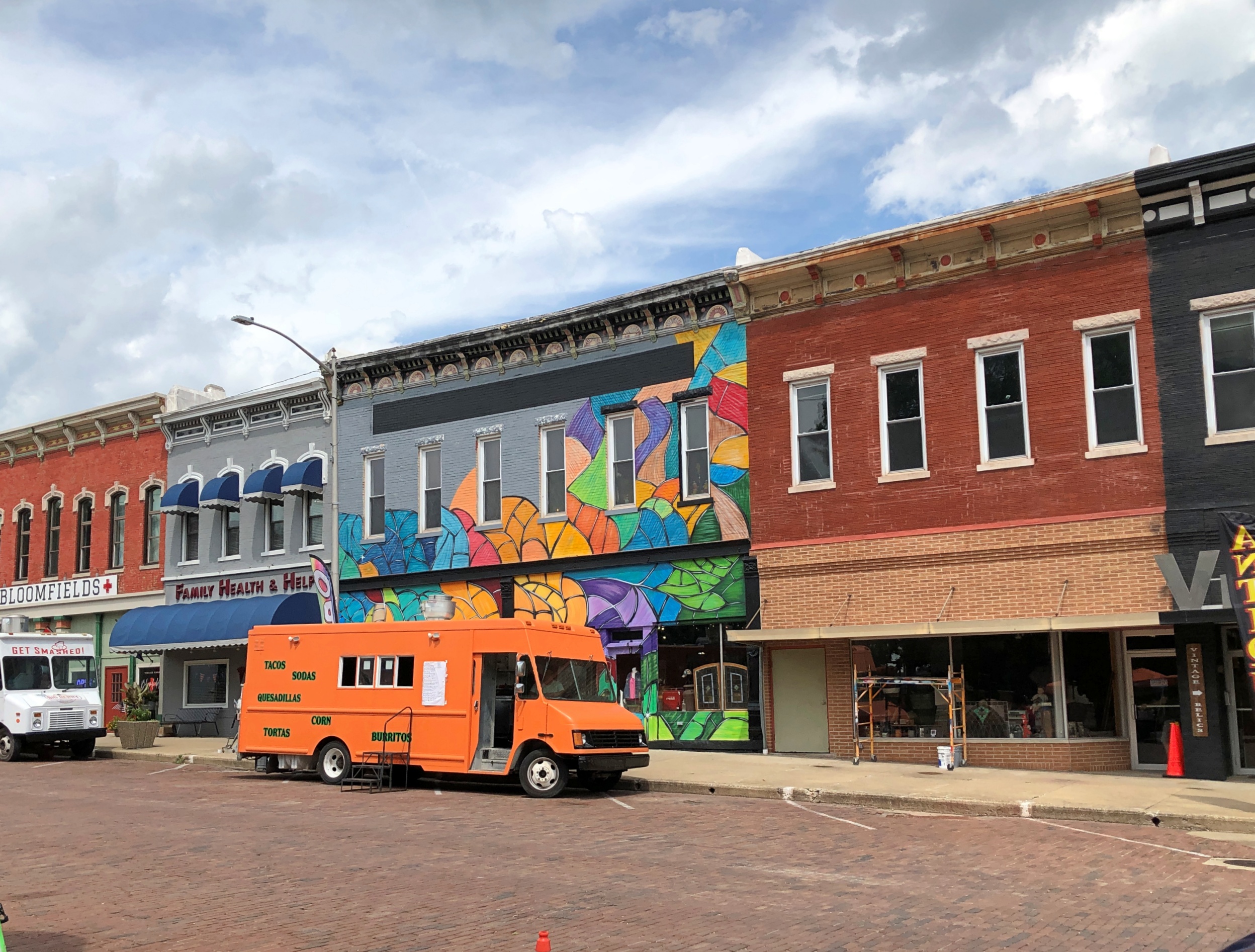
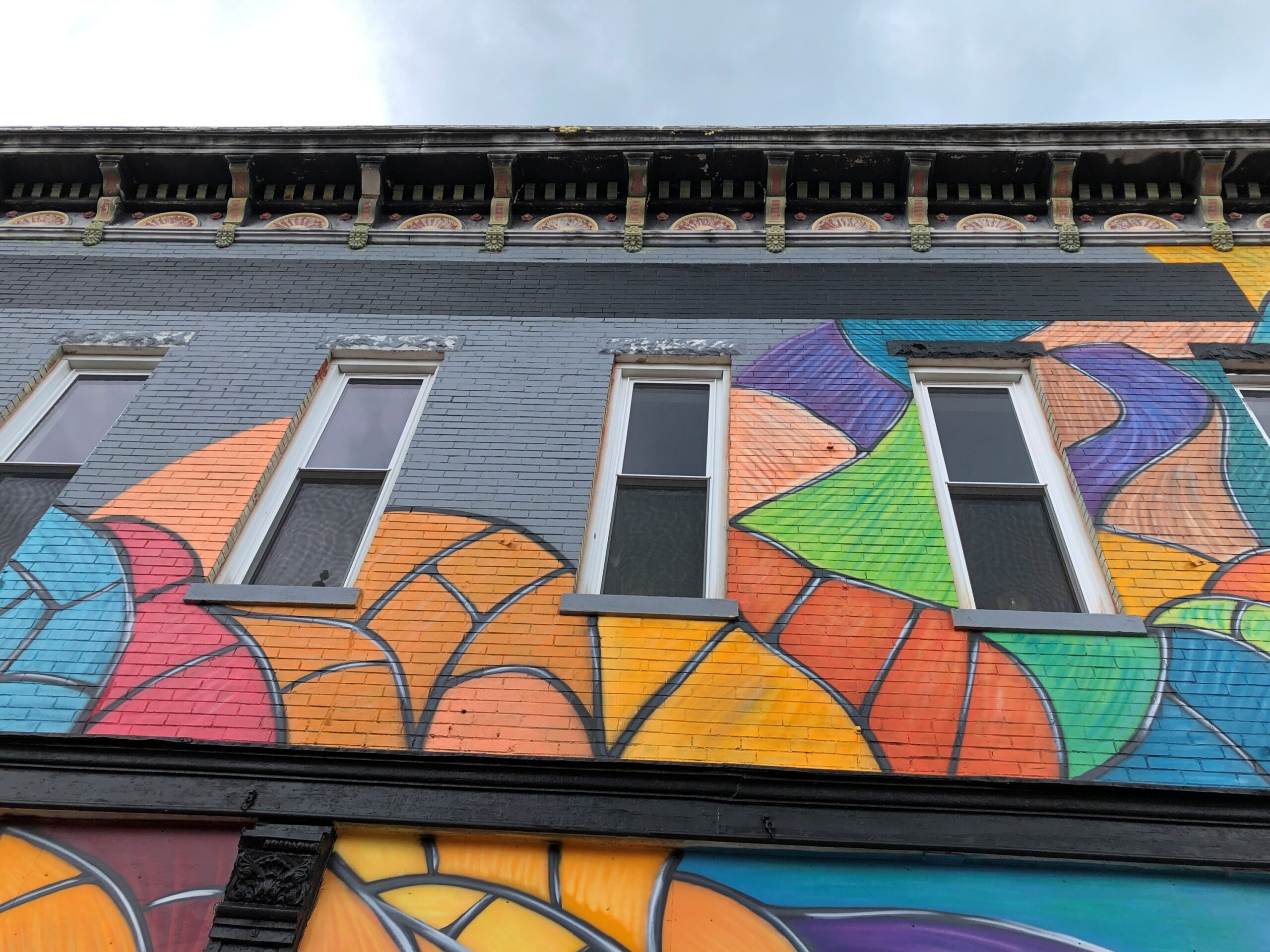
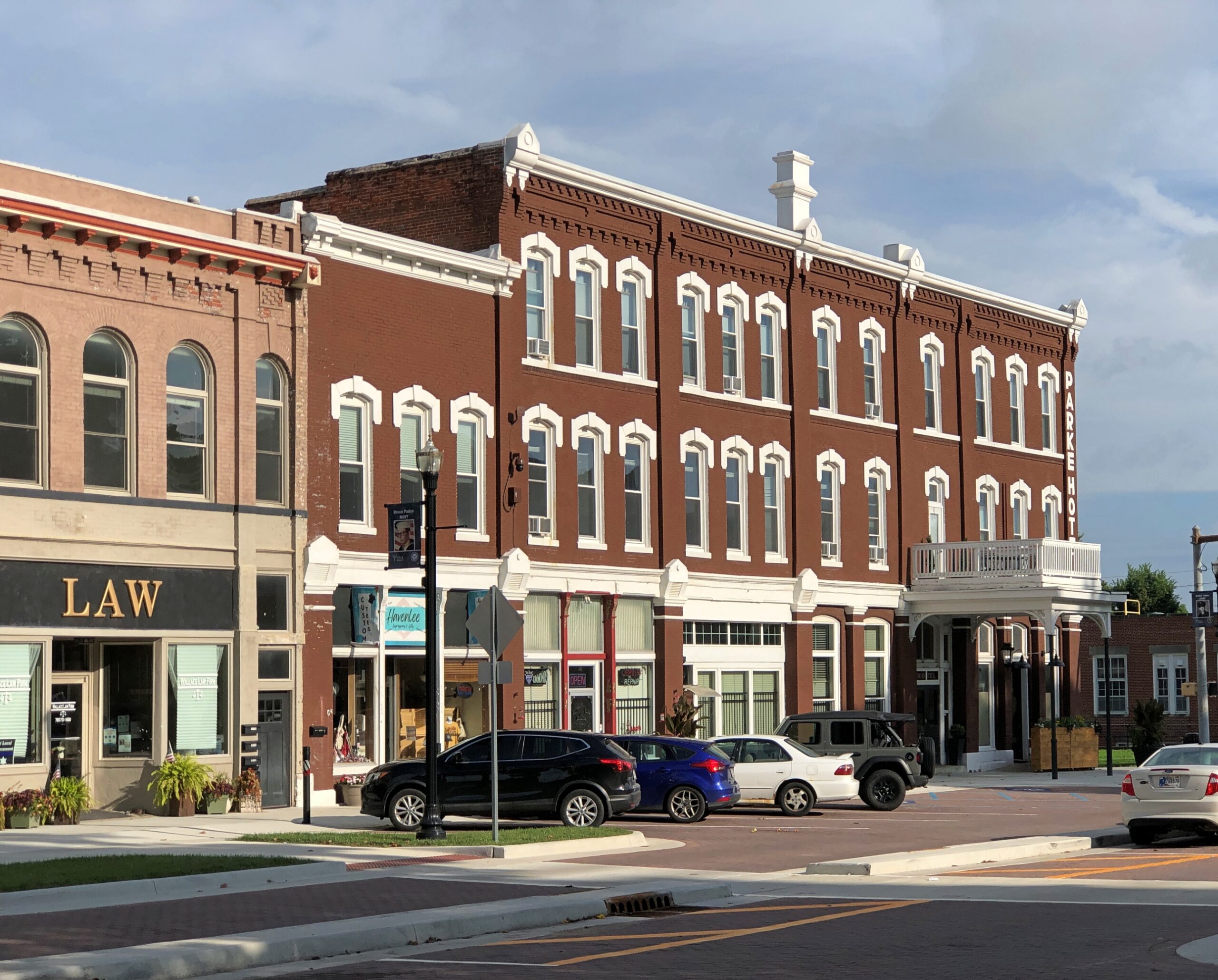
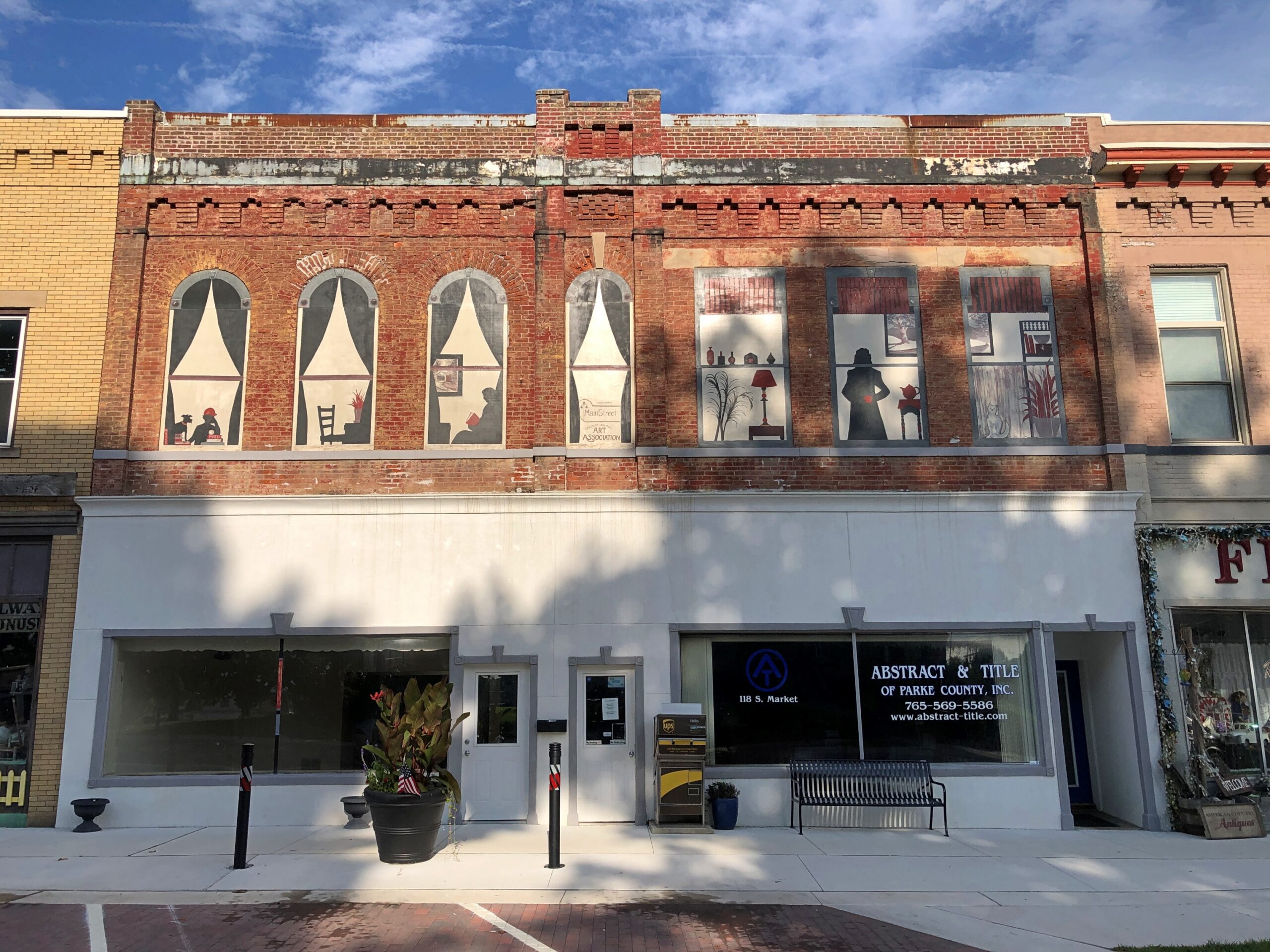
No, a small street festival was being set up at that moment, though not up and running yet. It was too hot for that anyway. But not for a quick look at some of the buildings ringing the courthouse, most in good shape and mostly tenanted.
G&M Variety has the soul of a five-and-dime, but a more accurate classification these days would be a five-and-ten dollar store: a step above a dollar store, the love child of a convenience store and a standard grocery store, with a souvenir shop added to the mix. Roaming around its aisles was pleasant, for a look at the sometimes unusual merchandise, and the AC.
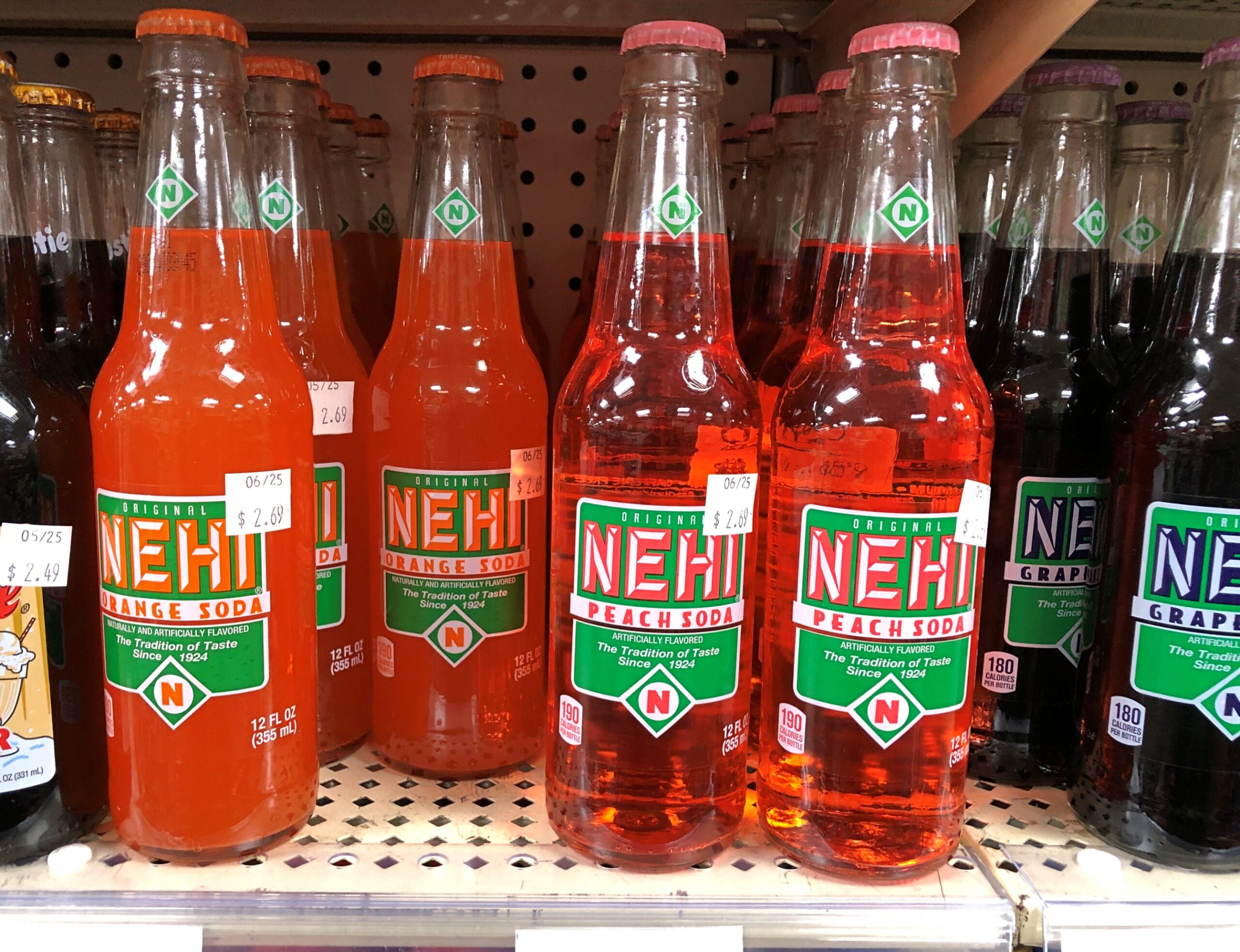
Drinks on sale that made me recollect sodas from my mid-60s childhood.
Frostie! Nehi! Triple XXX! Dang? We didn’t have Dang. Butterscotch root beer?
Pangs of nostalgia weren’t enough for me to spend $2.49 for an ordinary-sized soda, though I was a little thirsty.
More courthouse square.
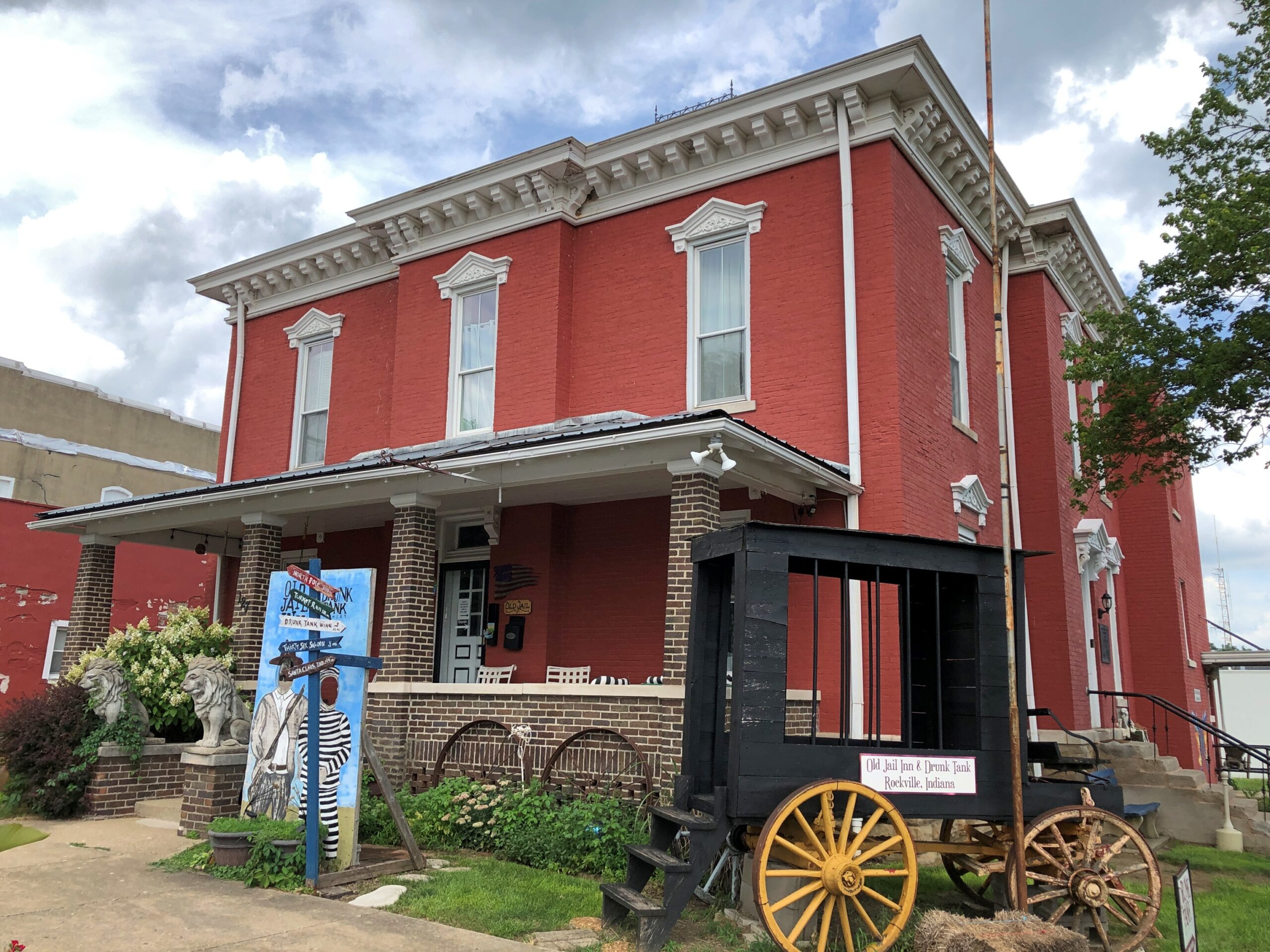
The Old Jail Inn & Drunk Tank, now a B&B.
I returned to the square on Sunday morning, after the cemetery, for a further look when it wasn’t so hot.
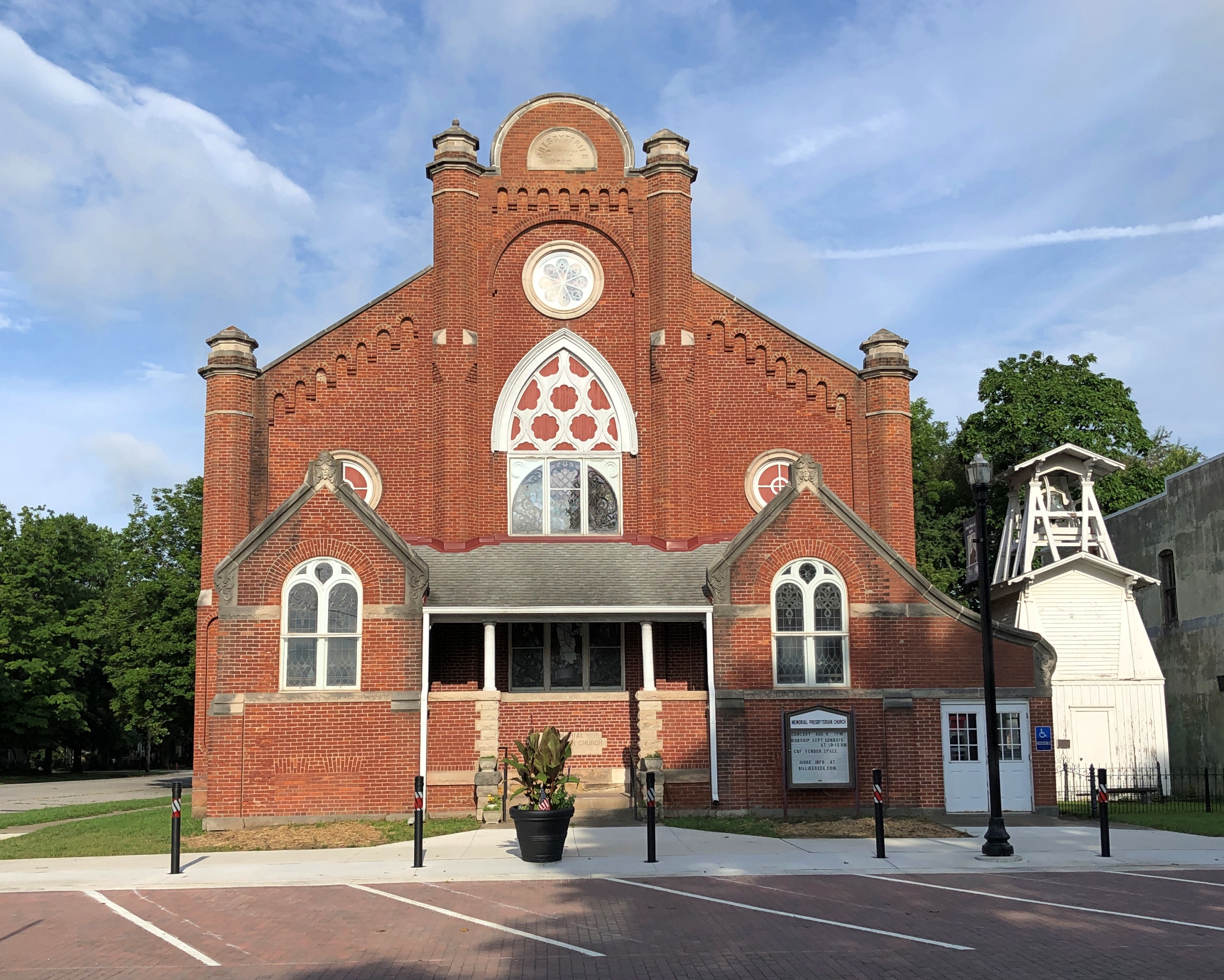
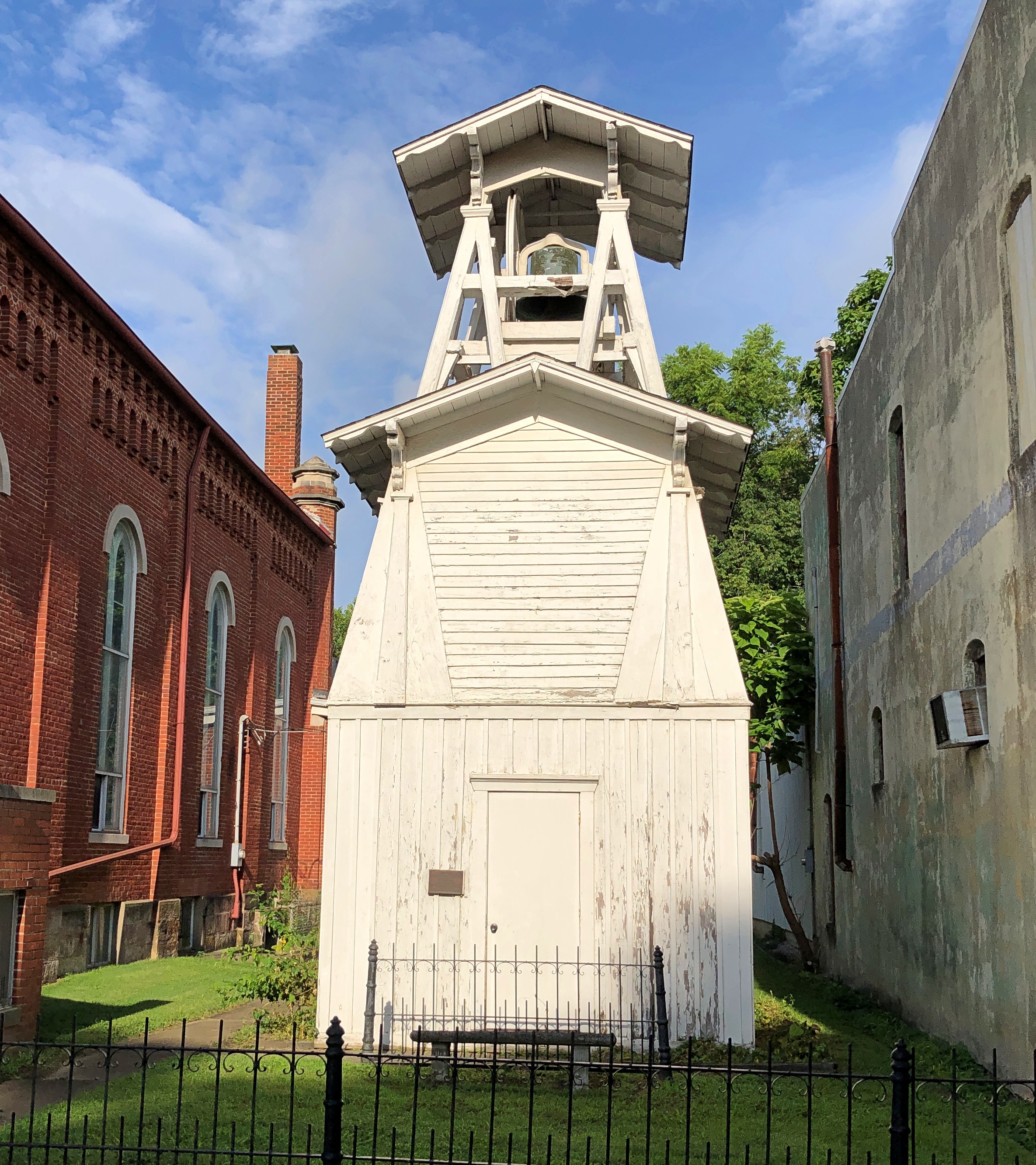
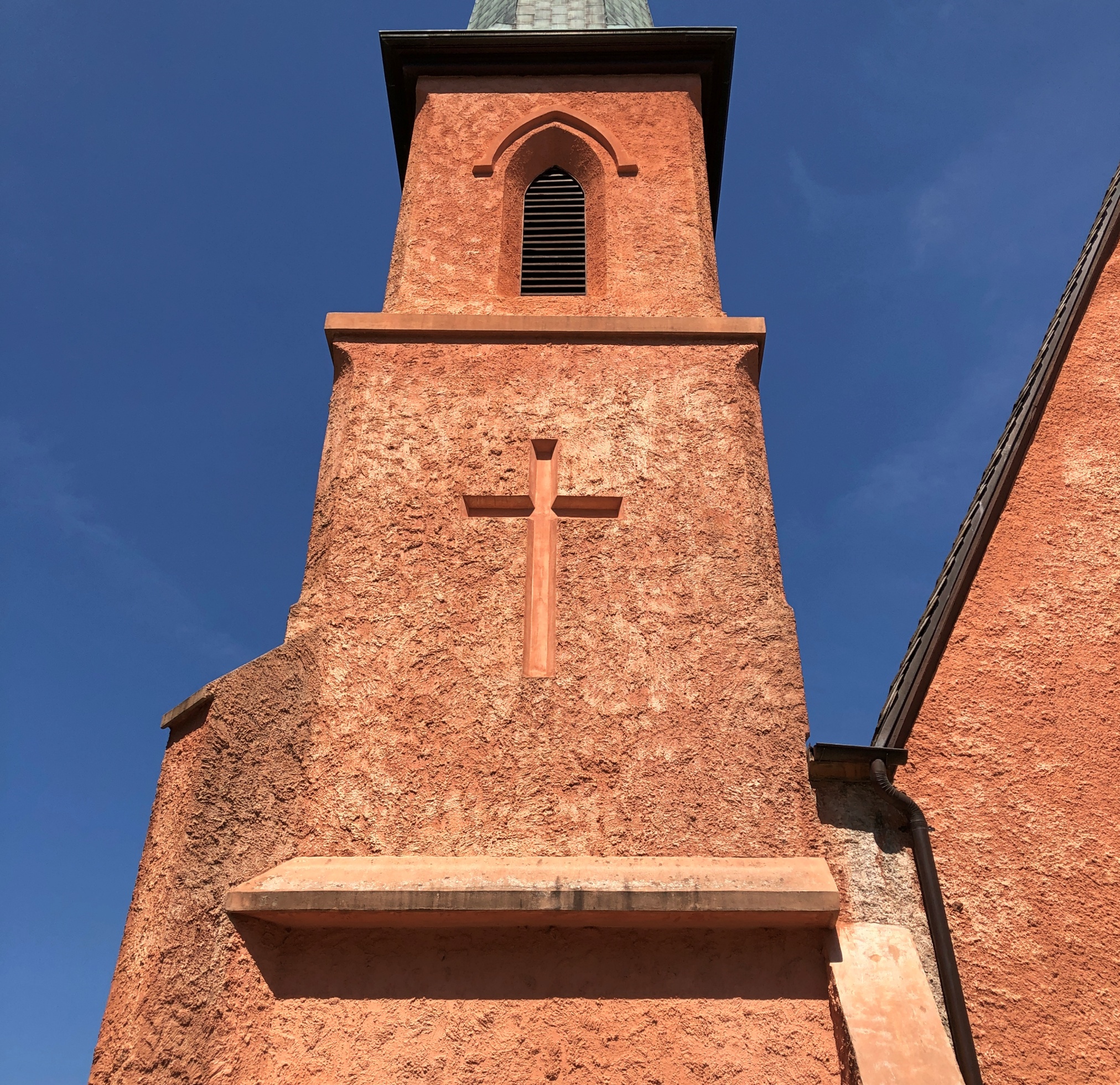
Memorial Presbyterian Church and its freestanding bell tower.
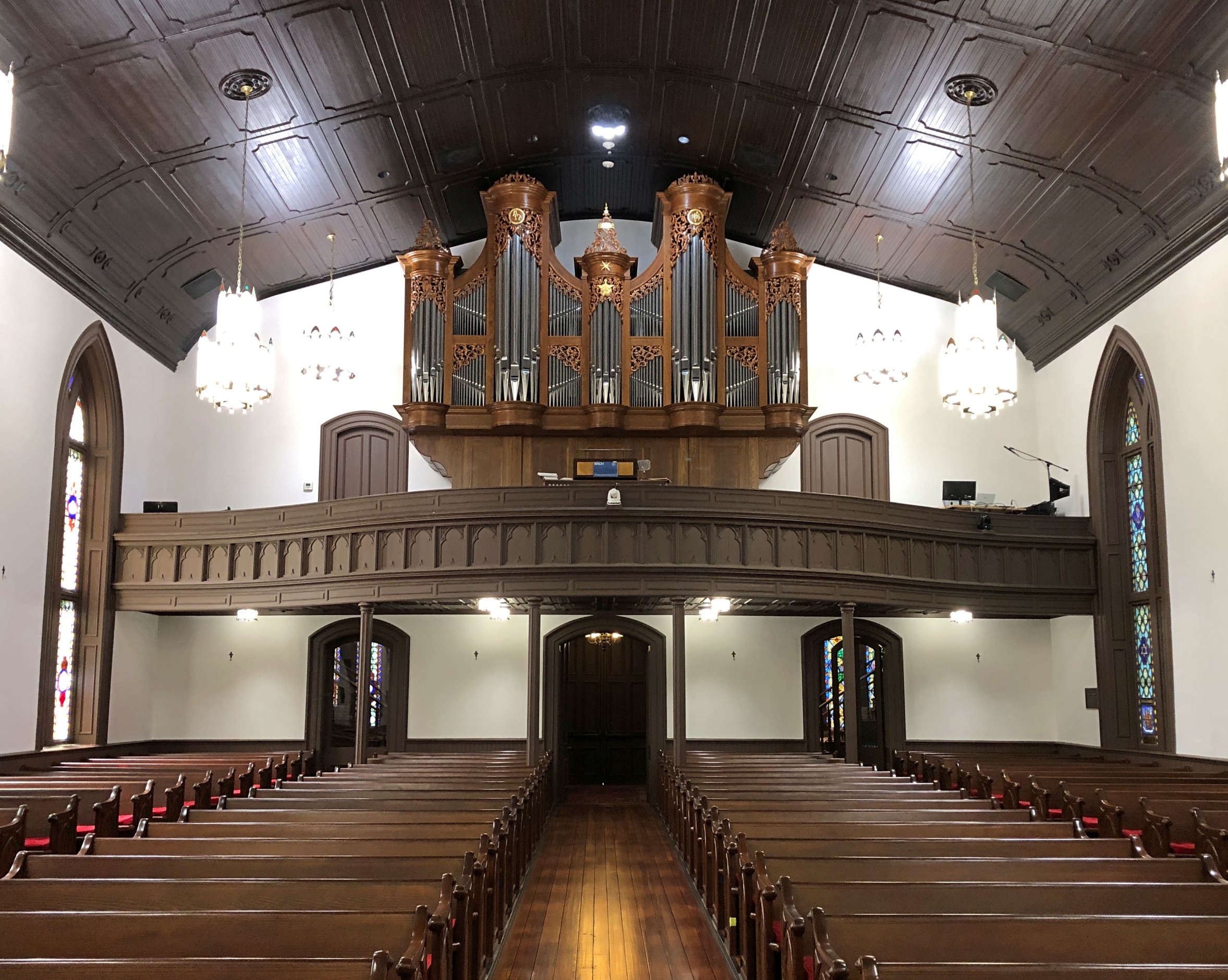
It isn’t a Presbyterian church any more — its cross conspicuous in its absence — though a Presbyterian congregation meets there sometimes. These days it counts as an event space, with music performances, recitals, meetings, and other gatherings there, according to Billie Creek Village, more about which later.
In the heat of midday back in late June, en route to Athens, Ga., I arrived at the Georgia Welcome Center on I-20, a sizable structure just inside the state, and did what I needed to do. Returning to my car, I wondered whether I should drive into Augusta, only a few miles off the Interstate at that point. Specifically to downtown, to see what I could see, even at 90+° F. or so.
Would it be worth the short detour? At that moment, the lyrics of a song of my youth came to mind, as the only mention of Augusta I know in popular music.
I beg your pardon, mama, what did you say?
My mind was drifted off on Martinique Bay
It’s not that I’m not interested, you see
Augusta, Georgia is just no place to be.
The song was “An American Dream” by the Nitty Gritty Dirt Band (a.k.a. the Dirt Band) – with backing vocals by Linda Ronstadt, no less – which reached No. 13 on the Billboard Hot 100 after its release in late 1979, and probably annoyed Augusta’s city fathers and other local boosters. But all that was nearly a half century ago, so I expect any annoyance is long gone as the tune has slipped into obscurity.
The song merely came to mind then, as songs often do, and didn’t affect my decision – which was to go. Do a flyby, in my idiosyncratic nomenclature for such a visit. That is, pass through a place, but a little more than merely driving through. If I see anything interesting during a flyby, I’ll stop for a short look. (So not only is my nomenclature eccentric, it isn’t really accurate. Who cares.)
Sure enough, I spotted something worth stopping for.
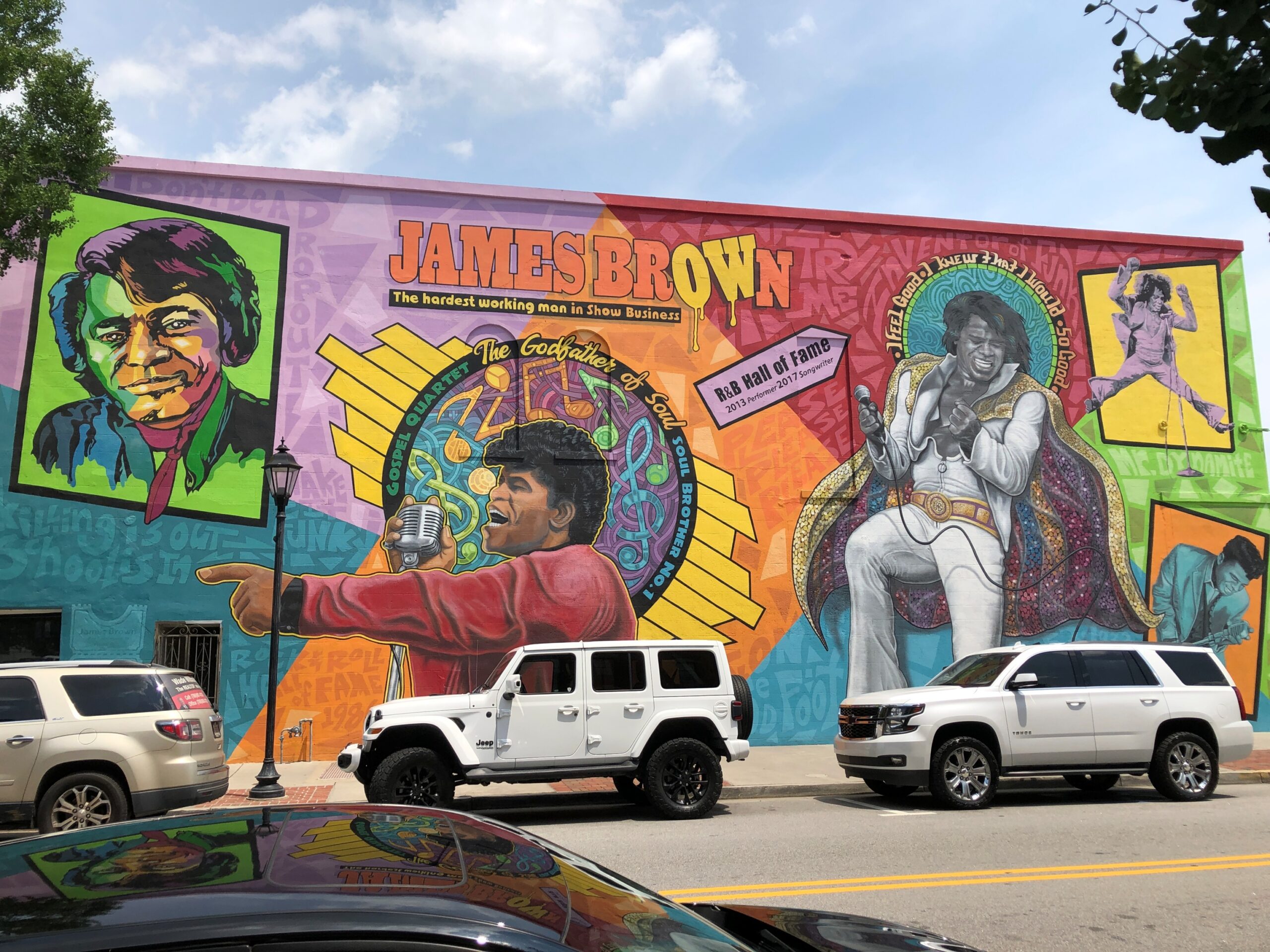
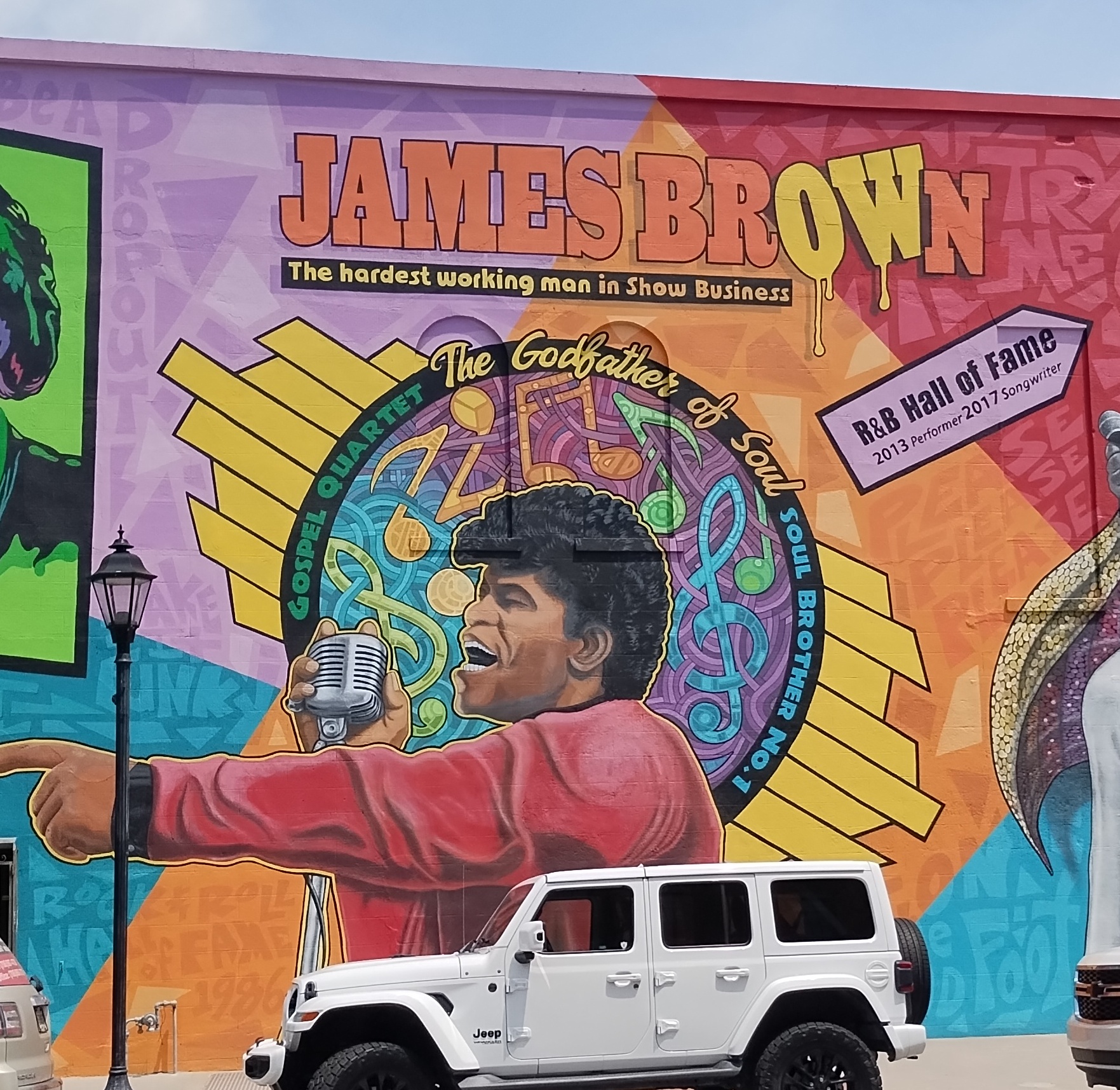
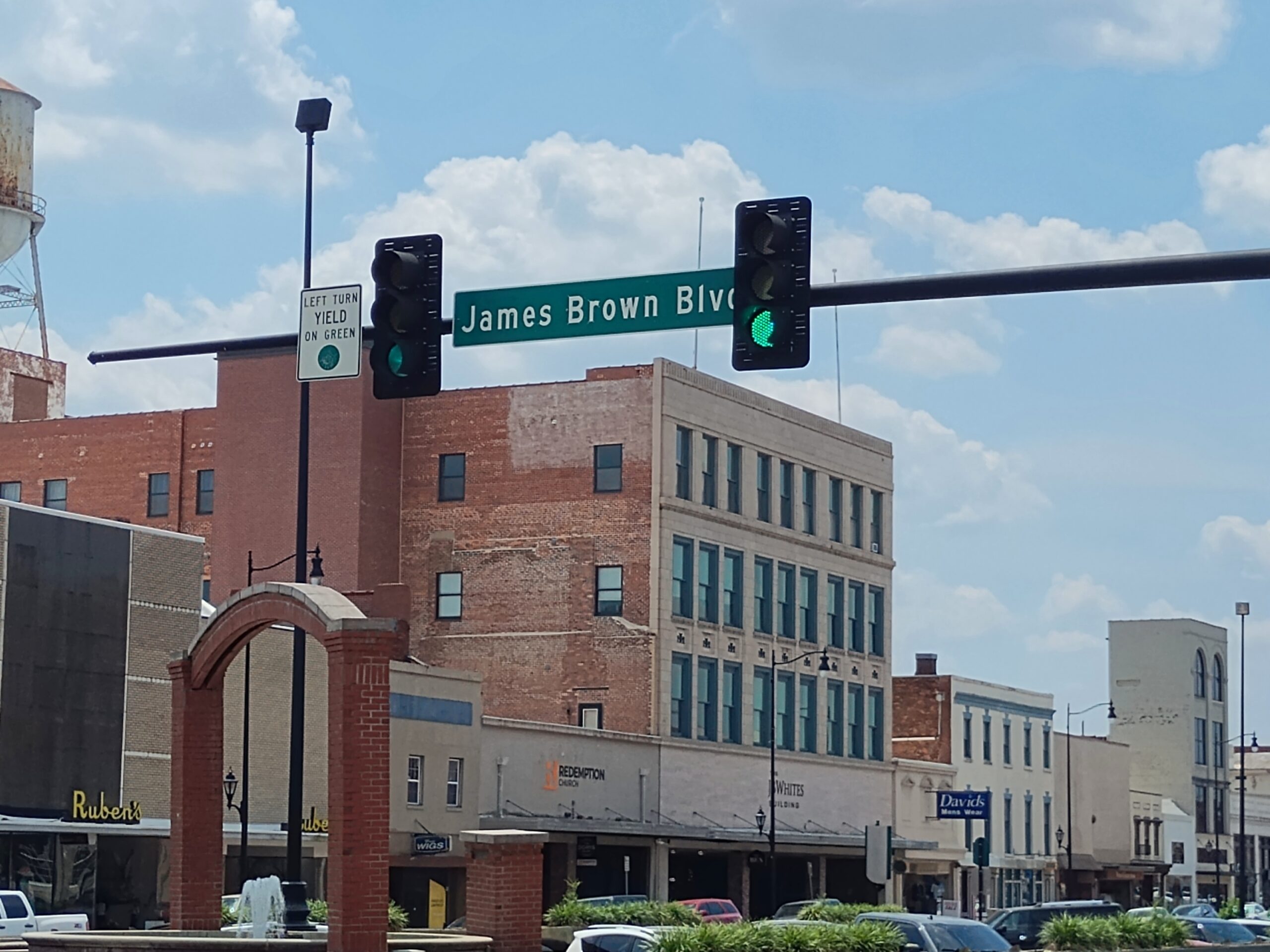
A mural at the intersection of James Brown Blvd. and Broad St., completed in 2020 by an artist named Cole Phail. Though born in South Carolina, Brown grew up in Augusta, a fact I previously didn’t know.
Later I learned that there’s a bronze of the Godfather of Soul not far away on Broad, but I didn’t look around enough to spot it, considering the heat dome, which seemed to be bearing down on me personally at that moment. So I looked at the mural, got back in my car, and blasted the AC. A few blocks away, as I was driving along, I saw an open church. I had to stop for that, too.
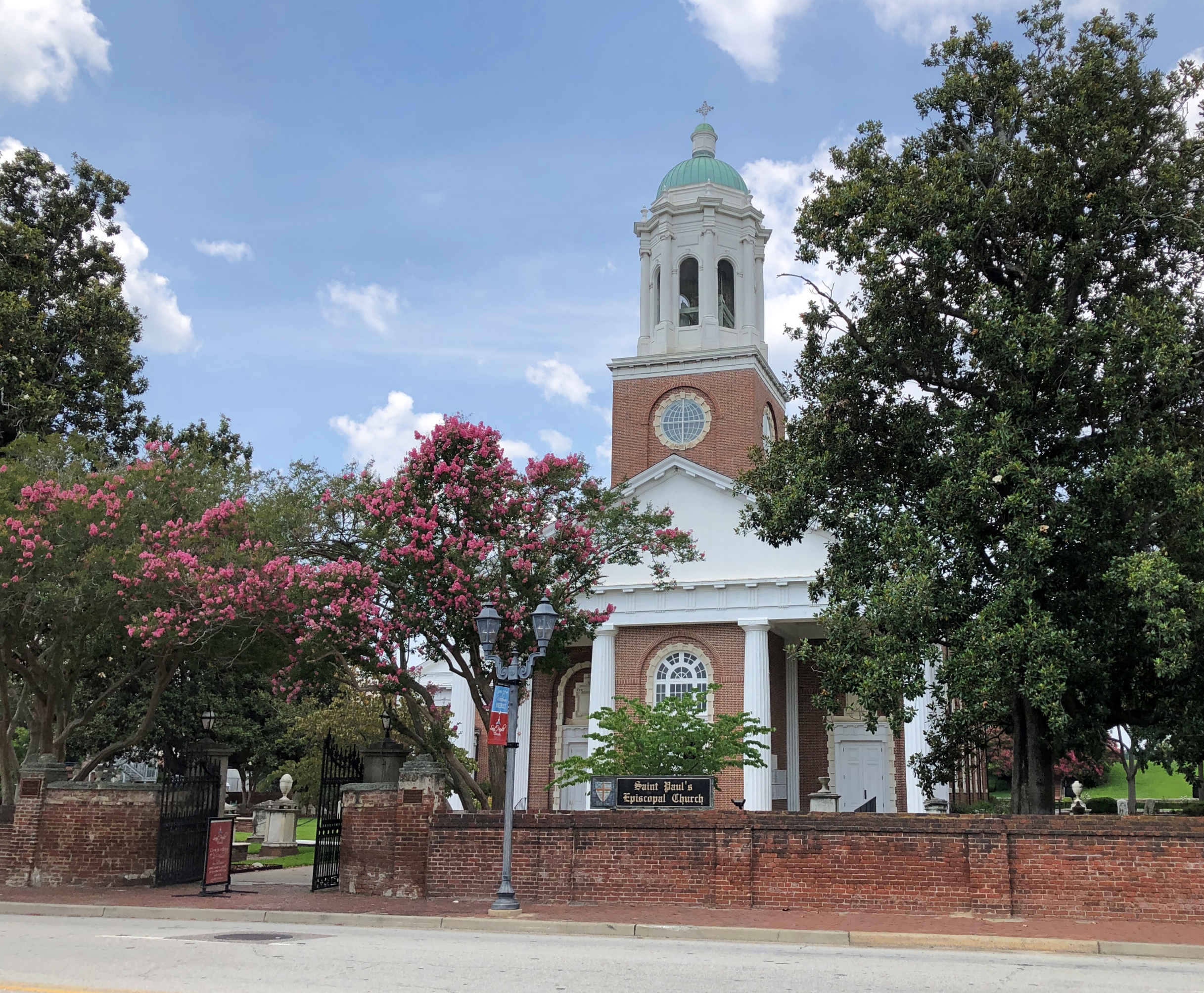
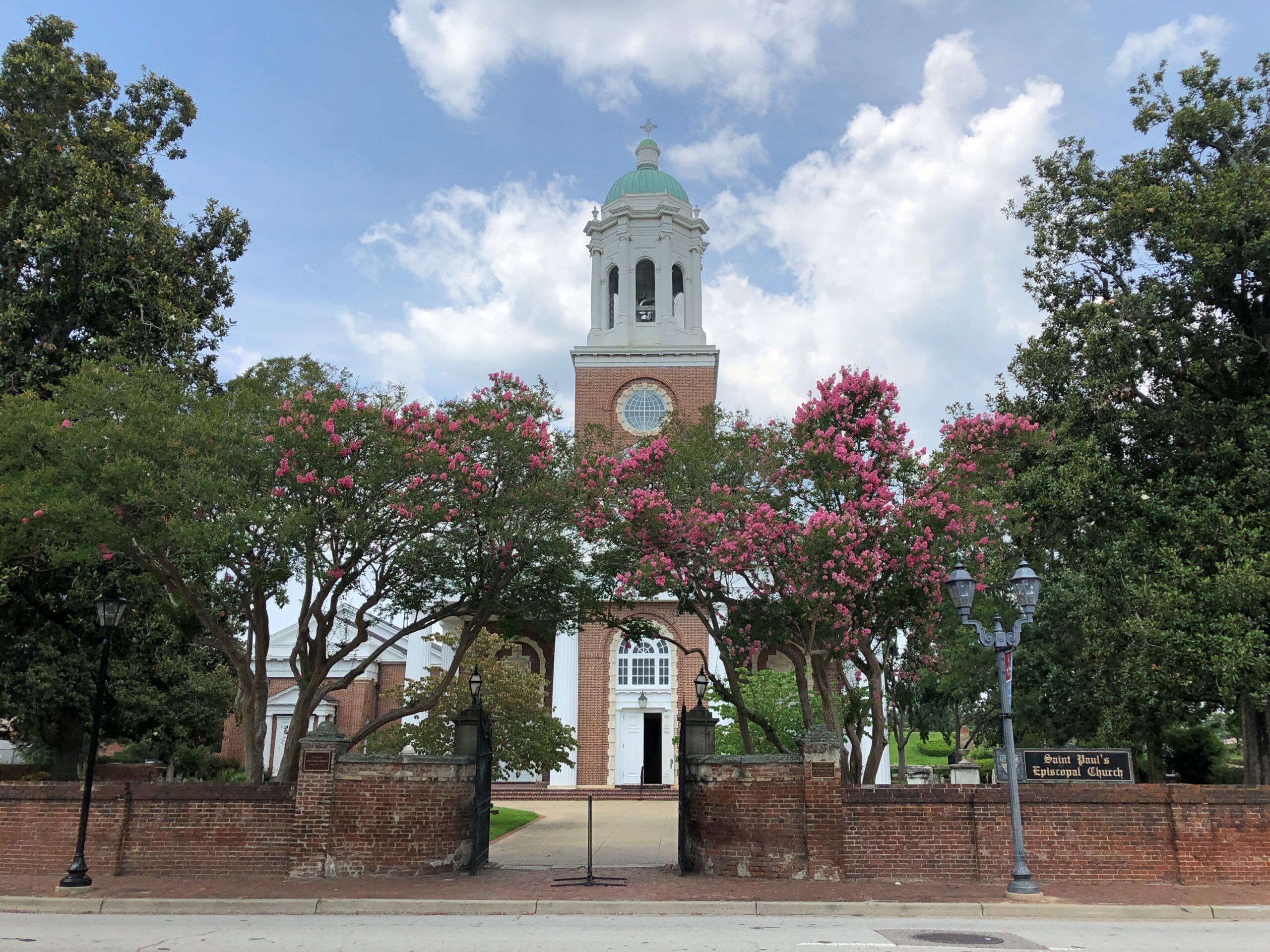
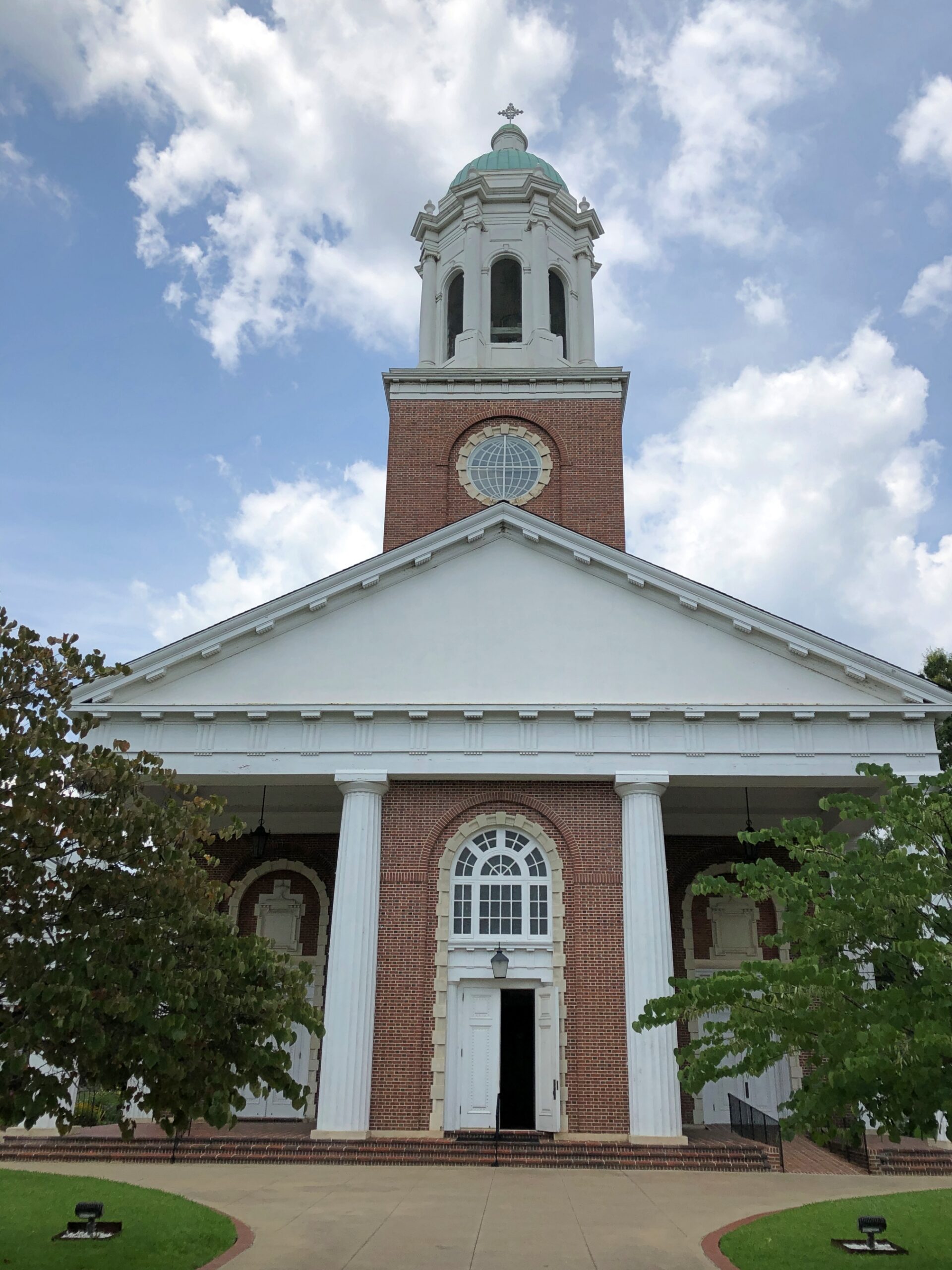
St. Paul’s Episcopal. Not only a church building, but a church graveyard as well.
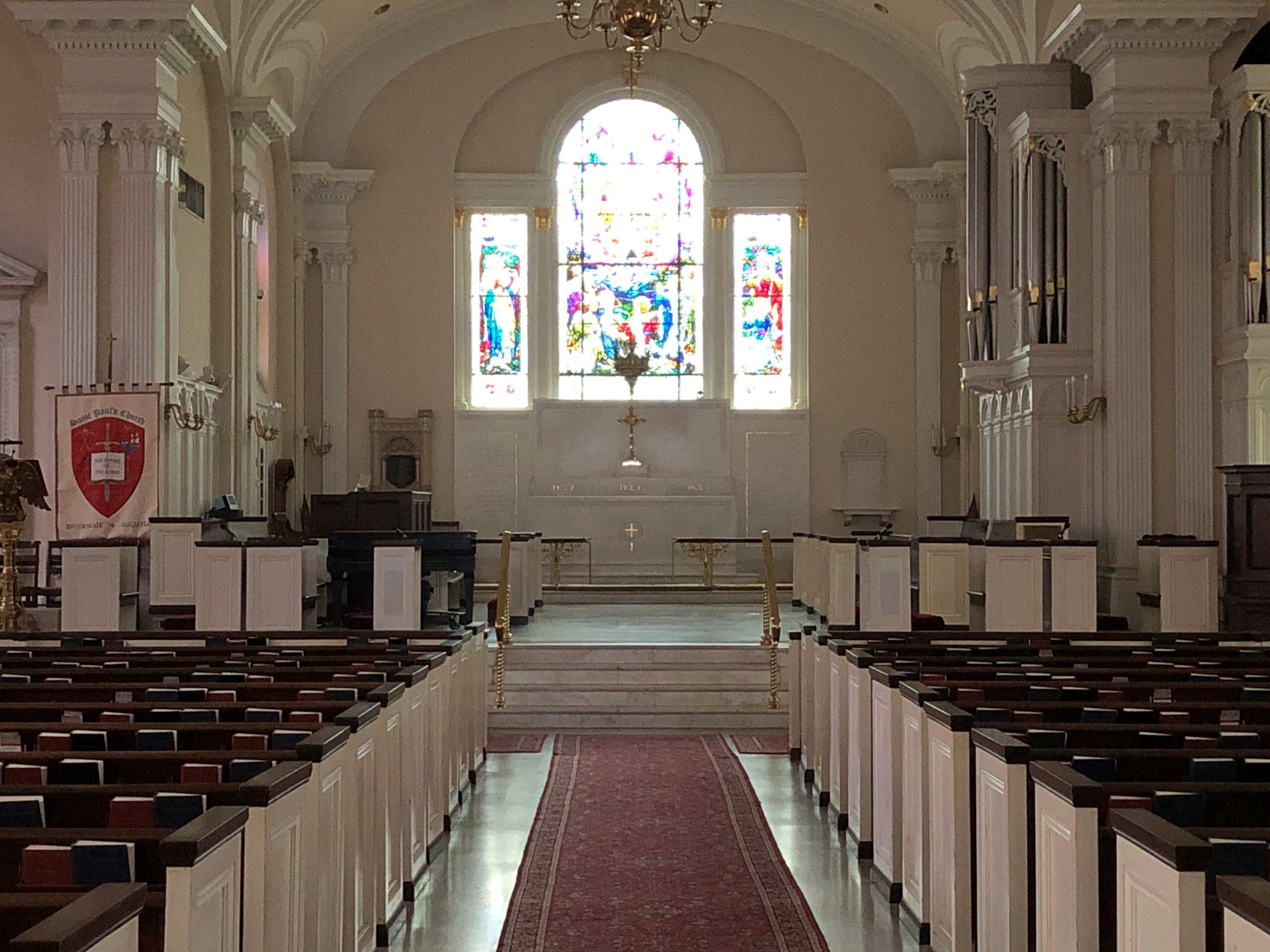
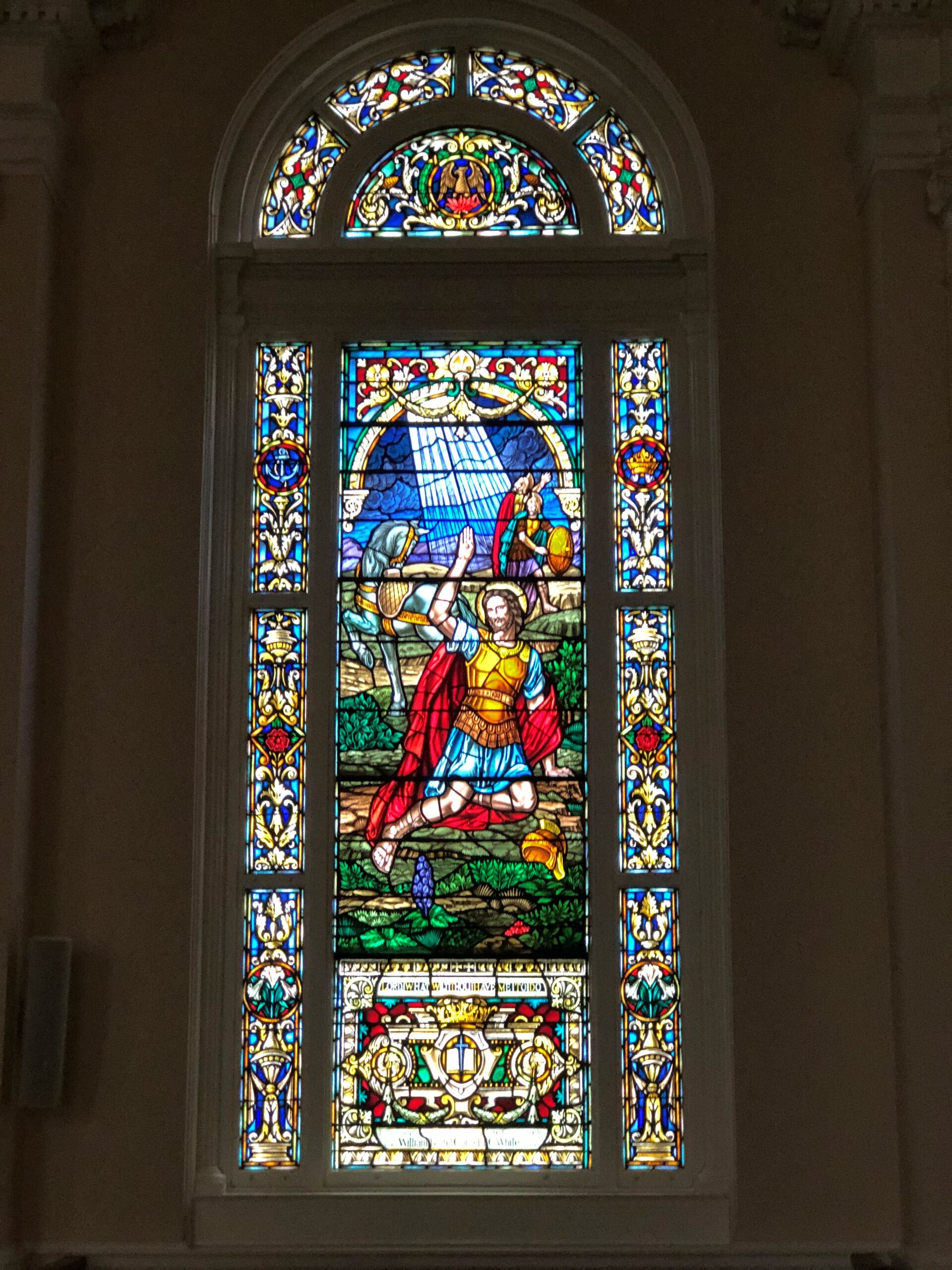
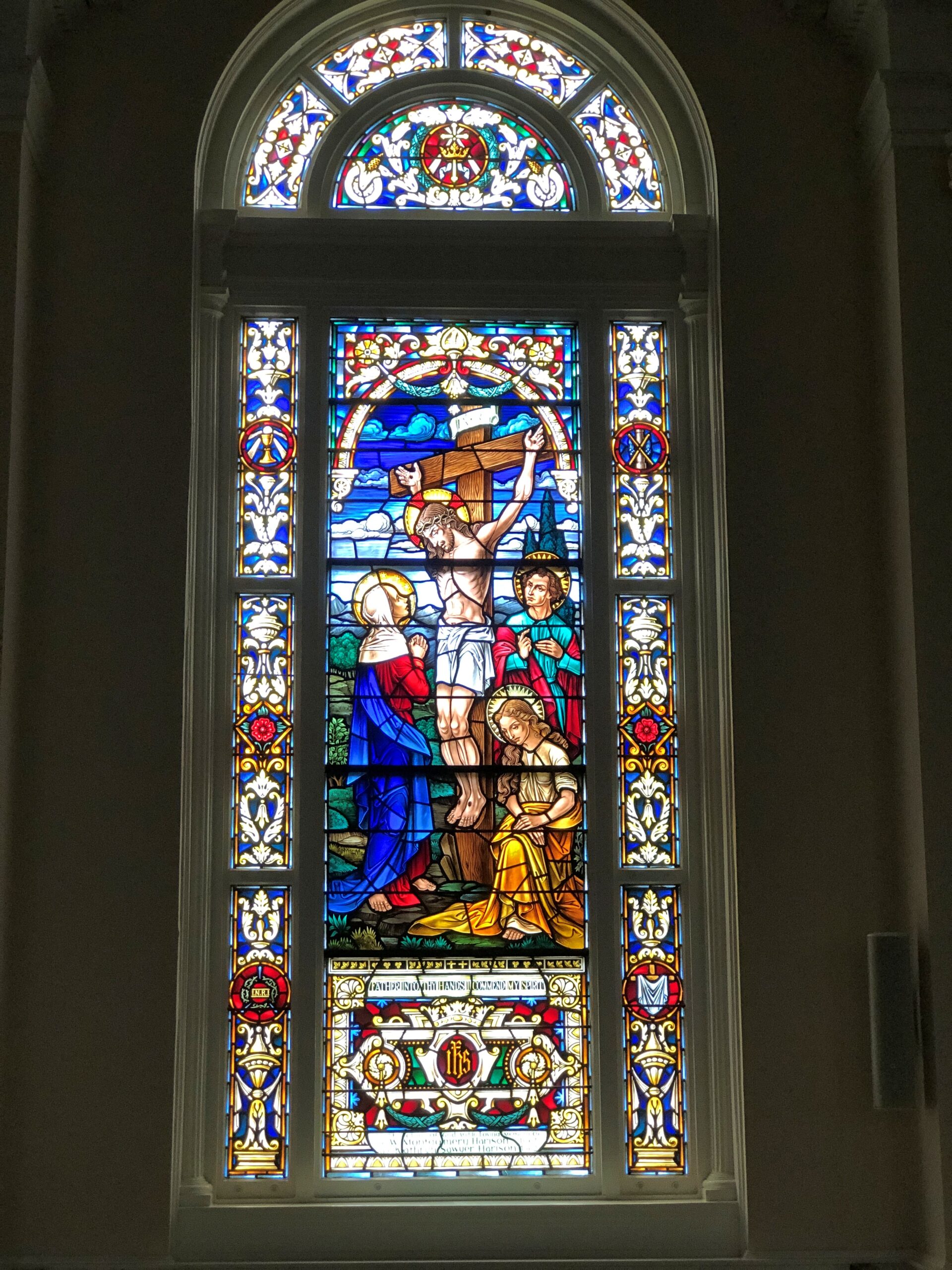
Inside, some fine stained glass.
“Four buildings on this site have been destroyed,” the church web site says. (Sank into the swamp? Burned down, fell over, then sank into the swamp? Speaking of 50-year-old references.)
“Our present church, built in 1919, was designed as a larger copy of the 1820 church lost in Augusta’s Great Fire of 1916. Among the furnishings saved from the fire is the original baptismal font brought from England in 1751, now located in the narthex.
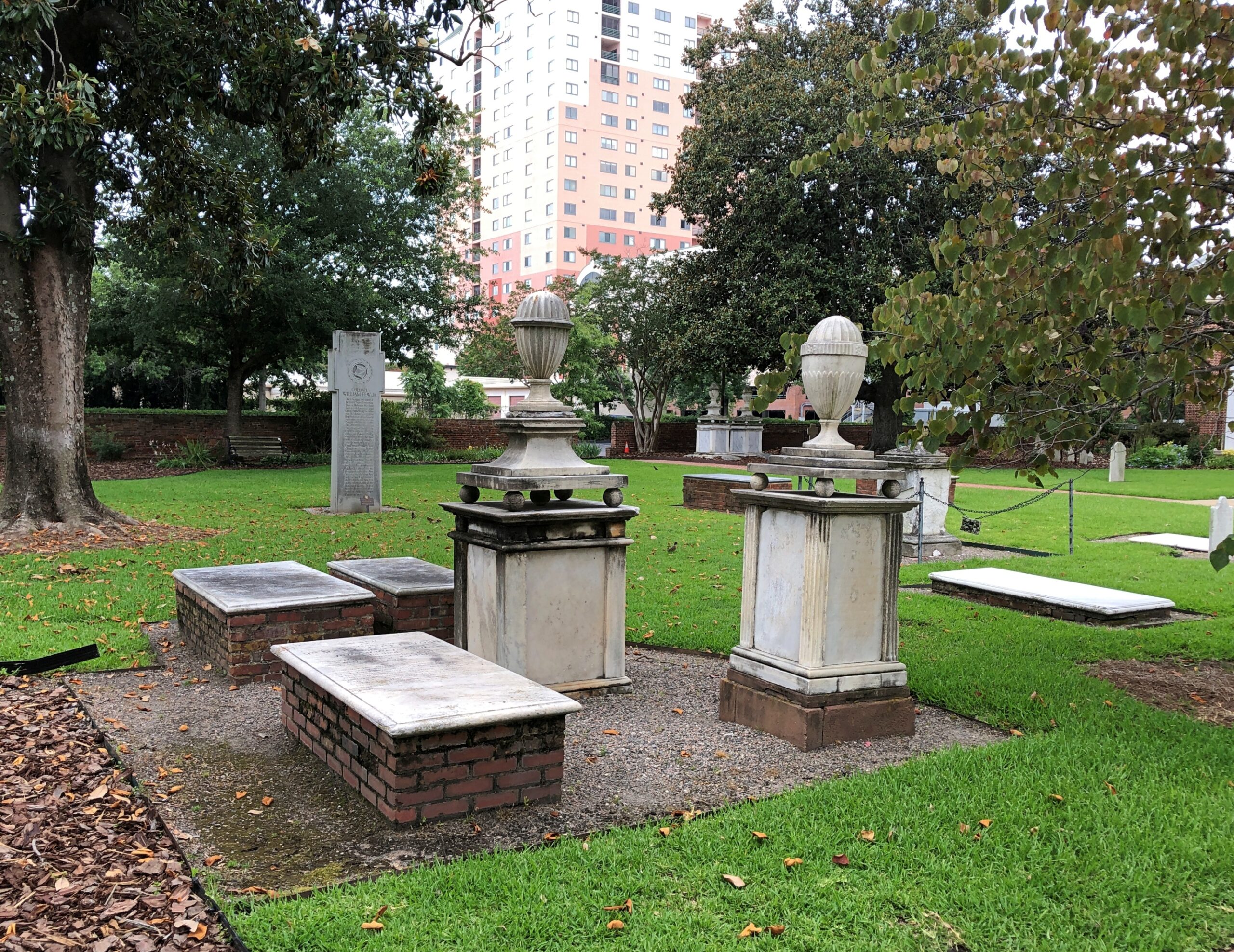
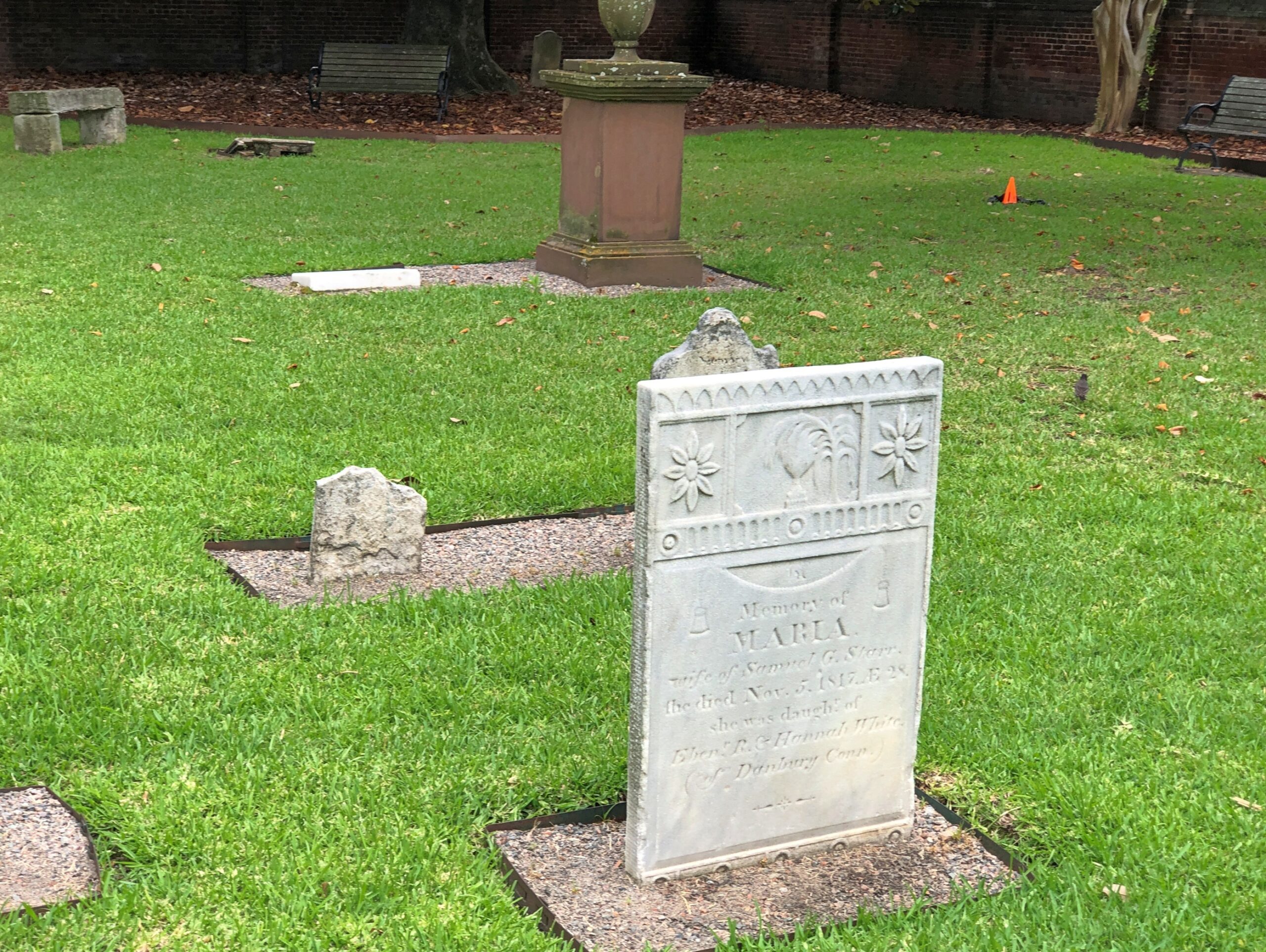
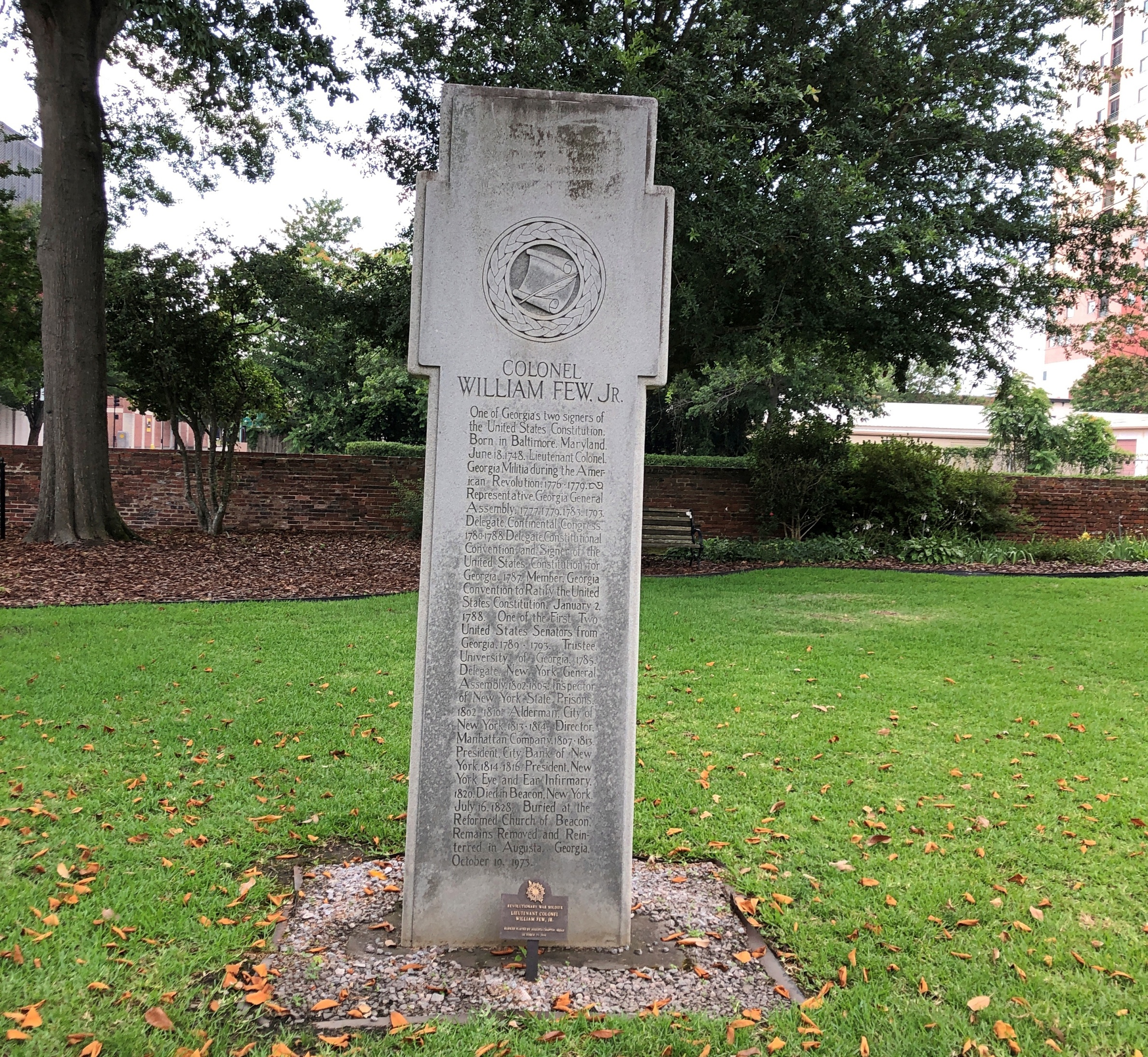
“History buffs will find the church yard fascinating. Many undocumented graves lie beneath the ground, but others are marked, including that of Col. William Few, a signer of the United States Constitution, whose portrait hangs in the narthex…”
Missed the painting. But I did see Col. Few’s stone.
A busy fellow, both before and after the Revolution, including attendance at the Constitutional Convention in 1787, and a stint as one of Georgia’s first Senators under the Constitution. His capsule bio at the Biographical Dictionary of the U.S. Congress mentions all that, except leaving out the fact – detailed by the stone I saw – that he was reinterred at his current location in 1973.
Also, no word on whether he knew Button Gwinnett, everyone’s favorite early Georgia politico. He must have. Gwinnett might have had a similar career had he not ended up on the wrong end of a dueling pistol in ’77.
Before I take a long drive, I spend time with one or more of my highway atlases sketching a route – Rand McNally, National Geographic or Michelin. Sometimes I refer to highway department folding maps as well. Google Maps has its place, an important one, but it’s no substitute for the big-picture sweep of a paper map.
For the trip to the Carolinas earlier this summer, an atlas map made it easy to see the best way to cut across the state from Myrtle Beach to Columbia, where I planned to spend a night: US 378. As Wiki puts it, “the highway has a lengthy concurrency with US 76 between Columbia and Sumter and serves as a major route between the Midlands and the Myrtle Beach area.”
That is, from the flat damp lands along the coast through pines and the sites of long-ago rice plantations, on to modern crop lands, small sandy wooded rises, and into suburban Columbia. Small towns dot the route: Conway, Gresham, Hannah, Lake City, Turbeville, and Sumter, which is actually a small city (pop. about 43,800).
Not far west of Sumter on US 378, I noticed a point-of-interest sign suggesting a right turn. I don’t remember the exact wording, but the gist that I picked up instantly was historic church. My kind of sight, in other words. After only a few minutes on the side road (South Carolina 261, a.k.a. N. Kings Hwy.), a church and churchyard cemetery appeared.
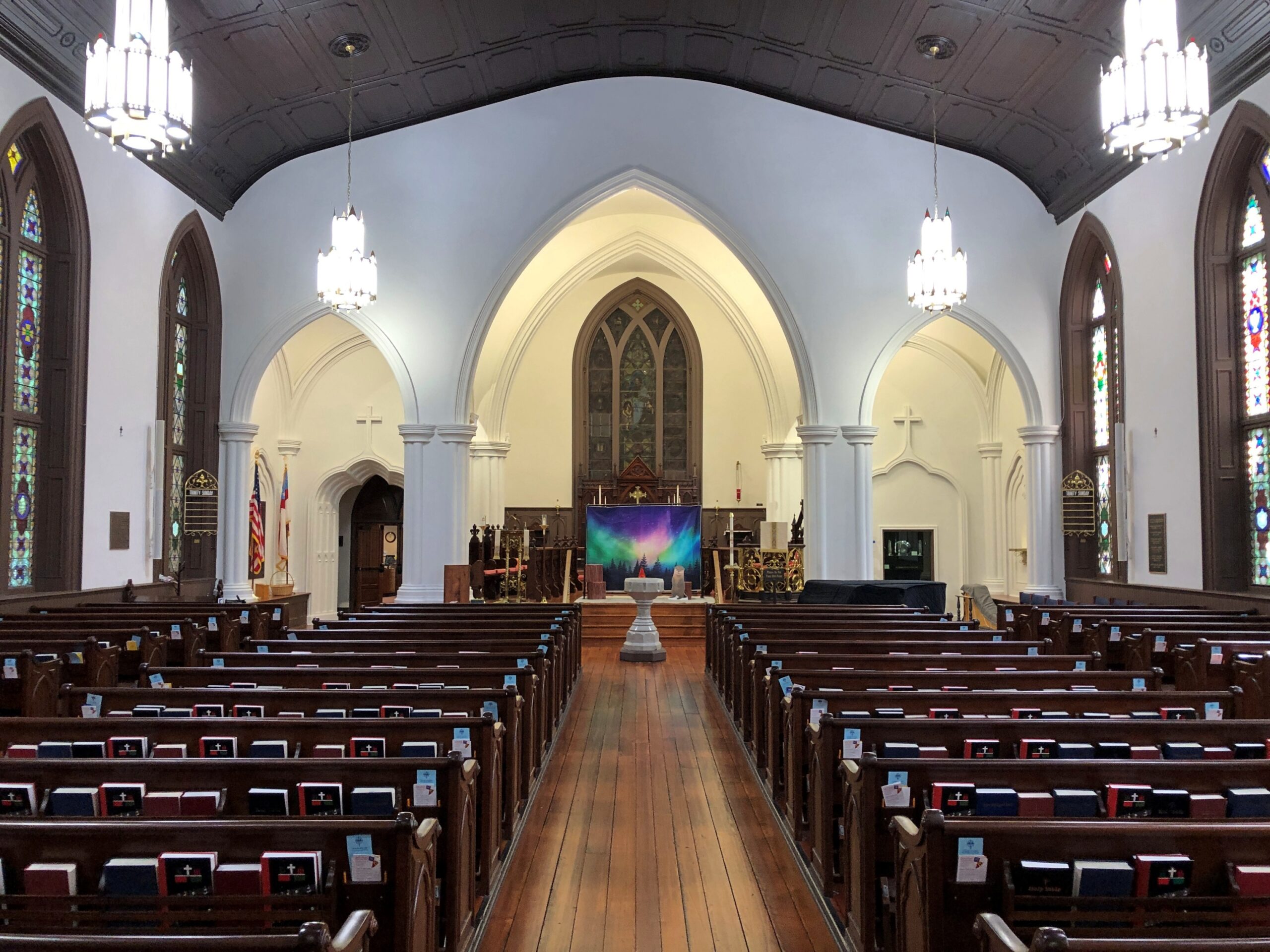
This turned out to be the Wayman Chapel of the AME Church, which has its own graveyard.
A good many AME churches are named Wayman, after Bishop Alexander W. Wayman. Surely the place is historic in its own right, including as part of the wider history of the AME, but it wasn’t what I was looking for. I continued on, and without realizing it, had entered the High Hills of Santee, which sounds like an all around interesting place.
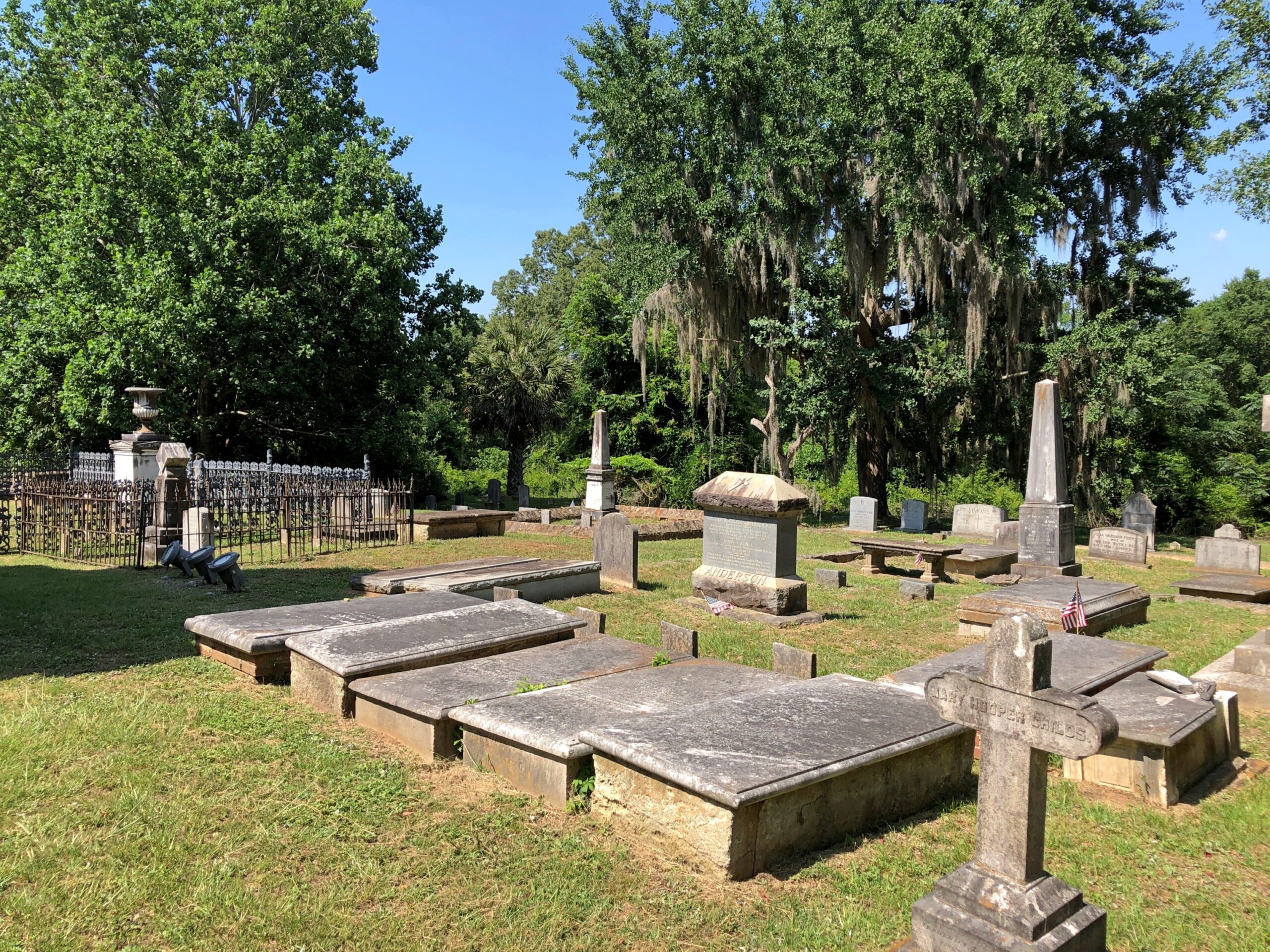
Had I realized that, I might have gone a little further down N. Kings Hwy., but serendipity on the road will only take you so far. In this case, not much further down the road, to the Church of the Holy Cross.
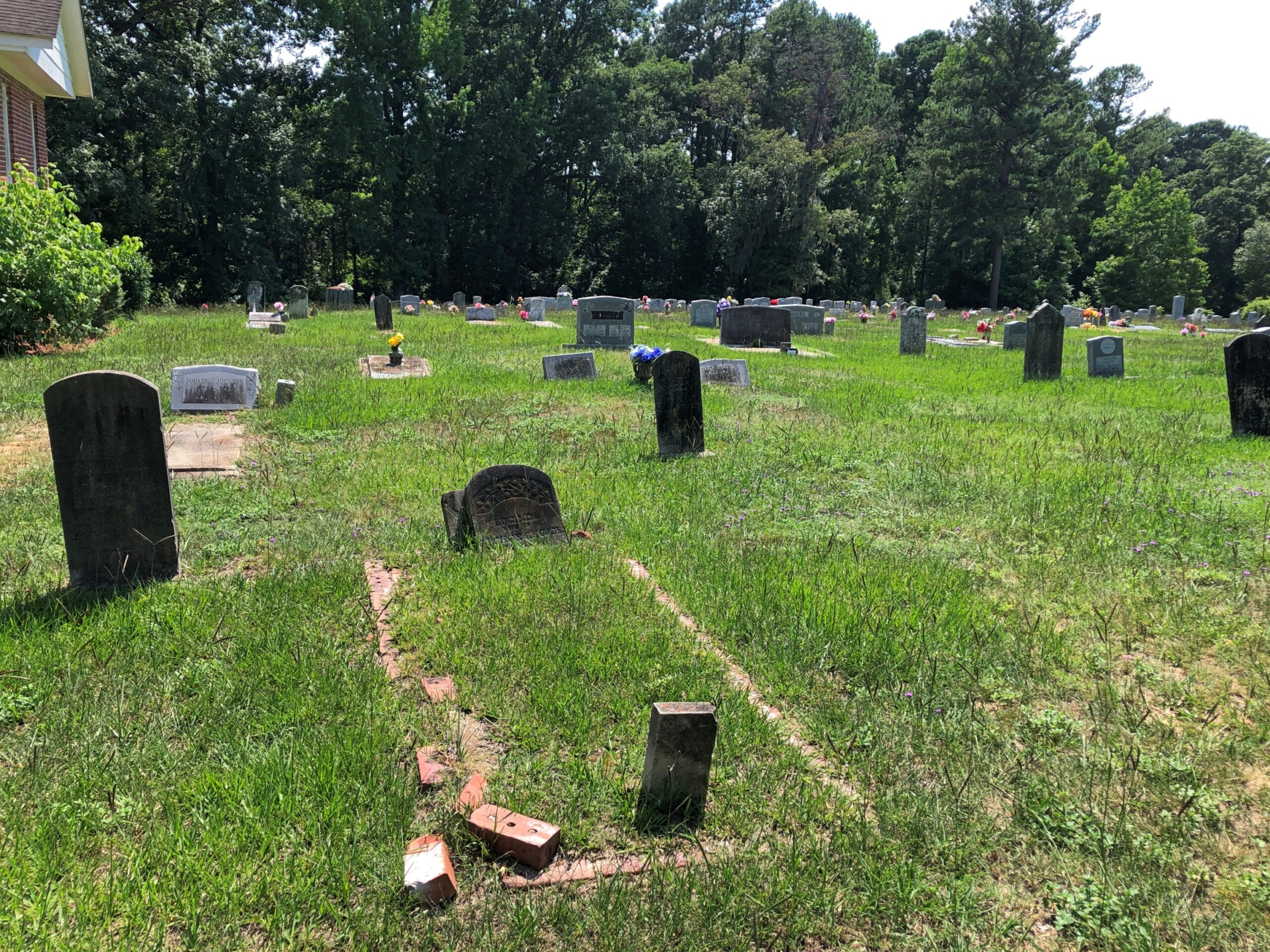
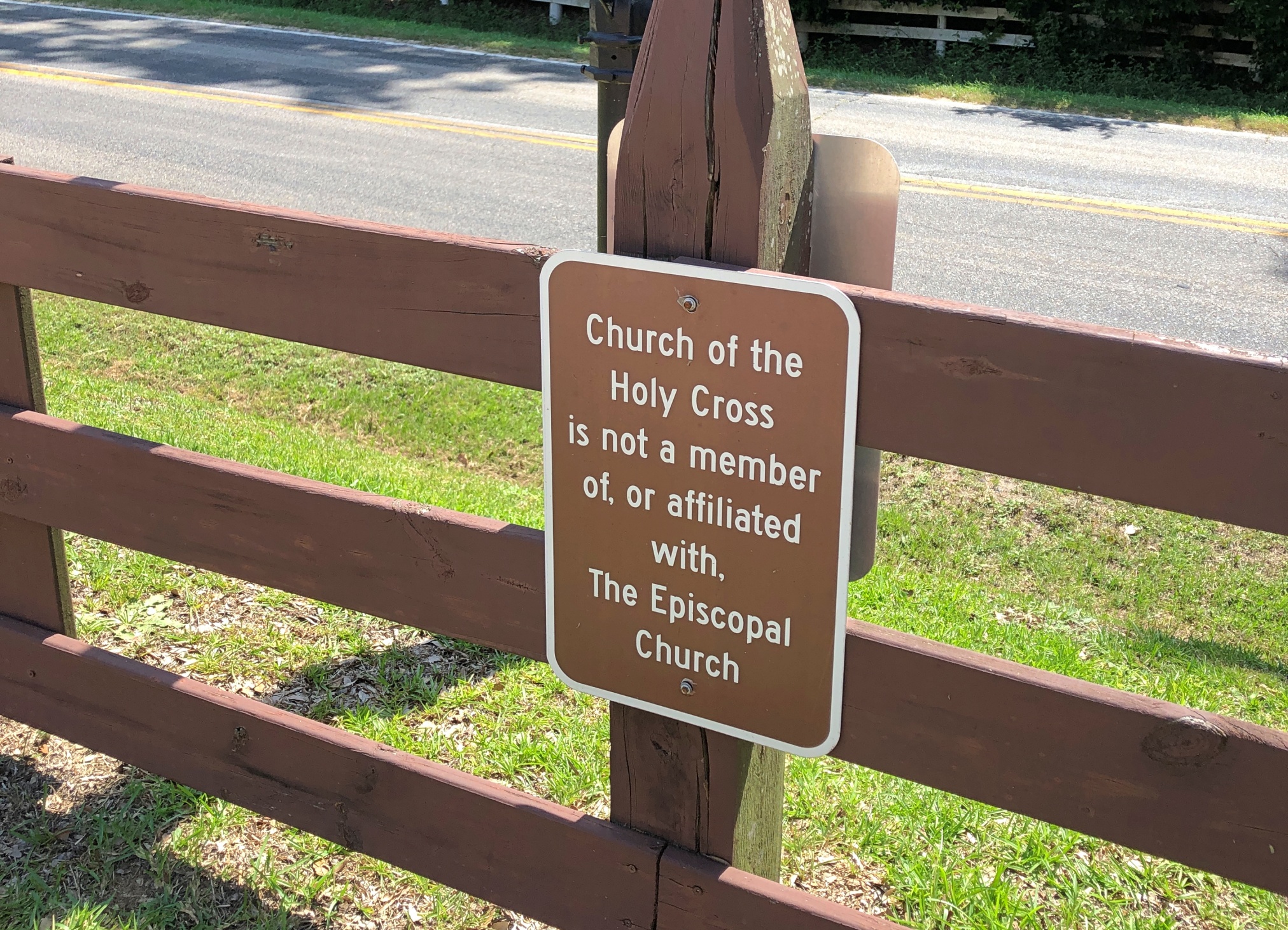
The church has a Stateburg address, but isn’t in town. For well over a century, it was an Episcopal church, but the current congregation wants one and all to know that it isn’t any more. A simple sign, but enough to carry a whiff of schism.
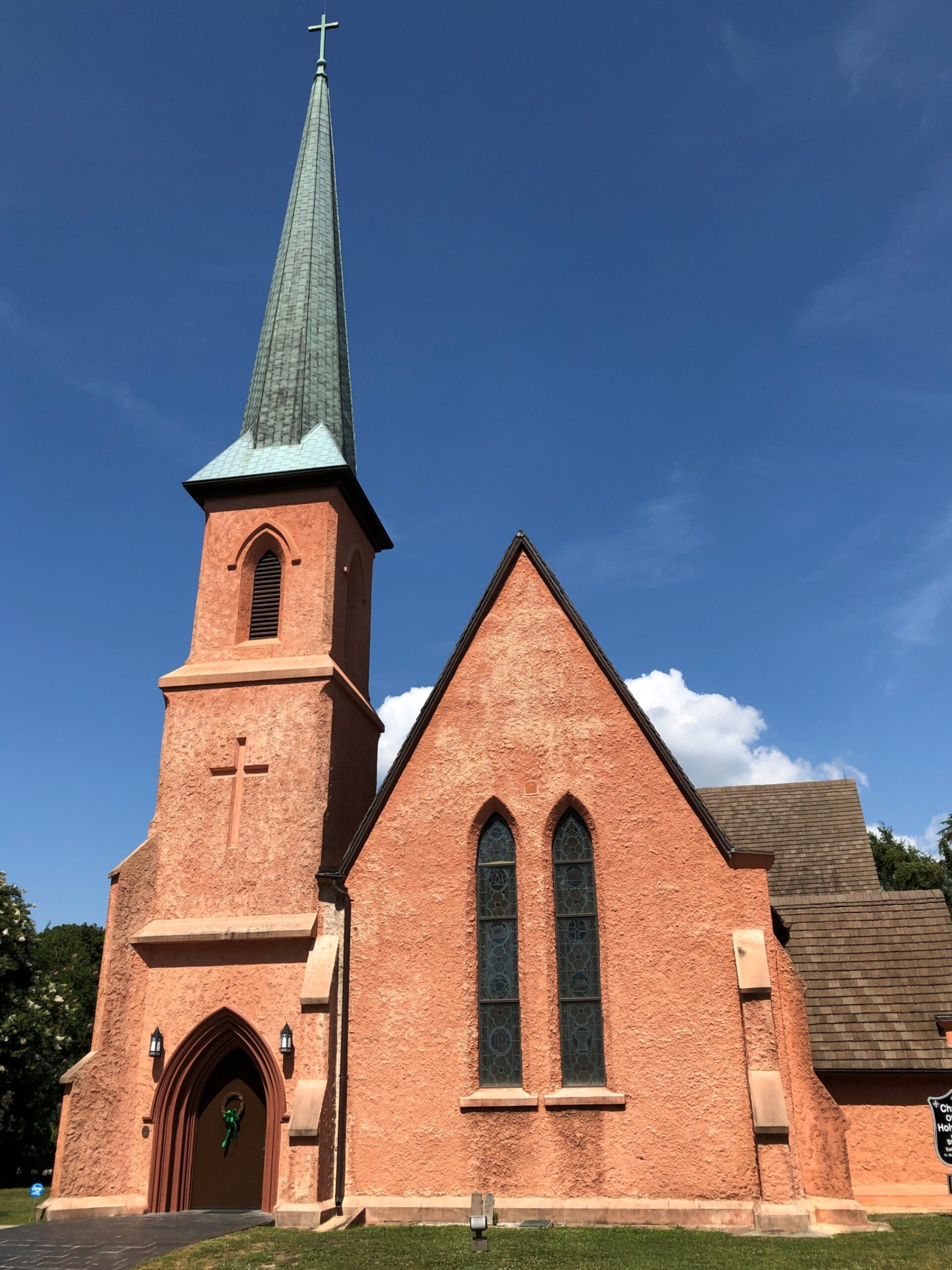
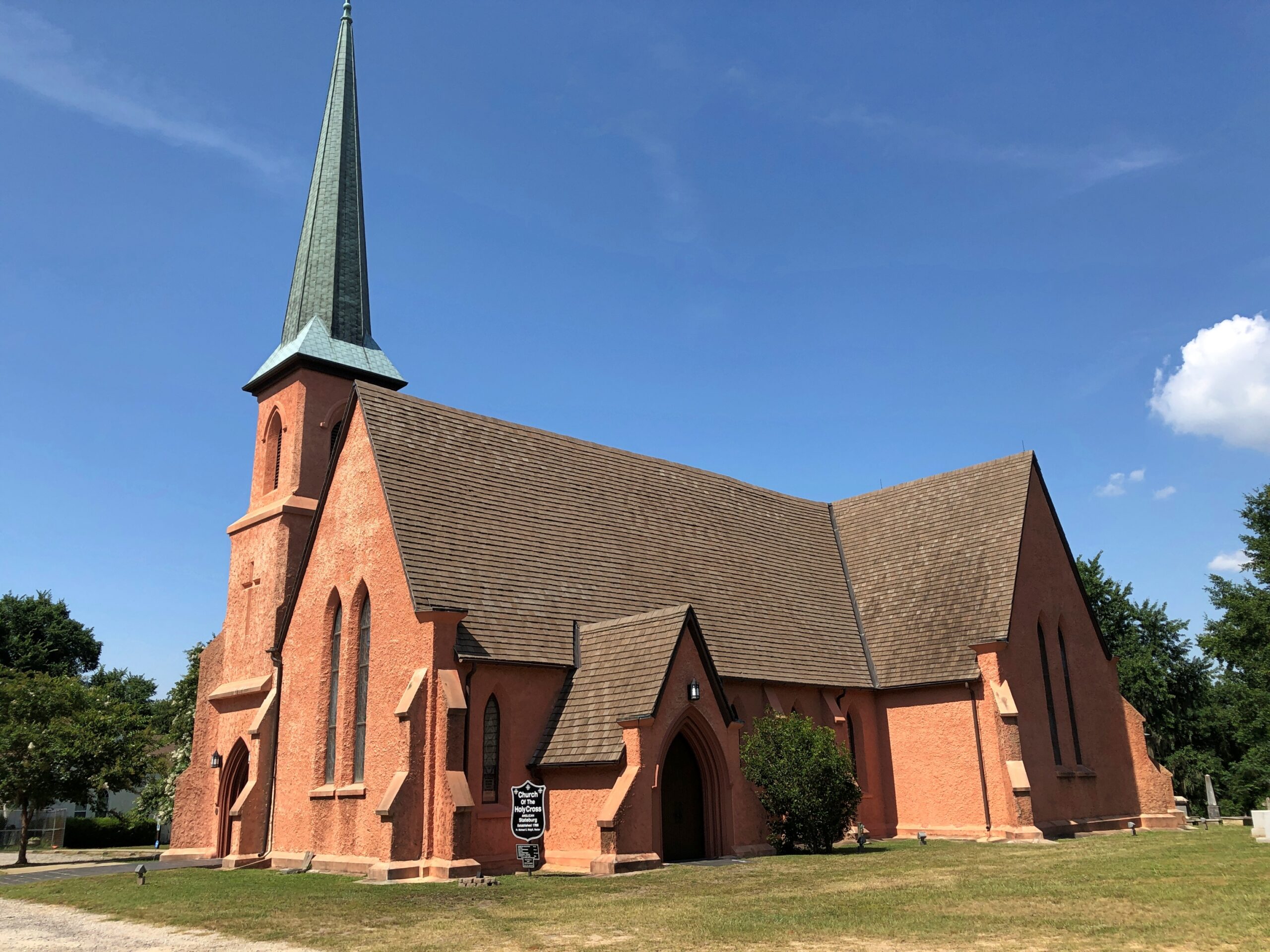
The design work was by Edward C. Jones, a busy architect, including designs at Magnolia Cemetery in Charleston. Not brick or the like, but rammed earth. I can’t say that I’d seen a rammed earth church before. It was completed in 1852.
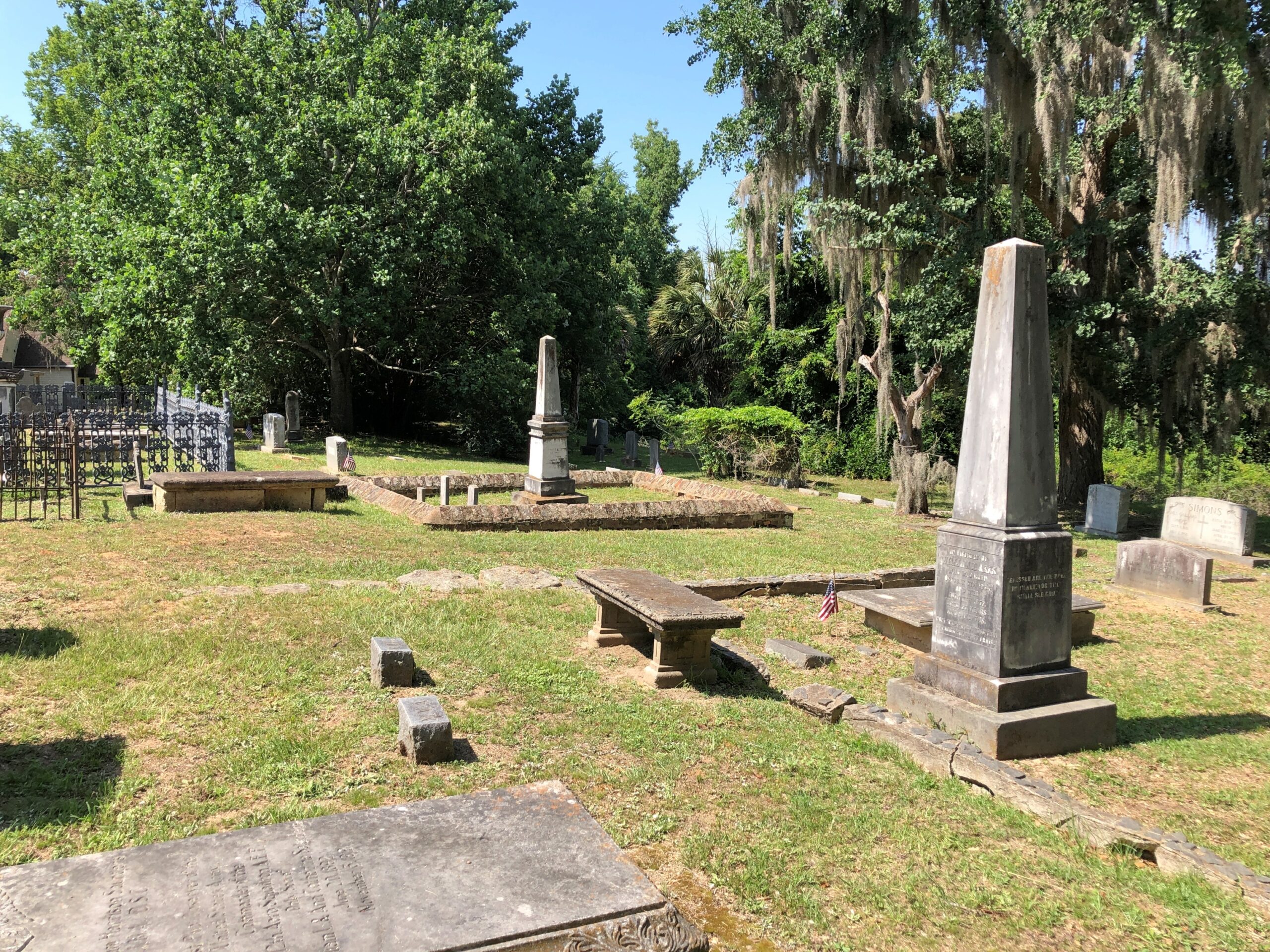
Extending some distance behind the church, which was closed, is a handsome cemetery.
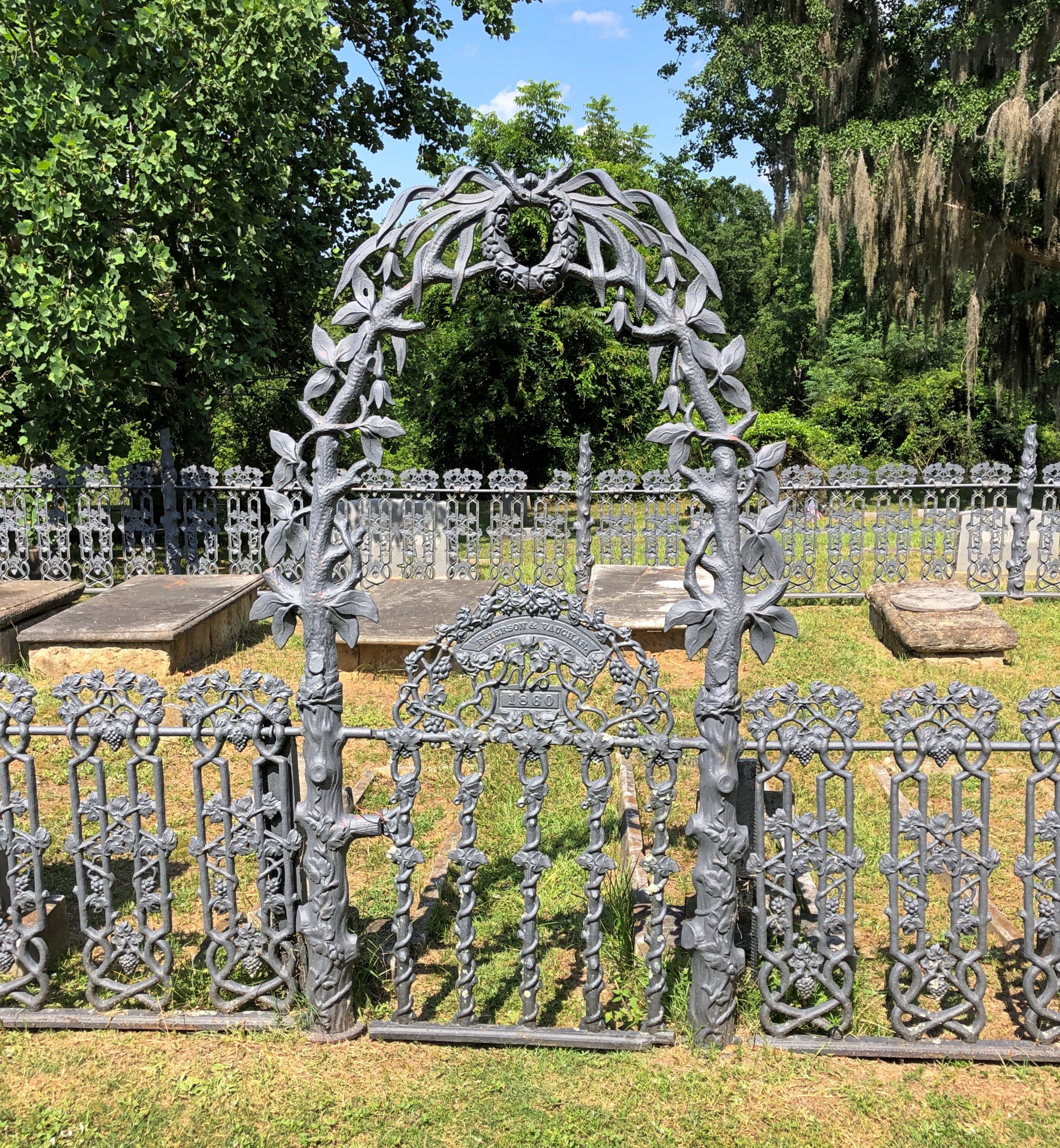
Impressive ironwork and crumbling masonry. What’s not to like?
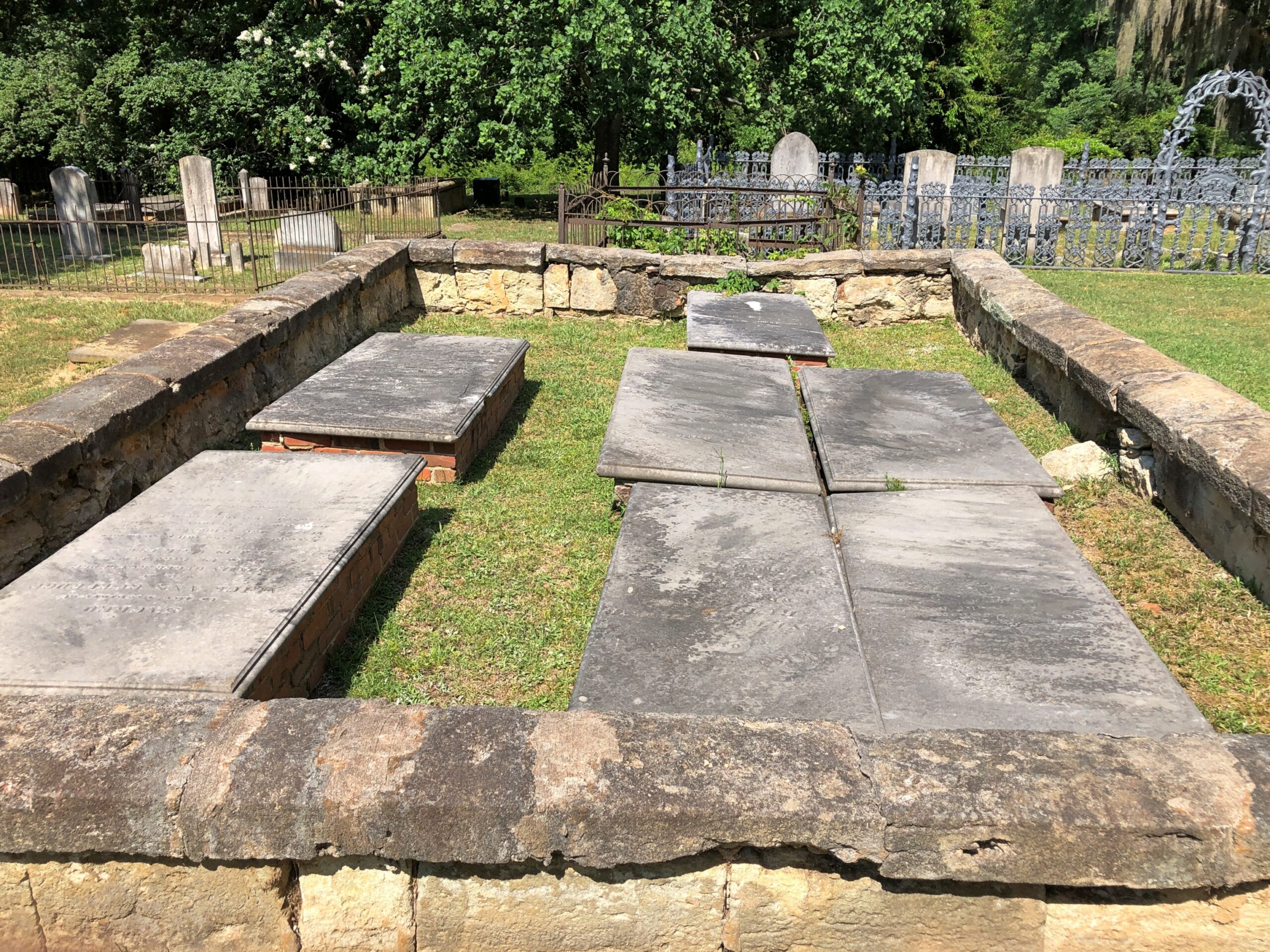
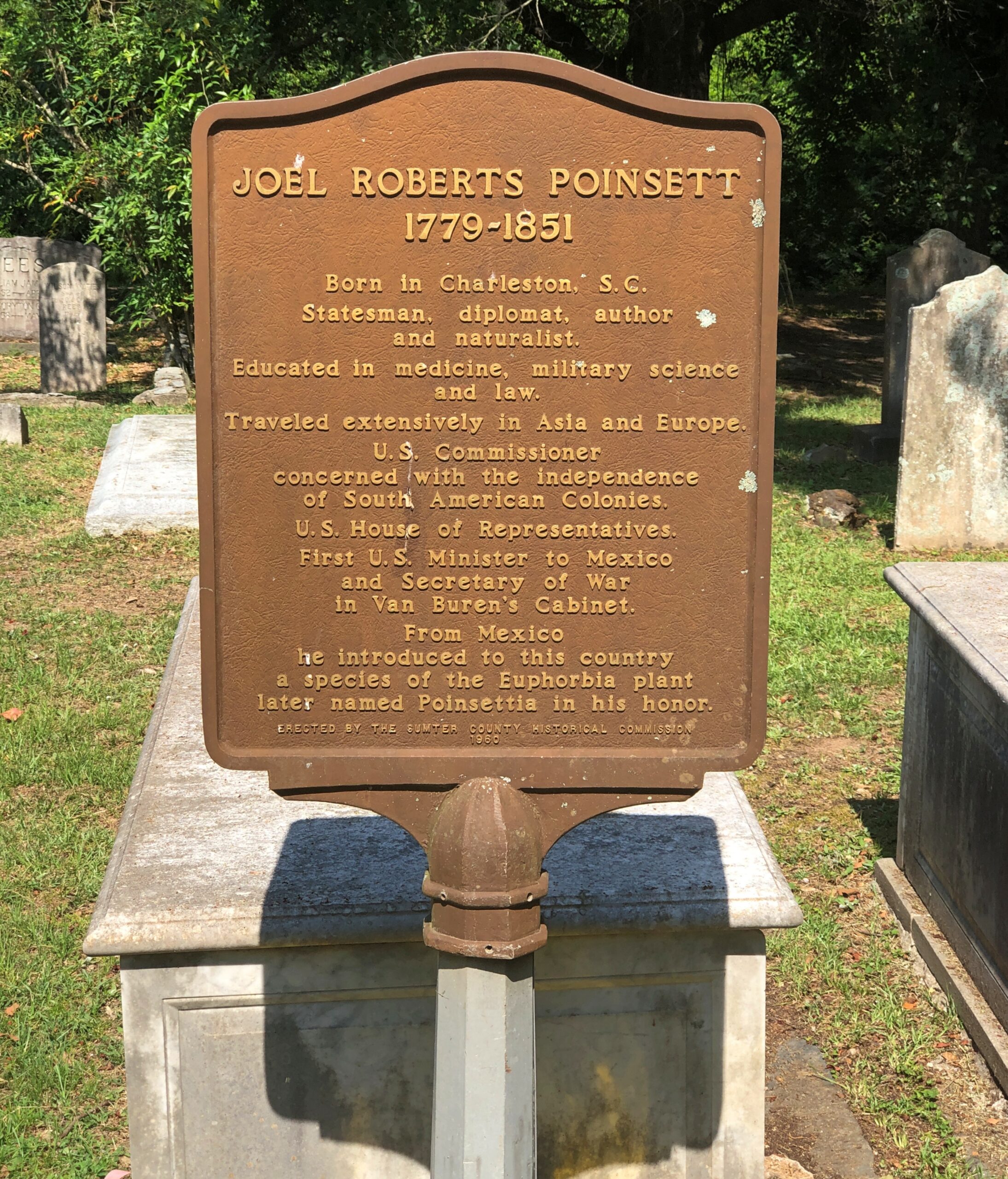
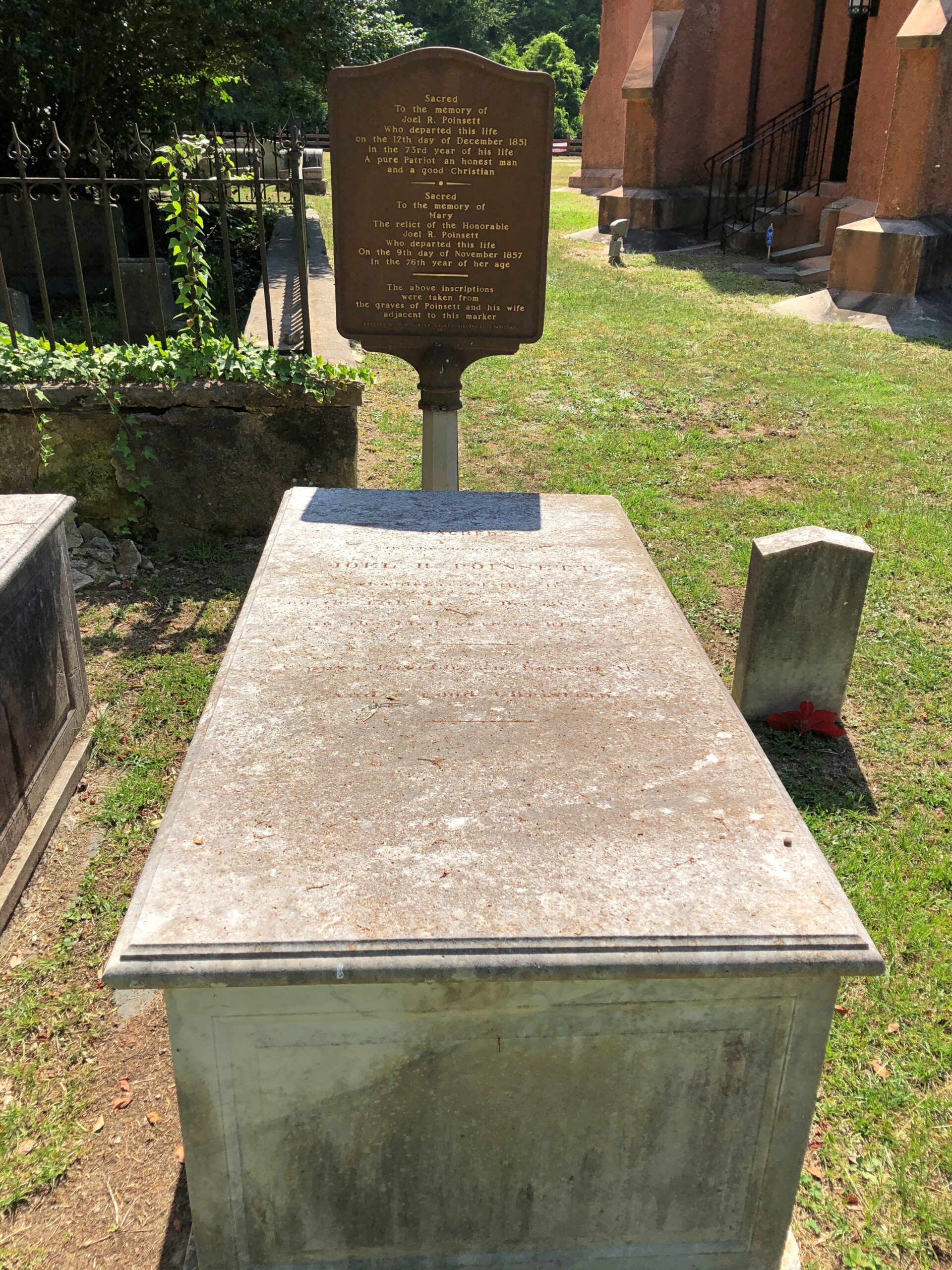
Another layer of serendipity: not only had I chanced across the church and the graveyard, but someone I’d heard of: Joel R. Poinsett, whose career was astonishingly varied, for good and ill, even for the freewheeling 19th century.
Almost everyone else has heard of him too, except they don’t know it, since of course the poinsettia is named for him. A casual search shows that were was a quixotic bubble of interest in the idea of re-naming the flower around the holidays in 2023, but not since, with such headlines as: “Poinsettia by any other name? Try ‘cuetlaxochitl’ or ‘Nochebuena’ “ (Jacksonville Journal-Courier).
Cuetlaxochitl? Names do shift over time, for unpredictable reasons, but I’m not betting on that one entering common usage anytime soon.
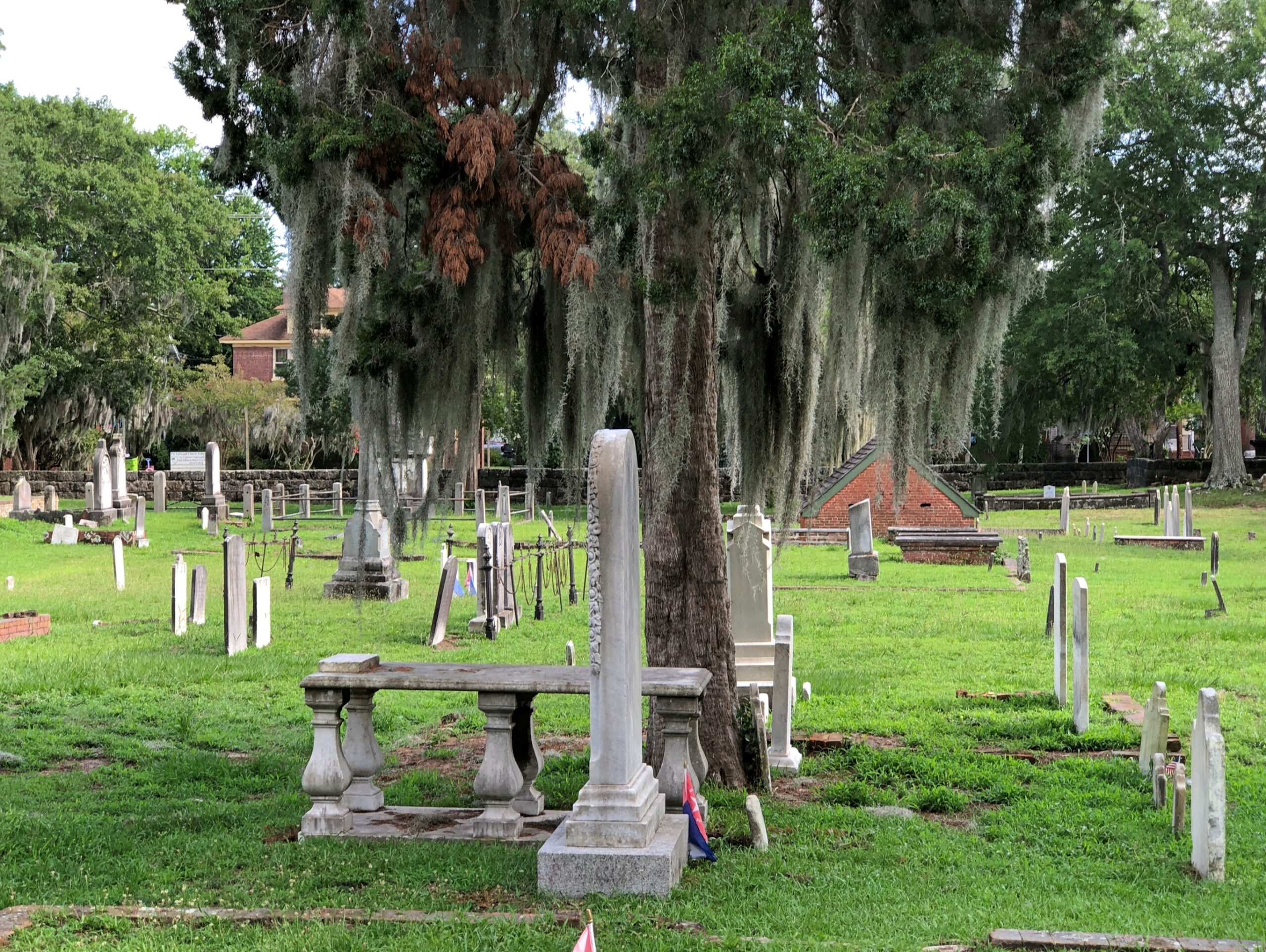
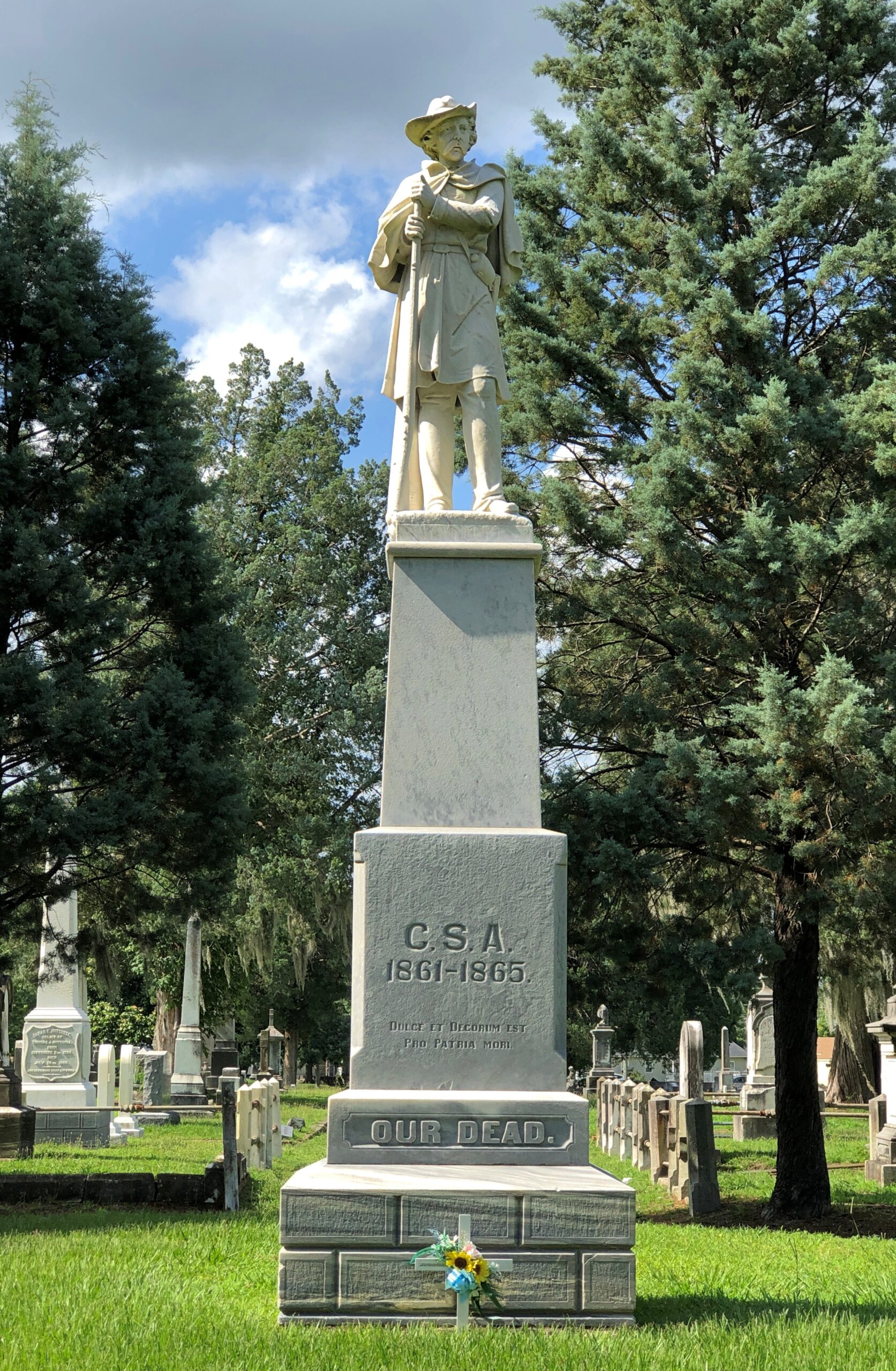
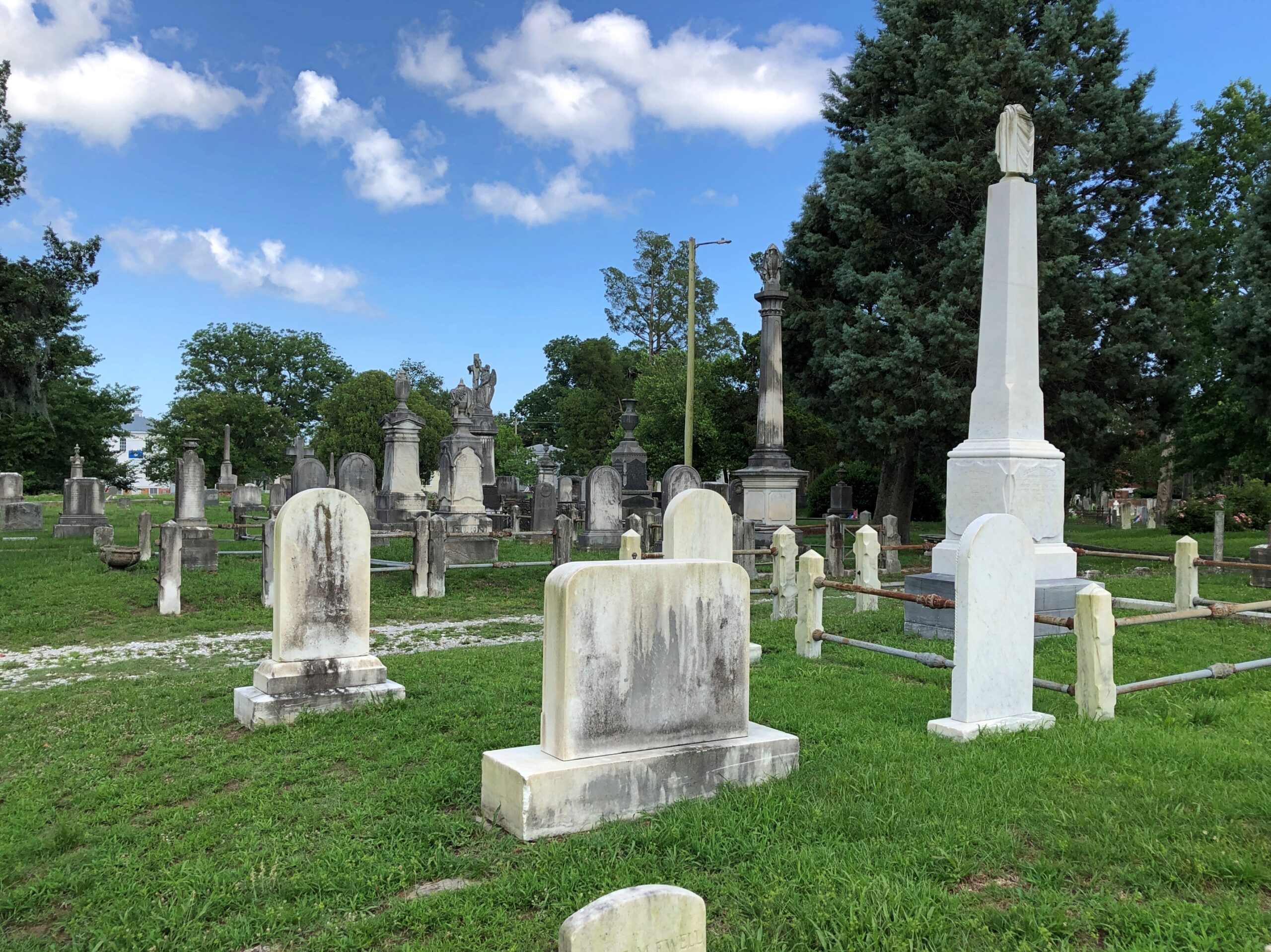
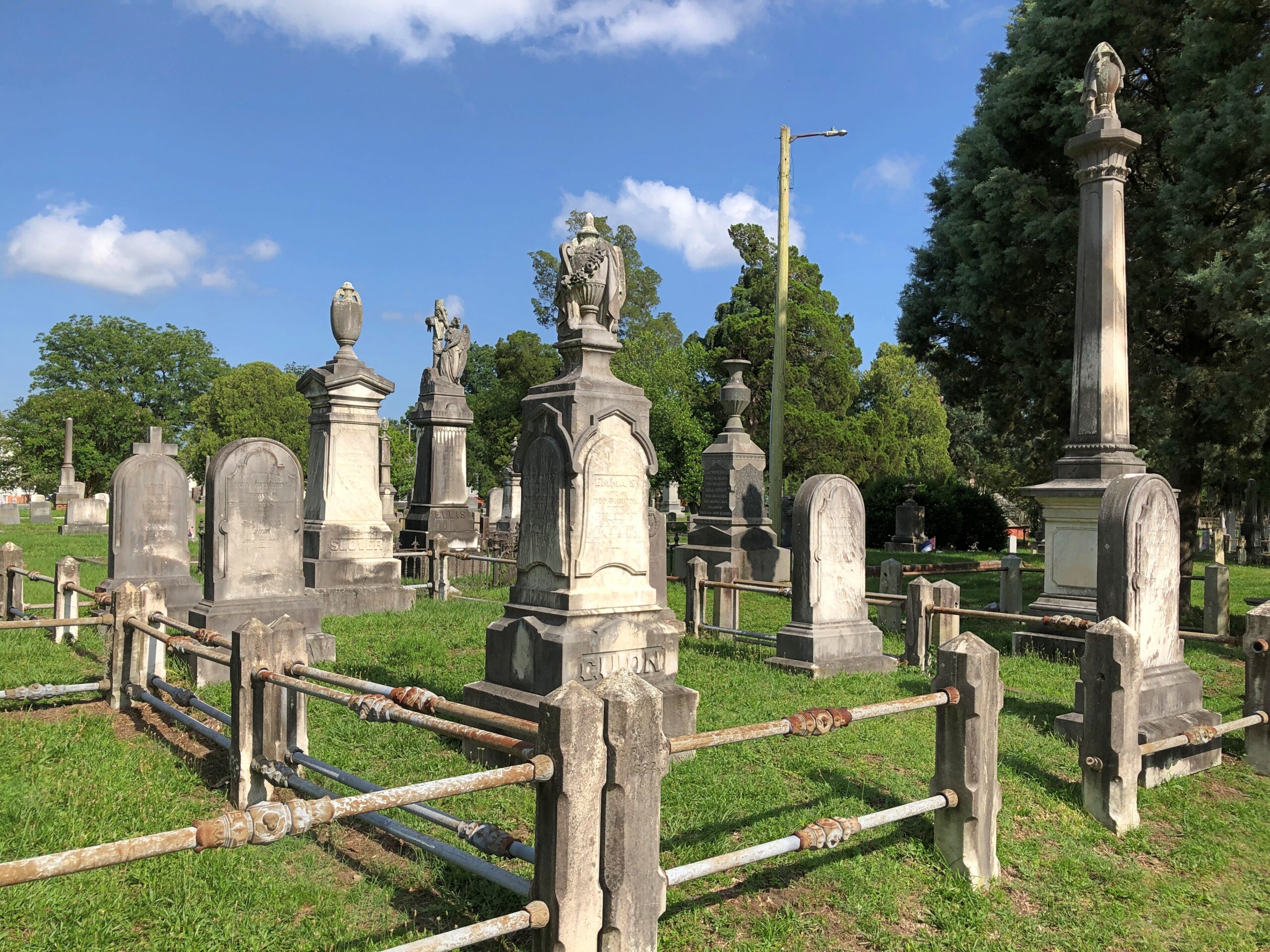
Back to the WPA North Carolina guide, vintage 1939 (p. 230): “Cedar Grove Cemetery… was opened in 1800 by the Episcopalians and turned over to the city in 1854… The Confederate Monument, a 15-foot marble shaft, identifies a mass Confederate grave. Tradition says that his law desk and chair were buried in this cemetery with the body of William Gaston. Interred here are William J. Williams, who pained the Masonic portrait of Washington owned by the Alexandria, Va., lodge, a photograph of which is in the New Bern Public Library, and Moses Griffin, benefactor of city schools.”
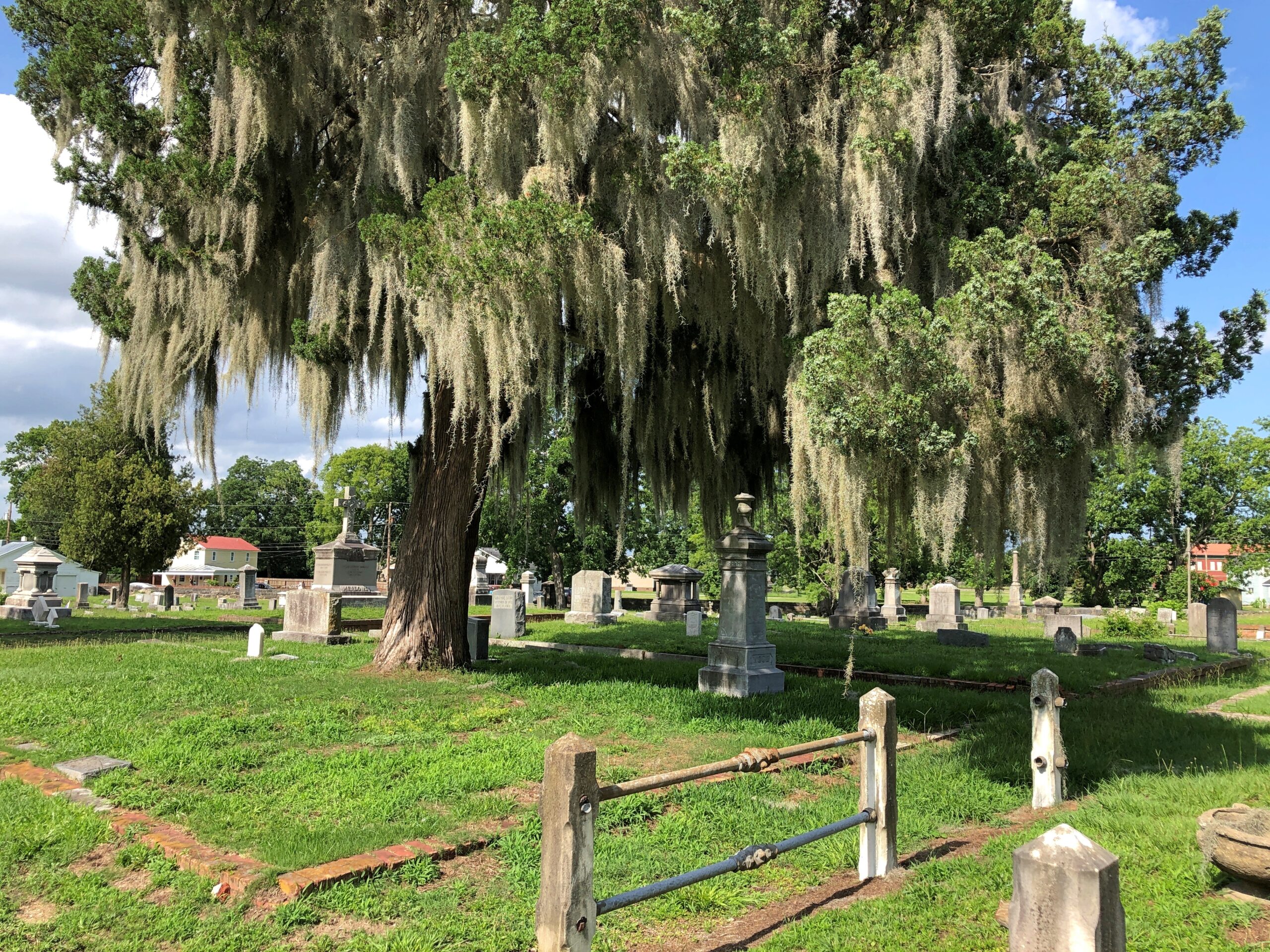
As the day’s heat began to wane, we made our way to Cedar Grove. The place has a good contour, created by the diversity of stones, ironwork and greenery.
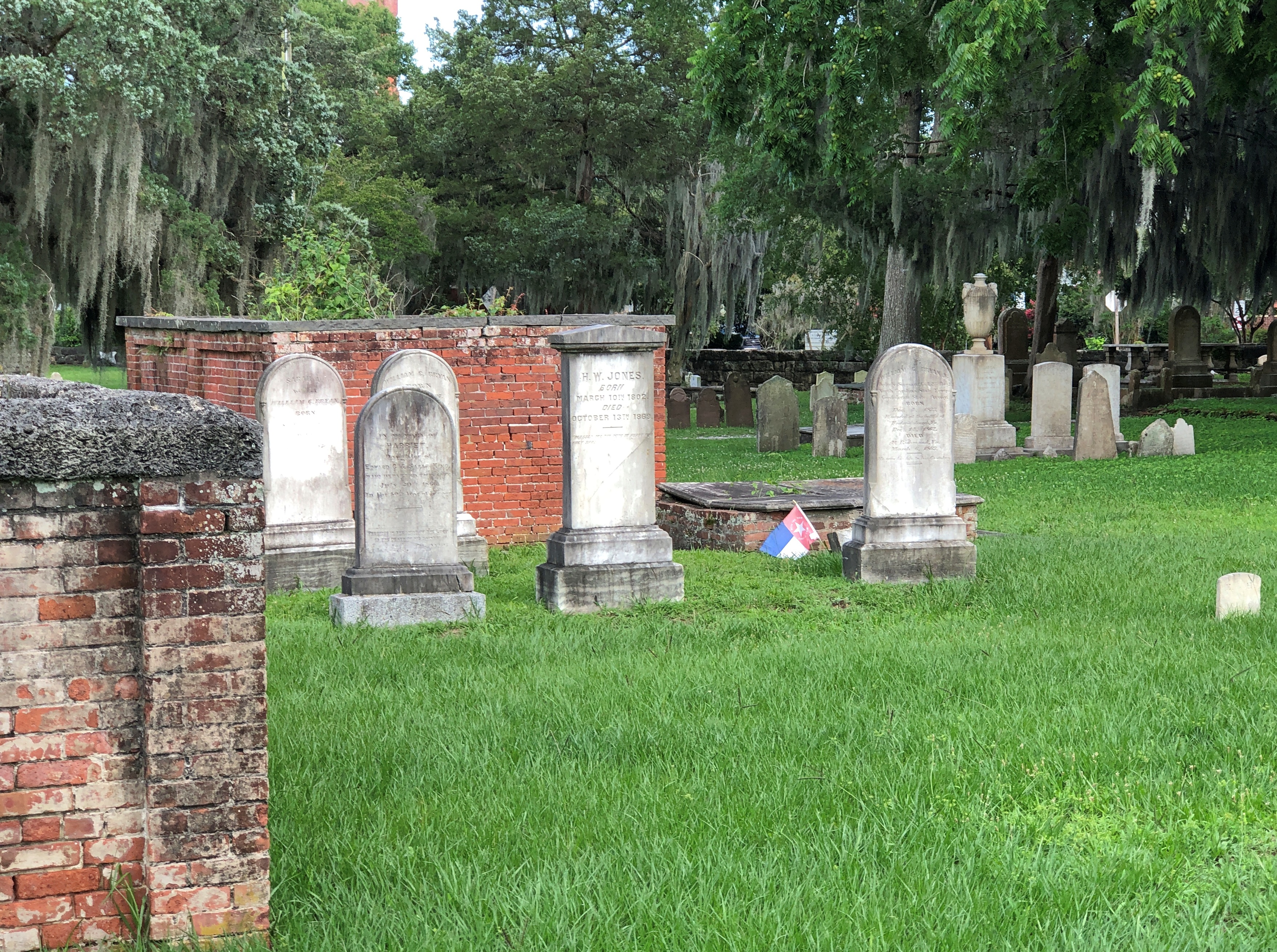
All in all, Cedar Grove is a Southern cemetery along the lines of Magnolia Cemetery in Charleston or Bonaventure in Savannah, though not quite as watered as the former or wooded as the latter, or as large as either. But cut from the same sort of lush, low-lying coastal territory, with trees draped with Spanish moss and flat spots thick with stones of the Old South.
Good old Spanish moss. The Carolina coast, and even up into coastal Virginia, is within its range.
Didn’t see the painter William J. Williams or any of the other permanent residents mentioned by the WPA guide, but of course the Confederate Monument was easy enough to spot.
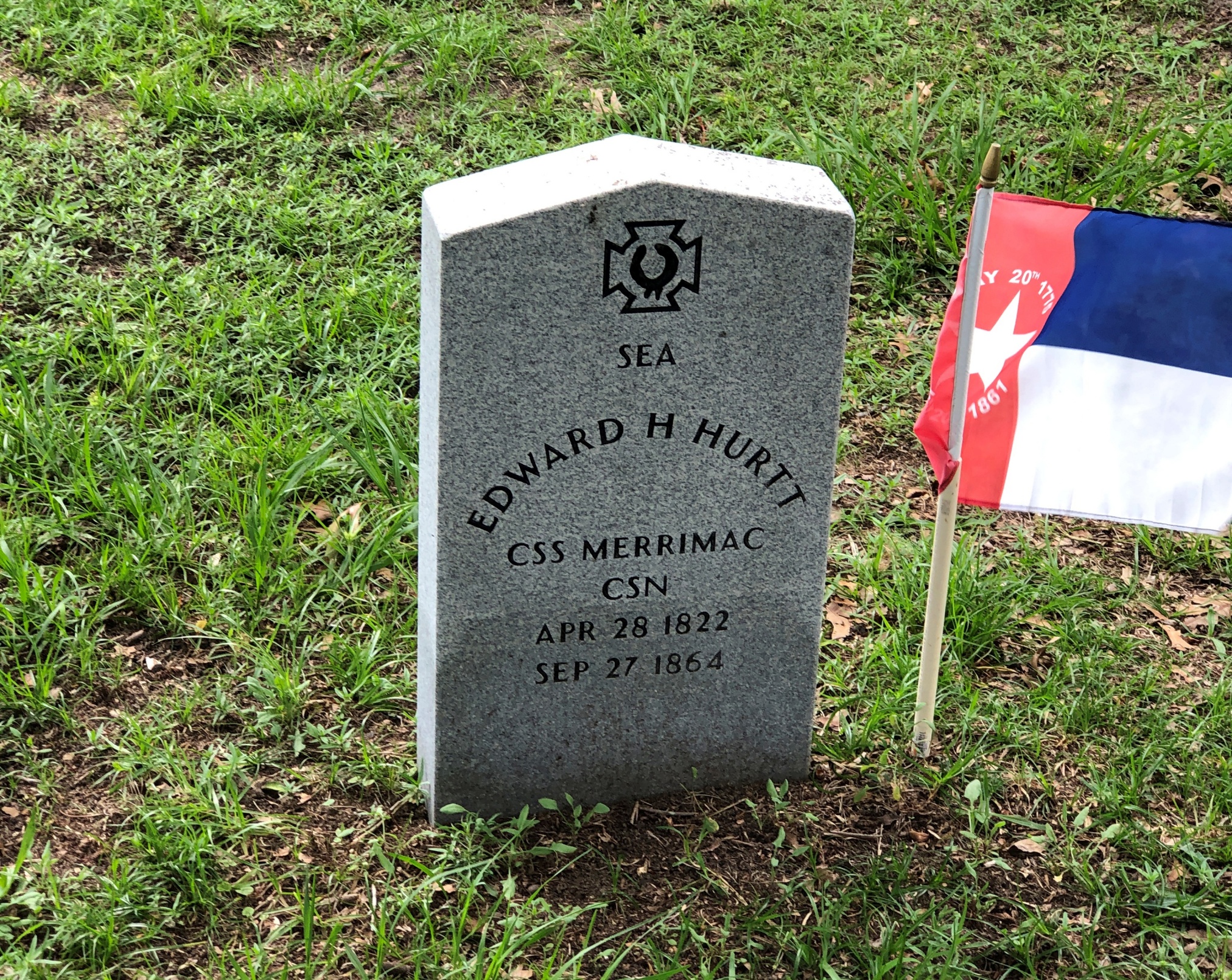
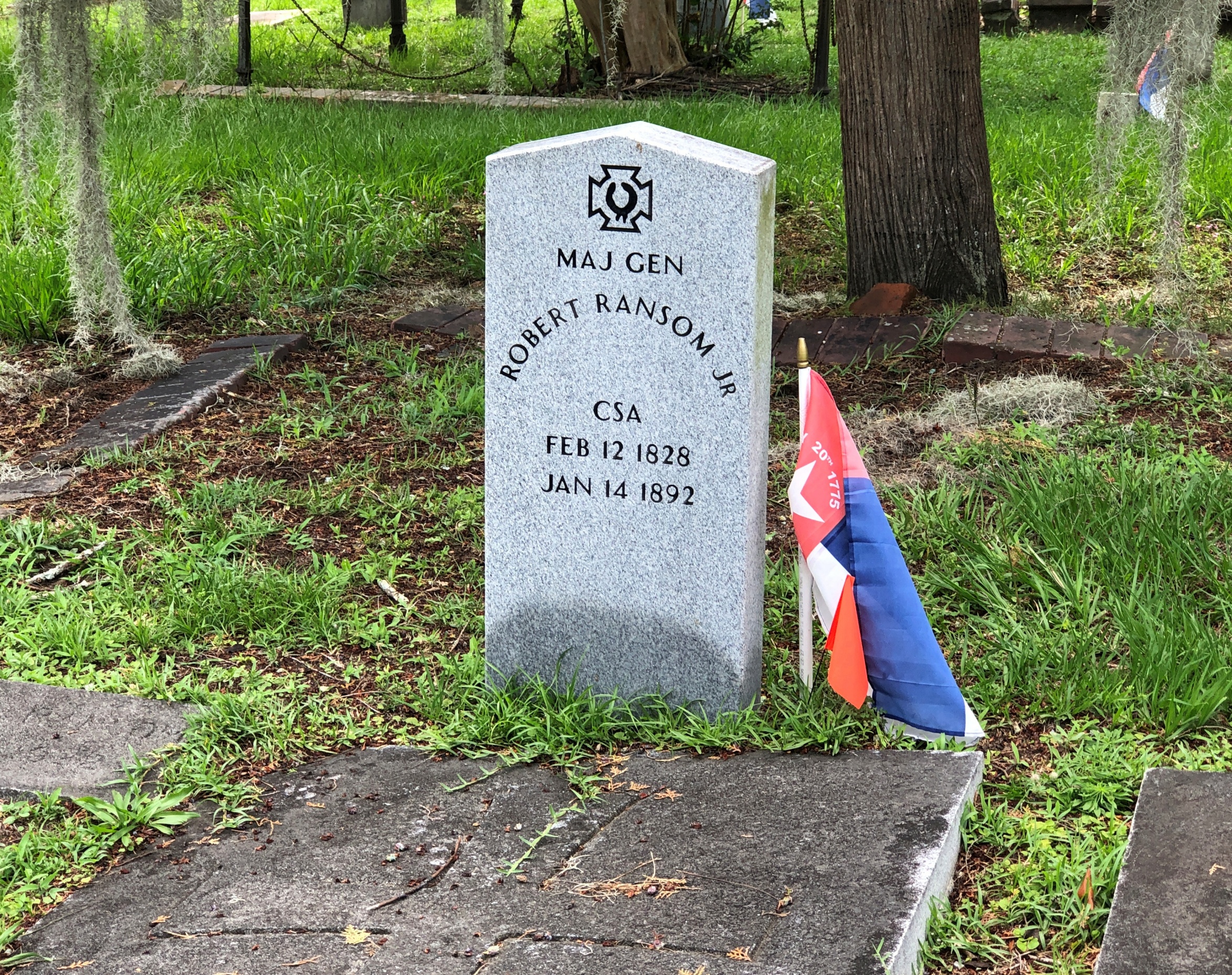
Many Confederate veterans had their own stones, of course.
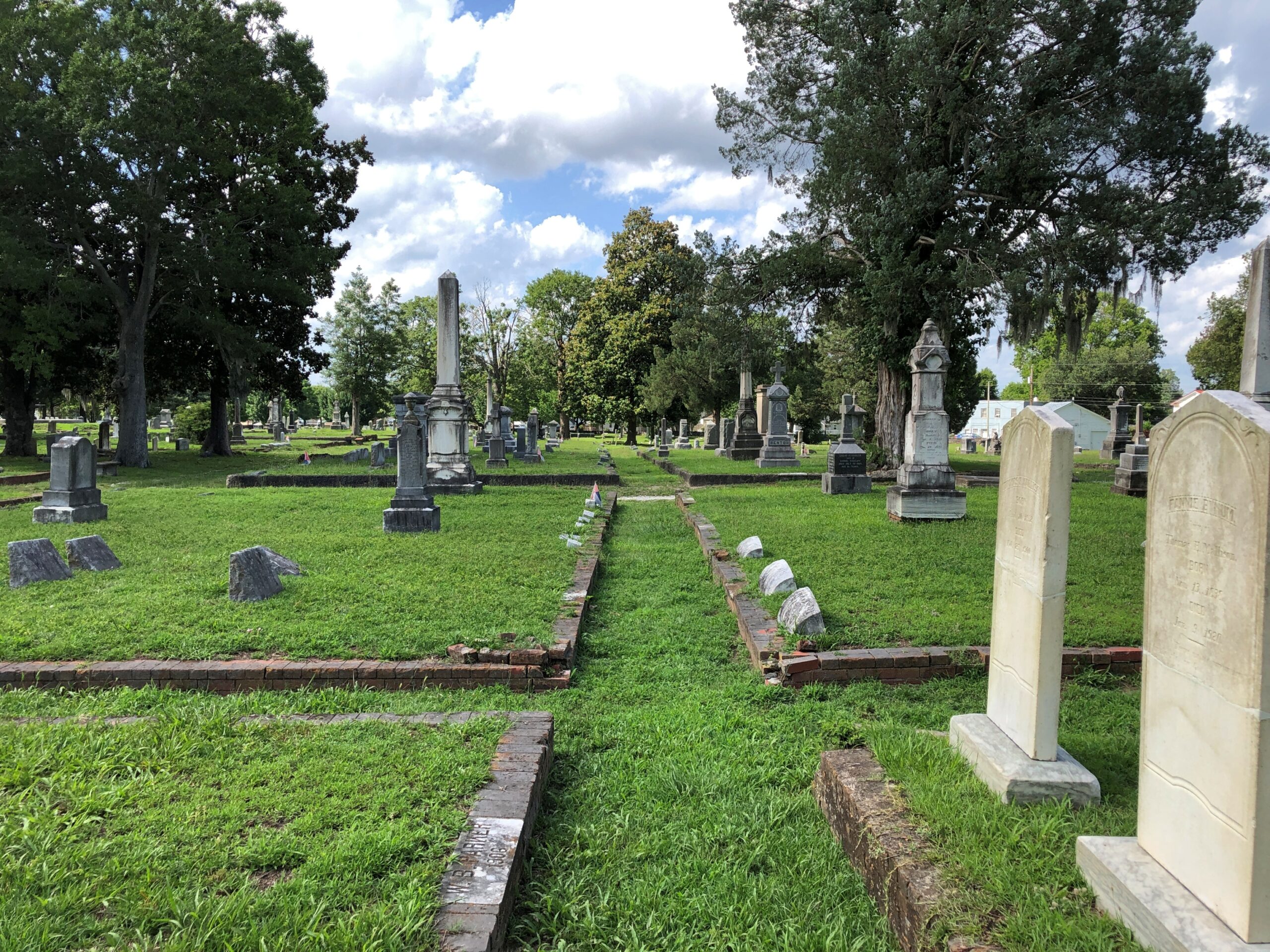
From the looks of it, these are wagon driveways that allowed hearses to traverse the cemetery.
Among those “streets,” plenty of other fine stones.
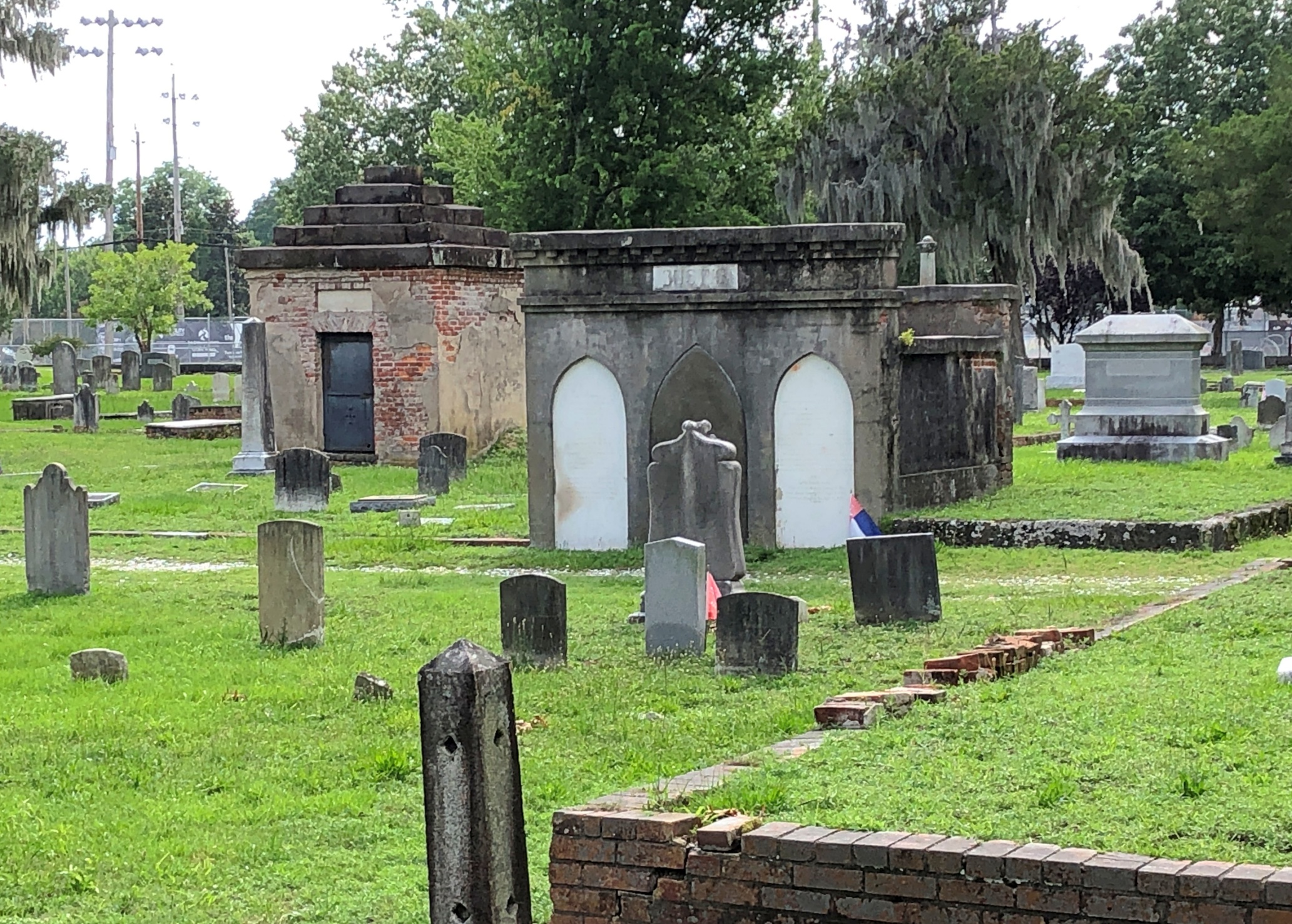
Some mausoleums, but none of the monumental ilk you see in places historically with more money.
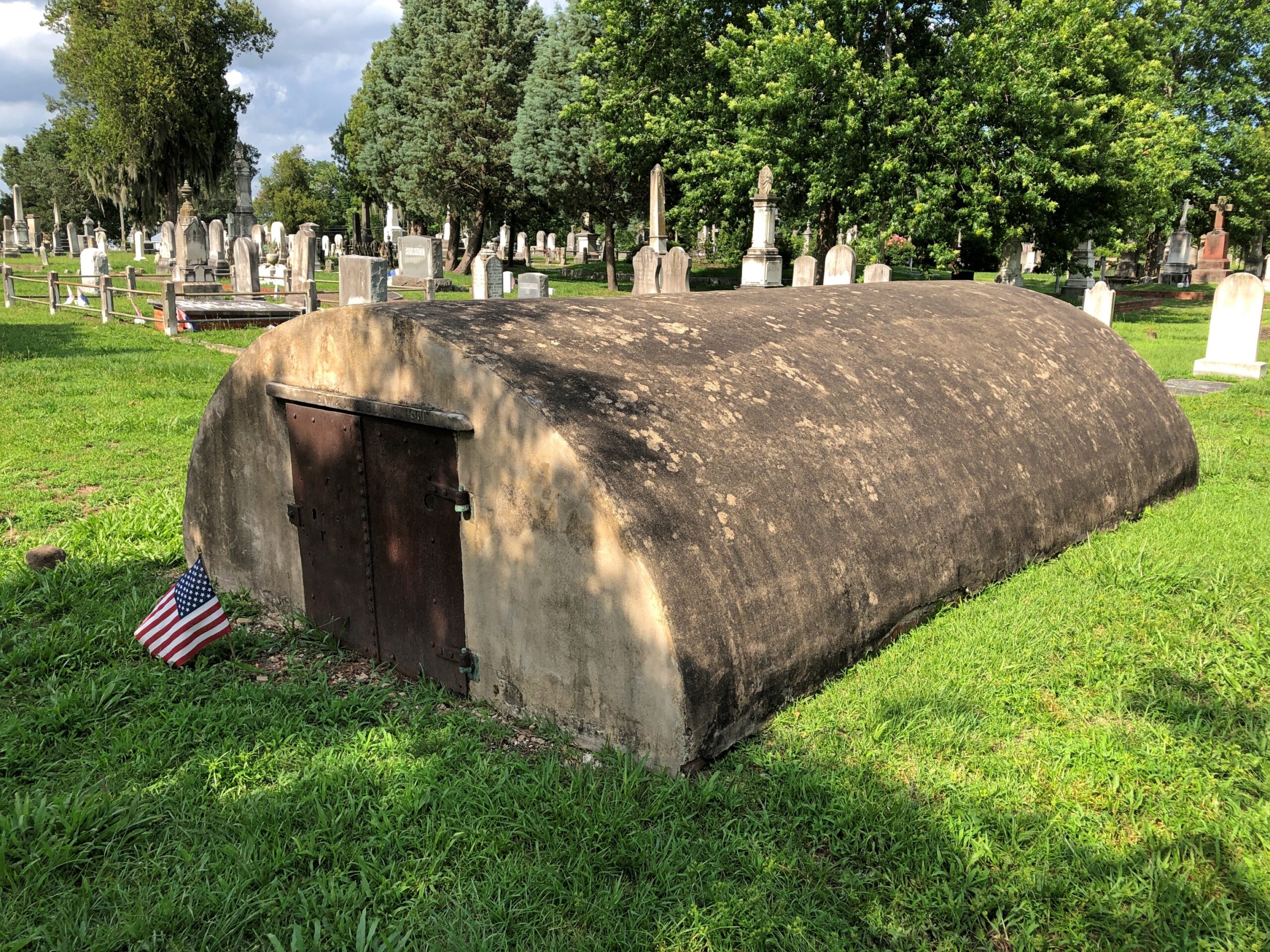
The last one is a little unusual, though I think I’ve seen similar structures occasionally here and there. Going for that concrete Quonset hut look, though considering its age, I’d bet that reference would be anachronistic.
While waiting to be seated for brunch on Middle Street in downtown New Bern on Juneteenth, Dan and I had time for a stroll. The day was warming up, but not quite to a scorcher, and the sidewalks along Middle and Pollack Sts. are often in shade. That part of New Bern, shady and old, is quite the charmer.
“New Bern, one of North Carolina’s oldest towns, retains the flavor of past centuries,” North Carolina: A Guide to the Old North State (1939), p. 221, tells us. Information from the WPA Guide series is of course a little old, but mostly stands the test of time.
“The community, which processes a domestic architecture of charm and distinction, is spread across a bluff at the confluence of the Neuse and Trent rivers, 35 miles from the Atlantic Ocean. Massive brick townhouses, stately Georgian residences and wisteria-curtained clapboard cottages line narrow streets shadowed by oaks, poplars, elms and pecan trees. Many of the old streets retain their original brick pavements.”
All that would be downtown New Bern these days, as the town’s population – given as 11,981 by the WPA in 1939 – had expanded to 31,291 by 2020, according to the Census Bureau. So much of the town is actually late 20th-early 21st-century sprawl punctuated by parking lots and familiar retail.
Still, at the historic core, there is “domestic architecture of charm and distinction,” even now, with the older buildings mostly occupied by the likes of The Black Cat Shoppe, Faulkenberry Auctions, Anchored in New Bern (gift shop), Carolina Creations, Bear City Fudge Co., Curls & Lace Bridal Hair, and such restaurants as Cypress Hall, MJ’s Raw Bar and Grille, and Baker’s Kitchen, where we eventually brunchified (and it was delicious).
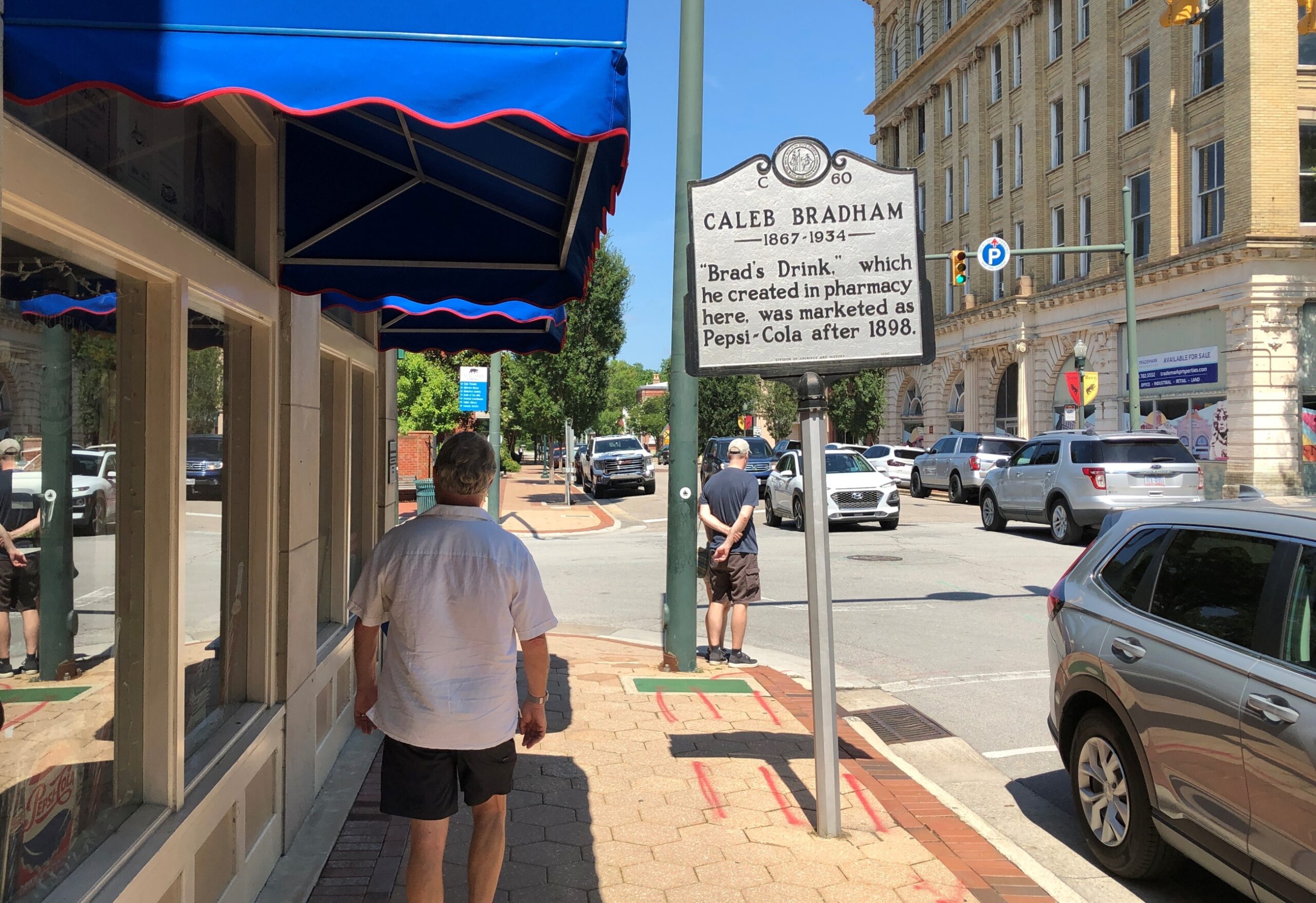
We visited a few shops and strolled by other spots, such as the former corner drug store credited as the invention-place of Pepsi-Cola.
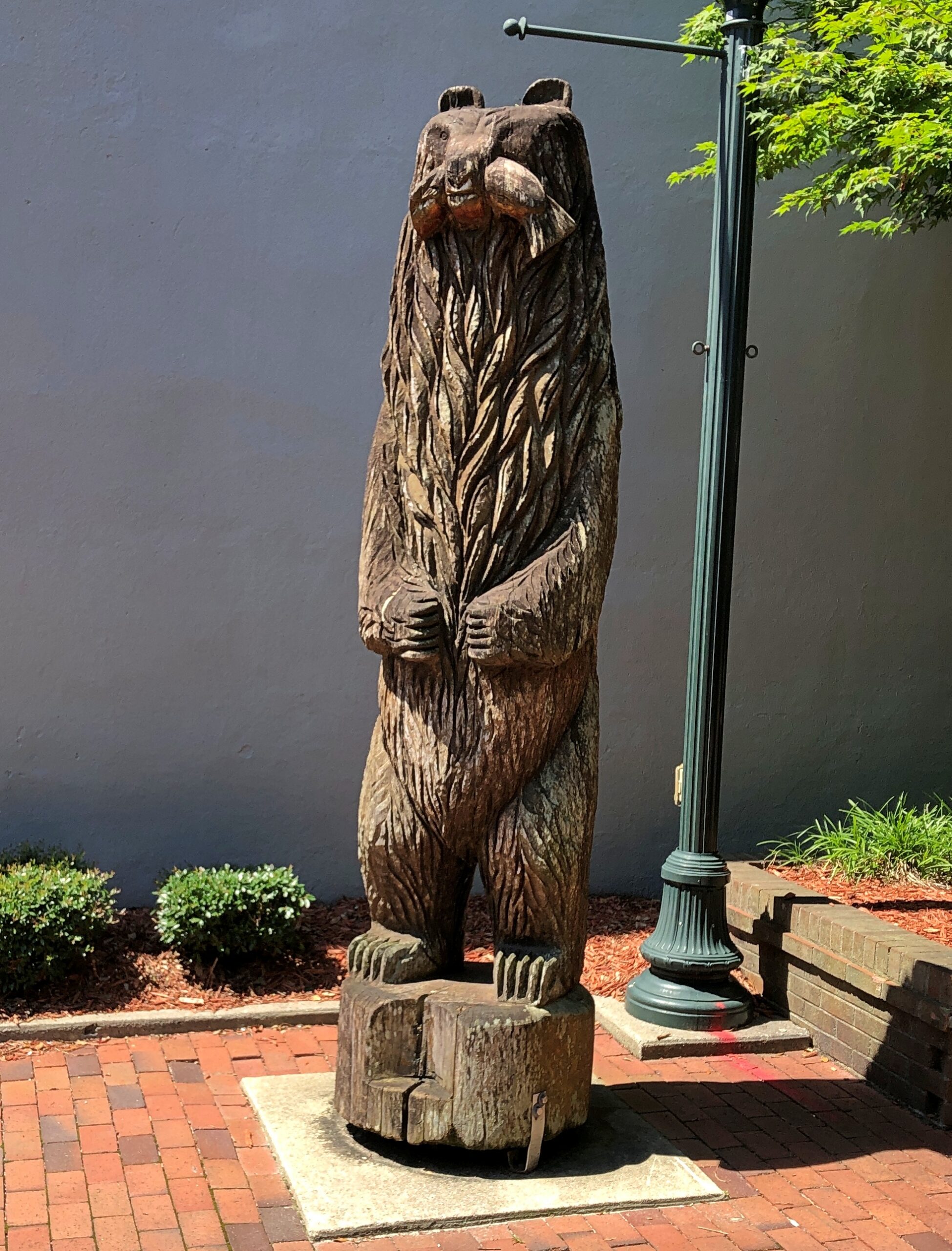
A pleasant alley off Middle St. is known as Bear Plaza. Good thing living bears aren’t found there, but you are reminded of bears.
Bears are front and center as pawed, powerful symbols of the Bern towns, old and new, Swiss and American. As posted previously, the New Bern flag –
— looks a lot like the old Bern flag, with certain small but important modifications. Old Bern:
The WPA guide points out that the very first European settlers in the area were not in fact Swiss, though led by a Swiss. The colonists were German and had a harrowing experience getting here.
“The first settlers were survivors of an expedition of 650 German Palatines, Protestants expelled from Baden and Bavaria. Under the leadership of Swiss Baron Christopher de Graffenried, and aided by a gift of £4000 from Queen Anne of England, this group planned a colony in America. De Graffenried placed Christopher Gale and John Lawson in charge of the expedition.
“In January 1710, two ships sailed from Gravesend, England. Storms impeded the vessels and disease ravaged the voyagers, more than half of whom succumbed. A French vessel captured one of the transports as it entered Chesapeake Bay in April, and plundered the colonists. Fever further reduced the number and only a sickly remnant reached the Chowan River, where Thomas Pollock, a wealthy planner, provided them with transport to the Neuse and Trent rivers.”
De Graffenreid himself came a little later with some Swiss colonists, buying land from the Lords Proprietors of Carolina and paying off the local Tuscarora Indian chief as well. The natives were not mollified, however.
“In September 1711, the settlement was almost wiped out by a Tuscarora uprising. In the first attack, 80 settlers were slain. Lawson and de Graffenreid were taken to the Indian fort, Nohoroco, where Lawson was tortured to death, and de Graffenreid was held prisoner for six months. The war raged intermittently for two years, and the colonists were reduced such desperation that in 1713 many of them returned with de Graffenreid to Switzerland. The settlement made a new start on the leadership of Colonel Thomas Pollock, proprietary governor…”
Just one damn thing after another in early America. But the town survived, eventually becoming important enough to be the capital of North Carolina, as detailed yesterday.
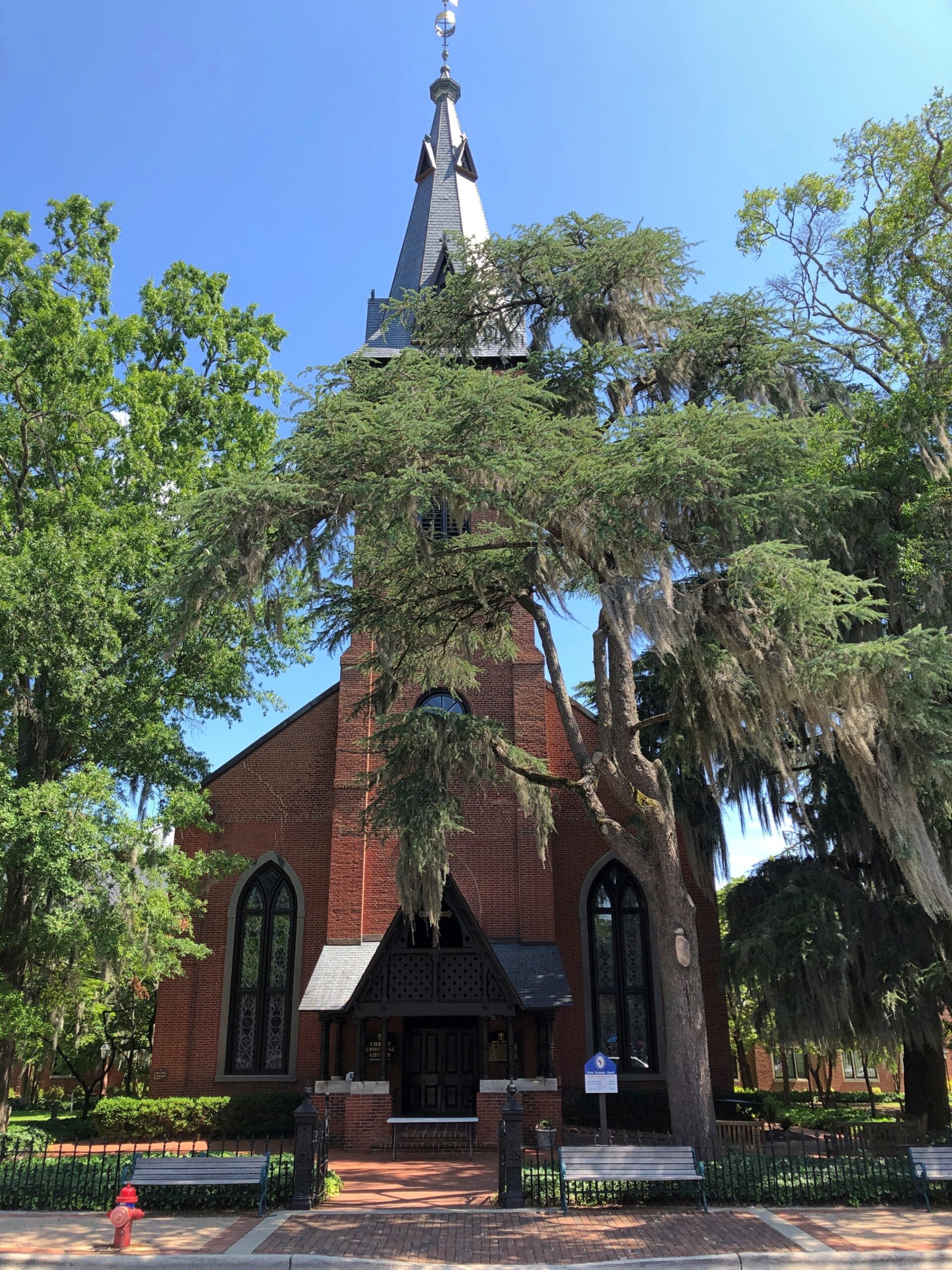
Christ Church Episcopal rises above Pollock St.
Other churches clustered in the area, but Christ Church had the advantage of being open that weekday and holiday morning.
Back to the WPA guide, p. 228, on Christ Church: “[At the] NE corner Pollock and Middle streets, a weathered red brick edifice whose lofty, gold-crowned spire rises above great trees shading an old graveyard, was erected in 1873 upon the site of two earlier churches. The parish was organized in 1715 the first church was built in 1750. A Bible, Book of Common Prayer and silver communion service given by George II are retained, though royal Governor Martin attempted to take them with him when he fled town in 1775.
“When Parson Reed, the royalist rector, prayed for the king, lads prompted by patriot parents drummed at the door and shouted ‘Off with his head!’ This church was razed during the Revolution, reputedly because the brick had been brought from England. [Sounds like a likely story.] The second church was erected in 1825. Its outer walls were used for construction of the present building. In a corner of the churchyard fence, with its muzzle embedded in the ground, is the the Lady Blessington Cannon taken from the British ship Lady Blessington, captured in the Revolution.”
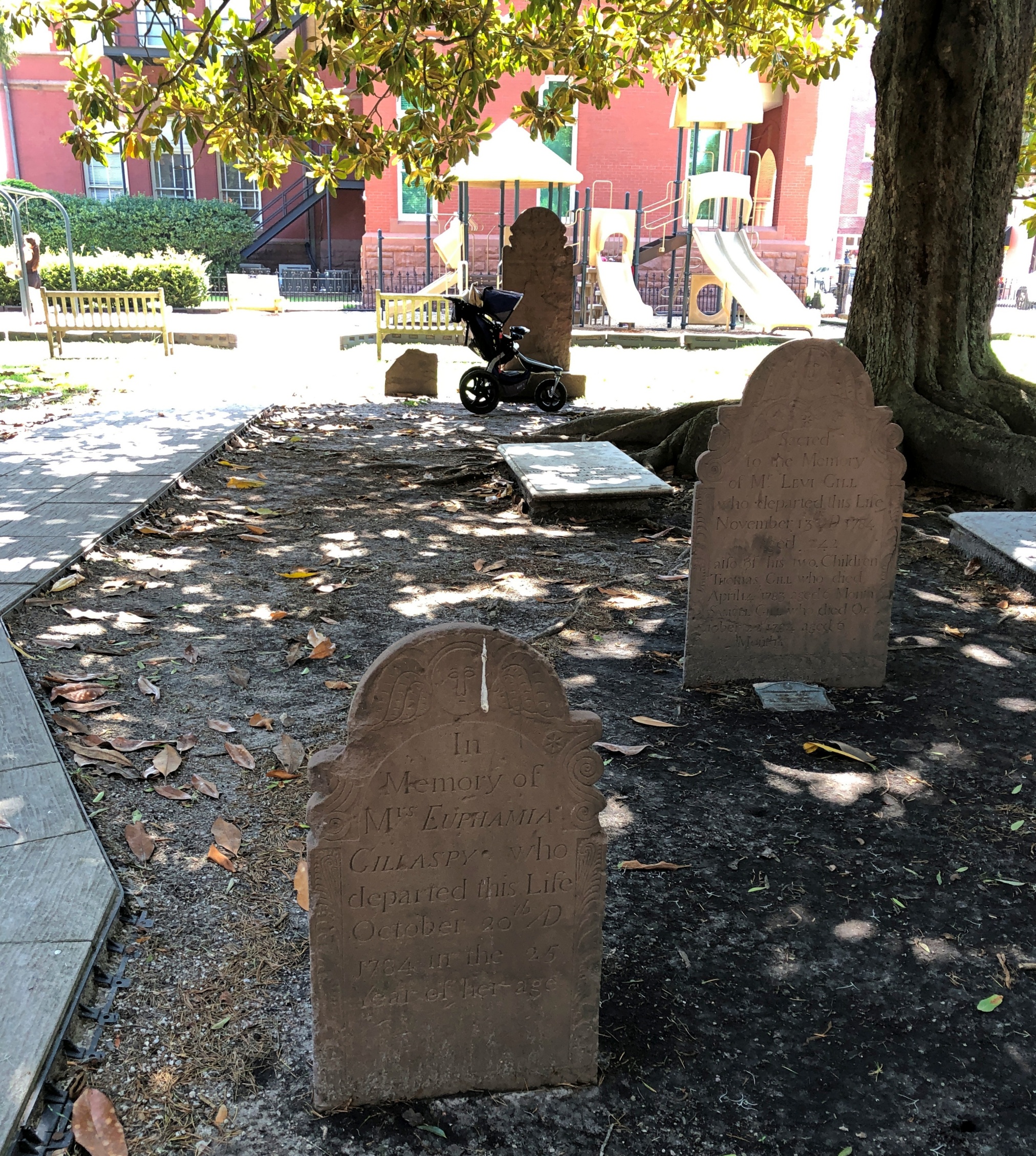
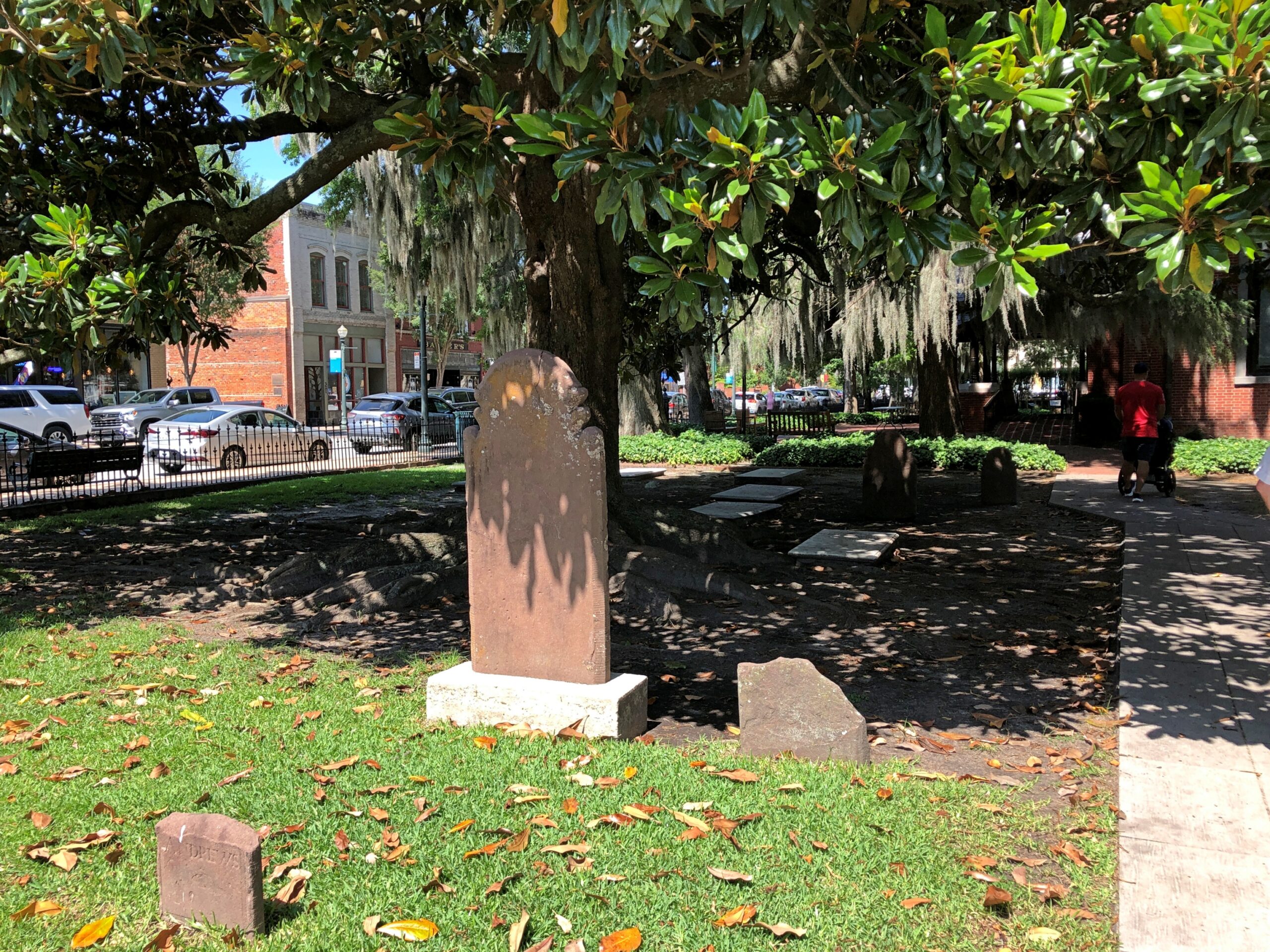
We didn’t see any embedded cannon, but on church land outside the Christ Church building were a cemetery and a playground. Not a combination you see much, but maybe there should be more places like that to remind us that the the arc of a lifespan is all too brief.
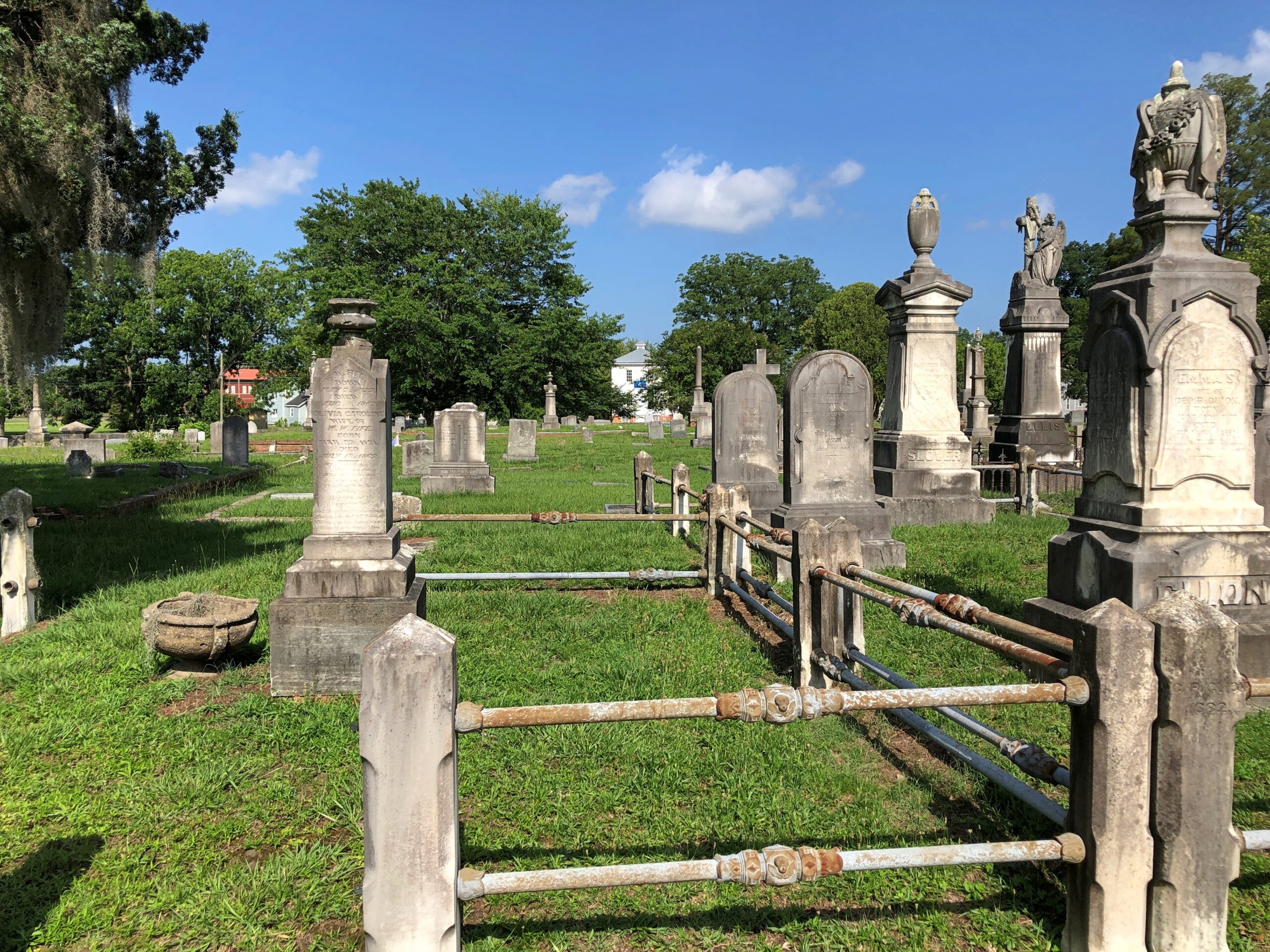
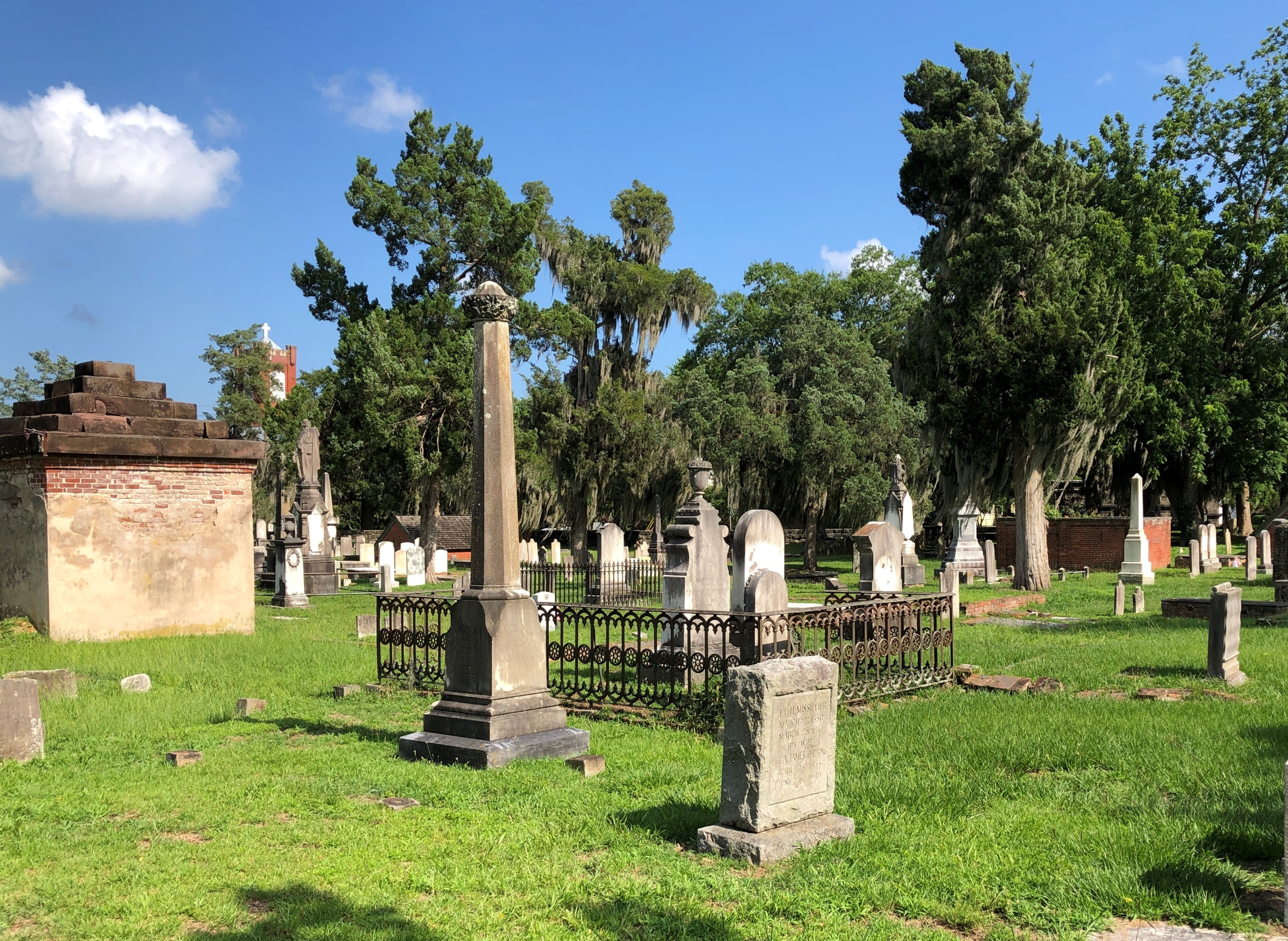
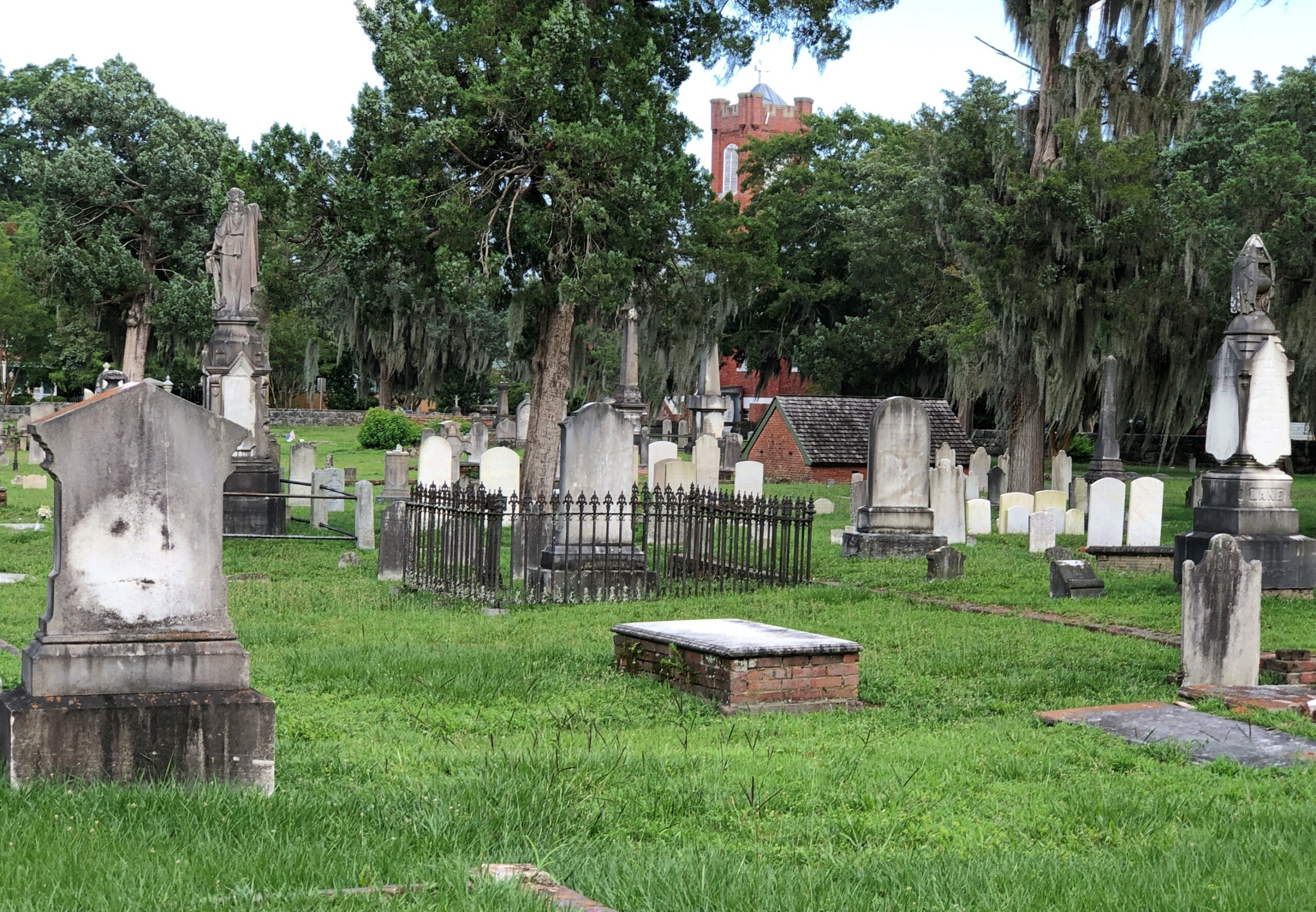
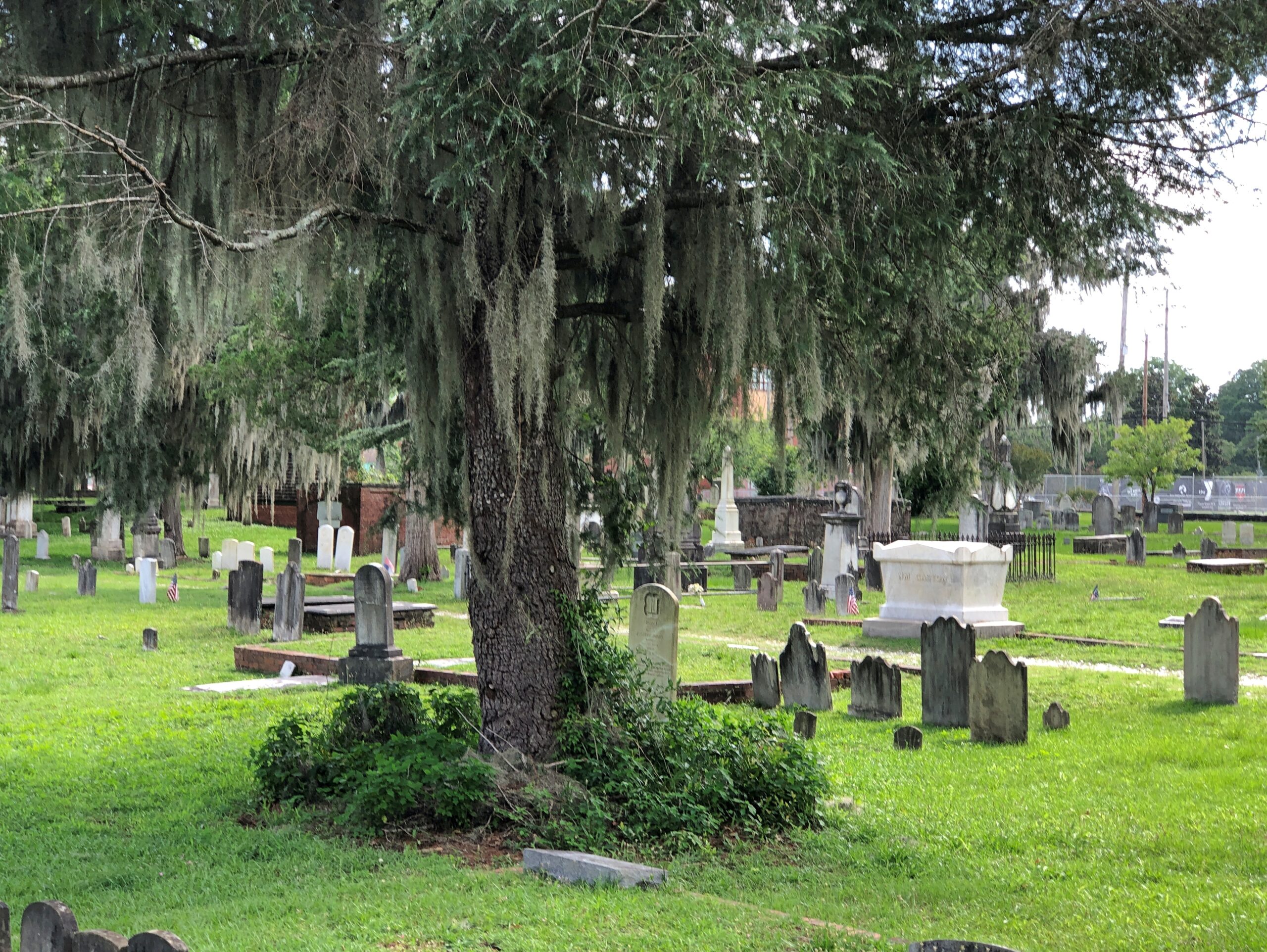
It’s a handsome Southern church burial yard, complete with magnolias and Spanish moss.
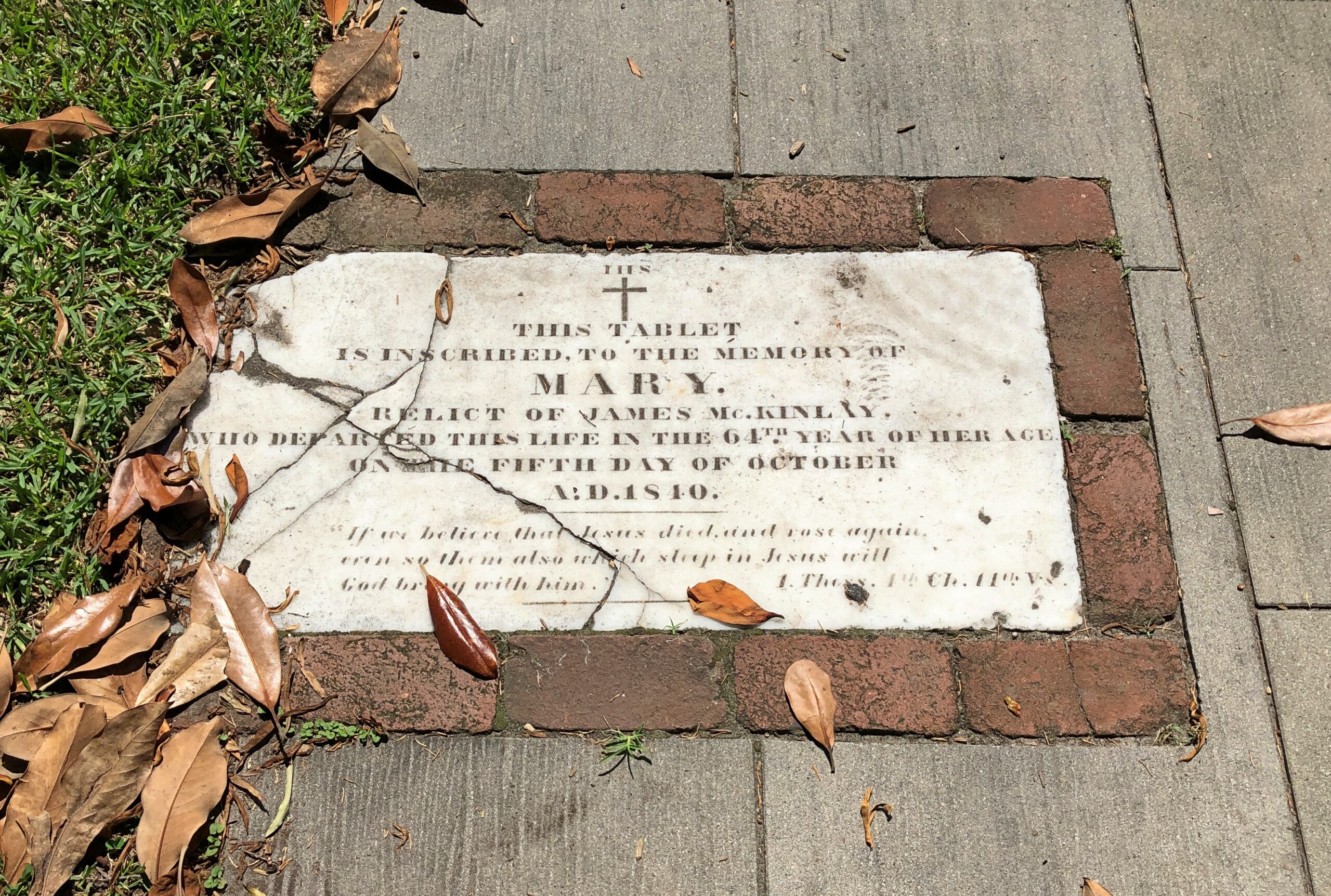
Included are stones reflecting older language usage, as you sometimes find in older cemeteries. “Relict,” as in widow, isn’t one you see much these days.
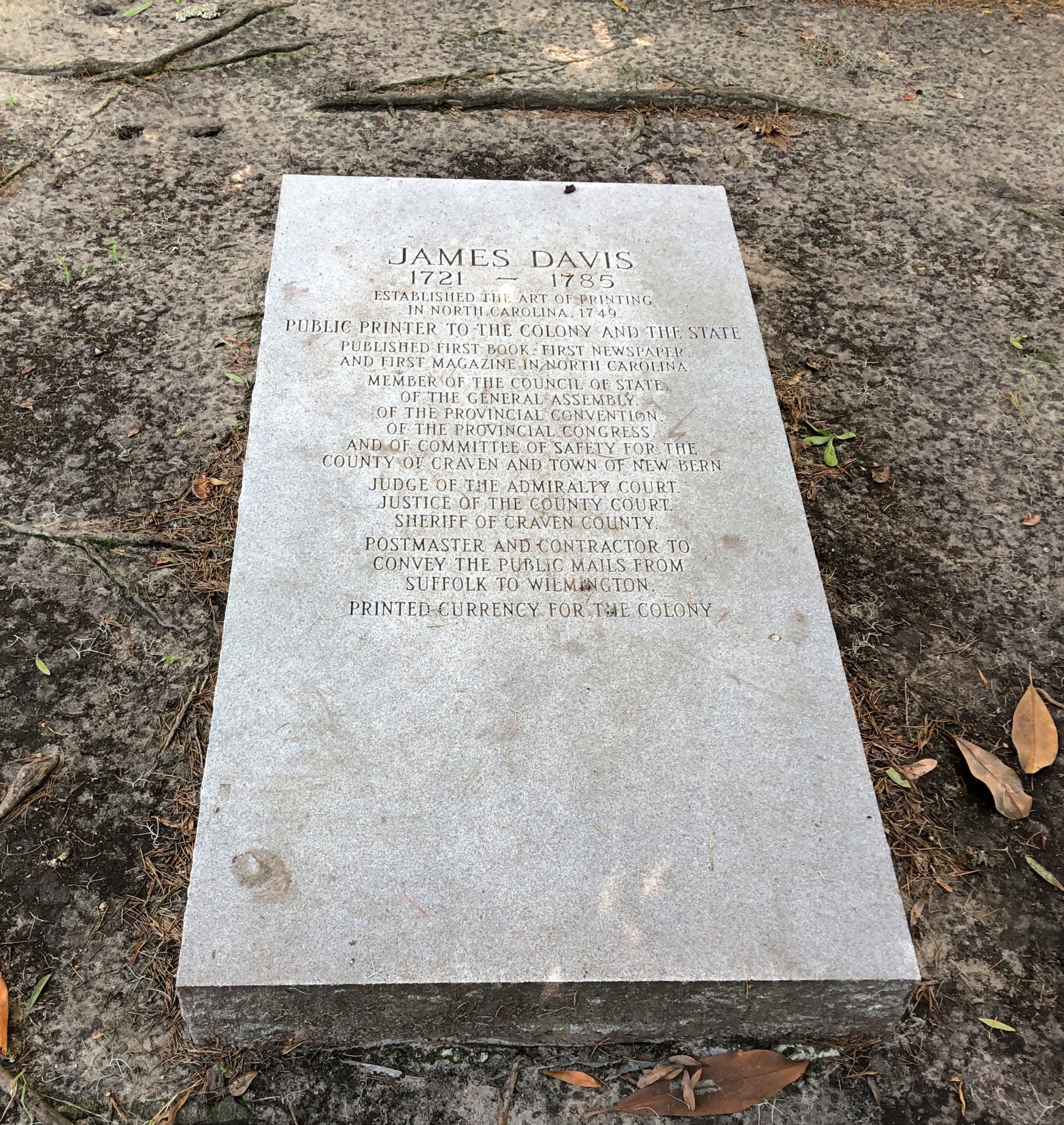
A wordy memorial. I hope the stone carver was paid by the letter.
But he’s notable enough: James Davis, quite a busy fellow in colonial North Carolina and later the state.
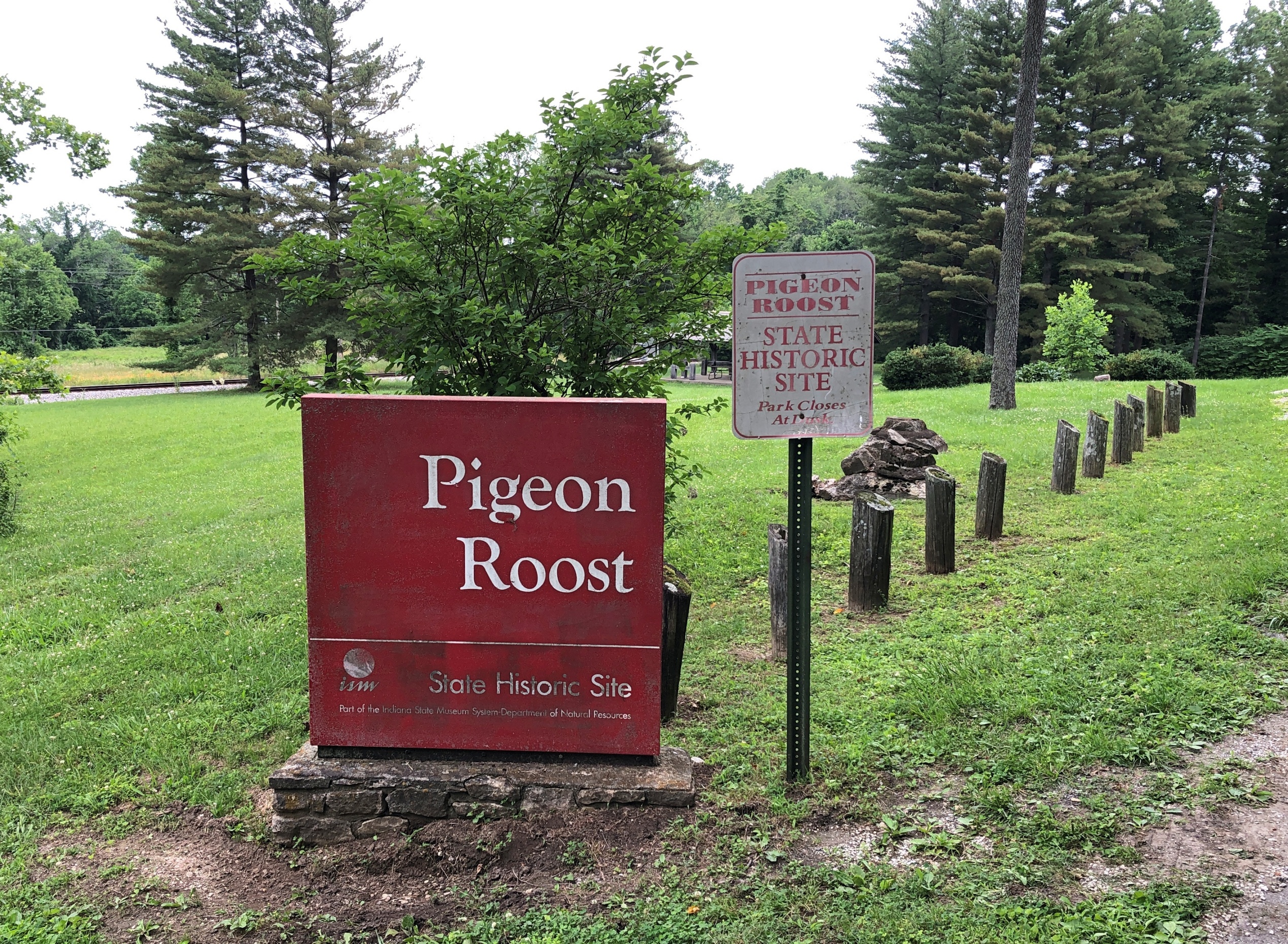
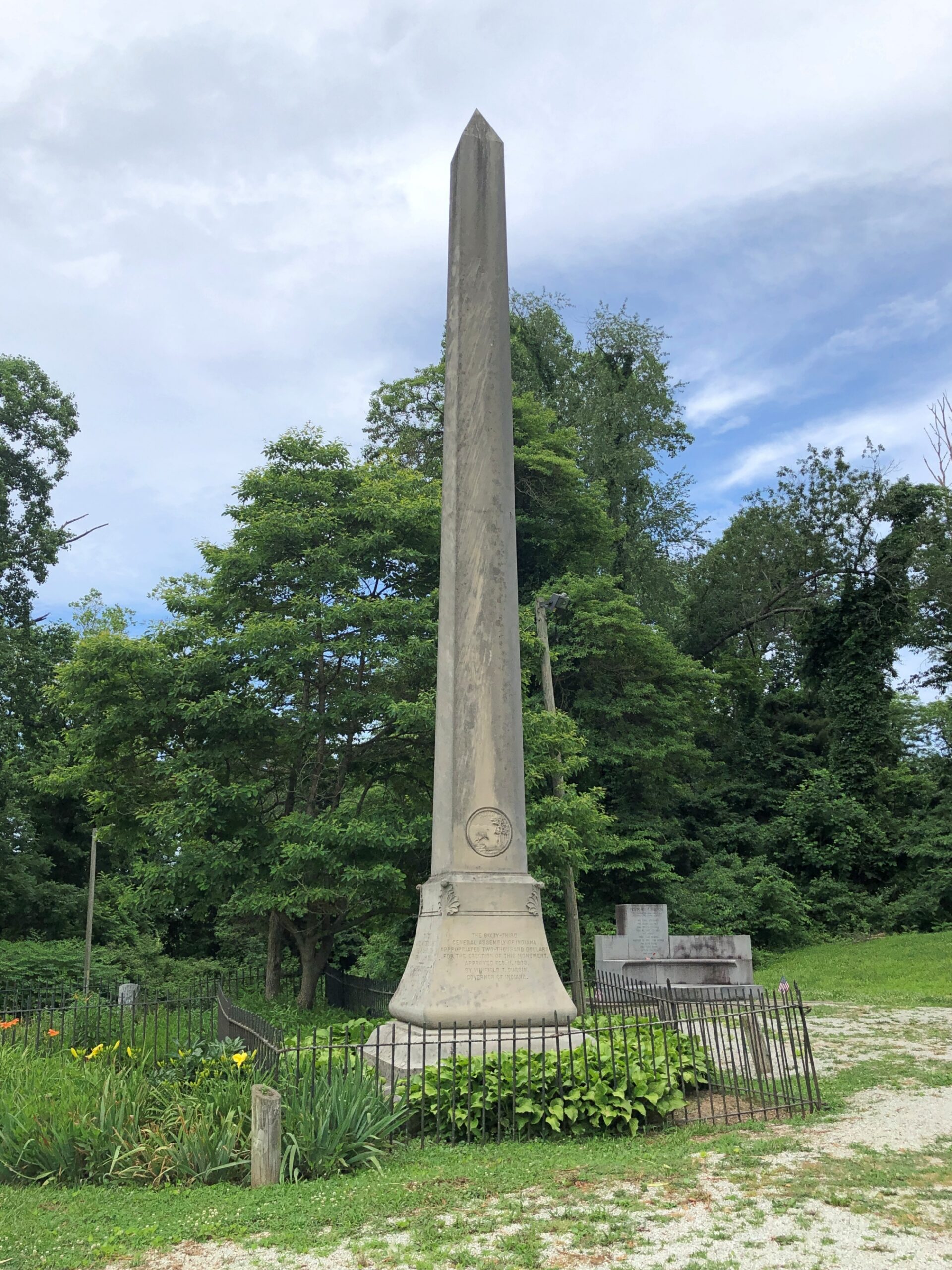
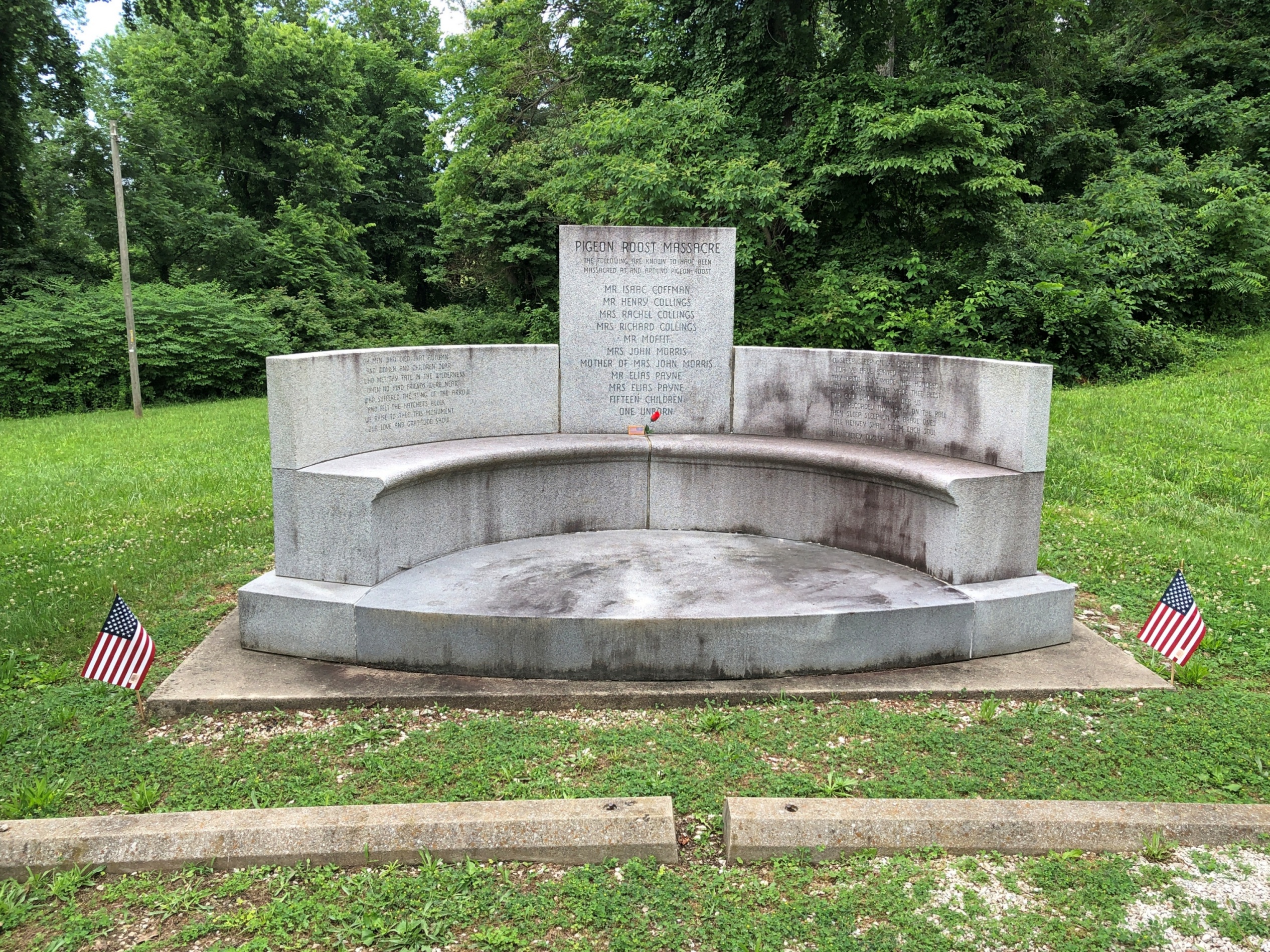
My stop in Scottsburg, Indiana, wasn’t entirely random. If you have a mind to visit Pigeon Roost State Historic Site, which is just south of town, you need to get off the Interstate and proceed to the site on US 31, and Scottsburg is a good place to do that.
As a point of interest red spot on highway maps, Pigeon Roost had intrigued me for years, but not enough to stop there. Unless I did sometime in the 1980s. Or maybe the ’90s. I’ve arrived at that point in life at which I can’t quite remember all the things I’ve seen, especially obscure memorials in obscure places. In a related trick of an aging memory, I sometimes have fairly distinct memories of places, but no memory of exactly where I was.
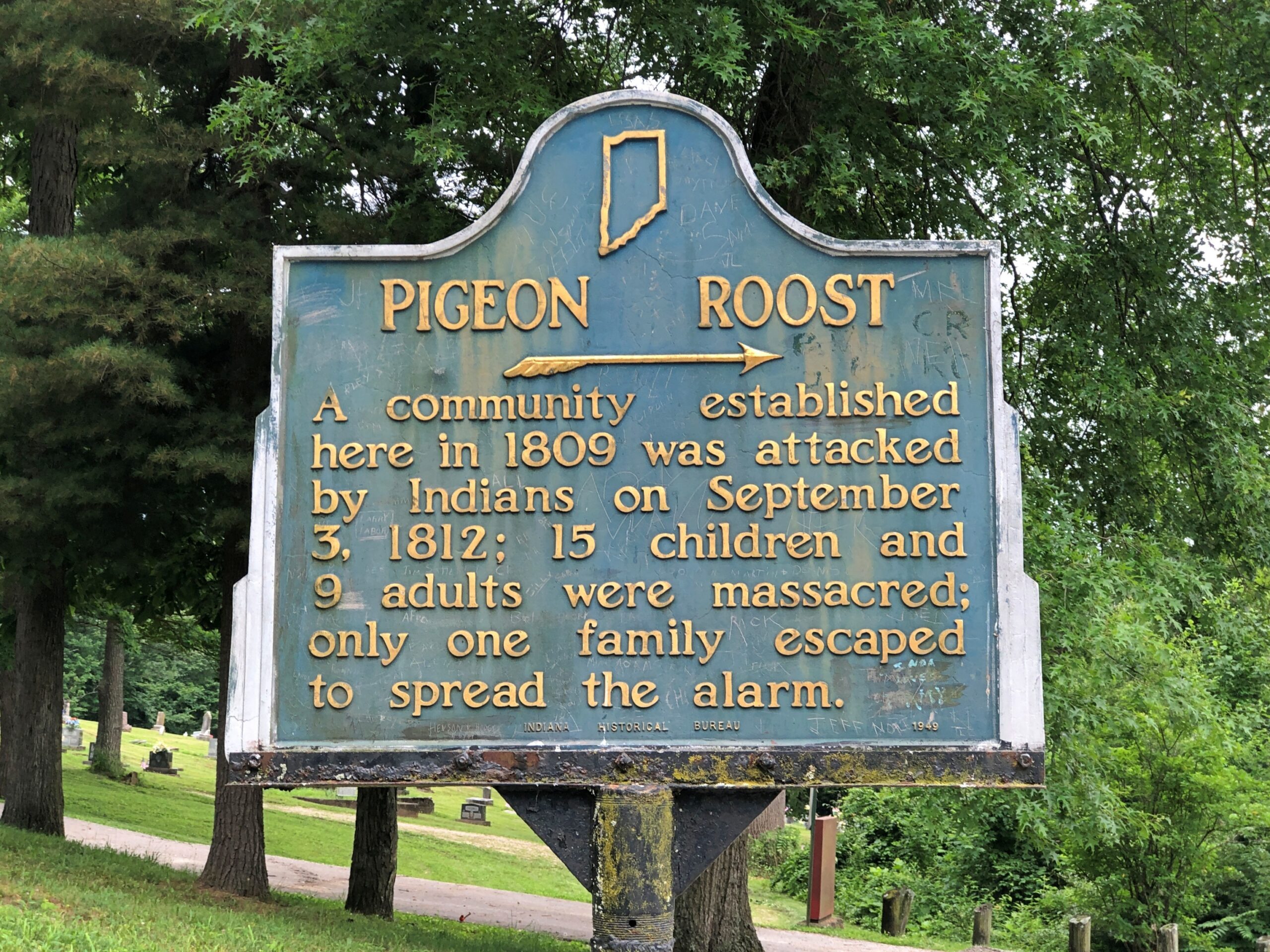
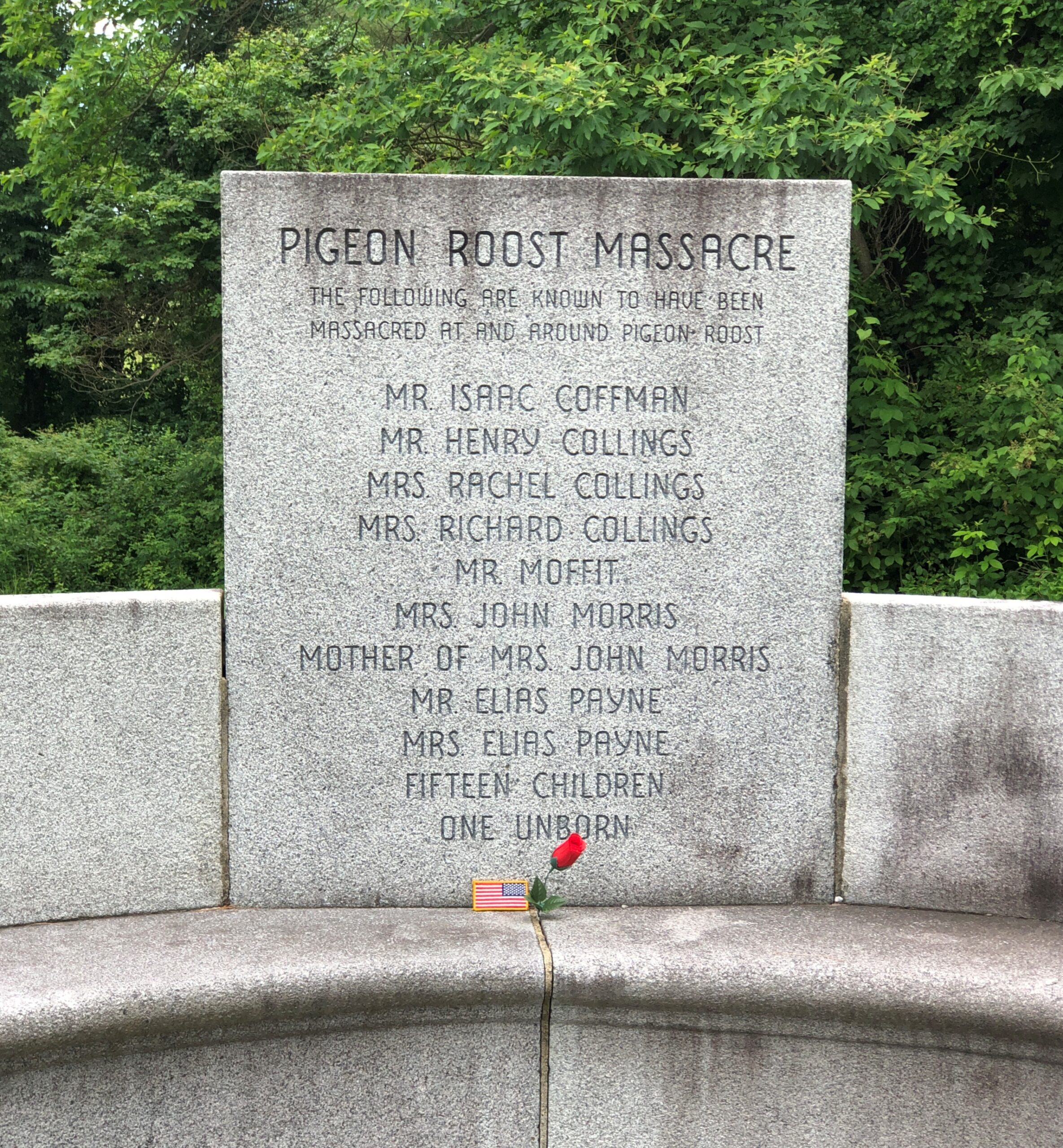
There are at least two layers of history at work at a place like Pigeon Roost. One is the massacre itself, whose longstanding interpretation sees it as a bloody incident in the War of 1812, with the Indians taking the opportunity – and British weapons – to fight the tide of settlement in the Northwest Territory, though they were already doing that, ultimately in vain. There also seems to be a revisionist idea that the Indians were out to settle a score with a particular group of whites and didn’t give a fig about the geopolitics of the situation, which certainly sounds plausible.
The other layer is the fact that it wasn’t until 1904 that the state of Indiana dedicated a memorial to the victims of the massacre, including what must have been a tidy sum to pay for an obelisk. Somewhere in the minutes of the legislature, and maybe in letters or newspaper reports, or maybe in a local history archive, is some inkling of why that might be: why then and not some other time. But it seems unlikely that anyone will ever take such a granular interest in the subject. Certainly not me, so I’ll have to leave it at that.
These days, Pigeon Roost is quiet and, I suspect, rarely visited. I had the place all to myself.
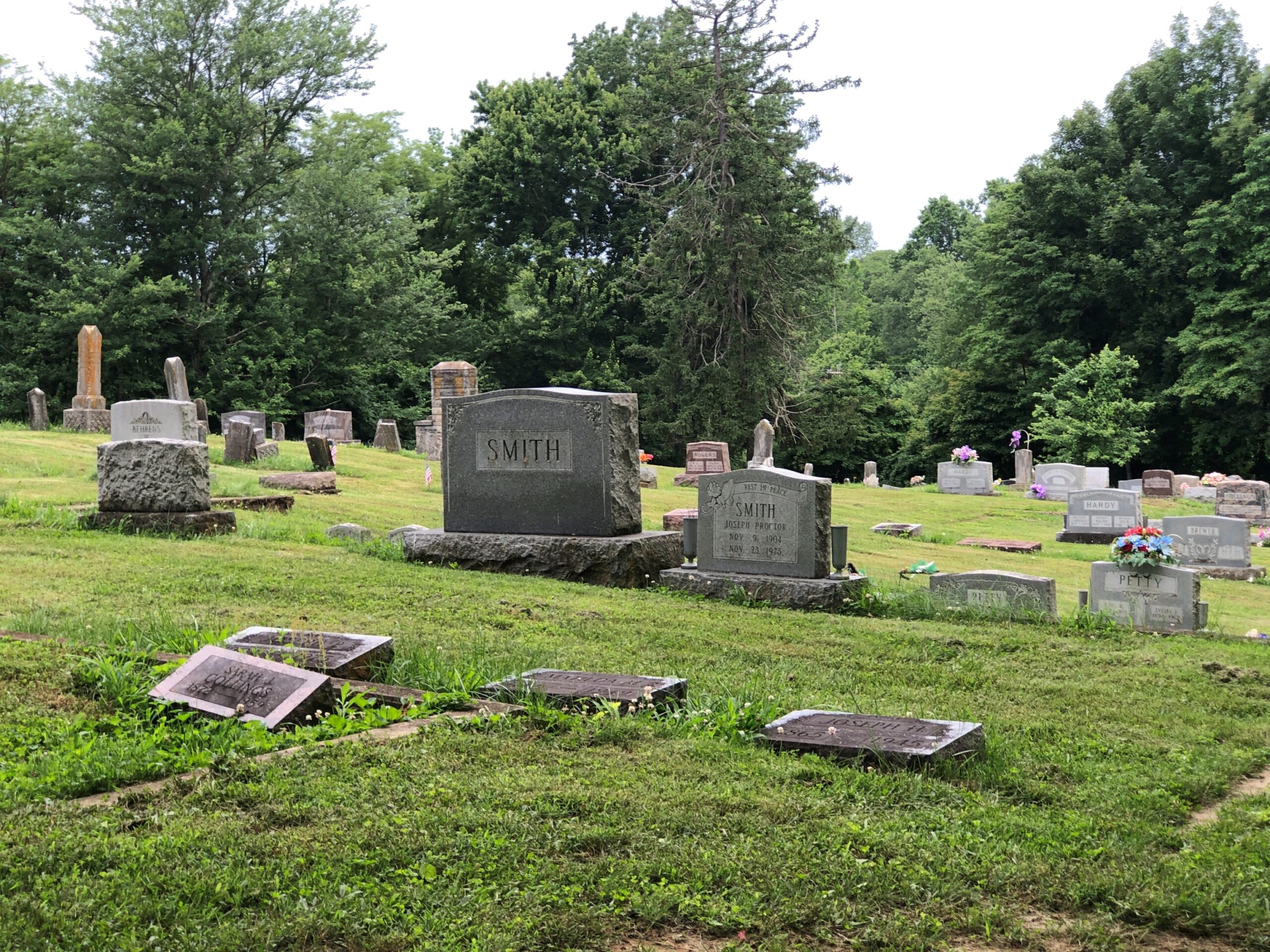
At some other point in the past, locals started burying their dead near the site.
Google Maps calls it Pigeon Roost Cemetery, aka Sodom Cemetery. The latter seems like an odd choice, but a quick look reveals a few others of that name, in Georgia, Ohio and Minnesota.
Google Local Guide Gary Collins has this to say about the place: This pioneer cemetery holds the remains of some of Southern Indiana’s earliest settlers, including some of the survivors of the infamous Pigeon Roost Massacre. At the time of the massacre, this cemetery had yet to be established, and some of the victim’s [sic] final resting places are unknown. It is generally well kept, and interments still occasionally take place.
What, no ghost stories about Pigeon Roost? Seems like perfect fodder for such tales: not only violent death, but the violent death of children and indeed entire families. There’s an opportunity here for making stuff up — I mean, paranormal investigations. What does Bachelor’s Grove Cemetery have that Pigeon Roost doesn’t?
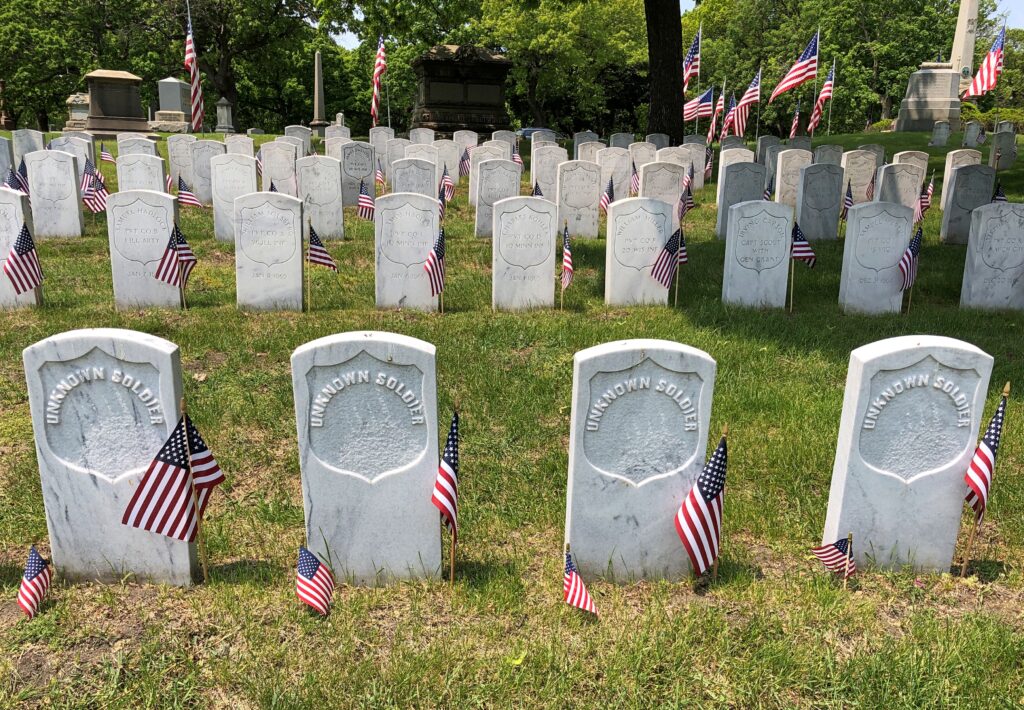
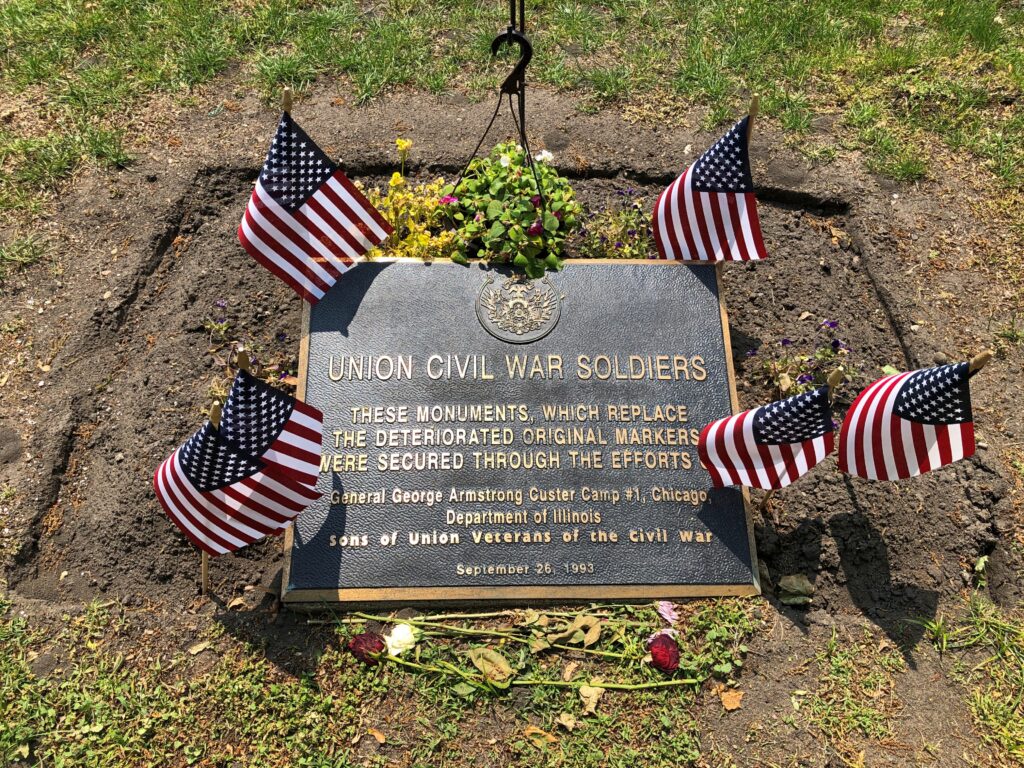
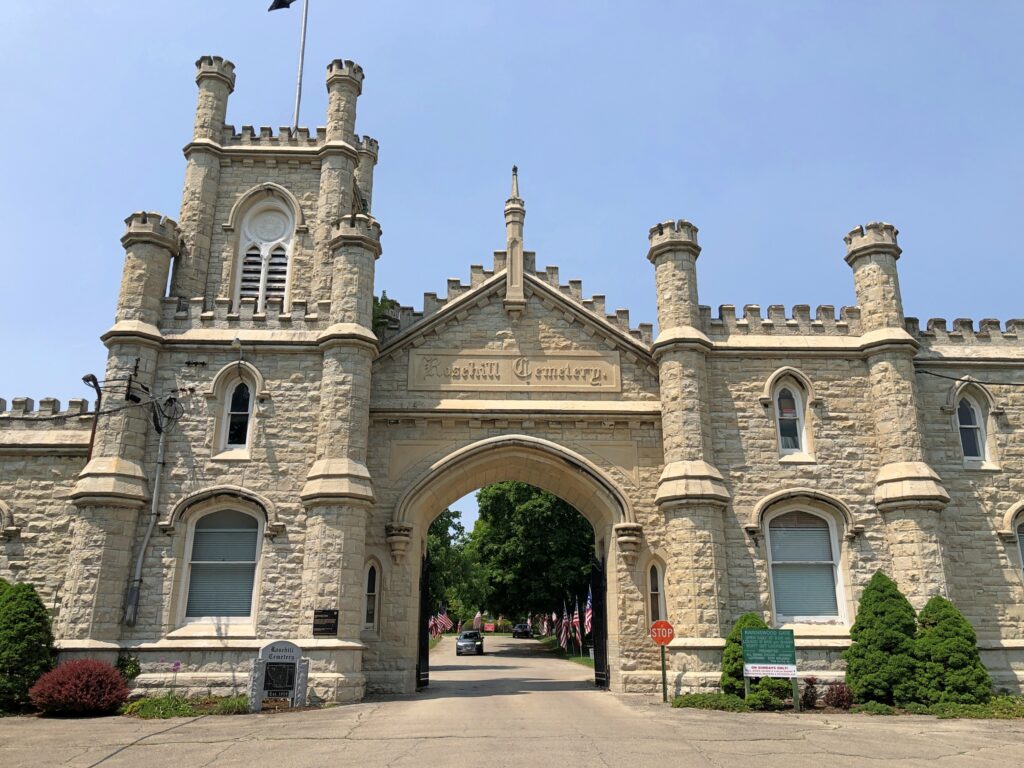
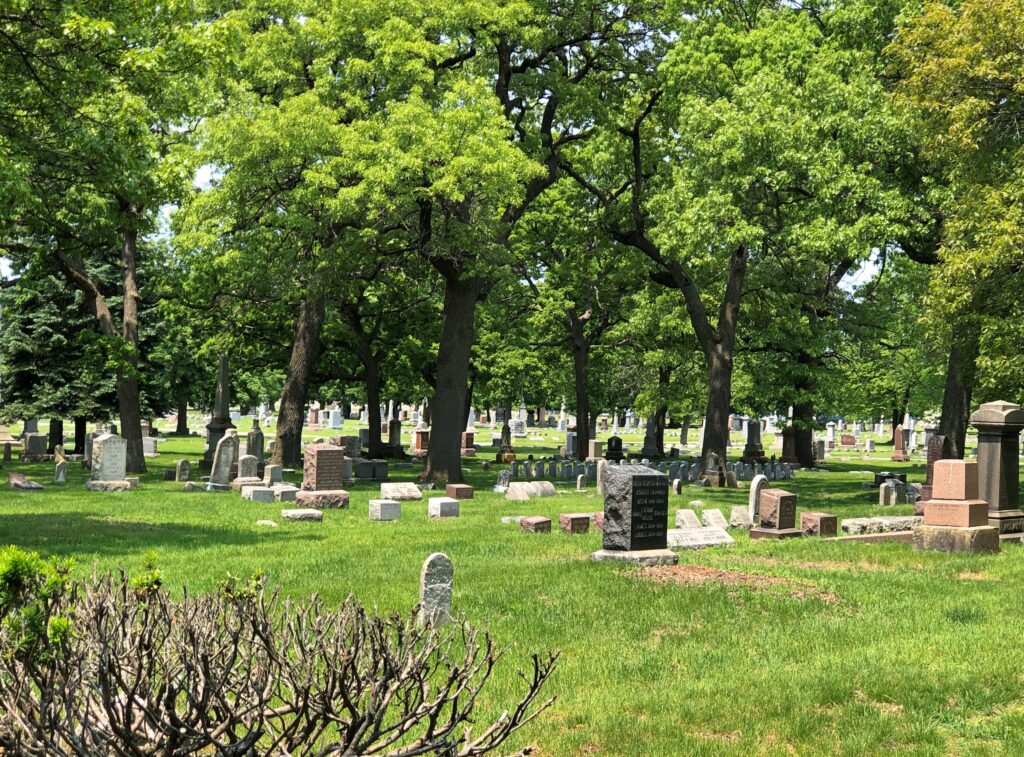
Rosehill Cemetery in Chicago opened in 1859, just in time to receive war dead in the days before dog tags.
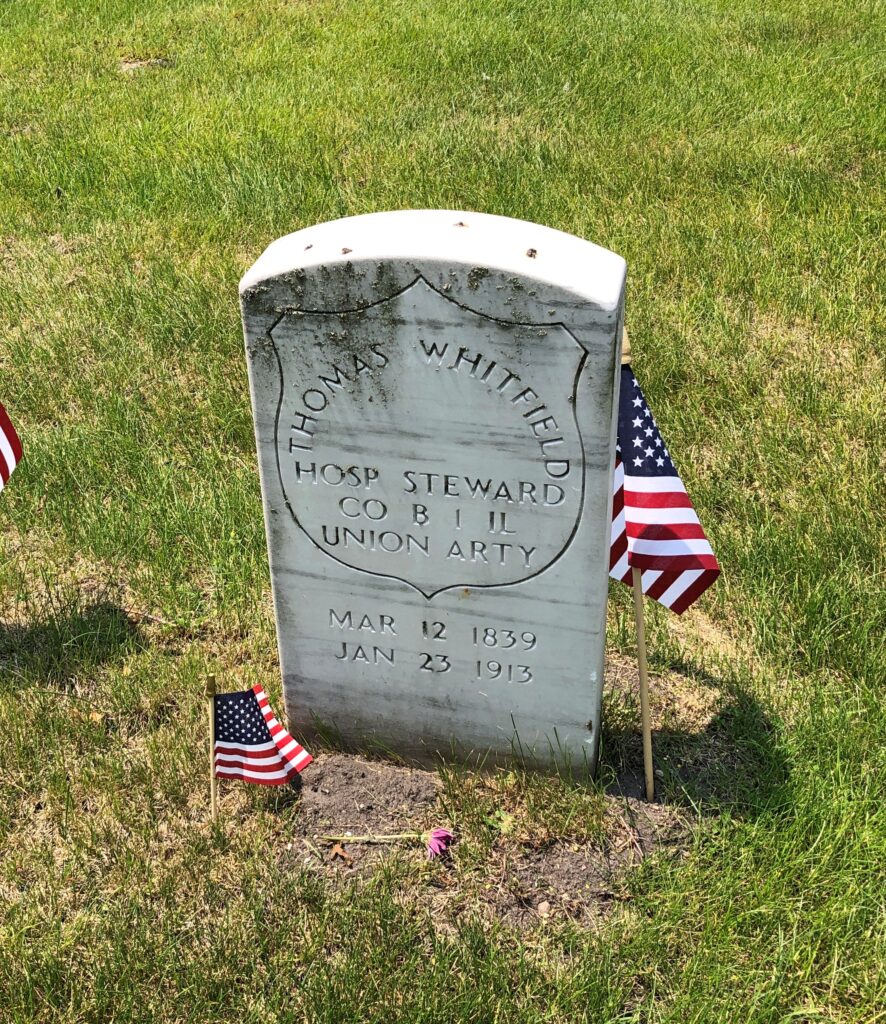
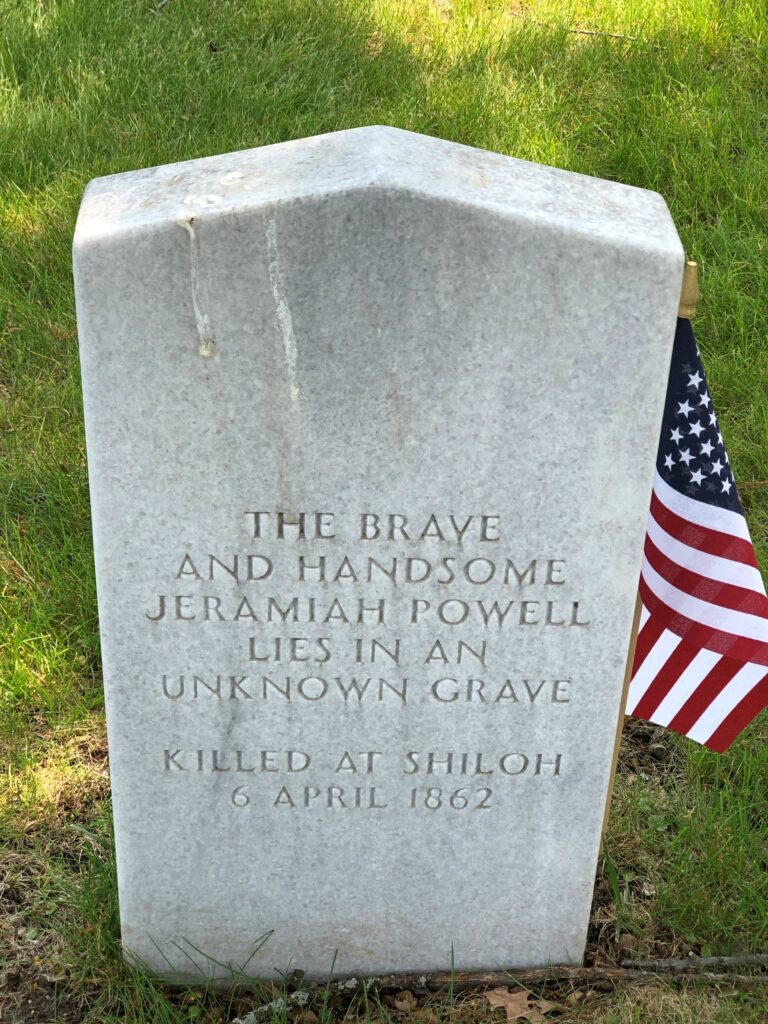
Still, most of the stones had names and, for now, flags that must have been placed for Memorial Day, which was the weekend before I took my stroll at Rosehill.
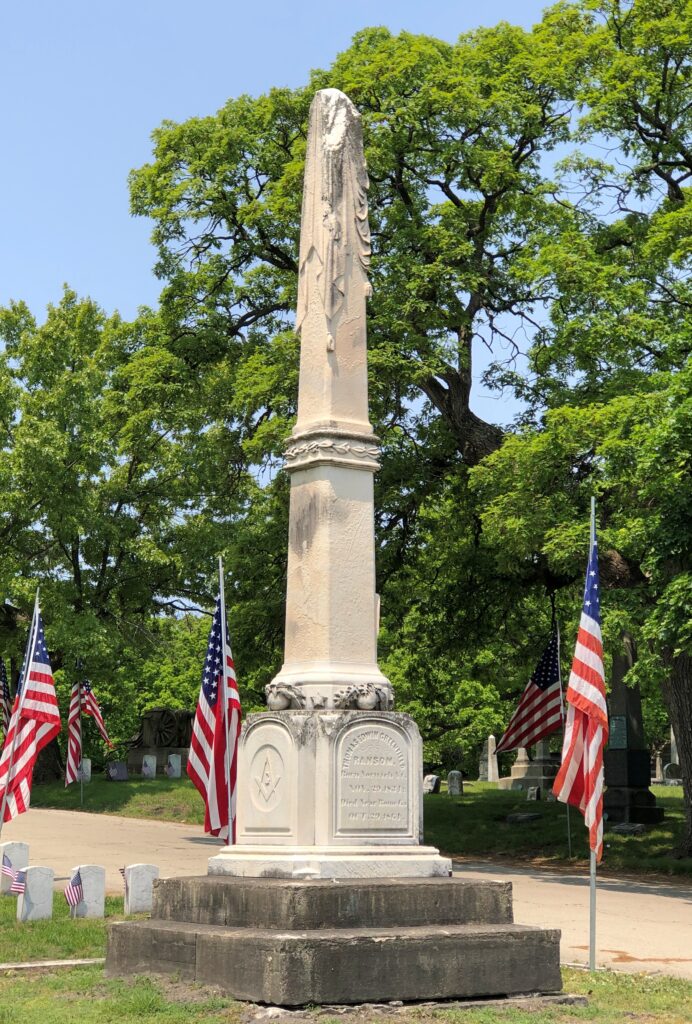
A draped obelisk marking the grave of Gen. Thomas E.G. Ransom (d. 1864).
The Civil War was a hands-on conflict even for high-ranking officers, who thus died or were wounded in some numbers. They also shared the risk of disease, and in fact dysentery felled Gen. Ransom, though he had been wounded more than once in combat.
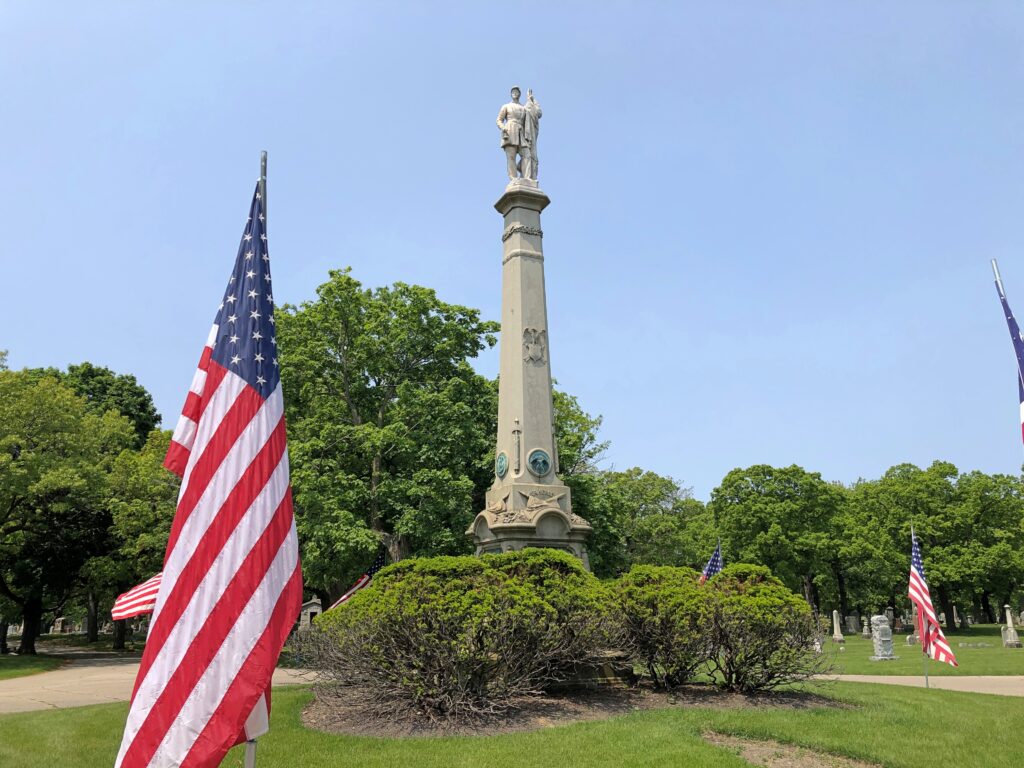
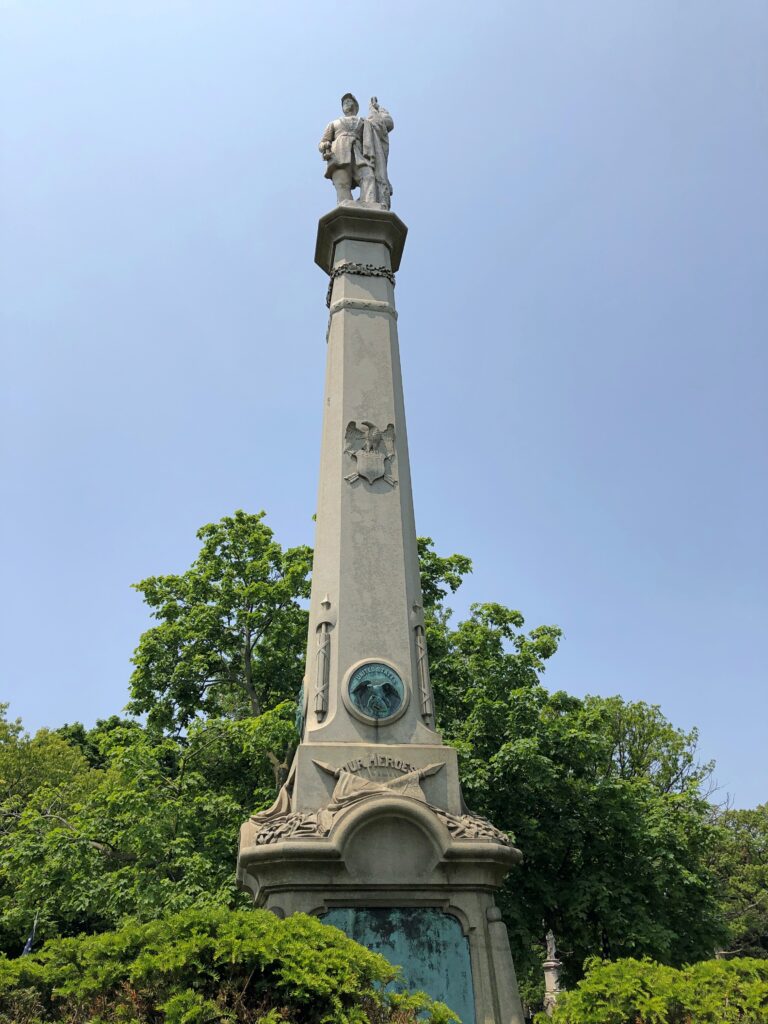
The war dead are clustered near the cemetery’s grand entrance. This memorial says Our Heroes and was dedicated on Decoration Day 1870, with the bronze atop and the bas-relief panels on the sides by noted sculptor Leonard W. Volk (d. 1895). He also did the tomb of Stephen Douglas.
“An immense train, composed of twenty-three cars, was found necessary to transport the people who desired to attend the ceremonies,” the Chicago Tribune reported the next day. “These, added to the number which had taken the forenoon train, as well as those who had proceeded to the spot in carriages, swelled the attendance to over five thousand persons, there being about an equal number of ladies and gentlemen. Arrived at Rosehill the crowds formed into a procession and, headed by Nevans & Dean’s full band, marched to the music of a dirge to the vicinity of the monuments, where a few moments were occupied in the inspection of the structures.”
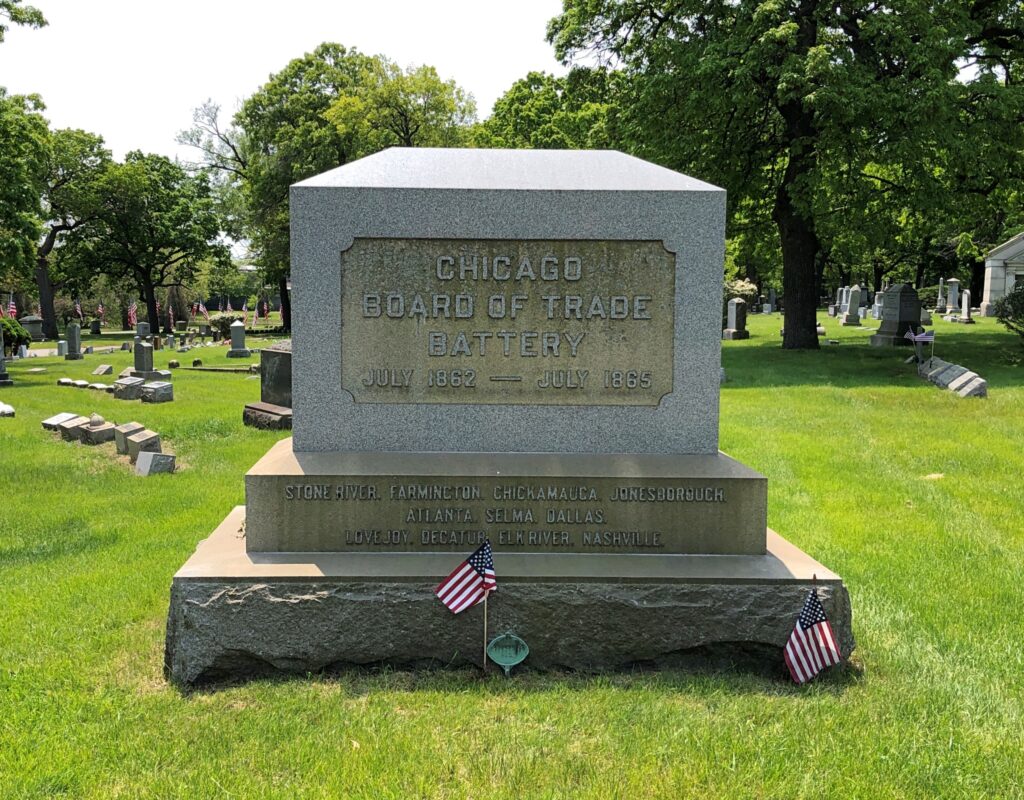
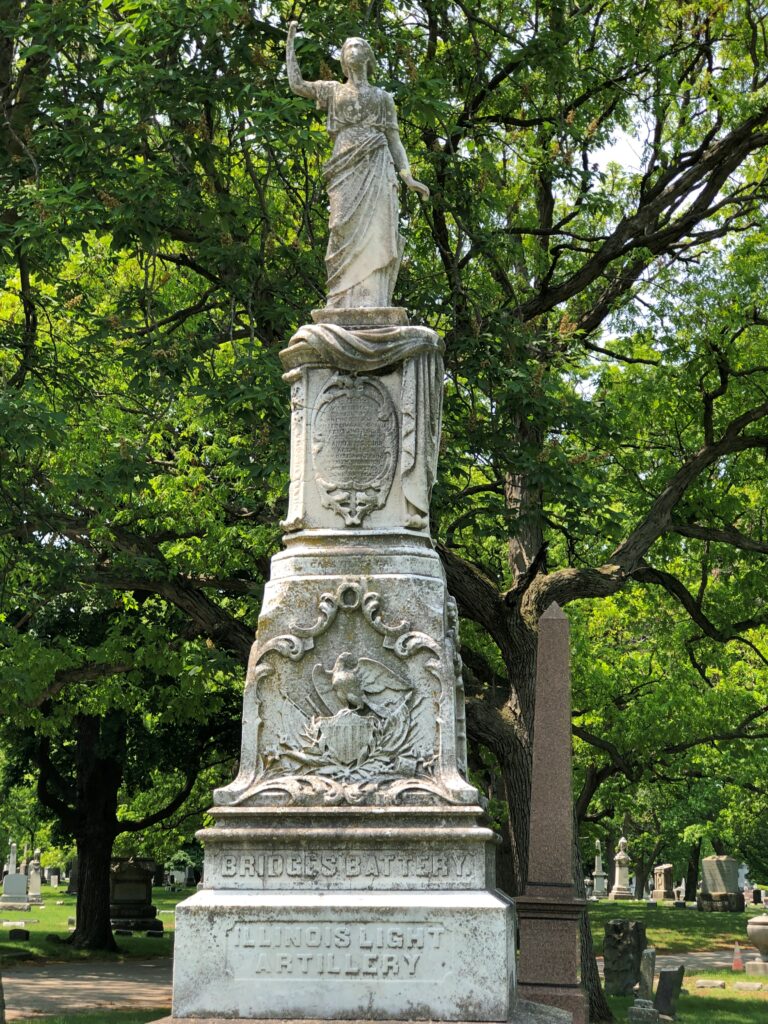
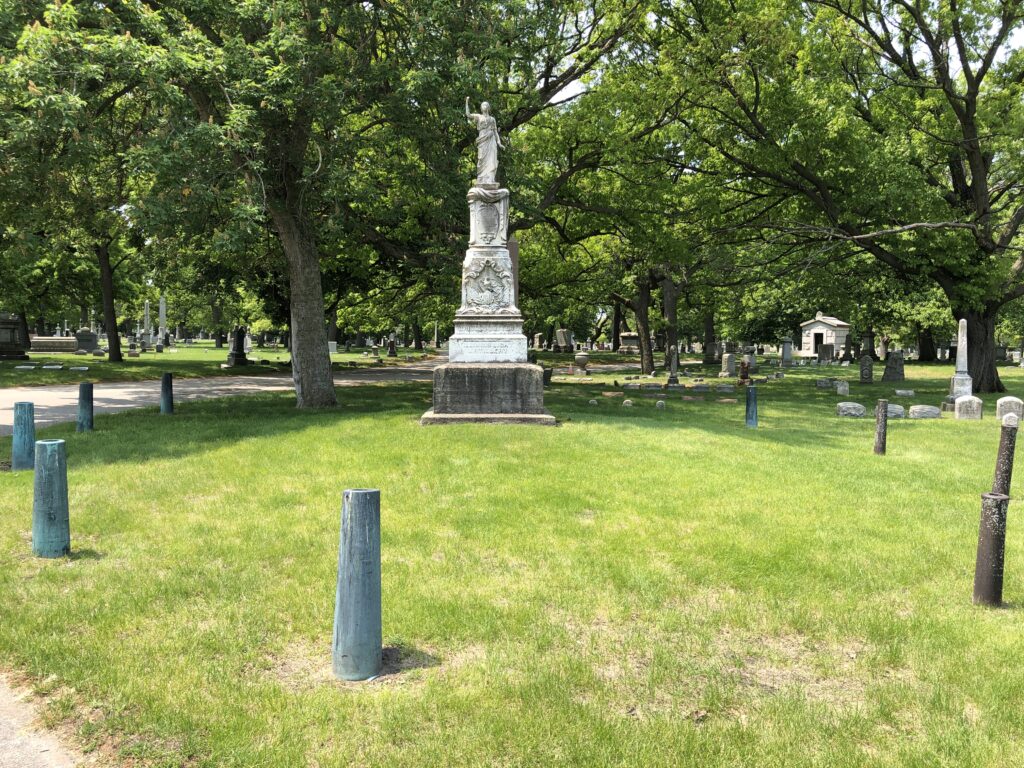
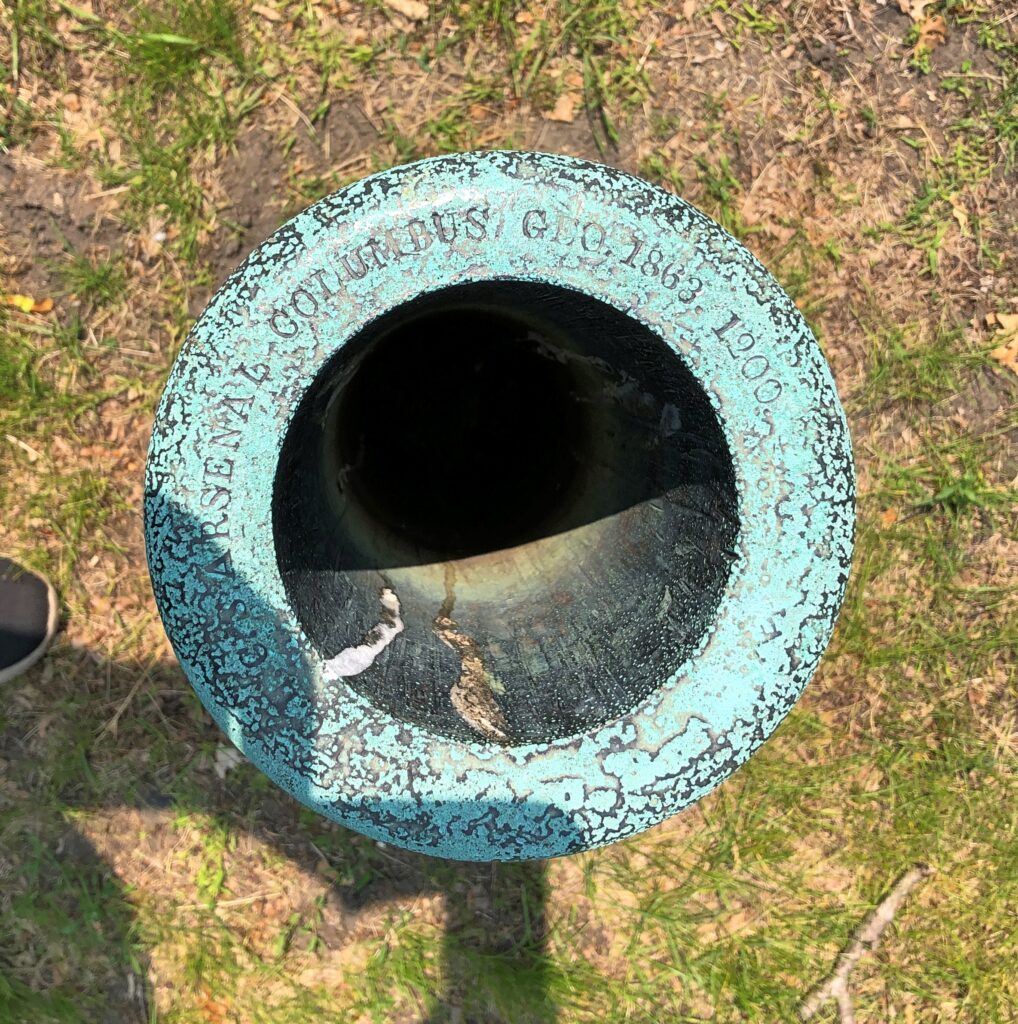
The report mentioned monuments, plural, and besides Our Heroes, also dedicated that day was a memorial to the Chicago Board of Trade Battery, an artillery battery, noting the many battles it participated in.
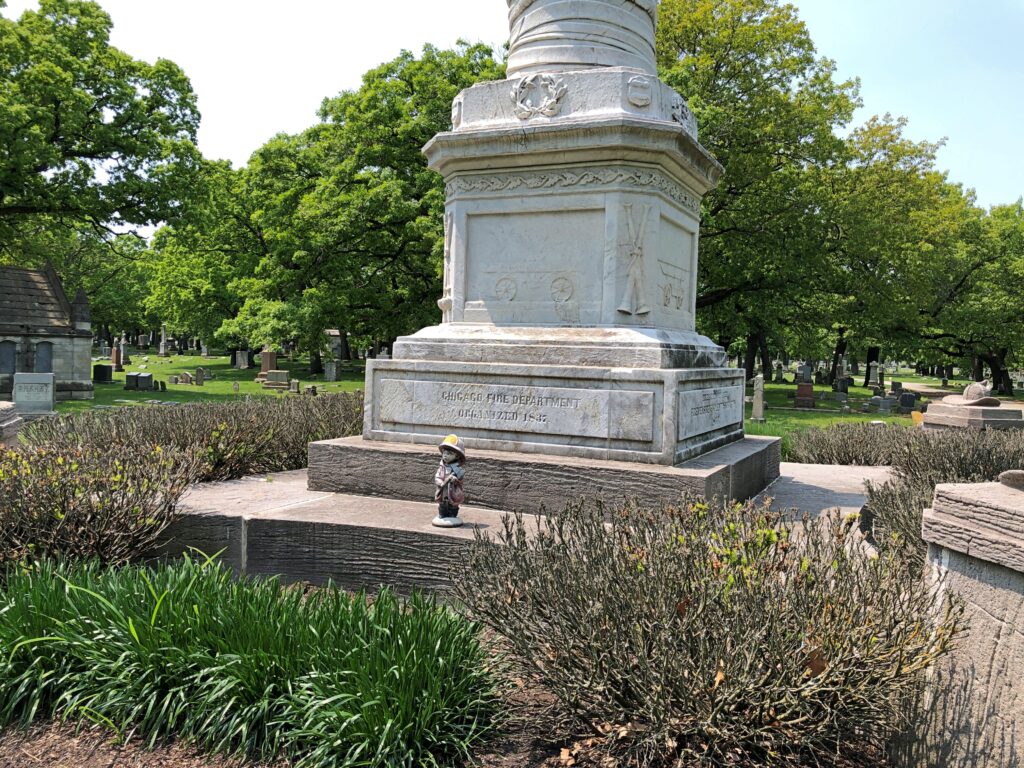
The cemetery office had photocopied map-guides to the grounds, and that inspired me to go look for the Rock of Chickamauga, which isn’t that close to most of the rest of the Union war dead. Along the way is a memorial to Chicago volunteer firemen. While not directly related to the war, it’s from the same time, 1864.
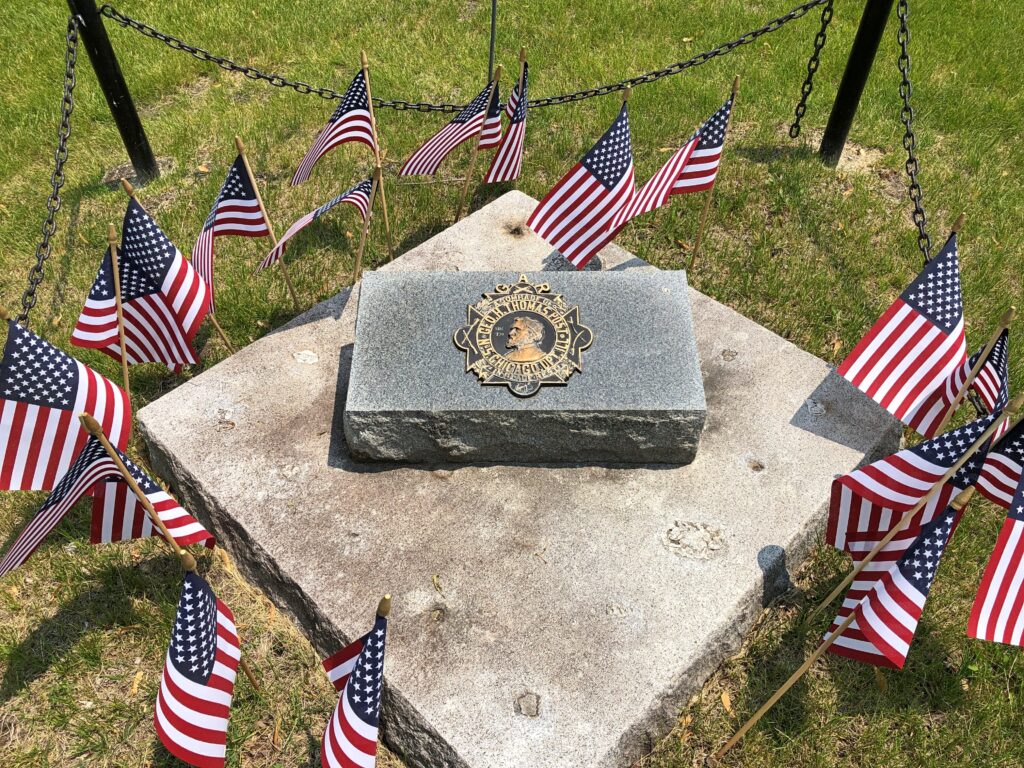
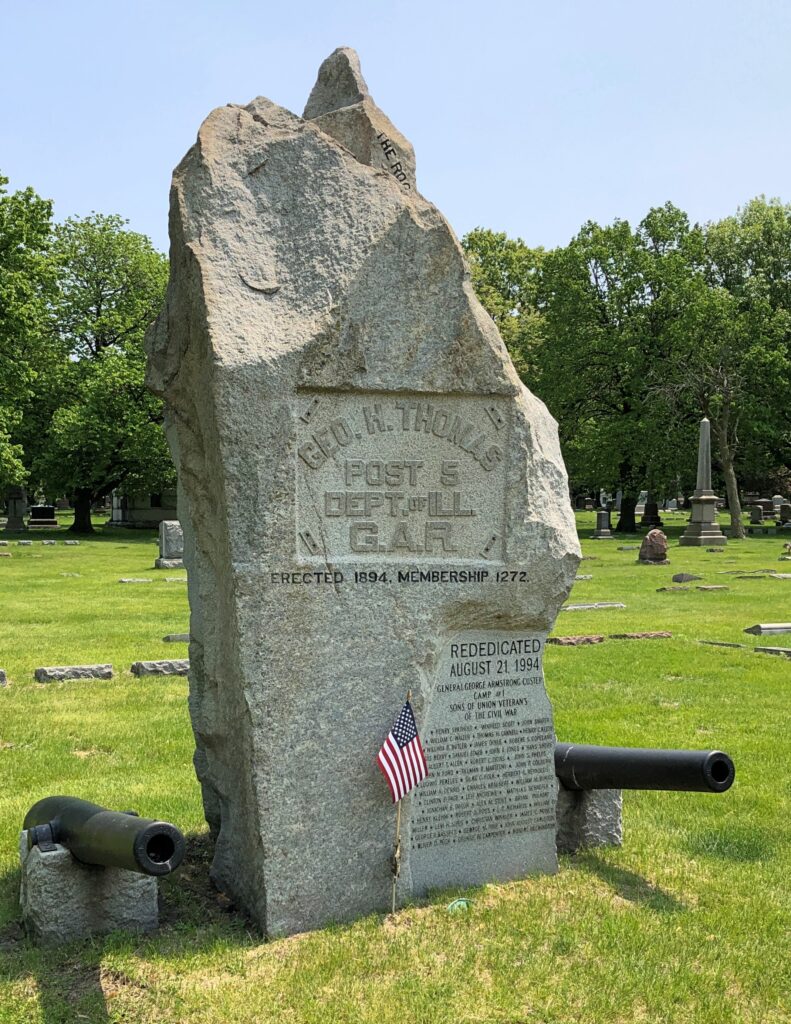
Gen. George Thomas (d. 1870), the Rock of Chickamauga, isn’t buried at Rosehill, but rather in upstate New York. Still, he’s honored in Chicago.
A Chicago post of the GAR took his name and in 1894, honored him by erecting a 12-ton boulder taken from the cliffs at Chickamauga National Battlefield. As marked on the boulder, it was rededicated in 1994.
So while the metaphorical Rock of Chickamauga isn’t at Rosehill, a literal rock of Chickamauga is.
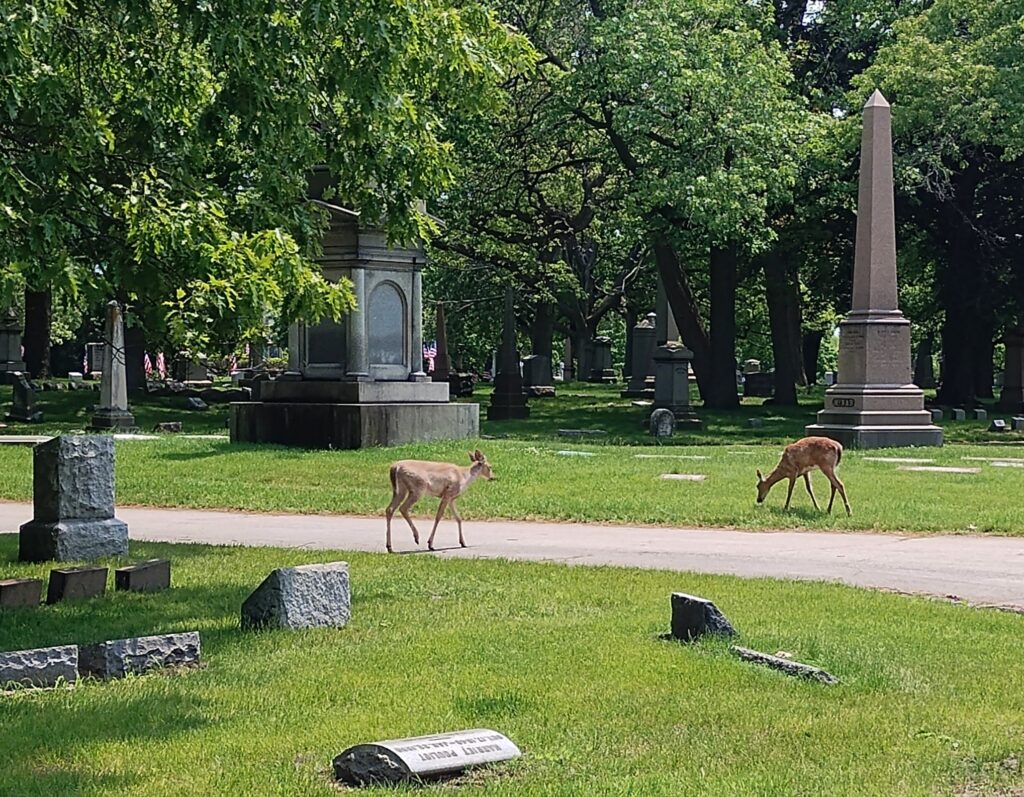
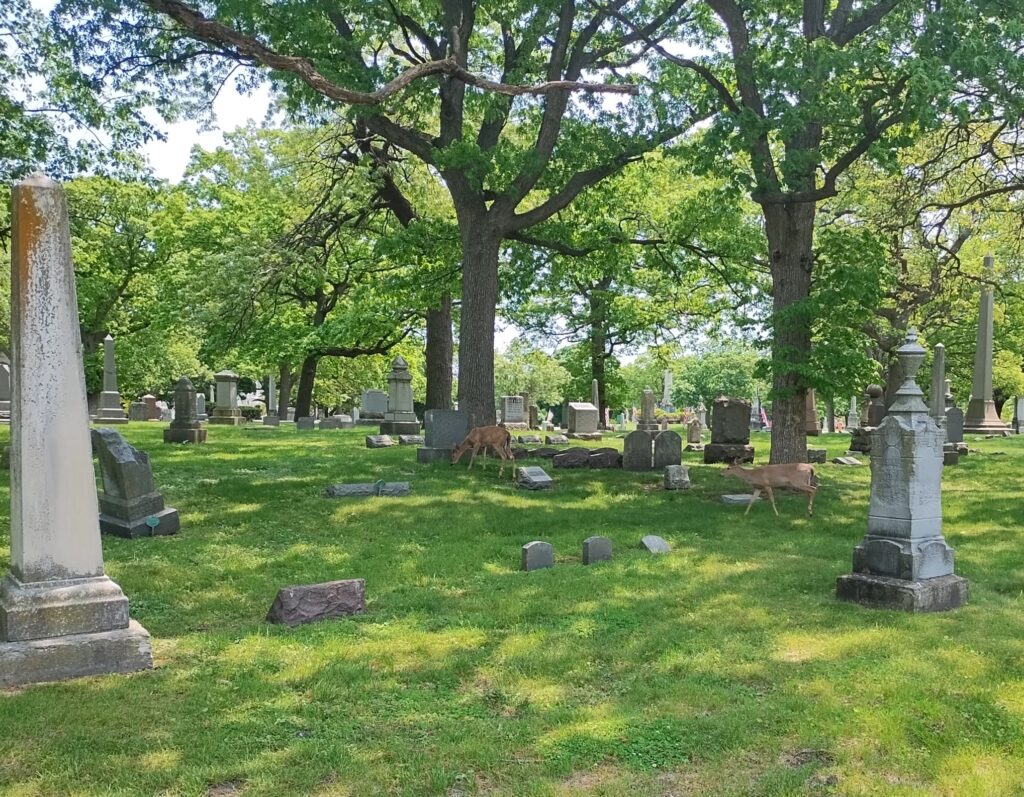
Something I didn’t expect to see Sunday before last at Rosehill Cemetery – which is surrounded by the densely populated North Side of Chicago – were deer. But there they were, peacefully munching on grass, living the unusual life of urban deer on the cemetery’s 350 acres. By acreage, Rosehill happens to be the largest in the city.
I dropped Yuriko off at her cake class in Humboldt Park that morning and headed north to visit the cemetery. It was a fine, warm day. I couldn’t remember the last time I’d been there, but I knew it had been too long, since Rosehill is one of the great metro Chicago cemeteries, in the same league as Graceland, Bohemian National, Mount Carmel, Oak Woods and Forest Home.
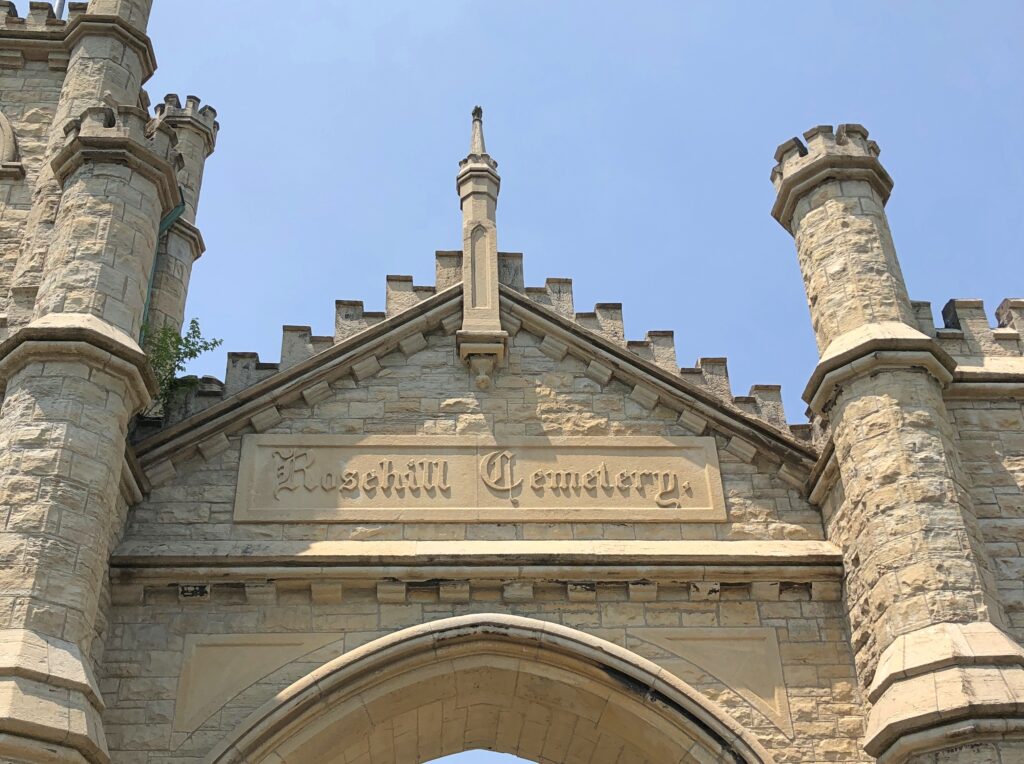
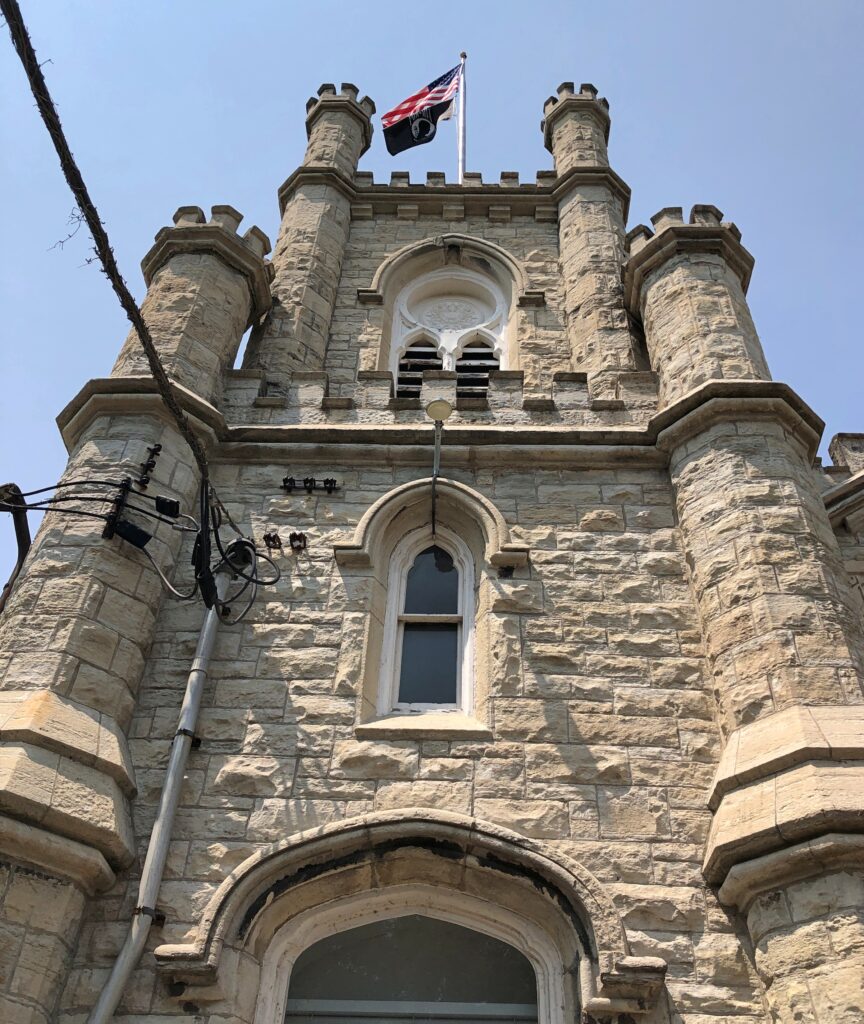
Of all those, Rosehill has the grandest entrance. Once upon a time, trains brought caskets to a station nearby, and hearses would take their funereal loads through the limestone gate, designed by William Boyington (d. 1898), who is better known for the Chicago Water Tower. Just based on those two examples, seems like he was partial to crenellations.
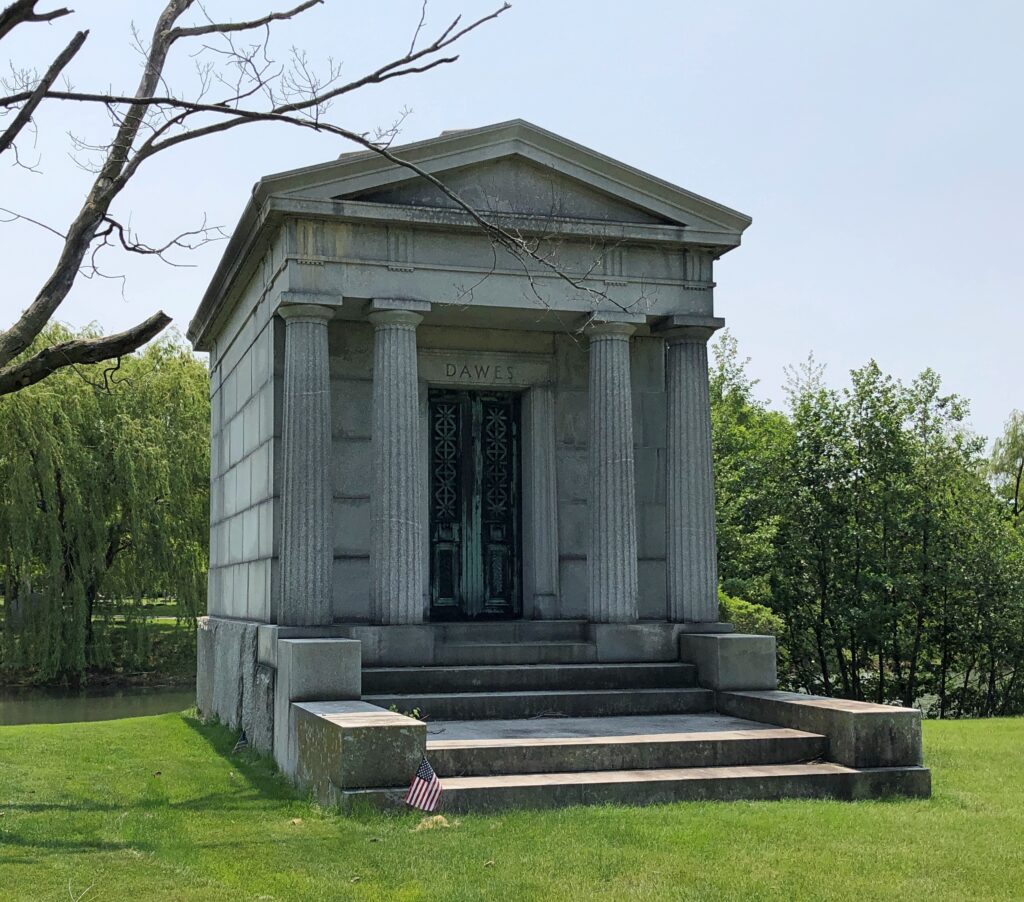
Boyington is also buried in the cemetery, but I didn’t look for him. There was too much else amid the greenery to track down everyone notable. I did make a point of finding the mausoleum of Charles G. Dawes, 30th Vice President of the United States, who served during Coolidge’s full term from 1925 to ’29.
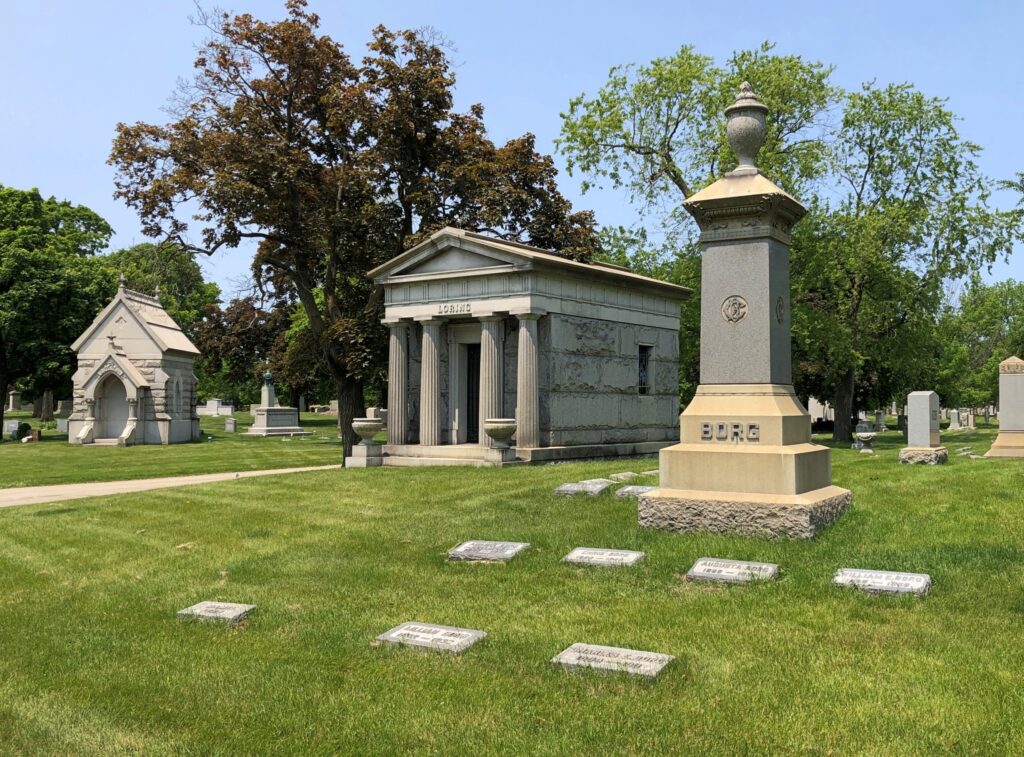
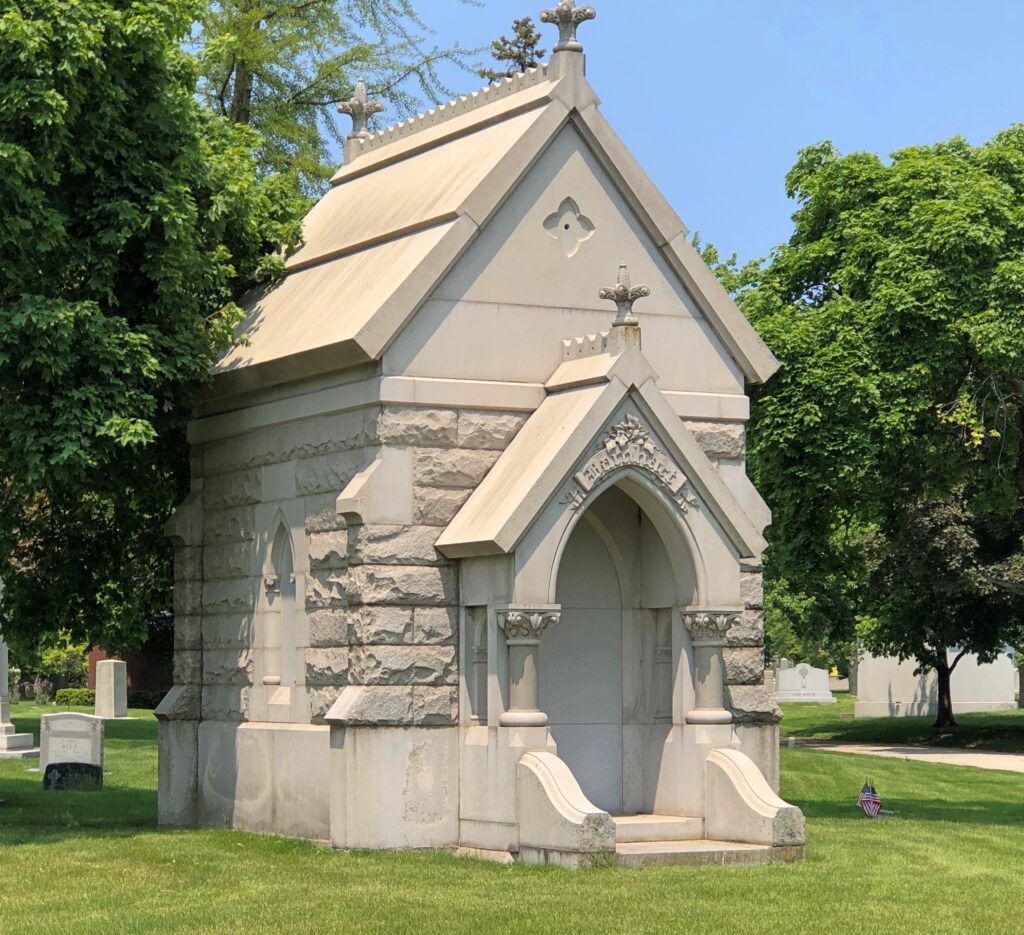
Rosehill doesn’t have a vast number of mausoleums, but there are some others.
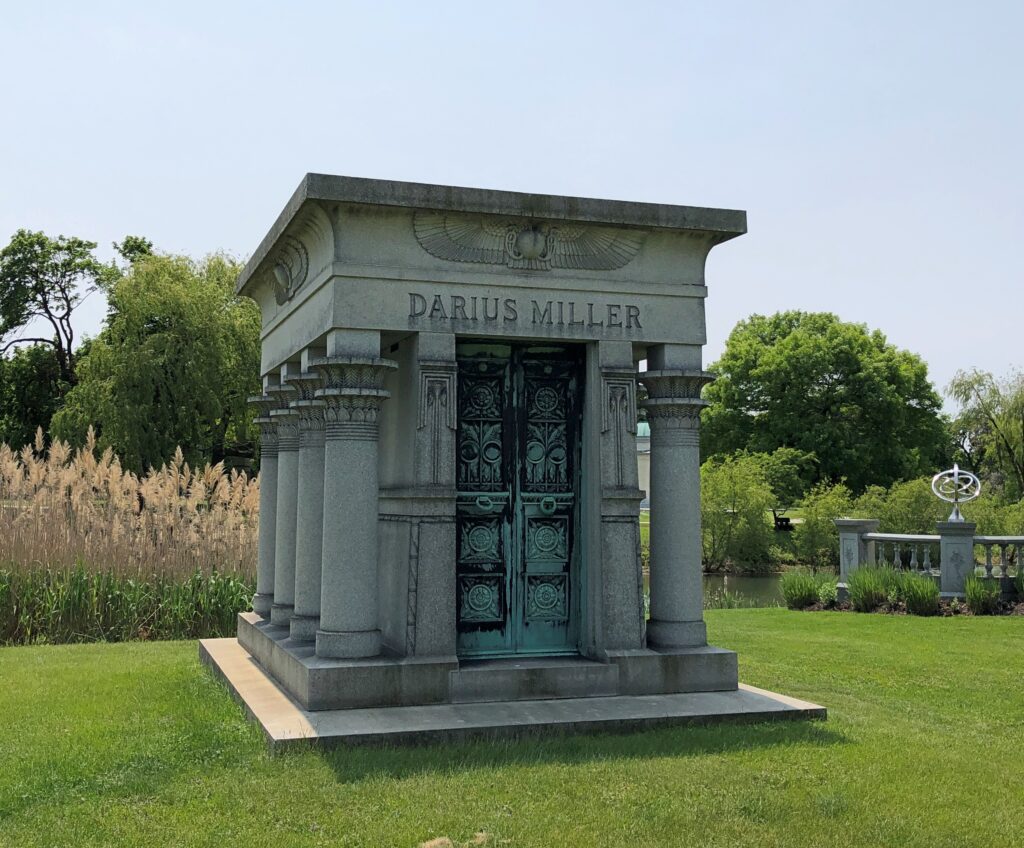
Hey, it’s Darius!
In his Egyptian-style tomb. One for the ages. As a baby name, Darius had a vogue just before and after the turn of the 21st century, when as many as 0.06 percent of babies born in the U.S. received that name. Mostly boys (as you’d think), but a few girls. It would have never occurred to us to append that name to either of our daughters during those years, which happened to be prime child-naming years for us.
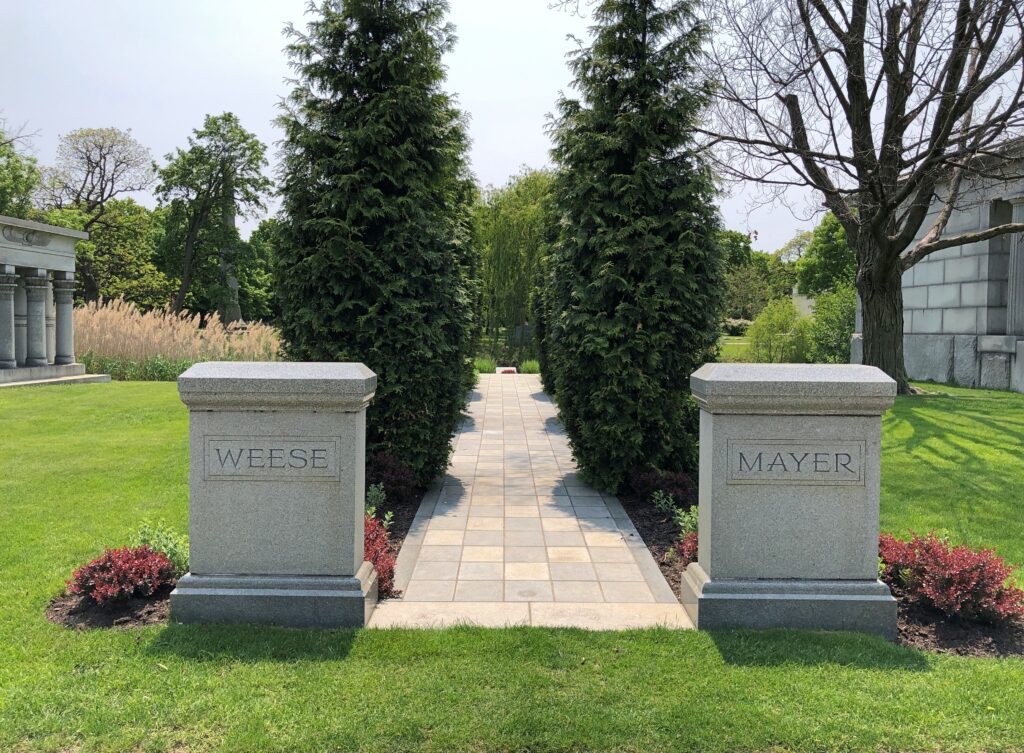
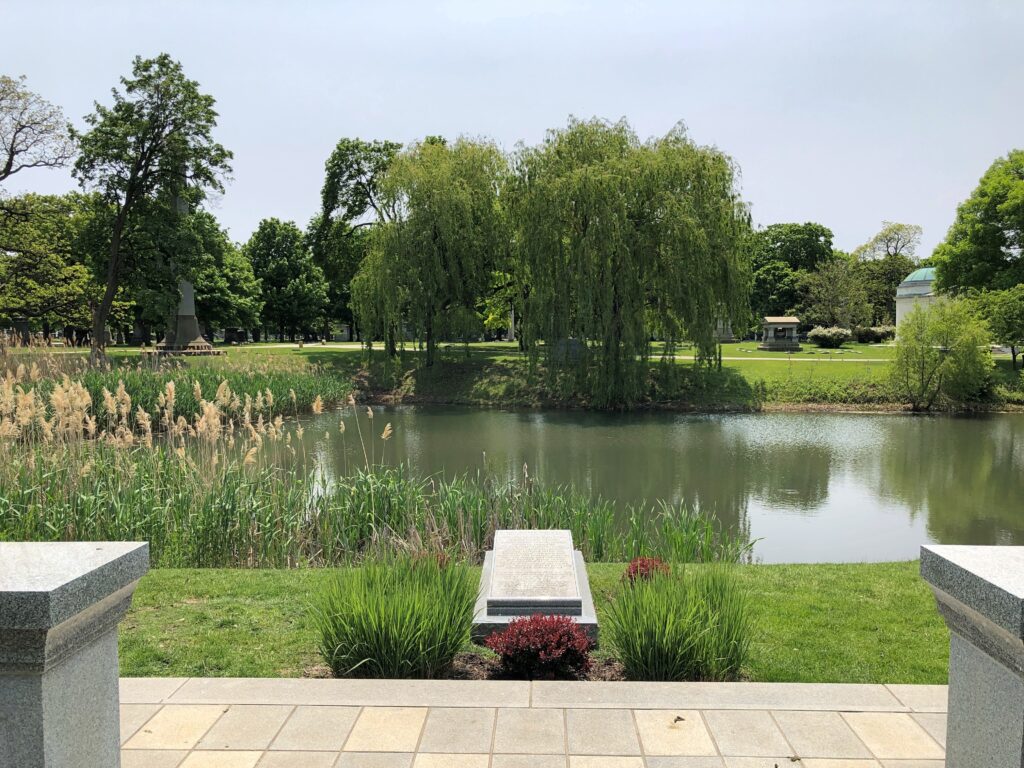
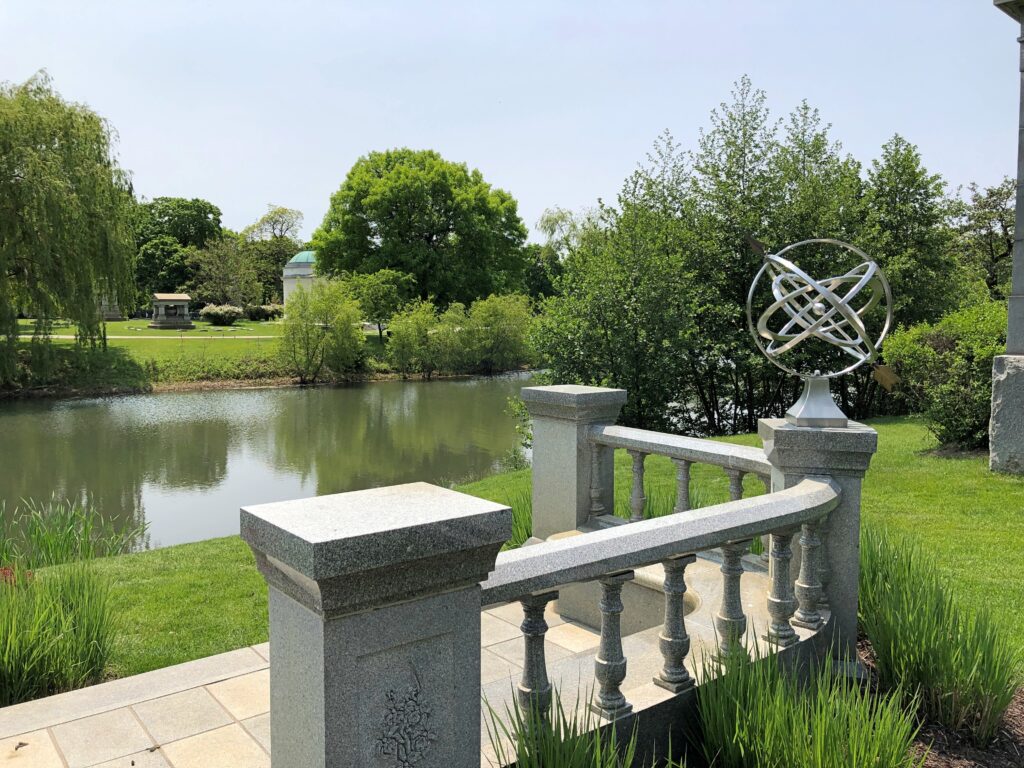
I liked this memorial – a path to the water feature, shared by the Weese and Meyer families.
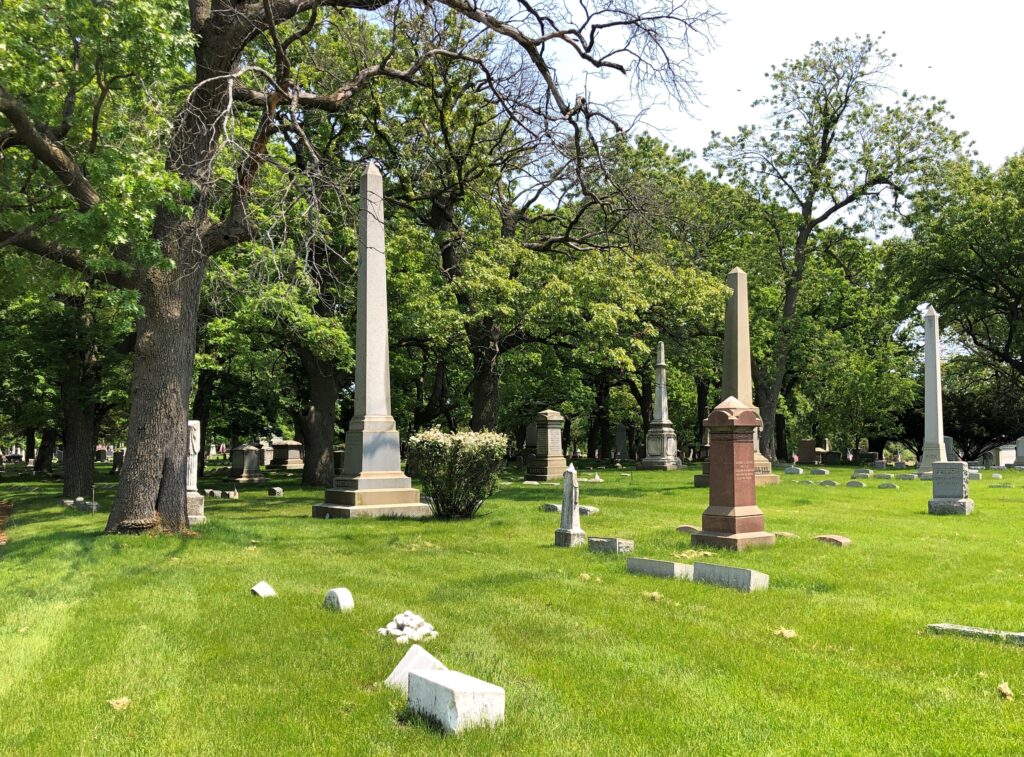
Mausoleums are well and good, but the main reason Rosehill is among the Chicago greats: a rich variety of memorials in a lush setting.
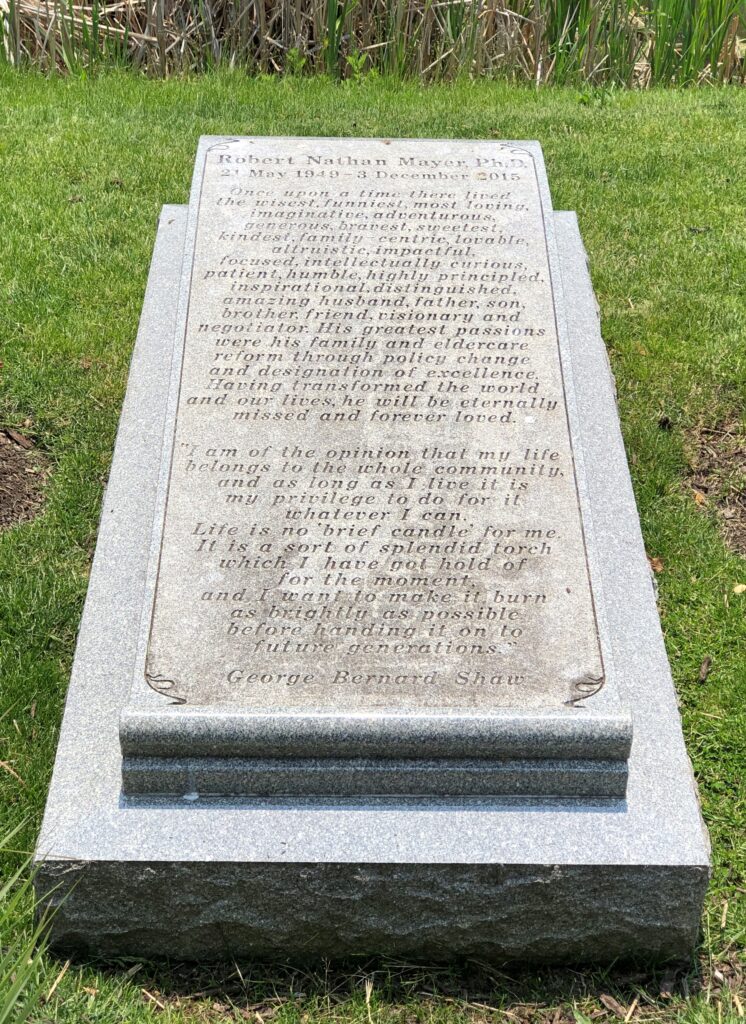
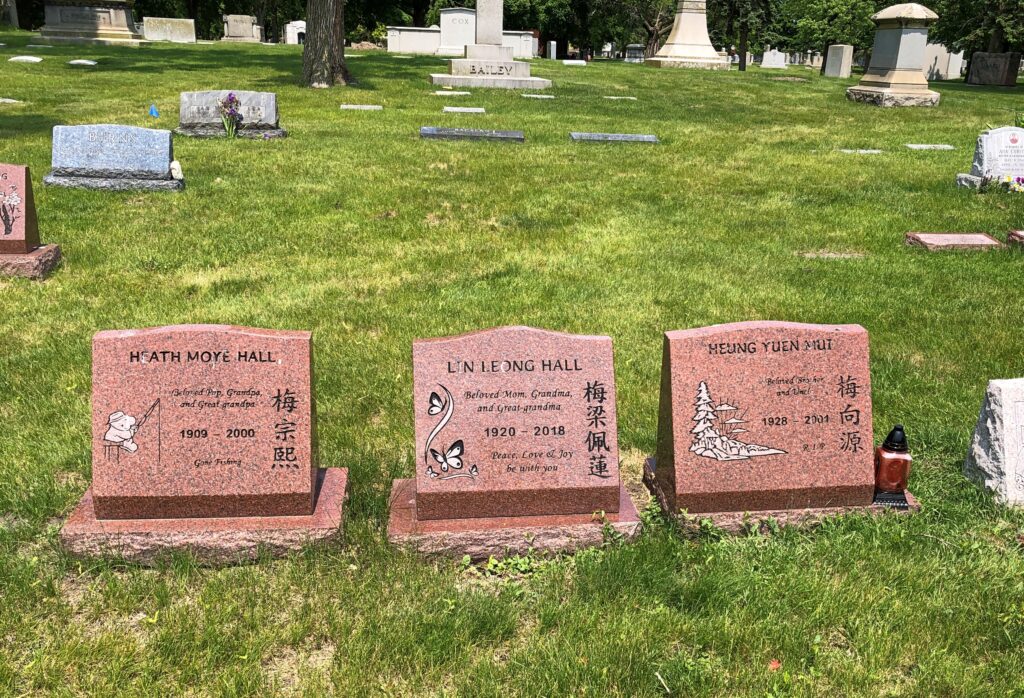
A wordy memorial, though I’m sure with fond intentions on the part of his family. Here is an obit. Sadly odd that for an expert in eldercare, he only lived to be 66. Not terrifically old, in my current opinion.
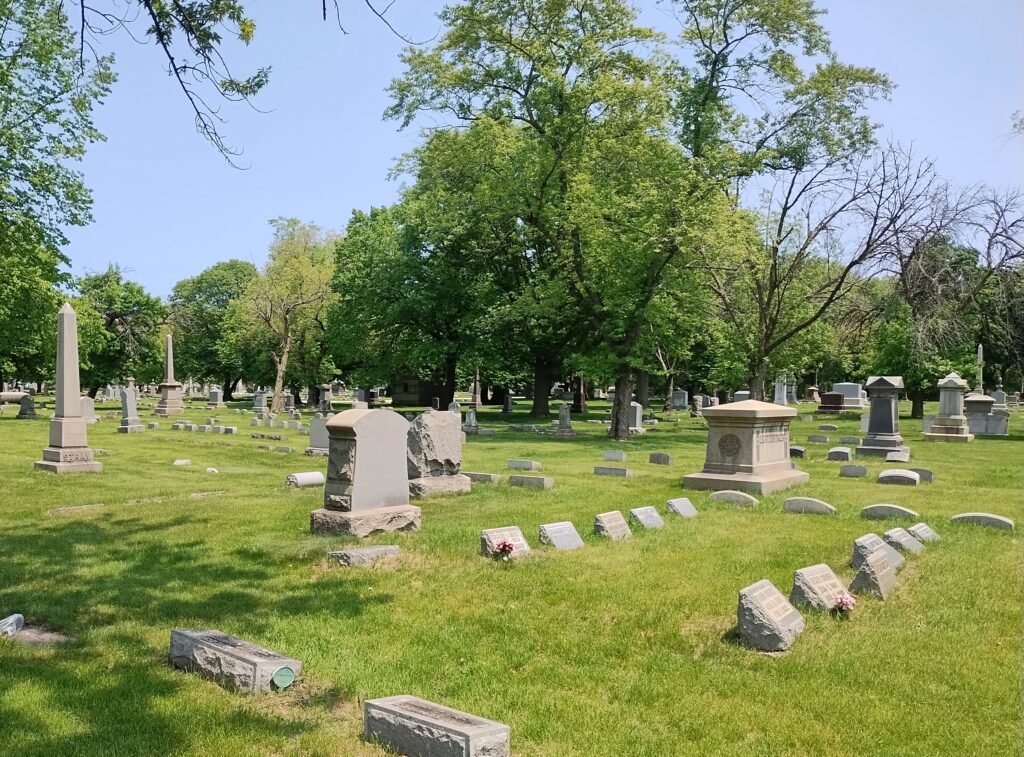
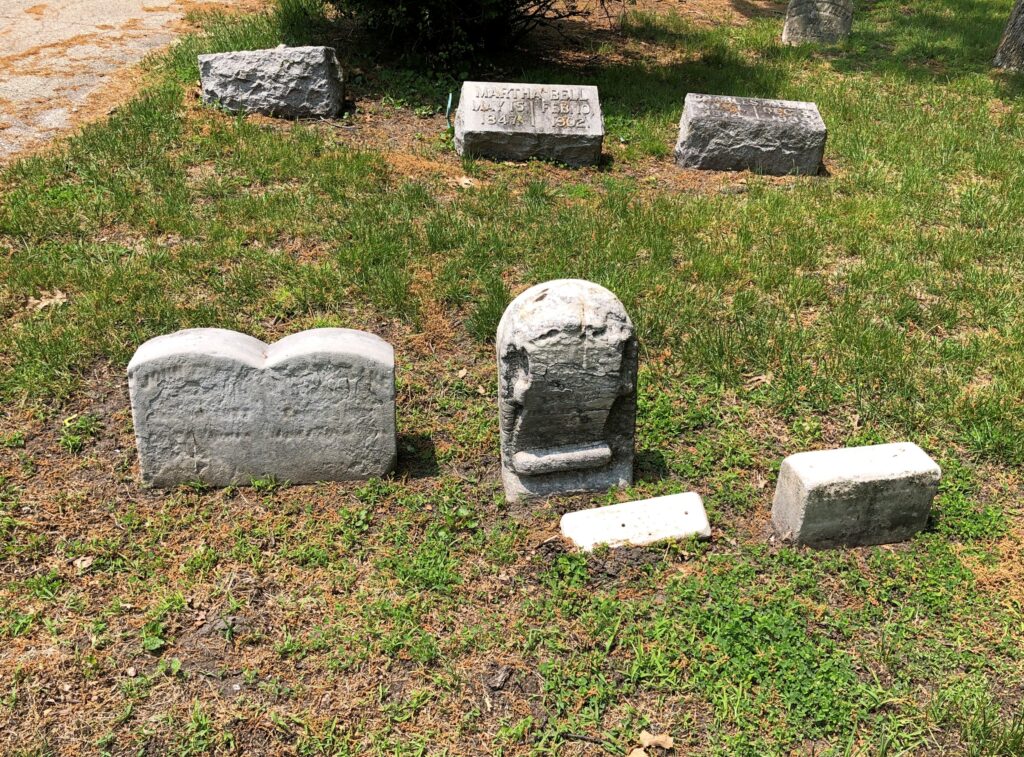
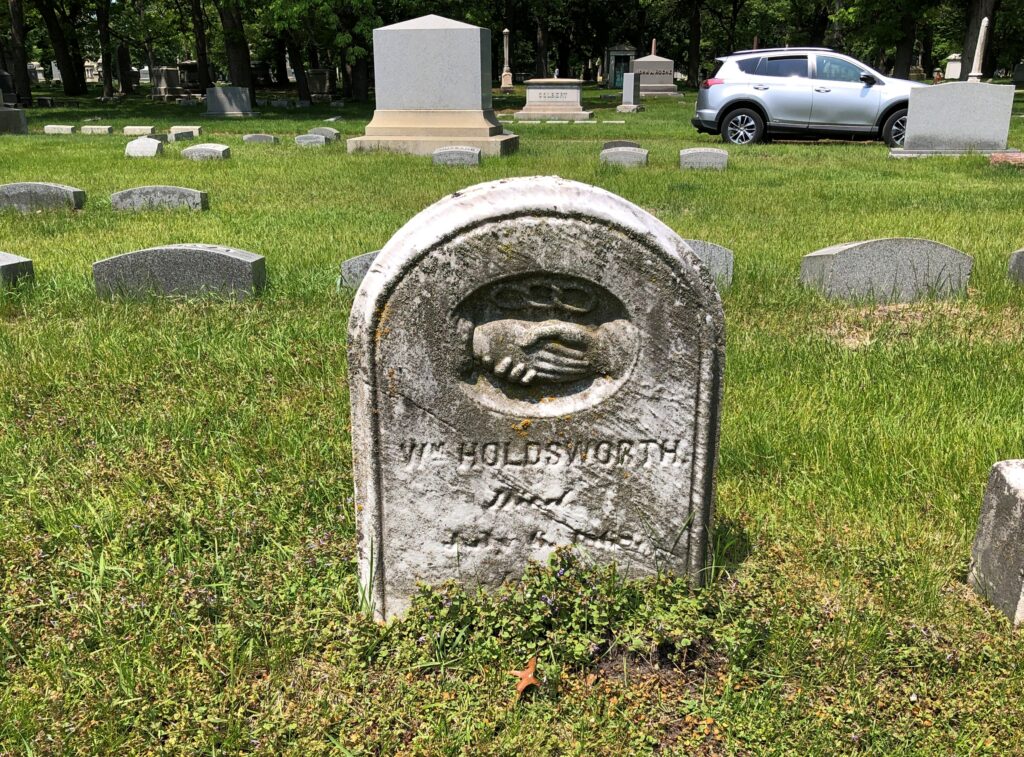
Most permanent residents were not notable in life, something almost everyone could say at any point in history. What remains are stones old and worn or merely simple. The most affecting ones, in some ways.
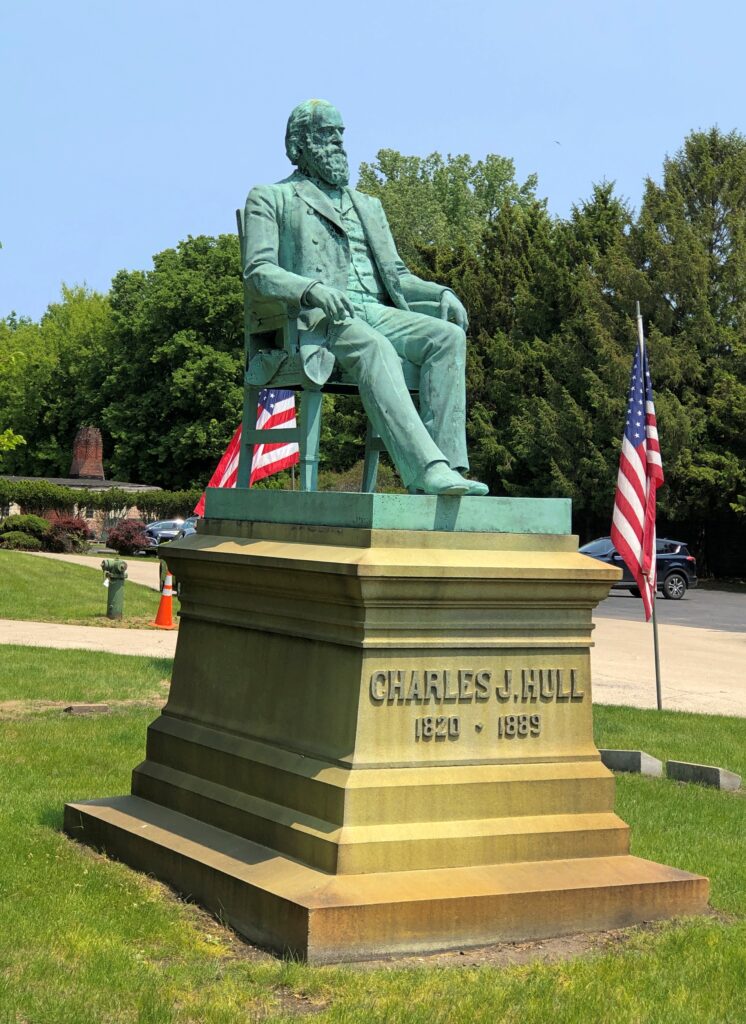
For the affluent who don’t want a mausoleum, there’s always a bronze. Good to give living artists some work, if you or your heirs are going to spend money that way.
Charles J. Hull (d. 1889).
I had to look him up. As this article says, an unusual sort of man. Even for the 19th century, when odd men aplenty could be found in the young Republic. Eventually he made his fortune in Chicago real estate and was a major philanthropist, but I enjoyed more reading about his young life. As a teenager – a term no one would have used at the time – he ran an unlicensed tavern in Ohio for three years. That came to a bad end, and he not only became a teetotaler afterward, he eventually was a temperance activist. Not that I’d want to have lived then, but I feel a sneaking admiration for the lax rules of the time.
In Japan, it was never necessary to have a car. In theory, one could wish such a condition for North America, but I wouldn’t want to give up the option of getting in a vehicle and driving a few hundred miles at a go, or further, to seek out fun roads.
There are probably similarly engaging roads in Japan, but I prefer trains there. We took quite a few during the recent visit. Some were crowded, as subways in rush hour tend to be, but none required the assistance of white-gloved train employees shoving passengers into cars – an image known to gaijin lore as much as the vending machines that sell weird items, but one I never saw at any time, even during rush hours in the ’90s. (And the vast majority of Japanese vending machines sell drinks.)
Scenes on the trains.
Almost everyone was paying attention to their phones, but not quite everyone. Still, the fellow reading a book – maybe manga – was a rarity this time around. Thirty years ago, half the car would have been reading physical books.
The train from Kamakura to the seaside spot of Enoshima runs along the ocean for a while, inspiring some passengers to take pictures of the scene.
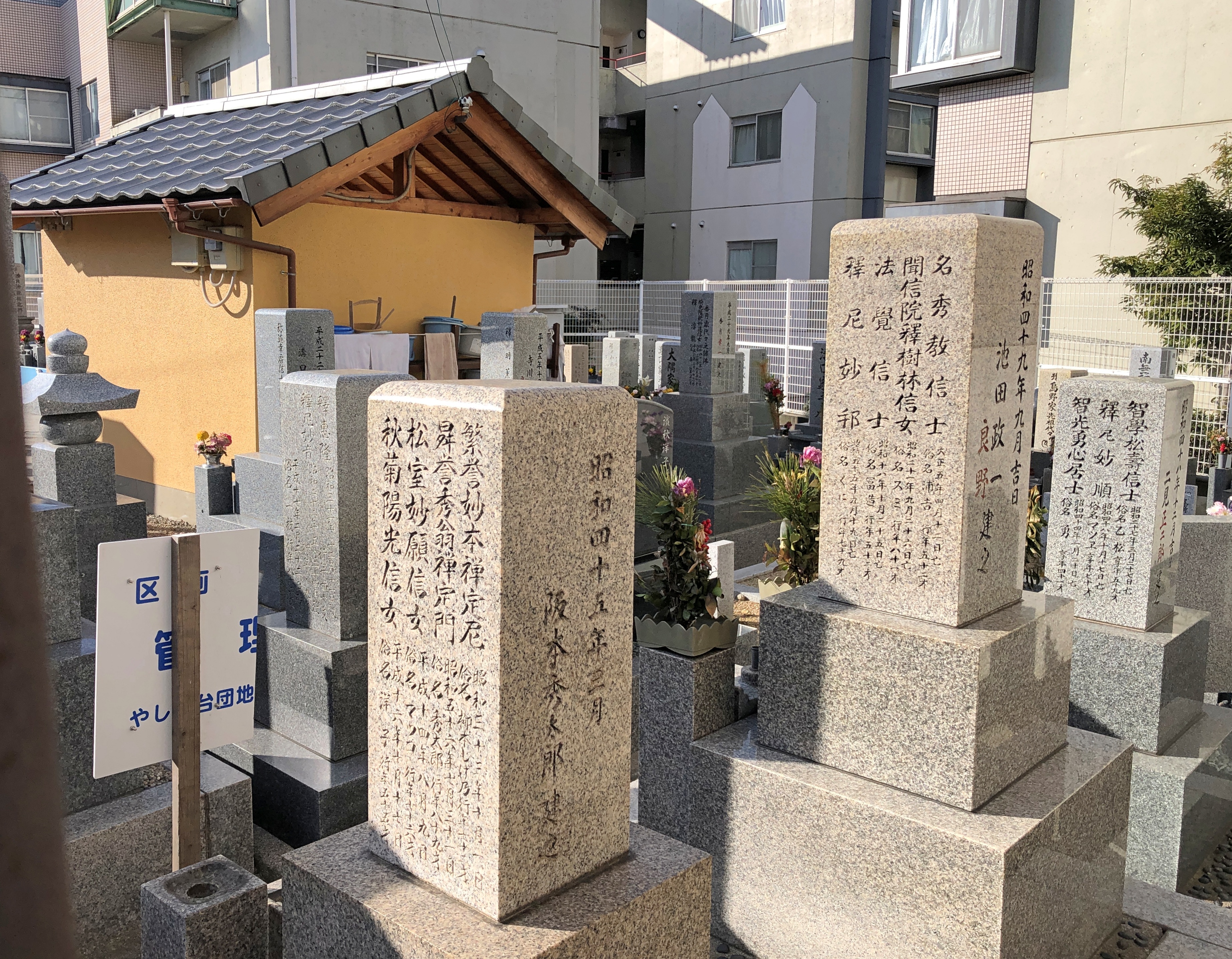
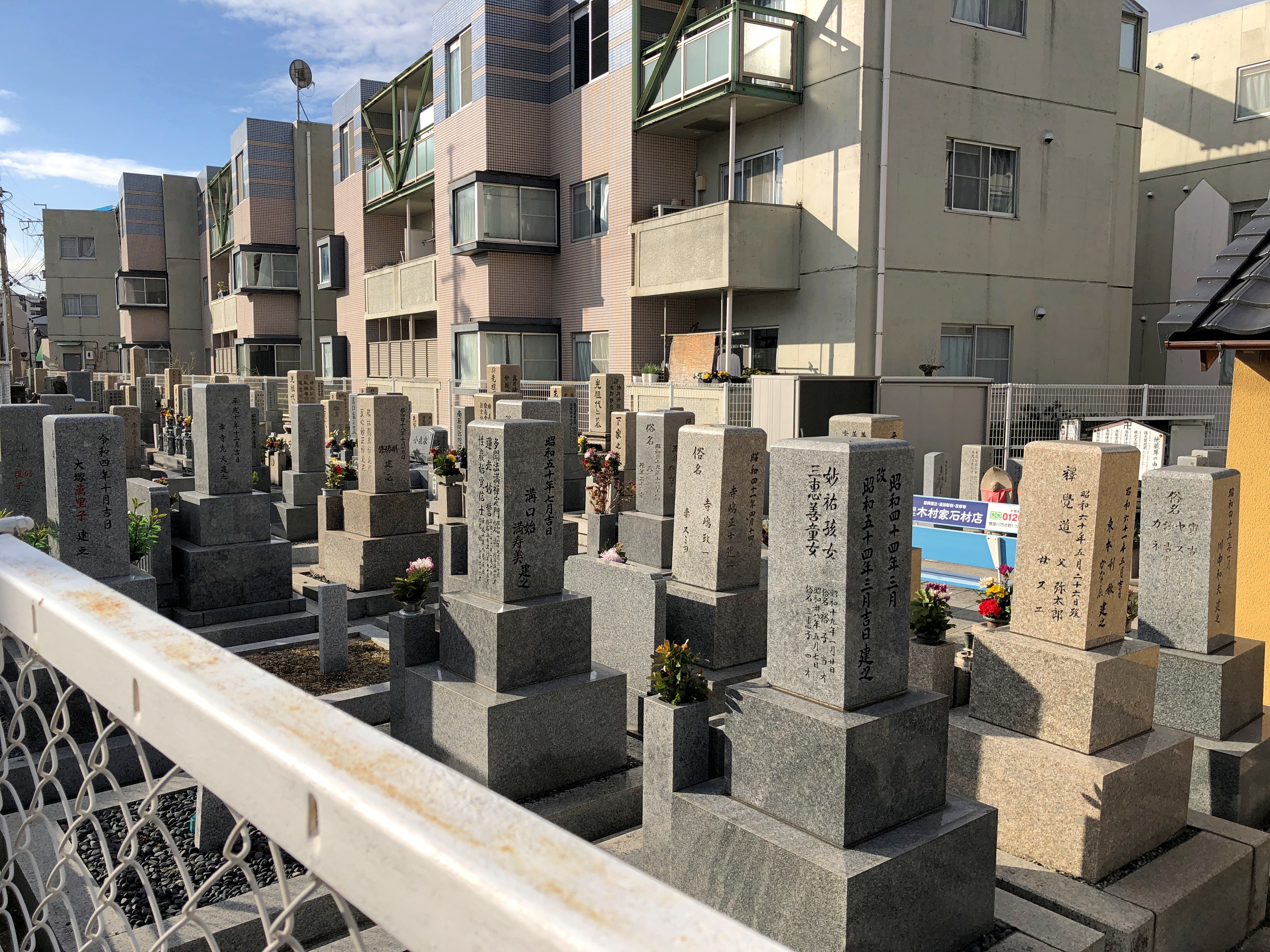
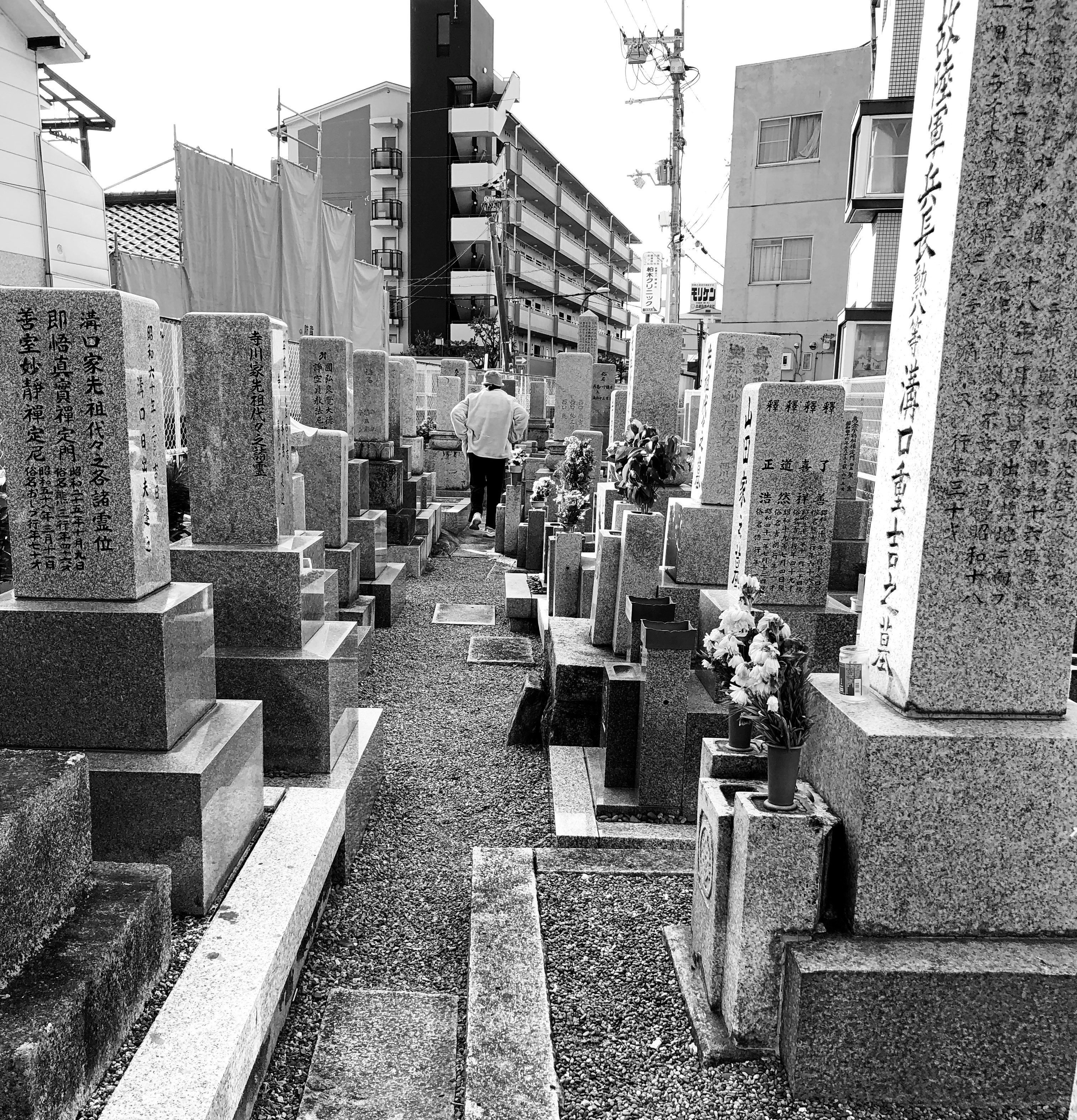
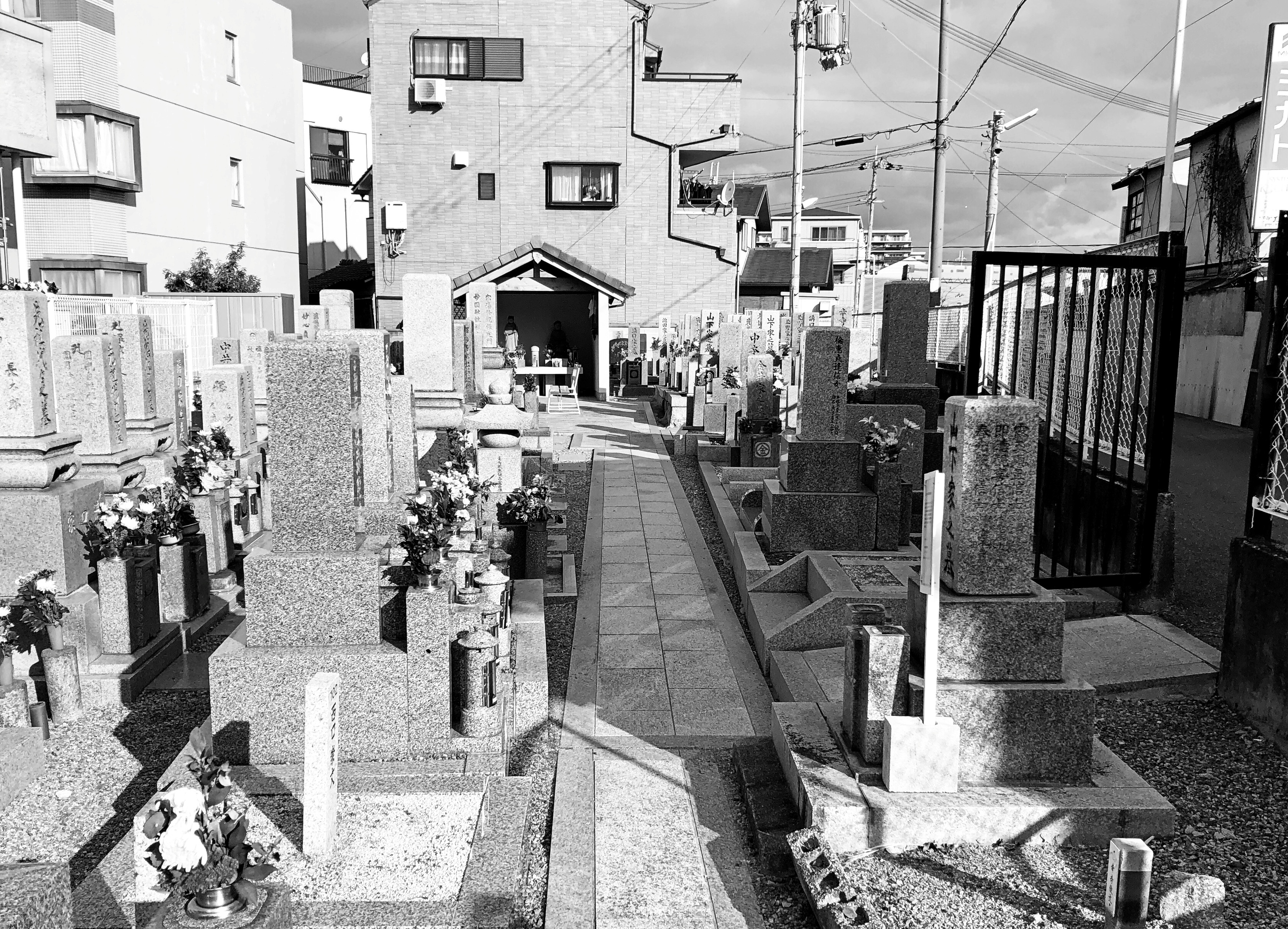
Unfortunately this time there was no time to visit that most beautiful of cemeteries in Japan or anywhere else: Okuno-in at Koya-san, which is about an hour’s train ride from central Osaka. But there was a cemetery near where we stayed, a more ordinary one in the far reaches of suburban Osaka. I don’t know its name.
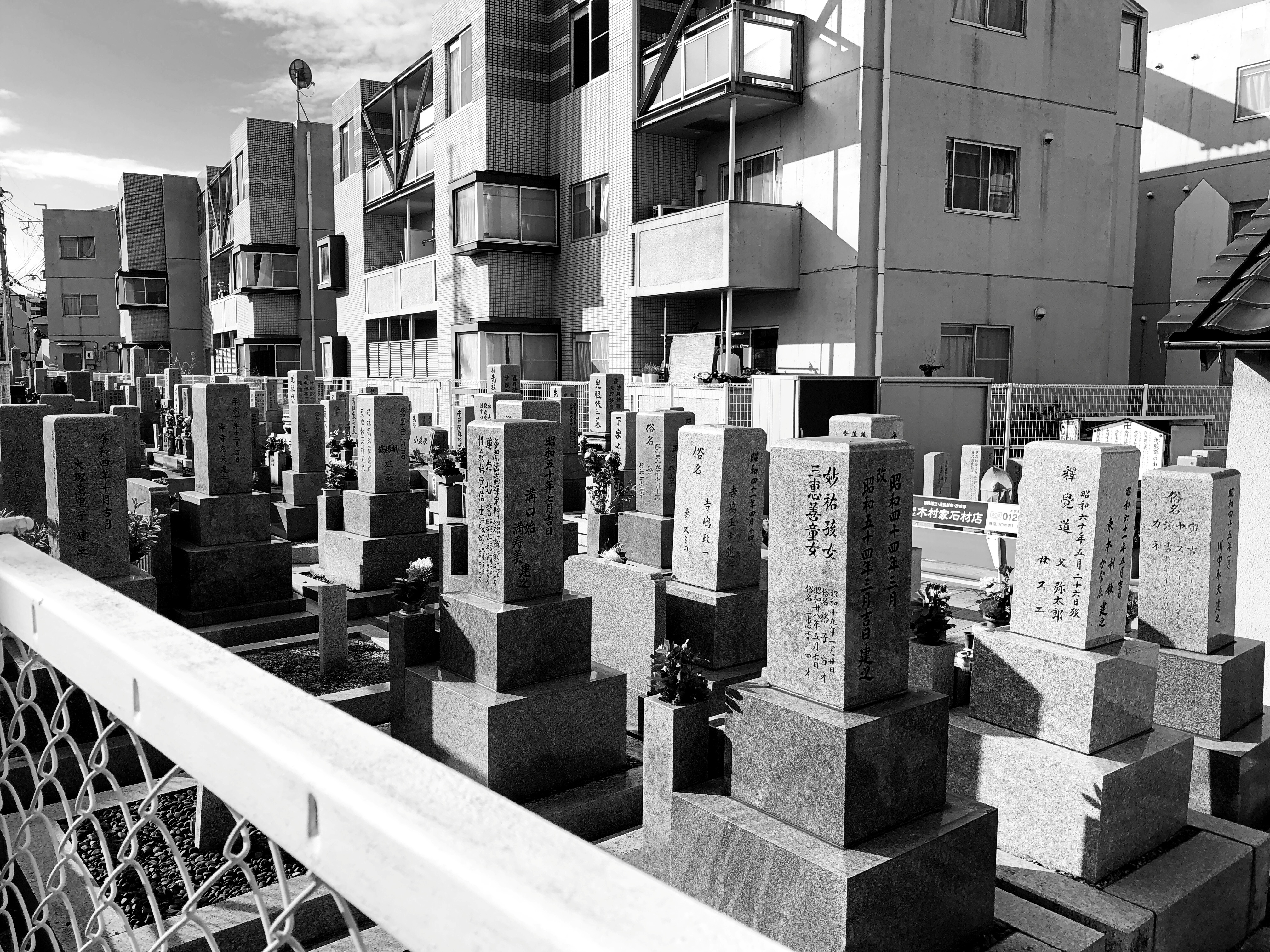
It is essentially just a sliver of land not dedicated to anything else. Around it is a short fence.
Around that is a neighborhood.
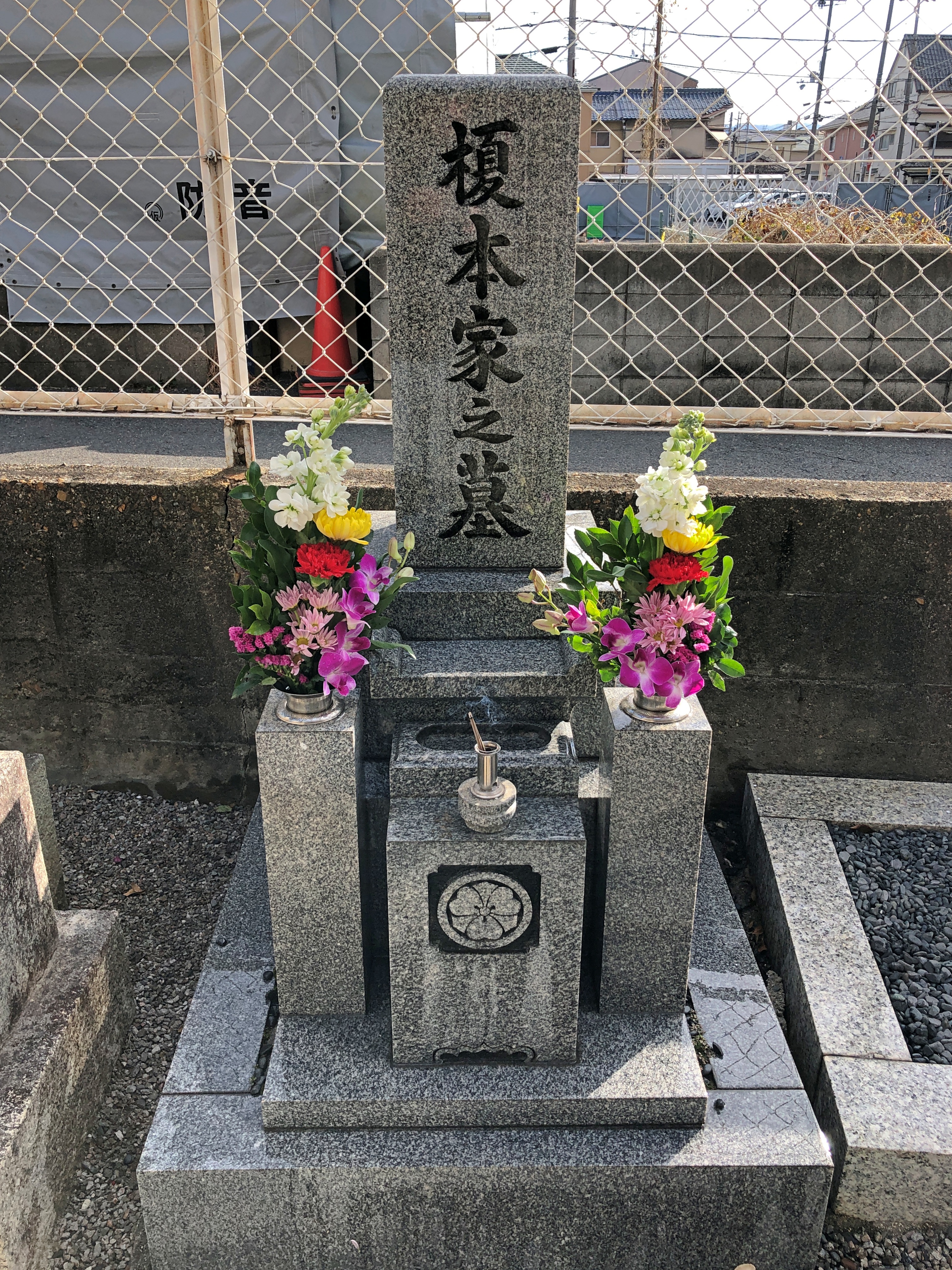
It also happens to be the location of my mother- and father-in-law’s memorial and ashes.