The Ukrainian National Museum, Chicago

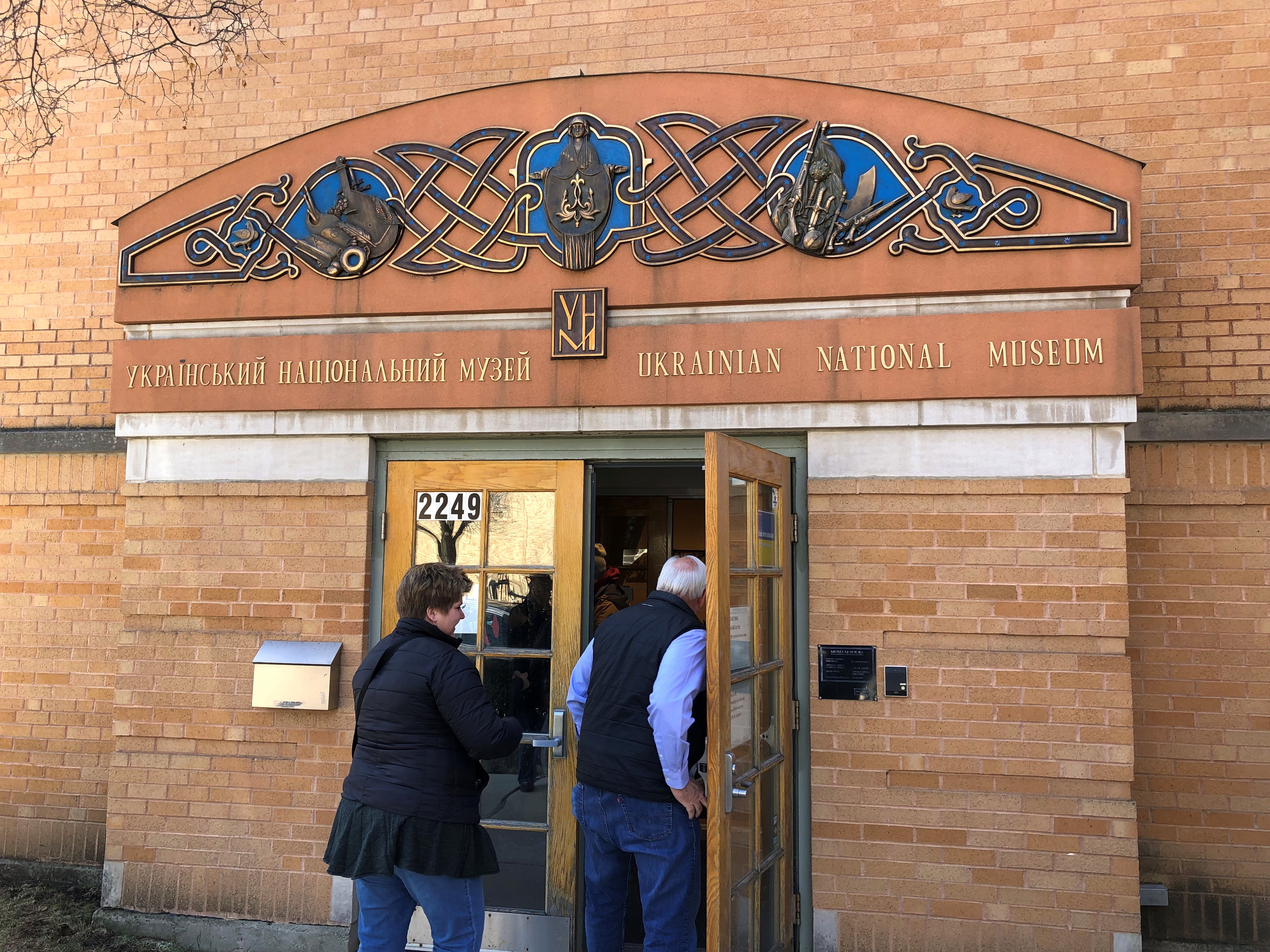
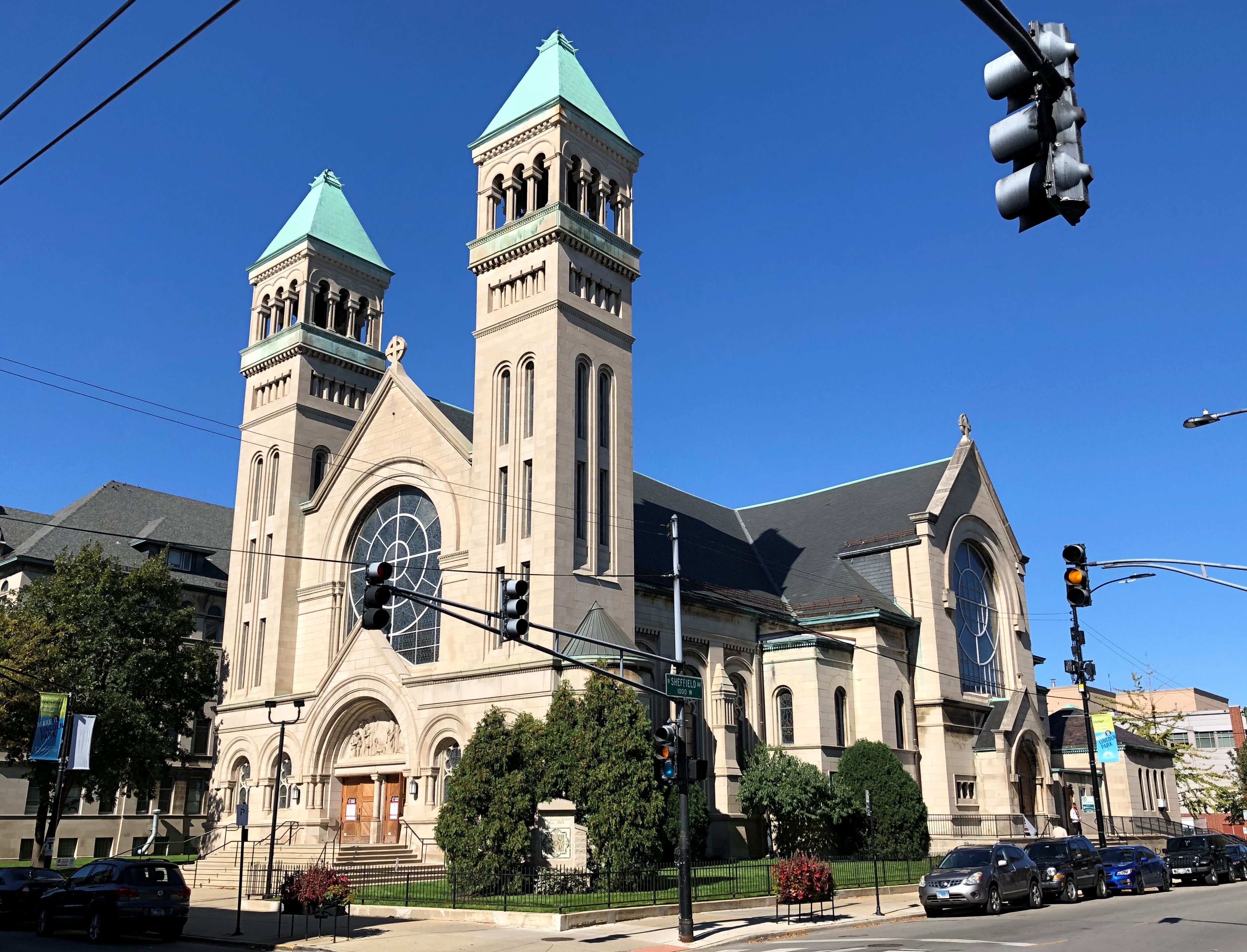
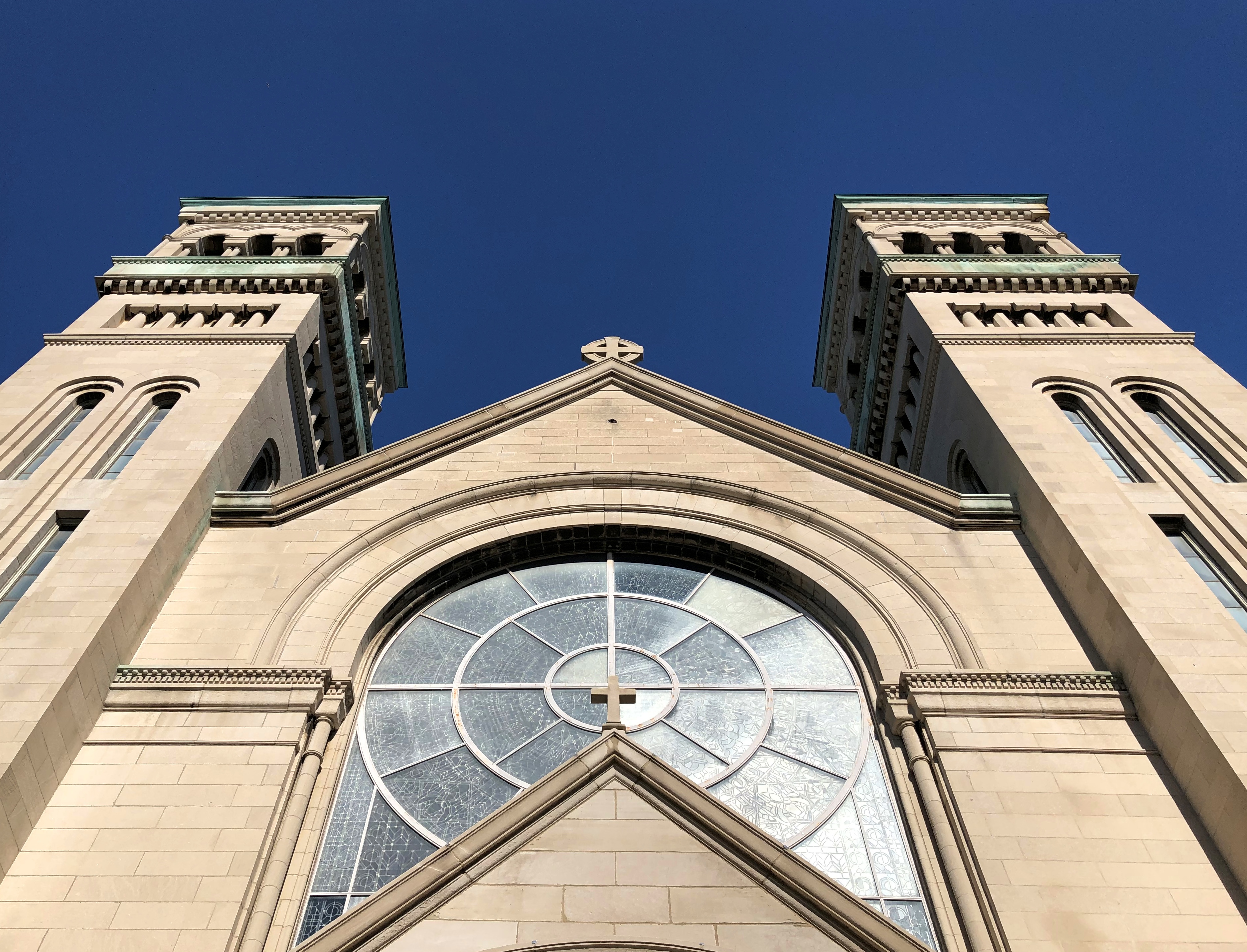
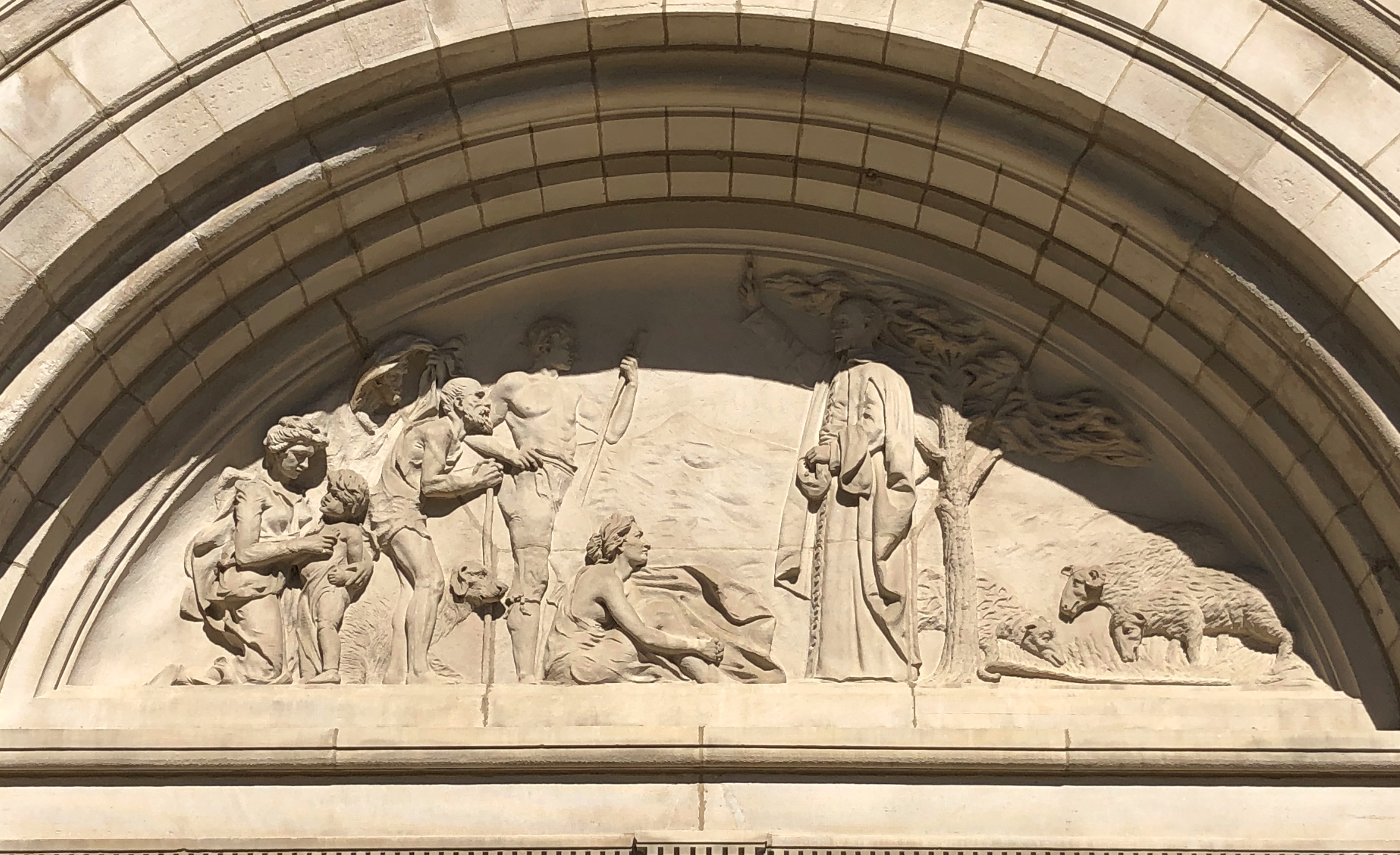
Tucked away in an unassuming brick building, across a small street from Sts. Volodymyr & Olha Ukrainian Catholic Church in Chicago, is the Ukrainian National Museum.Ukrainian National Museum, Chicago Ukrainian National Museum, Chicago
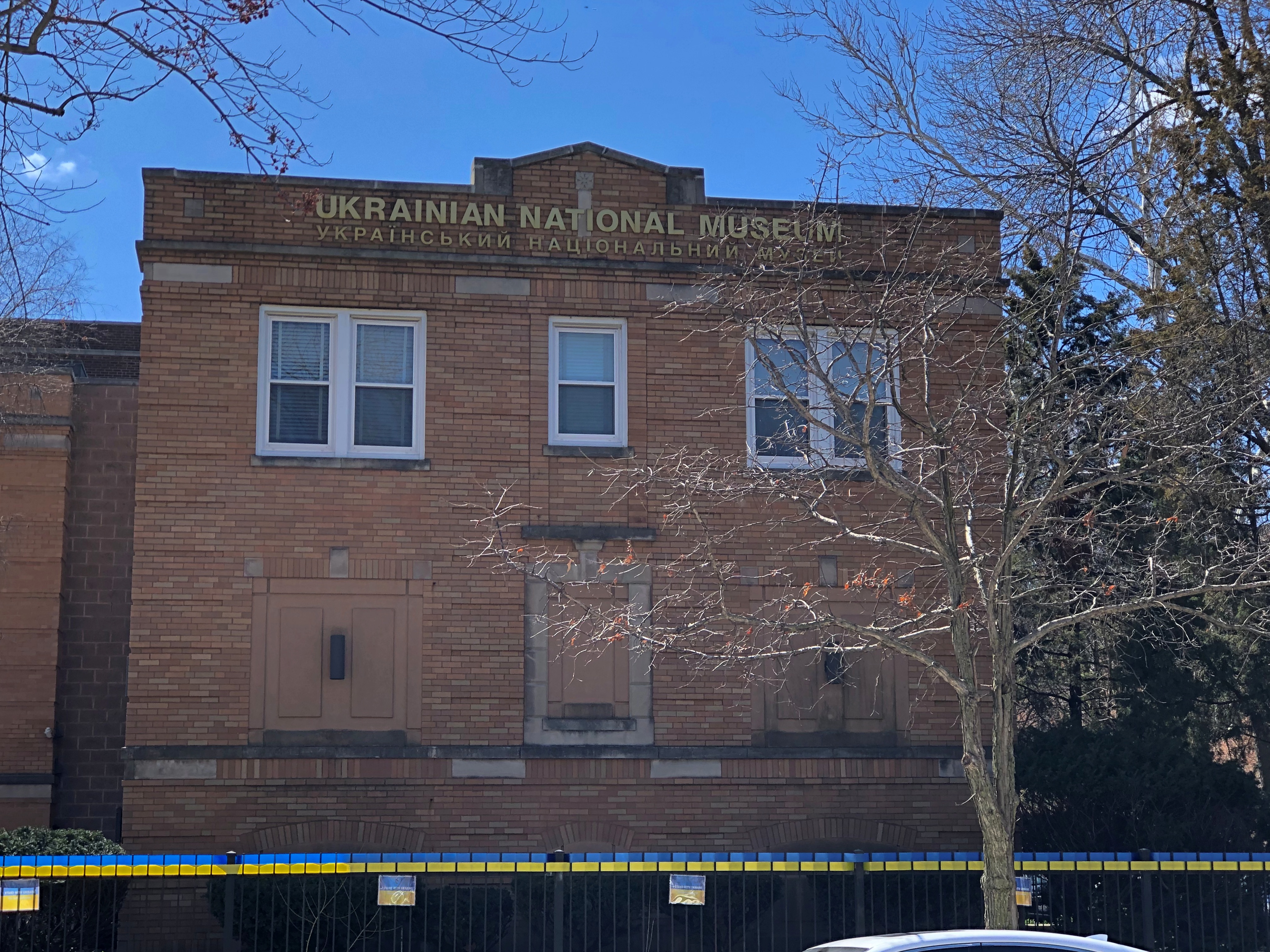
High time for a visit, I thought on Sunday. It isn’t a large museum, but it’s home to a fair number of artifacts and a good amount of text and photos illustrating the history and culture of Ukraine. More than 10,000 items, according to the museum.

One of the museum’s rooms is devoted to Ukrainian Cossacks. Or, to use the Ukrainian transliteration, Kosaks. I have to admit I scarcely knew much about the difference among the various Cossacks, and even now I only know a little more, byzantine as the centuries-long subject is.

Here’s a small snippet from the — shall we say, complicated nature of Cossack history — lifted directly from the Internet Encyclopedia of Ukraine. It’s only a very small part of the whole picture.

With the permission of the Polish government Cossack regiments were formed in Korsun (Korsun regiment), Bratslav (Bratslav regiment), Fastiv (Fastiv regiment), and Bohuslav (Bohuslav regiment) under the command of Cossack colonels, headed by an acting hetman, Col Samiilo Samus from Bohuslav. But the actual head of the Right-Bank Cossacks was Semen Palii, colonel of Fastiv and Bila Tserkva; he led the Right-Bank Cossacks in their fight against Polish rule and oppression by the nobility and for the unification of Right-Bank Ukraine and Left-Bank Ukraine under the rule of Hetman Ivan Mazepa (the uprising of 1702). This unification was realized in 1704.

Portraits of Ukrainian Cossack hetmans hang on the museum’s walls, with detailed text about their deeds. In nearby cases are weapons, clothes, coins and other cool Cossack stuff. As interesting or admirable as the museum’s other items were, these were my favorites.

Another major room contains somewhat newer artifacts, including displays of ornate Ukrainian clothing and very many Easter eggs (pysanky) done up in that famed, colorful and intricate Ukrainian style. (Singular, pysanka.)

Again from the encyclopedia: “The pysanka (literally, ‘written egg’) is produced by a complex technique. An initial design on the egg is done in beeswax, which is applied to the surface with a special instrument called a kystka (a small, metal, conic tube attached to a wooden handle).

“The egg is then dipped in yellow dye. Then those elements of the design that are to be yellow are covered with wax and the egg is dipped in a red dye (sometimes two shades of red are used). After the surfaces that are to be red are covered with wax, the egg is dipped in an intense, dark dye (violet or black).

“So that the color will adhere well, the egg is sometimes washed with vinegar or alum before being dyed. When the design is completed, the egg is heated to melt off the wax.”

Other rooms featured more recent history. That of course means the awful history of Ukraine in the 20th century, most especially the Holodomor, which merits its own room, full of harrowing photos, testimony and statistics, and not forgetting where to lay the blame: Stalin and his henchmen.

I wasn’t alone in the room. A man and a woman, maybe a few years older than I am, expressed their surprise to a docent, who was also in the room, that such a thing had happened. They’d never heard of it. If I didn’t have some interest in the history of the Soviet Union — one of those places where the history was entirely too interesting for the well-being of its inhabitants — I might not have either, so I won’t judge them too harshly (though it’s easier to be a bit peeved at the apathy toward history education in this country).

But there’s always more to know. I didn’t know much about the subject of another room: Ukrainian immigration to other places after WWII. Most striking in that room was an enormous map, nearly from floor to ceiling, locating all of the Ukrainian Displaced Persons camps in the western zones of occupied Germany in the late ’40s.

There were more than 100 of them. Something worth knowing now that millions of Ukrainians have been displaced again.

“The Allies intended to repatriate all these victims of Nazi Germany and therefore organized them by nationality,” Jan-Hinnerk Antons wrote in Harvard Ukrainian Studies. “However, two misconceptions in their approach to the problem soon proved troublesome.

“First, the number of people refusing repatriation was much higher than anyone had expected. Second, nationality was by no means congruent with citizenship — and it was the latter that was assumed as the basis for repatriation.

“The very existence of more than one hundred Ukrainian Displaced Persons camps in the western zones of occupied Germany was testament to the Ukrainian DPs’ resistance to forced repatriation and their struggle for recognition of their nationality.”

Many of them eventually came to the United States. Including the family of the docent, a resident of Ukrainian Village who had been born in a DP camp. She told us her immediate family had survived the war, but many other relatives had not. Growing up, she said she heard about members of an extended family she never knew.

Finally, a much smaller room in the Ukrainian National Museum tells a less troubling tale: the story of the Ukrainian pavilion at the 1933 Century of Progress world’s fair in Chicago, the lesser-known cousin of the 1893 world’s fair. Remarkably, the structure was a project of Ukrainian immigrants in Chicago, and not sponsored by any government. Least of all the Soviet Union, which was busy murdering Ukrainians wholesale at that very moment in history.
St. Helen Roman Catholic Church & St. Volodymyr Ukrainian Orthodox Cathedral

During my walk around Chicago’s Ukrainian Village on Sunday, I also visited four churches, two of which I’d been to before: Sts. Volodymyr & Olha Ukrainian Catholic Church and St. Nicholas Ukrainian Catholic Cathedral. Both have “stunning” and “striking” interiors, to quote myself from 2014, and were certainly worth another look.

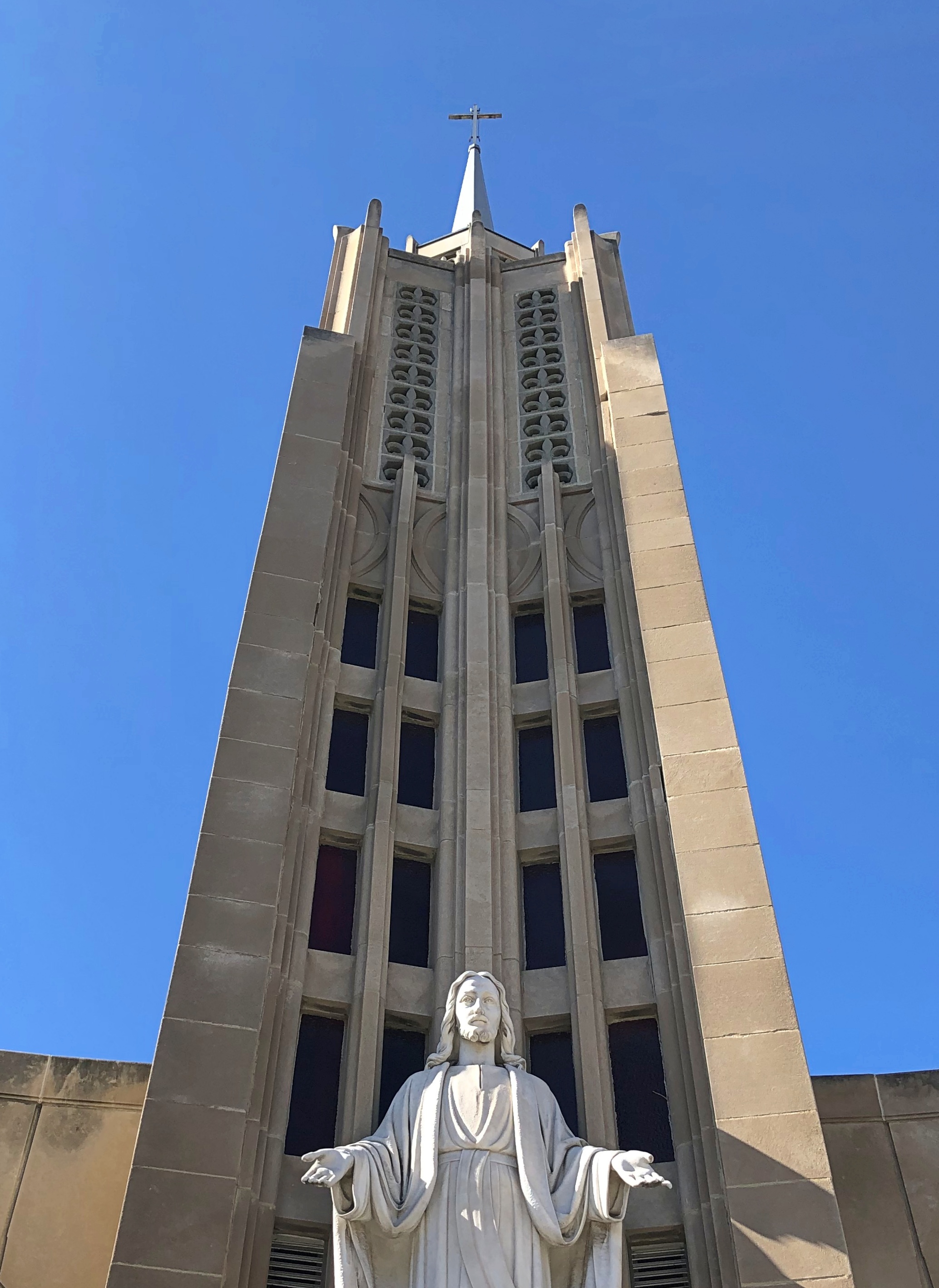
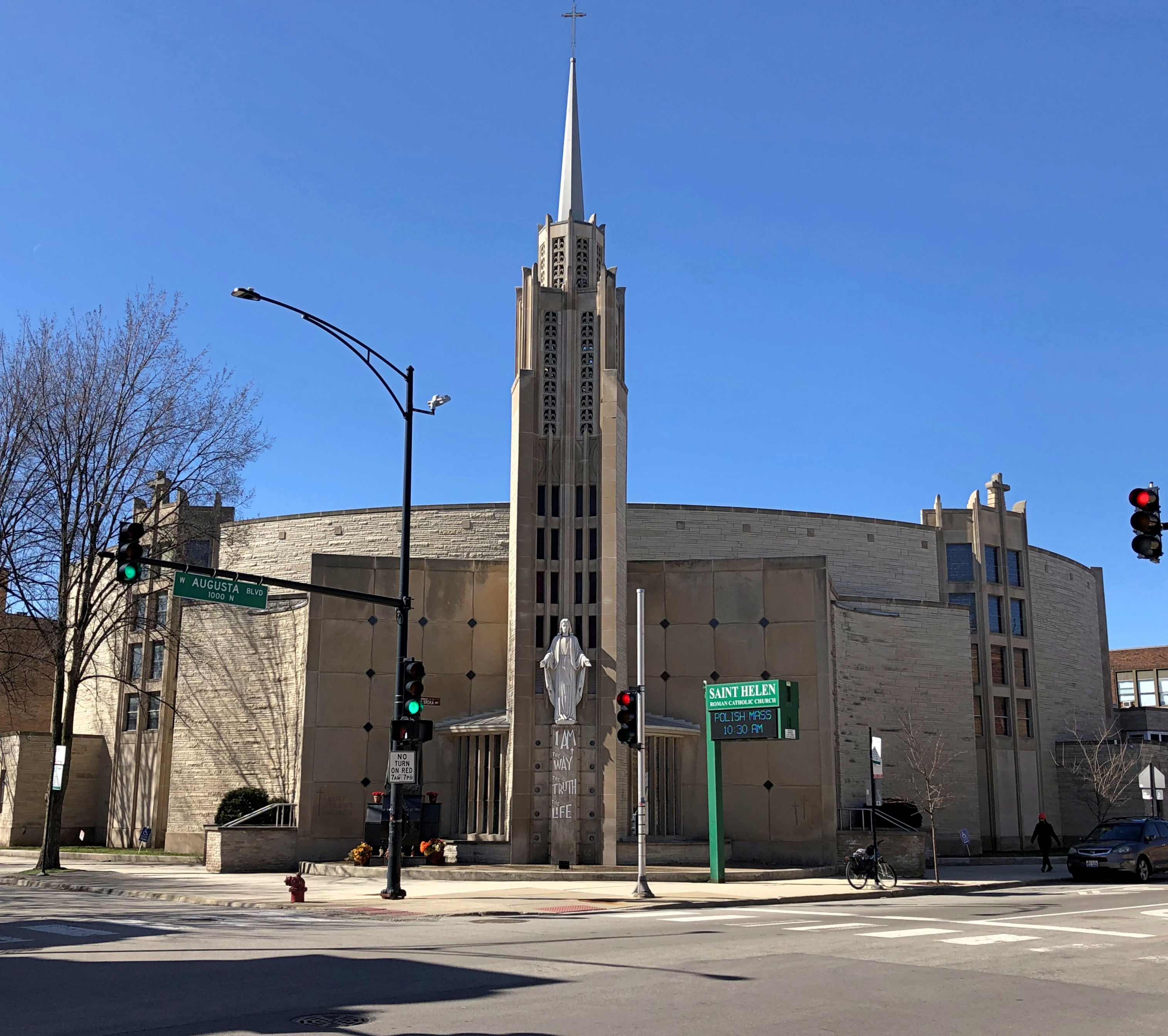
A few blocks north of those two is St. Helen Roman Catholic Church, which has masses in Polish, Spanish and English.St. Helen Roman Catholic Church

“This Polish parish was formed in 1913, and in the early 1960s commissioned the present structure, which blends Art Deco, Modernism and tradition — with a Biblical fish motif,” Open House Chicago says, noting that the architects were Pirola & Erbach, who seem to have done a number of mid-century churches in Chicago.

When I arrived, a Polish mass was in progress. I made myself as unobtrusive as possible at the just inside the door, and admired the handsome interior.

“The spacious interior and ceiling are decorated to draw all eyes to the altar, which is illuminated by light coming through slits in the walls,” says Open House. “The stained glass contains mostly geometric patterns in small fragments of bright, unfiltered colors.”

Outside on a high pedestal, Jesus greets passersby on Augusta Boulevard.St. Helen Roman Catholic Church St. Helen Roman Catholic Church

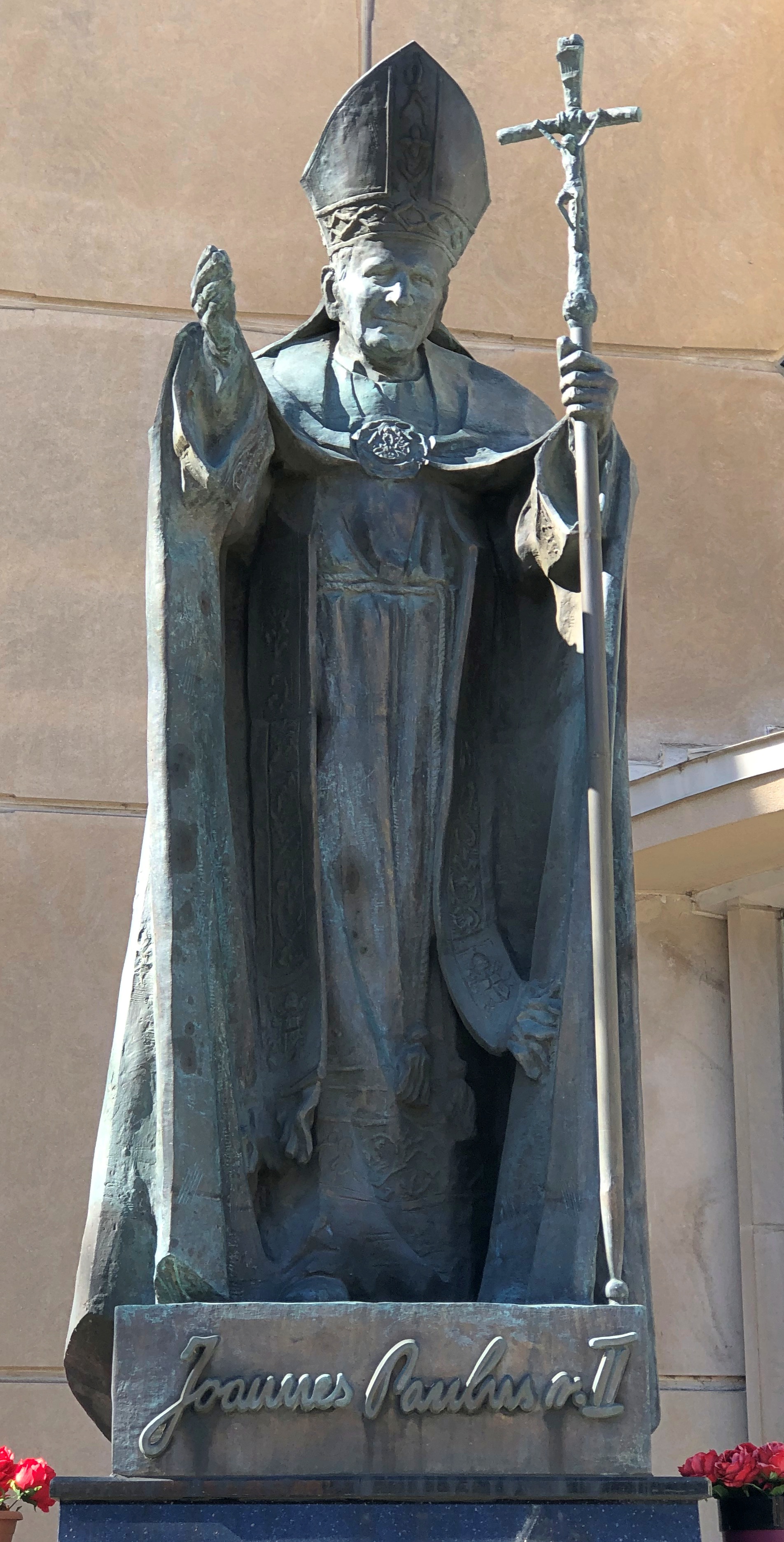
Somewhat lower, but also on a pedestal outside the church, stands a bronze Pope St. John Paul II.St. Helen Roman Catholic Church

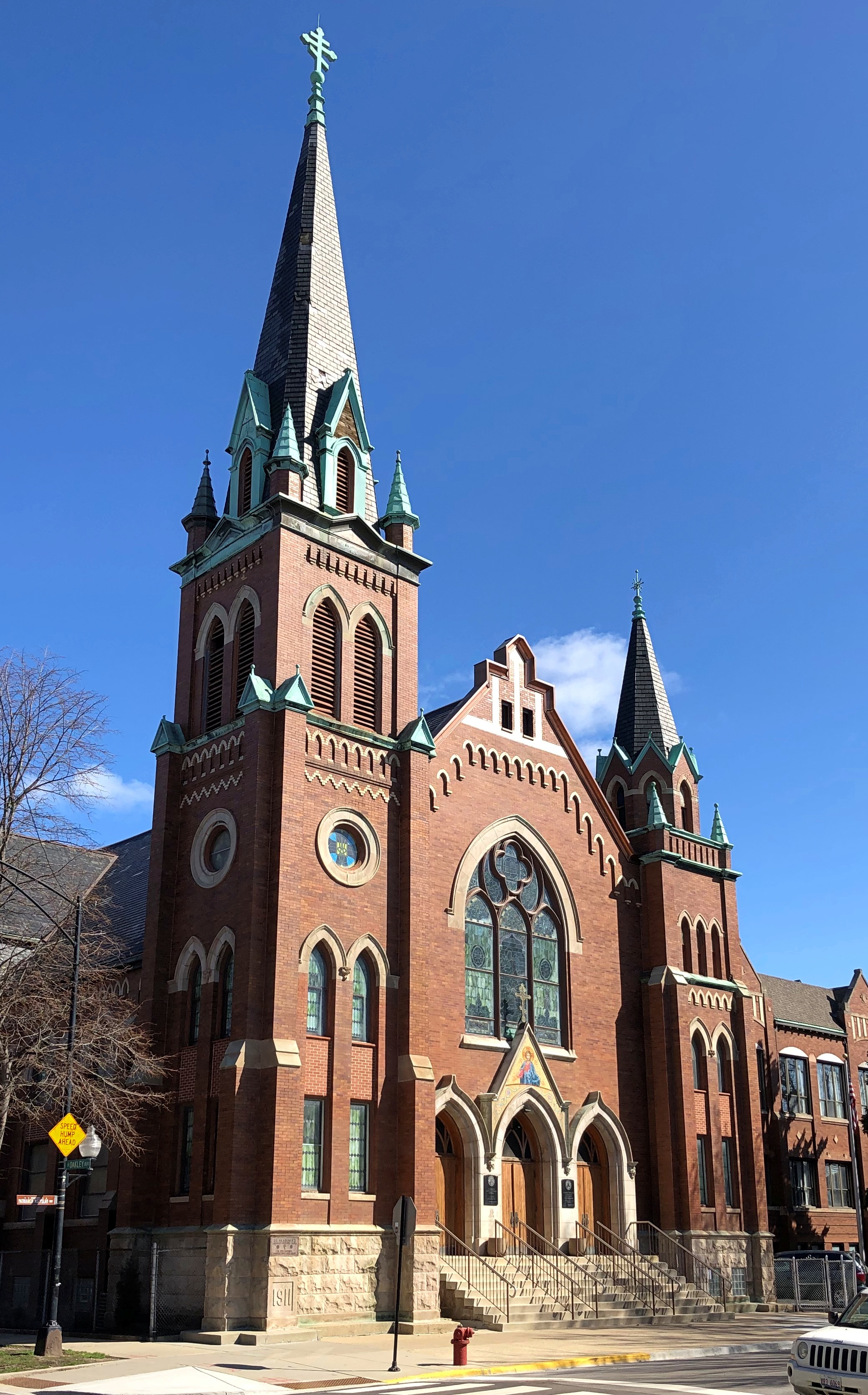
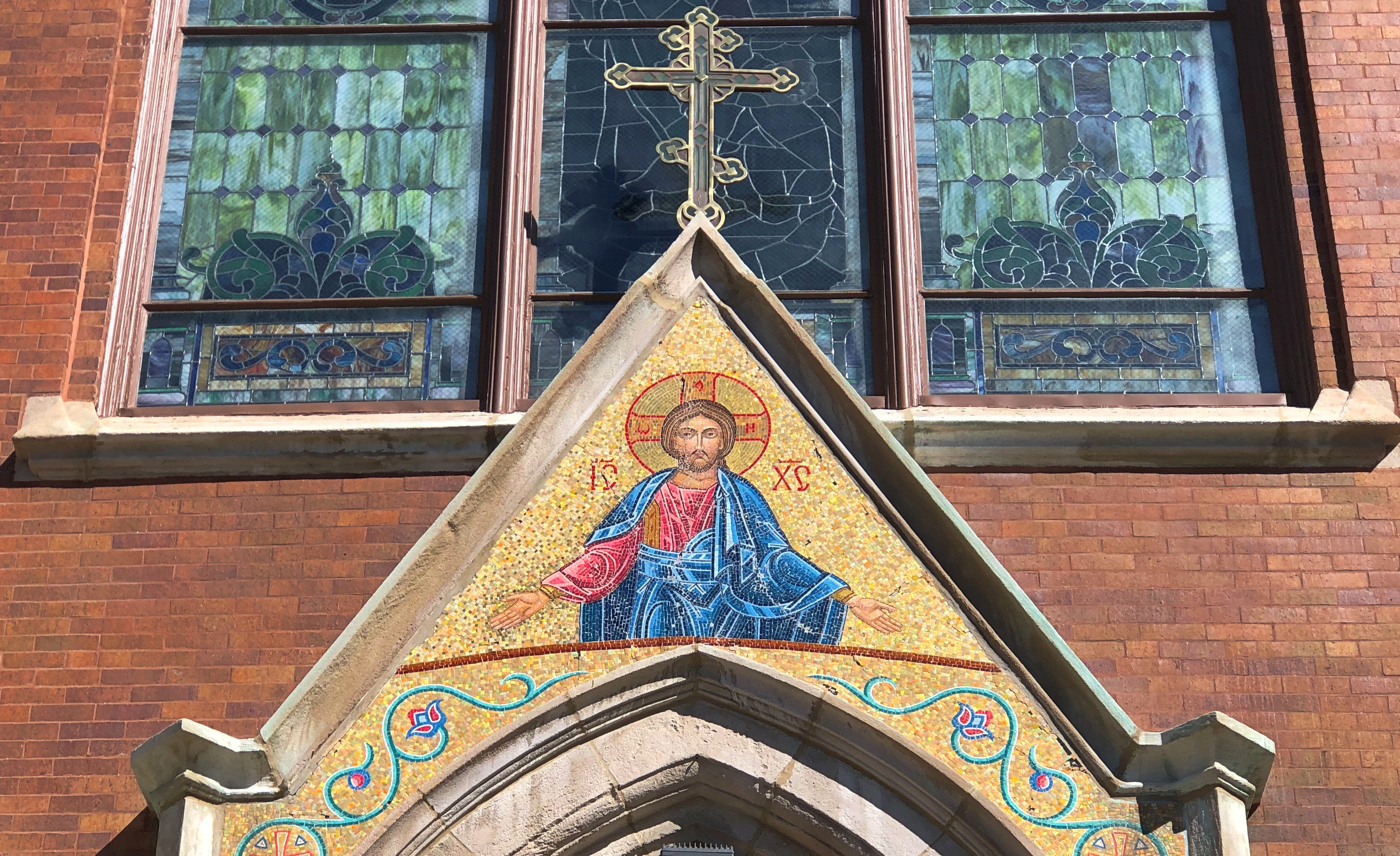
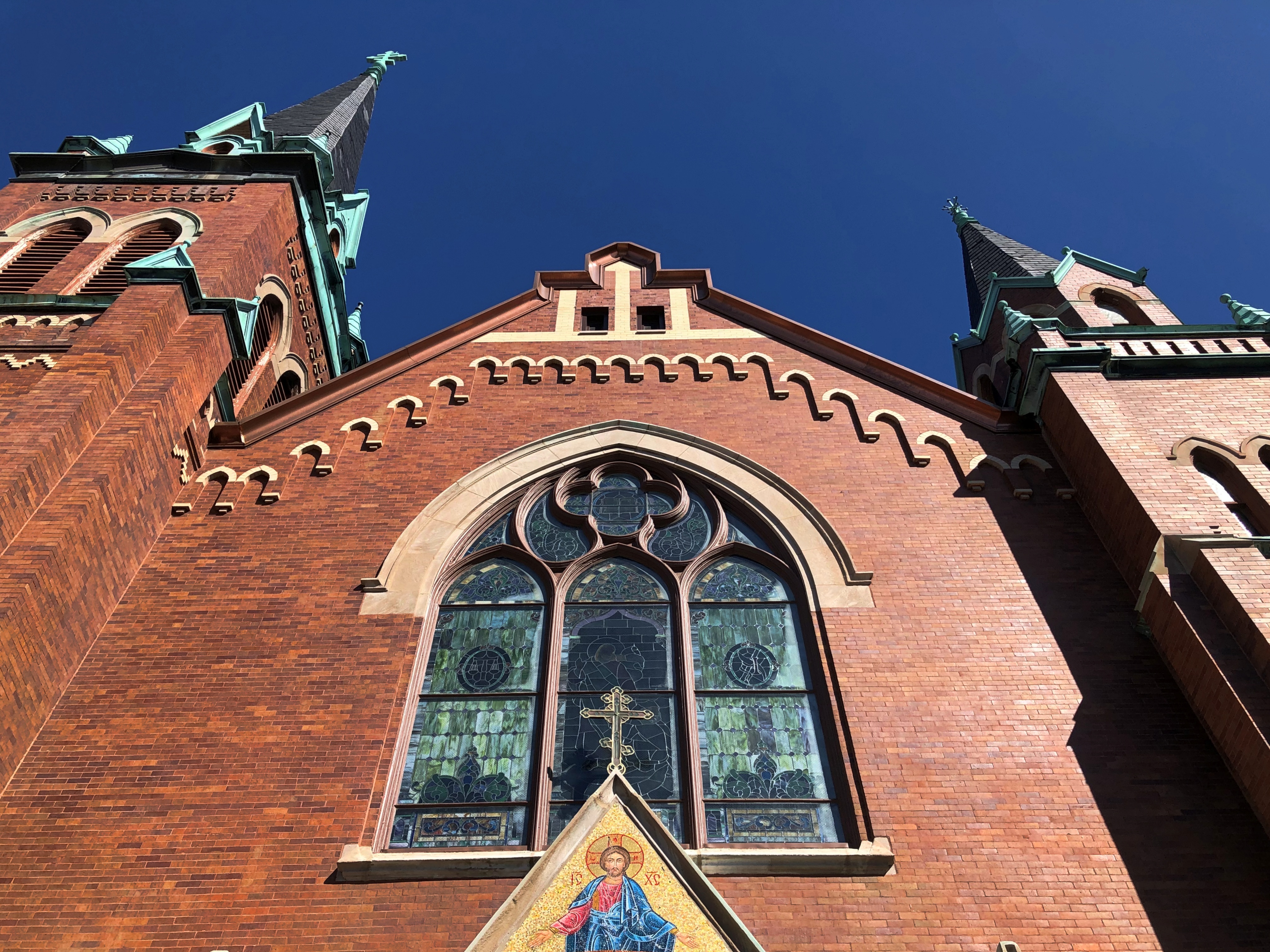
A little further north is St. Volodymyr Ukrainian Orthodox Cathedral.St. Volodymyr Ukrainian Orthodox Cathedral
St. Volodymyr Ukrainian Orthodox Cathedral

Again I stood at the back, taking it all in. Not just the marvelous beauty of the interior, but also the exoticism (to my ears) of an Orthodox service in Ukrainian. The priest’s voice, from behind the iconostasis, carried vividly all the way to the back of the nave.

“The cathedral is a remodeled German Lutheran church that exhibits the Medieval-Gothic style of ecclesiastical architecture, including pointed arches, ribbed vaults and flying buttresses,” Open House says. “The cathedral brings an Eastern-Byzantine interior design into a German-Gothic temple.”

Indeed, an iconostasis and pews. I’ve run across that before.

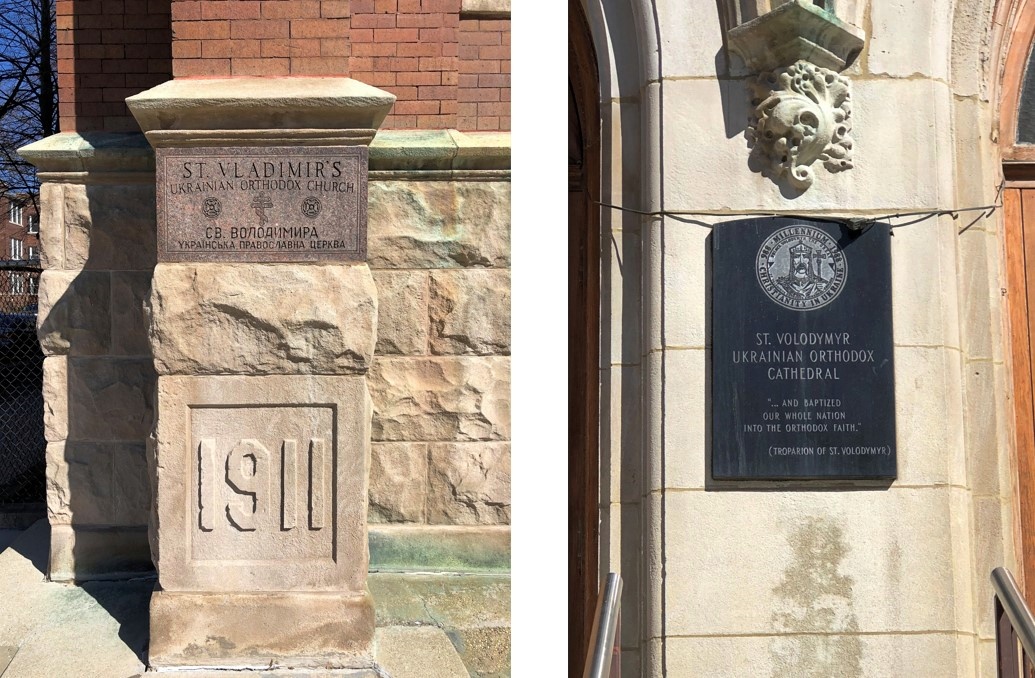
Noteworthy on either side of the main entrance.
St. Volodymyr Ukrainian Orthodox Cathedral

The older inscription, presumably put there when the Ukrainians moved into the Worthmann & Steinbach-designed former Lutheran church (1945), uses the transliteration Vladimir. The newer plaque, put there in 1988 to mark 1,000 years of Christianity in Ukraine, uses Volodymyr.

I expect Vladimir is going to be out of favor among Ukrainians for a long, long time. But in any case, it’s also an example of recontextualizing, rather than tearing a thing down.

Ukrainian Village Walkabout

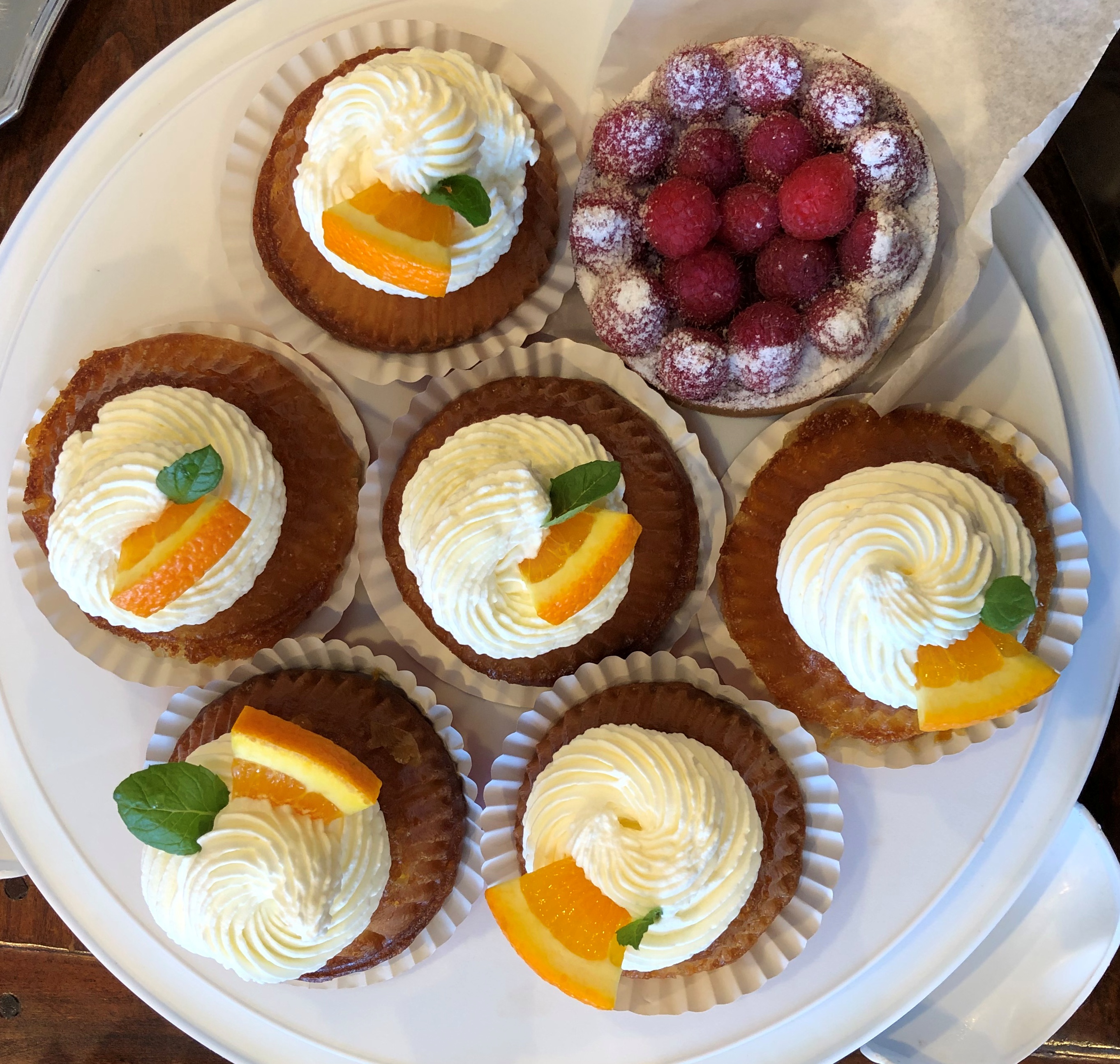
On Sunday, I drove into the city with Yuriko, who attended her cake class in the Humboldt Park neighborhood and made some delightful orange pastries.Yum

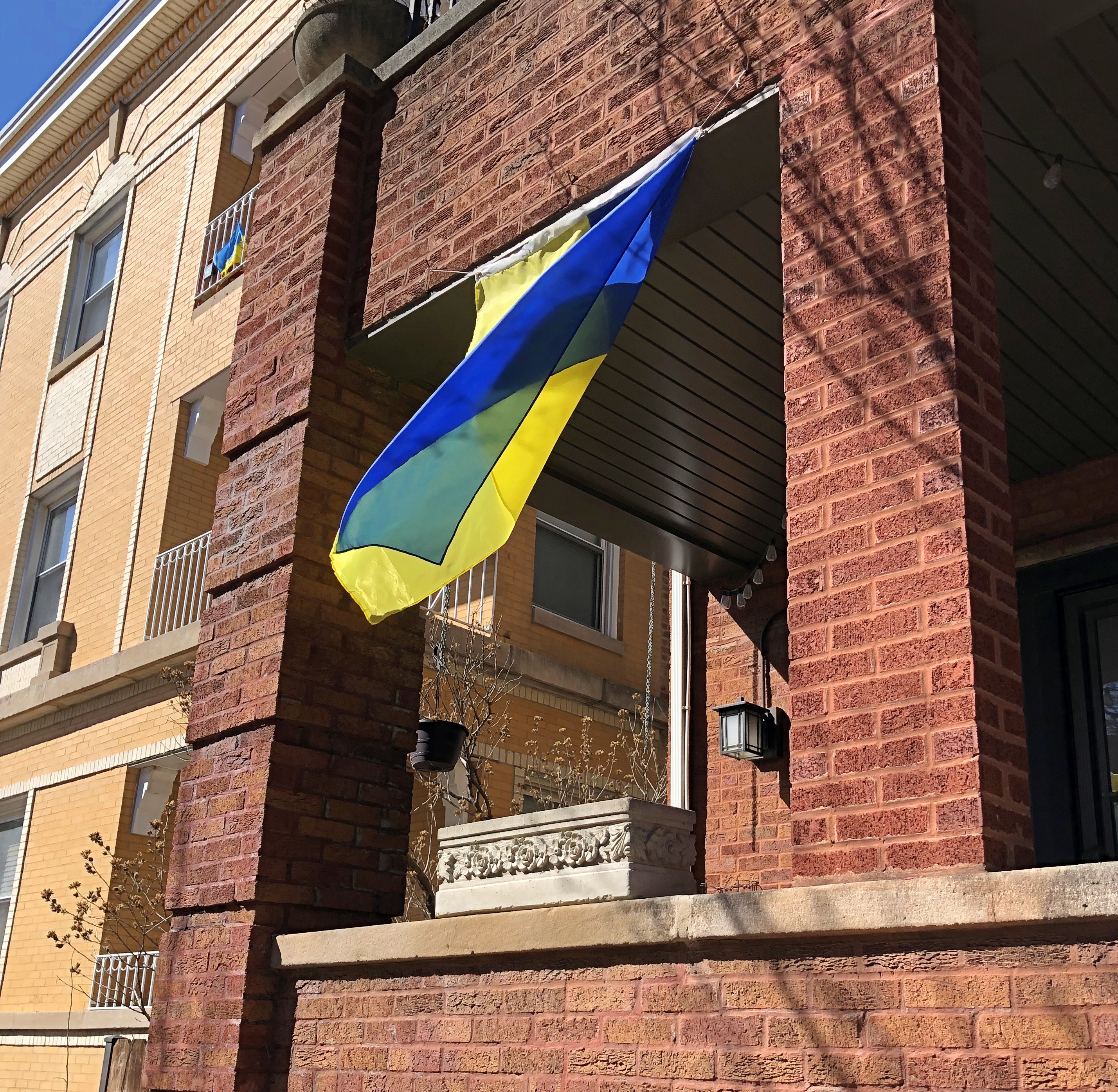
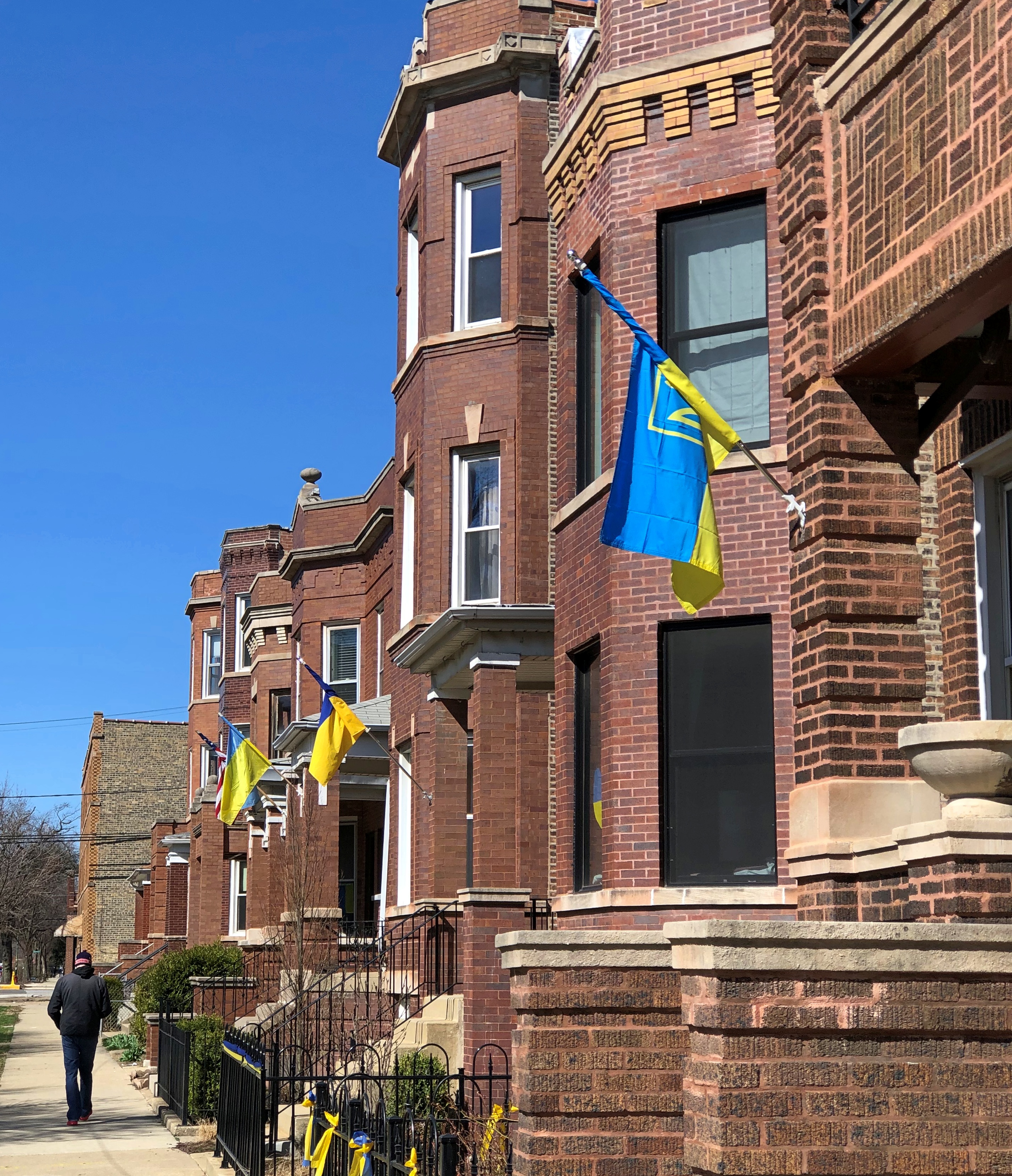
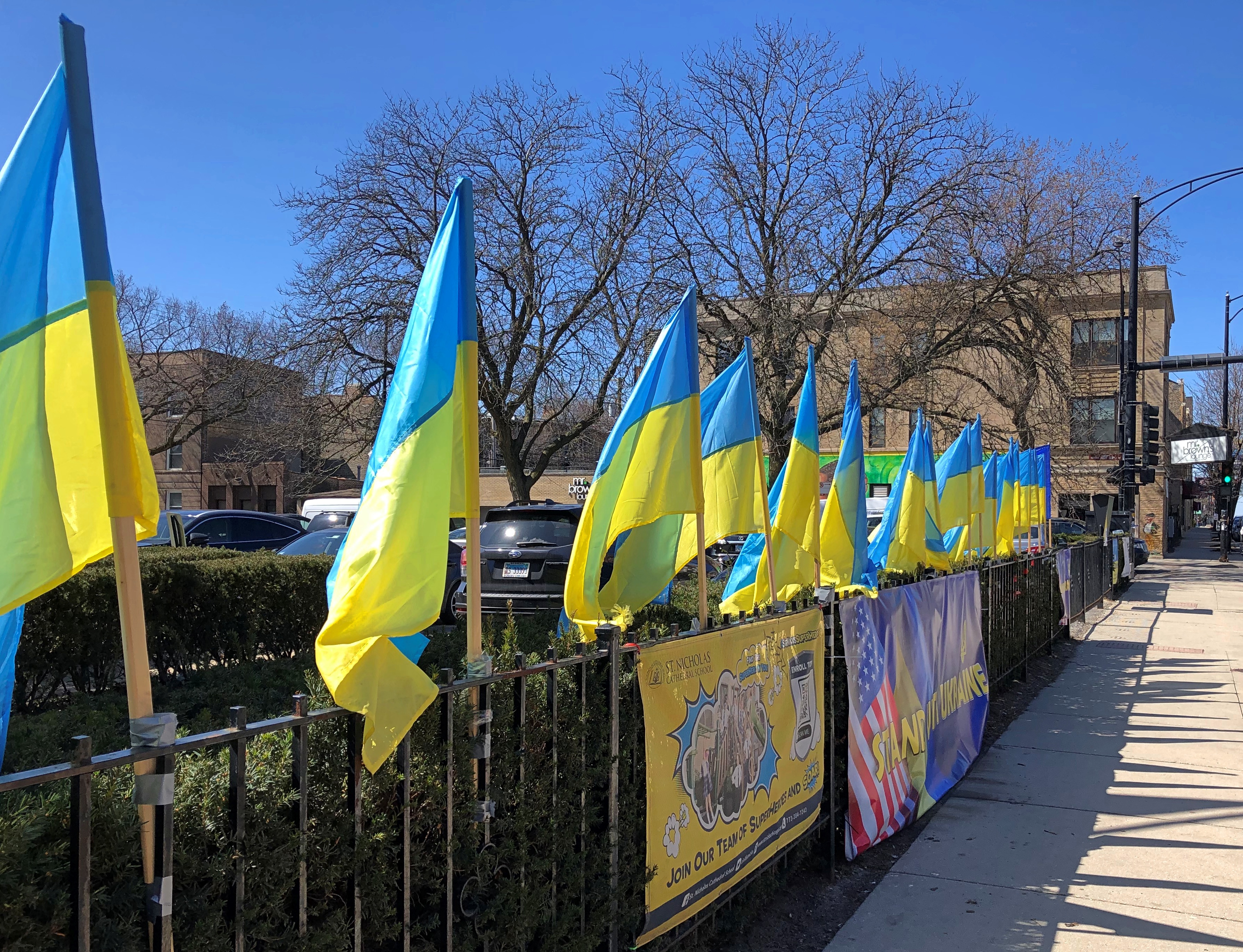
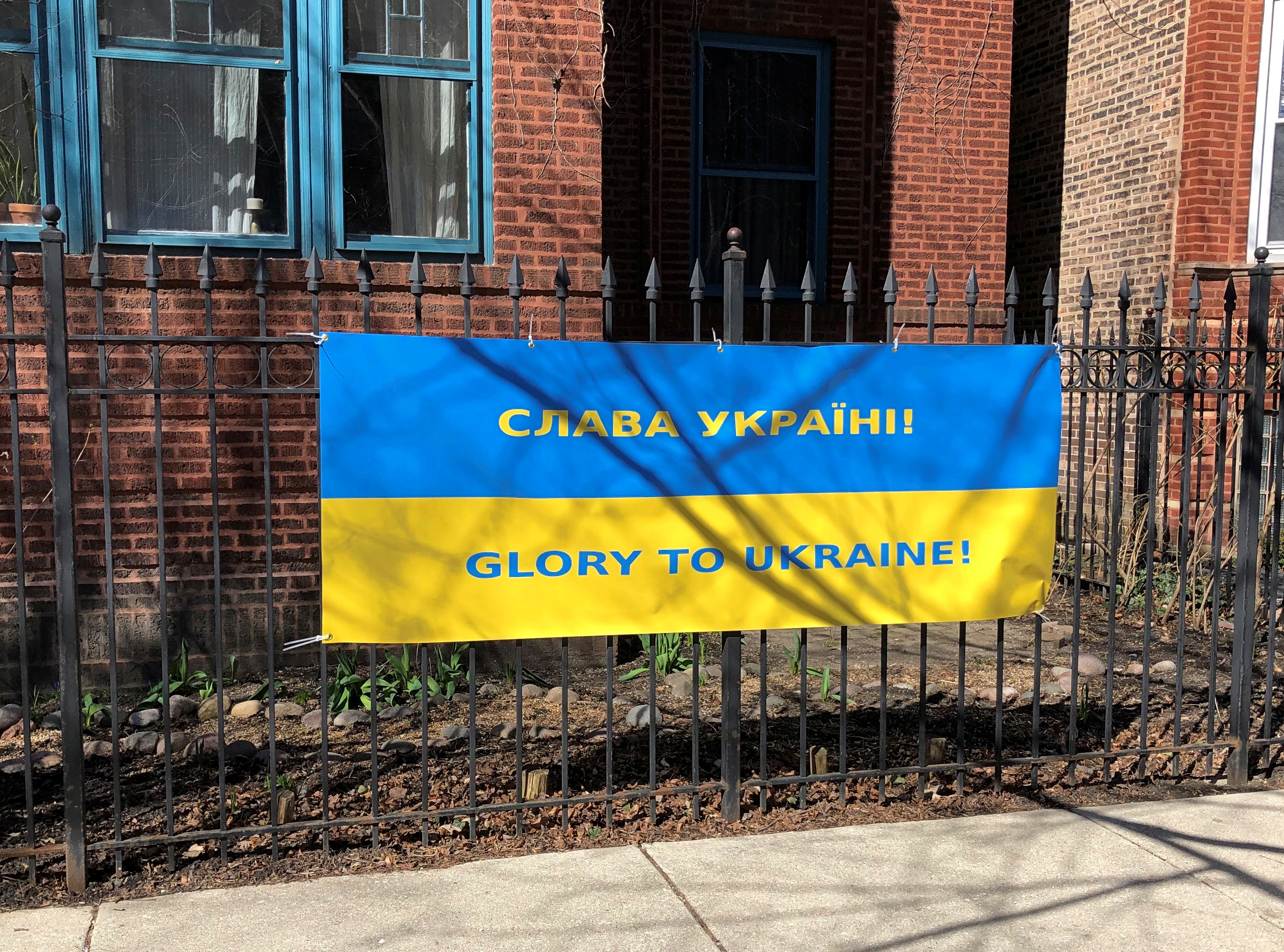
While she did that, I had a few hours to kick around. Temps were only a little above freezing, but the sun was out and there wasn’t much wind, so it turned out to be a good day for a walk. So I went to the Ukrainian Village neighborhood to see, and document, signs of solidarity with the beleaguered people of that nation. There were flags.

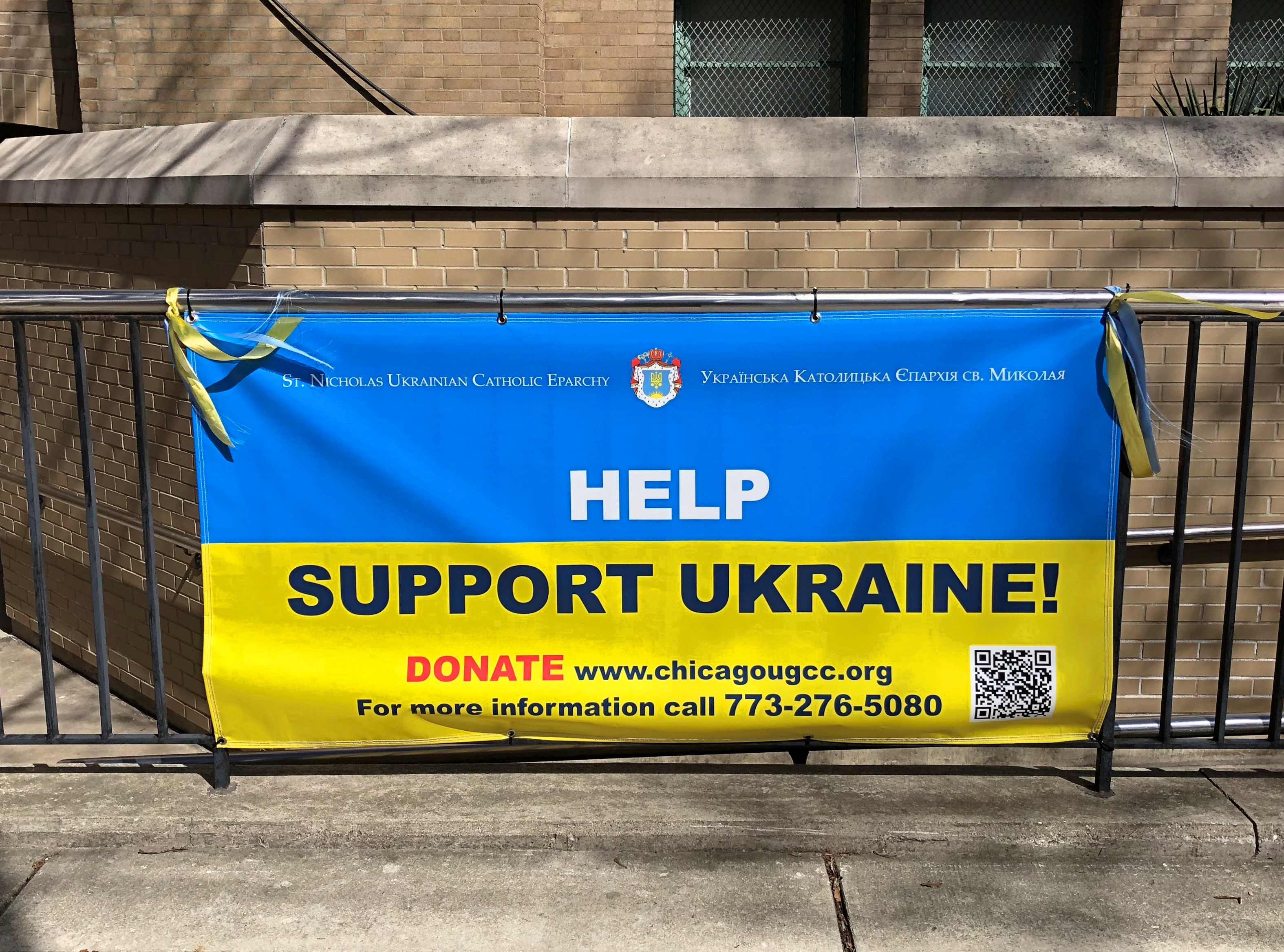
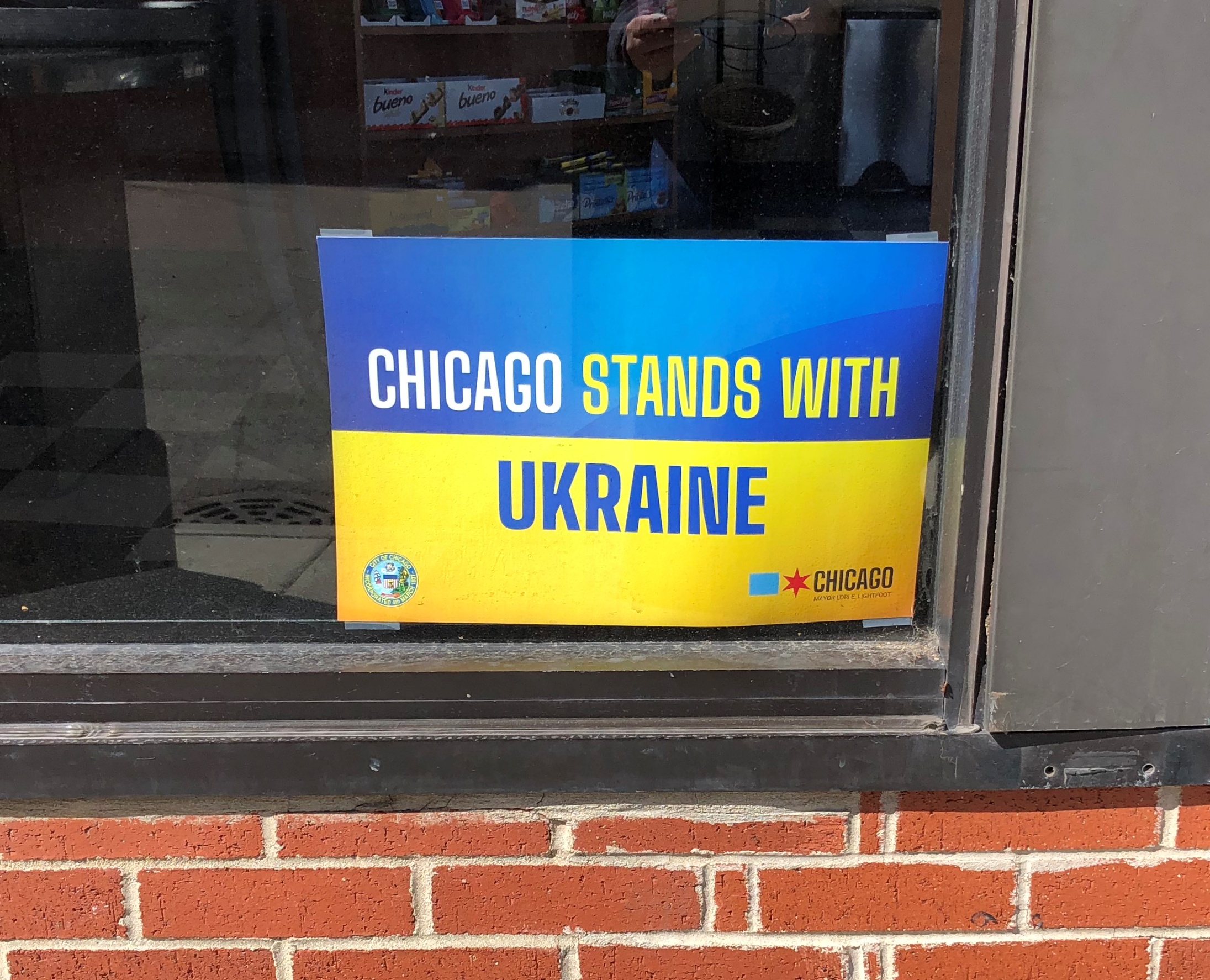
Many flags.Ukrainian Village Chicago 2022 Ukrainian Village Chicago 2022 Ukrainian Village Chicago 2022

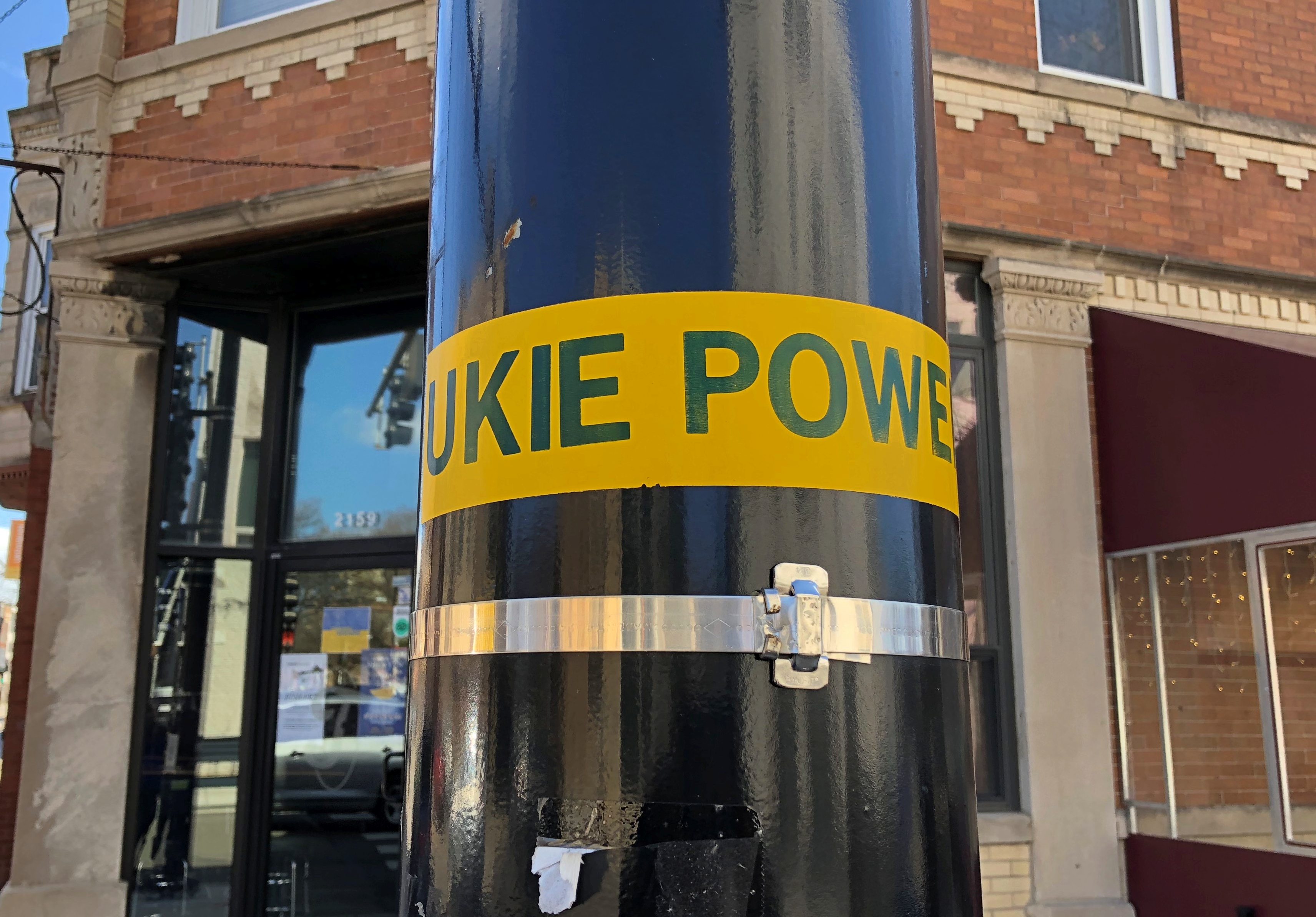
Banners and signs.Ukrainian Village Chicago 2022 Ukrainian Village Chicago 2022 Ukrainian Village Chicago 2022

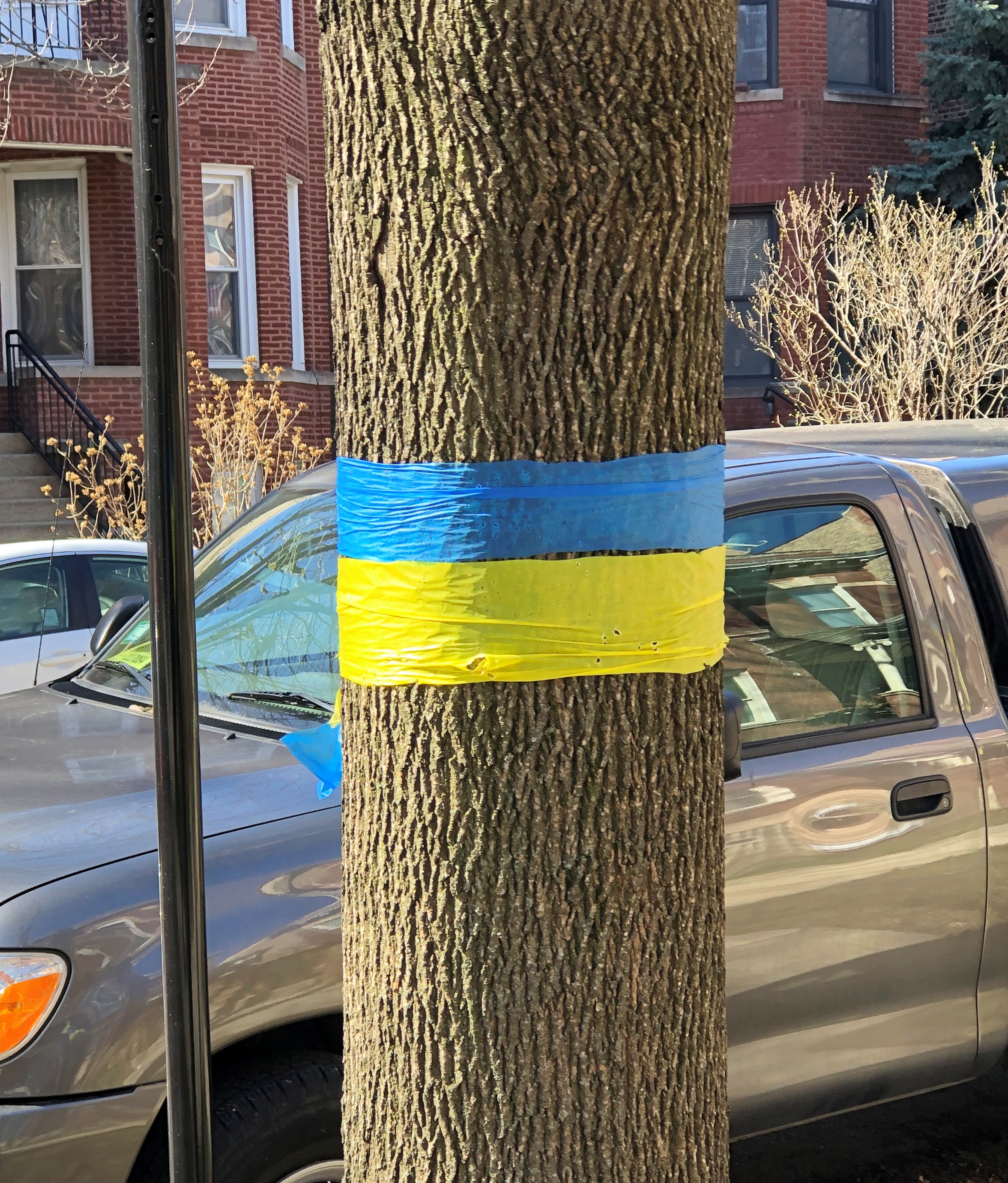
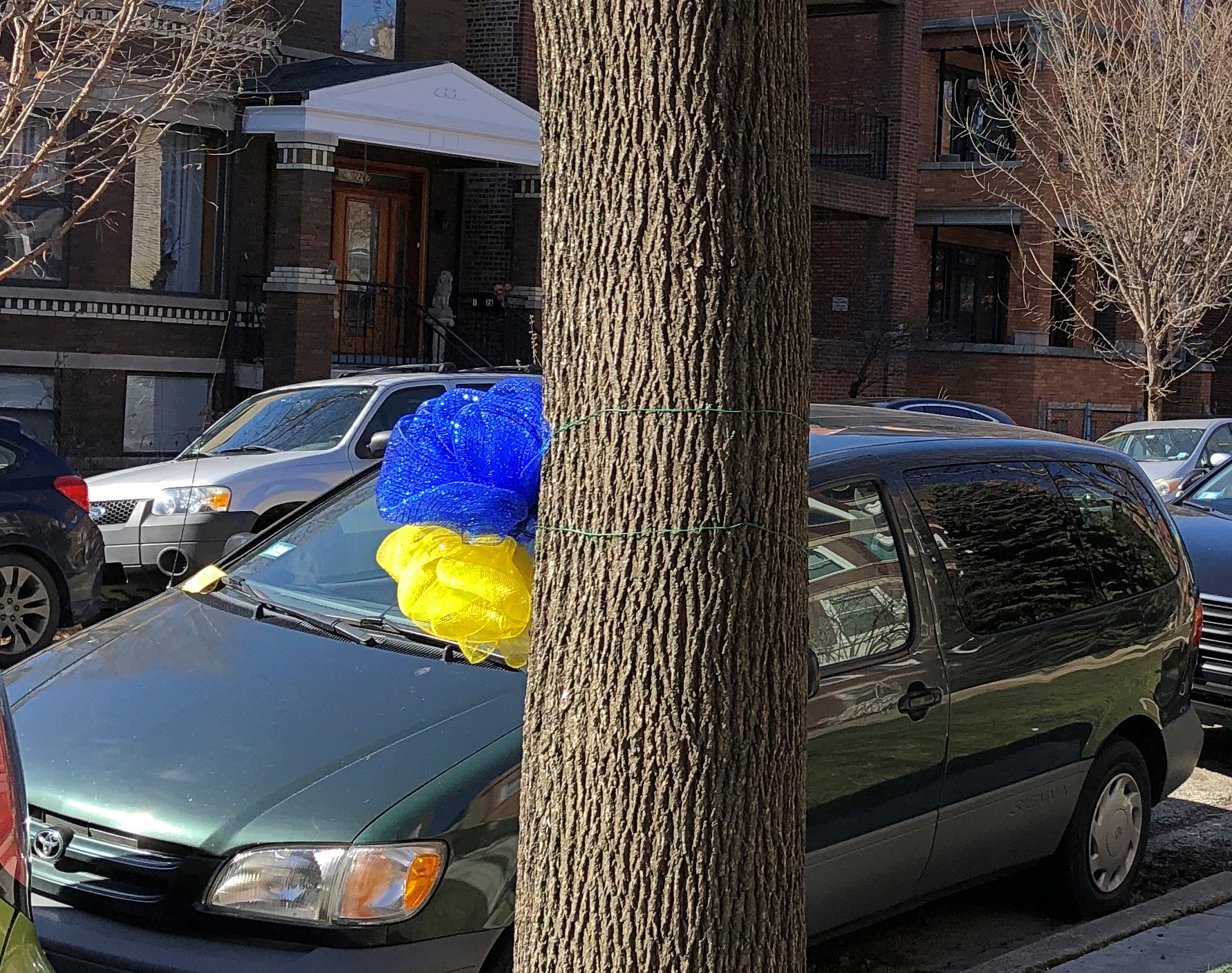
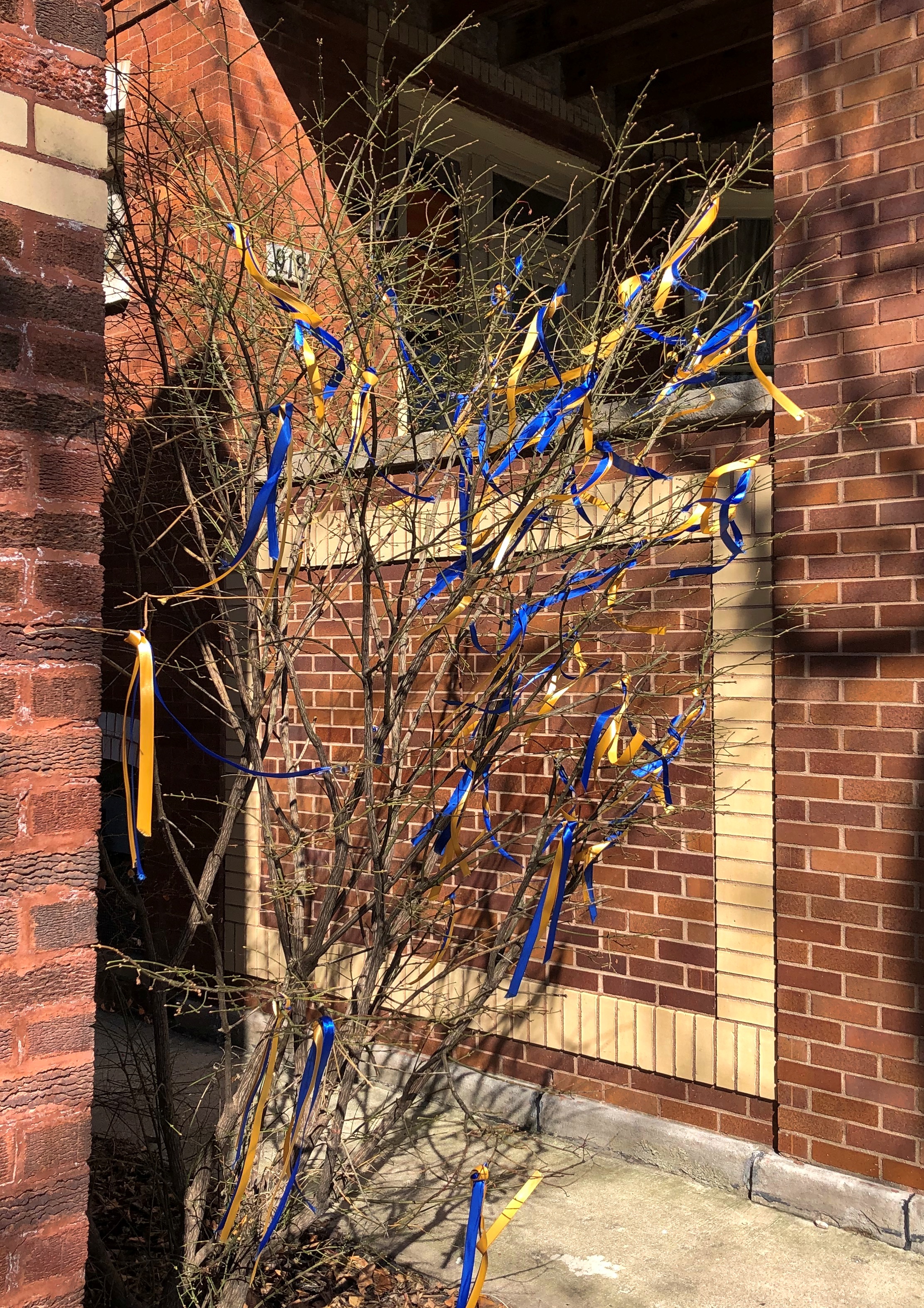
Ribbons and bows.Слава Україні! Слава Україні! Слава Україні!

And more.Ukrainian Village Chicago 2022
Ukrainian Village Chicago 2022

The neighborhood is reportedly the home of 15,000 or so Ukrainians and the outpouring is highly visible. I could have spent all day taking pictures of blue-yellow bicolor displays.

Heaven on Seven No More

I learned over the weekend that the restaurant Heaven on Seven, closed since early 2020, has closed permanently. I will miss it. Before the pandemic, I went there once a year or so, even after I quit working downtown.

The joint had much to recommend it, but especially its first-rate Louisiana cuisine. Over the years I had the jambalaya, crawfish etouffee, gumbo, red beans and rice, fried oysters, crab cakes, various po’ boys and pies, and more. The New Orleans decor charmed without being overwhelming, and its seventh floor location at 111 N. Wabash in Chicago’s Loop (the storied Garland Building) had little signage to guide you there. You either knew where it was or you didn’t, especially in the days before the Internet. I can’t remember who introduced me to it, but it was sometime in the late ’80s.

Also, and I can’t stress this enough, the dishes at Heaven on Seven weren’t the creation of some big-deal chef who “curated” some “artisanal” cuisine using “local” ingredients “cooked to perfection” to reach some height of “authenticity.” All of that adds up to an overpriced place that people praise because a restaurant can’t really be good if you pay modest prices, can it?

No. At Heaven on Seven, talented cooks created wonderful dishes to remind you of those days and nights in New Orleans or even Lafayette, without inflicting high prices on its patrons.

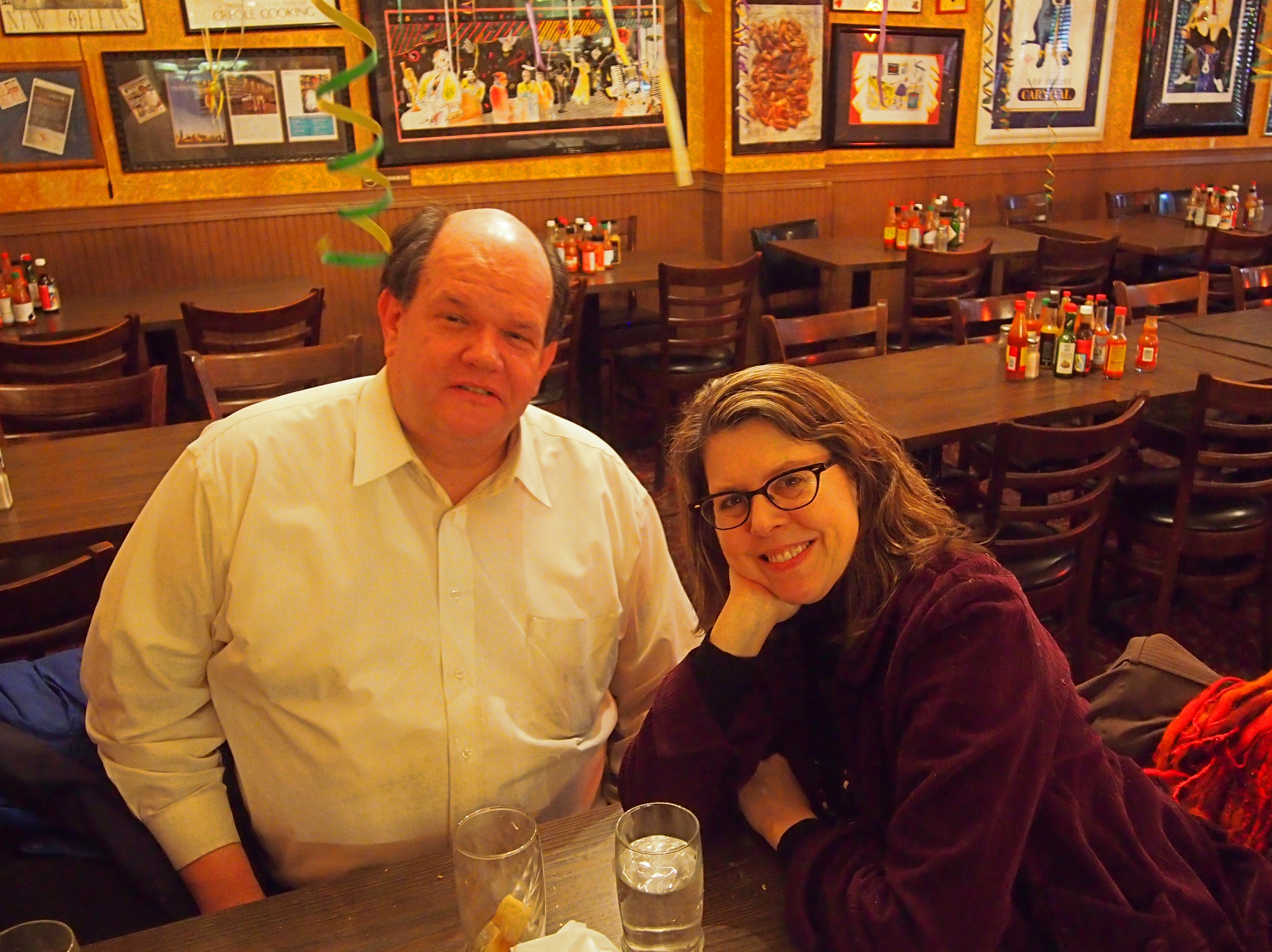
Just as important, it was never a place to go alone.Heaven on Seven

Pictured are old friends Kevin and Wendy, whom I met there a number of times for enjoyable lunches. That time was in 2013.

Noises Off ’99 & ’20

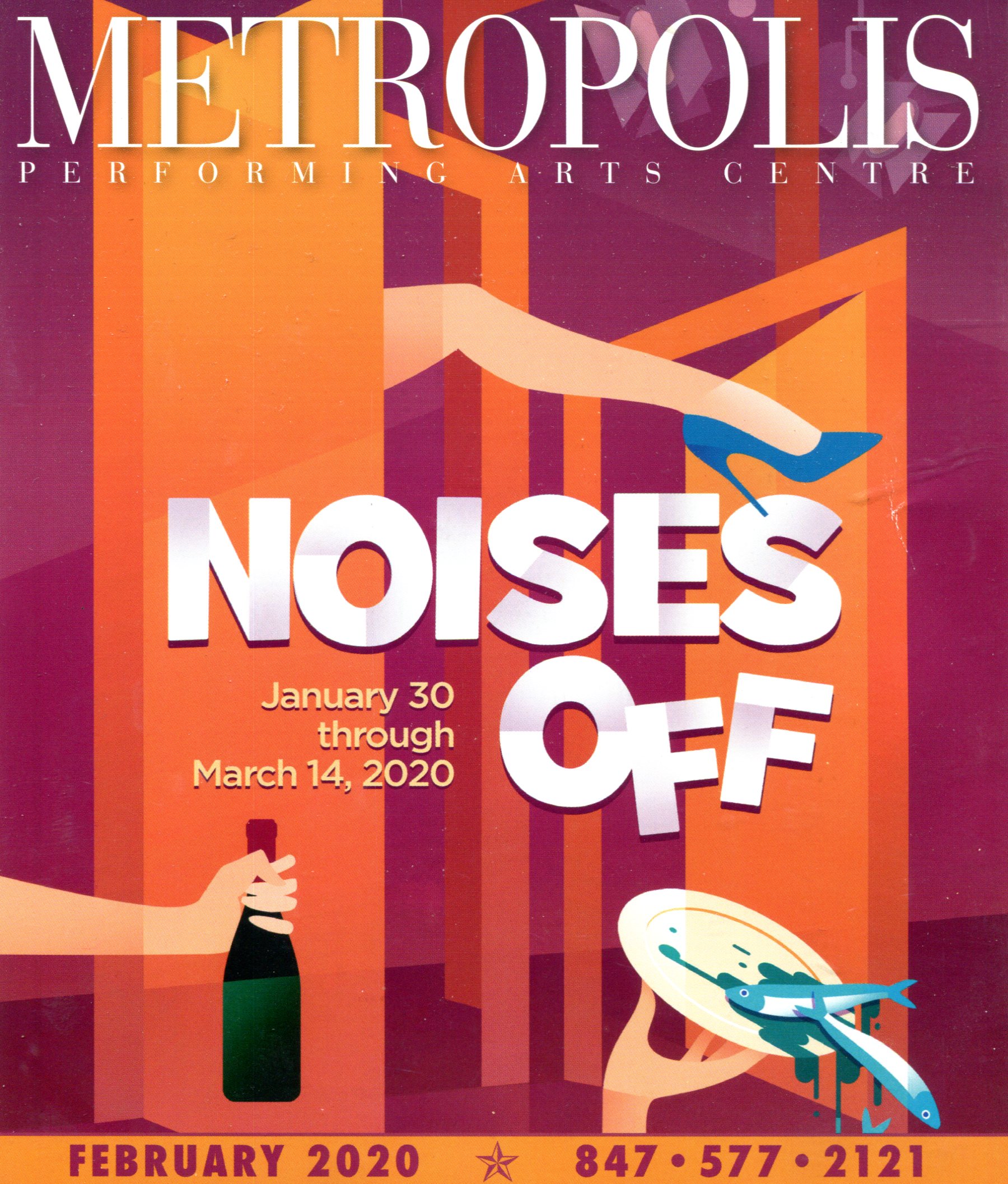
It’s been two years since I’ve been to the theater. In February 2020, just before I went to California late that month, I took Ann to see Noises Off at the Metropolis Performing Arts Centre in Arlington Heights, where we go periodically. Logistically, it’s more convenient than theaters in Chicago, though of course that didn’t stop us from going into the city in ’19 a number of times.

Noises Off is a British farce first staged in London in 1982. It was at the Savoy until 1987, but I wasn’t fortunate enough to see it during my ’83 visit. Rather, my friends and I went to see The Real Thing at the Strand, a Tom Stoppard play also from 1982, which I remember being amusing.

Noises Off is really amusing. I didn’t see it until ca. 1999 in Chicago, and it was the funniest thing I’d ever seen on stage. Actually, it still is. Laugh out loud funny, along with the rest of the audience.

The 2020 staging was also funny, but not quite as much as the first time around. Maybe because I was older; or the cast wasn’t quite as good (though they were good); or that I knew what to expect. Still, Ann seemed to enjoy it, and I certainly did, even if it didn’t quite have the same punch as my memory of it.

It occurs to me now that I need to start going to the theater again. Health concerns haven’t been stopping me for a while now. It’s just that I got out of the habit. So I’ll soon do my bit to support regional theater, as part of that pent-up demand.

Open House: Synagogues

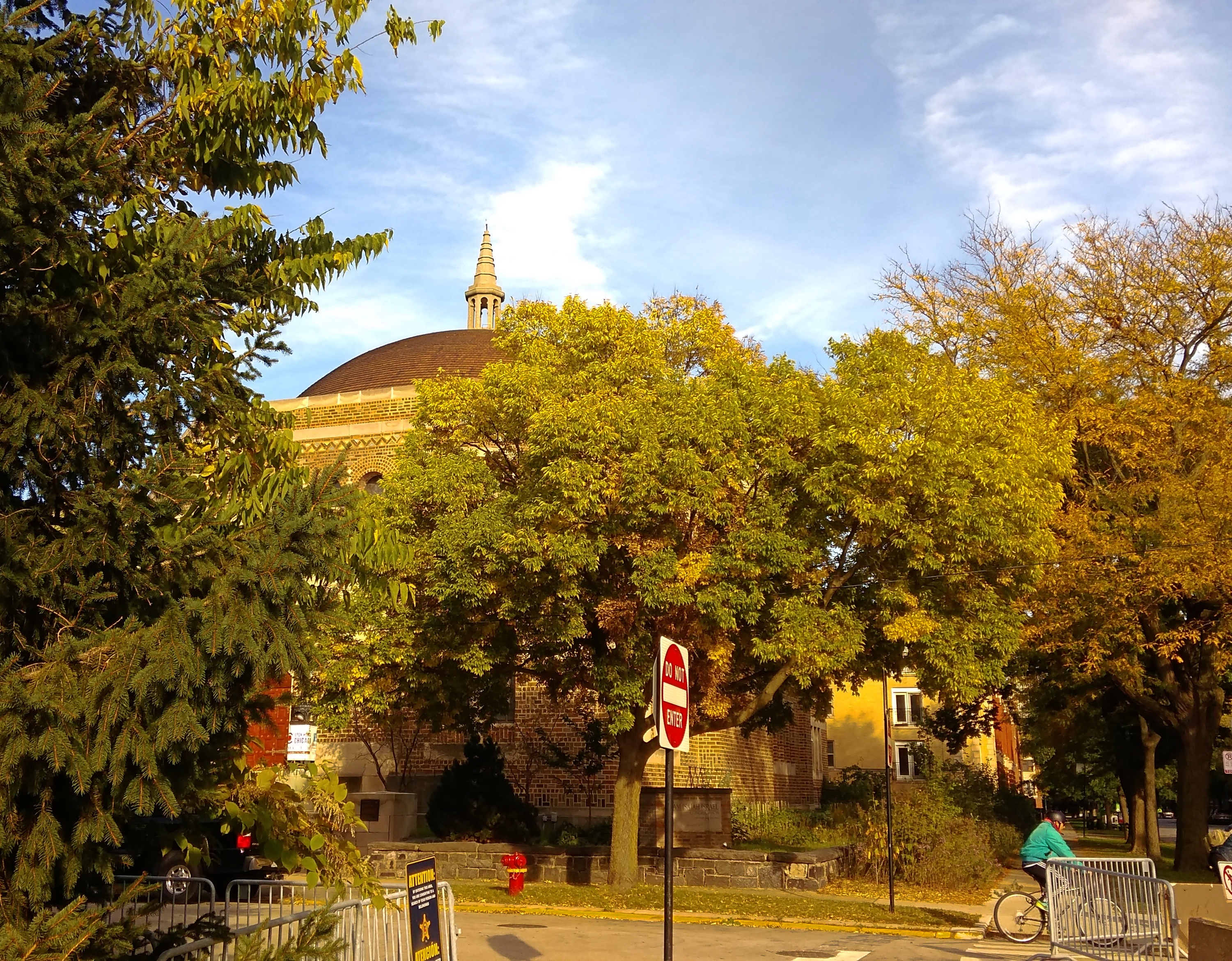
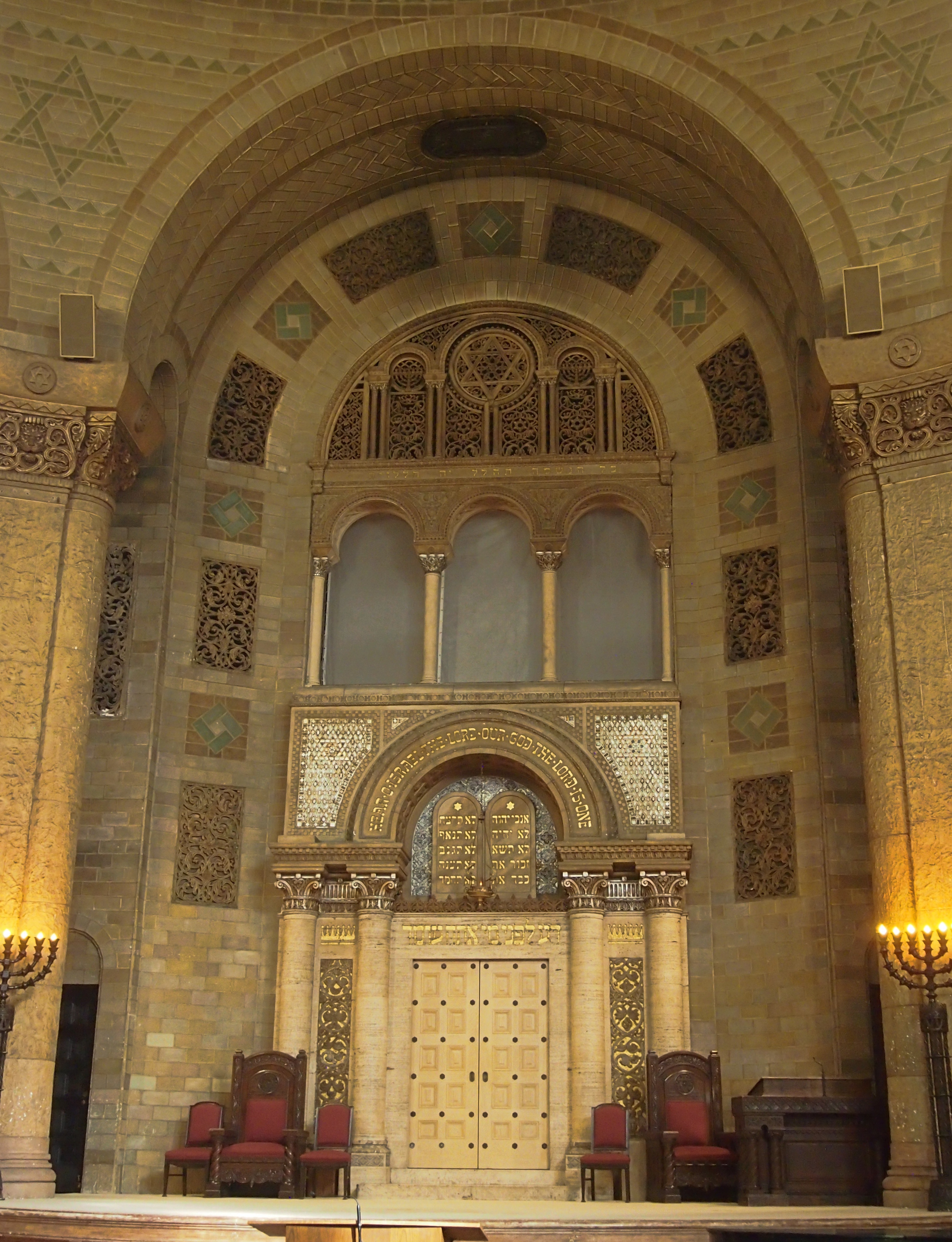
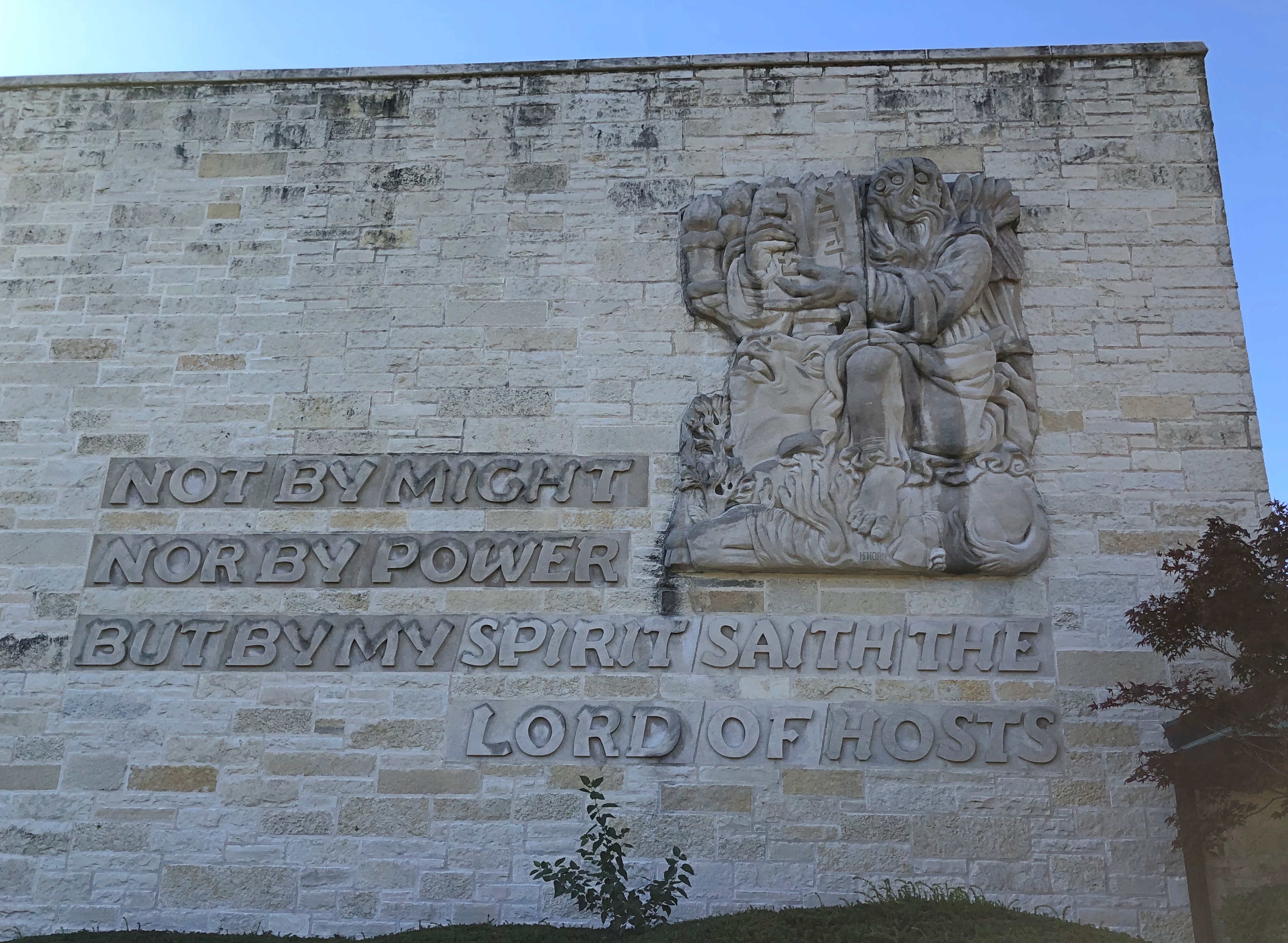
One synagogue open for Open House Chicago last weekend was KAM Isaiah Israel in Hyde Park. It’s across the street from the Obama residence, in fact, though I’m certain that’s a coincidence, and besides, the synagogue’s been there a lot longer.

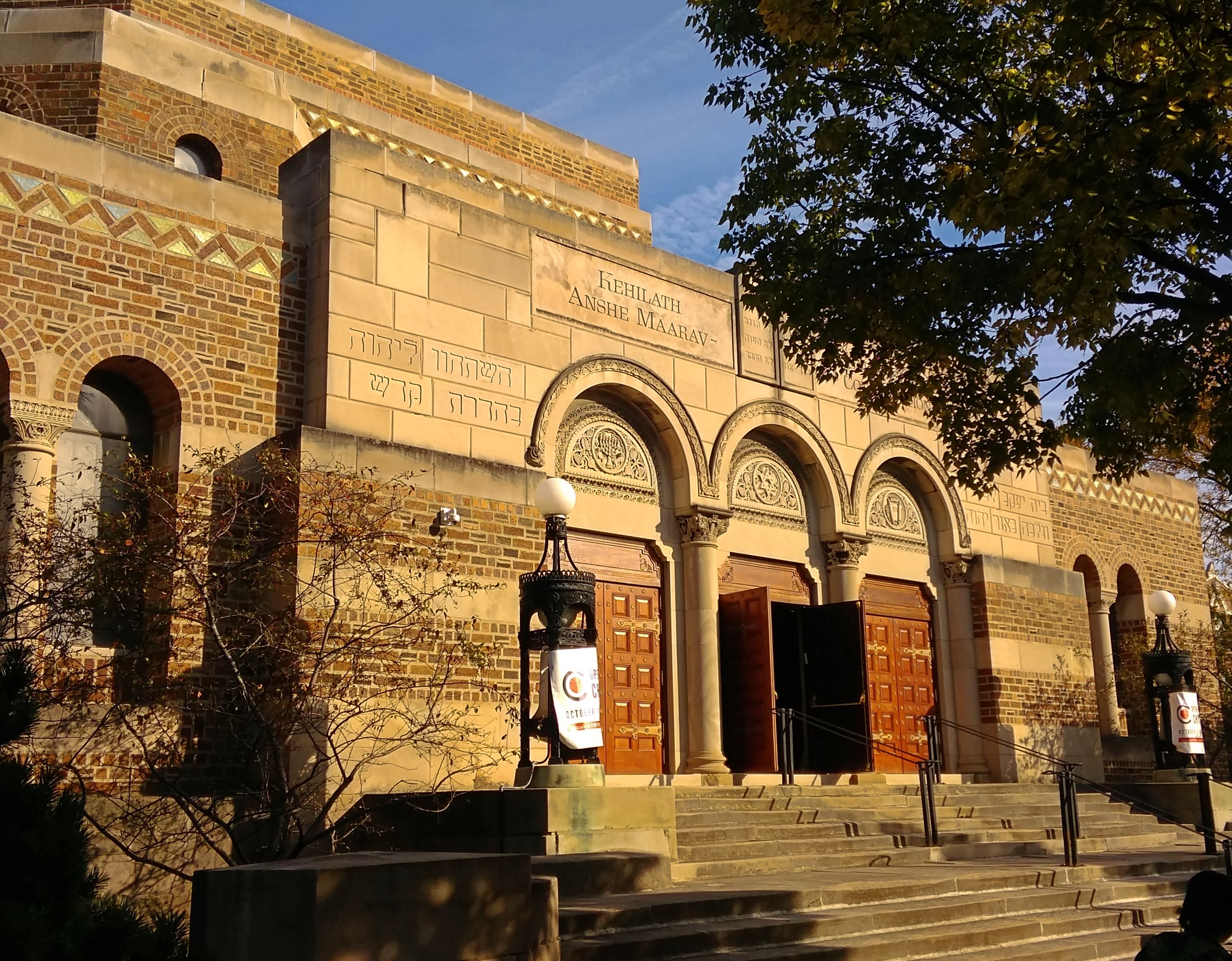
“KAM Isaiah Israel is the oldest Jewish congregation in the Midwest and its leaders, members and buildings have played an important role in Jewish history, American social justice movements, and architectural history,” Open House says. (KAM = Kehilath Anshe Maarav = “Congregation of the Men of the West.”)

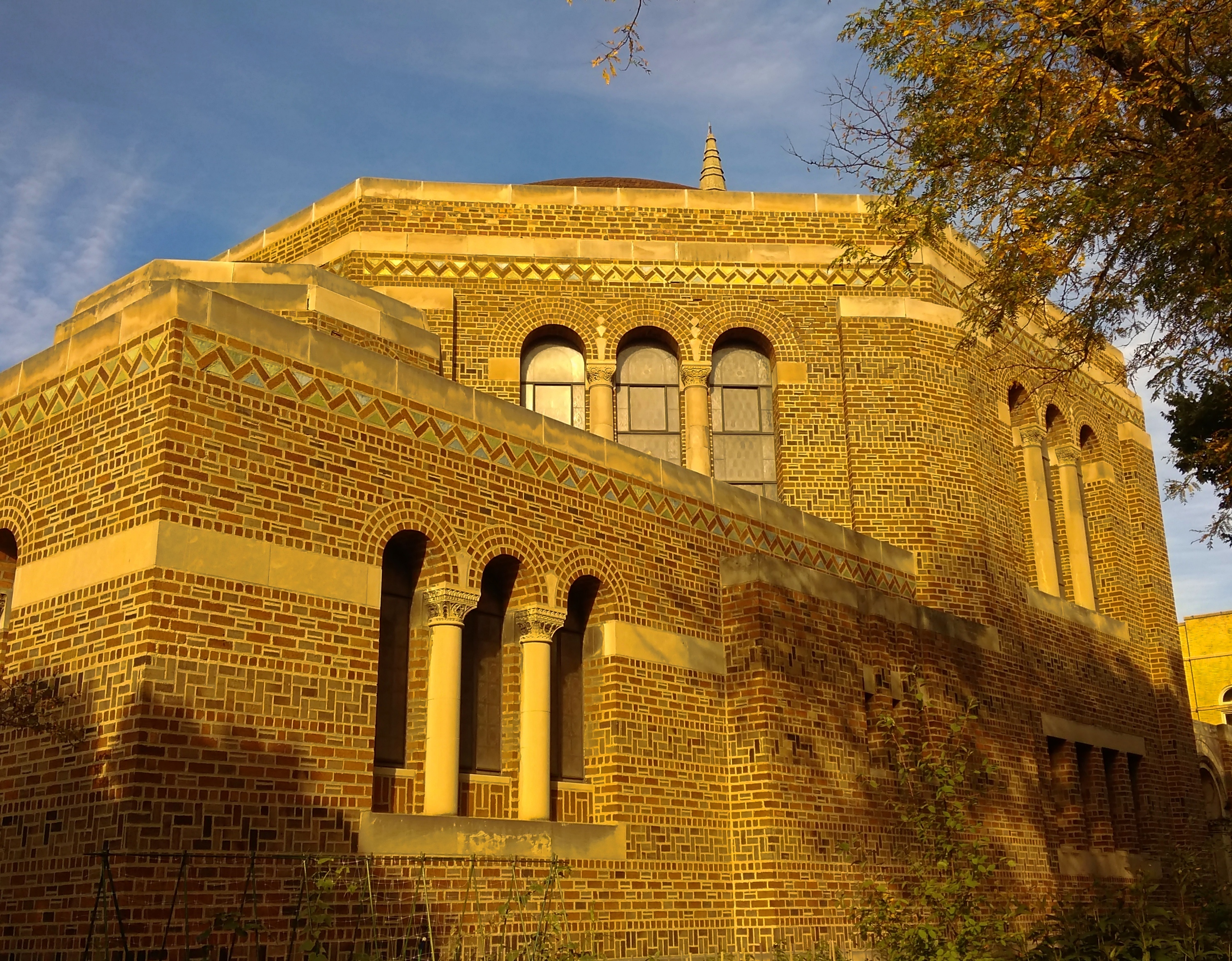
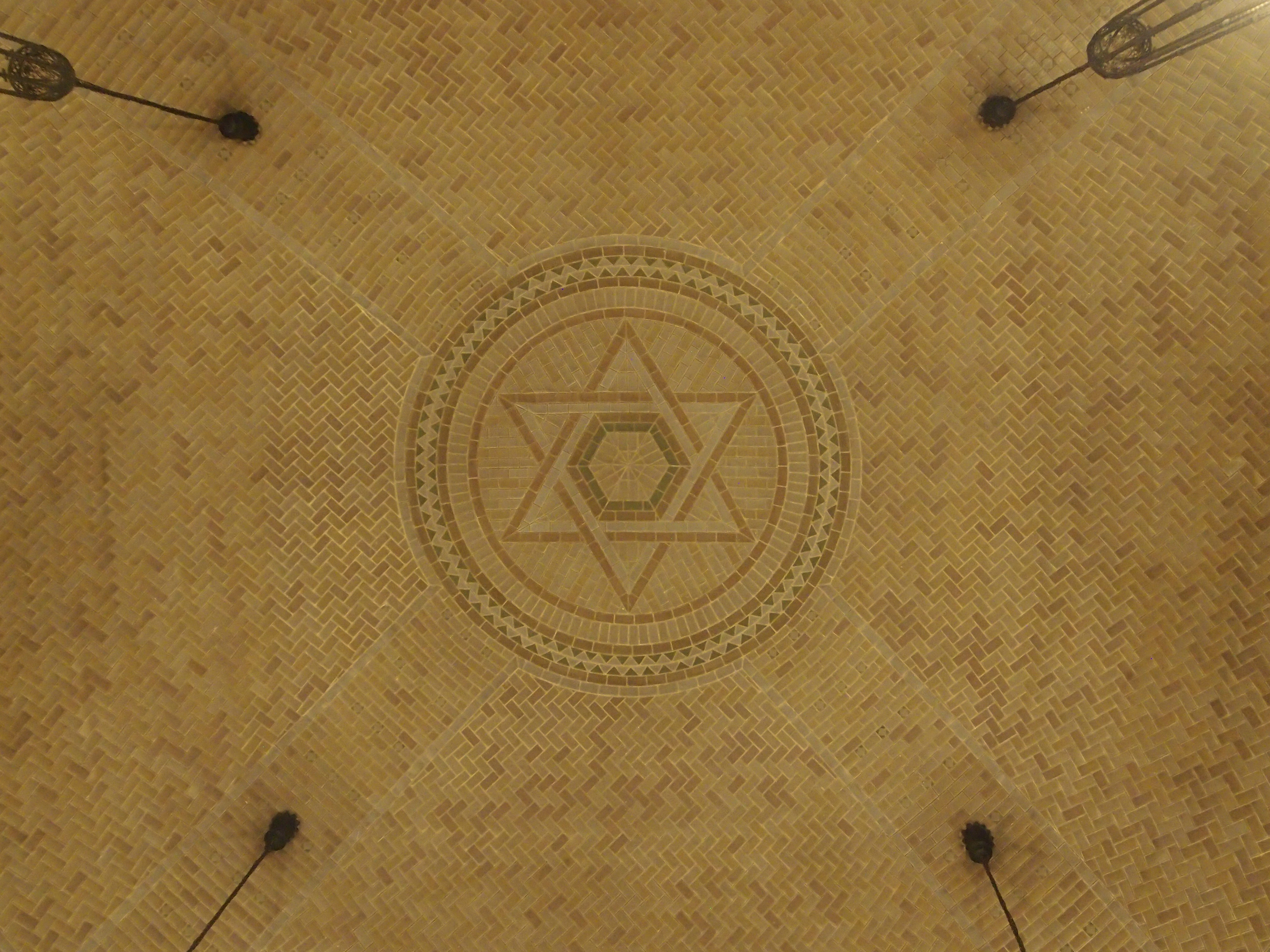
“KAM was founded in 1847 and had several locations in Chicago before settling in Hyde Park… The synagogue’s architecture [Alfred S. Alschuler] was inspired by Byzantine structures and an ancient synagogue in Tiberias, Israel.”

There’s an impressive dome, but I didn’t capture it.KAM Isaiah Israel KAM Isaiah Israel

The entrance, also impressive.KAM Isaiah Israel

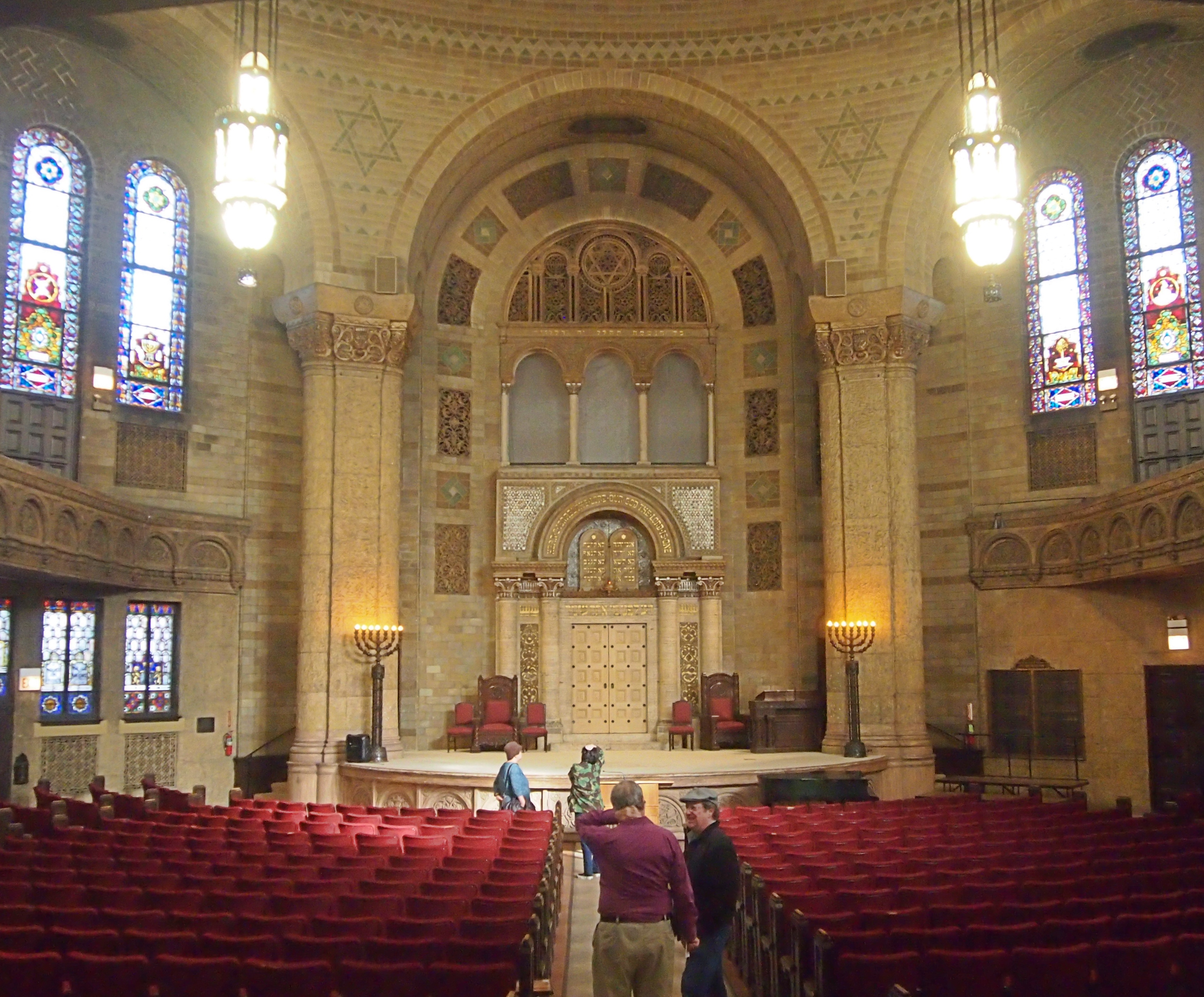
“Although KAM began as an Orthodox congregation, our members began to reform their practice almost from the beginning,” the synagogue web site says. “In 1852, conflict over issues of Reform and traditional observances led to the creation of a new congregation, B’nai Sholom. In 1874, KAM became a founding member of the Union of American Hebrew Congregations, now known as the Union for Reform Judaism.”KAM Isaiah Israel KAM Isaiah Israel

The ceiling.KAM Isaiah Israel

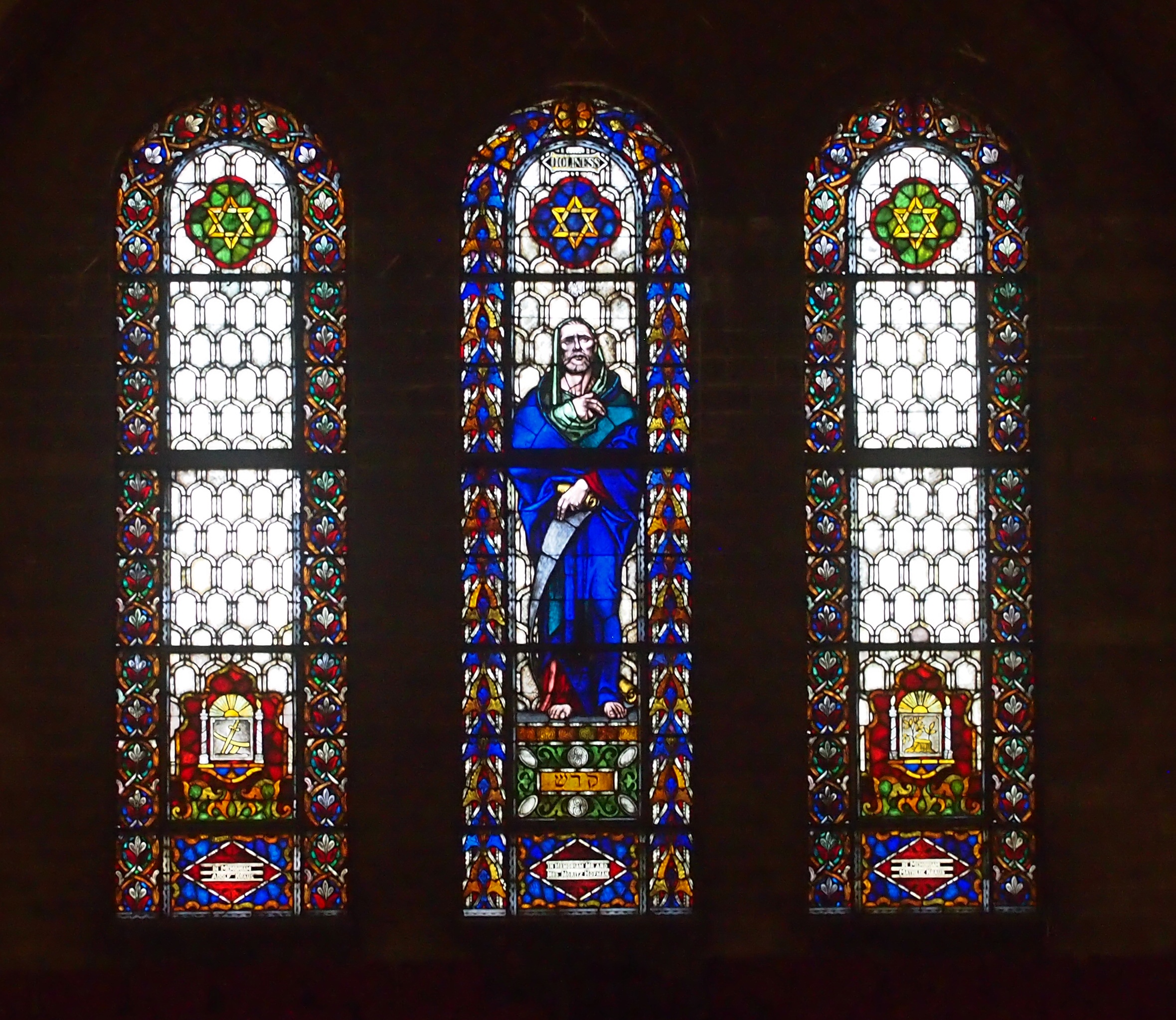
Stained glass.KAM Isaiah Israel

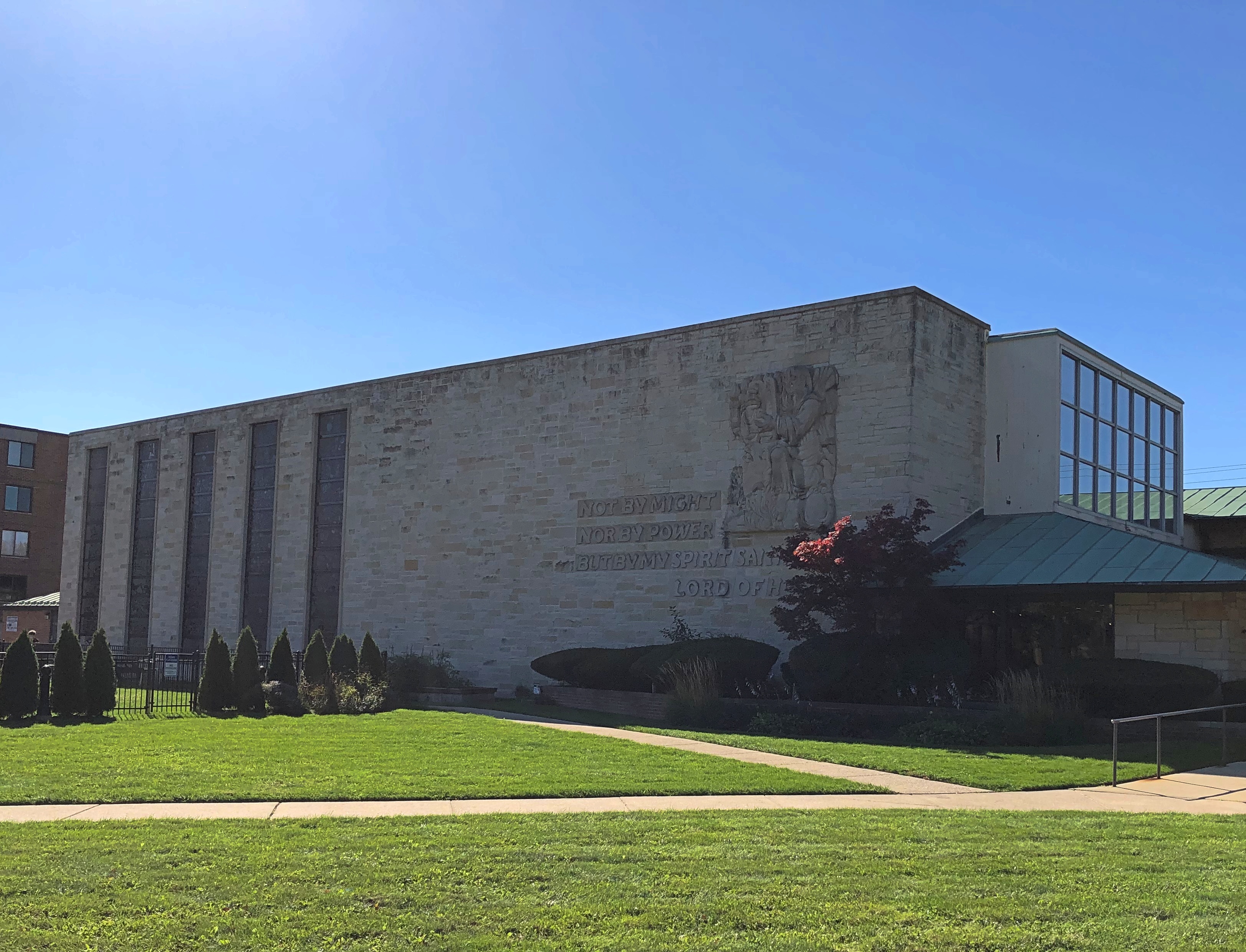
The other synagogue we visited was out in the near western suburb of River Forest: Temple Har Zion. It’s a modernist work of Loebl, Schlossman and Bennett, completed in 1953. Temple Har Zion

Temple Har Zion

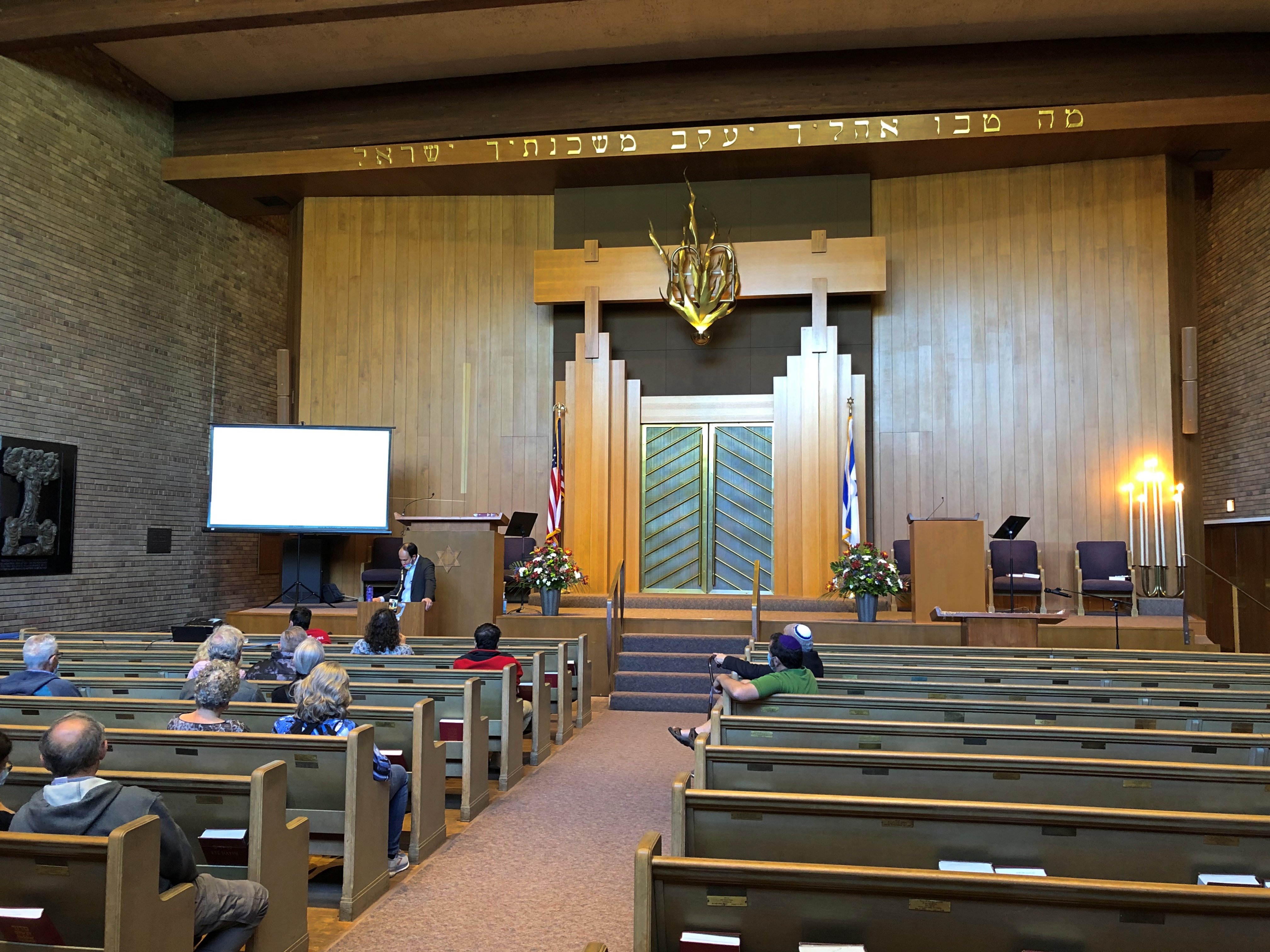
The building is divided into two large parts. The sanctuary.
Temple Har Zion

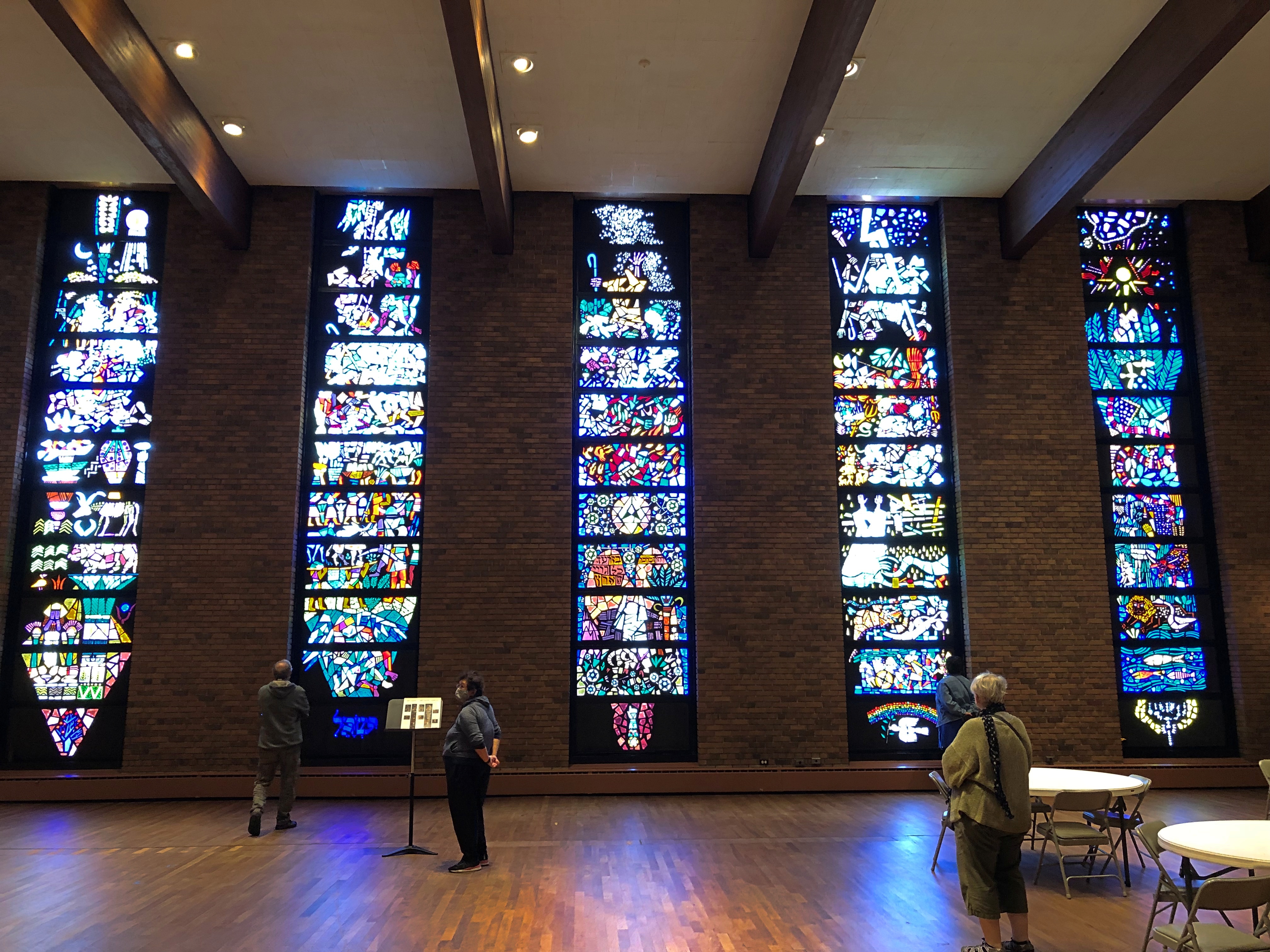
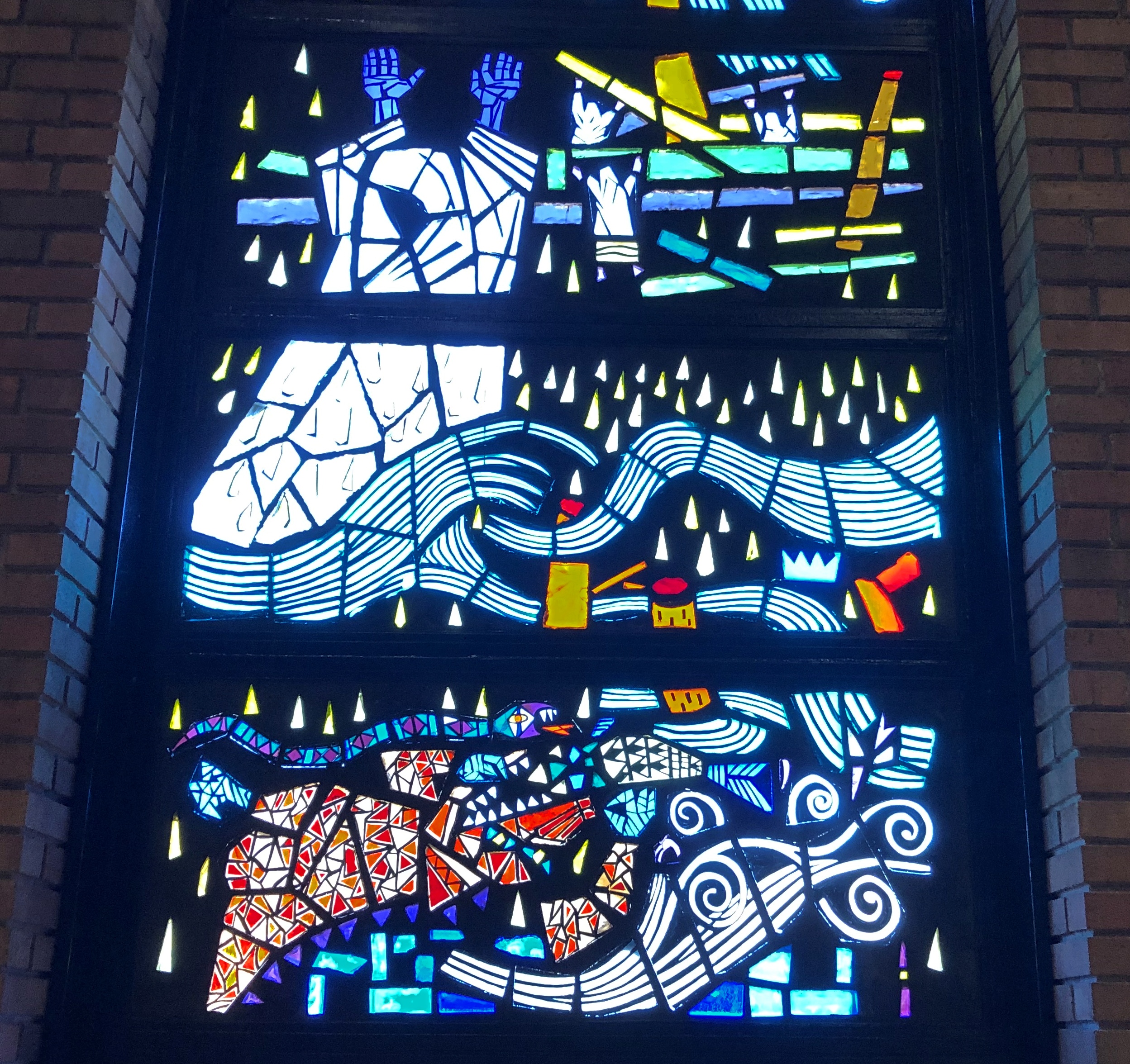
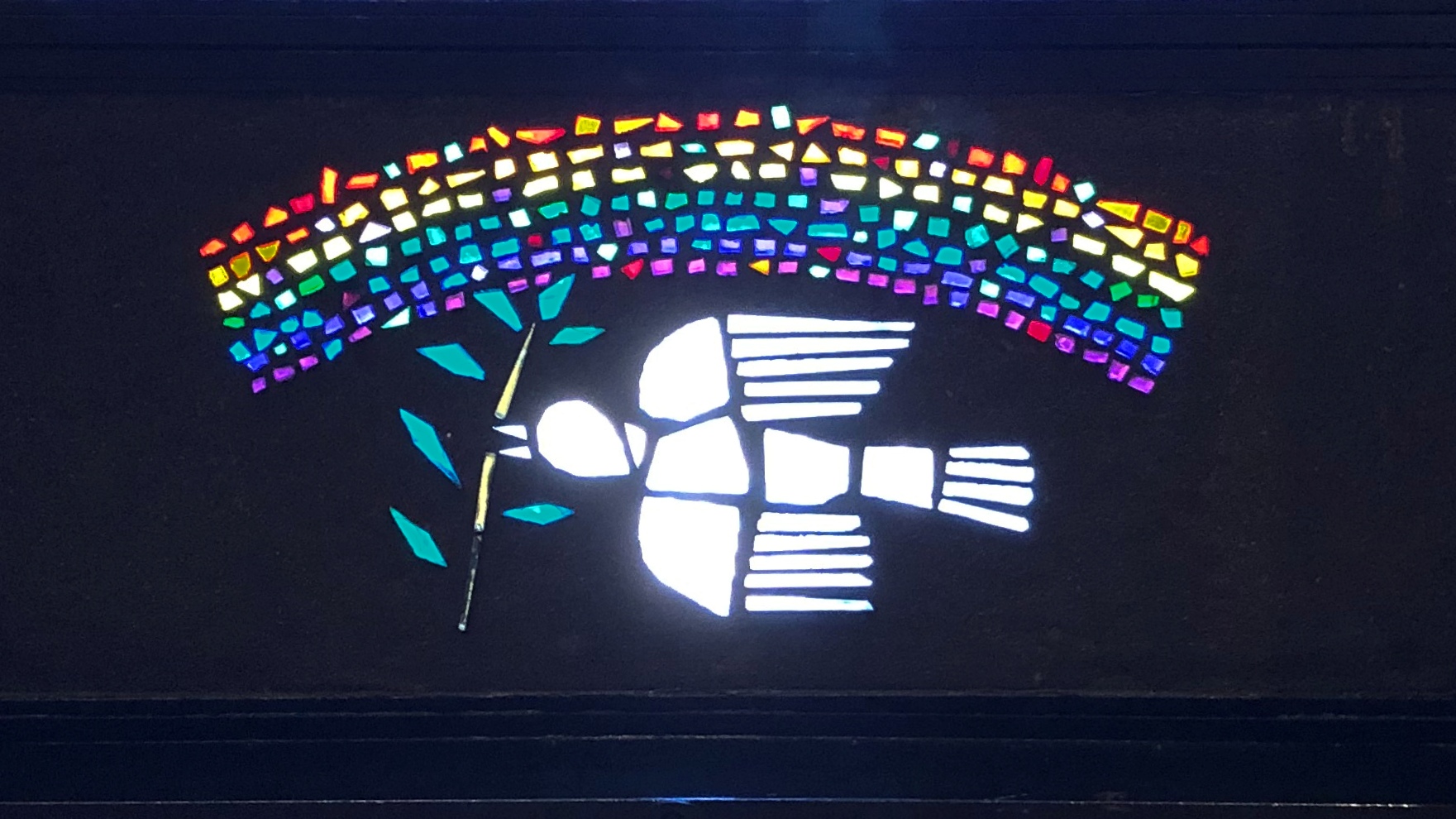
On the other side of the wall is Gottlieb Hall, just as large, but without any seats. Its main feature are five stained glass windows designed by William Gropper in 1967, which my pictures do no justice to. Gropper’s best known as a cartoonist.
Temple Har Zion Gropper Windows

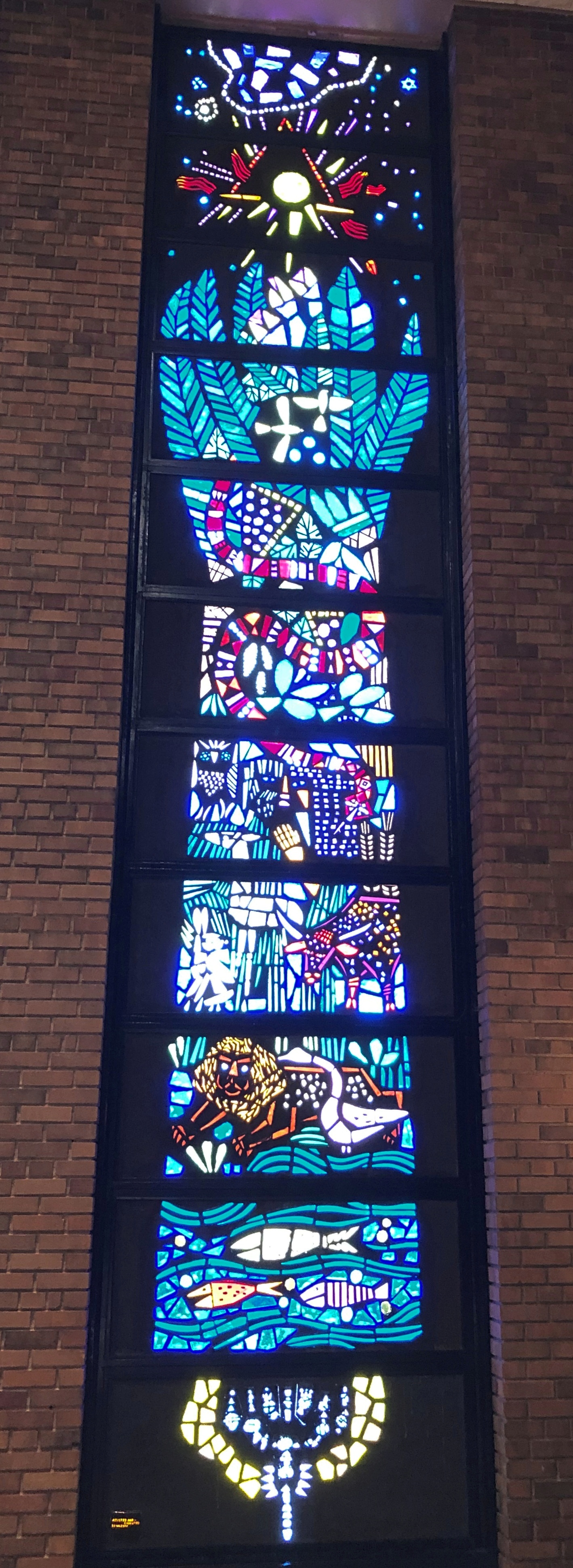
“Instead of traditional stained glass techniques, Gropper used one inch thick chunks of brilliantly colored glass which were cut to shape and chipped or faceted on the surface,” Temple Har Zion says. “Each window is two stories high and contain 11 panels of this chiseled glass set in a matrix… these vibrant windows which represent some of the most familiar stories of Genesis.”

One of the fascinations of the windows is working from top to bottom — and right to left — to pick out the stories of Genesis chronologically. This is the far right window, starting with Creation toward the top and working down to the creatures of the land and sea toward the bottom.
Temple Har Zion Gropper Windows

A detail of the next window: the Flood.
Temple Har Zion Gropper Windows

The end of the Flood.
Temple Har Zion Gropper Windows

Anyone who insists that the 1960s was a poor period for design isn’t looking hard enough.

Open House: Catholic Churches

During Open House Chicago on Saturday, we wanted to see a place called Boxville — “a 17-[shipping] container open-air marketplace full of art, music, food and a variety of entrepreneurial businesses,” the Open House web site says.

But it looked entirely too crowded as we drove by — people waiting for a tour, or a regular shopping crowd? — and there wasn’t anywhere to park close by. Since Boxville is at the E. 51st Street station on the CTA Green Line, that might be the best way to reach it some other day.

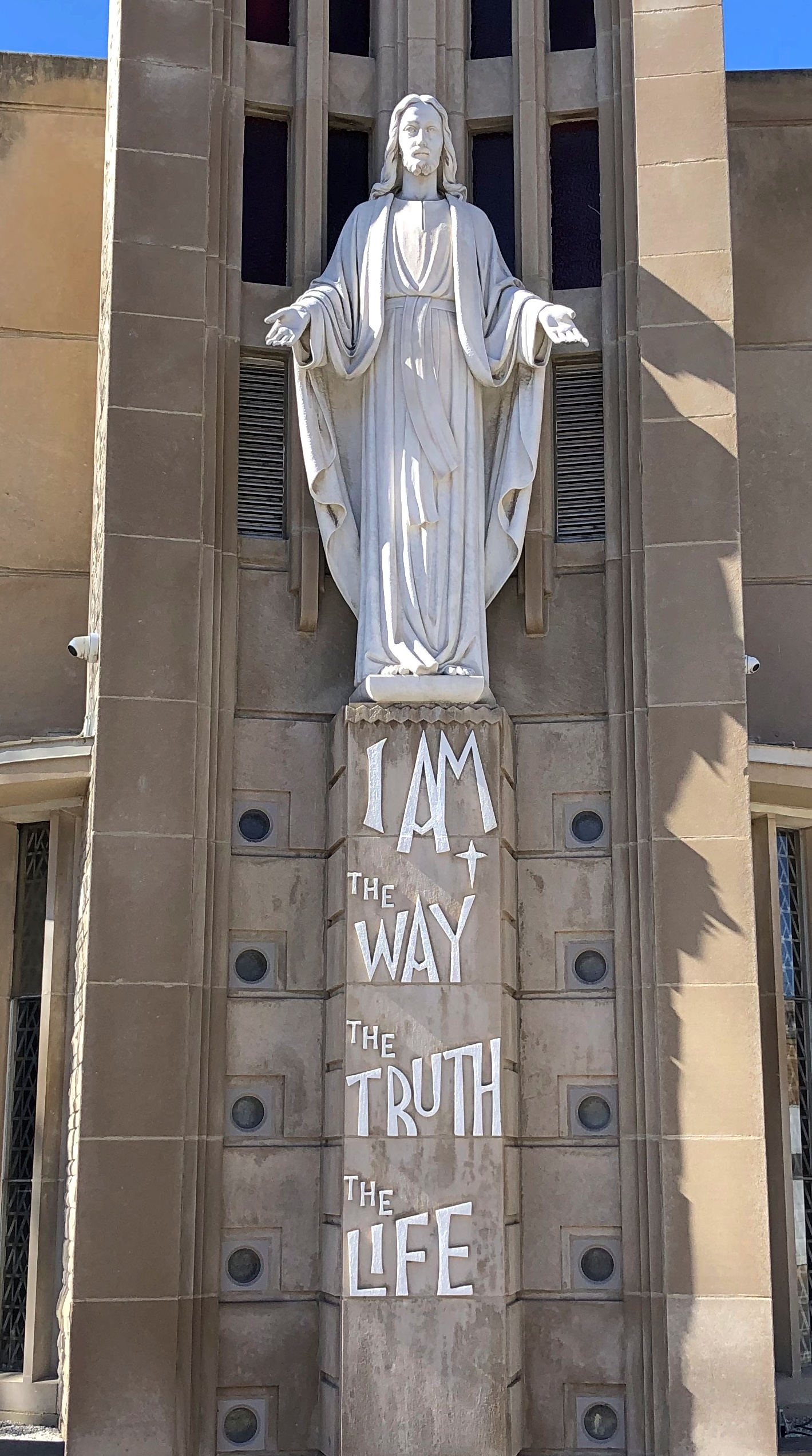
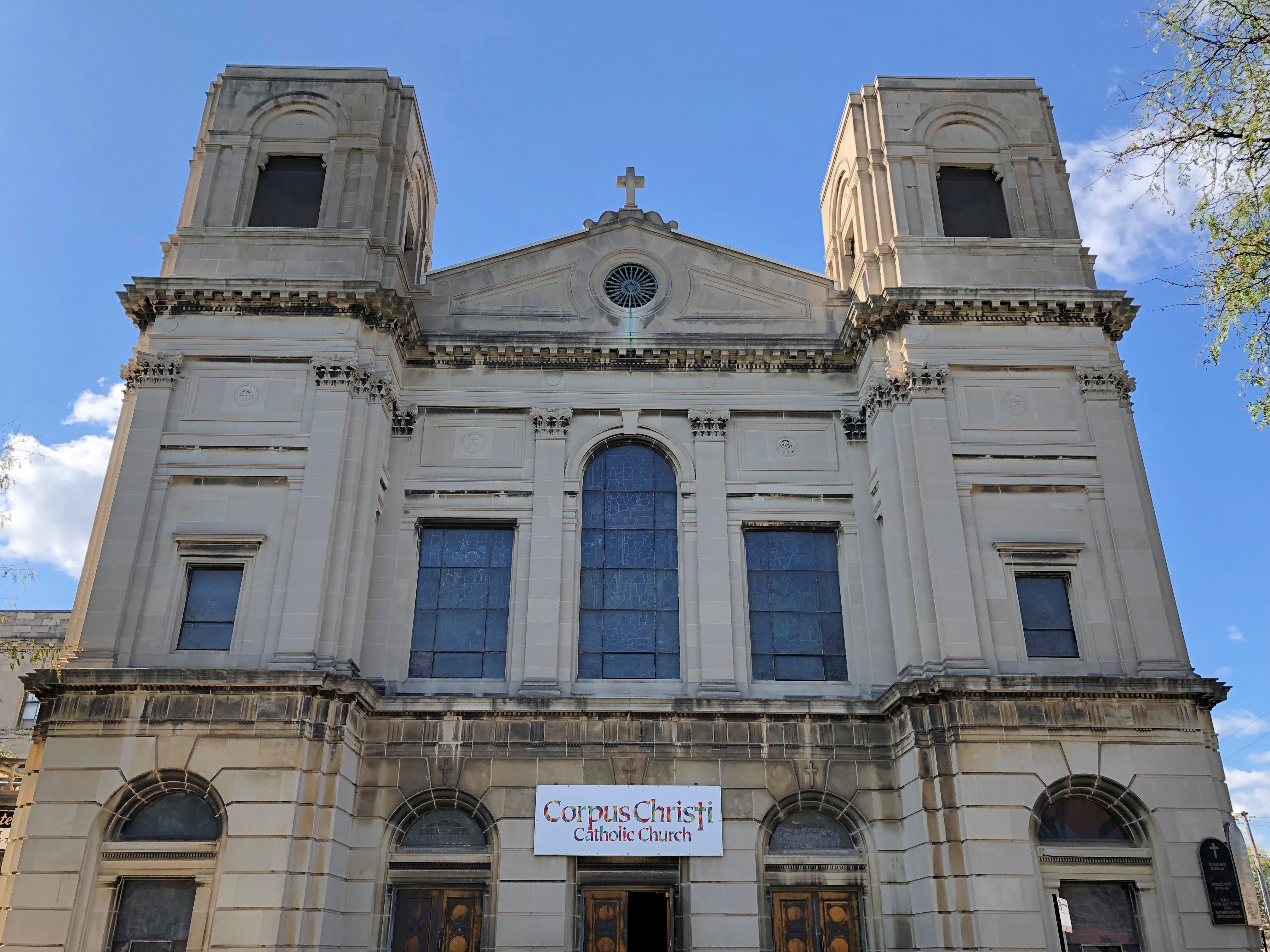
So we went on to Corpus Christi Catholic Church, which is at the corner of Martin Luther King Jr. Dr. and E. 49th St., not too far away. Except that as a functioning Catholic church, Corpus Christi has seen its last mass, which was on June 27.Corpus Christi Church

“Corpus Christi… along with St. Ambrose, St. Anselm, St. Elizabeth and Holy Angels churches, will merge July 1 into one new ‘Our Lady of Africa’ parish, under the Archdiocese of Chicago’s ‘Renew My Church’ initiative, ongoing since 2018,” the Chicago Sun-Times reported in June.

“Under Renew My Church, struggling churches and schools are being closed or consolidated, to cut costs for aging infrastructure, as well as to address a priest shortage.

“And while many parishes continue to struggle with challenges from the changing demographics of Catholic mass and school attendance, the sense of loss from closings and consolidations remains the same.”

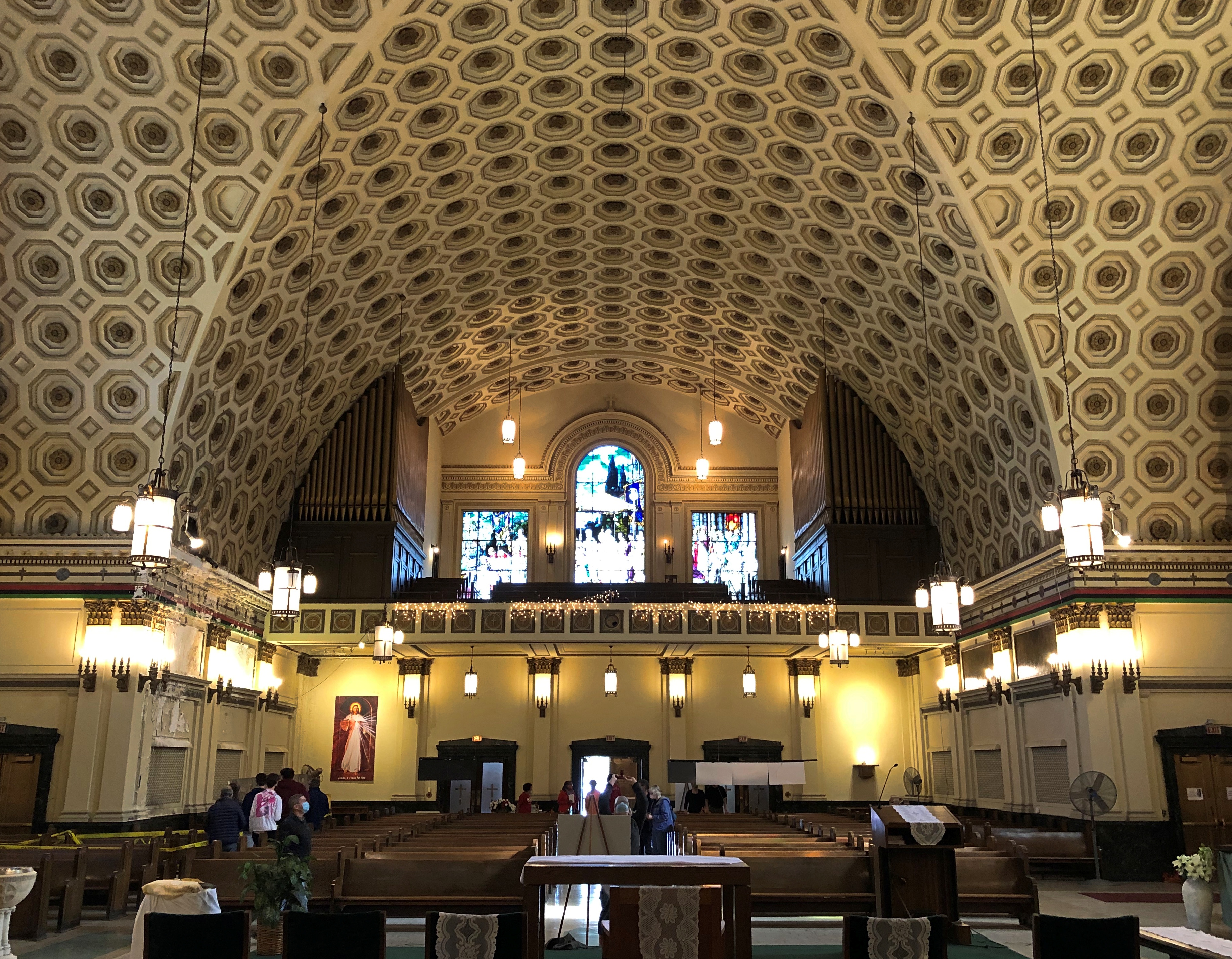
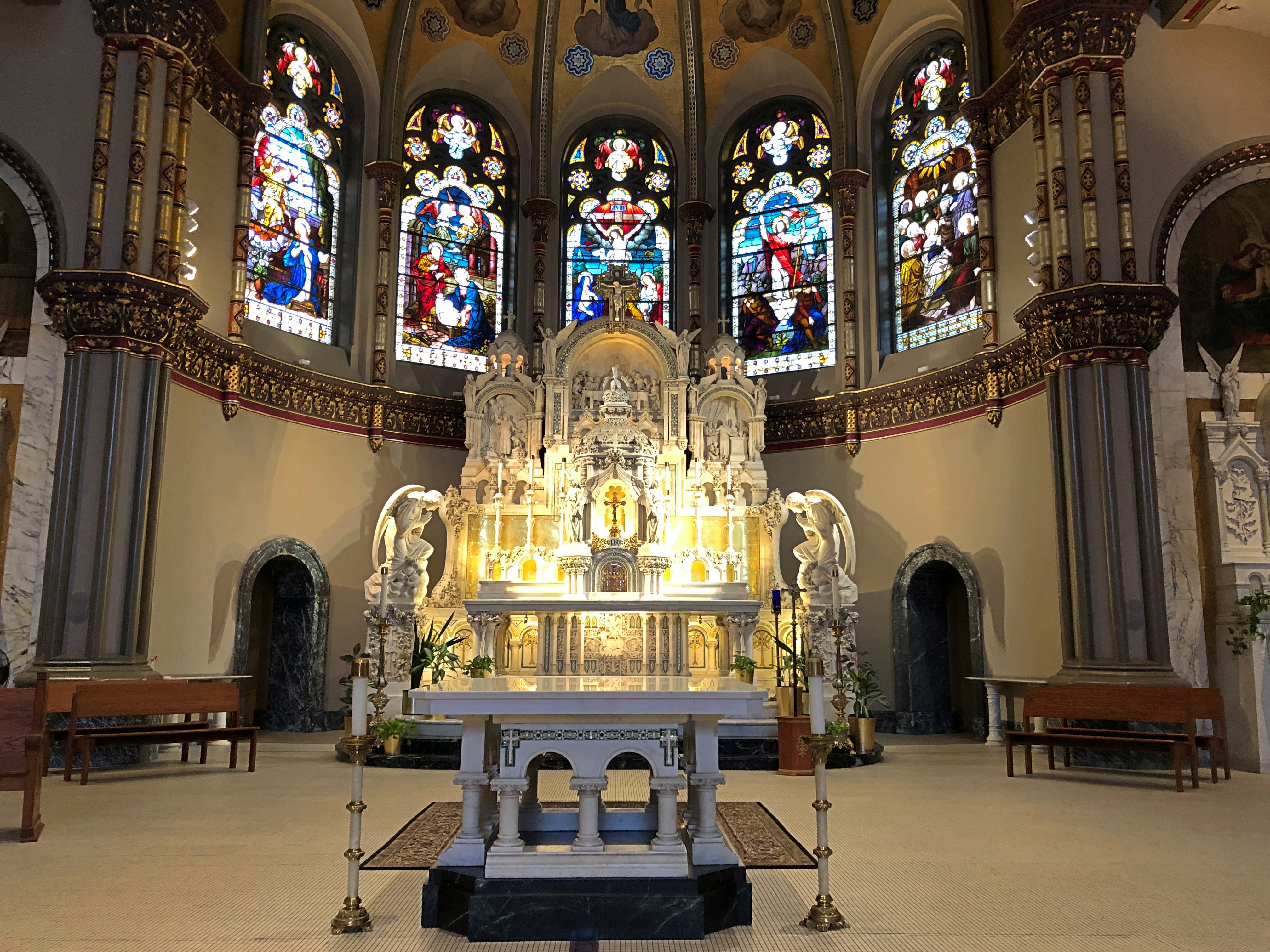
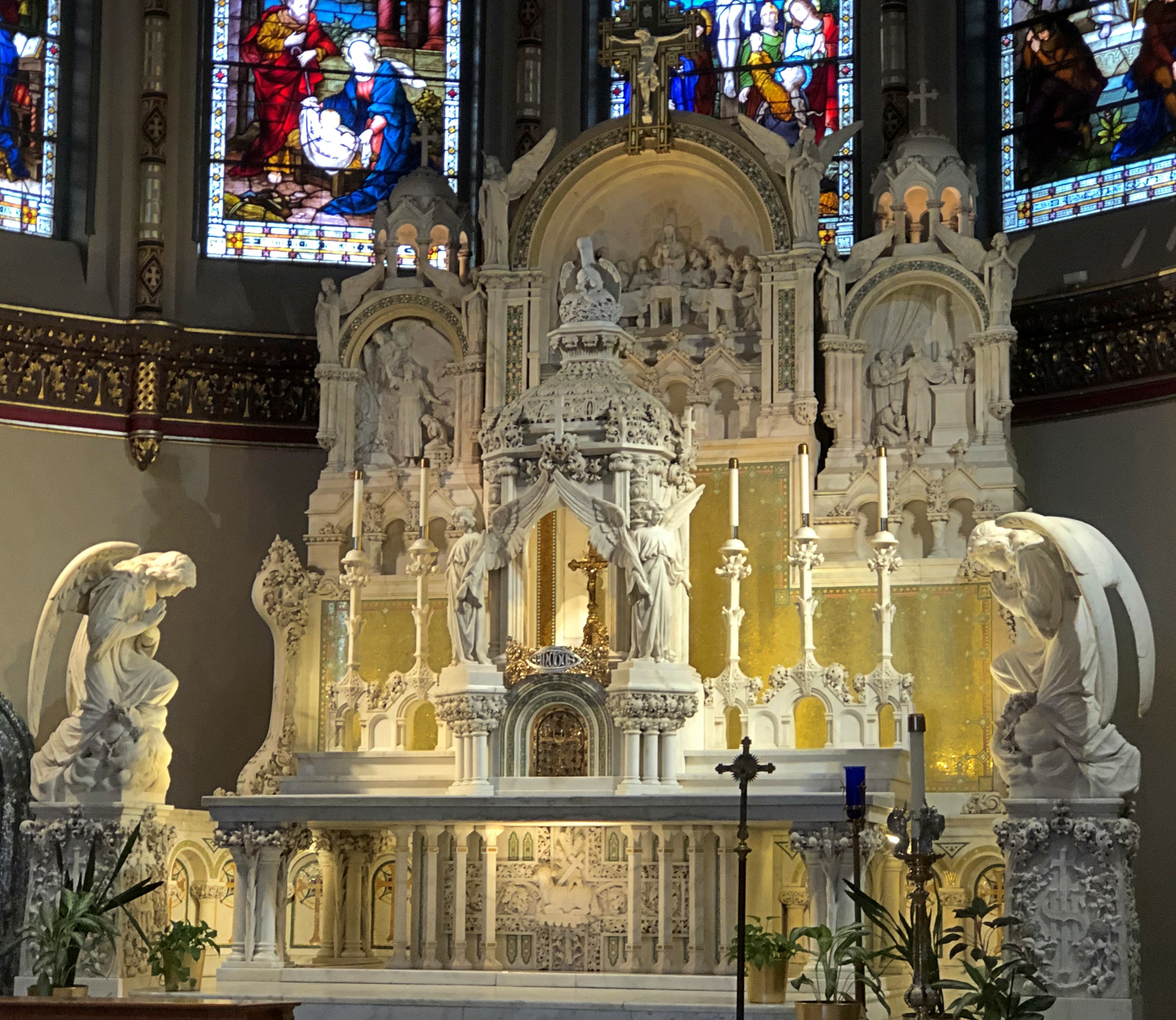
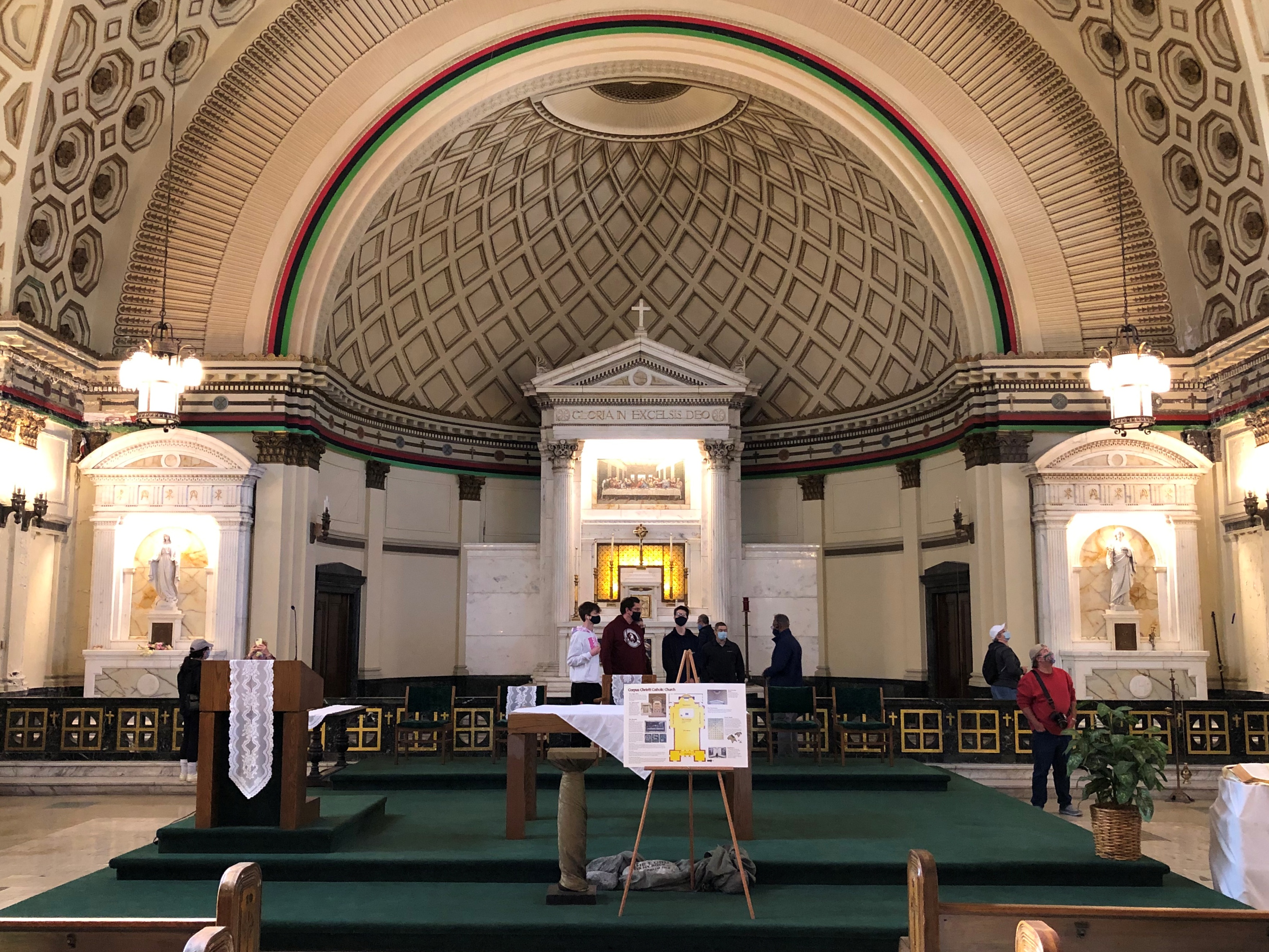
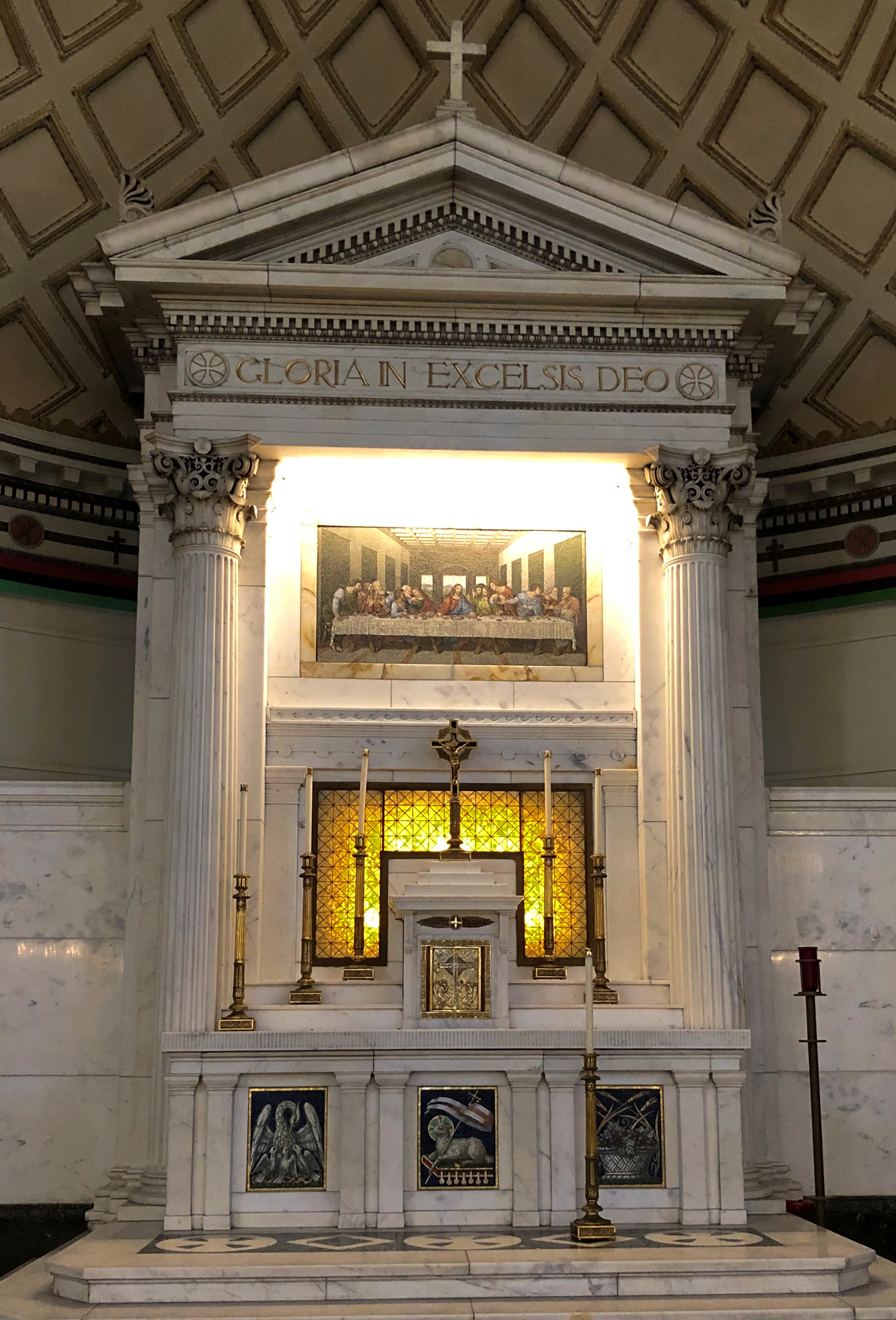
Thus the future of the building is uncertain. One of the docents told me she hoped another religious organization would buy the property, but it would be an expensive proposition. Still, someone should consider making a deal with the Archdiocese. It’s a resplendent church, especially inside.Corpus Christi Catholic Church Chicago Corpus Christi Catholic Church Chicago Corpus Christi Catholic Church Chicago

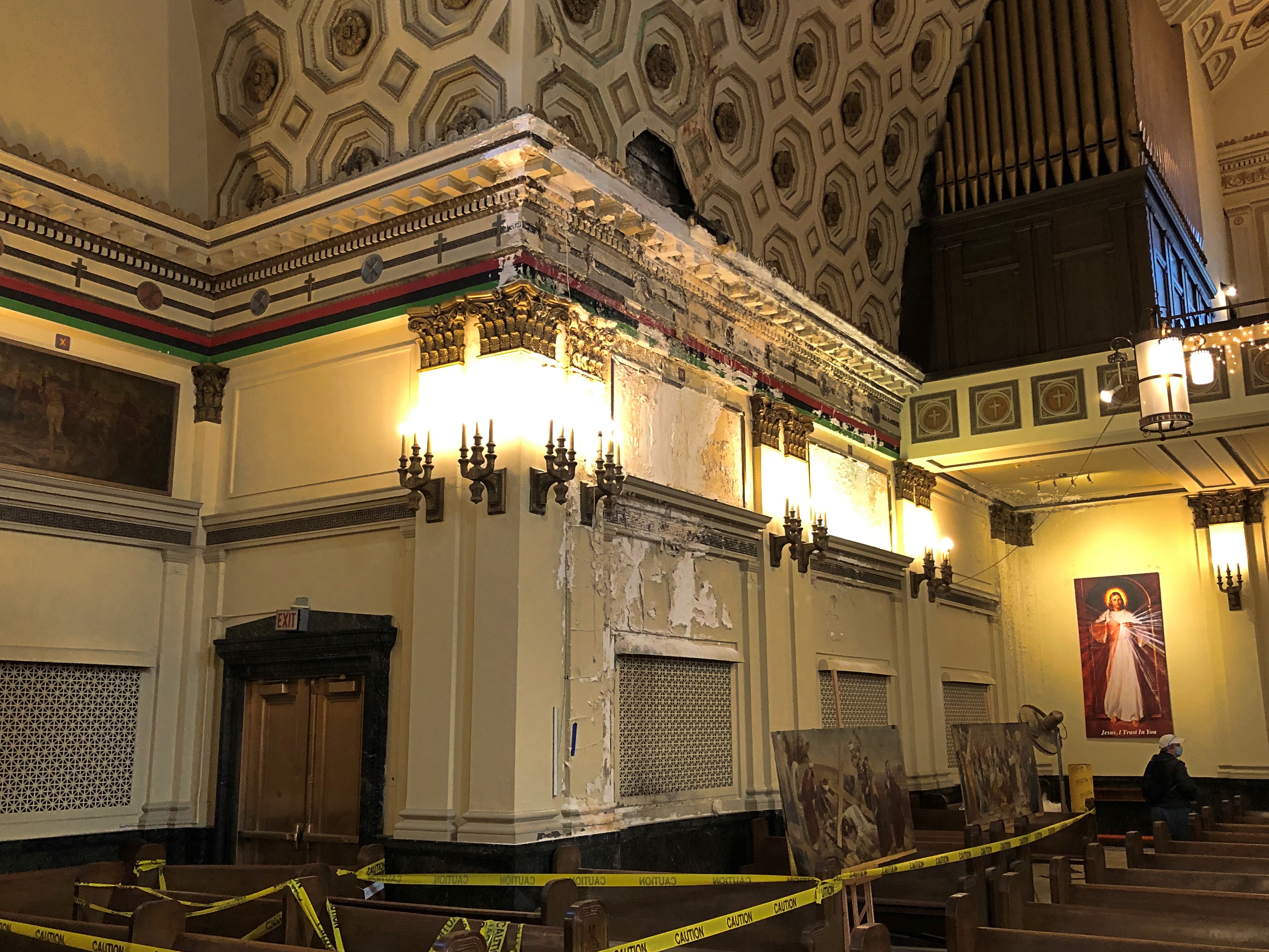
But maintenance is clearly an issue.Corpus Christi Catholic Church Chicago

“This Renaissance Revival building by Joseph W. McCarthy has twin spires and a deeply-coffered ceiling,” says Open House. “Brightly colored stained glass windows, designed in Germany by F.X. Zettler, depict the original church members processing with Pope Pius X…

“During the Great Migration of the 1930s, the church went from serving a predominantly Irish-American community to serving an African-American community.”

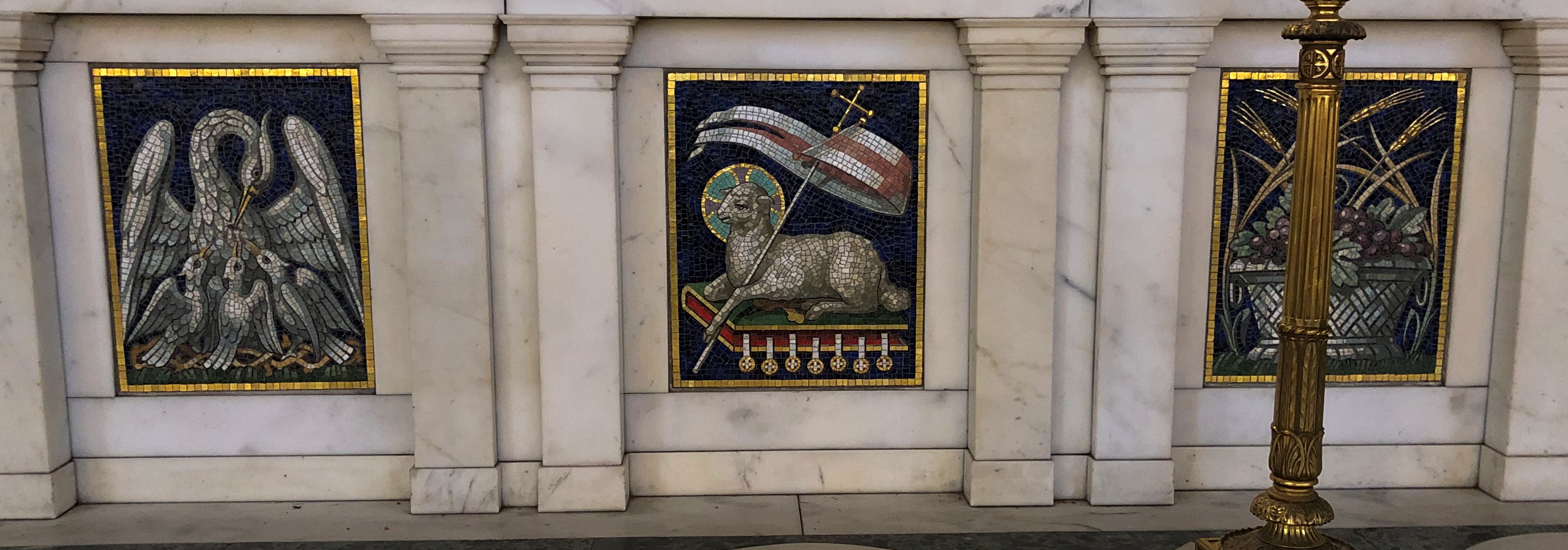
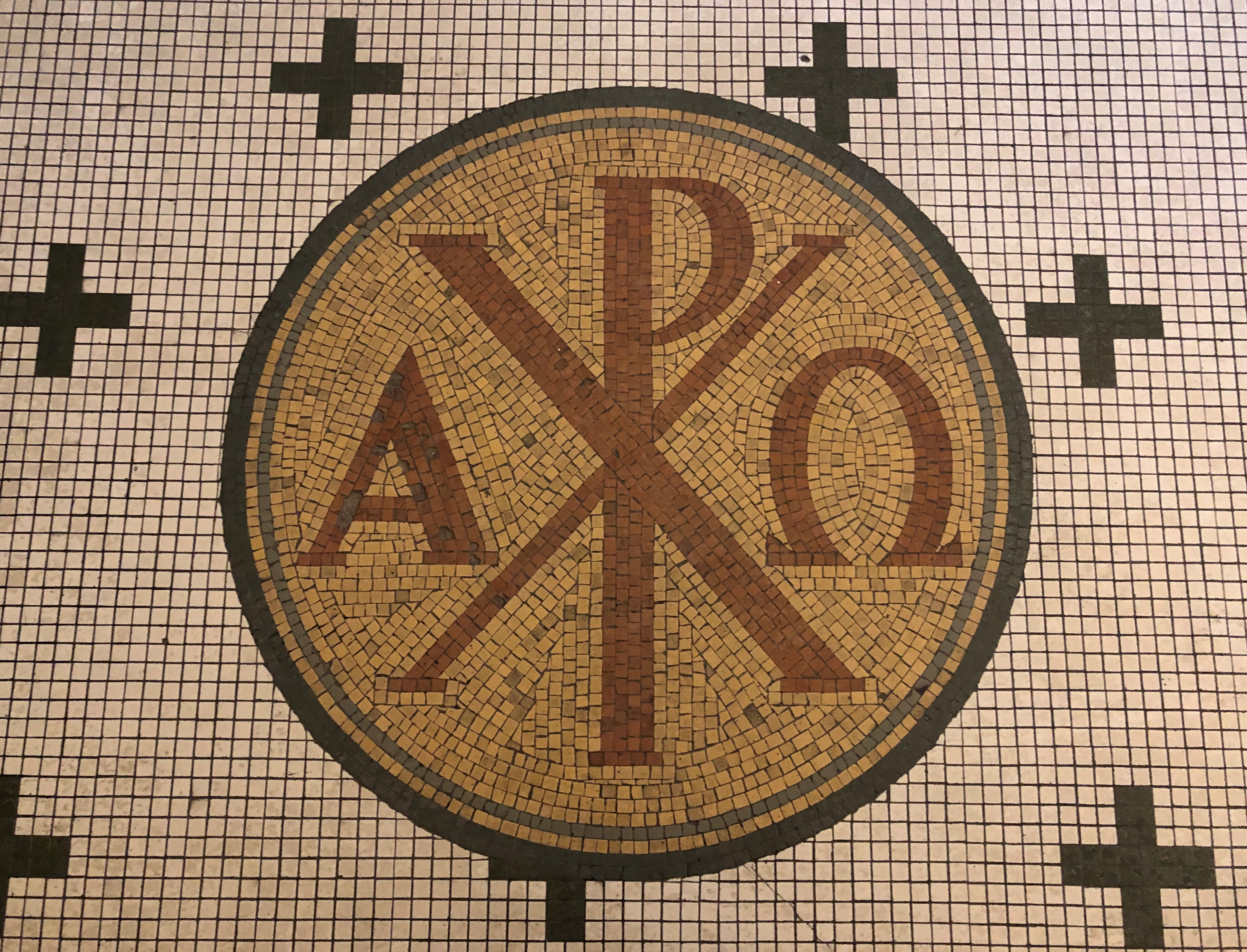
Fine detail is evident, including small mosaics.Corpus Christi Catholic Church Chicago Corpus Christi Catholic Church Chicago

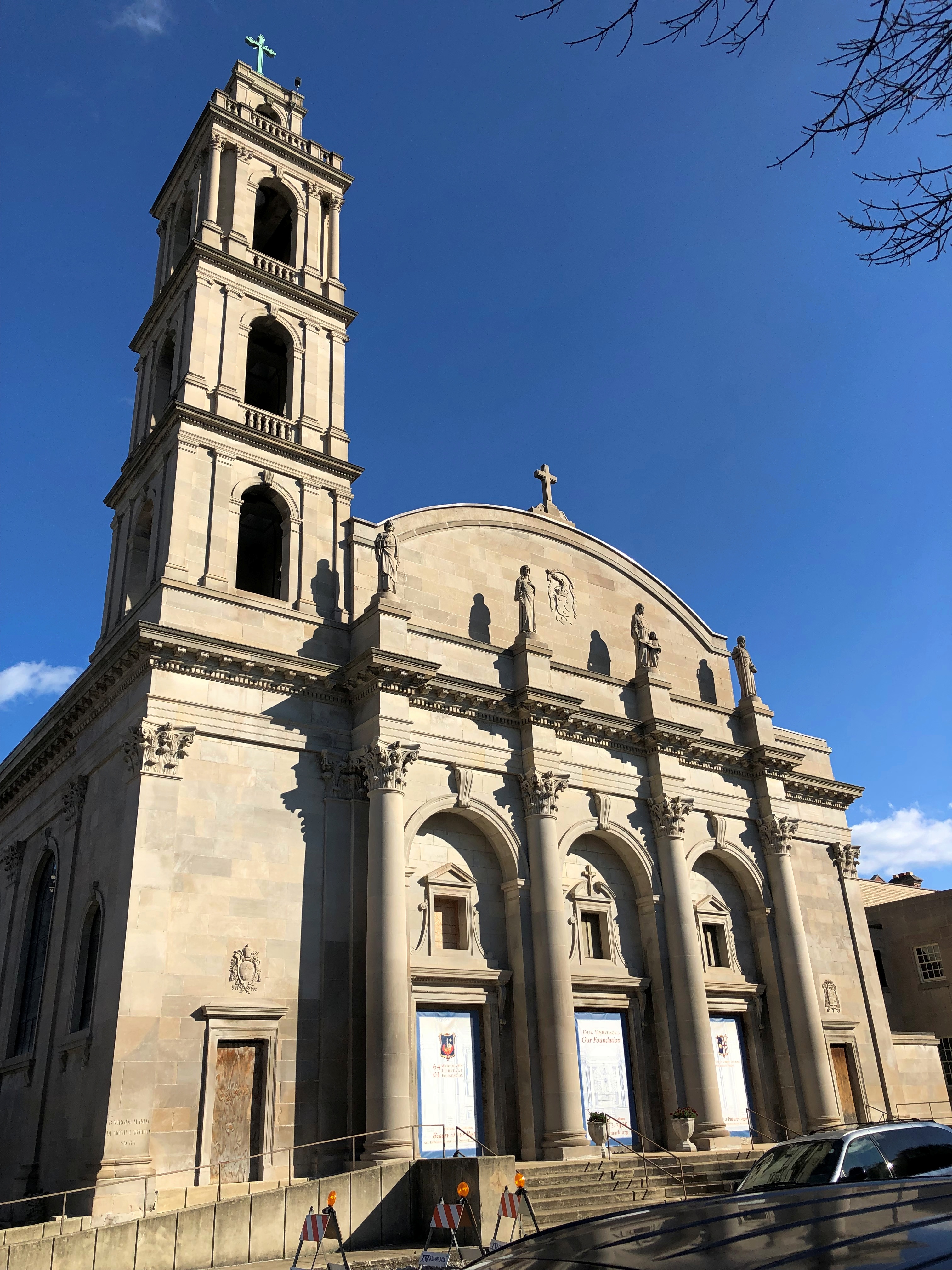
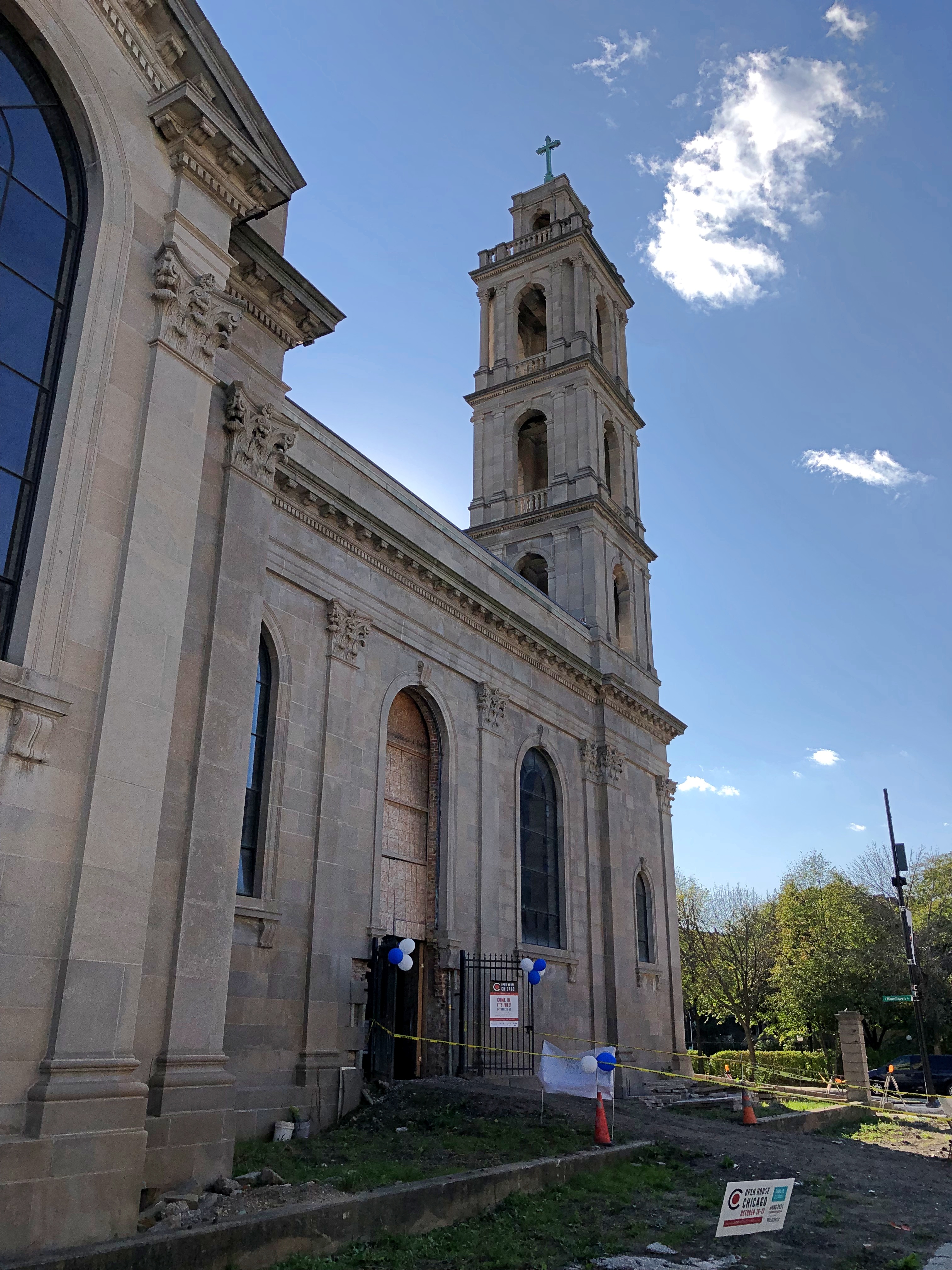
A few blocks south of the Midway Plaisance, in a block that’s clearly gentrifying, is the Shrine of Christ the King. This is how the exterior looked on Saturday.Shrine of Christ the King, Chicago Shrine of Christ the King, Chicago

This is a Street View from July 2017, a year and some months after a fire gutted the church.

“More than 150 firefighters were called the 90-year-old church, located in the 6400 block of South Woodlawn Avenue…” WLS reported in October 2015. “Chicago Fire Department detectives said spontaneous combustion from rags used to stain the floor of the choir pew is the mostly likely culprit.

“The Shrine of Christ the King was originally a Catholic church, known first as St. Clara and then as St. Gelasius. As the size of the parish diminished, the building faced demolition. However, the building was given historic status and taken over by a religious order in 2006.”

Namely, the Institute of Christ the King Sovereign Priest, which has been around only since 1990 and whose U.S. national headquarters is in Chicago. The building is considerably older, the final work of ecclesiastical architect Henry J. Schlacks, completed in 1927 (and suffering a previous fire in 1976).

The interior is still completely unfinished. All you could do is look in from the entrance, and hear about its pending restoration from volunteers. I’m all for that, so I put a small donation in the box on the table at the door.

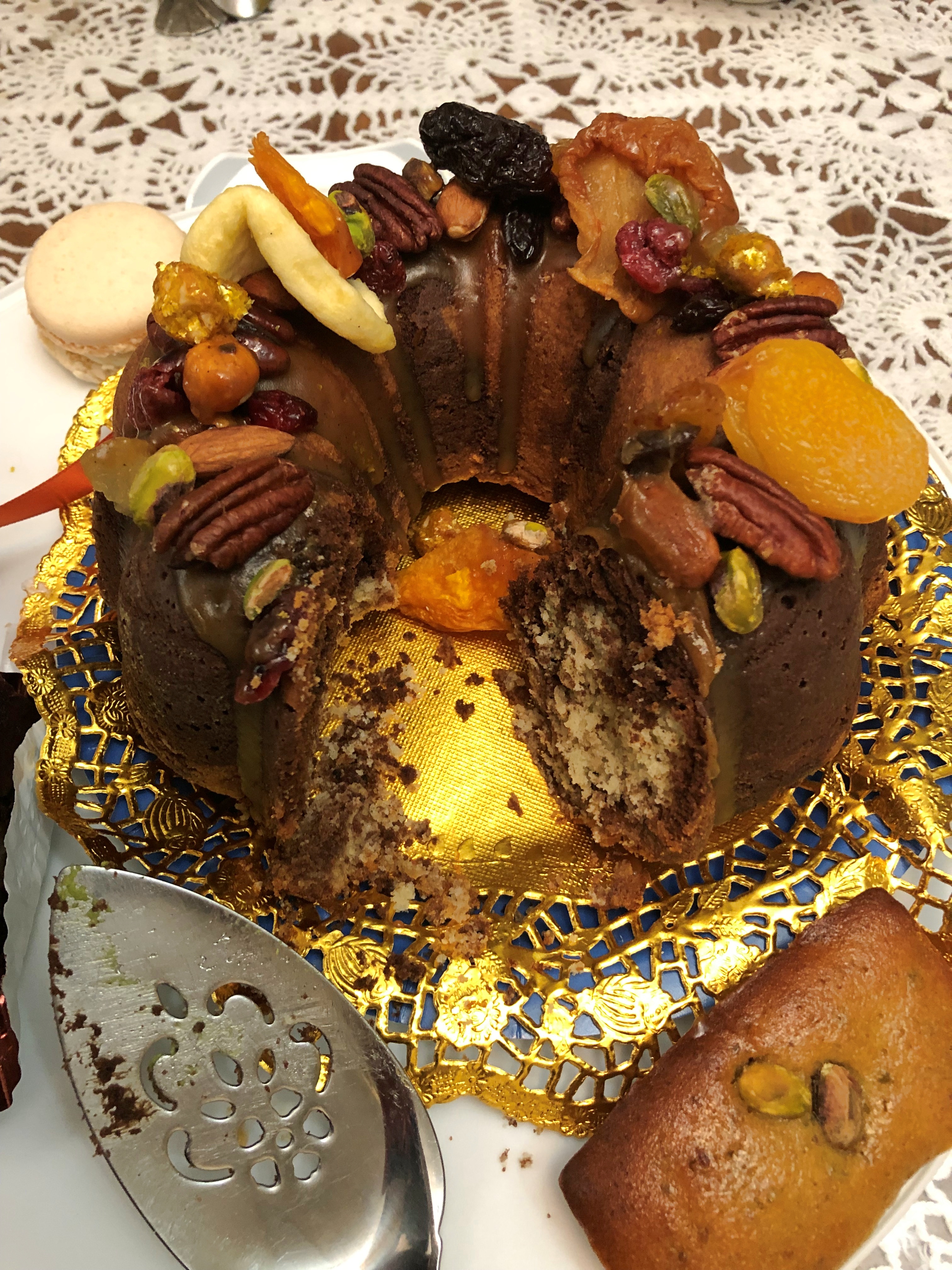
On Sunday, while Yuriko was busy creating a most delicious marble cake —marble cake

— I headed to the North Side to take a look at St. Vincent de Paul Church.St. Vincent de Paul Church Chicago St. Vincent de Paul Church Chicago St. Vincent de Paul Church Chicago

“St. Vincent de Paul serves a parish founded in 1875 by the Vincentian order,” Open House says. “The present-day church was completed in 1897, considered to represent architect James Egan’s finest work… The church is constructed of Indiana limestone blending Romanesque architecture like rounded doorways and arcades with French Gothic details such as the large, soaring windows.”St. Vincent de Paul Church Chicago St. Vincent de Paul Church Chicago St. Vincent de Paul Church Chicago

Wonderful to see, but when I left I also took note of a more everyday wonder. Food. Across the street from the church is a joint called Jam ‘n Honey. People were sitting at tables out on the sidewalk, eating what looked like delicious breakfasts. I’ll have to keep that in mind for future reference.

Open House: Protestant Churches

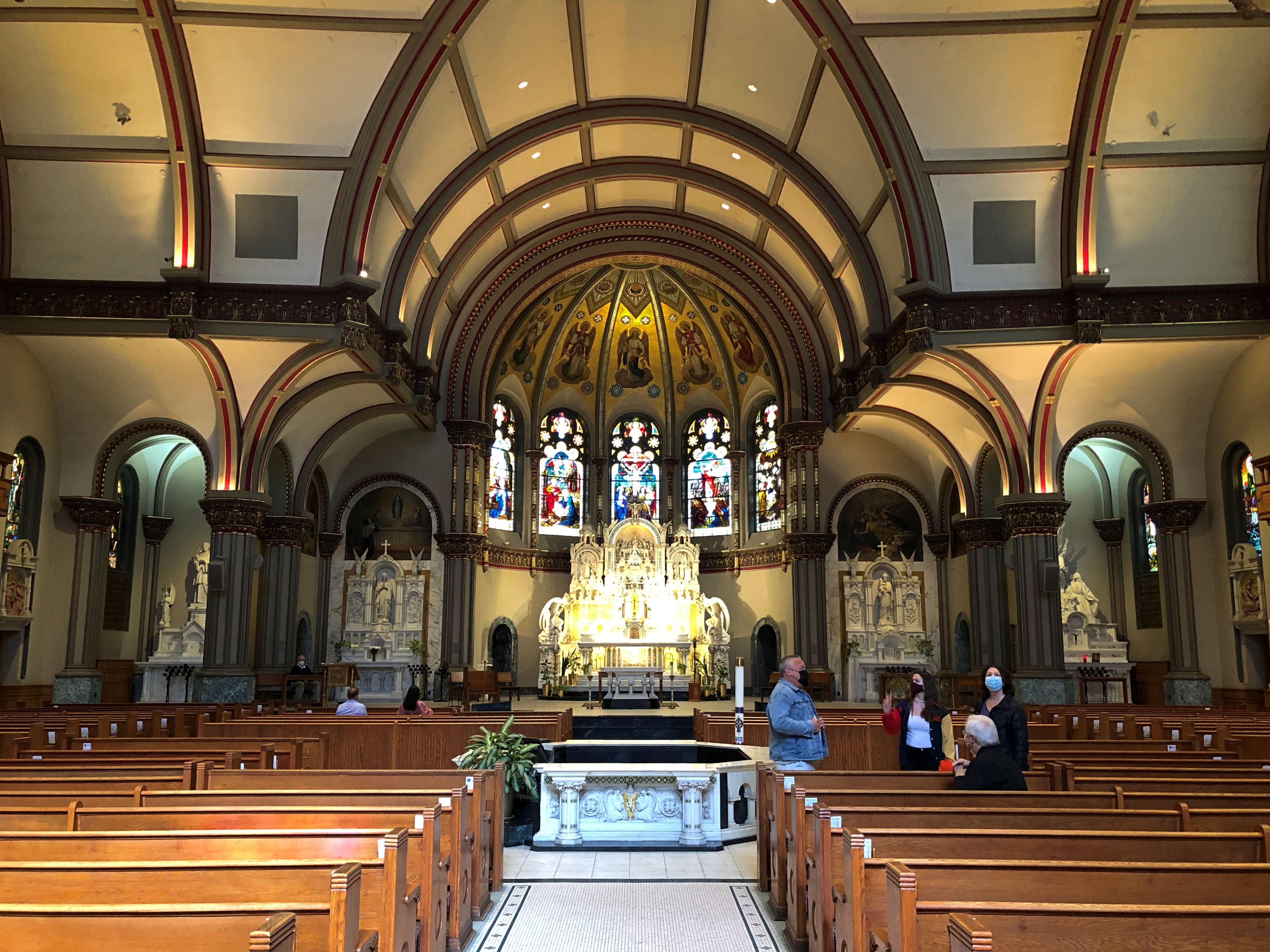
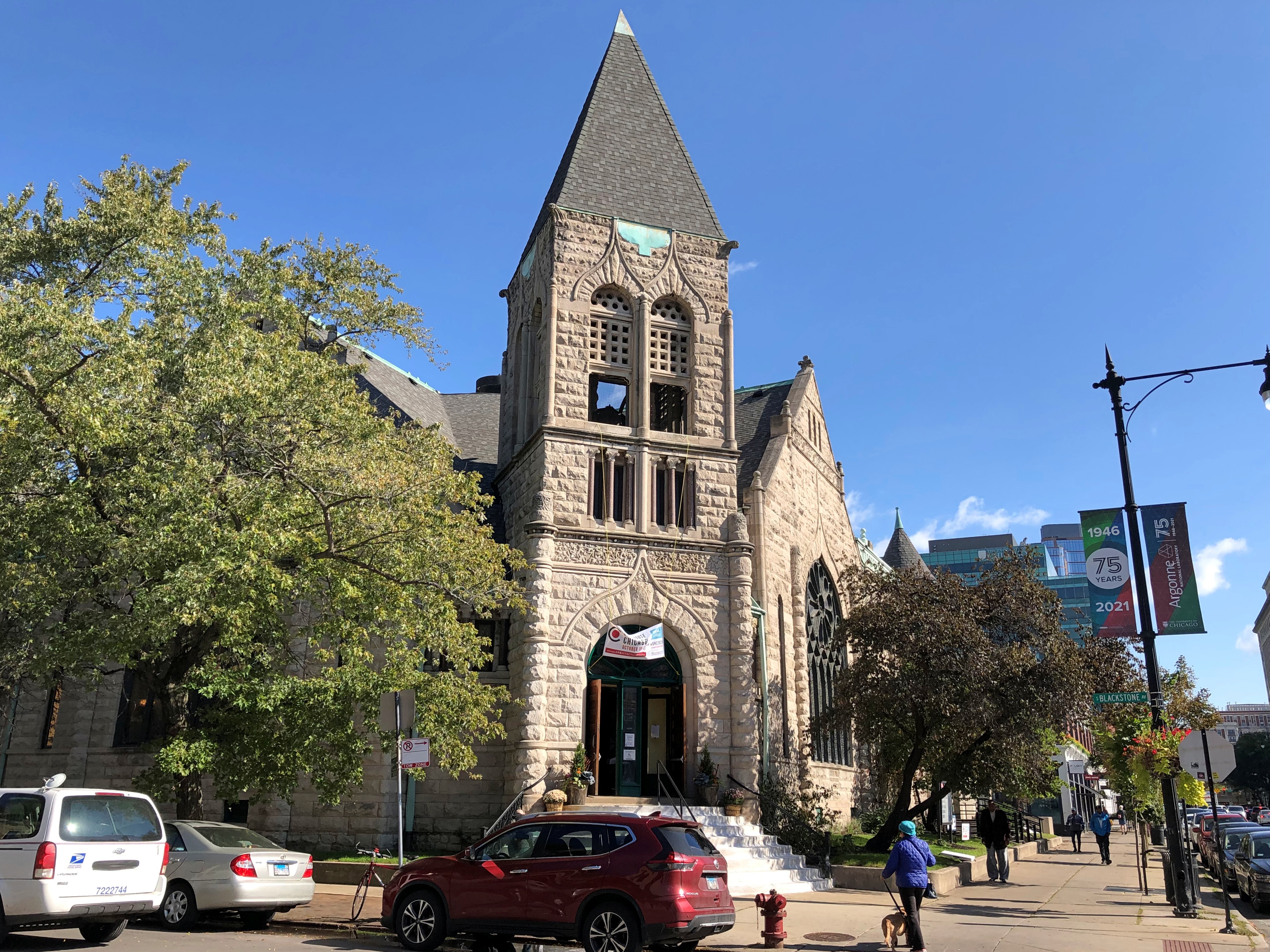
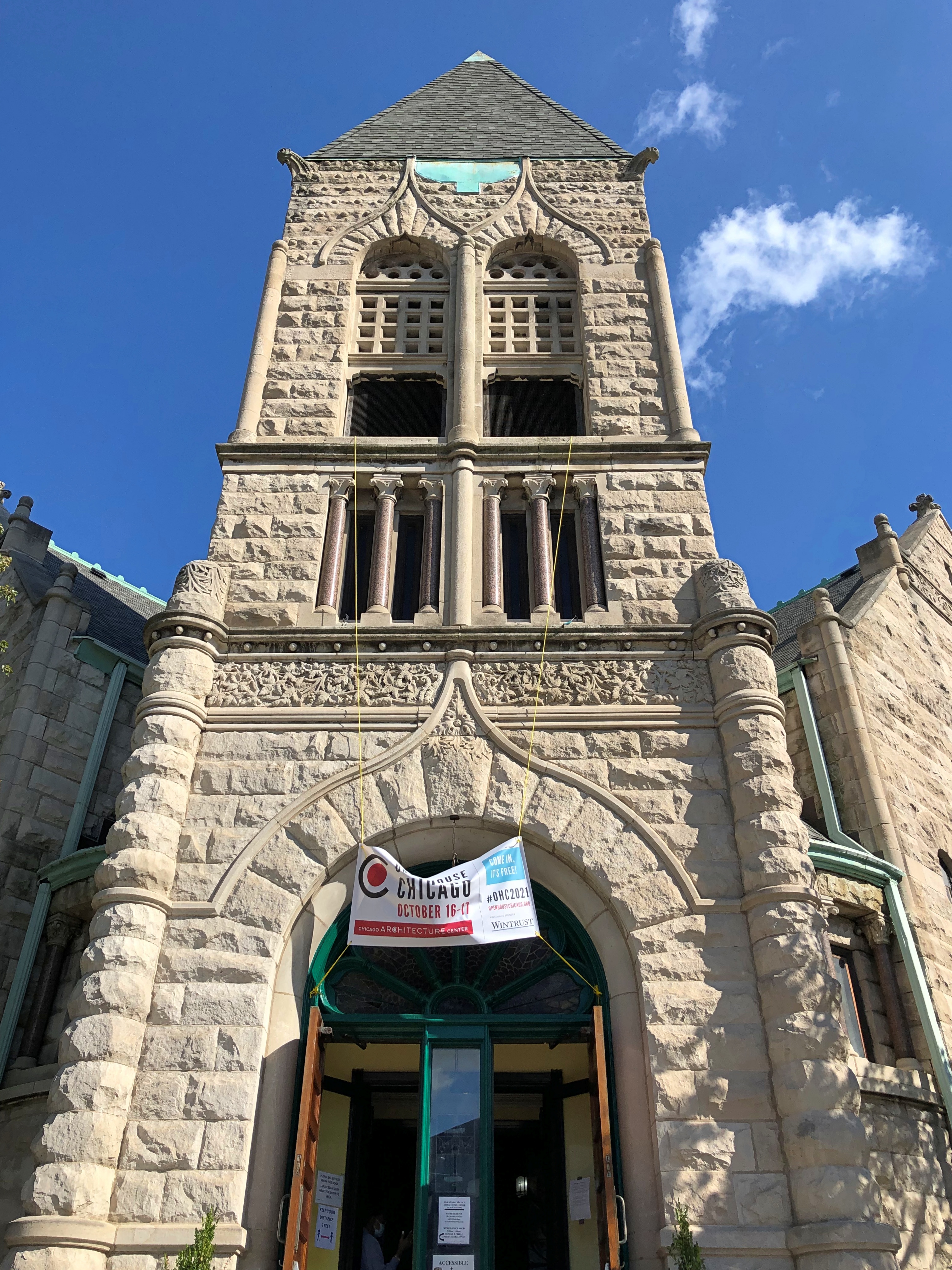
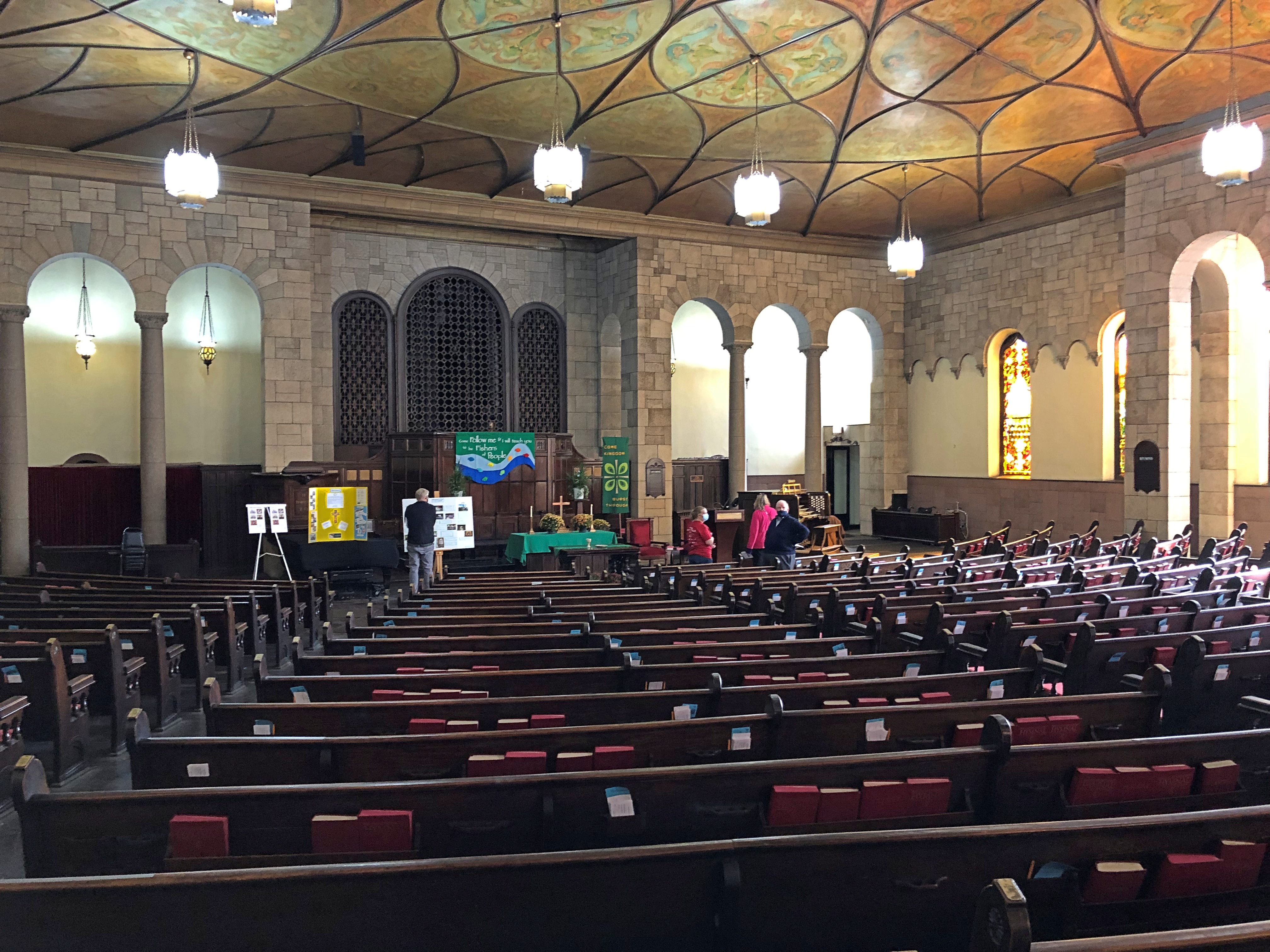
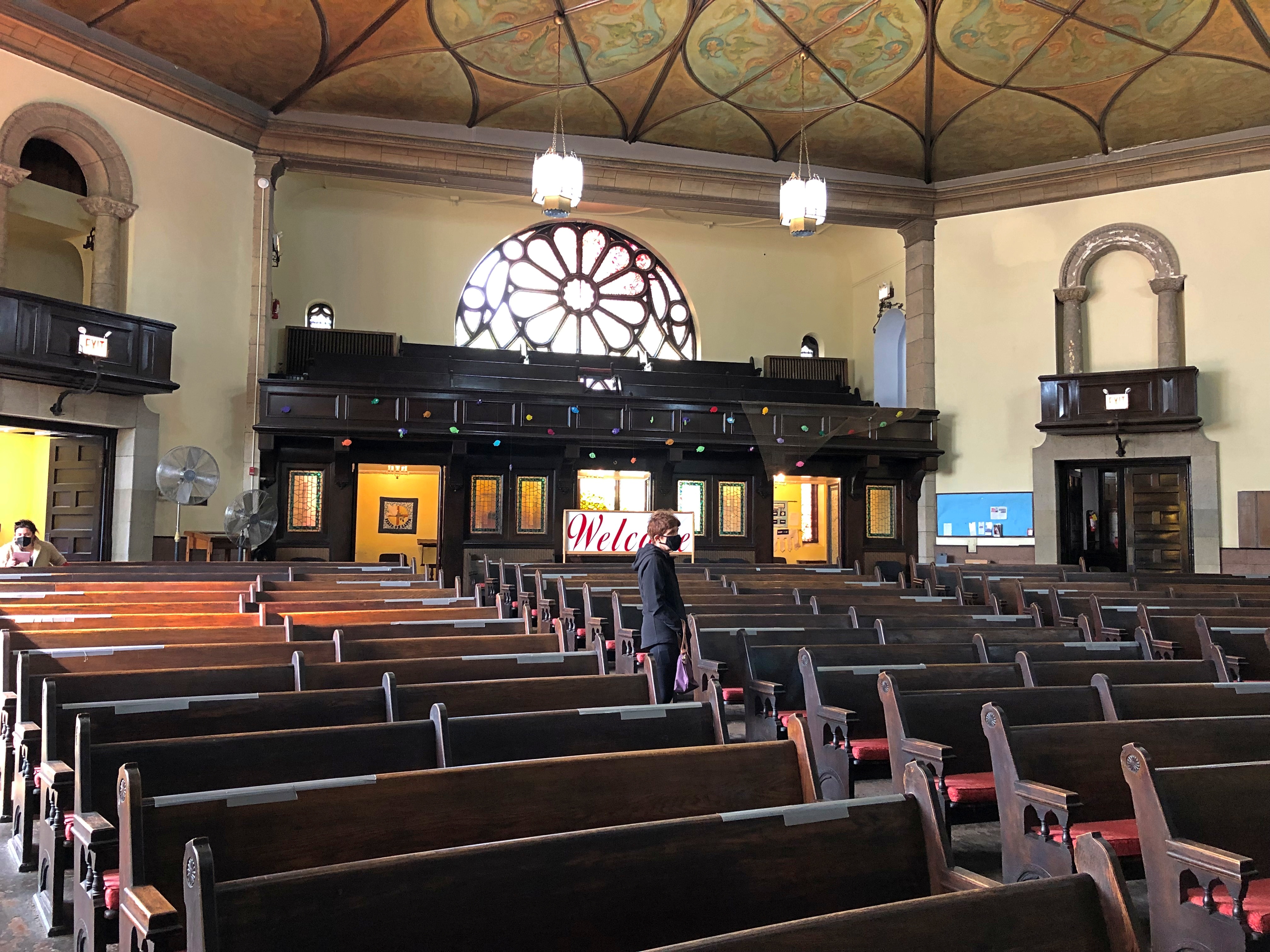
During Open House Chicago on Saturday, we dropped by a number of open churches, as usual. Chicago has many. Our first religious site was the United Church of Hyde Park, a Romanesque Revival structure designed by Gregory A. Vigeant, dating from 1889.United Church of Hyde Park United Church of Hyde Park

“United Church of Hyde Park is a tri-denominational faith community (United Church of Christ, Presbyterian Church USA, and United Methodist Church),” the church web site says. A Protestant parfait, I guess.United Church of Hyde Park United Church of Hyde Park

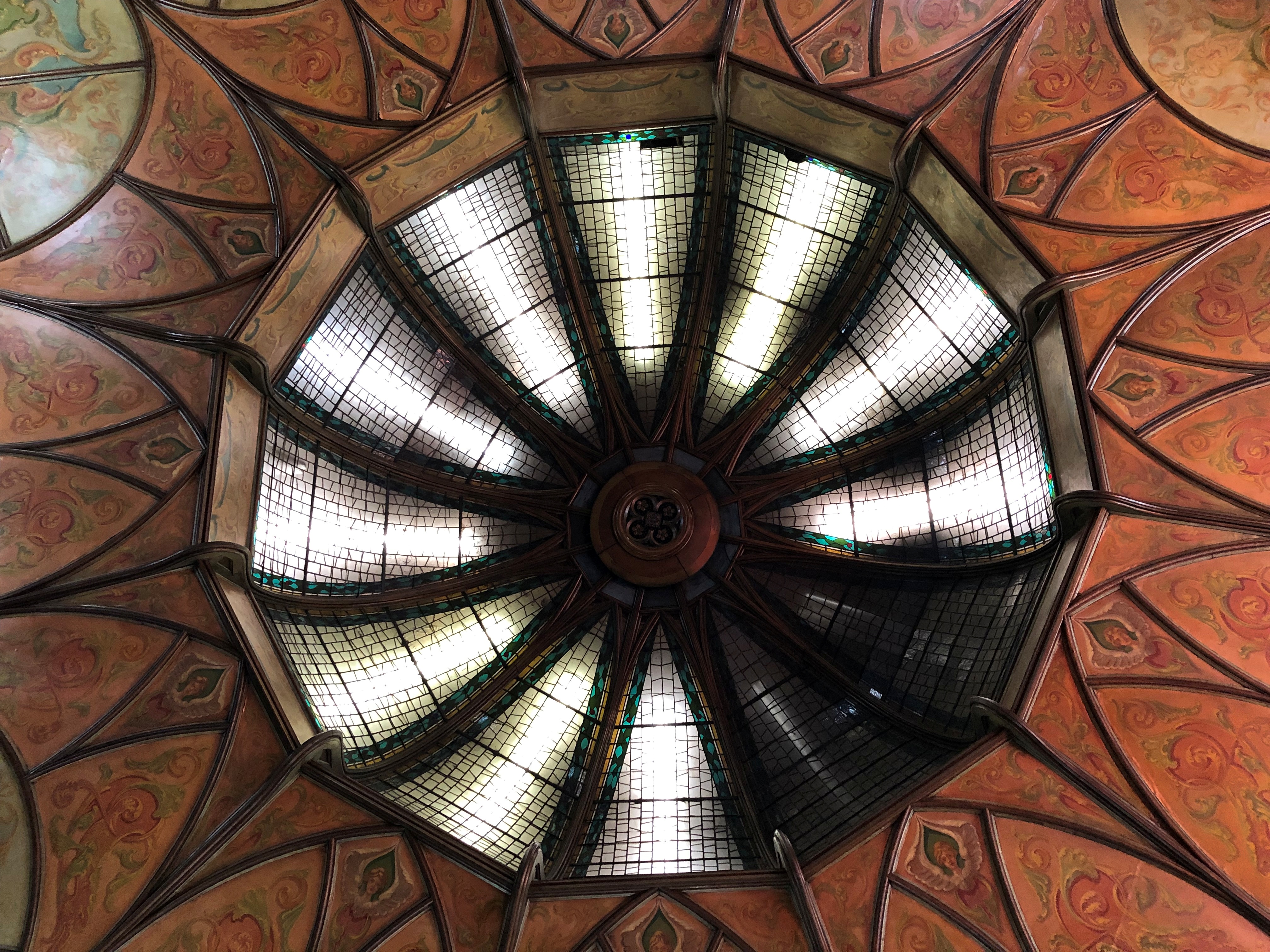
They’re barely visible, but the names of the Apostles are inscribed around the dome.
United Church of Hyde Park

There are 12 places for names, and while I can’t read them, I assume they include Matthias rather than Judas. I’d hope so, anyway.

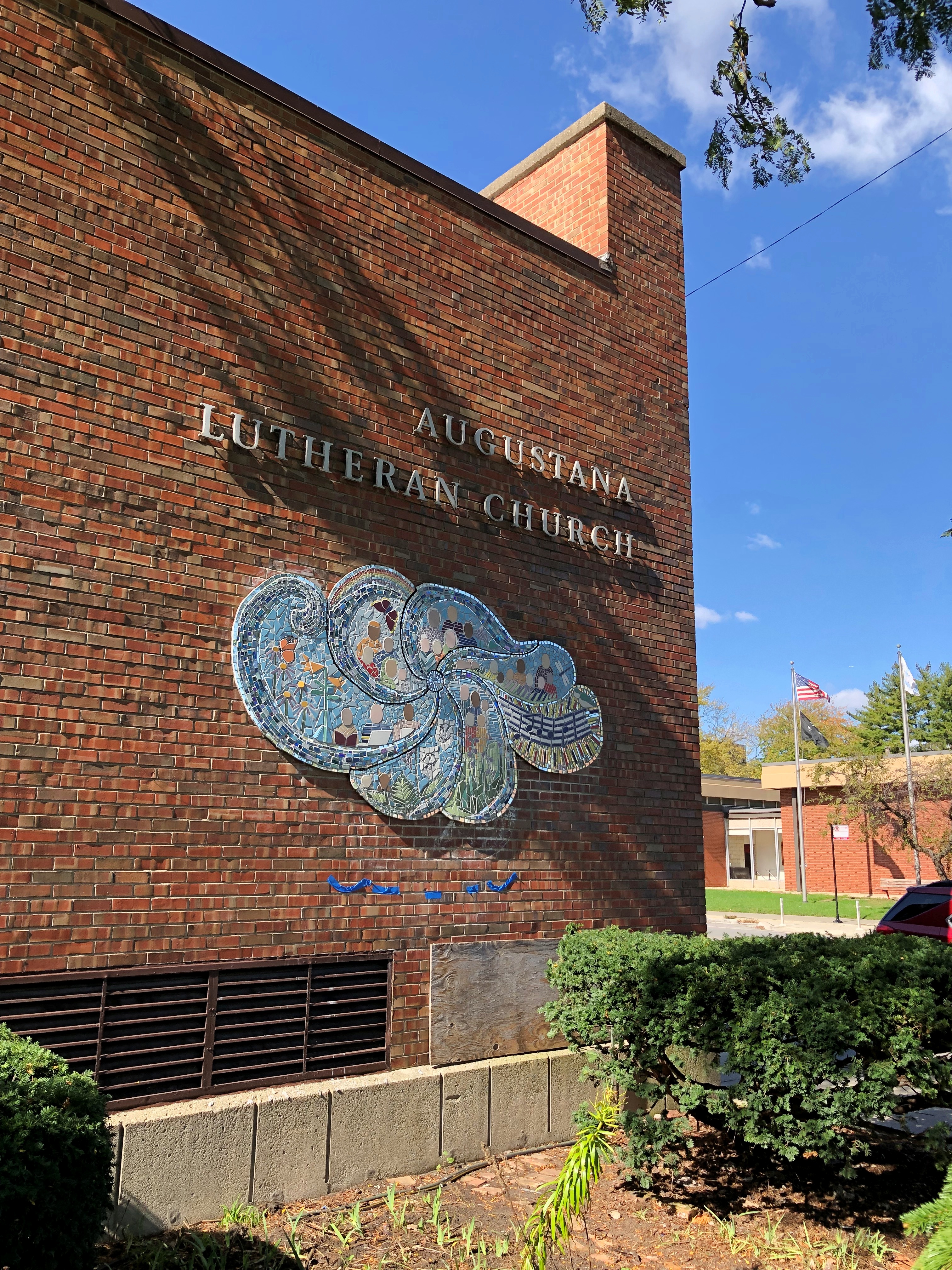
Elsewhere in Hyde Park is Augustana Lutheran Church.Augustana Lutheran Church

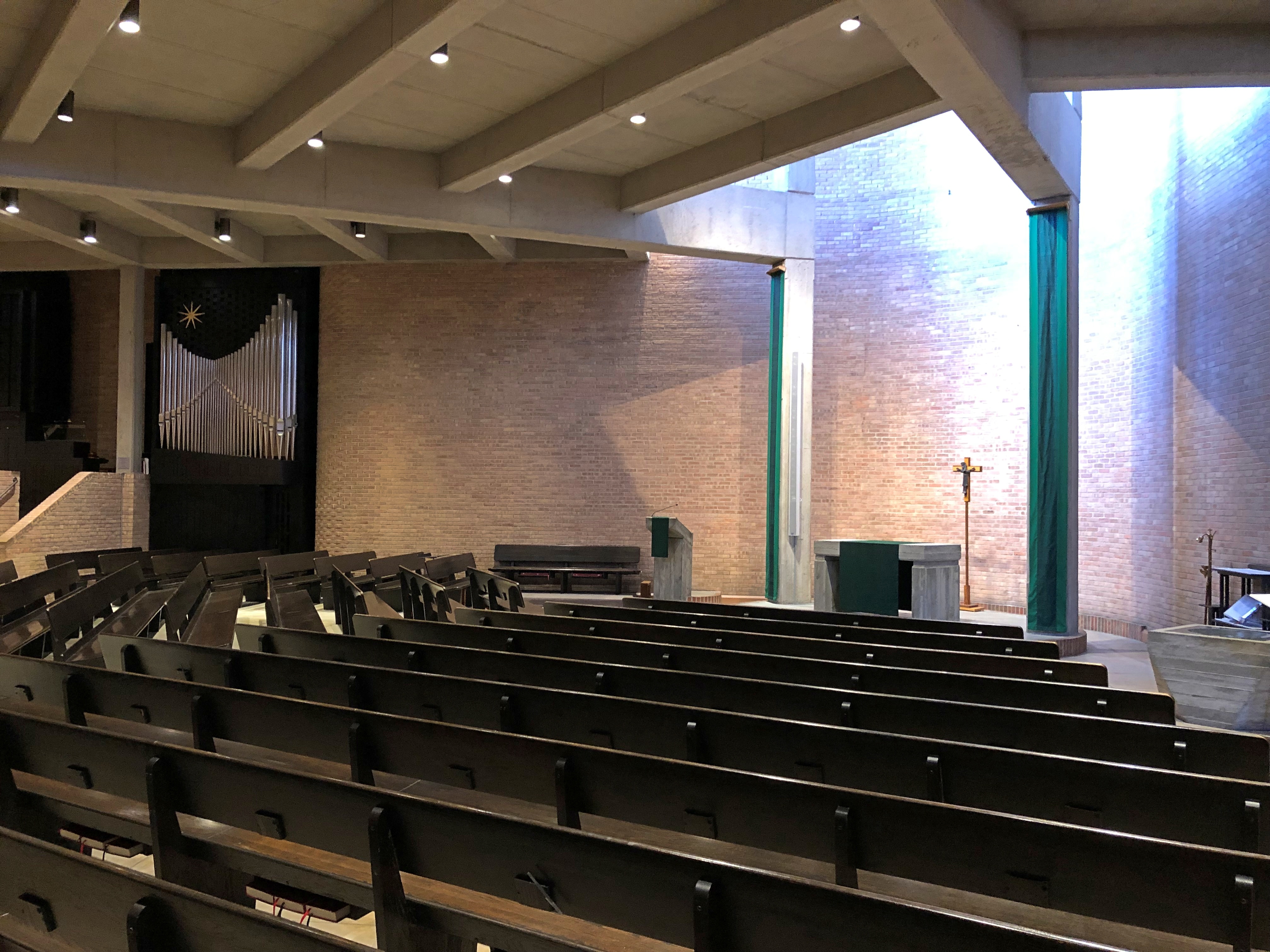
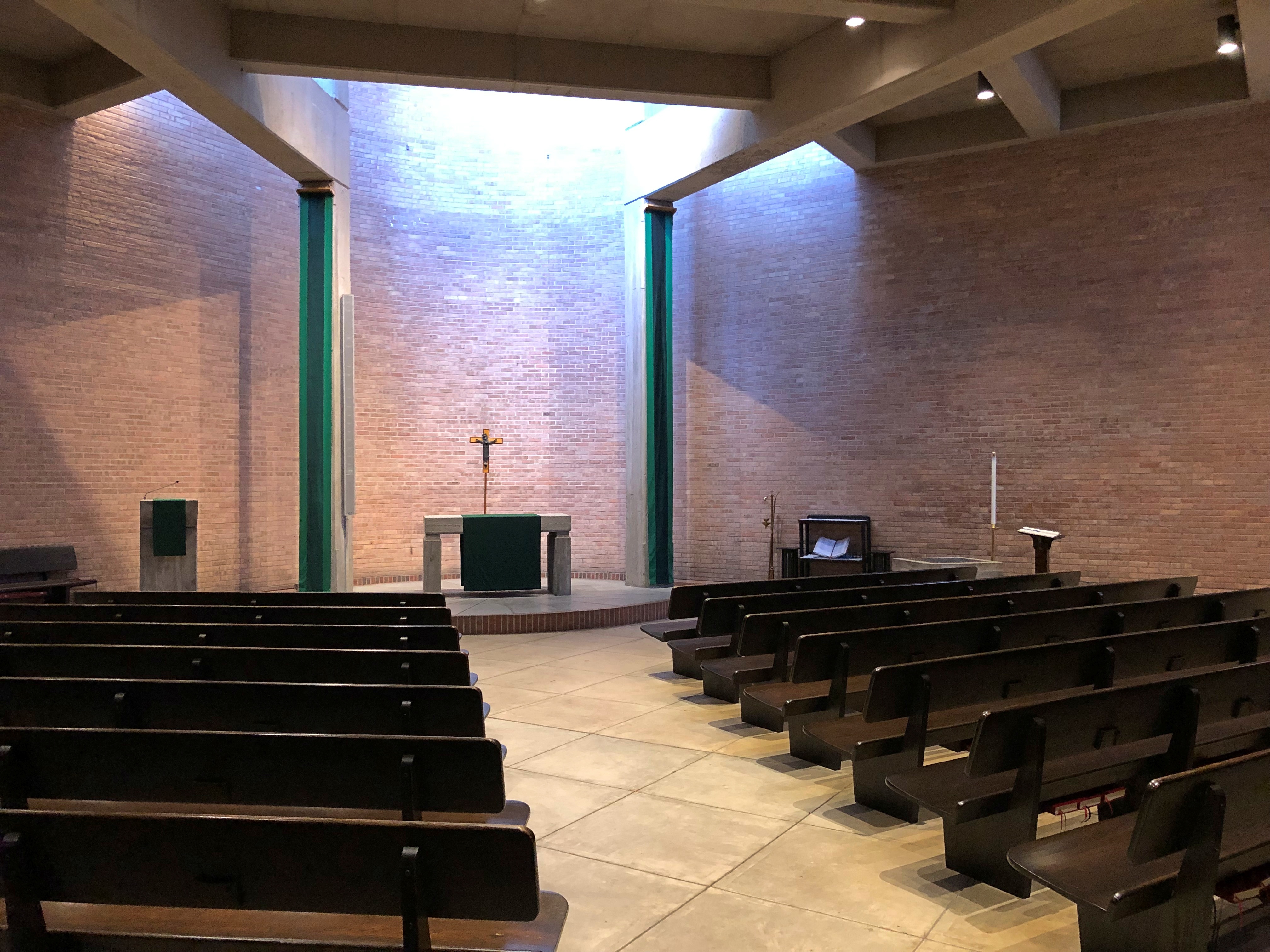
It’s a mid-60s modernist design by Edward Dart, who is better known for Water Tower Place on Michigan Ave., though he did a lot of churches as well.Augustana Lutheran Church Augustana Lutheran Church Augustana Lutheran Church

“A church more than any other building should reflect today’s culture, feeling, and the renaissance of our own era,” Dart said. That meant midcentury brick and concrete, and for all that not a bad design.

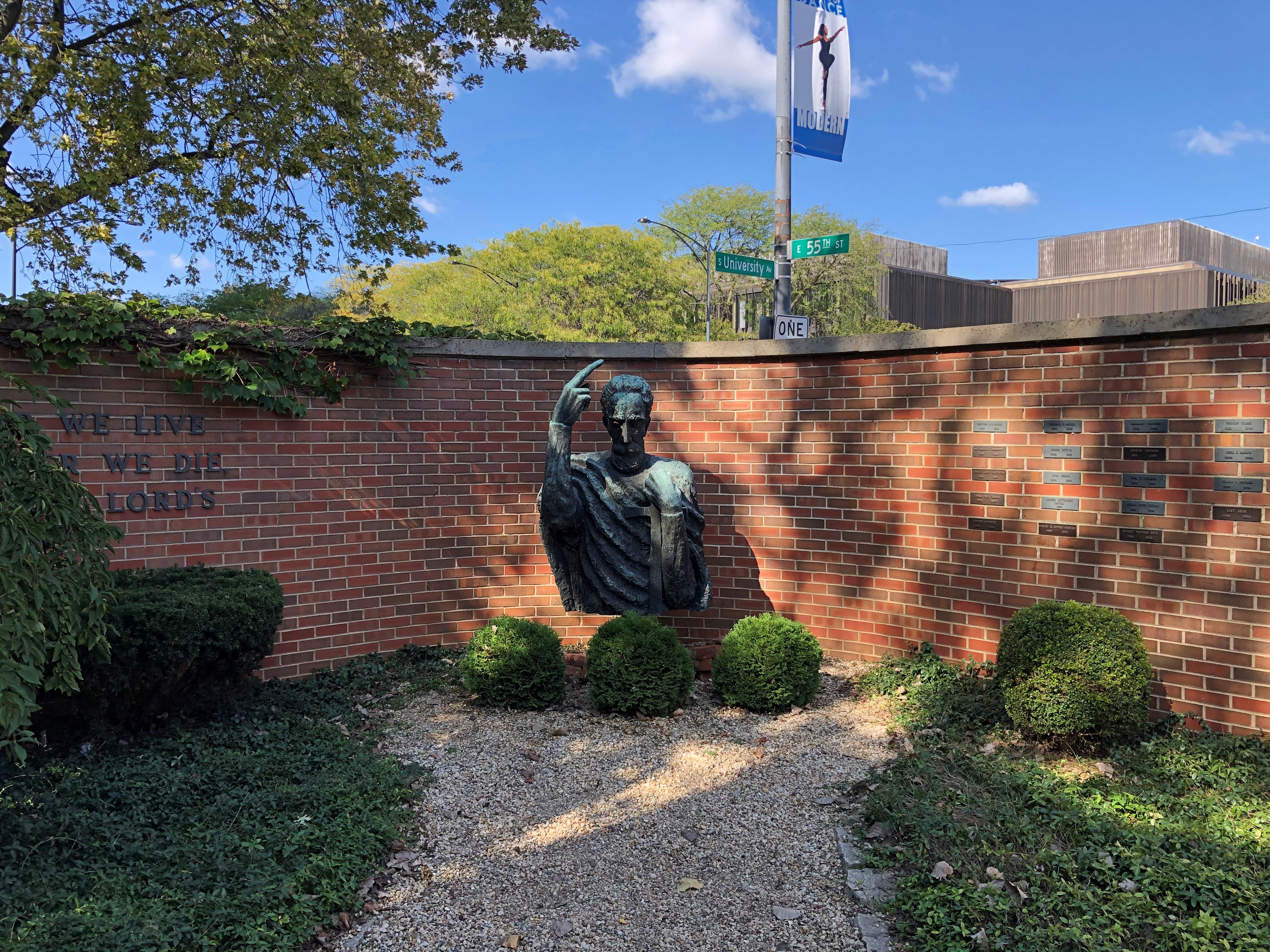
The Augustana grounds also include a spot of green space behind a brick wall near the street. Part of the space is given over to a columbarium.
Augustana Lutheran Church

Interestingly, the plaques on the wall (to the right in the above picture) don’t mark niches. Rather, they name people whose ashes have been scattered in the churchyard.
Augustana Lutheran Church

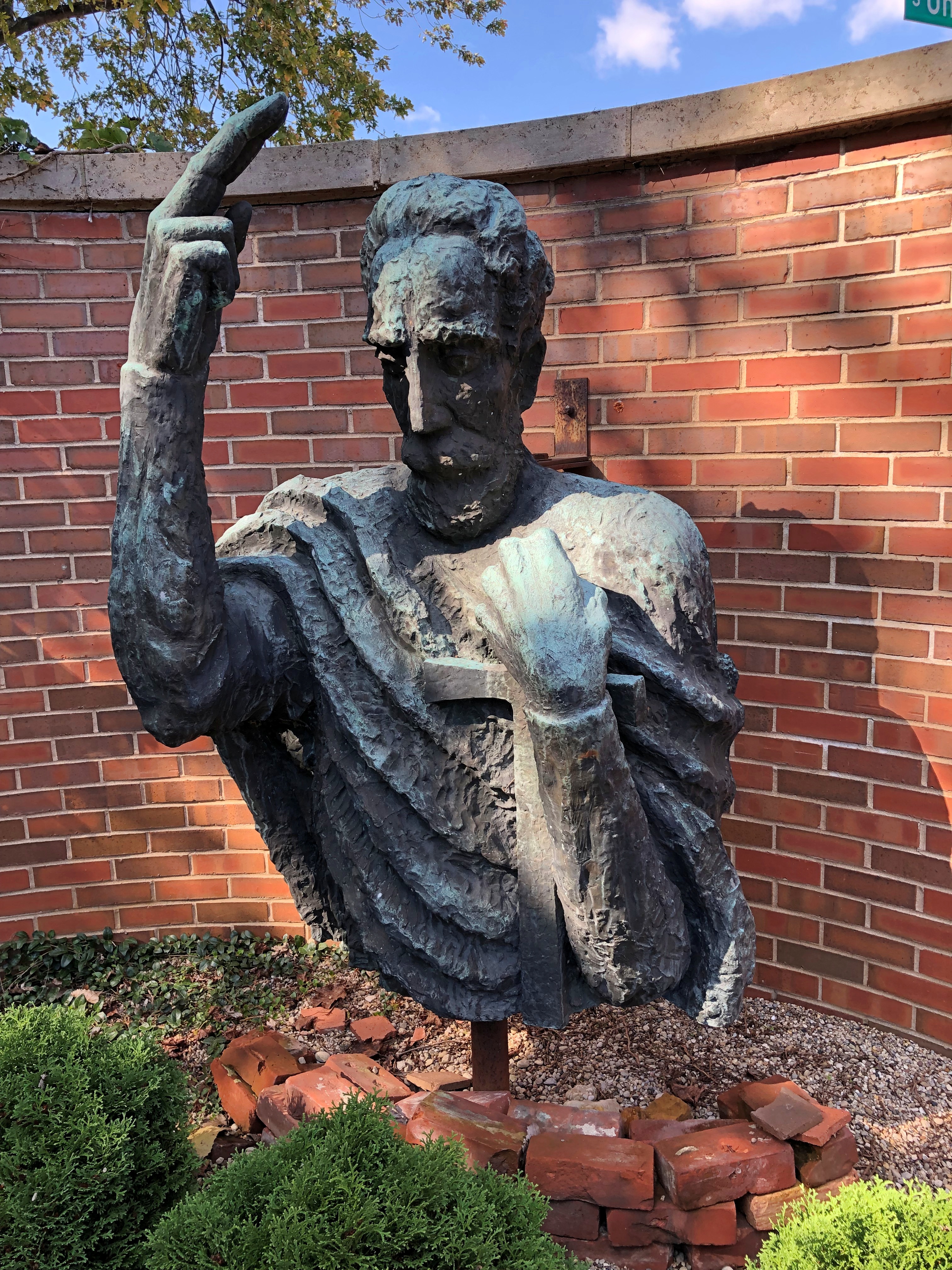
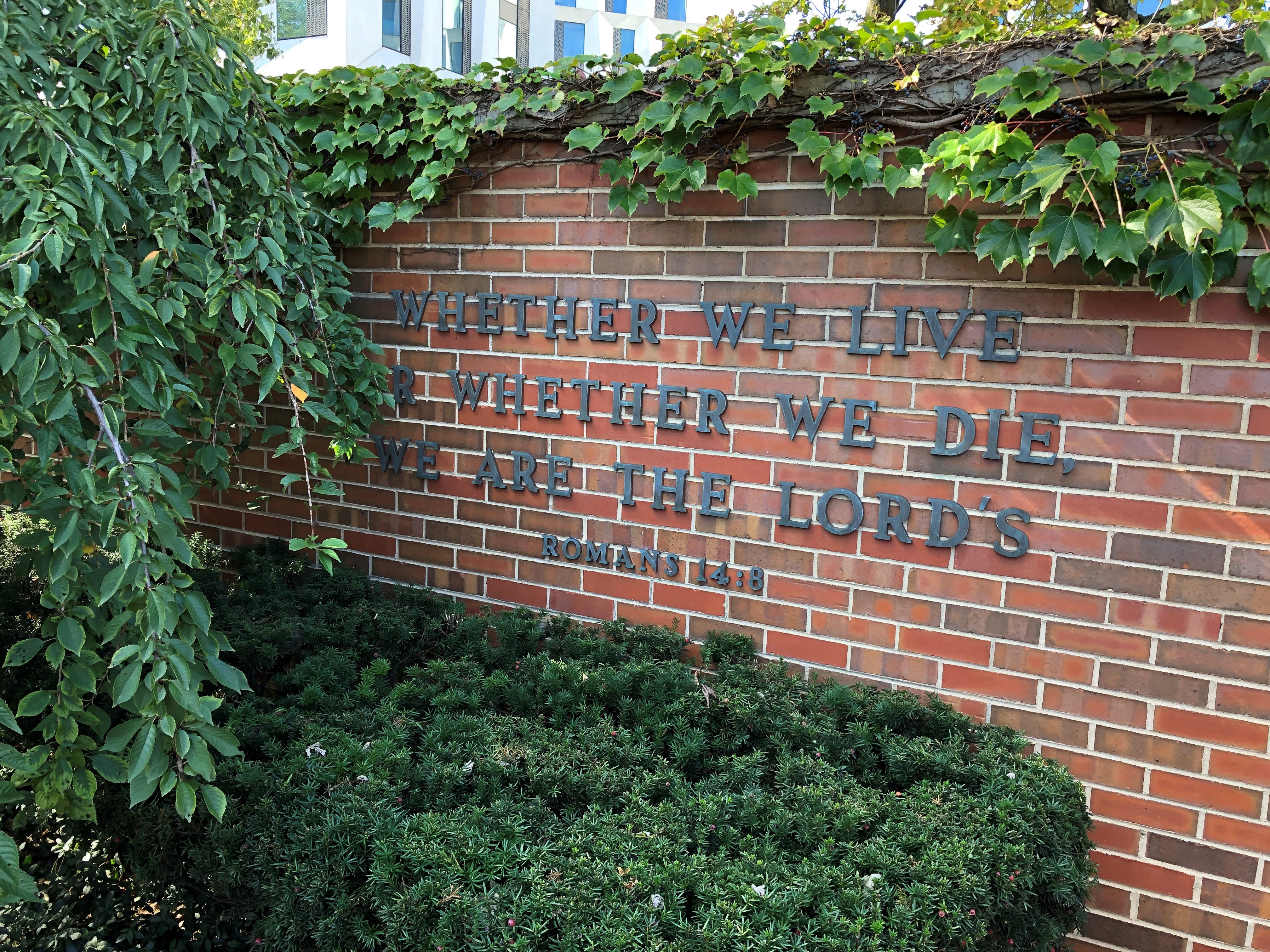
I suppose that’s Paul, though the only thing that tells me so is text on the wall nearby, from his Epistle to the Romans.
Augustana Lutheran Church

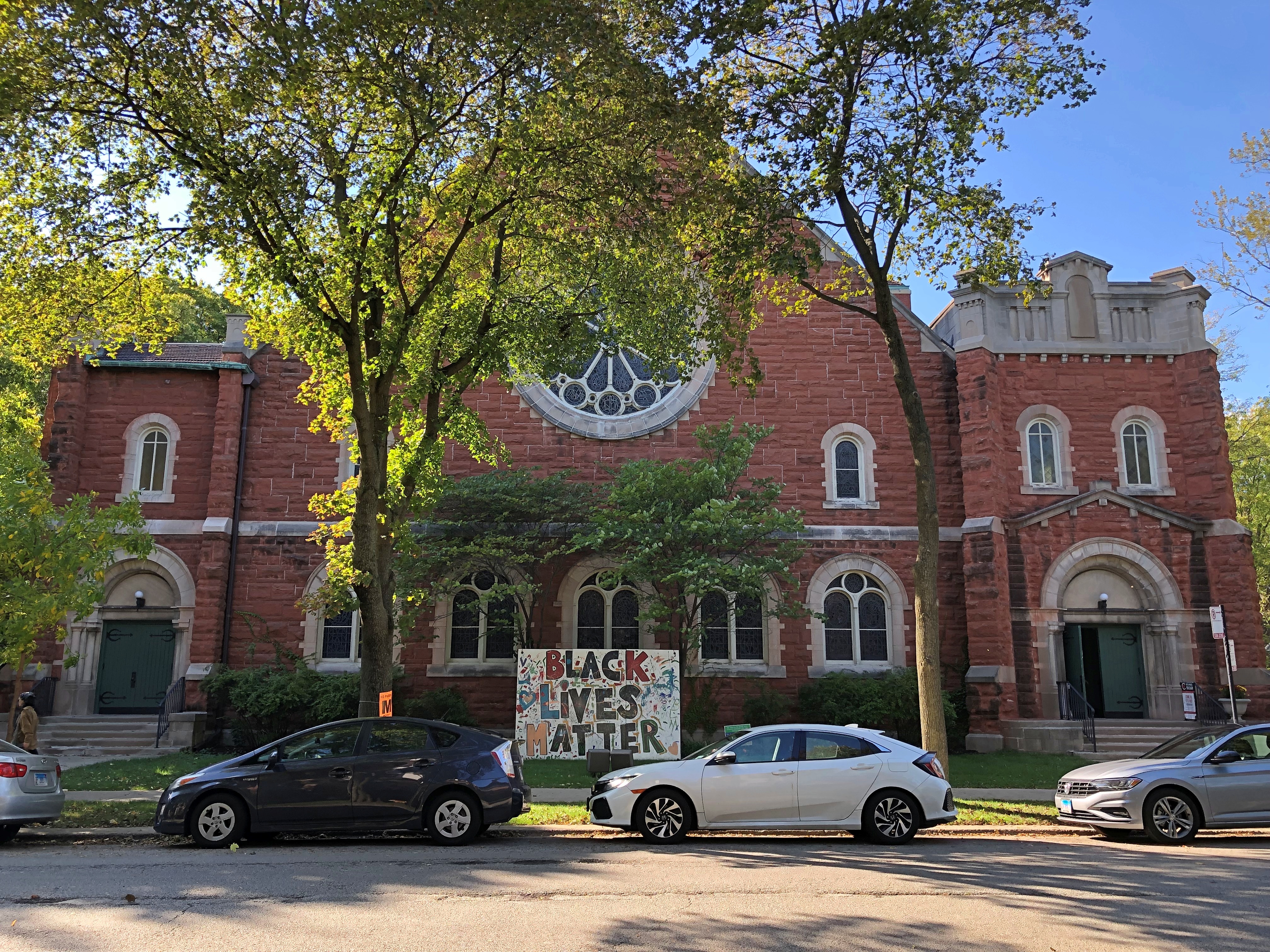
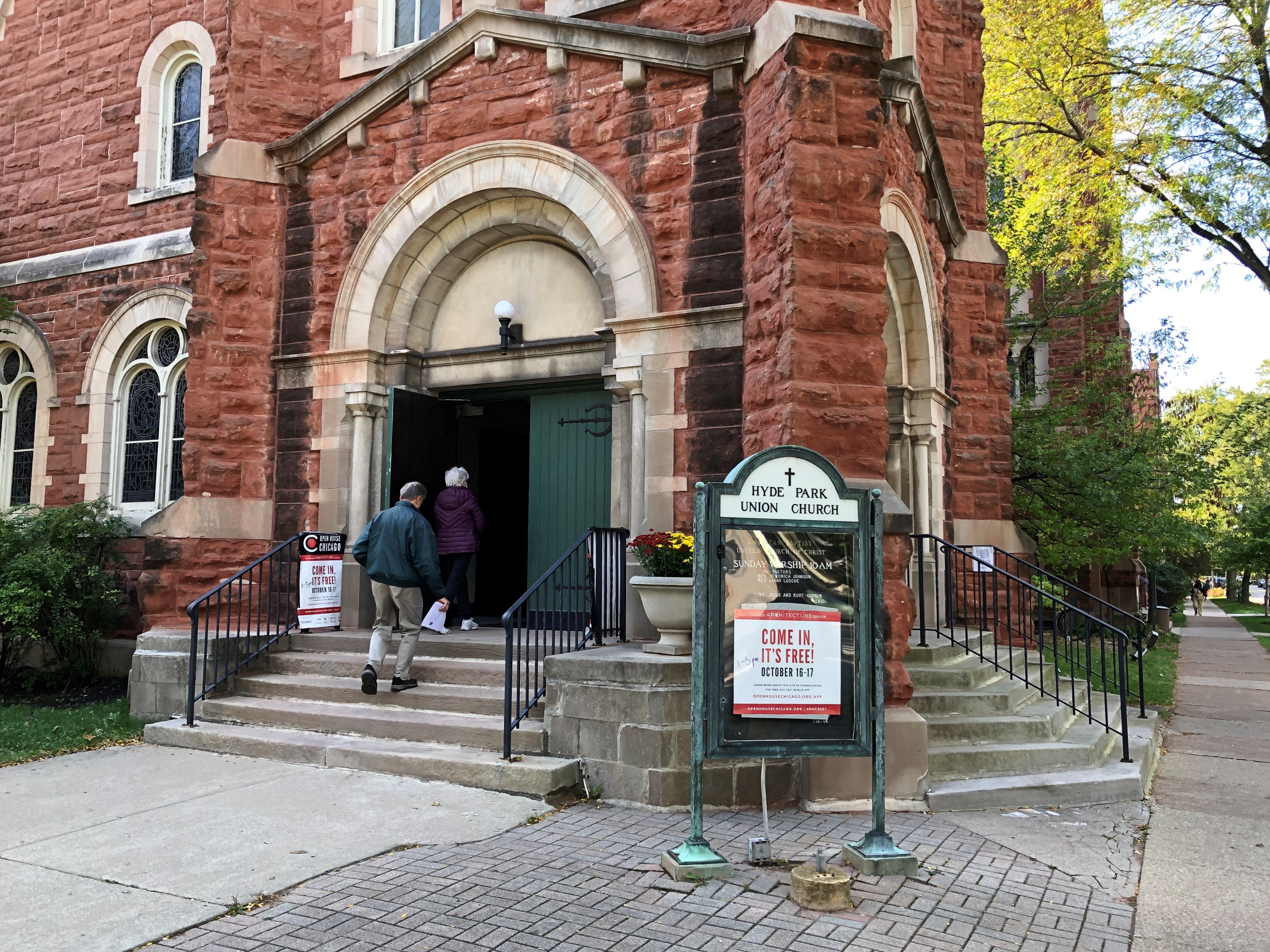
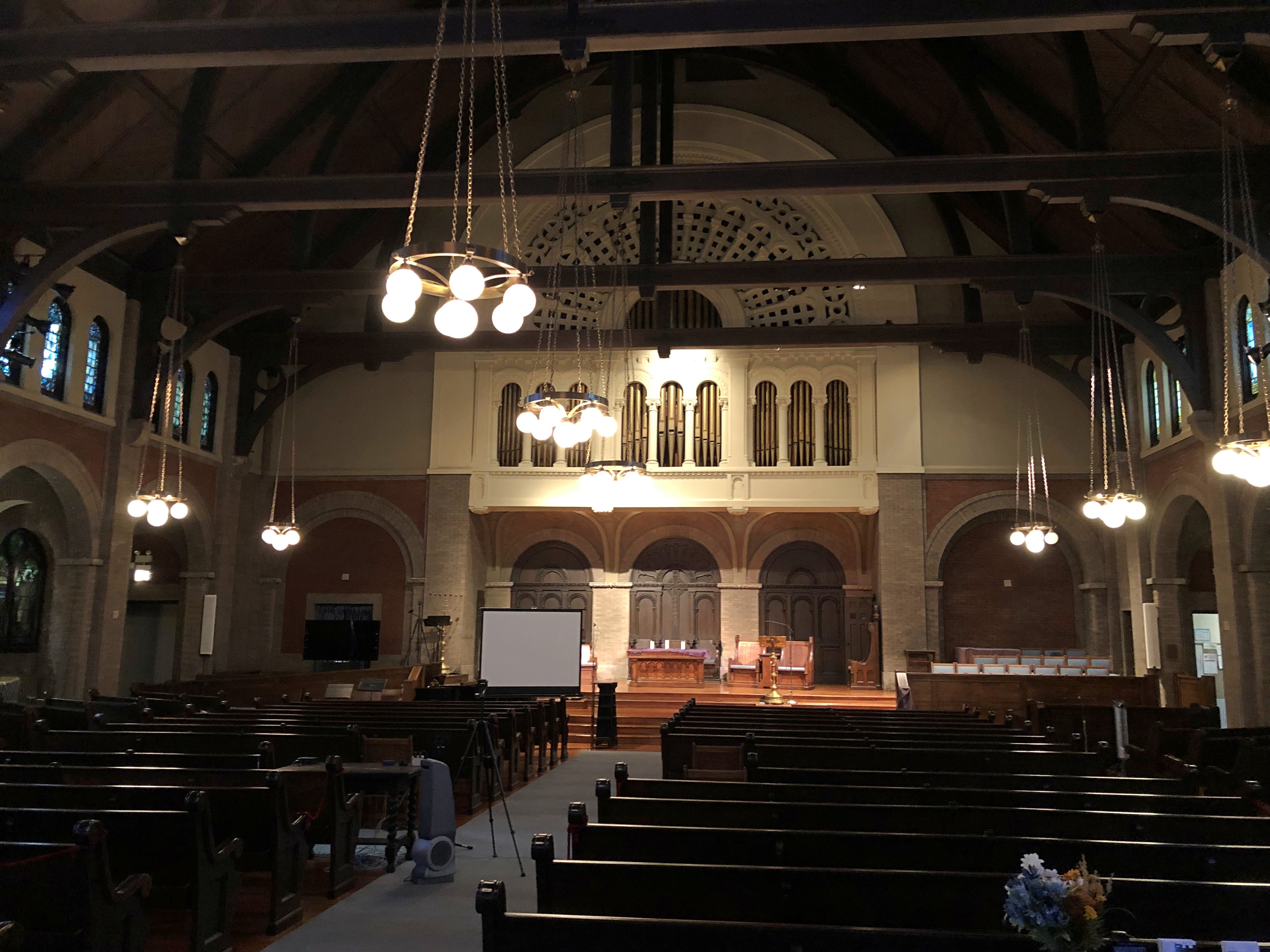
One more neighborhood Protestant church: Hyde Park Union Church, a 1906 design by James Gamble Rogers.Hyde Park Union Church
Hyde Park Union Church

A bit dark inside, but I understand the acoustics are really good.
Hyde Park Union Church

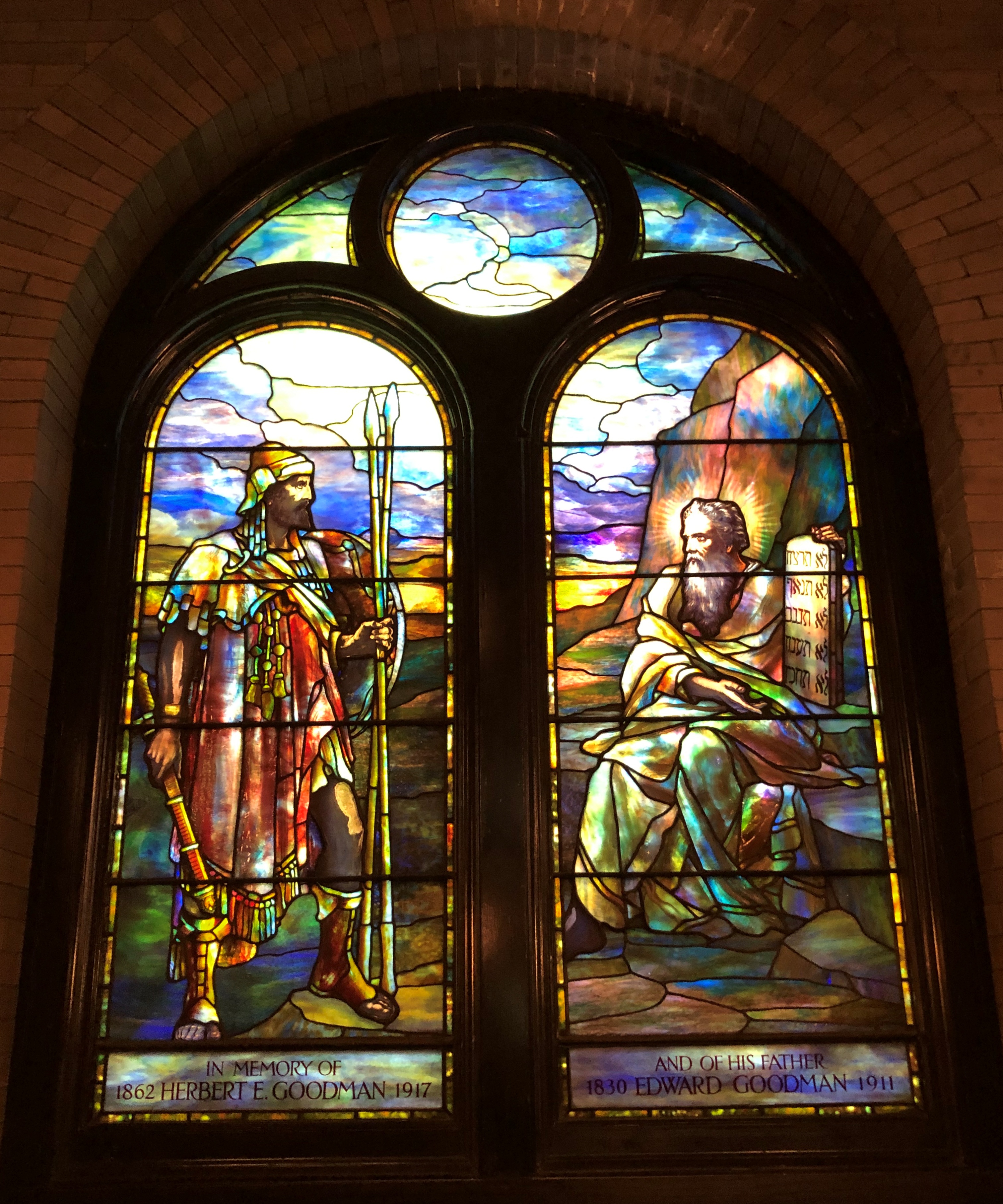
Plus some impressive Tiffany windows, such as one depicting Joshua and Moses.
Hyde Park Union Church

As the name indicates, the current church was formed by a merger between congregations. In this case, American Baptist Churches-USA and United Church of Christ.

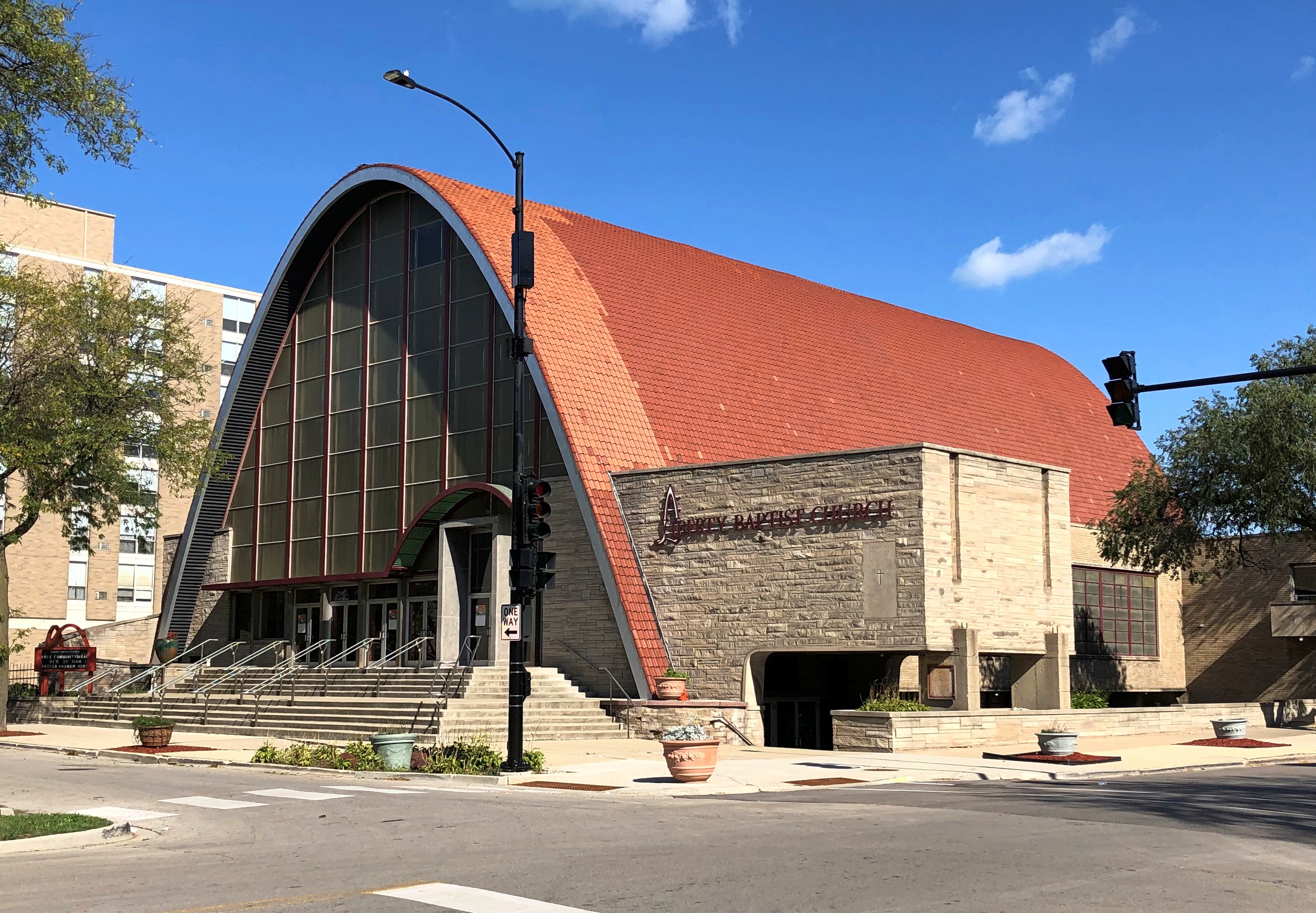
During the course of the day, we passed by a few other churches that I’d have peeked inside, had they been open. Such as a Baptist church in Bronzeville, which is otherwise home to a number of fine churches.Liberty Baptist Church, Chicago

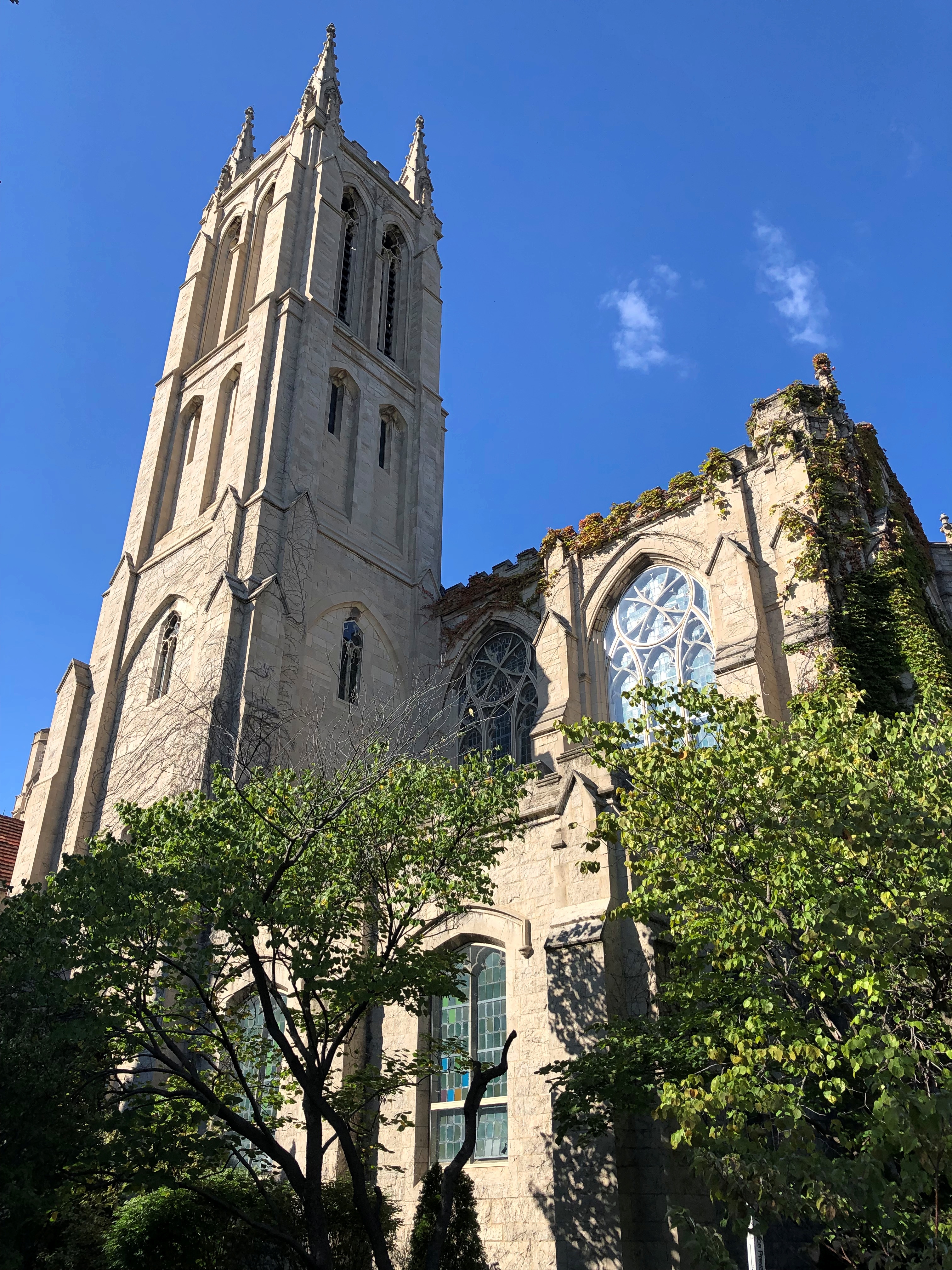
And a Unitarian church of considerable heft, back in Hyde Park.First Unitarian Church of Chicago

I can’t remember visiting a Unitarian church before, though I probably have. Still, I was definitely curious to know how this one is decorated inside. Like this, turns out.

Open House Chicago 2021

Distinctly cool nights now, but on Saturday and today we enjoyed pleasantly warm and clear days. Just right for walking around the city and looking at things.

After an absence last year, Open House Chicago returned this year, though seemingly with fewer sites. But I’m not really sure, since I didn’t compared this year’s list with previous years, and it doesn’t matter anyway. There were plenty of places on the 2021 list that we hadn’t been.

In fact, we attended the event both on Saturday and Sunday — a first for us. On Saturday, we spent our time in Hyde Park and adjoining neighborhoods, mostly seeing religious sites. On Sunday, Yuriko had cake class in Humboldt Park, so while she did that, I made my way through the thick of the city to see a museum and a church in two different neighborhoods. On the way home, we both visited a synagogue in River Forest.

The first place we saw wasn’t a church, however. Just after 10 on Saturday, we paid a visit to the Penthouse Hyde Park, which is currently a high-rise of high-end apartments. The building was developed in the 1920s as the Piccadilly Hotel & Theatre, a hotel with a theater included inside the building, as was more commonly found in New York once upon a time, but not so much in Chicago.

The theater was demolished about 50 years ago. Recent renovations began under new ownership beginning in 2015, with the apartments finally leasing this year. The image above, from 2019, is a little dated, since the entrance has been renovated since then.

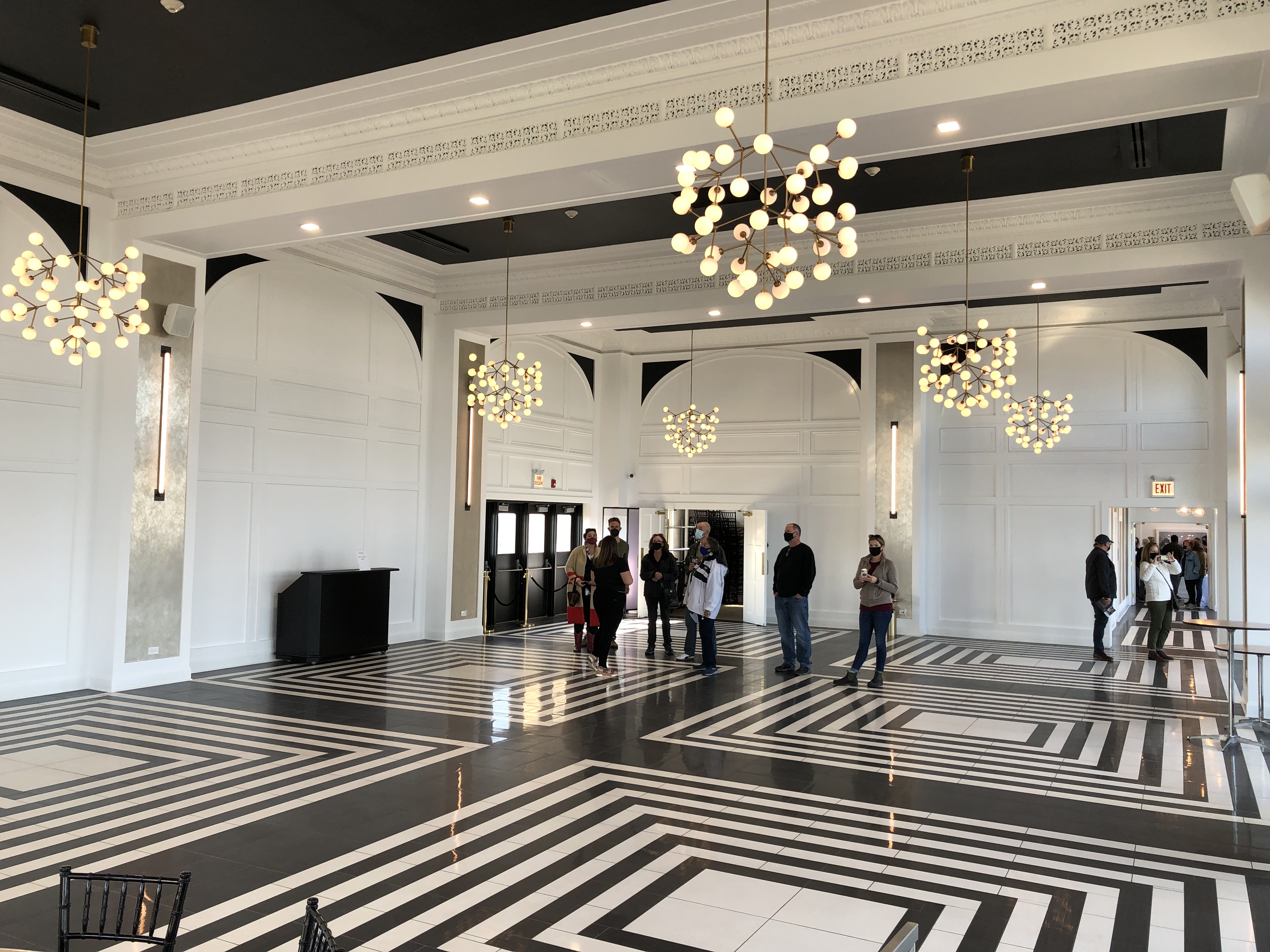
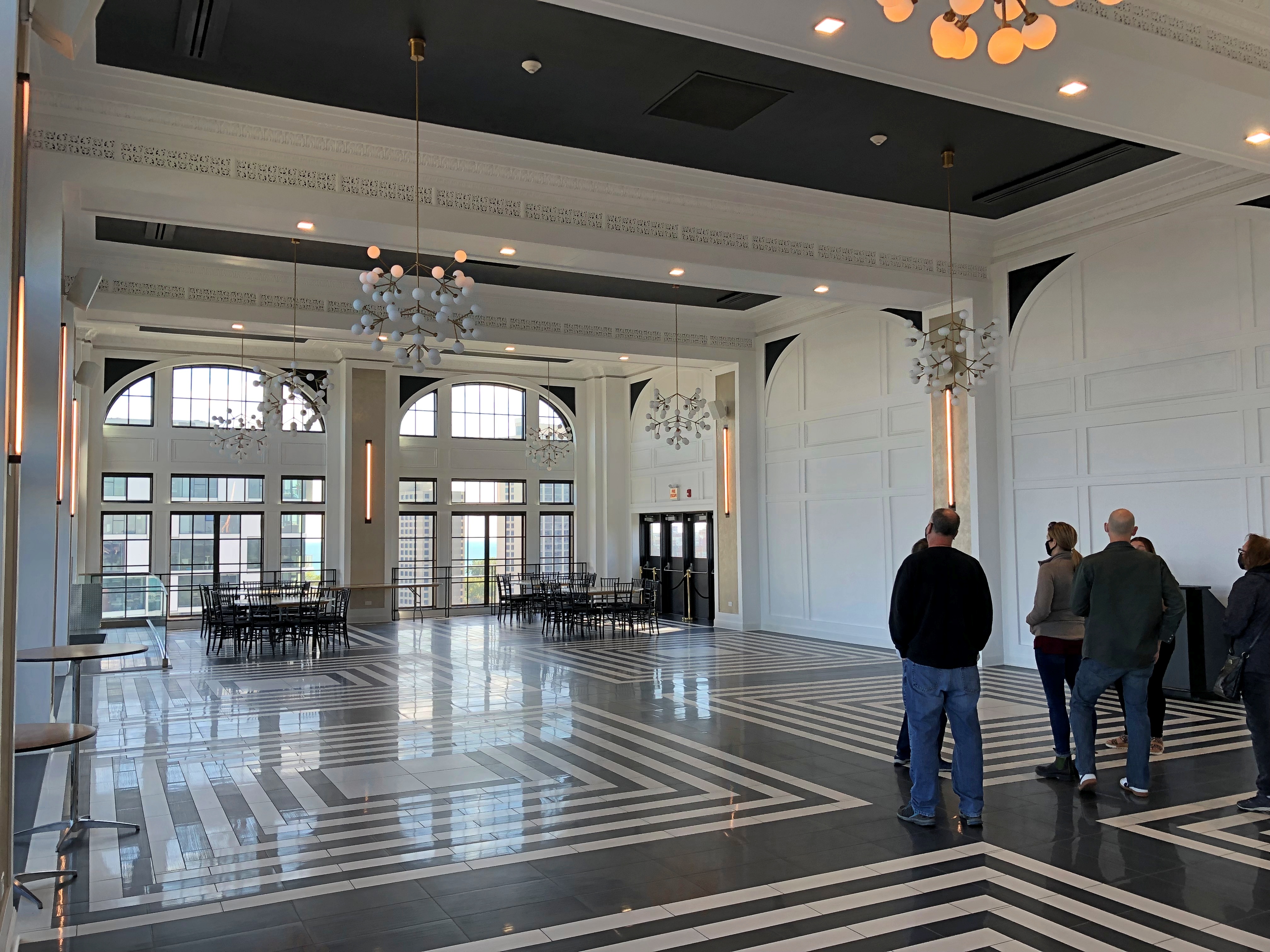
The main attraction at Penthouse Hyde Park for Open House visitors were the ballroom on the top floor, and the views from that floor.

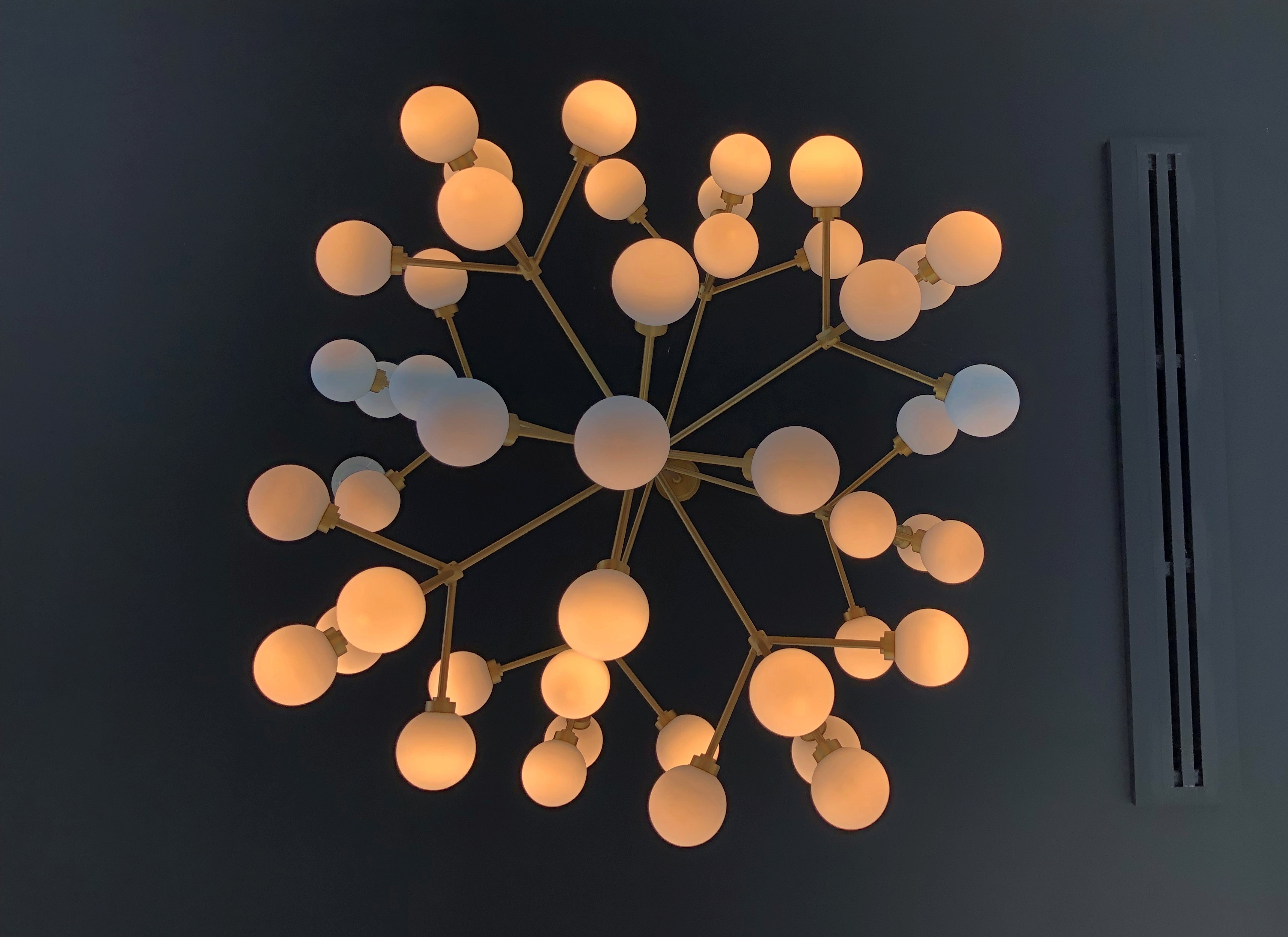
The ballroom.The Penthouse Hyde Park
The Penthouse Hyde Park

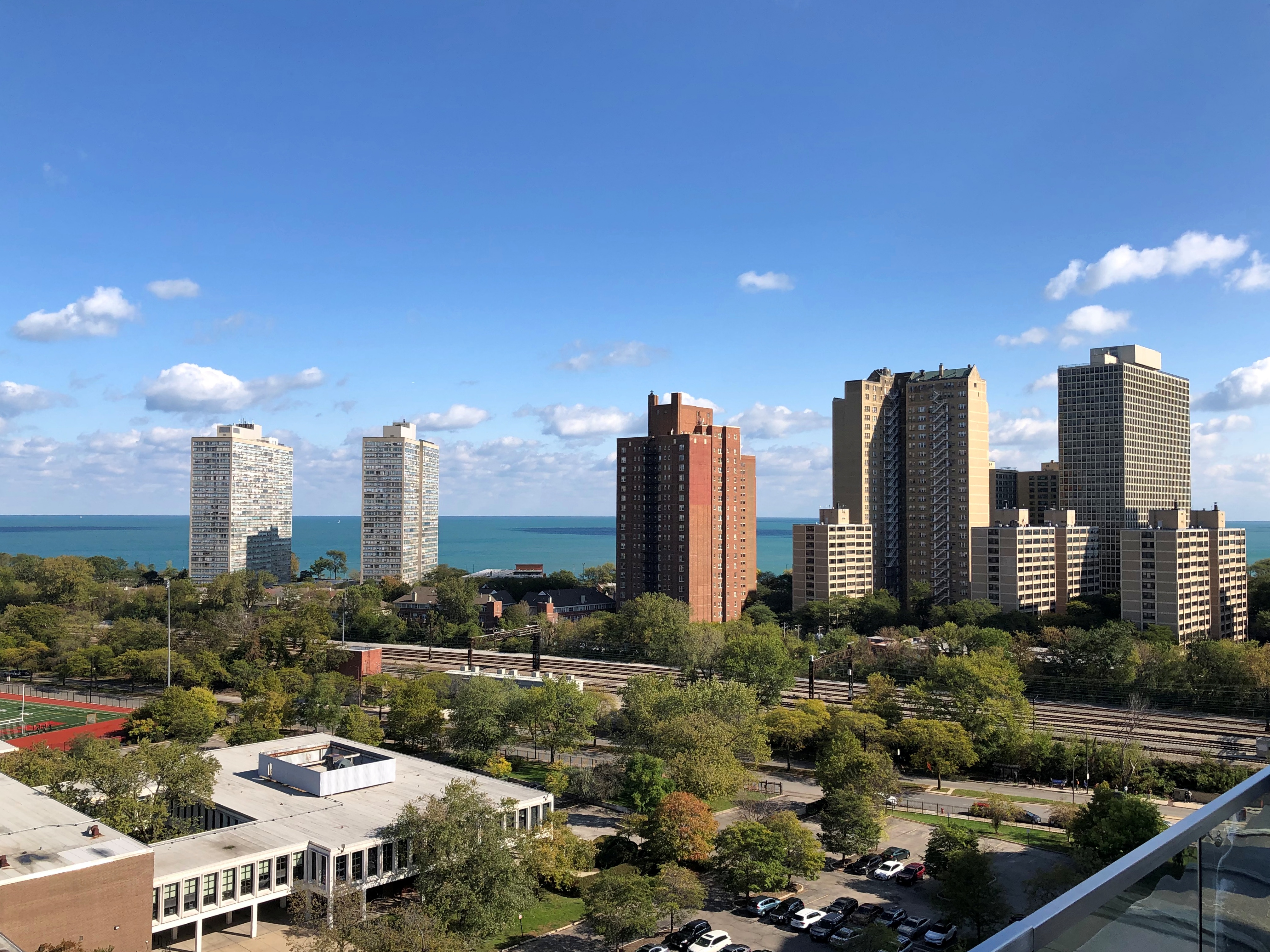
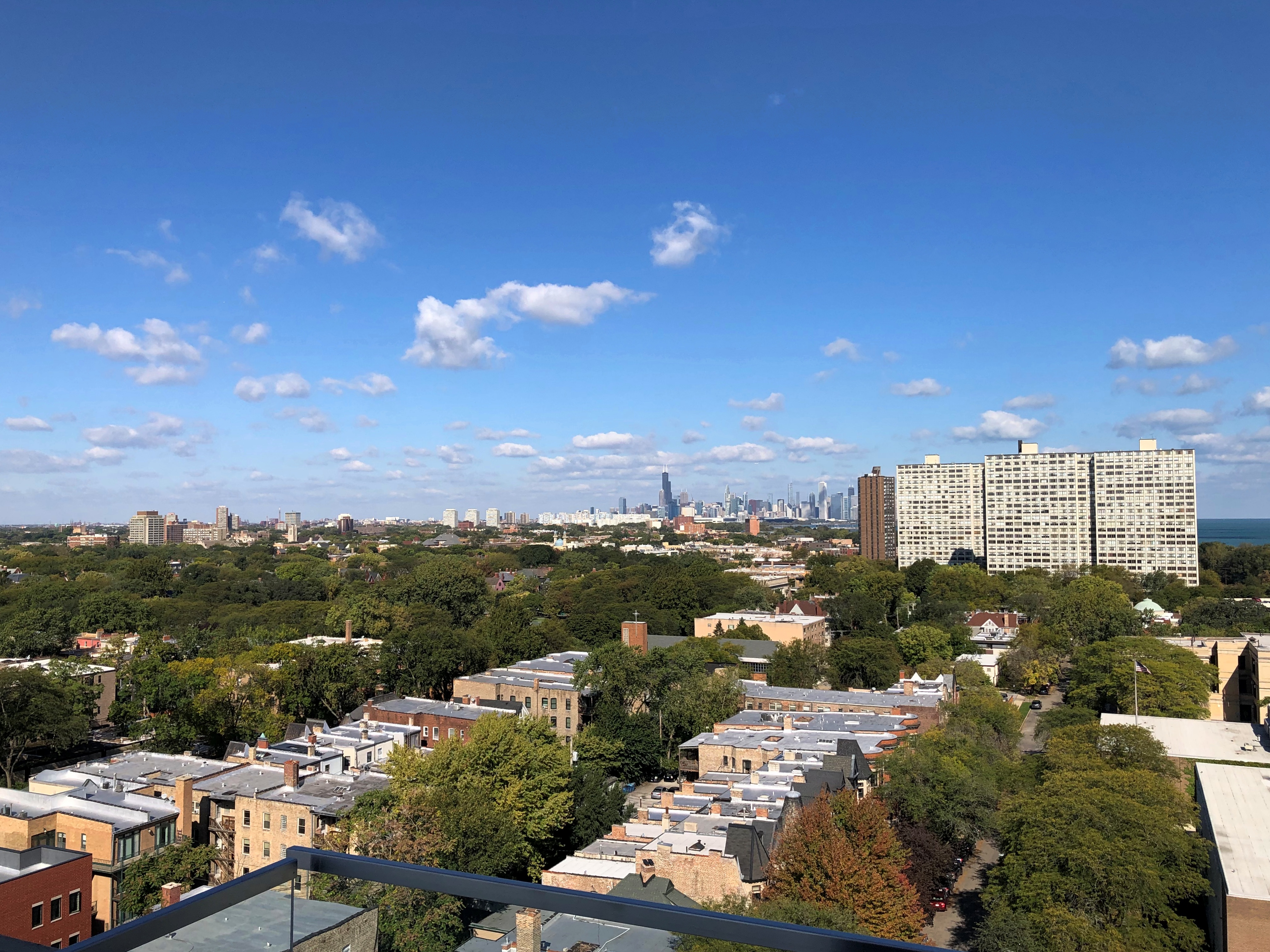
Adjoining the ballroom is an outdoor terrace, 14 floors up. The views are sweeping. These are other apartment towers in Hyde Park, though closer to Lake Michigan.
The Penthouse Hyde Park

The view toward downtown.
The Penthouse Hyde Park

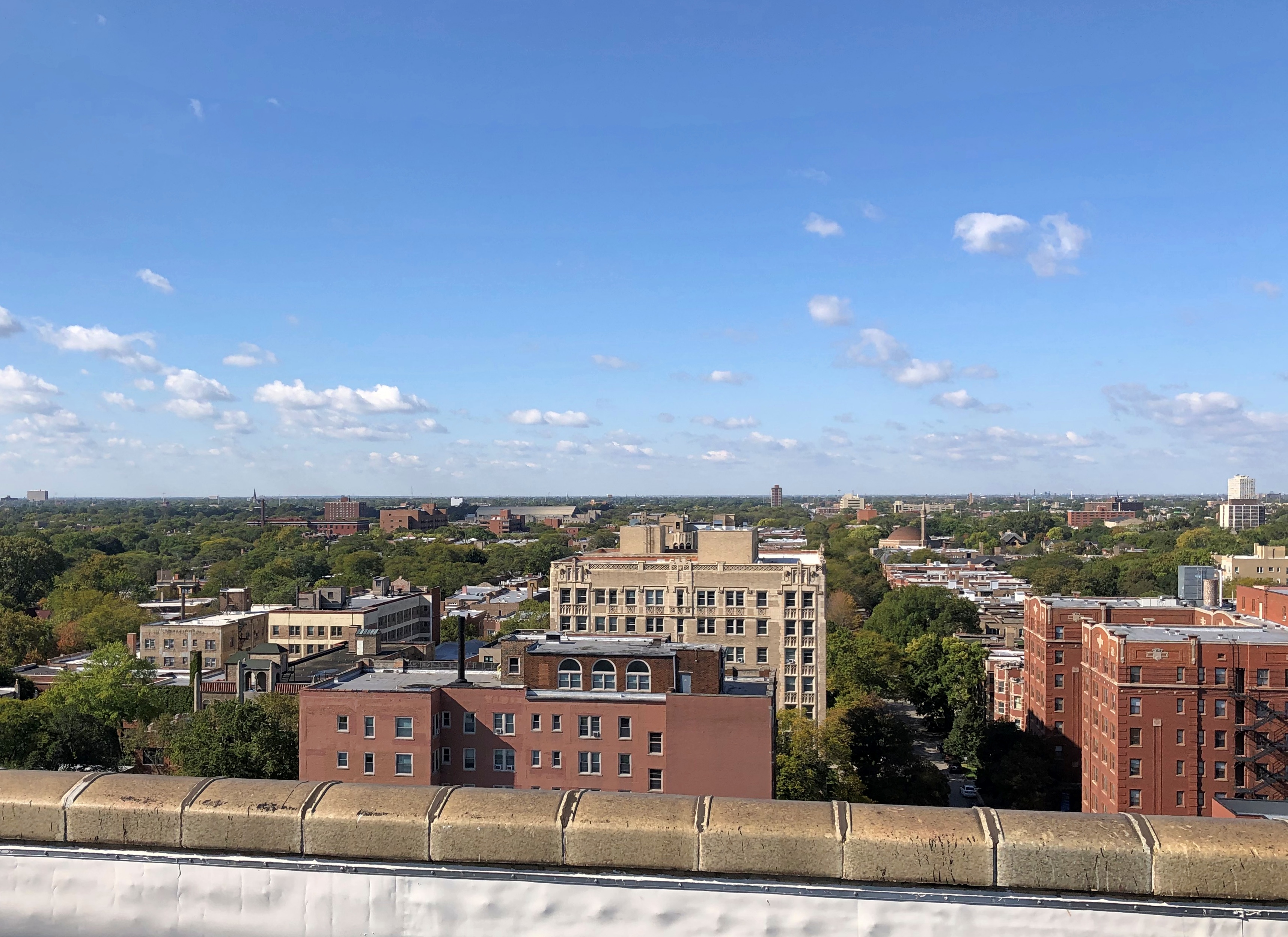
The view west.
The Penthouse Hyde Park

A good way to start the event. A number of other fine sites were to follow, as usual with Open Houses.

Lilacia Park ’21

RIP, Helmut Jahn. I never met the man, but I worked in the same building in downtown Chicago as his office, once upon a time. The superb 35 East Wacker, as it happens, where Jahn had his showroom in the top dome. We were on the seventh floor. We could always tell when architects were on the elevator, headed up to Jahn’s office; they were the gentlemen with ponytails.

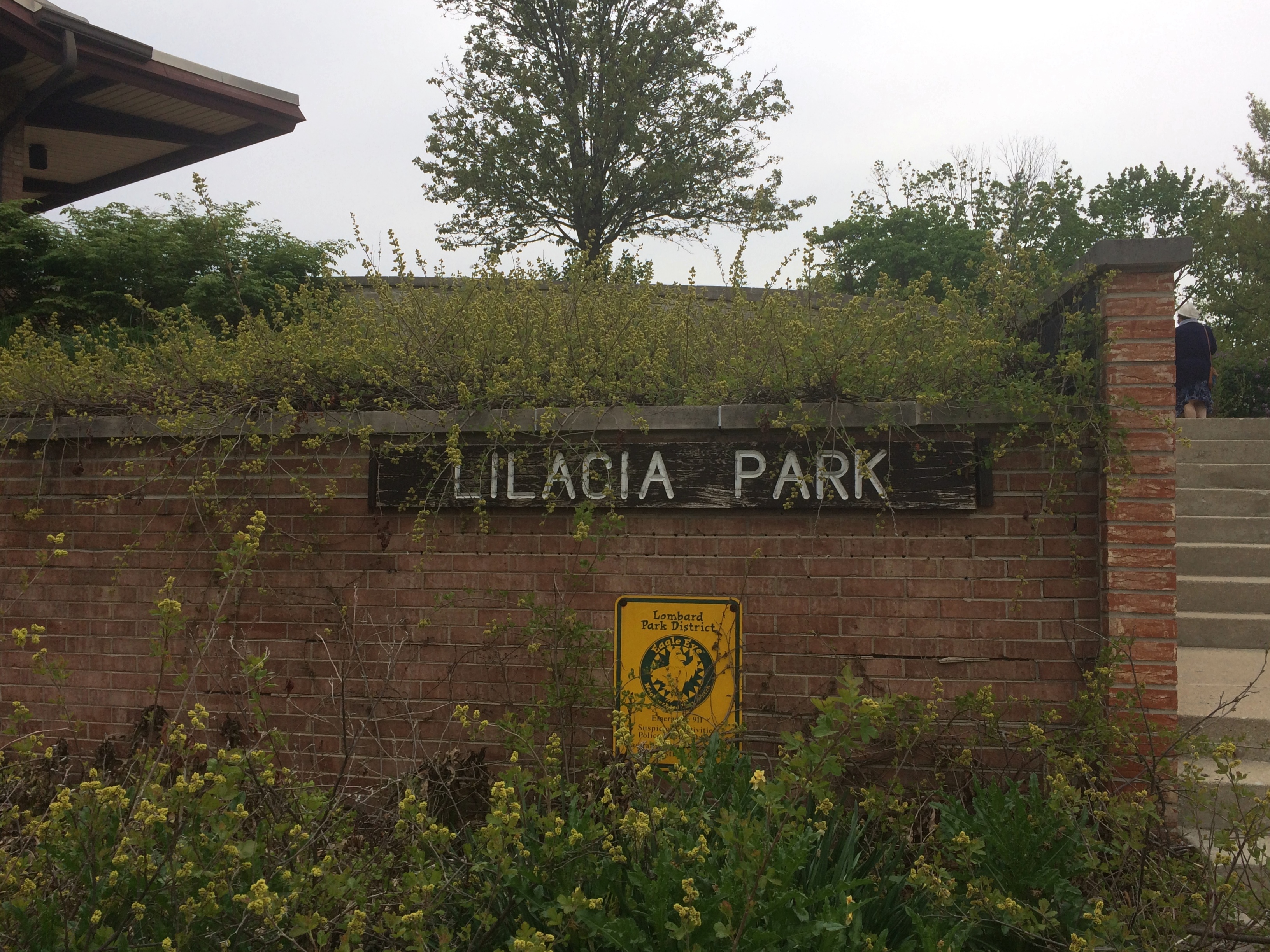
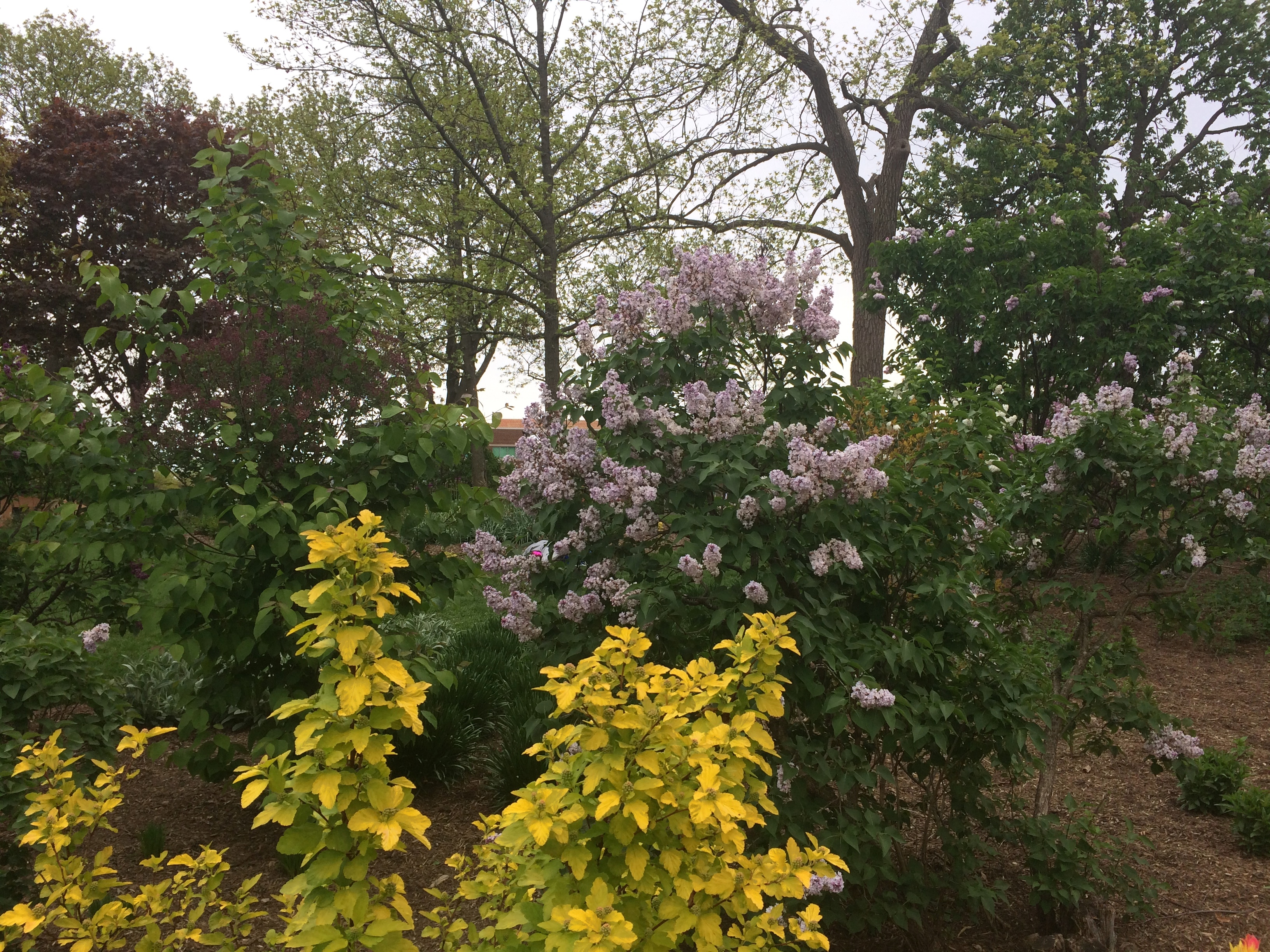
Lilacia Park, like Cantigny, is in the western suburbs, in Lombard as it happens, only a few miles to the east and a little north. Early May is the time of the lilac blooms there, and it’s been a fair number of years since we went, so we decided to drop by Lilacia on the way home on Saturday.Lilacia Park

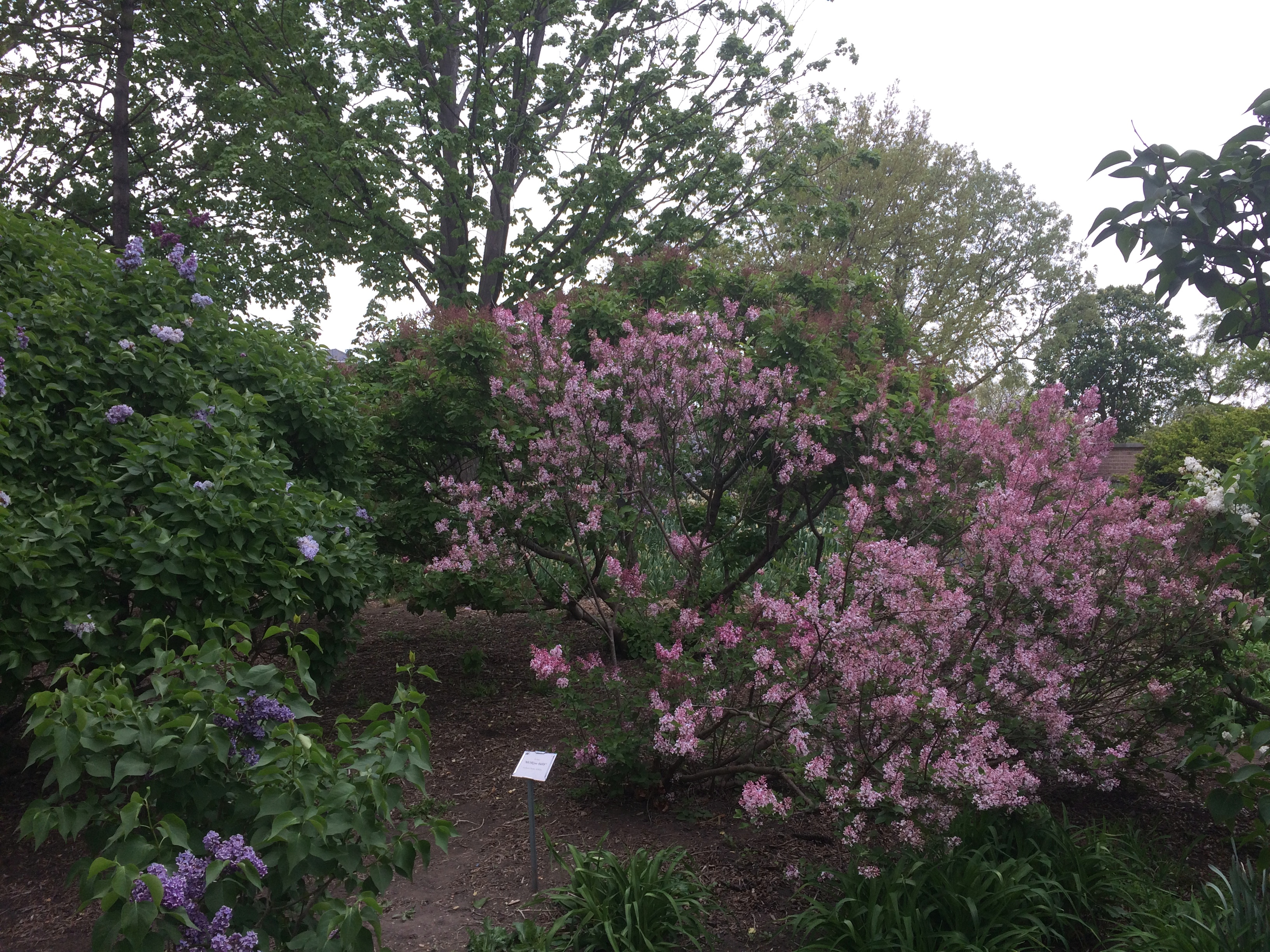
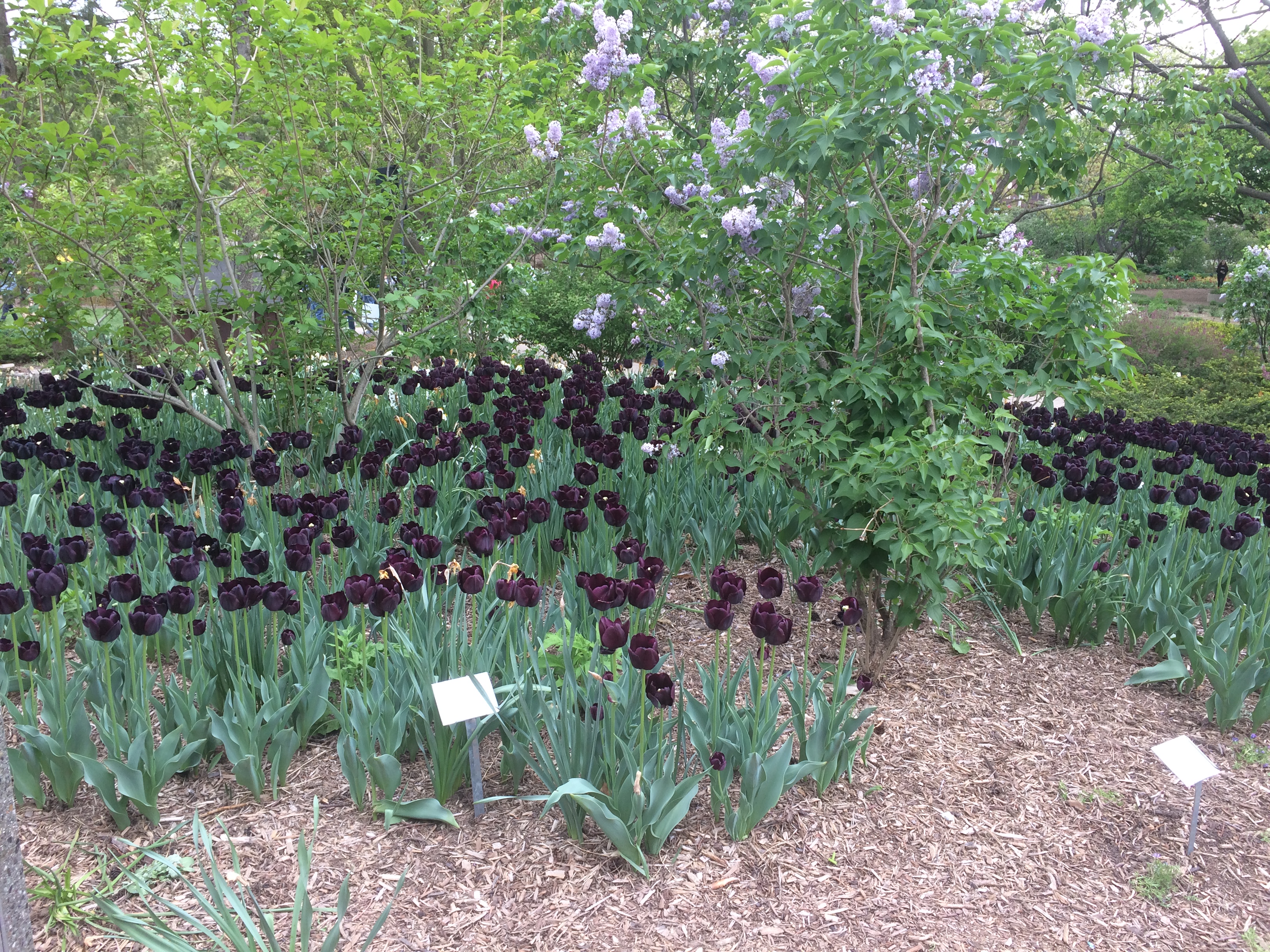
The park didn’t disappoint, though I think it was a few days past peak for lilacs, to judge by the effusions of flowers I’ve seen in earlier years.Lilacia Park Lilacia Park

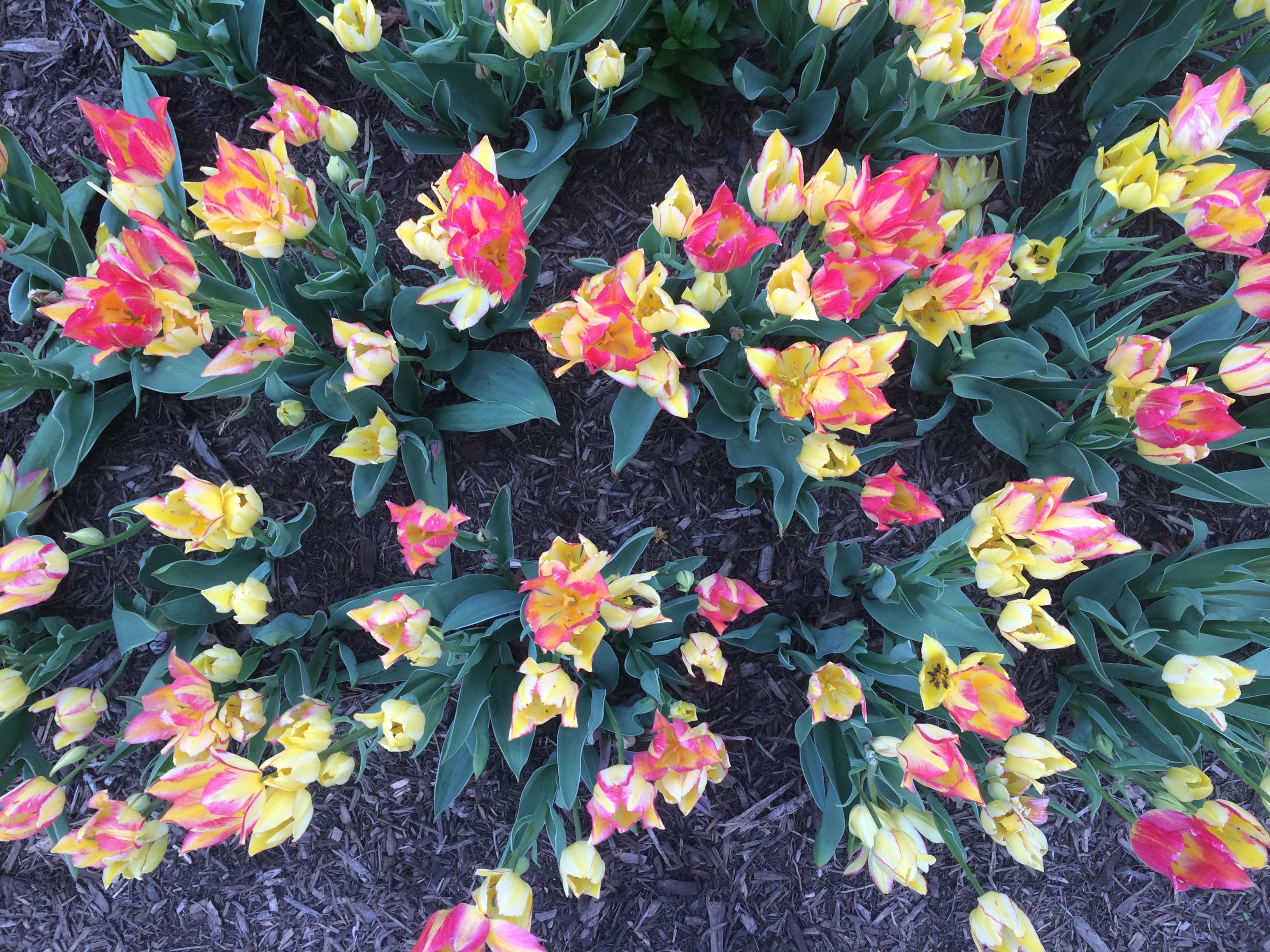
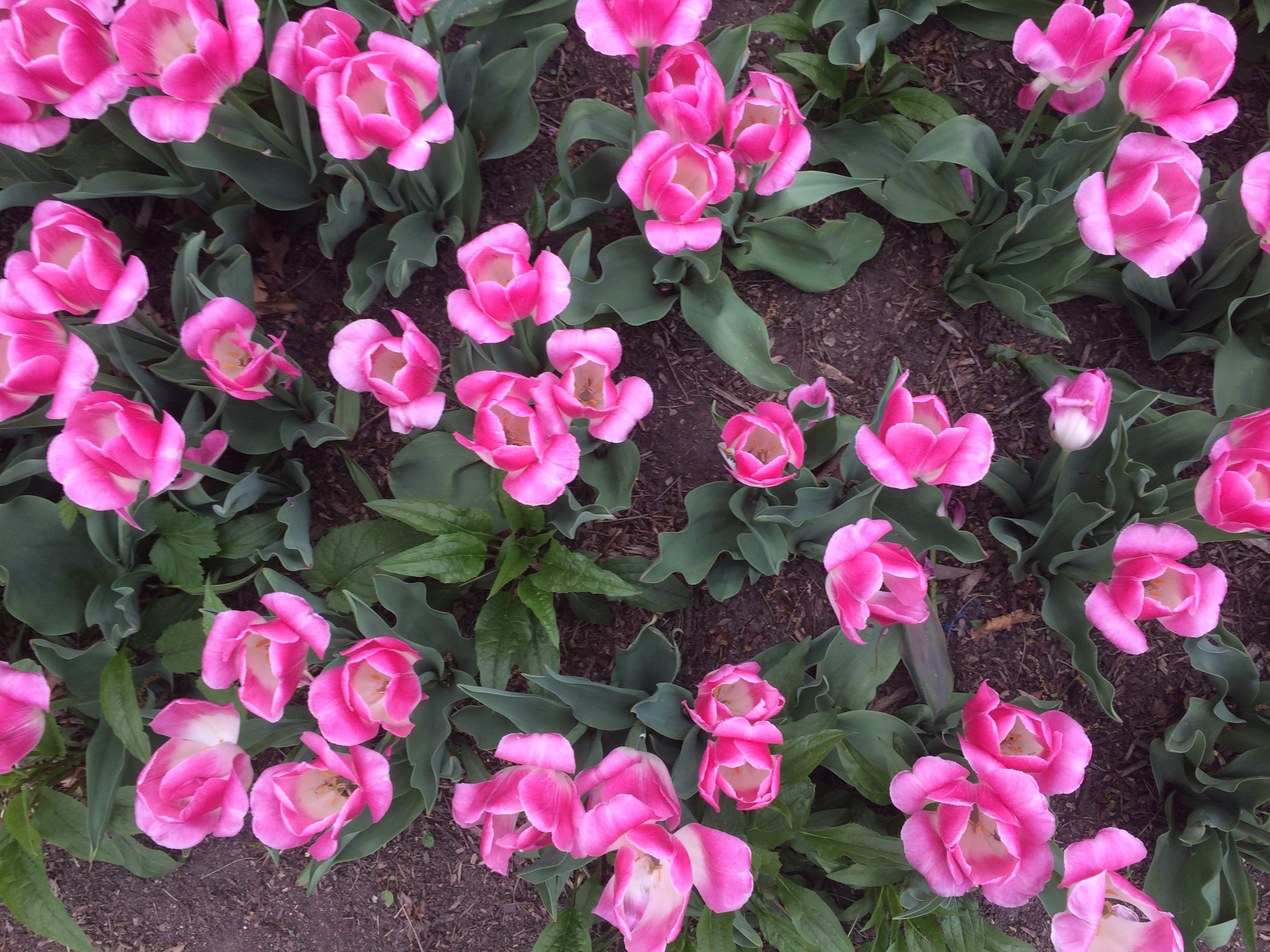
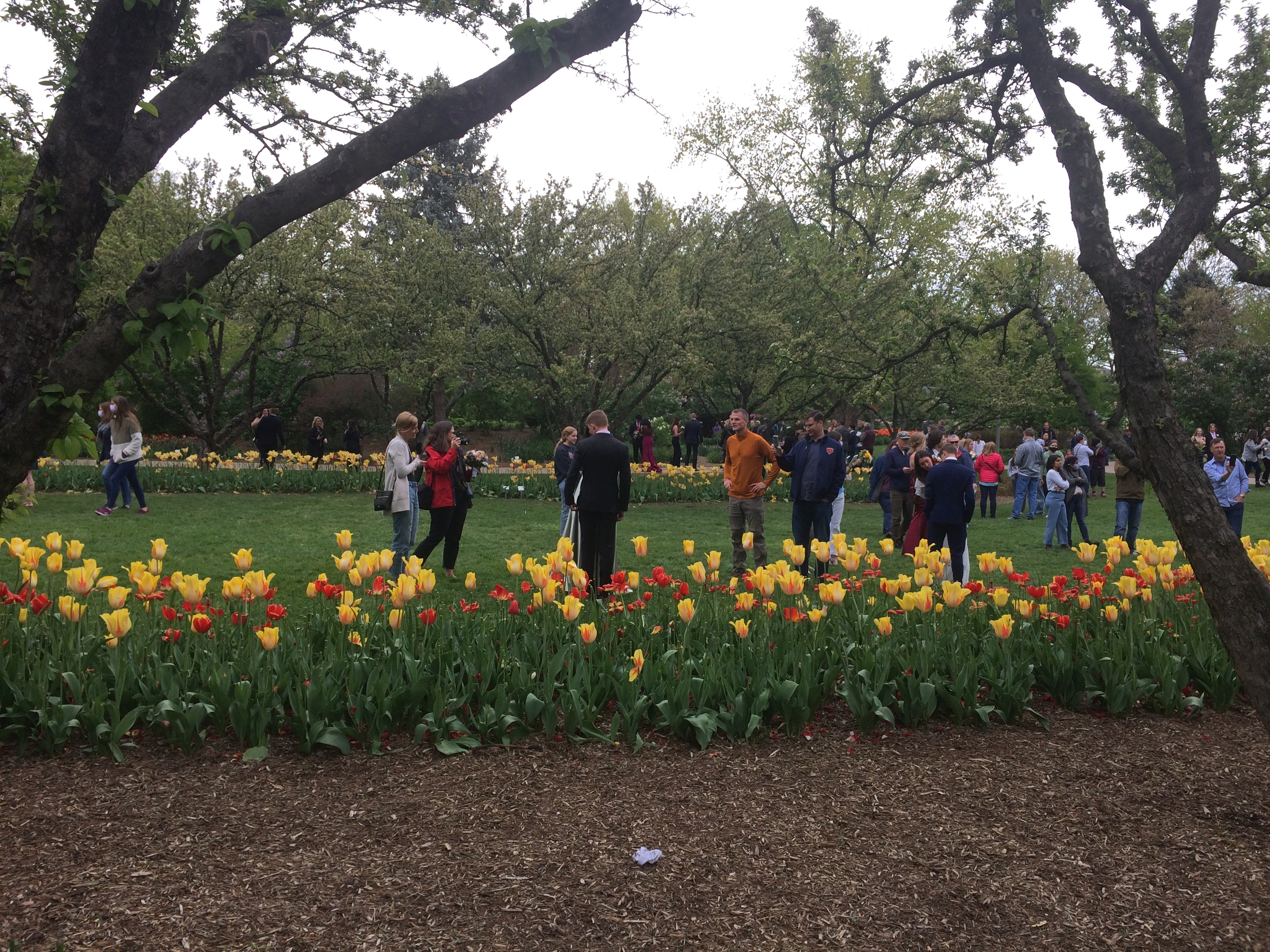
But not for tulips. Definitely peak blooms for many of them.Lilacia Park tulips Lilacia Park tulips Lilacia Park tulips

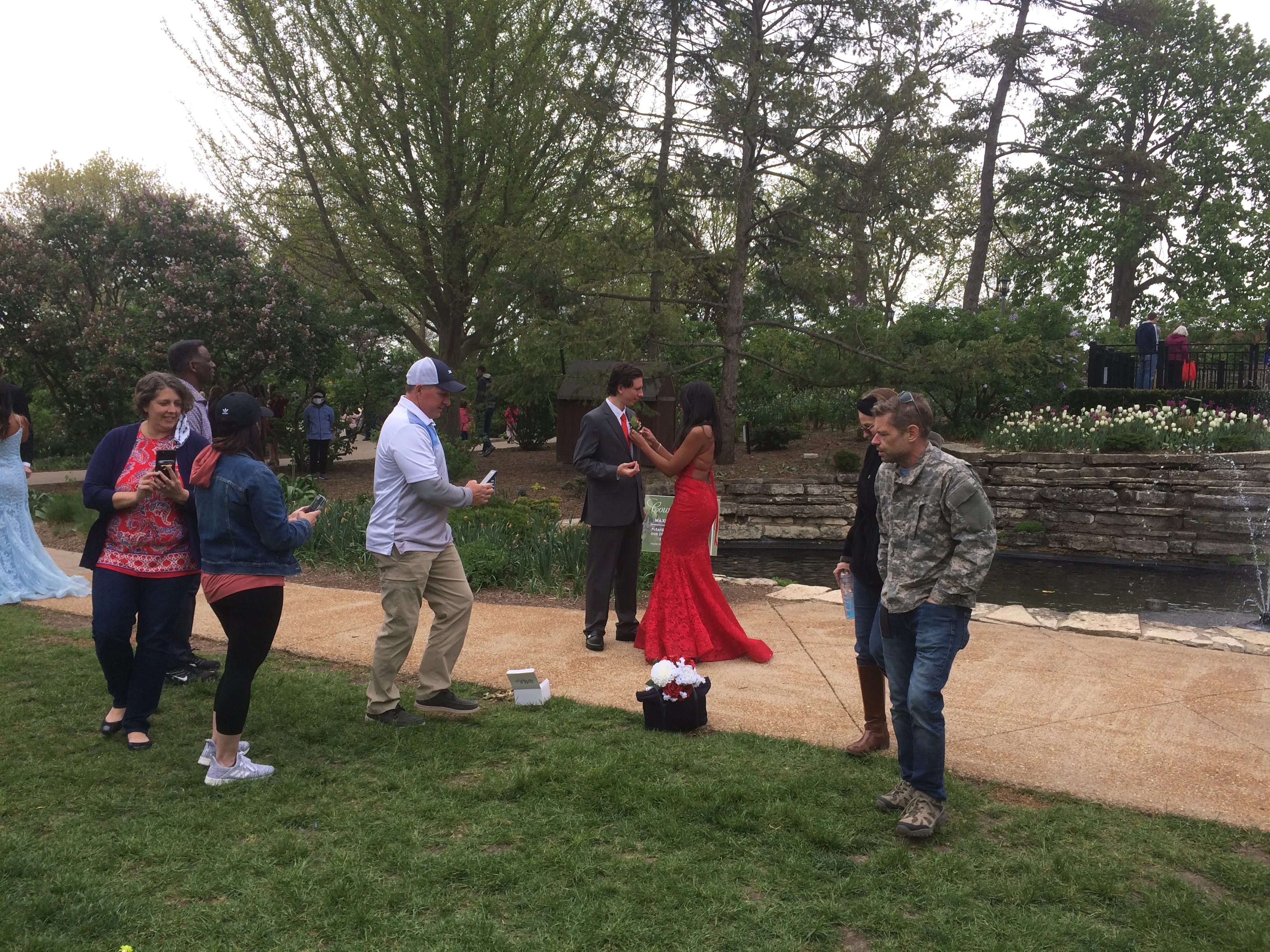
Lilacia was crowded too. Especially with prom and quinceañera celebrants.Lilacia Park

Lilacia Park

“Lilac bushes are not native to North America,” explains Flower magazine. (Just like most of us.) “The Common Lilac originated in Eastern Europe in the mountains of Bulgaria, Croatia, Slovakia, the Czech Republic, Hungary and Romania. For centuries, the Turks cultivated the species.

“Then, in the 1500s, lilac bushes arrived in Vienna and Paris. The French developed so many varieties that Common Lilac is often called French hybrid or simply French Lilac. Finally, these European specimens made the journey to the New World, and lilac bushes graced the gardens of George Washington and Thomas Jefferson.”

And, I have to add, the former garden of Col. William Plum and his wife Helen Maria Williams Plum in Lombard, Illinois.

“Colonel Plum moved to the Chicago area in 1869 and settled in Lombard when it was still a new village. The Plums purchased land and filled it with lilacs, which they fell in love with after traveling to the celebrated gardens of Victor Lemoine in France,” Atlas Obscura says.

“The couple returned from the trip with two lilac cuttings, one of Syringa vulgaris, ‘Mme Casimir Périer,’ a double white, and the other of Syringa vulgaris, ‘Michel Buchner,’ a double purple — the initial cultivars of the collection that stands today.

“The acclaimed landscape architect Jens Jensen — responsible in large part for the design or redesign of Chicago’s Columbia, Humboldt, Garfield, and Douglas Parks — agreed to design the Lombard Community Park, now known as Lilacia Park.”