Carpe Diem Songs

The first serious cold wave of the season came with yesterday’s wind, putting temps as low as 13 degrees F. by the wee hours this morning. Of course, those kinds of lows will be a regular thing by January, with plenty of days even colder, but the first one of the season always seems particularly bitter.

One remarkable thing about YouTube is that it allows me to have a slightly informed opinion about different versions of mostly forgotten songs. Also, I can discover whole subgenres — or maybe sub-subgenres — such as songs whose theme is carpe diem.

Not long ago, the bots suggested the recording of “Enjoy Yourself (It’s Later Than You Think)” by Guy Lombardo (1949). If I’d heard it before, and I probably had, I’d forgotten about it. Charming little song, definitely with a carpe diem message. Music by Carl Sigman, lyrics by Herb Magidson, though as other versions were recorded, all sorts of new lyrics appeared.

That got me looking around and I spent a while listening to other recordings, of which there are a fair number. Pretty soon I had a favorite. None other than Louis Prima’s.

Hard to go wrong with Louis Prima, who brings that Louis Prima je ne sais quoi to just about anything.

Interesting that the alternative to having an enjoyable life, in the song, is the constant effort to make money. So you might call it a postwar boom song. Ten or 15 years earlier, that sentiment might not have flown quite as well. After all, 1933 was the year that gave us “We’re in the Money.”

Anyway, I like Prima’s version a little better than Lombardo’s, and a lot better than Tommy Dorsey’s, which I didn’t much like, or the borderline novelty by Bing and Bob Crosby, which is worth a listen only about once.

Among more recent versions, ska-man Prince Buster did a version with a somewhat different message, as did The Specials, and I especially like Jools Holland’s New Year’s version as captured in the mid-2010s (with Pauline Black and Tom Jones too!).

There are, of course, other carpe diem songs. More, probably, than I’d want to look up, but when I meditated on the subject, I thought of a couple immediately. Including Howard Tate’s “Get It While You Can,” by Janis Joplin, who brought a remarkable energy to this 1970 television performance, a few months before her death.

Finally, an old favorite of mine with similar title, “You Better Get It While You Can,” by Steve Goodman (d. 1984).

Glad I got to see Goodman. It was entirely by chance. I went to see Steve Martin on stage in 1979, and Goodman — whom I’d never heard of — was the opening act. I was lucky to see him, since all too soon, he was gone. Sometimes serendipity and carpe diem go hand-in-hand.
Most of the Thoughts I’m Ever Likely To Have on Pickleball

Strong winds last night and into the morning. Strong enough that when I got up, I noticed that our sizable trash and recycle containers were both on their sides. I’d left them upright, ready for collection, the night before. I put on my coat and went out to stand them upright. An hour later, I noticed they were on their sides again. I set them up again and then quit watching.

Strong winds ushering in subfreezing temps, I should add. But no ice on the ground. That’s about all I ask from winter.

Received the following in an email today: “The Margaritaville USA Pickleball National Championships presented by Pickleball Central is USA Pickleball’s premiere event and features about 2,500 of the nation’s best pickleball athletes, including top players Tyson McGuffin, Matt Wright, Lucy Kovalova, Anna Leigh Waters and more…

“If you are interested in attending Media Day on Wednesday, or getting in touch with us for a future story, please see below.”

I wouldn’t mind writing about pickleball, at least occasionally, though I’m afraid it isn’t on my beat. Also, I wouldn’t mind being in Indian Wells, California, site of the event, about now. I didn’t know that anyone keeps track of the nation’s best pickleball athletes, but I do now. The thought of Media Day at the pickleball championships is also intriguing. Wonder how many journalists cover pickleball, even part time?

Kabuki

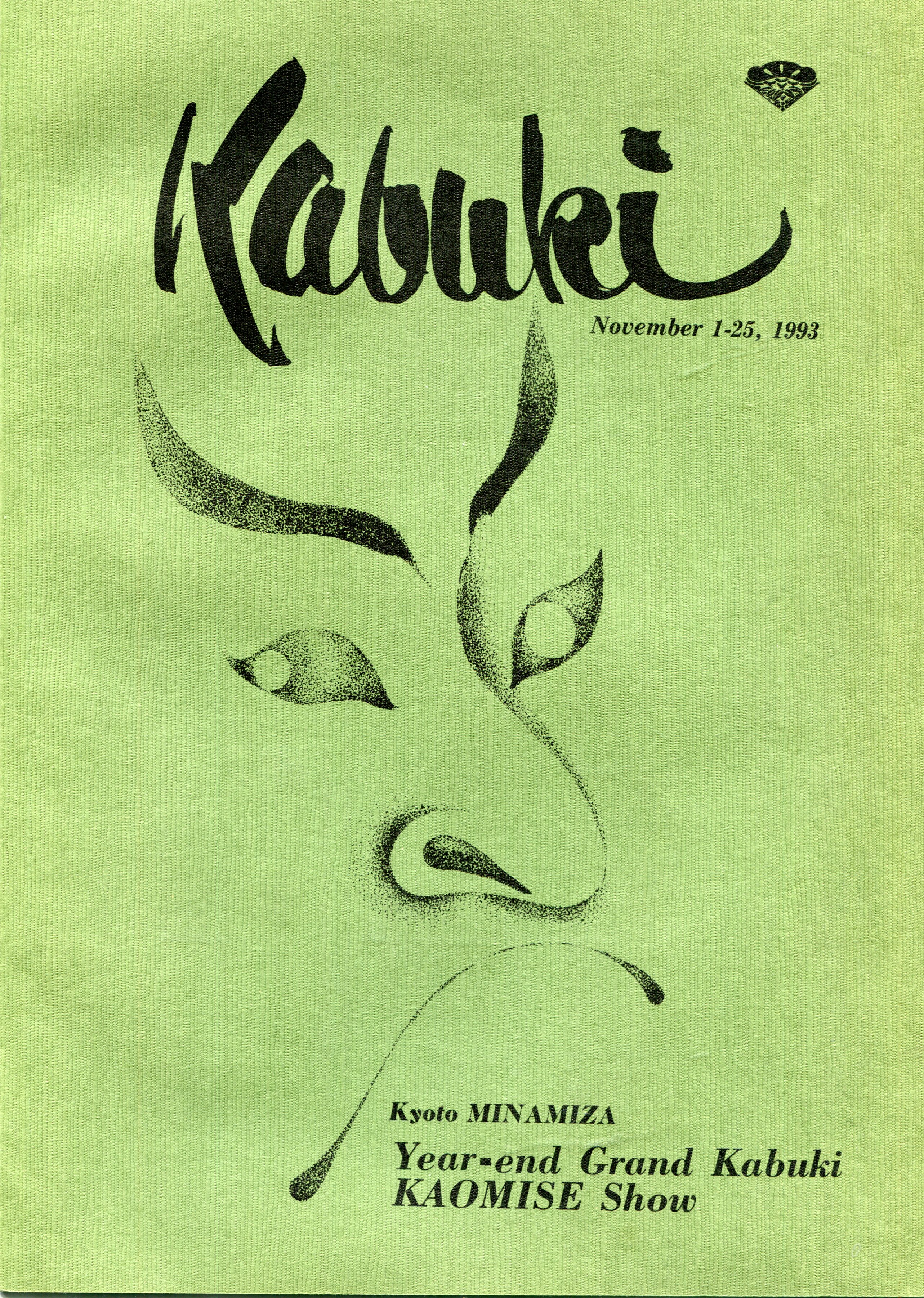
The cover of a 12-page program, from among the debris of previous years. Such items accumulate if you let them, and we do, to remind ourselves of previous years.

Except I can’t say I have anything more than a vague memory of attending the Year-End Grand Kabuki Kaomise show in November 1993. There were actors in wildly colorful costumes and makeup, pursuing their exaggerated movements, as you’d expect. The dialect, Yuriko said, was sometimes hard for her to understand. I only picked up a word here and there sometimes.

“Kabuki theatre has been the most popular indigenous theatre form in Japan since the late 17th century,” explains the Staatliche Museen zu Berlin (of all places). “Accompanied by music, the all-male group of actors perform a rich combination of dialogue, song and dance that even encompasses acrobatics, action-packed heroic tales, tragic love stories and burlesque comedies.

“By the 19th century, the best-loved actors and scenes from the most successful plays had quickly become part of an elaborate marketing system that was in part fueled by the proliferation of affordable woodcut prints which drew on the cult status of the stars they depicted.

“One of the high points in the theatre calendar was the wave of premières marking the season’s opening, held annually in the eleventh month of the moon [sic] calendar, during which it was customary for a theatre’s entire ensemble to present a play to the fans. This event is known as ‘kaomise,’ which literally means ‘the showing of faces’ and took its name from the fact that all stars employed for the coming season presented themselves to the public.”

I’d say the Japanese have seen a vast expansion of entertainment forms since the 19th century, just like everyone else, rendering kabuki a niche interest. I’m glad I went, but never felt the urge to go again.

Skulls & Bones & Things

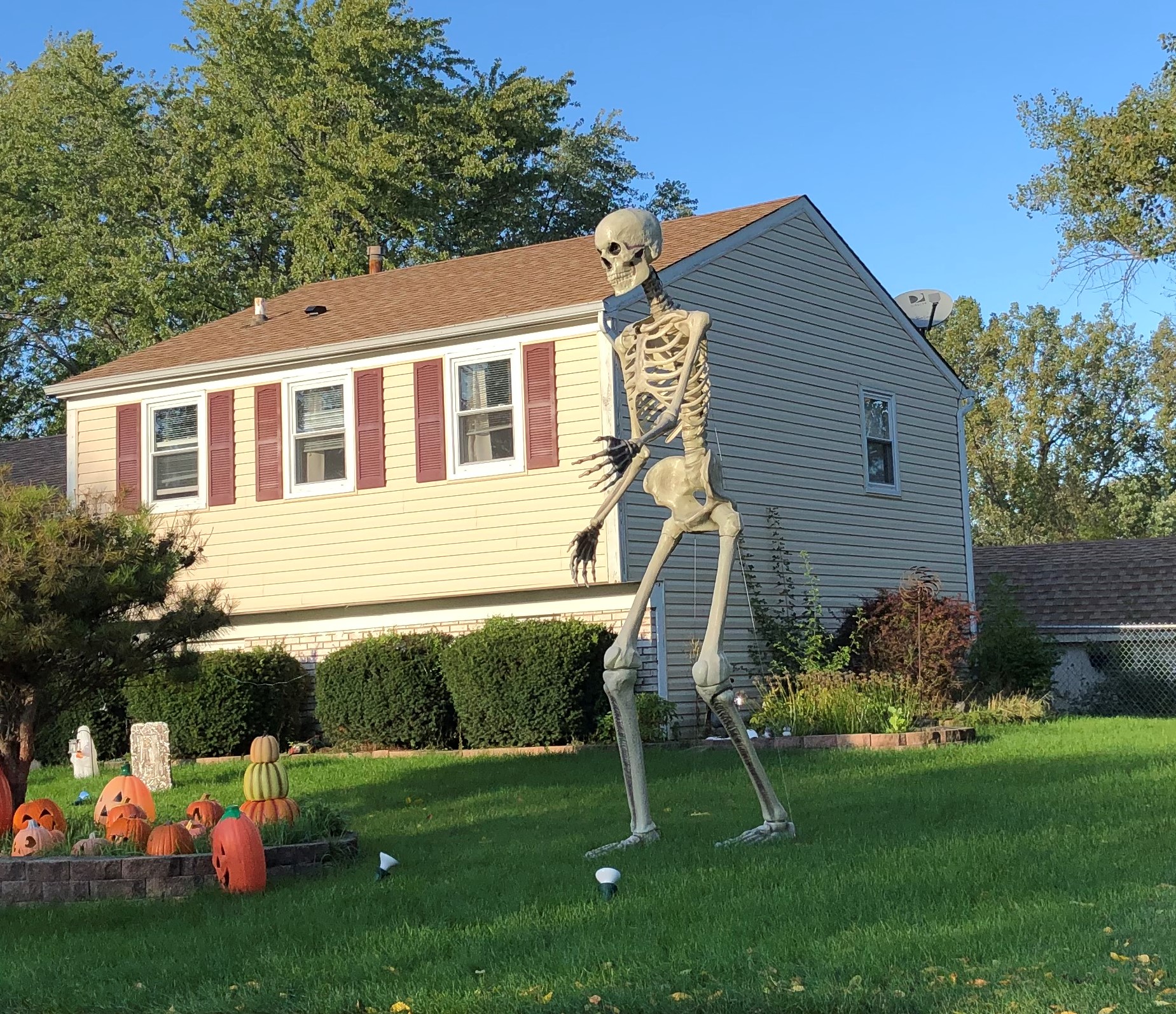
Back to posting around Halloween. Speaking of which, this two-story skeleton can be found about a mile from my house. I’m not planning to get one for my yard.

Also, I’m not planning to watch or care about The Squid Game. Or is it The Octopus Meet? Hard to keep track of all the fashionable shows.

Thursday Adds

RIP, Laura Ford, mother of two friends of mine in high school, Catherine and Melanie. I remember her fondly from the times we hung out at Catherine’s house in the late ’70s. She’s pictured here in May 1979.

More recently, she would comment occasionally on something I’d posted on Facebook — she really liked pictures of our dog — though I can’t remember the last time we met in person.

I didn’t know her exact age until I read the obituary, and was slightly startled to realize that when I met her, she wasn’t even 40 yet. Of course, from the vantage of high school, that seemed vastly old. Now, not so much.

One more pic from Normal, Illinois, last weekend.
Normal, Illinois

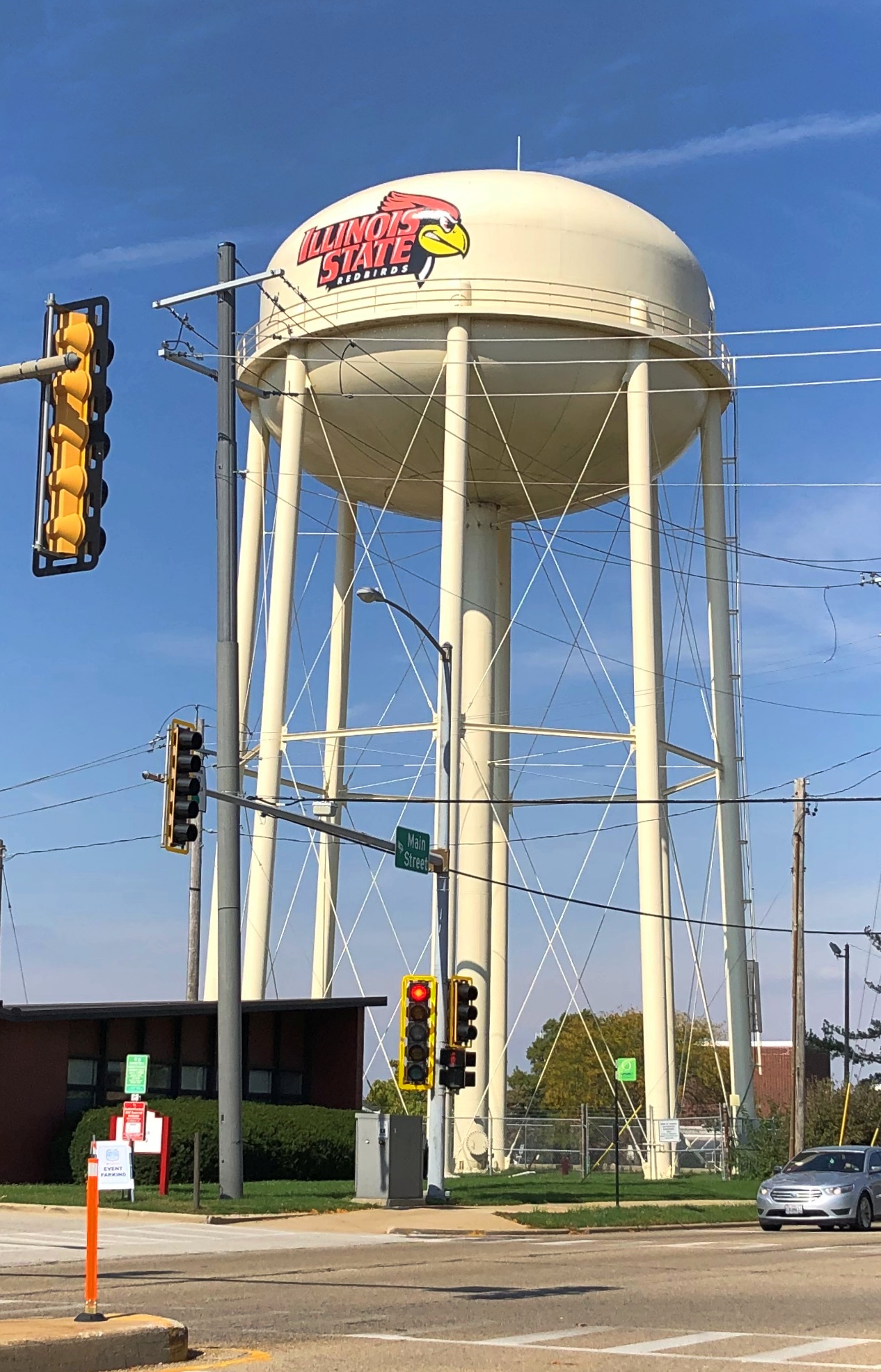
As we drove toward Normal, Yuriko asked what kind of bird the ISU mascot was supposed to be — a cardinal? I told her I didn’t think it was supposed to be any particular species, though it does look something like an angry cardinal.

Later Ann said she thought “redbird” was picked since too many other places used cardinals. The dictionary definition of redbird (Merriam-Webster) is straightforward enough: “Any of several birds (such as a cardinal or scarlet tanager) with predominantly red plumage.”

I had to look further into scarlet tanagers. Only some of them are actually scarlet, it seems. Not sure that would be such a hot mascot name anyway. If you want an unusual bird mascot name, I’d go with the Andean cock-of-the-rock. Funny name, funny-looking bird.

I noticed that Dick Cavett had a small part in Beetlejuice. I don’t think I’d ever seen him in a movie in which he didn’t play himself, such as in Annie Hall or Apollo 13, which was a TV clip of him joking about sending a bachelor astronaut to the Moon.

In Beetlejuice, he played Delia’s agent, attending a dinner party she held. Delia was the story’s cartoonish antagonist, and among other things an artist who produces bad sculpture. Leaving the party, Cavett’s character got in a good parting shot:

“Delia, you are a flake. You have always been a flake. If you insist on frightening people, do it with your sculpture.”

The Normal Theater

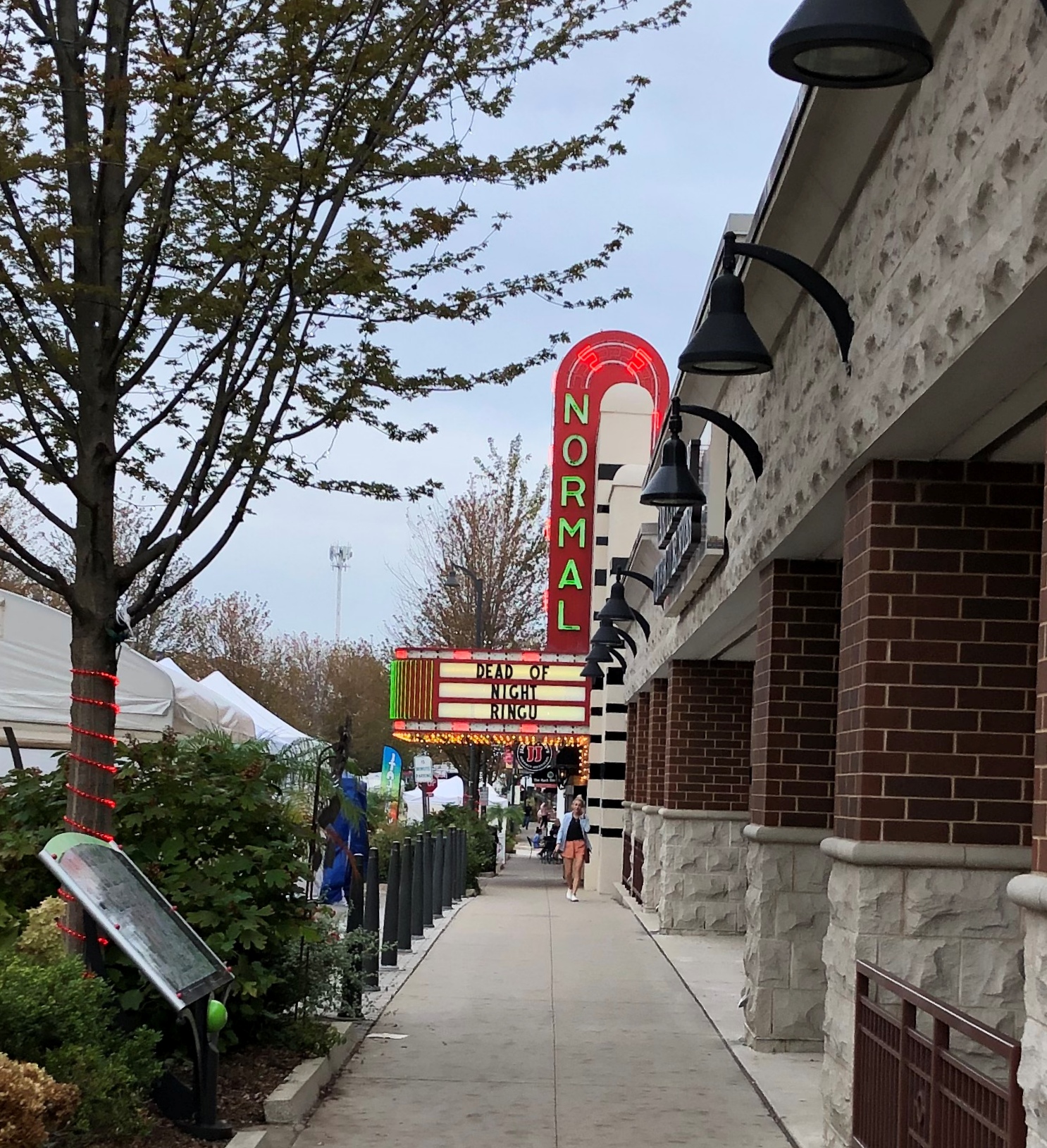
One of the things Ann wanted to do when we were visiting was see a showing of Beetlejuice at the Normal Theater, a single-screen moviehouse of ’30s vintage only a few minutes’ walk from her dorm. Since Yuriko didn’t want to see the movie, she stayed in our room with the dog and I went to the show with Ann.

As it happened, I’d never seen that movie. Neither had Ann, but she didn’t have the opportunity to see it when it was new. Not sure why I didn’t. I saw a fair number of movies in my late ’80s Chicago bachelor days — first run, foreign and arthouse — both highly memorable (e.g., The Princess Bride) and much less so (e.g., the ’87 movie version of Dragnet).

It’s a fun romp. A good example of a movie that doesn’t take itself that seriously, entertainment by a talented cast working from a good script that also includes all sorts of interesting visual detail. Tim Burton certainly has a gift for the visual, which you’d think would be mandatory to be a director, but apparently not.

Lots of weirdness, bright and dark, all mixed in effective ways. For a few moments, I’d swear the look of the afterlife owed a lot to German Expressionism, but also Brazil and Kafka, with B horror movies and screwball comedies and Fellini and Saturday morning cartoons and who knows what else thrown in to the rest of the movie.

Now I believe I need to see some of the other Tim Burton movies I’ve missed, such as Edward Scissorhands, The Nightmare Before ChristmasBig Fish, Sweeney Todd and Big Eyes, and maybe re-watch Pee-wee’s Big Adventure and Batman, which I haven’t seen since the decade they were made.

Better yet, I saw Beetlejuice‘s rampant weirdness in a real movie theater. Not a multiplex, either. The Normal Theater is one of the scant few survivors of another age of moviehouses: a neighborhood theater from that time when a lot of neighborhoods had them.
Normal Theater

It isn’t a movie palace, but its Art Moderne style is charming to modern eyes, which are inured to bland interiors.

“The architect was Arthur F. Moratz, youngest sibling of Paul O. Moratz, another prominent local architect,” the theater web site says, which also includes some good pictures. “In Bloomington, Arthur Moratz buildings include the acclaimed Art Deco-style Holy Trinity Catholic Church at the north end of downtown, and his own residence, 317 East Chestnut Street.”

When it opened in 1937, the theater had 620 seats (these days, 385). First movie: Double or Nothing, with Bing Crosby and Martha Raye. Soon it found its niche in the world of Normal moviehouses.

“The Normal, generally speaking, did not screen the just-released prestige pictures and big budget epics,” the web site says. “Those were shown instead at the Irvin (and sometimes the Castle), which were both owned by Publix Great States Theatres. After all, why would the chain compete against itself? For its part, the Normal was known for genre and B pictures, especially westerns and musicals, as well as second-run fare.”

Of course, after its heyday, the theater followed the usual course for such places, with the 1960s and ’70 being unkind to it, though the Normal limped into the ’80s, surviving as a discount theater (dollar tickets and later $1.50).

I remember paying $1 at the Josephine Theatre in San Antonio ca. 1974 to see a Marx Bros. double feature, two of their lesser-shown works, Out West and At the Circus (I think, though one of them might have been The Big Store). Later in the ’70s, that theater showed X-rated pictures, which were advertised in small print in the newspapers, and no one I knew ever went there. I’m glad to say that the Josephine was later restored, and until the pandemic at least, was open.

As for the Normal, I don’t know whether it ever showed dirty movies (the web site is silent on the matter), but in any case, it closed in 1991. “The reason we closed it is that nobody went to it,” the owner said at the time. No doubt.

Amazing to relate, the town of Normal then bought the place, and a combination of federal grants, donations and local tax dollars was used to restore the theater, with a re-opening in 1994. It’s been showing old movies, foreign films and art pictures ever since — everything a nonstandard, nonchain theater should show. Admission: $6. A bargain these days.

This month is devoted to various horror and horror-adjacent movies, serious and not. Besides Beetlejuice, on the bill are Halloween (1978), PG: Psycho Goreman, The Witch, The Brood, Nightmare on Elm Street and its immediate sequel, Destroy All Monsters, Dead of Night (Ealing Studios), Mad Monster Party and The Rocky Horror Picture Show.

I encouraged Ann to take advantage of the theater, and I think she might. The movie theaters I had access to in college, especially Sarratt Cinema at Vanderbilt and the Texas Union Theater at UT, were an entertaining part of my education — something I didn’t appreciate until some years later.

Waning Summer Tidbits

As if on cue, we had a cooler afternoon and evening to start September. Not much cooler, but noticeable. Warmth will be back soon, but the air is slowly leaking out of that balloon as the days grow shorter. Back to posting around September 7.

There’s a nice bloom of goldenrod out by the back fence.

I realize that it isn’t causing our intermittent runny noses, which have been worse this year than last, but not as bad as the worst ever. That would be 1987, the first late summer/early fall I spent in northern Illinois, maybe without much experience with the pollen in question. Ragweed causes that unpleasantness, I understand.

“About Hay Fever,” says American Meadows. “In short, it’s an old wives’ tale. Goldenrod does not cause hay fever. It simply got that bum rap since it blooms at the same time as the real culprit — ragweed.”

Today I started reading When In Rome by Robert J. Hutchinson (1998), subtitled “A Journal of Life in Vatican City,” which is part travel book, part memoir, part popular history, and all very readable and amusing.

Something I found out today: Lyle Waggoner (d. 2020) founded a successful company that provides trailers to movie and TV studios, Star Waggons. After The Carol Burnett Show and Wonder Woman, that’s what he turned his attention to. One of his sons runs it even now, though it has been acquired by a REIT.

One more thing I found out today, early this morning: even at my age, dreams about missing class, or being unprepared for a test, do not disappear completely. Also, the sense of relief is still there when you wake up — ah, I haven’t had to go to a class in nearly 40 years, much less be prepared for one.

RIP, Charlie Watts

I heard about Charlie Watts’ passing on the radio today, appropriately, as I was driving my car, in between men telling me more and more useless information that’s supposed to fire my imagination.

Actually, I would have been hard-pressed to name the drummer of the Rolling Stones, in their heyday or their more recent geriatric selves. Which turned out to be Watts the whole time. Not that I dislike the band, just that those kinds of details never captivated me.

“The news comes weeks after it was announced that Watts would miss the band’s U.S. tour dates to recover from an unspecified medical procedure,” the BBC reports. “Watts was previously treated for throat cancer in 2004.”

U.S. tour dates? This far along in the 21st century? Another thing I didn’t know about the Stones. They’ve got staying power, that’s for certain. I expect no one would have predicted such a thing in 1965.

RIP, Mr. Watts.

Thursday Crumbs

Warm and windy today. The wind died down some in the evening, and I had a pleasant time sitting on the deck drinking tea and reading. At advanced middle age, these are pleasures you appreciate.

Speaking of an advanced age, I’m glad to see Elvis Costello is still recording catchy tunes. He released an album in October — his 31st — called Hey Clockface, with the title track, “Hey Clockface / How Can You Face Me?” The video is as charming as the song.

He shares writing credit for the song with Fats Waller and Andy Razaf, since it incorporates part of “How Can You Face Me?” Not the sort of music Elvis Costello did 40 years ago when I saw him at VU, but I wouldn’t have appreciated it then anyway.

I left YouTube on autoplay after Waller’s “How Can You Face Me?” and left the room for a few minutes. When I came back, the Bratislava Hot Serenaders were playing, a band I hadn’t heard of before.

A word I hadn’t heard of before.

Clearly a commercial coinage in our time. But who knows? It might evolve over the decades or centuries into something unimaginably perverse.

The U.S. birth rate might be declining, but there are some births. I knew that the Social Security Administration keeps track of baby names, but I didn’t know until recently that the agency maintains a web page devoted to them, new and old.

Not a bad list in 2020, mostly traditional names, such as Olivia, Charlotte, Sophia, Elijah, William and James, rather than some of the trendy names of recent decades, none of which I’ll cite. I’m mossbacked when it comes to a few things, and baby names is one of them.

Riverfront Park, Peoria

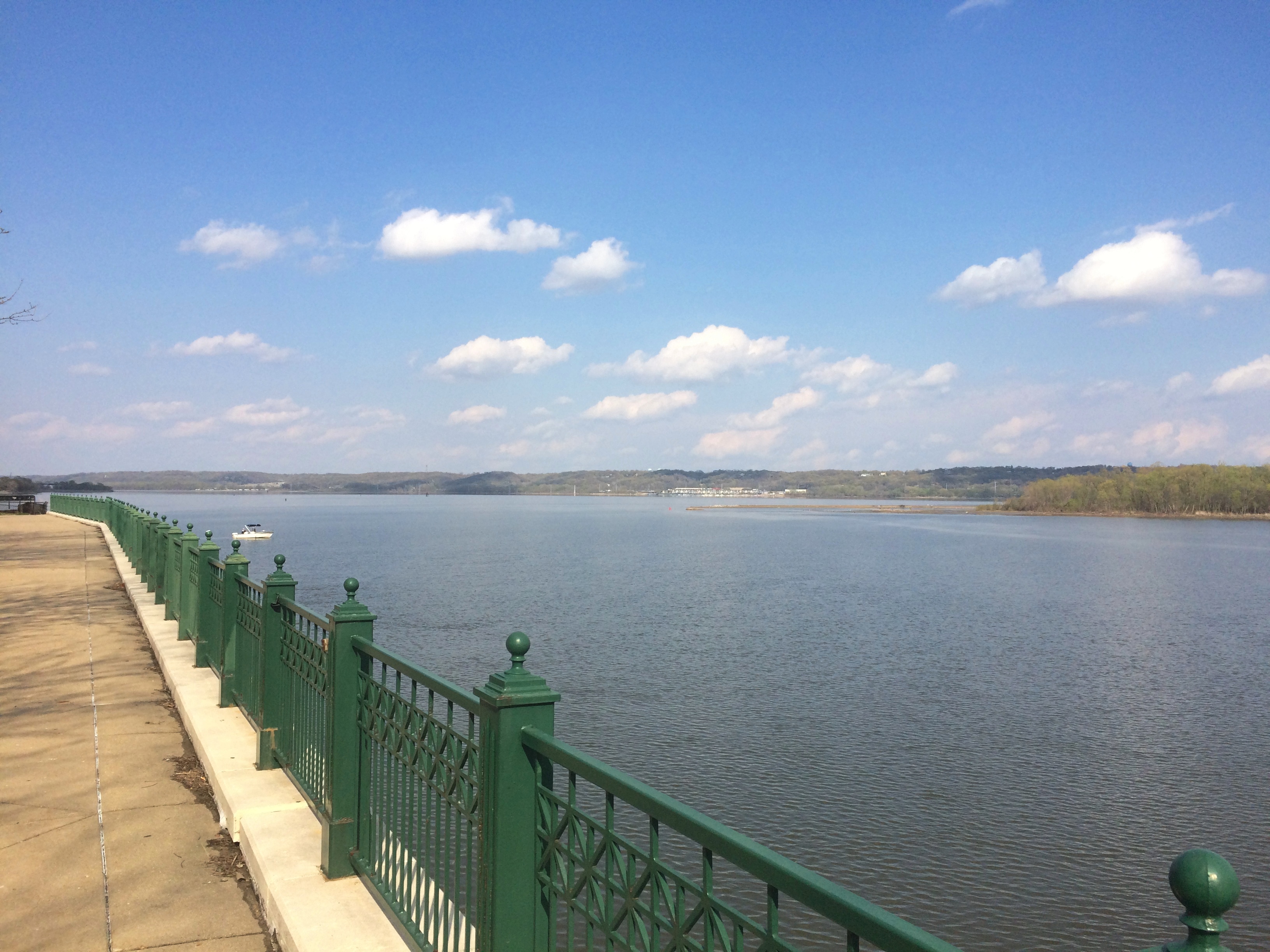
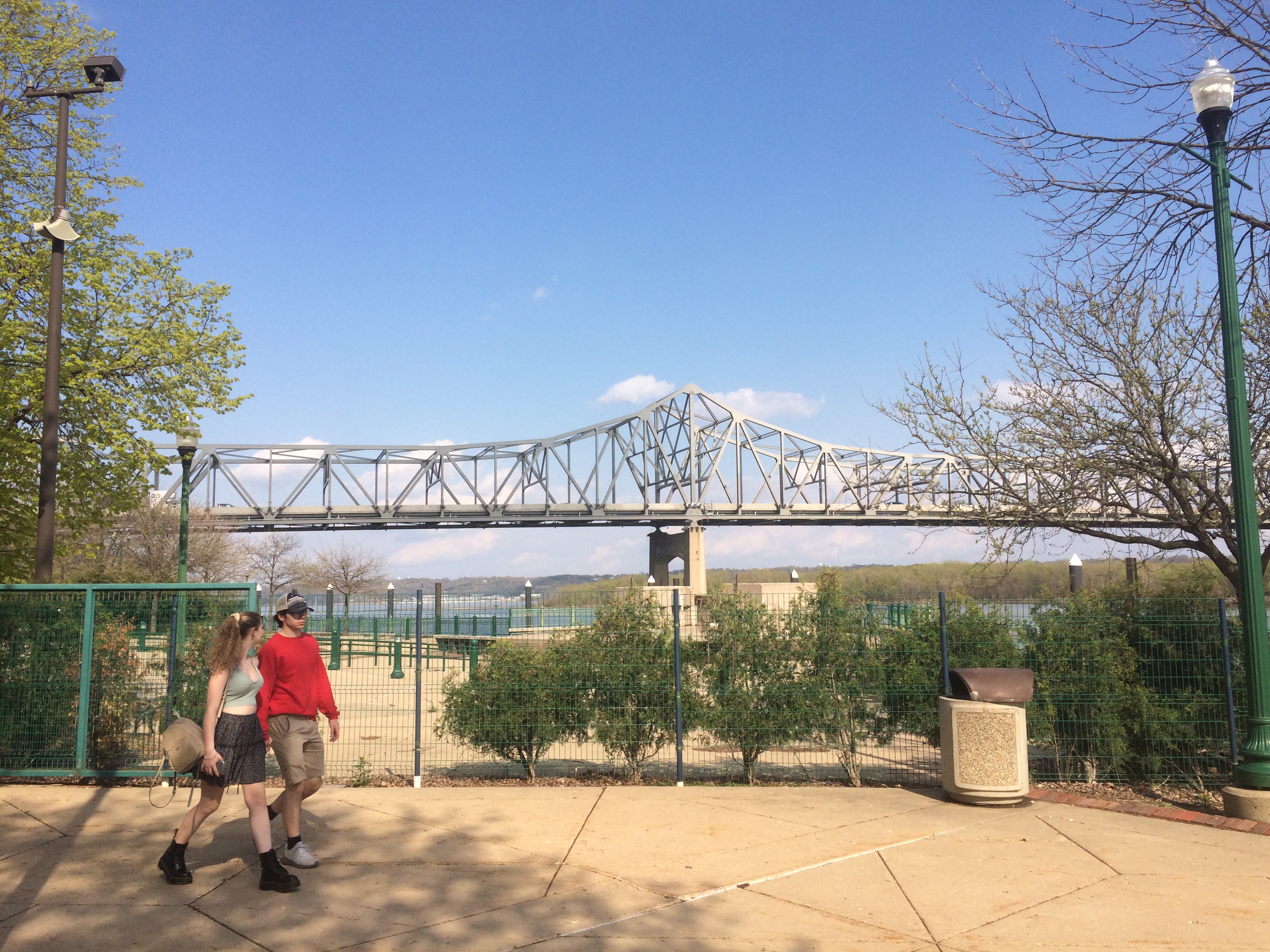
Another recent vaccination destination was Peoria. We spent about 24 hours on the trip, there in the afternoon and a return the next afternoon. Shortly after taking care of the shot at a local pharmacy, we took a walk along the Illinois River near downtown Peoria, including a paved section but also parkland.

Riverfront Park, Peoria Riverfront Park, Peoria

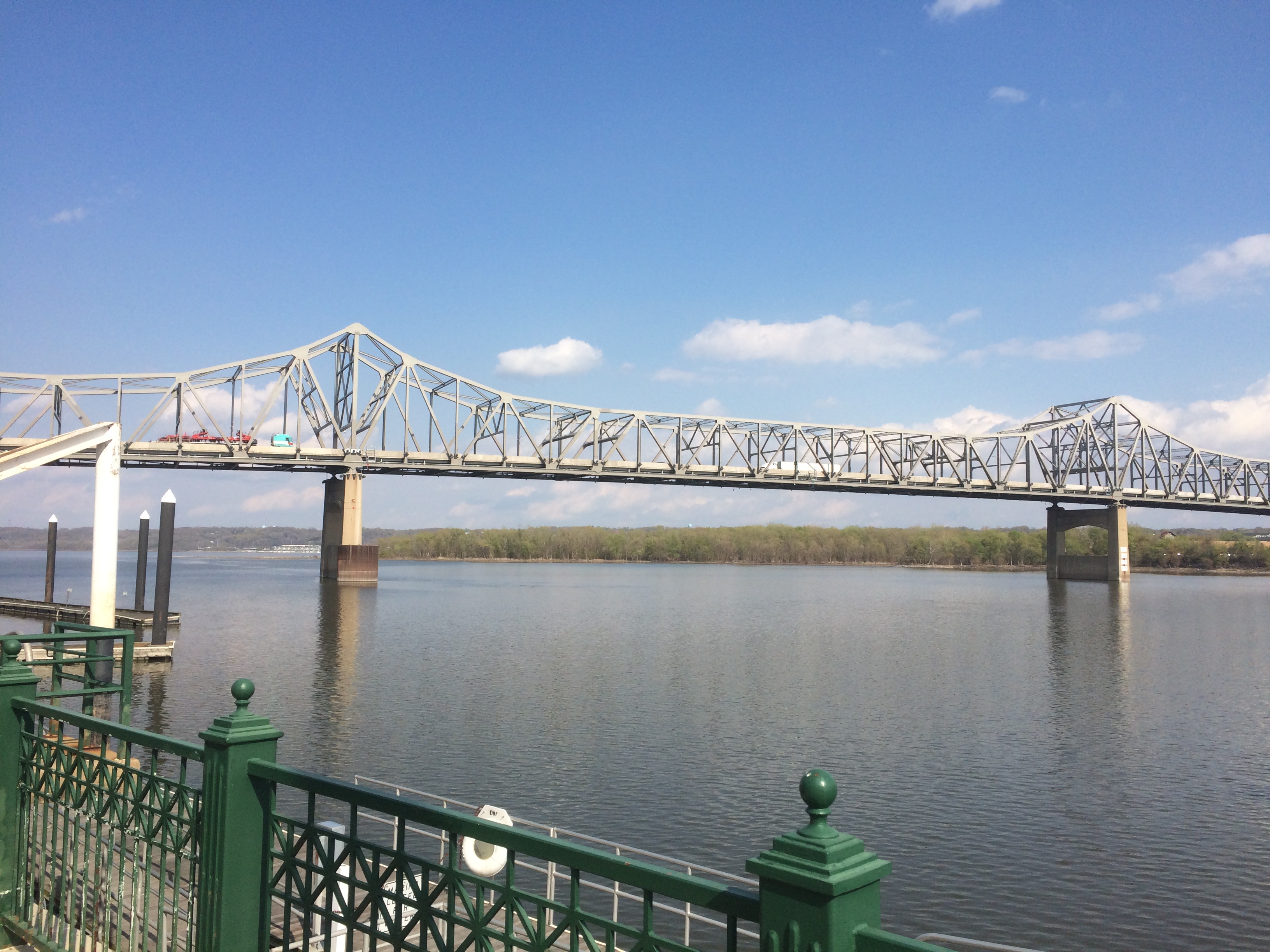
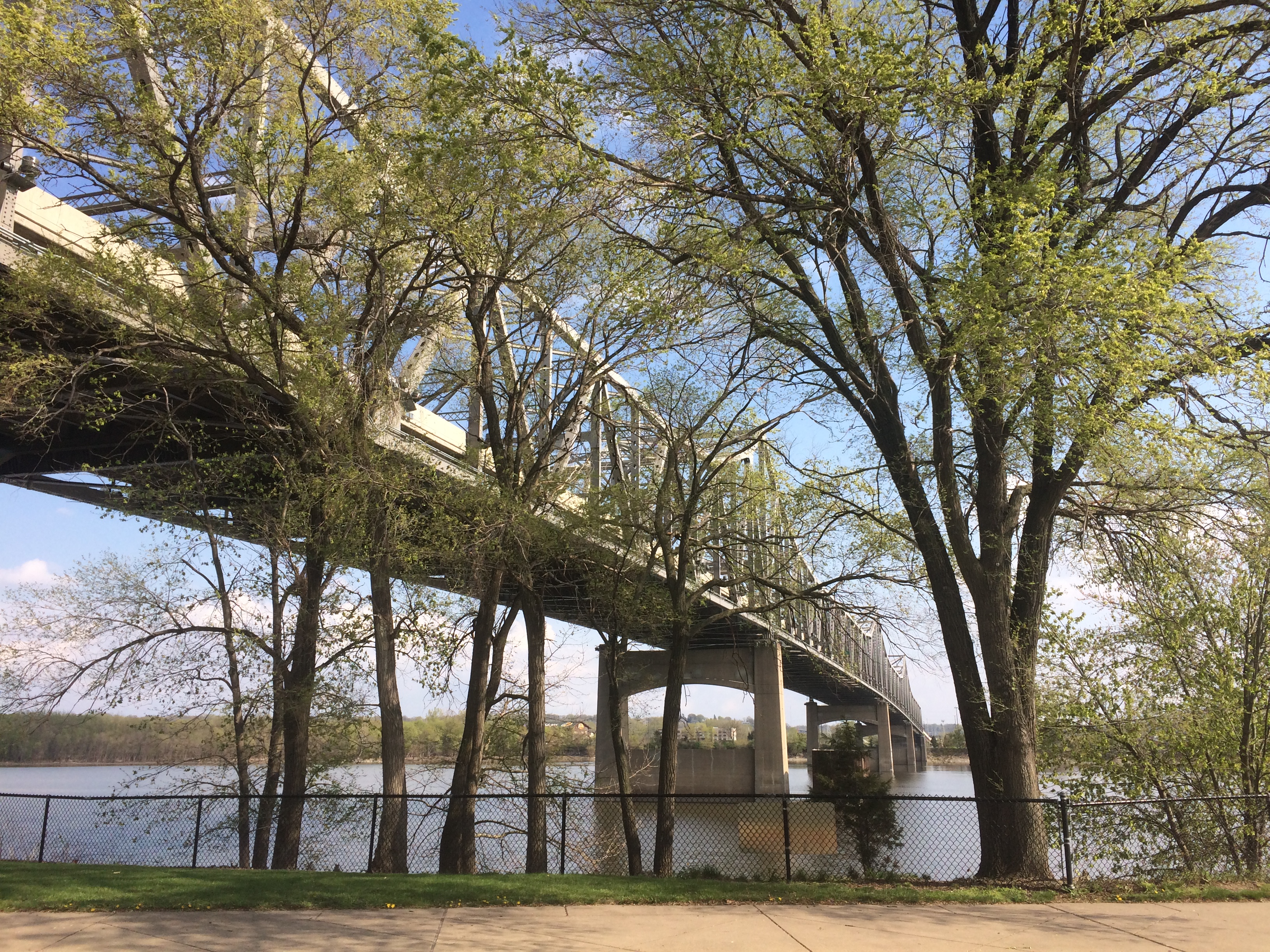
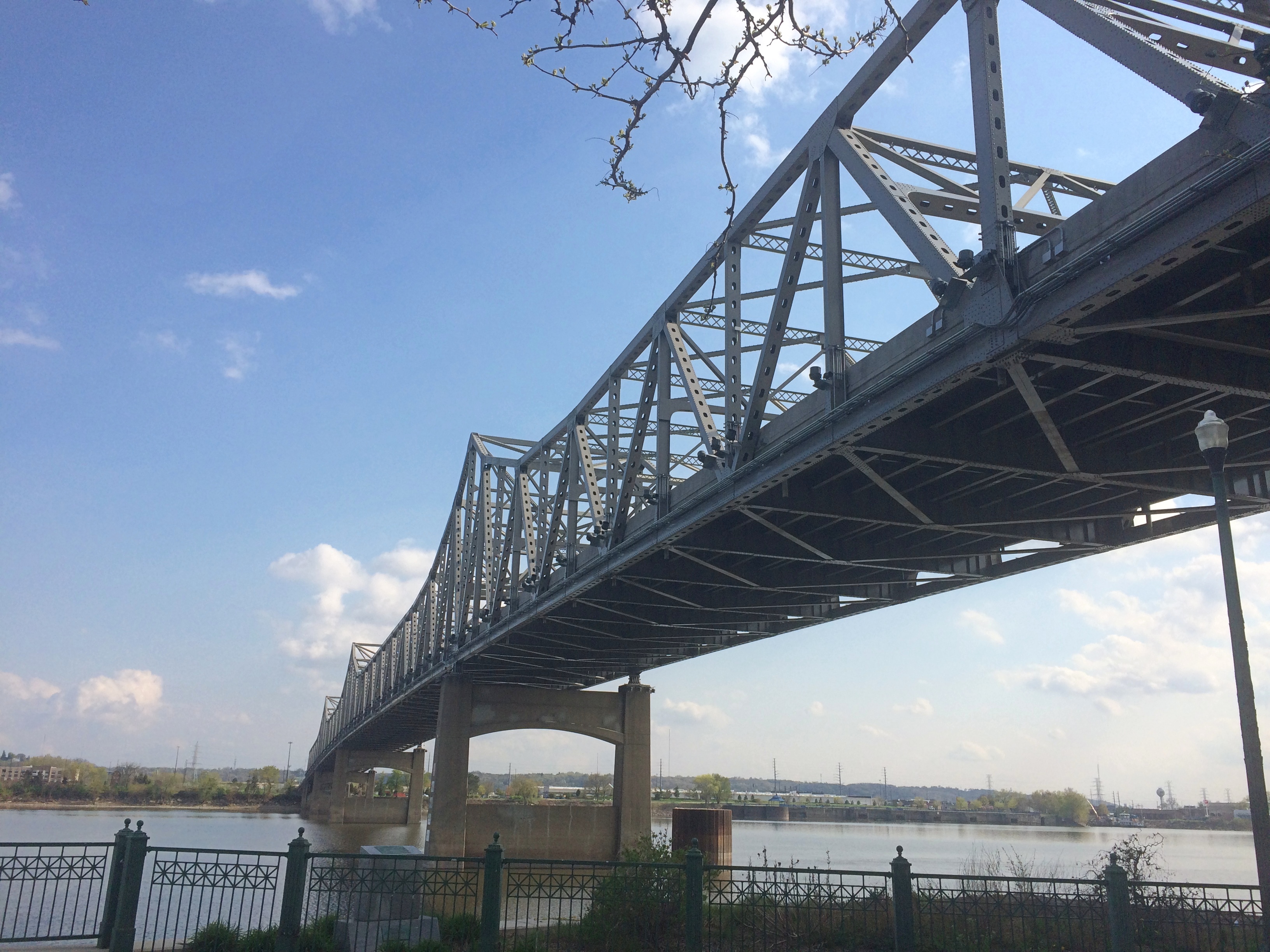
Riverfront Park gives you some nice views of the Murray Baker Bridge, which carries I-74 across the river. It’s named for an early executive of Holt Manufacturing Co., later Caterpillar Tractor Co., who oversaw its move to Peoria in 1909.Murray Baker Bridge Murray Baker Bridge Murray Baker Bridge Murray Baker Bridge

For what I took to be a fairly old bridge (opened 1958), it looked spanking new, a handsome example of bridgebuilding. Turns out there was a reason for that.

“After a final countdown the lights were flicked on and the Murray Baker Bridge was re-opened to drivers of Central Illinois,” 25 Week reported on October 31 last year. “The bridge, which was shut down back in March, went through $42 million worth of renovations. Workers replaced the bridge deck, repaired the structural steel, repainted, and fixed the LED lights, which was one of the most anticipated changes.”

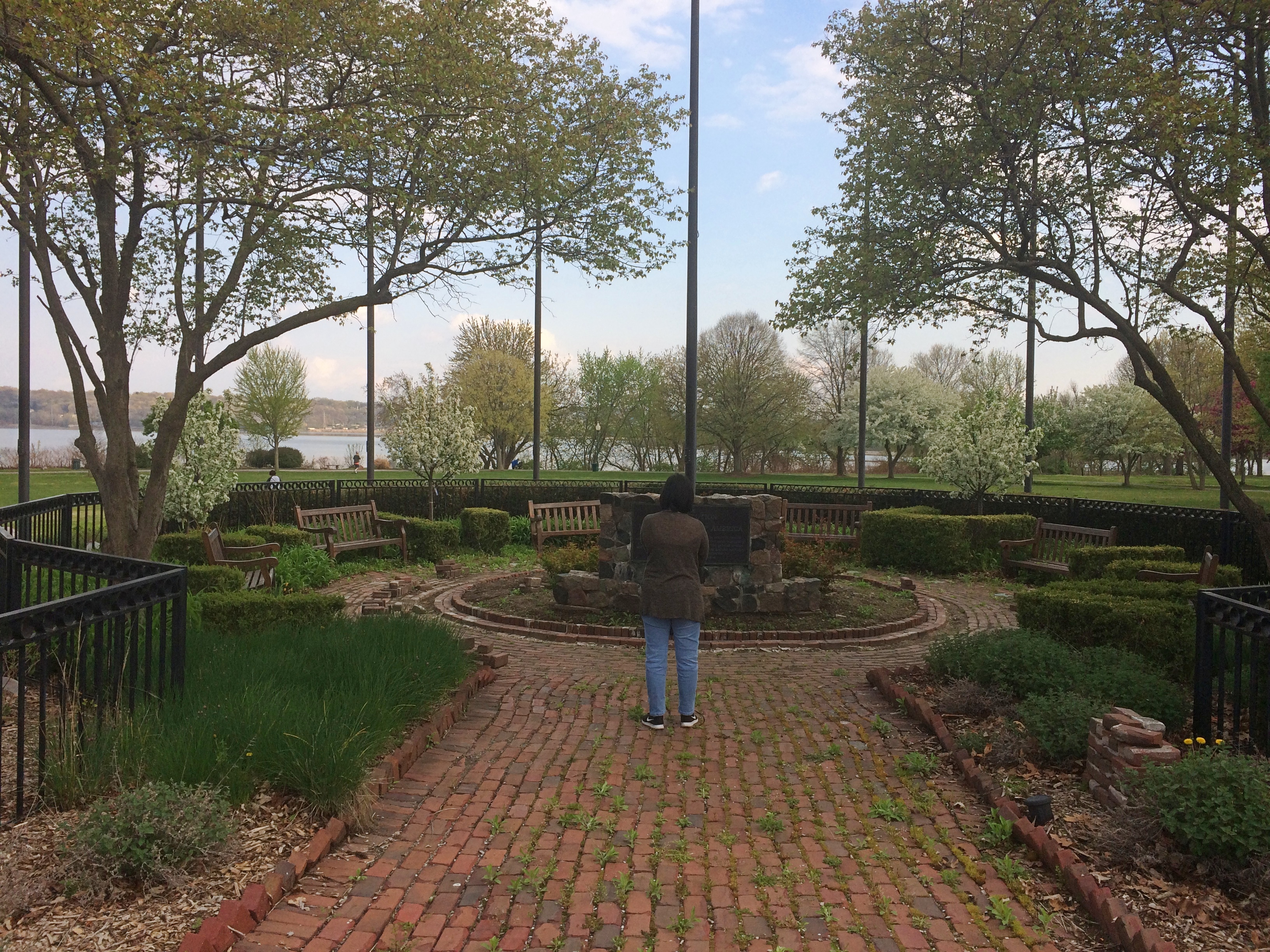
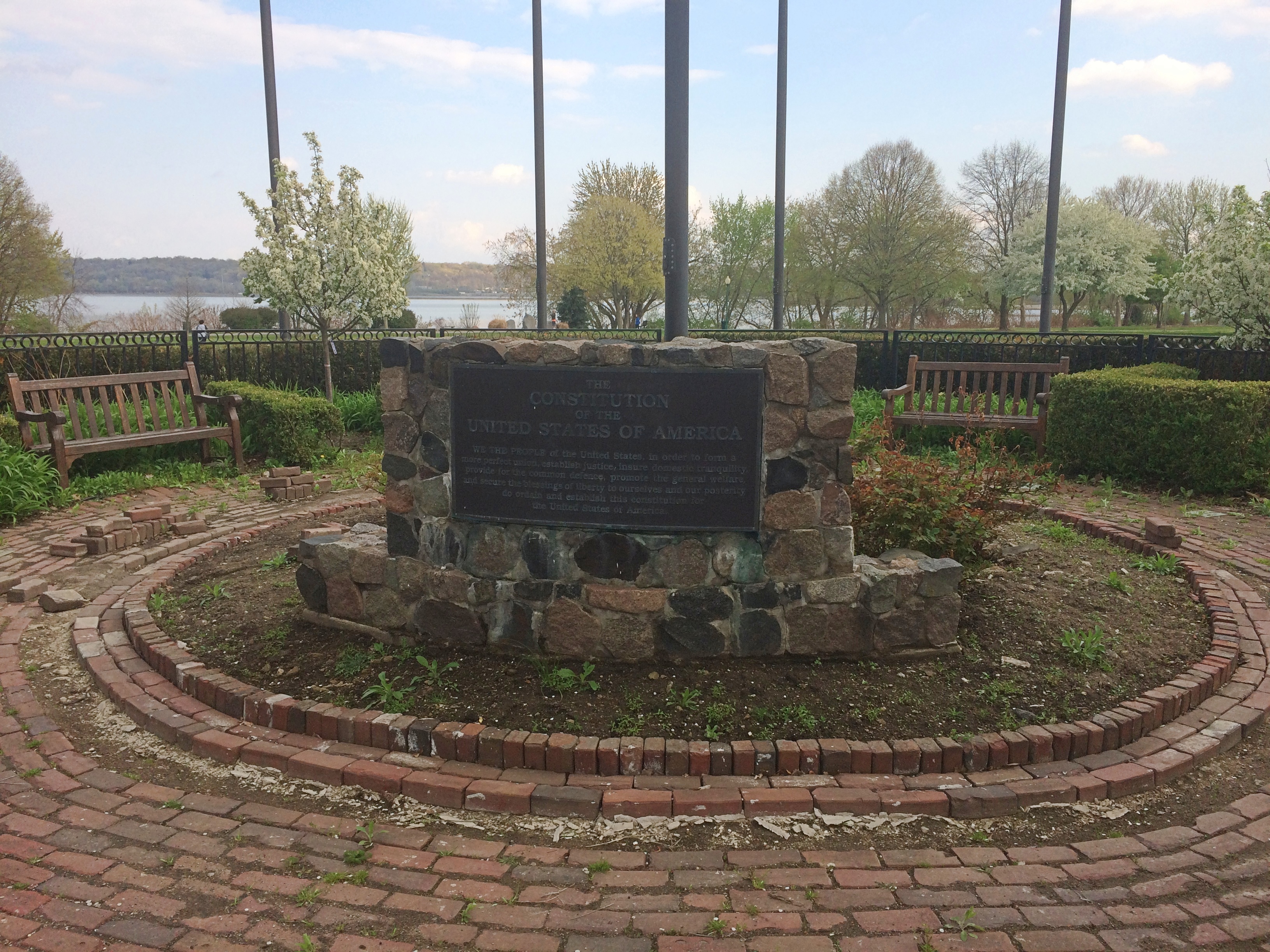
North of the bridge is a curiosity called Constitution Garden, dedicated to the U.S. Constitution.Constitution Garden Peoria Constitution Garden Peoria

Looks a little unkempt, at least this spring, and the plaque is dark. Someone’s comment on the state of our fundamental law?

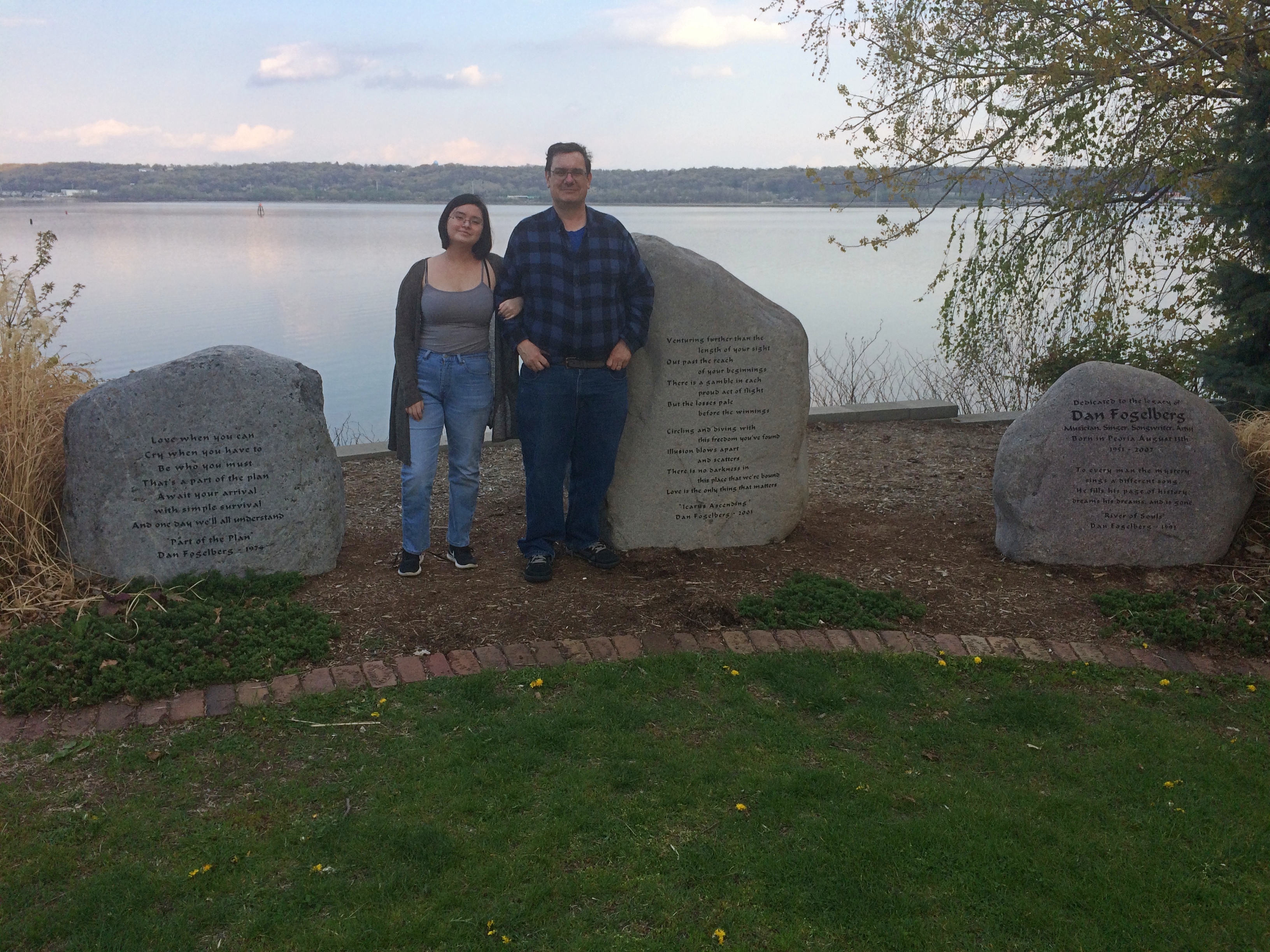
Not far away, overlooking the river, is the Dan Fogelberg Memorial, which has been there since 2010. A couple was there when we arrived — a man and woman maybe a few years older than me — and they expressed their enthusiasm for the musician to us, and had me take their picture in front of the rocks. Then they offered to take our picture (Yuriko was elsewhere with the dog.)
Dan Fogelberg Memorial Peoria

I hadn’t realized Fogelberg was from Peoria, but he was. The rock to our left features lyrics from “Part of the Plan,” which I told Ann was one of his better-known songs. Behind me the middle rock had lyrics from “Icarus Ascending,” a song I didn’t know, and to our right the rock says:

Dedicated to the legacy of
Dan Fogelberg
Musician, Singer, Songwriter, Artist
Born in Peoria August 13th
1951 – 2007

With some lines from “River of Souls,” another song I didn’t know. I liked Fogelberg well enough when I heard him on the radio, but I didn’t listen to him much beyond that, except for the album Phoenix (1979), which one of my college roommates had and I listened to occasionally. “Face the Fire” on that album has the distinction of being an anti-nuke song — nuclear power, that is, not bombs, clearly inspired by Three Mile Island.

Its lyrics didn’t make it onto a rock, unsurprisingly, since I suppose “The poison is spreading, the demon is free/People are running from what they can’t even see” wouldn’t have the right vibe for his memorial. More surprising is no mention of “Same Old Land Syne,” considering that’s a Christmastime sentimental favorite on the radio even now.