First Night Parade 92/93

Back on the last day of 1992, Yuriko and I found ourselves in Boston. I don’t remember exactly where the First Night parade was – along one of the streets next to the Common, probably – but we were there, ahead of dinner with friends and a gathering in Cambridge to see ’93 in.

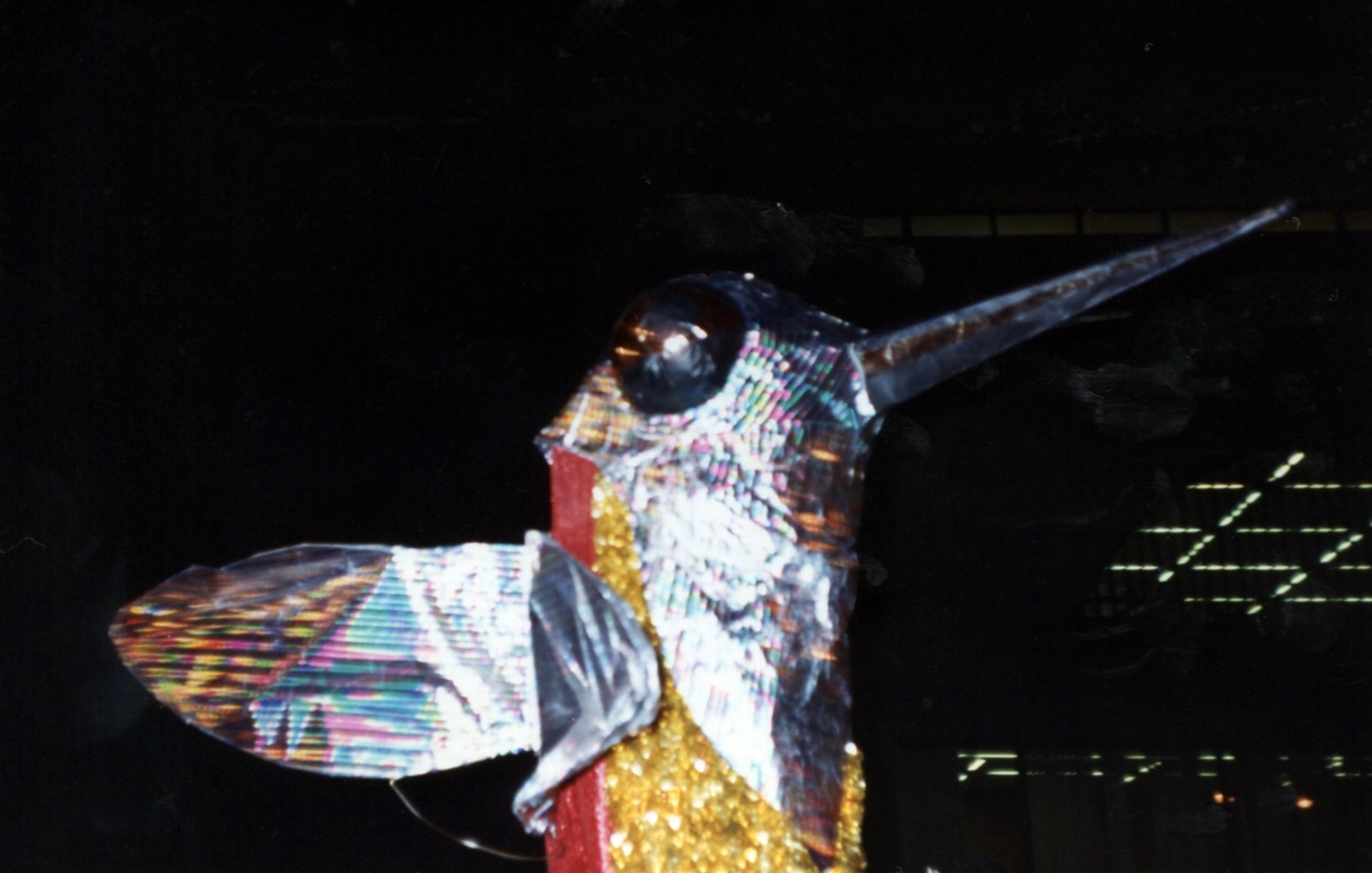
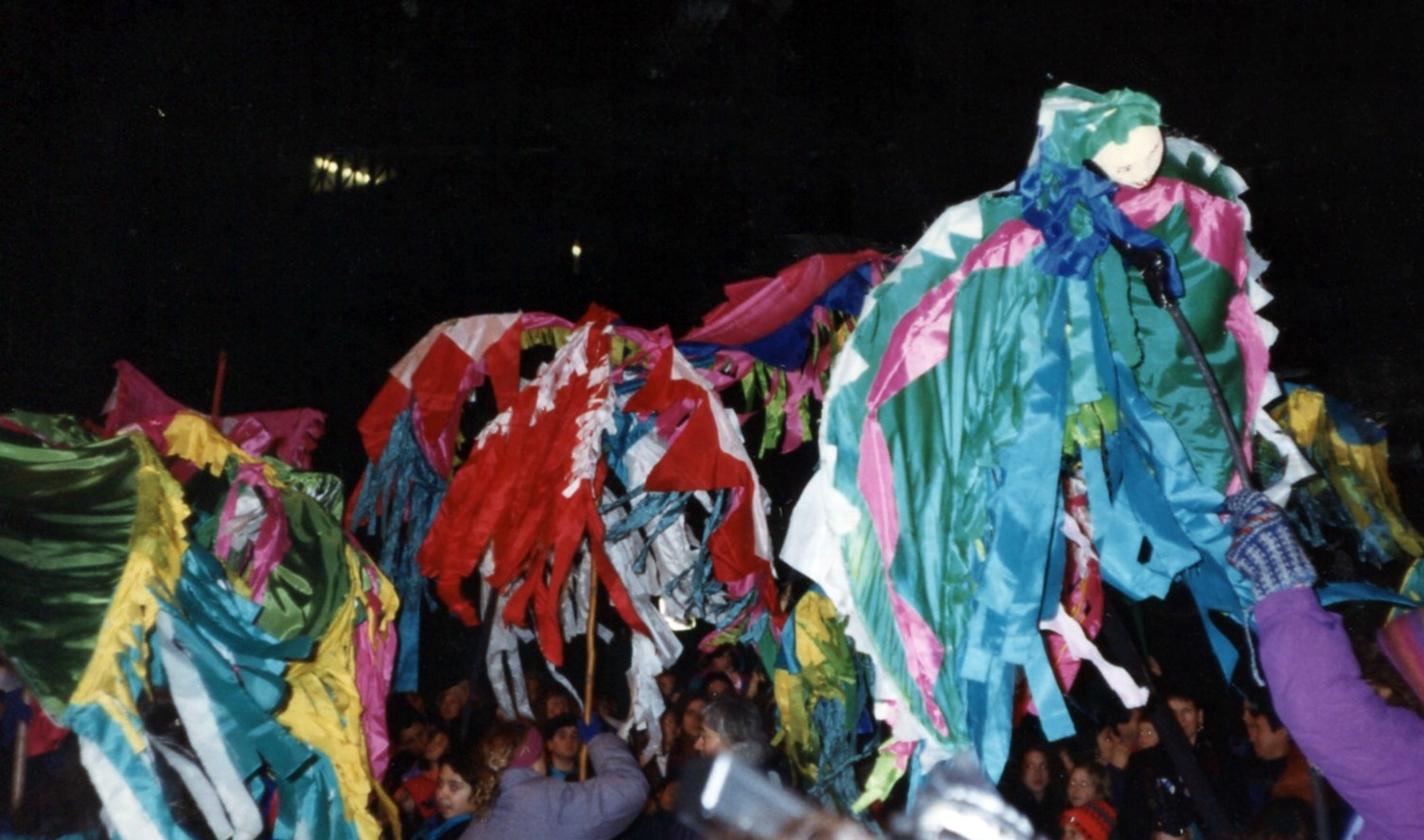
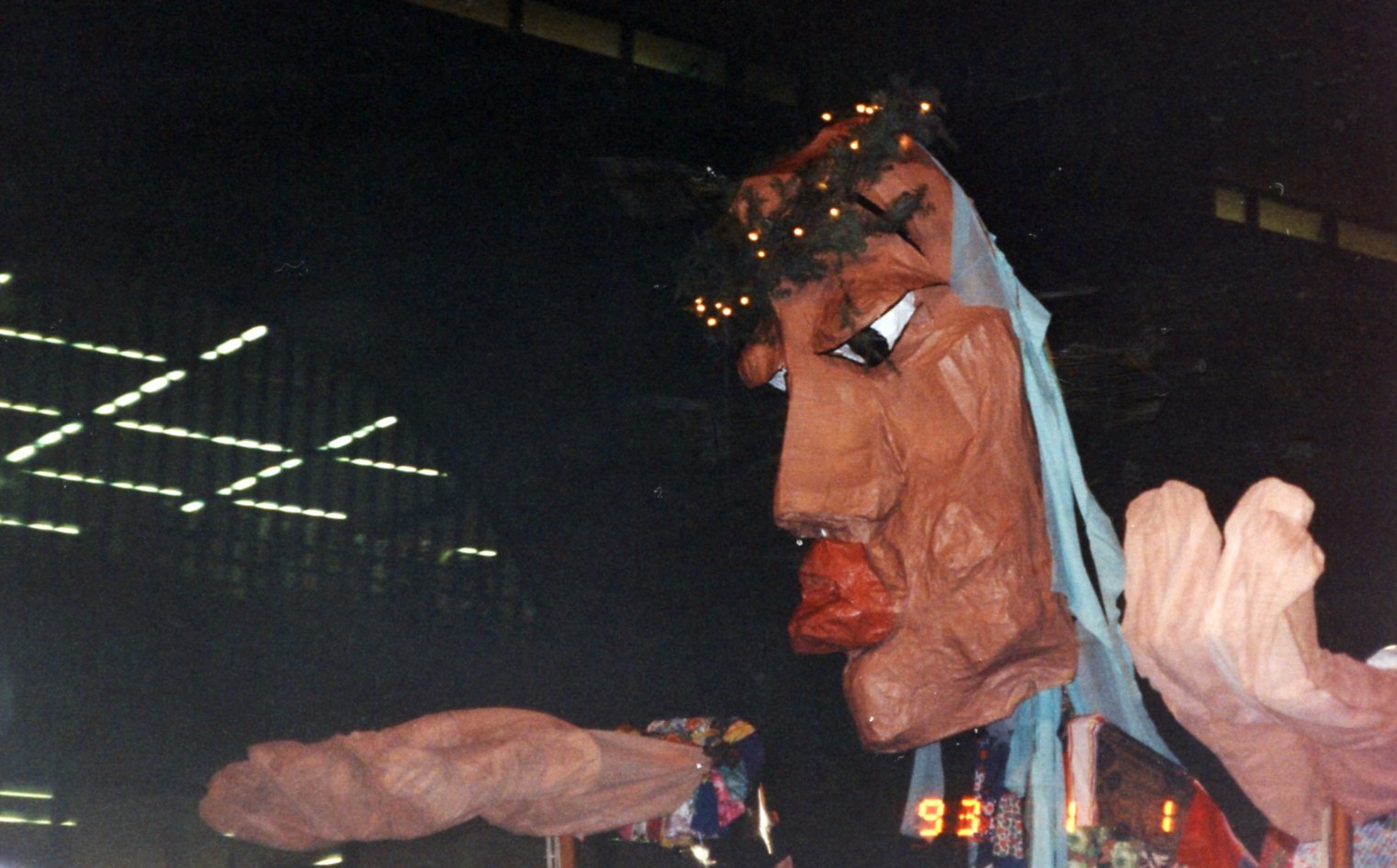
Like the Greenwich Village Halloween parade, First Night featured rod puppets of various kinds. Figures of people:

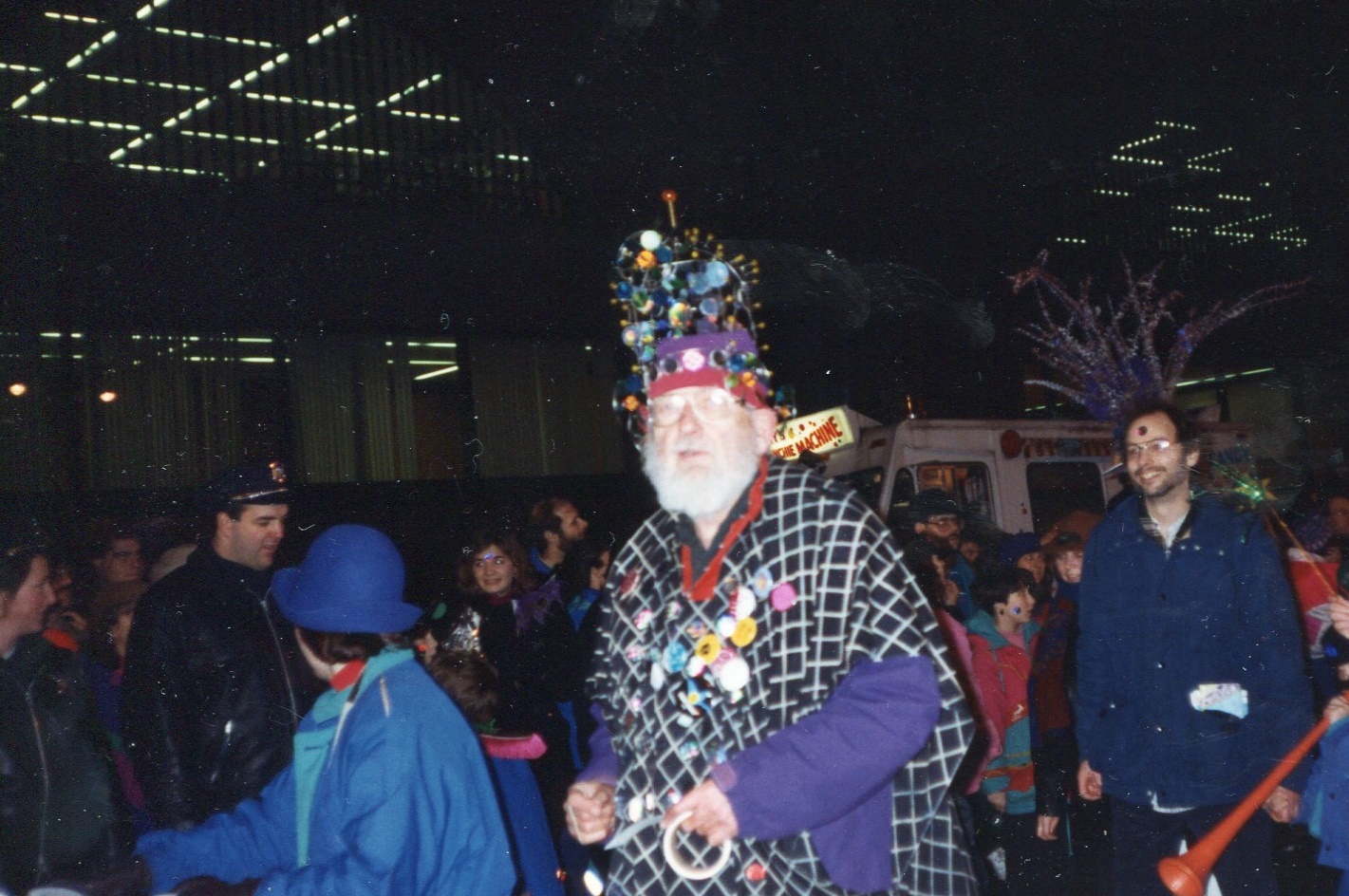
firstnightboston92-2The camera had an annoying feature that we forgot to turn off for that picture. It would time stamp the images at the bottom. The camera had been set to do so in Japan, so remarkably it stamped 93 1 1, which would have been correct had the camera still been in Japan. (We used it, and film, until 2007).

firstnightboston92-3Costumed participants paraded by as well.

firstnightboston92-1Not sure what this was supposed to have been, but it was colorful.

firstnightboston92-4My urge to go out on New Year’s Eve has flagged over the years (though usually it was to a gathering of friends, not a public event). This year, Lilly was out. In a few more years, Ann will be out.

Hard Day’s New Year’s Eve

Snow today, after a rain-ice mix yesterday that made slush. December ’14 was remarkable in that not a bit of snow fell here in northern Illinois, none that stuck anyway. That suited me, though mostly it was cold, especially as the month ended. Everyone who was out after midnight on New Year’s braved temps around 15 degrees F., with some wind.

I stood outside for a short spell to capture the sounds of the early ’15, just after midnight. It’s faint, but if the volume’s all the way up, you can hear the steady pops of technically illegal fireworks. Not sure what the loud pop is at about 10 seconds.


Before midnight I watched A Hard Day’s Night. Fun movie. Somehow or other I’d never seen it before, except for the famed opening, in which a mass of screaming girls chase the lads through a train station.

One amusing line — which must be understood less and less as time goes by — involved “Paul’s grandfather.” (Wilfrid Brambell played Paul’s grandfather, sometimes stealing the show. I thought he looked familiar. Turns out he played the father in Steptoe and Son.)

At one point, Paul’s grandfather sneaks off and runs up a tab at a posh club. The Beatles and their manager show up to collect the old man, and the club manager says, “There’s the matter of the bill.”

The Beatles’ manager looks at it and says, “180 pounds?”

“180 guineas!” answers the club manager.

Mid-December Salmugundi

Persistent cold so far through mid-December – that’s no surprise for December – but only cold rain, no snow to speak of as we approach Christmas. The girls fret about it. Don’t bother me a whit. A cold but snowless and especially iceless winter? Sounds good to me.

Ah, Cuba. Not in the U.S. news as much as it used to be, but now it’s back for a moment. Listening to some of the reportage, you’d think Cuba’s been isolated from the world since the early ’60s, but no. Just isolated from the United States.

When I was very young, I remember hearing the character Ricky Riccardo talking about coming from Cuba, and I was confused. I was pretty sure I’d also heard that no one was allowed to leave Cuba. Speaking of TV, I seem to recall an episode of The Twilight Zone in which Peter Falk plays a character that’s Castro in all but name. Yes, indeed.

Dreams are peculiar. Someone I haven’t seen in nearly 25 years appeared in one recently, and the subject of her ancestry came up. “Swiss and Wren,” she said. It made sense at the time. Only when I woke up did I think of the kind of bird.

Al Stewart ’14

I went to St. Charles on Sunday to see live music at the Arcada Theater, which is on Main St.
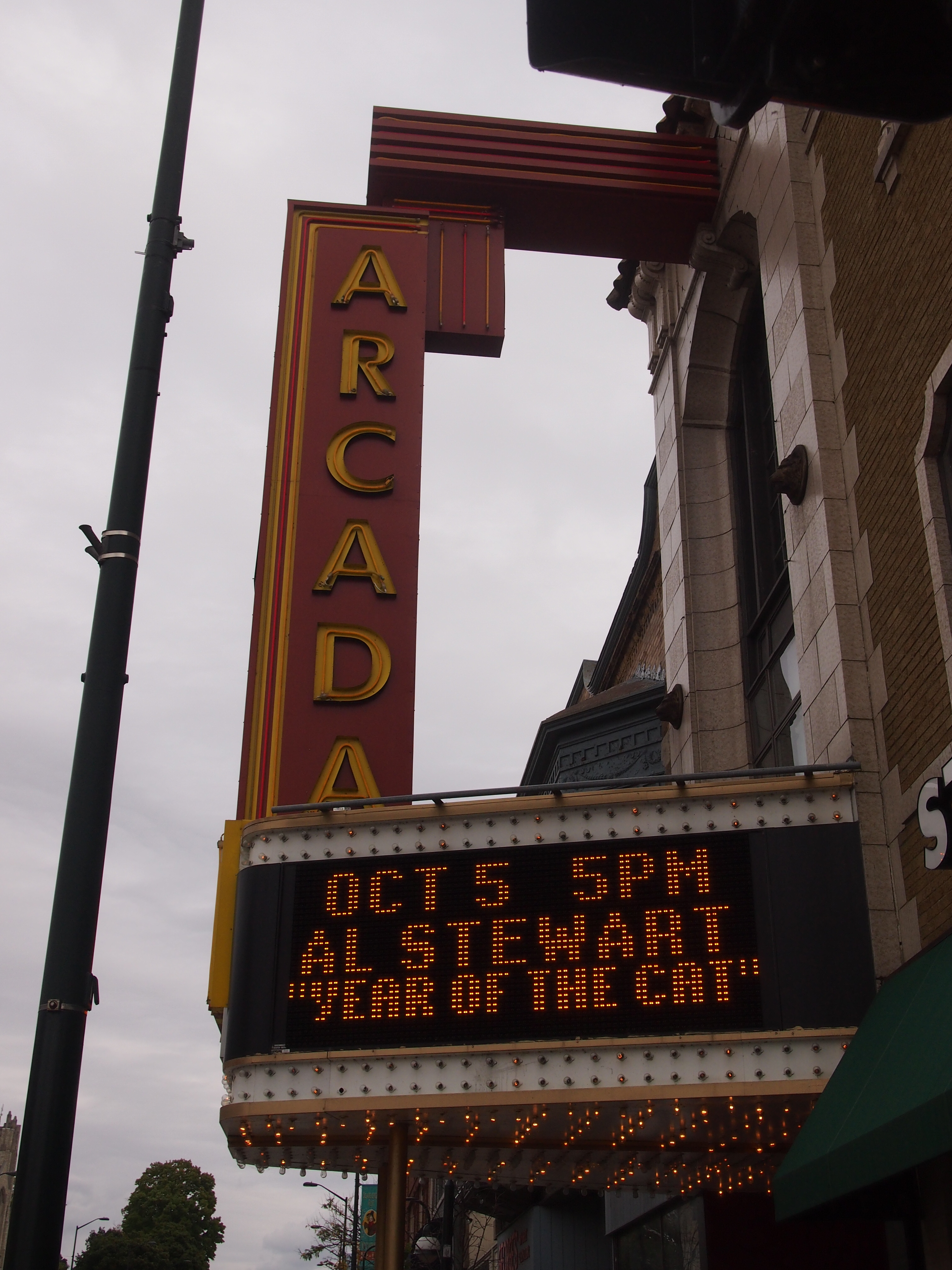
Arcada Theater Oct 5, 2014Al Stewart again, with right-hand man Dave Nachmanoff. I hope Al has more years as a touring musician, but he’s 69, so there’s no guarantee. I won’t drive to, say, Saskatoon to see him, but if he plays nearby, I’ll make the effort. No one else in the house was interested, so I went by myself.

The Arcada Theater is a mid-sized venue, seating about 900 and dating from the 1920s when it was built as a movie house and vaudeville stage. Lester Norris – that’s the husband of Dellora Norris – developed the place. According to Wiki at least (I’m not going to chase down another source), the act at the grand opening in 1926 was Fibber McGee and Molly, which would have been when they were known locally in Chicago as radio players.

These days, a fellow named Ron Onesti, president of the Onesti Entertainment Corp., owns the theater. He’s a hands-on kind of impresario, to judge by his talkative, enthusiastic introduction of the act, and the give-away of tickets by random drawing during the intermission that he presided over, asking the audience questions such as who came here from the furthest? (Someone claimed to be from England.)

He’s got a niche: shows for people roughly my age (10 years either side, I’d say). Note some of the upcoming acts: Asia, Gary Wright, the Fifth Dimension, Tommy James and the Shondells, Kansas, BJ Thomas, America, Little River Band. Onesti was also out in the lobby after the show, talking to patrons. “Good show,” I told him.

I talked for a moment to Dave Nachmanoff, for that matter, before the show. He was standing next to a table of his CDs, and another table of Al Stewart merchandise. I told him I’d seen him a number of times, and enjoyed the shows. He seemed to appreciate the sentiment.

Al Stewart was in fine form, expertly playing his guitar and singing with pretty much the same voice as 40 years ago. I doubt that I’ll have half that much energy, should I survive to his age. The set list was mostly mid-period Al, with numbers from Past, Present and Future, Modern Times, Year of the Cat and Time Passages, but also some later songs, such as the especially good “Night Train to Munich” and “House of Clocks.” Not much this time from his early records, if anything, and nothing from Last Days of the Century.

No “Roads to Moscow” either, which is one I’ve yet to hear him play live, and would like to. Of course, it clocks in at more than eight minutes, so maybe he doesn’t play it often. Truth is, the man has a large opus. He could stitch together three or four entirely different set lists and they’d be just as good.

Essential to his show is the patter between the songs, and he didn’t disappoint, either telling stories about swinging ’60s London or the historical context of a particular song or something autobiographical.

For instance: “I decided when I was 11 or 12 that I wanted to play guitar and write songs. But I realized something when I left school at 17. Although I loved rock ’n’ roll, Little Richard and Elvis Presley and the Everly Brothers and Jerry Lee Lewis and Eddie Cochran – I loved Eddie Cochran – I realized when I started trying to do it, I couldn’t do it. I can’t explain how terrible that was. The only thing I loved in the world, and I couldn’t do it. It was a tricky period. Then Bob Dylan came along. He couldn’t play or sing either. [enormous laughter] But he sounded like he’d swallowed a dictionary. [more laughs] That was it. That was my ticket, right there.”

Introducing his song “Warren Harding”: “Pretty much everything went wrong while he was in office, and he followed the cleverest president, Woodrow Wilson, who was fiercely intellectual, and the most idealist president – he believed in world peace, and that he alone could sort out all the troubles in the world after World War I, and it killed him. None of the things he wanted actually happened. Warren Harding: Hey, let’s party! He stayed up drinking with the press corps and playing cards. He was the anti-Wilson. Who was best? Actually, neither of them.”

Al mentioned at point that he was sorry the Bears lost that day. “He follows American football,” Dave said.

“I do, actually,” Al answered.

“He doesn’t care a whit for soccer.”

“I can’t support any game played for 90 minutes, where the score is nothing-nothing. [laughter, applause] That’s not sport, that’s torture.”
Jazz Fest and Big New Head ’14

While I was eating lunch on my deck today — the opportunities for that will be rarer as the weeks ahead pass — the dog took a sudden interest in one of my lower pant legs, sniffing and snorting with gusto. I noticed a small black ant crawling on it. The dog had too. In a moment, she’d eaten the ant.

I’ve seen her chase flies and bees (and lucky for her, never catch any), but this was a first. It didn’t seem to be a biting kind of ant. Ants on the hoof, snack food for dogs.

Did some gadding about in Chicago over Labor Day weekend. On Saturday, Yuriko and Ann and I went to the city and met my nephew Dees, his girlfriend Eden, and an old friend of theirs, and eventually ended up at Millennium Park. Dees and Eden were visiting from Texas, staying with friends here. That reminded me a bit of the Labor Day weekends of my youth, when I usually went out of town — to Chicago (before I lived there), New York, Boston, and Washington DC — though one year (’85) my old friends came to me, and we gadded around Nashville.

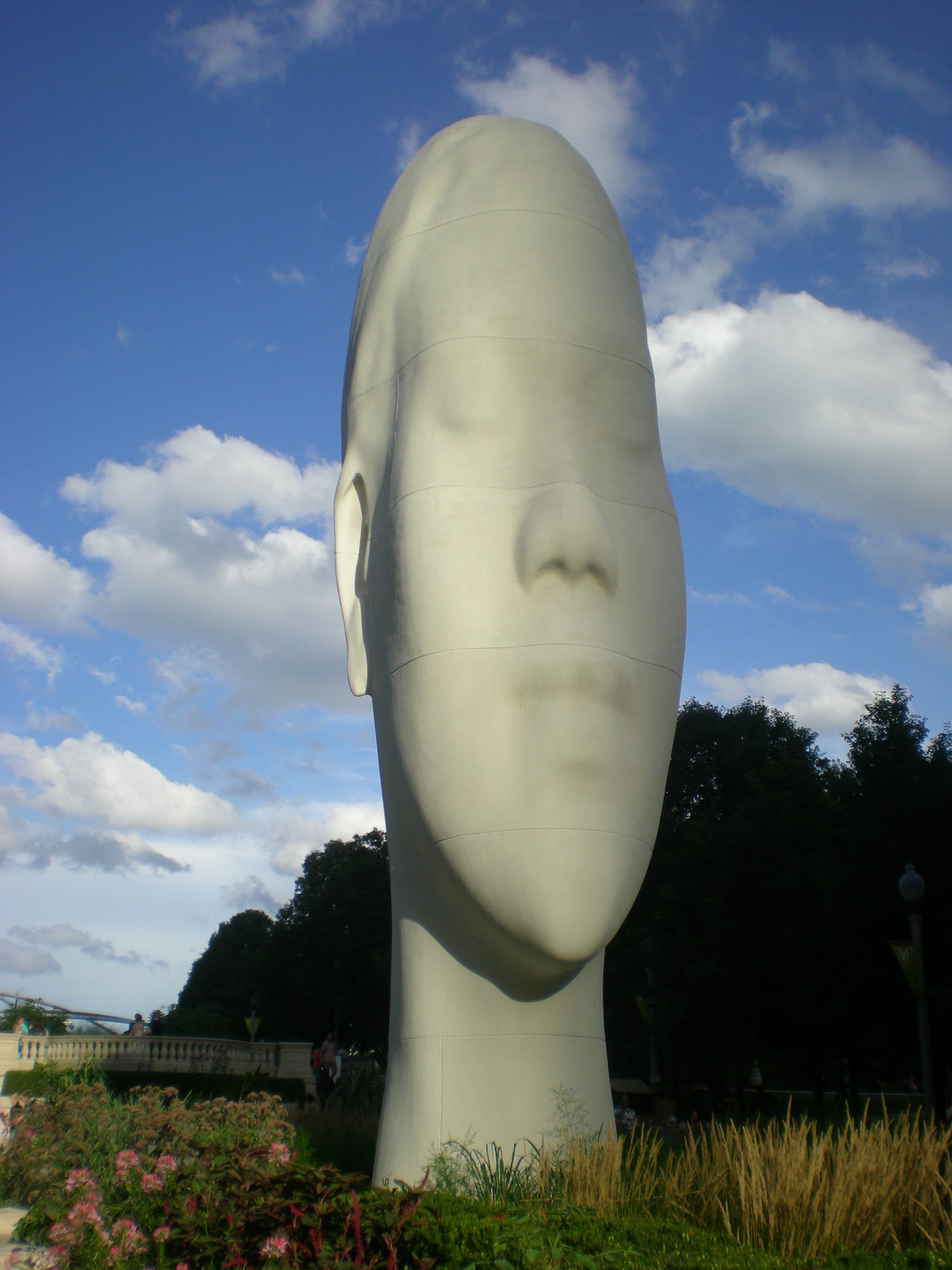
There’s a new face near Michigan Ave.

Millennium Park, Aug 2014It’s called “Looking Into My Dreams, Awilda,” by Jaume Plensa, the Spaniard who did Crown Fountain, the twin towers of alternating faces that spit water in the warm months, which isn’t far from the new sculpture. The Tribune says that “Awilda is 39 feet tall, made of marble and resin; the internal frame is fiberglass. She arrived from Spain in 15 pieces, then was bolted together.” It’ll be there until the end of 2015.

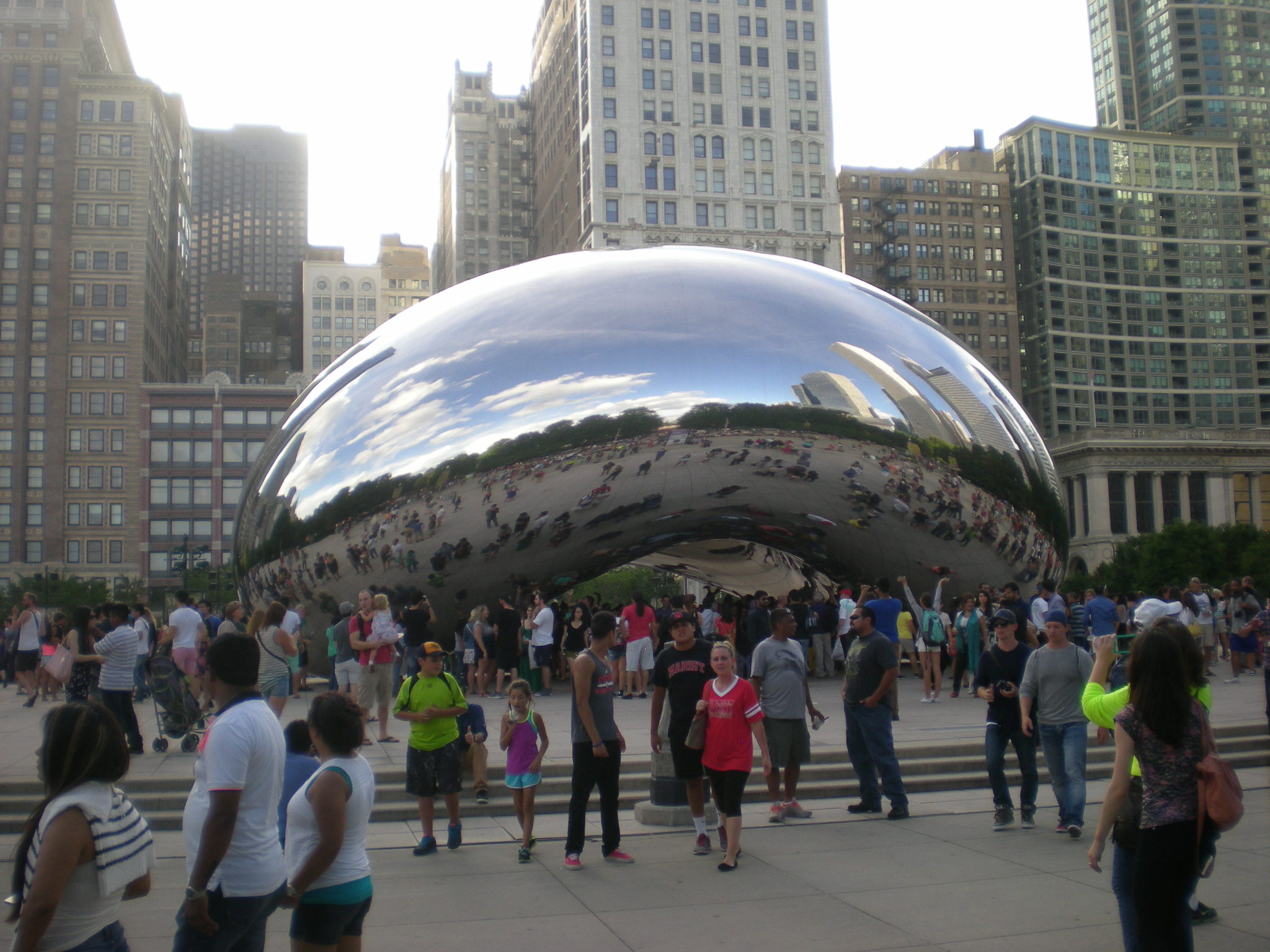
The Bean was as popular as ever.

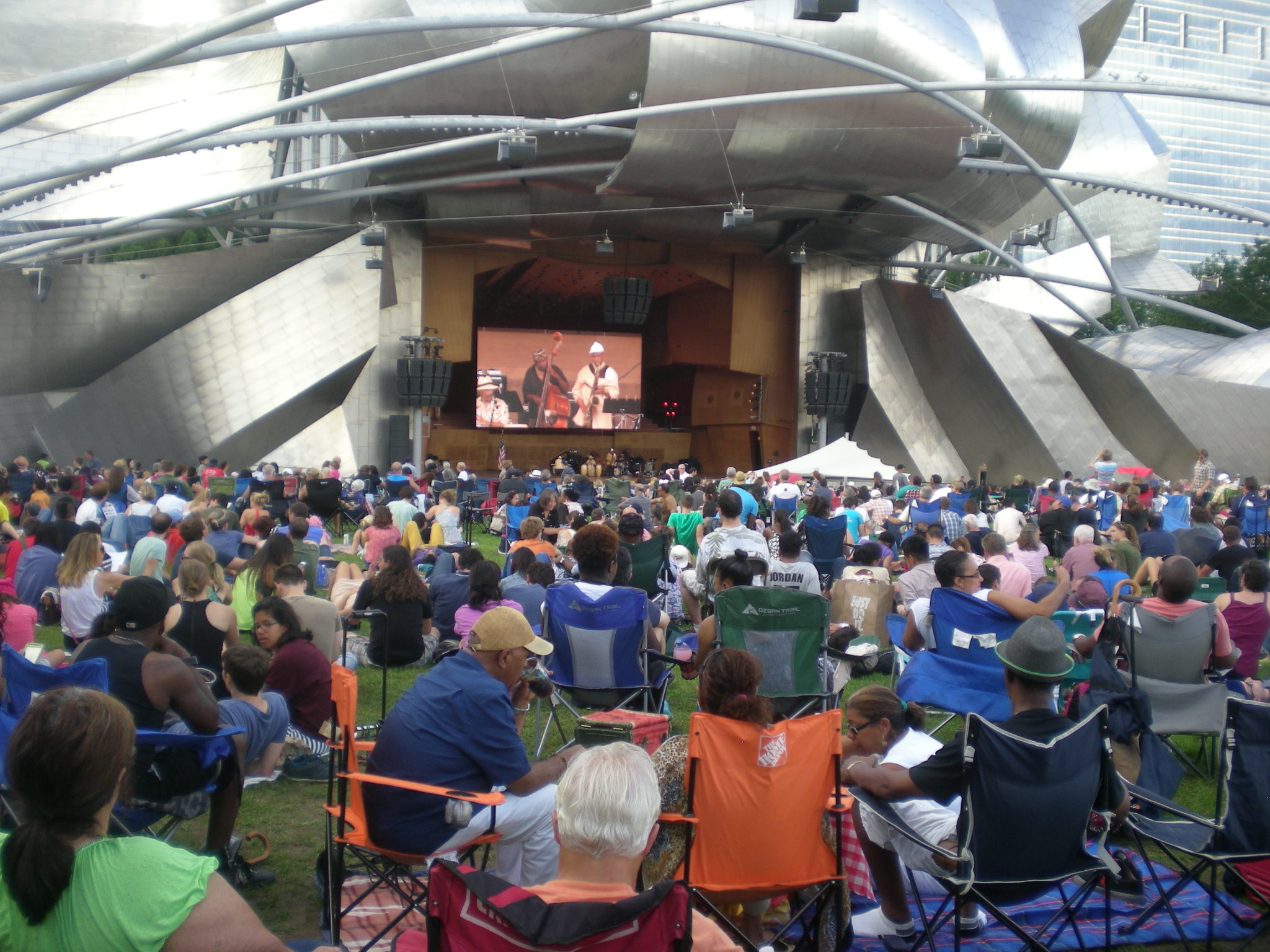
Aug30.14 035We spent a while at the Chicago Jazz Festival at Pritzker Pavilion. The last time I went to the Chicago Jazz Festival was – 1996? Maybe. This time we left fairly early, but were around long enough to hear Ari Brown, Chicago sax man of long standing. At 70, the man can blow.

Ari Brown, August 2014Still hot in the late afternoon, and a bit humid, but it was a good place to sit and listen. It helped not to get rained on, which was a distinct risk over the weekend.

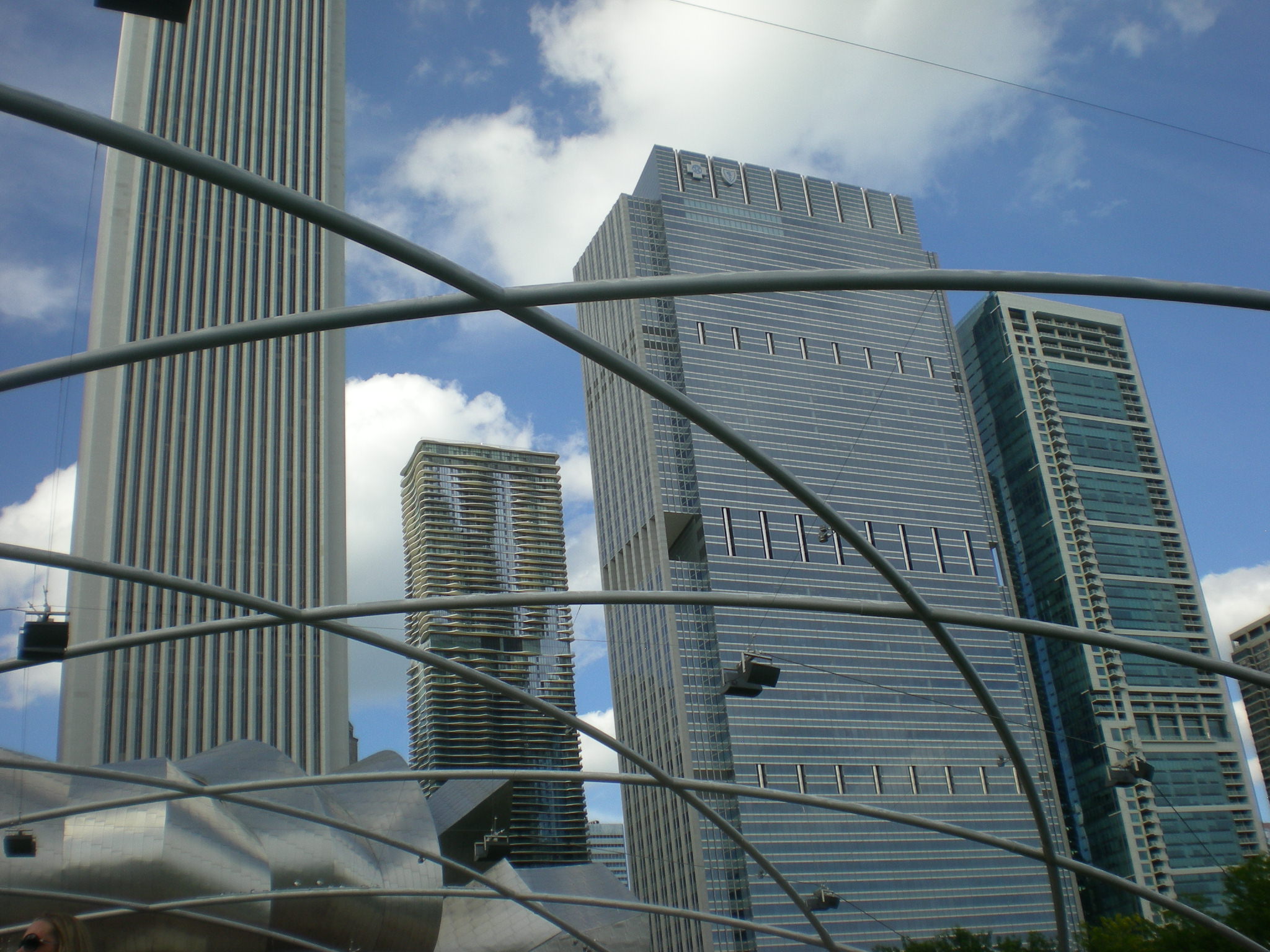
Millennium Park, Aug 2014Behind the stage rise the skyscrapers of the East Loop. I’ve always liked the view.

O-Bon 1990

Things I Did During O-Bon (August 12-19)

Saw the Daimonji Gozan Okuribi on August 16 in Kyoto. I parked myself on the banks of the Kamogawa River among a large crowd also there to see the event. Sure enough, not long after dark, the first of the bonfires came to life, a 大 shape, “dai” or large, defying a bank of rainclouds that occasionally cut loose on the audience. It looked a little distant, but it was worth seeing once.

[The Japan National Tourist Board tells us that “although there are several interpretations as to the origins of this event, it is generally regarded as a fire set alight at the gate for seeing off the souls of ancestors after commemorating the welcoming of their souls. The character of “dai” (meaning “large”) on Mt. Daimonji, and those of “myo” and “ho,” which make up the word “Myo-ho” (wondrous teaching of Buddha) on Matsugasaki Nishiyama and Higashiyama mountains are famous.”]

Took some long walks in Osaka and one in Kyoto, from the Kenkakuji (Golden Pavilion) to the Nijojo Castle. The latter was closed by the time I got there [I eventually visited the Nijojo.]

Visited a few museums, including the Osaka Municipal Museum; the Kyoto National Museum; and the Museum of Oriental Ceramics. [Some years later, I told an acquaintance of mine who’s a gifted potter that I’d been there, and he was clearly envious of the experience. I liked the pottery well enough, but his instincts were right. It should have been him rather than me, in terms of who could appreciate it best.]

Also spent time at the National Museum of Ethnology, which has all kinds of interesting artifacts, such as a yurt, Polynesian vessels, African masks, lots more. The museum is at Expo Park, site of Expo ’70, the world’s fair held in Osaka that year. That’s probably the first time I’d ever heard of the city. Other relics from the fair include the enormous outdoor sculpture called “Tower of the Sun,” looking very much like something created in the late 1960s. [By Taro Okamoto, who died in 1996. I had no idea there was anything inside the work.]

Discovered a second-run theater in Osaka, admission only 600 yen for two movies. Good place to go for air conditioning, a traditional reason to go to the movies. This week saw Lair of the White Worm and Salome’s Last Dance, a sampler of Ken Russell’s recent twisted visions. Before seeing them, I’d mostly known his movies by reputation. Altered States, which I did see once upon a time, was much worse than either of these.

The International Pizza Doctrine

Seeing the Perseid Meteor Shower’s always been problematic here in the Chicago suburbs, where the sky is usually washed out at night, but this year especially so. It’s been overcast most of the time since Sunday. And usually cool today – I think we spent the day in the 60s F.

No matter. The place to be for the Perseids is somewhere in the Rockies. I might make it one of these days. At least Google doodled the subject today (and it appeared about 48 hours earlier on the Japanese version of the search engine, which sometimes has doodles the English version never sees).

Recently Lilly discovered that I’d eaten one of the larger slices of pizza left by her friends the other day in our garage refrigerator, and she made some complaint. I cited the International Pizza Doctrine to her. Later, I Googled that phrase to get the exact wording, and was shocked when no such thing readily came up, even when adding “Sam Hurt” and “Eyebeam” to the mix. So I did the only thing a reasonable person would, and thumbed through my Eyebeam books until I found it.

From Eenie, Meenie, Minie, Tweed, p. 59, a strip first published September 24, 1983: “Leftover pizza, like fish in the stream or birds in the sky, is not susceptible to ownership.” (Ratliff quotes it; Eyebeam adds, “Engraved on the refrigerators of mankind throughout history.”)

Someone needs to mention the International Pizza Doctrine online, so here it is, maybe to last as long as the server farms of Silicon Valley glow hot with gooey petabytes.

One more thing: I’ve taken to calling Lilly’s usual group of friends “your hoodlum friends.” It’s an homage to the Coasters, of course, since her friends are about as hoodlum as after dinner mints.

Two Bridges of Madison County

While in Winterset and environs, I took the opportunity to see two of the wooden covered bridges of The Bridges of Madison County fame. The movie, at least, seems to be relegated to a chick flick ghetto. Wrongly, I think. The story was at least as much about the visiting photographer – the man – as it was about the farm wife.

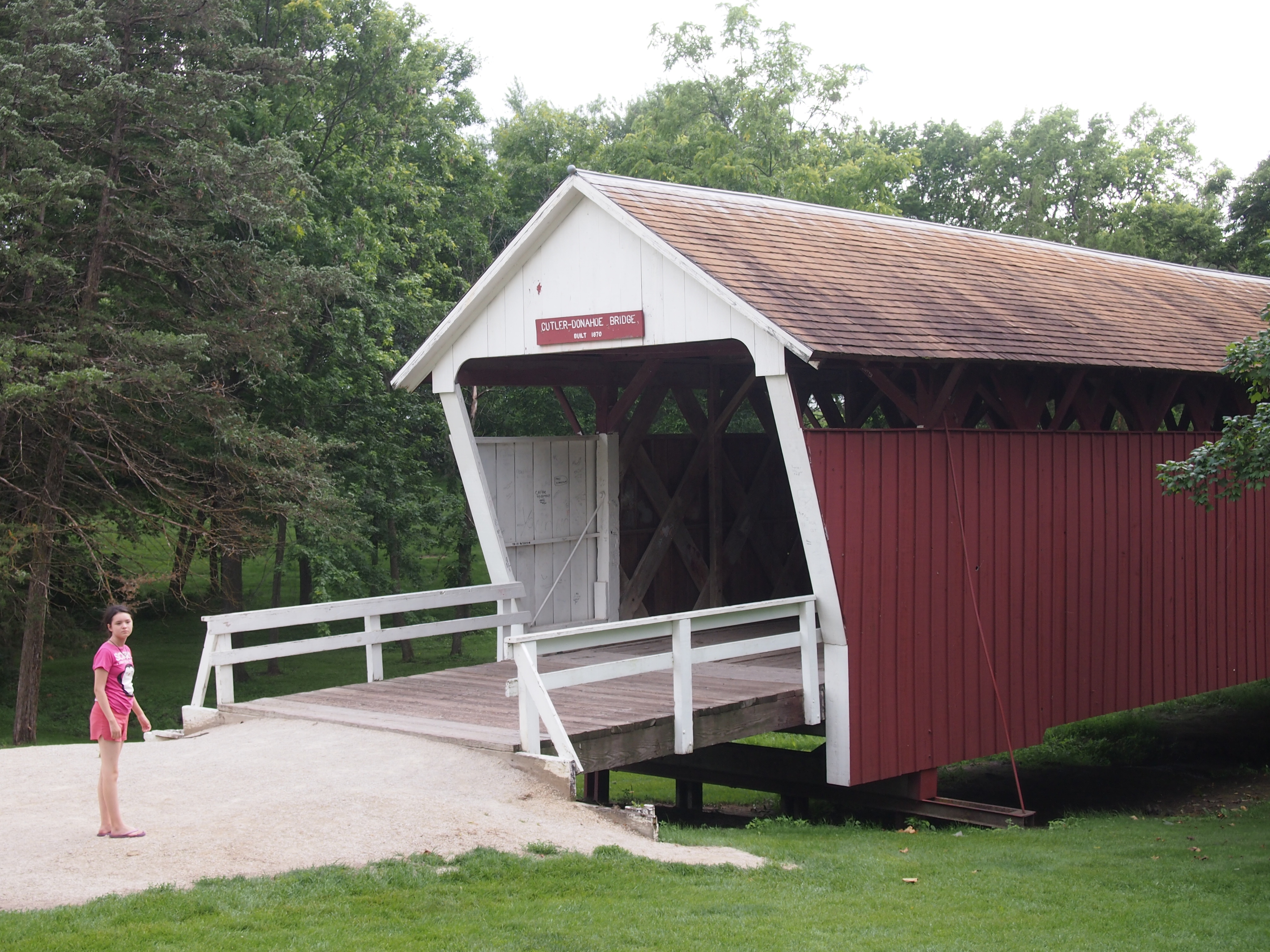
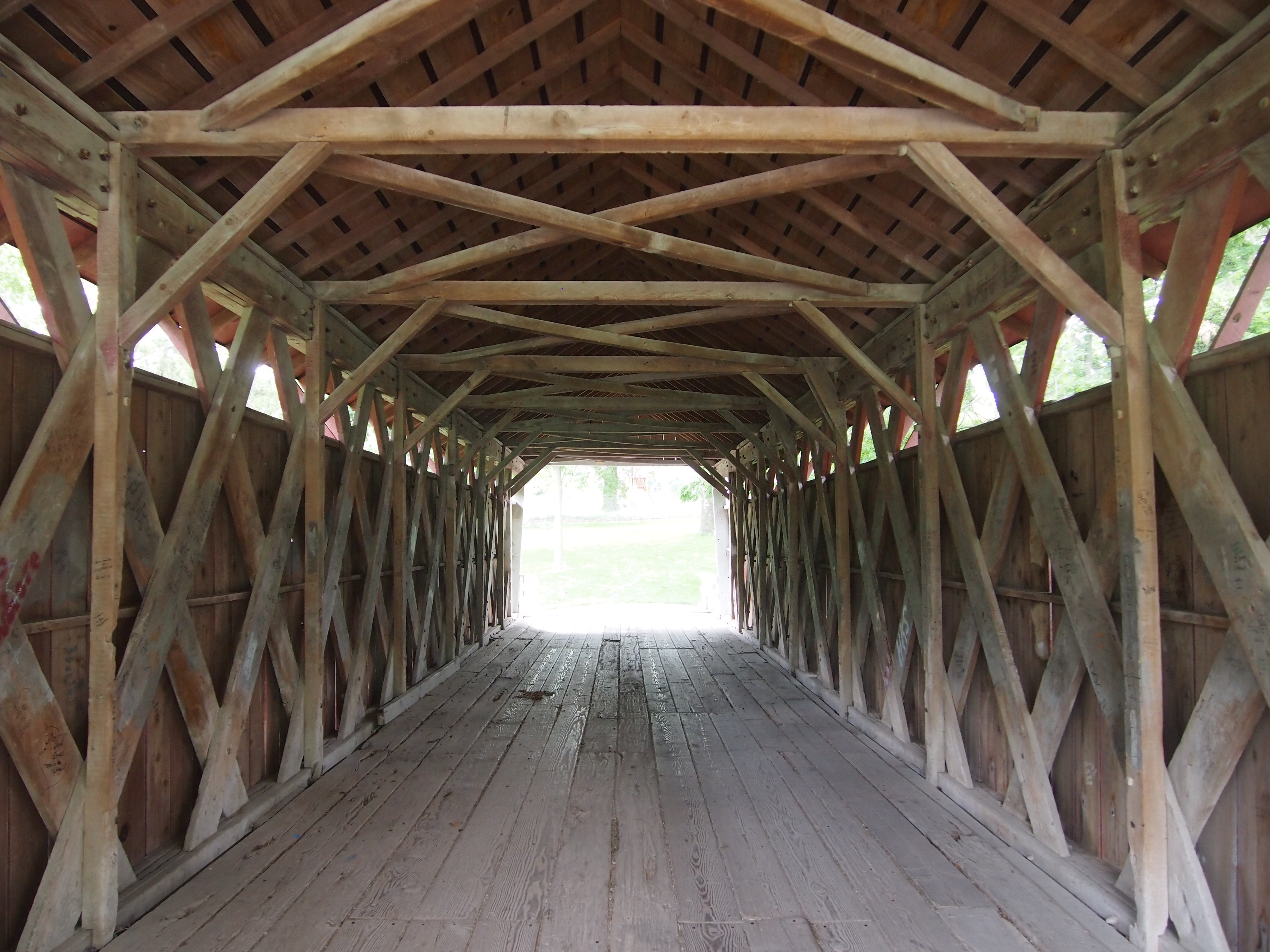
Movie or not, I liked the bridges. At least the two I saw.  It’s remarkable that such artful wooden construction has survived for more than a century, but they have. Ann was less impressed. When we visited the first structure, the Cutler-Donahoe Bridge, she said something like, “What’s so special about this bridge?” You have to be older to appreciate older things, maybe. (Though I’ve liked old things since I can remember. I’m peculiar that way.)

Cutler-Donahoe Bridge, July 2014

The Cutler-Donahoe Bridge dates from 1870, built by one Eli Cox. In 1970, it was moved to Winterset City Park, where we saw it. Length, 79 feet. Weight – and you’d think it would be lighter – 40 tons. Nice work, Eli.

Cutler-Donahoe Bridge interior

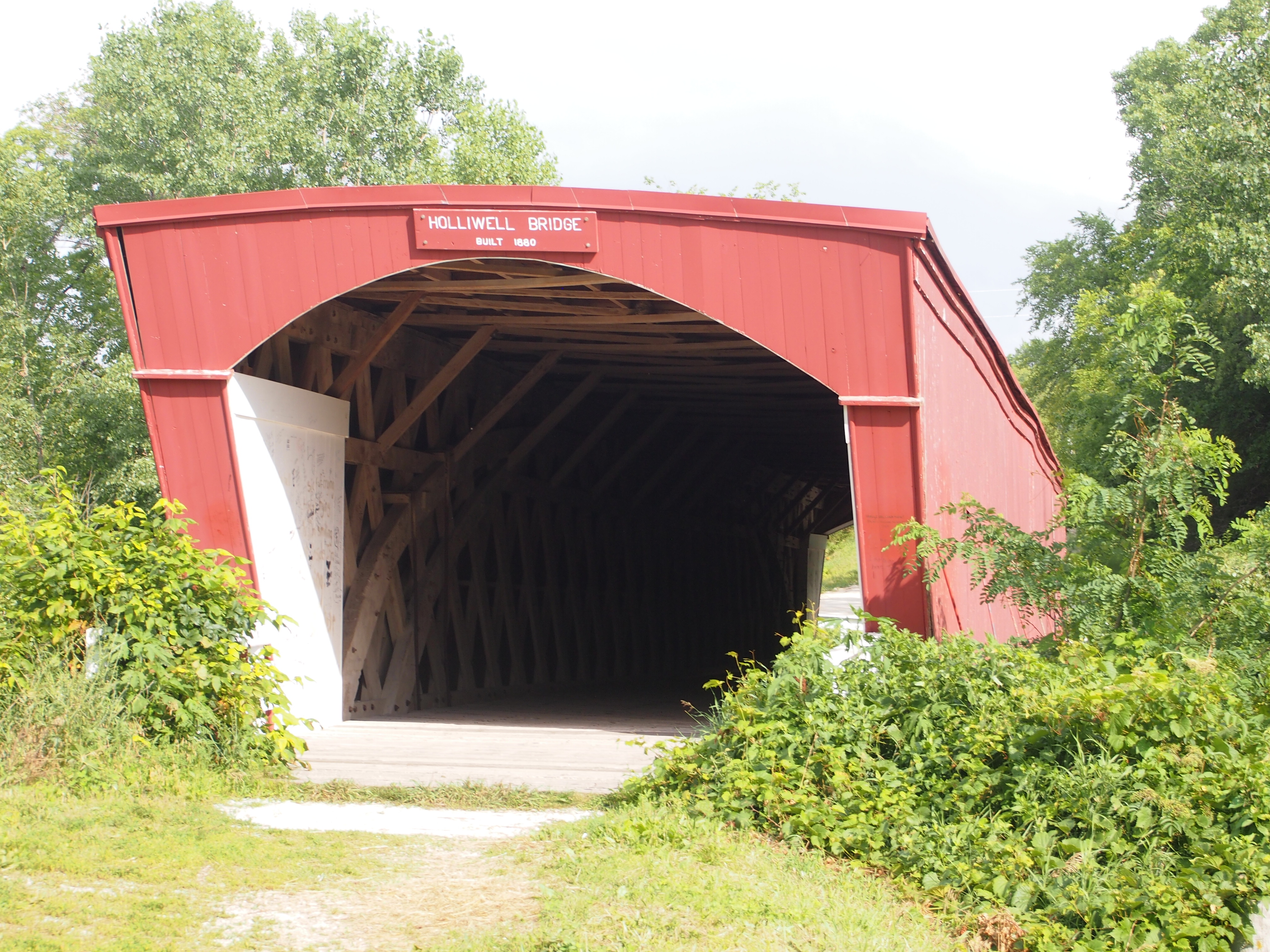
Not far from town is the Holliwell Bridge, in situ over the Middle River.

Holliwell Bridge, July 2014Ann stayed in the car for this one. The structure’s a little newer than Cutler-Donahoe, built by Benton Jones in 1880 and renovated in 1995 (on the occasion of filming the movie, I guess, but my sources don’t say so explicitly).

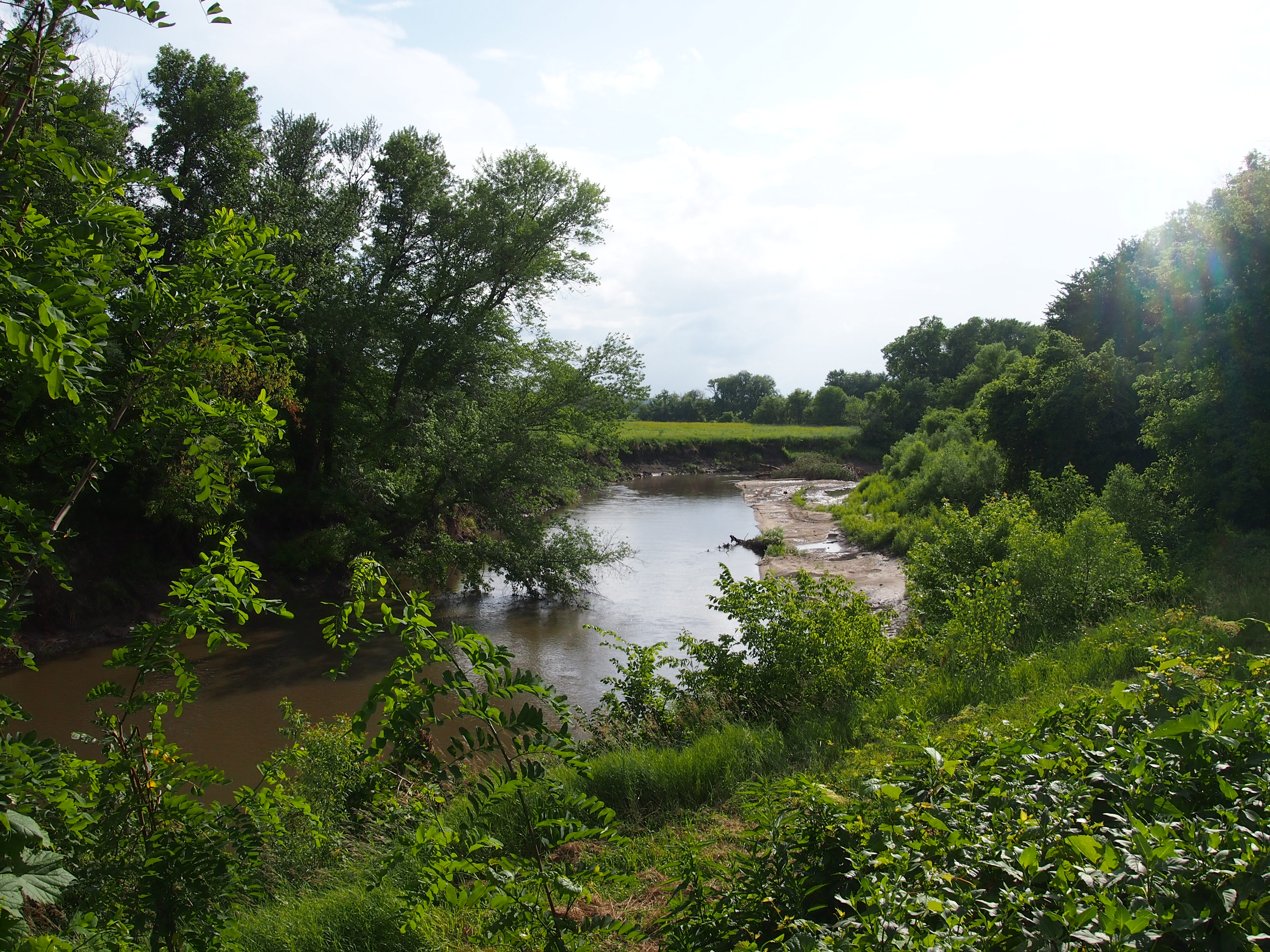
Middle River, Iowa, July 2014This is the view from the north end of the bridge, looking out on the Middle River, a tributary of the Des Moines River that runs through the county. Iowa’s nice and lush this year.

The Duke in Winterset

The thing to do when heading out of Des Moines in a southerly direction is to detour into rural Madison County, southwest of the capital, whose county seat is Winterset. If you have time. I decided we had time, since how could I pass up a look at a bronze of Winterset’s favorite son, Marion Robert Morrison?

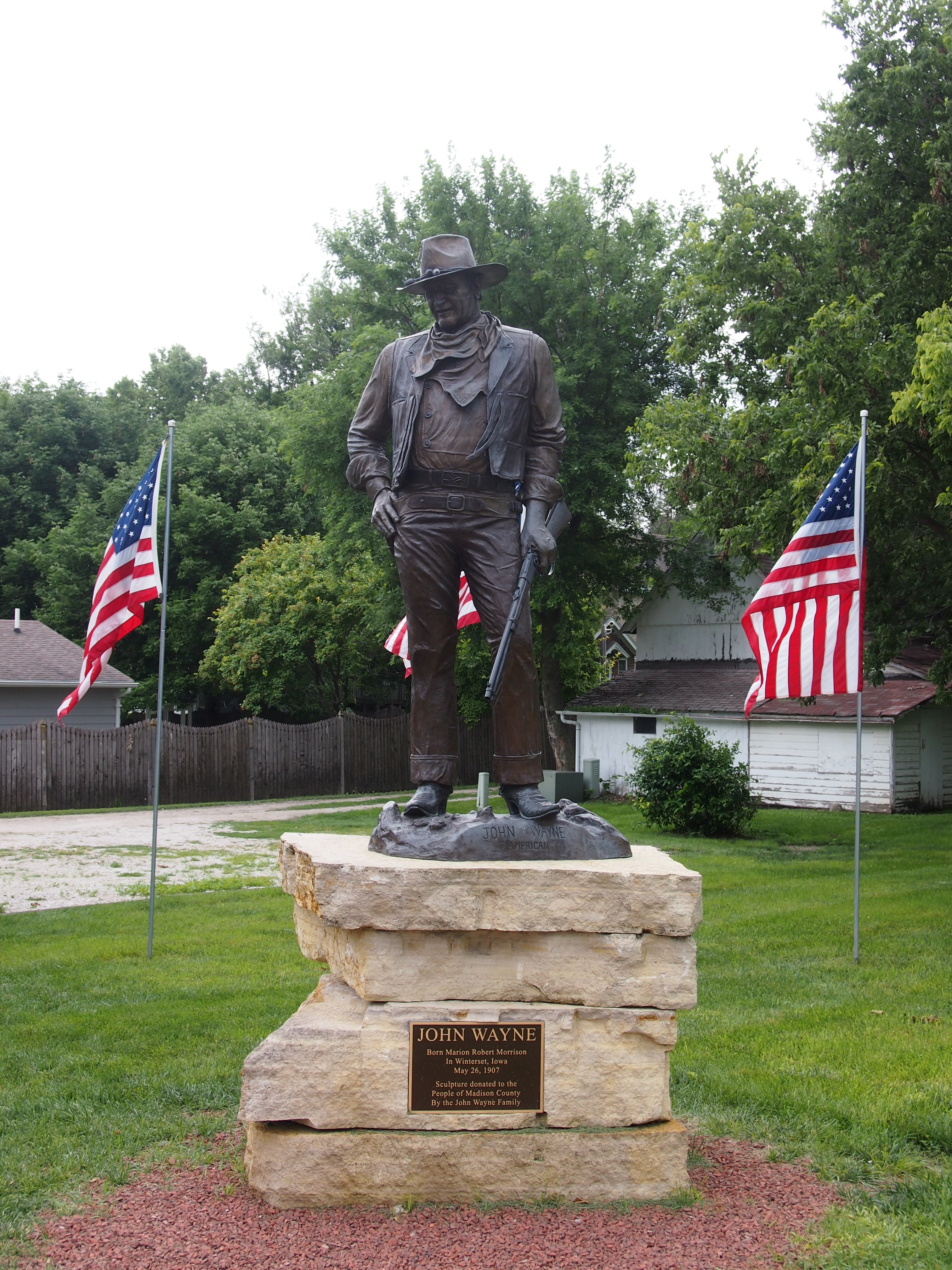
John Wayne, Winterset, Iowa 2014JOHN WAYNE

Born Marion Robert Morrison

In Winterset, Iowa

May 26, 1907

Sculpture donated to the

People of Madison County

By the John Wayne Family

The statue of John Wayne is a short block from his birthplace house, now a museum that (like the capitol) happened to be closed when we arrived. No matter. A good look at the bronze was enough for now, and we weren’t the only ones doing so. A few other families pulled up for a look-see while we were there. Wayne’s fame has some staying power.

Next to the statue is a Chevy van, detailed to honor Wayne. According to the birth site museum web site, “Several years ago, an anonymous person from Arizona donated a full-size 1980 Chevy van that has been extensively customized for the true John Wayne fan….

“This one-of-a-kind vehicle is covered with $50,000 of artwork from John Wayne movies—even the windows are etched to continue the design! The interior boasts hardwood floors, carpeted walls, a wet bar, TV and VCR (this was 1980, remember?), a souped-up sound system, and saloon-style swinging doors that lead to the queen-sized bedroom [sic] in the back.”

I didn’t realize it when we were there, but the statue usually resides at a corner of Washington St. and John Wayne Dr. – one of the main drags through town – but has been moved a block away, so it won’t be damaged during construction of the John Wayne Birthplace Museum. Work started in 2013 on the new museum, which is slated for completion for the 2015 John Wayne Birthday Celebration (and it’s convenient that baby Marion was born pretty close to Memorial Day). Last year my old friend Kevin, quite the fan of the Duke, went to the birthday fest. He said he had a large time.

One more thing: there are other John Wayne bronzes out in the wider world. You have to go to California to see these two.

Summer Interlude

Summertime and the living is — not so different from the rest of the year, considering that we have climate control in the house, have to meet the same deadlines as the rest of the year, and so on.

Time for summer break anyway. Back to posting around July 27. Till then, a handful of summer tunes. Been fond of “Summer Wind,” sung by Sinatra, only since the late ’80s, when I acquired a tape of Strangers in the Night. Music by Heinz Meier and lyrics by Johnny Mercer.

I’ve known “Summer Breeze,” by Seals & Crofts, probably since it was released, or at least fairly new. It evokes a moment in summer, in particular a summer evening, without mentioning beaches or puppy love or such.

Not quite sure what’s going on in “Suddenly Last Summer,” by the Motels, but it’s to do with a particular summer. Some summers, after all, are more memorable than others, especially when you’re young.

Also, some recommended reading. I just started Arabian Sands by Wilfred Thesiger. I’m already hooked, and I haven’t even gotten to his crossings of the Empty Quarter. He’s only been dead about 10 years. The Telegraph’s obit is here, and the Guardian’s is here.