When in doubt, spend a few minutes with an LED Christmas tree and its shifting color array.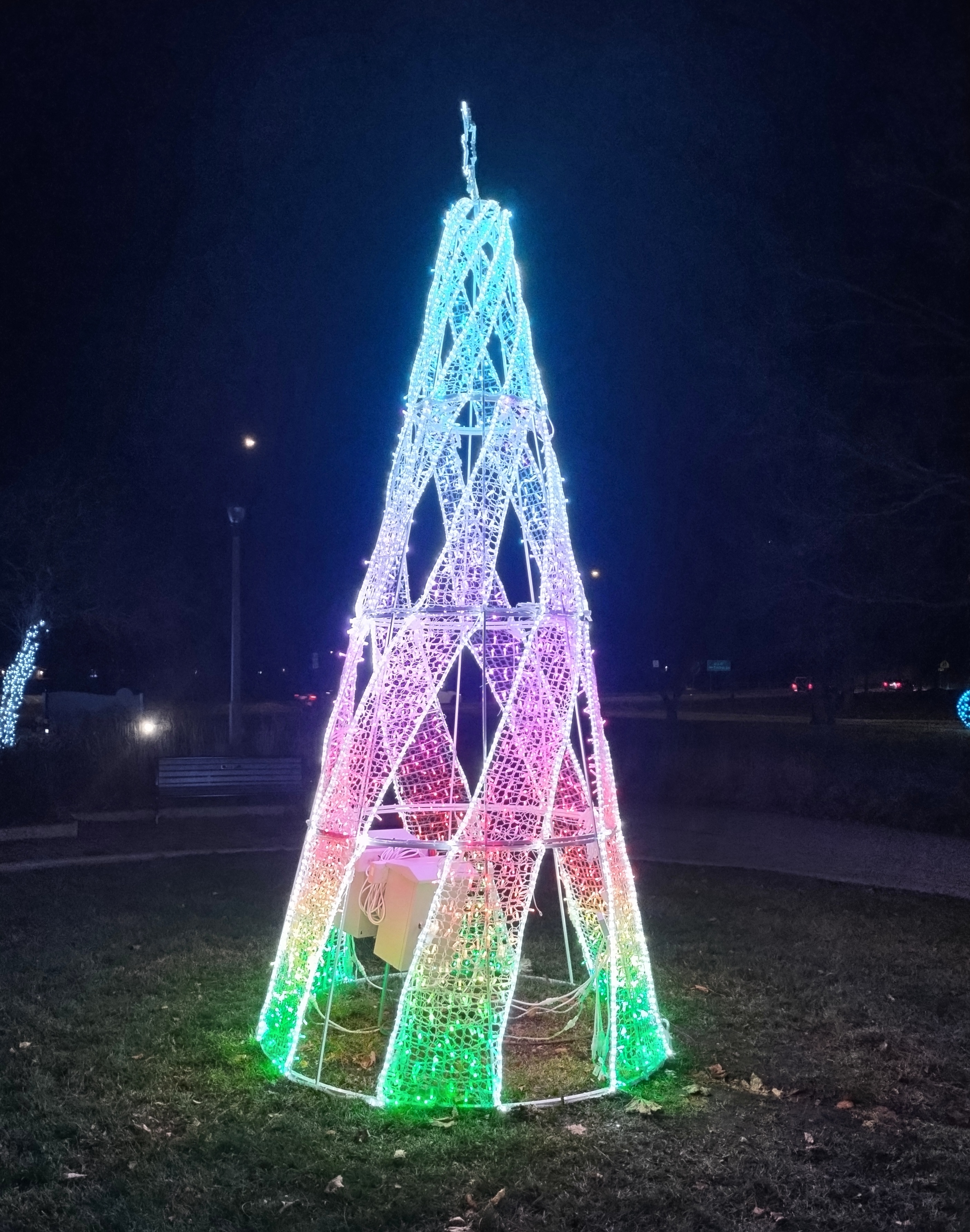
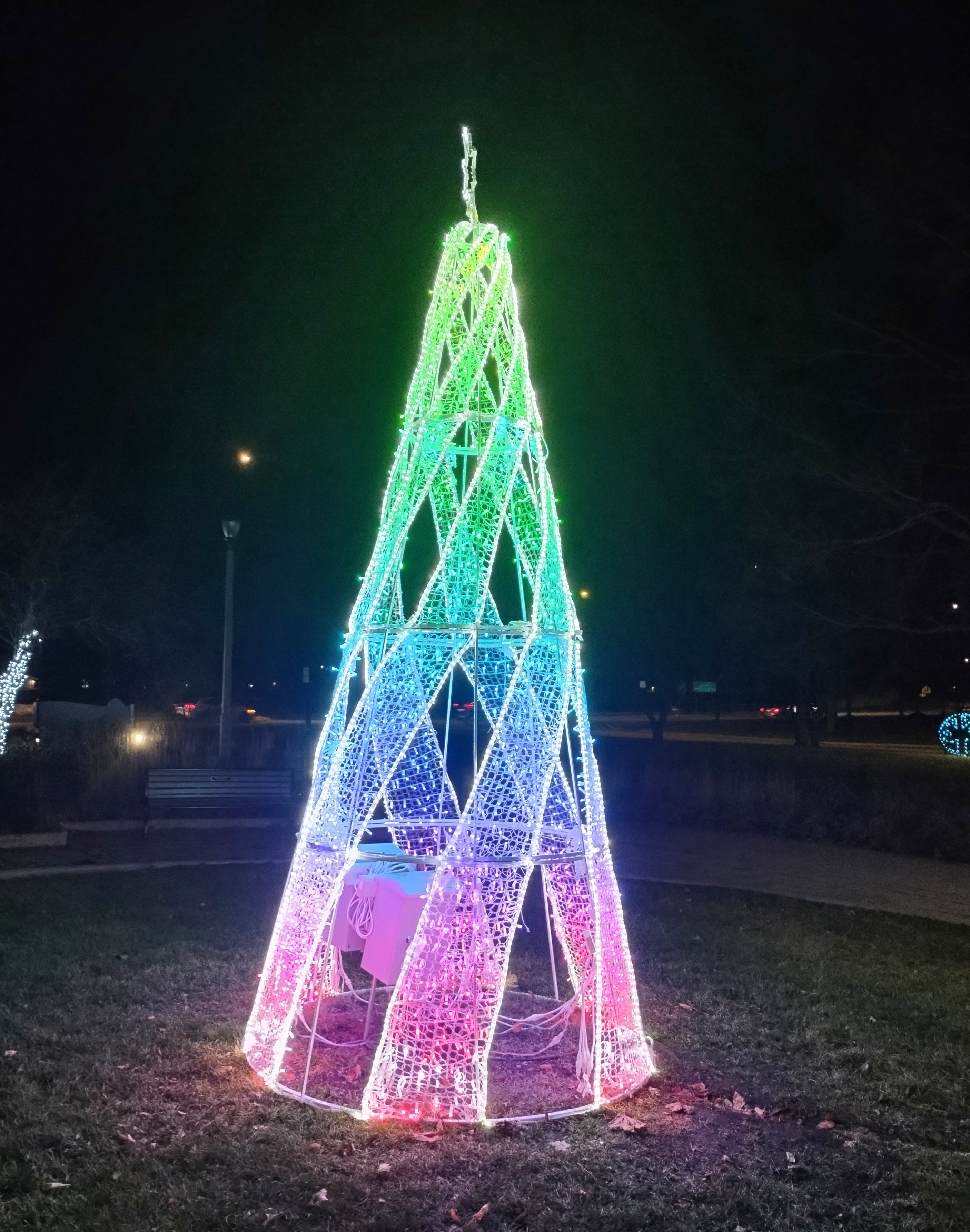
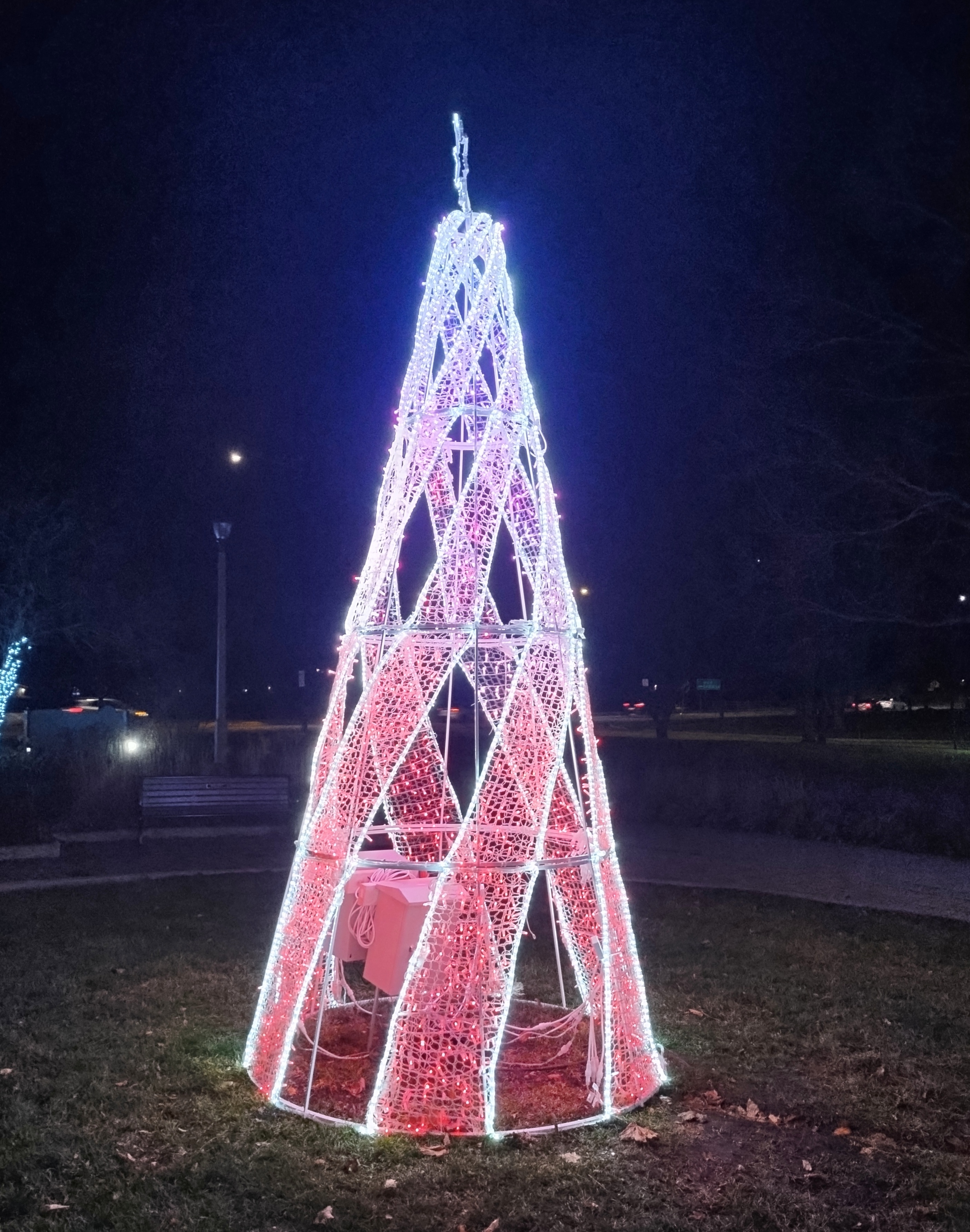
Bright homages to Christmas trees might be more like it, but evoking the winter holiday all the same.
When in doubt, spend a few minutes with an LED Christmas tree and its shifting color array.
Bright homages to Christmas trees might be more like it, but evoking the winter holiday all the same.
I made a point of watching the tribute to Norman Lear that was simulcast – now that’s a aging concept – on several networks this evening, at 8 Eastern/7 Central. Mostly, I was curious to see what they would do. Turned out to be about 15 seconds of a picture of him (maybe taken in the late 20th century), his name and birth and death year, indicating quite a lifespan. That was it. I wonder how many people who saw the spot knew who he was. Network audiences skew old, but even that demographic is more likely to remember his shows than him.
But he was well enough known to inspire a torrent of virtual print, so I won’t add to it, except to say too bad Hot L Baltimore didn’t last, while Good Times did. Nobody’s perfect. RIP, Mr. Lear.
Extremely crowded Chicago Christkindlmarkets of years past – mob city, as my mother used to say, not referring to gangsters – must have pushed any notion of visiting it on Monday right out of my head. But when I ambled over to the Thompson Center, I saw the market. Might as well drop in, see if the crowd was thinner. It was. A more manageable Monday in mob city. Just enough to be lively.
First, pass by the eternal flame on Daley Plaza. Dedicated since 1972 to all U.S. veterans of any kind.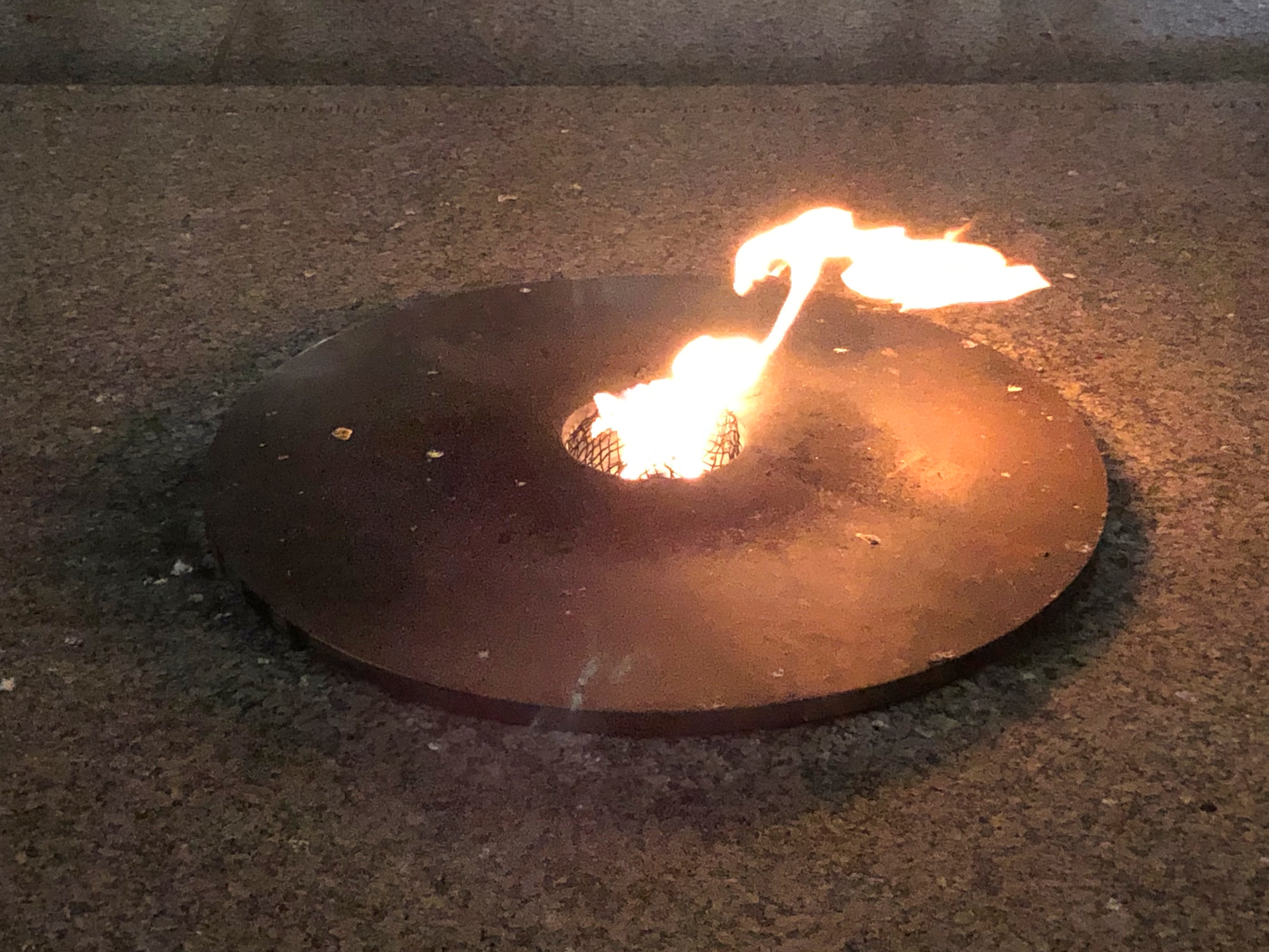
Still there. Well, it is eternal. That’s not meant in a literal sense, of course, on past the heat death of the Universe, but as long as humanly possible. The upshot for the flame is that people will maintain it until its honorees have disappeared from common memory. I hope that’s some centuries at least, but who knows.
As I said, lively. It isn’t really crowded unless it’s tricky to navigate through people.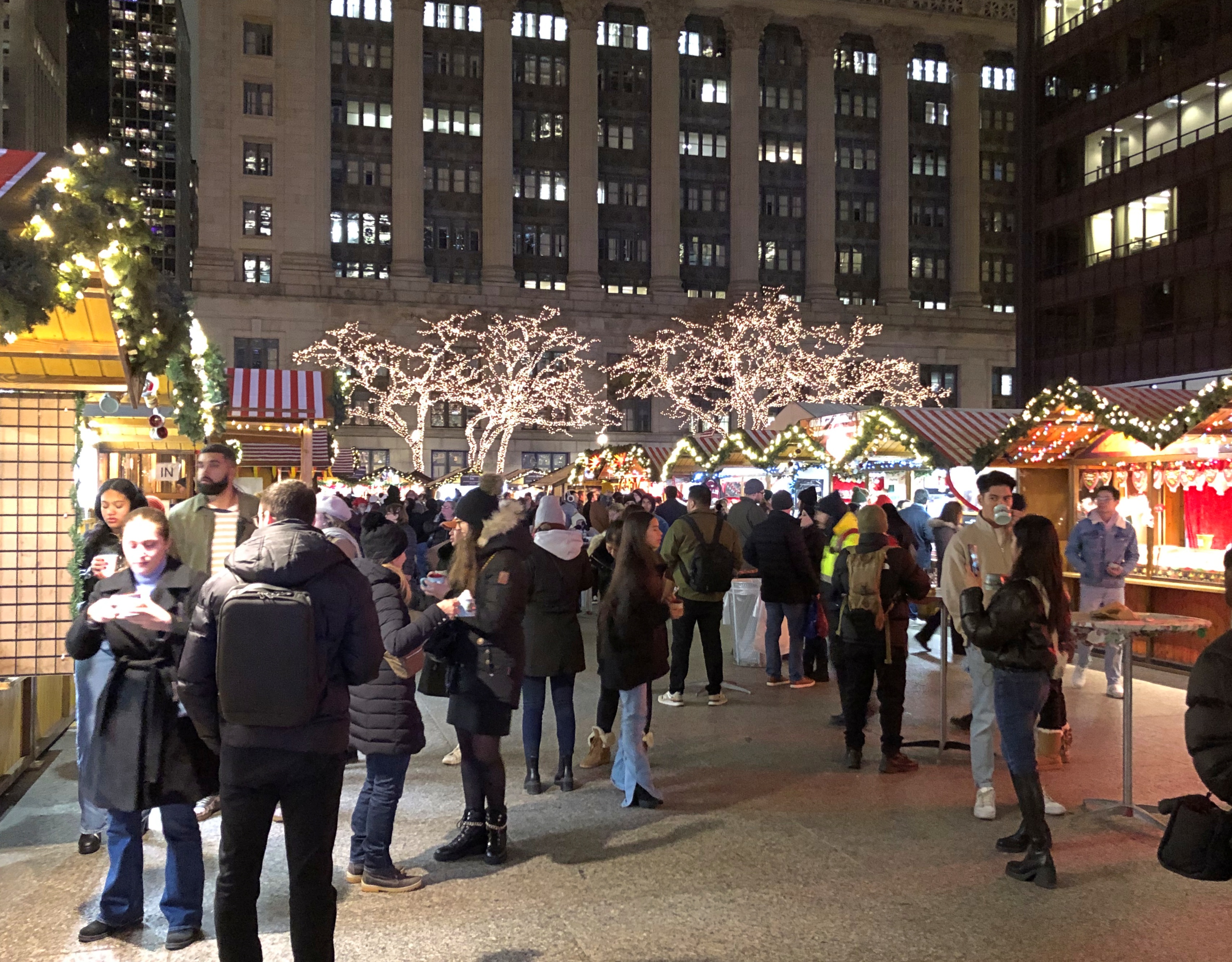
The stalls are more crowded.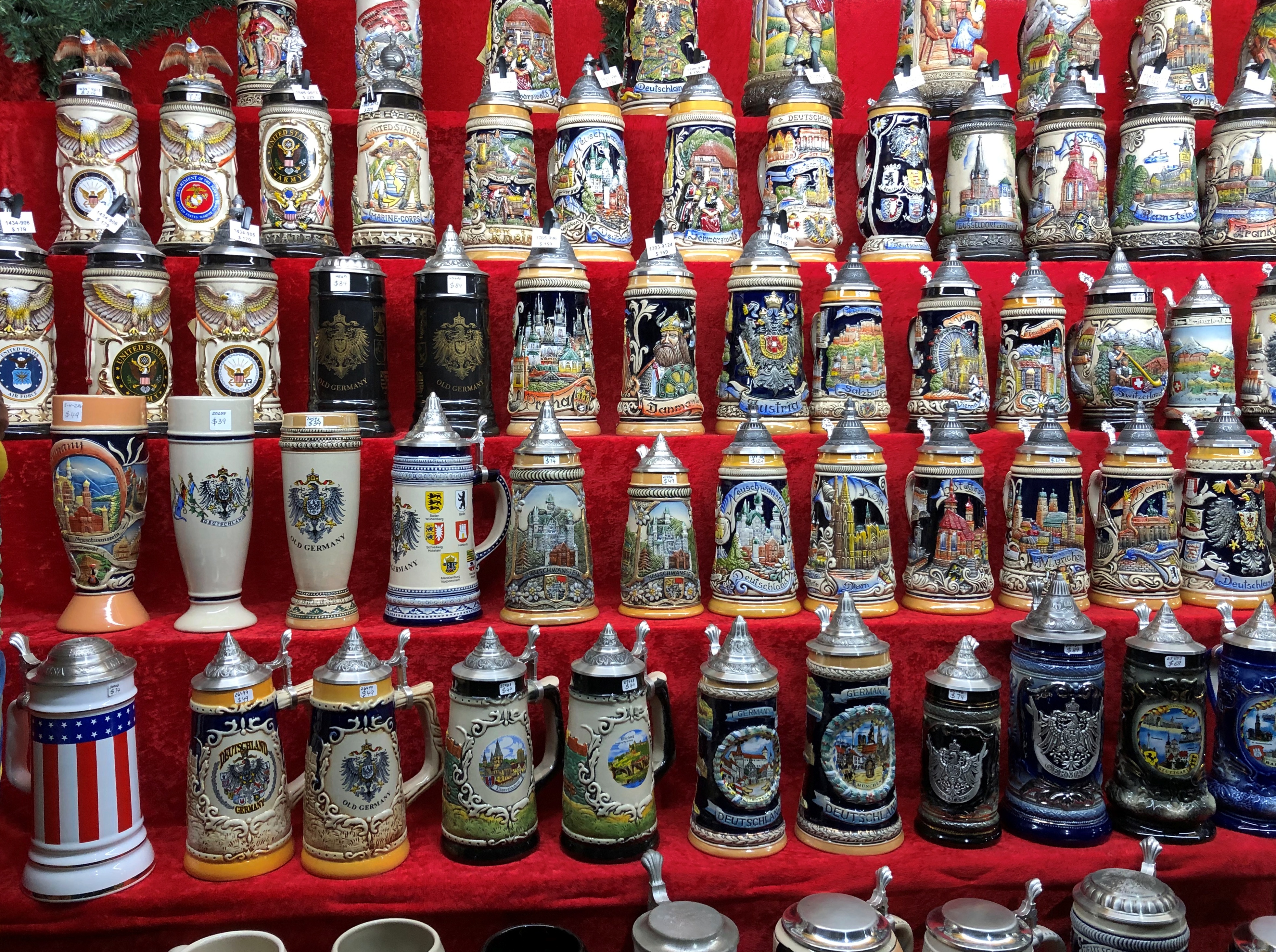
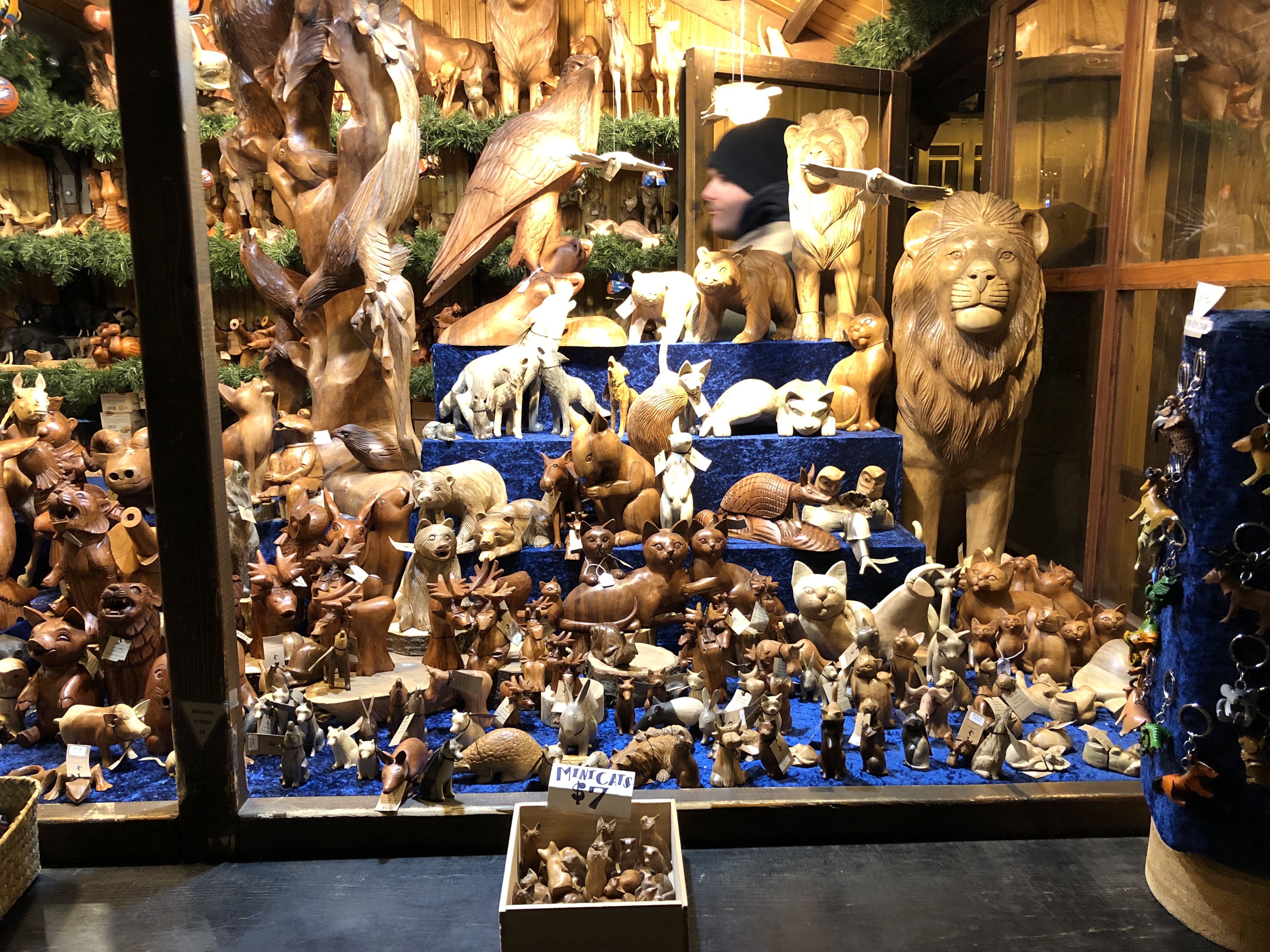
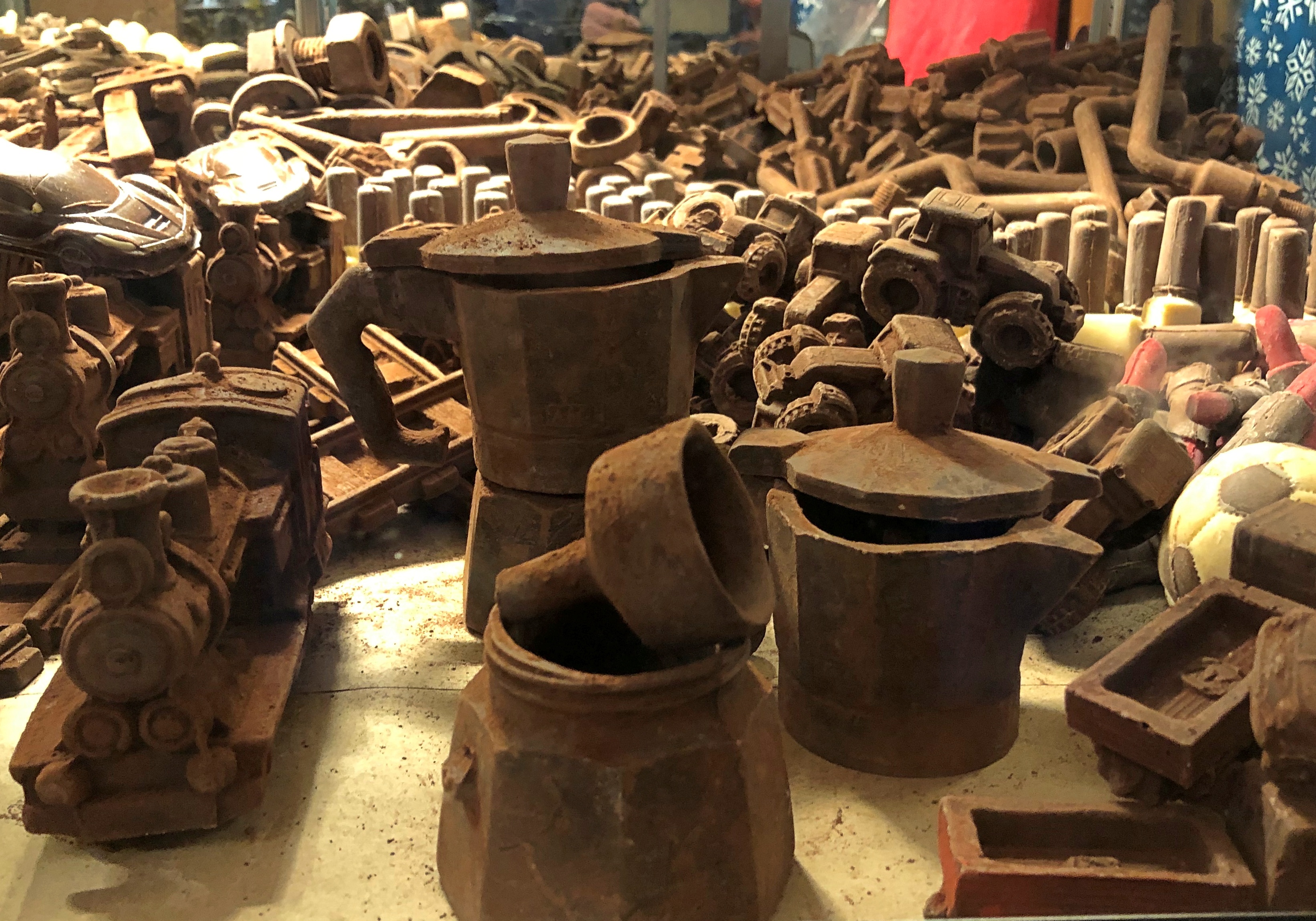
Everything in that lower pic is eccentric shapes of chocolate, and pretty much the only place I was tempted to buy anything. The economic model at the market is the same as I described a few years ago: “priced in euros at a lousy exchange rate, with an extra 50 percent tacked on for good measure.”
Paper stars.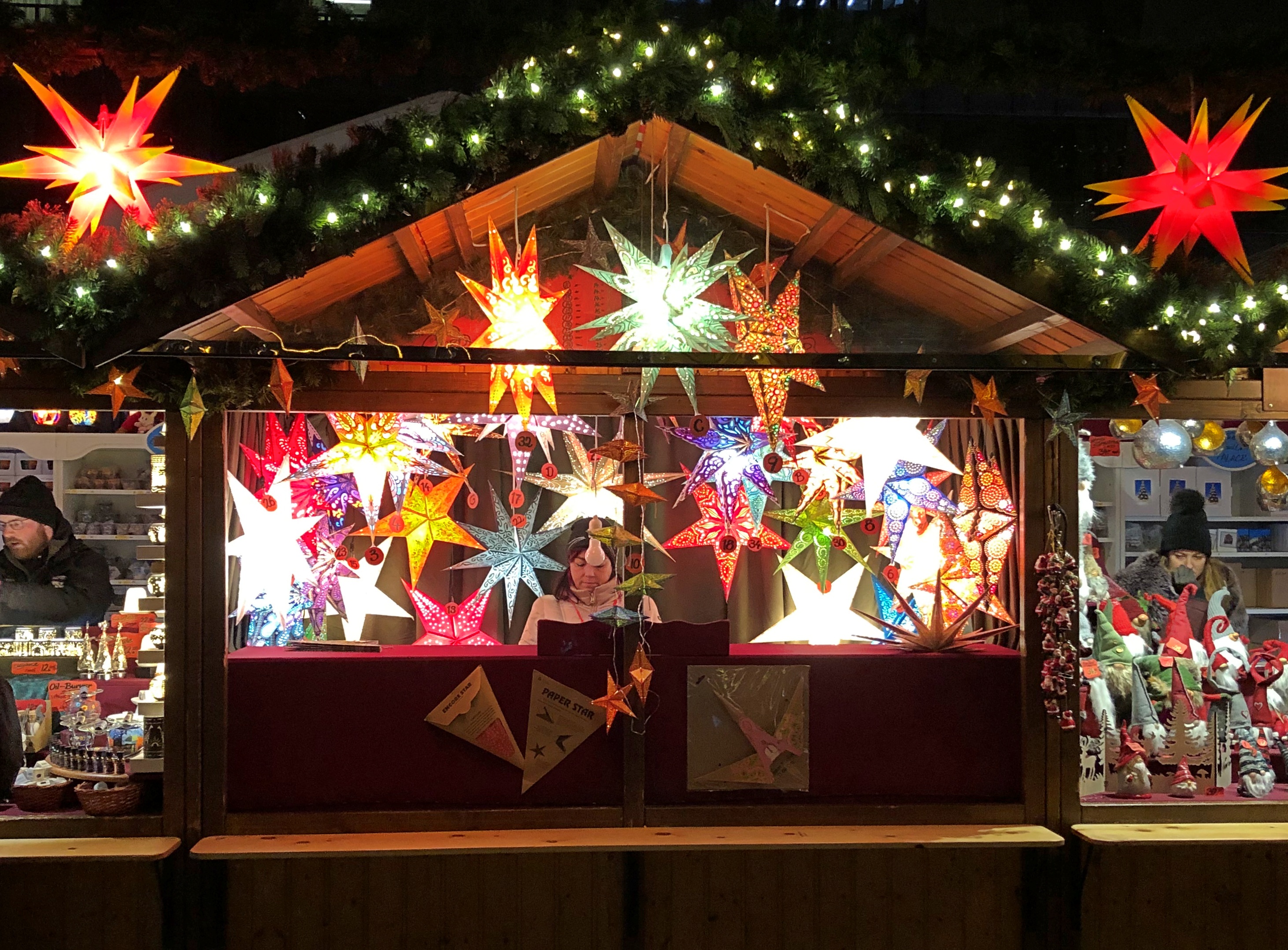
Locally themed ornaments, and pickles. Who doesn’t like Christmas pickles?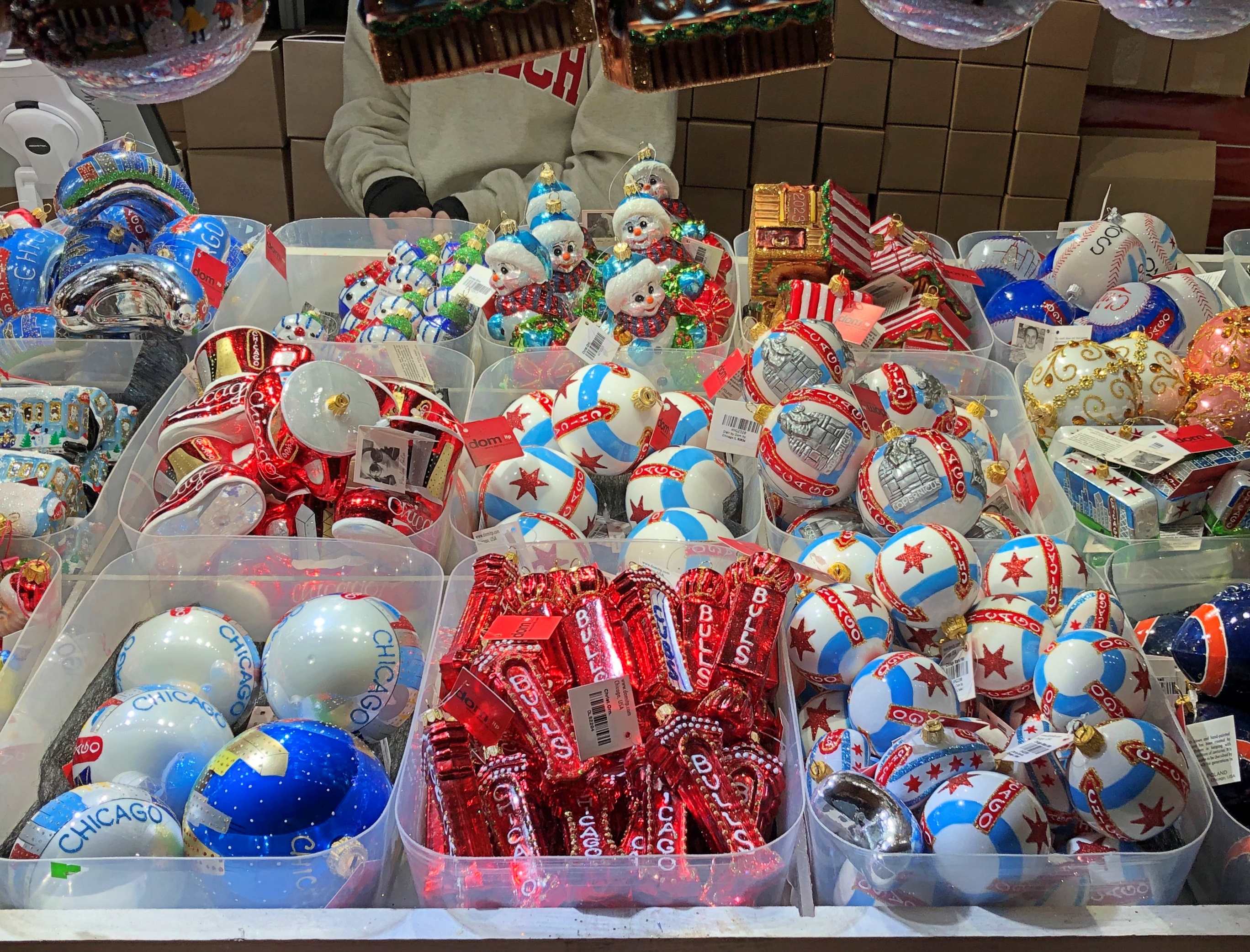
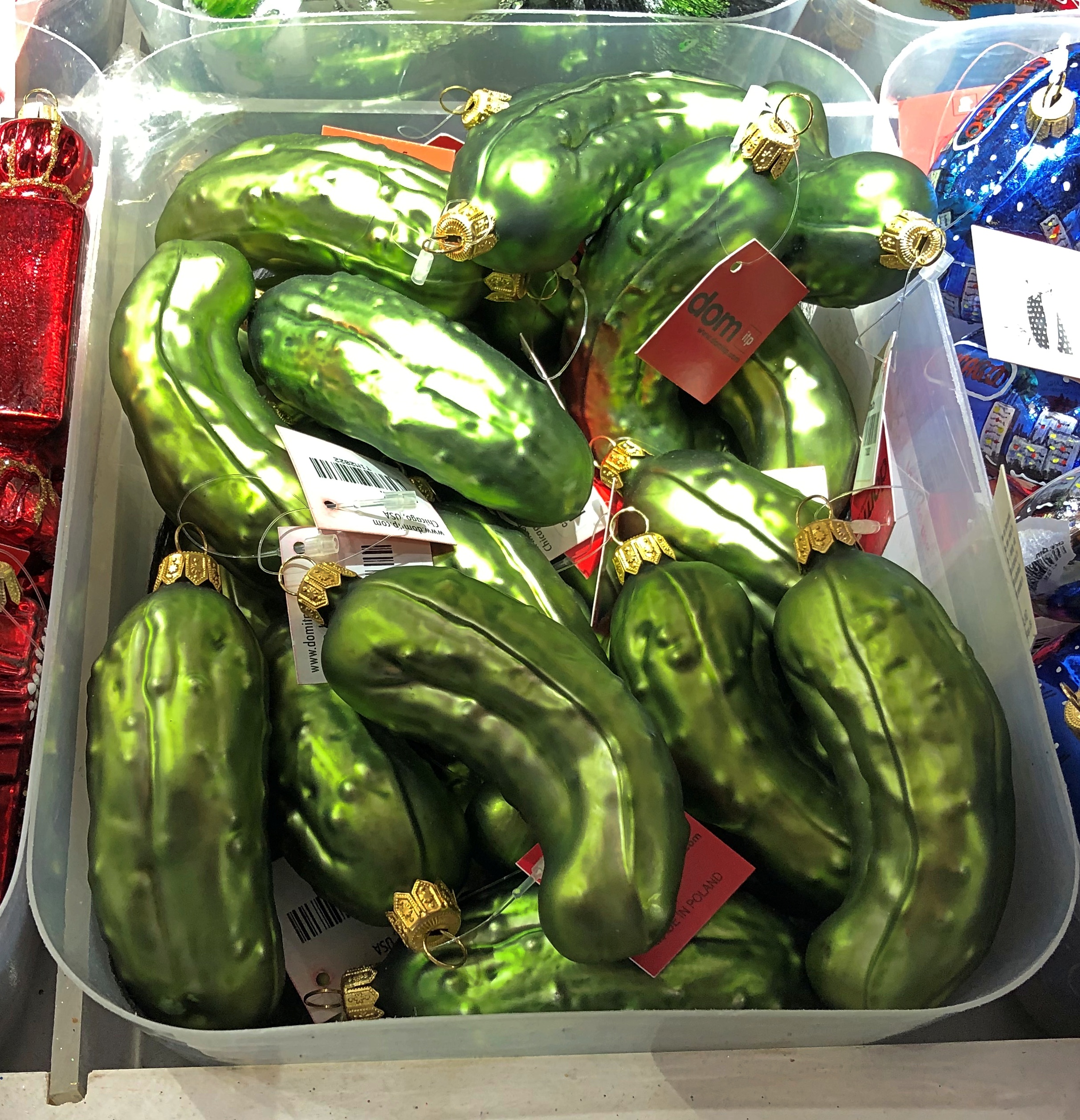
Eats.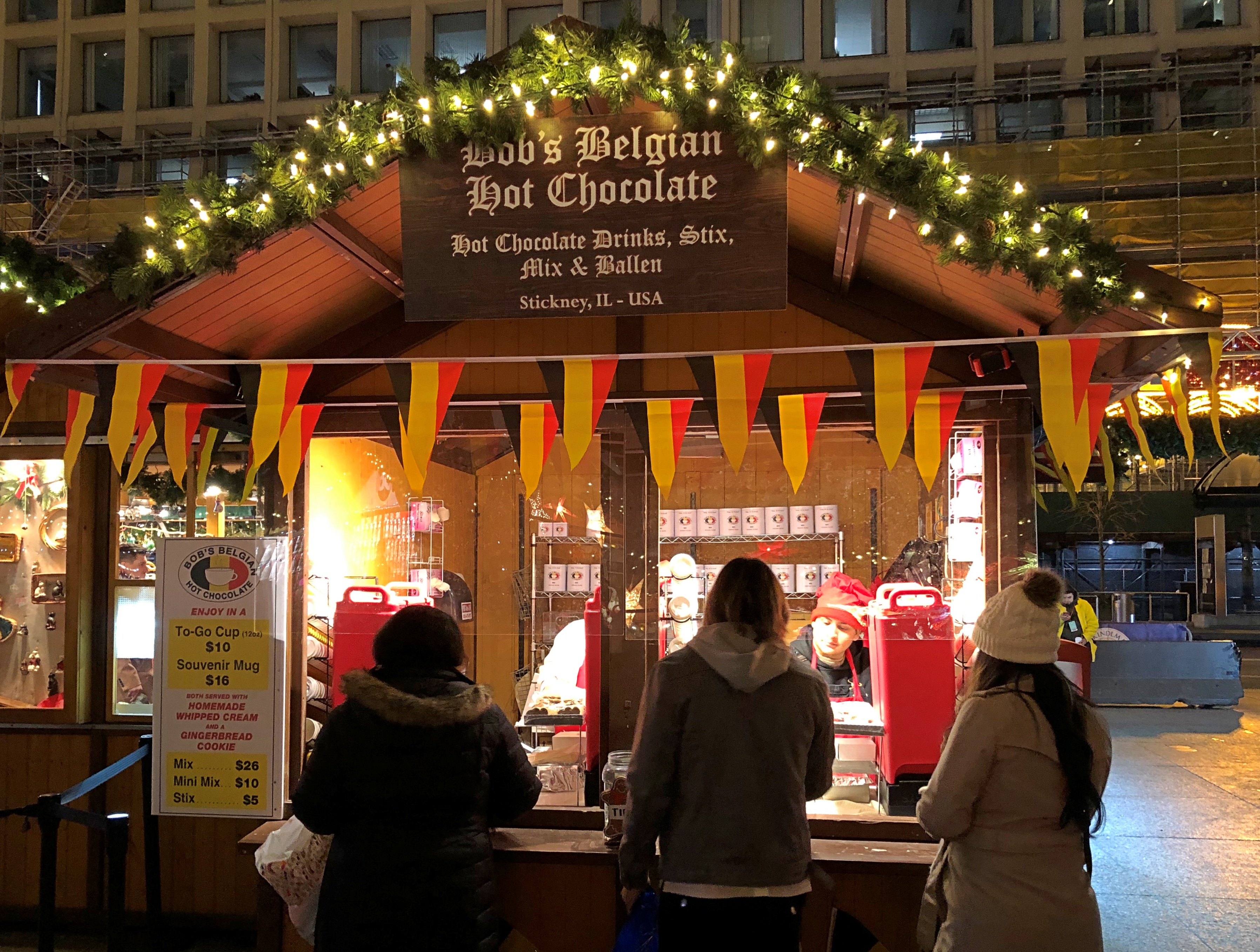
And Paul.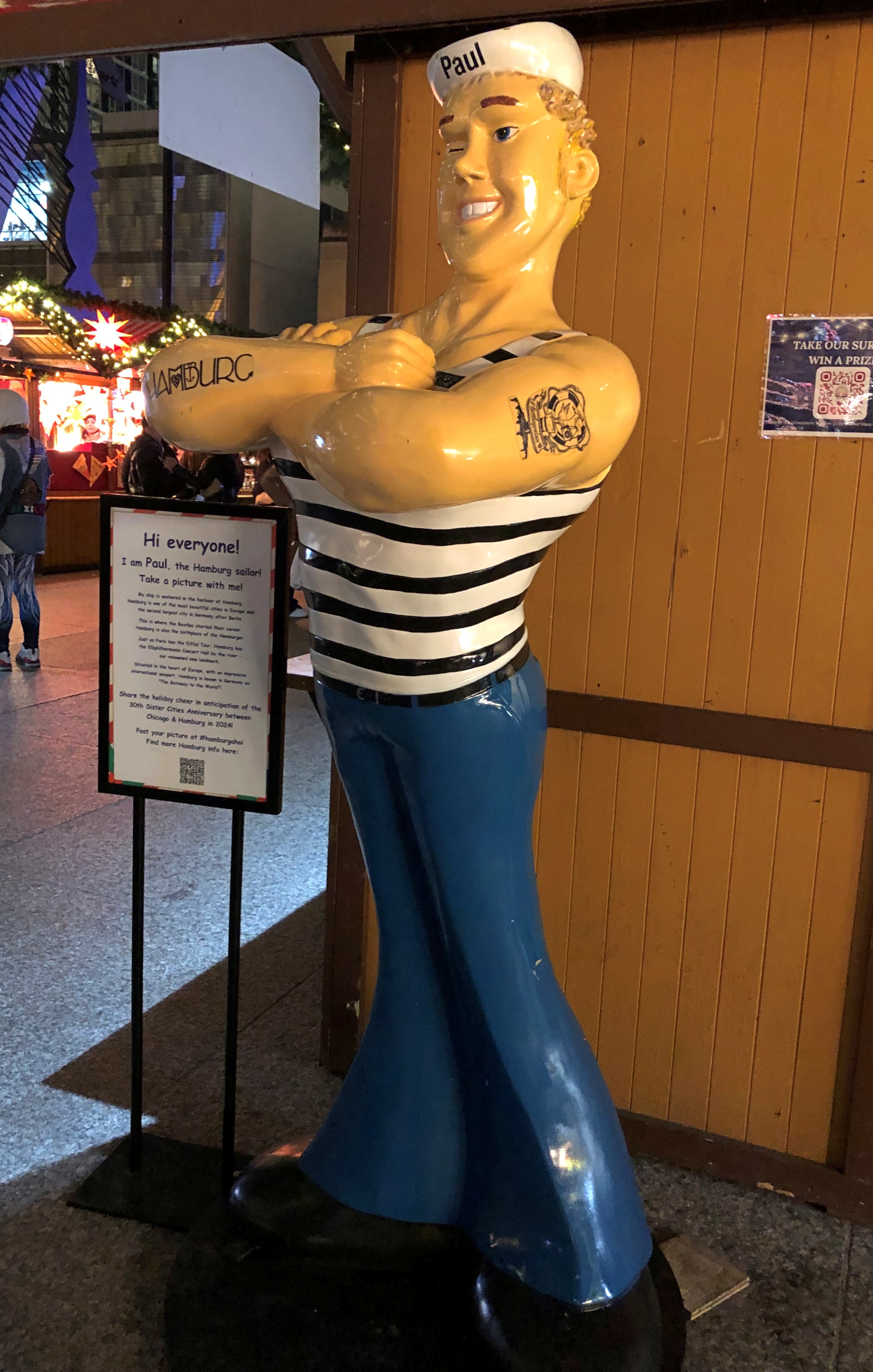
His sign says, “Hi, everyone! I am Paul, the Hamburg sailor! Take a picture with me!’
Paul, huh? Are the Hamburgers having a spot of fun with that? St. Pauli is a red light district in Hamburg, after all, and while Paul here might look clean-cut, on leave I bet he’s out for beir and bumsen. Or maybe he’s a more modern sailor, and while visiting Chicago slips off to North Halsted Street sometimes.
On the day after Thanksgiving, we went downtown for the afternoon and into the evening. Michigan Avenue is coloring up for the season, such as at the magnificent Railway Exchange Building (224 S. Michigan Ave.).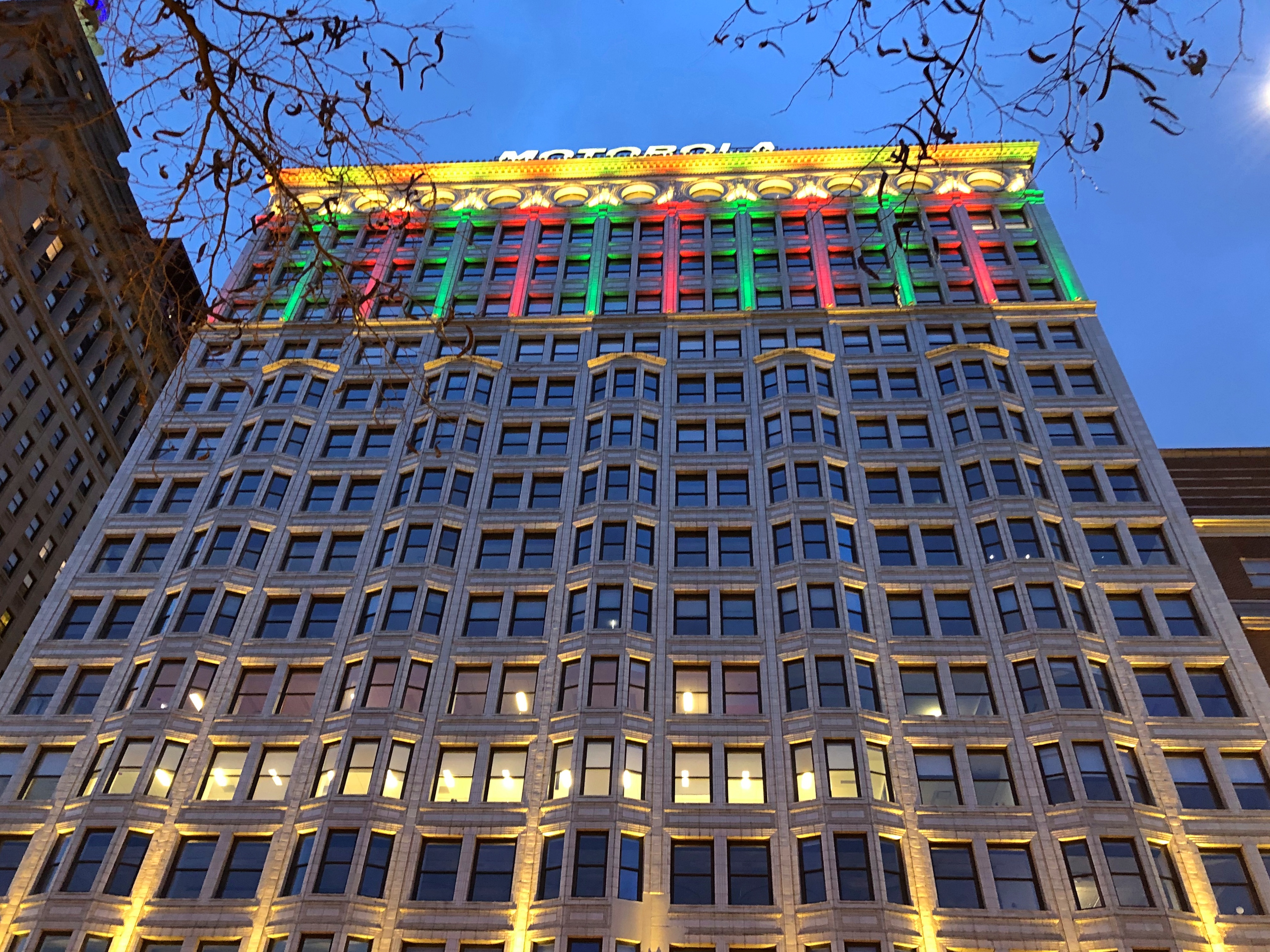
But no seasonal colors at 150 N. Michigan, which because of the rows of lights on its roof rim, is a glowing rhombus in the sky. Still all white lights as of Friday. Maybe management decided to ax the expense of changing the lights.
The city of Chicago’s Christmas tree rises over Millennium Park, as it does every year. Chicago hasn’t shied away from calling it a Christmas tree.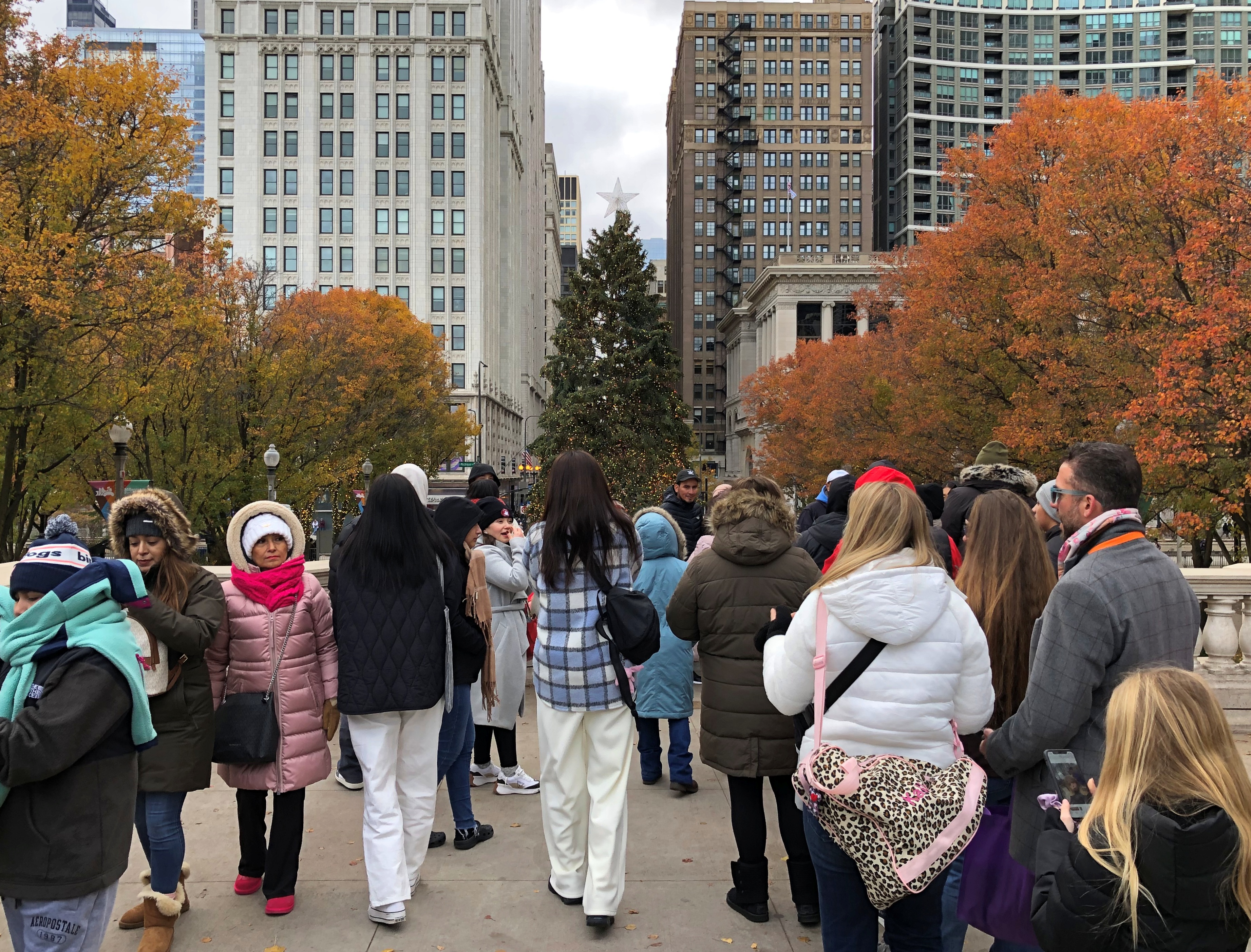
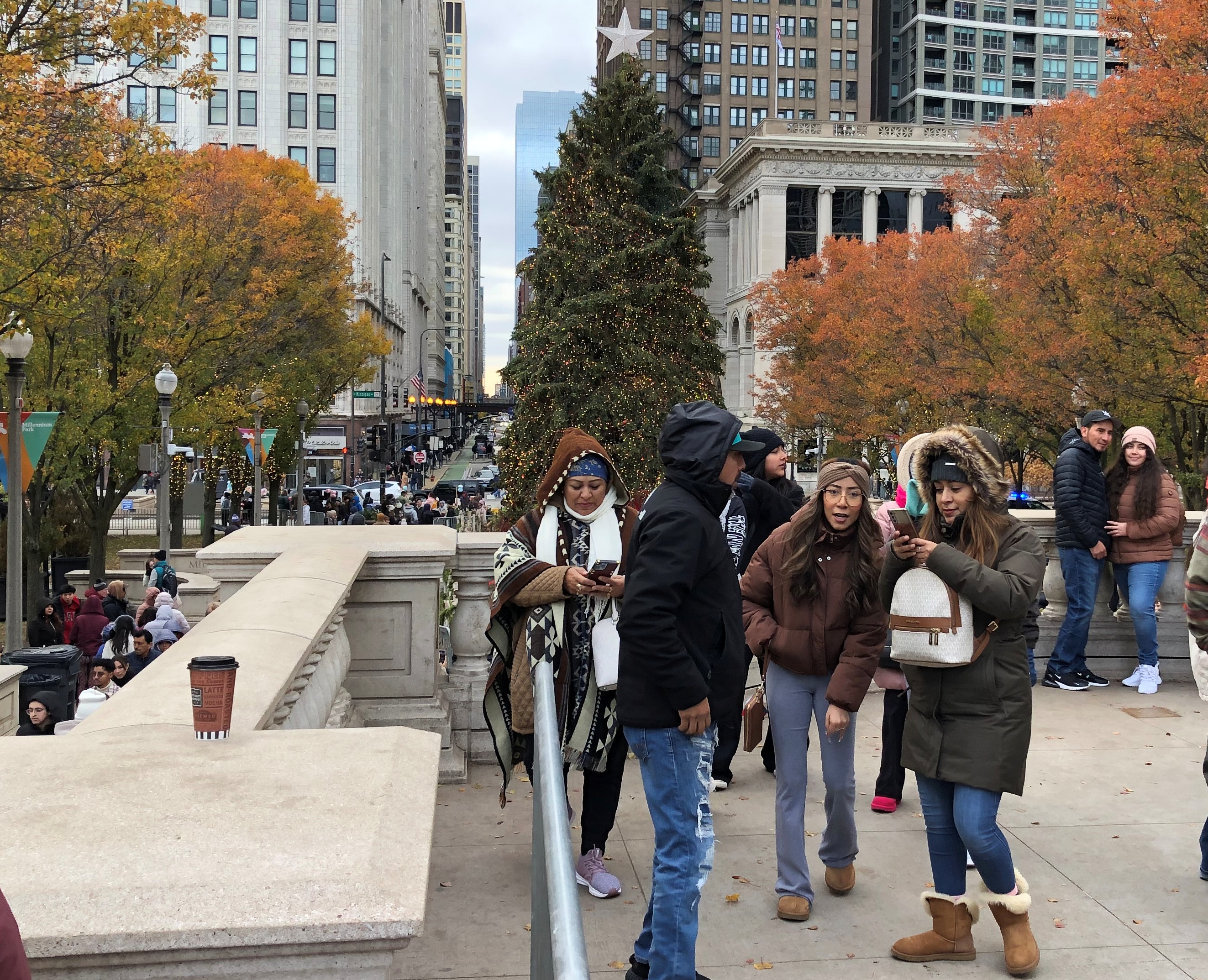
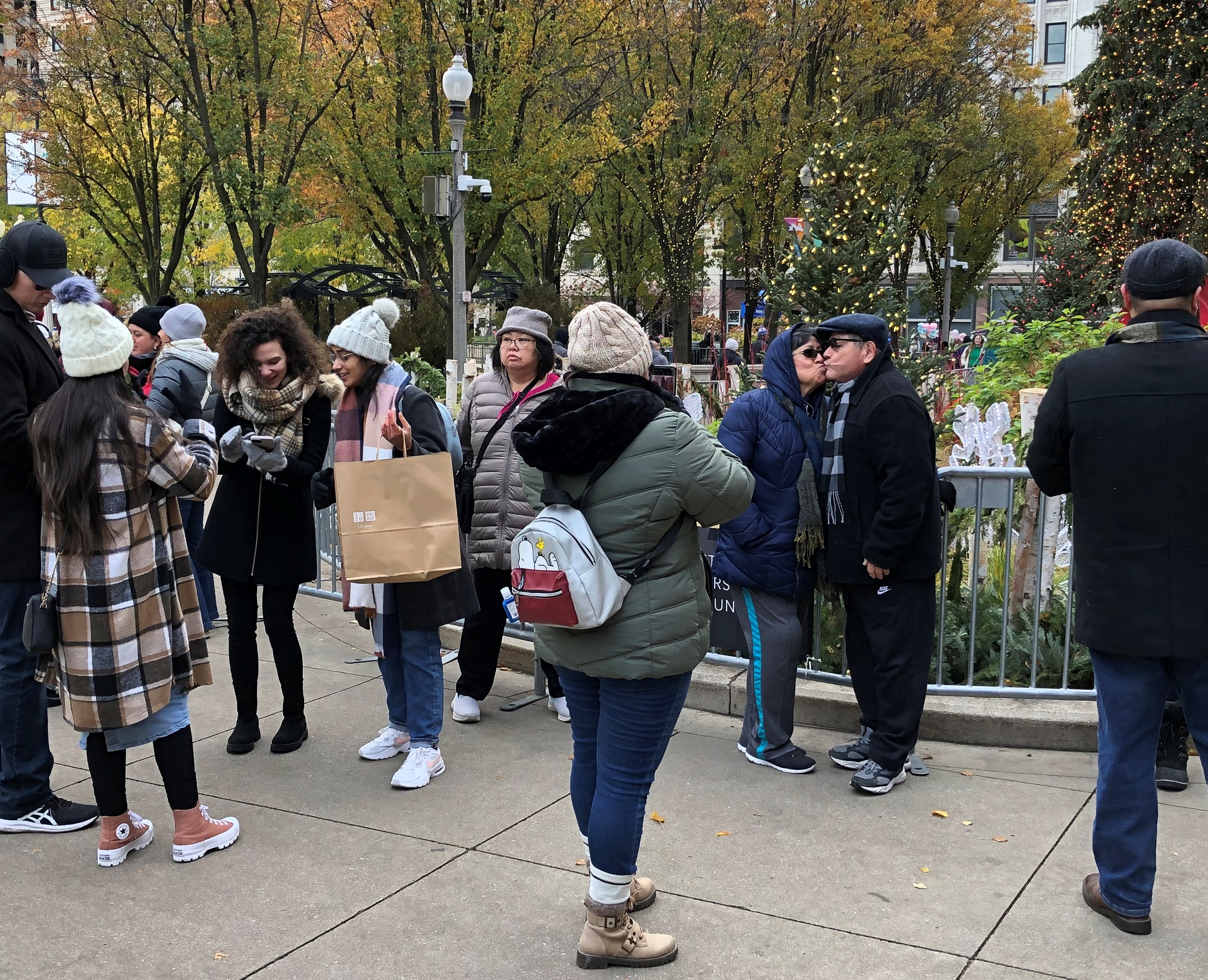
We thought it looked a little unfinished, at least in the daylight. Lights, but no ornaments.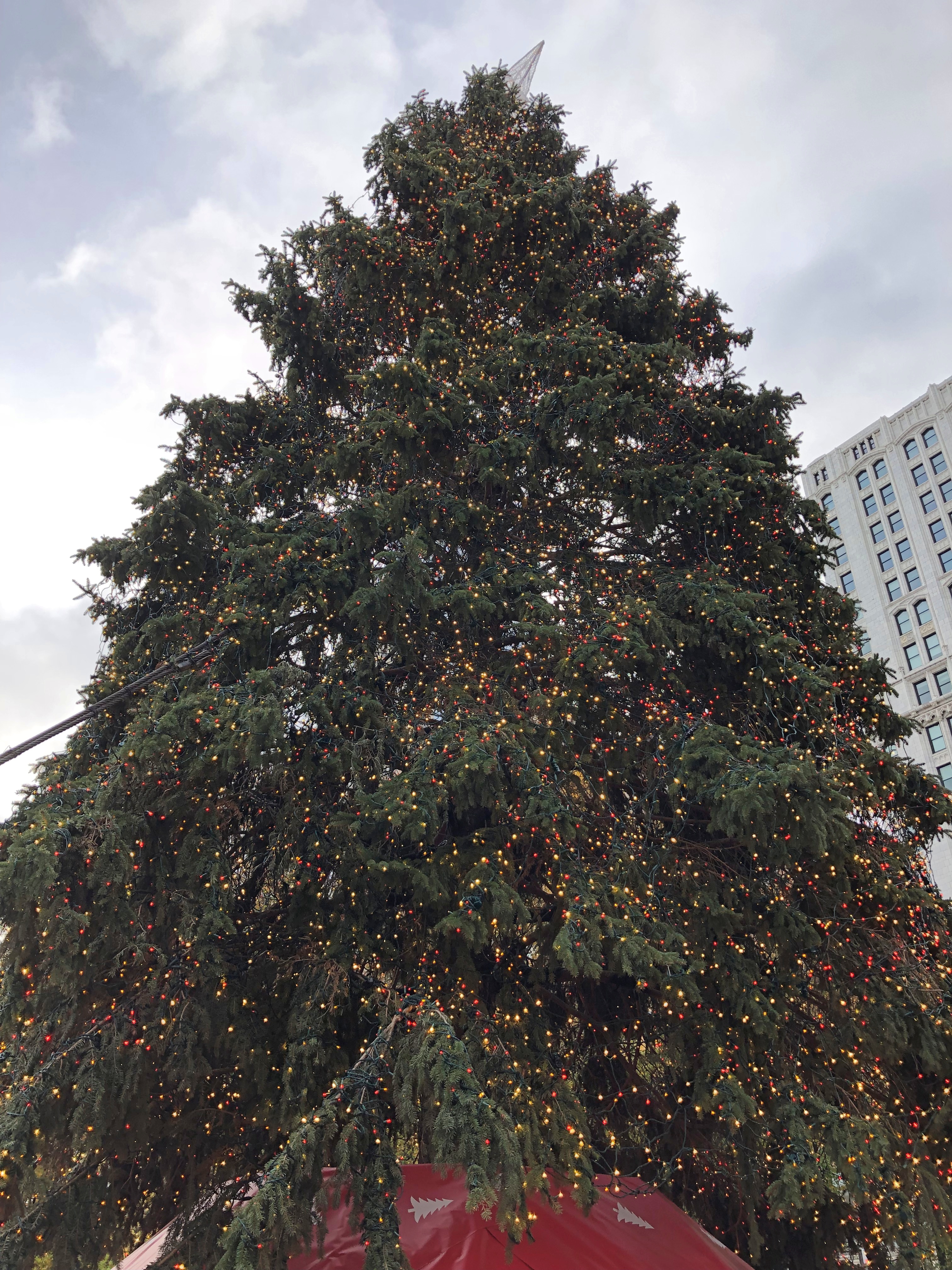
Then again, in previous years the tree has looked about as spare. But I’ve only seen a few of them. Bet their décor has changed across the decades since 1913, when the city put up the first one. For all I know, spare might be the current trend among municipal Christmas trees.
When we returned after dark, it was a different story. Lights up dandily at night, it does.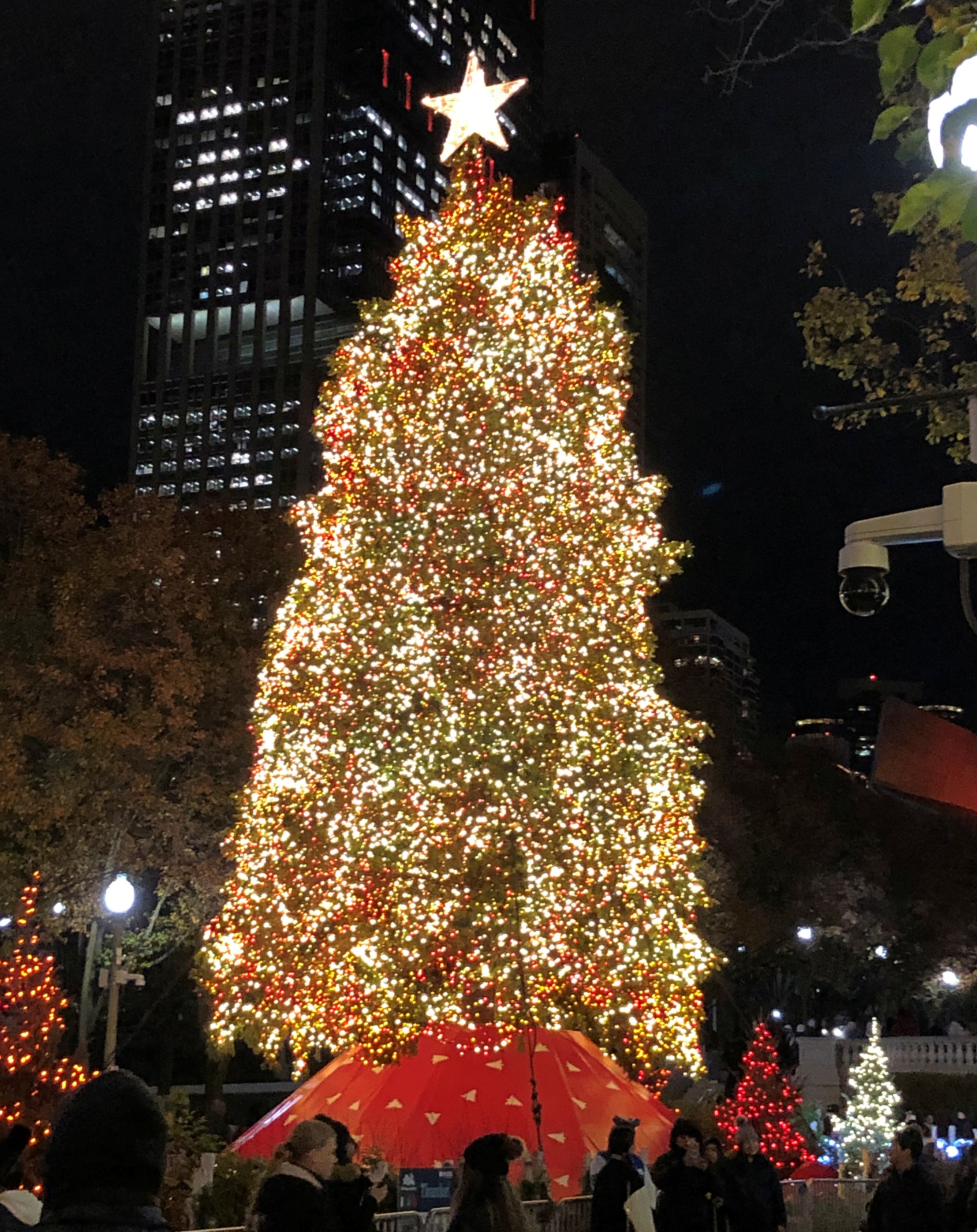
We didn’t spend a lot of time in Millennium Park that afternoon, but we did walk around the site of the Bean, a.k.a. Cloud Gate, which is surrounded by a sizable temporary fence and closed to the public. The plaza is being renovated, and the Bean stands aloof over the construction site, unable to attract visitors – multitudes of them – to its mirrored fascinations.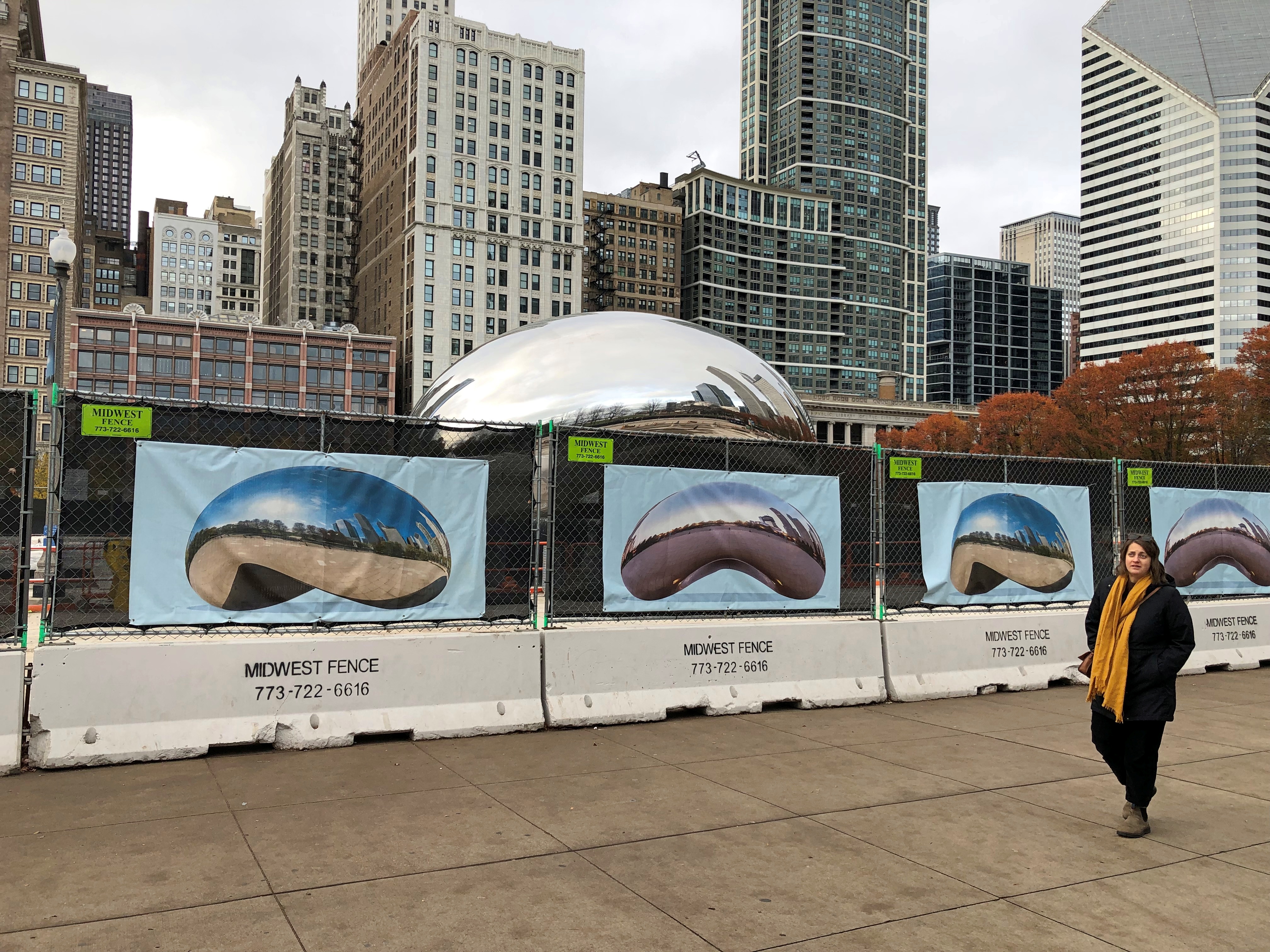
This fellow was celebrating something. Some accomplishment of his. Or possibly mocking George W. Bush some 20 years after the fact. If so, what would be the point of that? If it had been a summer day, I might have paused to ask him about it.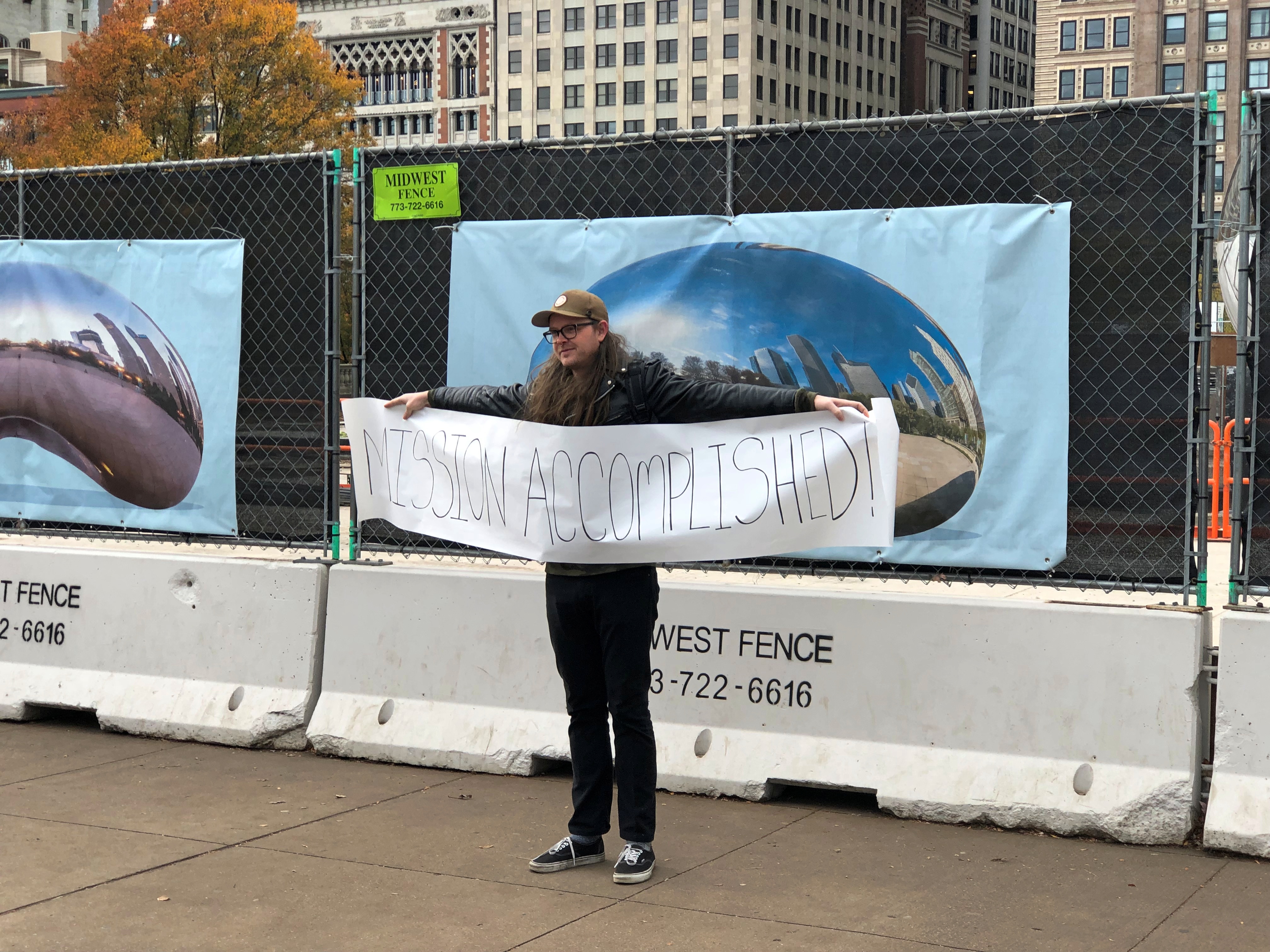
But no. The chilly air drove us on, even as he did a few different poses with the banner.
A public domain image borrowed from an article by Joseph E. Persico, published by Military Times in 2017.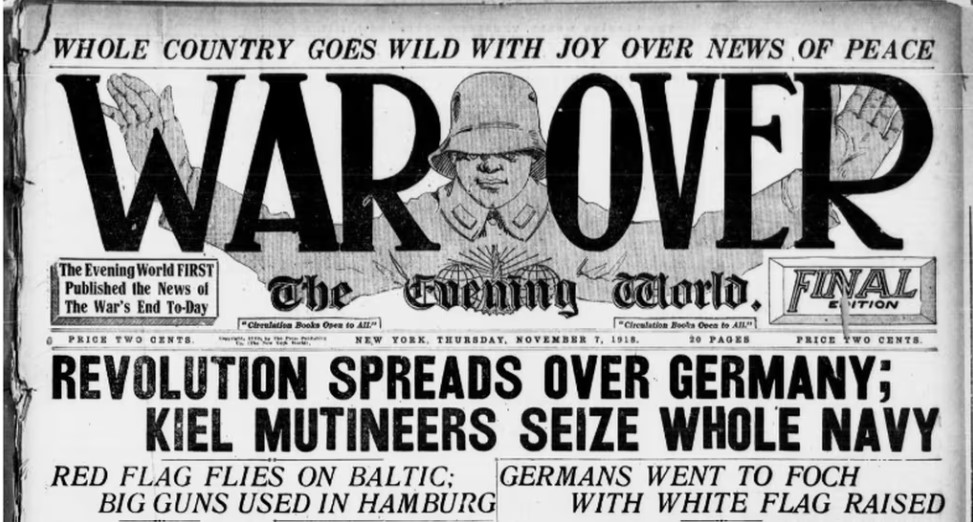
Note the date of the paper: November 7, 1918. As I understand it, there was a false alarm about an armistice on that day that was picked up by the AP and spread at the speed of telegraphy.
The article tells the story of men who fell on November 11 that year, in spite of the armistice, a bloody coda for four bloody years. Including the story of Henry Gunther who, for official purposes at least, was considered the last American killed in the war. Official time of death: 10:59 am, as he unaccountably charged Germans with machine guns.
He was one among thousands. “Losses on all sides that day approached eleven thousand dead, wounded, and missing,” Persico notes.
“Indeed, Armistice Day exceeded the ten thousand casualties suffered by all sides on D-Day, with this difference: The men storming the Normandy beaches on June 6, 1944, were risking their lives to win a war. The men who fell on November 11, 1918, lost their lives in a war that the Allies had already won.”
Back to posting November 7. Got things to do.
One more pic from San Antonio for now. A Halloween inflatable I saw there last week. Much amused to see it.
Not bad staying power for a movie that came out nearly 40 years ago.
In Chicago, the week before, I saw this tableau, referencing lore older than a mere movie.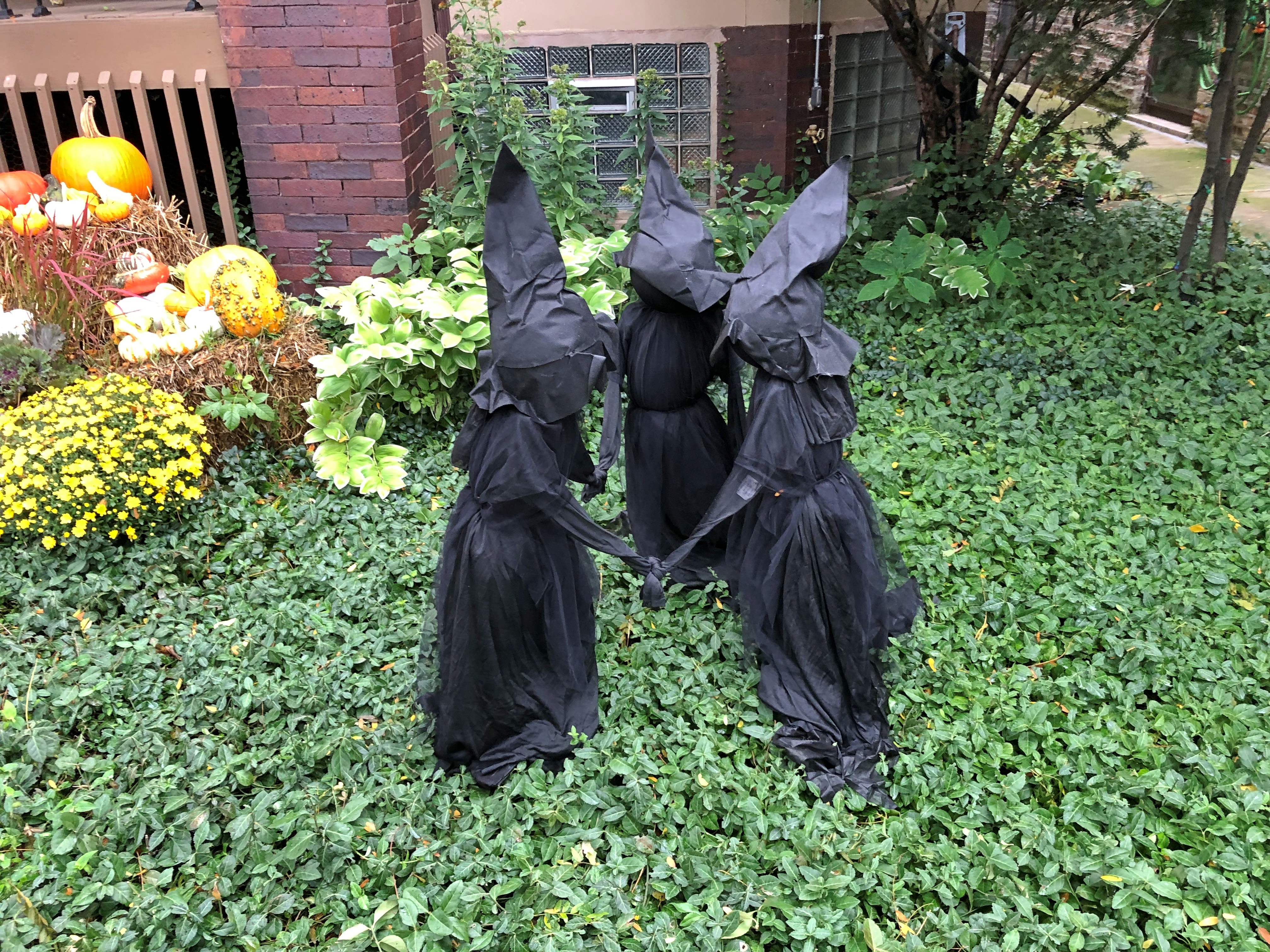
Three witches made partly from black paper. I assume they’re supposed to be witches. Why paper? The better to burn them, of course.
Despite the cold, we had about 40 kids show up yesterday to collect sweets, maybe half again as many as the busiest Halloweens of the past, though I don’t count every year. We ran through an entire box of full-sized candy bars plus some other smaller confections. Almost all of the kids came before dark, which has been the case for many years now. Another example of widespread nervous parenting that’s pretty much entrenched, I figure. When I was that age, we went out after dark in our Invisible Pedestrian costumes and we liked it.
Most of the costumes this year were buried under coats, but I have to say the best of ’23 was a tallish kid in no coat and a white-and-red full-body chicken outfit, complete with a comb as prominent as Foghorn Leghorn’s. The costume might well have been warm enough for him to go without a coat. The color scheme reminded me of Chick-fil-A right away.
I’m just old enough to remember sometimes receiving baked goods and fruit on Halloween; those vanished by about 1970, victim of the lurid nonsense stories about razor blades in apples, poisoned cakes and chocolate Ex-Lax being given to kids. We found the thought of that last one pretty funny, actually.
This morning we woke to about an inch of snow destined to melt later in the day. A small preview of winter.
The cold is an unpleasant contrast to South Texas last week, where it was hot for October. (Temps have fallen there since then, I heard.) Just after noon on Saturday, I headed over to the campus of Our Lady of the Lake University, OLLU. I’d heard of the school for a long time, but my knowledge of it never rose above the level of hazy.
Main Building, the sign says. A name refreshing in its simplicity. The building’s a little more intricate.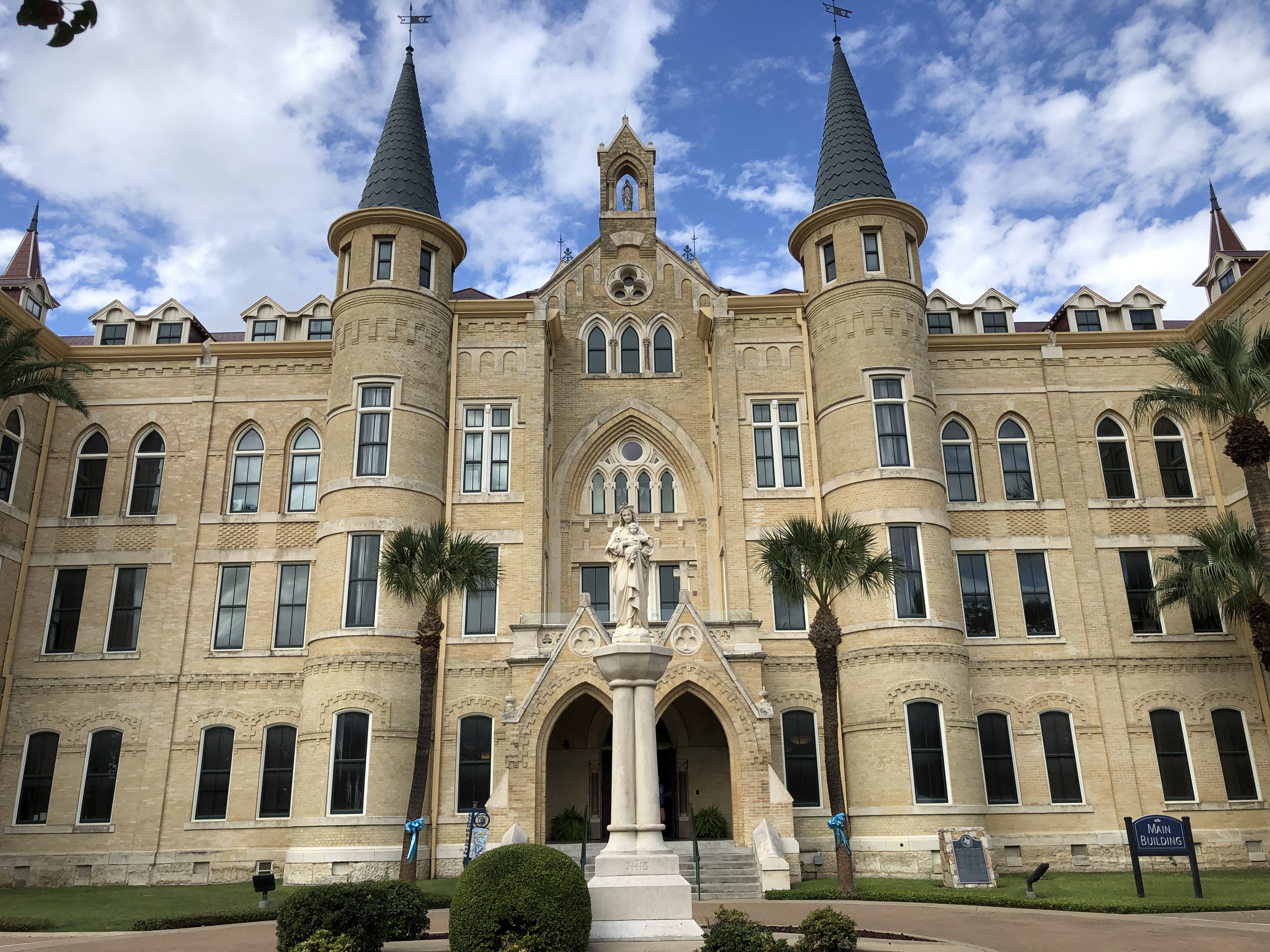
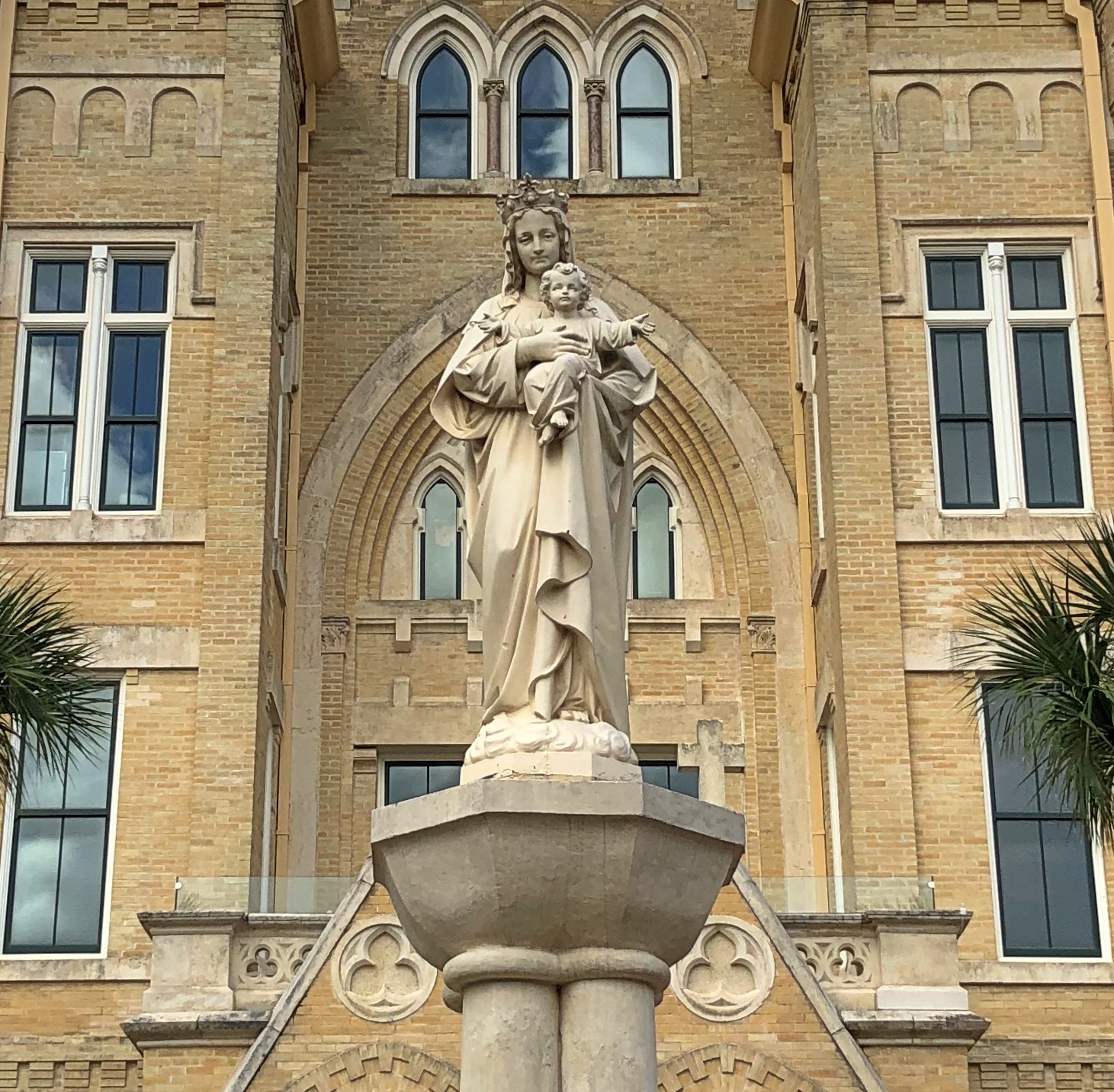
Mere steps away is Sacred Heart Chapel.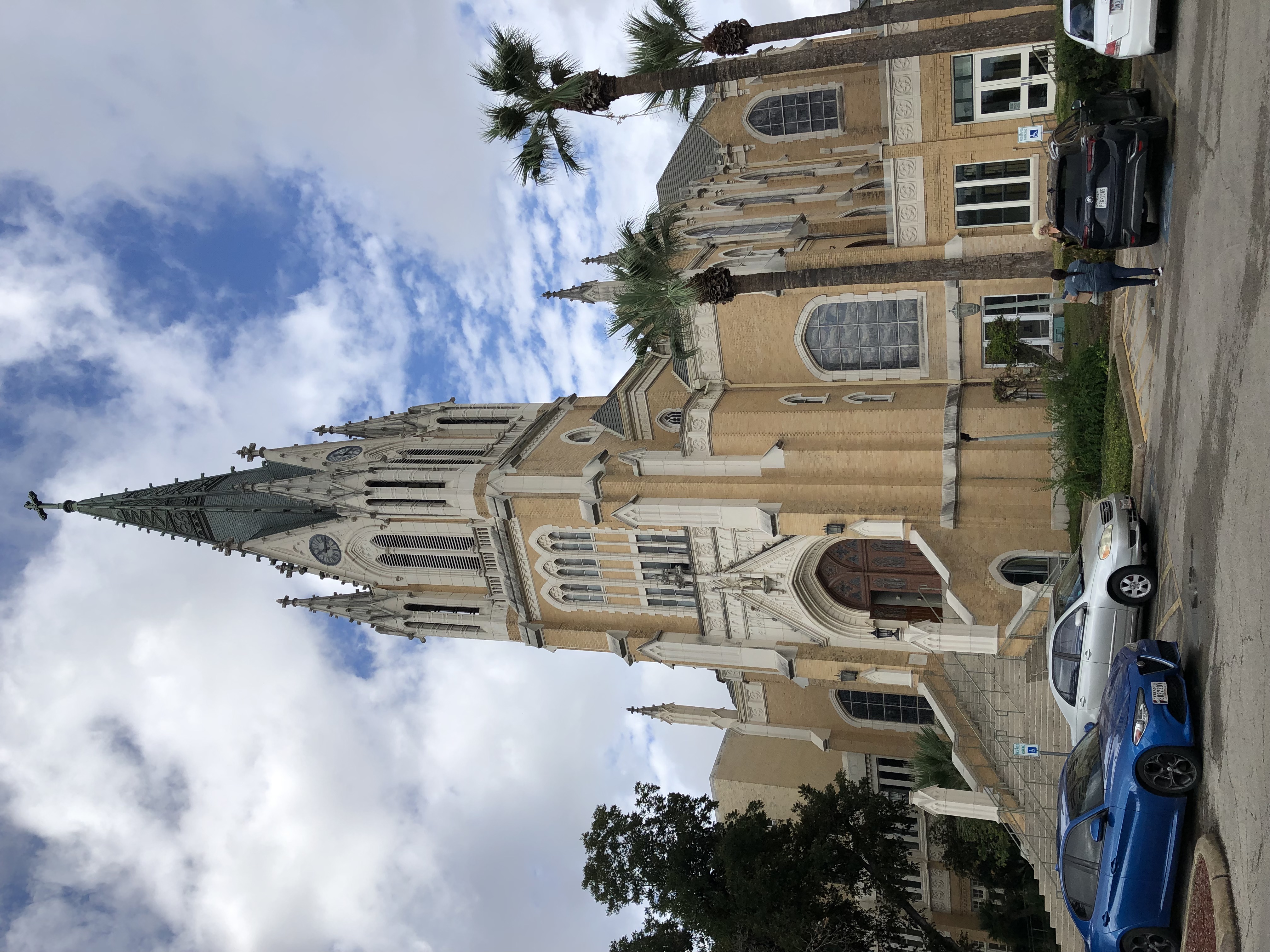
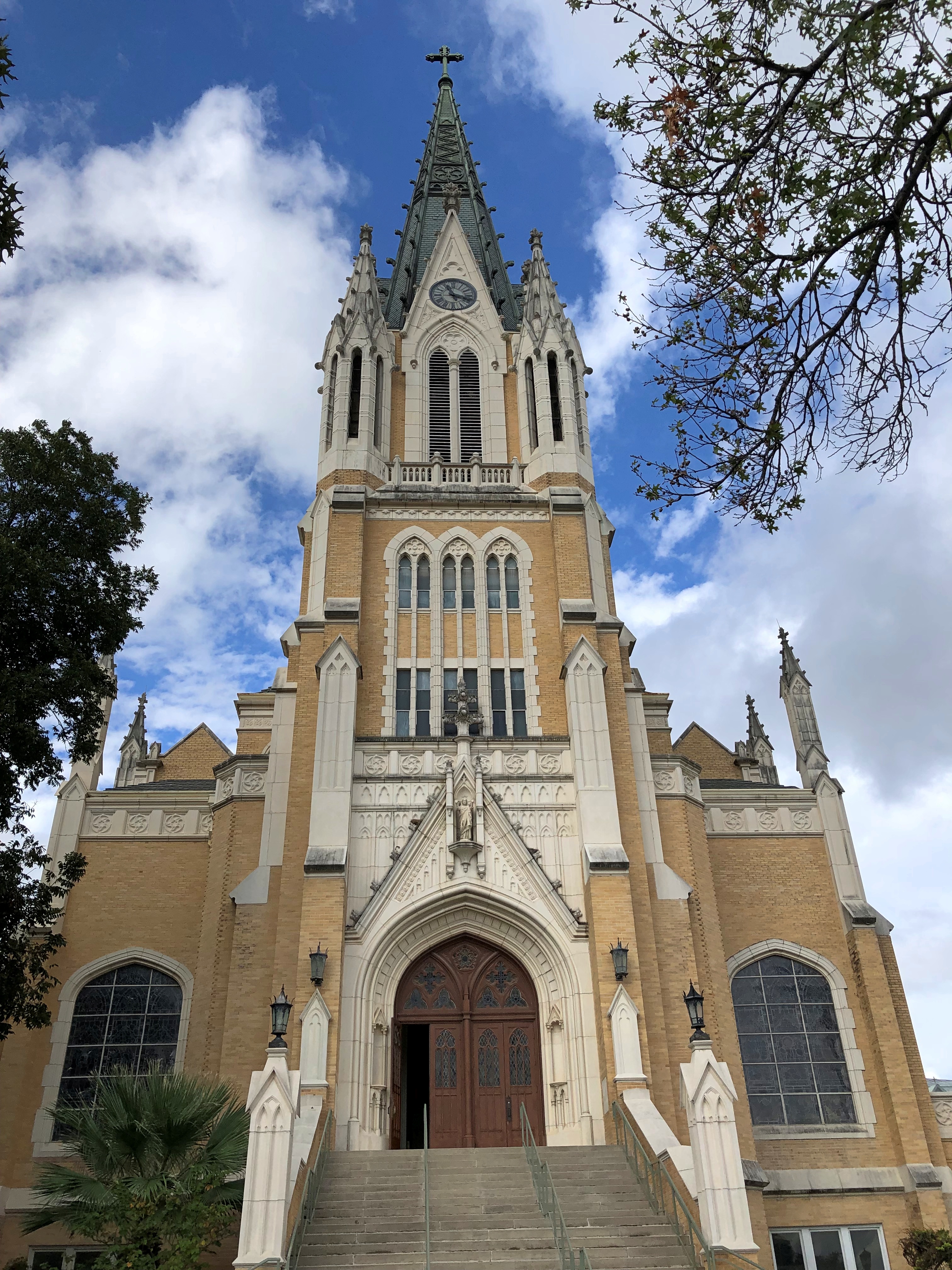
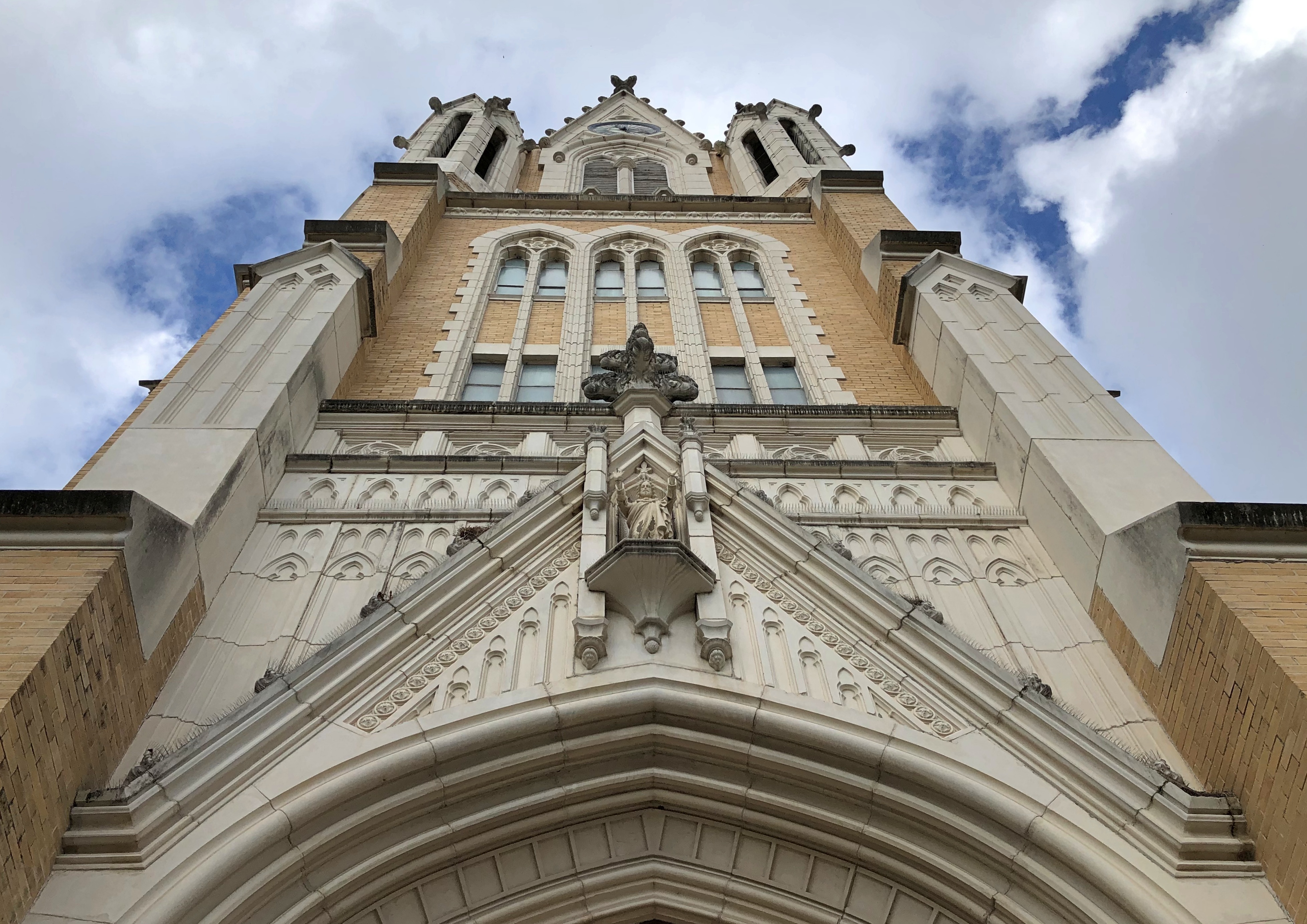
The school recently marked the chapel’s centennial. At your feet at the entrance, a date.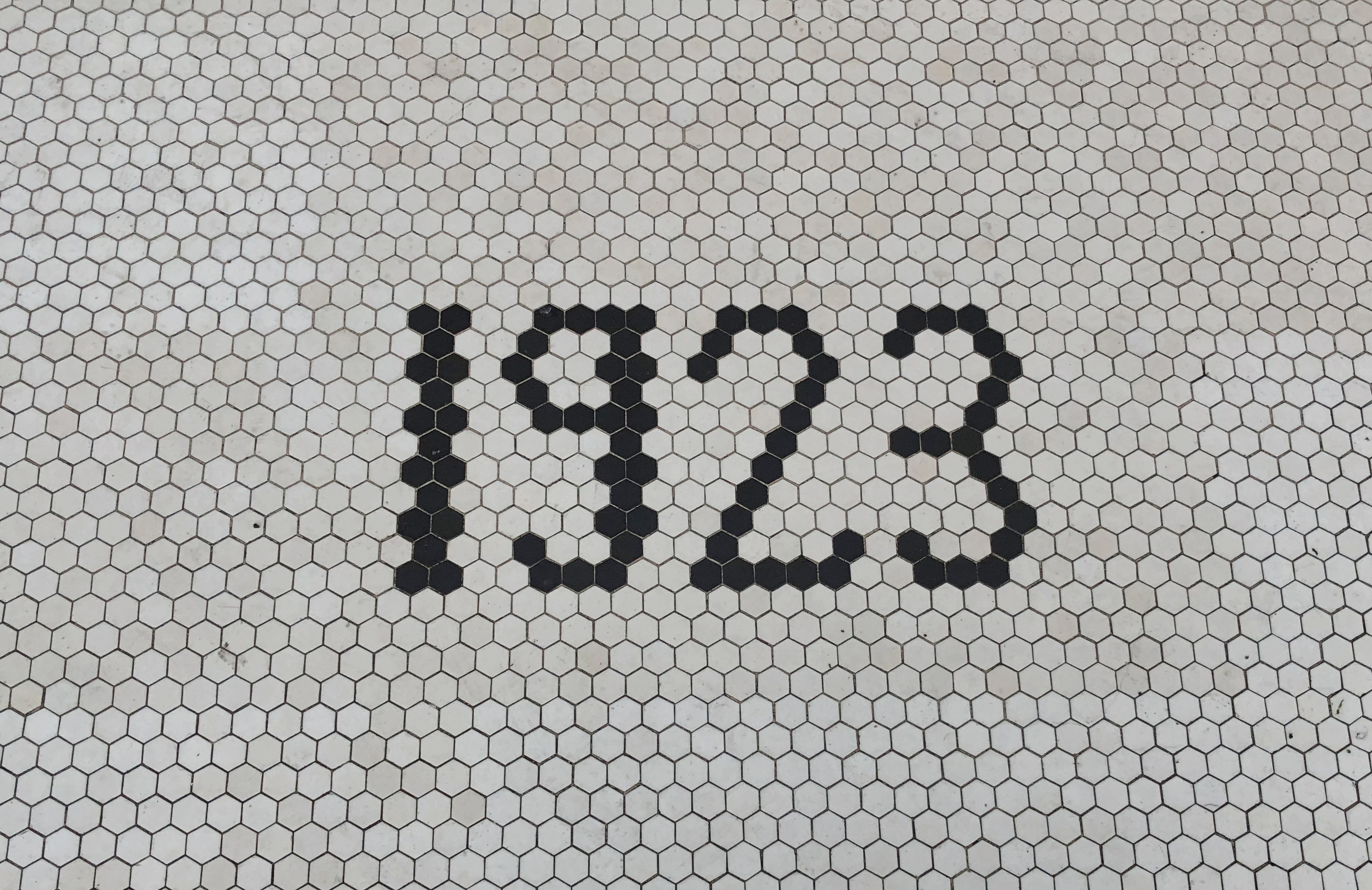
“The English Gothic chapel was the vision of Mother Florence Walter, Superior General of the Congregation of Divine Providence from 1886-1925,” says the university web site. “In 1895, she looked down from Prospect Hill at a swath of wilderness and declared, ‘One day we will have a chapel here. And its spires will be seen throughout the city of San Antonio.’ ”
That must have a good day for the superior general. Funding the chapel took 11 years, but eventually the Sisters, who had founded the school in 1895, were able to hire a renowned architect, Leo Dielman, to design the chapel. A prolific architect of sacred space – more than 100 churches to his credit – Dielmann had his funeral in 1969 at Sacred Heart Chapel.
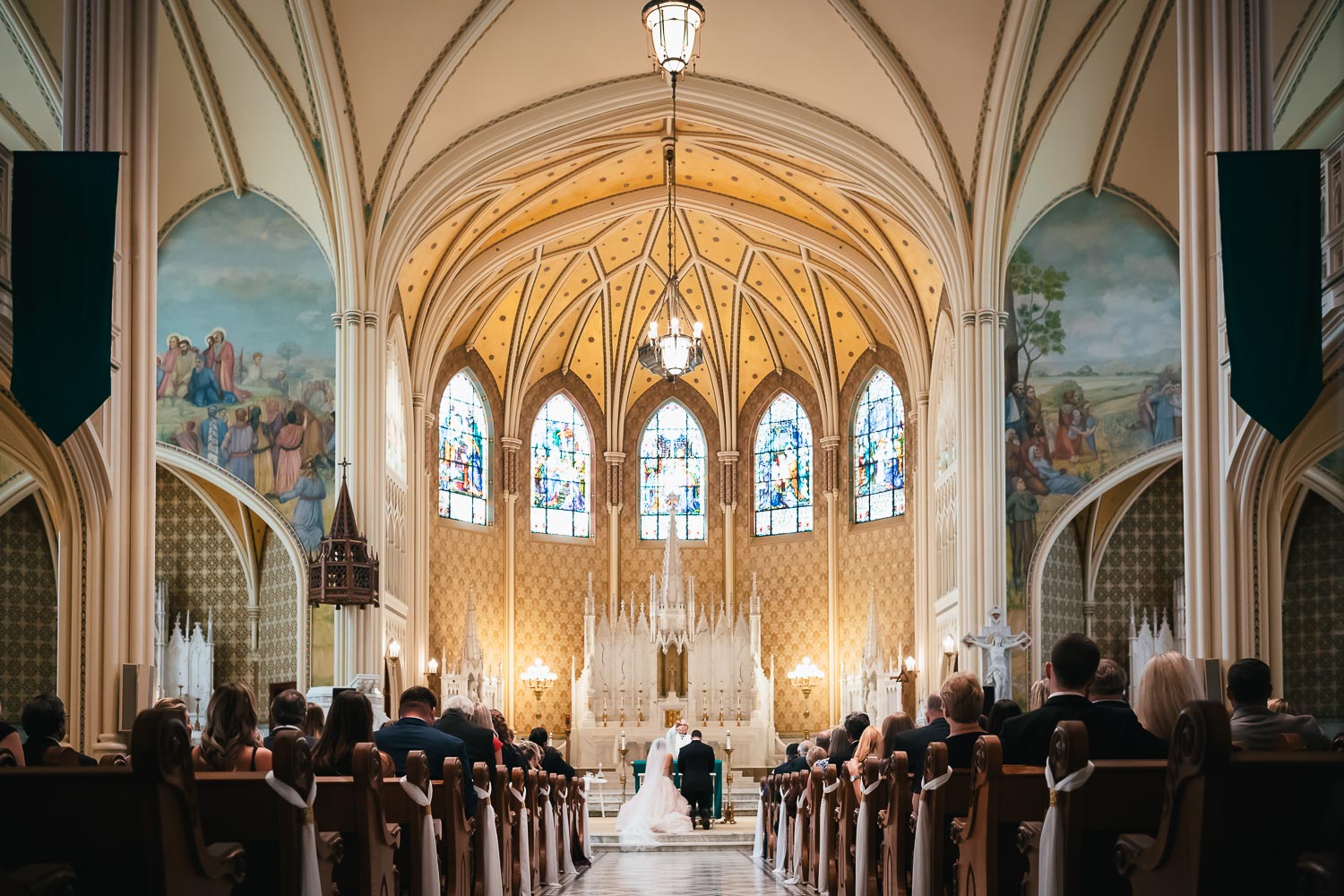
When I went in, a funeral was going on. I gazed in for only a moment from the very back of the nave. Looked like this, except for the sacrament pictured.
OLLU borders Elmendorf Lake Park, with walking trails ringing a small manmade lake, created by the damming of Apache Creek. I took a walk. When the sun periodically came out from behind the clouds, it felt like it was about 90 F. It was a sweaty walk. Needed that hat I’d left in Illinois.
Thick foliage luxuriates on the lakeshore.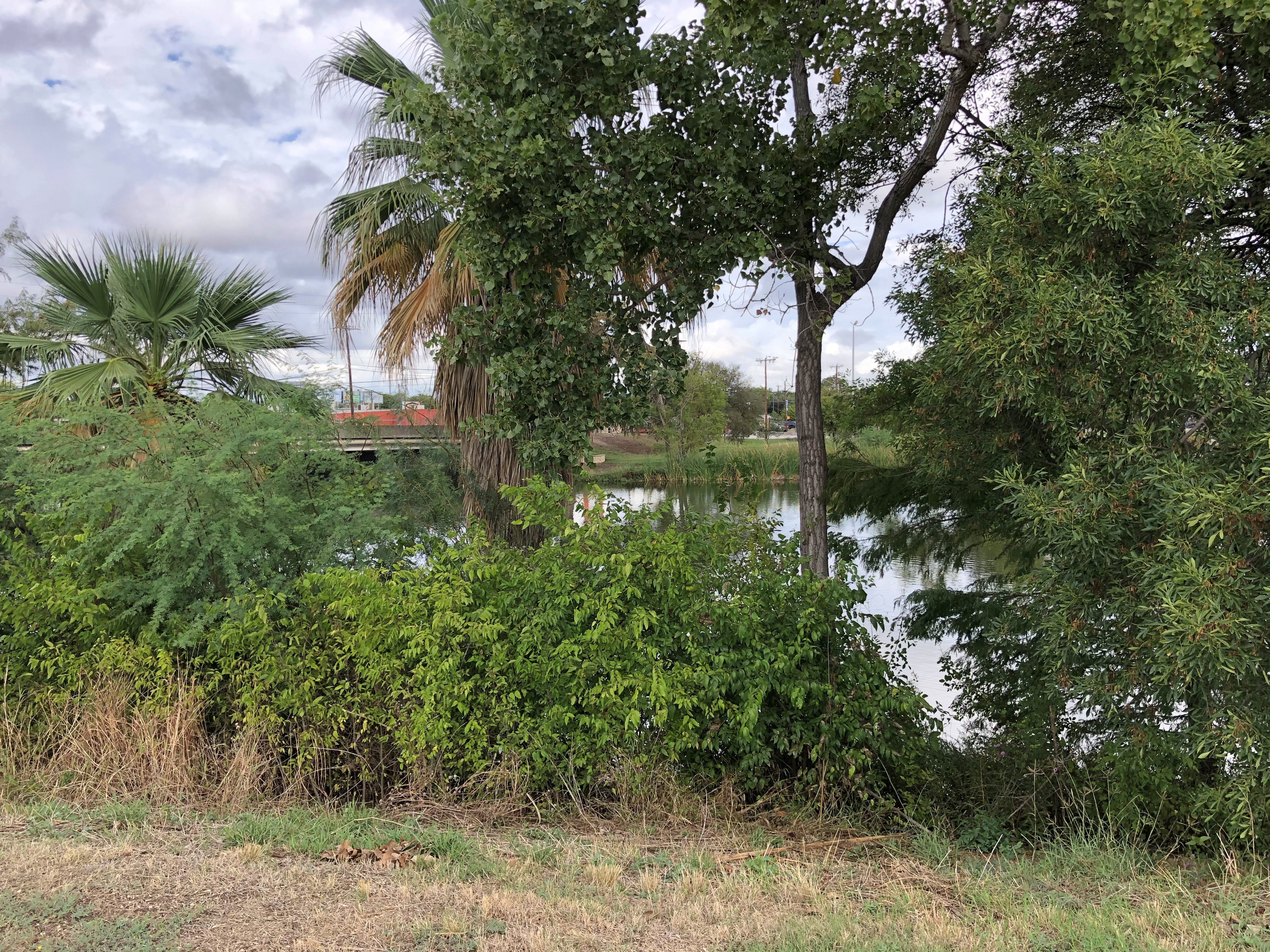
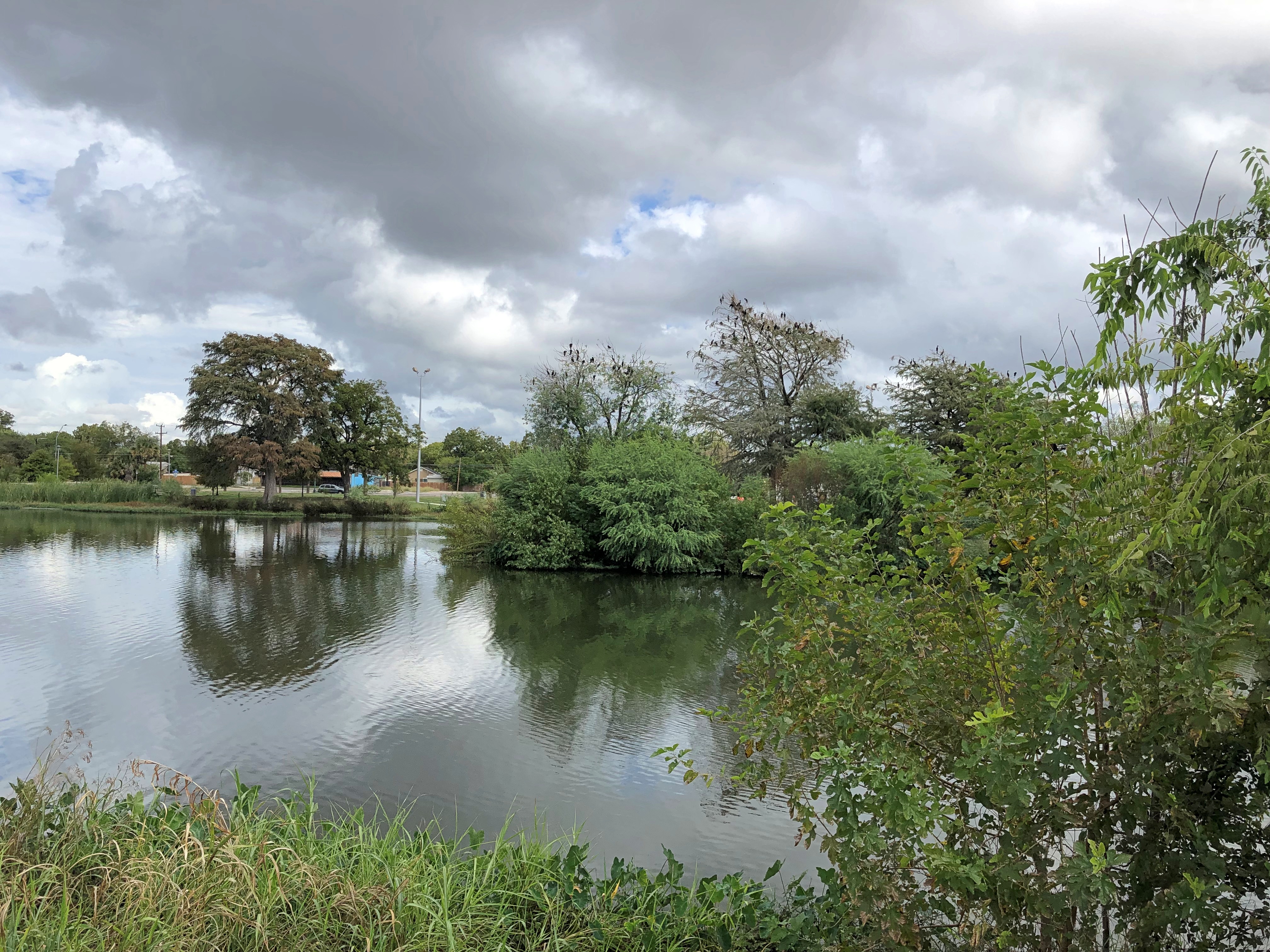
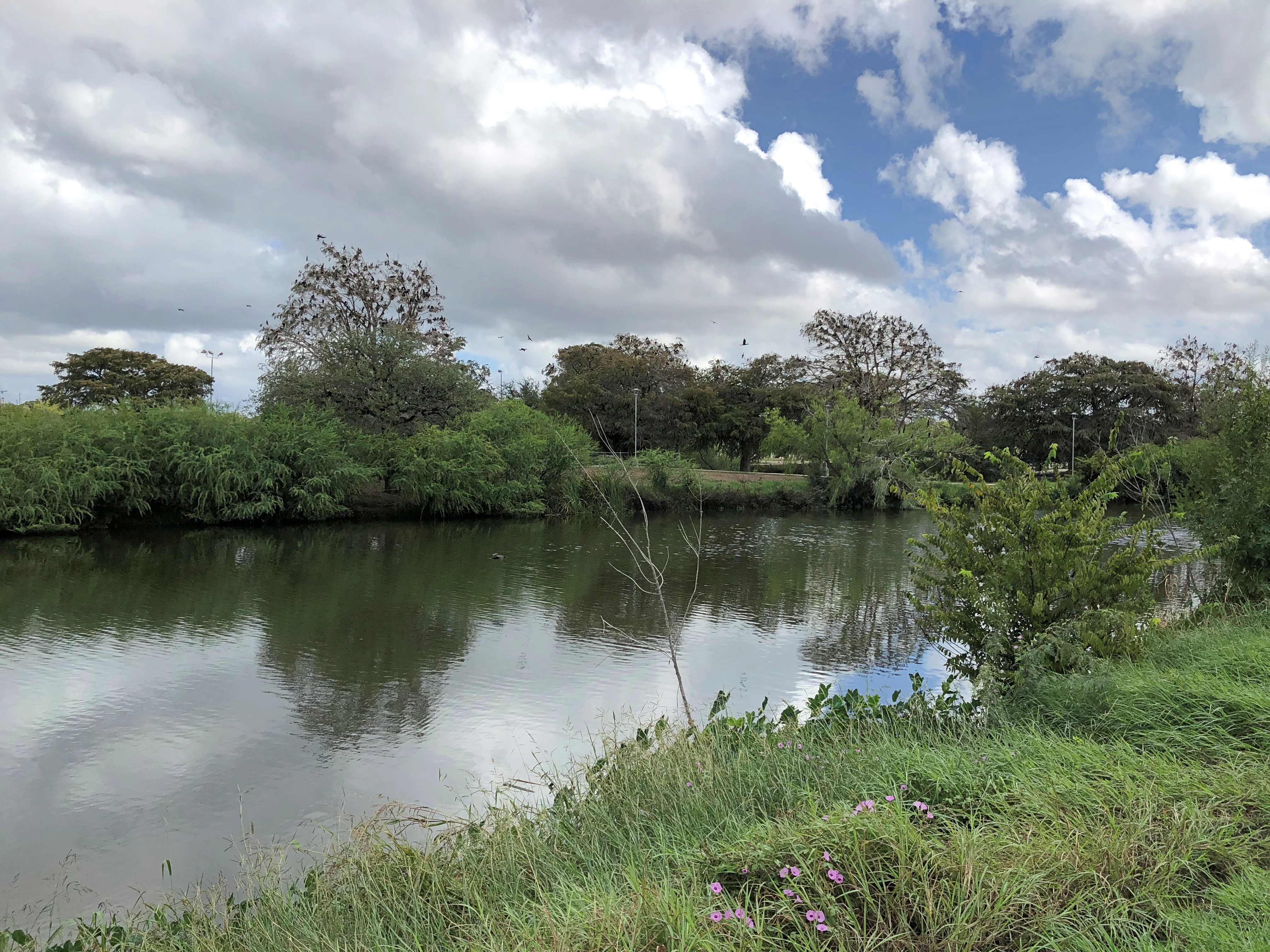
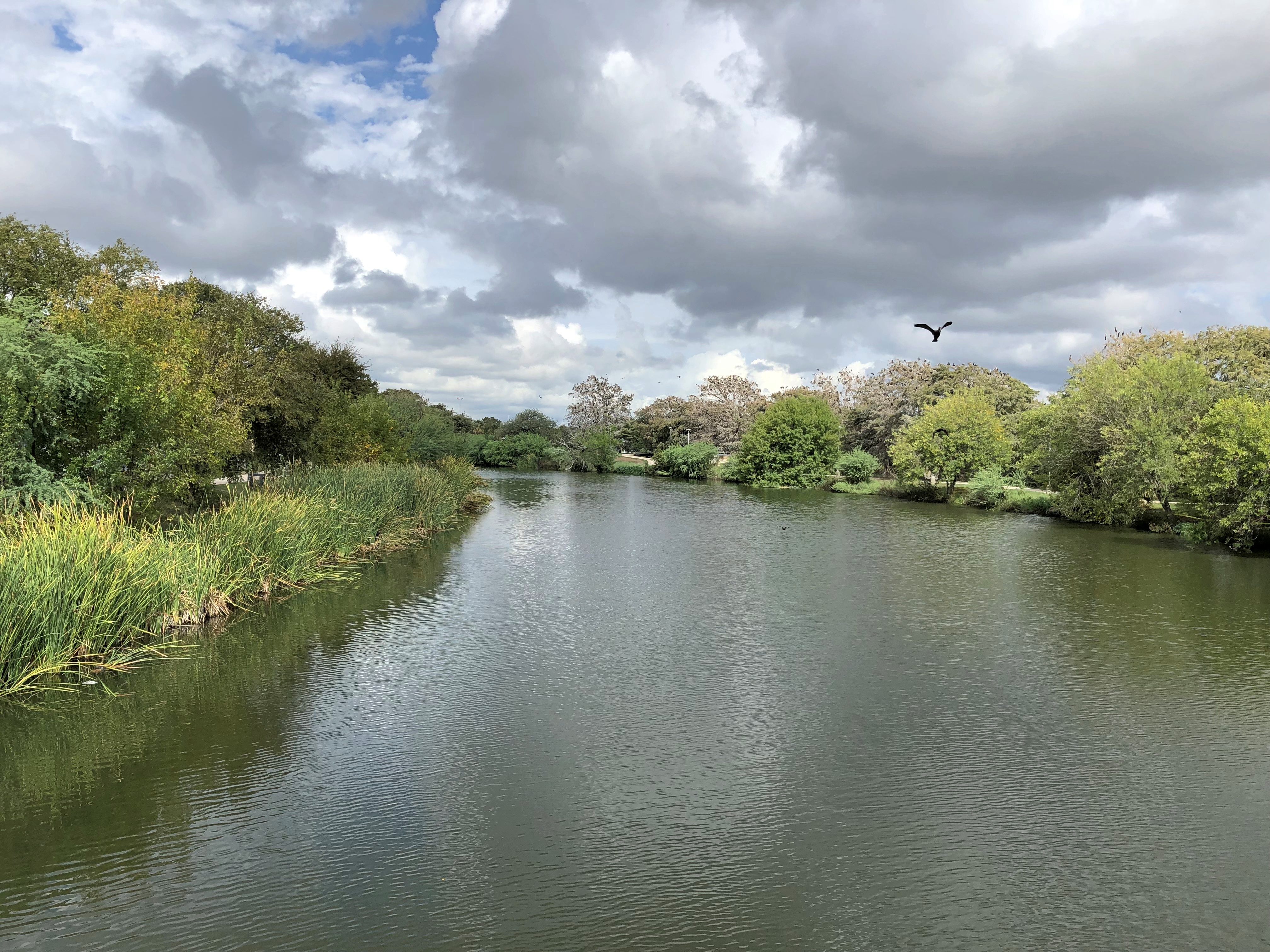
Almost no one else was around on what, compared with South Texas temps only a few weeks and months earlier, was merely a warm day. A Saturday at that. The place gave out no sense of being avoided out of fear for one’s person; just ignored. A few recreational fishermen stood on the shore, angling. One was in a small boat. That was all.
Another, more hard-surface part of the park includes benches. Parc Güell sorts of benches, but without the crowds.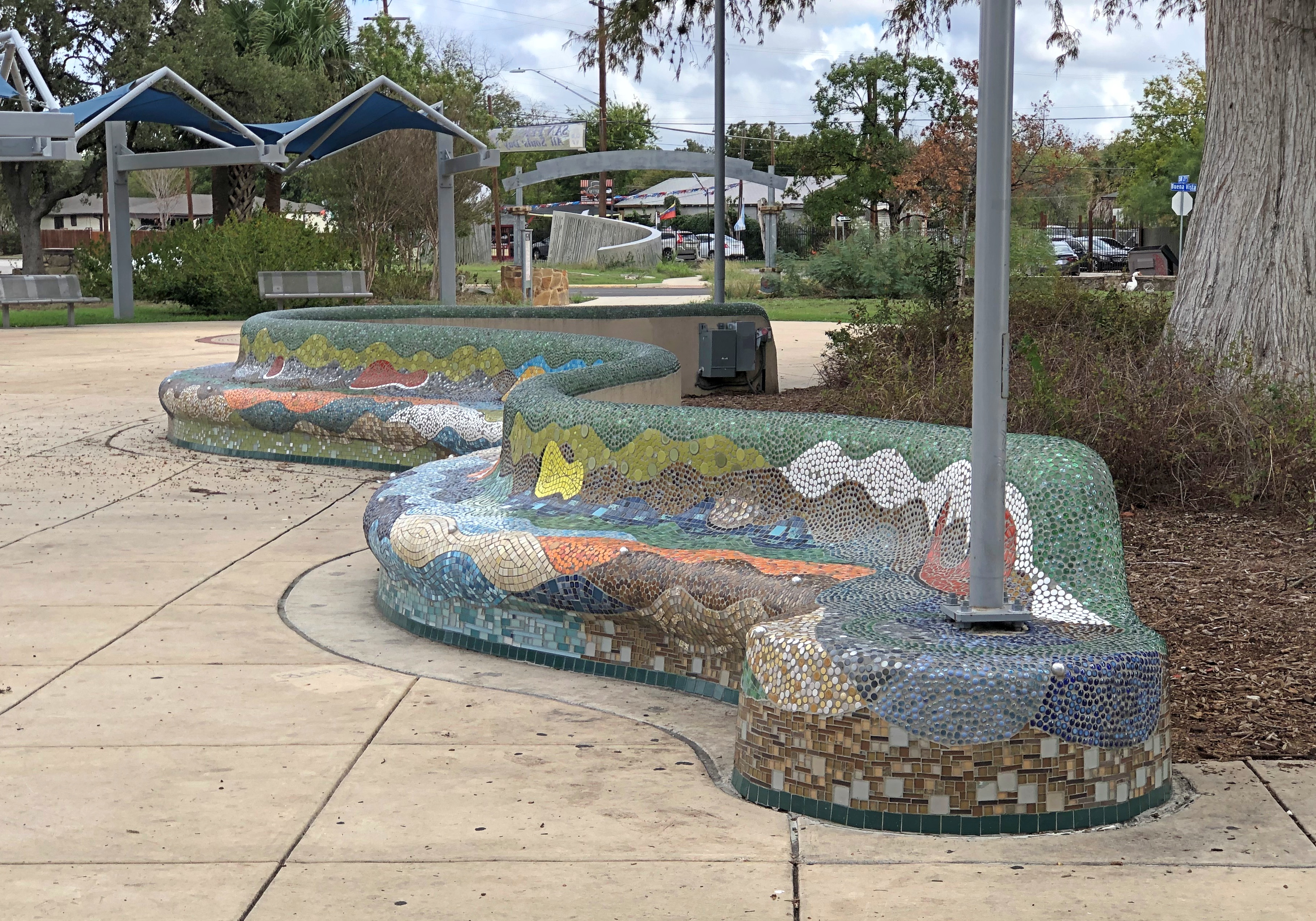
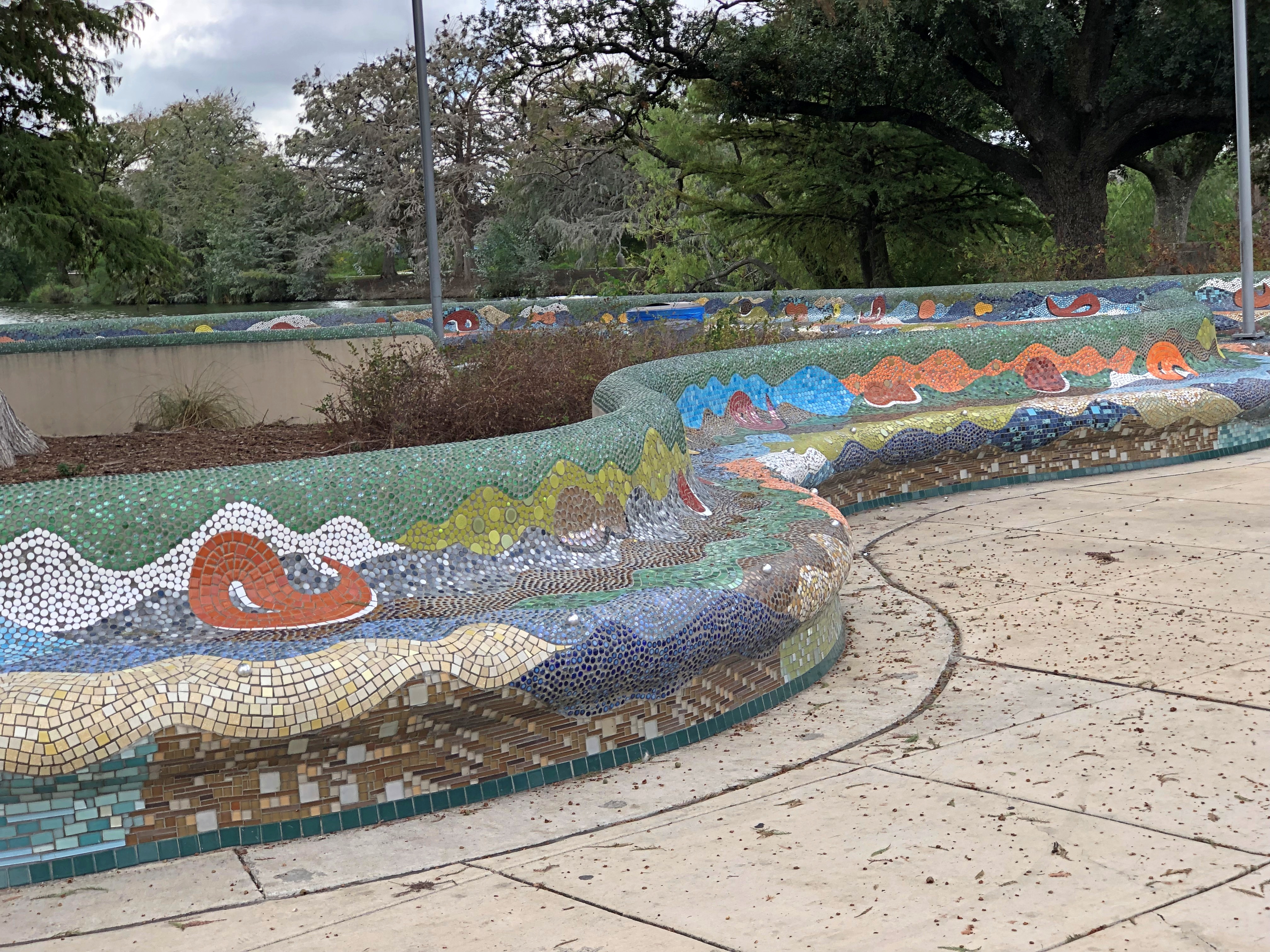
No human crowds, that is. Birds were another matter. An astonishing number of birds occupied a handful of the trees in the park, ca-ca-ca-ca-ing with a resounding volume, especially on a small island I saw later is called Bird Island. Thinking on it, their Hitchcockian vibe might keep some people away. A lot of people.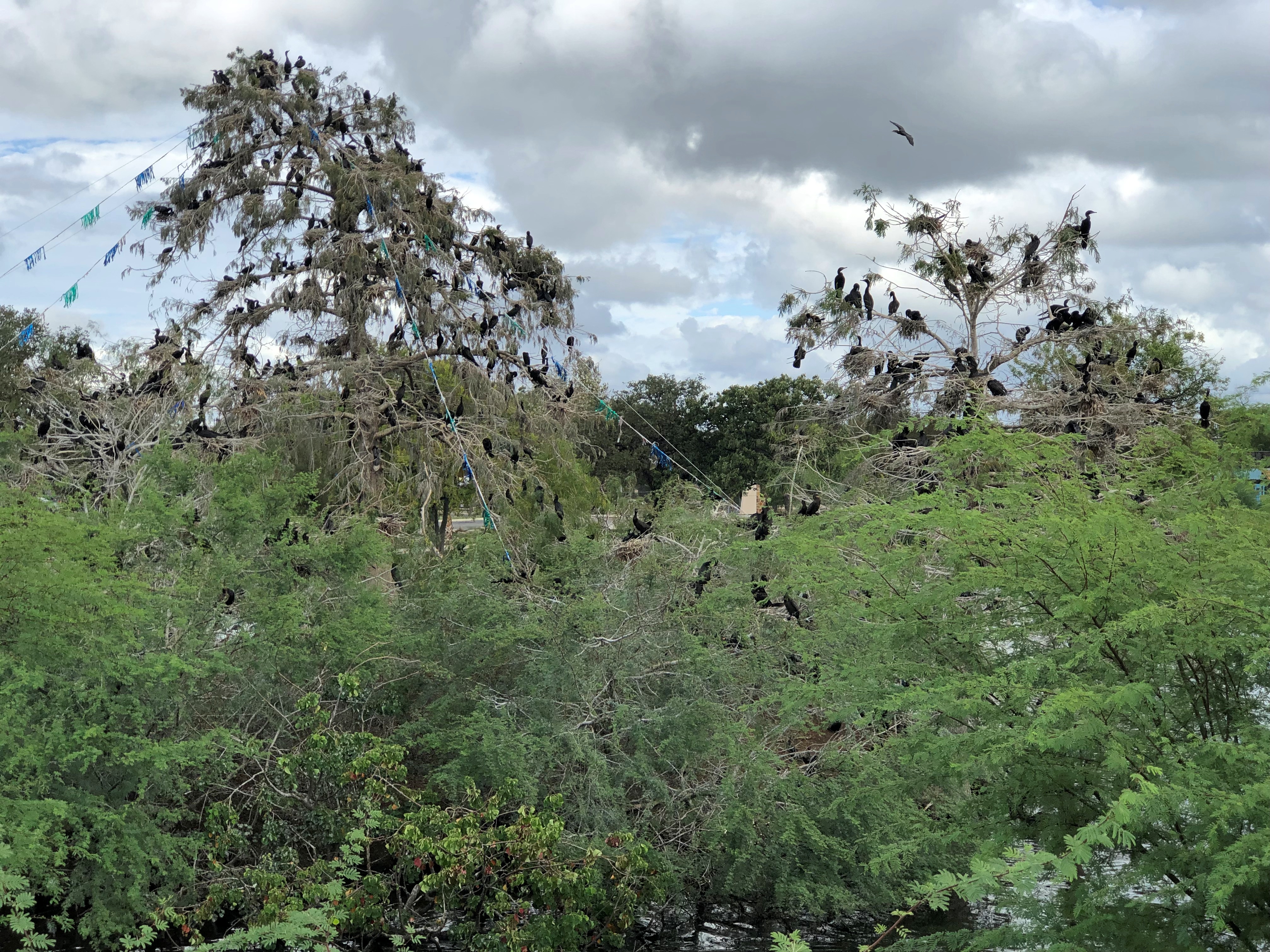
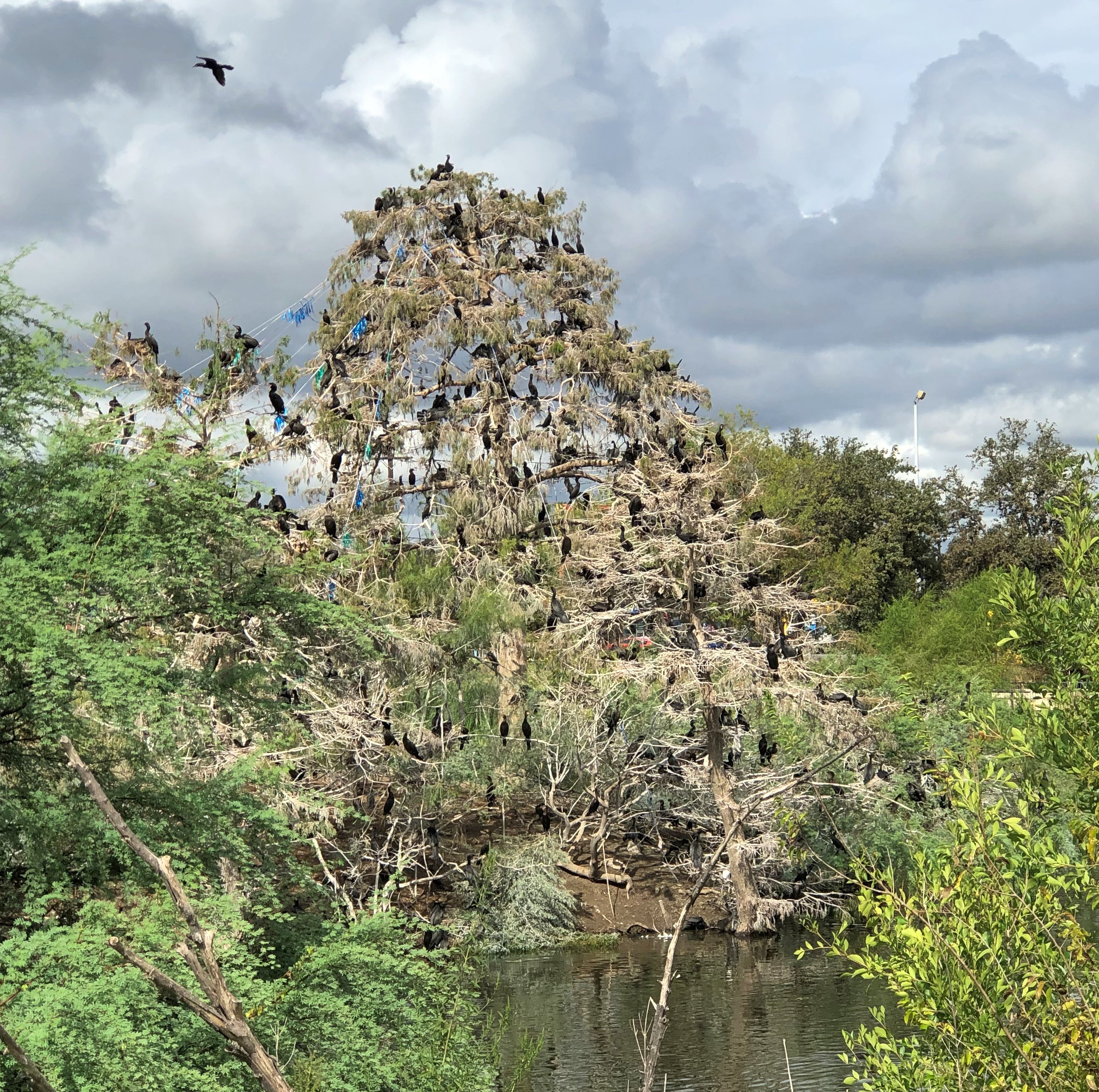
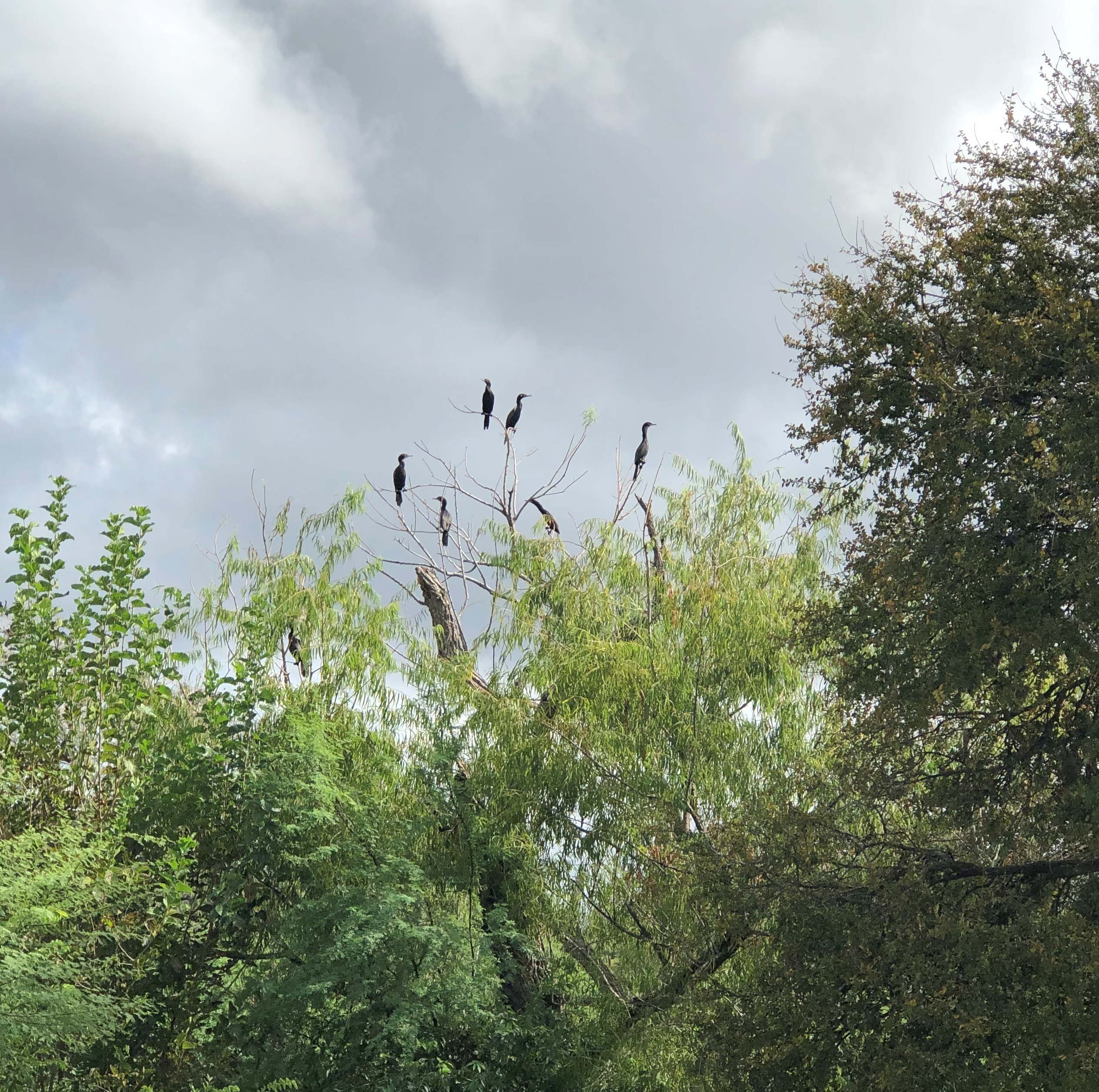
Birds looking something like herons with completely black plumage. I couldn’t place them, but my bird knowledge is pretty meager. Crows? They look leaner of build than crows. But what do I really know about crows?
I do know enough not to walk under them. A few of the bird-occupied trees were along the path of my walk, so I took minor detours to avoid any direct bombardment. I passed through the park without being the target of any droppings.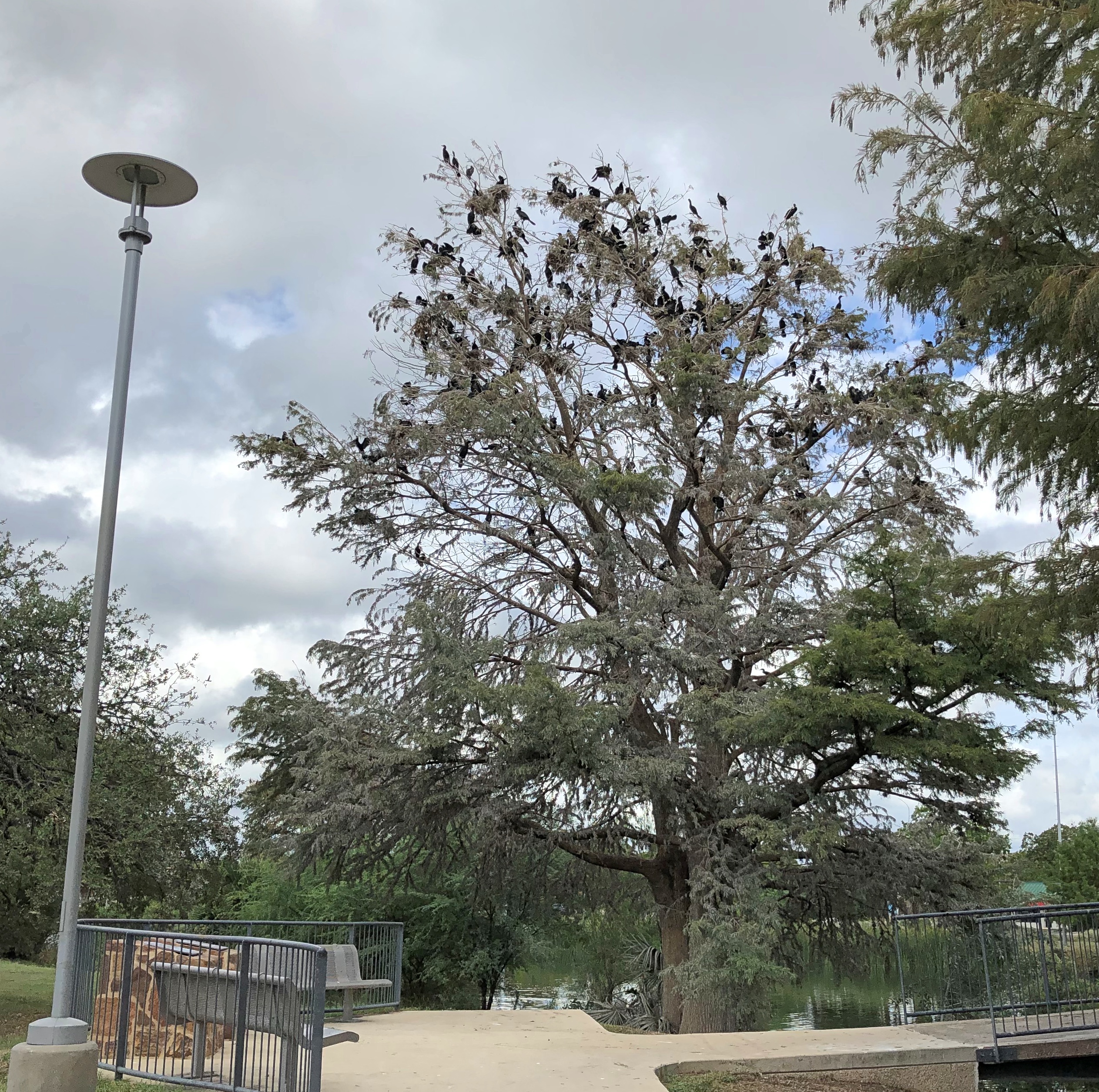
I thought of a Red Skelton TV sketch featuring his characters, seagulls Gertrude and Heathcliff (I had to look the names up, but not that fact that he did those characters). One of the birds noted that the beach below was very crowded. The other responded, “There’s no sport in that.” Odd what sticks with you after more than 50 years.
Chilly nights, warm days. Such are conditions here in Illinois not long before the fall equinox. The trees are still holding on to their leaves, including our quaking aspen.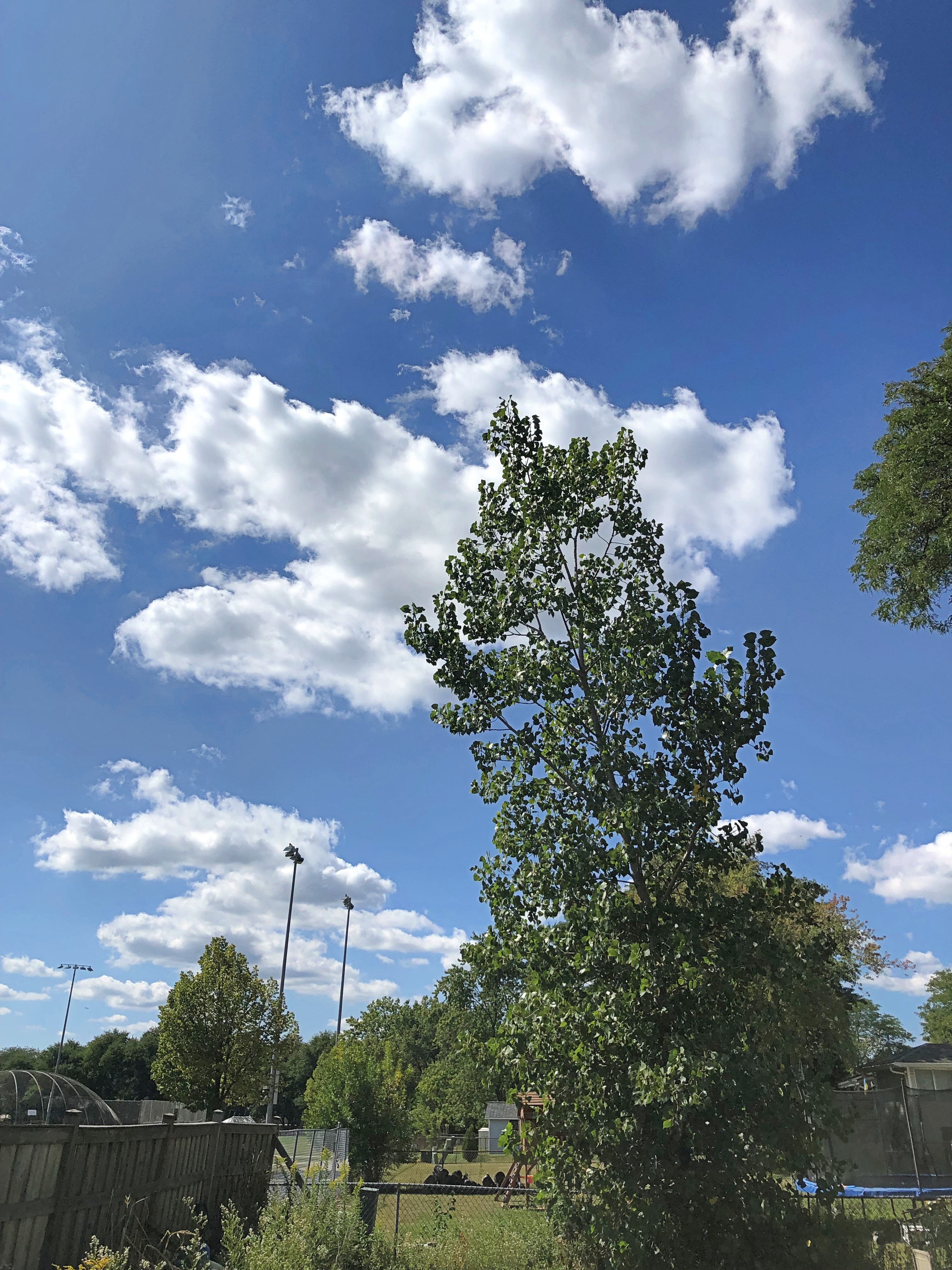
Goldenrod, seen here in the back 40 of my yard – that is, the back 40 square feet or so, and how is it farmers had back 40s? Something to do with a quarter of a quarter section, which would be 40 acres, though I expect the metaphorical sense long ago superseded the literal one.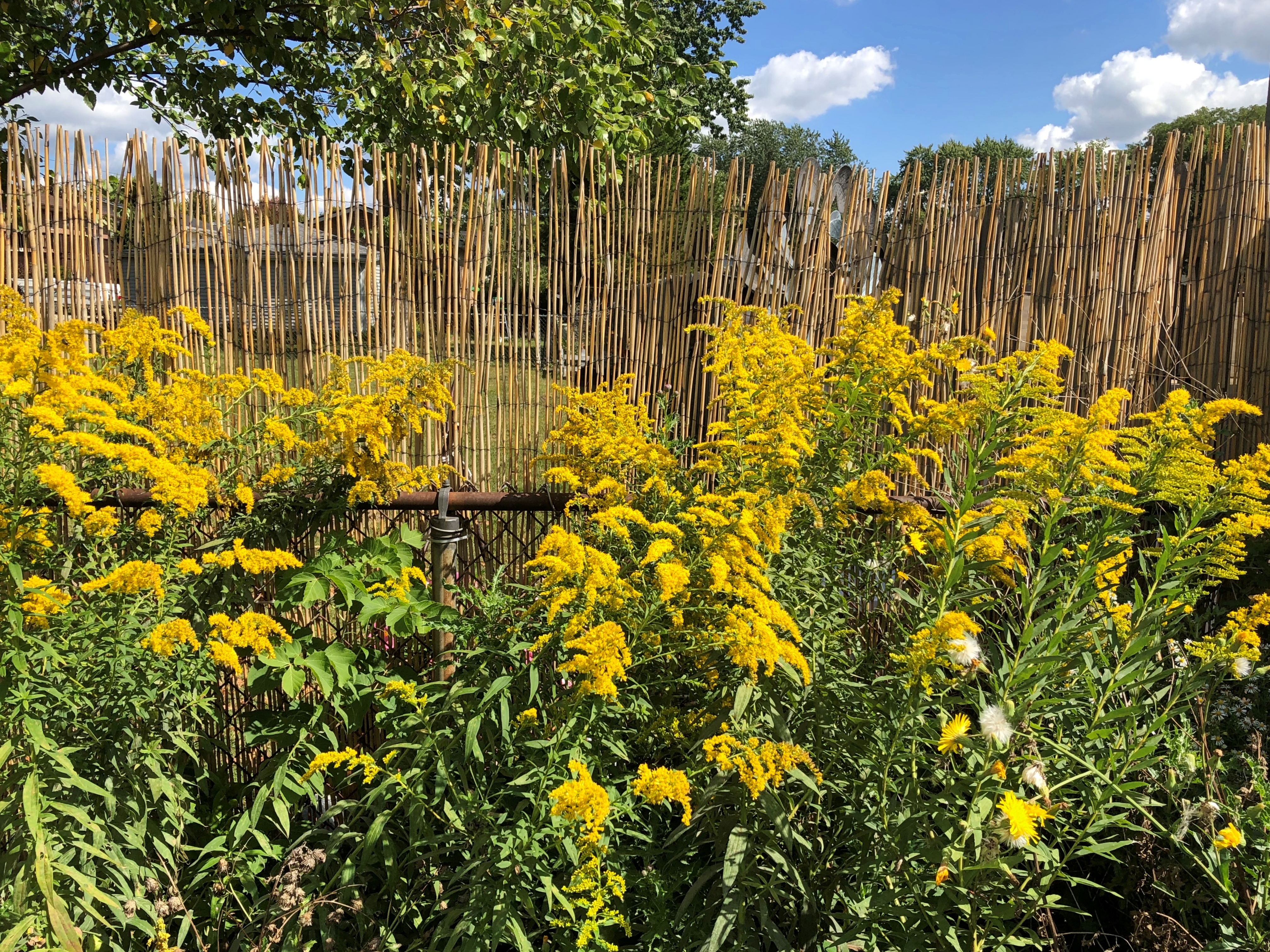
Out on a northwest suburban street.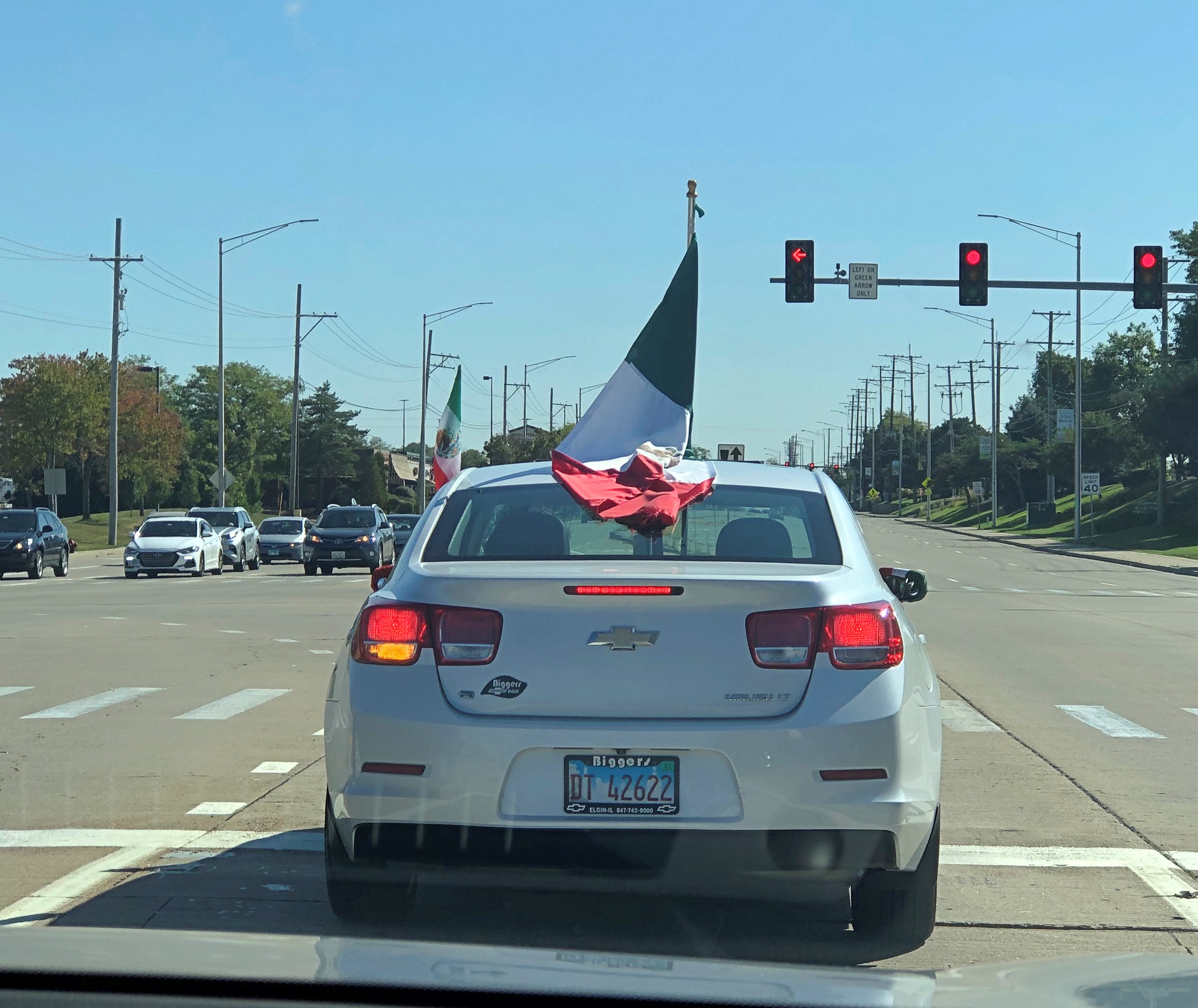
It isn’t until Saturday, but some local motorists have been ready for Mexican Independence Day since last weekend.
When I visited the Wisconsin State Capitol in Madison in late July, I didn’t see this building.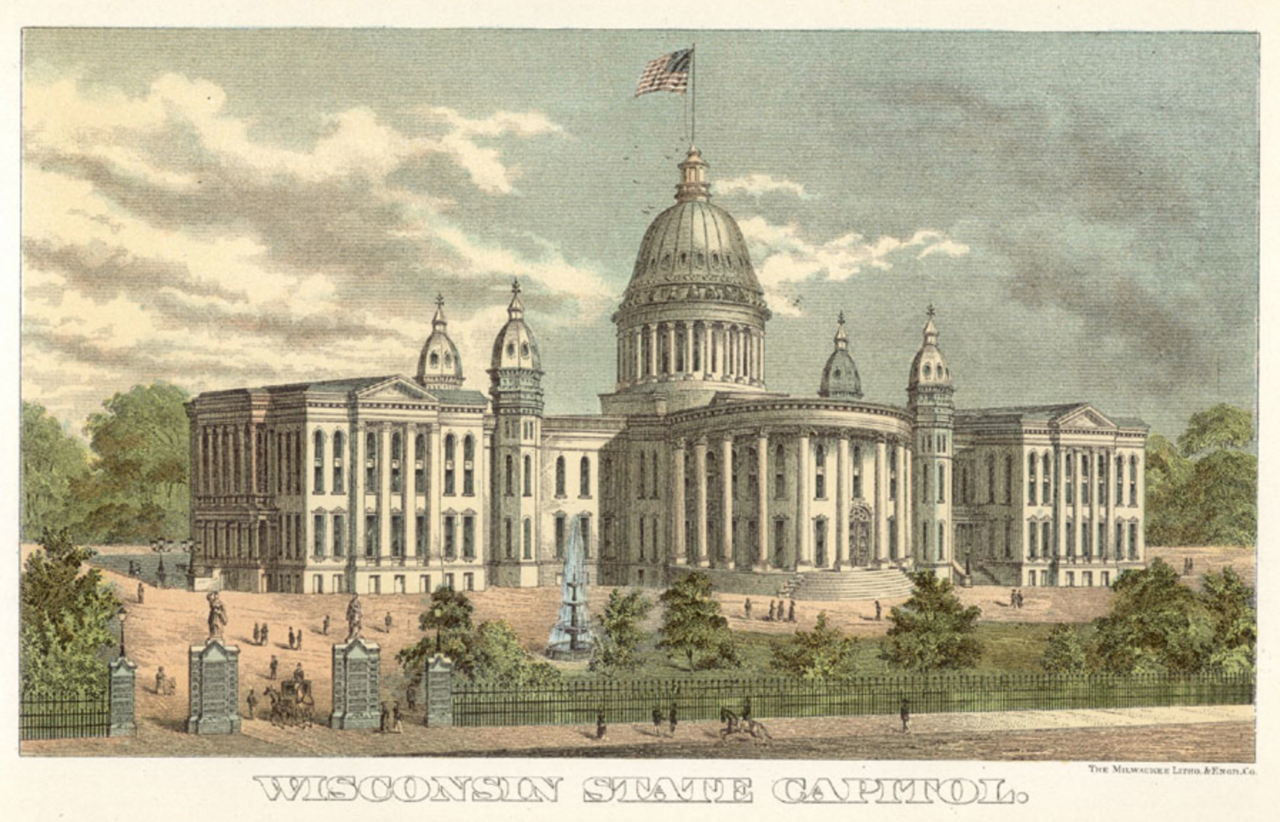
Rather, I saw this one, late in the afternoon of the first day of my drive.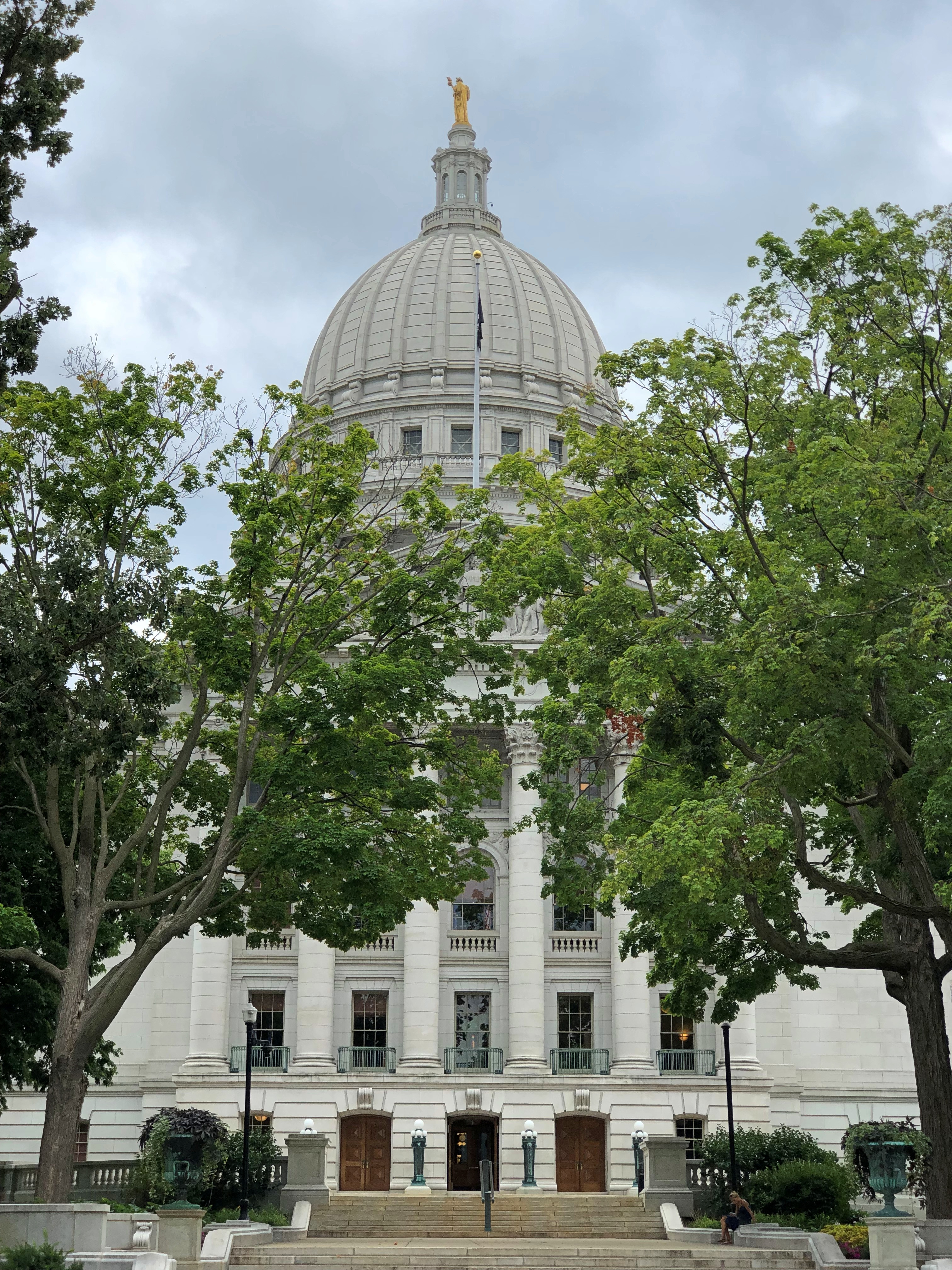
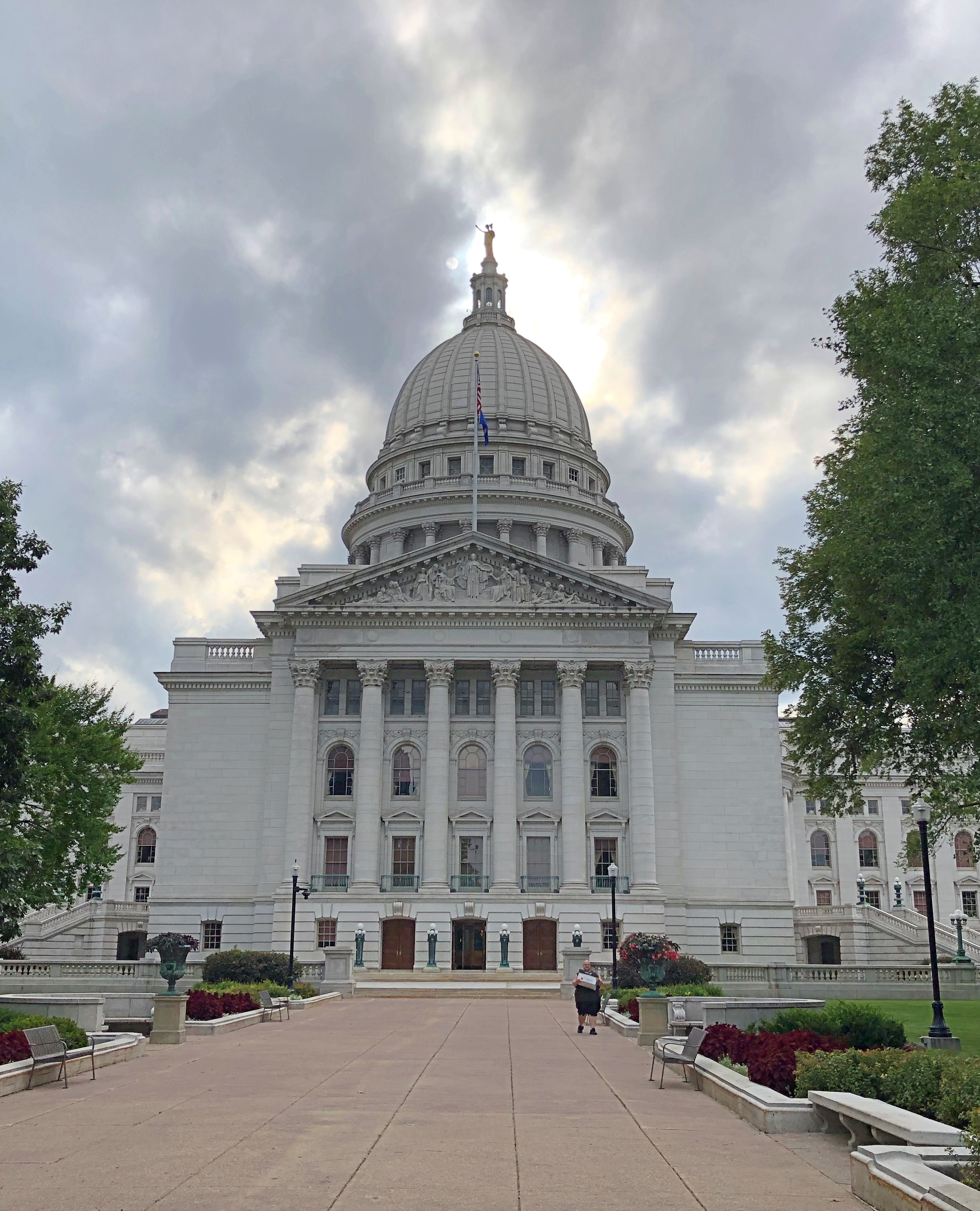
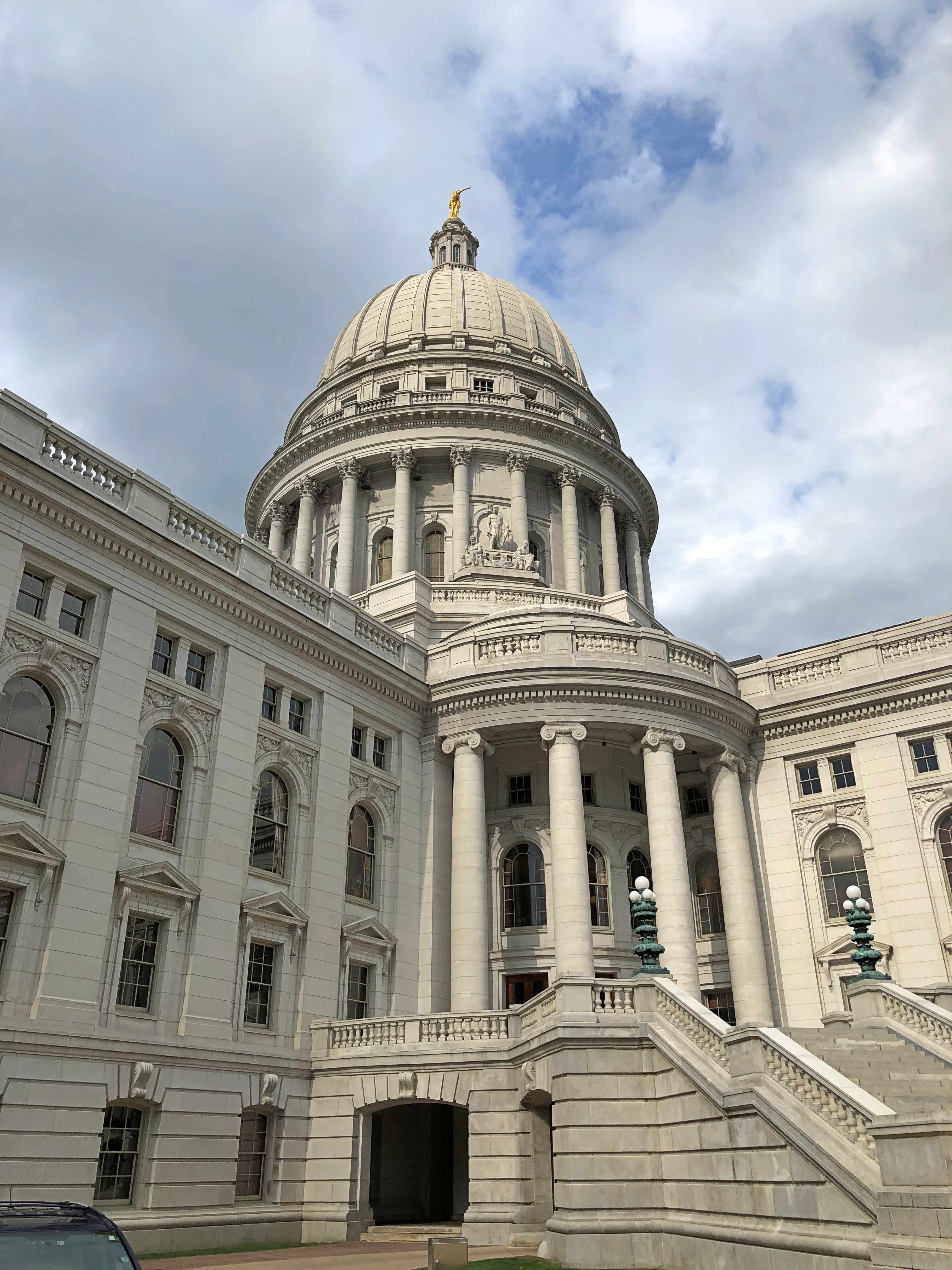
The beaux-arts capitol is actually Wisconsin’s fourth, replacing the one pictured in the postcard, which burned down in early 1904. The state tasked George B. Post to design a new structure, which took a while to complete, finally being finished in 1917. Post was known for late 19th-century mansions – paid for by robber barons who wanted to show off – but he also did other elaborate buildings, such as the New York Stock Exchange.
The gilded bronze on the top of the dome is yet another Daniel Chester French work, “Wisconsin.” French was a prolific fellow.
Like the Tiffany Bridge, this wasn’t my first visit to the capitol. That would have been sometime in the late 1980s. Wisconsin is, however, one of the few capitols, along with Texas and Illinois, that I’ve visited more than once.
So this visit didn’t change my vanity map of capitols, but I thought I’d update it anyway (green for interior visits, orange-pink for exteriors only, Hawaii gold because I don’t remember, but I might have seen it).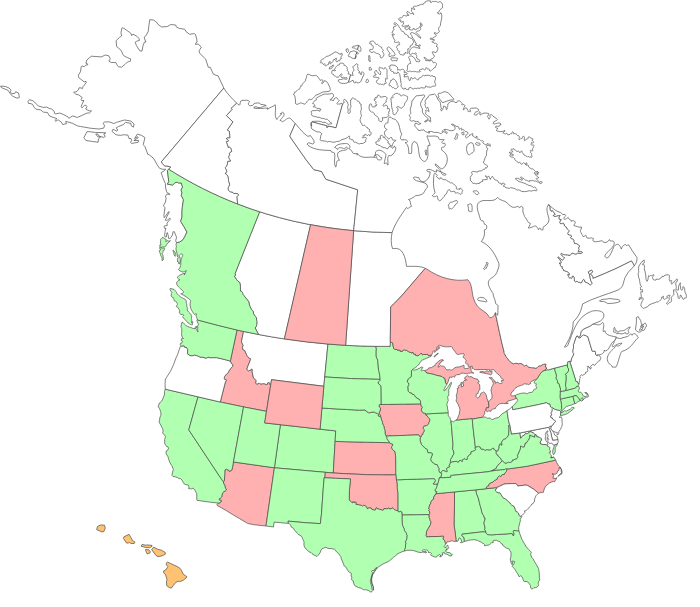
Lilly and I spent some time in the Wisconsin capitol during a December 2016 visit to Madison. It was cold that day, naturally, and visiting was a relief from the chilly air. This time the building interior was a relief because the day was hot and sticky. Besides, who doesn’t enjoy a view inside the dome?
The interior is as resplendent as the exterior. Badgers were in a few prominent places.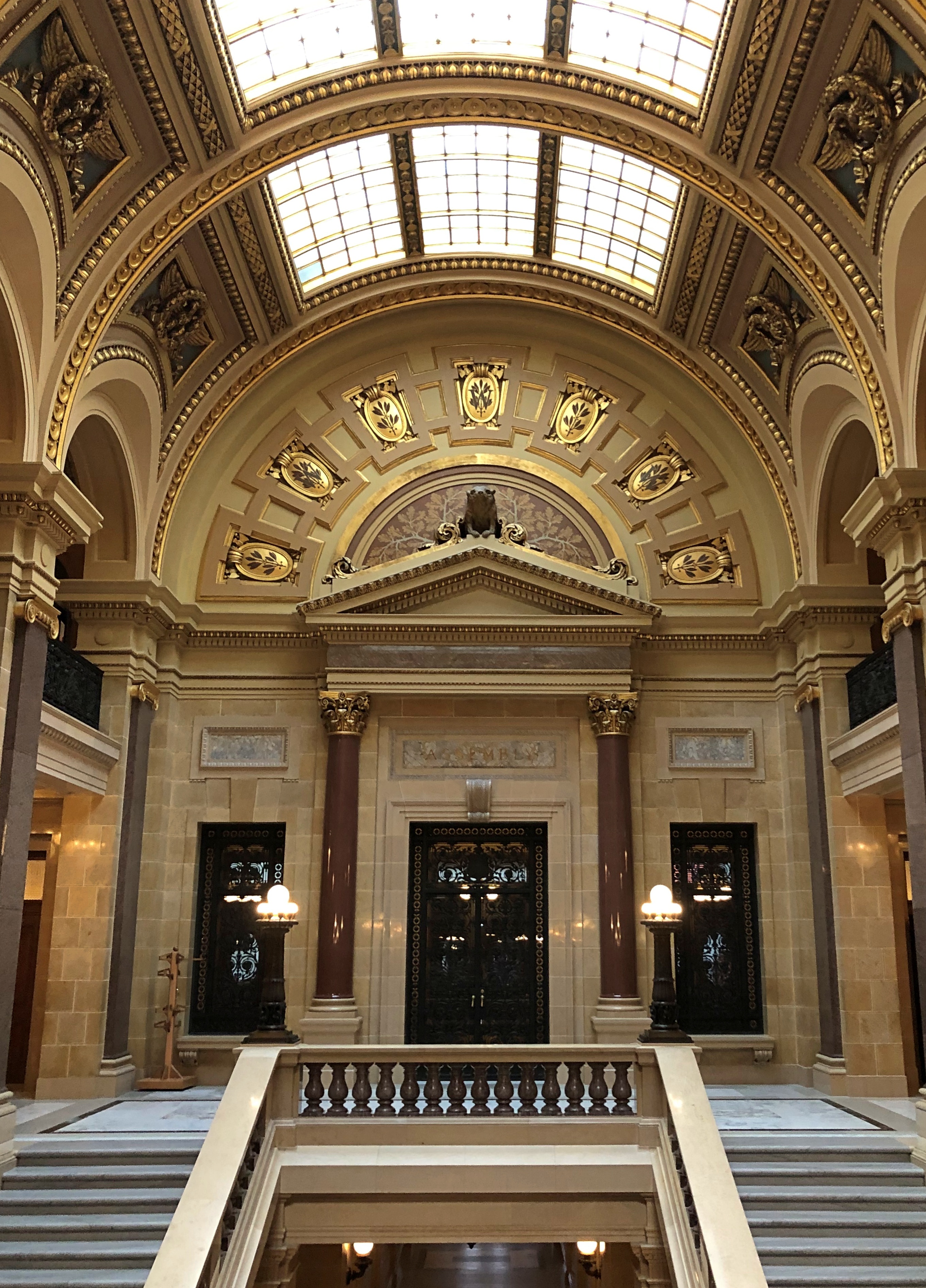
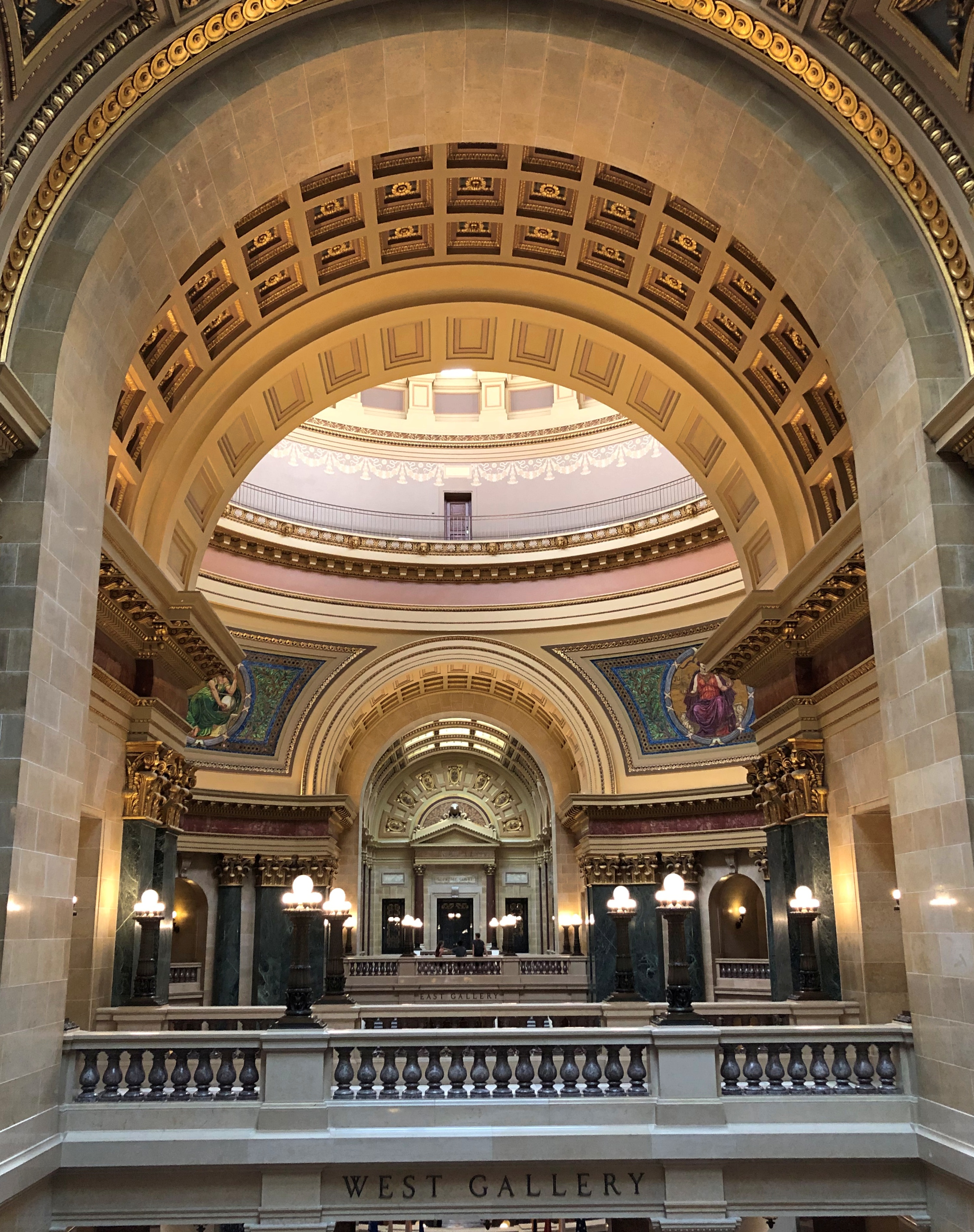
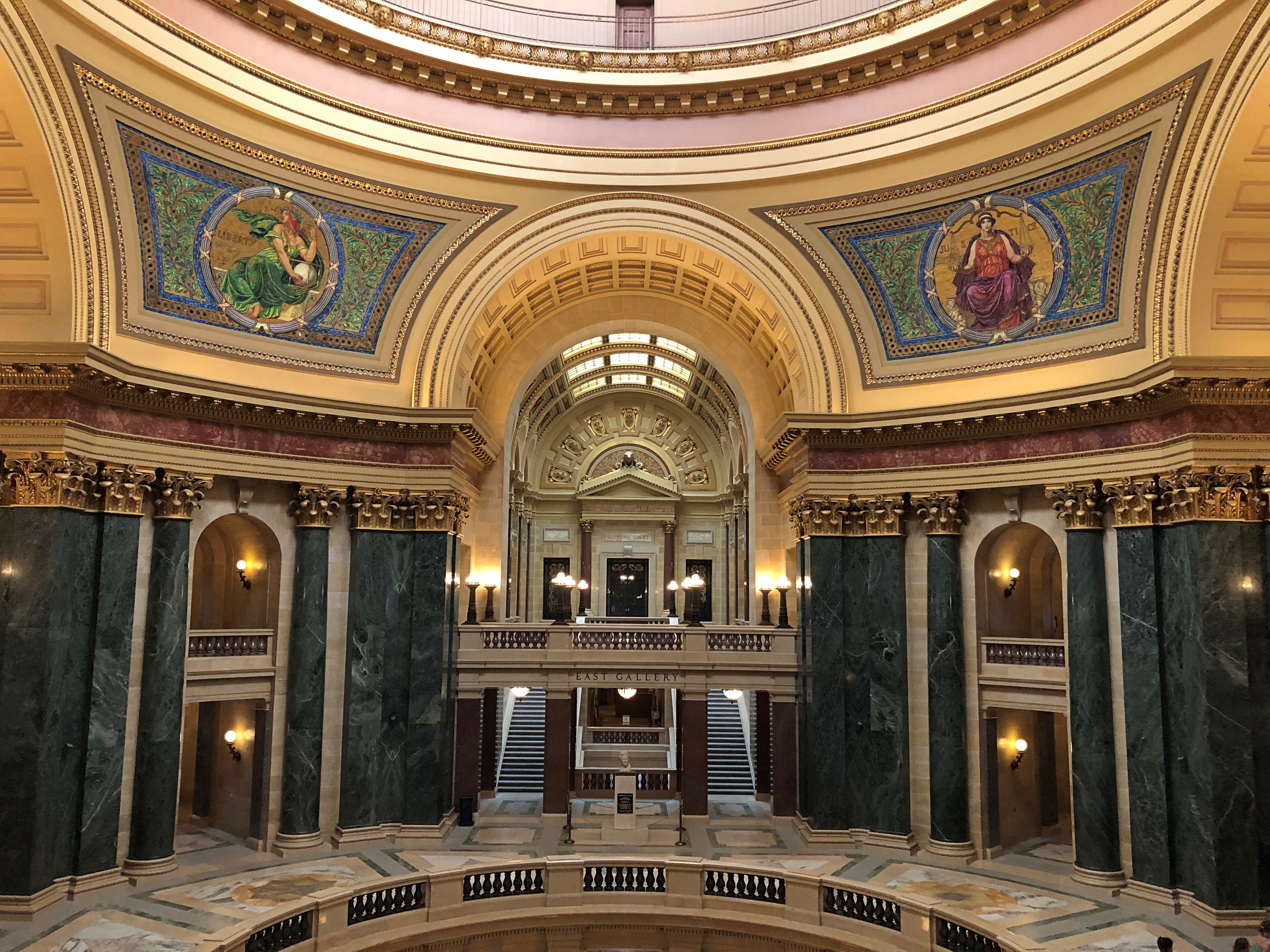
Those paintings are allegories. Liberty in this case, but also Justice, Government and Legislation, on the other three corners.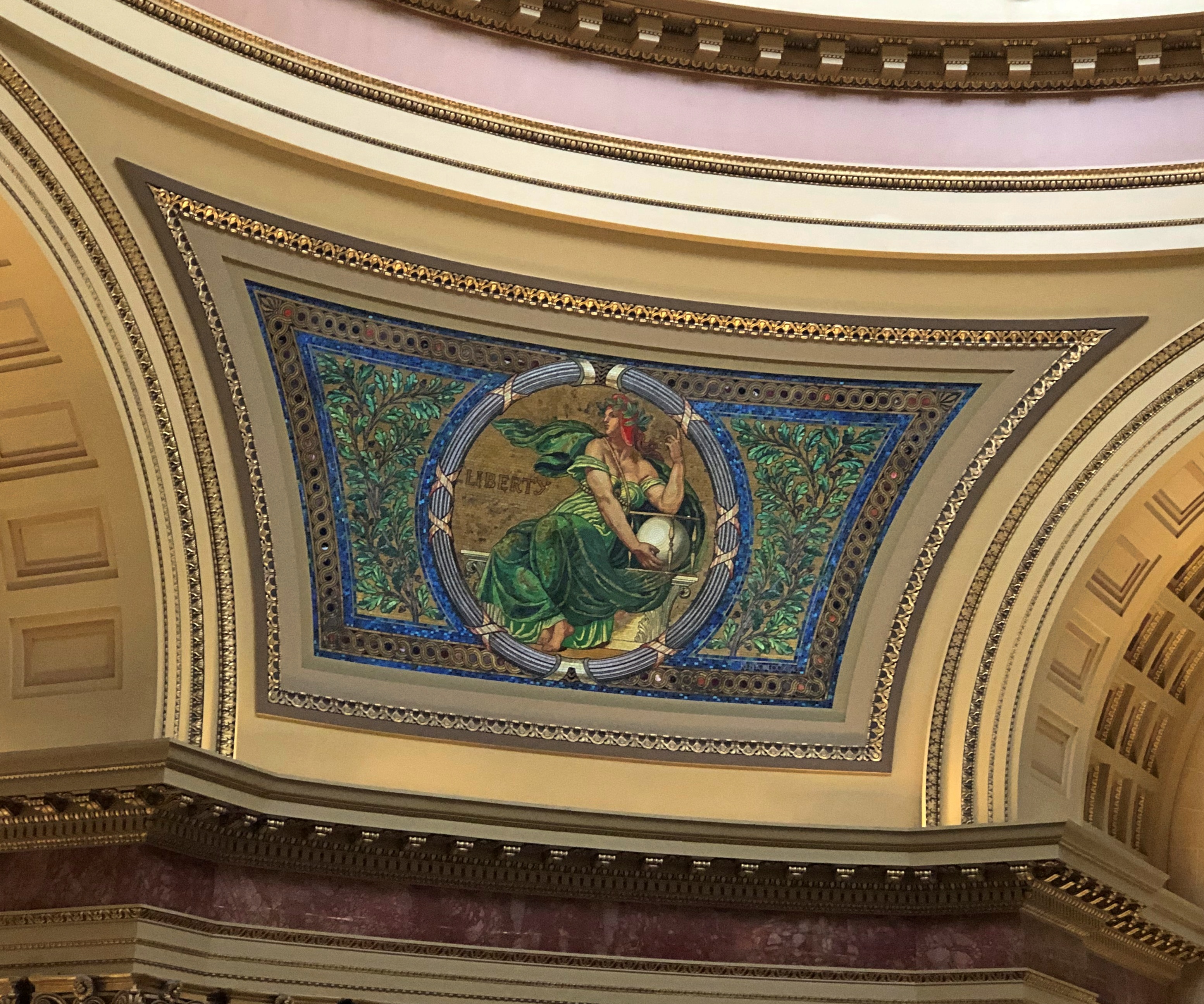
This capitol doesn’t feature a lot of statuary, unlike some, but there is a bust of Robert M. La Follette, no doubt considered a Wisconsinite among Wisconsinites.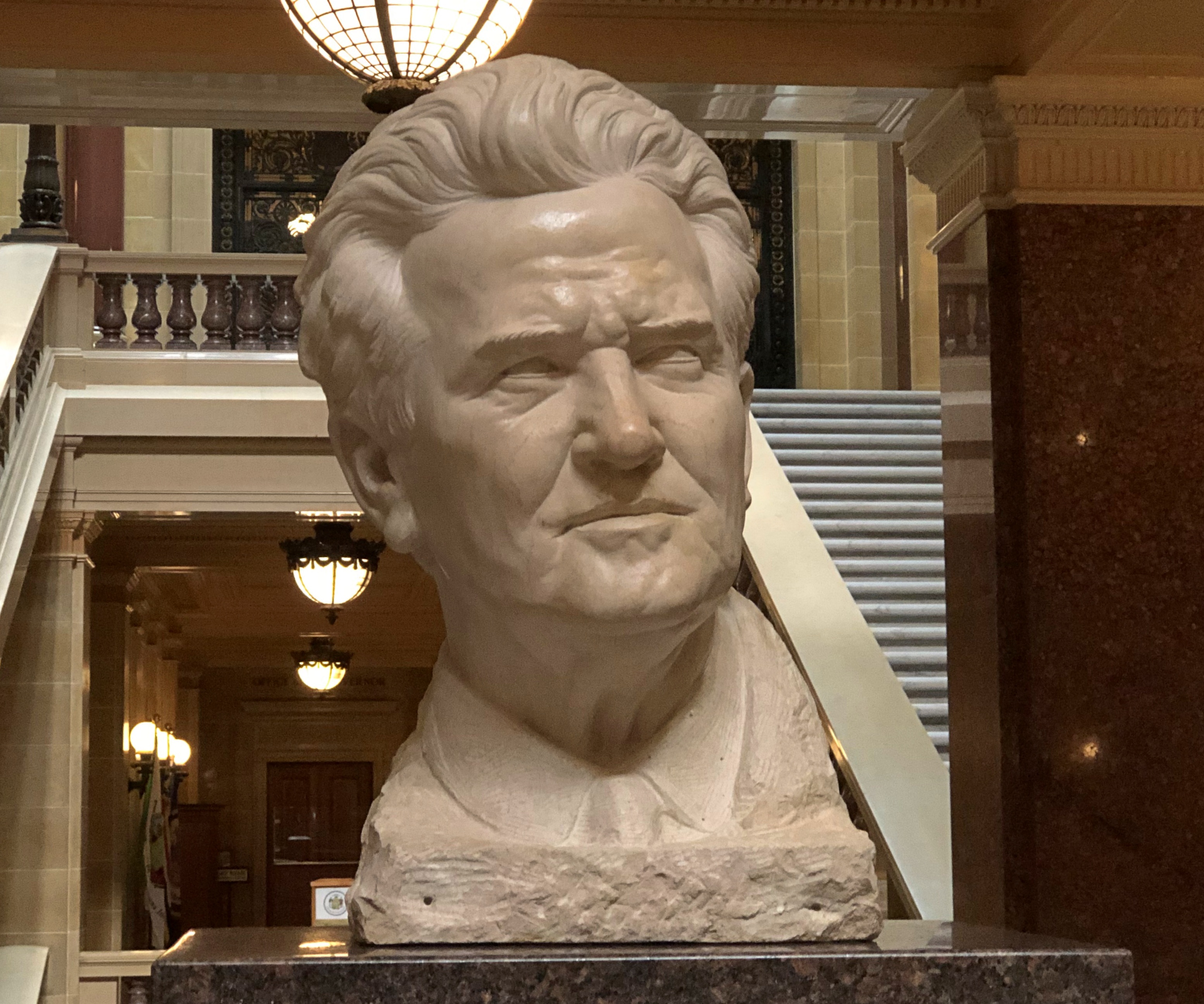
I like these pics of him, lifted from Wikipedia. Fighting Bob all right.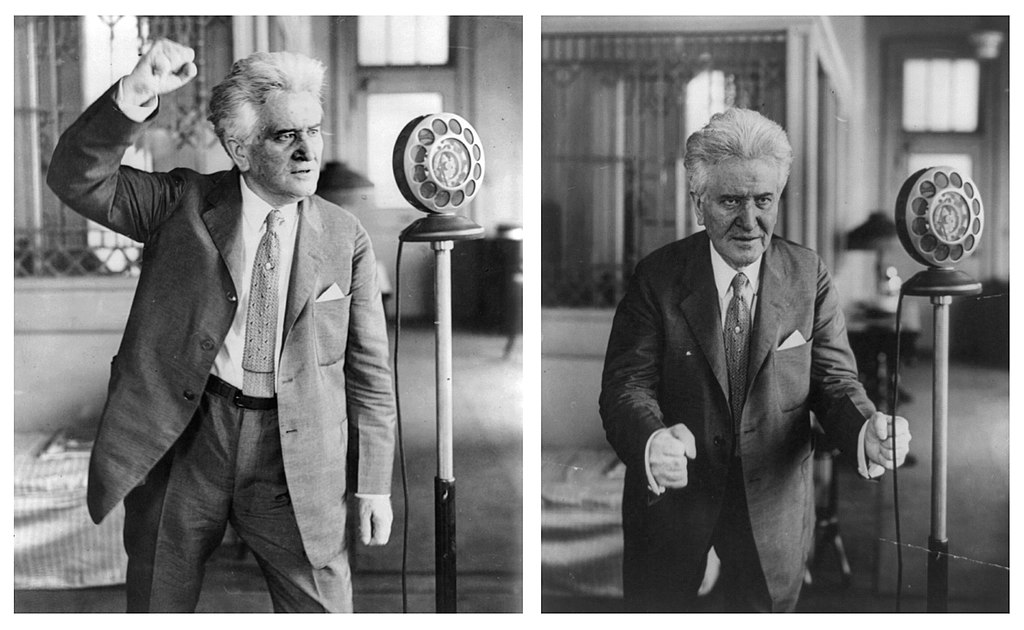
The Assembly chamber was closed, but I could still see Old Abe through the window. He looks down on the legislators, presumably reminding them to do their duty.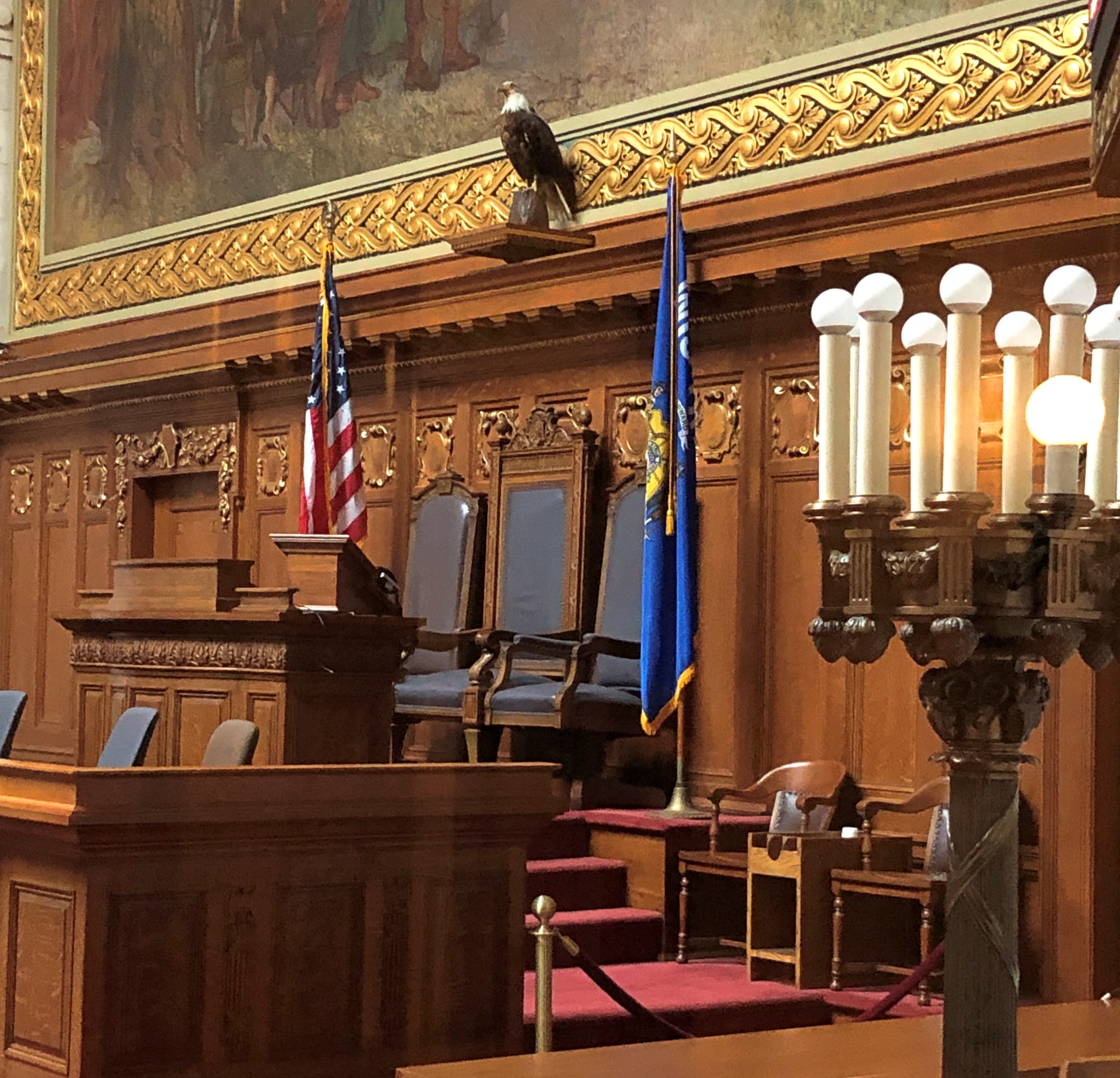
I’ve seen Old Abe depicted before: on a tractor and a memorial at Vicksburg. Another Wisconsinite among Wisconsinites: He was the mascot of the 8th Wisconsin Volunteer Infantry Regiment from 1861 to ’64.
“The regiment procured a large, shield-shaped mount and perch to carry the eagle,” says Atlas Obscura. “Old Abe witnessed all of the regiment’s battles. He was taken into combat with the regimental colors… Old Abe participated in 37 battles and skirmishes. The regiment mustered out of service in 1864. On September 26, 1864, his army comrades returned Old Abe to Wisconsin and gifted him to the people of the state.”
When the bird died in 1881, he was stuffed and put on display at the capitol – the one that burned down in 1904, reducing Old Abe to ashes. The one you can see now is another stuffed eagle, doing homage to the mascot. I didn’t remember seeing him on previous visits, but now I have. Huzzah for Old Abe.
I found out by chance on Saturday that Normal, Illinois, was holding its St. Patrick’s Day parade this year on that very Saturday, when I happened to be in town to pick up Ann for her spring break ride back home.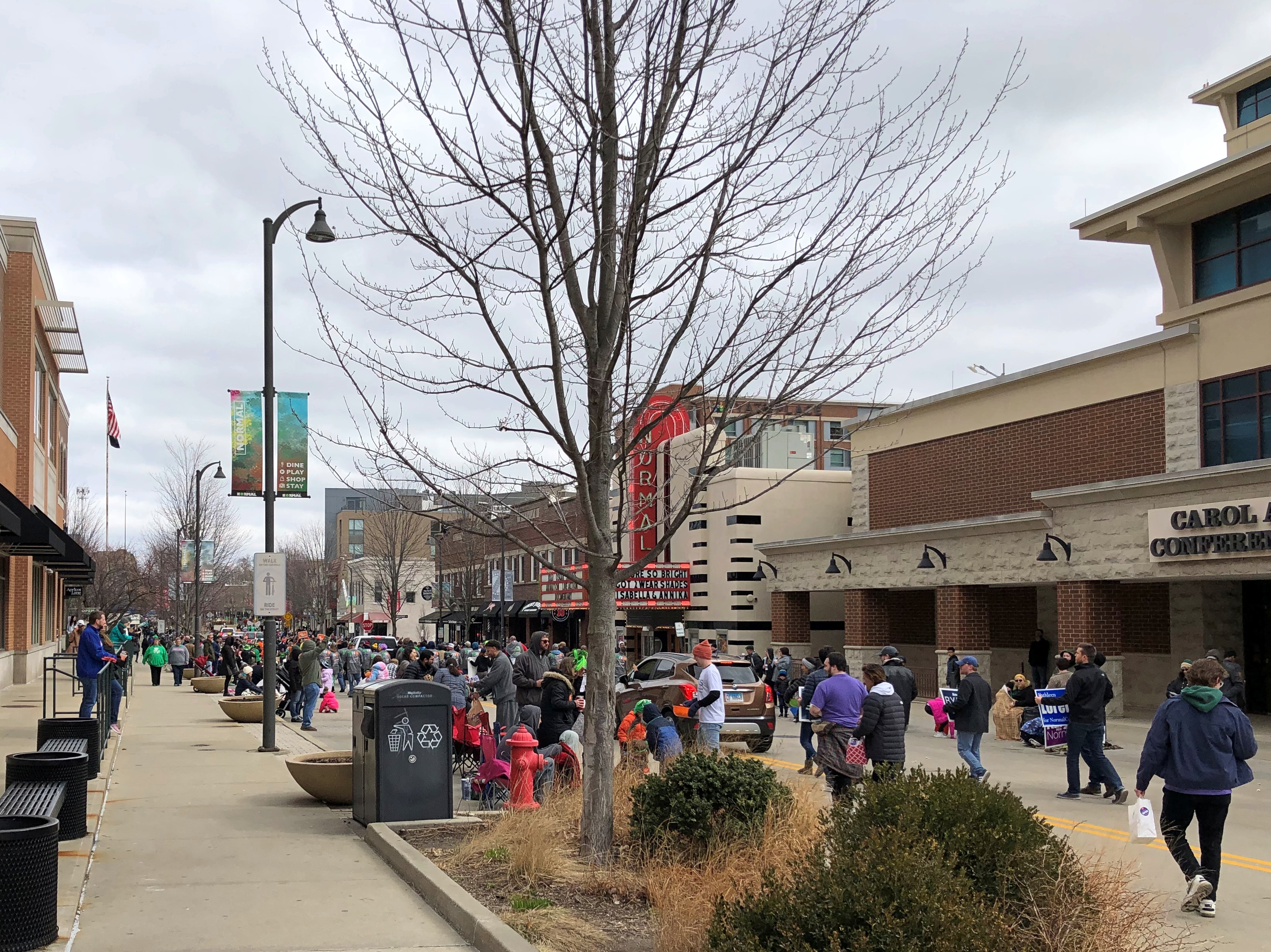
Compare with the downtown Chicago St. Patrick’s Day parade, a few years pre-pandemic.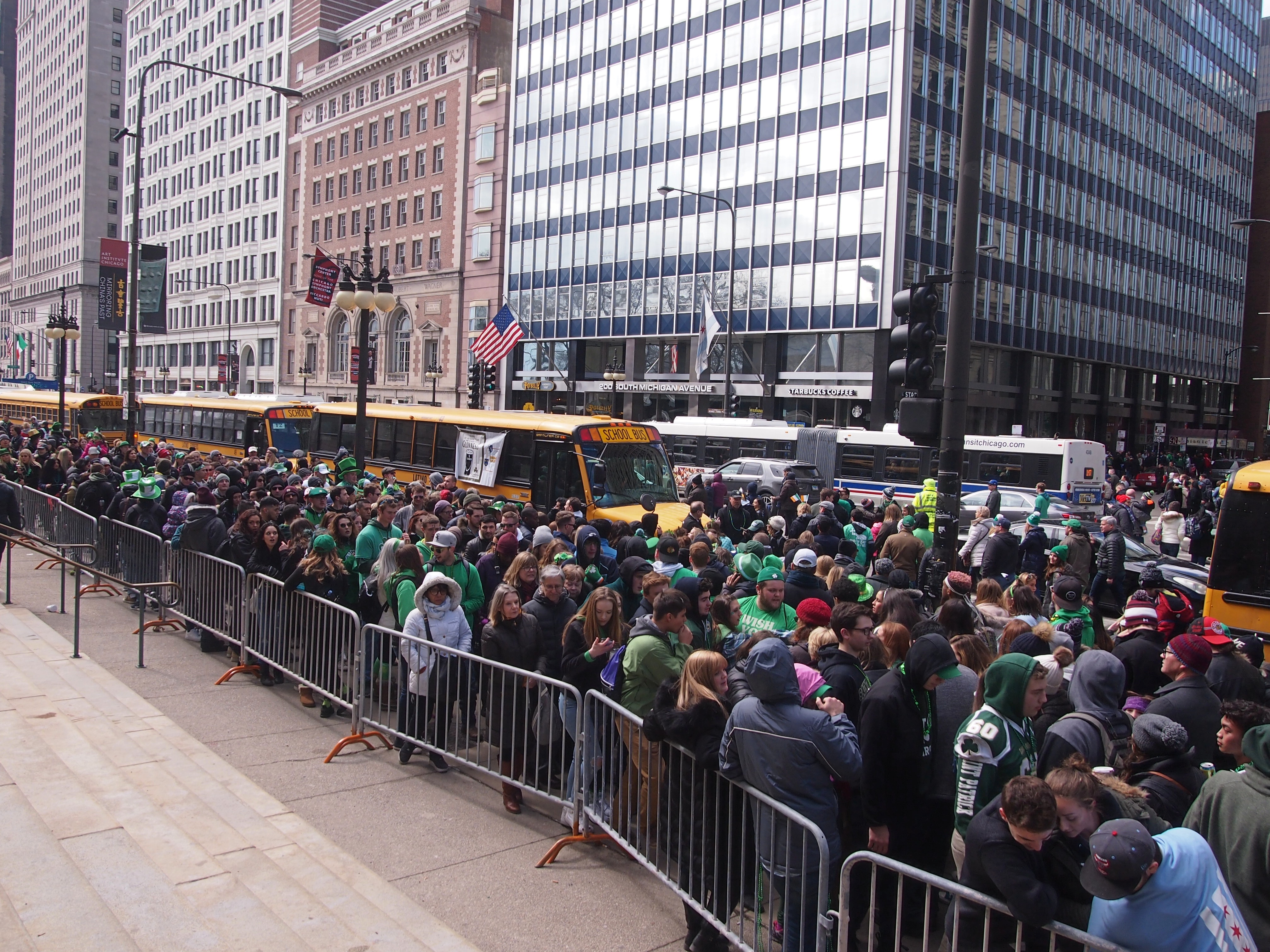
Not that the pandemic made the difference. Many more million people in the area to draw from made the difference.
Still, the spirit of celebrating Ireland is there, and maybe the urge to feel alcoholic mirth as the day unfolds. Stereotype has these to be one and the same, but I won’t sully the good name of Ireland by suggesting such a thing, though Eire did come in at number seven highest in liters of alcohol per capita consumed among the nations of the Earth in 2016 and is forecast to be number four in 2025. Erin go Bragh.
Though it was a little cold, I enjoyed the more mellow Normal Irish parade. A few people standing around, a few more were in the parade, mostly in vehicles representing local organizations and businesses, and that was about it.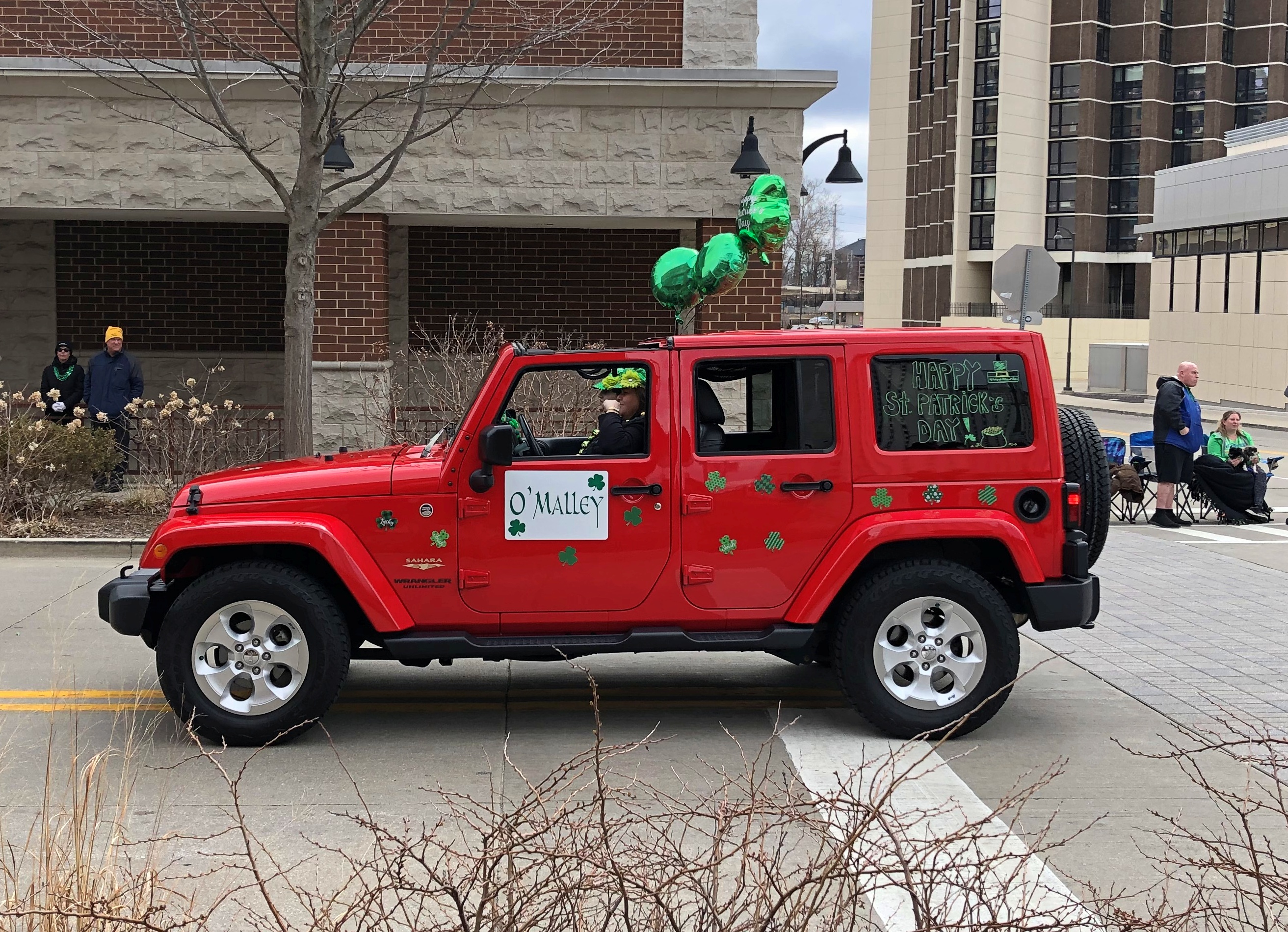
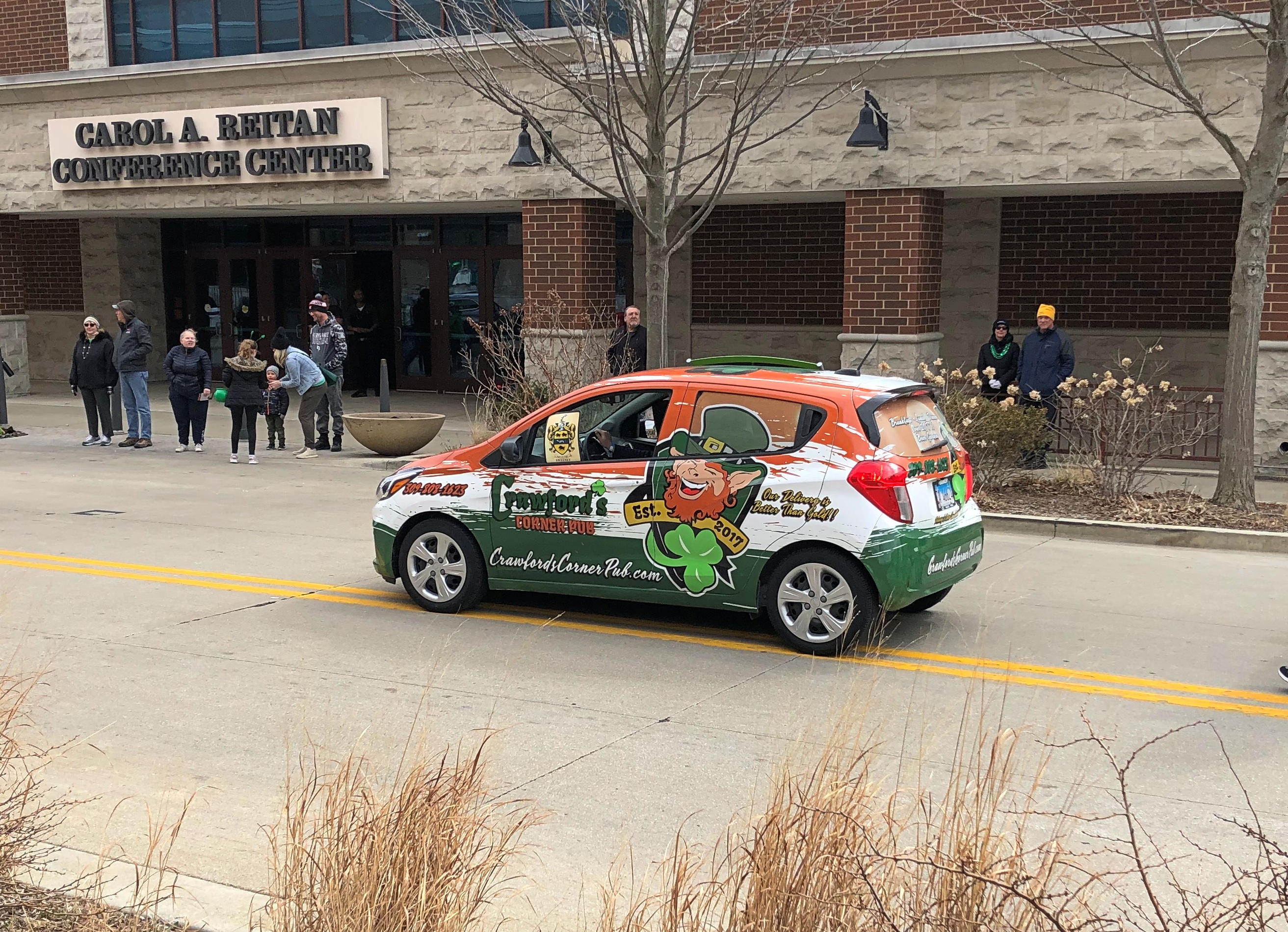
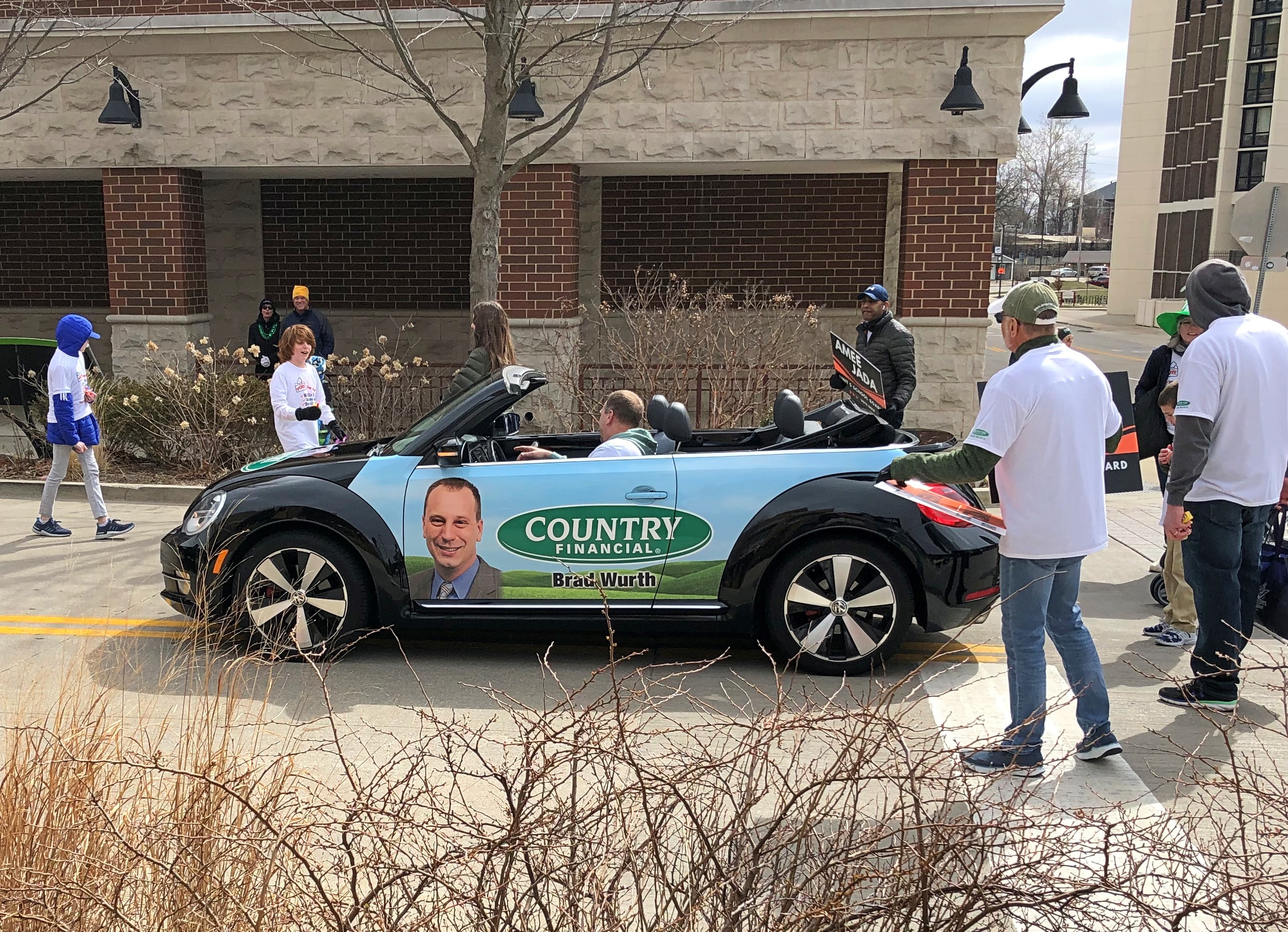
No high school bands or collegiate floats. The parade could have used a few of each, but maybe the Illinois State University administration worried about the possibility of civil disorder.
A few parade-goers were out and about in costume.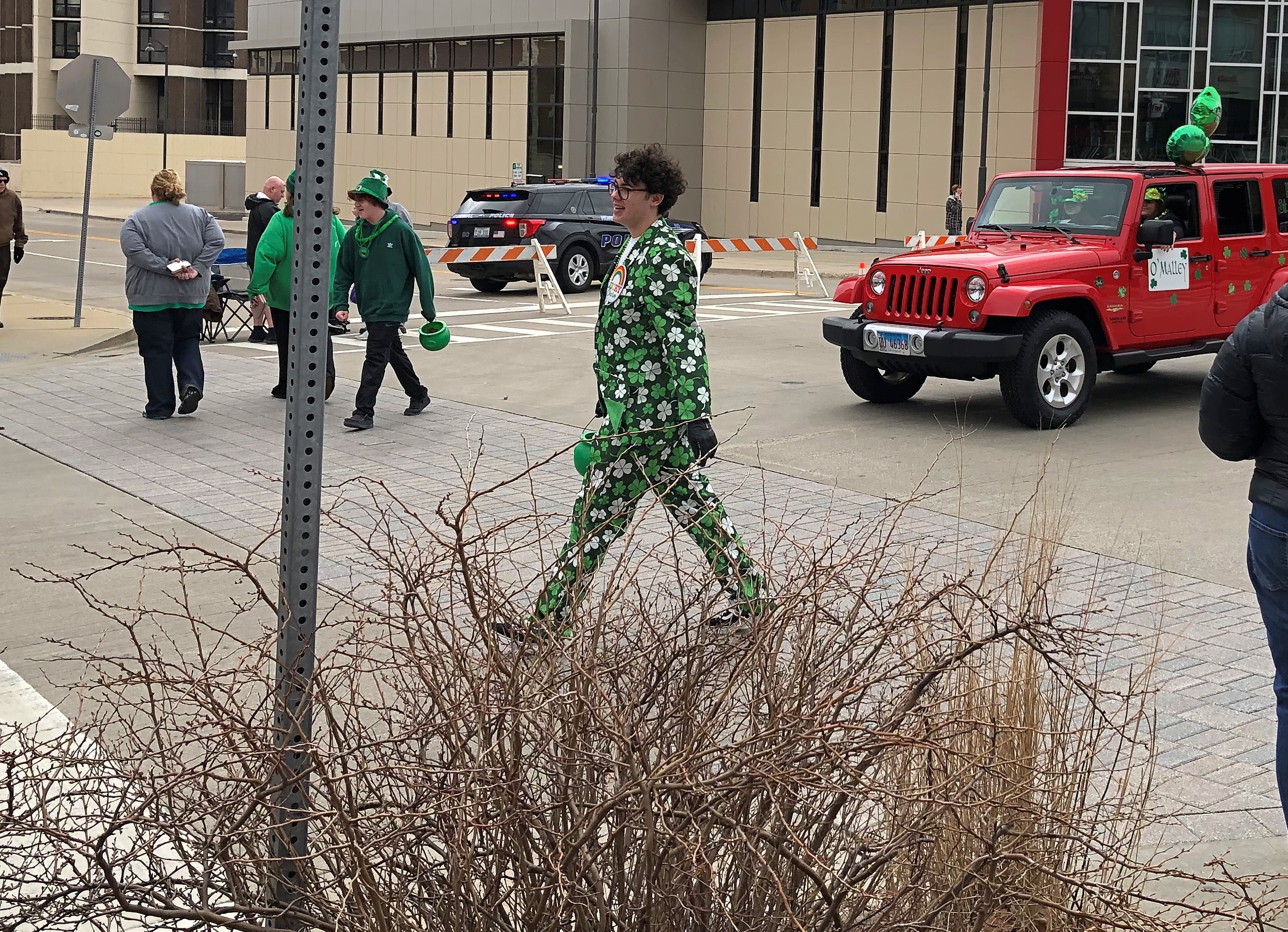
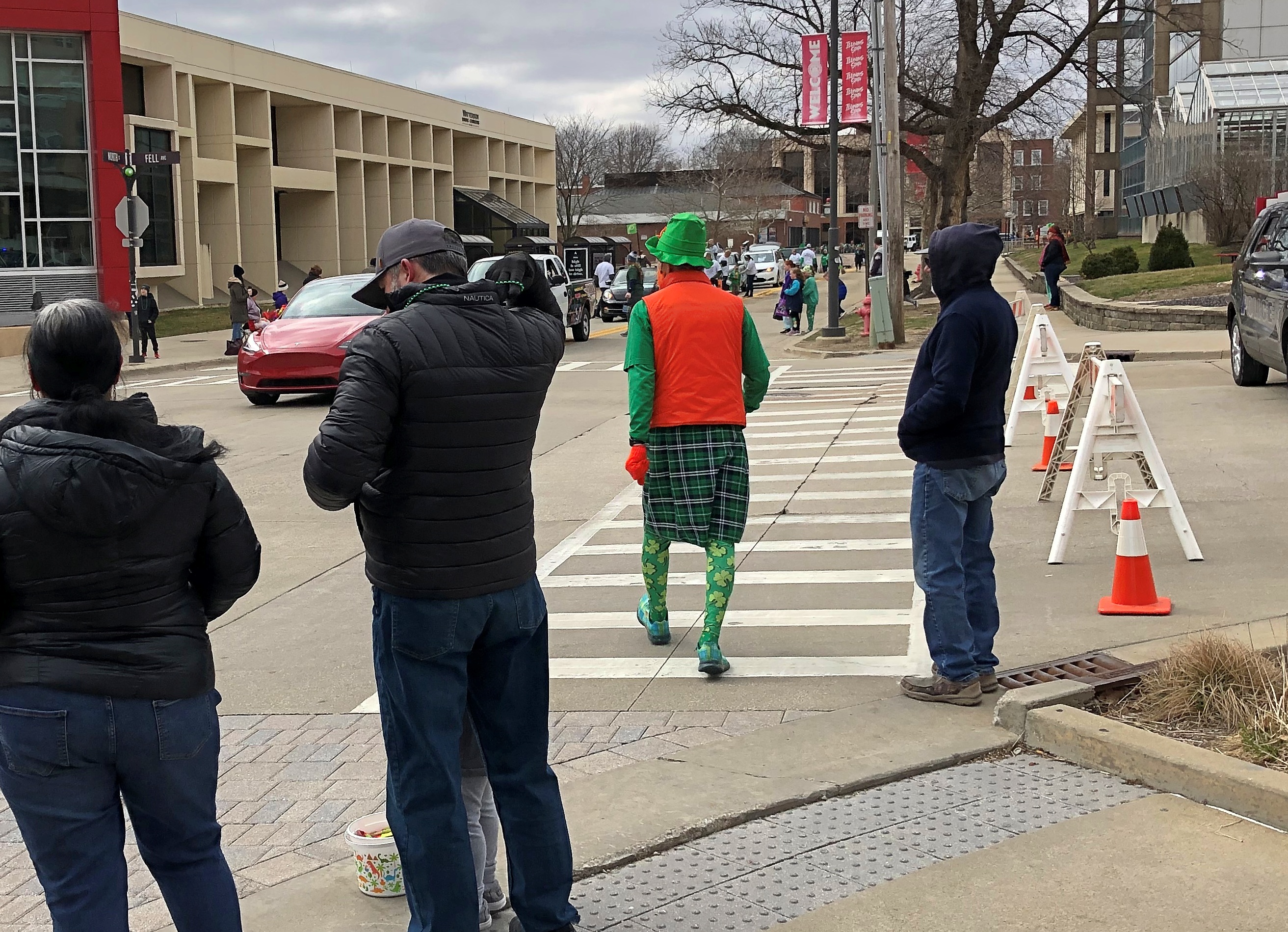
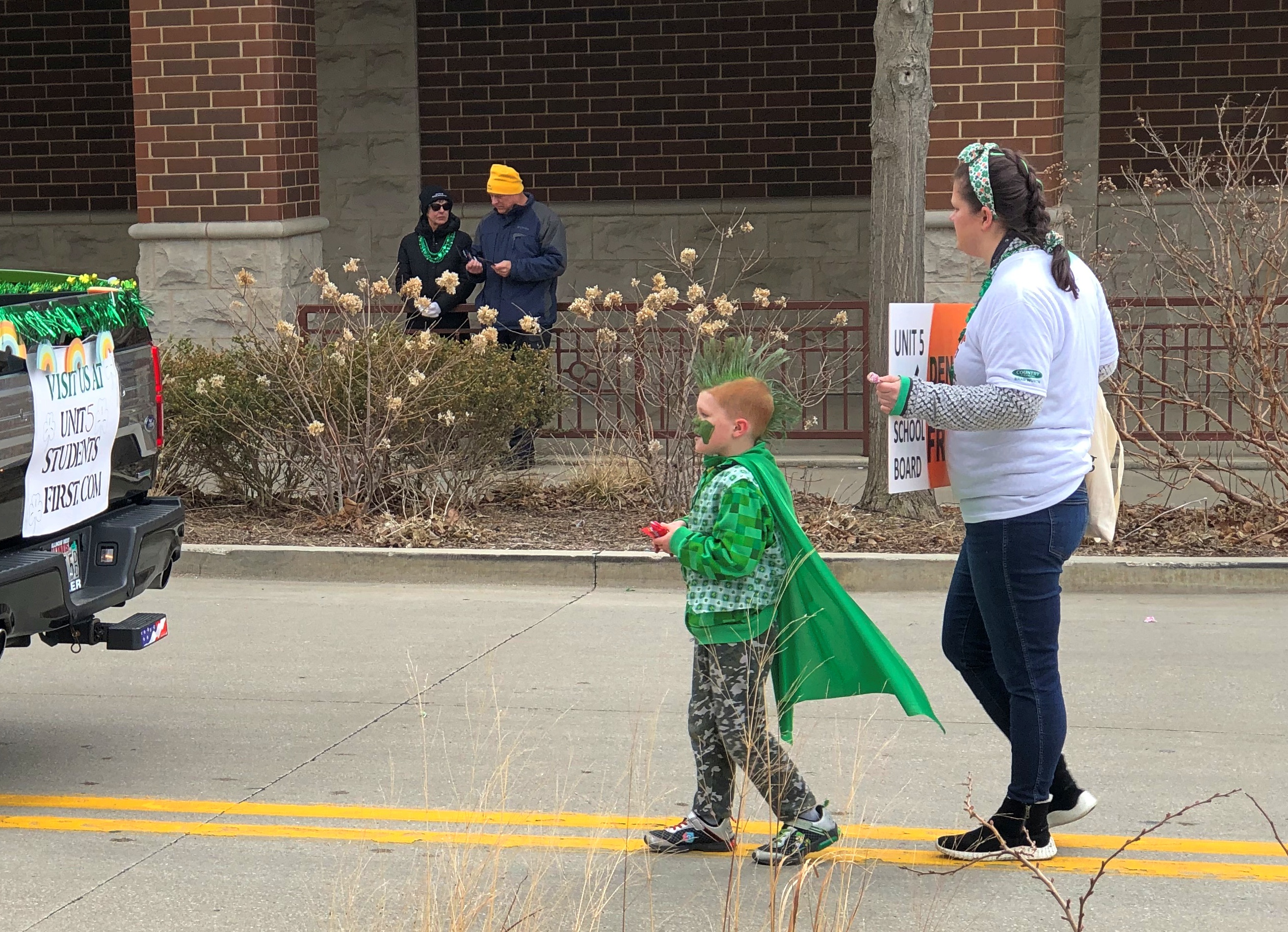
One more car in the parade.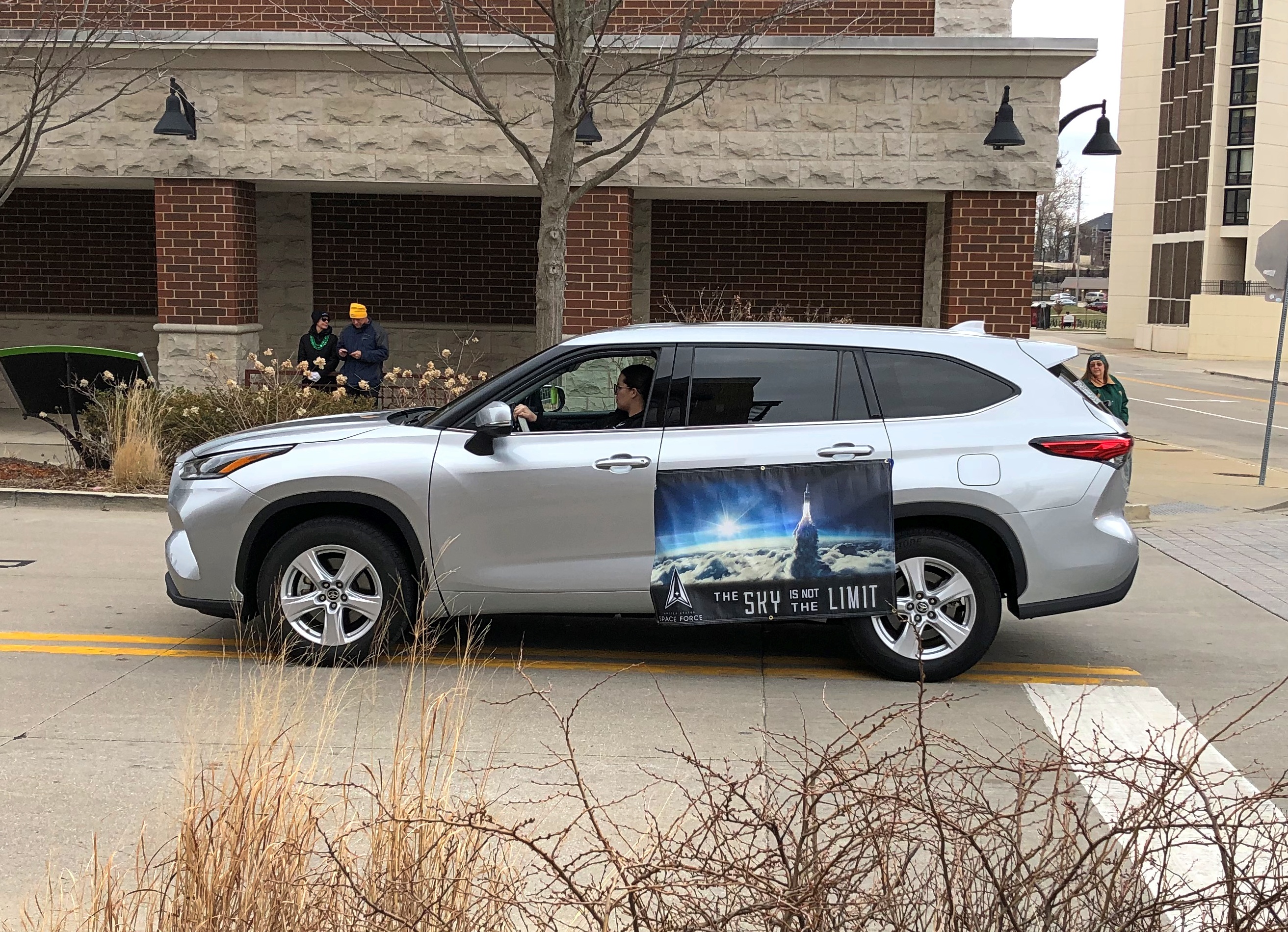
The Space Force is recruiting. The slogan: “The Sky is Not the Limit.”
“Presidents Day” is here again, but no holiday for me. George Washington’s birthday isn’t until Wednesday, anyway. It’s all very well to honor the father of our country, but, like Dr. King, why couldn’t he have been born in some warmer month?
Here’s another banknote of mine without Roman lettering that I decided to identify over the weekend.
No Cyrillic, either. It turned out to be relatively easy to pin down, since most notes tend to feature one or the other, even if a country’s dominant language(s) are in another script. Another useful clue are the Hindu-Arabic numerals for the date, 2013.
It’s a two-taka note from Bangladesh, whose symbol is the curious ৳, which seems to suggest the Bengali script for the word, টাকা, but also a Roman t. Various sources say this note has mostly passed from circulation, replaced by coins. Also, its one-hundredth division, poysha, has evaporated in the heat of decades of inflation. In theory, a 2-taka note is worth just shy of U.S. 2 cents.
Speaking of fathers of nations, though a rather different example, father of Bangladesh Sheikh Mujibur Rahman is on the observe. Next to him is the National Martyrs’ Memorial near Dhaka, commemorating those who died for independence in bloody 1971.
In the upper right corner, the national emblem of Bangladesh. “Located on the emblem is a water lily, that is bordered on two sides by rice sheaves. Above the water lily are four stars and three connected jute leaves,” Wiki notes. Jute may yet have its day as a green fiber.
On the reverse, another memorial to the dead. In this case, the Shaheed Minar (The Martyr Tower) of the Bengali Language Movement, whose day happens to be tomorrow.