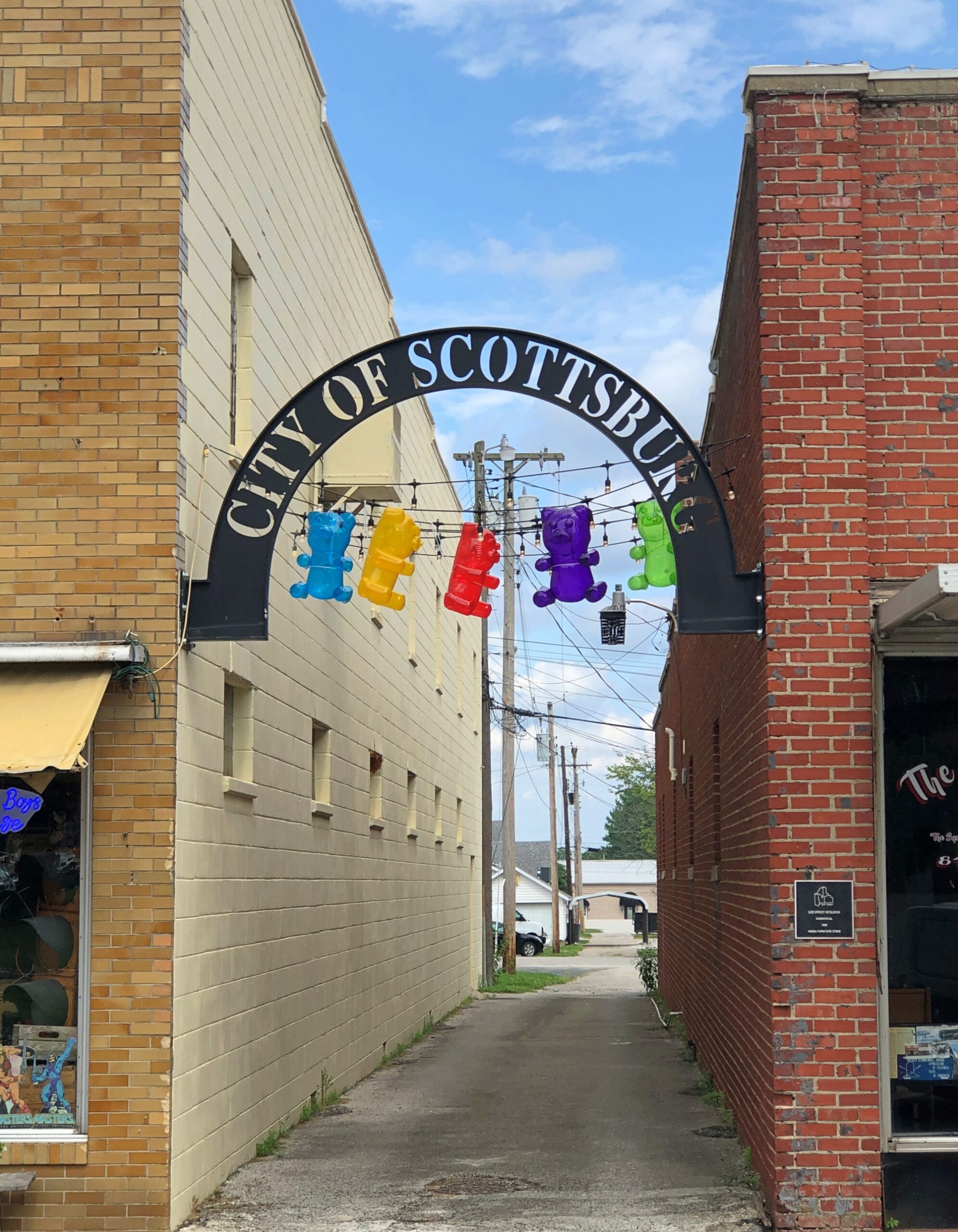
Scottsburg, Indiana

Just the latest in bad news: the lodge on the North Rim of the Grand Canyon burned down due to wildfire. At least no one died in the incident, but it’s always unfortunate when a grand edifice meets its end. I wouldn’t bet on reconstruction, either.

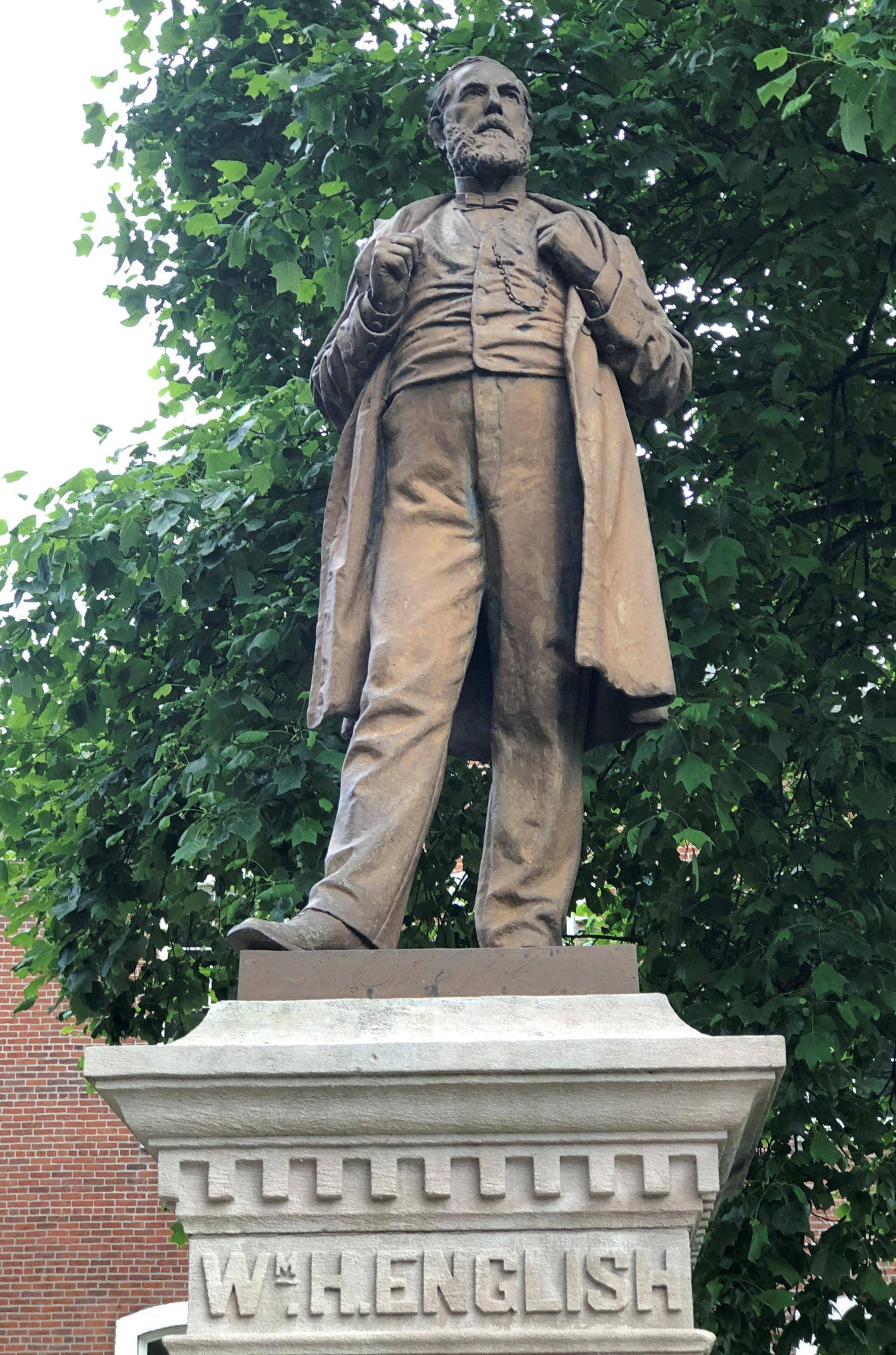
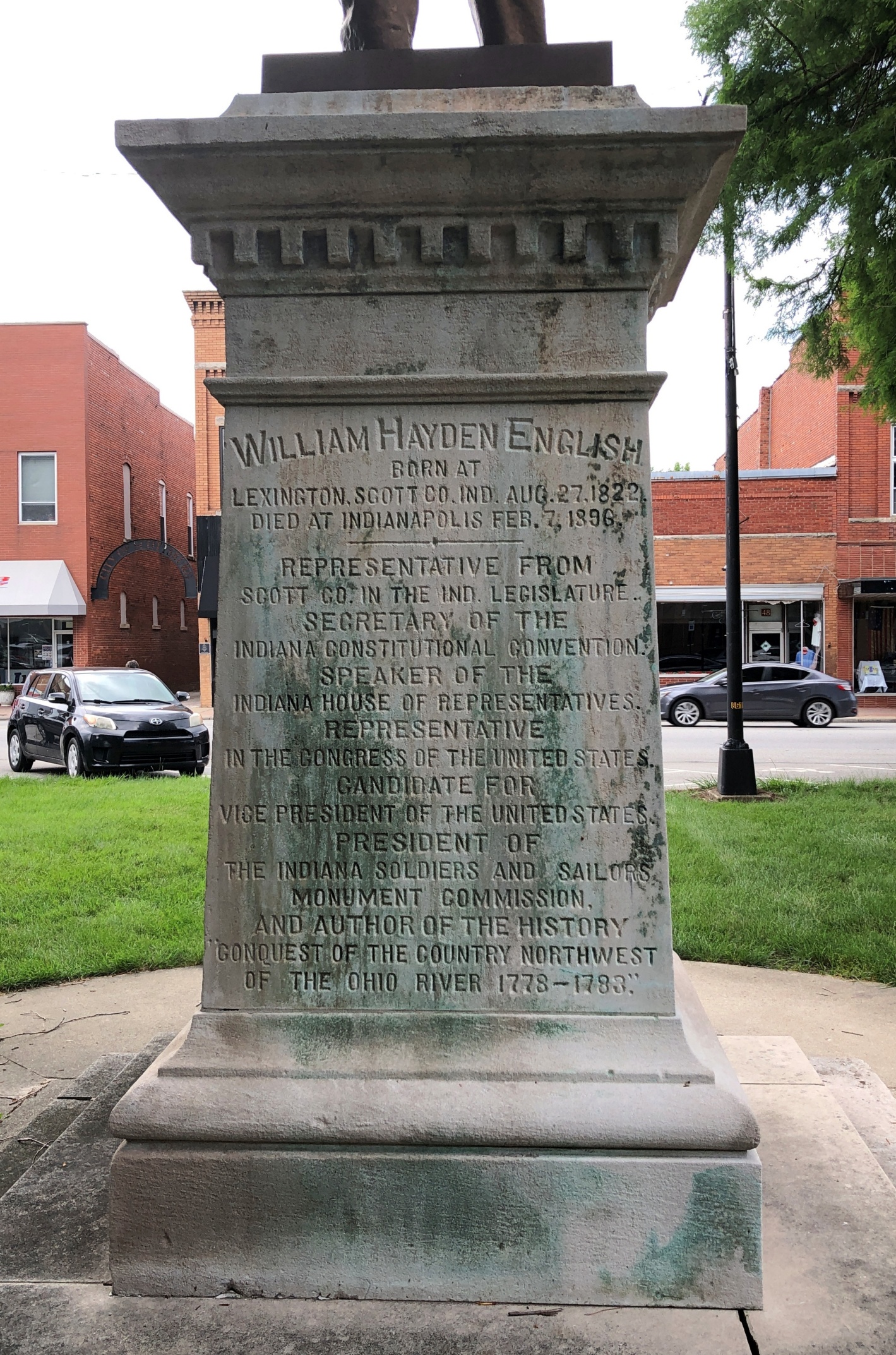
The heat was already on by the time I arrived in Scottsburg, Indiana on the first day of the trip, June 16. But not enough to keep me from taking a stroll around the Scott County courthouse, where I found native son William H. English.
Scottsburg, Indiana Scottsburg, Indiana

After only a few hours on the road, by chance, I’d come across a presidential sight. Presidential adjacent, anyway, since English (d. 1896) is that most obscure of obscurities, someone who ran for vice president and lost – in 1880 in his case, on the Democratic ticket with Winfield Scott Hancock, who himself isn’t going to ring any bells outside presidential history buffs. The statue went up in 1908.
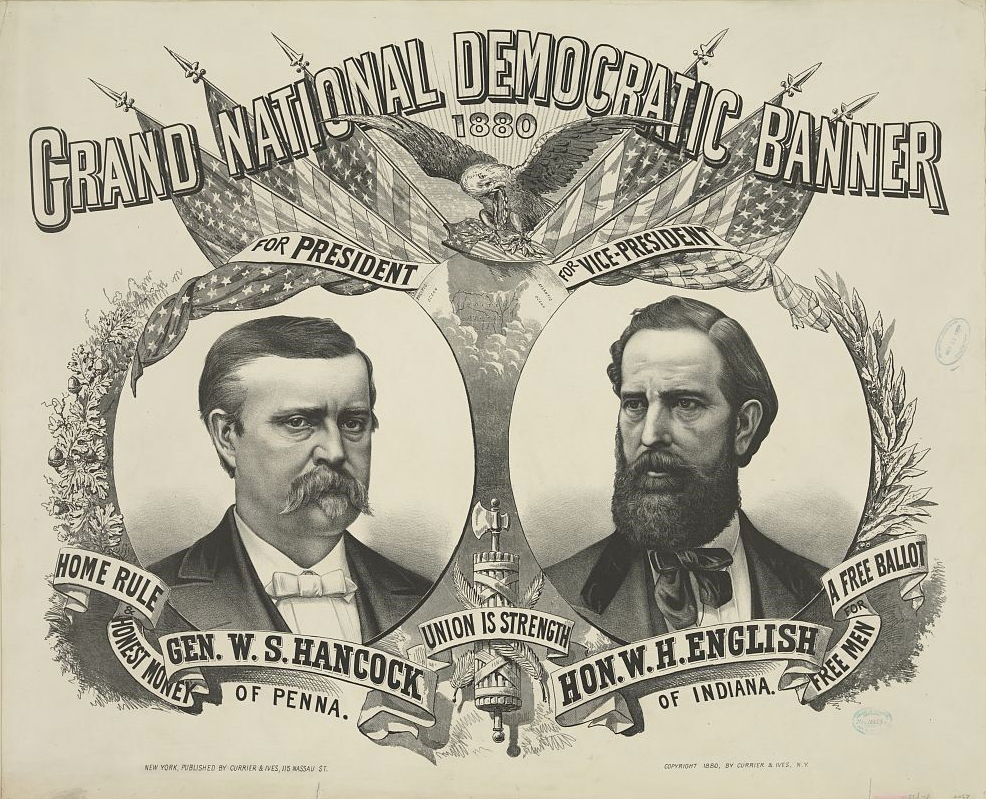
That was the election James Garfield won, which he no doubt regretted before long.

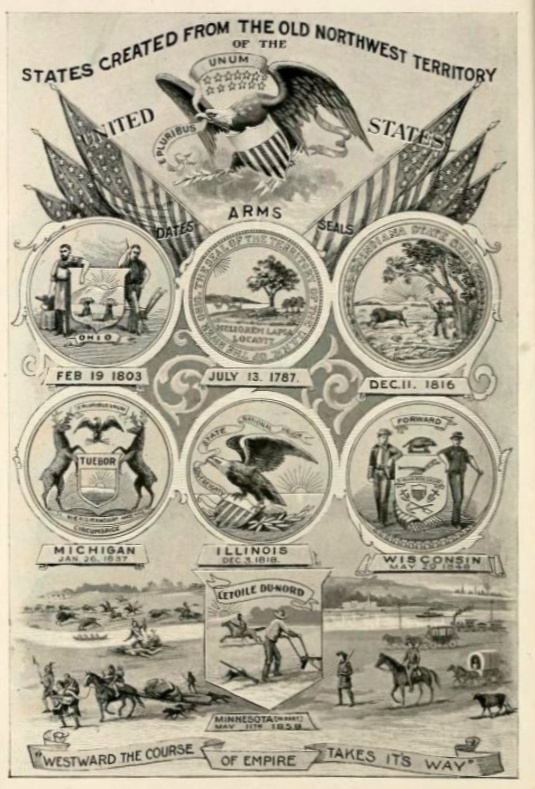
English, or his heirs, felt that a book he wrote, Conquest of the Country Northwest of the Ohio River 1778-1783, was worth a mention along with the offices he held or aspired to. The marvel here in the 21st century is that the work is just about instantly accessible (Vol. 1 and Vol. 2). An illustration facing the Vol. 1 title page (on the optitle page?) not only falls into the They Don’t Make ‘Em Like That Anymore category, it’s squarely in, No One Would Think of It territory. Just as well, I figure.
To get to Nashville from metro Chicago, the direct route is via I-65, which cuts across Indiana. Considering the importance of both of those cities to me, I’ve driven the route more times than I can count. But I have to report that it isn’t one of the more interesting drives in the nation, and at eight to nine hours drive time in the best of conditions, you feel it yawn beneath your wheels when you yourself yawn.

So the strategy over the years has been to break up the trip. Such as a place like Scottsburg, pop. 7,300. The town is close enough to Louisville to be its exurb – maybe. I haven’t spend enough time in Louisville, as interesting as it is, to have any sense of its greater co-prosperity sphere, or at what distance that might peter out.

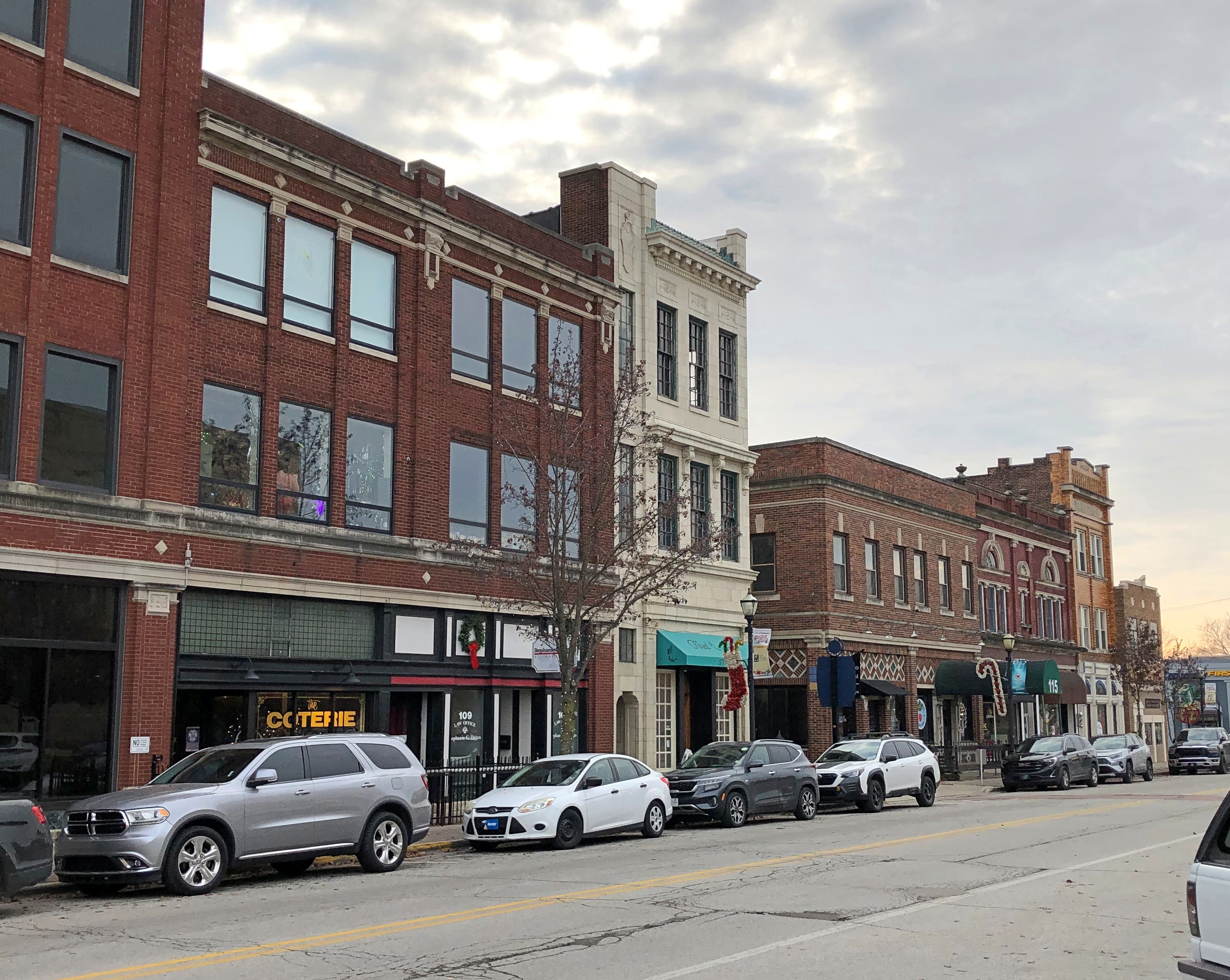
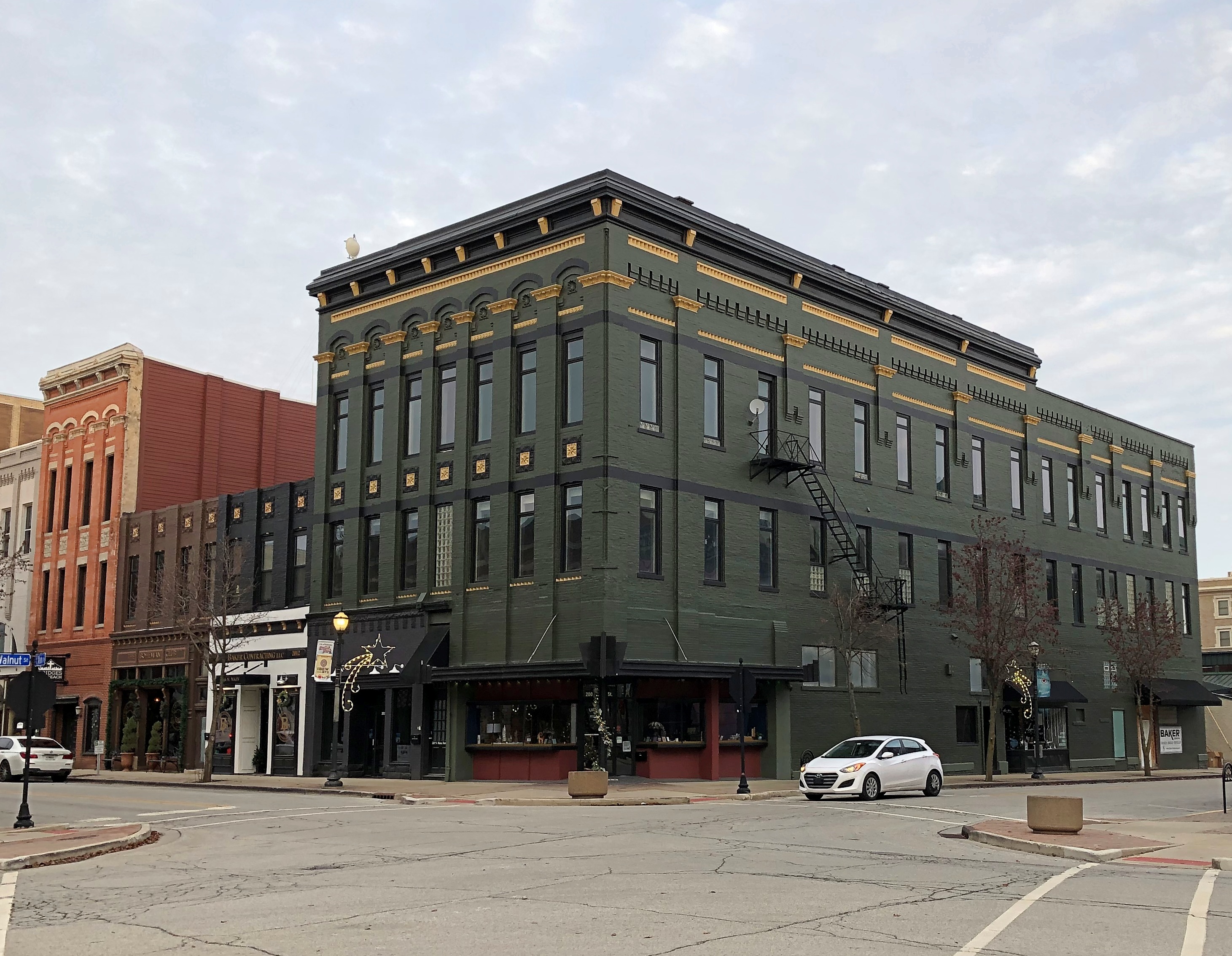
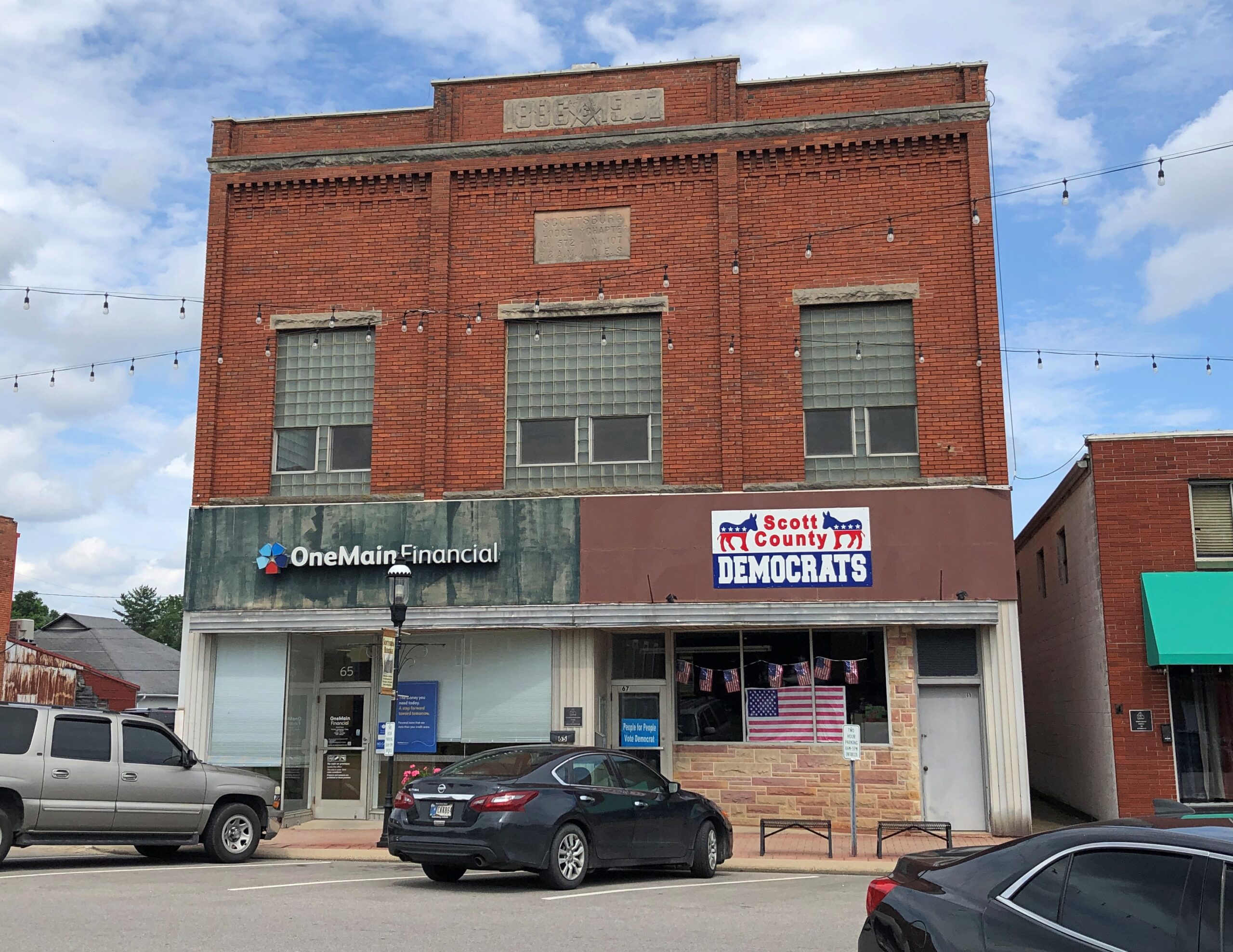
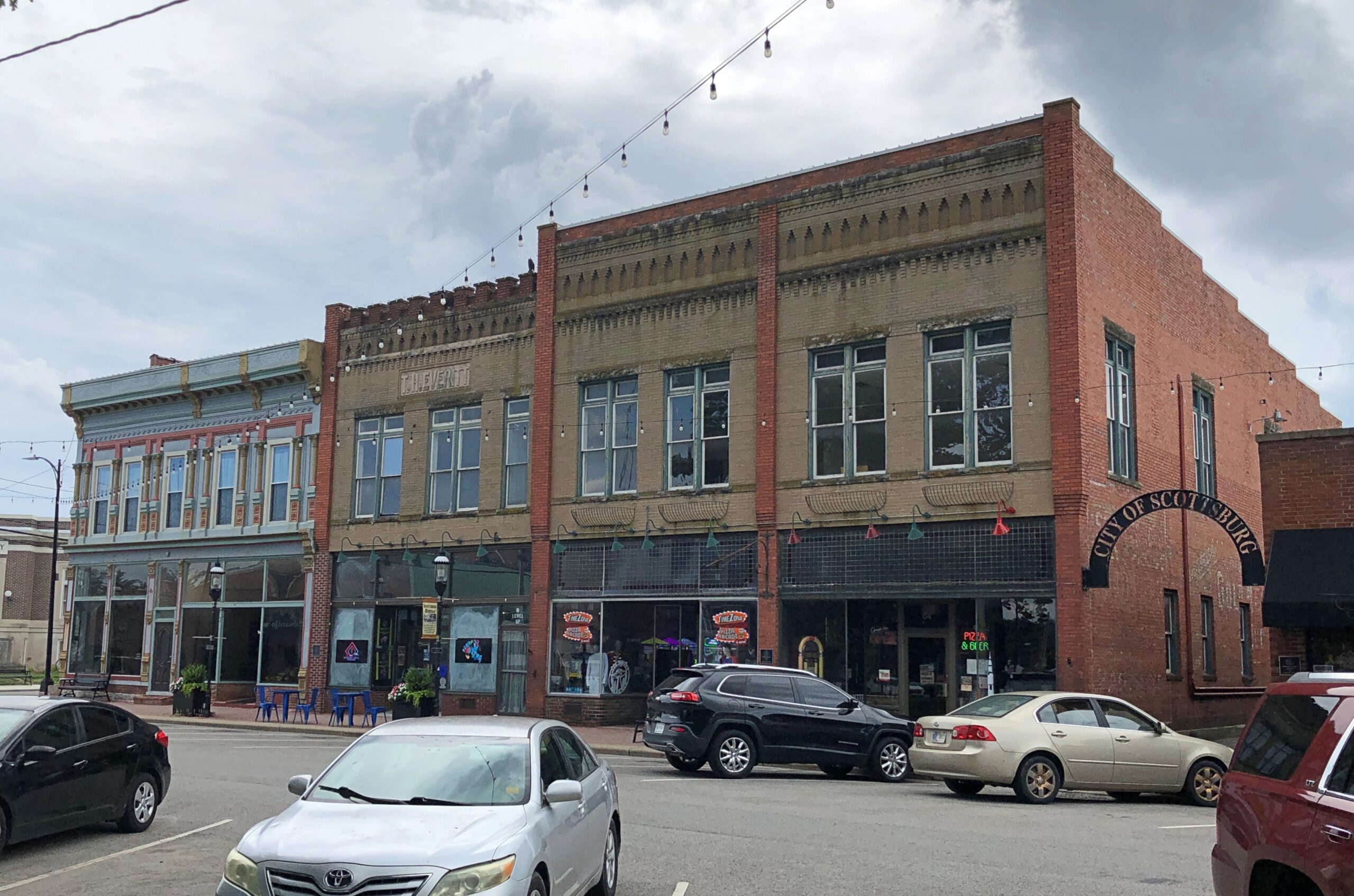
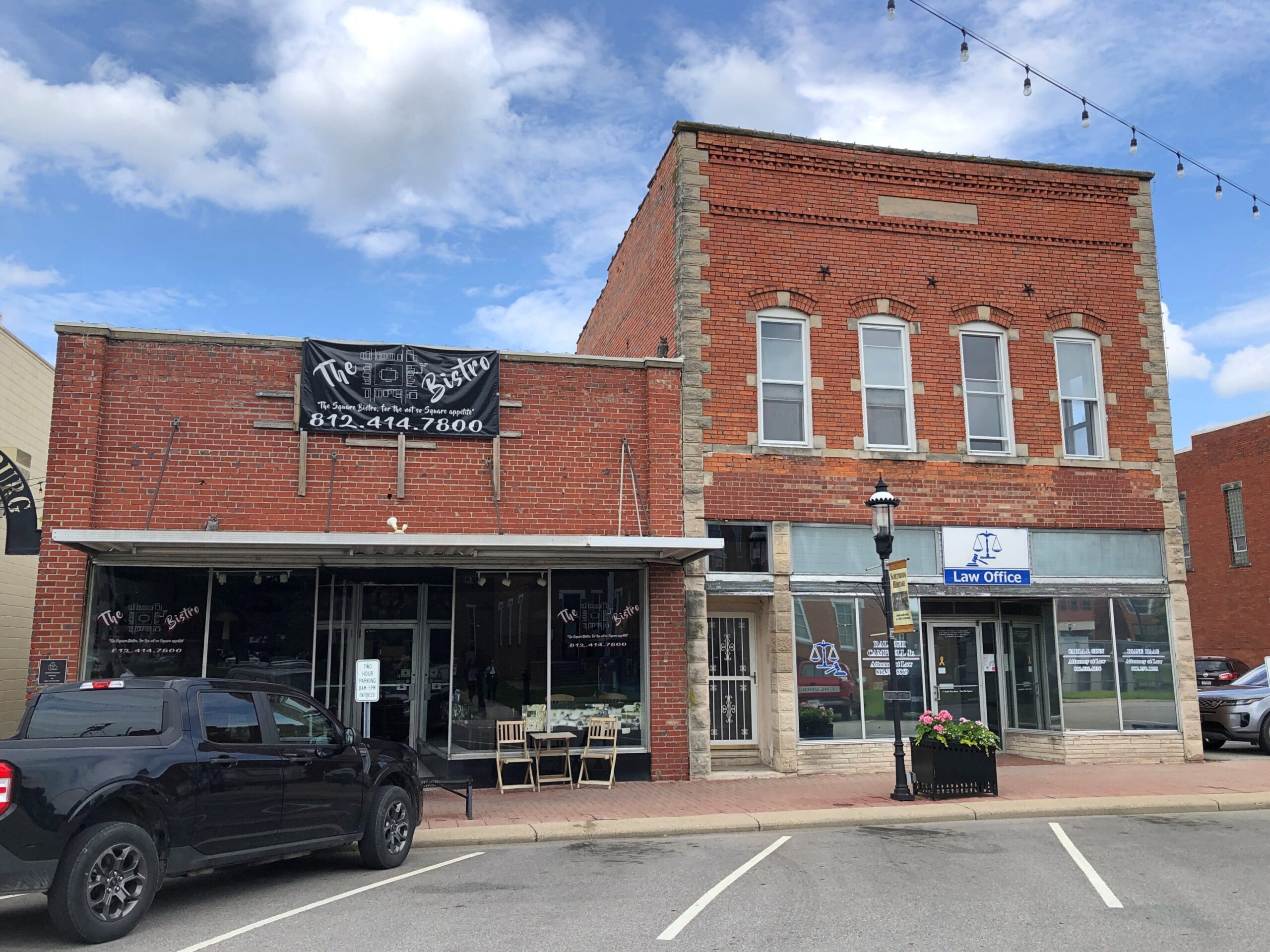
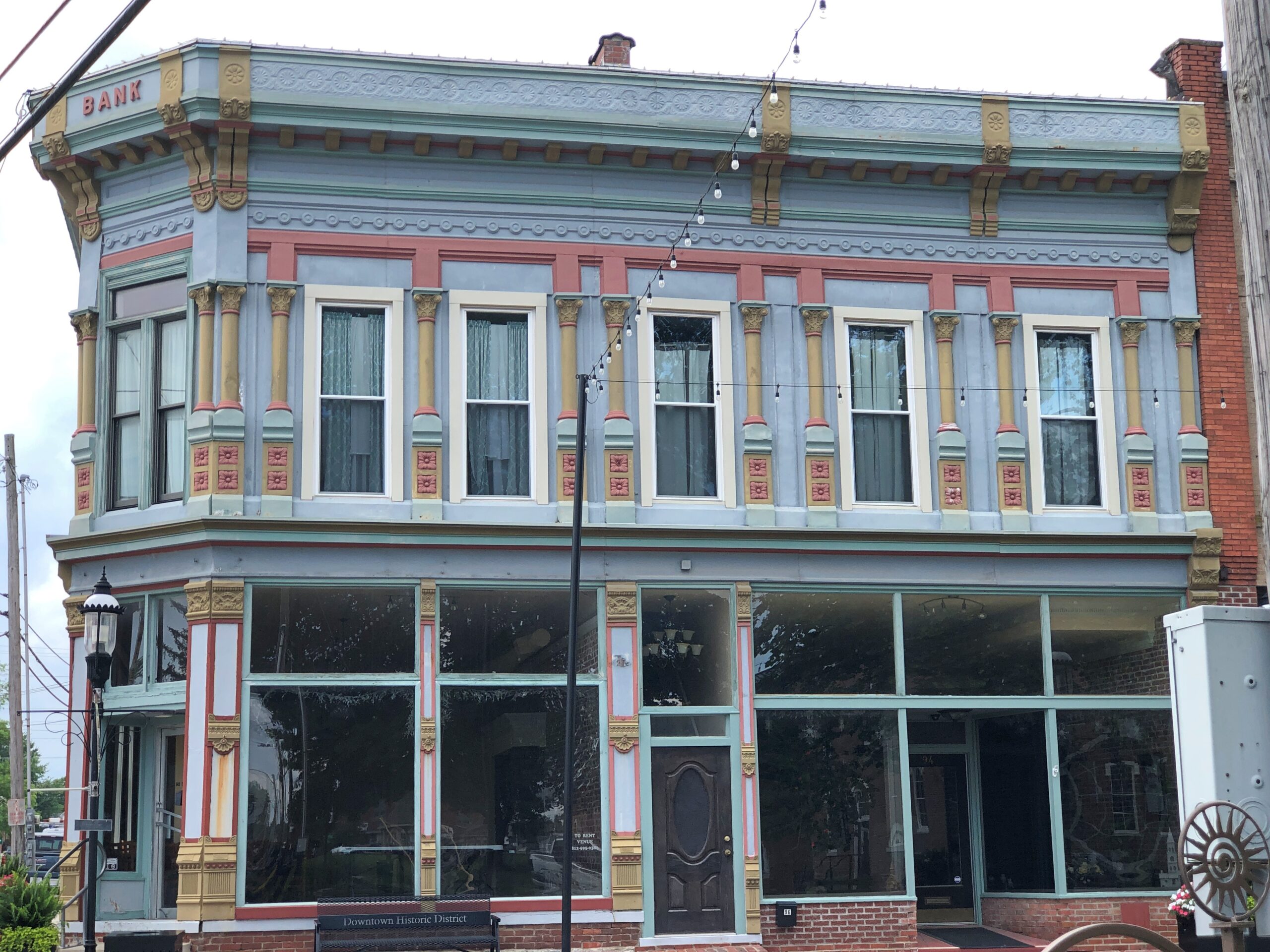
Scottsburg has one thing a picturesque exurb needs: a picturesque courthouse square. Or at least elements of it.
Scottsburg, Indiana Scottsburg, Indiana

Downtown is in fact a national historic district: Scottsburg Courthouse Square Historic District. I get a kick out of discovering that kind of thing retroactively, which I did this time.

“The district is composed of one-, two-, two-and-a-half and three-story brick and stone commercial structures with zero setbacks, which form an essentially contiguous perimeter to the wooded courthouse lawn,” its registration form on file with the U.S. Interior Department says. “There are a total of 48 contributing buildings within the district. The character of the district is defined by late 19th and early 20th century commercial architecture with significant examples of the Italianate, so Richardsonian Romanesque, Renaissance Revival, Colonial Revival, and Art Moderne styles.

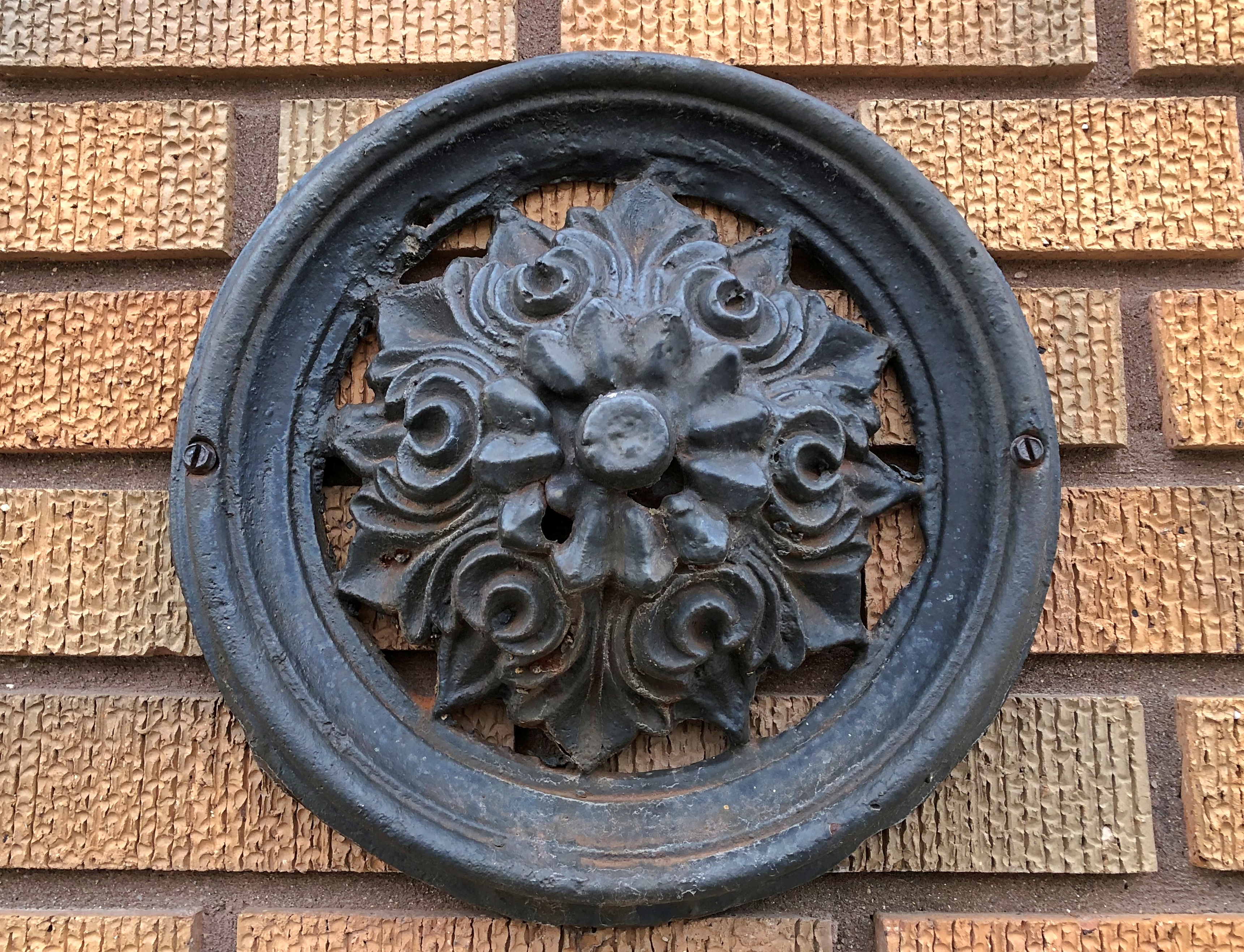
“The predominant building material is red brick, as evidenced by the courthouse and 29 commercial buildings within the district. Secondary materials include Indiana limestone and various shades of buff and yellow brick, decorative brick work, cast iron, ornamental pressed metal and glazed tile and Carrera glass…”
Scottsburg, Indiana Scottsburg, Indiana

In the heat of the moment (literally), I neglected to get a decent shot of the courthouse itself, but someone called Bedford thoughtfully put an image in the public domain.
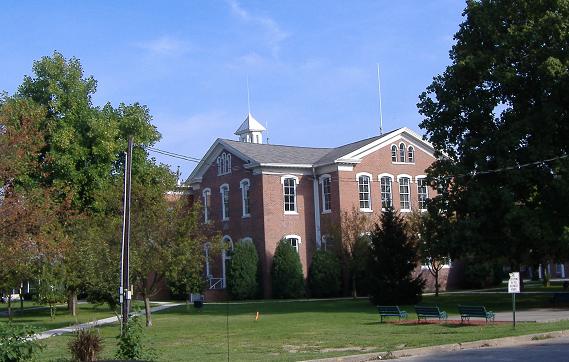
Could it be a Carnegie Library?
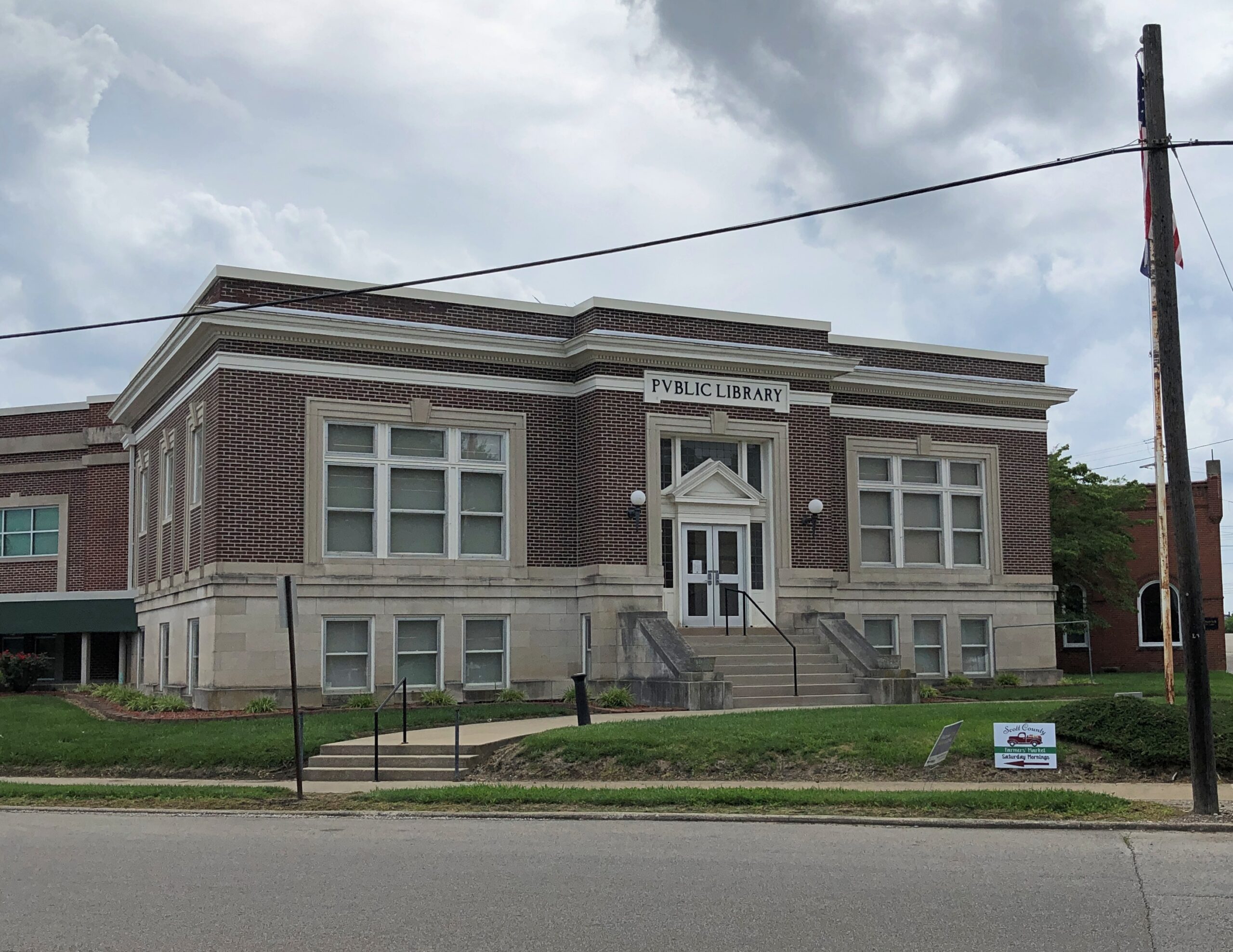
Scottsburg, Indiana

Yes. Completed 1917, still a library. One of the more than 1,680 in the United States funded by the robber baron, many of which endure after a century plus.

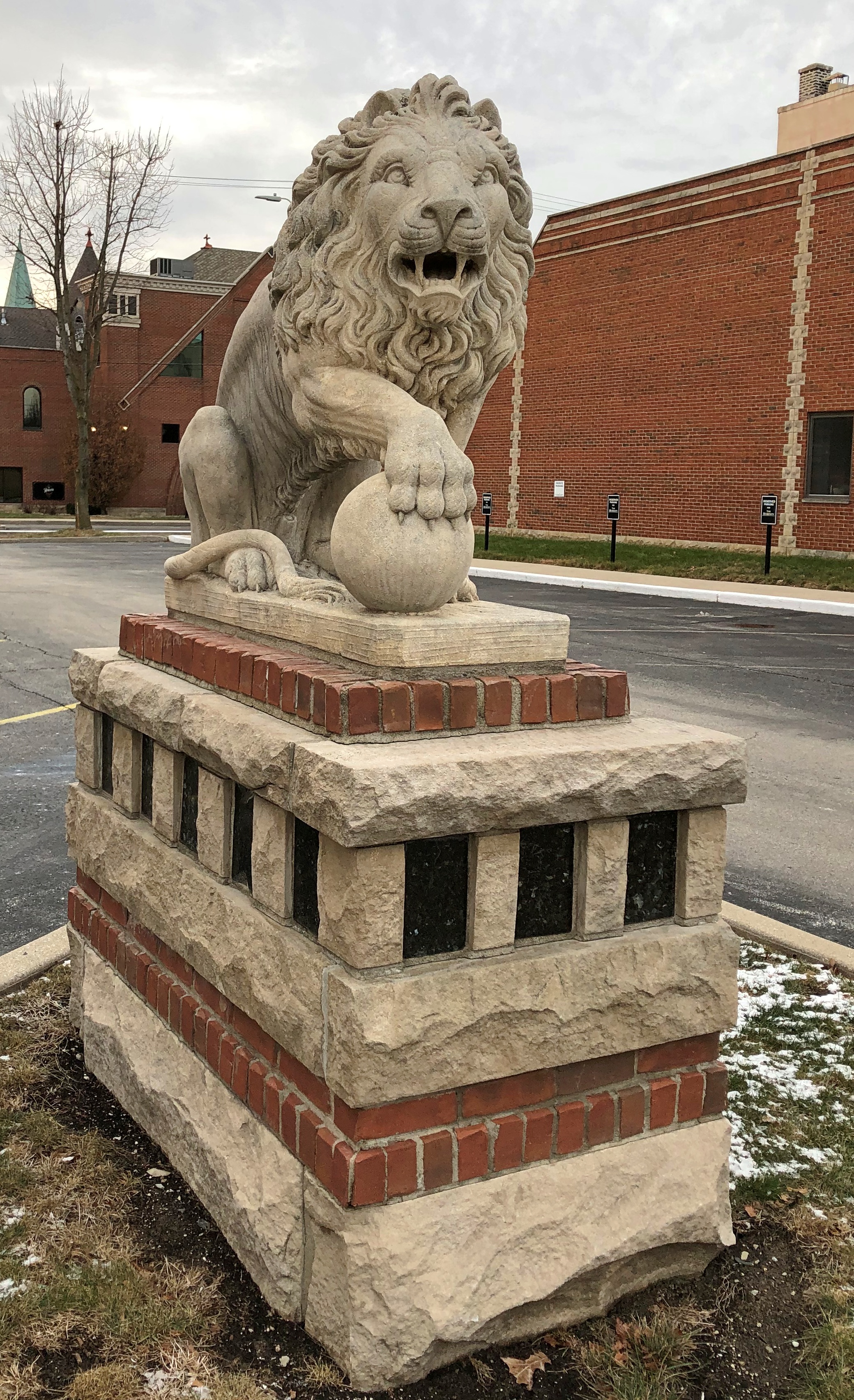
Some courthouse square details.
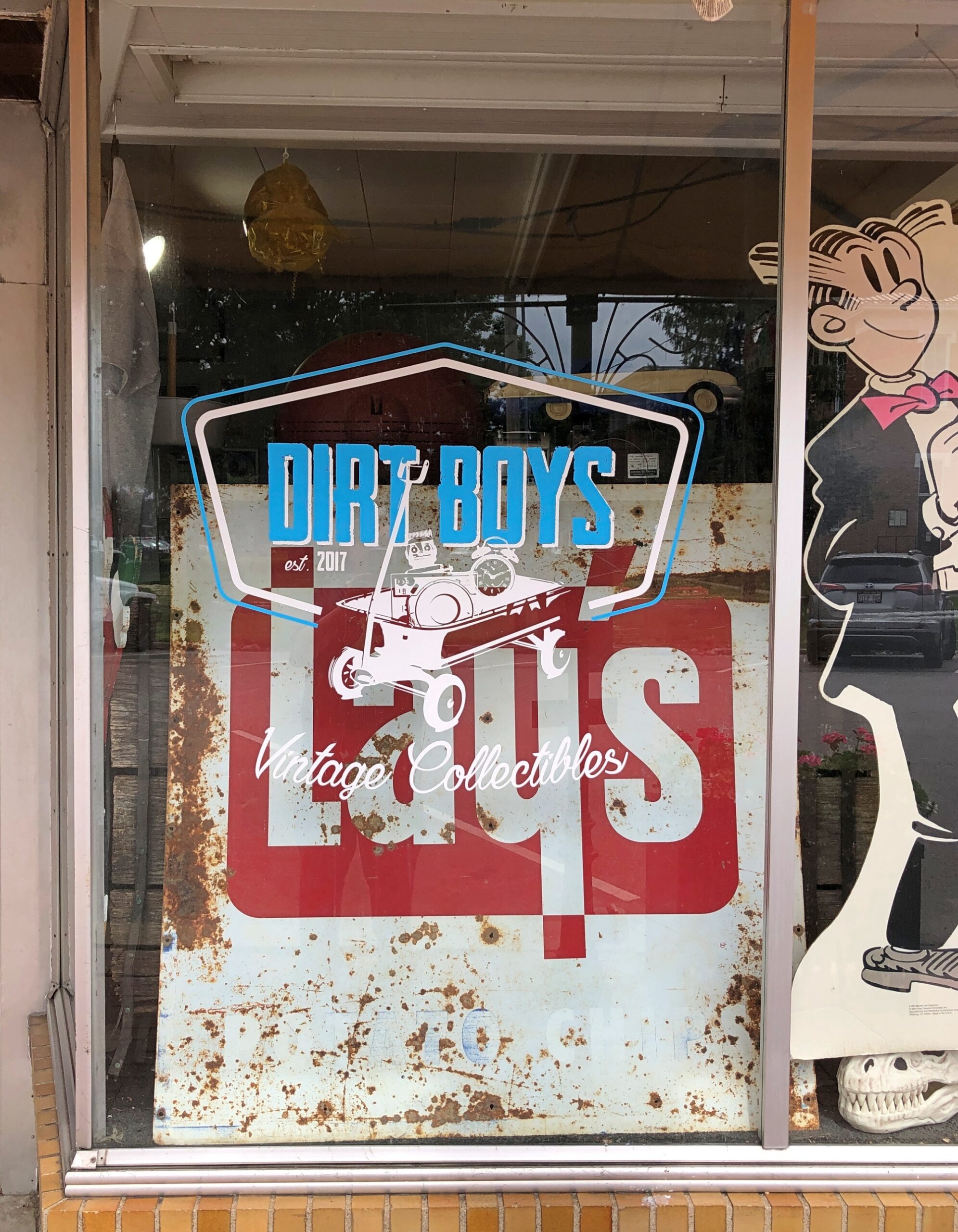
Dirt Boys Vintage Collectibles joins the likes of city offices and law offices, but also Warriors Den coffee shop, Time Zone Pizza Arcade, Chicago City Pizza and Bootlegger’s Bar & Grill. Those not needing to eat can visit Wildflowers Boutique, Moxie Music Center or Working Class Tattoo Parlor, all there on the square.

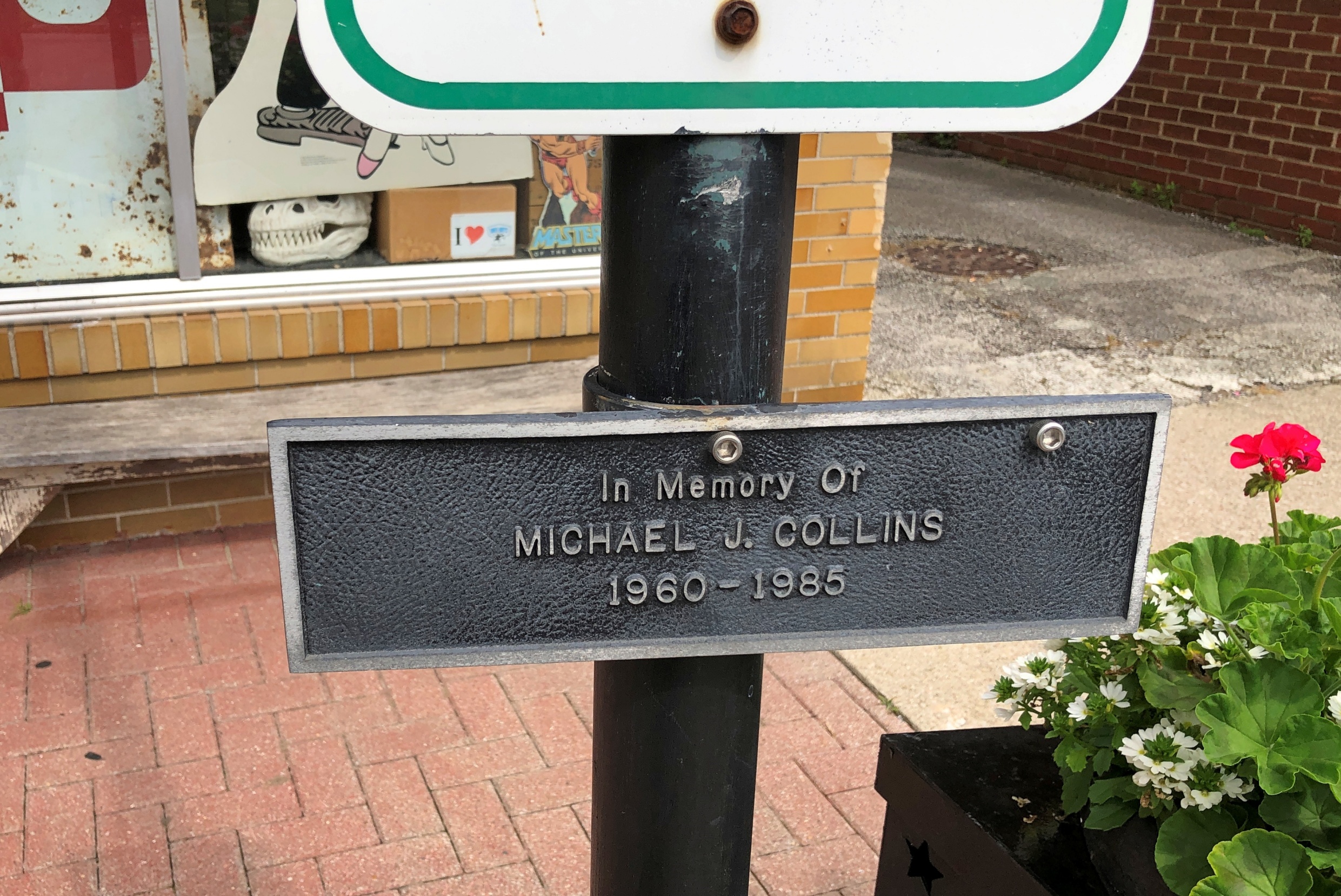
So is a plaque to the memory of one Michael J. Collins (d. 1985).
Scottsburg, Indiana

A contemporary of mine who didn’t make it far out of the gate. RIP, Michael, whoever you were. Are.
Southern Loop ’25

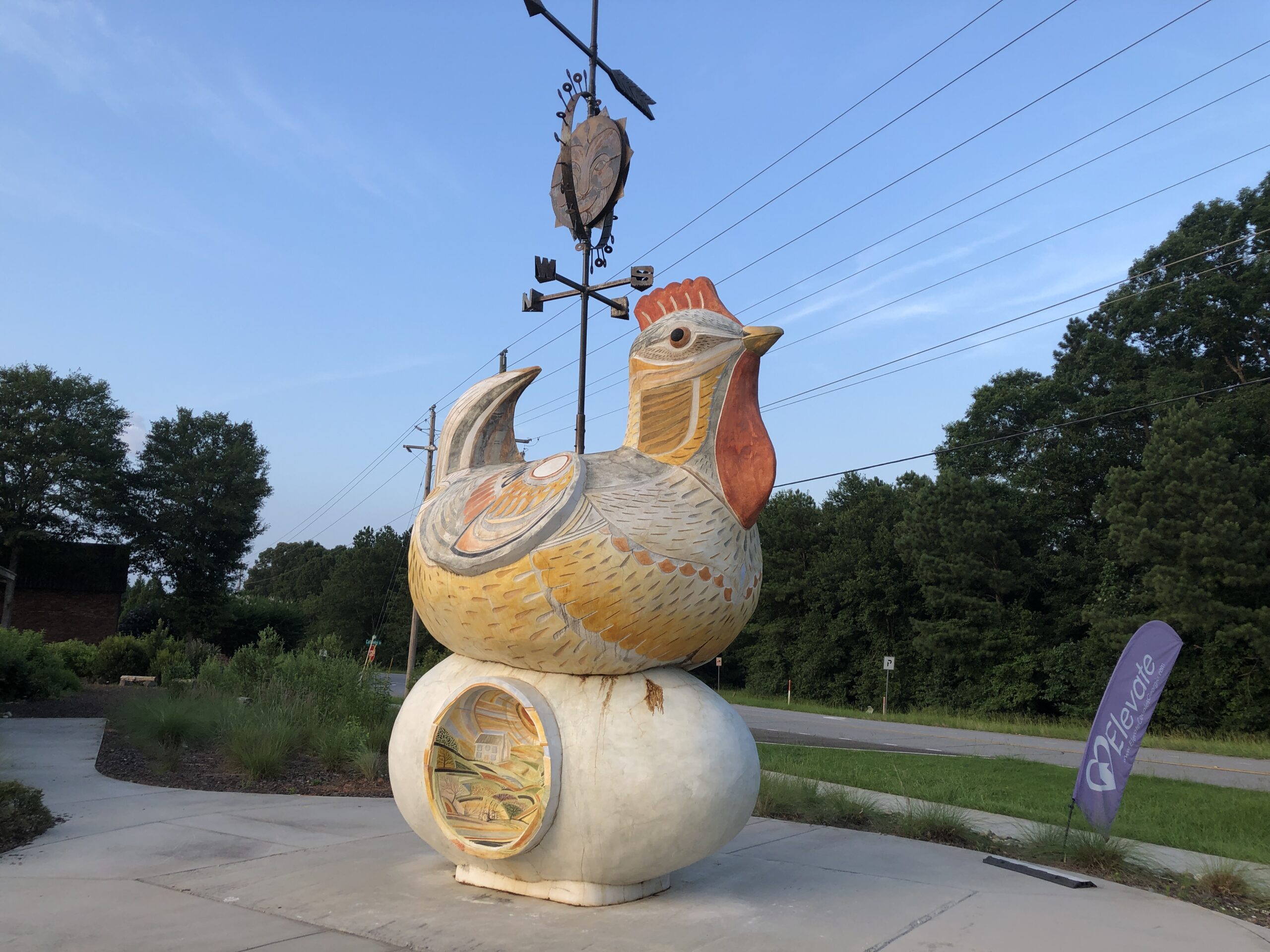
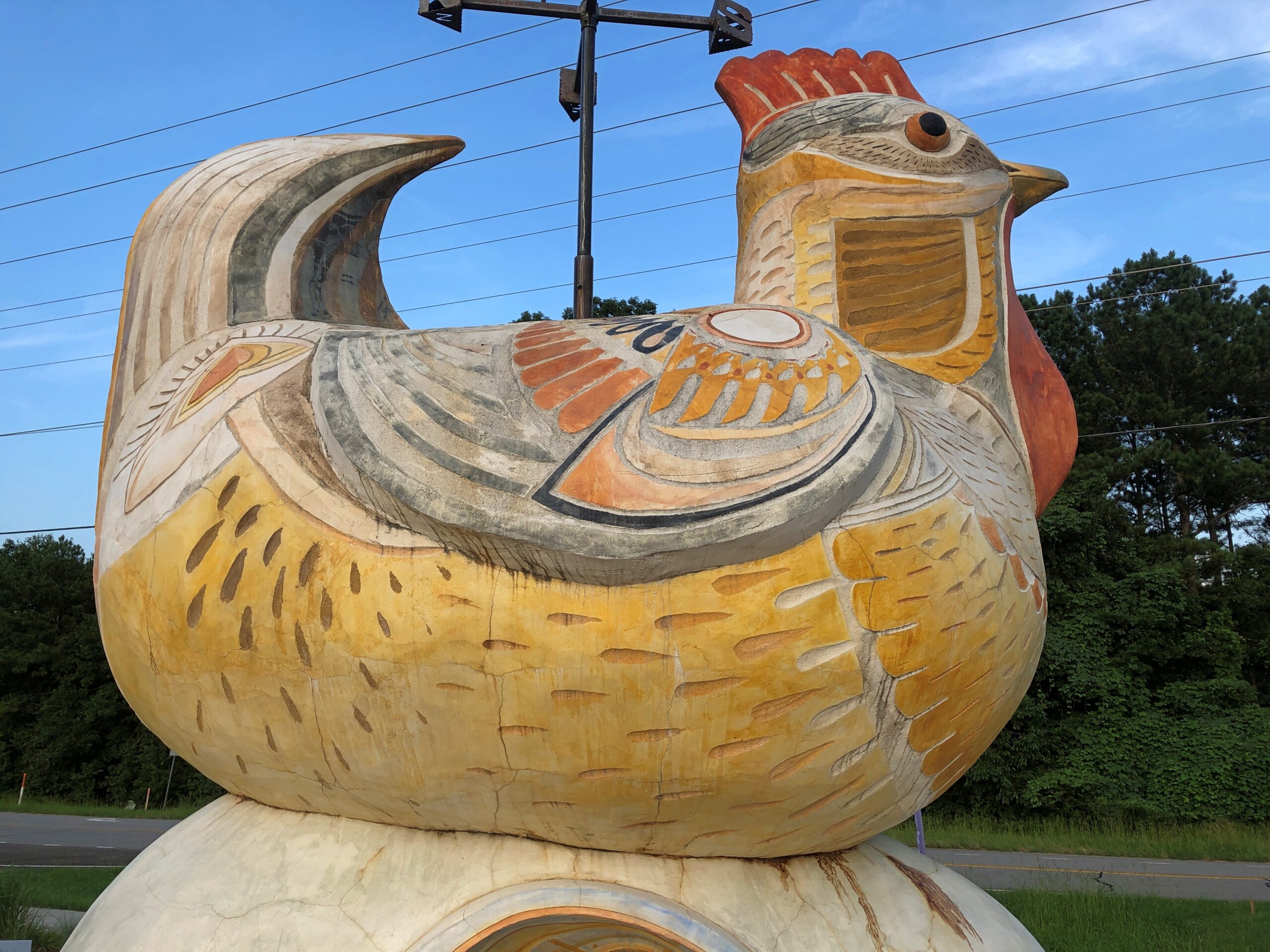
Sometimes you’re driving along, minding your own business because your business at that moment is driving, and you see a two-story chicken near the road. Three stories if you count the iron weather vane perched atop the bird.

Chicken!
Chicken!
Chicken!

I had to stop to see that. More precisely, it’s a concrete chicken on a concrete egg, settling the question of which came first (the concrete did). The chicken, and the egg, are on property owned by the University of Georgia, used for the Athens-Clarke County Extension in Athens. Erected in 2022. More about the work, “Origins,” is here. All ag extensions should have just a little whimsy.
The chicken appeared roughly in the middle of the 3,285 miles I drove between June 16 and June 29, taking a lasso-shaped path from the Midwest across the Southeast, all the way to the ocean at Myrtle Beach, South Carolina: through Indiana, Kentucky, Tennessee, North Carolina, South Carolina, and Georgia, and back through Tennessee, Kentucky and Indiana.

The concrete hen took the cake for novelty, but along the way I saw a memorial to a mostly forgotten incident in the War of 1812, went into a mirrored tower built for a world’s fair, chanced on the spot where the mostly forgotten diplomat who brought the poinsettia to the U.S. is buried, and braved the tourist sprawl that is Mrytle Beach. I heard stories of Blackbeard while near the coast, near his hideouts. I strolled the genteel downtown of the second-oldest town in North Carolina, passing the notable spot where Pepsi-Cola was invented. We visited a three-story souvenir shop that has stood the test of time in Myrtle Beach, which I’m happy to report sells not just postcards, but vintage local postcards, at popular prices. One evening we wandered past sculptures and colored lights among the Spanish moss in South Carolina. For a moment I beheld a complete set of the U.S. gold coins minted in Dahlonega, Georgia.

I drove by houses, farms and fields, past small businesses open and defunct, and junkyards and billboards — an industry that would collapse without ambulance chasers, I believe — and factories and water towers and municipal buildings. That is to say, structures and greenery of all manor of use and upkeep, an inexhaustible variety of human and natural landscapes. Homogenization my foot. Except, of course, every burg with a zip code also has at least one dollar store.
We – my machine and I and sometimes Yuriko, who flew to Myrtle Beach to meet me for a weekend – experienced an incredibly lush Southeast not long after a rainy spring, on big roads and small, straight and curvy, all the while defying the heat. I heard it enough on the radio: a “heat dome” had settled over the eastern United States. It persisted from the first day in Indiana to the last day in Indiana, though it had moderated a bit by then. Temps were in the 90s most days, but nothing that’s going to faze a Texan with an air conditioned vehicle and bottled water.
We did adjust our schedule to mostly be out in the morning or evening, except at Myrtle Beach, where a walk in the heat that made me feel my age and maybe then some. A less hot but more humid walk in a mostly forgotten national park in South Carolina saw flights of mosquitoes barreling down on me. A few of them penetrated my DEET coverage.

I saw and did all that and much more, but that was only the bronze and silver of the trip. The gold was visiting old friends.

That was actually the priority this time around. Before the trip, one of the friends I planned to visit asked me via text: “What’s your trip about?”

My text answer: “Visit old friends, see new things & take long drives.”

In Nashville, Stephanie and Wendall.

In North Carolina, Dan and Pam. She had enough sense not to wander around in the heat with us.

In rural Tennessee, Margaret and Dave.

Separately in Georgia, Layne and Stuart. I was glad to see them all, and I think they were all glad to see me. Known most of ’em since the 1980s, and we had a time — then and now.

Kokomo Oddities

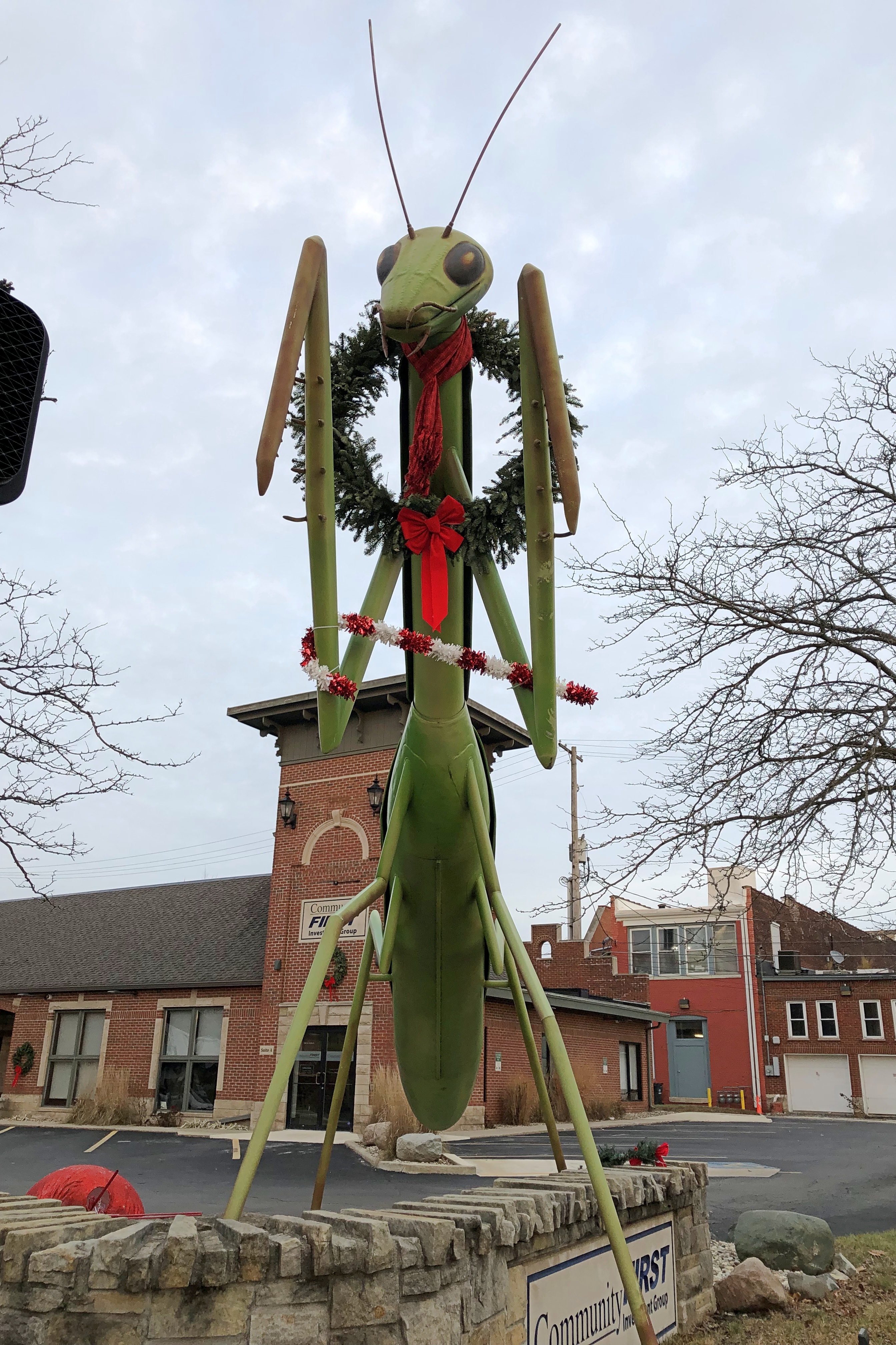
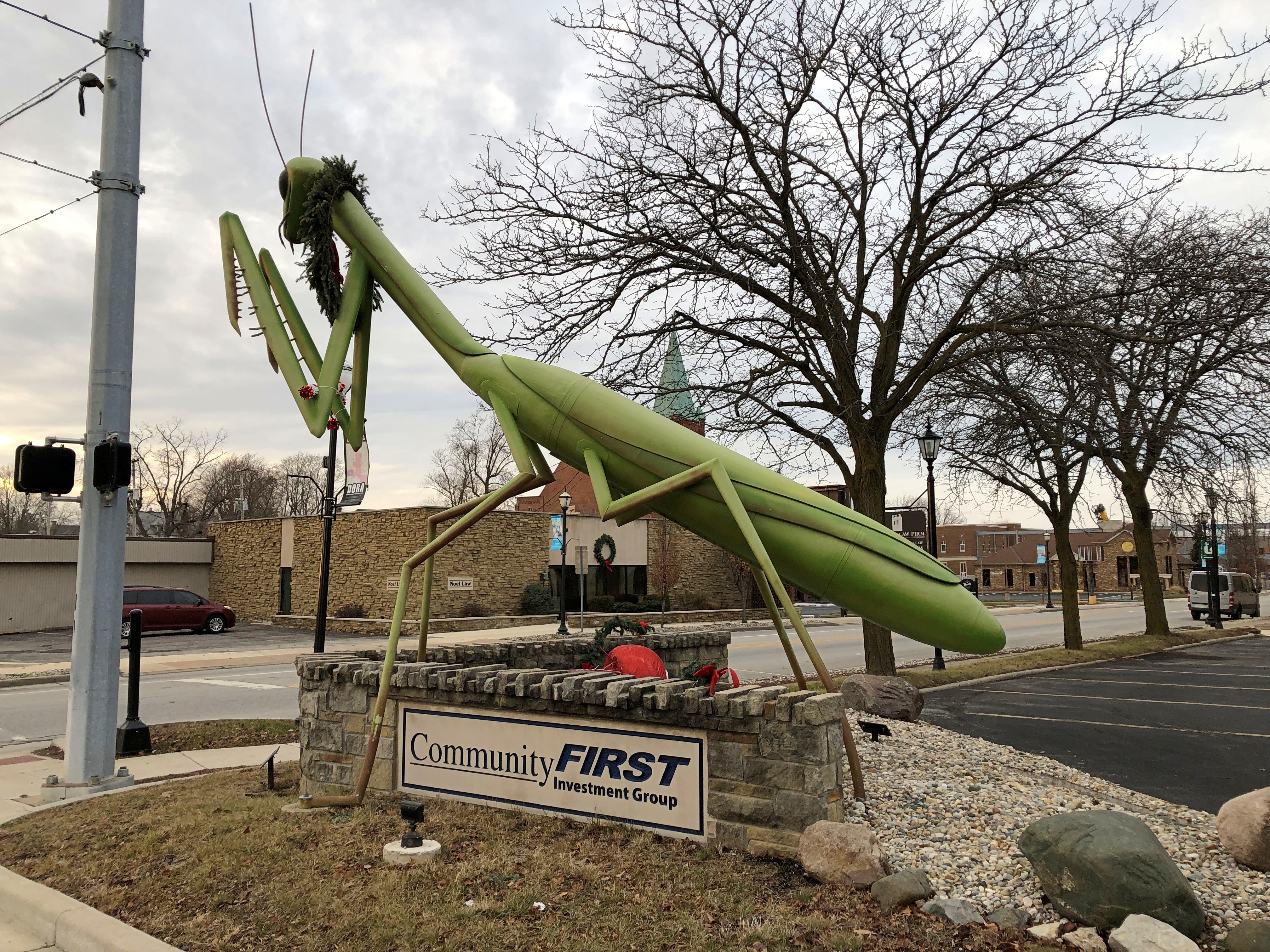
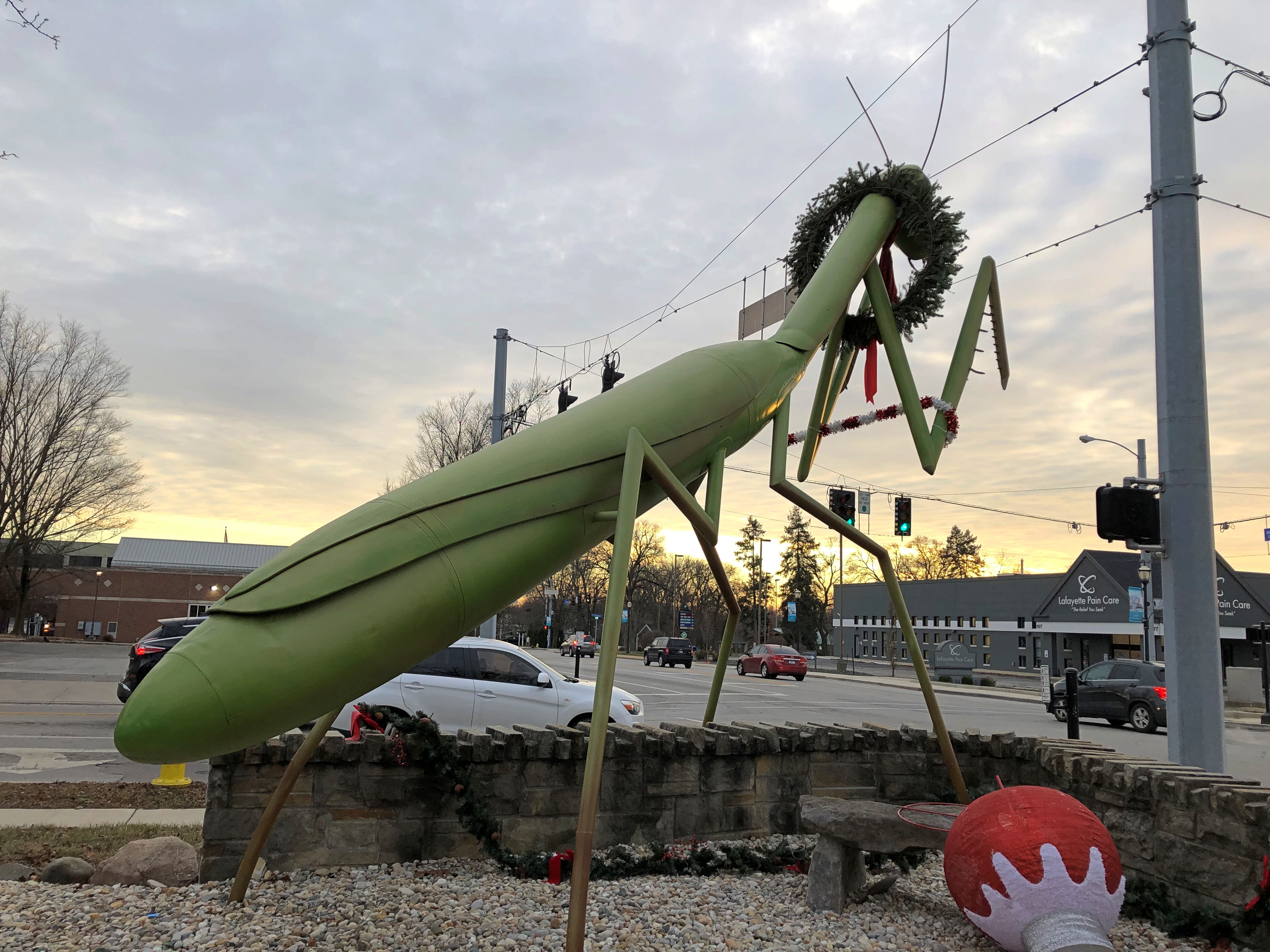
Near the courthouse square in Kokomo, standing next to a fairly busy intersection and the parking lot of a small office building, is Kokomantis, all of 17 feet tall and – in late December anyway – decked out for the holidays. That’s a big bug. The kind of thing begs you to look at it.Kokomantis Kokomantis Kokomantis

“Its torso and wings are crafted from World War II fuel pontoons, while the legs are made from stoplight arms, giving her an industrial yet graceful appearance,” Heidi Pruitt writes in The Kokomo Post. Local artist Scott Little and developer Scott Pitcher collaborated on the work, with its creation taking Little a reported total of 220 hours.

I wasn’t sure what a “fuel pontoon” was, so I looked into it and came up with a reasonable definition from a British web site: “a self-contained floating facility for the storage and dispensing of petrol and diesel fuel for coastal sheltered marina environments.” Yep, that would have been useful in WWII.

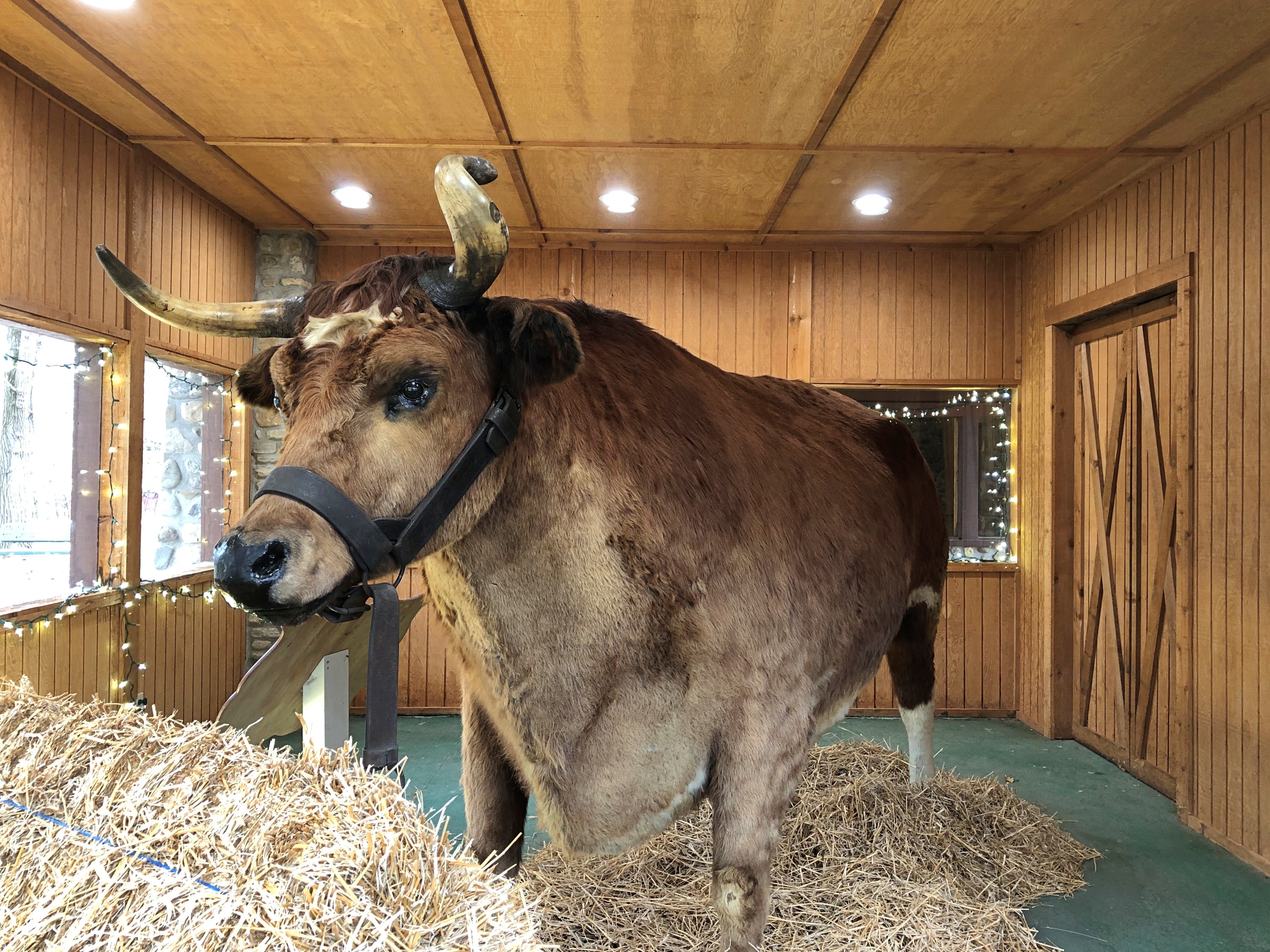
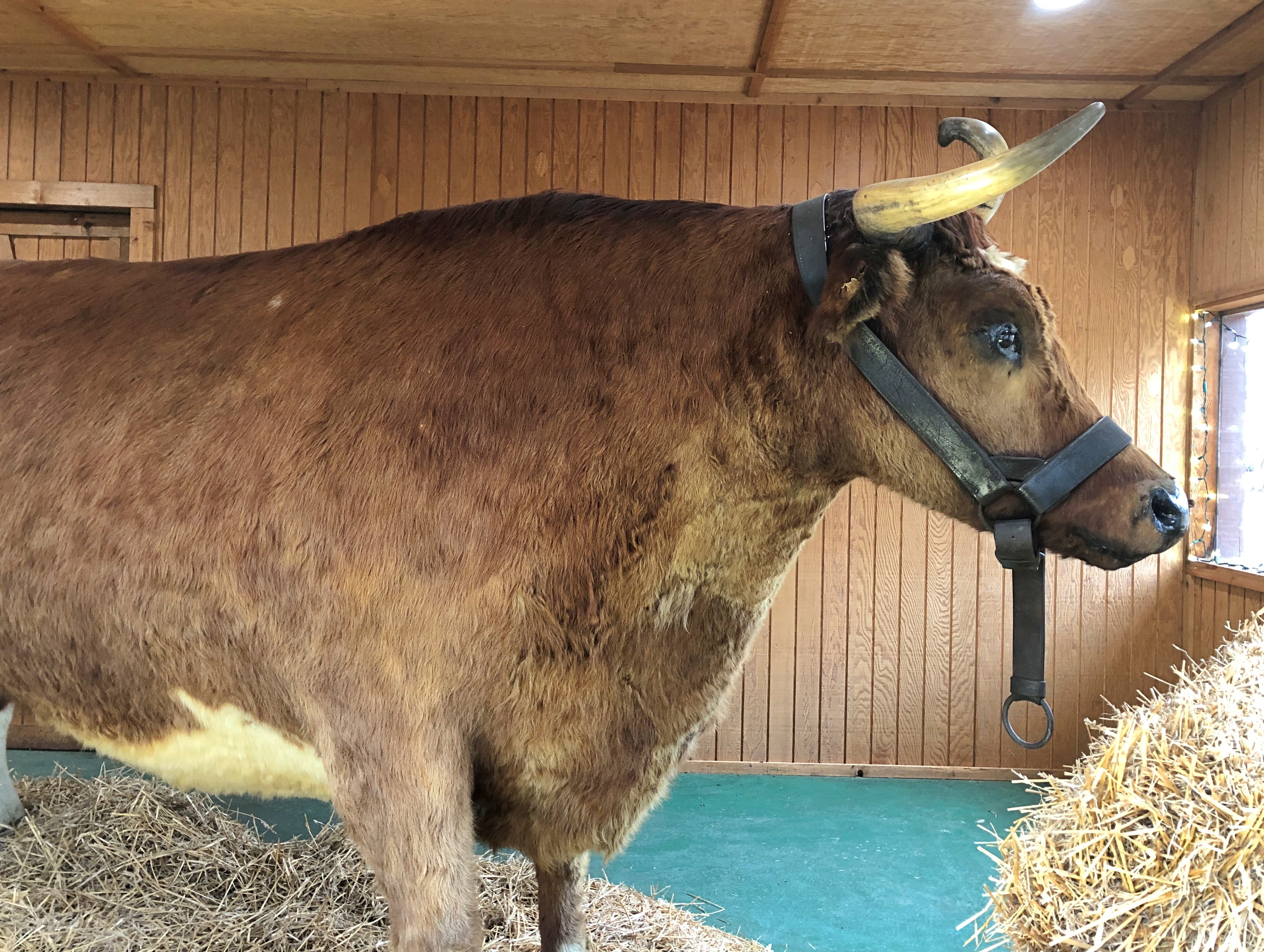
Kokomatis isn’t the only animal of size in Kokomo. In Highland Park, one of the city’s parks, tucked away behind glass in what amounts to its own exhibition room, is the stuffed steer Old Ben (d. 1910). Impressive taxidermy, considering the age.Old Ben, Kokomo Old Ben, Kokomo

“Old Ben’s story began in 1902 on the farm of Mike and John Murphy between Bunker Hill and Miami near what is known as Haggerty’s crossing,” the city of Kokomo tells us. “He was the offspring of a pure bred registered Hereford bull and an ordinary shorthorn cow. Ben was a prodigy from the very beginning, as he weighed 125 pounds at birth…

“He weighed one ton at 20 months and two tons at the age of 4 in 1906. By that time, he had become quite a celebrity, and his owners exhibited him at many fairs and festivals. The Nickel Plate Railroad even ran a spur line to the Murphy farm just to help Ben in his travels.”

The article is worth reading all the way through, including for the pictures of a woman named Phyllis Hartzell-Talbert posing with stuffed Ben in 1944 at age 22 and again in 2022 at 100.

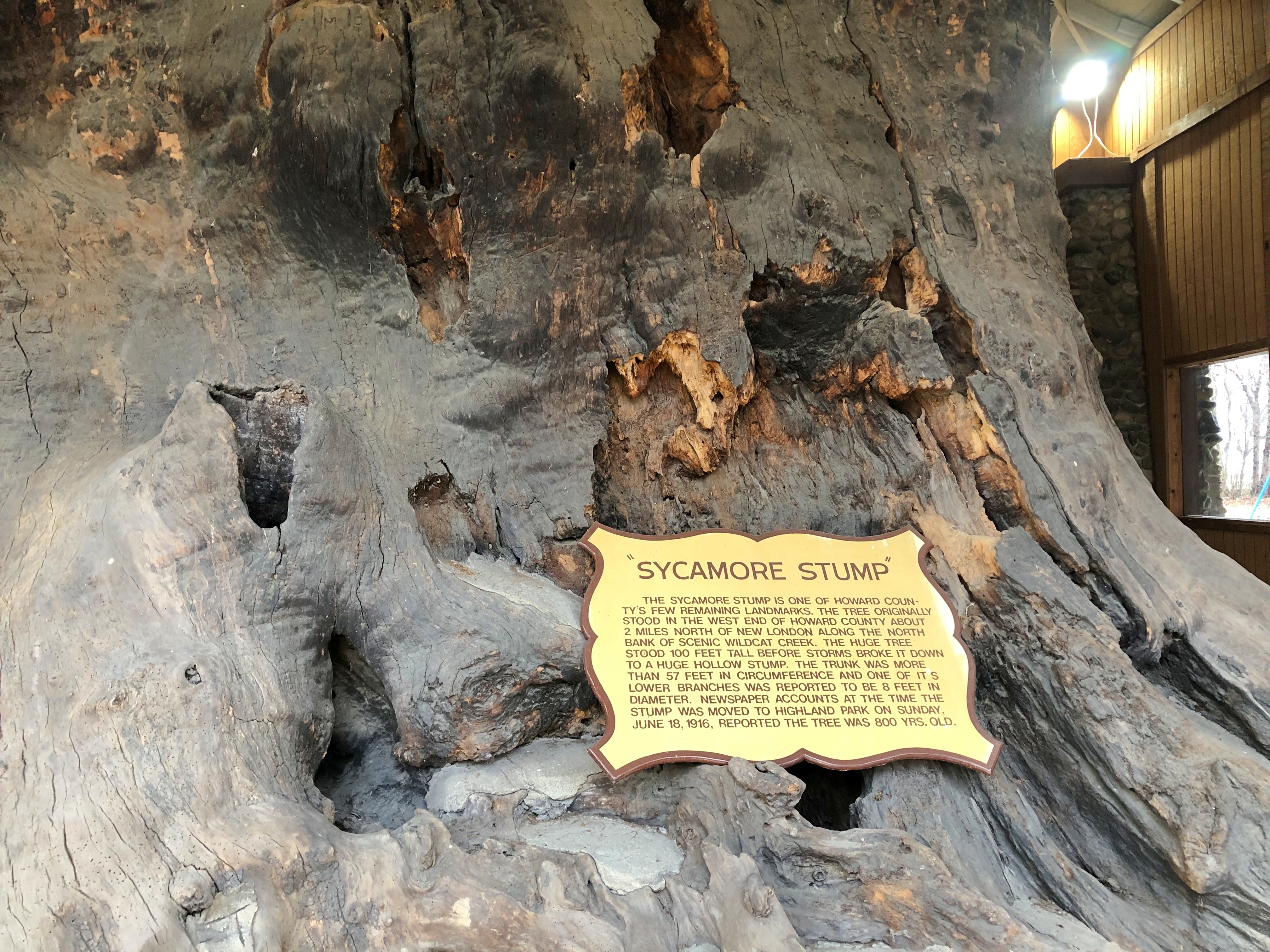
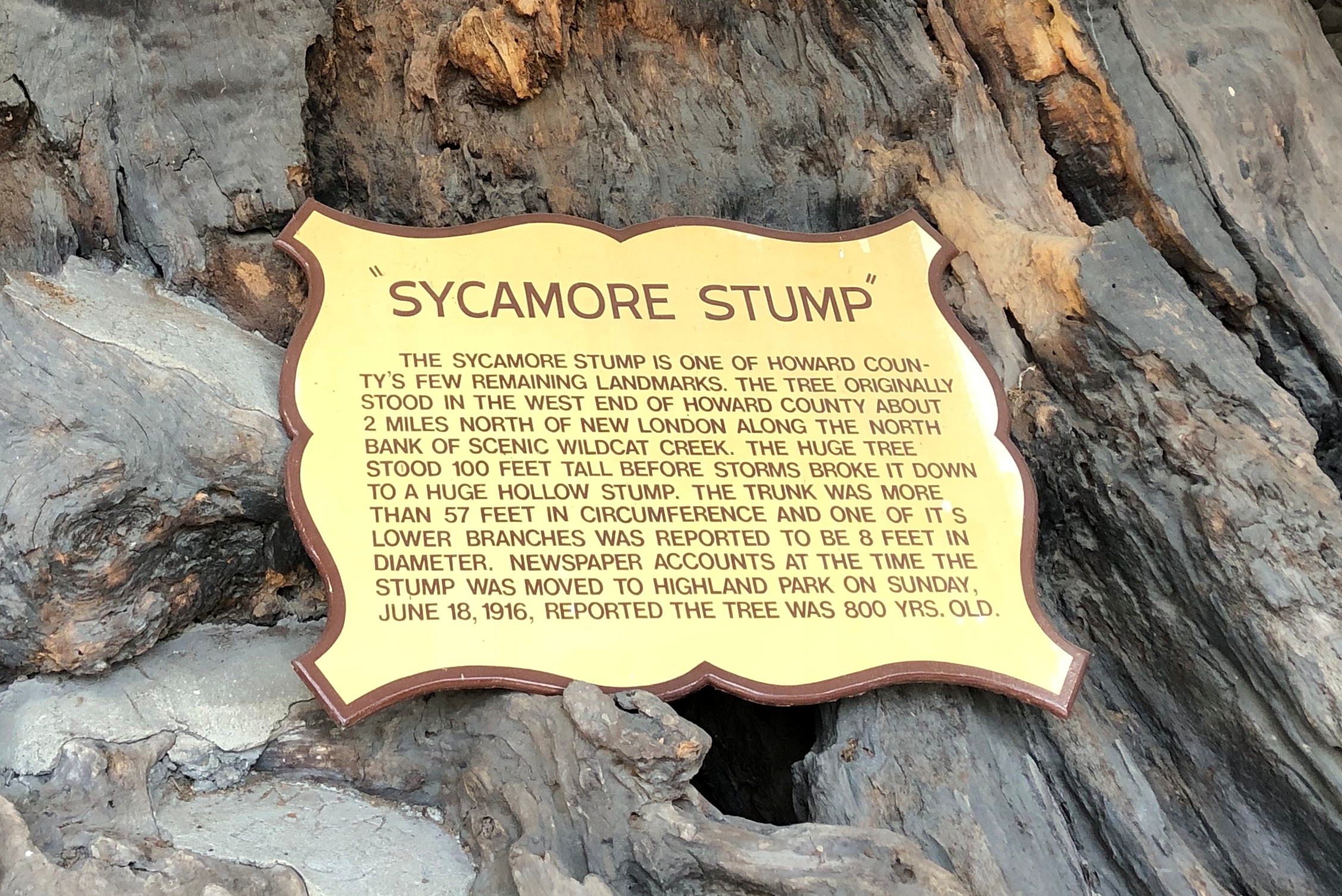
Not far from Ben, but in a different display room in the same building, is another former living thing famed (at least in Kokomo) for its size: The Sycamore Stump. Complete with explanatory notes on a sign.Sycamore Stump, Kokomo Sycamore Stump, Kokomo

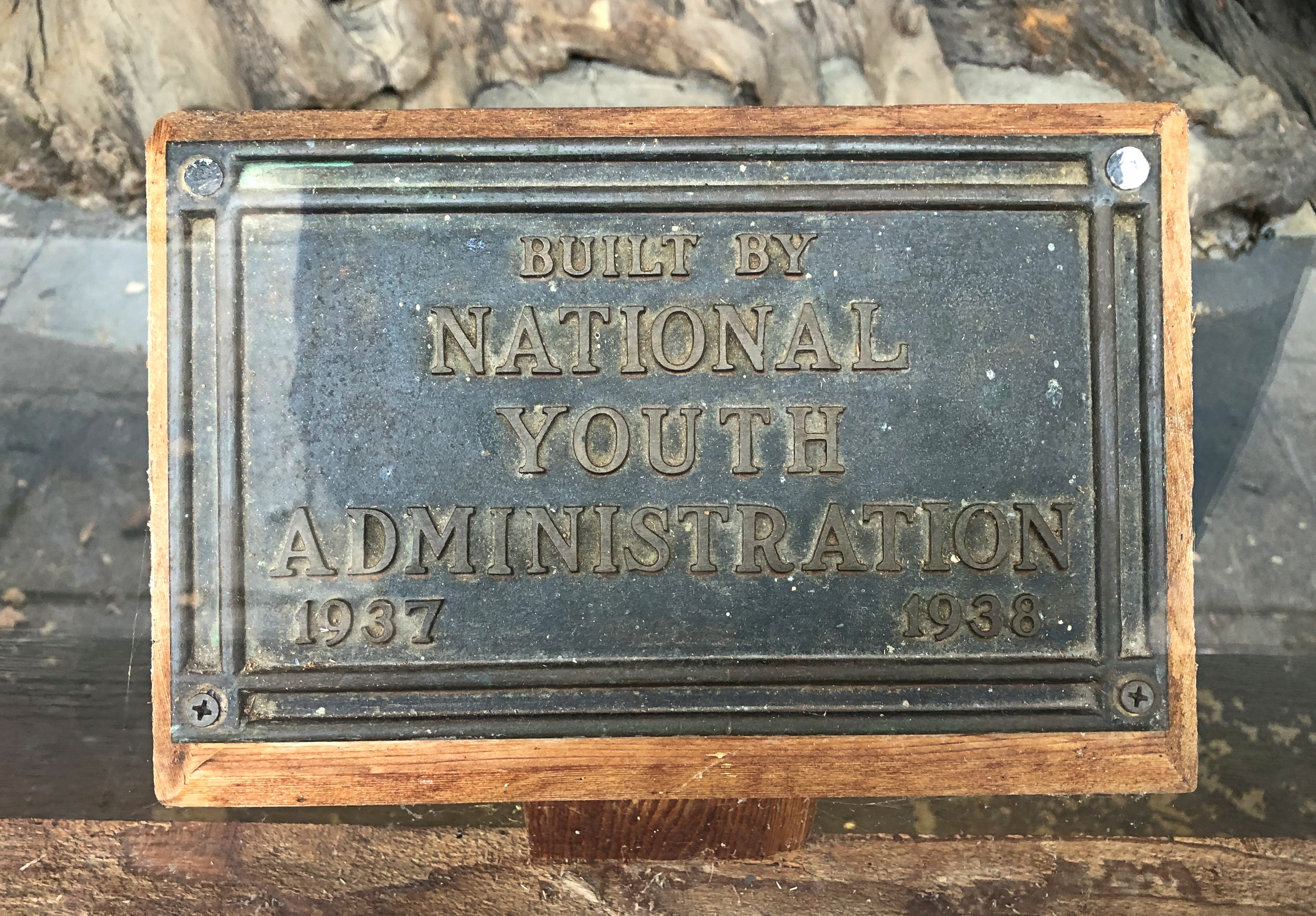
A plaque you don’t see often. At least not as much as the WPA or the CCC. In this case, it’s attached to the structure housing Old Ben and the Sycamore Stump.National Youth Administration

A New Deal jobs program for youth, including not only men, but women, and not only white youth, but blacks. It was part of the WPA for most of its existence.

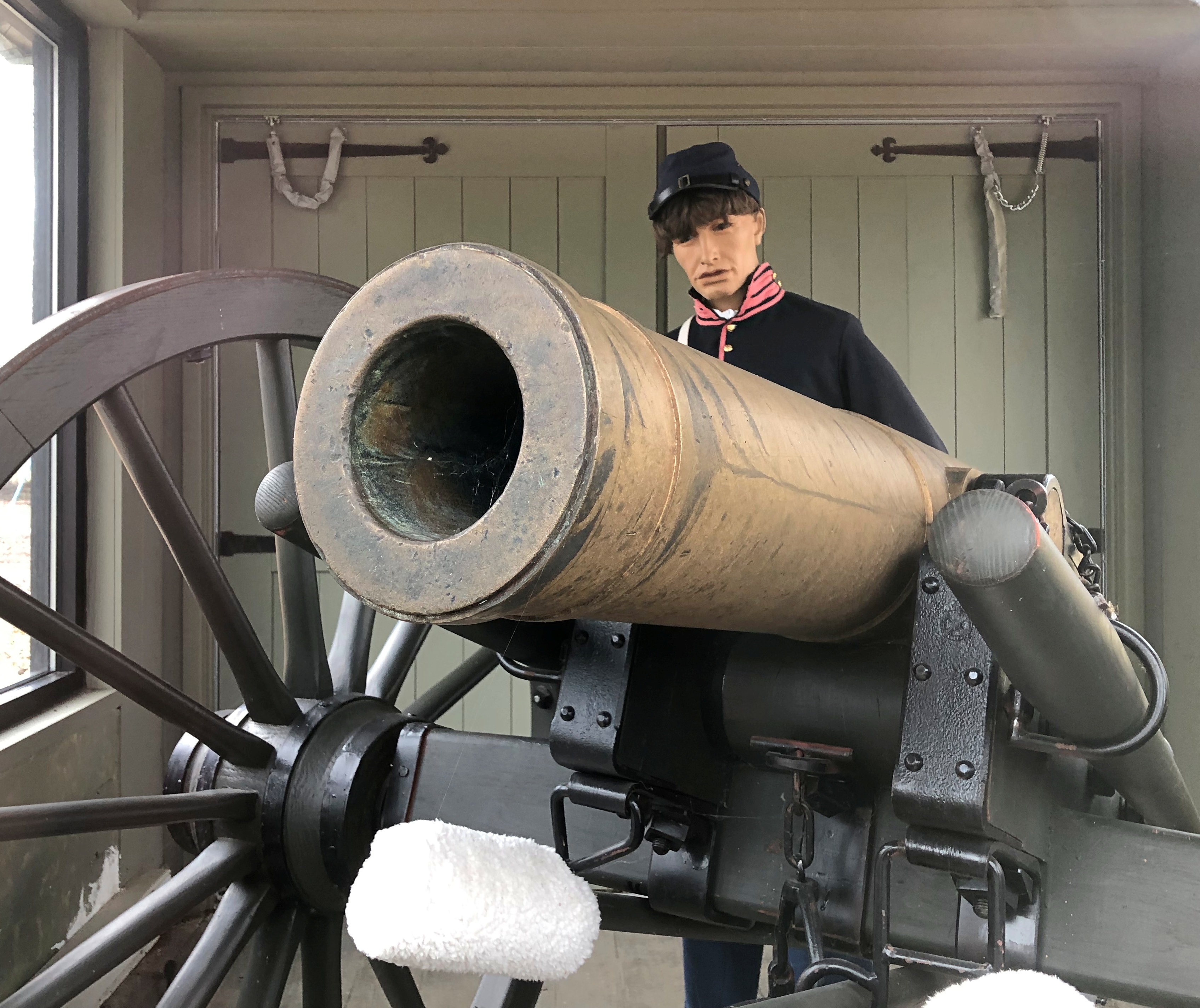
Yet another item on exhibit in the park is a former Confederate cannon, one of those prizes of war that lingers long after the war. This one is a little unusual in that it isn’t out in the elements, like many.Kokomo Cannon Kokomo Cannon

Made by Leeds Iron Foundry in New Orleans some time before the Union occupation of the city beginning in mid-62. The cannon’s plaque explains: “Leeds made a total of 49 cannons for the South. Nine of these were 12-pound howitzers. Of these nine, only three are known to exist. Two are in the National Park Service and ours!”

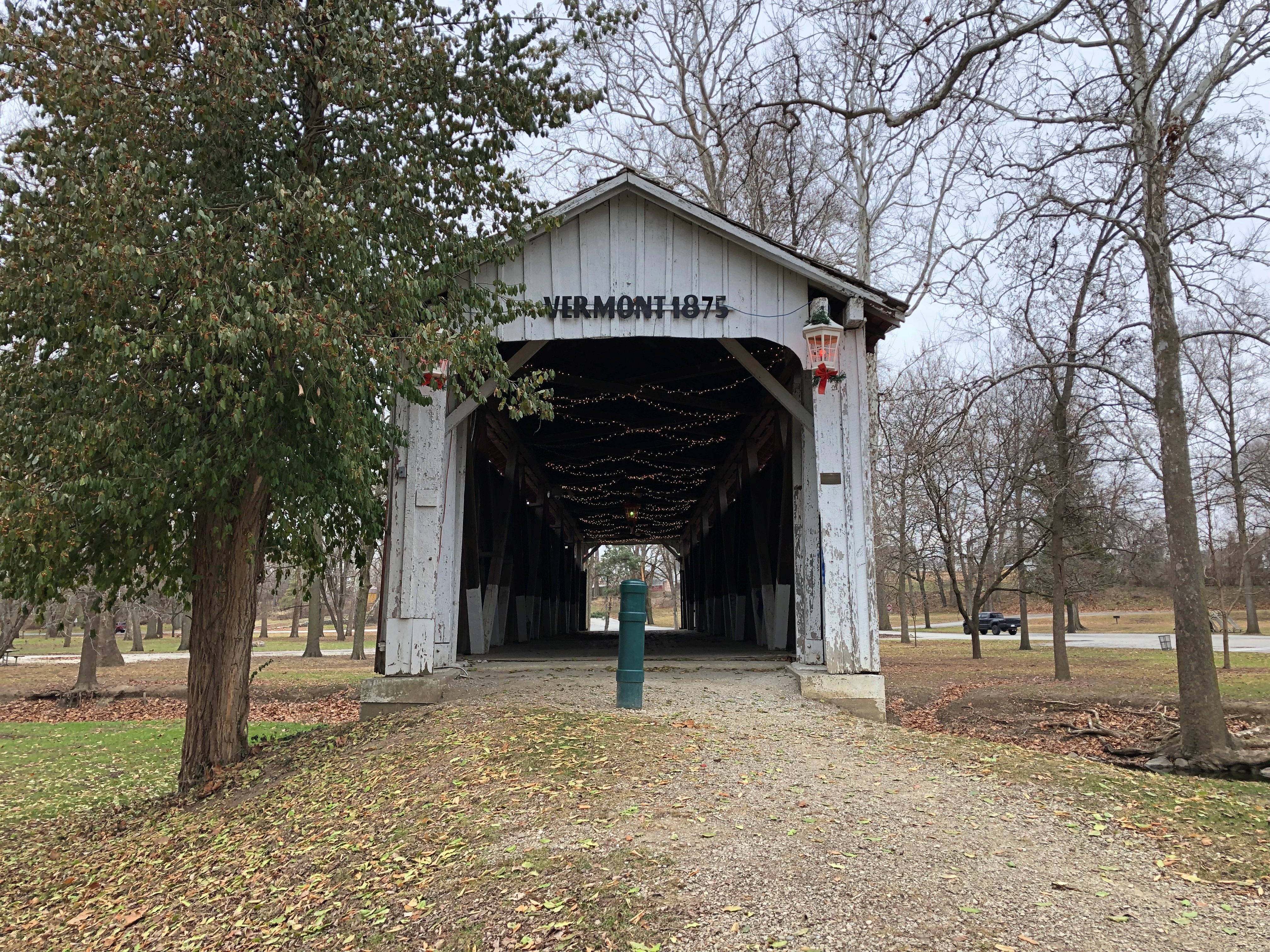
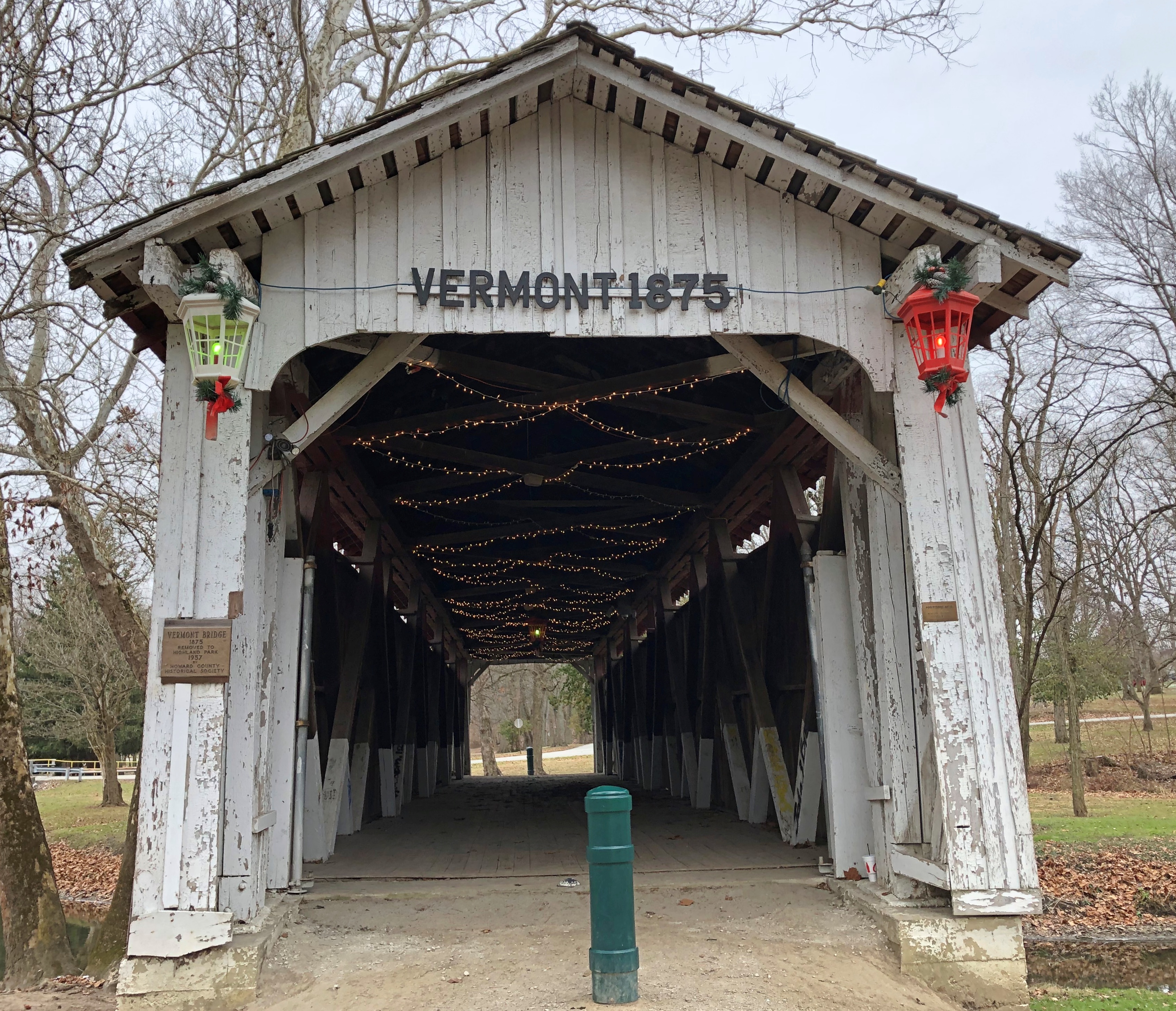
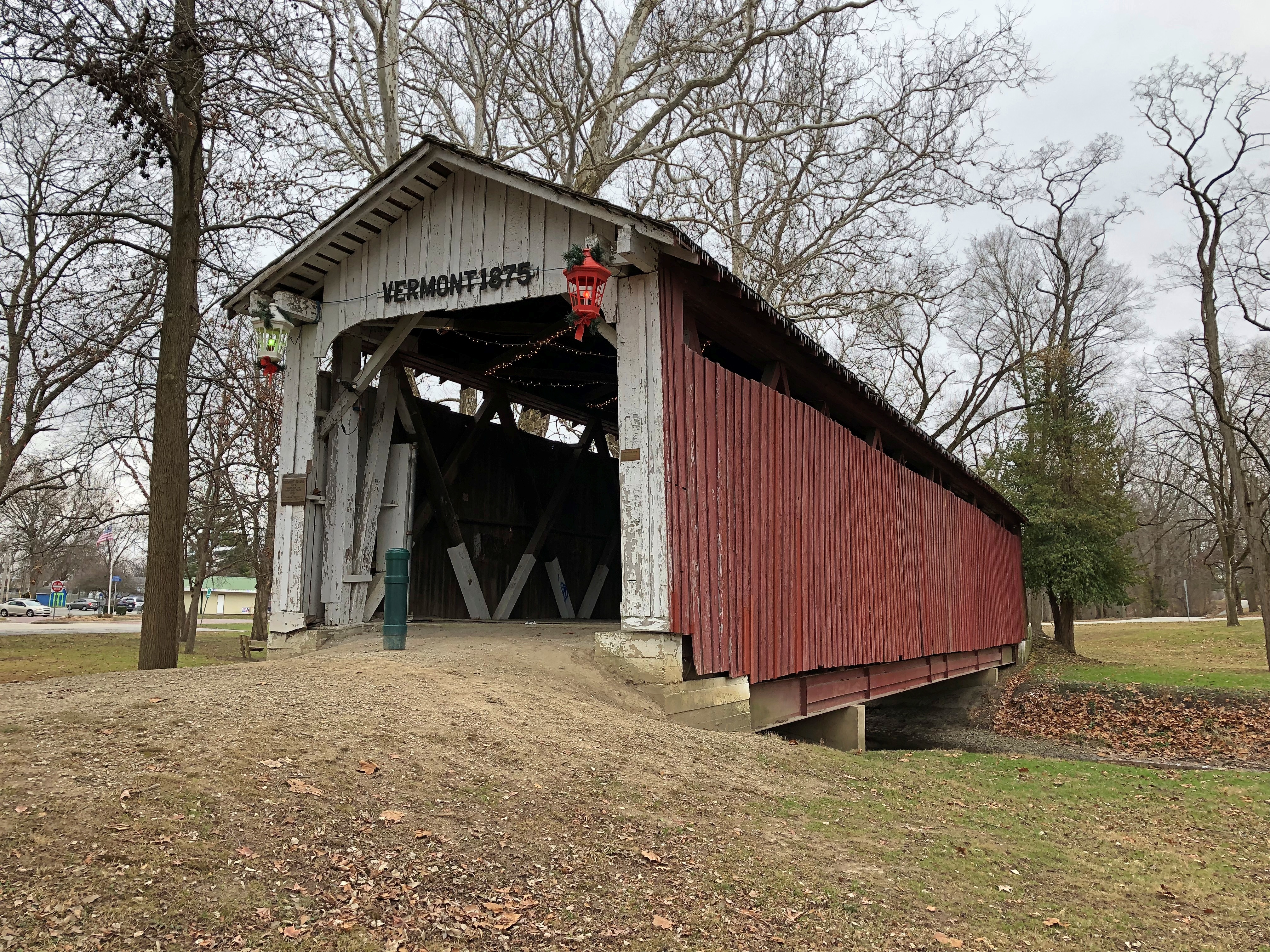
One more item in the park, and it’s even bigger than Old Ben or the Sycamore Stump. A relocated covered bridge.Vermont Bridge, Kokomo Vermont Bridge, Kokomo Vermont Bridge, Kokomo

The Vermont Bridge, which doesn’t refer to the New England state, but instead to Vermont, Indiana, near Kokomo, where it crossed Wildcat Creek. When threatened with demolition, the city of Kokomo paid to have the bridge moved to the park in 1957 and the park district has done some renovation over the years. By 2039, it will have been in this location as long as it was in its original location.

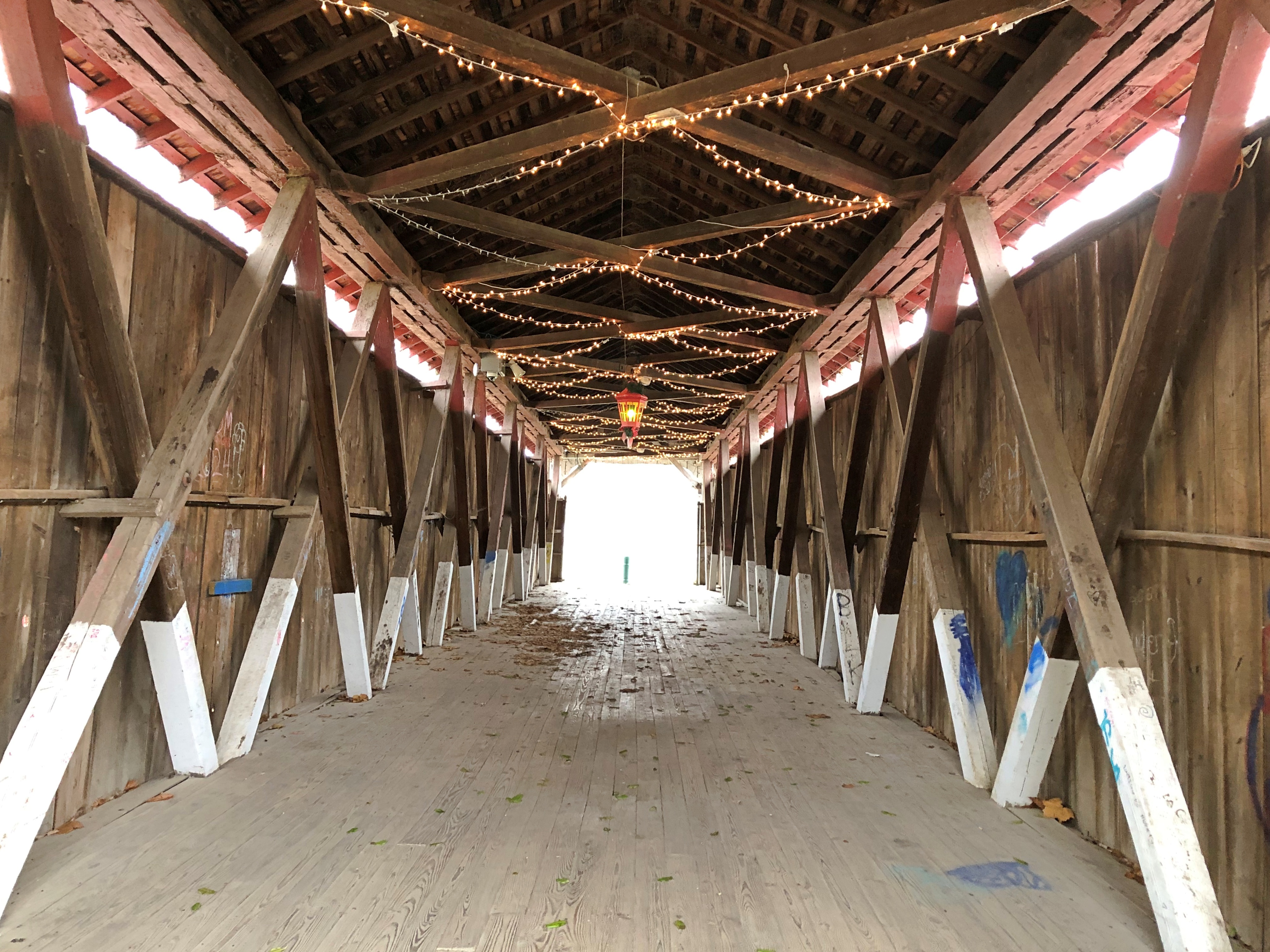
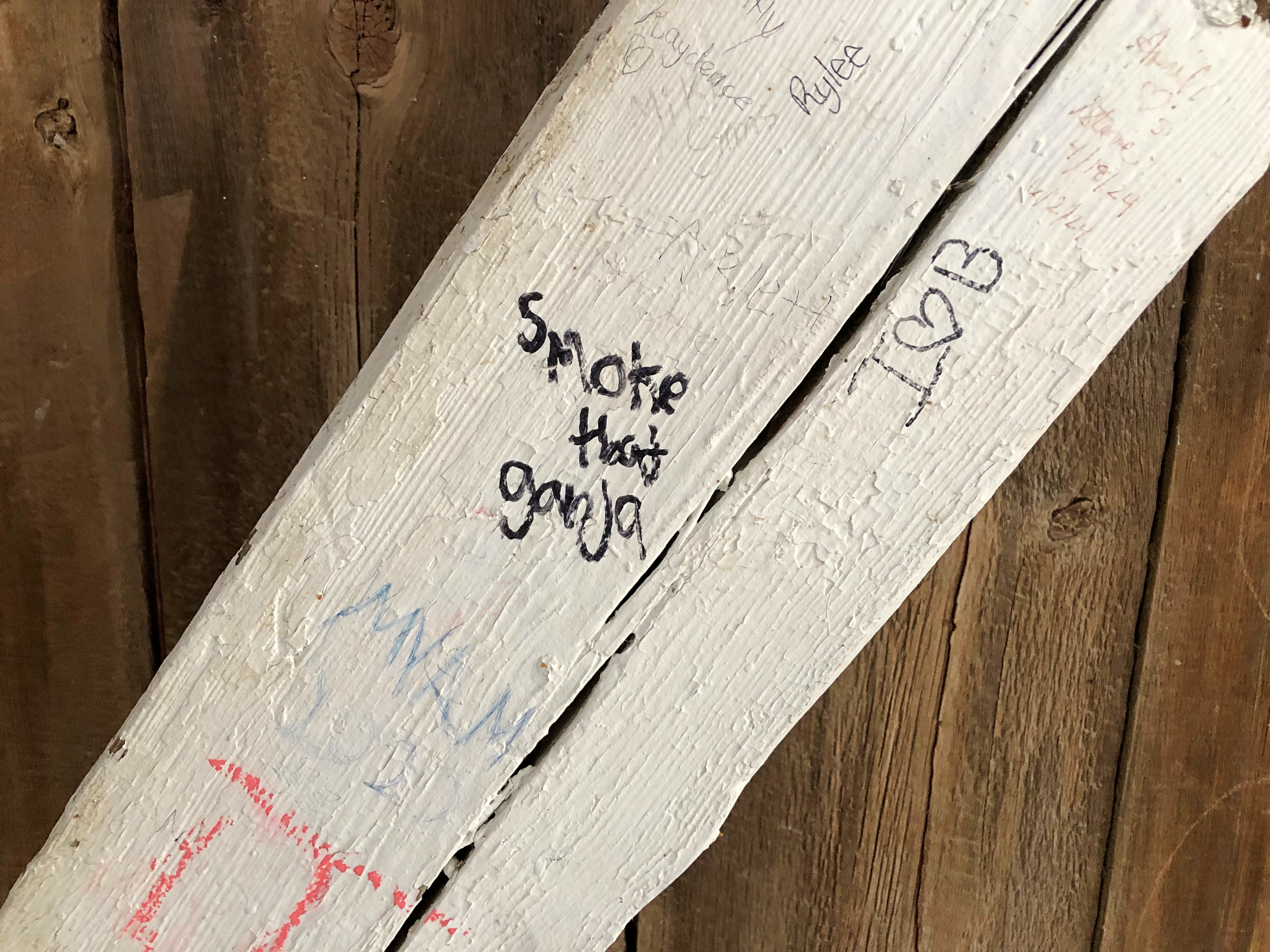
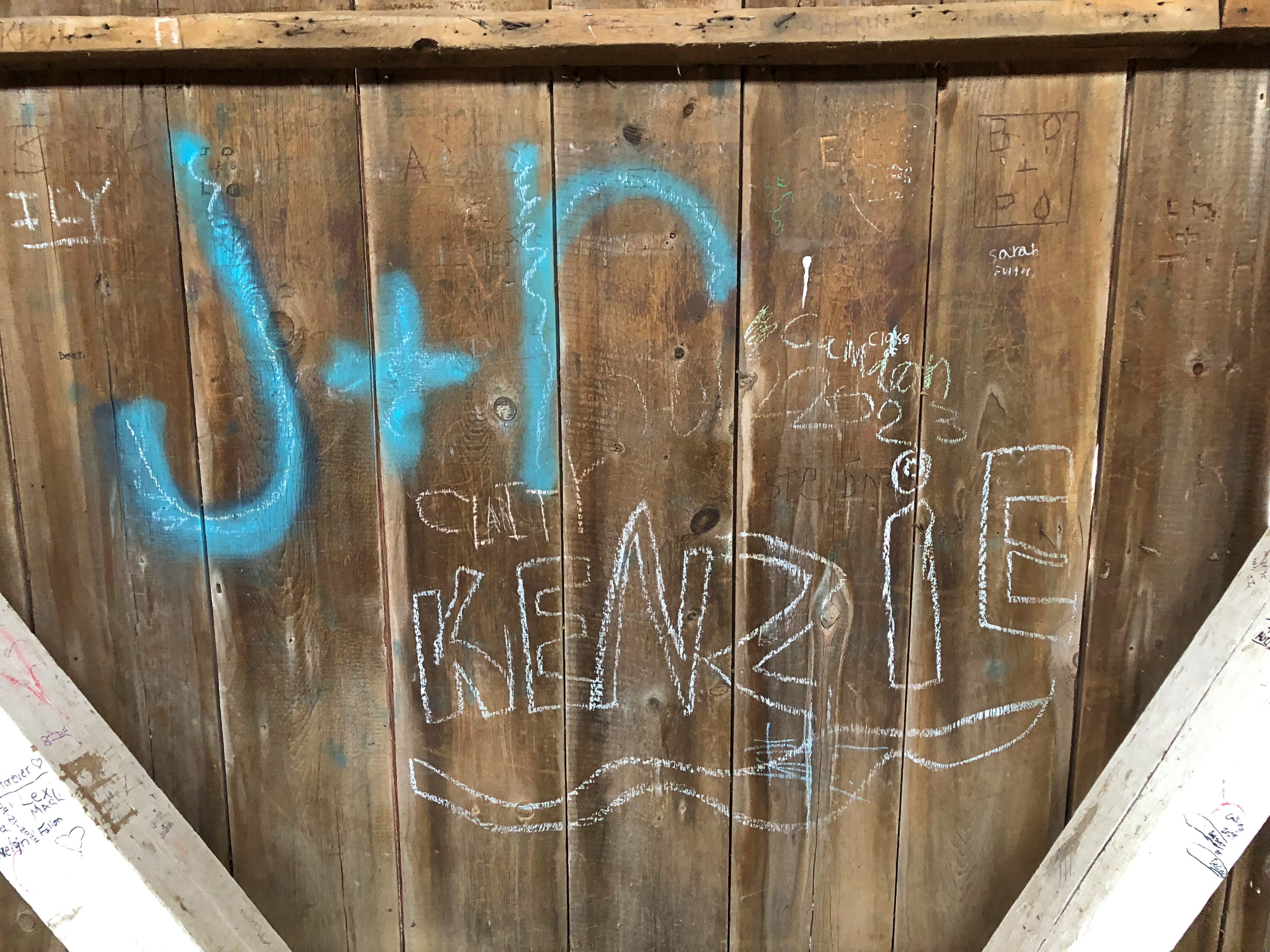
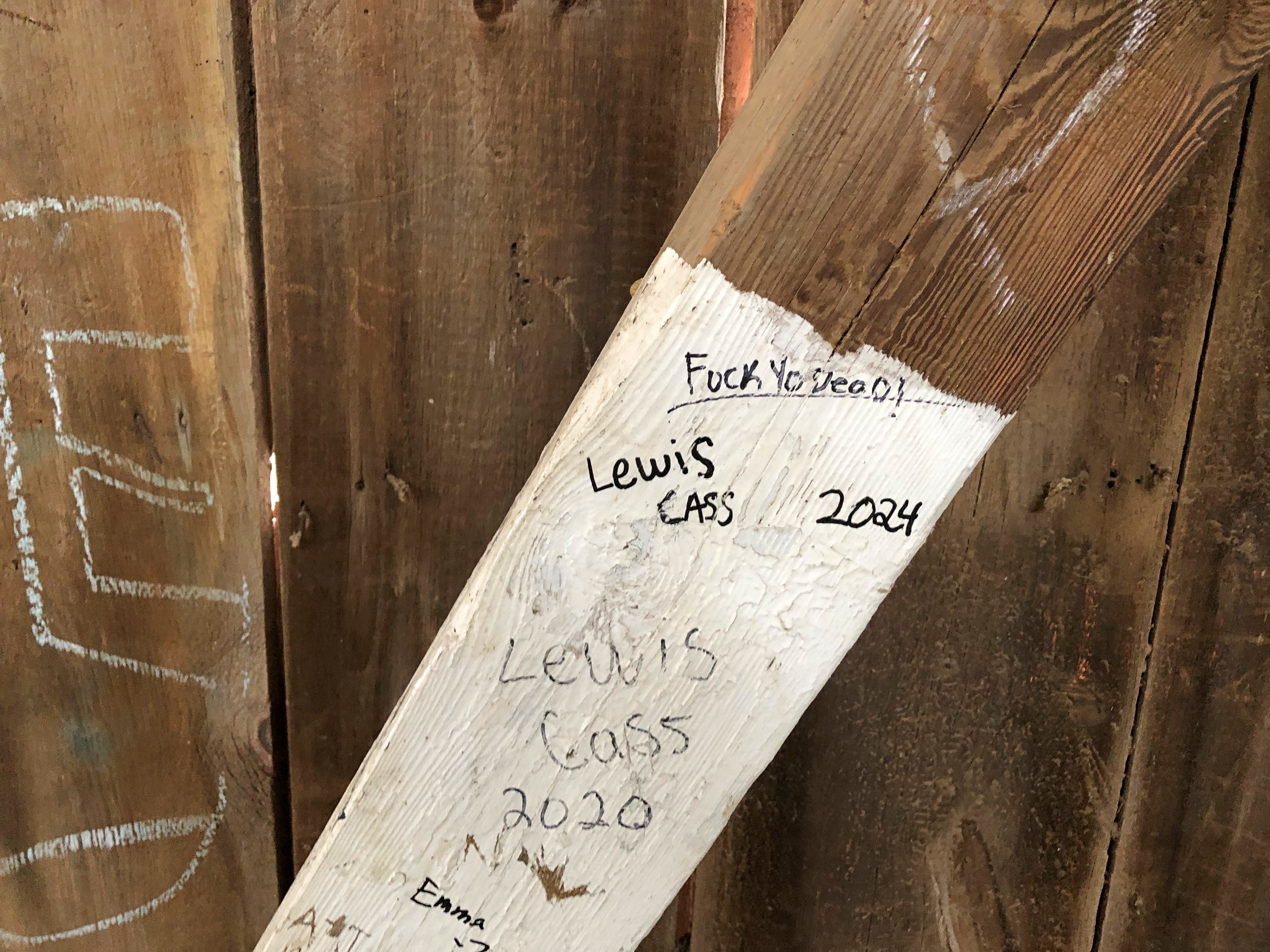
When you see a bridge, cross it if you can, especially if traffic is light. Inside included plenty of graffiti.Vermont Bridge, Kokomo Vermont Bridge, Kokomo Vermont Bridge, Kokomo

Lewis Cass? Like the 1848 presidential candidate who lost to Zachary Taylor?Vermont Bridge, Kokomo

Yes. I remembered seeing Lewis Cass High School as we drove through Walton, Indiana, which is up the road a piece from Kokomo.

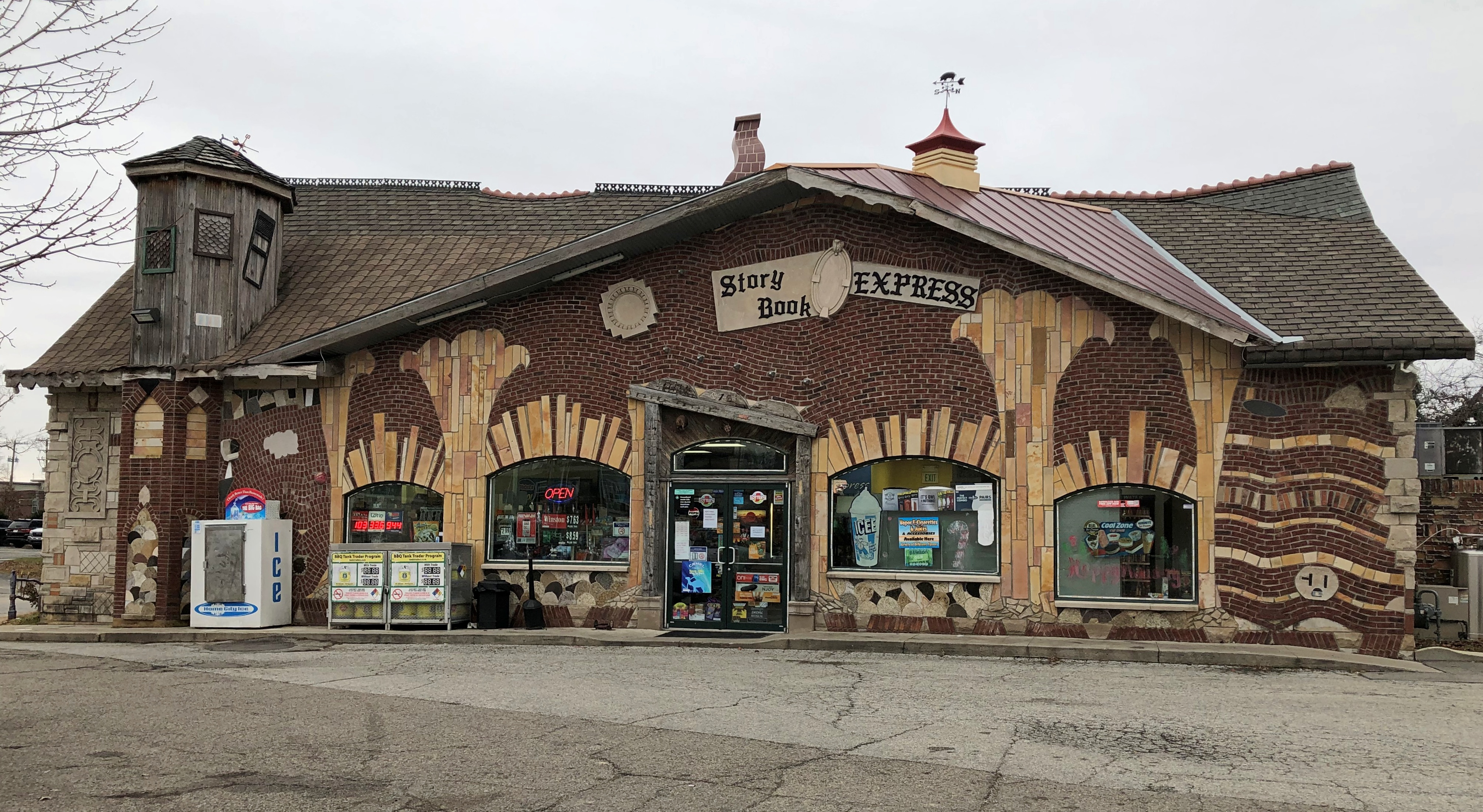
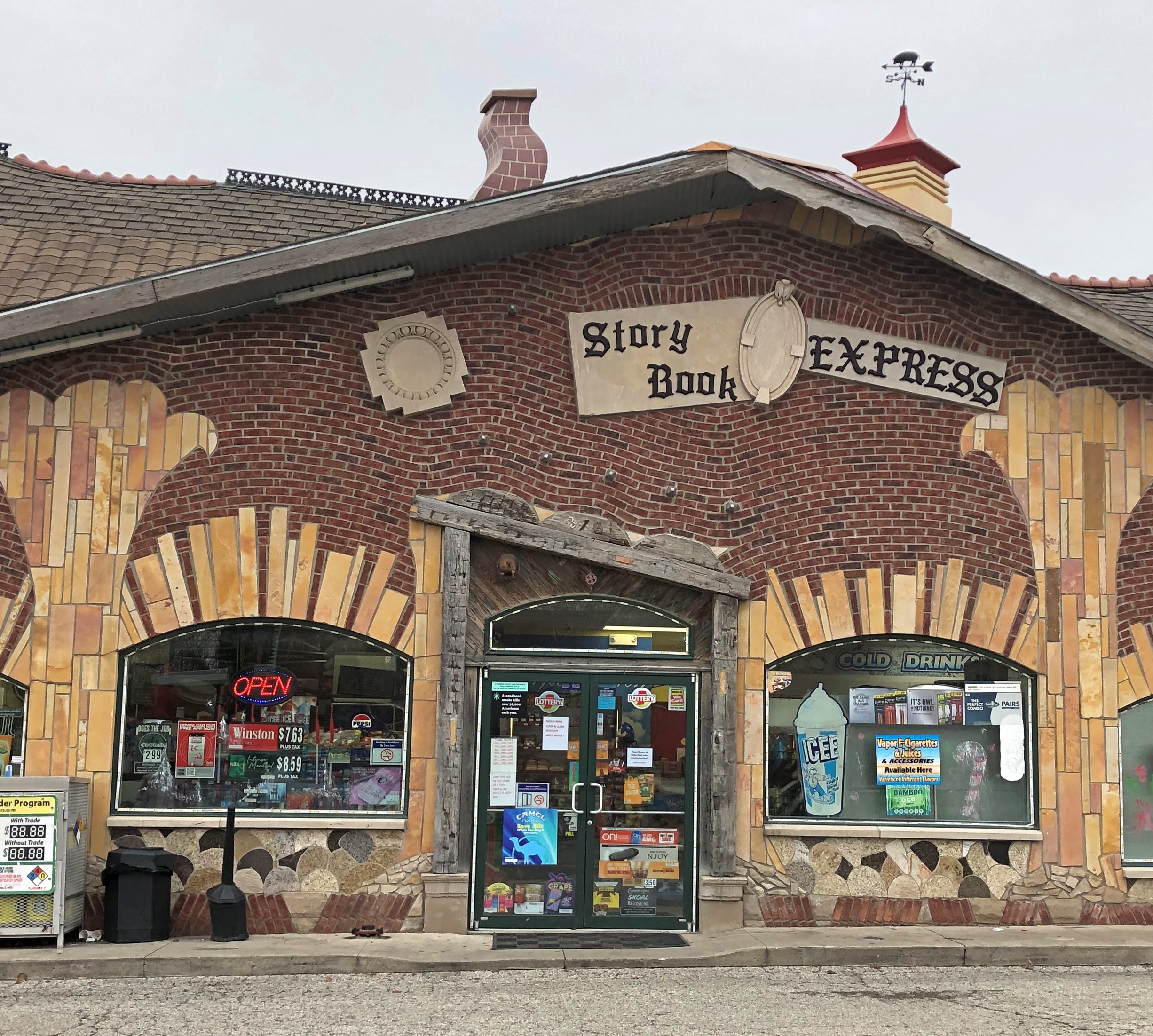
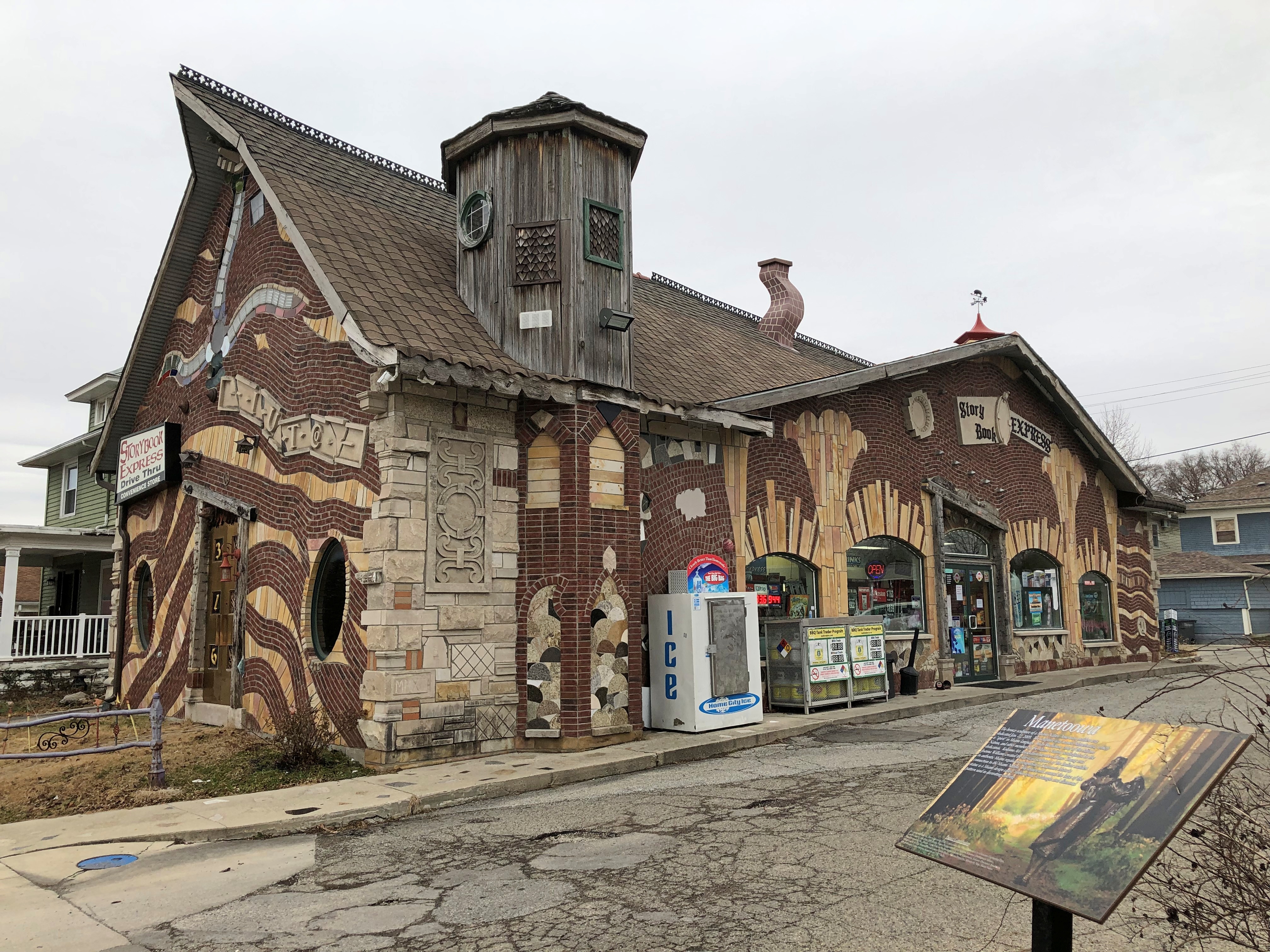
At the corner of Sycamore and Apperson streets in central Kokomo is Story Book Express.Story Book Express, Kokomo Story Book Express, Kokomo Story Book Express, Kokomo

Outside, a design on the whimsical side, using a lot of repurposed building materials from demolished structures, according to Fortune Cos. Inc., which mostly specializes in historic building restoration — and which is headed by Scott Pitcher, also of Kokomantis fame (at least in Kokomo). Inside, it’s a fairly ordinary convenience store. As the last place we visited in Kokomo, we went in for a look, and I knew I had to support this oddball convenience store in some way, so I bought a pack of gum for the drive back.

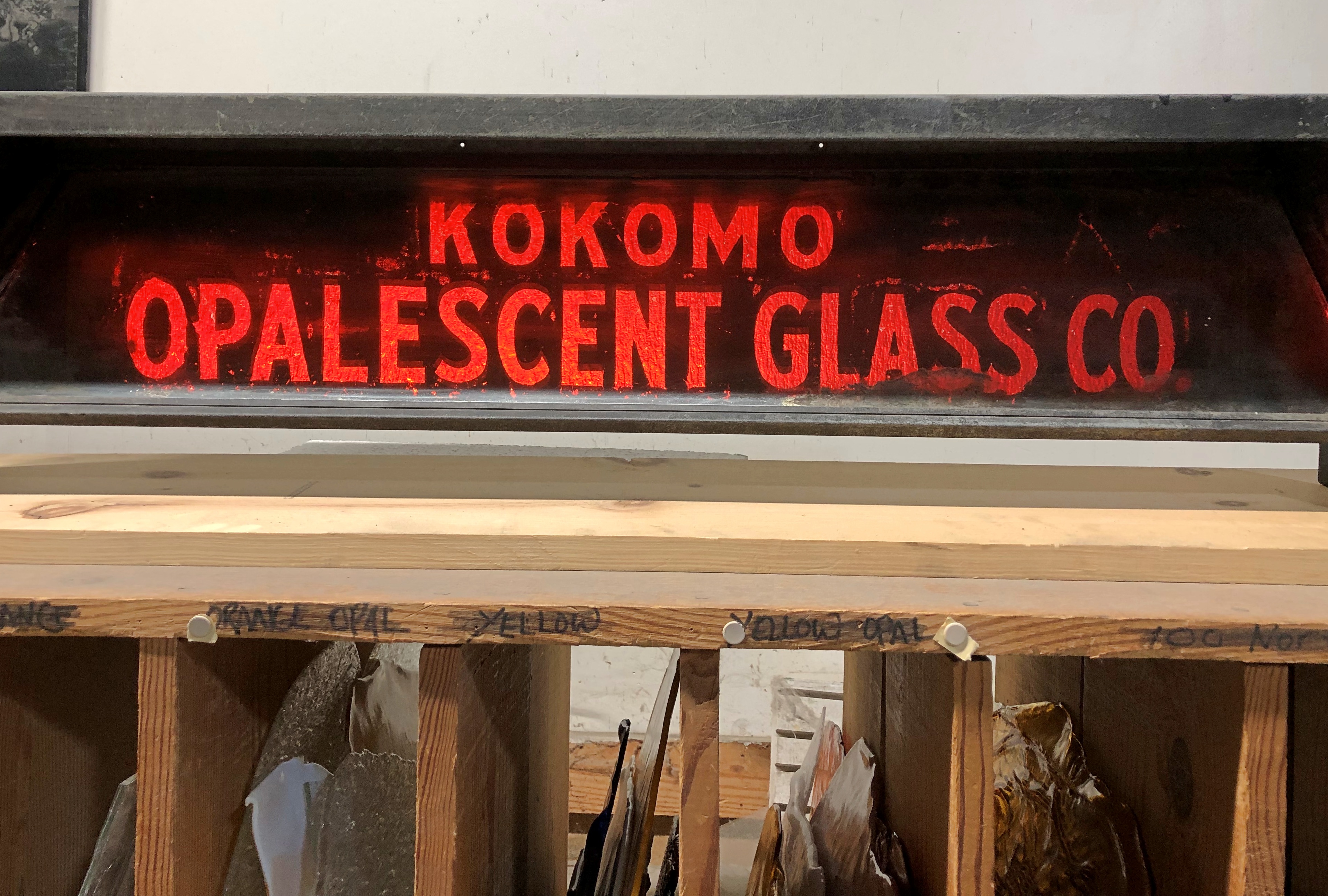
Kokomo Opalescent Glass Co.

Sounds of the northwest suburbs in the seconds after midnight, New Year’s Day 2025.

A little way down our block, a knot of school-aged kids were in a front yard just after midnight, yelping and whooping and tooting horns as the fireworks popped all around the neighborhood; you can hear them on the third recording. The father of the house stood in the front door, up a few steps. Soon the kids headed up the steps to go inside, and I noticed gold-colored crowns on all of their heads, including the dad.

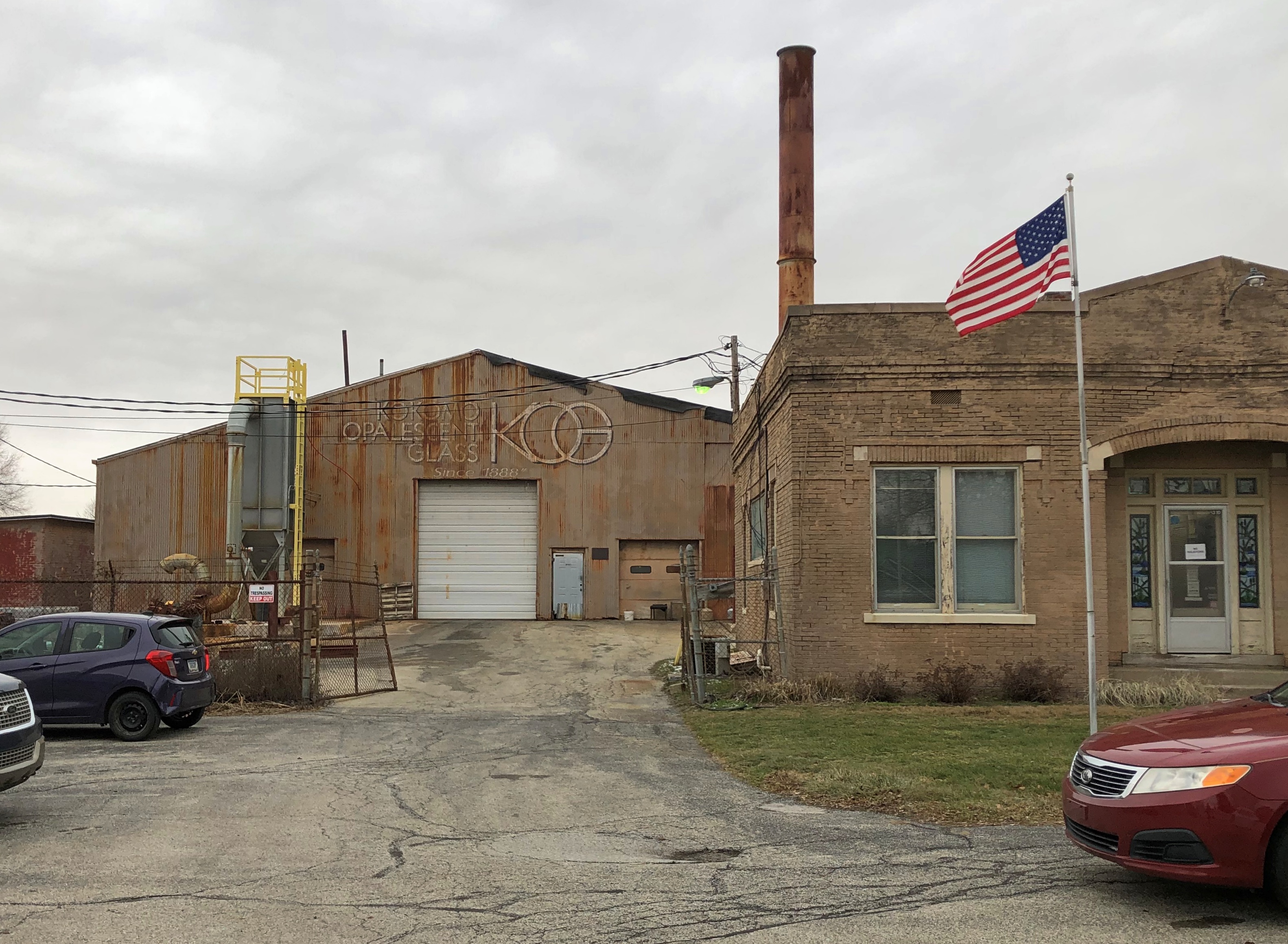
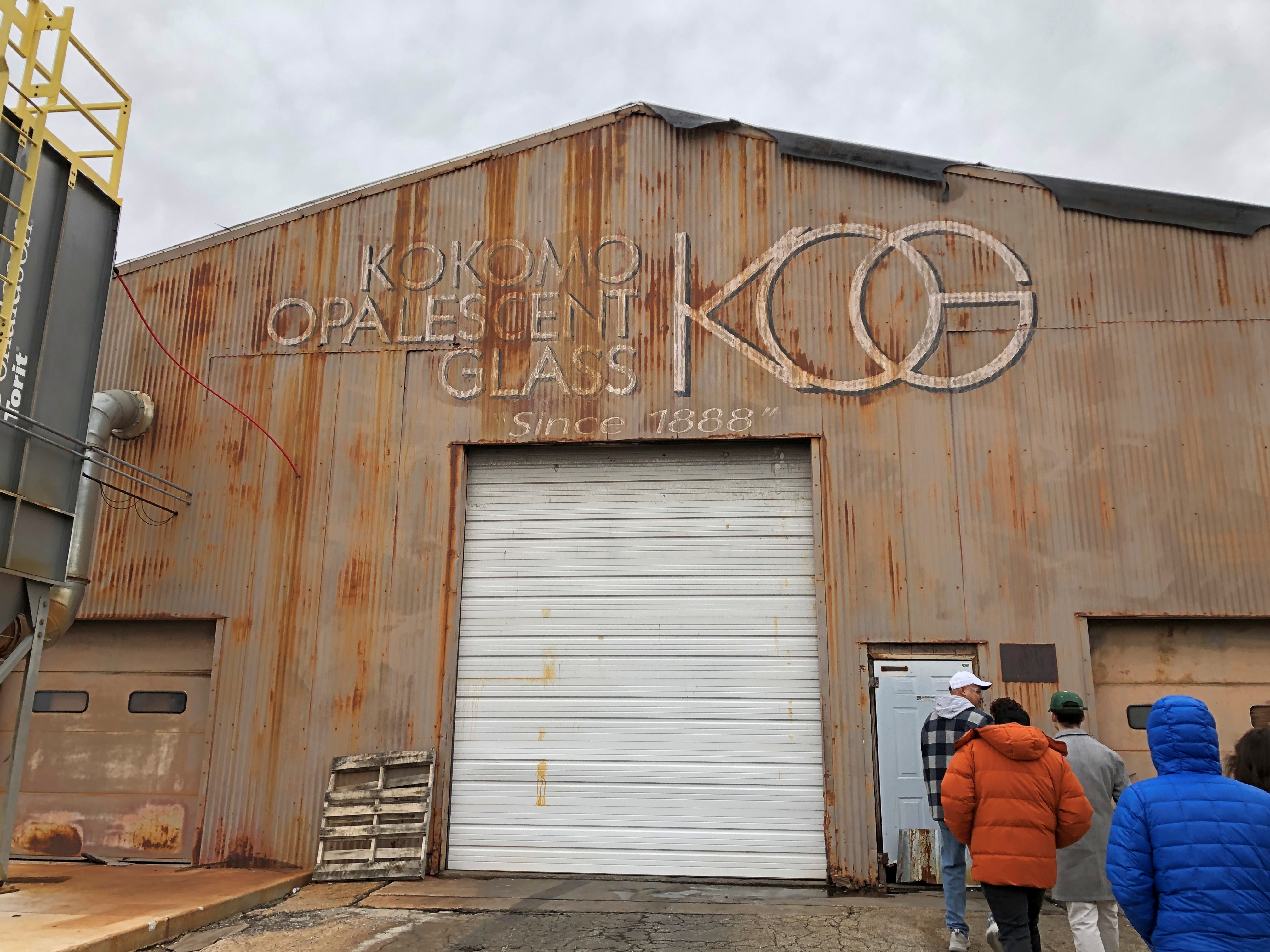
On the Monday before Christmas, we found our way to Kokomo Opalescent Glass Co., which is housed in an unpretentious complex in an unpretentious neighborhood in that town.KOG KOG

It’s another legacy of the Kokomo Gas Boom. A French glass chemist named Charles Henry found his way to Kokomo in the late 1880s, taking advantage of free natural gas to set up a glassmaking factory. That arrangement didn’t last, since Henry was more a technical man than a manager, and a heavy drinker besides, so he lost the factory and thus didn’t become the glass baron of Kokomo. But under other management the company has endured. KOG abides, you could say.

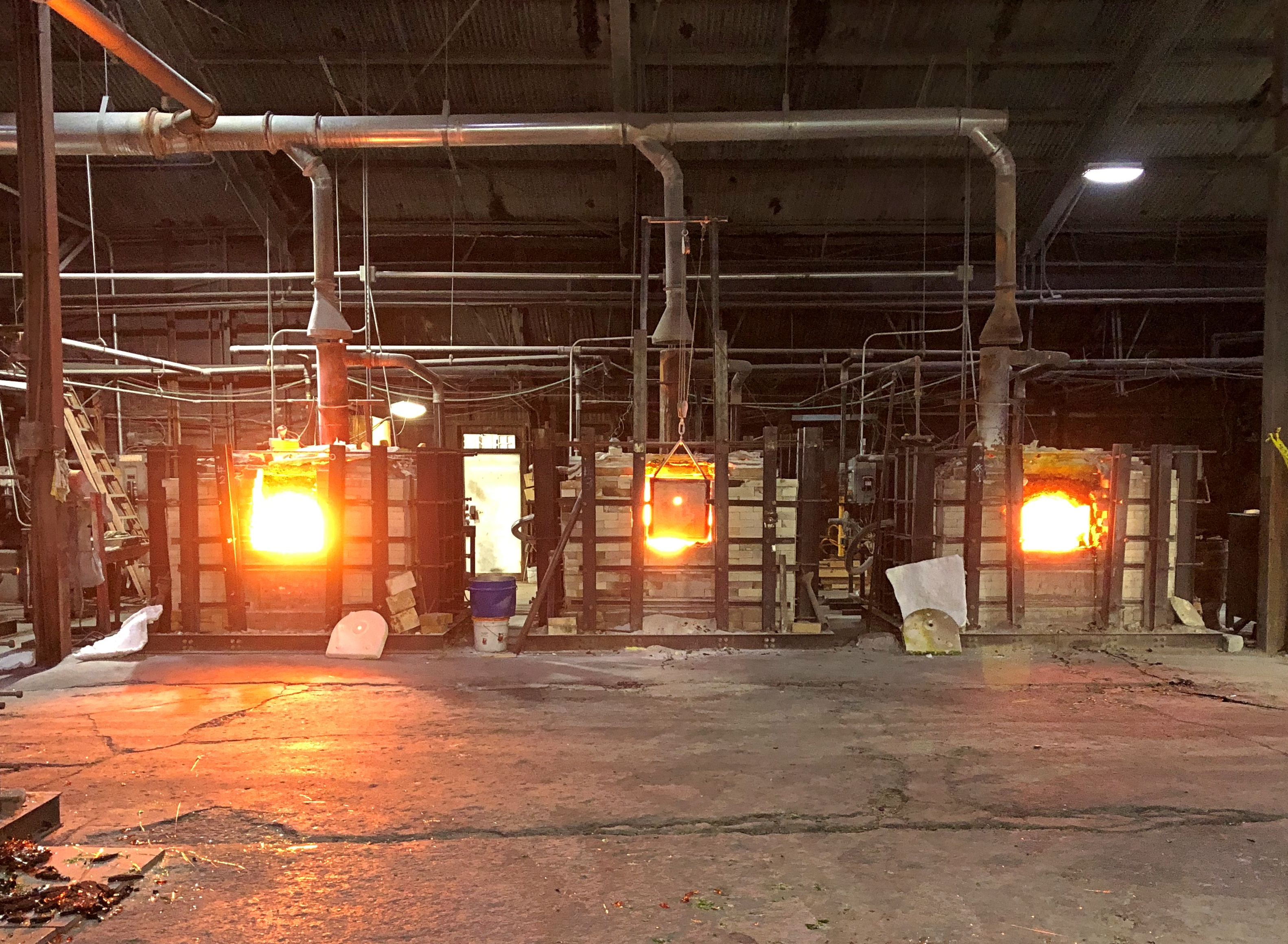
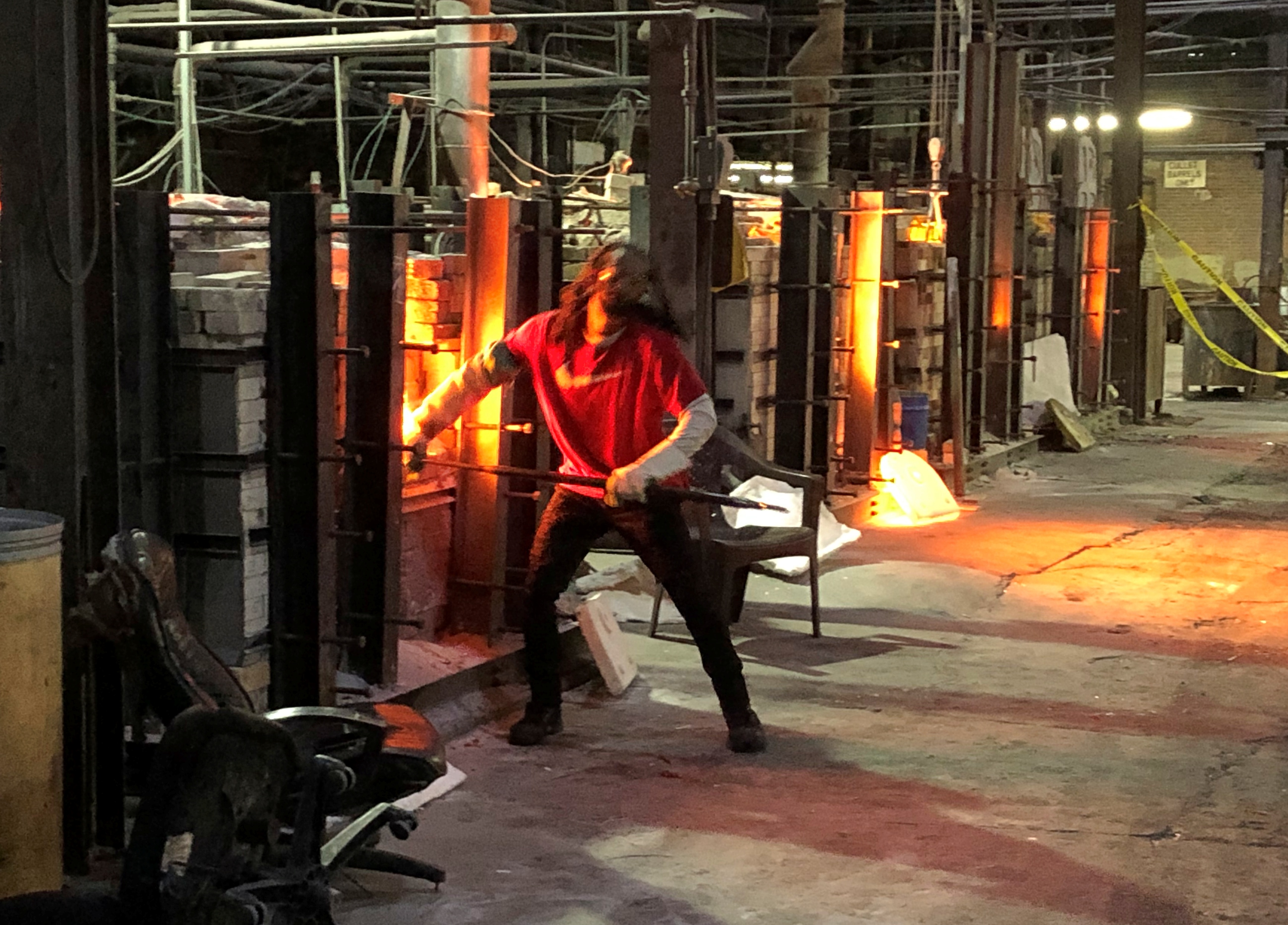
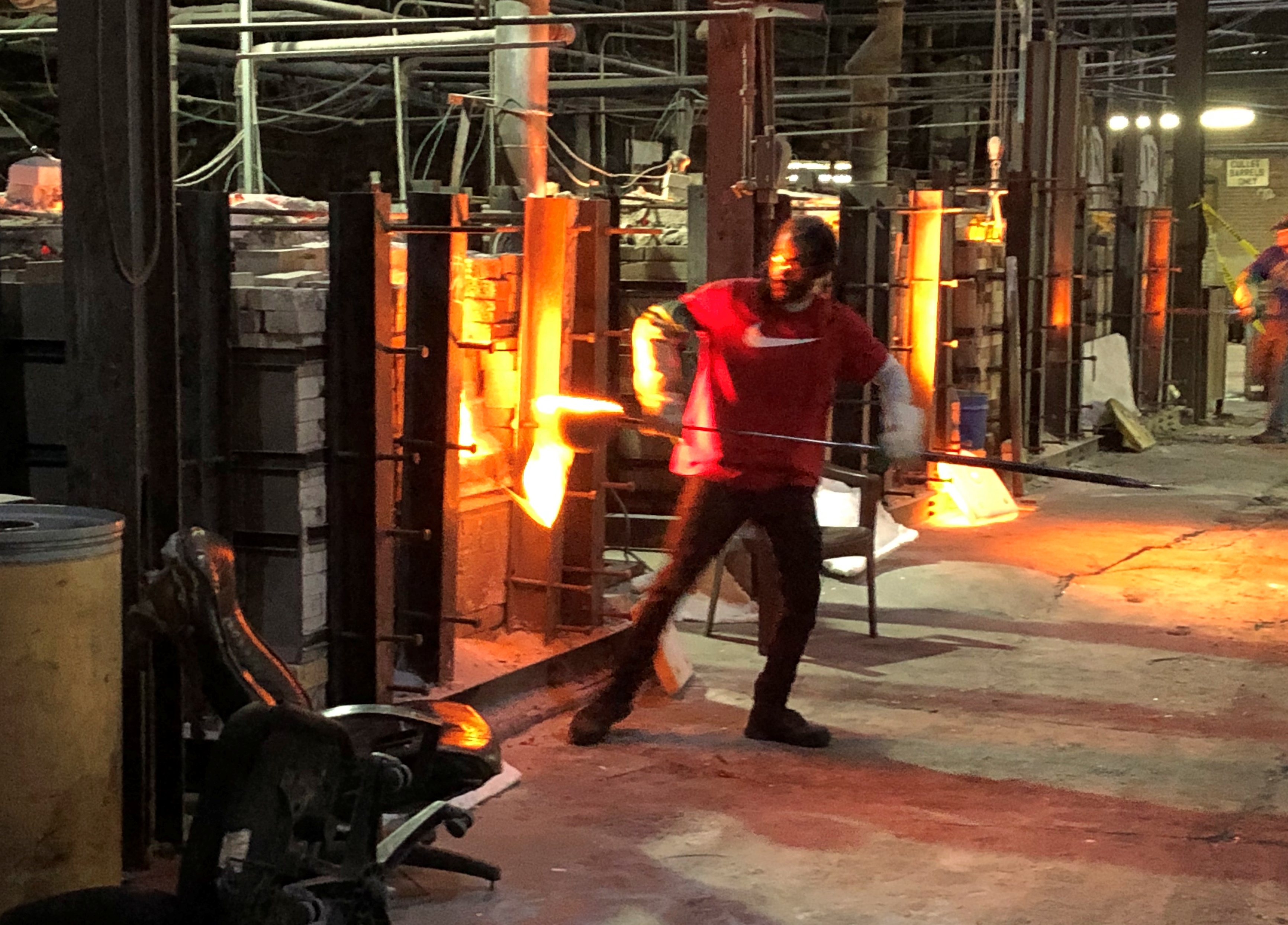
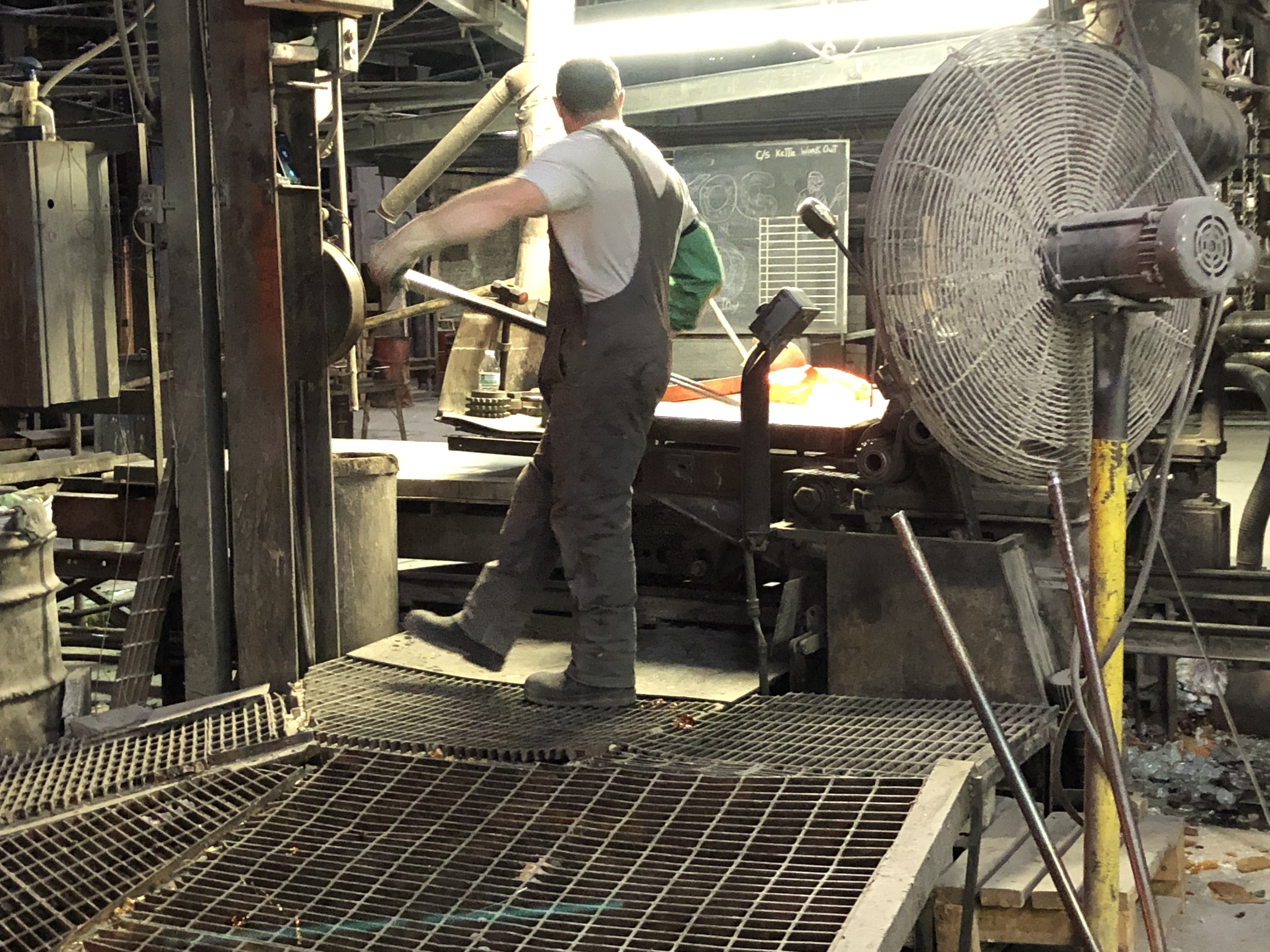
Three of the maw-of-hell furnaces for melting glass. There were others.KOG

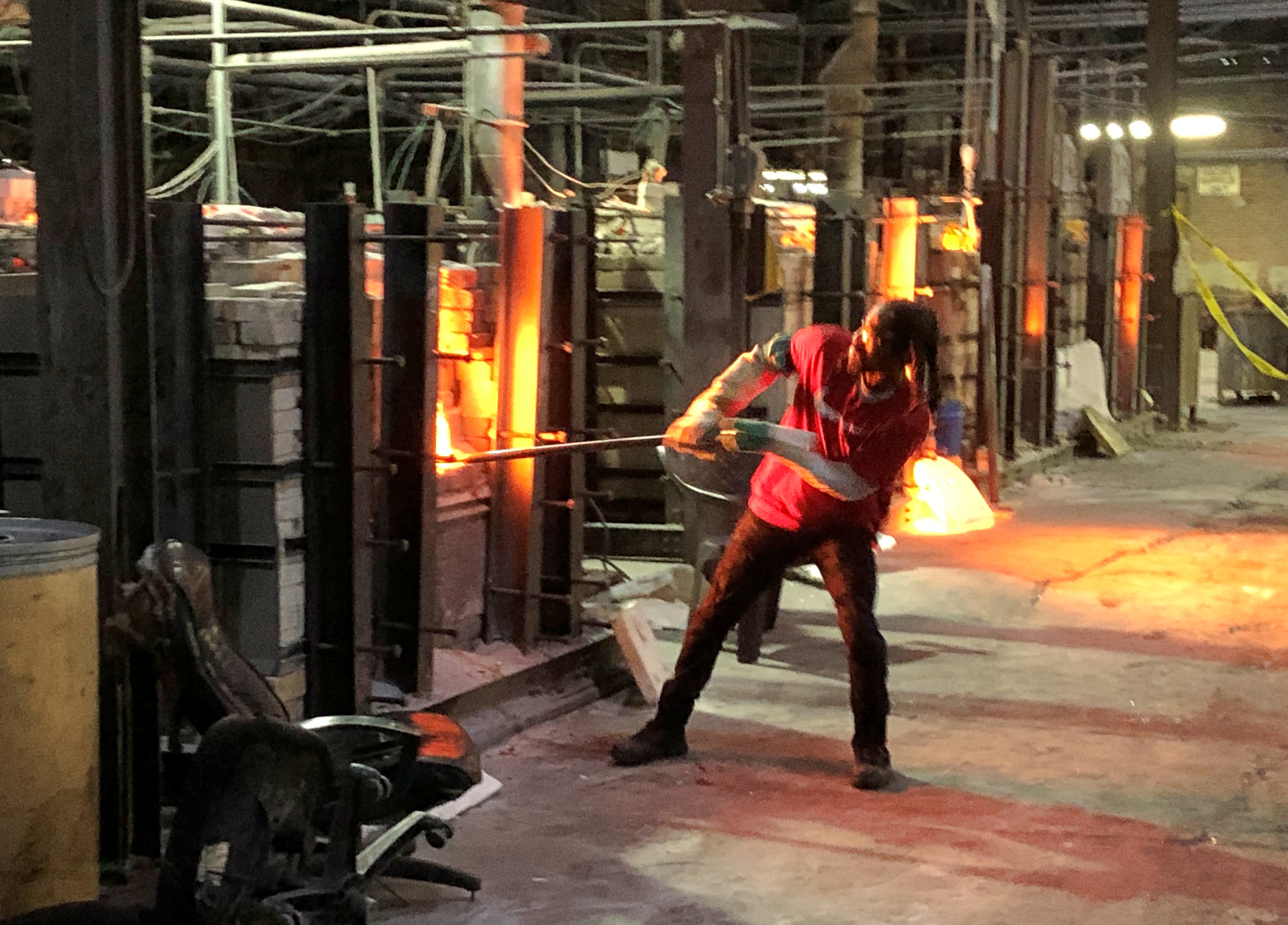
“Founded in 1888, KOG is the oldest producer of hand cast, cathedral and opalescent glass in the United States… known worldwide for our high-quality, hand-mixed sheet glass. KOG… has hundreds of color recipes, documented color combinations and numerous textures and densities,” the company web site says, with an illustration of handling molten glass better than I could photograph.

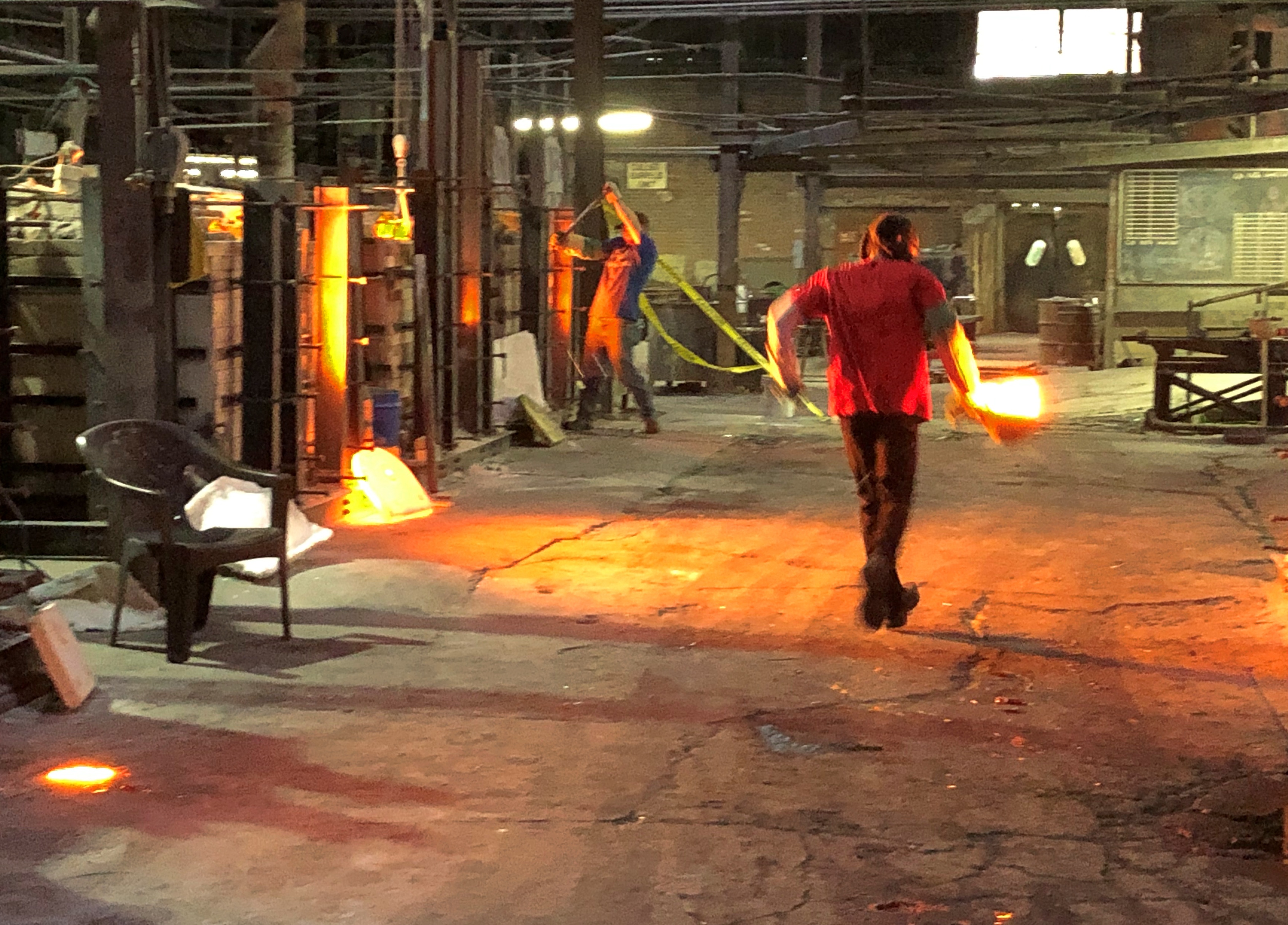
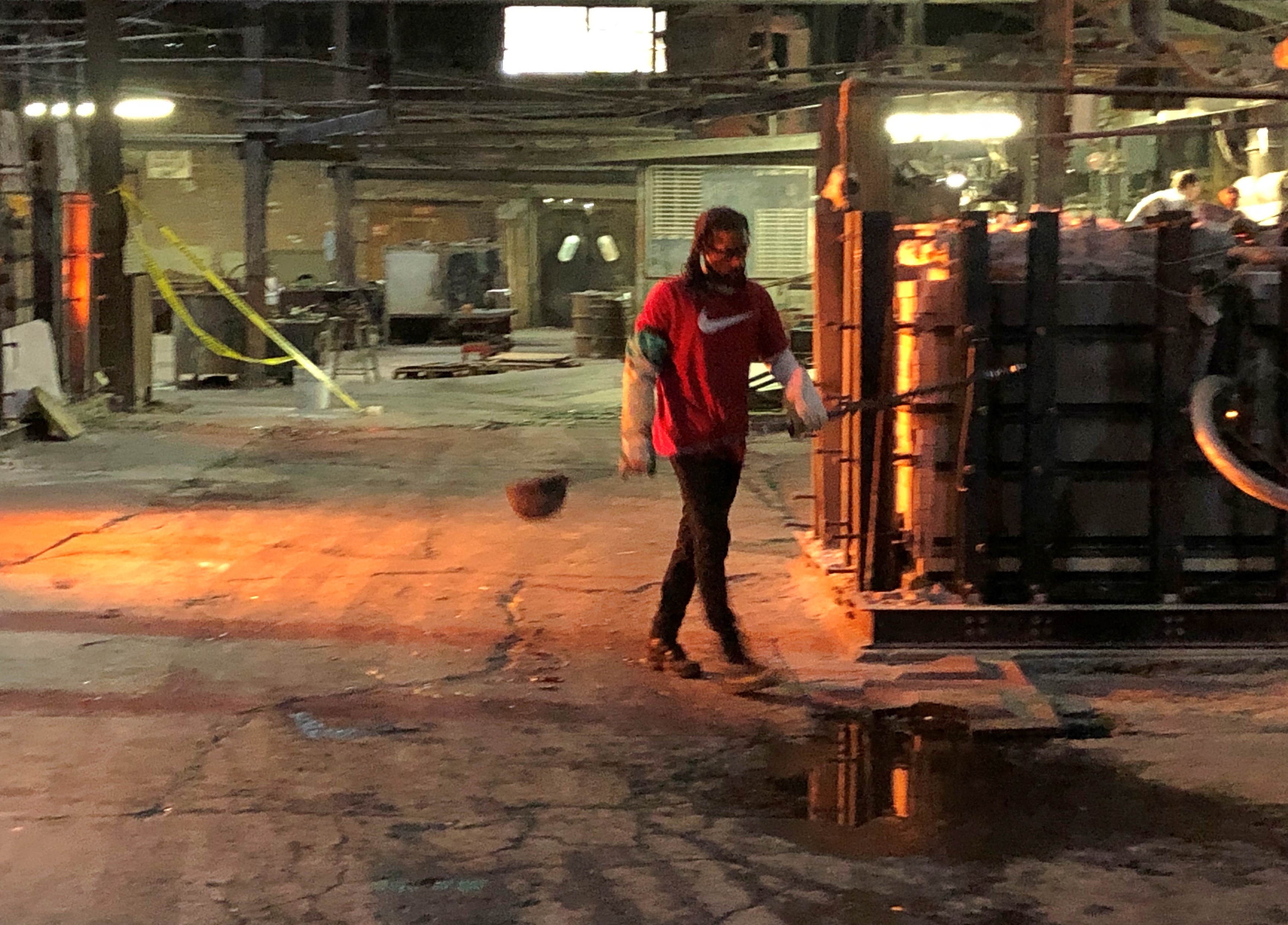
Not that I didn’t try.KOG KOG

Out it comes.KOG KOGKOG

After the molten load has been dropped off at a suitable table-like surface to cool and be shaped, other glass experts do what they do.KOG

Such as this fellow.KOG

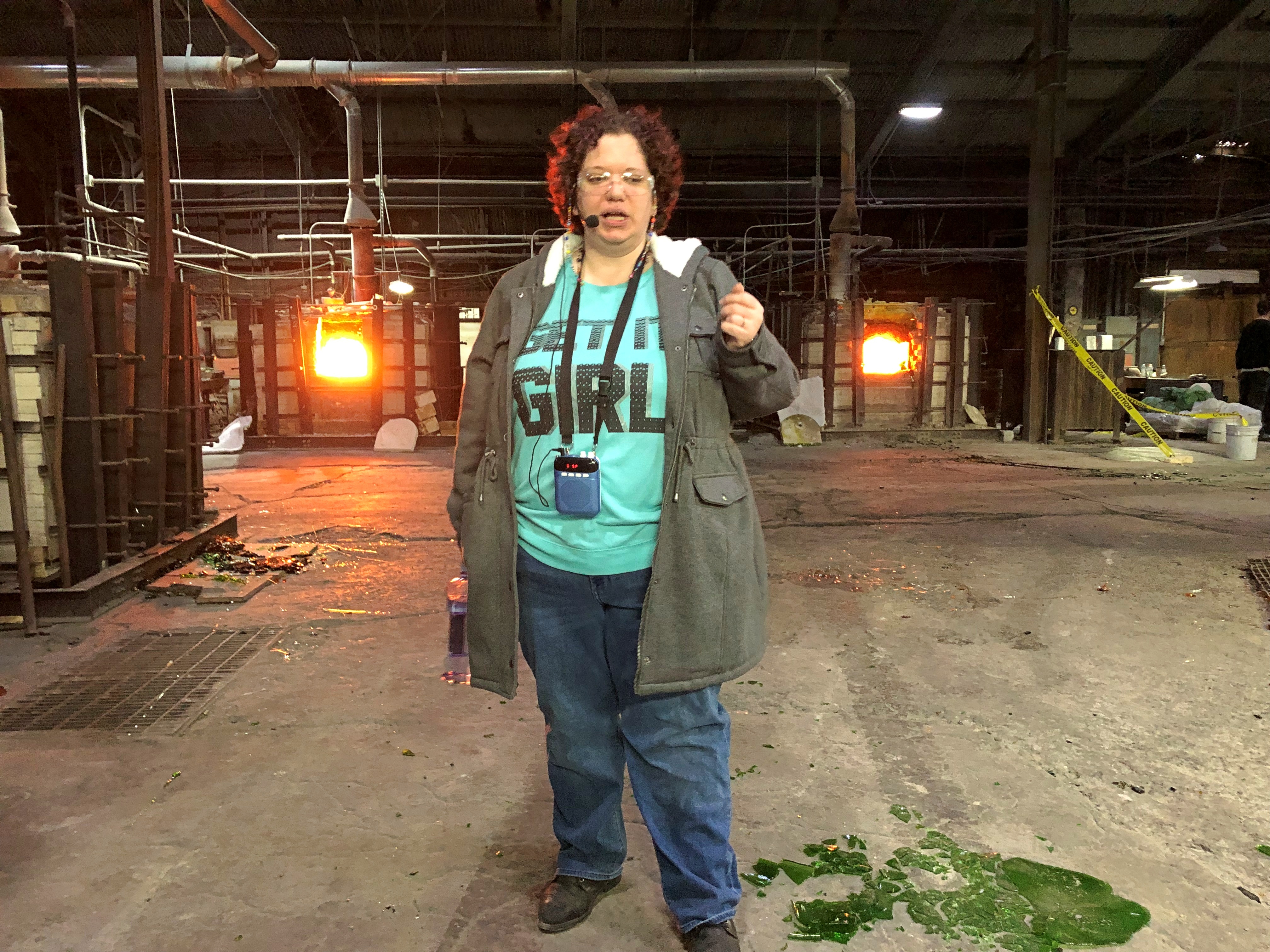
Our knowledgeable guide told us about the chemistry and the process and the history of the place.KOG

I didn’t understand a lot of it, especially the finer points of the process, but remained fascinated. As a glass artist herself, she also conveyed a sense of artistic wonder at the multitudes of glass, the colors and textures, which are both hard and fragile. All that came through a device to boost her voice, since a glass factory can be a noisy place.

Note the glass at her feet. Among other stipulations that we agreed to before taking the tour was no open-toed shoes. In fact, that was stressed the most. When moving globs of molten glass around, a little is naturally going to drop and harden on the floor. Then break. In the fullness of time, the factory workers remove the glass, perhaps to be remelted, or sold as random pieces by weight to artists who use it. But there’s always going to be some glass underfoot. Fortunately this wasn’t a problem with standard footwear.

Another thing the company tells you is that the factory has no climate control. So while it was just above freezing outside, the factory was warmed by the furnaces. In summer, of course, the effect would be additive, and so devilish hot on the factory floor. Away from the furnaces, in the spaces used for processing and storing and packing all that glass, temps were low in December.

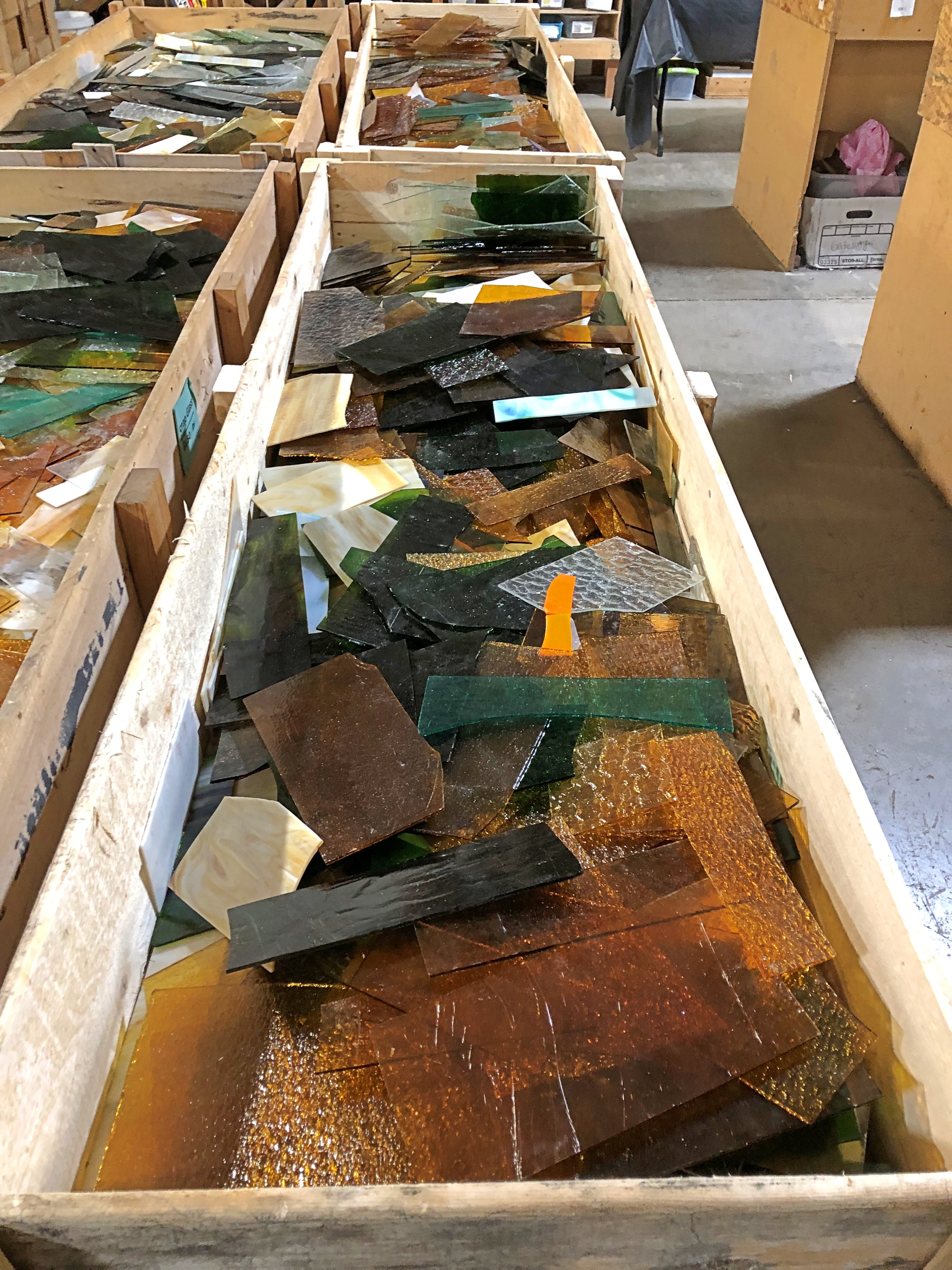
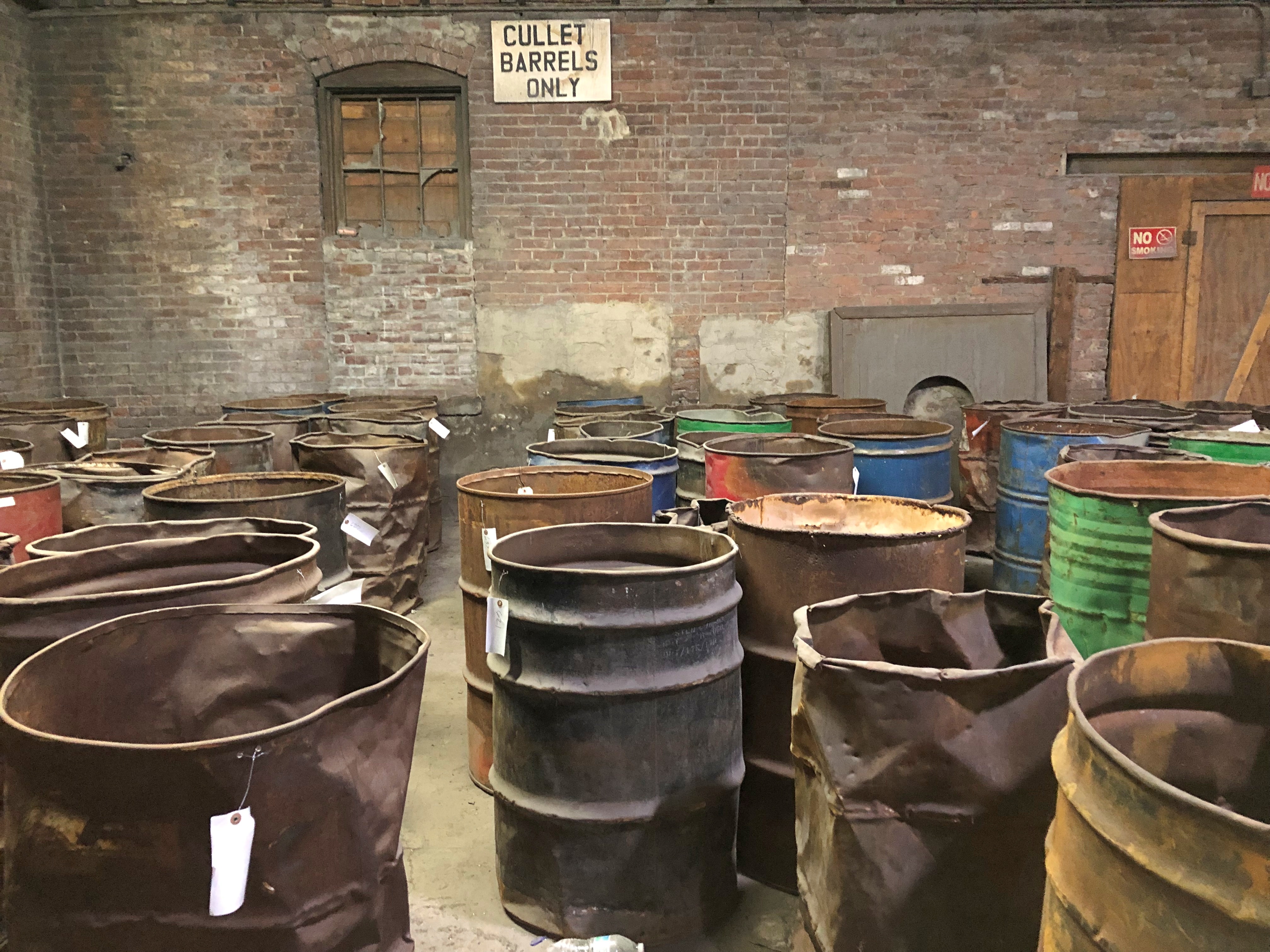
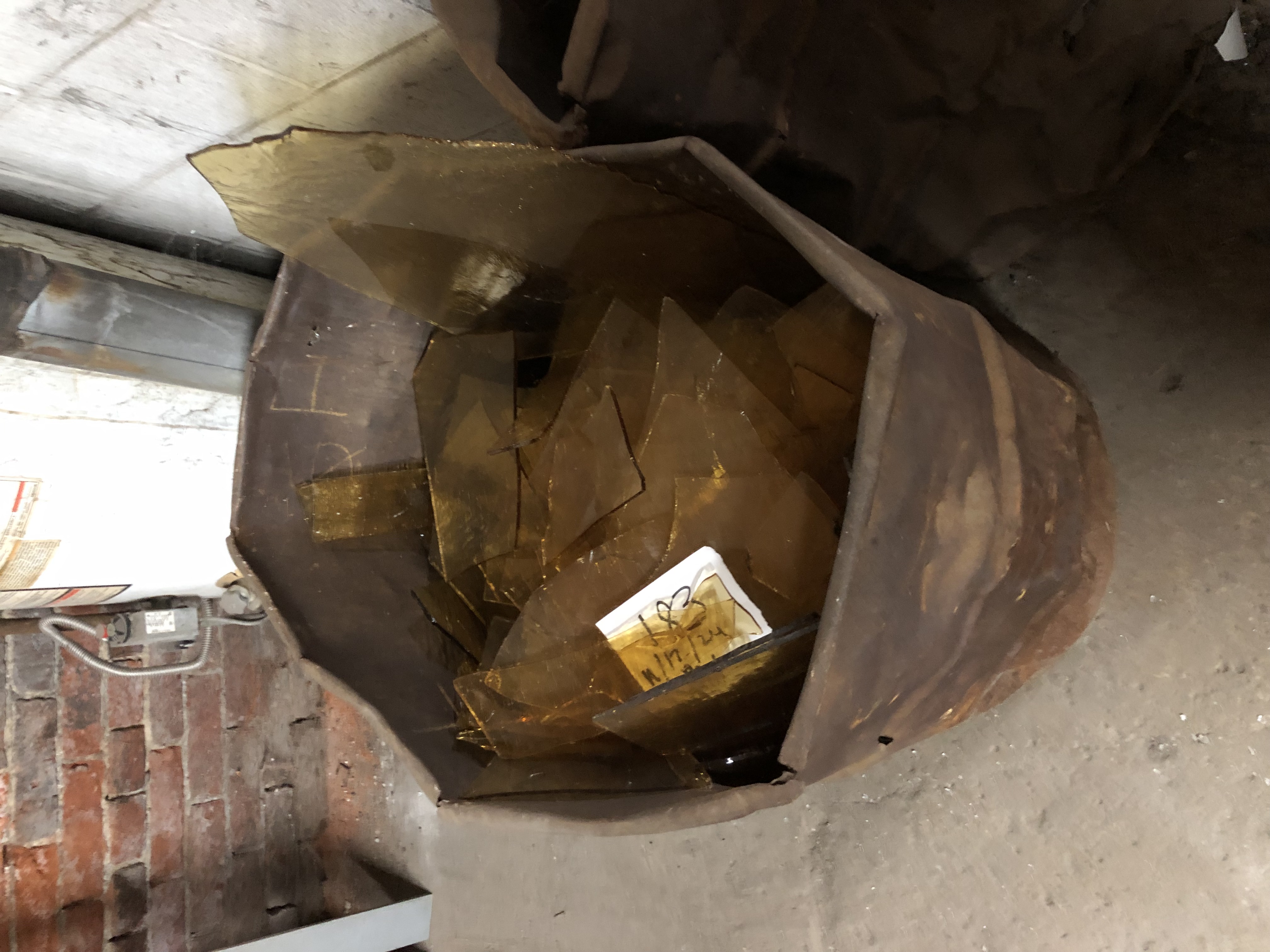
Such as in the cullet barrel room.KOG KOG

Cullet. How did I get this far and not know there is a word for shards of glass, thought of collectively and probably destined to be remelted?

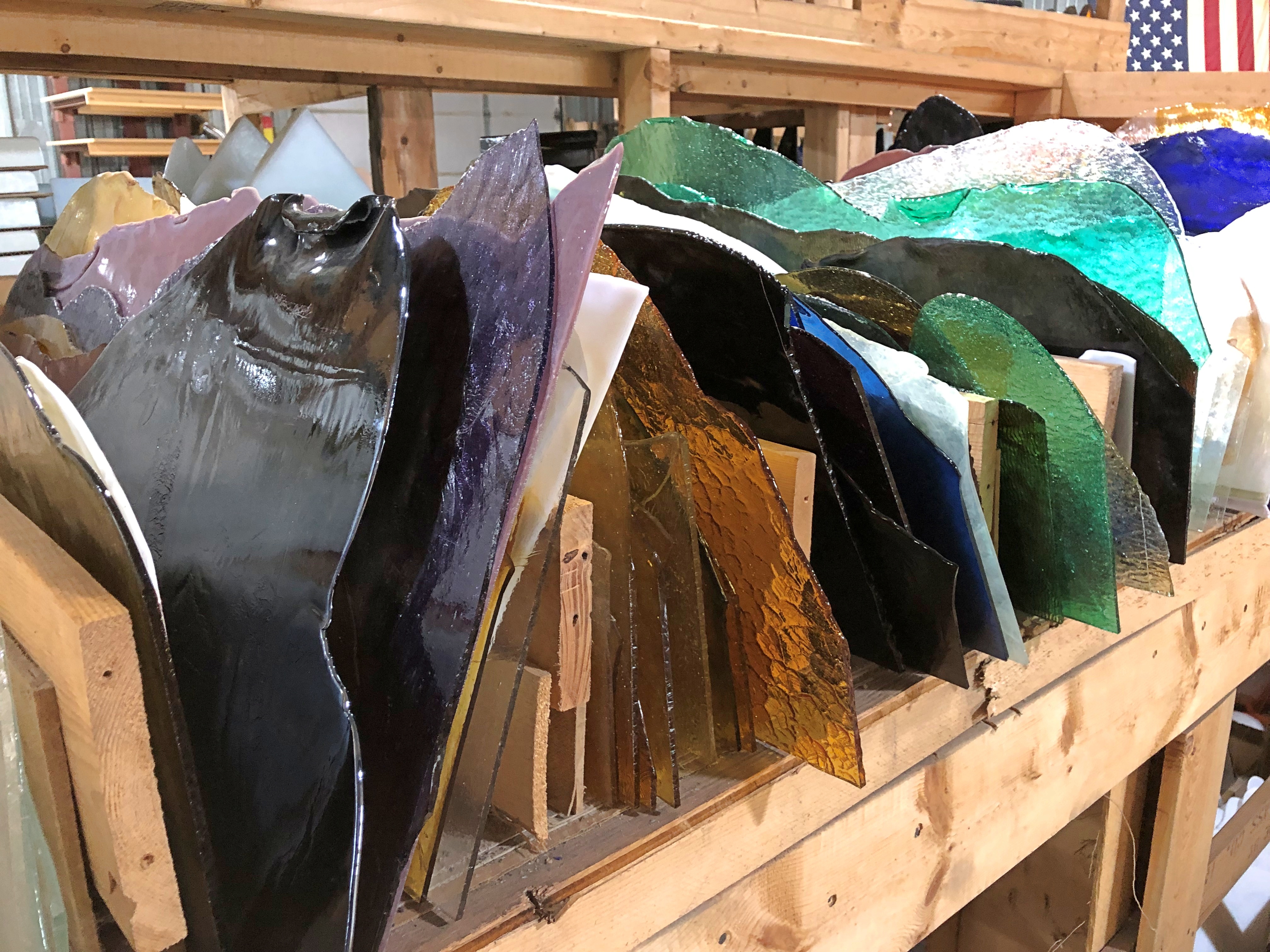
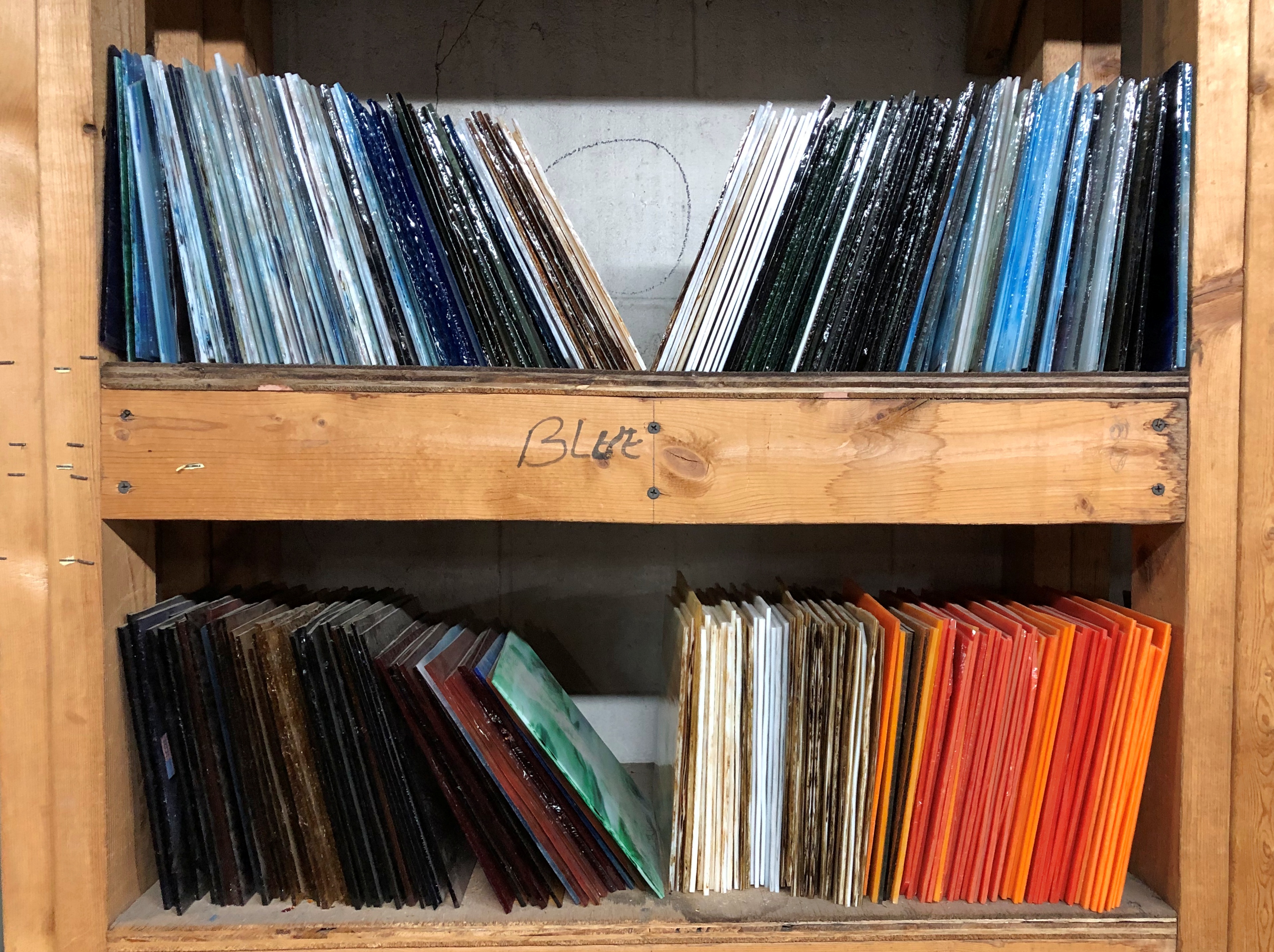
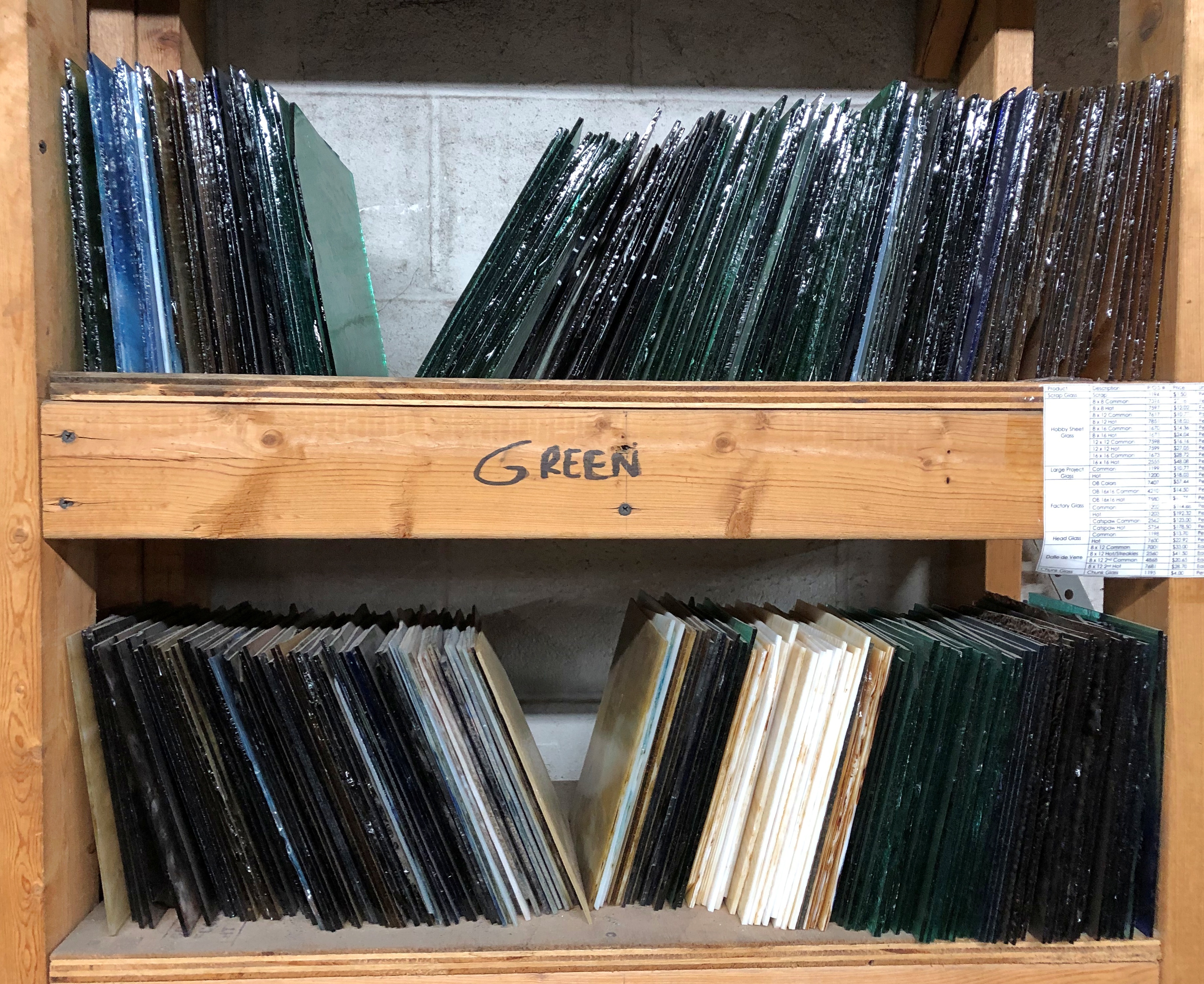
Most of the company’s product isn’t broken, and so is stored in an impressive array of racks and shelving.KOG KOG KOG

Hues galore.KOG KOG

Toward the end of the tour, we passed through a studio where artists employed by KOG work on custom projects. It being just before Christmas, only one was around, though I’m sure it’s a livelier place most of the time. And it is climate controlled.

Most of the complex is newer than 1888, but even so glass has been made on this site for nearly 140 years, using fuel unknown to the ancients. By ancient I mean really ancient: man-made glass from about 3500 BC has turned up in Egypt and eastern Mesopotamia, and it has been made ever since. So we visited a modern gas-power glass factory last month, but also experienced a vivid link to the heat and work of millennia.

The Seiberling Mansion

In my 7th grade Texas history class back 50+ years ago, I’m pretty sure the prickly Mrs. Carico taught us about the 1901 Spindletop oil gusher in what’s now Beaumont. Could be that not even Texas students learn about that any more, though I couldn’t say for sure. We did not learn about the Indiana natural gas boom of the late 19th century. Maybe Hoosier kids of my age did. I hope so. Anyway, I had to go to Kokomo to learn about it.

Or rather, go to Kokomo to hear about it. I read more about the gas boom after I got home. I might as well stay home if I’m not going to occasionally follow up on the intriguing things I’ve seen and heard elsewhere.

“[Eastern central Indiana’s] industrial characteristics were brought about by one of the great booms of the late 19th century in the Midwest: the discovery of natural gas,” writes James A. Glass, an architecture prof at Ball State Muncie, in “The Gas Boom in East Central Indiana” in the Indiana Magazine of History (2000).

“The eruption of real estate speculation, industrial development and commercial expansion and population growth transformed a… portion of the state from a landscape of farmers, forest and agricultural villages into a territory in which cities and boom towns dominated, each teeming with factories, neighborhoods and commercial districts….”

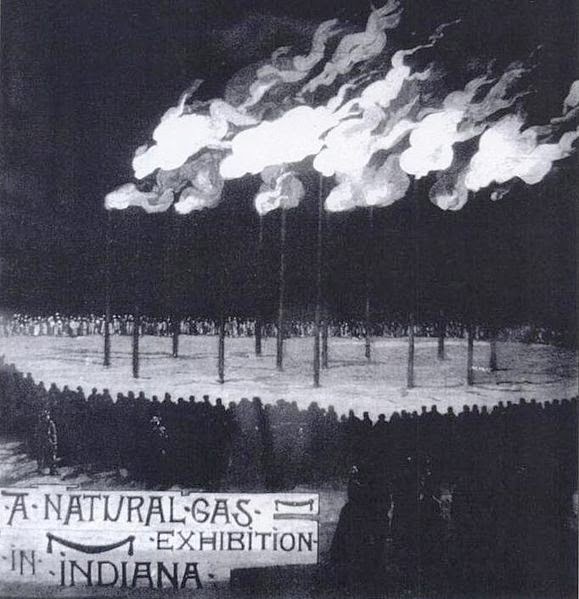
There was so much natural gas under Indiana that for a while new towns burned it simply to show off. Gas flambeaux heated the day and lit up the night.

Image from Leslie’s Illustrated Magazine, January 18, 1889.

Hindsight has only one ending to this story: the region had run out of gas by the turn of the 20th century. We tell ourselves that a “this resource will never run out mentality” is particular to the industrial revolution, as if we didn’t really believe it ourselves.

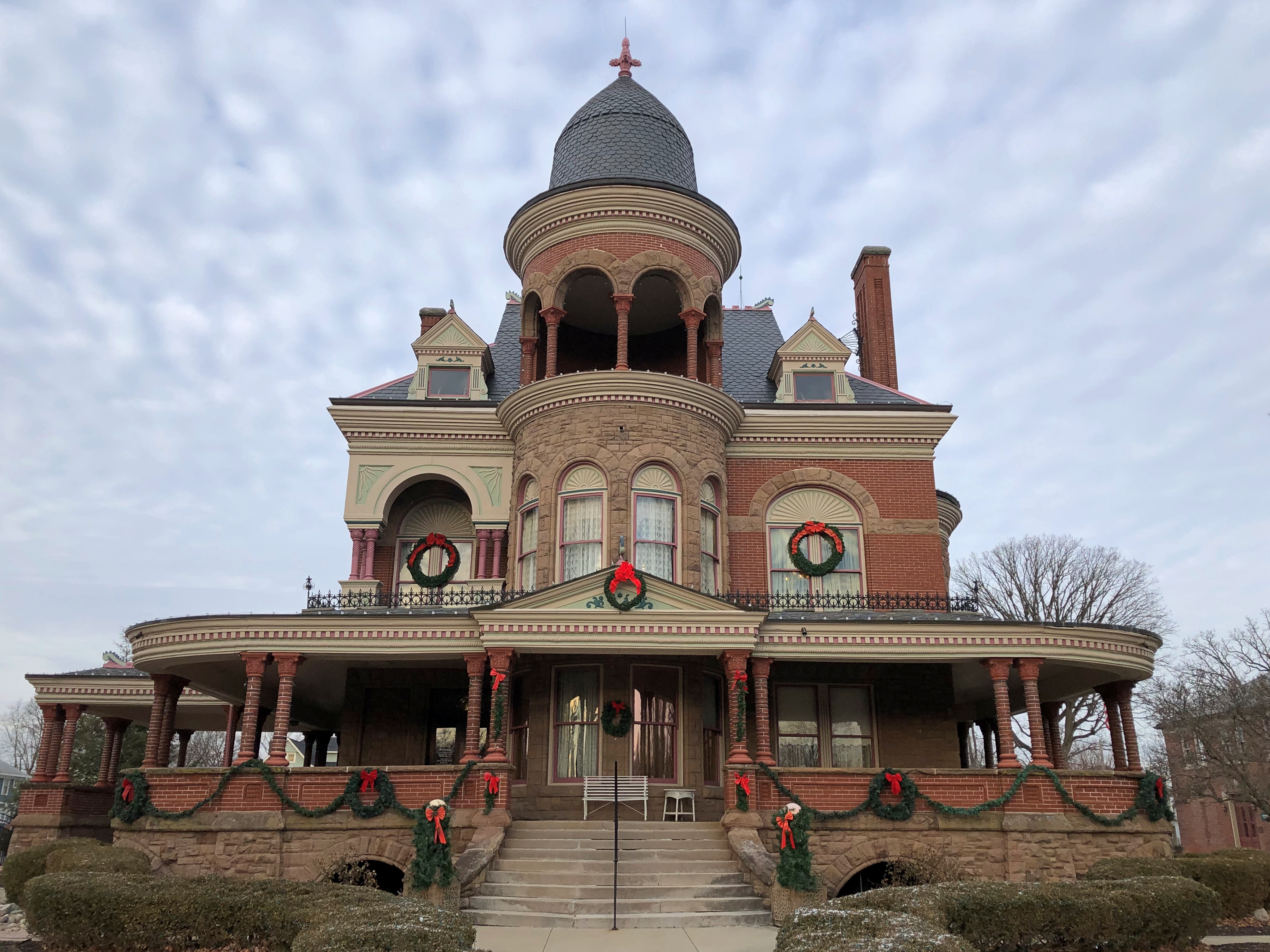
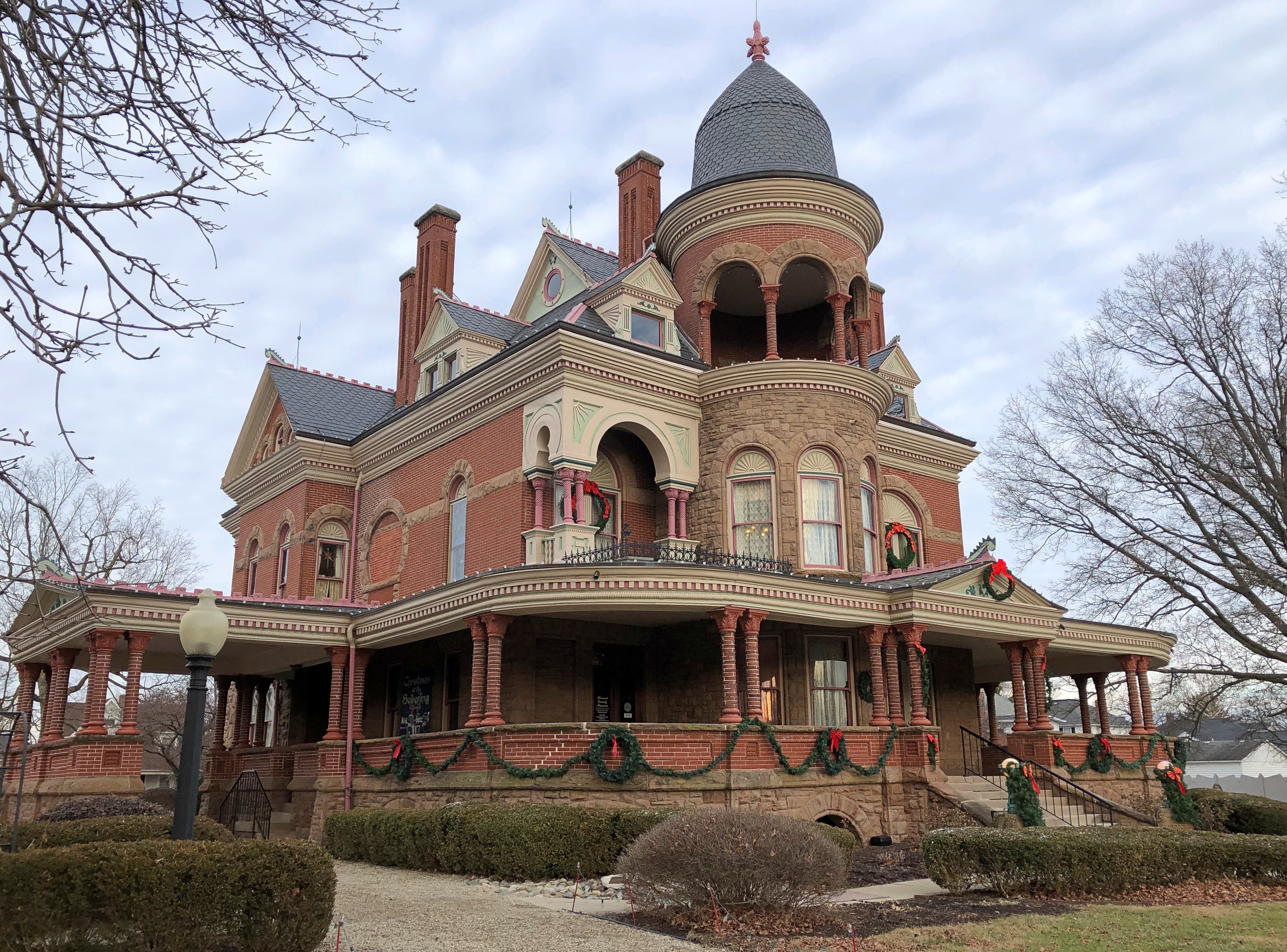
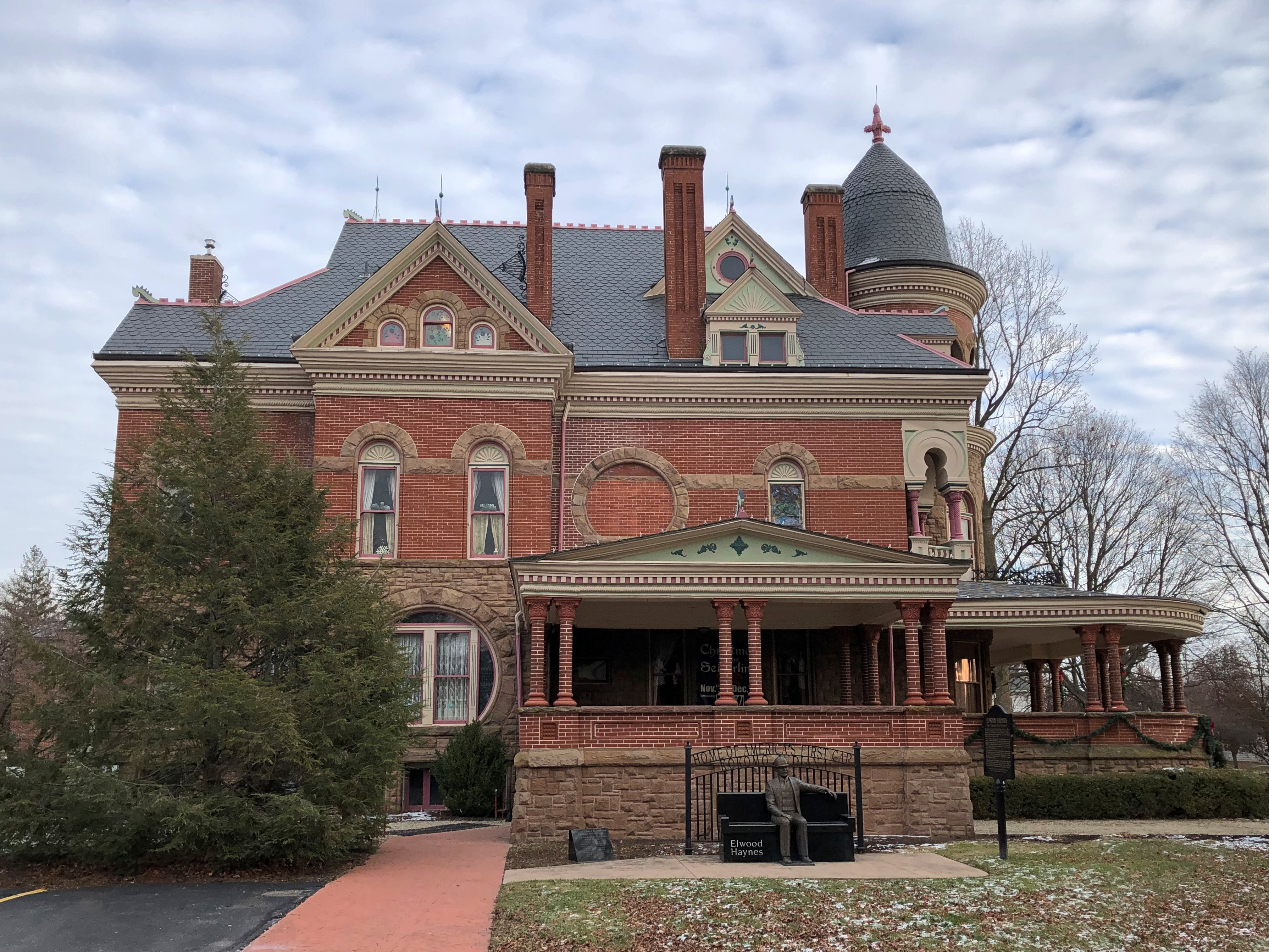
Not far from central Kokomo, you can stand right next to a physical legacy of the Indiana gas boom – the gas boom-era Seiberling Mansion.Seiberling Mansion Seiberling Mansion Seiberling Mansion

The porch. The dome. The gables and arches. The brick and stone. Probably not to everyone’s taste, but it looks like a handsome assemblage to me. We arrived only about 20 minutes before the house museum closed – off-Interstate travel, while rewarding, can be a time suck, and besides, Eastern Standard Time had snatched an hour away from us. The desk volunteers were good enough to say we could look around without paying admission, though I did make a modest donation.

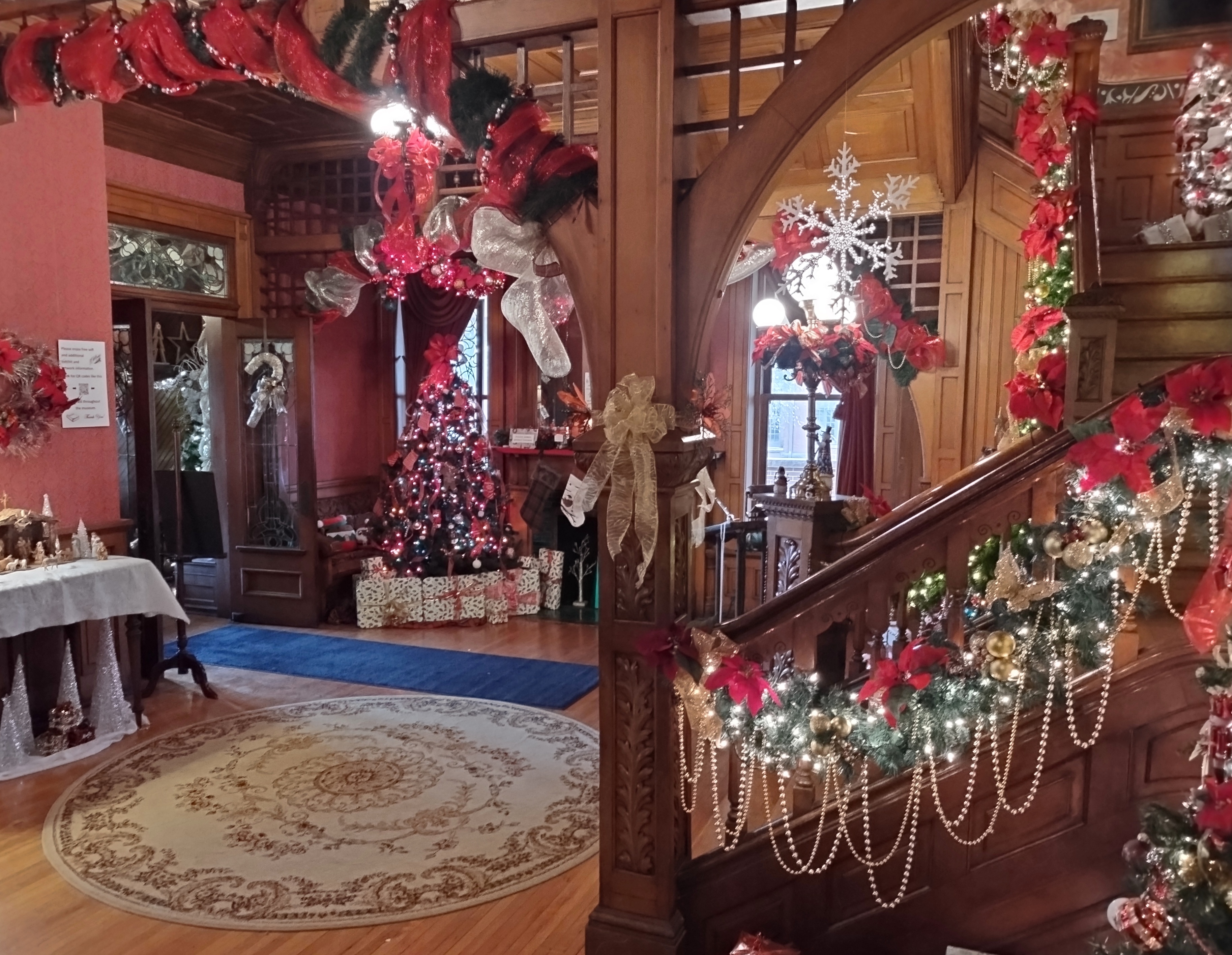
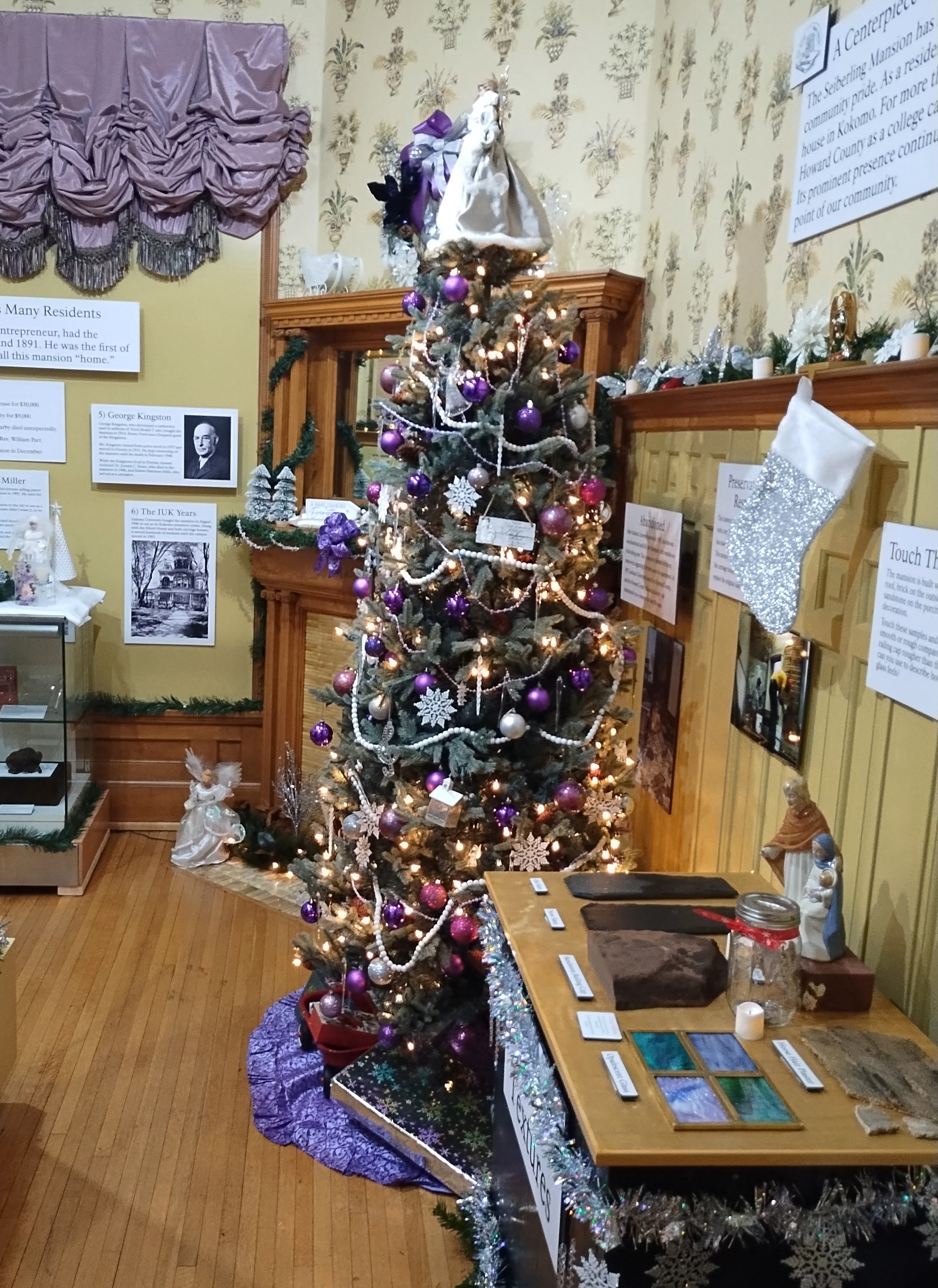
No surprise to find Christmas at Seiberling in full flower.Kokomo Ind Kokomo Ind

We would call Monroe Seiberling a serial entrepreneur, though I expect in his time he was simply a business man. He was a shooting star in the history of Kokomo. From Akron, Ohio – where his nephew Frank Seiberling stayed and cofounded Goodyear Tire & Rubber Co. – the elder Seiberling turned up in Kokomo during the gas boom to take advantage of the lovely free gas to set up a few businesses, including a glass factory. He also stayed long enough to commission a mansion, designed by short-lived Hoosier architect Arthur LaBelle and completed in 1891.

After gas ceased to be so available or cheap in Kokomo, Seiberling moved on to Peoria, Illinois, according to one of the mansion docents, who provided us a quick informal tour of the first floor, probably because we showed some interest in the place. Also, she said, Seiberling’s wife didn’t much like Kokomo. As an incentive for him to leave above and beyond mere economics, that has a ring of plausibility to it.

Kokomo Dash

Besides having a fun name, Kokomo, Indiana, is off that beaten path officially known as the Dwight D. Eisenhower National System of Interstate and Defense Highways. The closest highway to Kokomo in that system is I-65, which I have driven so many times I’ve lost count, except I never kept count. I also had never diverted to Kokomo.

One way to get from metro Chicago to Kokomo is to take I-65 to near Remington, Indiana, and then head east on US 24 to the burg of Dunkirk near the somewhat bigger burg of Logansport. From there, heading south on US 35 takes you to Kokomo. This is what we did on December 22, spending the night in that town (pop. nearly 60,000) and then returning home late the next day.

I’ve wanted to visit the Kokomo Opalescent Glass Co. for years. How did I hear about it? I don’t remember, but the sticking point has long been that the company, a major maker of art glass, only gives tours on weekdays. I checked and it turned out that the company was indeed open for a tour on December 23, so that clinched it.

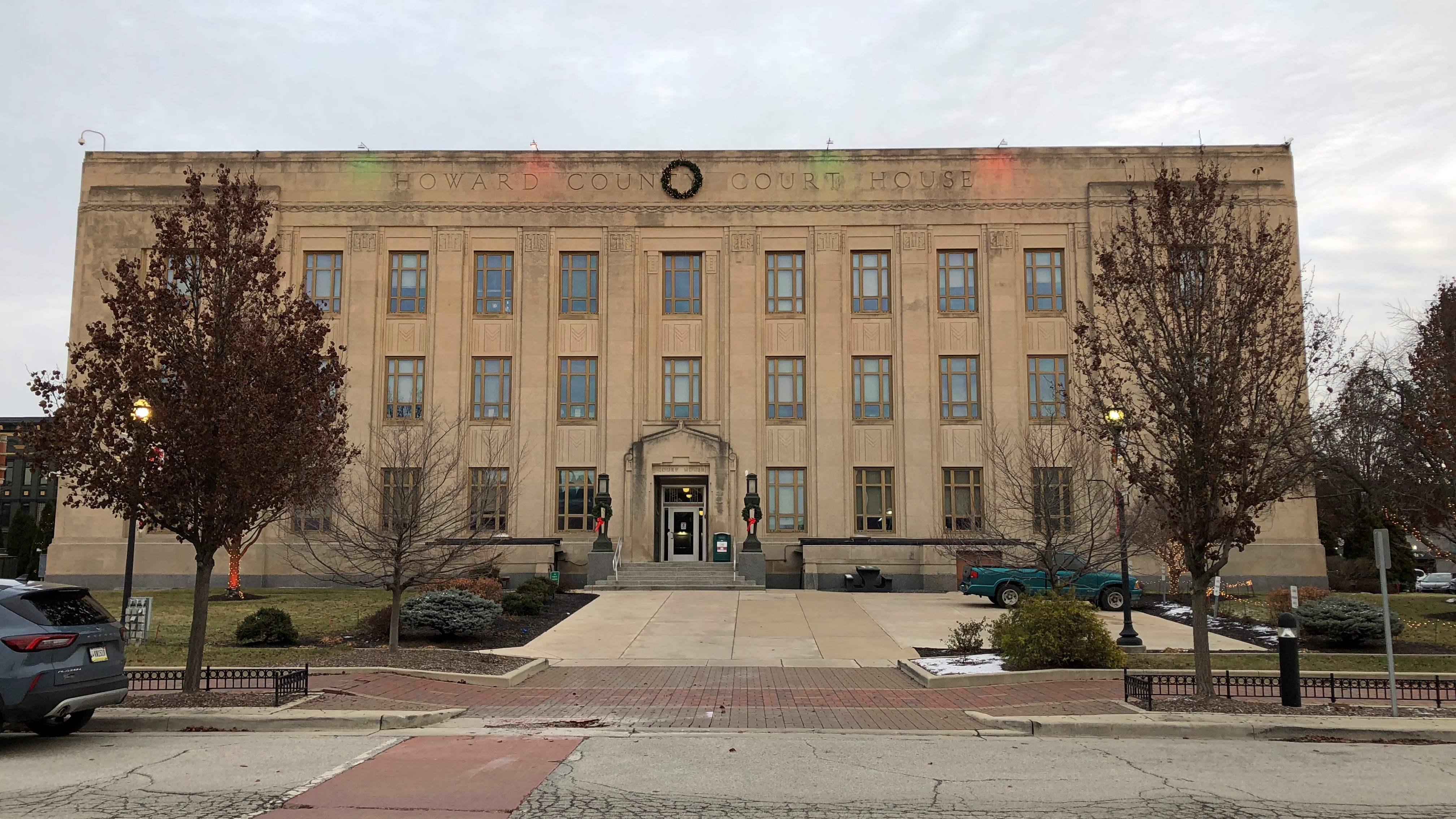
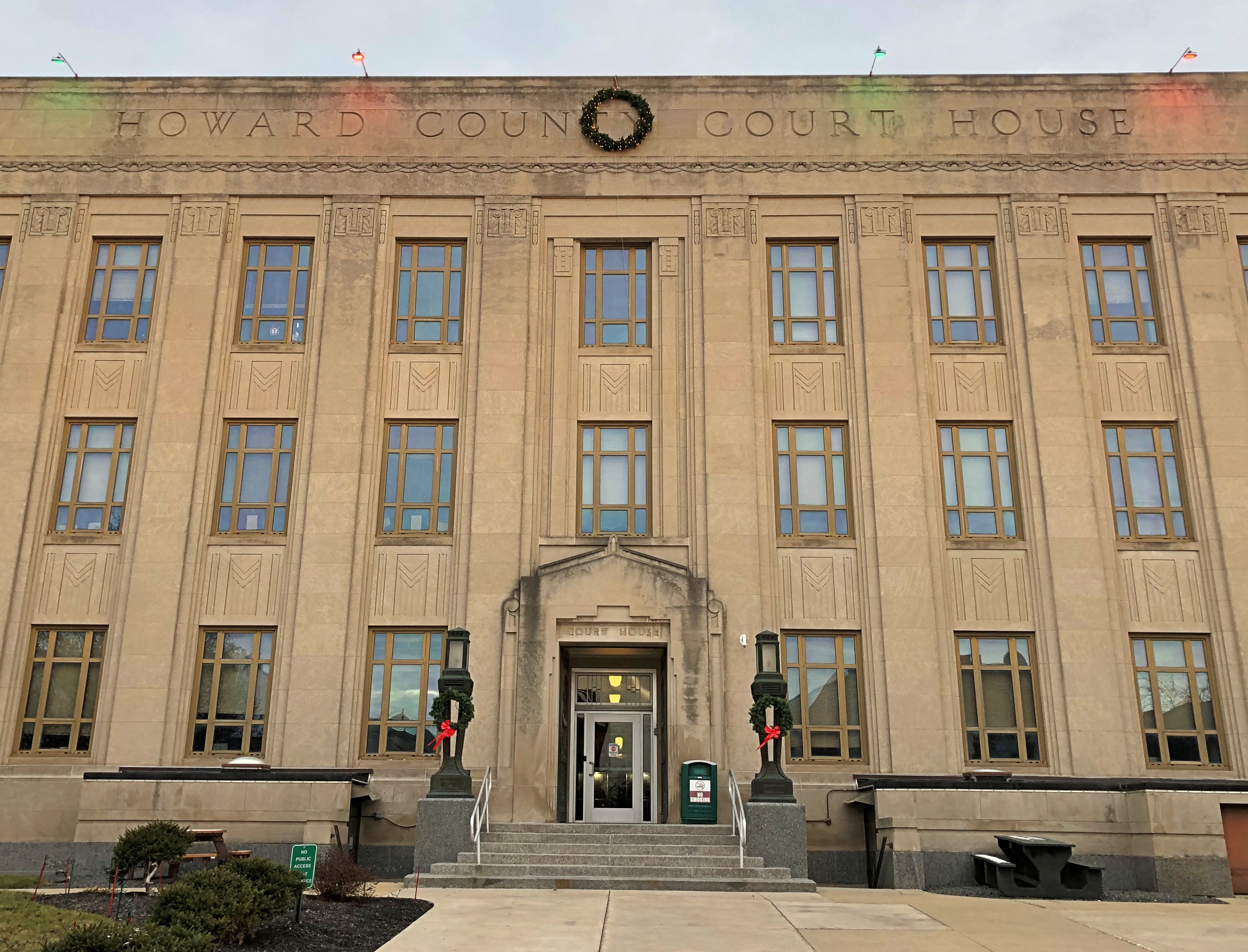
We arrived before sunset on the 22nd, in time for a walk-around the Howard County Court House.Kokomo Indiana Kokomo Indiana

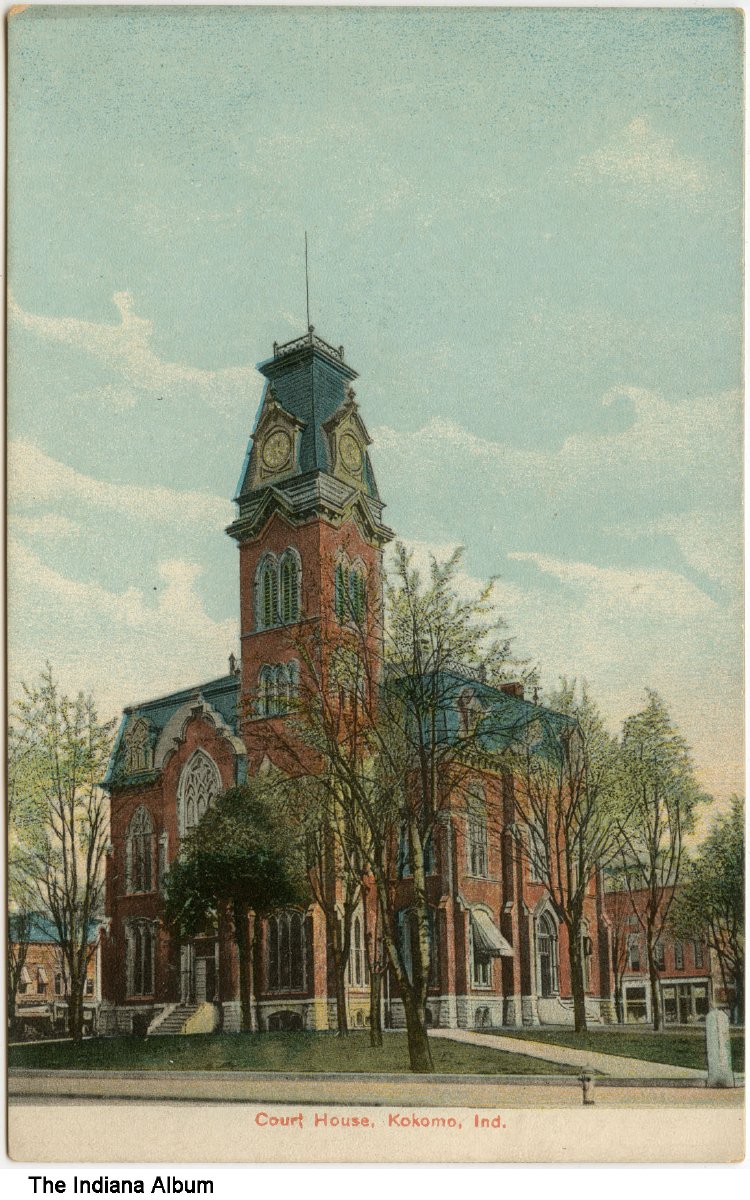
That instantly says 1930s. As it happens, the building was dedicated in 1937, built as a replacement for an 1860s Second Empire courthouse that burned down. Postcards, such as the one below, depict that long-lost structure (source).

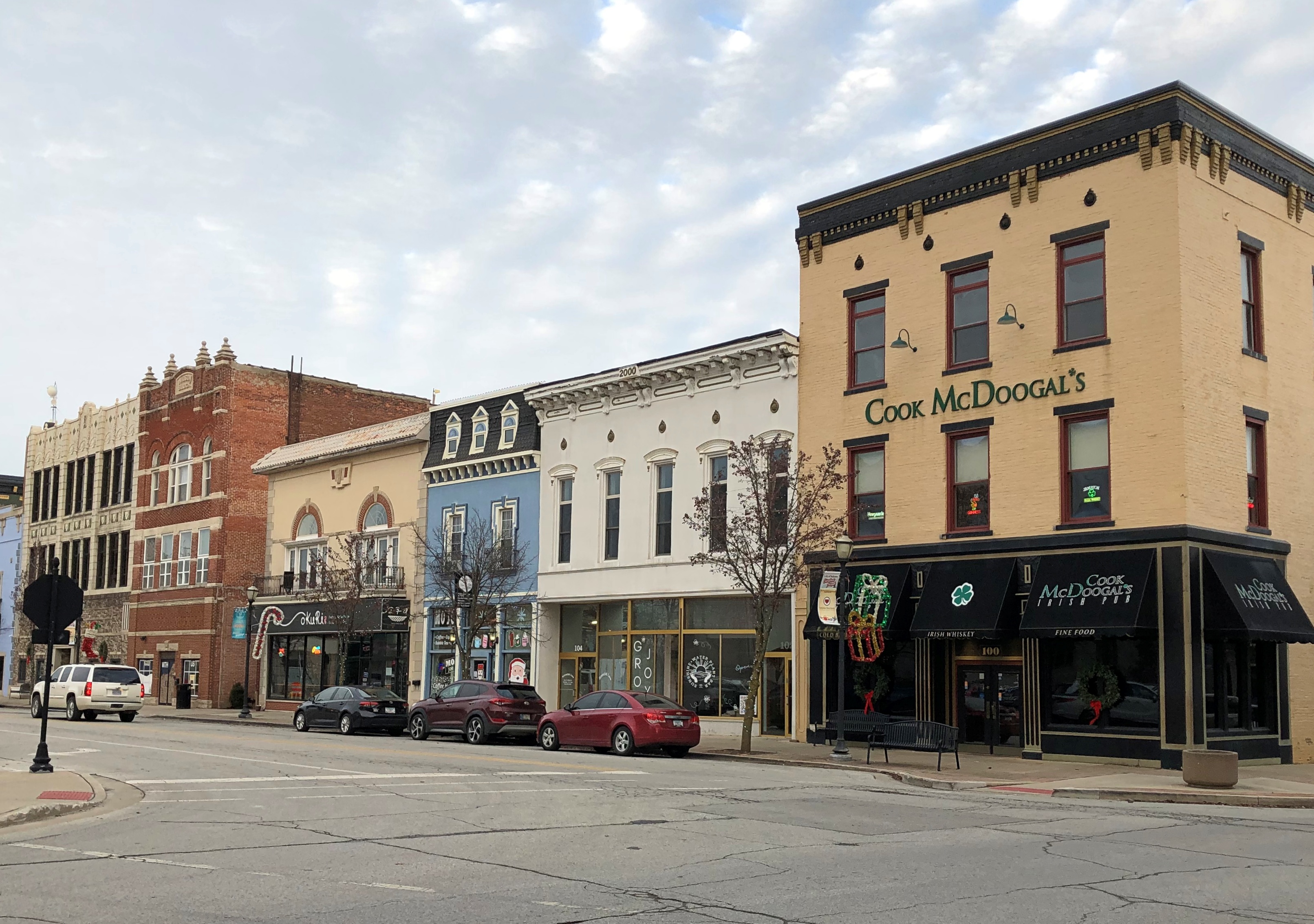
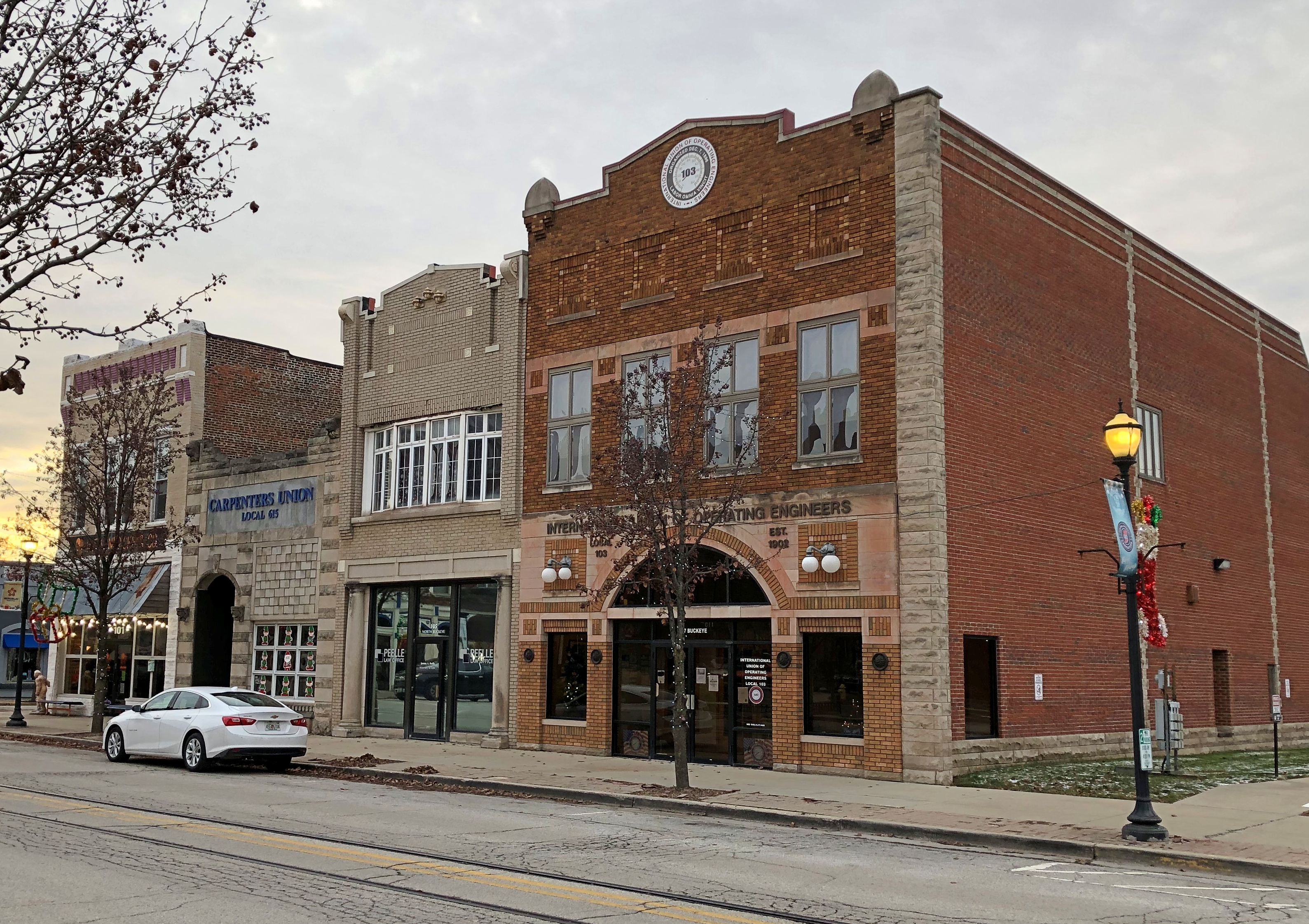
The buildings surrounding the courthouse are mostly older, some dating from the late 19th-century natural gas boom that put Kokomo on the map.Kokomo Indiana Kokomo Indiana Kokomo Indiana

Details.Kokomo Indiana Kokomo Indiana

Union halls: Operating Engineers and Carpenters.Kokomo Indiana

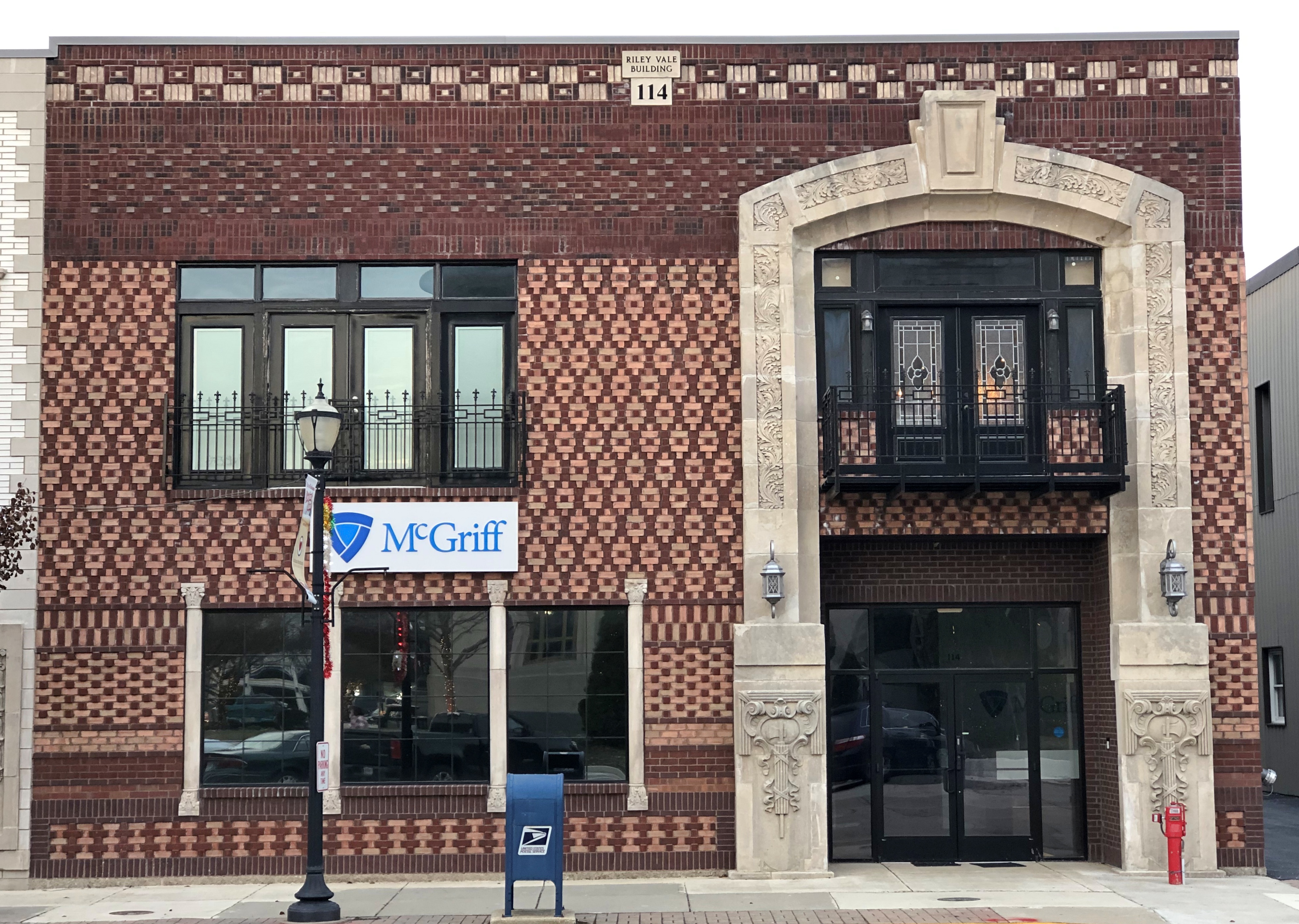
Some buildings retain their names, which doubtless reflect local real estate entrepreneurs as long gone as the old courthouse. Such as the Riley Vale Building. Nice brickwork.Kokomo Indiana

If it hadn’t been about freezing and a little windy that day, I might have done some closer images of its elaborate front.

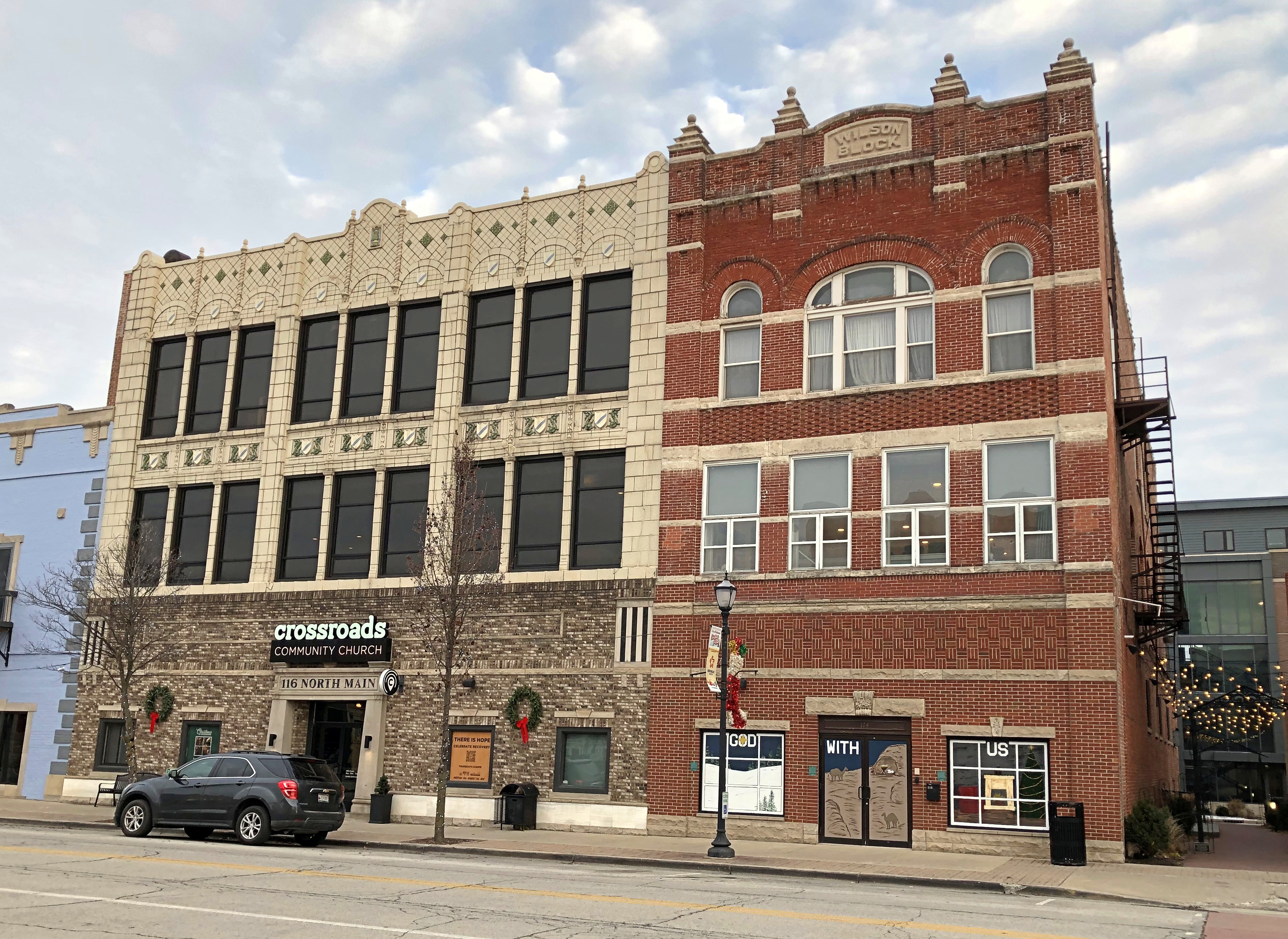
The Wilson Block.Kokomo Indiana

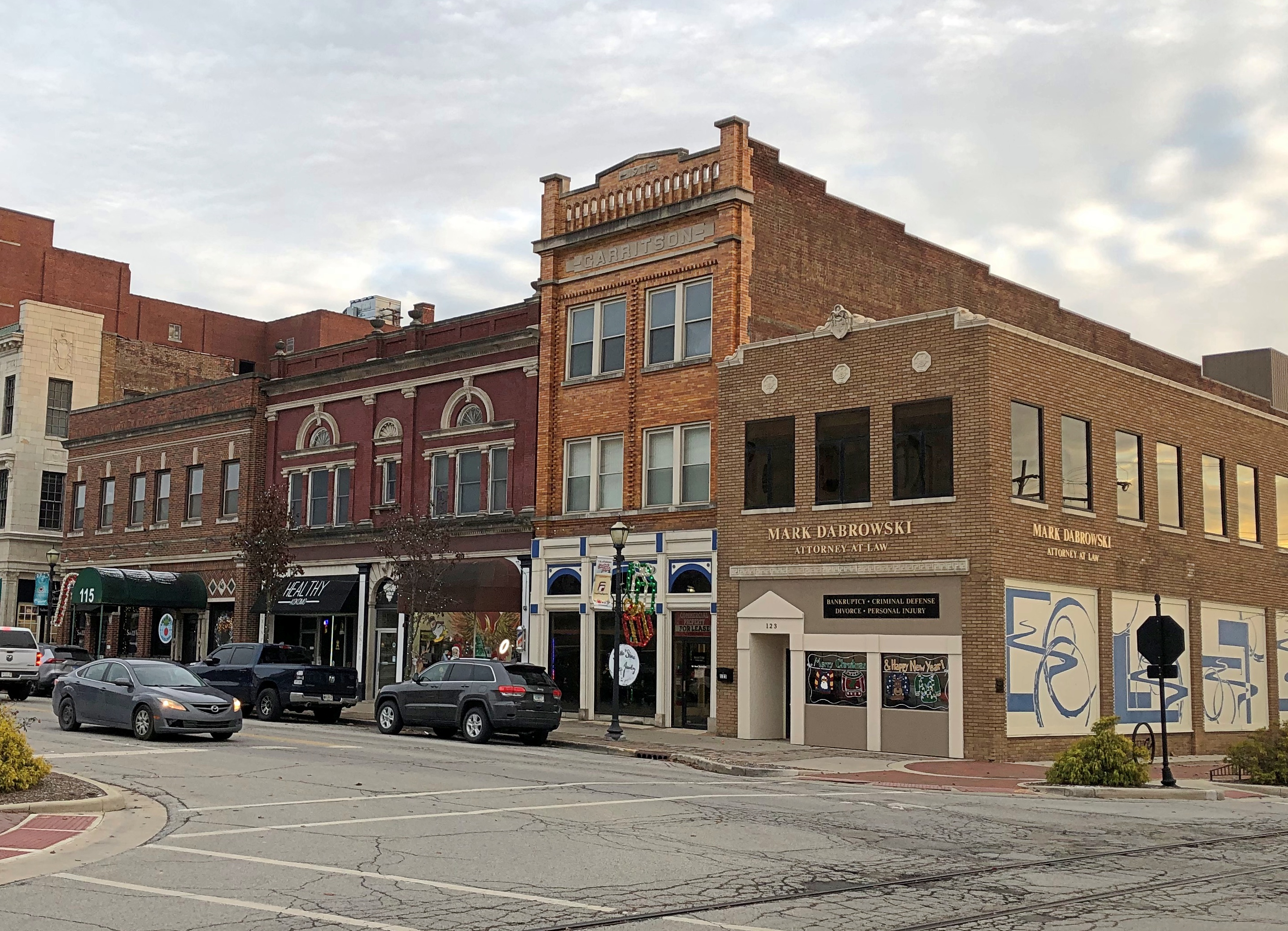
The tallest of these buildings says Garritson, with a date of 1911.Kokomo Indiana

Though it’s hard to see in this image, there’s a barber pole in front of the building to the left of Garritson. It so happened that my old barber has retired, or died, and I’ve been looking for a new one. Till then, I’ve had my hair cut in various places. I peeked inside and saw the sole barber idling in his chair. I asked if he could cut my hair sometime that afternoon and he said that his most recent appointment hadn’t shown up, so he could right then.

So I got a haircut from the barber right then. One of the younger barbers I’ve been to recently (in his 30s, probably), we chatted some, and I learned that he was the last barber standing at that shop – which had three other chairs. Not because of a population exodus from Kokomo or anything so abstract, but because two other barbers had been caught with their hands in the till, he said. I’m not sure how that could have happened, considering the economics of a barber shop, but I guess if someone wants to steal, they’ll find a way.

Around Lake Michigan ’22

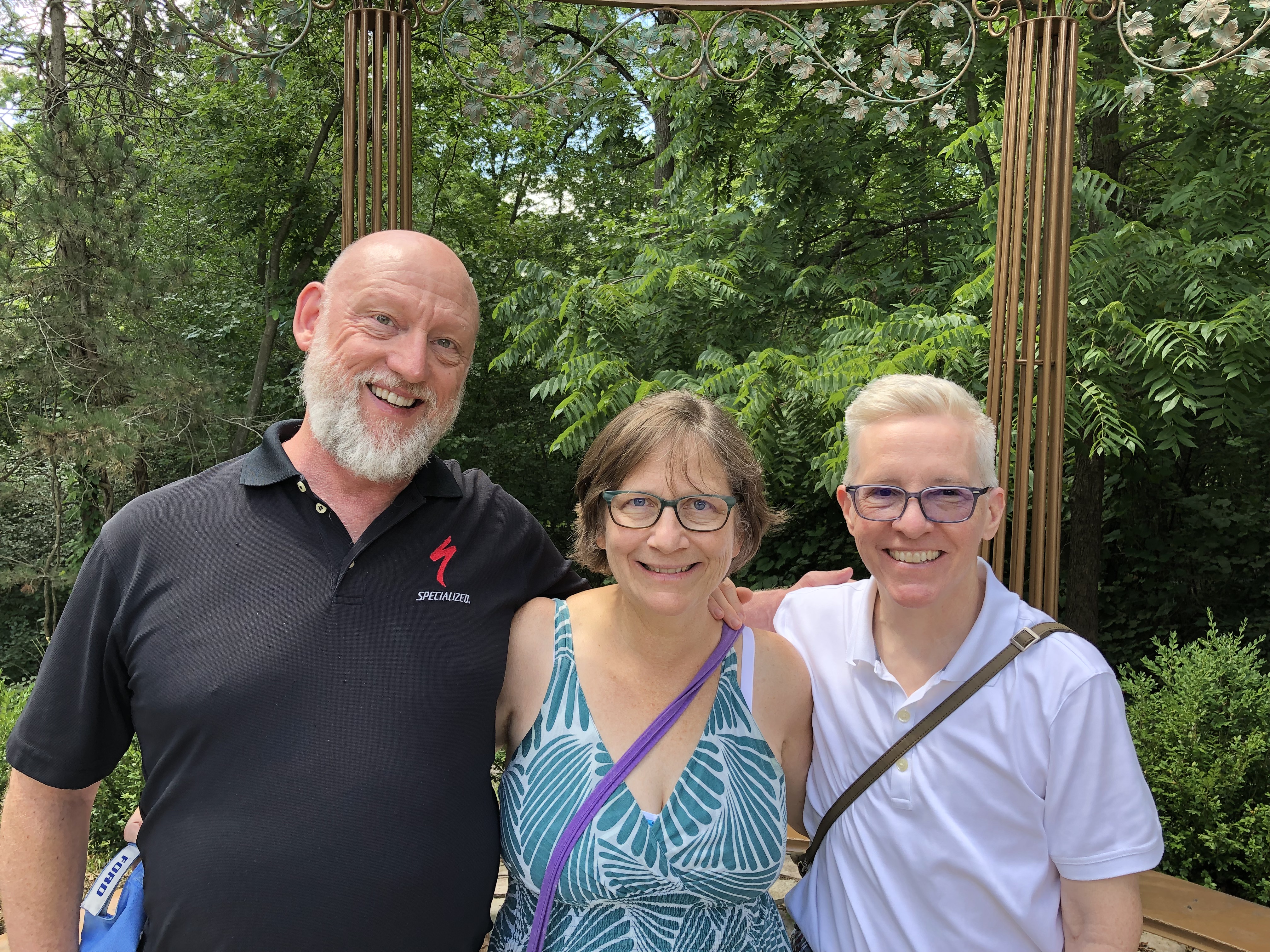
A little more than a week ago, I took a pretty good picture of three dear friends, two of whom I’ve known for over 45 years. From left to right, Tom, Catherine and Jae.

We were on the second day of our drive around Lake Michigan, counterclockwise, which took us from metro Chicago through northern Indiana, Grand Rapids and parts of western Michigan, Petoskey and environs, Mackinac Island, both Sault Ste. Maries, parts of the eastern Upper Peninsula, greater Green Bay and other parts of eastern Wisconsin, and back to metro Chicago.

Leaving on July 30 from our starting point at my house, we drove my car on crowded and less crowded Interstates, state and county highways, and a host of smaller roads, including National Forest roads cutting through lush boreal territory. Returning yesterday to my house, my friends flew back to Austin today; they had arrived from Austin two days ahead of the trip.

We’d planned the trip via email and Zoom, beginning back in early spring. I was the informal guide, making suggestions and offering bits of information I knew from previous visits to Michigan, upper and lower. But my friends were hardly passive in the course of our travels, digging up information via cell and making their own suggestions based on their own familiarity with some of the territory. Catherine had overseen arranging our accommodations, and everybody drove at one time or another.

We stayed in five different peer-to-peer rental accommodations along way, all entire houses that could provide us enough bedrooms, bathrooms, food prep and dining areas, and, in most cases, space to sit outdoors, once with a view of the waters of Green Bay.

Enjoying the outdoors was one of the main goals of the trip. For me, certainly, but especially for them, escaping the high heat of central Texas. They often remarked on the cool air and reveled in it, checking periodically to learn the temps at home. Three digits in Austin wasn’t usual. I don’t think got higher than 85 F. where we were. Standard night temps in both Michigans generally came in the 60s F.

Two meals a day was the norm: a mid- to late-morning breakfast and a late afternoon dinner, or a very late breakfast and a late dinner, at least as these things are reckoned in North America. So on many days, our meal schedule was more like that of Mexico City.

Food variety has trickled down to the lakeside and inland burgs of the upper Upper Midwest, though perhaps not quite as much as in large metros. Whitefish, the star of a lot of UP menus, had top billing in some of our meals, but we also enjoyed hamburgers and other meat — including one tasty UP pasty — pizza, pasta, breakfast fare, bar food, Italian and Asian, plus chocolates and fruit, such as Michigan cherries and UP jam. We prepared our own meals sometimes, did takeout a few times.

Coffee by morning, wine by night, though I only participated in the latter. Familiar wines were available in every grocery store we visited, and my friends sought out coffee ground as locally as possible: one bag from Sault Ste. Marie, for instance.

Meals and wine drinking were a source of convivial times, but hardly the only one. We talked and conversed and bantered at the table, as we headed along roads and as we walked trails. Shared personal histories were revisited, stories of our long periods apart were relayed, and opinions shared. Odd facts were floated. There was punnery, especially on the part of Tom, a born punster.

We visited one city of any size, Grand Rapids, and many smaller places, a few museums, a sculpture garden, some riverfronts, shopping streets and resort areas, a grand hotel, an historic fort, churches, a Hindu temple, a wooded cemetery, two lighthouses, forests, clearings and beaches, a massive sand dune, waterfalls, rapids and the clearest pond I’ve ever seen. The three Great Lakes we saw stretched to empty horizons — except when Canada or the opposite shore of Green Bay were visible. We crossed the Mackinac Bridge once and the international bridge between the Sault Ste Maries twice.

We walked near the shores of Lakes Superior, Huron and Michigan. The northern woods and the beach ecosystems were fully flush here in late summer. Jae, who knows a good deal about flora, shared some knowledge about the flowers, trees and fungi we saw in profusion.

Though we caught a few showers in daytime, and the last day was mostly rainy, most of the storms rumbled through at night, adding to the restfulness of whatever sleep we each had. None of the storms were lightning-and-thunder dramas, but some were impressive in their downpour. My friends expressed their satisfaction with the cool light winds that often blow in corners of the UP.

There were a number of travel firsts, mostly for my friends. This was the first time any of them had been to the UP, and the first time they had seen Lake Superior, whose aspect I’m so fond of, and their first visit to the northern part of the Lower Peninsula. The trip included Tom’s first known visit to a national park, though later we determined that it was probably his second park. Also, it was the first time two of them had ever been to Canada, since we popped across the border for one night in Sault Ste. Marie, Ontario.

For me, a mix of new and places I saw long enough ago that they were almost like new.

When I dropped off my friends at O’Hare earlier today, we agreed that they trip had met expectations. And more.

The Dixie

We arrived in North Webster, Indiana, not long after 11 a.m. on July 3. We stopped there because the night before, I read the Atlas Obscura item about the Dixie.

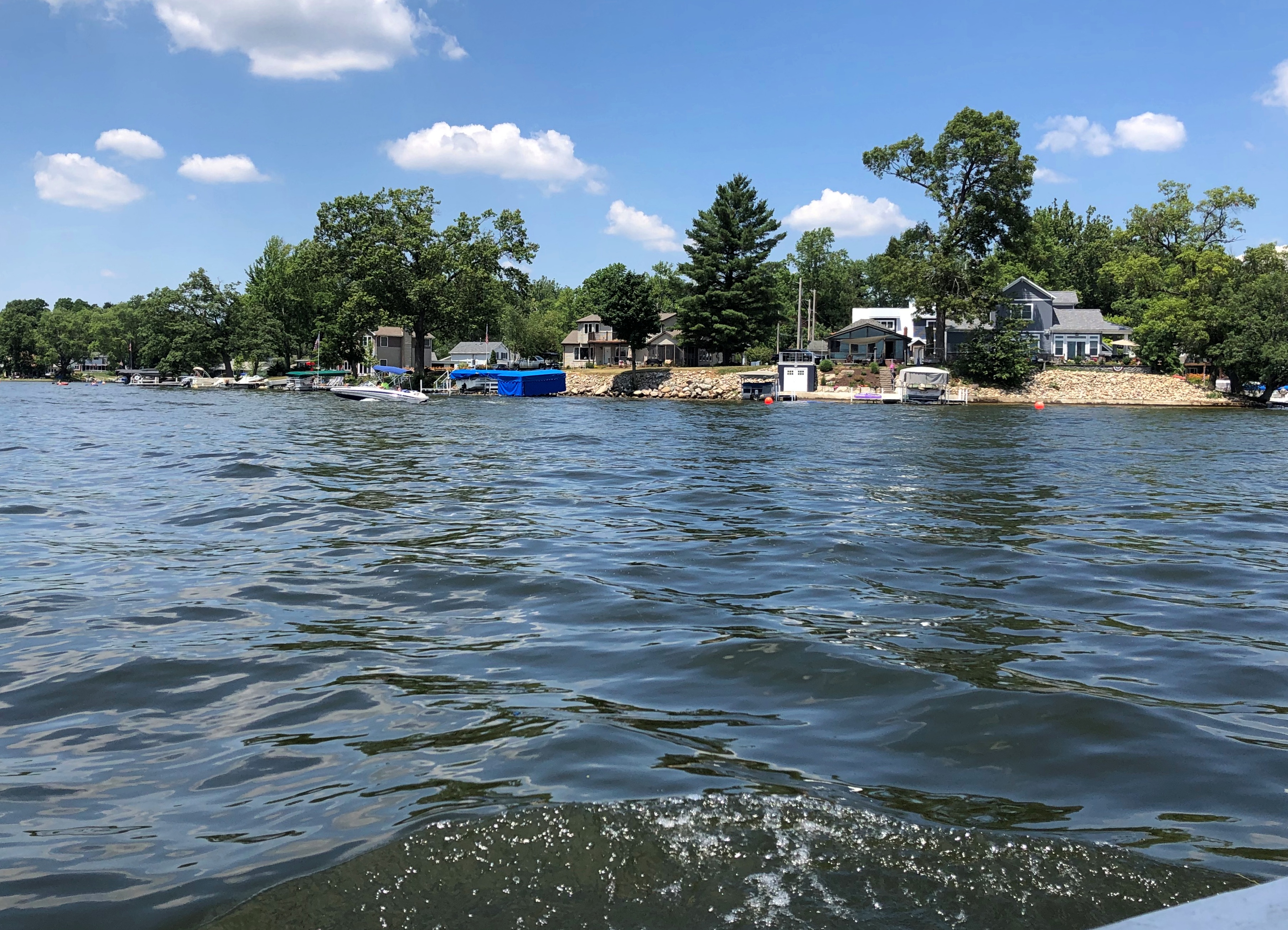
“Steamboats first began sailing on the Webster Lake as early as 1902,” the item explains. “In 1914, Captain Joseph Breeck began operating a 65-foot, wooden-hulled sternwheeler named the Dixie, which today is the oldest of its kind still in operation.

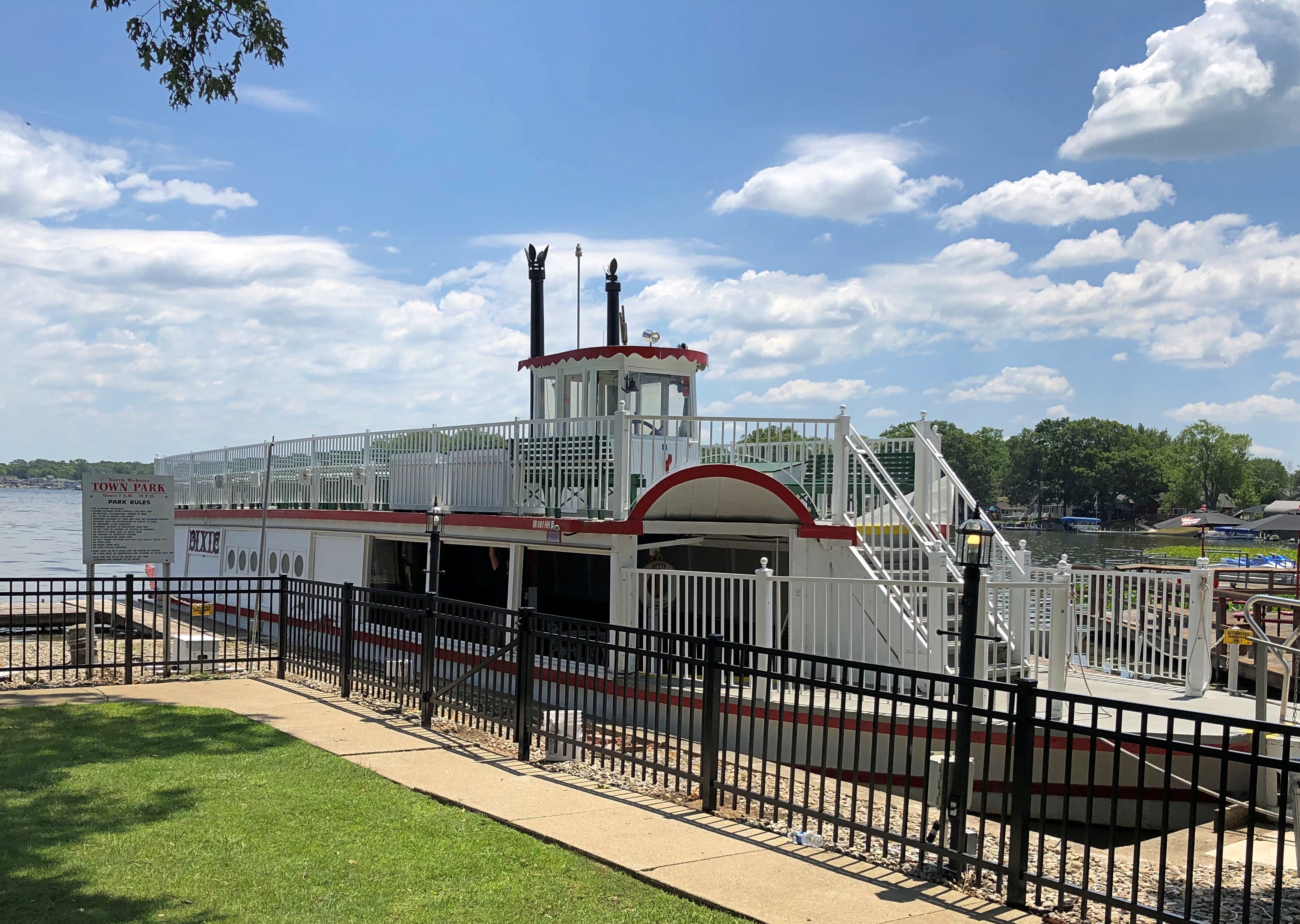
“The original Dixie was later replaced by Captain Breeck with the current 76-foot steel-hulled Dixie in 1929, and he continued to operate the ship until his retirement in 1939.”Dixie Sternwheeler, North Webster, Indiana

Eventually, in the early 21st century, a nonprofit acquired the vessel, renovating and updating it, paid for in large part through local donations. Now it makes tourist runs on Webster Lake in the summer months. We caught the 1 p.m. sailing.

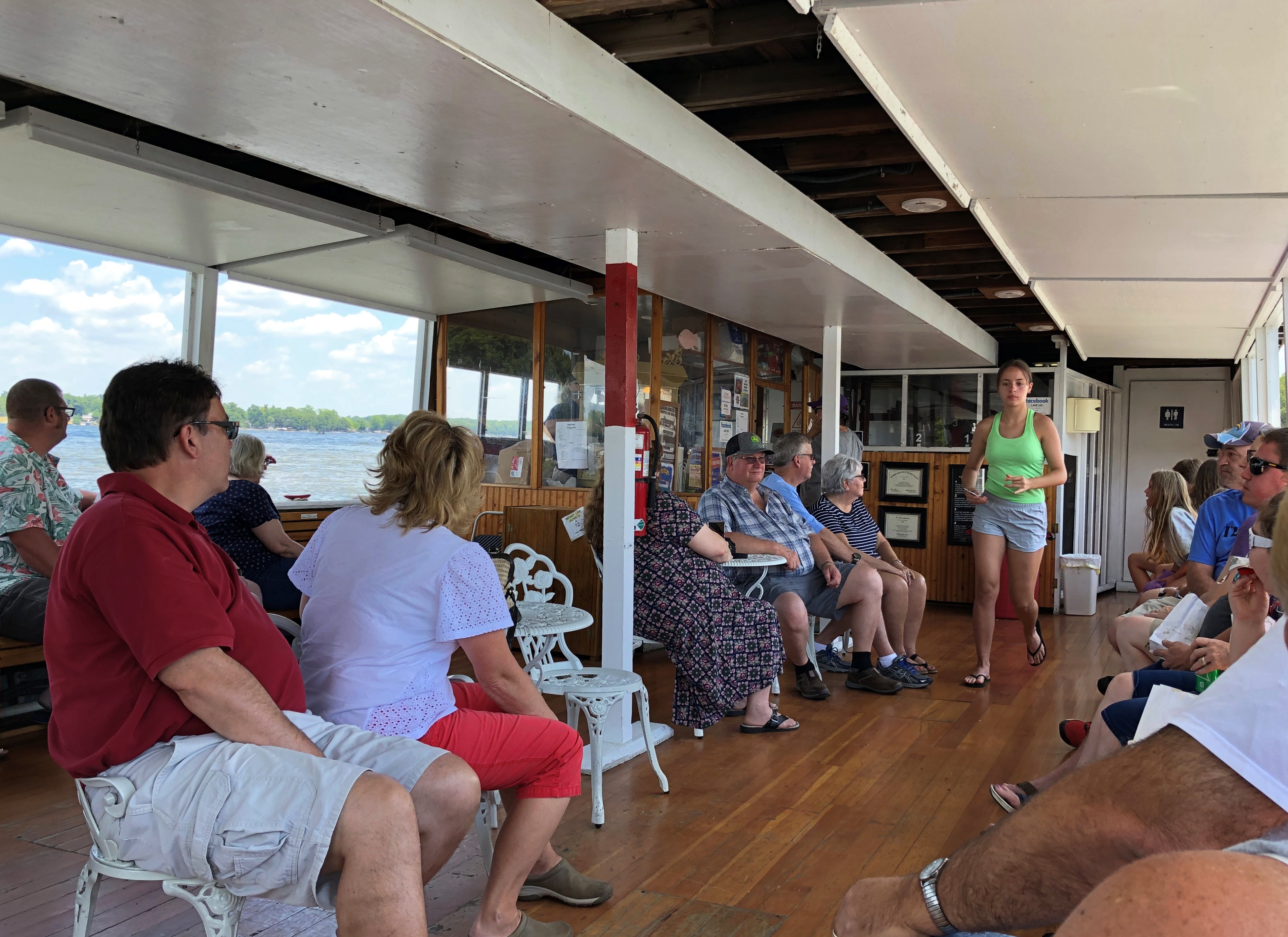
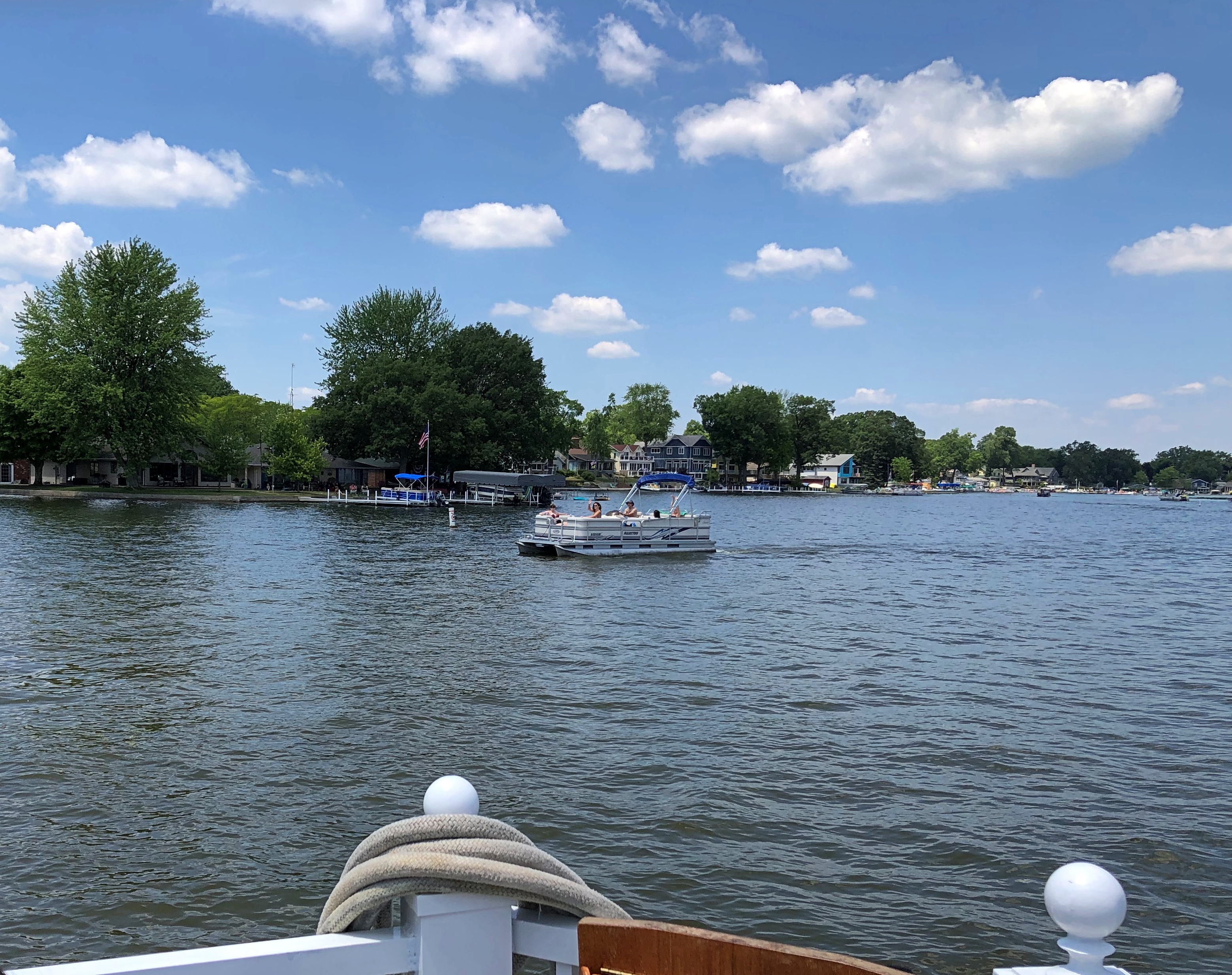
The day was clear and very warm, perfect for a lake outing. Dixie wasn’t packed, but a fair number of people rode on both lower and upper decks. Tickets were a bargain: $7 for adults. Good for the nonprofit — it isn’t out to gouge tourists.Dixie Sternwheeler, North Webster, Indiana

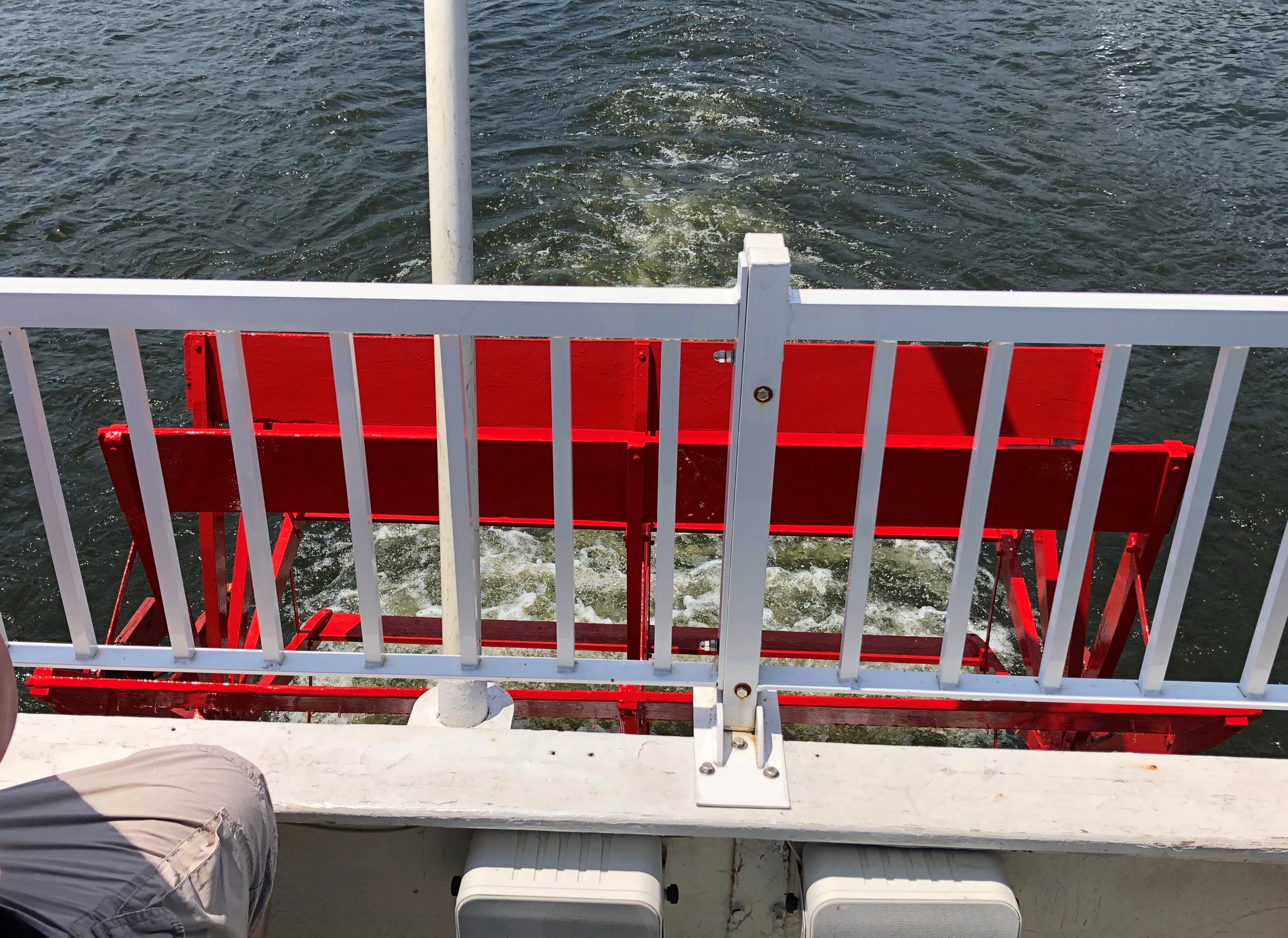
Dixie is a sternwheeler, and here’s the wheel. At the stern.Dixie Sternwheeler, North Webster, Indiana

A moment before I took that picture, a boy of about six was standing at the rail, looking down at the wheel. His mother encouraged him to leave, though I hadn’t said anything to her. I was ready to wait my turn.

“He’s fascinated by the wheel,” she said.

“I bet he is,” I said approvingly, but I don’t think she heard me. Managing a small child can be distracting. But if that was his first ride on a sternwheeler, I hope she made note of it on his ticket, and that the family is packratish enough so that he finds it sometime in the 2070s.

As tour boat patter went, Dixie’s taped program was well crafted — a voice talking about the ship, the lake and the surrounding land, with some interludes of peppy but not overwhelming banjo and guitar instrumentals. More actual history than you get on some tours, but not an overload. No intentionally bad jokes, either, but some good detail, especially describing the earlier days of the Dixie.

Capt. Breeck wasn’t a tour operator. He was master of a small working ship, crossing the lake in clement weather to deliver cargo and packages, as well as passengers, such as womenfolk visiting the stores in the town of North Webster. Dixie also carried groceries that it sold, and for a while the captain — clearly a jack of some trades, anyway — operated a small smithy at the back of the vessel.

His successors eventually evolved into tour operators as the surrounding farms gave way to postwar pockets of resort-like development. By now at least three generations have taken rides, including first dates of later married couples, and people taken by their grandparents who are now taking their grandchilden.

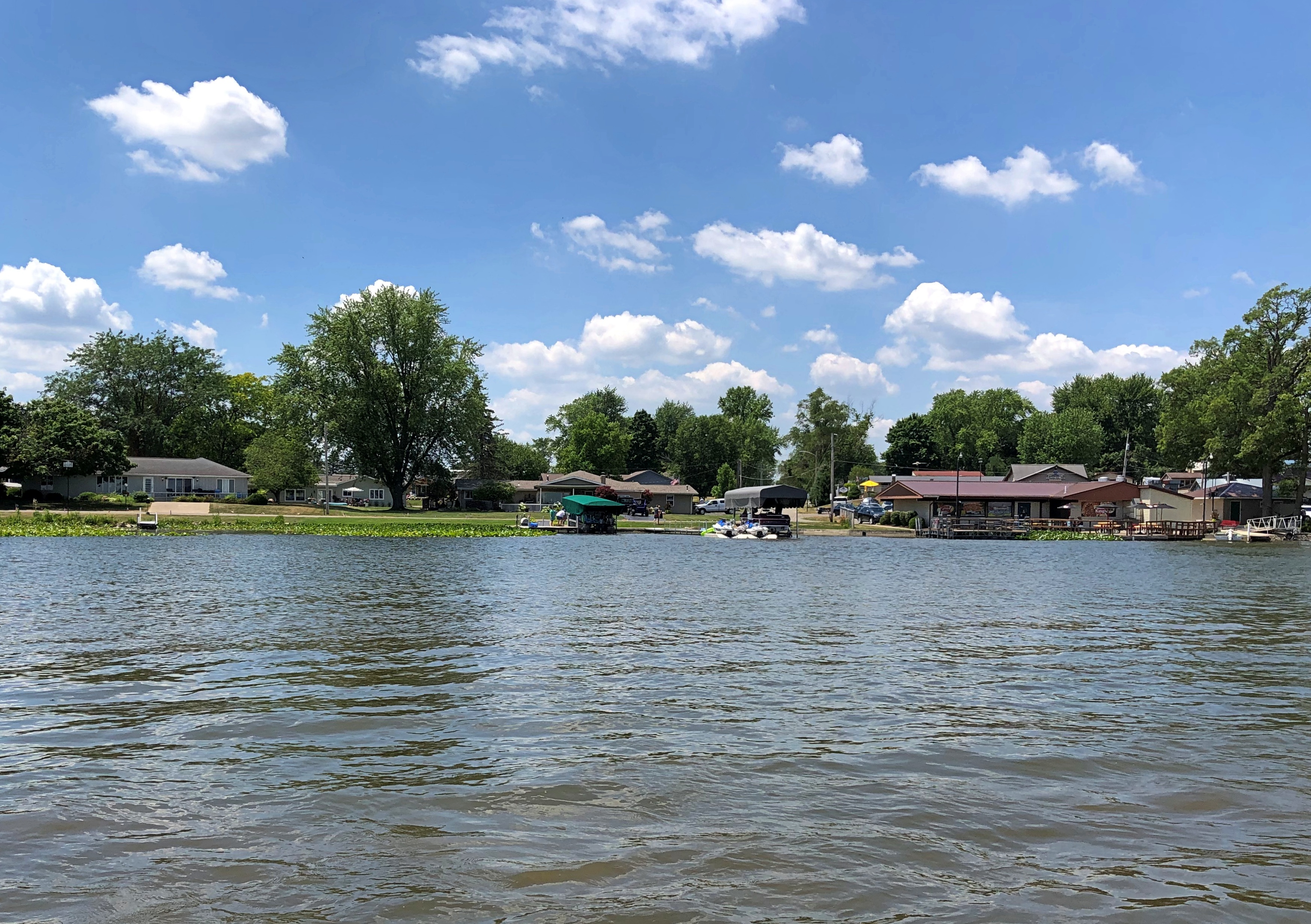
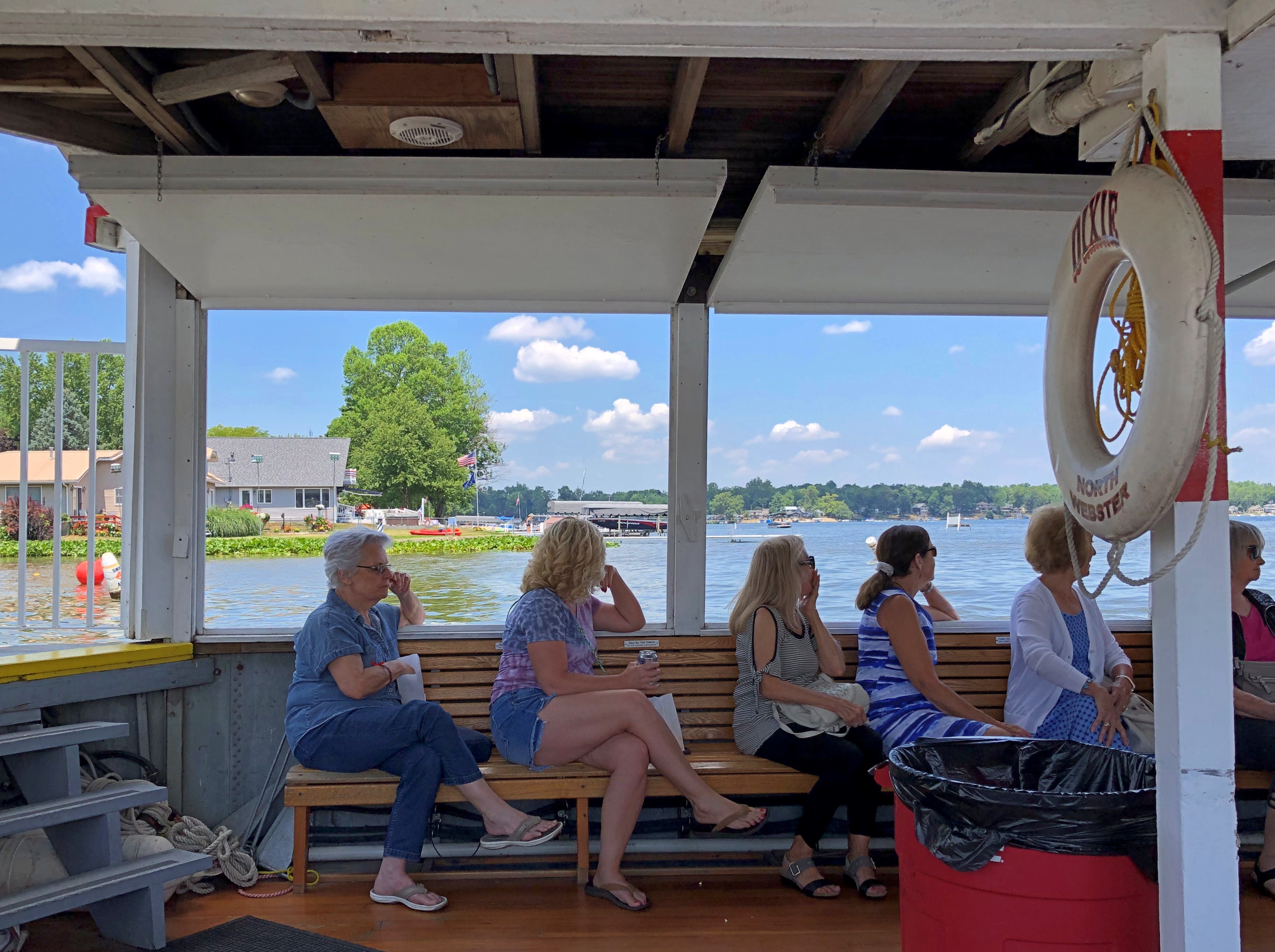
Got some views from both decks.Dixie Sternwheeler, North Webster, Indiana
Dixie Sternwheeler, North Webster, Indiana

The presentation’s detail about the shoreline is a bit of a blur — the boat docked here or there sometimes, the captain had his house at this other place, that island in the middle of the lake is owned by some notable Indiana family. The names came and went: Fisherman Cove, Miller’s Landing, Stumpy Flats, Weimer’s Landing.

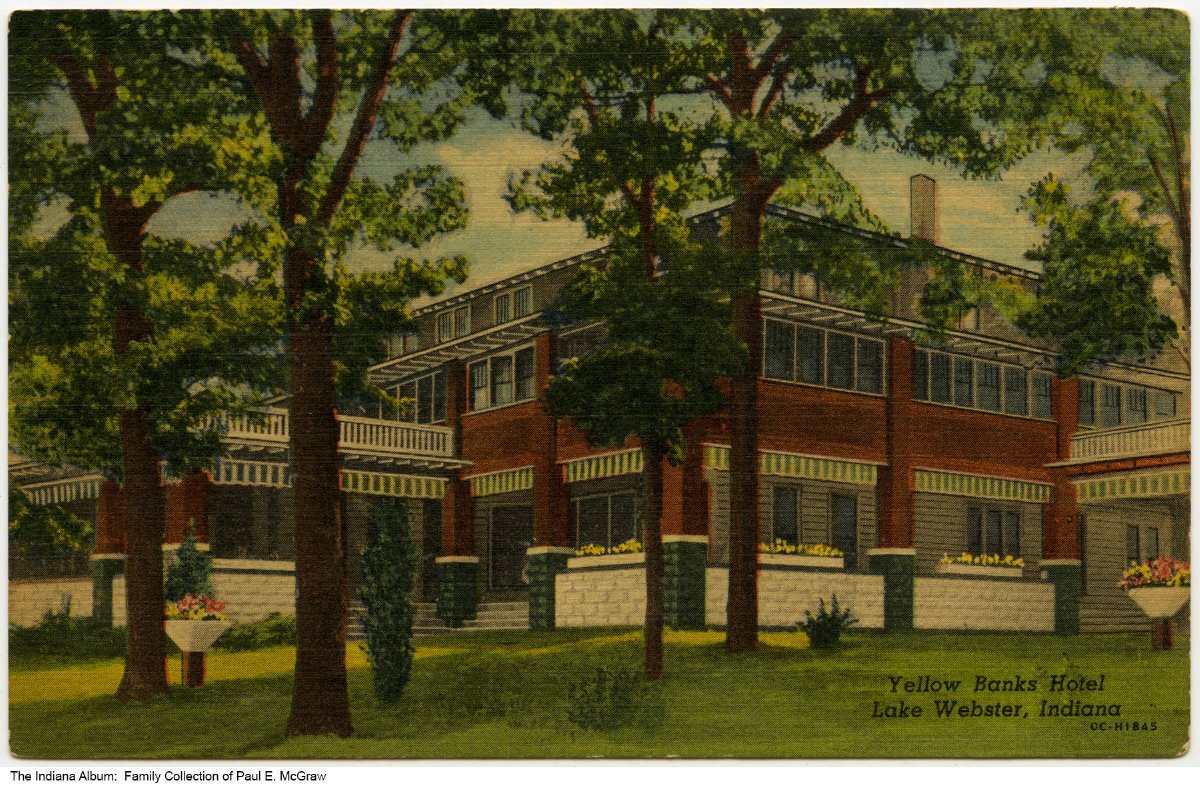
But my ears perked up during the talk about the two sizable hotels that used to be on the lake. One was the Yellow Banks Hotel.

“A very grand hotel, built in 1902,” says the Dixie web site. “The original hotel and its wooden rowboats were painted yellow… This was a scheduled stop for the Dixie until the early 1960s. In the late 1960s the hotel changed owners and fell into disrepair. It briefly became an Italian restaurant (Novelli’s) in the late 1970s, but was dismantled in 1980. Dillinger and his gang stayed at the Yellow Banks Hotel, probably in October 1933 or April 1934.”

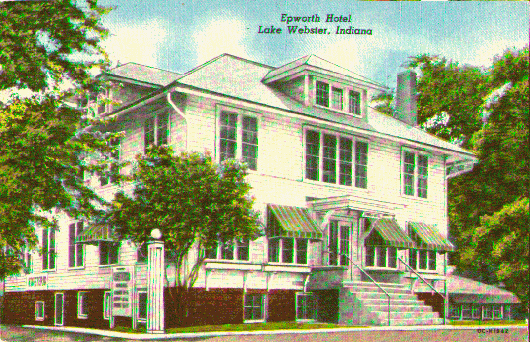
The Epworth Forest Hotel (from the web site).

The Epworth had an outdoor amphitheater. “The Dixie would pickup passengers in this protected cove on windy days,” the web site continues. “In 1955 the Dixie began hosting Epworth Forest’s production of Showboat. Once per year the Dixie became the stage for this off-Broadway play.

“By 1964 the cast and production became too large for the boat. From 1964 through 1980, the Dixie would simply deliver the cast of Showboat to this amphitheater for their annual performance. By 1981 the new owners of the Dixie had cancelled this tradition.”

Both of these hotels were cancelled, too, in the way things are usually canceled, not as the result of some moral outrage, but rather by the course of business. By the late 20th century, the economics of even a small resort area like Webster Lake meant that single-family homes, short-term rentals and condos became the norm along the shore.

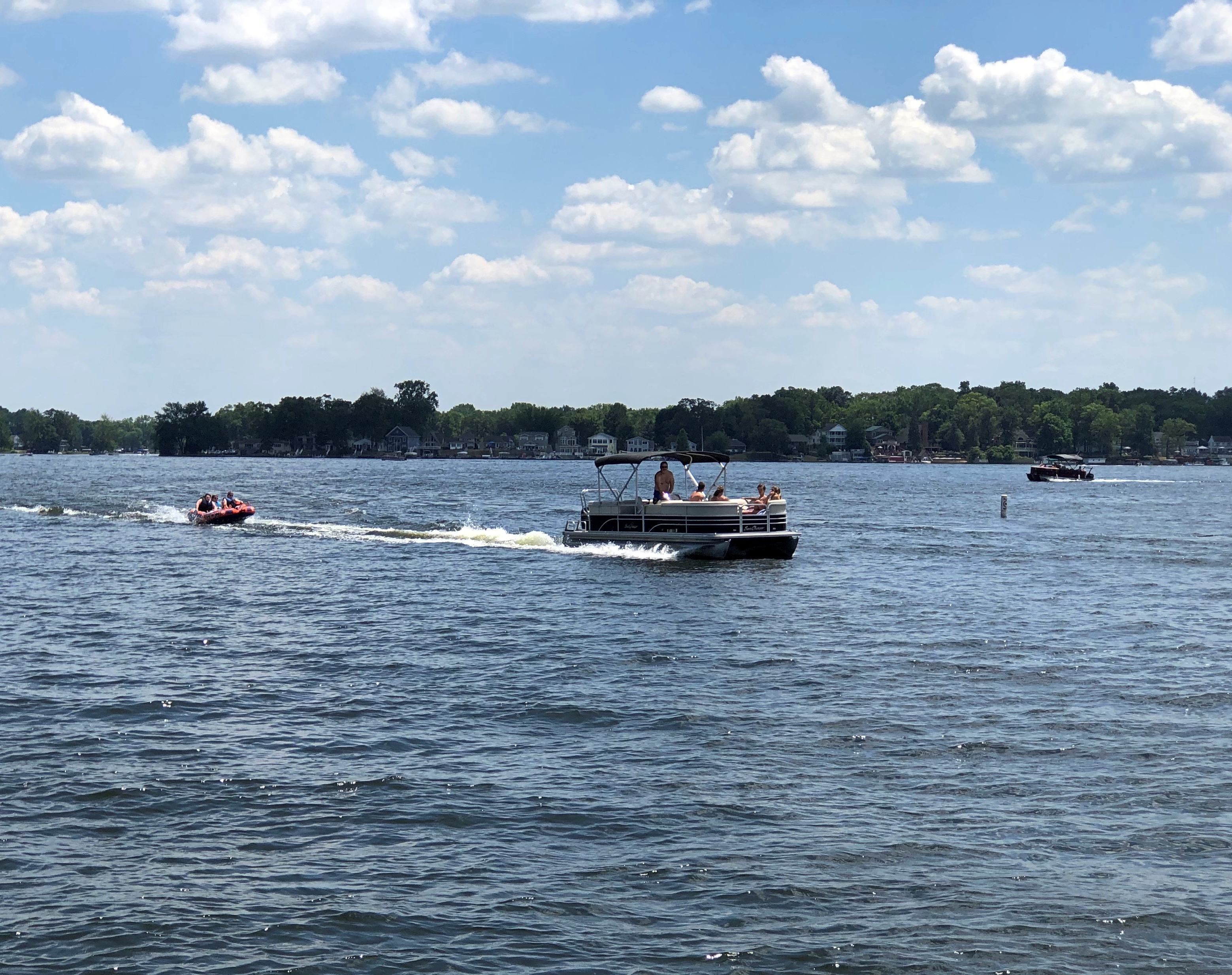
Plenty of other watercraft were in the lake on that second day of the Independence Day long weekend. We got a lot of waves from passersby, and most everyone on the Dixie waved back. Us too.Dixie Sternwheeler, North Webster, Indiana Dixie Sternwheeler, North Webster, Indiana

I was out and about throughout the hour and a half or so the tour lasted, though I spent most of my time on the lower deck. My deck companions across the way didn’t, as far as I noticed, get up and move about.Dixie Sternwheeler, North Webster, Indiana Dixie Sternwheeler, North Webster, Indiana

They did shift a few times, though.

In Indiana, You Take Vistas Where You Can Get Them

Our first back yard hibiscus of the summer. There will be many more for weeks to come, since the plants thrive with scarcely any effort on our part.

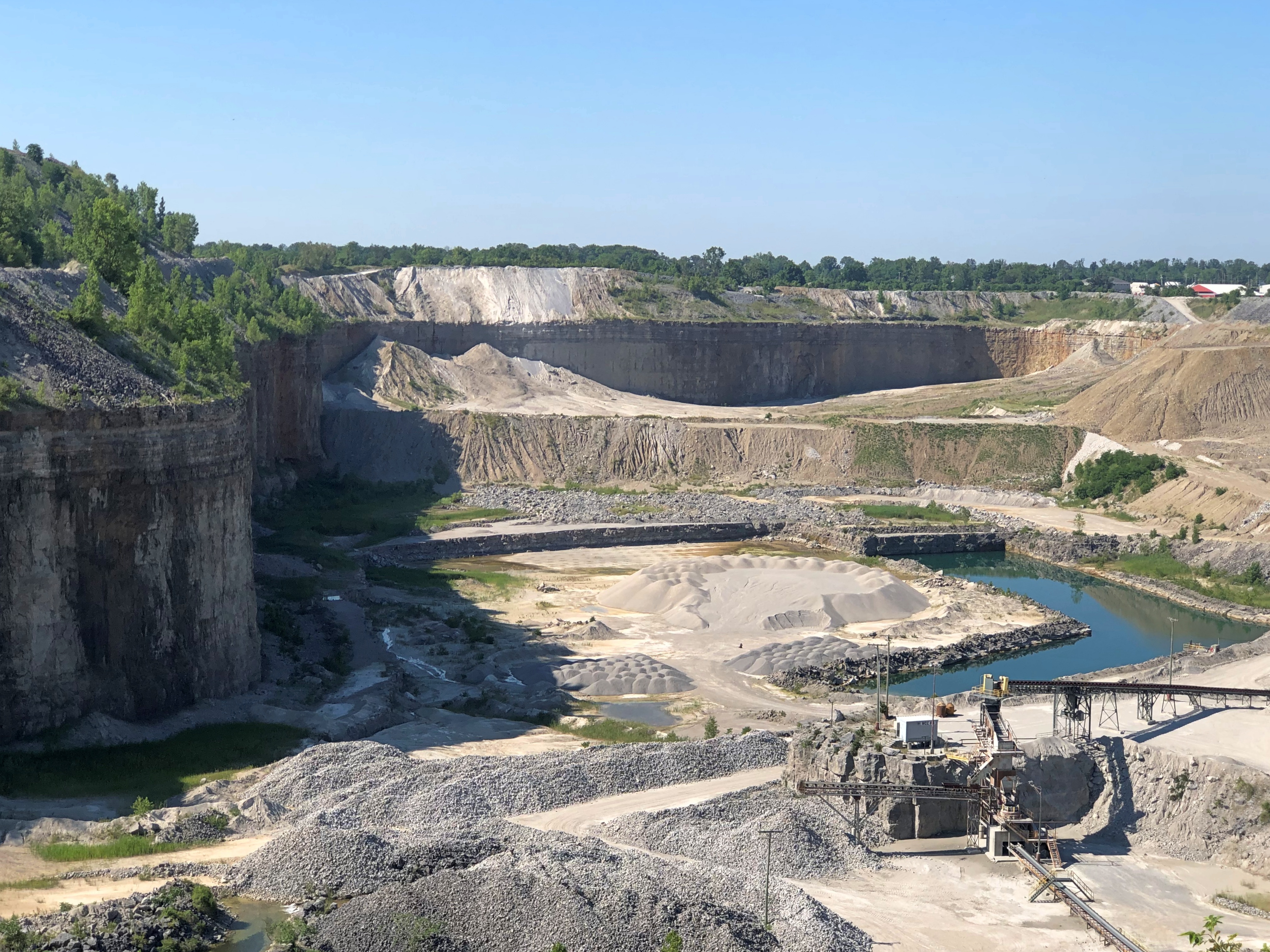
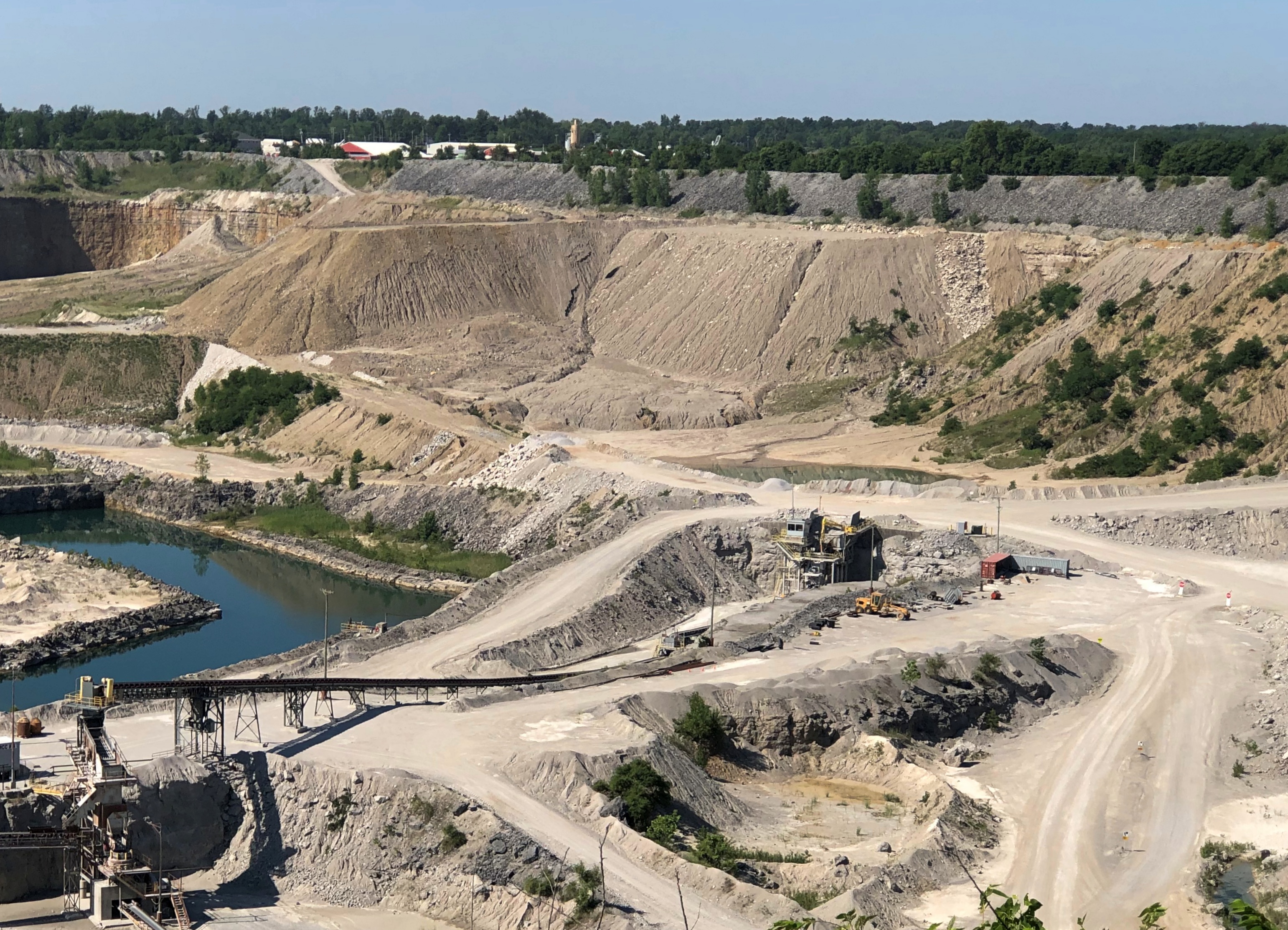
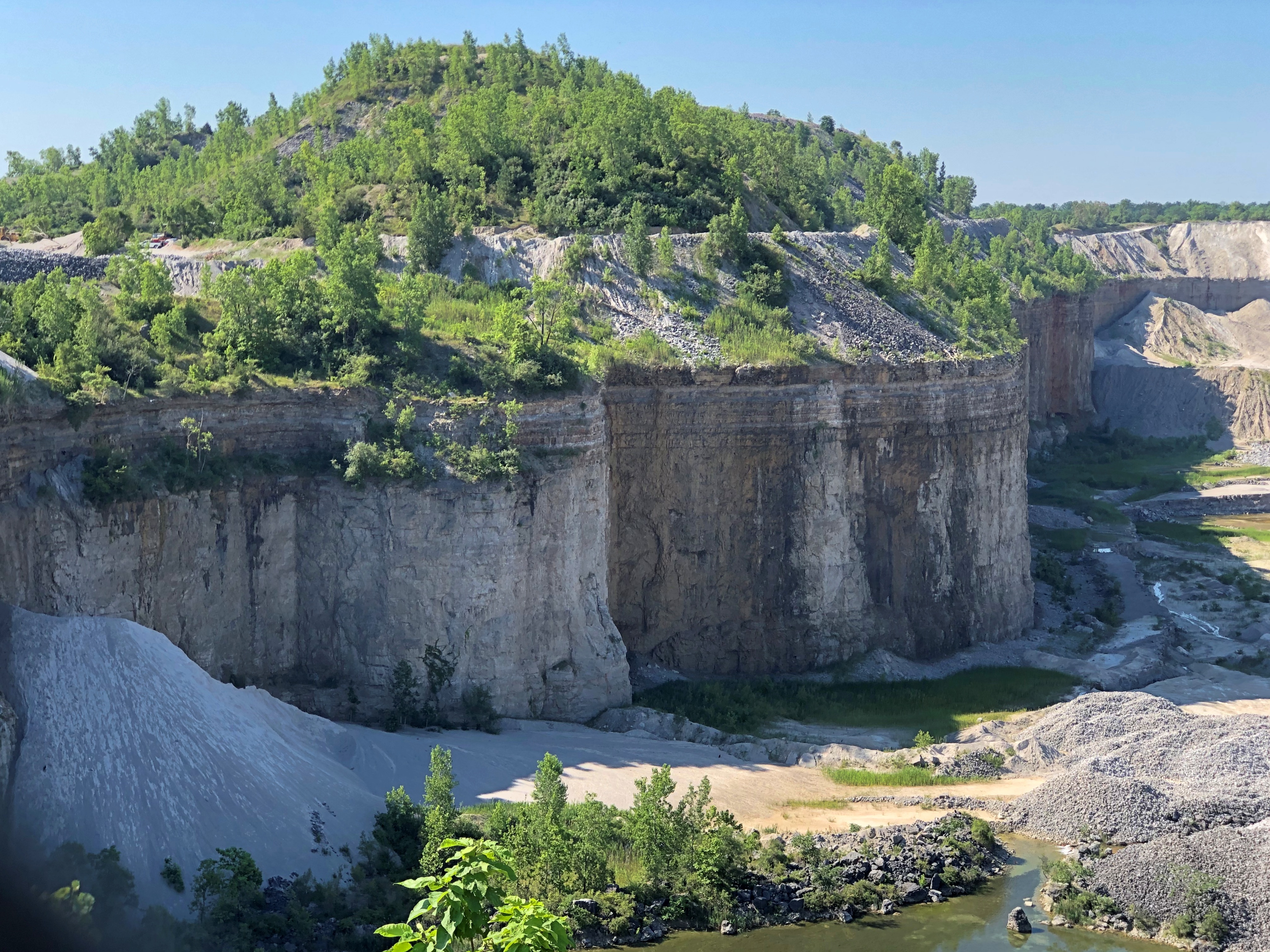
Before we went to Indiana this month, I got wind of the Hanson Ardmore Quarry Observation Tower in Fort Wayne. Turned out it wasn’t far from where we stayed, so after my jaunt to Lindenwood Cemetery, we took a look.

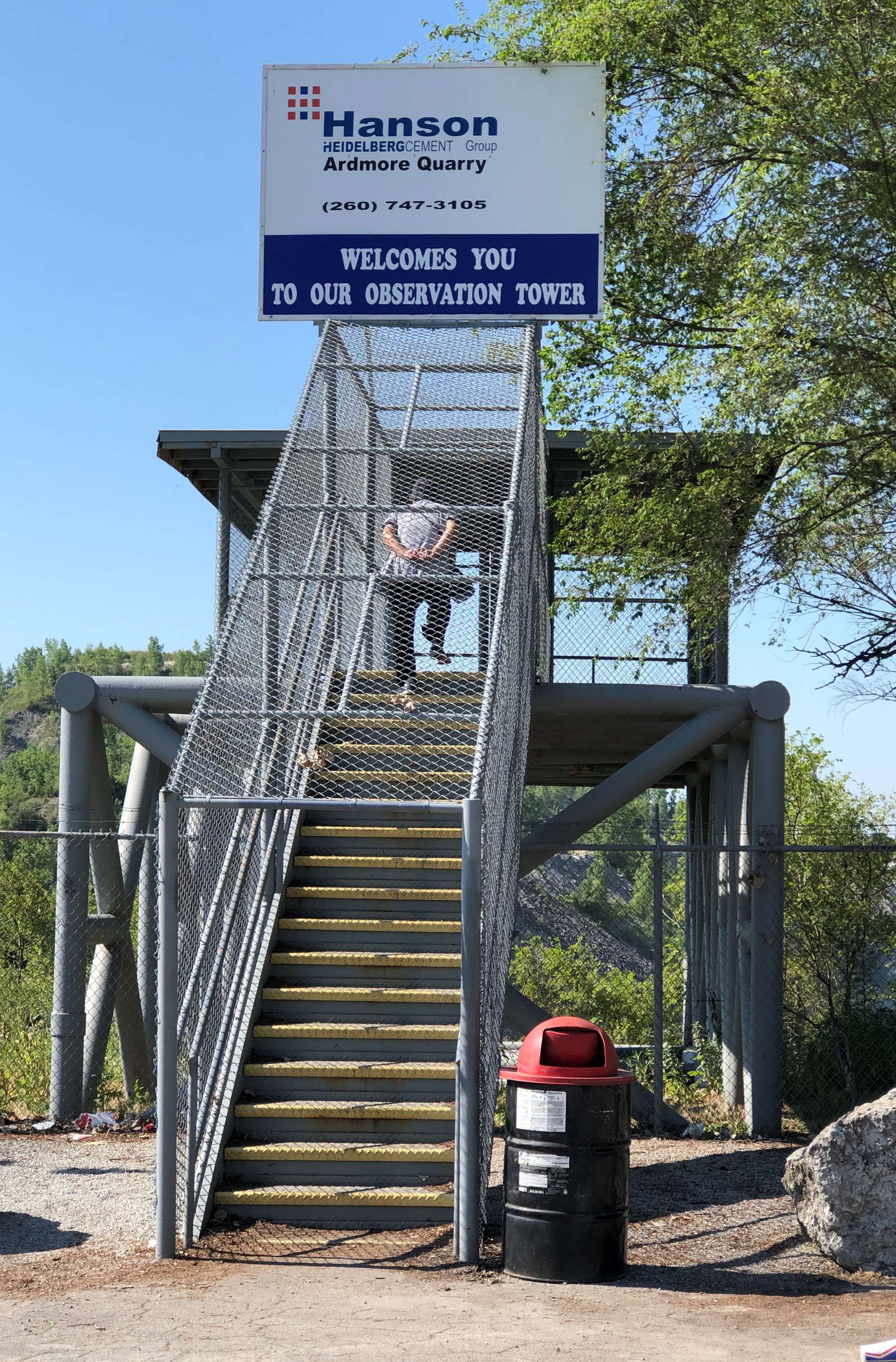
Tower might not quite be the word. It’s more of a fenced-in observation deck. But Hanson — a part of HeidelbergCement, a German building materials conglomerate no doubt controlled by shadowy billionaires — calls it a tower on the sign. The structure is at the end of a small parking lot that’s open to the public.Hanson Ardmore Quarry Observation Tower

Regardless of the nomenclature, quite a view. Hanson Ardmore Quarry Hanson Ardmore Quarry

It was a Sunday, so the place was quiet. Still, Hanson has been digging limestone at this site for 80 years, and it is a big hole in the ground. Various sources, such as Roadside America, claim the quarry is 1,000 feet deep, but I don’t think so.Hanson Ardmore Quarry

I’d say maybe 300 or 400 feet. Horseshoe Bend is 1,000 feet deep, and this is no Horseshoe Bend. Still, it isn’t something you see very often, a vista into a working quarry.

Lindenwood Cemetery & Johnny Appleseed Park

I didn’t see the grave of Art Smith in Fort Wayne early this month. I wasn’t looking for it, because I’d never heard of Art Smith. Only after reading about Lindenwood Cemetery a few days ago, and some time after I visited there, did I find out about him.

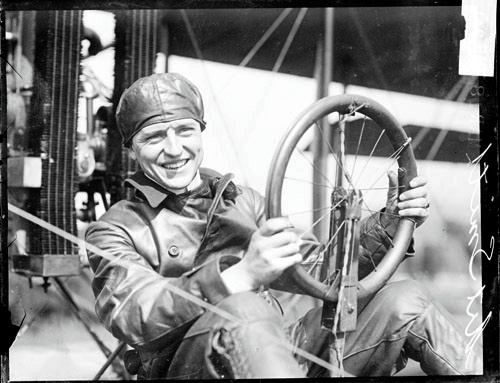
Along with a fun pic.Art_Smith_(pilot)_1915

Art Smith, early aviator, Bird Boy of Fort Wayne. In 1915, he took Lincoln Beachey’s job as a exhibition pilot at the Panama-Pacific International Exposition, after Beachey carked it in San Francisco Bay. Smith himself had a date with aerial death, but that was later, while flying the mail in 1926. He’s been at Lindenwood ever since.

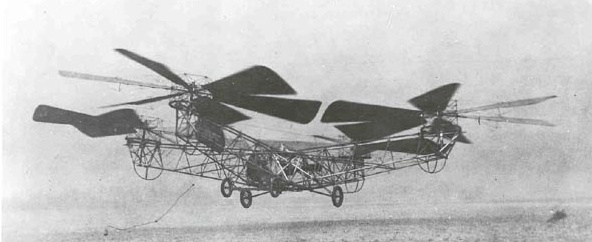
An aside to that aside. According to Wiki at least, Smith was one of only two men trained to fly the de Bothezat helicopter, also known as the Jerome-de Bothezat Flying Octopus, which was an experimental quadrotor helicopter.

That tells me that among those magnificent young men and their flying machines — you know, early aviators — Smith must have been especially crazy even in that fearless bunch, whatever his other skills as a pilot or virtues as a human being.

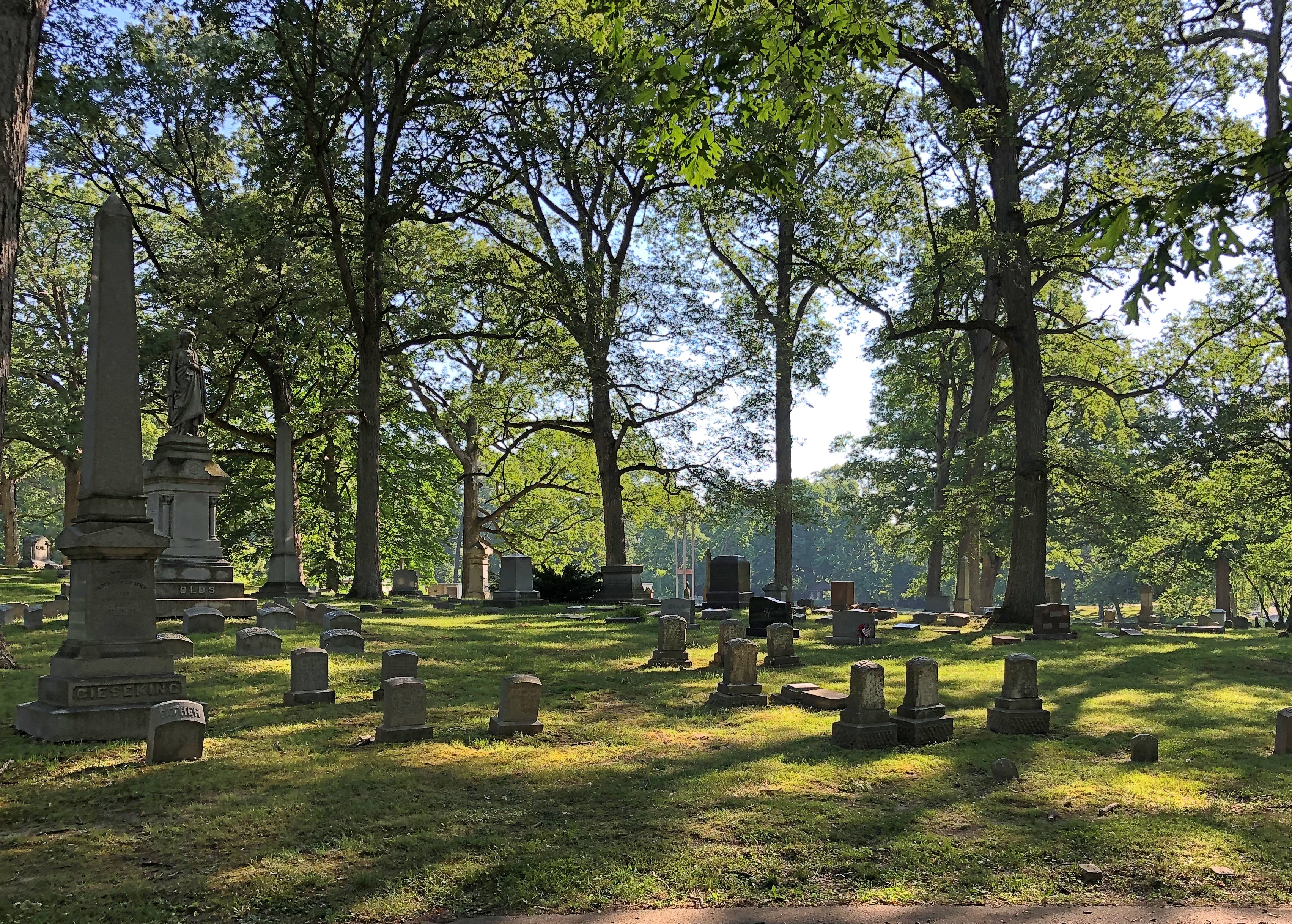
Lindenwood Cemetery dates from 1859, and is the Fort Wayne’s Victorian cemetery. It looks the part. All together about 69,000 people rest there, and at 175 acres, it’s one of the larger cemeteries in Indiana. As usual, I arrived in the mid-morning, by myself.

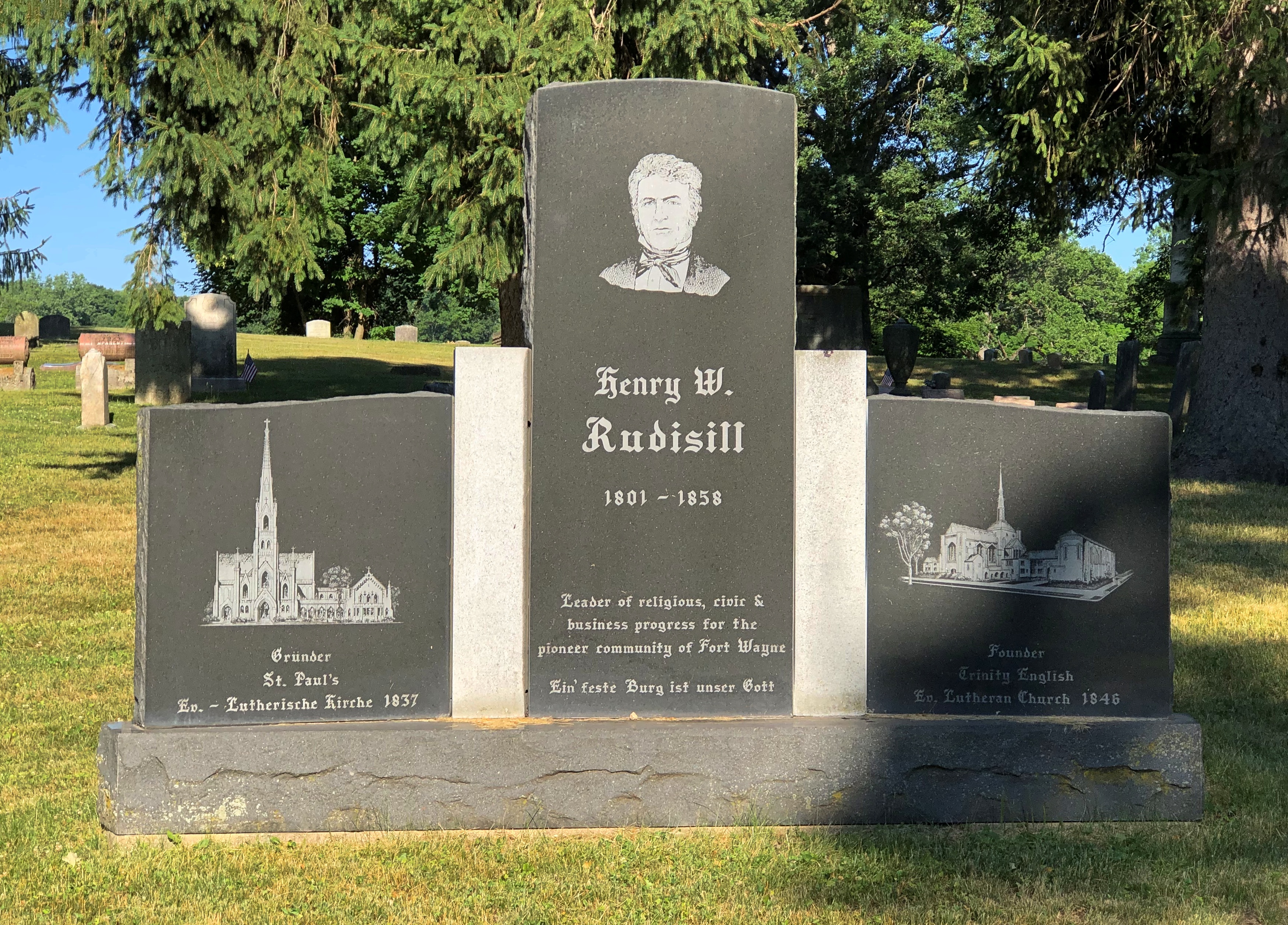
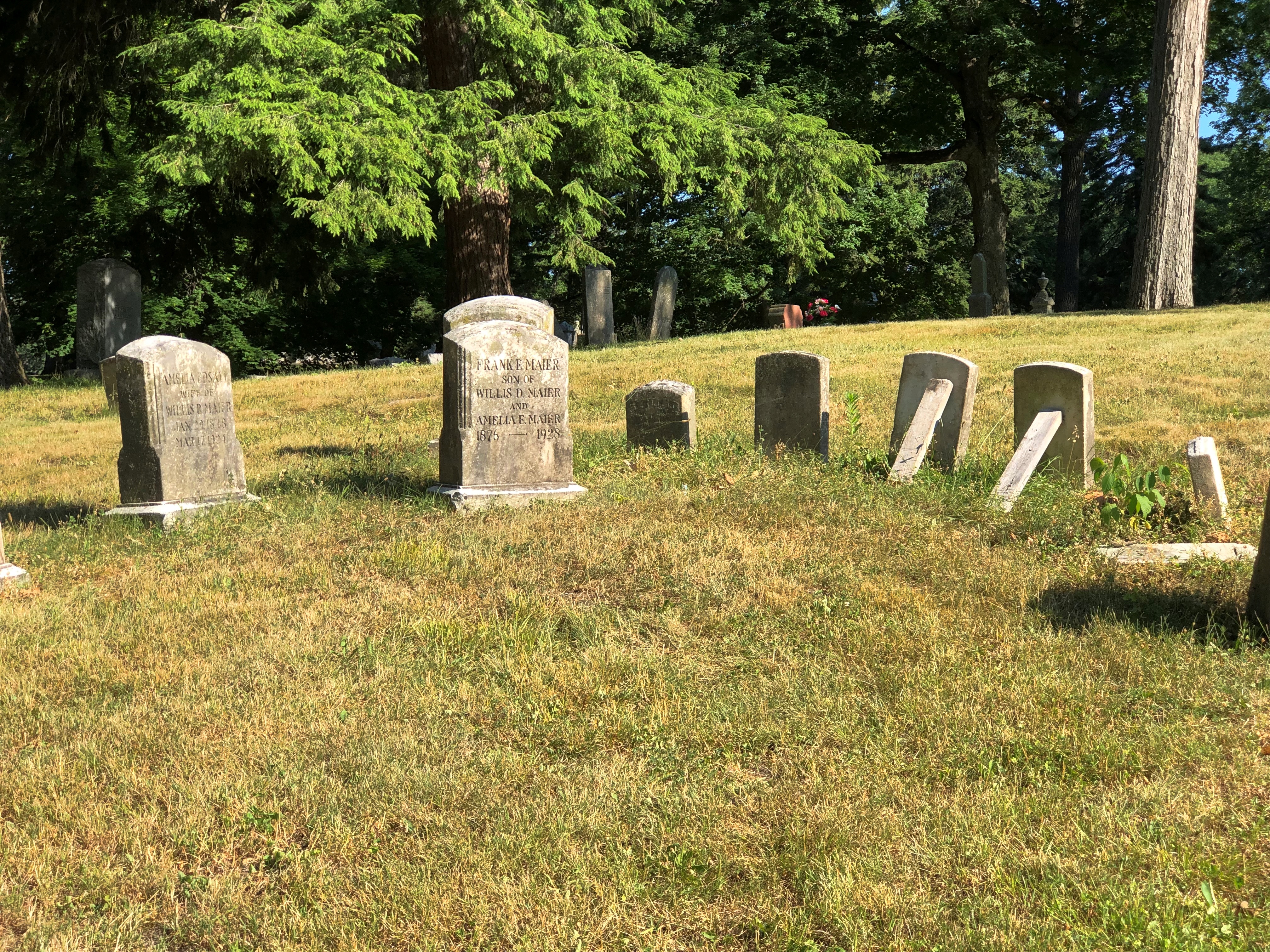
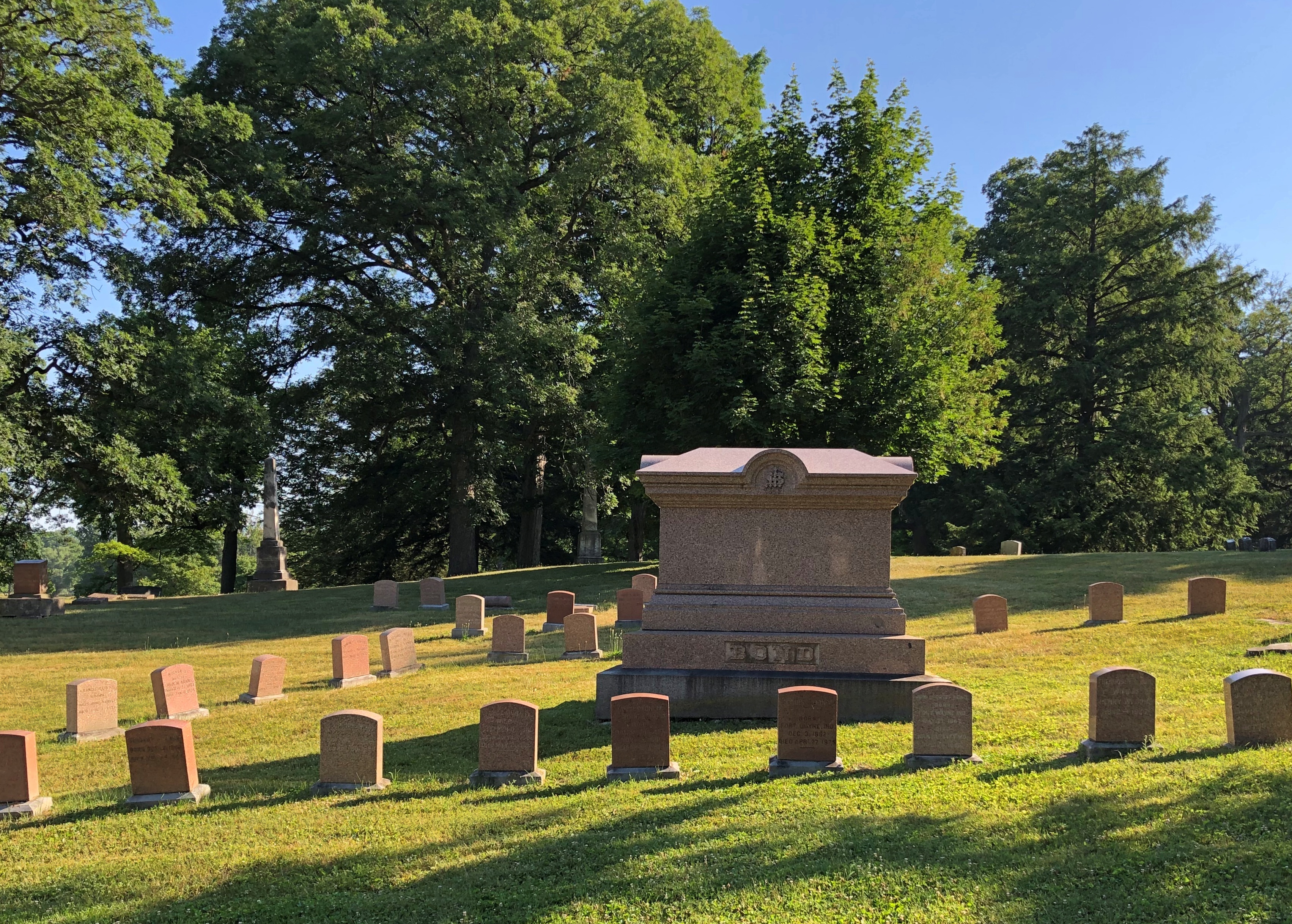
I did see one noteworthy burial soon after arrival. That is, the memorial itself seemed to make that claim. He founded two churches, so the claim seems to have some merit.Lindenwood Cemetery, Fort Wayne

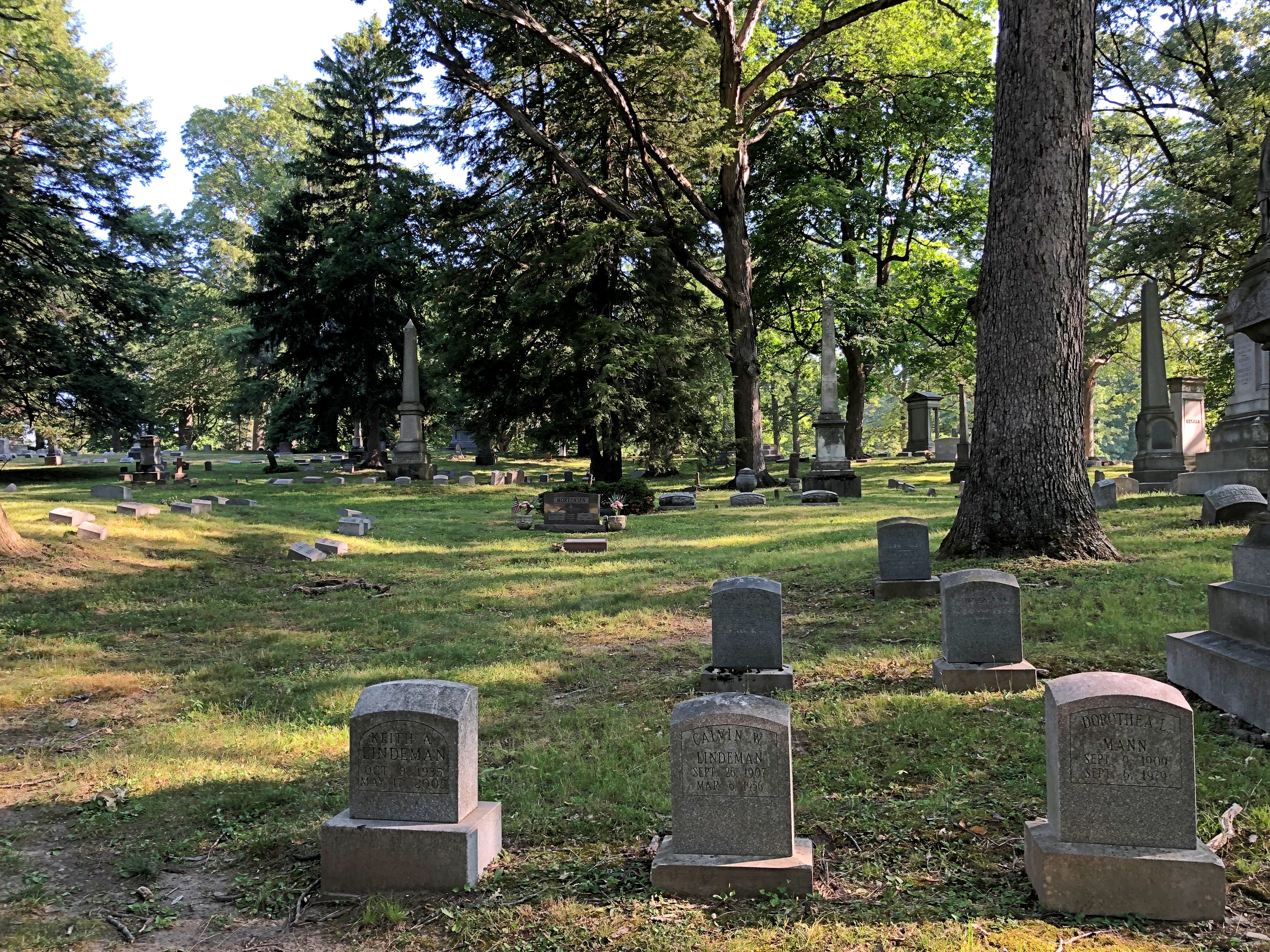
It’s a forested area, as I’m sure was intended.Lindenwood Cemetery, Fort Wayne

With open spots.Lindenwood Cemetery, Fort Wayne Lindenwood Cemetery, Fort Wayne

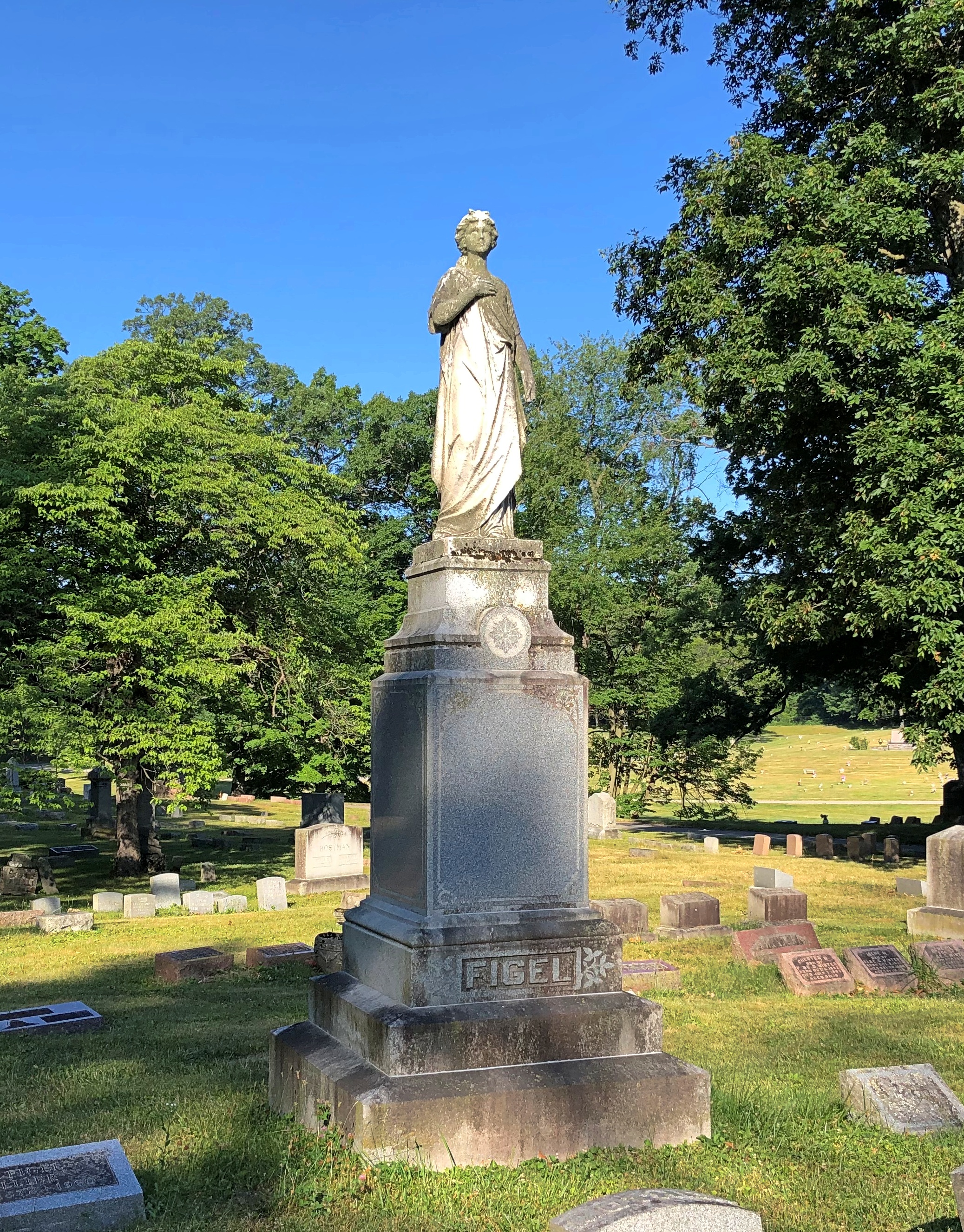
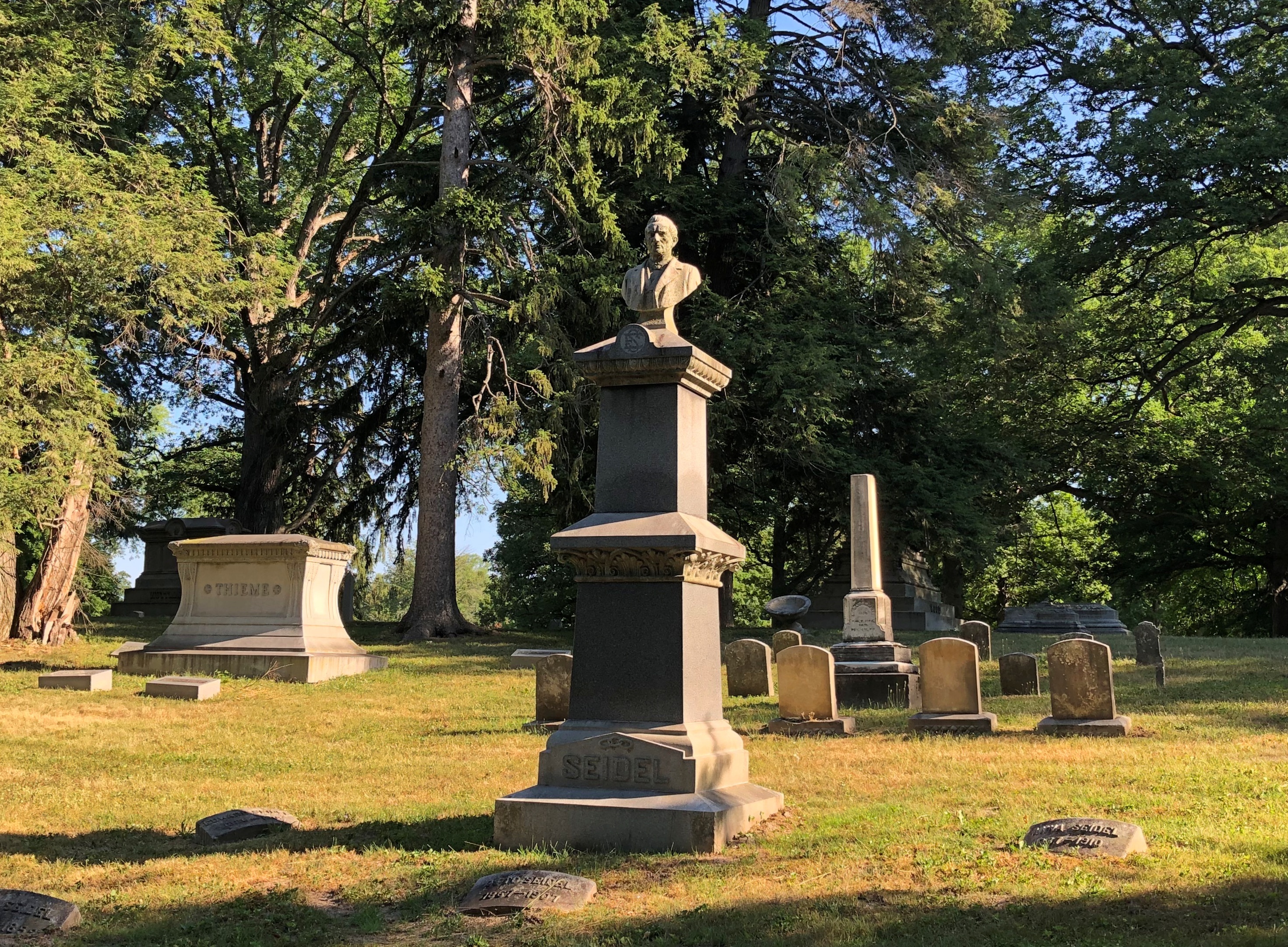
A scattering of funerary art.Lindenwood Cemetery, Fort Wayne Lindenwood Cemetery, Fort Wayne

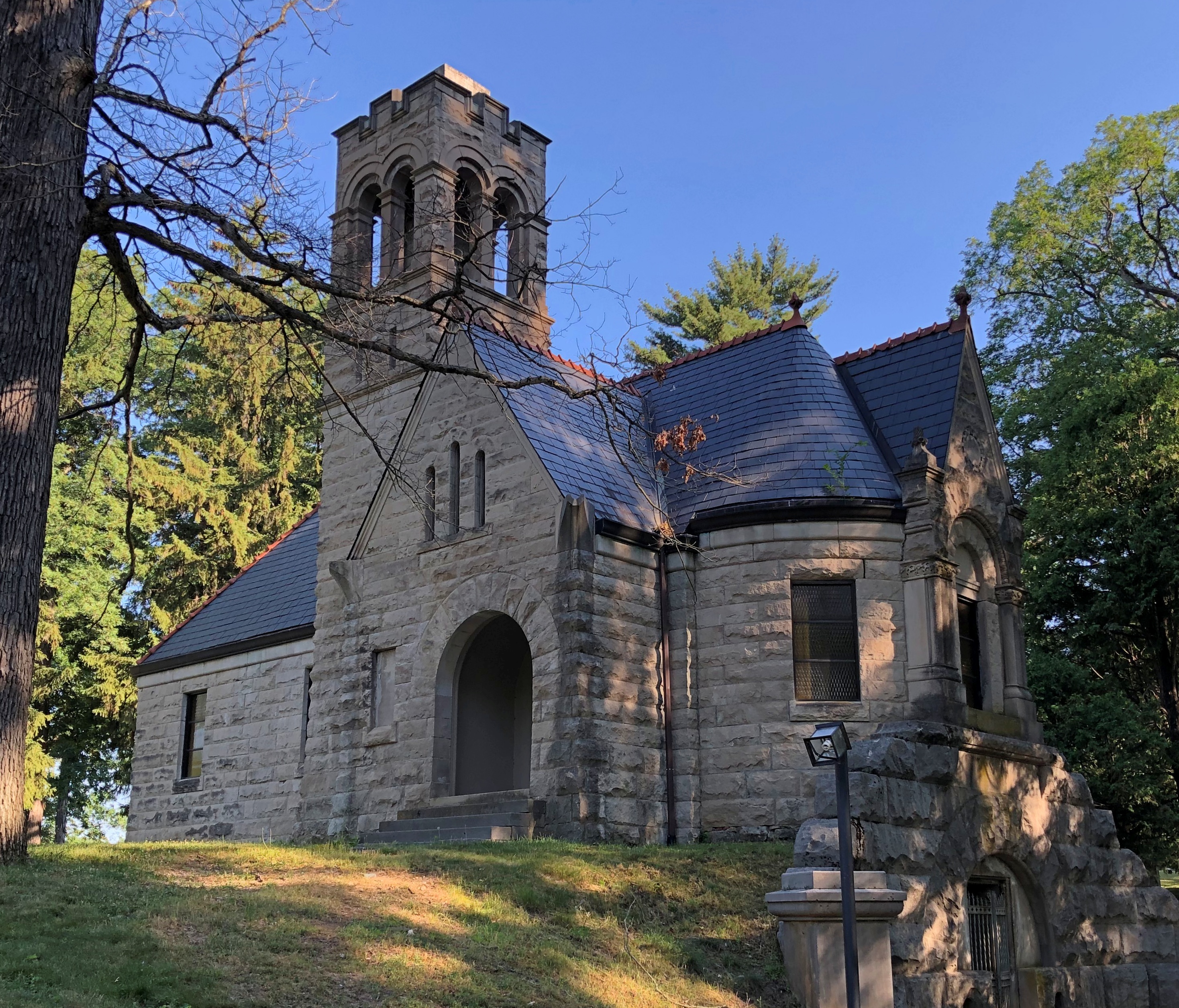
A chapel.Lindenwood Cemetery, Fort Wayne

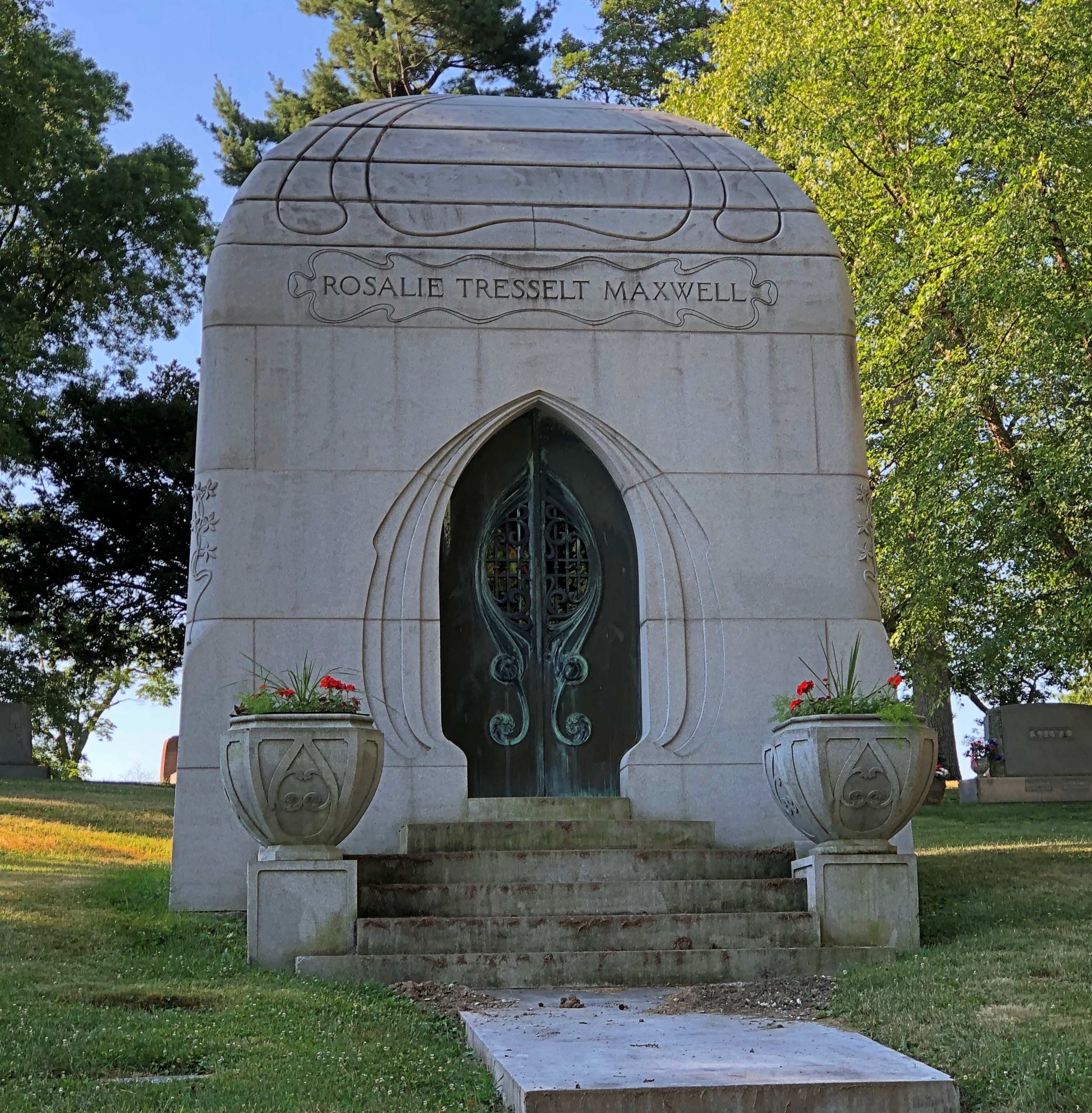
An occasional mausoleum. I’ve never seen one quite like this one.
Lindenwood Cemetery, Fort Wayne

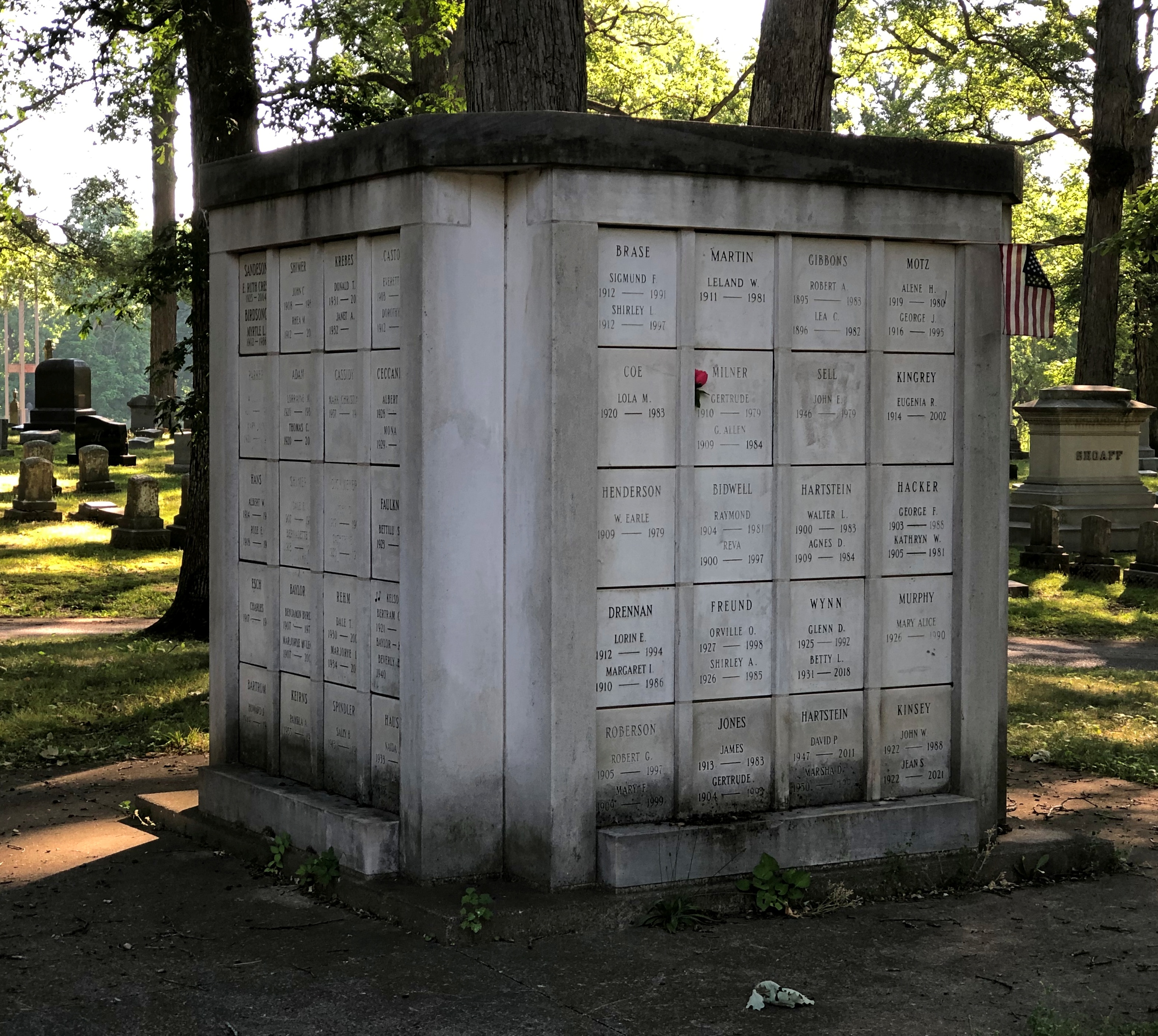
An apartment block necropolis? I hadn’t seen one quite like that, either. A more modestly priced option, probably, at least at one time.
Lindenwood Cemetery, Fort Wayne

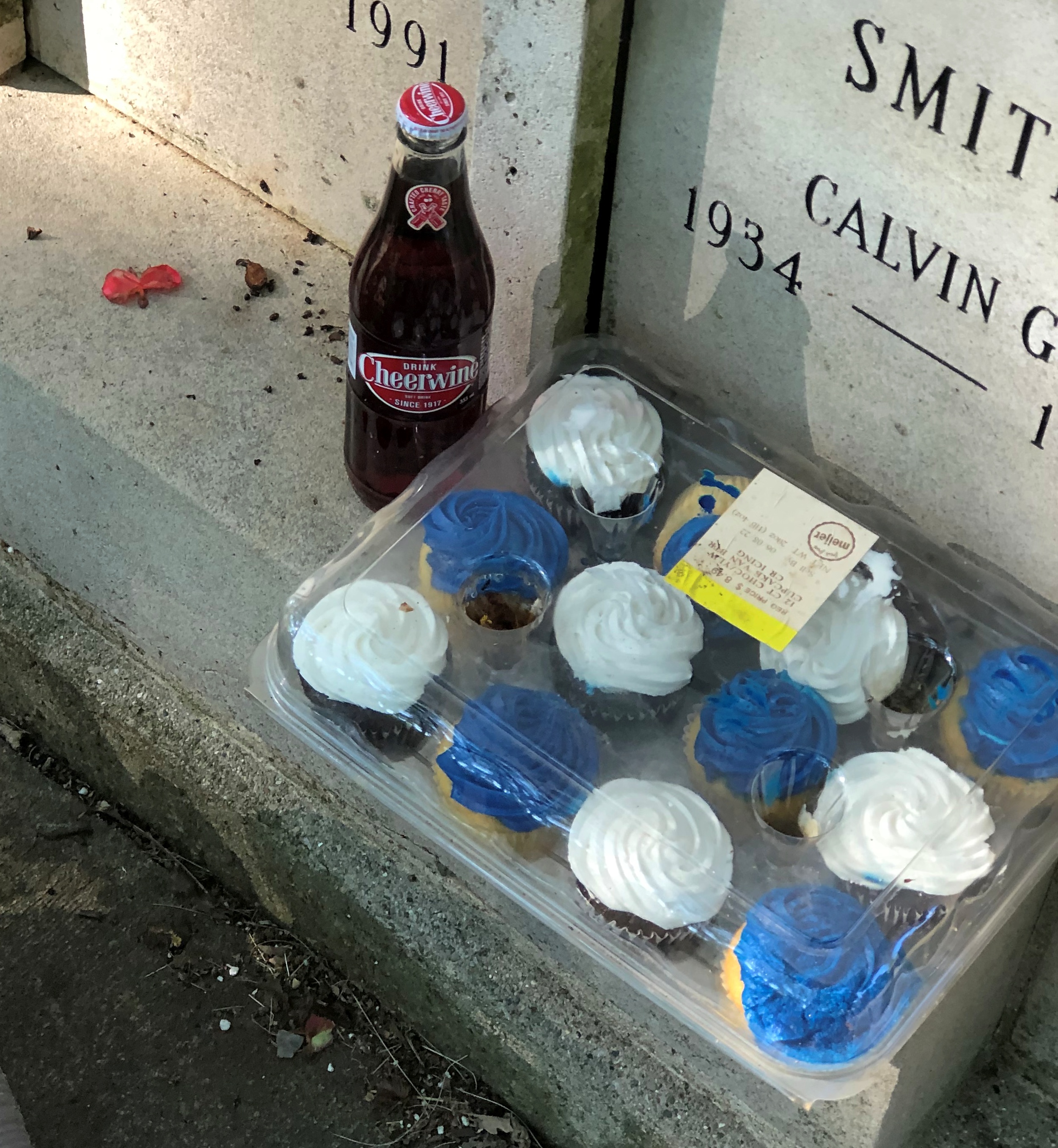
Calvin Smith (1934-88) is remembered by someone. Someone who brings treats, including the North Carolina soda Cheerwine.Lindenwood Cemetery, Fort Wayne - Calvin Smith

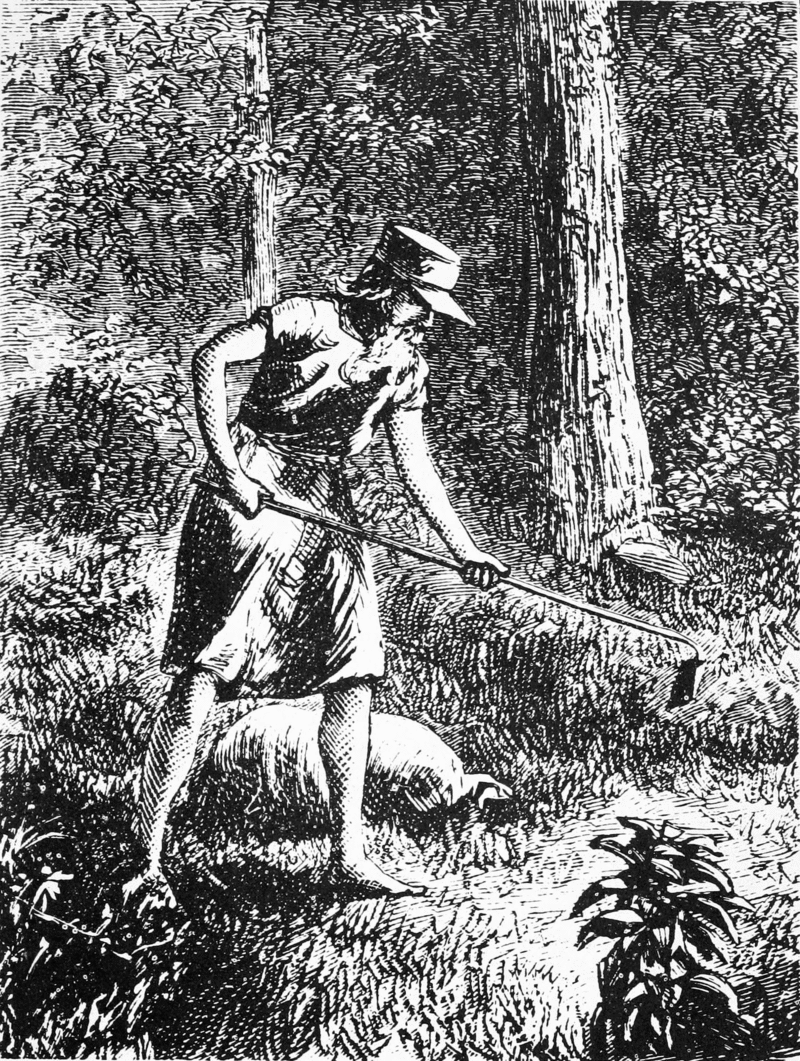
Which brings me to Johnny Appleseed, promoter of cheer cider. Hard cider, that is, something elided over in school stories about the career of John Chapman, or at least the ones I heard.

A contemporary image.

He too is buried in Fort Wayne but not, befitting his reclusive reputation, among the crowds at Lindenwood. This is Johnny Appleseed we’re talking about. He has his own park.

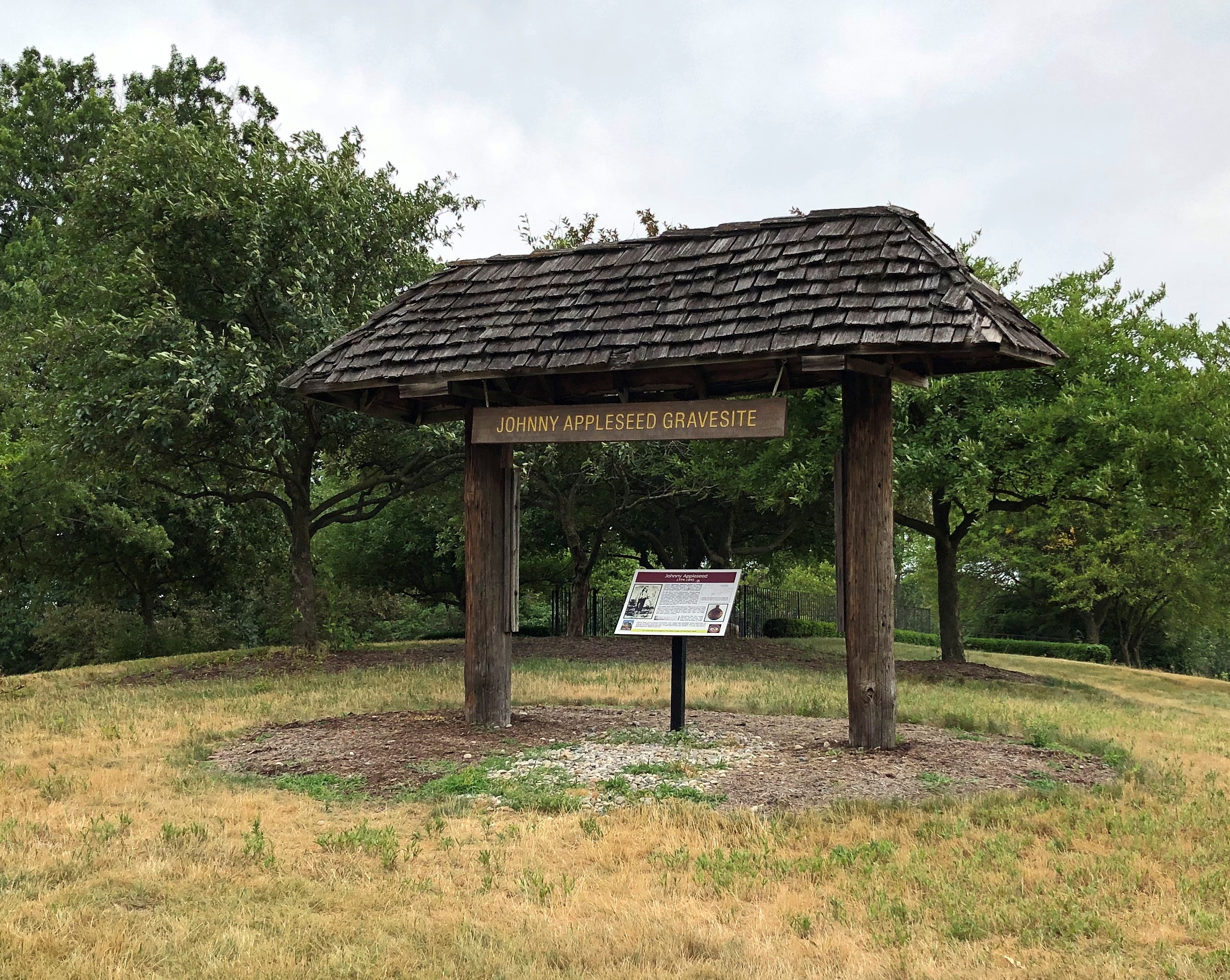
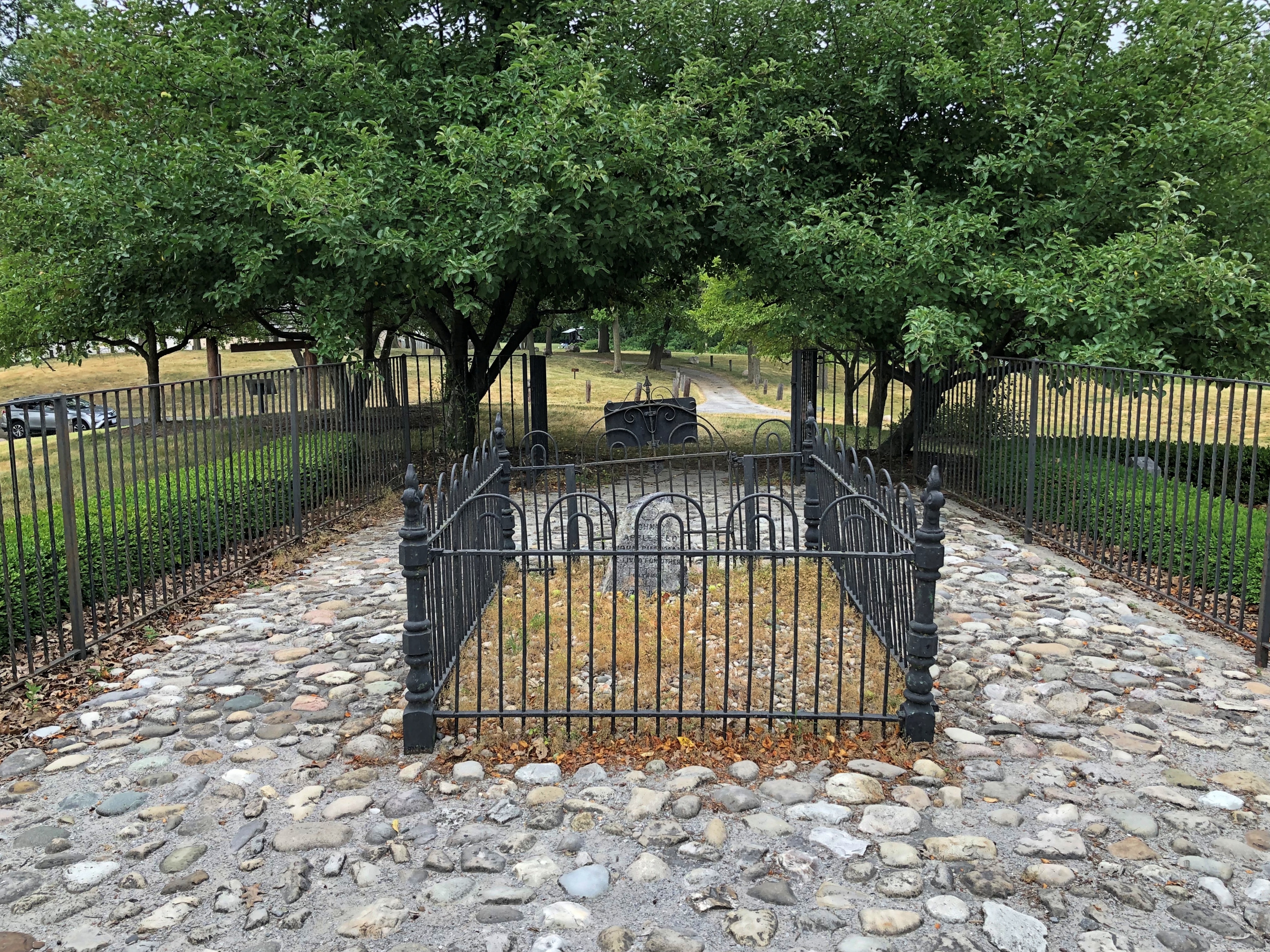
When I realized I was driving near his grave on Saturday evening before sunset, I took a detour to Johnny Appleseed Park, most of which features standard-issue municipal facilities, such as ballfields and picnic tables and sheltered event spaces. But one section includes Johnny’s grave.Johnny Appleseed Grave

That’s not actually the gravesite, but rather a sign about Johnny Appleseed. The nurseryman reposes on top of the hill behind the sign.Johnny Appleseed Grave

I read the sign and learned a thing or two. I didn’t know, for instance, that Chapman was also a missionary for the Swedenborgians.Johnny Appleseed Grave

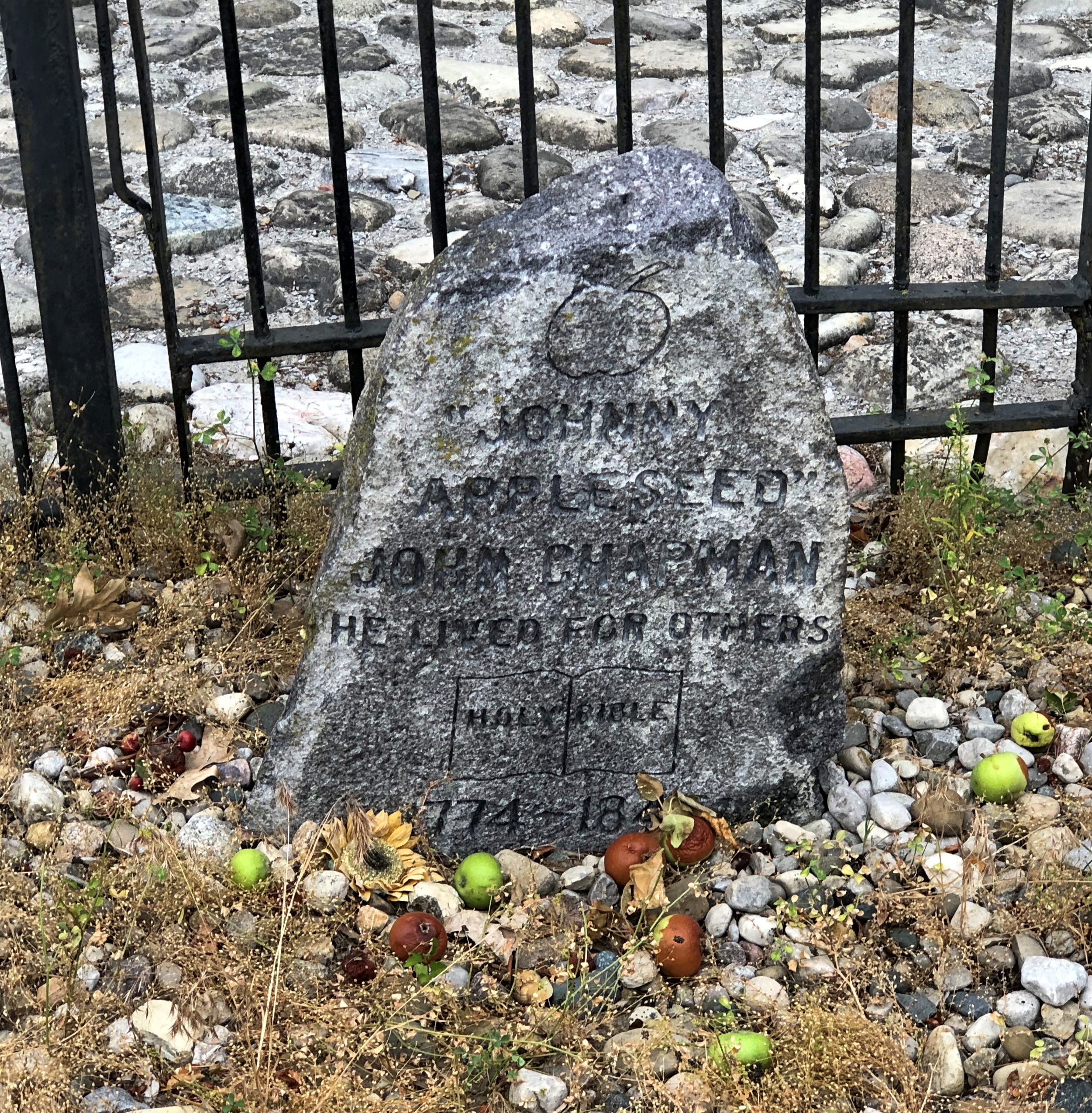
“Johnny

Appleseed”

John Chapman

He lived for others

Holy Bible

1774-1845

It took me a moment to notice the apples scattered around the stone. Then I noticed the apple trees planted around it. Nice touch.