T.C. Steele State Historic Site

Back in March 2002, we visited Columbus, Indiana, and took a foray west from there to visit Nashville (Indiana), Brown County State Park and the T.C. Steel State Historic Site. That last one was still closed for the winter.

These days, the site is open year-round. So around noon on December 28, we drove east from Bloomington, less than 30 minutes out of town, into hilly, rural Brown County and on to the state historic site.
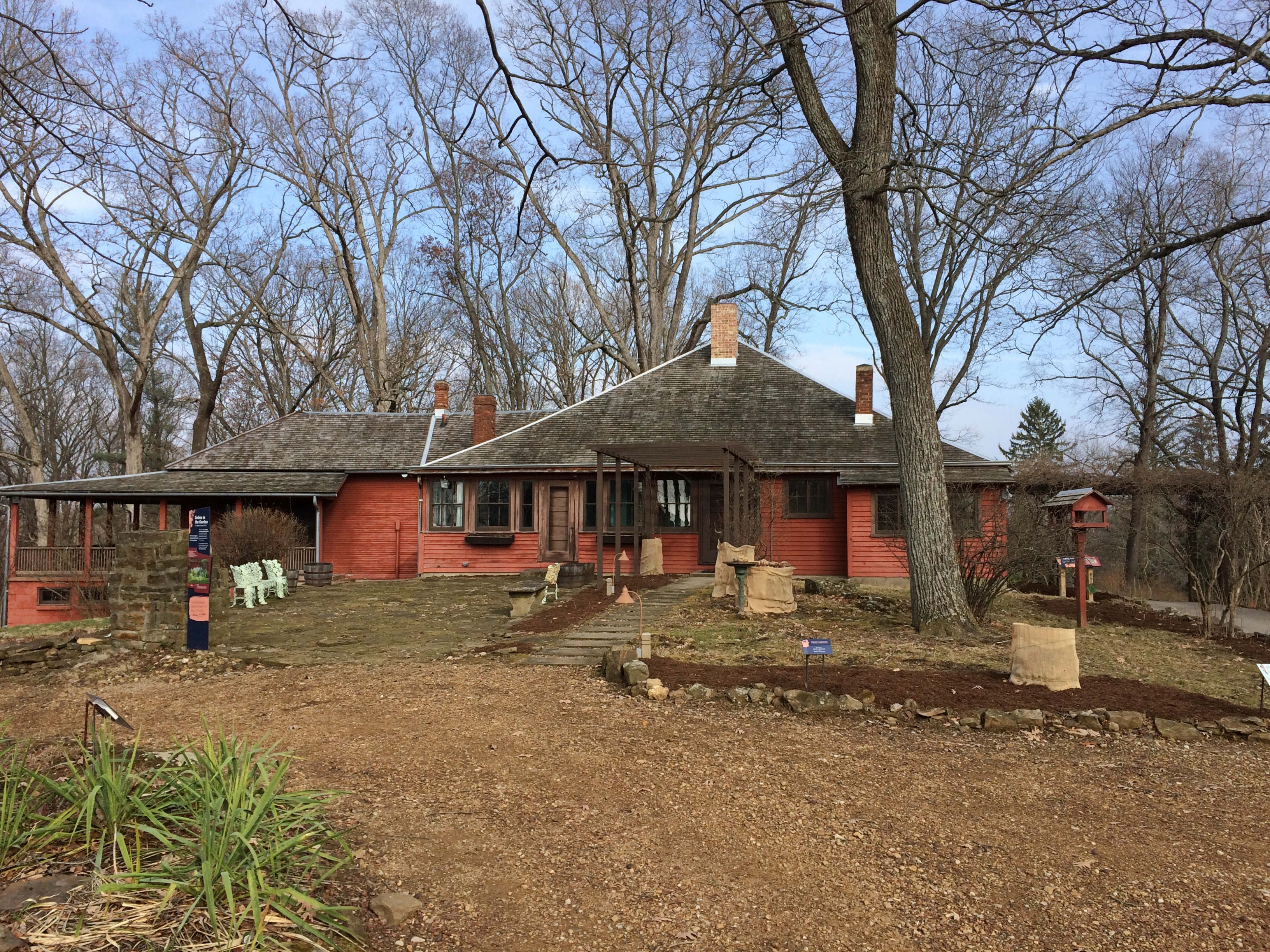
T.C. Steele State Historic SiteIn the early 20th century, Theodore Clement Steele and his second wife Selma acquired acreage — played-out farmland — in Brown County and set about building a hilltop house. After various modifications and additions, including a few other buildings, the place became their full-time residence and his main studio space. Even as a museum, the place is homey, full of furniture and other items the Steeles owned, with little roped off from visitors.
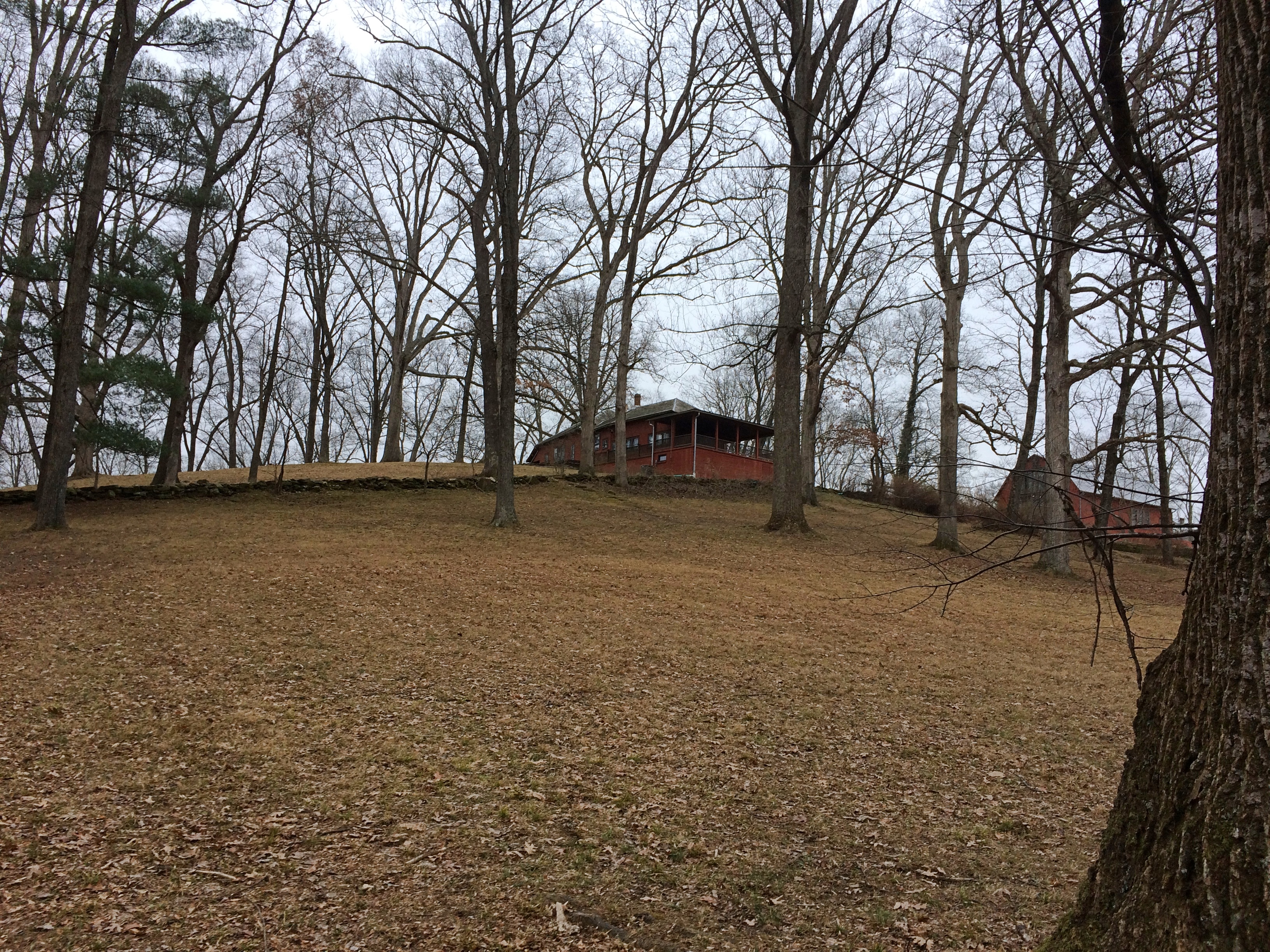
T.C. Steele State Historic SiteThe view from downhill.
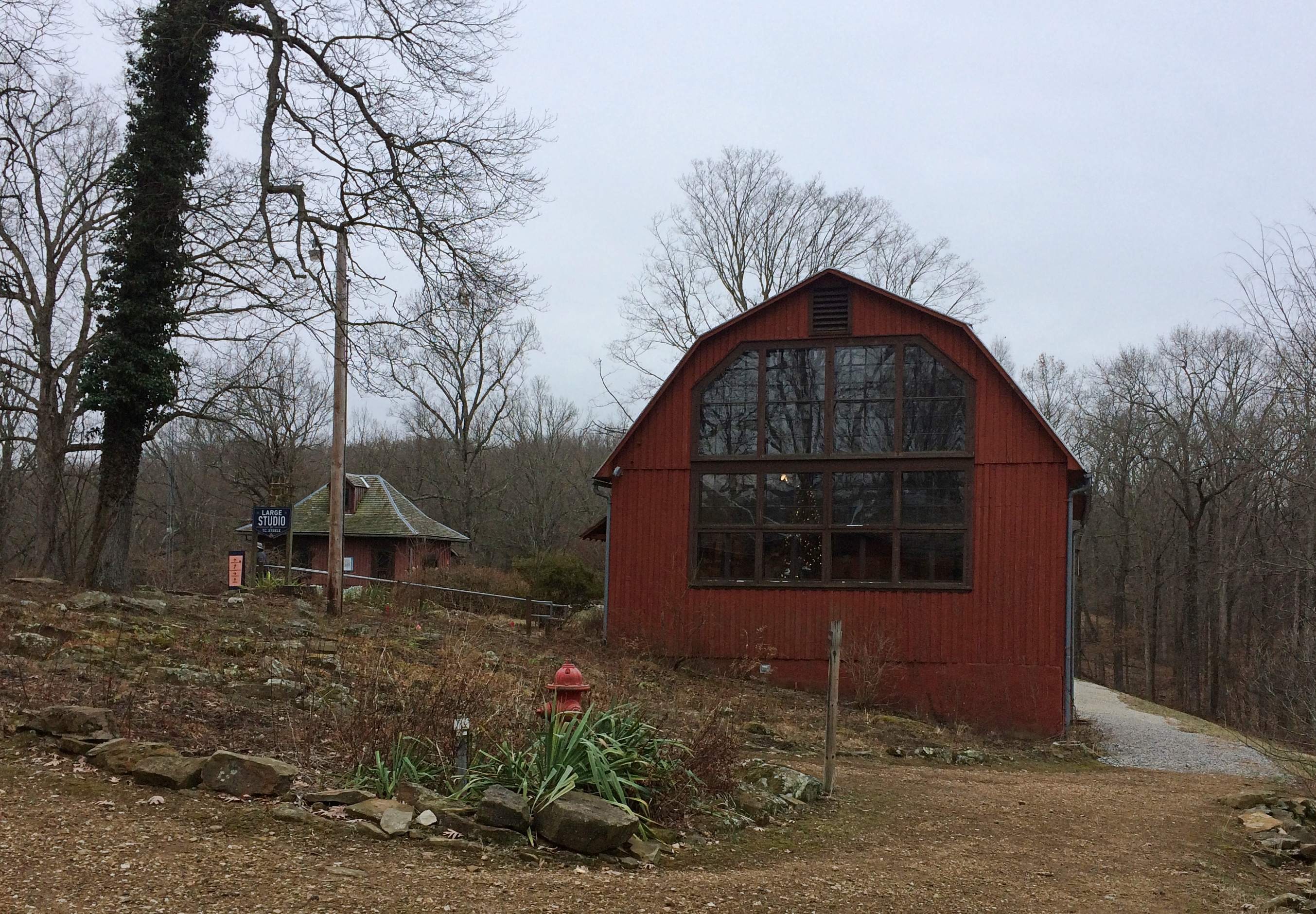
T.C. Steele State Historic SiteT.C. Steele is best remembered now for landscapes, but also did a lot of portraits, since that’s where the money was. Numerous examples of both hang in the main house, as well as the larger building nearby (“Big Studio”), well lit by an enormous window.
T.C. Steele State Historic SiteNo doubt about it, Steele had a gift for landscapes. One I especially liked was “Selma in the Garden,” which is hanging in Big Studio. Other examples of his work are here. While T.C. painted, Selma gardened, as nicely depicted by the above-mentioned painting. The land might not have been great for farming, but Selma apparently had the knack for making her gardens flourish.

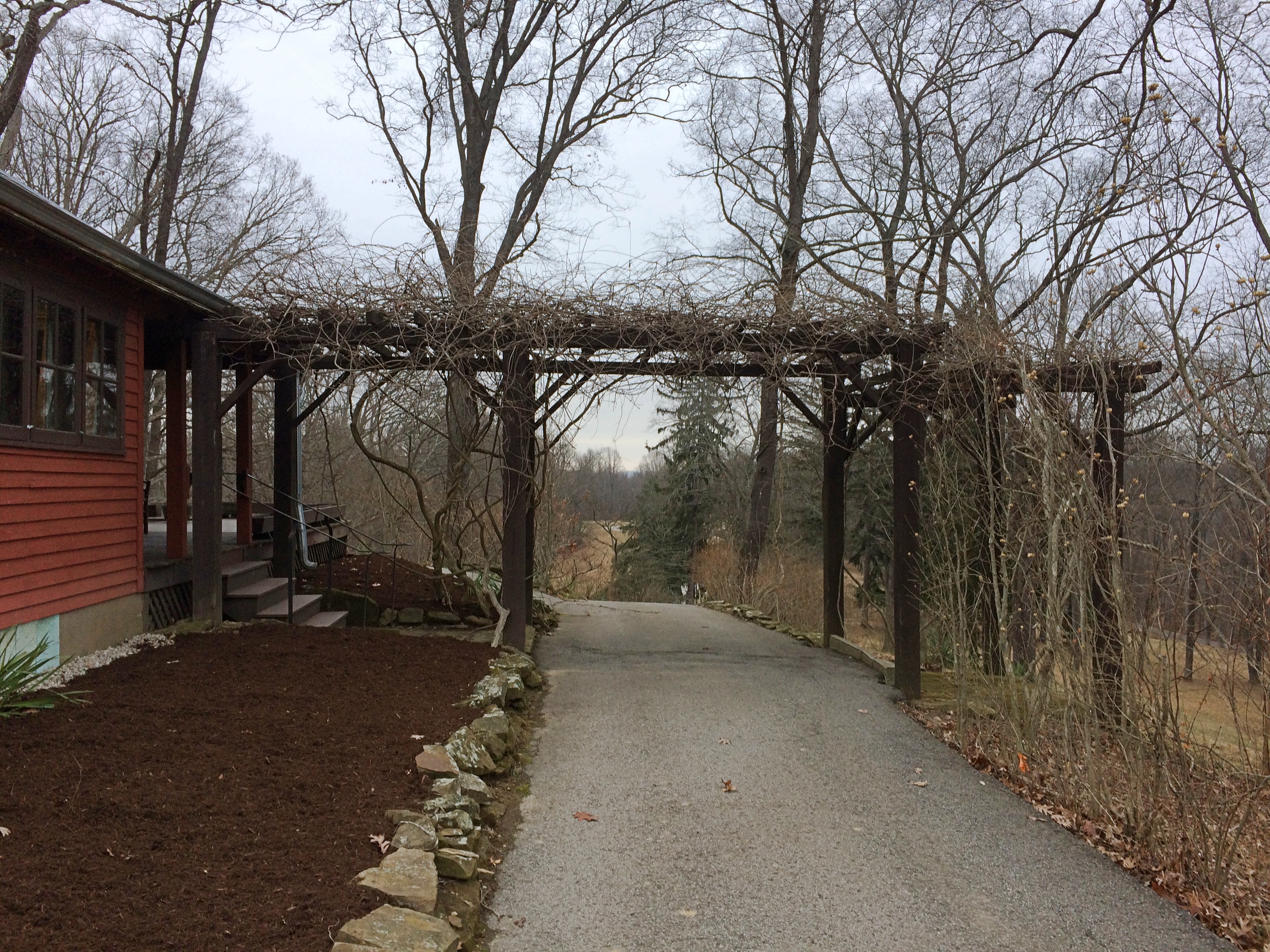
Gardening isn’t so much in evidence in winter. Still, the grounds are inviting.
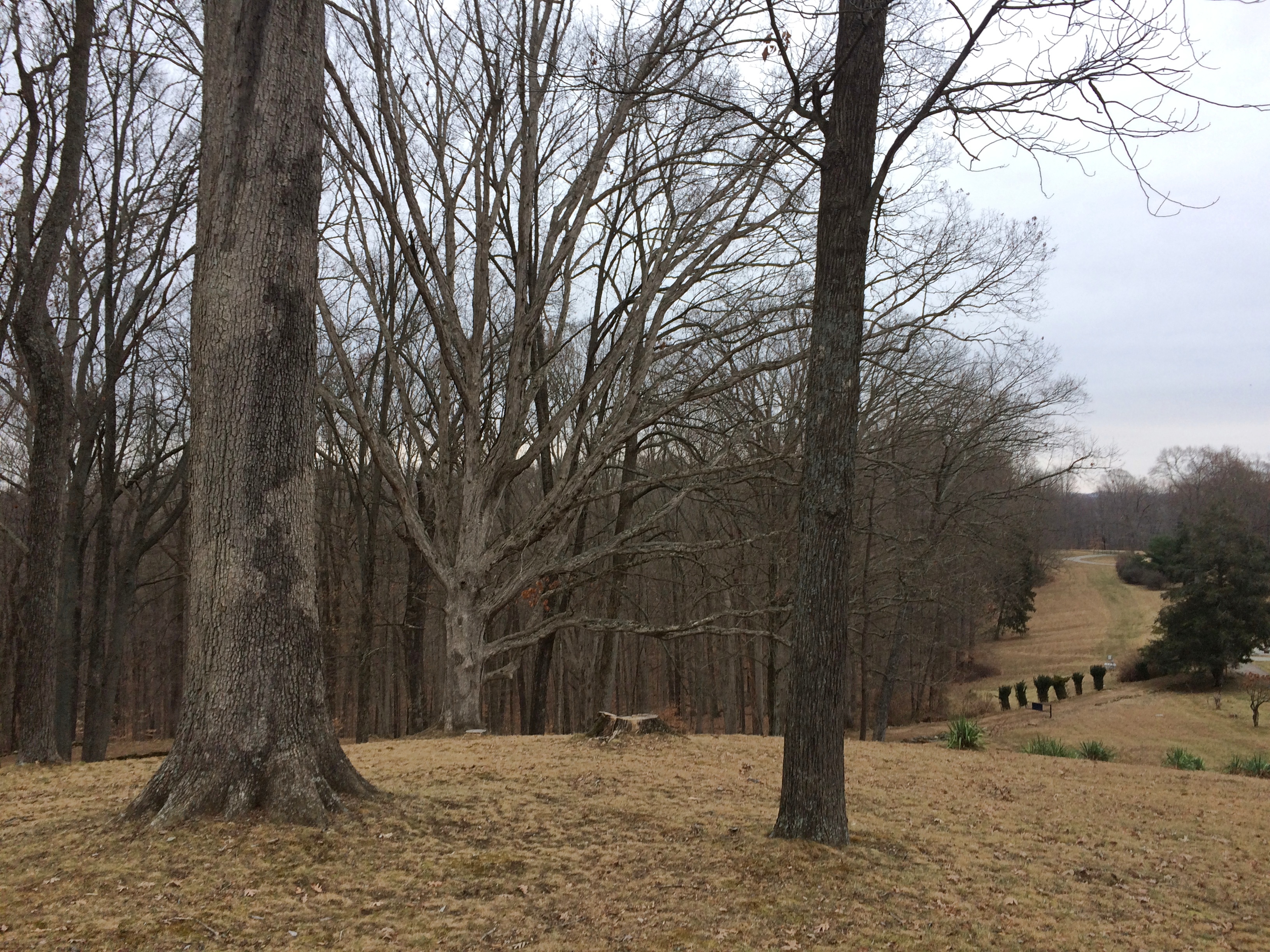
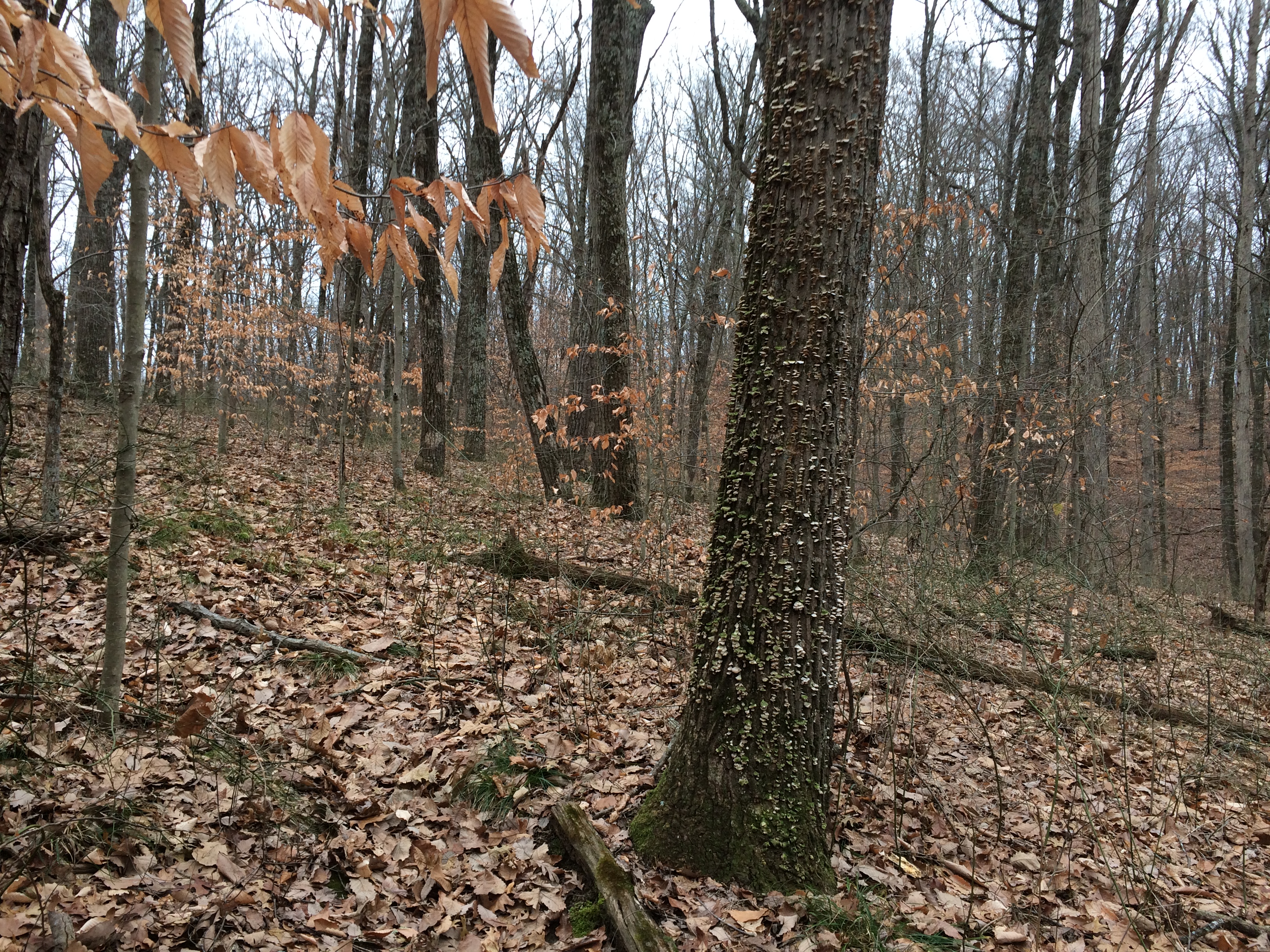
T.C. Steele State Historic Site T.C. Steele State Historic Site We spent time tramping around the woods near the house. Since this was previously farm land, the trees are mostly second growth, some of which the Steeles planted.
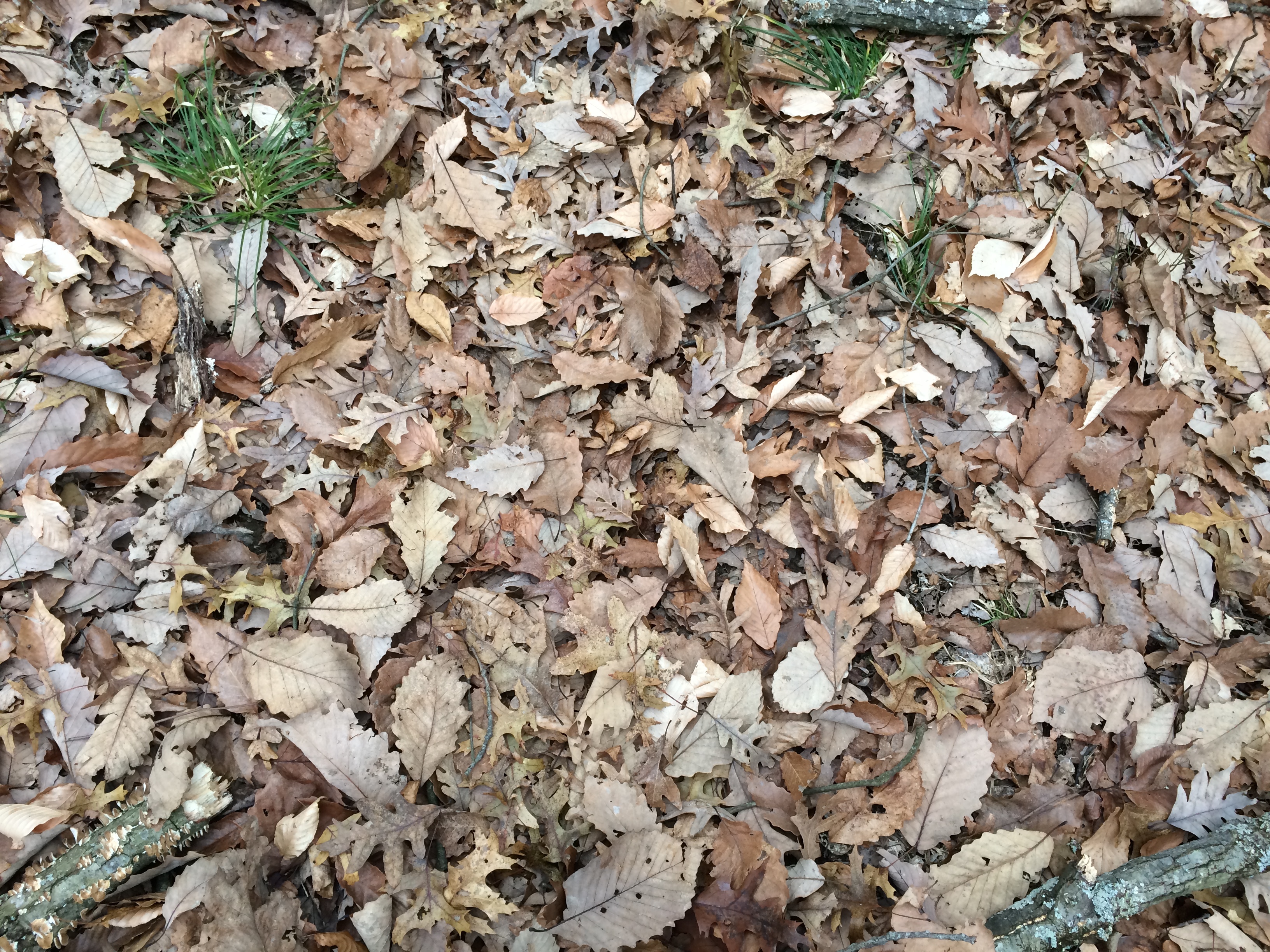
T.C. Steele State Historic Site Thick with leaves. At that moment, the ground was too warm for snow cover.
T.C. Steele State Historic Site In a poetic touch, the Steeles named their place The House of the Singing Winds. Our visit wasn’t on a windy day, so that isn’t what we heard out on the hillside. Rather, the crunching of leaves underfoot. Without the sound of traffic coming from all directions, and with birds and insects quiet or gone for the season, that was about all we heard. That by itself was a good reason to get out of town.

Yellow Hat in Indiana

That the Tibetan Mongolian Buddhist Cultural Center is on the outskirts of Bloomington, Indiana, seems like it ought to be a surprise. But no. Diasporas of all stripes come to North America to enrich our tapestry.

But why Bloomington? More than 50 years ago, Thubten Jigme Norbu (d. 2008), the Dalai Lama’s brother and also an exile, accepted a position at Indiana University, founding one of the United States’ first Tibetan Studies programs.

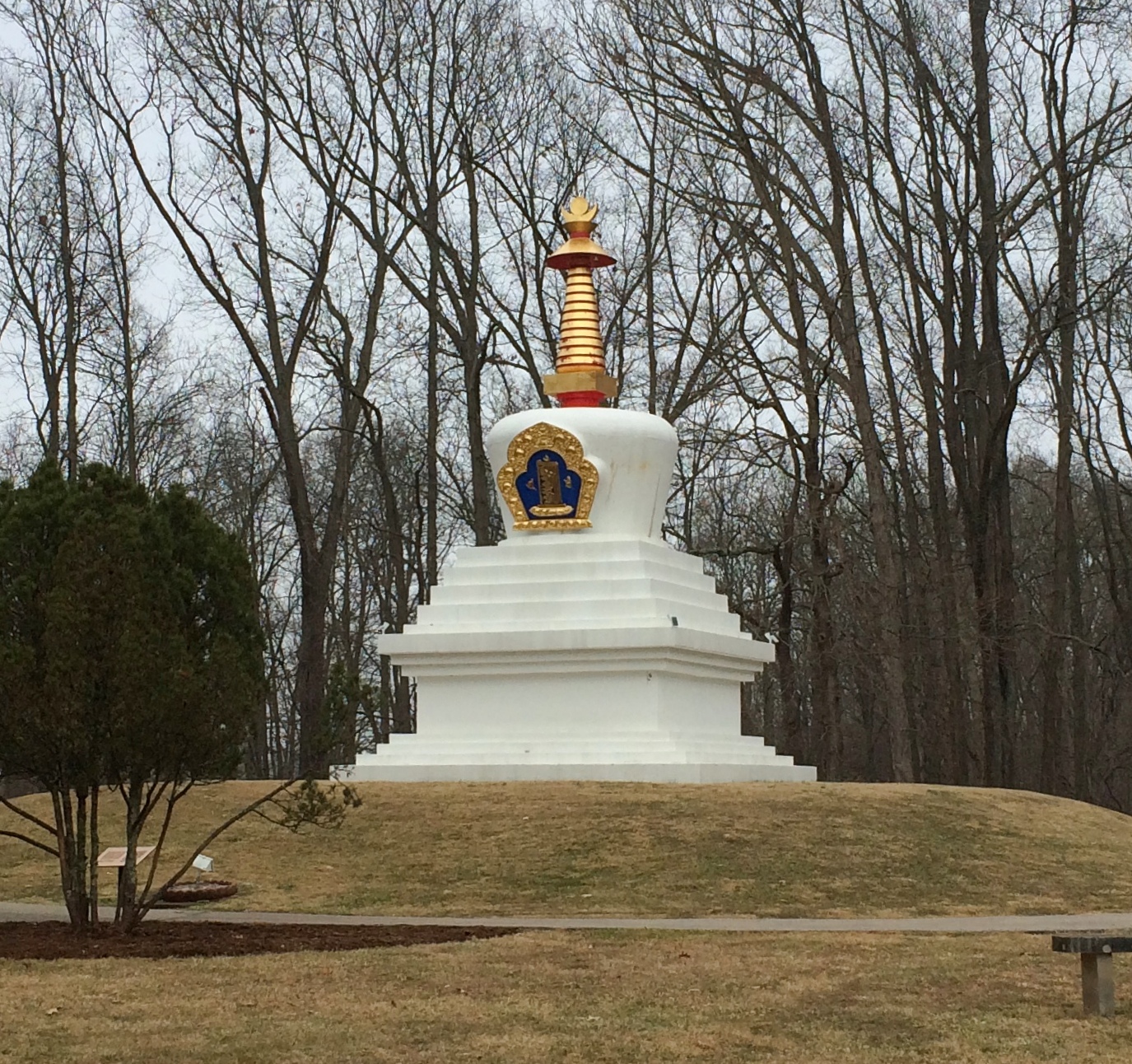
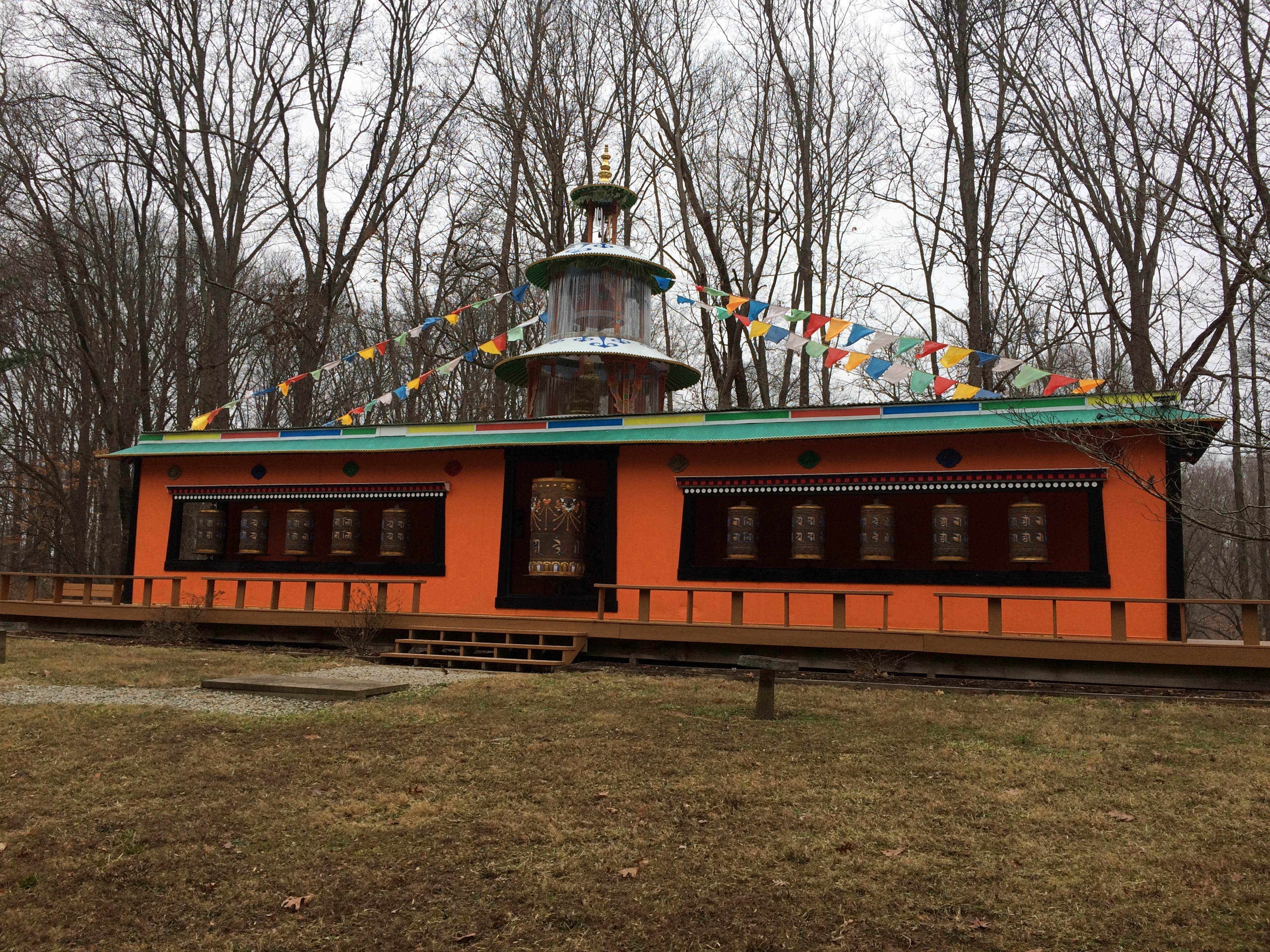
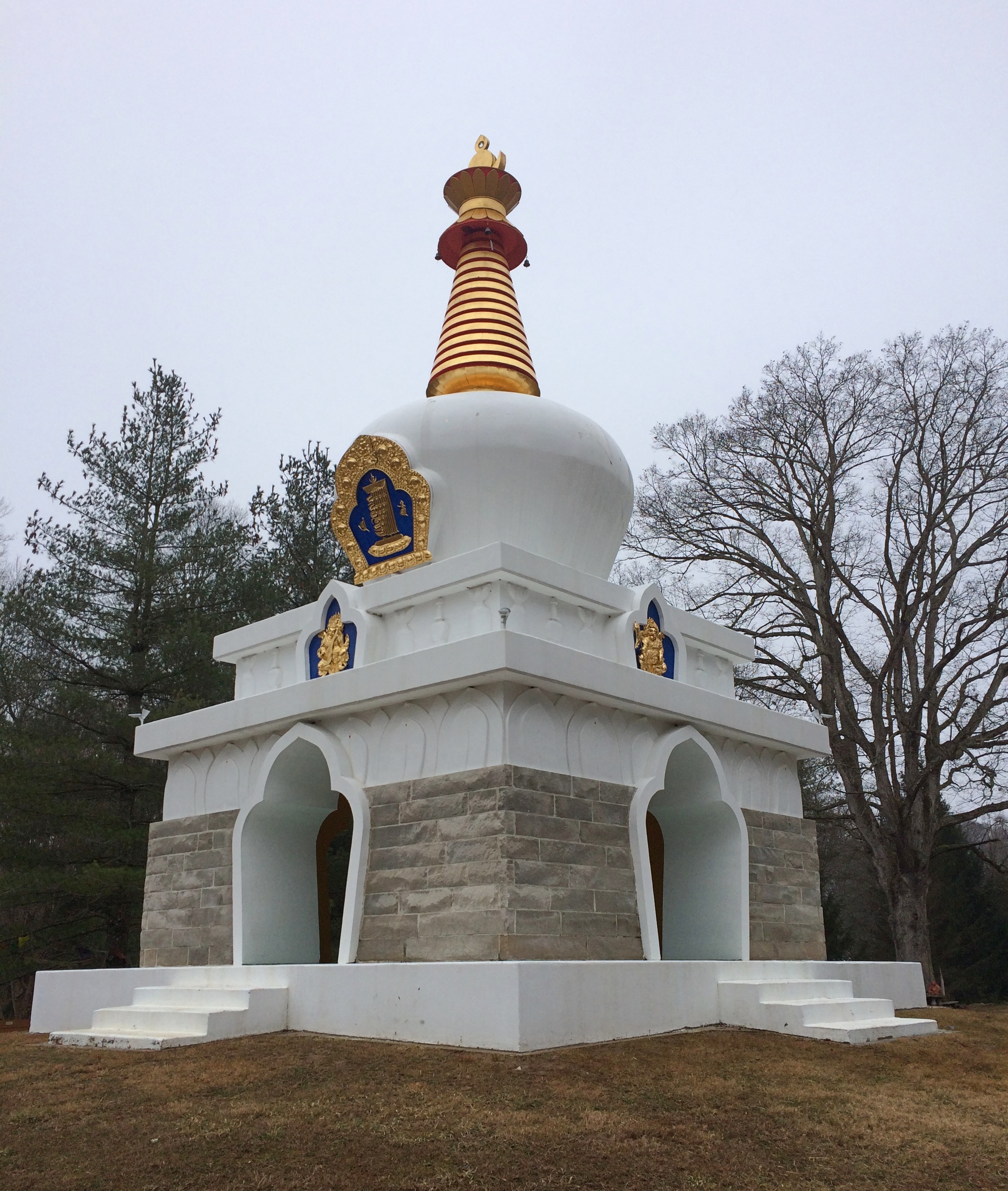
“In 1978, a donation of 108 acres of land in southeast Bloomington enabled Norbu to found the Tibetan Cultural Center…” Bloom Magazine says. “With the help of volunteers and donations, multiple structures have been built over time, among them the only stupa (religious monument) dedicated to the more than one million Tibetans who have died since the beginning of the Chinese occupation of Tibet in 1950, as well as other structures rarely found outside of the Himalayan region, including a mani korlo (prayer wheel house).”

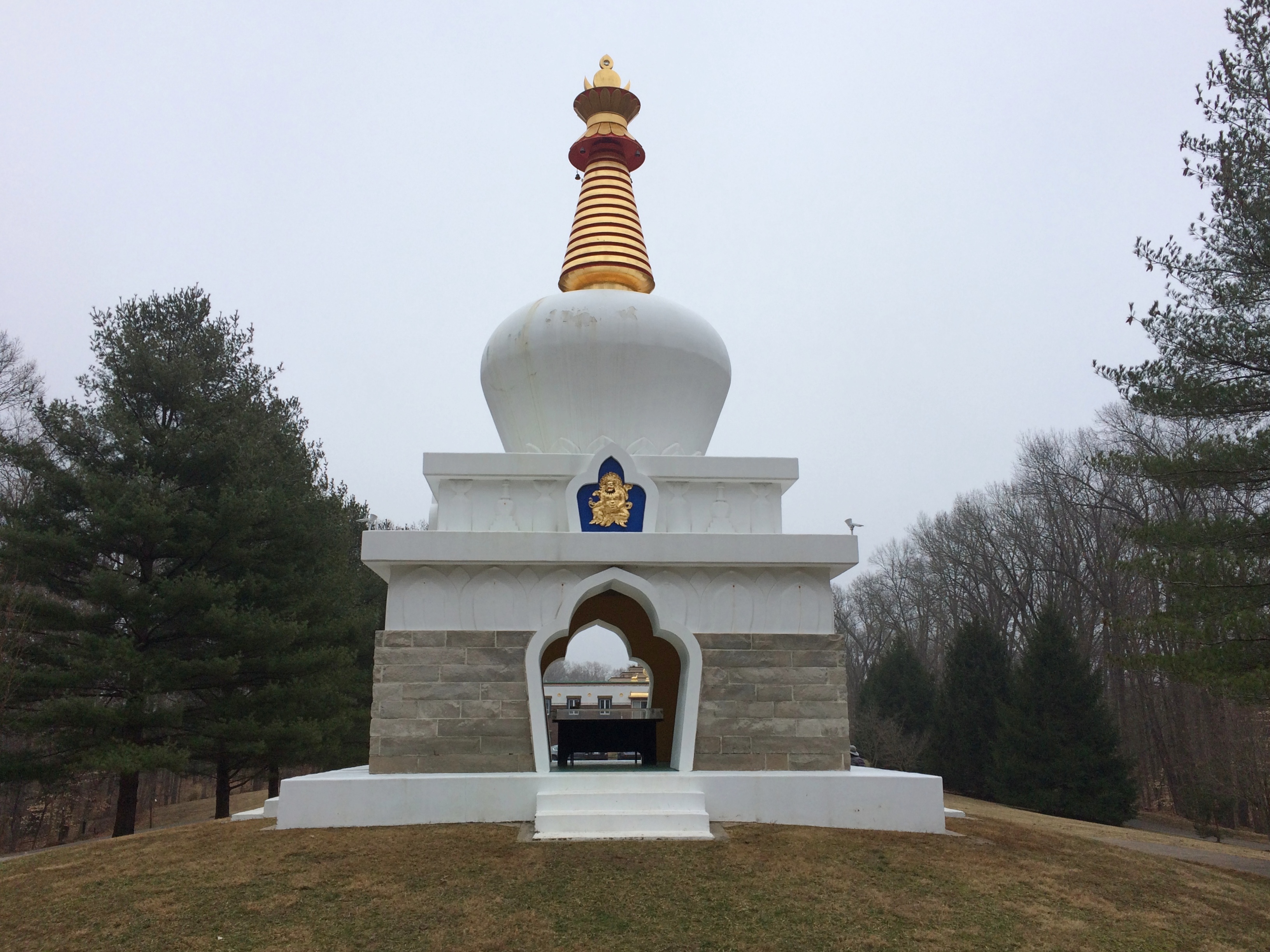
We arrived at the TMBCC on the morning of December 28. There’s more than one stupa on the grounds.
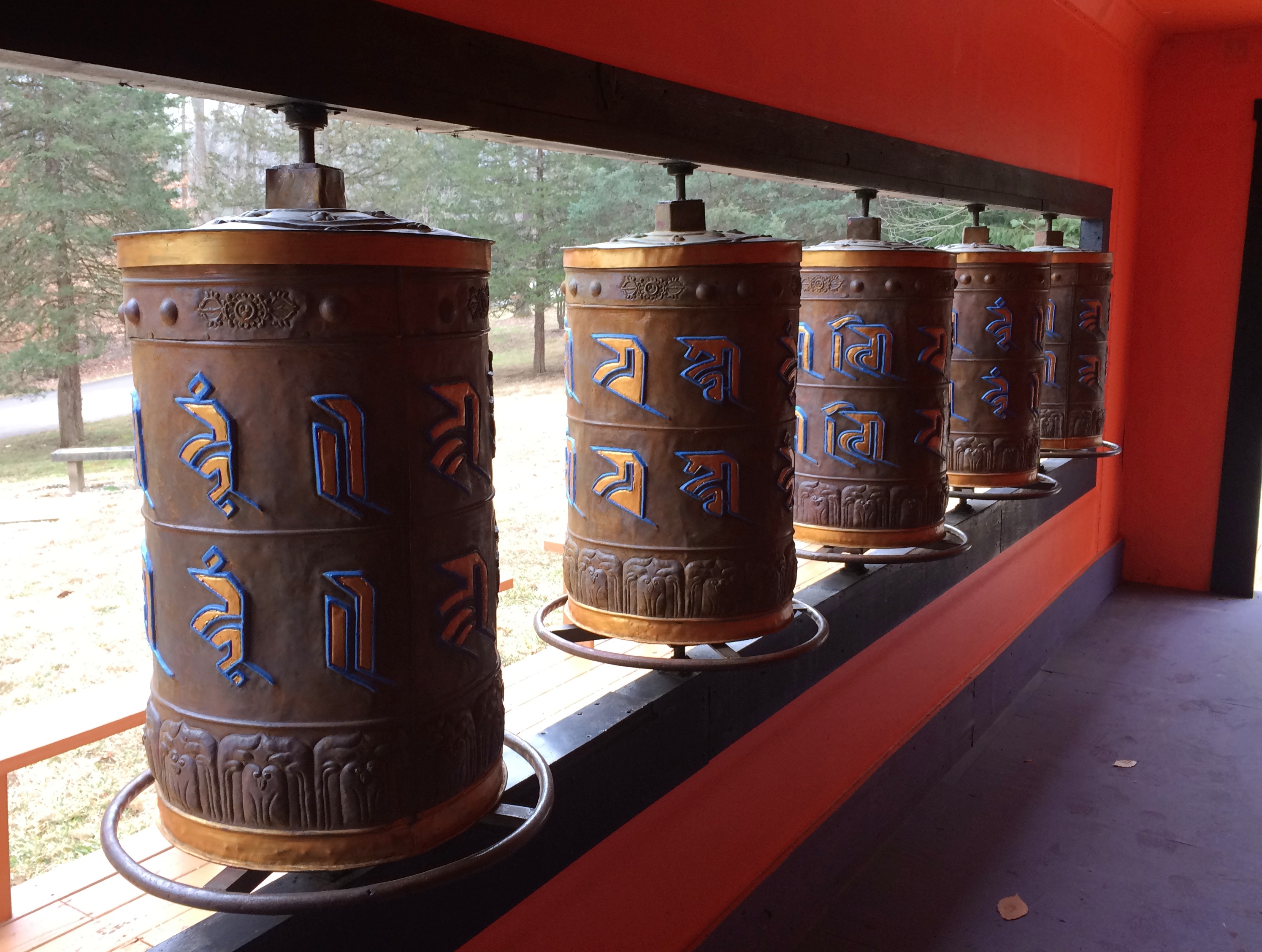
Tibetan Mongolian Buddhist Cultural Center Tibetan Mongolian Buddhist Cultural Center The prayer wheel house. It reminded me of the Gandantegchinlen (Gandan) Monastery in Mongolia.
Tibetan Mongolian Buddhist Cultural Center Tibetan Mongolian Buddhist Cultural Center Tibetan Mongolian Buddhist Cultural Center

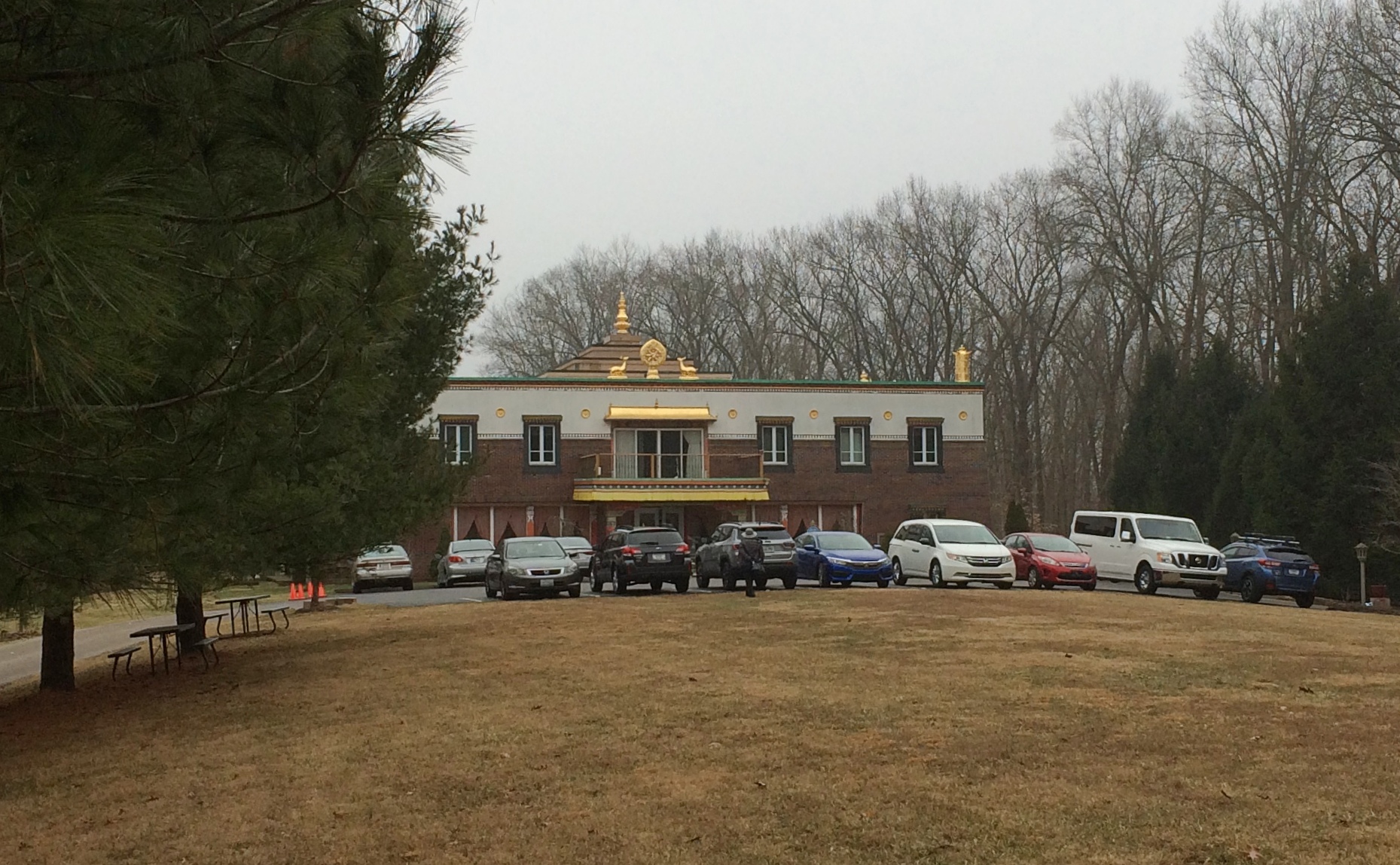
The grounds wind through wooded land and eventually you come to the Kumbum Chamtse Ling Monastery.
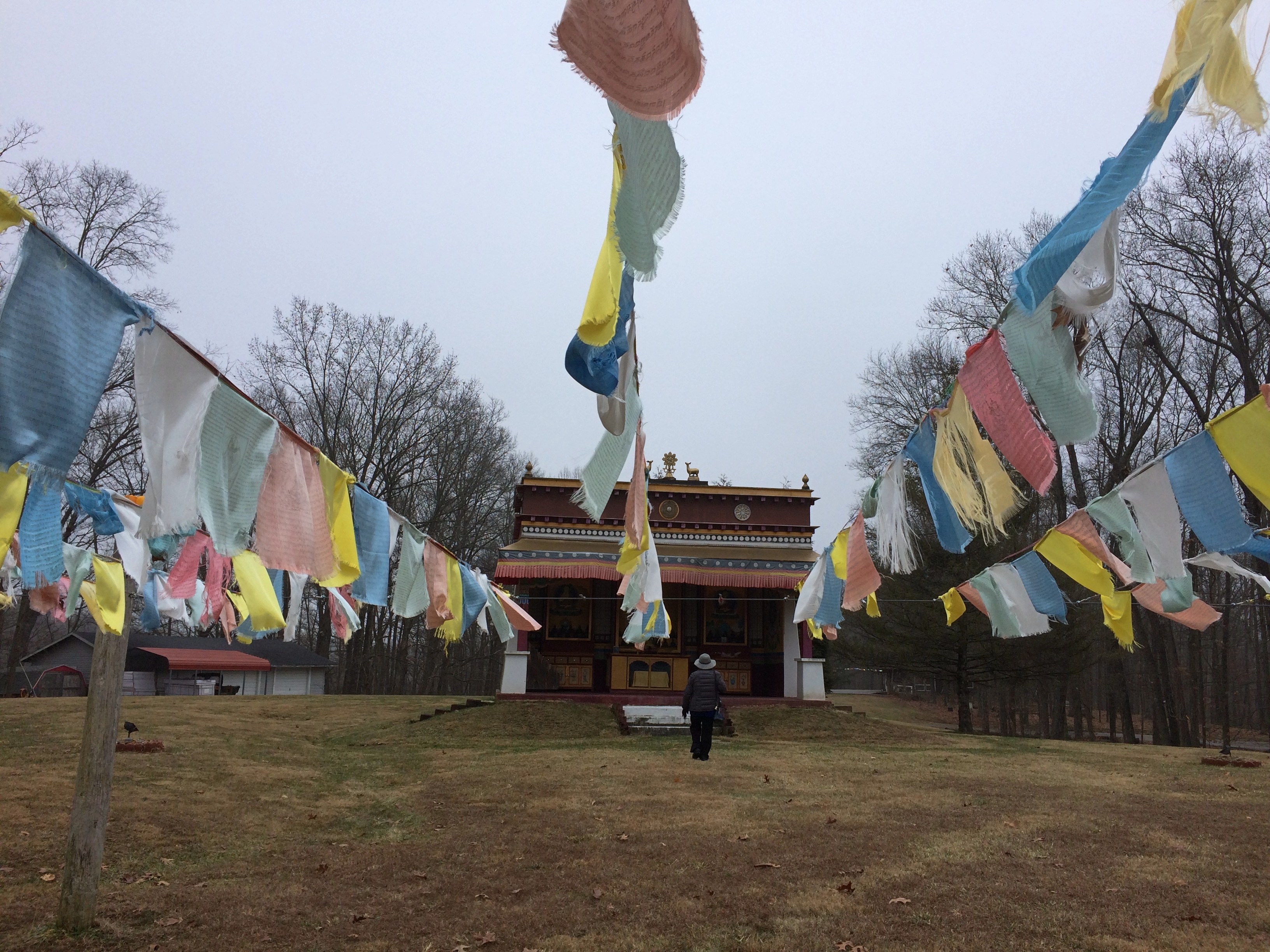
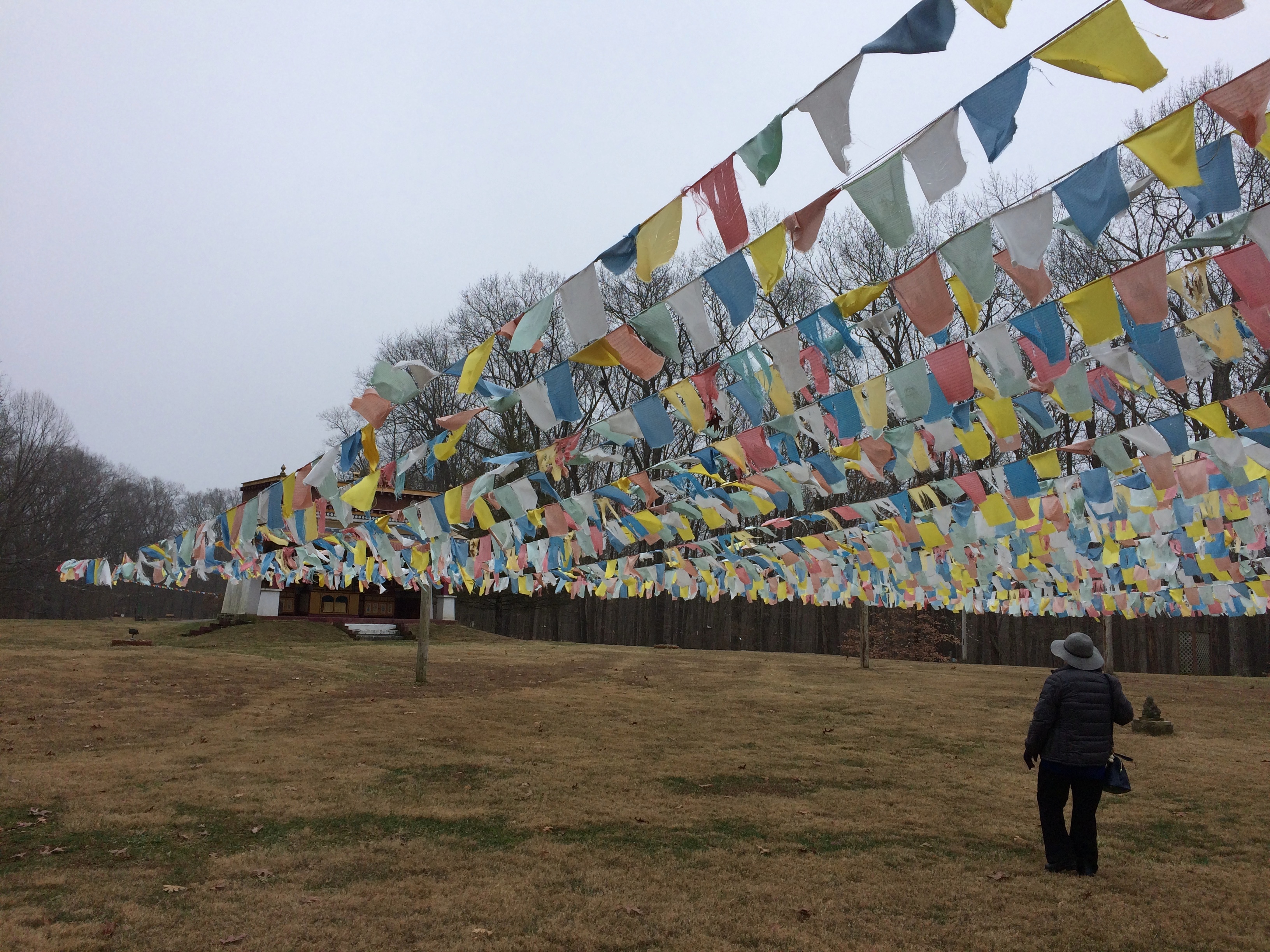
Tibetan Mongolian Buddhist Cultural Center Behind the monastery is another structure — and a lot of prayer flags.
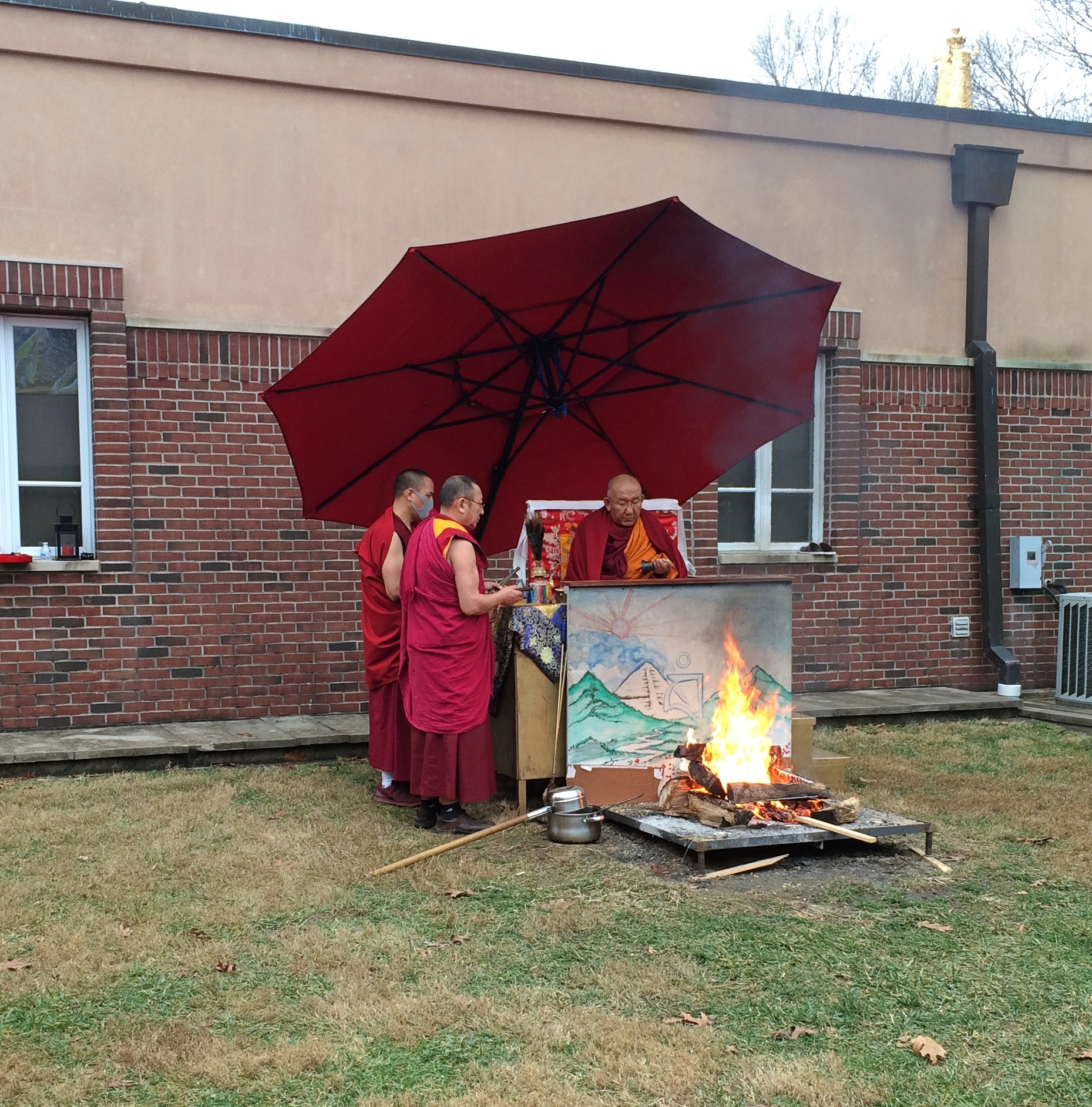
Tibetan Mongolian Buddhist Cultural Center Tibetan Mongolian Buddhist Cultural Center While inside the monastery, we were told that a fire puja ceremony was in the offing behind the building. I’ve read about them since, but find the concept hard to get my head around, so I’ll leave the details for others to explain.

I just know what I saw and heard. Monks chanted, built a fire and burned a variety of materials, such as grain and flowers. Under a tent to one side, more monks chanted. People watched from another tent, and under yet another stood a table arrayed with the items to be burned.
Tibetan Mongolian Buddhist Cultural Center fire puja

Not quite sure how long we watched and listened to the chanting. I didn’t understand a lick of it, yet somehow it was mesmerizing.

The Haan Mansion Museum of Indiana Art

We didn’t go to St. Louis just after Christmas, much less time travel to St. Louis to see the 1904 Louisiana Purchase Exposition. But in a way, we did.

“Occupying two square miles on the western side of St. Louis, the 1904 World’s Fair was the largest in history, with 1,272 acres containing more than 1,500 buildings,” Serious Eats tells us.

“At the heart of the exposition were 11 monumental ‘palaces,’ each dedicated to a subject, such as Electricity, Fine Arts, Horticulture, or Machinery. Sixty-two countries and 42 American states had their own halls or buildings, where they displayed the highest achievements of their cultures and economies… They were designed not to endure for the ages but to captivate the crowds for a brief moment.”

With a few exceptions. The former Palace of Fine Arts is now the St. Louis Art Museum in Forest Park, which we visited during one of our trips to St. Louis. The Connecticut Building at the fair is now the Haan Mansion Museum of Indiana Art in Lafayette, Indiana. That’s where we went during our end-of-December trip.
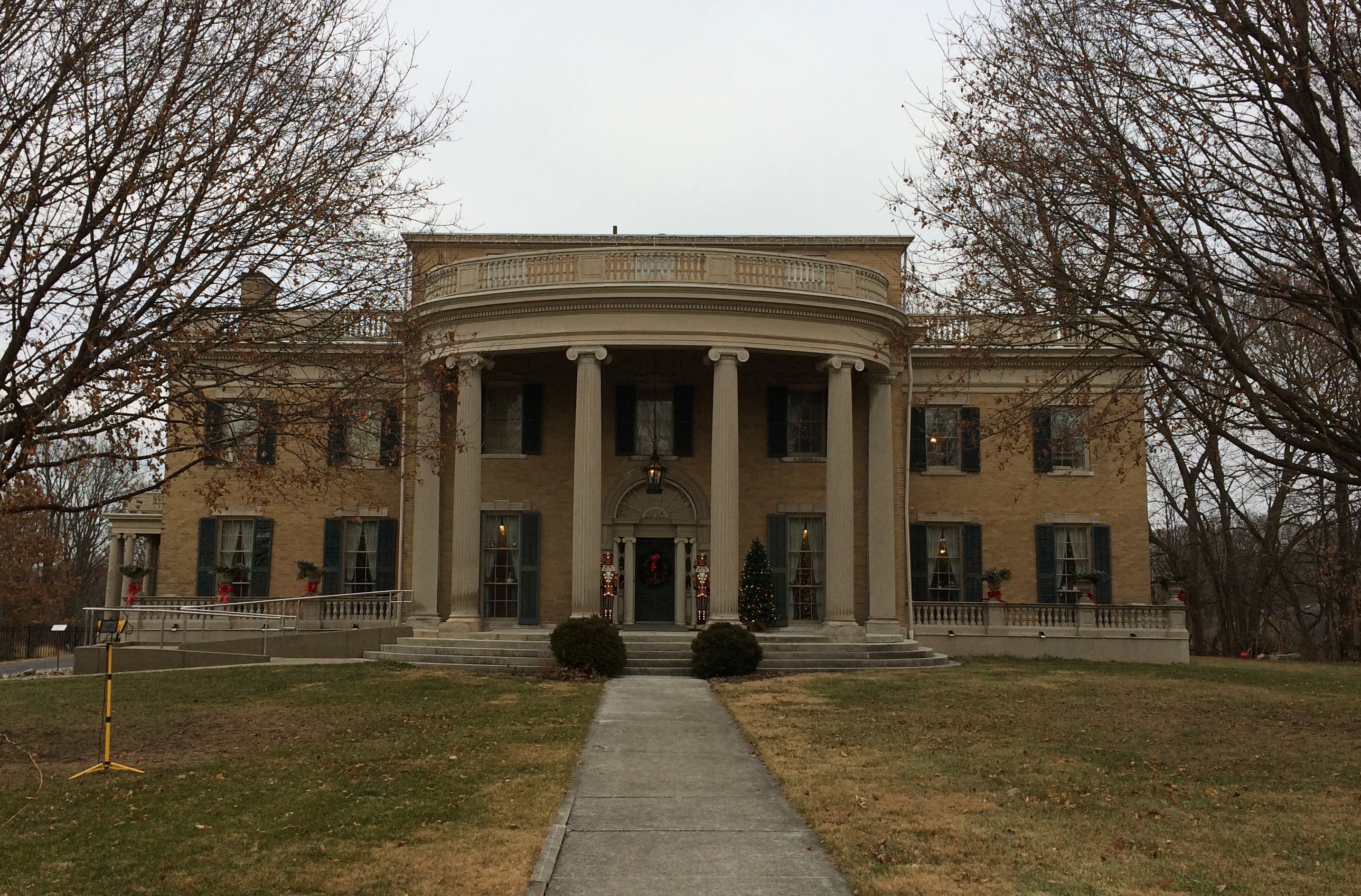
Haan Mansion Museum of Indiana ArtWe arrived about 30 minutes before closing on December 27, but decided pay the admission and look around anyway. Glad we did. Time was short, but one of the volunteers gave us a tour. Spontaneously, since (I think) admission normally gets you a self-guided tour.

She took us from room to room, each well appointed, noting some of the museum’s highlights — paintings by Indiana artists, ceramics, bronzes, towering grandfather clocks, a wide array of other antique furniture, a model train that traversed between two rooms, and this time of the year, Christmas trees and wreaths and other elaborate seasonal decor. Especially prominent on the walls were works by T.C. Steele, Hoosier landscape painter of renown, with numerous other Indiana artists represented as well. Though it’s a fine house museum, the Haan’s specialty is art created in Indiana.

Our guide also told us the story of how the house ended up in Indiana after its stint at the 1904 World’s Fair. The tale began in Connecticut.

“The Charles and Lydia Sigourney mansion in Hartford provided the inspiration for the building,” writes the the Connecticut Historical Society’s Karen DePauw. “The Connecticut commissioners to the Exposition felt the house represented colonial ideas, as well as stood for cultural and social life in present-day Connecticut. Edward T. Hapgood was hired as the architect, and H. Wales Lines Co. served as builders.”

A wealthy fellow from Lafayette, one William Potter, visited the fair and liked the house so much he bought it. Or rather, his wife liked the house so much he bought it and had it rebuilt in Indiana for them to live in: three full floors, a basement, seven fireplaces, five-and-a-half bathrooms, a 26-light brass-and-crystal chandelier, and a double staircase leading to the second floor, among other posh features.

Closer to our time, the Haans, who made their money selling sewing kits to junior high schools, acquired the property in the 1980s as a residence. They’re also collectors of Indiana art, which accumulated over the decades — as things do in a house — and a few years ago they deeded the house to a nonprofit to display their collection.

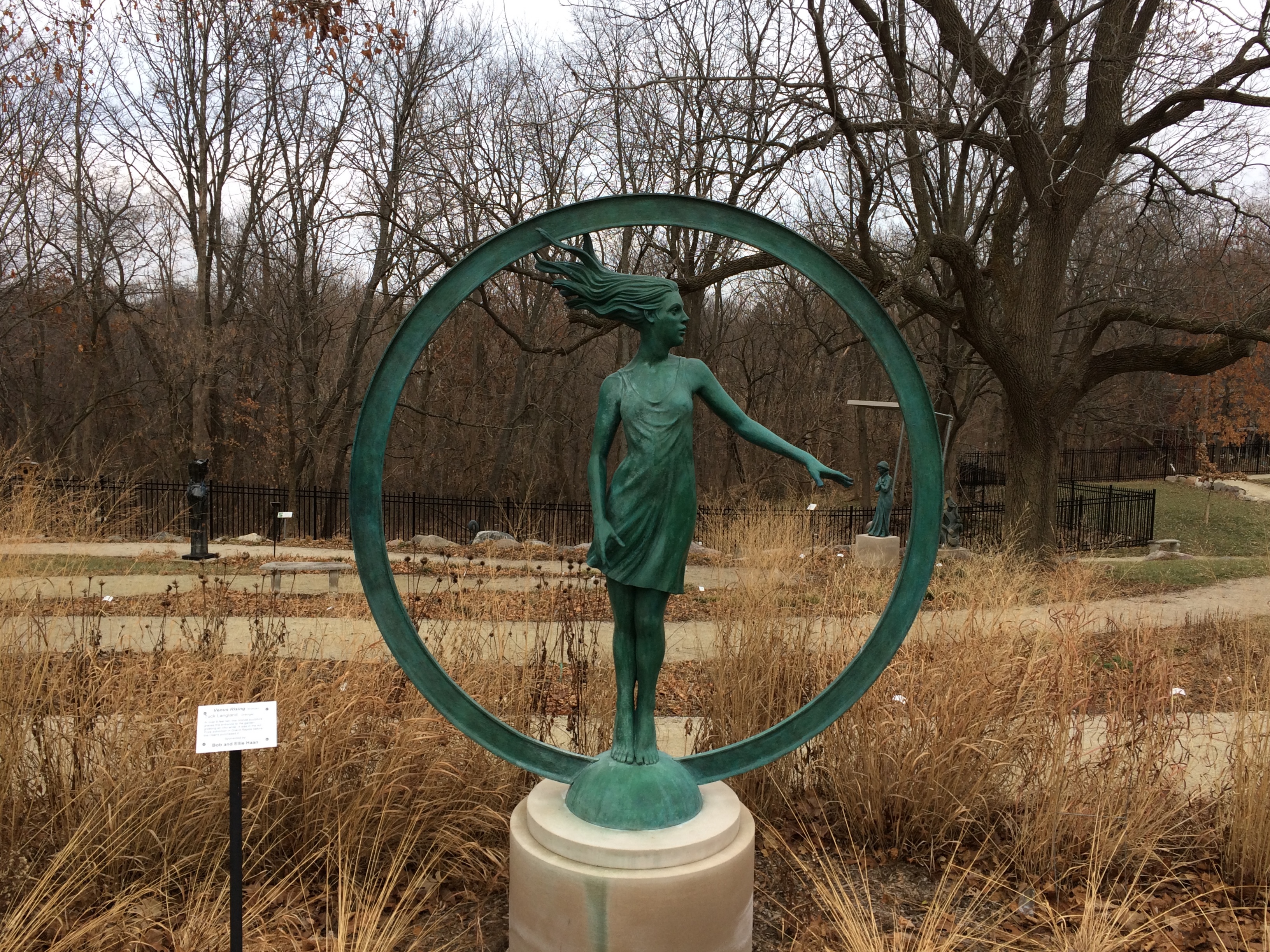
Behind the house is more art: a sculpture garden sporting Indiana-created work. Such as “Venus Rising” by Tuck Langland of Granger.
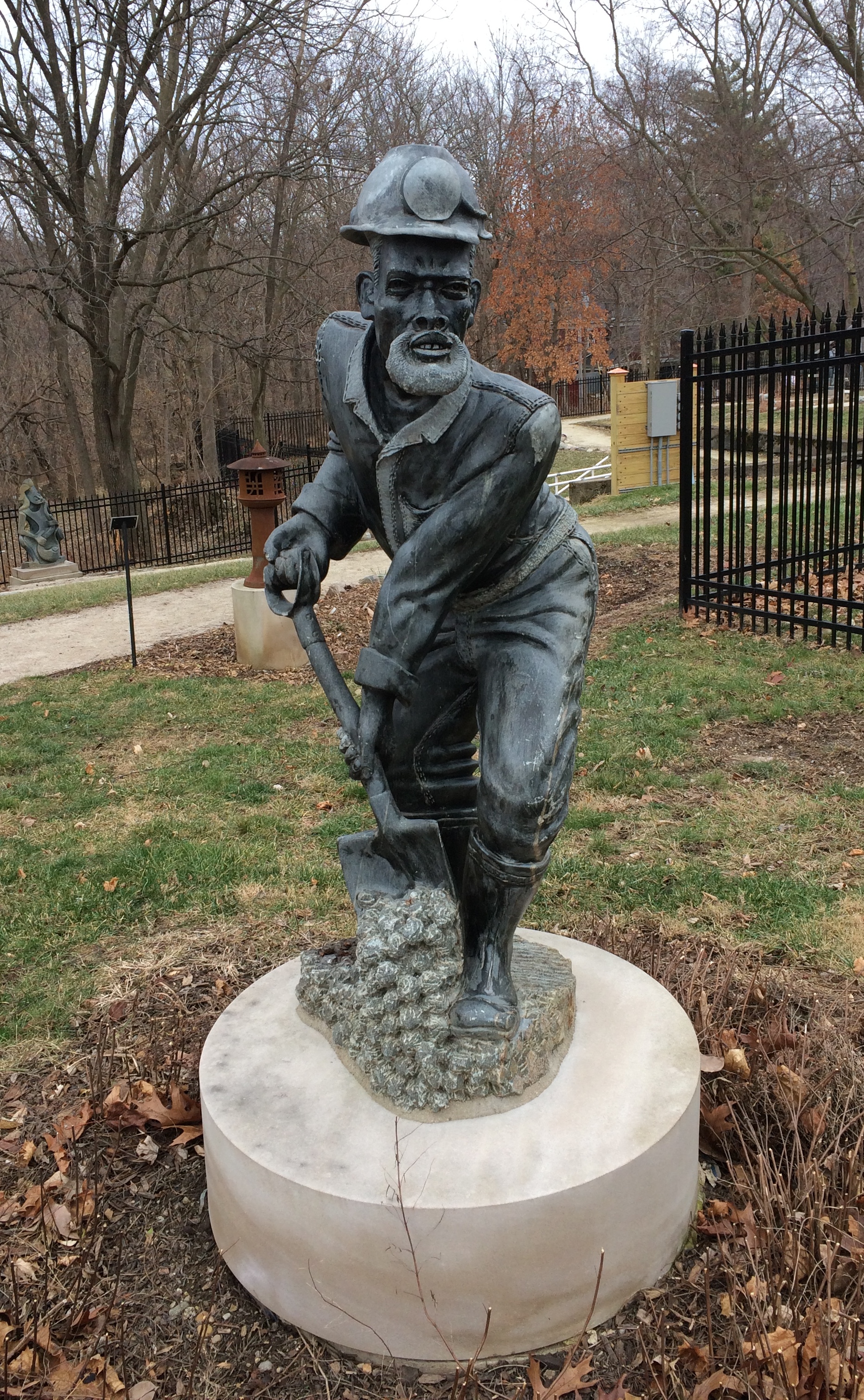
Haan Mansion Museum of Indiana Art sculpture garden“The Miner” by Peter Rujuwa.
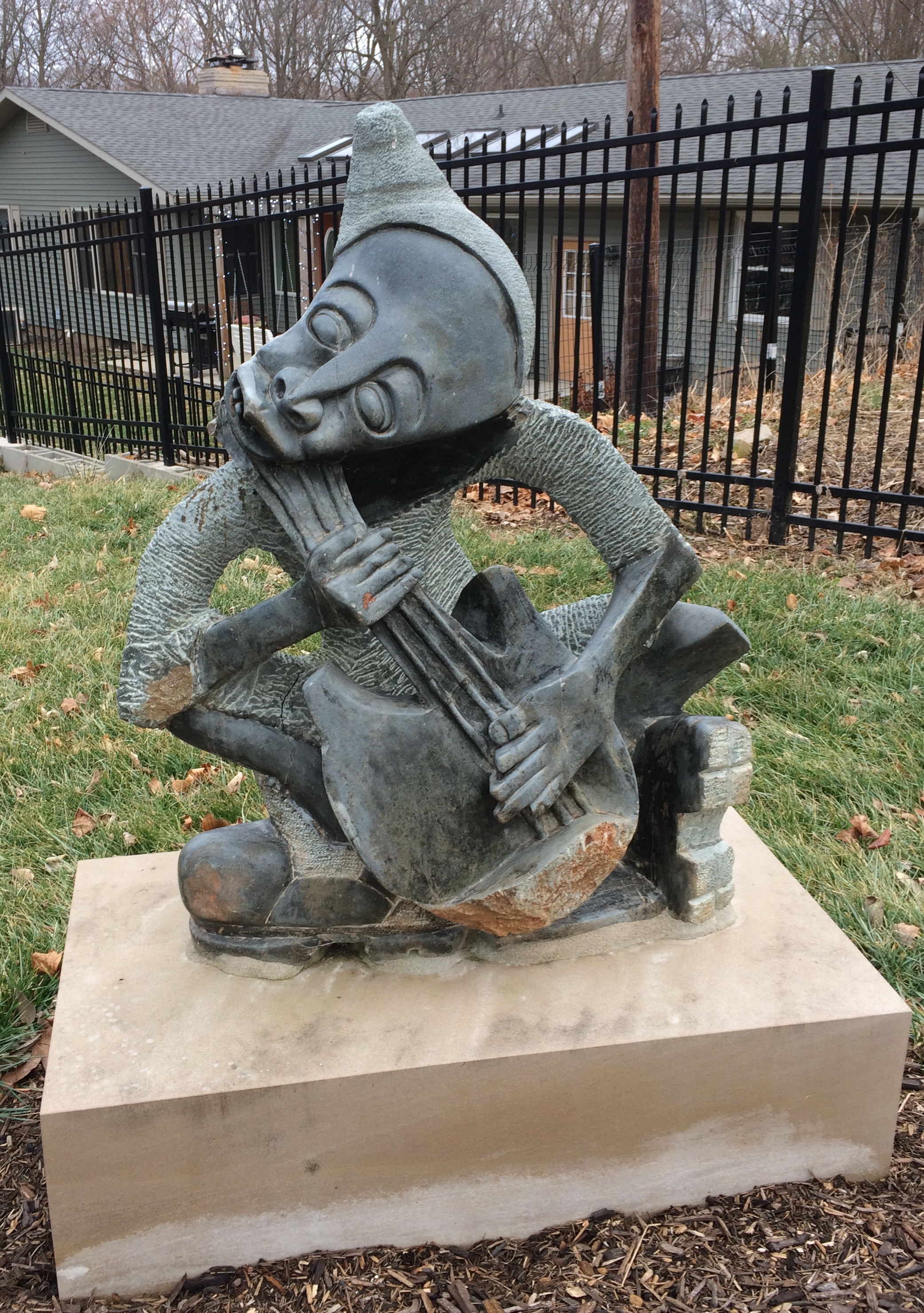
Haan Mansion Museum of Indiana Art sculpture gardenRujuwa, originally from Zimbabwe, now of Indianapolis, also did “The Guitarist.”
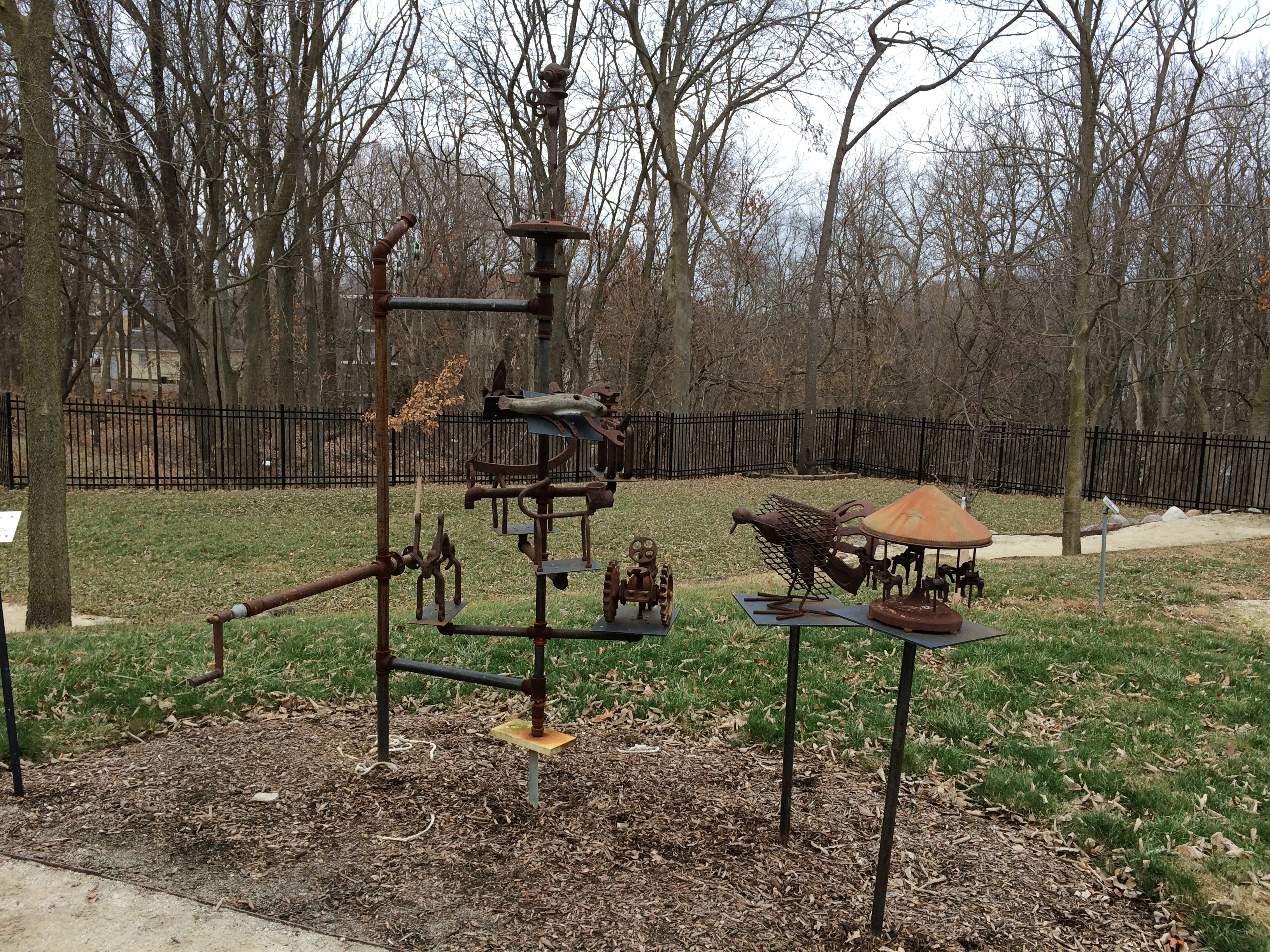
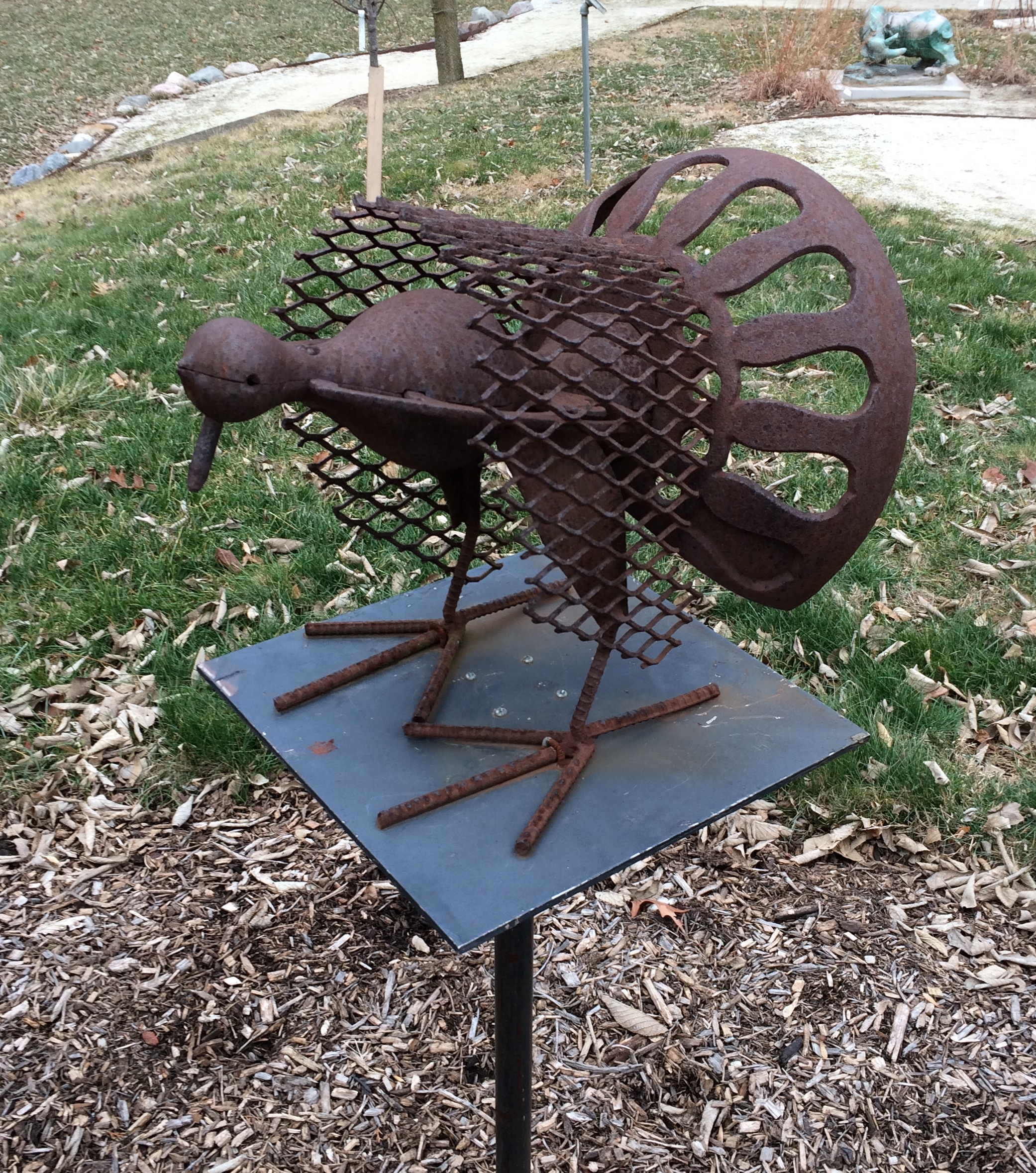
Haan Mansion Museum of Indiana Art sculpture garden“Metal Menagerie” by Roy Patrick of Lafayette.
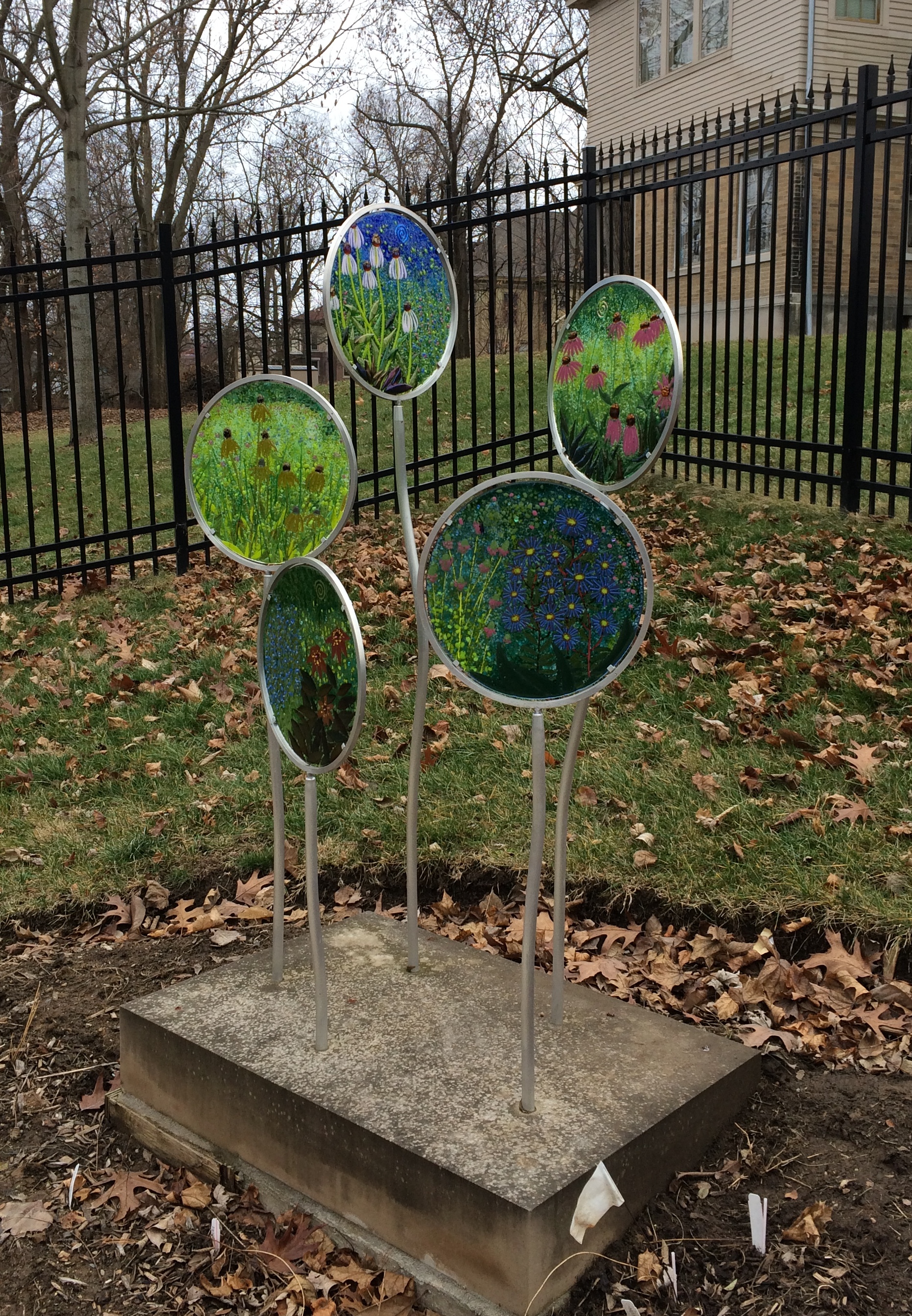
Haan Mansion Museum of Indiana Art sculpture gardenHaan Mansion Museum of Indiana Art sculpture garden“Garden Art” by Kathleen Kitch of Lafayette.
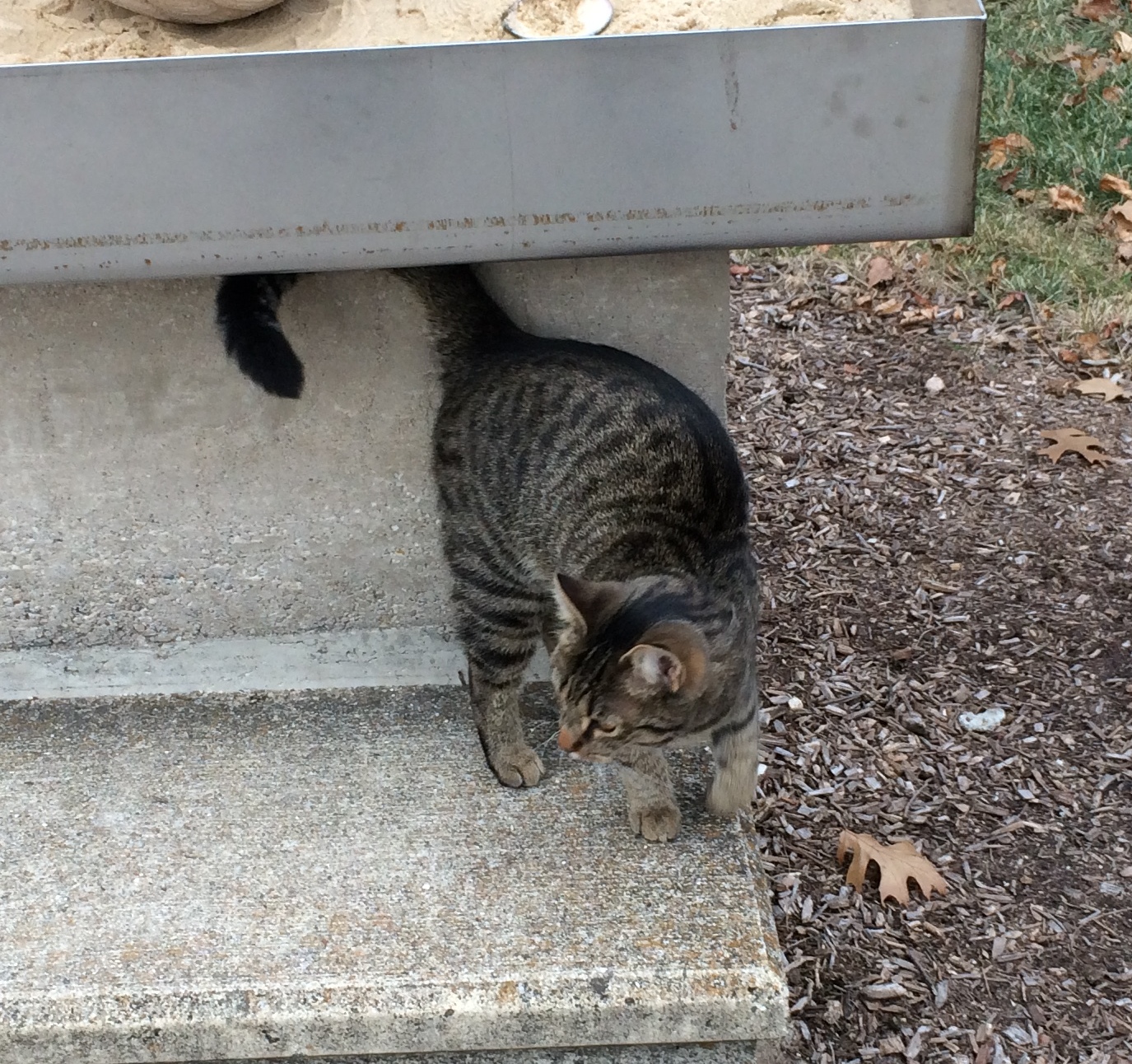
Haan Mansion Museum of Indiana Art sculpture gardenPretty soon we noticed something moving in the sculpture garden. A little cat.
Haan Mansion Museum of Indiana Art sculpture gardenHe followed us around for a while, but then lost interest and spent time climbing trees behind the artwork.

Southern Indiana at the End of the 2010s

A new decade is underway, and don’t let nitpickers tell you otherwise. At midnight as 2020 began — the beginning of the 2020s — I stepped outside for a listen, as I do most years. Pop-pop-pop went the fireworks in the freezing air.

If you know where to look in southern Indiana, about 50 miles southwest of Indianapolis, you’ll find yourself standing near a Tibetan stupa. I did that myself ahead of the New Year.
Tibetan Mongolian Buddhist Cultural CenterWe wanted to take a trip between Christmas and New Year’s, but nowhere too far or expensive. In that case, weather is the main variable. A blizzard, or even heavy snow or subzero temps, would have kept us home. But post-Christmas forecasts called for mild temps until December 30 throughout our part of the Midwest.

So on December 27, we drove to southern Indiana by way of Lafayette and Indianapolis, stopping in the former but not the latter. We arrived in Lafayette just in time to visit the Haan Mansion Museum of Indiana Art, and take a look at the sculpture garden and nature walk behind it.

That evening we arrived in Bloomington, Indiana, where we spent the next three nights. Bloomington is home of the largest branch of Indiana University, one boasting nearly 50,000 students and the Kinsey Institute besides. But just after Christmas, the place is practically deserted. A ghost university.

On December 28, we spent much of the morning at the Tibetan Mongolian Buddhist Cultural Center, which is out on the edge of Bloomington. We saw the stupas and the prayer wheels and flags and the Kumbum Chamtse Ling Monastery. We also happened to be there in time to see a fire puja ceremony.

We spent most of the afternoon that day in rural Brown County at the T.C. Steele State Historic Site, hilltop home and studio of the landscape painter of that name in the early 20th century. We also popped over to Nashville, Indiana, where we’d been in 2002. Instead of artwork, we bought lunch there this time.

The day was good for walking around outside — nearly 60 degrees F. and cloudy, but no rain. About as pleasant as you’re going to get in late December. The next day was nearly as warm, but rain fell on and off all day, sometimes heavily.

A good day for indoor sites. On the morning of the 29th, we headed south, deep into the rolling hills of southern Indiana, to visit the striking West Baden Springs Hotel, a grand hotel of the past revived only in recent years, along with its former rival and current sister property, the French Lick Springs Hotel, one-time home of Pluto Water.

After a lunch stop in Paoli, Indiana, we went to Marengo Cave, a limestone show cave under the small town of Marengo, and spent more than an hour among the stalagmites and -tites and flowstone. Near the cave’s entrance, a bonus site: a 19th-century Hoosier cemetery, whose weather-beaten stores were picturesquely wet with the most recent weather.

The 30th proved to be cold, though not quite cold enough for snow or ice. We drove home in the morning, stopping only for gas and rest stops. Strong winds blew. Sometimes strong enough to push the car slightly to the side. I white-knuckled the steering wheel a few times as a result.

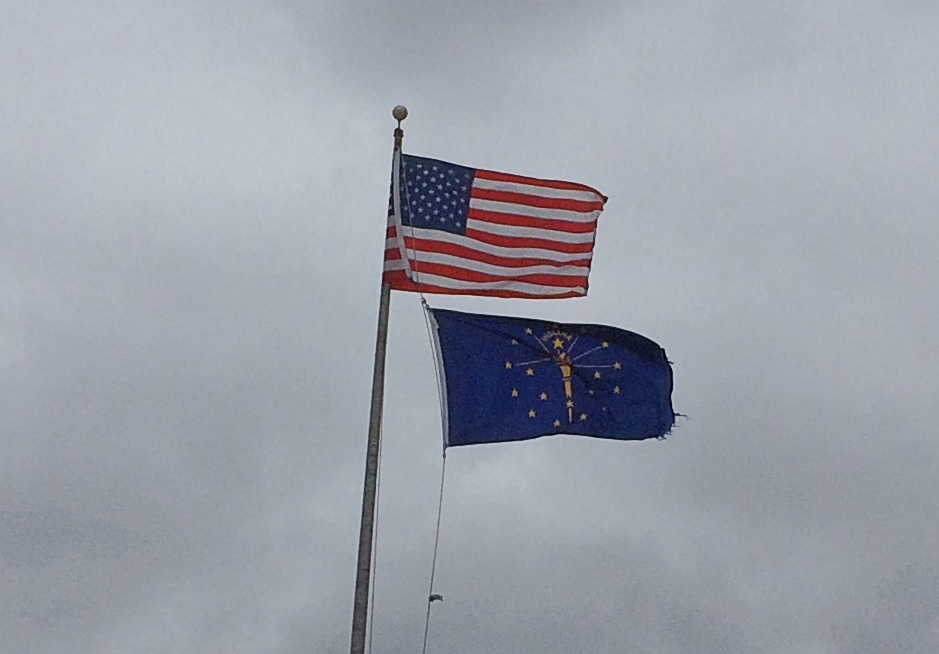
Indiana flag

The wind gusts also captured flags and pulled them straight. Here is Indiana’s flag at a rest stop. Better than those with a state seal slapped on: a golden torch and 19 stars, to symbolize Hoosier enlightenment and the state’s place as 19th to join the union.

The Eugene V. Debs House

Tucked away among the buildings and open fields of Indiana State University in Terra Haute is a structure from the Gilded Age, but also associated with the golden age of socialism in the United States: the Eugene V. Debs House.
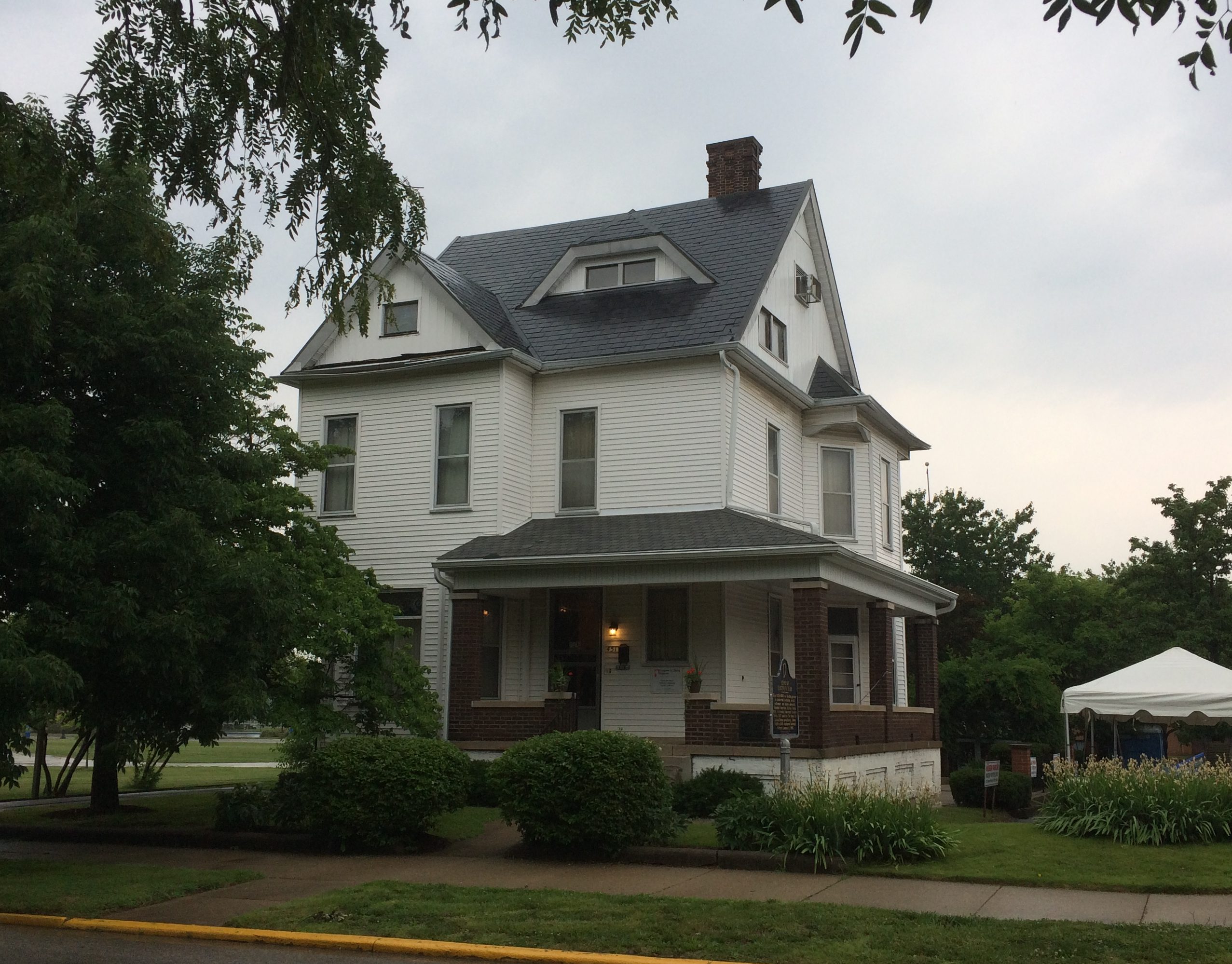
Eugene V Debs House

We arrived in the mid-afternoon on Saturday, in time to take a detailed tour from an exceptionally knowledgeable guide, but not for an event earlier that day in honor of the 125th anniversary of the Pullman Strike.

Debs led the strike, of course, and for his trouble was tossed in the McHenry County Jail in Woodstock, Illinois, for six months — an event that radicalized him. After he got out, his commitment to socialism never wavered.

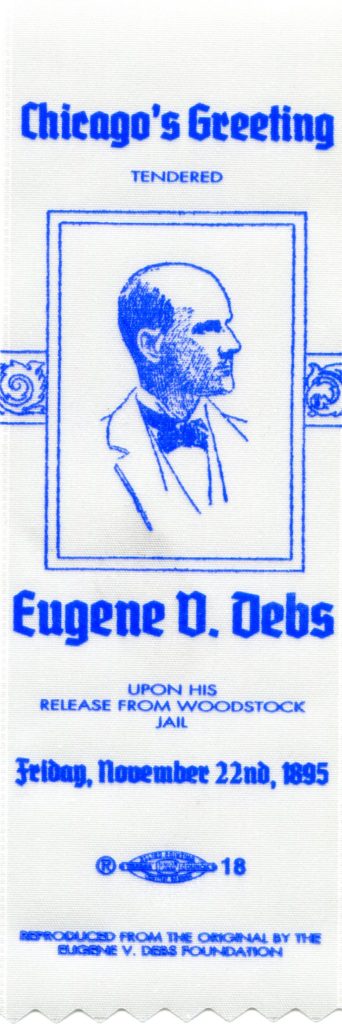
The museum’s event involved a book signing of a new volume about the Pullman StrikeThe Edge of Anarchy: The Railroad Barons, the Gilded Age, and the Greatest Labor Uprising in America by Jack Kelly — and a reading of “Liberty,” the speech that Debs delivered to a crowd of thousands of supporters in Chicago after his release from Woodstock Jail, on November 22, 1895.

It was a speech I’d never read, so I looked it up later. Credit to Debs for giving good speeches in an era when political discourse hadn’t yet been dumbed down to semiliterate 280-character bursts. A couple of selections:

“Out of range of the government’s machine guns and knowing the location of judicial traps and deadfalls, Americans may still indulge in the exaltation of liberty, though pursued through every lane and avenue of life by the baying hounds of usurped and unconstitutional power, glad if when night lets down her sable curtains, they are out of prison, though still the wage-slaves of a plutocracy which, were it in the celestial city, would wreck every avenue leading up to the throne of the Infinite by stealing the gold with which they are paved, and debauch Heaven’s supreme court to obtain a decision that the command ‘thou shalt not steal’ is unconstitutional…
“I remember one old divine who, one night, selected for his text George M. Pullman, and said: ‘George is a bad egg, handle him with care. Should you crack his shell the odor would depopulate Chicago in an hour.’ All said ‘Amen’ and the services closed.

“Another old sermonizer who said he had been preaching since man was a molecule, declared he had of late years studied corporations, and that they were warts on the nose of our national industries, — that they were vultures whose beaks and claws were tearing and mangling the vitals of labor and transforming workingmen’s homes into caves.”

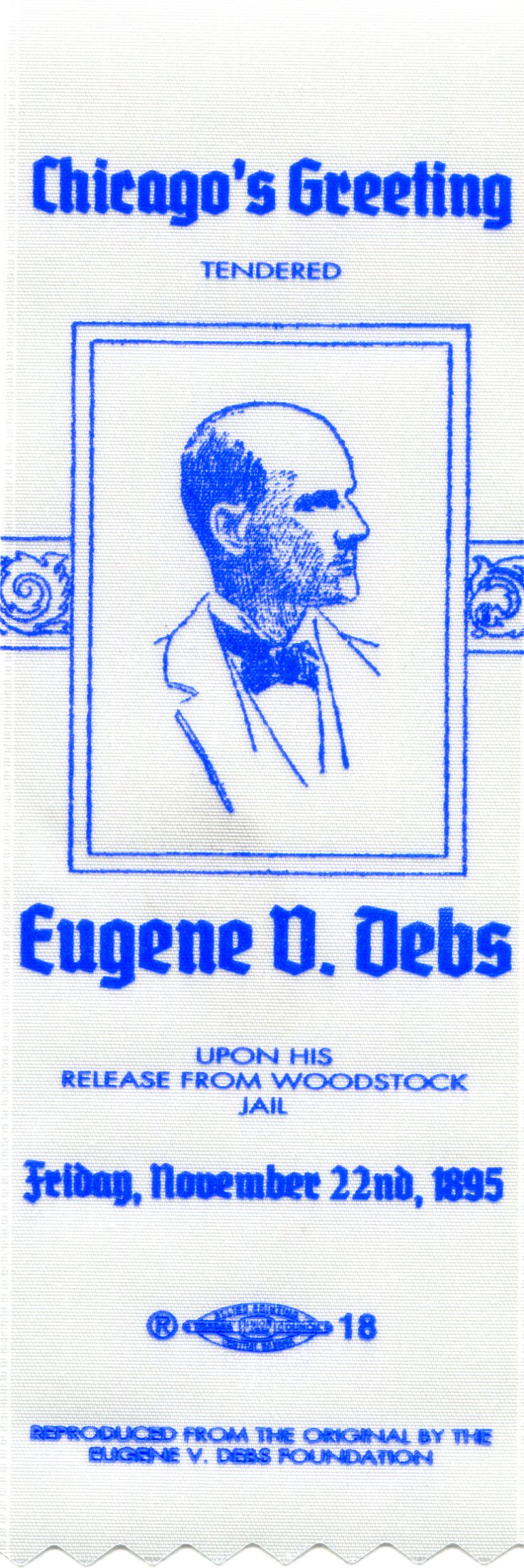
The museum staff was giving away souvenir ribbons, replicas of the ribbons worn by supporters who greeted Debs when he got out of Woodstock. We got one.

The house is both a house museum of the period, with many of the Debs’ possessions, as well as a museum about labor organizing, American socialism — Debs was adamant that the ideology wasn’t some imported Euro-virus — and the fight against government overreach, as expressed by siding with the bosses in the ’90s and the sedition laws of the First World War.

It was a pretty nice house for its time, vintage 1890. I understand that Debs caught some flack for living in a comfortable house. Comfortable with a few touches of affluence, since his wife Kate brought some money to the marriage. Some of the fireplaces feature cobalt blue porcelain tiles imported from Italy, the mahogany dining and parlor furniture is pretty nice, and a display case sports the Debs’ set of Haviland china.

Of course that’s the kind of lightweight criticism that politicians and activists of all stripes receive. The house was clearly upper-middle class for the time, but so what? The Debs were supposed to live in a shotgun shack? Besides, bread and roses.

Also on display are a number of depictions of Debs. This one is by Wisconsin sculptor Louis B. Mayer (not the movie mogul).
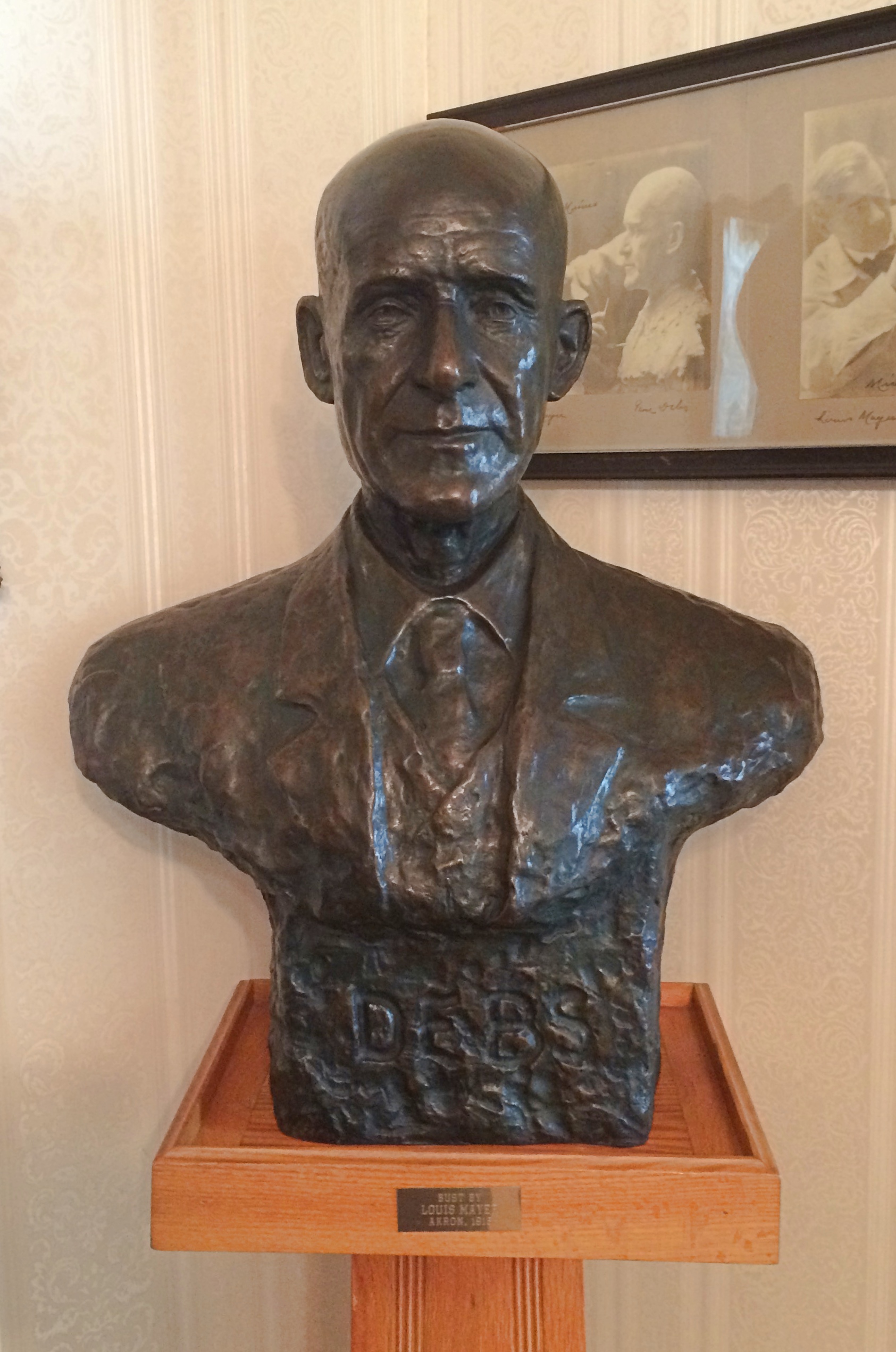
Louis Mayer - Eugene V Debs

LM could also be Louis Mayer. In any case, this is also a sedition trial-era work.
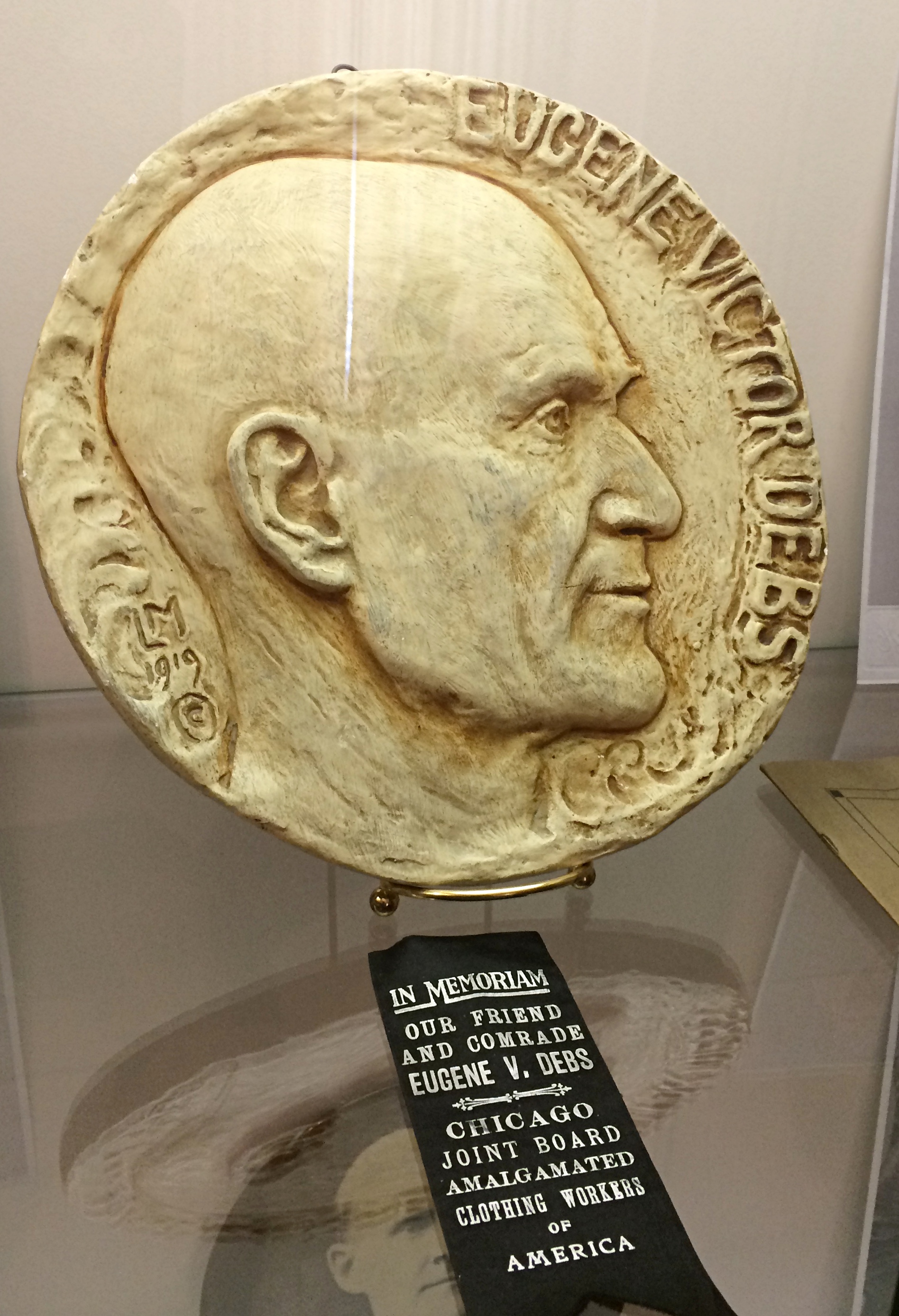
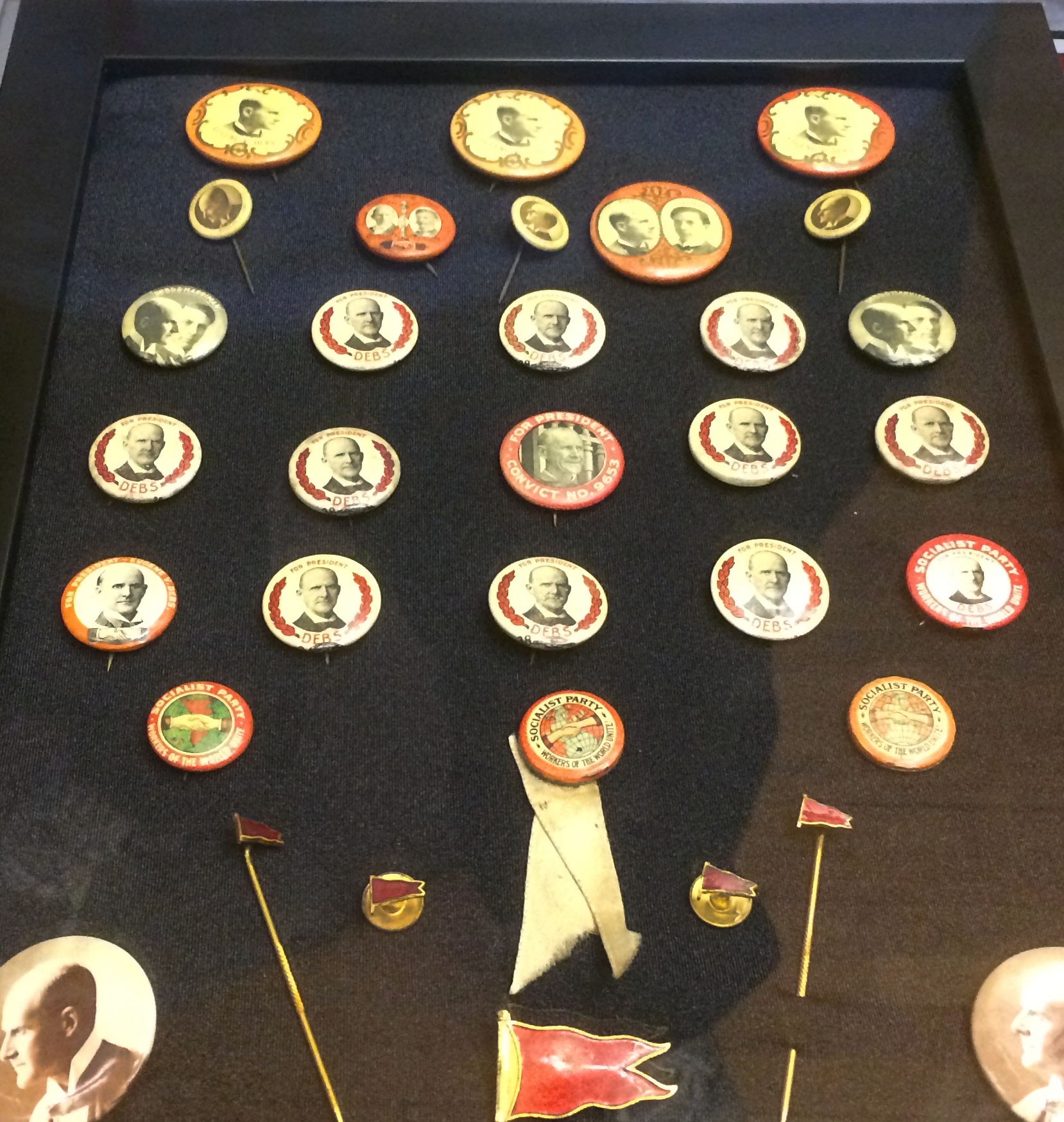
Plus plenty of buttons from Debs’ many runs for president.
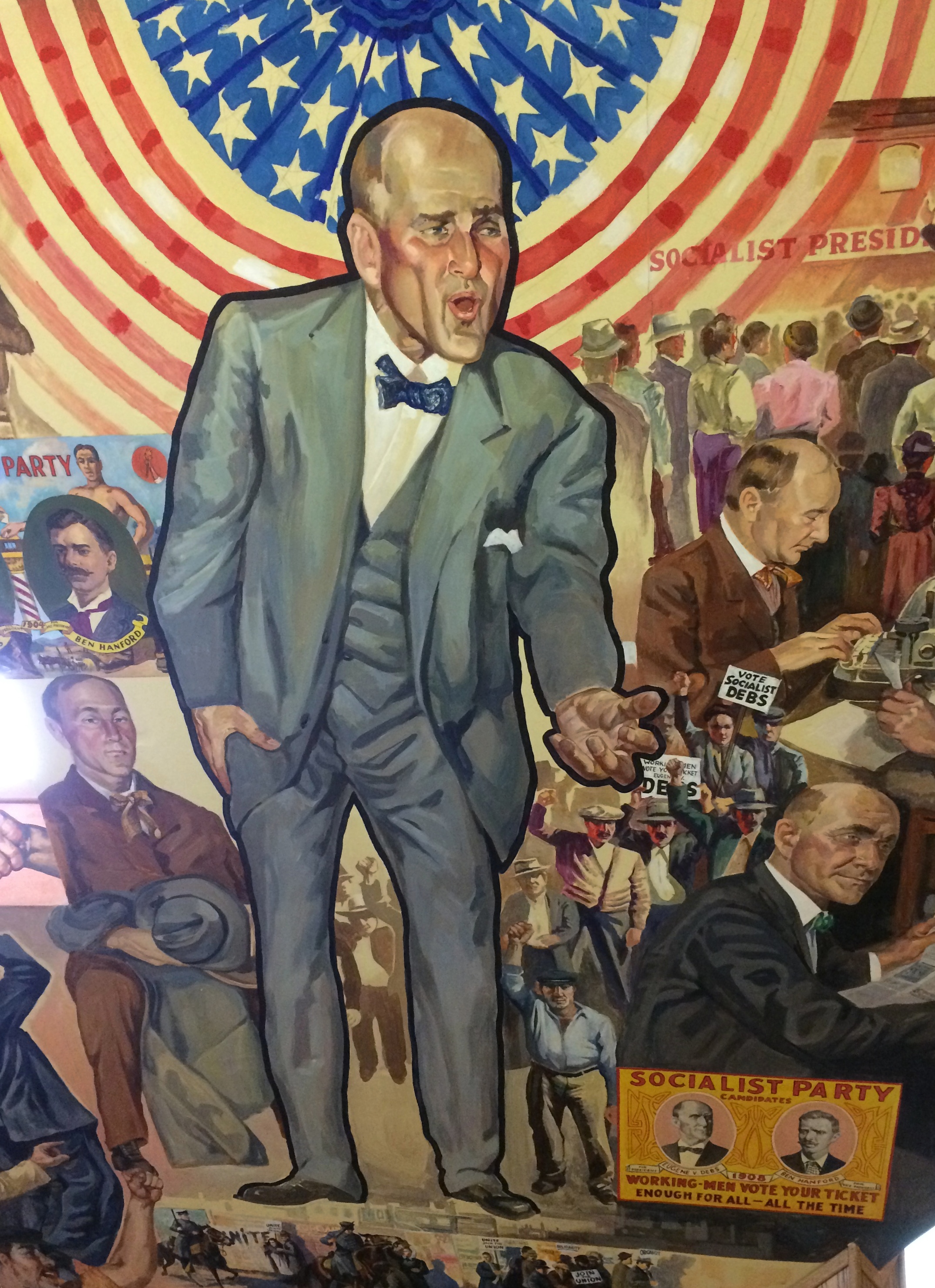
In the house’s attic, which was once merely storage, all of the walls are covered with murals. The centerpiece is Debs in campaigning mode.
One of the smaller details on the mural walls, but one I liked best, is a campaign button from 1920. Debs received 3.5 percent of the popular vote, more than any other socialist candidate for U.S. president, before or since. While in federal prison.
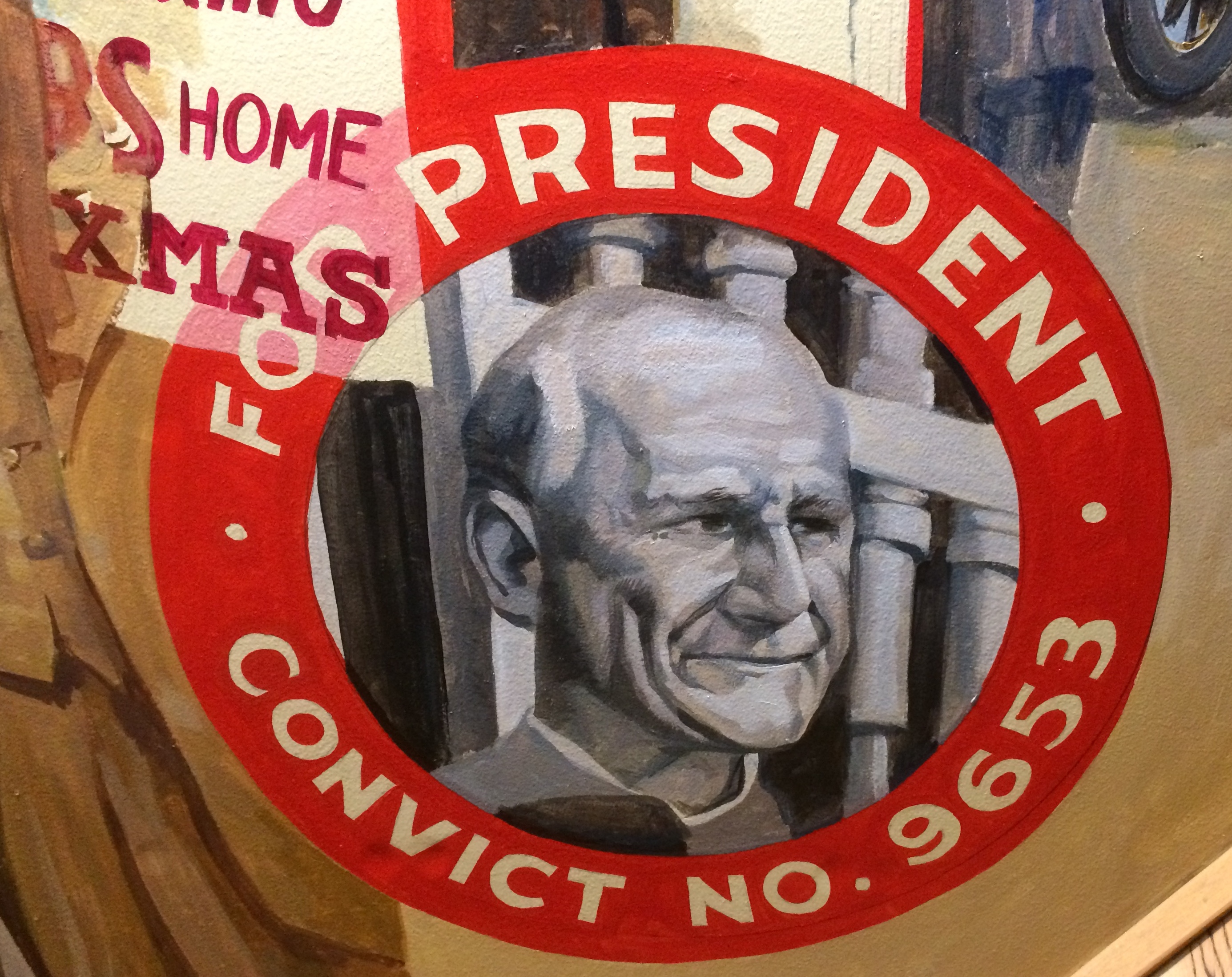
The museum notes: “The murals were painted by John Laska, former Professor of Art at Indiana State University and active Foundation member. Completed in 1979 after three years of hard work, the murals depict Debs’ life and time in chronological order…”

The Ernie Pyle museum reminded me of a long-ago English teacher of mine, Mr. Swinny. The Debs museum reminded me of another long-ago teacher, Mrs. Collins. She taught us freshman U.S. history. About 60 at the time, she grew up in Buffalo and — I think I remember this correctly — had been a Wobbly as a young woman.

That would have been during the Depression, after the heyday of the Wobblies, but still. Mrs. Collins wasn’t shy about throwing in some labor history and using texts sympathetic to socialism, most notably The Jungle. Naturally, Debs came up as well.
The Ernie Pyle World War II Museum

I have a sneaking suspicion that the later 21st century is going to be completely indifferent to war correspondent Ernie Pyle. Like almost everyone else, he’ll join the ranks of the obscure. The items now collected at the Ernie Pyle World War II Museum in rural Indiana will scatter to archives or private collections or landfills. Only occasionally will anyone read his writings, as found in libraries or odd corners of the Internet.

The process is already underway. The museum used to be the Ernie Pyle State Historic Site, owned and run by the state of Indiana. When the recession came 10 years ago, state budgets suffered. I doubt that anyone put it down officially in a memo or the like, but I’m sure the decision to close the Ernie Pyle SHS came down to, “Who’s heard of him anyway?”

A nonprofit, the Friends of Ernie Pyle, now owns the site and carries on the struggle against obscurity. The organization renamed the museum nearly a decade ago. Yet Randy McNally, in its 2017 Road Atlas, still calls it a state historic site. So does Google Maps. It isn’t a place that gets a lot of attention.
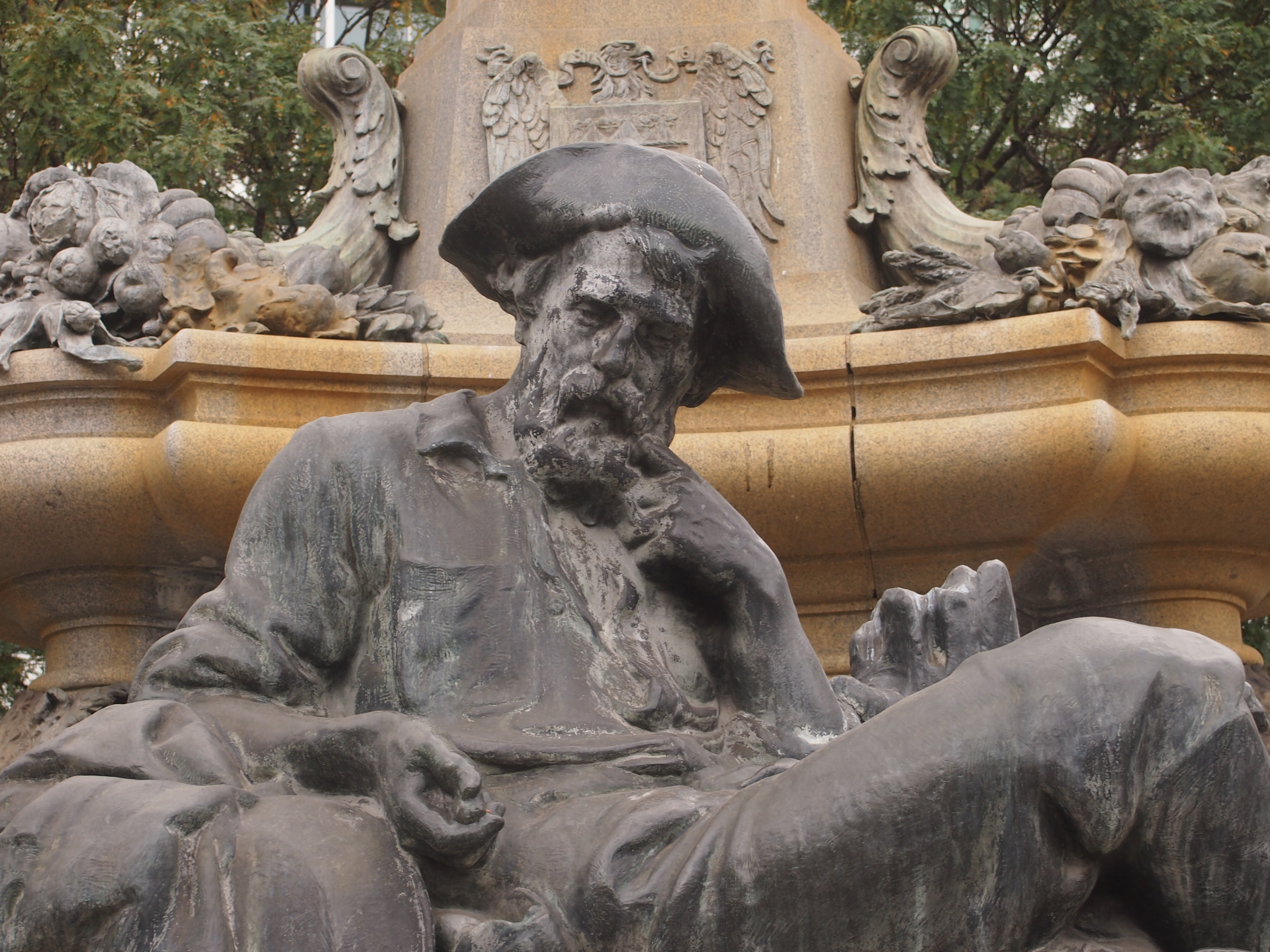
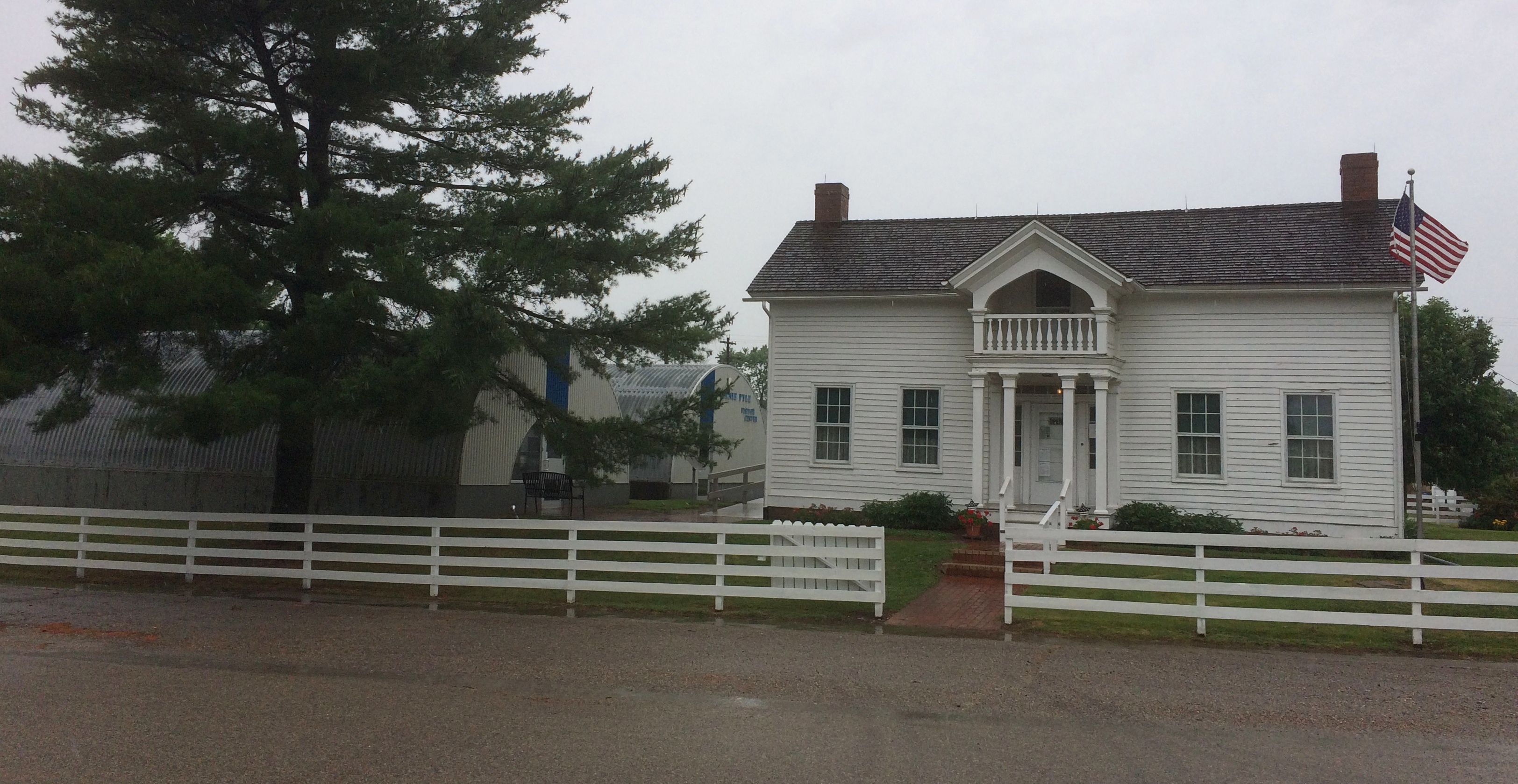
We arrived in the hamlet of Dana, Indiana, early in the afternoon on Saturday. Rain had dogged us most of the way from Champaign, Illinois, where we’d spent the previous night. The museum includes the house in which Ernie Pyle was born in 1900, relocated from the nearby farm fields.
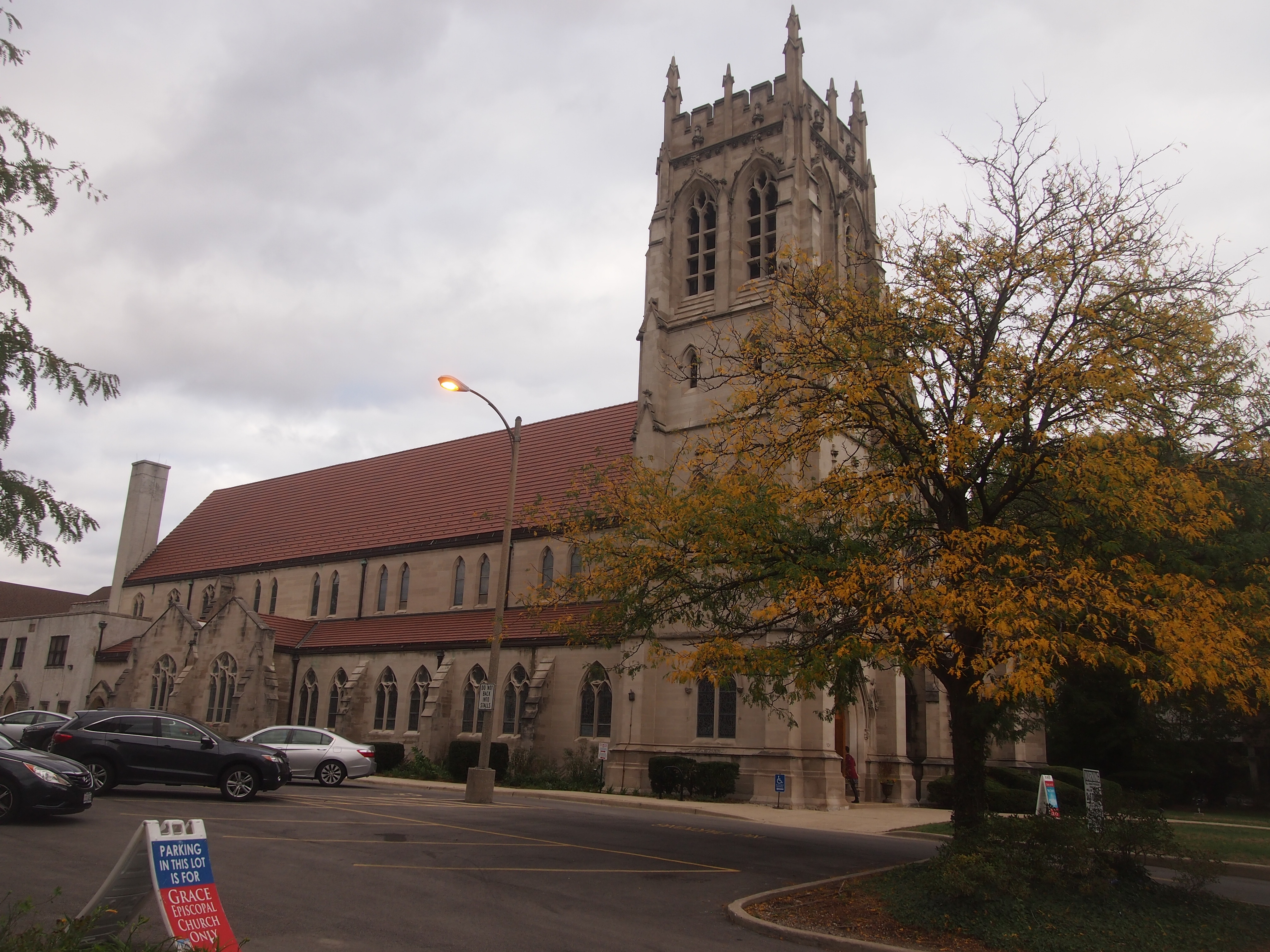
Next to the birth house are two Quonset huts, World War II vintage but never used for military purposes, that house displays and Ernie Pyle artifacts. It continued to rain while we were in the huts, with drops drumming on the metal in their distinctive way the whole time.

I probably would have heard about Ernie Pyle later anyway, but I like to think that the reason we came was that Bill Swinny, one of my high school English teachers, planted the seed by telling us about him during class one day. Mr. Swinny, who taught us a good deal more than high school-level literature, managed to convey how upset the nation was at the death of Ernie Pyle, coming as it did right after the death of President Roosevelt.

We were the only visitors at the museum. An informative woman in her 60s took our admission. Also on staff was a much quieter young man, perhaps as young as 20 and perhaps a relative of the older woman, who was doing his bit to help out, though that’s just a guess on my part.

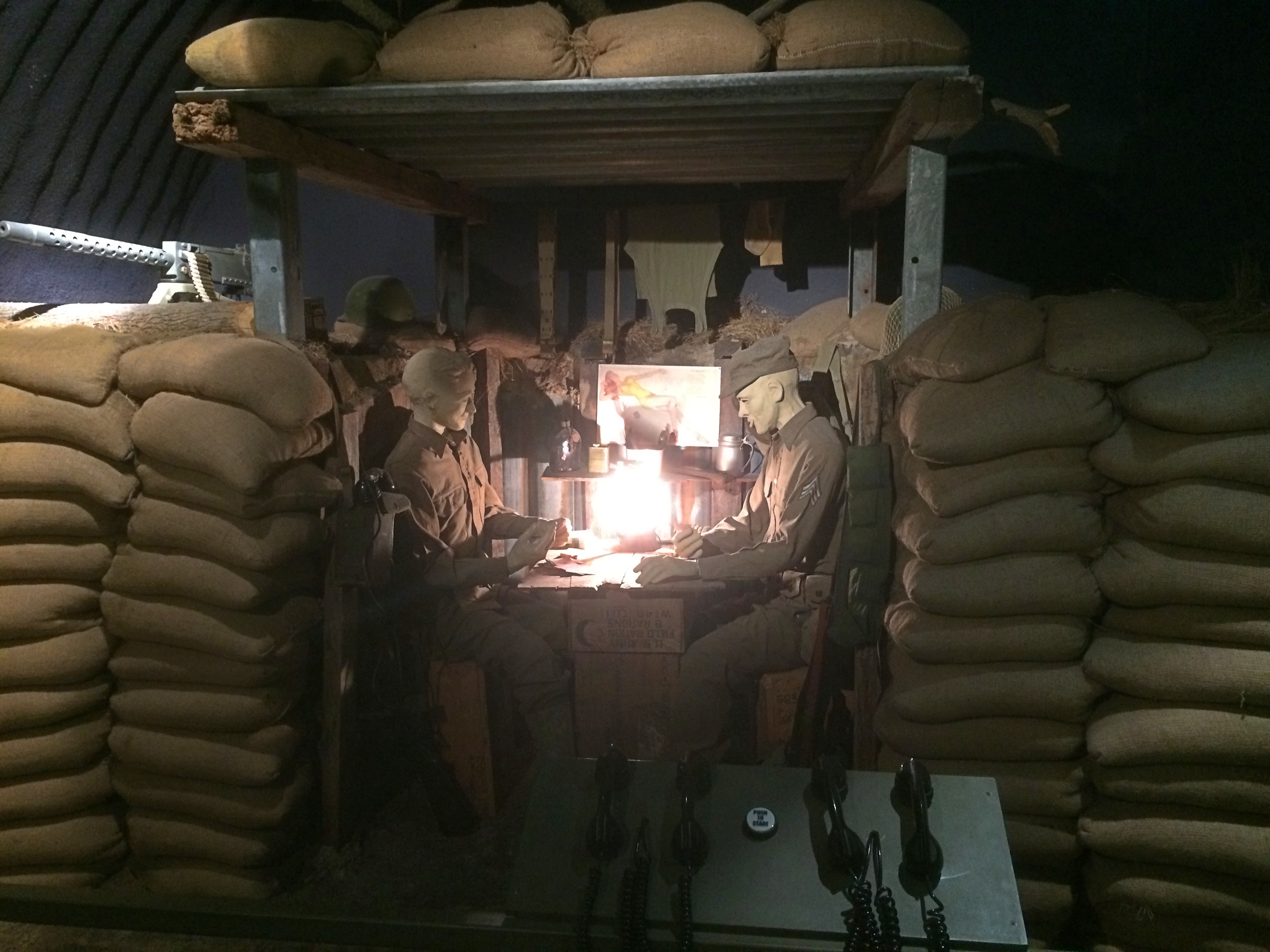
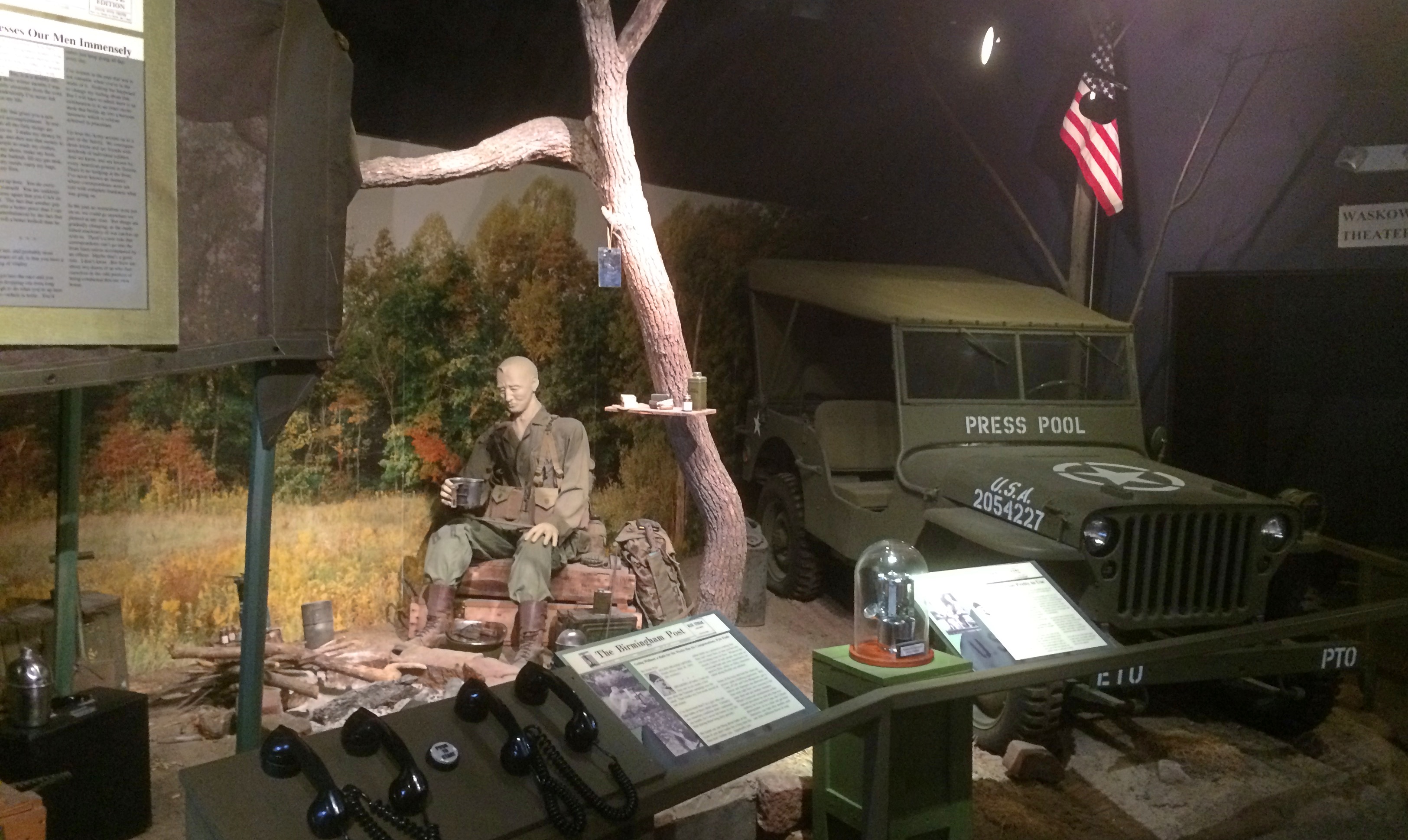
The larger displays, including Pyle-like mannequins standing in for him, evoke Ernie Pyle’s wartime circumstances. That is, living with the GIs he wrote about.
A good number of his columns are posted for visitors to read. You can also listen to excerpts from the columns by picking up telephone receivers. There are a few videos. One is devoted to a single early 1944 column, “The Death of Captain Waskow.” As well it should be, since the column is a masterpiece of reportage.

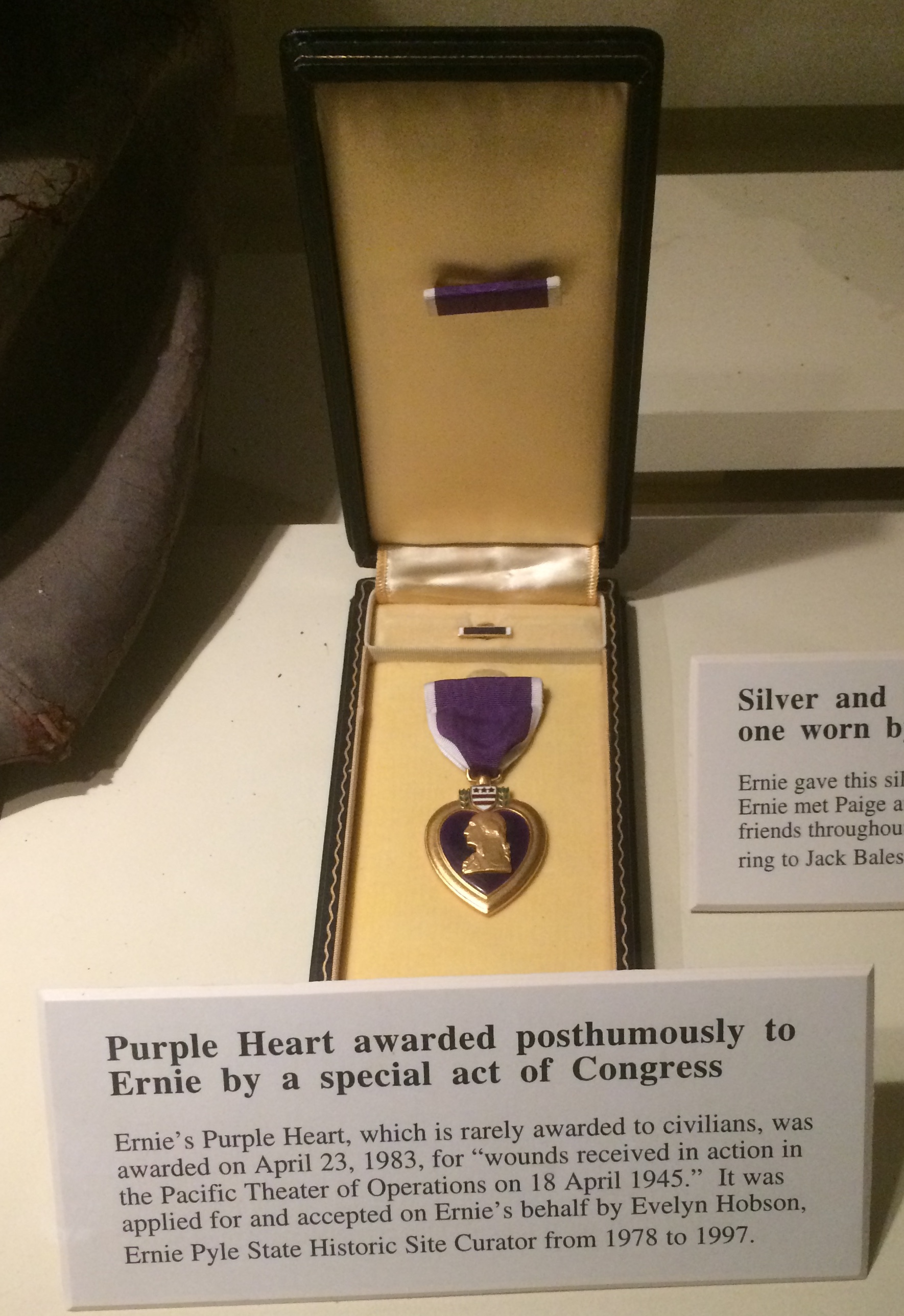
Good to know that Ernie Pyle got a Purple Heart, by act of Congress in 1983. A rare honor for a civilian.
The birth house was interesting, though less compelling. But I did learn that Ernest Taylor Pyle was born poor. At the time of his birth, his parents were tenant farmers.

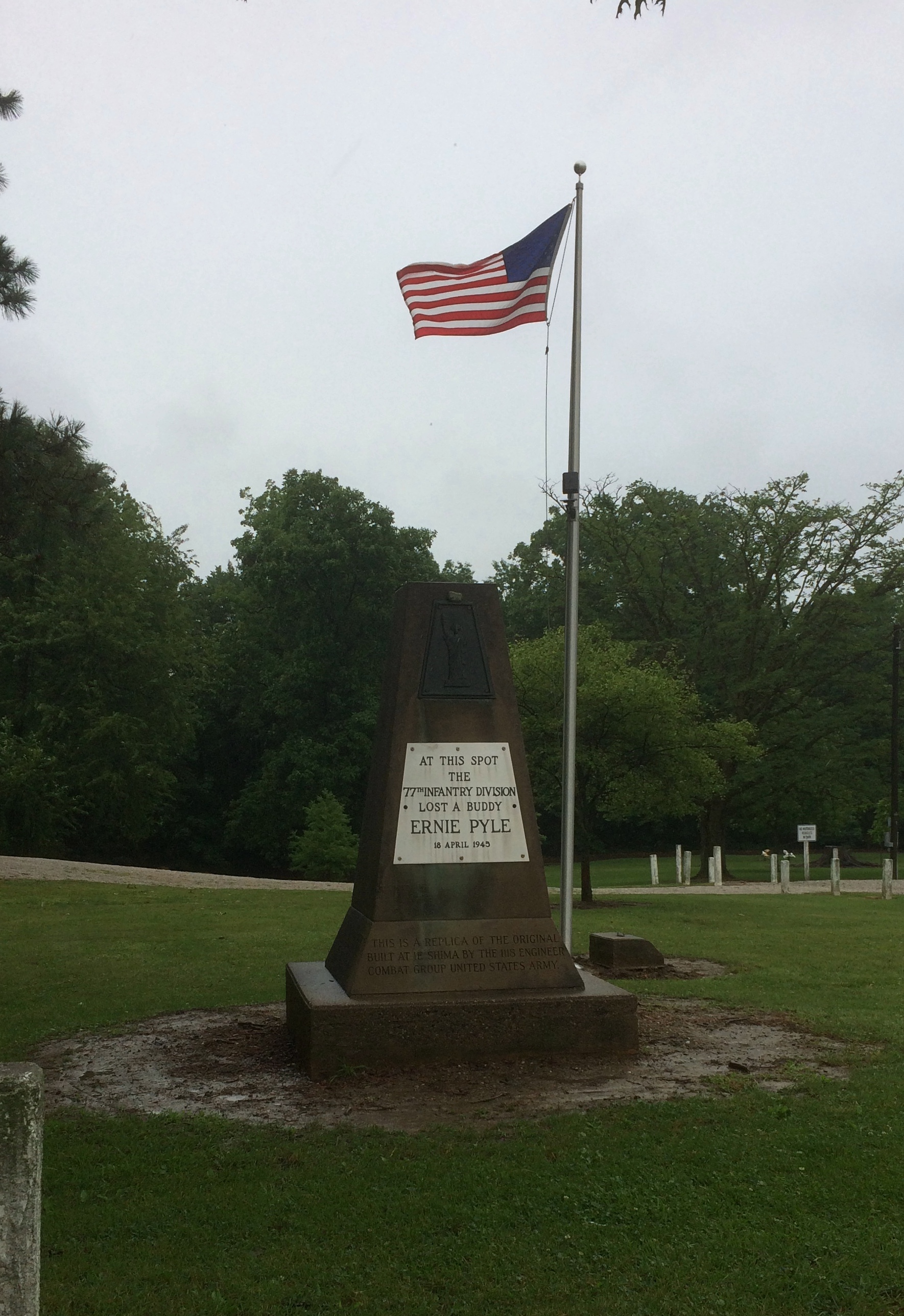
The museum isn’t quite all there is when it comes to commemorating Ernie Pyle in that part of Indiana. A few miles to the east of Dana, on U.S. 36, is the Ernie Pyle Rest Park, essentially a wayside rest stop. One feature stands out, and got me to stop despite the rain.

Ernie Pyle Memorial IndianaIt’s a replica of Ernie Pyle’s memorial on Ie Shima, the small island on which he was killed by enemy fire.

At This Spot
The
77th Infantry Division
Lost A Buddy
Ernie Pyle
18 April 1945

This is a replica of the original built at Ie Shima by the 111S Engineer Combat Group United States Army.

I can’t speak for Ernie Pyle, but I imagine that the thought of being forgotten by future generations might not have troubled him. I get the sense that he would have preferred that the men he wrote about be remembered instead.

Indianapolis Artsgarden, 2014

Easter fell fairly late five years ago, April 20, and we traveled that weekend as well. That time to Indianapolis, where we saw the Eiteljorg Museum and ate at Maxine’s Chicken & Waffles. A good little trip.

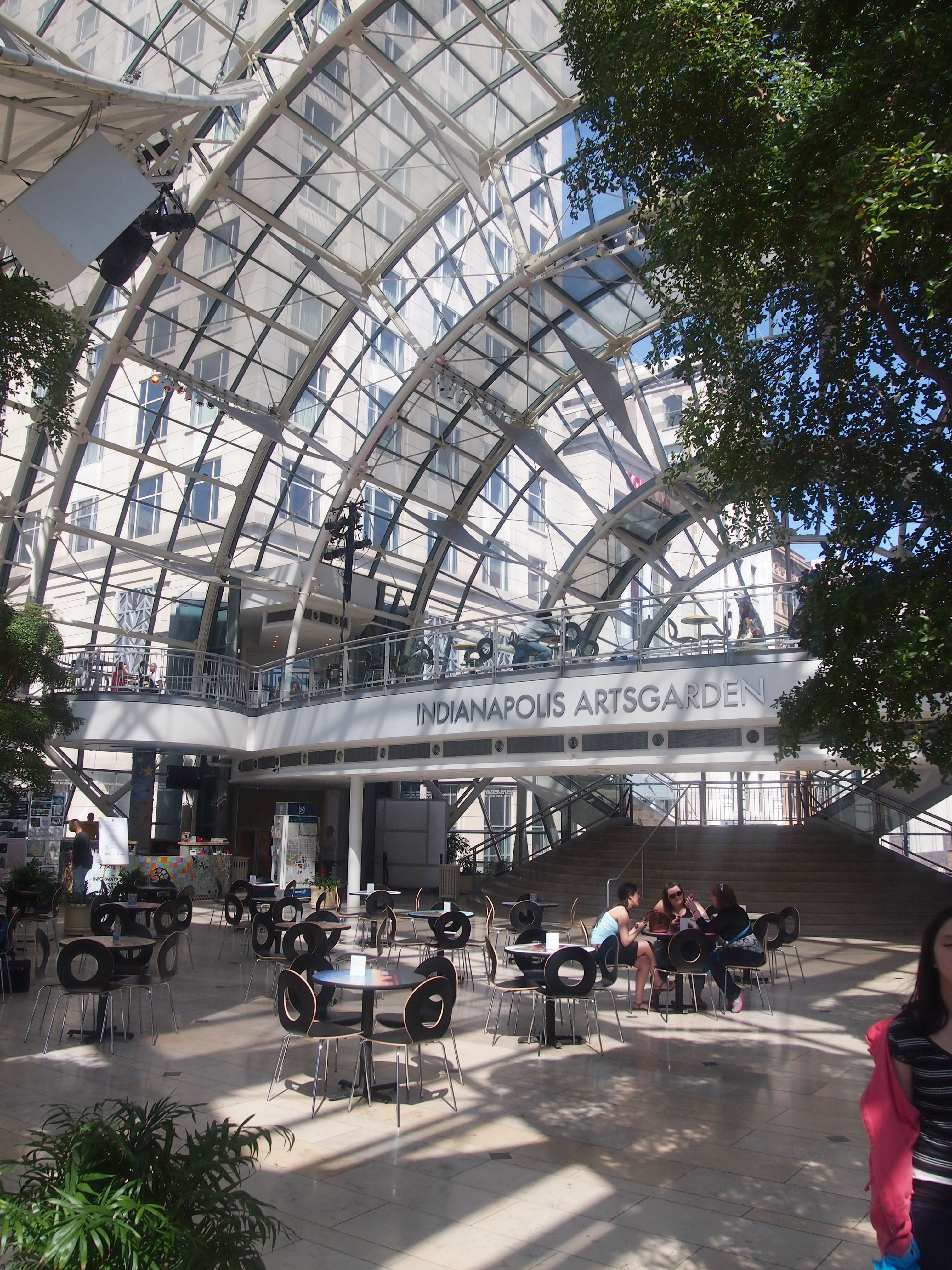
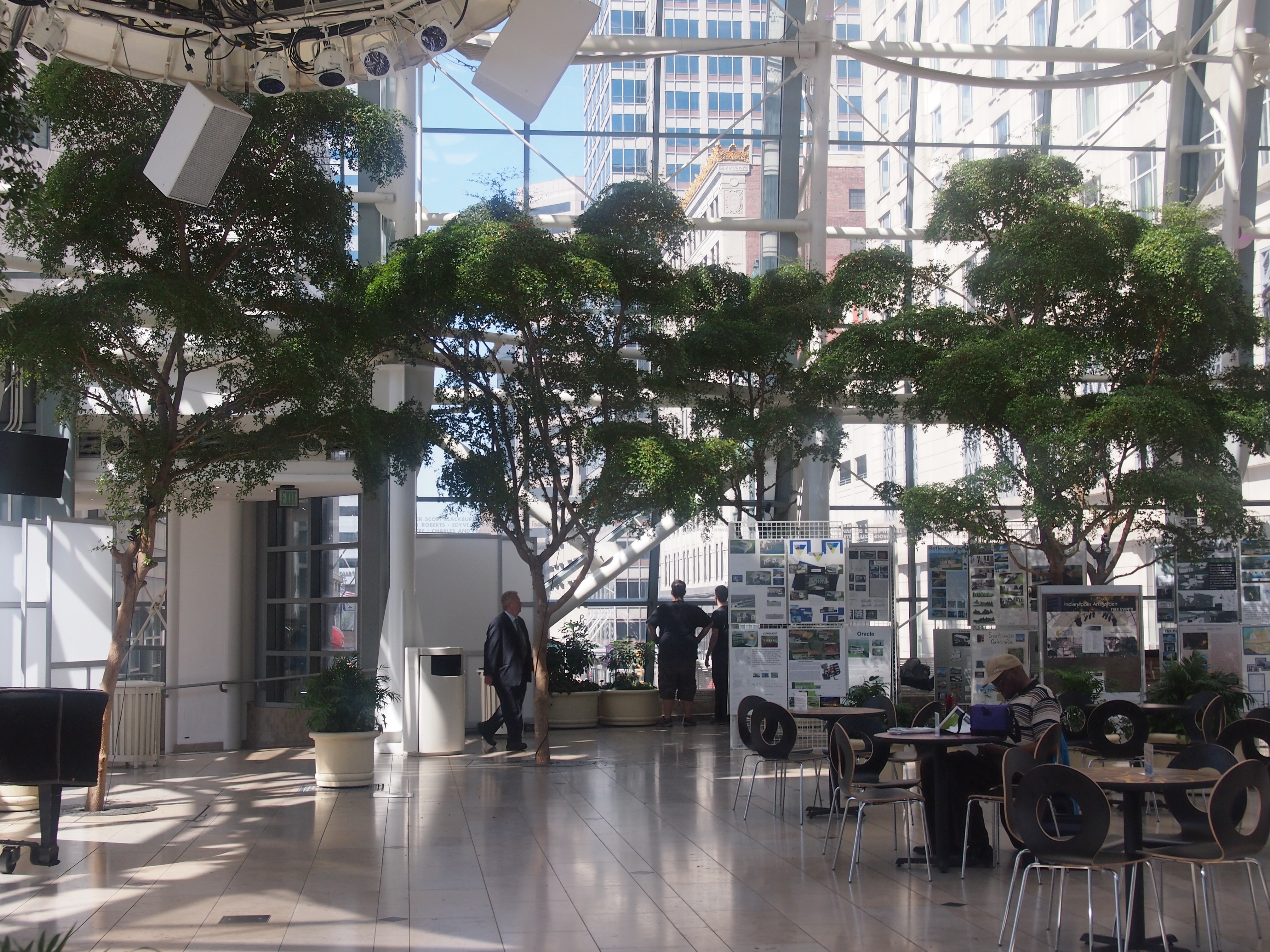
We also spent part of that Saturday afoot in downtown Indianapolis, including a short stop at an interesting public space: the Indianapolis Artsgarden, a large domed structure built over a major intersection.

Besides connecting the adjacent Circle Centre Mall to a nearby hotel and other buildings, the Arts Council of Indianapolis — which owns the space — holds public performances there, along with art exhibitions.

Ehrenkrantz Eckstut & Kuhn Architects (now part of Perkins Eastman), who designed Circle Centre, did the Artsgarden too in the 1990s. Actually not so much a single dome as a series of glass vaults. Makes for a light, open space.

Even when occupied by fully grown trees.

No event was going on when we were there, but it was a pleasant place to hang out. I did that while everyone else went shopping at the adjacent retail. If I remember right, they found some spring clothes.

Allen J. Benson Park. Or, the Illinois-Indiana Border Obelisk.

I have a certain fascination with borders, probably dating back as long as I’ve been looking at maps just for fun, which is a long time now. I seem to have written about them a lot as well, something I didn’t realize until I checked.

Such as the posting about the meeting of British Columbia and Alberta; of Banff National Park and Kootenay National Park; and on the Continental Divide. Or the U.S. Canadian border just south of Vancouver. Or the borders we crossed in 2005 and 2006 and another posting about them again. Or the Tennessee-North Carolina border. Or Missouri-Kansas. Or Texas-Louisiana.

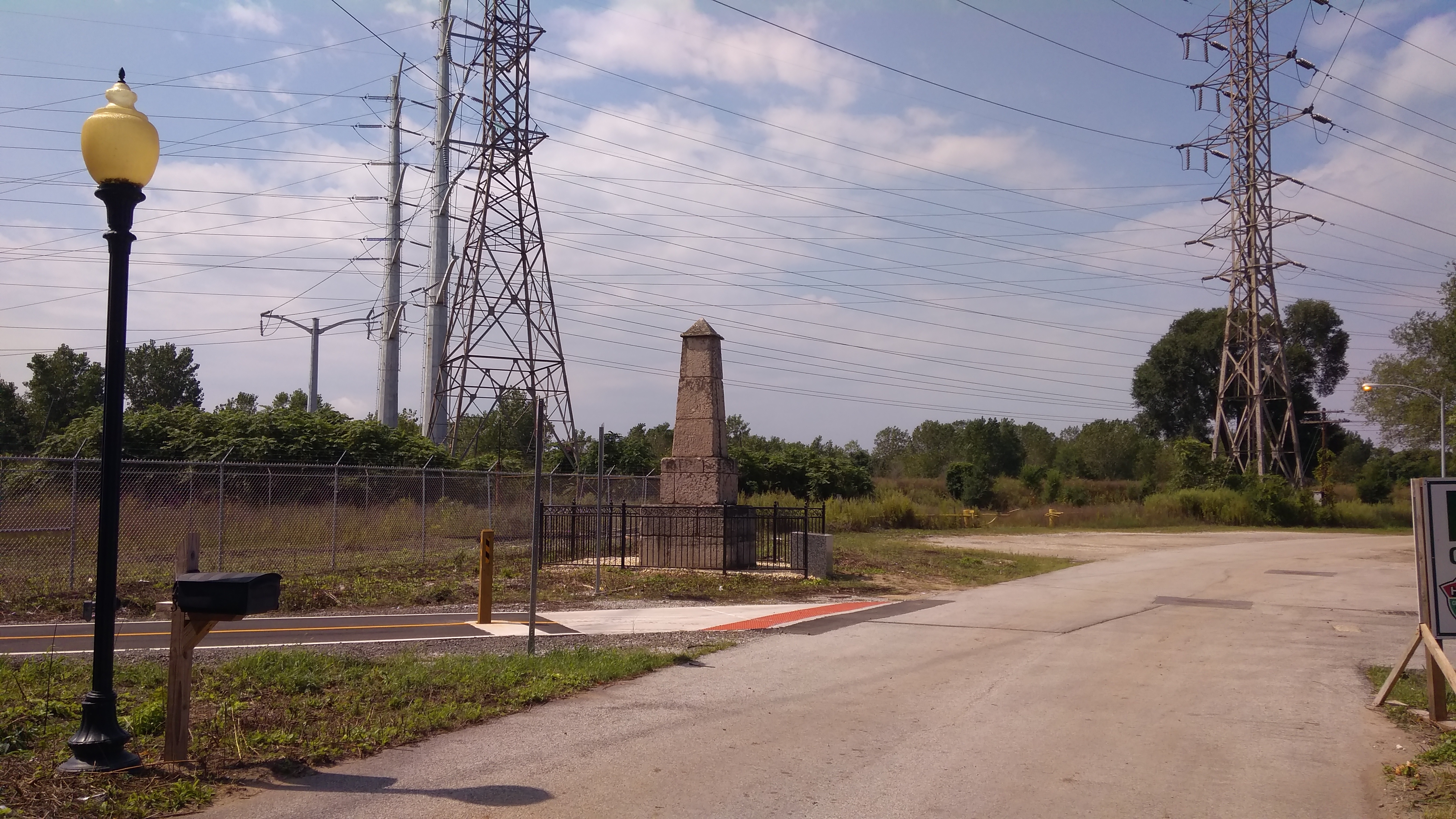
Not long ago, I had an encounter with a closer border: Illinois-Indiana. But not just any point on that long line — as far northwest as you can go in Indiana and still be on land, because the NW corner of the state is actually a point in Lake Michigan.

This is what you see at the Illinois-Indiana line just a few feet from Lake Michigan, while you are standing in Indiana.
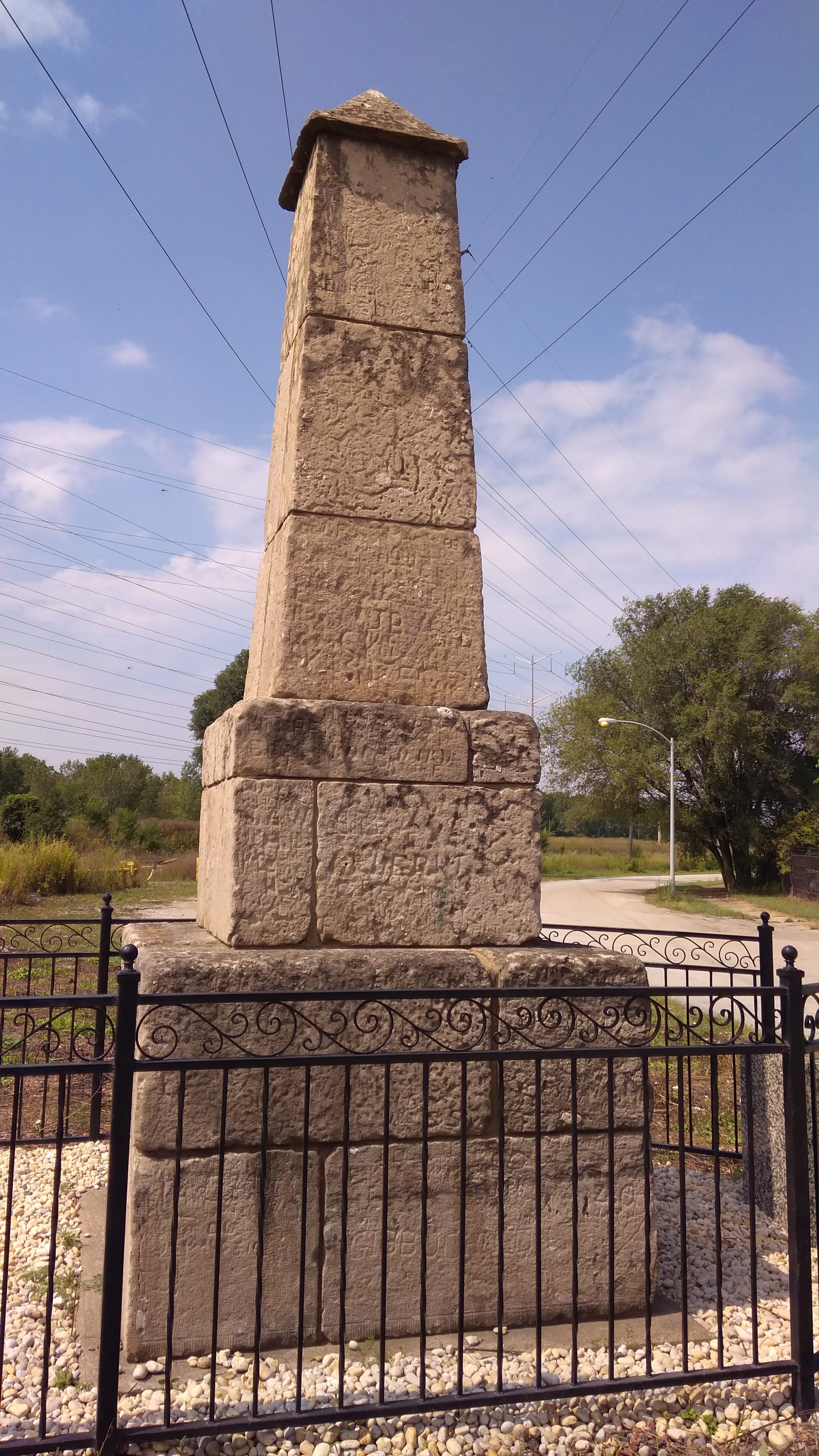
A weatherworn, graffiti-scarred limestone obelisk. This is a closer view.
“In 1833, as Chicago and the Midwest were starting to grow, Congress ordered a new survey of the boundary between Illinois and Indiana,” says Chicago History Today, which asserts that the obelisk is the oldest public monument in Chicago. “When the survey was completed, a 15-foot high limestone obelisk was put in place on the shore of Lake Michigan, straddling the state line.

“By the 1980s the marker was isolated and neglected among the rail yards. Allen J. Benson, a ComEd executive, convinced the company to sponsor its restoration, in conjunction with the East Side Historical Society and other interested groups. In 1988 the marker was moved 190 feet north to its present location, just outside the [ComEd coal-fired power plant] gate. A new base was added at that time.”

Though moved into an area created by landfill, I understand that the obelisk still straddles the north-south Illinois-Indiana border, which a few feet further north heads out into Lake Michigan. It’s also the border between the city of Chicago and the city of Hammond. (Chicago extended out this far in massive 1889 annexation, which is yellow on the map.)

There’s a plaque near the obelisk that says the small area (maybe inside the fence) is Allen J. Benson Park to honor the exec, who has since died. The power plant closed in 2012, and its former site, a brownfield on the Indiana side of the line, is being redeveloped to be home to a data center.

When the plant was up and running, the marker didn’t look quite so forlorn: in the 2011, according to a Wikimedia image, three flagpoles and some trees were in the vicinity — but no metal fence — and there were plaques on the side of the obelisk with the state names. Guess they were stolen. Such is life in the big city, but I’m glad this curiosity from the 19th century still stands.

Twelve Pictures ’17

Back to posting on January 2, 2018, or so. Like last year, I’m going to wind up the year with a leftover picture from each month. This time, for no special reason, no people, just places and things.

Champaign, Ill., January 2017Charlotte, NC, February 2017

Kankakee, Ill., March 2017

Rockford, Ill., April 2017

Muskogee, Okla., May 2017

Naperville, Ill., June 2017

Barrington Hills, Ill., July 2017

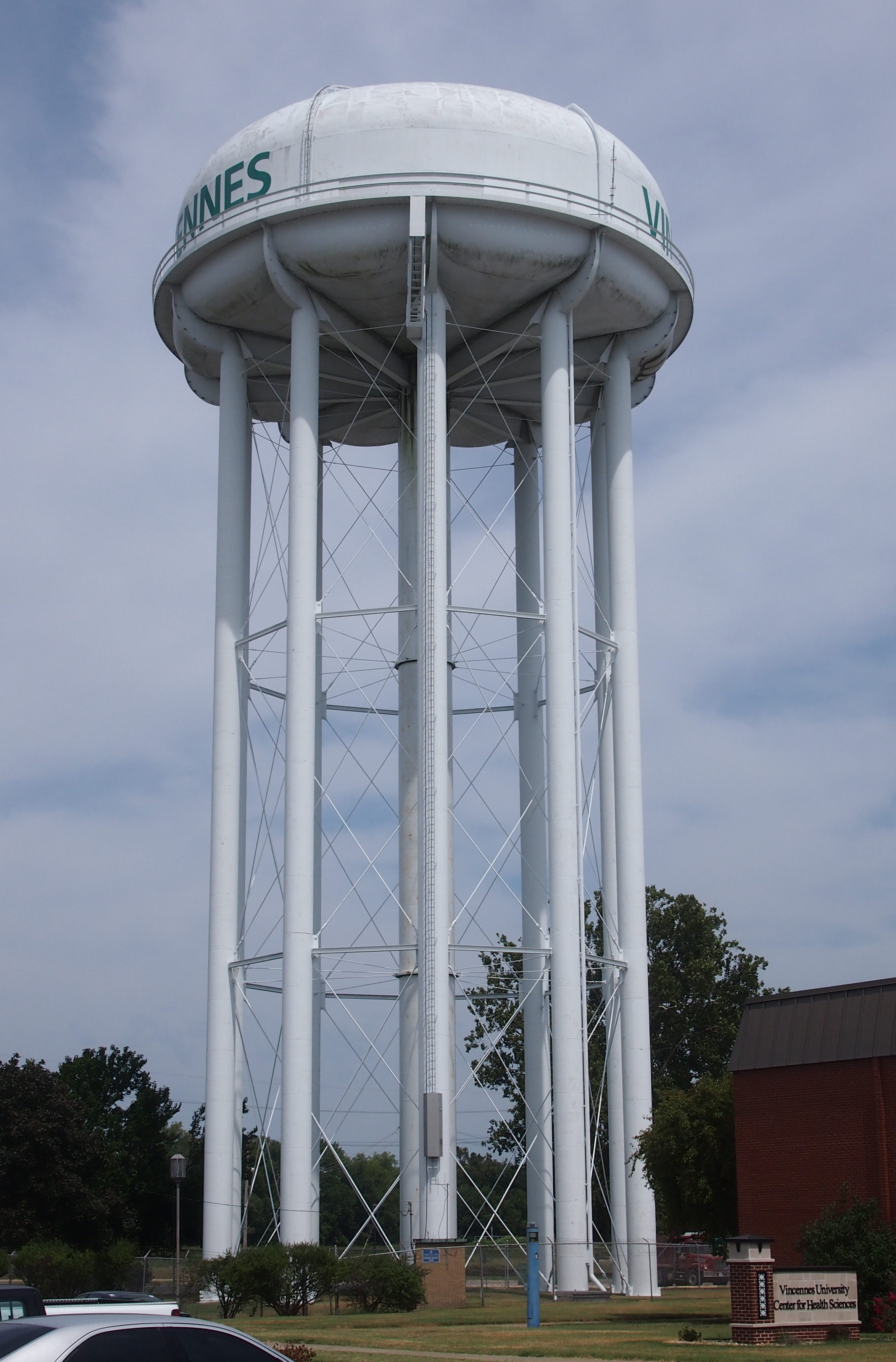
Vincennes, Ind., August 2017

Denver, September 2017Evanston, Ill., October 2017Chicago, November 2017

Birmingham, Ala., December 2017

Merry Christmas and Happy New Year to all.

More Vincennes

At Grouseland in Vincennes, during the tour, our guide pointed out a sizable crack in the wall of one of the upstairs bedrooms. She said that was the only damage to the interior walls that the long-time modern owners of the property, the Daughters of the American Revolution, decided not to repair. That’s because the 1811-12 New Madrid earthquakes make the crack. That crack might be the only visible relic anywhere of that long-ago event. Historic damage preservation, you might call it.

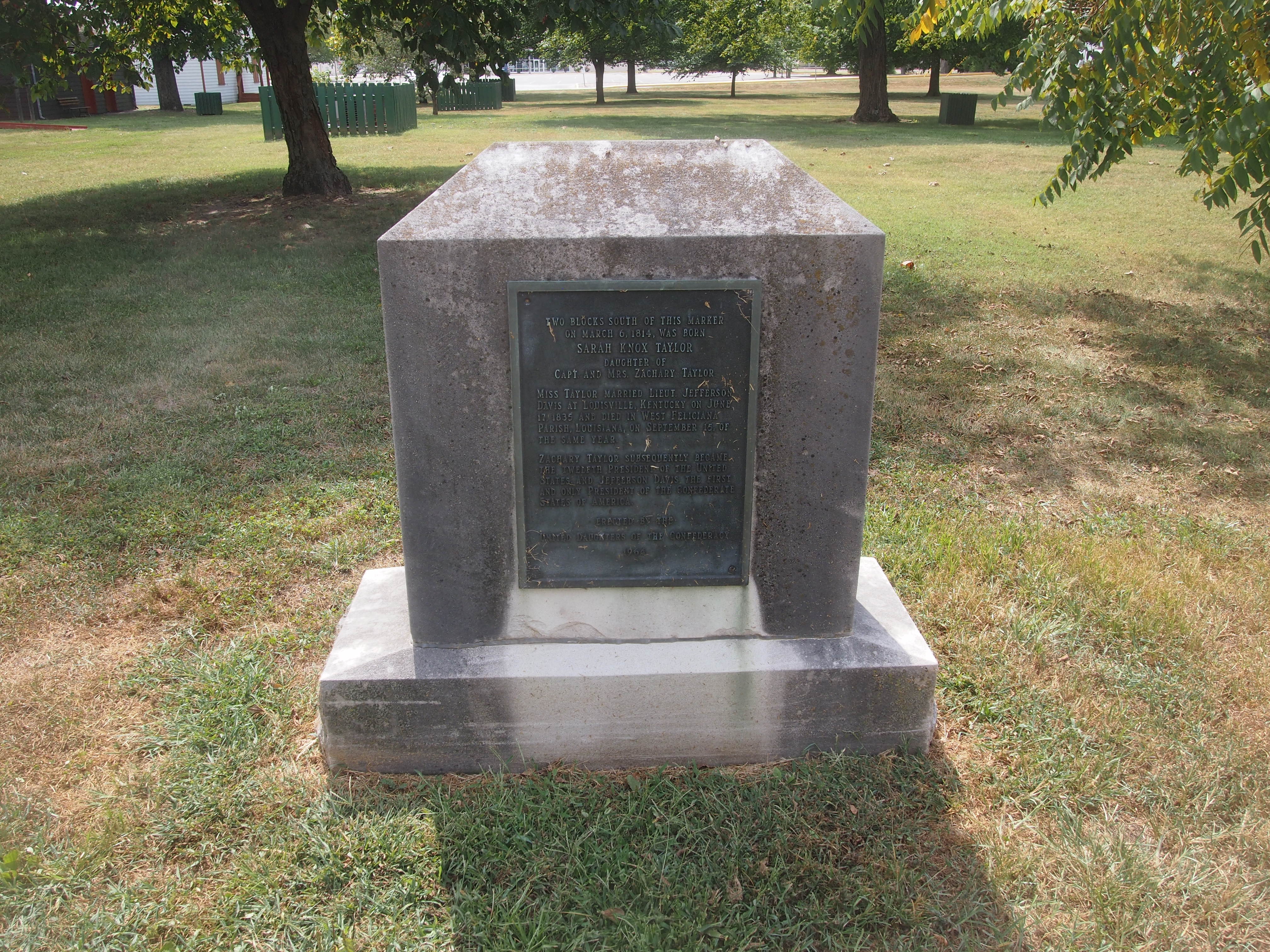
Outside of the Harrison mansion are a few memorials, one of which is homely indeed.
Two blocks south of this marker on March 6, 1814, was born Sarah Knox Taylor, daughter of Capt. and Mrs. Zachary Taylor.

Miss Taylor married Lieut. Jefferson Davis at Louisville, Kentucky on July 17, 1835 and died in West Feliciana Parish, Louisiana, on September 15 of that same year.

Zachary Taylor subsequently became the twelfth President of the United States, and Jefferson Davis the first and only President of the Confederate States of America.

Erected by the United Daughters of the Confederacy 1964

A Confederate memorial, sort of, but somehow I doubt that memorial revisionists are going to be flustered by it.

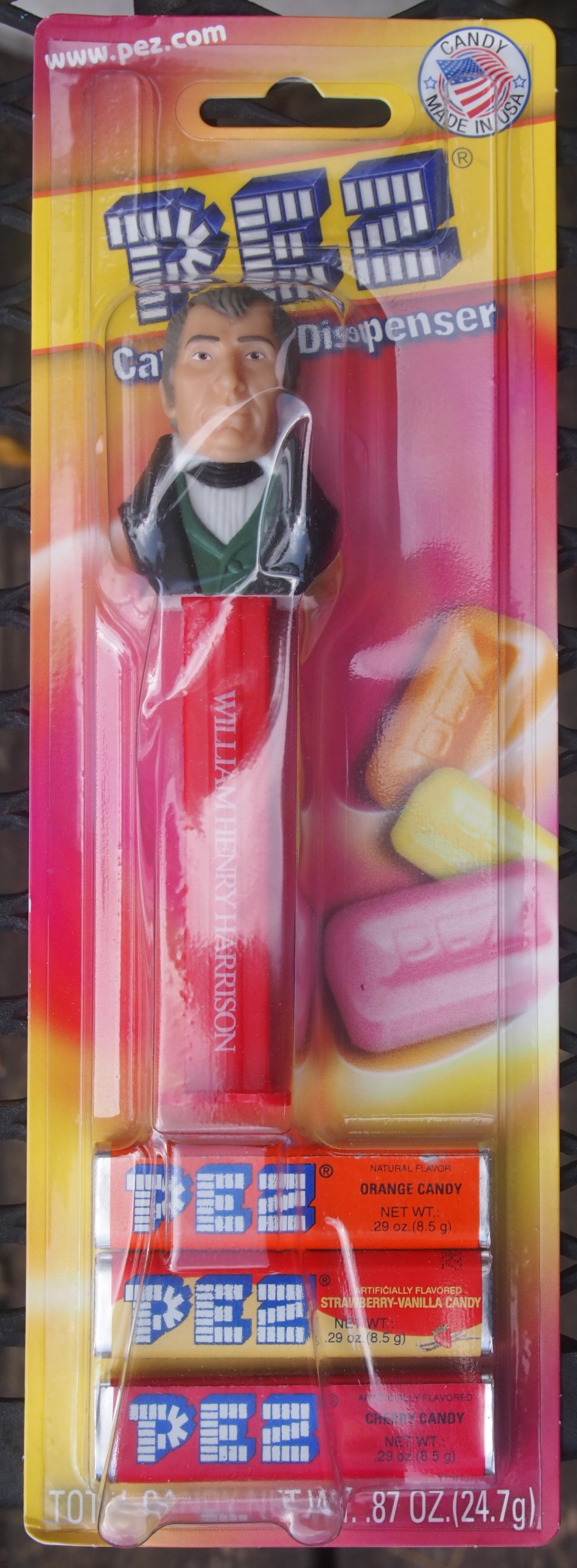
Grouseland has a small gift shop. You can buy William Henry Harrison Pez dispensers there. I did.

William Henry Harrison PezWHH Pez is now going to keep company with my Franklin Pierce bobblehead.

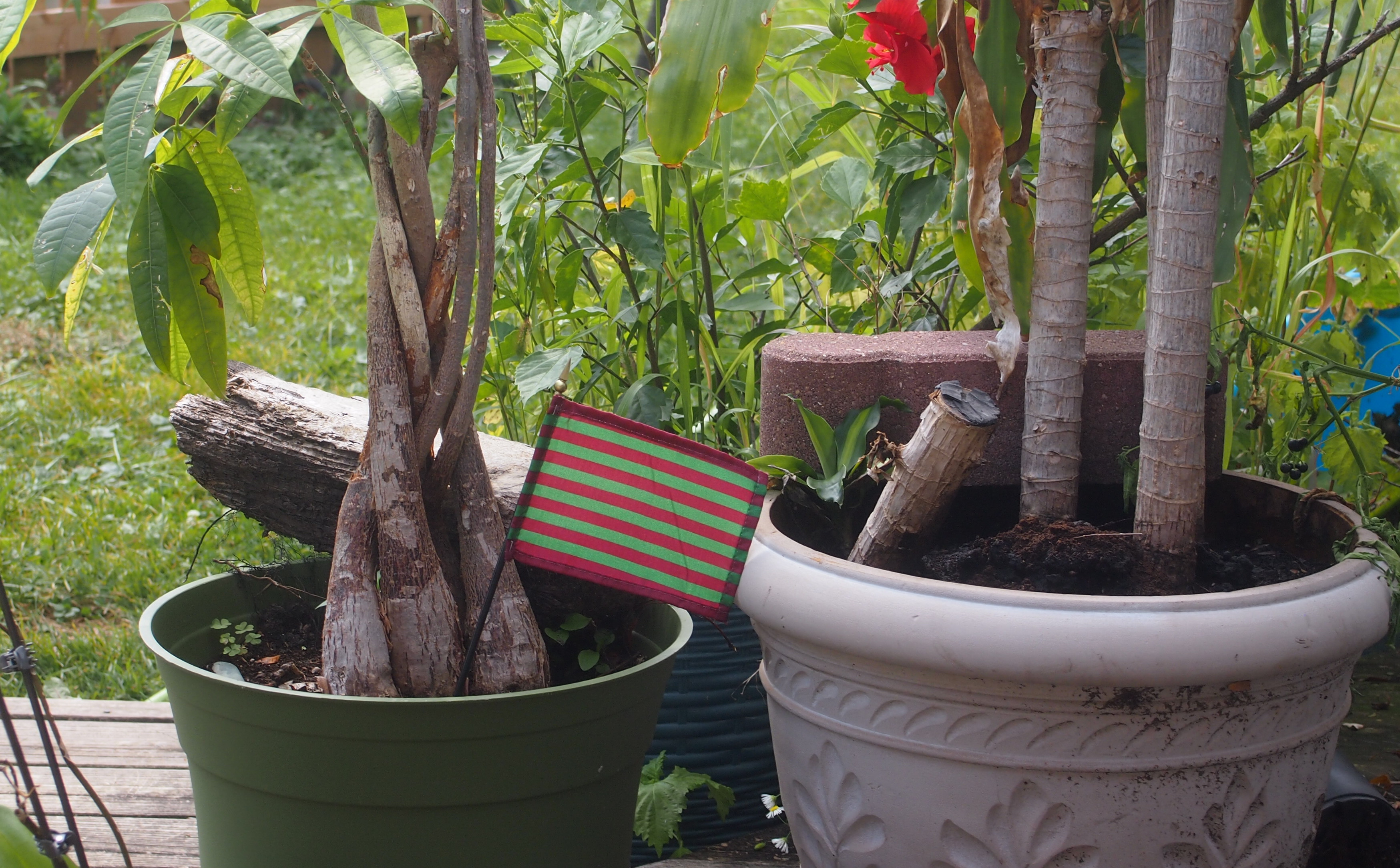
At the George Rogers Clark National Historical Park gift shop, you can buy a flag I’ve never seen anywhere else: the George Rogers Clark Flag. I got one of those, too.
George Rogers Clark FlagThe Clark flag is now going to keep company with my Come And Take It flag that flies on our deck during the warm months.

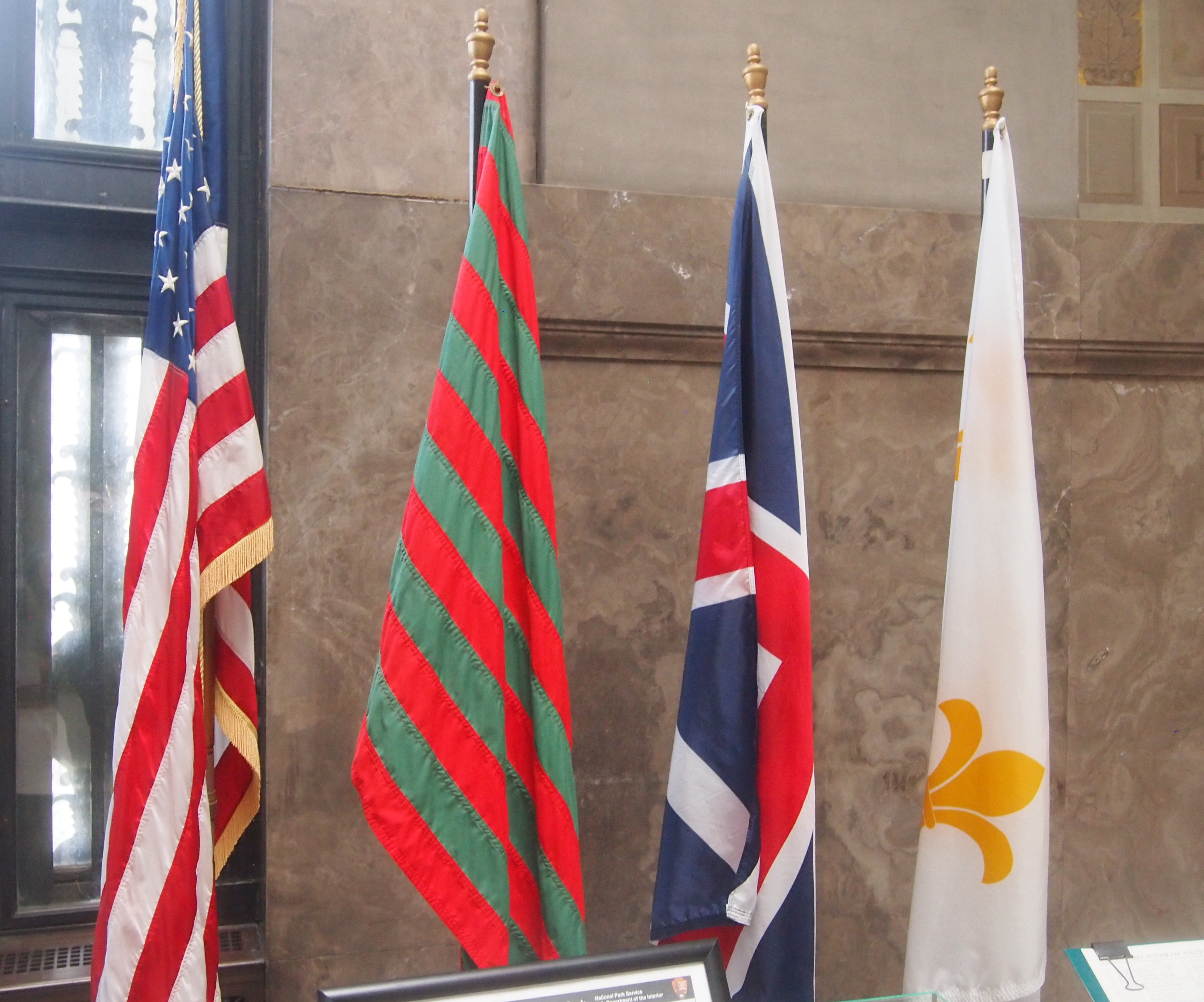
Apparently Clark’s men didn’t carry the flag at the Battle of Vincennes, but it was around — a previous American commander at Sackville, before the British took the fort, might have used it. Clark got his name attached to it anyway. Also, it isn’t clear why red and green were its colors. Never mind, all that mystery adds interest. It’s distinctive, and you can find it displayed with more conventional flags at the National Historical Park.
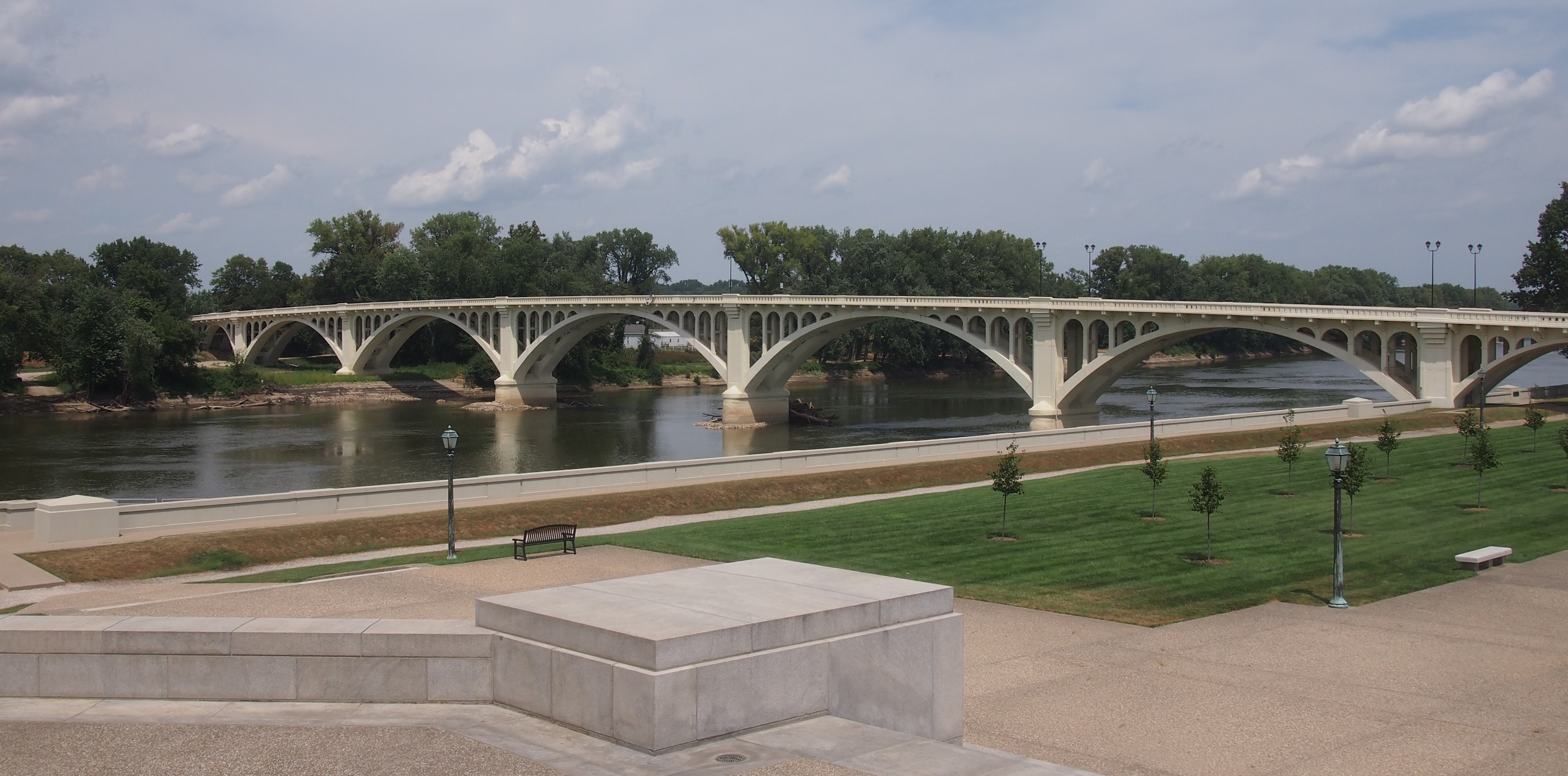
George Rogers Clark Memorial flagsVisible from the George Rogers Clark National Historical Park is the Lincoln Memorial Bridge across the Wabash (US 50), the border at that place between Indiana and Illinois. An elegant bridge.
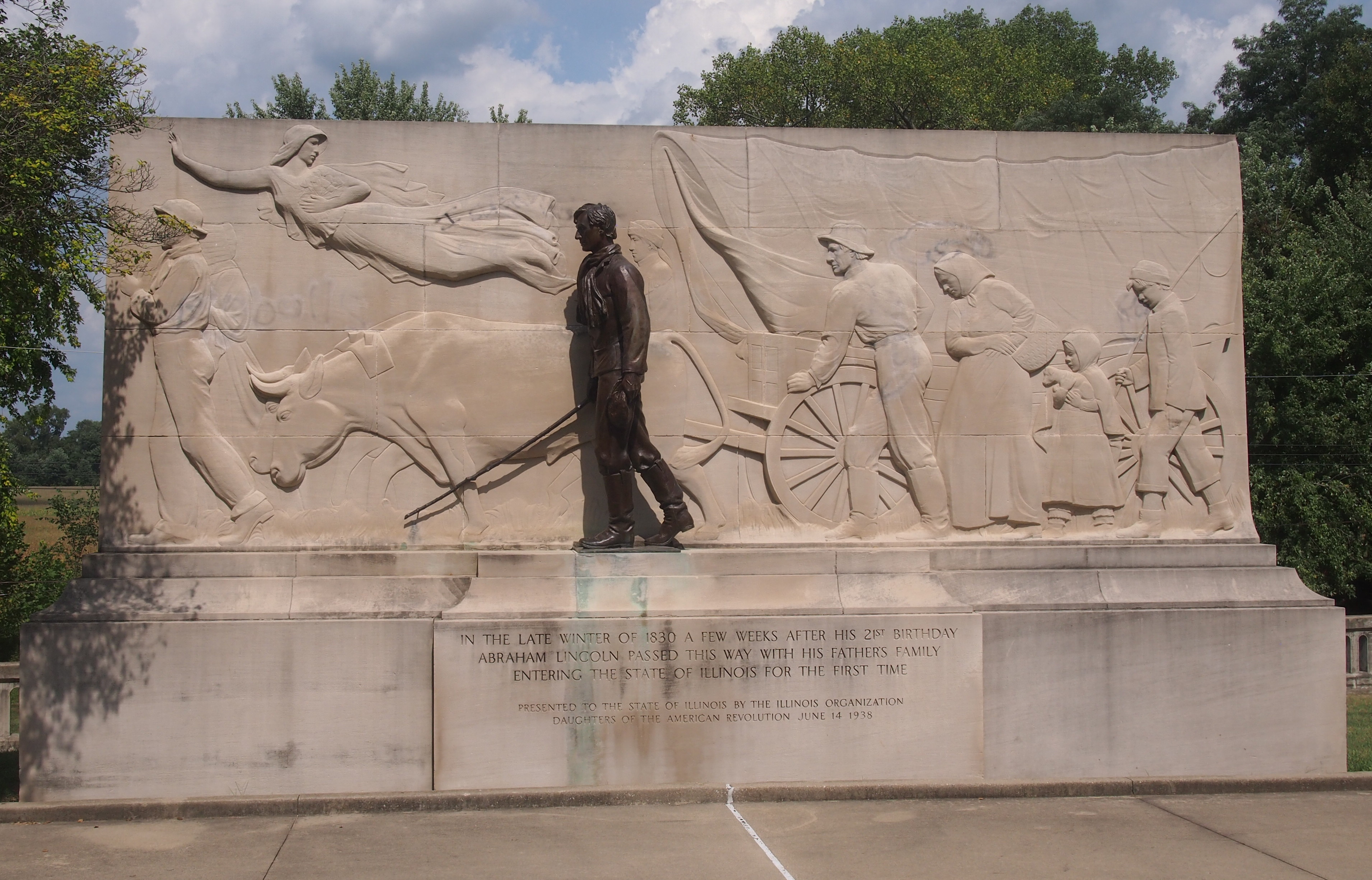
Lincoln Memorial Bridge, Vincennes, IndianaThis was where a young Abraham Lincoln (age 21) and his family is thought to have crossed into Illinois for the first time in 1830. On the Illinois side of the river, that event is marked with a memorial.
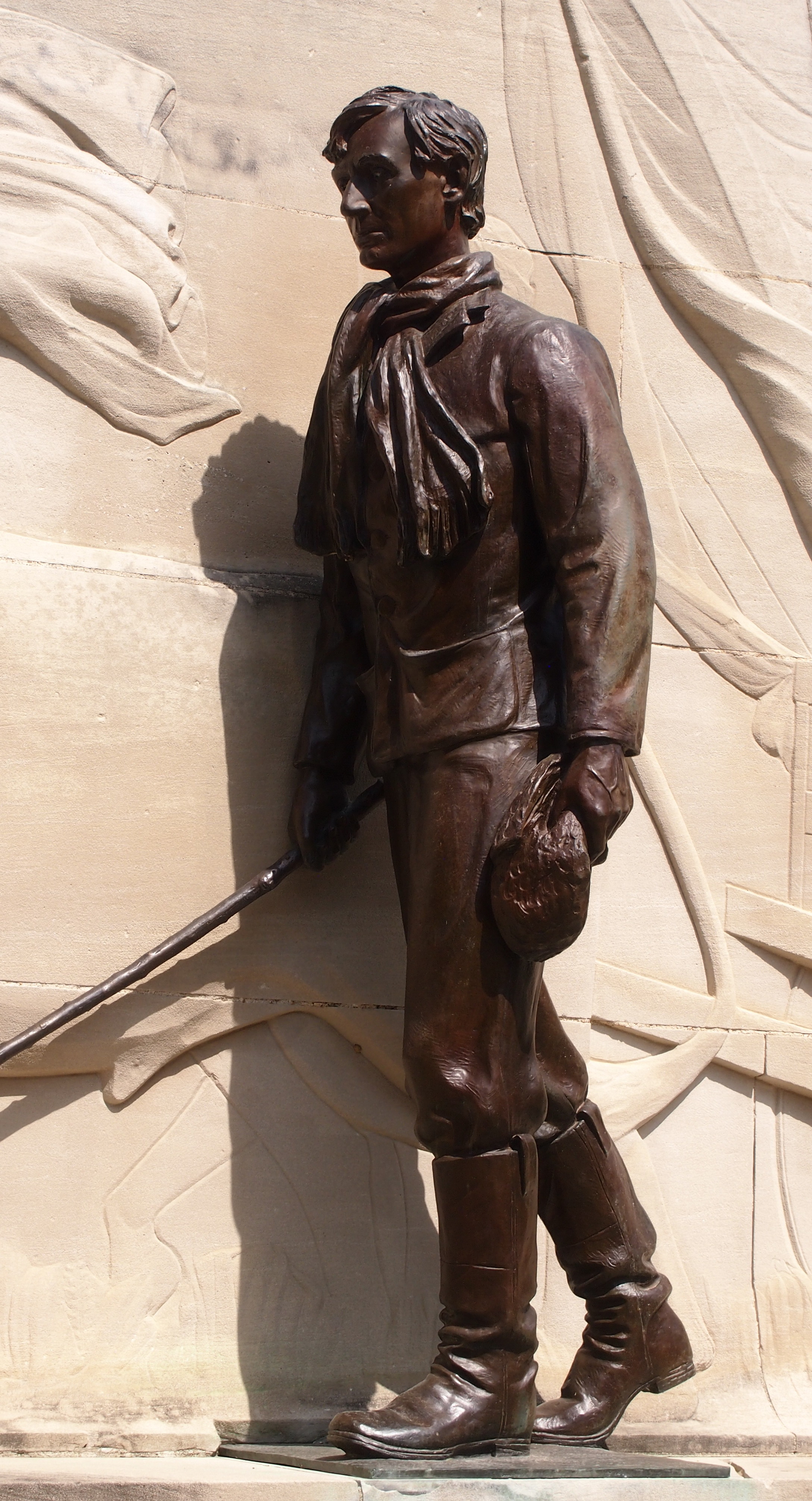
Lincoln at 21 memorial, entering IllinoisProbably the Lincolns crossed the river on a ferry. Crossed the river, checked out the memorial, and then when on their way. I admit, that sounds like a scene from a Mel Brooks movie, but it’s something I thought of while looking at the memorial.

Lincoln crossing into Illinois memorial

Officially, it’s the Lincoln Trail State Memorial, designed by Nellie Verne Walker and erected in 1938.

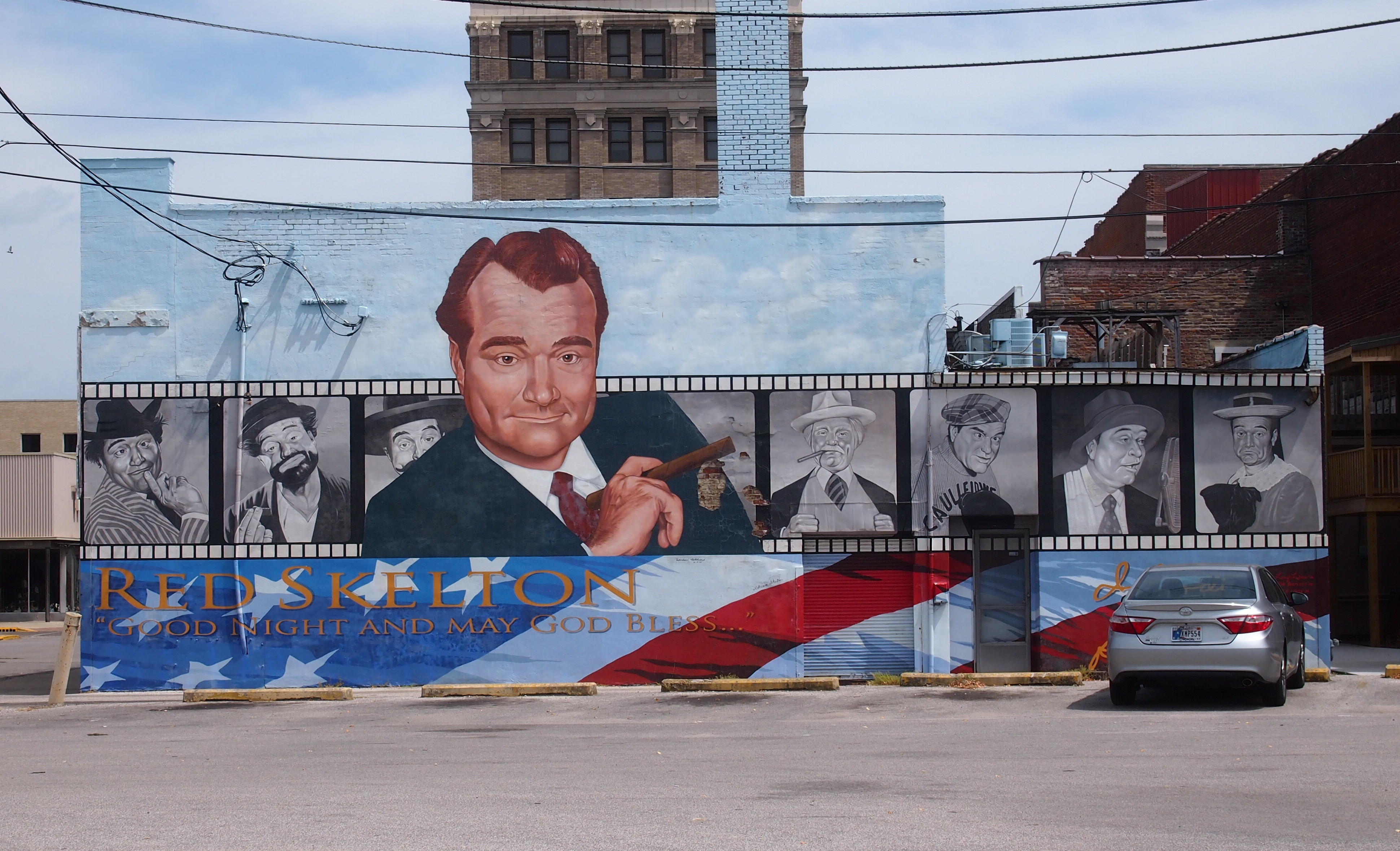
One more thing in Vincennes: a small museum to a native son. Anyone younger than me (roughly) might have a hard time identifying him.
Red Skelton mural, VincennesThe museum was closed on Sunday, and we didn’t have time for it anyway, but I did tell the girls that Red Skelton was an old vaudevillian, long before my time. I remember him on television, which was essentially televised vaudeville in his case. Who in our time would do comedy that included “The Silent Spot”?