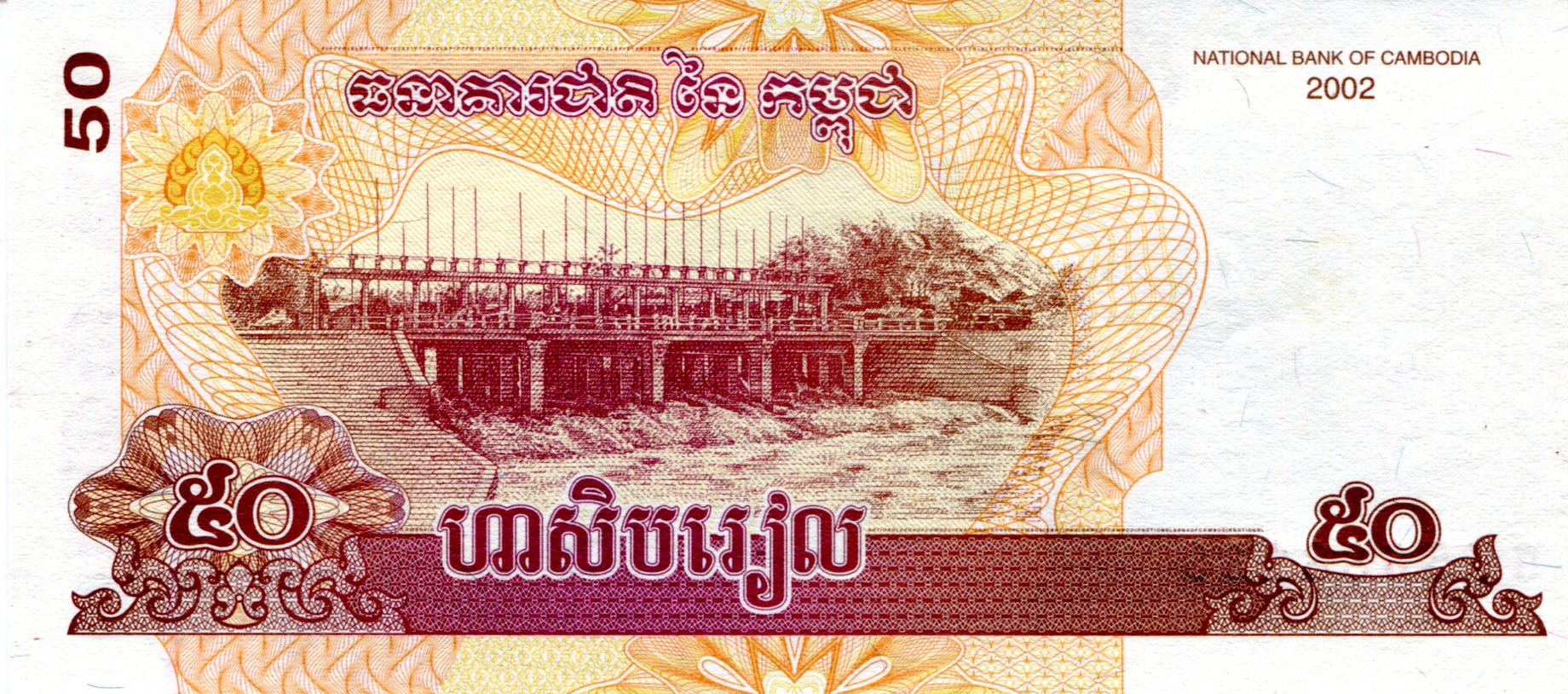
50 Riel, Cambodia

Text from a recent fortune cookie: What does the future hodl?

I can overlook the typo. We’ve all done those. But is it right for fortune cookies to ask questions, rather than offer fortune-cookie wisdom?

Besides, the answer to that particular question is simple enough: death. Sooner or later, probably one at a time for all of us humans, but possibly all going together when we go, every Hottentot and every Eskimo, though I suppose that should be revised to Khoikhoi and Inuit and Yupik.

I heard about Dwayne Hickman this morning, and my reaction was, he was still alive? The Many Loves of Dobie Gillis had its charms, and the episodes that I’ve seen tended to be funny. As for Bob Saget, my reaction was, sorry to hear about a 65-year-old passing suddenly, but the episodes I’ve seen of Full House were not funny. What happened to sitcoms in the ’80s anyway?

The other day, I hauled out my envelope of cheap banknotes for a look, as I sometimes do. We might be on the way to excising banknotes from our lives in this country — a great mistake, if so — but I take some comfort in thinking that they will linger quite a while longer in parts of the world not so hep on digital infrastructure.

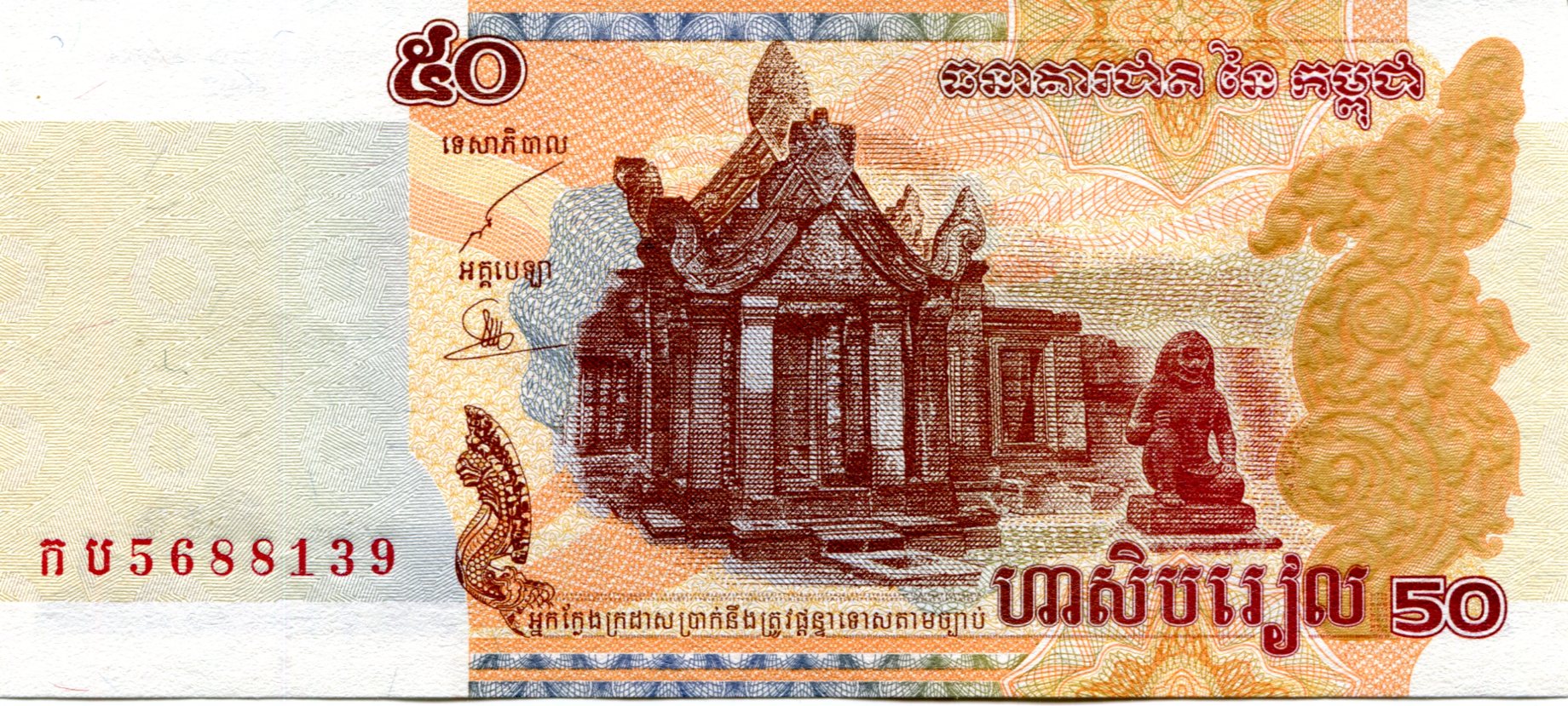
A nice-looking note, if a little orange.50 riel, Cambodia
50 riel, Cambodia

Cambodia, 2002. 50 riel. Still valid currency, with this note worth about 1.25 U.S. cents these days.

Here’s info from wiki to make the hairs stand up on the back of your neck: “There have been two distinct riel, the first issued between 1953 and May 1975. Between 1975 and 1980, the country had no monetary system.”

On the note’s obverse is Banteay Srei, a 10th-century Cambodian temple and relic of the Khmer Empire. The reverse has a dam on it, likely supposed to be a symbol of modern progress.

Looking into the history of the temple, I came across an oddity.

“It was 1923 when [Andre] Malraux, then 22, arrived in Cambodia with his wife Clara,” journalist Poppy McPherson writes in a publication called The Diplomat. “Newly broke Parisian intellectuals, they had a scheme to steal statues from the Angkor temples to sell in the West. It failed, and they were both arrested in December of that year. The legal wrangle that ensued, ending in a one-year suspended sentence for Malraux and nothing for his wife, meant he spent more than a year stuck in Phnom Penh and, later, Saigon.”
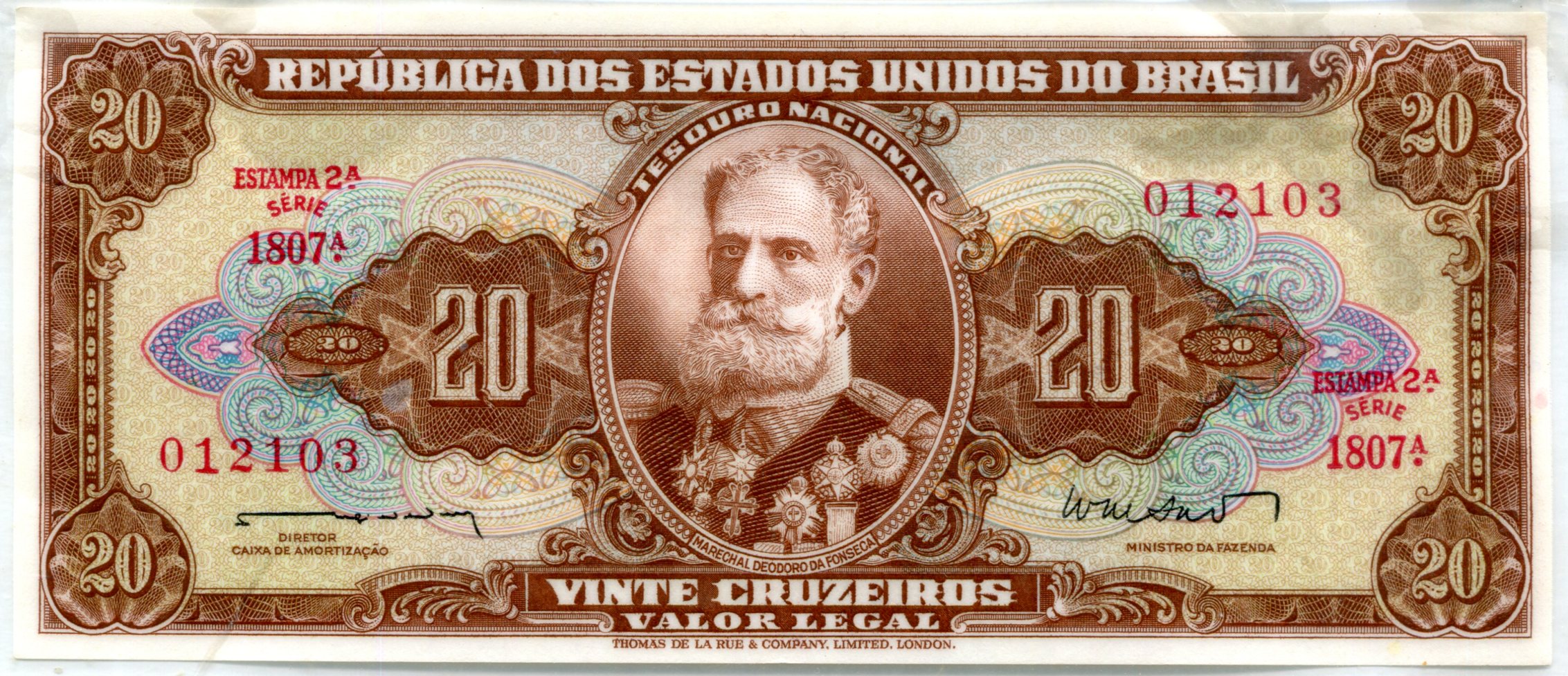
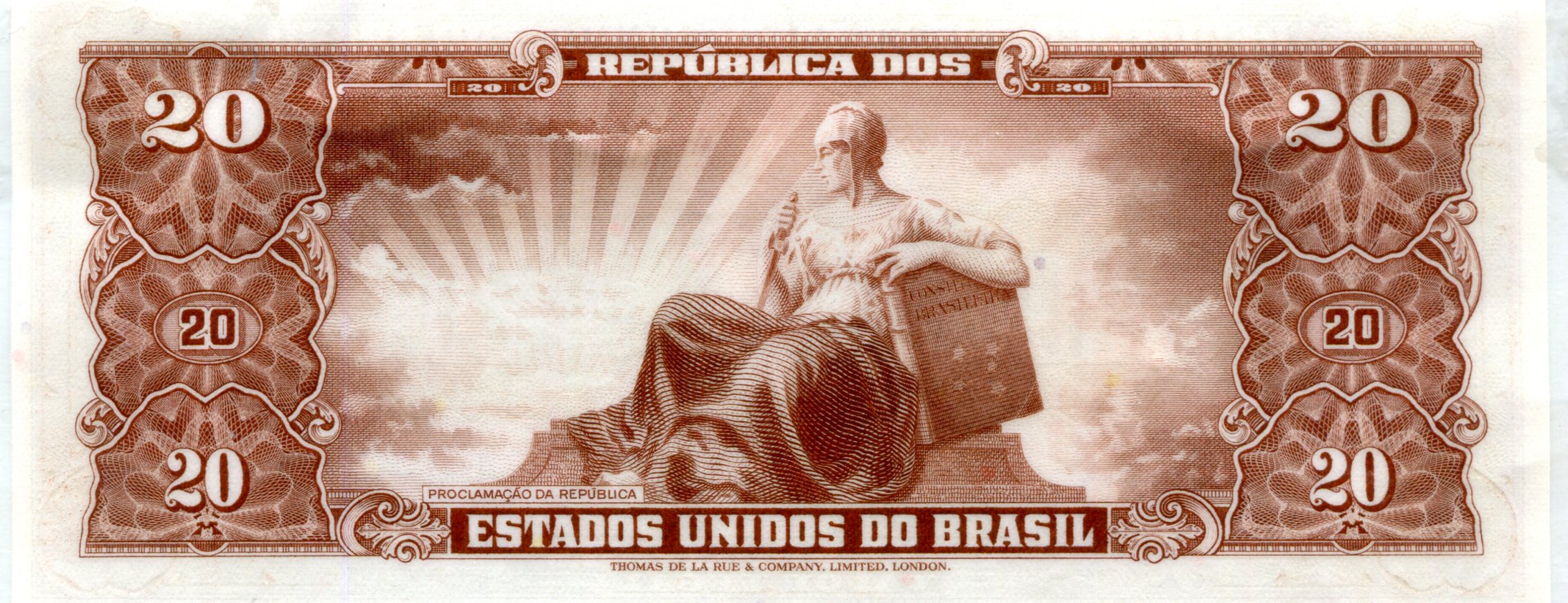
20 Cruzeiros, Brazil

This note is worth a little as a collectable. At least, I’ve seen one like it for sale online for about 5 euros.
It’s a 1962 series 20 cruzeiros banknote from Brazil. I don’t remember where I got it, but I doubt I paid anything close to that much. The note is demonetized, long since replaced by the Brazilian real. A large selection of Brazilian currency can be seen here.

Apparently the name literally means “large cross” in Portuguese. Referring to my old friend, the Southern Cross.

Crux appears on the Brazilian flag, of course — it’s no monopoly of Australia or New Zealand (or Papua New Guinea or Samoa) — but it occurred to me I didn’t know much about the other stars on the flag. Turns out the number of stars is the same as the number of Brazilian states, same idea as with the Stars and Stripes. Stars are likewise added when states are created, and that’s happened as recently as 1992.

But unlike the U.S. flag, the Brazilian stars are arrayed in constellations you’d see in the southern skies. Also, Wiki makes this claim: “According to Brazil’s national act number 5,700 of 1 September 1971, the flag portrays the stars as they would be seen by an imaginary observer an infinite distance above Rio de Janeiro standing outside the firmament in which the stars are meant to be placed (i.e., as found on a celestial globe).”

Depicted on the note is Manoel Deodoro da Fonseca, the impressively whiskered leader, or maybe the figurehead, of the coup that deposed Emperor Dom Pedro II and ended the Empire of Brazil, becoming the first president of the Republic of the United States of Brazil.

Too bad about that, I always thought. It was a constitutional monarchy, after all, and could still be. The Americas could use at least one besides those technically British still. That might also have prevented some of the 20th-century political mischief in Brazil, who knows.

Be that as it may, this is the reverse, with a personification of Brazil proclaiming the republic, based on the painting “Proclamação da República” by painting by fluminense artist Cadmo Fausto de Souza (1901-83).

The note is another of the prodigious and expert output of Thomas De La Rue & Co. Ltd., London. The company’s still around, known as DeLaRue plc., and still designs banknotes, and a lot else besides.

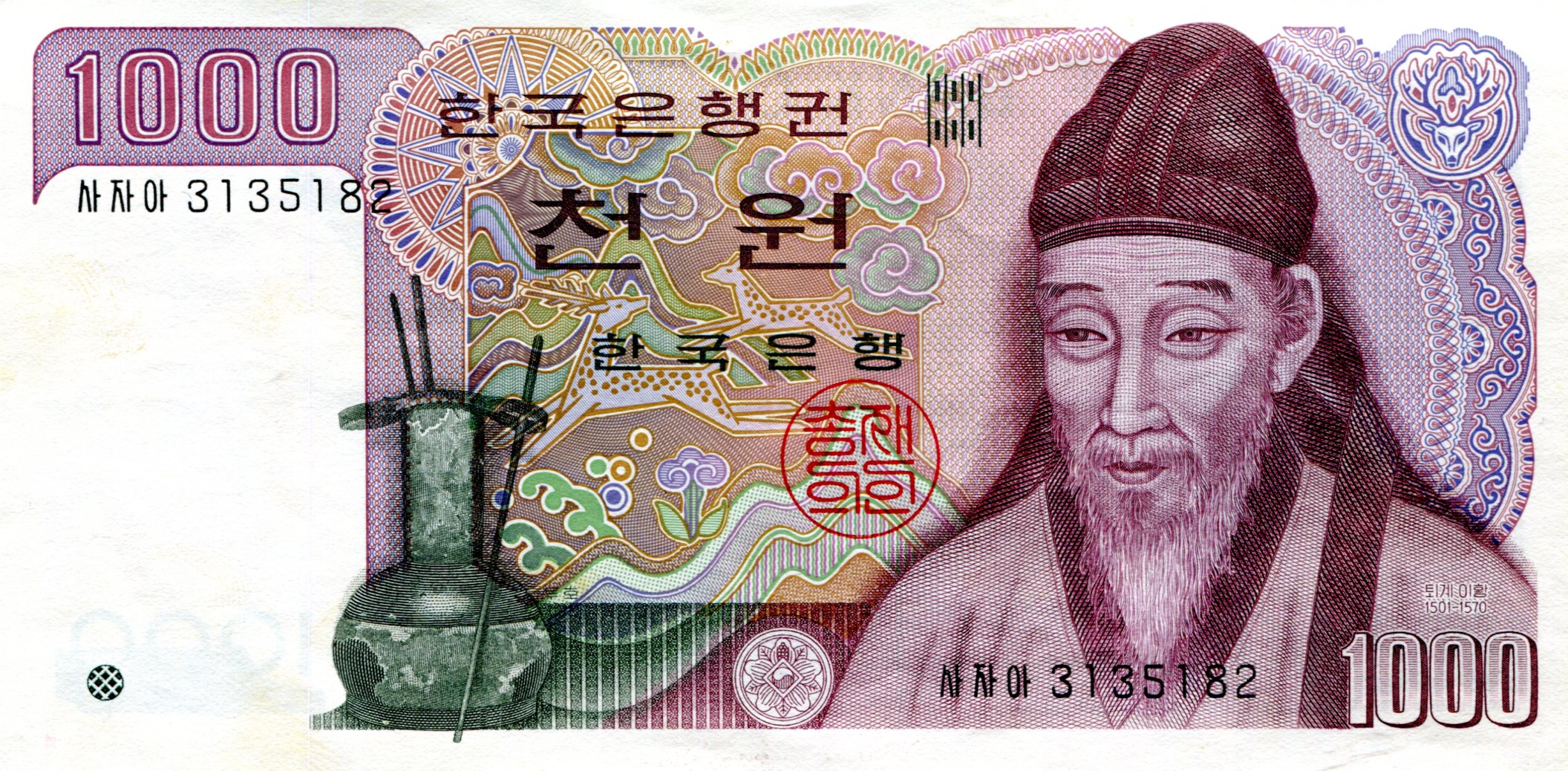
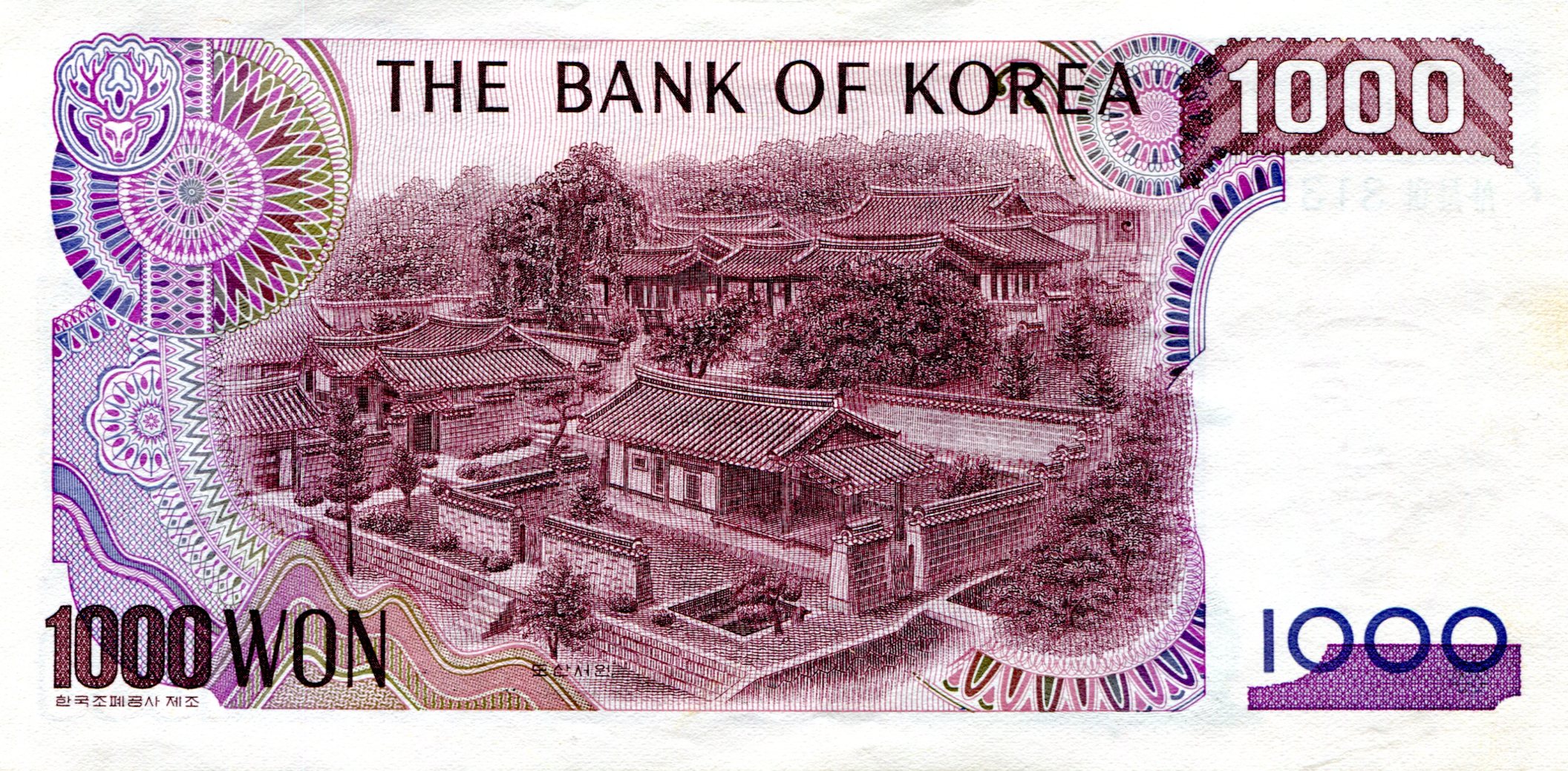
1000 Won

I picked up this 1000 won note in South Korea in 1990. (₩ 1,000)
I haven’t done well by holding on it, at least not financially. It seems inflation has been fairly consistent in that country for the last 30 years, and a handy inflation calculator for won — I’m still amazed what’s on line — tells me that you’d need ₩ 2,773 these days to have the same purchasing power.

Then again, ₩ 1000 = about 90 U.S. cents, so I haven’t lost a fortune by letting the value of my note erode over the years. It’s been worth it to me as a collector of small-potatoes banknotes, besides being a souvenir of my week on the Korean peninsula. Also, I like the aesthetics of the note.

Won is a cognate of the Chinese yuan and Japanese yen, essentially meaning “round.” The modern won is technically divided into 100 jeon, just as the Japanese yen is divided into 100 sen, but those are units about as useful as the U.S. mill.

My note is part of an older series, 1983-2002, but I can’t find any indication that it has been demonetized. The gentleman on the obverse is Yi Hwang (1501-1570), a prominent Korean Confucian scholar of his day.

That name is a McCune-Reischauer romanization, and Wiki at least says that he had no fewer than four different names: a Korean name, a pen name, a courtesy name and a posthumous name. In order, these are the names in hangul, just because I can: 이황, 퇴계, 경호, and 문순.

The reverse features, fittingly enough, the Dosan Seowon (Dosan Confucian Academy), established in 1574 in memory of Yi Hwang.

Lately (2019) the place was designated a World Heritage Site.

Moose & Squirrel Money

More snow today. Makes me wonder about the personification Old Man Winter. He’s pretty spry this February, that old man.

Tucked away in my stash of near-worthless banknotes are a few from Belarus, a former Soviet republic that retains more than a few vestiges of the red old days, I’ve read, such as autocracy and a heaping-helping of central planning.

Its base currency is the ruble, too. In theory a Belarusian ruble is worth about 38 US cents these days, but not these notes: there was a redenomination later.

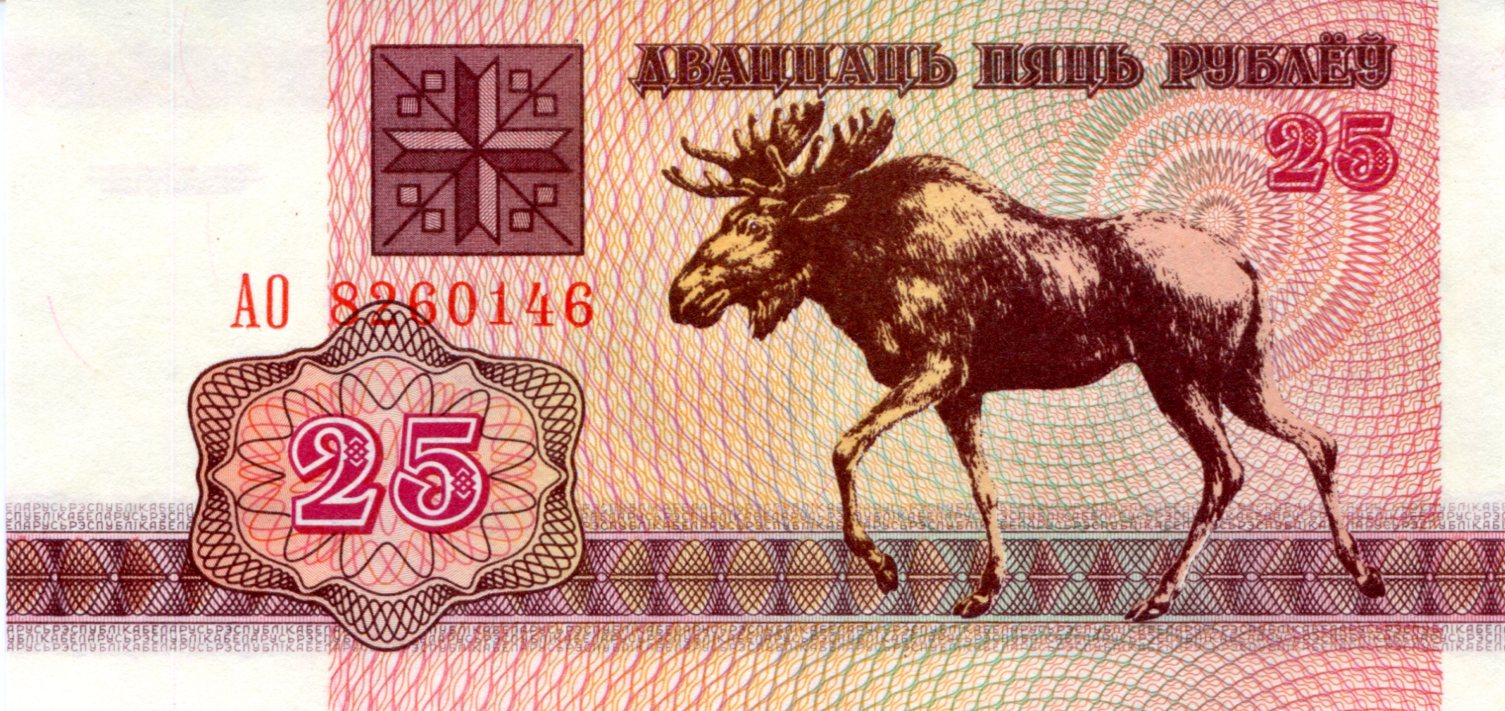
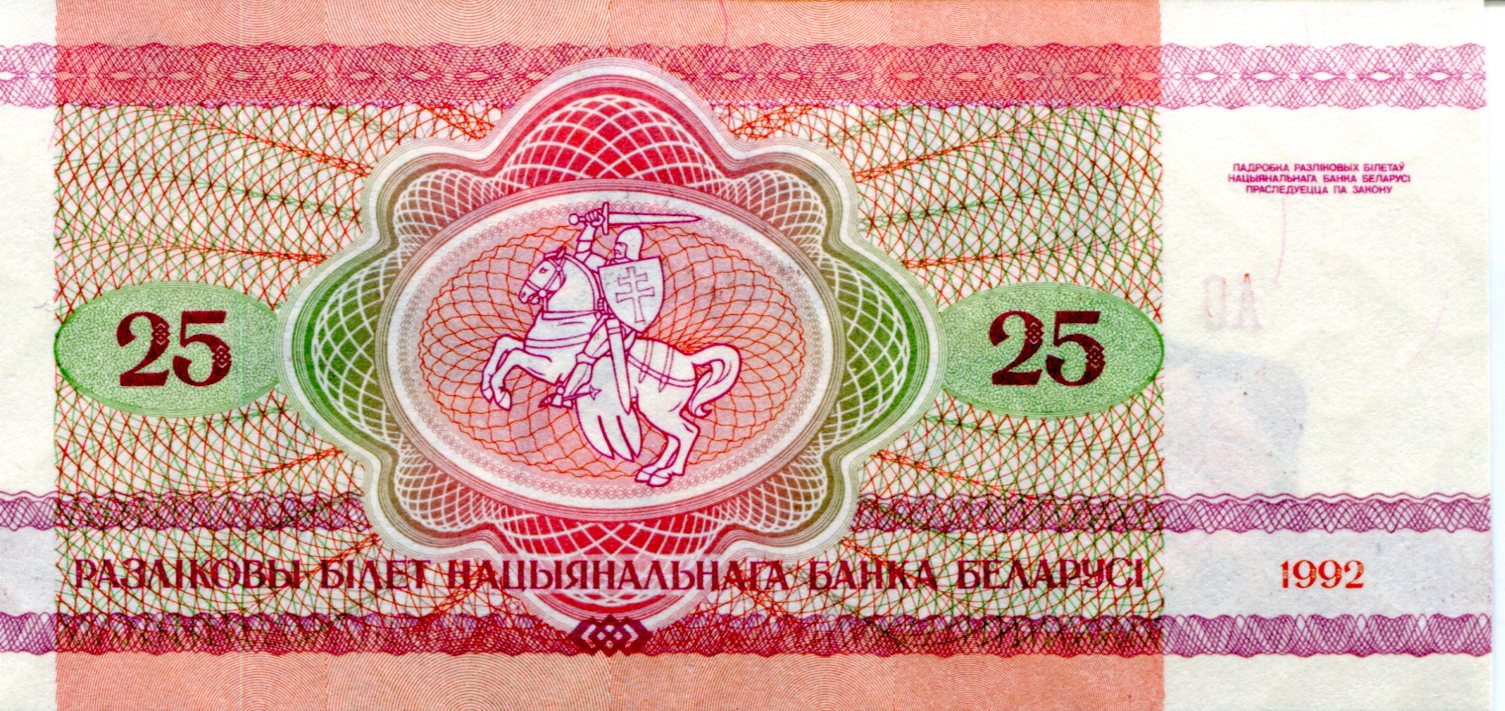
This is the obverse of the 25-ruble note, from a series that began in 1992 and lasted until 2000. The notes’ size is pretty close to that of Monopoly money. Were those dimensions an inside joke on someone’s part?
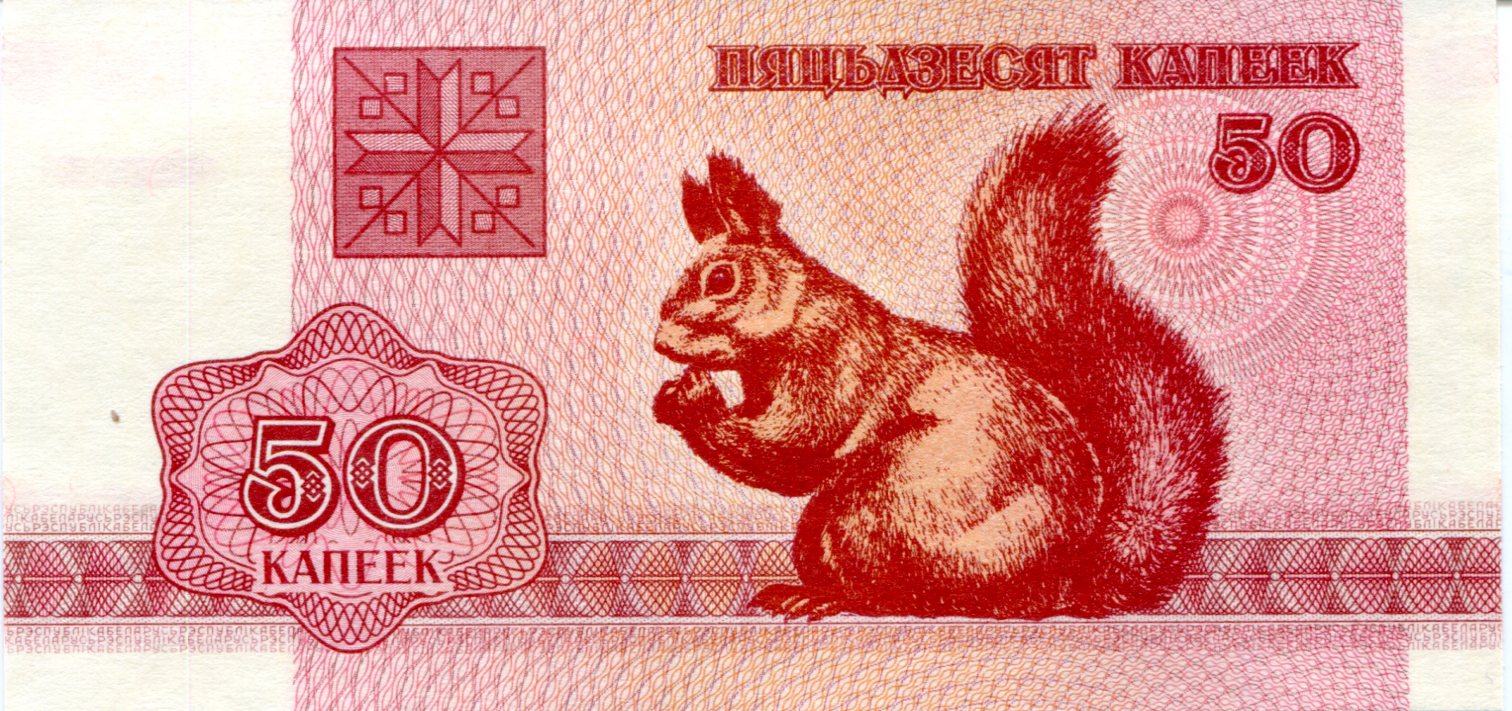
belarus 25 rublesMoose money. Belarus also used to have squirrel money.
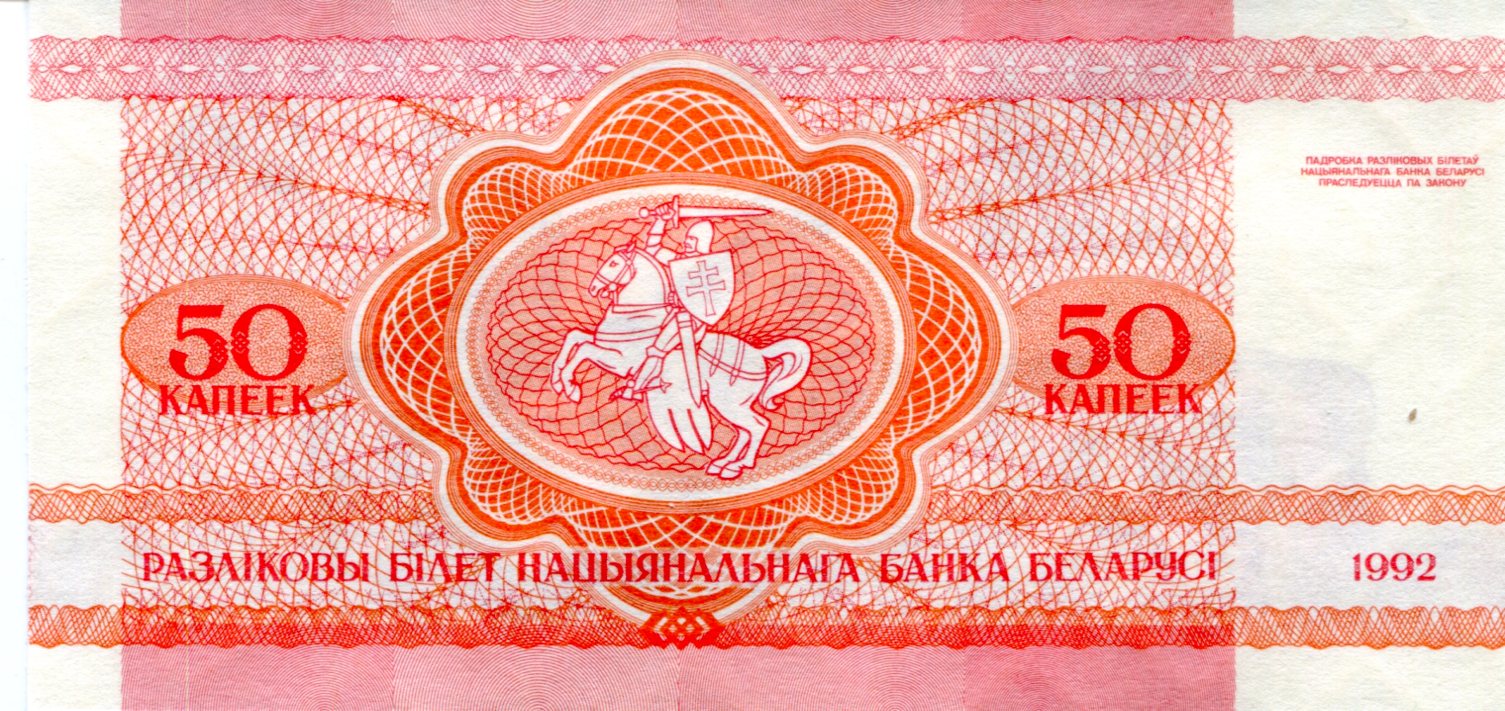
Not 50 rubles, as I thought as first, but 50 kopecks. I suppose moose ought to be a lot larger than squirrel. Not that Belarus’ currency was ever really that large. According to Wiki, the ’92 series was “introduced in denominations of 50 copecks, 1, 3, 5, 10, 25, 50, 100, 200, 500, 1,000 and 5,000 rubles.”

3? Yes. Sorry I didn’t get one of those when I bought my wad of 50 or so international banknotes for pennies apiece.

Anyway, inflation soon kicked in: “These [denominations] were followed by 20,000 rubles in 1994, 50,000 rubles in 1995, 100,000 rubles in 1996, 500,000 rubles in 1998 and 1,000,000 and 5,000,000 rubles in 1999.”

The reverse of the old ruble notes are all roughly the same. At least, mine are — different only in color.
The horse and rider is referred to as Pahonia, I understand, and is of considerable age, but I don’t want to go too deep into its history at the moment. As a symbol of Belarus, it seems to have been revived after the end of the Soviet Union, but not for long. Long enough to be on my moose and squirrel money, however.

Sinclair Dinosaur, Eastern Iowa, 2001

Here we are in the Mariana Trench of winter. A little later than usual, but well within the scope of a normal winter.

The headline above pretty much says it all. Twenty years ago this month, when we visited eastern Iowa for a long weekend, I spotted a Sinclair dinosaur in that part of the state.Sinclair dinosaur Iowa 2001

I’d have said at the time that as advertising, the heyday of the Sinclair dinosaur was long over. But I would have been wrong. It’s just that I didn’t see them around much in the Chicago area, so that when I spotted one out of town, it struck me as a novelty, or maybe something left over from an earlier decade. That’s probably why I bothered to take a picture.

Just do a Google image search and plenty of fairly recent green fiberglass dinosaurs appear. Wiki asserts that many of the dinosaur-sporting Sinclair stations are along I-80 in our time, and while I’m not quite sure where in Iowa I took the picture, we weren’t far from that road.

“Sinclair Oil began using an Apatosaurus (then called a Brontosaurus) in its advertising, sales promotions and product labels in 1930. Children loved it,” the blog of the American Oil & Gas Historic Society says, also noting the popular notion at the time that dinosaurs decayed into the oil that mankind had found.

Of course, Sinclair Oil itself has a lot to say about its brontosaurus. I particularly recommend the short video at the Sinclair site about Sinclair at the World’s Fair in 1964.

As a small child, I had a green plastic brontosaurus bank, into whose slot I put pennies, nickels and less frequently other coins. I suspect my mother got it as a premium for buying gas from Sinclair.

The coins in that bank taught me, among other things, that some of the older ones were silver, while the newer ones — not nearly as satisfying as coins — were some weird mix of copper and nickel. I’m fairly sure I actually learned about silver and non-silver coinage from one of my brothers. But having the coins probably promoted me to ask them questions in the first place, such as, why are these different from the others?

Egyptian 25-Piastre Note

Something I didn’t know until yesterday, but might have guessed: the modern Egyptian pound, which is every bit as fiat-y as any other currency now, owes its origin to the Maria Theresa thaler, a good example of sound money if there ever was one. The history of money, especially currency, continues to fascinate. People will miss it if it all ever becomes nothing but notions on some server farm.

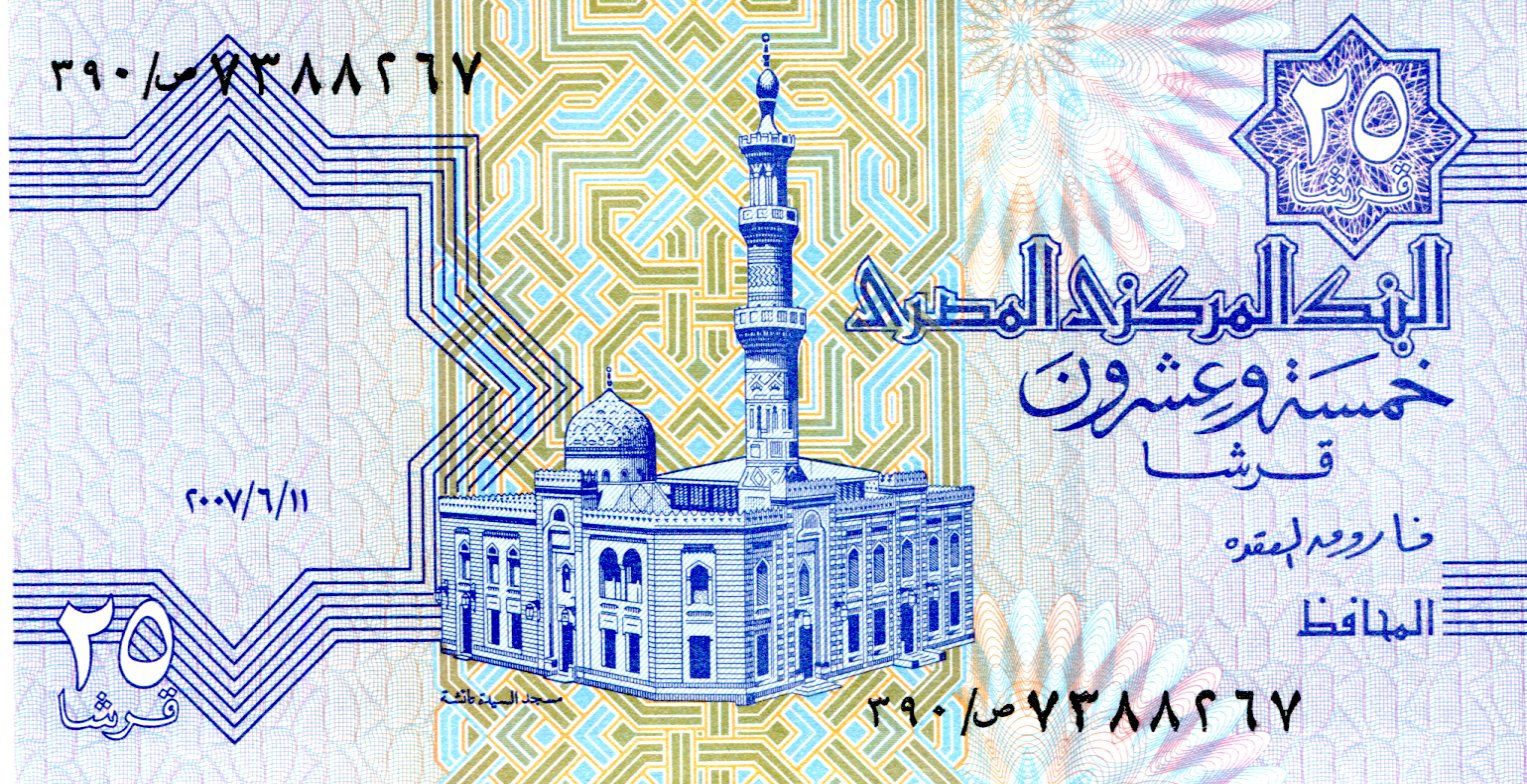
I don’t have a one-pound Egyptian banknote. I do have a 25-piastre note, the smallest paper denomination that the Central Bank of Egypt issues, acquired a few years ago with a number of other world banknotes for a small sum.

These days, 1 Egyptian pound = about 6.3 U.S. cents, so my quarter-pound note is theoretically worth about 1.5 cents. No collector value, I’m sure. The note has been issued since the 1980s, and I’ll bet there are a lot of them.
I’m not actually sure that’s the obverse, though Wiki says it is. I suppose the Arabic text determines that; the Roman text is on the other side. In any case, this side depicts the Sayeda Aisha Mosque in Cairo.

The Egyptian Coat of Arms is on the other side.
Not just any eagle, either: the Eagle of Saladin. The 12th-century Sultan of Egypt and warrior against the Crusader states.

Interesting choice of crops to flank the Eagle of Saladin. Wheat, of course; Egypt was the breadbasket of ancient Rome, one reason a prefect ruled the province directly on behalf of the Emperor, rather than a governor appointed by the Senate. Also, cotton. Certainly — Egyptian cotton, known the world over.

Corn? As in, maize? That’s what it looks like. The FAO tells me that in Egypt, “Wheat is the major winter cereal grain crop and the third major crop in terms of area planted… Maize is the second most important crop… but at least 50 percent of its production is used for livestock and poultry feed.”

How about that. Another consequence of the Columbian exchange echoing down the centuries.

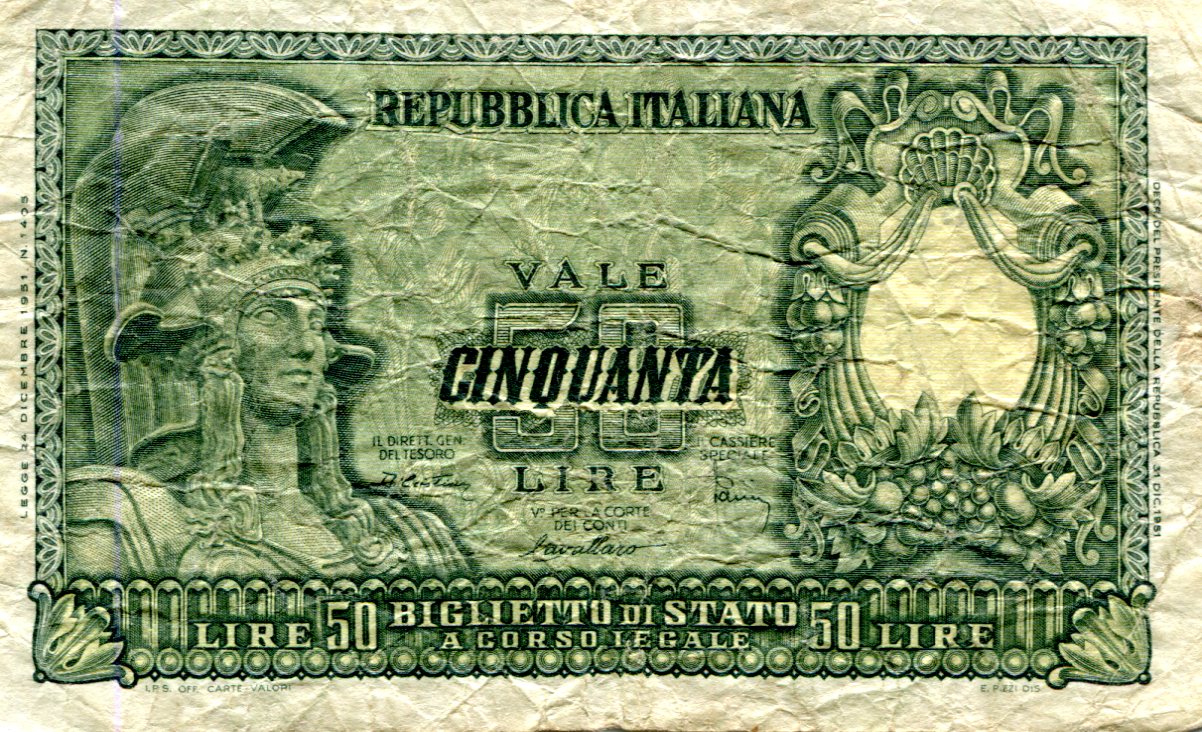
Italian 50 Lira, 1951

If this banknote could talk, I’d imagine it would say, “We just lost a major war and can barely afford such luxuries as currency.”
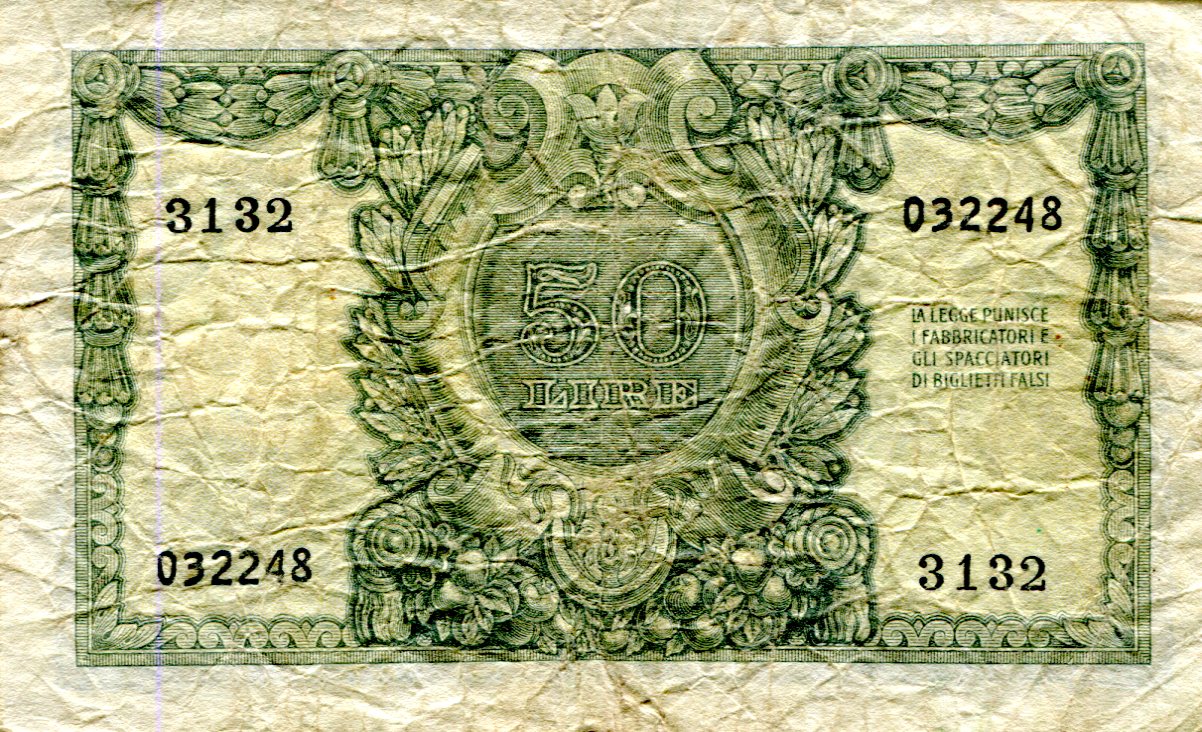
Italy, 1951. Small in value — 50 lira, or the equivalent of about 8 U.S. cents, at least as of the mid-50s, which is when my parents picked it up in change. Must adjust for inflation, however, so theoretically in today’s money that many lira is the equivalent of a whopping 75 U.S. cents, or about 0.68 euros. Apparently this note and the 100-lira were replaced by coins not much later in the 1950s.

The Italian lira was a famously small currency. I checked the 1983 exchange rate not long ago, and found that the lira gradually lost ground to the dollar that year. In July, when I was in country, it was about 1,500 lira to the dollar.

I recorded a few prices in the diary I kept that summer, noting (for example) that the admission to the Forum was L 4,000, or about $2.60, which seemed reasonable (and would be about $6.70 now). I wondered how much the price has been jacked up since then. But I didn’t have to wonder long. I looked it up, and now it’s 12 euros, or about $13.20, though that includes admission to the Colosseum as well. I don’t remember whether I paid separately for that, or at all.

The note is also small in size. Interestingly, exactly four inches long and two-and-a-half inches tall. Odd, I would have thought that the sides measure evenly in centimeters rather than inches.
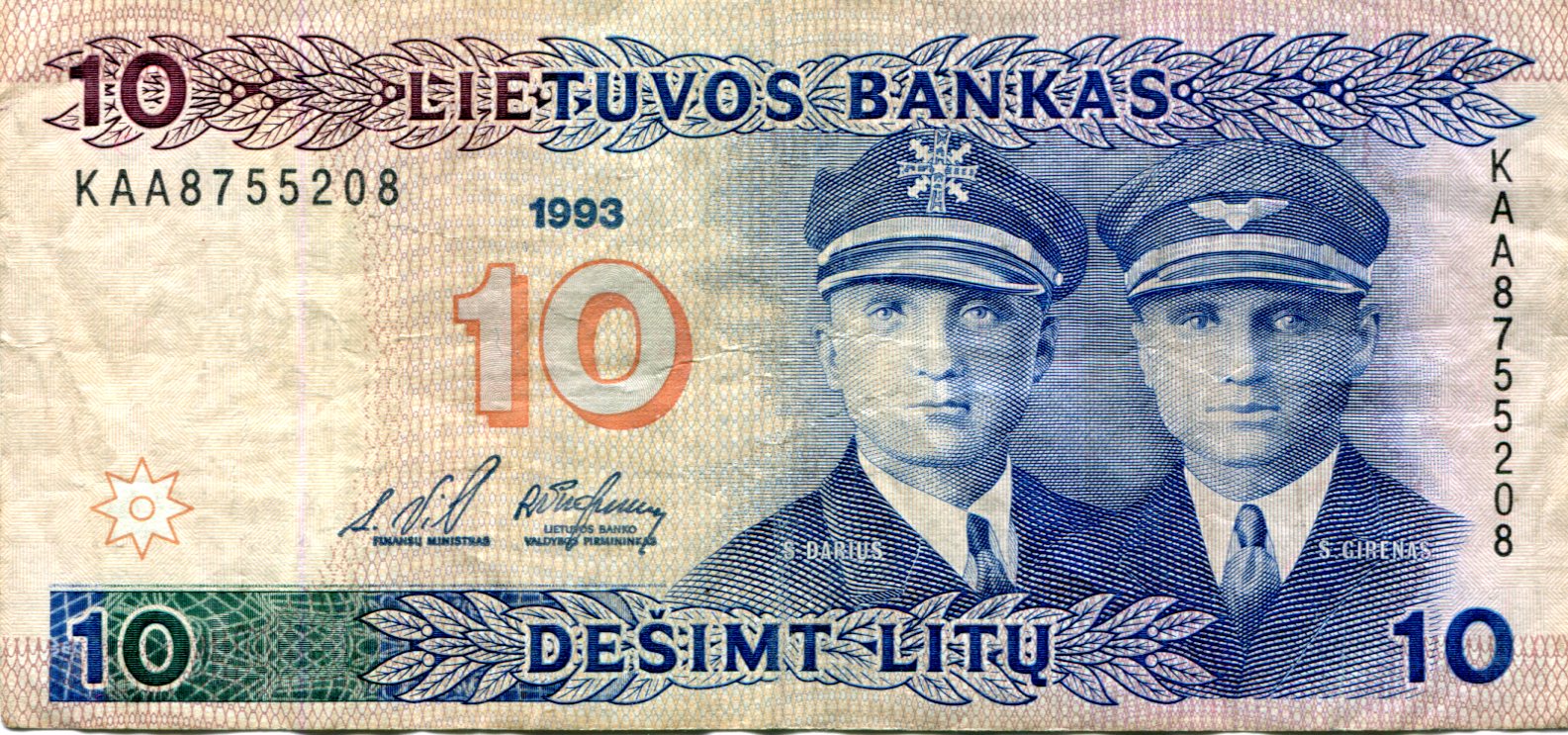
Lithuanian 10-Litų Note, 1993

I have in my possession, as part of my collection of worthless or nearly worthless banknotes, 35 Lithuanian litai, one each of a five-, 10- and 20-litų note.

They are accidental souvenirs. The litas was pegged four to the U.S. dollar in 1994, so when we arrived in Poland from Lithuania that fall, I had a mind to exchange our $8.75 in litai for złoty. That was probably enough for a decent lunch for two in either Lithuania or Poland in those days.

But if it weren’t U.S. dollars or DM, the exchange office in Poland didn’t want to hear about it. I came to understand that at the time, the Poles considered Lithuanian currency as no more than scraps of dirty paper. Time flies, things change, and now my litų notes are just dirty paper even in Lithuania, since that nation joined the euro zone in 2015. Oh, well.

This is obverse of the 10-litų note, issued in 1993.
Who are these gentlemen who look so much alike, except the eyes of one are closer together than the other?
Darius and Girėnas, that’s who: Steponas Darius and Stasys Girėnas. Lithuanian aviators of renown in the early 20th century, except that both had immigrated to the United States in their youth. Even so, they count as Lithuanian heroes for a number of reasons, but mainly for their attempt to fly nonstop from New York to Kaunas in the summer of 1933. They made it across the Atlantic, but died in a crash in what was then Germany, about 400 miles short of their goal. Bad weather or engine trouble or both.

I was curious about the insignia on Darius’ cap (on the left). Further investigation didn’t disappoint. In fact, I came up with a connection to the Chicago area. Apparently a later version of the note, issued in 2001, made it clear that the insignia honors the Palwaukee Municipal Airport, in north suburban Wheeling, where Darius spent a lot of time. This article, originally published by the Michigan Coin Club, details that association and a lot more.

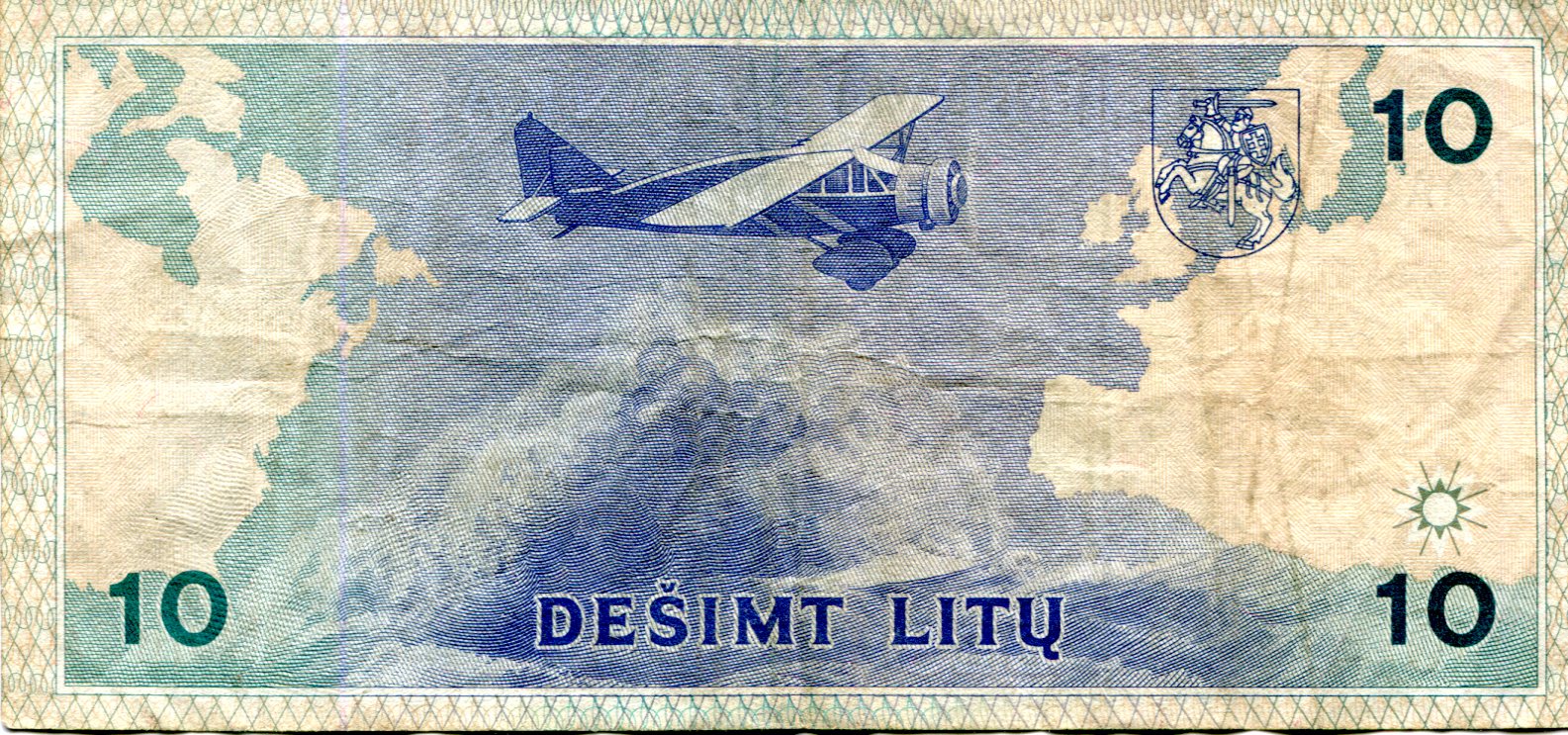
The reverse features their plane, Lituanica, a Bellanca CH-300 Pacemaker.

“The duo purchased a used Bellanca Pacemaker plane from the Chicago Daily News (which had purchased a newer model) in 1932, dubbed it the ‘Lituanica’ and modified it for their flight,” the coin club article says. “Money was raised from numerous Lithuanian clubs and organizations to finance their operation. In their publicity photographs, Darius was always seen wearing his Pal-Waukee Airport patch on his cap.”

A newspaper had its own airplane? And traded in for a newer model during the Depression? Damn, how the mighty have fallen.

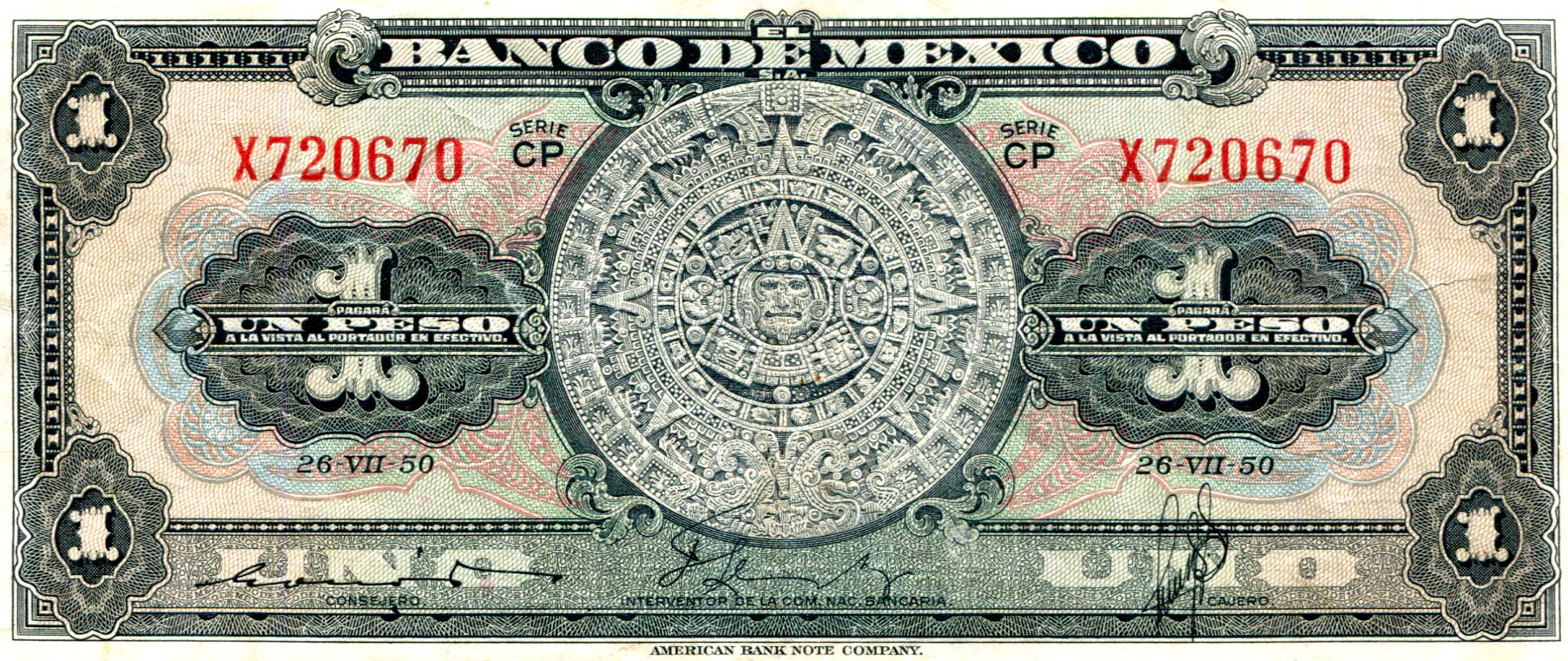
One Mexican Peso, 1950

I don’t remember where I got this Mexican one-peso note, dated 1950.

Maybe my great-uncle Ralph (d. 1971) picked it up during his time in Mexico, giving it at some point to his sister, my grandmother, and my mother got it after that. It possibly came to me because I was the only one in the family with much interest in non-U.S. banknotes.

What Ralph did in Mexico, or why he went, or even when it was, I don’t know, just that he went there from time to time — that much my mother told me. I would have thought that the 1950s would be a little late for south-of-the-border cowboy or oil field work such as he did, since Ralph turned 60 during that decade, but then again, he was a tough old cuss, and besides, 60 doesn’t seem like such an advanced age to me anymore.

Also, I have a set of four five-peso coins soldered together to make what looks like a coaster — a square shape, except made of disks — and I know Uncle Ralph did that, per information from my mother. Three of the coins are dated 1955, one 1956, so it seems a safe bet that he visited sometime during that decade. For all I know, lifelong bachelor Ralph had an out-of-wedlock child or two in Mexico that the rest of his family knew nothing about. Seems unlikely, but certainly not impossible.

All speculation. I don’t really remember where I got the note. It’s also possible I got it 30 years ago at a coin shop for a few dollars from a box of cheap foreign banknotes. Whatever the reason, I’m glad I have it. While not in mint condition, and not worth much as a collectible, I like the design.

Instead of a Mexican patriot of some sort, the Aztec Sun Stone is right there on the obverse, done in an incredibly intricate grayscale engraving, surrounded mostly by more dark inks, with hints of red and blue.

Nice work by the American Bank Note Company, former NYC-based manufacturer of banknotes to many nations, now a Connecticut-based maker of plastic cards and other transactional tech. That company, or a competitor, might have been behind the tech that enabled my bank to issue me a new debit card on the spot a couple of years ago, after the one I’d been using had worn out. I was astonished. I expected to have to wait a few days at least.

But, as the ABCorp web site says, “In the world of digital & mobile, here and now the thought of waiting 3-5 weeks for a new credit or replacement debit card is antiquated.” So are solid corporate names, like the American Bank Note Company; must have been sometime in the ’80s when it became a three-initial corporation.

Back to the Mexican banknote. I wonder whether anyone handling my one-peso note in the 1950s ever gave any thought to the fact that it wasn’t made in Mexico. That in fact it was made in the United States. I can imagine the idea irritating hard-core nationalists, but the simple truth is probably that most people didn’t notice that at all. Any more than people who handle U.S. currency give a thought to E Pluribus Unum, or on the $1 note, Novus ordo seclorum or Annuit coeptis. (Though of course a few crackpots overthink the dollar bill.)

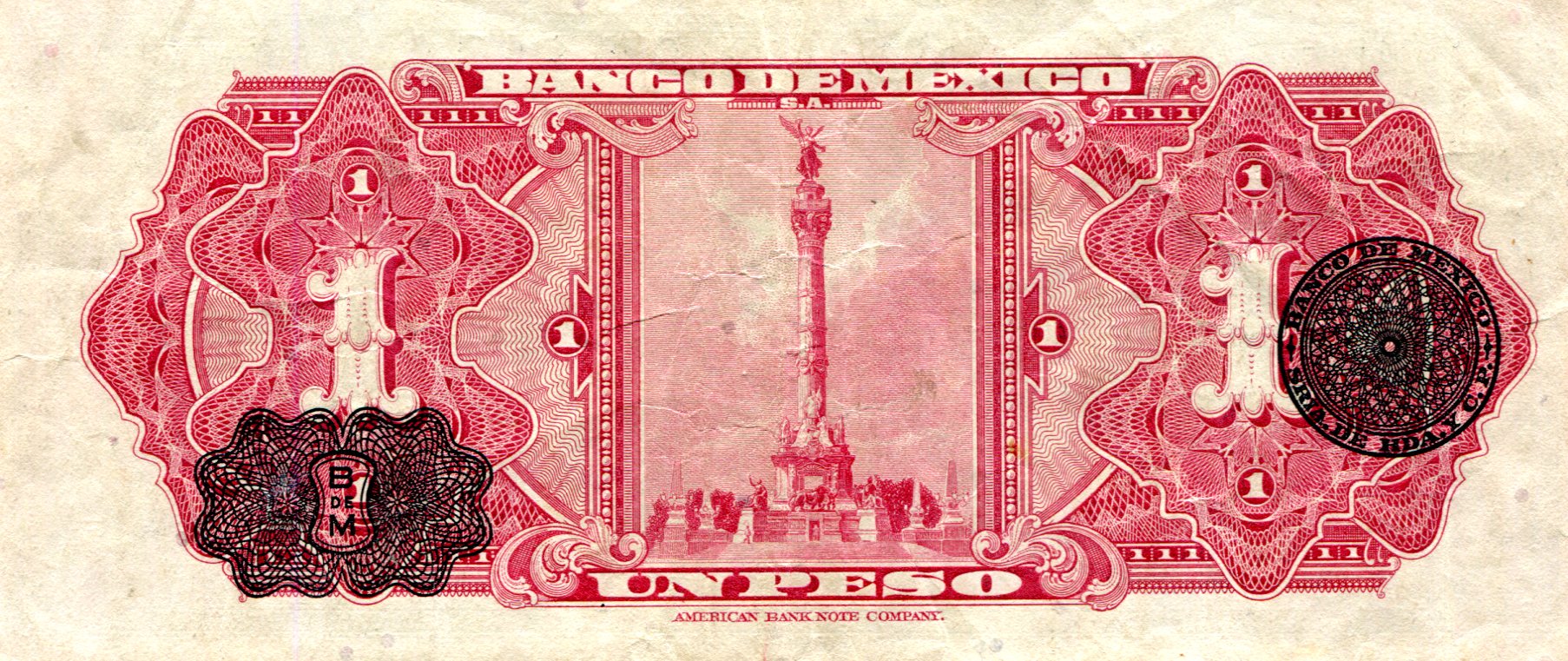
The reverse of the 1950 one peso note is mainly red. Not as dramatic as the obverse, but for sheer symbolic drama, it’s hard to beat Aztecs anyway.

Rather, it speaks to more modern times in Mexico. Independence, at least, since the column depicted is the Monumento a la Independencia, less formally El Ángel, which is on a roundabout of Paseo de la Reforma in Mexico City.

We weren’t far from there during the New Year’s Eve countdown going into 2018. A fine monument, but as a vertical shaft it doesn’t translate all that well to a horizontal banknote. A depiction of El Ángel by itself would have filled out the space better.

Hong Kong One-Cent Note

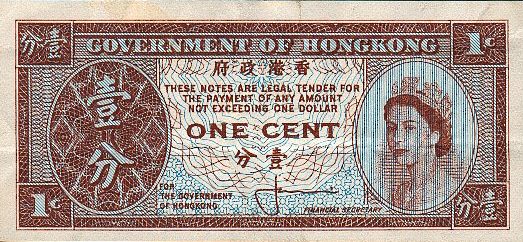
One more bit of interesting but worthless paper: a Hong Kong one-cent note. A small script of a note, pictured here at pretty much actual size. I’d post the reserve of the note, but it’s blank.

I’m not sure when or where I picked up this curiosity. Might have been at a coin shop in the ’70s. But it wasn’t in Hong Kong. Small change there in the early 1990s was always coins, at least in my experience.

I assume the text specifying that the notes are legal tender for payments of a dollar or less means that a merchant could decline payment from some joker wanting to pay with thousands of one-cent notes. I’ve never seen any text like it on any other note, at least not ones that I could read.

Even though I never ran across one in circulation, this site says that “the One Cent note has always been very popular even though it has very little value. A recent assessment showed there was over $1 million worth of these notes in circulation. The Coinage Bill of the 17th June 1994 brought about the demise of the One Cent note in preparation for the 1997 hand over to China.”

The Hong Kong dollar has long been pegged to the U.S. dollar, between HK$7.75 and HK$7.85 to the dollar, so a HK cent is worth about 0.13 U.S. cents. Or just for fun, 1.3 U.S. mills. Very little indeed.

A digression: mills, though essentially notional for most of the history of the U.S., were recognized by the Coinage Act of 1792: “… the money of account of the United States shall be expressed in dollars or units, dismes or tenths, cents or hundredths, and milles or thousandths, a disme being the tenth part of a dollar, a cent the hundredth part of a dollar, a mille the thousandth part of a dollar, and that all accounts in the public offices and all proceedings in the courts of the United States shall be kept and had in conformity to this regulation.”

I like disme. It’s a spelling we should have kept. Pronounced “dime,” as I understand it. People gripe about them, but language would be less fun without a few silent letters.

The one-cent HK note I have was issued between 1961 and 1971, since it bears the signature of Hong Kong Financial Secretary J.J. Cowperthwaite. I’ll take my source’s word for that, since the actual signature looks like a doctor’s scrawl that used to be seen on paper prescriptions.

He was a free-marketeer: “Sir John Cowperthwaite, who was deputy and actual finance minister for Hong Kong between 1951 and 1971, was enormously influenced by his study of [Adam] Smith,” says the Royal Economic Society.

“Cowperthwaite more than anyone laid the economic policy foundations that drove Hong Kong’s remarkable post-war economic growth. In the 1950s Hong Kong’s (PPP adjusted) GDP per capita was around 30 per cent of that of its mother country, Britain. Now it has a GDP per capita that is 40 per cent higher.”