The California State Capitol

Halloween looked the part this afternoon: cool and misty, almost clammy. By dark, 22 kids had come by. Twenty-two in ’22. We gave away full-sized candy bars.

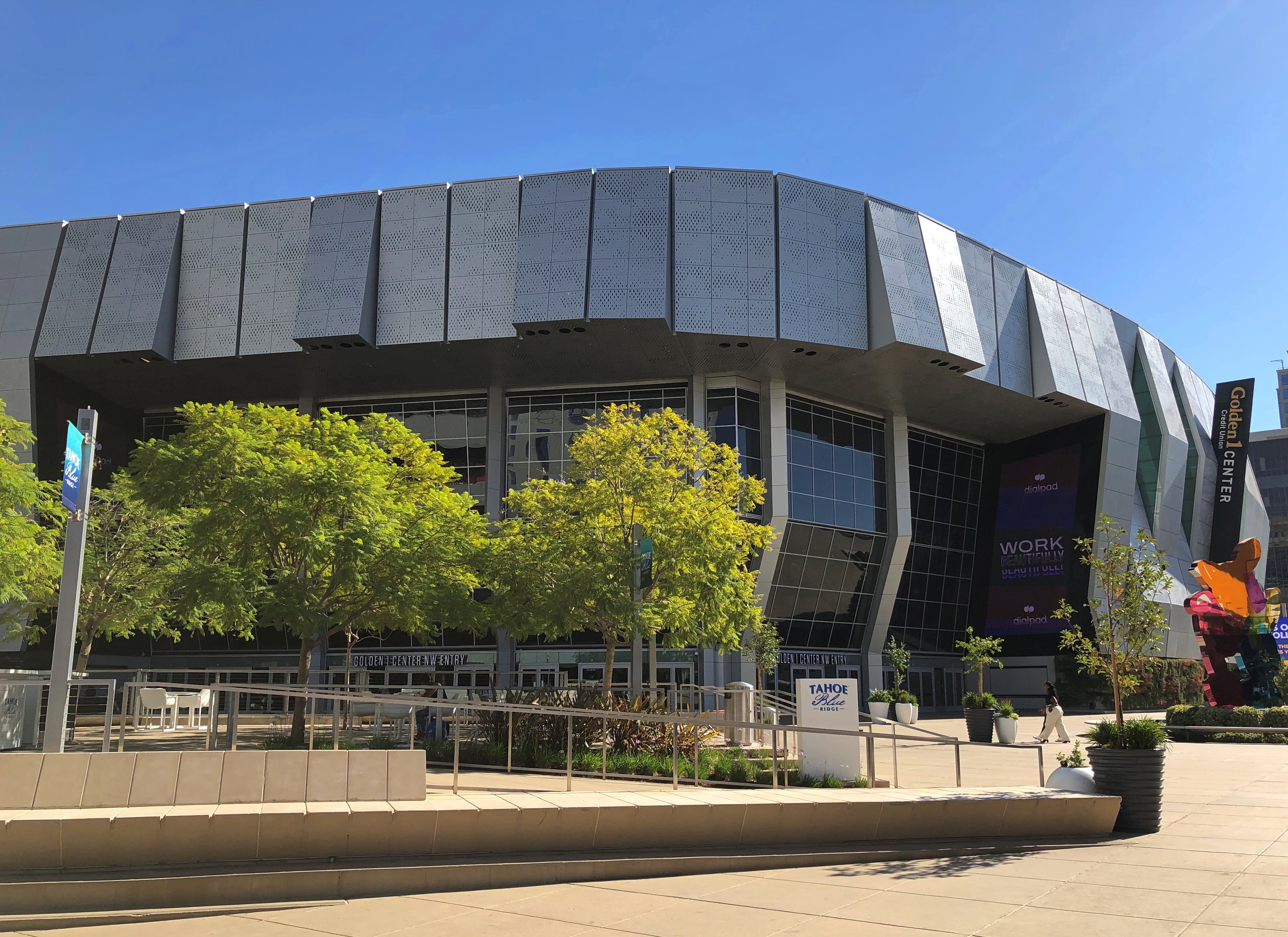
This isn’t the California State Capitol.

Such is the zeitgeist that someone, somewhere could claim that it is, and that nefarious persons — lizard people, even — are up to no good inside, and it would have some chance of being believed, at least by a fraction of the population.

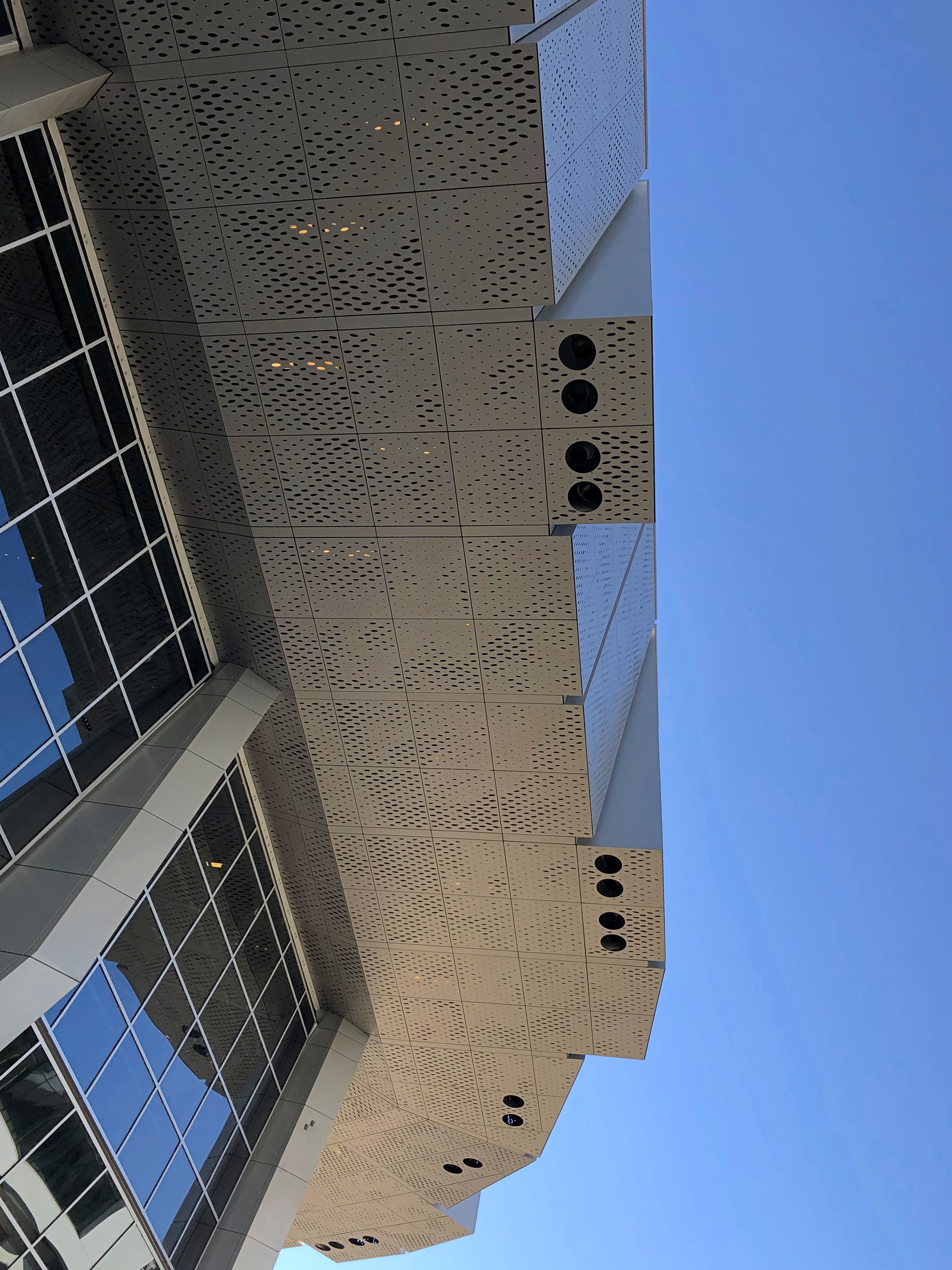
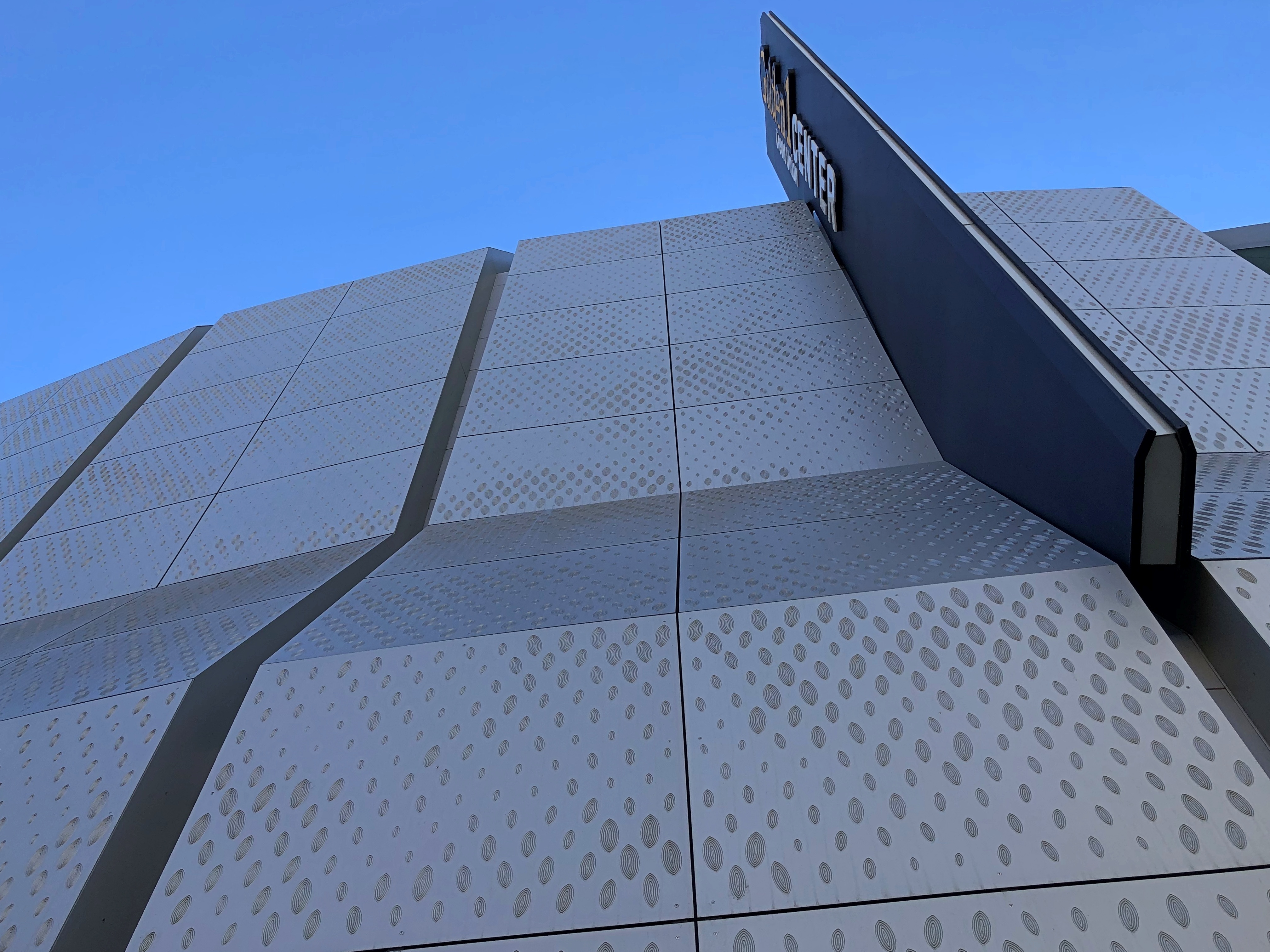
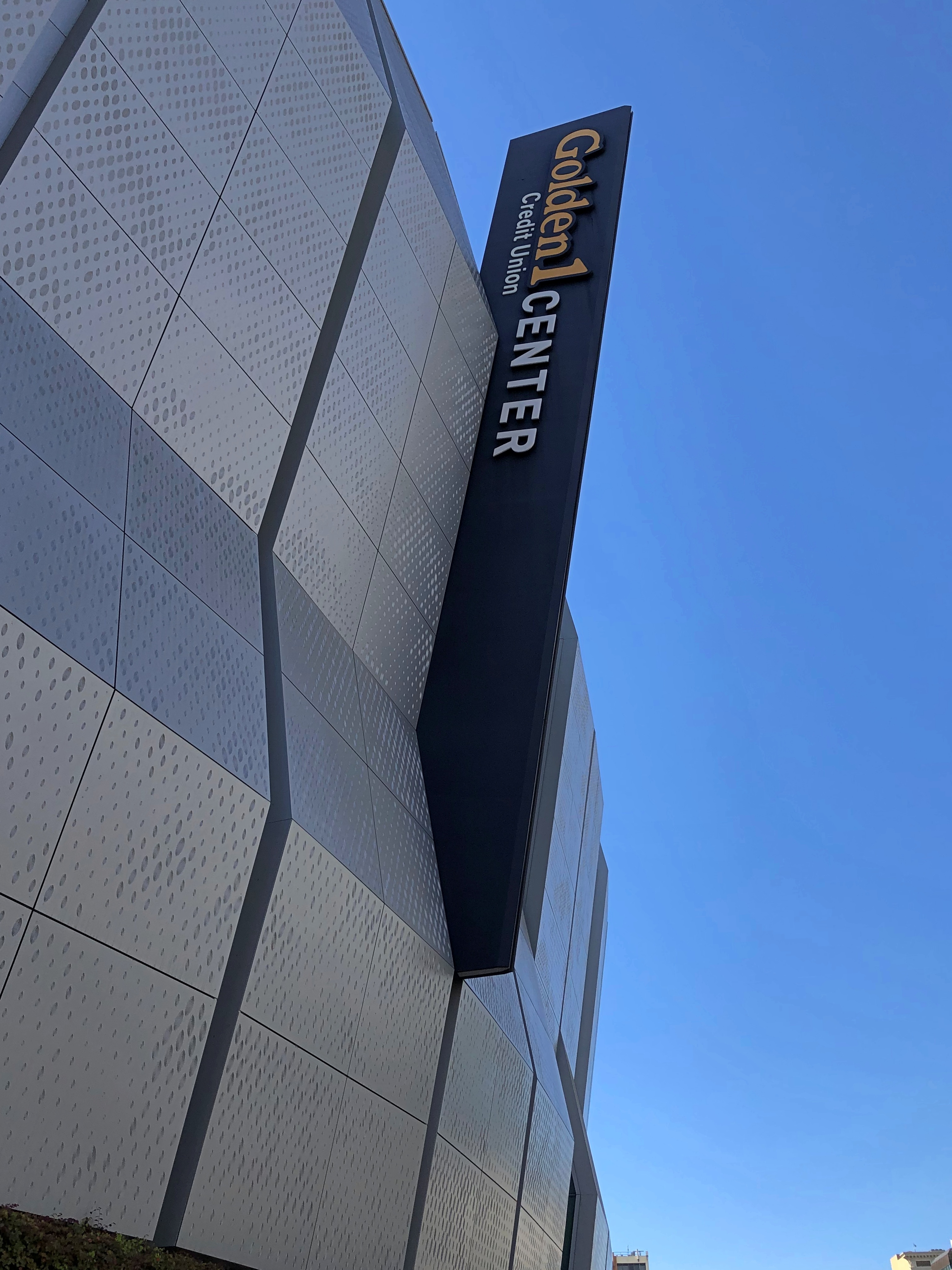
I won’t be that person. That’s the Golden 1 Center. It happens to be in Sacramento too, and I happened to see it. I will say that it has some interesting detail.Golden 1 Center Golden 1 Center Golden 1 Center

Design by AECOM and Mark Dziewulski Architect, the arena was completed only in 2016 and is home of the Sacramento Kings, a team originally formed 99 years ago as the Rochester Seagrams. The development of Golden 1 Center was a “long-running and convoluted… drama,” according to the Sacramento Bee.

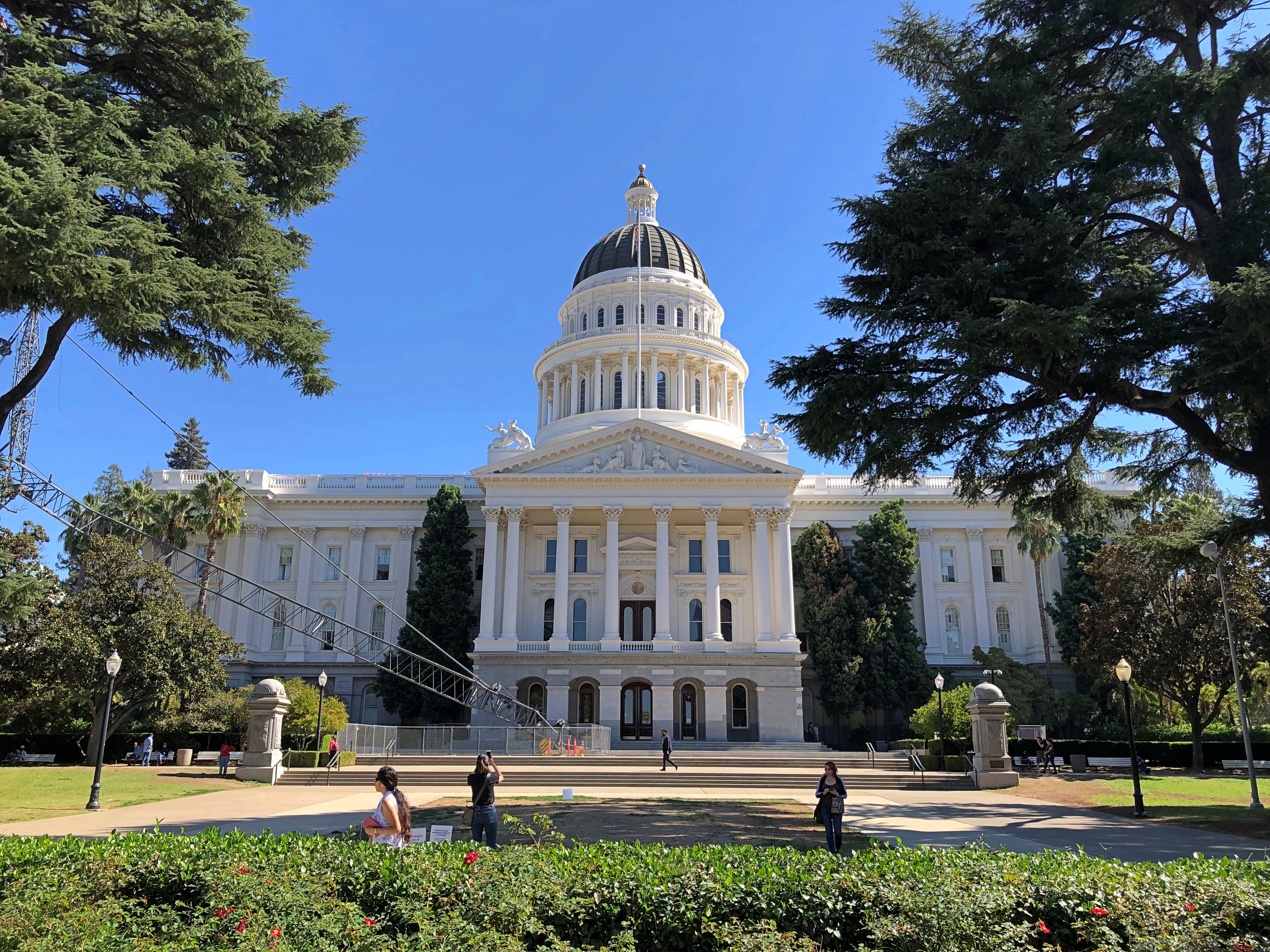
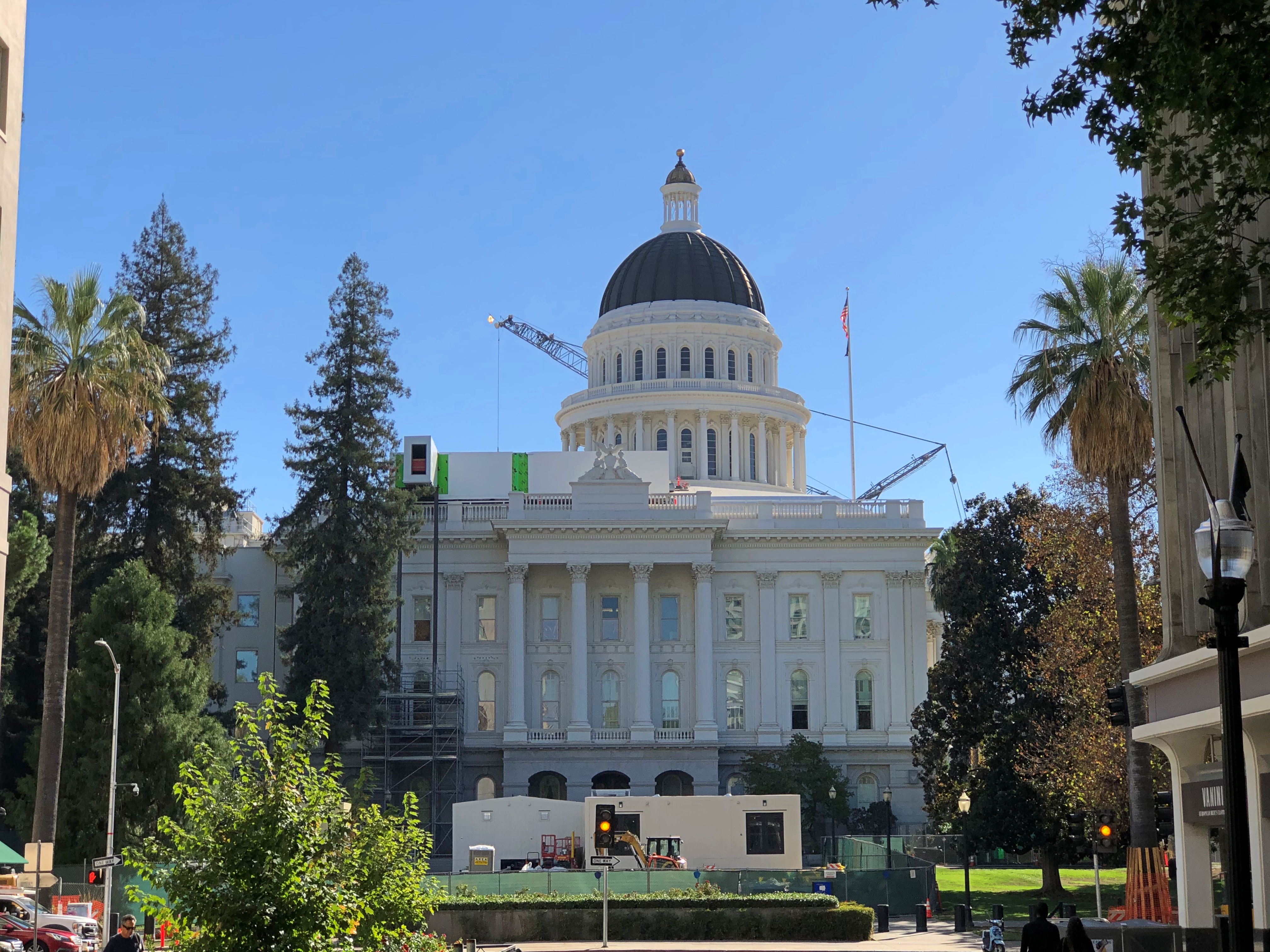
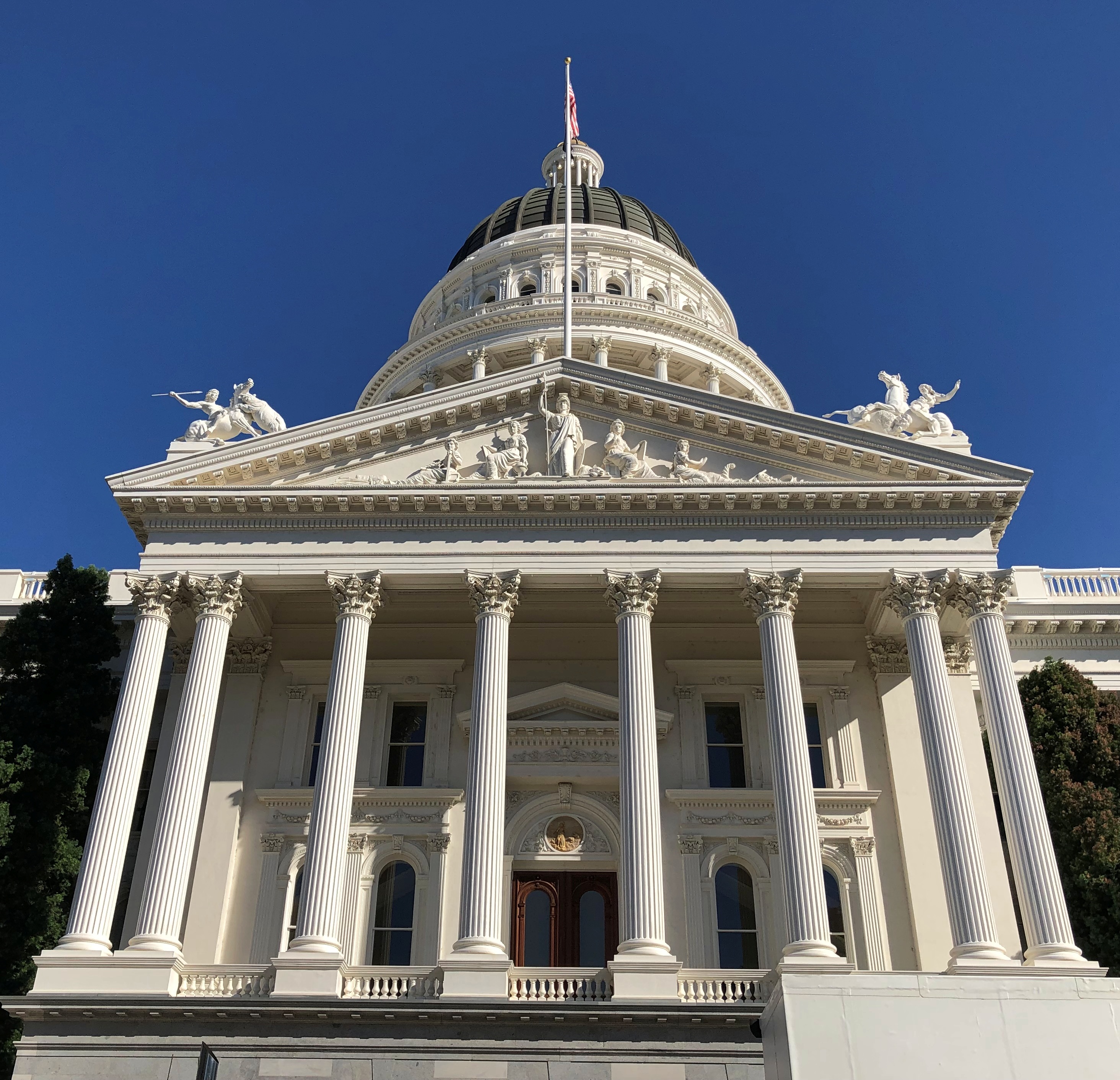
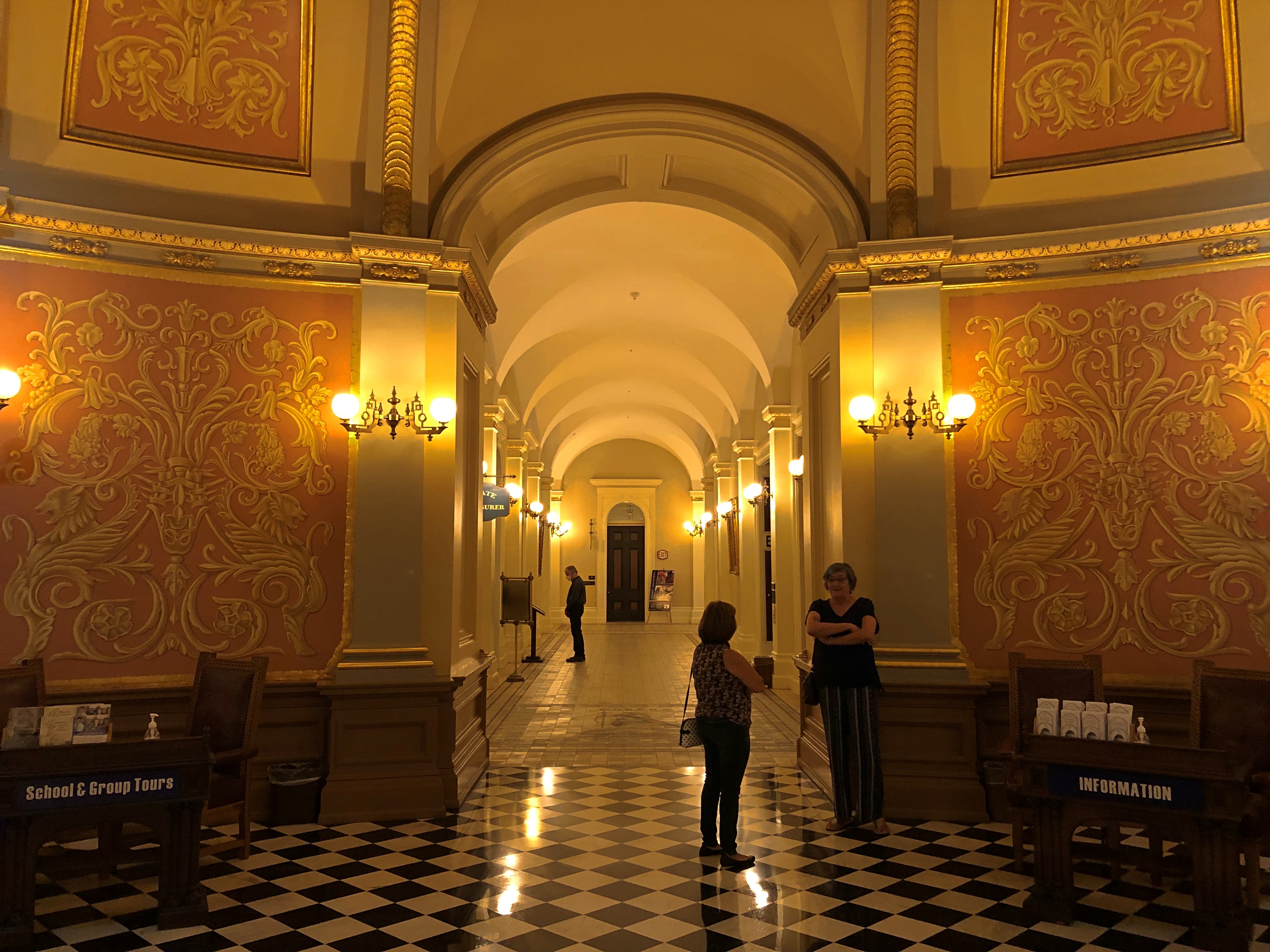
Anyway, this is the state capitol of California. It has interesting detail of its own.California State Capitol California State Capitol California State Capitol

San Francisco architect Reuben S. Clark, clearly inspired by the U.S. Capitol, designed the building, which was constructed between 1861 and ’74. Sacramento had been state capital since 1854, apparently picked as a midway point between where the action was in early U.S. California, namely the Sierra Nevada gold fields to the east and the port of San Francisco to the west.

The building is currently undergoing renovation. The park behind the capitol, which takes up many whole city blocks, was entirely closed off by a temporary wall (ah, that’s where the lizard people are scheming).

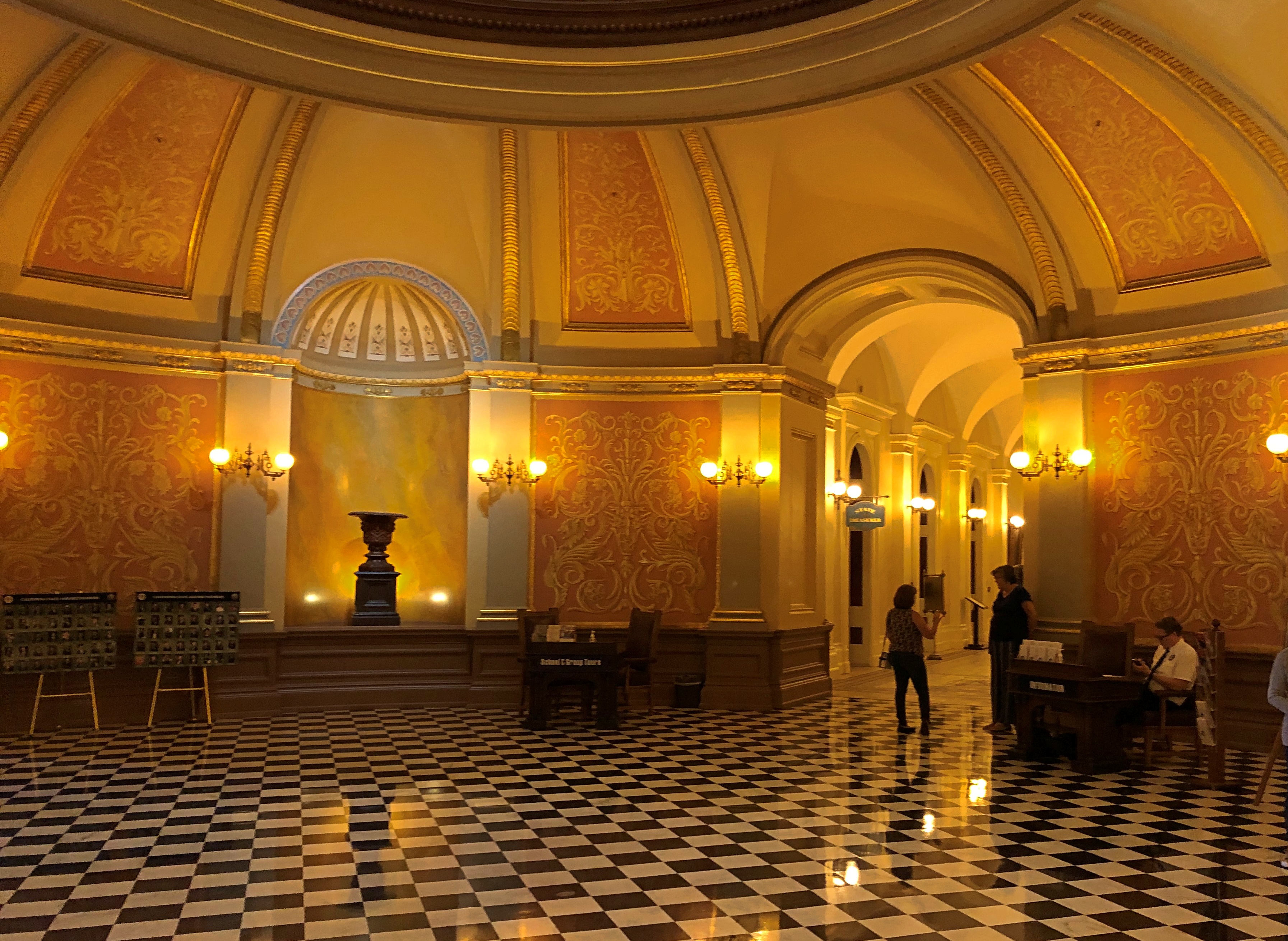
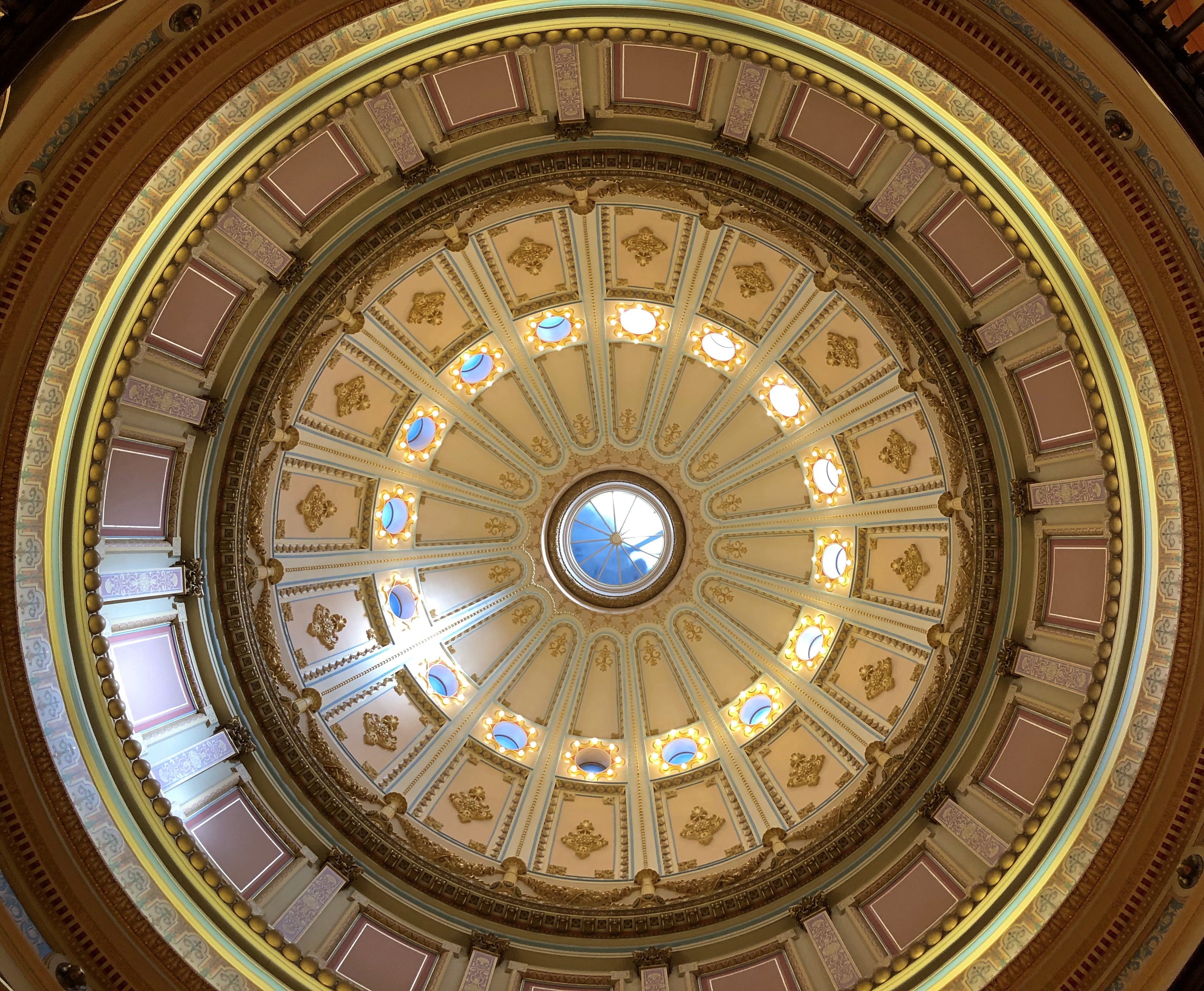
Too bad. I hear it’s quite a park. But Lilly and I could get into the capitol itself, via a temporary covered walkway through a construction site, and through metal detectors.California State Capitol California State Capitol California State Capitol

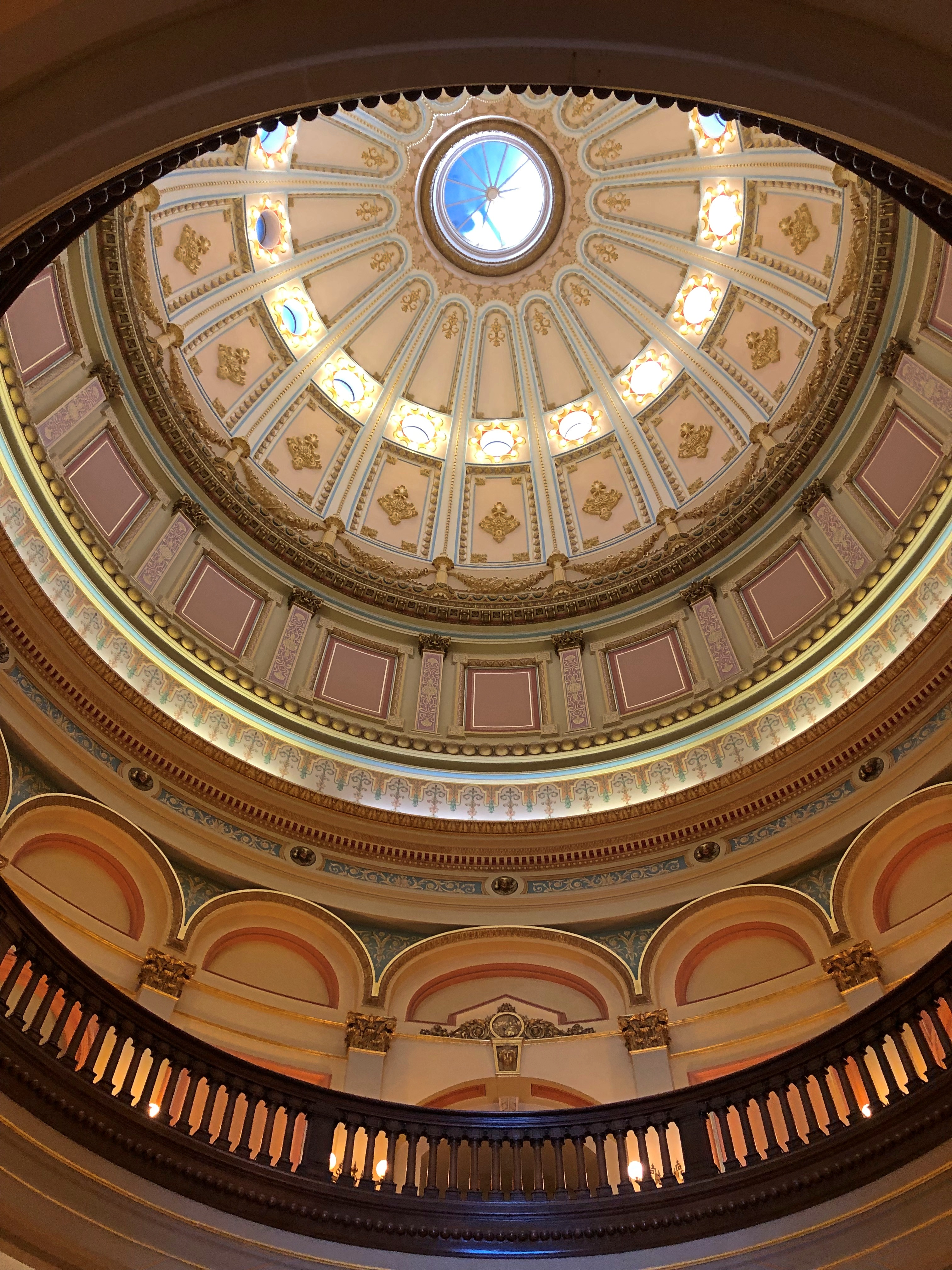
If there’s a rotunda, the thing to do is look up at it.California State Capitol California State Capitol

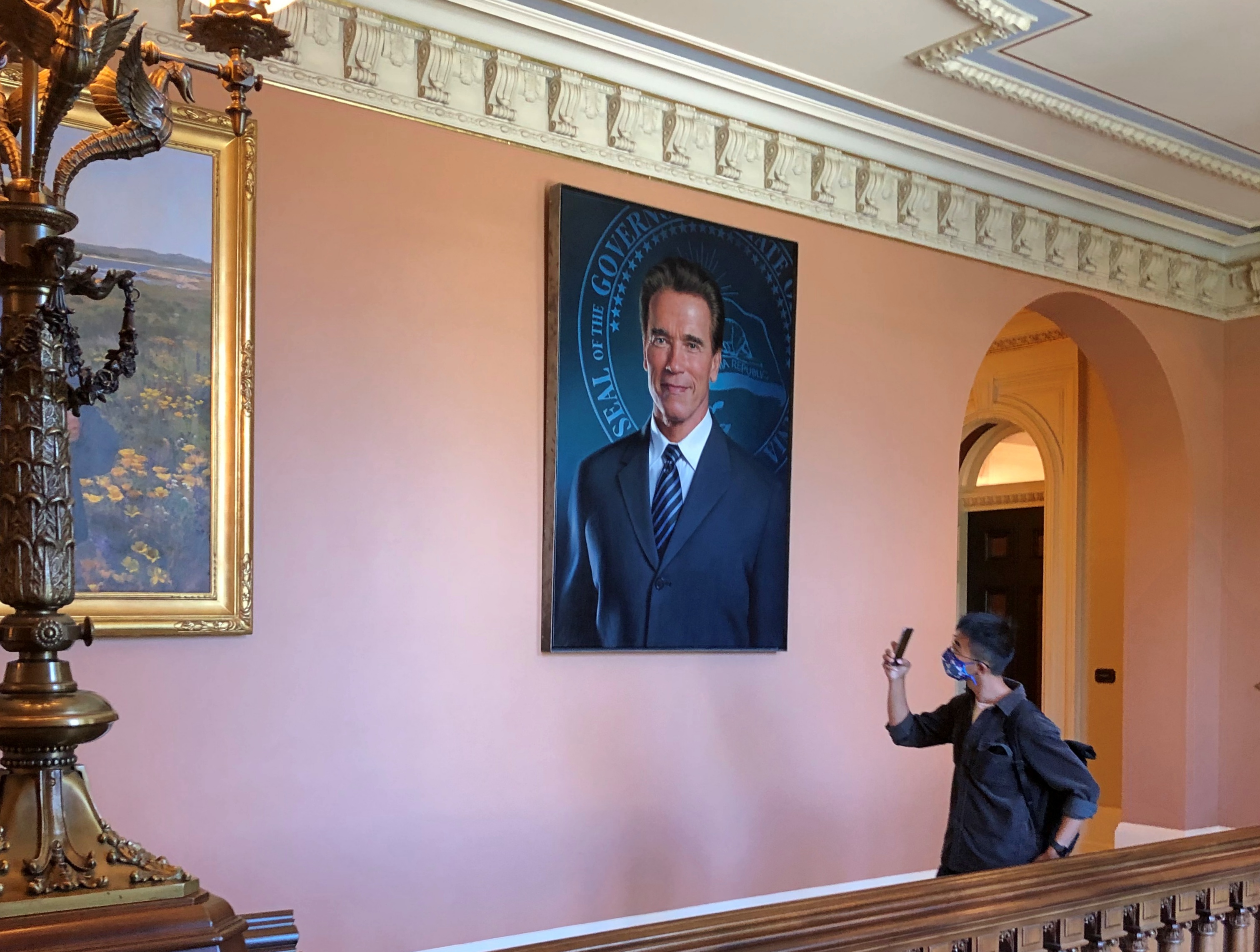
State capitols tend to feature portraits of governors, and California is no different. Some are more recognizable than others, though I imagine even Arnold’s fame will fade over the coming decades.California State Capitol

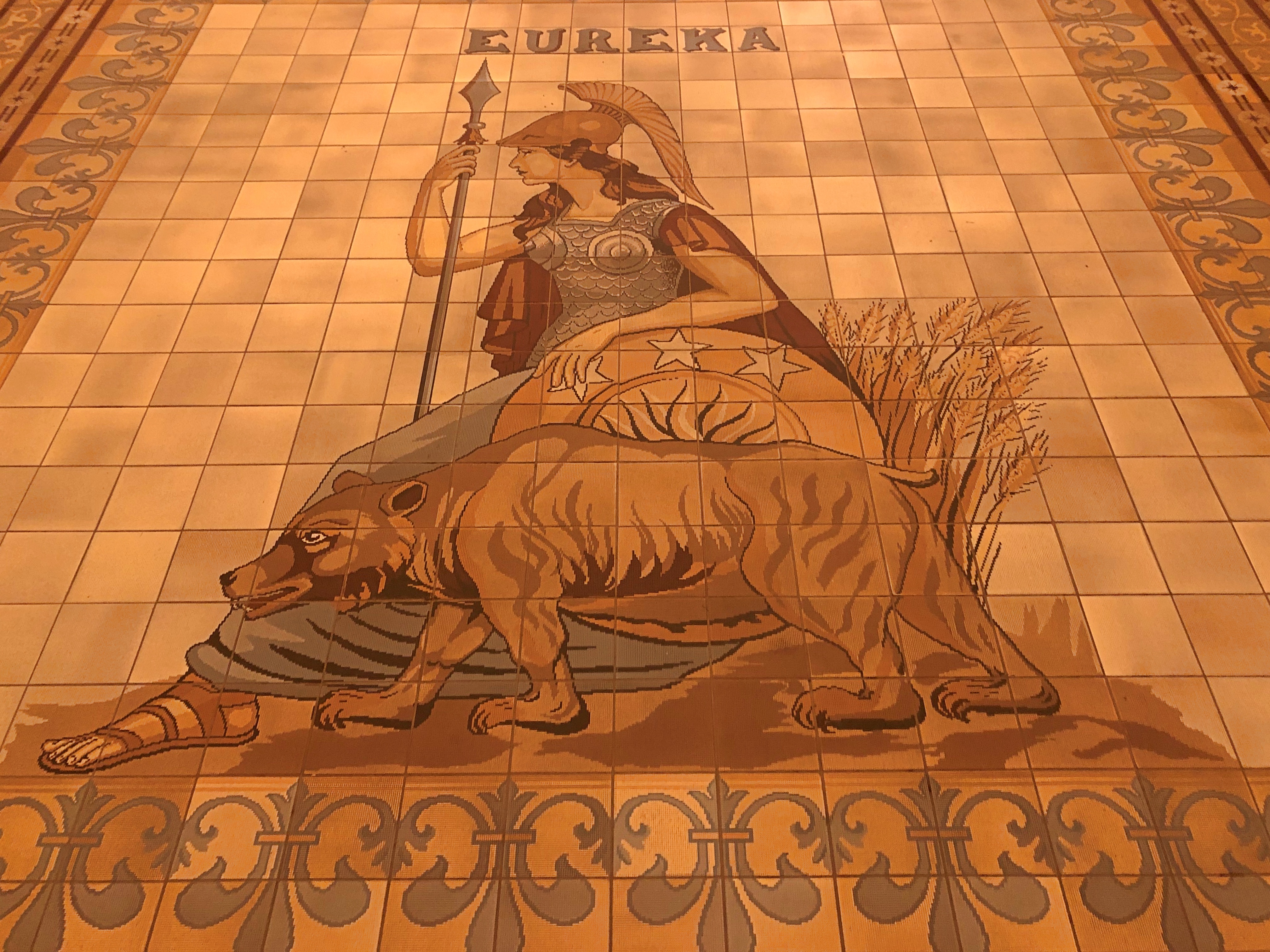
On the other hand, Minerva isn’t likely to fade from her fame among classicists, eccentrics and a few schoolchildren.California State Capitol California State Capitol

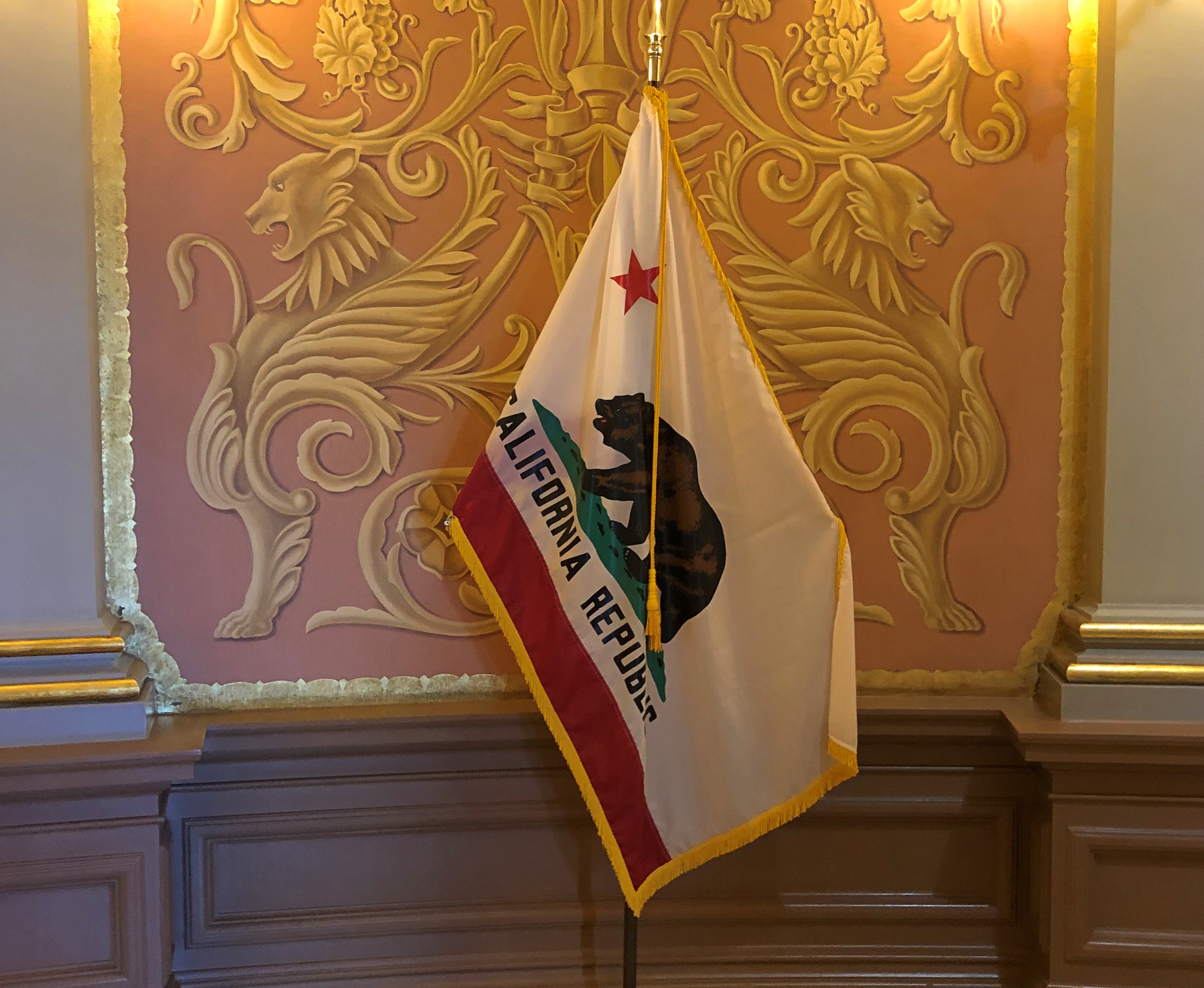
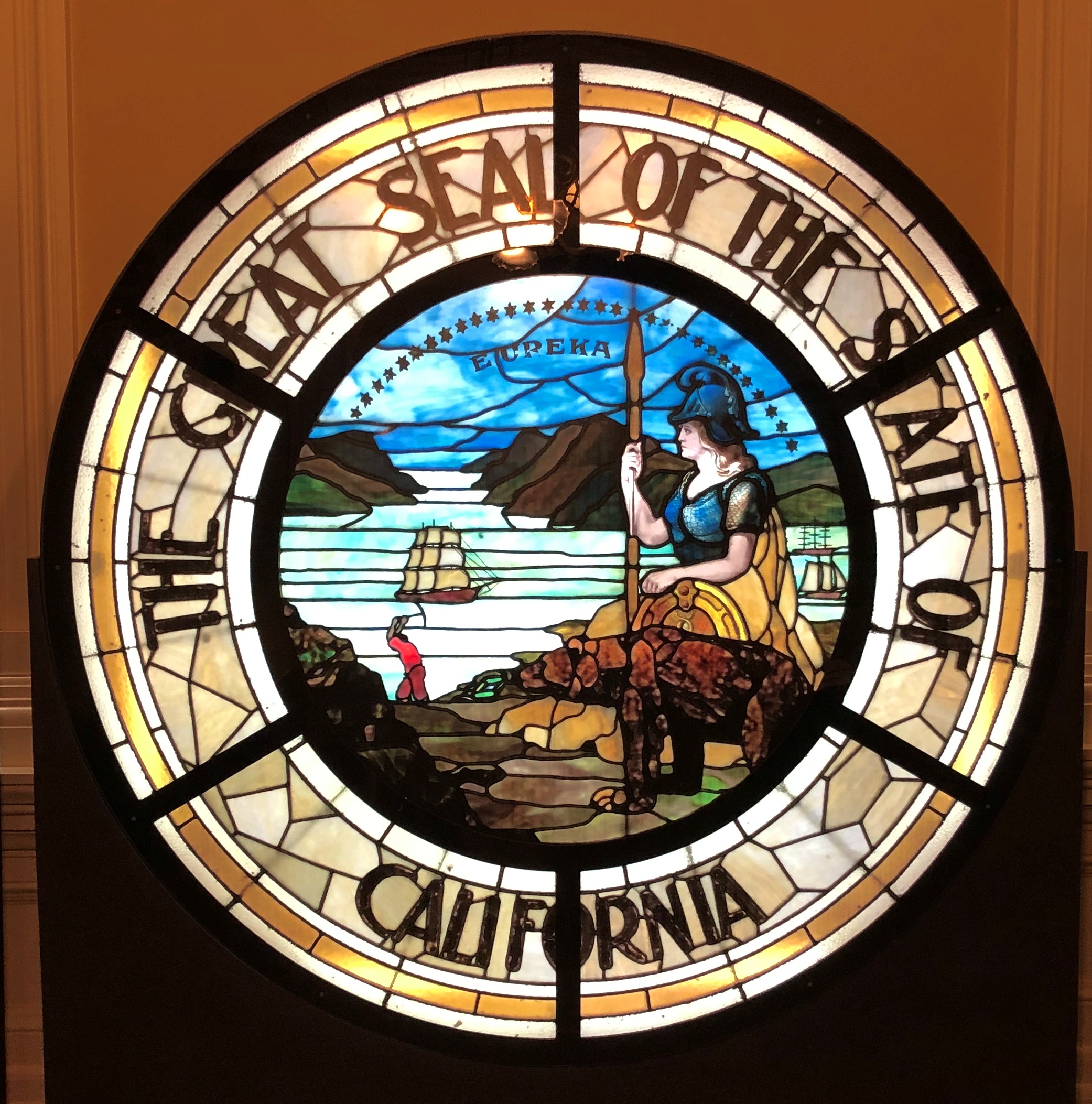
Minerva and not Athena because the signs with this depiction of state seal (mounted in the capitol) called her Minerva, and besides, Athena has been associated with another place for thousands of years.

A few other details about the seal. The bear is a California grizzly which, despite being important to California symbolism, was hunted to extinction. There are 31 stars, the state being the 31st to join the union. A miner toils for gold, and ships connect California to the rest of the world in the early days.

Why Minerva? She was born fully an adult from Jupiter’s brow. As for California, it was born fully a state, skipping territorial status.

Donner Memorial State Park

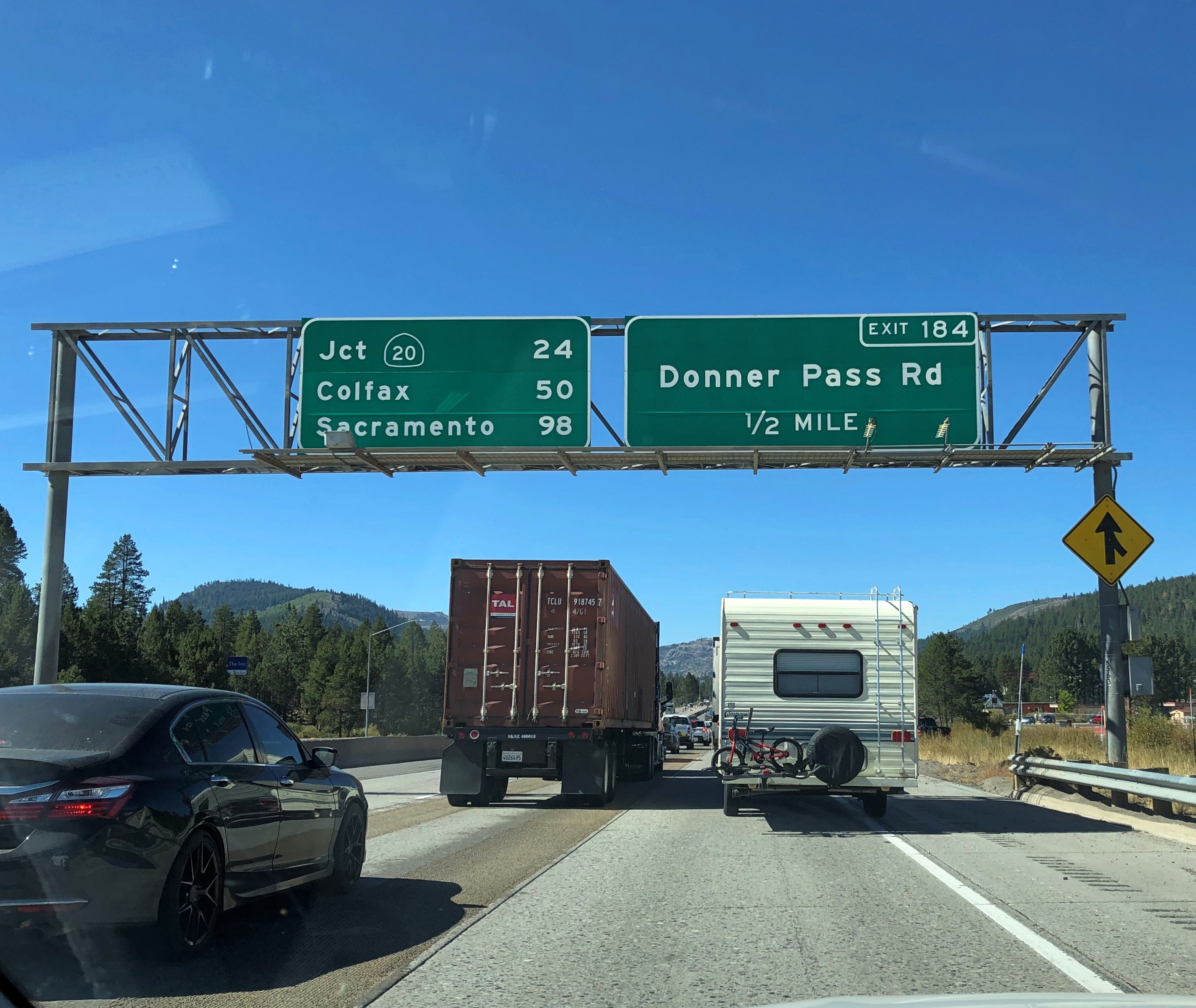
Crossing the Sierra Nevada near the Donner Pass is fairly easy in our time, if you have a motorized vehicle, as I did earlier this month when I drove from Reno back to Sacramento. I-80 takes you right across.

Unless, of course, traffic is heavy enough to come to a standstill. Then you might have time to take pictures.I-80 near Truckee, California

Still, you’ll face nothing like the impediments that the Donner Party encountered in the winter of 1846-1847. Their story is well known; accounts of desperate days and cannibalism have a way of piquing people’s interest.

The Donner Party’s agony is, in fact, much better known than (say) the journey of the Stephens-Townsend-Murphy Party, led by mountain man Caleb Greenwood, who in 1844 were the first successful wagon train to cross the pass. They didn’t have an easy time of it, but they made it.

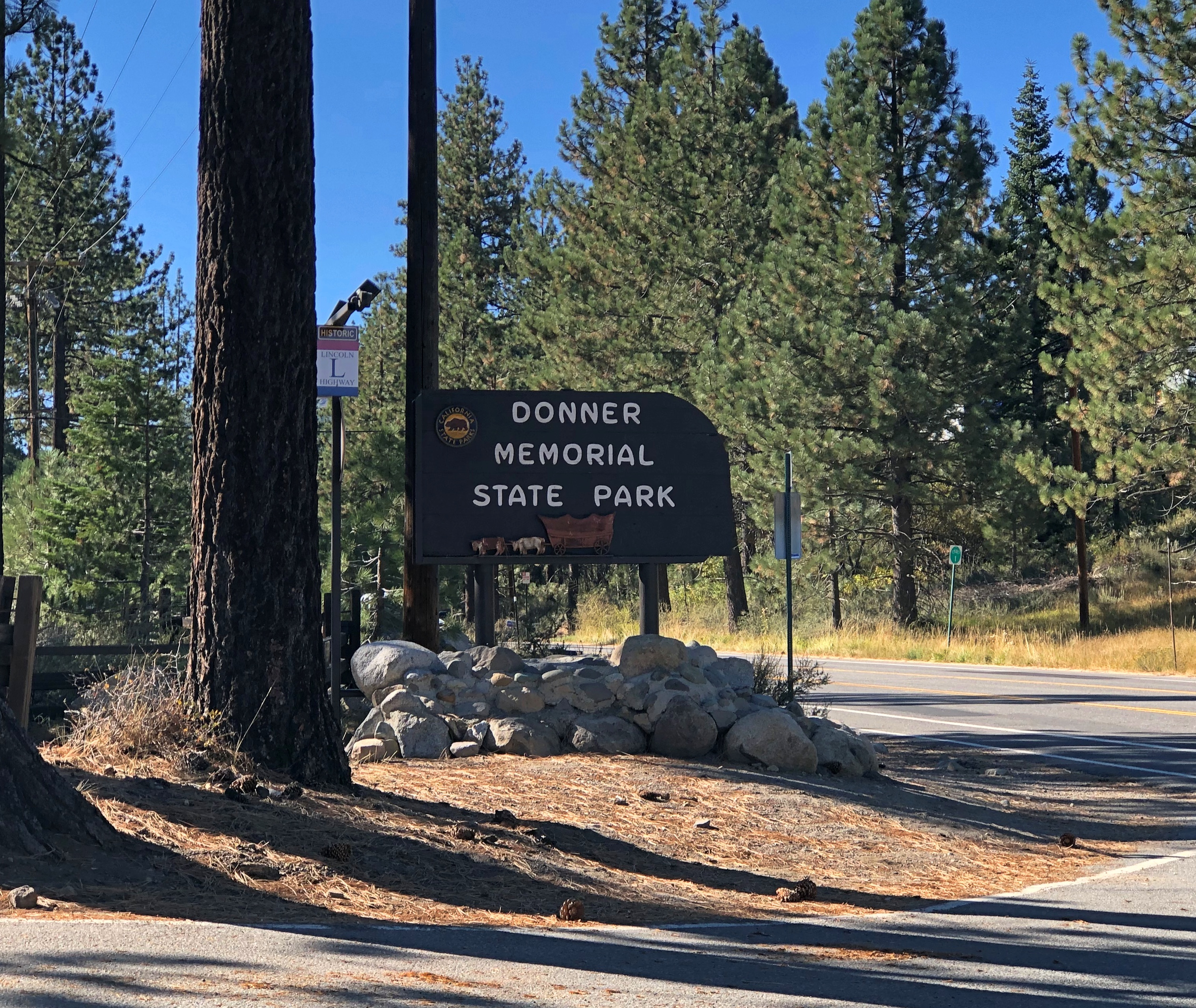
I didn’t know about Donner Memorial State Park till I visited this part of the country, since I’d forgotten exactly where the Donner Party had encountered their ordeal. But when I saw the state park on the map, as well as everything else named for the Donners, I realized that it was here.

The park is just off I-80 not far west of the California-Nevada line. I resolved to go take a look.Donner Memorial State Park

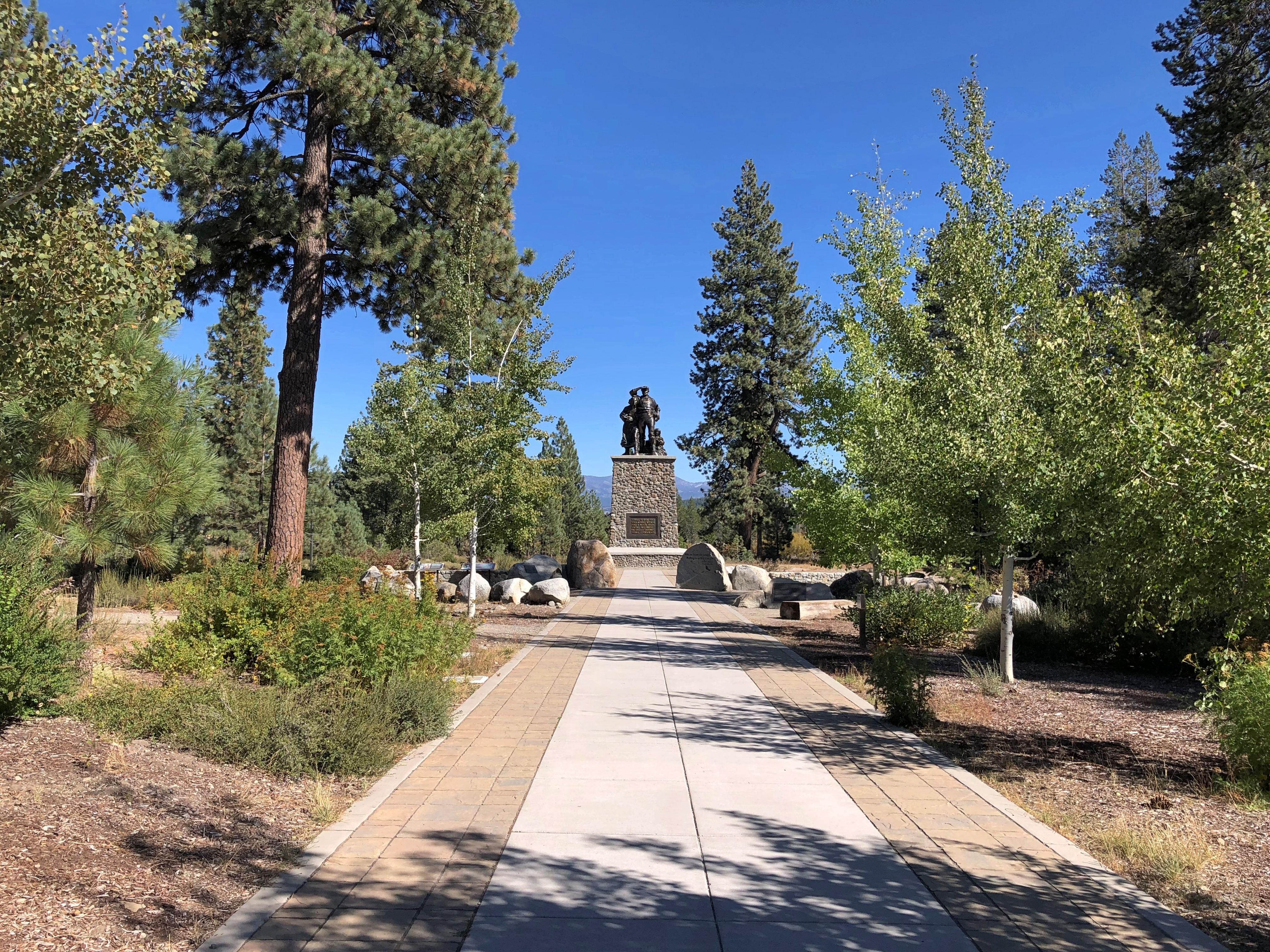
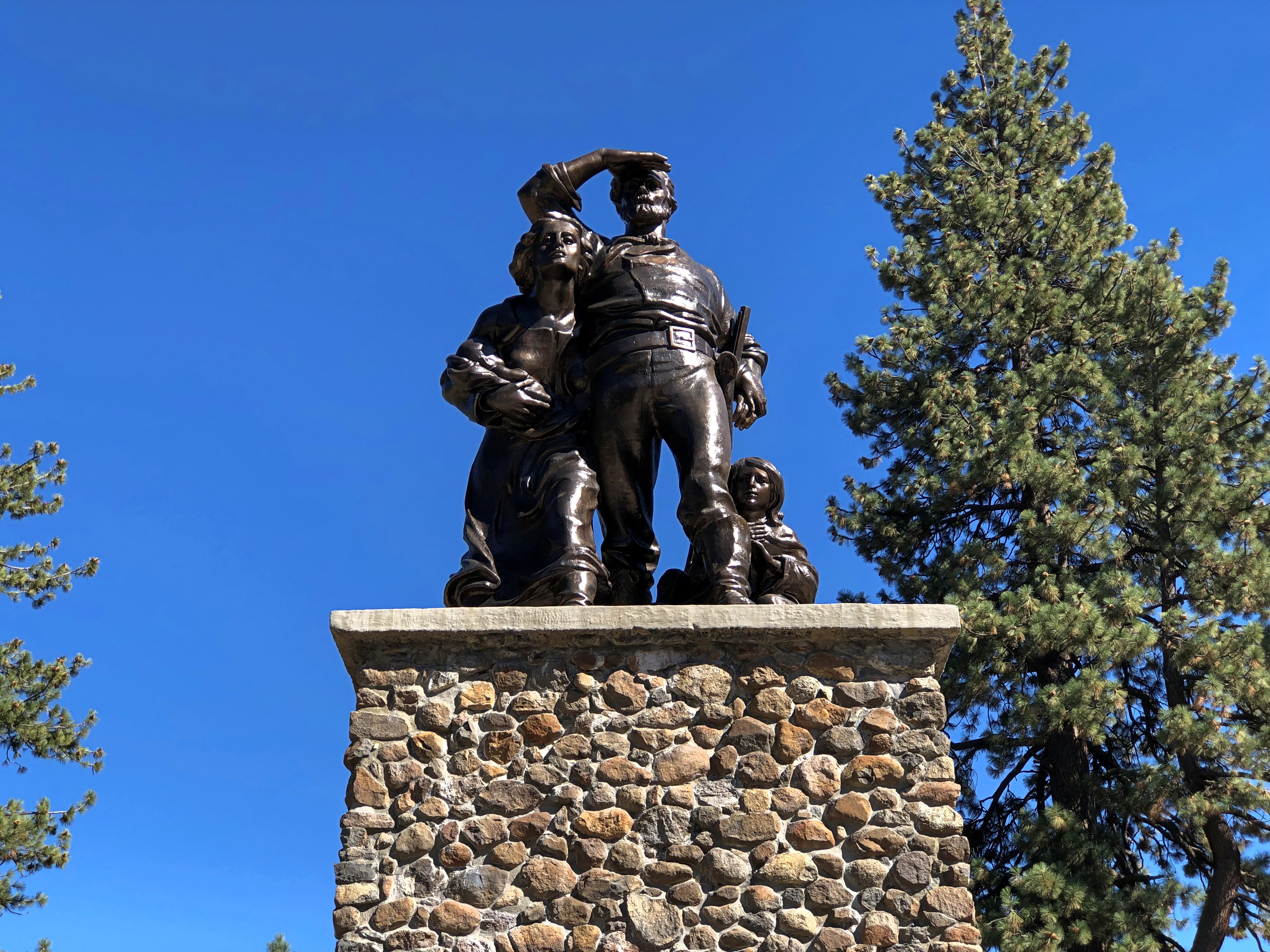
As a memorial park, I expected a memorial. This one isn’t far from the entrance.Donner Memorial State Park Donner Memorial State Park

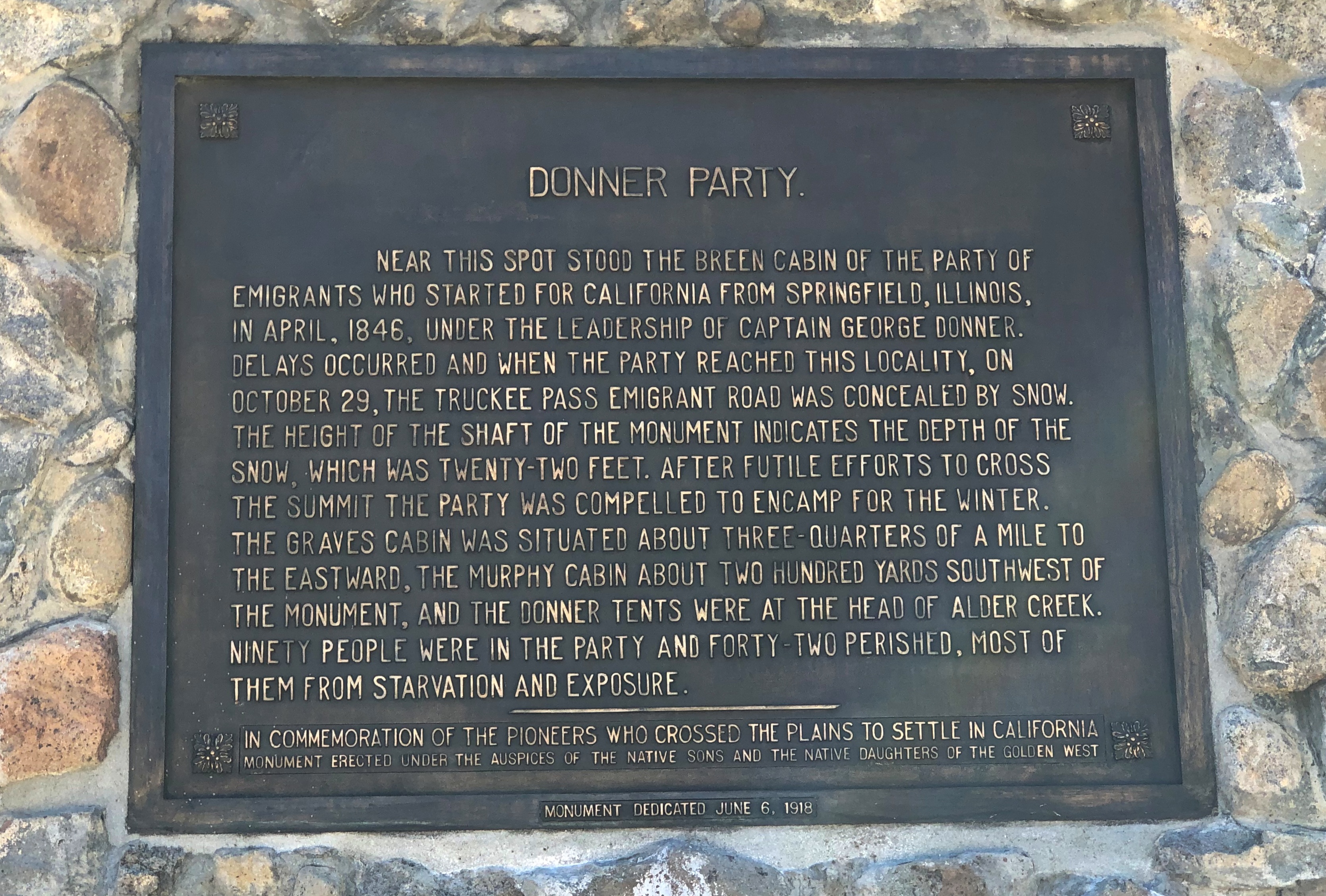
One of its plaques notes that the height of the memorial’s plinth is 22 feet — which was the depth of the snow that trapped the wagon train.Donner Memorial State Park

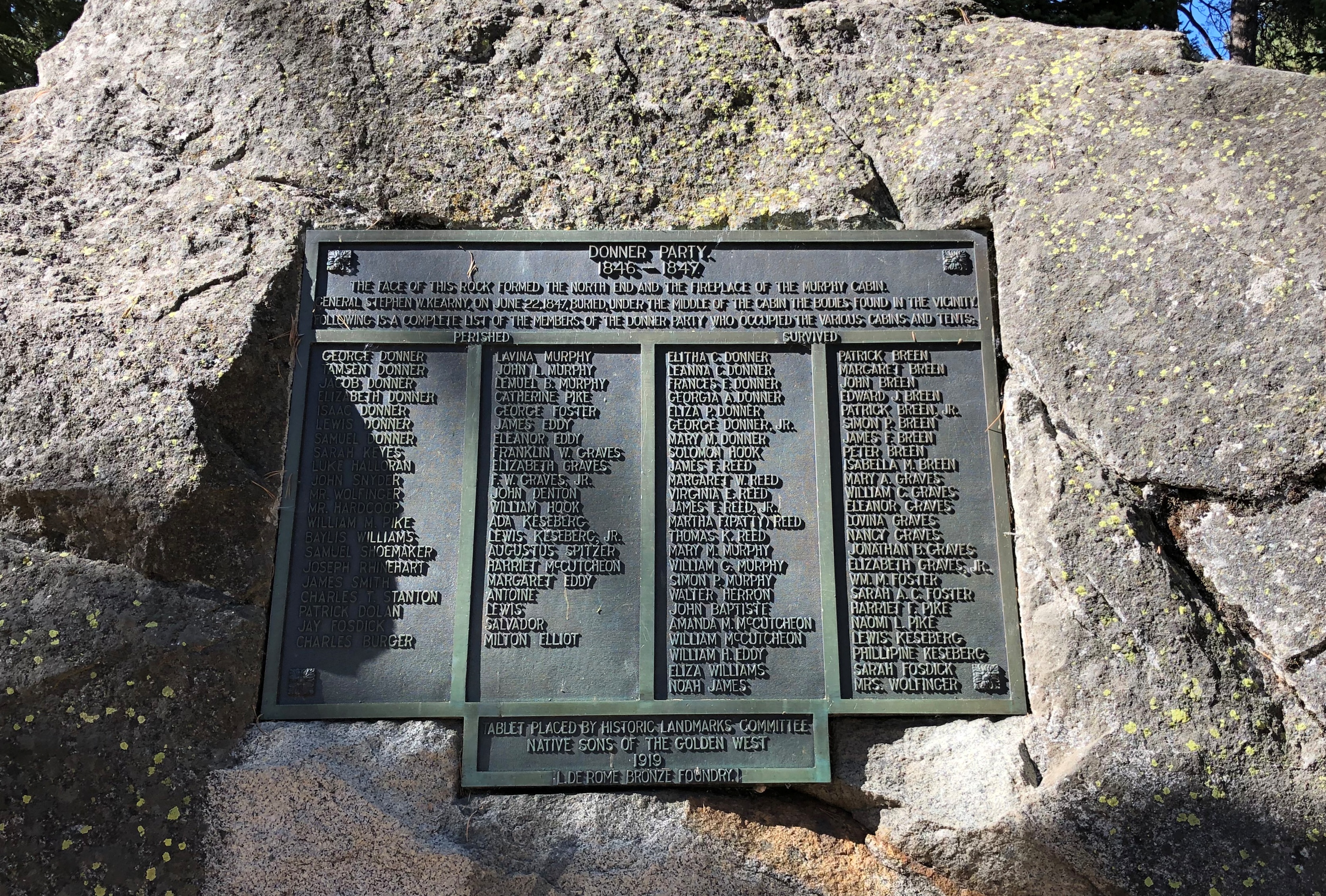
That isn’t the only plaque in the park honoring the Donner Party. Along one of the park trails is another plaque listing all of the members. Those on the left two columns died that winter. Those on the right two columns survived.Donner Memorial State Park

Both memorials are the work of the Native Sons of the Golden West, installed even before the state park was established in 1928.

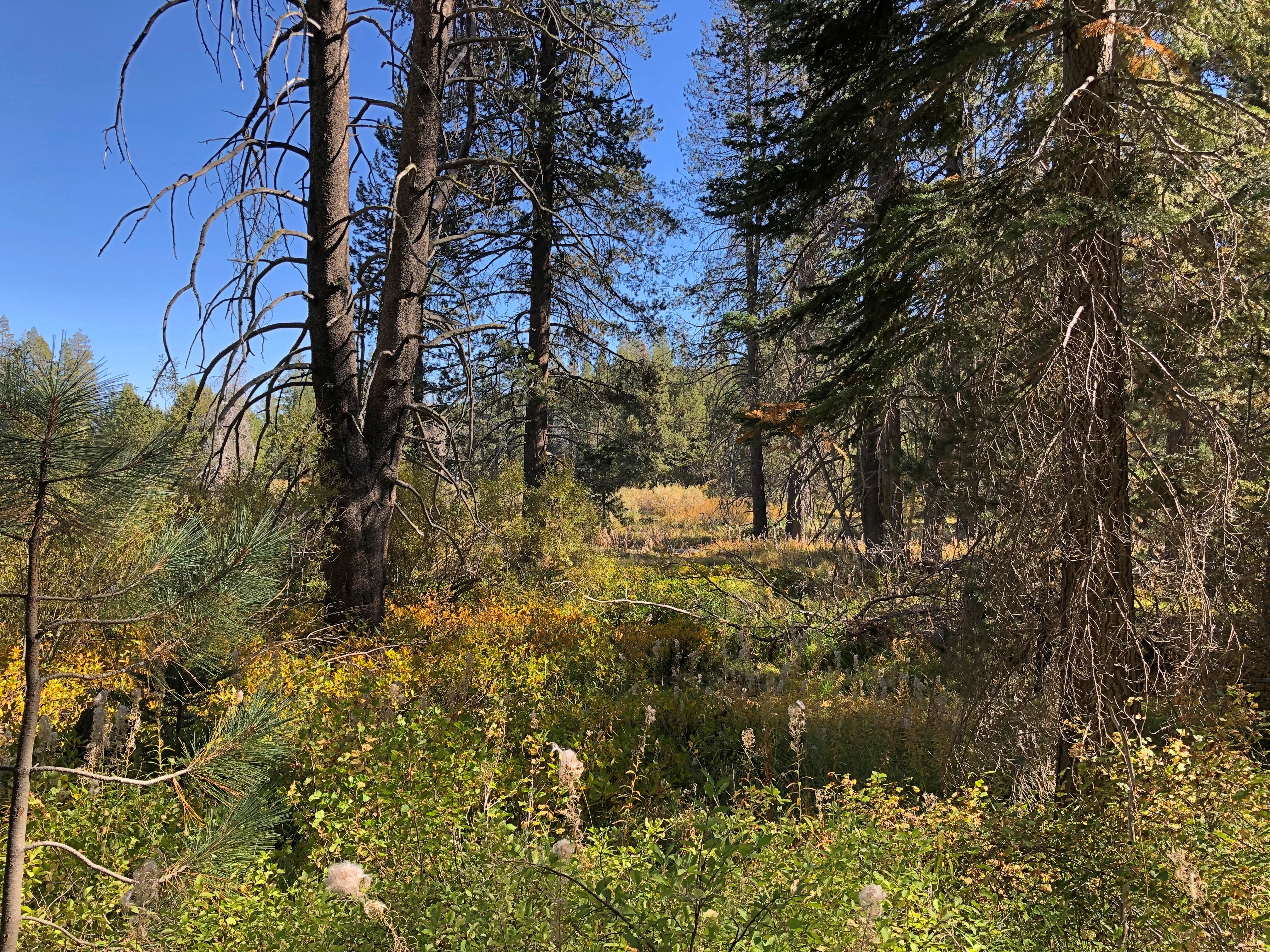
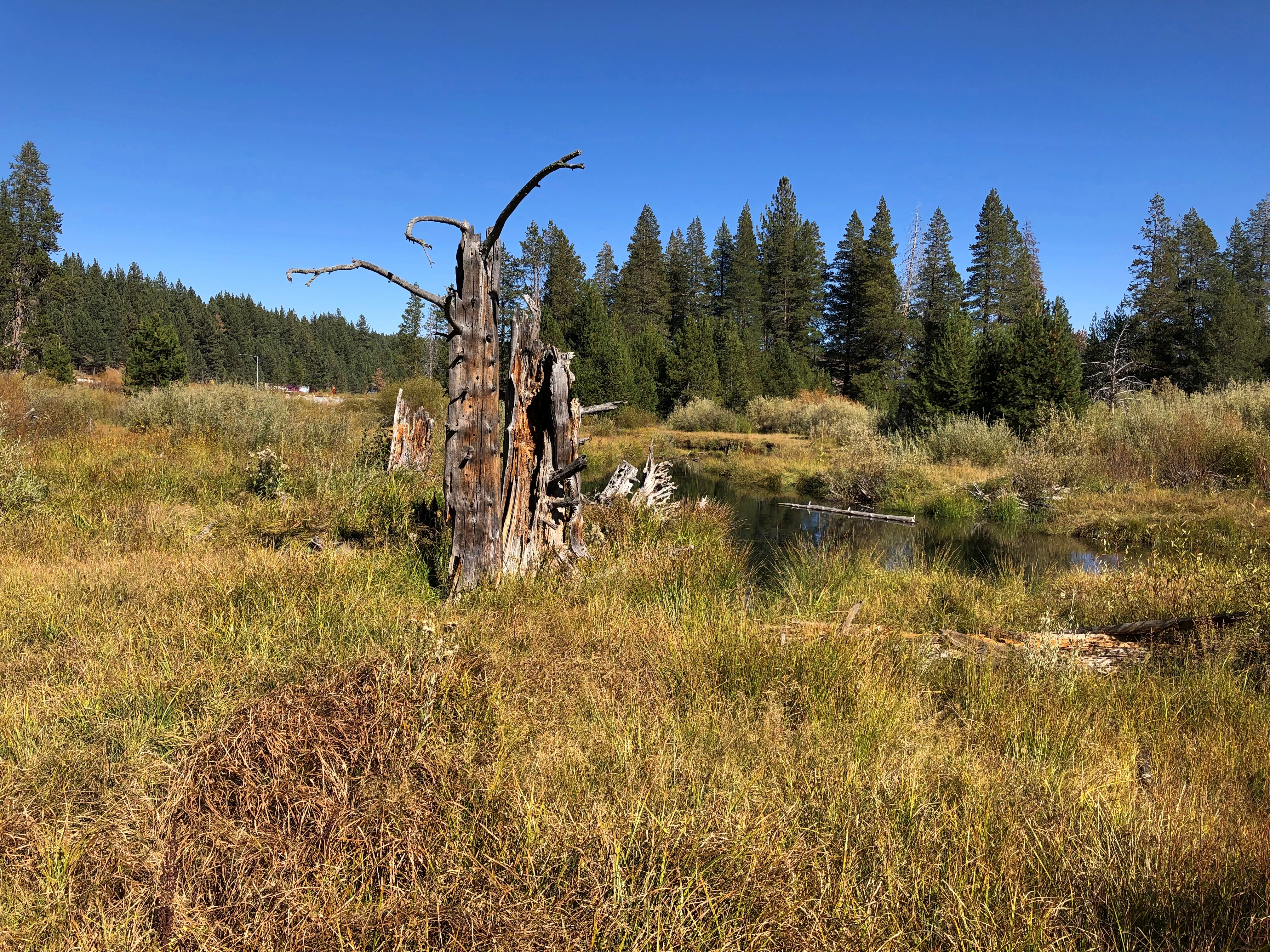
At nearly 3,300 acres, the park is much more than the memorials. I took advantage of some of the trails, passing through nice scenery.Donner Memorial State Park Donner Memorial State Park Donner Memorial State Park

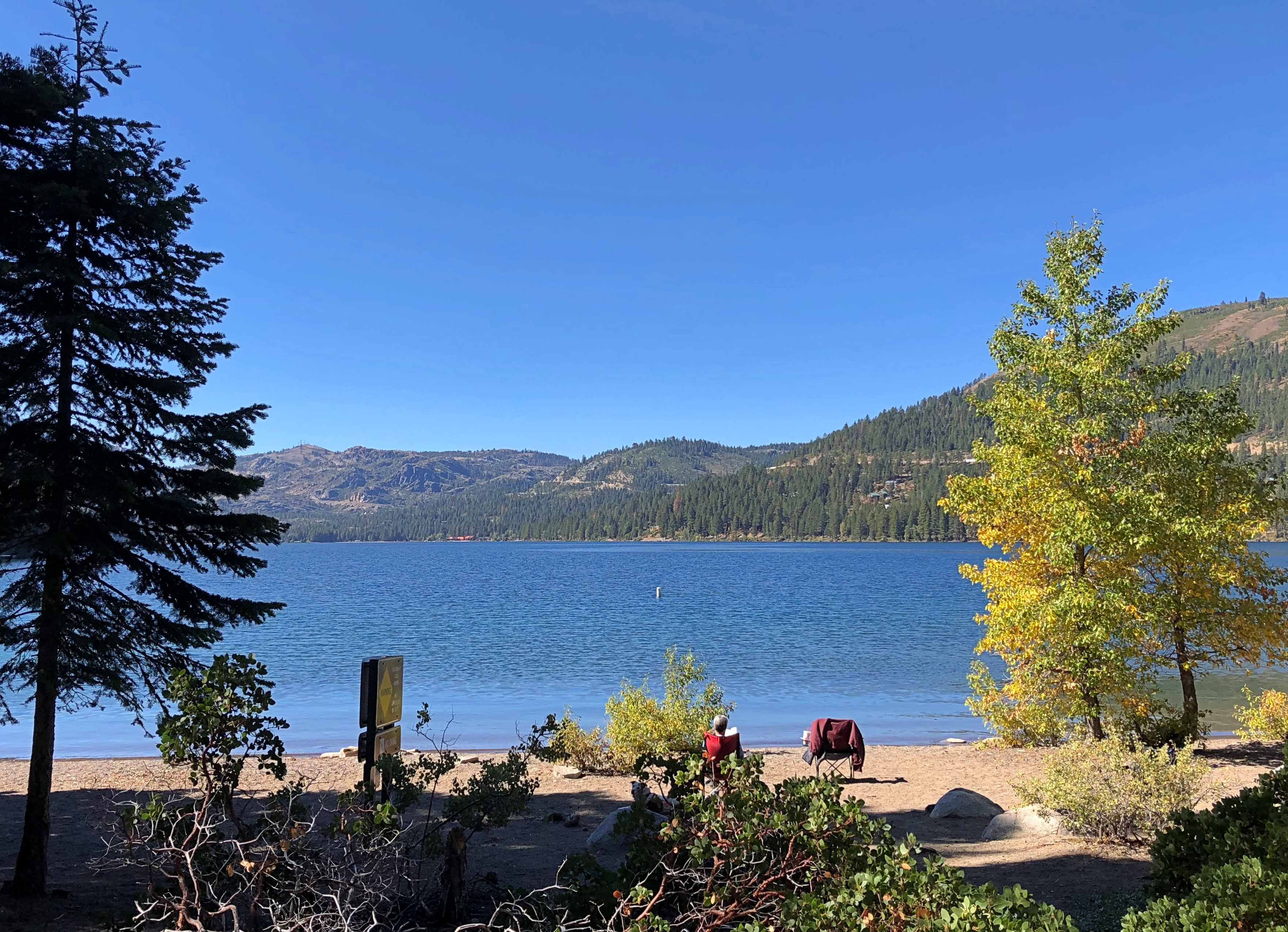
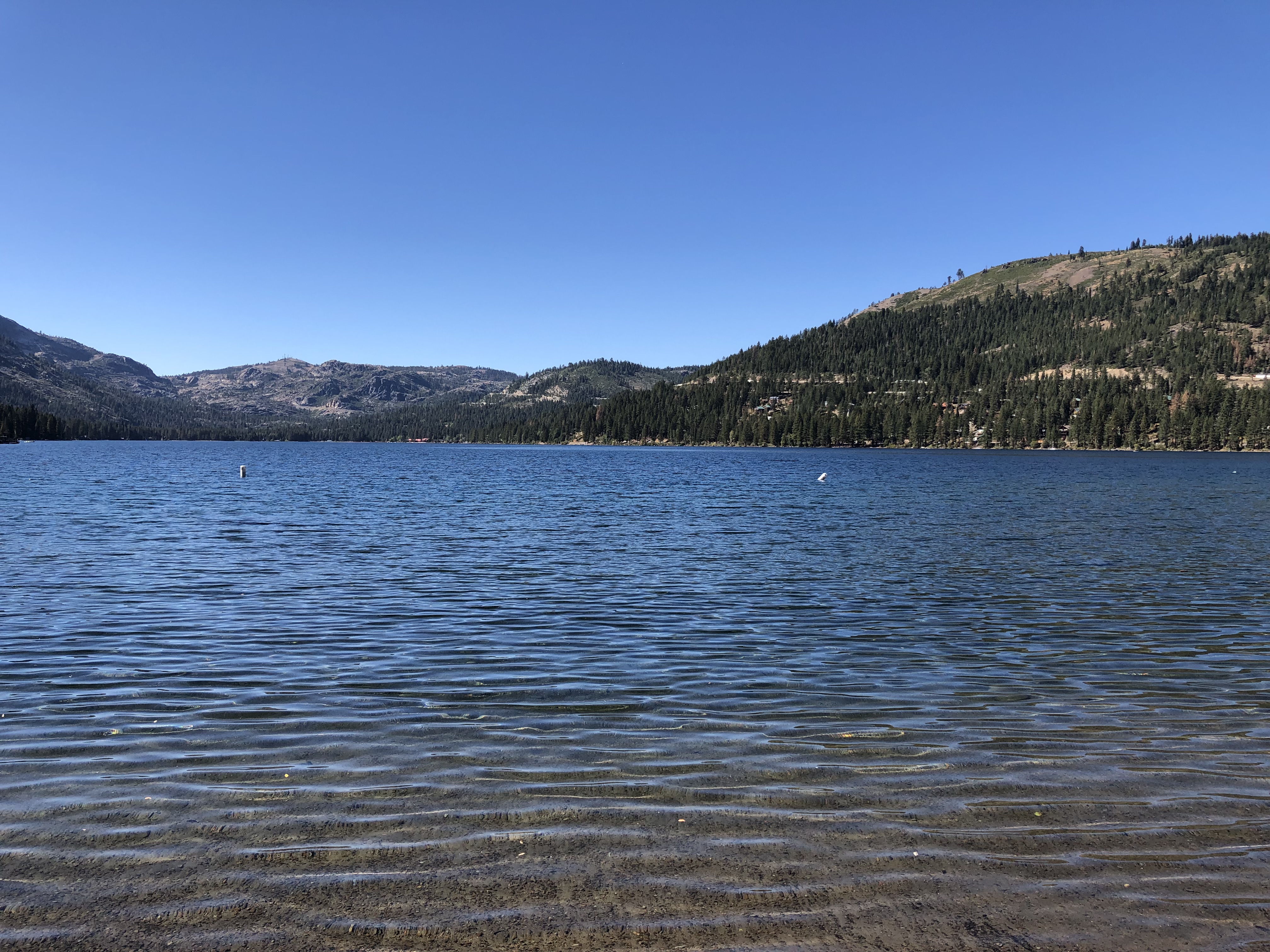
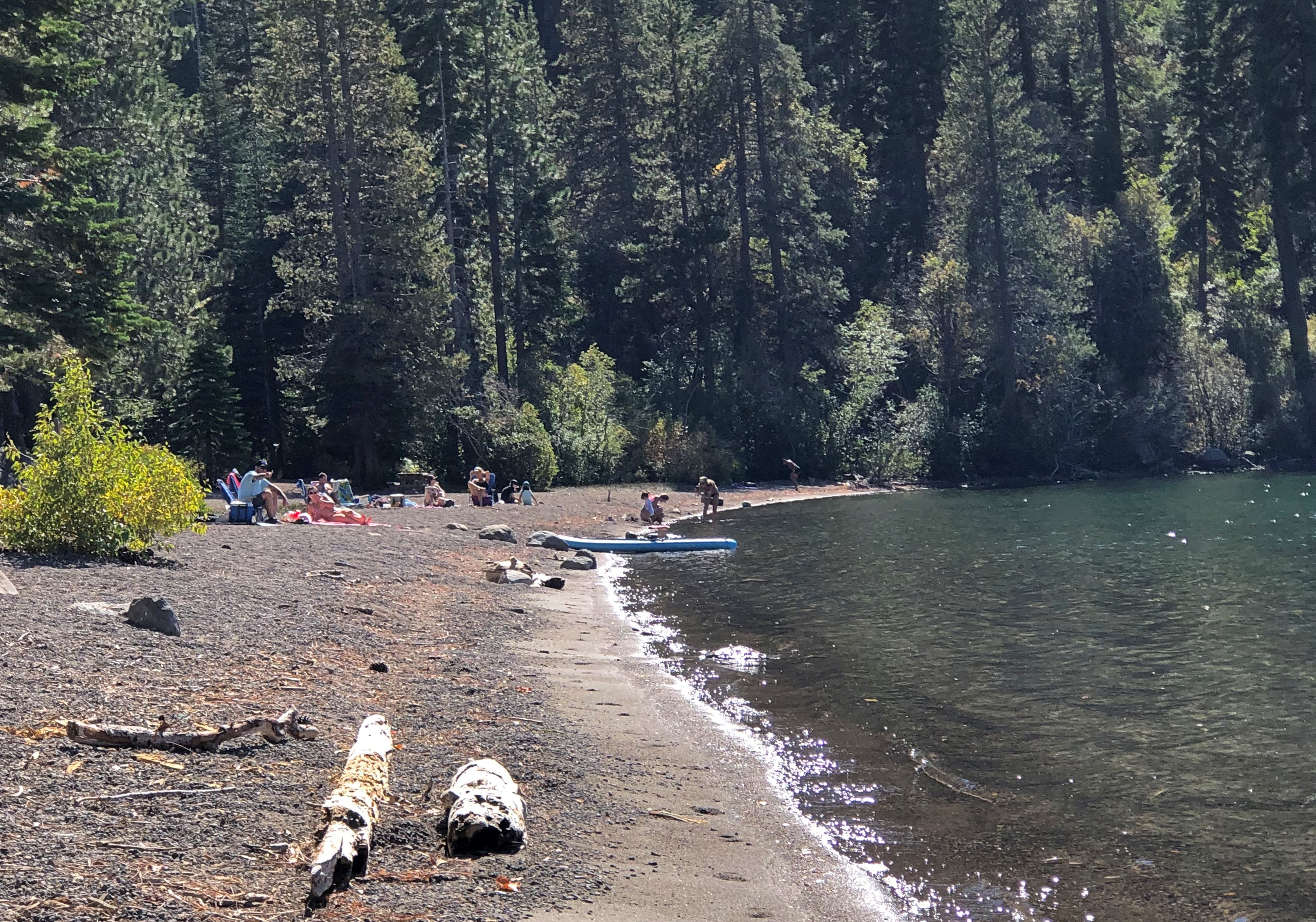
Though not nearly as sizable as Lake Tahoe, Donner Lake is a fine alpine lake in its own right. Only a few people were around.Donner Lake Donner Lake Donner Lake

It was really pleasant at Donner Lake that day, October 4, clear and in the mid-70s Fahrenheit. Hard to image a late October day when the area was buried by snow, but they say the luckless Donner Party encountered an early snow that year. Then again, I just checked, and the evening temps in nearby Truckee are already dropping below freezing every day.

Virginia Street, Reno

Before I left Reno on October 4, there was one more thing I wanted to do: take a walk along Virginia Street, a major thoroughfare. In the end, I walked two sections of it, one downtown and featuring the well-known Reno sign, the other in Midtown.

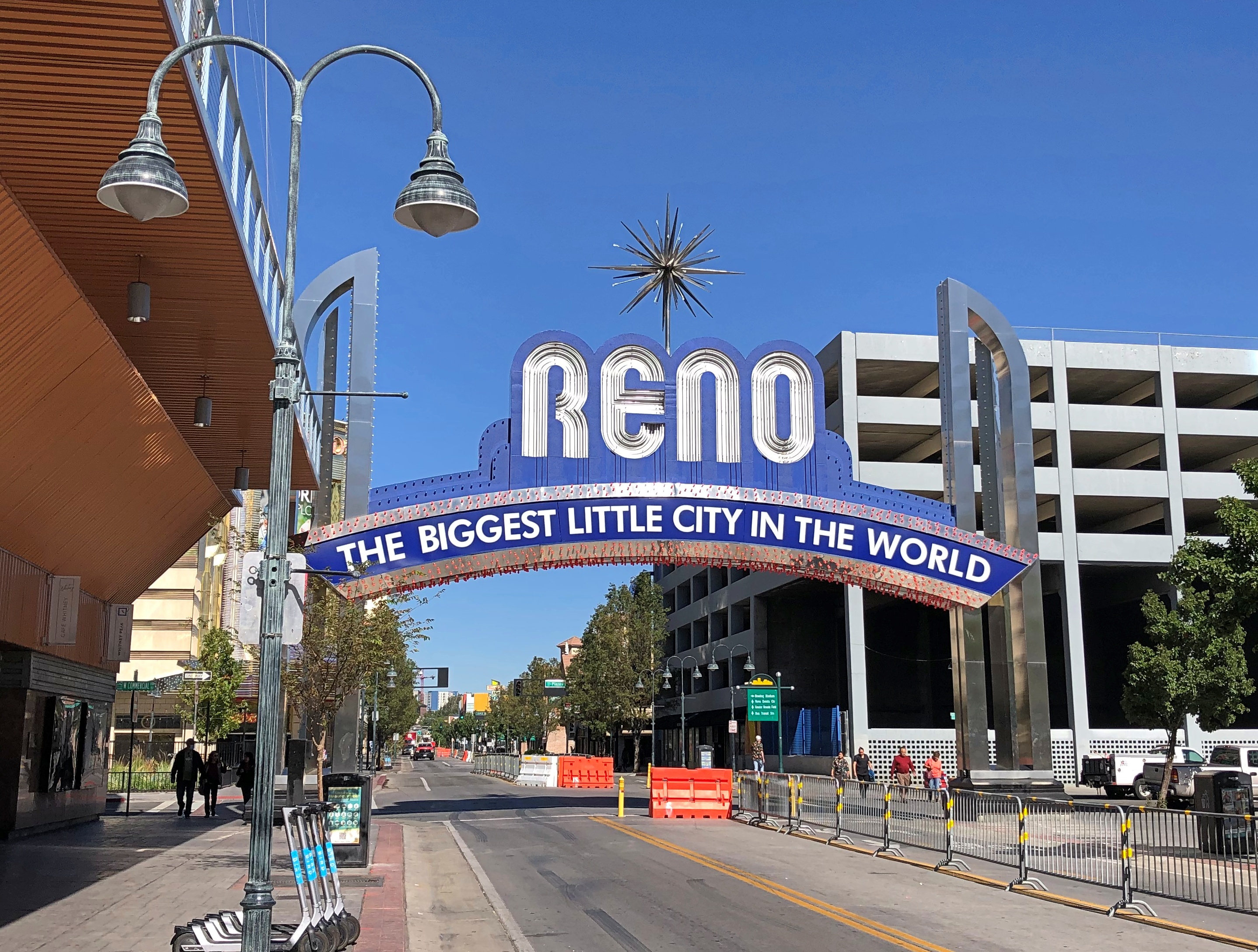
Might as well begin with the sign. The structure across Virginia Street is actually called the Reno Arch. To split hairs even more, this is the third Reno Arch, installed in 1987 to replace the 1963 version, which itself replaced the 1926 original.

The daytime Arch.
Reno Arch

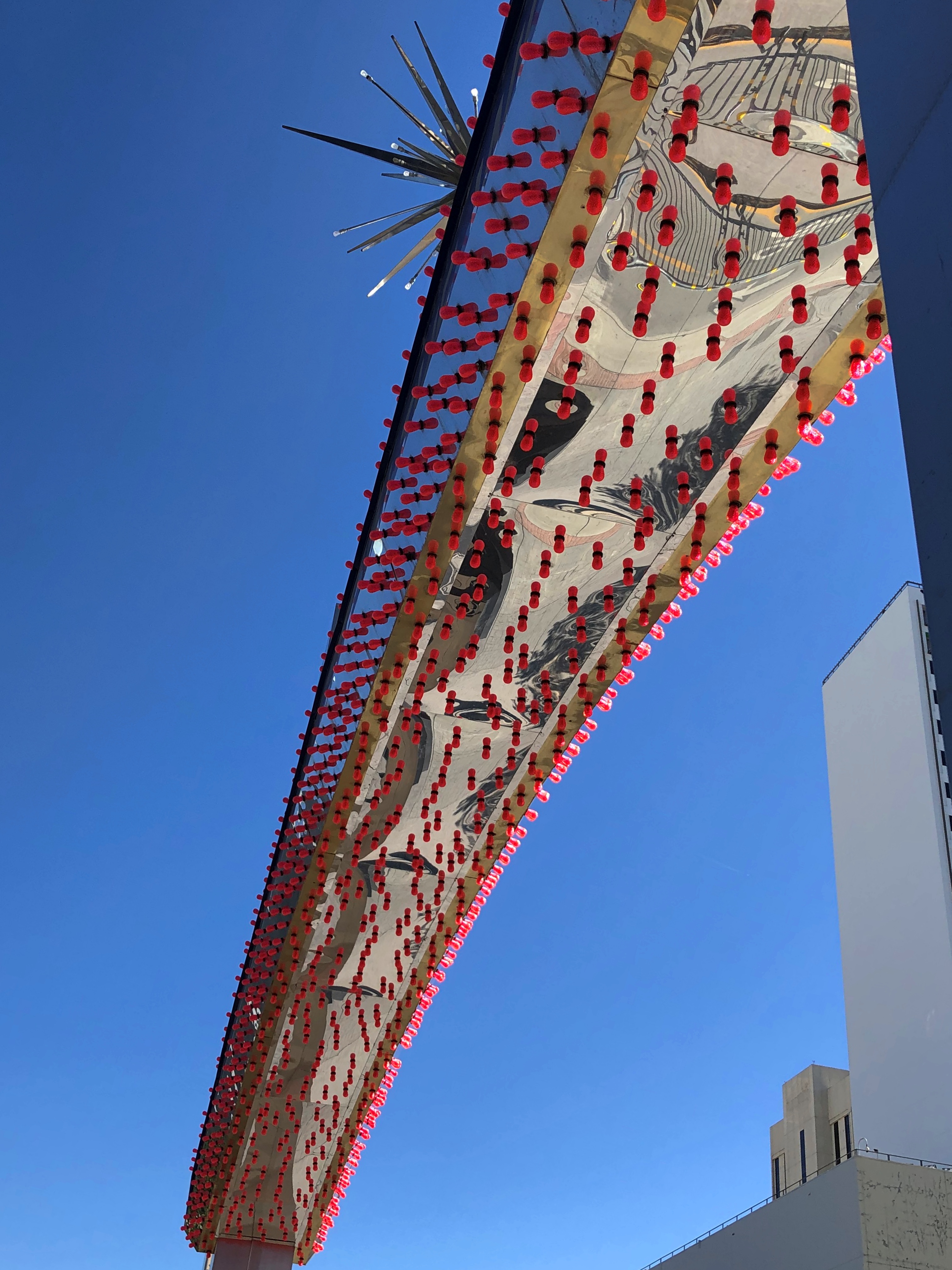
Plenty of bulbs on the underside. Quite a glow come nighttime.Reno Arch

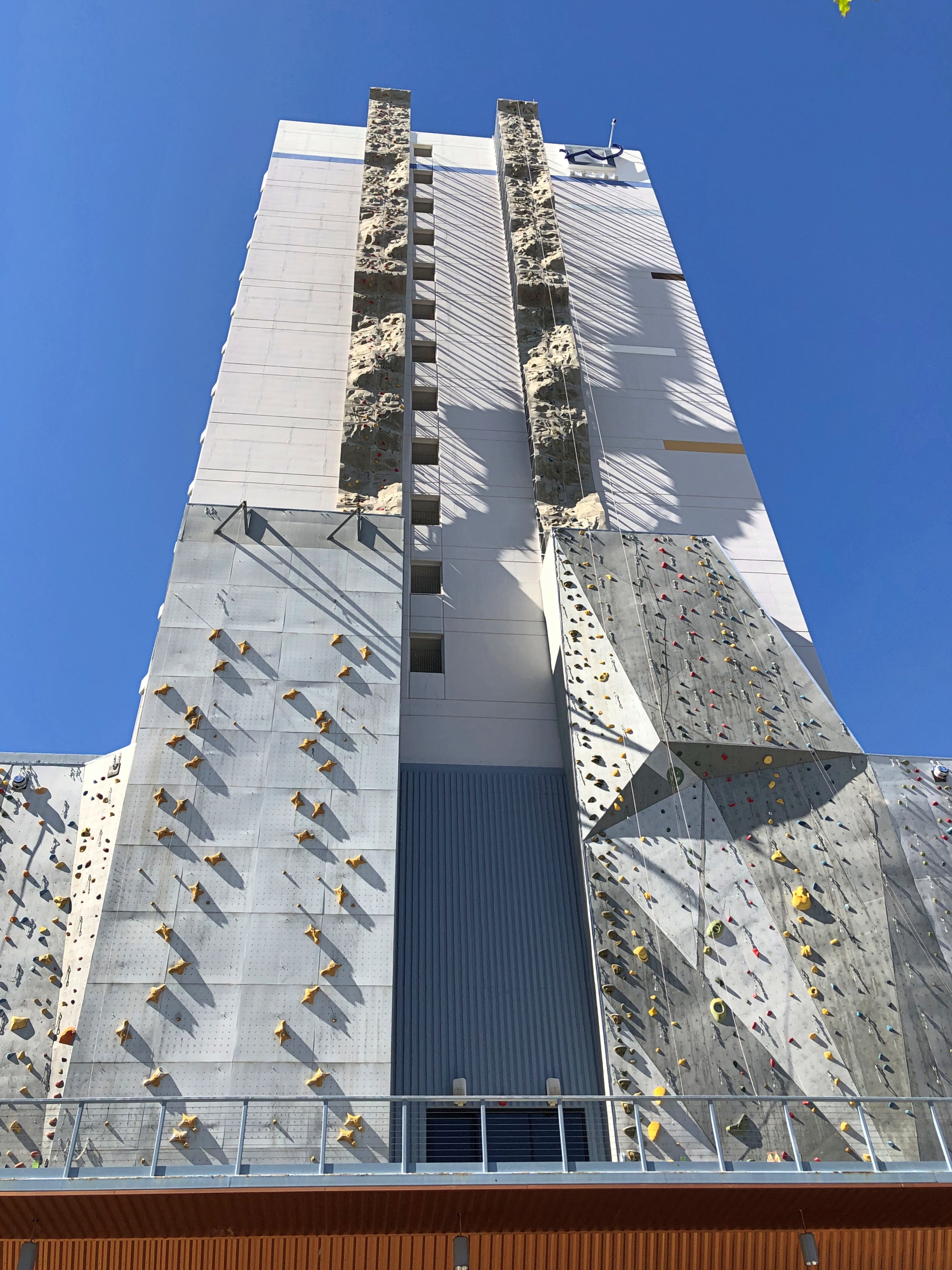
What’s that on the side of the Whitney Peak Hotel, overlooking Virginia Street? A climbing wall.Downtown Reno - Virginia Street

A set of climbing walls, actually, some toward the upper reaches of the tall building. When I first walked by it, a man was climbing on the lowest wall, but by the time I returned to take a picture, he was gone.

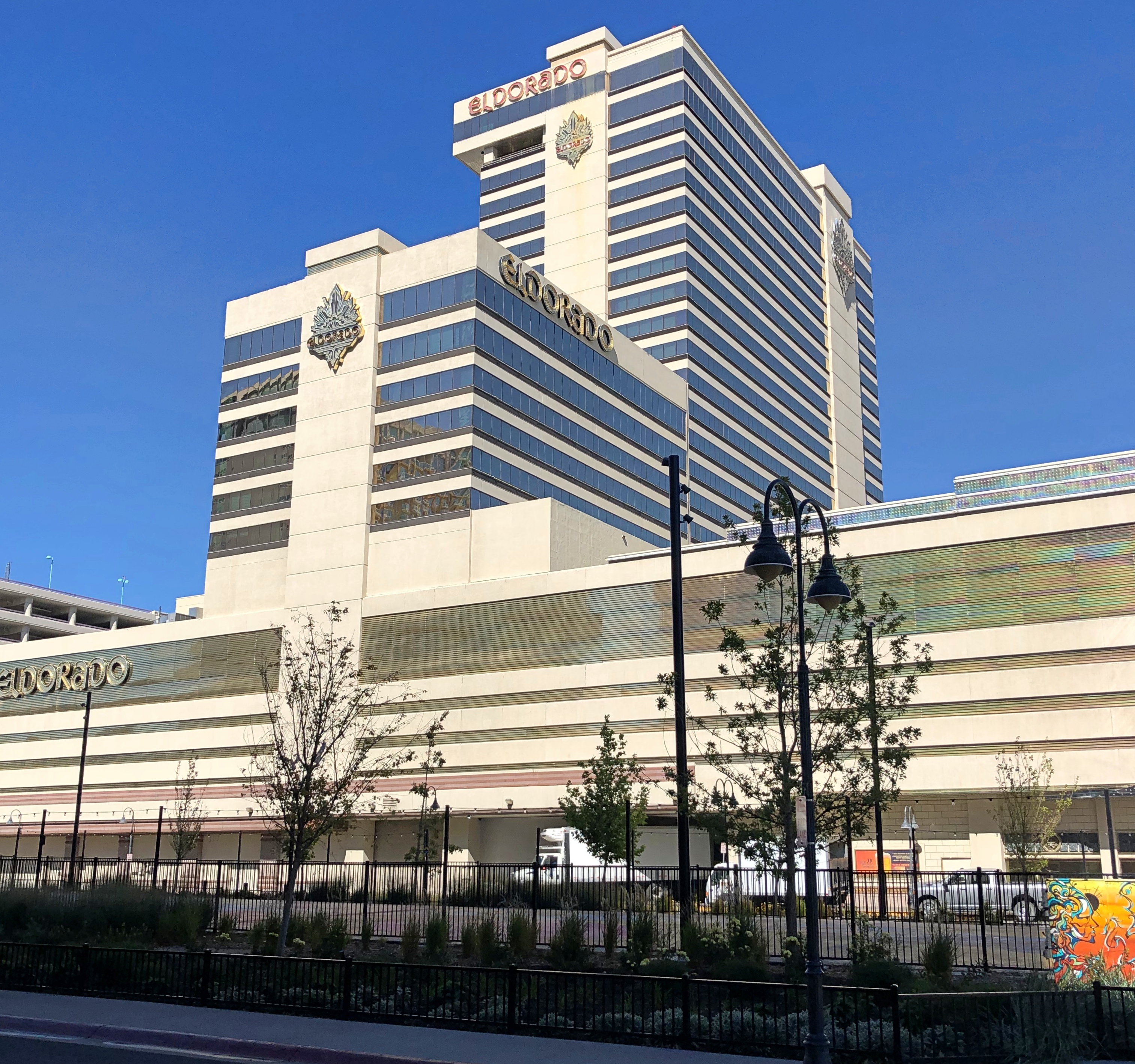
Downtown Reno has a clutch of what you might call Las Vegas-class casino-hotels, though diehard Reno partisans — are there such? — might chafe at the comparison.

Such as the Eldorado Resort Casino.Downtown Reno - Virginia Street

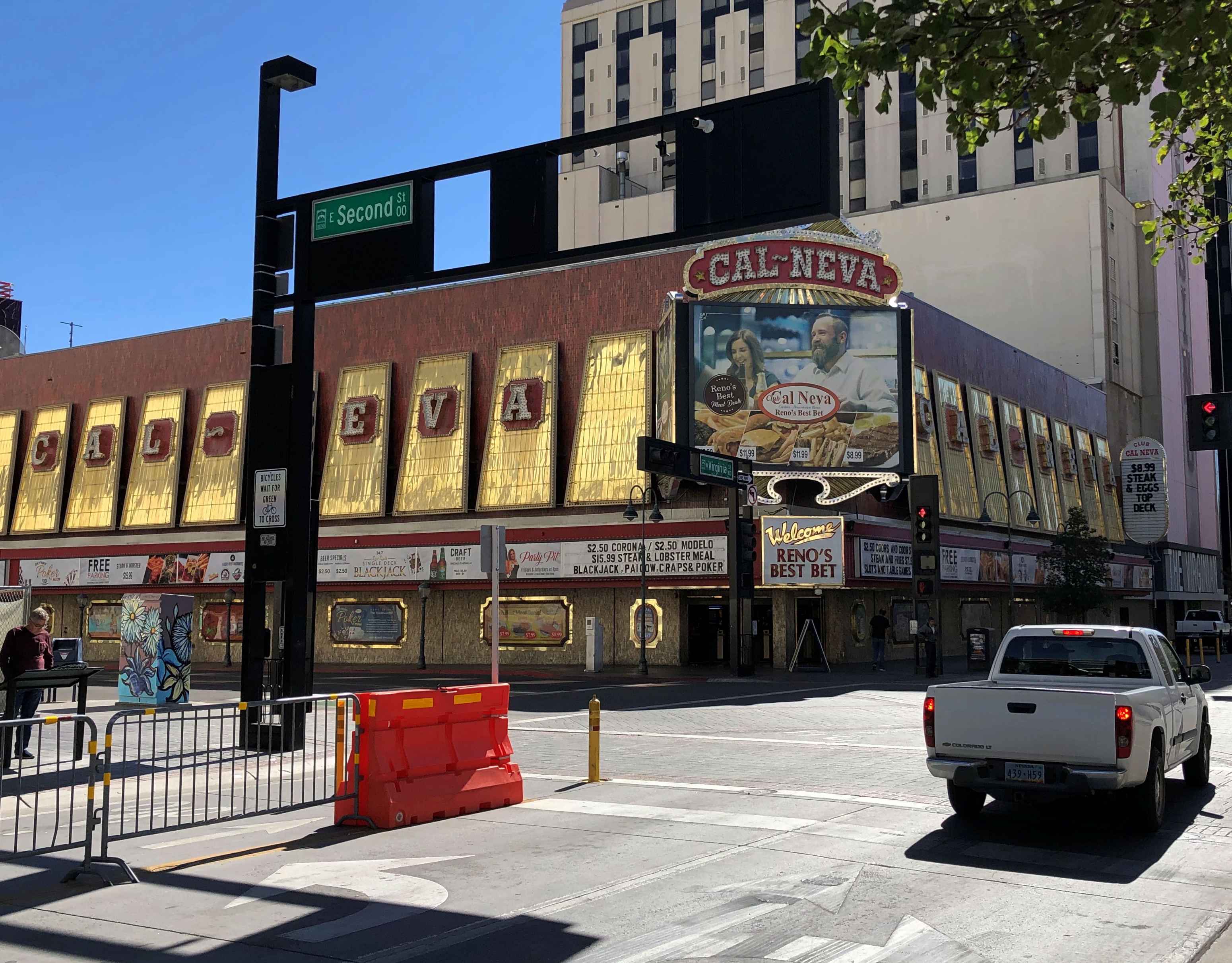
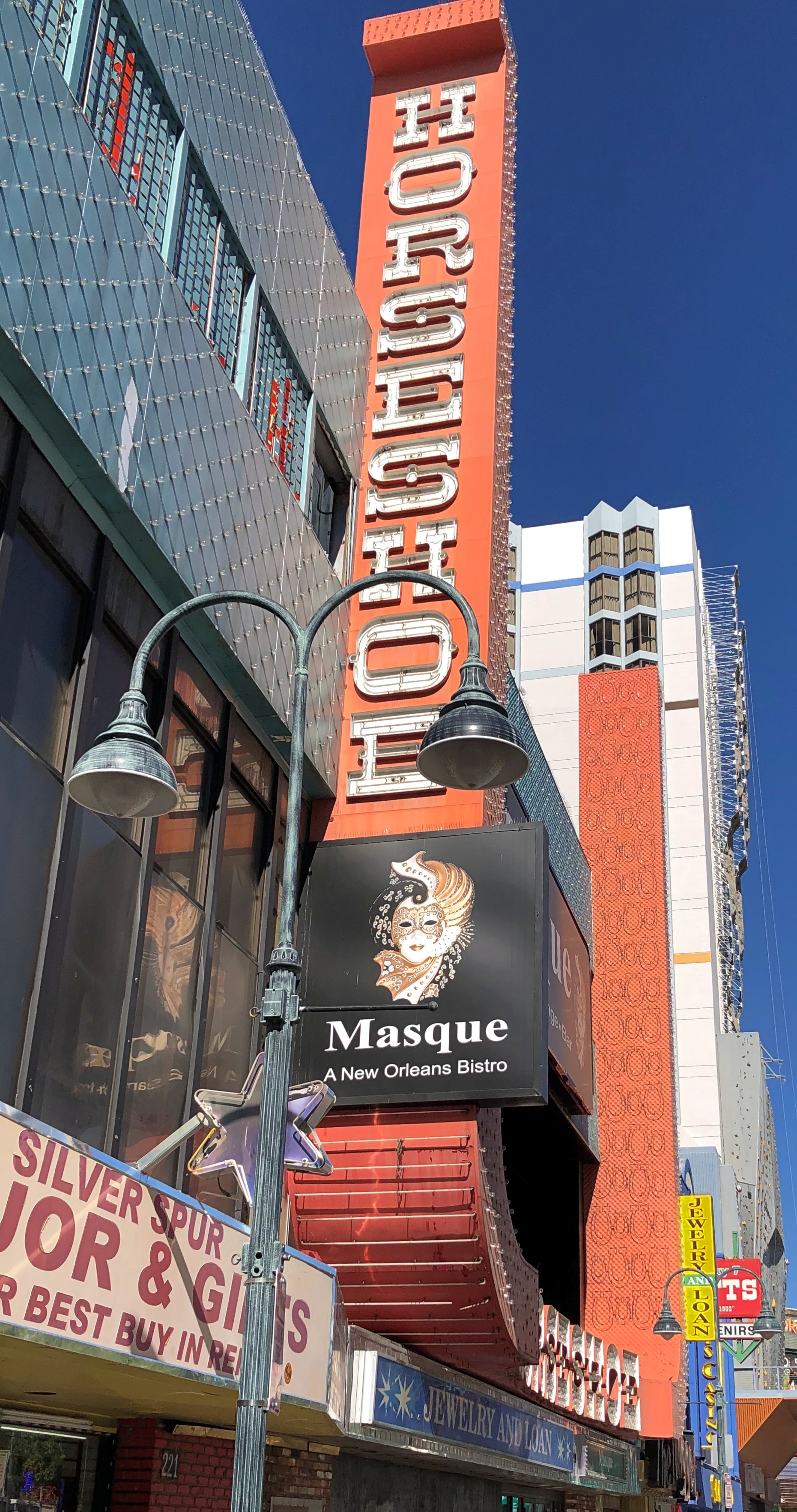
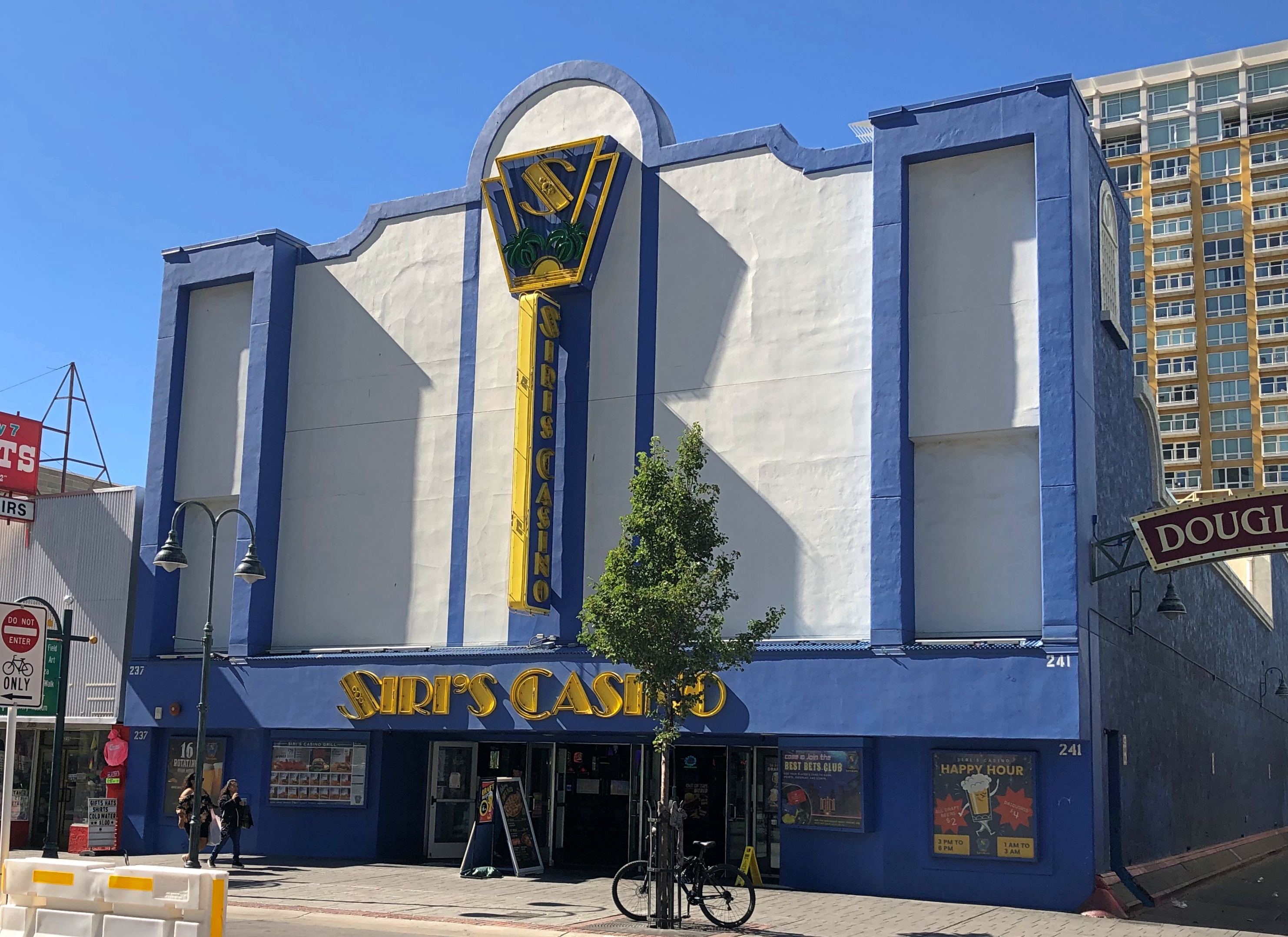
More modest gaming ventures populate much of the downtown Virginia Street, such as Cal-Neva, Horseshoe and what must be the first fully robotic casino, Siri’s Casino. Or is that name just a (happy?) coincidence?Downtown Reno - virginia street Downtown Reno - Virginia street Downtown Reno - Virginia street

South from that point are some examples of municipal Reno. Like the Washoe County Courthouse.
Downtown Reno - Virginia street

The Pioneer Theater Auditorium. If you guessed 1967, you’re right.
Downtown Reno - Virginia street

Back at the Truckee River.Truckee River Truckee River

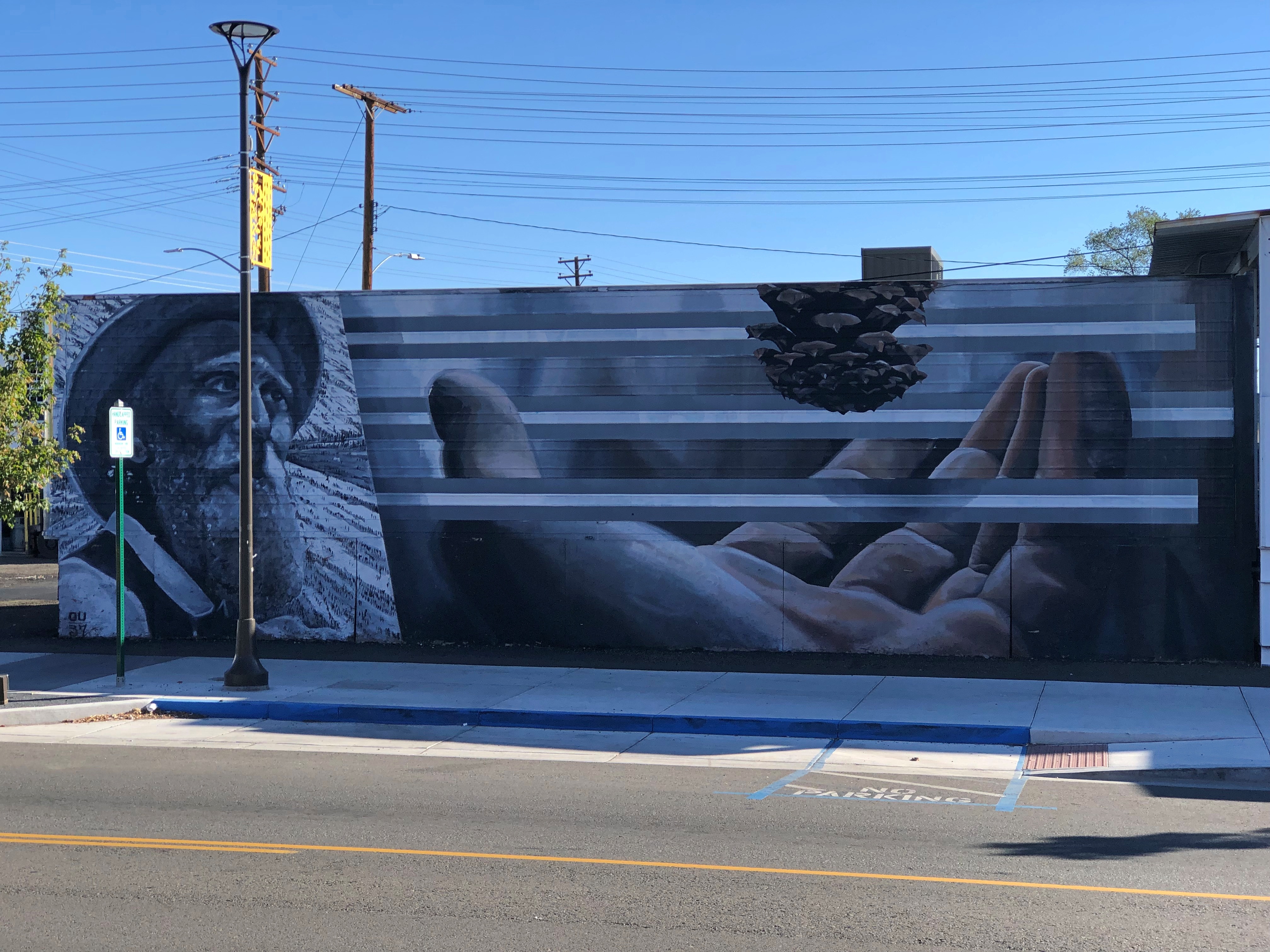
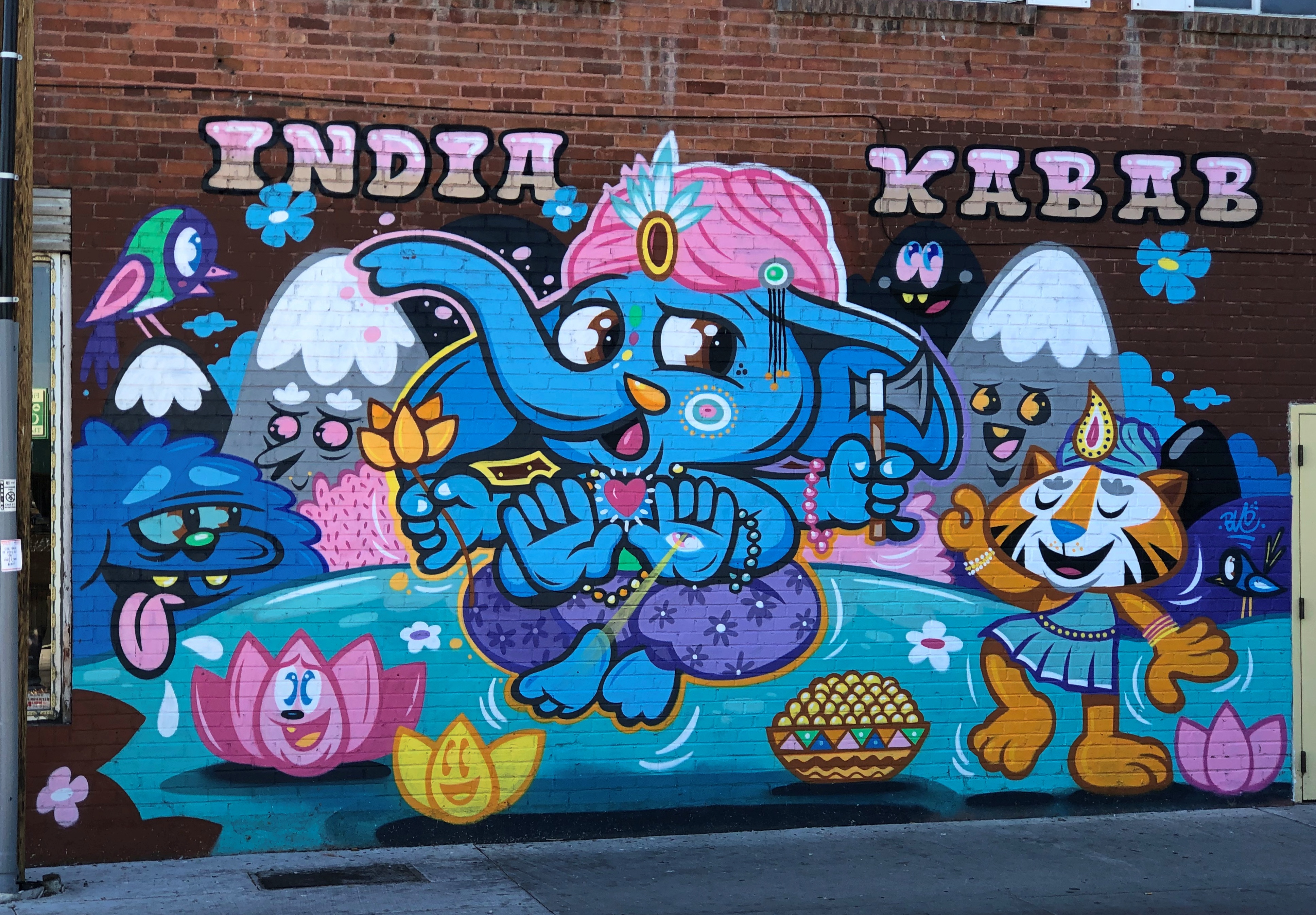
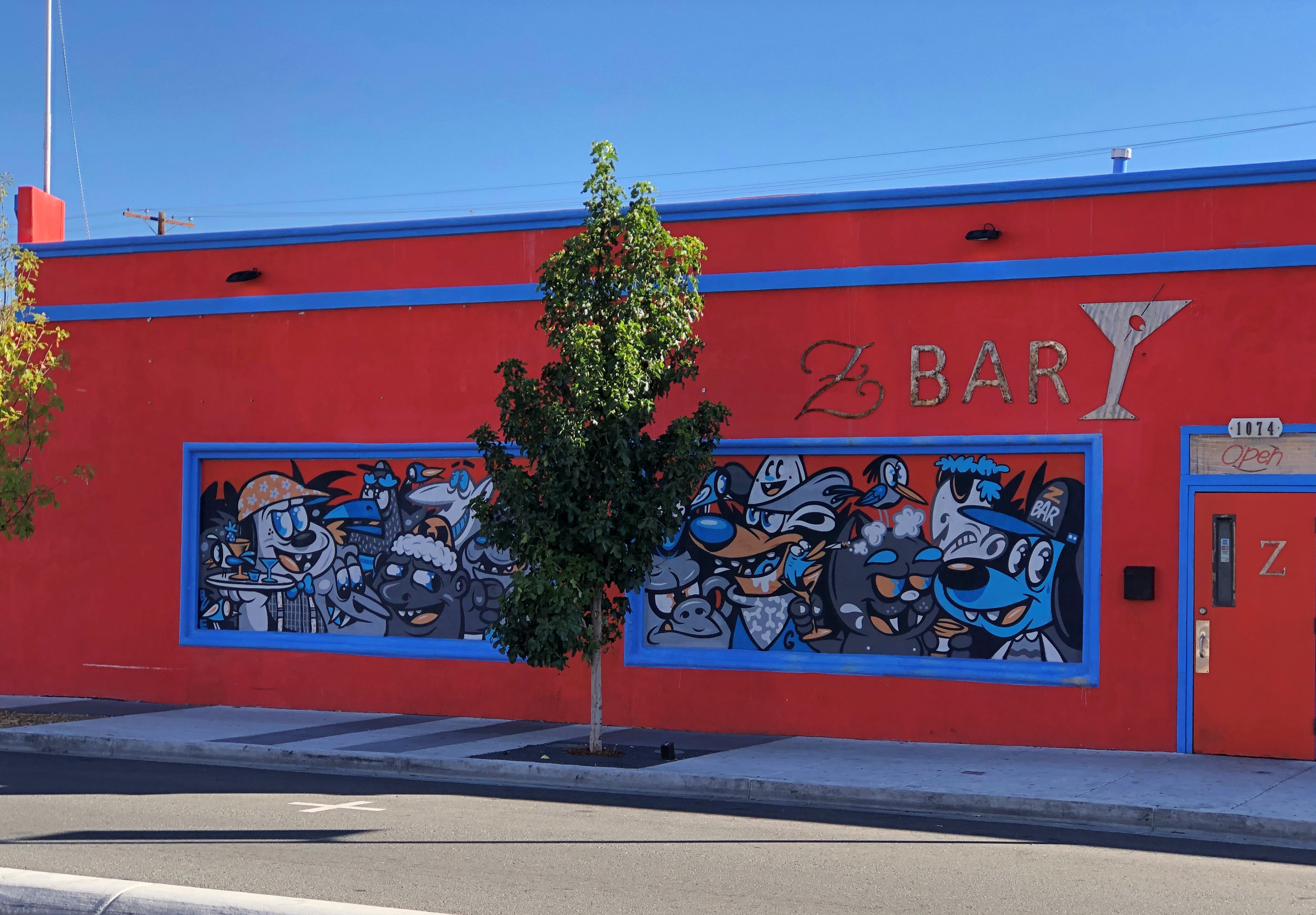
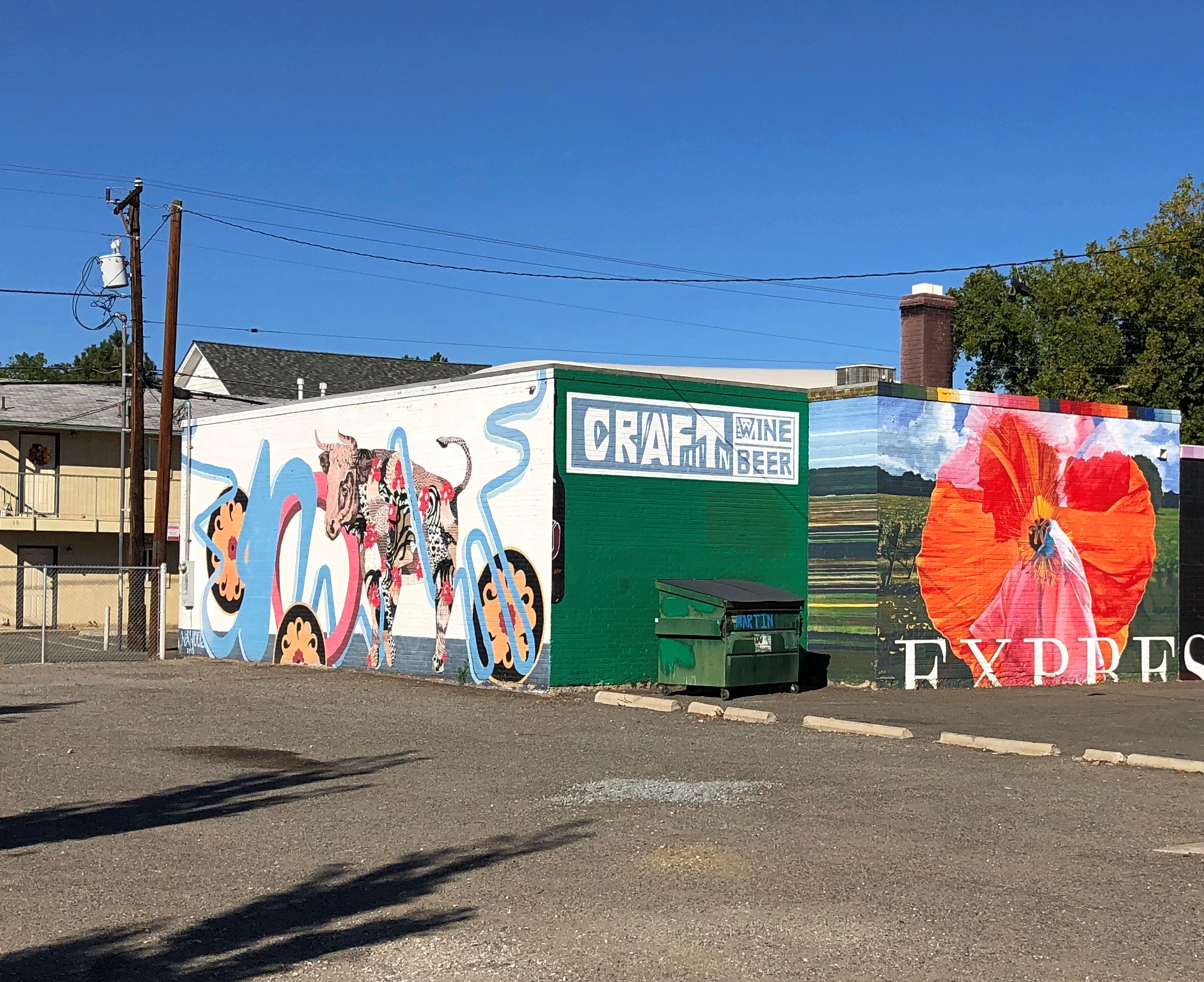
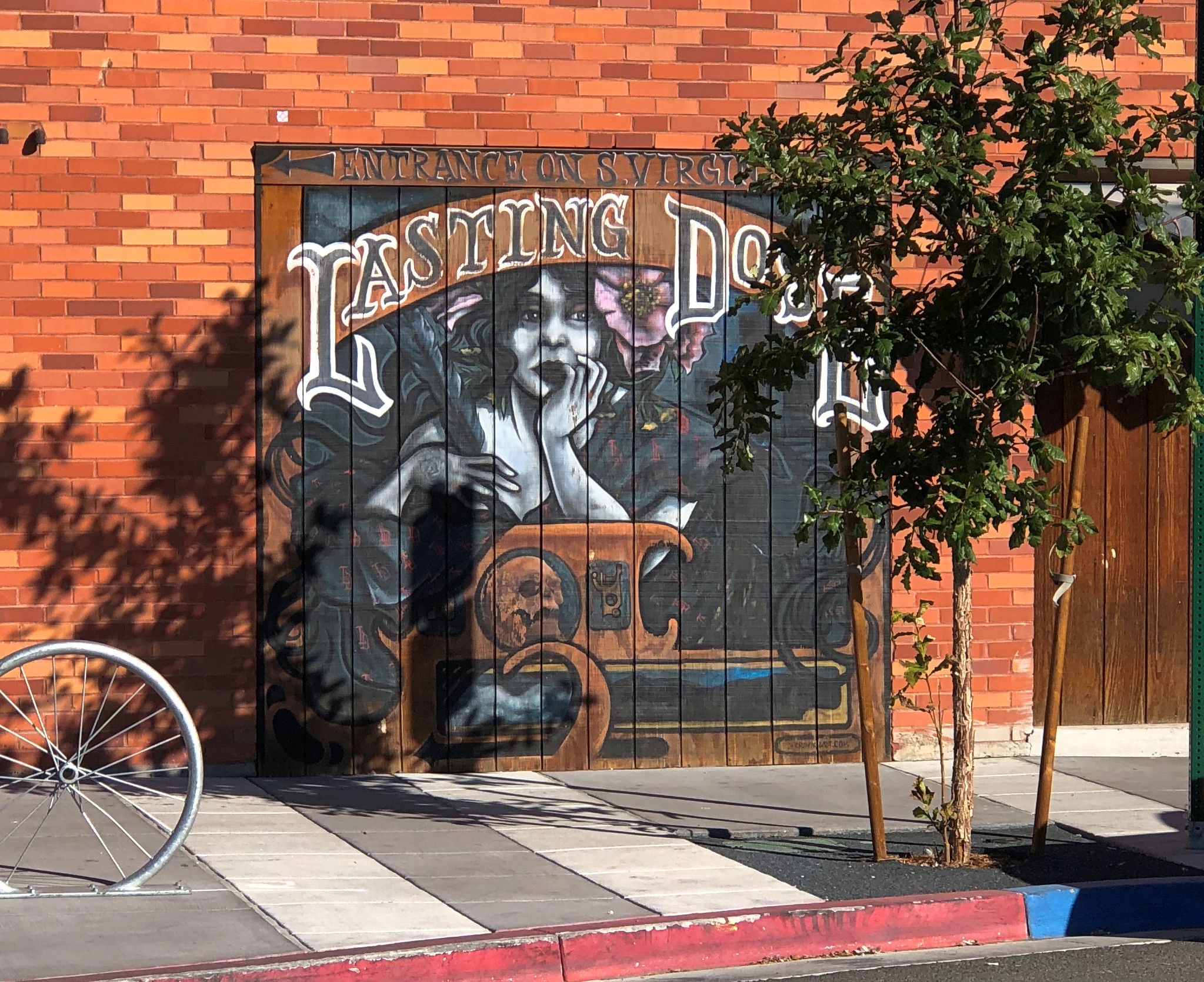
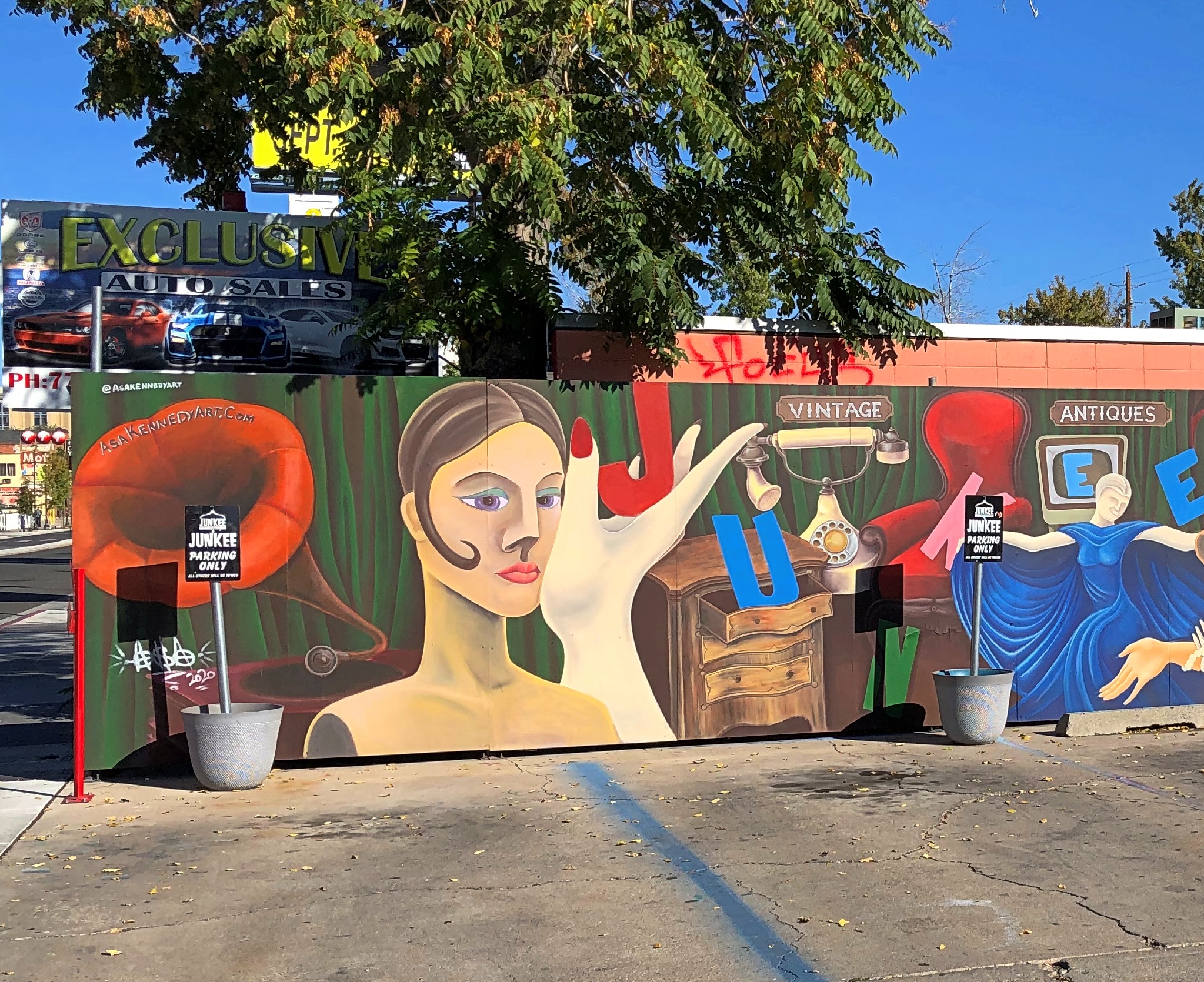
The stretch of Virginia Street through Midtown Reno is a different animal: smaller buildings, local nongaming businesses — though entertainment focused, some of them — and a number of murals. New-looking for the most part, because we’re in an unacknowledged age of mural painting nationwide, commercial and otherwise.Midtown Reno Murals Midtown Reno Murals Midtown Reno Murals

Some you might call vernacular murals, if you’re in an academical frame of mind.
Midtown Reno Murals

Every block, there were more pro murals.Midtown Reno Murals Midtown Reno Murals Midtown Reno Murals

Just a small sample, but they made for a good walk. That and the fact that few other people were around in the late weekday morning — Midtown’s prime time is clearly weekend nights — and even few cars, owing I suppose to the little in biggest little city.

Reno Riverwalk

It isn’t Vegas, but Reno is part of the national tapestry too. Somehow it wouldn’t have been the same had the prisoner shot a man in Omaha or Biloxi or Yonkers. Then again, if the crime was in Reno, what was he doing in a California state prison? Best not to nitpick great song lyrics too much.

Also, I’m just old enough to remember talk of Reno as a divorce capital. That was already a dead letter by the time I knew much about it, but there were still mentions in movies and on TV. Come to think of it, Betty Draper went to Reno to divorce Don in 1964, I believe.

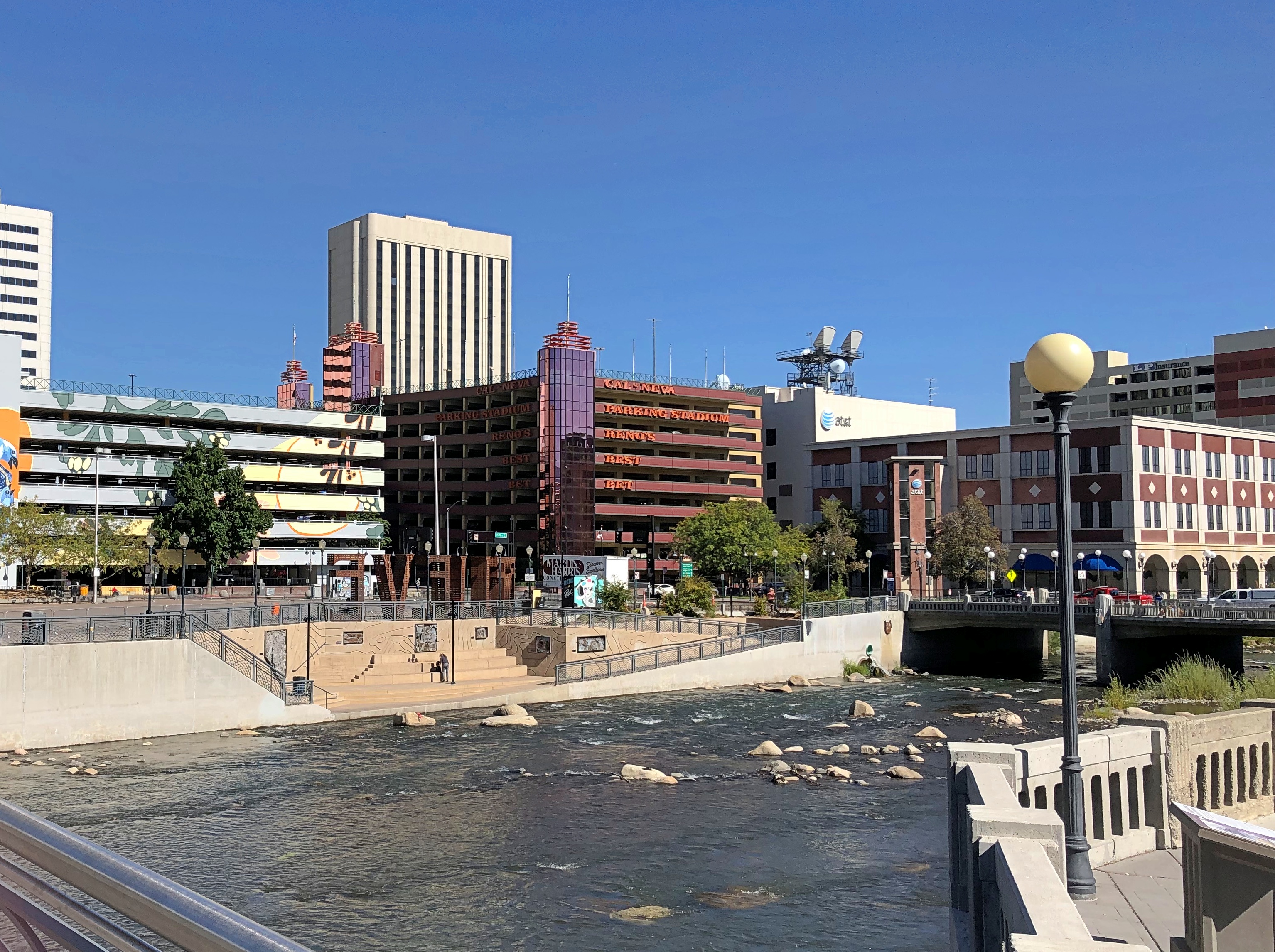
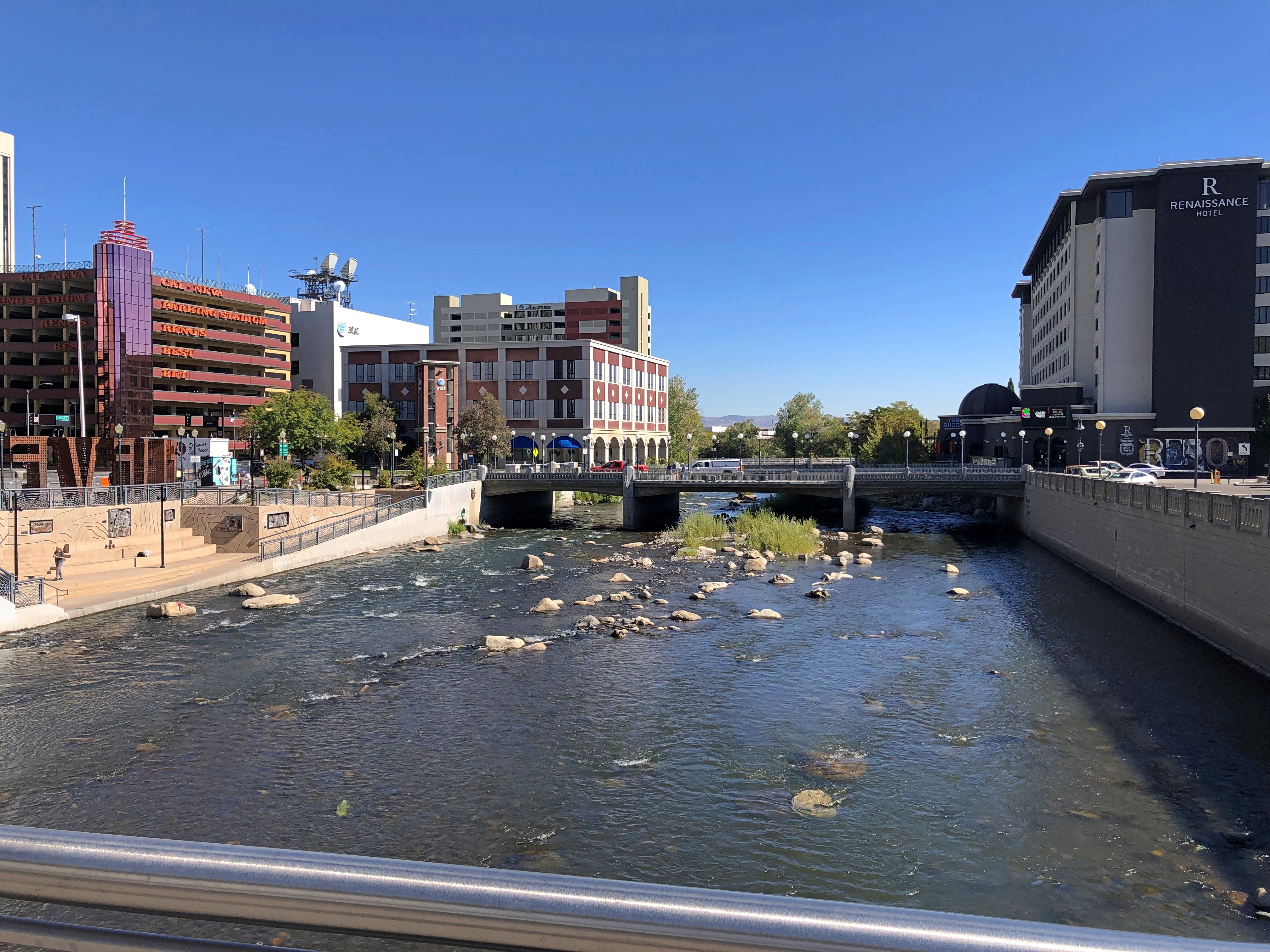
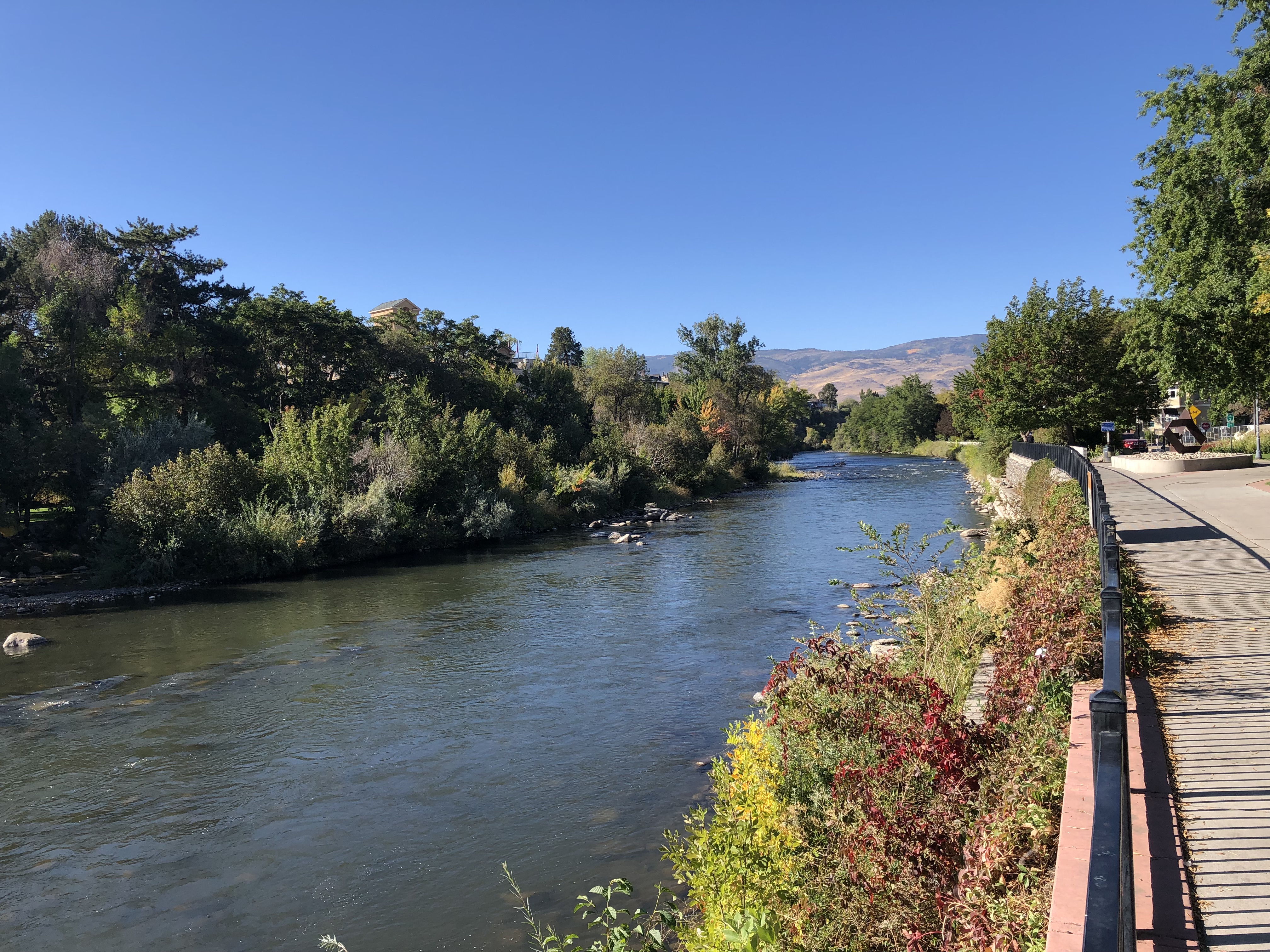
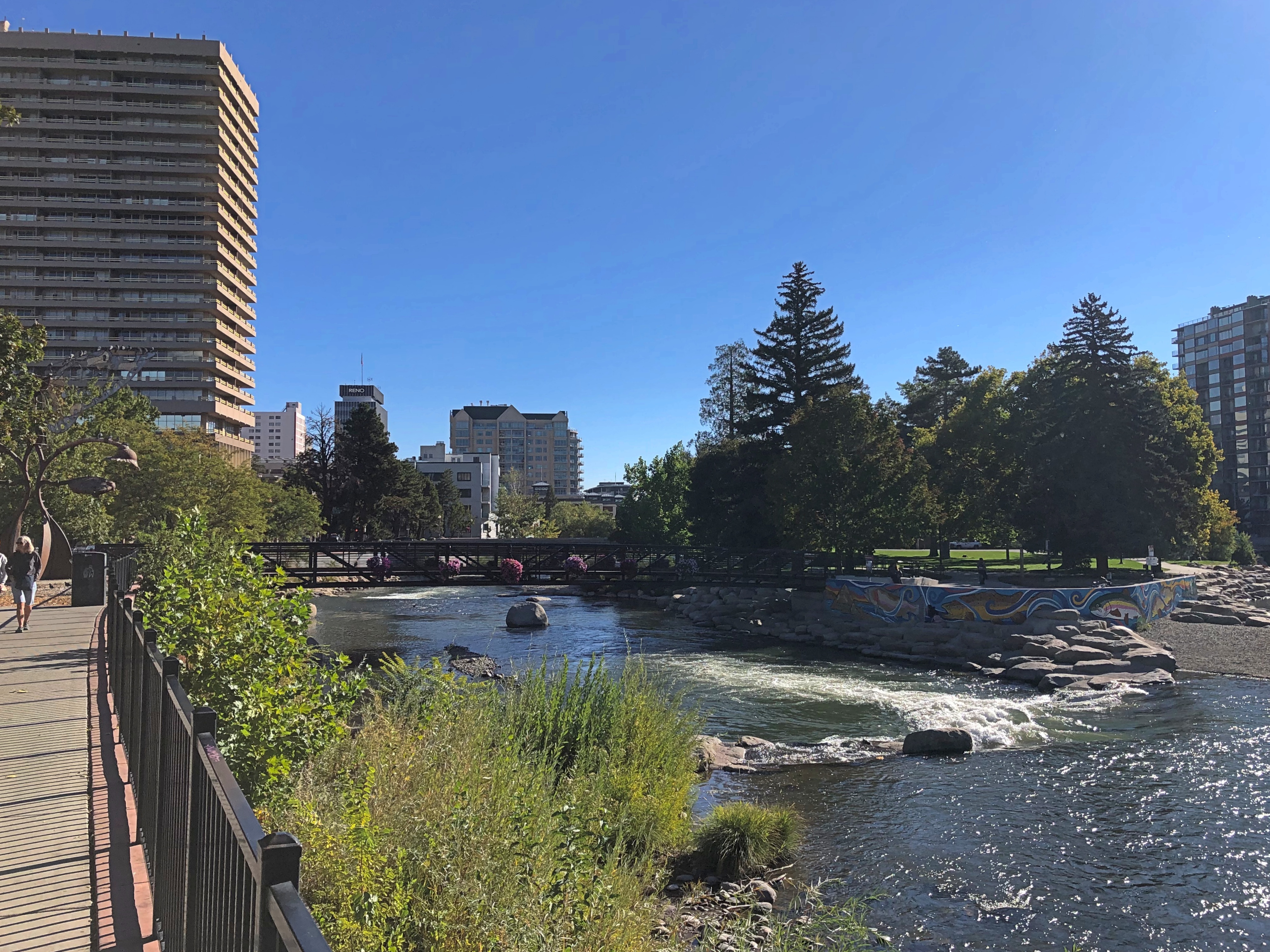
On the morning of October 3, I arrived in downtown Reno for a look around, parking in a space near the Truckee River, which runs through the city. A riverwalk along its greener-than-expected banks has been developed since the 1990s.

I was eyeing the parking meters, those petty tyrants of auto placement.

“No one checks those,” a man walking a small dog told me. “I’ve lived in that building for four years, and I’ve only seen anyone checking them twice.”

He pointed toward a mid-rise a block or so away.

“I see, thanks,” I said. “Looks like a nice building.”

“Yeah, on the outside.”

This began a discussion of apartment rents in Reno, with the elderly (75, he later said) black gentleman taking the lead in the conversion. After all, he lived around here and paid those rents. The long and short of it: The Rent Is Too Damn High.

Worse, he said he’d left California to get away from high rents. They’d followed him to Reno, where rents had no business being high. And yet, here we are.

He didn’t mention any industry numbers, but he didn’t have to. I can look those up – at least, averages. In Reno, the average apartment rent stands at $1,520/month these days, up from $1493/month a year ago, according to the Nevada State Apartment Association.

After he went on his way, I turned my attention to a stroll along the river.Truckee River, Reno Truckee River, Reno Truckee River, Reno

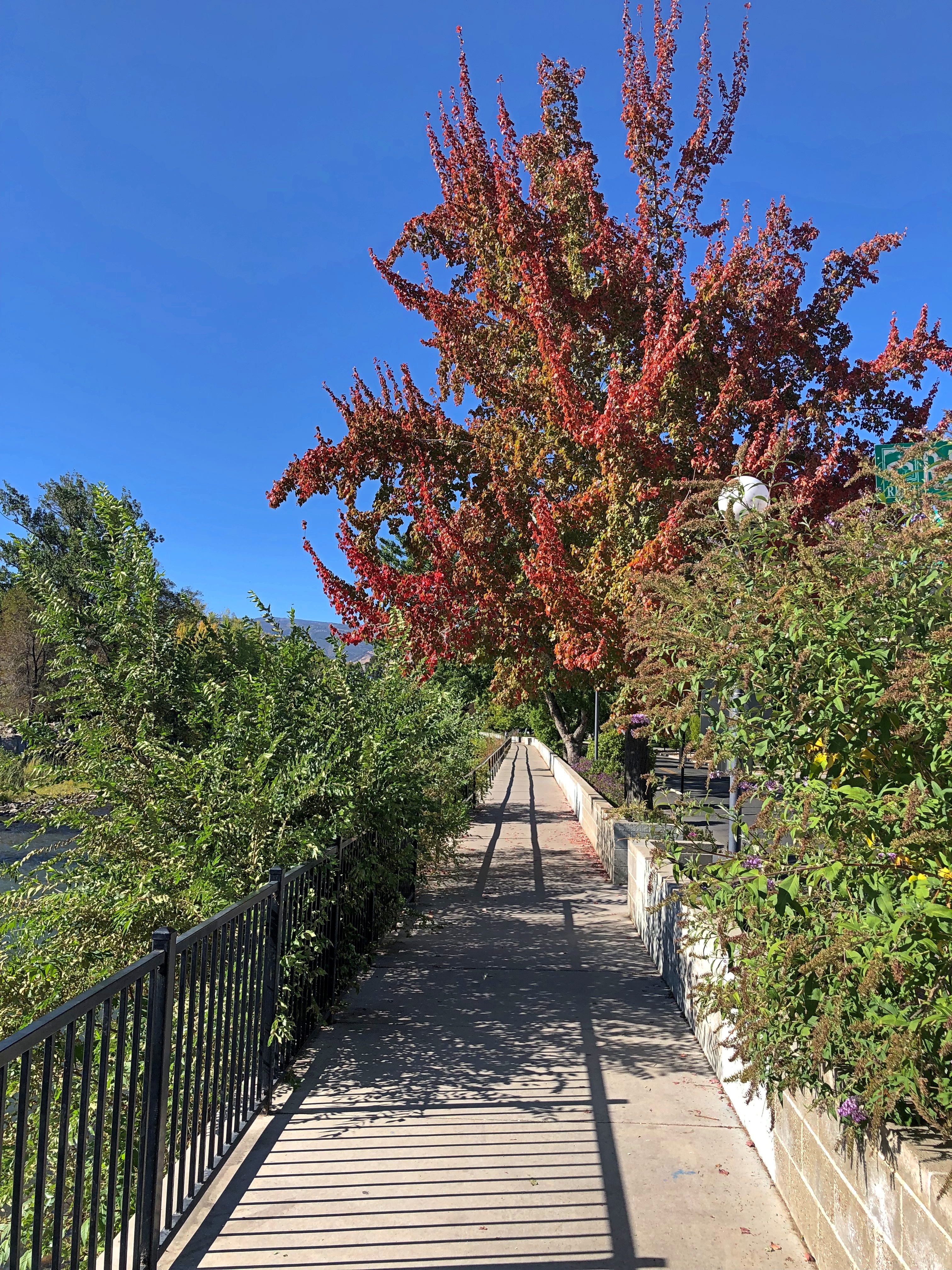
A bit of seasonal color for early October. When I was there, the leaves were just a touch non-green, like at home.Truckee River, Reno

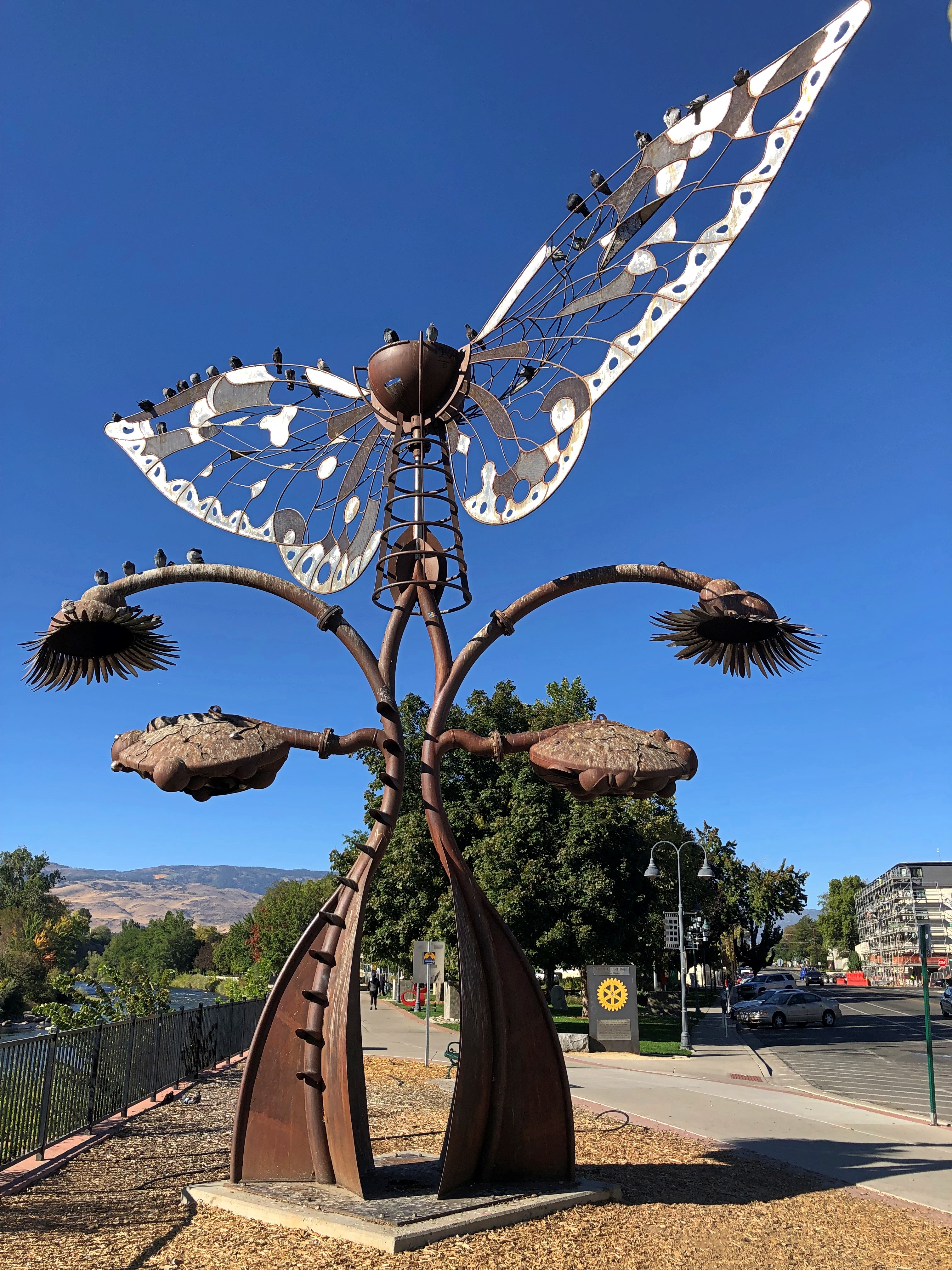
Can’t have a riverwalk without some public art. I’m pretty sure that’s an important element of contemporary placemaking theory. Impressive, but no information about the artist. Birds liked it too.Truckee River, Reno

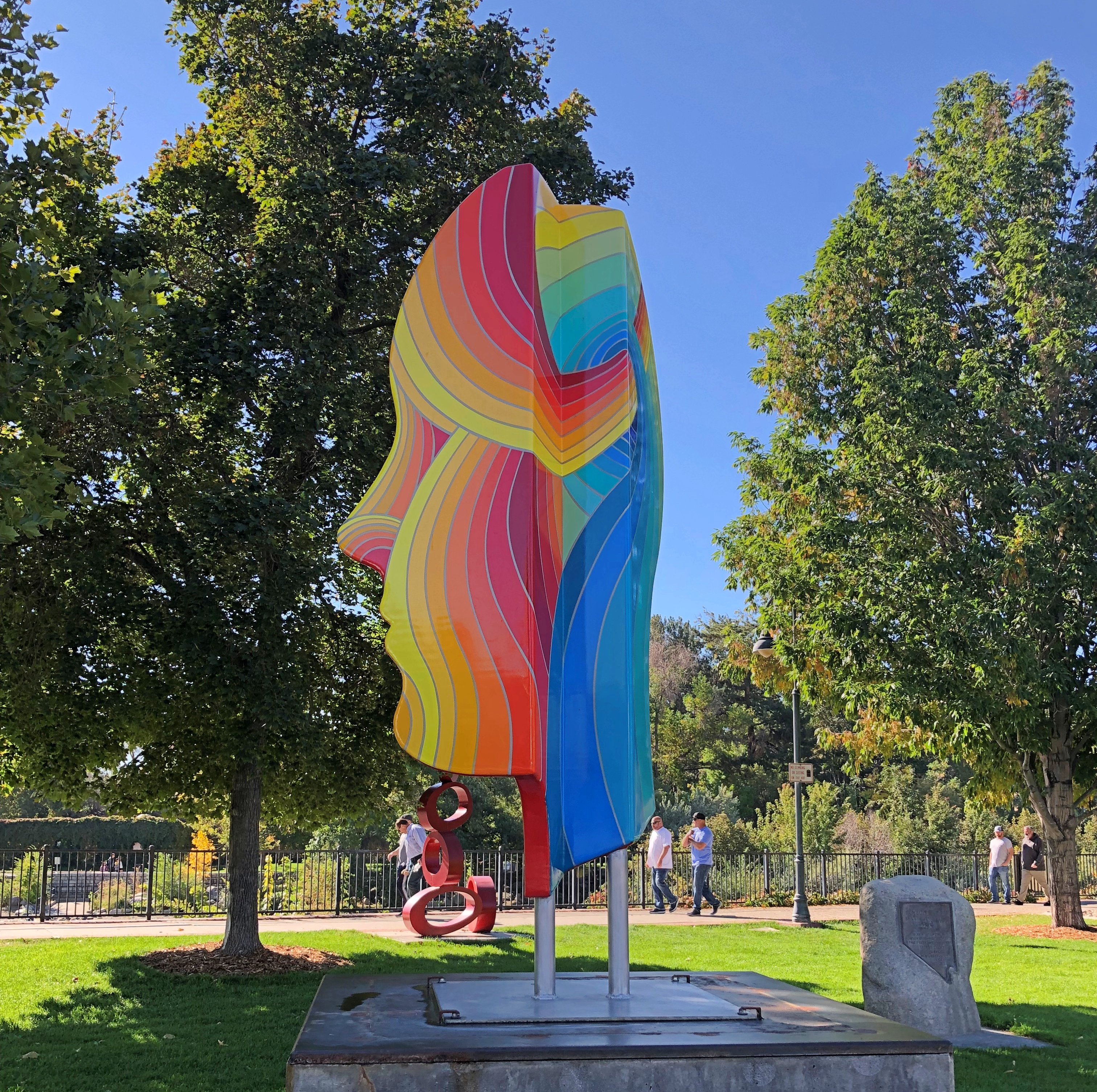
“Dual Nature” by Cecilia Lueza (2011).Truckee River, Reno

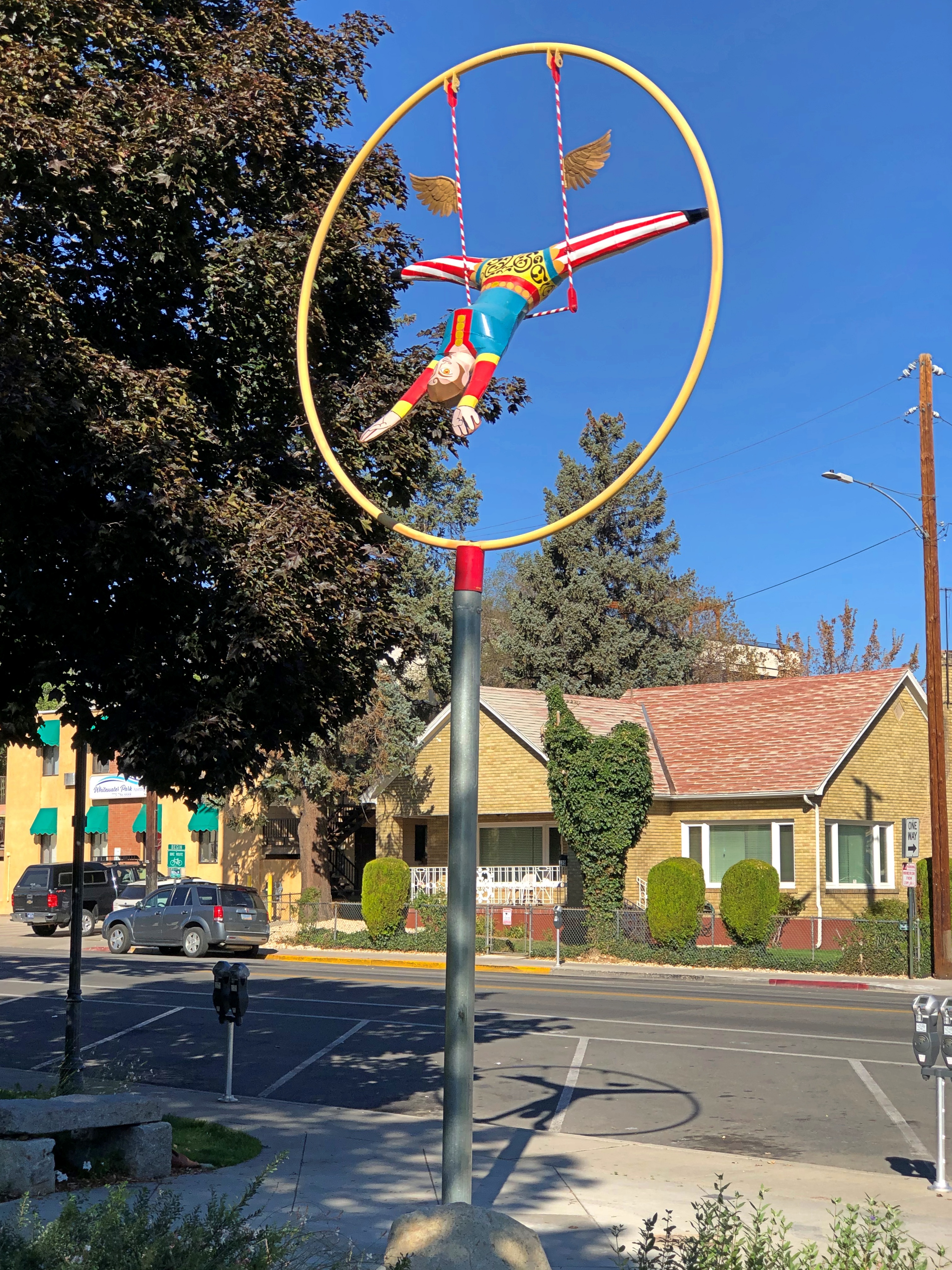
The descriptively named “Daring Young Man on the Trapeze” by Ric Blackerby (2004).Truckee River, Reno

By coincidence a few days later, I saw most of It Happened One Night on TV in our room. I hadn’t seen it in about 30 years. I appreciate even more now, as a gold standard for romantic comedies. Romcom confections made in our time should be half as good.

Then there was the scene in the bus when the riders broke out in song.

If only intercity bus rides were really like that. If only life were like that. The scene must have done wonders for the sale of the 1932 recording of the song by Walter O’Keefe, another busy and widely known entertainer who has been completely forgotten.

Marshall Gold Discovery State Historic Park

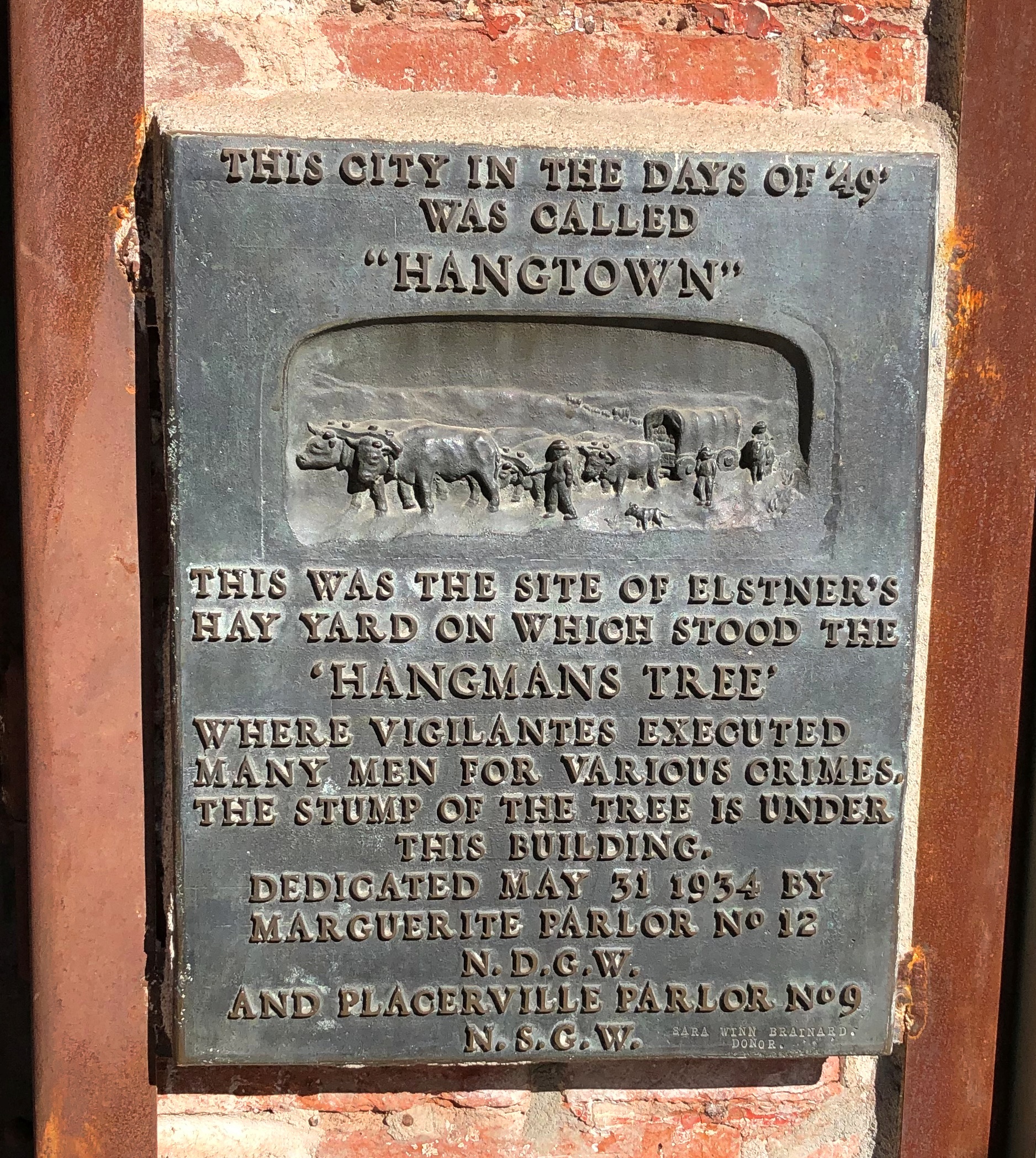
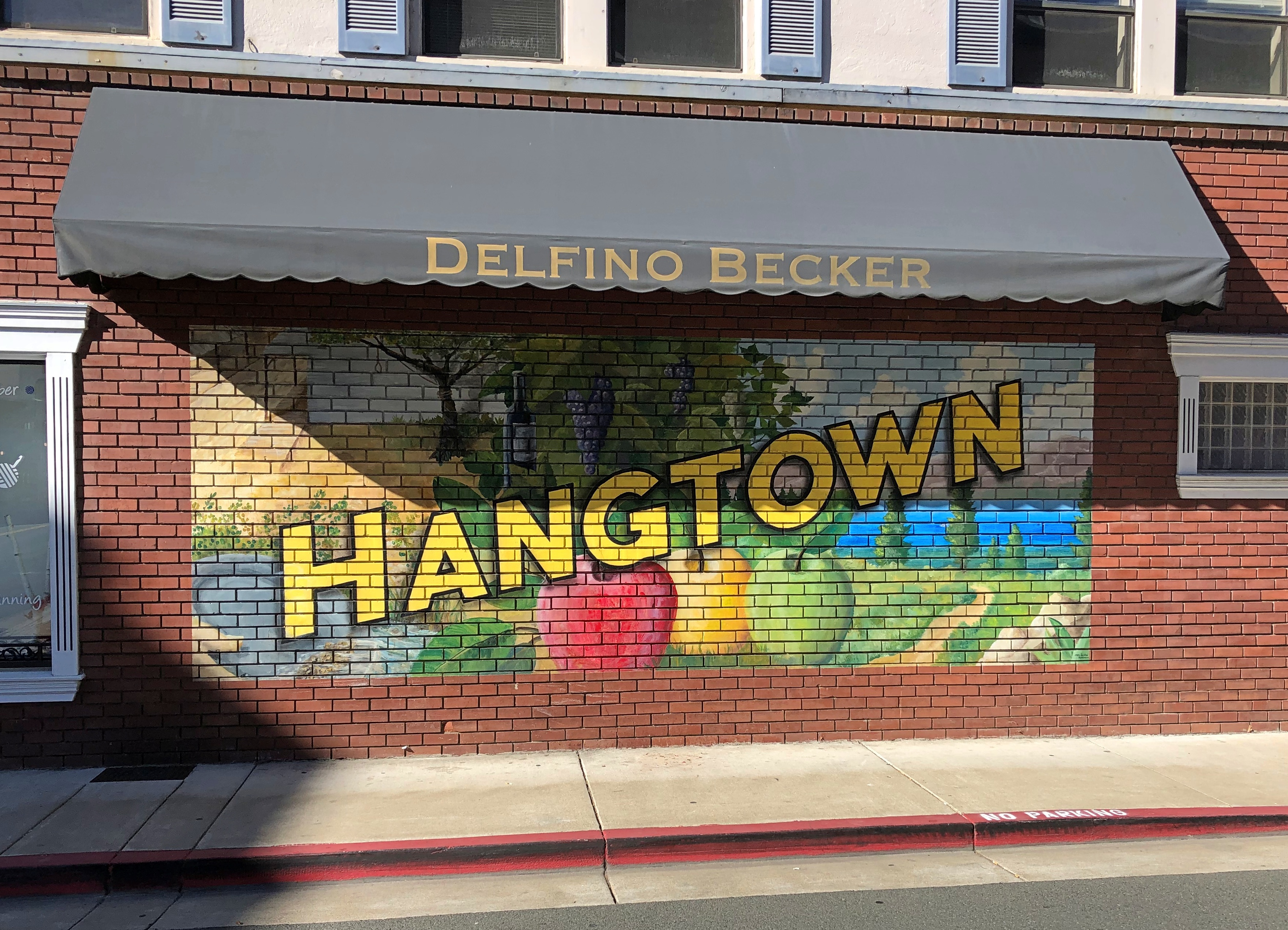
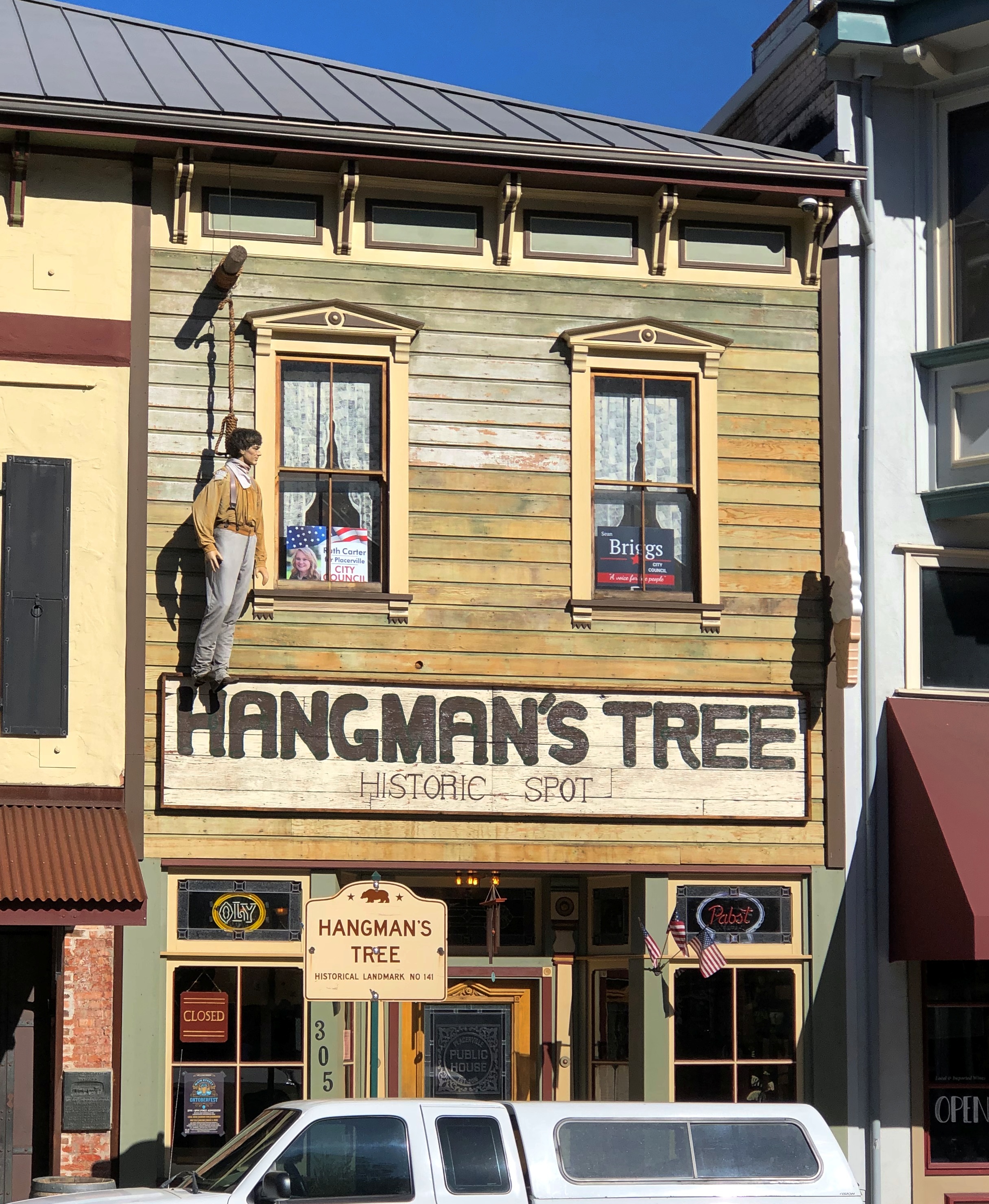
Drive east from Sacramento on U.S. 50, and you will find yourself in Placerville, California. In its early mining days, the town had a different name that the current, more tourist-oriented town doesn’t shy away from.Placerville, California Placerville, California

Due process was for fancy-pants Eastern lawyers, it seems. Still, when it all happened more than a century and a half ago, mob justice adds to the colorful history of a place.Placerville, California

NDGW and NSGW? Native Daughters and Sons of the Golden West, respectively. Sibling organizations known for memorializing and plaque-placing in the Golden State. This wouldn’t be the last time I encountered their work. Members need to be born in California, and have included such notables as Richard Nixon and Earl Warren over the years.

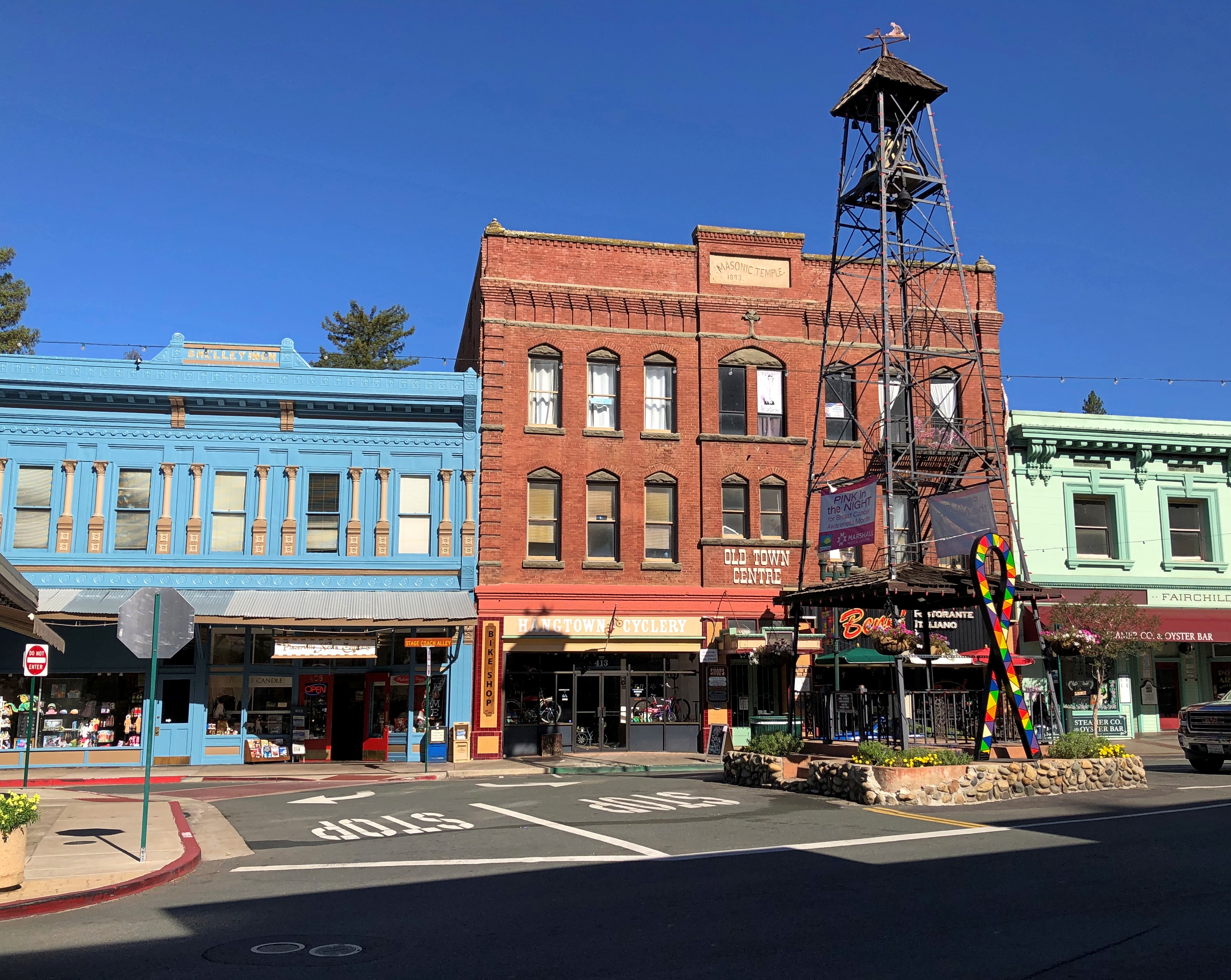
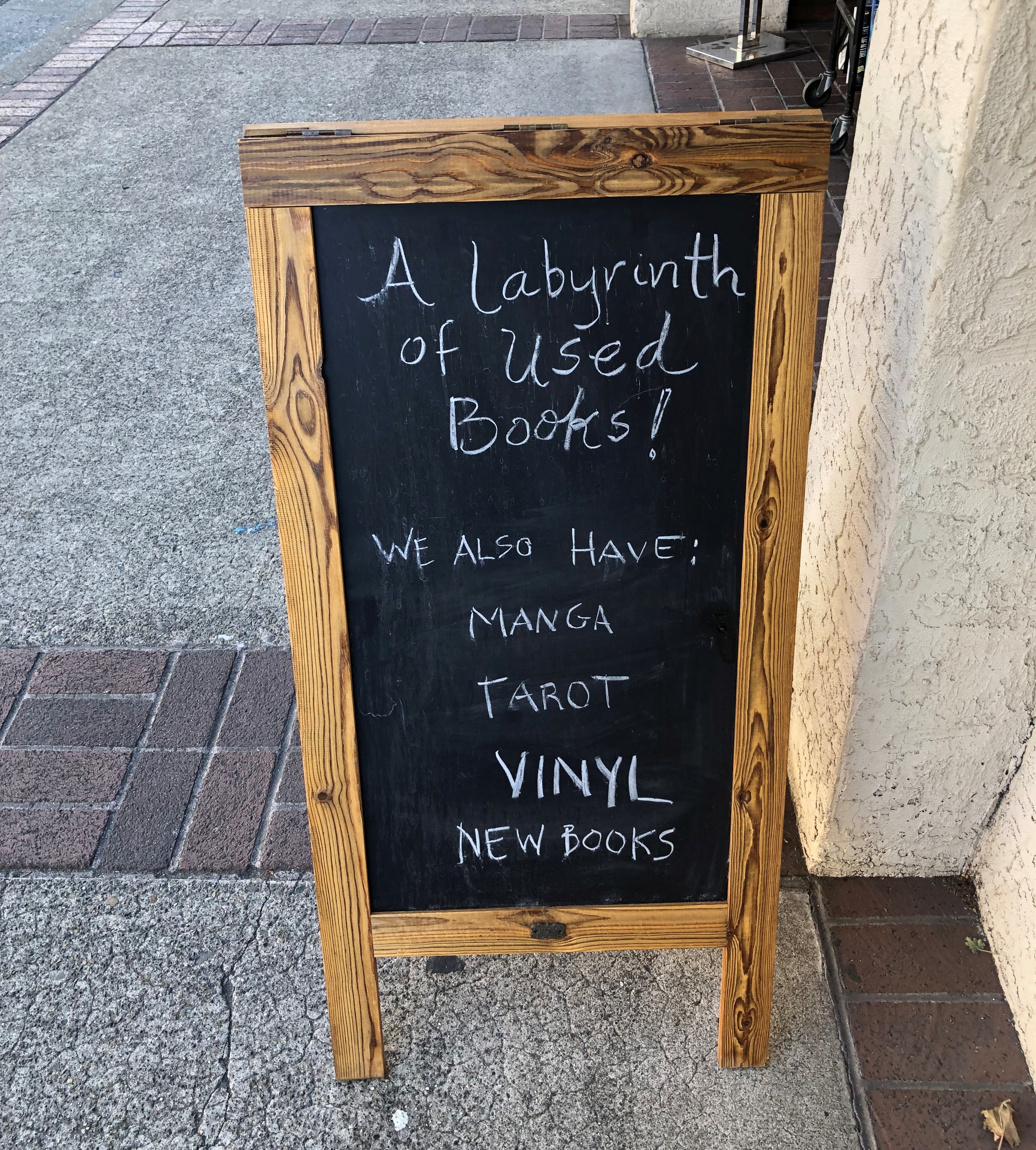
Whatever its history of frontier justice, Placerville offers a pleasant stroll in an upper-middle tourist street in our time. I spent a few glad minutes in the labyrinth of books. How could I pass that up?Placerville, California

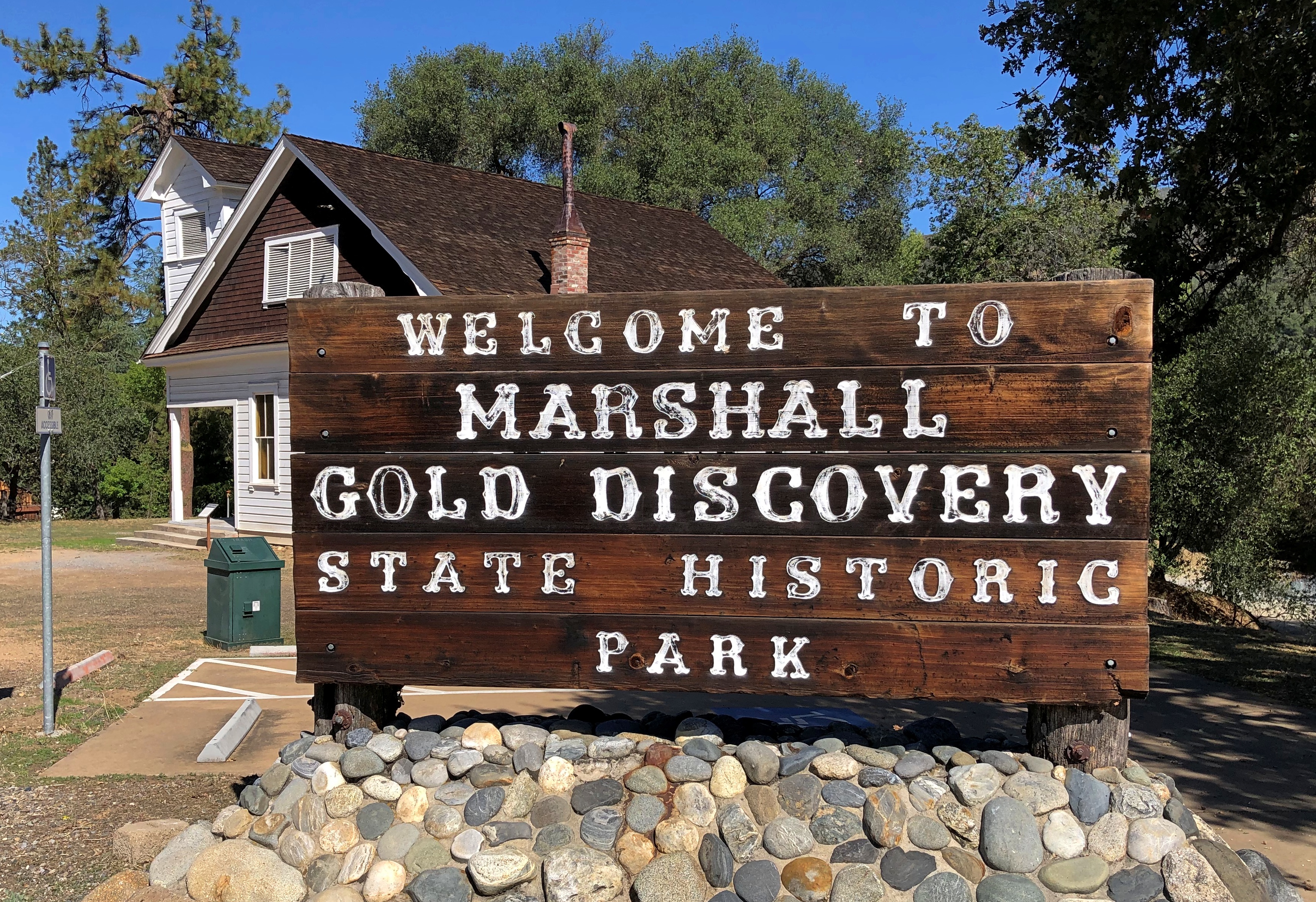
Go further east from Placerville, and you’ll find Marshall Gold Discovery State Historic Park.Marshall Gold Discovery State Historic Park

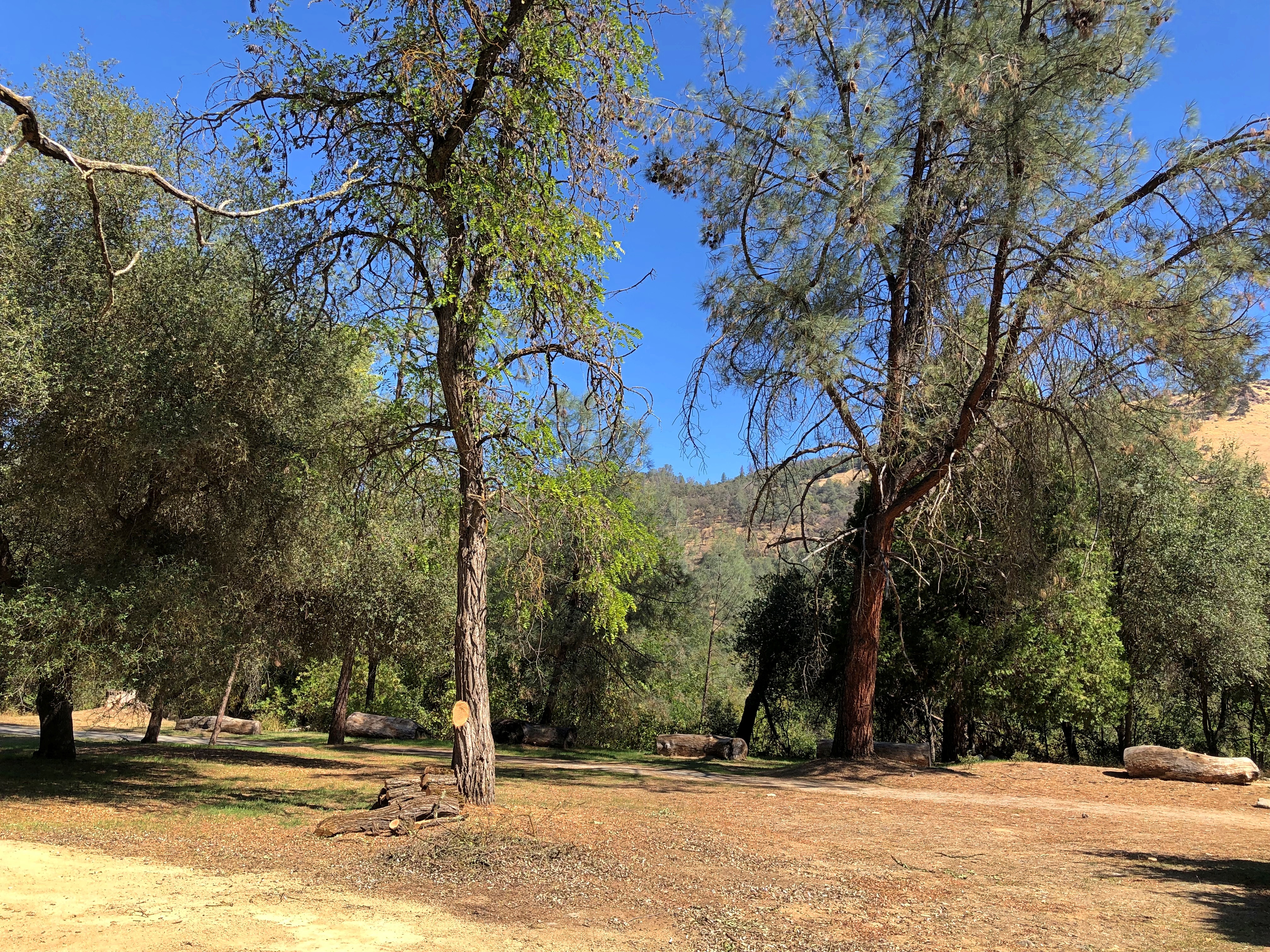
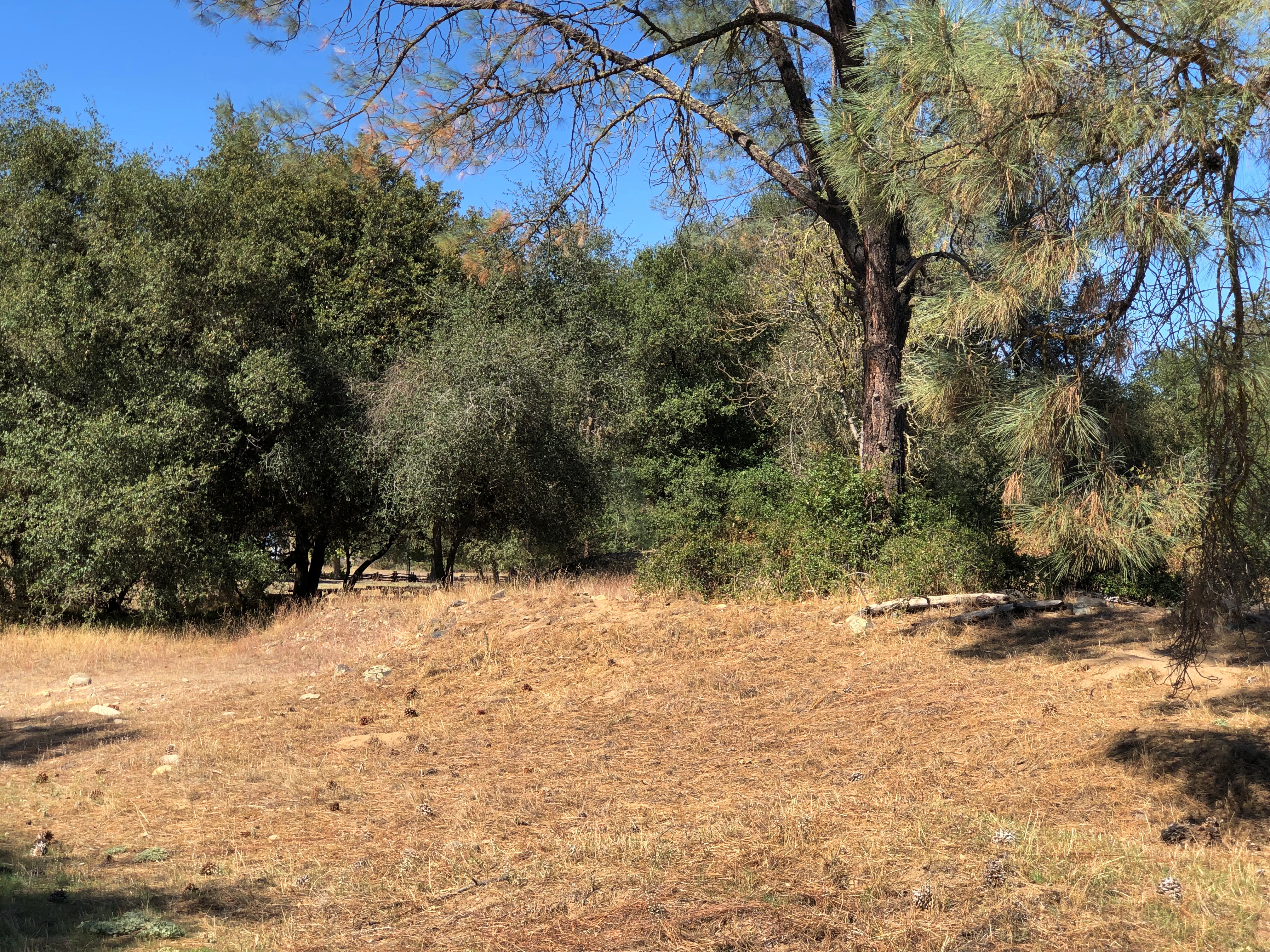
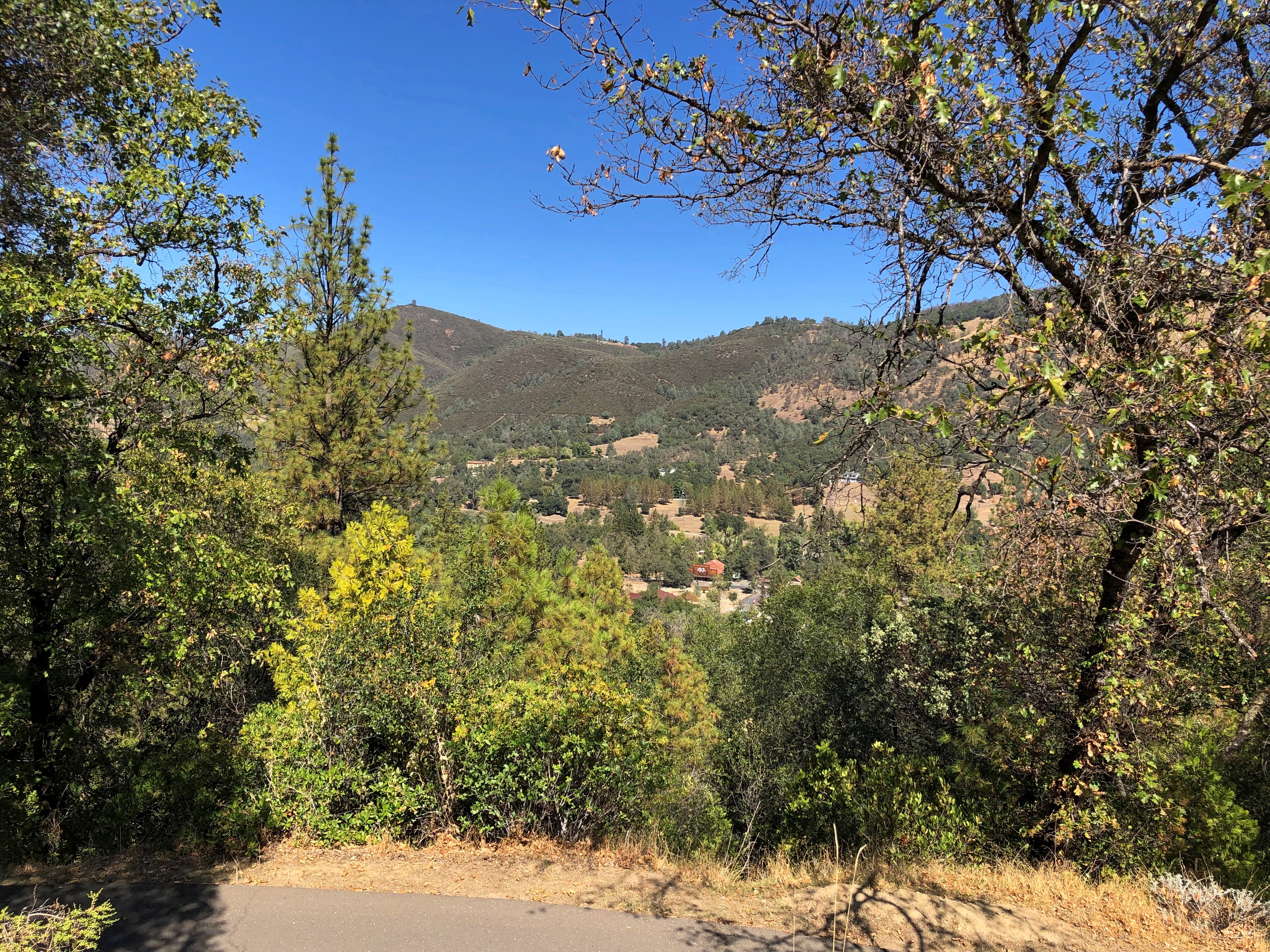
The park occupies much of the town of Coloma, California. By the time I got there, just before noon on October 2, the air was dry, sky clear, and temps nearly hot. The terrain reminded me a good deal of the Texas Hill Country: scrubby and brown and hilly, but appealing all the same.Marshall Gold Discovery State Historic Park Marshall Gold Discovery State Historic Park

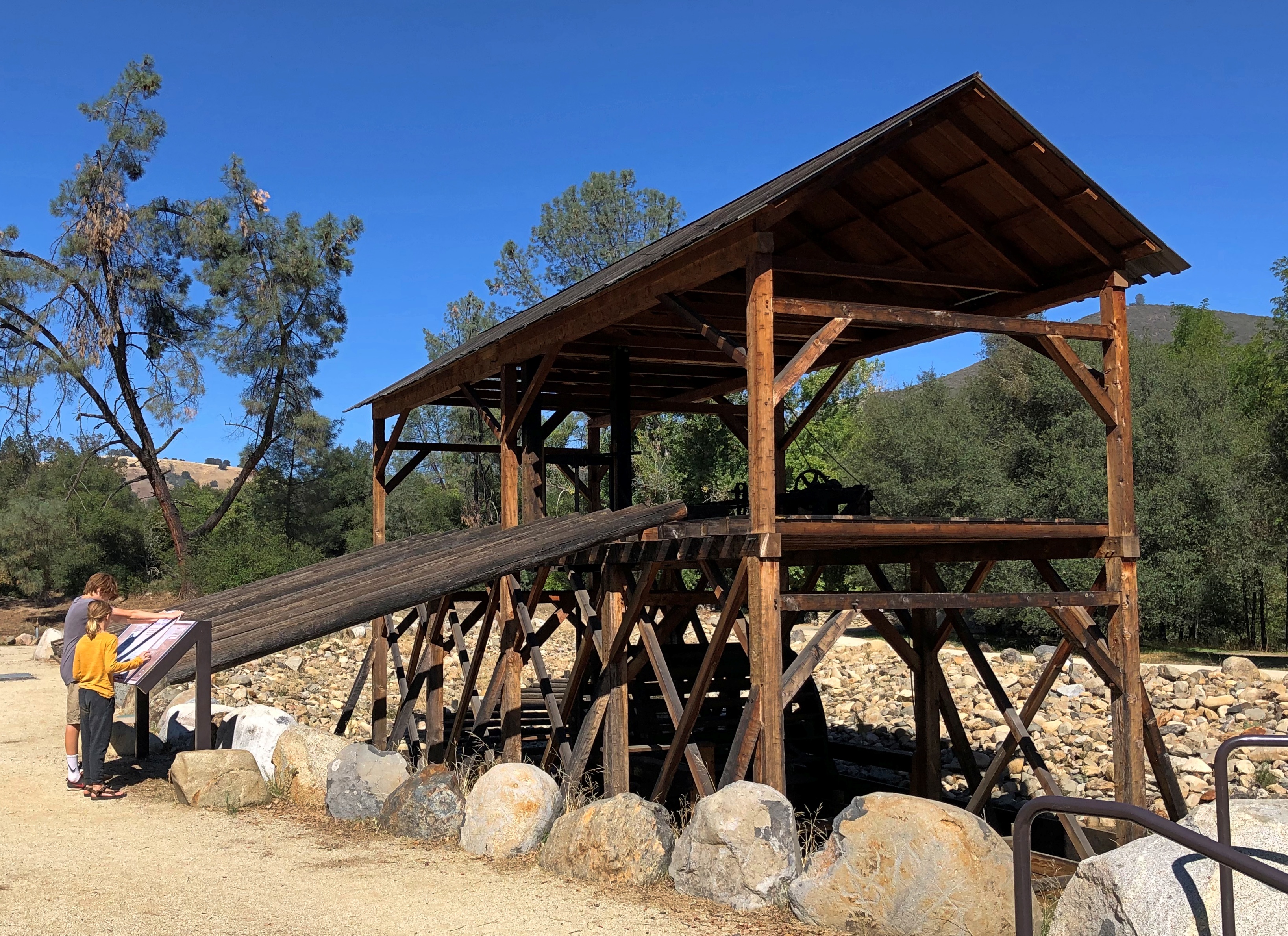
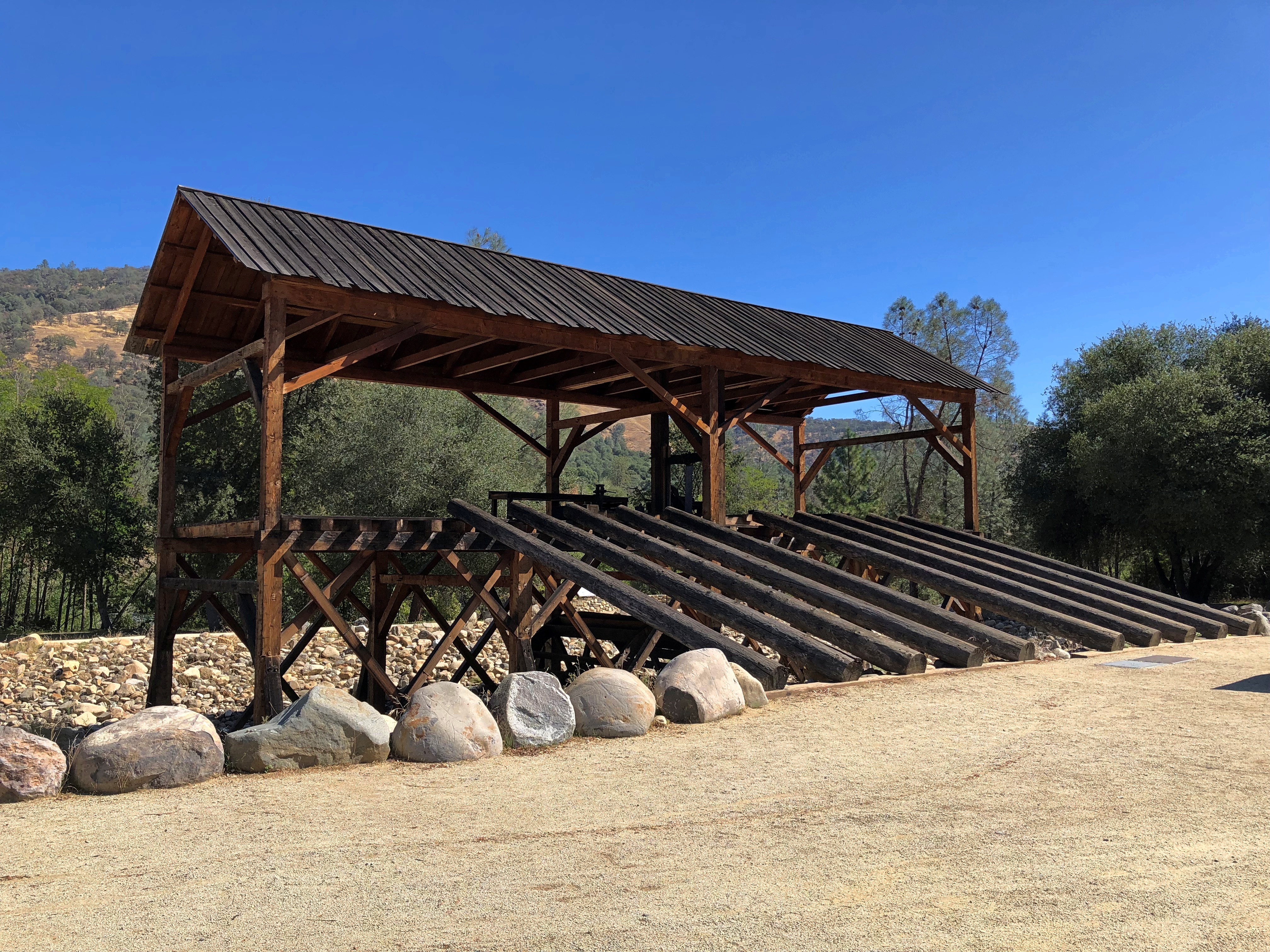
The park includes a reconstruction of the sawmill where James Marshall saw those golden flecks in the winter of 1848. The structure, anyway, since I don’t think including a 19th-century industrial saw (steam powered by this time?) was in the reconstruction budget.Marshall Gold Discovery State Historic Park Marshall Gold Discovery State Historic Park

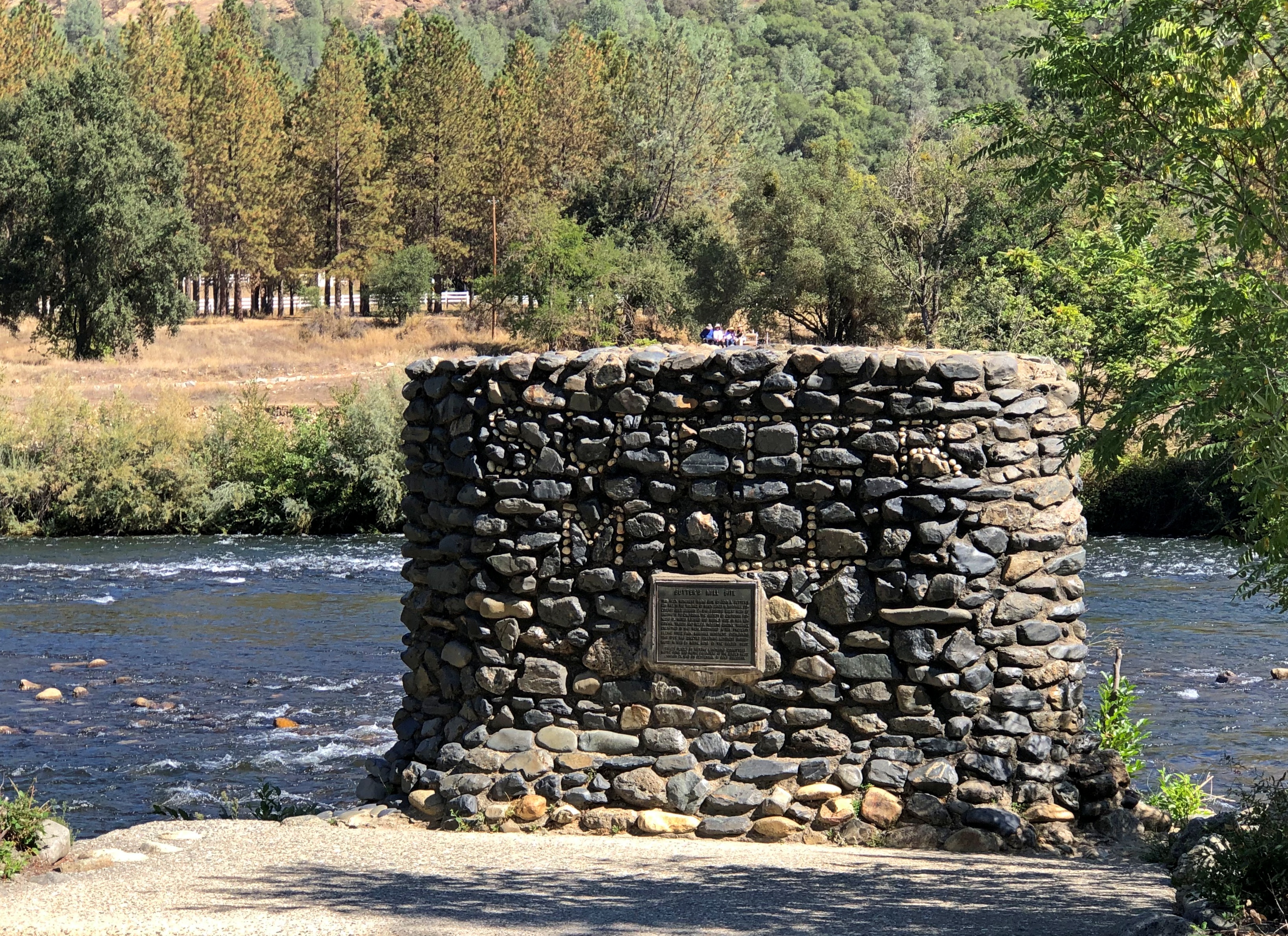
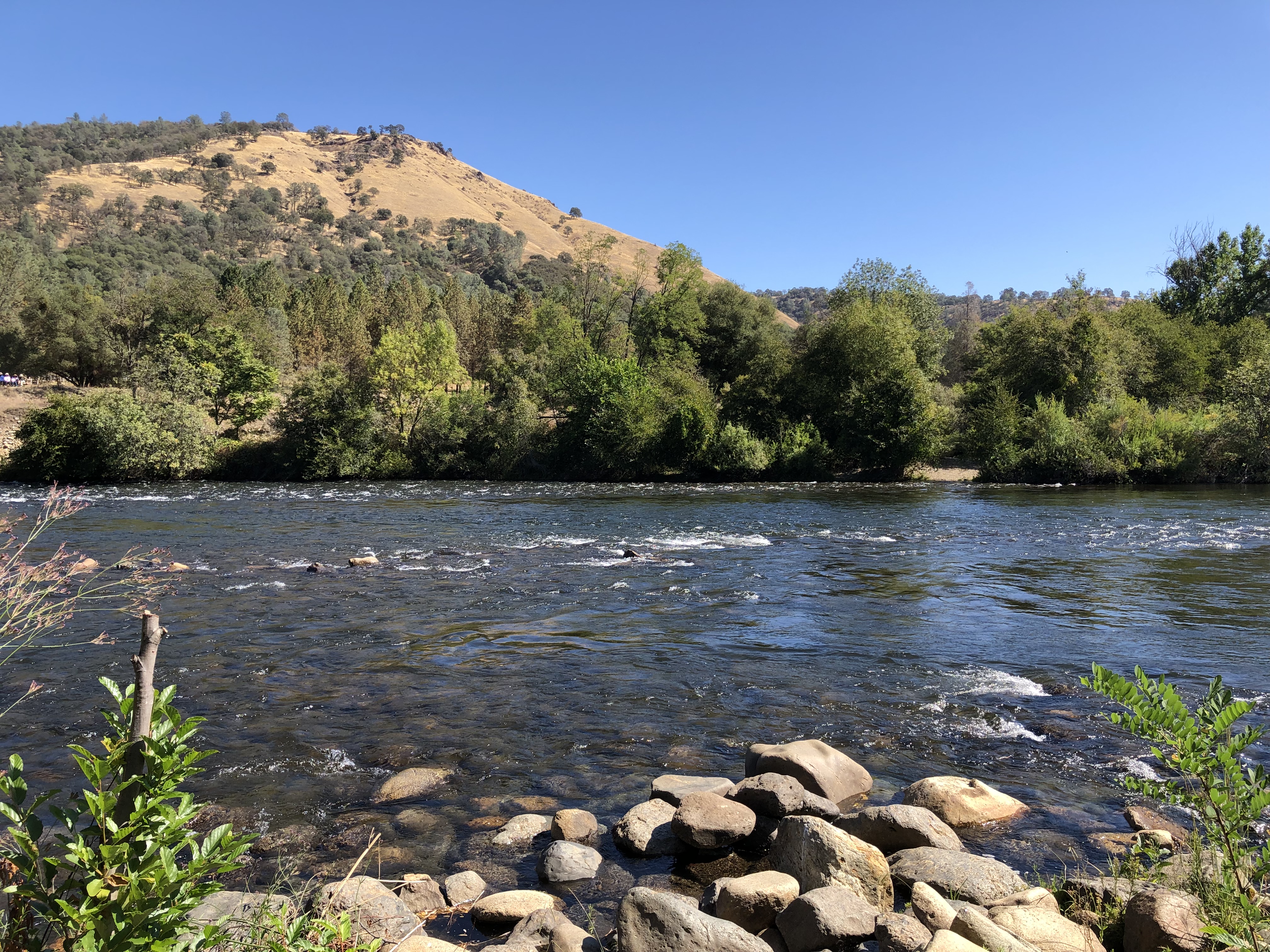
There’s a stone-wall memorial on the actual site of the mill, not far away on the handsome American River.Marshall Gold Discovery State Historic Park Marshall Gold Discovery State Historic Park

I was surprised to learn that the river is only about 30 miles long, but enough to provide Sacramento with most of its drinking water, assuming enough snowmelt every spring.

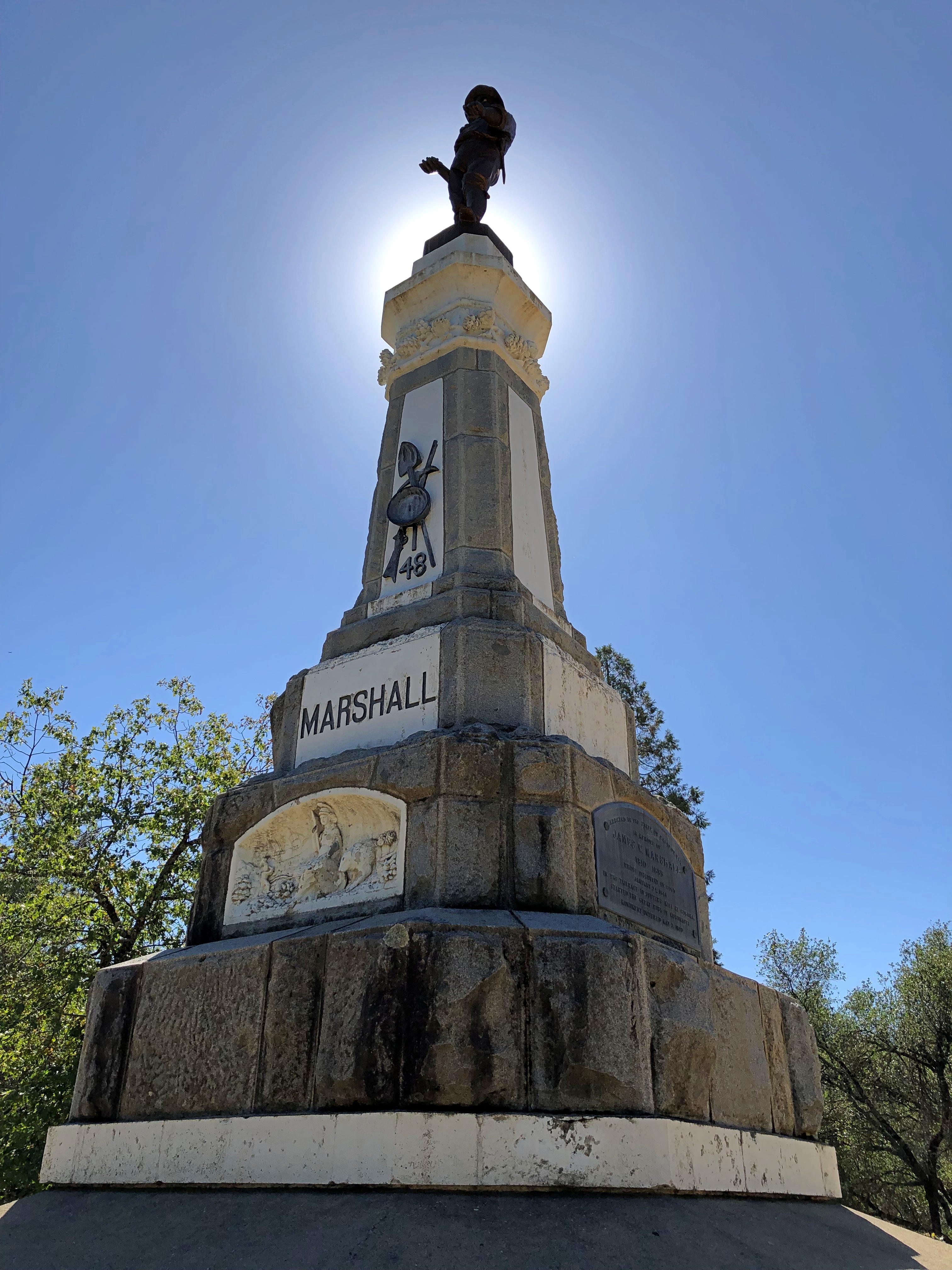
James Marshall has a memorial in Coloma, but you have to climb a hill to reach it. Or drive a short, winding road that happens to be a very short California state highway.James Marshall Memorial

The work of the NSGW again. In fact, the first memorial the org ever erected, in 1890, when the memories of Forty-Nine were still living memories for many. Marshall wasn’t among them. The honor was posthumous for him, and he reposes underneath the structure.

Still, nice view he’s got of the rolling and formerly gold-laden territory.Marshall Gold Discovery State Historic Park

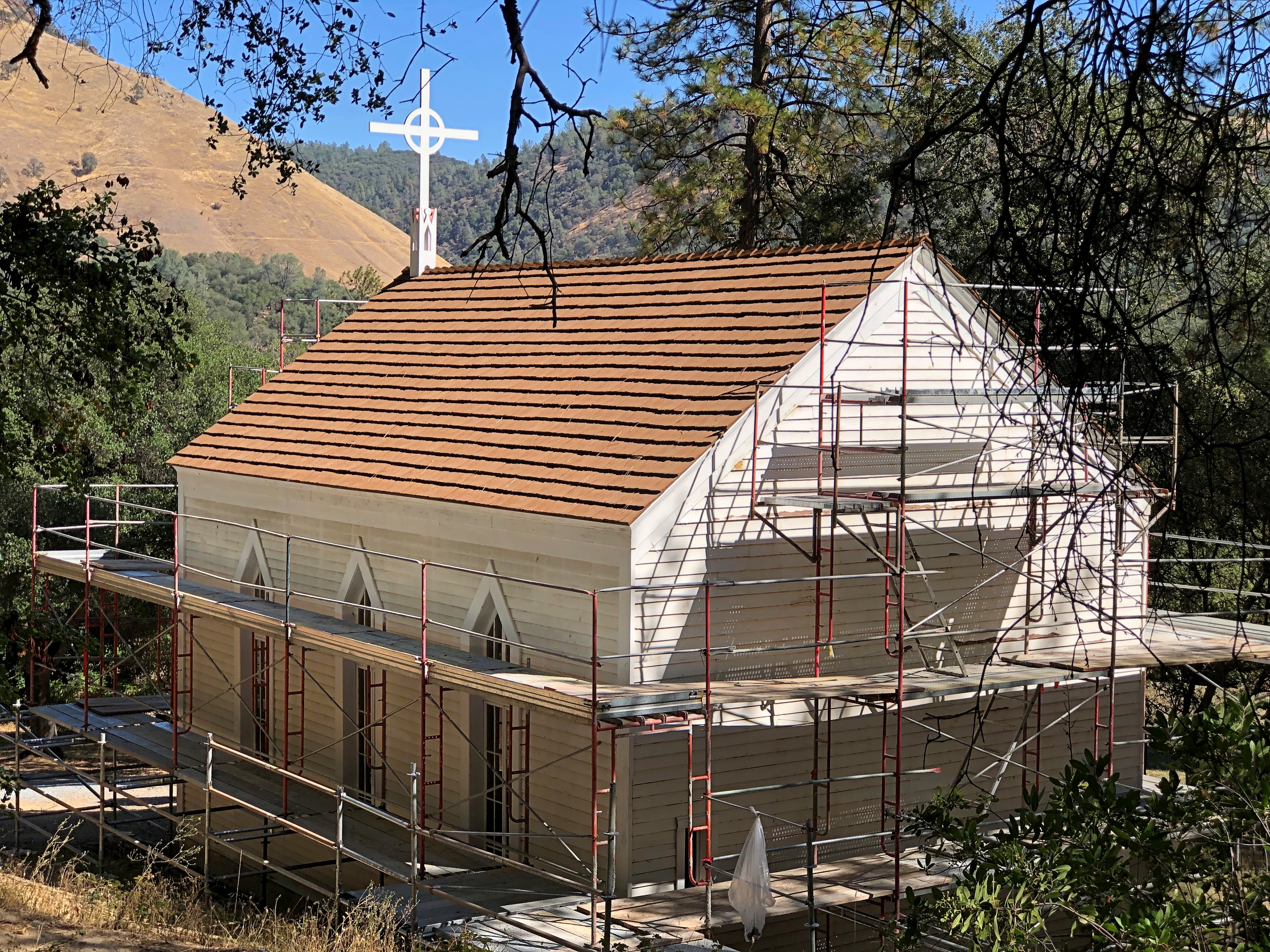
Not quite as far up the hill are a number of historic structures and an old cemetery. One is St. John’s, a Catholic church that held services until about 100 years ago, but where you can still get married.Marshall Gold Discovery State Historic Park - St John

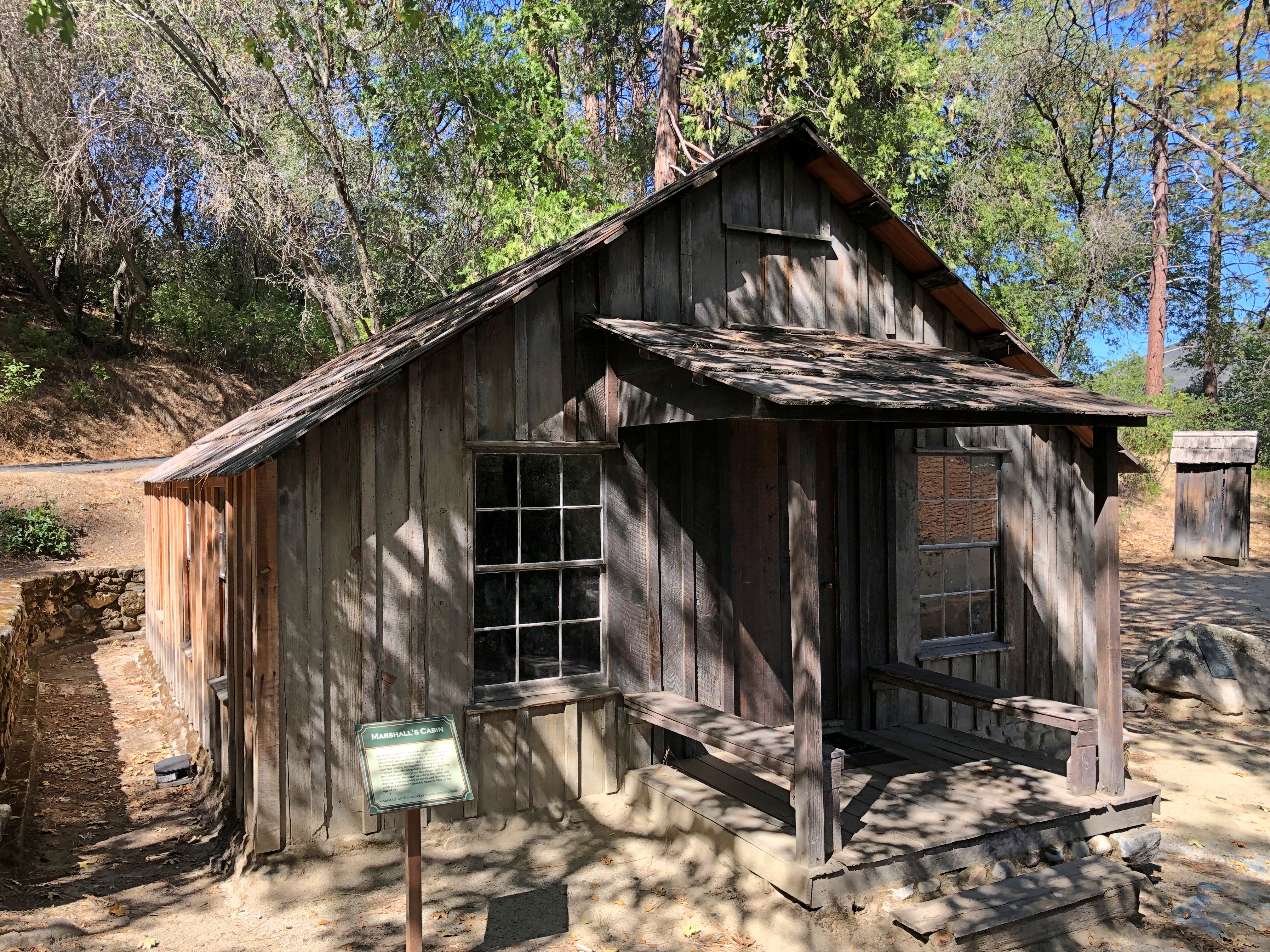
John Marshall’s cabin.Marshall Gold Discovery State Historic Park - Marshall's Cabin

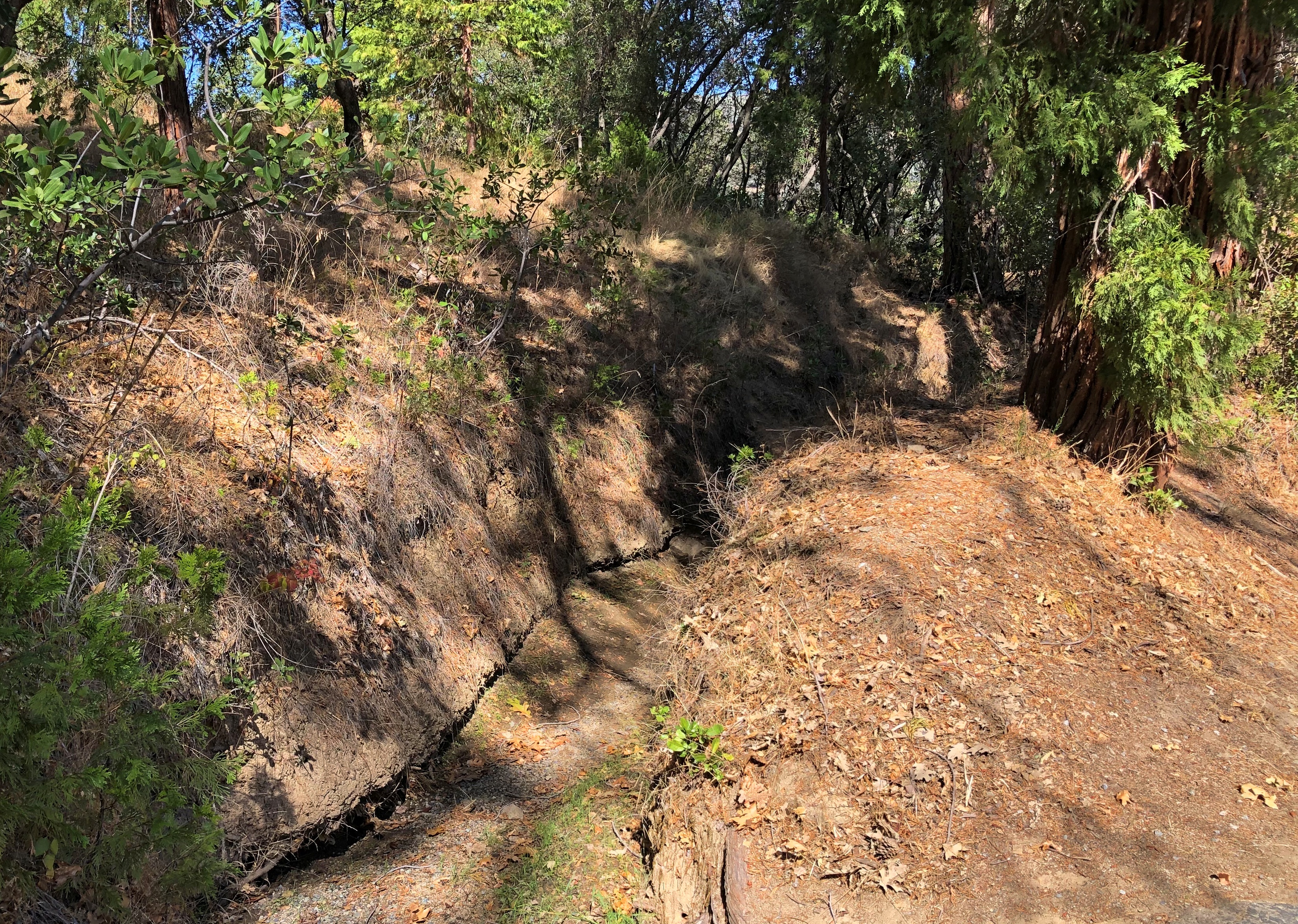
Even more interesting, I thought, was a more-or-less intact mining ditch, countless of miles of which were dug in the effort to tease yellow metal from the indifferent earth. Later, many were (or still are) used for irrigation. I don’t think this one is; it’s just a gash in the earth.Marshall Gold Discovery State Historic Park - Marshall's Cabin

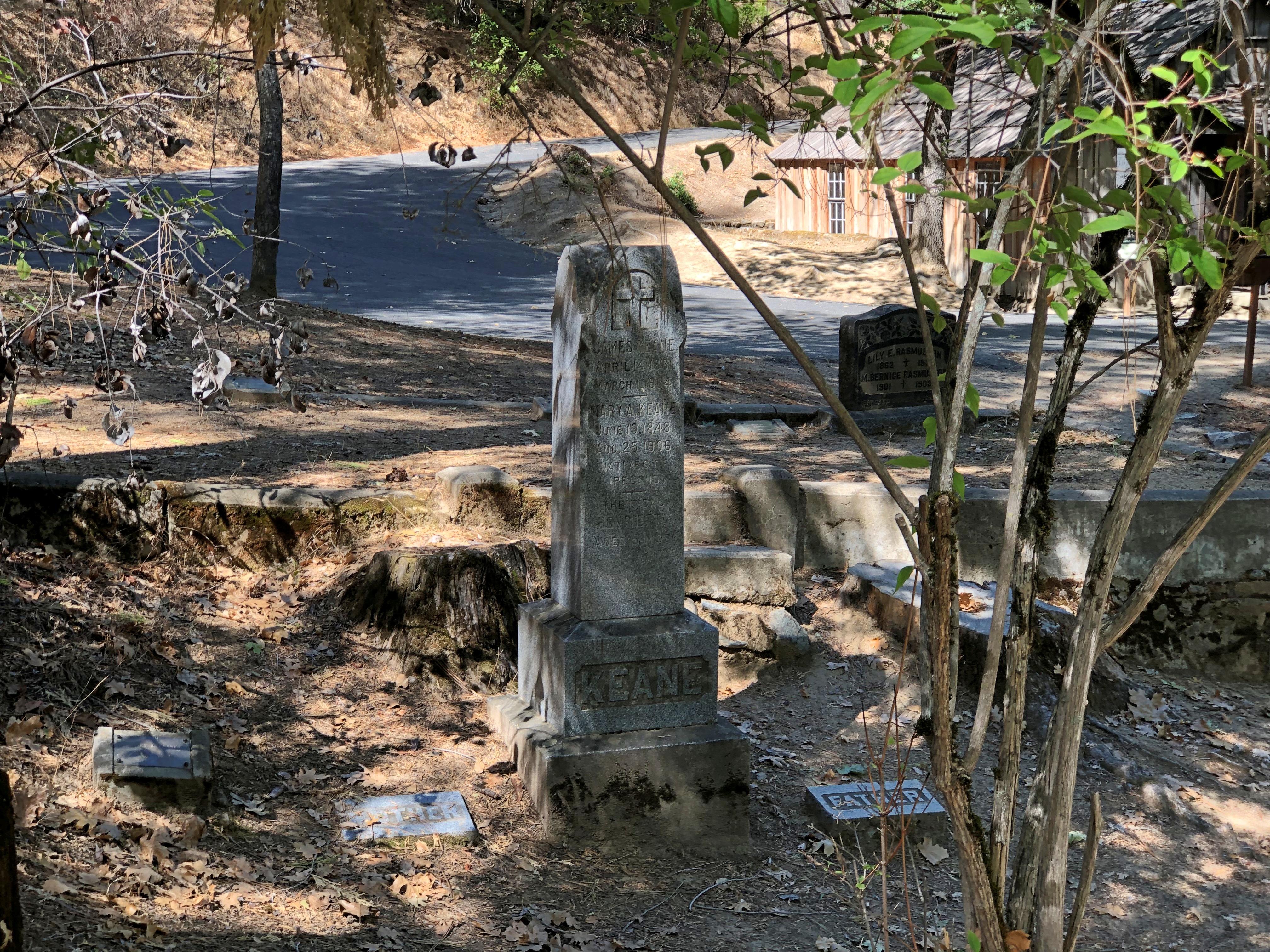
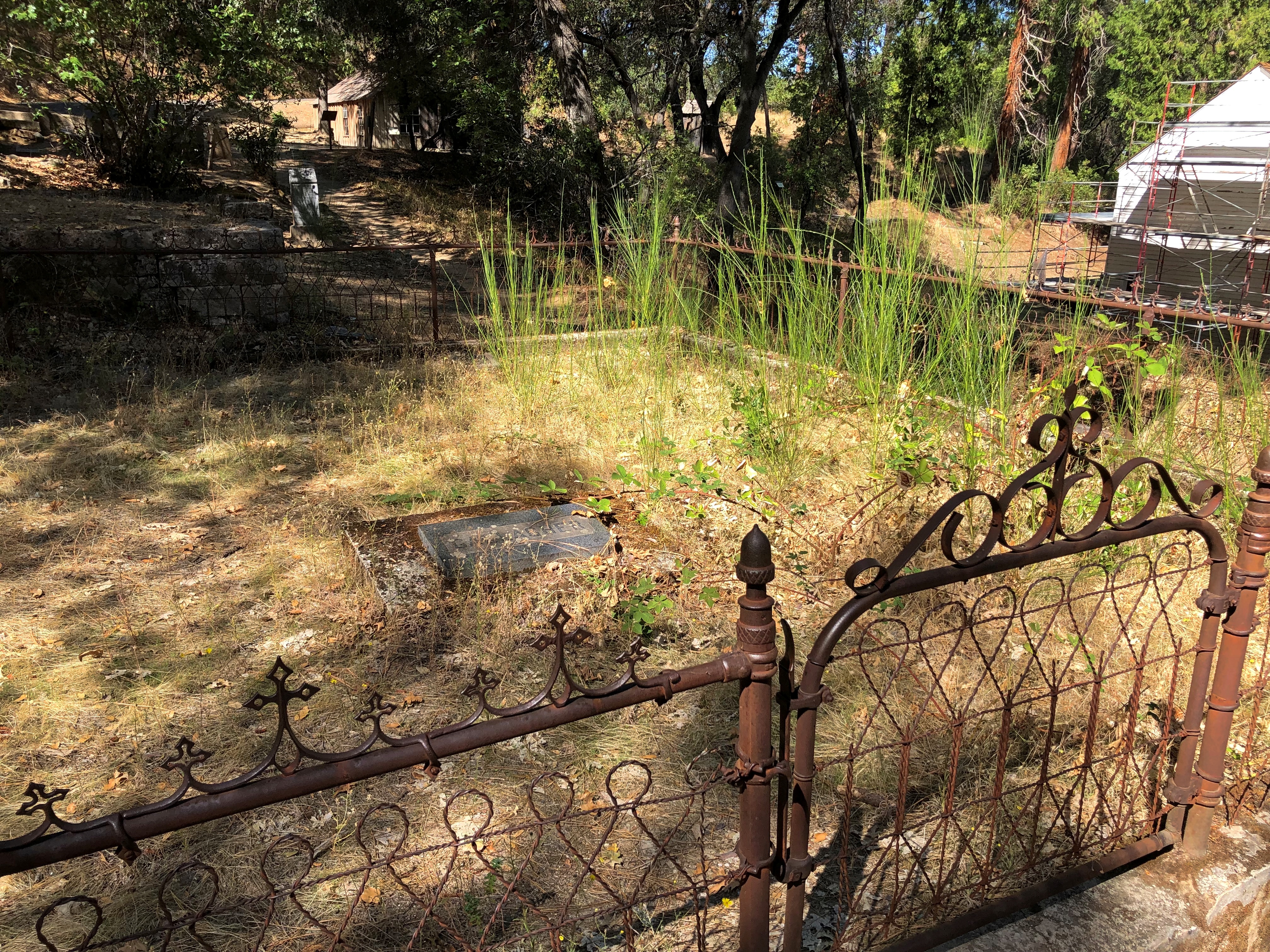
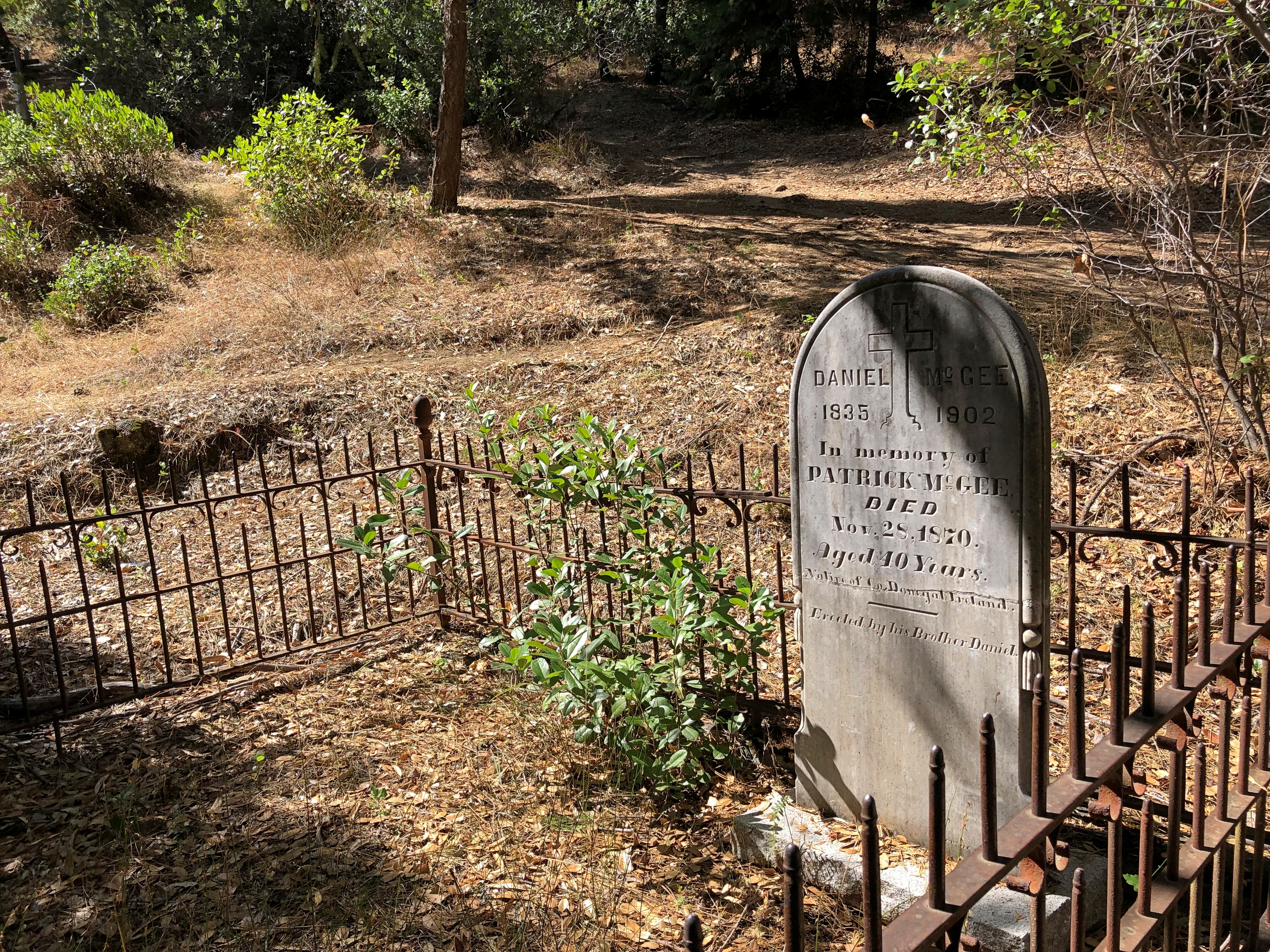
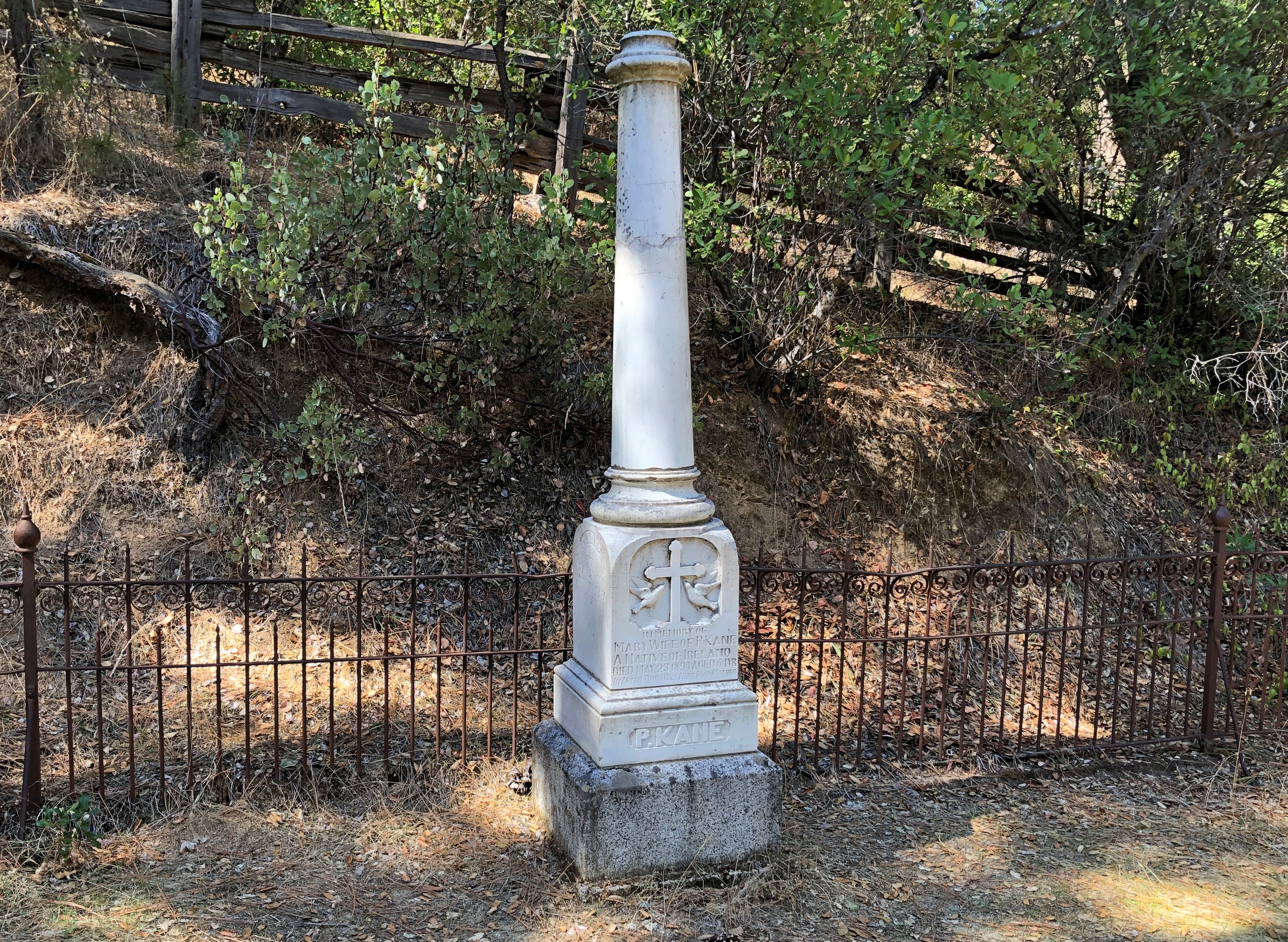
The hillside cemetery.Marshall Gold Discovery State Historic Park - cemetery Marshall Gold Discovery State Historic Park - cemetery Marshall Gold Discovery State Historic Park - cemetery Marshall Gold Discovery State Historic Park - cemetery

Ashes to ashes, dust to dust, gold-bearing earth to gold-bearing earth.

The Brewery District, Milwaukee

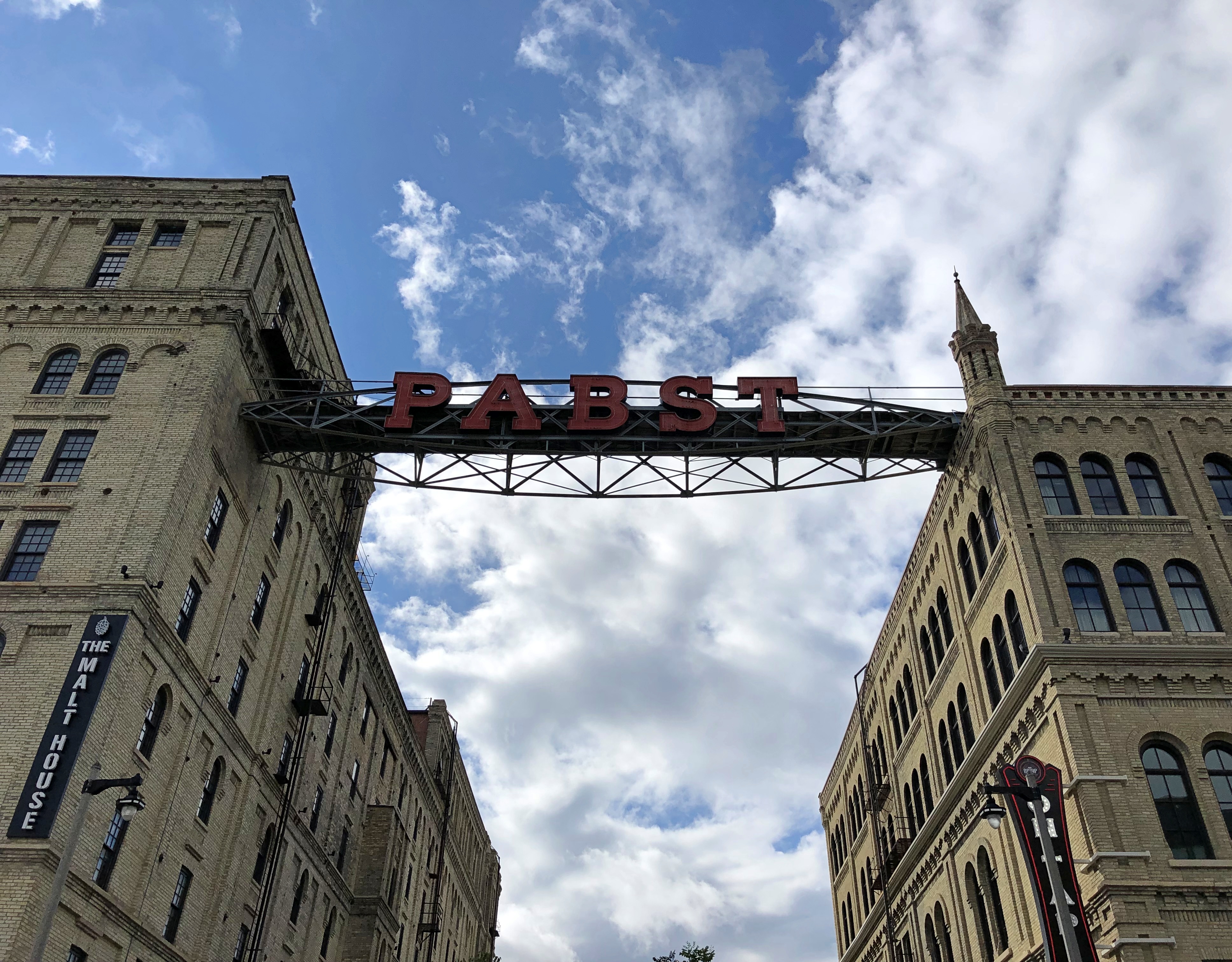
Our visit to Milwaukee on Sunday took us, in the mid-afternoon, to what it now is known as the Brewery District. Once upon a time — for a long time — Pabst was brewed there.Brewery District, Milwaukee

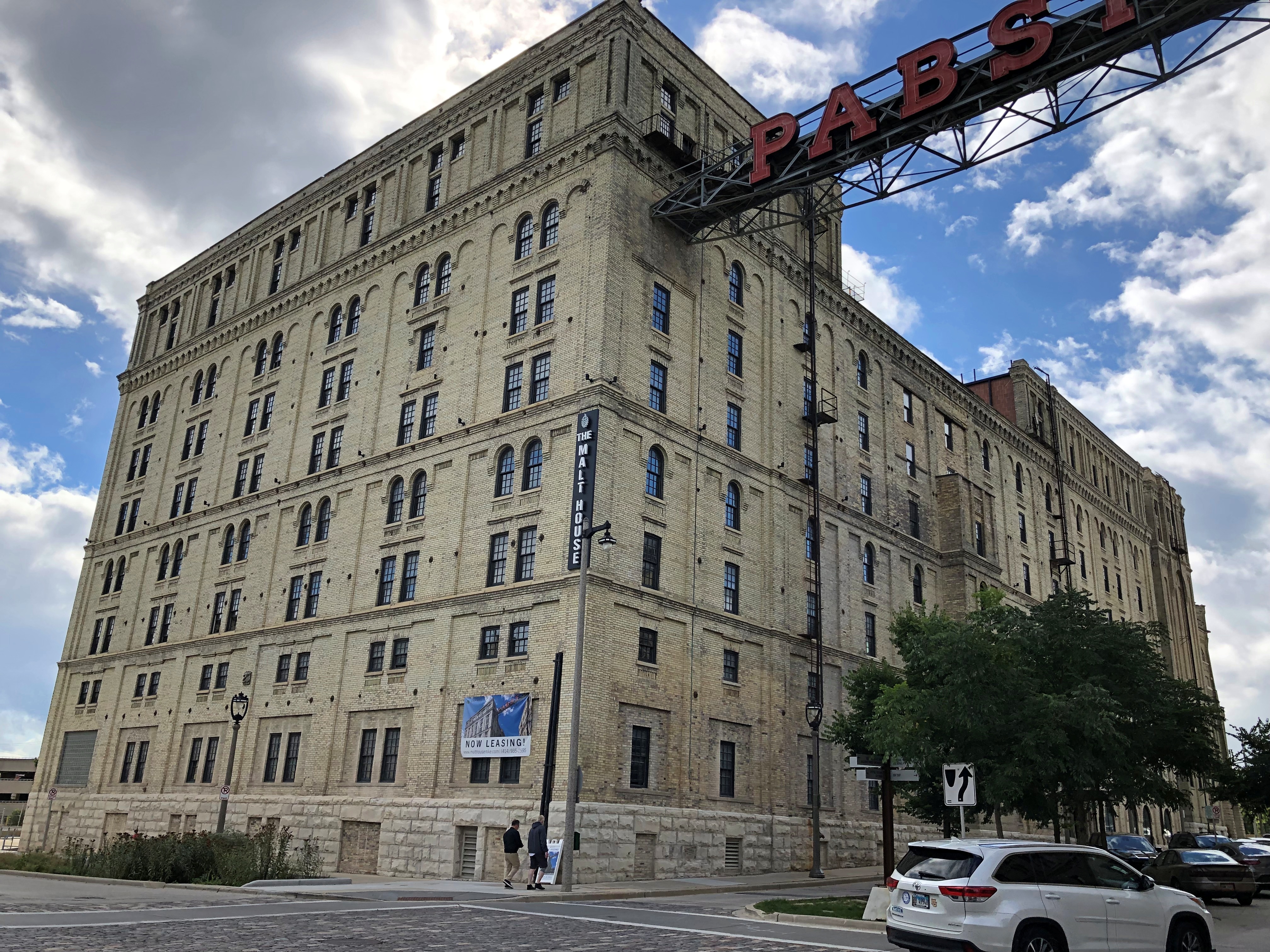
The sign hangs between some handsome buildings. On one side, the cream city brick Malt House, originally developed in 1882 and former one of the world’s largest brewery-owned malt houses, according to the district’s web site (who else would own a malt house?). Now it’s apartments.Brewery District, Milwaukee

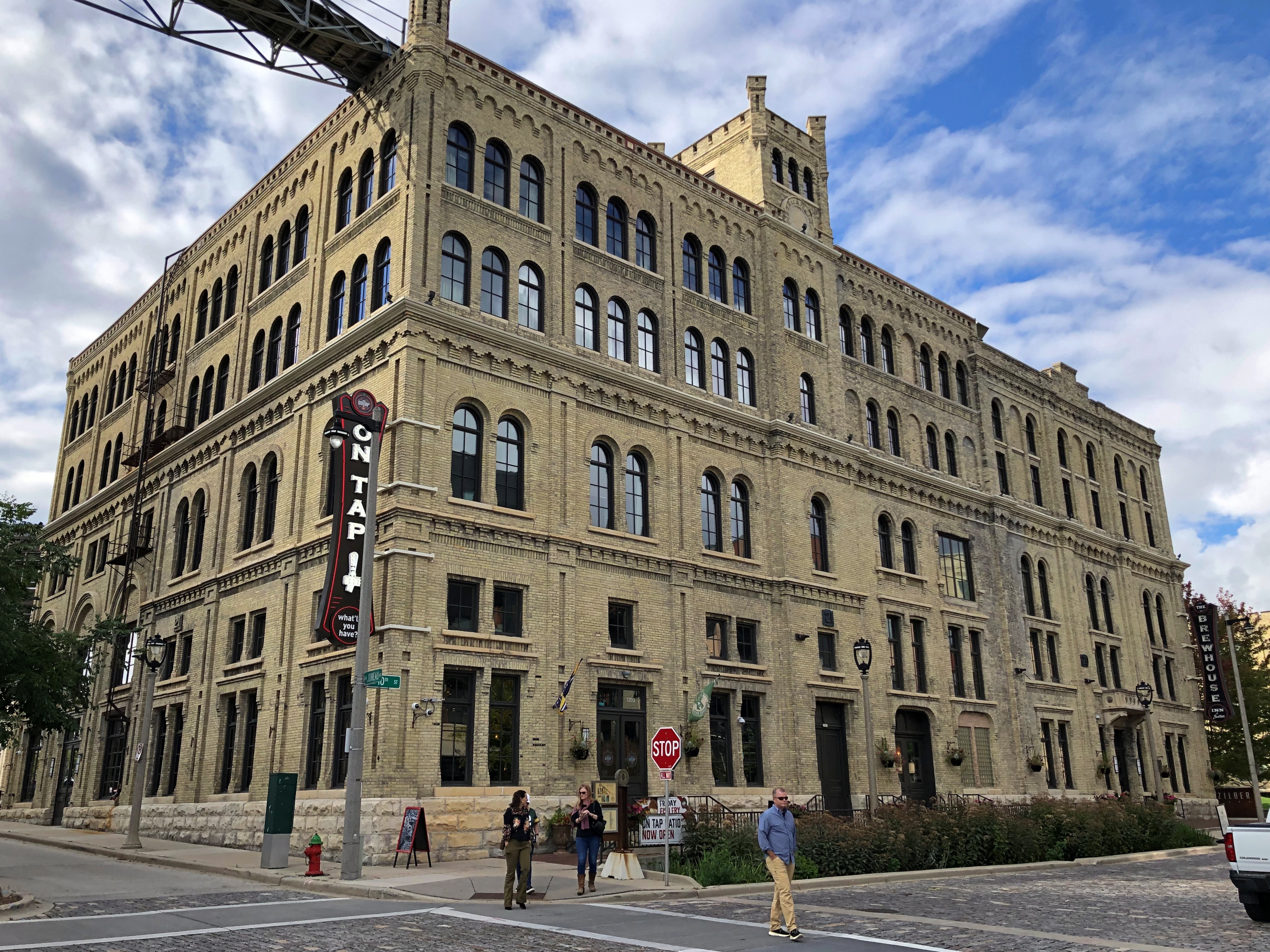
On the other side, the Brewhouse Inn & Suites, a hotel that was once the brew house for the Pabst operations.Brewery District, Milwaukee

“The Pabst Brewery closed in 1996 leaving a seven-block area of downtown Milwaukee vacant,” the site says. “For over a decade, historic structures deteriorated until real estate developer and philanthropist Joseph J. Zilber purchased the site in August 2006.

“The results include seven apartment developments, three office buildings, two hotel properties, two breweries, restaurants, banquet halls and two public parks. In addition, the Brewery District is home to the University of Wisconsin-Milwaukee Joseph J. Zilber School of Public Health and No Studios, an incubator for the growing film industry in Milwaukee.”

Not that much of the district was open on Sunday. The spot participating in the Doors Open event was Best Place at the Historic Pabst Brewery, a retail complex formed from some of the old brewery buildings.

“Great care has been taken to ensure that Blue Ribbon Hall, The Great Hall, Captain’s Corner, Captain’s Courtyard, Guest Center, King’s Courtyard, and the original Gift Shop have all been restored to their original glory,” the separate Best Place web site says.

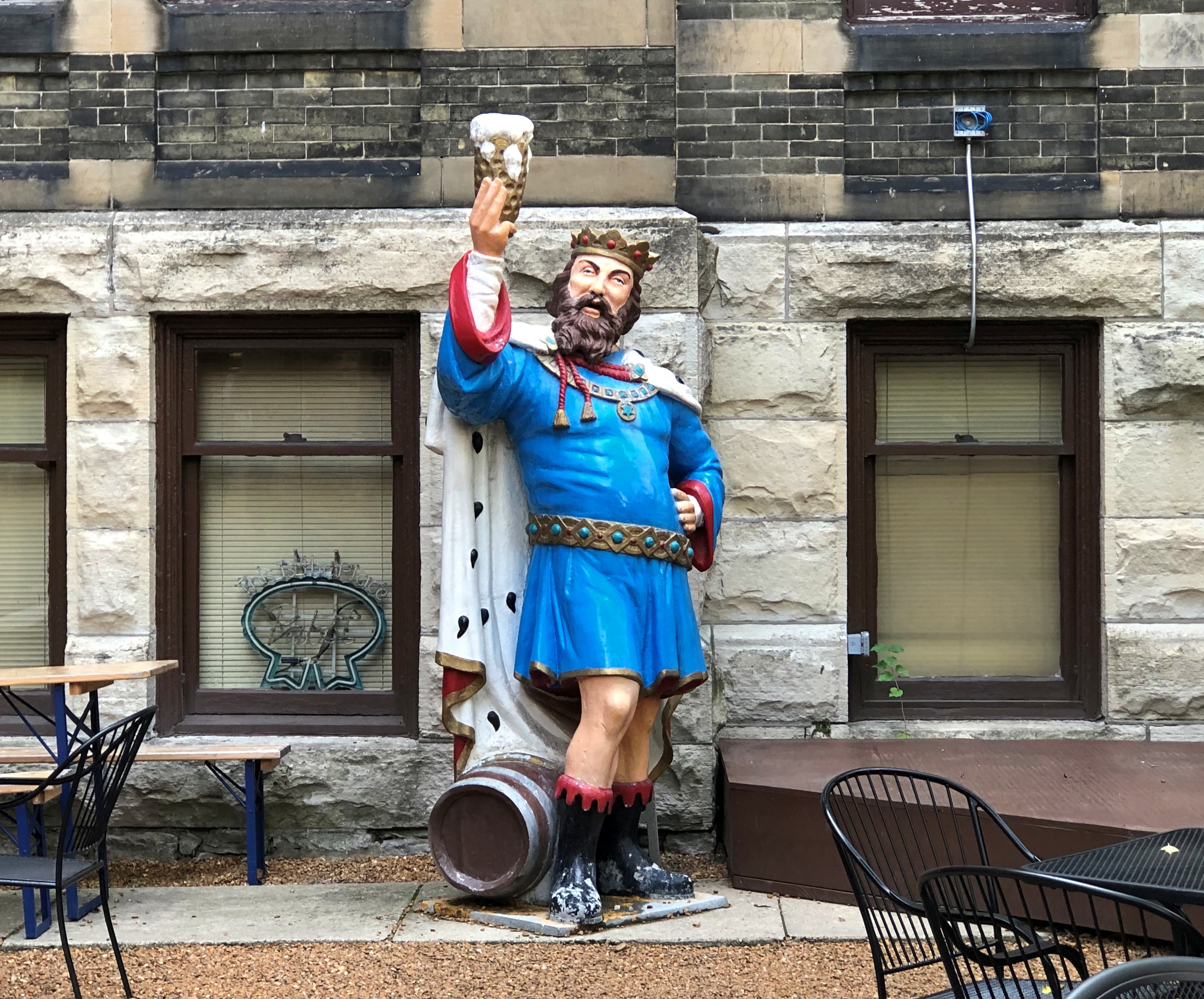
Enter one courtyard and there’s good old King Gambrinus.
Brewery District, Milwaukee

Not actually that old, since it’s a 1967 reproduction, in aluminum, of an older wooden statue that had fallen apart.

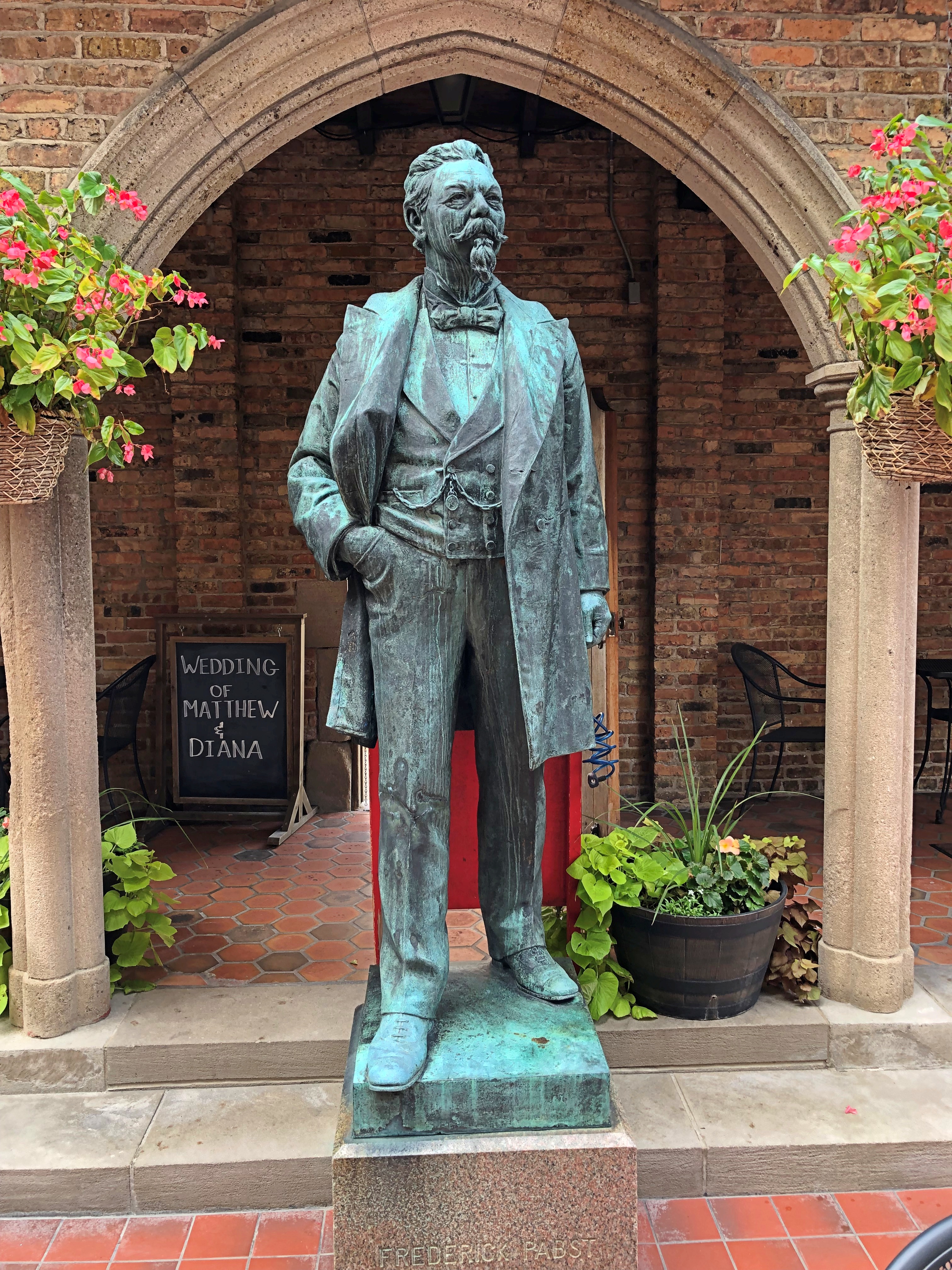
In a separate courtyard, Frederick Pabst.Brewery District, Milwaukee

Died 1901. I saw his grave last year and his mansion some years before that. He was a beer baron among beer barons.

A Summery September Saturday in Lincoln Park

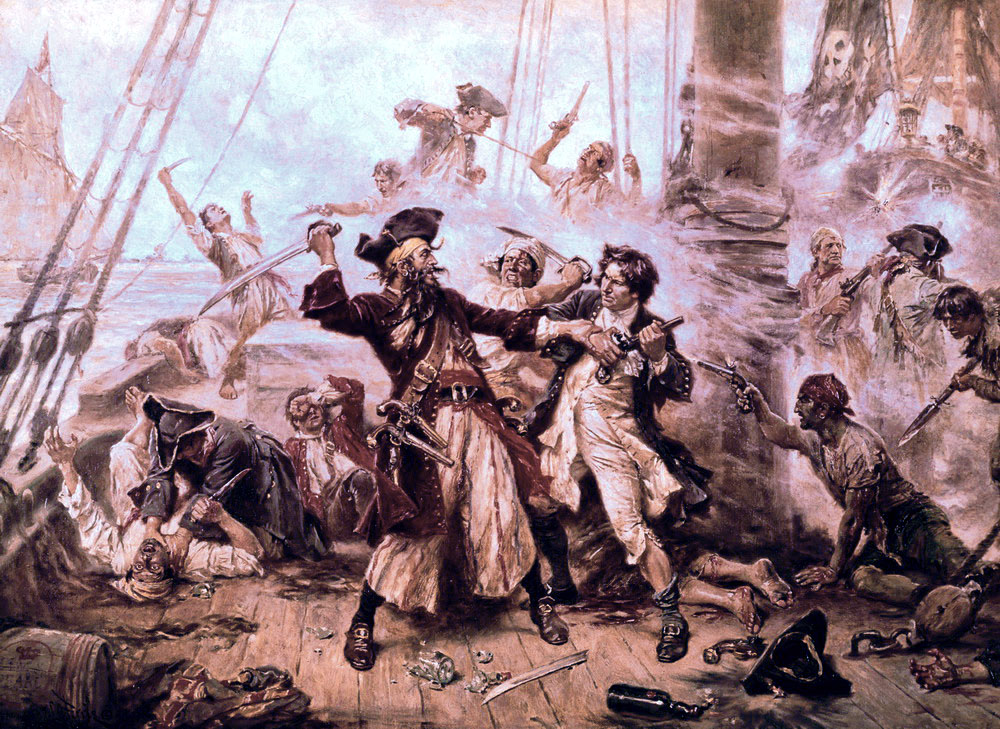
I can’t let International Talk Like A Pirate Day pass without a mention, as I have for so many years. Somehow, that would be wrong. There’s a place in the world for silly days. So here’s a public domain image for the occasion.

“The Capture of the Pirate Blackbeard, 1718” by Jean Leon Gerome Ferris (1920). He’s an American artist I wasn’t familiar with until recently. He’s been mostly forgotten, his style considered outdated.

Summer in its mildest form lingers here in northern Illinois: bright days, little wind, puffy clouds, temps that let you forget whether the air is hot or cold. Good for going out for a long walk (Saturday) or staying at home and sleeping late and then lounging on the deck (Sunday) and reading and watching various bits of visual entertainment.

The Saturday walk was through Lincoln Park in Chicago, from the southern edge northward, along the boardwalk and into the zoo, and back again along the ridge that used to be the lakeshore. I also passed through a crowd at a farmers’ market.

Been a while since my last visit. That too was a late summer stroll.

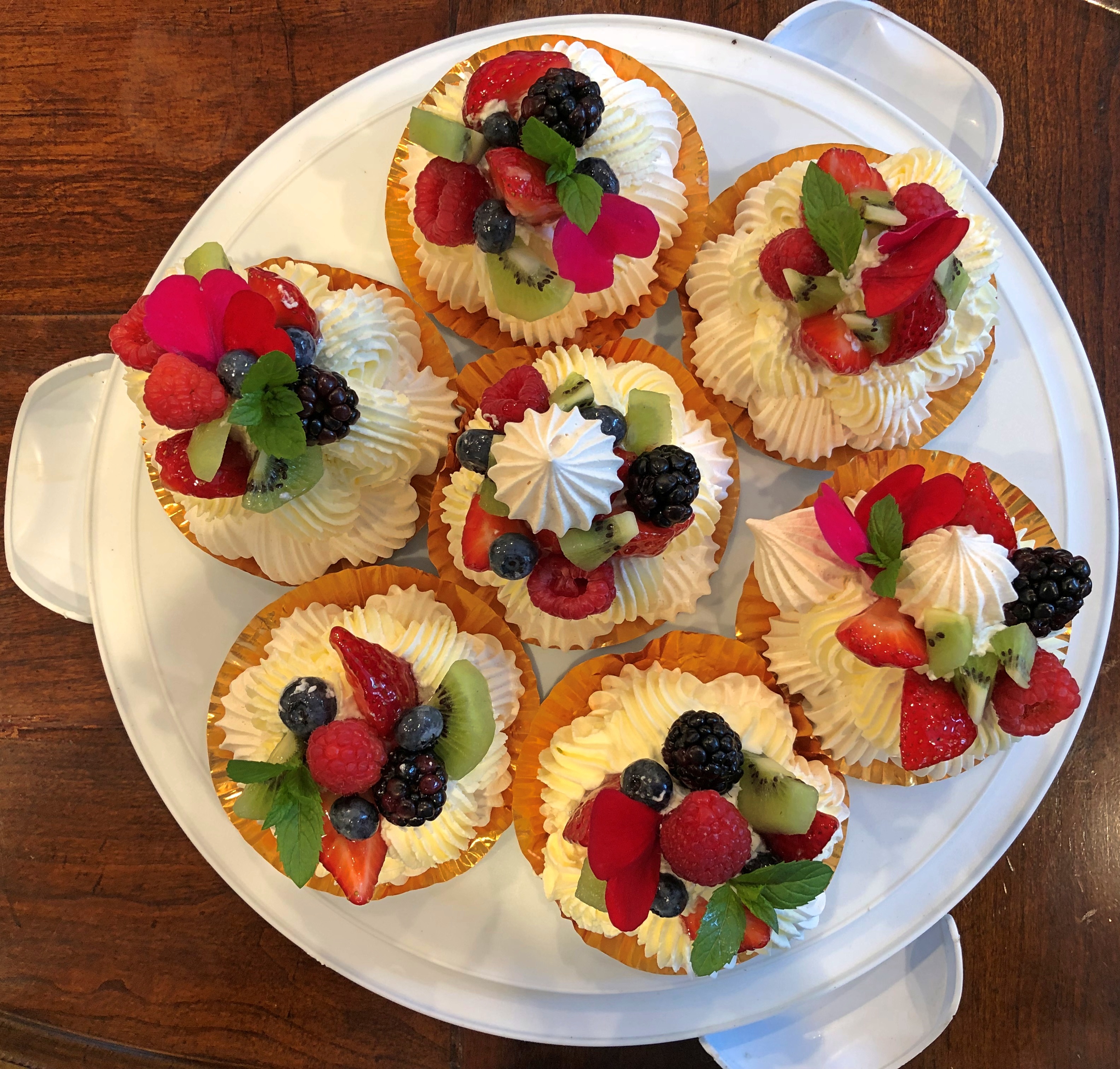
This time, Yuriko was at her cake class making this —

— which is every bit as good as it looks.

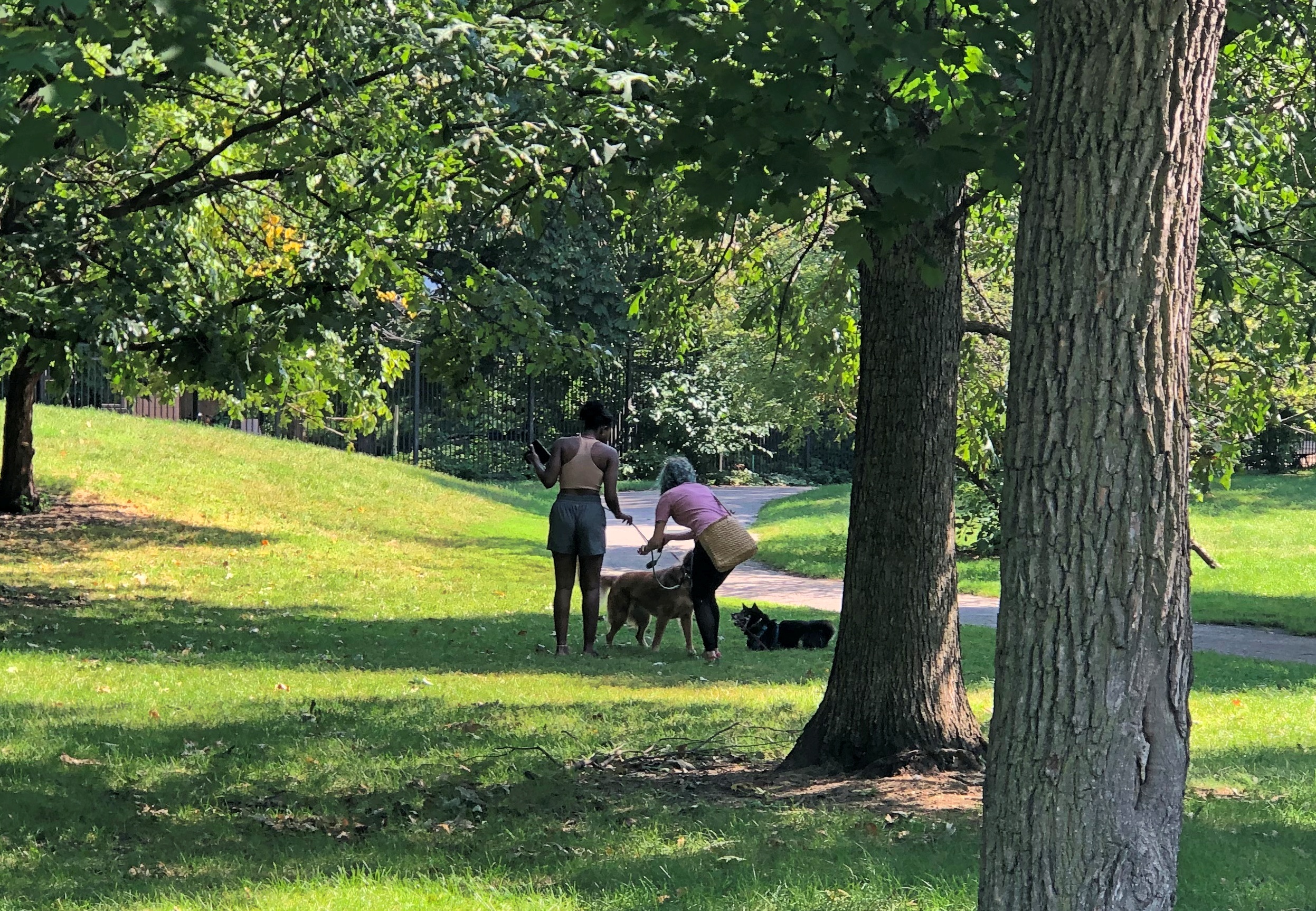
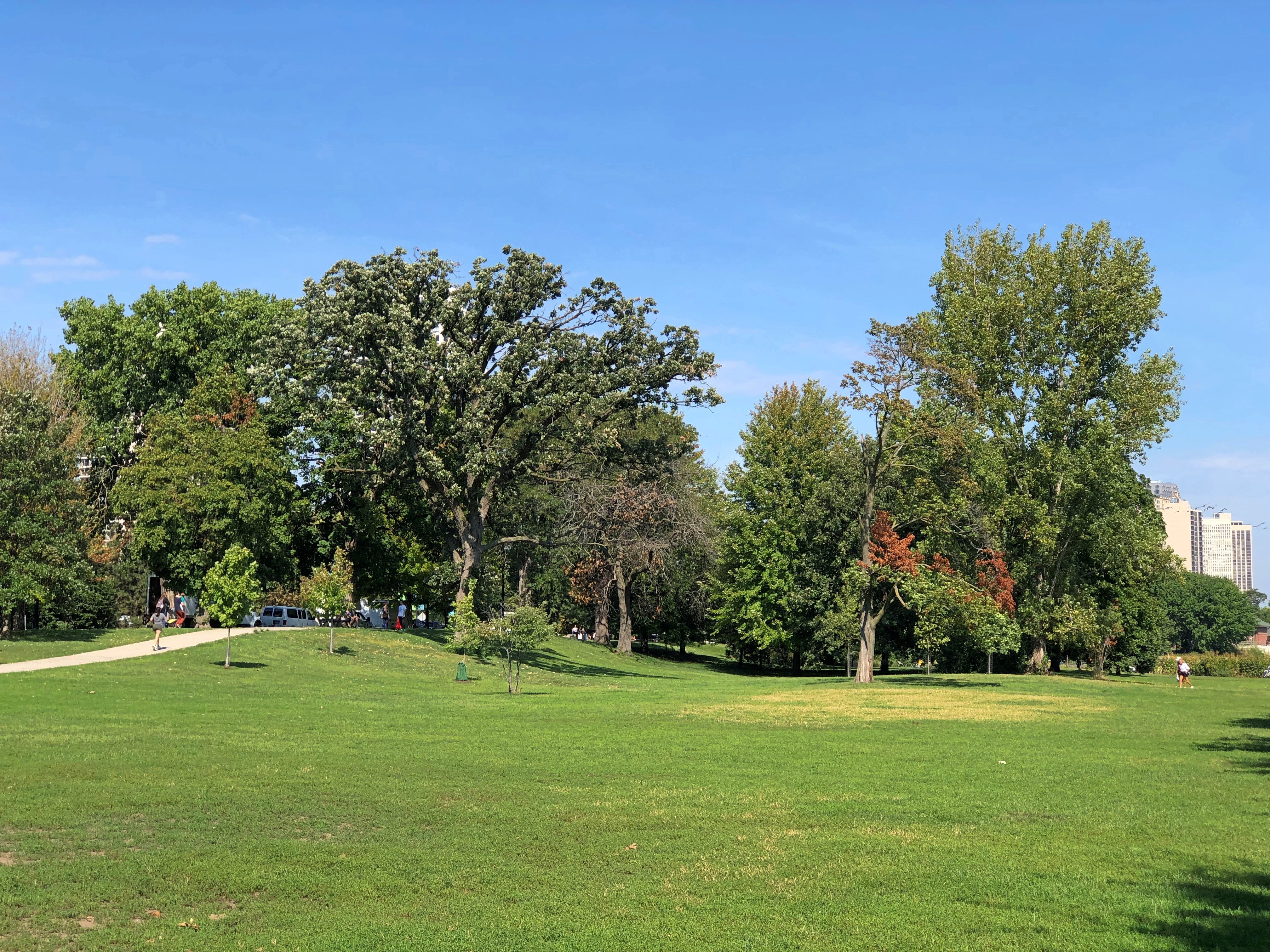
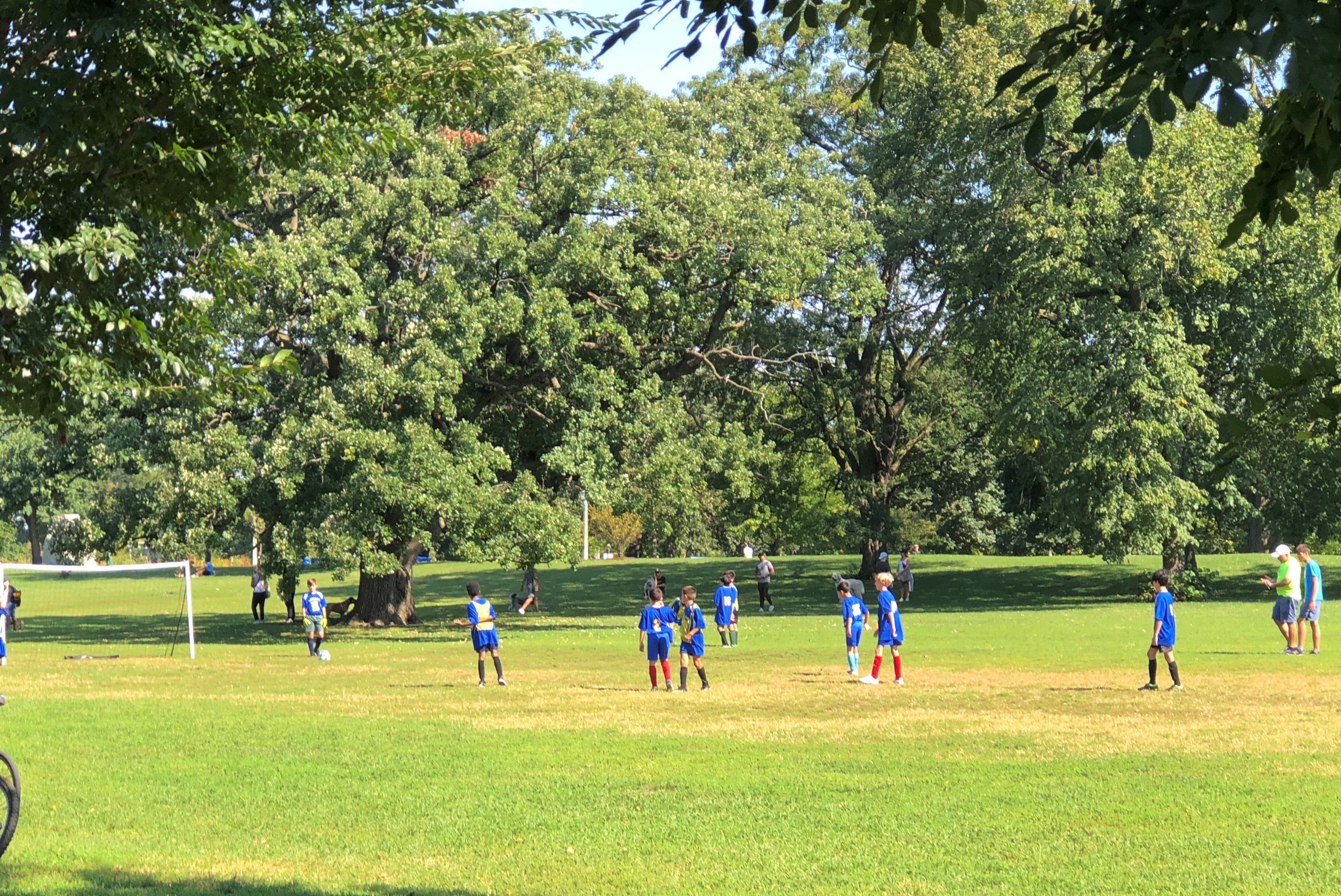
Meanwhile, I took a bus east to Lincoln Park, crown jewel of the Chicago Park District and home to fields and paths and trees and shrubs.Lincoln Park, Sept 17, 2022
Lincoln Park, Sept 17, 2022 Lincoln Park, Sept 17, 2022

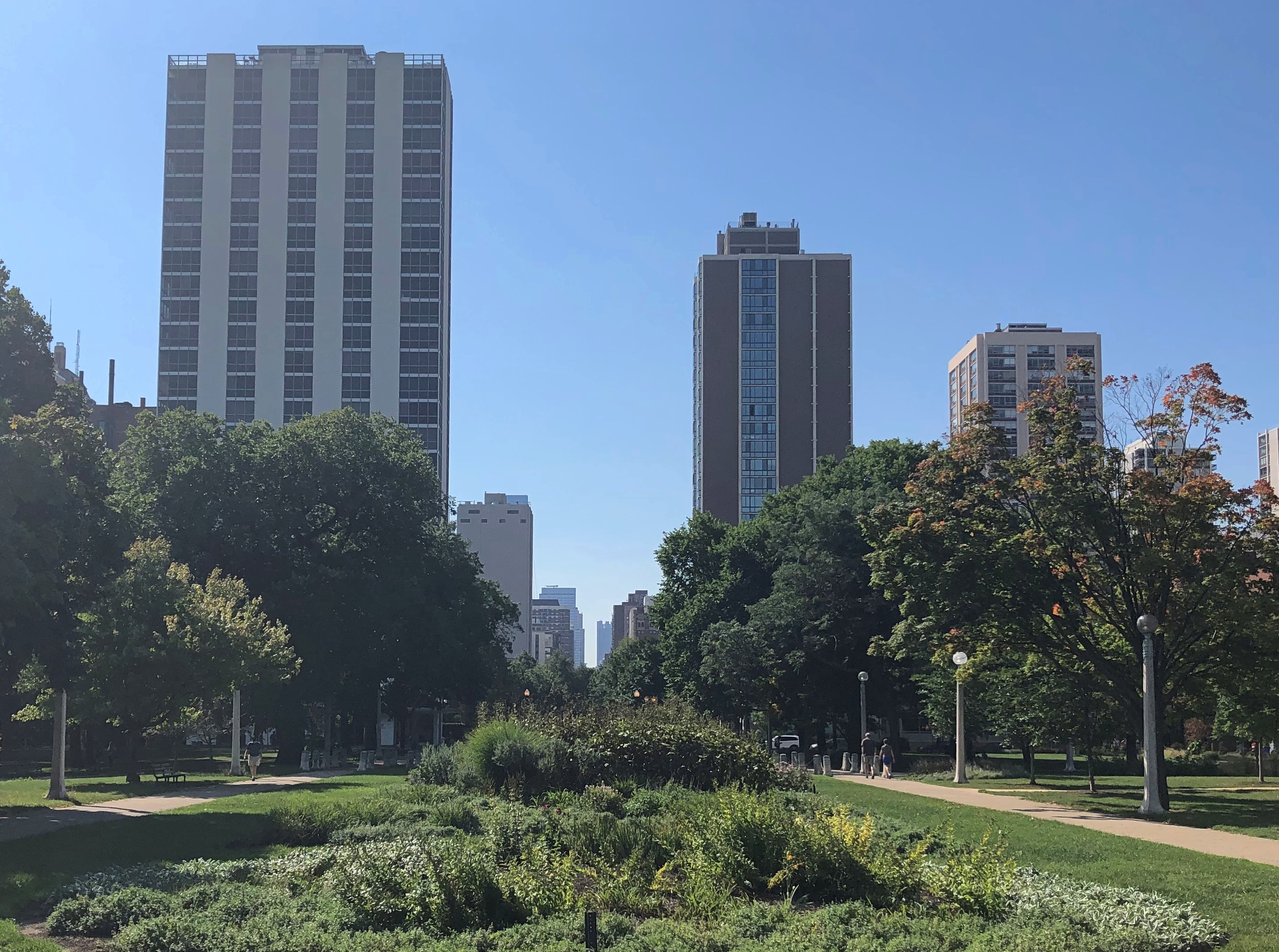
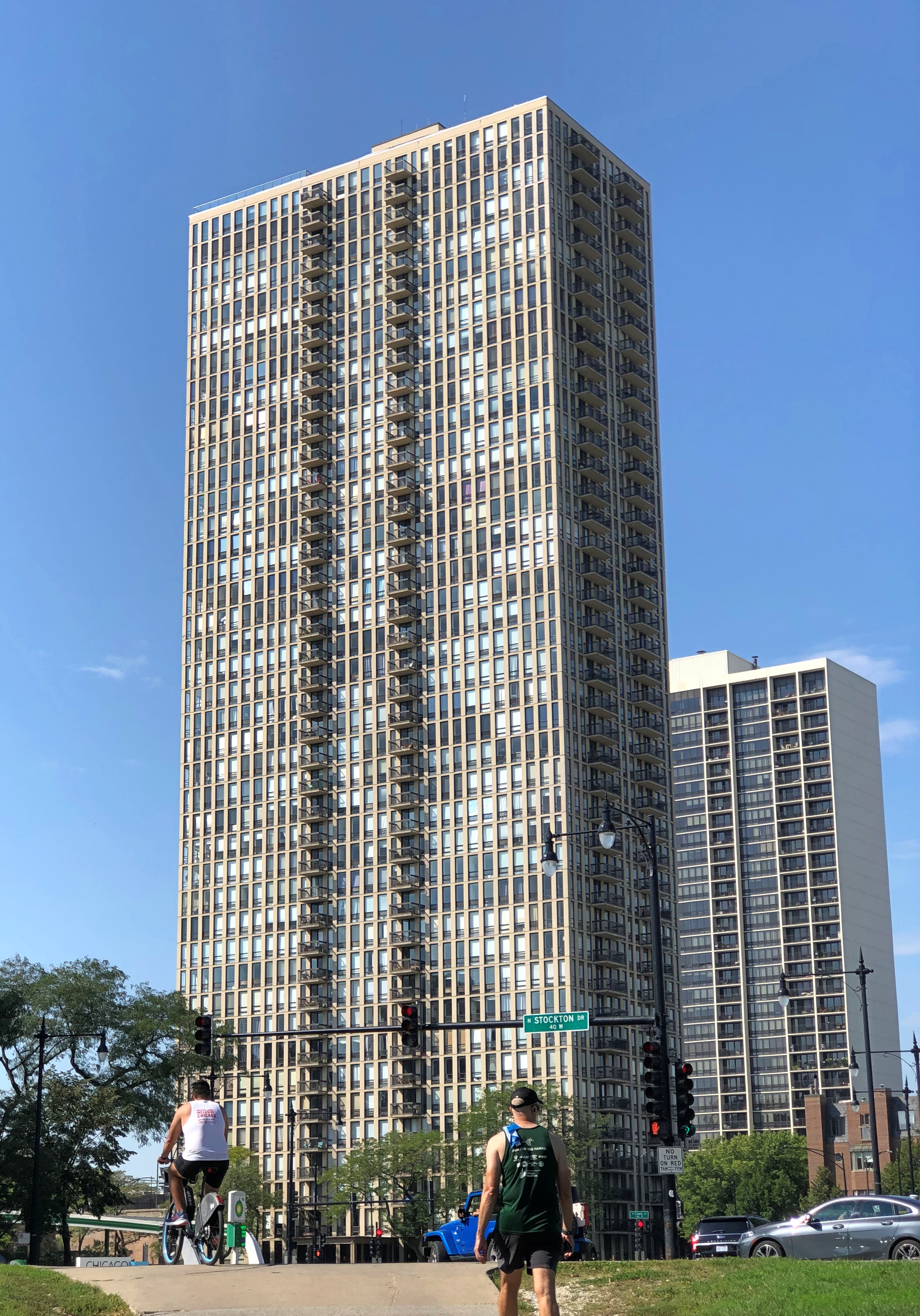
But there’s no forgetting the surrounding city.Lincoln Park, Sept 17, 2022 Lincoln Park, Sept 17, 2022

I didn’t seek out monuments this visit. The park is dotted with them, as much in the background as the tree canopy or bushy undergrowth for most people, who are missing messages in bottles from the past.

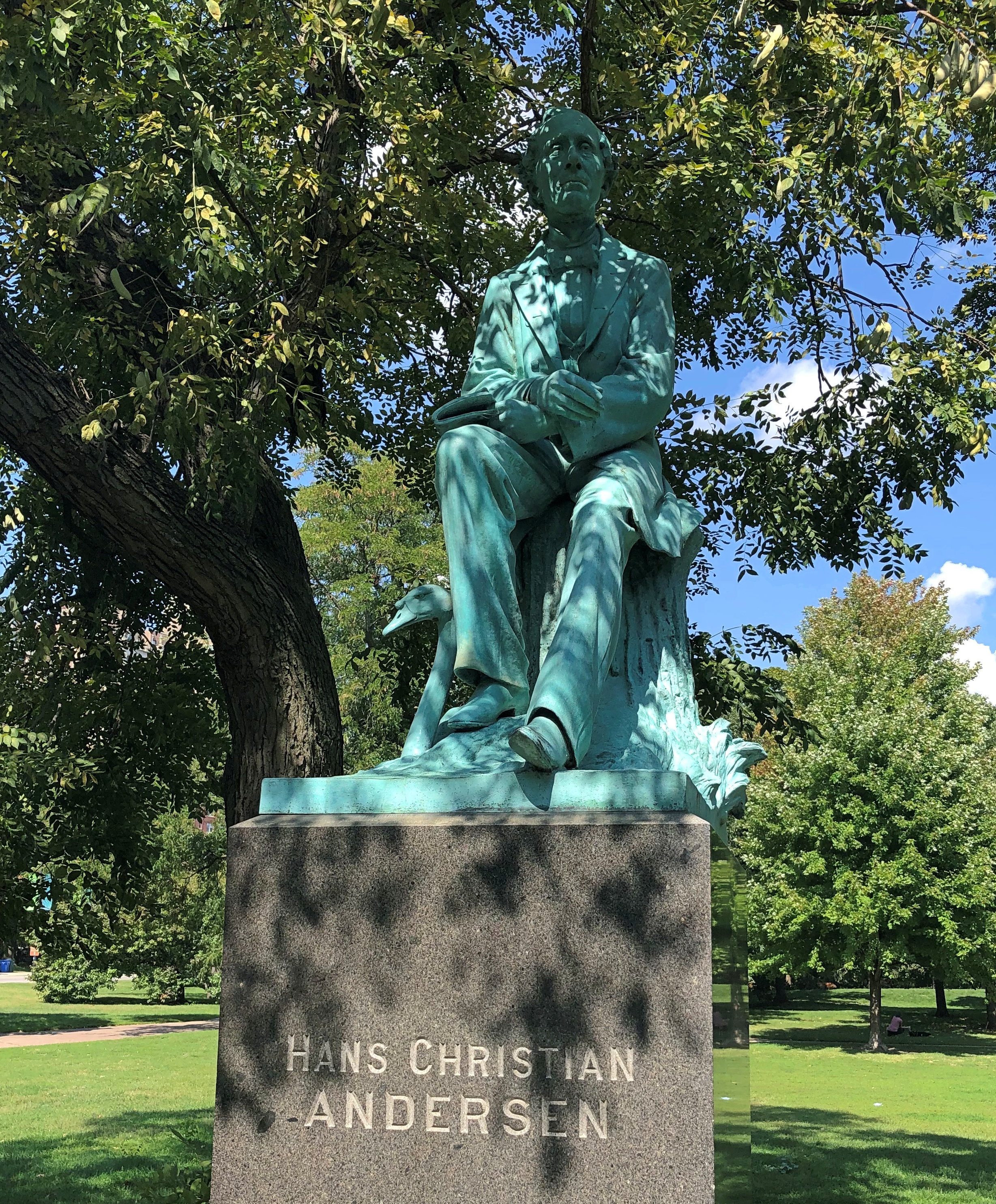
I did pause at Hans Christian Andersen, whose bronze dates from 1896. It gave the impression that he was enjoying the shade.Lincoln Park, Sept 17, 2022

“The Hans Christian Andersen Monument Association [local Danes] commissioned John Gelert to produce the sculpture,” park district says. “A Danish immigrant, John Gelert (1852–1923) arrived in Chicago in 1887, receiving his first commission for the Haymarket Riot Monument two years later.

“Gelert portrayed the children’s author sitting with a book in hand and a swan at his feet, alluding to his world-famous story, ‘The Ugly Duckling.’ The artist explained that ‘he had the advantage of studying several good photographs of Andersen taken at various times in his life.’

“Gelert displayed the Hans Christian Andersen Monument along with his now-missing Beethoven Portrait Bust at the World’s Columbian Exposition of 1893. (Installed in Lincoln Park in 1897, the Beethoven bust was stolen in 1970.)”

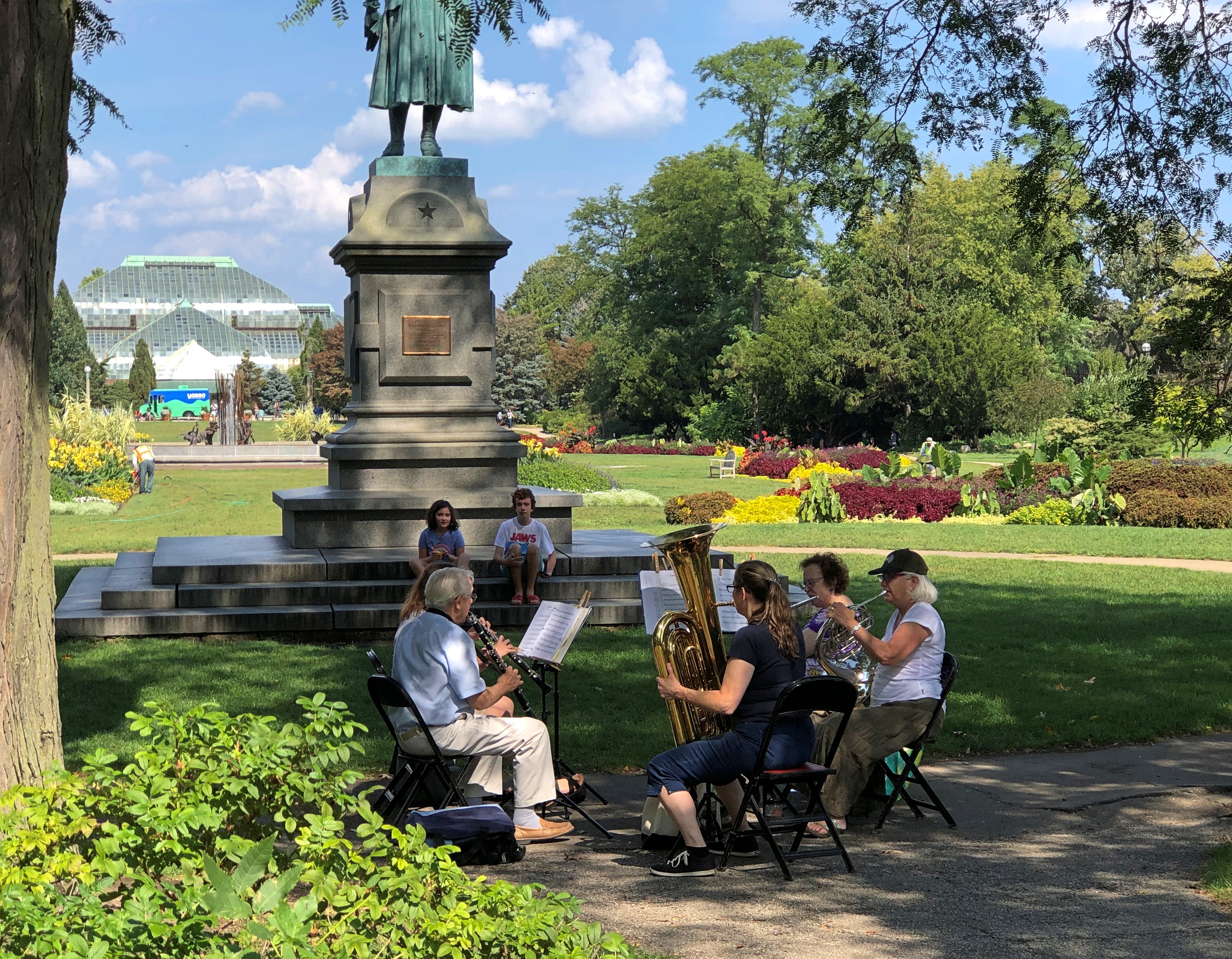
Elsewhere, in the shade of the Schiller statue, in fact, a small brass band did some tunes al fresco.Lincoln Park, Sept 17, 2022

On the whole, the walk was good.Lincoln Park, Sept 17, 2022

As I saw printed on the side of a truck parked on a street running through the park.

Sculpture Milwaukee, 2019

Doors Open Milwaukee is next weekend, and I’m planning for it.

During the 2019 event, we happened across another public art event, one not confined to a particular weekend, but rather a particular year: Sculpture Milwaukee.

“Sculpture Milwaukee is a non-profit organization transforming downtown Milwaukee’s cultural landscape every year with an outdoor exhibition of world-renowned sculpture that serves as a catalyst for community engagement, economic development, and creative placemaking,” is how the organization’s web site puts it.

I don’t know about “community engagement” or “creative placemaking.” I would just say the org puts up different interesting sculptures to look at every year, but maybe that’s my editorial instinct for jettisoning publicist puffery coming into play.

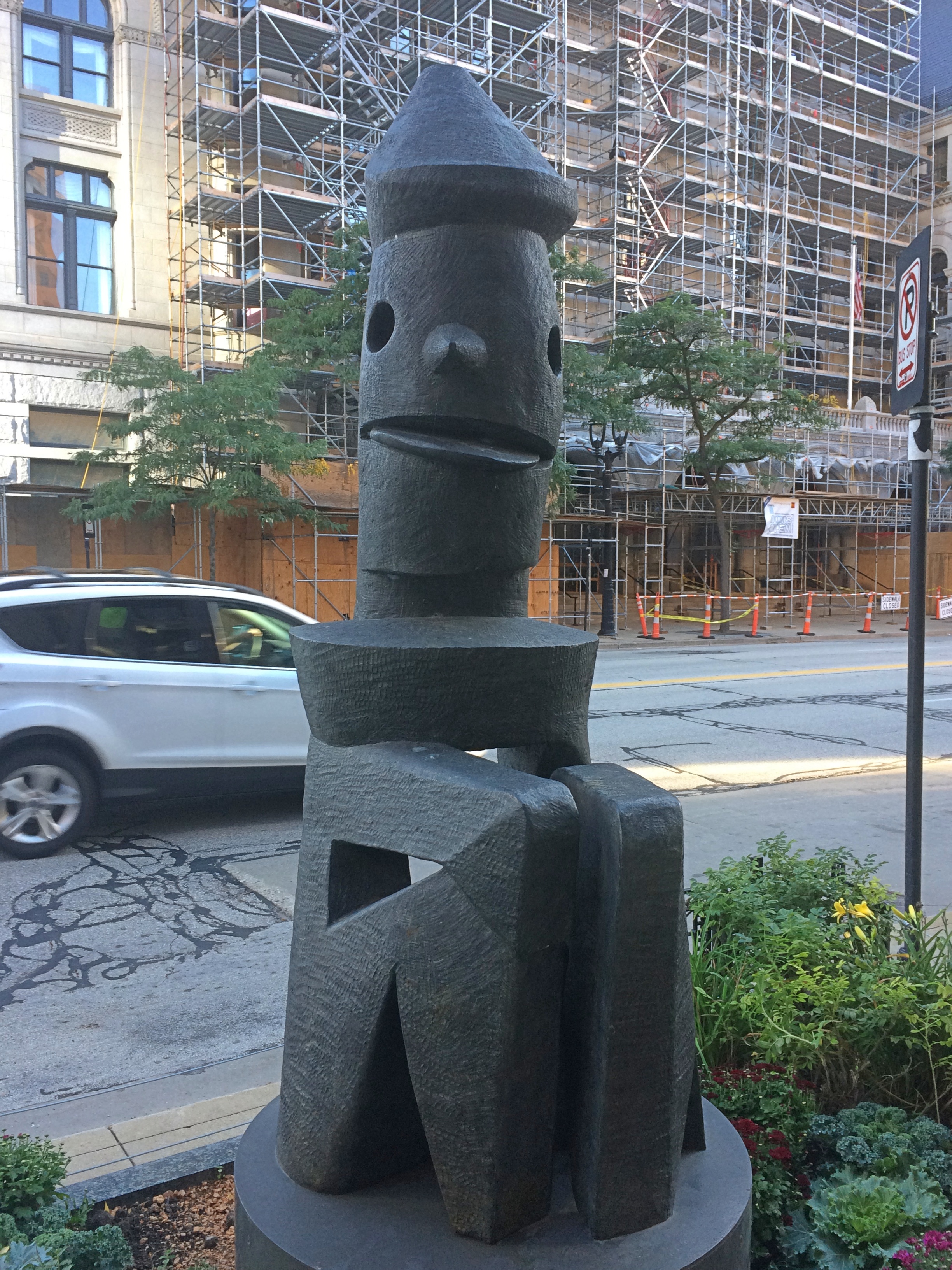
Anyway, that year we saw works on E. Wisconsin Ave., including “Seraphine-cherubin” from “Teaching Staff for a School of Murderers” by Max Ernst (1967).Sculpture Milwaukee

I’ve forgotten most of whatever I once knew about Dada, and had to look him up to make sure he wasn’t the one who peed on a pile of books in public. I don’t think he was. Who was that? I know I heard that story in college. I don’t think I want to feed verbiage along those lines into Google, however.

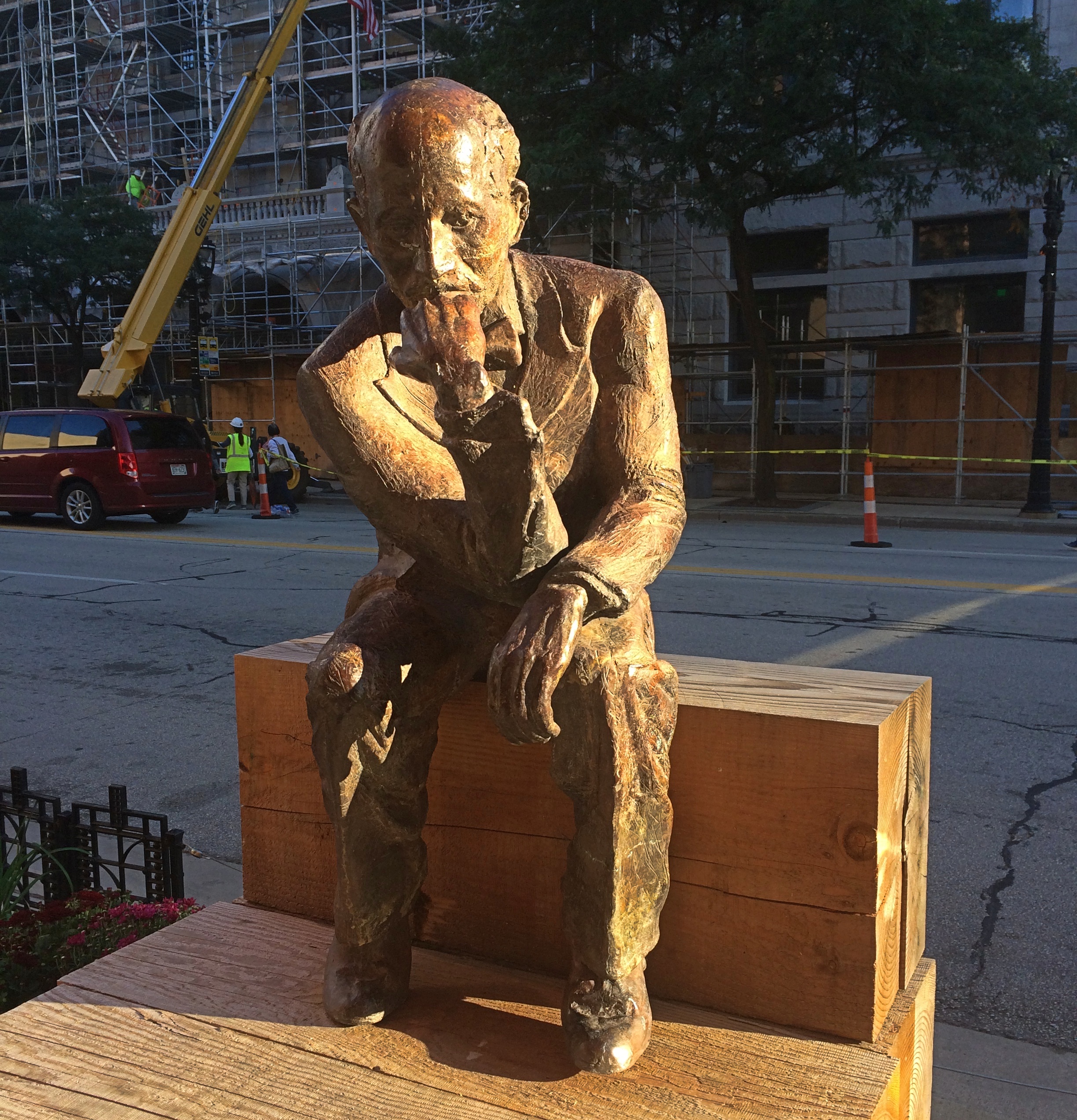
“Pensive” by Radcliffe Bailey.

The thinker depicted is W.E.B. Du Bois, according to the sign near the work.

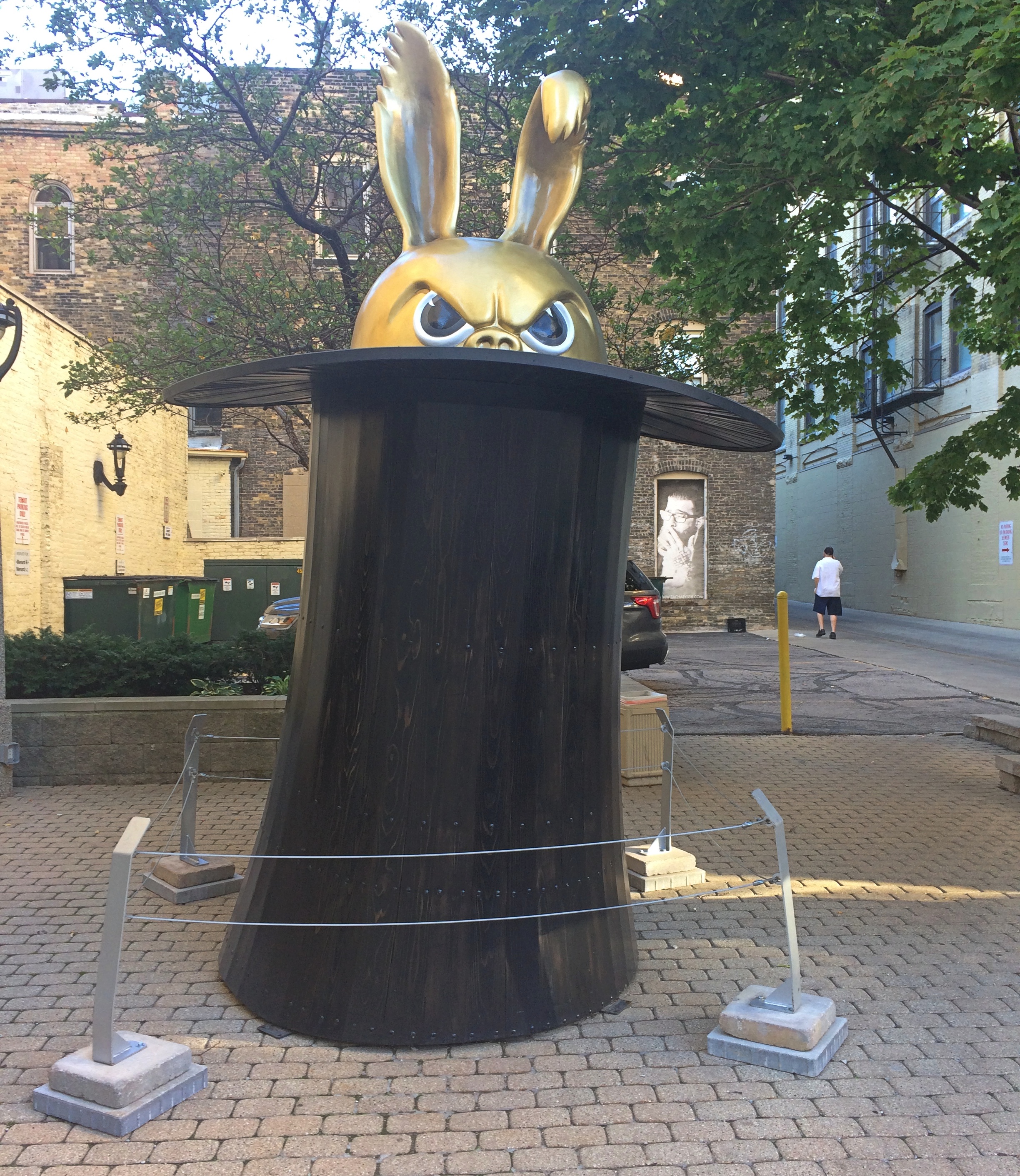
One more: “Magical Thinking,” a work by Actual Sized Artworks (Gail Simpson and Aristotle Georgiades) (2019).Sculpture Milwaukee

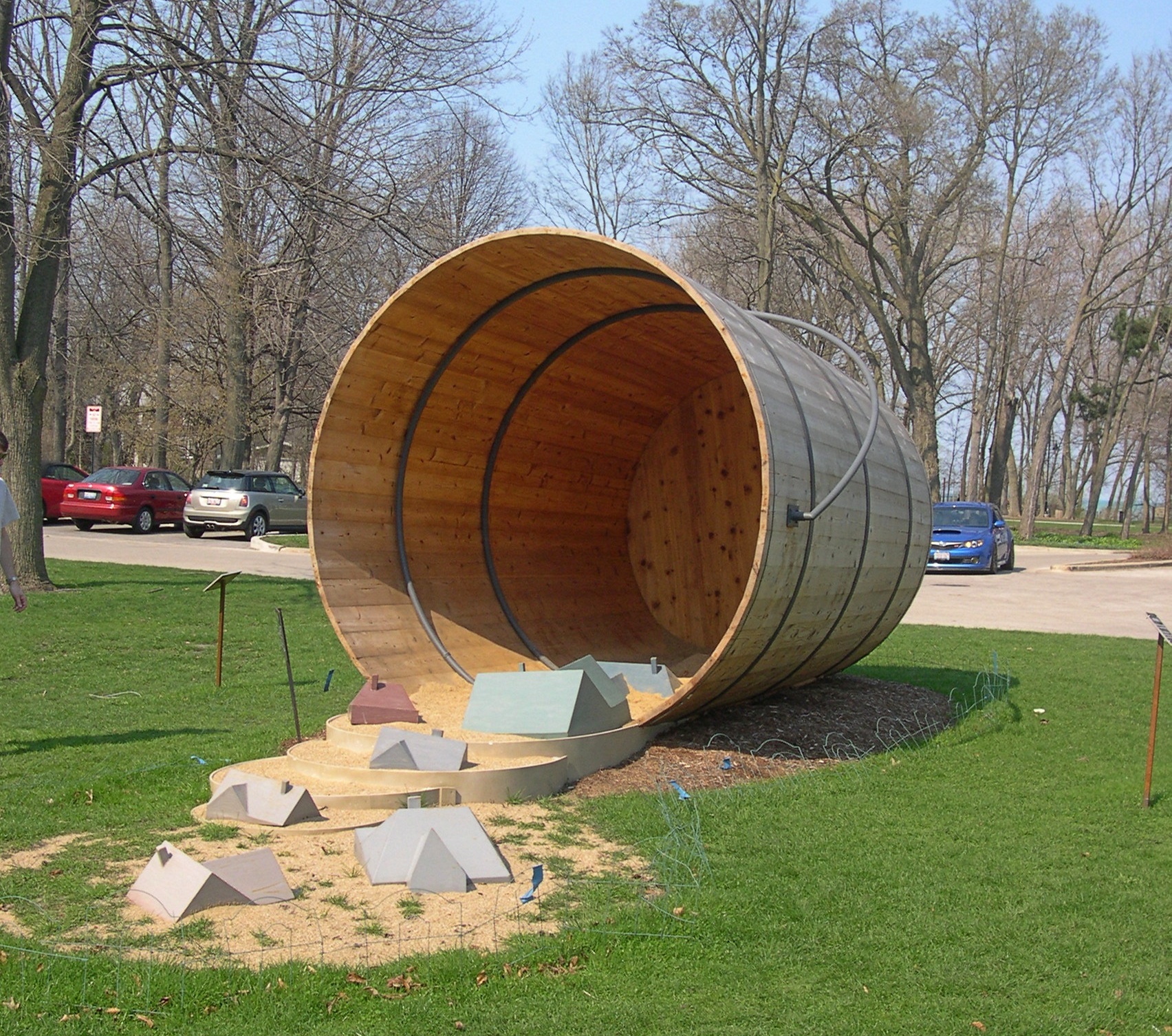
That sounded familiar. I have run across their art before, specifically in Evanston.Actual Sized Artworks 2010 EvanstonThat was in the early spring of 2010 on a short family outing.

Tempus fugit.

Temporary Saw Horse Installation

A thunderstorm rolled through yesterday around 6 pm, and today again around noon. Each was followed by slightly cooler air and clear skies. Summer’s in decline, but not gone. Ragweed has started pumping out its pollen.

The repaving of our street is done, leaving behind asphalt smooth as Tennessee whiskey, but dark as a claims adjuster’s heart. Will genetically modified moss or some such — smooth and hard, but green and alive — one day in some future decade be the surface of choice for transportation infrastructure?

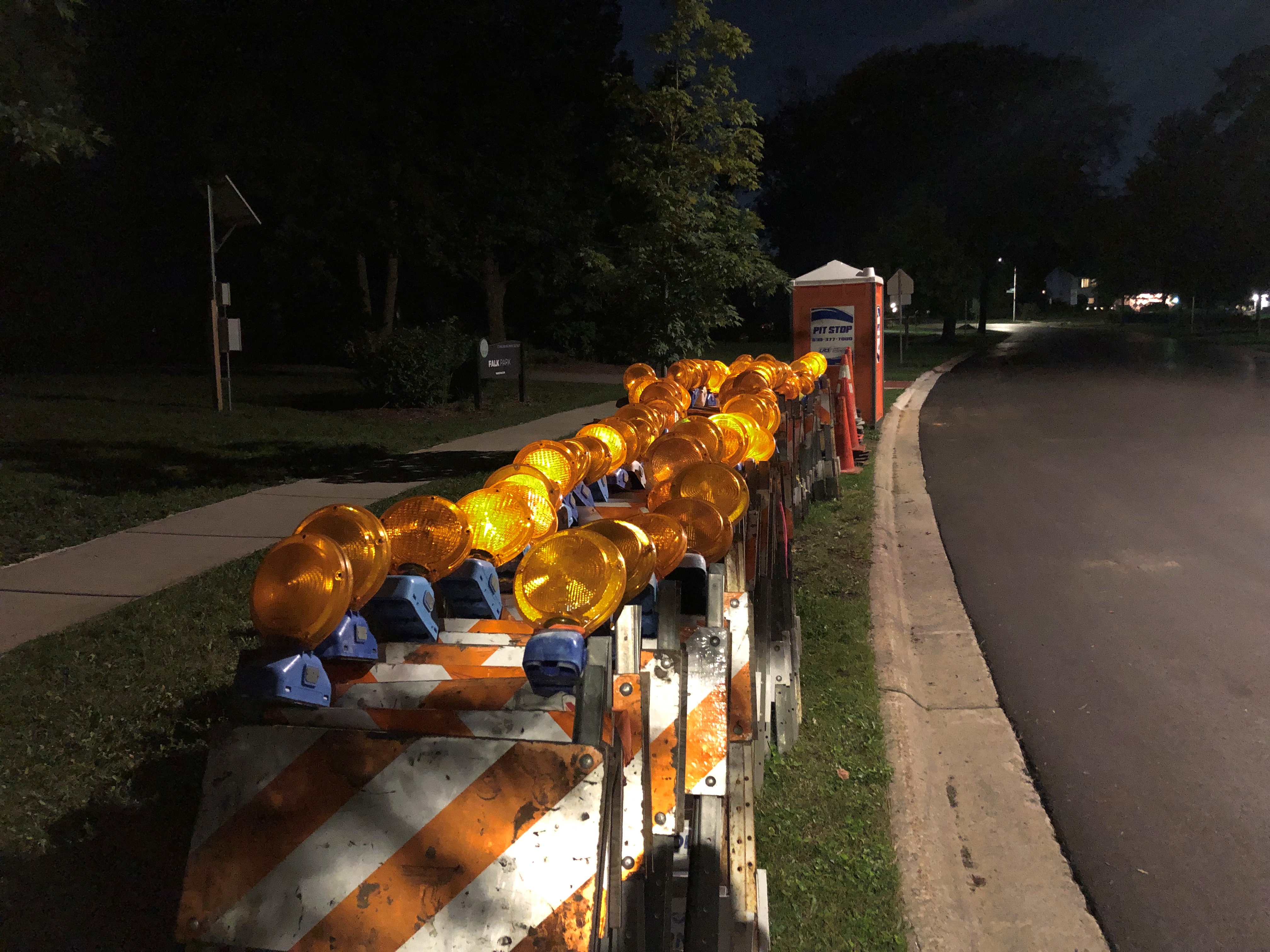
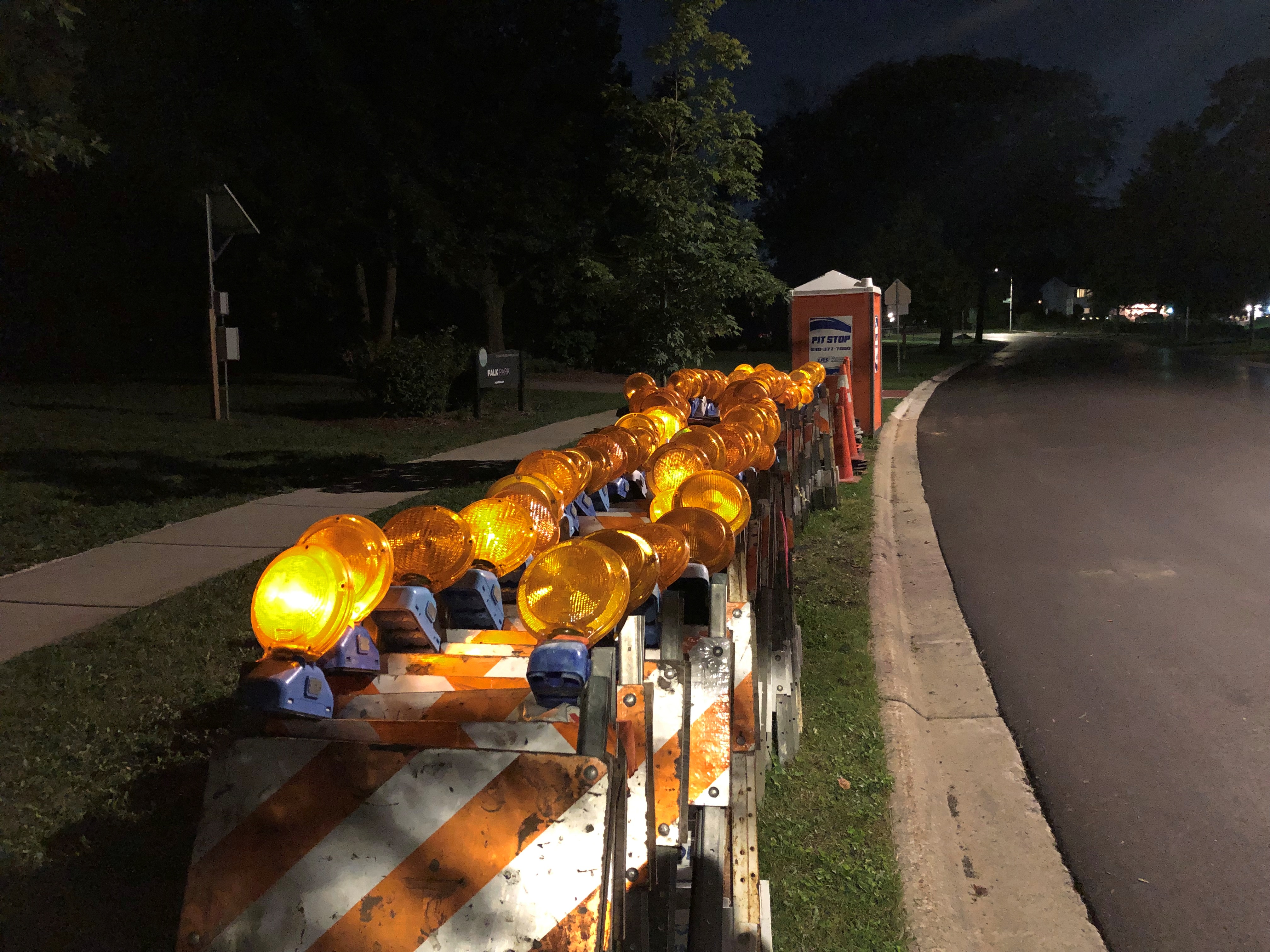
Meanwhile, the paving contractor recently gathered all of the lighted saw horses from the street, and lined them up for removal. It was a few days (and nights) before they got around to picking them up.

Nice effect after dark. We’ve walked the dog that way a few times, and while it might impress us a little, the dog doesn’t seem interested in such items. Can’t eat it, or smell it, or exchange growls or whines with it, so who cares?

Around Lake Michigan Bits & Pieces

Here’s a set of facts that only I’m likely care about, but I find remarkable anyway.

My recent trip with friends to the UP and back began on July 30 and ended on August 7. Fifteen years earlier, in 2007, I took a trip with my immediate family to the UP and back, from July 30 to August 7. I didn’t know about the coincidence until I read a previous posting of mine. I wish I could say that I’d taken a July-30-to-August-7 trip 15 years before that, in 1992, but no: Singapore and Malaysia was June 29 to July 10 that year (I had to check.)

Both were counterclockwise around Lake Michigan, but such is the richness of worthwhile sights in that part of the country that the two trips touched only at one point: the Mackinac Bridge. And in the fact that we spent time in the UP.

Is it so different now than 15 years ago? Except for maybe better Internet connectivity (I hope so) and maybe a worse opioid problem (I hope not), not a lot seems to have changed.

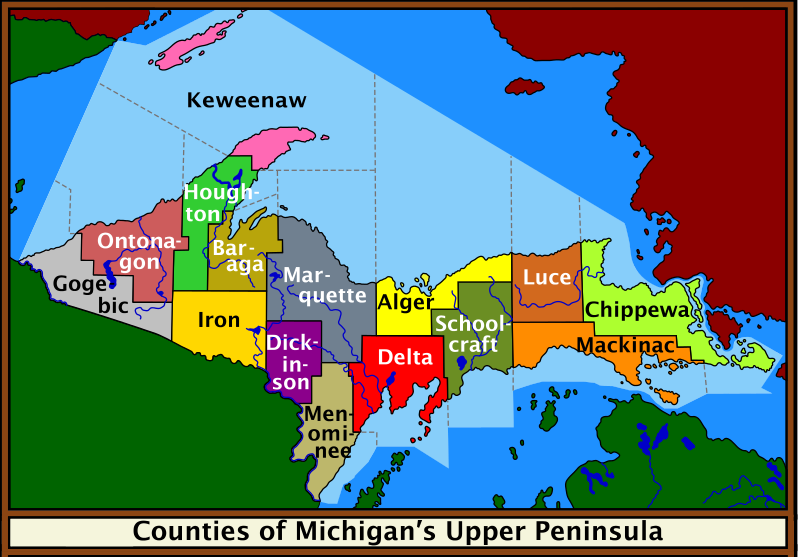
The UP’s population in 2020, per the Census Bureau, was about 301,600, representing a decline from 311,300 in 2010 and 317,200 in 2000. Truth be told, however, the UP’s population has never been more than about 325,600, which it was in 1910. After a swelling in population in the 19th century, especially after the Civil War, numbers have held fairly steady, meaning an increasingly smaller percentage of Michiganders and Americans, for that matter, live in the UP.

A spiffy public domain map.
Of course, the trip started in metro Chicago, and our first destination was BAPS Shri Swaminarayan Mandir Chicago in Bartlett, Illinois. A striking piece of India within short driving distance of home, I once said, and I’m pretty sure my friends agreed with that assessment.

Next: Indiana Dunes National Park. I had in mind we’d walk along a trail I knew, and a beach I liked, but no parking was to be had on a Saturday in summer. We were able to stop at the the Century of Progress Architectural District for a few minutes, and amble down to the beach for a few more from there. They liked that, too, and I’m sure had never heard of that corner of Indiana.

Across the line in Michigan, we went to Redamak’s in New Buffalo. Crowded, but it was then that we collectively decided, though it was unspoken, that good food in a restaurant setting was worth the risk of the BA.5 variant. I’m glad to report that none of us had any Covid-like symptoms during the entire run of the trip.

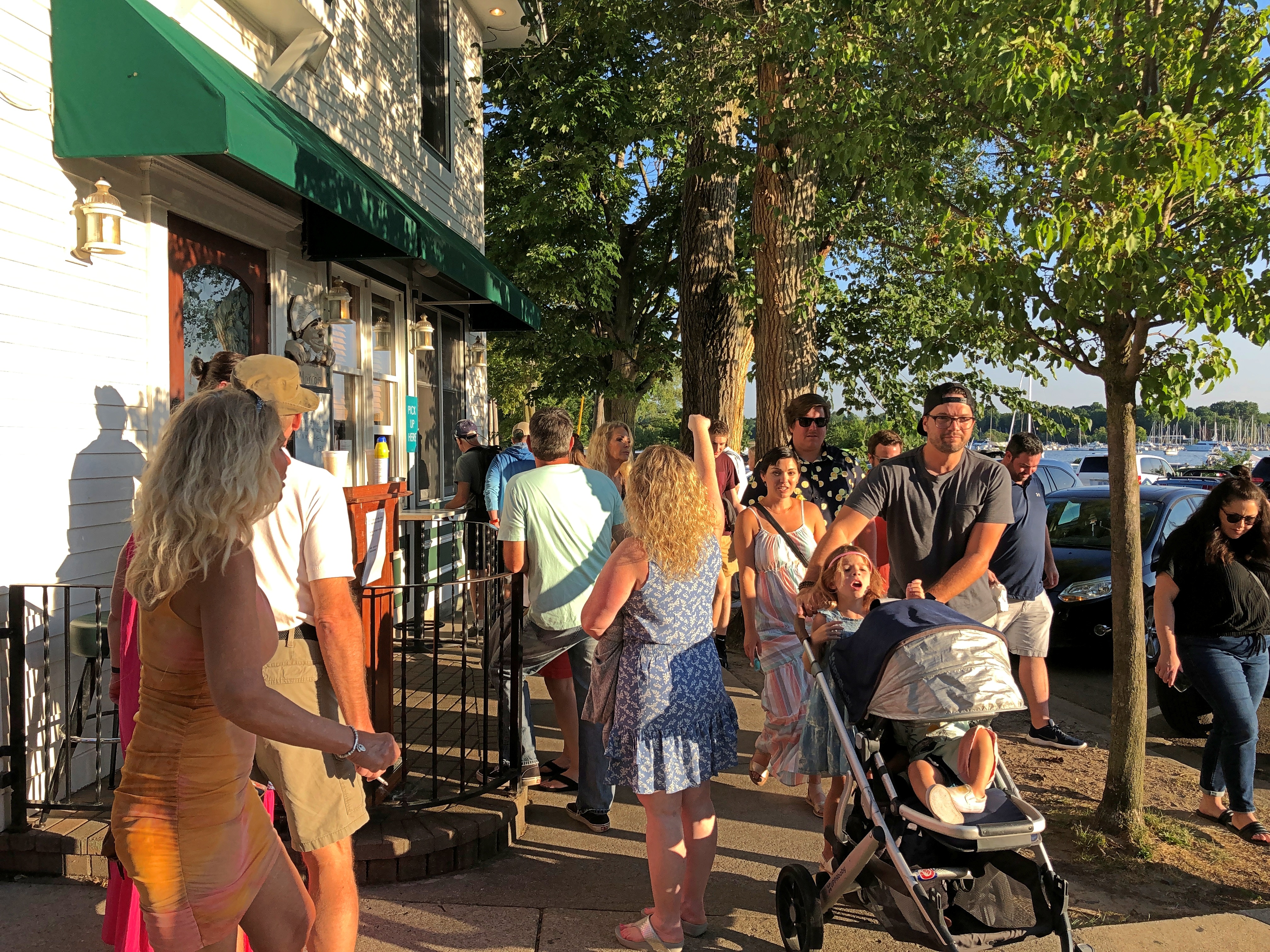
Those were my first-day suggestions. Now my friends had one: Saugatuck, Michigan, which is actually two small towns, the other being named Douglas. I’d seen it on maps, but that was the extent of my awareness. Turns out it’s a popular place on a summer Saturday, too. Especially on the main streets.Saugatuck, Michigan Saugatuck, Michigan Saugatuck, Michigan
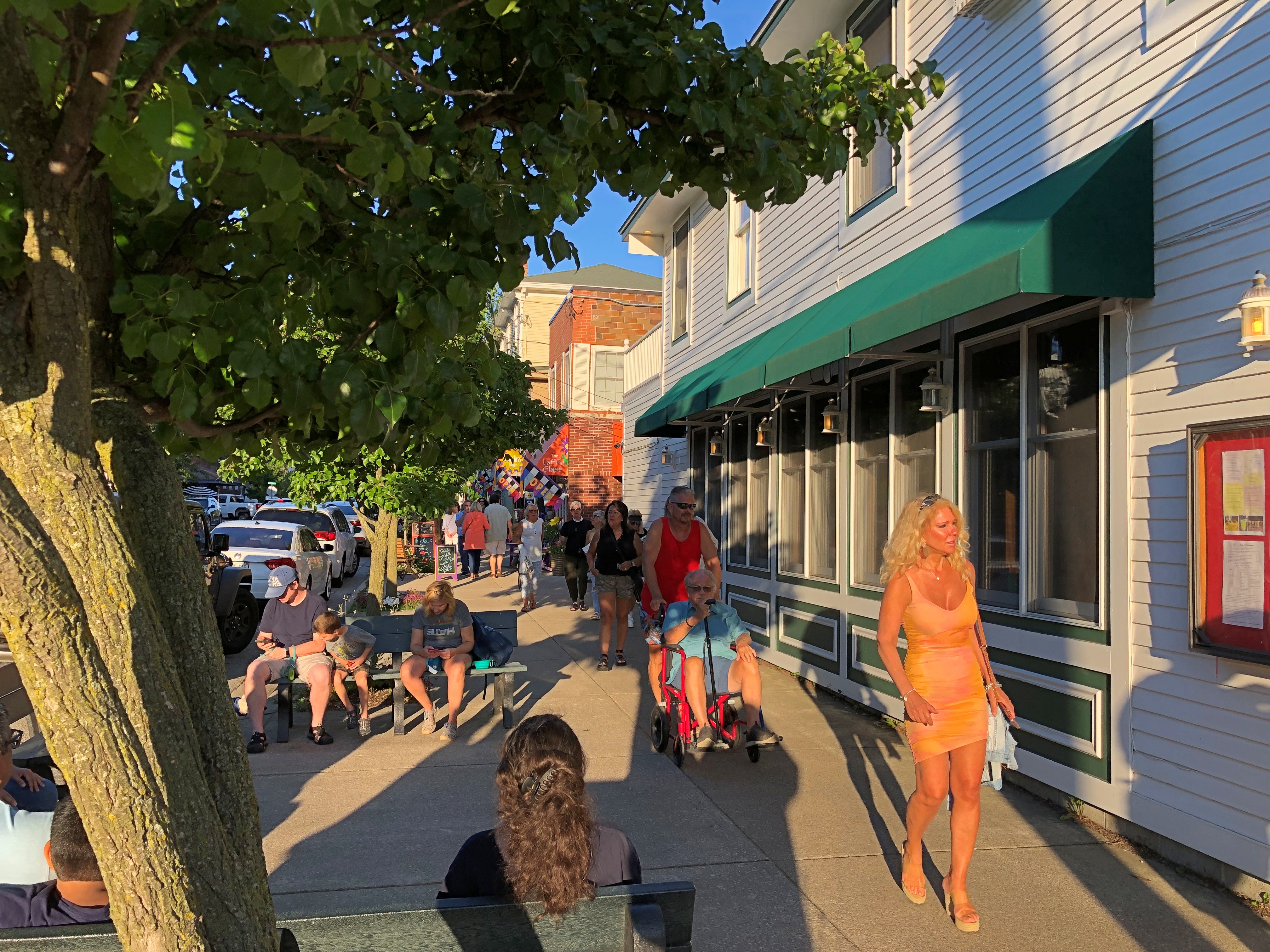
Once we found parking, the place got a lot more pleasant. We wandered around, looking at a few shops and buying ice cream for a short sit down.

A small selection of Saugatuck businesses vying for those visitor dollars (no special order): Uncommon Coffee Roasters, Glik’s clothing store, Kilwin’s Chocolate, Sand Bar Saloon, Country Store Antiques, Bella Vita Spa + Suites, Tree of Life Juice, the Owl House (“gifts for the wise and the whimsical”), LUXE Saugatuck, Santa Fe Trading Co., Marie’s Green Apothecary (“all things plant made”), Mother Moon book store, and Amazwi Contemporary Art, just to list only a fraction of the businesses.

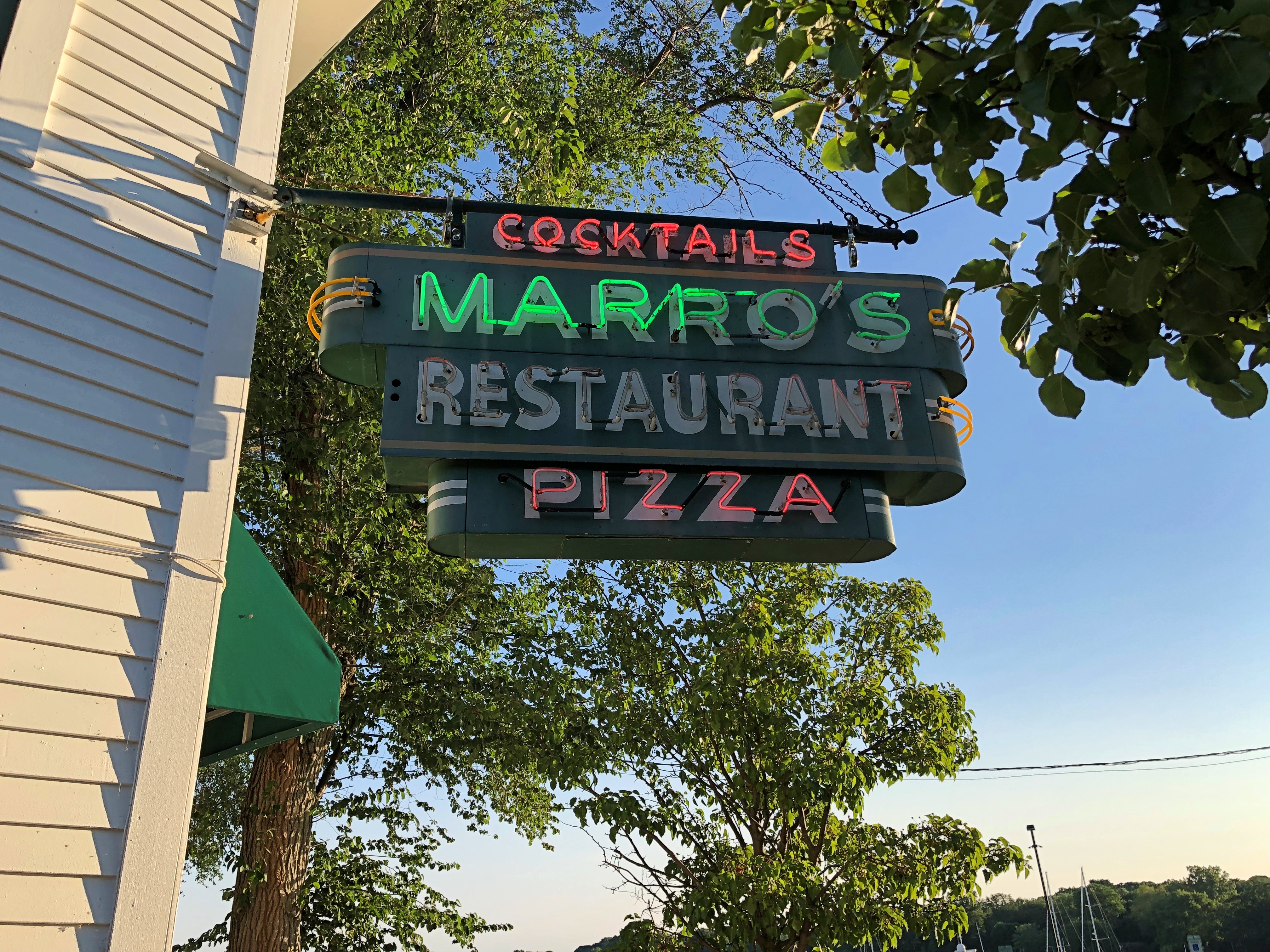
Not a lot of neon, but there was this.Saugatuck, Michigan
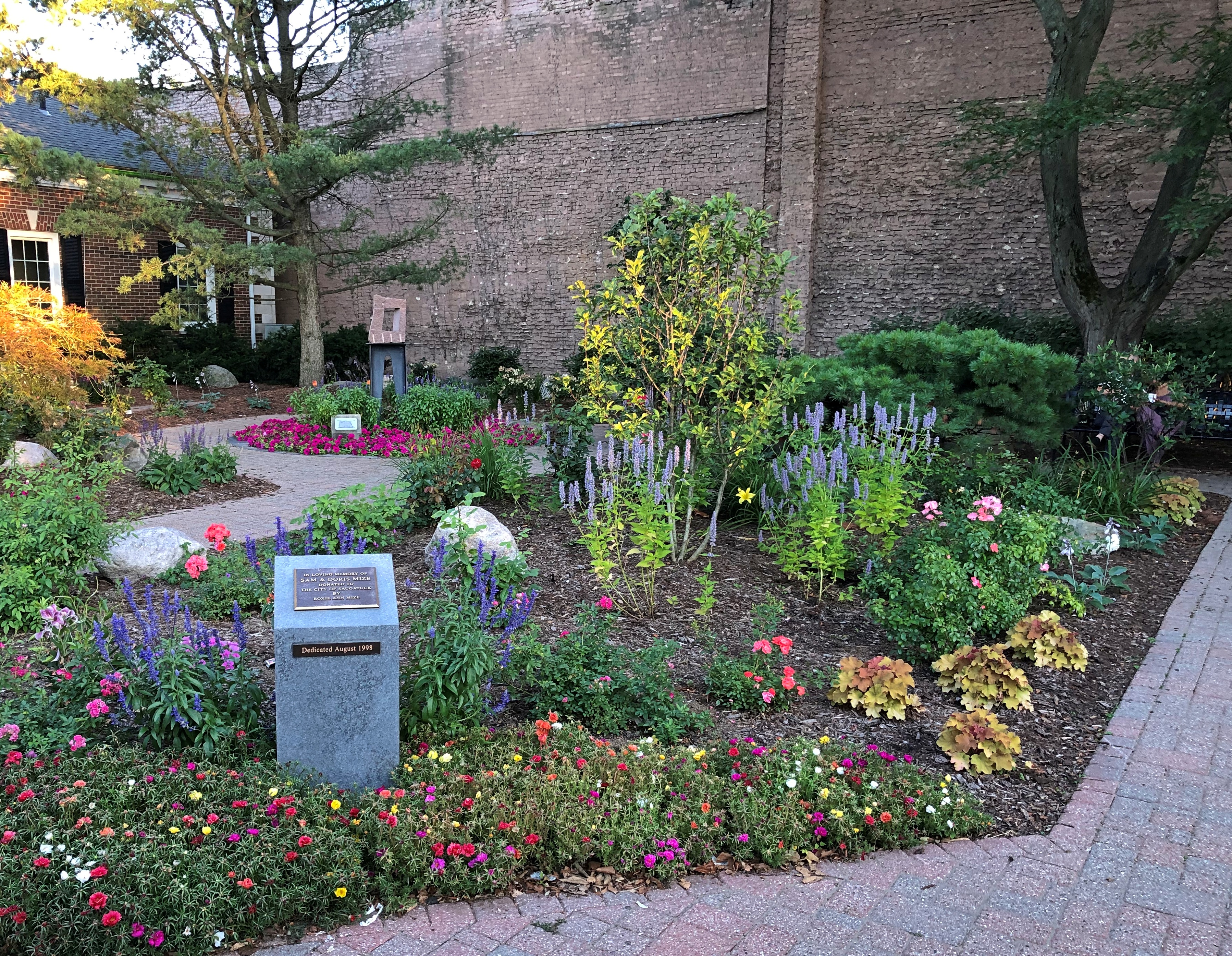
I liked the little public garden. Rose Garden, at least according to Google Maps.Saugatuck, Michigan
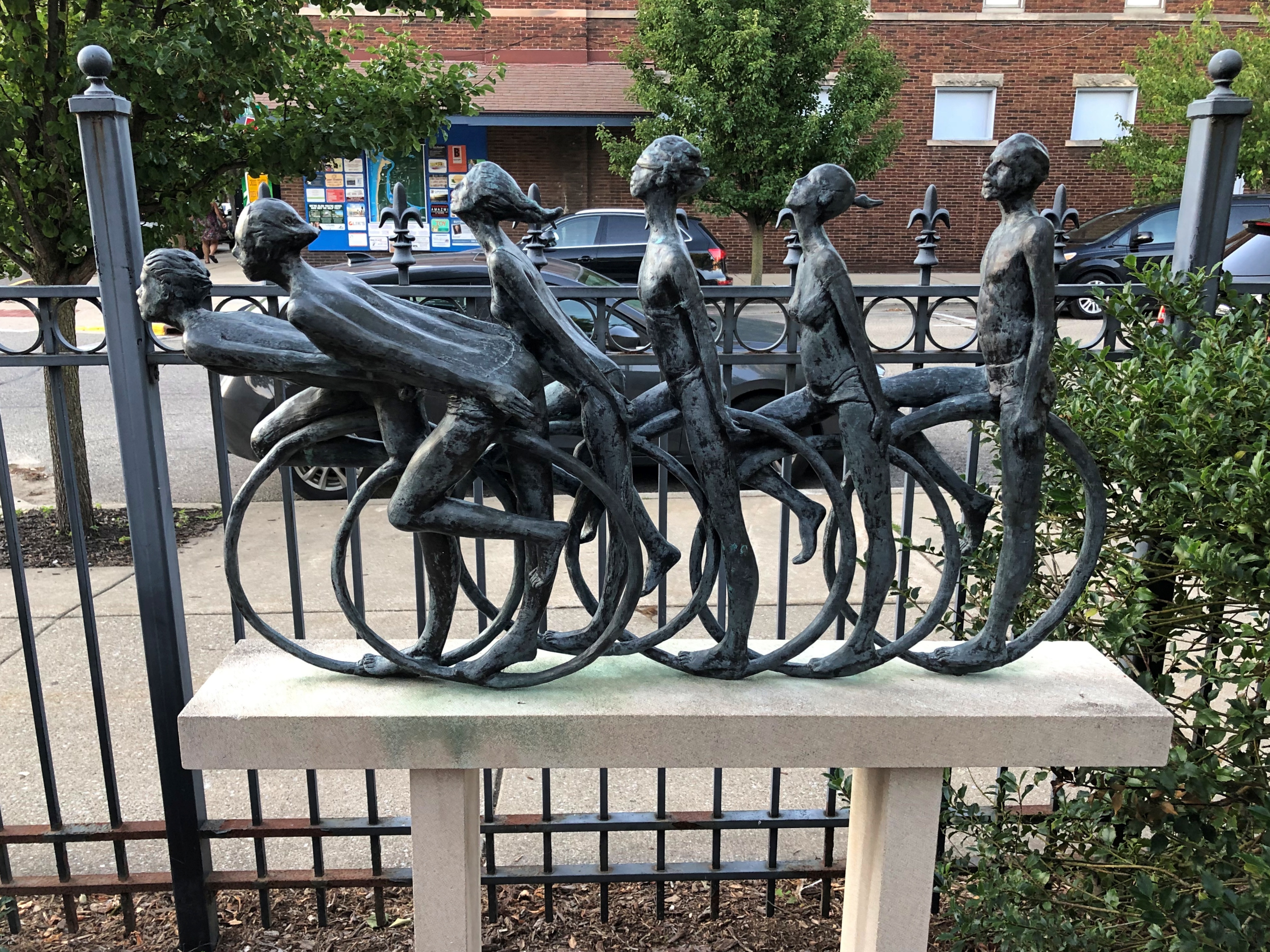
And its sculpture, “Cyclists,” by William Tye (2003).
Saugatuck, Michigan

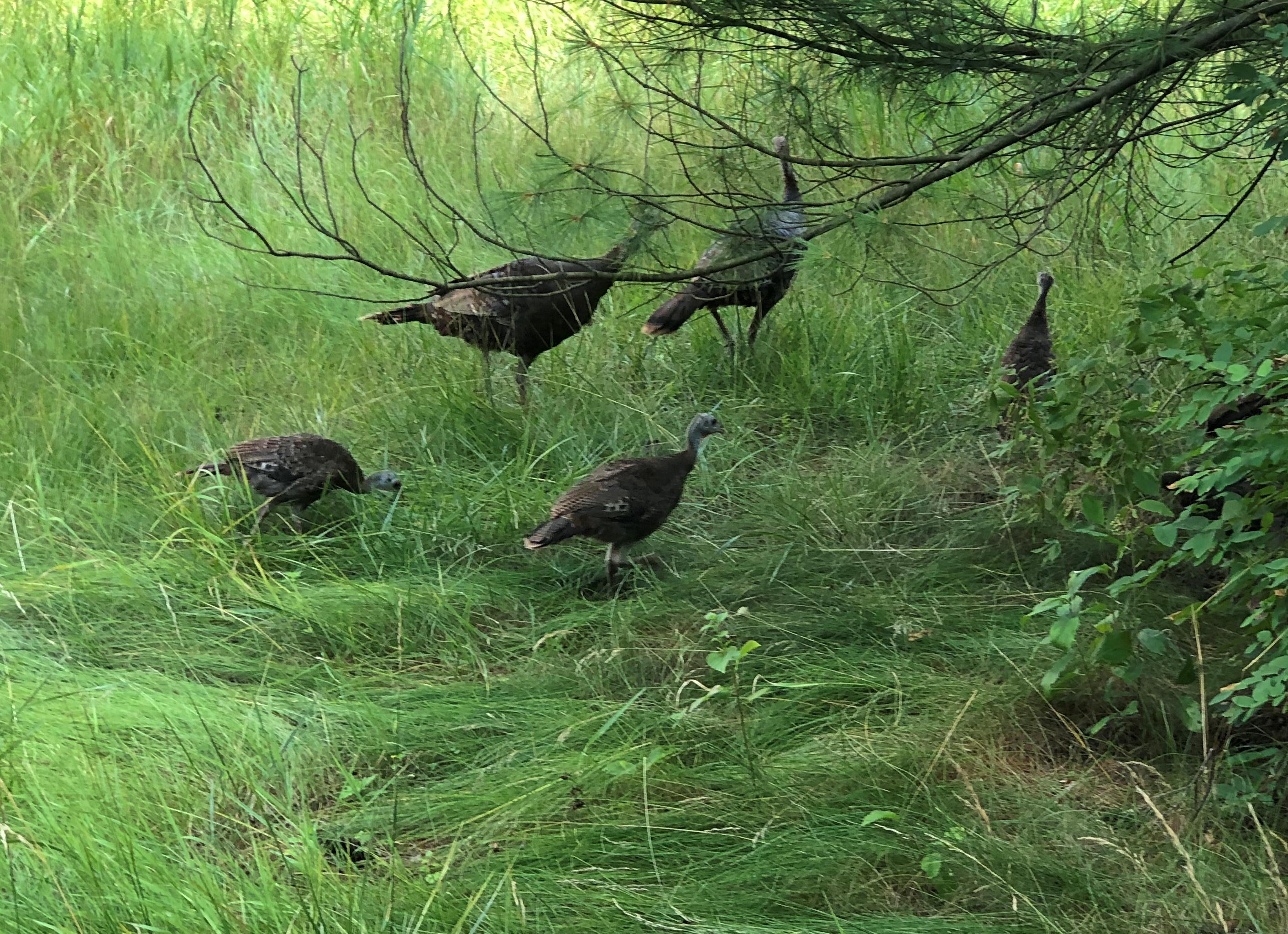
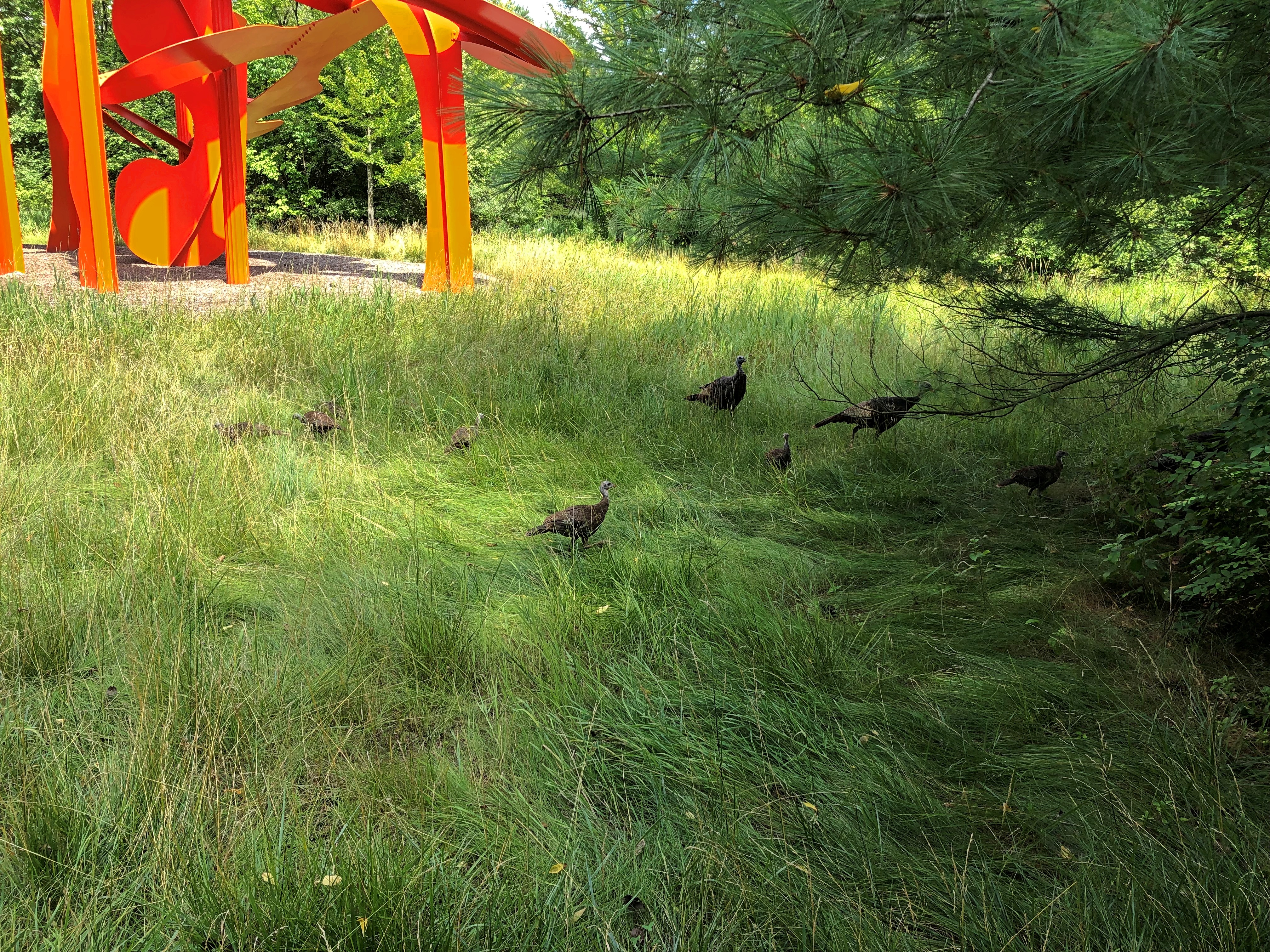
At the Frederik Meijer Park & Sculpture Garden, we encountered a flock of what looked like wild turkeys.Frederik Meijer Sculpture Garden turkeys Frederik Meijer Sculpture Garden turkeys
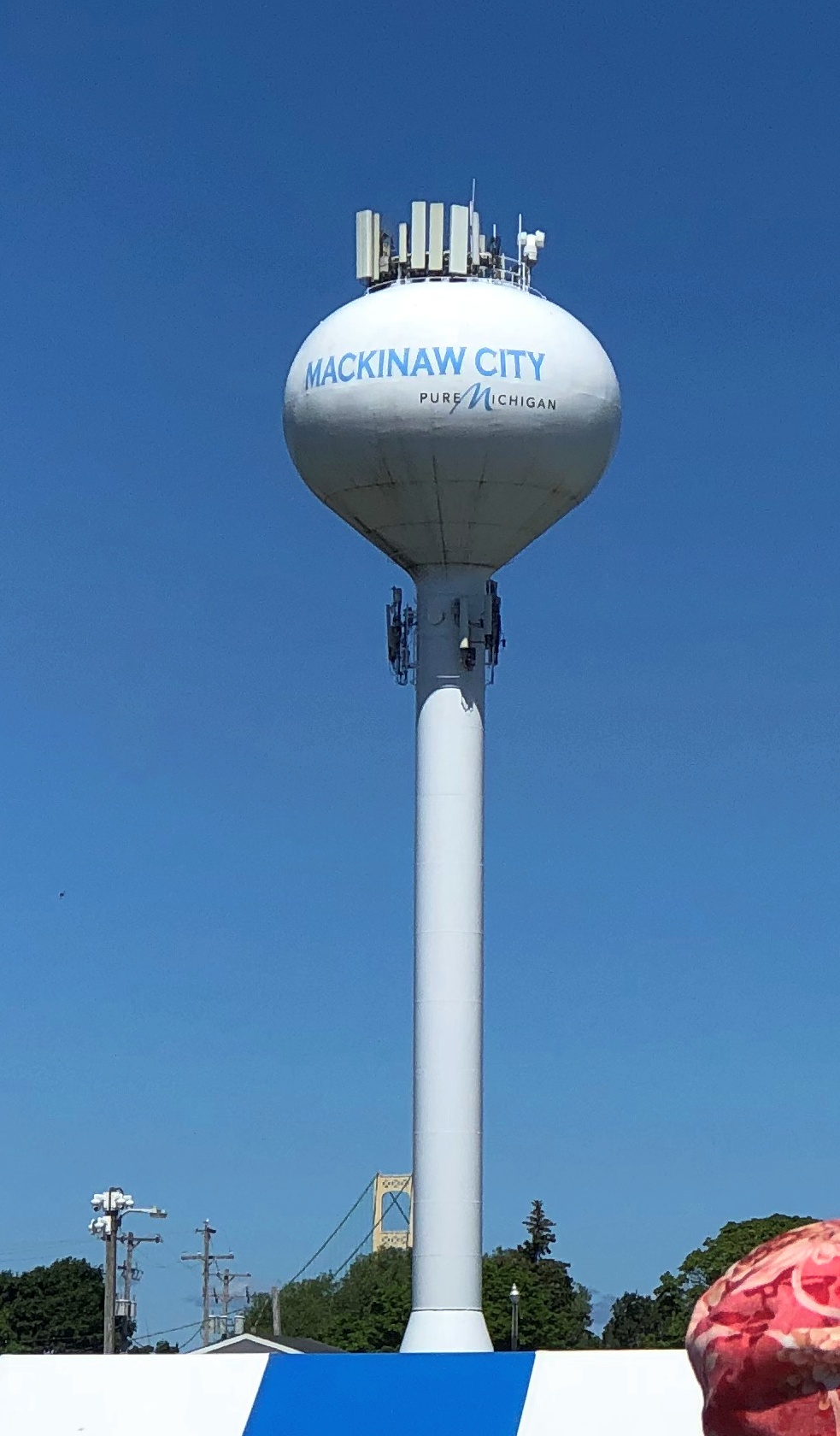
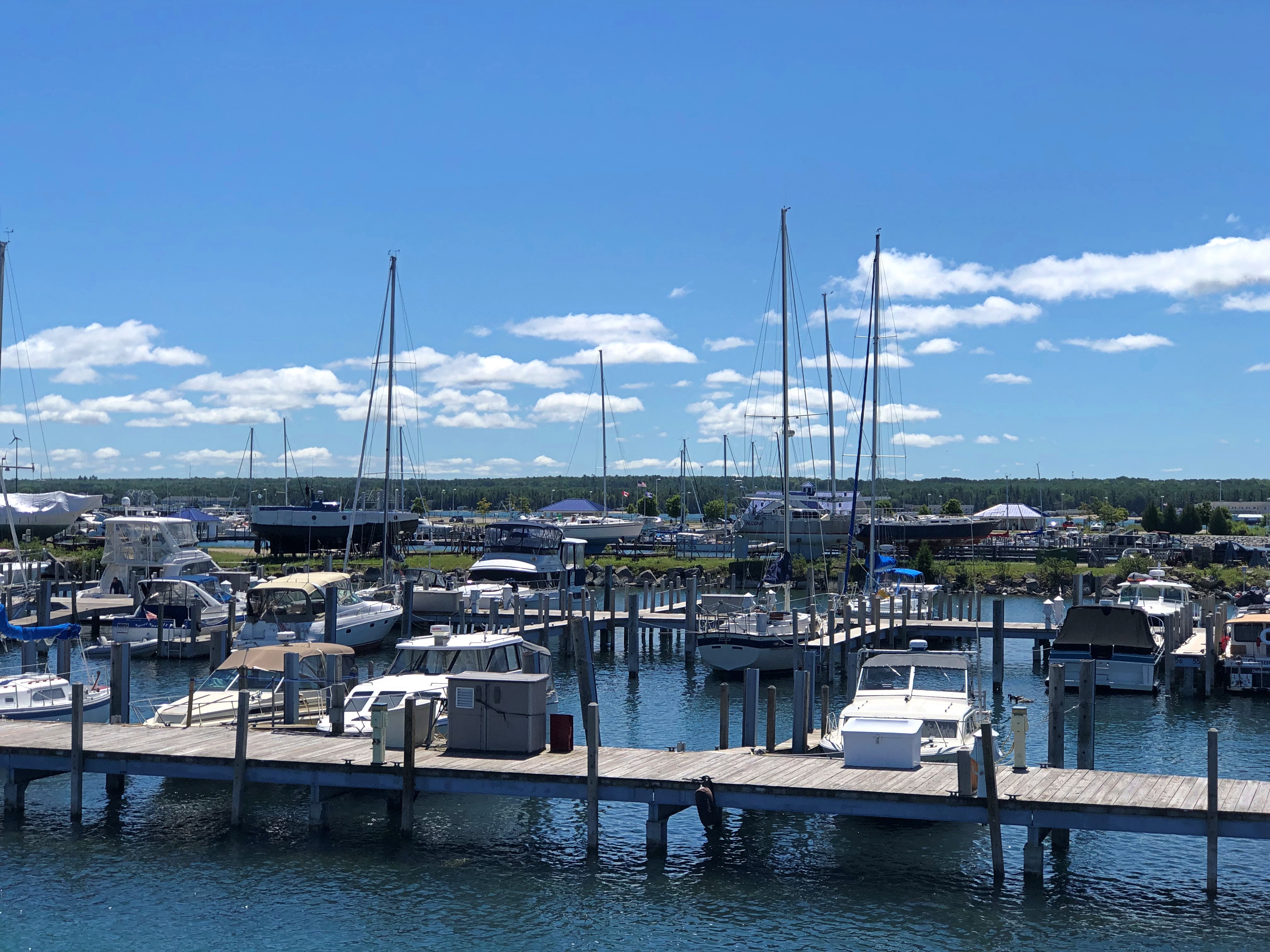
The marina at Mackinaw City, from which boats to Mackinac Island depart, and a highly visible structure nearby.Mackinac City, Michigan Mackinac City, Michigan
You can be sure that we spent that afternoon on Mackinac Island.Mackinac Island
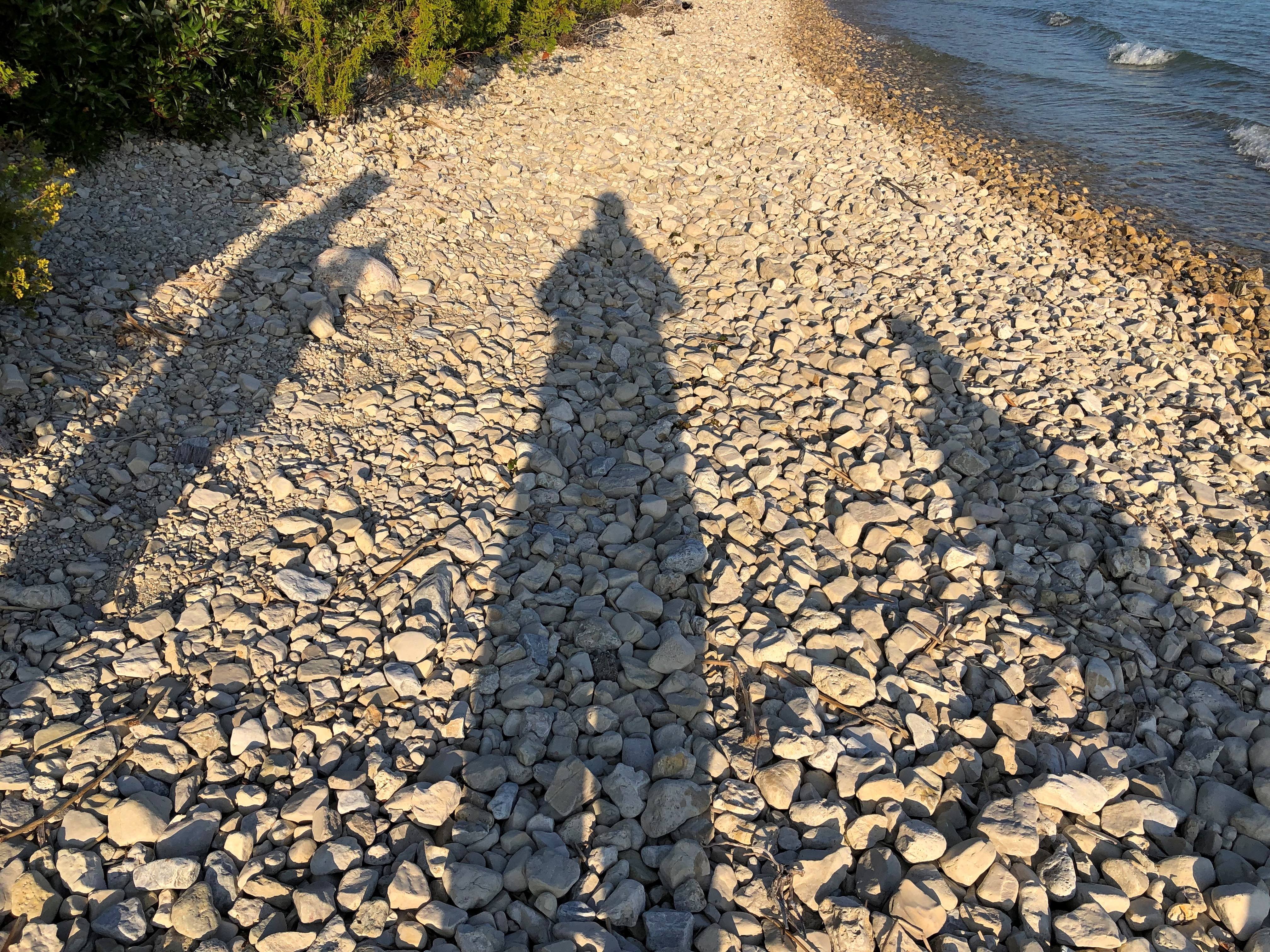
Besides the Mackinac Island Ramble (that’s what I’m calling our walk there), we took a number of other good walks on the trip.

One was at the 390-acre Offield Family Working Forest Reserve, near Harbor Springs, Michigan. Its excellent wayfinding — clear and immediately useful signs and maps — helped us through its mildly labyrinthine paths that curve through a lush forest with no major water features, including parts that had clearly been used as a pine plantation.

Clouds threatened rain but only produced mist in the cool air. Wildflowers might have been a little past peak, but there was a profusion, and a rainy spring and early summer put them in robust clusters of red and blue and gold and white, near and far from our path. Everywhere a damp forest scent, wonderful and off-putting at the same time.

On August 5, our last full day in the UP, we had lunch in the small town of Grand Marais, on the shores of Lake Superior. As tourist towns go, it’s minor league, but all the more pleasant for it. The extent of souvenir stands at the main crossroads was a single enclosed booth, staffed by a young college woman who was maybe a relative of the owner. The selection of postcards was limited, but I got a few.

Right there on the main street of Grand Marais is the Pickle Barrel House. You can’t miss it. We didn’t.

Afterward, we found our way to the eastern reaches of Pictured Rocks National Lakeshore, since the town is considered the eastern gateway to the lakeshore. That end of the lakeshore doesn’t have the pictured rocks, but there’s a lot else.

One trail on lakeshore land took us down to a beach on the south shore of Lake Superior. Sabel Beach, by name. You climb down a couple of hundred stairs to get there, but see the vigorous Sable Falls on the way. The way wasn’t empty, but not nearly the mob city on the southern shore of Lake Michigan or the waterfront at Mackinac Island.

Another lakeshore trail took us along Sable Dunes, which only involved a modest amount of climbing — not nearly as much as the Dune Climb at Sleeping Bear Dunes National Lakeshore — though sometimes the path underfoot was sand without vegetation. On the whole, the dunes support a full collection of the sort of hardy yellow-green grasses and bushes and gnarled trees you see near a beach. For human hikers, the dunes eventually provide a more elevated vista of the lake, which reminded me of the look over Green Bay last year.

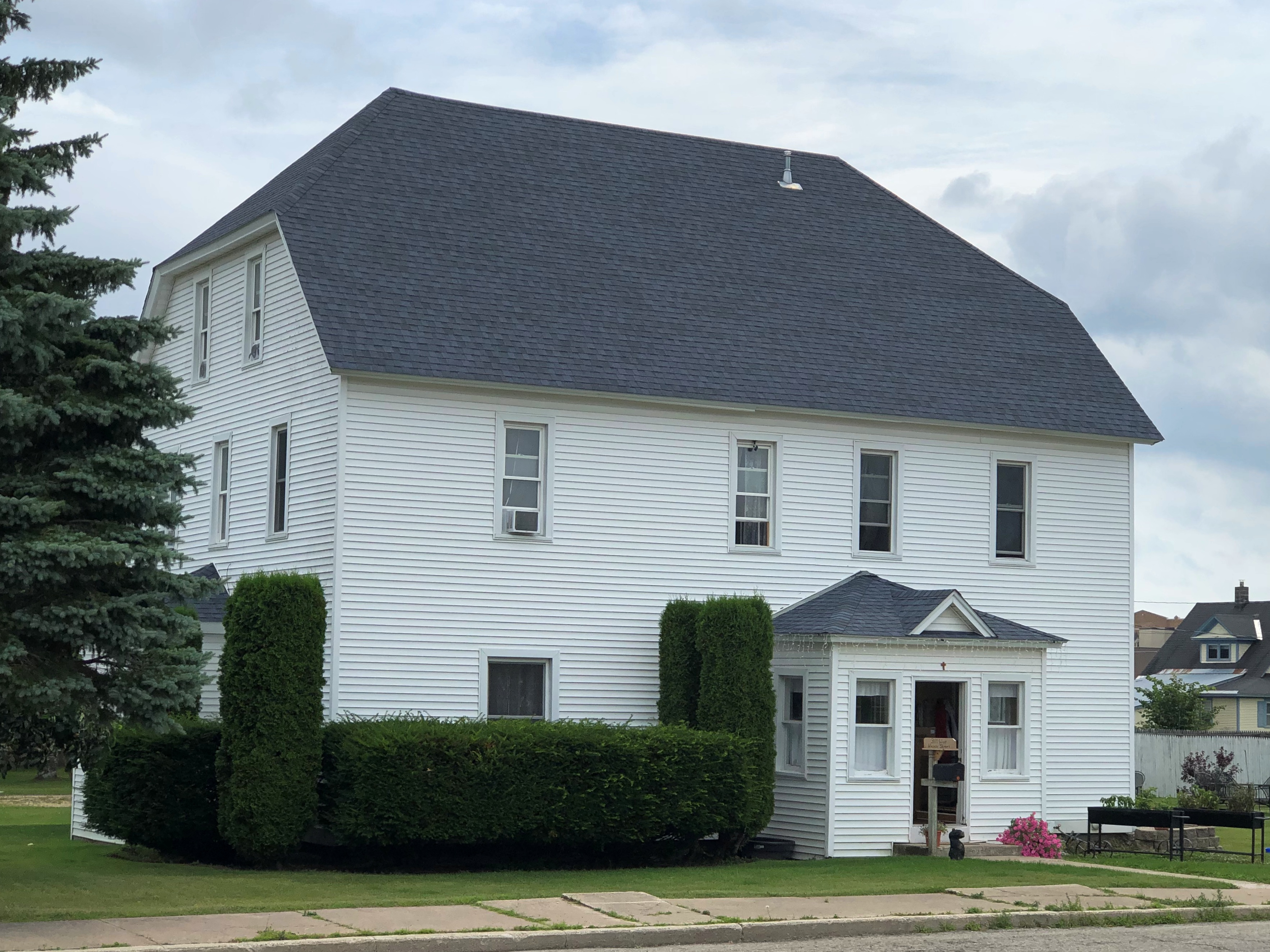
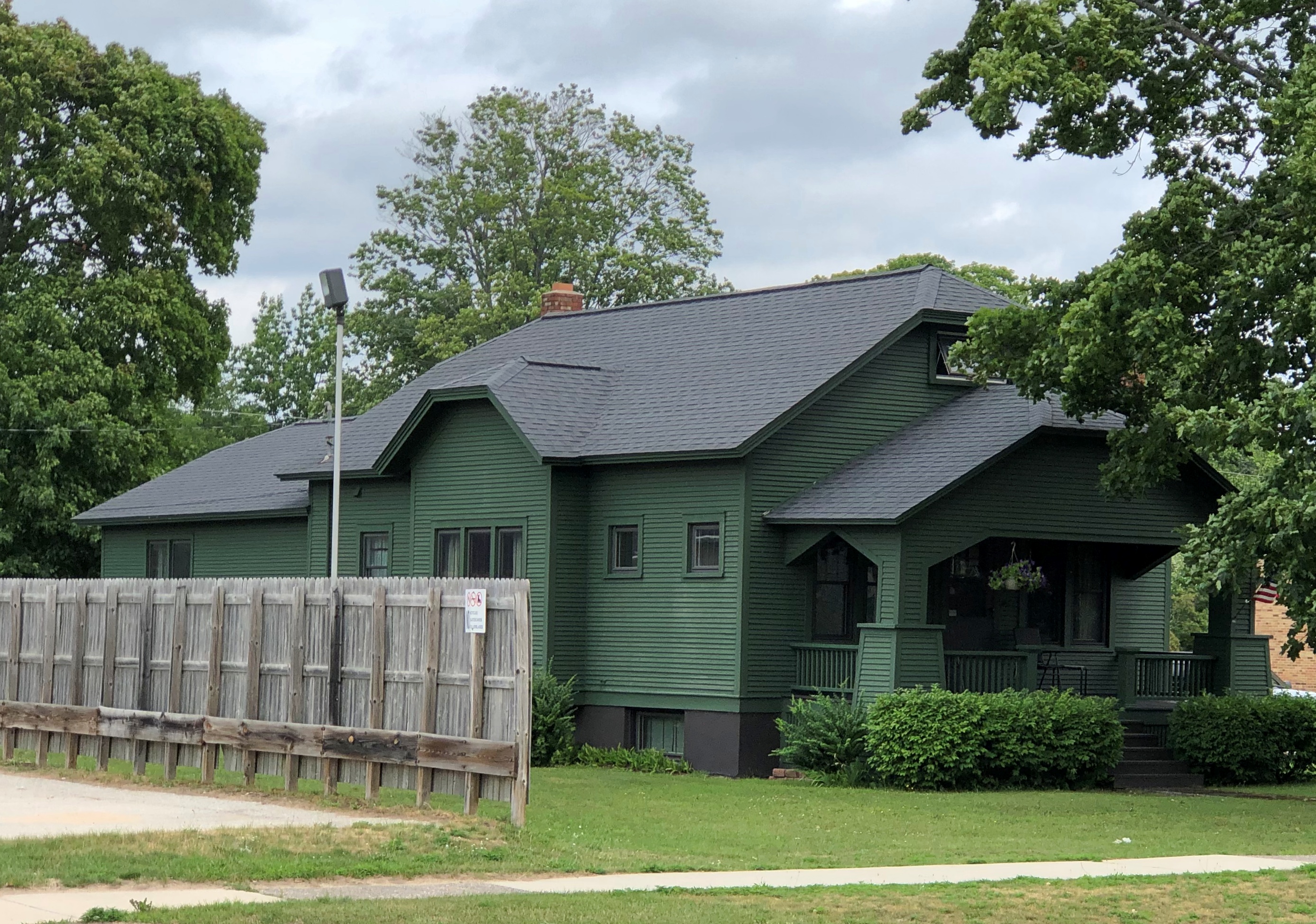
We spent two nights in Newberry, Michigan. Still no more signs of møøse than the last time I was there. I did have the opportunity to take a short walk around town. This is the Luce County Historical Museum (closed at that moment), which was once the county jail and sheriff’s residence. It’s complete with a time capsule on the grounds for the Newberry centennial in 1982. Planned re-opening: 2082. That’s optimism.Newberry, Michigan
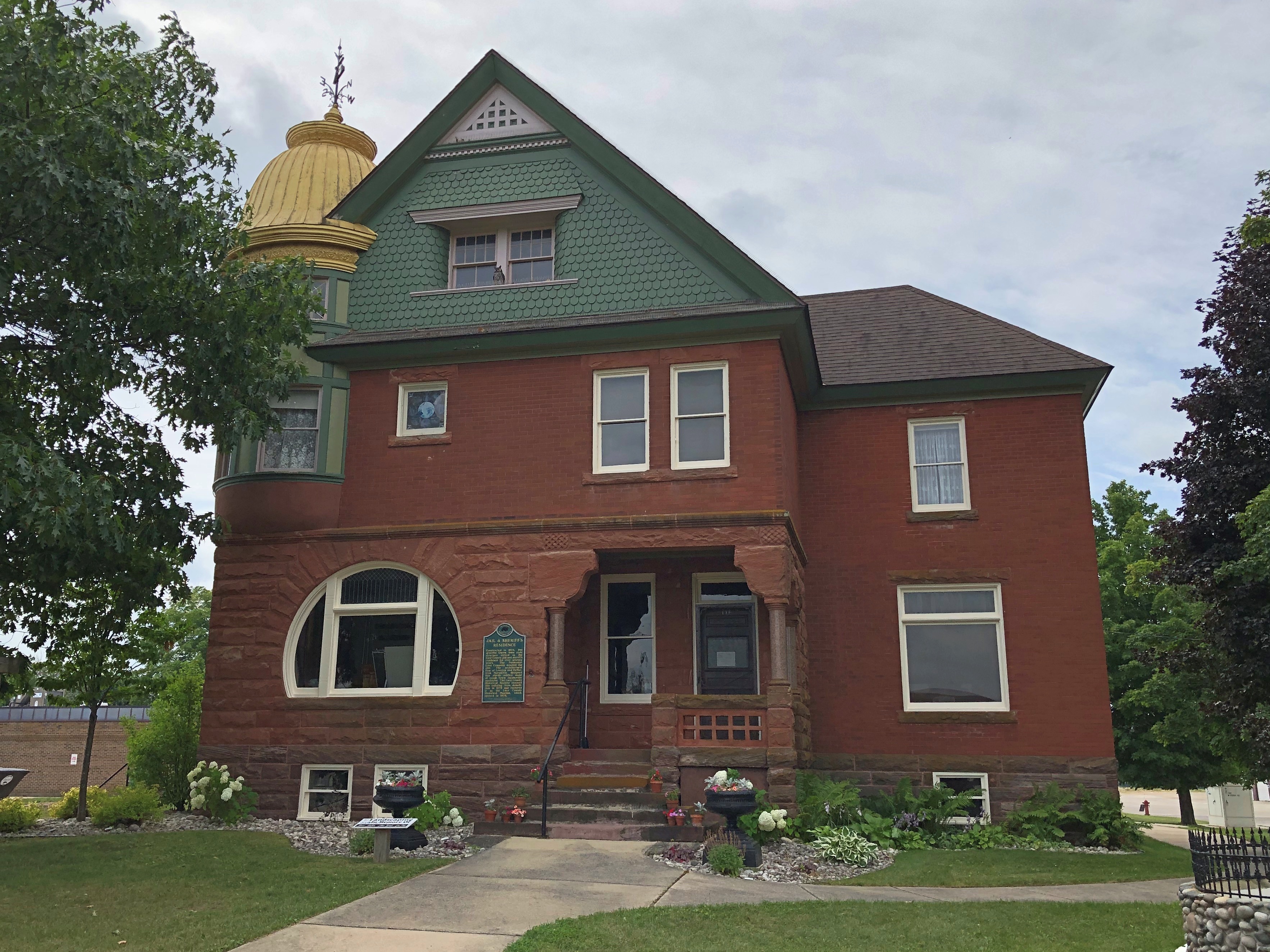
A few other nearby buildings.Newberry, Michigan Newberry, Michigan

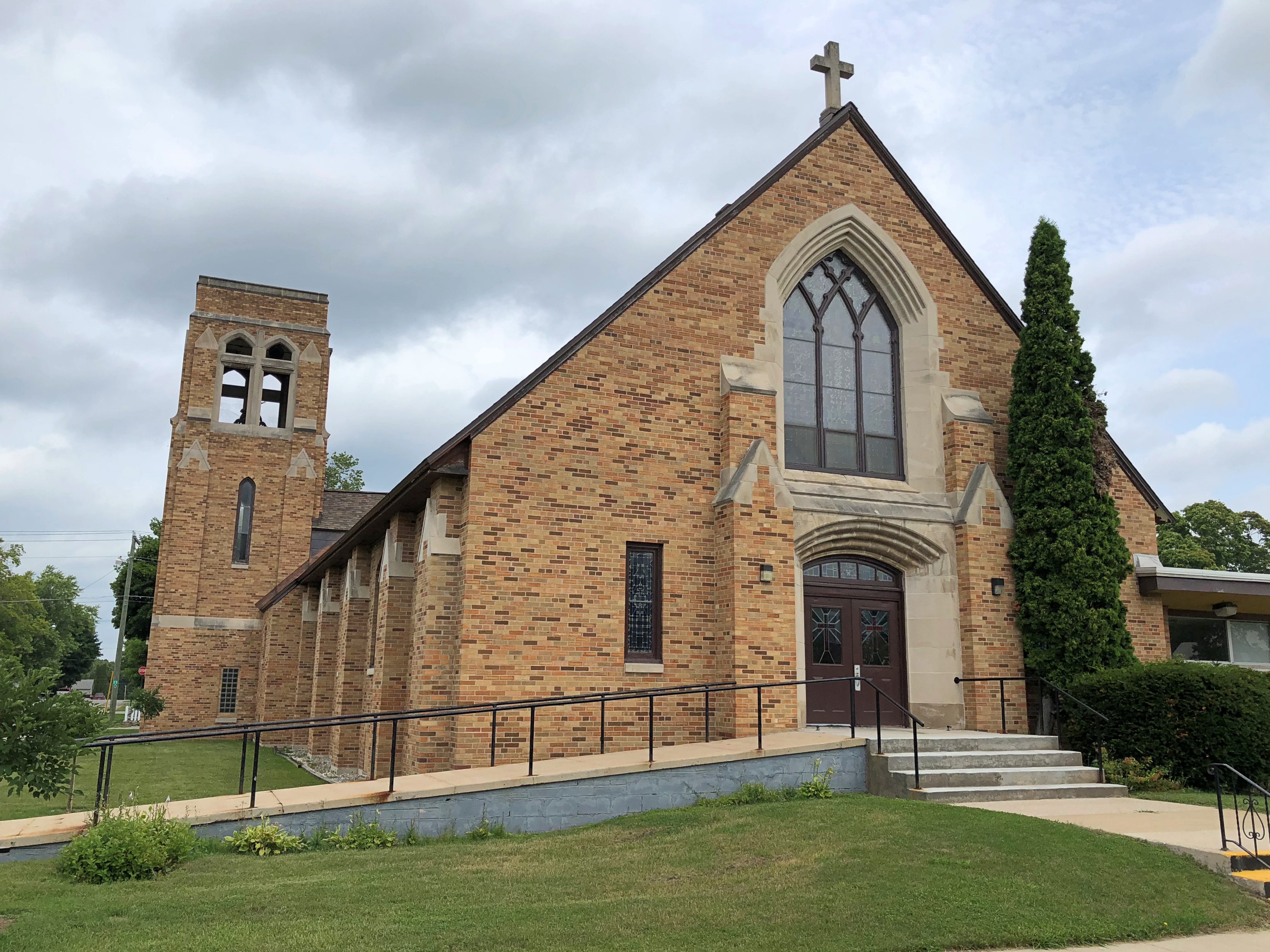
Saint Gregory’s Catholic Church.Saint Gregory's Catholic Church

We encountered rain much of the last day of the trip, August 7, so mostly it was a drive from our lakeside rental near Green Bay (the water feature) in Wisconsin home to the northwest suburbs. We didn’t stop in Milwaukee, though we buzzed through downtown on I-94, which offers a closeup of the skyline.

We did stop at Mars Cheese Castle before we left Wisconsin. How could we not do that?