Notre Dame Stroll

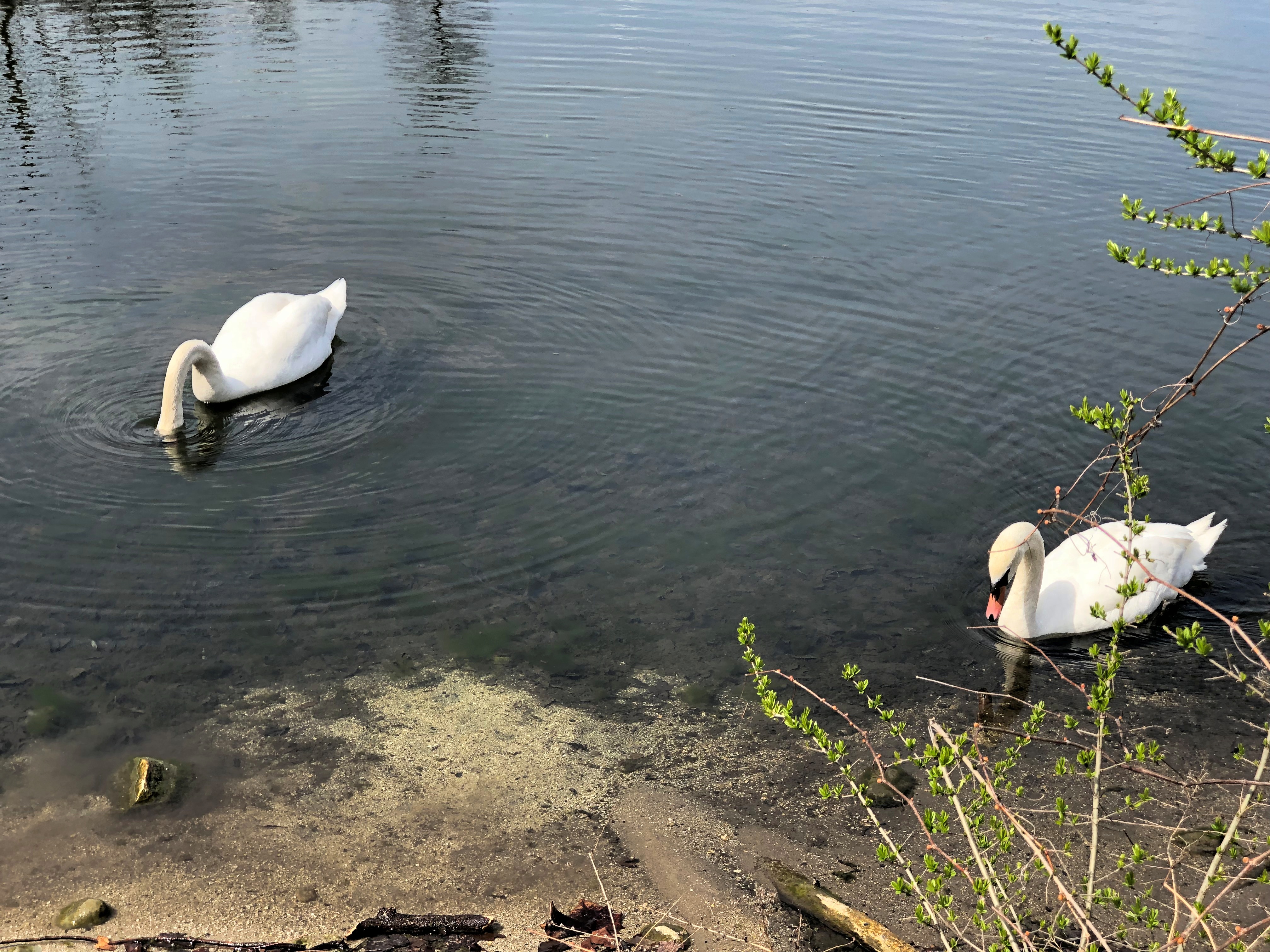
Along with the rest of northern Indiana, the campus of the University of Notre Dame is just beginning to turn green, with grass fully that color, and bushes and trees budding. We began our walk on campus on Saturday afternoon as one does, at a large parking lot. But the lot had good placement, not far from St. Mary’s Lake.St Mary's Lake, Notre Dame St Mary's Lake, Notre Dame
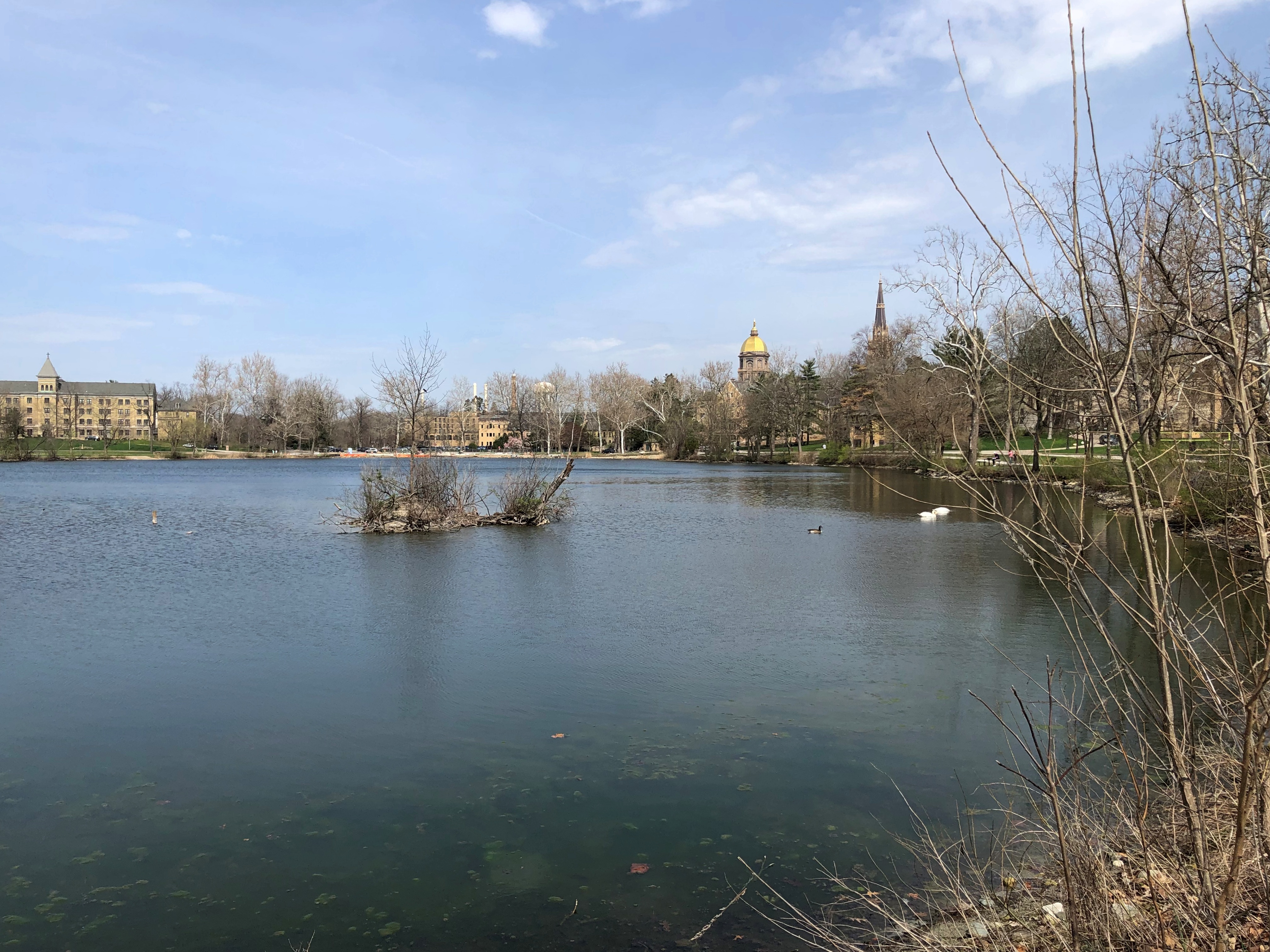
A nearby lake is St. Joseph’s. You’d think there would be a Baby Jesus Pond somewhere, but I don’t see it on the map.

Next to the basilica is Norte Dame’s magnificent Main Building. Serving as the administrative center for the school, the structure dates from 1879, replacing a building that burned down early that same year, and was designed Willoughby Edbrooke. Its gold-leaf dome was added a few years later, complete with a massive gilded statue of Mary atop it.Notre Dame Main Building
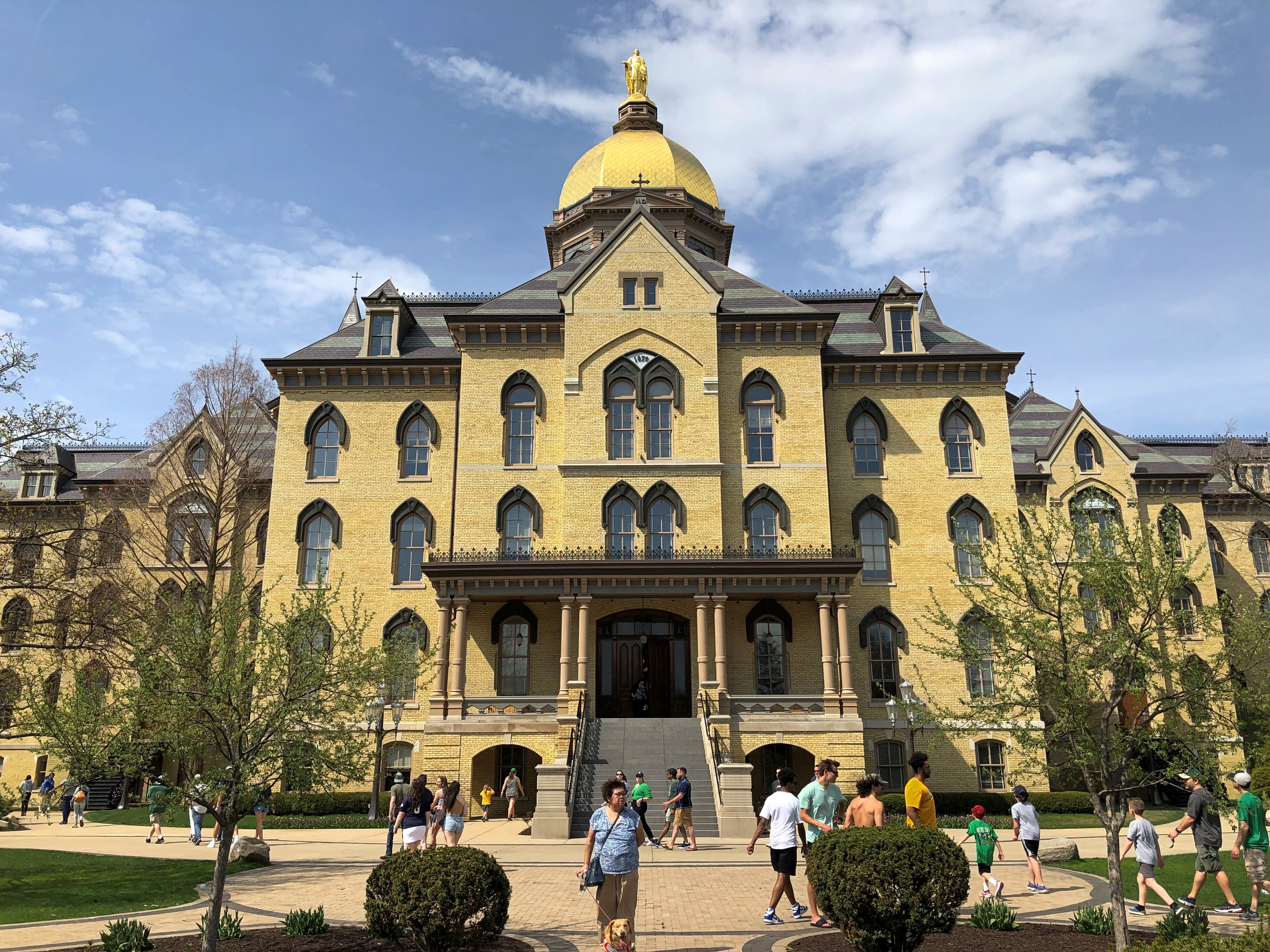
The interior looks pretty spiffy. Unfortunately, it was closed for an event. So we headed south along the well-manicured lawns of Notre Dame, eventually reaching the Eck Visitor Center and the Hammes Bookstore, which would be more accurately called the Hammes ND-Themed Clothing Store.Notre Dame campus
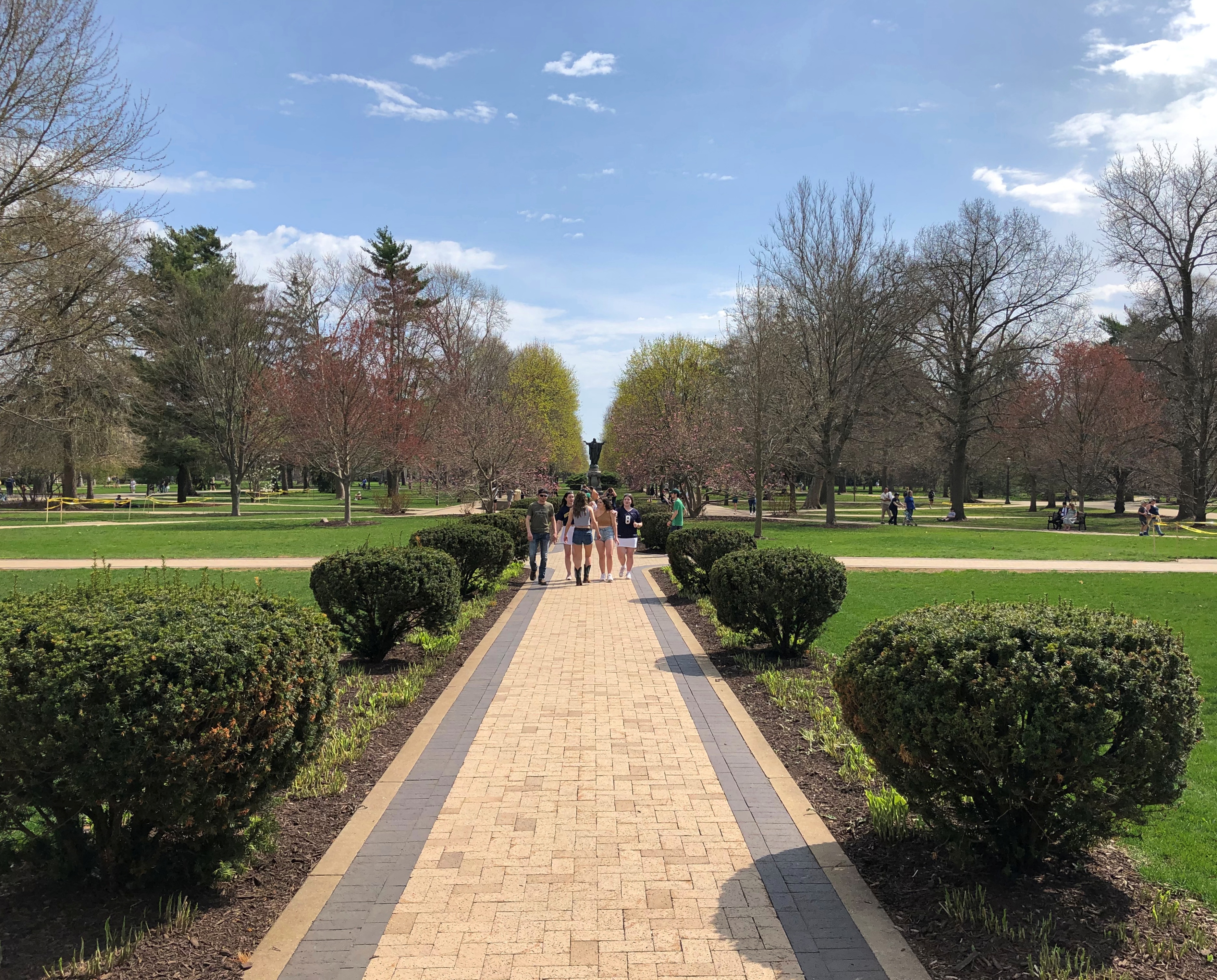
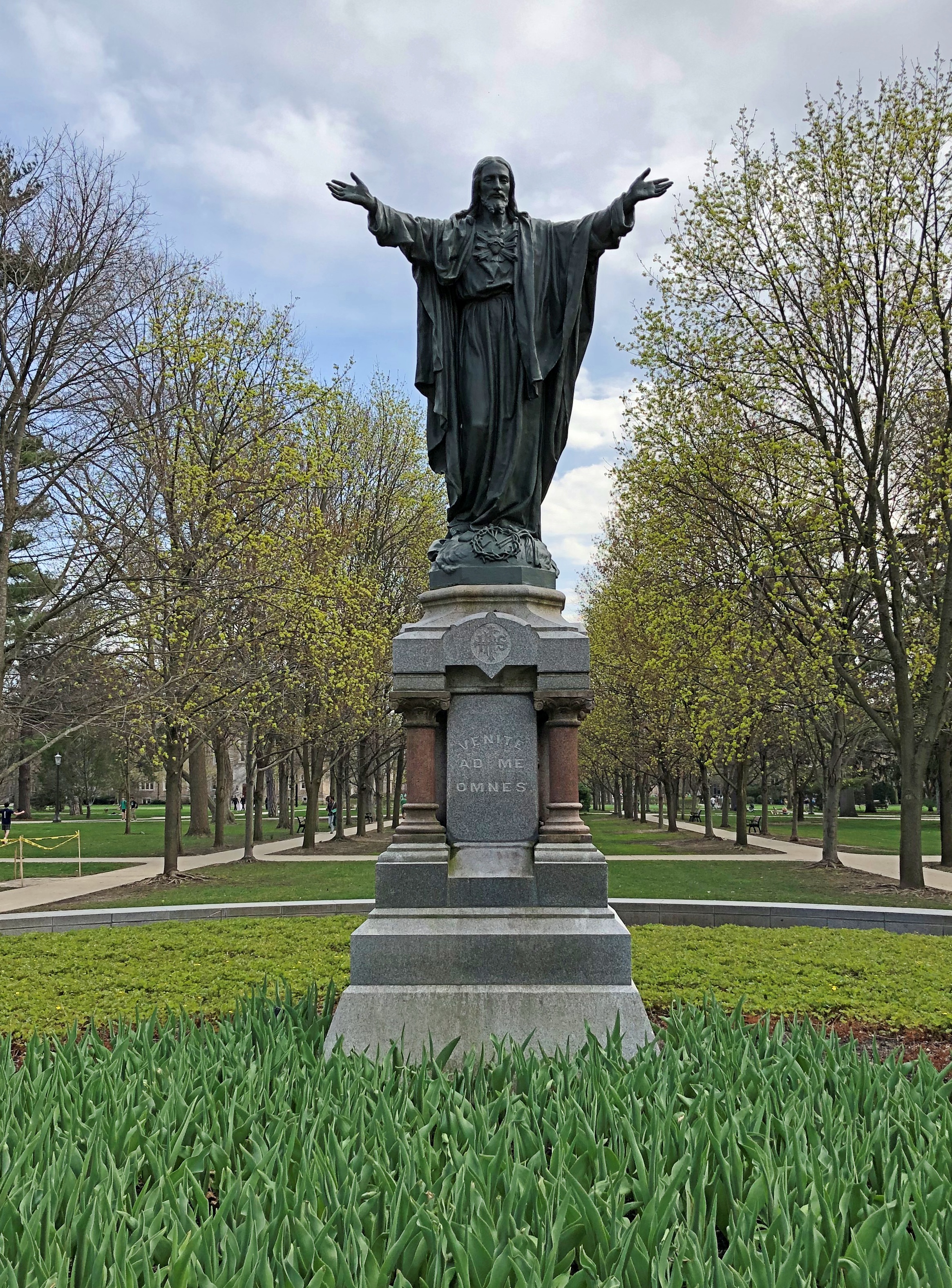
Jesus faces the Main Building.Notre Dame campus

This isn’t the Touchdown Jesus Notre Dame is known for, however. That, alas, we didn’t see (or First Down Moses, either).

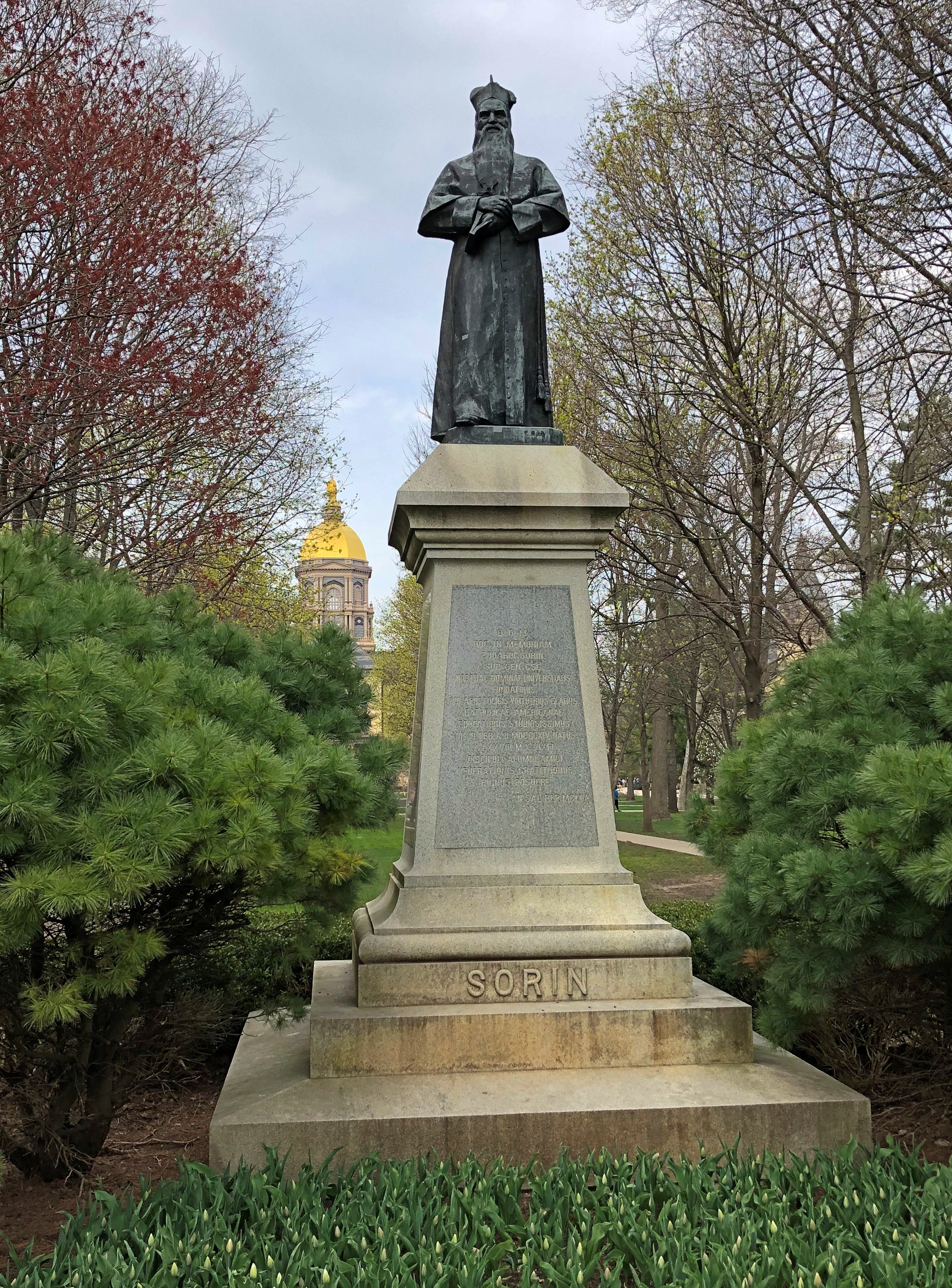
Further down the lawns is the founder and first president of Norte Dame in bronze, created by Italian sculptor Ernesto Biondi and unveiled in 1906.
Notre Dame campus

Namely, the Very Rev. Edward (Édouard) F. Sorin (1814-93), who also had time to found St. Edward’s University in Austin and have a mighty oak named for him. The plinth is inscribed with Latin, lauding Sorin.

South along the lawns is a raft of collegiate buildings with collegiate names: Sorin Hall, Lafortune Student Center, Hayes-Healy Hall, Walsh Hall and the Norte Dame law school. Formally, it’s the Eck Hall of Law. I was impressed by how new the building looked, despite its traditional stylings. It is fairly new: 2008, a design by Cardosi Kiper.
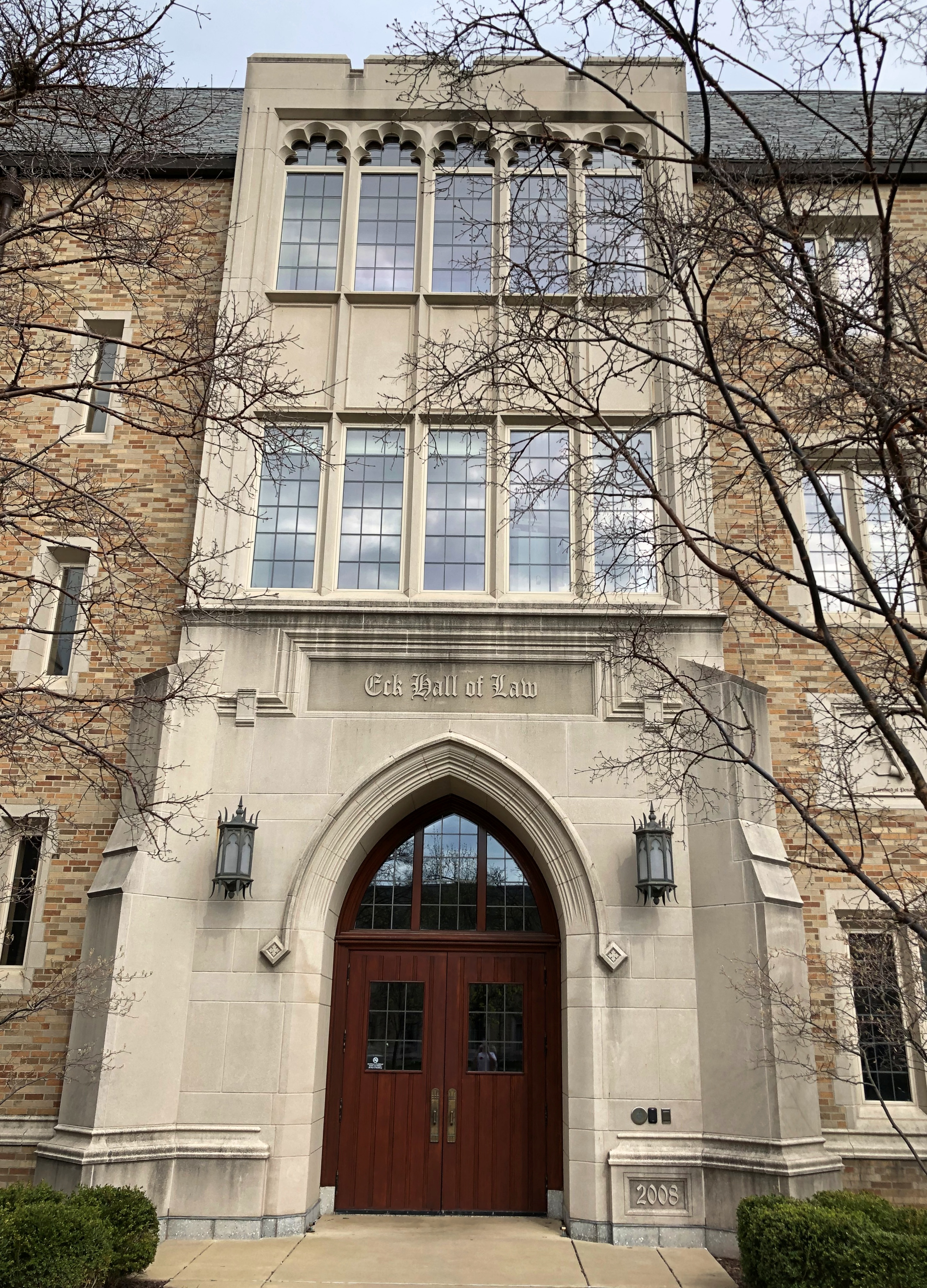
Notre Dame Campus

A lot of the buildings looked newish, which tells me that Notre Dame has the dosh in our time — or can source it from donors like Mr. Eck — for capital projects. As indeed it does: the university’s endowment is about $12.3 billion, putting it at number 8 on this U.S. News & World Report list.

That kind of money also buys some nice details, or at least it should.Notre Dame Campus

Further on, the “bookstore” didn’t let you forget where you were.Notre Dame campus
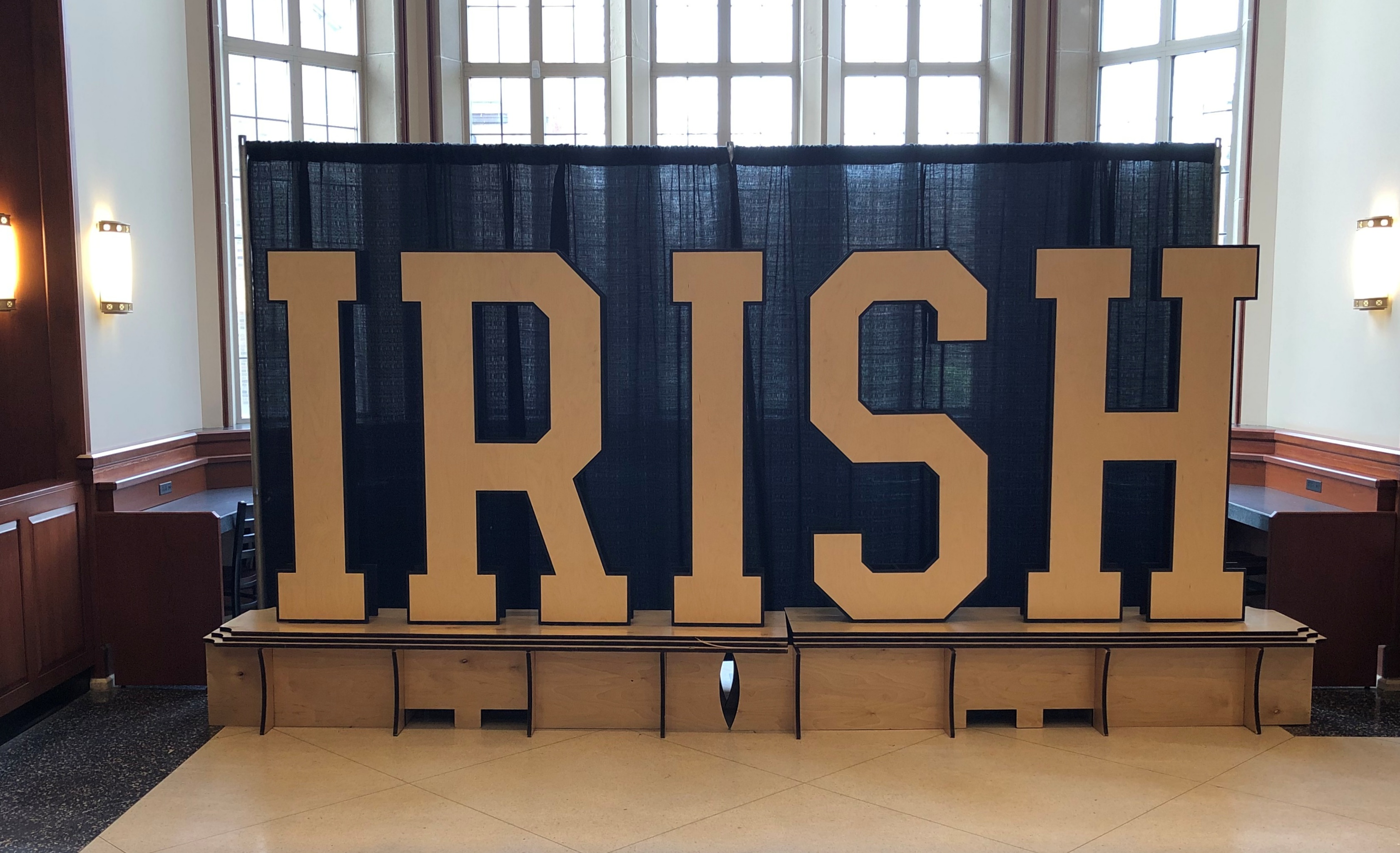
Finally, I don’t want to forget Chaplain William Corby, who rates a statue not far from the basilica and Main Building.Notre Dame campus
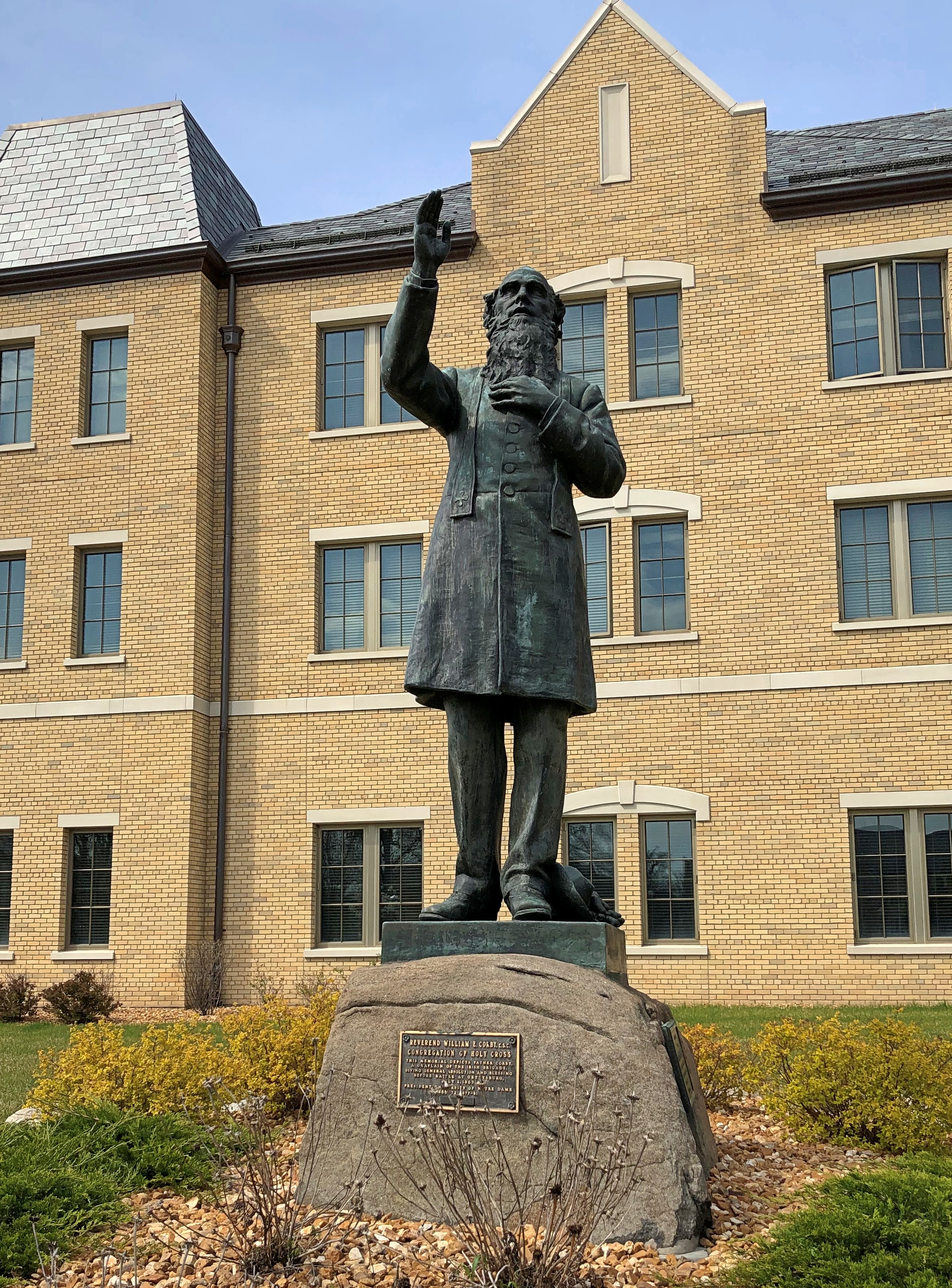
A plaque near the bronze says: The first bronze sculpture of Chaplain William Corby by Samuel Murray was dedicated on the Gettysburg battlefield by Civil War veterans of the five regiments of the Union Army’s Irish Brigade. His statue is on the same boulder of Cemetery Ridge where he stood to give the soldiers General Absolution on July 2, 1863, the second day of the three-day battle

Minutes later the Irish Brigade went into action at Little Round Top and the Wheatfield. The Brigade lost 27 killed, 109 wounded, and 62 missing. Gettysburg’s individual statues are of generals, except President Lincoln, Chaplain Corby, and a civilian.

This duplicate statue was dedicated here in 1911. Father Corby was president of Notre Dame twice: 1866-72, 1877-82. He planned the Grotto, finished in 1896, and died in 1897.
Chicago Avenue Stroll: Buildings & Murals

No chance to see the aurora borealis here in northern Illinois last night, even if it was there to be seen. Yesterday was overcast all day, producing light but steady rain late in the evening and throughout the night, as far as I could tell.
Today was overcast as well, with light snow in the morning and again in the evening. So much for March going out like a lamb.

On Sunday, which was chilly but sunny, I took a stroll down Chicago Avenue for a few blocks. Chicago is a major east-west street, crossing the city and into the suburbs and running more than 12 miles, according to a Google Maps estimate. The eastern terminus is at Lake Shore Drive, but not before you pass such notable places as Michigan Avenue, the Chicago Water Tower and the Museum of Contemporary Art.

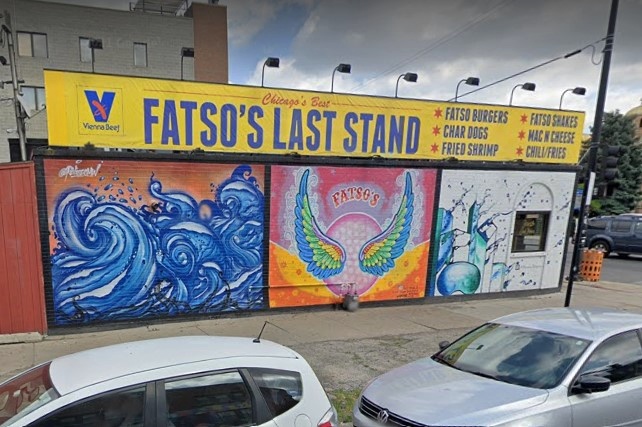
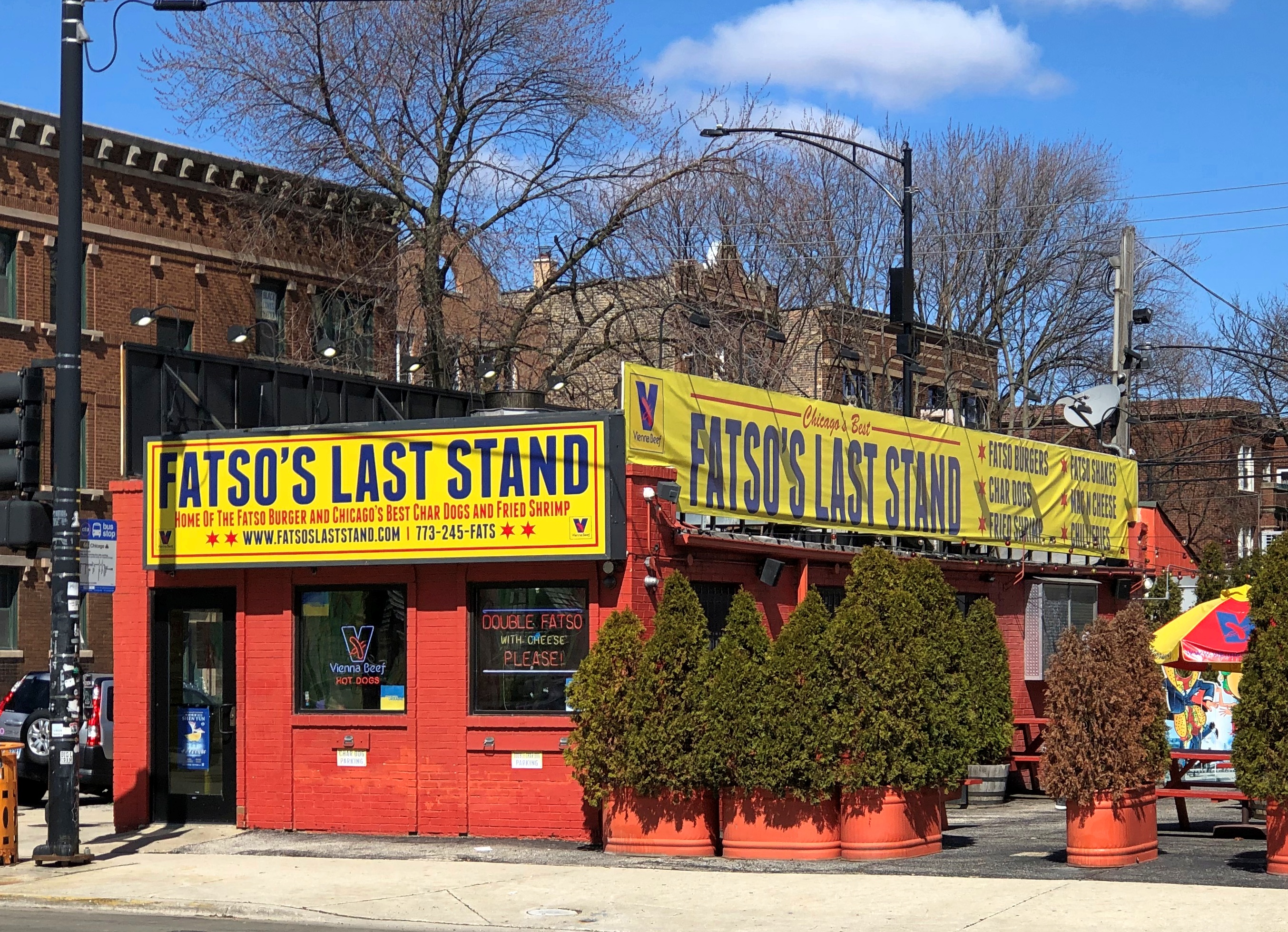
Where I walked, roughly 2300 W. to 2000 W. Chicago — about four miles west of Lake Michigan — the street is the commercial hub of Ukrainian Village, though not everything on the street has anything to do with Ukraine or its diaspora. Such as Fatso’s Last Stand. That’s very Chicago; it could be just about anywhere in the city.Fatso's Last Stand

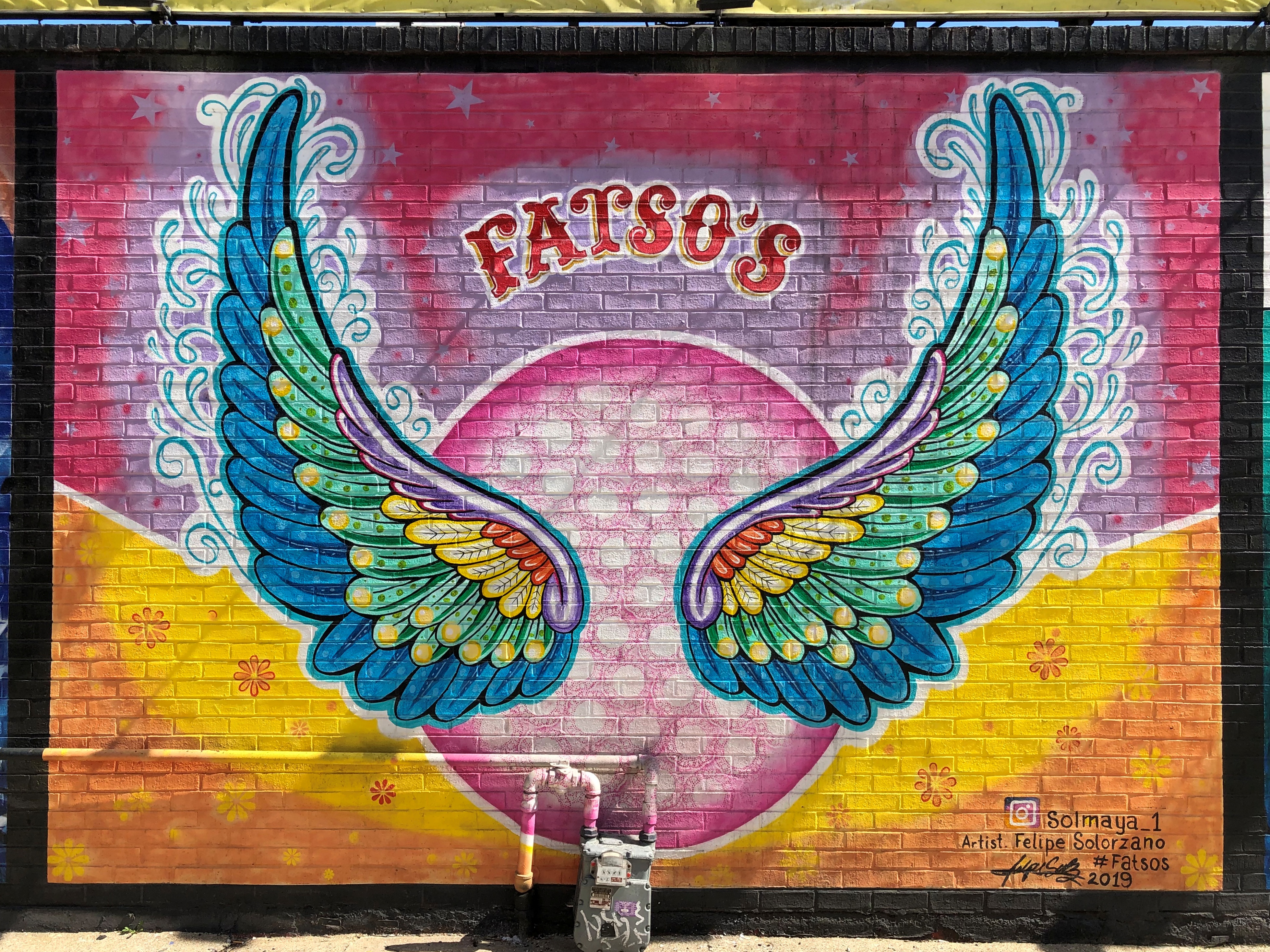
One of two locations of this name in Chicago, owned by an entity that has other restaurants and bars in the city, but also in New York and Charleston. I ought to try it sometime. I like a hot dog stand that has its own mural.Fatso's Last Stand mural

It’s on the wall facing Oakley Blvd., which crosses Chicago Avenue at that point. The artist, one Felipe Solorzano, has some images on Instagram. It didn’t occur to me until I looked at them that people pose in front of the wings. I’ve seen that before, but not in Chicago.

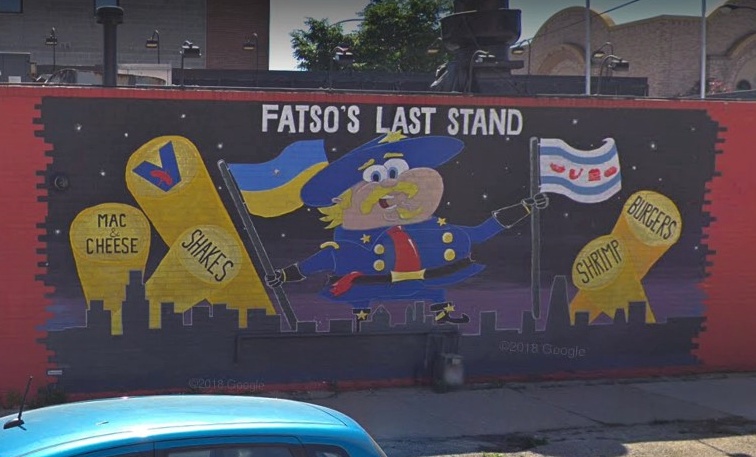
The wings form the center panel in a triptych of paintings, if that term is correct for murals. Anyway, there are three distinct paintings on the Fatso’s wall. I didn’t take a picture of all of them, but Google did.Fatso's Last Stand mural

The new mural is dated 2019. That synchs with the always-useful Street View, which tells me that the current mural appeared between June 2018 and August 2019. Before that, there was a different mural.Fatso's Last Stand

How to describe that? A Ukrainian-Custer-hot dog stand vibe. Perhaps the owners felt obliged to cancel Custer, though I doubt most passersby gave it much thought. In any case, the earlier mural appeared some time after October 2015. Before that, just a red wall.

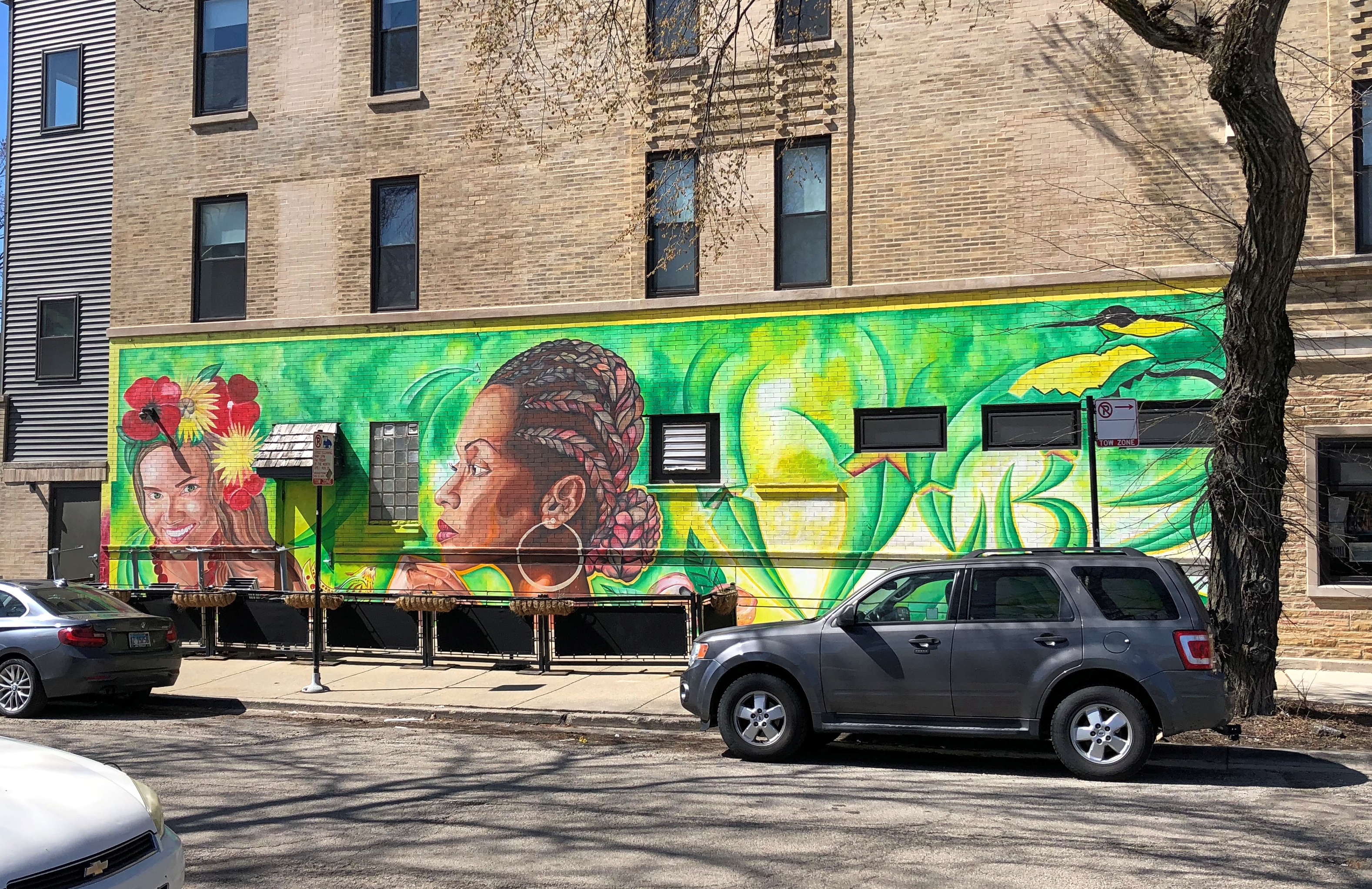
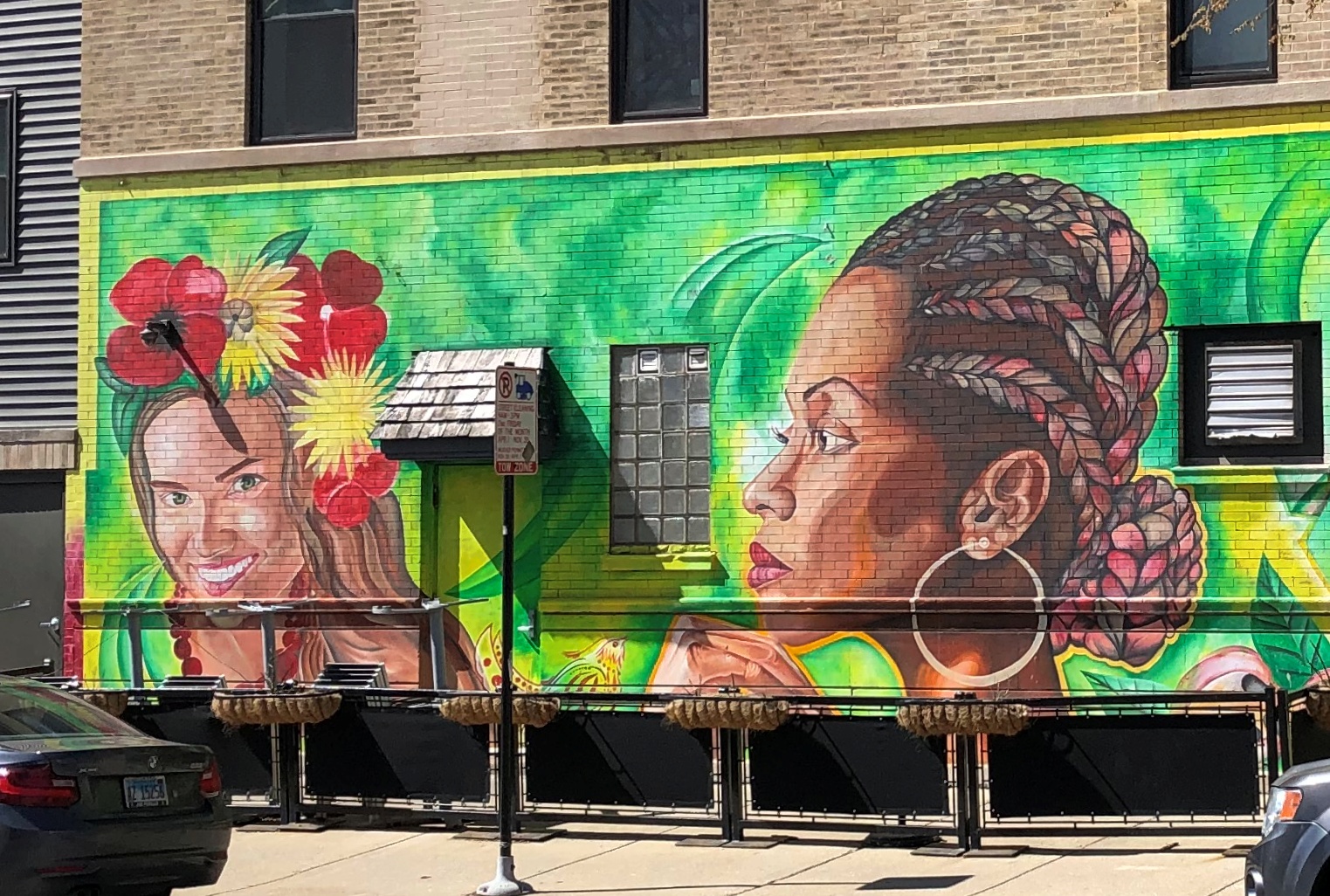
Across Chicago Avenue from Fatso’s is another mural. I don’t have any information about its creator, but he or she has some talent.two women Ukrainian Village mural
two women Ukrainian Village mural

This one appeared between August 2019 and July 2021. I believe the mural vogue that seems to be under way in Chicago is a good thing. Spices up the city.

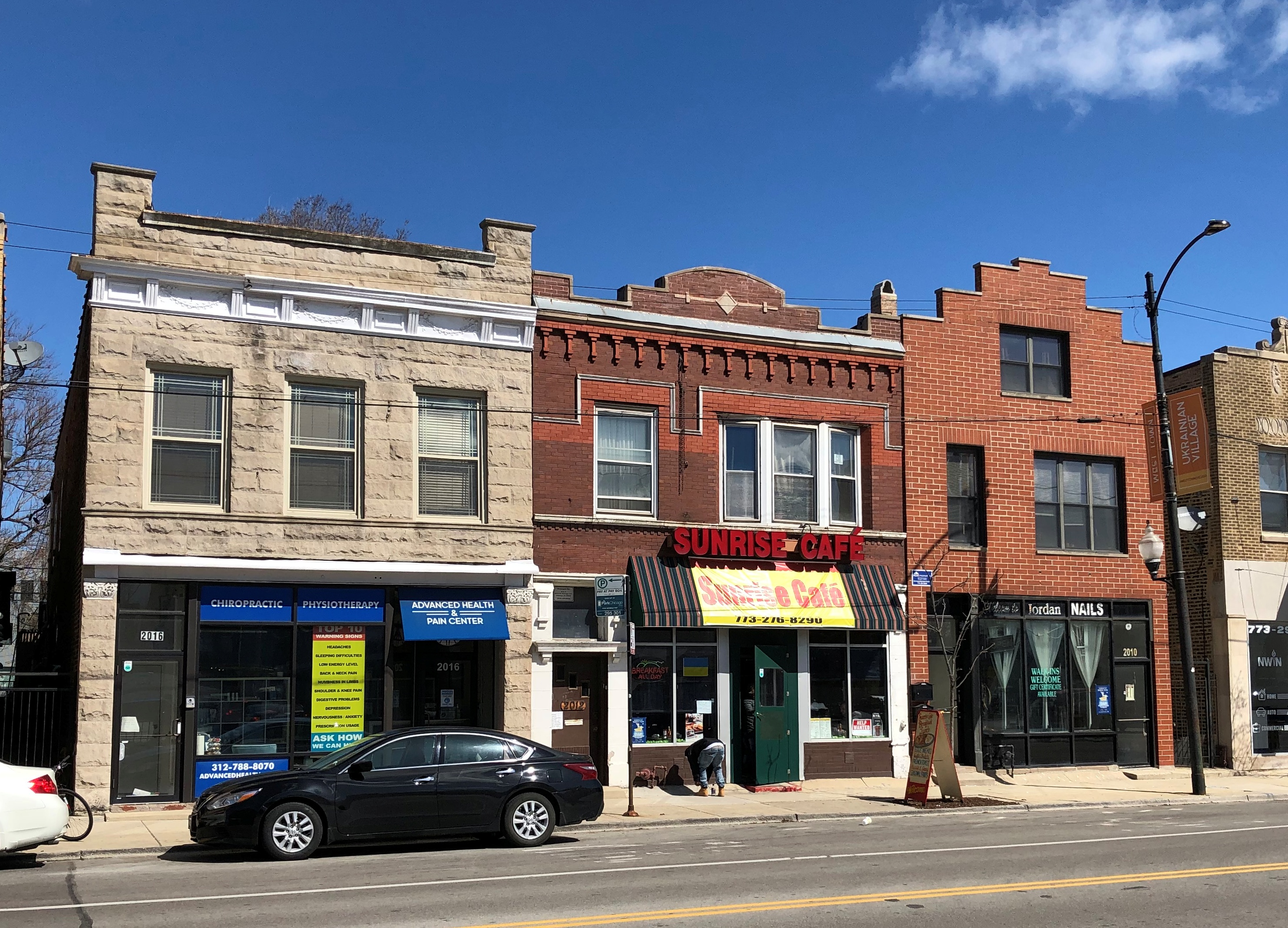
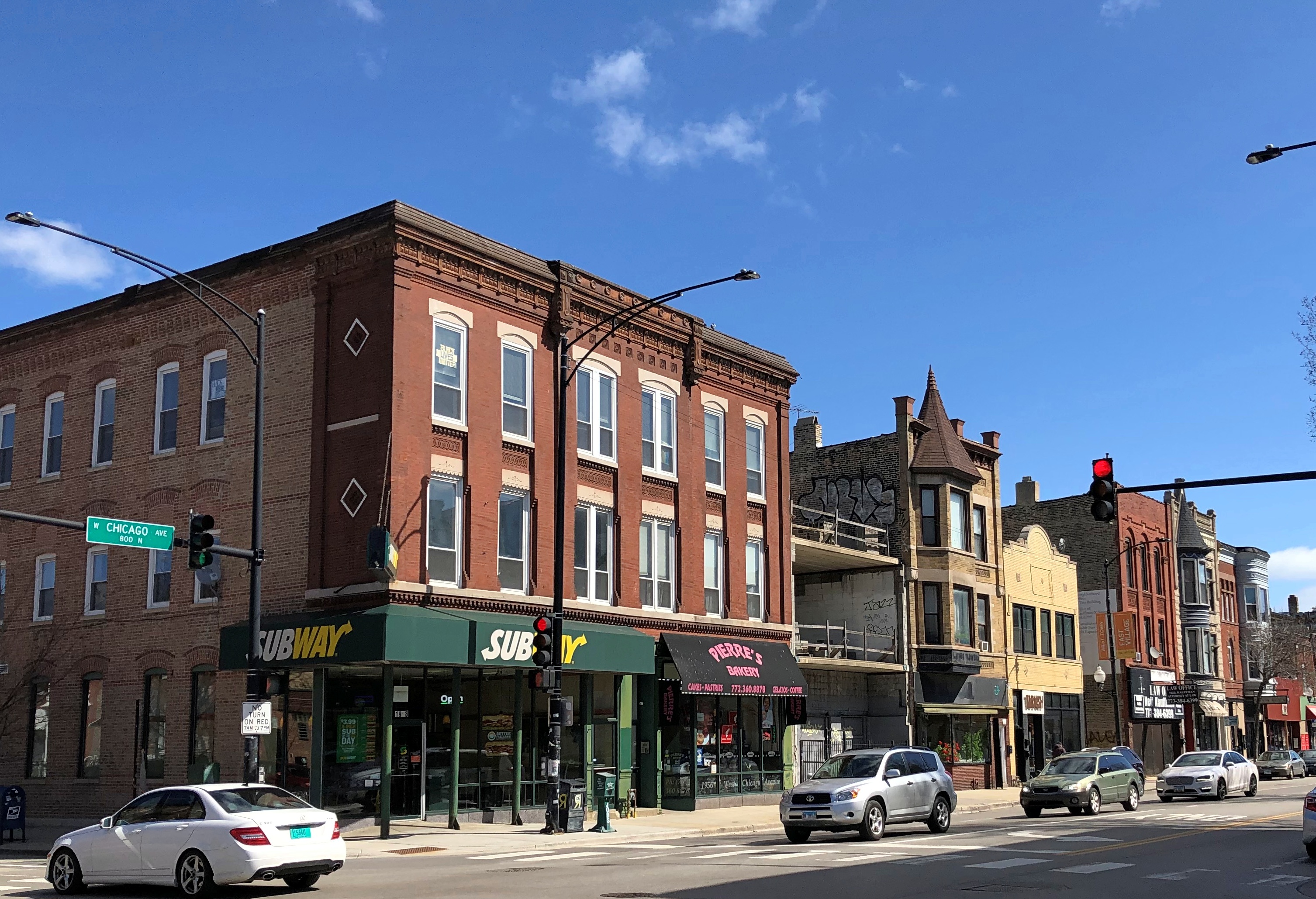
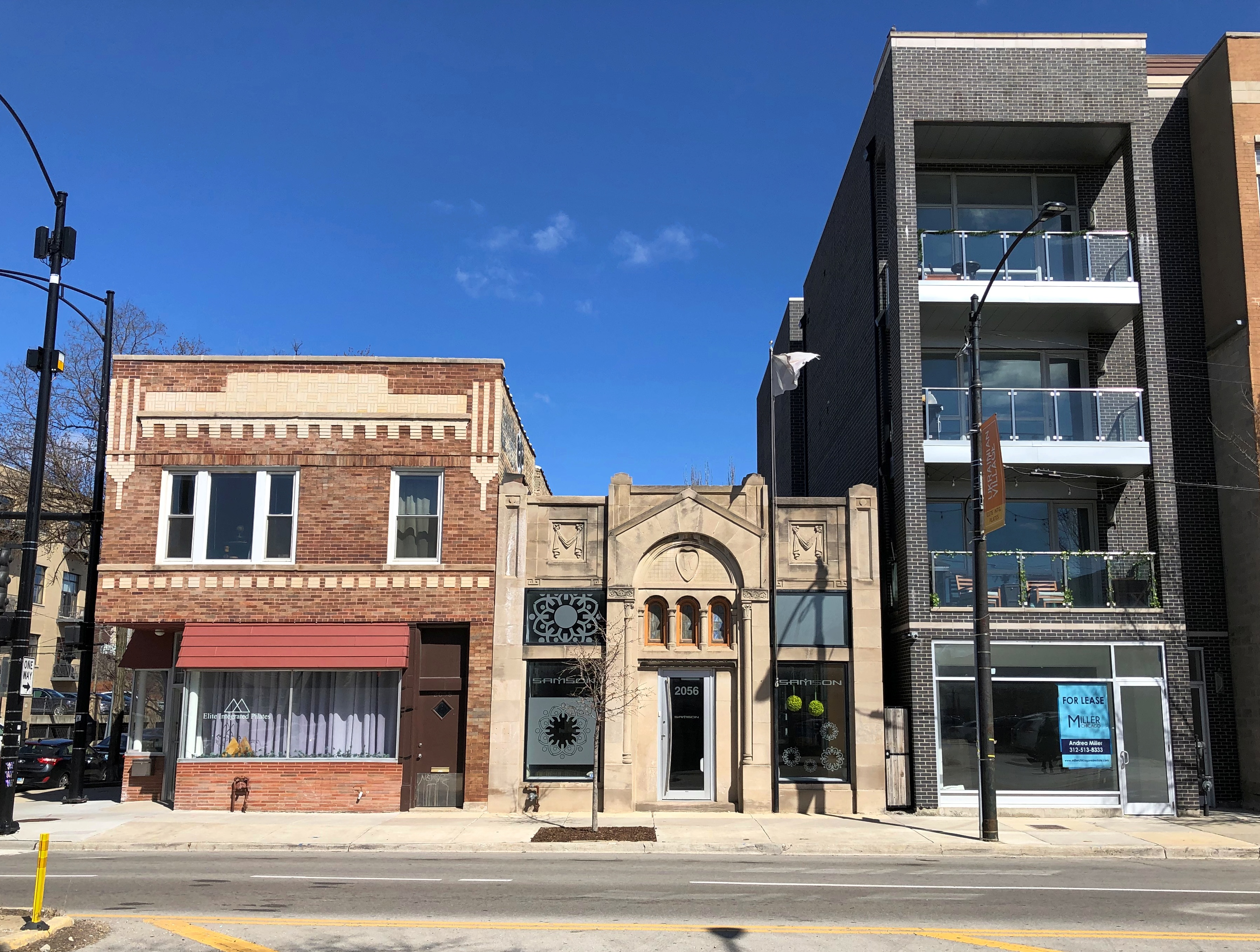
Elsewhere on the street, I took a look at some smaller commercial buildings, which are sinews of an urban neighborhood like Ukrainian Village: a shop on the first floor, an apartment or two or more above, perhaps where a shopkeeper used to live, and might still live in some cases. These buildings usually don’t command much attention, and maybe they don’t need to, but they can actually be fairly aesthetic. Chicago Avenue Chicago Avenue
Chicago Avenue

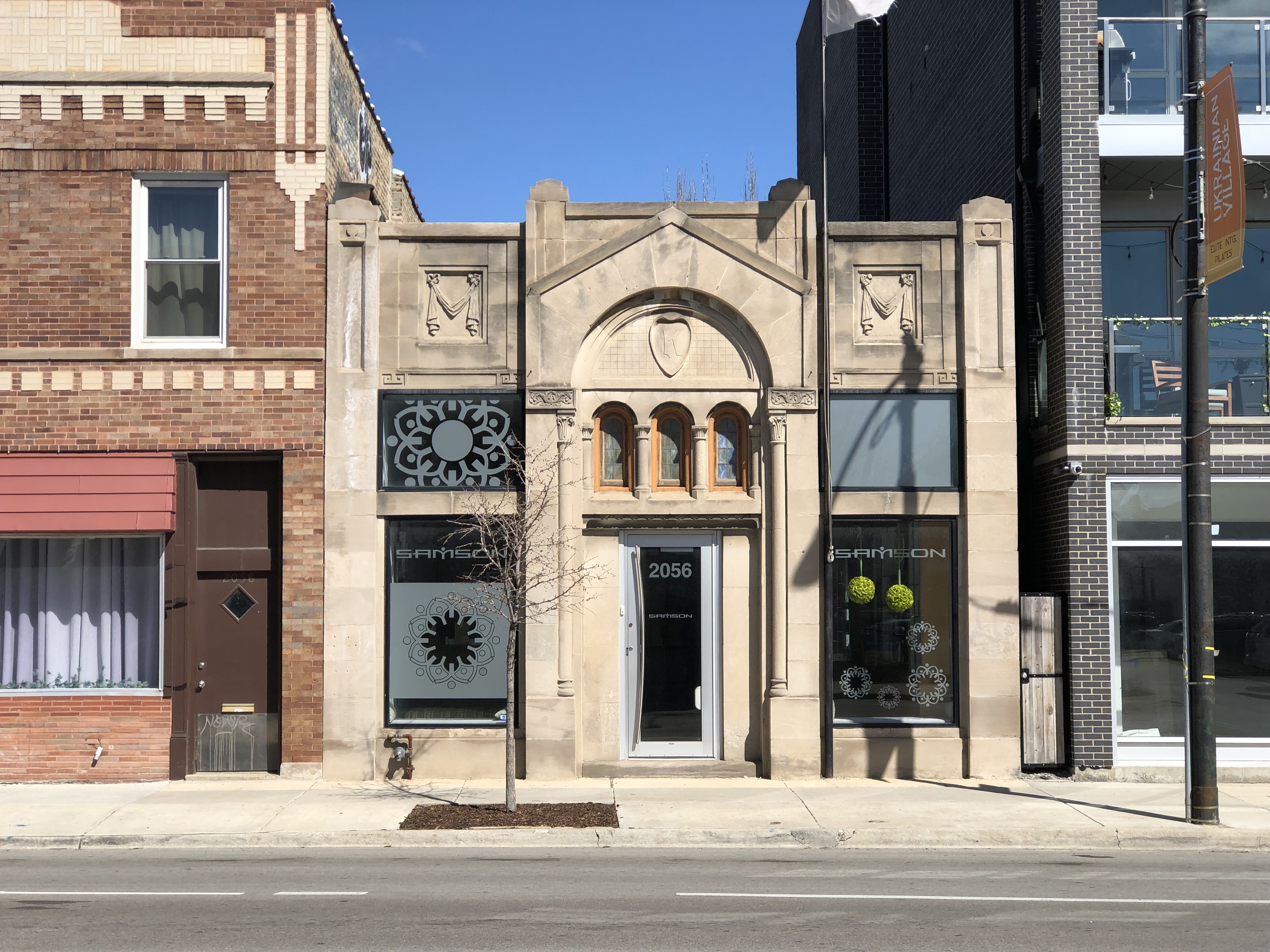
I like that small one, tucked in the middle.
Chicago Avenue

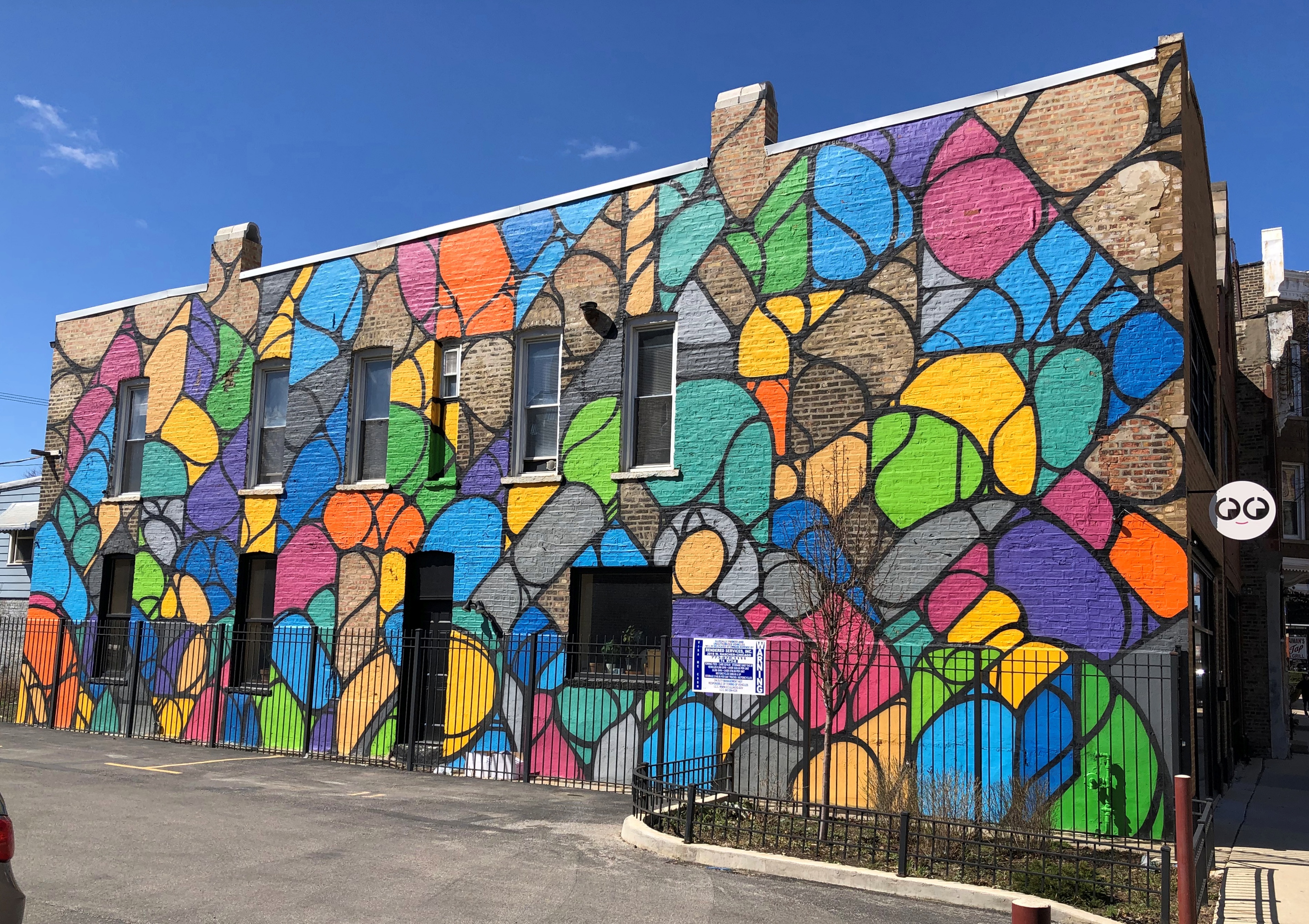
Another mural. Little information on this one either, but that’s hardy necessary to enjoy it.Chicago Avenue The Stoop mural

I see on Street View that the mural appeared between August 2019 and August 2021, the same span when the first floor of the building went from being occupied by a hair salon — knocked off by the pandemic, probably — to being a vintage clothing store called the Stoop.

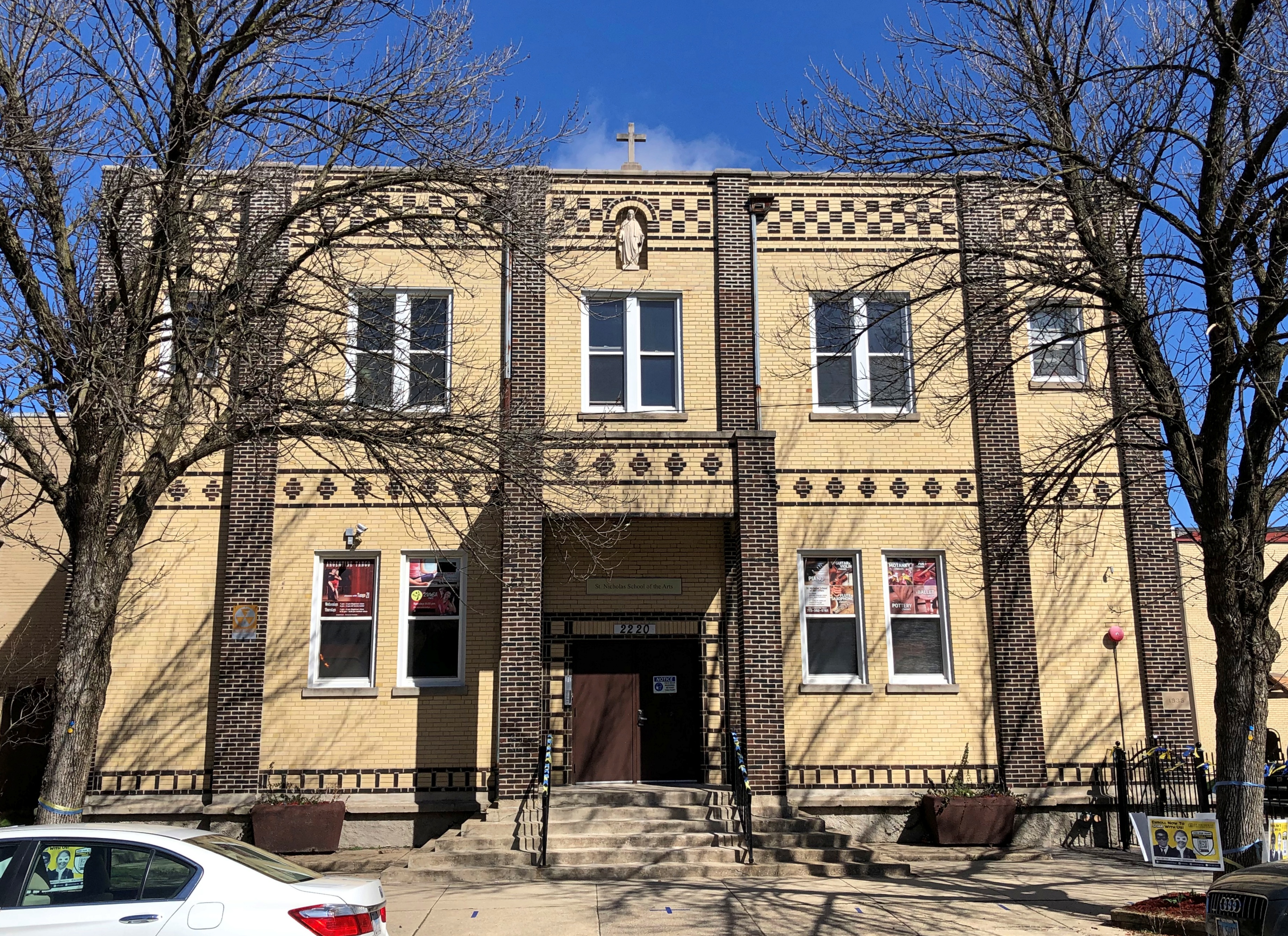
Not on Chicago Avenue, but a block to the north on Rice St. I wandered by it as well.St Nicholas School of the Arts

This is home to St. Nicholas School of the Arts, which is affiliated with the St. Nicholas Ukrainian Catholic Cathedral. A cornerstone gives the building date as 1935, but that’s all I know. Handsome structure, though.

St. Helen Roman Catholic Church & St. Volodymyr Ukrainian Orthodox Cathedral

During my walk around Chicago’s Ukrainian Village on Sunday, I also visited four churches, two of which I’d been to before: Sts. Volodymyr & Olha Ukrainian Catholic Church and St. Nicholas Ukrainian Catholic Cathedral. Both have “stunning” and “striking” interiors, to quote myself from 2014, and were certainly worth another look.

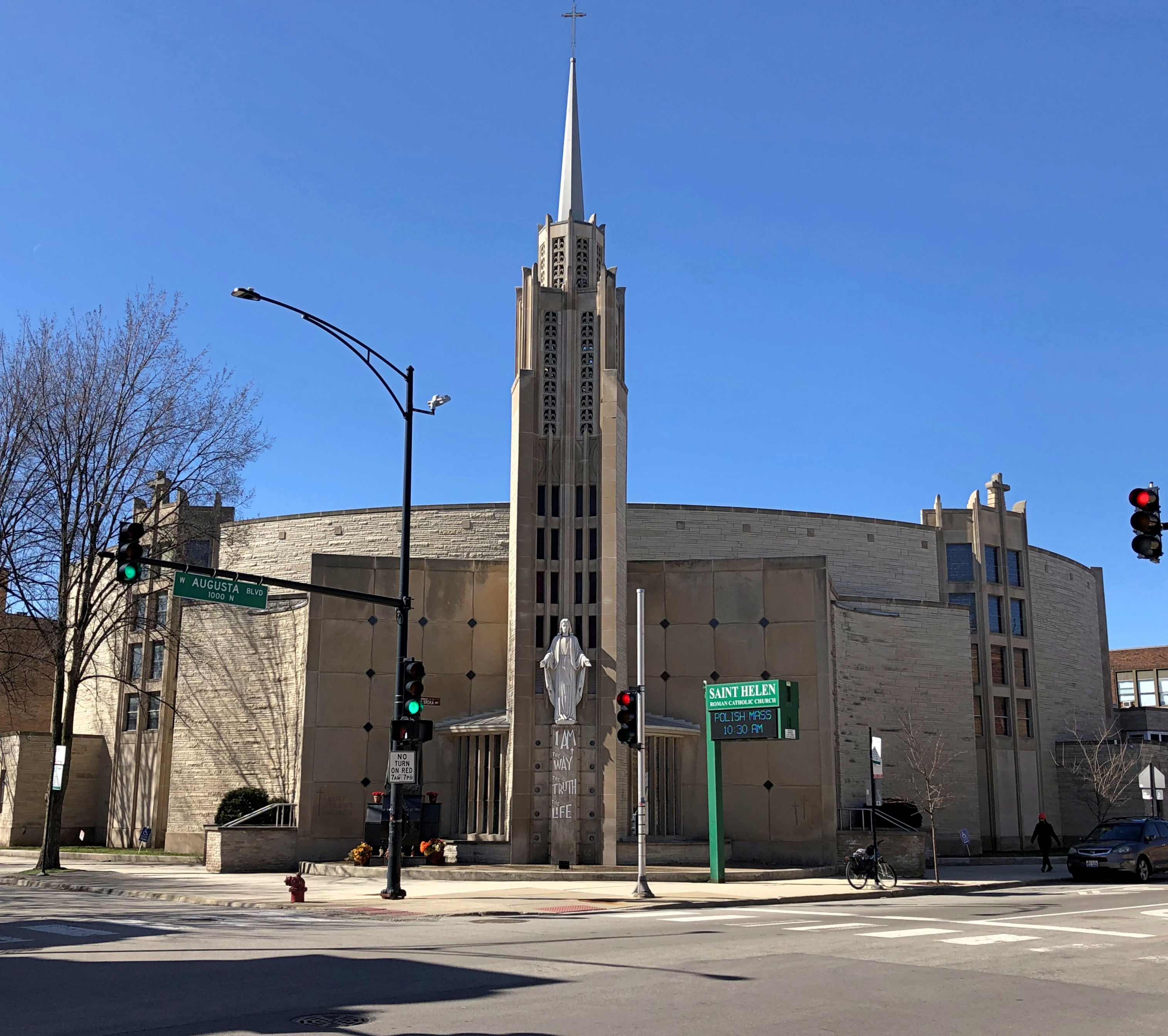
A few blocks north of those two is St. Helen Roman Catholic Church, which has masses in Polish, Spanish and English.St. Helen Roman Catholic Church

“This Polish parish was formed in 1913, and in the early 1960s commissioned the present structure, which blends Art Deco, Modernism and tradition — with a Biblical fish motif,” Open House Chicago says, noting that the architects were Pirola & Erbach, who seem to have done a number of mid-century churches in Chicago.

When I arrived, a Polish mass was in progress. I made myself as unobtrusive as possible at the just inside the door, and admired the handsome interior.

“The spacious interior and ceiling are decorated to draw all eyes to the altar, which is illuminated by light coming through slits in the walls,” says Open House. “The stained glass contains mostly geometric patterns in small fragments of bright, unfiltered colors.”

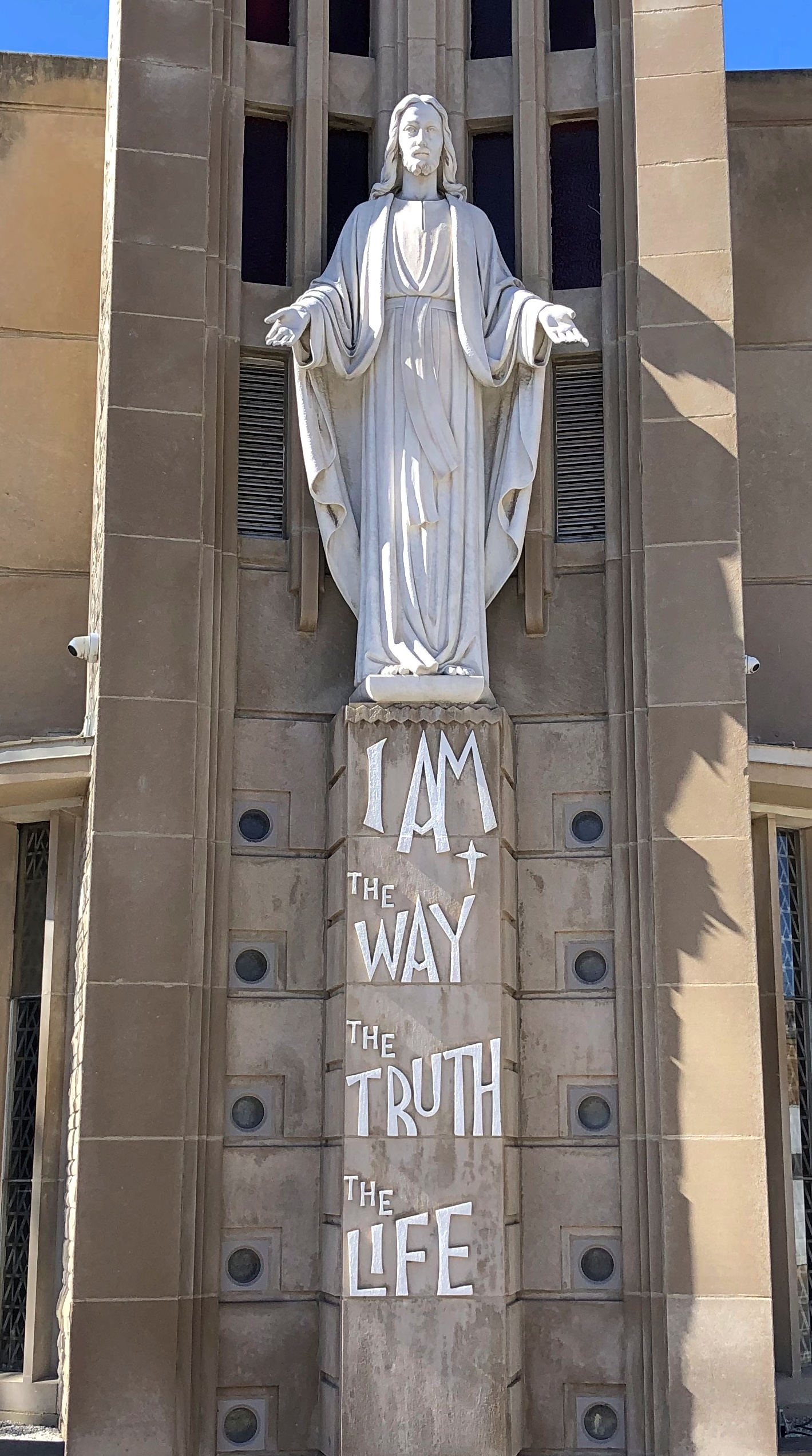
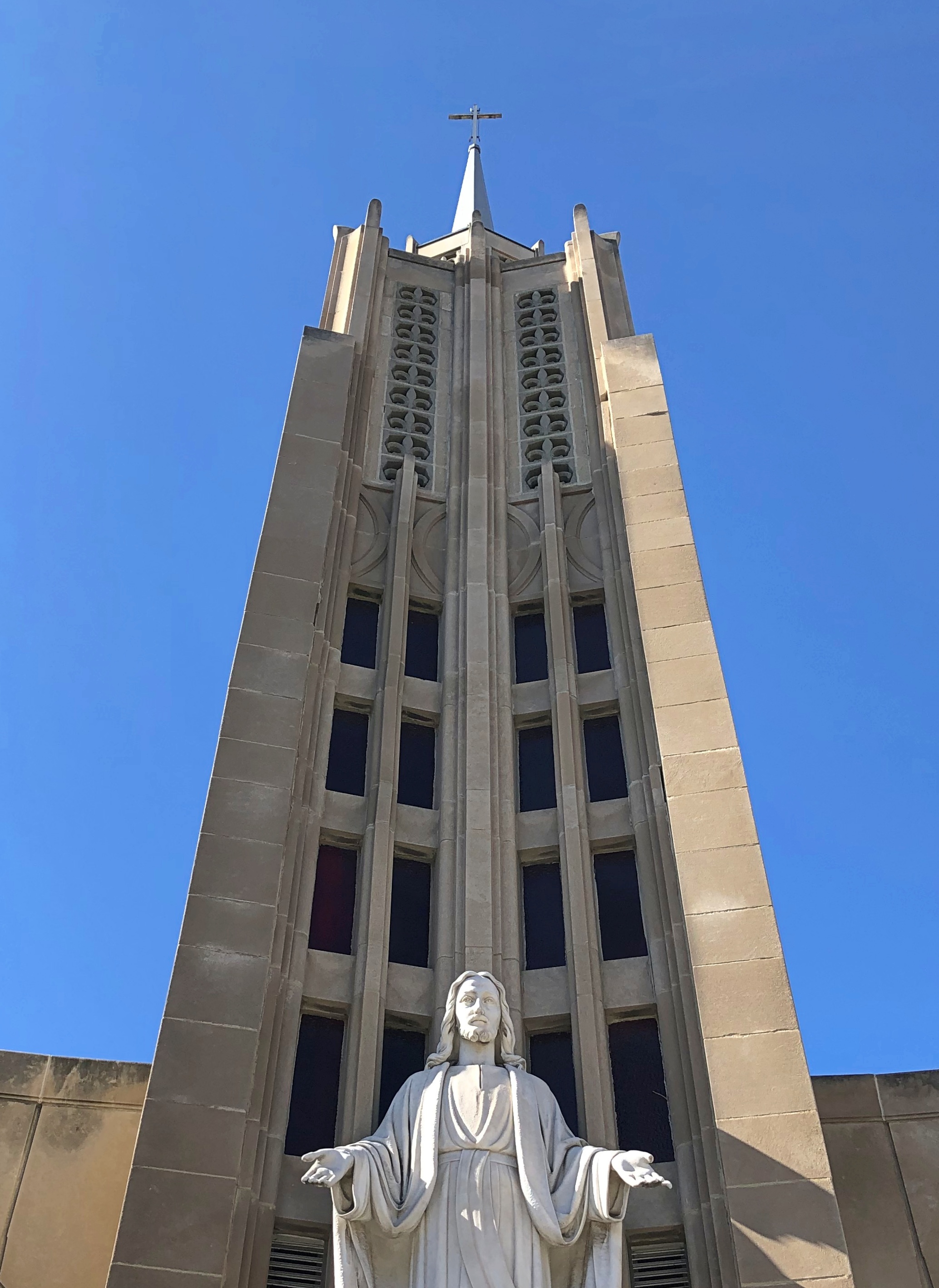
Outside on a high pedestal, Jesus greets passersby on Augusta Boulevard.St. Helen Roman Catholic Church St. Helen Roman Catholic Church

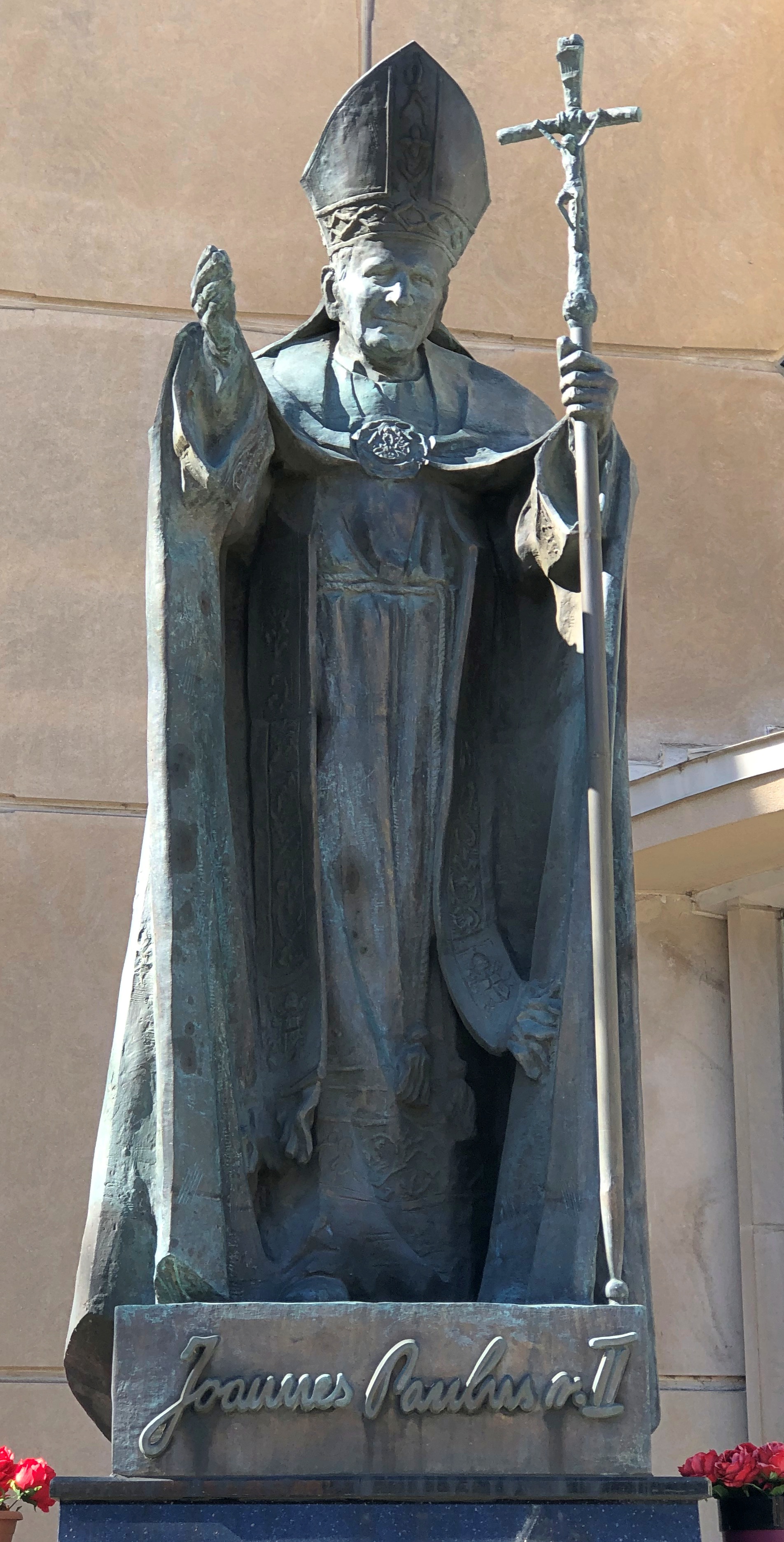
Somewhat lower, but also on a pedestal outside the church, stands a bronze Pope St. John Paul II.St. Helen Roman Catholic Church

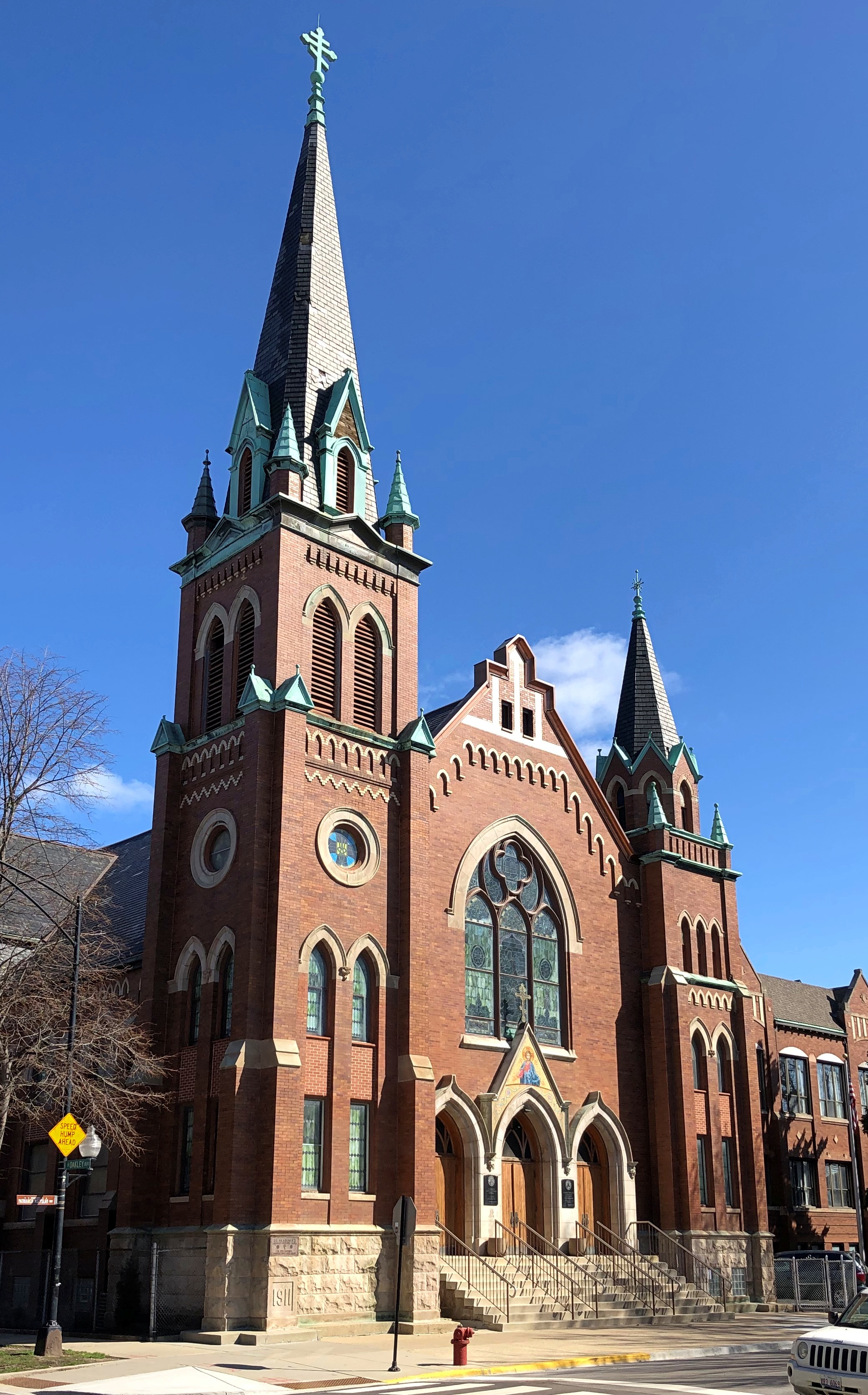
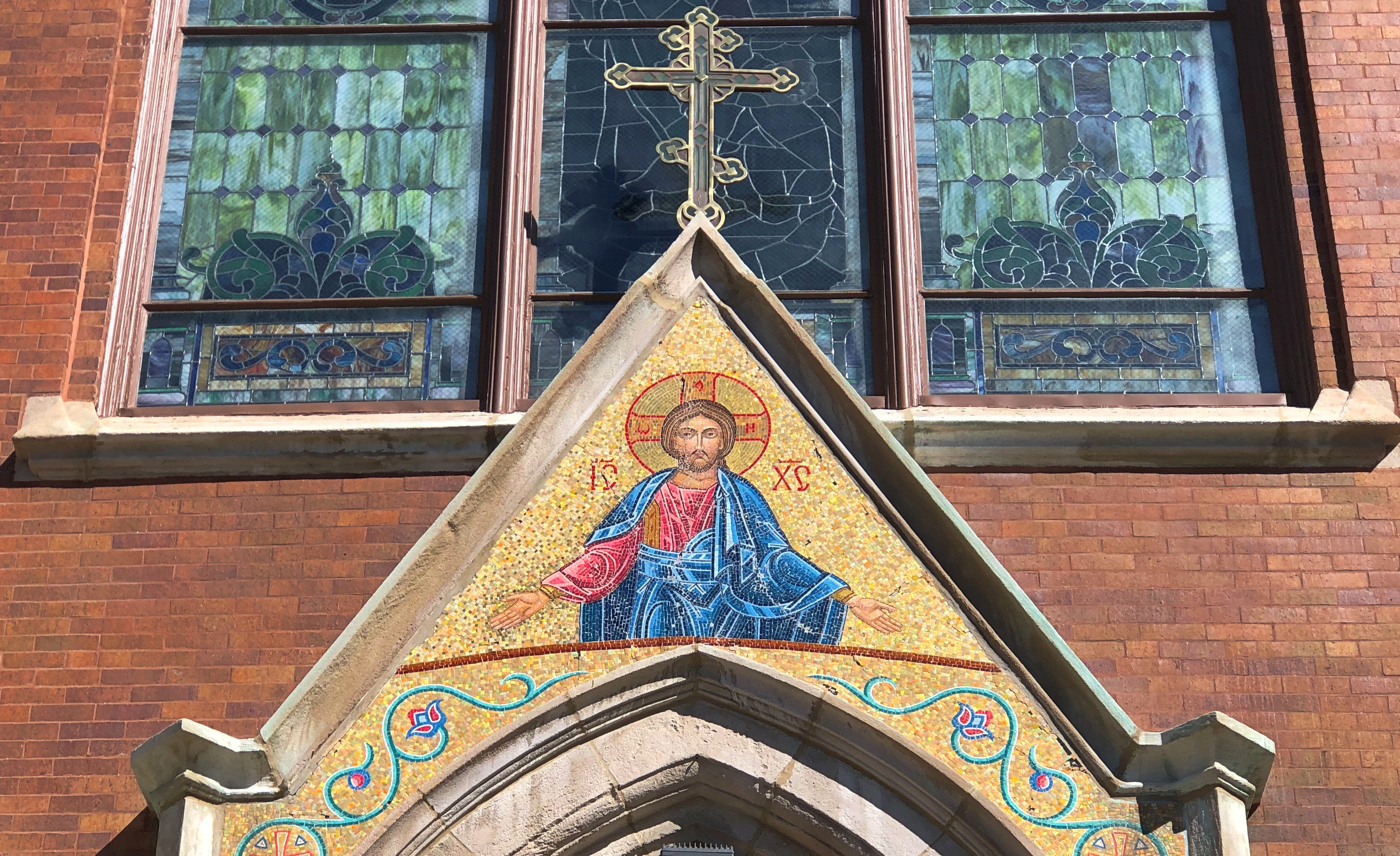
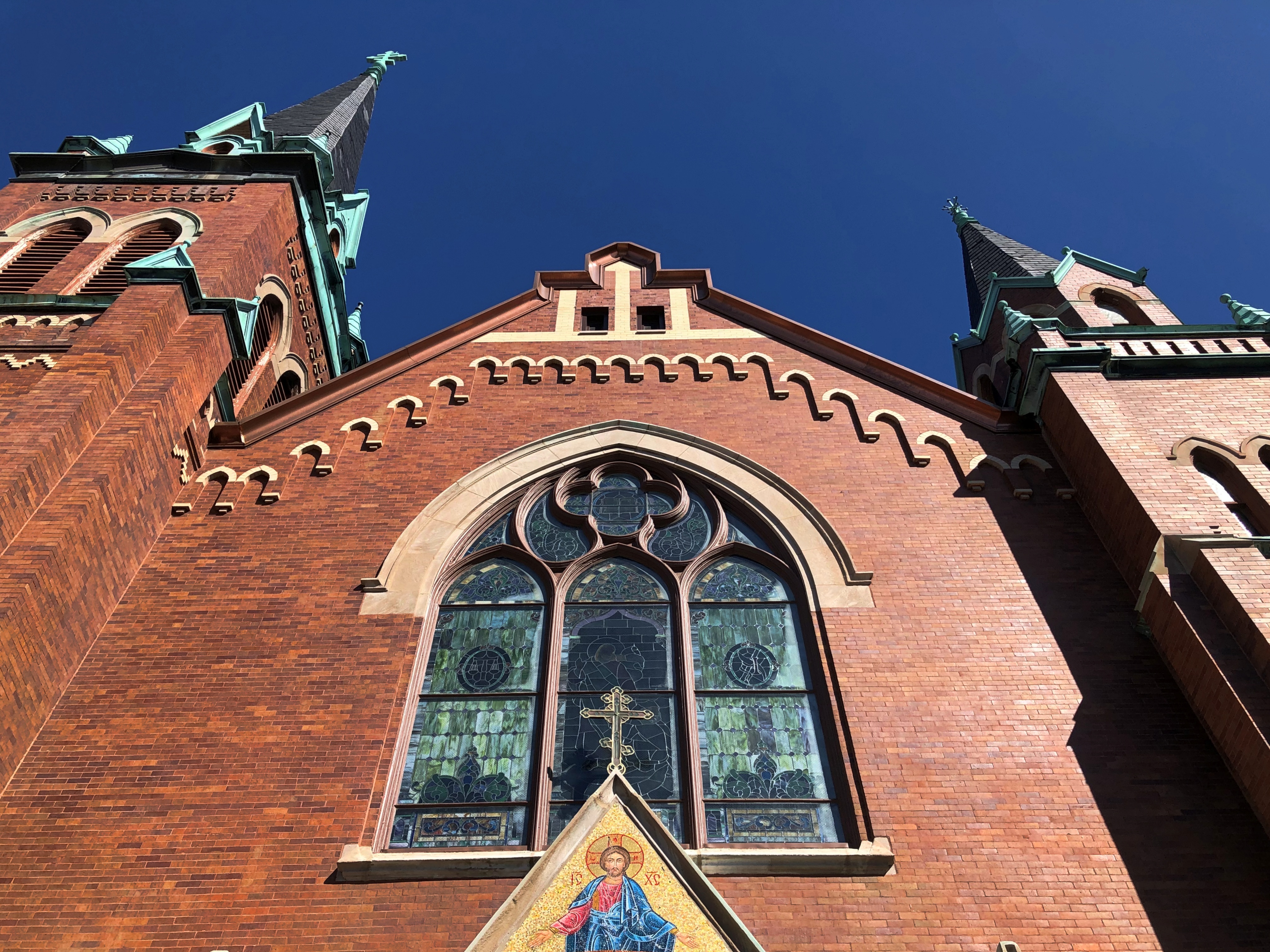
A little further north is St. Volodymyr Ukrainian Orthodox Cathedral.St. Volodymyr Ukrainian Orthodox Cathedral
St. Volodymyr Ukrainian Orthodox Cathedral

Again I stood at the back, taking it all in. Not just the marvelous beauty of the interior, but also the exoticism (to my ears) of an Orthodox service in Ukrainian. The priest’s voice, from behind the iconostasis, carried vividly all the way to the back of the nave.

“The cathedral is a remodeled German Lutheran church that exhibits the Medieval-Gothic style of ecclesiastical architecture, including pointed arches, ribbed vaults and flying buttresses,” Open House says. “The cathedral brings an Eastern-Byzantine interior design into a German-Gothic temple.”

Indeed, an iconostasis and pews. I’ve run across that before.

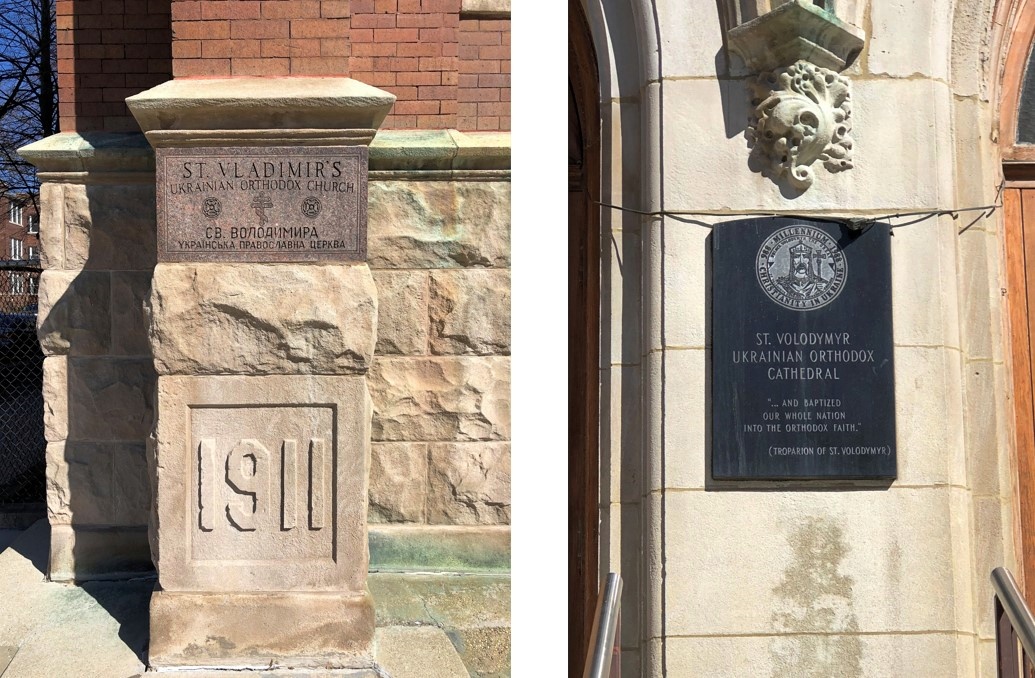
Noteworthy on either side of the main entrance.
St. Volodymyr Ukrainian Orthodox Cathedral

The older inscription, presumably put there when the Ukrainians moved into the Worthmann & Steinbach-designed former Lutheran church (1945), uses the transliteration Vladimir. The newer plaque, put there in 1988 to mark 1,000 years of Christianity in Ukraine, uses Volodymyr.

I expect Vladimir is going to be out of favor among Ukrainians for a long, long time. But in any case, it’s also an example of recontextualizing, rather than tearing a thing down.

A Short Stop in Pontiac

We took Ann back to school Sunday before last, the first day of Daylight Saving Time, and since the day was tolerably warm, I insisted on a short stop in Pontiac, Illinois.

Despite Pontiac being on I-55 between Chicago and St. Louis, a route I’ve driven countless times, I’d never stopped there before, unlike such places as Coal City, Dwight, Lincoln, Atlanta, Litchfield and Mount Olive, just to name some of the smaller burgs along the way.

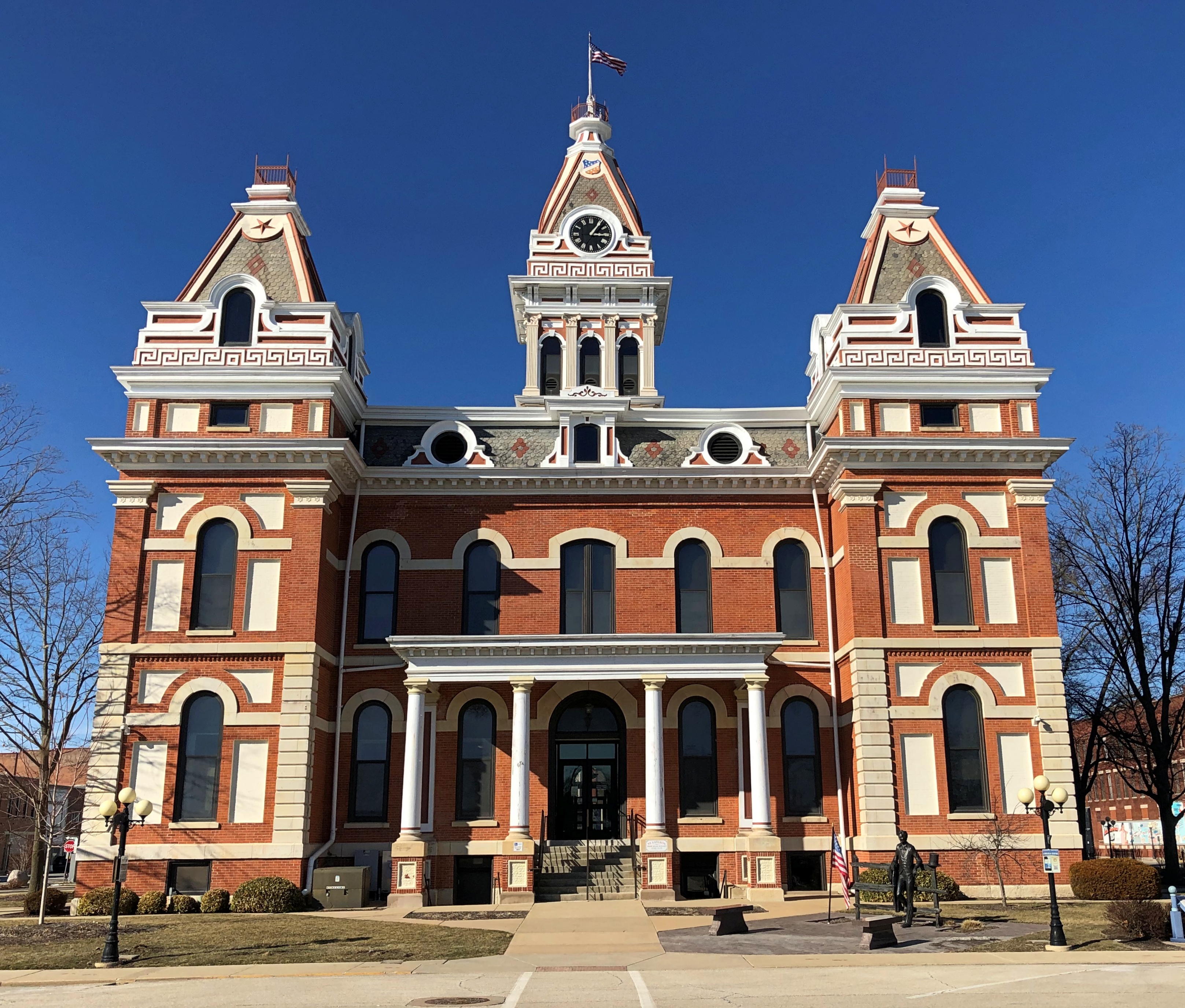
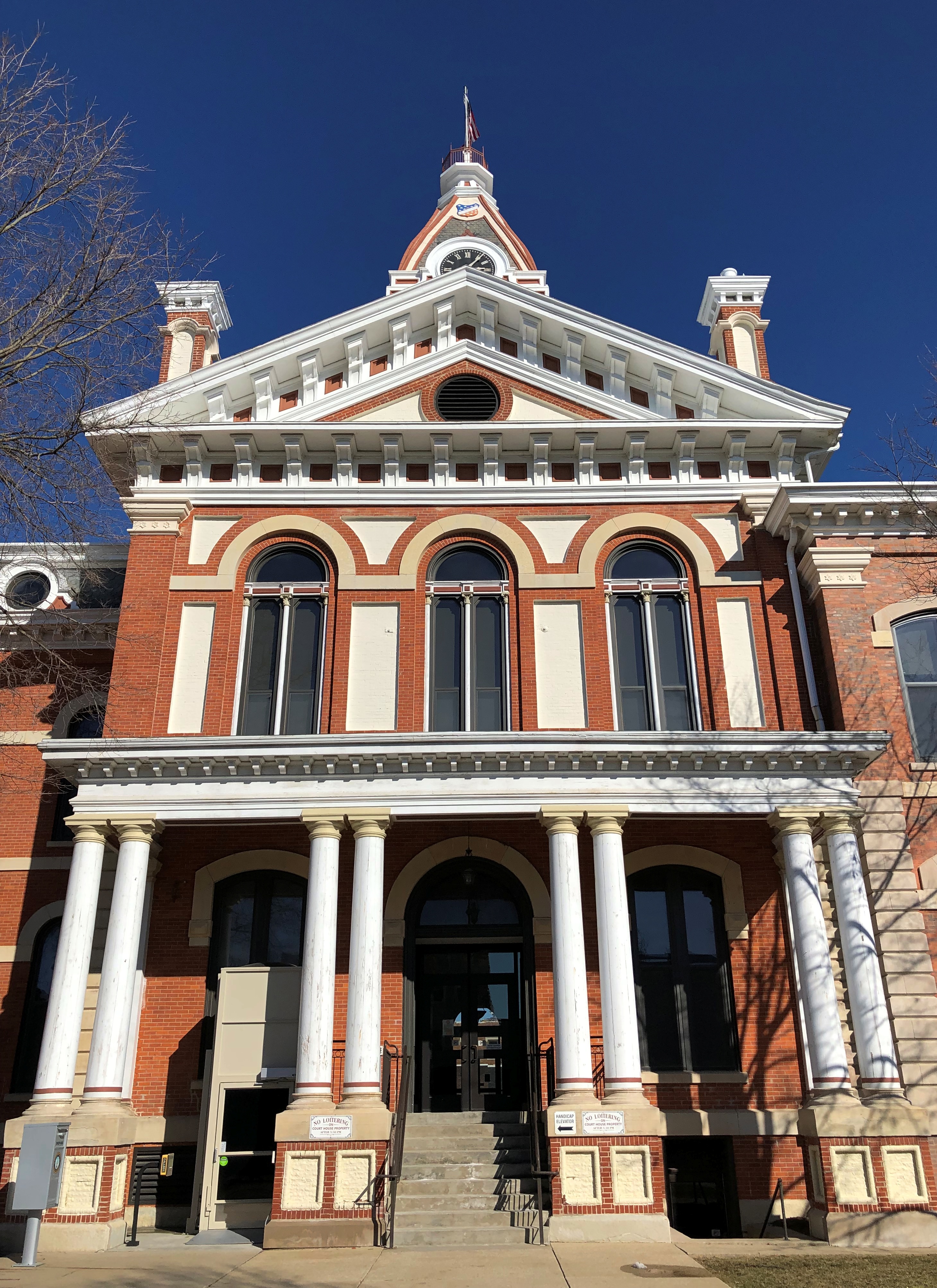
We didn’t spend that much time there. But time enough for us to walk all the way around the Livingston County Courthouse, which is impressive indeed.Livingston County Courthouse Illinois Livingston County Courthouse Illinois

It’s the county’s third courthouse; the first was a small wood-frame structure replaced by the second, which burned down in 1874 (pics of the two are here). Architect John C. Cochrane of Chicago, who also designed the Illinois and Iowa state capitols, designed the current Second Empire structure, which was finished in 1875 and restored recently. Technically, it isn’t a courthouse anymore, since the county’s judicial operations relocated to a new building nearby in 2011, but the county still has offices in the older building.

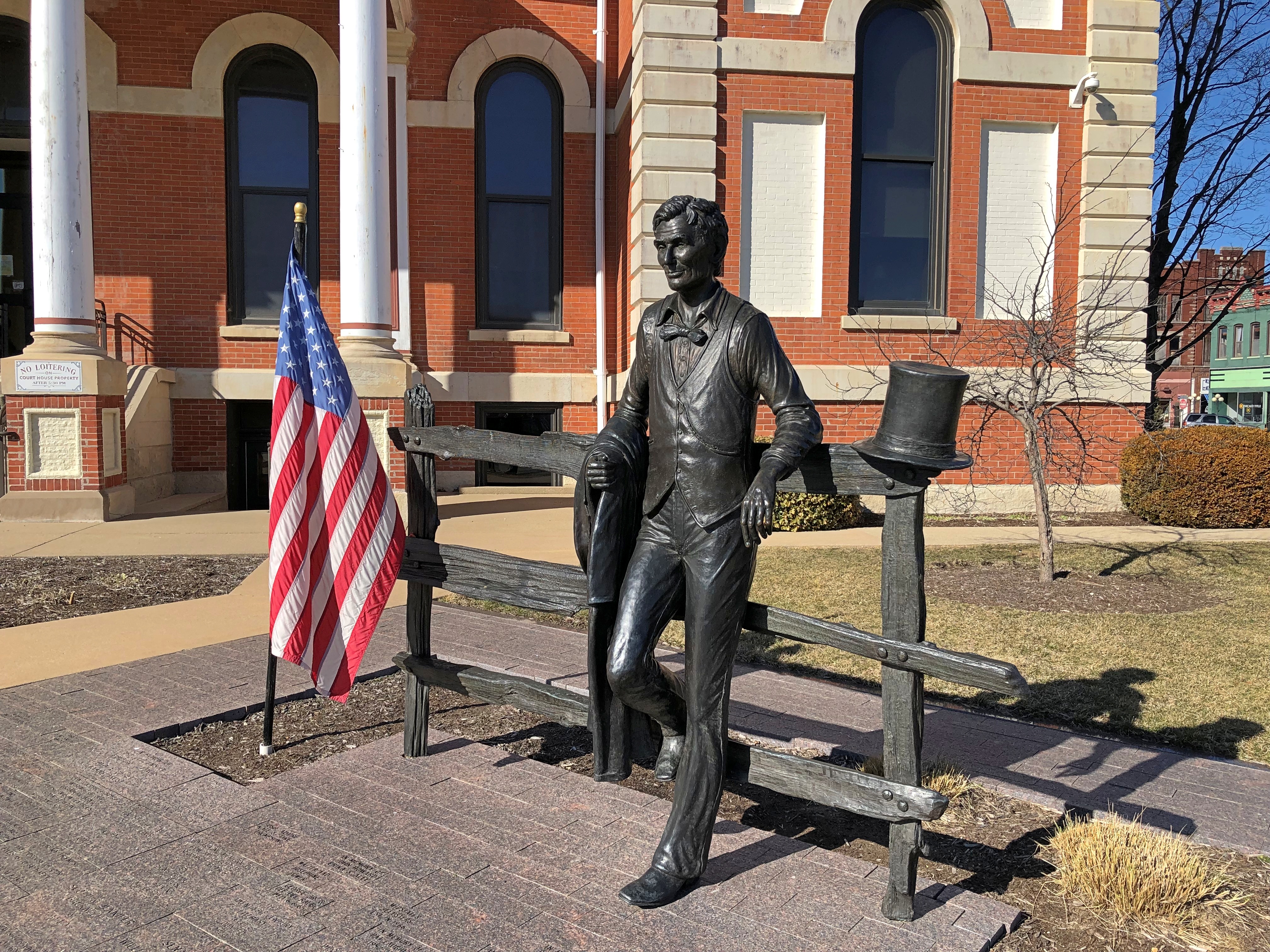
It wouldn’t be an Illinois town of any size without Lincoln acknowledged somewhere, and in the case of Pontiac, it’s a bronze resting on a bronze split-rail fence. It depicts young lawyer Lincoln, who visited the second courthouse periodically.Pontiac Illinois Lincoln bronze

An Illinois sculptor named Rick Harney completed the work in 2006. Looking at his portfolio, I wonder if it’s easy to access his bronze of Adlai Stevenson in the Central Illinois Regional Airport. Lincoln is fine, but there aren’t that many Stevensons around, even in Illinois.

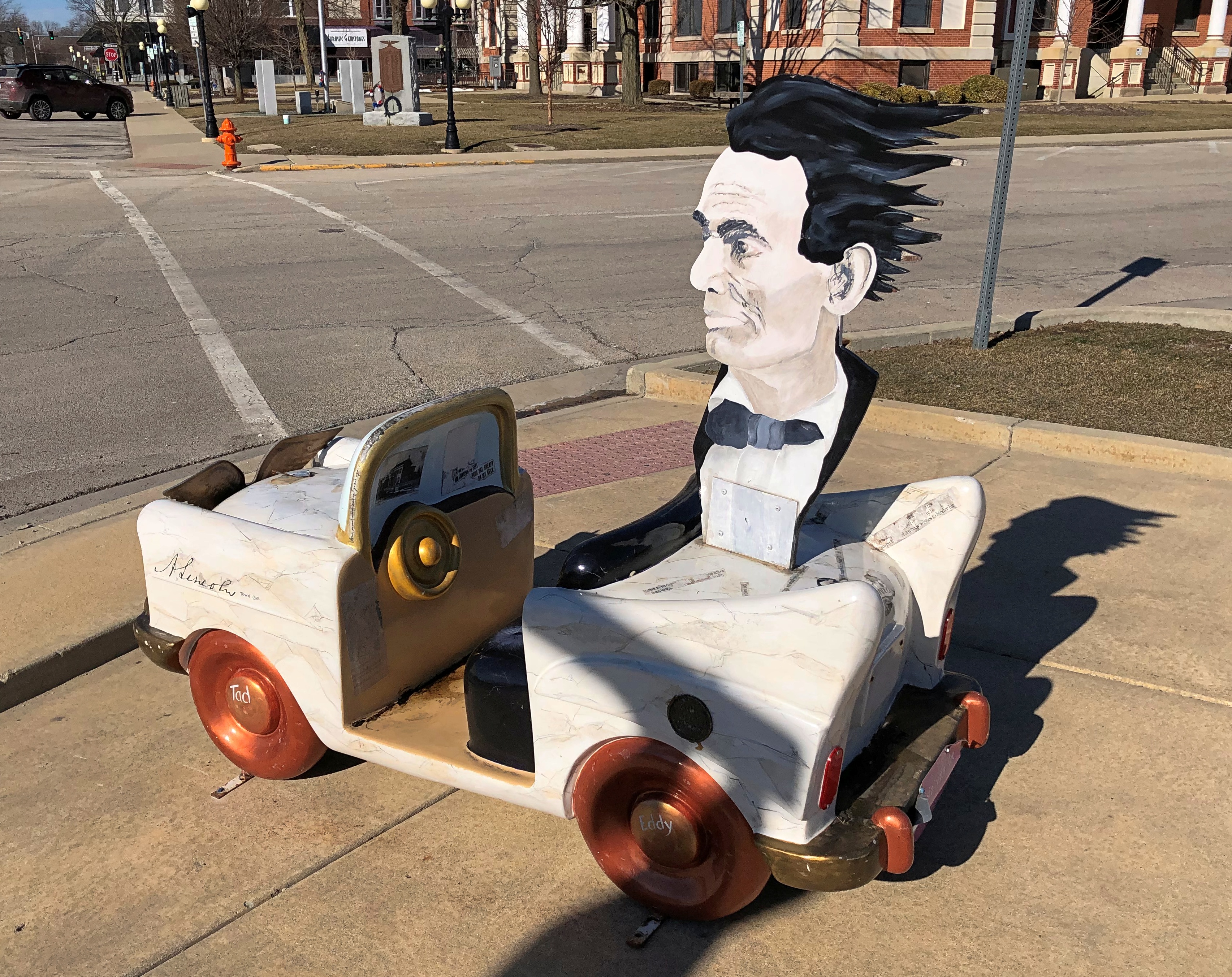
Looking around the courthouse square, there’s also a less conventional Lincoln.Pontiac Illinois

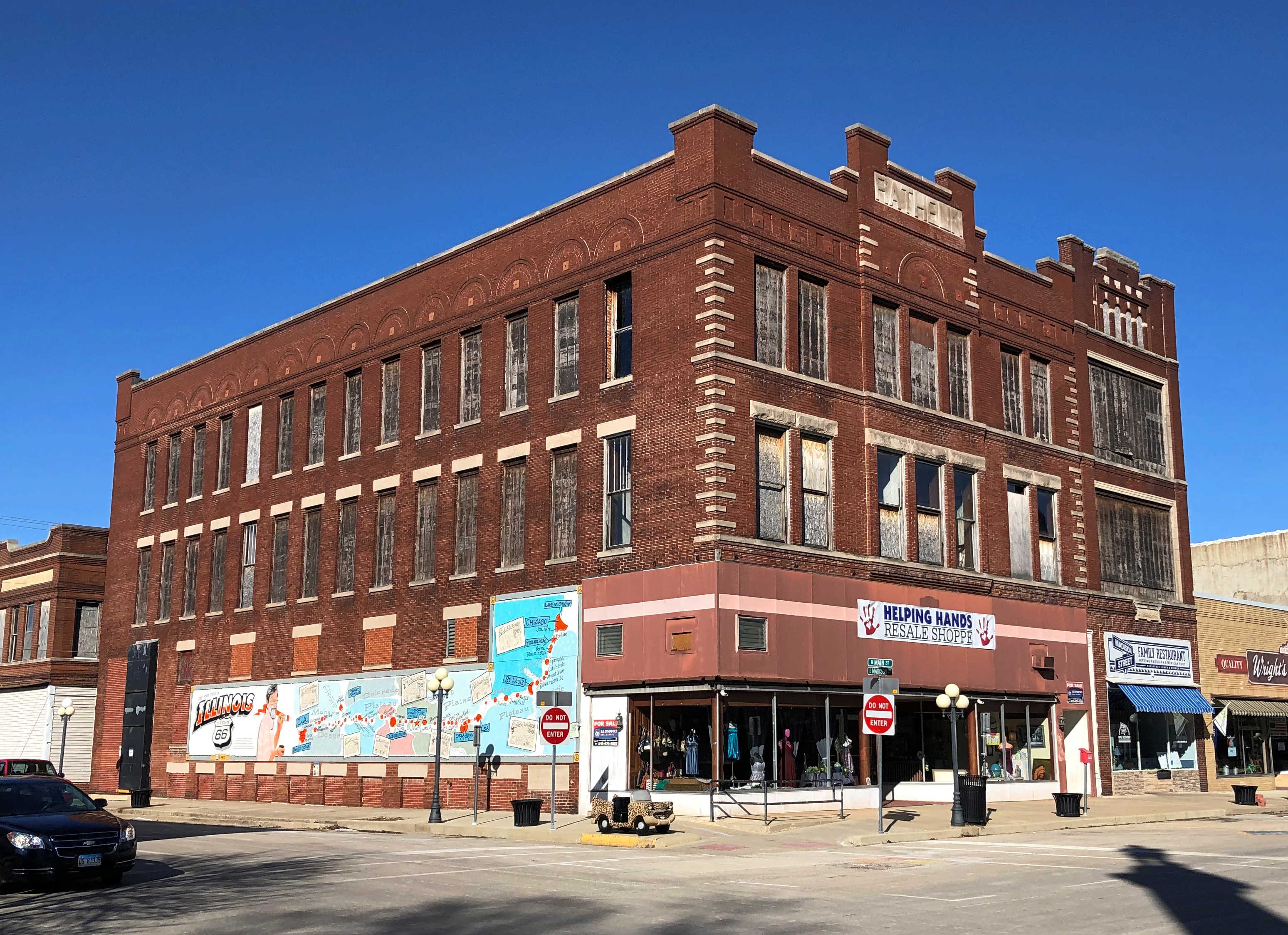
The inevitable Route 66 mural.Pontiac Illinois mural

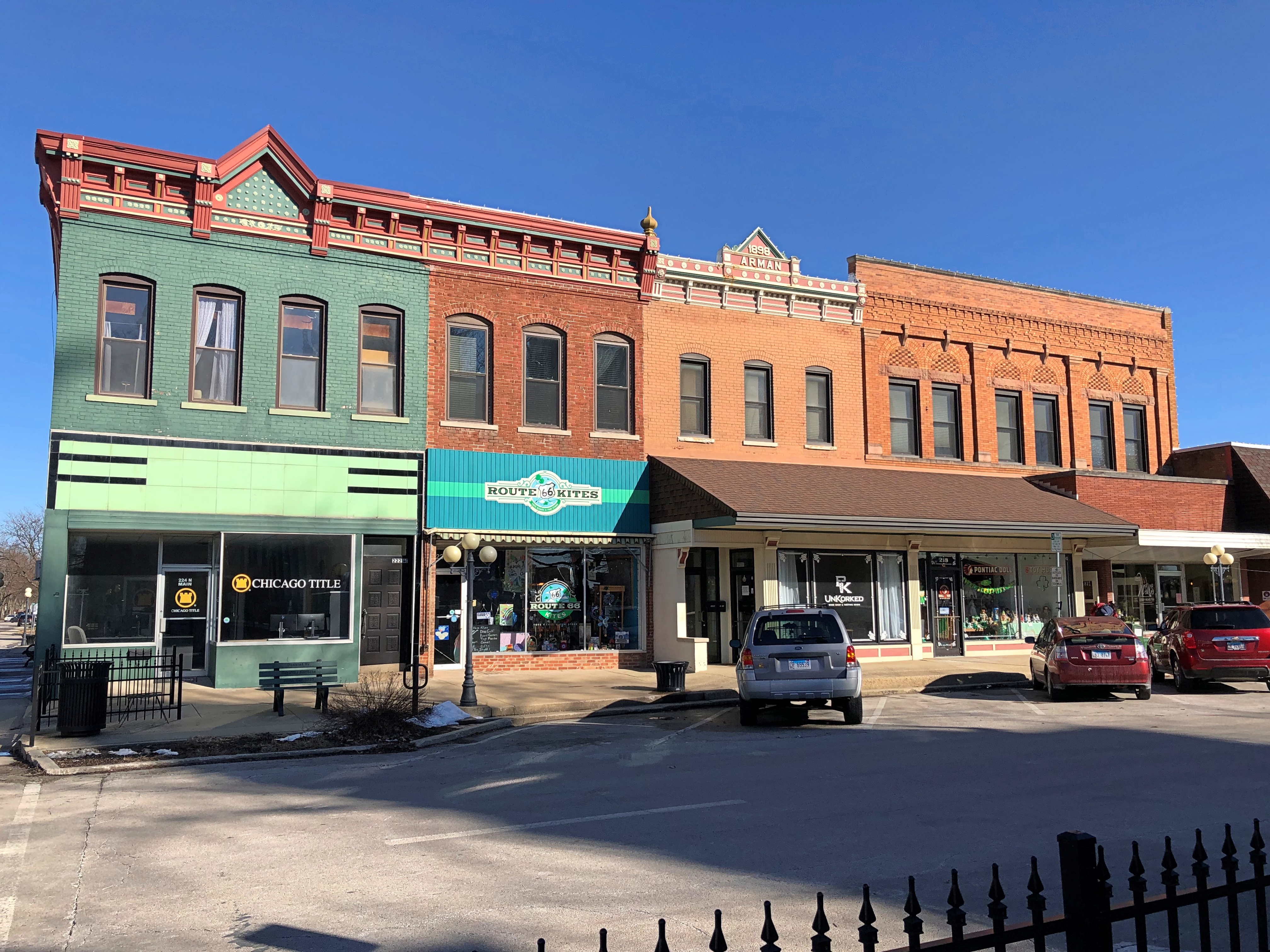
Some handsome buildings from a time when handsome buildings were built in small towns. Before the Depression at the latest, and more likely before WWI.Pontiac Illinois Pontiac Illinois

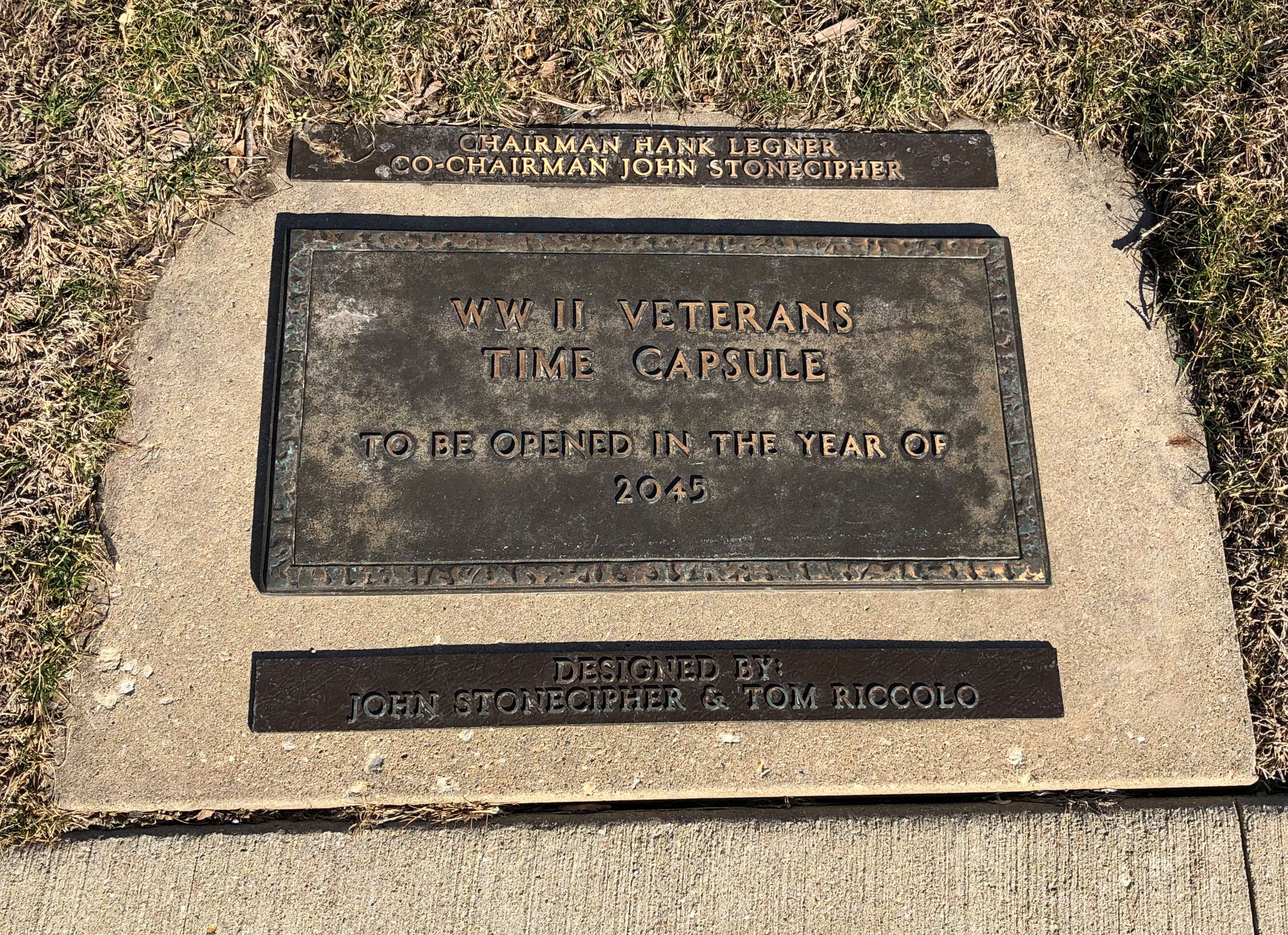
And a time capsule underfoot.Pontiac Illinois time capsule

Looking a little further into that today, I learned that the International Time Capsule Society is a real thing. I knew I got out of bed for a reason.

Savannah Walkabouts

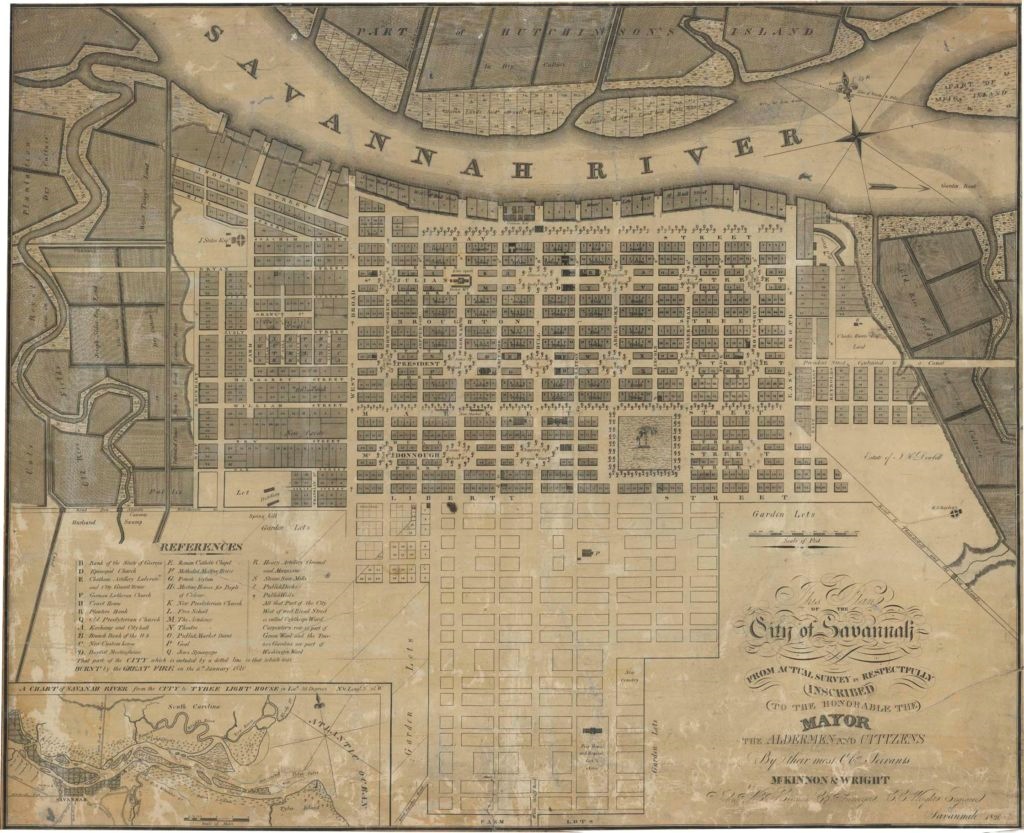
Unusual, for a U.S. city anyway, the streets of the Savannah Historic District form a grid linking a series of large green squares, meaning that in our time you’ll encounter a pleasant city park every few blocks, once you’re in the city center. The modern streets and squares hew to a plan implemented by James Oglethorpe, founder of Georgia.

“Oglethorpe laid out the city around a series of squares and laid out the streets in a grid pattern,” the Georgia Historical Society says. “Each square had a small community of colonists living around it and had separate lots dedicated to community buildings.

“Noble Jones was the first surveyor in the new colony and helped Oglethorpe fulfill his dream of a planned city. Oglethorpe also worked with Colonel William Bull to lay out the new city. Bull came from South Carolina and served as the city’s first architect, overseeing the design and construction of the earliest buildings.”

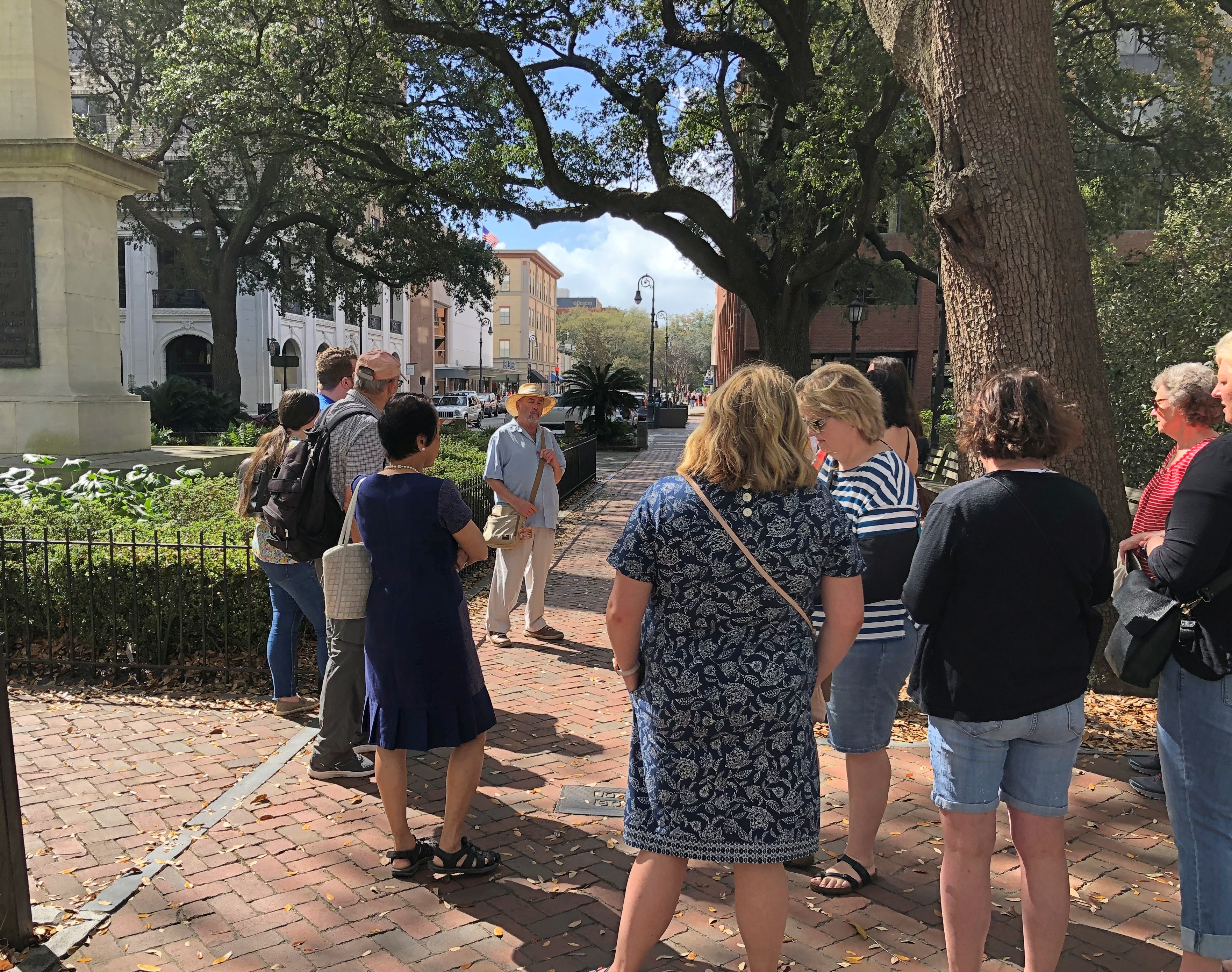
We did two long walks through the historic city, one each last Sunday and Monday. The first walk was guided, following a straight course on Bull Street from Johnson Square through to Wright Square, Chippewa Square, Madison Square — crossing the remarkably picturesque Jones Street — and Monterey Square, ending at the rectangular Forsyth Park and its impressive fountain. We also crossed Oglethorpe Street; like in many cities, old pioneers later became streets.Johnson Square Savannah 2022

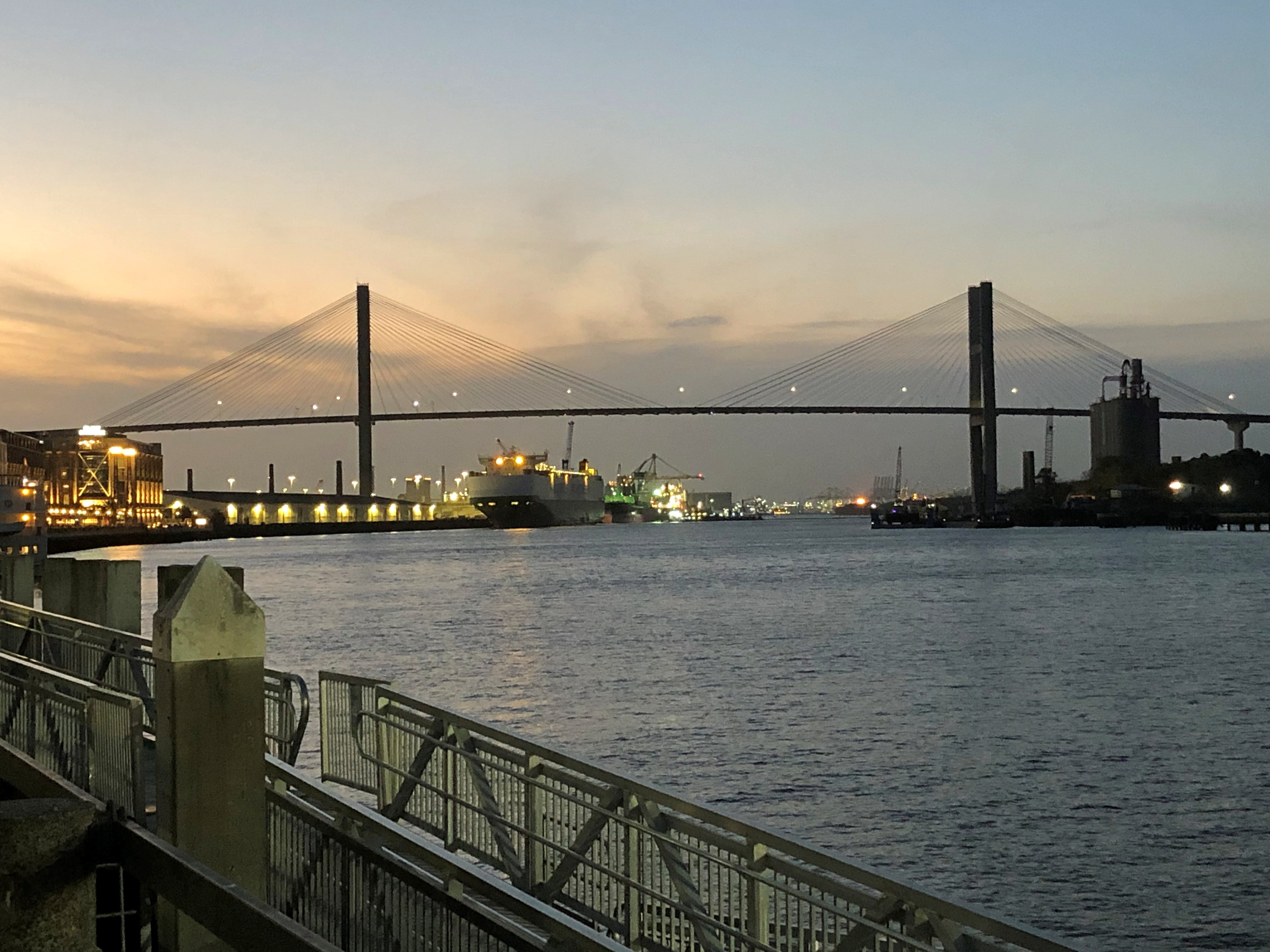
Our second walk was more meandering, starting near Colonial Park Cemetery and heading north toward the Savannah River, which we eventually reached, exploring the cobblestoned streets and alleys and brick buildings that used to be the heart of the waterfront cotton market. These days, the place attracts tourists en masse to its restaurants, bars and shops, and we joined the masse for a little while, taking in the view of the Savannah River and the Talmadge Memorial Bridge.Talmadge Memorial Bridge, Savannah

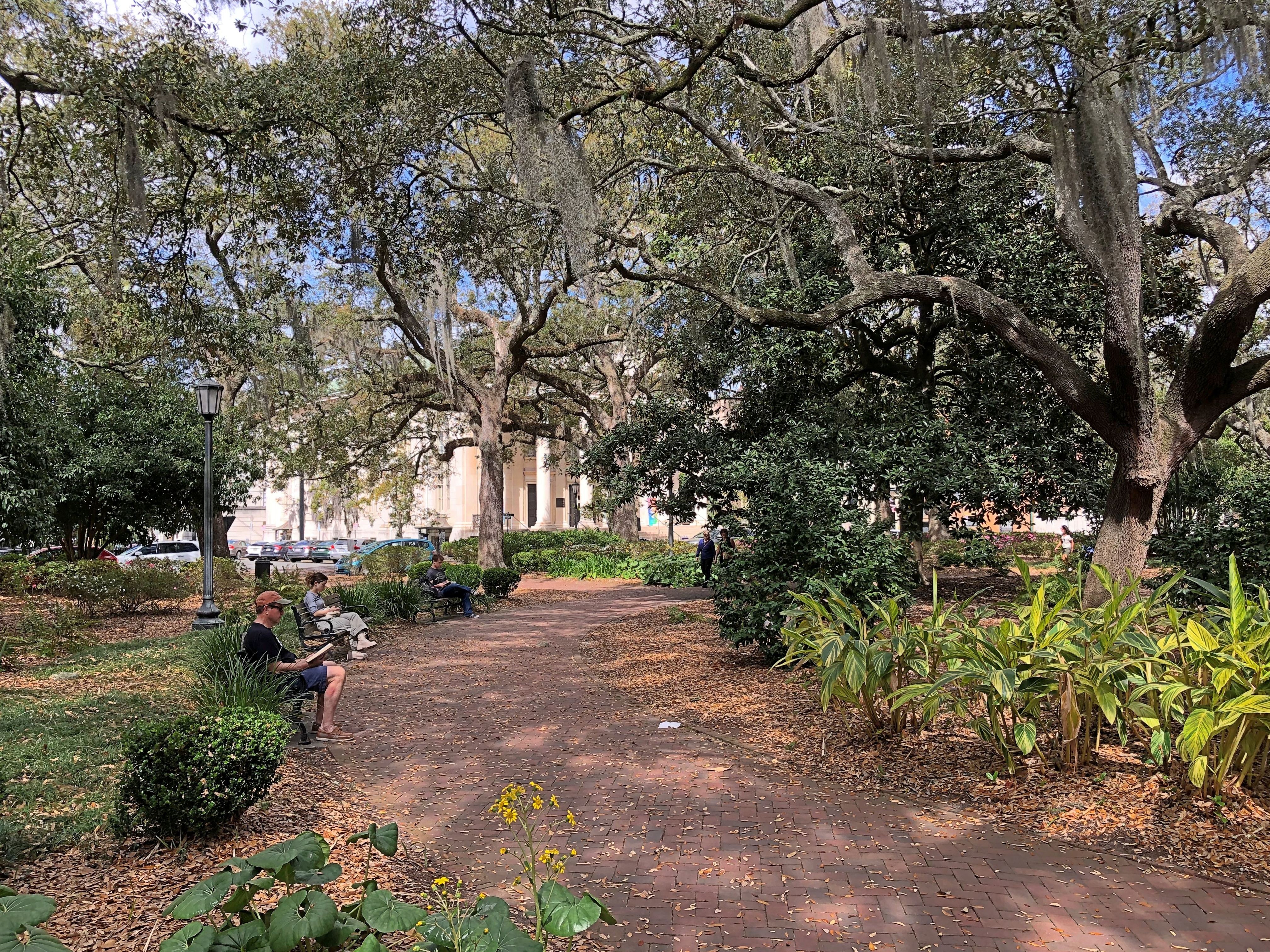
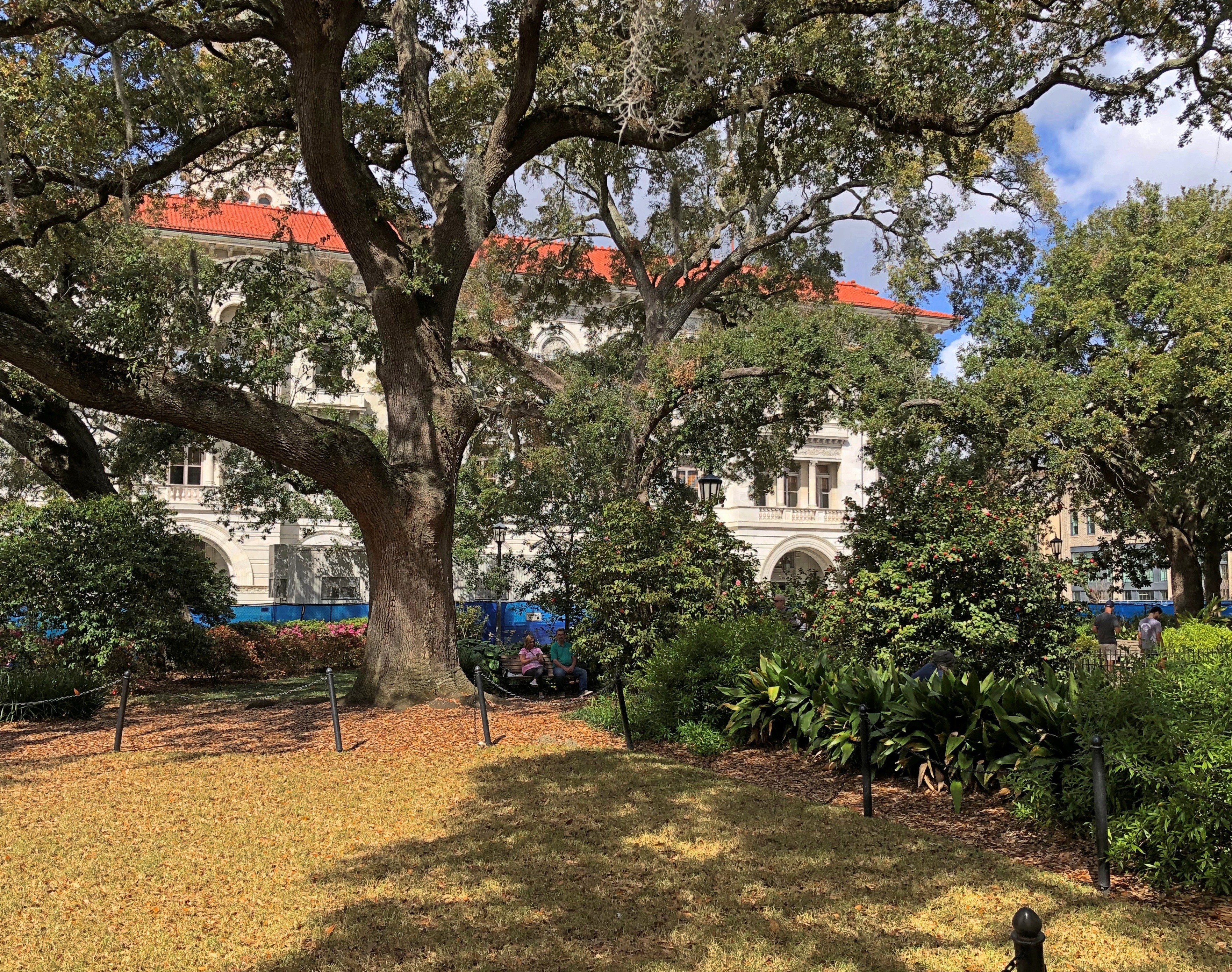
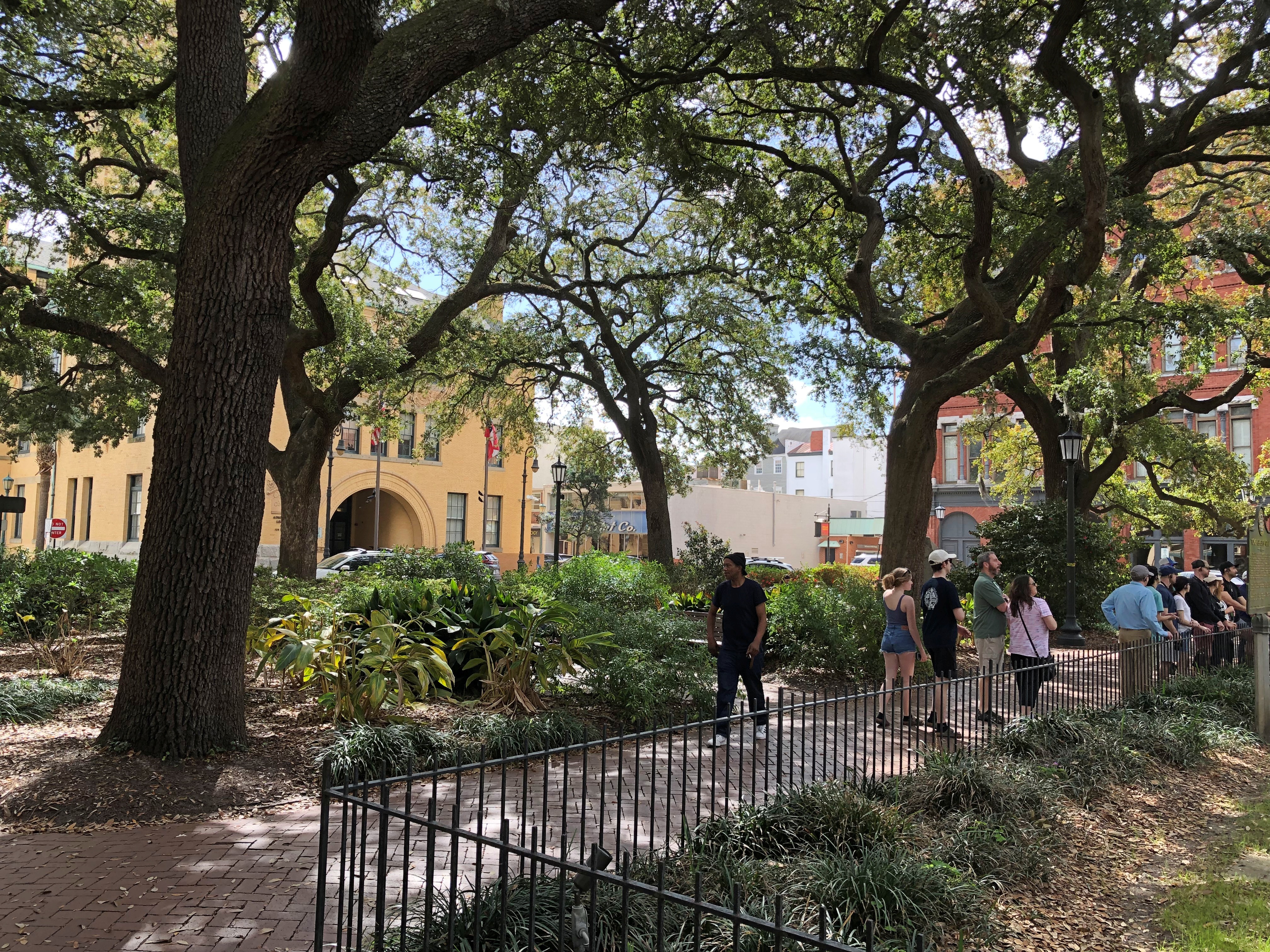
Savannah has one of the lusher downtowns I’ve ever seen, marked by a profusion of tall trees and bushes and ground cover. The squares were especially lush places. Savannah Historic District 2022
Savannah Historic District 2022

Flowers, too, though I think there will be more as spring matures into summer.Savannah Historic District 2022

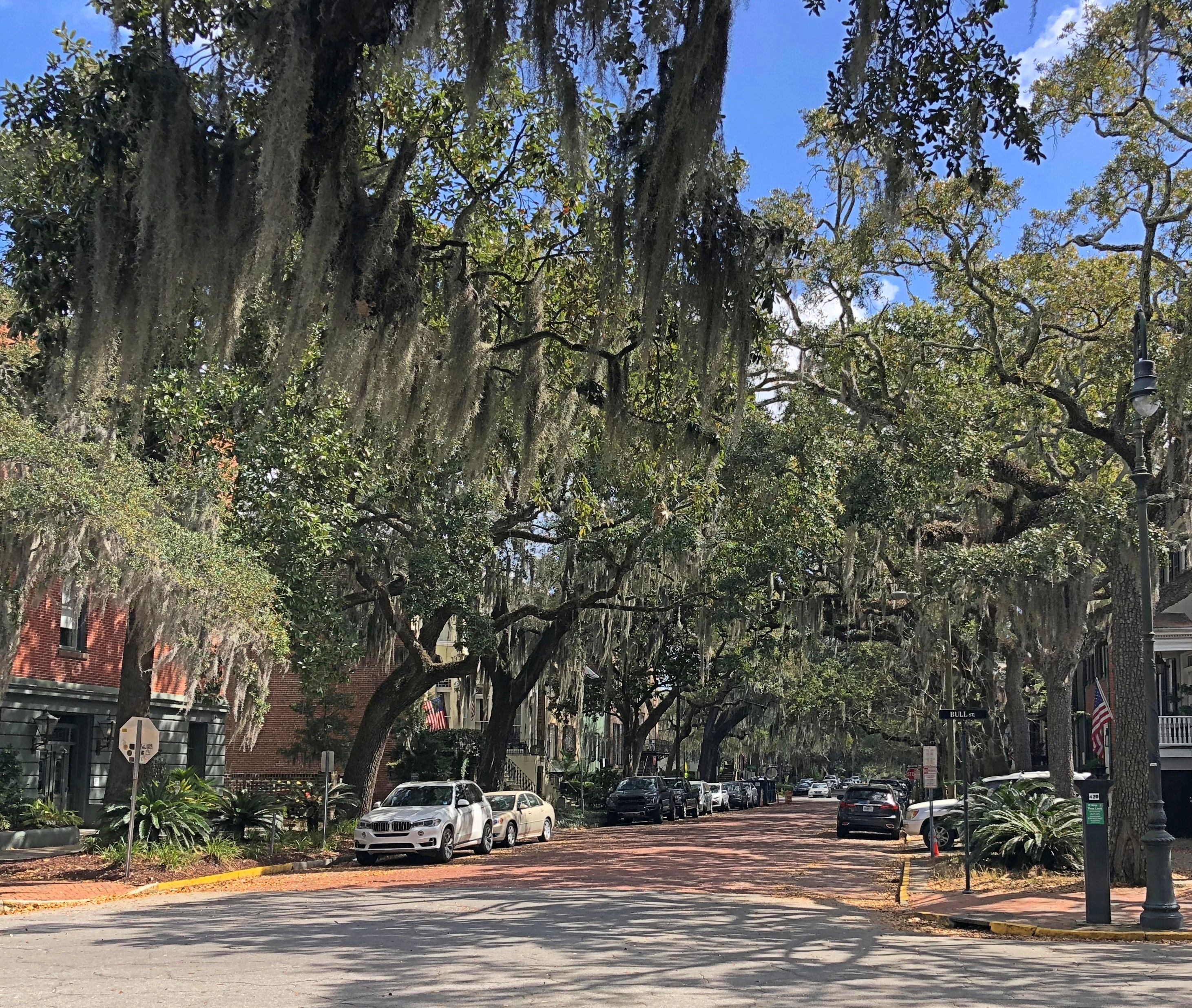
Some of the streets were almost as lush. This is Jones Street, famed for its handsome houses, but also shady trees. You’re going to need shade most of the year in Savannah.Savannah Historic District 2022

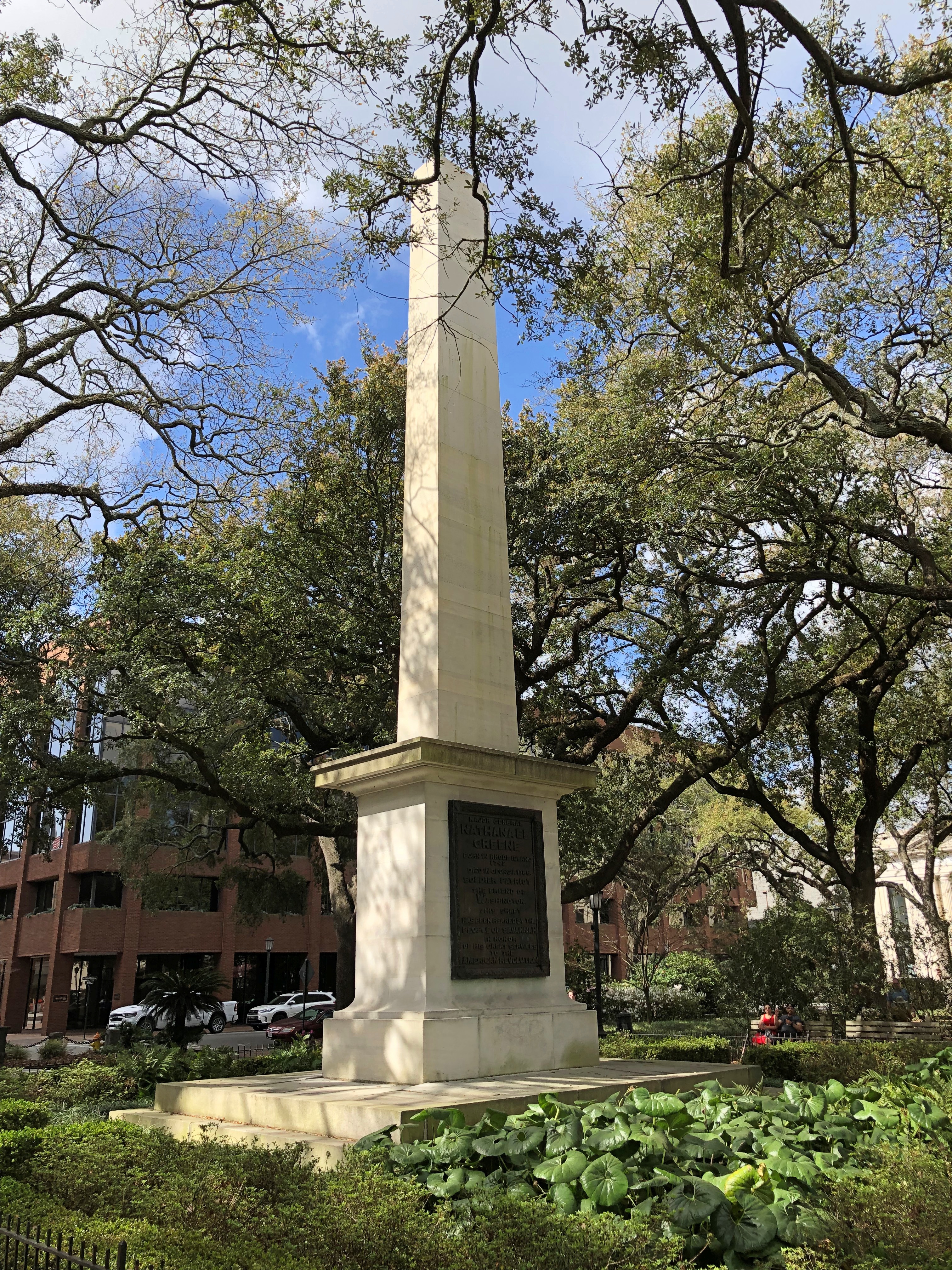
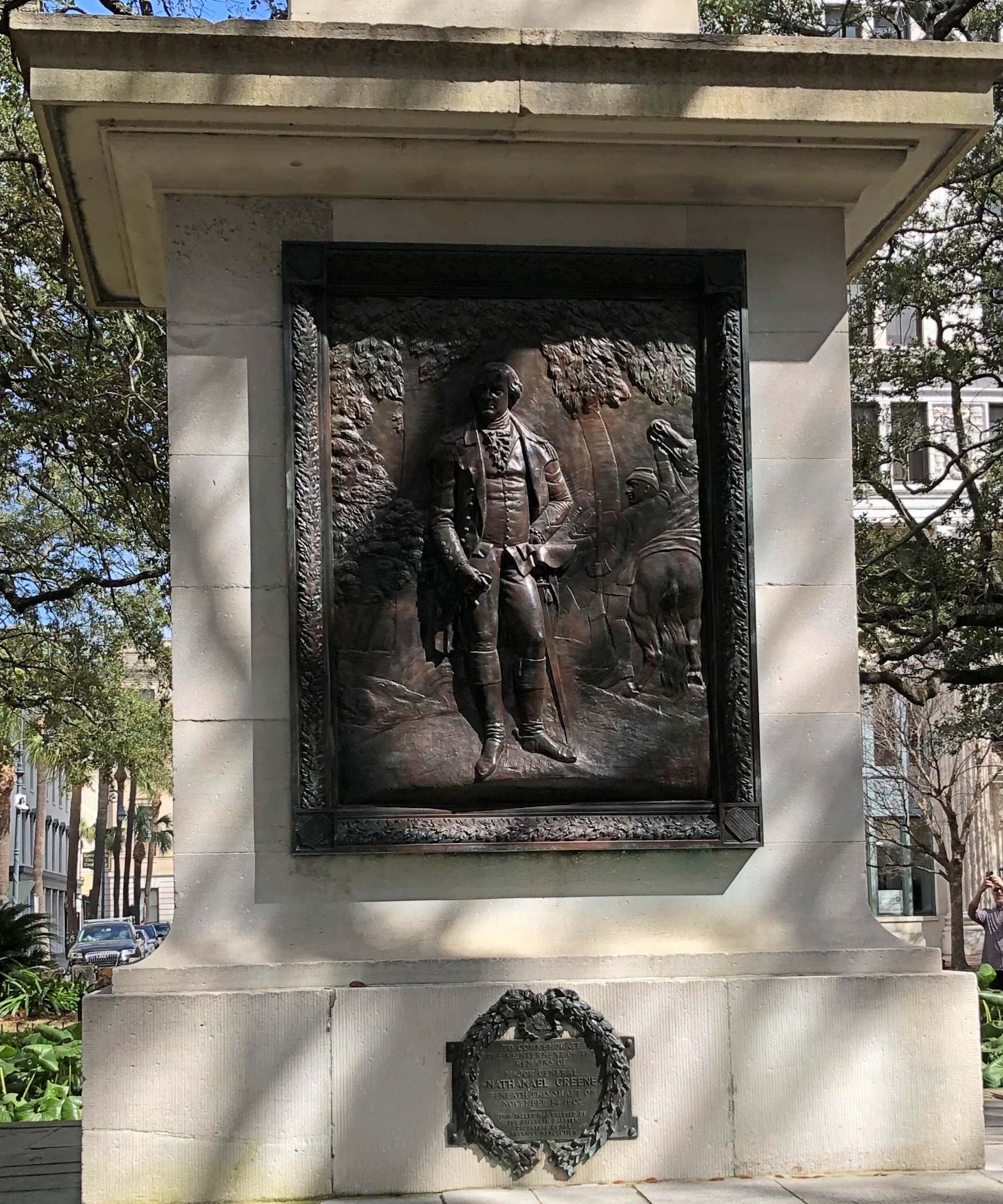
Many of the squares feature memorials of one kind or another. In Johnson Square stands a memorial to Nathanael Greene, Quaker general of the Revolution who had a gift for inspiring pyrrhic victories among his British opponents. Not only is this a memorial to Greene, he’s buried under it.Greene Memorial, Savannah Historic District 2022 Greene Memorial, Savannah Historic District 2022

A design by William Strickland, the Philadelphian who moved to Nashville who did the Second Bank of the United States, Tennessee State Capitol and a lot else besides.

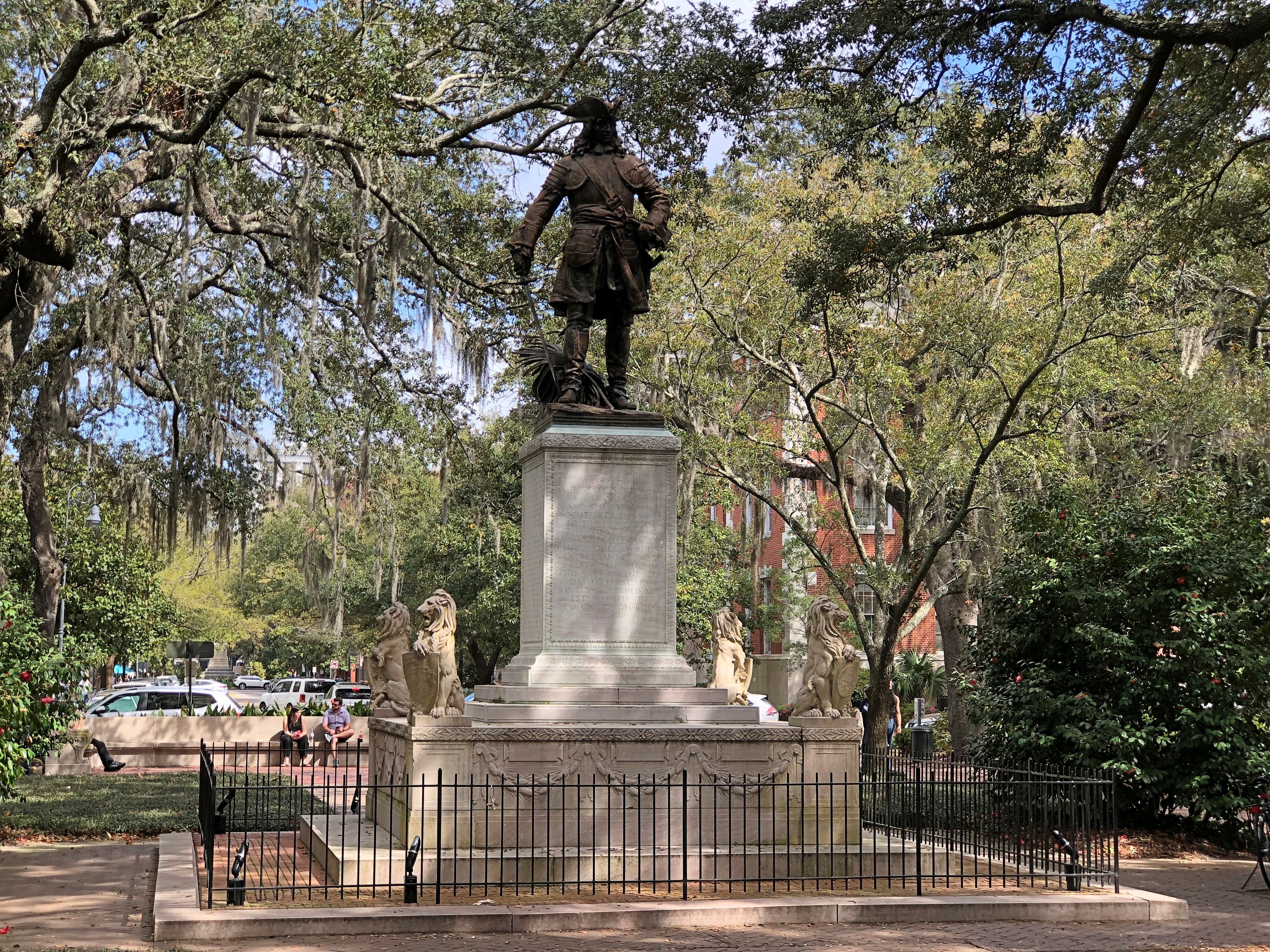
In Chippewa Square, Gen. Oglethorpe stands looking out toward the state he founded,  maybe enjoying the shade as well. Designed by Daniel Chester French, dedicated in 1910.Oglesthorpe Memorial, Savannah

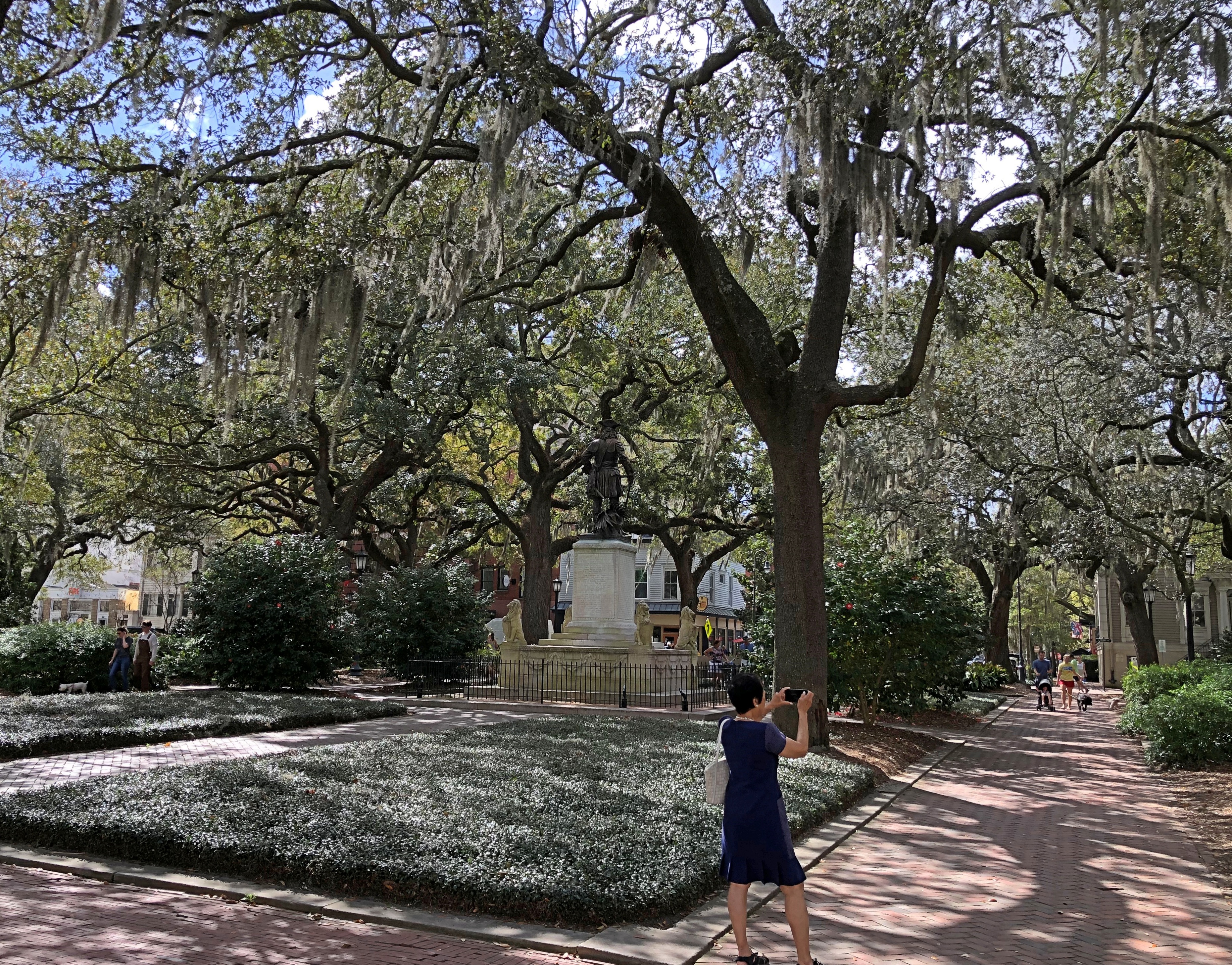
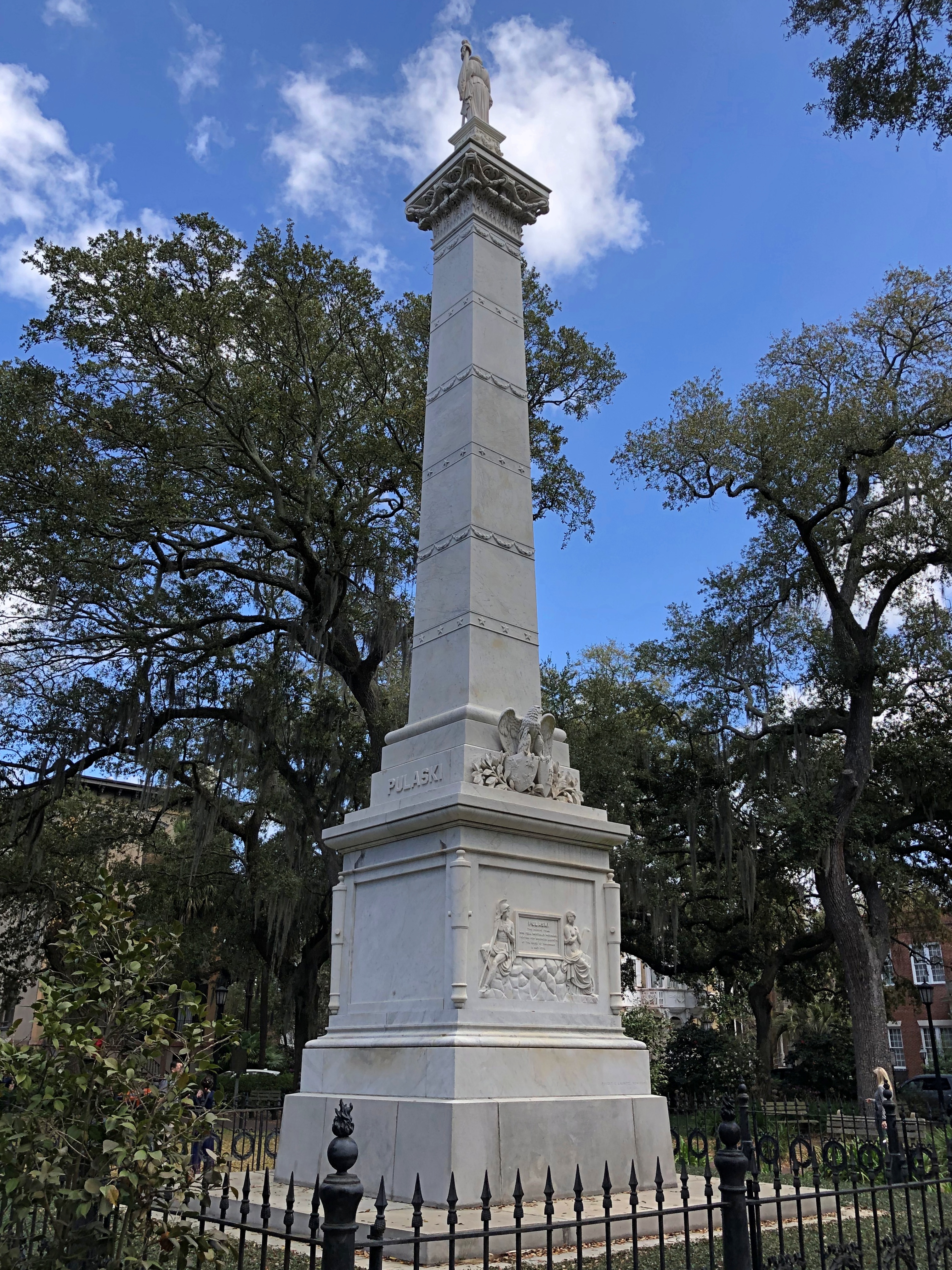
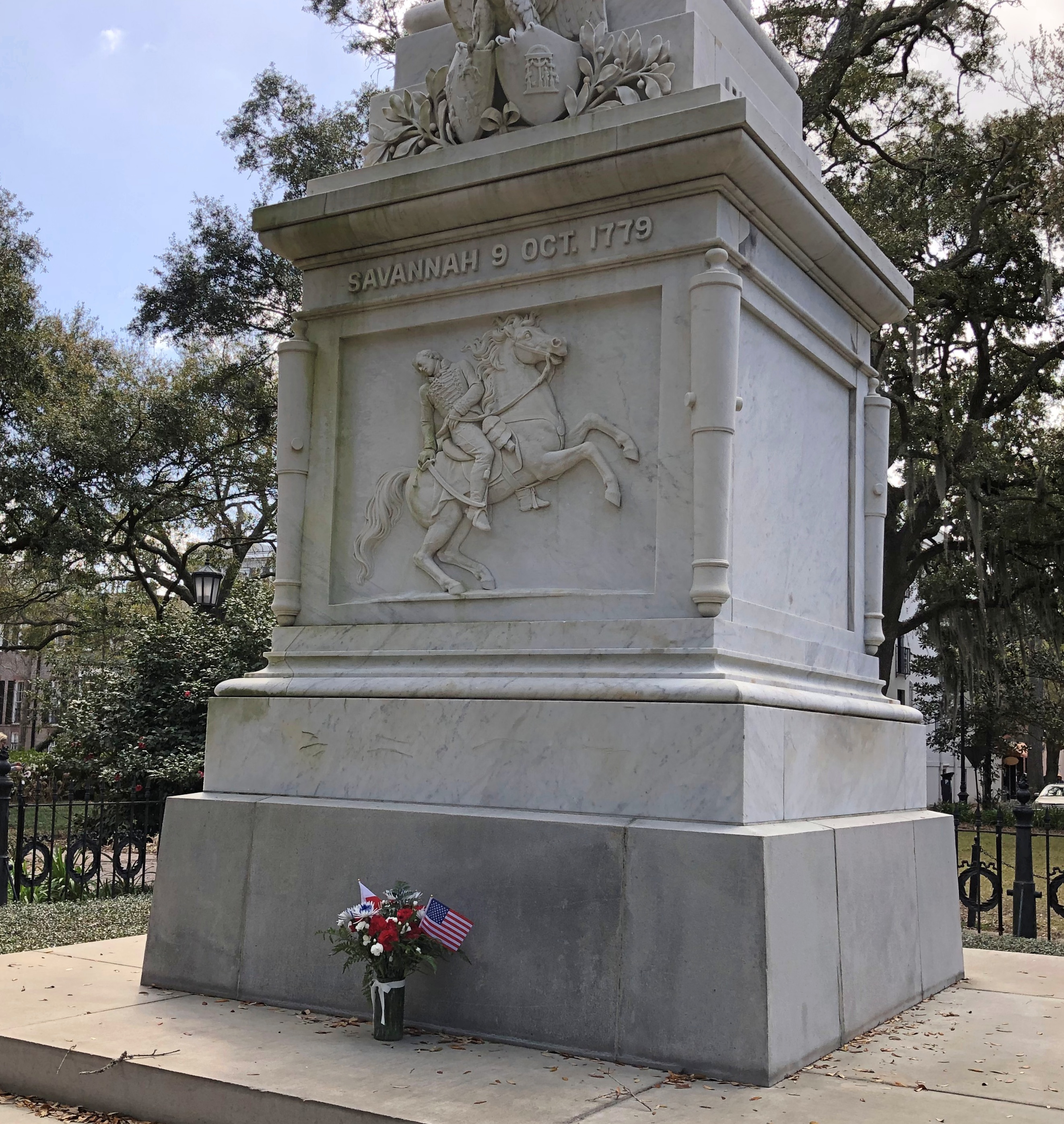
Casimir Pulaski, swashbuckling Polish cavalryman who died during the Siege of Savannah, is honored in Monterey Square with a memorial by Robert Launitz. Pulaski memorial, Savannah
Pulaski memorial, Savannah

A number of other historic figures are honored in the squares, some of whose memorials we saw, such as that of William Jasper, a soldier who also died in the Siege of Savannah; John Wesley (as mentioned yesterday); and railroad exec William Washington Gordon, who was also a mayor of Savannah.

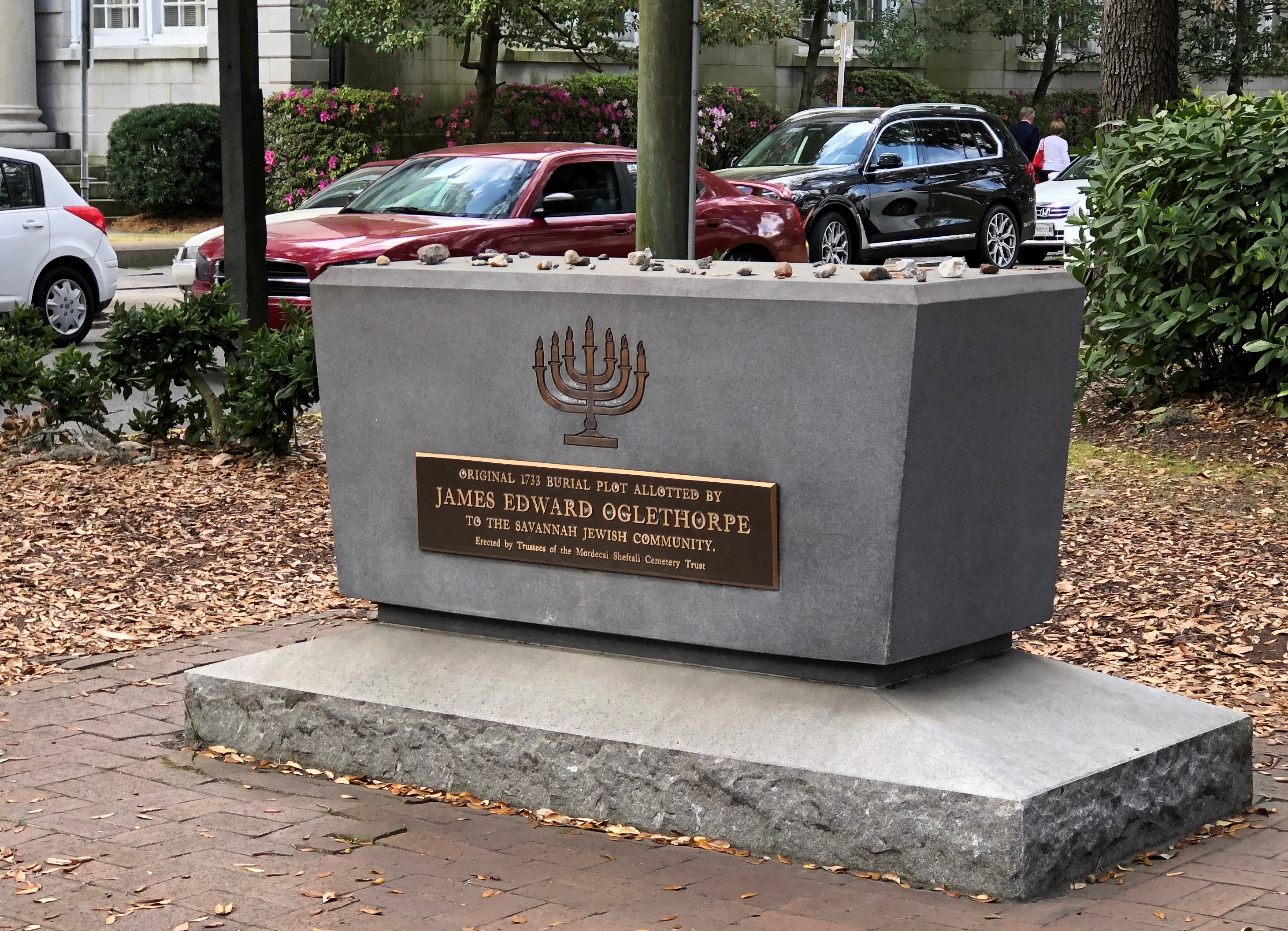
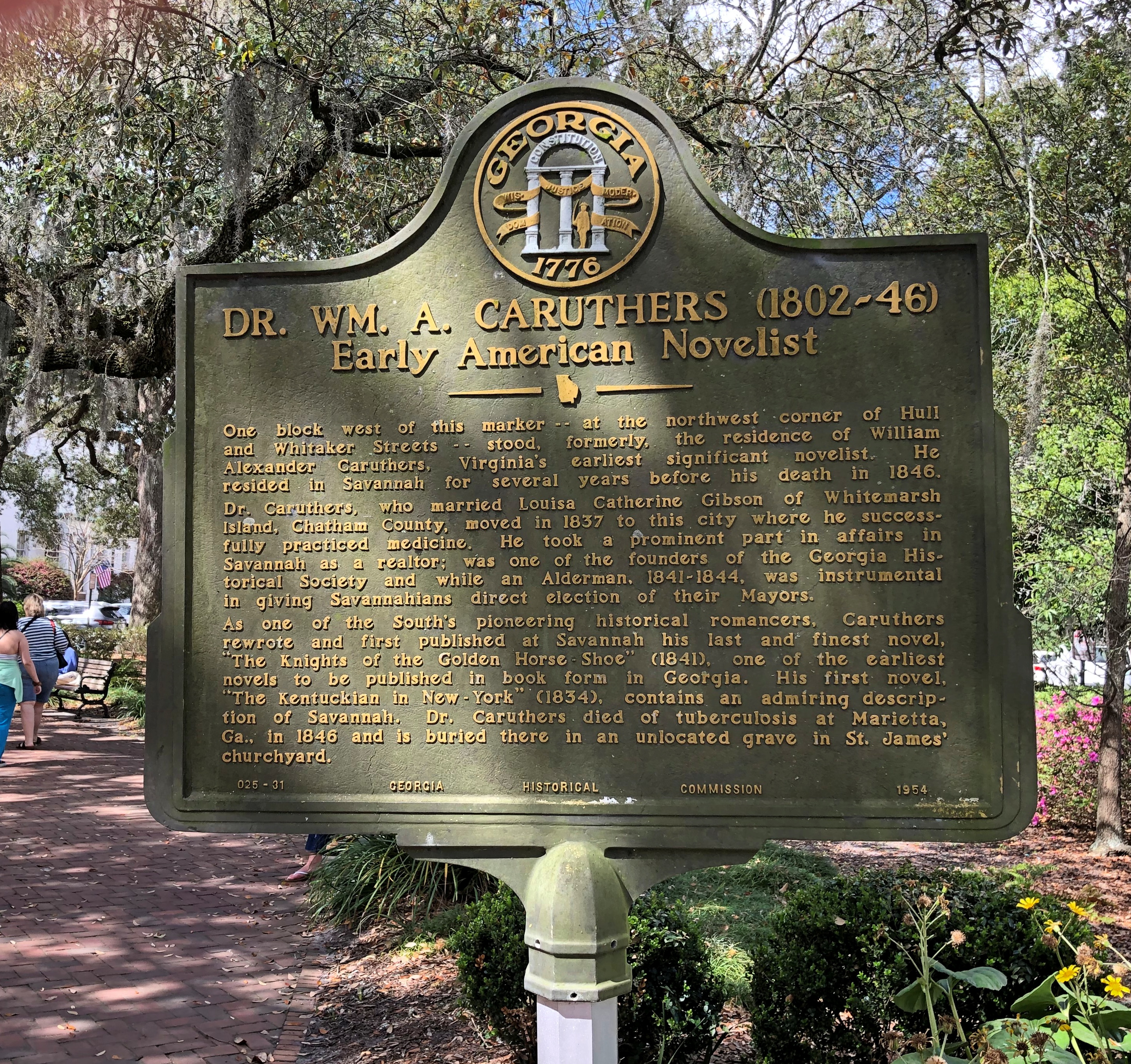
Gordon’s sizable late 19th-century memorial was built on top of the grave of Tomochichi, the Indian chief who allowed Oglethorpe to settle the site that would become Savannah. Tomochichi’s grave had previously been the site of a memorial to Native leader, but that had been lost to time before the Gordon memorial was erected. An interesting, if convoluted story, is told in academic detail here. Tomochichi has a separate memorial near the Gordon memorial.

A good many other memorials are scattered here and there in the squares and in between.Savannah Historic District Savannah Historic District

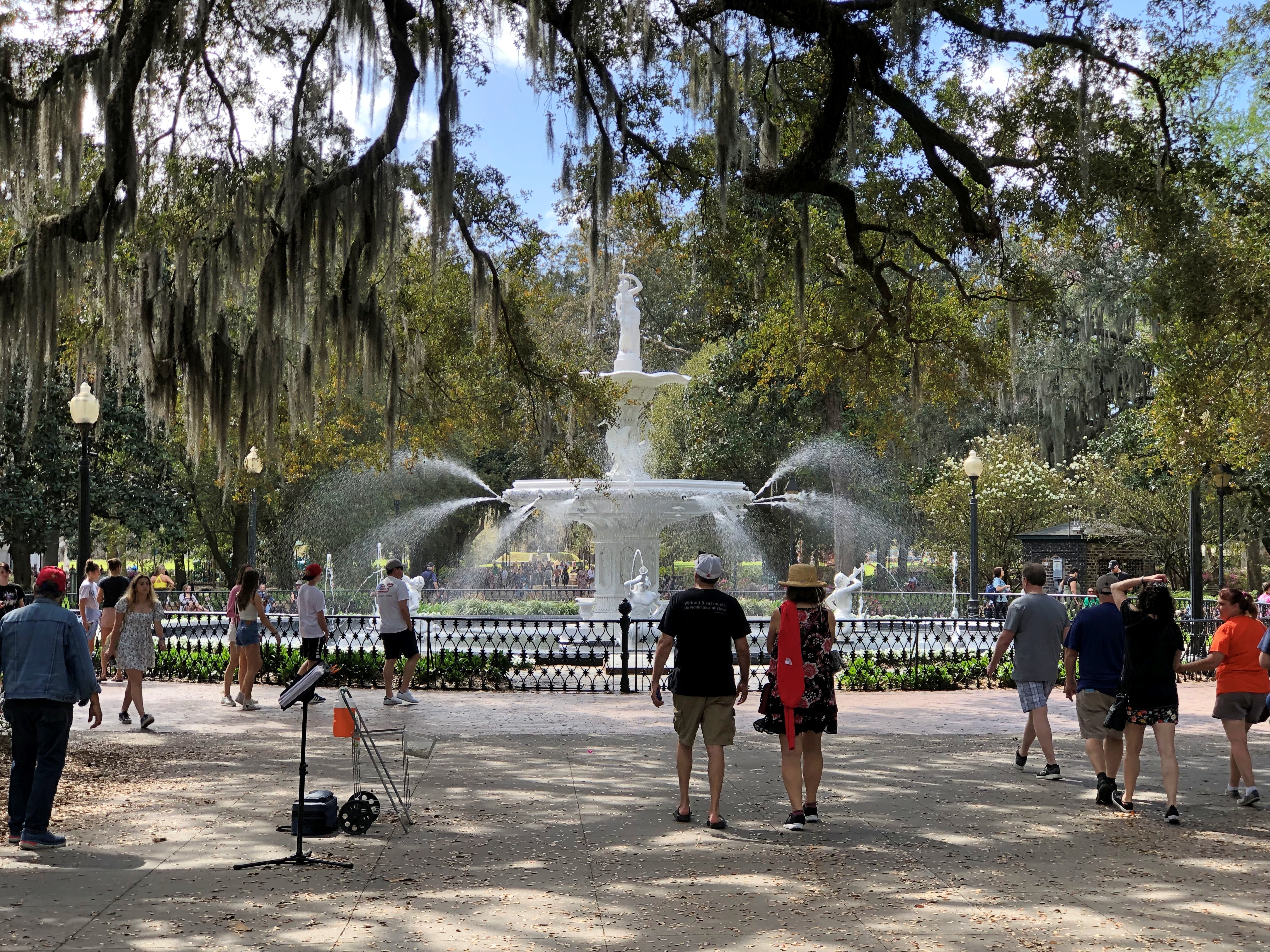
At the southern edge of the historic district is Forsyth Park, at 30 acres much larger than any of the city squares.
Forsythe Park, Savannah

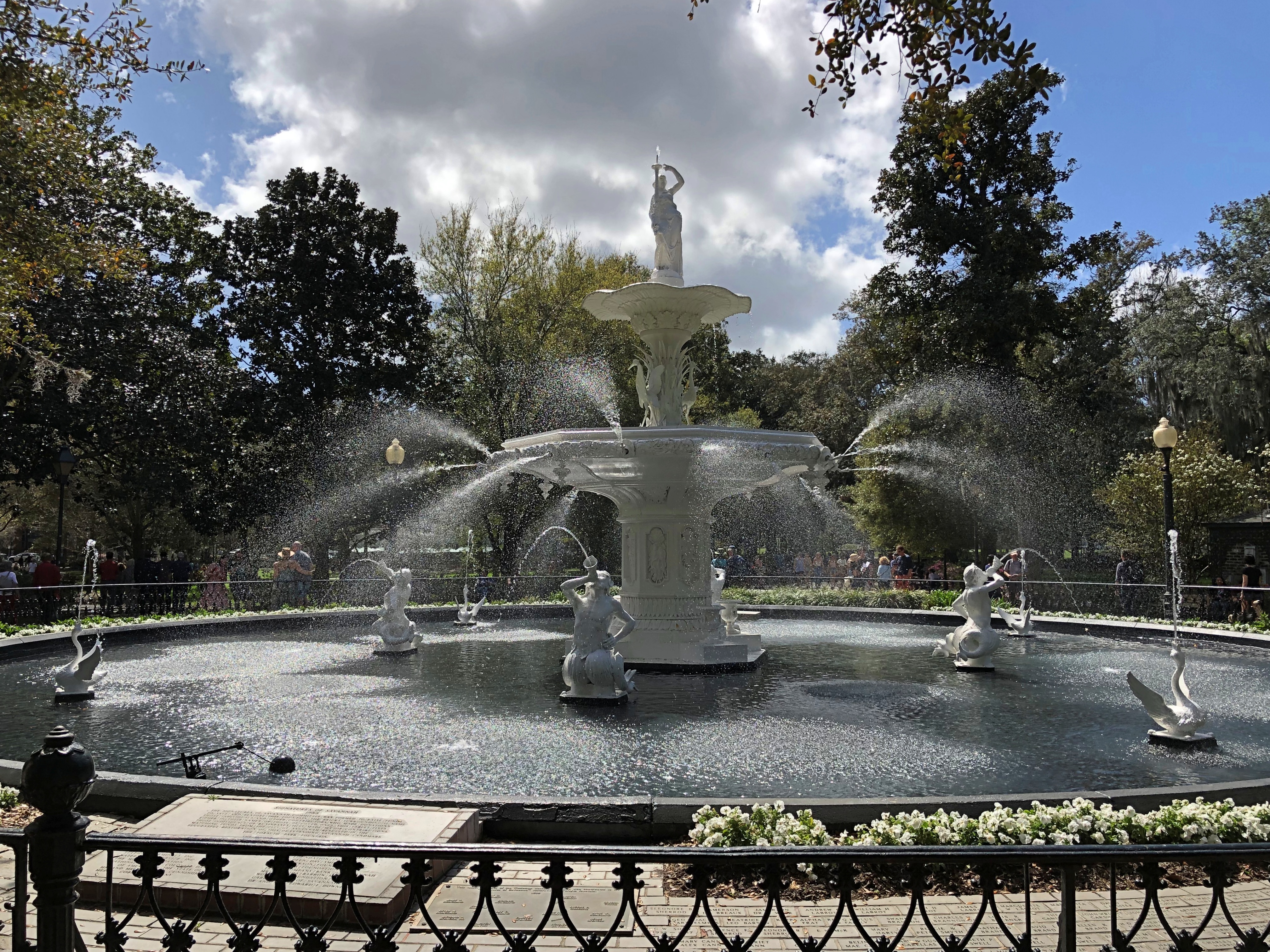
The park’s centerpiece is a splendid fountain, installed in 1858 and a creation of the same Bronx foundry that did the U.S. Capitol dome and, later, railings for the Brooklyn Bridge, among many other projects.
Forsyth Park, Savannah Forsyth Park, Savannah

As charming a park as you’ll find anywhere. Sometimes life is a walk through the park, or better yet, through a lush historic district.

Savannah ’22

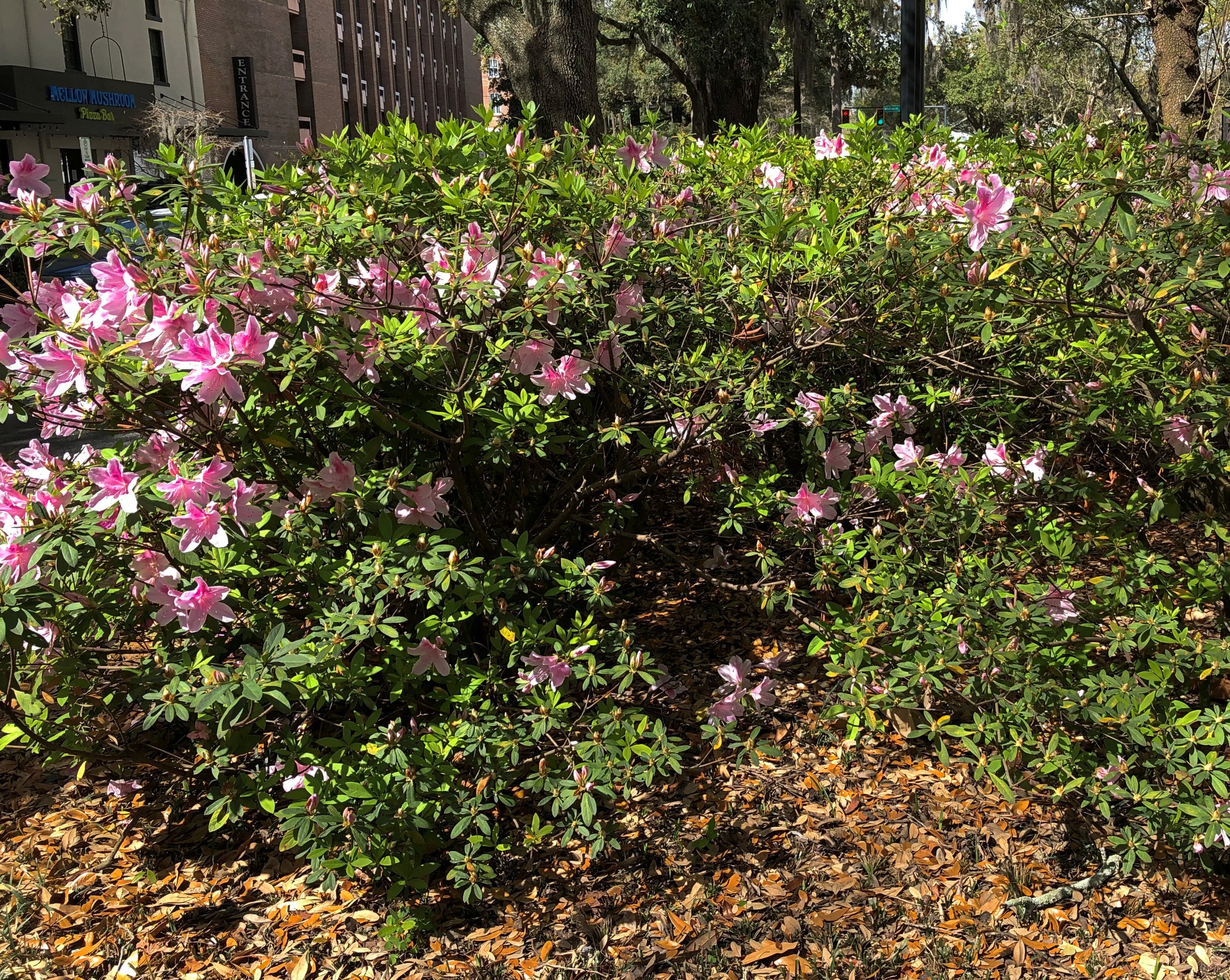
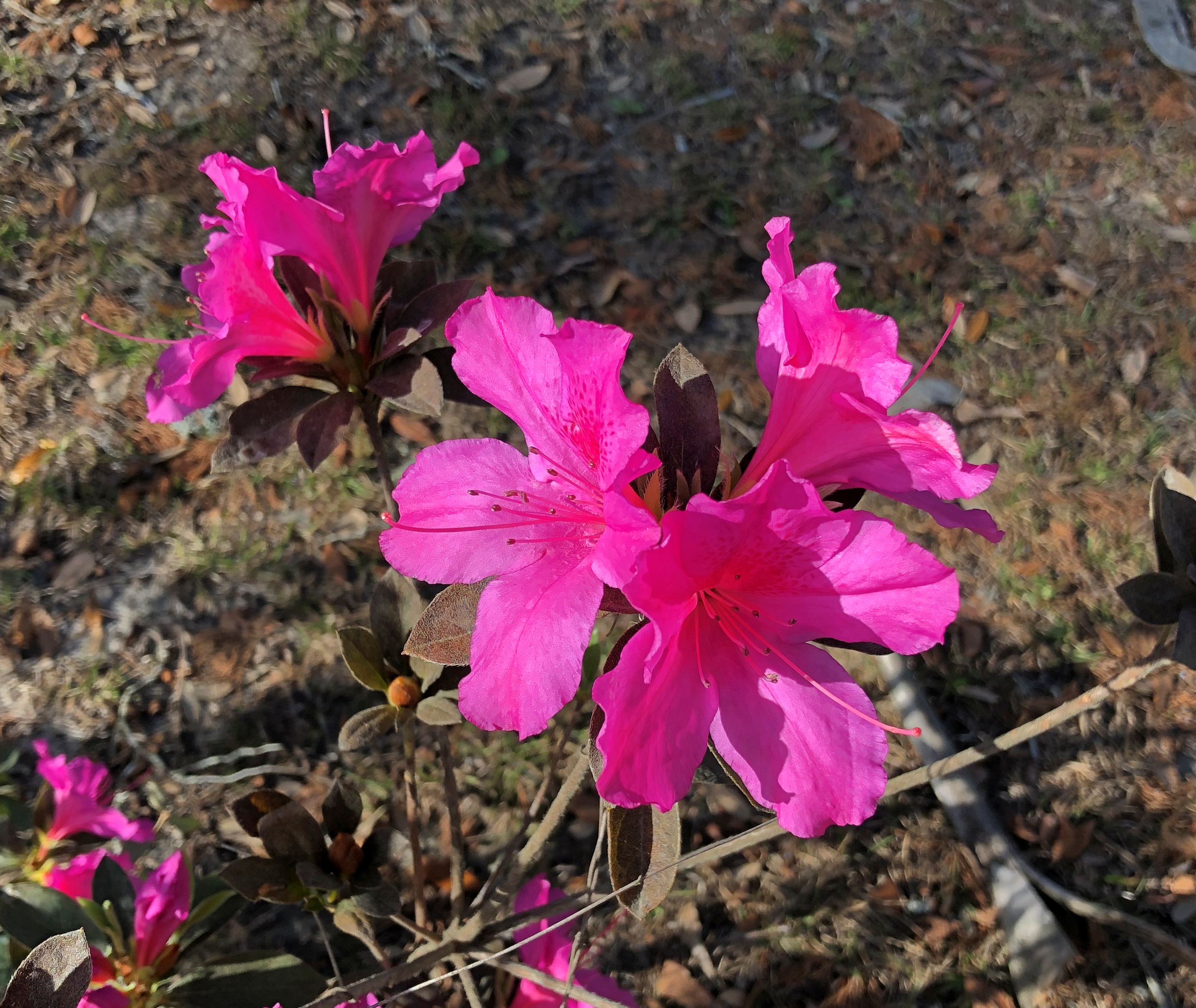
What to do during spring break on a three-night jaunt? Go somewhere that’s actually experiencing spring. A week ago Saturday, Ann and I flew to Savannah, Georgia, where the grass is green and the air warm, and the azaleas are in profuse bloom —Savannah, Georgia 2022

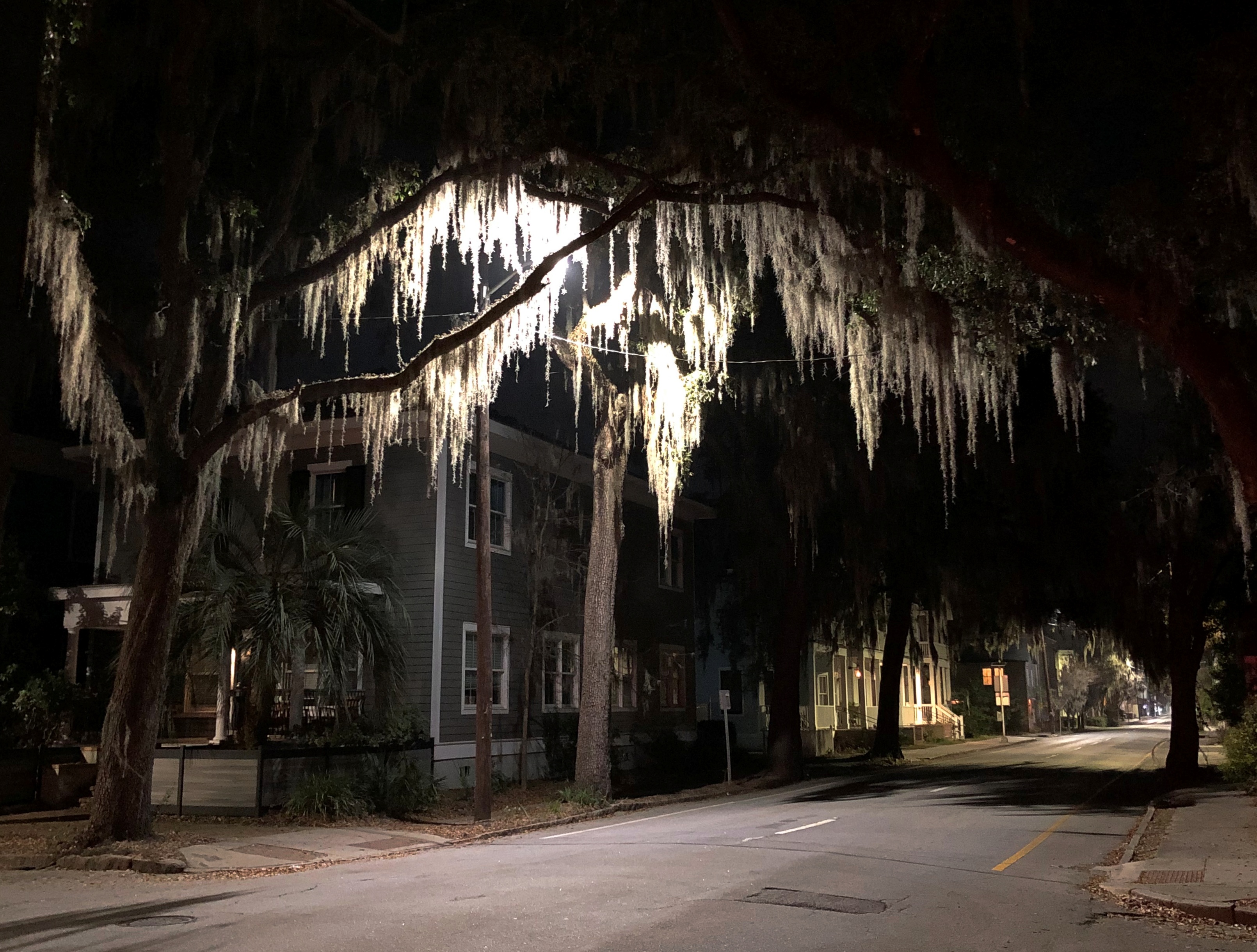
— and Spanish moss festoons tree after tree after tree, silver-gray and airy by day, slightly sinister by night, in the right light.Savannah, Georgia 2022

Besides pleasant flora, Savannah has much else to recommend it. I’ve known as much for years, but sometimes it takes years to get around to visiting even the most intriguing places.

We took long walks in the Savannah Historic District, which is enormous and very much lives up to its title, with street after street lined with the sort of aesthetic and storied buildings that speak of earlier times, both more genteel and more cruel. They also speak of restoration in the 20th and 21st centuries, and a new affluence for the city in our time.

We also spent time out from Savannah, as far afield as drives through the Savannah National Wildlife Refuge and through the beach town of Tybee Island, with a longer visit to Fort Pulaski National Monument.

Naturally, I had to visit Bonaventure Cemetery, famed in book and movie, and alive with other tourists and explosions of spring azaleas. And Spanish moss. Lots of Spanish moss on towering southern live oaks.

We ate well: plentiful seafood, kolaches as delightful as in Texas, hardy diner fare, innovative sliders and amazingly delicious fried chicken at a regional chain in suburban Savannah, our first meal after arrival and a tiresome experience in the long line to claim our rental car.

We slept well: I think I surprised Ann by booking a room at a one-of-a-kind inn a mile or so from the historic district, a sizable 1906 house renovated in the early 21st century for guests like us. Each room had its own theme, and the common areas were comfortable and ornate. Best of all, it really was an independent hotel, not a faux unique property of a high-priced boutique chain, and so I didn’t pay the moon.

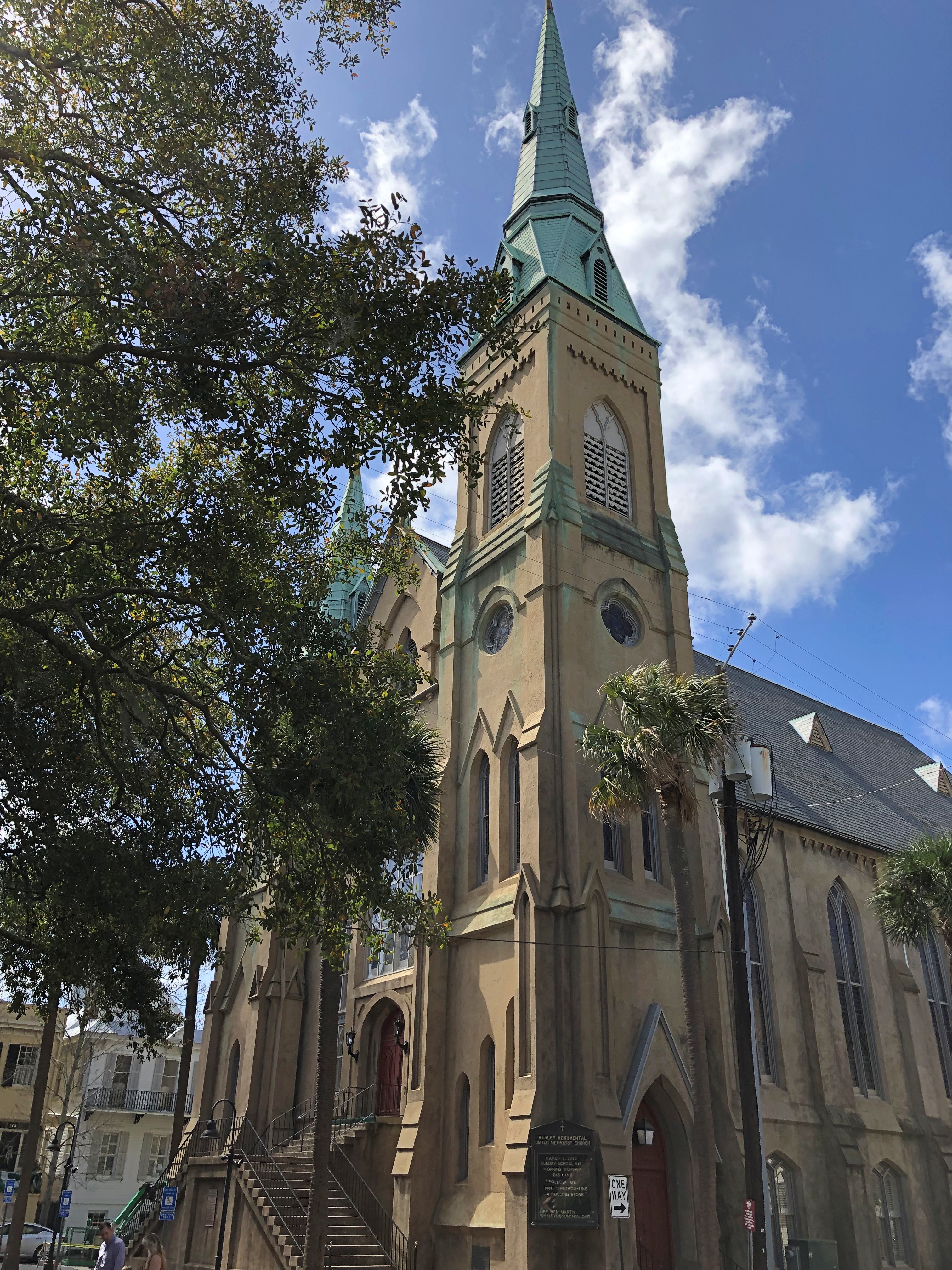
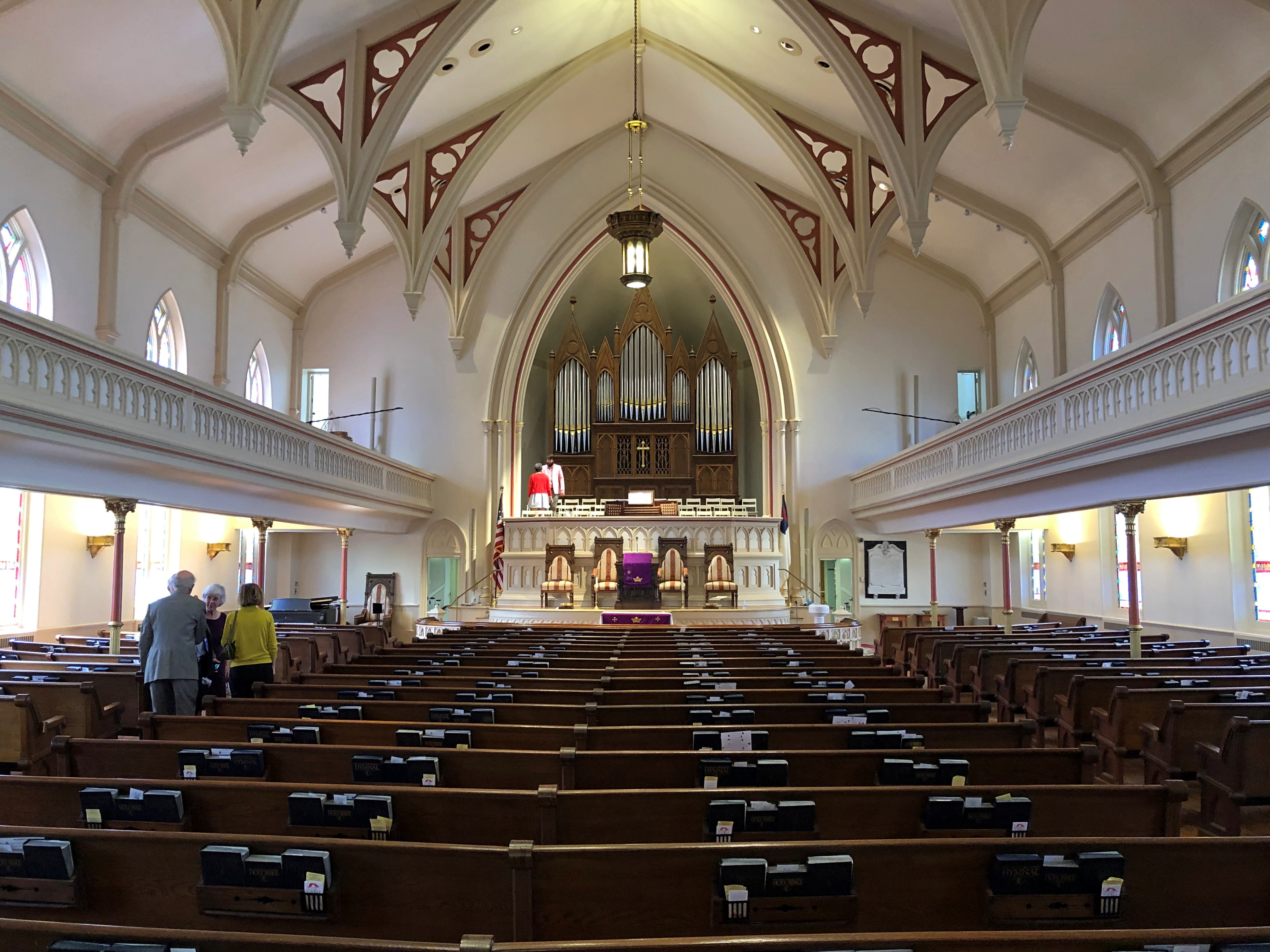
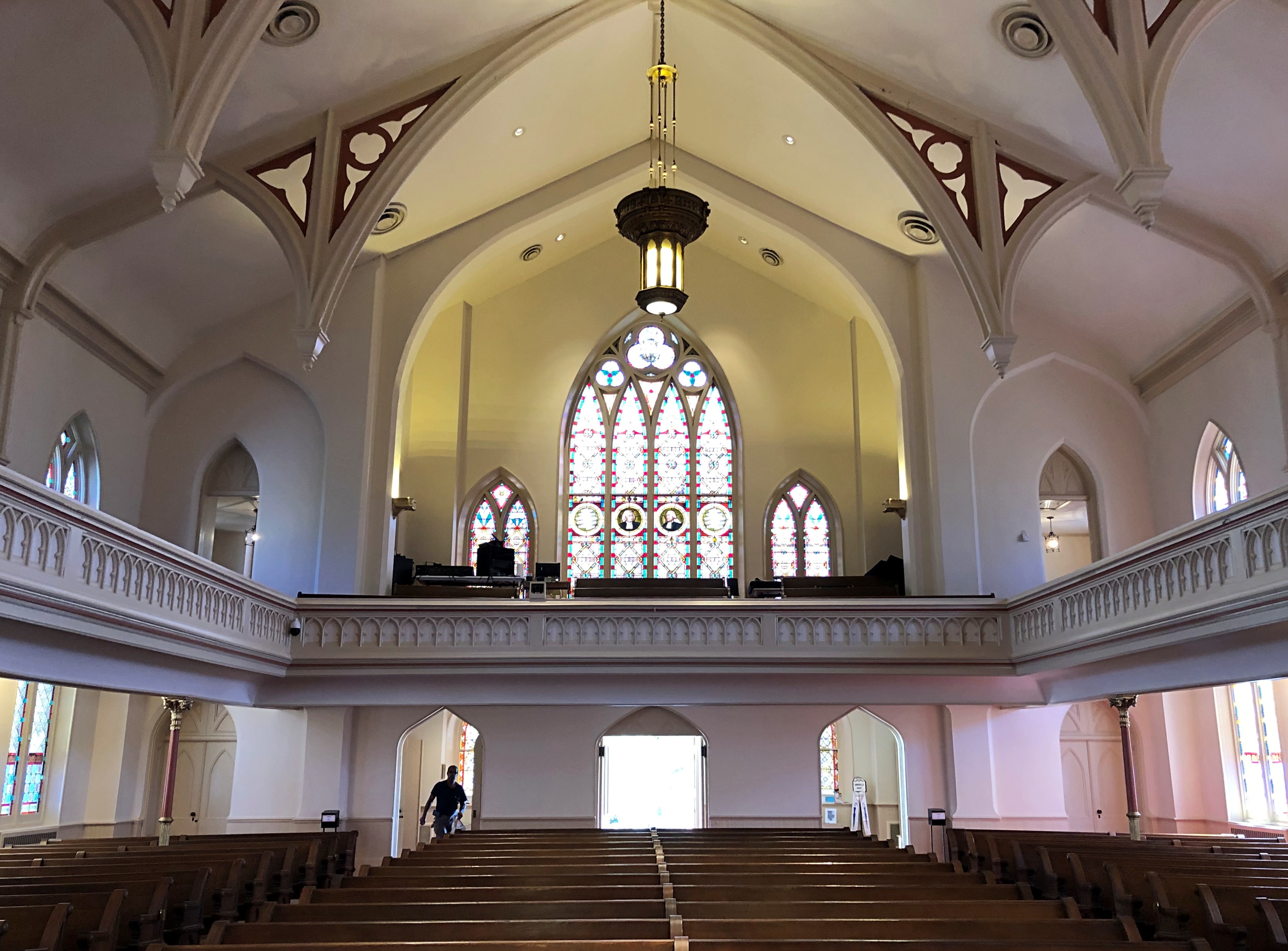
We were also did a kind of Methodist pilgrimage, odd as that sounds. First, the only Savannah church we were able to enter during our visit was Wesley Monumental United Methodist Church, completed in 1890.Wesley Memorial UMC
Wesley Memorial UMC Wesley Memorial UMC

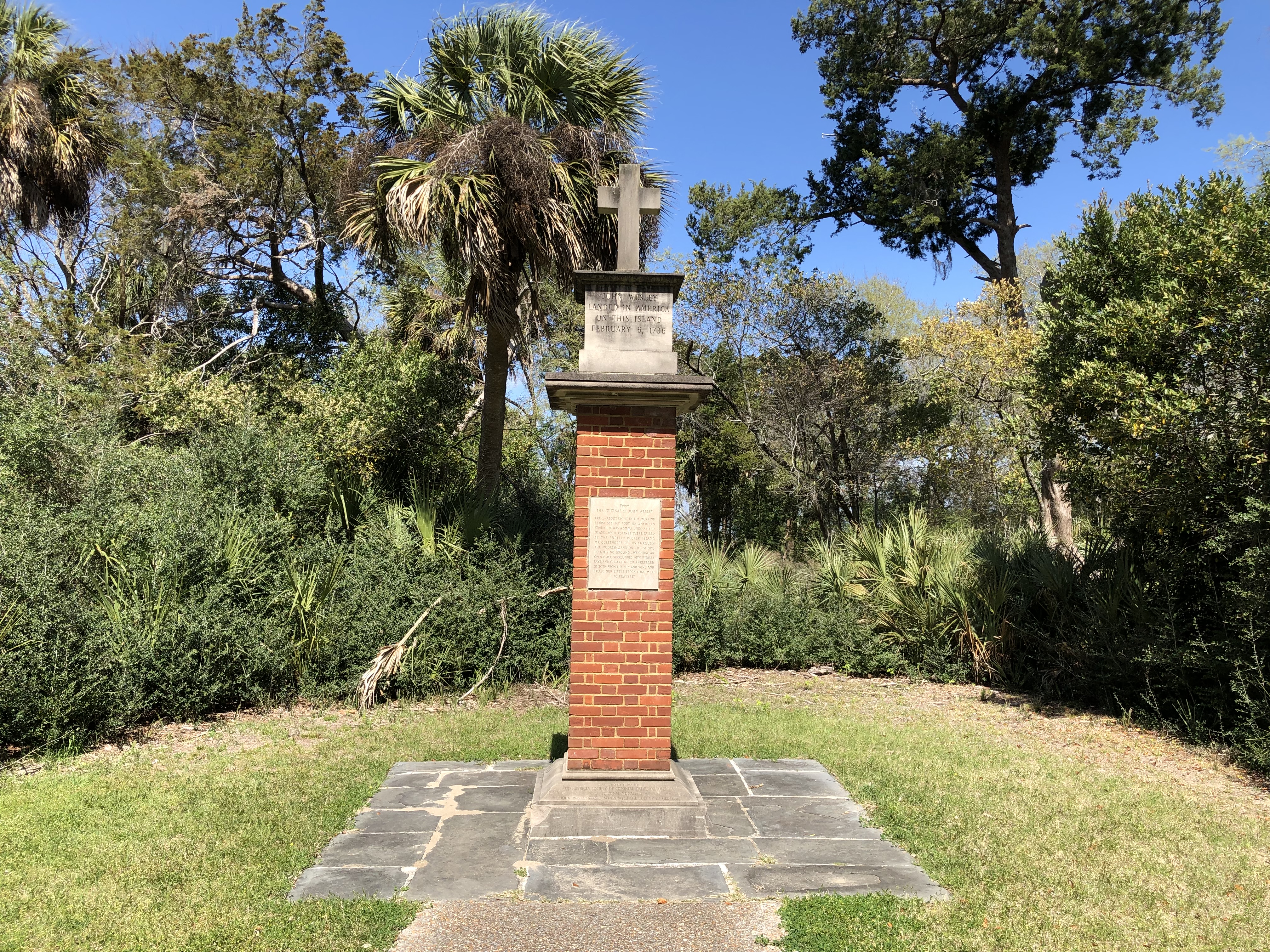
During our visit to Fort Pulaski NM the next day, we encountered the John Wesley Memorial.Wesley Memorial, Georgia
The memorial says (among other things): John Wesley landed in America on this island, February 6, 1736. He was still an Anglican priest at the time.

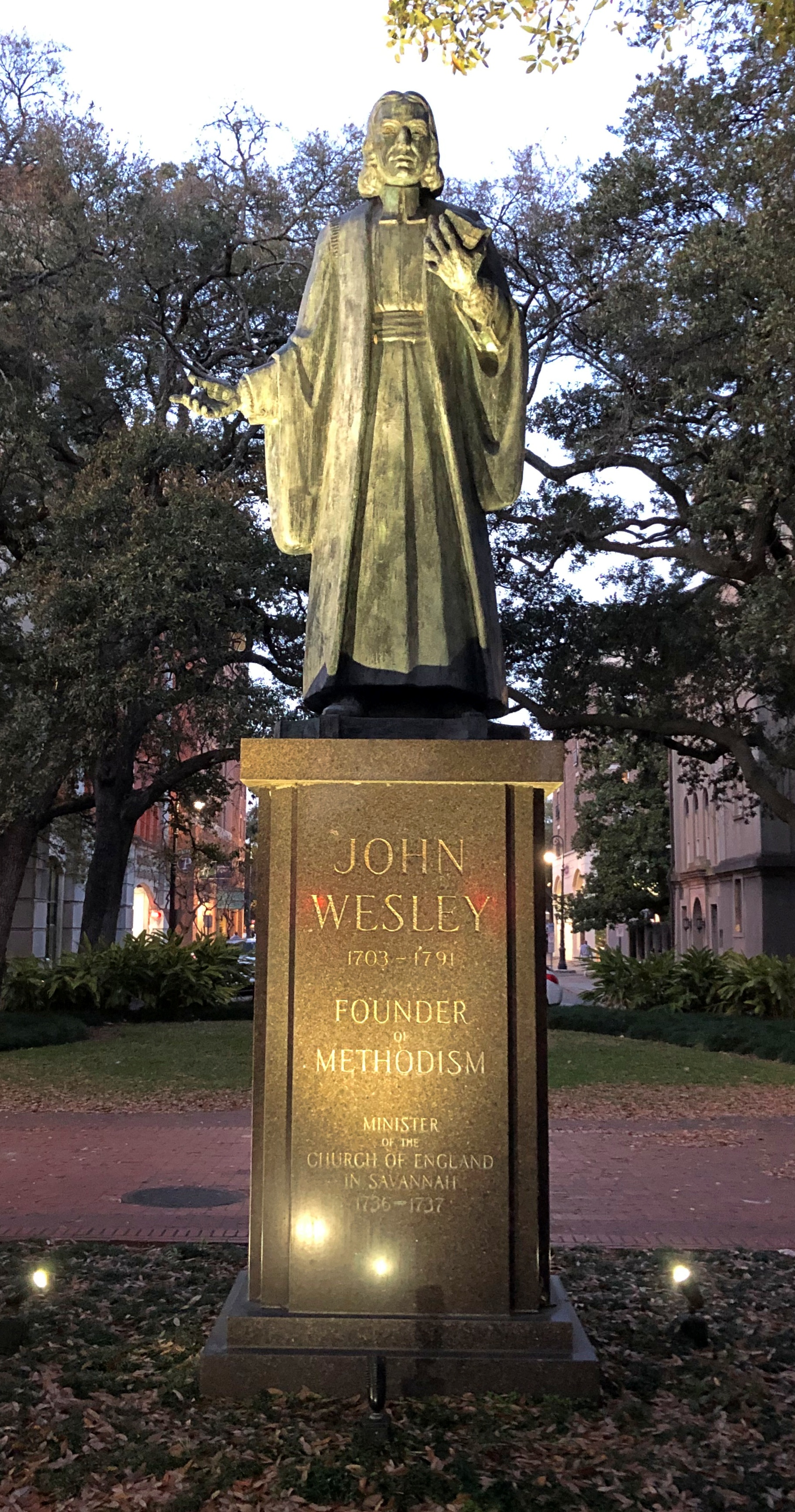
That evening at dusk, we strolled into Savannah’s Reynolds Square, and there he stood.Wesley Memorial, Georgia

The pilgrimage wasn’t planned. I don’t belong to that denomination, though of course I know that in earlier days, they ran with a pretty rough crowd.

St. Andrew Ukrainian Orthodox Cathedral & The Holodomor Memorial (Again)

A few years ago, I visited St. Andrew Ukrainian Orthodox Cathedral (of the Kyiv Patriarchate in the USA and Canada) in Bloomingdale, a suburb not far from us. The church was closed, but I was able to look at a number of things on the grounds, including the Holodomor Memorial. Seems like a good time to post more of those images.

The church exterior.St. Andrew Ukrainian Orthodox Cathedral

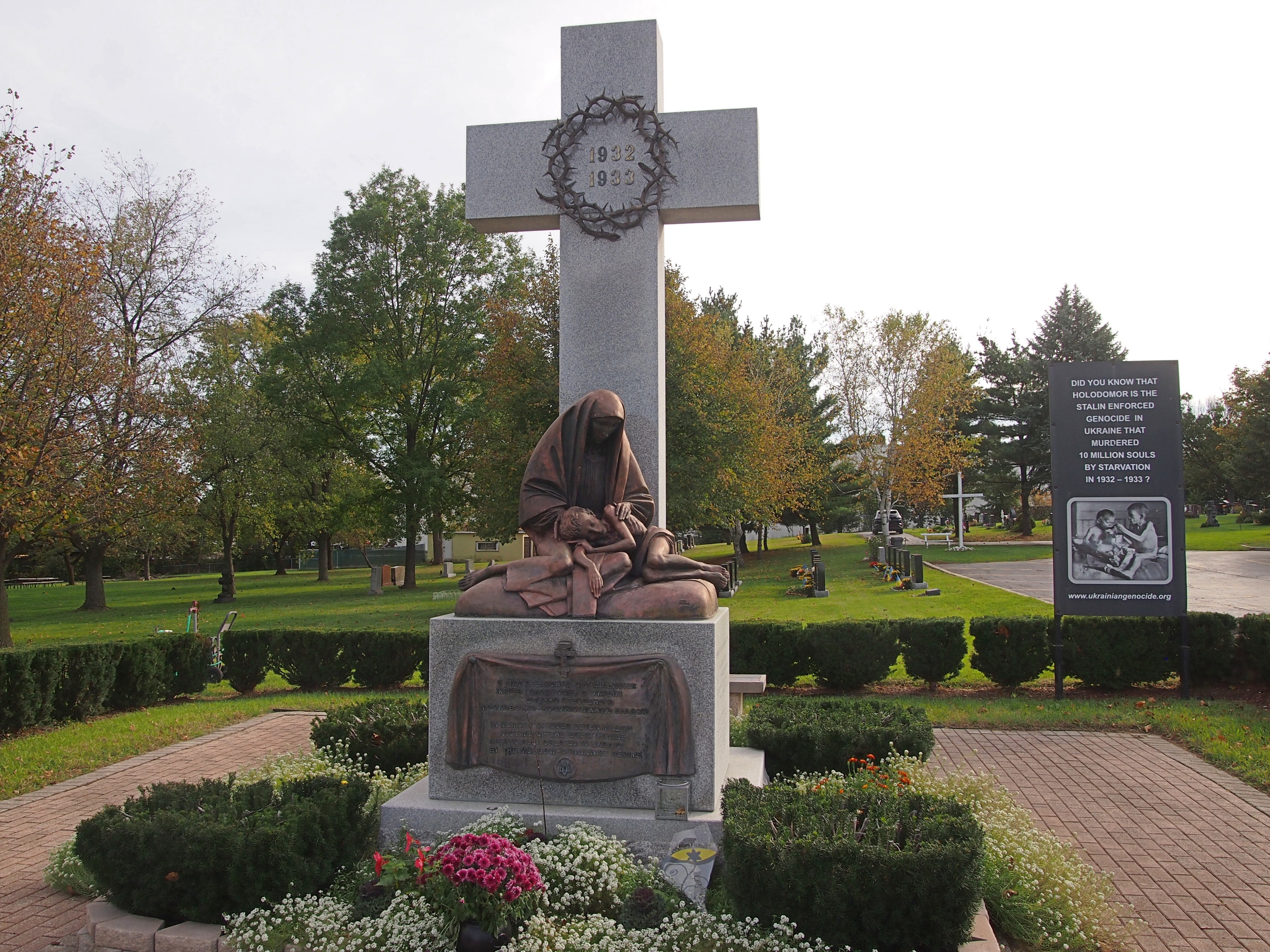
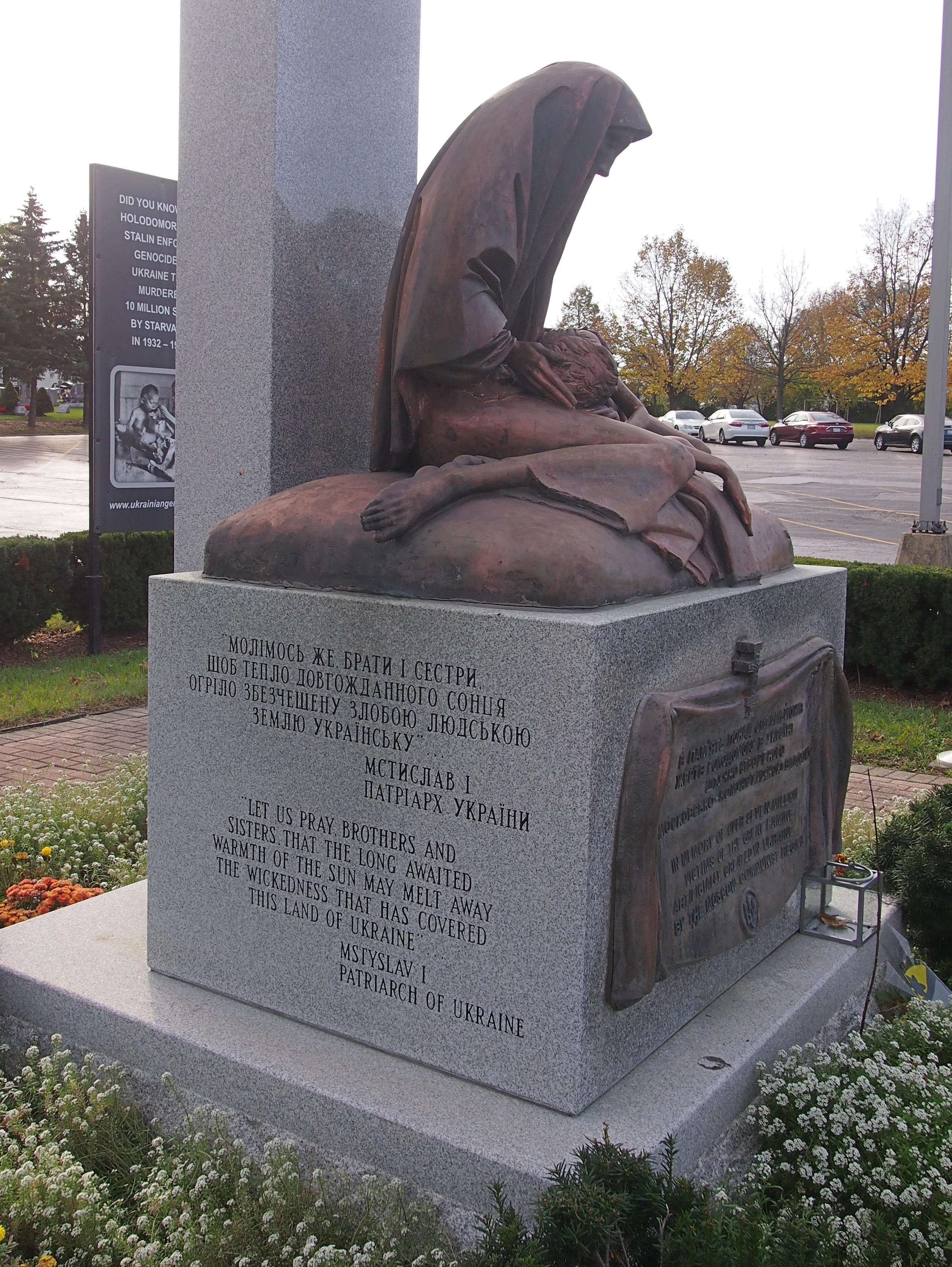
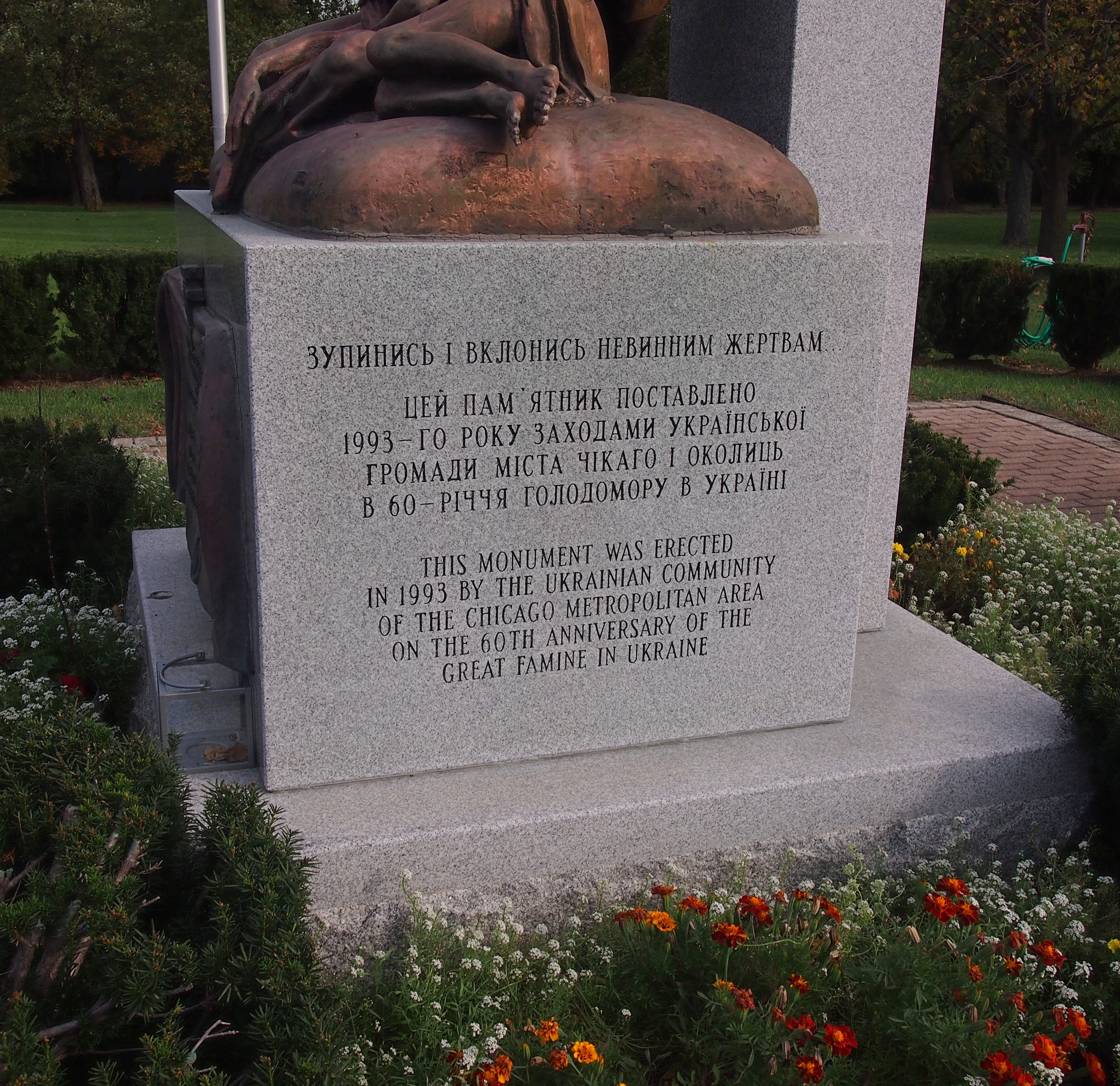
The Holodomor Memorial.Holodomor Memorial Holodomor Memorial Holodomor Memorial

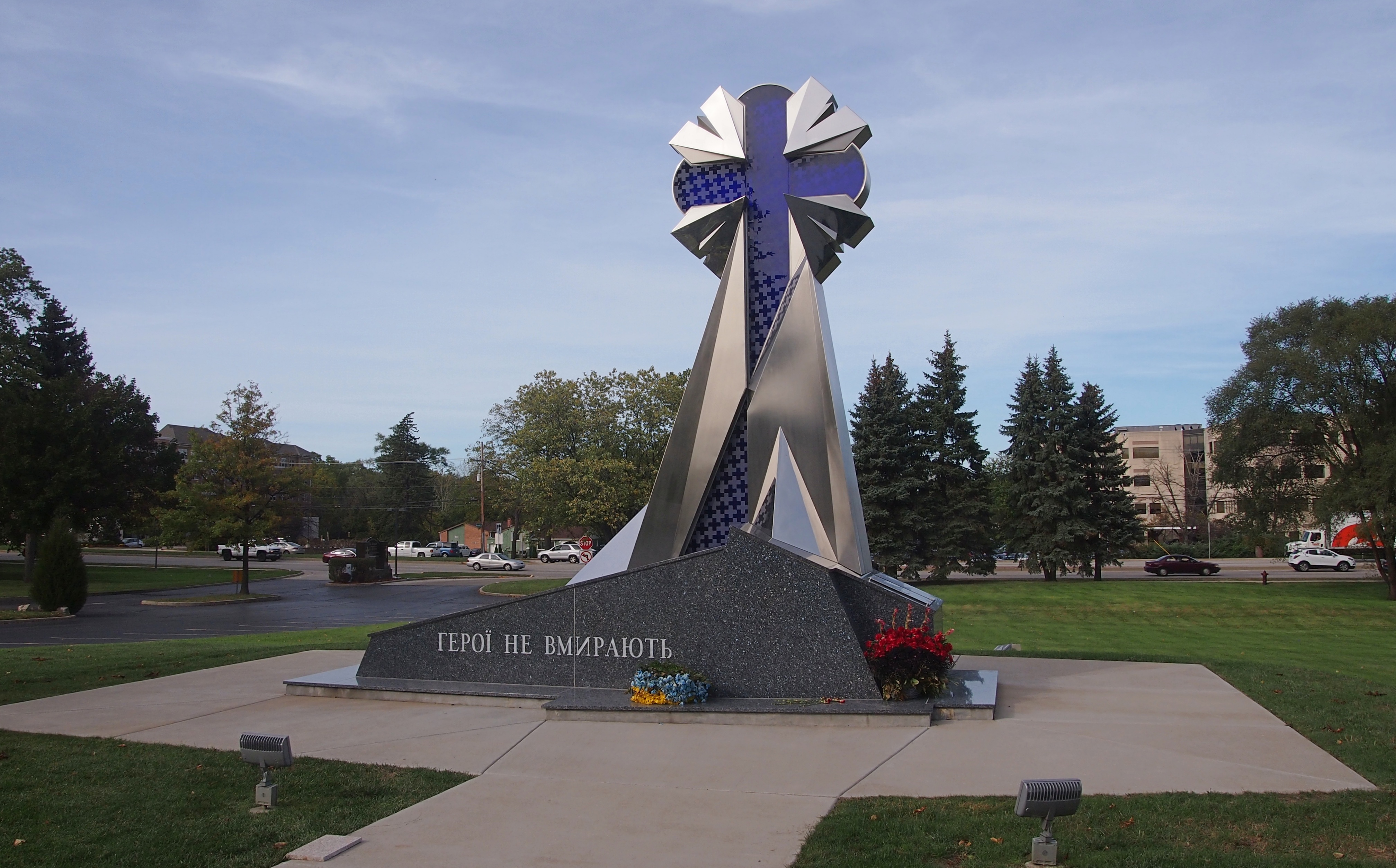
It was dedicated in 1993, on the occasion of the 60th anniversary of Stalin’s famine. Nearby is a newer memorial.Heaven's Brigade memorial Heaven's Brigade memorial

“This monument is dedicated to ‘Heaven’s Brigade’ and all heroes of Ukraine who sacrificed their lives for a free and independent Ukraine,” explains a plaque on this memorial, which was dedicated in 2015, the year after the Revolution of Dignity.

Charlotte 2017

Has it been five years since I visited Charleston? It has. Seems like an age ago, but so does everything before about two years ago. Still, it was a good trip, and it reminds me that I ought visit that part of the country again.

To facilitate my visit to Charleston, I flew in and out of Charlotte, driving from there. That was another place I’d never been but, interestingly, had been writing about as a real estate market for a few years at that point (I don’t any more).

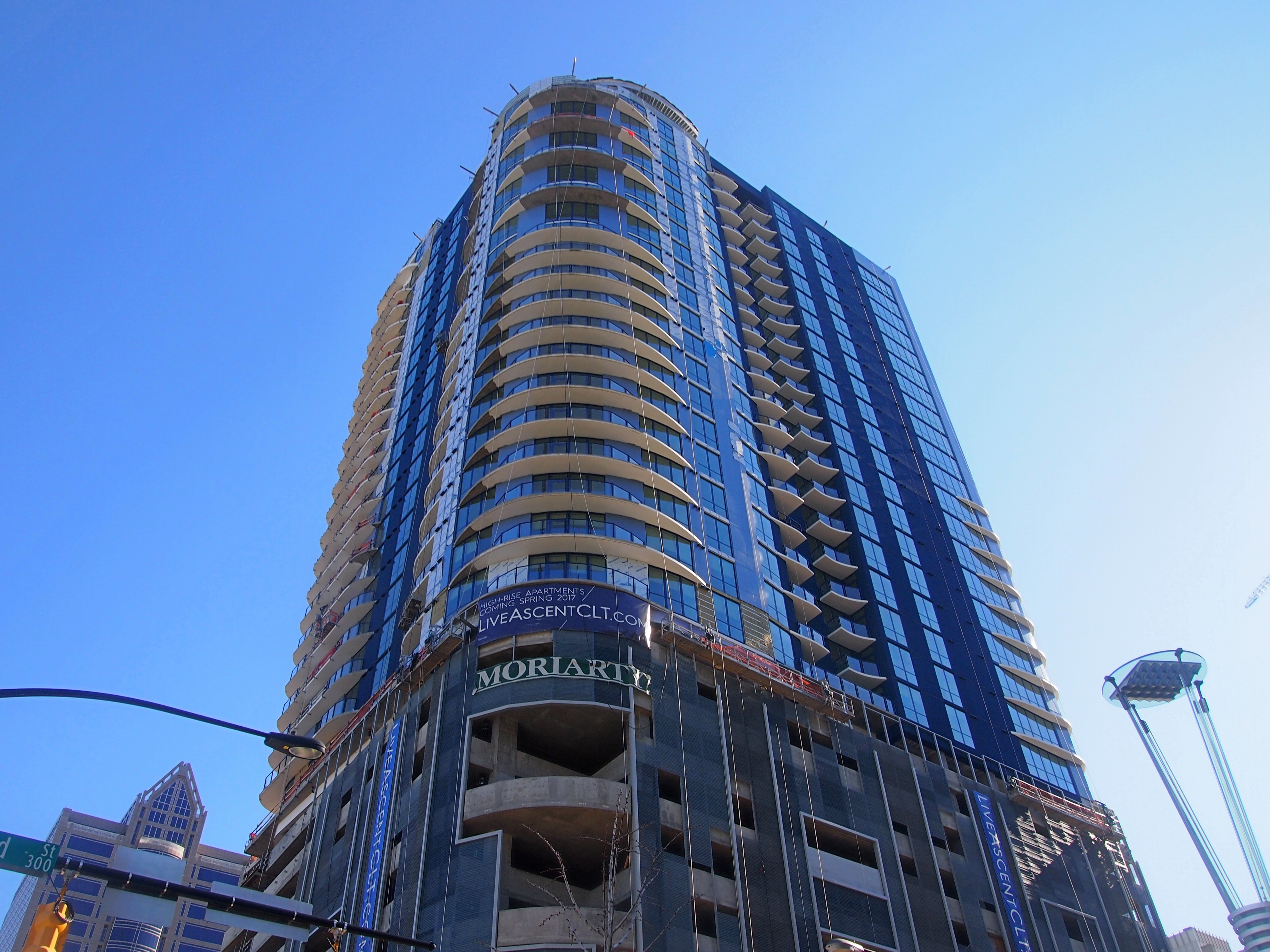
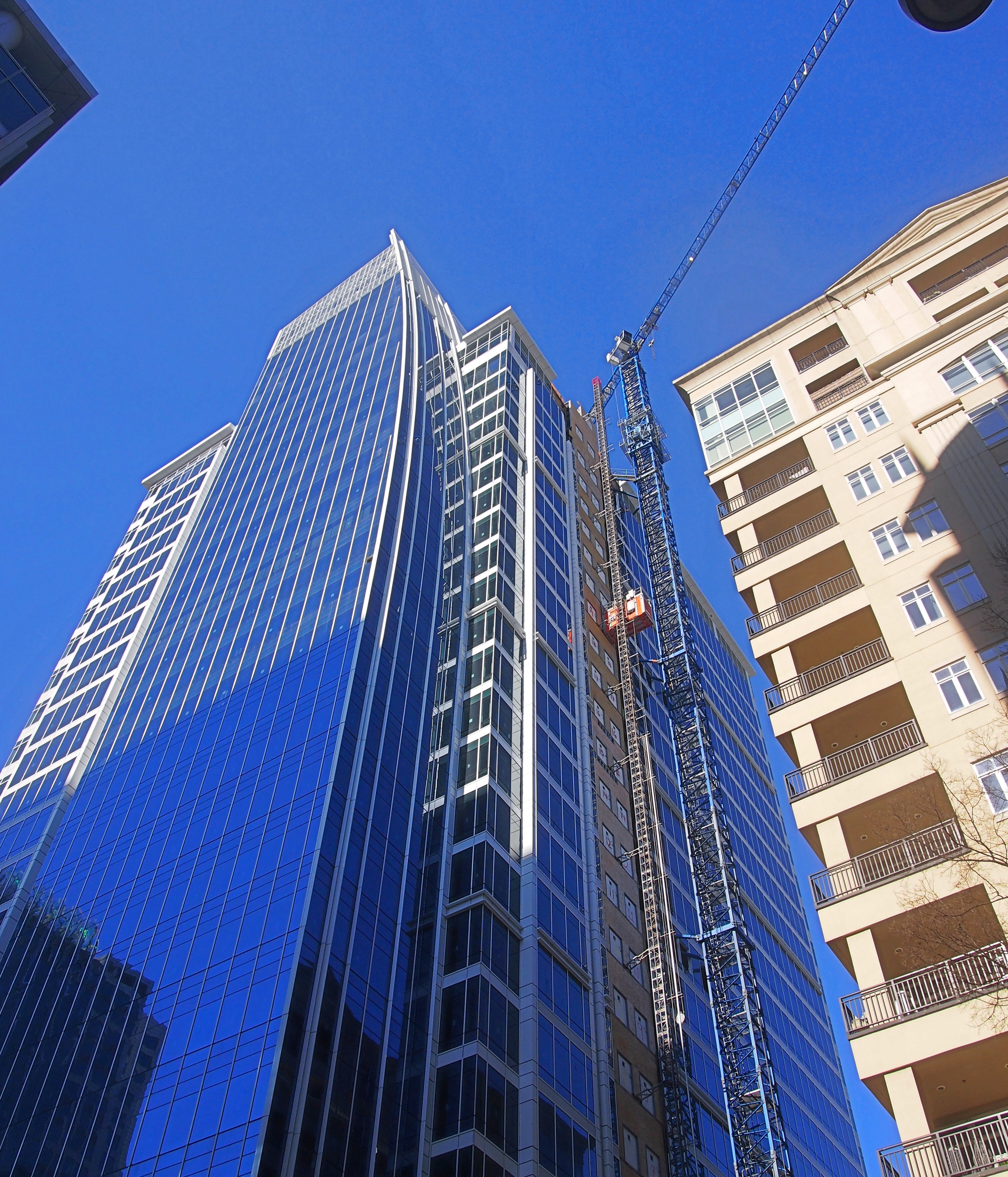
I was able to spend a few hours looking around downtown Charlotte, which is actually known as Uptown Charlotte. It was a hopping real estate market at the time, with a lot of construction.Charlotte 2017
Charlotte 2017

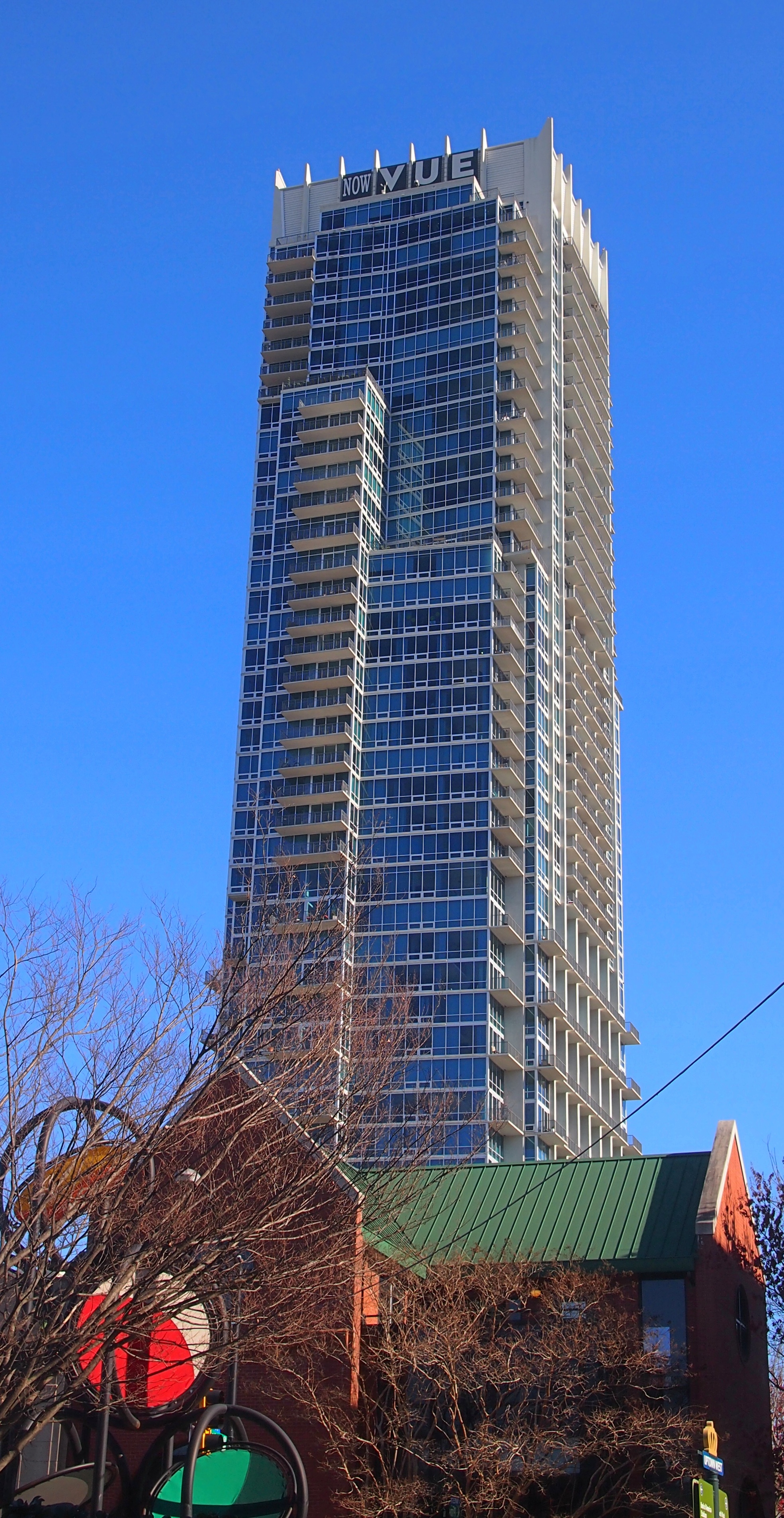
Along with fairly recent developments, such as this apartment tower (VUE, completed in 2010).Charlotte 2017

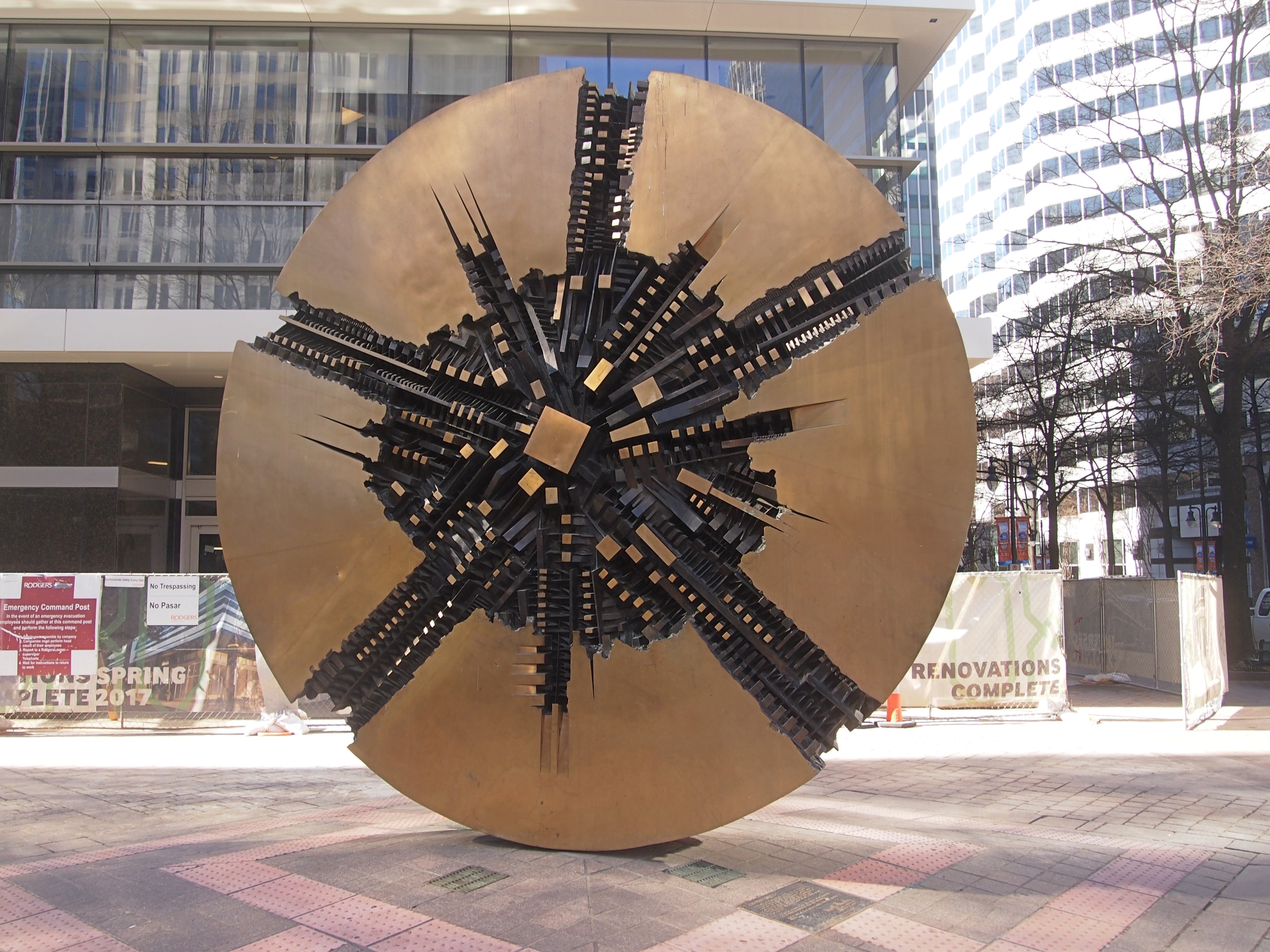
I also spotted some Uptown Charlotte artwork, such as “Grande Disco” (1974) by Arnaldo Pomodoro, a Milanese sculptor who’s still alive, at last report, at 95.Charlotte 2017

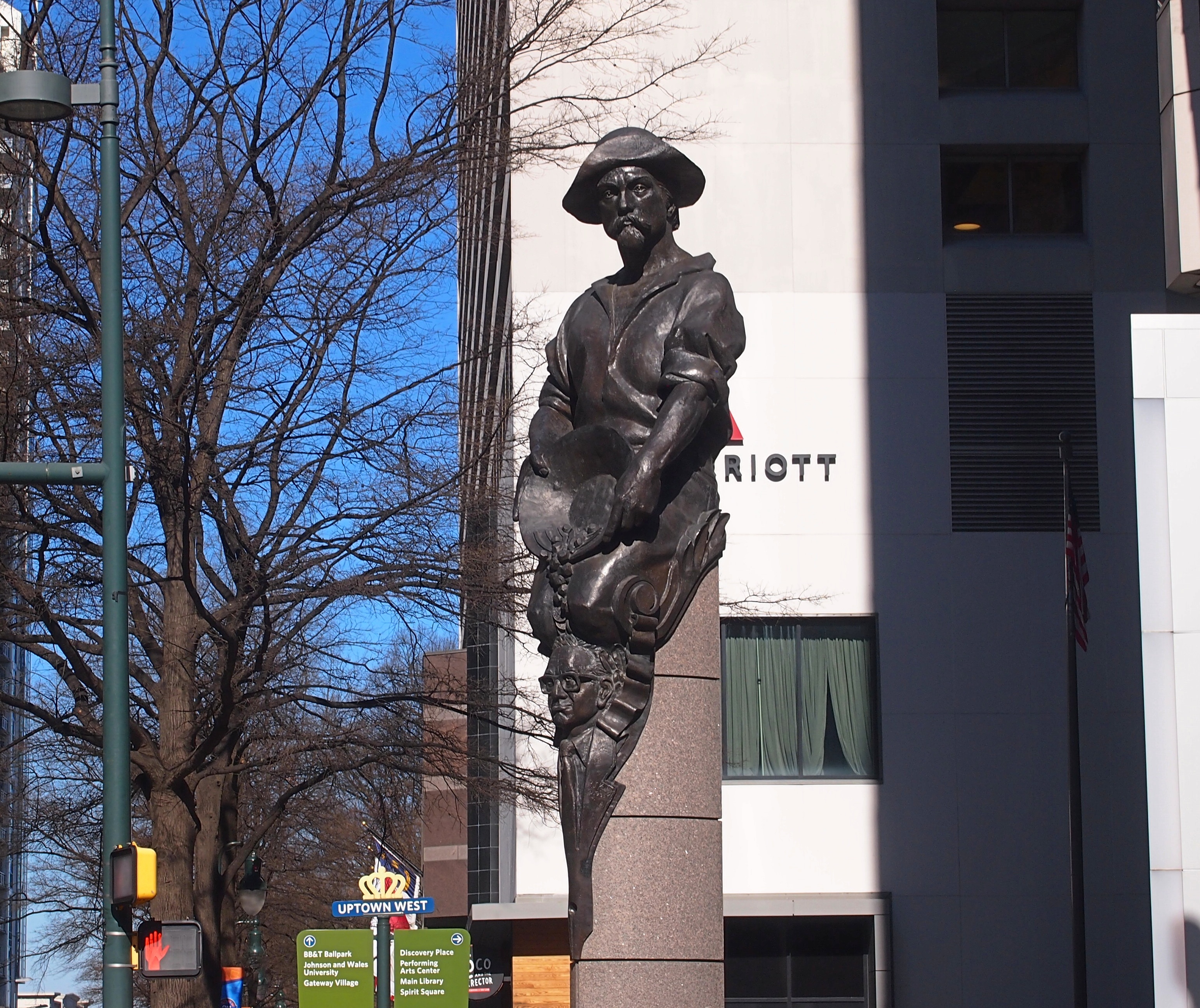
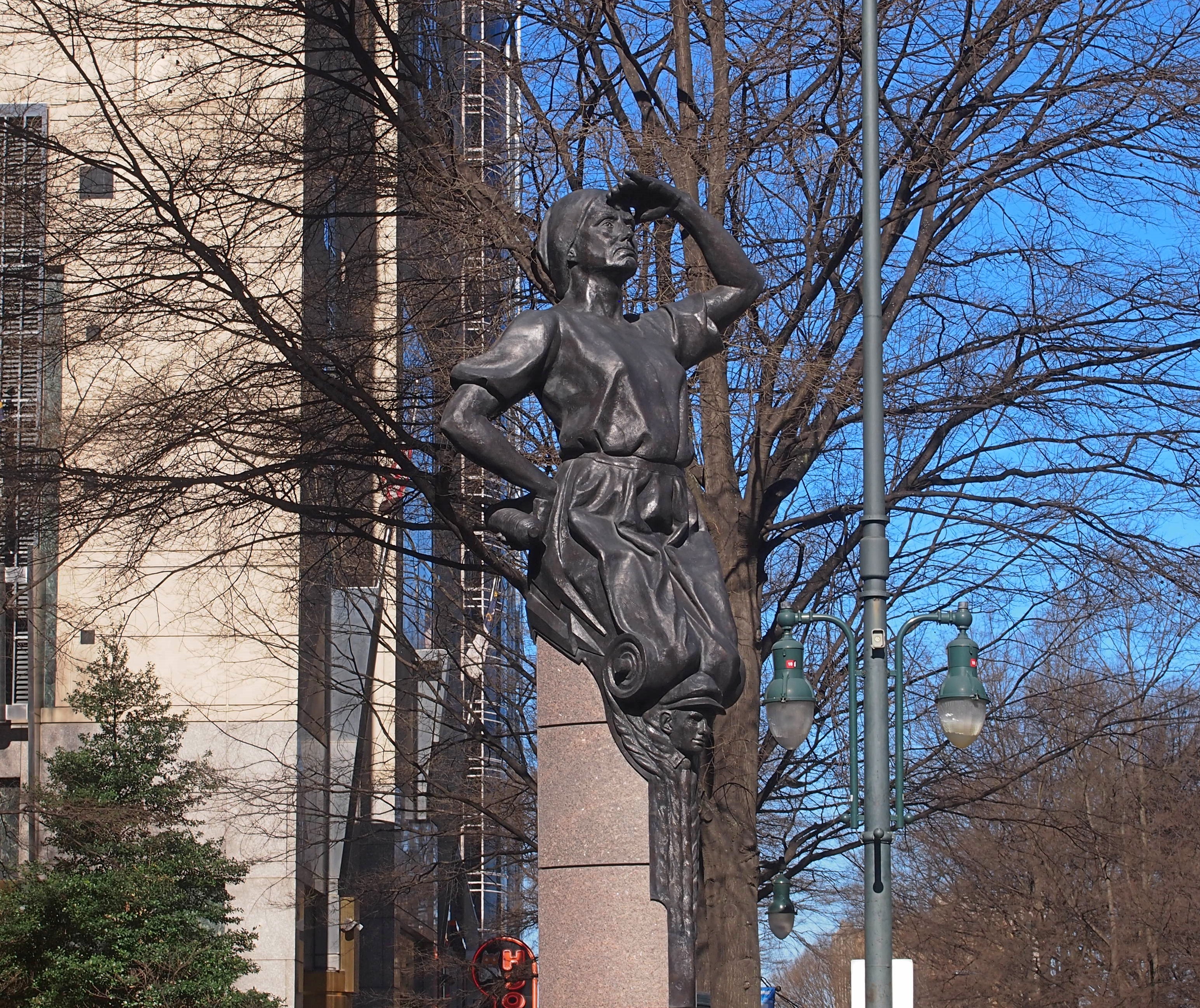
It’s in a plaza near the intersection of Tryon and Trade streets. At the four street corners of that intersection are four sculptures — allegories representing Commerce, Industry, Transportation, and The Future, by Raymond Kaskey.

I only have presentable pictures of two of them. Apparently this is Commerce, which was kicked off in the area in the 1830s when gold was discovered.
Charlotte 2017

For Industry, a woman wearing textiles. Because that was an early industry in the region. More about the sculptures is at an article published by WCNC the same year I visited.Charlotte 2017

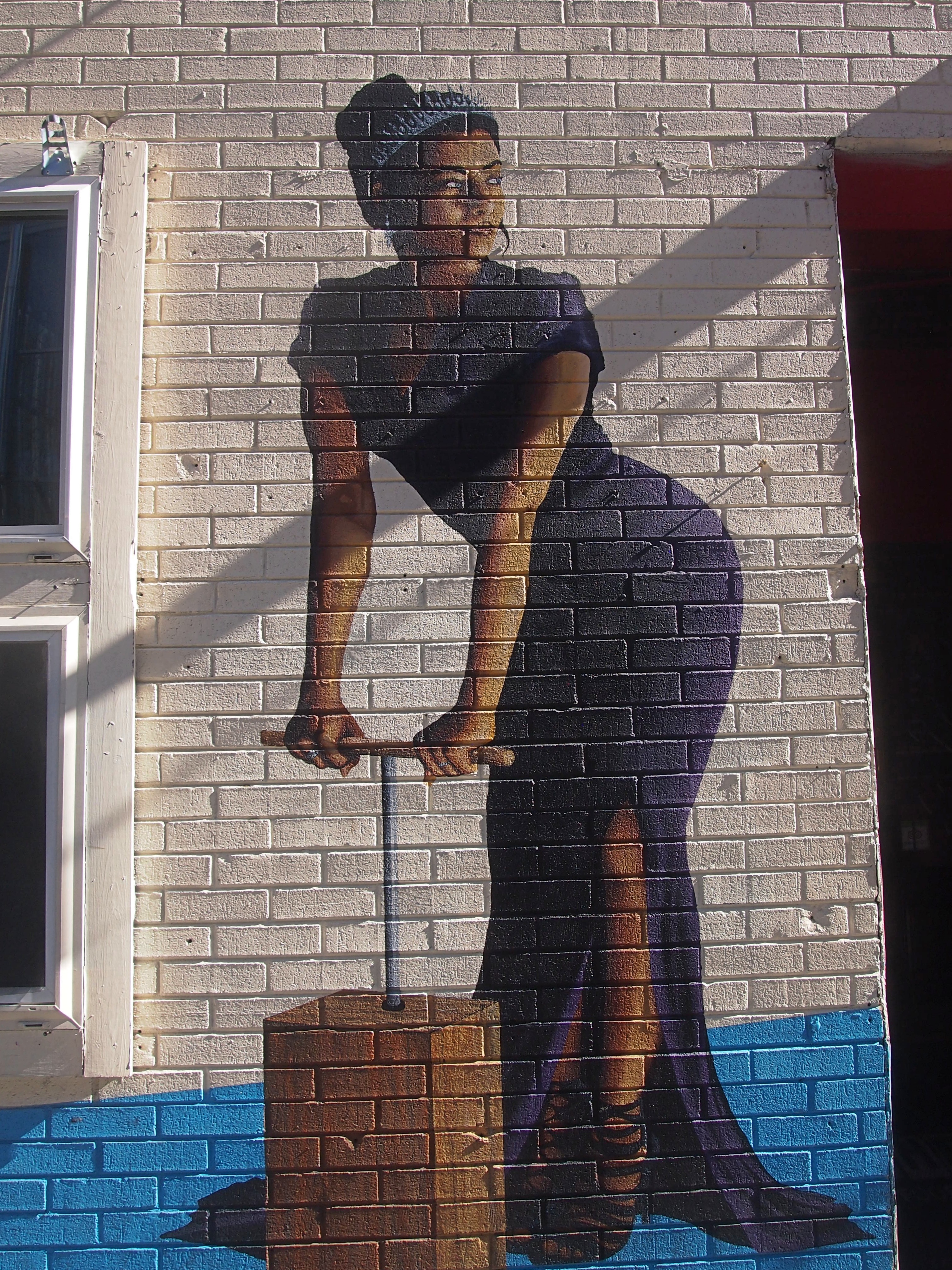
I can’t track down this memorable image, and I didn’t take notes, but it was on a brick wall not too far from Tryon St. Maybe it’s gone now.Charlotte 2017

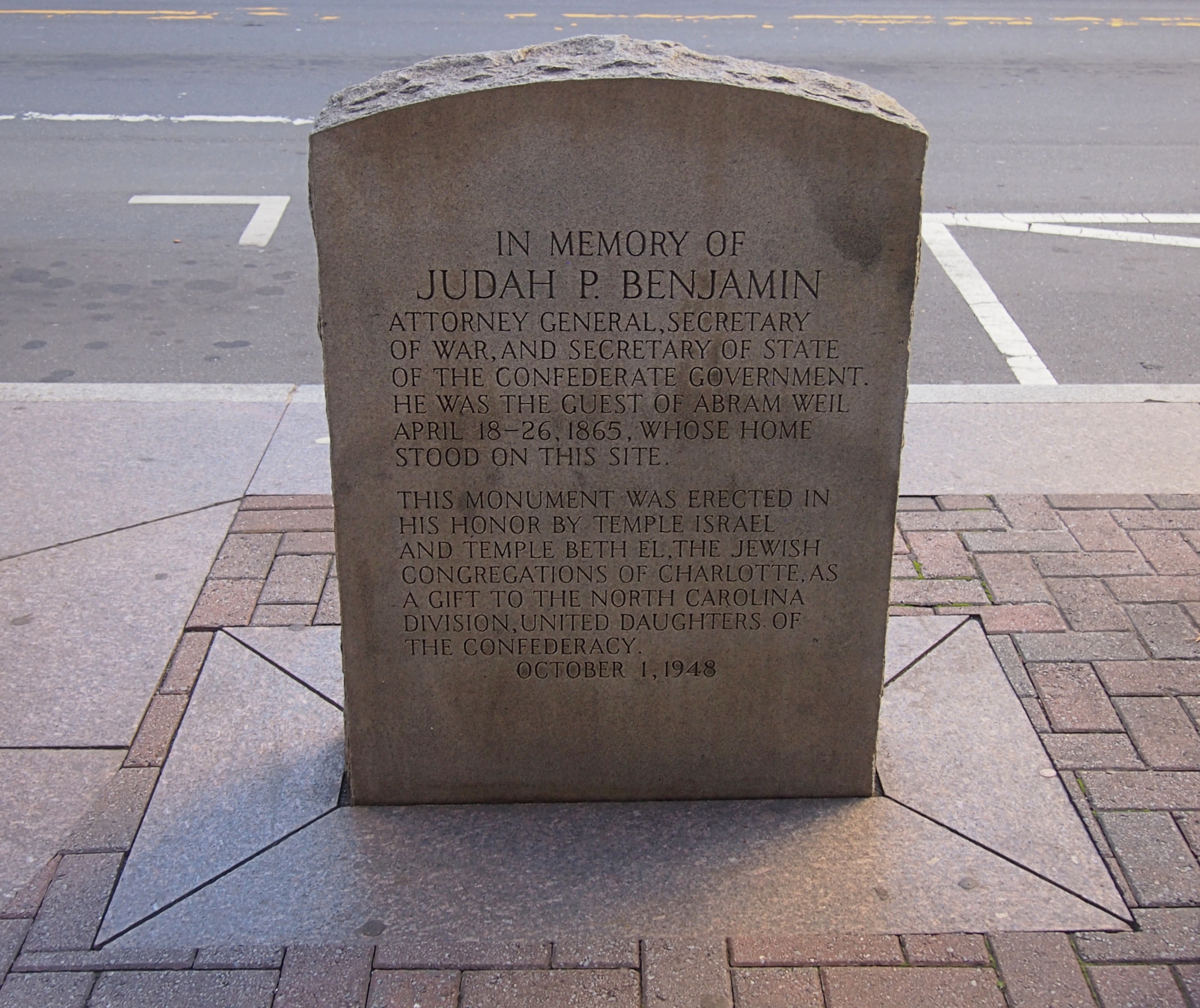
Something that’s definitely not on Tryon St. any more, but it was when I wandered by in 2017: a memorial to Judah Benjamin.Charlotte 2017

“Though Benjamin had no connection to Charlotte — his only tie was a week he spent hiding there after the end of the Civil War — the United Daughters of the Confederacy presented the granite monument to the city [in 1948], choosing the spot of his supposed few days in hiding,” Smithsonian magazine says.

It was a dowdy thing, and I feel certain that the memorial was ignored by almost everyone until the summer of 2020. Then it got some attention.

“Steps away from the monument, a new Black Lives Matter street mural, commissioned by the city, burst into colorful view this summer [2020],” Smithsonian continues. “Around the same time, city workers finally extracted the Benjamin stone after a protestor spray-painted it with ‘BLM’ and took a sharp implement to it, though a spokesman says the city is ‘evaluating how best to preserve’ it.”

February Stroll

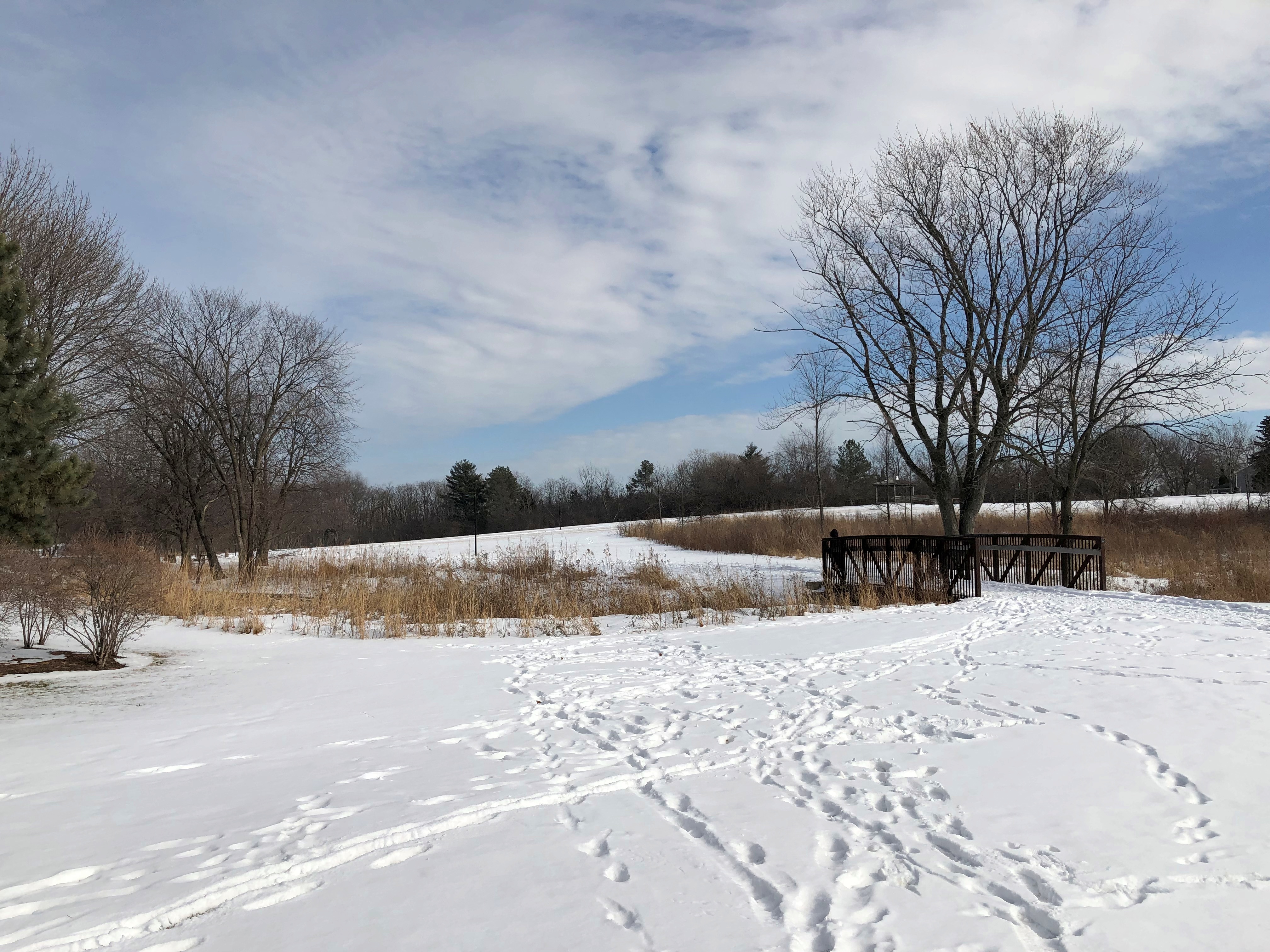
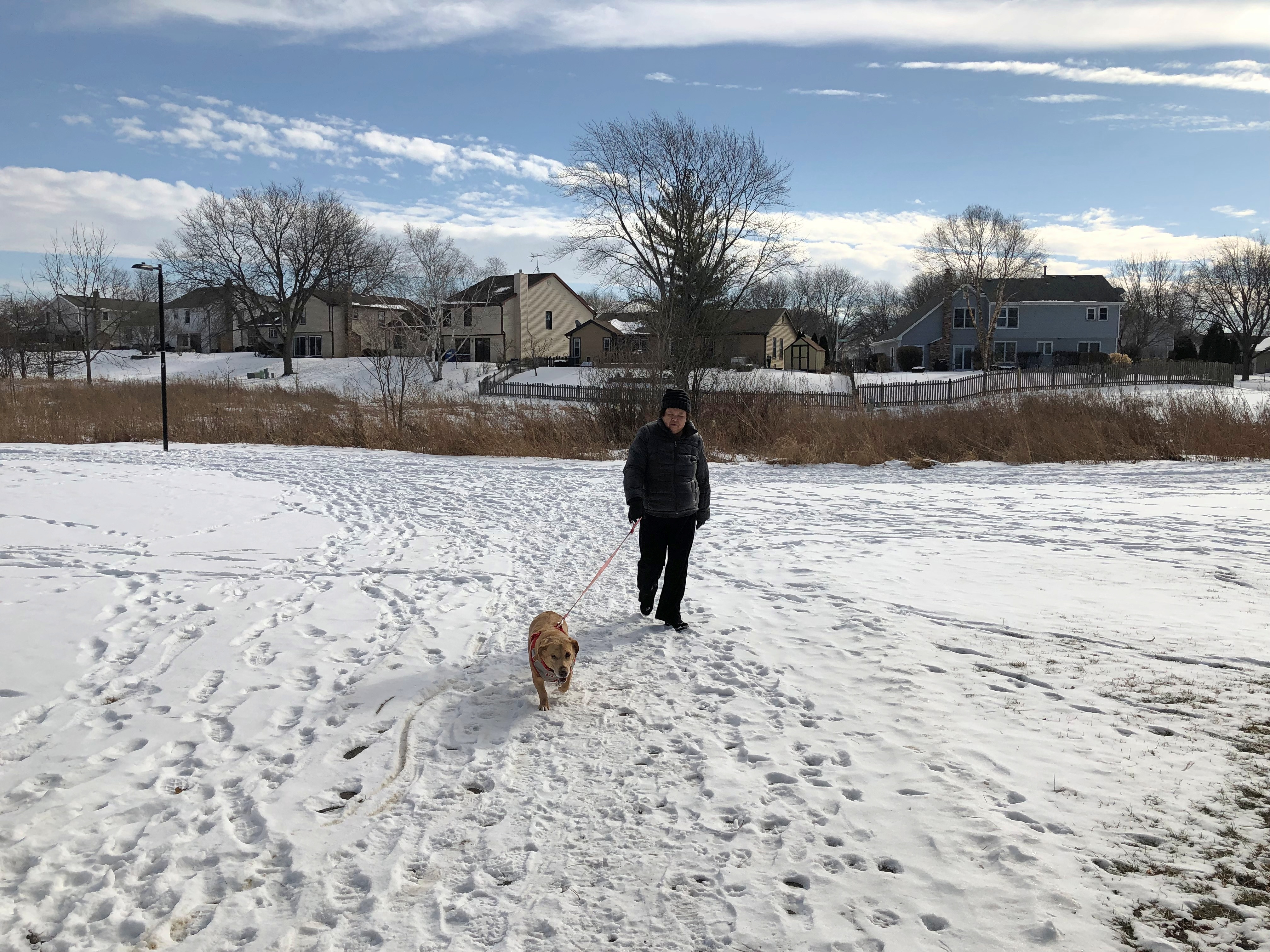
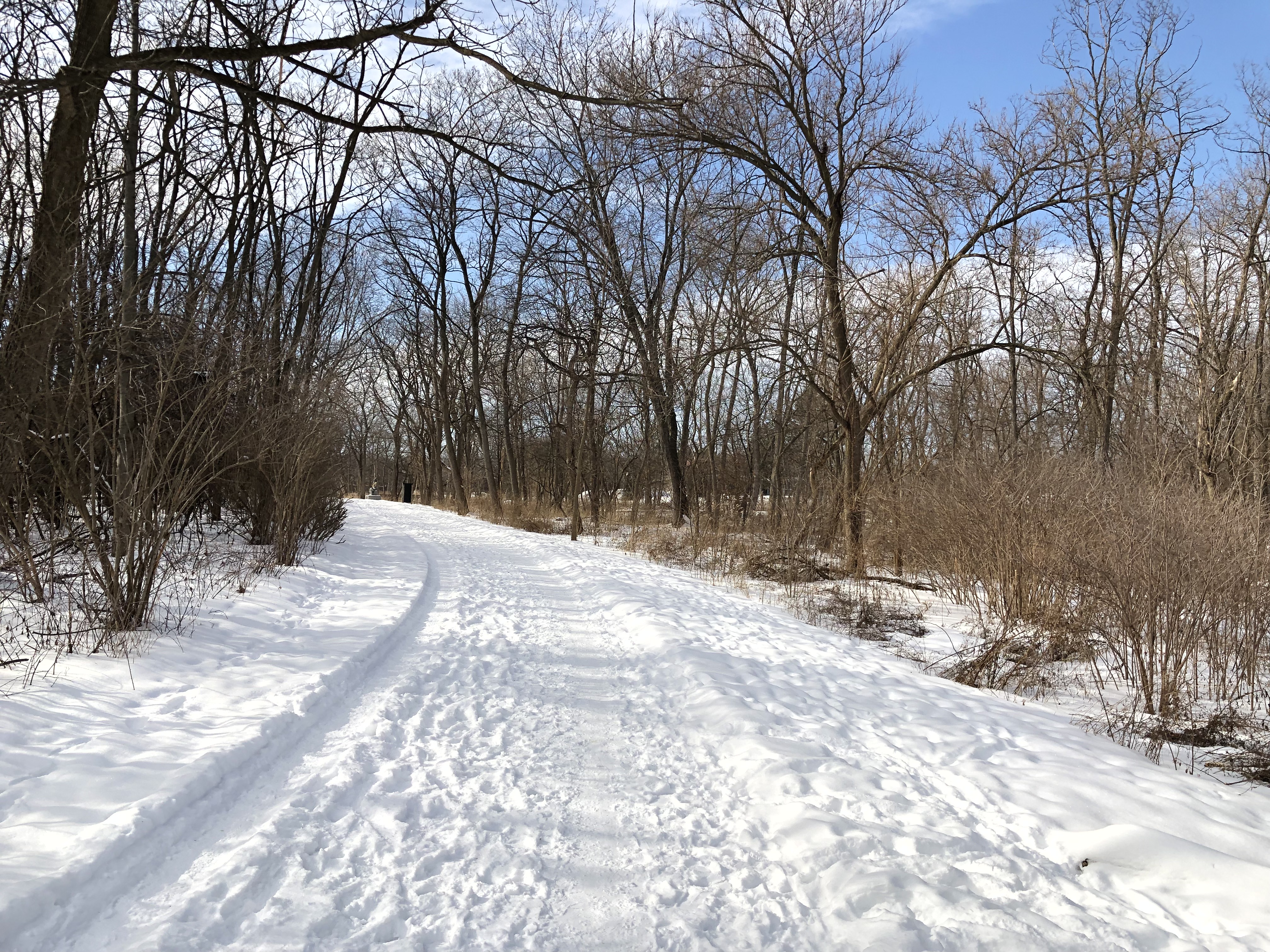
Sunday afternoon temps were just a little below freezing, so the snow cover didn’t melt. There wasn’t much ice underfoot either. We went to the partly trod trail behind the Robert O. Atcher Municipal Center.Chicago Athenaeum International Sculpture Park

Dog included.
Chicago Athenaeum International Sculpture Park

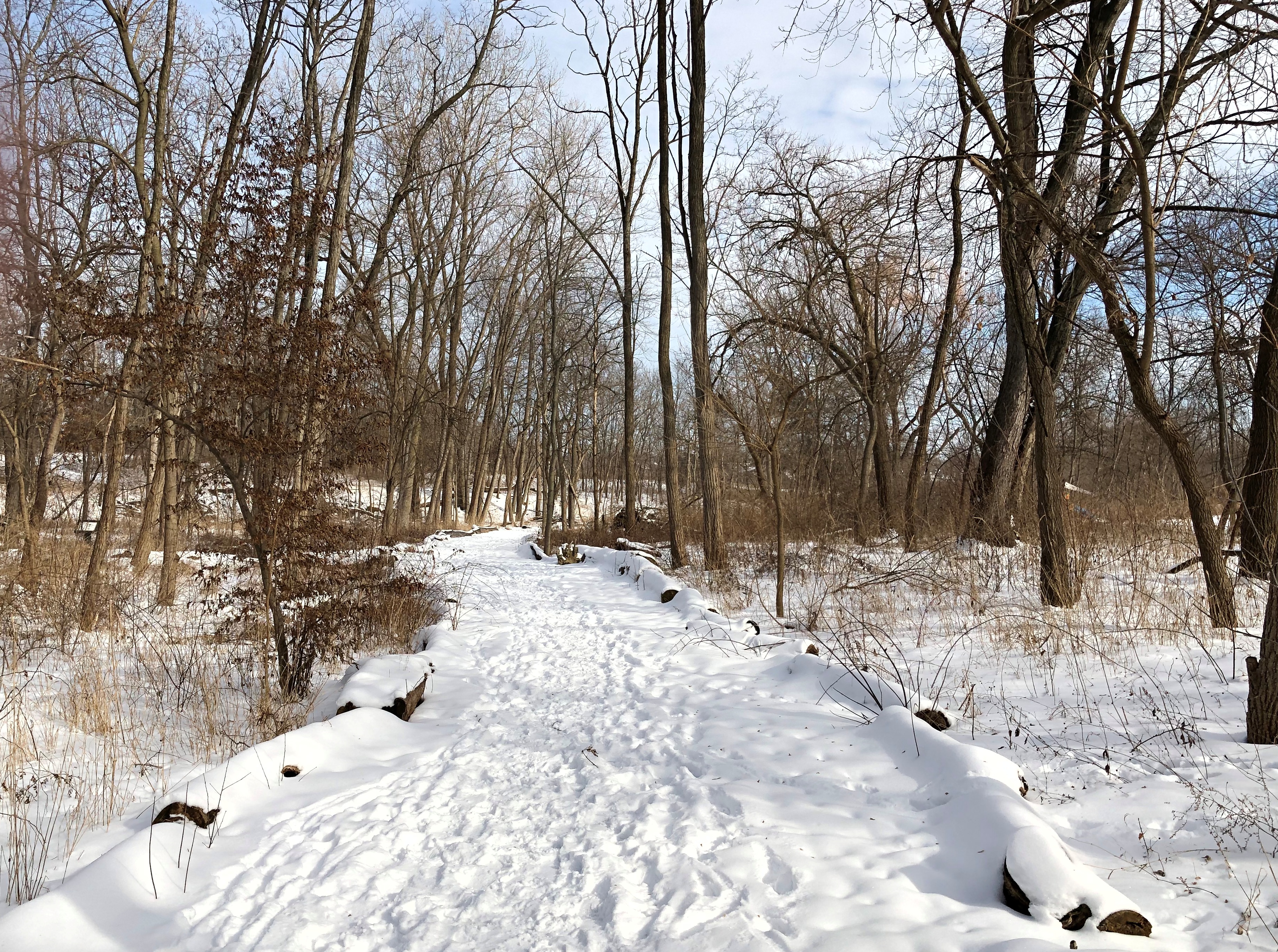
The path runs through an open field to a small patch of wooded land.Chicago Athenaeum International Sculpture Park Chicago Athenaeum International Sculpture Park

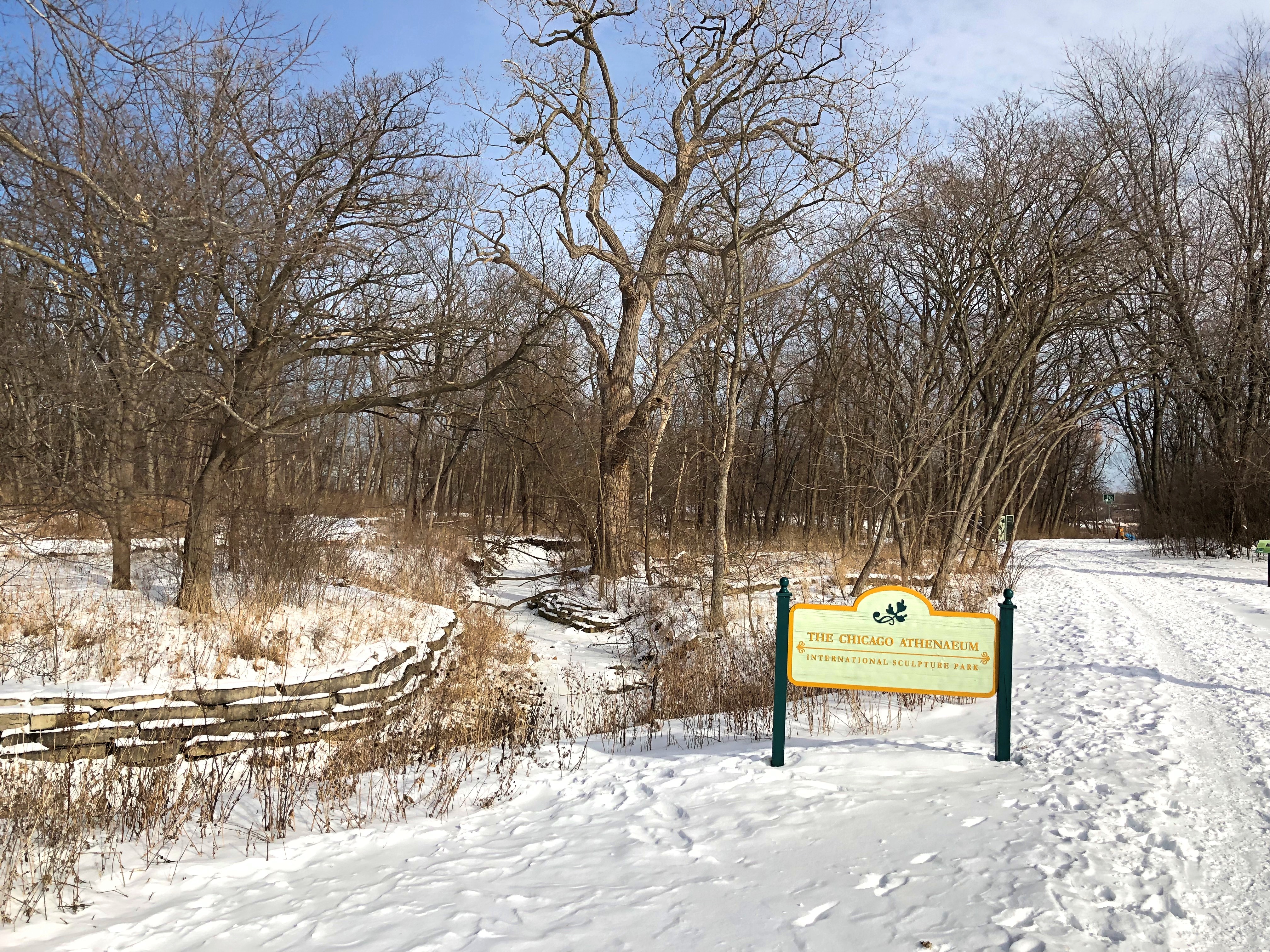
The path also meanders through the Chicago Athenaeum International Sculpture Park, which Google Maps simply calls The Sculpture Park.Chicago Athenaeum International Sculpture Park

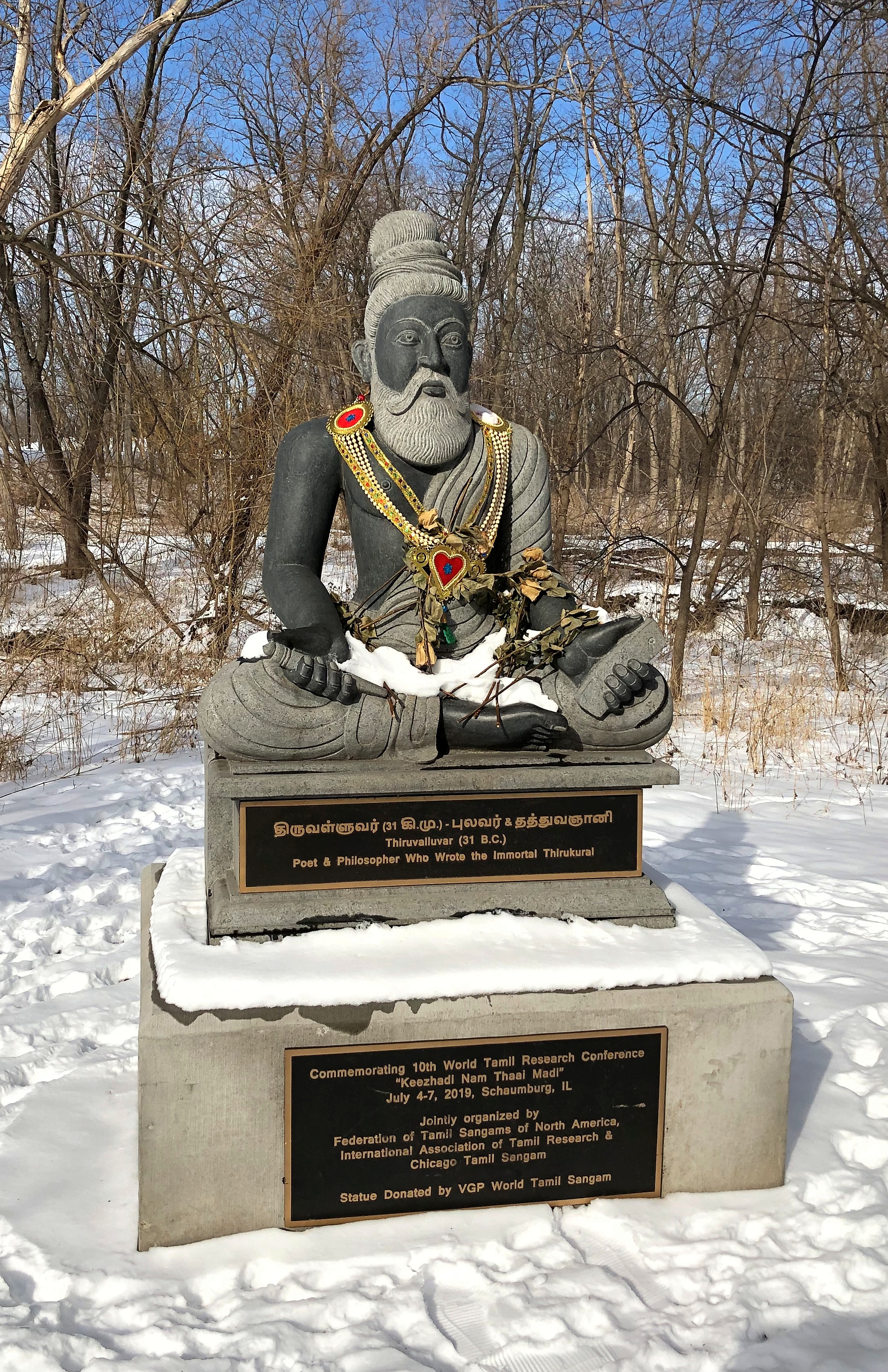
The park’s most recent bit of work, Thiruvalluvar, has been adorned recently.Thiruvalluvar Schaumburg

Not a bad day for a walk, but the conditions that made it so lasted only a few hours. The Romans had a right idea about February: make it the shortest month.

Main Street, Bloomington

Seems like the pit of winter has arrived. That’s not necessarily a time of blizzards or ice storms, though it can be. Mainly the pit is unrelenting cold, and some years the pit is deeper than others — more unrelenting, that is.

So far this year, winter has been bleak-midwinter-ish enough, but not viciously so in my neck of North America. There’s still time enough for northern Illinois winter to turn more vicious, of course.

Ann returned to ISU on Sunday, facilitated by me driving her there. It’s a task I don’t mind at all. We had a good conversation en route and listened to music we both like. I won’t go into the details of that right now, but there is a Venn diagram that includes some intersection. Larger than one might think.

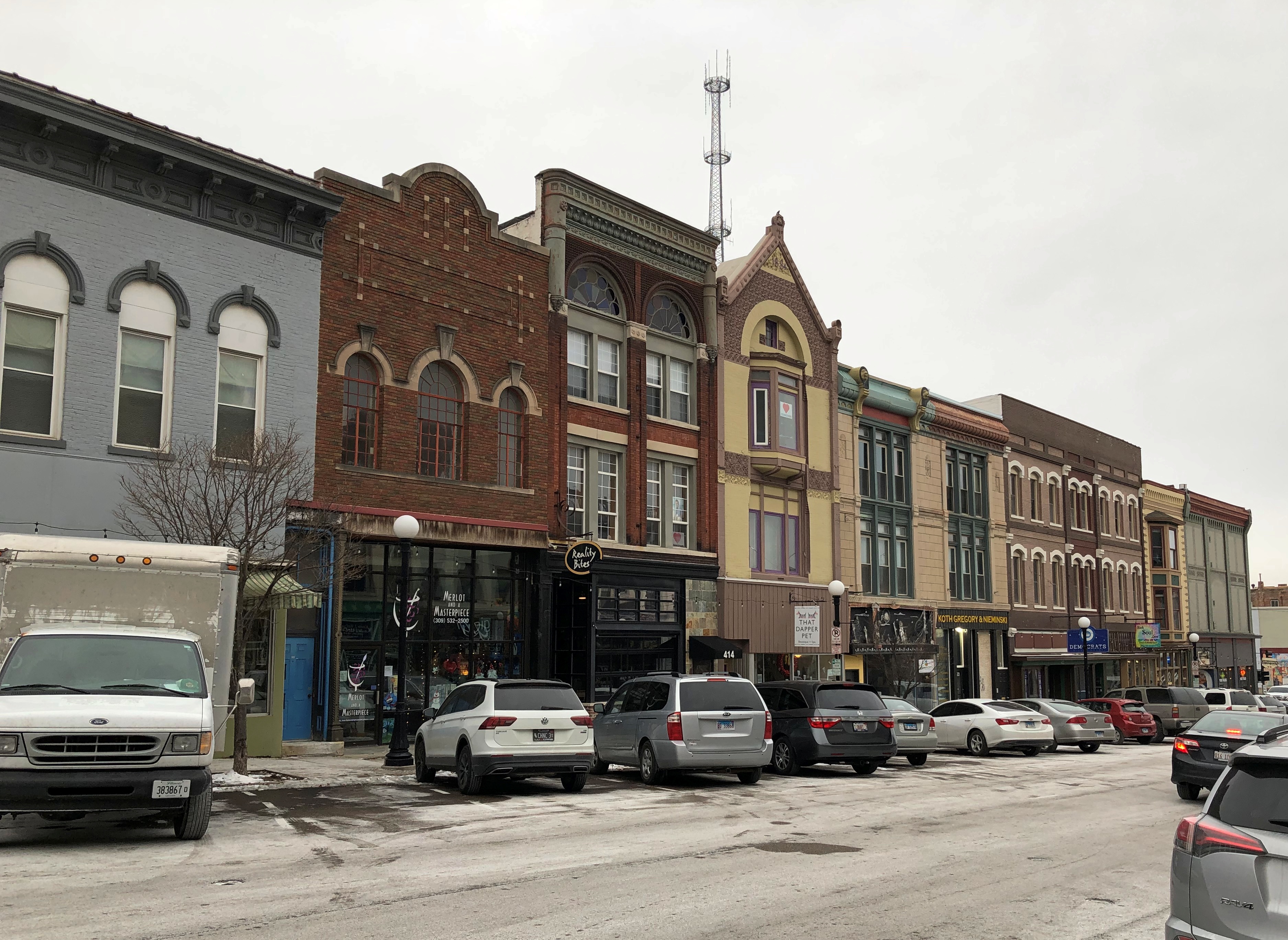
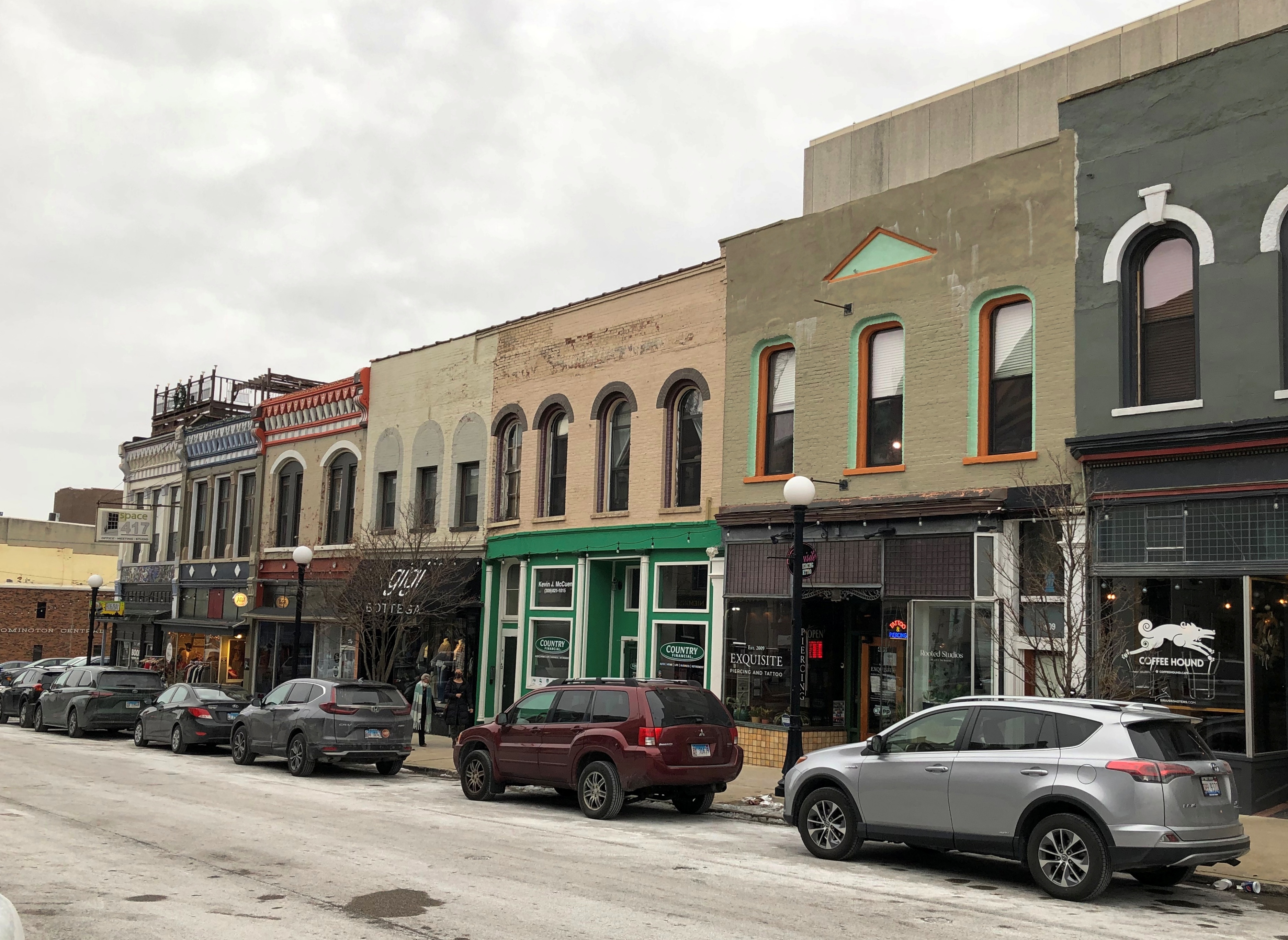
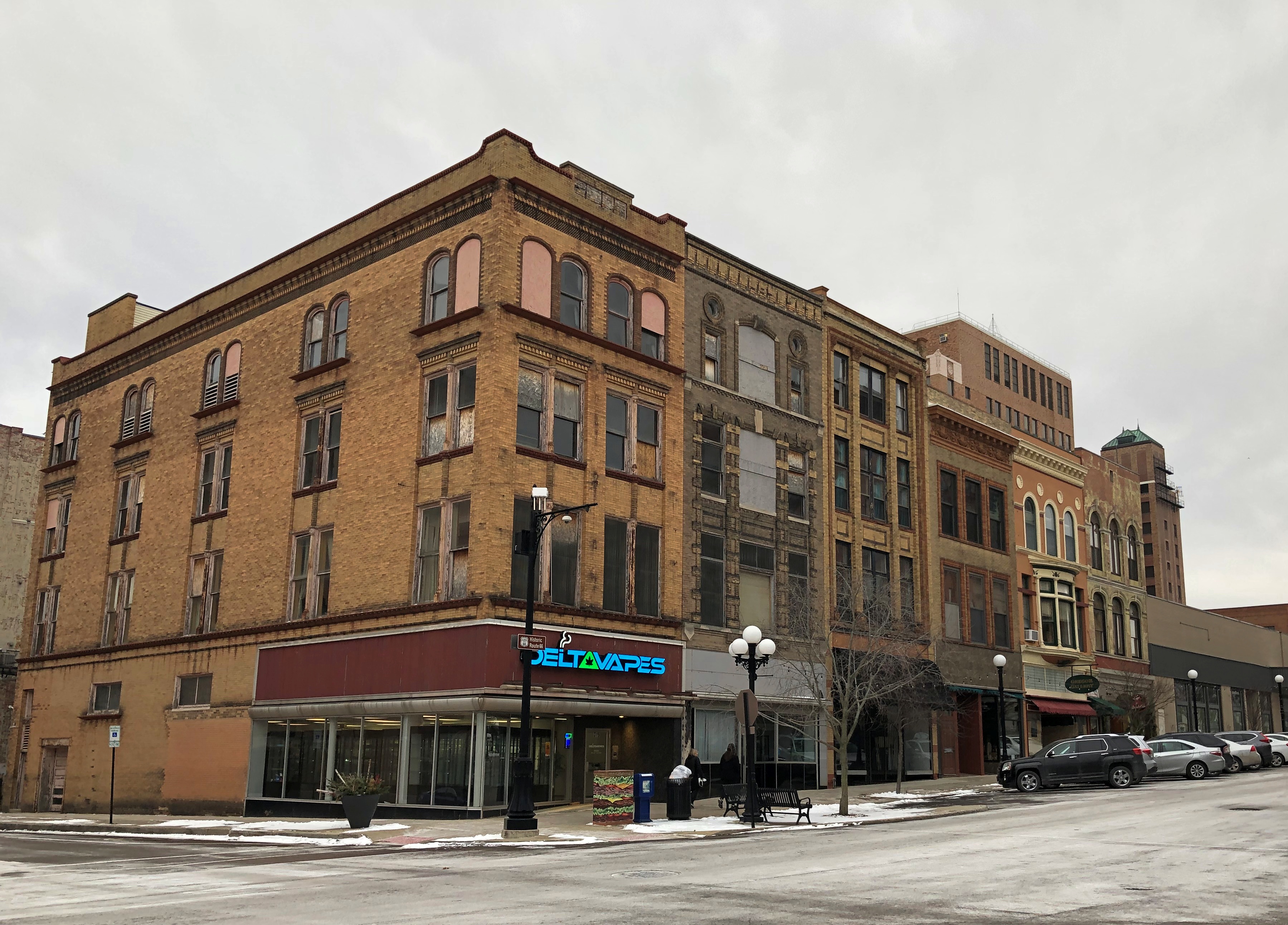
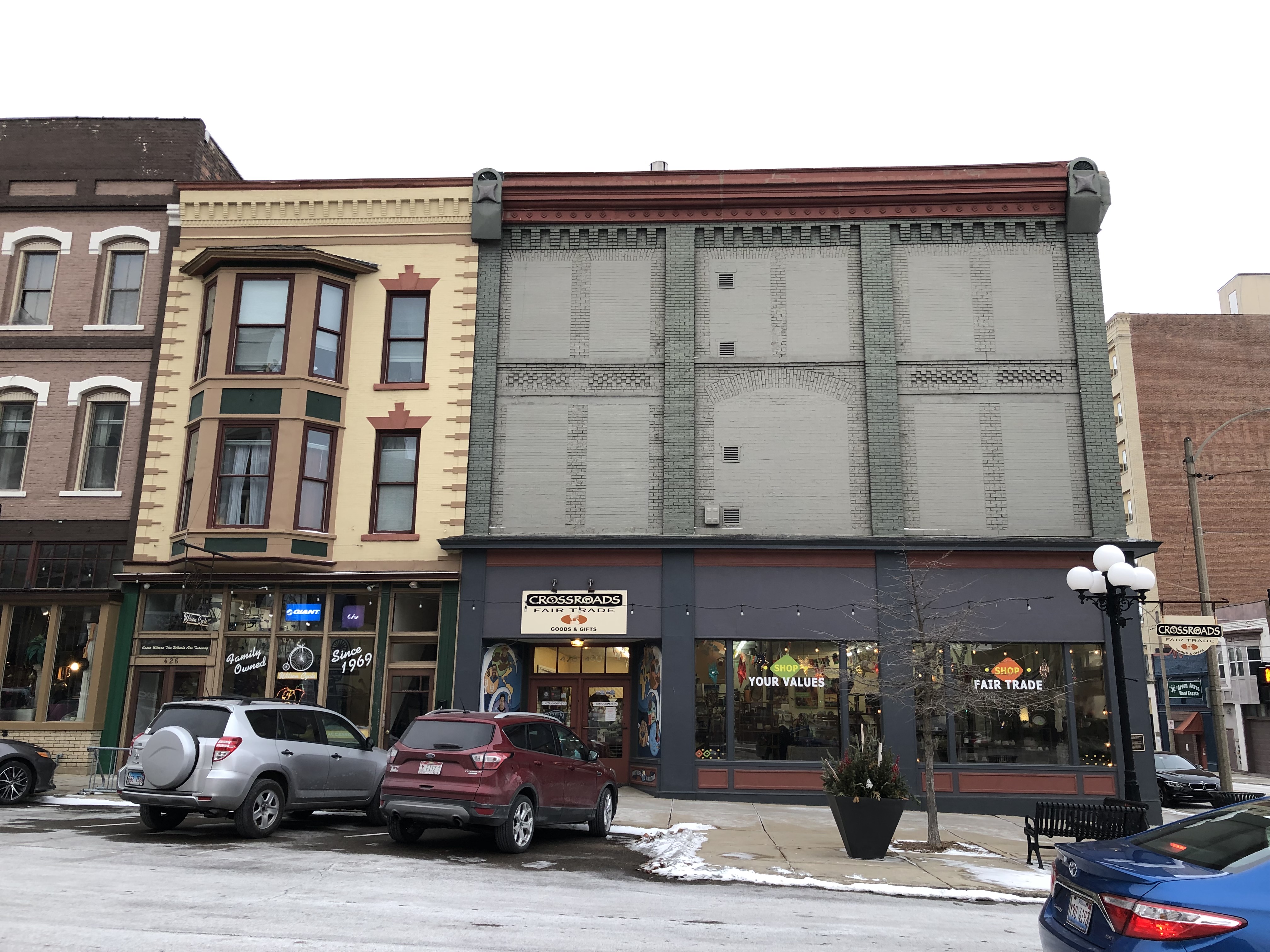
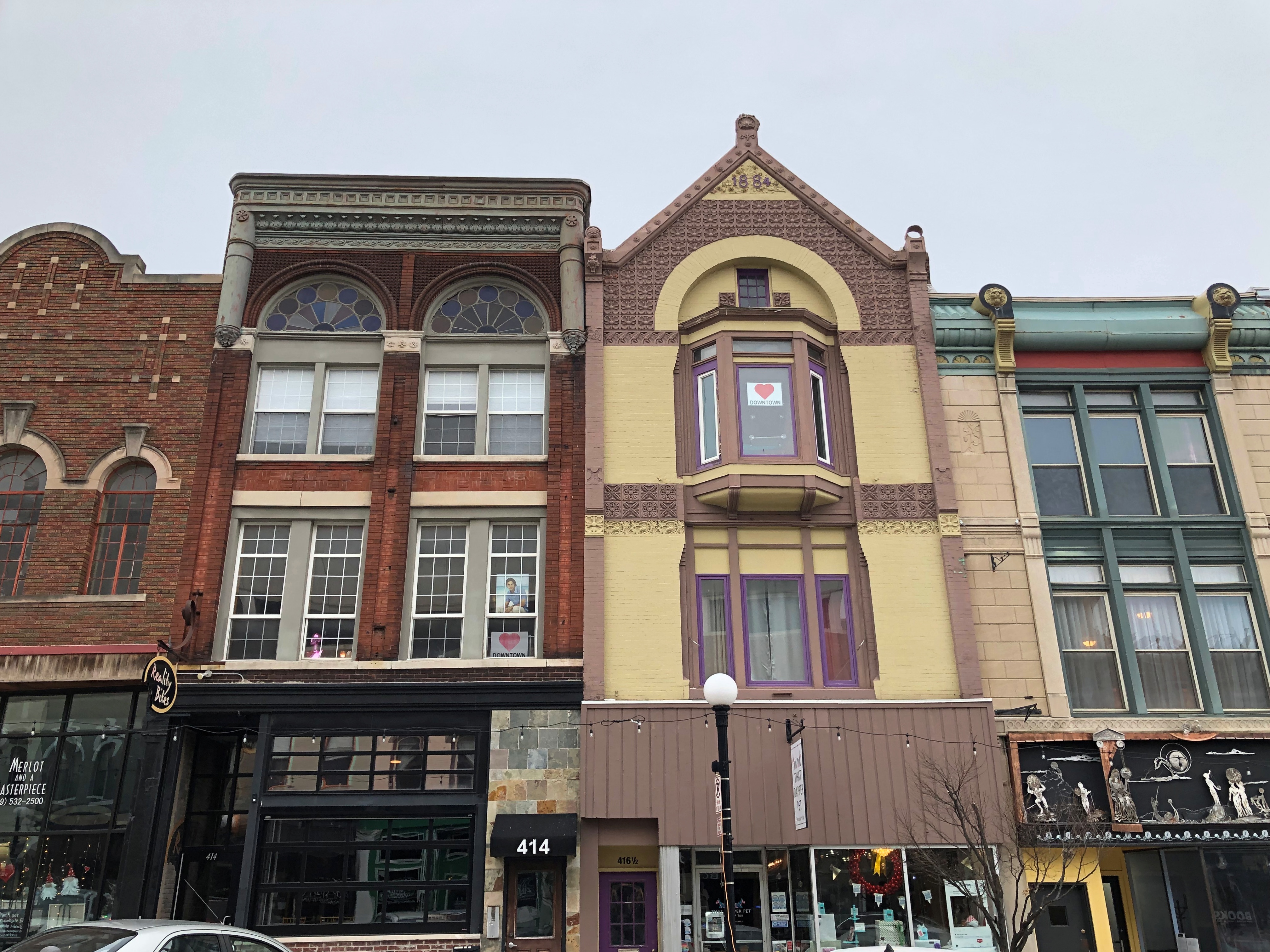
Just before I returned her to her dorm and drove home, we visited part of Main Street in Bloomington. It’s an impressive block. Bloomington should be glad it has survived down to the present.Main Street, Bloomington Ill Main Street, Bloomington Ill Main Street, Bloomington Ill

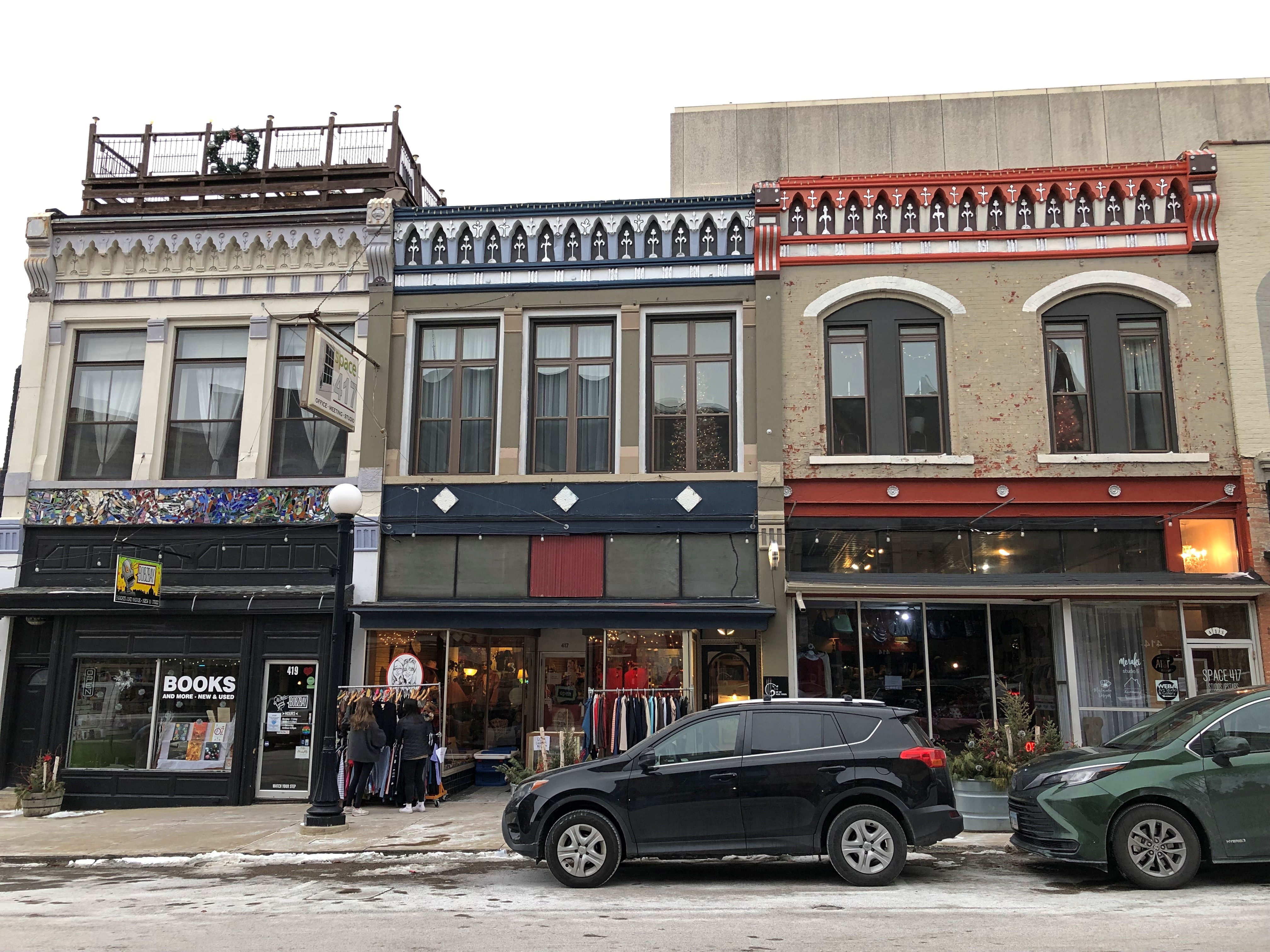
Not only survived, but the buildings are home to one kind of shop or another, mostly nonchain specialty retailers. In fact, all nonchain as far as I could see.Main Street, Bloomington Ill Main Street, Bloomington Ill Main Street, Bloomington Ill

The 400 block of Main between Market and Monroe Sts. has the strongest concentration of late 19th-century commercial structures, with facades looking well-maintained in our time.Main Street, Bloomington Ill Main Street, Bloomington Ill

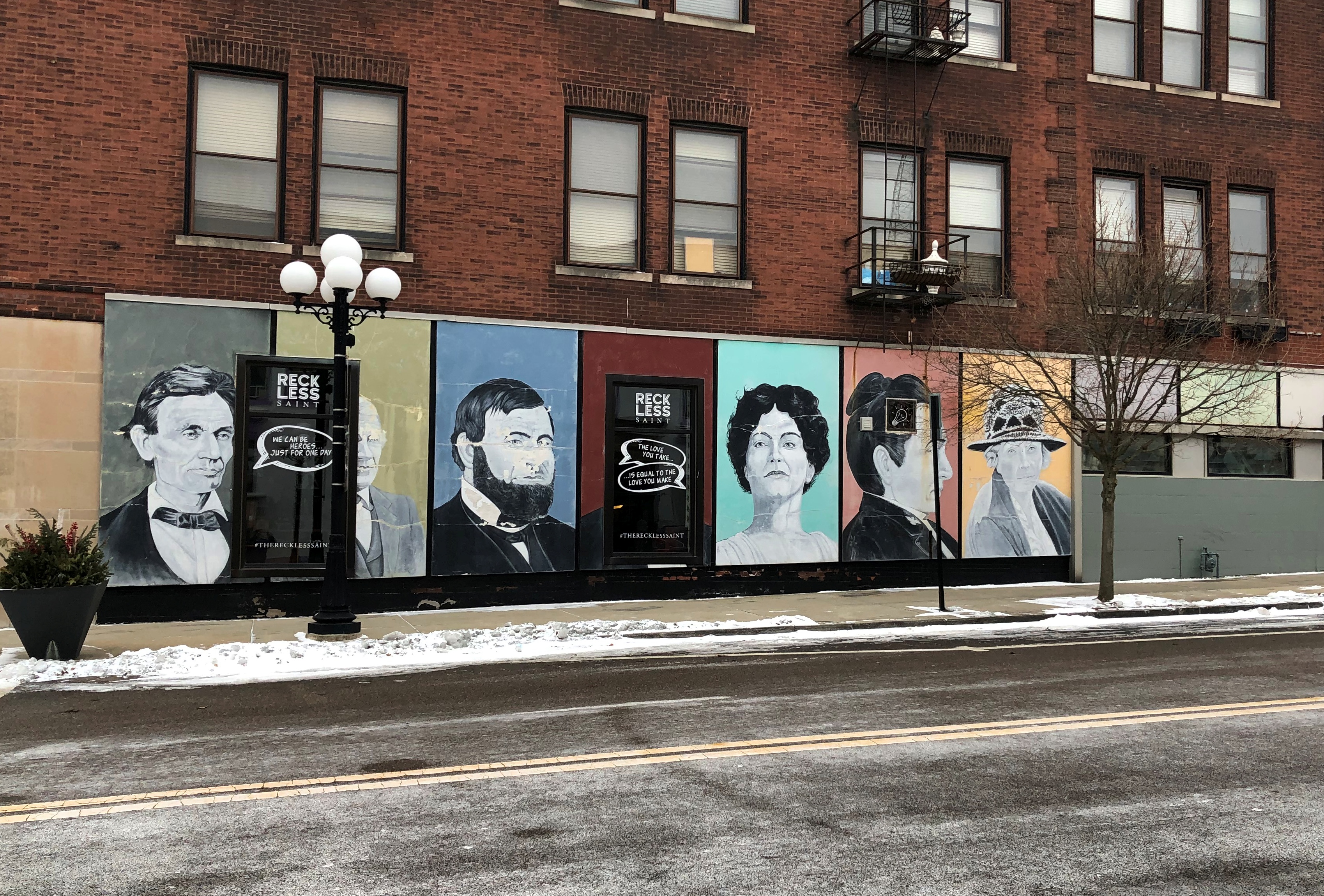
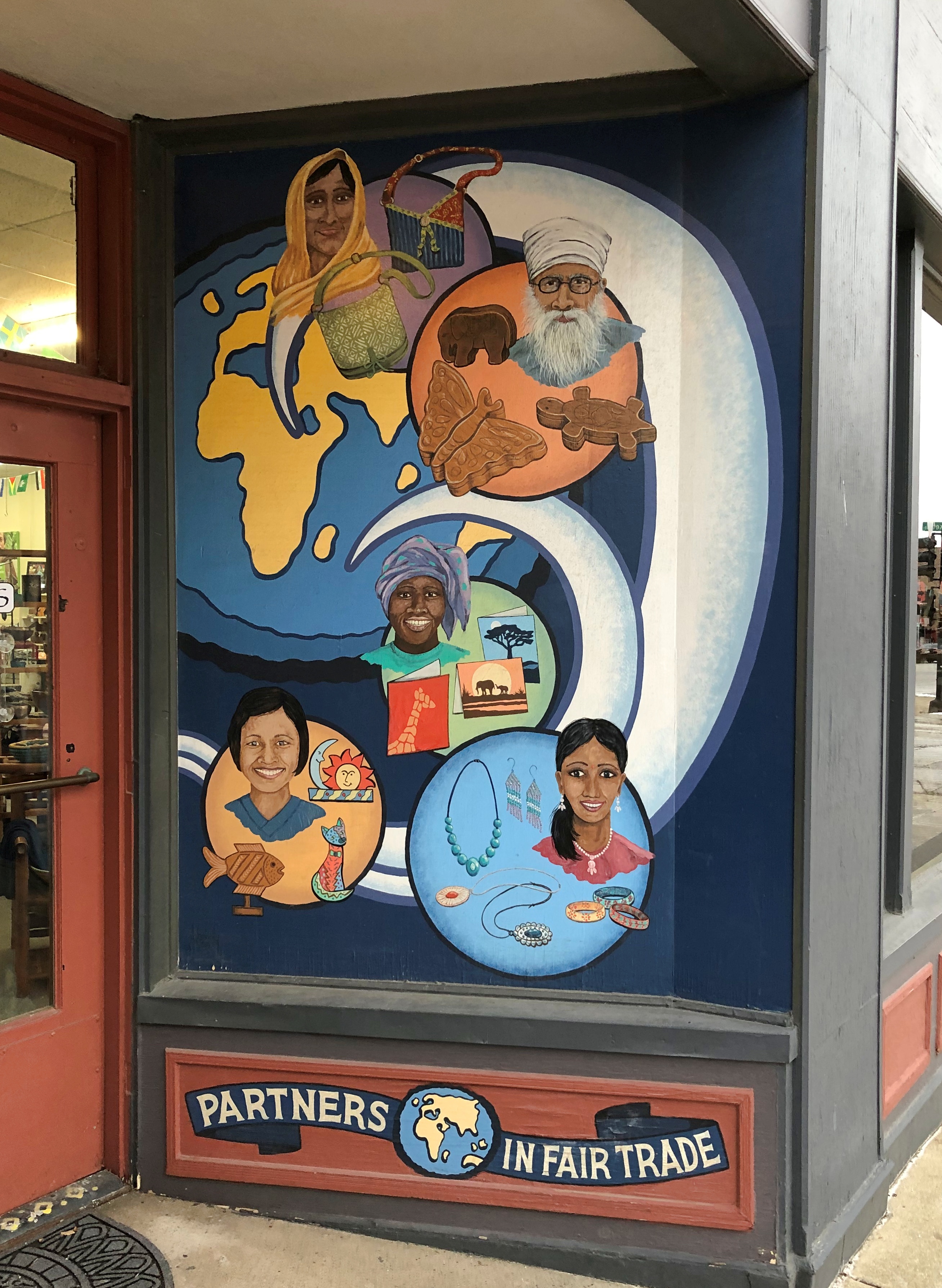
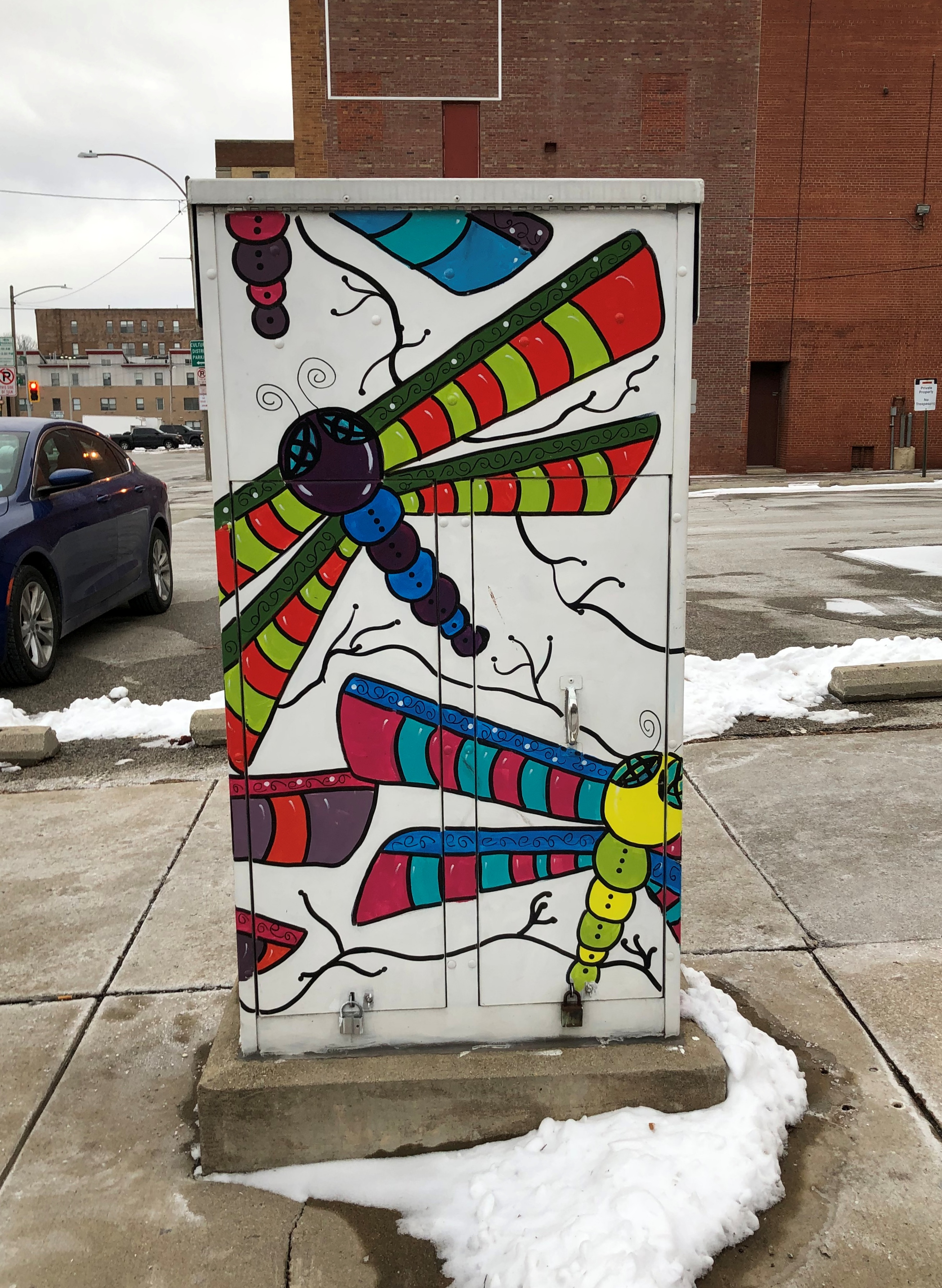
Featuring artwork from our time as well.Main Street, Bloomington Ill Main Street, Bloomington Ill Main Street, Bloomington Ill

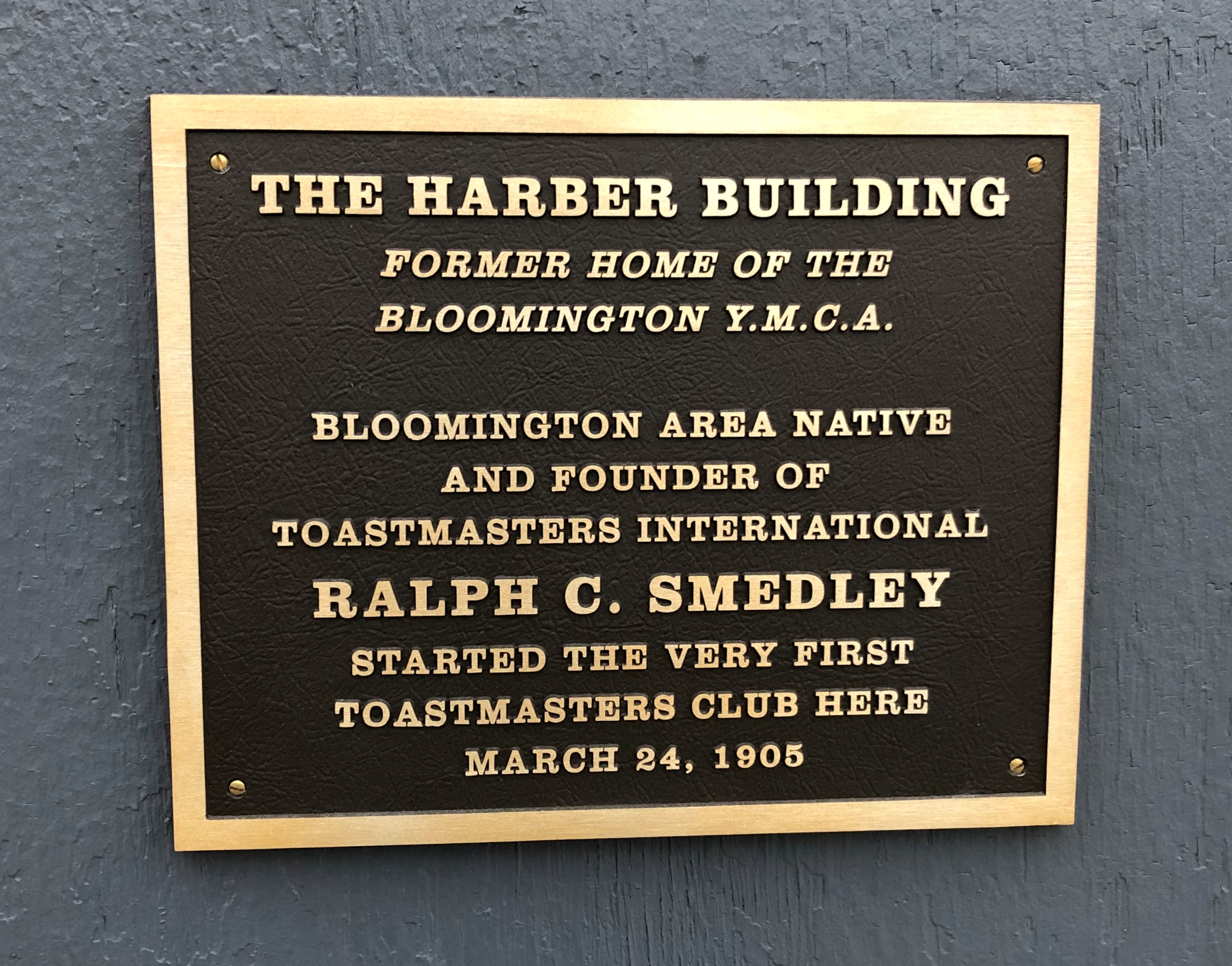
Not a lot of plaques that I saw, but I did spot one.
Main Street, Bloomington Ill

An organization that’s still very much around, but these days, the Harber Building is home to Illinois Tattoo. Ralph Smedley lived quite a long time (1878-1965), mostly in California, where the organization really took off.

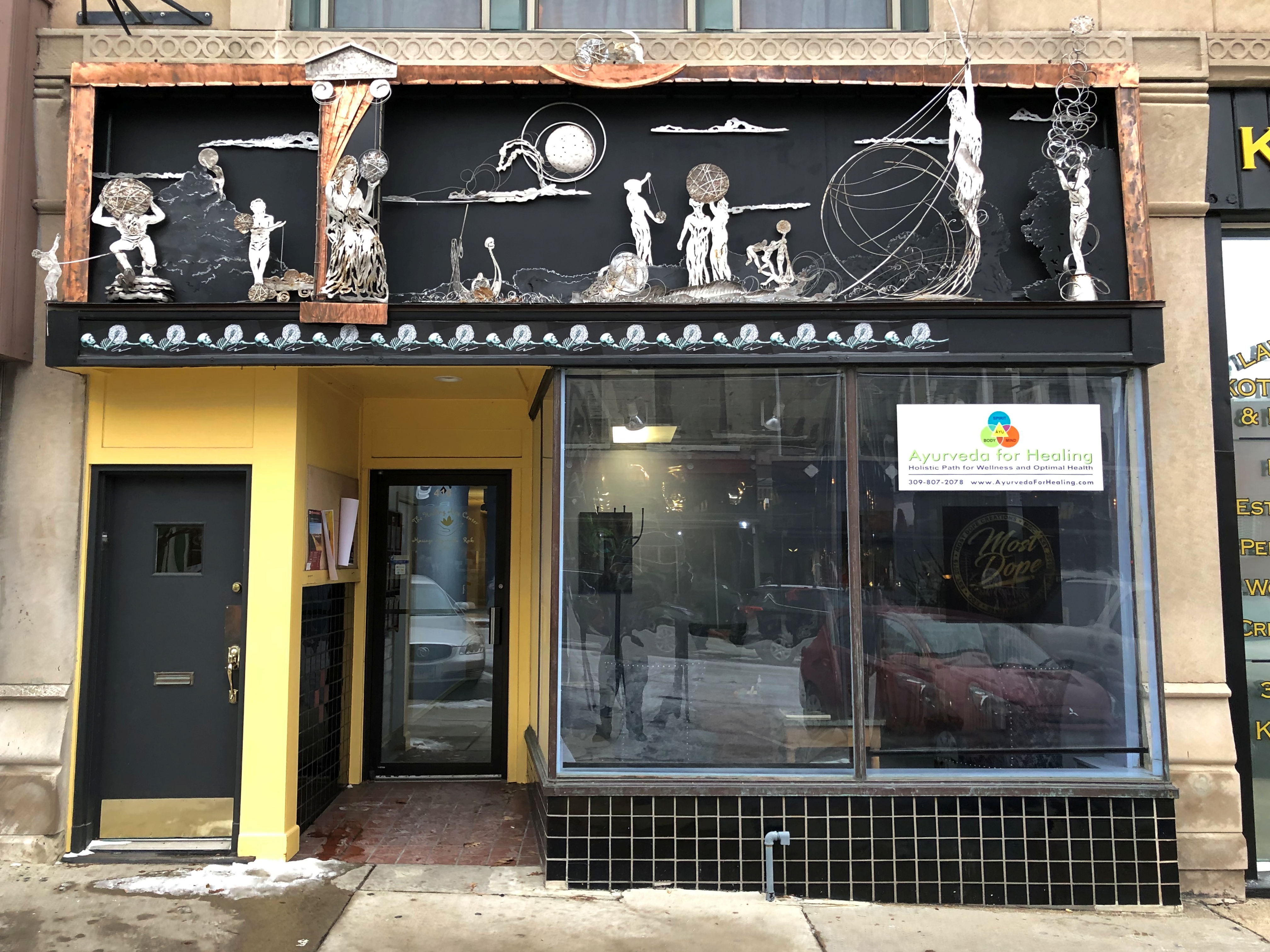
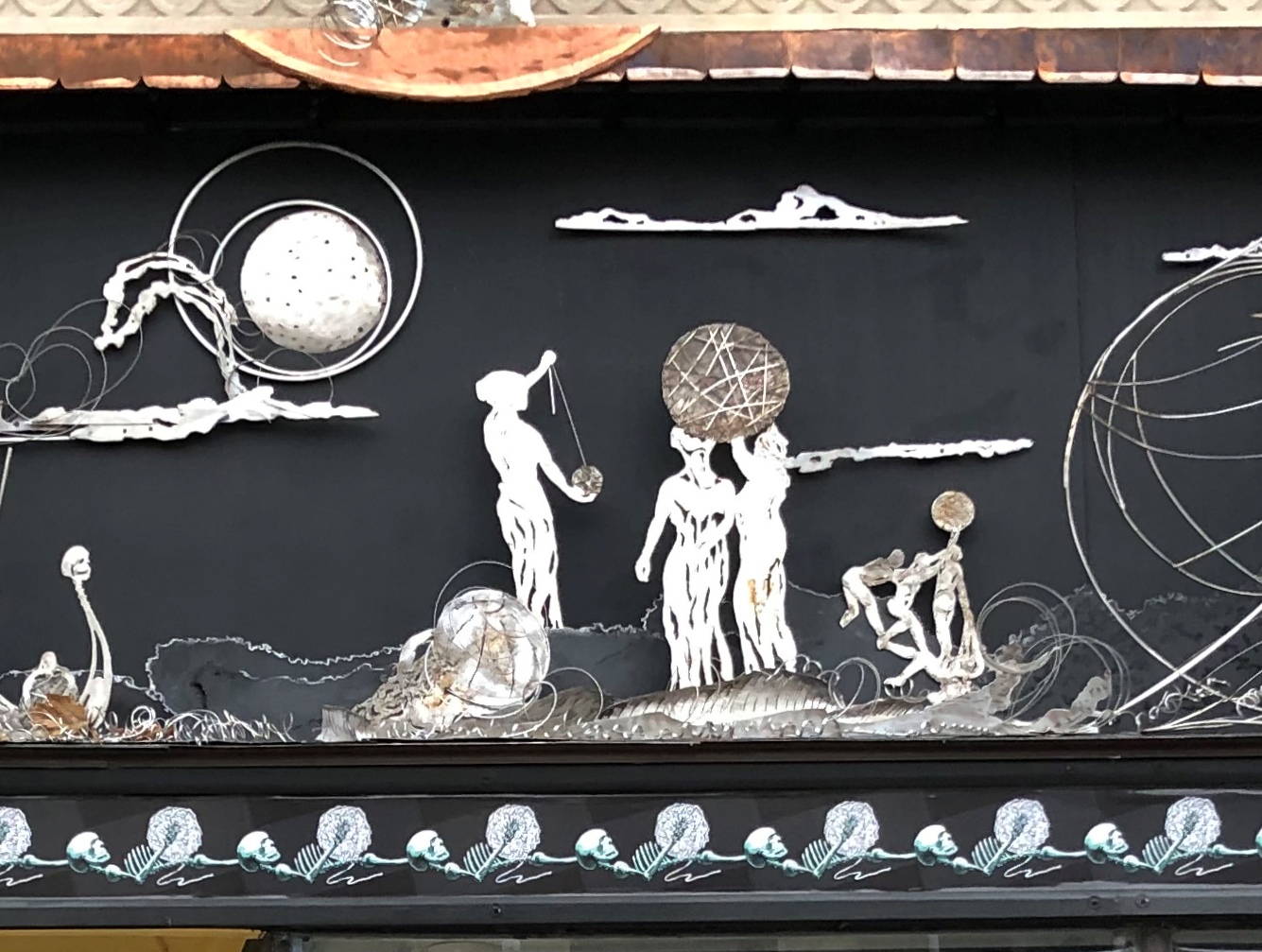
Over a storefront occupied by Ayurveda for Healing, which promises a “holistic path for wellness and optimal health,” there’s a remarkable set of metal figures.Main Street, Bloomington Ill

Detail.Main Street, Bloomington Ill

Ayurveda for Healing, which I assume takes its inspiration from South Asian practices, has three locations, including this one in Bloomington, along with Chicago and Kalamazoo, Michigan.

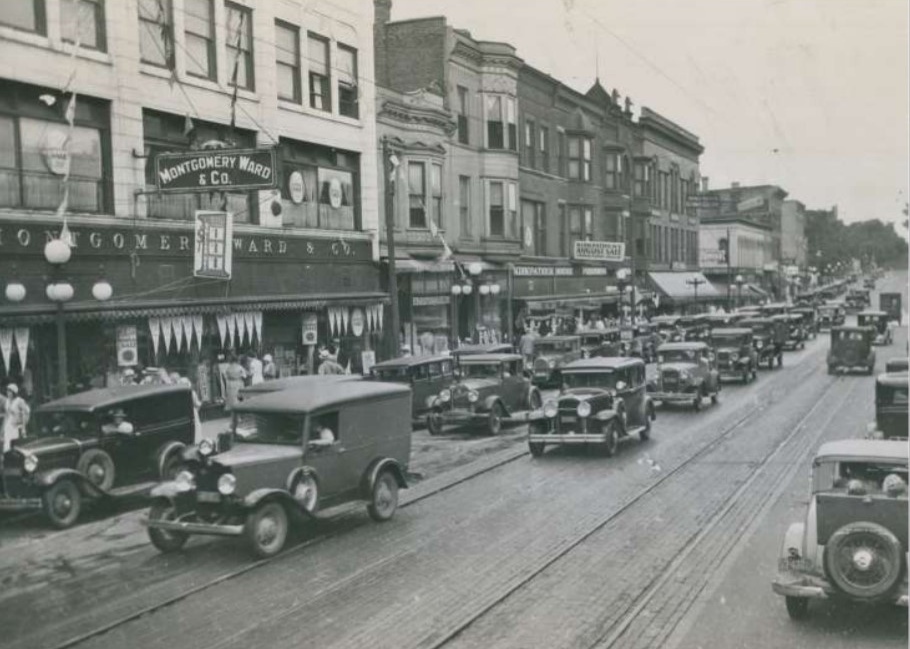
Just a block over, the 500 block of Main isn’t what it used to be. This is what it used to be, in an image borrowed from the McLean County Museum of History.Bloomington IL Main Street ca 1930

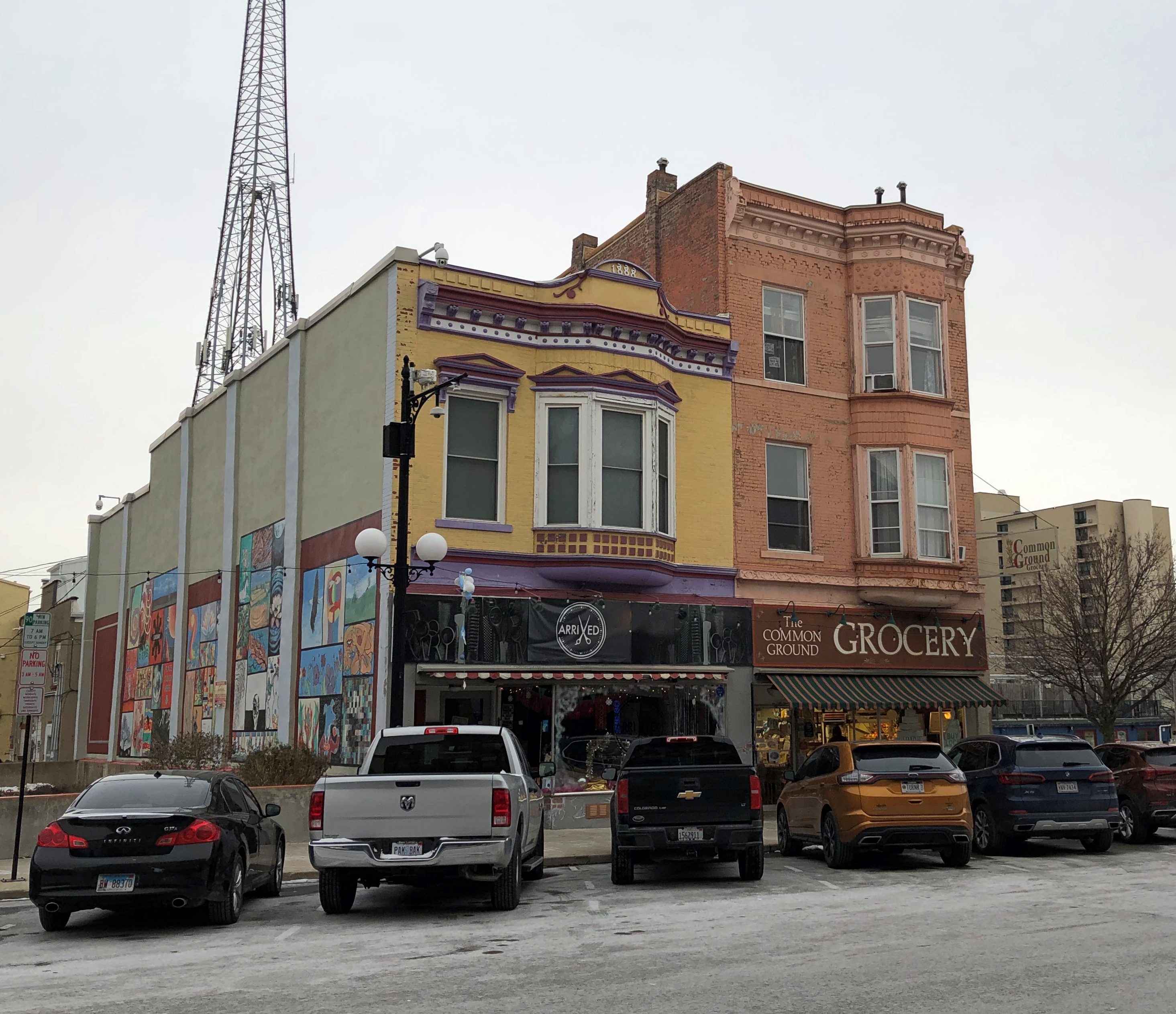
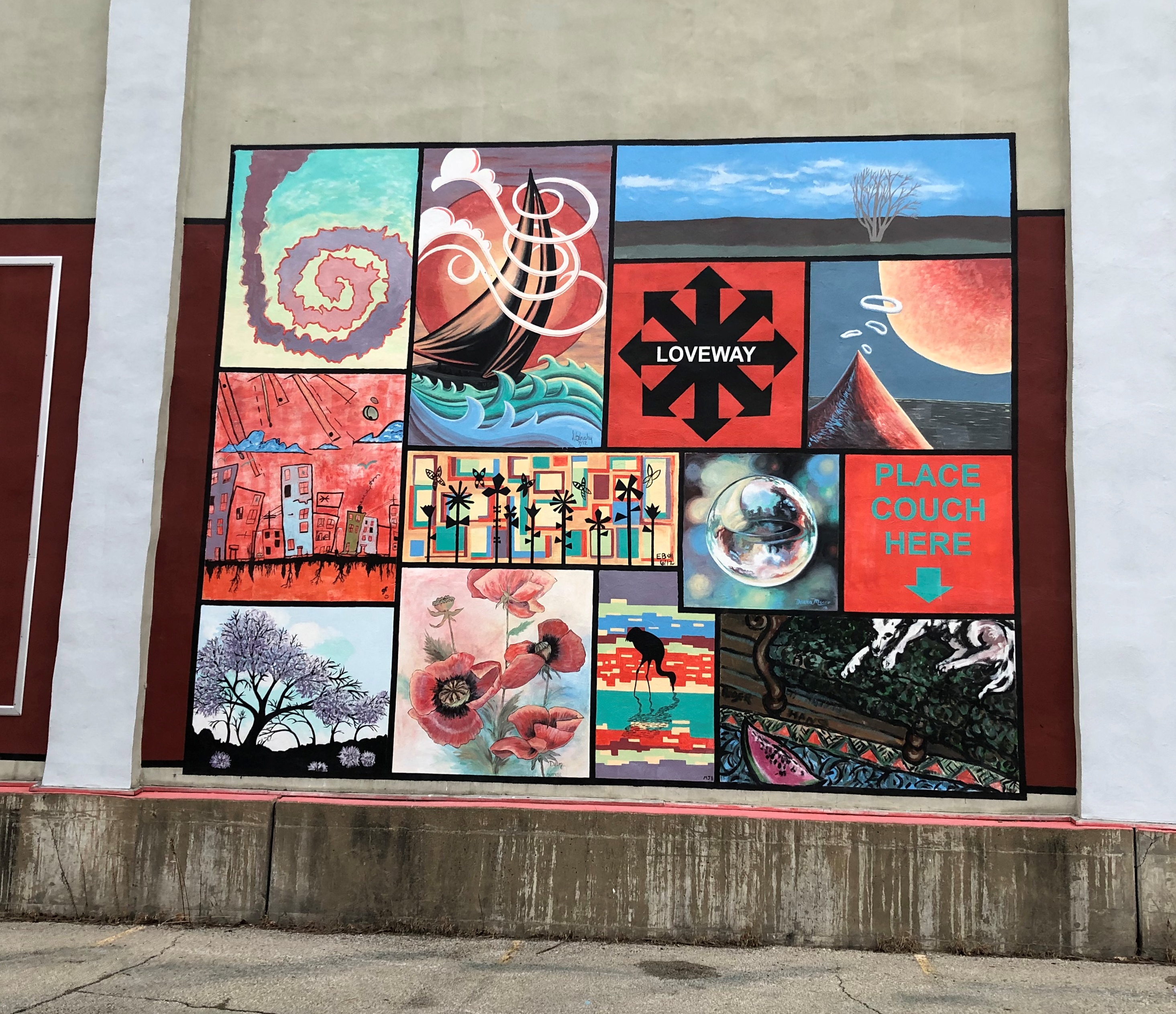
This is what I saw, let’s say roughly 90-odd years later.Main Street, Bloomington Ill Main Street, Bloomington Ill

To take that image of the mural, I was standing in a parking lot where a Montgomery Ward store used to be. Too bad for what has been lost, but fragments are mostly what we have of the past anyway, and it’s good to spot them.