New Bern Ramble

While waiting to be seated for brunch on Middle Street in downtown New Bern on Juneteenth, Dan and I had time for a stroll. The day was warming up, but not quite to a scorcher, and the sidewalks along Middle and Pollack Sts. are often in shade. That part of New Bern, shady and old, is quite the charmer.

“New Bern, one of North Carolina’s oldest towns, retains the flavor of past centuries,” North Carolina: A Guide to the Old North State (1939), p. 221, tells us. Information from the WPA Guide series is of course a little old, but mostly stands the test of time.

“The community, which processes a domestic architecture of charm and distinction, is spread across a bluff at the confluence of the Neuse and Trent rivers, 35 miles from the Atlantic Ocean. Massive brick townhouses, stately Georgian residences and wisteria-curtained clapboard cottages line narrow streets shadowed by oaks, poplars, elms and pecan trees. Many of the old streets retain their original brick pavements.”
All that would be downtown New Bern these days, as the town’s population – given as 11,981 by the WPA in 1939 – had expanded to 31,291 by 2020, according to the Census Bureau. So much of the town is actually late 20th-early 21st-century sprawl punctuated by parking lots and familiar retail.

Still, at the historic core, there is “domestic architecture of charm and distinction,” even now, with the older buildings mostly occupied by the likes of The Black Cat Shoppe, Faulkenberry Auctions, Anchored in New Bern (gift shop), Carolina Creations, Bear City Fudge Co., Curls & Lace Bridal Hair, and such restaurants as Cypress Hall, MJ’s Raw Bar and Grille, and Baker’s Kitchen, where we eventually brunchified (and it was delicious).
We visited a few shops and strolled by other spots, such as the former corner drug store credited as the invention-place of Pepsi-Cola.

New Bern NC

A pleasant alley off Middle St. is known as Bear Plaza. Good thing living bears aren’t found there, but you are reminded of bears.

New Bern NC

Bears are front and center as pawed, powerful symbols of the Bern towns, old and new, Swiss and American. As posted previously, the New Bern flag –

— looks a lot like the old Bern flag, with certain small but important modifications. Old Bern:

The WPA guide points out that the very first European settlers in the area were not in fact Swiss, though led by a Swiss. The colonists were German and had a harrowing experience getting here.

“The first settlers were survivors of an expedition of 650 German Palatines, Protestants expelled from Baden and Bavaria. Under the leadership of Swiss Baron Christopher de Graffenried, and aided by a gift of £4000 from Queen Anne of England, this group planned a colony in America. De Graffenried placed Christopher Gale and John Lawson in charge of the expedition.

“In January 1710, two ships sailed from Gravesend, England. Storms impeded the vessels and disease ravaged the voyagers, more than half of whom succumbed. A French vessel captured one of the transports as it entered Chesapeake Bay in April, and plundered the colonists. Fever further reduced the number and only a sickly remnant reached the Chowan River, where Thomas Pollock, a wealthy planner, provided them with transport to the Neuse and Trent rivers.”
De Graffenreid himself came a little later with some Swiss colonists, buying land from the Lords Proprietors of Carolina and paying off the local Tuscarora Indian chief as well. The natives were not mollified, however.

“In September 1711, the settlement was almost wiped out by a Tuscarora uprising. In the first attack, 80 settlers were slain. Lawson and de Graffenreid were taken to the Indian fort, Nohoroco, where Lawson was tortured to death, and de Graffenreid was held prisoner for six months. The war raged intermittently for two years, and the colonists were reduced such desperation that in 1713 many of them returned with de Graffenreid to Switzerland. The settlement made a new start on the leadership of Colonel Thomas Pollock, proprietary governor…”
Just one damn thing after another in early America. But the town survived, eventually becoming important enough to be the capital of North Carolina, as detailed yesterday.

Christ Church Episcopal rises above Pollock St.

Other churches clustered in the area, but Christ Church had the advantage of being open that weekday and holiday morning.

Christ Church, New Bern NC

Back to the WPA guide, p. 228, on Christ Church: “[At the] NE corner Pollock and Middle streets, a weathered red brick edifice whose lofty, gold-crowned spire rises above great trees shading an old graveyard, was erected in 1873 upon the site of two earlier churches. The parish was organized in 1715 the first church was built in 1750. A Bible, Book of Common Prayer and silver communion service given by George II are retained, though royal Governor Martin attempted to take them with him when he fled town in 1775.

“When Parson Reed, the royalist rector, prayed for the king, lads prompted by patriot parents drummed at the door and shouted ‘Off with his head!’ This church was razed during the Revolution, reputedly because the brick had been brought from England. [Sounds like a likely story.] The second church was erected in 1825. Its outer walls were used for construction of the present building. In a corner of the churchyard fence, with its muzzle embedded in the ground, is the the Lady Blessington Cannon taken from the British ship Lady Blessington, captured in the Revolution.”

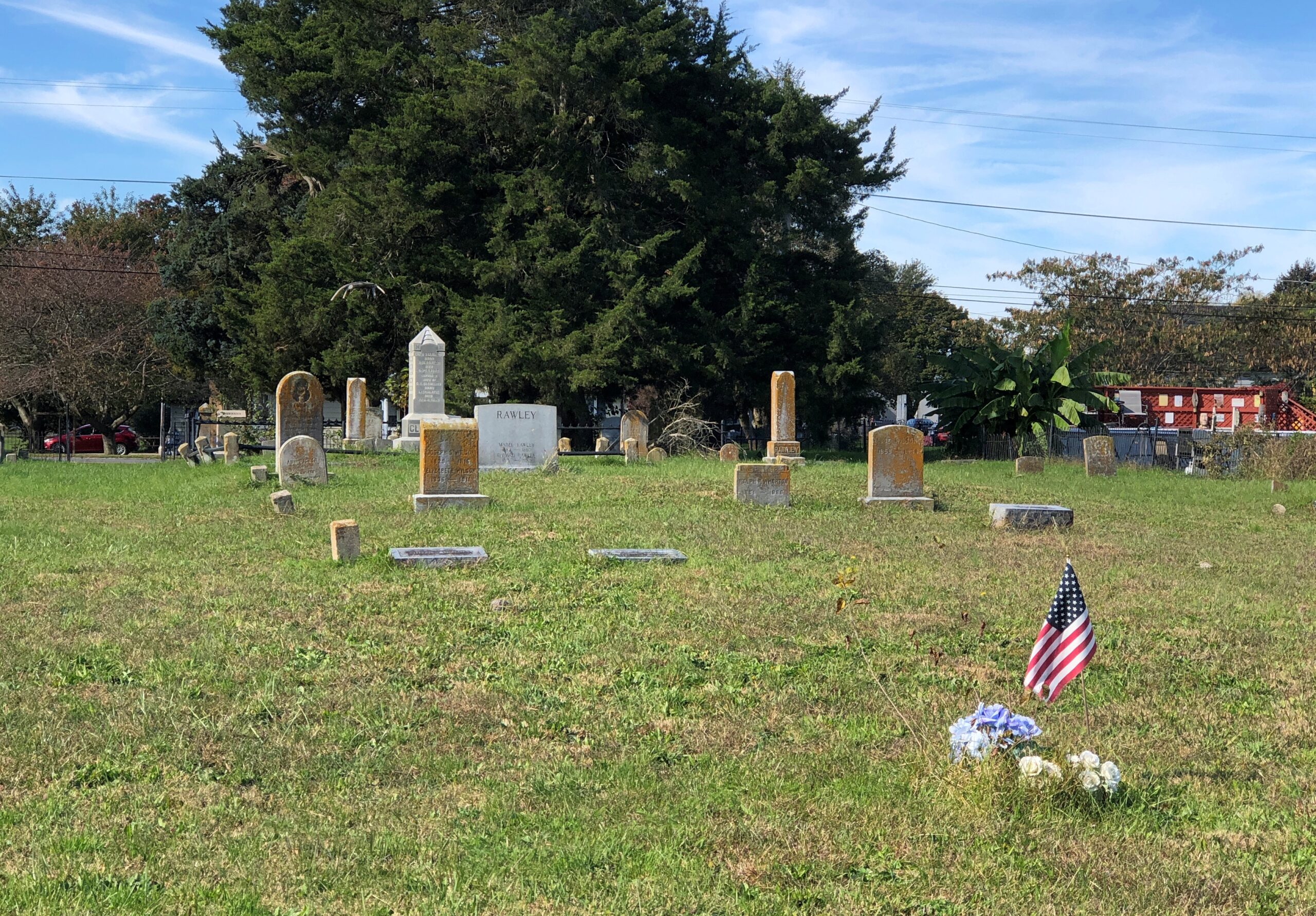
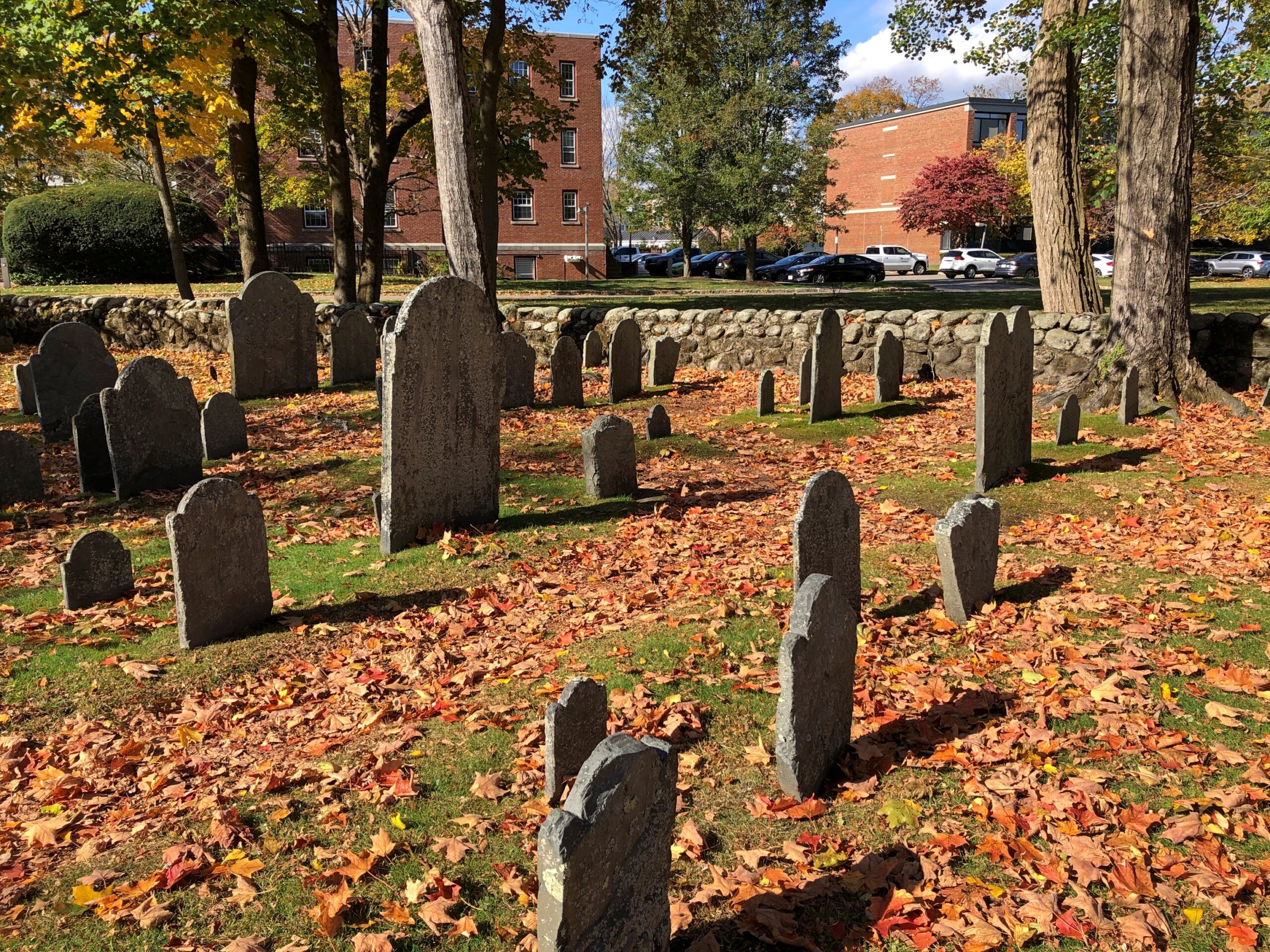
We didn’t see any embedded cannon, but on church land outside the Christ Church building were a cemetery and a playground. Not a combination you see much, but maybe there should be more places like that to remind us that the the arc of a lifespan is all too brief.

Christ Church, New Bern NC

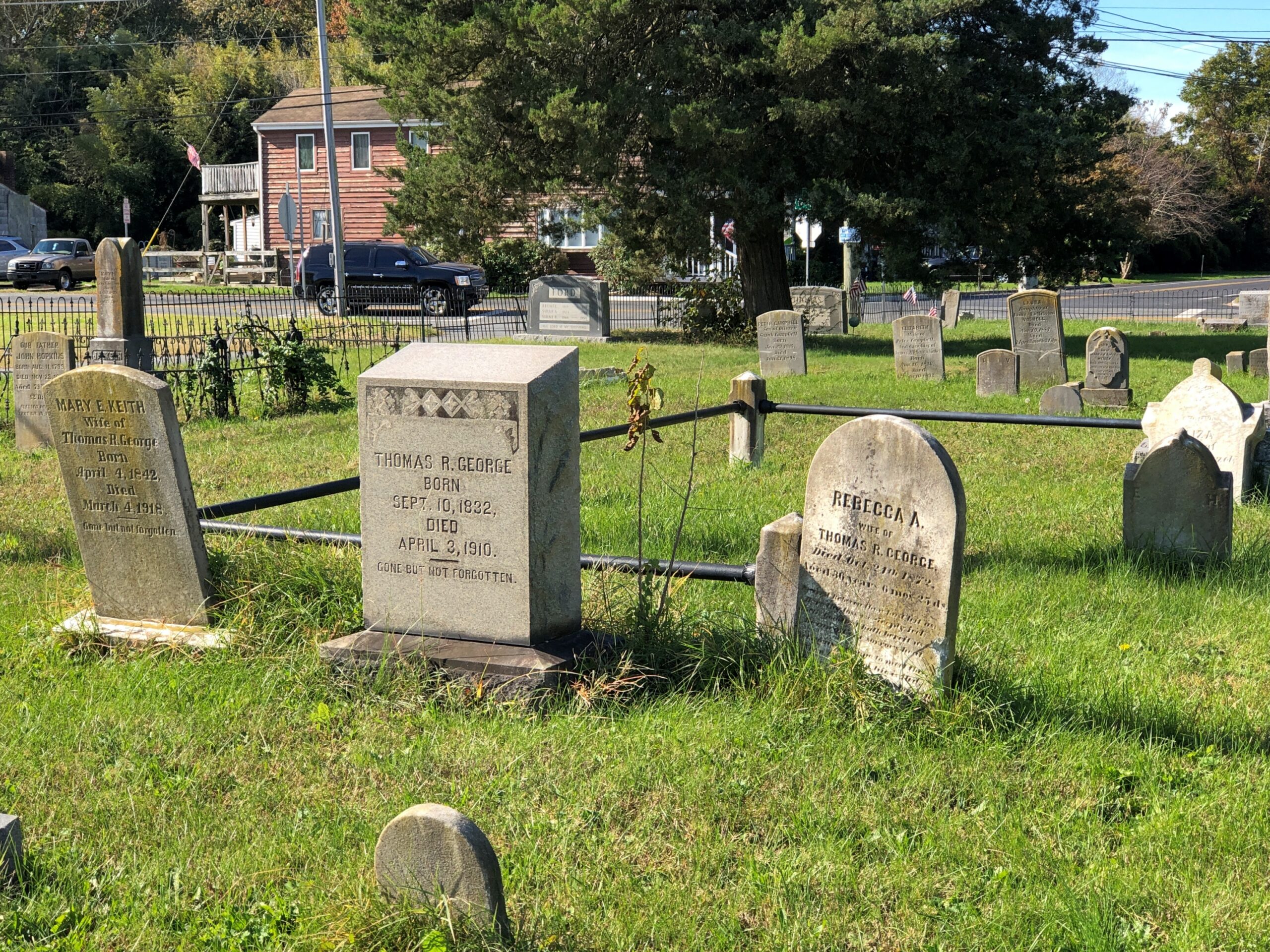
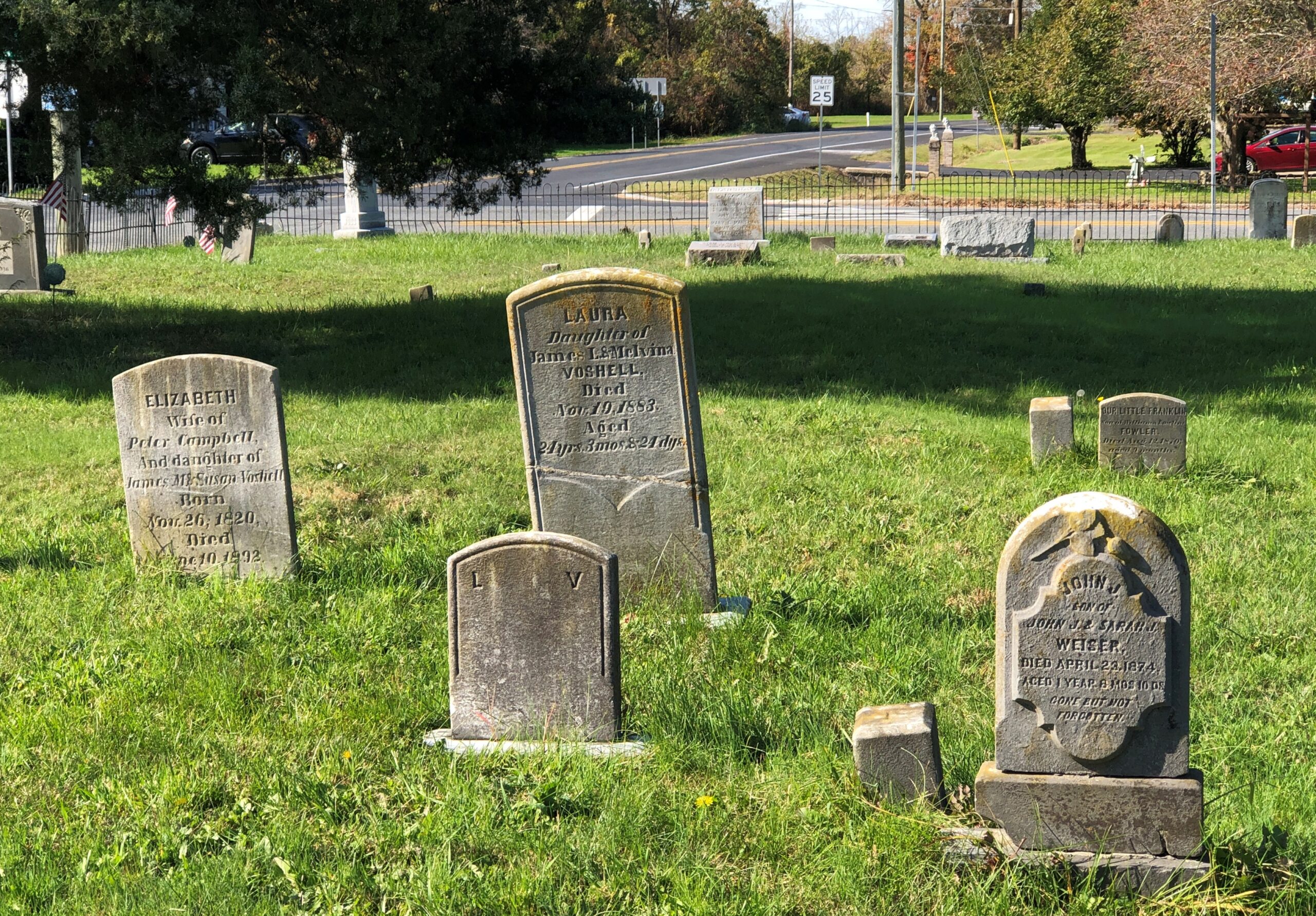
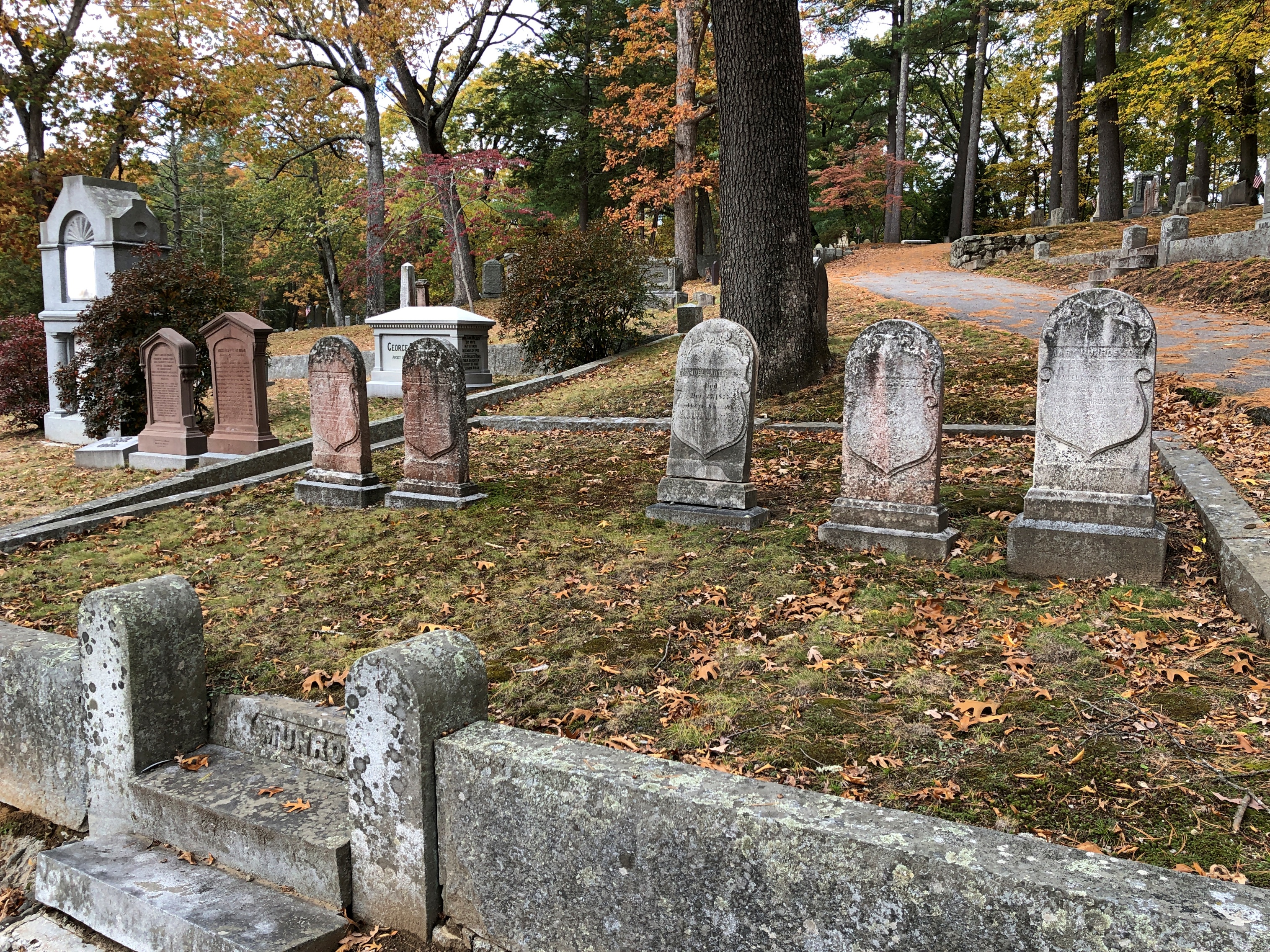
It’s a handsome Southern church burial yard, complete with magnolias and Spanish moss.

Christ Church, New Bern NC

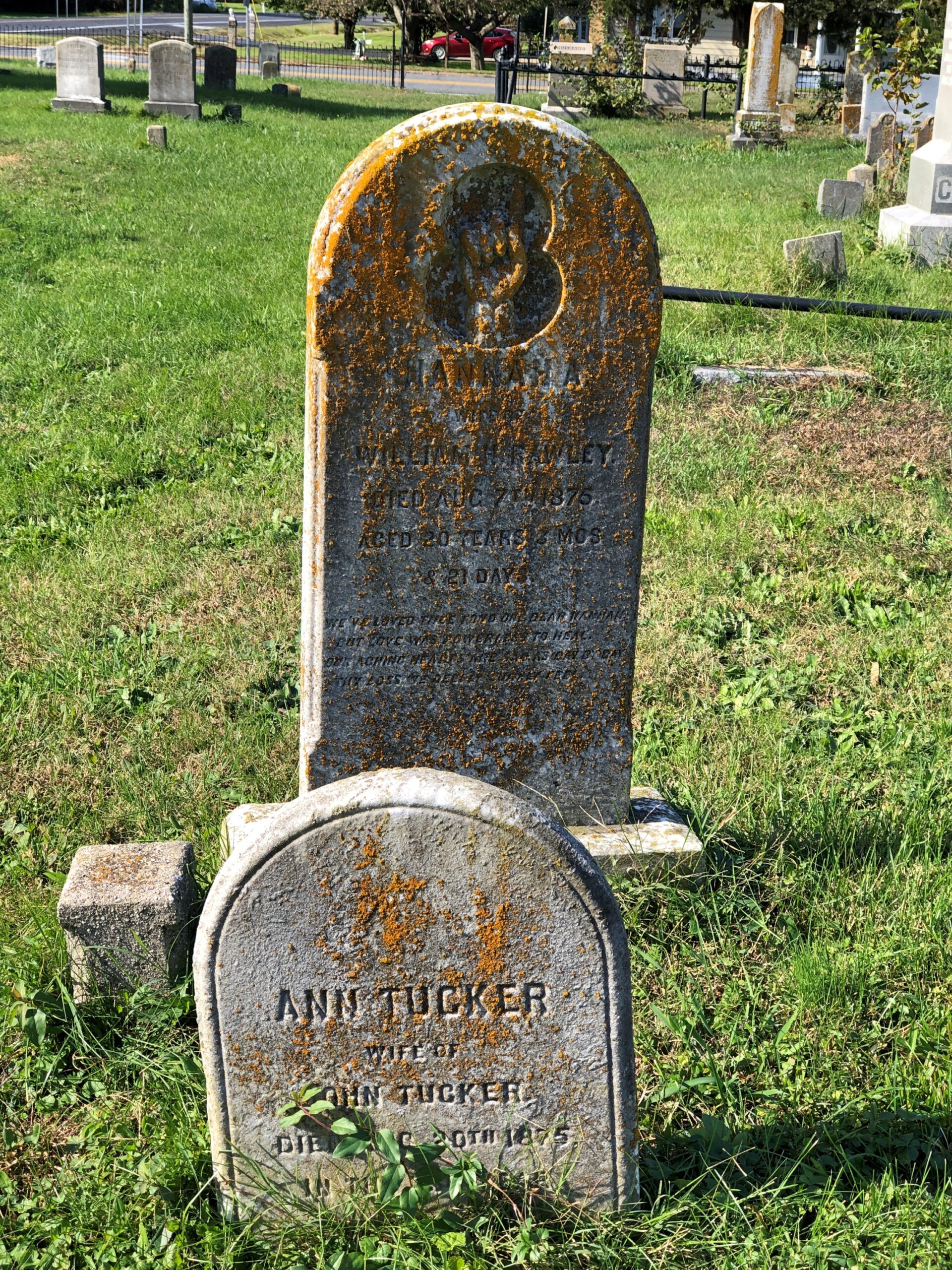
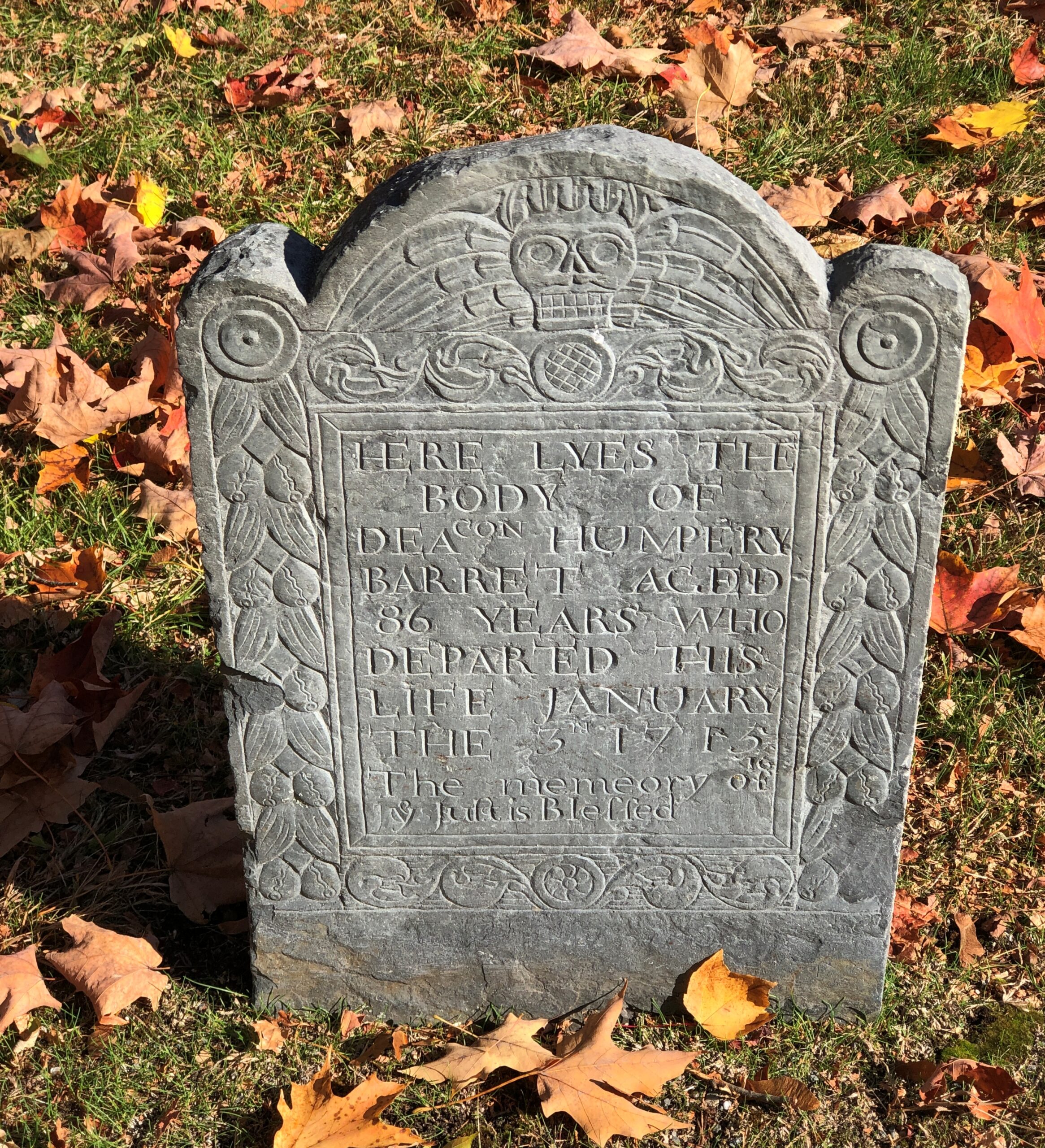
Included are stones reflecting older language usage, as you sometimes find in older cemeteries. “Relict,” as in widow, isn’t one you see much these days.

Christ Church, New Bern NC

A wordy memorial. I hope the stone carver was paid by the letter.

But he’s notable enough: James Davis, quite a busy fellow in colonial North Carolina and later the state.

Tryon Palace

Talk much about colonial North Carolina and Blackbeard is going to come up – at least when talking with my old friend Dan, who had a fascination with the buccaneer even back in college. An artful storyteller, which surely helped him in his former career as an ad man, Dan can regale you with Blackbeard stories, detailing his short but colorful pirate career, including the fiery display he made of his person to scare onlookers witless. A pirate needs to be known for more than mere thievery on the high seas.

“In battle [Edward] Teach would have a sling over his shoulders that held at least three flintlock pistols and would often stick lit matches under his hat to give a smokey and fearsome appearance,” the Golden Age of Pirates explains, though without the Dan’s storytelling gusto, illustrating Blackbeard’s pyrotechnical flair with gestures all his own.

Dan and his wife Pam recently moved to New Bern, NC, very near Blackbeard’s haunts, including the site of his swashbuckler’s death in action off Okracoke Island. I don’t believe their retirement move from Alabama was to be near Blackbeard, but it certainly couldn’t have hurt during site selection. On the first evening of my visit to New Bern, Dan and I spent had a fine time out on his deck, perched near a small inlet ultimately connected to the wider ocean, watching the stars slowly emerge and talking of old times and newer things but not, at that moment, about Blackbeard.

That was the next day, as we toured Tryon Palace, even though the original structure was built many decades after Blackbeard’s newly severed head wound up tied to the bowsprit of the sloop Jane, put there by pirate hunter Robert Maynard. One colonial subject leads to another.

Tryon Palace is crown jewel of historic sites in New Bern, except that it’s actually a recreation of the 20th century. Somehow that doesn’t take away from its historic appeal.

Tryon Palace

When you stand in front of it, you’re peering not only back to 1770, when the colonial government of North Carolina completed, at great expense, a structure that looked like this one. You’re also looking at a building completed within living memory, in 1959, which is considered a faithful restoration of the one that NC Gov. William Tryon had erected.

“When the colonial Assembly convened in [New Bern] on 8 Nov. 1766, Tryon presented a request for an appropriation with which to construct a grand building that would serve as the house of colonial government as well as the governor’s residence,” says the Encyclopedia of North Carolina.

“Less than a month later, the Assembly acceded to the governor’s wishes by earmarking £5,000 for the purchase of land and the commencement of construction. The appropriated sum was borrowed from a fund that had been established for the construction of public schools. To replenish the depleted school fund, a poll tax and a levy on alcoholic beverages were imposed.”

Just about the worst kind of taxes when it came to irritating the non-coastal non-elites of the colony, a discontent that eventually erupted as the Regulator Rebellion. Ultimately Gov. Tryon, in personal command of the colony’s militia, crushed the Regulators – untrained men who seem to have been foolish enough to meet Tryon’s trained men in an open field at the Battle of Alamance in 1771. (Which isn’t entirely forgotten.)

We took an early afternoon tour of Tryon Palace, guided by a woman in period costume. She told us about Tryon – no mention of Alamance, however – and his successor, Josiah Martin, the only other royal governor to use the palace. Gov. Martin spent more on furnishing the place, only to be obliged to skedaddle come the Revolution. We also heard about architect and master builder John Hawks (d. 1790), who came to North Carolina from England to build the palace which, of course, is only a palace by canebrake standards of the colony. It is a stately manor house, however.

Tryon Palace

The colonial legislature and the new state legislature both used the palace for a while, so it counts as the first capitol of North Carolina. That meant I was visiting yet another state capitol, without realizing it at first. A former capitol, that is, including ones I’ve seen in Illinois, Texas (counting Washington-on-the-Brazos as such), Virginia, Florida and Iowa. Abandoned as a government building after the NC capital left New Bern, fire consumed most of Tryon Palace just before the end of the 18th century. Its west wing survived for other uses over the next century-plus.

In the 20th century, along came Maude Moore Latham, a wealthy local woman with a taste for historic restoration. If much of colonial Williamsburg up in Virginia could be restored, so could colonial New Bern in North Carolina. Despite the fact that a road and houses had been built on the site of old Tryon Palace, she eventually facilitated the restoration, made possible (or at least more accurate) by the fact that John Hawks’ plans for the building had survived.

Also restored: The gardens of Tryon Palace, flower and vegetable. Despite the heat, we couldn’t miss that.

Tryon Palace garden
Tryon Palace garden

After our sweaty visit to the palace and gardens, Dan and I repaired to the restaurant in the nearby North Carolina History Center, called Lawson’s On The Creek, for refreshing beverages and more talk of Blackbeard and many other things. We closed the joint down over beer, at 4 p.m.

Dan and Dees

Downing a beer was just the thing. That was our homage to those days of yore. In colonial America, beer was no mere refreshing beverage, but an essential one.

North Carolina, South Carolina

Maybe I should have looked at something like this before driving between Knoxville and Charlotte last month.

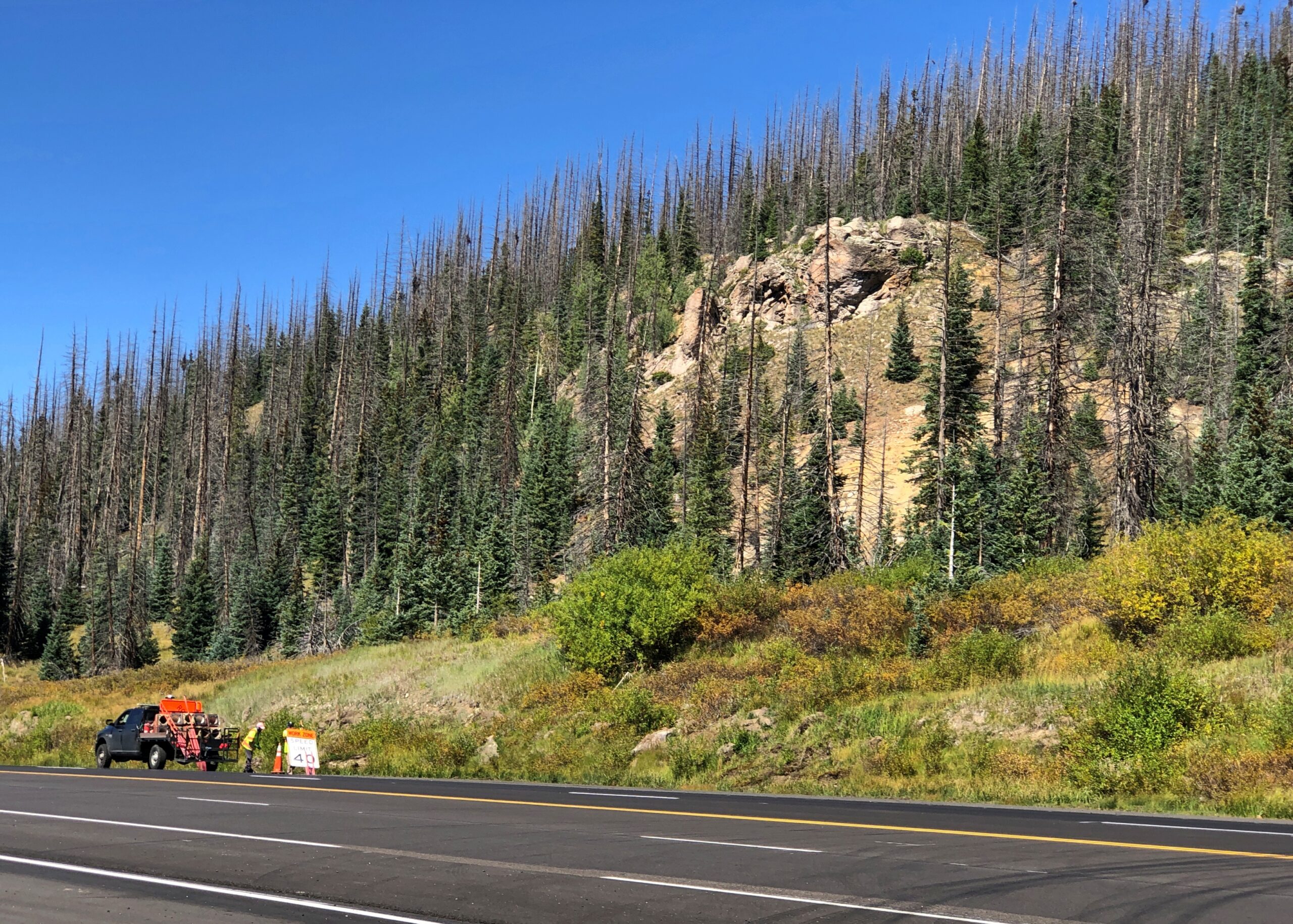
Note the array of Construction Zone markers along I-40. Turns out travelers are lucky to be able to drive the road at all, considering that Hurricane Helene last year did so much damage that the highway – an Interstate of considerable importance regionally – was closed for five months, only reopening on March 1.

Reopening as a two-lane road, with each lane bounded on the outside by those concrete barriers you never want to see when driving. Separating the lanes is what amounts to a curb, painted yellow. This goes on for about 12 miles, as reconstruction work goes on. That isn’t a long stretch of road under normal conditions, but when you’re between barriers, behind a truck and in front of a truck, with traffic (many trucks) coming the other way just on the other side of a yellow curb, and little margin for error on anyone’s part, your reaction as a driver is going to be: when will this end?

That was my reaction, anyway. Had some nice drives on this trip. Western North Carolina I-40 wasn’t one of them.

“The hurricane washed away about 3 million cubic yards of dirt, rock and material from the side of I-40,” NCDOT reported. I’m having trouble visualizing a million cubic yards, much less three, but I’m sure it was a staggering amount.

“The stabilization process involved driving steel rods into the bedrock, filling the rods with grout, applying a metal screen then sprayable concrete to the face of the walls. There were four different rigs operating at the same time.

“Crews installed 90,000 square feet of soil-nail walls across the 10 different damage locations in less than 130 days. They also drilled nearly 2,100 feet of nails and fortified 4 miles of the shoulder for truck traffic.”

My goal for the afternoon had been to take I-40 from Knoxville to Asheville and then I-26 south to its junction with South Carolina 11, which is Cherokee Foothills Scenic Highway, and take that road east. I’d been advised that the town of Saluda, NC, on US 167, was a pleasant place to stop, and it was, though most of the shops were closed by the time I got there.

Saluda, NC

I had the idea that I would drive US 176 to the next town, Tryon, NC. Oops, no. Road closed. Maybe the hurricane did that as well.

So I got back on I-26 and went to the Tryon exit. I didn’t have any idea what to expect in Tryon, certainly not the Tryon Horse, which is a large toy horse on wheels. It stands on US 176, known as South Trade St. at that point. This is the fifth iteration of the horse in nearly 100 years.

“[The first Tryon Horse] was originally designed as an advertisement for the first horse show held in Tryon at Harmon Field in 1928,” says the Tryon History Museum. “It came from a drawing done by Eleanor Vance, based on an idea from Romaine Stone, who was active in the Tryon Riding and Hunt Club, and from then seventeen-year-old master builder Meredith Lankford.

“The Tryon Horse was built in the basement of Miss Vance and Miss Yale’s house by Meredith Lankford and Odell Peeler and was assembled in the driveway… The Tryon Horse… was brought out for future horse shows and parades, and was stored in the Paper Box Factory located on Depot Street. Unfortunately, the first horse was destroyed when the factory burned in the 1930s.”

It was no accident that the talent was available locally in the 1920s to build such a thing. At the time, Tryon was noted for a company that made toys, especially high-end wooden toys.

South Trade St. is a handsome thoroughfare, populated by older buildings developed to support trade.

Tryon NC
Tryon NC

Something else I didn’t expect on the street: Nina Simone Plaza.

Complete with a bronze of the musician and activist, who grew up in Tryon, and who no doubt got out as soon as her talents allowed. She died in 2003; the statue was dedicated in 2017.

Nina Simon bronze, Tryon NC

A remarkable detail (so I’m remarking on it): “The sculptor, Zenos Frudakis, included a bronze heart containing Simone’s ashes welded to the interior of the figure’s chest,” says the University of North Carolina. For his part, Frudakis has had quite a career.

Later in the day, I eventually made it to South Carolina 11 at Campobello, SC, and drove east to its end for 50 miles or so to Gaffney, SC. I’d intended to visit Cowpens National Battlefield along the way.

No dice. The main entrance to Cowpens was closed by the time I arrived. I understand closing the visitors center at the end of the day, but the entire place? A mile or so east on SC 11 was an alternate entrance, so I stopped there.

I walked down the path toward the battlefield, but thought better of it after about 10 minutes.

Cowpens National Battlefield

I wanted to get to Charlotte before the end of the day. Summer days are long, but not endless. Also, mosquitoes.

Scottsburg, Indiana

Just the latest in bad news: the lodge on the North Rim of the Grand Canyon burned down due to wildfire. At least no one died in the incident, but it’s always unfortunate when a grand edifice meets its end. I wouldn’t bet on reconstruction, either.

The heat was already on by the time I arrived in Scottsburg, Indiana on the first day of the trip, June 16. But not enough to keep me from taking a stroll around the Scott County courthouse, where I found native son William H. English.

Scottsburg, Indiana Scottsburg, Indiana

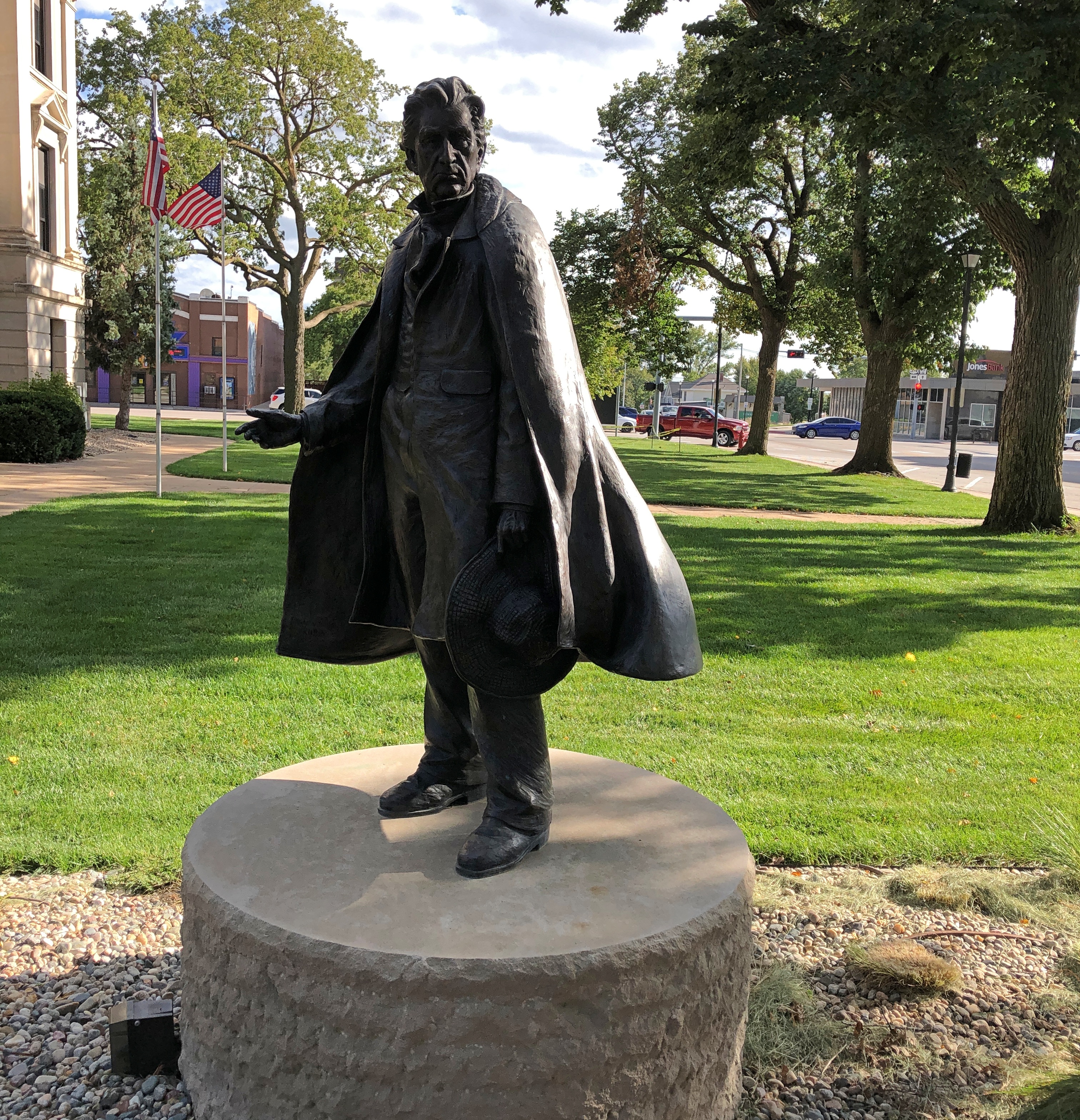
After only a few hours on the road, by chance, I’d come across a presidential sight. Presidential adjacent, anyway, since English (d. 1896) is that most obscure of obscurities, someone who ran for vice president and lost – in 1880 in his case, on the Democratic ticket with Winfield Scott Hancock, who himself isn’t going to ring any bells outside presidential history buffs. The statue went up in 1908.

That was the election James Garfield won, which he no doubt regretted before long.

English, or his heirs, felt that a book he wrote, Conquest of the Country Northwest of the Ohio River 1778-1783, was worth a mention along with the offices he held or aspired to. The marvel here in the 21st century is that the work is just about instantly accessible (Vol. 1 and Vol. 2). An illustration facing the Vol. 1 title page (on the optitle page?) not only falls into the They Don’t Make ‘Em Like That Anymore category, it’s squarely in, No One Would Think of It territory. Just as well, I figure.

To get to Nashville from metro Chicago, the direct route is via I-65, which cuts across Indiana. Considering the importance of both of those cities to me, I’ve driven the route more times than I can count. But I have to report that it isn’t one of the more interesting drives in the nation, and at eight to nine hours drive time in the best of conditions, you feel it yawn beneath your wheels when you yourself yawn.

So the strategy over the years has been to break up the trip. Such as a place like Scottsburg, pop. 7,300. The town is close enough to Louisville to be its exurb – maybe. I haven’t spend enough time in Louisville, as interesting as it is, to have any sense of its greater co-prosperity sphere, or at what distance that might peter out.

Scottsburg has one thing a picturesque exurb needs: a picturesque courthouse square. Or at least elements of it.

Scottsburg, Indiana Scottsburg, Indiana

Downtown is in fact a national historic district: Scottsburg Courthouse Square Historic District. I get a kick out of discovering that kind of thing retroactively, which I did this time.

“The district is composed of one-, two-, two-and-a-half and three-story brick and stone commercial structures with zero setbacks, which form an essentially contiguous perimeter to the wooded courthouse lawn,” its registration form on file with the U.S. Interior Department says. “There are a total of 48 contributing buildings within the district. The character of the district is defined by late 19th and early 20th century commercial architecture with significant examples of the Italianate, so Richardsonian Romanesque, Renaissance Revival, Colonial Revival, and Art Moderne styles.

“The predominant building material is red brick, as evidenced by the courthouse and 29 commercial buildings within the district. Secondary materials include Indiana limestone and various shades of buff and yellow brick, decorative brick work, cast iron, ornamental pressed metal and glazed tile and Carrera glass…”

Scottsburg, Indiana Scottsburg, Indiana

In the heat of the moment (literally), I neglected to get a decent shot of the courthouse itself, but someone called Bedford thoughtfully put an image in the public domain.

Could it be a Carnegie Library?

Scottsburg, Indiana

Yes. Completed 1917, still a library. One of the more than 1,680 in the United States funded by the robber baron, many of which endure after a century plus.

Some courthouse square details.

Dirt Boys Vintage Collectibles joins the likes of city offices and law offices, but also Warriors Den coffee shop, Time Zone Pizza Arcade, Chicago City Pizza and Bootlegger’s Bar & Grill. Those not needing to eat can visit Wildflowers Boutique, Moxie Music Center or Working Class Tattoo Parlor, all there on the square.

So is a plaque to the memory of one Michael J. Collins (d. 1985).

Scottsburg, Indiana

A contemporary of mine who didn’t make it far out of the gate. RIP, Michael, whoever you were. Are.

GTT ’25

One way to deal with January, the grimmest month here in the frozen North (today’s high, 2° F.): adjust your latitude southward. Not everyone has that option, or really even that many people do. Humans get around, but we aren’t a migratory species. Anyway, I managed to travel recently from around 40° North to around 30° North and stay there for 10 days.

I flew from Chicago to Austin on January 9: from clear and chilly to overcast and not quite chilly enough for any precipitation to freeze. The flight path took us up and over an enormous winter storm passing south of Chicago at that time, whose southern edge expressed itself as cold rain in Austin. The storm made for spots of unnerving turbulence and some flight cancellations that day at places in between, such as Dallas, and a long descent into Austin Bergstrom through a gray soup. Hurray for radar.

On my return flight on January 19 out of Dallas — where I’d driven by then — I saw remnants of the earlier storm on the ground below. Somewhere over Missouri or southern Illinois that day, the ground still appeared white miles below, as far as I could see from my 737-800 perch.Post Snowstorm Midwest Jan 2025

Back in Chicago, there is very little snow on the ground. Dry January, indeed.

This was a family and friends trip, visiting more old friends than expected in Austin and San Antonio, including some I knew well in elementary school, meeting them in person for the first time in 40+ years, though I was on a zoom with one of them a few years ago. I’ve been making an effort to visit old friends for a few years now, because of mortality. Mine and theirs. People get a little weird if you say that part out loud, but I believe everyone feels the quiet ticking of the clock.

Also an Austin-San Antonio-Dallas trip, with a day in Corpus Christi thrown in for fun. Some places are like old friends you haven’t seen in decades, and so it was with Corpus, as Texans often call it. Not exactly a favorite destination from the old days, but I do have memories of high school speech tournaments at CC Ray and CC King (two Corpus high schools) maybe as recently as early 1979. I’m fairly sure Corpus was the first city except for San Antonio that I drove a car in, though that might have been Austin.

My brothers and I had lunch in the North Beach neighborhood of Corpus.Blackbeard's on the Beach

Seafood. The thing to eat on the Coast.Blackbeard's on the Beach

It was mostly an urban trip, but one fine day (nearly 60° F), old friends Tom and Nancy and I went to the suburban outskirts of Austin for lunch at the Round Rock location of the Salt Lick.

That too was visiting an old friend, in a way, though my fond memories are of the original Salt Lick in 1993, further out from metro Austin, in Driftwood, Texas, which is about as Hill Country as you can get. Still, the branch in Round Rock, with its long dining room and long tables and stone construction, seemed true to my memories of the original location. More importantly, the barbecue was just as good.Salt Like BBQ

Afterward, we took a walk in the historic district of Round Rock – our Round Rock Ramble – near the intersection of Main and Mays, among the finely restored late 19th- and early 20th-century stone edifices with names like the Old Broom Factory, the Otto Reinke Building and the J.A. Nelson Co. Building. Businesses of the 21st century seem to be doing well in these old two- and three-story stone commercial buildings, including the likes of Fahrenheit Design, Organica Aesthetics (a plastic surgery spa), Gharma Zone Korean Food and the Brass Tap.

Nearby stands an impressive old water tower in a small park (Koughan Memorial Water Tower Park, according to Google Maps and Wiki).Round Rock, Texas

The tower is yet another legacy of the WPA. Even better –Round Rock, Texas

– you can stand right under it, something that isn’t always possible when it comes to public water infrastructure.

Kokomo Oddities

Near the courthouse square in Kokomo, standing next to a fairly busy intersection and the parking lot of a small office building, is Kokomantis, all of 17 feet tall and – in late December anyway – decked out for the holidays. That’s a big bug. The kind of thing begs you to look at it.Kokomantis Kokomantis Kokomantis

“Its torso and wings are crafted from World War II fuel pontoons, while the legs are made from stoplight arms, giving her an industrial yet graceful appearance,” Heidi Pruitt writes in The Kokomo Post. Local artist Scott Little and developer Scott Pitcher collaborated on the work, with its creation taking Little a reported total of 220 hours.

I wasn’t sure what a “fuel pontoon” was, so I looked into it and came up with a reasonable definition from a British web site: “a self-contained floating facility for the storage and dispensing of petrol and diesel fuel for coastal sheltered marina environments.” Yep, that would have been useful in WWII.

Kokomatis isn’t the only animal of size in Kokomo. In Highland Park, one of the city’s parks, tucked away behind glass in what amounts to its own exhibition room, is the stuffed steer Old Ben (d. 1910). Impressive taxidermy, considering the age.Old Ben, Kokomo Old Ben, Kokomo

“Old Ben’s story began in 1902 on the farm of Mike and John Murphy between Bunker Hill and Miami near what is known as Haggerty’s crossing,” the city of Kokomo tells us. “He was the offspring of a pure bred registered Hereford bull and an ordinary shorthorn cow. Ben was a prodigy from the very beginning, as he weighed 125 pounds at birth…

“He weighed one ton at 20 months and two tons at the age of 4 in 1906. By that time, he had become quite a celebrity, and his owners exhibited him at many fairs and festivals. The Nickel Plate Railroad even ran a spur line to the Murphy farm just to help Ben in his travels.”

The article is worth reading all the way through, including for the pictures of a woman named Phyllis Hartzell-Talbert posing with stuffed Ben in 1944 at age 22 and again in 2022 at 100.

Not far from Ben, but in a different display room in the same building, is another former living thing famed (at least in Kokomo) for its size: The Sycamore Stump. Complete with explanatory notes on a sign.Sycamore Stump, Kokomo Sycamore Stump, Kokomo

A plaque you don’t see often. At least not as much as the WPA or the CCC. In this case, it’s attached to the structure housing Old Ben and the Sycamore Stump.National Youth Administration

A New Deal jobs program for youth, including not only men, but women, and not only white youth, but blacks. It was part of the WPA for most of its existence.

Yet another item on exhibit in the park is a former Confederate cannon, one of those prizes of war that lingers long after the war. This one is a little unusual in that it isn’t out in the elements, like many.Kokomo Cannon Kokomo Cannon

Made by Leeds Iron Foundry in New Orleans some time before the Union occupation of the city beginning in mid-62. The cannon’s plaque explains: “Leeds made a total of 49 cannons for the South. Nine of these were 12-pound howitzers. Of these nine, only three are known to exist. Two are in the National Park Service and ours!”

One more item in the park, and it’s even bigger than Old Ben or the Sycamore Stump. A relocated covered bridge.Vermont Bridge, Kokomo Vermont Bridge, Kokomo Vermont Bridge, Kokomo

The Vermont Bridge, which doesn’t refer to the New England state, but instead to Vermont, Indiana, near Kokomo, where it crossed Wildcat Creek. When threatened with demolition, the city of Kokomo paid to have the bridge moved to the park in 1957 and the park district has done some renovation over the years. By 2039, it will have been in this location as long as it was in its original location.

When you see a bridge, cross it if you can, especially if traffic is light. Inside included plenty of graffiti.Vermont Bridge, Kokomo Vermont Bridge, Kokomo Vermont Bridge, Kokomo

Lewis Cass? Like the 1848 presidential candidate who lost to Zachary Taylor?Vermont Bridge, Kokomo

Yes. I remembered seeing Lewis Cass High School as we drove through Walton, Indiana, which is up the road a piece from Kokomo.

At the corner of Sycamore and Apperson streets in central Kokomo is Story Book Express.Story Book Express, Kokomo Story Book Express, Kokomo Story Book Express, Kokomo

Outside, a design on the whimsical side, using a lot of repurposed building materials from demolished structures, according to Fortune Cos. Inc., which mostly specializes in historic building restoration — and which is headed by Scott Pitcher, also of Kokomantis fame (at least in Kokomo). Inside, it’s a fairly ordinary convenience store. As the last place we visited in Kokomo, we went in for a look, and I knew I had to support this oddball convenience store in some way, so I bought a pack of gum for the drive back.

Kokomo Opalescent Glass Co.

Sounds of the northwest suburbs in the seconds after midnight, New Year’s Day 2025.

A little way down our block, a knot of school-aged kids were in a front yard just after midnight, yelping and whooping and tooting horns as the fireworks popped all around the neighborhood; you can hear them on the third recording. The father of the house stood in the front door, up a few steps. Soon the kids headed up the steps to go inside, and I noticed gold-colored crowns on all of their heads, including the dad.

On the Monday before Christmas, we found our way to Kokomo Opalescent Glass Co., which is housed in an unpretentious complex in an unpretentious neighborhood in that town.KOG KOG

It’s another legacy of the Kokomo Gas Boom. A French glass chemist named Charles Henry found his way to Kokomo in the late 1880s, taking advantage of free natural gas to set up a glassmaking factory. That arrangement didn’t last, since Henry was more a technical man than a manager, and a heavy drinker besides, so he lost the factory and thus didn’t become the glass baron of Kokomo. But under other management the company has endured. KOG abides, you could say.

Three of the maw-of-hell furnaces for melting glass. There were others.KOG

“Founded in 1888, KOG is the oldest producer of hand cast, cathedral and opalescent glass in the United States… known worldwide for our high-quality, hand-mixed sheet glass. KOG… has hundreds of color recipes, documented color combinations and numerous textures and densities,” the company web site says, with an illustration of handling molten glass better than I could photograph.

Not that I didn’t try.KOG KOG

Out it comes.KOG KOGKOG

After the molten load has been dropped off at a suitable table-like surface to cool and be shaped, other glass experts do what they do.KOG

Such as this fellow.KOG

Our knowledgeable guide told us about the chemistry and the process and the history of the place.KOG

I didn’t understand a lot of it, especially the finer points of the process, but remained fascinated. As a glass artist herself, she also conveyed a sense of artistic wonder at the multitudes of glass, the colors and textures, which are both hard and fragile. All that came through a device to boost her voice, since a glass factory can be a noisy place.

Note the glass at her feet. Among other stipulations that we agreed to before taking the tour was no open-toed shoes. In fact, that was stressed the most. When moving globs of molten glass around, a little is naturally going to drop and harden on the floor. Then break. In the fullness of time, the factory workers remove the glass, perhaps to be remelted, or sold as random pieces by weight to artists who use it. But there’s always going to be some glass underfoot. Fortunately this wasn’t a problem with standard footwear.

Another thing the company tells you is that the factory has no climate control. So while it was just above freezing outside, the factory was warmed by the furnaces. In summer, of course, the effect would be additive, and so devilish hot on the factory floor. Away from the furnaces, in the spaces used for processing and storing and packing all that glass, temps were low in December.

Such as in the cullet barrel room.KOG KOG

Cullet. How did I get this far and not know there is a word for shards of glass, thought of collectively and probably destined to be remelted?

Most of the company’s product isn’t broken, and so is stored in an impressive array of racks and shelving.KOG KOG KOG

Hues galore.KOG KOG

Toward the end of the tour, we passed through a studio where artists employed by KOG work on custom projects. It being just before Christmas, only one was around, though I’m sure it’s a livelier place most of the time. And it is climate controlled.

Most of the complex is newer than 1888, but even so glass has been made on this site for nearly 140 years, using fuel unknown to the ancients. By ancient I mean really ancient: man-made glass from about 3500 BC has turned up in Egypt and eastern Mesopotamia, and it has been made ever since. So we visited a modern gas-power glass factory last month, but also experienced a vivid link to the heat and work of millennia.

The Seiberling Mansion

In my 7th grade Texas history class back 50+ years ago, I’m pretty sure the prickly Mrs. Carico taught us about the 1901 Spindletop oil gusher in what’s now Beaumont. Could be that not even Texas students learn about that any more, though I couldn’t say for sure. We did not learn about the Indiana natural gas boom of the late 19th century. Maybe Hoosier kids of my age did. I hope so. Anyway, I had to go to Kokomo to learn about it.

Or rather, go to Kokomo to hear about it. I read more about the gas boom after I got home. I might as well stay home if I’m not going to occasionally follow up on the intriguing things I’ve seen and heard elsewhere.

“[Eastern central Indiana’s] industrial characteristics were brought about by one of the great booms of the late 19th century in the Midwest: the discovery of natural gas,” writes James A. Glass, an architecture prof at Ball State Muncie, in “The Gas Boom in East Central Indiana” in the Indiana Magazine of History (2000).

“The eruption of real estate speculation, industrial development and commercial expansion and population growth transformed a… portion of the state from a landscape of farmers, forest and agricultural villages into a territory in which cities and boom towns dominated, each teeming with factories, neighborhoods and commercial districts….”

There was so much natural gas under Indiana that for a while new towns burned it simply to show off. Gas flambeaux heated the day and lit up the night.

Image from Leslie’s Illustrated Magazine, January 18, 1889.

Hindsight has only one ending to this story: the region had run out of gas by the turn of the 20th century. We tell ourselves that a “this resource will never run out mentality” is particular to the industrial revolution, as if we didn’t really believe it ourselves.

Not far from central Kokomo, you can stand right next to a physical legacy of the Indiana gas boom – the gas boom-era Seiberling Mansion.Seiberling Mansion Seiberling Mansion Seiberling Mansion

The porch. The dome. The gables and arches. The brick and stone. Probably not to everyone’s taste, but it looks like a handsome assemblage to me. We arrived only about 20 minutes before the house museum closed – off-Interstate travel, while rewarding, can be a time suck, and besides, Eastern Standard Time had snatched an hour away from us. The desk volunteers were good enough to say we could look around without paying admission, though I did make a modest donation.

No surprise to find Christmas at Seiberling in full flower.Kokomo Ind Kokomo Ind

We would call Monroe Seiberling a serial entrepreneur, though I expect in his time he was simply a business man. He was a shooting star in the history of Kokomo. From Akron, Ohio – where his nephew Frank Seiberling stayed and cofounded Goodyear Tire & Rubber Co. – the elder Seiberling turned up in Kokomo during the gas boom to take advantage of the lovely free gas to set up a few businesses, including a glass factory. He also stayed long enough to commission a mansion, designed by short-lived Hoosier architect Arthur LaBelle and completed in 1891.

After gas ceased to be so available or cheap in Kokomo, Seiberling moved on to Peoria, Illinois, according to one of the mansion docents, who provided us a quick informal tour of the first floor, probably because we showed some interest in the place. Also, she said, Seiberling’s wife didn’t much like Kokomo. As an incentive for him to leave above and beyond mere economics, that has a ring of plausibility to it.

Kokomo Dash

Besides having a fun name, Kokomo, Indiana, is off that beaten path officially known as the Dwight D. Eisenhower National System of Interstate and Defense Highways. The closest highway to Kokomo in that system is I-65, which I have driven so many times I’ve lost count, except I never kept count. I also had never diverted to Kokomo.

One way to get from metro Chicago to Kokomo is to take I-65 to near Remington, Indiana, and then head east on US 24 to the burg of Dunkirk near the somewhat bigger burg of Logansport. From there, heading south on US 35 takes you to Kokomo. This is what we did on December 22, spending the night in that town (pop. nearly 60,000) and then returning home late the next day.

I’ve wanted to visit the Kokomo Opalescent Glass Co. for years. How did I hear about it? I don’t remember, but the sticking point has long been that the company, a major maker of art glass, only gives tours on weekdays. I checked and it turned out that the company was indeed open for a tour on December 23, so that clinched it.

We arrived before sunset on the 22nd, in time for a walk-around the Howard County Court House.Kokomo Indiana Kokomo Indiana

That instantly says 1930s. As it happens, the building was dedicated in 1937, built as a replacement for an 1860s Second Empire courthouse that burned down. Postcards, such as the one below, depict that long-lost structure (source).

The buildings surrounding the courthouse are mostly older, some dating from the late 19th-century natural gas boom that put Kokomo on the map.Kokomo Indiana Kokomo Indiana Kokomo Indiana

Details.Kokomo Indiana Kokomo Indiana

Union halls: Operating Engineers and Carpenters.Kokomo Indiana

Some buildings retain their names, which doubtless reflect local real estate entrepreneurs as long gone as the old courthouse. Such as the Riley Vale Building. Nice brickwork.Kokomo Indiana

If it hadn’t been about freezing and a little windy that day, I might have done some closer images of its elaborate front.

The Wilson Block.Kokomo Indiana

The tallest of these buildings says Garritson, with a date of 1911.Kokomo Indiana

Though it’s hard to see in this image, there’s a barber pole in front of the building to the left of Garritson. It so happened that my old barber has retired, or died, and I’ve been looking for a new one. Till then, I’ve had my hair cut in various places. I peeked inside and saw the sole barber idling in his chair. I asked if he could cut my hair sometime that afternoon and he said that his most recent appointment hadn’t shown up, so he could right then.

So I got a haircut from the barber right then. One of the younger barbers I’ve been to recently (in his 30s, probably), we chatted some, and I learned that he was the last barber standing at that shop – which had three other chairs. Not because of a population exodus from Kokomo or anything so abstract, but because two other barbers had been caught with their hands in the till, he said. I’m not sure how that could have happened, considering the economics of a barber shop, but I guess if someone wants to steal, they’ll find a way.