The Port Huron Blog Post

Every time I visit Ontario, or at least a beach in that province, I scratch a message in the sand for Geof Huth, and promptly send it to him electronically. This time it was from the sandy beach at Bruce Peninsula NP. Why? Why not?
My knowledge of the New Left is fairly sketchy, I must admit. As long ago as my own student days, in the early 1980s, it didn’t seem new, but old hat. I’ve never even read more than a few paragraphs of the Port Huron Statement, though I could get around to it, since it’s easy enough to find. Such a tract doesn’t need to be mimeographed to reach an audience anymore.

At least I’d heard of it when the Dude mentioned his connection to it. As I understand it, there was no second draft, compromised or otherwise. But the Dude inhabits the Coen Brothers universe, where surely there was one.

As for my knowledge of the actual city of Port Huron, Michigan, that’s a little better than it used to be, informed by a short visit on the way home from Ontario earlier this month. It’s one of those places I stopped because I’d never been there, but had long seen it on maps. There’s an endless supply of places like that.

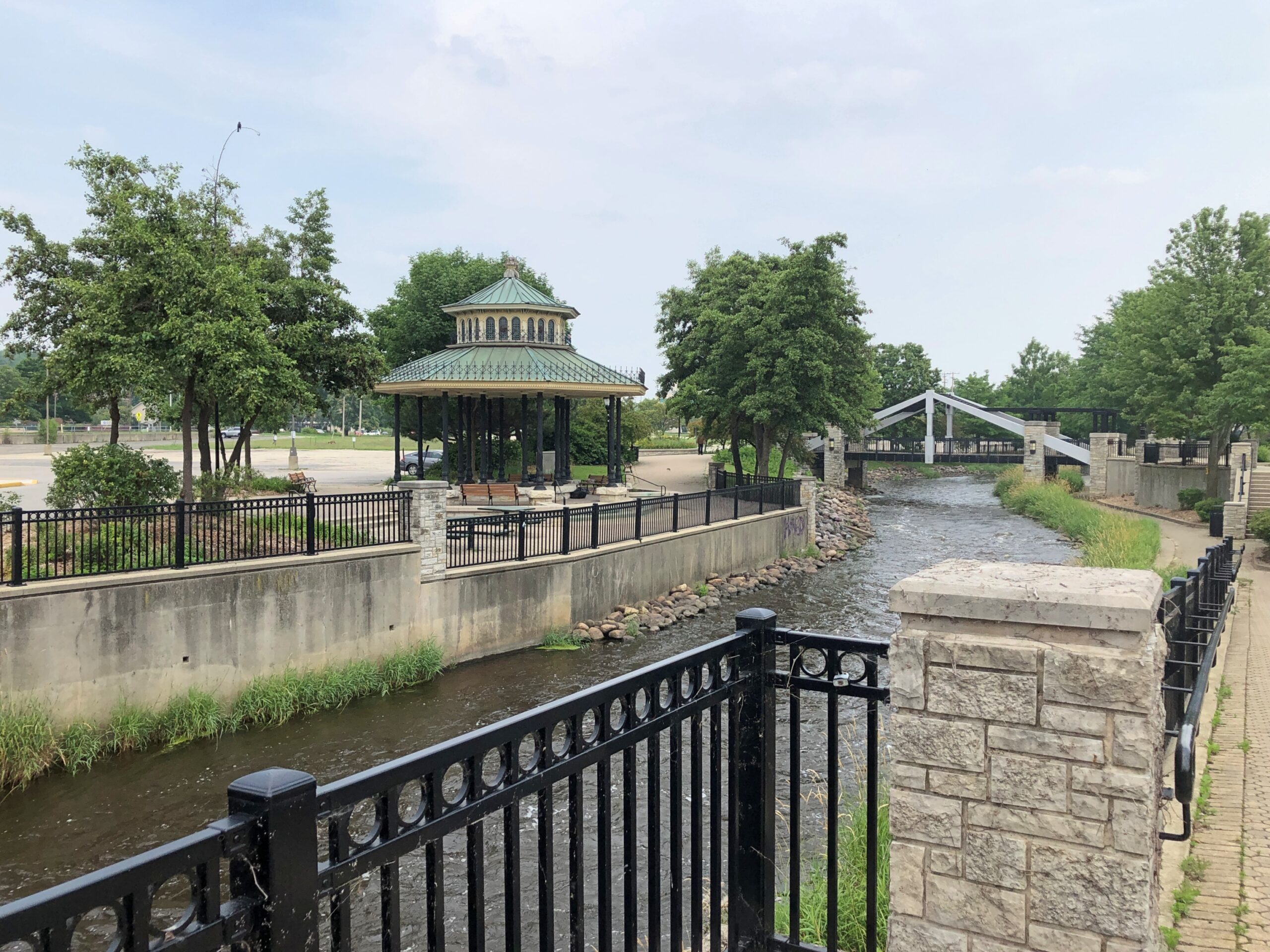
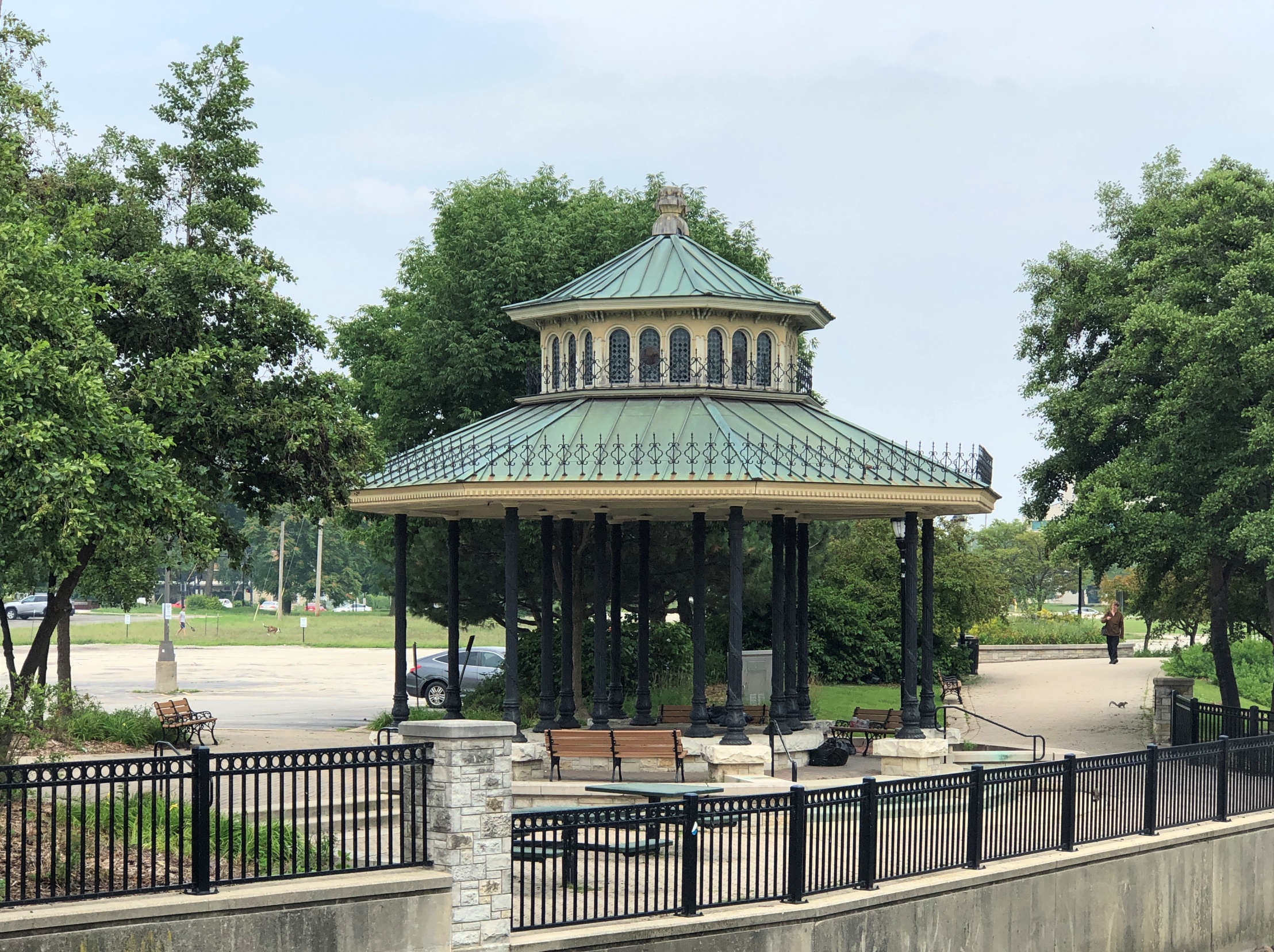
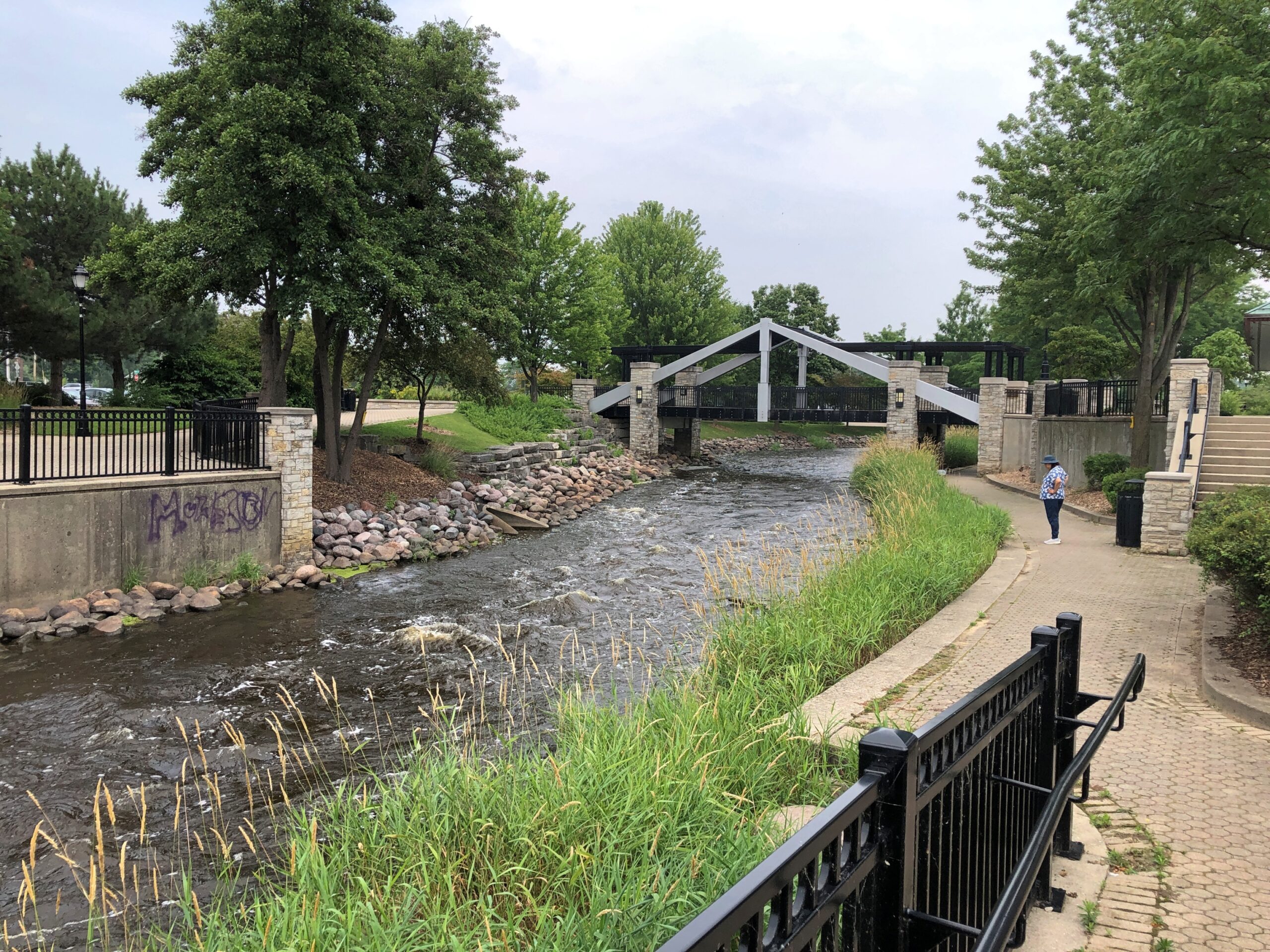
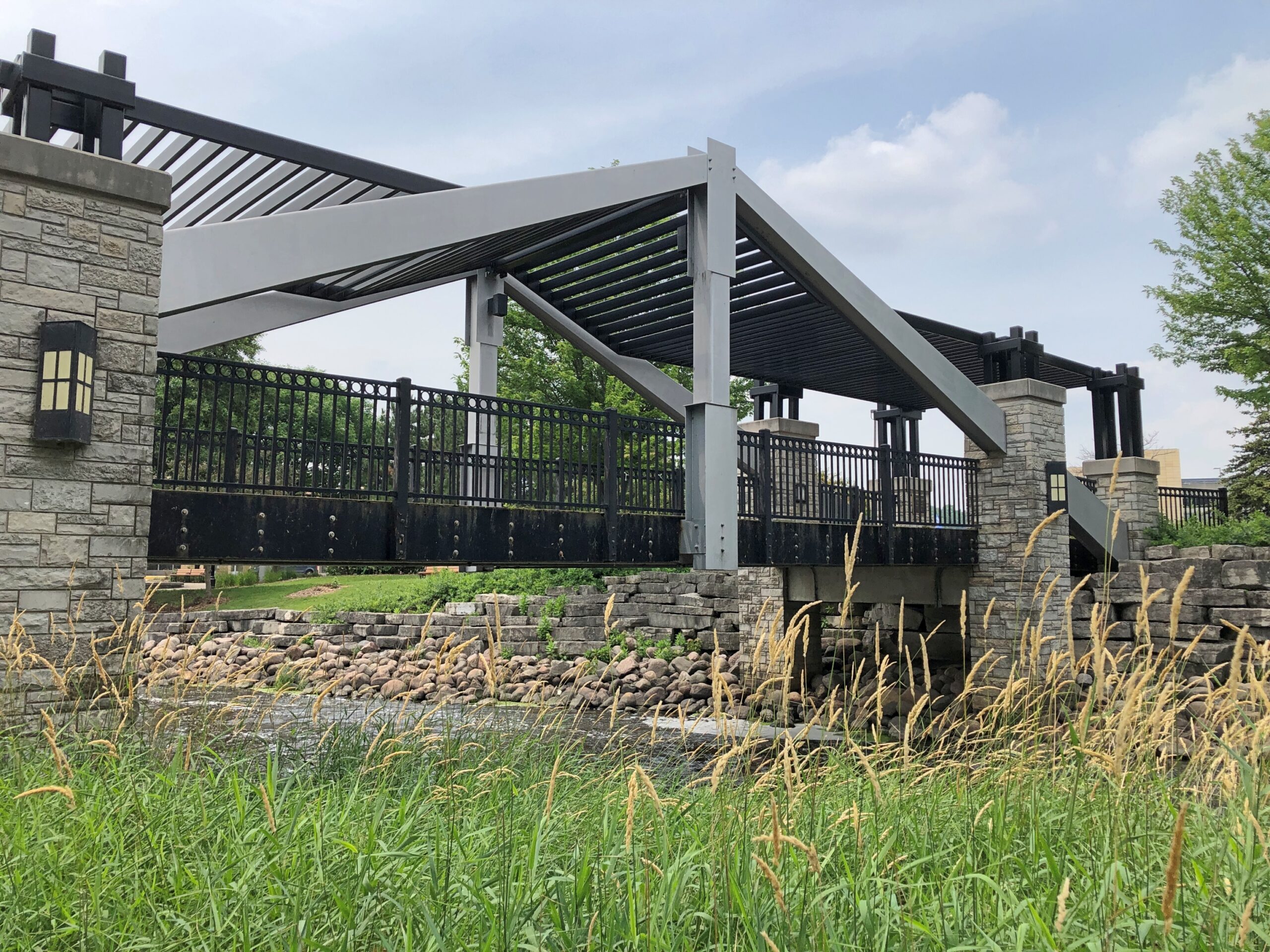
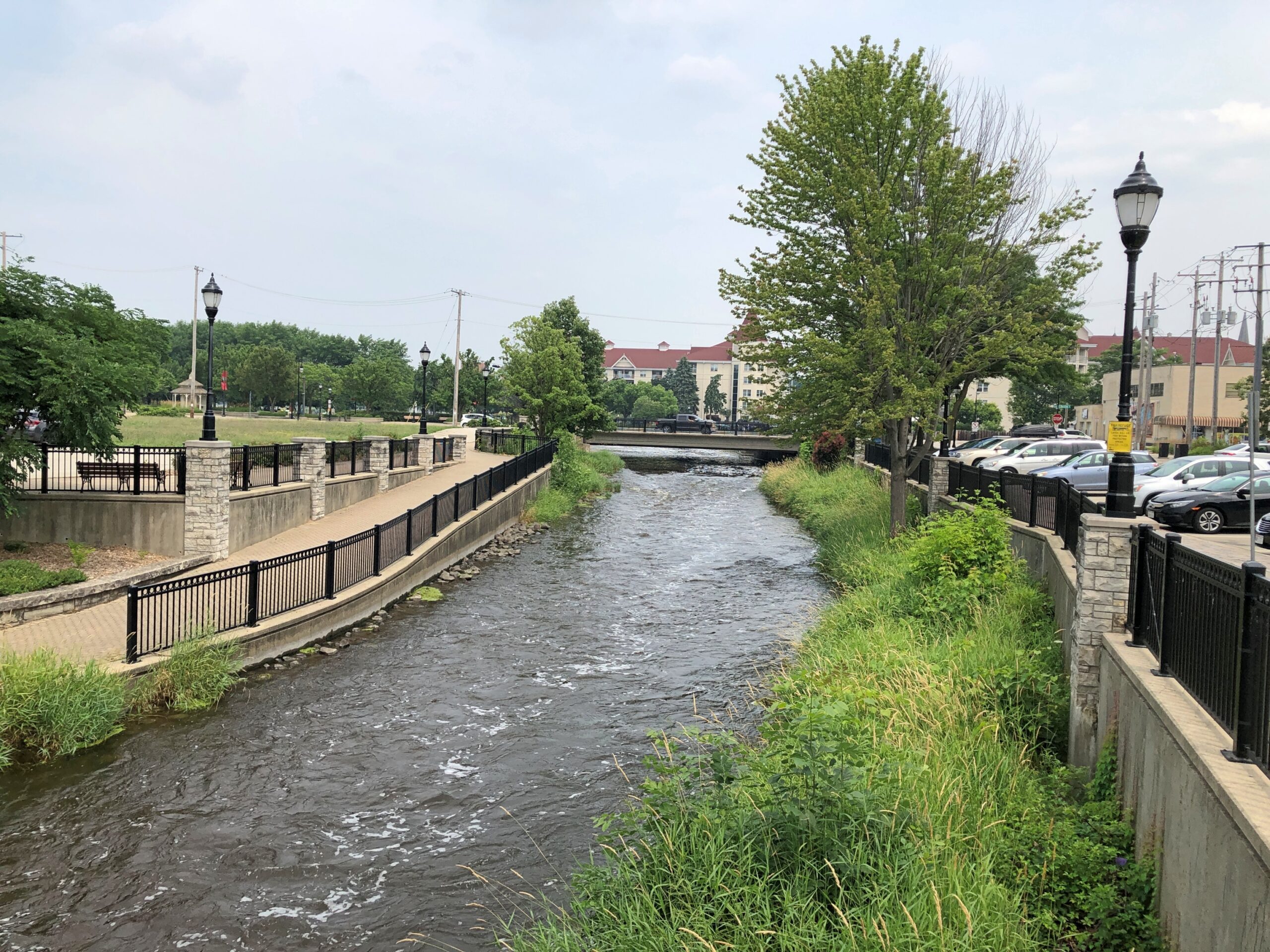
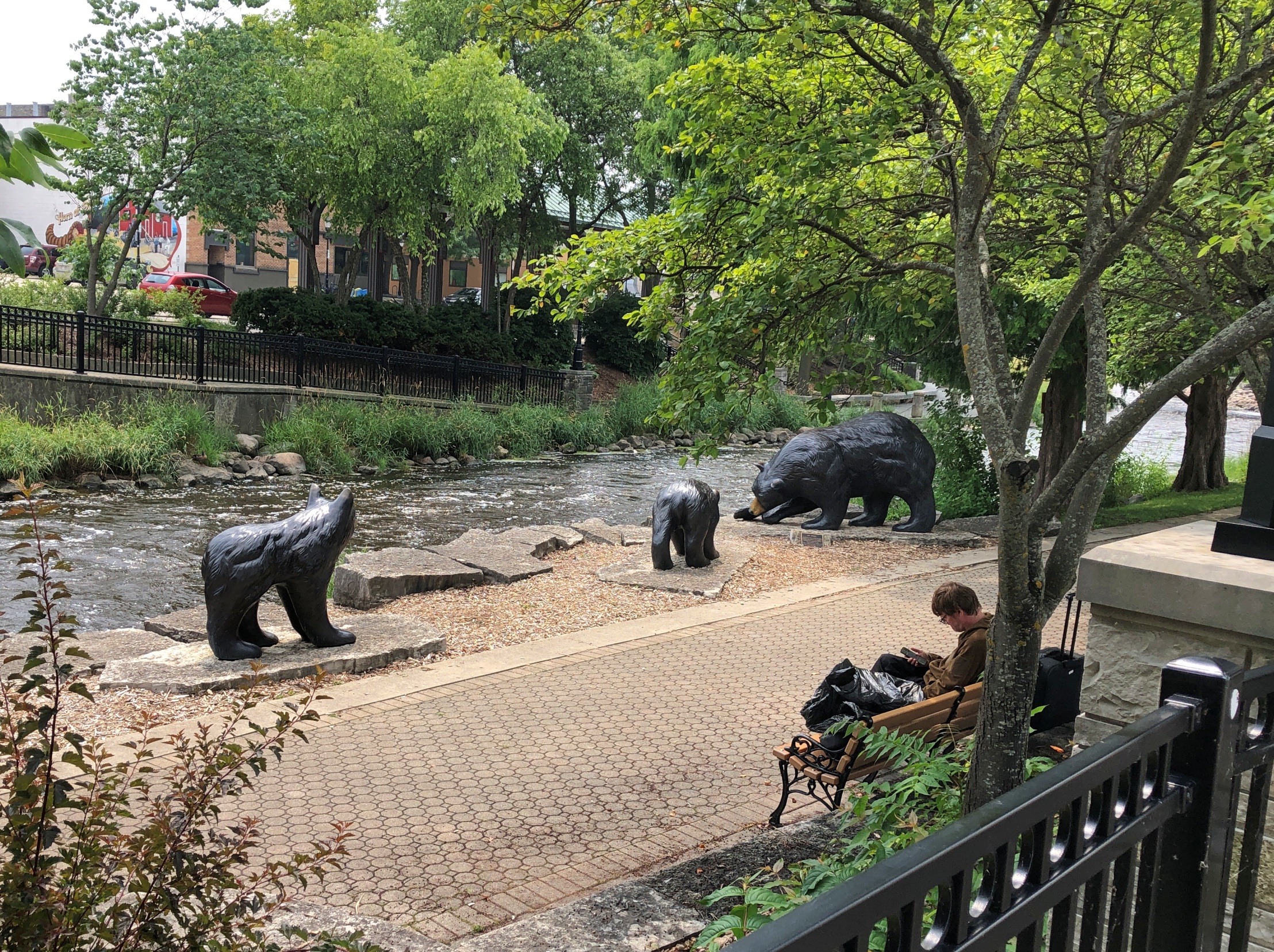
Downtown, especially Huron Ave., made for a pleasant walkabout.Port Huron, Michigan Port Huron, Michigan Port Huron, Michigan

Huron Ave. crosses the Black River – one of a number of rivers called that in Michigan alone – at a drawbridge, just before the river flows into the St. Clair. As we wandered along the riverfront, bells went off.Port Huron, Michigan Port Huron, Michigan Port Huron, Michigan

When you see a drawbridge in motion, watch it if you can. Again and again. Just another of the little maxims I live by.
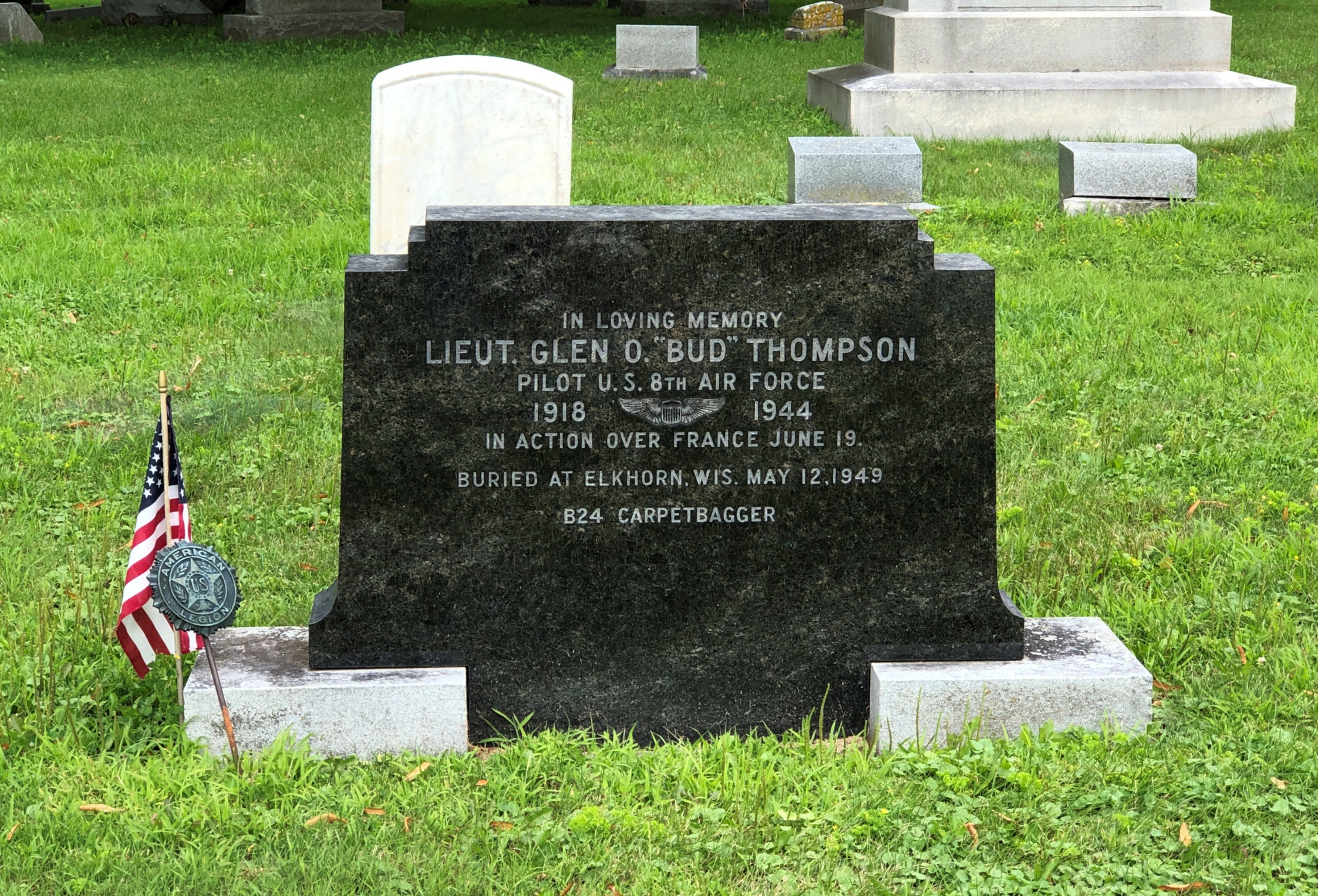
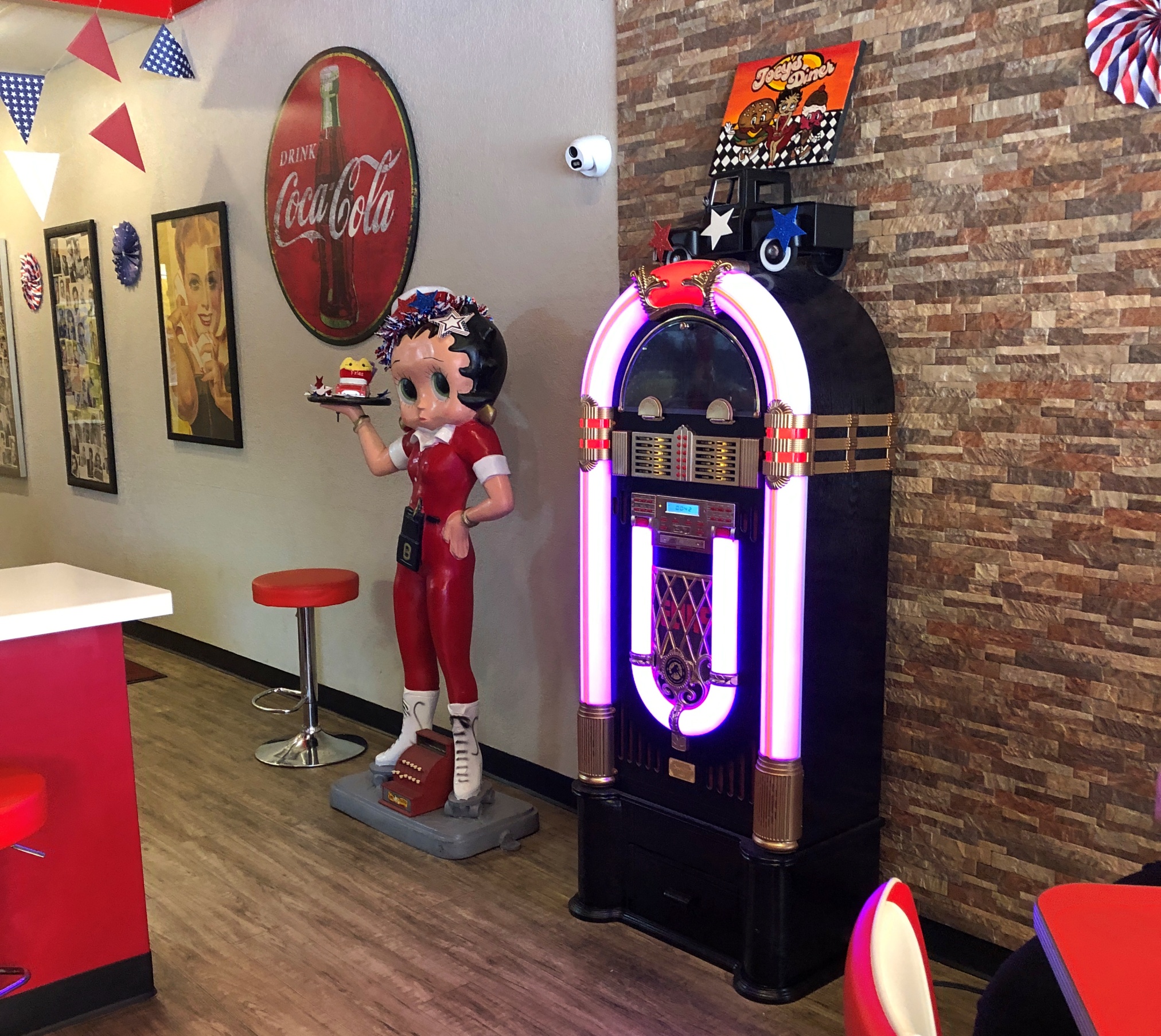
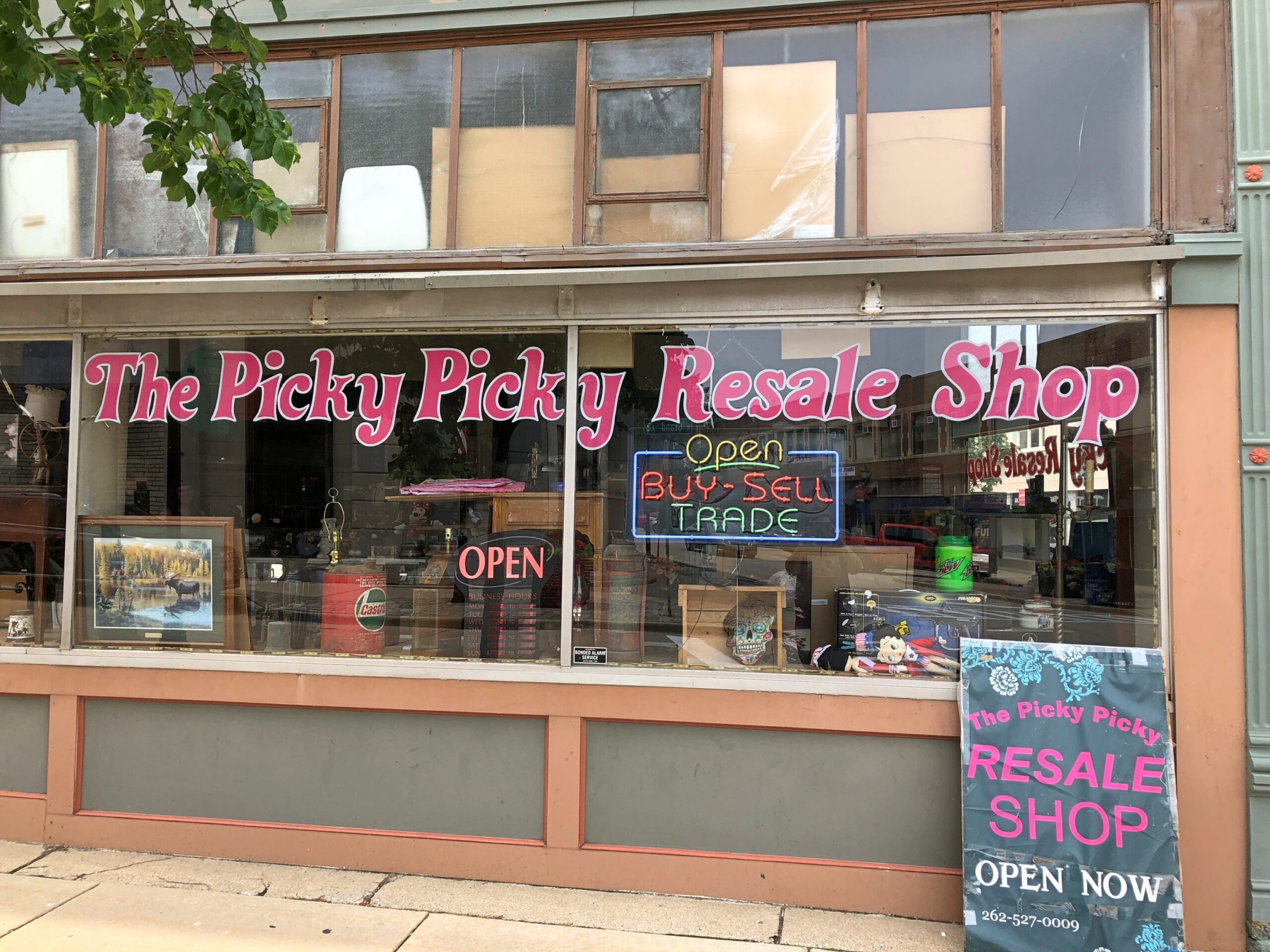
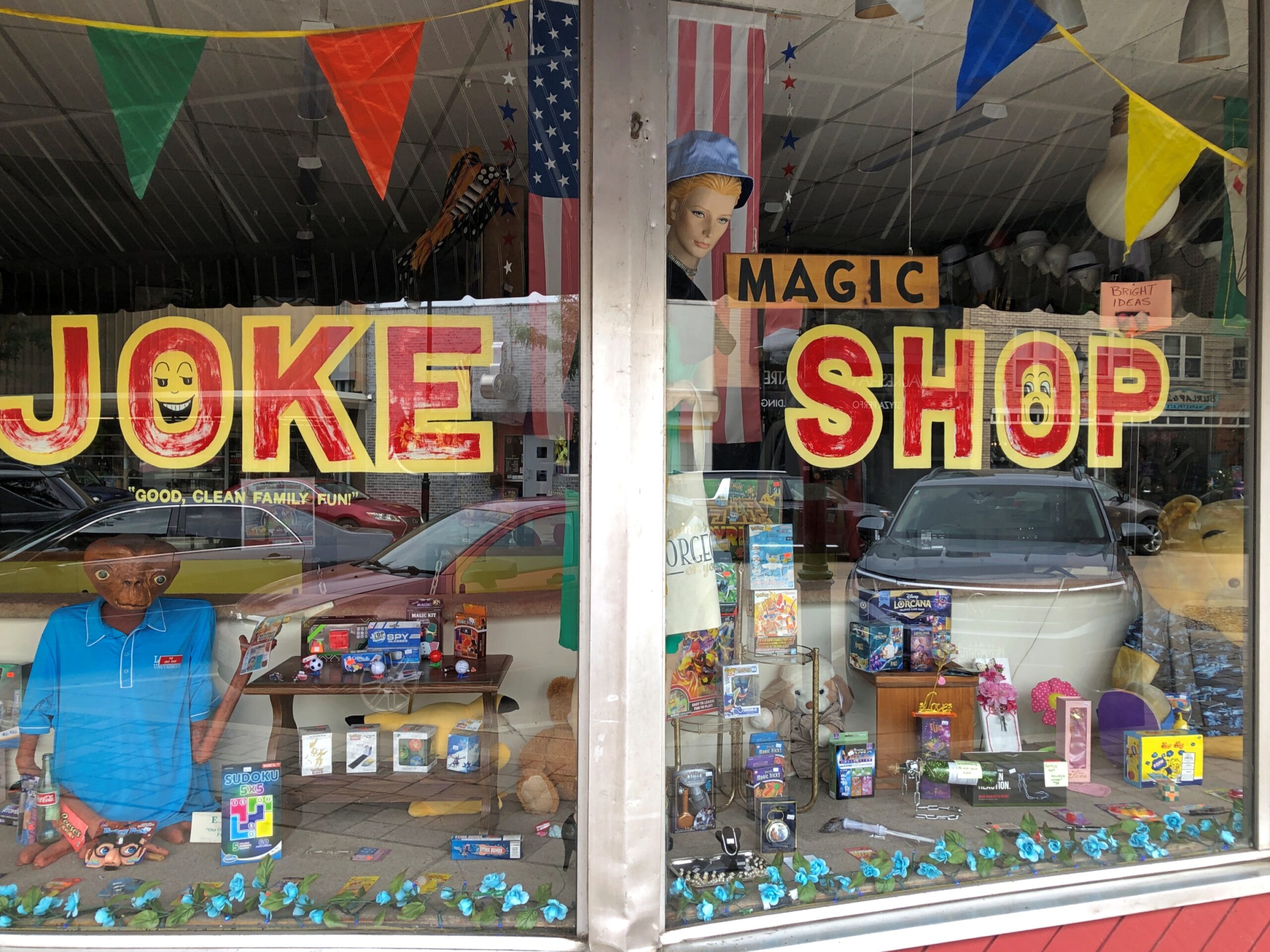
There are hints that hipsters have discovered Port Huron. Maybe a scattering of them who have been priced out of Ann Arbor.Port Huron, Michigan
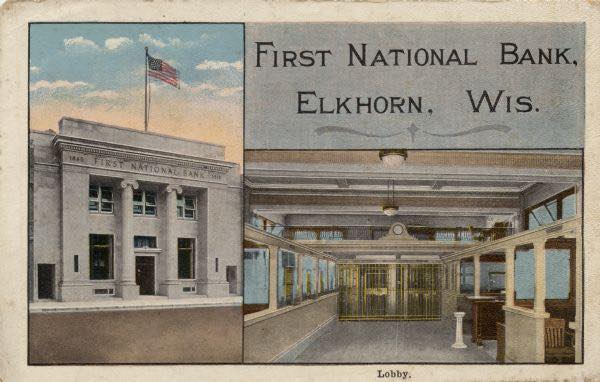
We spent some time in a sizable, multi-room antique shop on Huron Ave. Not quite as entropic as Reid’s Corner, but nevertheless stocked with all sorts of interesting stuff, including vinyl records (more evidence of hipsters about).

The First Family was first in a bin, offered for only $2. I didn’t buy it. I have a copy that my brother Jay gave me, and he said that he paid about 80 cents for it. I’m glad to have it around, though we have no record player any more. It functions as a reminder about eggs and baskets.

Two dollars might have been the nominal price in 1962, or a dollar or so more. As a collectible, First Family hasn’t even kept up with its original price in inflation-adjusted terms (nearly $21 now), though if you look at eBay or the like, people are trying to get ridiculous prices for the album. The supply of disks is vast, with 7.5 million units reportedly sold before the president’s death.

1962. The same year that the Port Huron Statement was published. Is it a mere coincidence that I saw this record in Port Huron, or is the universe trying to tell me something? I’ll go with mere coincidence.

South Dakota Dash ’24

The first day of the trip was a slog from Illinois through Wisconsin and most of southern Minnesota. The second day, August 19, we woke up in Luverne, Minnesota and went to bed in Sundance, Wyoming. Less of a slog, mainly because we stopped a few places in South Dakota along I-90.South Dakota flag

First of all, Sioux Falls. How can you stop in Sioux Falls and not see the falls?Sioux Falls Falls Park Sioux Falls Falls Park

Hard to believe, if you crop things right, you’re in a city of around 200,000. Sioux quartzite, it’s called.Falls Park, Sioux Falls

Once a hub of water-power industries — the ruins of a mill are on the grounds — these days the falls travel through the municipal Falls Park. Sioux Falls has thoughtfully erected an observation tower on top of a rise in the park, for better views.Sioux Falls Falls Park

Naturally, we went to the top, for the view of the falls, downtown Sioux Falls, and – off in a different direction – a major Smithfield meat processing plant. Sioux Falls isn’t just about credit card HQs, the result of a race-to-the-bottom concerning usury laws. It still has industry, too.Sioux Falls Falls Park

Before leaving town, we sought out the Cathedral of St. Joseph, a work by Emmanuel Louis Masqueray (d. 1917), another of those famed architects mostly lost to time. Among other things, he was chief of design at the 1904 St. Louis world’s fair (one of the four fonts of the modern world).Sioux Falls Cathedral St. Joseph Sioux Falls Cathedral St. Joseph

It was open. Not all city churches can say that on a Monday.Sioux Falls Cathedral St. Joseph Sioux Falls Cathedral St. Joseph

Nice. Westward on I-90, at one of the rest stops, we found a much smaller religious structure, though elegant in its simplicity.wayside chapel, South Dakota wayside chapel, South Dakota


It too was open.wayside chapel, South Dakota

Lunch that day was in the burg of Kennebec, SD (pop. 281), which happened to have a place, Benji’s Diner, with a distinctive ag-town vibe, and serious meat on the menu.

It’s a little hard to tell, but there’s beef under that sea of gravy, and I found it mighty filling. Signs on the highway promote the SD beef industry and beef eating on principle, and they get no argument from me.

We took a look around town. When I saw this, I concluded that every town, no matter how small, has one of these murals as a little expression of civic pride. Seems that way, anyway.Kennebec, SD

Kennebec is the Lyman County seat. Lyman County Courthouse, Kennebec South Dakota Kennebec South Dakota Kennebec South Dakota

The built environment isn’t just buildings.Kennebec South Dakota Kennebec South Dakota

Despite our large lunch, we managed to stay awake for the drive to Wall, SD, stopping for a few minutes at Wall Drug and then Badlands National Park, where we spent a few hours. That decision factored heavily into what happened next in Wyoming, more about which later. Enough to say that by the end of the day, we were in Sundance, Wyo.

But we weren’t done with South Dakota. For reasons I won’t bore anyone with, especially myself, we had to backtrack the next day to take care of a minor issue with the car, so it wouldn’t be major later on. For that, we went to Rapid City, which we had bypassed the day before. I’m glad we got to go, because the mechanical issue didn’t actually take long to deal with, which left us with time to see a bronze James K. Polk.Rapid City presidents

Plus U.S. Grant, Franklin Roosevelt, and Calvin Coolidge, among other U.S. presidents at street corners in downtown Rapid City that I managed to see.Rapid City presidents Rapid City presidents Rapid City presidents

“When a local man noticed people interacting with a temporarily placed statue of President Lincoln outside the Hotel Alex Johnson [in downtown Rapid City], an idea sparked. This man was Don Perdue, and he came up with the idea to put a president on every corner in Downtown Rapid City,” explains Visit Rapid City.

“It took a lot of convincing, a lot of fundraising, and hours of research before it started. In 1999, Perdue proposed the idea to the city as a way to honor the legacy of the American Presidency. The project was approved and in 2000 the first four presidents were unveiled: George Washington, John Adams, Ronald Reagan and George H.W. Bush… Over the next ten years, a group of local artists worked to create and place all 40 of the remaining statues.”

I didn’t have time to see all of them. Or the inclination. It was in the low 90s F. that day, so I only wanted to spend a few minutes seeking them out, while Yuriko more rationally waited in our air conditioned car.

She was willing to get out and look at Rapid City’s older attraction a few minutes later, however: Dinosaur Park. I later checked with my brother Jim. He said he does indeed remember, a little, our family’s visit to the park in 1960, before I was born.Dinosaur Park, Rapid City

There’s a good view of Rapid City from atop the park’s hill.Dinosaur Park, Rapid City

But you’re up there to look at wire-mesh-frame dinosaurs with concrete skins, originally dating from the 1930s but obviously maintained into our time and (maybe?) tinkered with a little to more closely match current thinking about dinosaurs.Dinosaur Park, Rapid City Dinosaur Park, Rapid City Dinosaur Park, Rapid City

Even better, I learned that the park was originally a WPA project, consciously designed to draw tourists to Rapid City with something distinctive. Of all the various WPA projects one can encounter, this has to be unique among the lot.

A Normal Car

When I see a car decked out like this, I admire the effort that went into it. Spotted in a large parking lot in Normal, Illinois, a little over a week ago.

That effort is more than decorating the car’s surfaces. Cars move around. This isn’t going to be set and forget. What happens when you drive on the highway in that machine? Or a hard rain falls? Or wind gusts, even when it’s parked? Things fly off, of course. Lose, replace, lose, replace. The enthusiast who owns this car has to work at it that much more, and more often.

So – interesting to look at, but I wouldn’t want it in my driveway.

Return to Le Roy, Home of Wausaneta

It so happens that Moraine View State Recreation Area is only a few miles north of Le Roy, Illinois, a burg I passed through more than five years ago. At that time I made the acquaintance of Wausaneta, an imaginary Kickapoo chief. His statue has stood in Kiwanis Park in Le Roy for more than a century now, gift to the town of the wealthy crackpot who dreamed him up. I mean, gift to the town of the spiritualist and leading citizen who communed with Wausaneta those many years ago.

As of Sunday, the statue of Wausaneta still stands in Le Roy’s main square.Le Roy, Illinois

I didn’t remember the carved stump tree nearby.Le Roy, Illinois

Panther Tree, it’s called. The local high school mascot is a panther. The reason I don’t remember it is because it wasn’t there until late 2019; I came in March of that year.

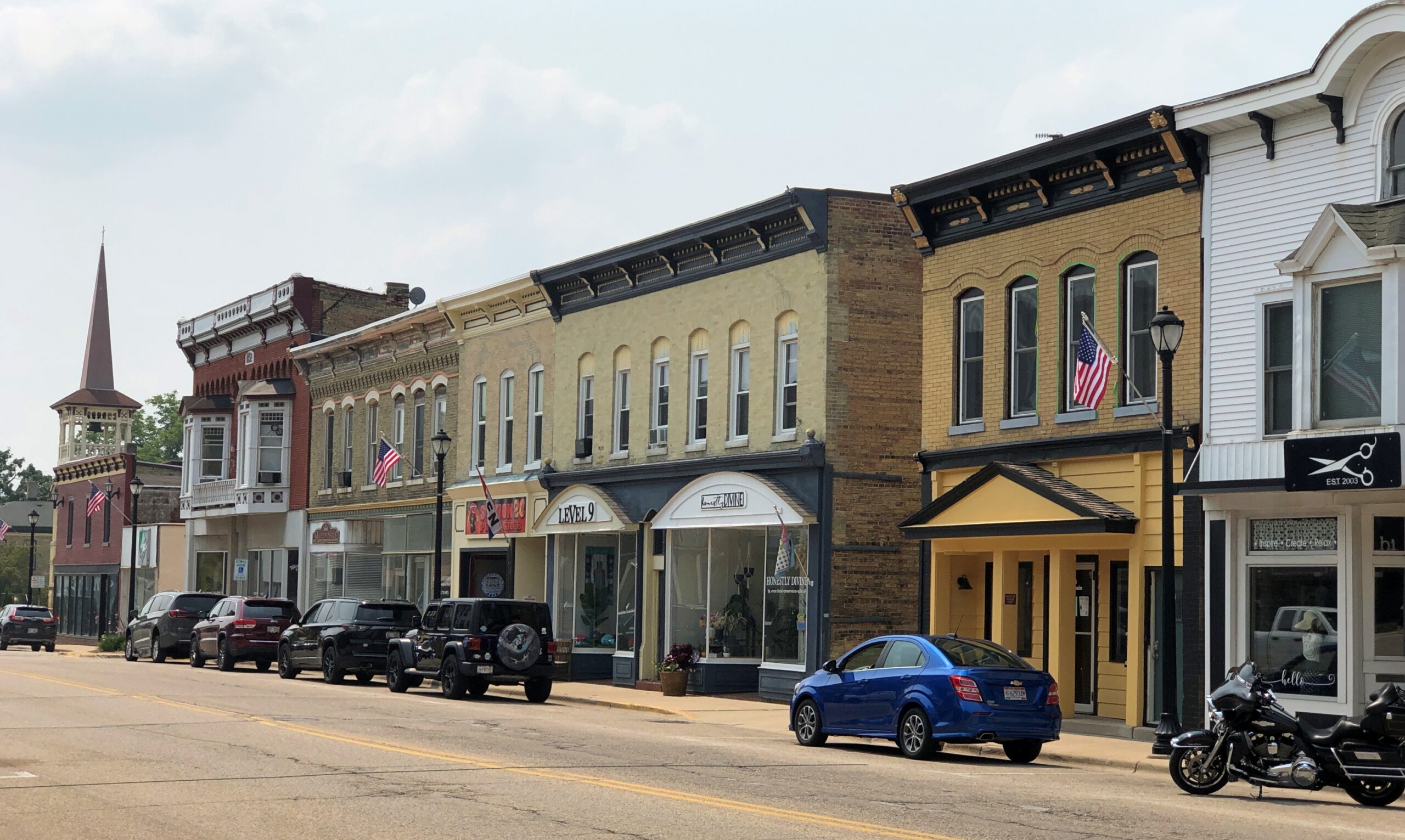
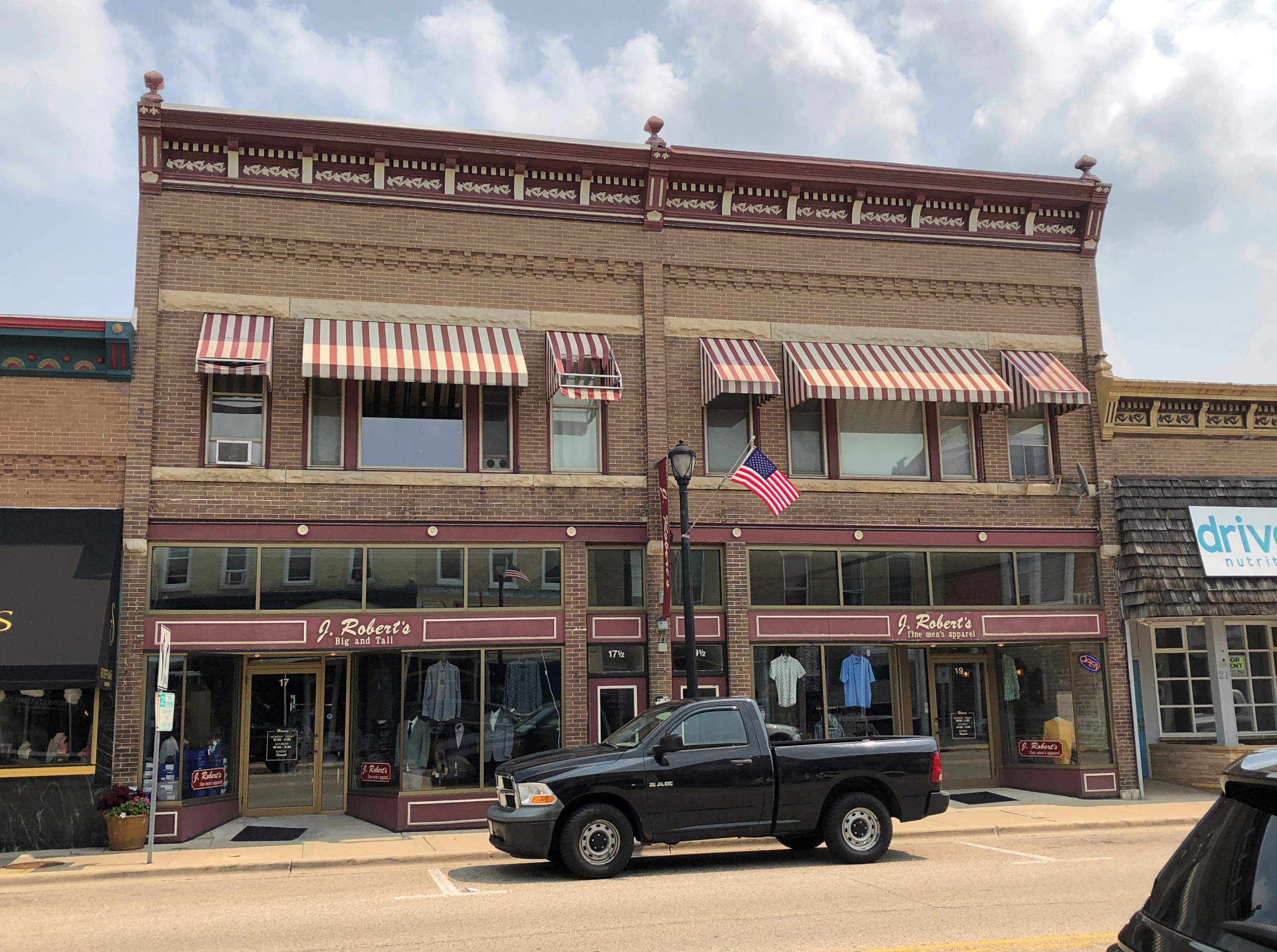
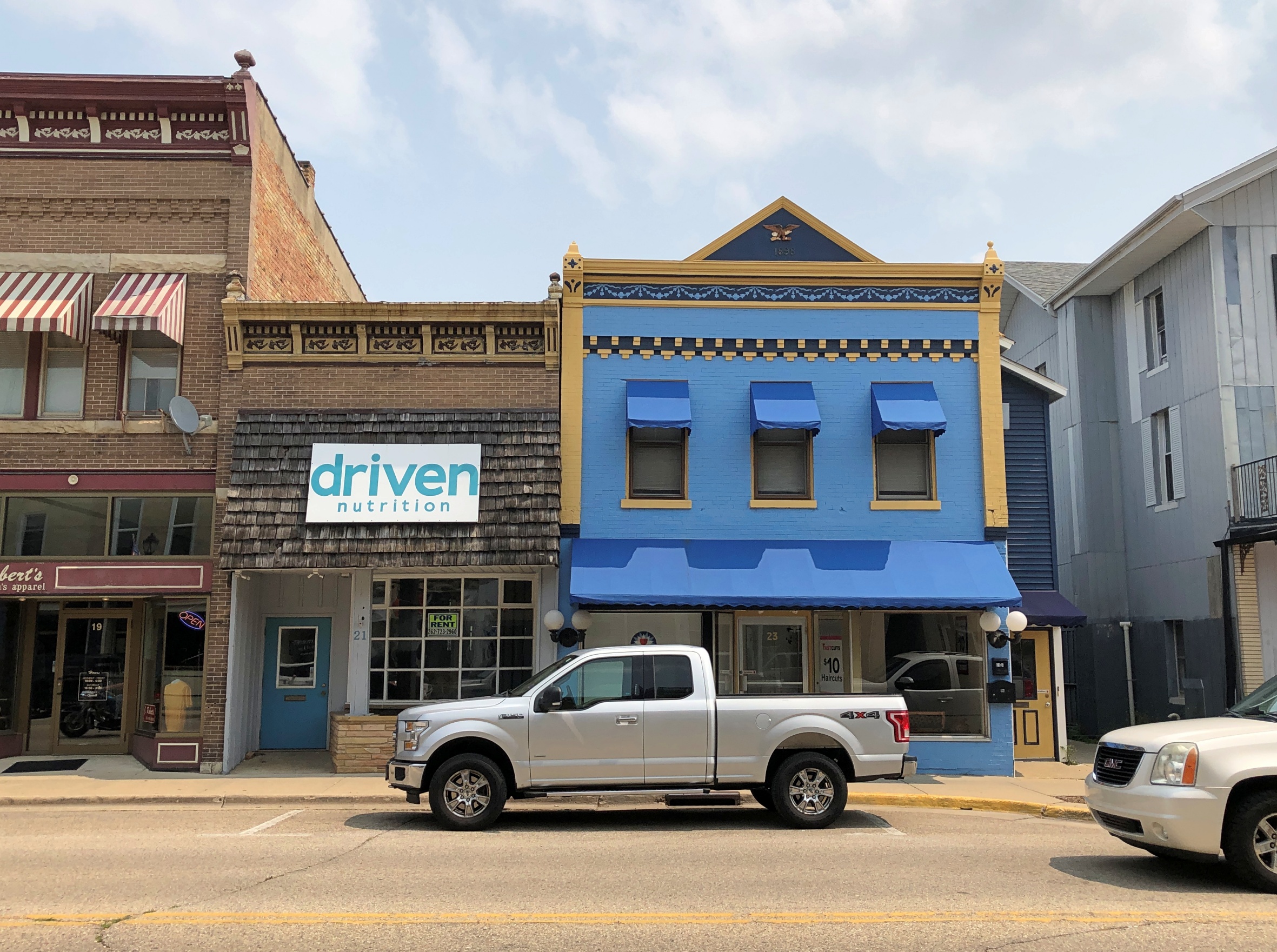
While Yuriko dozed in the car, I took a stroll down Main Street, learning that this isn’t the only Le Roy.Main Street, Le Roy, Illinois Main Street, Le Roy, Illinois Main Street, Le Roy, Illinois

Most of the buildings are occupied by one business or another. The former Le Roy State Bank is now the Oak & Flame Bourbon Hall.Main Street, Le Roy, Illinois

Every town worth its salt had an opera house, once upon a time. In this case, that time was 1892.Main Street, Le Roy, Illinois

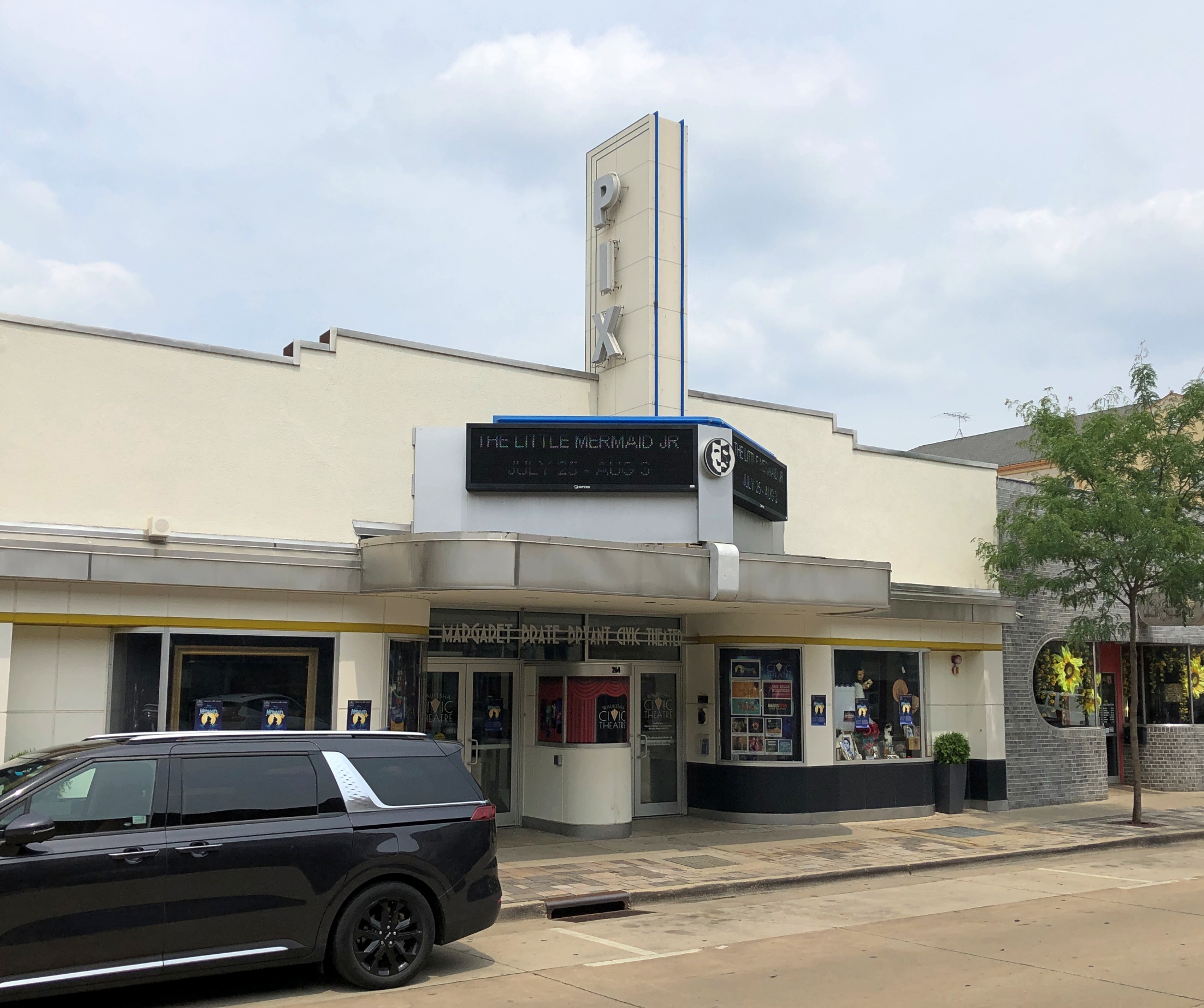
The Princess Theatre had an abandoned look, but its web site that says that Horizon: An American Saga is playing there once a day until August 3. Only $5 for seniors and children, and $6 for adults, which might be what it’s worth.Main Street, Le Roy, Illinois

“Marcus West, son of Simeon West, built the Princess Theater in 1916,” the web site says. Simeon West was the aforementioned wealthy crackpot.

“Architect Arthur L. Pillsbury designed the brick theater with limestone accents. The first movie was Tennessee’s Pardner on November 21, 1916. The original theater was a silent movie house with piano accompaniment, as talkies did not make their debut in Le Roy until 1931. A grandson of Marcus West recounts that West’s daughter, while in high school, substituted as piano player when the regular player was unable to accompany the film.”

This building looked genuinely empty. Not only empty, but still sporting a Trump-Pence sign, already a relic of yore. It has a future as a hipster bar, maybe.Main Street, Le Roy, Illinois

Guns & Glory. LeRoy Illinois Main Street

Guns & Glory offers firearms, cleaning, repair, concealed carry classes, and Bibles.

“We are probably the only gun shop and religious book store combined that you will find,” its web site says. “We believe we can provide the two most important things to protect you – ‘God and guns.’ ”

Used to be the First National Bank. And a Rexall drug store.LeRoy Illinois Main Street

Someone went to some lengths to blot out the Rexall name, but not enough to efface it completely, if you know what you’re looking at.LeRoy Illinois Main Street

I believe the drug store in Alamo Heights where I bought comics in the early ’70s was a Rexall, but I’m not quite sure. At some moment after I left town, it disappeared. That same dynamic happened so much that the brand now enjoys only a whisper of its ’50s coast-to-coast retail glory.

The McLean County Museum of History

Revel in the obscurity: Details of posters advertising a regional brand of candy that hasn’t been made in years, created by a commercial artist no one has ever heard of, on display in a large town few people visit.McLean County Museum of History McLean County Museum of History

Bloomington-based Beich Candy Co. was the candy maker, and the posters advertise its Whiz Bar, whose slogan – until inflation made it obsolete – was “Whiz, best nickel candy there iz-z.”McLean County Museum of History

The posters are behind glass at the McLean County Museum of History, and thus hard to photography in total without glare. But details work out nicely.
We visited the museum on Saturday morning.McLean County Museum of History McLean County Museum of History

“These posters were created by Don Shirley (1913-2001) for States Display, a local commercial art business,” notes the museum. “He was an artist and illustrator.”

A Prussian immigrant by the name of Paul F. Beich founded the candy company that carried his name. Beich Candy Co. lives on as a unit of Ferrero, with a candy factory in Bloomington (recently expanded), but Whiz seems to be no more. A chocolate-marshmallow-peanut confection, it sounds something like a Goo-Goo Cluster.

An even deeper dive into Beich Co. is at an Illinois Wesleyan University website. It’s the story of a food technologist who worked for the company, one Justin J. Alikonis.

“He designed and patented, among other things, a marshmallow-making machine, the ‘Whizolater,’ named after the Beich flagship candy bar, the Whiz,” the site says. “With no moving parts and operating solely on pressurized air, the Whizolater could make 1,400 gallons of marshmallow or nougat per hour.”

As local history museums go, McLean County is top drawer, with enough displays and artifacts to inspire all sorts of rabbit-hole expeditions, besides 20th-century candy making in central Illinois. Such as friends of Lincoln who otherwise would be lost to history.History Museum of McLean County

He even looks a little like Lincoln, but maybe that’s just 19th-century styling.

Otherwise obscure incidents in McLean County history make their appearance as well, such as one in 1854, when a mob of Know-Nothings smashed 50 barrels each of brandy and cherry bounce, and 50 casks each of “high wine,” gin and whiskey taken from groggeries in Bloomington, according to the museum.History Museum of McLean County

I had to look up cherry bounce. For those who like their neurotoxins sweet, I guess. The Know-Nothings were destroying the alcohol – “washed the prairie” with it, said a contemporary account, though perhaps some of it was squirreled away by thirsty Know-Nothings – presumably because it was associated with immigrant saloons.

A flag. For union and liberty.History Museum of McLean County

A replica of the one carried by the 33rd Illinois Infantry Regiment, which has its start comprised of teachers and students and former students at Normal University (later ISU), with university president Charles E. Hovey as its colonel.

Most local history museums have oddities, and so does McLean County.History Museum of McLean County

It’s a little hard to tell, but that’s a large chair. Though I’m six feet tall, my feet barely touched the ground. “Yes, please sit here!” its sign said. “The owners of Howard & Kirkpatrick’s Home Furnishings places this oversized chair outside their store to draw customers inside.”

The displays and artifacts are one thing, but what really makes the museum sing is its digs in the former courthouse.McLean Country Courthouse McLean Country Courthouse McLean Country Courthouse

Especially the former courtroom.McLean Country Courthouse McLean Country Courthouse McLean Country Courthouse

In which hangs a portrait of Vice President Adlai Stevenson.McLean County Museum of History

The courthouse dates from the early 1900s, a time when officialdom at least believed that the physical structures of republican government ought to have a touch of grandeur.

Bloomington Ramble ’24

Want good soft serve ice cream in an unpretentious setting? Look no further than Carl’s Ice Cream, a plain-looking shop deep in the heart of Bloomington, Illinois. Also, look for its anthropomorphic soft serve cone rising over the parking lot.Carl's Ice Cream Bloomington Carl's Ice Cream Bloomington

Yuriko and Ann had strawberry, I had chocolate. Carl’s in Bloomington – there’s also one in Normal, with an ice cream muffler man outside – was an early afternoon stop on Saturday. We spent part, but not all of the weekend, in Bloomington.
Something we (I) also had time to do was take a better look at the impressive three-legged communications tower in downtown Bloomington. It’s visible for quite a distance, and makes me wonder, why aren’t more communication towers this interesting?Bloomington Eiffel Tower. Well. Sort Of

Much of the day was hot, or at least very warm, and sunny, a prelude to heavy rains early Sunday morning. So Yuriko was content to stay in the car – with the AC running – when I took in a few closer views of tower.Tower Center Bloomington Tower Center Bloomington Tower Center Bloomington

Pantagraph articles about the tower are paywalled, but snippets poke through from search engine results:

In the last 30 years of telephone, radio and other network service, the Tower Center became a sort of landmark for downtown Bloomington, lovingly nicknamed the city’s “Eiffel Tower.”

Bloomington’s ‘Eiffel Tower’ changes hands after 30 years

The McLean County Center for Human Services Recovery Program is gaining a new home beneath the iconic 420-foot communications tower in Bloomington…

Another source tells me that the tower dates from 1989. The Tower Center is the two-story building under the tower, now belonging to McLean County.

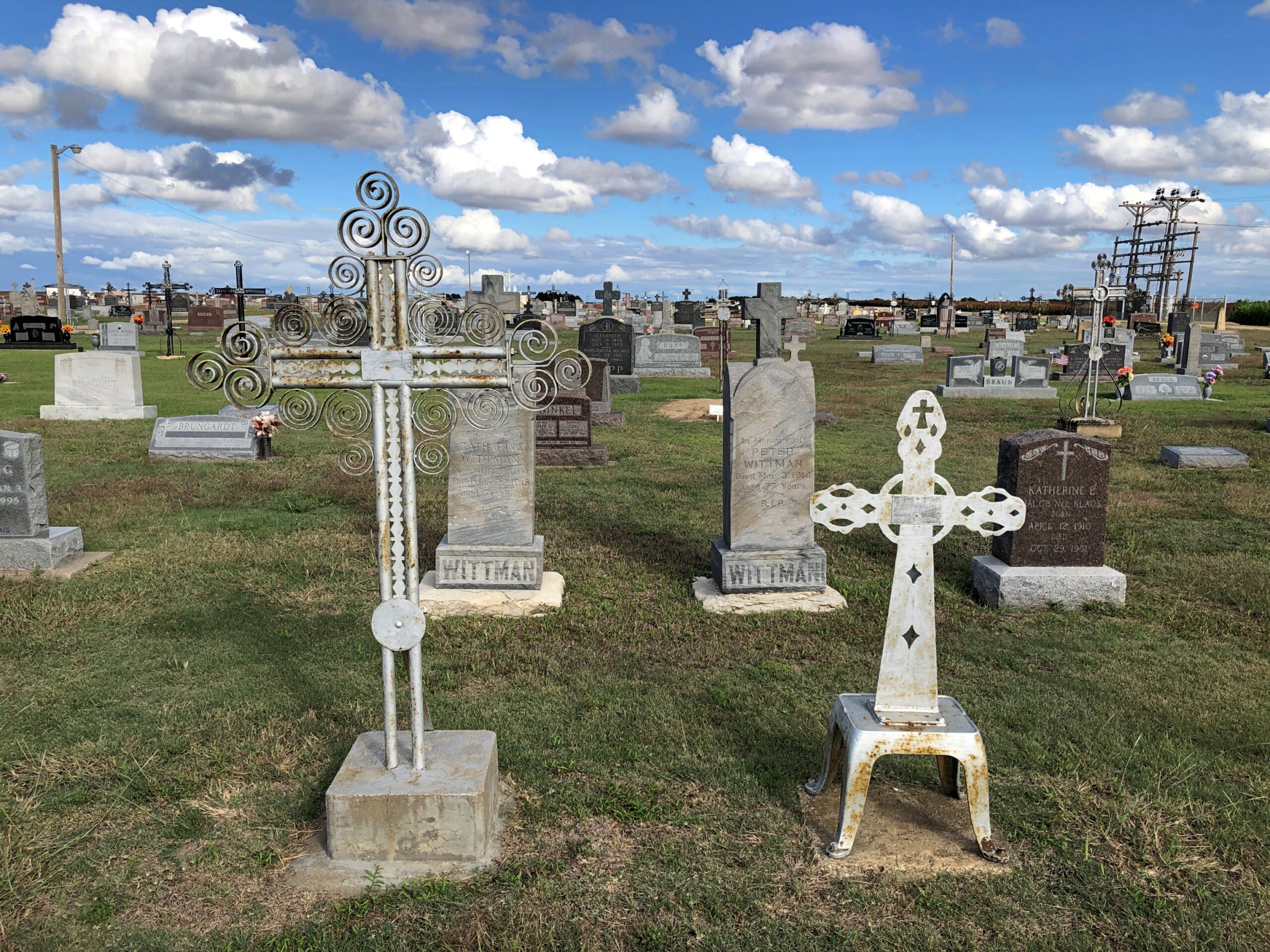
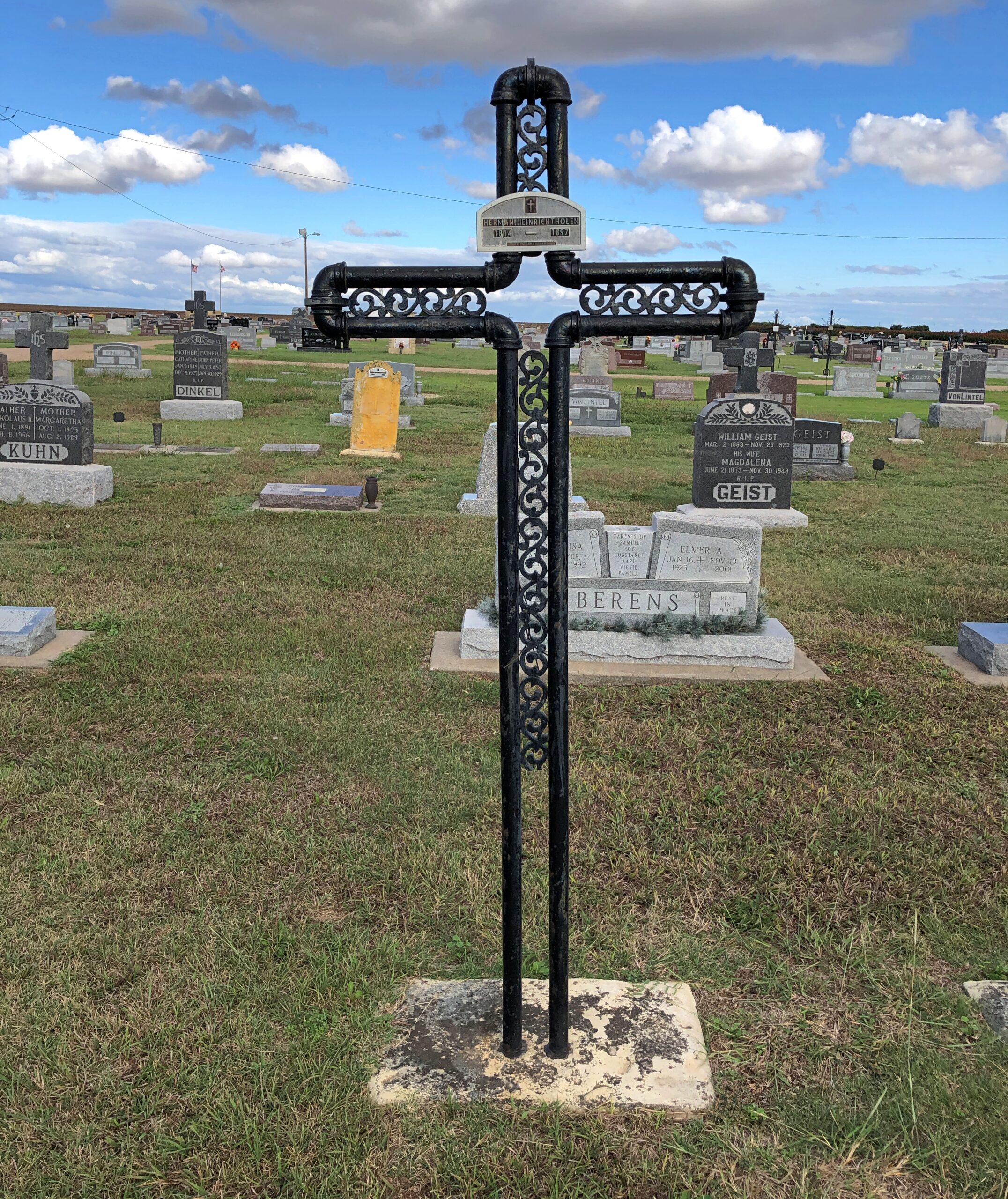
After the rain cleared away, late Sunday morning was as toasty as Saturday had been, but more humid. I decided against a walkabout at the Park Hill Cemetery in Bloomington. It’s good to ration your time under those hot and copper skies.Park Hill Cemetery, Bloomington

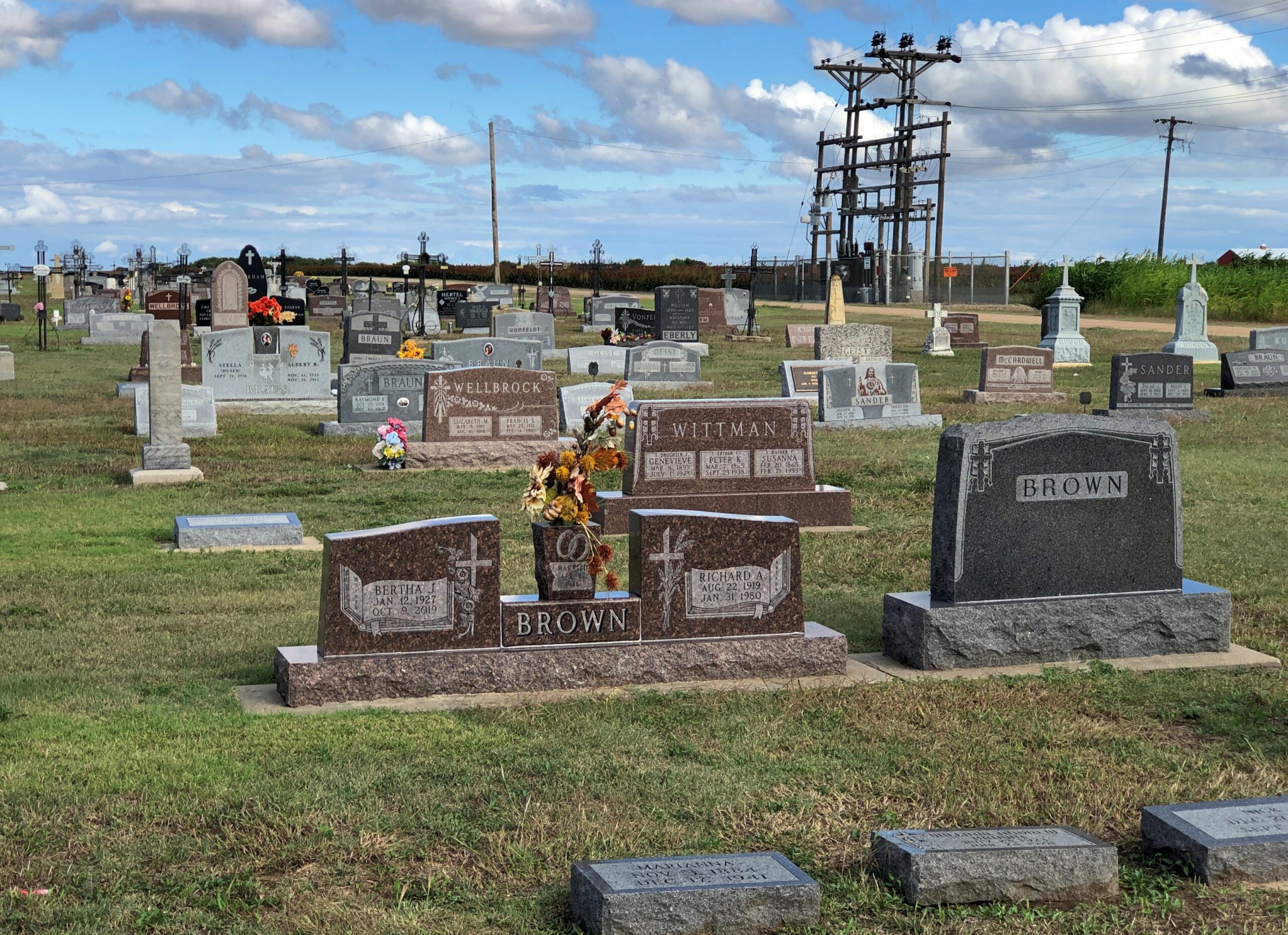
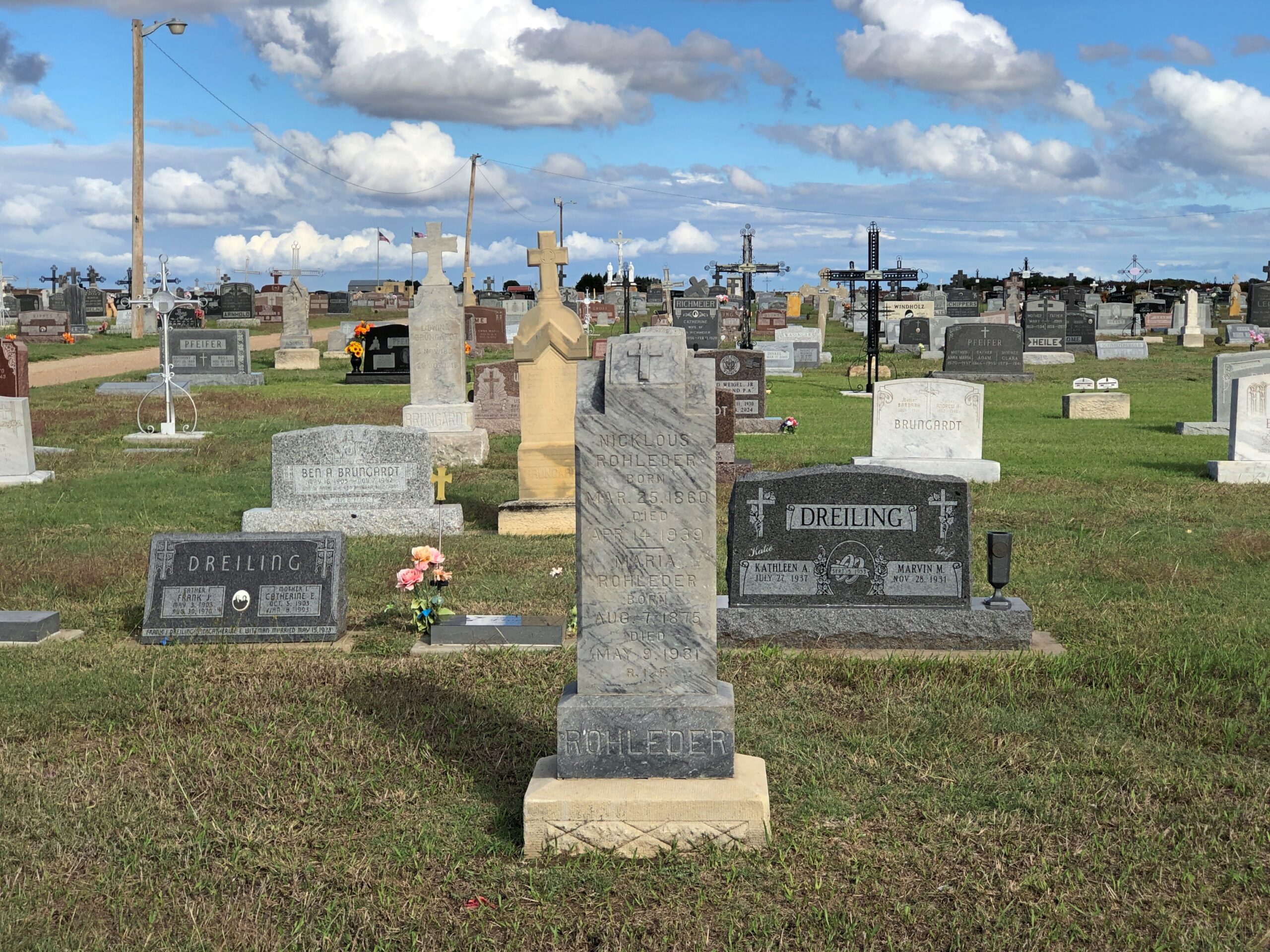
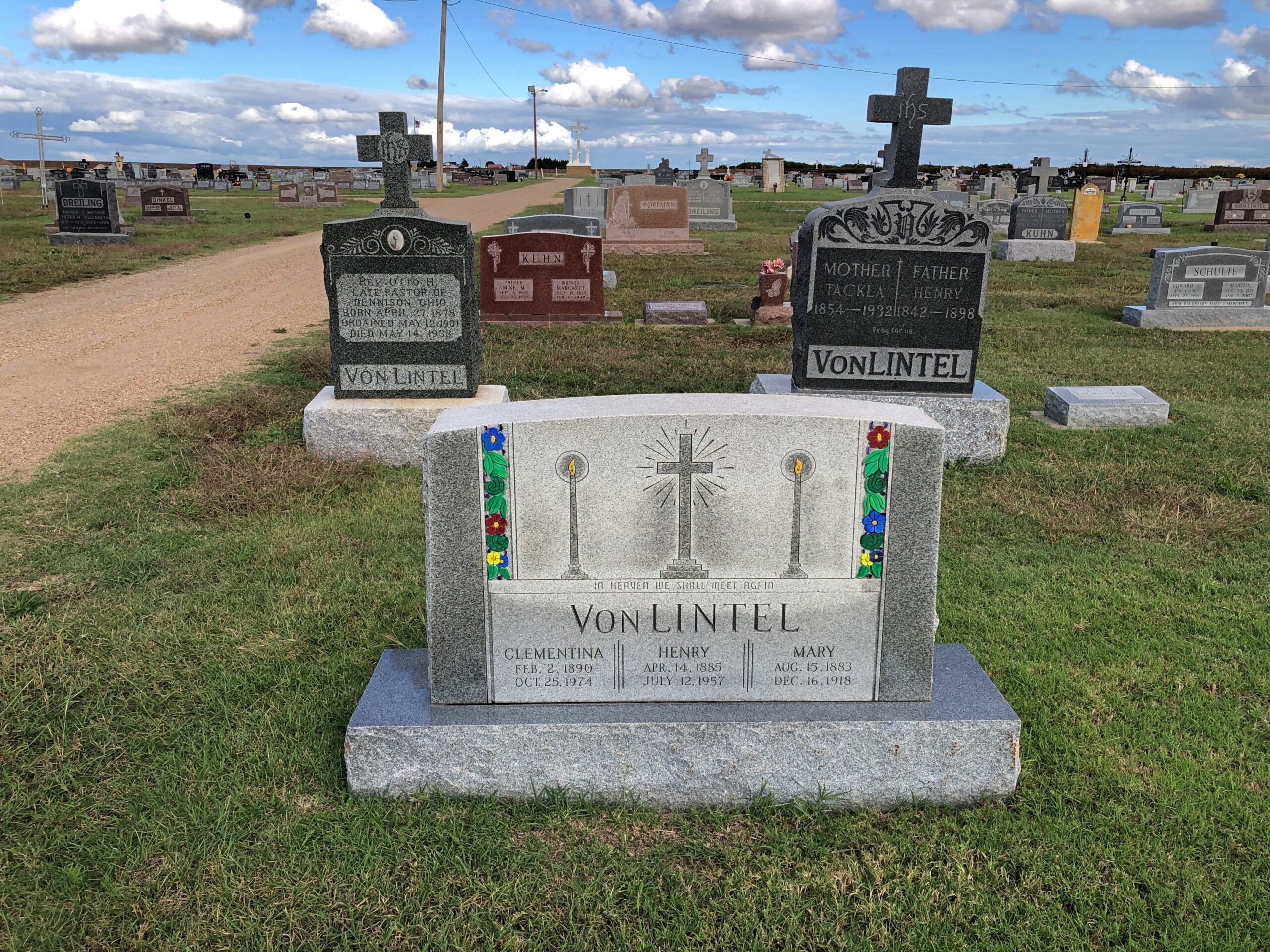
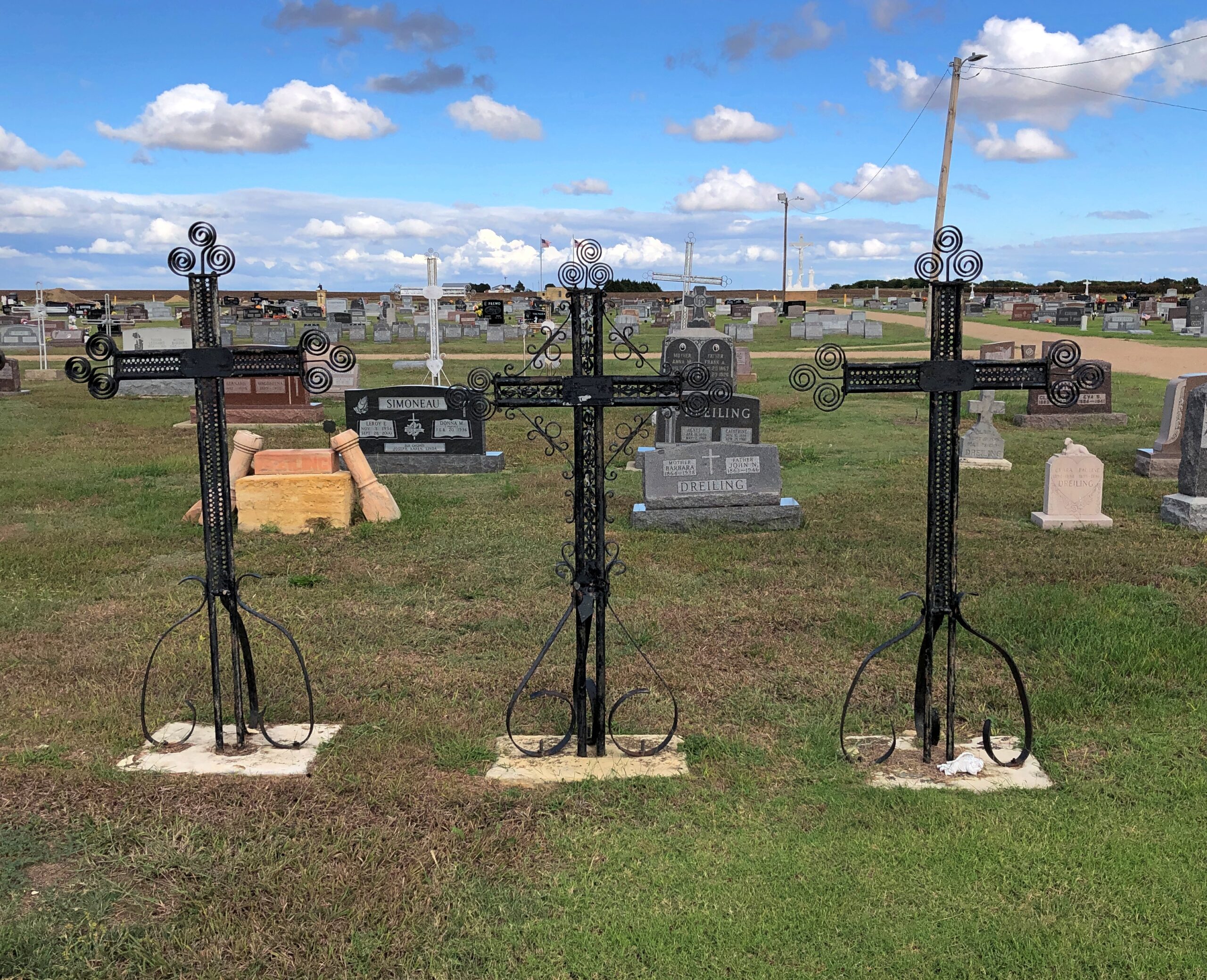
Still, we drove around a bit through the cemetery. Not a lot of memorial variety, but not bad.Park Hill Cemetery, Bloomington Park Hill Cemetery, Bloomington Park Hill Cemetery, Bloomington

Now I can say I’ve seen Mike Ehrmantraut’s grave. But not that Mike Ehrmantraut, of course. The fellow offed by Walter White, being fictional, must have an equally fictional grave.

Adjacent the cemetery is the sizable Miller Park, which includes the Miller Park Zoo. We didn’t want to use our ration of intense sunlight at a zoo either, but in the park itself.Miller Park, Bloomington

When you see a steam locomotive in park (and its tender), you really ought to get out and look.Miller Park, Bloomington locomotive Miller Park, Bloomington locomotive Miller Park, Bloomington locomotive

Three million miles. So the train could have, with the right track, gone to the Moon and back a number of times, provided it took its own oxygen to keep that engine going.

And what would the display be without a caboose? Partly because that’s just a fun word to say.Miller Park, Bloomington caboose

Ignorant fellow that I am, I didn’t know the Nickel Plate Road, so I looked it up later. Once upon a time, it was a major regional RR, spanning northern Ohio, Indiana and Illinois.

Miller Park features a sizable war memorial.Miller Park, Bloomington war memorial

In its vicinity are some retired weapons of war, such as a captured German 210 mm Krupp Howitzer (in better shape than this one).Miller Park, Bloomington German Cannon Miller Park, Bloomington German Cannon

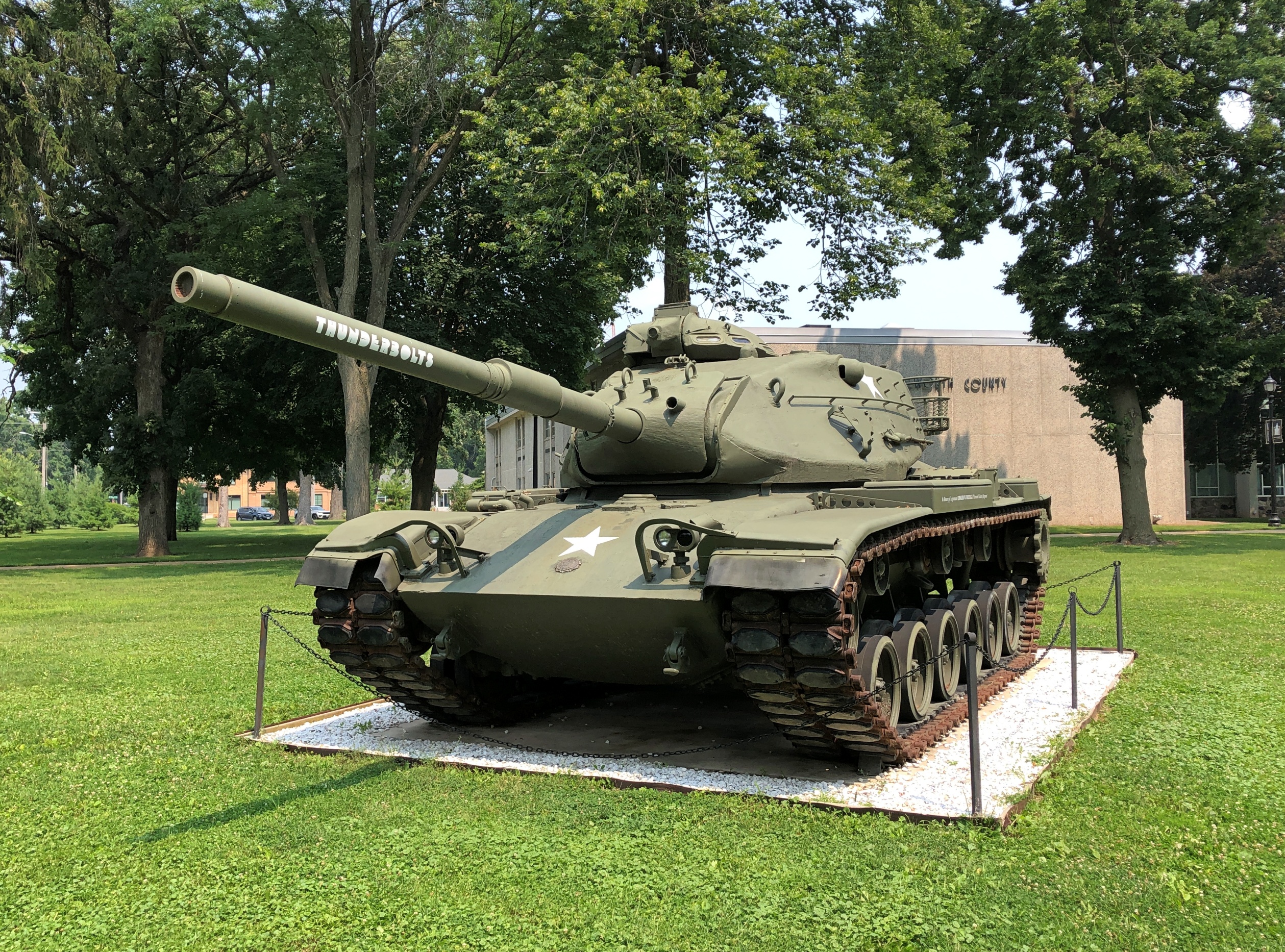
As well as a WWI tank. Created for that conflict, at least. An M1917 light tank. Apparently none made it to the front during the war, but were put in service for a few years after the war by the U.S. Army.Miller Park, Bloomington WWI Tank Miller Park, Bloomington WWI Tank

I’m not sure I’ve ever seen one of those on display. I’m reminded of my great-uncle Ralph. I understand — from my mother, and maybe even grandma told me this — that he was in a tank corps in France, with the American Expeditionary Forces. Such a posting is said to be fairly dangerous, and I believe it. Supposedly, Ralph was poised to go to the front at the time of the Armistice, which might well have saved him.

Eclipse Leftovers

Time for a second spring break. It isn’t really spring unless you can squeeze in two. Back to posting around May 19.

Today didn’t much feel like spring, anyway. Cold drizzle. Not that cold, really, but it felt that way after a run of warm days.

I’ve read about people who become eclipse followers. There’s a word for it, at least according to Time: umbraphile. (Time is still a thing?) It’s an impulse I appreciate, but I don’t know that I’ll join them.

On the other hand, Pamplona (say) on August 12, 2026 sounds good in all sorts of ways, so we shall see. I’m not counting on being unshuffled when it comes to this mortal coil on August 12, 2045, which is the timing of the next North American total solar eclipse.

Last month, we passed through Farmington, Missouri, which is the seat of St. Francois County.Farmington, Missouri

The courthouse, fourth on the site, dates from the 1920s. “Innuendoes about fraud led to a grand jury investigation; the solution to the architect’s questionable procedure apparently was resolved by closer supervision,” says the University of Missouri about Norman Howard of St. Louis, the architect of the current courthouse.

There’s a story in that line, the details of which may be lost to time.

Who can you see outside an antique store on the main street of Potosi, Missouri? Betty!

Who can you see on the wall of the Laura Ingills Wilder Home in southern Missouri?Rose Wilder Lane

A young Rose Wilder Lane, Laura’s daughter and a writer herself, and apparently a foremother of modern libertarianism.

Spotted in downtown Nacogdoches. Nacogdoches

That’s a nicely designed memorial plaque. Showing the nine flags over Nacogdoches; the usual six in Texas lore, plus three more localized ones raised during various rebellions.

Did I make note of the landmarked building? It was nice enough, but not memorable. Lone Star Feeds, on the other hand —Lone Star Feed

A pet food plant, about 50 years old now.

For sale in Logansport, Louisiana.Logansport, La.

“Vintage oil tank,” yours for $200, as of April.

One of the murals I saw in Shreveport was prominently signed.Shreveport, La.

Your tax dollars at work: funding by the National Endowment for the Arts. Actually, that strikes me as a good way to spend a minuscule amount of federal dollars.

A redevelopment opportunity in Hot Springs, Arkansas.Hot Springs, Arkansas

That would take some serious coin, but maybe it could work. Step one, hire that structural engineer to do a report.

If you have the urge for barbecue in Hot Springs, this place will satisfy. Cookin Q since ’52.Stubby's, Hot Springs, Ark

The sort of place with license plates on the wall.Stubby's, Hot Springs, Ark

All that is window dressing. The ‘cue is the thing, and Stubby’s has lasted so long for a reason.Stubby's, Hot Springs, Ark

On the side of the road on highway Arkansas 7, part of a wayside park.Arkansas 7

The plaque reads:

Dedicated to the workers of the Arkansas Farmers Union Green Thumb whose efforts made this park possible so that others might enjoy the beauty of the state of Arkansas. January 1966 to December 1969. Lewis Johnson, Jr. State Director.

Green Thumb?

“Green Thumb was the first nonprofit organization to run a jobs program for disadvantaged rural Americans in response to the War on Poverty,” the union says, beginning in 1966, employing low-income rural residents to build things, something like the WPA or the CCC did. By the ’80s, Green Thumb had vanished.

At Uranus, Missouri, off I-44, Yuriko was driving and I happened to have my phone handy. We were too tired to stop.Uranus, Missouri

I’d driven by Uranus a few times, but not stopped. Something like the Snake Farm on I-35 between Austin and San Antonio. Clearly, I need to visit sometime. Uranus, that is. Maybe the Snake Farm, too.

“Beyond the appeal of what [Uranus owner Louie Keen] insisted was very good fudge, Uranus enticed travelers as a kind of dysfunctional, self-contained utopia, like South of the Border and Da Yoopers,” Roadside America says.

“Uranus, said Louie, was the kind of place tourists want to find on a road trip, with life-size dinosaurs, cheesy photo-ops, ridiculous souvenirs, two-headed freaks, the World’s Largest Belt Buckle, and various shops and attractions such as a hatchet-hurling venue named The Uranus Axehole.”

Hidden Creek Nature Sanctuary & Constitution Trail

Late yesterday afternoon, while Ann was saying goodbye to friends, we had a few hours to spend in Normal. Before long we were walking the short trails of Hidden Creek Nature Sanctuary, which is part of the local park district.Hidden Creek Nature Sanctuary

At about five and a half acres, the park isn’t large, but it is lush here in rising spring. Some of it is a standard park.Hidden Creek Nature Sanctuary Hidden Creek Nature Sanctuary

With the sort of small memorials you sometimes find in parks.Hidden Creek Nature Sanctuary Hidden Creek Nature Sanctuary

“Squirrel whisperer”? That’s a new one on me, but of course the idea’s been kicking around a while. Such as a mention in this 2014 report about tame squirrels at Penn State and the student that interacted with them, who was called “a squirrel whisperer” and who posted their pictures.

Update: Dozens of squirrels were arrested at protests at Penn State last week. Tame, my foot.

Elsewhere undergrowth luxuriates on either side of unpaved paths — and a bridge.Hidden Creek Nature Sanctuary Hidden Creek Nature Sanctuary

A crick runs through the spring greens.Hidden Creek Nature Sanctuary Hidden Creek Nature Sanctuary

The hand of man is never very far away. Young man, I suspect.Hidden Creek Nature Sanctuary

Constitution Trail runs next to the sanctuary, pointing both north and south. Go south, and you come to Illinois State’s campus. Go north, and you walk behind Bloomington residences, some single-family with large yards, some townhouses clearly built to take advantage of the trail as an amenity.

We went north about a half-mile, then back. We could have gone on past I-55 via an underpass, and on to the edge of town, but we didn’t go nearly that far. It’s part of a network of trails in Bloomington-Normal, and beyond, and not especially new. The dedication of the trail was on the 200th anniversary of the adoption of the U.S. Constitution in 1987.Constitution Trail Constitution Trail

Another branch follows the former U.S. 66 as it traverses McLean County. I’ve trodden the trail at Tawanda (a little).

The branch we walked was obviously a former railroad line, or so I thought. I was right: an Illinois Central Gulf RR line, abandoned about 40 years ago. One railroad that merged to create that company was the famed Illinois Central, the line represented in the mid-1800s in some cases by a certain well-known railroad lawyer from Springfield.

Standard Oil Gas Station, Odell

One place to stop between greater Chicago and Normal, Illinois, is the town of Odell. I bet not too many people do, but those that do come for a look at the former Standard Oil gas station that once served motorists on the former U.S. 66.Standard Oil, Odell Standard Oil, Odell

That’s what we did today. The main purpose of the drive was to fetch Ann and some of her belongings from Normal, where she has completed her junior year. I figured a few minutes in Odell (pop. 1,000) — which is between Dwight and Pontiac — wouldn’t be wasted. The gas station counts as a link in the tourist chain that is Route 66, though still fairly obscure even in the grand scheme of that creation. So much the better.Standard Oil, Odell

“In 1932, a contractor, Patrick O’Donnell, purchased a small parcel of land along Route 66 in Odell, Illinois,” the NPS says. “There he built a gas station based on a 1916 Standard Oil of Ohio design, commonly known as a domestic style gas station. This ‘house with canopy’ style of gas station gave customers a comfortable feeling they could associate with home.” (And not Big Oil.)

Later other brands of gas were sold there, and eventually – after U.S. 66 was no more – the building became an auto repair shop and then abandoned. A typical arc for such businesses, in other words. The village of Odell acquired the station around the turn of the 21st century to make it into a tourist attraction. We were duly attracted.

More of a stabilization than a restoration, looks like, at least inside the former garage space, with odds and ends here and there, and souvenirs for sale.Standard Oil, Odell Standard Oil, Odell Standard Oil, Odell

The gas station is one thing, but I couldn’t leave town without taking a look at the Odell water tower.Odell

Started as a town along a railroad, as so many others did, and named after a shadowy figure named William Odell, one of the original owners of the land in the 1850s. Apparently he didn’t stay long, selling his interest but leaving his name.

Arkansas 7, Up To & Including the Hidden Ruins of Dogpatch USA

We bought some roses to plant the other day and they turned out to be produced in Tyler, Texas. They were found at a major retailer here in Illinois, so that means the Tyler rose industry isn’t completely gone. I already knew that from reading about it, but it was good to see the fact confirmed in the form of stems and thorns.

My idea of a good driving road.Arkansas 7 Arkansas 7

Everything you need – hills, greenery, occasional small towns and roadside views, a winding aspect – and nothing you don’t – much traffic, especially large trucks.

I created the images when I wasn’t driving, of course, but at a wayside stop along Arkansas 7, a mostly two-lane highway crossing north-south through the state that’s scenic most of the way, and in fact an Arkansas Scenic Byway. We picked up the road where it meets I-30 at Caddo Valley on April 14, and took it into Hot Springs. The next day, we headed north along the road, through the Ouachitas and the Ozarks, parts of which are designated Ouachita National Forest and Ozark-St. Francis National Forest.

North of Russellville, which was the only place with much traffic, the lush scenery kicks into an expansive high gear. The old saw is that you can’t eat scenery, and while that’s literally true, the underlying notion that scenery is a worthless frill strikes me as an affront to one of life’s better pleasures. At least for those of us fortunate enough to live above subsistence poverty.Arkansas 7 Arkansas 7

South of the small town of Jasper is a feature called the “Arkansas Grand Canyon.” Called that by the scattering of businesses along the way who would like you to stop, anyway. Geographically, it’s the Buffalo River Canyon. Grand, maybe not, but impressive. Met my periodical quota for vistas.Arkansas 7 Arkansas 7

Passersby left their mark. Maybe in some future time, it’ll be considered historic and thus protected.Arkansas 7 Arkansas 7

Another roadside perch. I wasn’t sure if this counted as the “Grand Canyon,” but it hardly mattered. Scenery to flavor the drive.Arkansas 7 Arkansas 7

Arkansas in the breeze.

We stopped at the Ozark Cafe in Jasper (pop. 547) for a latish lunch. Decent grub and idiosyncratic decor, including mountain musicians outside and a wall nearly full with characters from Li’l Abner inside. That comic never did much for me, but it’s always good to see local color.Ozark Cafe, Jasper, Ark Ozark Cafe, Jasper, Ark

The cafe is across the street (still Arkansas 7) from the Newton County Courthouse. Another solid legacy of the WPA.Newton County (Ark) courthouse Newton County (Ark) courthouse

Up the road a piece from Jasper is a site that Google Maps calls Dogpatch to this day. Intrigued, I looked into it, finding that Dogpatch USA, a Li’l Abner theme park, used to be there. It operated longer than I would have thought, from 1968 to 1993. This is all you can see of it now, from Arkansas 7.Dogpatch USA 2024

“Dogpatch USA is a classic American roadside attraction,” wrote one Rodger Brown, who visited during the park’s last summer in ’93.

“It’s a basket of cornpone and hillbilly hokum in a beautiful Ozark mountain setting. Nearby is a waterfall, limestone caverns, and a spring that flows clear and steadily into a creek that has powered a gristmill for more than 150 years. There are rides and gift shops, and at the heart of the park is a trout farm where visitors can catch and cook rainbow trout, ‘the gamest of all inland fish.’ The decor is bumpkin kitsch. The faux-illiterate signs along Dogpatch’s macadam footpaths read like a Po’ Folks menu: ‘Onbelievablee delishus Fish Vittles Kooked fo’ Sail.’

“Dogpatch opened in 1968, but its history, in a generous sense, begins about a hundred years earlier…. in 1900, the word ‘hillbilly’ first appeared in print, toting on its wiry back a croker sack full of iconography — squirrel rifles, corn cob pipes, floppy felt hats, feuds, a degraded language, and depraved life… Out of this crashing surf where industry and the marketplace met the mountains, Li’l Abner was born.

Li’l Abner was the first comic strip to star mountaineers as main characters, but [creator Al] Capp’s hillbilly compote was certainly not unique. His versions of hillbillies were consolidated forms drawn from a widespread tradition of mountaineer caricatures: there’s the voluptuous rag-clad ‘tater sack sexkitten; the grizzled corn-cob pipe smoking visionary crone matriarch; the lay-about ineffectual pappy; and the clodhopping oblivious proto-Jethro Li’l Abner, the all-American country boy — part Alvin York and Abe Lincoln, a little Sambo in whiteface, and Paul Bunyan with a drawl.

“Li’l Abner first appeared in 1934, two years after the publication of Erskine Caldwell’s Tobacco Road, and within a few years the cartoon was a contender with Dick Tracy, Blondie and Little Orphan Annie as America’s number-one comic strip.”

Dogpatch USA isn’t a welcoming place these days, and it’s impossible to see the ruins without trespassing.Dogpatch USA 2024

Those signs say construction, but there was no visible evidence of any such thing. The place needs to be stabilized for some ruin tourism, I reckon. I’d pay (a little) to see what’s left of the bumpkin kitsch and faux-illiterate signs.