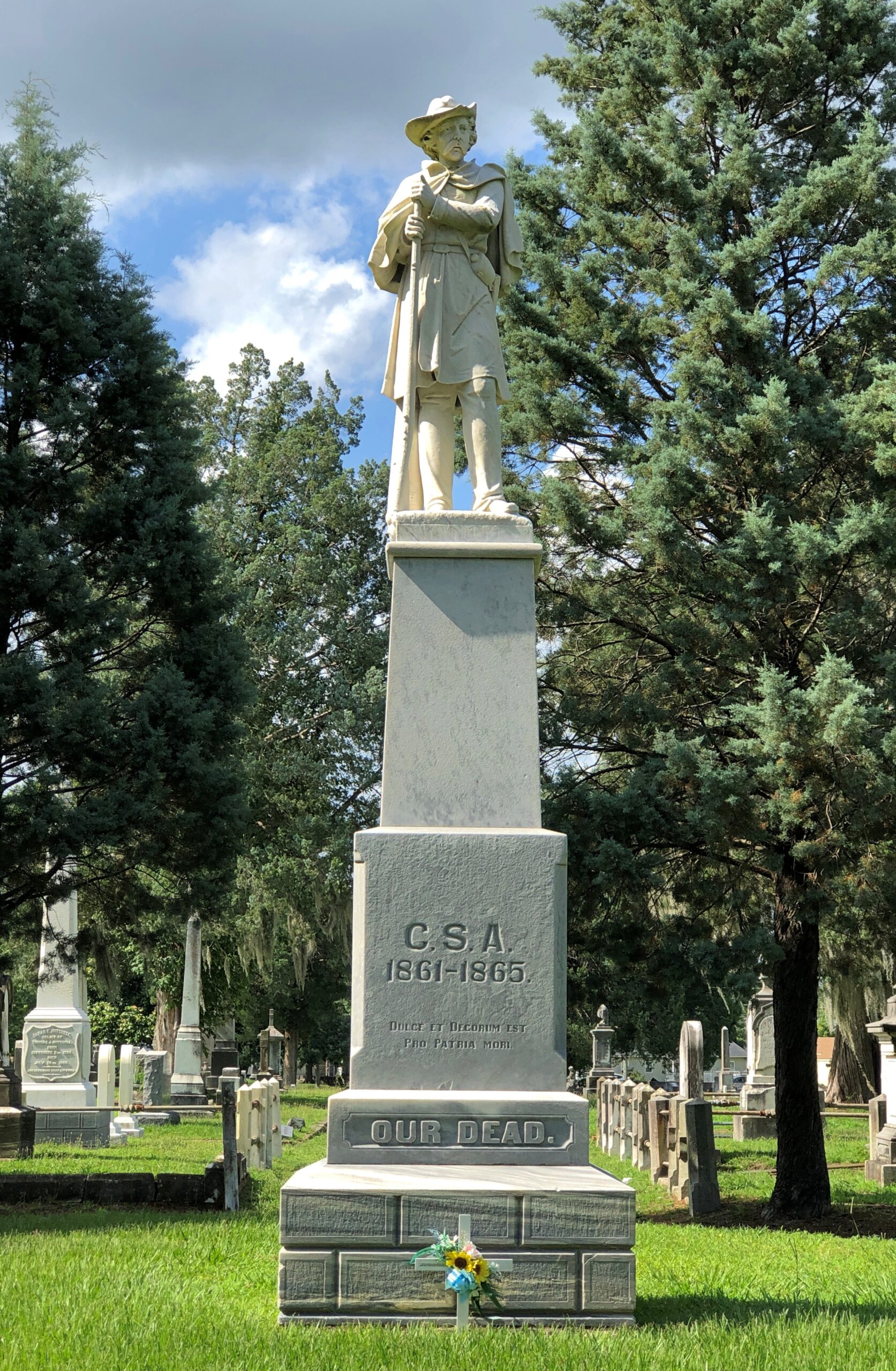
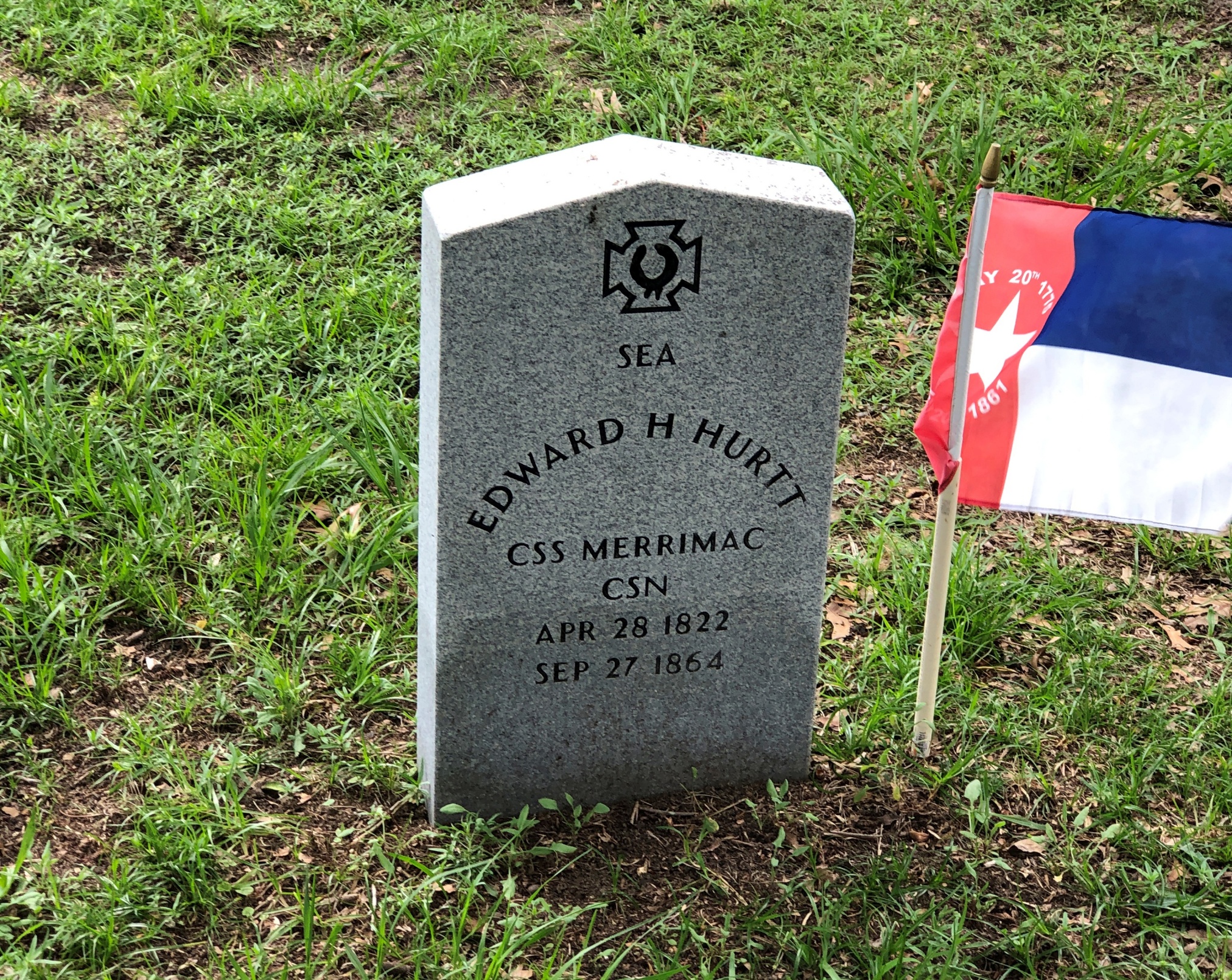
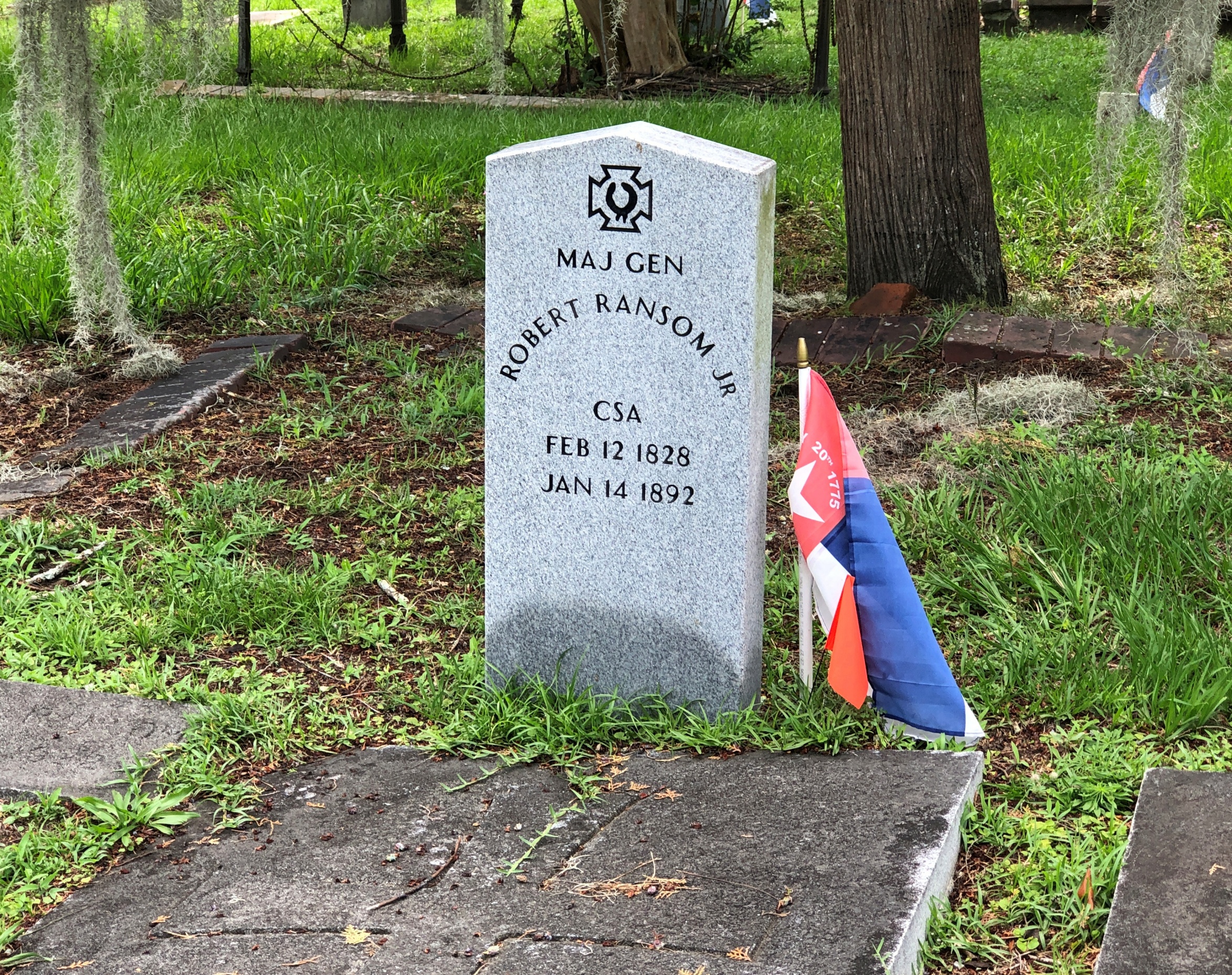
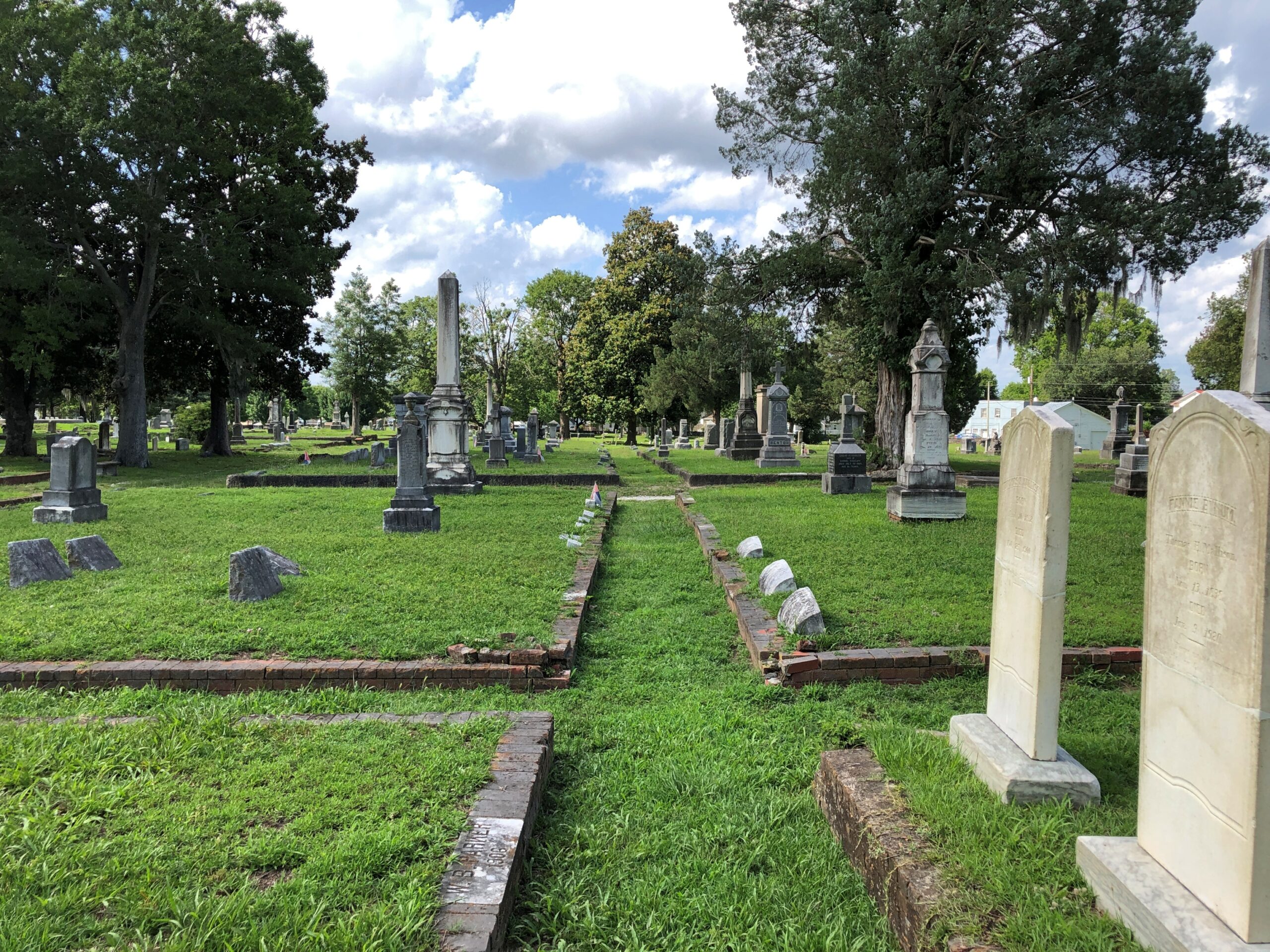
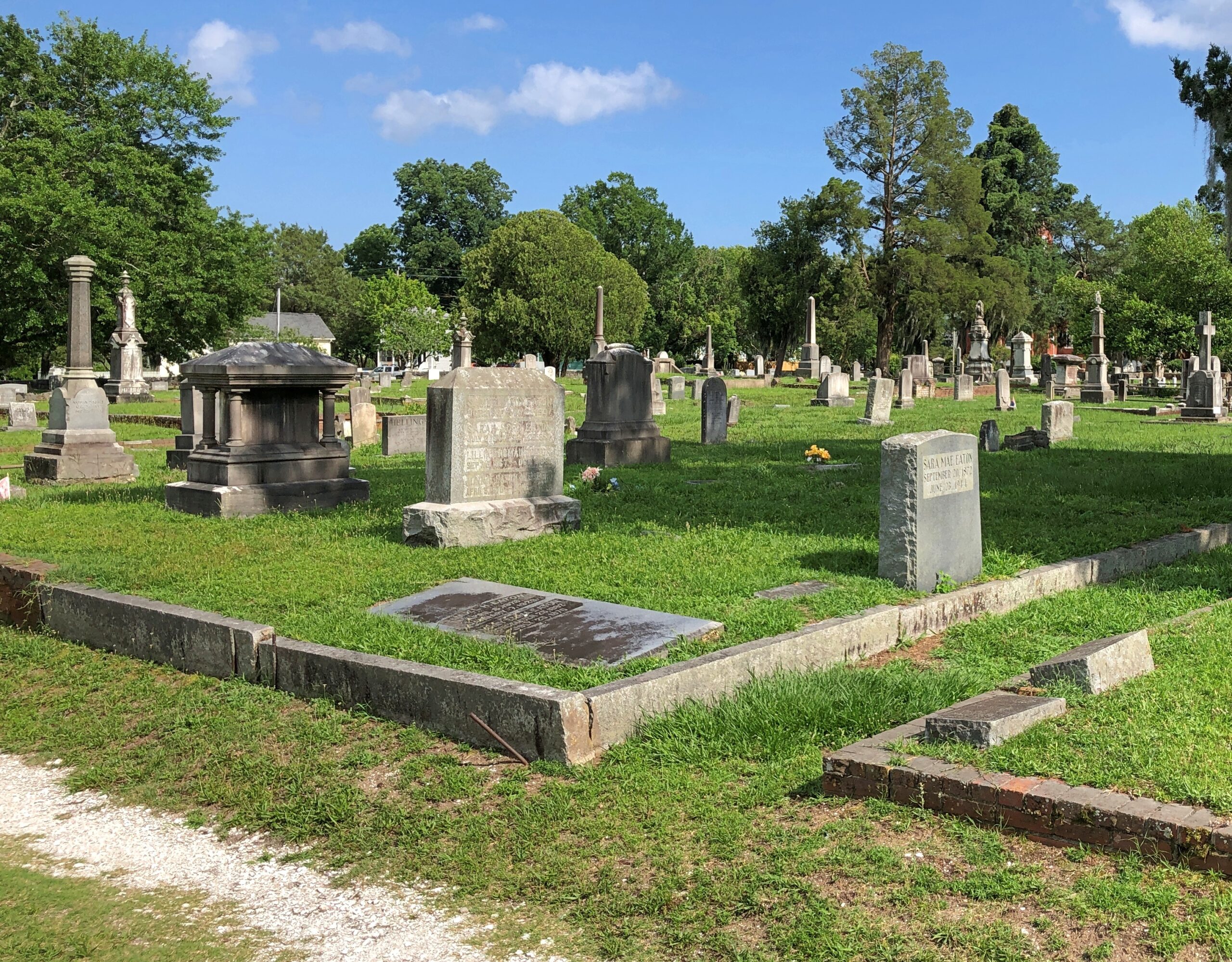
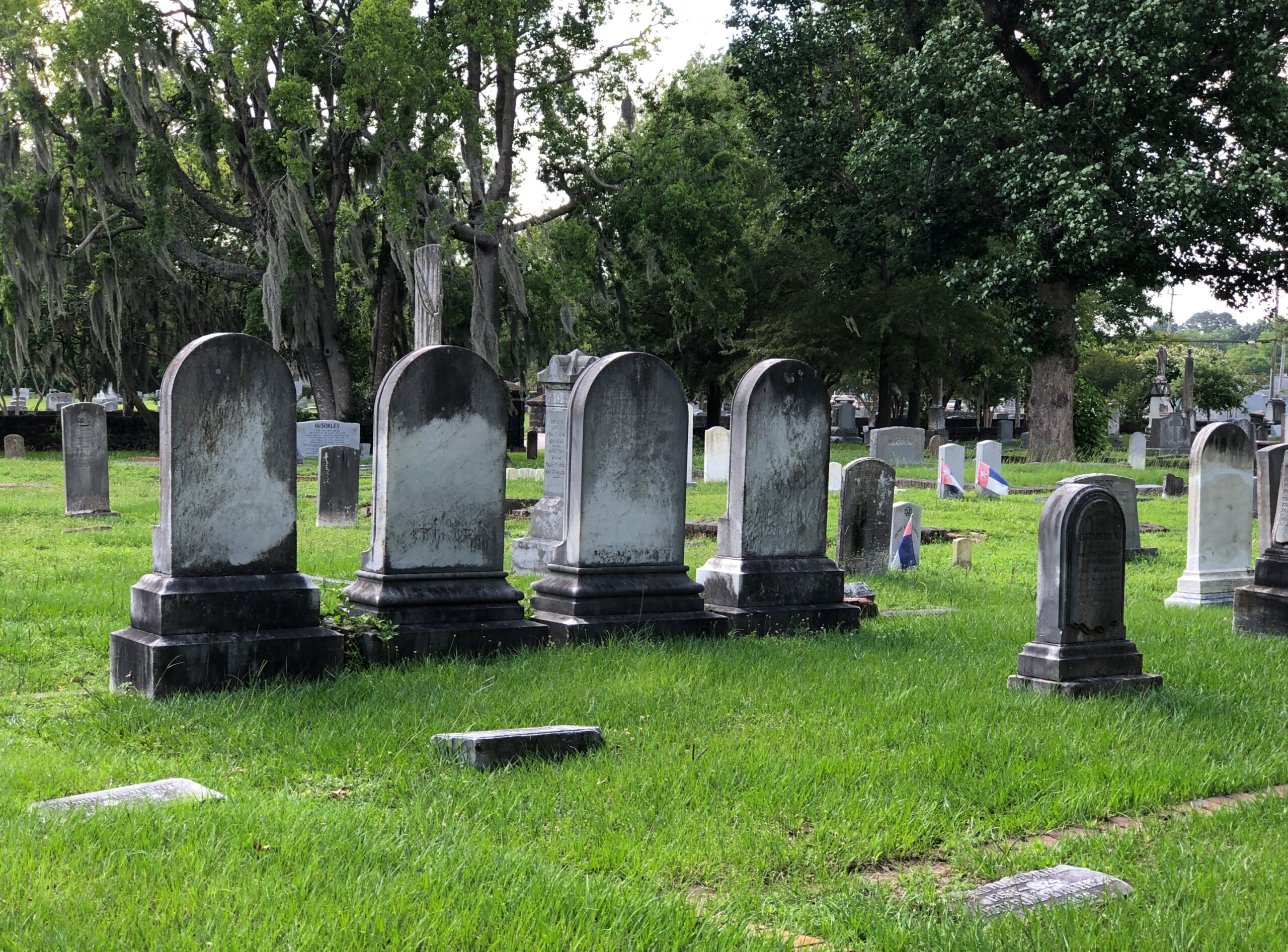
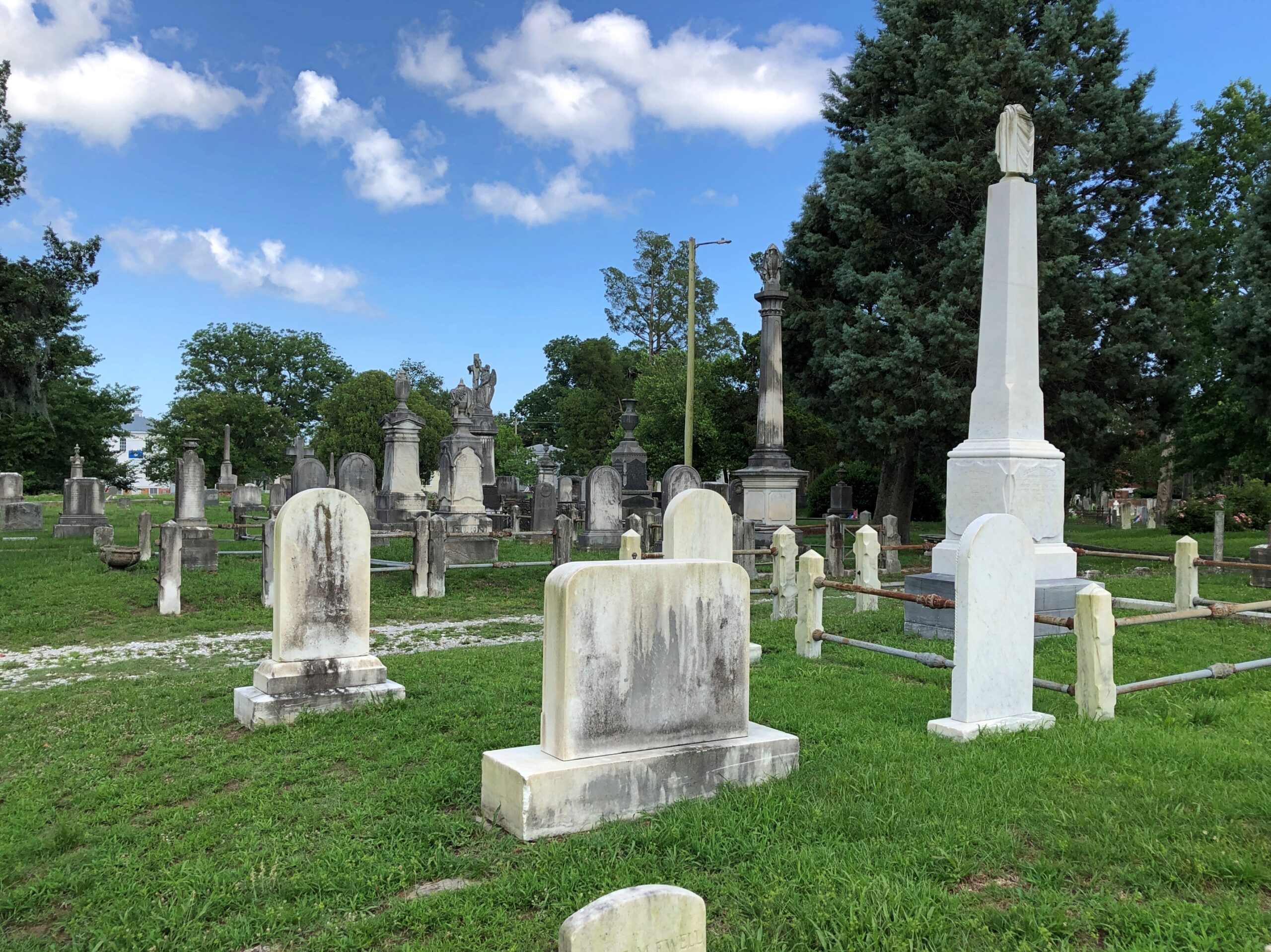
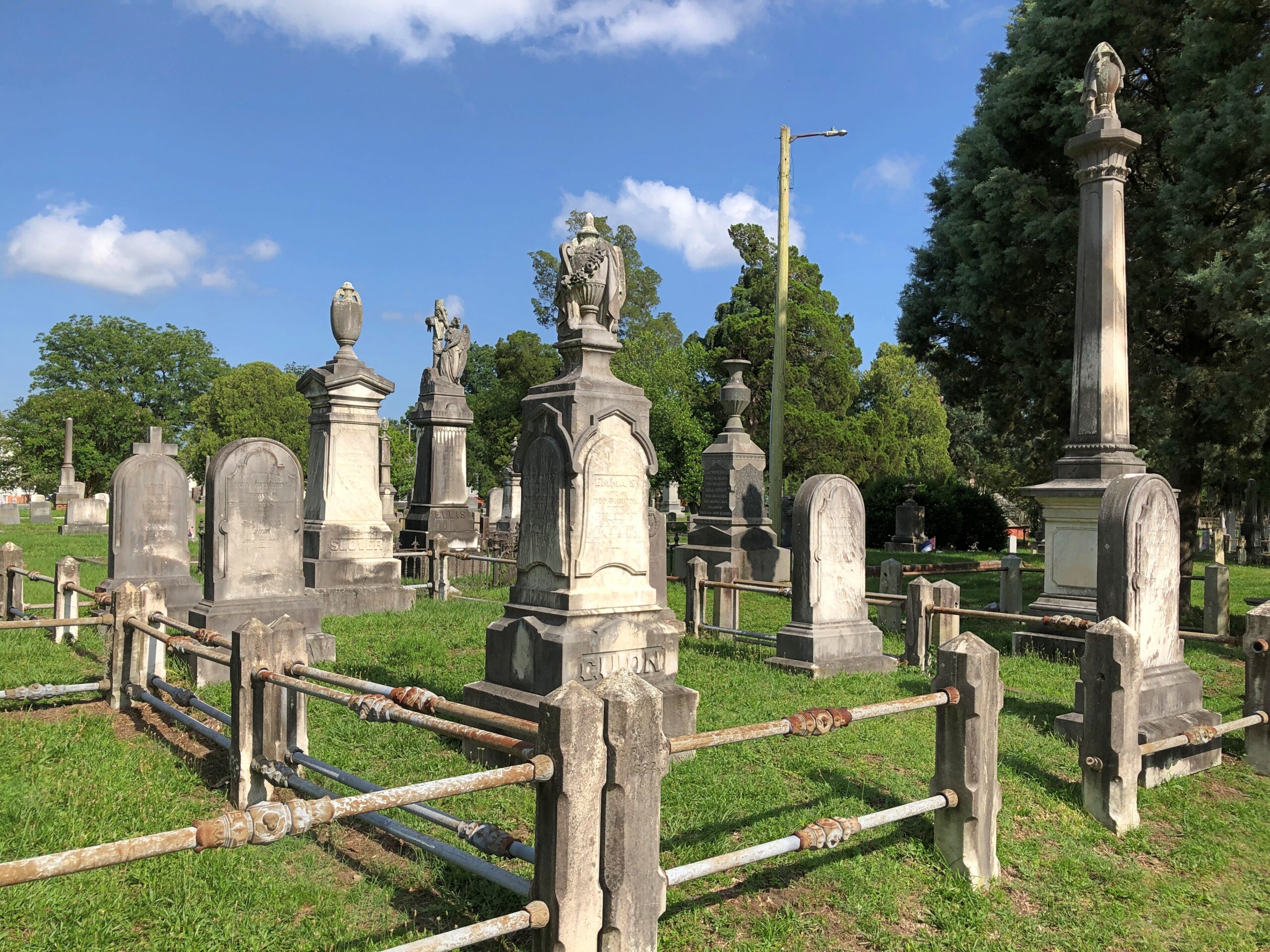
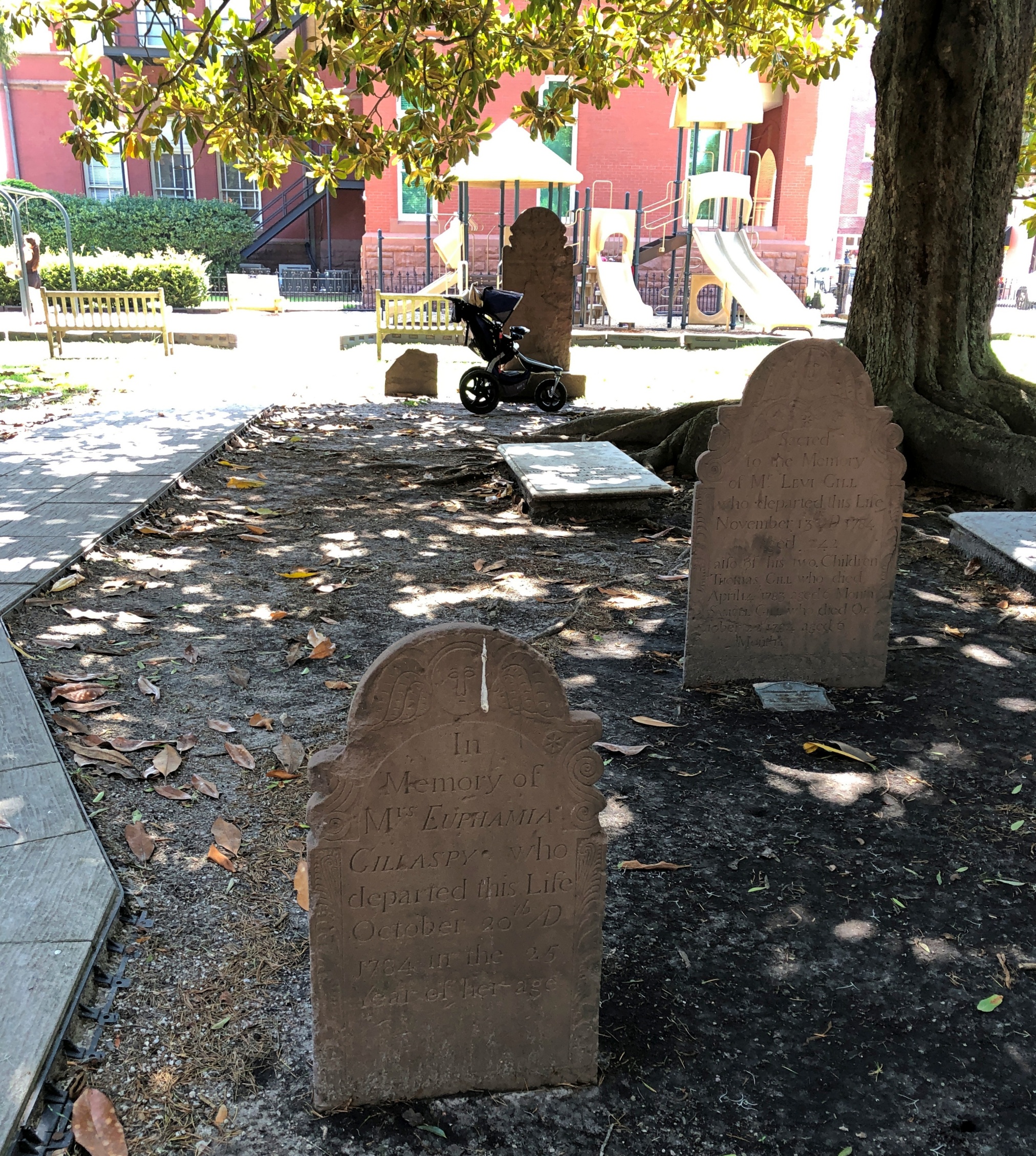
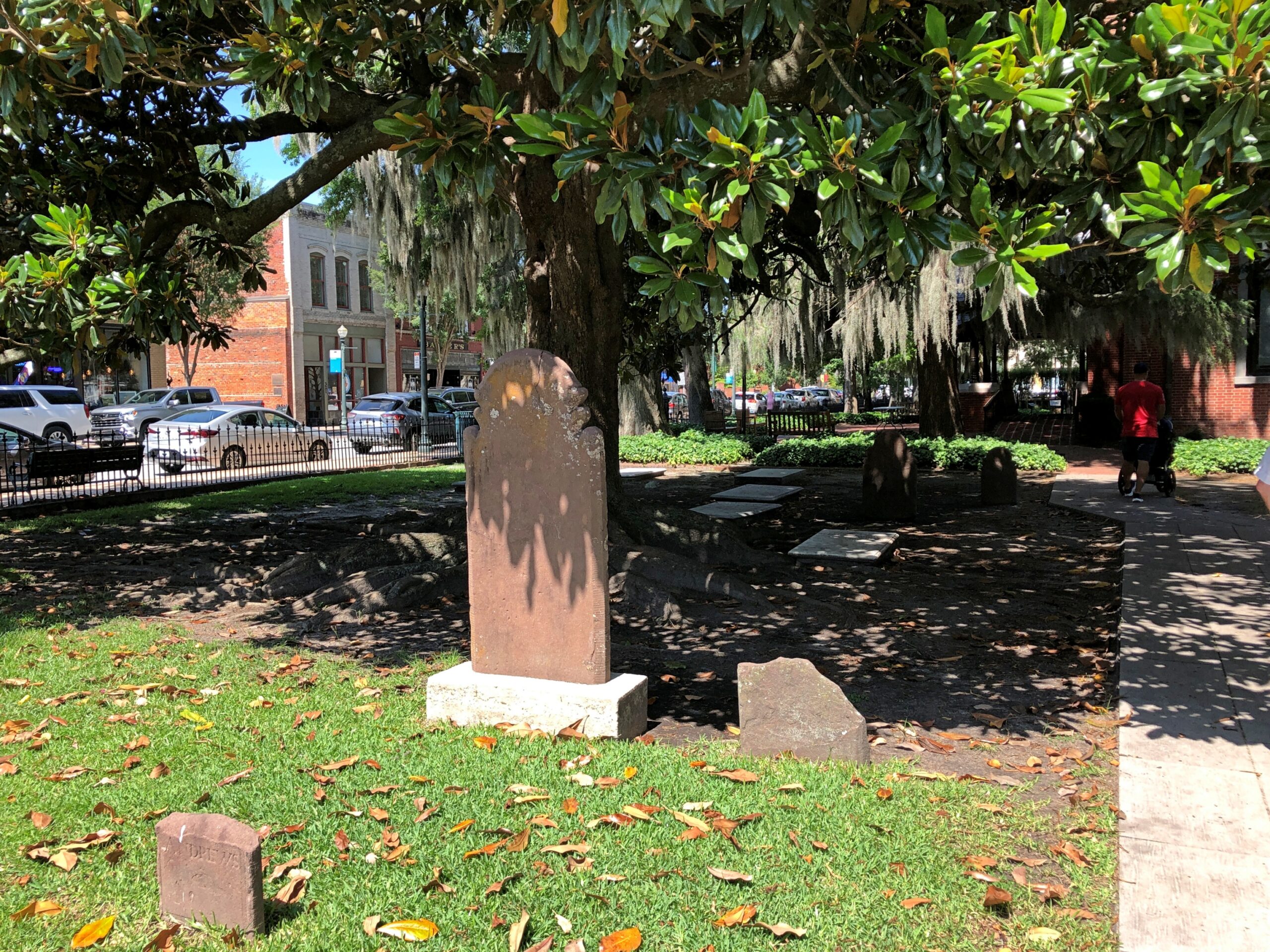
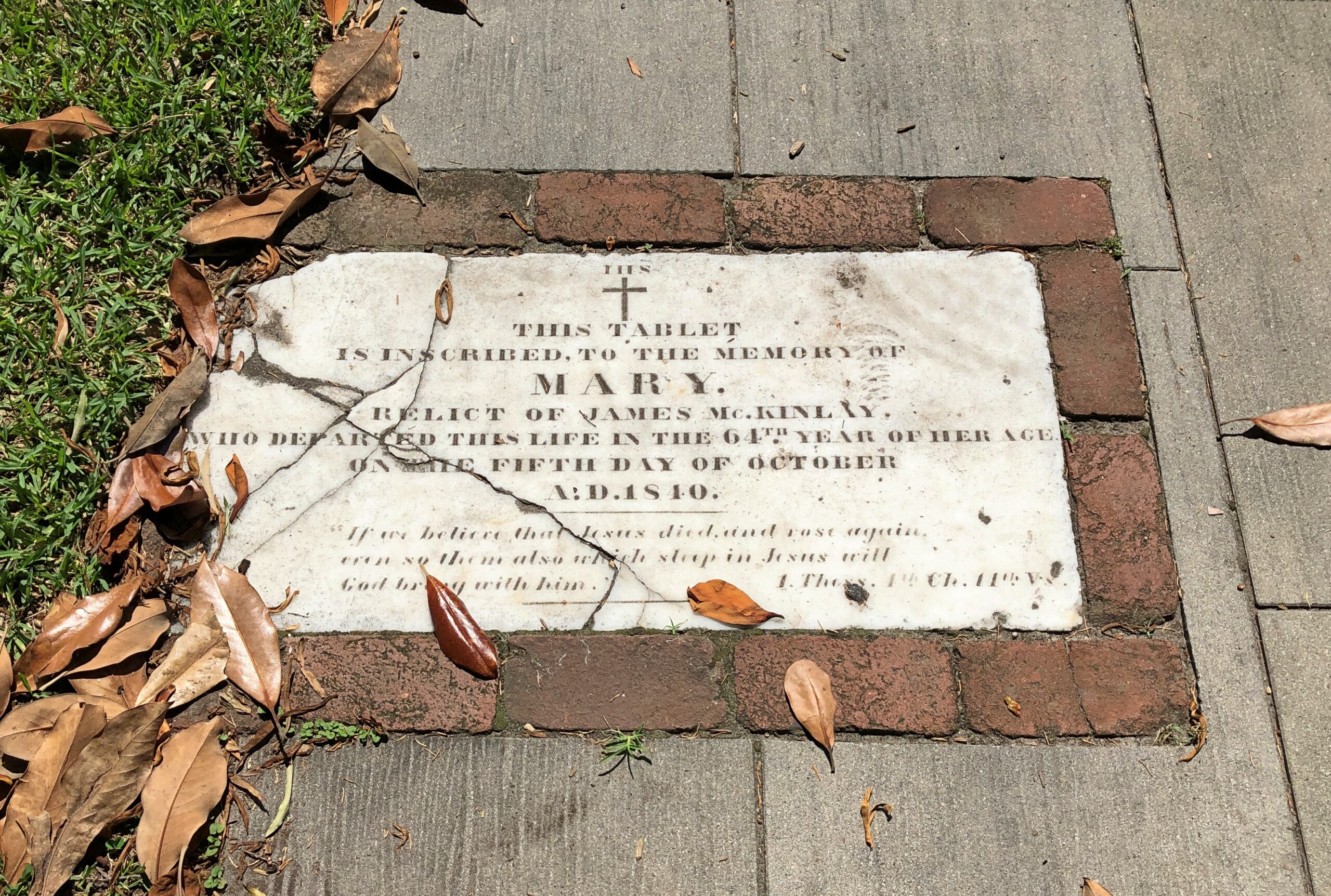
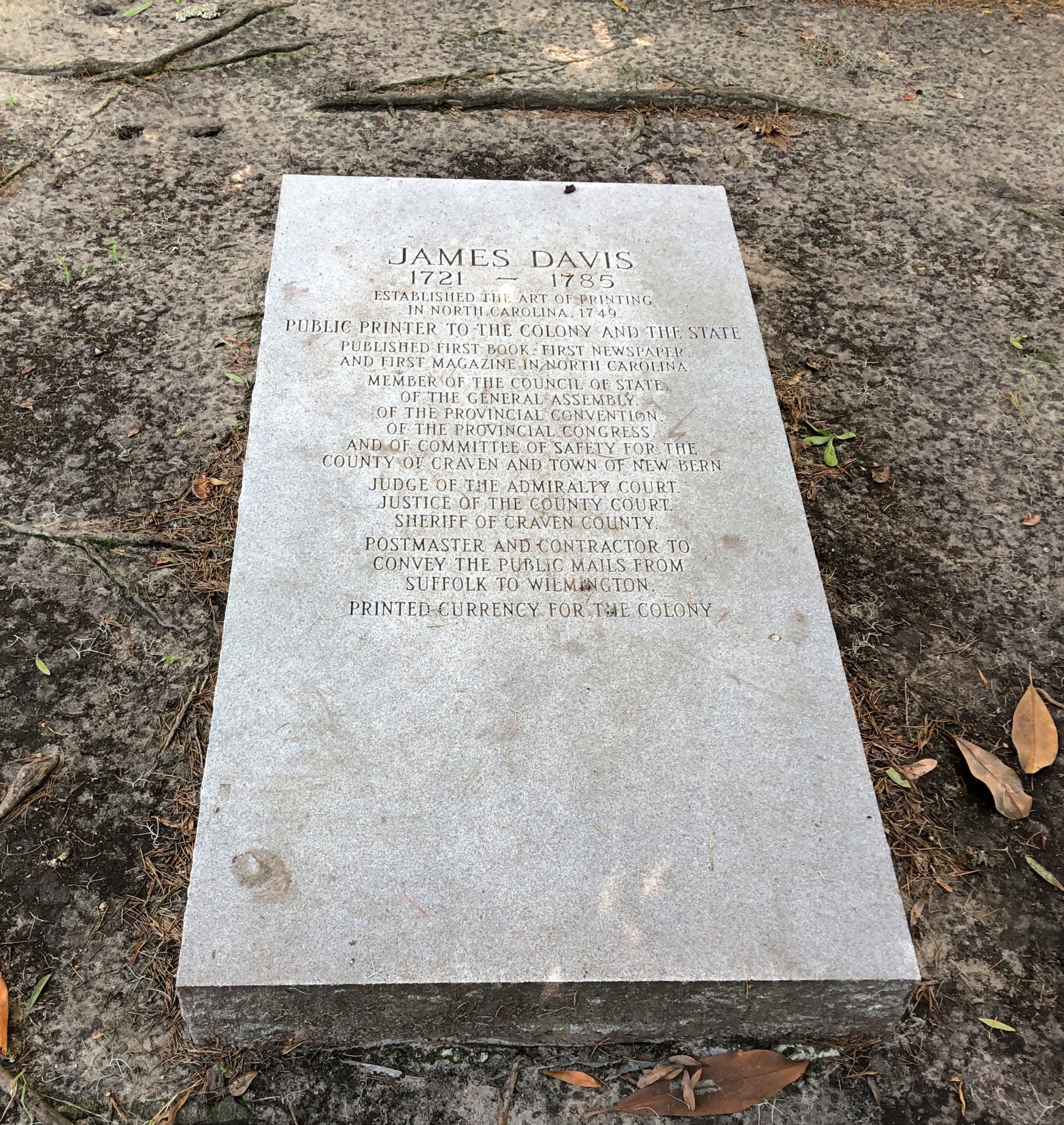
Hollywood Cemetery, Hot Springs

This morning, about 30 minutes into May, I was in bed but not asleep yet, with the bedroom window open a bit, since it was warm enough to make that comfortable. I remembered that I hadn’t checked any weather forecast for May 1, and wondered whether it was going to rain overnight or during the day.

Almost immediately – really, within seconds – I heard rain falling. Light, but definitely rain. It lasted a few minutes. The only reasonable conclusion from such an event is that I’ve learned how to make it rain with my mind. I hope I use my power wisely.

Fairly early on the morning of April 15, I made a doughnut run in Hot Springs, Arkansas, seeking out a Shipley Do-Nuts store. I associate that chain and its wonderful doughnuts (cream filled, especially) with Texas, but Shipley is in other, mostly Southern states. There happen to be two locations in Hot Springs.

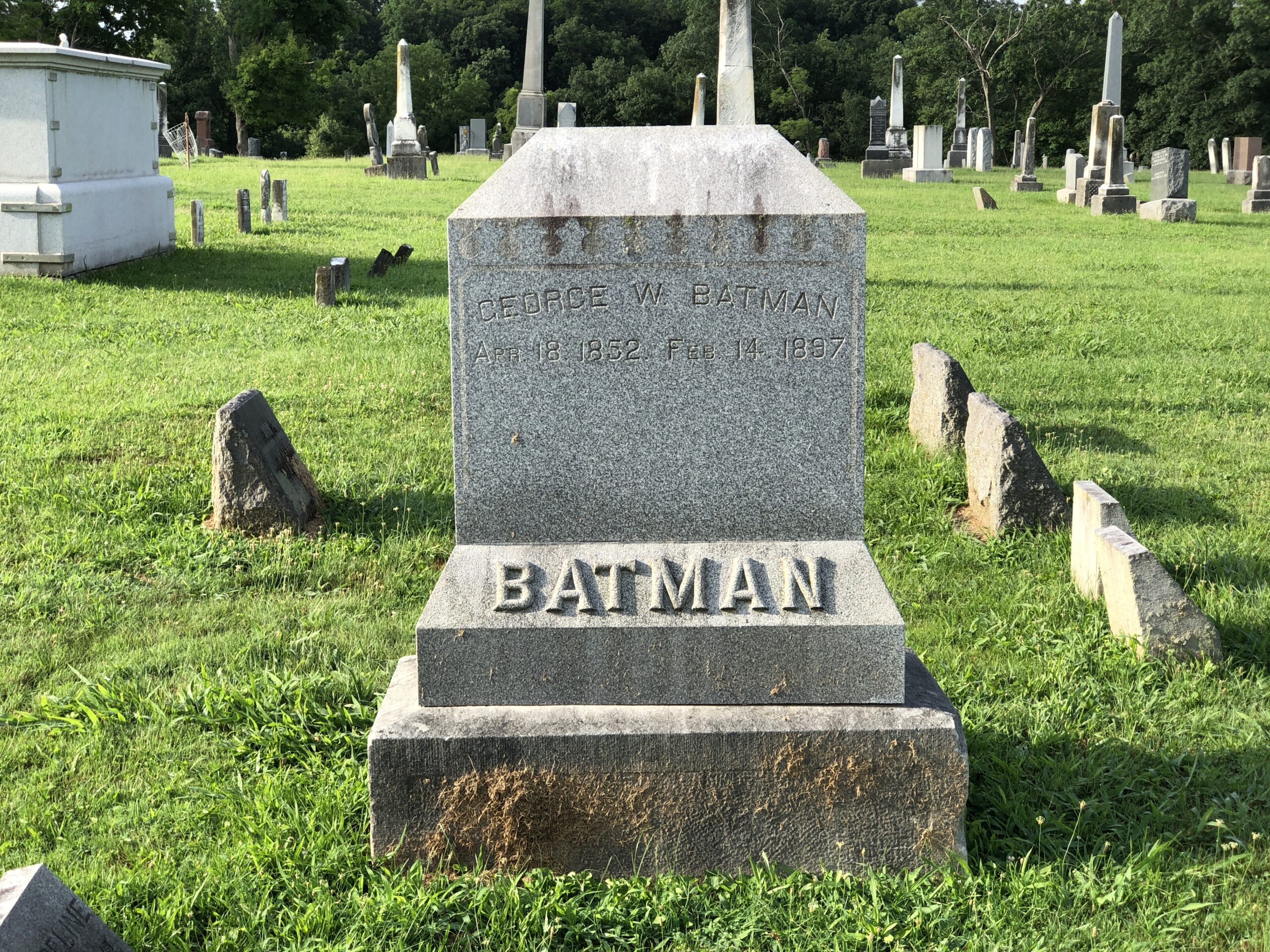
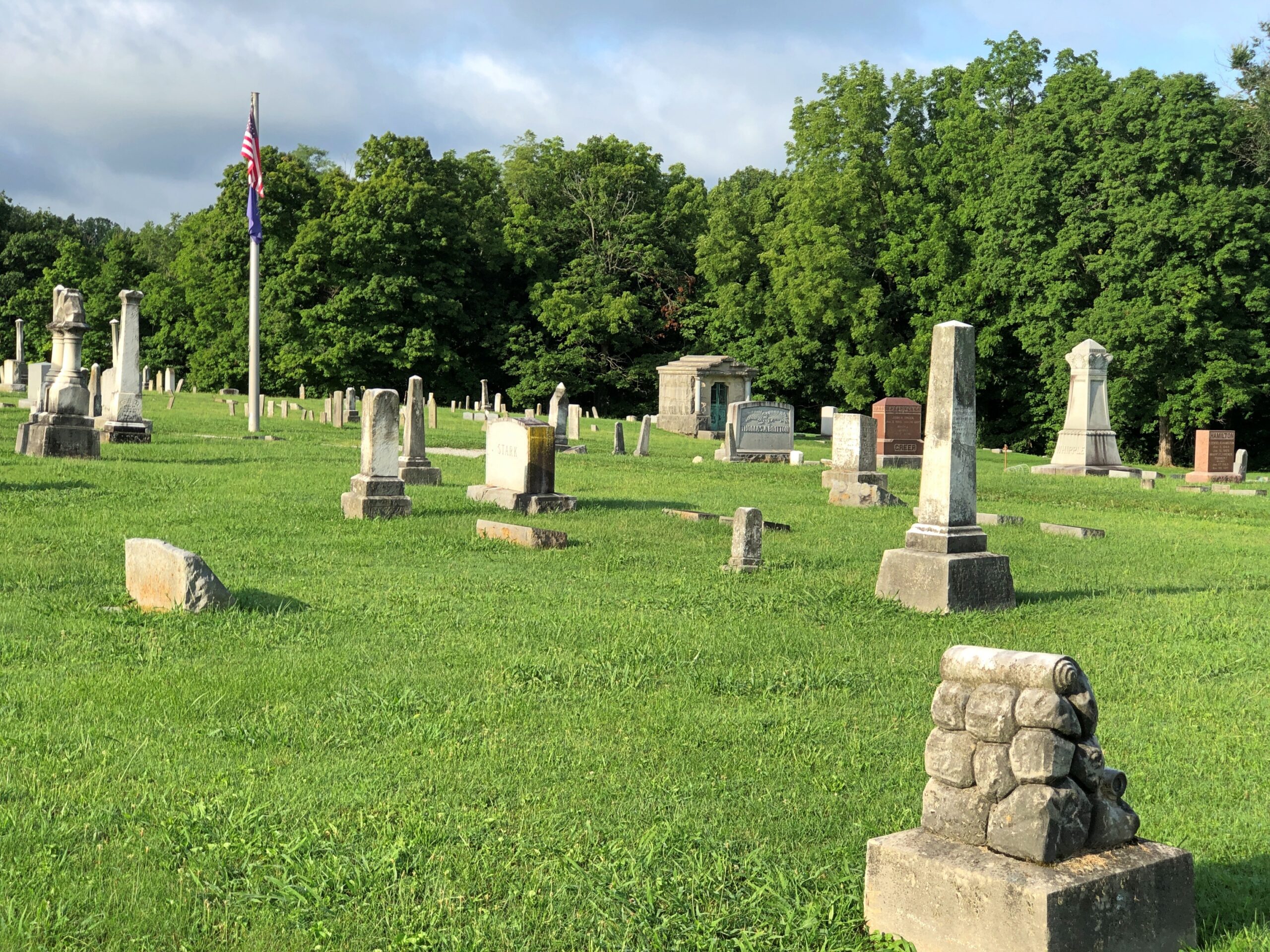
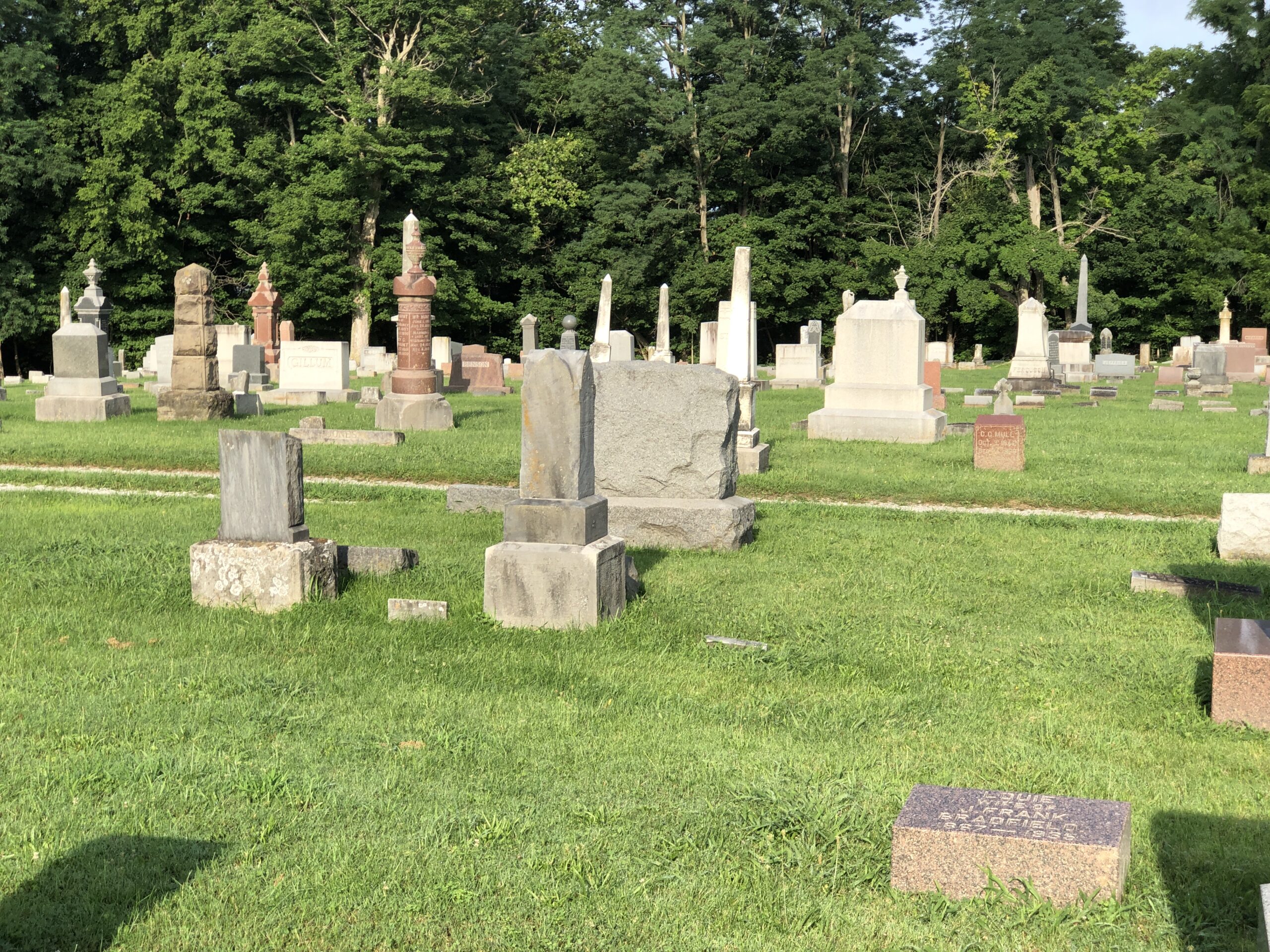
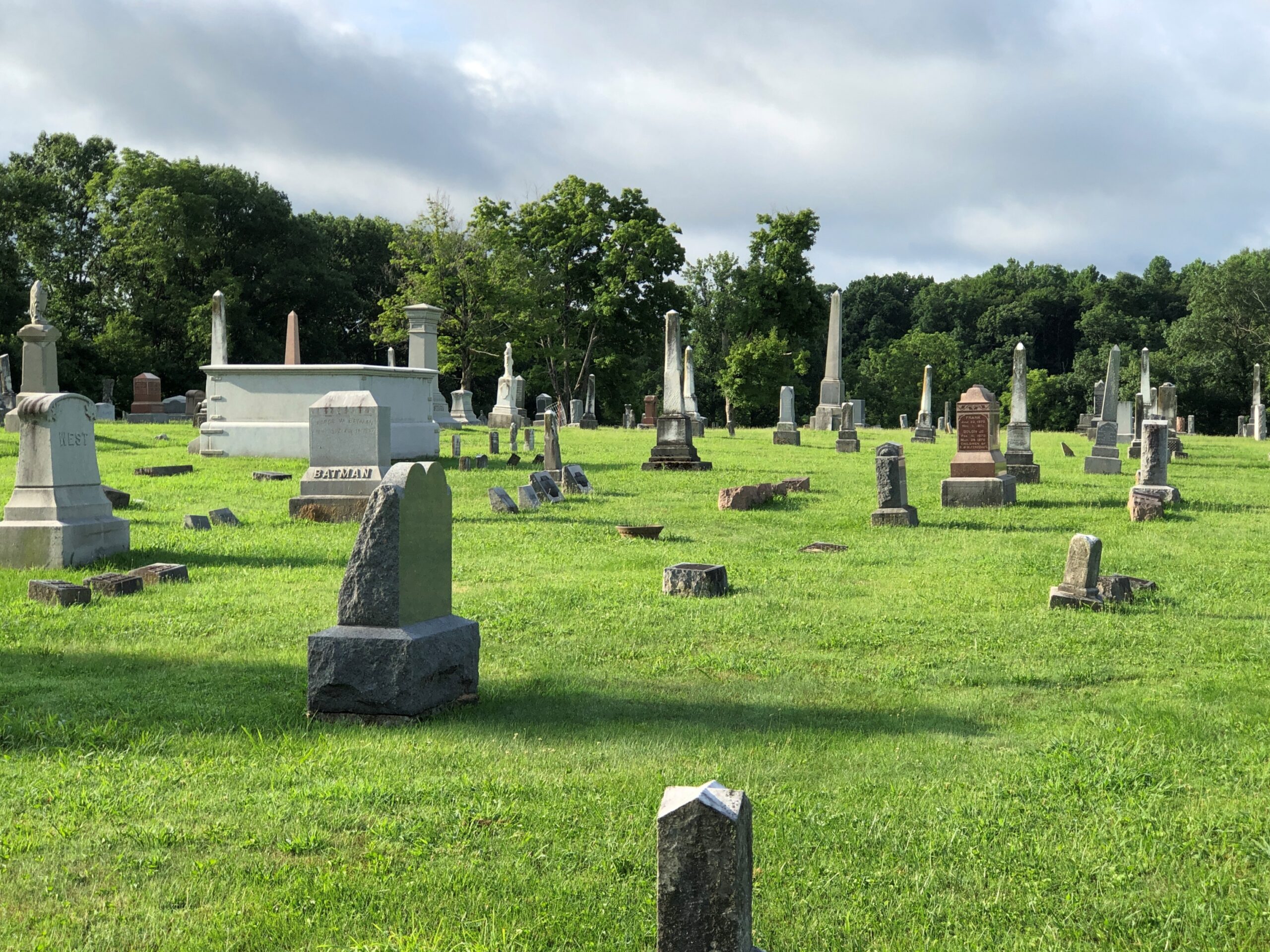
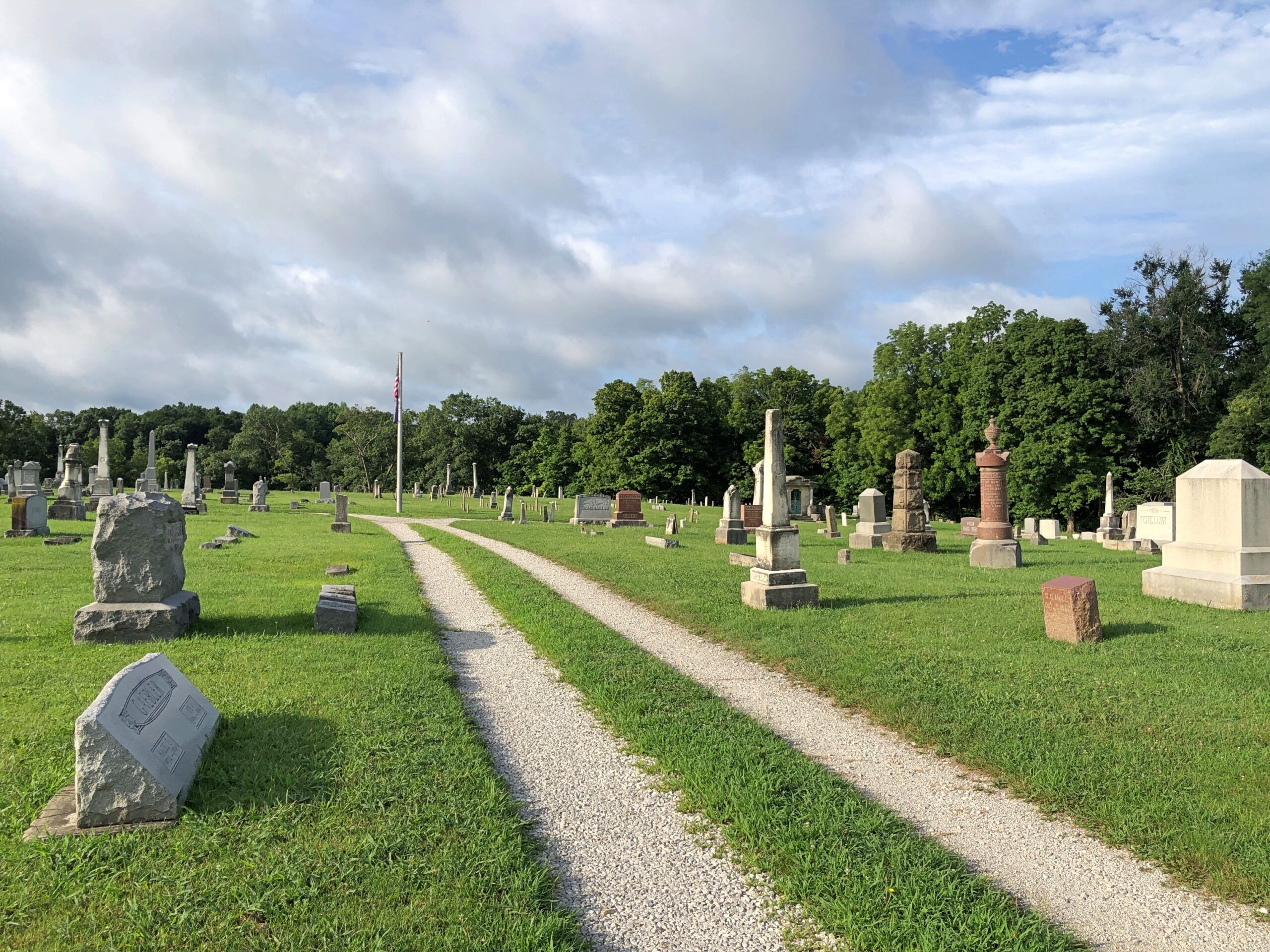
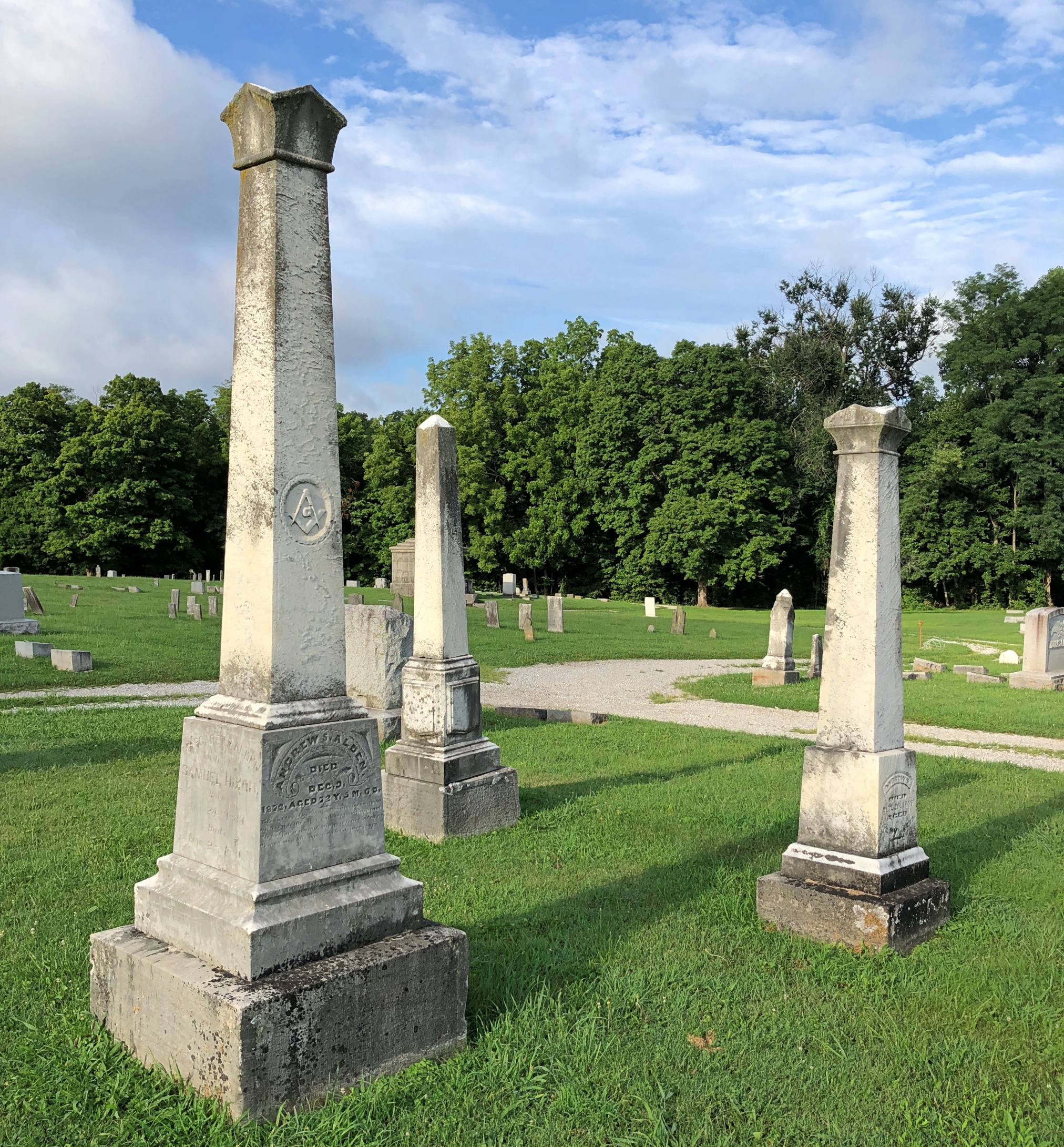
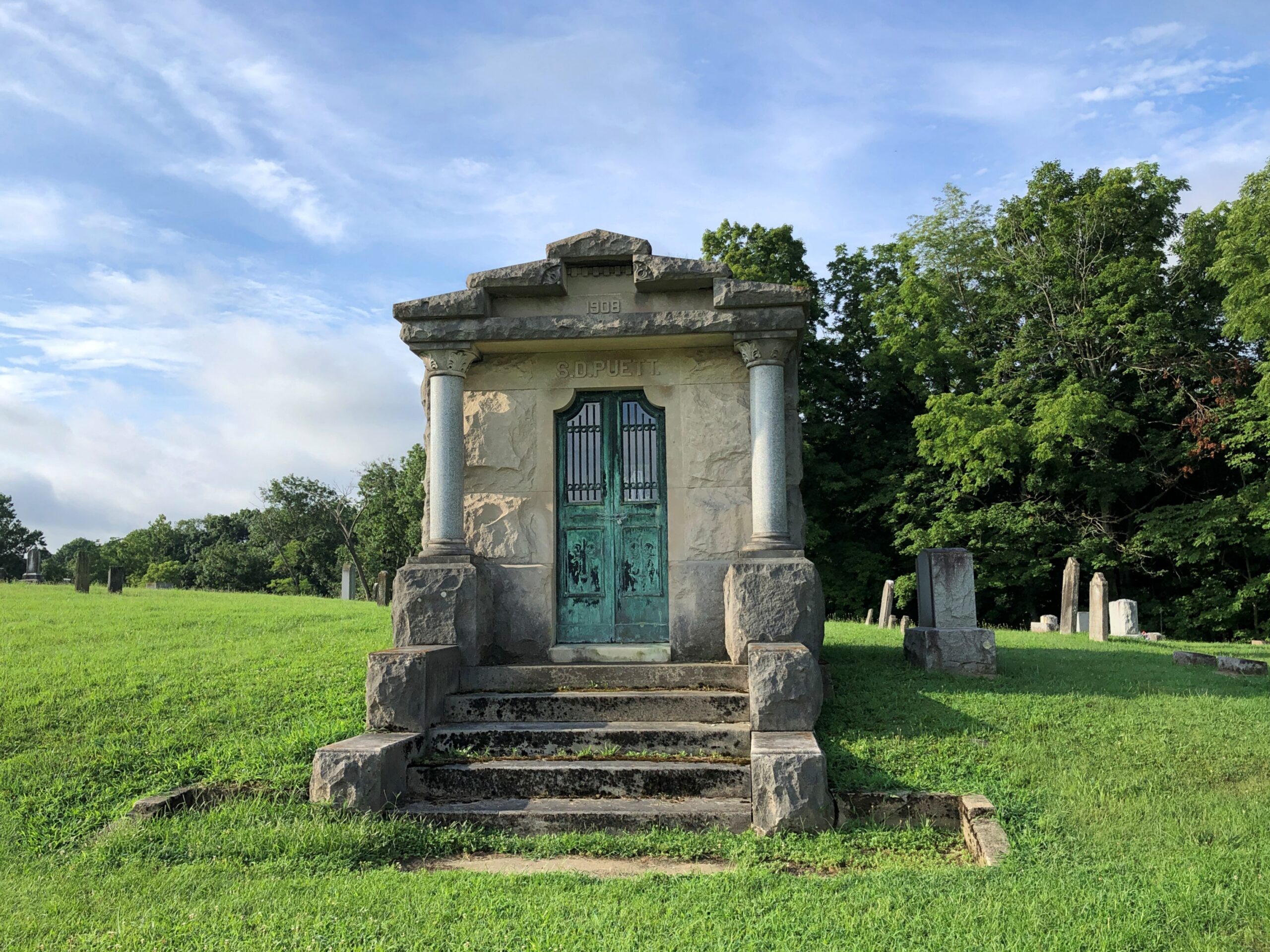
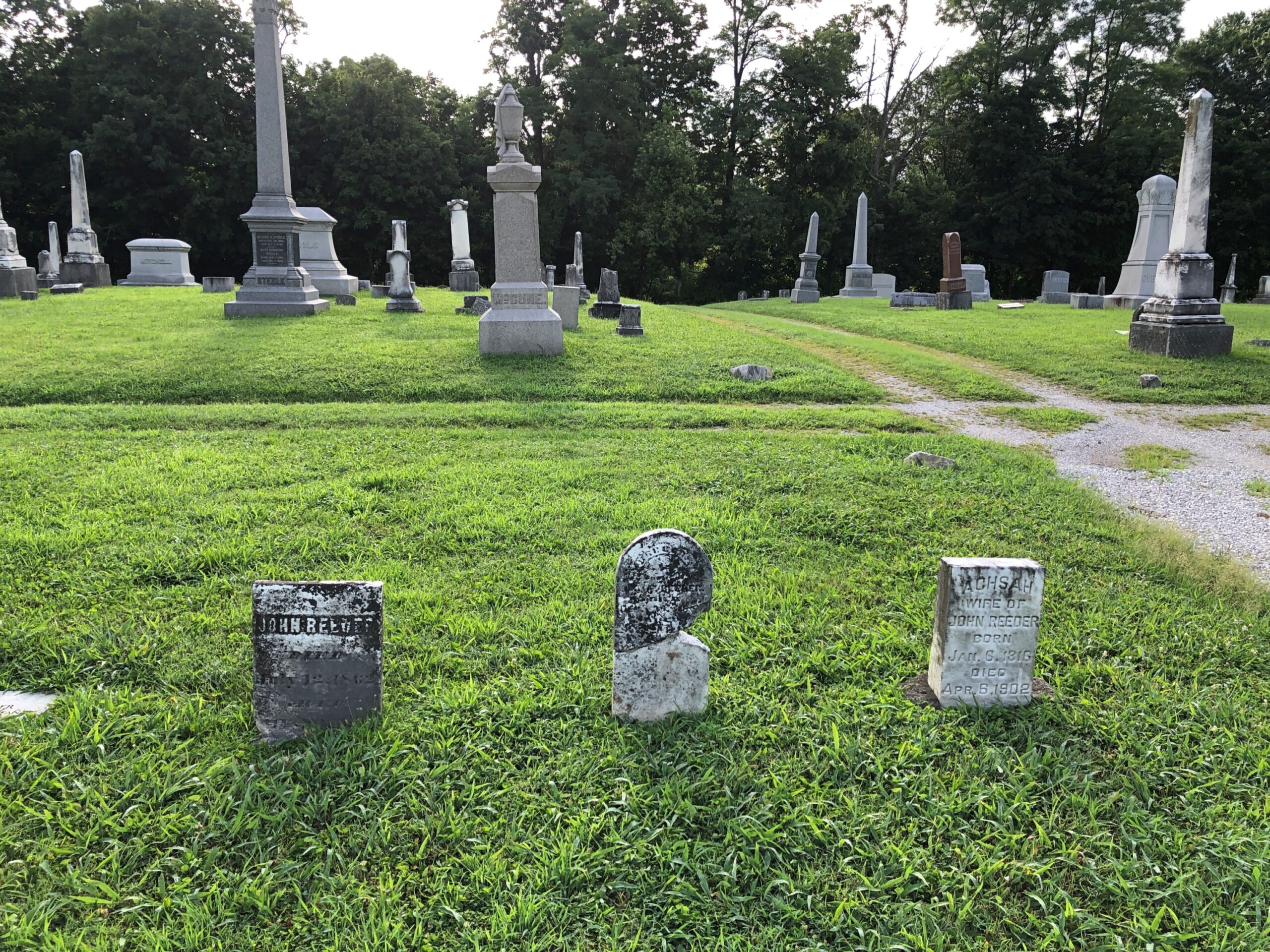
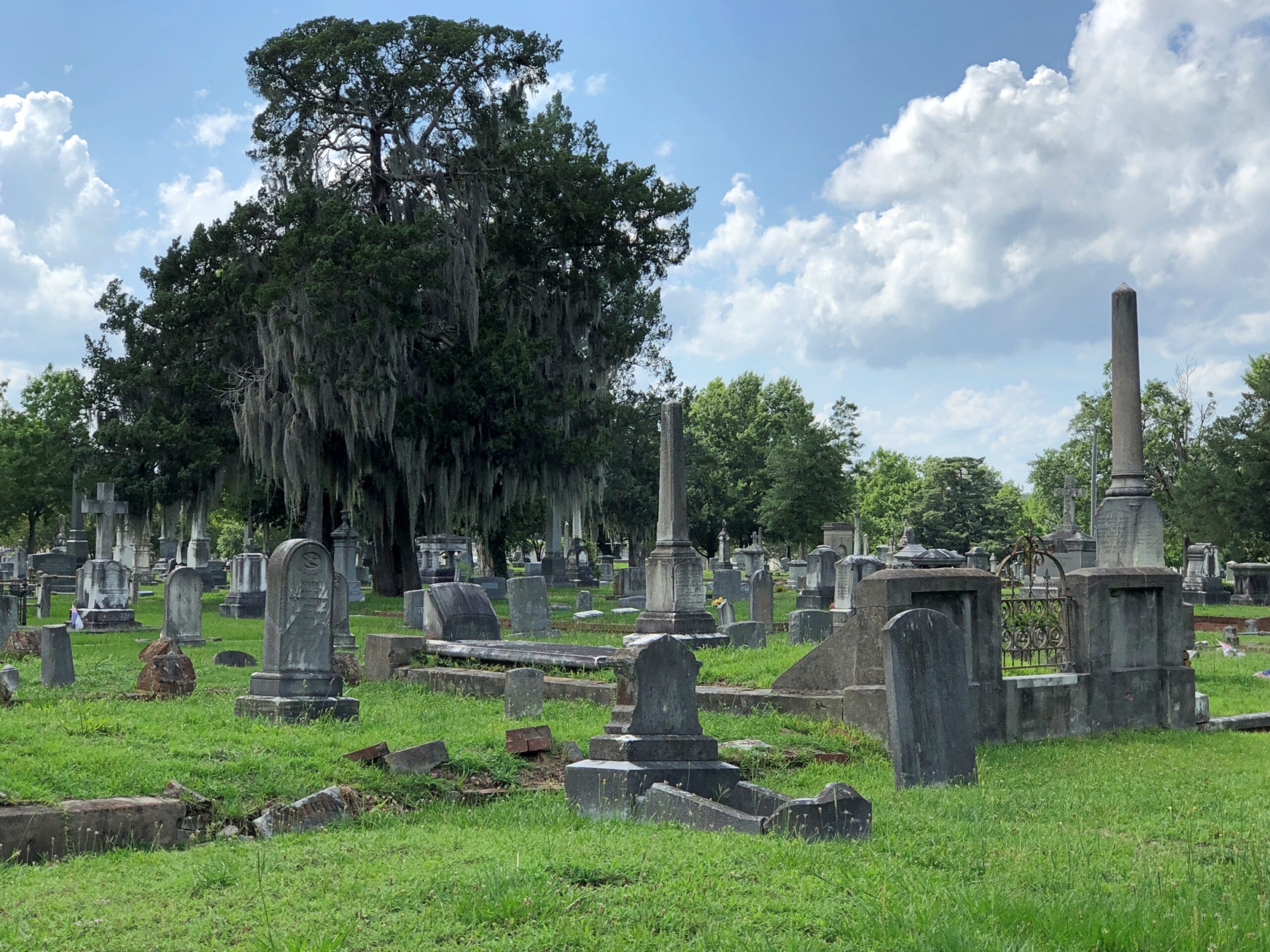
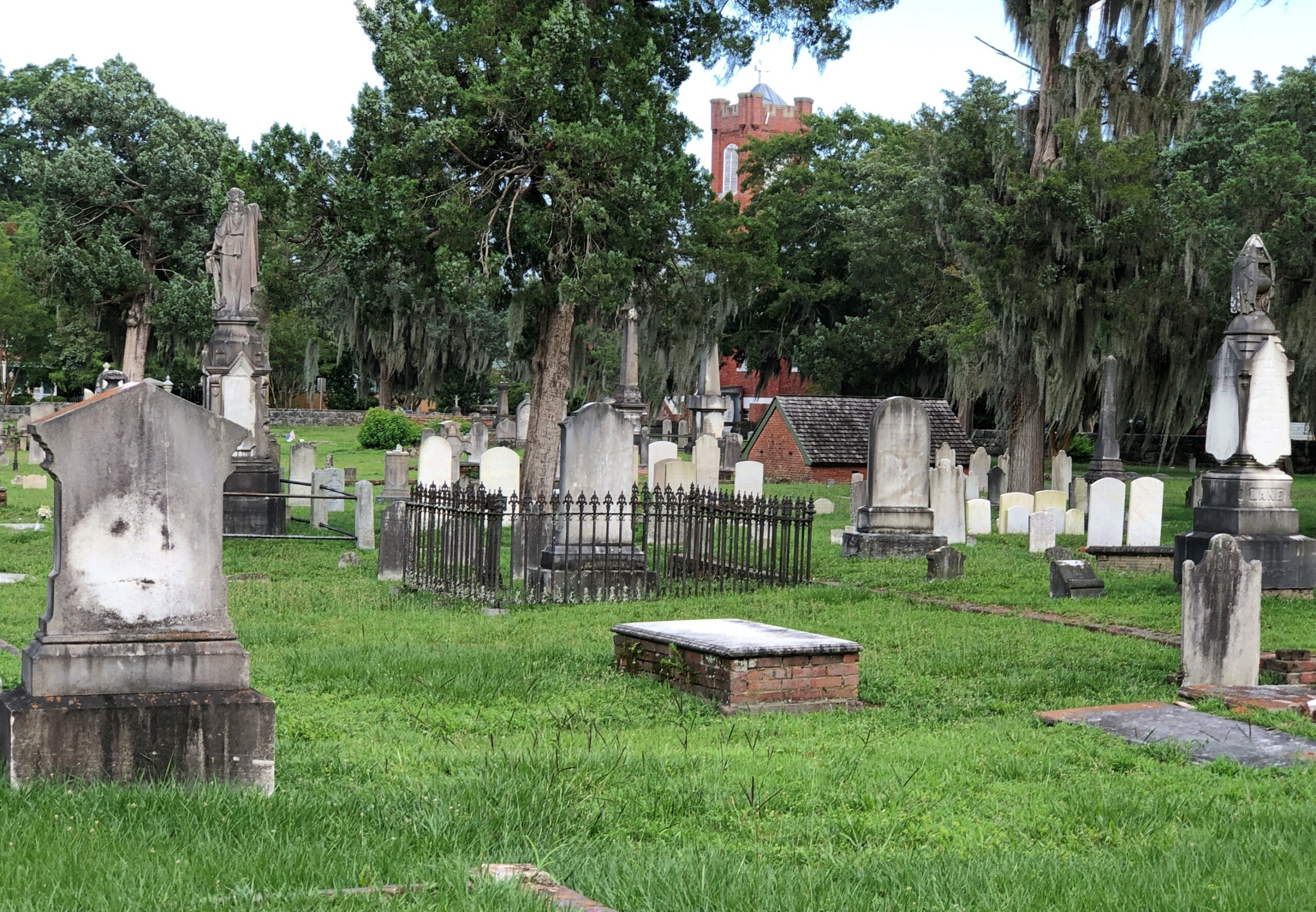
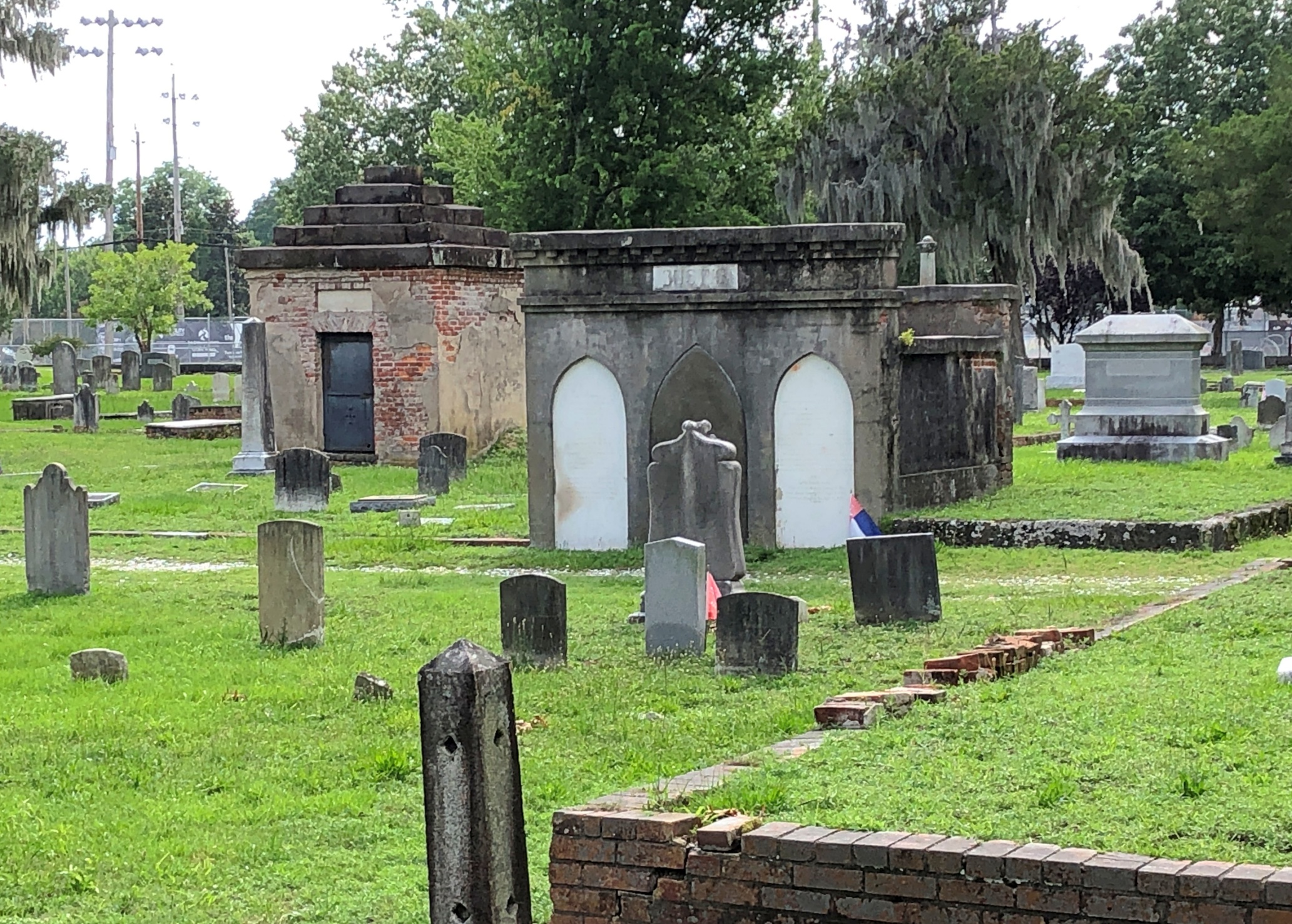
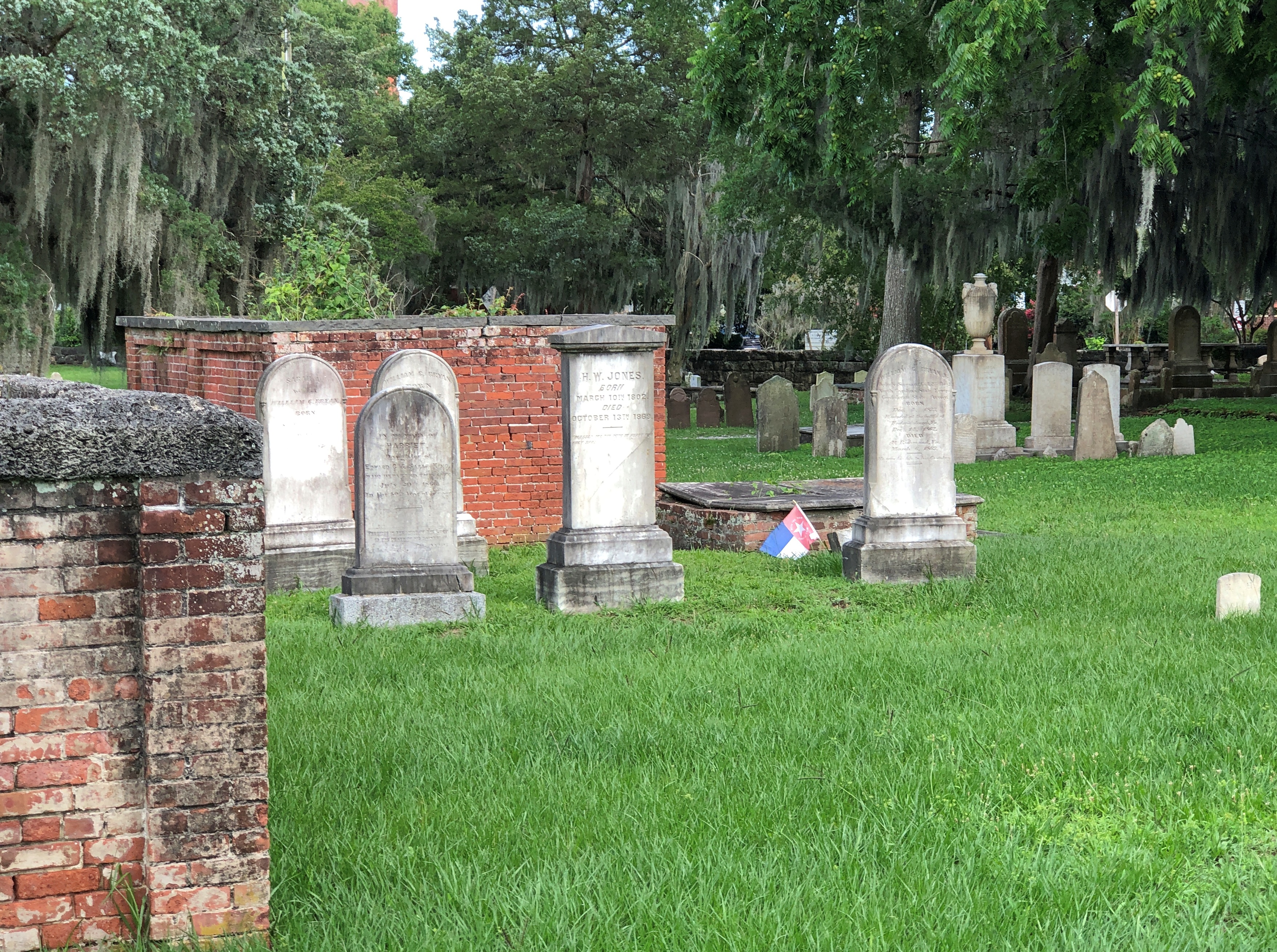
It couldn’t just be a doughnut run, though. On the way I stopped at Hollywood Cemetery, said to the Hot Spring’s oldest cemetery, though a precise founding date seems to be lost to time. The oldest stone is reportedly from 1856.Hollywood Cemetery, Hot Springs

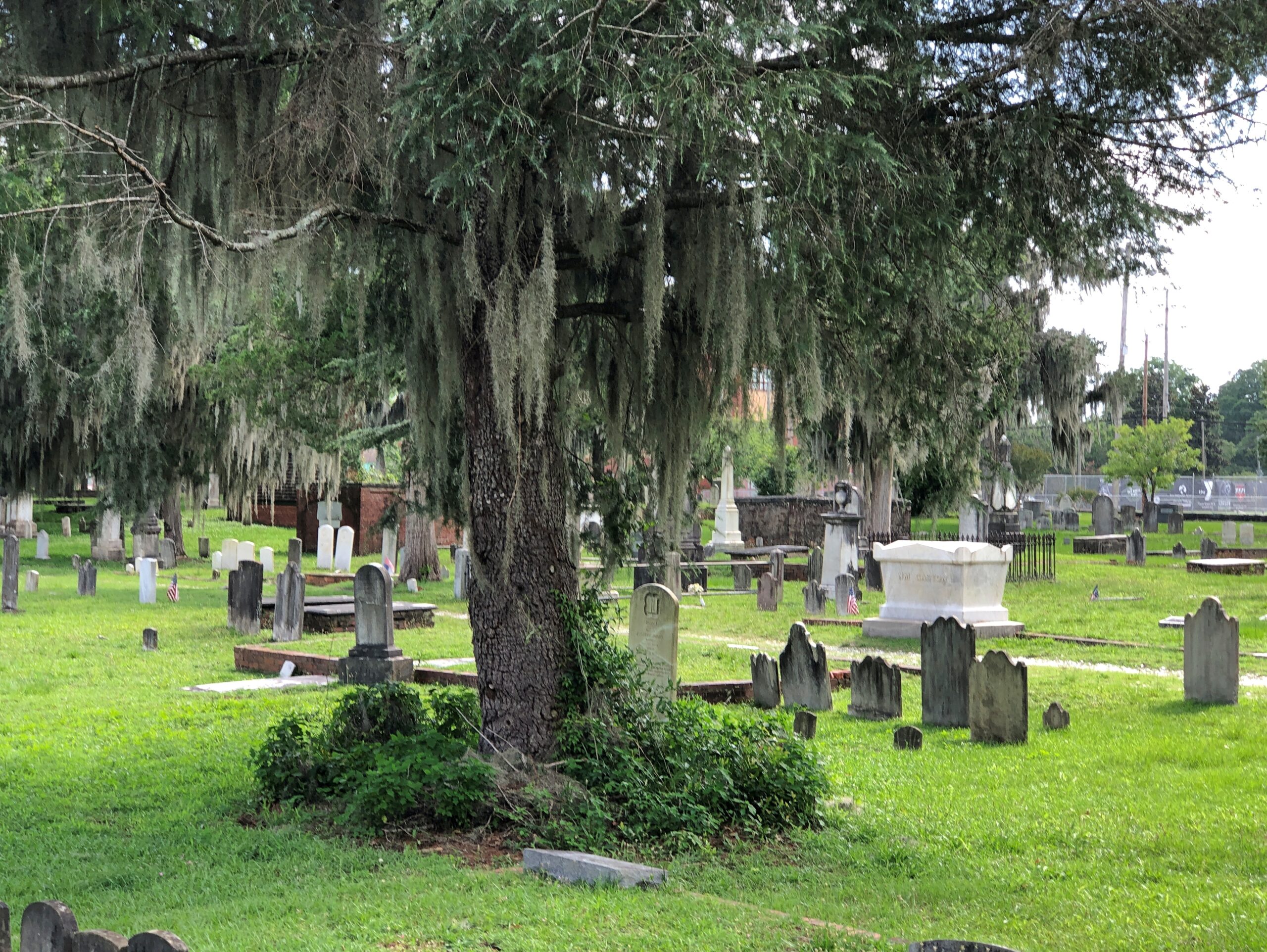
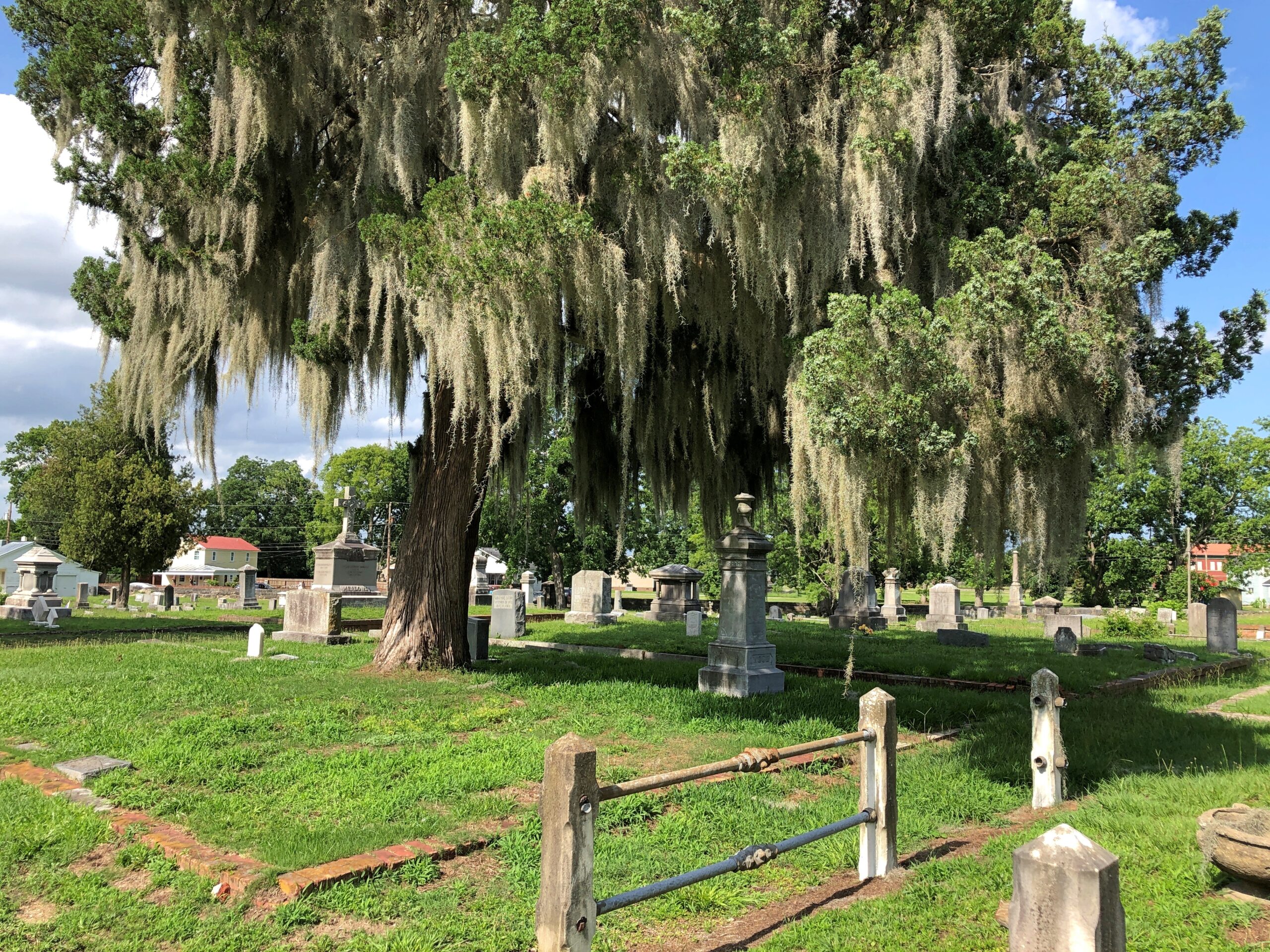
The cemetery is on a large, wooded hill.Hollywood Cemetery, Hot Springs

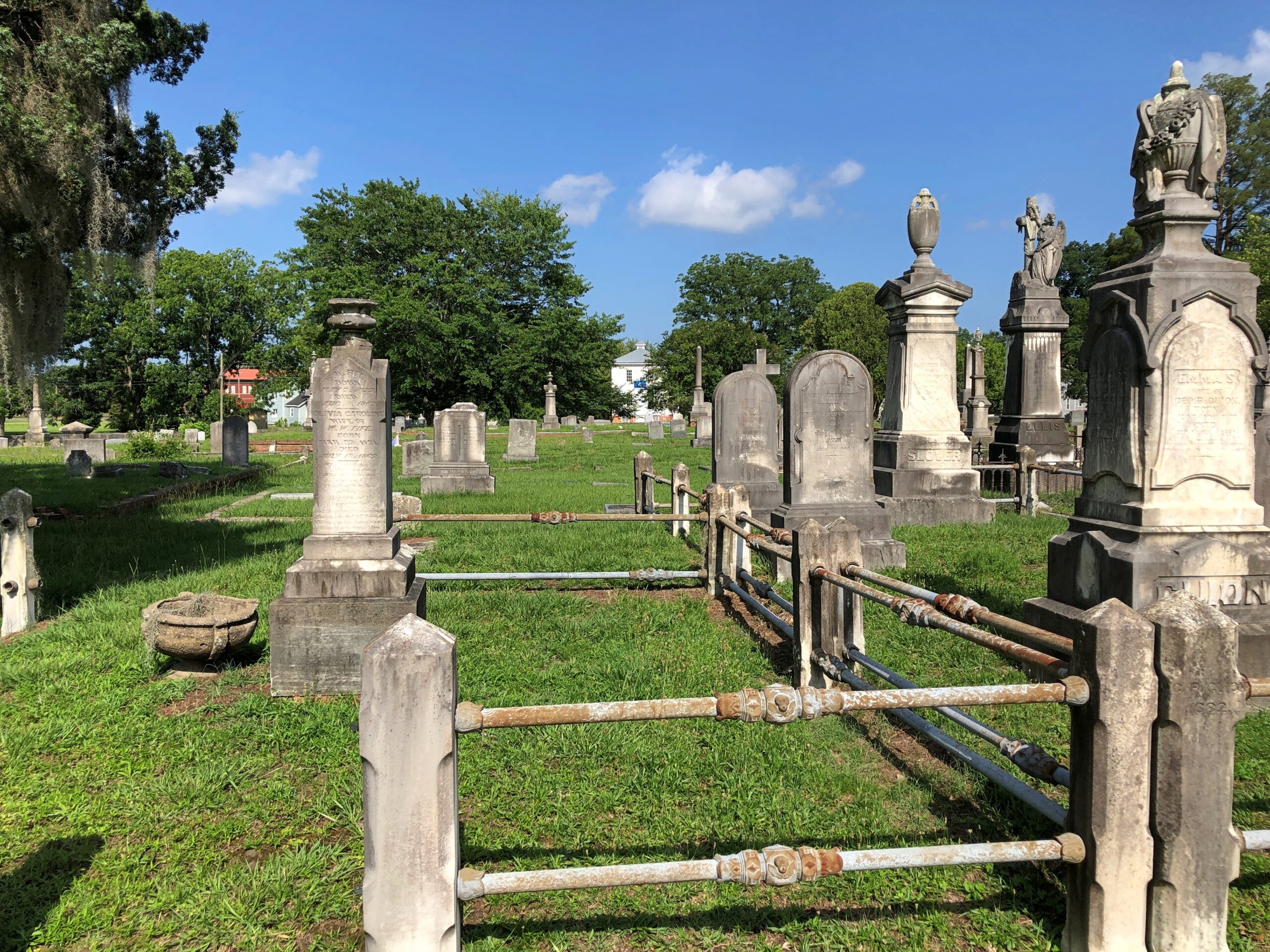
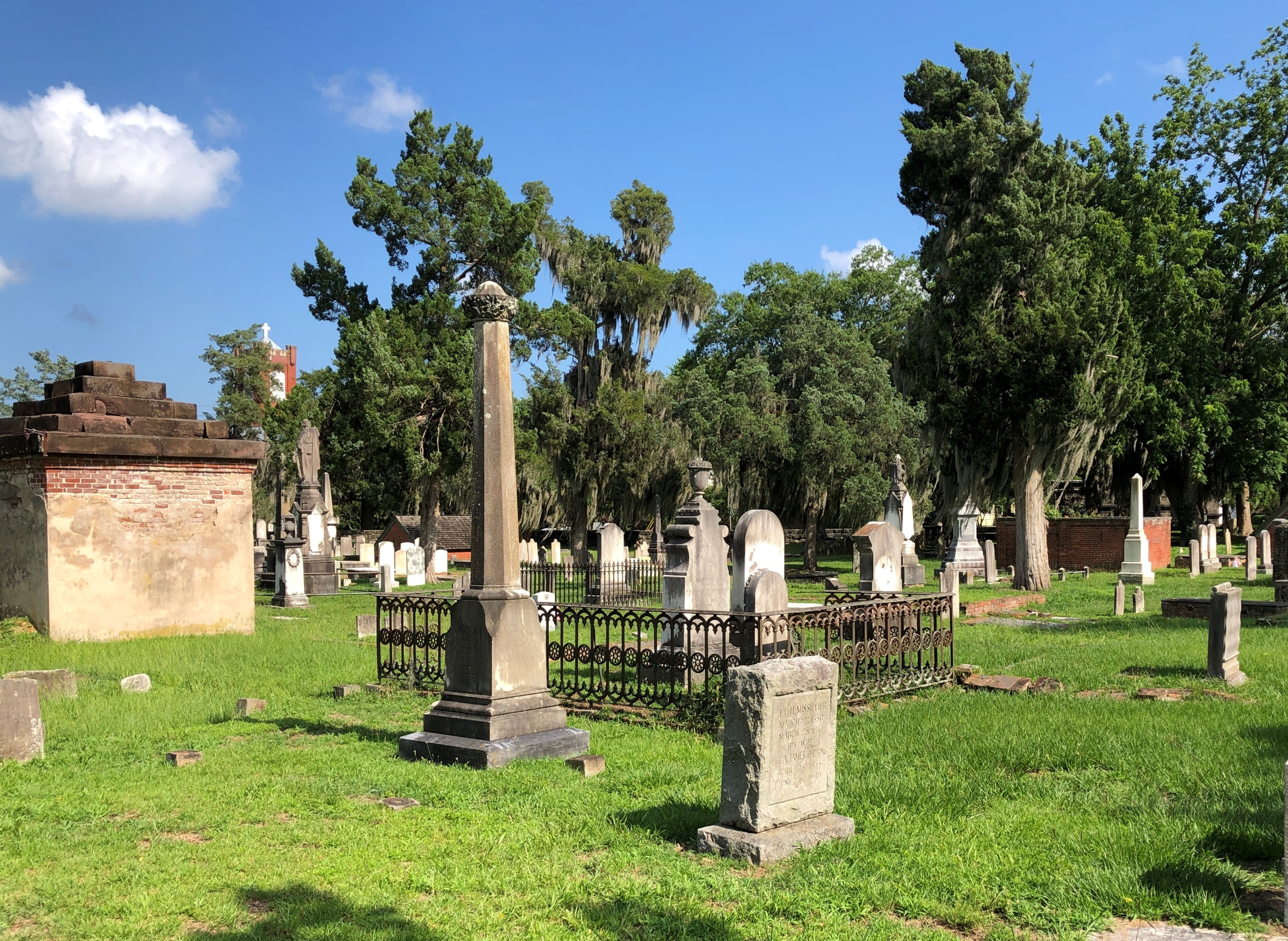
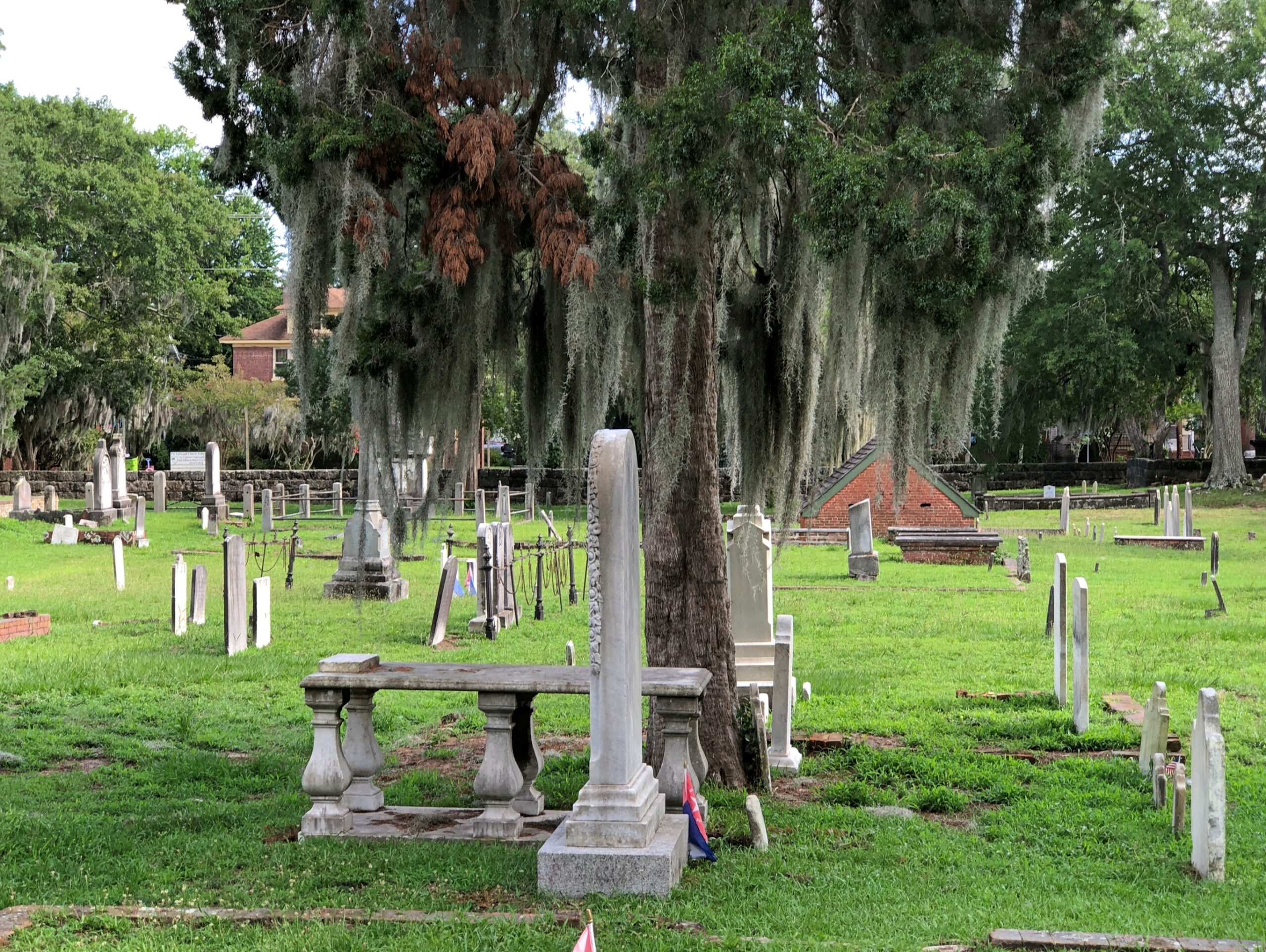
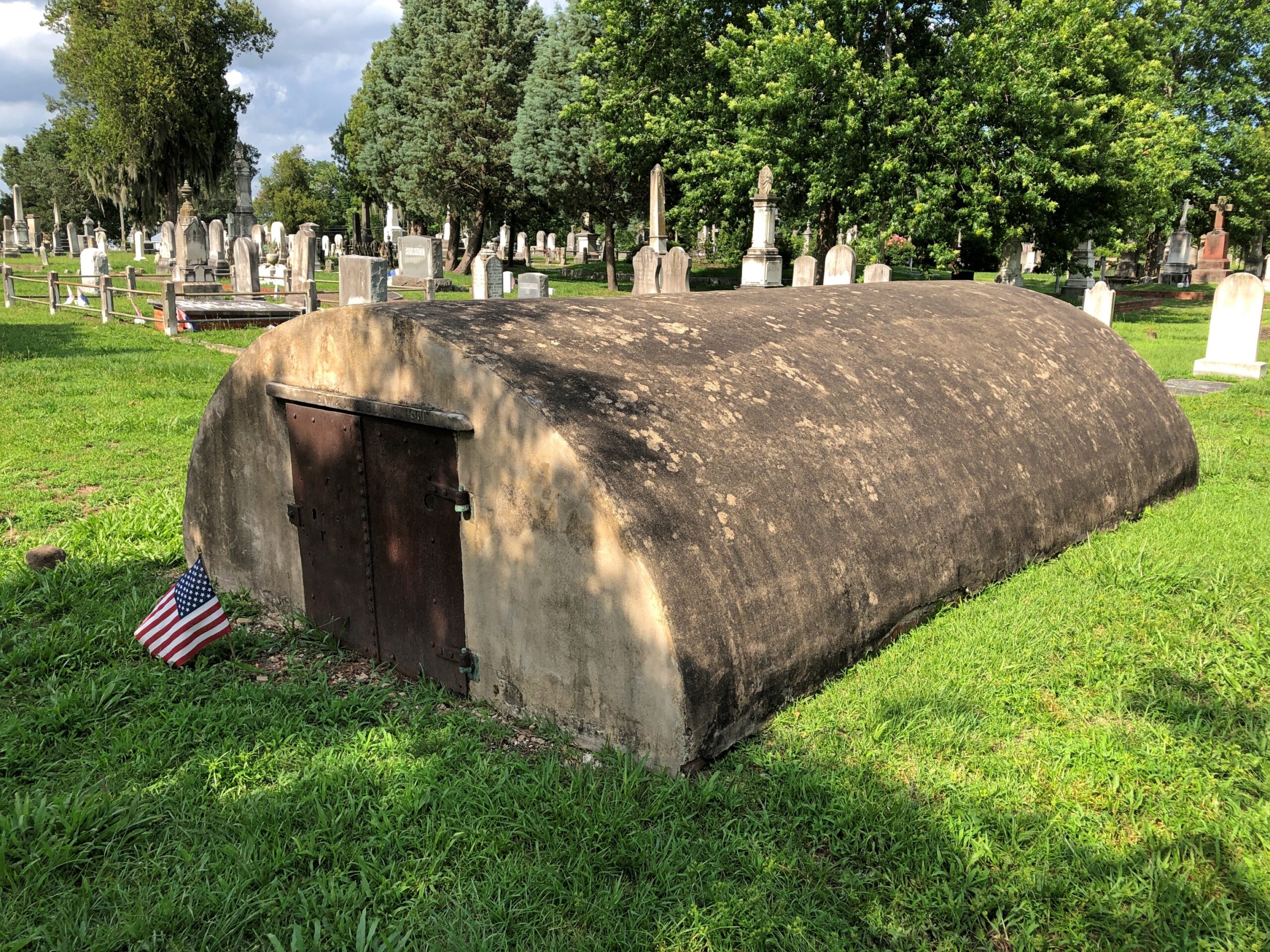
Many – most – of its stones are aged and unkempt. It’s that kind of cemetery. Aesthetic decay. Not only do the dead return to the earth, but so do their memorials.Hollywood Cemetery, Hot Springs Hollywood Cemetery, Hot Springs Hollywood Cemetery, Hot Springs

Hollywood is quite large for a small town cemetery, and since important doughnut matters called, I didn’t explore that much of it, such as the Confederate section that’s on the National Register of Historic Places. Still, one large memorial stood out, at least in the part of the cemetery I visited. Davies, it said. Cornelia A. Davies, who died at 28 in 1884.Hollywood Cemetery, Hot Springs

Looks like that statue has a bit of a lean. Was it that way originally, or does it have a tumble to take in the near future? Otherwise the memorial is in good shape.Hollywood Cemetery, Hot Springs Hollywood Cemetery, Hot Springs

A young mother, I assume. Jesus comforts her children, perhaps.

If this isn’t a Victorian sentiment, I don’t what would be.Hollywood Cemetery, Hot Springs

The entirety of such a cemetery is a momento mori. You’d think any cemetery would be that, but not always.Hollywood Cemetery, Hot Springs Hollywood Cemetery, Hot Springs Hollywood Cemetery, Hot Springs

It isn’t written anywhere, as famously it is in Rome, but feeling is in the air at such a place as Hot Springs’ Hollywood: “What you are now, we once were; what we are now, you shall be.”

Hot Springs National Park ’24

We arrived at Quapaw Baths in Hot Springs National Park on April 14 in time for a late-afternoon soak.Hot Springs NP

Or rather, a series of soaks in its indoor pools, which are heated at various temperatures. I might have skipped it, but Yuriko is keen on hot soaks, having come of age in Japan, where they take their hot springs seriously. The bathhouse has been well well restored, considering its former decrepitude.

Good to see Bathhouse Row again after so many years. All together, eight bathhouse structures line Central Avenue in the town of Hot Springs, and are part of the national park; two offer baths. In 2007, because the Quapaw was still unrestored, only one did, so we took the waters at the Buckstaff, which was a more formalized experience than at the Quapaw.Hot Springs NP

The Lamar.Hot Springs NP Hot Springs NP

“[The Lamar] opened on April 16, 1923 replacing a wooden Victorian structure named in honor of the former U. S. Supreme Court Justice Lucius Quintus Cincinnatus Lamar,” says the NPS, a fact that amuses me greatly, for idiosyncratic reasons. Mostly it’s NPS offices and other space these days, but I bought some postcards and a refrigerator magnet in its NP gift shop.

The Maurice.Hot Springs NP

And of course, The Fordyce, now the park’s visitors center and a free museum highlighting its bathhouse amenities. Named for its founder, Samuel Fordyce, one of those roaringly successful business men that the late 19th century unleashed.Hot Springs NP Hot Springs NP

“He was a major force behind the transformation of Hot Springs (Garland County) from a small village to major health resort,” the Encyclopedia of Arkansas says. “The town of Fordyce (Dallas County) is named for him, as is the Fordyce Bath House in Hot Springs.

“He enjoyed friendships with Presidents Rutherford B. Hayes, Benjamin Harrison, and William McKinley, all of whom asked his advice on matters concerning appointments and regional issues.” Ah, there’s the trip’s presidential site, however tenuous.

As for the building, it was “designed by Little Rock architects Mann and Stern and constructed under the supervision of owner Sam Fordyce’s son John, [and] the building eventually cost over $212,000 to build, equip, and furnish.” That’s 212 grand in fat 1910s dollars, or $6.5 million in present value.

I believe I took somewhat better pictures this time around. Maybe.Hot Springs NP Hot Springs NP

Directly over Hernando de Soto and the maiden is the Fordyce’s famed stained glass aquatic-fantasy skylight.Hot Springs NP

Not the only stained glass around.Hot Springs NP

The Fordyce is an expansive place, and in fact, the largest of the bathhouses, according to the NPS.Hot Springs NP Hot Springs NP Hot Springs NP

Mustn’t forget the spring that made it all possible, whose presence is noted in the basement.Hot Springs NP

Bathhouse Row is at the base of a steep slope. Climb some outdoor stairs and soon you’re at the Hot Springs Grand Promenade behind and above the row. Not many people were out promenading. True, by the time we got there, it was the morning of April 15, a Monday. Still, people were missing out on one pleasant walk.Hot Springs NP Hot Springs NP

The bricked trail was an early project (1933) of the lesser-known but no less remarkable Public Works Administration.

“Unlike the Civilian Conservation Corps and the Works Progress Administration, the PWA was not devoted to the direct hiring of the unemployed,” the Living New Deal says. “Instead, it administered loans and grants to state and local governments, which then hired private contractors to do the work.

“Some prominent PWA-funded projects are New York’s Triborough Bridge, Grand Coulee Dam, the San Francisco Mint, Reagan National Airport (formerly Washington National), and Key West’s Overseas Highway.”

Further up the hill is the abandoned Army Navy Hospital, whose therapeutic heyday was WWII.Hot Springs NP Hot Springs NP

The promenade passes by some of Hot Springs’ hot springs.Hot Springs NP Hot Springs NP

The path also offers views of the back of some of the bathhouses, including the wonderful Quapaw dome.Hot Springs NP

The crowning bit (literally) on a marvelous piece of work.

Center, Texas & Logansport, Louisiana

The town of Center, Texas is in East Texas, while the town of West, Texas is in Central Texas. Just a mild example of Texas naming oddities. This is the state with Cut and Shoot, Dime Box and Jot-Em-Down, after all.

We spent the night in Center (pop. 5,200) and the next morning, April 14, took a look around the Shelby County Courthouse, which also happens to the focus of downtown Center.Shelby County Courthouse, Texas Shelby County Courthouse, Texas

It’s a less common style for courthouses, Romanesque Revival, at least in my experience. Impressive brickwork. The story of one John Joseph Emmett Gibson is given in a Texas Historical Commission sign on the site. Originally a brickmaker from Ireland, Gibson ultimately made his way to Texas, in time to design and oversee construction of the courthouse in the 1880s, showing off his skill with bricks.

Older than the courthouse is the nearby former jail. These days home to the local C-of-C.Shelby County Courthouse, Texas, old jail

An assortment of buildings line the square. Mostly occupied. That includes the art deco Rio, open since 1926 as a movie theater, without having been closed or put to any other use since then, which is remarkable in itself.Rio Movie Theater, Center, Texas Rio Movie Theater, Center, Texas

Not a retro theater, either, but one showing new movies. Such as Unsung Hero and The Fall Guy, coming soon.

Unsung Hero is a 2024 American Christian drama film directed by Richard Ramsey and Joel Smallbone. The film follows Rebecca, Joel, and Luke Smallbone of For King & Country, and their life journey to become Christian recording artists.”

The Fall Guy is a 2024 American action comedy film directed by David Leitch and written by Drew Pearce, loosely based on the 1980s TV series about stunt performers. The film follows a stuntman working on his ex-girlfriend’s directorial debut action film, only to find himself involved in a conspiracy surrounding the film’s lead actor.”

I’d never heard of either of them, but now I have. 1980s TV series about stunt performers? That didn’t ring a bell either. So that’s what Glen A. Larson did after the implosion of the original Battlestar Galactica, and Lee Majors did after the Six Million Dollar Man was retired for lack of replacement parts.

How did I miss that? Right, I didn’t have a television in the ’80s.

More buildings on the square.Downtown Center, Texas Downtown Center, Texas

One that’s small but stately. Farmers of Shelby County, it says, your money is safe here.Farmers State Bank, Center, Texas

It was. Farmers is still an ongoing operation, nearly 120 years after its founding. The bank still occupies the building, and has other locations in East Texas.

Not every building on the square is occupied.Downtown Center, Texas

Not every building is even a building any more, but clues remain.Downtown Center, Texas, O.H. Polley ruin Downtown Center, Texas, O.H. Polley ruin

That didn’t take long to look up. Site of a dry goods store for much of the 20th century.

Shelby County partly borders De Soto Parish, Louisiana. That morning, we headed for the border, driving on Texas 7 and then U.S. 84 until we got to a town without any sign noting its name (or maybe we missed it), crossing a river without any identification either. I remembered I wanted to mail a few postcards when I saw a sign pointing the way to a post office. When we got to the p.o., I saw that we were in Logansport, Louisiana. We’d crossed the Sabine River, but as noted, there was nothing to tell us that.

Missed the former international boundary marker, too. I didn’t read about it until later. It’s a few miles out of Logansport (pop. 1,300), and once (and briefly) marked the border between the Republic of Texas and the United States.

No matter. Took a look around Logansport.Logansport, Louisiana

Here’s the name we missed. Not on the road we came in on.Logansport, La

Main Street.Logansport, La Logansport, La Logansport, La

Seen in a shop window in Main Street. Do they celebrate Mardi Gras in Logansport?Logansport, La

Yes they do, in the form of a parade put on my an outfit called the Krewe of Aquarius.

We spent some time in a resale store on the main street, Swamp Water Flea Market. I spotted something I don’t think I’ve ever seen at a resale shop.Logansport, La

Yours for $150, an antique leg iron. Not sure I’d want to have it around. Seems like a haunted artifact that might land you in an episode of The Twilight Zone.

Have You Ever Been to Nacogdoches?

When planning our most recent trip, devising its dumbbell structure of three days on the road, five in place, and four more on the road, it occurred to me that with a little southward jiggering from Dallas, we could visit Nacogdoches, Texas, one of the oldest towns in the state, rife with history: home to prehistoric Indian activity and the establishment of a Spanish mission in the 18th century, base of filibusters and other rebellions in the early 19th, mentioned famously in a late John Wayne movie, and much more.

All that would have been a reason to come, but mainly I wanted to visit my old friend Kirk, resident of the town for nearly 40 years. We hung out mostly in high school, but had known each other as far back as elementary school, ca. 1970.

In exchanging text messages ahead of the visit, we couldn’t remember the last time we’d seen each other, but finally decided, once Yuriko and I met Kirk and his wife Lisa at their home for lunch on April 13, that it was probably in April 1986 at the wedding of a mutual friend of ours in Austin.

That’s a long time. We had a good visit, a good reconnect – I find it good to reconnect – spending most of the afternoon with them, hearing about life in Nacogdoches, his medical practice there, their raising six children, all grown.

Later in the day, Yuriko and I spent a little time in downtown Nacogdoches, which offers a more sizable square than most towns, even in Texas, handsome on the whole, with a scattering of specialty retail in the area, but mostly still professional services, city government offices and other utilitarian activities.

Mural detail a block from the square, facing a parking lot.Downtown Nacogdoches

We arrived during the 12th annual Nacogdoches Wine Swirl, just by raw chance. I’d never heard of a “wine swirl.” The brick streets around what I took to be the courthouse were closed to cars. People clustered here and there and lined up for wine.Downtown Nacogdoches Downtown Nacogdoches Downtown Nacogdoches Downtown Nacogdoches

The square doesn’t surround a courthouse, but rather a former federal building, now the Charles Bright Visitors Center. Nearby is “The Gateway,” depicting doughty American pioneers traveling the Old San Antonio Road into Texas, a fairly recent work (2013) of Michael Boyett.Downtown Nacogdoches

“The ticketed wine event will showcase Texas wineries and local and regional food trucks and shopping vendors along the historic brick streets,” Visit Nacogdoches says regarding the event. More marketing at work, with the goal of furthering Nacogdoches as a day-trip town.

That Texas has wineries is not news. I went with Jay to visit one of the earlier ones in the Hill Country in the mid-70s. But did Central Texas wine makers come all the way to Nacogdoches to sell their wares? Further investigation tells me there’s an established wine-growing biz in East Texas.

“But, what if I were to tell you that East Texas has over 30 wineries and vineyards just waiting to be explored?!” Totally Texas Travel breathlessly says. Even if that isn’t the precise number, I’ll take even a paid travel site as a reasonable source the existence of wineries here.

Moreover, there’s a marketing invention called the Piney Woods Wine Trail.

The Piney Woods Wine Trail? In East Texas? That goes against stereotype, and I won’t have it. They make (and drink) either beer (domestic beer, closer to Texas-made the better) or hard liquor, the closer to homemade the better. That’s what I get for traveling into East Texas, a busted stereotype.

Tyler Rose Garden

The cliché is to stop and smell the roses, lest you pass your life in drab unappreciation of the delights easily available to you during your short lifespan. It expresses a worthwhile sentiment, almost always meant metaphorically.

At Tyler Rose Garden in Tyler, Texas, smelling the roses is literal. It’s the largest rose garden I’ve ever seen — and according to some sources, the largest such garden in the United States — with some 38,000 bushes representing 600 cultivars on 14 acres.Tyler Rose Garden
Tyler Rose Garden

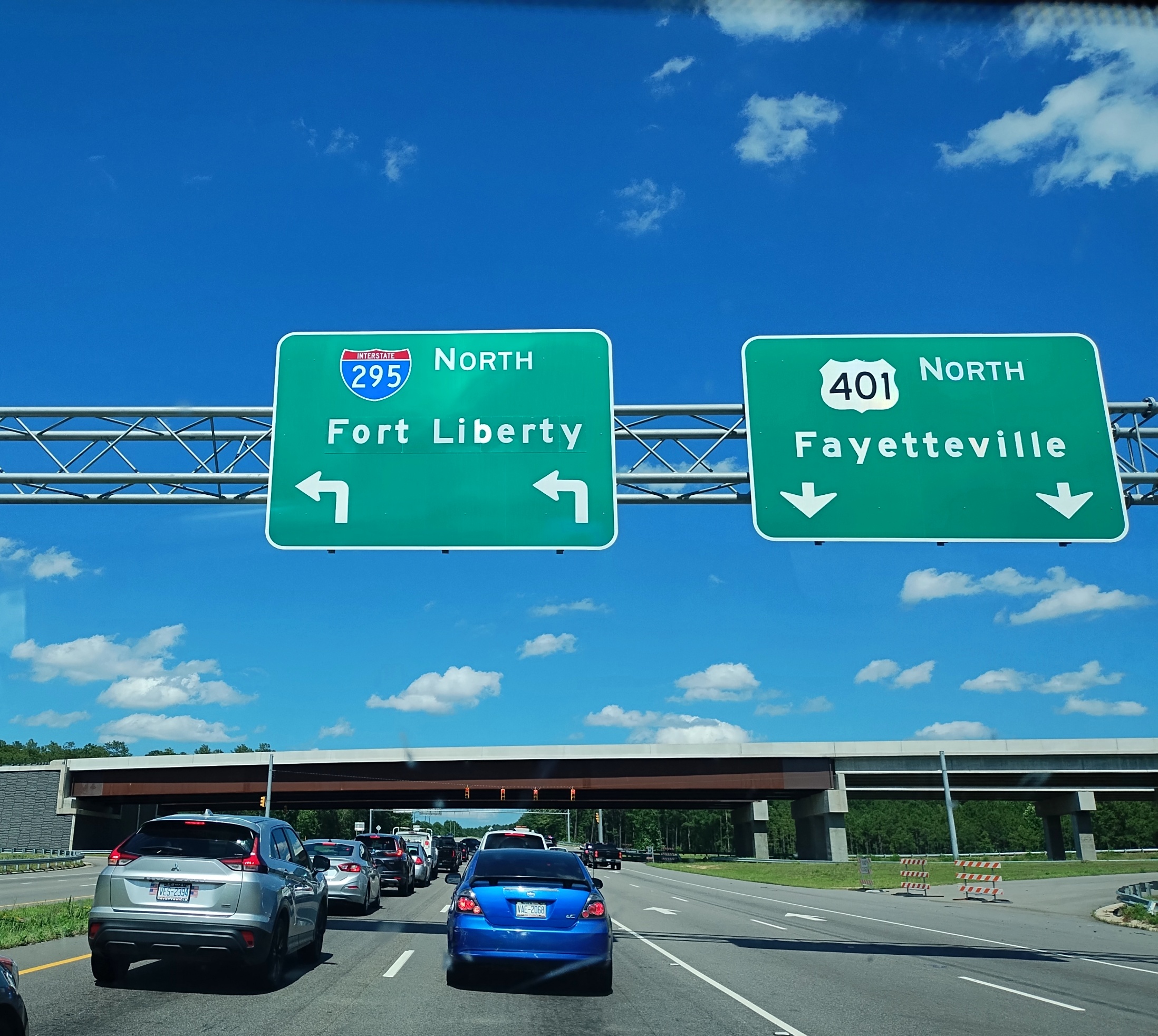
We arrived late in the warm morning of April 13, the day we left Dallas, on our way to visit an old friend of mine in Nacogdoches, Texas, as well as to (partly) rectify how little time I’ve spent in East Texas, a serious lacuna in my travels. Tyler is just south of I-20 east of Dallas, but not quite on that highway. We headed south on U.S. 69 from I-20 to get there.

Why a rose garden? Turns out Smith County, of which Tyler is the seat, was once the hub of U.S. rose production.

“Large-scale commercial production started in the early 1900s, and in 1917 the first train carload was shipped,” the always informative Texas State Historical Association says. “Droughts, freezes, and disease had destroyed the area’s peach orchards, so the nurserymen were forced to turn to something else. The climate and sandy loams of Smith, Van Zandt, Gregg, Cherokee, Harrison, and Upshur counties proved excellent for this type of horticulture, and large-scale commercial rose growing centered there.”

By the end of the 20th century, domestic and foreign competition had eaten into Texas’ market share for roses, but they are still grown in the area.

The day we came to Tyler was warm and clear, just right for a stroll among the roses of a free municipal garden.Tyler Rose Garden Tyler Rose Garden Tyler Rose Garden

And take time to look closely at – and of course – smell the roses. Watch out for bees, though.Tyler Rose Garden Tyler Rose Garden Tyler Rose Garden

It isn’t all roses.Tyler Rose Garden Tyler Rose Garden Tyler Rose Garden

“Let’s spell out Tyler in big metal letters, but leave out the Y.”

“Why?”

“Right, Y.”

But why?”

“Yes, Y.”

“Huh?”

And so on. A clever idea, whoever thought it.

Potosi, Missouri

Sometime in late 18th century, Frenchmen came to a spot in the wilds of North America, which in later years would be southeastern Missouri, and began digging for lead in a place they called Mine Au Breton – Mine of the Breton, for Brittany native Francis Azor, who pioneered the effort in the area to extract the element. The name didn’t last, however. Since early U.S. sovereignty, it’s been Potosi, Missouri.

Still, the earlier name lingers in a small park in Potosi, which we visited on the morning of April 6 after leaving where we’d spent the night, Farmington.Mine Au Breton Heritage Park, Potosi, Mo.

A nice little park, a block from the town’s main thoroughfare, High Street. Mine a Breton Creek runs through it.Mine Au Breton Heritage Park, Potosi, Mo. Mine Au Breton Heritage Park, Potosi, Mo.

A small bridge crosses the creek at one point. You wouldn’t think such a bridge would merit a name, but the people of Potosi (pop. 2,500) clearly disagree.Mine Au Breton Heritage Park, Potosi, Mo.

Red Bridge. It even has a former name: Steel Wagon Bridge. Maybe more minor bridges should have names. Adds a little character to localities. Of course, if that caught on, most of them would be named after minor local politicos.Mine Au Breton Heritage Park, Potosi, Mo.

After the Louisiana Purchase was a done deal, Americans came to the area, but Moses Austin was already there, having cut a deal with the Spanish to mine there. Texas schoolchildren learn who he was, or at least they did 50+ years ago, when I was such a schoolchild. He’s the father of Stephen F. Austin, who was the Father of Texas. So maybe Moses is the Grandpa of Texas. My brother Jay suggested that we visit Potosi to see his grave, and since it was only a few miles out of the way, we did.

The grave itself isn’t one of the better-looking ones I’ve ever seen: a white, virtually unadorned slab under an uninspired protective shelter.Grave of Moses Austin, Presbyterian Cemetery, Potosi, Mo. Grave of Moses Austin, Presbyterian Cemetery, Potosi, Mo.

His wife Mary Brown Austin, daughter of an iron mine owner and mother of Stephen F., is there as well. We didn’t hear that much about her in school.
Moses Austin came to the area to mine lead – and escape debt back in Virginia — and apparently had a good go of it in the 1810s, though I suspect life wasn’t as good for the slaves that did the actual digging. Austin is credited with renaming the town Potosi, after the place in Bolivia, a silver mining center known as the location Spanish colonial mint, producer of countless Spanish dollars. Educated miners like Austin would have known it, anyway, and maybe he was thinking big. As in, dreams of silver. But lead would have to do.

Quite the go-getter, Moses Austin. “He & his 40 to 50 slaves & employees built bridges, roads, a store, a blacksmith shop, a flour mill, a saw mill, a shot tower, and turned out the first sheet lead & cannonballs made in Missouri,” the informative Carroll’s Corner posted.

Austin suffered reversals and ultimately lost his fortune in the Panic of 1819, and so schemed to take settlers to the underpopulated wilds of Texas, then part of New Spain — to escape his debts, among other things. He received a land grant from the Spanish Crown (that’s quite a story), and was set to go when death came calling, leaving the task to his son – who had to deal with newly independent Mexico for his grant. That’s another story, one far from modern Potosi.

Google Maps calls the cemetery along High Street, with the Austins’ grave, City Cemetery. A sign at the site says: Potosi Presbyterian Cemetery, Est. 1833.Presbyterian Cemetery, Potosi, Mo.

It’s a mid-sized, old-style cemetery with some charm.Presbyterian Cemetery, Potosi, Mo. Presbyterian Cemetery, Potosi, Mo.
Presbyterian Cemetery, Potosi, Mo.

With memorials broken and worn.Presbyterian Cemetery, Potosi, Mo.

And others still waiting for that wear to happen. It will.Presbyterian Cemetery, Potosi, Mo.

High Street is the location of a handsome county courthouse (Washington County), the third on the site and a 1908 design by one Henry Hohenschild, a Missouri architect who did a number of public buildings. Remarkably, the same document tells us that Moses Austin (probably) designed the county’s first courthouse. Moses was one busy guy.Washington County Courthouse, Potosi, Mo.

There are a number of antique stores on High Street, and while Yuriko was off exploring them, I was buttonholed by two Jehovah’s Witnesses sitting with their material across the road from the courthouse. Or rather, I allowed myself to be buttonholed, so I could talk a little religion. Just like I did in Salt Lake City. Or religion-adjacent. I think the ladies, Mary and Kay I believe it was, were surprised that I knew about the sale of the JW HQ property in Brooklyn some years ago.

Robot on Aisle 7

When I took Ann back to Normal yesterday, I didn’t stop anywhere else in that town. But the last time I was there, we went to a grocery store just off I-55. And who should we meet in one of the aisles? I’d say it was strolling around, but I don’t think inventory robots stroll. Wheel along, maybe. It was puttering along.
That’s Tally, which isn’t precisely new tech, considering that you can easily find an article about the machine from 2016. Then again, maybe the one we saw is a more advanced version or, for all I know, it’s an older one still perfectly fine for its job. Never mind what the tech industry says, tech still has value as long as you find it useful.

“[Tally] can traverse a shop’s aisles for eight to 12 hours on a single charge, counting and checking up to 20,000 individual stock keeping units (SKUs) with greater than 96 percent accuracy,” the PC magazine article reported then.

A robot replacing a human. A human going up and down the aisles for hours holding a electronic wand of some kind. That sounds like the kind of really boring job that robots were going to take in the future, as it was once more optimistically imagined. Were supposed to take.

On the other hand, I asked the check-out clerk about the robot. How long had the store had the robot? She didn’t know, a while. We hate it anyway, she said, but didn’t elaborate.

Pontiac-Oakland Museum and Resource Center

Not something you see very often: a wall of motor oil.Pontiac-Oakland Museum

I’d never seen such a thing until I came across it just a few doors down from the Museum of the Gilding Arts, in the Pontiac-Oakland Museum and Resource Center, which also faces the elegant Livingston County courthouse in Pontiac, Illinois. In the case of the museum, Pontiac refers to the car brand of that name, and Oakland does as well, as the predecessor of Pontiacs. Both brands are defunct now, but not in the hearts of enthusiasts.

The many cans of motor oil happen to be a backdrop for one of the cars on display: a 1960 Pontiac Venture.Pontiac-Oakland Museum

Nearby are other cars of roughly the same era.Pontiac-Oakland Museum Pontiac-Oakland Museum

A 1964 LeMans Convertible and a 1970 Pontiac GTO Judge, respectively. Not sure if that counts as a Little GTO.

The collection on display isn’t that large – not compared to Fairbanks or Reno, say – but it was well worth a look. Before its absorption into GM, and in fact before horseless carriages, Pontiac got its start as a carriage maker.Pontiac-Oakland Museum

An 1890s product of the Pontiac Buggy Co. “One of a handful known to exist,” its sign said.

Soon enough, Pontiac Buggy founder Edward Murphy began building 2-cylinder runabouts called Oaklands, and later built more successful 4-cylindar models, as products of the Oakland Motor Car Co. GM bought Murphy out in 1909, and focused on Oaklands for some decades. The GM Pontiac model didn’t exist until 1926, and then the Depression killed off the higher-priced Oaklands.

A 1929 Oakland.Pontiac-Oakland Museum

A Pontiac sedan of the same model year.Pontiac-Oakland Museum

Also on display: marketing odds and ends that emphasize the Native roots of the name.Pontiac-Oakland Museum Pontiac-Oakland Museum Pontiac-Oakland Museum

Some might object these days, but I can’t help suspect that Pontiac – Obwandiyag – able 18th-century leader of the Odawa – might have liked being associated, however tenuously, with such a solid object of commerce.

Wiki, citing a 2002 academic work, notes: “Their neighbors applied the ‘Trader’ name to the Odawa because in early traditional times, and also during the early European contact period, they were noted as intertribal traders and barterers.”

Museum of the Gilding Arts

The docent at the Museum of the Gilding Arts, a neatly dressed woman about 10 years my senior, wasn’t sure why the museum is in Pontiac – Pontiac, Illinois, that is, where I stopped on Sunday specifically to visit the diminutive two-room museum.The Museum of the Gilding Arts The Museum of the Gilding Arts

“I’m going to ask about that, because I’ve wondered as well,” she said. “I’ve only been here three weeks.”

Before that, she said, she hadn’t known much about gilding, but had been reading about it and spending time with the exhibits. For a while, I had a personal tour of the place, as she suggested things to look at, such as the various items that had been gilded, including decorative pieces but also machines.The Museum of the Gilding Arts The Museum of the Gilding Arts

Visit Pontiac is succinct about the place: “The focus of the Museum of the Gilding Arts is the history, craft, and use of gold and silver leaf in architecture and in decoration throughout a history that dates back to the days of ancient Egypt.

“There are examples of gold and silver leaf, artifacts used in the application of the precious metal leaf, and displays showing how leaf was manufactured.

“The exhibit features items from the Society of Gilders’ Swift Collection. The M. Swift and Sons company manufactured gold leaf in Hartford, Connecticut, and began its operations in 1887.”

The docent seemed most impressed by the story of M. Allen Swift, the last owner of M. Swift & Sons, who died at a very advanced age in 2005. The business died with him, having been founded by his grandfather, Matthew Swift, who emigrated as a youth from the UK in 1864. Before he died, Allen Swift had the foresight to preserve old-time elements of his family’s gold leaf factory, including an array of wooden work benches – which are now on display in the back room of the two-room museum.

Each bench sports one of the heavy hammers that late 19th-century workmen used to beat gold.The Museum of the Gilding Arts

The 19th century was full of jobs that required great upper-body strength, and gold beater was surely one of them.

“The process of making gold leaf began with quarter-inch-thick gold bars, 12 inches long by 1.5 inches wide,” notes an article in Connecticut Explored about the redevelopment of the Smith factory in our time. “The bars were rolled to a thickness of 1/1000 of an inch and cut into squares. The squares were then dusted with calcium carbonate applied with a brush — often a hare’s foot — and placed between a thin membrane made of the outer layer of an ox intestine.

“These were then stacked, in as many as 300 layers, and repeatedly struck with a 16-pound hammer. The squares were cut again into smaller squares and the process repeated with a 10-pound hammer; the squares were then placed in a mold and struck with a 6-pound hammer. When finished, a layer of 280,000 leaves stood just an inch high.”The Museum of the Gilding Arts The Museum of the Gilding Arts

What happened to the residue of the ox intestine? Maybe I don’t want to know. Not only a tough job, then, but probably a dirty one as well, and ill-paying unless you were a Swift. Machines took over most of the heavy beating in the 20th century, but I expect it still was a tedious job. More about the museum, which opened in 2015, is at the Society of Gilders web site.

Before I left, the docent told me that I had been the only visitor that day. I was glad to hear it. I hadn’t gone too far out of my way, stopping after I’d dropped Ann off in Normal, and it was worth the small effort to get a glimpse of an entire industry I knew nothing about.

South Texas ’23: Kerrville & Bandera

Last Tuesday, my brother Jay and I drove from San Antonio to Kerrville, Texas (pop. 24,200) to visit an old friend of his, who has a separate small building in his back yard to house an extensive model train that he’s building. We got a detailed tour. Cool.

That was part of a larger trip that took me to Austin and San Antonio to visit friends and family. I flew to Austin on October 18 and returned from San Antonio today.

Rather than take I-10 west from San Antonio to Kerrville (though we returned that way), we drove Texas 16, which is mostly a two-lane highway that winds from exurban San Antonio and then into the Hill Country. Always good to drive the Hill Country, even on a rainy day. It was a rainy week in South Texas on the whole, but still quite warm for October. Had a few sweaty walks in San Antonio last week as well, more about which later.

Besides visiting Bob and his wife Nancy and his HO model train construction, we also stopped by the Glen Rest Cemetery in Kerrville (my idea). The recent rains had made it a muddy cemetery. Ashes to ashes and dust to dust, but also mud to muddy?Kerrville, Texas Kerrville, Texas Kerrville, Texas

A curious figure. At least for a cemetery.Kerrville, Texas Kerrville, Texas

Glen Rest – which is incorrectly noted as Glen Rose on Google Maps – dates from 1892, according to the Texas Historical Commission plaque on site. “Glen Rest Cemetery is the final resting place for many pioneer and historic families of Kerrville and the surrounding Hill Country,” it says.

En route to Kerrville on highway Texas 16 is the much smaller burg of Bandera, pop. 829 and seat of Bandera County. That means a courthouse, and we stopped to take a look.Bandera, Texas

The courthouse itself isn’t unusual, but it is positioned unusually. Instead of being the focus of a square, it’s simply facing the highway. So are a handful of memorials. This one honors “All Cowboys” because Bandera is “Cowboy Capital of the World.”Bandera, Texas

This stone oddity honors a Bandera pioneer named Amasa Clark, giving his birth and death dates as 1825-1927.Bandera, Texas Bandera, Texas

More about him is at Frontier Times magazine, which annoyingly doesn’t say when the text was written, who wrote it or where it was published. Internal evidence, along with the style of writing, puts it in the early 1920s, probably in a local newspaper. Clark came to the site of Bandera in 1852, not long after serving in the war with Mexico, and stayed until his death in 1927 as a very old man.

Also along the highway in Bandera is a strip center including a store the likes of which I’d never seen before. Neither had Jay.Bandera, Texas Bandera, Texas

We had to take a look inside.Bandera, Texas Bandera, Texas

I should have asked to woman behind the counter how long the store has been in business, or whether the man himself gets a cut, or some other questions, but I was in vacation mode, not interview mode. So all I know is what I saw, which was enough. For the record, and this is no surprise, Trump overwhelmingly carried Bandera County — 79.1% to 19.7% for Biden — in the 2020 election.