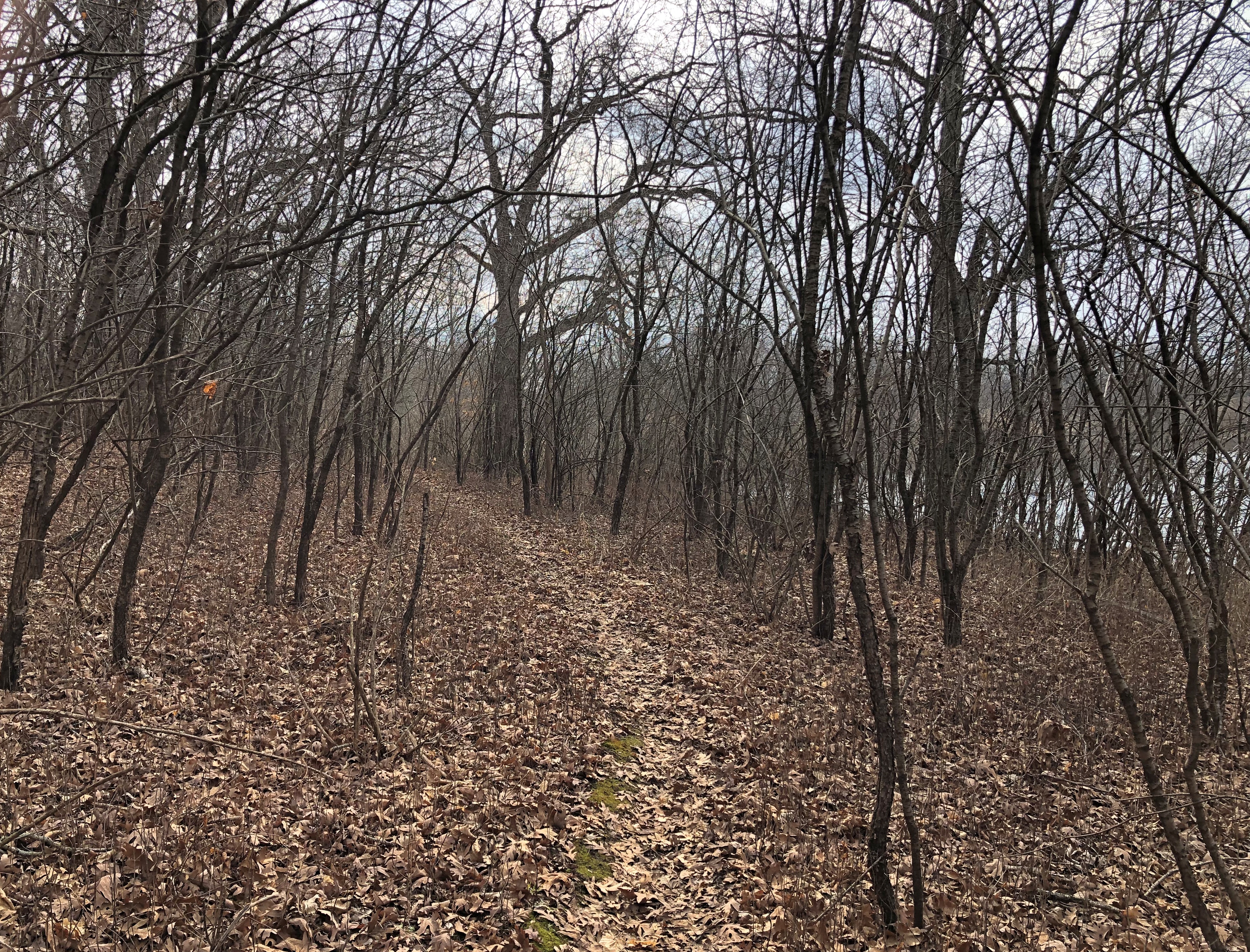
Heron Creek Forest Preserve

At about 7:05 Central this evening, we were out walking the dog in cool, but not cold temps, with a cloudy haze covering most of the sky. As we headed west on a neighborhood street, I noticed two lights next to each other, just poking through the haze not far above the trees. For a moment, I though it must be an airplane. But it didn’t appear to move.

Then the clouds cleared just a little and I realized the lights were Venus and Jupiter. I remembered all at once something I’d read and then forgotten — that they were supposed to be in conjunction soon. As in, today.

They came and went from behind the clouds for a few minutes. When I got home, I stayed outside and watched from the front yard. One of our neighbors came out to walk his dog, and I pointed it out to him.

“Cool,” he said. I agree.

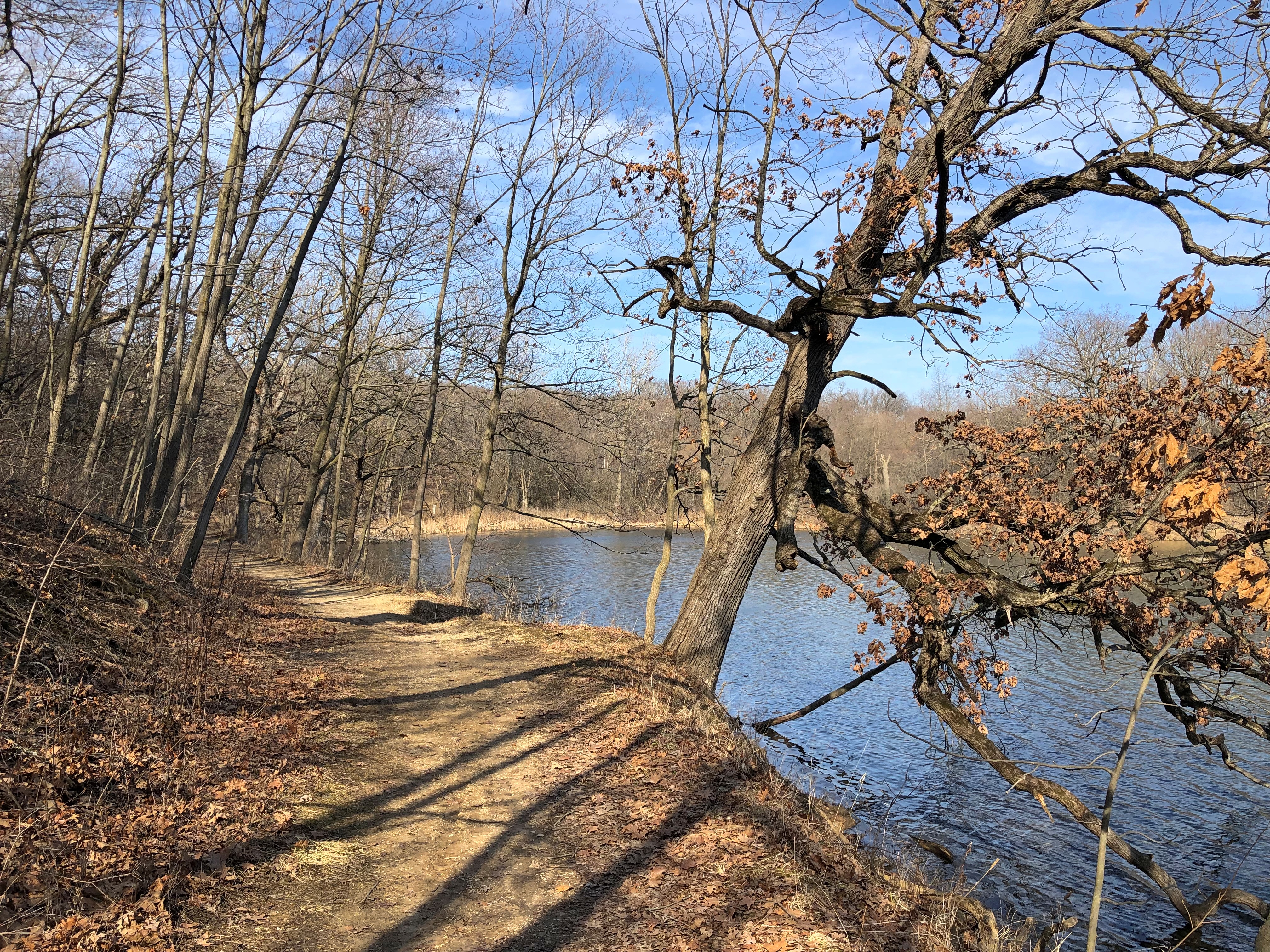
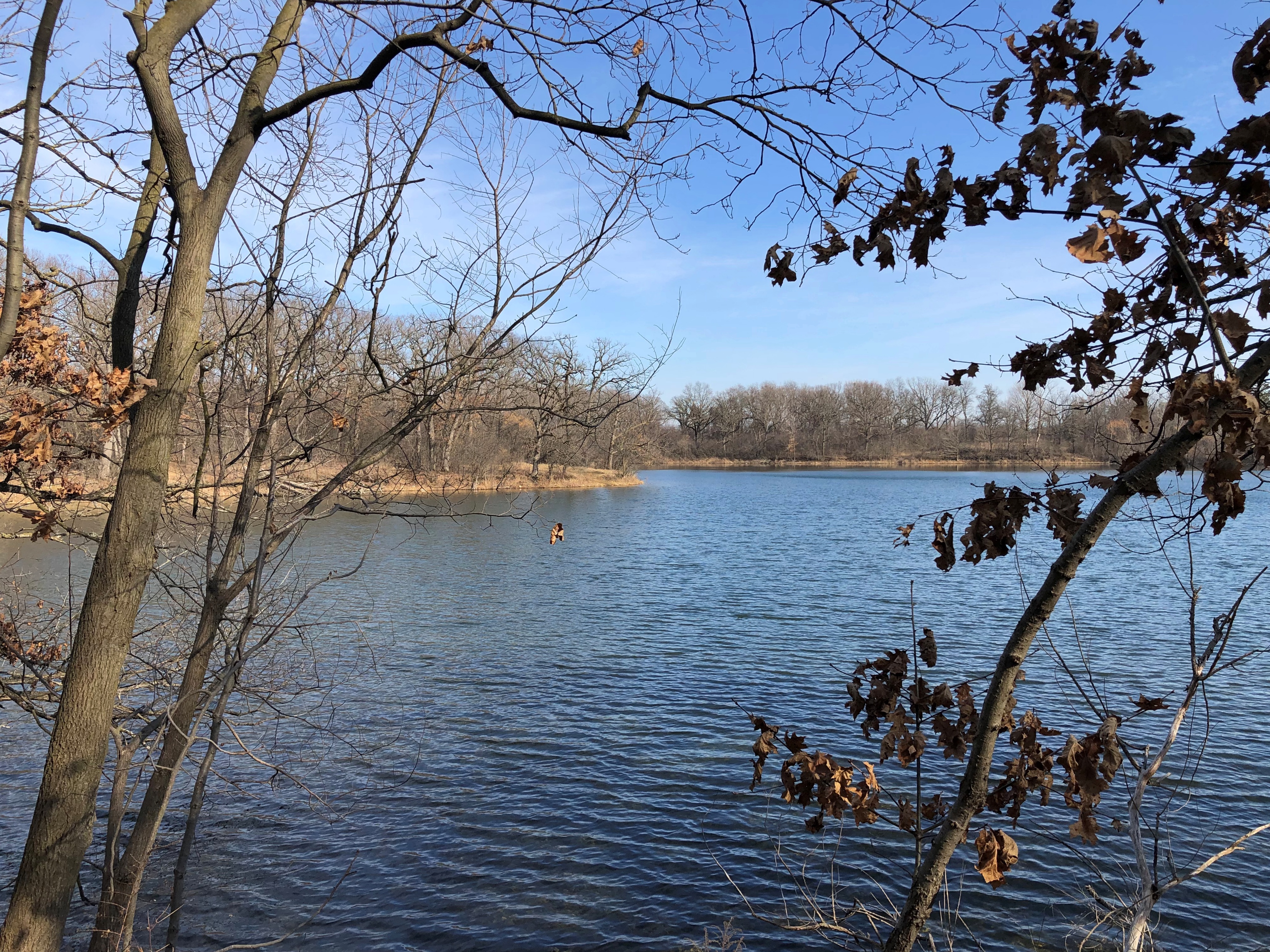
About a mile north of the town of Long Grove’s shopping district is Heron Creek Forest Preserve, a unit of the Lake County Forest Preserve District.Heron Creek Forest Preserve

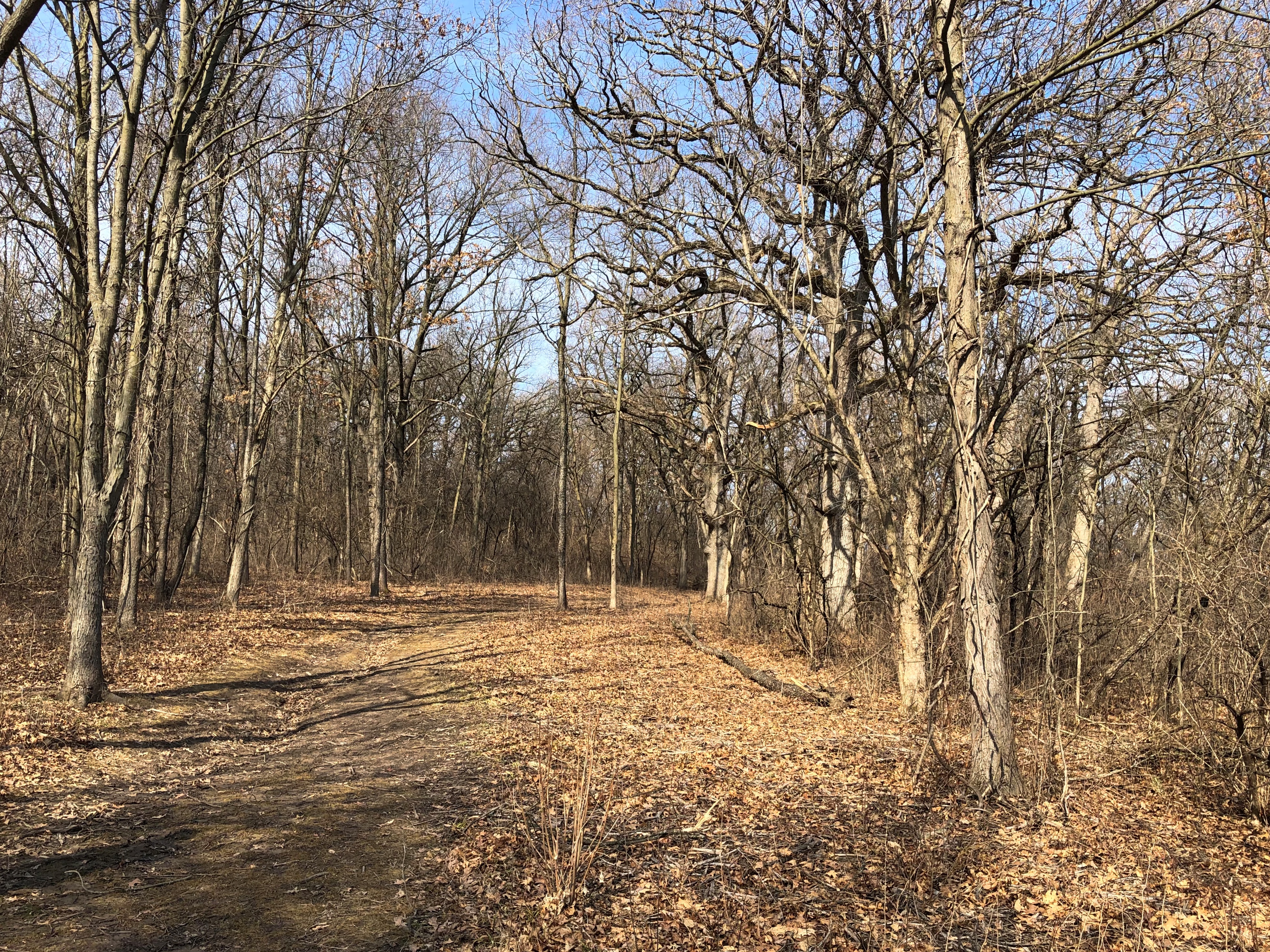
There was still enough afternoon warmth left on Sunday to take a mile-and-a-half looping walk through the preserve, which at 242 acres, isn’t that large. Some parts of the gravel trails were muddy, marked with rims of dirty slush.Heron Creek Forest Preserve

For us, that mostly affected our shoes. For the dog, who lives closer to the ground, that eventually meant a bath. But we all enjoyed the walk through the pre-spring vegetation.Heron Creek Forest Preserve
Heron Creek Forest Preserve

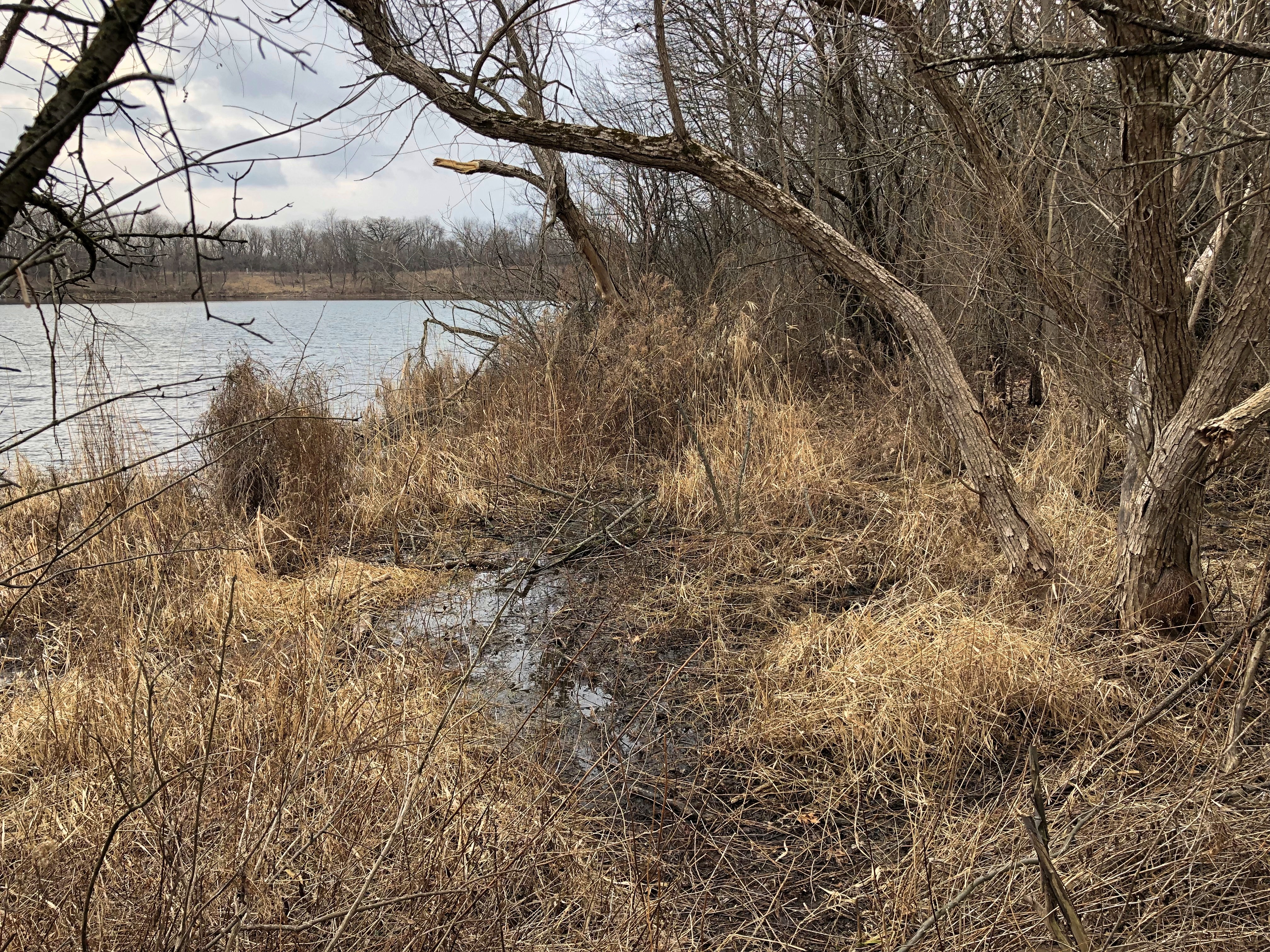
The diminutive Heron Creek.Heron Creek Forest Preserve
Heron Creek Forest Preserve

As far as I can tell consulting maps, this little creek begins at a small lake not far west of the forest preserve, and heads east till it joins Indian Creek, which is a tributary of the Des Plaines River. Heron Creek’s course is entirely north of the aforementioned Buffalo Creek.

Also cool. Just not as epic as two worlds appearing close to collision.

Buffalo Creek Park, Long Grove

This is all the that Long Grove Park District has to say about Buffalo Creek Park in Long Grove: “Buffalo Creek Park became the Park District.”

Maybe that’s just a mangled placeholder. Guess the district will get around to finishing that description sometime. Unless they decide to let generative AI do their jobs for them, like certain exceedingly lazy employees of my alma mater did recently. They need to be careful, though.

Me: Describe Buffalo Creek Park in Long Grove, Illinois.

Generative AI: Buffalo Creek Park is a public park located in Long Grove, Illinois. The park covers an area of approximately 408 acres and features a variety of natural habitats, including wetlands, prairies, and savannas…

There was more, but I’m skipping it because clearly the program mistook this small park with the much larger Buffalo Creek Forest Preserve. Oops.

I don’t know the park’s actual size, but I know for certain it isn’t anything close to 408 acres – 20 or 25 would be my guess. One entrance to the park is near Long Grove’s historic covered iron bridge.Buffalo Creek Park, Long Grove, Illinois

At the stub end of February, the park is a brown expanse.Buffalo Creek Park, Long Grove, Illinois

In contrast to what it looks like in July.Buffalo Creek Park, Long Grove, Illinois

A single bridge crosses Buffalo Creek.Buffalo Creek Park, Long Grove, Illinois

Buffalo Creek is a short (about 11 miles) tributary of the Des Plaines River, which eventually flows to the Illinois, itself is a tributary of the Mississippi. I enjoy knowing that some of the chilled water under that little bridge is bound for the warm reaches of the Gulf.Buffalo Creek Park, Long Grove, Illinois Buffalo Creek Park, Long Grove, Illinois

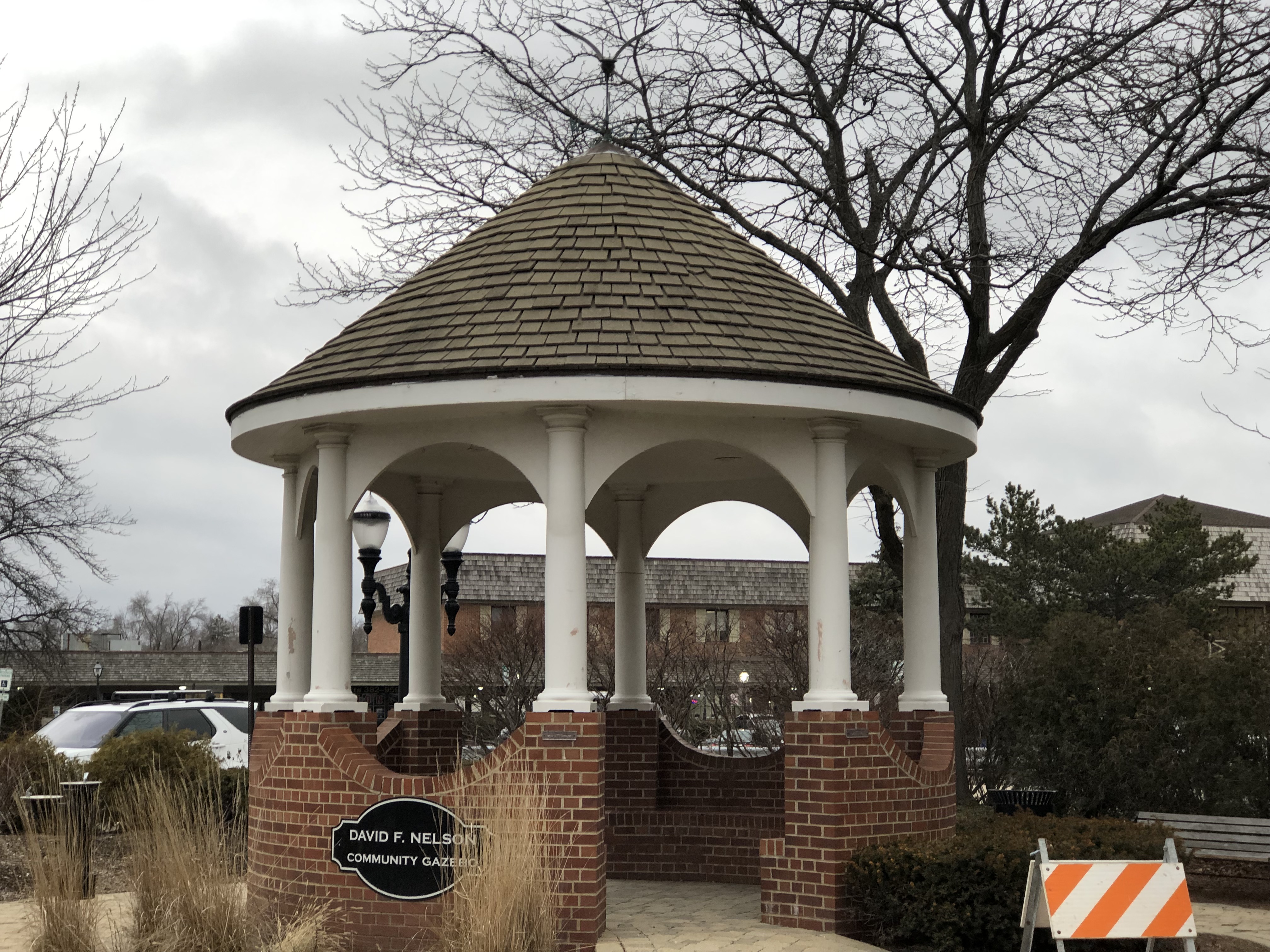
A gazebo. Long Grove wouldn’t be a very civilized place without one, after all.Buffalo Creek Park, Long Grove, Illinois

Time to see what ChatGPT knows about gazebos.

Me: What’s the difference between British and French gazebos?

Generative AI: British gazebos are typically more traditional and classic in their design. They often have a hexagonal or octagonal shape, with a pointed or domed roof. British gazebos also tend to feature intricate details such as latticework, ornate moldings, and decorative finials. They may be constructed from wood, metal, or other materials.

French gazebos, on the other hand, are often more ornate and elaborate in their design. They may feature curved lines, intricate ironwork, and decorative scrollwork. French gazebos may also have a more rectangular or oval shape, with a flatter roof. They are often made from wrought iron or other metals, and may be adorned with flowers or other decorative elements.

Oh, really? I can make up stuff about gazebos, too, Mr. Robot Brain. It takes me a little longer, but I’d say my make-believe is still higher quality. For now.
Looks like some Eagle Scouts – and their leader, Aadi Jain? – this troop, since Buffalo Grove isn’t far away? – take an interest in civic improvement projects. I’m happy to report that the gazebo ramp is smooth and stable.Buffalo Creek Park

One more park feature: a plaque-on-boulder memorial.Buffalo Creek Park

The honoree is one Edward H. Wachs III (1907-99), who, according to the words in bronze, was on the local school board, the village board, the park district board and the architectural board. That’s a long lifetime on boards.

Long Grove in Winter

Heavy rain through much of the wee hours Monday morning, as forecast. Not as pleasant as sleep-time rain on a Friday or Saturday night, or in rental property when the risk of sump pump failure isn’t your concern, but not bad.

Also nice to know that February is just about over. Always good to get the bastard behind you, even if March isn’t that much better. The longer days promise warmer air, and eventually will deliver it.

That said, Sunday was warm (over 50 F.) and sunny enough to inspire us to visit Long Grove, Illinois, whose short and genteel shopping streets can make for a good stroll. The last time I was there, I was promised a sock monkey museum. And there it was!Long Grove, Illinois

Please use front door, the sign said. So we went to around to the front door. No dice. Closed on Sunday. What’s up with that? I could have sworn that most sock monkeys were Seventh-day Sabbatarians, but maybe I’ve been misinformed.

So I spent some time examining the nearby bricks, and least until Yuriko and the dog wanted me to come along with them. Long Grove has extensive brickwork at one’s feet.Long Grove, Illinois

Including named bricks.Long Grove, Illinois Long Grove, Illinois

Such as “Carlyle Sciotoville,” presumably a product of Carlyle Brick of Sciotoville, Ohio; and “Barr” bricks, probably associated with a factory that used to operate in Austin, Minnesota; and “Poston Pavers,” which must have been the product of Poston Brick & Concrete Co. of Sangamon County, Illinois.

Zounds, I’ve discovered one obscure rabbit hole: brick collecting, as discussed in blogs and articles and facilitated by the fact that brickmaking used to be a highly fragmented industry, with countless local brickmakers advertising their wares on the products themselves, so that there are hundreds (thousands?) of distinct varieties.

There’s also the International Brick Collectors Association, whose web site looks like it was set up in 1997 and not modified since, but why does it need to be? It does me good to know such an organization exists, even though I’m not planning to collect bricks like whoever set up BrickCollecting.com.

I like this Tumblr site, That Was Our Work, which is partly about bricks. “Bricks, manhole covers and sidewalks are cogs that help the great machine of the world run. They have stories to tell, histories and trends hidden in their design, their materials and their installation,” the site says.

No archives or index, though, which makes it of limited use for looking things up. But it is good for browsing. I’ve been known to take a look underfoot, too. It’s part of my style as a granular tourist.

Sea Creatures Along the Fox River Trail

Snow and sleet today. Faux spring has passed.

Actually, it was over before the snow — yesterday was fairly cold — but outside surfaces were dry enough to make walking reasonably safe, if not all that pleasant.

Last Saturday was pleasant for February, Sunday even more so, with temps over 50 degrees F. So we returned to the banks of the Fox River for another walk, but in Elgin instead, which is upriver from Batavia. We parked at a place called Slade Avenue Park on the map, though no signs on the grounds identified it as such. The Fox River Trail, which hugs the east bank of the river, passes through the park at that point.Fox River Trail, Elgin

The trail totals 32 miles all together, passing through Algonquin, Carpentersville, Dundee, Elgin, South Elgin, St. Charles, Geneva, Batavia and North Aurora. We headed north from Slade Avenue Park.Fox River, Elgin Fox River, Elgin Fox River, Elgin

On the other side of a black fence next to the trail is the Slade Avenue Well No. 5, part of Elgin’s water infrastructure. It’s easy to look through the fence at the unpicturesque facility.Slade Avenue Well No. 5

Though it’s a posted no trespassing area, an artist or artists clearly crossed the fence to paint an intriguing mural along a concrete wall just inside.Slade Avenue Well No. 5 mural

Details of which can be photographed from the trail, if you hold your camera just so. I’m not wont to trespass, but it wasn’t necessary to capture some images.Slade Avenue Well No. 5 mural
Slade Avenue Well No. 5 mural

If our dog hadn’t been dragging me along, I would have documented the entire thing.

Fanciful sea creatures, from the look of it. The execution shows considerable talent. Who did it? Why there? How long ago? (It looks fairly new.) Does the city of Elgin know about it? If so, is officialdom planning to destroy it?

Cursory searches reveal nothing about it. Whatever its origin, I hope it is not destroyed merely for being in technically restricted space. It isn’t ugly tagging or thoughtless vandalism, but an odd and expansive mural that enlivens an otherwise completely nondescript concrete surface. There are too many plain concrete surfaces as it is; this is one less.

The Peace Bridge

Not long ago, I learned that gephyrophobia, an irrational fear of bridges, is a real thing. I find it a little hard to imagine. I’ve been on a few white-knuckle bridges in my time, such as the unnamed span that crosses the Mississippi from Savanna, Illinois, to Sabula, Iowa, which is as narrow as two-lane bridge can be and still be two lanes. But that was a rational reaction, not a generalized dread.

“In Michigan, the Mackinac Bridge Authority drives vehicles for free over a bridge that connects the state’s Upper and Lower Peninsulas and rises 199 feet above the strait below,” Car & Driver reports. “Formerly known as the Timid Driver Program, it’s now referred to as the Driver Assistance Program. Bridge staff, who are also responsible for escorting hazardous-materials trucks and maintenance chores, drive up to 10 people across the bridge each day.”

Mostly I have the opposite reaction to bridges, wanting to cross them in one way or another – walking, driving or by public conveyance. That includes the grand bridges I’ve crossed, such as Mighty Mac but also the Brooklyn Bridge, Golden Gate, Sydney Harbour and Seto-Ohashi, as well as mid-sized and smaller ones. Sometimes it’s an essential part of visiting somewhere, such as crossing the bridges on the Thames in London, the Seine in Paris and the Vltava in Prague. Or even the Tridge in Midland, Michigan.

In Batavia, Illinois, a footbridge crosses the Fox River from the west bank peninsula to the east bank. I had no hesitation in crossing it during our Saturday visit. It’s a fairly ordinary iron structure with wood planks, the kind you see in a lot of places. Peace Bridge, Batavia, Illinois
Peace Bridge, Batavia

Except for one feature, best seen from nearby.Peace Bridge, Batavia, Illinois
Peace Bridge, Batavia, Illinois

It’s known as the Peace Bridge. The “PEACE” and “EARTH” letters are 12 feet tall; the “ON” letters eight feet. Beginning from their first installation in 2008, the letters were seasonal each year — around Christmas — but now they are year-round.

Remarkably, the sign was the idea of a local barber, Craig Foltos, owner of Foltos Tonsorial Parlor, who persuaded the Batavia Park District to install the letters he had fashioned (with help).

Foltos Tonsorial Parlor. I like that name so much I might have my hair cut there someday.

Windmills of Batavia

This is the Fabyan Windmill in Kane County, near the Fox River.

Nearly 15 years ago, we saw the Fabyan Windmill, which was brought to the site by the whim of a wealthy local resident years earlier. It’s still there. But we didn’t visit on Saturday, though it’s only a little north of where we went in Batavia.

We saw other windmills last weekend, all collected near the river in Batavia. None of them were Dutch-style. Instead, they were the kind you used to find, and still find, on North American farms and ranches.

Such as the Pearl Steel windmill, made ca. 1900 by the Batavia Wind Mill Co.Windmills of Batavia, Illinois

A plain sort of design. The people’s windmill, you might say.

In the late 19th- and early 20th centuries, Batavia was a hub of windmill manufacturing – a supplier of the technology to the nation. By mid-century, that was done, and Batavia moved past its windmill days until the 1990s. Then local citizens made an effort to find, acquire and erect Batavia-made windmills, mostly on the peninsula in the Fox River that we strolled around last weekend.Windmills of Batavia, Illinois

Another example: a Challenge Vaneless Model 1913 windmill. I like the floral aesthetics of this one. Batavia Windmills
Windmills of Batavia, Illinois

A Goodhue Special, Appleton Manufacturing Co., early 20th century.Windmills of Batavia, Illinois

A Challenge 27 windmill, by the Challenge Wind Mill and Feed Mill Co., which is a later example (immediate pre-WWII years) and apparently a great success as a culmination of earlier cool Machine Age technology.Windmills of Batavia, Illinois

“As a self-oiling mill, the main casting served as its own oil reservoir,” the sign in front of the Challenge 27 mill explains. “Two large crank gears lifted the oil out of the reservoir and and carried it to both the pinion gears and an oil trough located at the base of the guide rods. From here the oil was lifted to lubricate the crosshead and then transmitted during every revolution of the wheel to the front main bearing under the wheel’s hub. From here, the oil flowed back to the reservoir through the force of gravity.”

Two more (among several others): Challenge OK Windmill, also by Challenge, but of less certain date, ca. 1900.Windmills of Batavia, Illinois

And a U.S. Model E.Windmills of Batavia, Illinois Windmills of Batavia, Illinois

Early 20th century again, made by the U.S. Wind Engine and Pump Co.

Excellent restorations, though they seem to be fixed in place, and so don’t turn with the wind anymore. Probably a preservation strategy. Still, windmill enthusiasts (there must be some) are advised to visit Batavia, and also to take a look at this handy guide to the machines rising over park land in that village.

Along the Fox River, Batavia

We’re having a few days of faux spring. I ate lunch on the deck today, and noticed that the croci in the back yard are just beginning to push upward. That’s in contrast to last year, when that happened well into March, and no there were blooms until early April.

Temps were in the upper 40s on Saturday, and there was no threat of rain, so we took a walk along the Fox River in Batavia, Illinois.Fox River in Batavia, Illinois

Not so warm that there still isn’t a film of ice. Faux spring, after all, is still winter.Fox River in Batavia, Illinois

We walked along a peninsula that juts into the river. It’s partly parkland, with an easy trail near the edge of the water all the way around.Fox River in Batavia, Illinois Fox River in Batavia, Illinois

At the northern tip of the peninsula is a gazebo. Called a “pavilion” on the signs, but I know a gazebo when I see one.Fox River in Batavia, Illinois Fox River in Batavia, Illinois

The Challenge Dam.Fox River in Batavia, Illinois

There’s been a dam of some kind on the site since the 1830s, originally providing water power for various small factories along the river (flour, ice, lumber, paper, stone), a function long relegated to the past. The current concrete dam is a bit more than 100 years old, taking its name from the Challenge Wind Mill and Feed Mill Co., whose building was next to the dam.  More prosaically, it’s also called Batavia Dam, and there seem to be long-term plans in the works to remove it.

The former wind mill (and feed mill) building.Fox River in Batavia, Illinois

I didn’t take a closer look, but the Batavia Historical Society says the building is in use even now, “partially filled with various, small companies.”

The city of Batavia has a building on the peninsula.Fox River in Batavia, Illinois

And a bulldog statue. Fox River in Batavia, Illinois

The Bulldogs are the local high school mascot, and 15 painted bulldogs were to be found in Batavia in the warm months of 2018.

Thursday Collection: Claw Machines, Ramen & Dreams Odder Than Usual

Spotted recently at the mini-mall attached to Mitsuwa, the largest Japanese grocery store here in the northwest suburbs, which is in Arlington Heights.

Banks of Japanese claw machines where a travel agency used to be. Not quite sure what this one is.

The arcade, if you can call it that, is under the brand name Kiddleton Kiosk. Turns out there are quite a few of them, mostly associated with Japanese grocery stores in the U.S.

I never had much use for claw machines. Probably because they seemed like a good way to feed quarters, or tokens, into a machine, and watch it give you nothing. Maybe Kiddleton has a different business model involving a low cost of prizes, which do deliver sometimes, compared with a higher input of tokens. I didn’t feel like testing out that idea.

Not long ago, we went to Hokkaido Ramen House in Hoffman Estates. Hit the spot. Hot steamy ramen, mine with thin slices of pork, egg and some vegetables. Just the kind of thing to enjoy on a raw winter evening.

I didn’t realize it was part of a chain until after we were there. When I found out, I looked at the chain’s web site to see where the others were. California, I figured, and maybe in the Northeast and Texas. You know, the usual chain restaurant suspects.

Turns out there’s only one in California (Santa Cruz). Guess the Asian restaurant competition’s a little stiff in that state. There are indeed a few in the Northeast and Texas as well, including one in Waco, which is a little surprising. But the real surprise is five in Montana and three in Idaho. Then again, maybe not a surprise. It’s cold a lot in those places, and ramen warms you up.

Two old friends of mine met for the first time recently, in a dream of mine. One a lanky bald fellow I’ve known 40 years, the other sporting long gray hair and a thick beard for that Old Testament prophet look, whom I’ve know nearly as long. They were sitting at a table, with me, eating a meal, despite the fact that we were weightless in a space station. They seemed to be getting on well, and one of them, or me, or someone, explained that the company that built the space station had done so well renting cars that it was able to send people to the station at a low cost.

An even odder dream, later the same night: I climbed a ladder to rescue – kidnap? – a group of sentient pens and pencils. Semi-sentient, at least. I couldn’t carry them in a pocket, so I put the group of pens and pencils, who knew what I was doing, under my arms to carry them down the ladder. It all felt a little precarious.

Mochidou

Not long ago, we noticed Mochidou, a pastry shop in Hoffman Estates, Illinois. How that happened involves a change of veterinarians from a few years ago.

Once upon a time, we took the dog to a nearby practice that included a husband-and-wife vet team who had good bedside (kennel-side?) manor. Then about three years ago, they moved on at about the same time as a soulless chain of veterinary practices acquired the location. This new owner – let’s call it Three Initial Animal Care – soon showed its true colors when the dog acquired a snout infection in the summer of 2020.

Things were looking bad, and during a consultation by phone (these were high pandemic days, remember), whomever had replaced the competent married couple prescribed medicine we couldn’t get the dog to eat. Then the infection spread to one of her eyes. Later, the new vet saw the dog in person, while I waited in the car, and she seemed just a little too eager to fob us off on a specialty hospital, which also happened to be part of the chain.
After some expensive tests at said hospital, no cause could be determined. Could have been a virus. Or bacteria. Or a fungus. Nevertheless, the specialist there said we could proceed with very expensive surgery to try to fix things. As fond as we are of our old dog, we determined at the point that she was either going to live or not, without further intervention.

She lived. And lives to this day, with more energy than you’d expect from a dog around 13 years old. The infection destroyed her right eye, and she sneezes more than she used to, which seems to be a permanent result of the snout damage. She might also have a diminished sense of smell, which I suppose would be worse for a dog than losing some eyesight. But she doesn’t complain, and more importantly, has a vigorous appetite, and still barks at passersby, lolls around on the floor, begs for food, and does all the other dog things dogs do.

In early 2021, we decided to find a new vet, and so we did, a fellow with a solo practice in Hoffman Estates. We like him, and I believe he gives good advice.

The last time we took her to see him, we noticed that Mochidou had opened in the same strip center. Seems to be the only one of that name (so far). It sells mochi doughnuts — that is, a fusion of Japanese mochi and American doughnuts.

Last week, I was in the vicinity on non-dog business, and bought a box. We gave them a try. Man, are they good.

They aren’t as hyper-chewy as mochi, or as soft as a regular American (non-cake) doughnut, but in between. They aren’t as plain as mochi, or as sweet as a typical doughnut, but in between. Add to that a dash of flavor, mango in our case, and you have a wonderful treat.

“Enter the mochi donut: a donut trend that is sweeping across America due to its uniquely bouncy texture and naturally gluten-free qualities,” Thrillist reported in 2020. “The mochi donut has existed before its stateside debut, but was mostly popularized in Japan under the name ‘pon de ring’ from the donut chain, Mister Donut.”

(Mister Donut’s a post for another time. I’ve got some fond memories of mornings at the Mister Donut across the street from Nagai Koen Park in Osaka, savoring the fine doughnuts, refreshing milk tea and the incongruous rockabilly soundtrack.)

Mochidou’s confections are probably made of tapioca flour, since glutinous rice flour would end up chewier, but I didn’t ask about the ingredients, and box didn’t say. Note that they are rings of eight attached dough balls. An elegant design that makes it easy to share.

Only one gripe: they are expensive. A half dozen sells for about $16. Hipsters in high-rent urban settings spurred along to the next gustatory experience by FOMO might not consider that pricey, but we suburbanites — who take what comes — do.

Ned Brown Forest Preserve (Busse Lake) ’23

We’ve been to Ned Brown Forest Preserve more recently than February 2012, but I can’t remember when, so it’s been a while. With temps above freezing and the sun shining as brightly as it can in February, we decided to take a walk there on Sunday.

Good thing we weren’t in the mood for a picnic.Ned Brown Forest Preserve

Plenty of people had been there before us.Ned Brown Forest Preserve

But no bicycles. That’s the best thing about these trails in winter. In warmer weather, especially on a weekend, you play dodge ’em with the two wheelers if you’re a mere pedestrian.

Ice fishing is at your own risk on Busse Lake. Does it look like a good day for it?Ned Brown Forest Preserve

Apparently it was, at least on a small sliver of the surface. Of course, we’ve had some deep cold recently, so I guess that’s what kept these people from dropping into the icy drink.Ned Brown Forest Preserve

Fun for some. For our part, we walked around to the dam that forms Busse Lake by blocking Salt Creek. This is the view from the dam toward the lake.Ned Brown Forest Preserve

Toward the spillway.Ned Brown Forest Preserve

We decided not to take the nearby Salt Creek Trail, though we have before.Ned Brown Forest Preserve

Two roads diverged in a wood, and we —

We took the one more traveled by,

And that has made no difference at all.