Tryon Palace

Talk much about colonial North Carolina and Blackbeard is going to come up – at least when talking with my old friend Dan, who had a fascination with the buccaneer even back in college. An artful storyteller, which surely helped him in his former career as an ad man, Dan can regale you with Blackbeard stories, detailing his short but colorful pirate career, including the fiery display he made of his person to scare onlookers witless. A pirate needs to be known for more than mere thievery on the high seas.

“In battle [Edward] Teach would have a sling over his shoulders that held at least three flintlock pistols and would often stick lit matches under his hat to give a smokey and fearsome appearance,” the Golden Age of Pirates explains, though without the Dan’s storytelling gusto, illustrating Blackbeard’s pyrotechnical flair with gestures all his own.

Dan and his wife Pam recently moved to New Bern, NC, very near Blackbeard’s haunts, including the site of his swashbuckler’s death in action off Okracoke Island. I don’t believe their retirement move from Alabama was to be near Blackbeard, but it certainly couldn’t have hurt during site selection. On the first evening of my visit to New Bern, Dan and I spent had a fine time out on his deck, perched near a small inlet ultimately connected to the wider ocean, watching the stars slowly emerge and talking of old times and newer things but not, at that moment, about Blackbeard.

That was the next day, as we toured Tryon Palace, even though the original structure was built many decades after Blackbeard’s newly severed head wound up tied to the bowsprit of the sloop Jane, put there by pirate hunter Robert Maynard. One colonial subject leads to another.

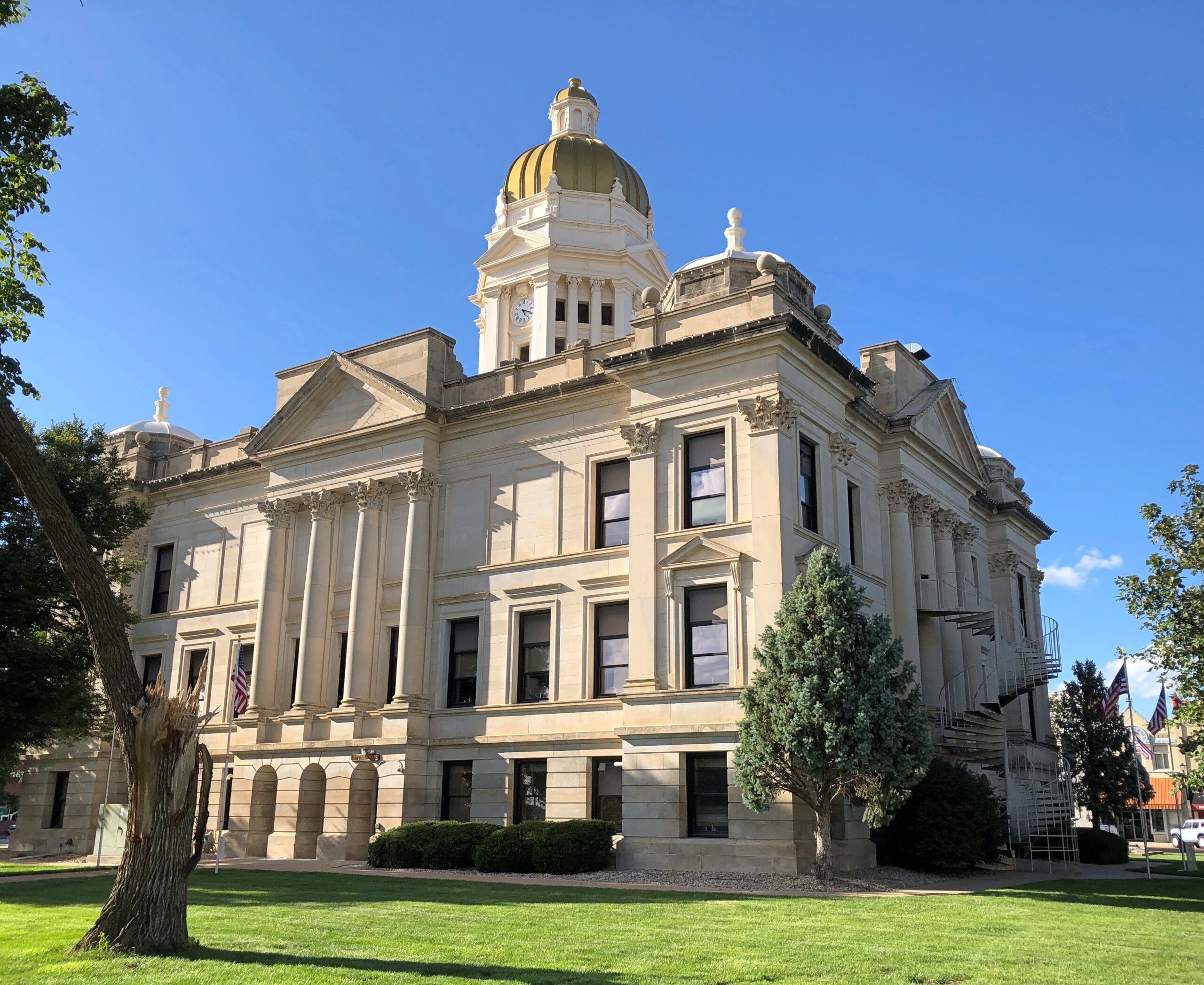
Tryon Palace is crown jewel of historic sites in New Bern, except that it’s actually a recreation of the 20th century. Somehow that doesn’t take away from its historic appeal.

Tryon Palace

When you stand in front of it, you’re peering not only back to 1770, when the colonial government of North Carolina completed, at great expense, a structure that looked like this one. You’re also looking at a building completed within living memory, in 1959, which is considered a faithful restoration of the one that NC Gov. William Tryon had erected.

“When the colonial Assembly convened in [New Bern] on 8 Nov. 1766, Tryon presented a request for an appropriation with which to construct a grand building that would serve as the house of colonial government as well as the governor’s residence,” says the Encyclopedia of North Carolina.

“Less than a month later, the Assembly acceded to the governor’s wishes by earmarking £5,000 for the purchase of land and the commencement of construction. The appropriated sum was borrowed from a fund that had been established for the construction of public schools. To replenish the depleted school fund, a poll tax and a levy on alcoholic beverages were imposed.”

Just about the worst kind of taxes when it came to irritating the non-coastal non-elites of the colony, a discontent that eventually erupted as the Regulator Rebellion. Ultimately Gov. Tryon, in personal command of the colony’s militia, crushed the Regulators – untrained men who seem to have been foolish enough to meet Tryon’s trained men in an open field at the Battle of Alamance in 1771. (Which isn’t entirely forgotten.)

We took an early afternoon tour of Tryon Palace, guided by a woman in period costume. She told us about Tryon – no mention of Alamance, however – and his successor, Josiah Martin, the only other royal governor to use the palace. Gov. Martin spent more on furnishing the place, only to be obliged to skedaddle come the Revolution. We also heard about architect and master builder John Hawks (d. 1790), who came to North Carolina from England to build the palace which, of course, is only a palace by canebrake standards of the colony. It is a stately manor house, however.

Tryon Palace

The colonial legislature and the new state legislature both used the palace for a while, so it counts as the first capitol of North Carolina. That meant I was visiting yet another state capitol, without realizing it at first. A former capitol, that is, including ones I’ve seen in Illinois, Texas (counting Washington-on-the-Brazos as such), Virginia, Florida and Iowa. Abandoned as a government building after the NC capital left New Bern, fire consumed most of Tryon Palace just before the end of the 18th century. Its west wing survived for other uses over the next century-plus.

In the 20th century, along came Maude Moore Latham, a wealthy local woman with a taste for historic restoration. If much of colonial Williamsburg up in Virginia could be restored, so could colonial New Bern in North Carolina. Despite the fact that a road and houses had been built on the site of old Tryon Palace, she eventually facilitated the restoration, made possible (or at least more accurate) by the fact that John Hawks’ plans for the building had survived.

Also restored: The gardens of Tryon Palace, flower and vegetable. Despite the heat, we couldn’t miss that.

Tryon Palace garden
Tryon Palace garden

After our sweaty visit to the palace and gardens, Dan and I repaired to the restaurant in the nearby North Carolina History Center, called Lawson’s On The Creek, for refreshing beverages and more talk of Blackbeard and many other things. We closed the joint down over beer, at 4 p.m.

Dan and Dees

Downing a beer was just the thing. That was our homage to those days of yore. In colonial America, beer was no mere refreshing beverage, but an essential one.

North Carolina, South Carolina

Maybe I should have looked at something like this before driving between Knoxville and Charlotte last month.

Note the array of Construction Zone markers along I-40. Turns out travelers are lucky to be able to drive the road at all, considering that Hurricane Helene last year did so much damage that the highway – an Interstate of considerable importance regionally – was closed for five months, only reopening on March 1.

Reopening as a two-lane road, with each lane bounded on the outside by those concrete barriers you never want to see when driving. Separating the lanes is what amounts to a curb, painted yellow. This goes on for about 12 miles, as reconstruction work goes on. That isn’t a long stretch of road under normal conditions, but when you’re between barriers, behind a truck and in front of a truck, with traffic (many trucks) coming the other way just on the other side of a yellow curb, and little margin for error on anyone’s part, your reaction as a driver is going to be: when will this end?

That was my reaction, anyway. Had some nice drives on this trip. Western North Carolina I-40 wasn’t one of them.

“The hurricane washed away about 3 million cubic yards of dirt, rock and material from the side of I-40,” NCDOT reported. I’m having trouble visualizing a million cubic yards, much less three, but I’m sure it was a staggering amount.

“The stabilization process involved driving steel rods into the bedrock, filling the rods with grout, applying a metal screen then sprayable concrete to the face of the walls. There were four different rigs operating at the same time.

“Crews installed 90,000 square feet of soil-nail walls across the 10 different damage locations in less than 130 days. They also drilled nearly 2,100 feet of nails and fortified 4 miles of the shoulder for truck traffic.”

My goal for the afternoon had been to take I-40 from Knoxville to Asheville and then I-26 south to its junction with South Carolina 11, which is Cherokee Foothills Scenic Highway, and take that road east. I’d been advised that the town of Saluda, NC, on US 167, was a pleasant place to stop, and it was, though most of the shops were closed by the time I got there.

Saluda, NC

I had the idea that I would drive US 176 to the next town, Tryon, NC. Oops, no. Road closed. Maybe the hurricane did that as well.

So I got back on I-26 and went to the Tryon exit. I didn’t have any idea what to expect in Tryon, certainly not the Tryon Horse, which is a large toy horse on wheels. It stands on US 176, known as South Trade St. at that point. This is the fifth iteration of the horse in nearly 100 years.

“[The first Tryon Horse] was originally designed as an advertisement for the first horse show held in Tryon at Harmon Field in 1928,” says the Tryon History Museum. “It came from a drawing done by Eleanor Vance, based on an idea from Romaine Stone, who was active in the Tryon Riding and Hunt Club, and from then seventeen-year-old master builder Meredith Lankford.

“The Tryon Horse was built in the basement of Miss Vance and Miss Yale’s house by Meredith Lankford and Odell Peeler and was assembled in the driveway… The Tryon Horse… was brought out for future horse shows and parades, and was stored in the Paper Box Factory located on Depot Street. Unfortunately, the first horse was destroyed when the factory burned in the 1930s.”

It was no accident that the talent was available locally in the 1920s to build such a thing. At the time, Tryon was noted for a company that made toys, especially high-end wooden toys.

South Trade St. is a handsome thoroughfare, populated by older buildings developed to support trade.

Tryon NC
Tryon NC

Something else I didn’t expect on the street: Nina Simone Plaza.

Complete with a bronze of the musician and activist, who grew up in Tryon, and who no doubt got out as soon as her talents allowed. She died in 2003; the statue was dedicated in 2017.

Nina Simon bronze, Tryon NC

A remarkable detail (so I’m remarking on it): “The sculptor, Zenos Frudakis, included a bronze heart containing Simone’s ashes welded to the interior of the figure’s chest,” says the University of North Carolina. For his part, Frudakis has had quite a career.

Later in the day, I eventually made it to South Carolina 11 at Campobello, SC, and drove east to its end for 50 miles or so to Gaffney, SC. I’d intended to visit Cowpens National Battlefield along the way.

No dice. The main entrance to Cowpens was closed by the time I arrived. I understand closing the visitors center at the end of the day, but the entire place? A mile or so east on SC 11 was an alternate entrance, so I stopped there.

I walked down the path toward the battlefield, but thought better of it after about 10 minutes.

Cowpens National Battlefield

I wanted to get to Charlotte before the end of the day. Summer days are long, but not endless. Also, mosquitoes.

Pigeon Roost State Historic Site

My stop in Scottsburg, Indiana, wasn’t entirely random. If you have a mind to visit Pigeon Roost State Historic Site, which is just south of town, you need to get off the Interstate and proceed to the site on US 31, and Scottsburg is a good place to do that.

As a point of interest red spot on highway maps, Pigeon Roost had intrigued me for years, but not enough to stop there. Unless I did sometime in the 1980s. Or maybe the ’90s. I’ve arrived at that point in life at which I can’t quite remember all the things I’ve seen, especially obscure memorials in obscure places. In a related trick of an aging memory, I sometimes have fairly distinct memories of places, but no memory of exactly where I was.

Pigeon Roost State Historic Site, Indiana Pigeon Roost State Historic Site, Indiana

There are at least two layers of history at work at a place like Pigeon Roost. One is the massacre itself, whose longstanding interpretation sees it as a bloody incident in the War of 1812, with the Indians taking the opportunity – and British weapons – to fight the tide of settlement in the Northwest Territory, though they were already doing that, ultimately in vain. There also seems to be a revisionist idea that the Indians were out to settle a score with a particular group of whites and didn’t give a fig about the geopolitics of the situation, which certainly sounds plausible.

The other layer is the fact that it wasn’t until 1904 that the state of Indiana dedicated a memorial to the victims of the massacre, including what must have been a tidy sum to pay for an obelisk. Somewhere in the minutes of the legislature, and maybe in letters or newspaper reports, or maybe in a local history archive, is some inkling of why that might be: why then and not some other time. But it seems unlikely that anyone will ever take such a granular interest in the subject. Certainly not me, so I’ll have to leave it at that.

These days, Pigeon Roost is quiet and, I suspect, rarely visited. I had the place all to myself.

Pigeon Roost State Historic Site, Indiana Pigeon Roost State Historic Site, Indiana

At some other point in the past, locals started burying their dead near the site.

Pigeon Roost Cemetery, Indiana Pigeon Roost Cemetery, Indiana Pigeon Roost Cemetery, Indiana

Google Maps calls it Pigeon Roost Cemetery, aka Sodom Cemetery. The latter seems like an odd choice, but a quick look reveals a few others of that name, in Georgia, Ohio and Minnesota.

Pigeon Roost Cemetery, Indiana Pigeon Roost Cemetery, Indiana

Google Local Guide Gary Collins has this to say about the place: This pioneer cemetery holds the remains of some of Southern Indiana’s earliest settlers, including some of the survivors of the infamous Pigeon Roost Massacre. At the time of the massacre, this cemetery had yet to be established, and some of the victim’s [sic] final resting places are unknown. It is generally well kept, and interments still occasionally take place.

What, no ghost stories about Pigeon Roost? Seems like perfect fodder for such tales: not only violent death, but the violent death of children and indeed entire families. There’s an opportunity here for making stuff up — I mean, paranormal investigations. What does Bachelor’s Grove Cemetery have that Pigeon Roost doesn’t?

Rosehill Cemetery: For Union and Liberty

Rosehill Cemetery in Chicago opened in 1859, just in time to receive war dead in the days before dog tags.

Rosehill Cemetery

Still, most of the stones had names and, for now, flags that must have been placed for Memorial Day, which was the weekend before I took my stroll at Rosehill.

Rosehill Cemetery

The first hospital steward I’ve ever seen among stones of this kind. That couldn’t have been an easy or pleasant job.

The stones looked fairly new. Turns out they are replacements for the originals.

Often pointed-top stones designate Confederates, but not in this case. Died for the Union at Shiloh, but not buried in Chicago.

Rosehill Cemetery
Rosehill Cemetery

A draped obelisk marking the grave of Gen. Thomas E.G. Ransom (d. 1864).

Rosehill Cemetery

The Civil War was a hands-on conflict even for high-ranking officers, who thus died or were wounded in some numbers. They also shared the risk of disease, and in fact dysentery felled Gen. Ransom, though he had been wounded more than once in combat.

The war dead are clustered near the cemetery’s grand entrance. This memorial says Our Heroes and was dedicated on Decoration Day 1870, with the bronze atop and the bas-relief panels on the sides by noted sculptor Leonard W. Volk (d. 1895). He also did the tomb of Stephen Douglas.

Rosehill Cemetery
Rosehill Cemetery

“An immense train, composed of twenty-three cars, was found necessary to transport the people who desired to attend the ceremonies,” the Chicago Tribune reported the next day. “These, added to the number which had taken the forenoon train, as well as those who had proceeded to the spot in carriages, swelled the attendance to over five thousand persons, there being about an equal number of ladies and gentlemen. Arrived at Rosehill the crowds formed into a procession and, headed by Nevans & Dean’s full band, marched to the music of a dirge to the vicinity of the monuments, where a few moments were occupied in the inspection of the structures.”

The report mentioned monuments, plural, and besides Our Heroes, also dedicated that day was a memorial to the Chicago Board of Trade Battery, an artillery battery, noting the many battles it participated in.

More artillery.

Rosehill Cemetery

Bridges’ Battery, Illinois Light Artillery, is ringed by what look to be captured — and repurposed — cannons.

Rosehill Cemetery
Rosehill Cemetery

The cemetery office had photocopied map-guides to the grounds, and that inspired me to go look for the Rock of Chickamauga, which isn’t that close to most of the rest of the Union war dead. Along the way is a memorial to Chicago volunteer firemen. While not directly related to the war, it’s from the same time, 1864.

Rosehill Cemetery
Rosehill Cemetery

Gen. George Thomas (d. 1870), the Rock of Chickamauga, isn’t buried at Rosehill, but rather in upstate New York. Still, he’s honored in Chicago.

Rosehill Cemetery

A Chicago post of the GAR took his name and in 1894, honored him by erecting a 12-ton boulder taken from the cliffs at Chickamauga National Battlefield. As marked on the boulder, it was rededicated in 1994.

So while the metaphorical Rock of Chickamauga isn’t at Rosehill, a literal rock of Chickamauga is.

The USS Lexington Museum

It was a nicely structured day trip to Corpus Christi earlier this month, if I say so myself. We left not ridiculously early from SA, but early enough to catch a few easy sights in Corpus before lunch. After lunch: a single main attraction and then a drive home in time for dinner.

It was a Texas dinner: drive-through Whataburger.

The main attraction that day: The USS Lexington, CV-16, nickname, the Blue Ghost. That is to say, the 16th aircraft carrier belonging to the U.S. Navy, commissioned in early 1943 in the thick of the war in the Pacific, where it kicked ass. The ship survived the war with close calls and Japanese propaganda broadcasts asserting more than once that she had been destroyed. After a period of decommissioning beginning in the late ’40s, Lexington returned to serve throughout most of the Cold War.USS Lexington

Note the rising sun flag. That is where a kamikaze struck the ship off Luzon in November 1944, killing 50 men and wounding many more. RIP, sailormen.USS Lexington USS Lexington

That afternoon my brothers and I were entering what is now called the USS Lexington Museum, which is permanently moored across the ship channel from downtown Corpus Christi, where it has been since 1992, within sight of the Texas State Aquarium, the scattered buildings of North Beach, and the old highway bridge and the new one.USS Lexington

The Blue Ghost is one of five aircraft carrier museums nationwide, with two others in California, and one each in New York and South Carolina. These days, tourists enter the Lexington via the Hanger Deck. This deck and all the other lower decks are thick with exhibits, on many of the available surfaces, about the ship and its active service.USS Lexington
USS Lexington

I’ve seen a similar bronze before.USS Lexington

George H.W. Bush as a young naval aviator. A sign is careful to point out that the future president was never assigned to the Lexington, but spent a few days recuperating here (“sack time,” he later called it) in June 1944 after being rescued from the ocean when mechanical issues forced him to ditch. Also, he trained as a naval aviator at Air Station Corpus Christi, so there is that connection.

We climbed a number of staircases to higher decks, through the Foc’sle and ultimately to the Flight Deck. Slow going at our age, but we went.USS Lexington USS Lexington USS Lexington

Some of the exhibits were very specific, such as the rat guards used by the vessel. I remember seeing those depicted in a Carl Barks comic, maybe a Scrooge McDuck adventure.USS Lexington

Others were more generalized, such as entire room in the Foc’sle about the attack on Pearl Harbor. Eventually we made our way to the Flight Deck, towered over by the island (the towering section including the bridge). Mostly, the Flight Deck is an open-air aircraft museum.

Sage advice.USS Lexington

Restoration in progress on a Phantom II.USS Lexington USS Lexington

An A-6 Intruder. Like a number of the other airplanes at the Lexington, on loan from the National Naval Aviation Museum in Pensacola.USS Lexington

An AH-1 Cobra. There’s a warrior slogan for you, on the nose.USS Lexington USS Lexington USS Lexington

A T-2 Buckeye, developed in the late ’50s as a trainer. The marvel, when it comes to naval aviation, is how anyone learns it without getting killed.USS Lexington

How indeed. The sign mentions an incident on the Lexington in 1989, when a T-2 Buckeye flown by a trainee crashed into the aft section of the island, killing five and injuring others. Among the dead: Airman Lisa L. Mayo, 25, of Oklahoma City, the first woman killed aboard a U.S. carrier in the line of duty. Again RIP, those who died.

More.USS Lexington USS Lexington USS Lexington

Onward to the Bridge.USS Lexington USS Lexington

There’s the captain.USS Lexington

Spare and utilitarian, the Bridge is. Except for that wig.

Kokomo Opalescent Glass Co.

Sounds of the northwest suburbs in the seconds after midnight, New Year’s Day 2025.

A little way down our block, a knot of school-aged kids were in a front yard just after midnight, yelping and whooping and tooting horns as the fireworks popped all around the neighborhood; you can hear them on the third recording. The father of the house stood in the front door, up a few steps. Soon the kids headed up the steps to go inside, and I noticed gold-colored crowns on all of their heads, including the dad.

On the Monday before Christmas, we found our way to Kokomo Opalescent Glass Co., which is housed in an unpretentious complex in an unpretentious neighborhood in that town.KOG KOG

It’s another legacy of the Kokomo Gas Boom. A French glass chemist named Charles Henry found his way to Kokomo in the late 1880s, taking advantage of free natural gas to set up a glassmaking factory. That arrangement didn’t last, since Henry was more a technical man than a manager, and a heavy drinker besides, so he lost the factory and thus didn’t become the glass baron of Kokomo. But under other management the company has endured. KOG abides, you could say.

Three of the maw-of-hell furnaces for melting glass. There were others.KOG

“Founded in 1888, KOG is the oldest producer of hand cast, cathedral and opalescent glass in the United States… known worldwide for our high-quality, hand-mixed sheet glass. KOG… has hundreds of color recipes, documented color combinations and numerous textures and densities,” the company web site says, with an illustration of handling molten glass better than I could photograph.

Not that I didn’t try.KOG KOG

Out it comes.KOG KOGKOG

After the molten load has been dropped off at a suitable table-like surface to cool and be shaped, other glass experts do what they do.KOG

Such as this fellow.KOG

Our knowledgeable guide told us about the chemistry and the process and the history of the place.KOG

I didn’t understand a lot of it, especially the finer points of the process, but remained fascinated. As a glass artist herself, she also conveyed a sense of artistic wonder at the multitudes of glass, the colors and textures, which are both hard and fragile. All that came through a device to boost her voice, since a glass factory can be a noisy place.

Note the glass at her feet. Among other stipulations that we agreed to before taking the tour was no open-toed shoes. In fact, that was stressed the most. When moving globs of molten glass around, a little is naturally going to drop and harden on the floor. Then break. In the fullness of time, the factory workers remove the glass, perhaps to be remelted, or sold as random pieces by weight to artists who use it. But there’s always going to be some glass underfoot. Fortunately this wasn’t a problem with standard footwear.

Another thing the company tells you is that the factory has no climate control. So while it was just above freezing outside, the factory was warmed by the furnaces. In summer, of course, the effect would be additive, and so devilish hot on the factory floor. Away from the furnaces, in the spaces used for processing and storing and packing all that glass, temps were low in December.

Such as in the cullet barrel room.KOG KOG

Cullet. How did I get this far and not know there is a word for shards of glass, thought of collectively and probably destined to be remelted?

Most of the company’s product isn’t broken, and so is stored in an impressive array of racks and shelving.KOG KOG KOG

Hues galore.KOG KOG

Toward the end of the tour, we passed through a studio where artists employed by KOG work on custom projects. It being just before Christmas, only one was around, though I’m sure it’s a livelier place most of the time. And it is climate controlled.

Most of the complex is newer than 1888, but even so glass has been made on this site for nearly 140 years, using fuel unknown to the ancients. By ancient I mean really ancient: man-made glass from about 3500 BC has turned up in Egypt and eastern Mesopotamia, and it has been made ever since. So we visited a modern gas-power glass factory last month, but also experienced a vivid link to the heat and work of millennia.

Graceland Cemetery: The Stones

No point in burying the lead (haw, haw): among all the memorials at Graceland Cemetery in Chicago, Dexter Graves’ stone surely gets the most attention. For one thing, it stands out at a distance.Graceland Cemetery, Chicago Graceland Cemetery, Chicago Graceland Cemetery, Chicago

Safe to say that the memorial, especially a haunting bronze figure called “Eternal Silence,” is better known than Dexter Graves himself. Graves was a Chicago pioneer, settling in the area in 1833, when the place was little more than a marshy spot near the Chicago River. He died in 1845, with reinternment and the memorial coming much later at the behest of an elderly son of his, who is buried there too – in 1909, by which time Chicago was a vast metropolis that probably would have astonished Graves.

Lorado Taft created the sculpture, and while I made images of it standing alone, soon a small group of French tourists came by for a look, including posing with it for pictures. Since the work is near the cemetery’s only entrance, I came back again before I left for another look, and that time an American couple, about my age, were there. The woman asked me whether I’d also seen “Fountain of Time” down in the Hyde Park neighborhood. Happily, I was able to tell her I had, including the quote that goes with it, “Time stays, we go.”

I also recommended “The Eternal Indian,” out in Ogle County, which she said she hadn’t seen. I forgot to mention – it would have been showing off anyway – seeing his “Alma Mater” in Champaign, the memorial he worked on in Mount Carroll, Illinois, his sculptures in the Fern Room of the Garfield Park Conservatory or the Fountain of the Great Lakes at the Art Institute. That’s just a scattering. To see more of Taft’s work, you have to pay attention elsewhere in Illinois, Indiana, Kentucky (in Paducah, I wasn’t paying attention), Washington, DC, Colorado, Michigan, Louisiana, Pennsylvania, Kansas and probably other places.

Also, you can see “The Crusader,” which is Graceland, marking the grave of Victor Lawson (d. 1925), one-time publisher of the Chicago Daily News. Lorado Taft did that too, though later in his career, 1931.Graceland Cemetery, Chicago

When was the last time a newspaper crusaded about anything? Not recently, private equity owners don’t like it.

Assorted business tycoons, moguls and robber barons repose in Graceland, without a cent to their names these days. But in their day, they or their immediate heirs had big bucks to spend on big memorials. None is bigger than retailer and hotelier Potter Palmer (d. 1902).Graceland Cemetery, Chicago Graceland Cemetery, Chicago

That kind of dough will also buy you a picturesque waterfront location.Graceland Cemetery, Chicago

I have to say the Palmer tomb is quite a presence, standing out even among many other large tombs, of which there are many. Such as that for George Pullman.Graceland Cemetery, Chicago

The pyramid of 19th-century beermaker Peter Schoenhofen.Graceland Cemetery, Chicago Graceland Cemetery, Chicago Graceland Cemetery, Chicago

Others.Graceland Cemetery Graceland Cemetery Graceland Cemetery
Graceland Cemetery

The cemetery’s stone- and metalwork curls and is otherwise shaped in ways remarkable to see. How can these hard materials be persuaded to take those shapes? By the rare skill of the artisans, as long gone as the captains of industry inside the tombs.Graceland Cemetery, Chicago Graceland Cemetery, Chicago Graceland Cemetery, Chicago Graceland Cemetery, Chicago

A small building stands near the entrance of Graceland, including a patio with iron tables and chairs, a few of which were occupied when I visited, since the day was just warm enough for that. Inside the building, heated this time of year, visitors can rest on a bench, go to the bathroom, watch a video about the cemetery and, just as important, pick up a free paper map that guides you to the graves of some (but hardly all) of the well-known permanent residents.

Not every grand cemetery has that amenity, but when you find one, that ups the visit into a kind of treasure hunt, if you want. A look for the famed stones, like at Hollywood Forever in Los Angeles with its movie stars or Forest Home in Milwaukee with its brewers. My idea of a good time, but I’m eccentric that way. Besides some of the stones mentioned above, the map takes you to lumber baron and Goodman Theatre patron William Goodman.Graceland Cemetery, Chicago

And Mr. Whipple.Graceland Cemetery, Chicago

He’s not actually on the map, probably because the memorial isn’t for the person obsessed with toilet paper, since he was fictional. Even so, I understand he received treatment for his OCD, retired from the grocery business and lived with his daughter in Florida until his death in 2007.

MLB star Ernie Banks, “Mr. Cub,” and the first black player for the Cubs. Nearby is dancer Ruth Page.Graceland Cemetery, Chicago

Minnie Miñoso, a fairly recent stone. In fact, I read that it was erected only this summer. Graceland is still an active cemetery, with more open land than I would have thought.Graceland Cemetery, Chicago

I had to look him up; among other things, he was the first black player for the White Sox. The Cuban Comet, he was called, which sounds like something invented by a sports reporter pounding print on his old typewriter.

Heavyweight prizefighter Jack Johnson, the Galveston Giant, famed for upsetting racists in the early 20th century.Graceland Cemetery, Chicago

The small pyramid of architectural photographer and preservationist Richard Nickel, a favorite of mine in Chicago history.Graceland Cemetery, Chicago

Gov. John Peter Altgeld, another favorite but from Illinois history, who knew that pardoning the surviving men convicted in the Haymarket bombing would probably cost him the governorship, as indeed it likely did. It was that or preside over a miscarriage of justice, he believed.Graceland Cemetery, Chicago

Chicago is a city of architects; Graceland is a necropolis of architects. I didn’t see them all – missed Burnham on his island, for example – but I got a good sample.

Including Mies van der Rohe. For him, a flat black spare Miesian sort of memorial.Graceland Cemetery, Chicago

But he has a splendid view.Graceland Cemetery, Chicago

William LeBaron Jenny.William LeBaron Jenny

Bruce Goff.Bruce Goff grave

Louis Sullivan.Graceland Cemetery, Chicago Graceland Cemetery, Chicago

Talk about teasing a rarefied shape out of base metal. In this case, the work’s designer at least is known: Thomas Tallmadge (d. 1940), who is also at Graceland.

Jackson Boulevard Stroll, Starring Monadnock & Rothschild

Not far east of the Chicago Board of Trade at 53 W. Jackson Blvd. is the hulking brown-brick Monadnock Building, one of the great old skyscrapers of Chicago. We passed by on the way to Michigan Ave. during our Open House peregrination. It wasn’t open for the event, but no matter. We’d both been inside, even taken a tour once upon a time.Monadnock Building Chicago Monadnock Building Chicago Monadnock Building Chicago

I also knew a fellow who worked for a nonprofit for a while in the ’90s whose office was in the Monadnock. He said he considered going to work there every day a fringe benefit.

“The northern half has always been the subject of attention and wonder,” the AIA Guide to Chicago says, regarding the Monadnock, which is actually two structures fused into a whole: a load-bearing northern half designed by Burnham and Root (1891), and a steel-framework southern half by Holabird & Roche (1893).

“It was constructed as a thick walled brick tower, 66 feet wide, 200 feet long and 200 feet high,” the AIA Guide continues. “The American Architect in 1892 described it as a chimney. Two cross walls divide the interior space into three, flu like cavities, the centers of which are open from street to roof. A freestanding staircase spirals down from the brilliance of the sky lit 16th floor to the dark lobby cut lengthwise through the ground floor. Around this open stairwell, a light structural grid sustains stacks of rental floors. From these extend the modular alcoves pushing through the facade become bay windows.”

The late 19th century was a time of transition for tall buildings, with the Home Insurance Building in Chicago showing the way as the first building its height (10 stories) to use a weight-bearing structural steel frame to support itself. That building, on West Adams, was a mere diagonal block and a half away the Monadnock. Home Insurance is long gone; but the Monadnock stands. Or maybe I should say, abides.

Further eastward — the direction we were going that day — at Jackson and State is the DePaul Center, originally (1912) the A. M. Rothschild & Company Store, by Holabird & Roche (them again).DePaul Center, Chicago

At the turn of the 20th century, A. M. Rothschild & Co. was a department store rivaling Marshall Field on State Street in Chicago, founded by a German immigrant of that name who also married into one of the richest families in Chicago, the meatpacking Morrises. Abram M. Rothschild didn’t live to see the 1912 building, however. By 1902, his in-laws, who controlled the store, had forced him to retire due to financial problems at the retailer, though he was kept on as a figurehead.

“July 28, 1902 started out like any other day for A.M. Rothschild,” explains chicago.designslinger. “The recently retired 49-year-old retailer visited the sixth floor office of his namesake department store in downtown Chicago that morning, and after a few hours left for home accompanied by his son 16-year-old son Melville. Rothschild’s wife Gusta greeted both of them in the front hall of the family’s large house on Michigan Avenue at 37th Street, and Abram Rothschild headed upstairs to freshen up. He went into his bedroom, retrieved his revolver, went into the bathroom, and shot himself in the head.”

Later, after spending a decade or so putting together the land for it, the Morris family hired Holabird & Roche for a new, 11-story retail building that eventually became the building you can see now, which belongs to DePaul University. Back in 1912, a department store could conceivably use such a building. Hard to imagine now.
“The architectural firm had a number of projects along the State Street corridor, but A.M. Rothschild & Co. would be their largest,” chicago.designslinger notes. “And although the family had a troubled history with the founder, they paid lasting tribute to him by having the architects incorporate the letter ‘R’ into the massive cream-colored, terra cotta facade which was repeated down the entire length of the building.”

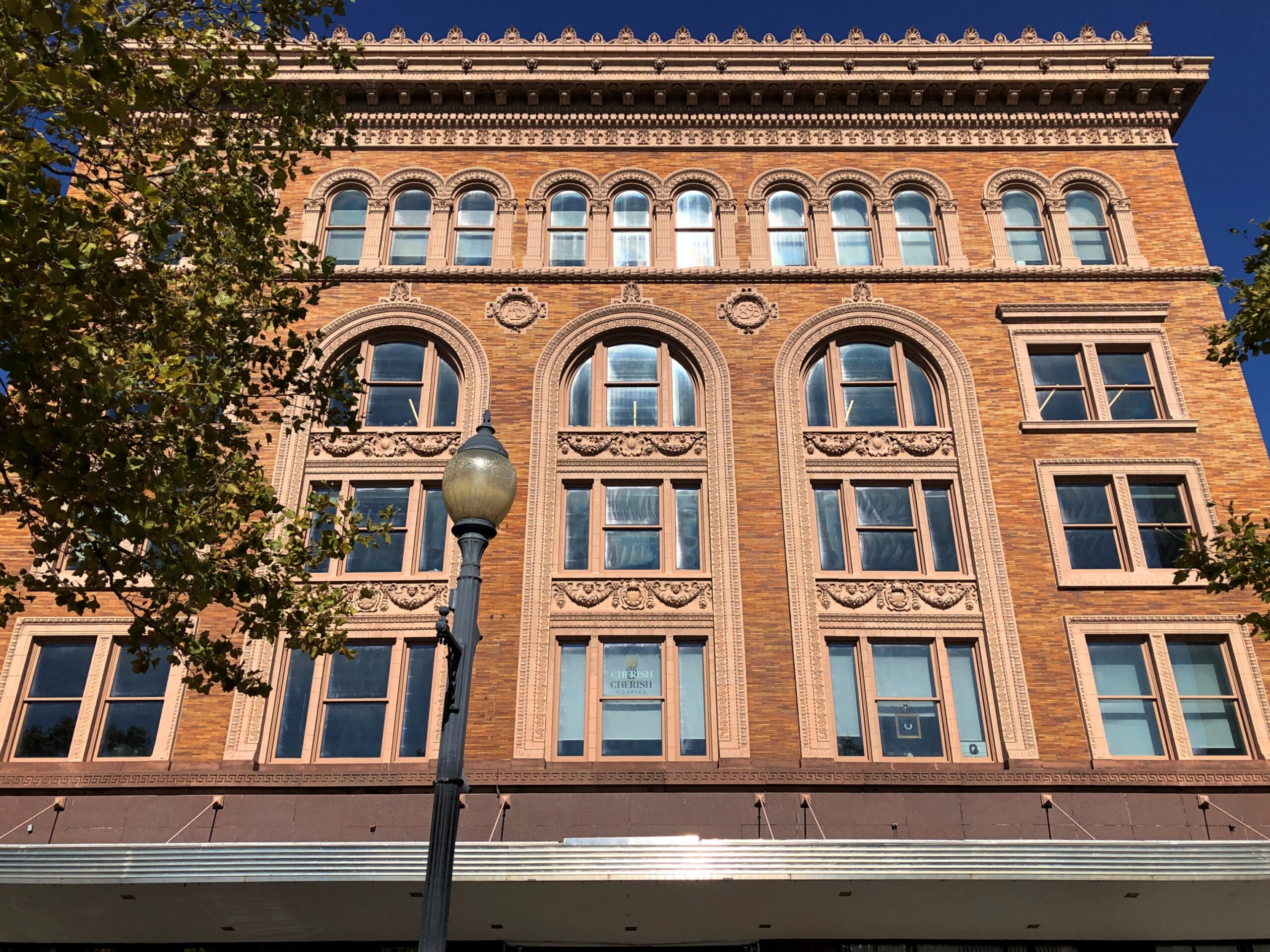
As they are to this day, though since I only took an image of (mostly) the Jackson Blvd. elevation, the letters aren’t much visible. The building deserved a closer look, but we were operating on the lunch imperative as we wandered by, more focused on finding victuals. Maybe some other time. No matter how often I go downtown, something there is always worth another look.

Craters of the Moon National Monument

Among the western states, Idaho’s got one of the more interesting shapes, the result of decades of negotiations, schemes and the arcane doings of Congress in the 19th century, which are summarized nicely in an article in Idaho magazine, though it could use a few more maps. Not every is happy with the current Oregon-Idaho border, though I’m not holding my breath waiting for a change.

Idaho’s flag is less interesting; another state seal.Idaho flag

At least the seal has some Latin: Esto perpetua, let it be forever; it is forever. I assume that’s a wish for the existence of Idaho, or Idaho’s status as a state, not the seal or flag itself. New state flag designs for Idaho are kicking around on the likes of Reddit, but nothing official seems to be in the works yet. Pocatello has had a new flag since 2017, however, and it did need one.

We headed east from Boise on September 3. The easy way is on I-84. We drove to Mountain Home and then turned off on US 20, as previously mentioned. Go that way and you’ll eventually come to Craters of the Moon National Monument and Preserve. It’s a big blob on the map (753,000 acres) that has long intrigued me.Craters of the Moon National Monument

The monument was originally created in 1924 by President Coolidge partly due to the publicizing efforts of an interesting Idahoan, Bob Limbert, who explored the area, previously ignored as a wasteland, and wrote about it. President Clinton expanded Craters of the Moon greatly in 2000 and I’ve read that the Idaho legislature has asked Congress to make it a national park.

I’d be against it. Not that anyone has asked me, but it’s time to stop national park bloat. Sixty-three is more than enough. Sixty is fine, for that matter, a nice round number with ancient resonance. There’s nothing wrong with a place being a national monument. It’s an honorable old designation, the brainchild that most conservation-minded president, TR. I need to visit more of them myself: only 21 out of 134 so far, counting Craters of the Moon and Devils Tower.

The part of Craters of the Moon accessible to casual tourists is only a sliver, but quite a sliver. One trail leads over the aftermath of ancient lava flows, and a road leads to cones.Craters of the Moon National Monument Craters of the Moon National Monument Craters of the Moon National Monument Craters of the Moon National Monument

The terrain just cries out for a monochromatic treatment.Craters of the Moon National Monument Craters of the Moon National Monument

The day was warm enough to wear a hat and carry water, but not blazing hot. A scattering of other tourists were around, but nothing like the more popular trails of the national parks.

The place looks barren, but it isn’t so, since life adapts.Craters of the Moon National Monument Craters of the Moon National Monument Craters of the Moon National Monument

Except where it doesn’t. Yet.Craters of the Moon National Monument Craters of the Moon National Monument Craters of the Moon National Monument Craters of the Moon National Monument

We decided not to climb the enormous black cone, but if you look carefully, you can see a fellow who did. Note the trail on one of the smaller cones. That we did climb, reaching a view of the maw of the cone, though it has a grate blocking the way, to limit the erosive effect of a constant trickle of people clambering down.

More monochrome.Craters of the Moon NM Craters of the Moon NM

“The craters of Craters of the Moon… are definitely of volcanic origin,” explains the NPS paper guide, noting also that the name dates from long before anyone knew what the actual craters of the Moon looked like, at least up close. I don’t think any of the Apollo astronauts were reminded of Idaho. No matter, the name’s got some panache.

“But where is the volcano? These vast volumes of lava issued not from one volcano but from a series of deep fissures – known collectively as the Great Rift – that crosses the Snake River Plain. Beginning 15,000 years ago, lava welled up from the Great Rift to produce this vast ocean of rock. The most recent eruption occurred a mere 2,000 years ago, and geologists believe that future events are likely.”

Not to be confused with the Great Rift Valley, over in East Africa. The Digital Atlas of Idaho calls it the Great Rift system, “a series of north-northwest trending fractures… The total rift system is 62 miles long and may be the longest known rift zone in the conterminous United States.”

In other places, life has returned more robustly. There’s an easy trail through that as well.Craters of the Moon National Monument Craters of the Moon National Monument

A difficult place for trees, looks like.Craters of the Moon National Monument Craters of the Moon National Monument

We spent longer than planned at Craters of the Moon, which meant that we didn’t get to Victor, Idaho, our next destination, until well after dark. No big deal, it was worth it, and the nighttime winding road was a smaller version of the twisty drive near Sheridan, Wyo., so not bad either.

The Idaho State Capitol & Bits of Boise

Boise is a growth town. I know that because the Census Bureau reported a population of about 235,600 in 2020, compared with 205,600 in 2010. Not only that, driving in downtown Boise was a pain in the ass last month, considering how many streets were closed for construction. That’s usually a growth indicator. Boise Idaho

Adding to the irritation is the fact that many of downtown’s one-way streets (that are still open) go opposite of the way you want to go. But when you’ve found a place to park, and arrive at a restaurant like Bacon in downtown Boise, you forget all that. Nice tip before we left Seattle from Dan, who has spent some time in the area.Boise Idaho Bacon

Maybe not good to eat in the long run, but in the short run, it makes you glad you spent the night in Boise and headed out for breakfast the next day. Also, downtown Boise looked interesting, especially on foot.Boise Idaho Boise Idaho Boise Idaho

The former Idanha Hotel, which opened exactly at the turn of the 20th century – January 1, 1901 – and is now a multifamily residential property. Its architect, a Scotsman named W.S. Campbell, founded a firm in the late 19th century in Boise that’s still around: CSHQA.Idaho State Capitol
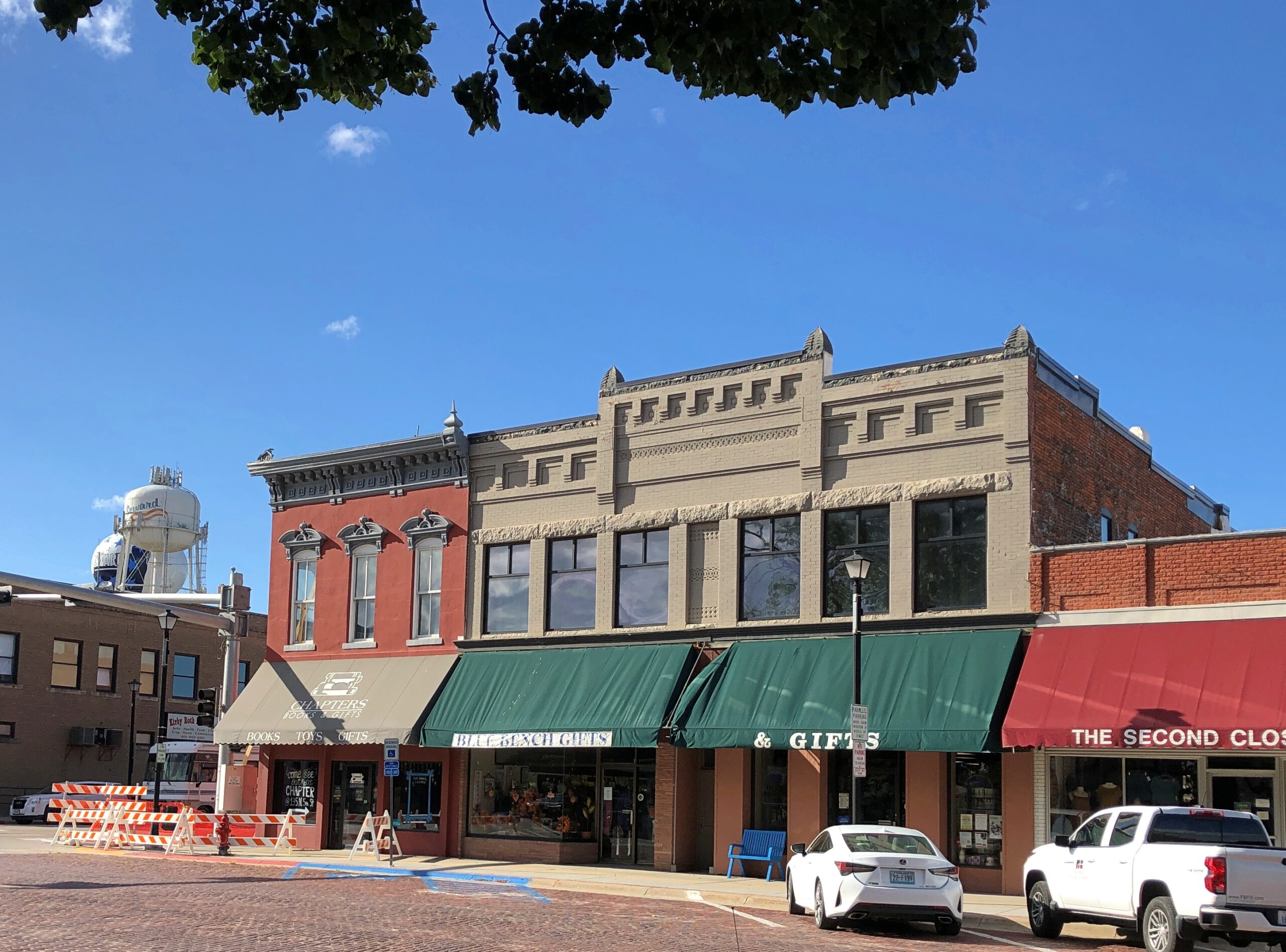
Everywhere has one of these murals, though usually they say, Welcome to…Idaho State Capitol

Eventually, by way of Boise’s unpredictable streets, we made our way to the Idaho State Capitol. I saw it briefly in ’89, but only from the outside. A grand edifice.Idaho State Capitol Idaho State Capitol Idaho State Capitol
Grand inside as well.Idaho State Capitol Idaho State Capitol Idaho State Capitol

John E. Tourtellotte & Co. designed the capitol, completing much of it in 1912, though the House and Senate wings came a few years later. Tourtellotte is another one of those architects of yore who did a lot of work.

The Idaho State Capitol has a gilded Washington on a gilded horse.Idaho State Capitol

“Austrian immigrant [Charles Ostner] carved George Washington from a single pine tree,” the capitol web site says. “With a postage stamp to guide him, Ostner took four years to create his masterpiece. His young son was said to have frequently held a candle to light his workroom after darkness fell.

“Once completed, Ostner gave his rendition of our first president to the Territory in 1869. In return, Idaho’s leadership paid him $2,500.” Later, it was gilded and much later, restored.

Any capitol can have an image of George Washington. But how many have a Benjamin Harrison?Idaho State Capitol

Idaho is, of course, another of the six Benjamin Harrison states, entering the union with his signature in 1890 as number 43, just days ahead of Wyoming. A nearby sign says the Harrison bust was carved in 2009 by one Steve Ussing using wood from a red oak planted by the president himself.