He May Ride Forever ‘neath the Streets of Boston

Something I never thought of until today: you can buy booklets to hold fortune cookie fortunes. One at Amazon promises 10 pages that hold 40 fortunes, for $12.99. That came to mind, or rather set me looking, when I happened across another fortune I saved:

Magic time is creale when an unconventional person comes to stay.

I supposed “created” was meant, but in any case that sounds like the pitch for a sitcom episode.

I’m not buying a fortune holder. Those little slips will be tucked away with my business card accumulation: five holders so far, holding some hundred number of cards. Many are restaurant cards, some dating back to the ’80s. Others include a sampling of hotels, museums, shops, even a few churches.

Also, transit cards. I got a kick out of this one.

I used it during my most recent visit to Boston in 2018. Previously the system used metal tokens, but of course those are gone. CharlieTickets and CharlieCards were introduced in 2006.

Charlie was the sad-sack (and poor) protagonist of the song “M.T.A.,” which I know well. That is, the Kingston Trio’s 1959 recording, but not so much about its background. So naturally I had to look into it.

“The text of the song was written in 1949 by Jacqueline Steiner and Bess Lomax Hawes,” writes Jonathan Reed, once a student at MIT. “It was one of seven songs written for [Walter] O’Brien’s campaign, each one emphasized a key point of his platform. [He was running for mayor of Boston that year.]

“One recording was made of each song, and they were broadcast from a sound truck that drove around the streets of Boston. This earned O’Brien a $10 fine for disturbing the peace.”

The Kingston Trio got ahold of it a decade later and it sounds like they had fun with it. Clearly the song endures locally, enough to receive a sort of official recognition by the modern MBTA.

The Pearl Incident

The run of 90° F. (or so) days will run a little bit longer, see below, but as usual for summer in this part of the world, that kind of streak won’t have the staying power you see in certain other summertime places I’m familiar with, where 100° F. days line up in a seemingly endless array.

A site that sends me email sent a link to a Juneteenth article today with the slightly annoying headline: “5 Black History Landmarks in the U.S. You’ve Probably Never Heard Of.”

At least the publication included “probably.” But I checked, and I’d heard of four of them. Mostly they were not great unknowns. The Ebenezer Baptist Church was on the list, for instance. C’mon.

Still, I will give them their due by informing me of an event I hadn’t heard of: The Pearl Incident, which involved the unsuccessful escape attempt in 1848 by 77 slaves sailing from Washington City on a schooner called The Pearl. There is a plaque noting that fact “in the bricks of Wharf Street,” according to Wharf Life DC.  If I’m ever in the Wharf district in DC, I will look for it.

Eclipse Leftovers

Time for a second spring break. It isn’t really spring unless you can squeeze in two. Back to posting around May 19.

Today didn’t much feel like spring, anyway. Cold drizzle. Not that cold, really, but it felt that way after a run of warm days.

I’ve read about people who become eclipse followers. There’s a word for it, at least according to Time: umbraphile. (Time is still a thing?) It’s an impulse I appreciate, but I don’t know that I’ll join them.

On the other hand, Pamplona (say) on August 12, 2026 sounds good in all sorts of ways, so we shall see. I’m not counting on being unshuffled when it comes to this mortal coil on August 12, 2045, which is the timing of the next North American total solar eclipse.

Last month, we passed through Farmington, Missouri, which is the seat of St. Francois County.Farmington, Missouri

The courthouse, fourth on the site, dates from the 1920s. “Innuendoes about fraud led to a grand jury investigation; the solution to the architect’s questionable procedure apparently was resolved by closer supervision,” says the University of Missouri about Norman Howard of St. Louis, the architect of the current courthouse.

There’s a story in that line, the details of which may be lost to time.

Who can you see outside an antique store on the main street of Potosi, Missouri? Betty!

Who can you see on the wall of the Laura Ingills Wilder Home in southern Missouri?Rose Wilder Lane

A young Rose Wilder Lane, Laura’s daughter and a writer herself, and apparently a foremother of modern libertarianism.

Spotted in downtown Nacogdoches. Nacogdoches

That’s a nicely designed memorial plaque. Showing the nine flags over Nacogdoches; the usual six in Texas lore, plus three more localized ones raised during various rebellions.

Did I make note of the landmarked building? It was nice enough, but not memorable. Lone Star Feeds, on the other hand —Lone Star Feed

A pet food plant, about 50 years old now.

For sale in Logansport, Louisiana.Logansport, La.

“Vintage oil tank,” yours for $200, as of April.

One of the murals I saw in Shreveport was prominently signed.Shreveport, La.

Your tax dollars at work: funding by the National Endowment for the Arts. Actually, that strikes me as a good way to spend a minuscule amount of federal dollars.

A redevelopment opportunity in Hot Springs, Arkansas.Hot Springs, Arkansas

That would take some serious coin, but maybe it could work. Step one, hire that structural engineer to do a report.

If you have the urge for barbecue in Hot Springs, this place will satisfy. Cookin Q since ’52.Stubby's, Hot Springs, Ark

The sort of place with license plates on the wall.Stubby's, Hot Springs, Ark

All that is window dressing. The ‘cue is the thing, and Stubby’s has lasted so long for a reason.Stubby's, Hot Springs, Ark

On the side of the road on highway Arkansas 7, part of a wayside park.Arkansas 7

The plaque reads:

Dedicated to the workers of the Arkansas Farmers Union Green Thumb whose efforts made this park possible so that others might enjoy the beauty of the state of Arkansas. January 1966 to December 1969. Lewis Johnson, Jr. State Director.

Green Thumb?

“Green Thumb was the first nonprofit organization to run a jobs program for disadvantaged rural Americans in response to the War on Poverty,” the union says, beginning in 1966, employing low-income rural residents to build things, something like the WPA or the CCC did. By the ’80s, Green Thumb had vanished.

At Uranus, Missouri, off I-44, Yuriko was driving and I happened to have my phone handy. We were too tired to stop.Uranus, Missouri

I’d driven by Uranus a few times, but not stopped. Something like the Snake Farm on I-35 between Austin and San Antonio. Clearly, I need to visit sometime. Uranus, that is. Maybe the Snake Farm, too.

“Beyond the appeal of what [Uranus owner Louie Keen] insisted was very good fudge, Uranus enticed travelers as a kind of dysfunctional, self-contained utopia, like South of the Border and Da Yoopers,” Roadside America says.

“Uranus, said Louie, was the kind of place tourists want to find on a road trip, with life-size dinosaurs, cheesy photo-ops, ridiculous souvenirs, two-headed freaks, the World’s Largest Belt Buckle, and various shops and attractions such as a hatchet-hurling venue named The Uranus Axehole.”

Standard Oil Gas Station, Odell

One place to stop between greater Chicago and Normal, Illinois, is the town of Odell. I bet not too many people do, but those that do come for a look at the former Standard Oil gas station that once served motorists on the former U.S. 66.Standard Oil, Odell Standard Oil, Odell

That’s what we did today. The main purpose of the drive was to fetch Ann and some of her belongings from Normal, where she has completed her junior year. I figured a few minutes in Odell (pop. 1,000) — which is between Dwight and Pontiac — wouldn’t be wasted. The gas station counts as a link in the tourist chain that is Route 66, though still fairly obscure even in the grand scheme of that creation. So much the better.Standard Oil, Odell

“In 1932, a contractor, Patrick O’Donnell, purchased a small parcel of land along Route 66 in Odell, Illinois,” the NPS says. “There he built a gas station based on a 1916 Standard Oil of Ohio design, commonly known as a domestic style gas station. This ‘house with canopy’ style of gas station gave customers a comfortable feeling they could associate with home.” (And not Big Oil.)

Later other brands of gas were sold there, and eventually – after U.S. 66 was no more – the building became an auto repair shop and then abandoned. A typical arc for such businesses, in other words. The village of Odell acquired the station around the turn of the 21st century to make it into a tourist attraction. We were duly attracted.

More of a stabilization than a restoration, looks like, at least inside the former garage space, with odds and ends here and there, and souvenirs for sale.Standard Oil, Odell Standard Oil, Odell Standard Oil, Odell

The gas station is one thing, but I couldn’t leave town without taking a look at the Odell water tower.Odell

Started as a town along a railroad, as so many others did, and named after a shadowy figure named William Odell, one of the original owners of the land in the 1850s. Apparently he didn’t stay long, selling his interest but leaving his name.

Hot Springs National Park ’24

We arrived at Quapaw Baths in Hot Springs National Park on April 14 in time for a late-afternoon soak.Hot Springs NP

Or rather, a series of soaks in its indoor pools, which are heated at various temperatures. I might have skipped it, but Yuriko is keen on hot soaks, having come of age in Japan, where they take their hot springs seriously. The bathhouse has been well well restored, considering its former decrepitude.

Good to see Bathhouse Row again after so many years. All together, eight bathhouse structures line Central Avenue in the town of Hot Springs, and are part of the national park; two offer baths. In 2007, because the Quapaw was still unrestored, only one did, so we took the waters at the Buckstaff, which was a more formalized experience than at the Quapaw.Hot Springs NP

The Lamar.Hot Springs NP Hot Springs NP

“[The Lamar] opened on April 16, 1923 replacing a wooden Victorian structure named in honor of the former U. S. Supreme Court Justice Lucius Quintus Cincinnatus Lamar,” says the NPS, a fact that amuses me greatly, for idiosyncratic reasons. Mostly it’s NPS offices and other space these days, but I bought some postcards and a refrigerator magnet in its NP gift shop.

The Maurice.Hot Springs NP

And of course, The Fordyce, now the park’s visitors center and a free museum highlighting its bathhouse amenities. Named for its founder, Samuel Fordyce, one of those roaringly successful business men that the late 19th century unleashed.Hot Springs NP Hot Springs NP

“He was a major force behind the transformation of Hot Springs (Garland County) from a small village to major health resort,” the Encyclopedia of Arkansas says. “The town of Fordyce (Dallas County) is named for him, as is the Fordyce Bath House in Hot Springs.

“He enjoyed friendships with Presidents Rutherford B. Hayes, Benjamin Harrison, and William McKinley, all of whom asked his advice on matters concerning appointments and regional issues.” Ah, there’s the trip’s presidential site, however tenuous.

As for the building, it was “designed by Little Rock architects Mann and Stern and constructed under the supervision of owner Sam Fordyce’s son John, [and] the building eventually cost over $212,000 to build, equip, and furnish.” That’s 212 grand in fat 1910s dollars, or $6.5 million in present value.

I believe I took somewhat better pictures this time around. Maybe.Hot Springs NP Hot Springs NP

Directly over Hernando de Soto and the maiden is the Fordyce’s famed stained glass aquatic-fantasy skylight.Hot Springs NP

Not the only stained glass around.Hot Springs NP

The Fordyce is an expansive place, and in fact, the largest of the bathhouses, according to the NPS.Hot Springs NP Hot Springs NP Hot Springs NP

Mustn’t forget the spring that made it all possible, whose presence is noted in the basement.Hot Springs NP

Bathhouse Row is at the base of a steep slope. Climb some outdoor stairs and soon you’re at the Hot Springs Grand Promenade behind and above the row. Not many people were out promenading. True, by the time we got there, it was the morning of April 15, a Monday. Still, people were missing out on one pleasant walk.Hot Springs NP Hot Springs NP

The bricked trail was an early project (1933) of the lesser-known but no less remarkable Public Works Administration.

“Unlike the Civilian Conservation Corps and the Works Progress Administration, the PWA was not devoted to the direct hiring of the unemployed,” the Living New Deal says. “Instead, it administered loans and grants to state and local governments, which then hired private contractors to do the work.

“Some prominent PWA-funded projects are New York’s Triborough Bridge, Grand Coulee Dam, the San Francisco Mint, Reagan National Airport (formerly Washington National), and Key West’s Overseas Highway.”

Further up the hill is the abandoned Army Navy Hospital, whose therapeutic heyday was WWII.Hot Springs NP Hot Springs NP

The promenade passes by some of Hot Springs’ hot springs.Hot Springs NP Hot Springs NP

The path also offers views of the back of some of the bathhouses, including the wonderful Quapaw dome.Hot Springs NP

The crowning bit (literally) on a marvelous piece of work.

Shreveport Stopover

Back when I collected Texas highway maps, the presence of Shreveport – not in Texas, but close enough that it was depicted on those maps – made me wonder, why is there a city there? How could it be a port so far inland? Why don’t you ever hear much about it?

Those answers weren’t easy to look up in those days. Years passed, and I passed through Shreveport on I-20 a number of times, but never stopped. This time, approaching from the south on U.S. 171, I decided that we would, even if only for a short visit. Some things considered, short might be best.Downtown Shreveport Downtown Shreveport
I looked into the origin of the city. The generally forgotten but incredibly remarkable Henry Miller Shreve, though not the founder himself, made the town possible. “A giant among America’s rivermen,” says the National Mississippi River Museum & Aquarium in Dubuque.

“In 1826 Shreve accepted the post of Superintendent of Western River Improvements. He began by designing a double-hulled boat with steam power operating a windlass to yank snags from the river. The first snag boat, the Heliopolis, was an immediate success, and in 1832, Shreve was ordered by the Secretary of War to clear the ‘Great Raft’ of rotten logs, trees, and debris estimated to be 150 miles long, out of the Red River. Shreve had to battle short funds but by 1839 the Red was clear and Shreve’s fame was insured.”

As it happened, the future site of Shreveport was where the the Texas Trail, a route into Texas, met the now-navigable Red River. The Shreve Town Co. founded Shreve Town in 1836.

Sunday, April 14, proved to be quite warm in Shreveport. Downtown was almost empty, and I have to wonder whether there’s much more activity on a weekday. At some point in the city’s recent history, Shreveport and Bossier City decided that casinos would be just the thing to juice up the downtown economy, or at least draw Texans to its gaming destinations.Downtown Shreveport

Besides Sam’s, nearby casinos include Bally’s, Margaritaville Resort Casino, Horseshoe Bossier City (Caesars) and Boomtown Casino Hotel. There’s also a spot of adult entertainment in the neighborhood. Downtown Shreveport

I didn’t know Mr. Flynt was still around. He isn’t, having died a few years ago. But the brand clearly lives on.

One of the bridges crossing the Red at Shreveport carries Texas Street.Downtown Shreveport

The underpass, near the riverfront, is a pleasant place to stroll. Not a bad example of placemaking. A number of restaurants and bars line the way, which is part of what the city calls the Red River District. Artwork graces the district, such as this mosaic. Shreveport does have an extensive musical history, including Elvis singing about doughnuts.Downtown Shreveport Downtown Shreveport

The bridge columns aren’t unadorned either.Downtown Shreveport Downtown Shreveport Downtown Shreveport

Formally the underpass is called Louisiana Purchase Plaza, though I wonder whether anyone calls it that. In any case, Downtown Shreveport says that the work on the columns “focuses on the distinct cultures that helped to define Northwest Louisiana — African American, Indian, French, Spanish and Cajun; the three contributing artists for the columns came from Baton Rouge, New Orleans and Shreveport.”

Footprints also mark the walkway. I assume these are impressions made by famed – Sheveportians? Shreveportoids? Shreveporters, Wiki asserts.Downtown Shreveport Downtown Shreveport

I didn’t recognize any of them. Jim McCullough Jr. (d. 2012) must be this fellow. Kix Brooks is still with us.

We had lunch – leftover pizza that had been warming in its box in the back seat that morning – at the riverfront, within sight of the Red and Bossier City across the way, and a railroad bridge.Downtown Shreveport

And near bronze pelicans.Downtown Shreveport

Of course there are pelicans. Shreveport might be close to Texas, but it’s certainly Louisiana.

Have You Ever Been to Nacogdoches?

When planning our most recent trip, devising its dumbbell structure of three days on the road, five in place, and four more on the road, it occurred to me that with a little southward jiggering from Dallas, we could visit Nacogdoches, Texas, one of the oldest towns in the state, rife with history: home to prehistoric Indian activity and the establishment of a Spanish mission in the 18th century, base of filibusters and other rebellions in the early 19th, mentioned famously in a late John Wayne movie, and much more.

All that would have been a reason to come, but mainly I wanted to visit my old friend Kirk, resident of the town for nearly 40 years. We hung out mostly in high school, but had known each other as far back as elementary school, ca. 1970.

In exchanging text messages ahead of the visit, we couldn’t remember the last time we’d seen each other, but finally decided, once Yuriko and I met Kirk and his wife Lisa at their home for lunch on April 13, that it was probably in April 1986 at the wedding of a mutual friend of ours in Austin.

That’s a long time. We had a good visit, a good reconnect – I find it good to reconnect – spending most of the afternoon with them, hearing about life in Nacogdoches, his medical practice there, their raising six children, all grown.

Later in the day, Yuriko and I spent a little time in downtown Nacogdoches, which offers a more sizable square than most towns, even in Texas, handsome on the whole, with a scattering of specialty retail in the area, but mostly still professional services, city government offices and other utilitarian activities.

Mural detail a block from the square, facing a parking lot.Downtown Nacogdoches

We arrived during the 12th annual Nacogdoches Wine Swirl, just by raw chance. I’d never heard of a “wine swirl.” The brick streets around what I took to be the courthouse were closed to cars. People clustered here and there and lined up for wine.Downtown Nacogdoches Downtown Nacogdoches Downtown Nacogdoches Downtown Nacogdoches

The square doesn’t surround a courthouse, but rather a former federal building, now the Charles Bright Visitors Center. Nearby is “The Gateway,” depicting doughty American pioneers traveling the Old San Antonio Road into Texas, a fairly recent work (2013) of Michael Boyett.Downtown Nacogdoches

“The ticketed wine event will showcase Texas wineries and local and regional food trucks and shopping vendors along the historic brick streets,” Visit Nacogdoches says regarding the event. More marketing at work, with the goal of furthering Nacogdoches as a day-trip town.

That Texas has wineries is not news. I went with Jay to visit one of the earlier ones in the Hill Country in the mid-70s. But did Central Texas wine makers come all the way to Nacogdoches to sell their wares? Further investigation tells me there’s an established wine-growing biz in East Texas.

“But, what if I were to tell you that East Texas has over 30 wineries and vineyards just waiting to be explored?!” Totally Texas Travel breathlessly says. Even if that isn’t the precise number, I’ll take even a paid travel site as a reasonable source the existence of wineries here.

Moreover, there’s a marketing invention called the Piney Woods Wine Trail.

The Piney Woods Wine Trail? In East Texas? That goes against stereotype, and I won’t have it. They make (and drink) either beer (domestic beer, closer to Texas-made the better) or hard liquor, the closer to homemade the better. That’s what I get for traveling into East Texas, a busted stereotype.
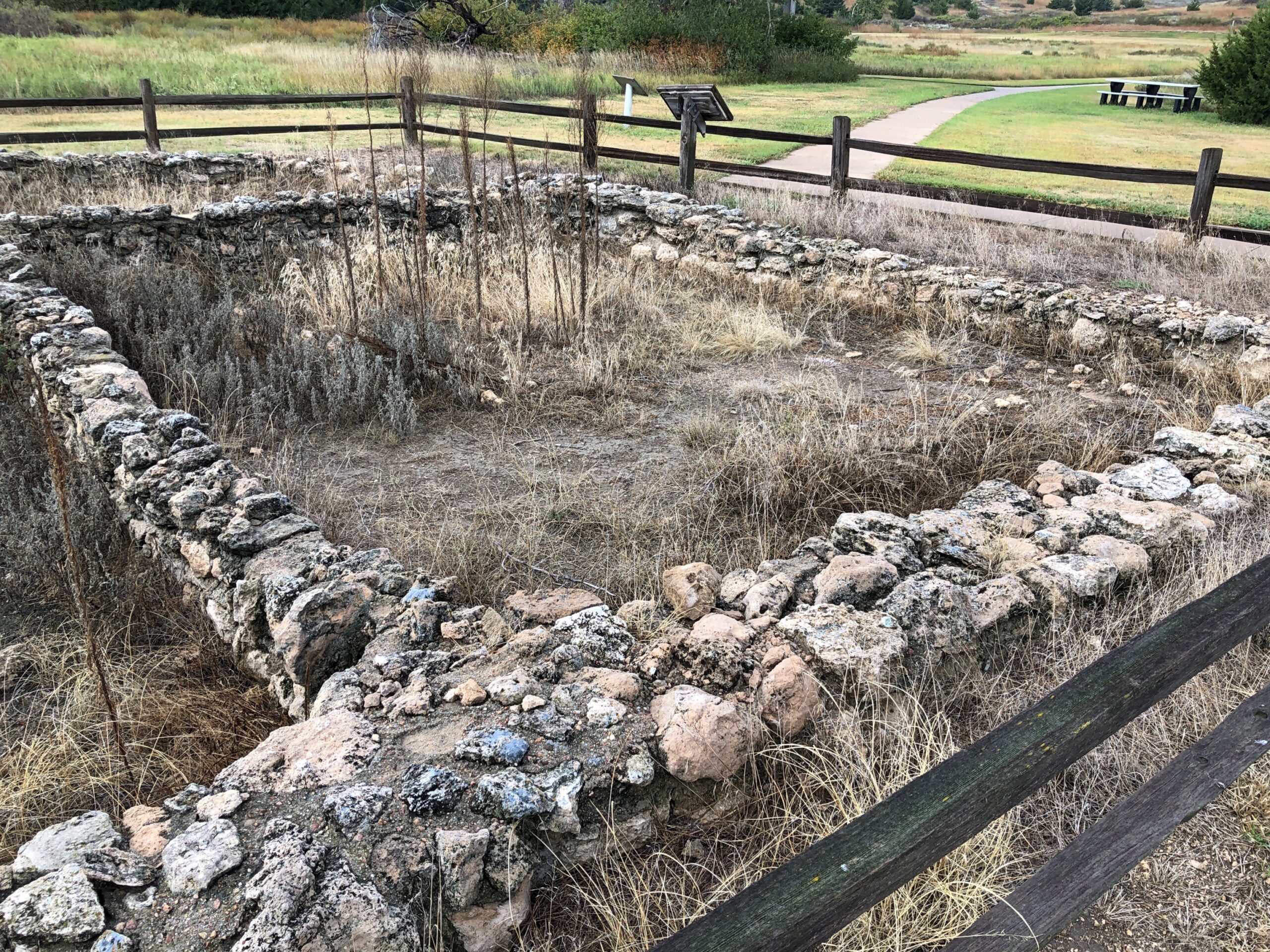
Pea Ridge National Military Park

I’ve been told that I visited Pea Ridge National Military Park when I was small, four or five years old, during my family’s short vacation in the Ozarks in the mid-60s. Went to Branson, Mo., on that trip as well, when it was merely a minor lake resort and not Las Vegas designed by Ned Flanders.

I don’t remember any of that. I have wisps of other memories, which would be my very first travel memories, but I’m not sure how reliable they are. Maybe that was the trip when billboards for a place called Villa Capri Motel gave my brother Jim giggle fits, because he insisted that it was pronounced “Villa Crap-Eye,” or when he was similarly amused by Skelly gas stations, which became “Skeleton” gas stations, but I’m not sure.
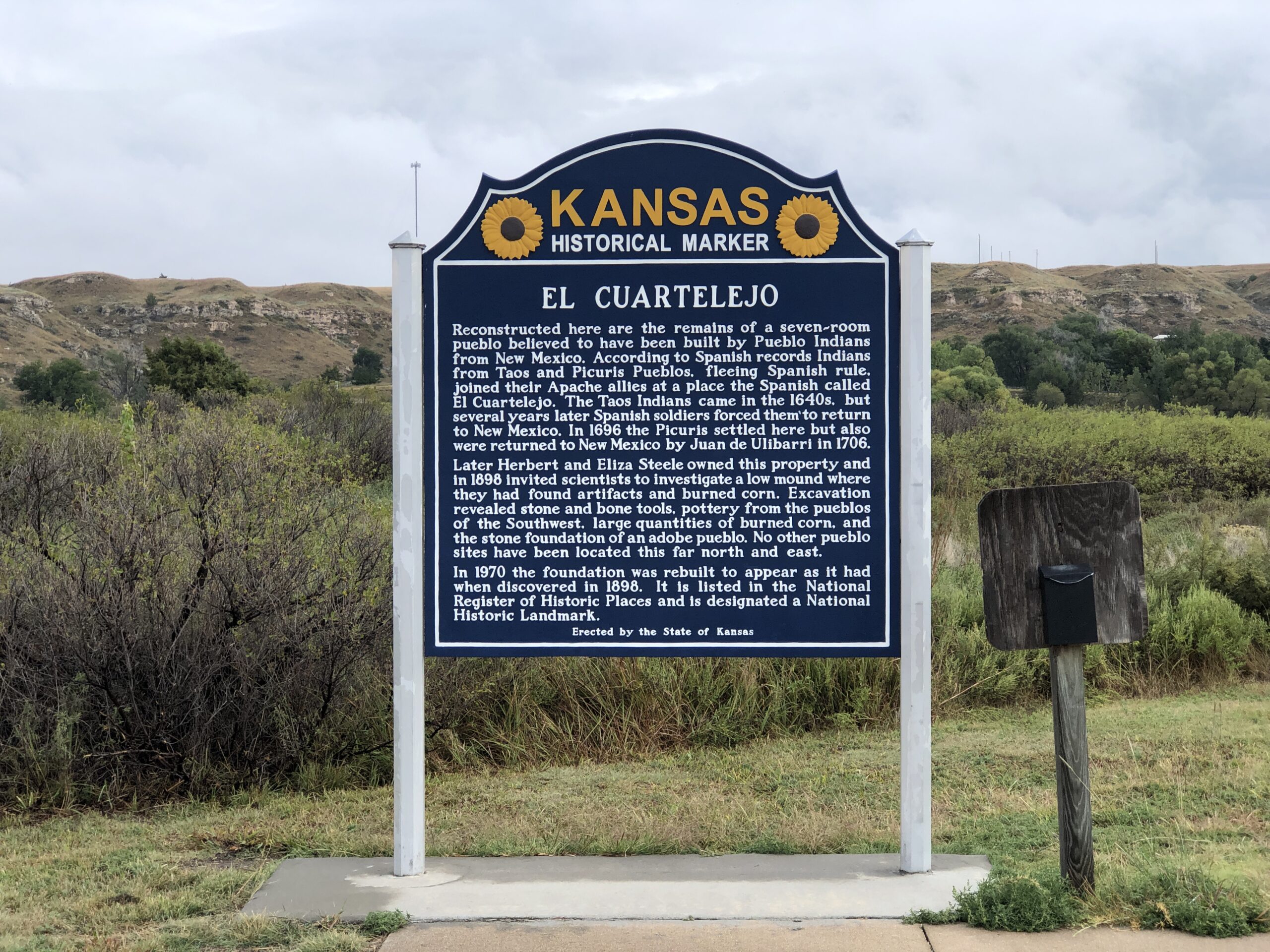
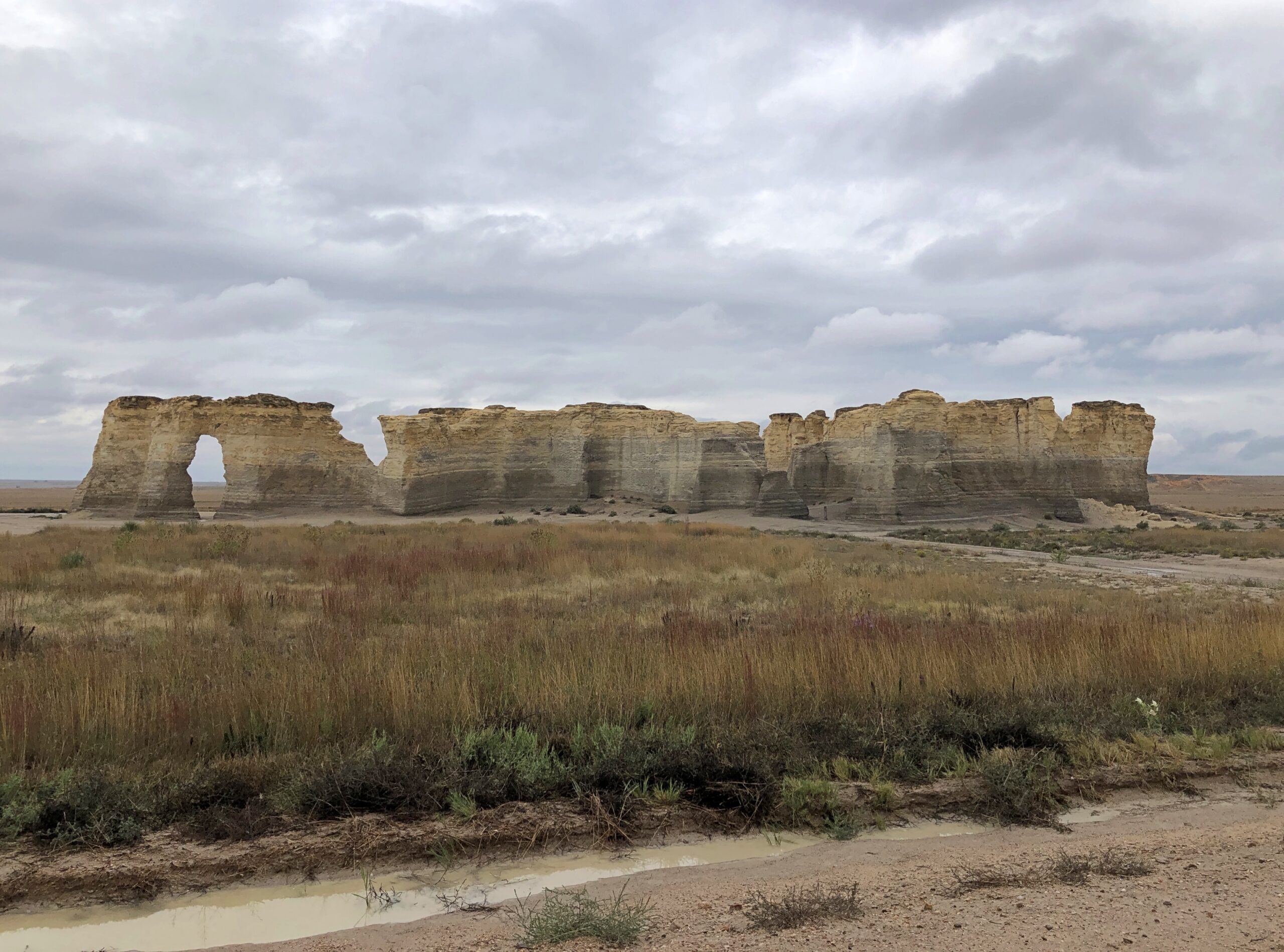
I do remember visiting the future Crater of Diamonds State Park in Arkansas, which would have been a private tourist attraction in those days. The allure of diamonds got through even to a small child (good work, De Beers), but of course we didn’t find any, and the only impression I have now is that it was a hot, dusty, boring field.

When we arrived at Pea Ridge on April 7 around lunchtime, I was essentially seeing it with new eyes. So was Yuriko, who’d never heard it. No surprise, since it isn’t one of the more famed Civil War battles. I expect many Americans, maybe most, haven’t heard of it either. Not necessarily a big deal. Go through a list like this and be impressed by just how many battles there were.Pea Ridge National Military Park
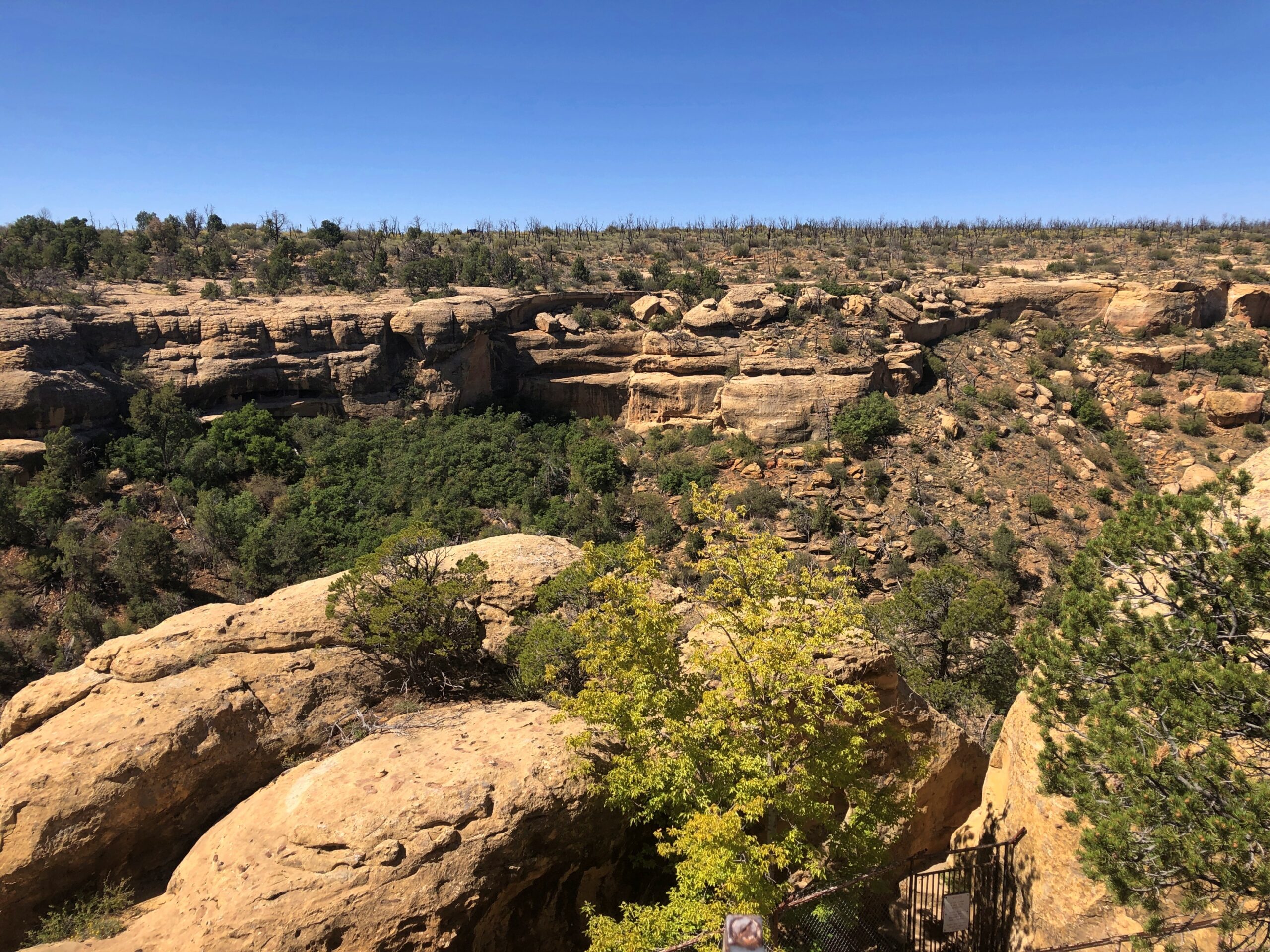
A one-way road circles the 4,300 acres of the battlefield, with signs to explain what happened where in March ’62. About 27,000 men on both sides clashed there, including some hundreds of Cherokee and other Indian cavalry fighting for the Confederacy, or rather, against the United States. They were fully acknowledged as part of the fighting force at the small museum at the visitors center, though perhaps not with as much detail as this article.

Unlike other, more famed battlefields – such as Vicksburg – the place isn’t chockablock with memorials or statues or the like. There are some cannons and restored fences, however.Pea Ridge National Military Park Pea Ridge National Military Park

The view from the East Overlook. The battlefield, I’ve read, is one of the better preserved ones, probably because growth has only come recently to this corner of Arkansas.Pea Ridge National Military Park

Elkhorn Tavern, which was once on the Telegraph Road, a thoroughfare name I find particularly evocative.Pea Ridge National Military Park Pea Ridge National Military Park

Much fighting took place nearby, and the building was pressed into service as a field hospital for a time. First it was captured by Union forces, then Confederates on the first day of the battle. Union forces took it back on the decisive second day, as the battle went their way.

“The Federals used the tavern as a military telegraph station until Confederate guerrillas burned it in 1863,” the NPS says. “The present building is a reconstruction.” Including, if you look closely, an animal skull on the roof — an elk, no doubt.
How I Learned Michael Landon Didn’t Look Much Like Charles Ingalls

Because of our drive through southern Missouri on April 6, first on Missouri 32, then U.S. 63 and U.S. 60, generally trending west but also somewhat south, I’ve learned a few things.
One, there’s a crater on Venus named after Laura Ingalls Wilder, which is mentioned in passing here and confirmed by the USGS.

All features on that planet are named after females, real or fictional. Specifically, according to the IAU, craters are named for “women who have made outstanding or fundamental contributions to their field (over 20 km); common female first names (under 20 km).” I assume the measurements refer to diameter.

This page on planetary nomenclature is fascinating stuff, as far as I’m concerned. Dig down a little deeper, and you’ll find 900 Venusian crater names, from Abigail (the name) and Abington (actress Francis Abington) to Zurka (gypsy first name) and Zbereva (aviator Lidiya Zvereva, d. 1916). With a death date like that, I’d assume a flying accident, but no: typhoid fever.

Also, I learned that Michael Landon, who portrayed Laura Ingalls Wilder’s father on TV, doesn’t look much like the man, Charles Ingalls. I can see that for myself, as he’s pictured with his wife Caroline here.

If it had been up to me, Landon would have at least sported a beard like Chas. Ingalls’. I don’t know whether that would have made Little House on the Prairie a better show, but it couldn’t have hurt.

The drive wasn’t quite car commercial driving. There was some traffic, and while the spring green woods and flowering patches of Mark Twain National Forest and the farms and businesses and churches and small-town buildings of southern Missouri offered pleasant enough scenery (and a favorite town name: Cabool), it wasn’t a Class A two-lane drive, as we would experience later, in Arkansas.

Late in the afternoon, we came to the Laura Ingalls Wilder Historic Home and Museum, near U.S. 60 as it passes through Mansfield, Mo., and we were just in time to catch the last tour of the day. That’s what ultimately turned my attention to Venusian craters, 19th-century beards, etc.Laura Ingalls Wilder home Laura Ingalls Wilder home

Not bad for an essentially self-built house – mostly by Wilder’s husband, Almanzo Wilder. She lived until 1957, for many years at this house, and could afford comfortable furnishings later in life.Laura Ingalls Wilder home Laura Ingalls Wilder home

Though the colors and styles were different, the living room nevertheless reminded me of my grandparents’ home in San Antonio. It had a similar old-folks-in-mid-century feeling somehow.

Elephant Rocks State Park

When planning our not-quite-direct drive to Dallas, I figured we’d have time for one Missouri state park on the morning of April 6, before heading west and south slightly into Arkansas for the night. But which one in SE Mo.?

Such excellent names: Taum Sauk Mountain State Park, Johnson’s Shut-Ins State Park and Elephant Rocks State Park. In the end, we went with Elephant Rocks, and on a Saturday, the place was popular but not overrun. Mostly, I figure, day-trippers from St. Louis out with their small children and dogs, all of whom need walking (as I can attest from experience). The park also offered the open-air pleasures of picnicking, especially on a warm spring day ahead of full-blown mosquito season, in which we ourselves partook.

A mile’s worth of paved path snakes among ancient granite boulders. At only about 133 acres, the park is small. Even so, out in the field of boulders, the park didn’t seem so crowded.Elephant Rocks State Park Elephant Rocks State Park Elephant Rocks State Park Elephant Rocks State Park

Time, geologic uplift and millions of years of erosion produced the boulders, and — I learned — the area counts as a tor.

“The landform is called a ‘tor,’ a stack or pile of spheroidally weathered residual granite rock boulders sitting atop a bedrock mass of the same rock,” says an excellent brochure produced by Missouri State Parks that provides brief but informative descriptions of the park and its history.

“While tors exist elsewhere in the United States and worldwide, they are not abundant anywhere. Elephant Rocks is Missouri’s finest tor and one of the best examples in the Midwest.”

That just makes my day, finding out that I visited a fine tor. Seriously. I didn’t even know there was a geologic definition. Big, rocky hill is how I’d have defined it. I’ve known about tors since the moment I slapped my head upon realizing I could have visited Glastonbury Tor, but didn’t.

People go on about sunsets and views of the ocean and mountain vistas, but human beings are also pretty fond of impressive rocks. Some of us travel a good ways to see them. Elephant Rocks State Park Elephant Rocks State Park

Some fat man’s misery paths.Elephant Rocks State Park Elephant Rocks State Park

“Just outside the park is the oldest recorded commercial granite quarry in the state, producing fine red granite called ‘Missouri Red,’ the brochure says. This quarry, opened in 1869, furnished facing stone for the Eads Bridge piers standing on the Mississippi River levee in St. Louis.”

Cool. A quarry needed a railroad spur, and even a small railroad needed a building for locomotive maintenance. The ruin of such a building stands in the park.Elephant Rocks State Park Elephant Rocks State Park Elephant Rocks State Park

It’s had the benefit of some reconstruction, would be my guess. It certainly looked sturdy enough that I didn’t think that rock was going to tumble on my head.Elephant Rocks State Park

Must be Missouri Red. Why wouldn’t you built it using the stone you had at hand? Good old Missouri Red, which sounds like a dime novel character or a strain of cannabis.