Kenosha Walkabout, Featuring Franks’ Diner & Simmons Memorial Library

Always good to see their beaming faces.
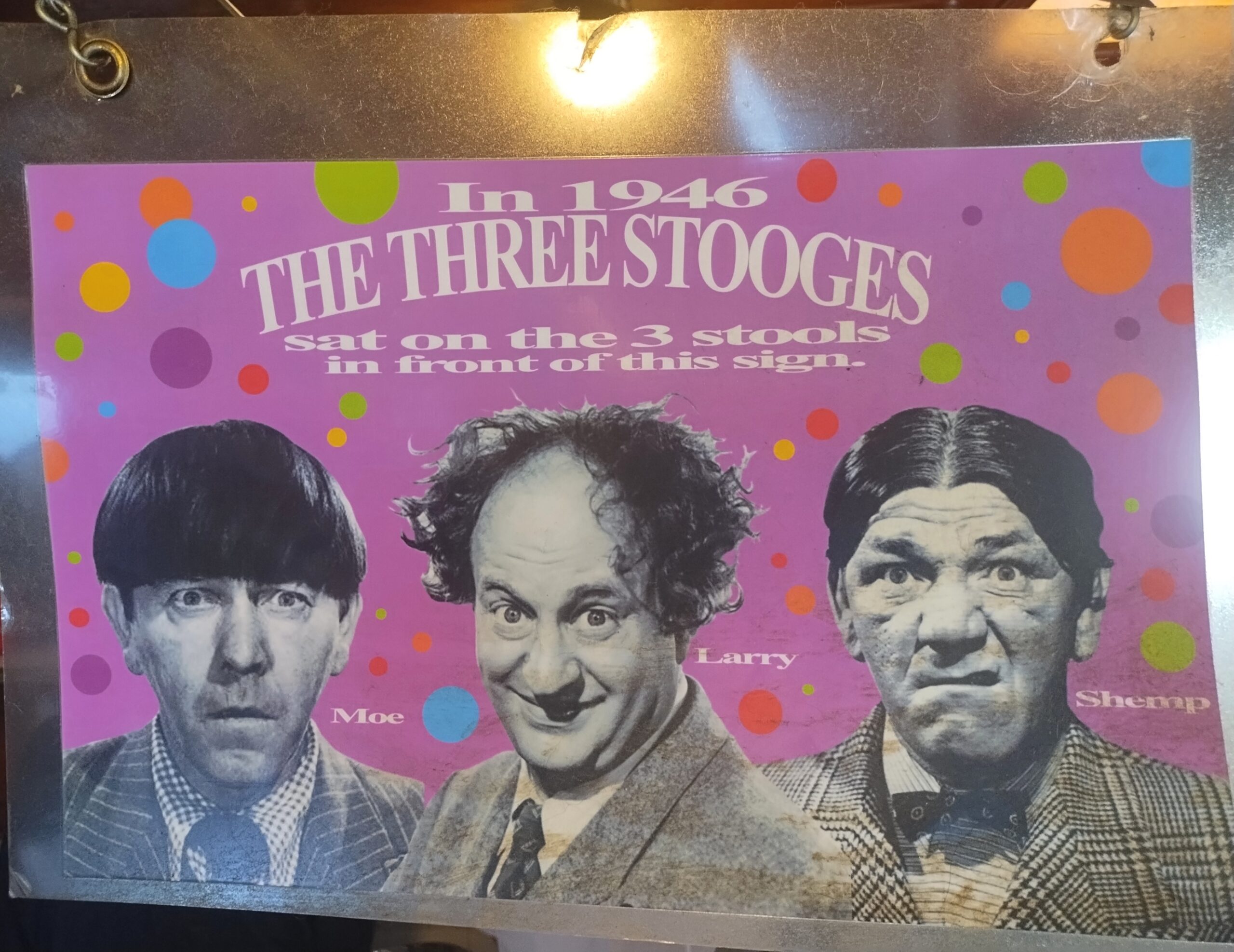
The poster is on a window at Franks’ Diner, formerly an exterior window, but with an expansion of the diner many years ago, now facing the added section, where Ann and I had lunch on a late July Friday. Kenosha, home of Franks’, was another stop in our recent rambles around southeastern Wisconsin.
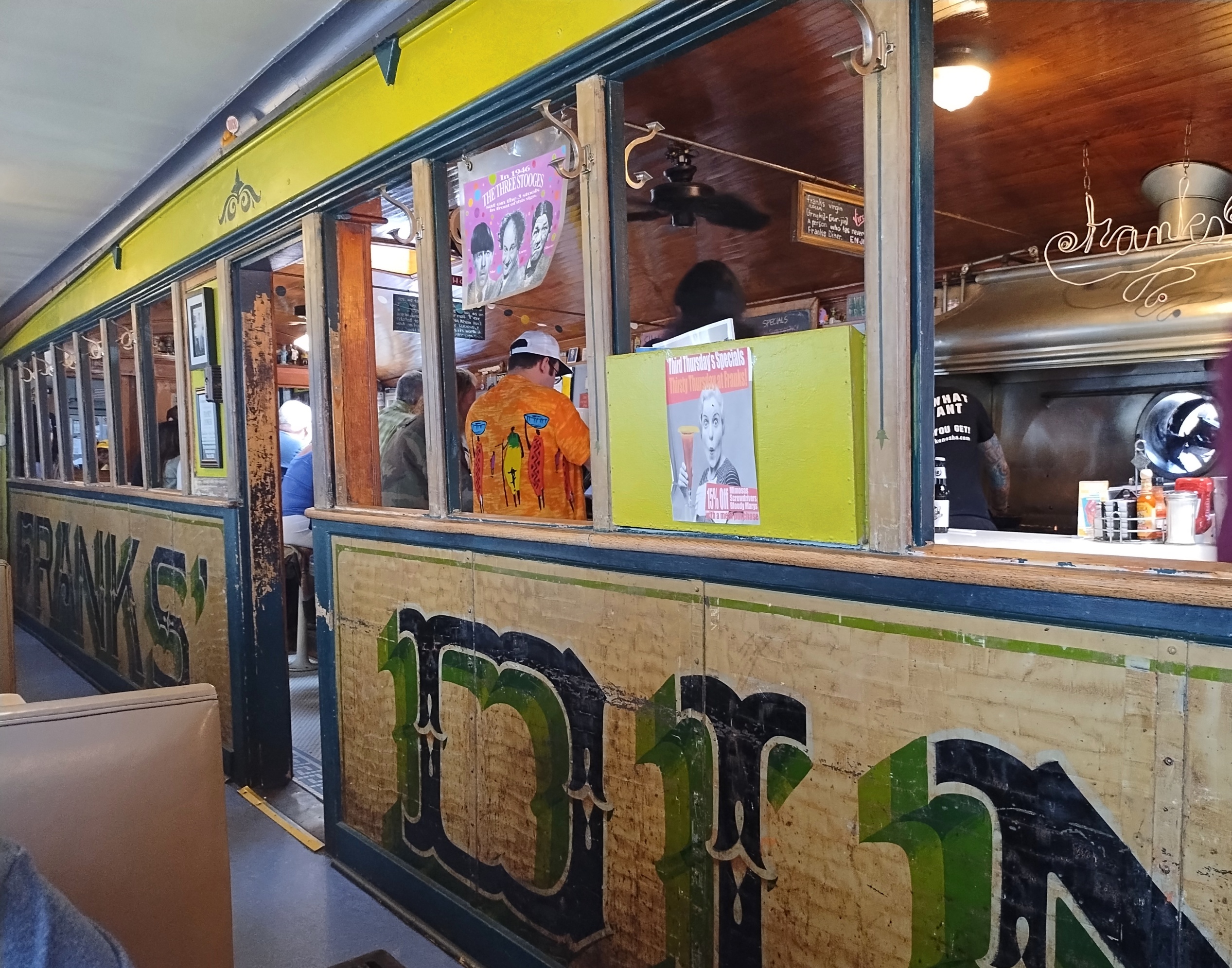
Finding Franks’ Diner was no serendipity. We’d been there, back in 2012. The Stooges, back in 1946. I’ll bet they were playing the nearby Kenosha Theater, which is still standing, but in need of restoration.
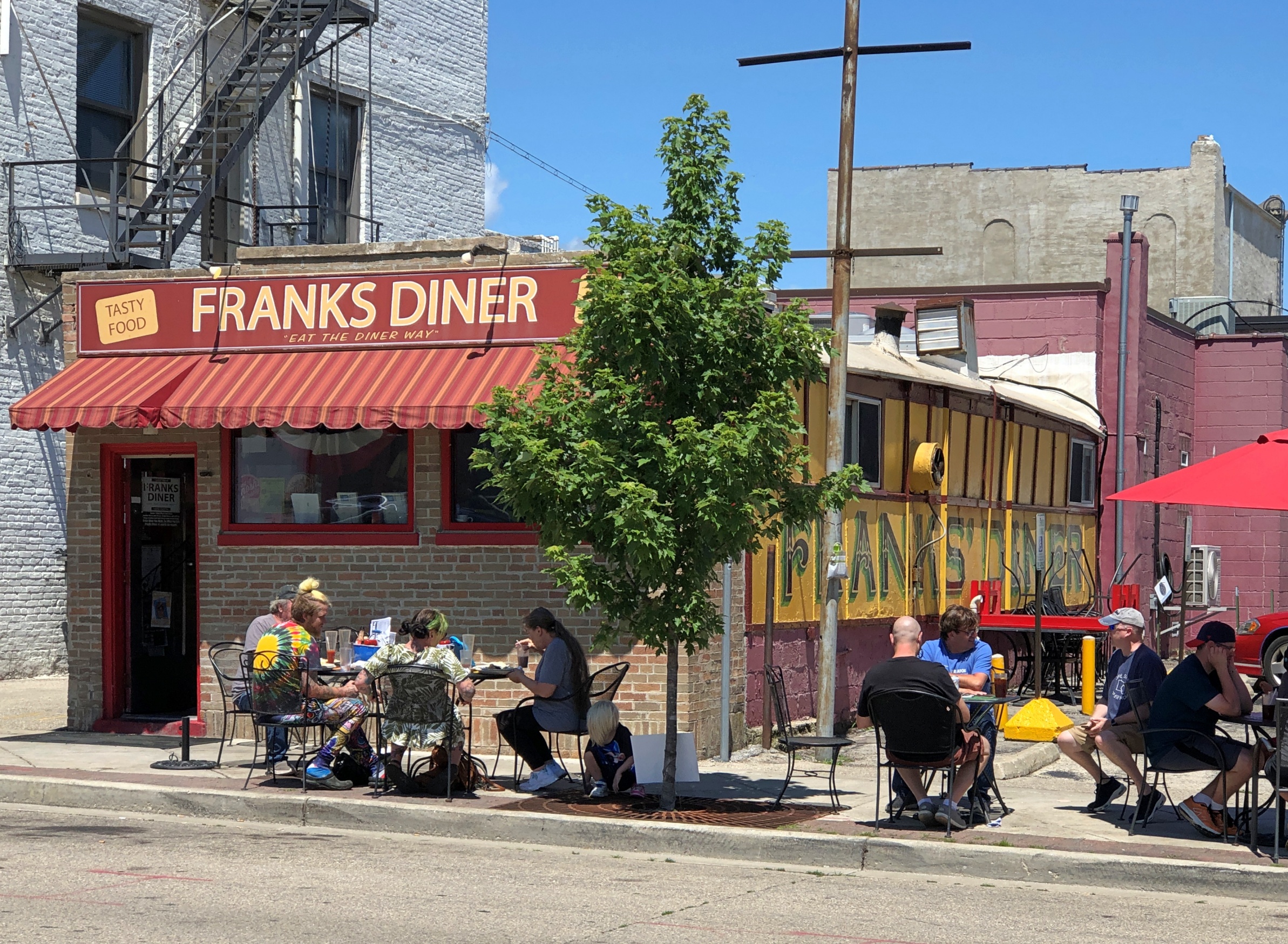
Not only is the 99-year-old Franks’ still there, it’s still dishing up dandy diner fare at popular prices. Back then, I wrote:

The place had that diner smell: eggs and meats and hash browns and coffee. It also had that diner sound: the murmur of conversation, workers calling to each other, silverware scraping plates, metal clinking metal, the hiss of the griddle.

It was packed. A row of people sat at the counter, while others were at booths in the small room added to the counter room. A line of people waited for their seats in a long row behind the people at the counter.

That’s exactly the same as our July visit, except that people waited outside, since it was summer instead of winter and (of course) prices were higher. Once seated, I had the Garbage Plate. I’d skipped it last time, and I wasn’t about to miss it this time around.
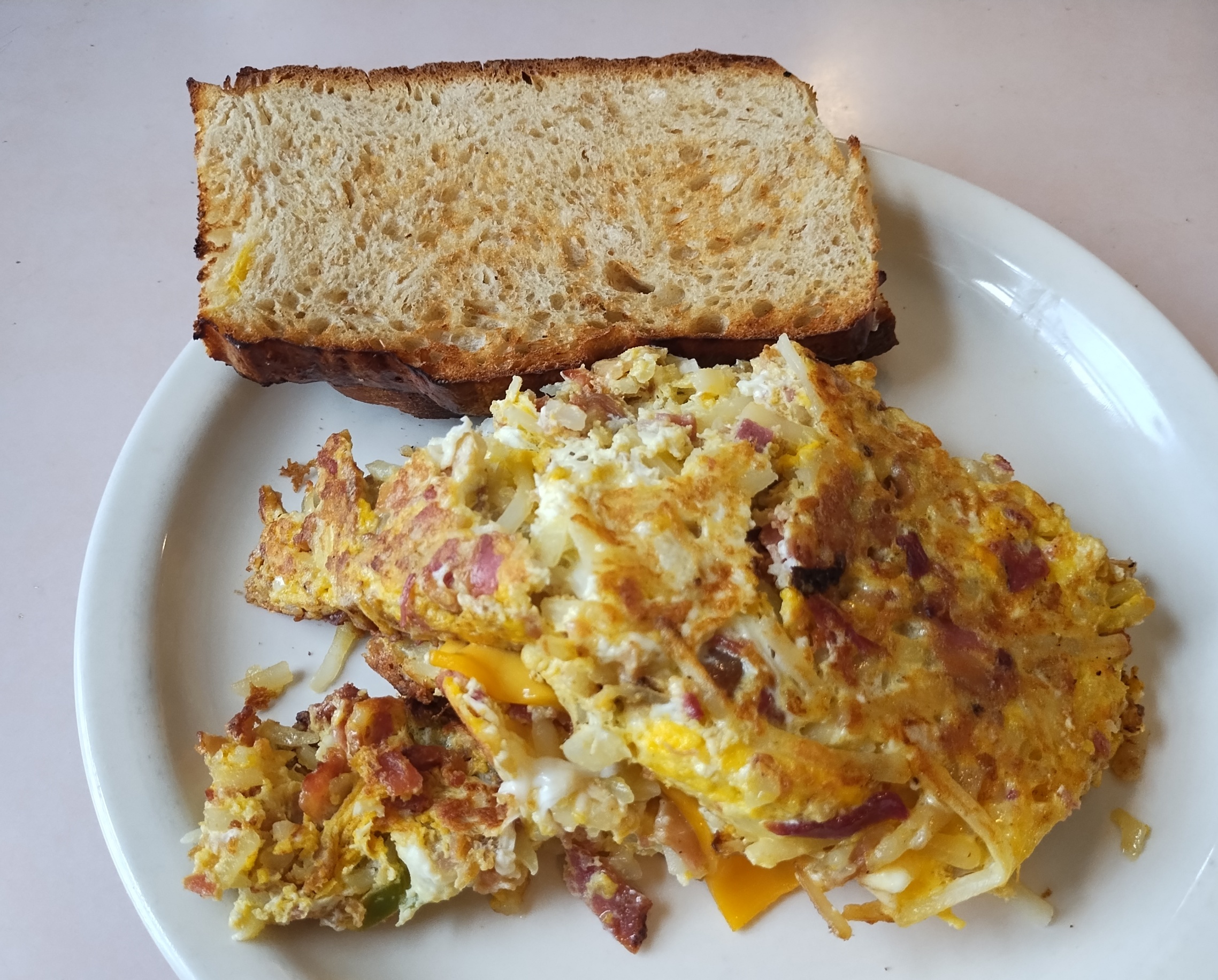
2012: The star of the show is its Garbage Plate, a concoction of hash-brown potatoes, eggs, green peppers, onions, jalapeños (if you want them), and a choice of three or fewer meats (or including no meat). The thing is seriously large. The standard Garbage Plate has five eggs.

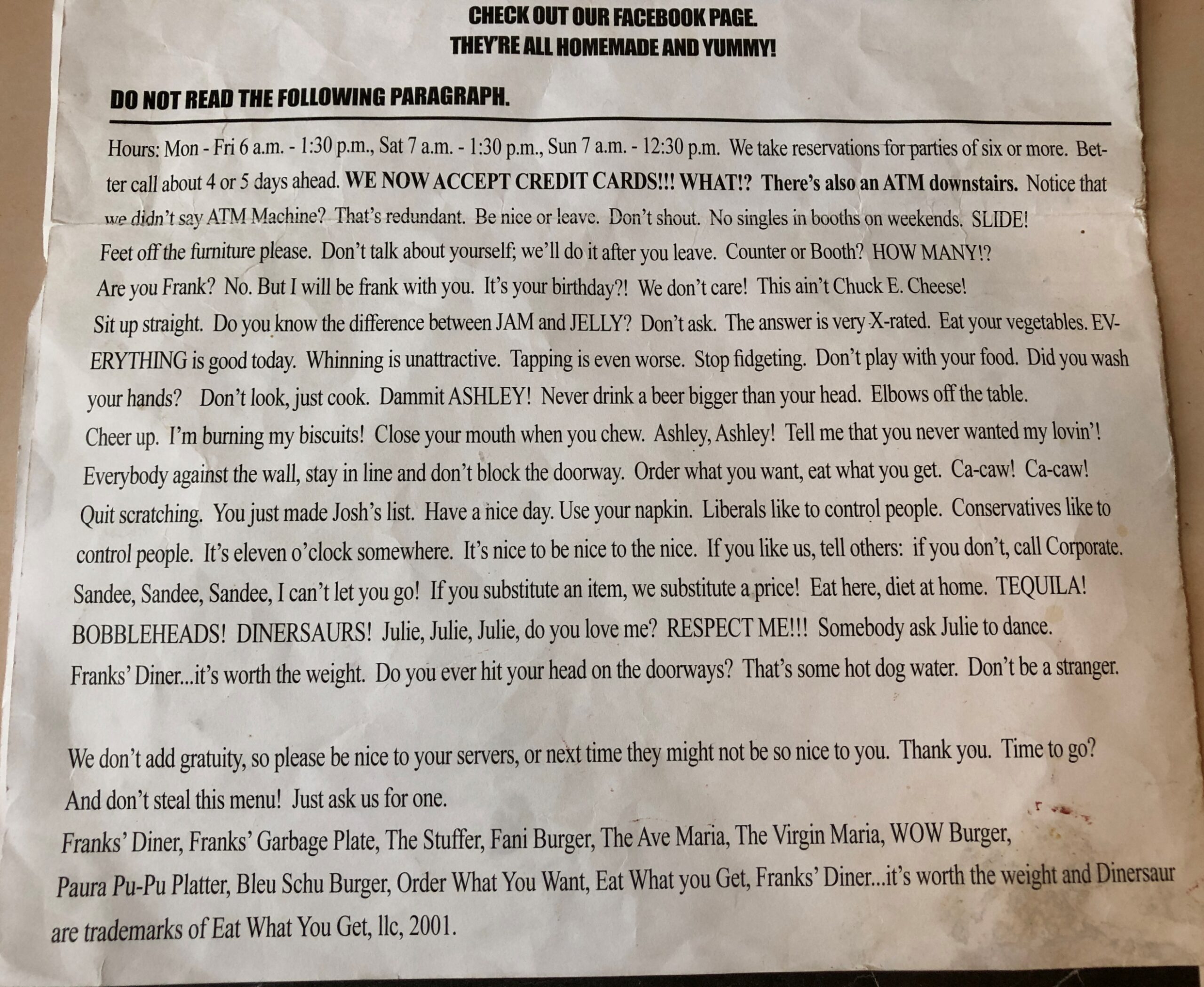
The restaurant also supplies some reading material.
After lunch, we went a few blocks away and parked the car in the shade of large trees in Library Park. Ann waited in the car with the windows down – it was very warm, but not too warm for a few minutes of that – while I wandered around the immediate area, including a couple of streets of storefront retail in vintage structures.
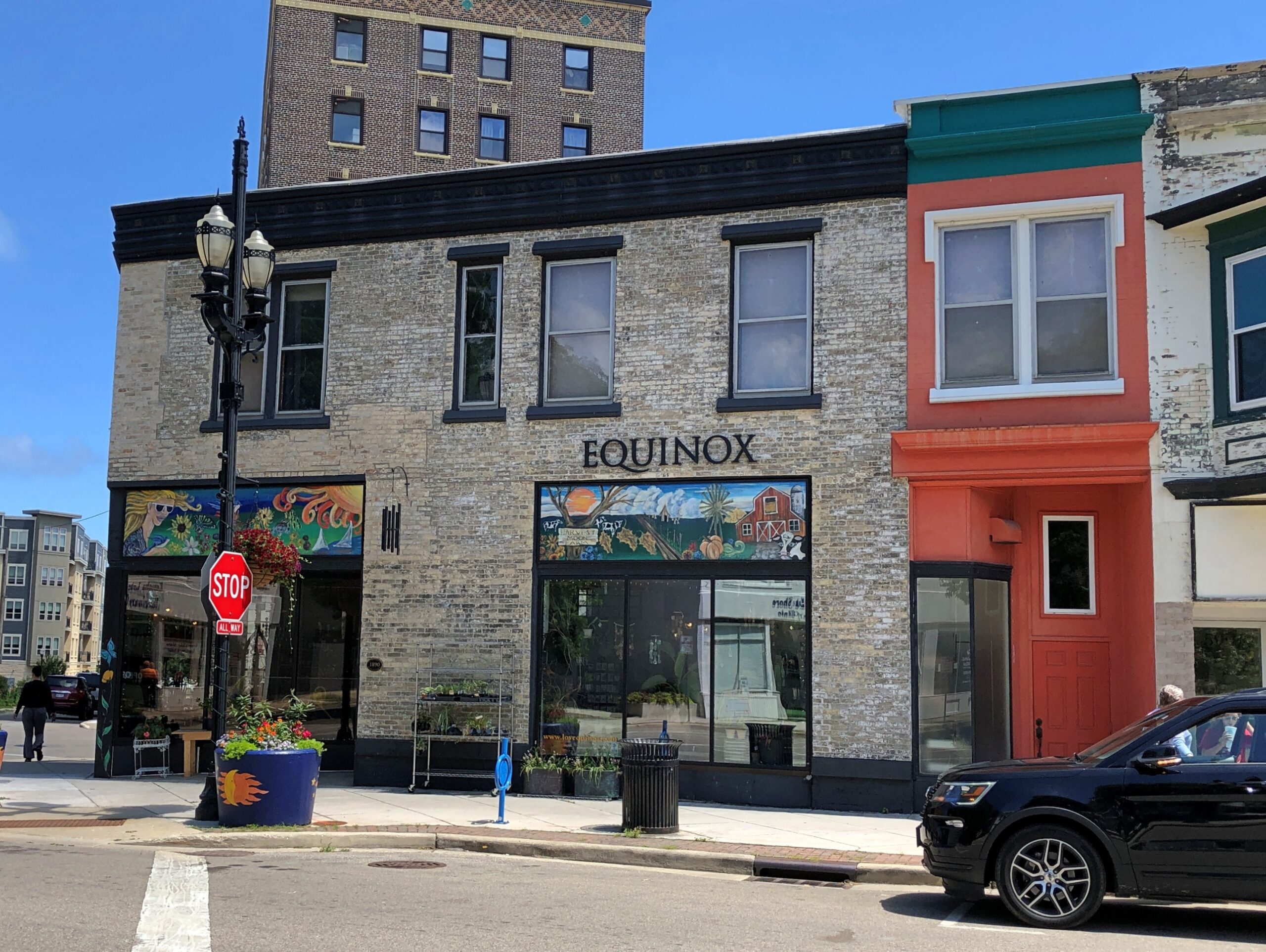
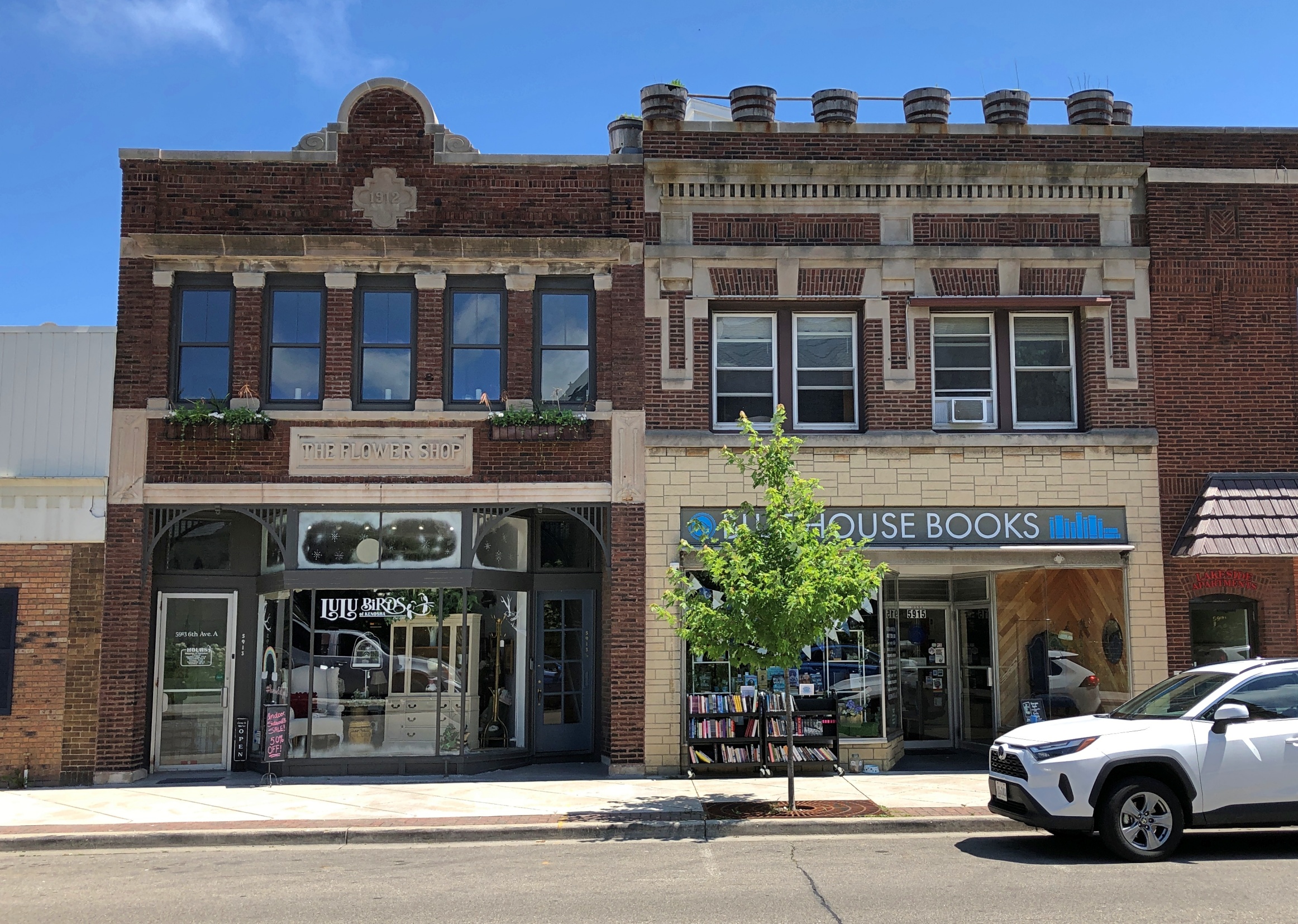
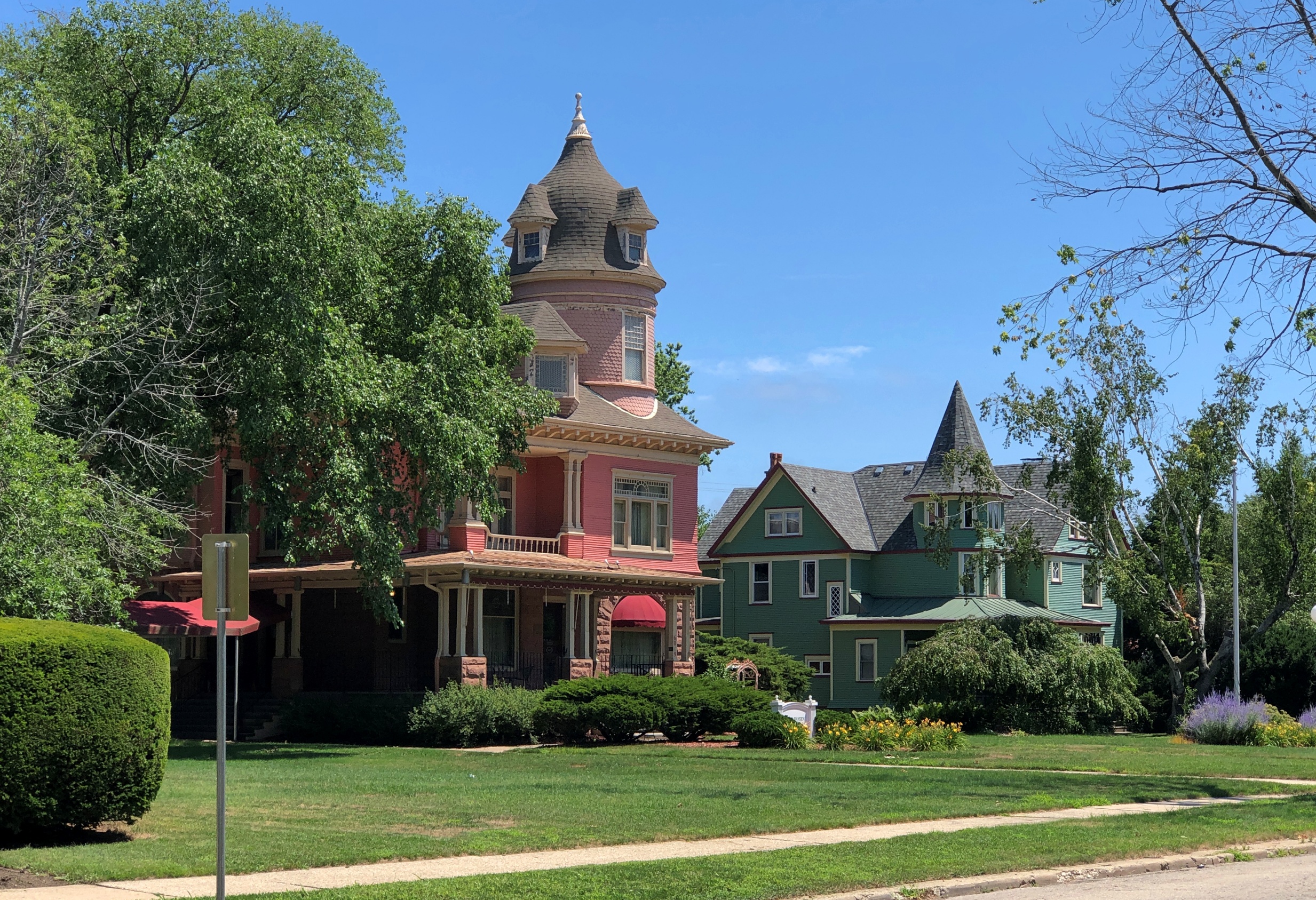
Houses across the street from where we parked.
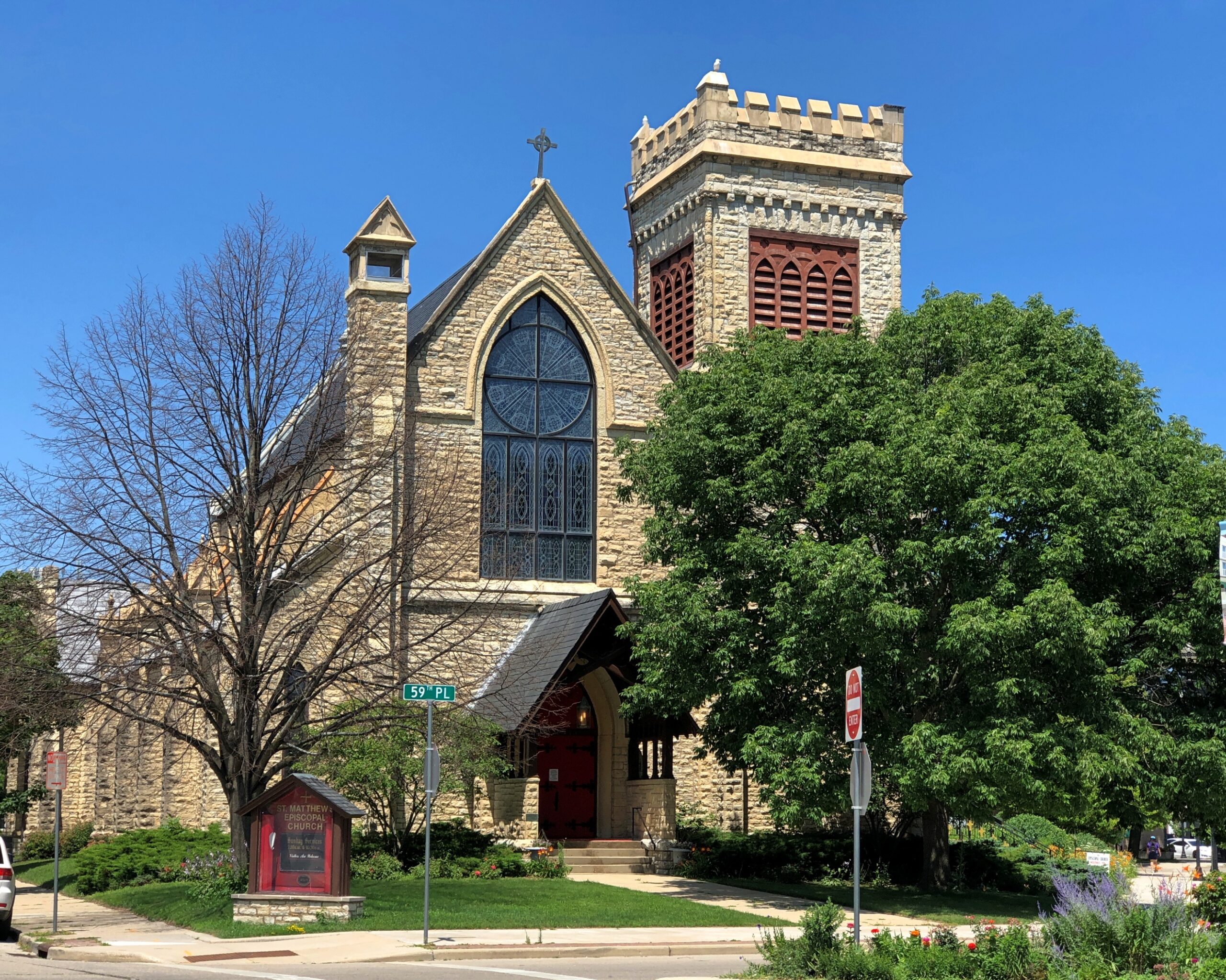
The nearby St. Matthews Episcopal Church.
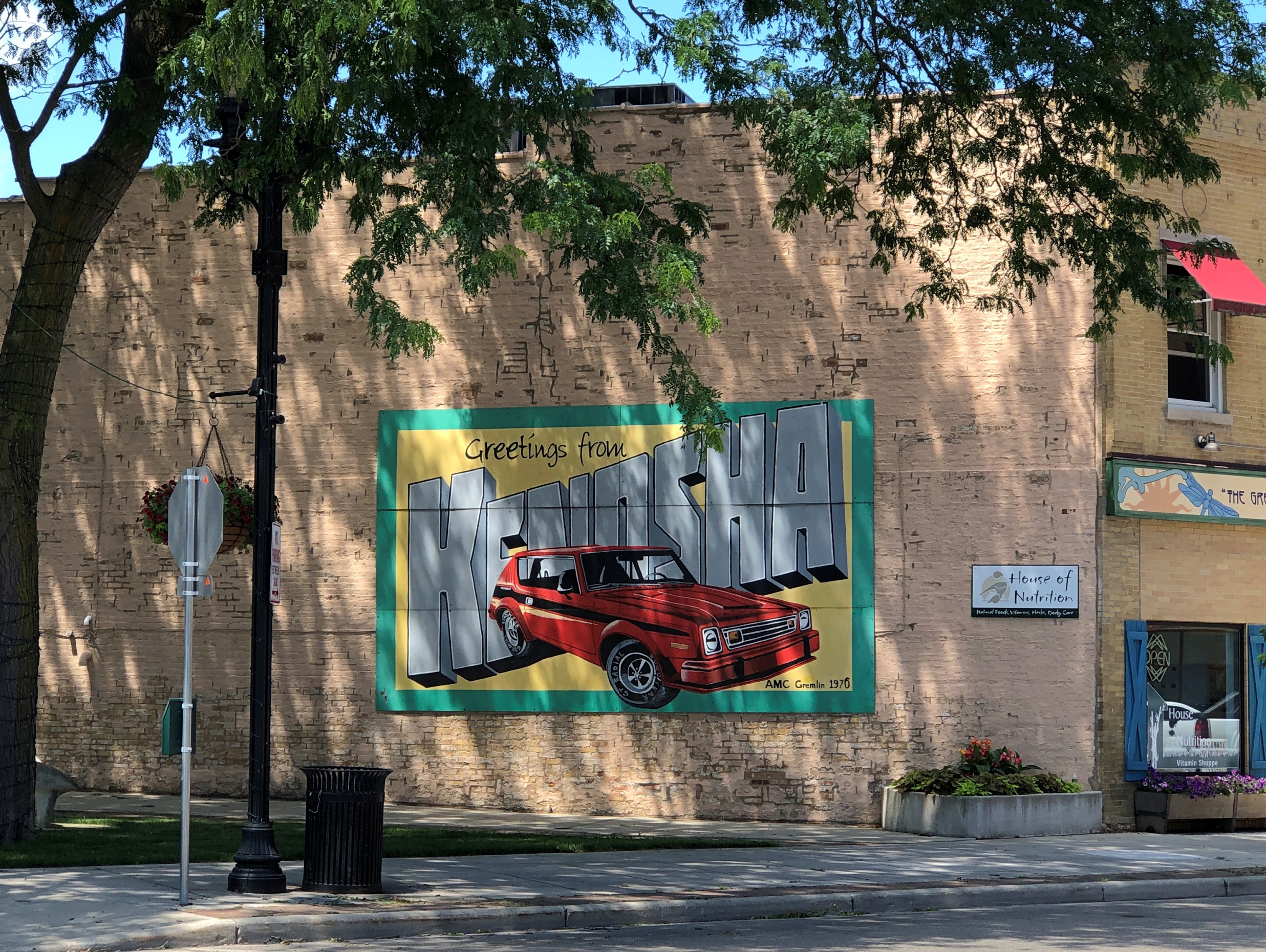
Kenosha

The inevitable welcome mural. The 1970 Gremlin is an unusual touch. But they were made in Kenosha, so not that unusual.
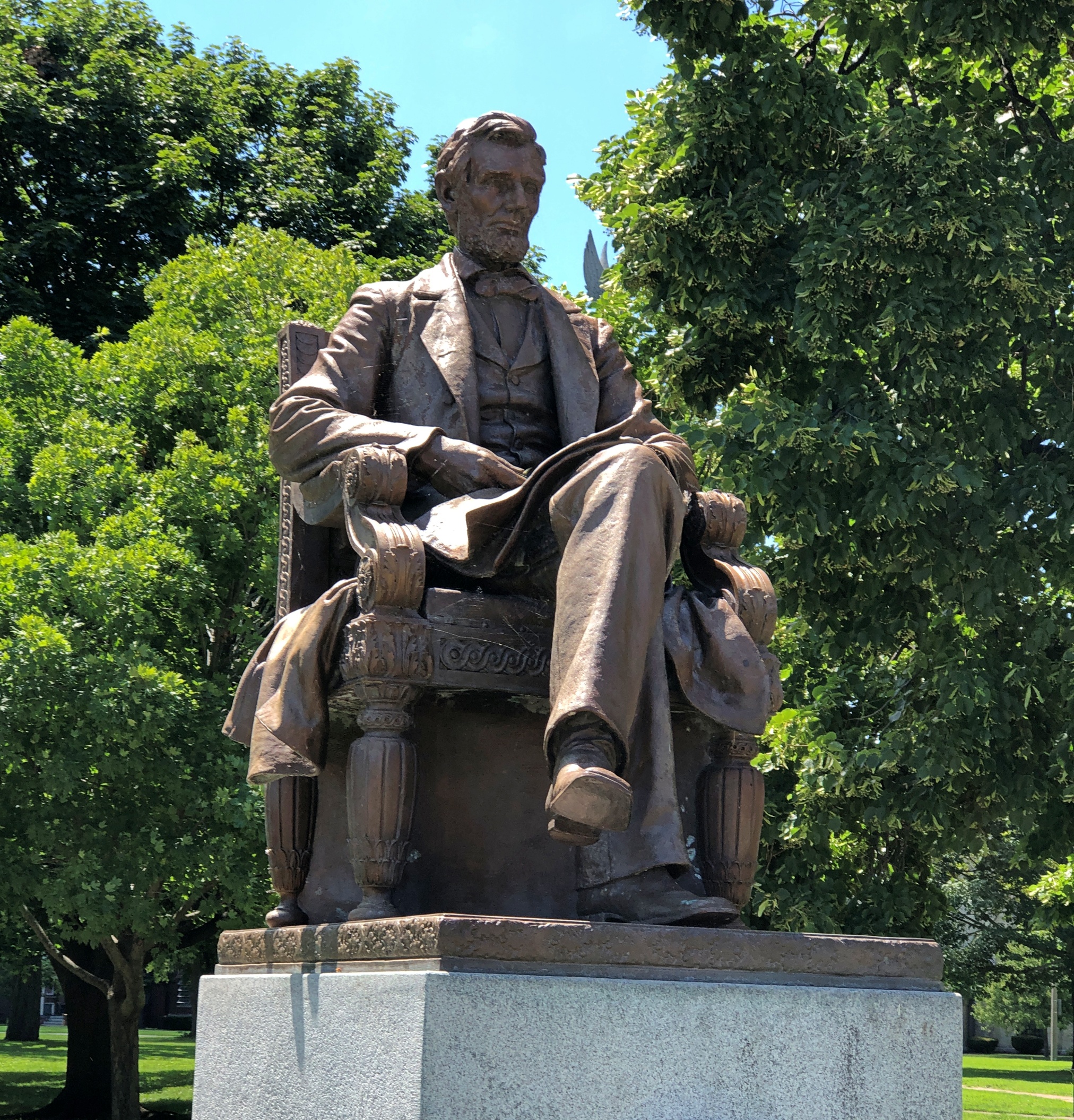
Kenosha

At the edge of the park, a seated Lincoln. Sculptor Charles Niehaus (d. 1935) did the work. Just one of many that he did all over the place. The president has been sitting there since 1909, centennial of his birth, with restoration work done in more recent decades.
Kenosha

Nearby in the park, Kenosha’s Civil War memorial, called “Winged Victory” on electronic maps, a name that gets right to the point.
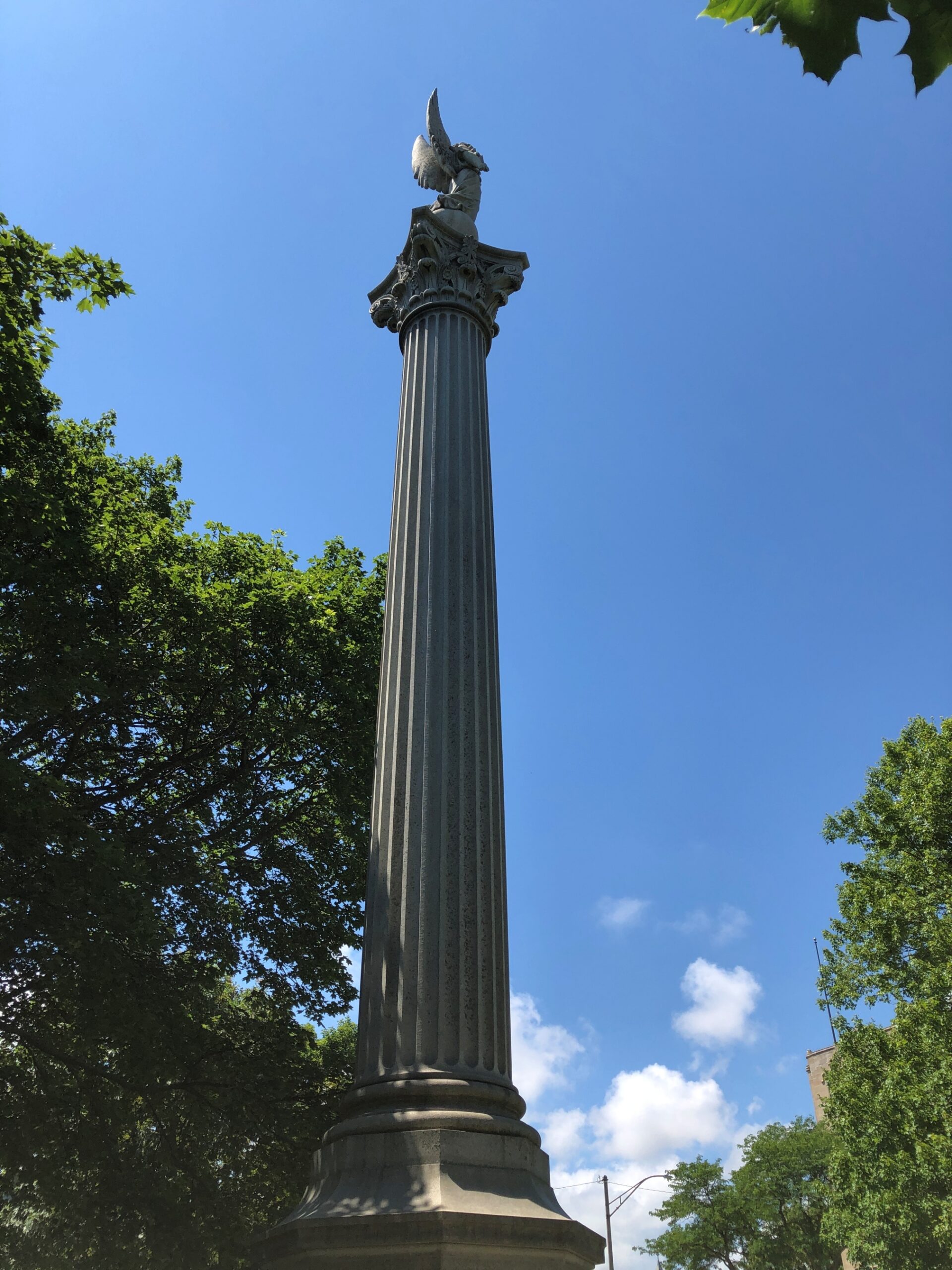
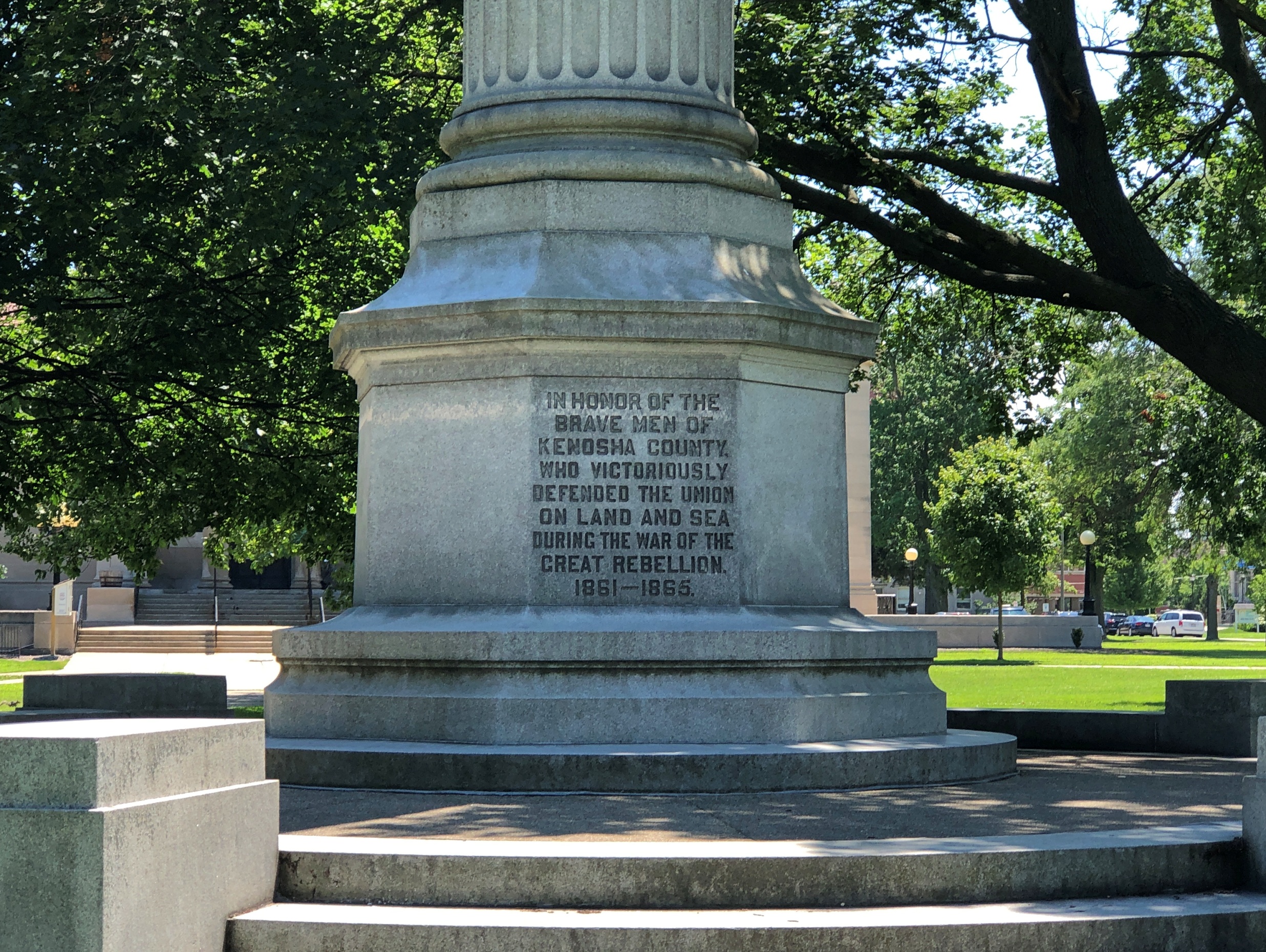
Kenosha

It’s Library Park because of the Gilbert M. Simmons Memorial Library, a branch of the Kenosha Public Library system, dominating its side of the park. It has a little more heft than most municipal branch libraries.
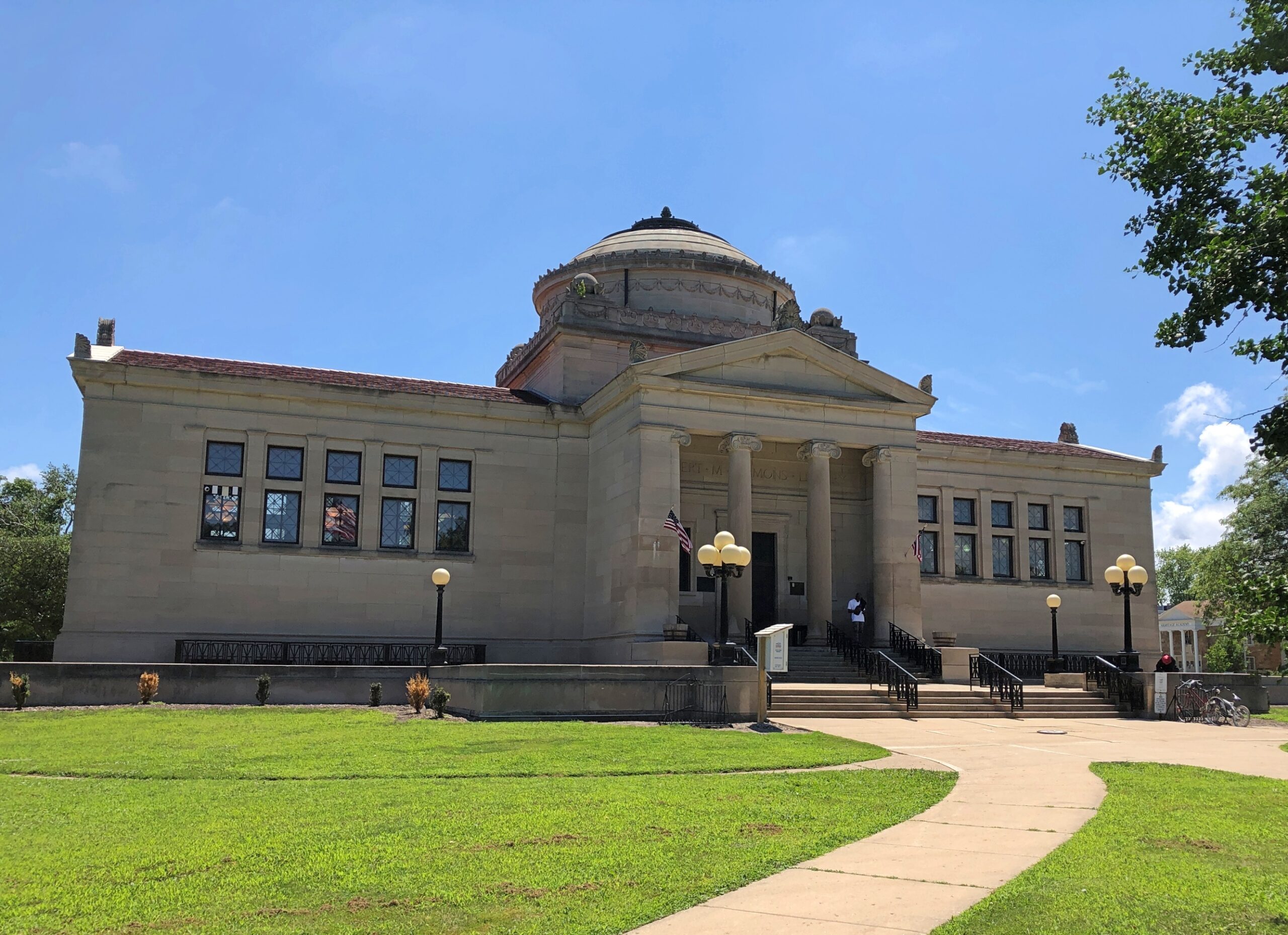
Kenosha

When it opened in 1900, the building formed Kenosha’s main library. Daniel Burnham designed it.

Kenosha

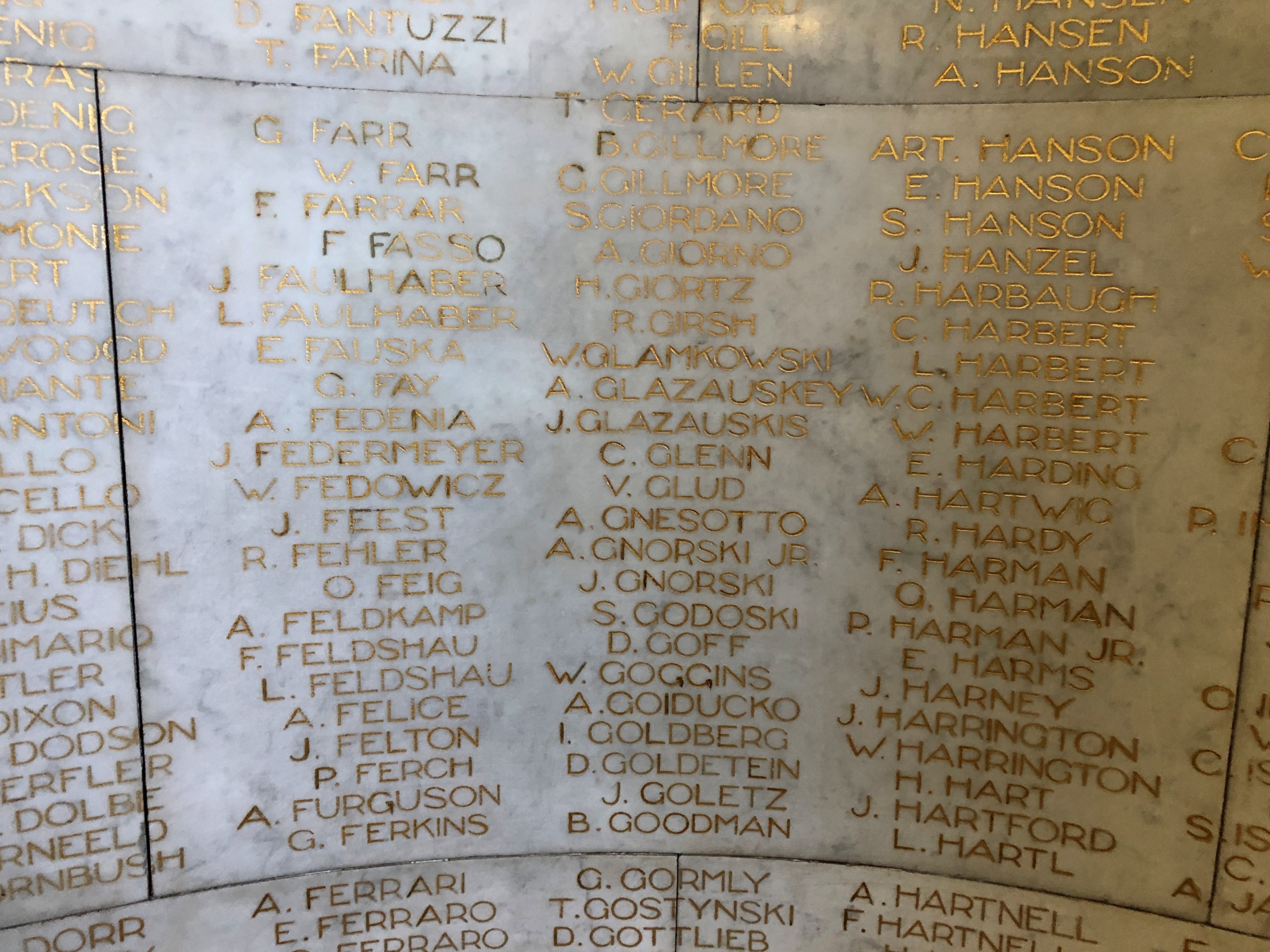
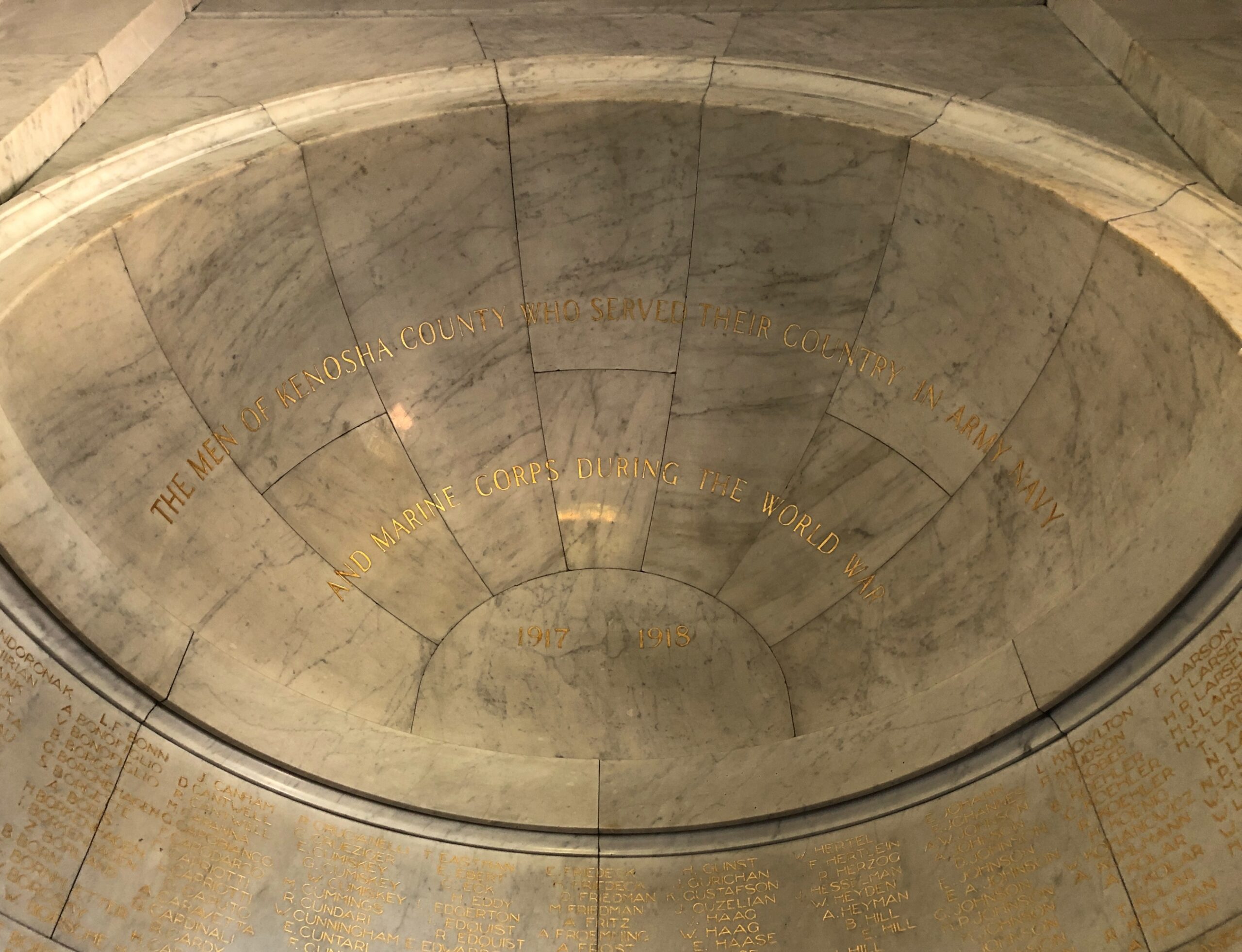
The Civil War veterans have their memorial outside. Great War vets are honored inside the library.
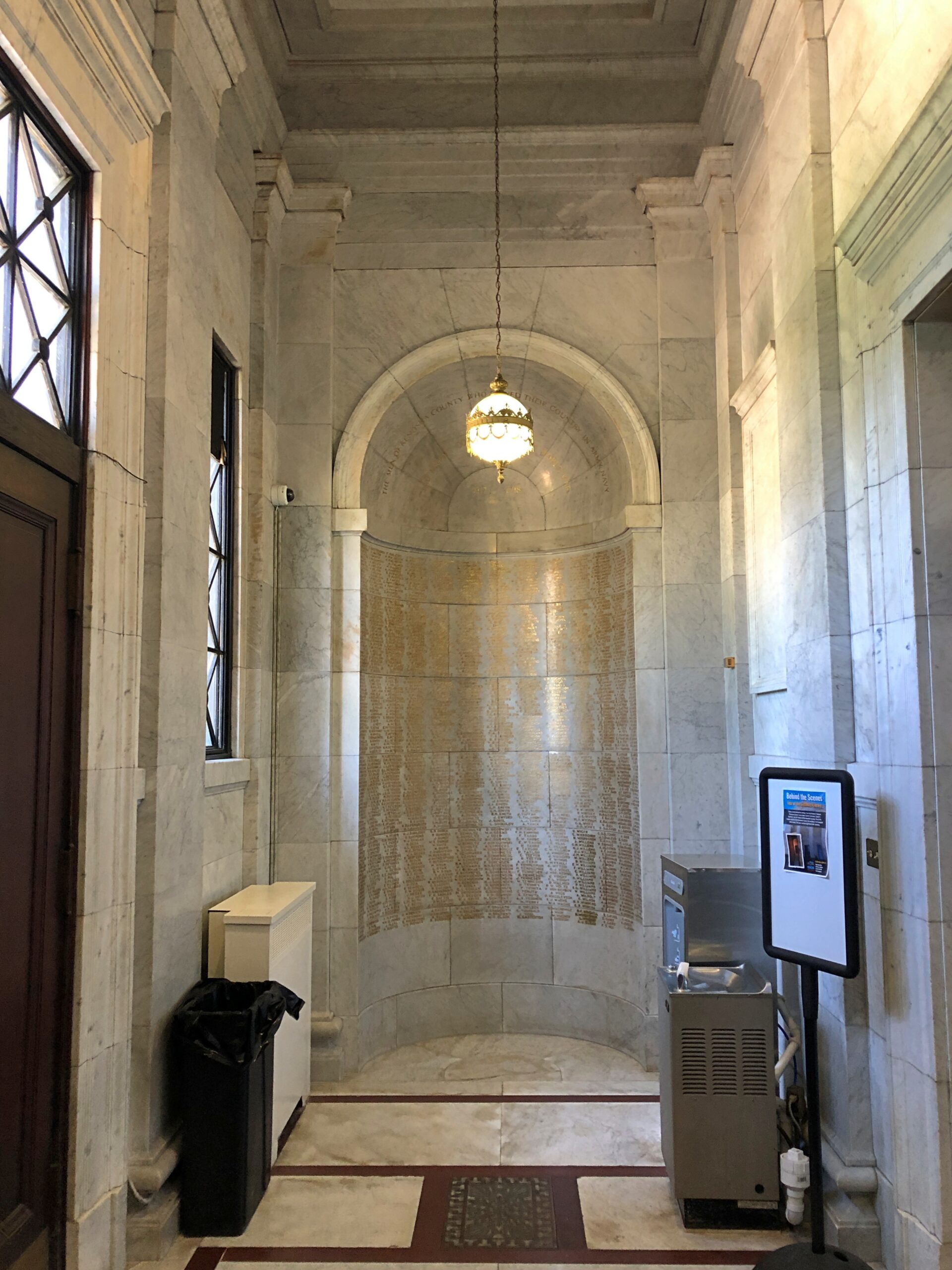
Kenosha
Kenosha
Kenosha

We’d happened on the Library Park Historic District, surrounding Library Park. The park itself goes back to the early years of Kenosha, when the land was a New England–style town commons. Forty-two properties, built from 1843 to 1930, form the district. A diner and an historic district: just the thing for a warm summer day stroll.
Downtown Waukesha

The other day I wondered how long it would take to count a million dollars’ worth of nickels and dimes a million times. That’s one of the dream images from “Minnie the Moocher.” Not just a dream, but an opium dream. After all, no sooner does Minnie learn to kick the gong around, does a vivid dream of wealth begin, all shiny and metallic, ending with:

She had a million dollars worth of nickels and dimes

And sat around and counted them all a million times

Let’s say half the dollar value is nickels, half dimes. That would be 5 million dimes and 10 million nickels. So 15 million individual coins. Let’s also say it takes a second to count each, just to keep it simple. That would be 15 million seconds, or 0.475 years (roughly, I shaved off a few places). Counting them a million times would thus be (roughly) 475,000 years.

Of course, if it’s an opium dream, the niceties of time and such don’t apply. Still, it sounds like a hellish task of a Sisyphean kind. But maybe it would be a heavenly task, if you have no sense of the passage of time.

I didn’t sit down to figure all that out until I was at my desk, but the question came out of nowhere during a short interstate drive just before the end of July, up in the southeast corner of Wisconsin. One destination that day, a Sunday, was downtown Waukesha, an outer suburb of Milwaukee, but a place with a distinct history of its own, where people came to take the waters once upon a time.

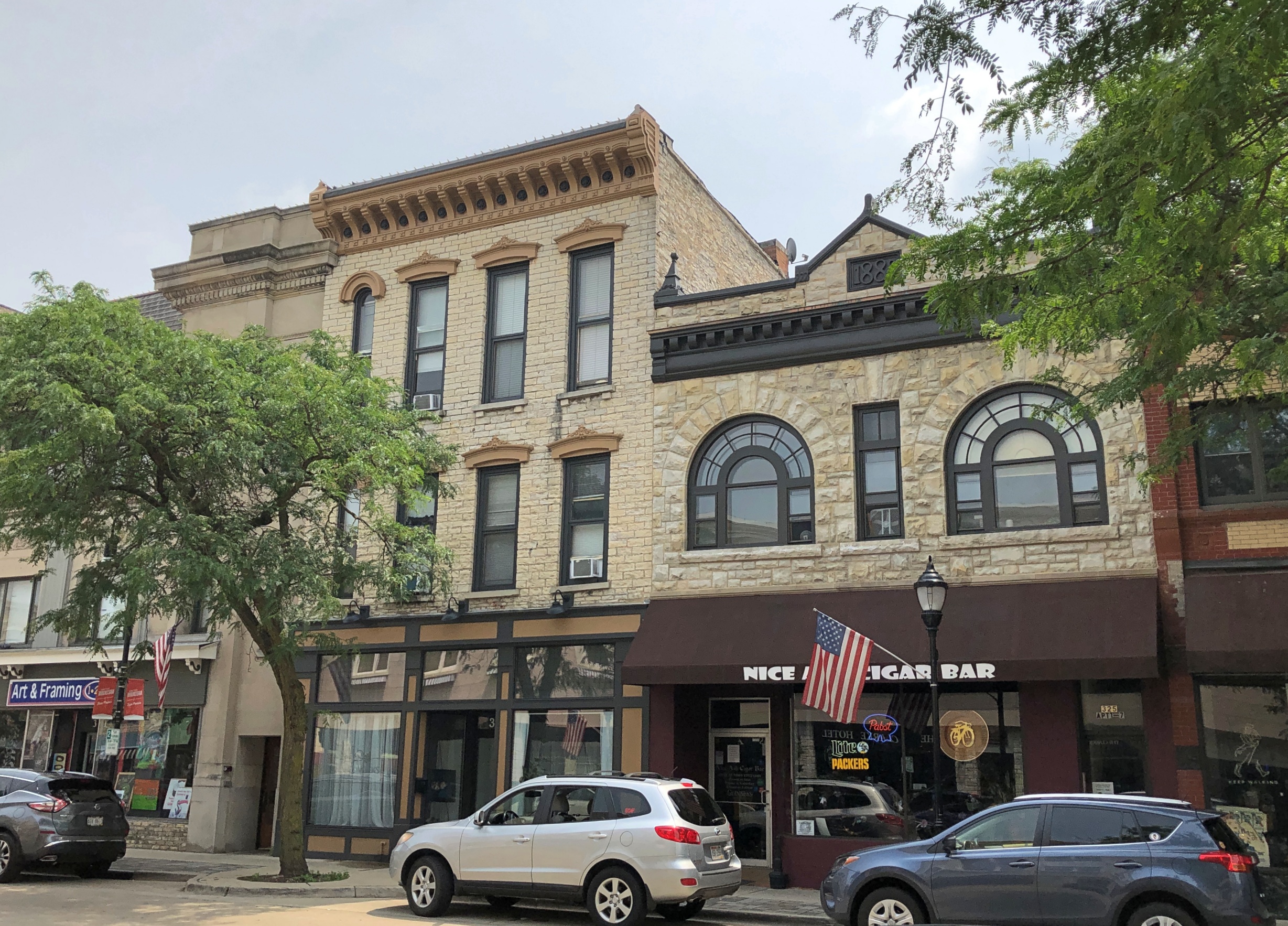
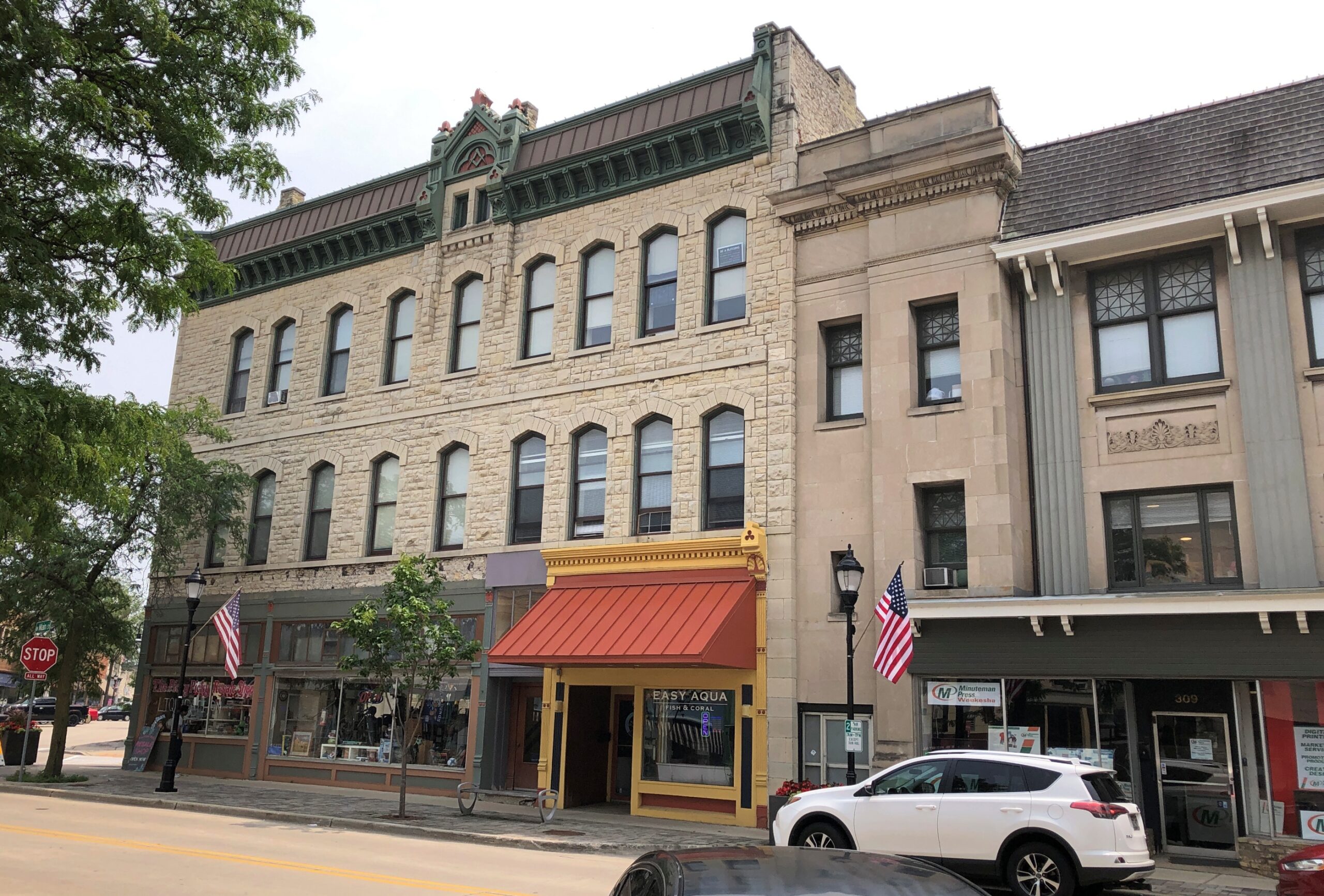
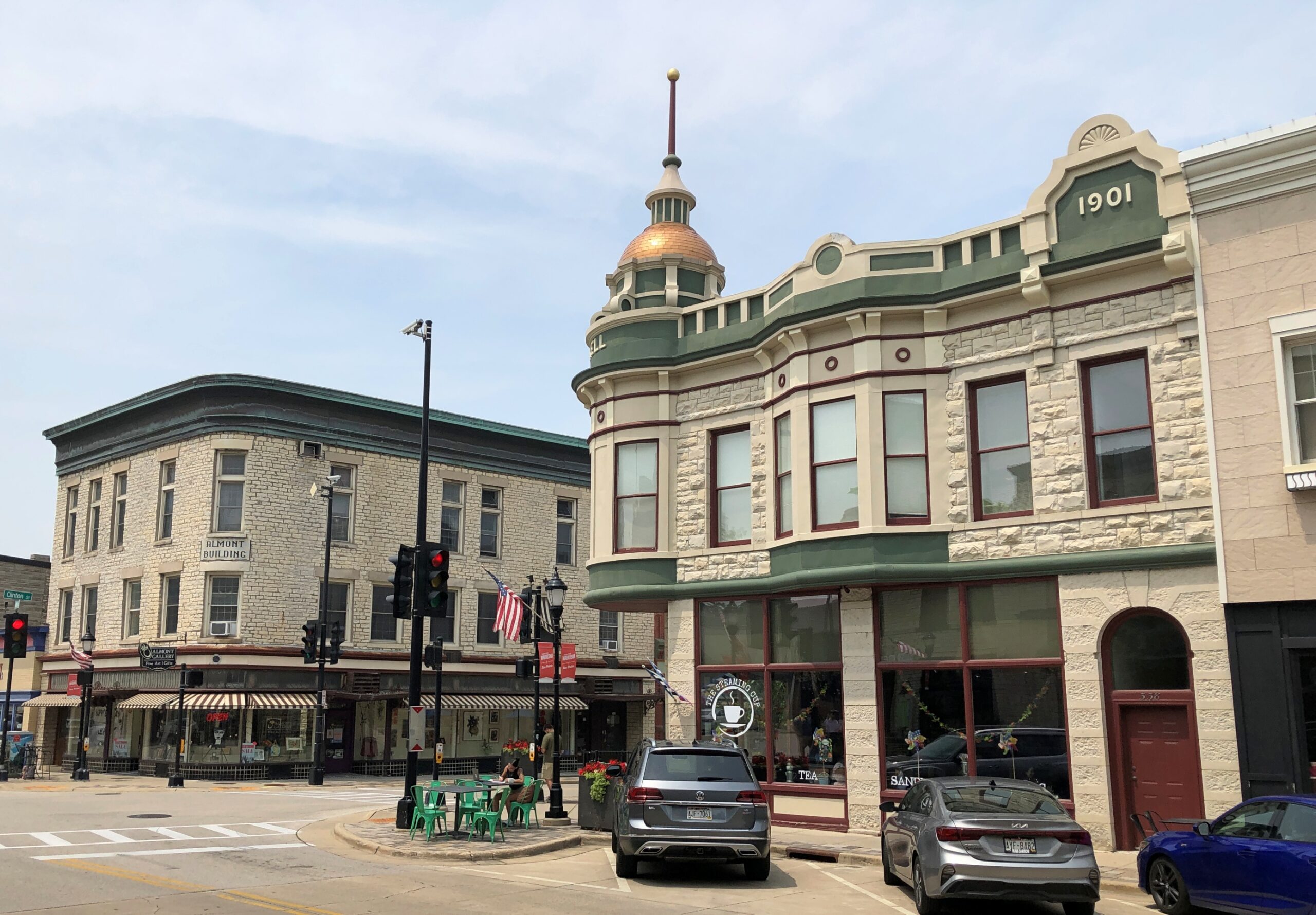
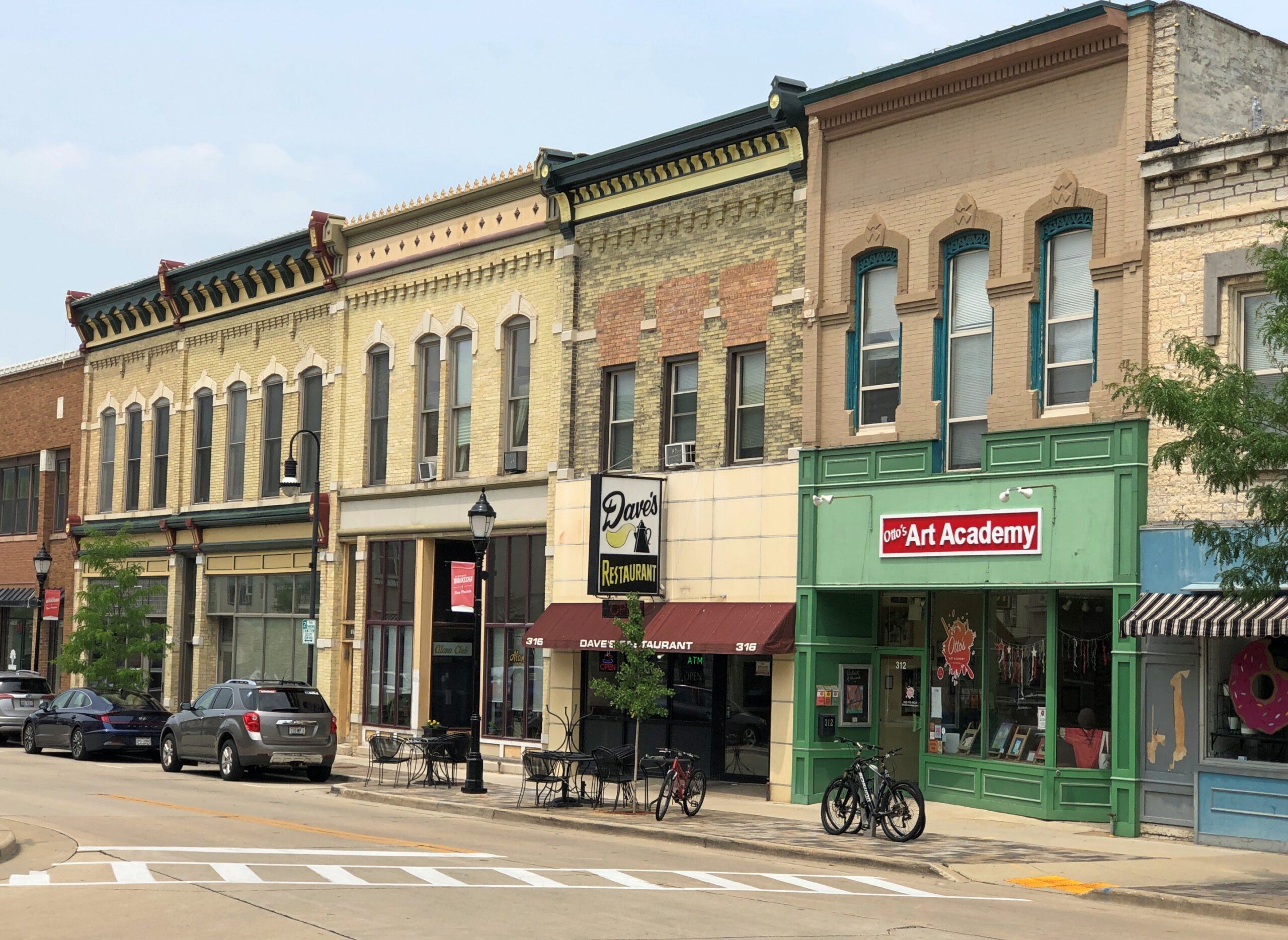
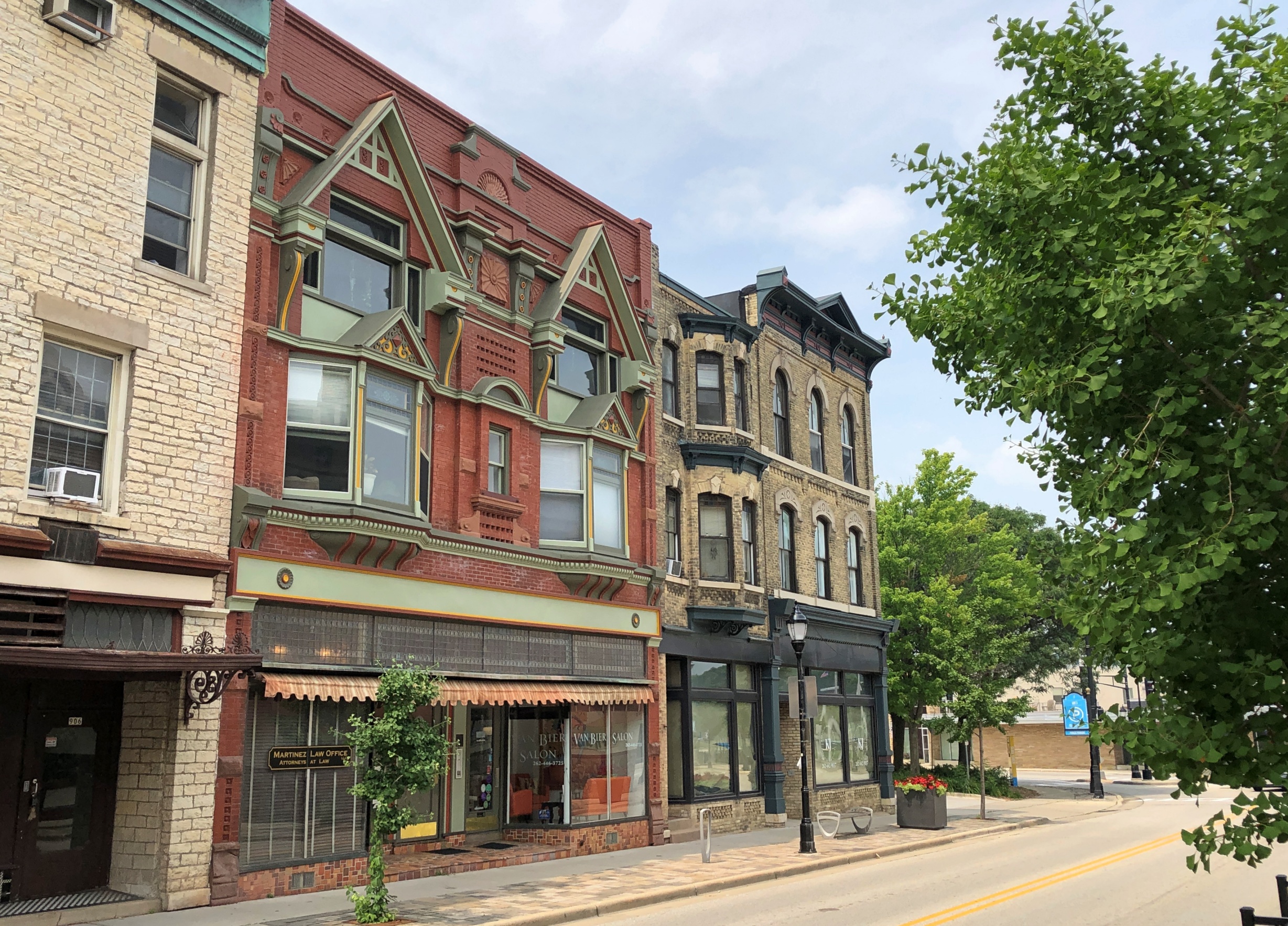
We spent some time near the five-pointed intersection of Main, Broadway and Grand, focal point of a handsome streetscape.

Waukesha, Wisconsin
Waukesha, Wisconsin

Now this is a set of buildings.

Waukesha, Wisconsin

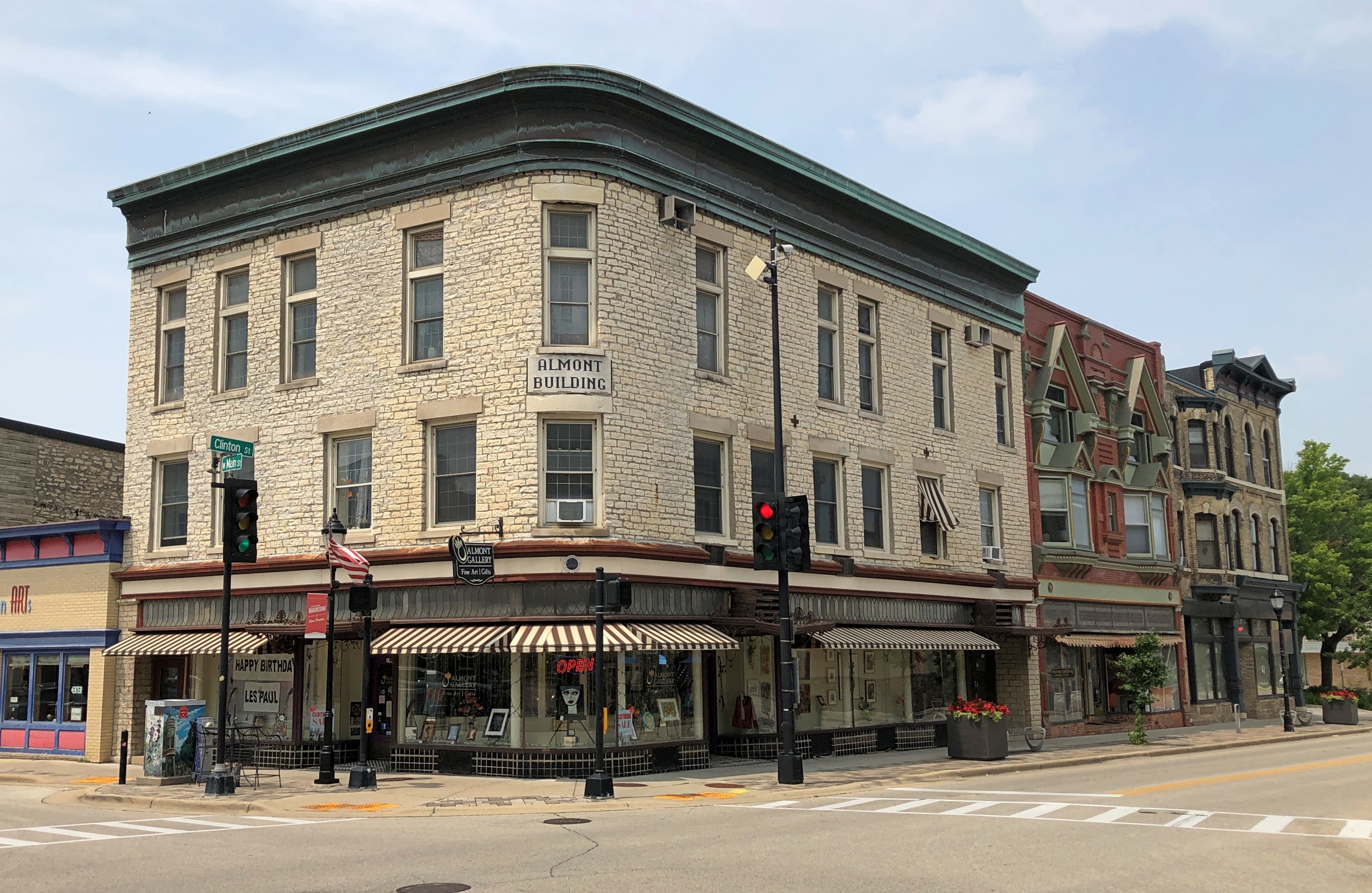
The Almont Building, whose original name was the Robinson Block.

“The core of the downtown, prior to 1856, consisted of freestanding wooden frame buildings, but a new era began after a massive fire nearly destroyed this northern section of Main Street,” the Waukesha County Historical Society & Museum says. “The Robinson Block was built in 1857 with fireproofing in mind and is the first Five Points building to use Waukesha limestone.”

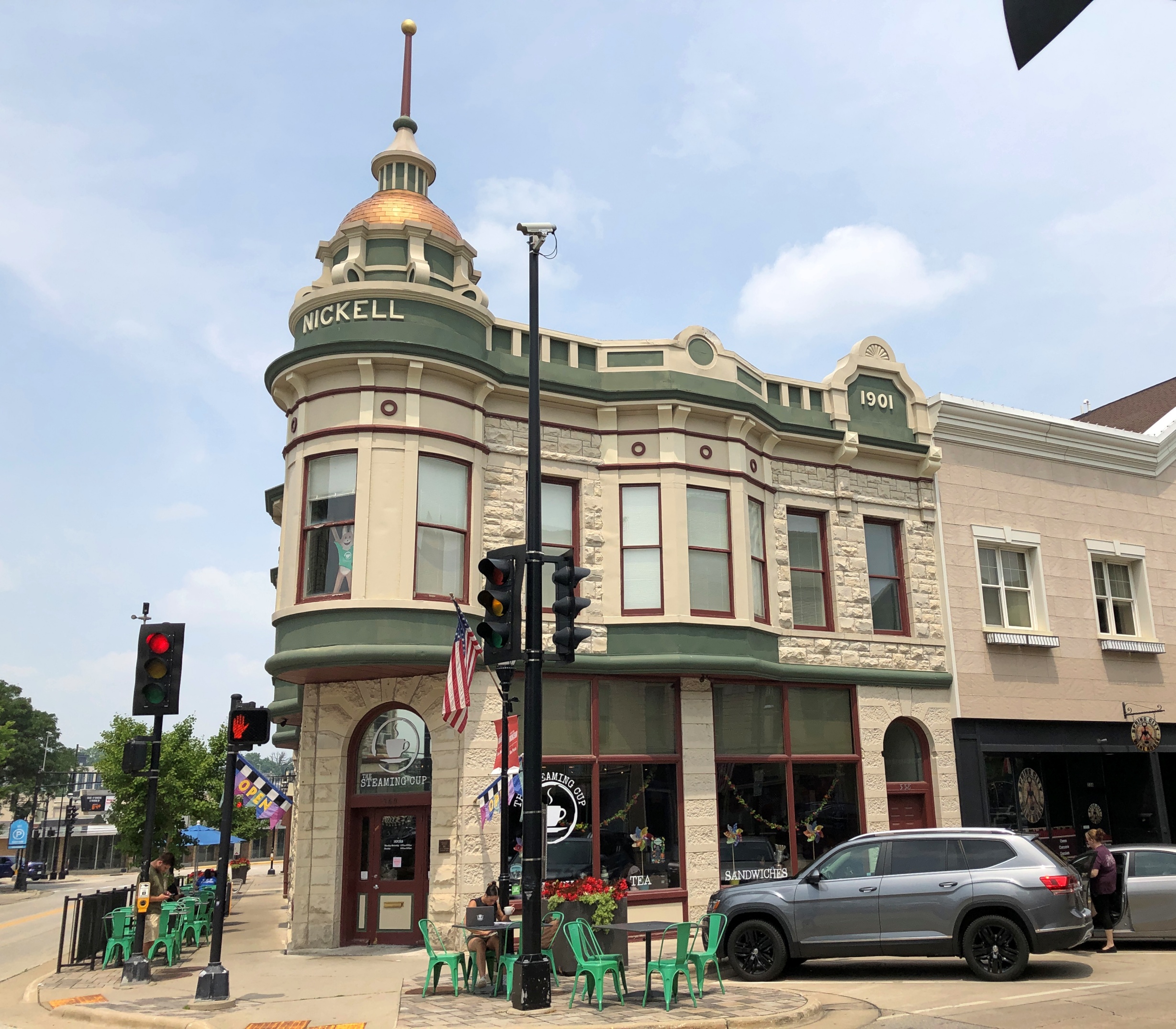
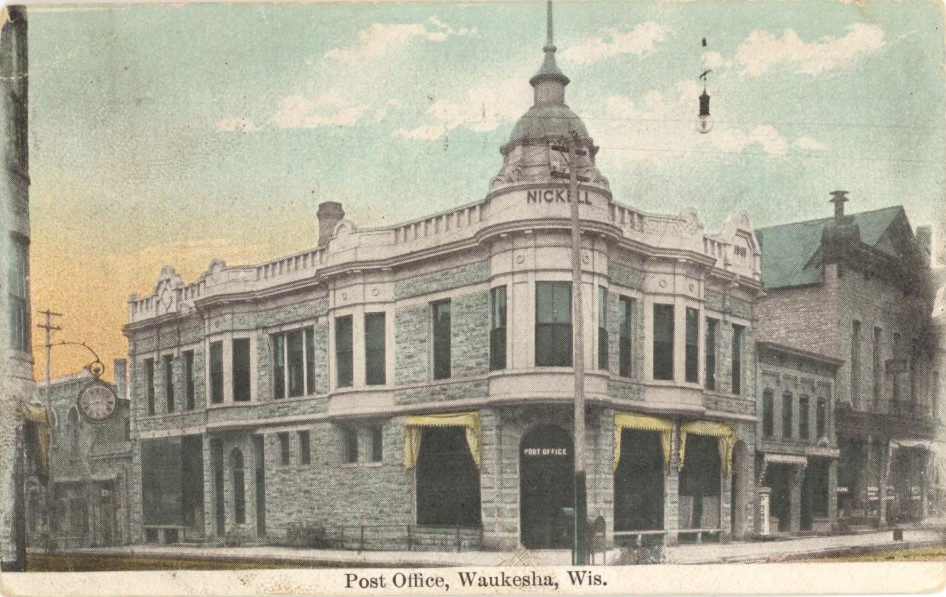
The Nickell Building, as it looked recently, and long ago.

“Built by Addison J. Nickell, local businessman and jeweler, the first floor housed the U.S. Post Office from 1902-1914,” notes the WCHS&M. “The work of Waukesha architect C.C. Anderson, this Queen Anne displays a projecting oriel and corner turret capped by a domed roof: both are covered by pressed metal.”

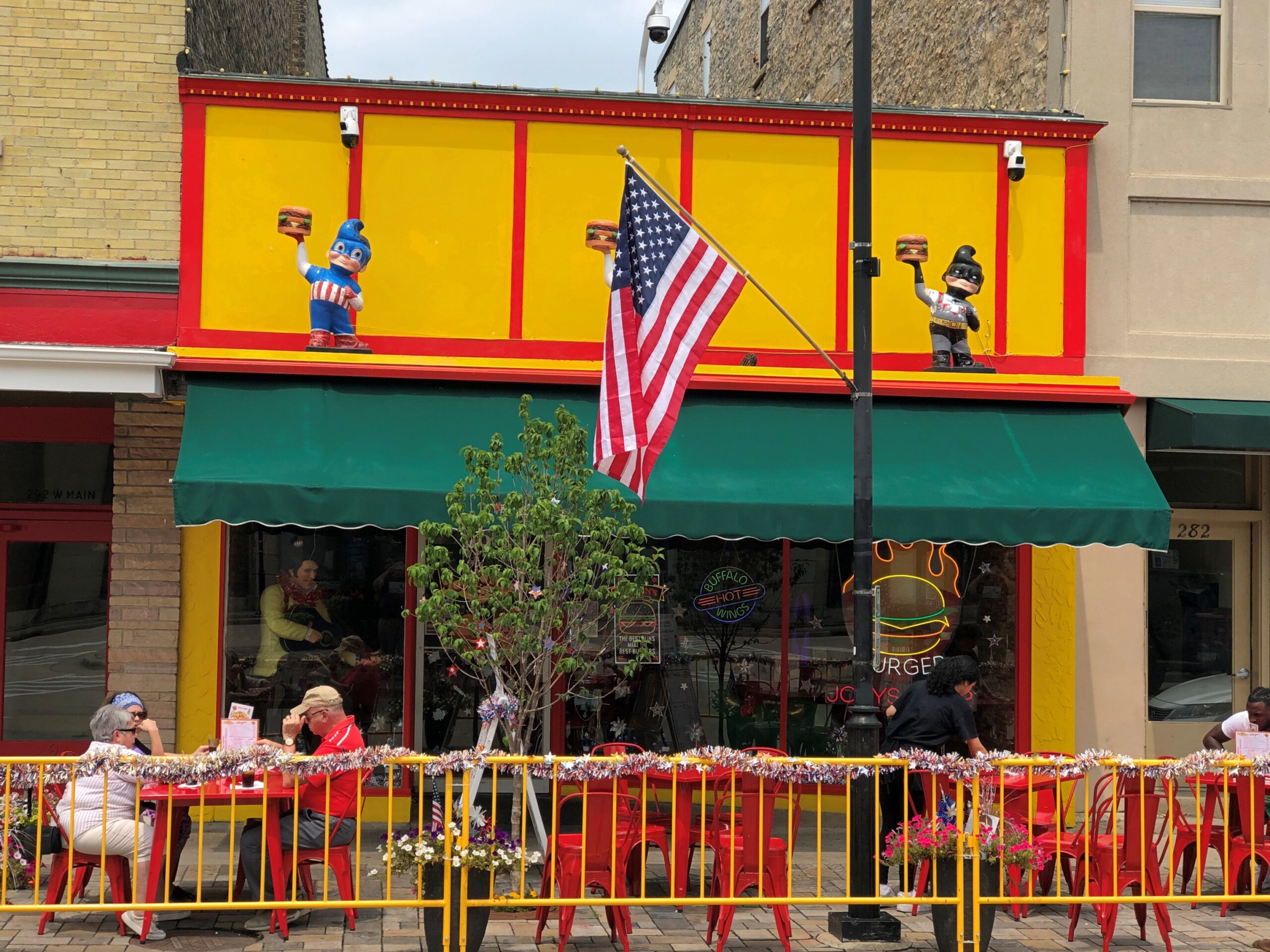
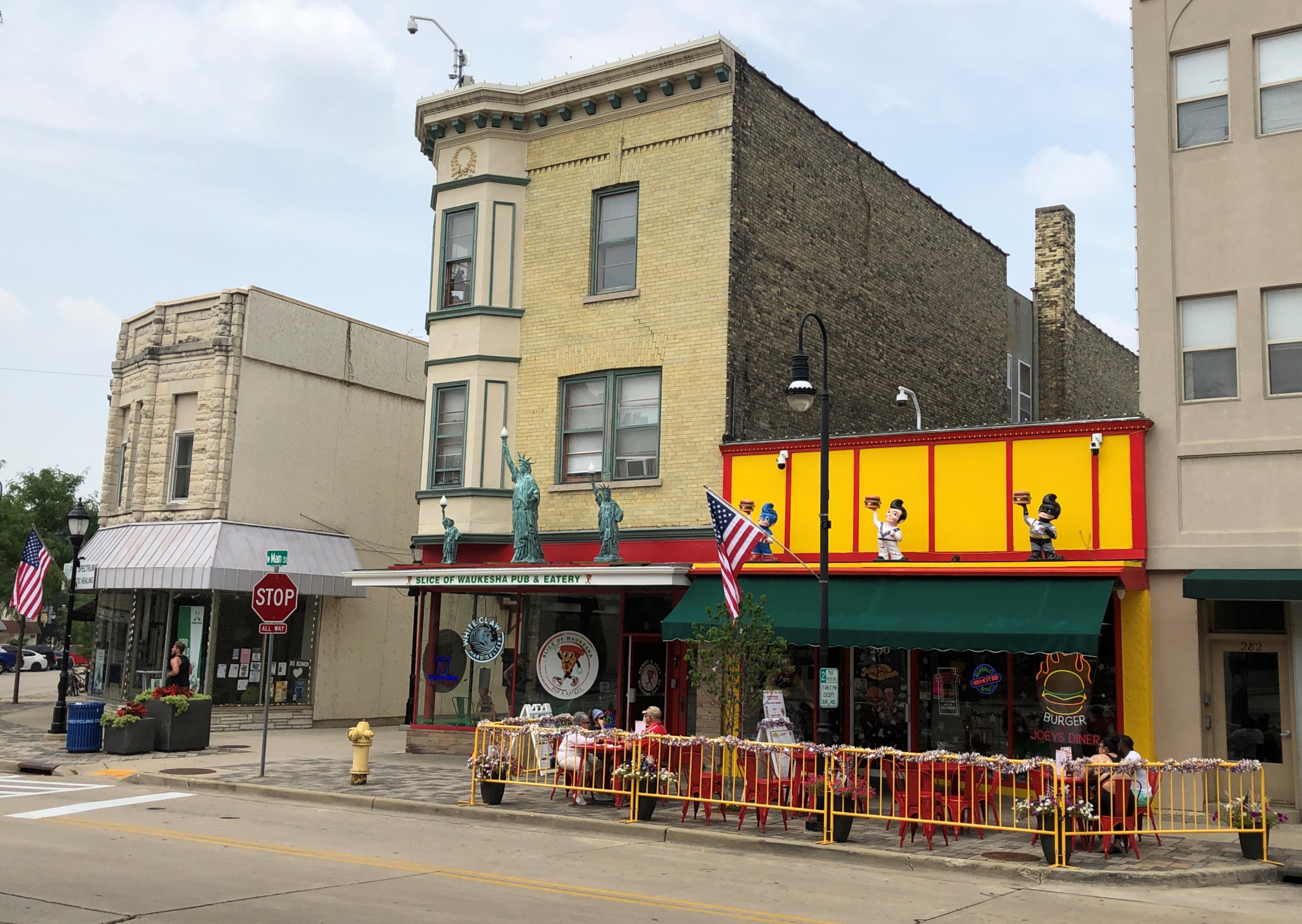
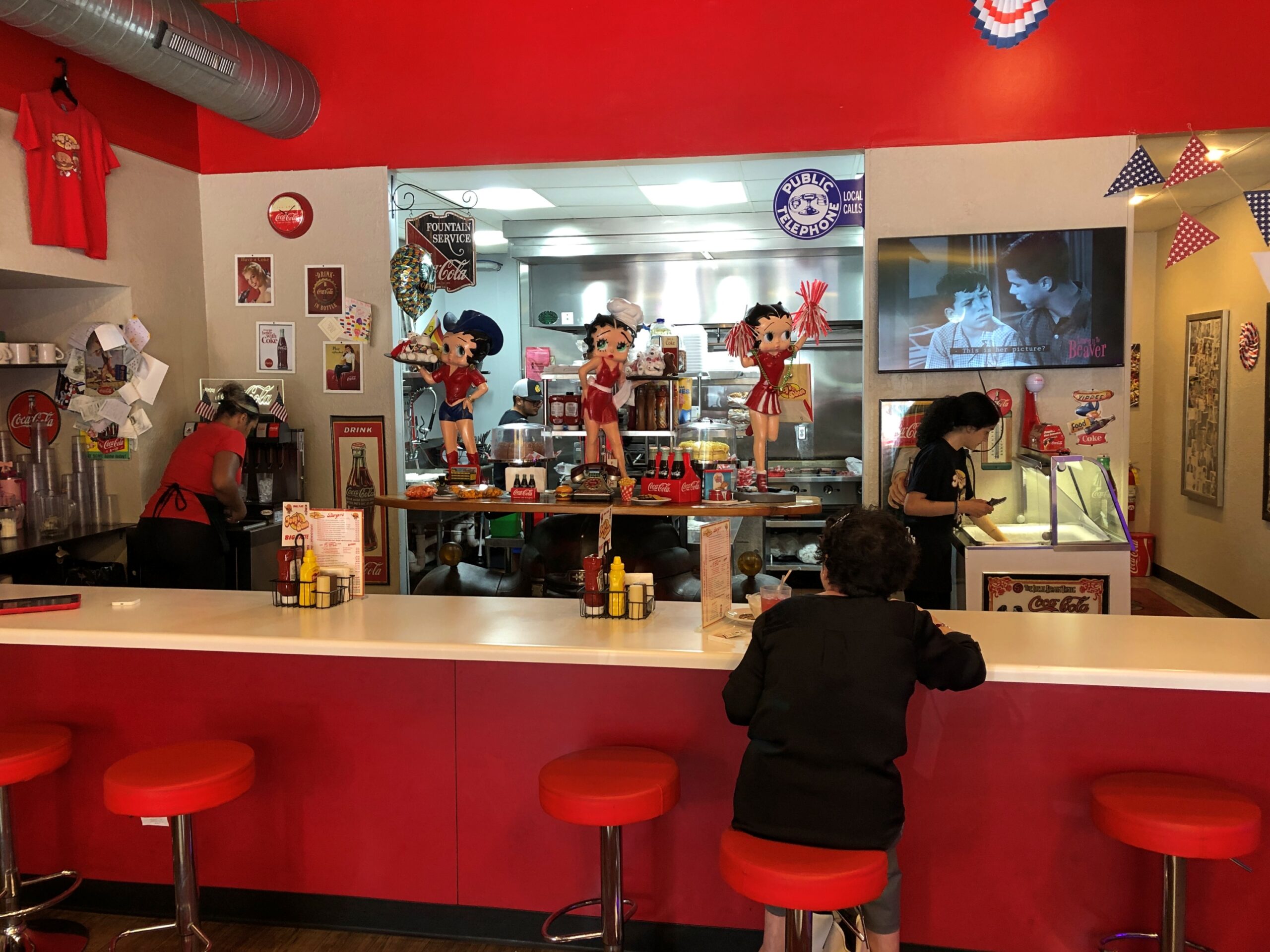
Being mid-day, one bit of business to take care of: lunch. We soon found the friendly joint called Joey’s Diner.

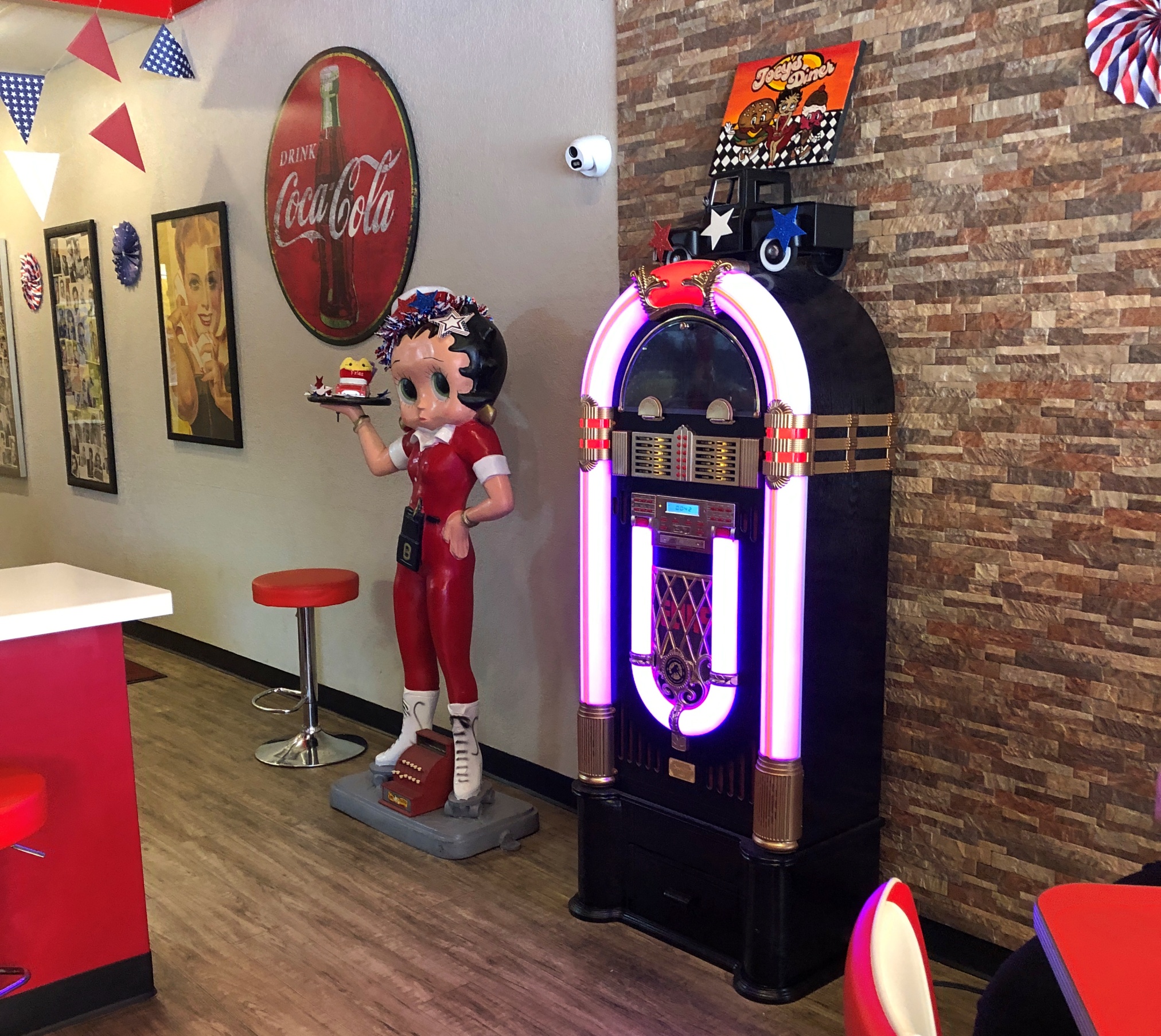
Joey likes Betty.

Joey’s is next to an Italian restaurant, similarly casual, that I think was owned by the same fellow. He was everywhere at once all the time — running a restaurant is nothing if not busy, and he seemed to be running two — but toward the end of our meal, asked how it was. I answered enthusiastically to the positive about my simple but also delicious hamburger. He responded by giving us a slice of chocolate cake, on the house. Thanks, Joey.

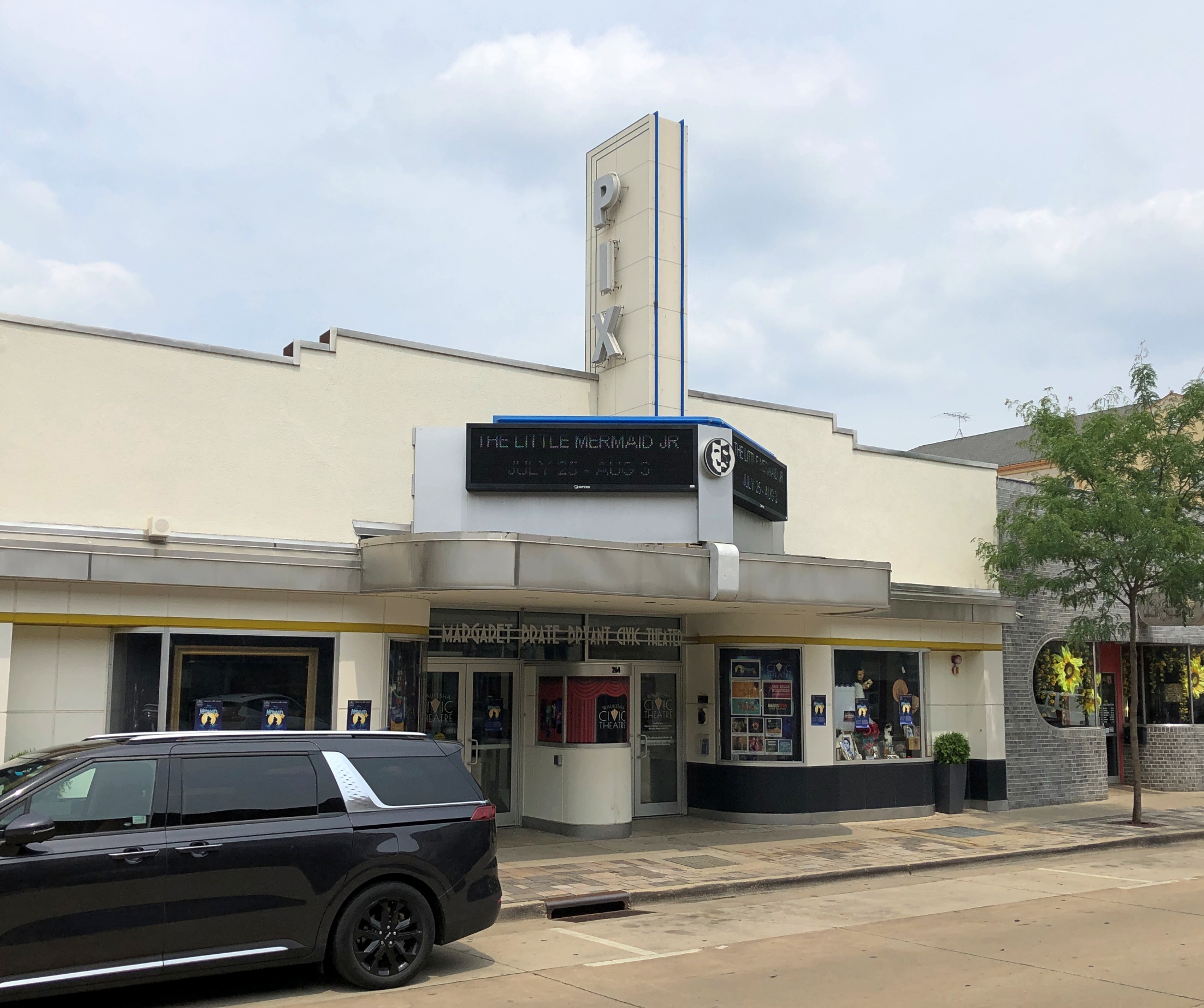
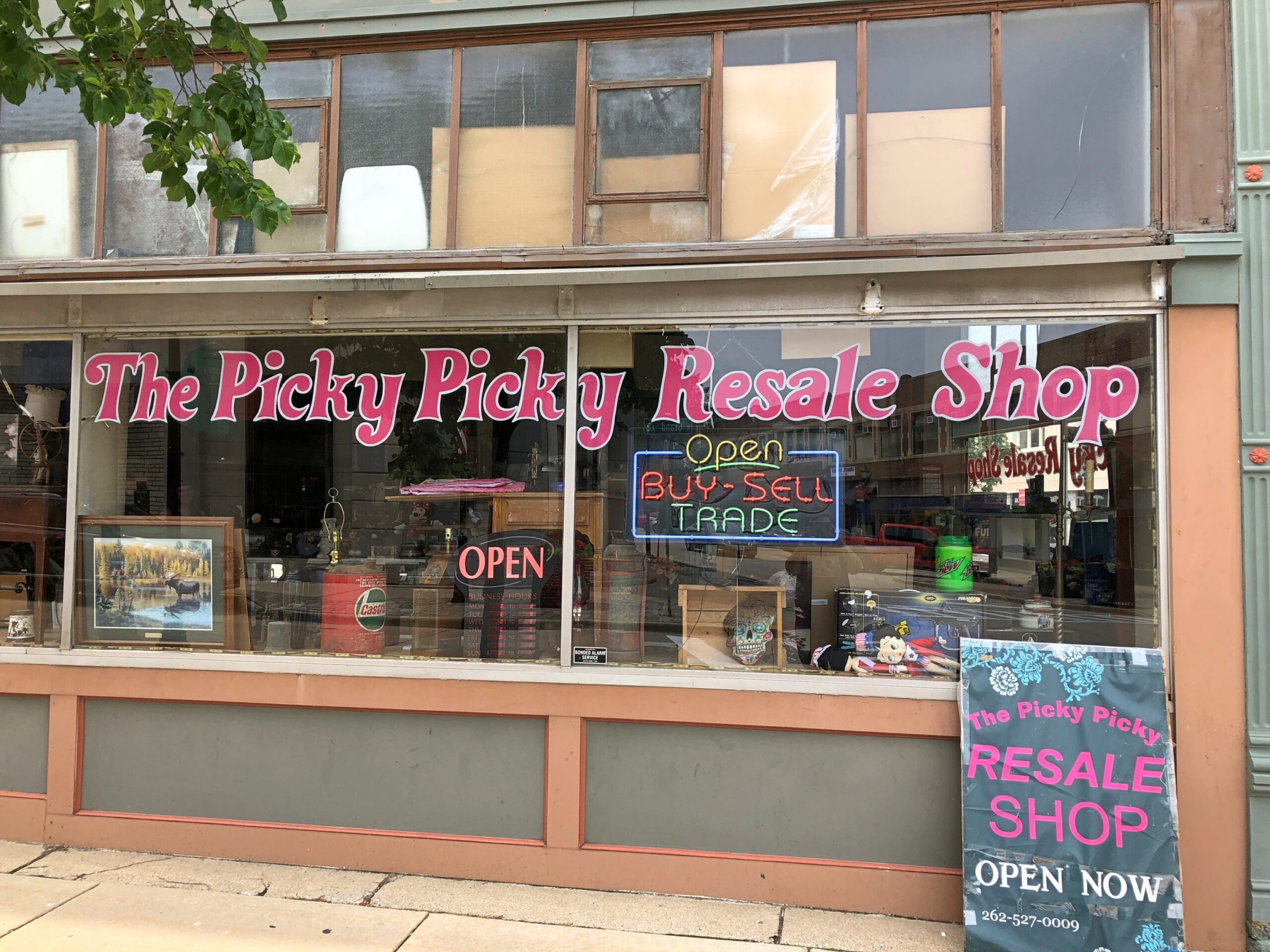
The street has other (many other) examples of places found here and nowhere else.

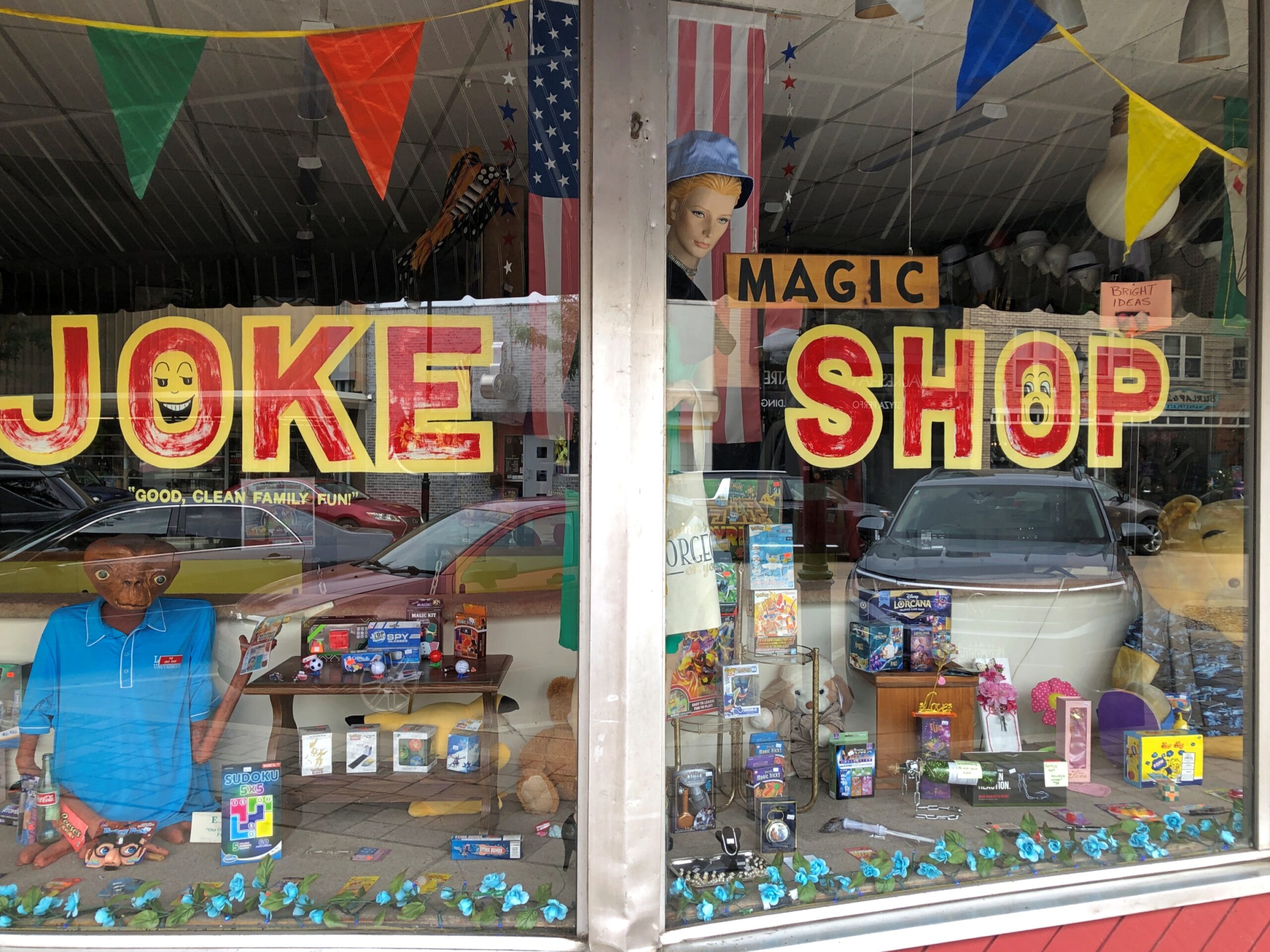
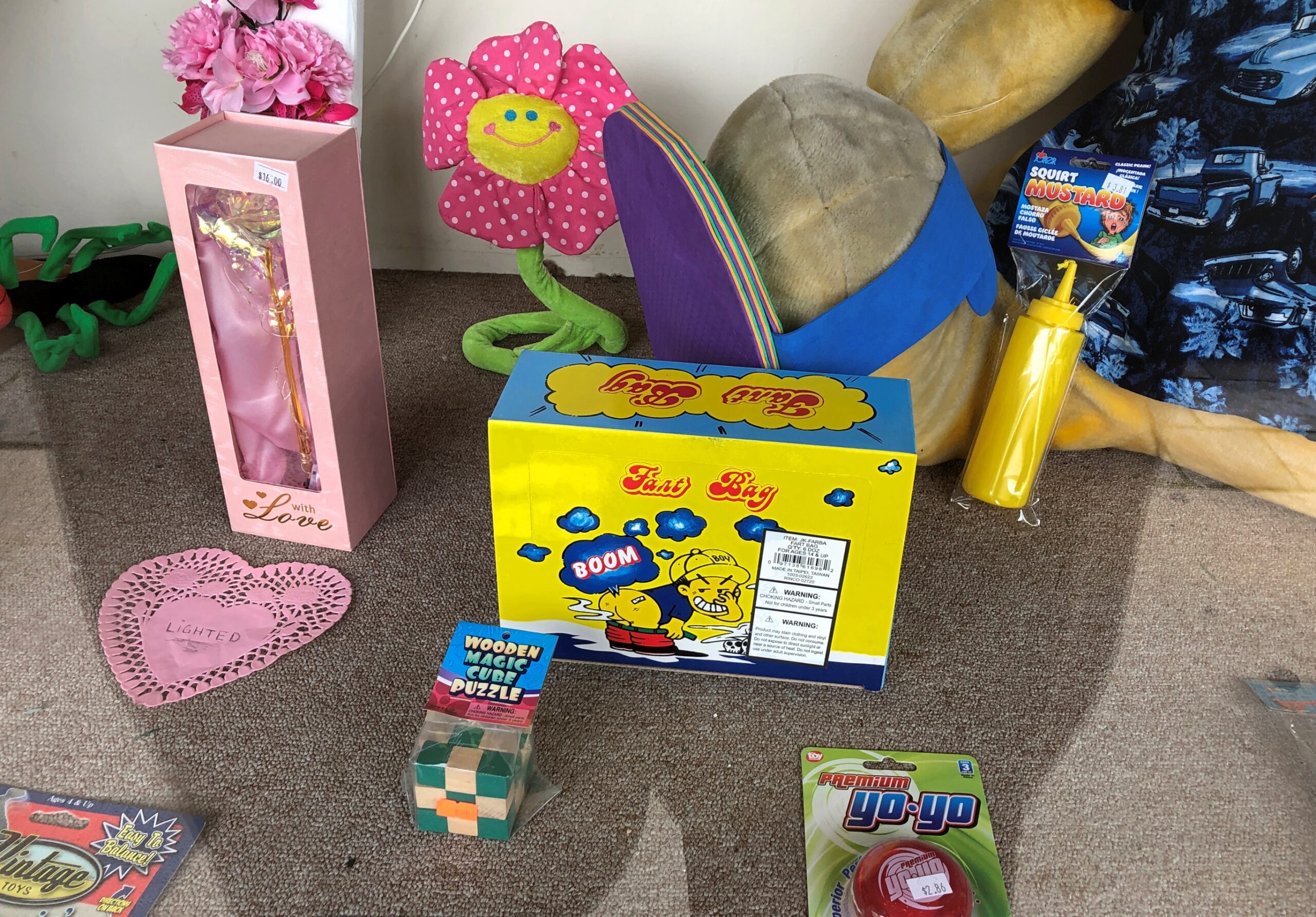
Been a while since I’d seen a joke shop. Closed.

Waukesha, Wisconsin
Waukesha, Wisconsin

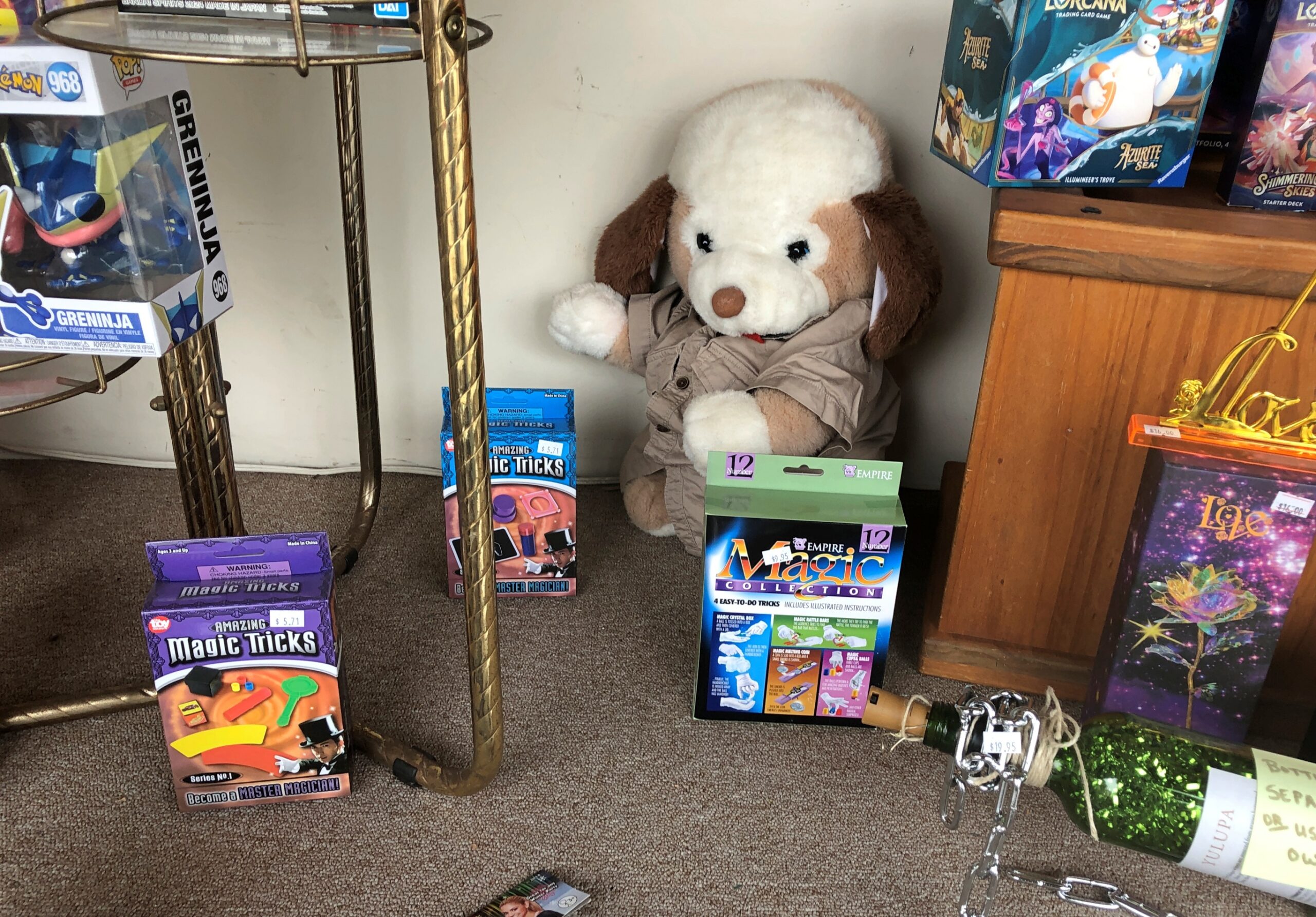
The last one might have been Uncle Fun in Chicago, which closed some years ago. Too bad about that, but at least Jest For Fun Joke Shop, which has been at this Waukesha location more than 40 years, is keeping the retail tradition alive.

Billie Creek Village

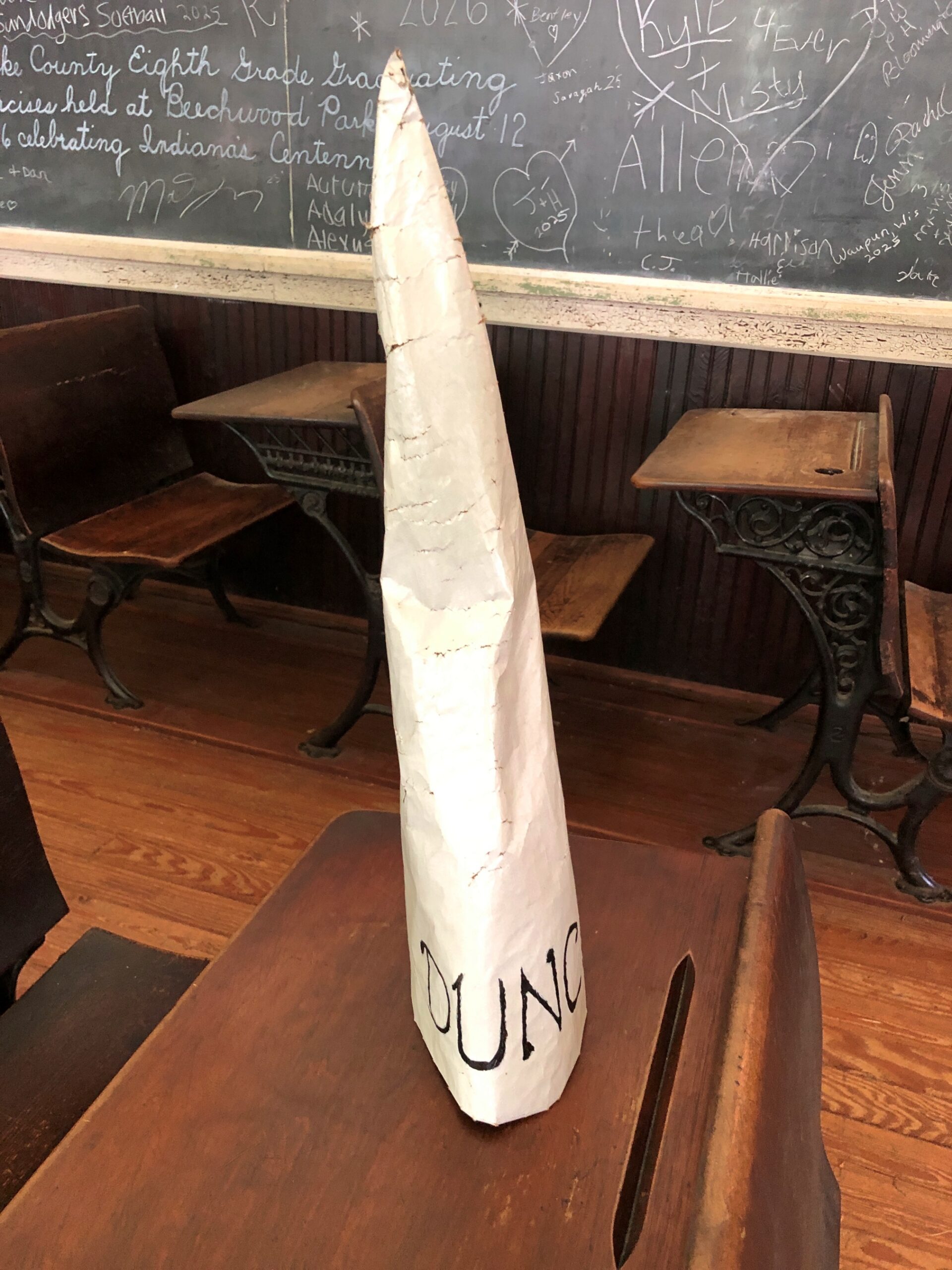
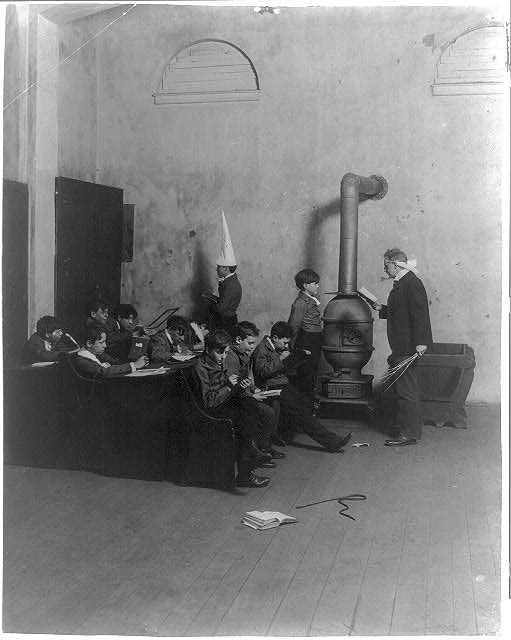
I don’t know whether it was a relic or a replica, but there it was, something we’ve all heard about, seen in drawings and as the stuff of metaphors: a dunce cap. I’d never actually seen one before that I remember, not as a physical object.

Billie Creek Village

That is why you (I) visit such places as the open air museum Billie Creek Village in Parke County, Indiana. To be mildly surprised. Such as the time I encountered a can of White Star brand tomatoes with a hammer and sickle on it, or a Papua New Guinea battle shield sporting the Phantom, just to name two among many such little surprises.

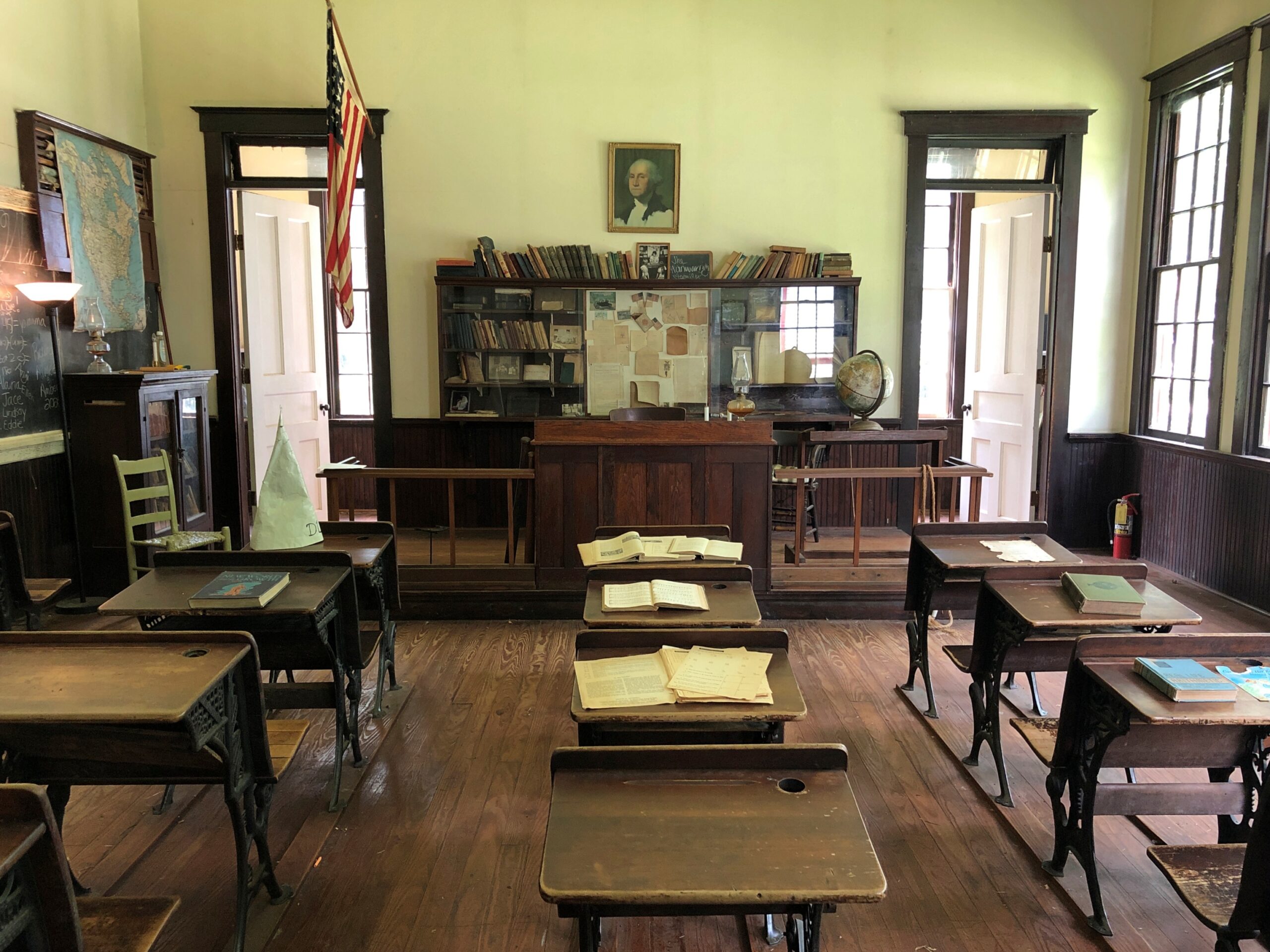
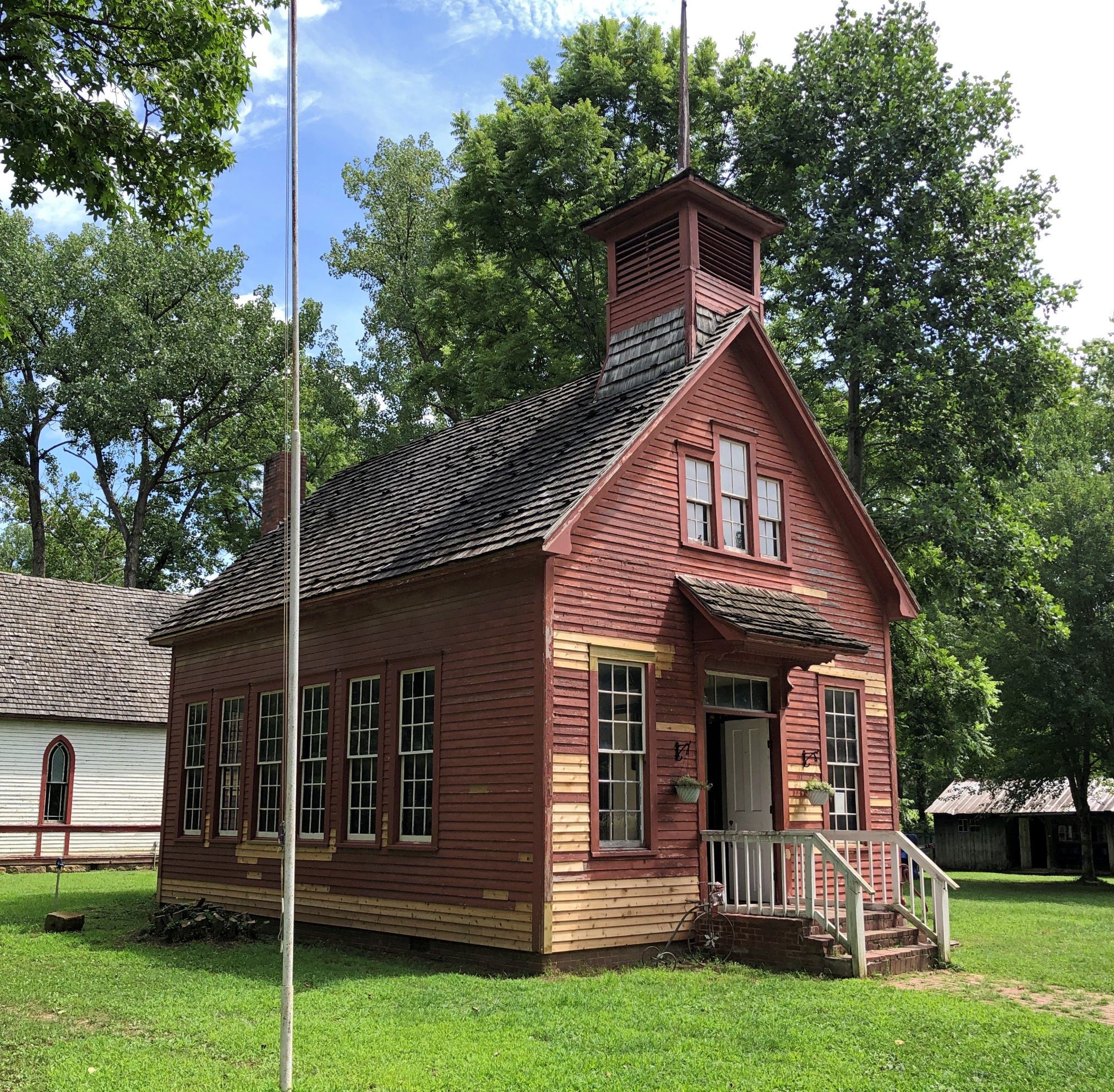
The dunce cap was on one of the desks at Billie Creek’s one-room school house, used until the early 20th century, as usual for that kind of school.

Good old dunce caps. Sure, they go against the grain of modern thinking, antiquated as a one-room school, but we all can remember a few goofballs from our school days who deserved one, can’t we? As seen in a pic from the Library of Congress, dated ca. 1905, but with no information about where it might have been. Just a small school in the years before self-esteem was discovered.

The old school house at Billie Creek is one of 38 historic structures relocated from various parts of Parke County, Indiana, to about 70 acres west of Rockville on US 36. Originally opened in 1969, the place has had a series of owners and been through periods of abandonment, but since 2022 has been under management that seems to know what its doing.

That’s my thinking, anyway, since its refreshing informality perfectly suits the place. You go, you park your car, you wander in. No irritating timed tickets, no gouging entrance fee, no expensive yet mindless luxury goods and experiences that could be pretty much anywhere. Yet there is an economic model: Billie Village hosts events – one was going on when we visited around mid-day on a Sunday – and some of the buildings are also shops, and do sell luxury goods, in the sense that such handcrafts aren’t found in modern grocery or drug stores.

We supported the place by buying a few things, including (yes!) postcards. A few dozen other people were doing so by attending the event. I watched part of some sort of award ceremony as it happened at the village gazebo, and even asked one of the bystanders about what was going on, but couldn’t quite get the gist of it. The meeting seemed to be one of those Society of Creative Anachronism sorts of things, though not that specifically. Attendees wore fantasy- and history-adjacent costumes, mostly with that homemade vibe. One of those outings for adults who didn’t get enough playing pretend when they were kids, I guess. All well and good.

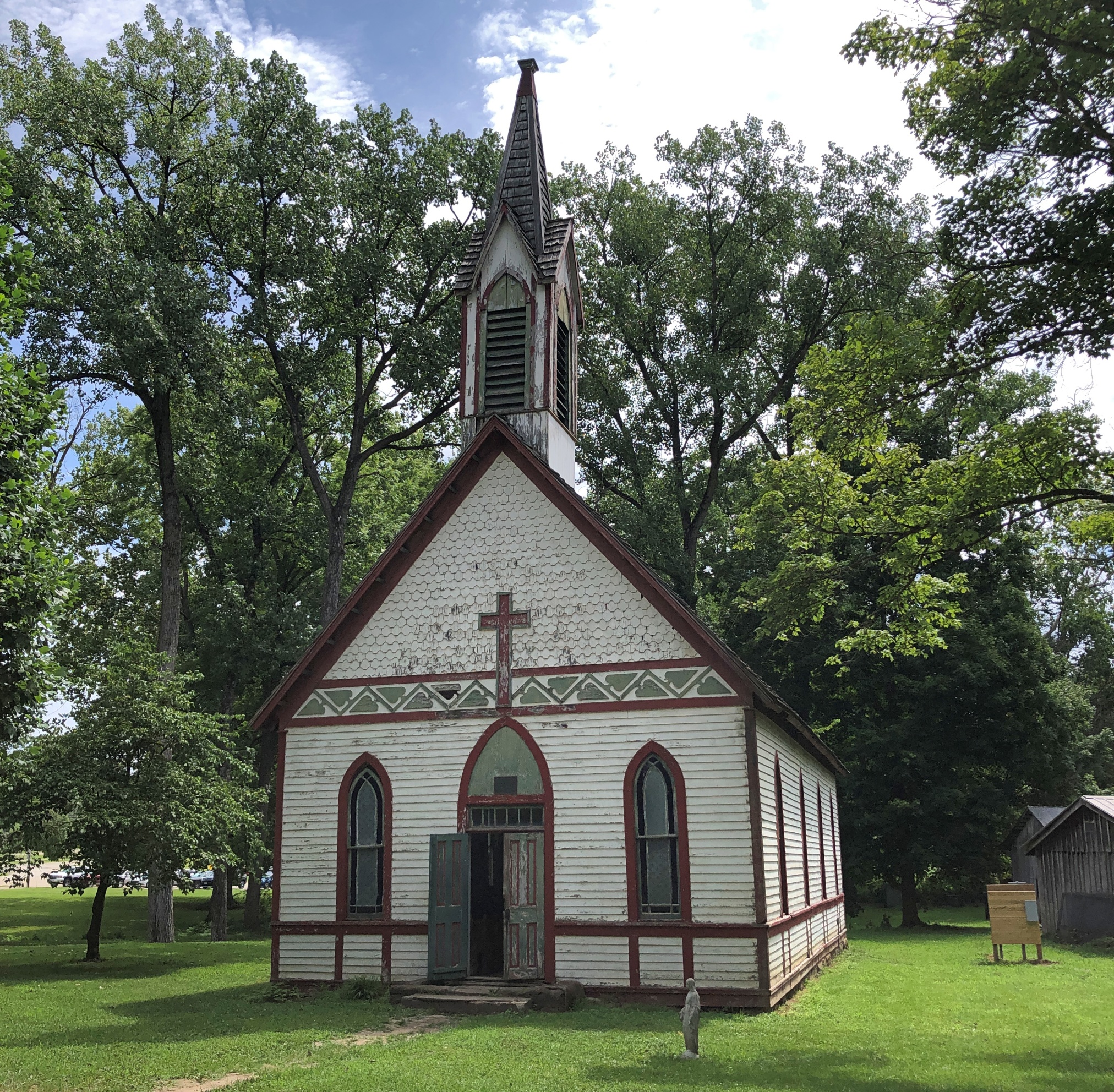
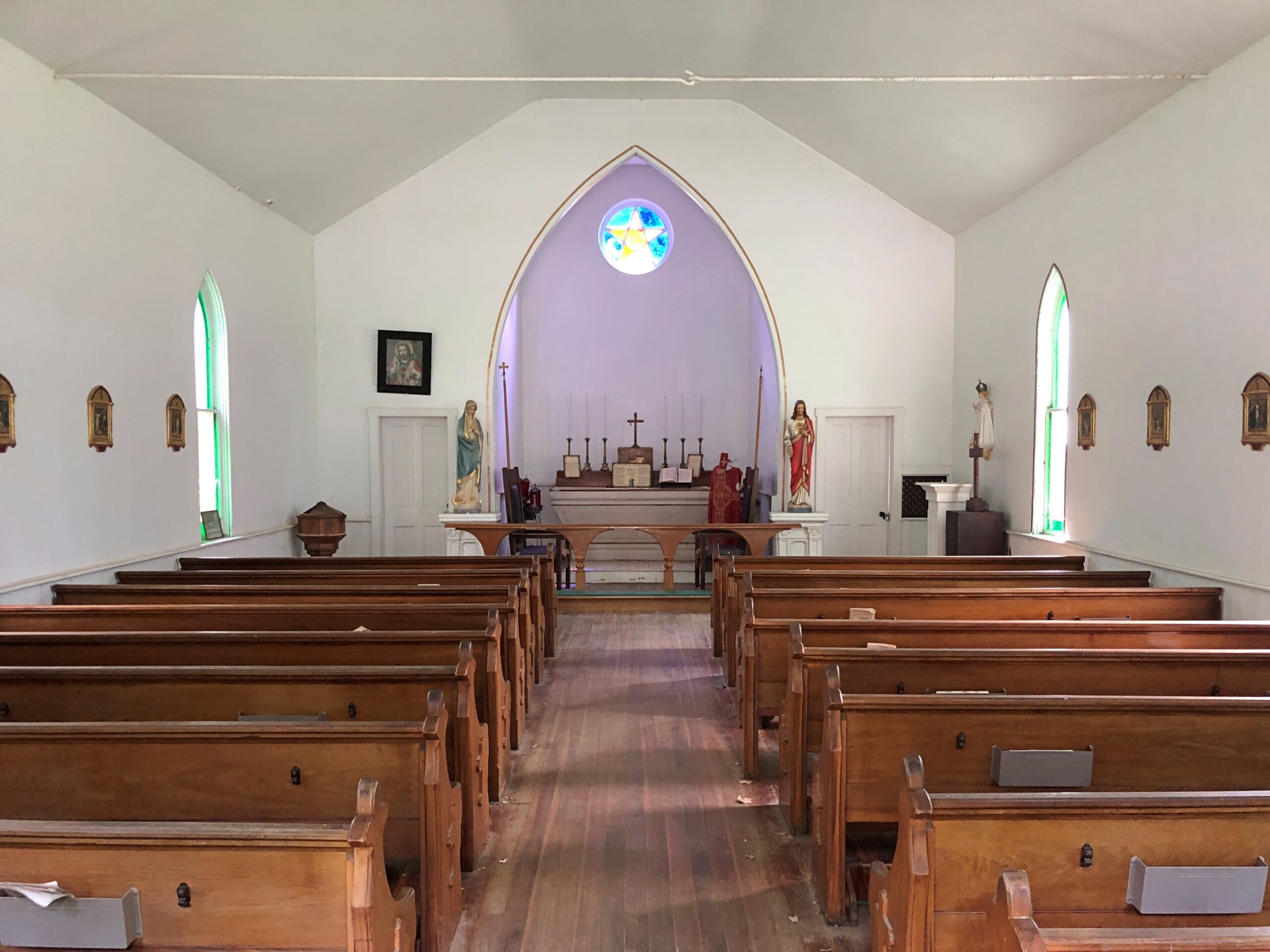
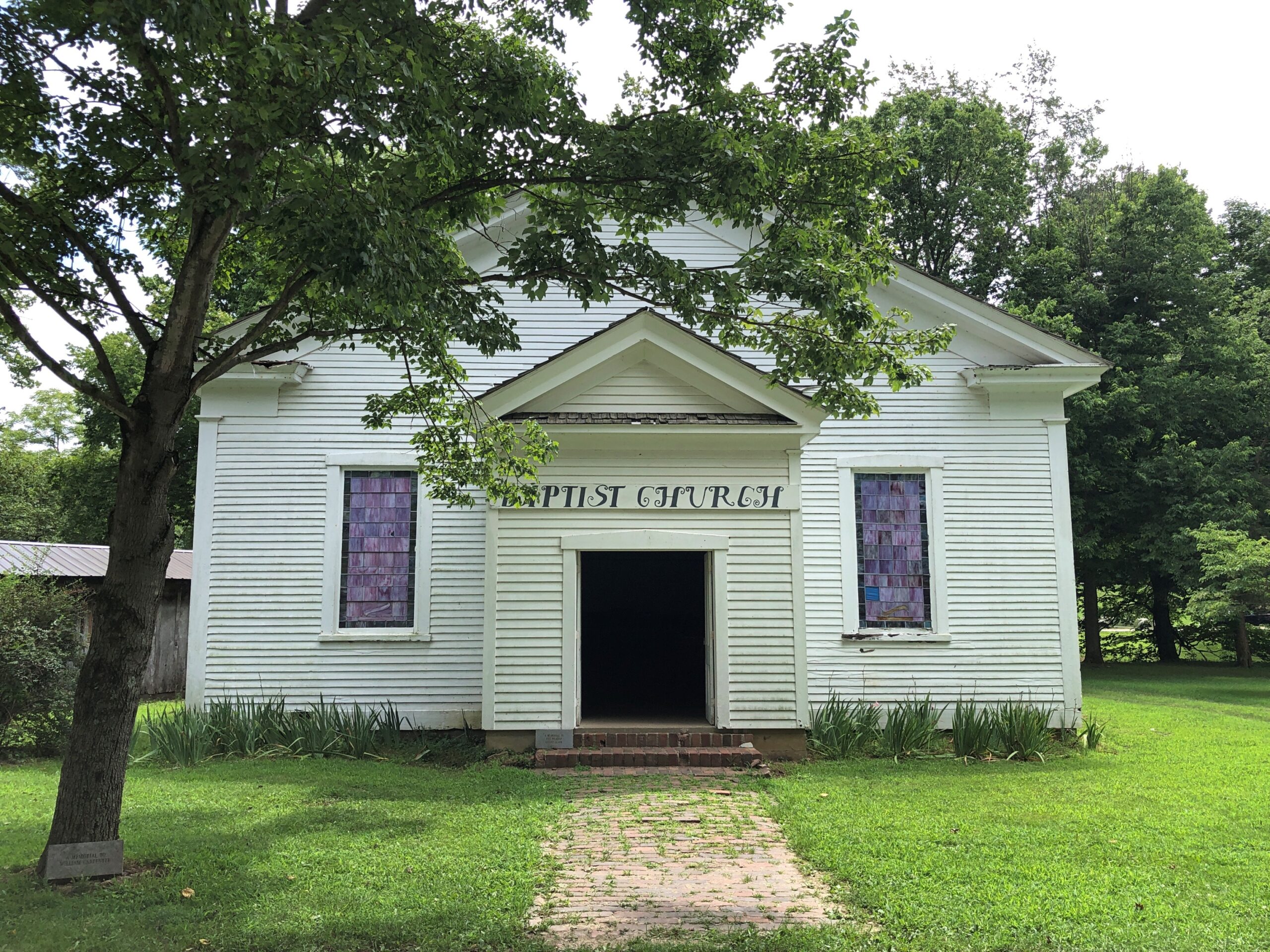
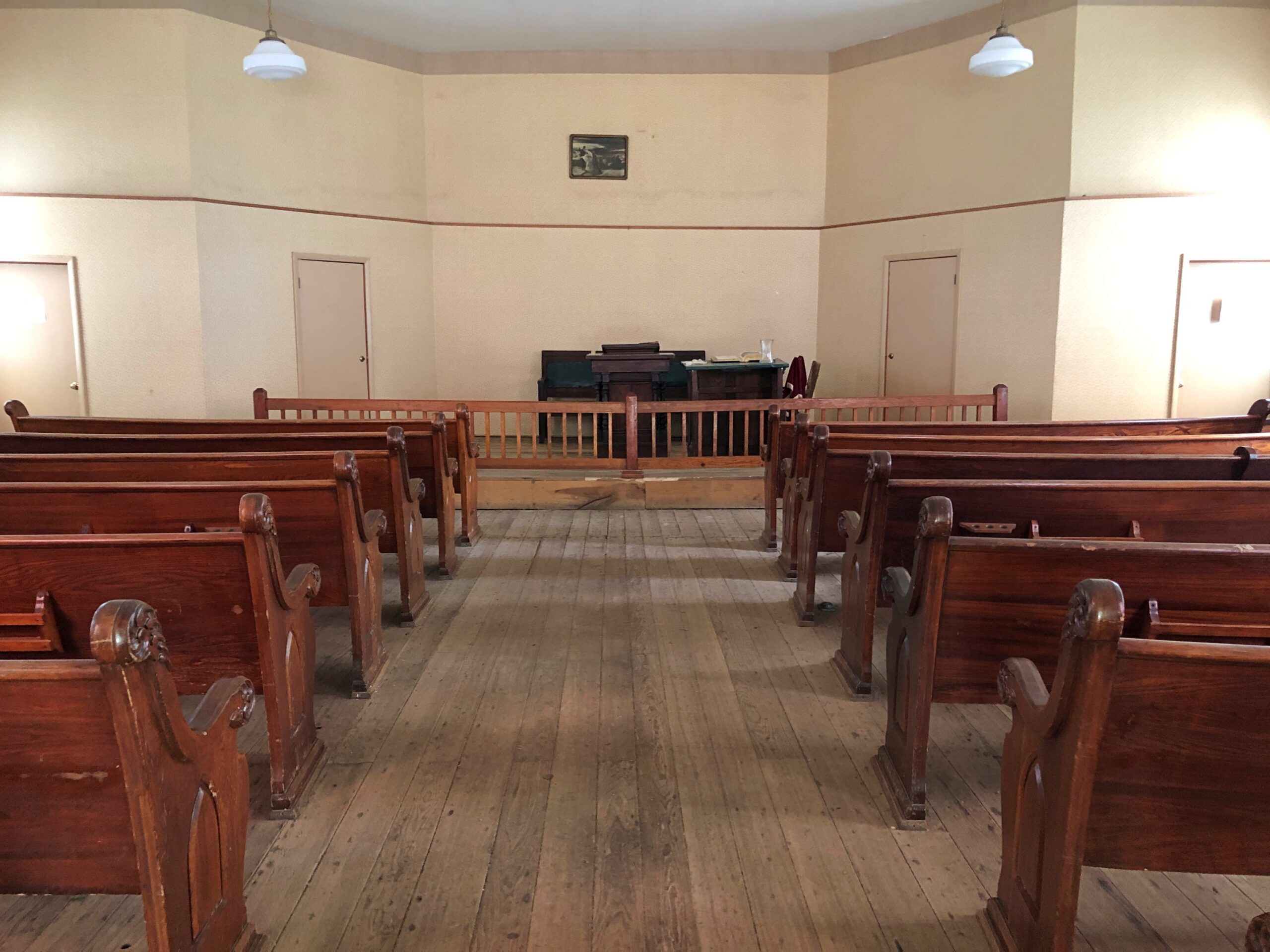
I hope that economic model keeps the place open, because one recipe for a good couple of hours on a hot weekend in July is visiting curious old buildings. Such as a couple of relocated churches.

One Catholic.

The other Baptist.

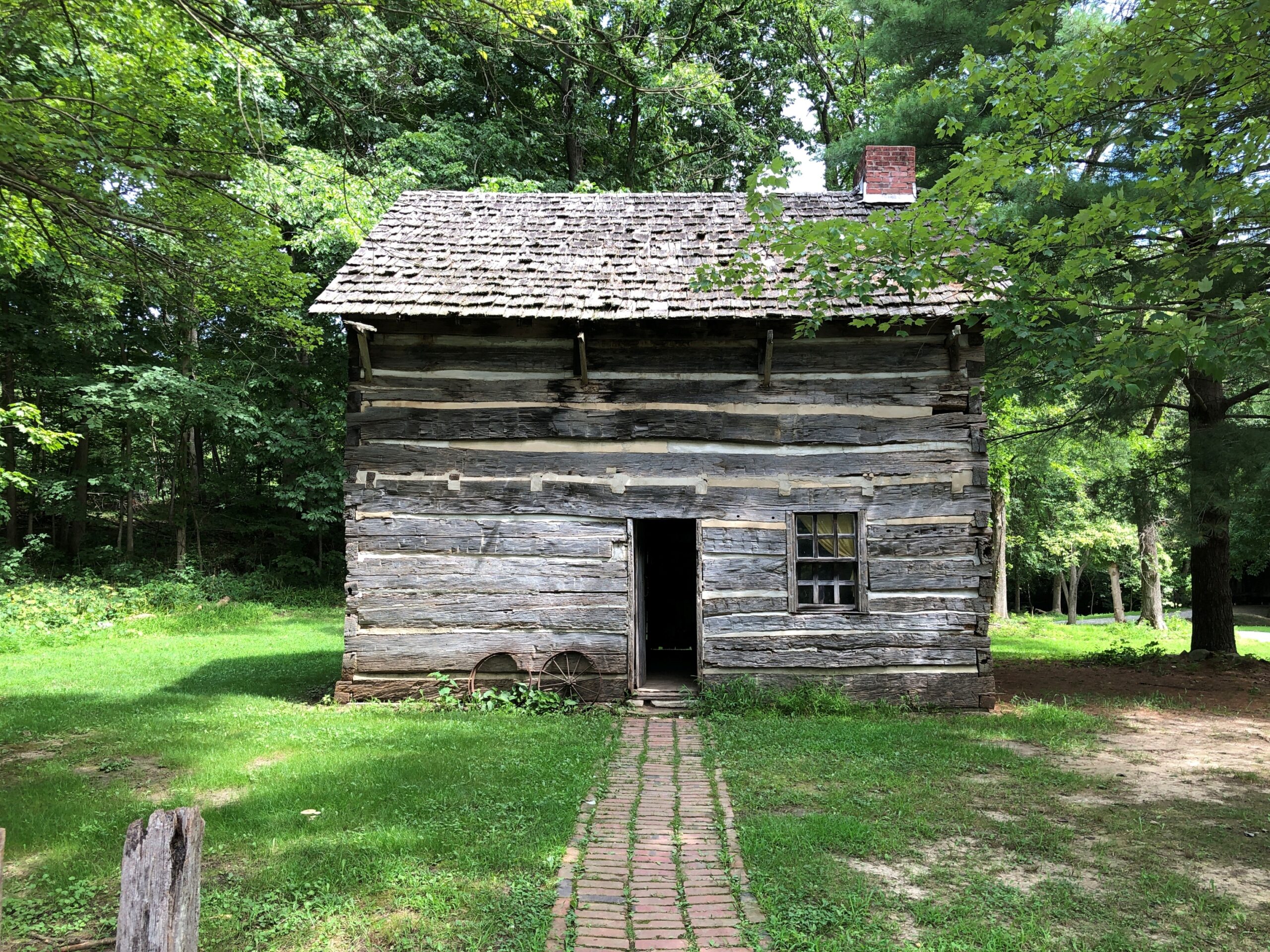
An early Parke County cabin.

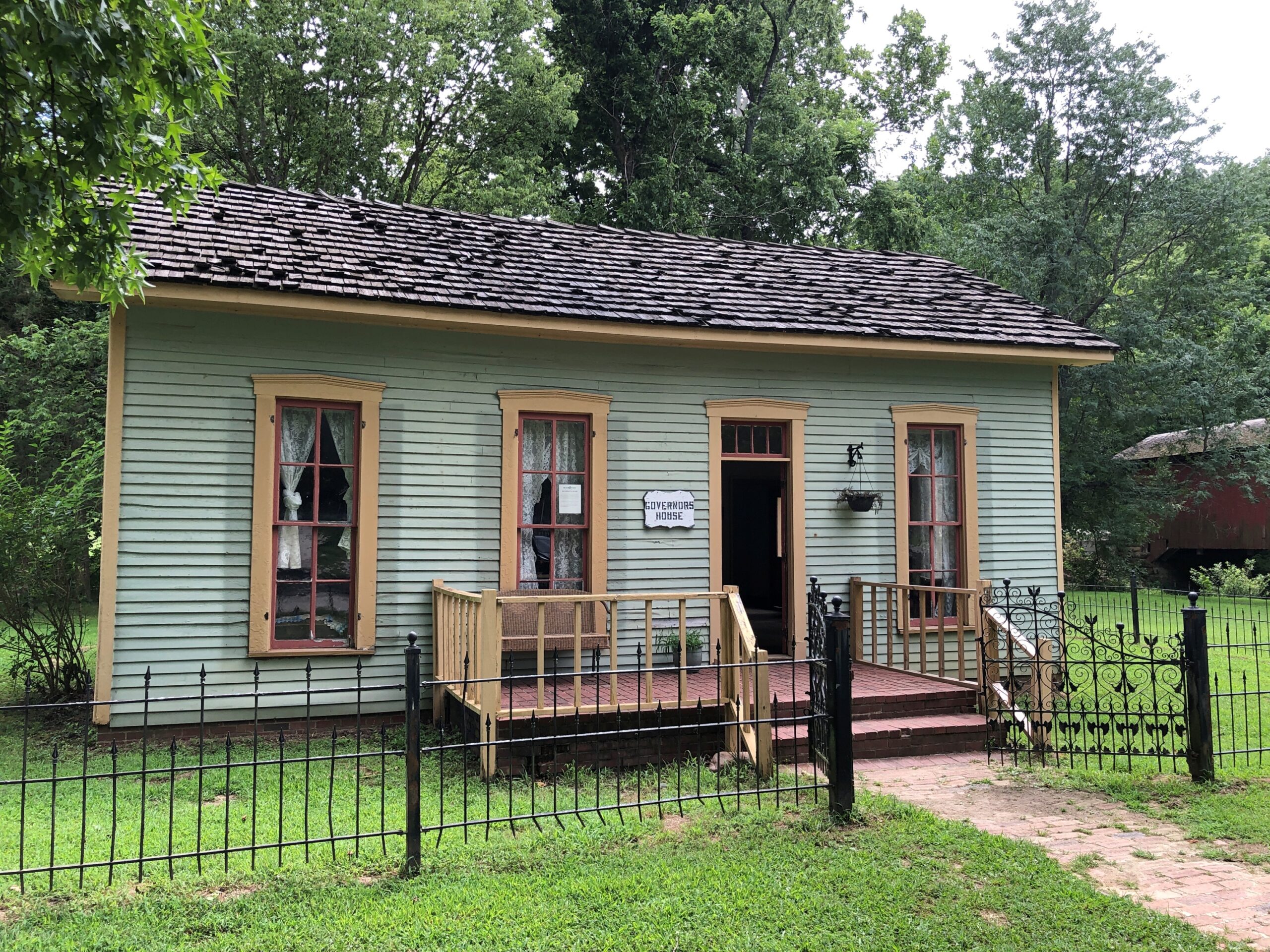
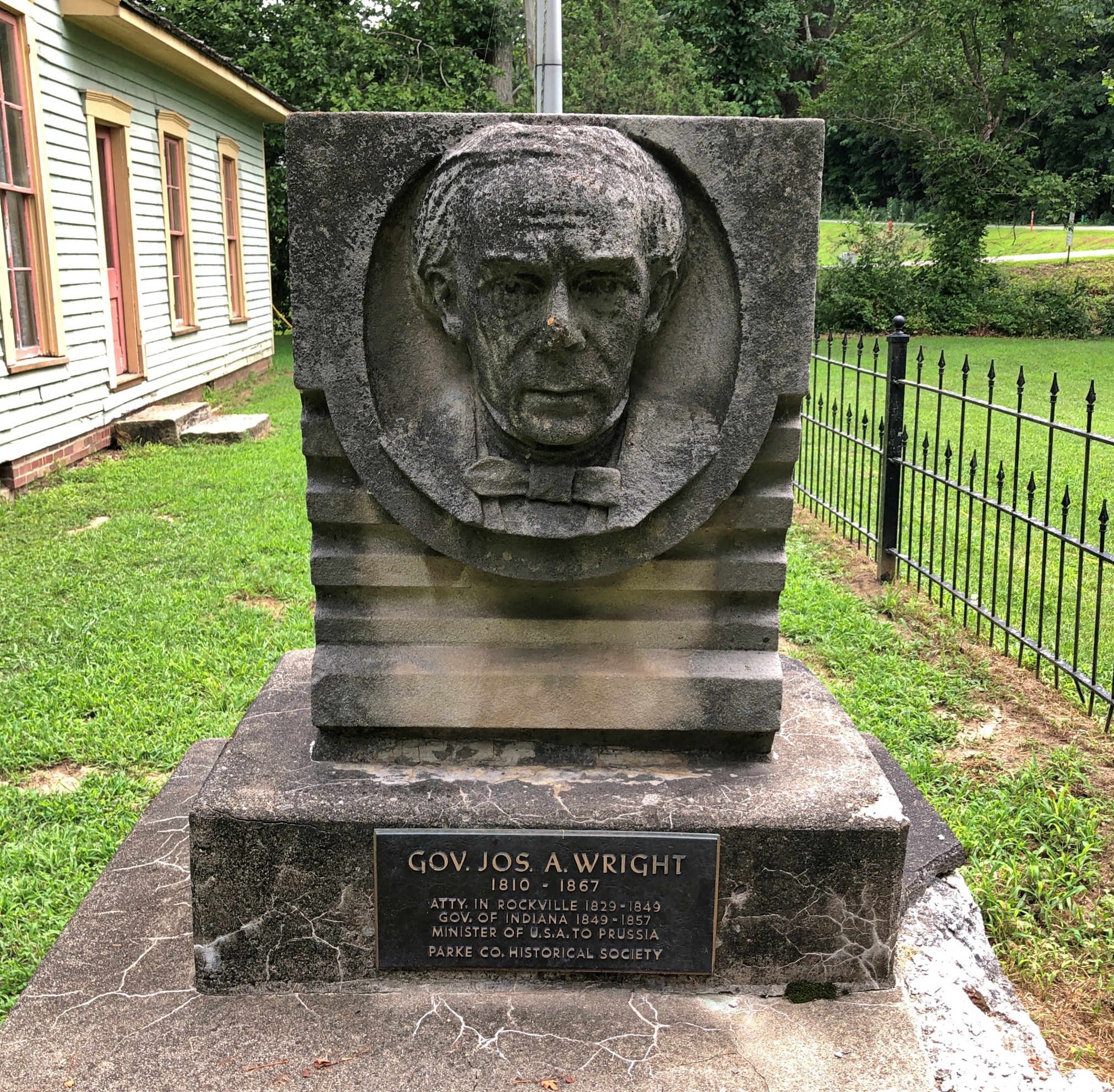
The home of an Indiana governor, one Joseph A. Wright (d. 1867), in office 1849-57. A Rockville native son.

Here he is, just outside his house, in dour Hoosier mode.

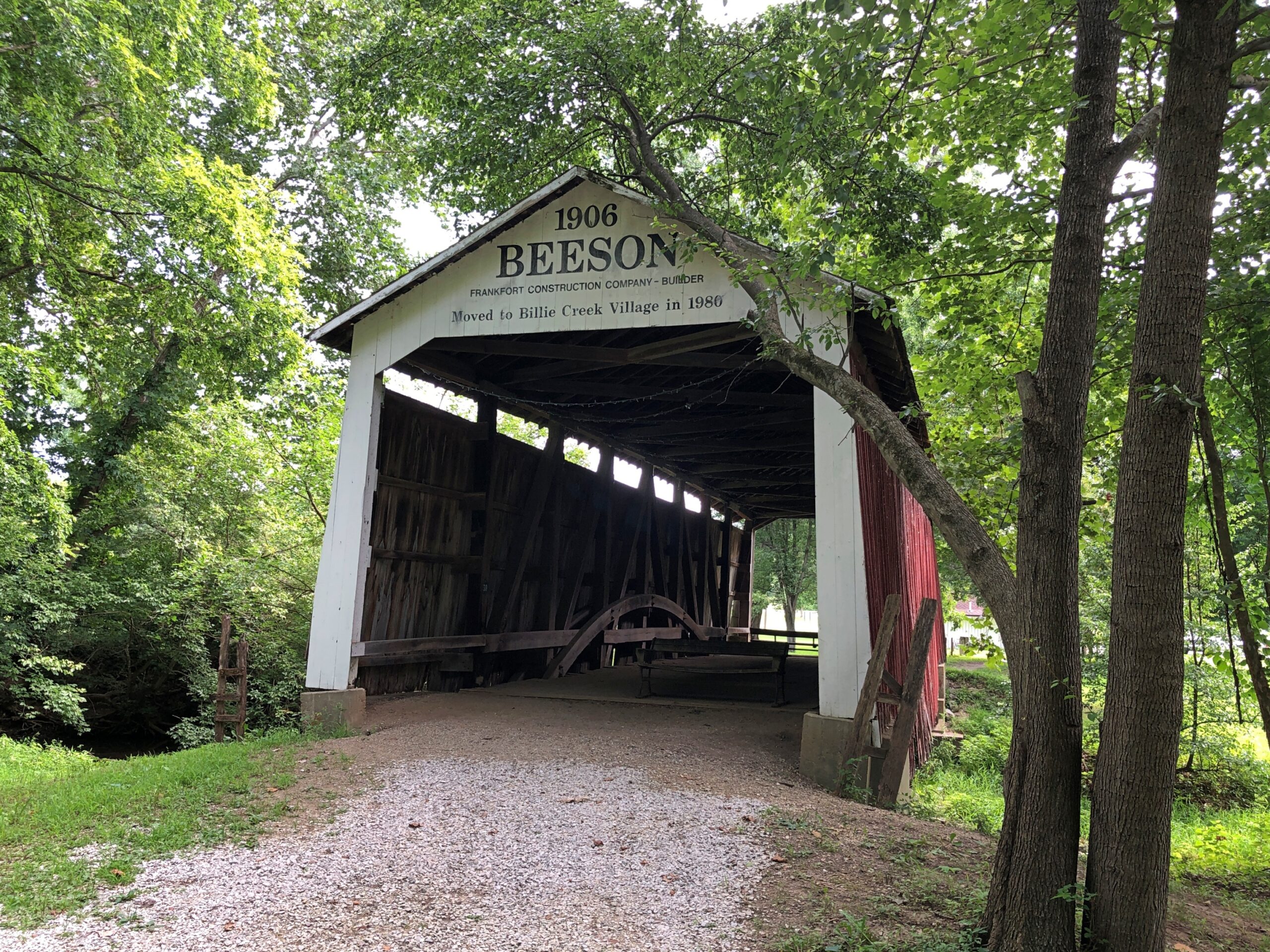
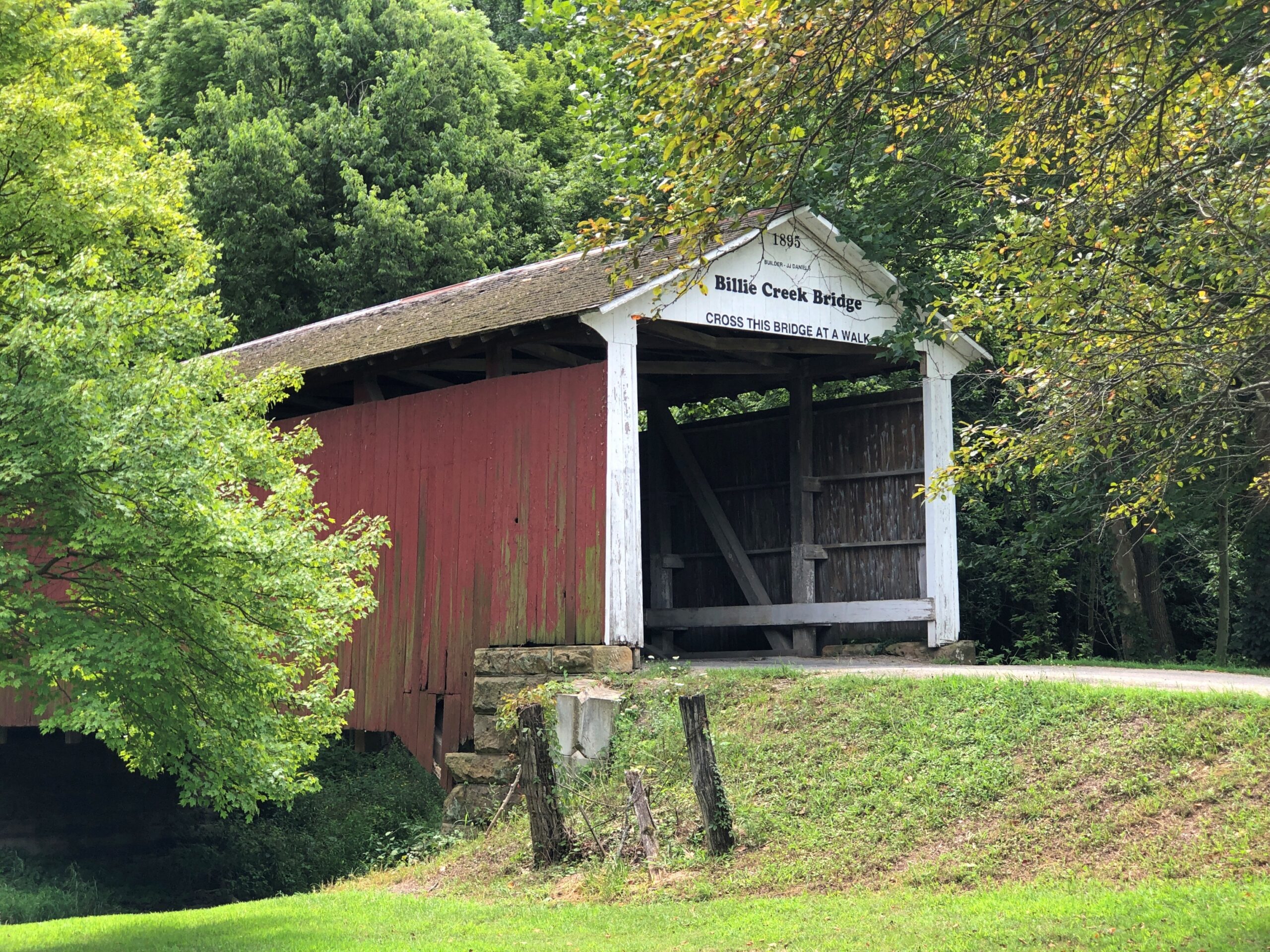
As the Covered Bridge Capital of the Galaxy (or some slogan like that for Parke County), it’s no surprise that covered bridges can also been seen at Billie Creek.

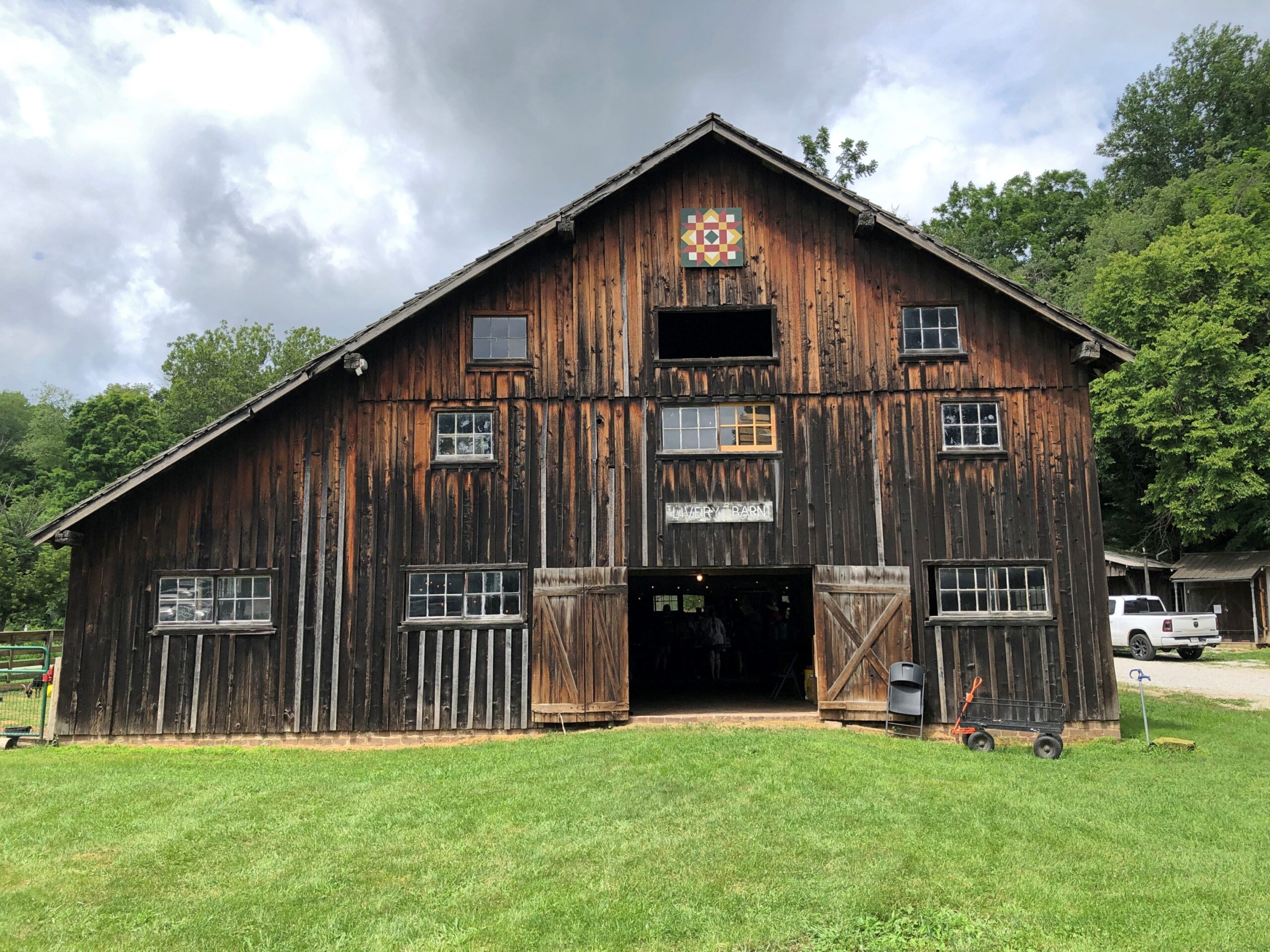
A barn, weathered yet handsome.

Craft goods were for sale inside. So were books by a local author who was there, hawking them. He told me about the books, some sort of fantasy series, and I was curious enough about them to listen to him, but not enough to buy one, which I think left him a bit miffed. Such is the writer’s lot.

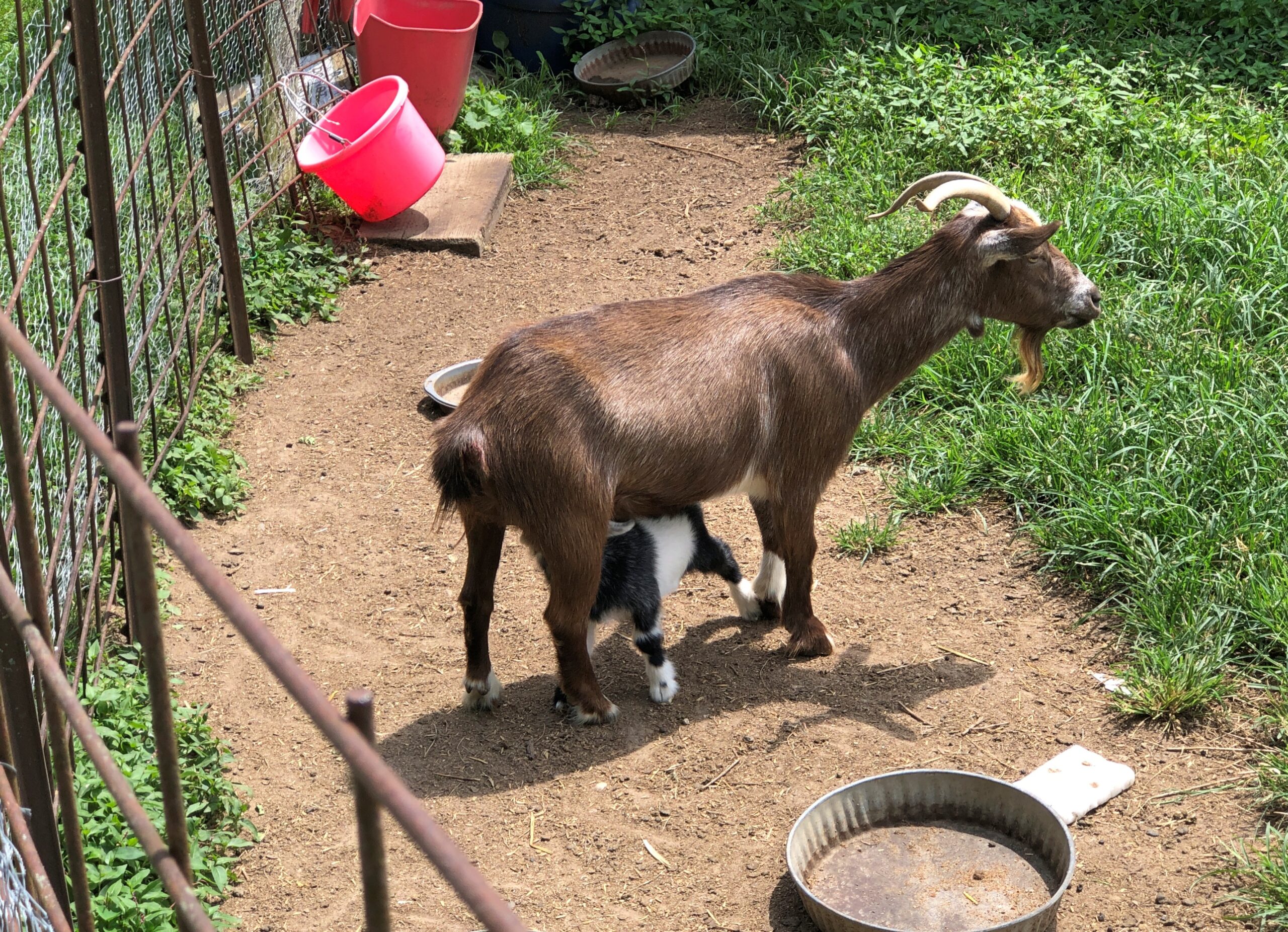
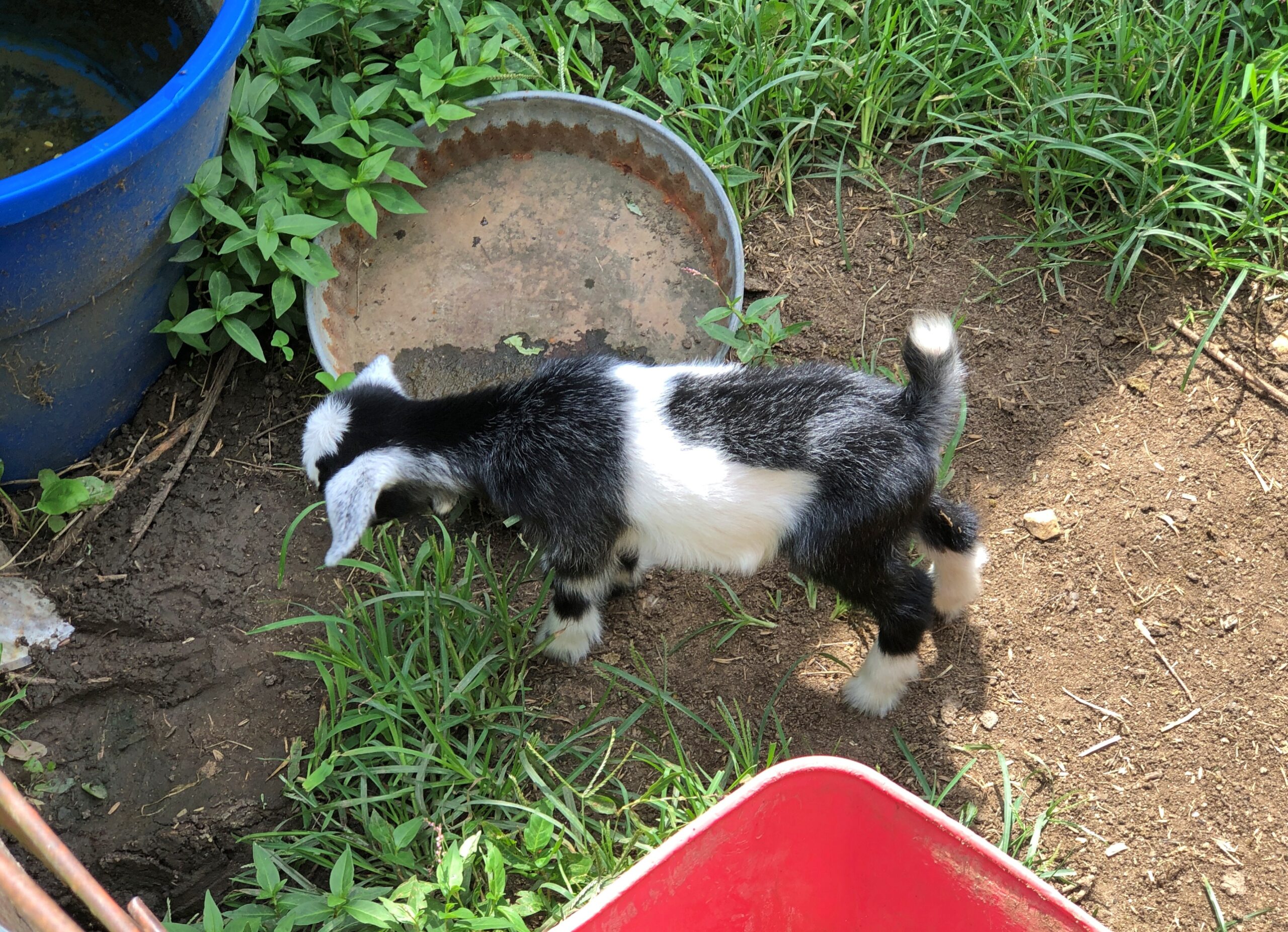
Behind the barn, goats.

Goat, Billie Creek Village

I wasn’t able to test the notion that goats eat tin cans. But I already knew the answer: it’s a ridiculous myth, as this item in Goat Owner tells us.

Rockville, Indiana

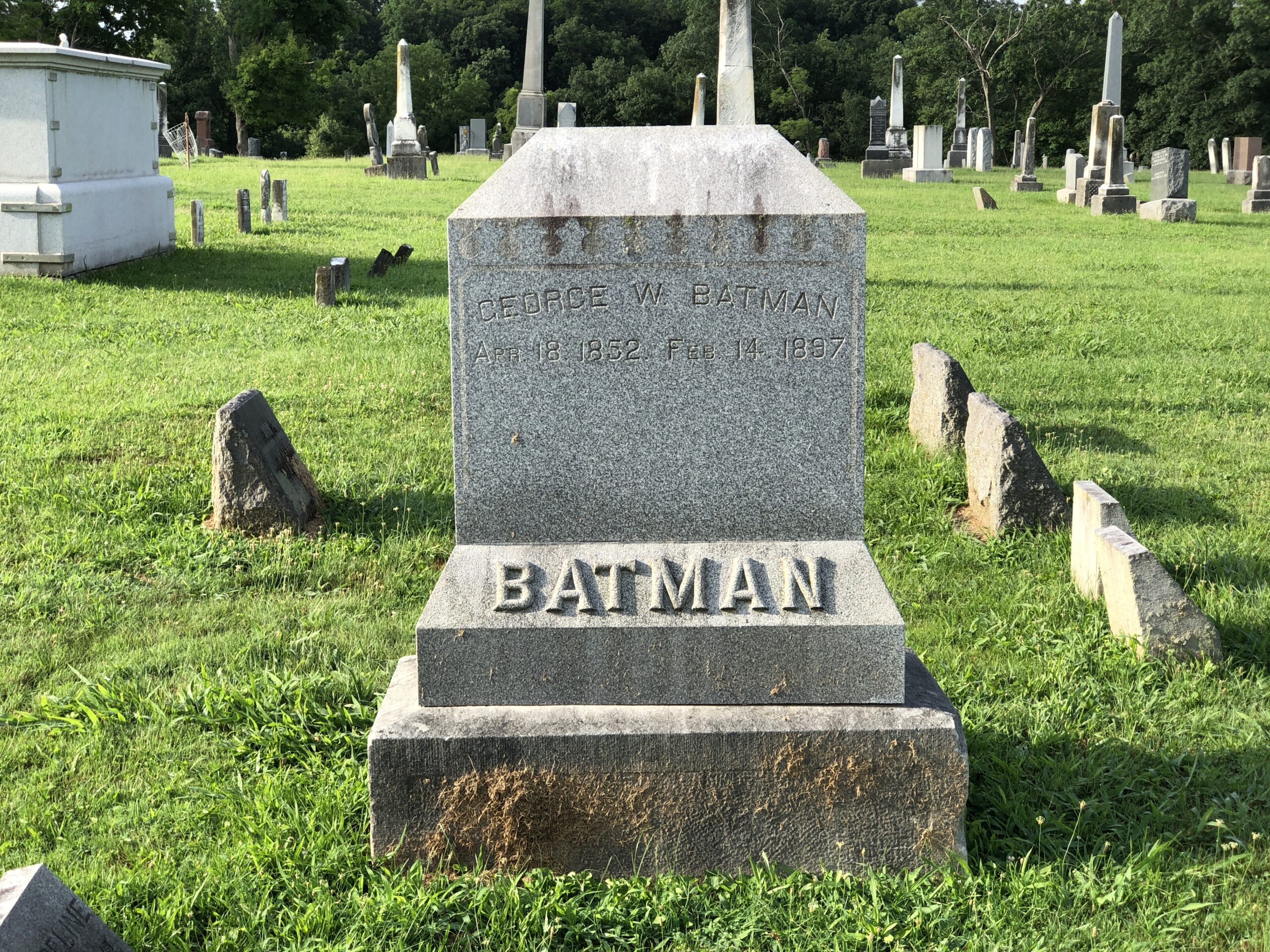
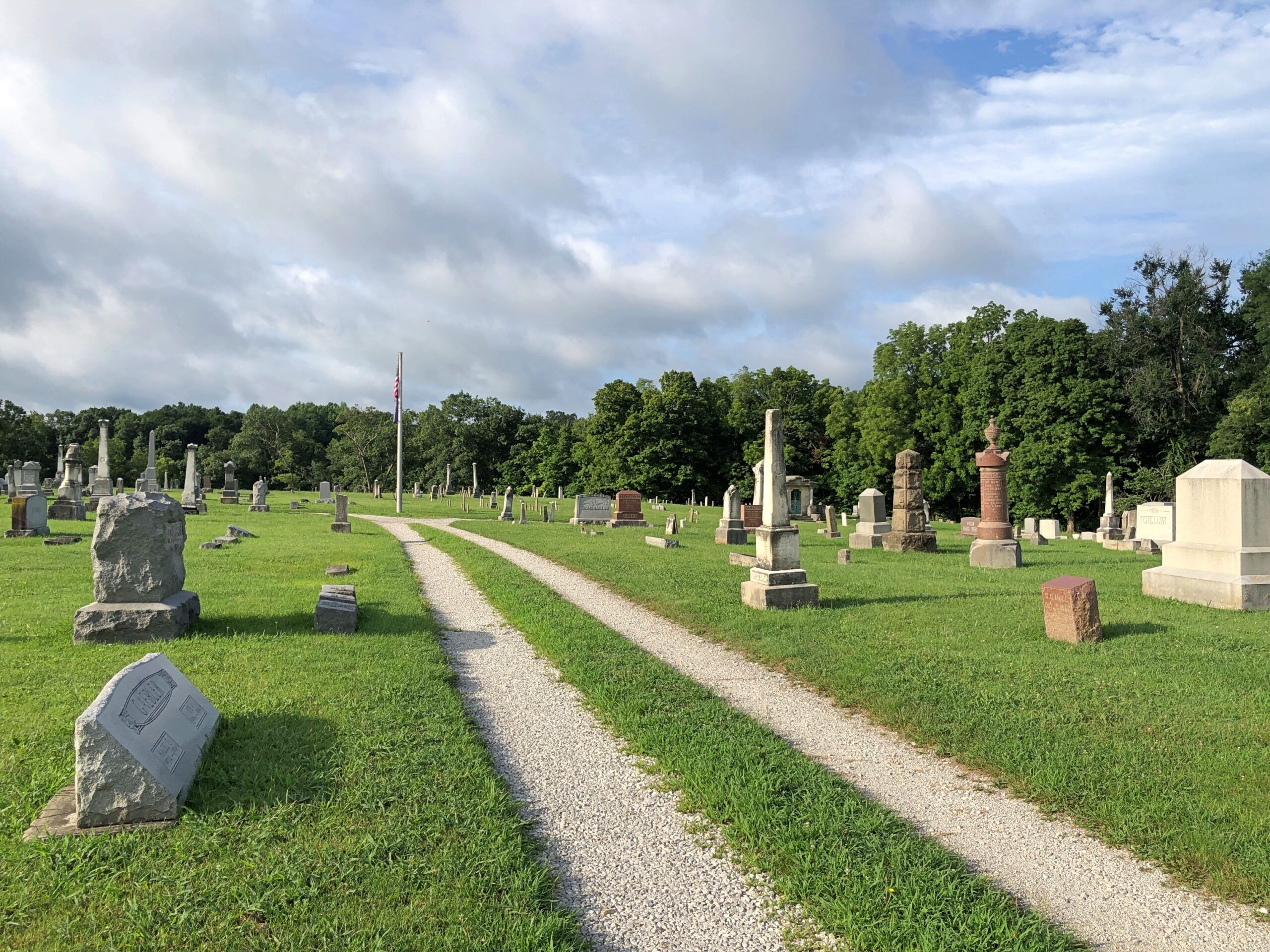
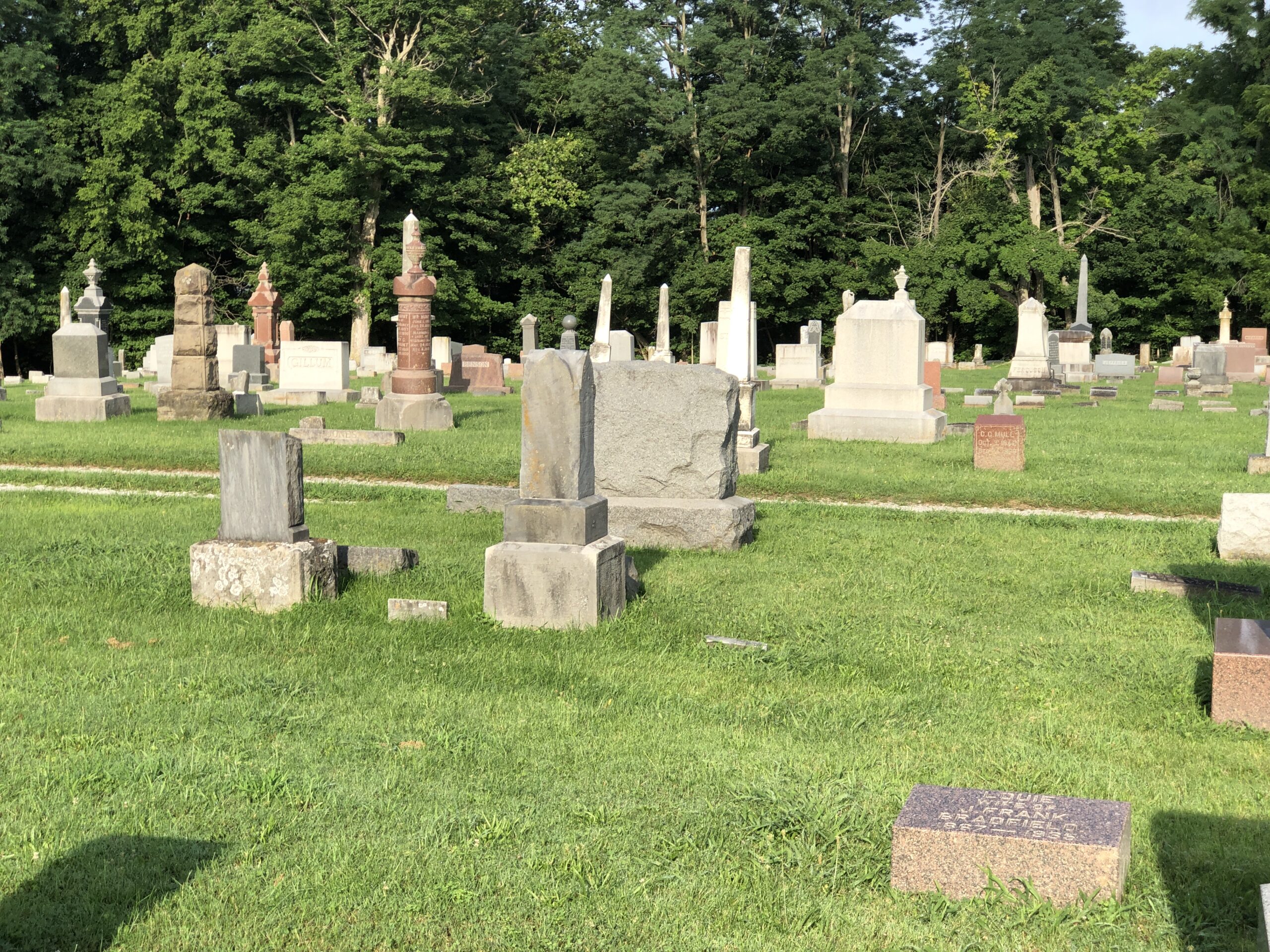
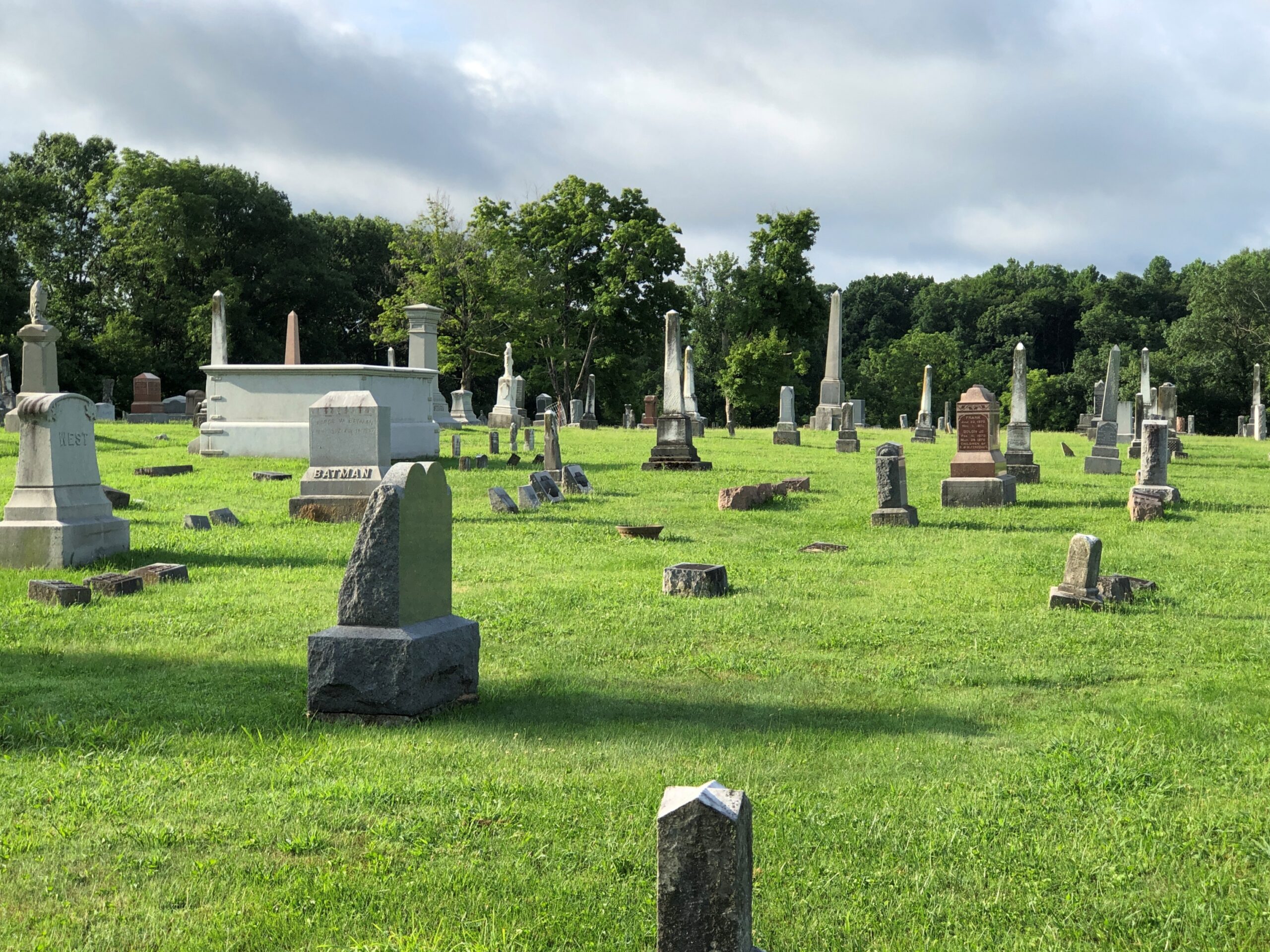
Now I’ve seen it: the grave of Batman.

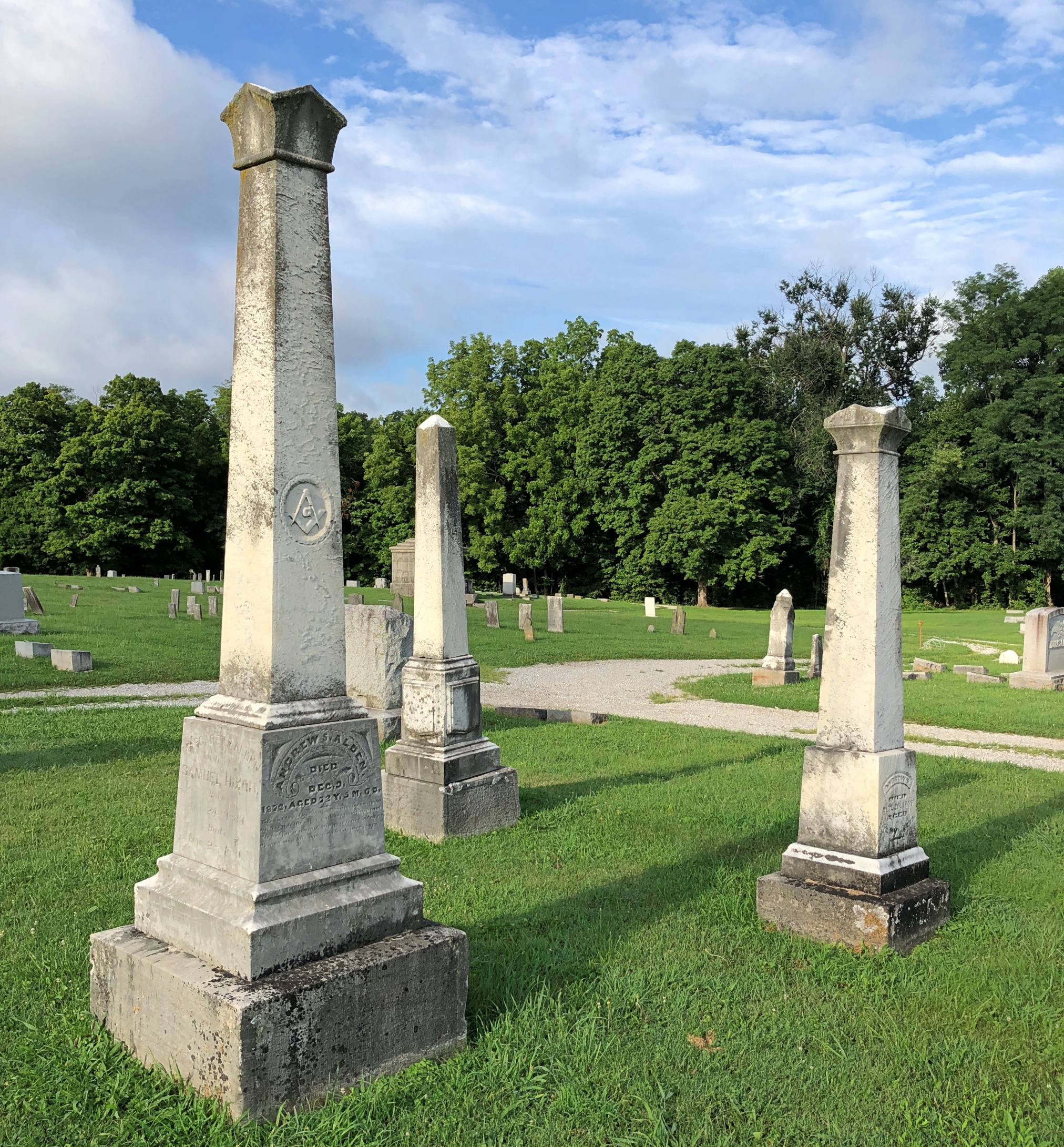
George W. Batman, that is, who died in 1897, so he never lived to see his surname put to the other uses we all know so well. Variants of his name include Bateman, Battman and Baitman, meaning that Batman really isn’t that odd. Except it does look odd on that large stone, but only because of recent conditioning by a particularly successful fictional character. George W. happens to repose at Rockville Cemetery in Rockville, Indiana, and I happened to visit early one Sunday morning in late July.
Rockville Indiana Cemetery

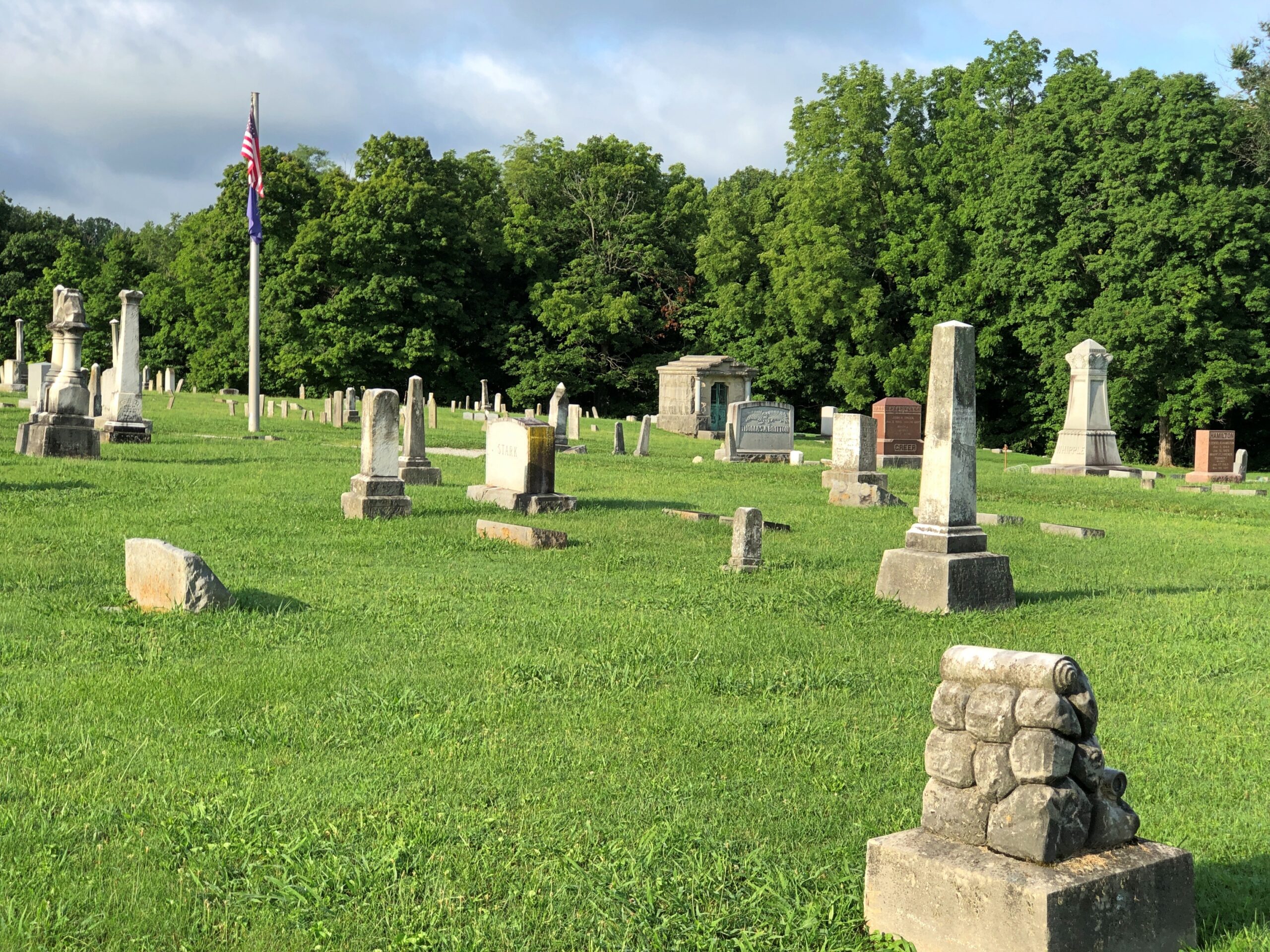
A pleasant graveyard, founded in 1824 — same year as the town itself — and well marked by upright stones, but not overly landscaped.

Rockville Indiana Cemetery

A few memorials reach upward, but not that far.

Rockville Indiana Cemetery

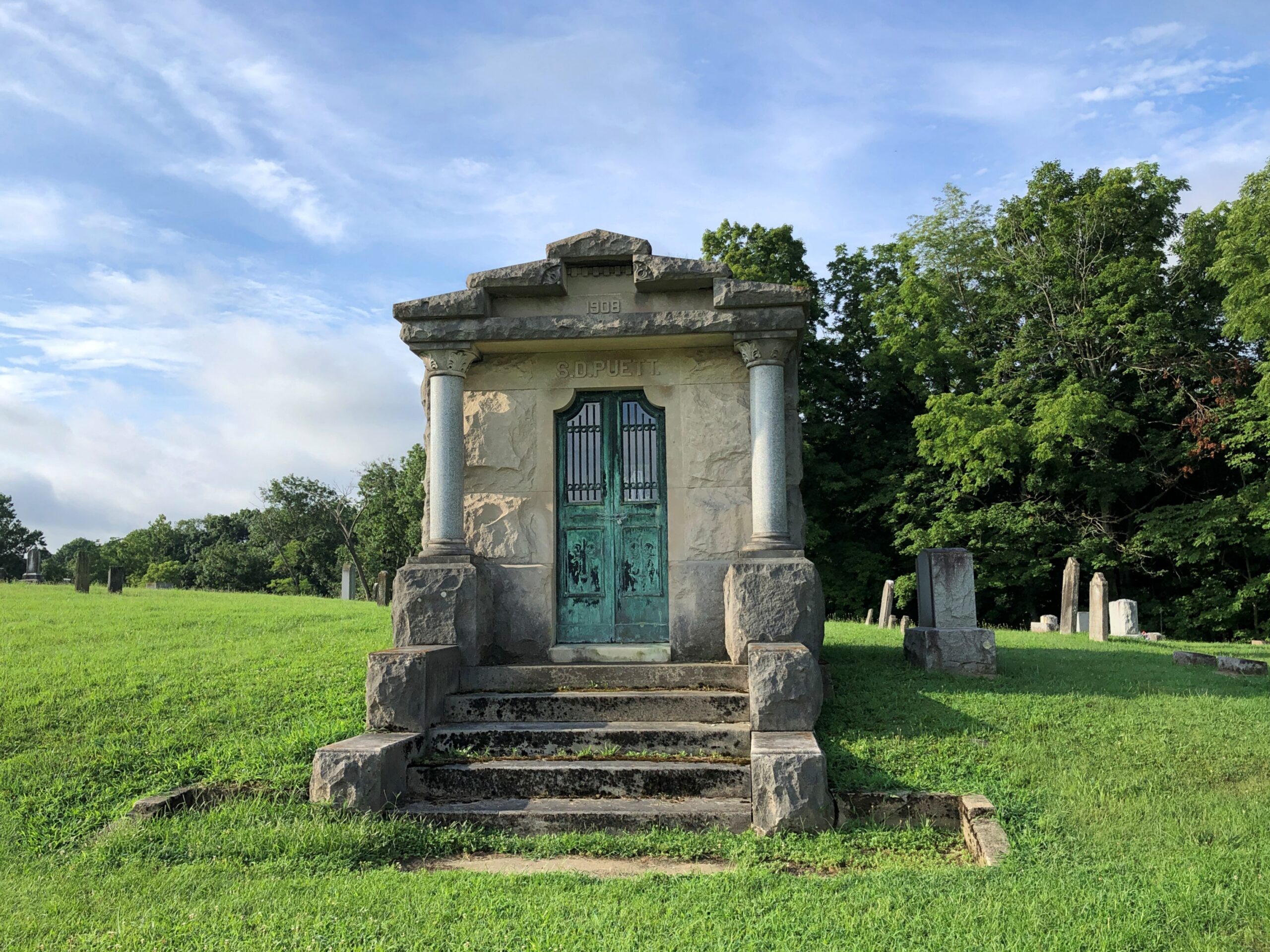
A few mausoleums denote formerly big fish in the small pond that is Rockville, seat of Parke County.

Rockville Indiana Cemetery

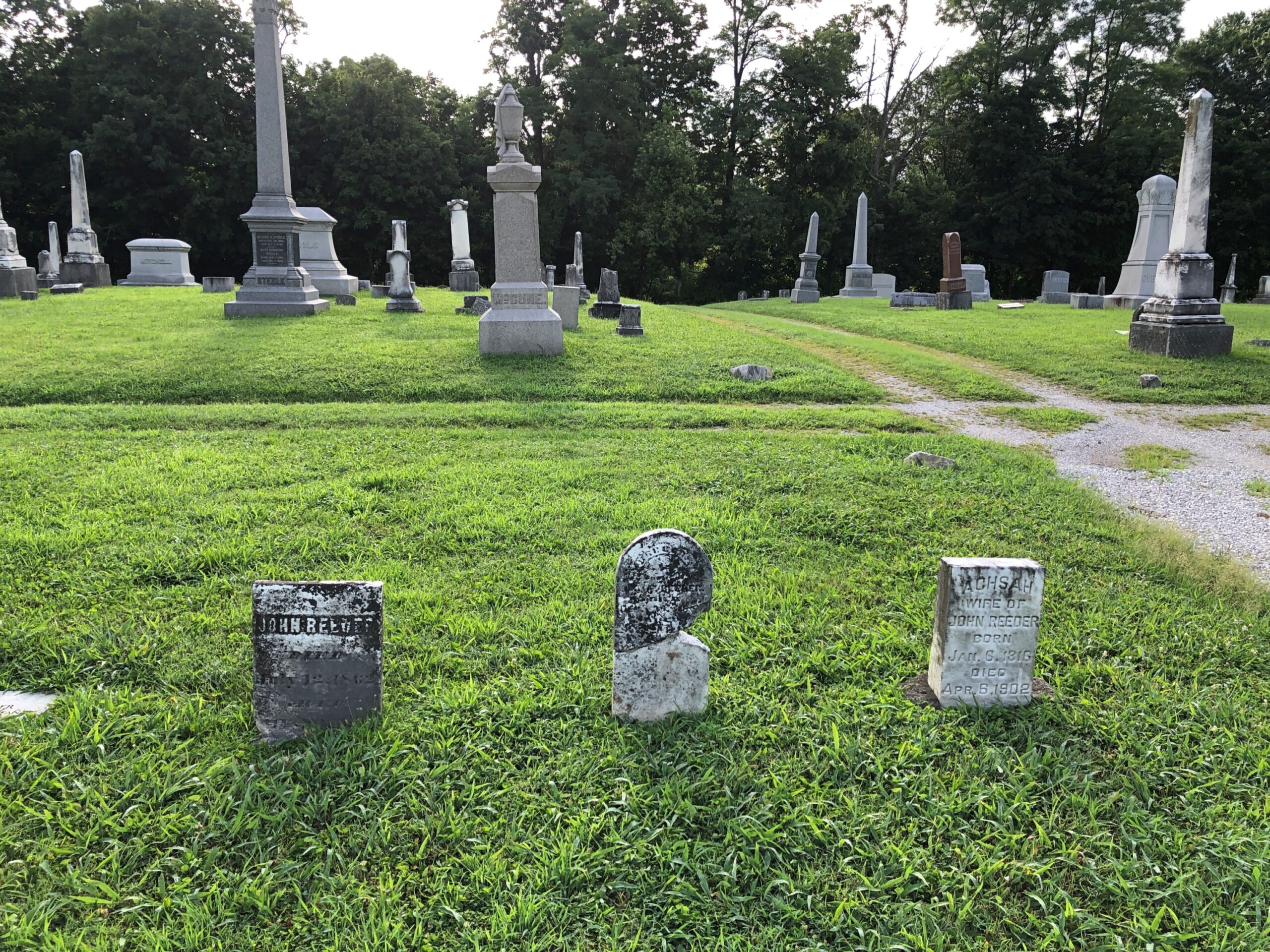
Mostly modest stones populate the cemetery, presumably for regular folks of the past.

Rockville Indiana Cemetery

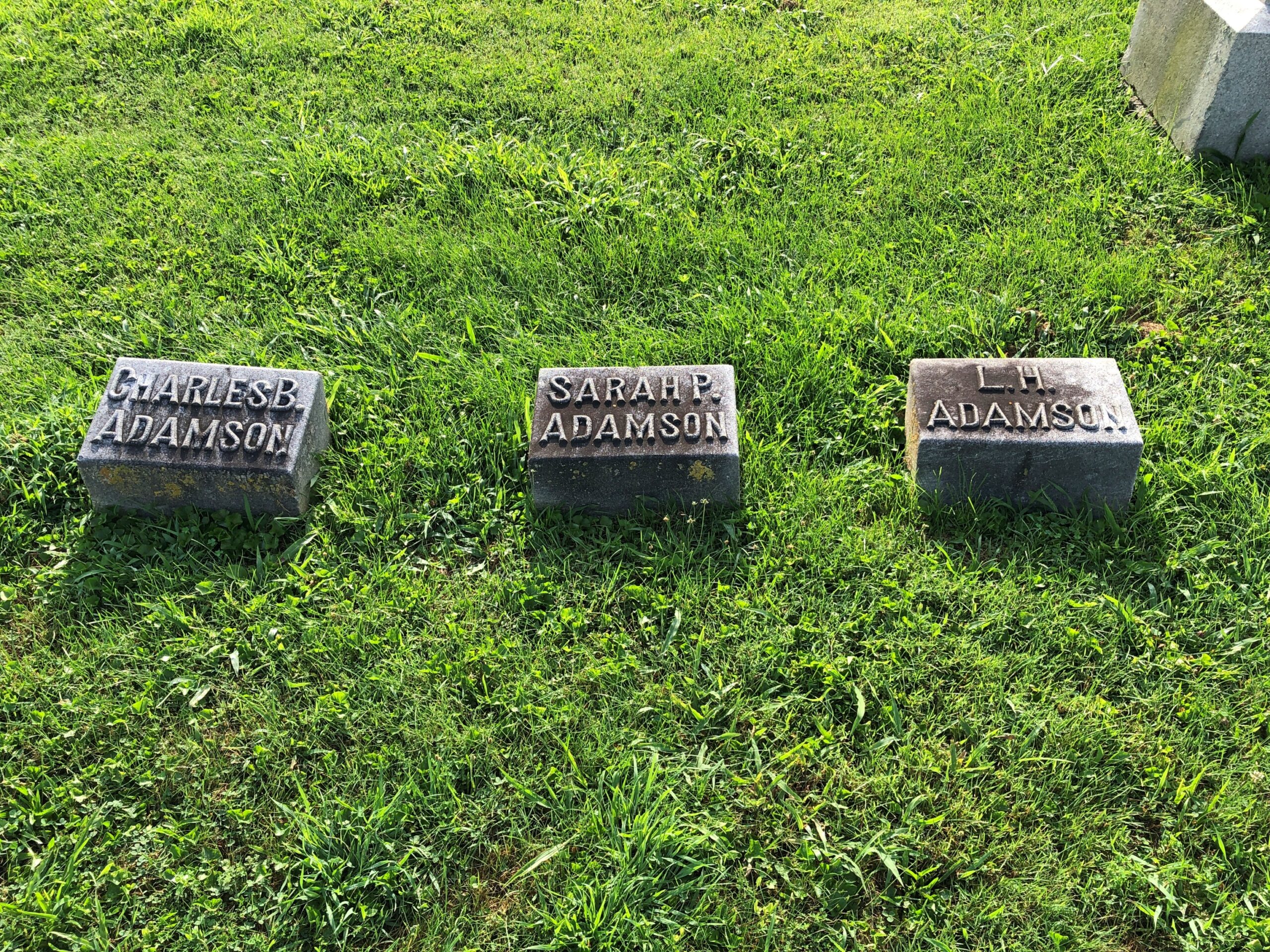
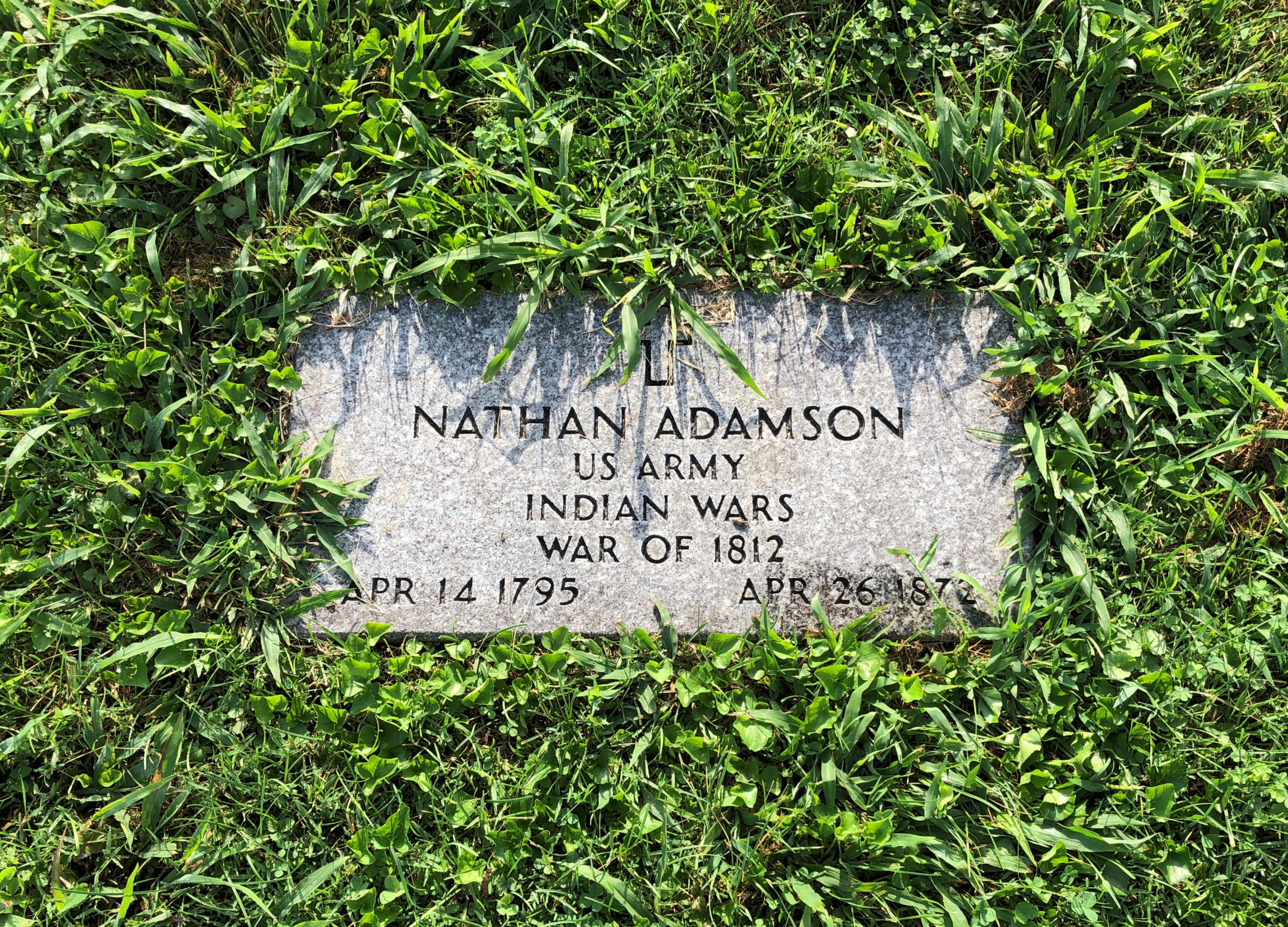
It isn’t too often that you see veterans of the War of 1812 (but not never).

Numerically speaking, there just weren’t that many compared to later, greater wars, and probably many of their graves aren’t marked as such. Nathan was near the other Adamsons, and indeed two of them (per Find-A-Grave) are his children.

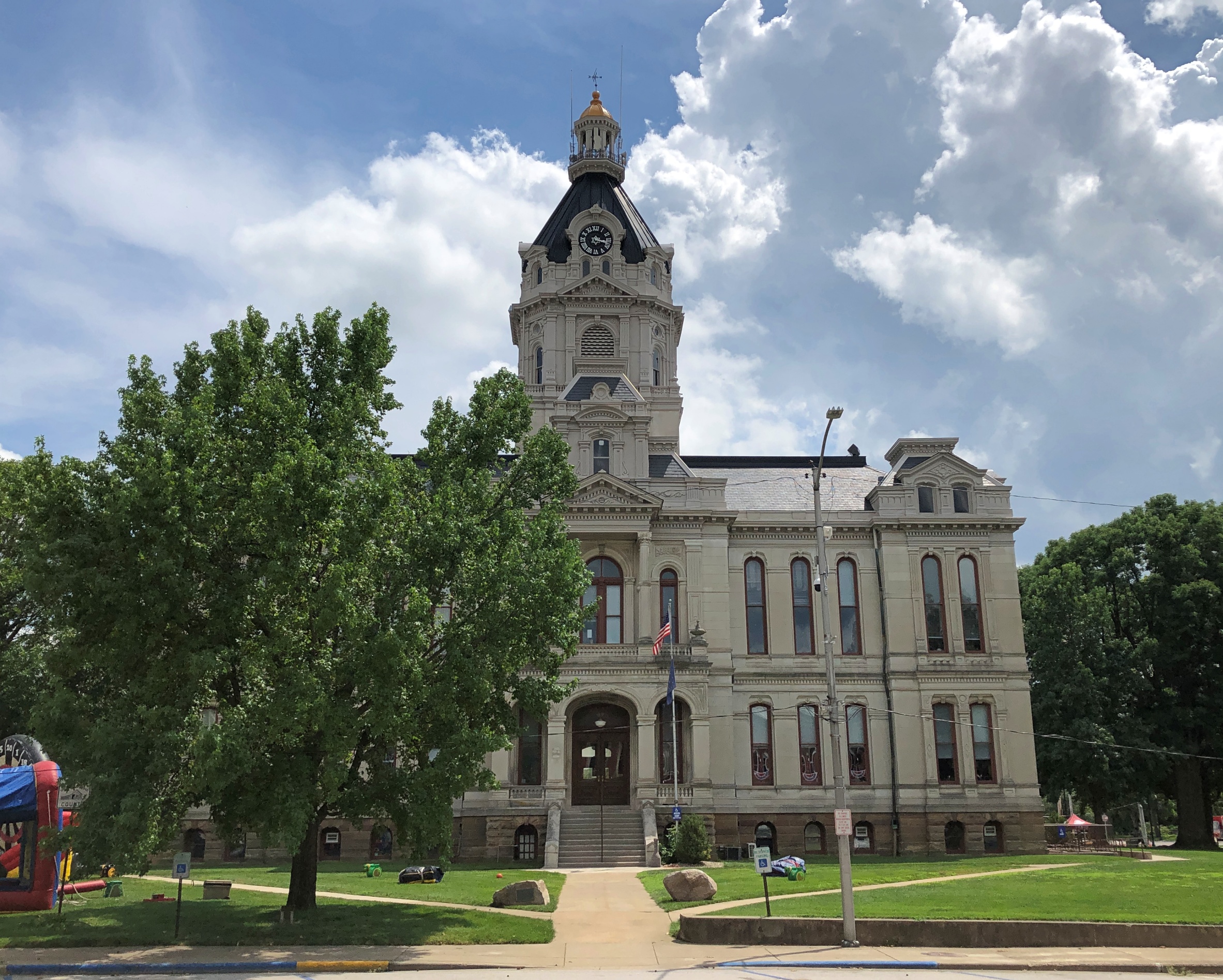
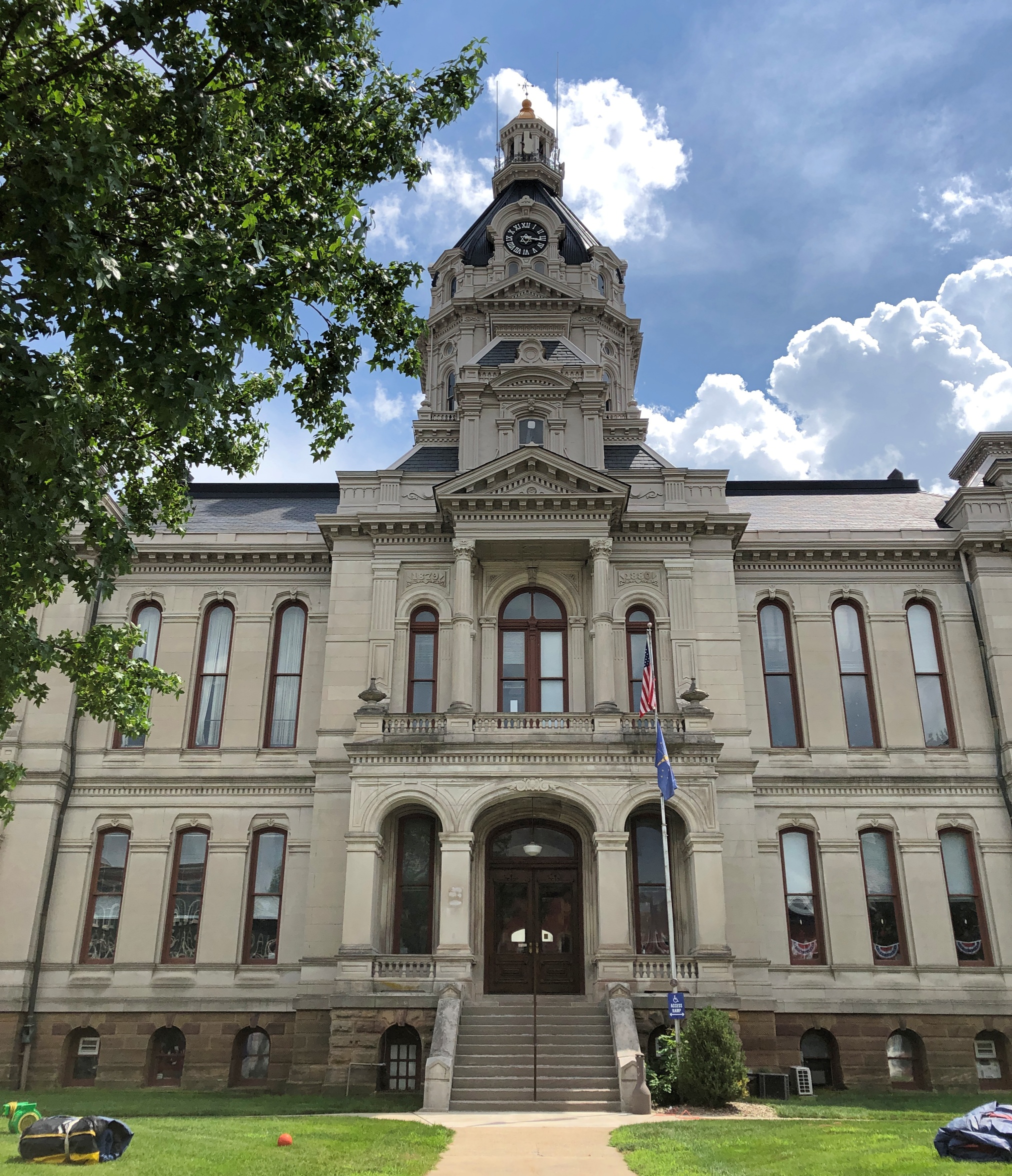
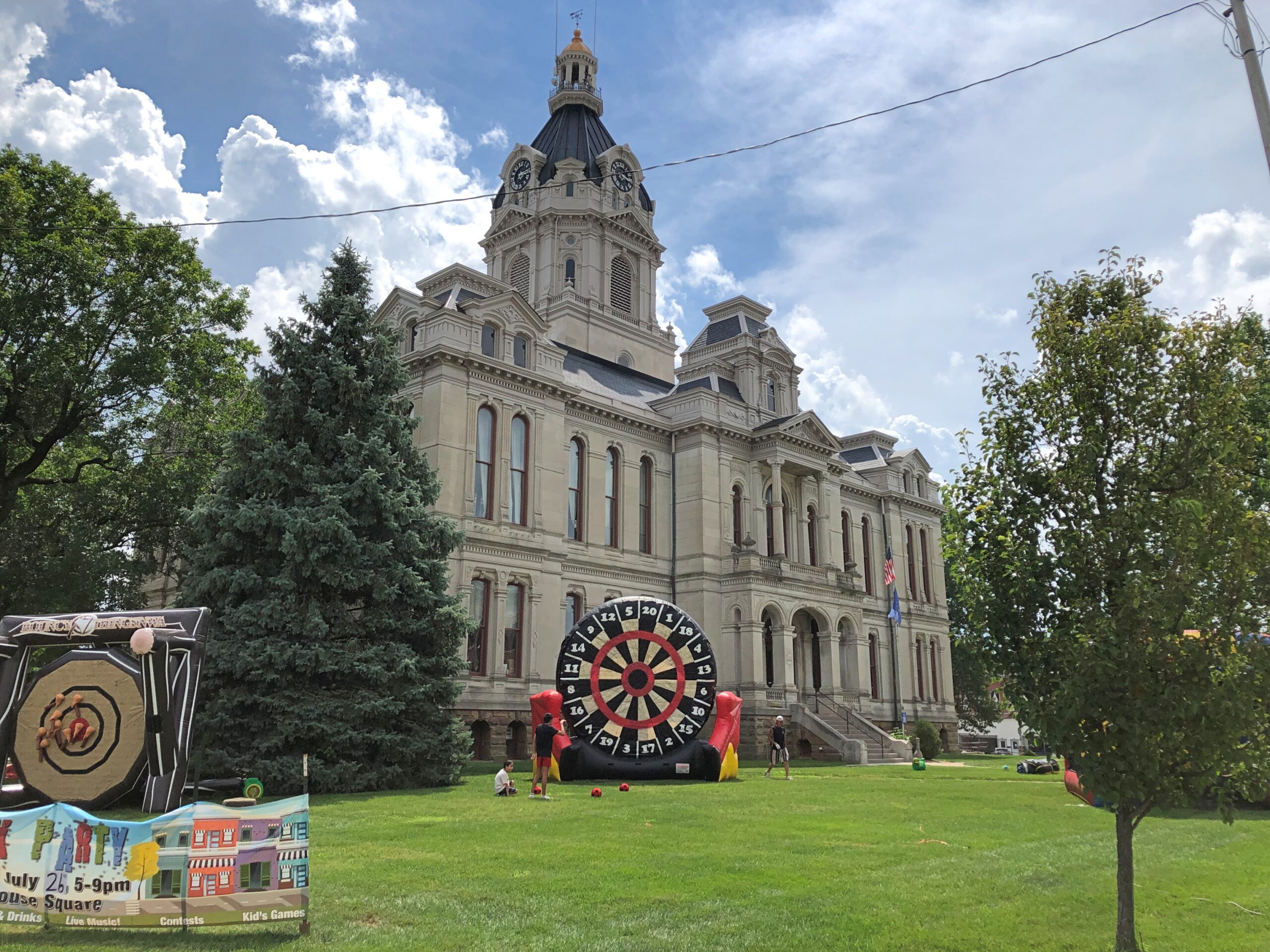
Not too many blocks from the cemetery is the Parke County Courthouse. We encountered it on Saturday afternoon, soon after arriving in Rockville (pop. about 2,600), when temps were about as high as they would be that day. Sweaty 90s.

The courthouse is a grand Second Empire pile with some Beaux Arts added to the mix, completed in 1882, during the golden age of U.S. courthouses. Designed by T.J. and Brentwood Tolan, a father and son team. They did a lot of courthouses.

Parke County Courthouse

The giant dartboard isn’t something you see too often on courthouse grounds. Could it be the Dartboard of Justice? That’s how sentencing is done for crimes that call for one to 20 years in the jug; a toss by the judge, or the jury foreman.

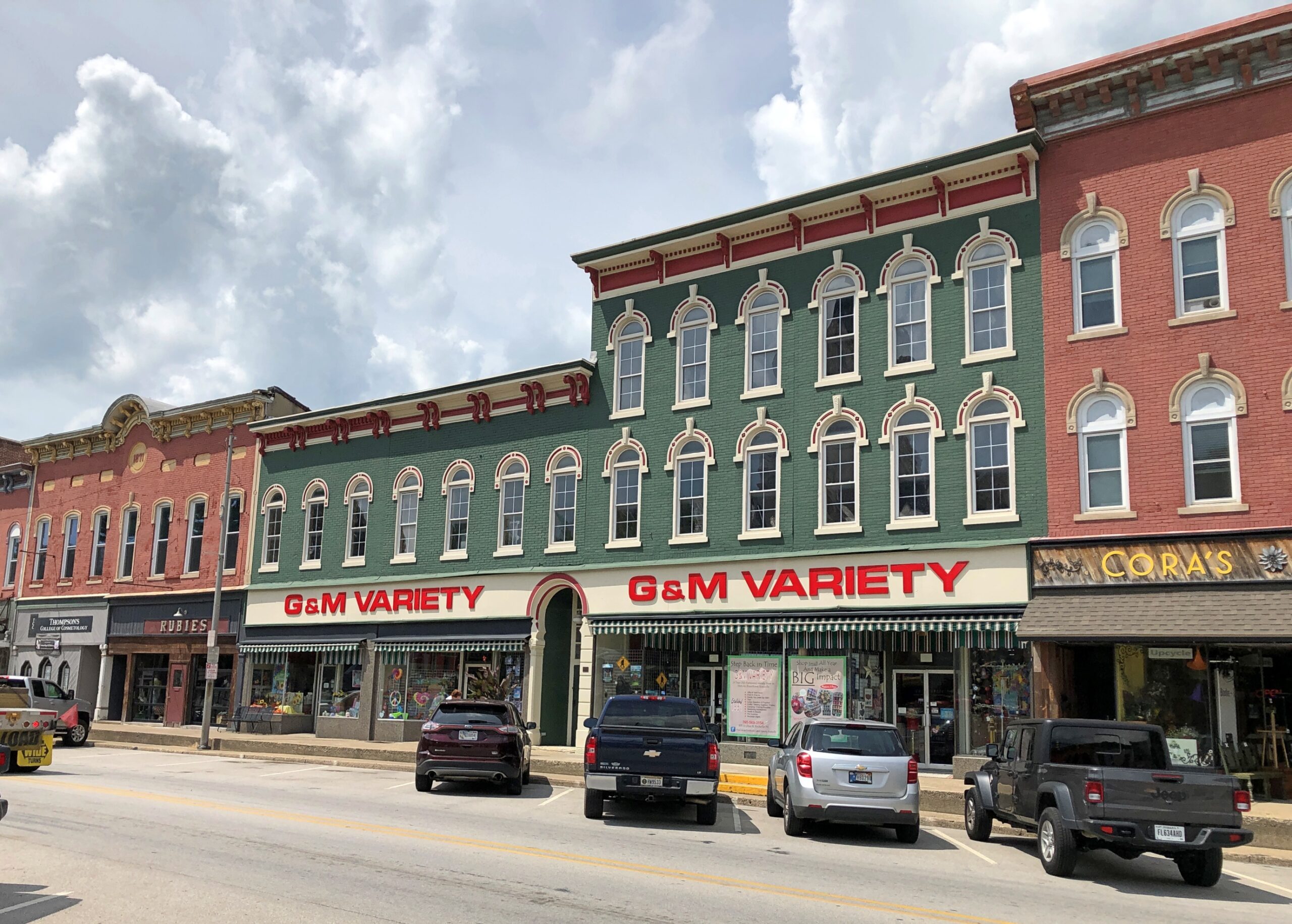
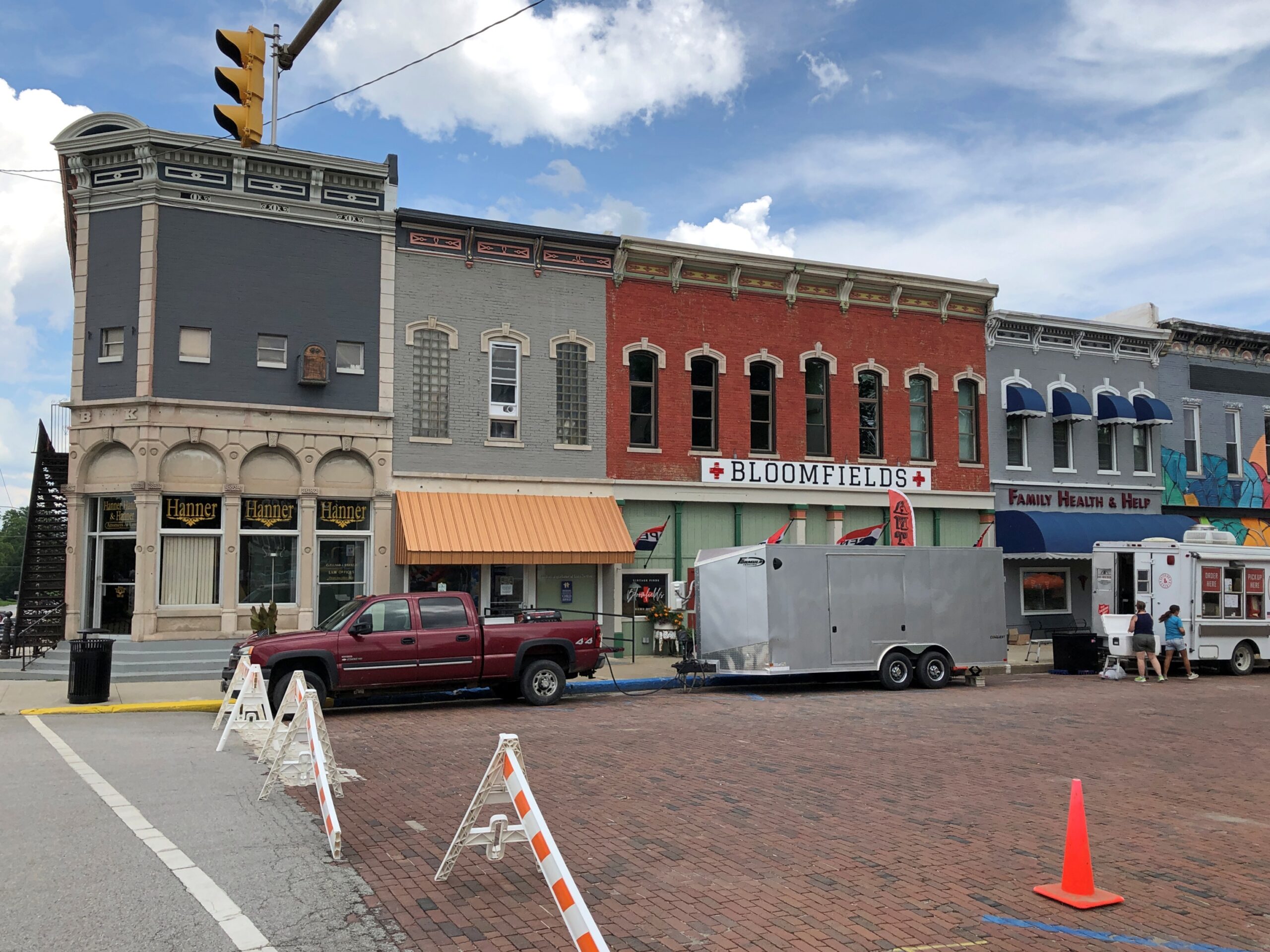
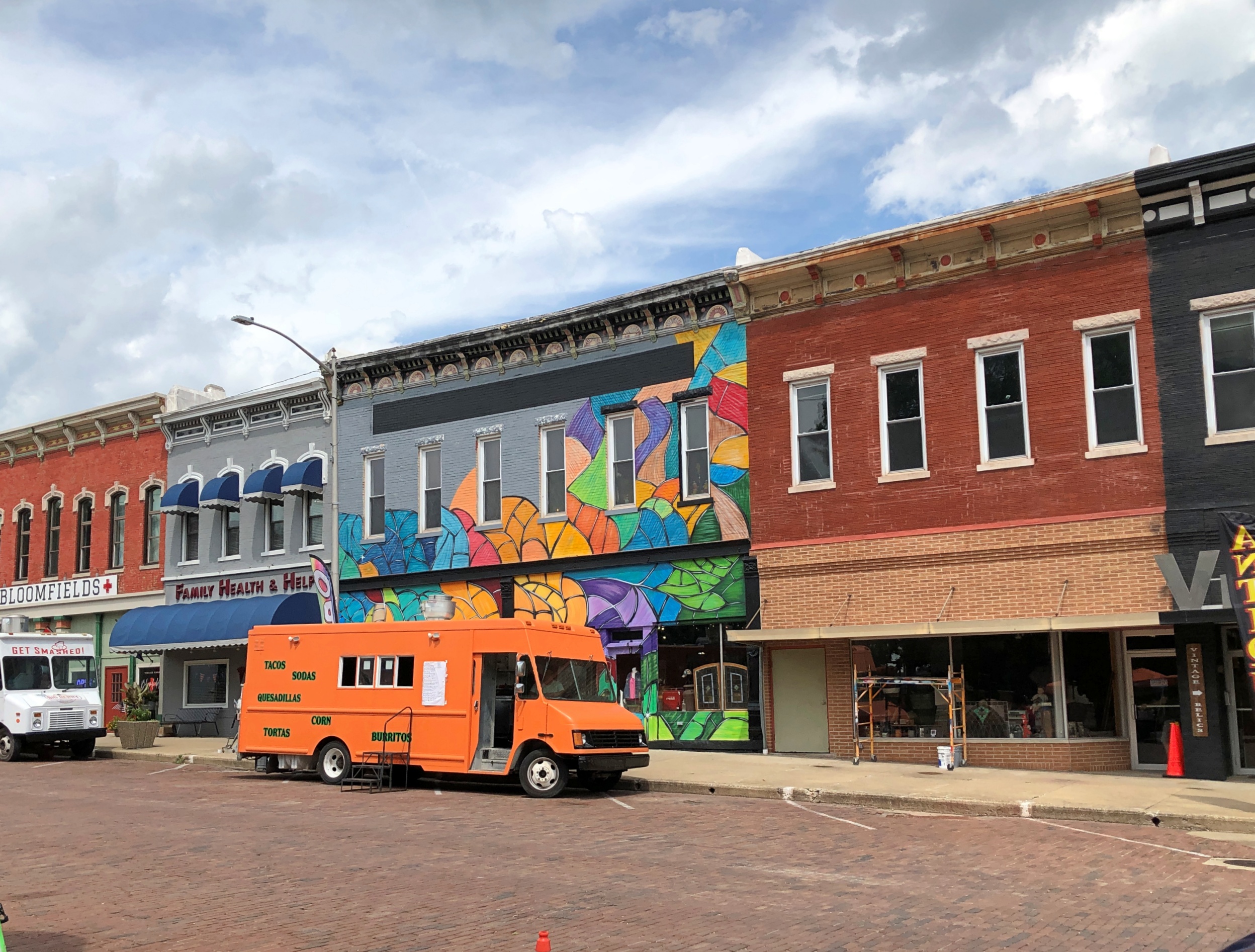
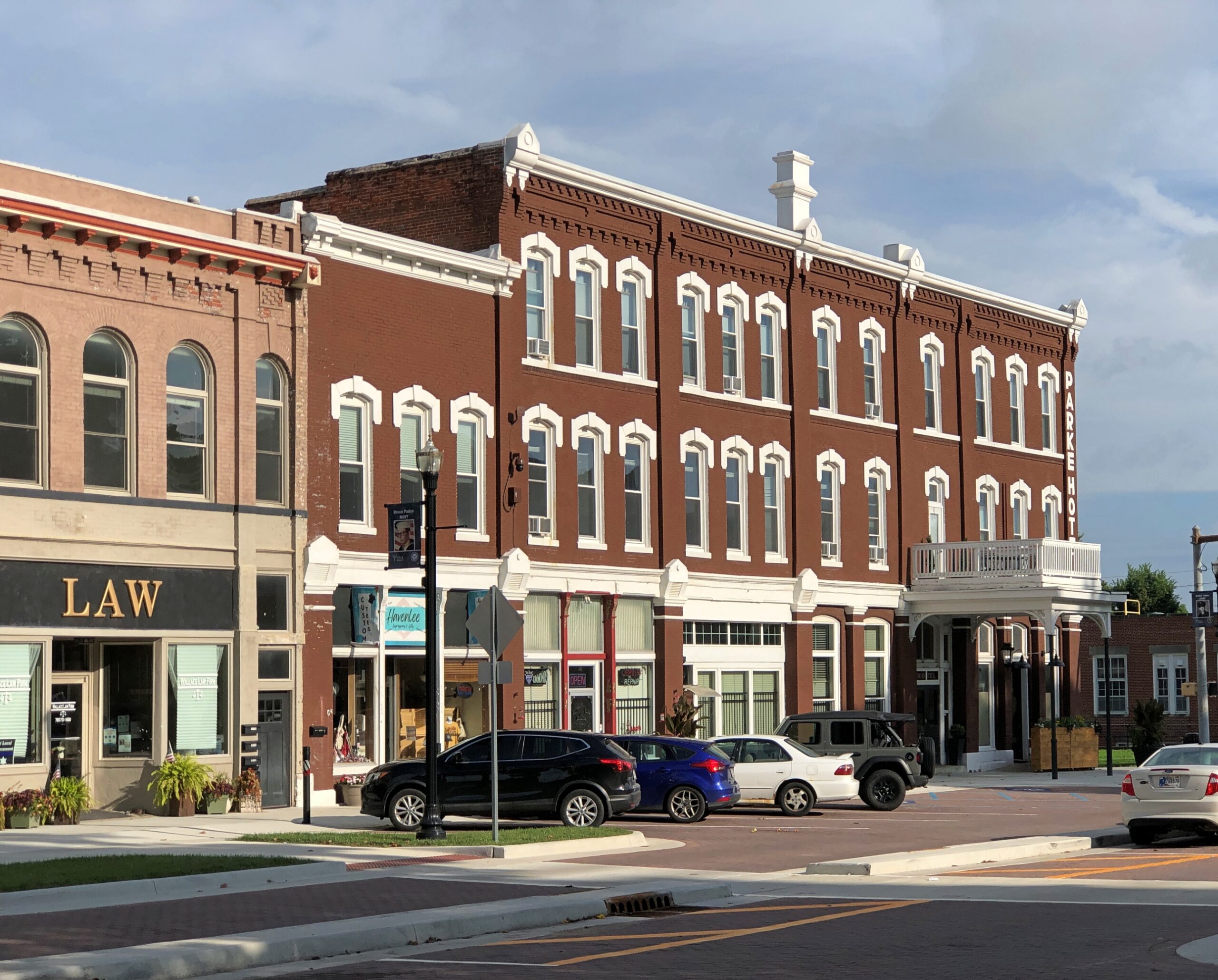
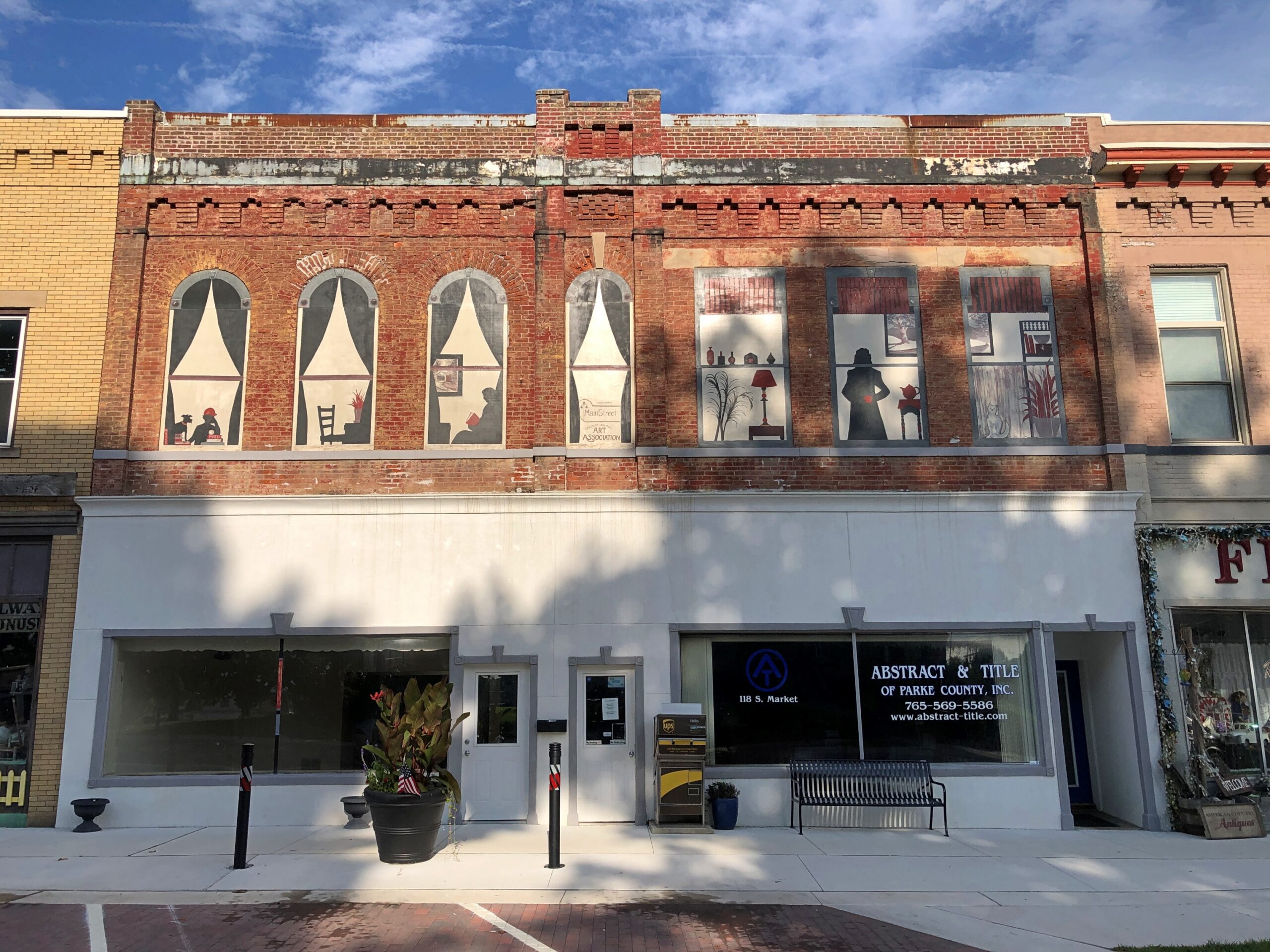
No, a small street festival was being set up at that moment, though not up and running yet. It was too hot for that anyway. But not for a quick look at some of the buildings ringing the courthouse, most in good shape and mostly tenanted.

G&M Variety has the soul of a five-and-dime, but a more accurate classification these days would be a five-and-ten dollar store: a step above a dollar store, the love child of a convenience store and a standard grocery store, with a souvenir shop added to the mix. Roaming around its aisles was pleasant, for a look at the sometimes unusual merchandise, and the AC.

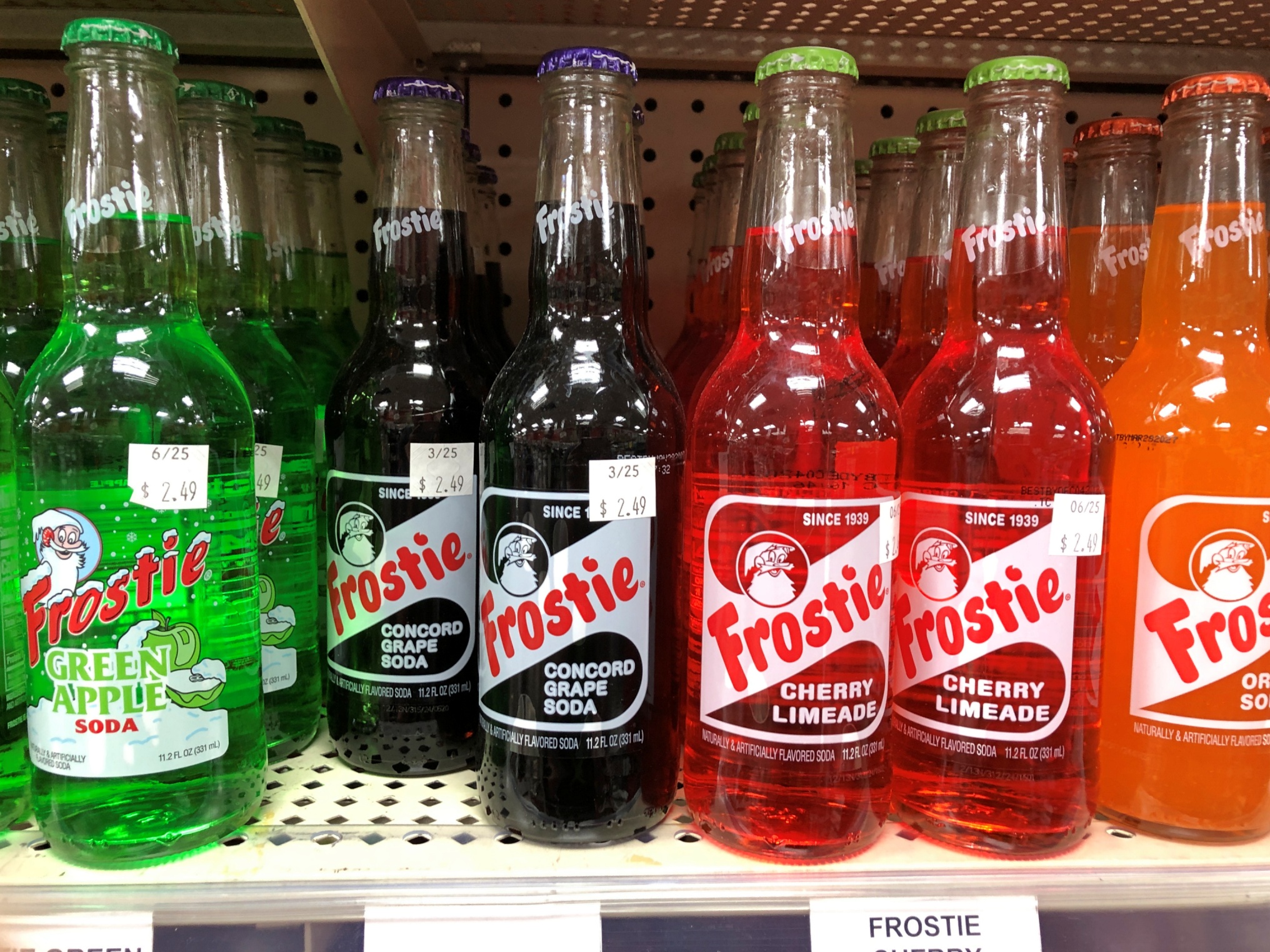
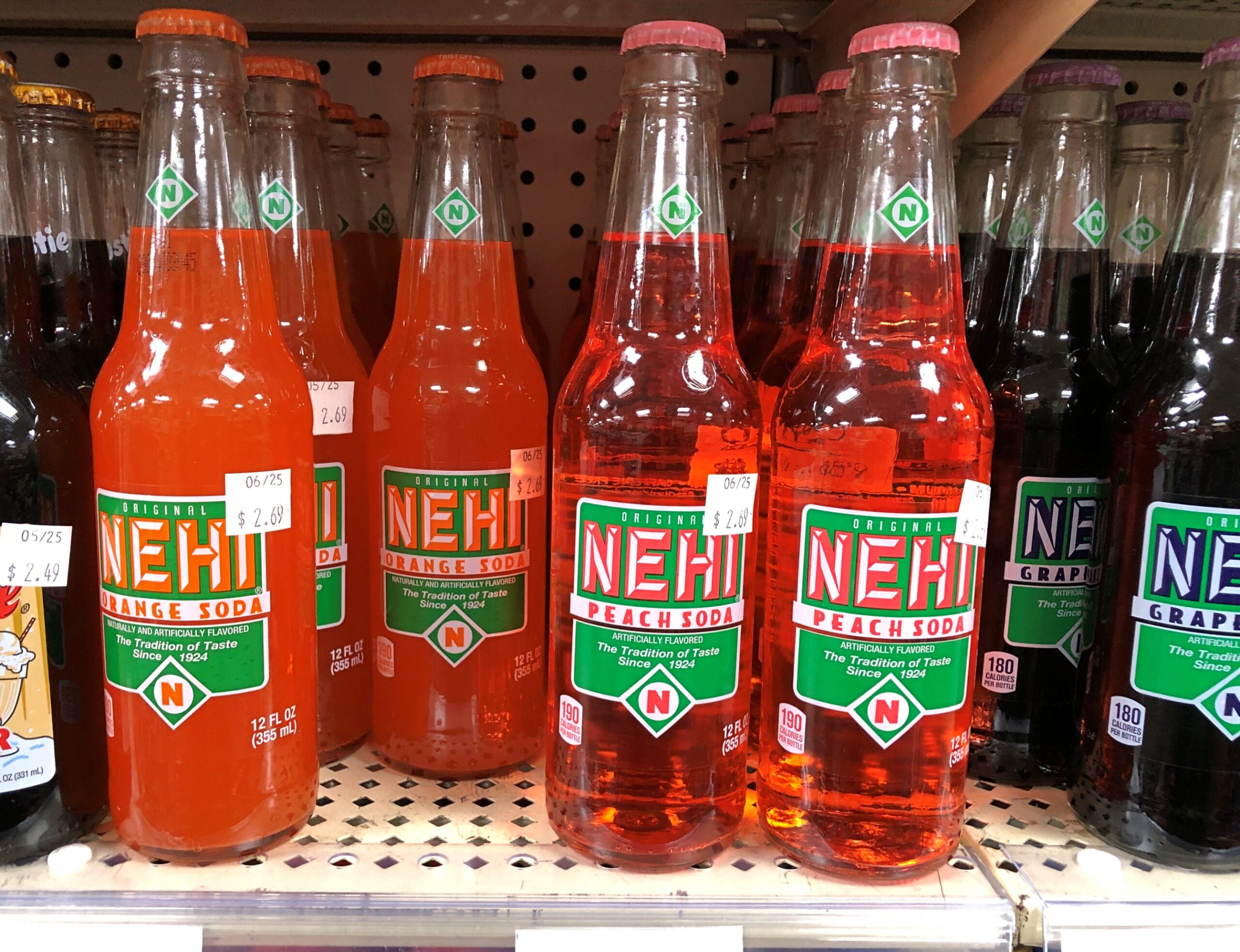
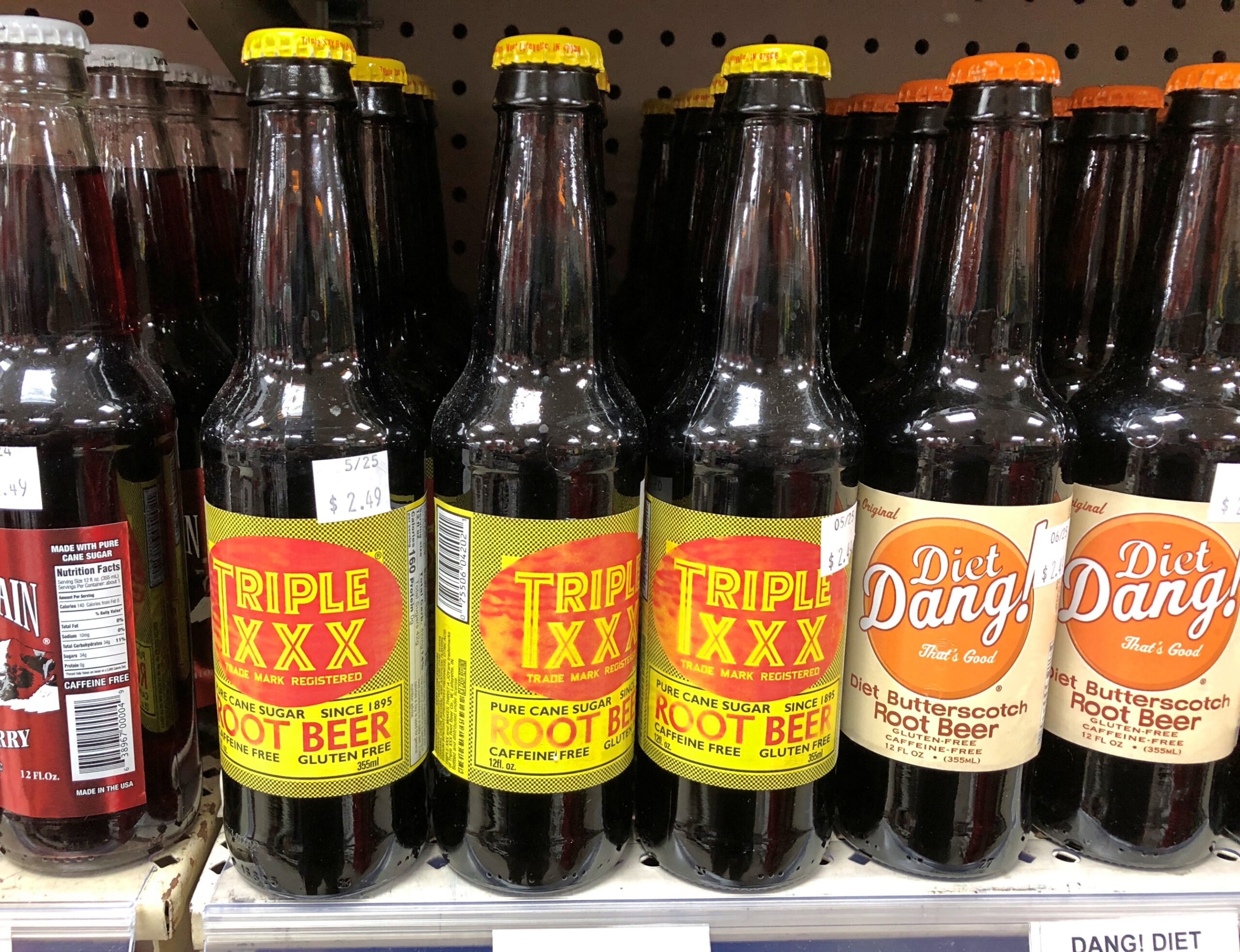
Drinks on sale that made me recollect sodas from my mid-60s childhood.

Frostie! Nehi! Triple XXX! Dang? We didn’t have Dang. Butterscotch root beer?

Pangs of nostalgia weren’t enough for me to spend $2.49 for an ordinary-sized soda, though I was a little thirsty.

More courthouse square.

Parke County Courthouse Square

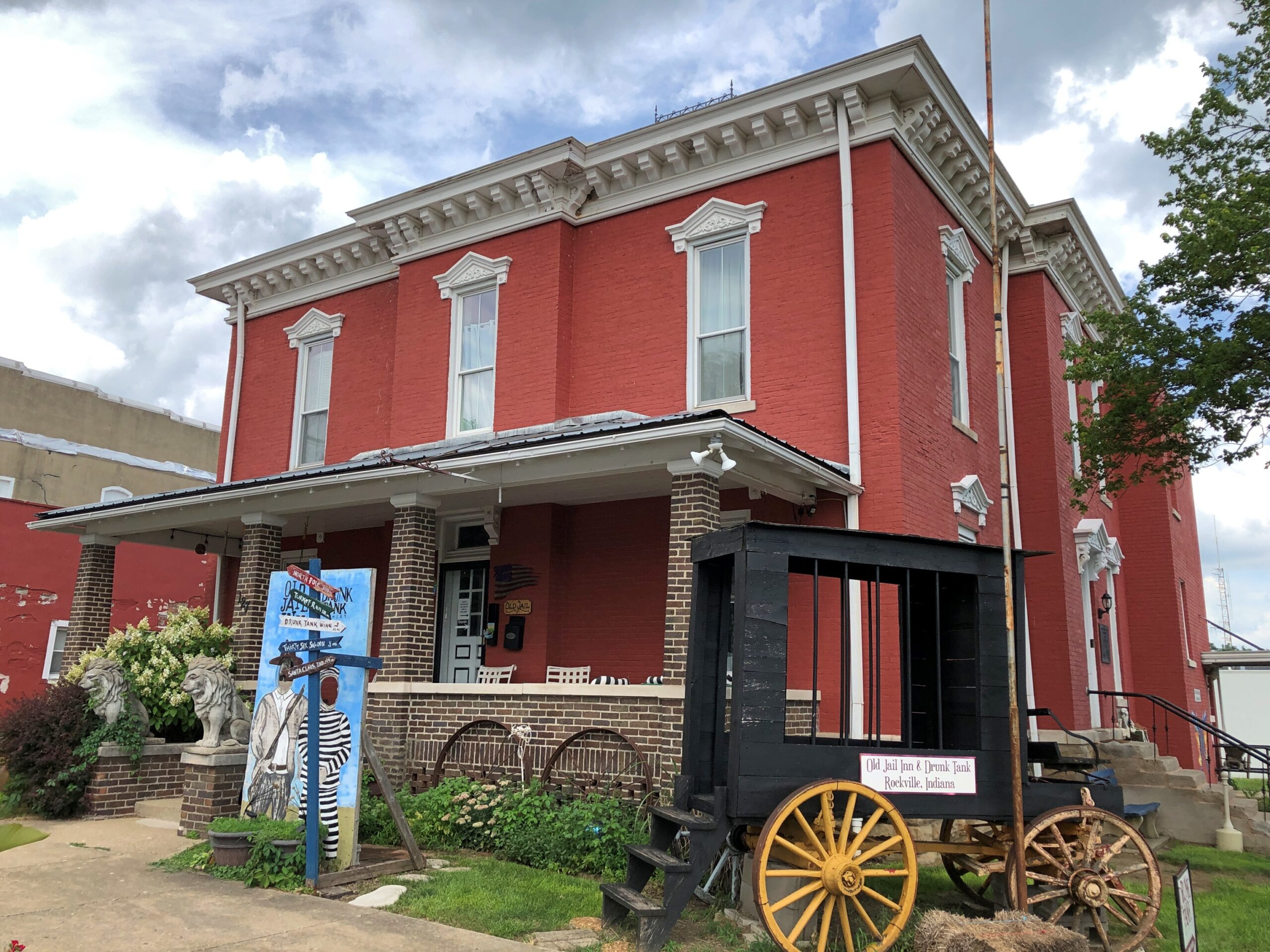
The Old Jail Inn & Drunk Tank, now a B&B.

Parke County Courthouse Square

I returned to the square on Sunday morning, after the cemetery, for a further look when it wasn’t so hot.

Parke County Courthouse Square

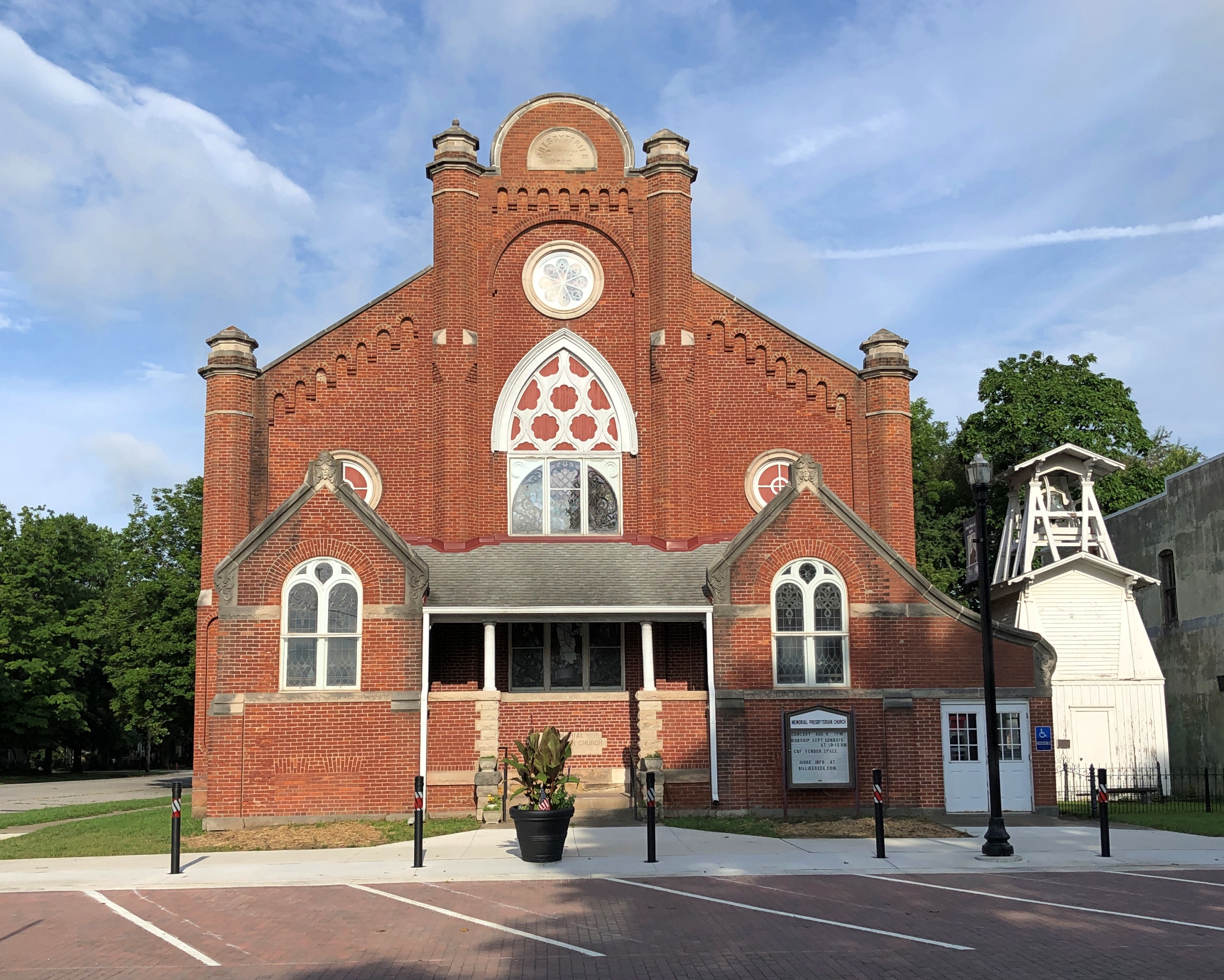
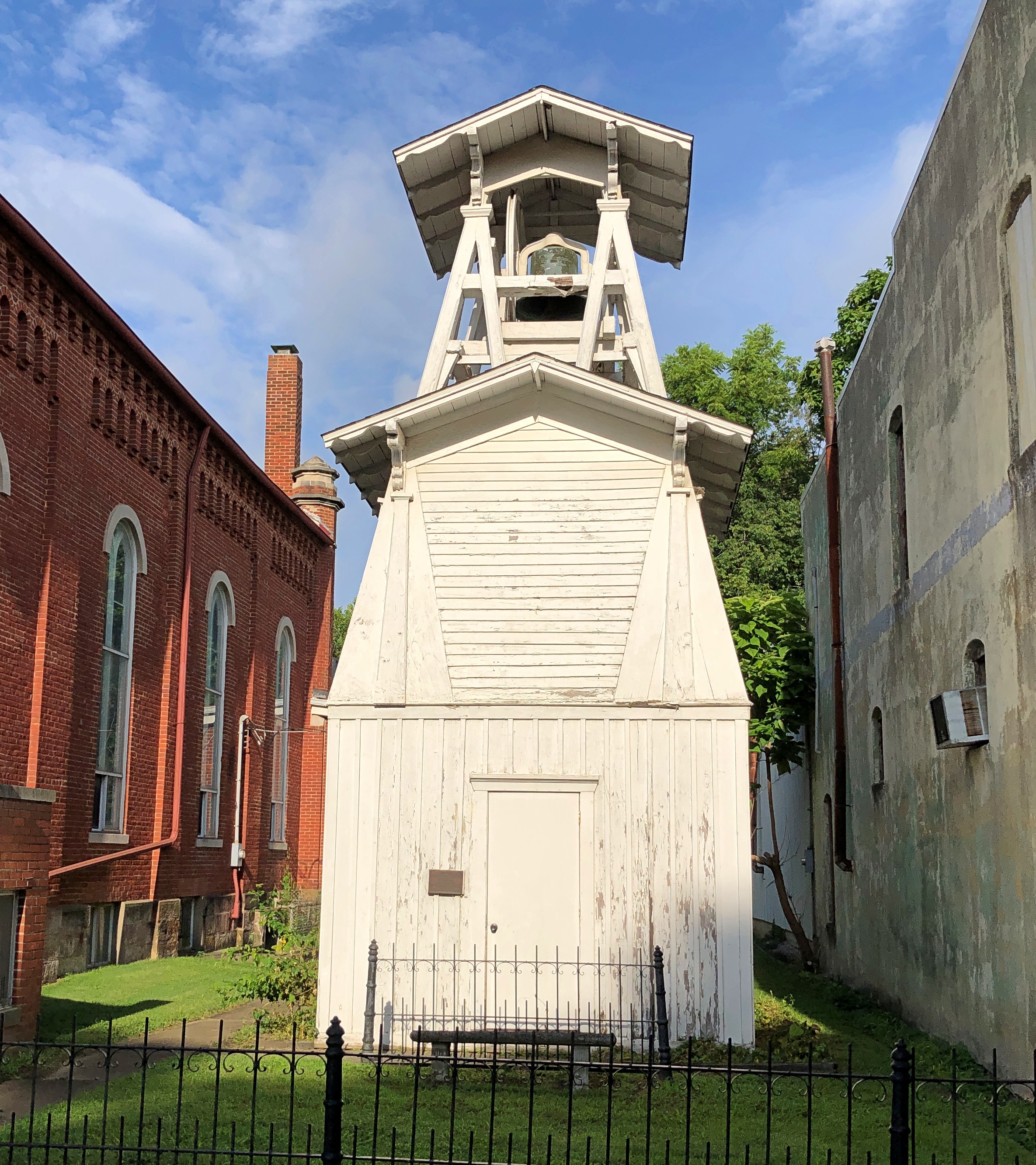
Memorial Presbyterian Church and its freestanding bell tower.

Parke County Courthouse Square

It isn’t a Presbyterian church any more — its cross conspicuous in its absence — though a Presbyterian congregation meets there sometimes. These days it counts as an event space, with music performances, recitals, meetings, and other gatherings there, according to Billie Creek Village, more about which later.

Next to the former church.

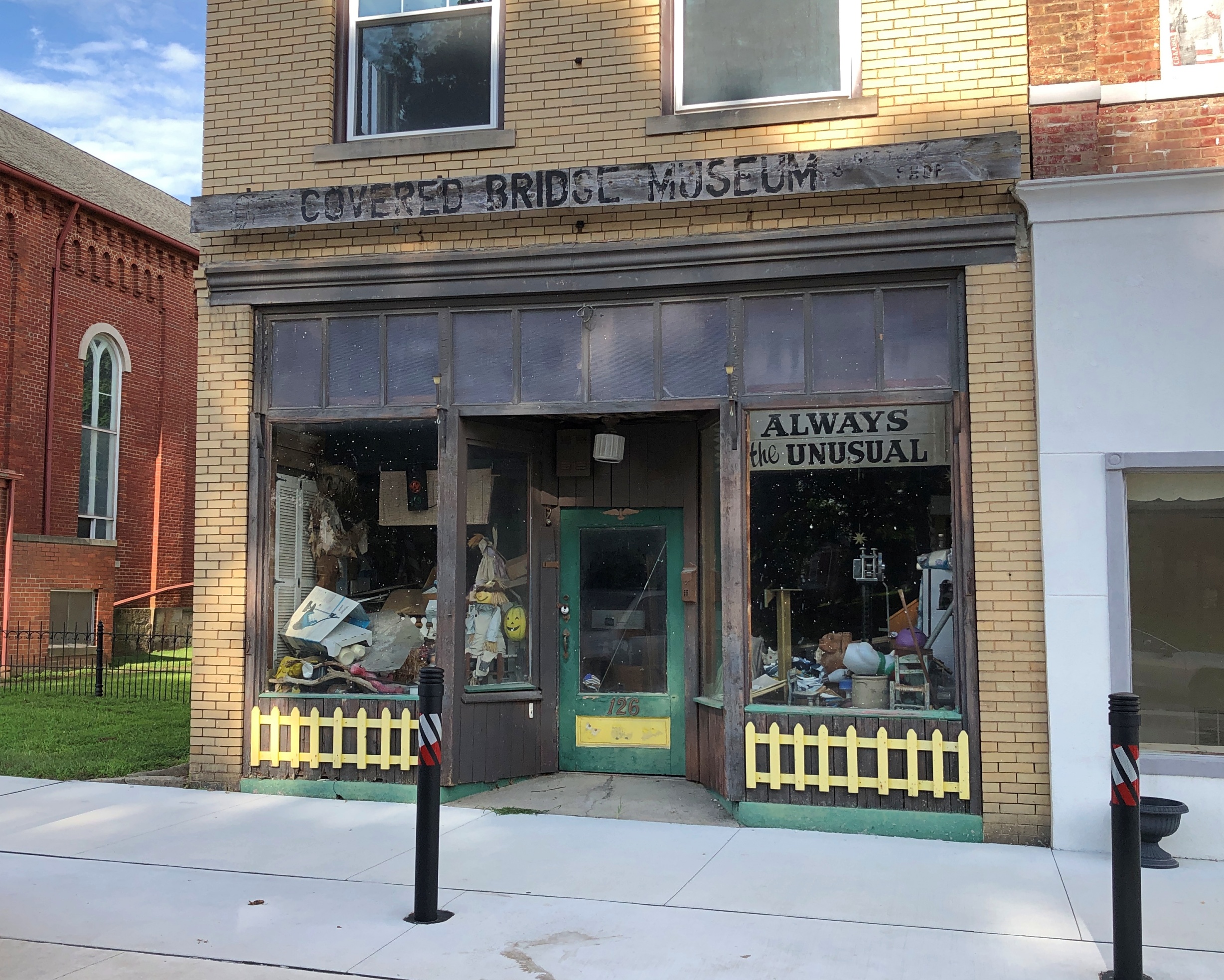
Museum? I’m a little skeptical.
Southern Loop Leftovers: SC & GA

Early in the recent trip.
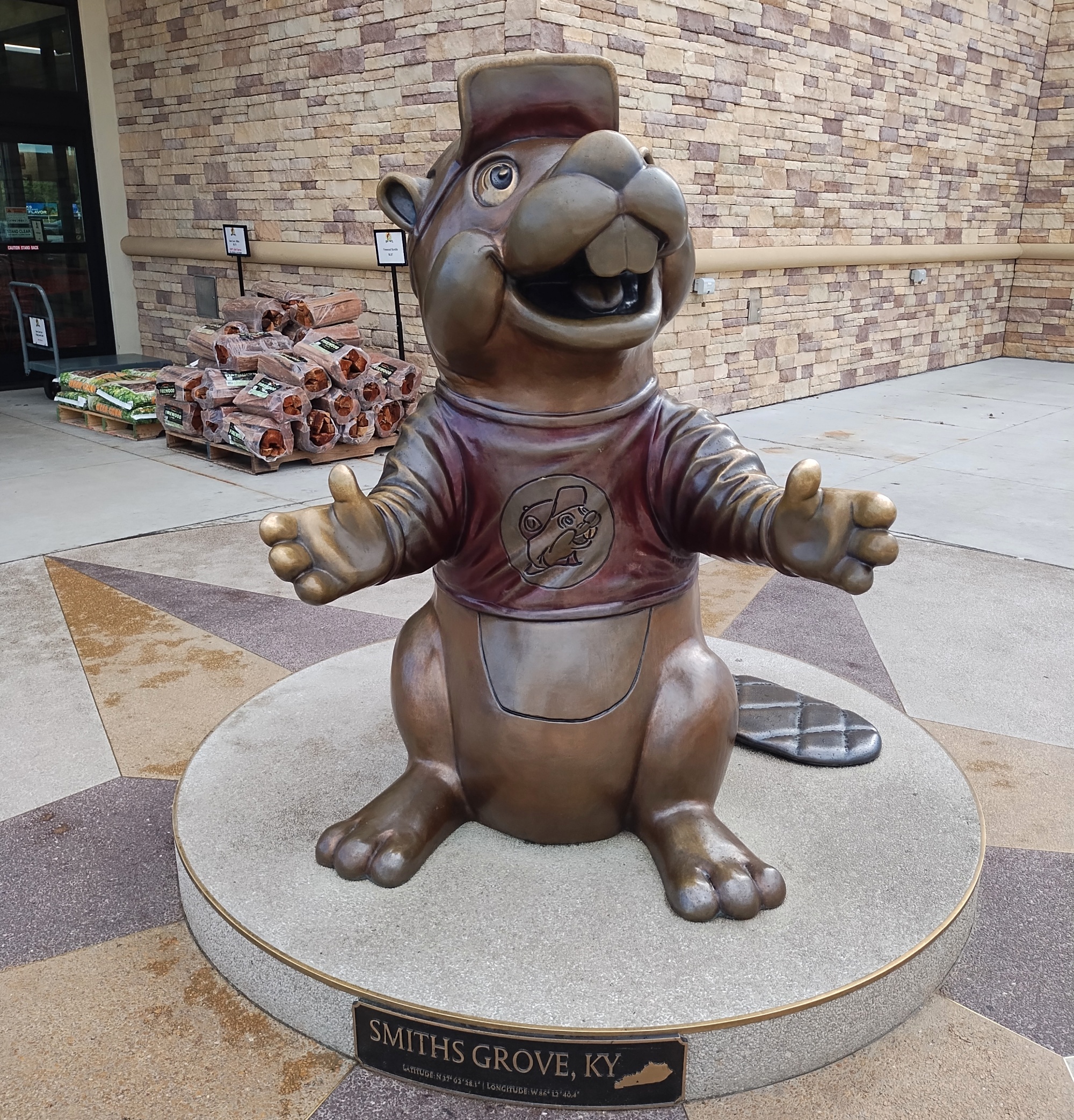
The Buc-ee’s imperium marches on. On my way to Tennessee that first day, I stopped at the location near Smiths Grove, Kentucky, to visit its gleaming facilities. Business was reasonably brisk that Monday, but nothing like the bedlam on the Sunday, nearly two weeks later (on the trip’s last day), when I stopped on the way back home at the same place, for the same reason.

South Carolina

Had a pleasant walk down a non-tourist street on a Sunday in Myrtle Beach. Not a lot going on. The late afternoon light had a nice glow.

Myrtle Beach, SC
Myrtle Beach

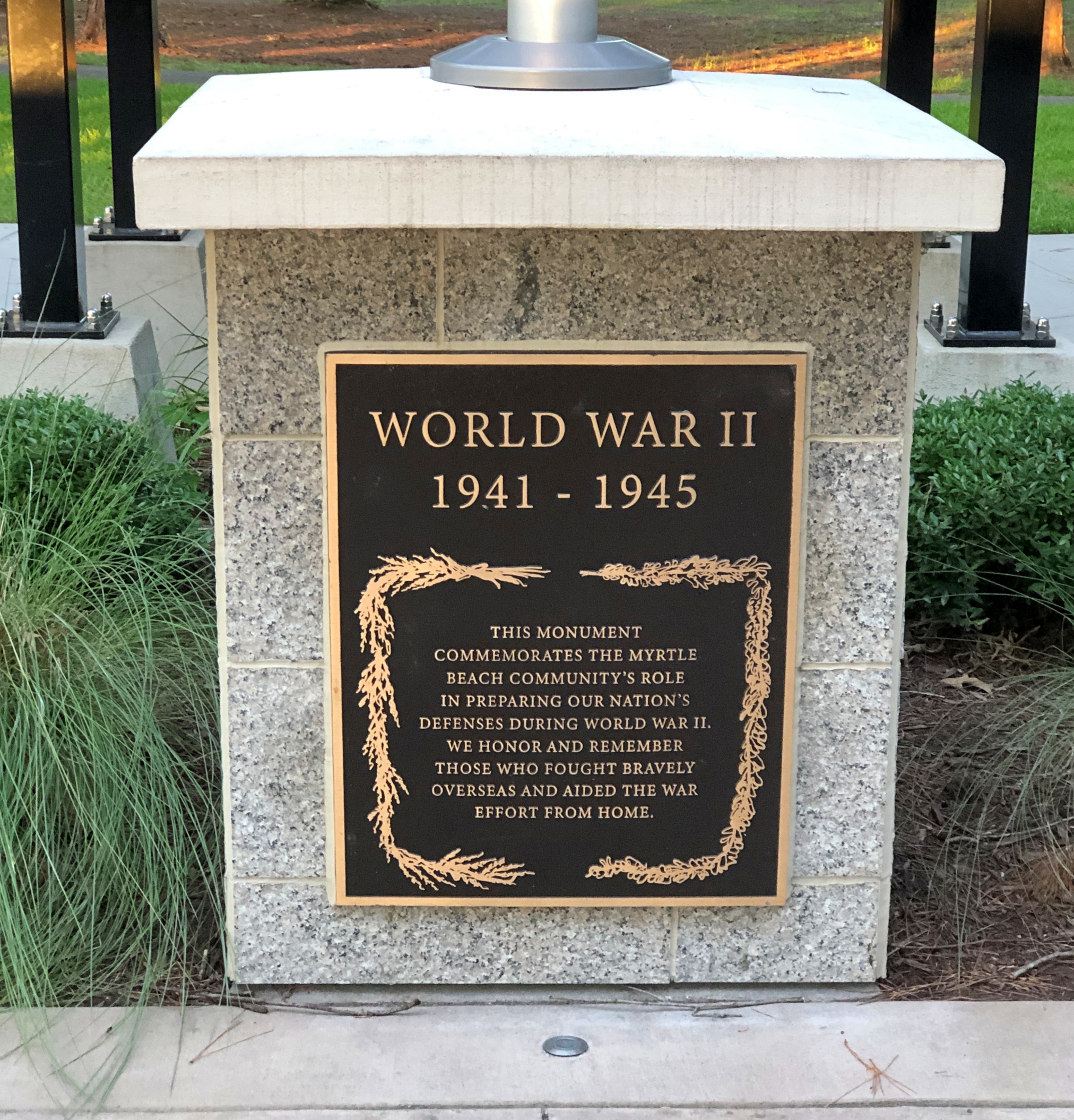
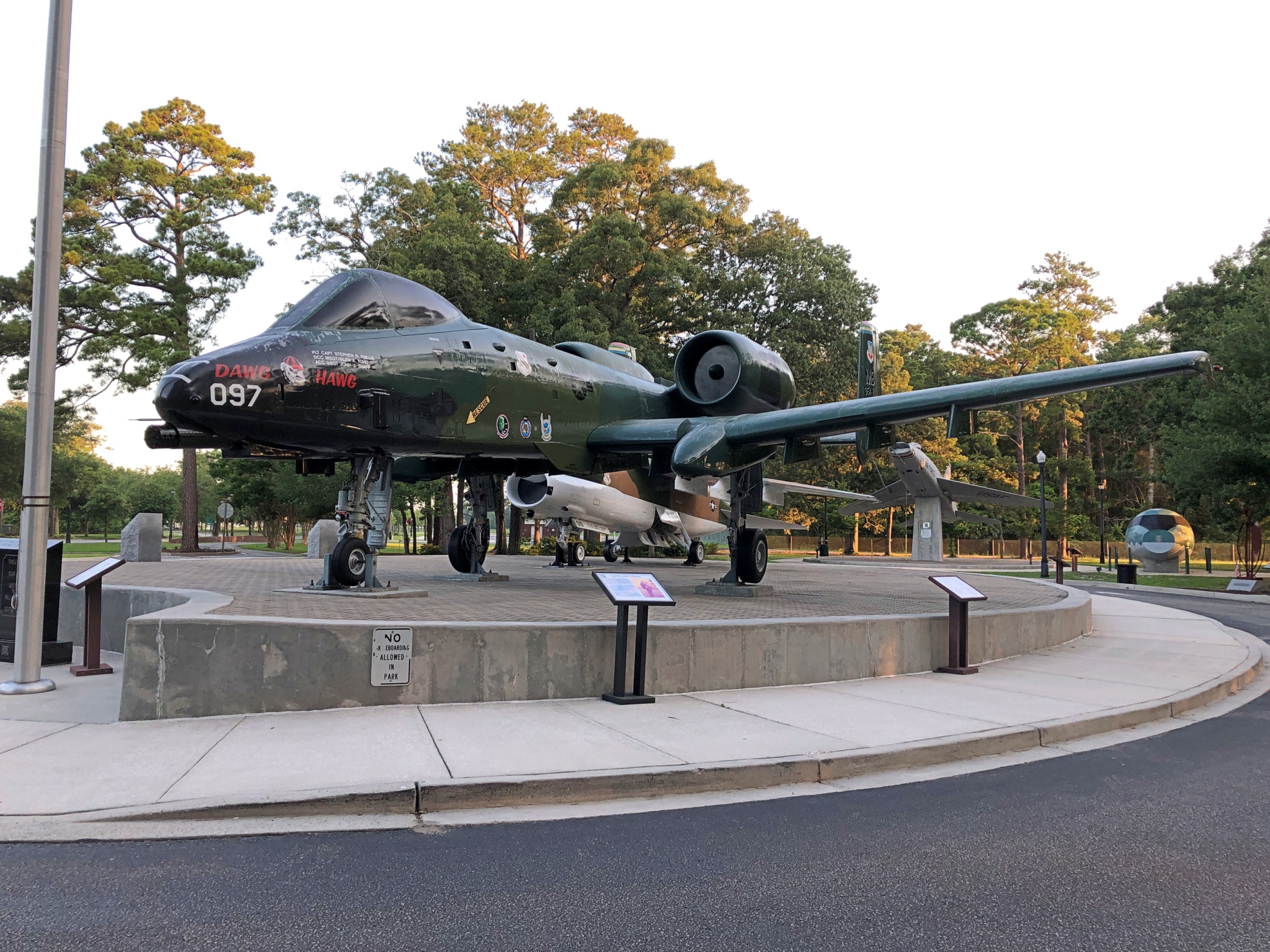
Myrtle Beach International Airport used to be Myrtle Beach Air Force Base, which began as Myrtle Beach General Bombing and Gunnery Range in 1942 for use by the U.S. Army Air Corps. It closed in 1993.

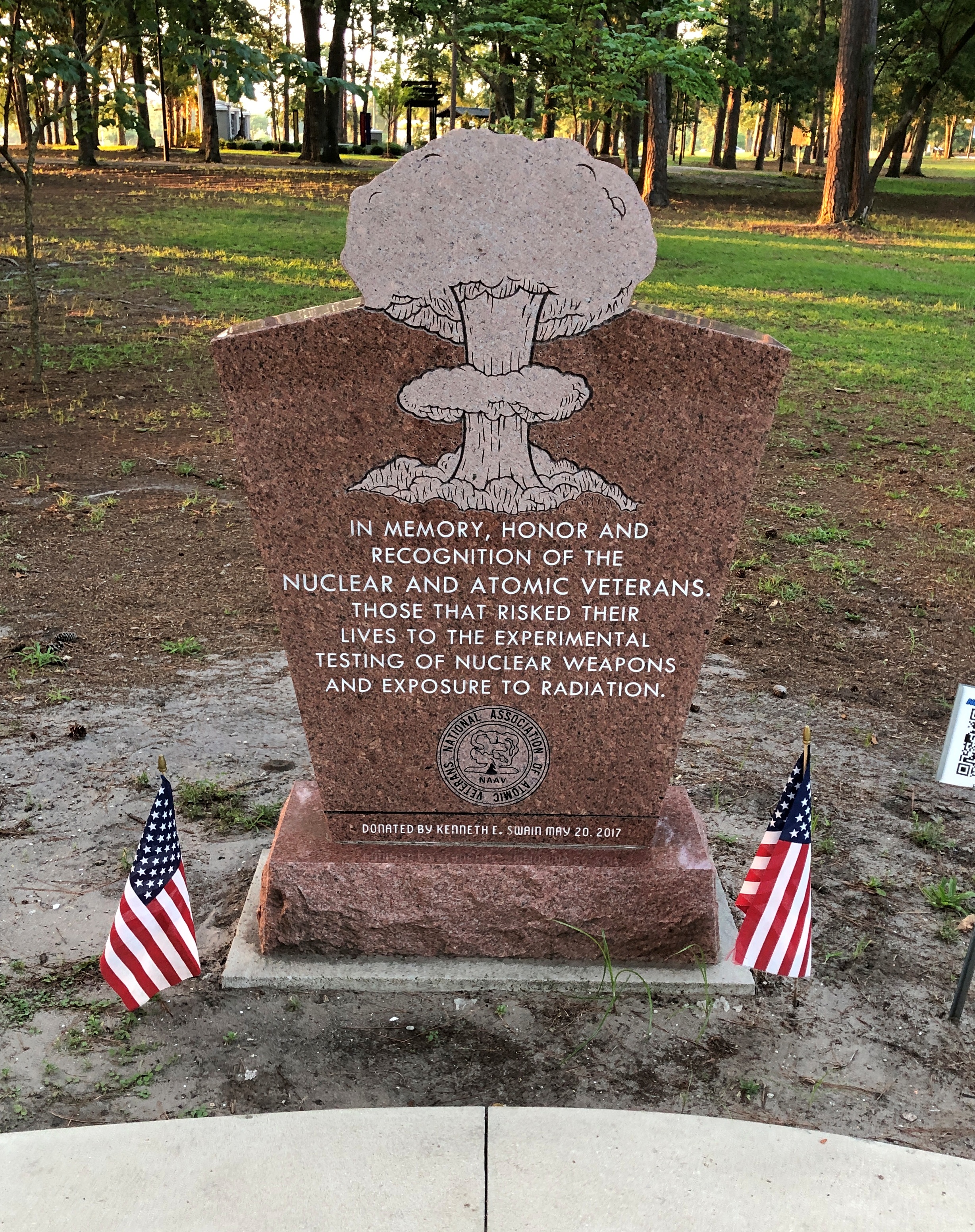
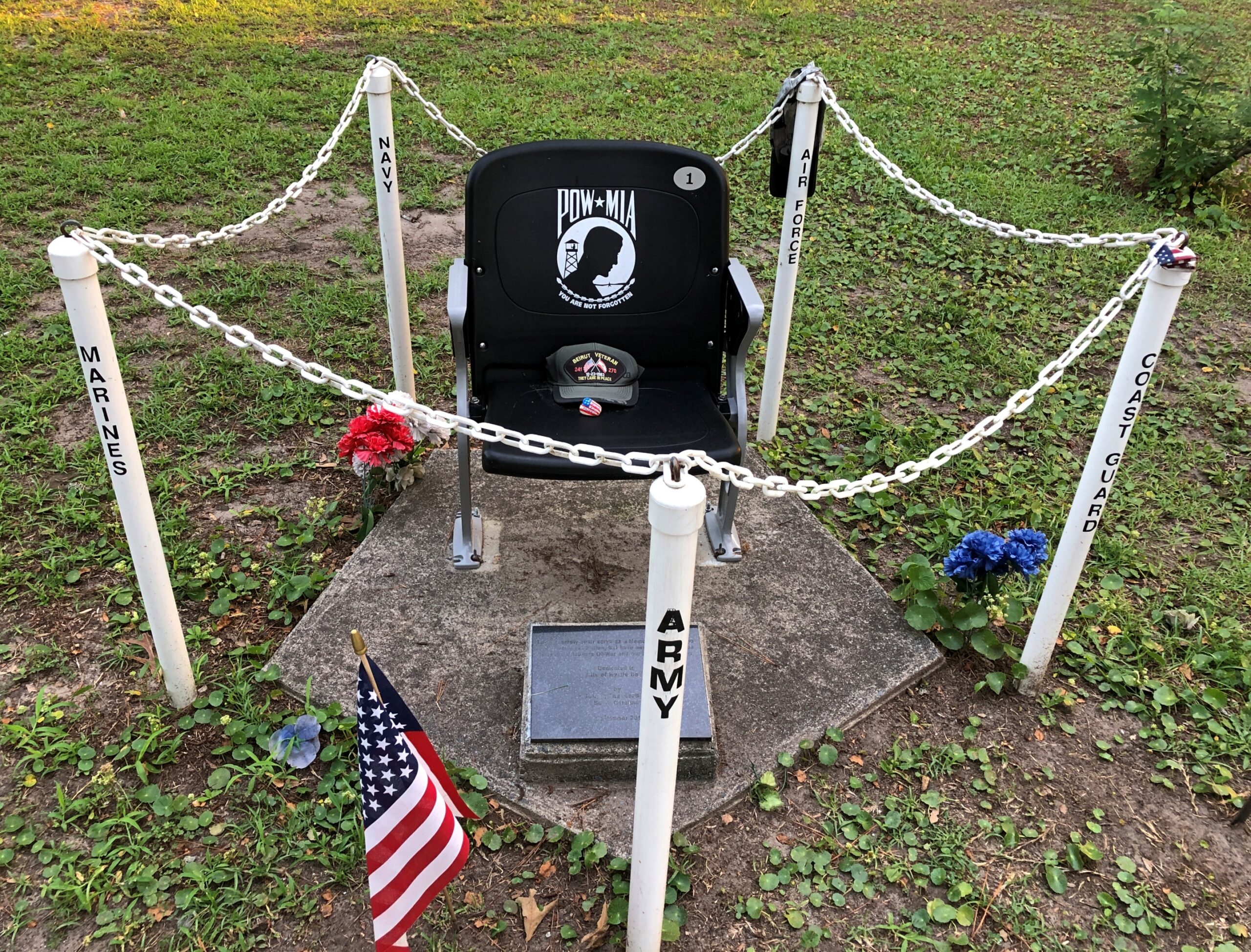
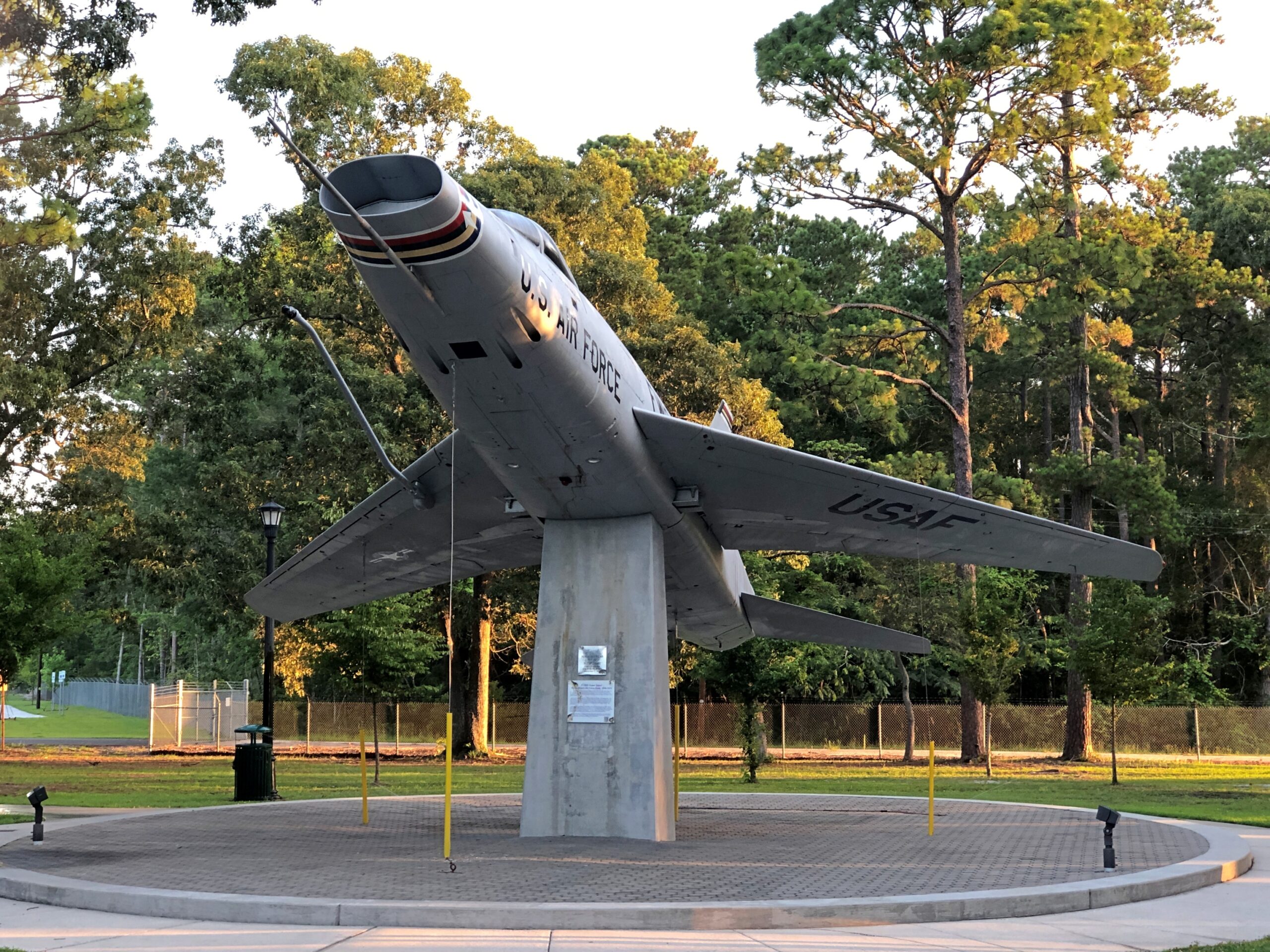
One legacy of the base is a cluster of military memorials near the perimeter of the airport – at a place called Warbird Park, which is fully accessible to casual visitors – that includes something you don’t see all the time.

Atomic Veterans

It is one memorial among many.

Myrtle Beach
Myrtle Beach

As well as some of the aircraft that used the air base.

Found at a MB beach shop among the clothes and beach equipment. Nothing says Myrtle Beach better than skulls, no?

There was more. Much more.

Shithead on glass

In Columbia, the Basilica of St. Peter.

Basilica of St Peter, Columbia

Mass was in progress in its impressive interior, so only a glimpse.

Georgia

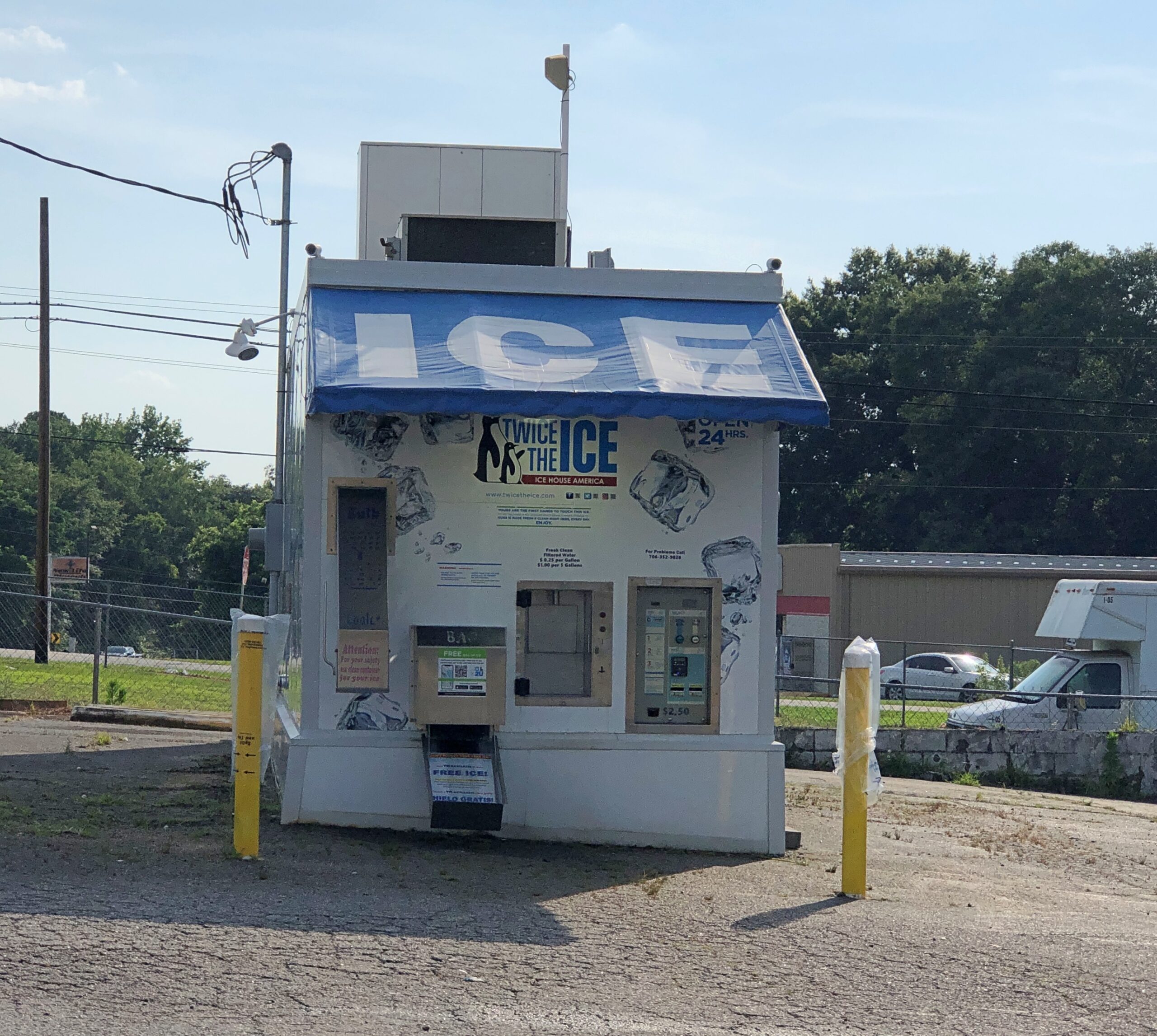
An automated, Fotomat-style ice store in north Georgia. They’re not as common up north, with the closest of this brand to me (I checked) in Aurora, Illinois.

Ice

Twice the Ice is the brand name. Quick facts: there are about 3,300 Twice the Ice locations so far in the United States and elsewhere – water and ice “vending machines,” according to one page on the company web site. Another page on the same site puts it at over 4,000 locations, which just means part of the site isn’t being updated. Whatever the exact number, there are a lot, and most if not all are franchised, representing about 1,000 franchisees.

It’s automation we call all get behind. I don’t think the machines are putting ice handlers and baggers at local gas stations and grocery stores out of work, since who holds that specific job?

So far as I know, “Ice is Civilization” is not the company motto. But it could be. It was said with such conviction by Allie Fox in The Mosquito Coast.

Of course, by the end of the book and movie both, he was howl-at-the-moon mad. So maybe some other slogan. Then again, that line is one of the few things – besides the fact that Allie Fox goes nuts chasing Utopia – that I remember from either the book or the movie after about 35 years. So it’s pretty memorable.

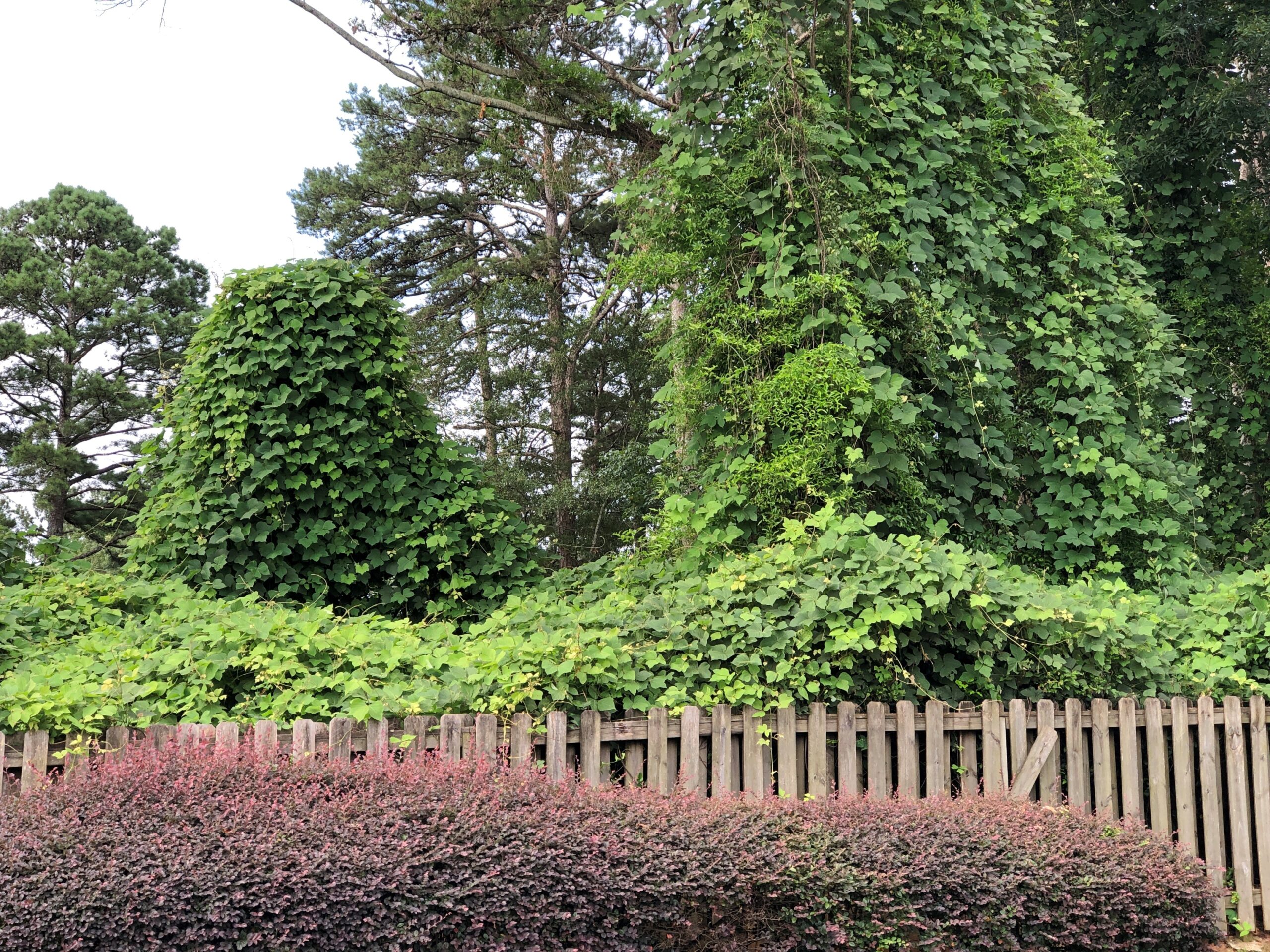
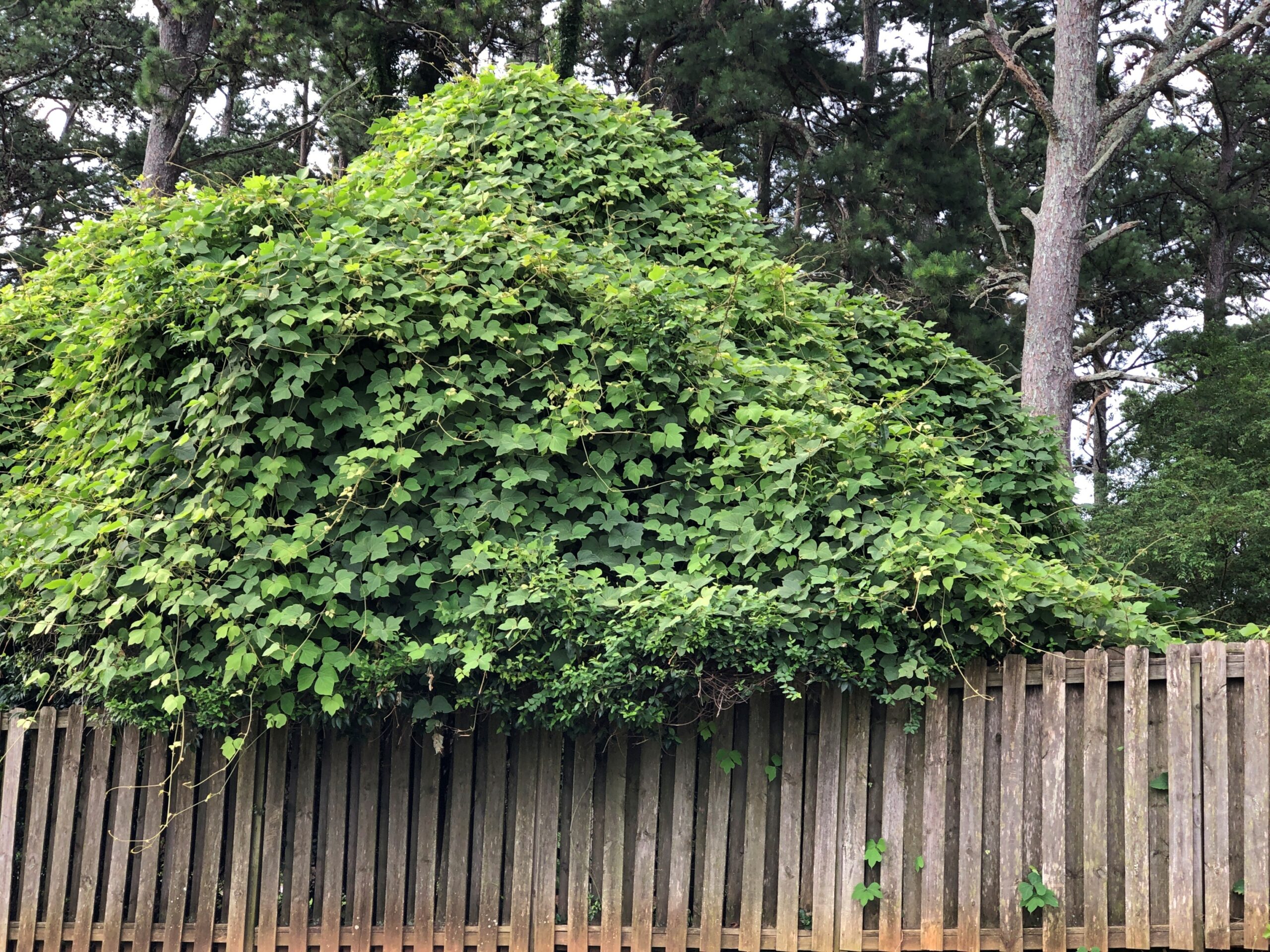
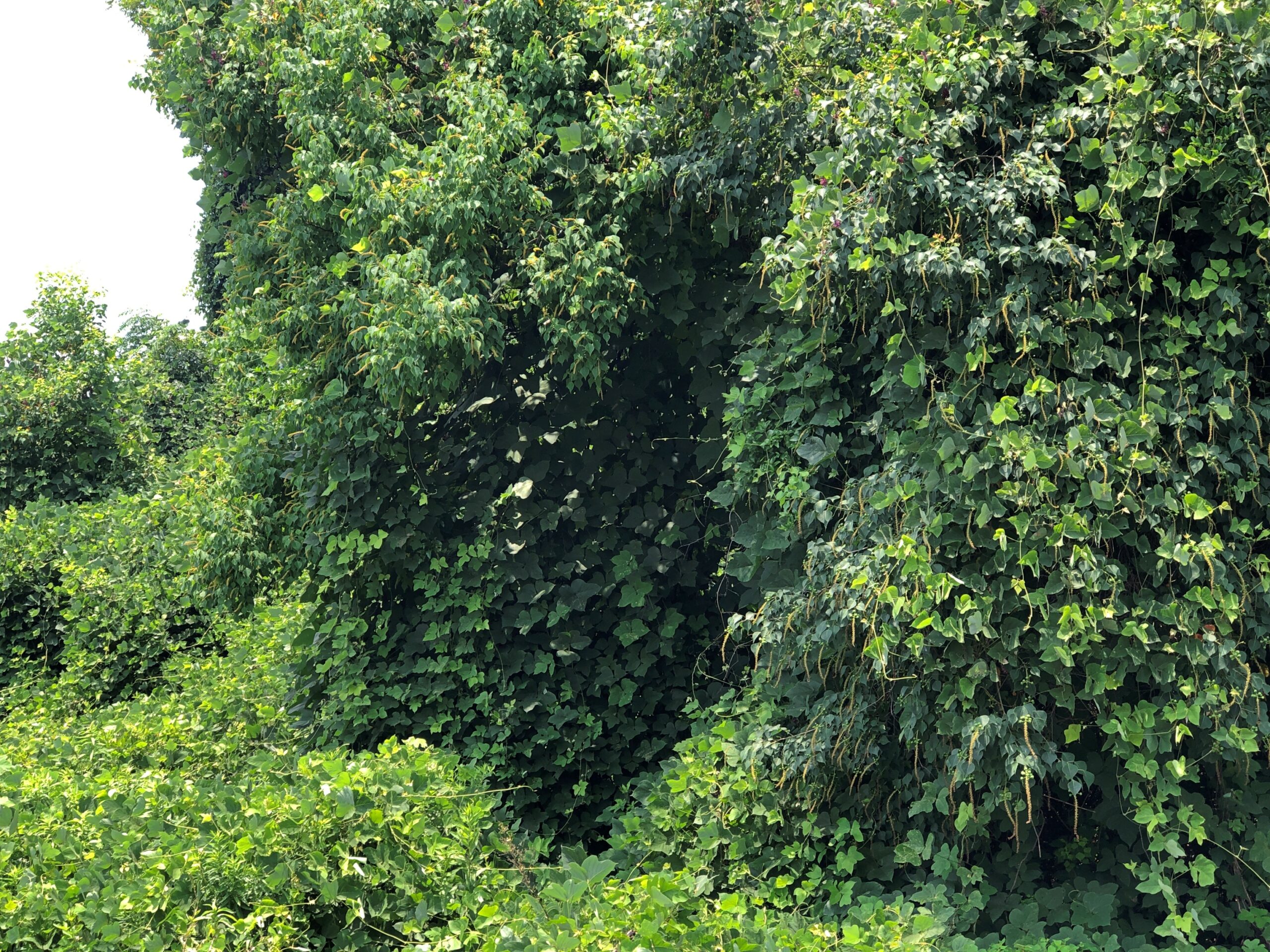
After gassing up at a station in north Georgia, I parked away from the pumps near the edge of the property to fiddle with my phone for a few minutes. Just outside the car window, kudzu lurked.

Which got closer.

And closer. Man, it grows fast.

Not really, but I did see all that kudzu at the edge of the gas station property. Kudzu. Who hasn’t seen the walls of it down South?

“In news media and scientific accounts and on some government websites, kudzu is typically said to cover seven million to nine million acres across the United States,” Smithsonian magazine reported in 2015. “But scientists reassessing kudzu’s spread have found that it’s nothing like that. In the latest careful sampling, the U.S. Forest Service reports that kudzu occupies, to some degree, about 227,000 acres of forestland, an area about the size of a small county and about one-sixth the size of Atlanta.

“That’s about one-tenth of 1 percent of the South’s 200 million acres of forest. By way of comparison, the same report estimates that Asian privet had invaded some 3.2 million acres — 14 times kudzu’s territory. Invasive roses had covered more than three times as much forestland as kudzu.”

Yet kudzu is regarded as a particularly intractable invasive species. How is that? It grows well in highly visible places. Such as next to a gas station parking lot. Smithsonian notes: “Those roadside plantings — isolated from grazing, impractical to manage, their shoots shimmying up the trunks of second-growth trees — looked like monsters.”

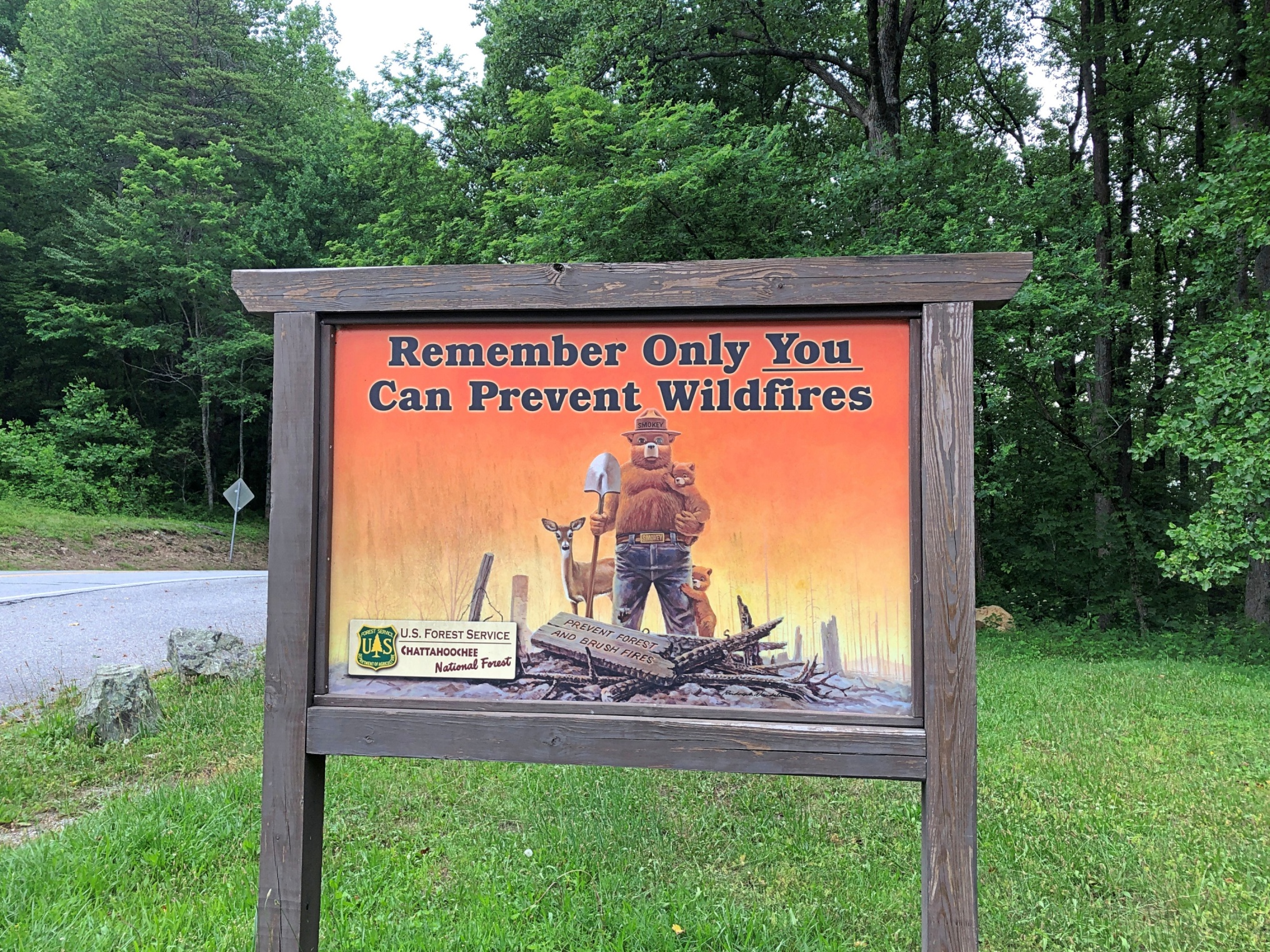
Along Georgia 60 in Chattahoochee NF, Smokey Bear is still at his job.

One thing leads to another online, and Smokey eventually lead me to “Smokey the Bear Sutra.” Only takes a few minutes to read, and it’s a trip. Just like the song “Elvis is Everywhere,” there’s a founding document of a religion in the distant future, one that asserts that humans should never have given up worshiping bears.

Southern Loop Leftovers: TN & NC

Had a bizarre dream last night, which isn’t really unusual, since that’s the way of dreams often enough – but this one – let’s call it rich and strange. And lengthy. It kept going and going, involving an alt version of downtown Chicago, and alt version of the company I worked for in the late 1980s, though no one that I knew was there; a vaguely menacing, nighttime scene always, though it wasn’t a nightmare; a message that had to be relayed, somehow; a fictional character – a very famous fictional character – spoken of as if real, who eventually showed up after a funeral, laughing; and details that made me think, that’s too much of a detail. For a dream. Is this a dream? One detail involved a chipmunk peaking out of a hole in the sidewalk, or maybe the street; another was a globe that I could see but not get close enough to read well, though I really wanted to. But I did notice that the United States, on this globe, included British Columbia and maybe the Yukon Territory, and I woke up thinking that maybe that 54° 40′ or Fight business led to a real war, in which the U.S. prevailed.

Perhaps the strangest thing about this rich and strange dream is that fully an hour and a half after I woke on this bright summer morning in the northwest suburbs, in the waking world I know and inhabit, I was able to write the above description.

Tennessee

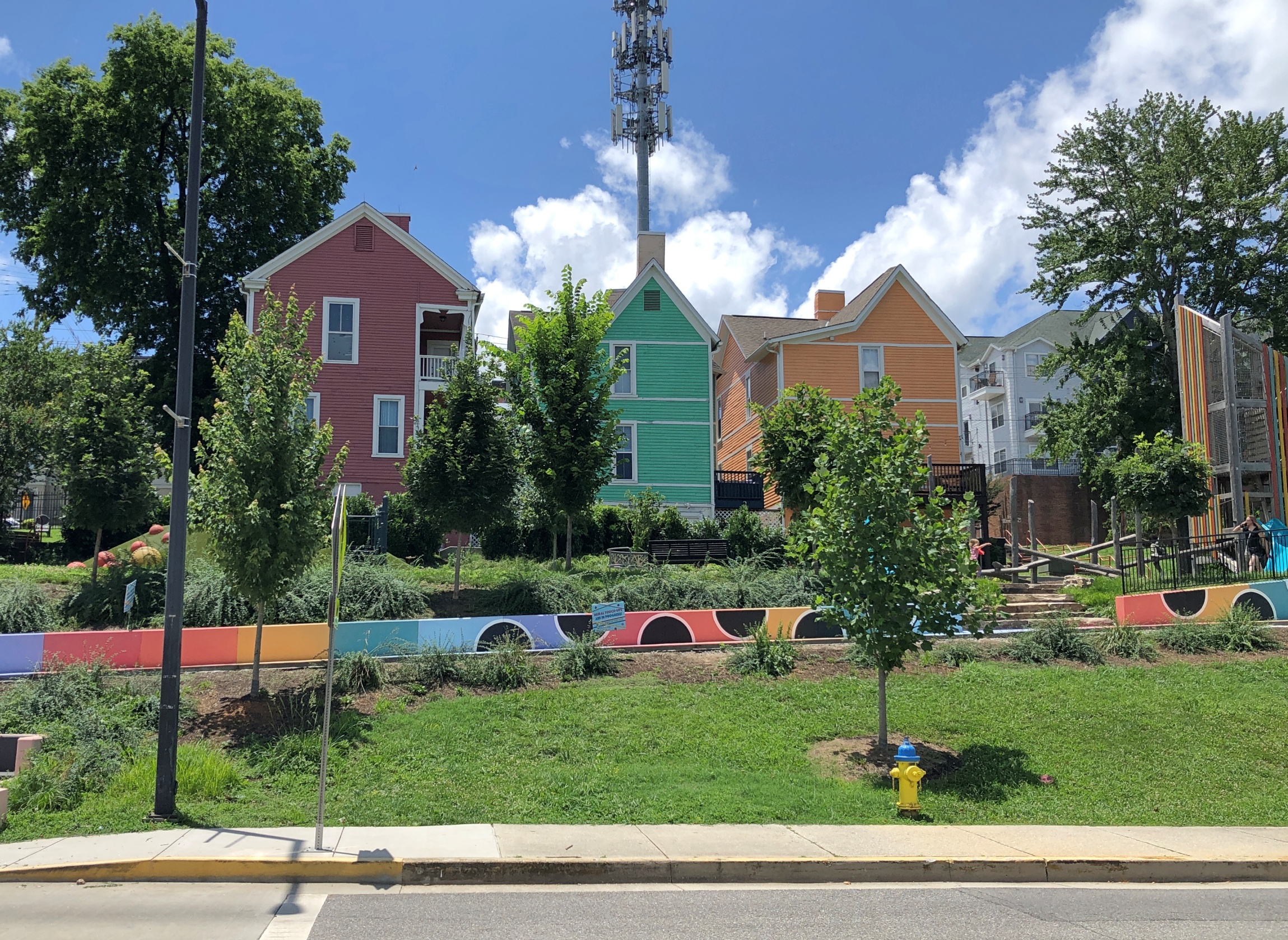
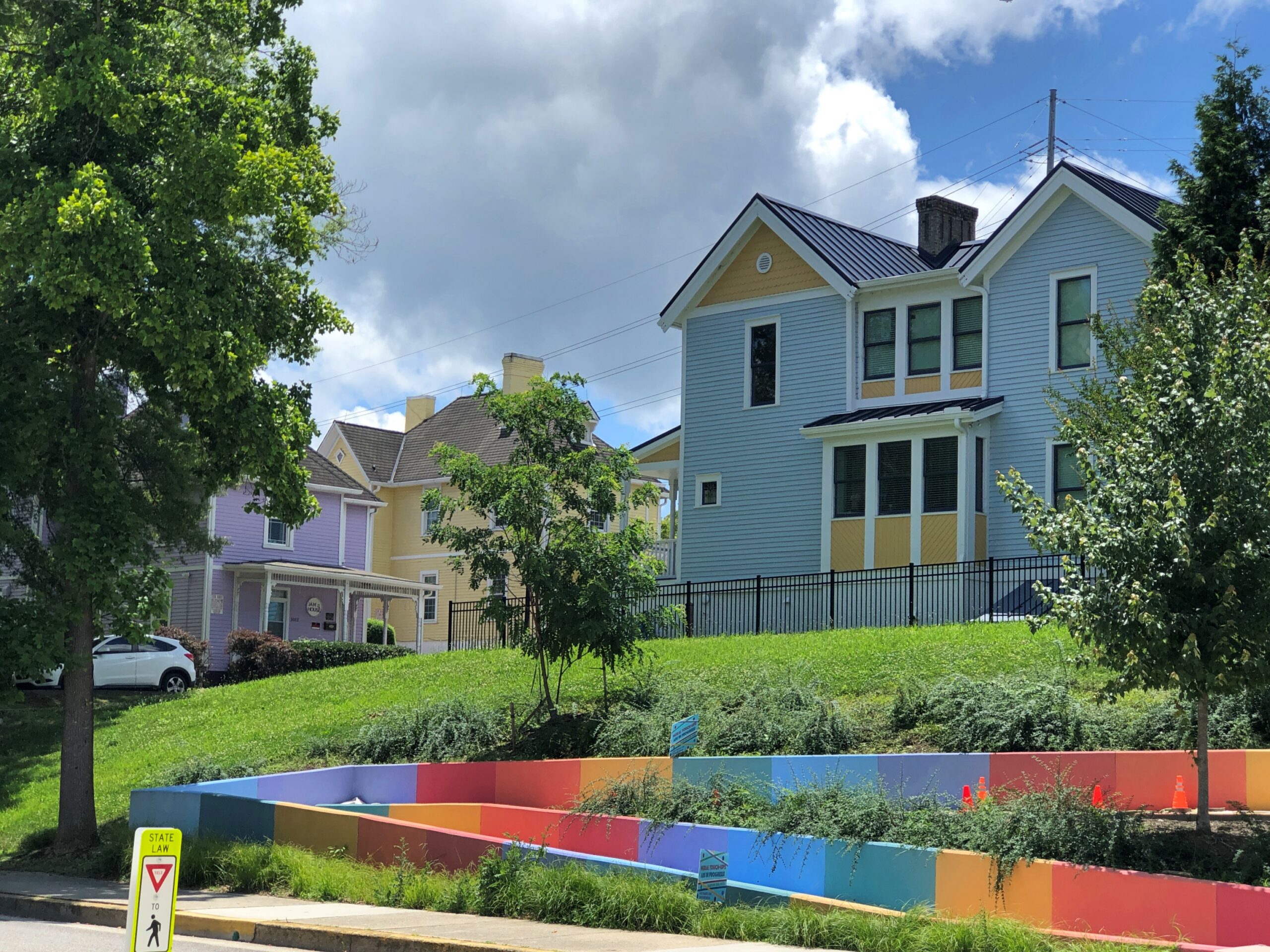
When passing eastward through Tennessee during my most recent interstate drive, I spent a little time in Knoxville, as mentioned, mostly to see the Sunsphere. To get to the tower from the free parking lot, I walked along part of World’s Fair Park Dr., with these colorful pastel houses visible on a small rise nearby. I was reminded of Rainbow Row in Charleston.

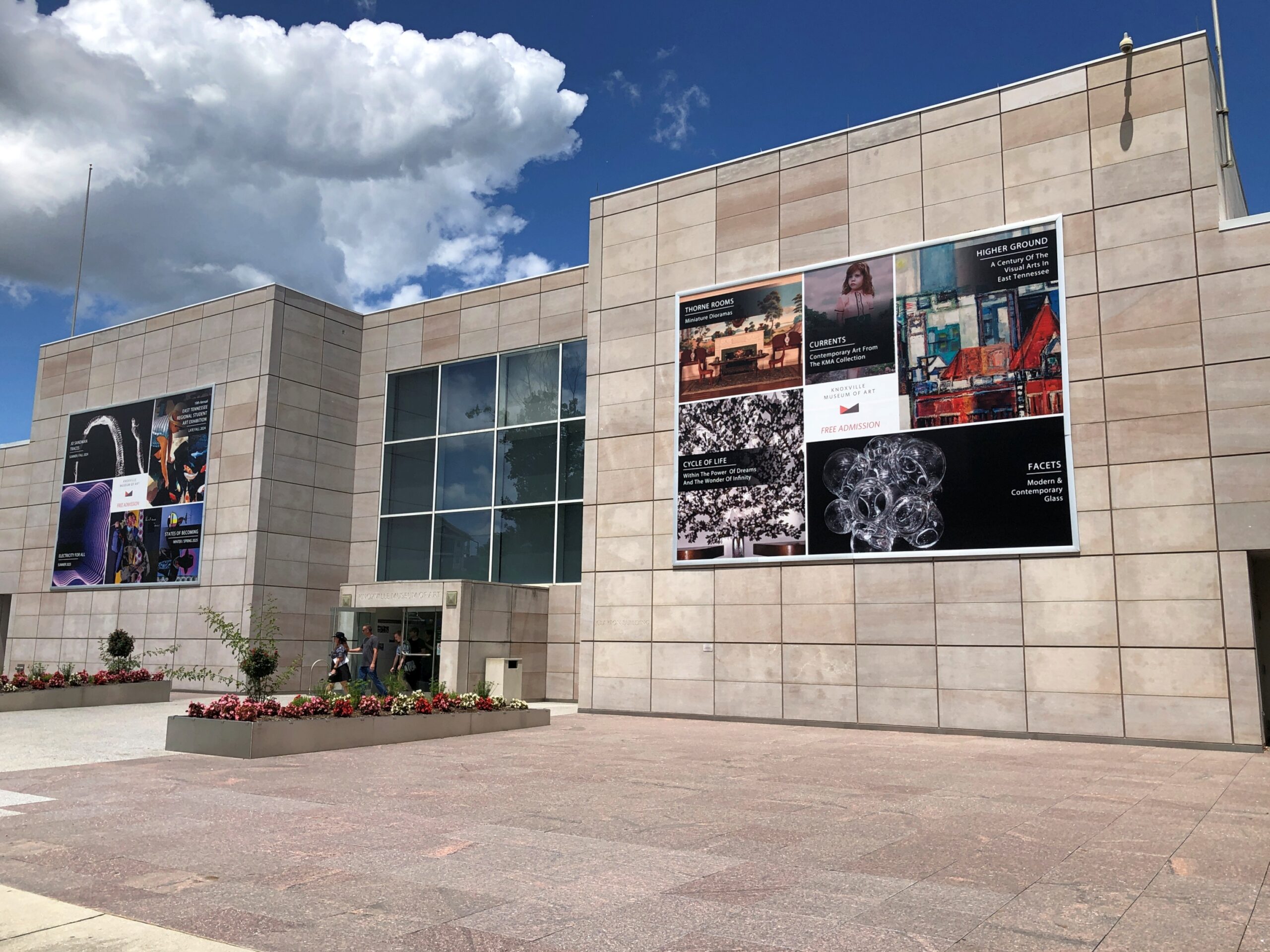
On the way back, I popped into the Knoxville Museum of Art.

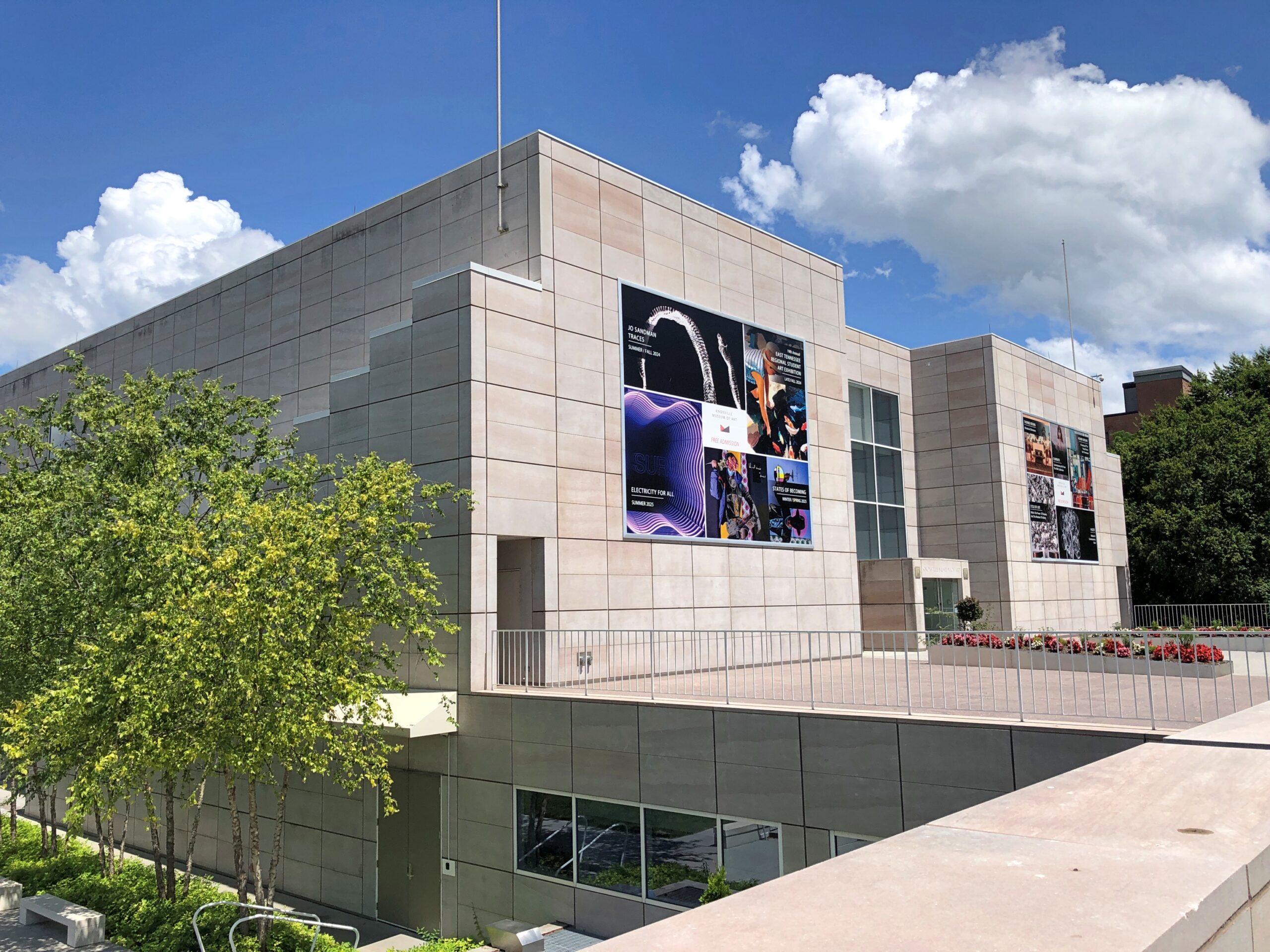
For a brutalist building, a nice bit of work by Edward Larrabee Barnes (d. 2004). If it blackens and streaks in the future, as such buildings tend to do when exposed to urban air, its appearance might morph into something merely ugly. But it looks like it’s been kept clean enough since its construction in 1990. As a museum, KMA has a lot to recommend it, such as air conditioning, free admission and a not-too-vast collection specializing in something you aren’t going to see elsewhere, namely East Tennessee art.

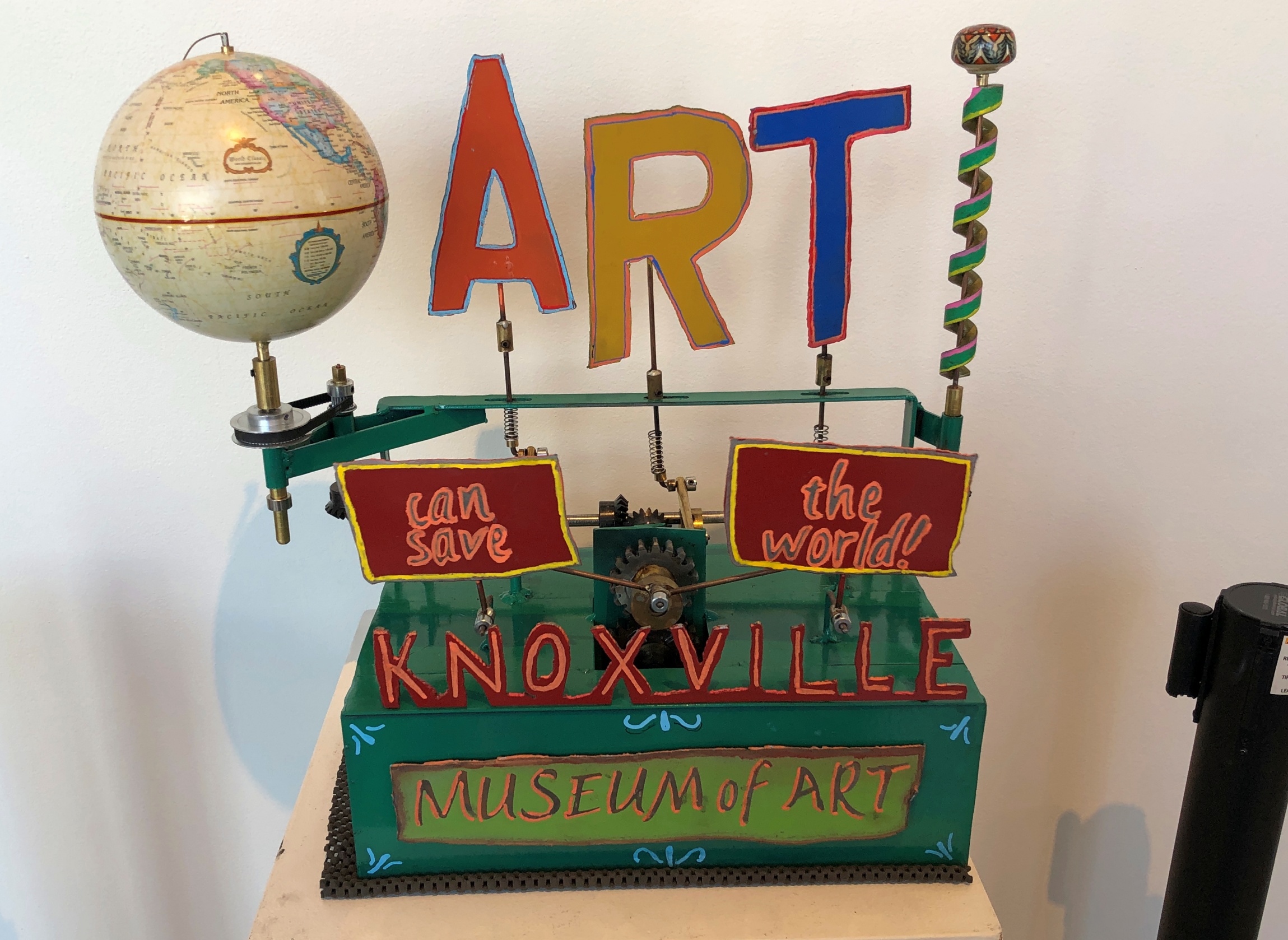
Such as a piece by artist Patrick Deason. Ah, the optimism. Unless he’s being sarcastic.

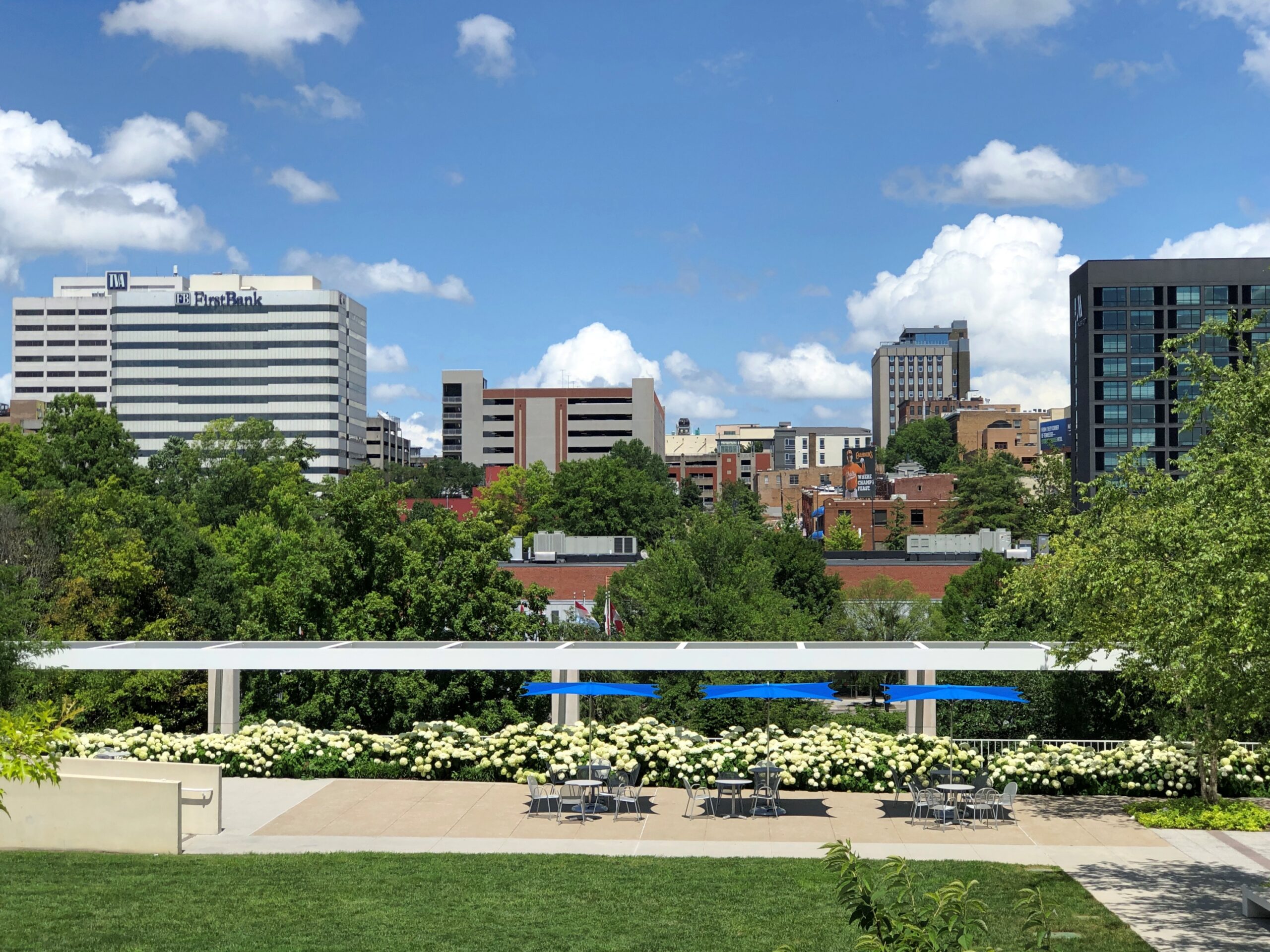
The museum also has a porch with a nice view of downtown Knoxville.

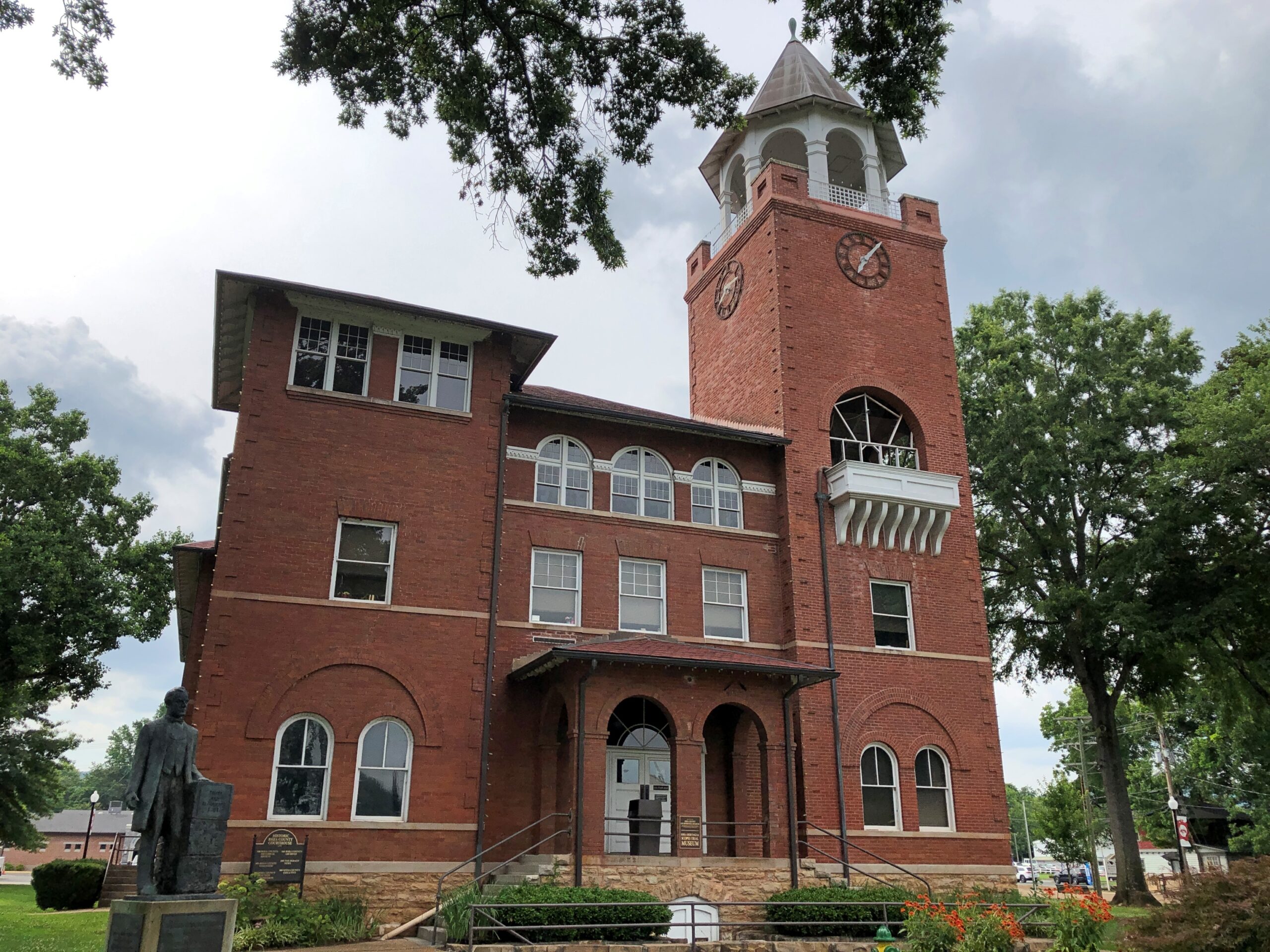
On my return westward through Tennessee, I made a point of passing through Dayton, site of the Scopes Trial, now 100 years ago. There is a museum devoted to the trial in the handsome and nicely restored 1890s Rhea County Courthouse, though I arrived after it had closed for the day.

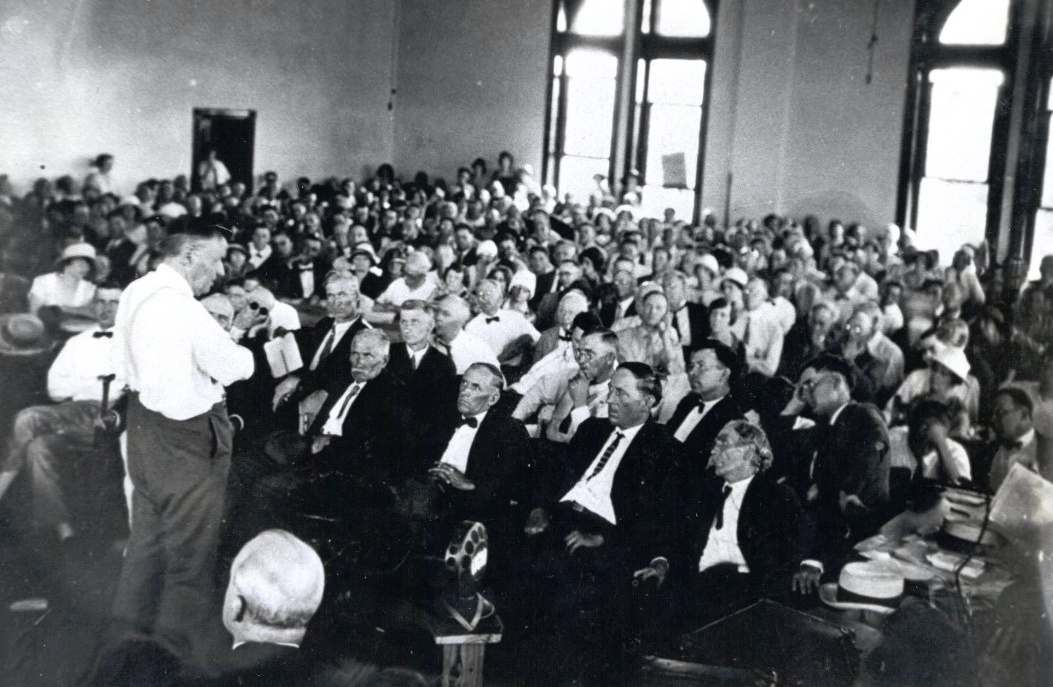
I look at pictures taken during the trial, and wonder how this multitude sat through it all, in an un-air-conditioned building. Guess like my grandma, as late as her last summer in 1970, they were used to it.

Before I got there, I heard a fellow on the radio discussing the (then) upcoming festival that Dayton was planning in honor of the centennial, as a bigger version of an annual event held in July. He might have been the organizer, I forget.

He pointed out that for many years Daytonites mostly wanted to forget about the trial – especially after the movie Inherit the Wind (1960) depicted the residents of Hillsboro, stand-ins for them, as fundamentalist bumpkins, at a time when the actual event was still in living memory. Which is nothing that Mencken didn’t do in 1925. Now the trial and Mencken and the movie are all part of that nebulous thing most people experience as the undifferentiated Past, and the townspeople have largely embraced the trial, according to the man on the radio. As well they should. It’s what Dayton, Tenn., has that no place else does.

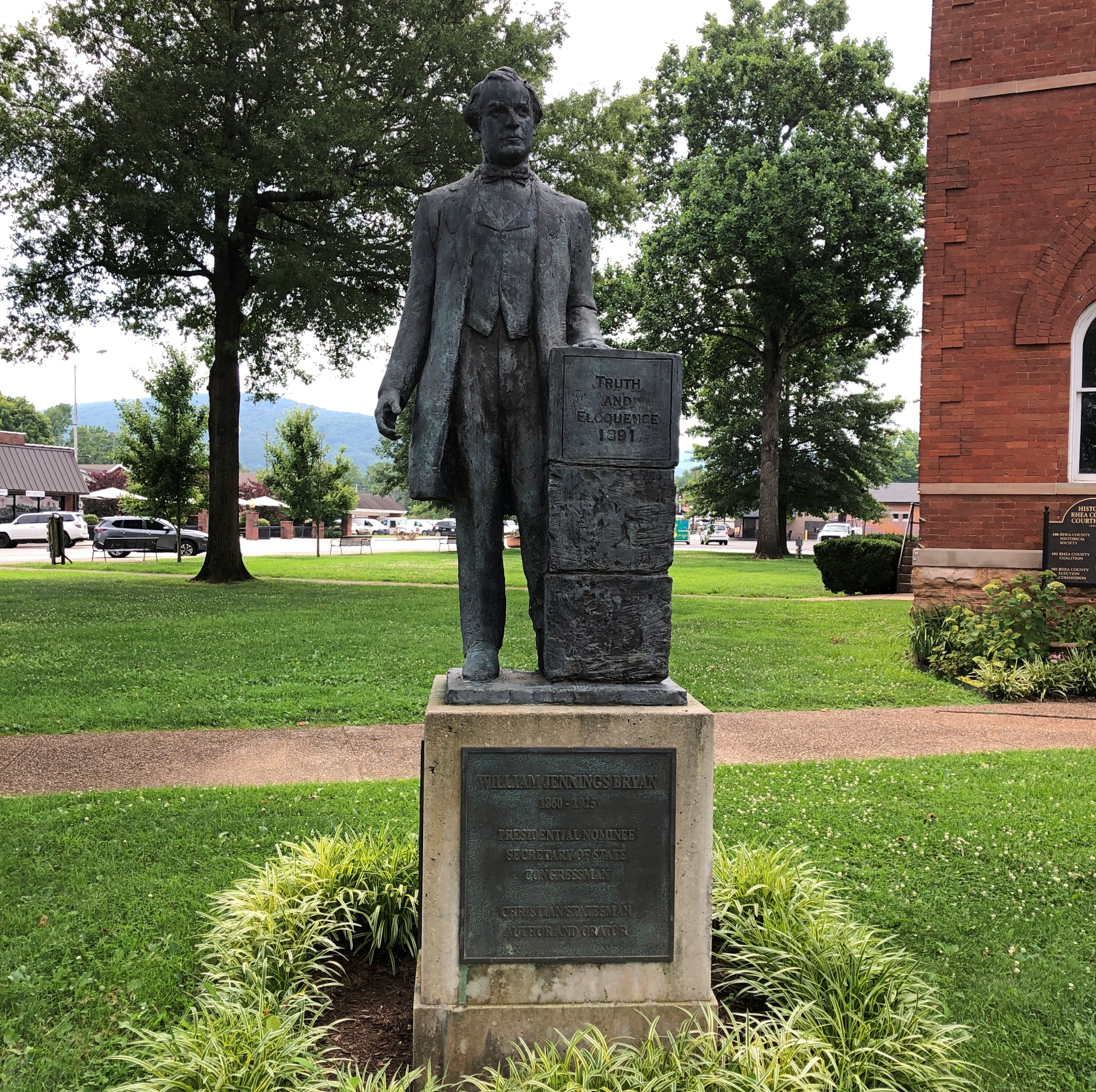
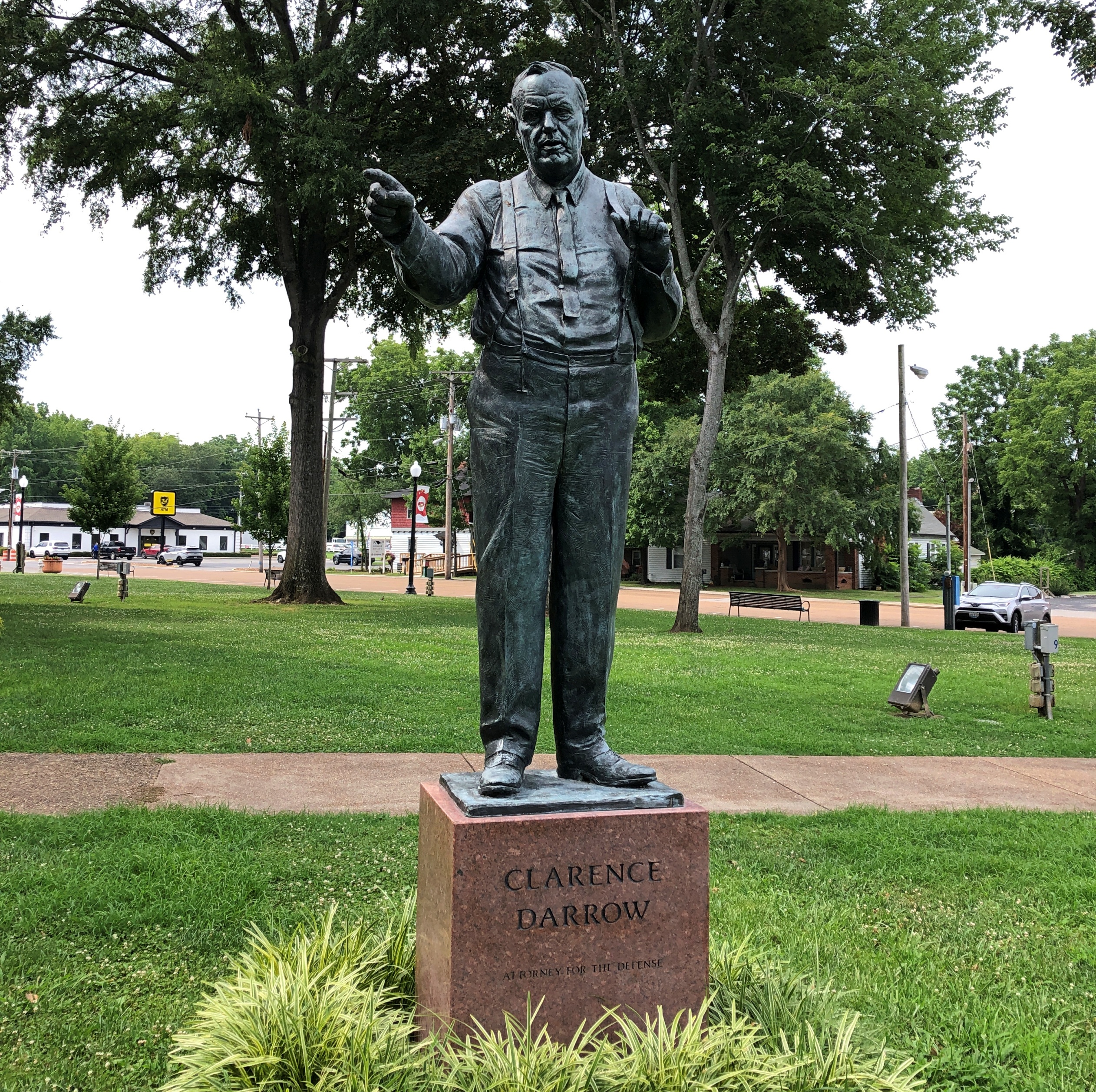
On the courthouse square, William Jennings Bryan and Clarence Darrow square off in bronze. Bryan College paid for the former, the Freedom From Religion Foundation the latter.

North Carolina

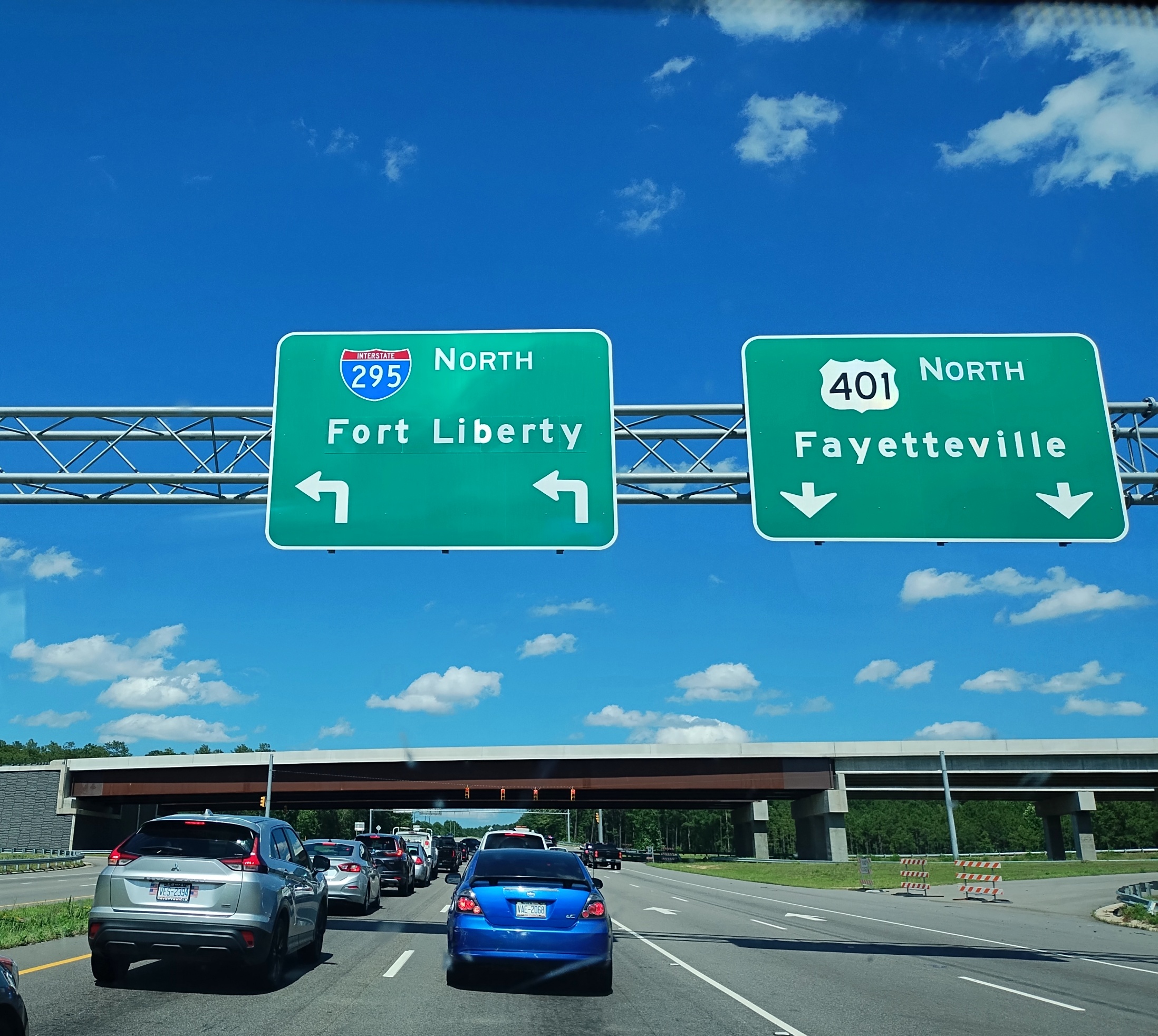
I was stuck momentarily in traffic near the military installation formerly known as Fort Bragg and then known as Fort Liberty and now known again as Fort Bragg. The traffic sign hasn’t caught up with the latest flip-flop.

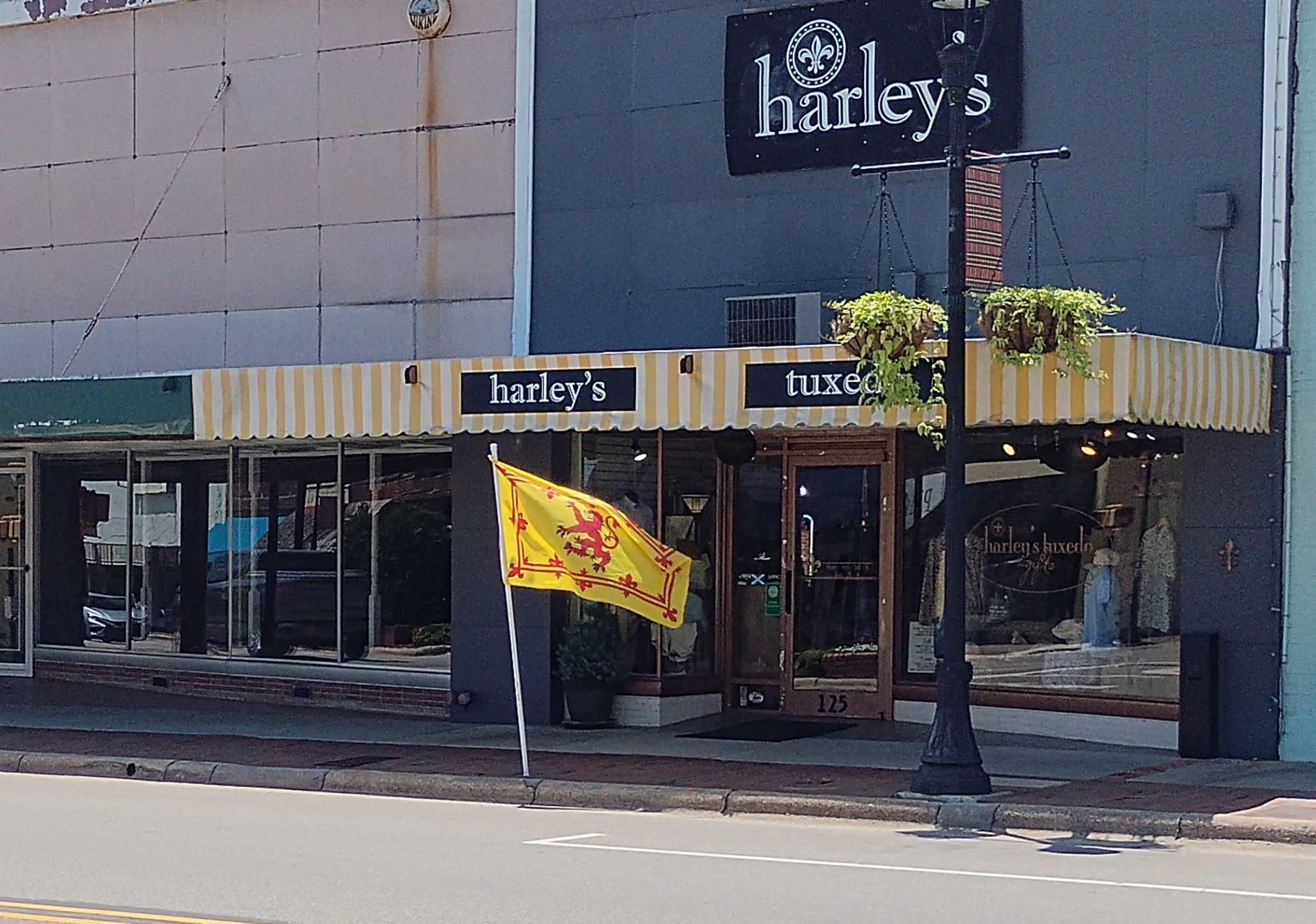
I stopped for lunch in Laurinburg, NC, at a storefront Chinese restaurant. Across the street, a tuxedo shop flew the Royal Banner of Scotland. Not something I’ve ever seen aflutter in the U.S. or anywhere, for that matter. But there is a school called St. Andrews University nearby, so maybe it’s not such a stretch. Make that was — the school closed just this May.

Wiki tells us: “As the personal banner of the Monarch, use of the Royal Banner of Scotland is restricted under the Act of the Parliament of Scotland 1672 cap. 47 and the Lyon King of Arms Act 1867 (30 & 31 Vict. c. 17), and any unauthorised use of such is an offence under the Act.” That has no bearing on its use in North Carolina, I’d say, considering how the Revolution turned out.

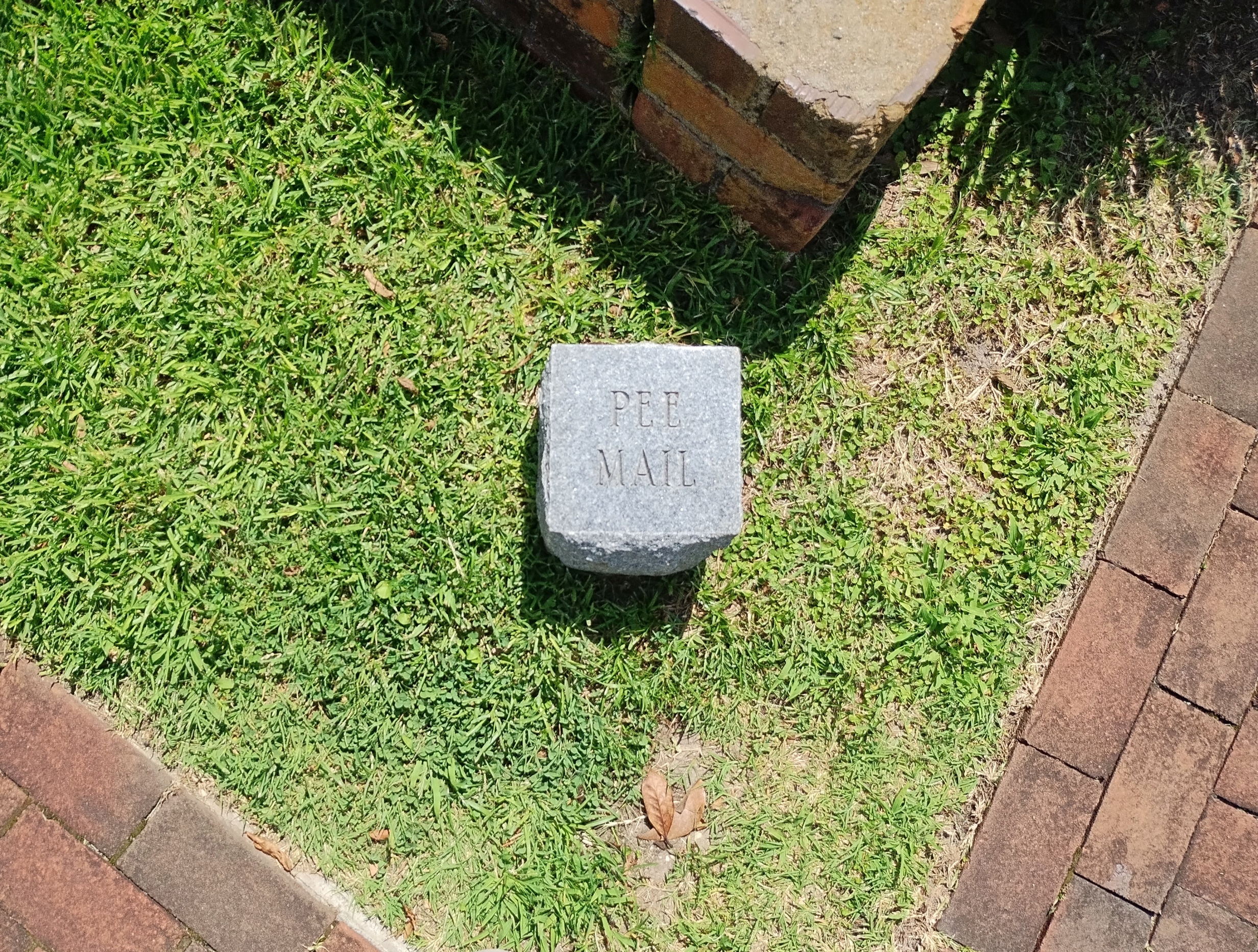
In New Bern, NC, this was a bit of a mystery at first.

Until I figured it out. A place for dogs to leave messages.

Georgia 60

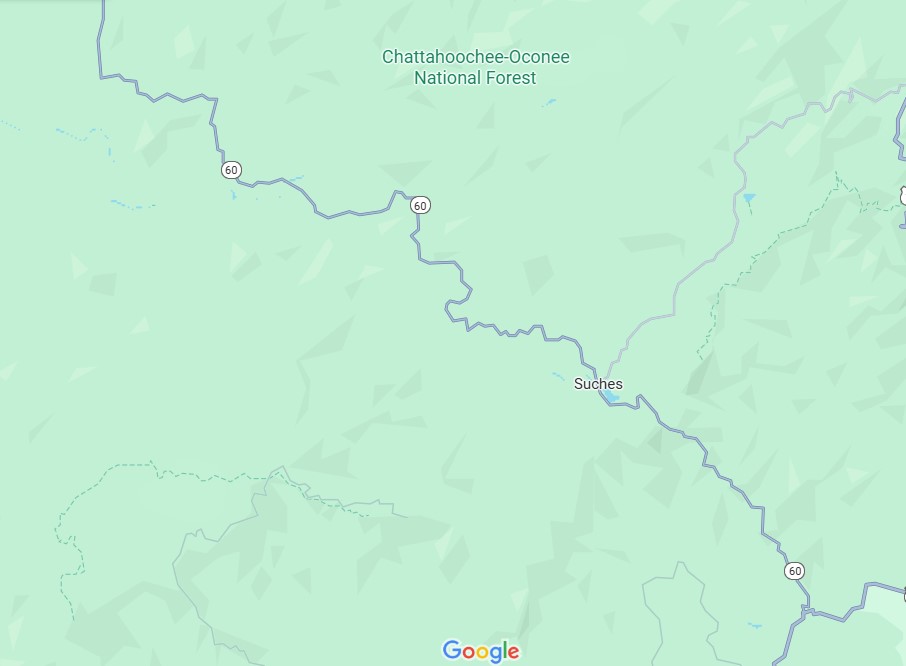
Clear skies, little traffic, good curves. I recommend driving on the two-lane Georgia 60 highway through the Chattahoochee National Forest under those conditions as certified car commercial driving. Considering all the hours of your life spent stewing in a traffic jam, it’s the kind of driving that makes you forget all of them.

Wish there had been a song on the radio to add to the driving experience — there was little but static — but that would just be icing on the cake anyway. Actually, not even that: it would be a little whip cream on a cake that already has some fine icing. To torture that analogy a little further, the cake would be the sedimentary rock lifted and cracked and shaped by whatever else rocks do over millions of years, topped by the biomass – that is, an Appalachian forest.

The history of humans in the Chattahoochee is incredibly dark and eventful. A textbook case of raping the land, only somewhat recovered in our time, partly through the efforts of the can-do CCC.

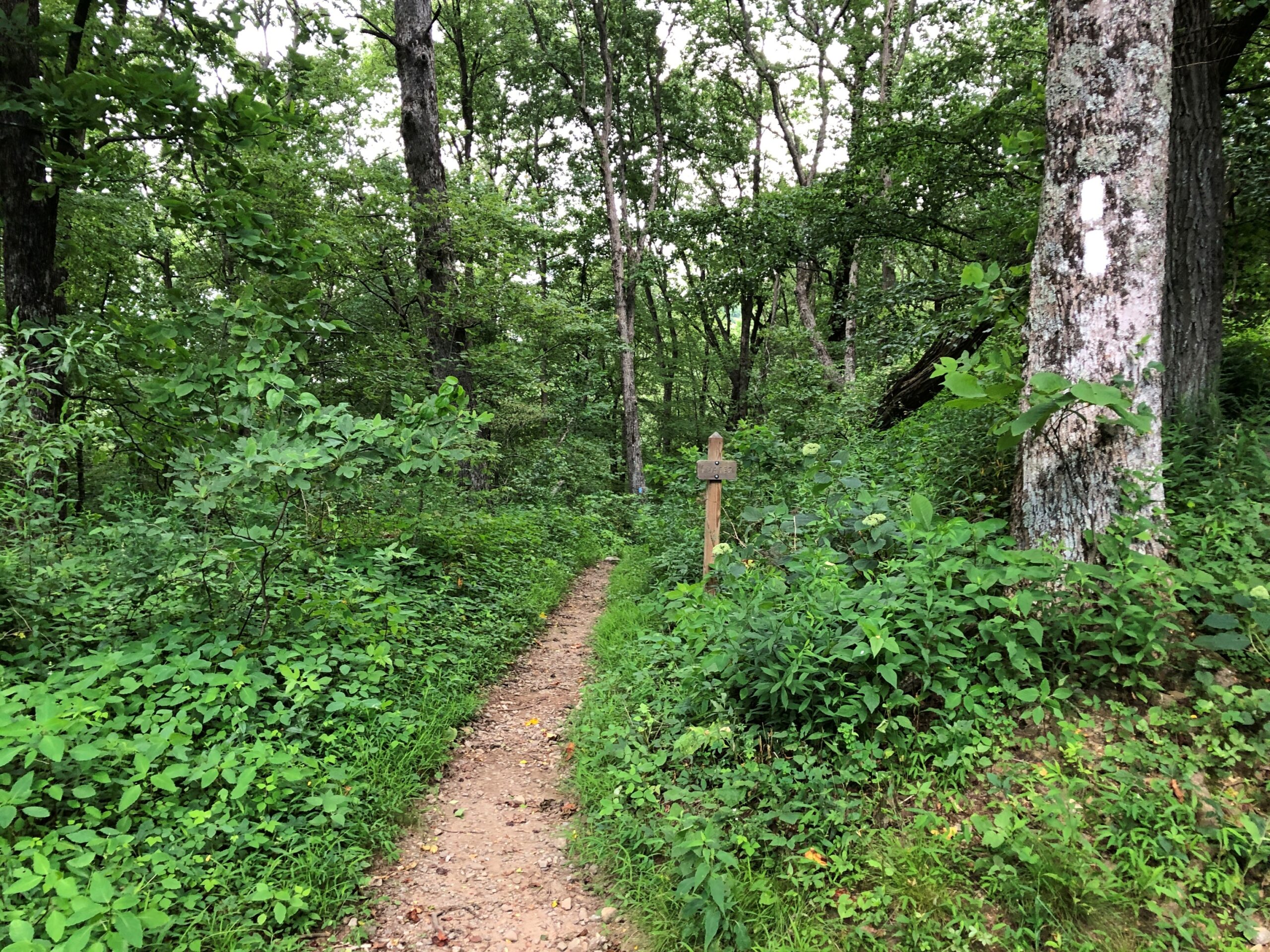
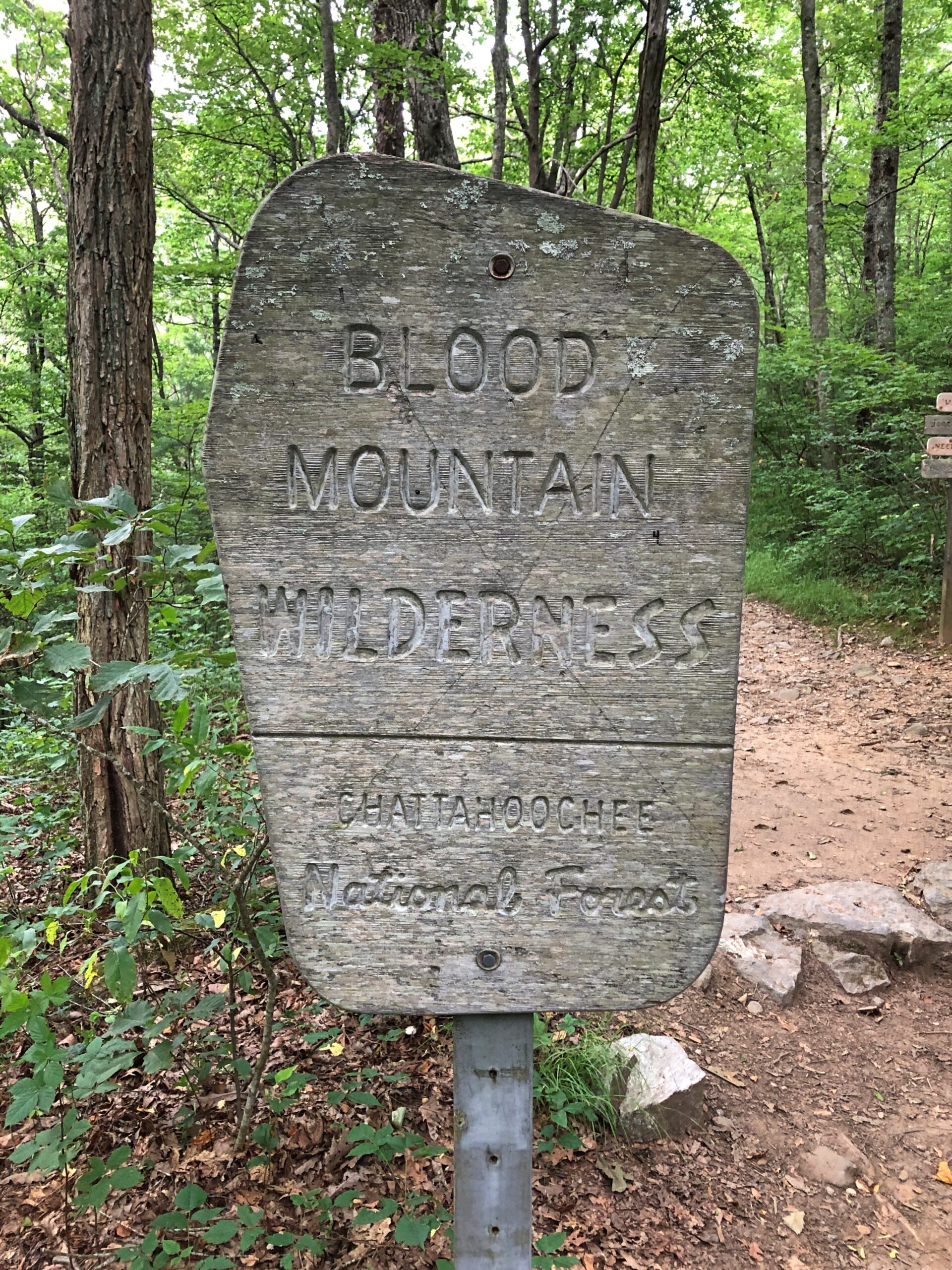
Besides the road itself, the works of man are fairly thin on the ground, literally. There is a hamlet called Suches (pop. 548), but not much else. The region has recovered enough to offer a trail through the Blood Mountain Wilderness, which crosses the highway at one point, where there is a small parking lot.

Blood Mountain Wilderness

I wasn’t equipped for a hike, so I walked only a half-mile or so in, and then back. I don’t remember having to swat a single mosquito, which ups the quality of a walk right there.

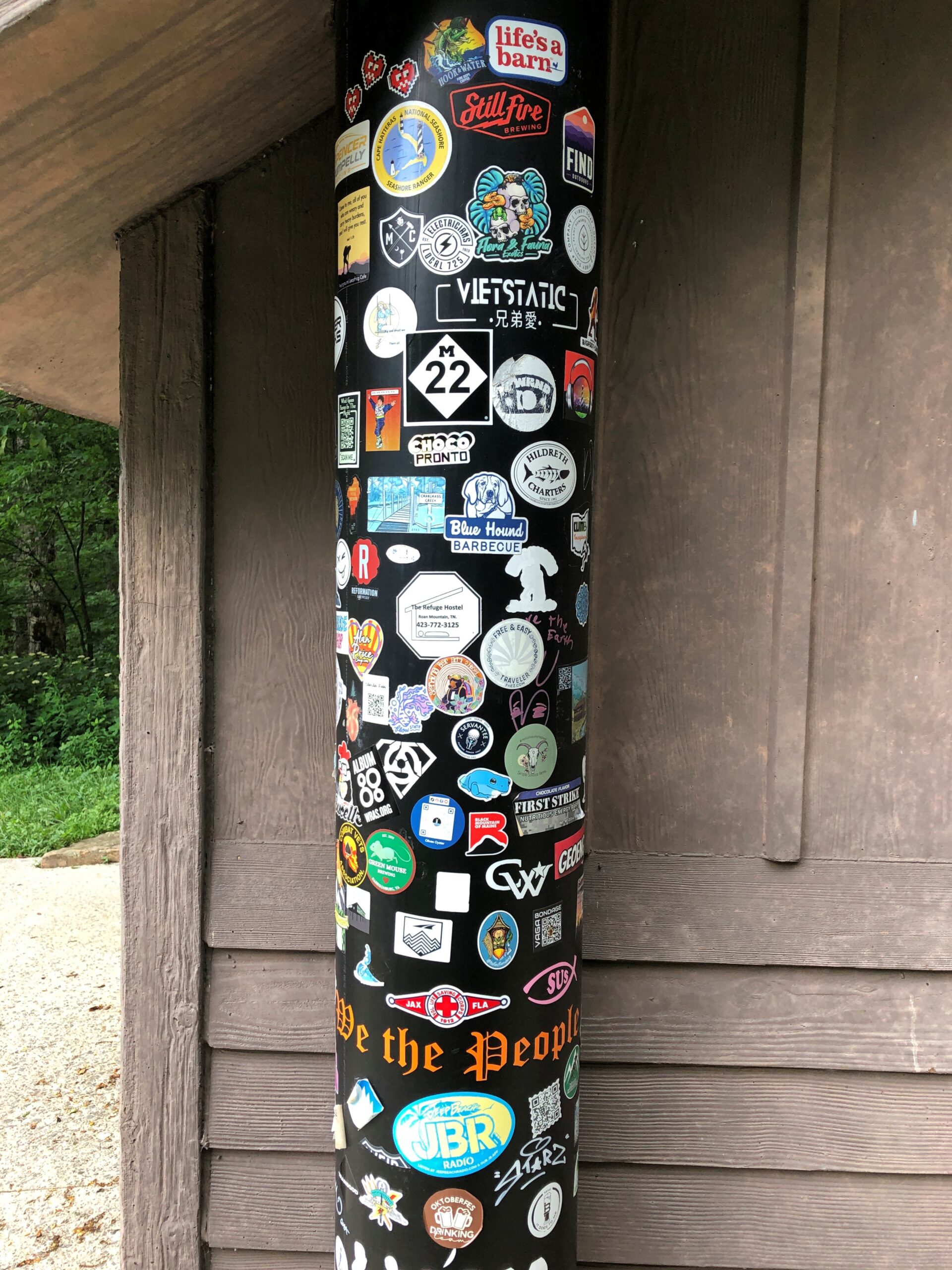
Next to the parking lot are pit toilets. Attached to the structure is a pipe, many times stickered by passersby. I didn’t see a Buc-ee’s sticker, but there could be one appearing anytime now. Good to see M-22 up in Michigan represented: that’s another fine stretch of car commercial driving.

Blood Mountain. There’s a Southern Gothic horror name for you. Or less seriously, the setting of a Scooby-Doo episode, one in which Shaggy, when he learns the name of the place, says “Zoinks! B-B-Blood Mountain?!?”

Gold!

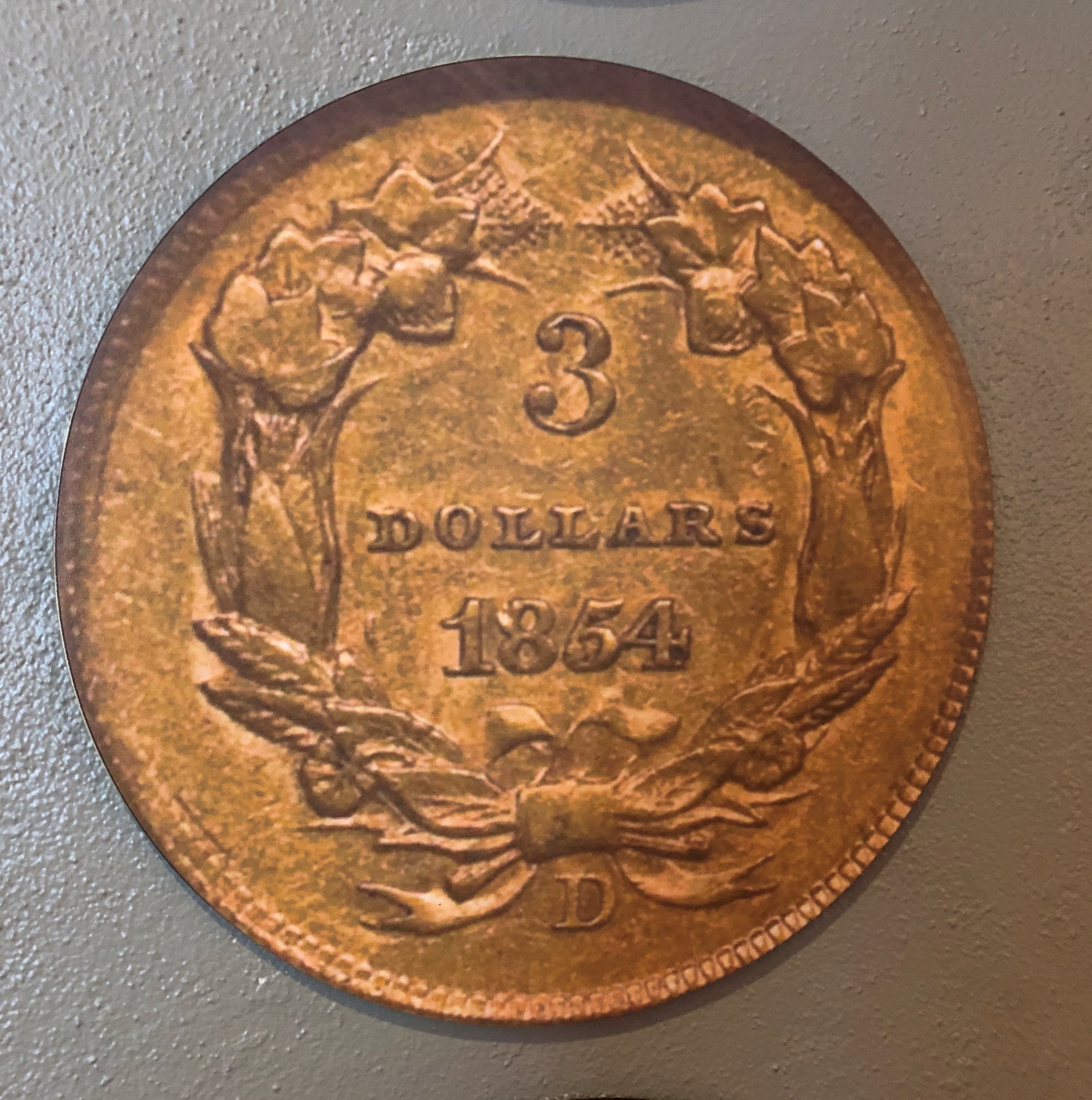
When pondering the immortal deeds of President Millard Fillmore, as one should occasionally, his signature on the Coinage Act of 1853 is worth a thought. The law, signed weeks before he left office, adjusted the silver content of most U.S. coinage, but also created the $3 gold piece. When that hoary old cliché about the queerness of a $3 bill is trotted out, I’d guess that most people don’t know that there was actually such a denomination. It was a gold coin rather than paper, made from 1854 to 1889, though few were minted most of those years.

I already knew about $3 gold pieces before I arrived at the Dahlonega Gold Museum in late June on my way to Tennessee, but if I hadn’t, I could have learned about them there. Dahlonega, Georgia, used to be home to a branch mint where they were made. Only gold coins were made at Dahlonega, including that odd duck of a denomination for exactly one year (1854), but also gold dollars, quarter eagles and half eagles until 1861. No eagles or double eagles, however.

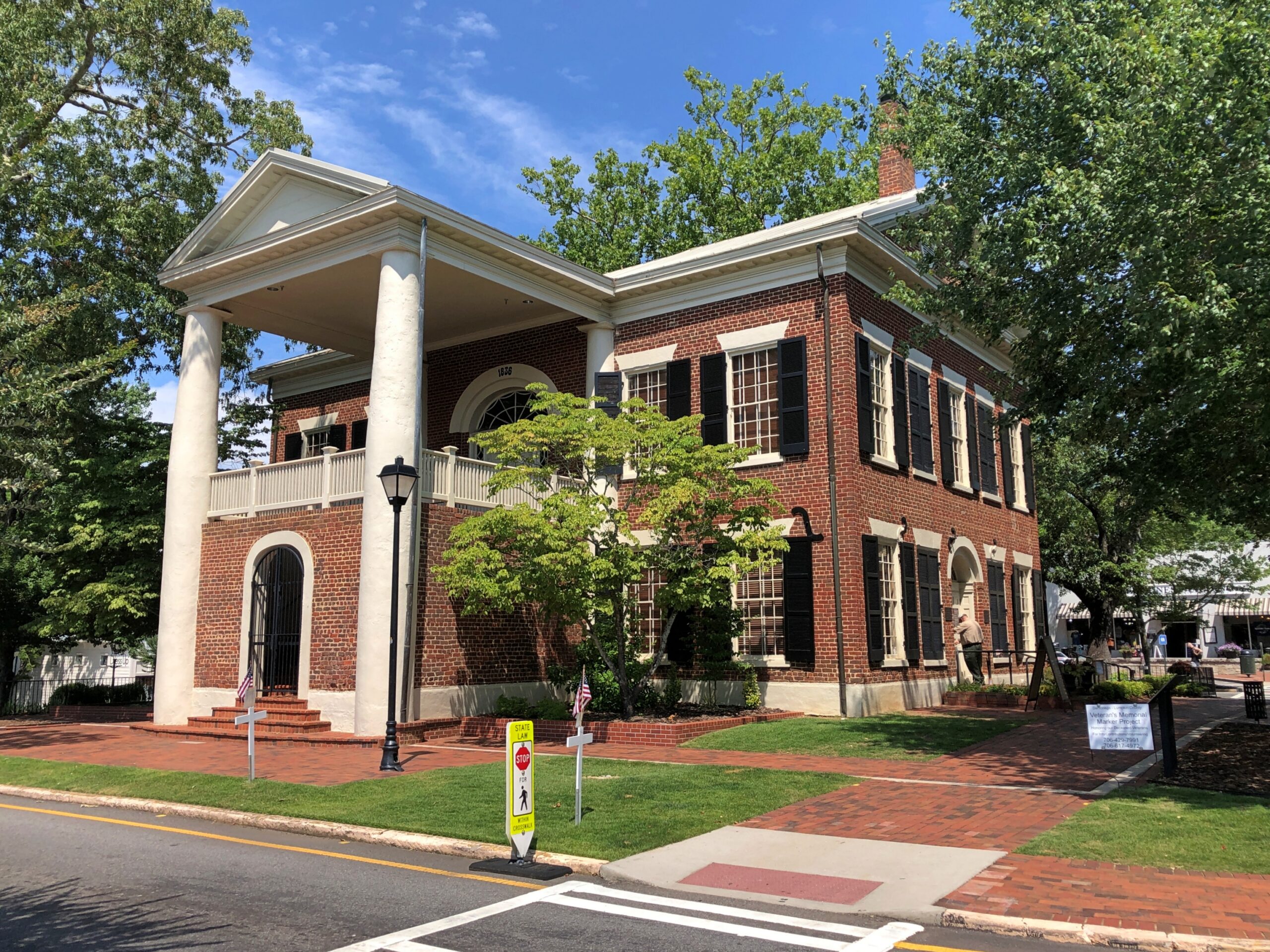
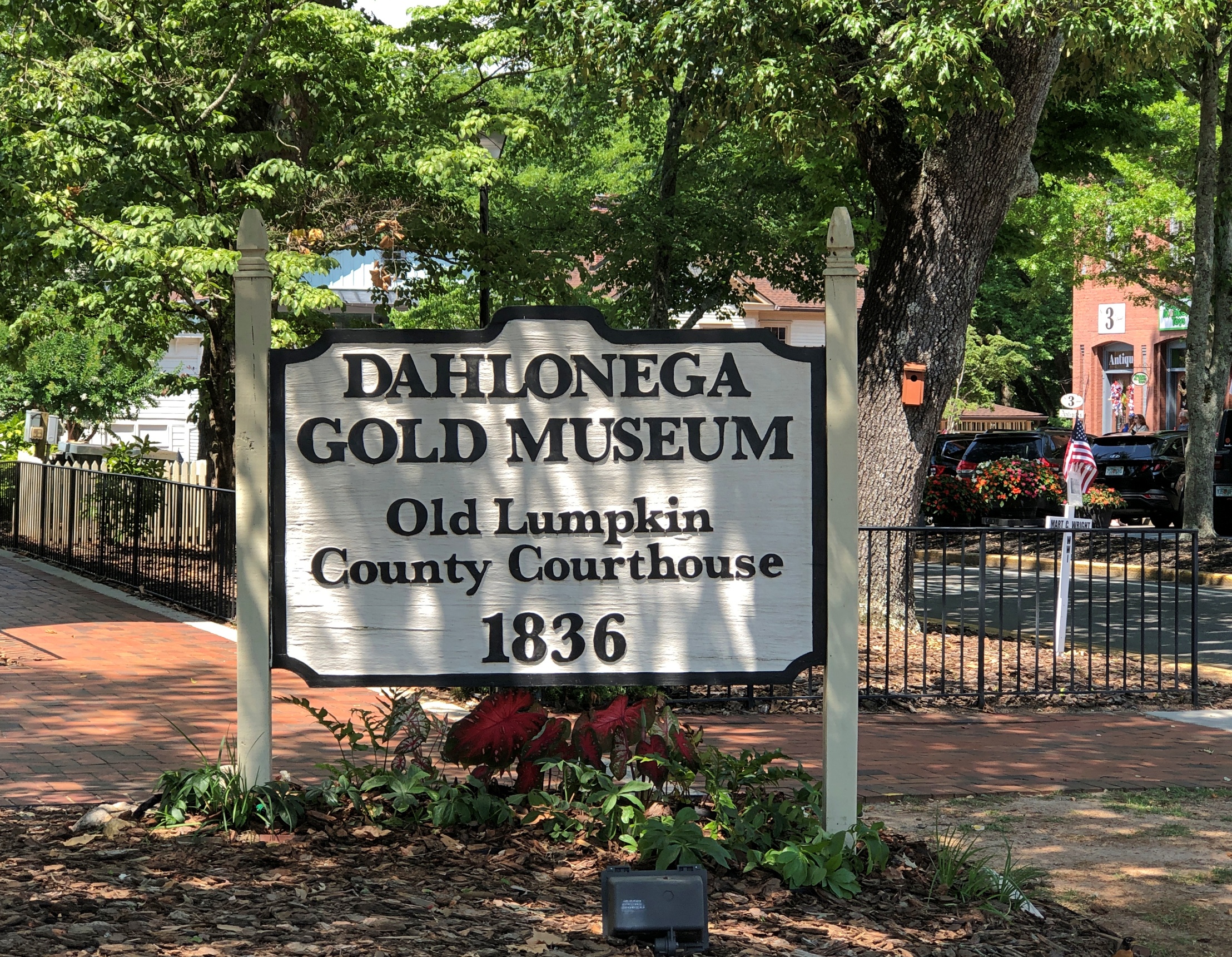
The history of gold coinage at the Dahlonega Mint wasn’t that long. Congress authorized a branch mint there (and in Charlotte, NC, and New Orleans) in 1835, and coin production started at Dahlonega in 1838. The north Georgia gold rush beginning in the late 1820s justified such a move. The Civil War resulted in the closure of the mint, which never reopened afterward, and not too much later, the mint building in Dahlonega burned down. The modern museum is in the former Lumpkin County Courthouse and tells the story of gold in the area.

The museum has exhibits about the mint, but also the gold rush, including information about the discovery and mining of the metal, some antique equipment, and a nod to the Cherokee on whose land the gold was discovered — the rush helped precipitate the Indian Removal Act — as well as the slaves and free labor that worked the streams and hills looking for gold. There was also, behind thick glass, a complete collection of Dahlonega gold coins, mint mark “D,” long before Denver got that letter for its coins.

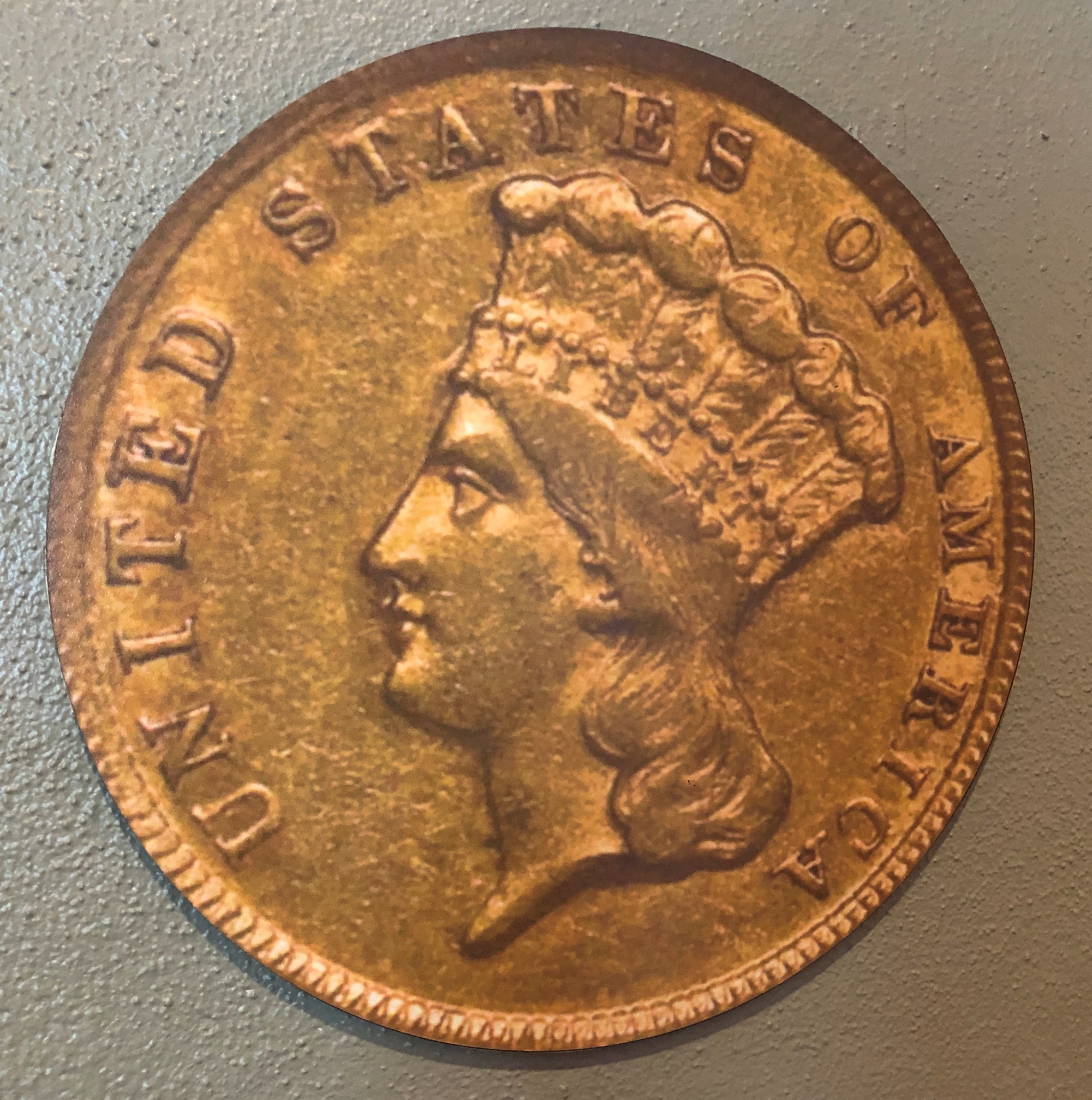
The protective glass made photographing the actual coins problematic, but the museum thoughtfully provided enlarged images of a few of the coins in its display, including the $3 piece.

Like the 20 cent piece or the Susan B. Anthony dollar, the $3 gold piece wasn’t popular when new. Too easily confused with the quarter eagle would be my guess, though their designs are very different. But they are popular among collectors now, and quite valuable. As a result, alas, I’m unlikely ever to own one. In the most extreme case, an 1870-S $3 piece, the only example known to exist, sold at auction in 2023 for more than $5.5 million.

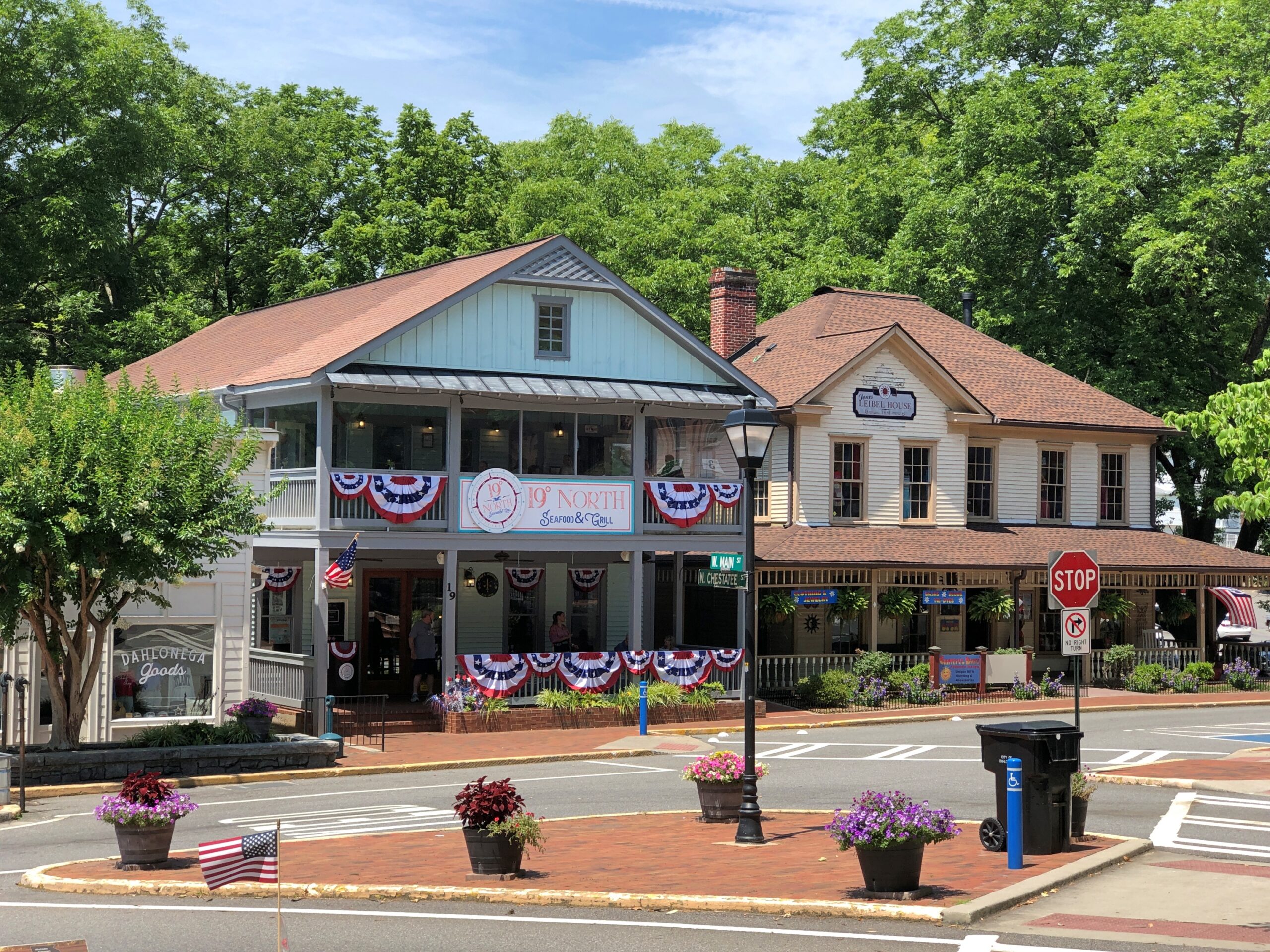
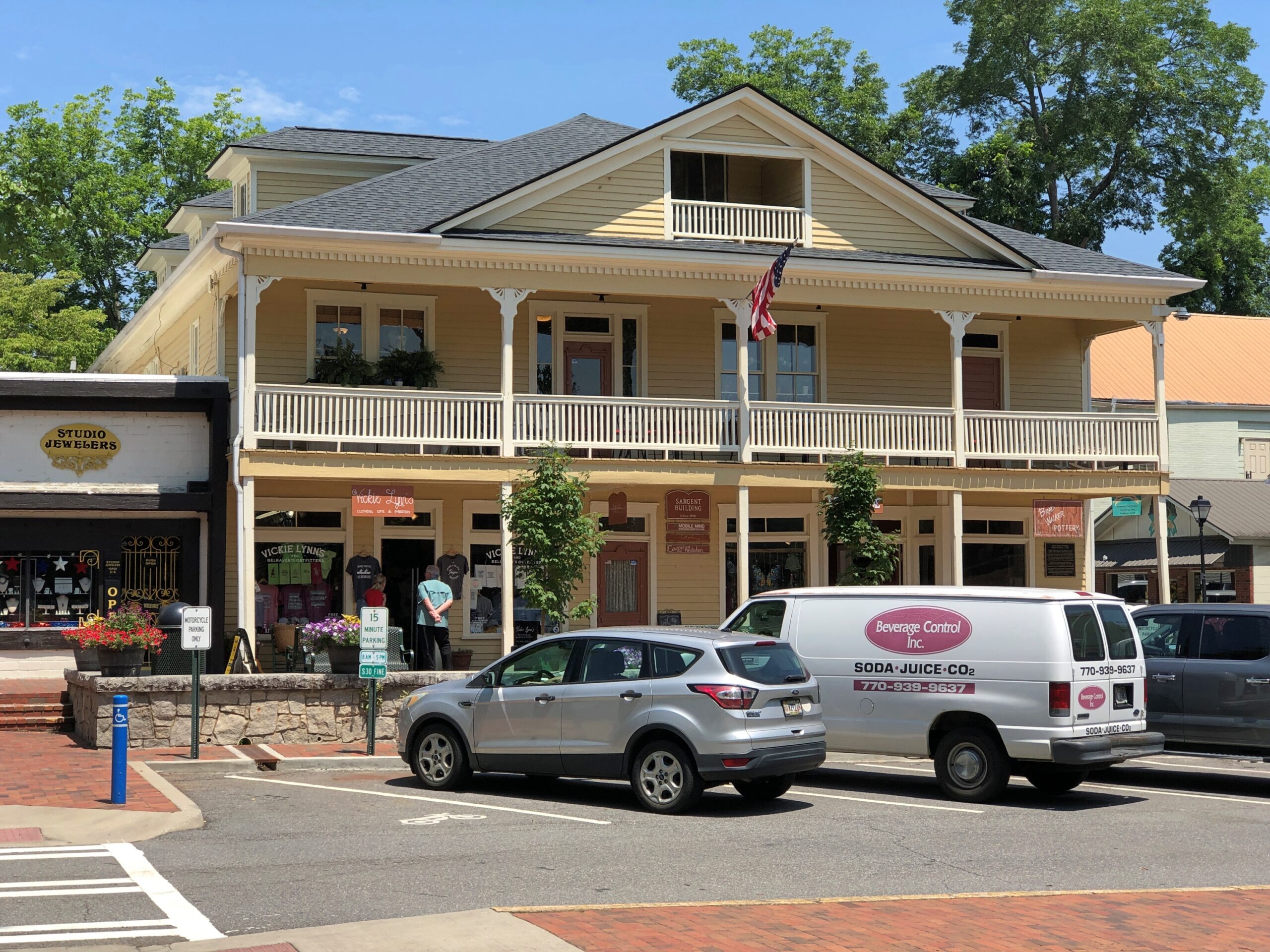
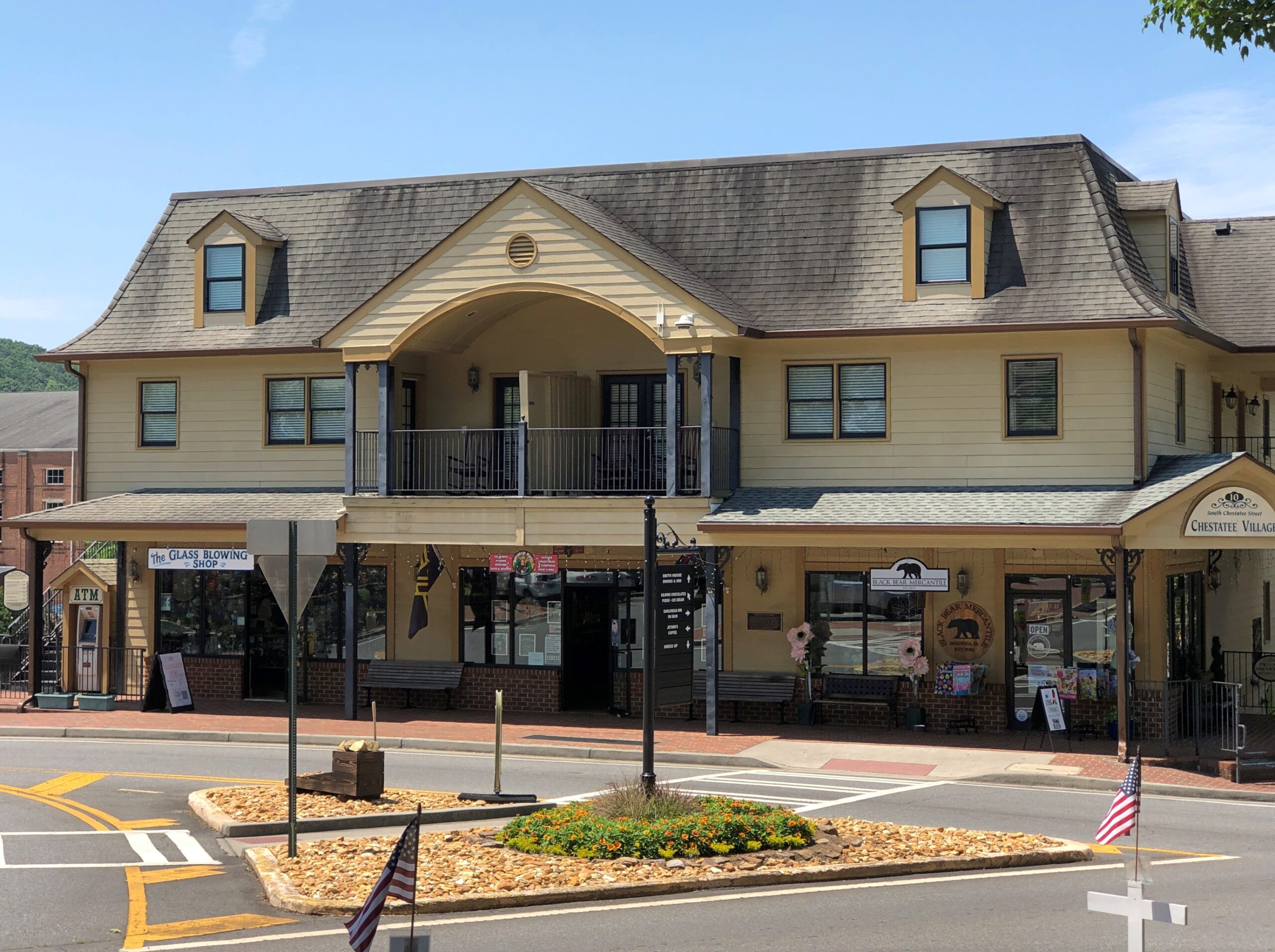
As for Dahlonega, its downtown has the handsome look of a day-trip destination from Atlanta and a lot of suitable businesses. On the former county courthouse square, you can find the likes of Gustavo’s Scratch Kitchen, Vintage Musical Instruments, Dahlonega Tasting Room, The Glass Blowing Shop, Studio Jewelers, Lynn’s Gifts, Country Cottage (also gifts), Local Pup pet store, 19° Seafood & Grill, Paul Thomas Chocolates, Dahlonega Goods and Dress Up Dahlonega.

Dahlonega, Ga.
Dahlonega, Ga.

A blazing hot day might not have been the best time for a visit, so the square wasn’t especially crowded. I only spent enough time on foot to get from a parking lot a block away to the museum, and then took a walk around the building under the shade of the trees on the grounds. For a hot summer day, not a bad walkabout. Certainly worth the effort to see some Dahlonega gold.

Augusta Flyby

In the heat of midday back in late June, en route to Athens, Ga., I arrived at the Georgia Welcome Center on I-20, a sizable structure just inside the state, and did what I needed to do. Returning to my car, I wondered whether I should drive into Augusta, only a few miles off the Interstate at that point. Specifically to downtown, to see what I could see, even at 90+° F. or so.

Would it be worth the short detour? At that moment, the lyrics of a song of my youth came to mind, as the only mention of Augusta I know in popular music.

I beg your pardon, mama, what did you say?

My mind was drifted off on Martinique Bay

It’s not that I’m not interested, you see

Augusta, Georgia is just no place to be.

The song was “An American Dream” by the Nitty Gritty Dirt Band (a.k.a. the Dirt Band) – with backing vocals by Linda Ronstadt, no less – which reached No. 13 on the Billboard Hot 100 after its release in late 1979, and probably annoyed Augusta’s city fathers and other local boosters. But all that was nearly a half century ago, so I expect any annoyance is long gone as the tune has slipped into obscurity.

The song merely came to mind then, as songs often do, and didn’t affect my decision – which was to go. Do a flyby, in my idiosyncratic nomenclature for such a visit. That is, pass through a place, but a little more than merely driving through. If I see anything interesting during a flyby, I’ll stop for a short look. (So not only is my nomenclature eccentric, it isn’t really accurate. Who cares.)

Sure enough, I spotted something worth stopping for.

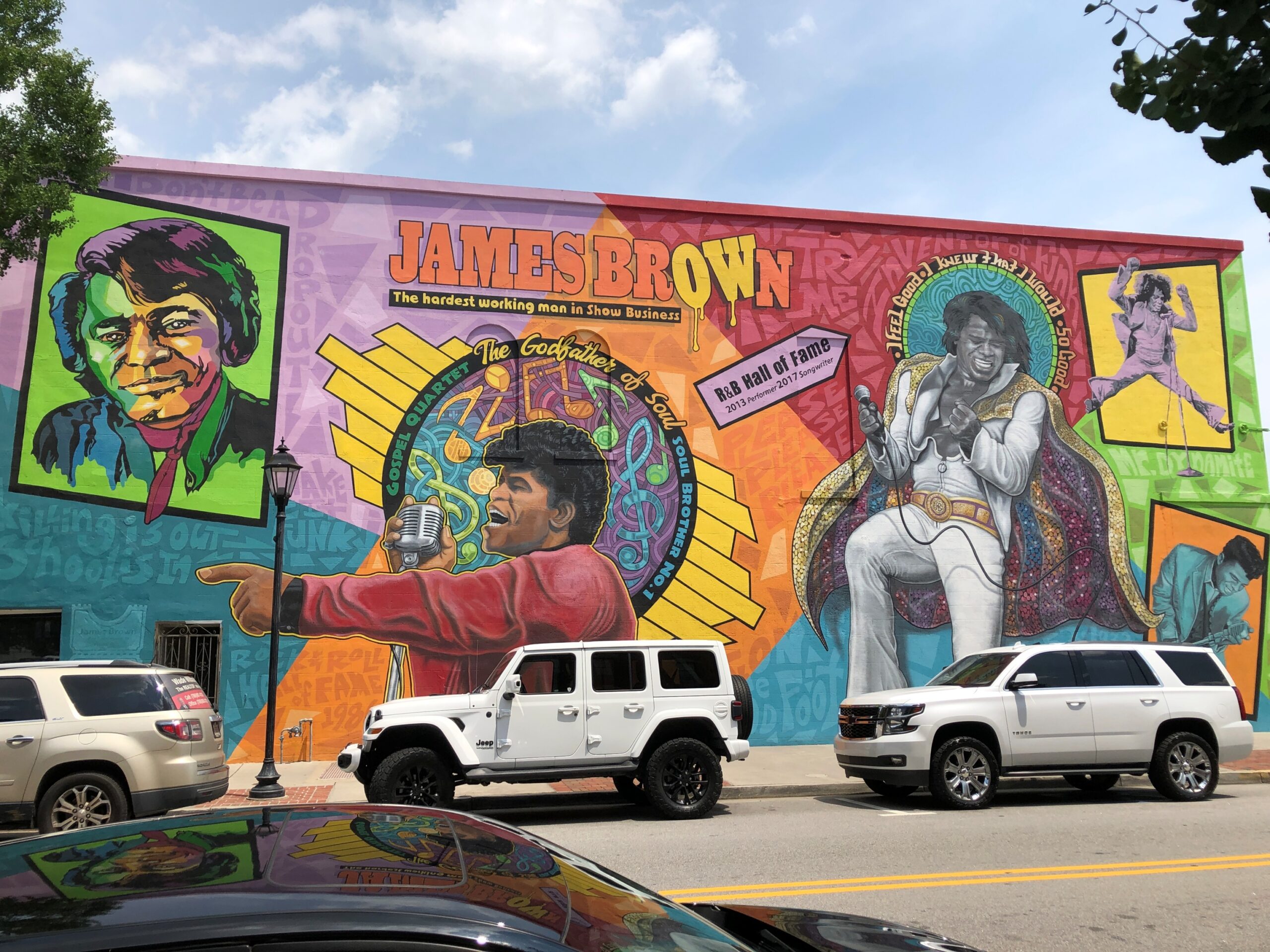
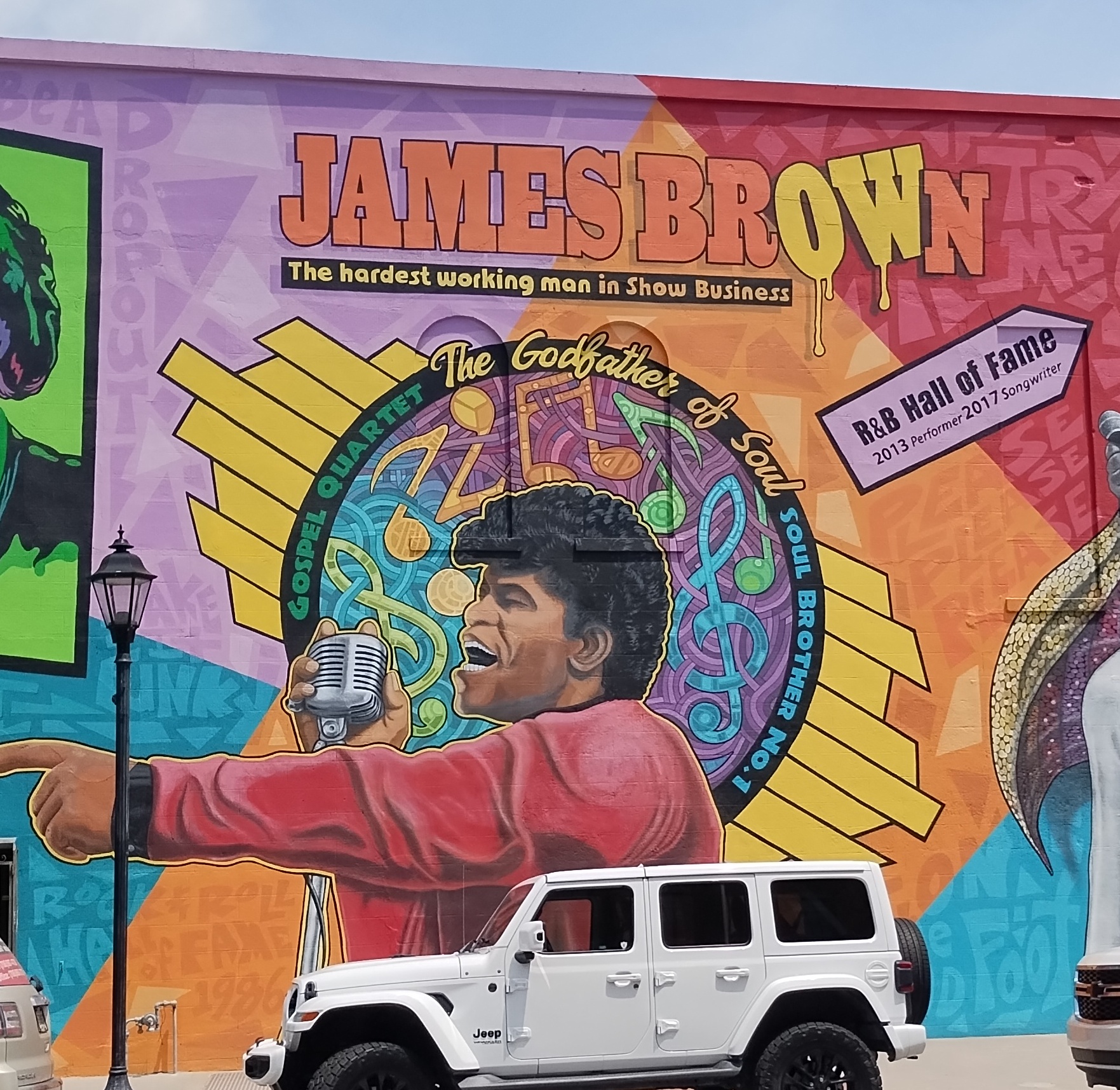
James Brown mural, Augusta

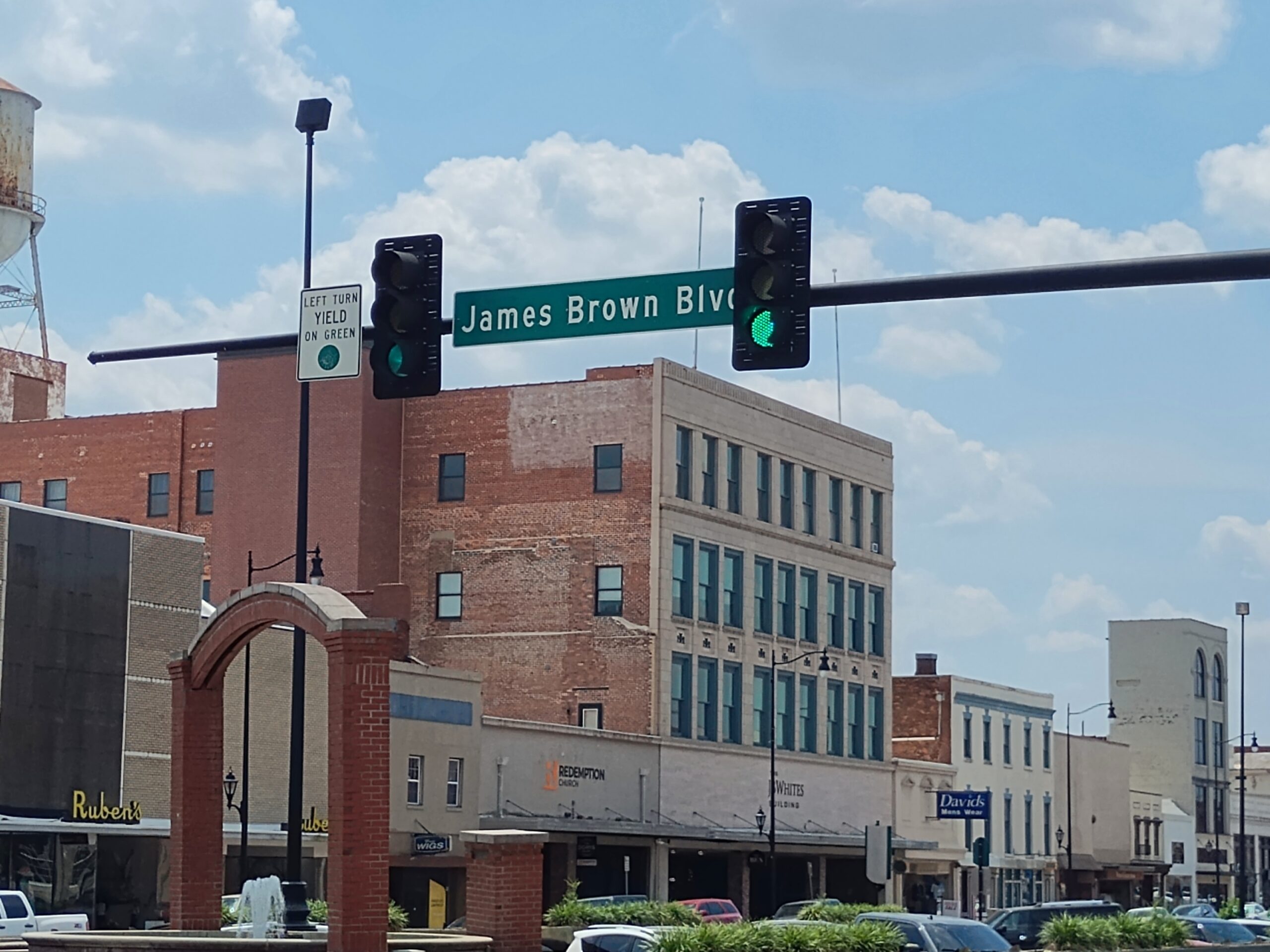
A mural at the intersection of James Brown Blvd. and Broad St., completed in 2020 by an artist named Cole Phail. Though born in South Carolina, Brown grew up in Augusta, a fact I previously didn’t know.

James Brown Blvd

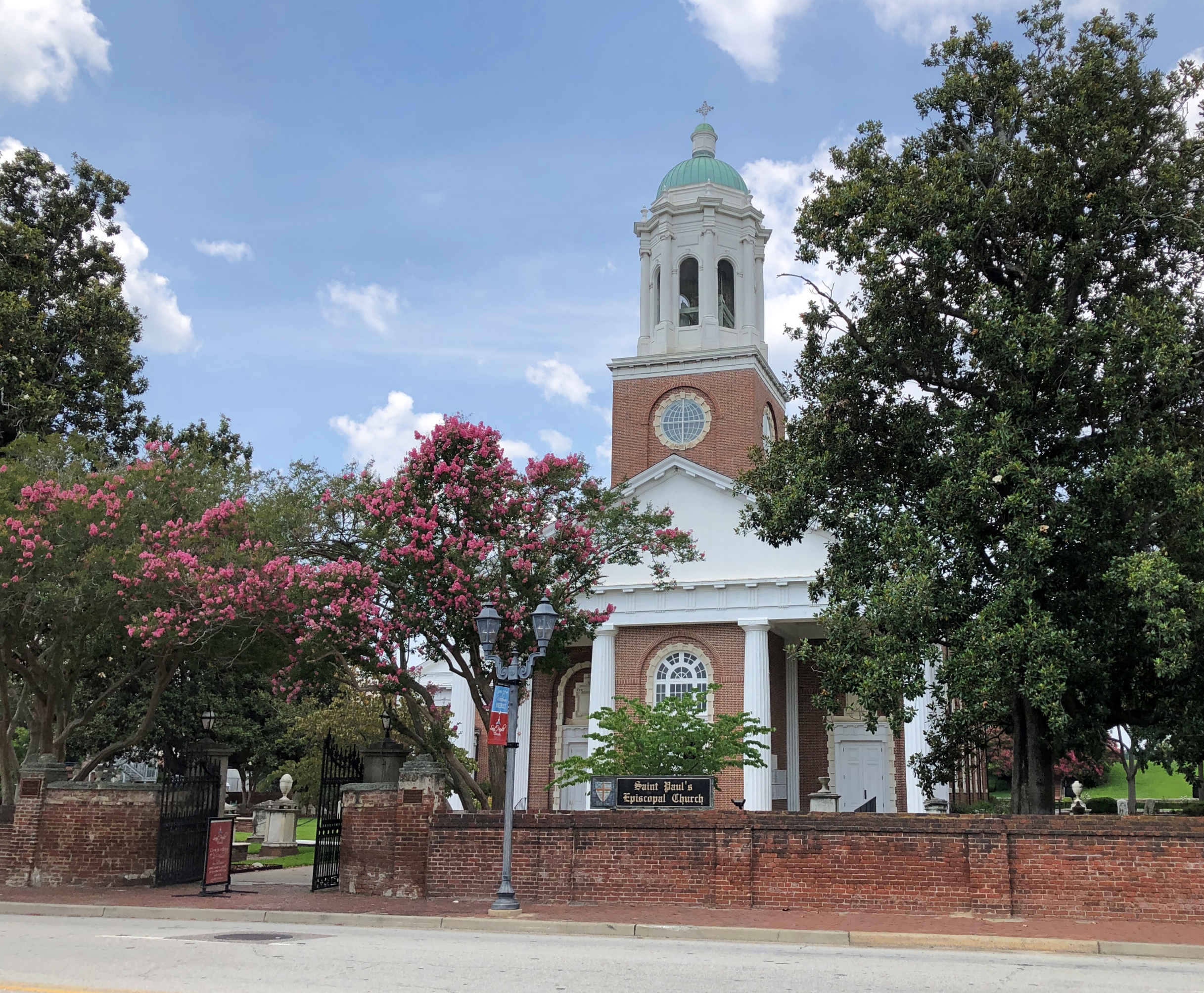
Later I learned that there’s a bronze of the Godfather of Soul not far away on Broad, but I didn’t look around enough to spot it, considering the heat dome, which seemed to be bearing down on me personally at that moment. So I looked at the mural, got back in my car, and blasted the AC. A few blocks away, as I was driving along, I saw an open church. I had to stop for that, too.

St Paul's Church, Augusta

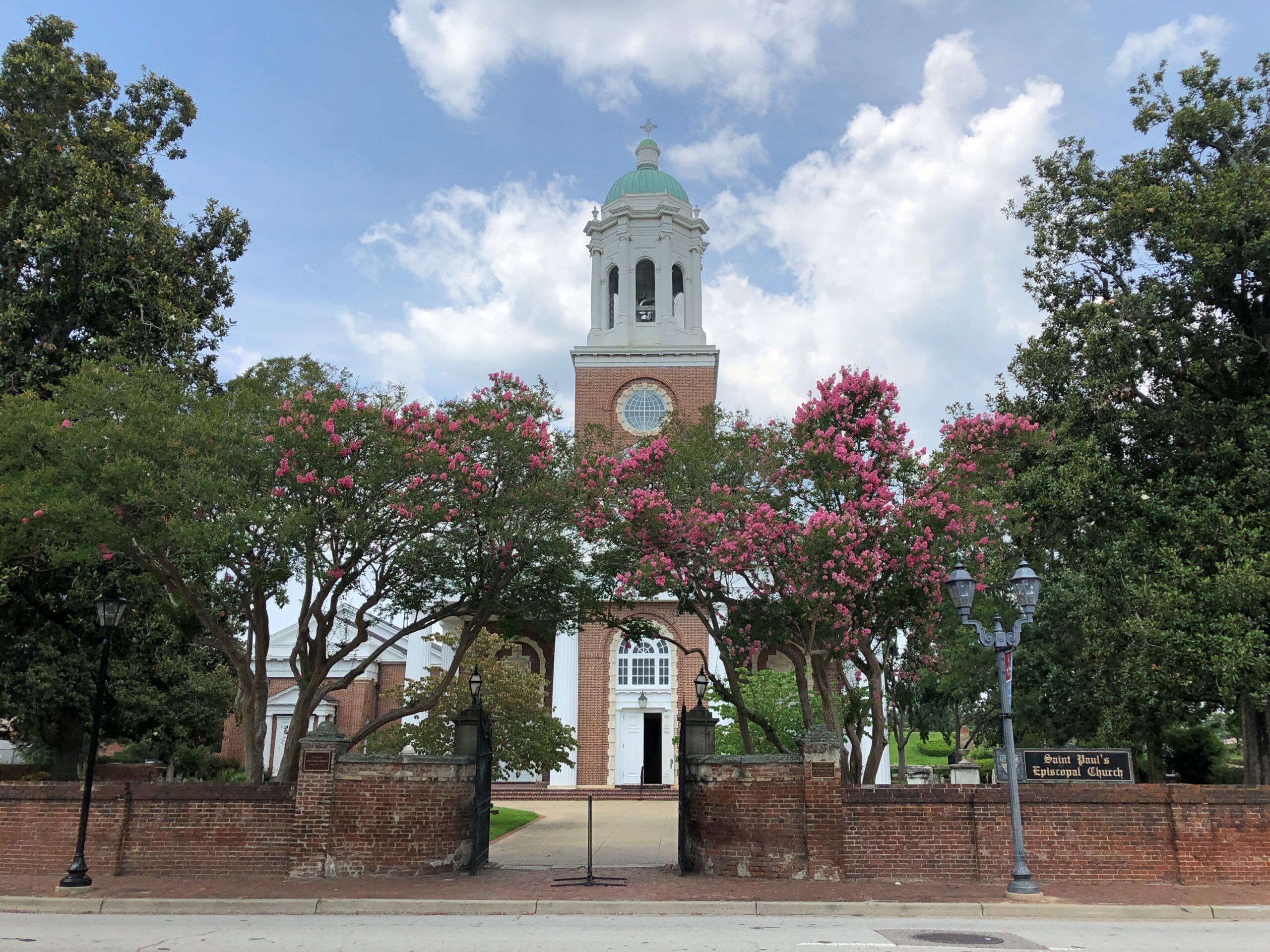
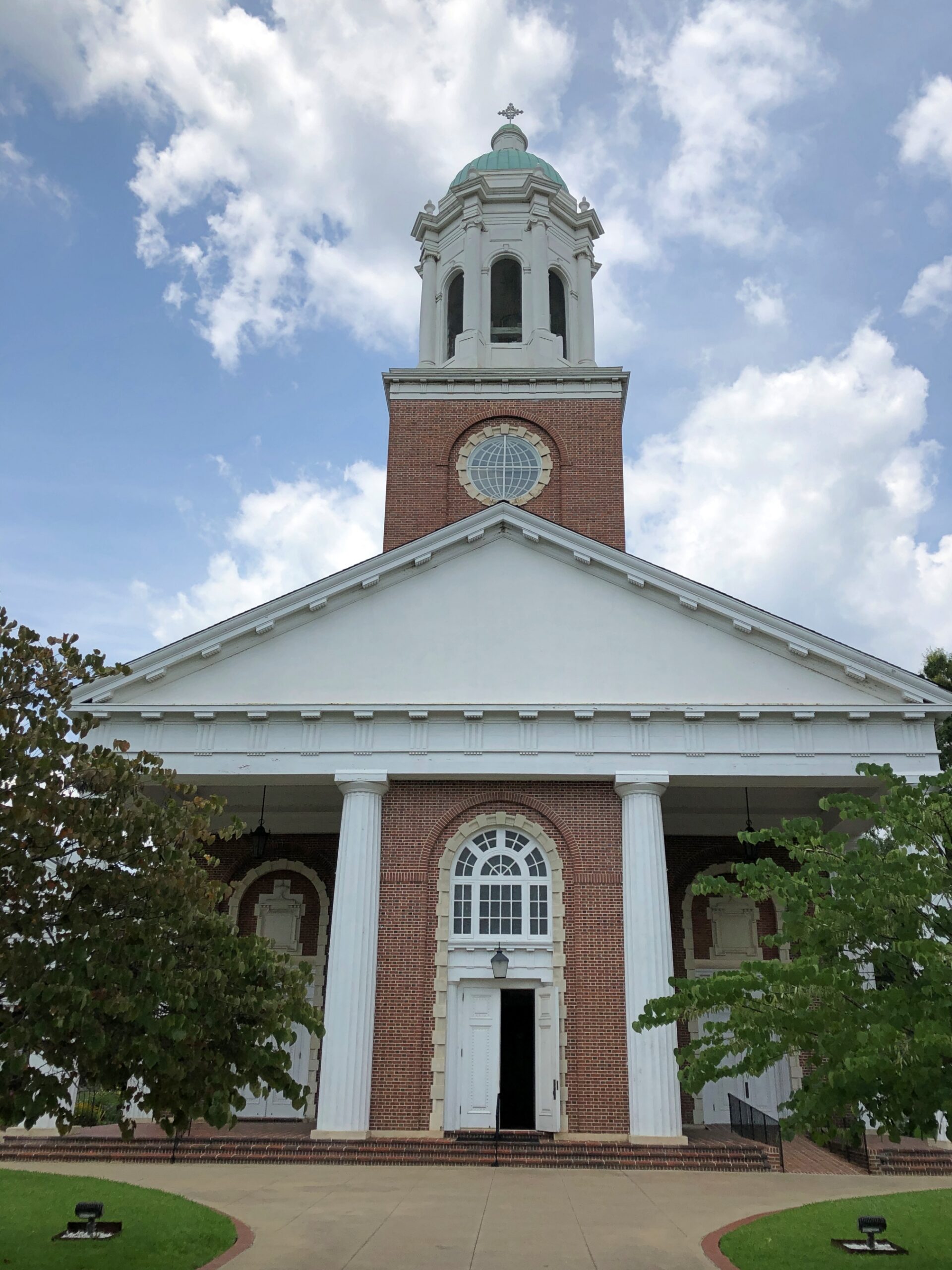
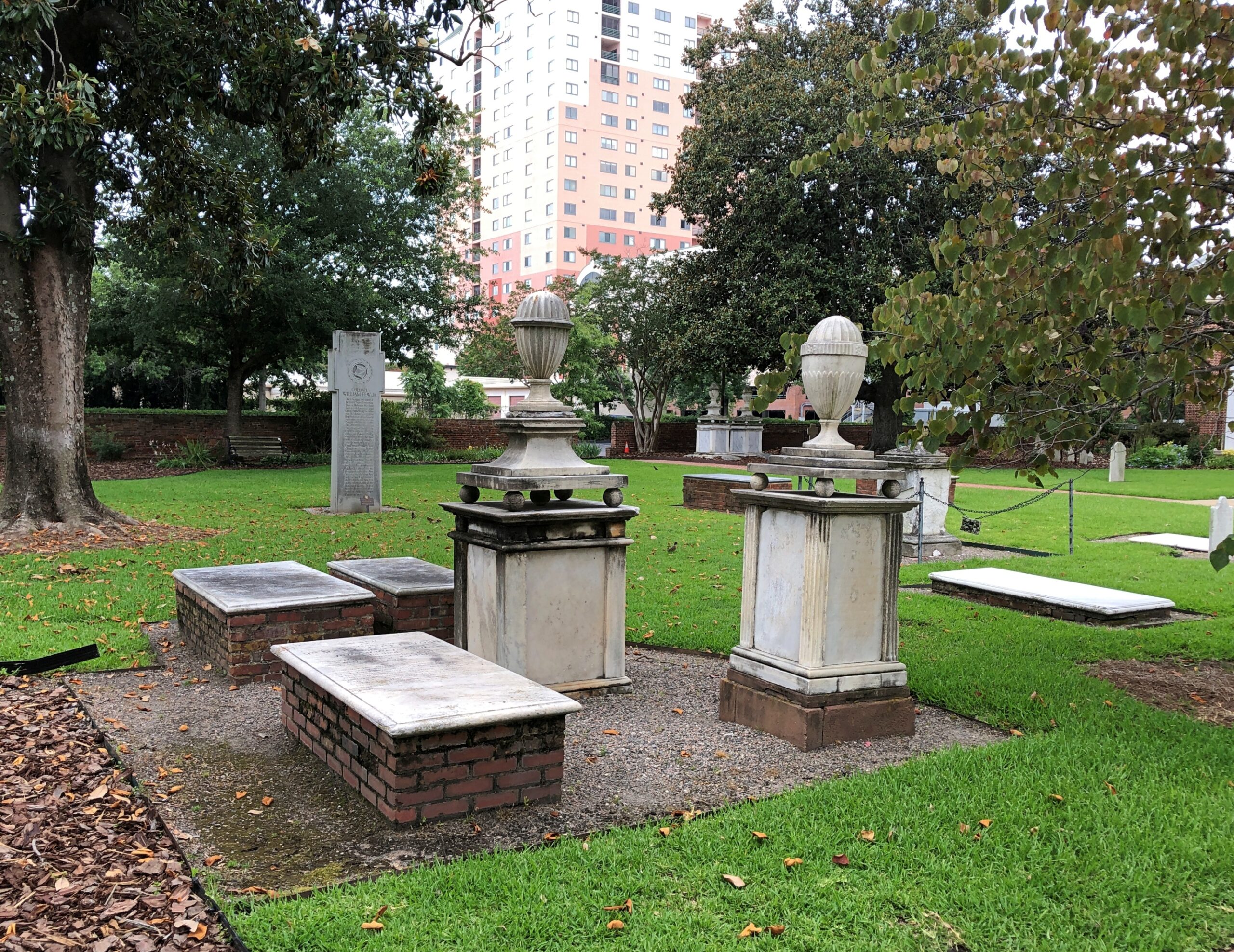
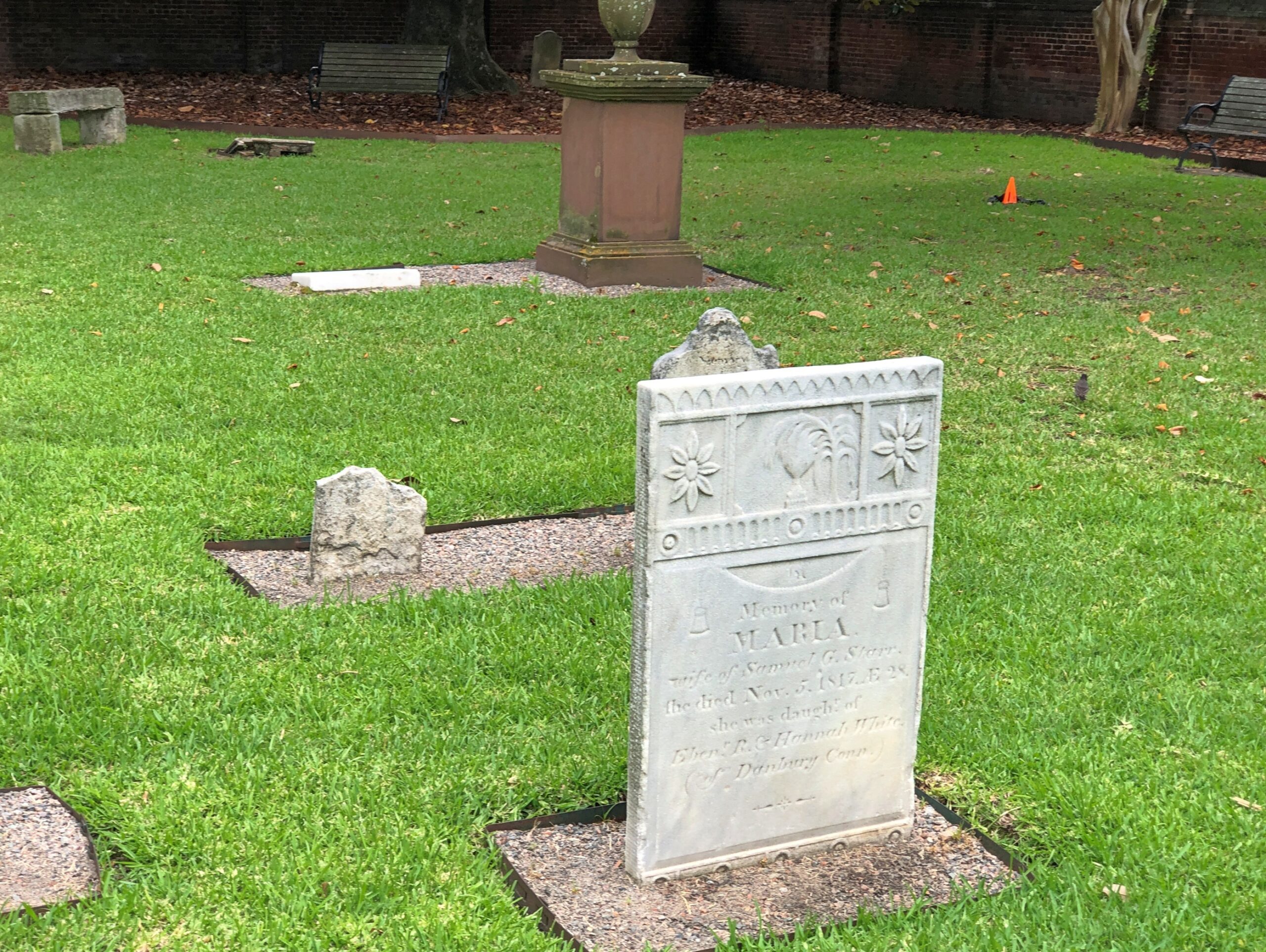
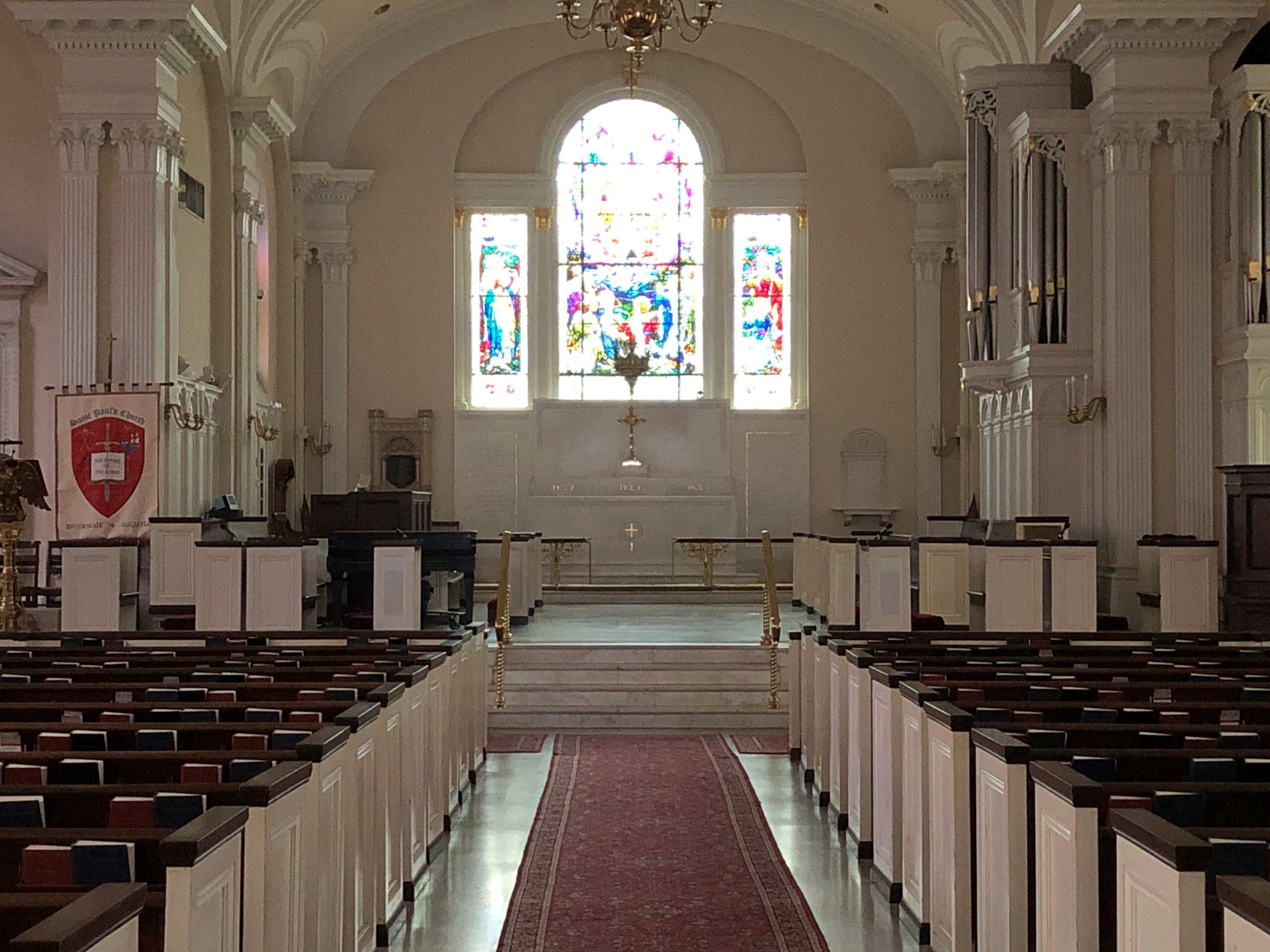
St. Paul’s Episcopal. Not only a church building, but a church graveyard as well.
St Paul's Church, Augusta

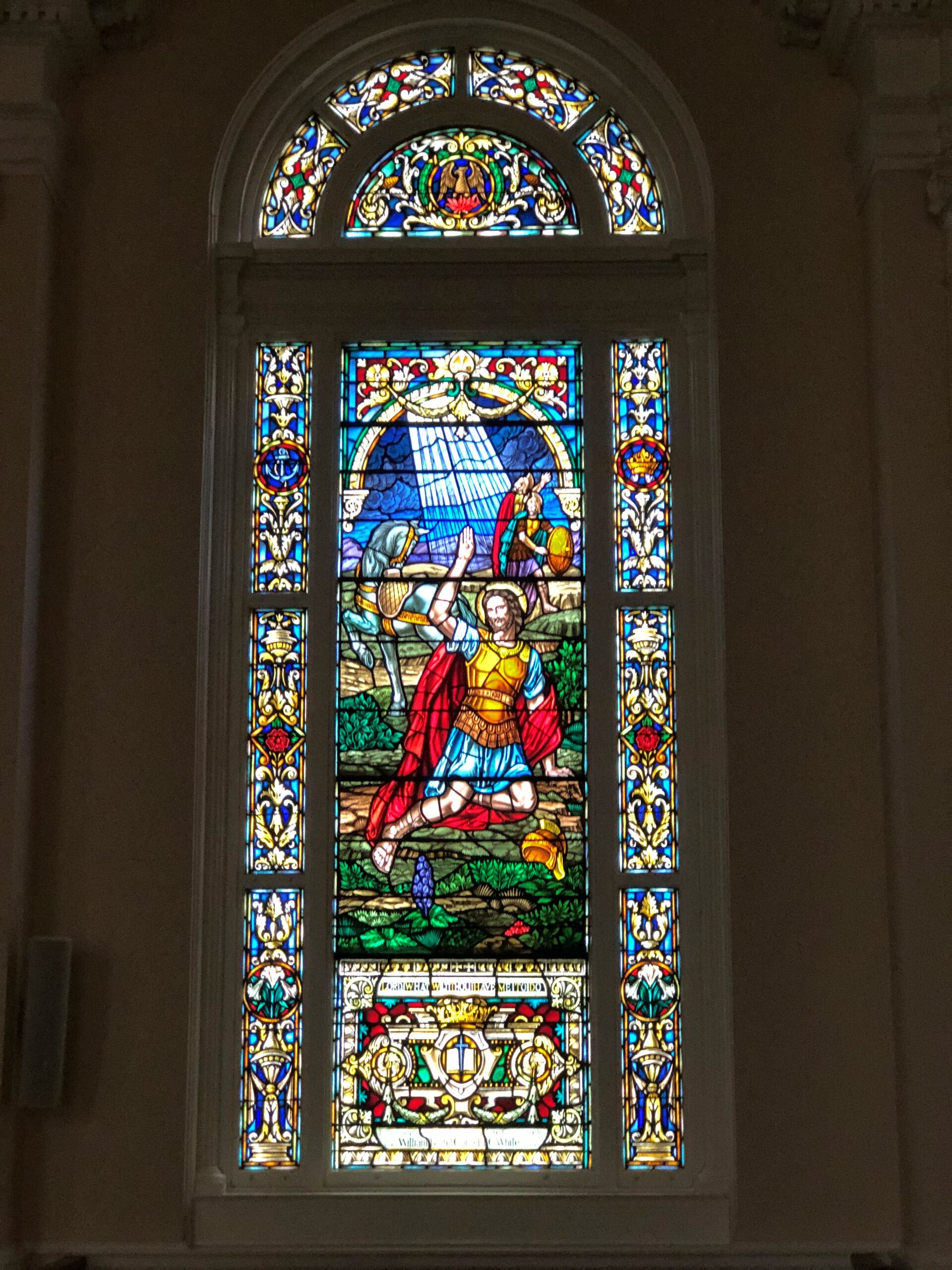
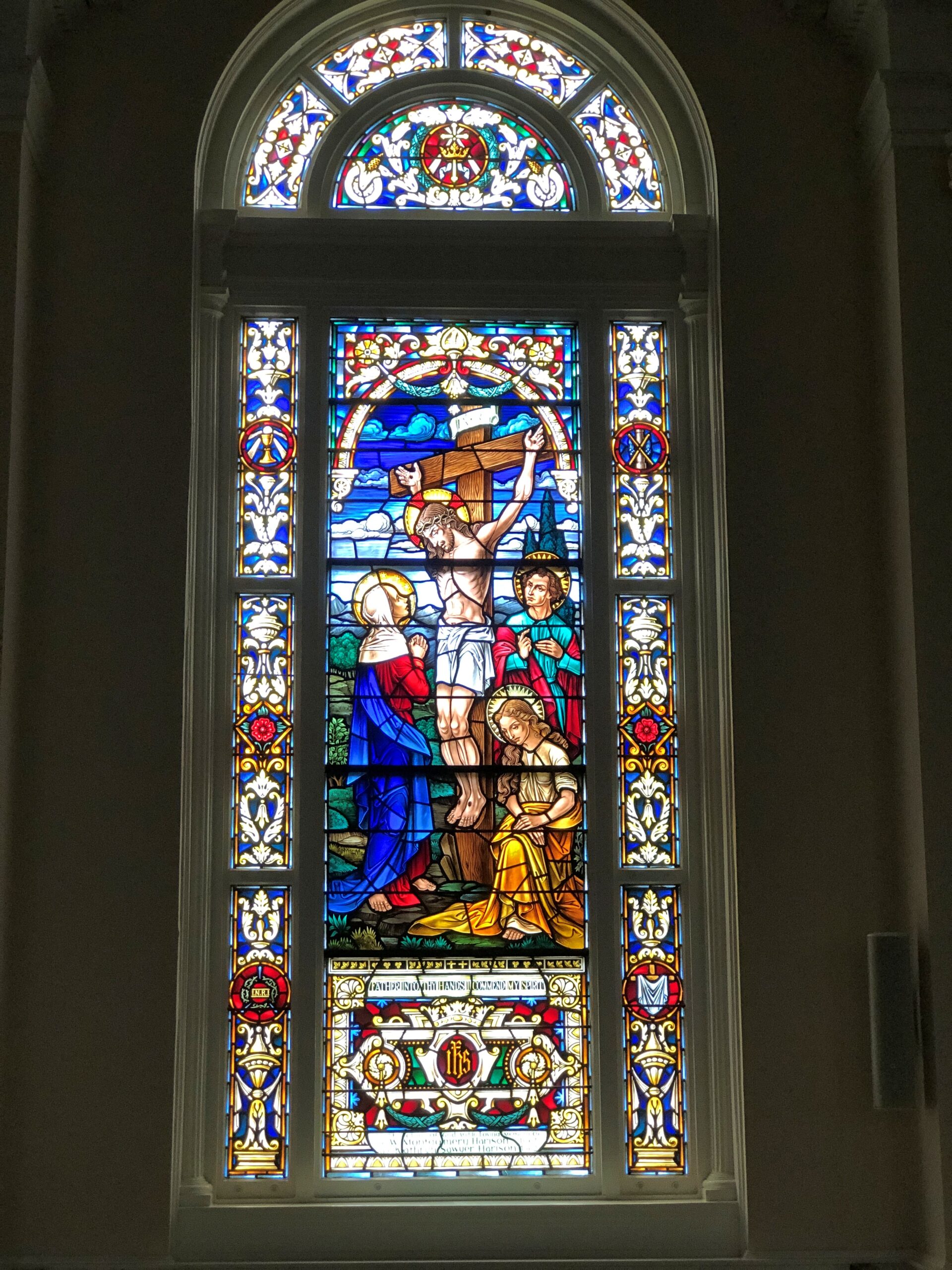
Inside, some fine stained glass.

St Paul's Church, Augusta

“Four buildings on this site have been destroyed,” the church web site says. (Sank into the swamp? Burned down, fell over, then sank into the swamp? Speaking of 50-year-old references.)

“Our present church, built in 1919, was designed as a larger copy of the 1820 church lost in Augusta’s Great Fire of 1916. Among the furnishings saved from the fire is the original baptismal font brought from England in 1751, now located in the narthex.

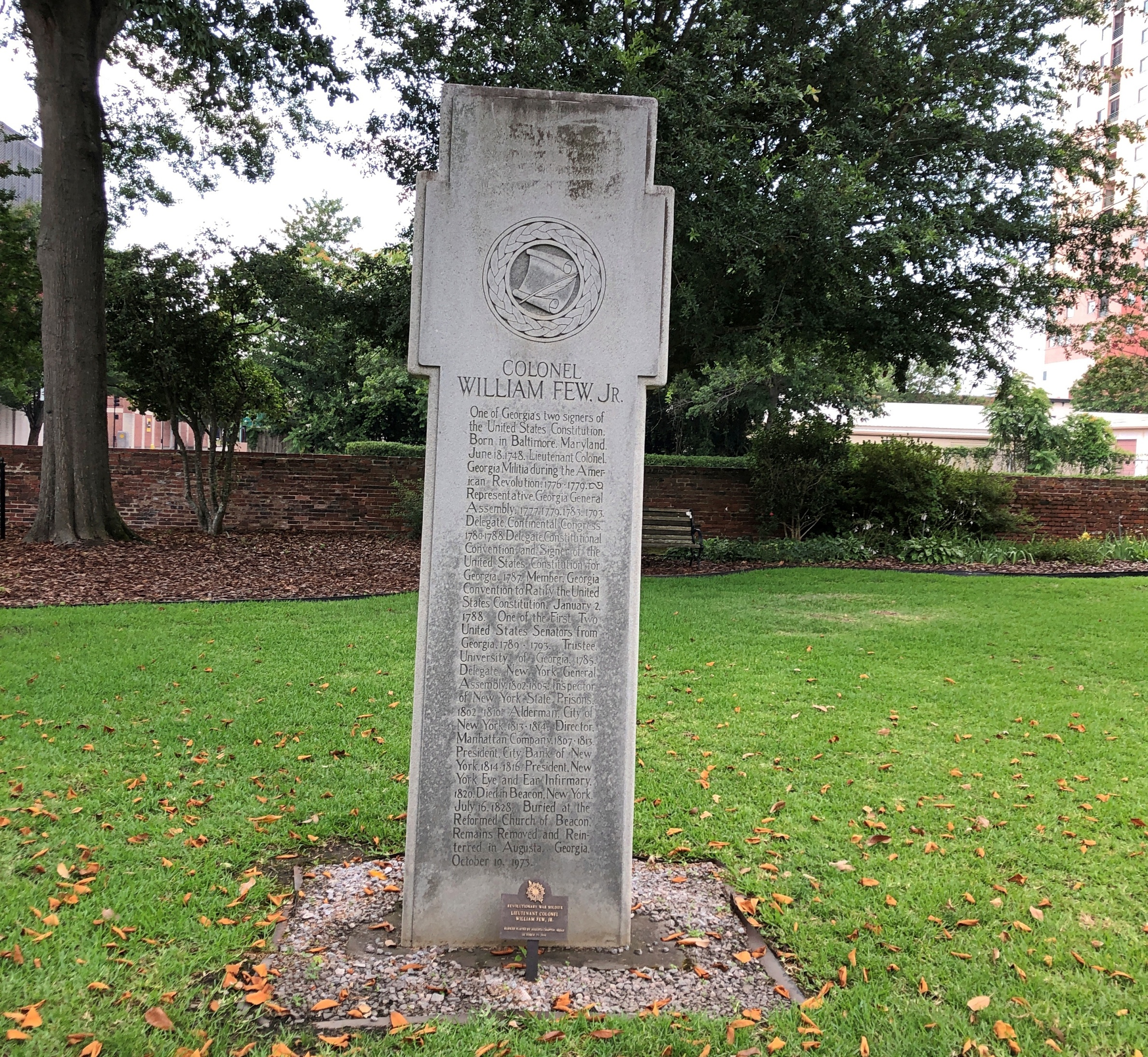
“History buffs will find the church yard fascinating. Many undocumented graves lie beneath the ground, but others are marked, including that of Col. William Few, a signer of the United States Constitution, whose portrait hangs in the narthex…”
Missed the painting. But I did see Col. Few’s stone.
St Paul's Church, Augusta

A busy fellow, both before and after the Revolution, including attendance at the Constitutional Convention in 1787, and a stint as one of Georgia’s first Senators under the Constitution. His capsule bio at the Biographical Dictionary of the U.S. Congress mentions all that, except leaving out the fact – detailed by the stone I saw – that he was reinterred at his current location in 1973.

Also, no word on whether he knew Button Gwinnett, everyone’s favorite early Georgia politico. He must have. Gwinnett might have had a similar career had he not ended up on the wrong end of a dueling pistol in ’77.

The South Carolina State House

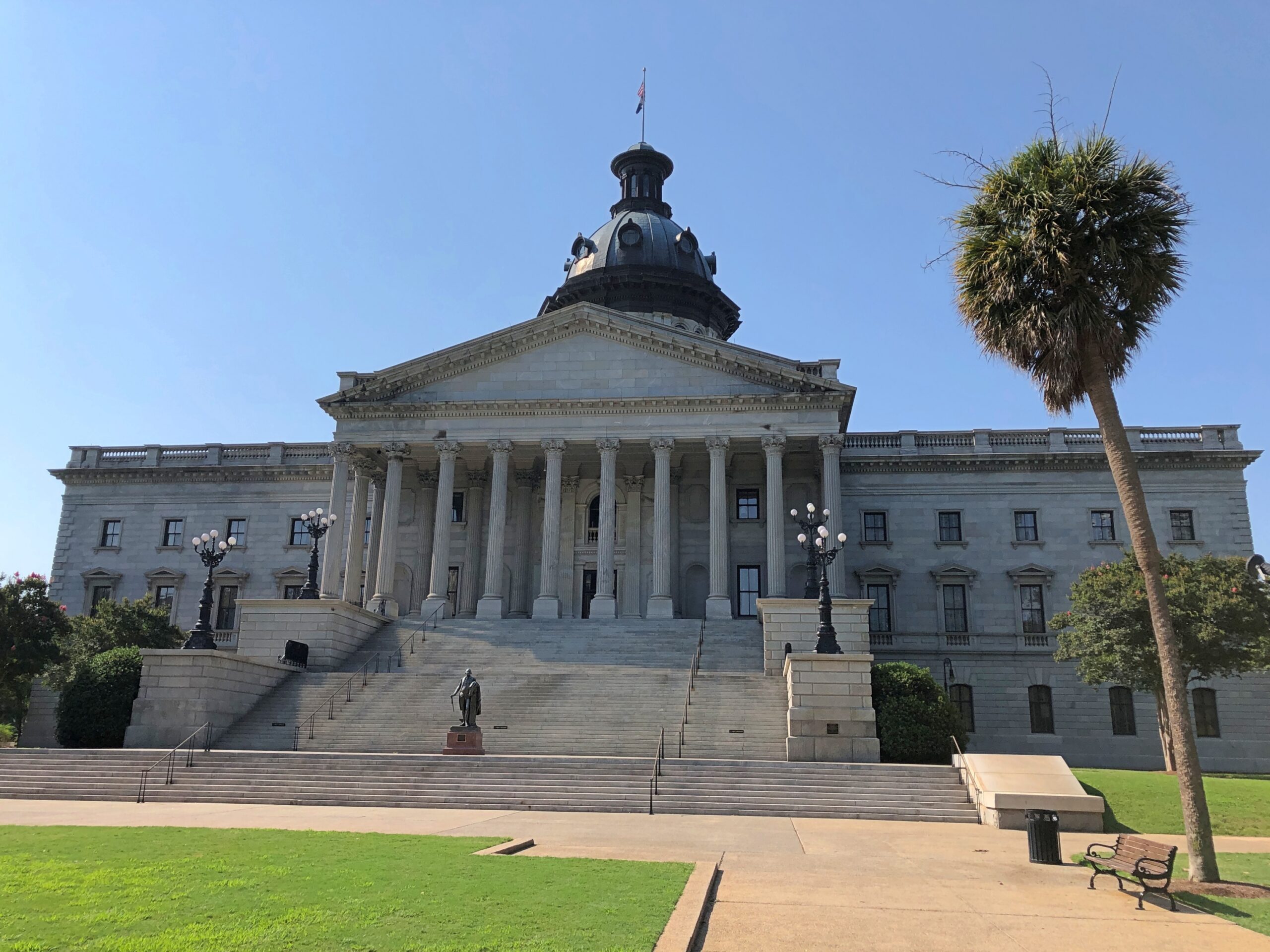
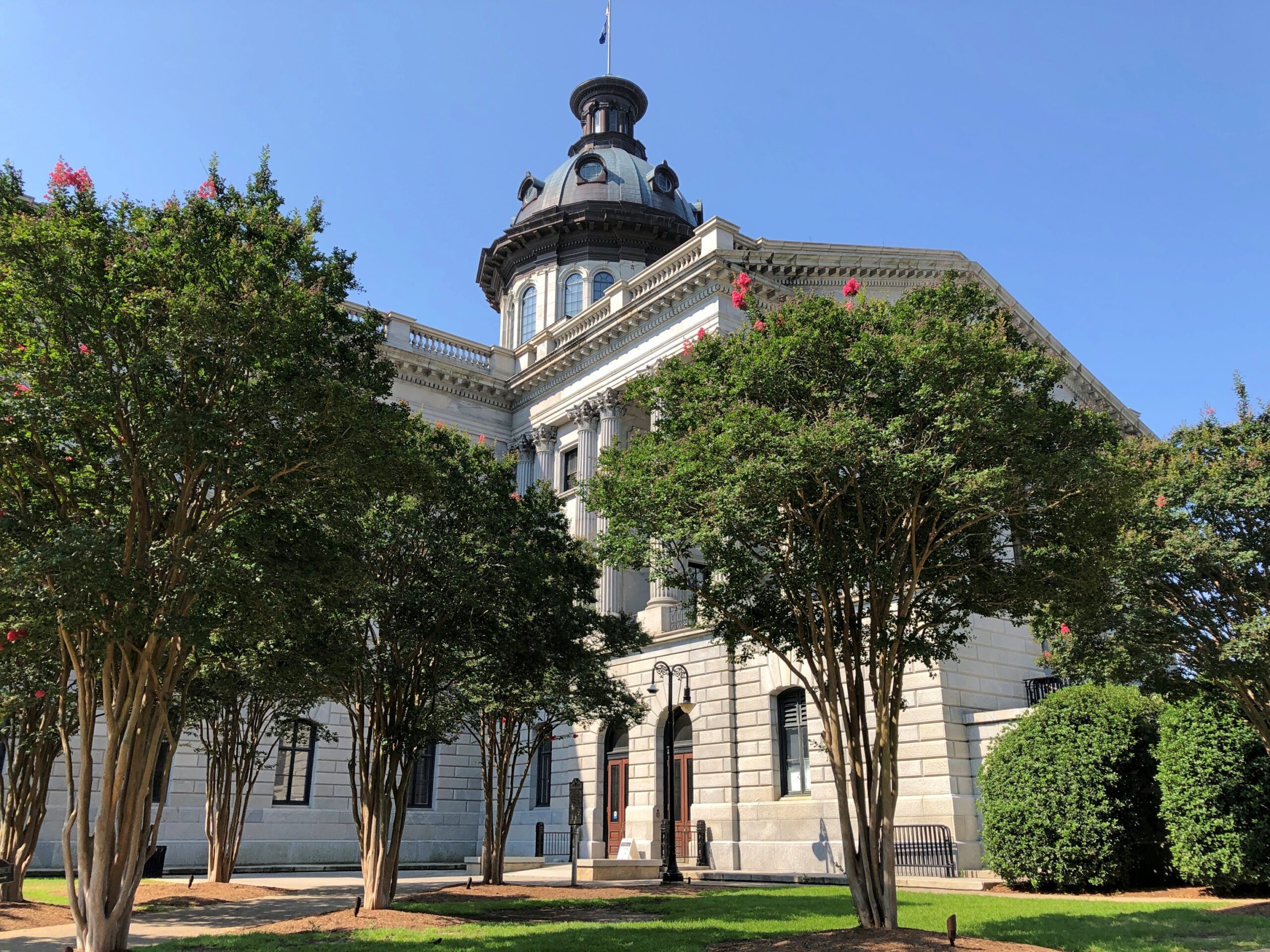
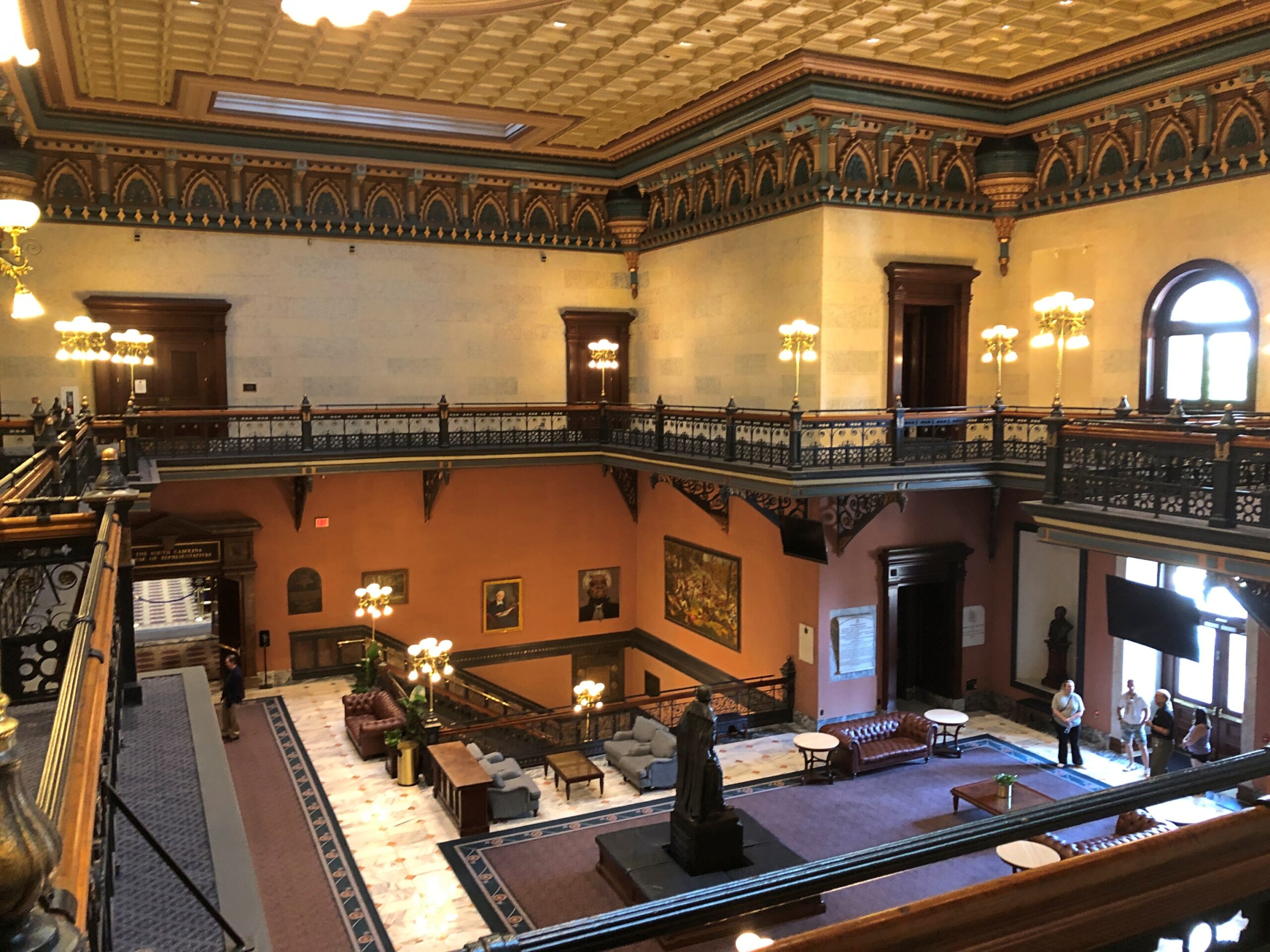
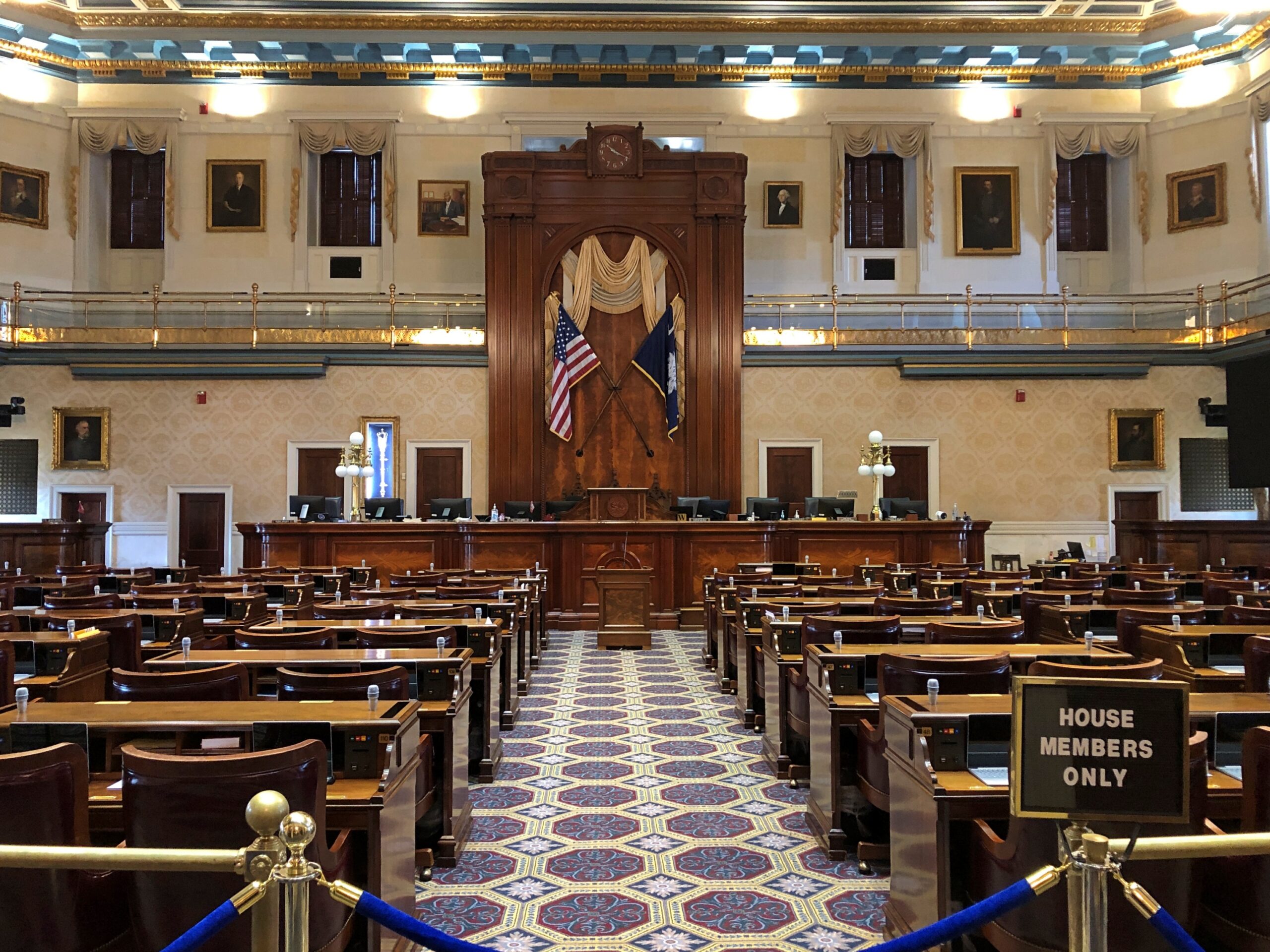
Columbia, SC, is centrally located in its state, the result of a post-Revolutionary (1786) decision by the new state legislature to move from Charleston to somewhere more central, namely the area around the confluence of the Saluda and Broad Rivers, which merge at Columbia to form the Congaree River. The South Carolina State House is now centrally located in that centrally located city, and on the way back west from Myrtle Beach, I decided it was high time I saw it.

SC State House
SC State House

Washington stands in front. Work on the building started in the 1850s from a design by John Rudolph Niernsee (d. 1885), but what with one thing and another – the burning of Columbia in 1865, for instance – finishing the capitol took more than 50 years, and indeed its final design work was overseen by Niernsee’s son, Frank, and other architects.

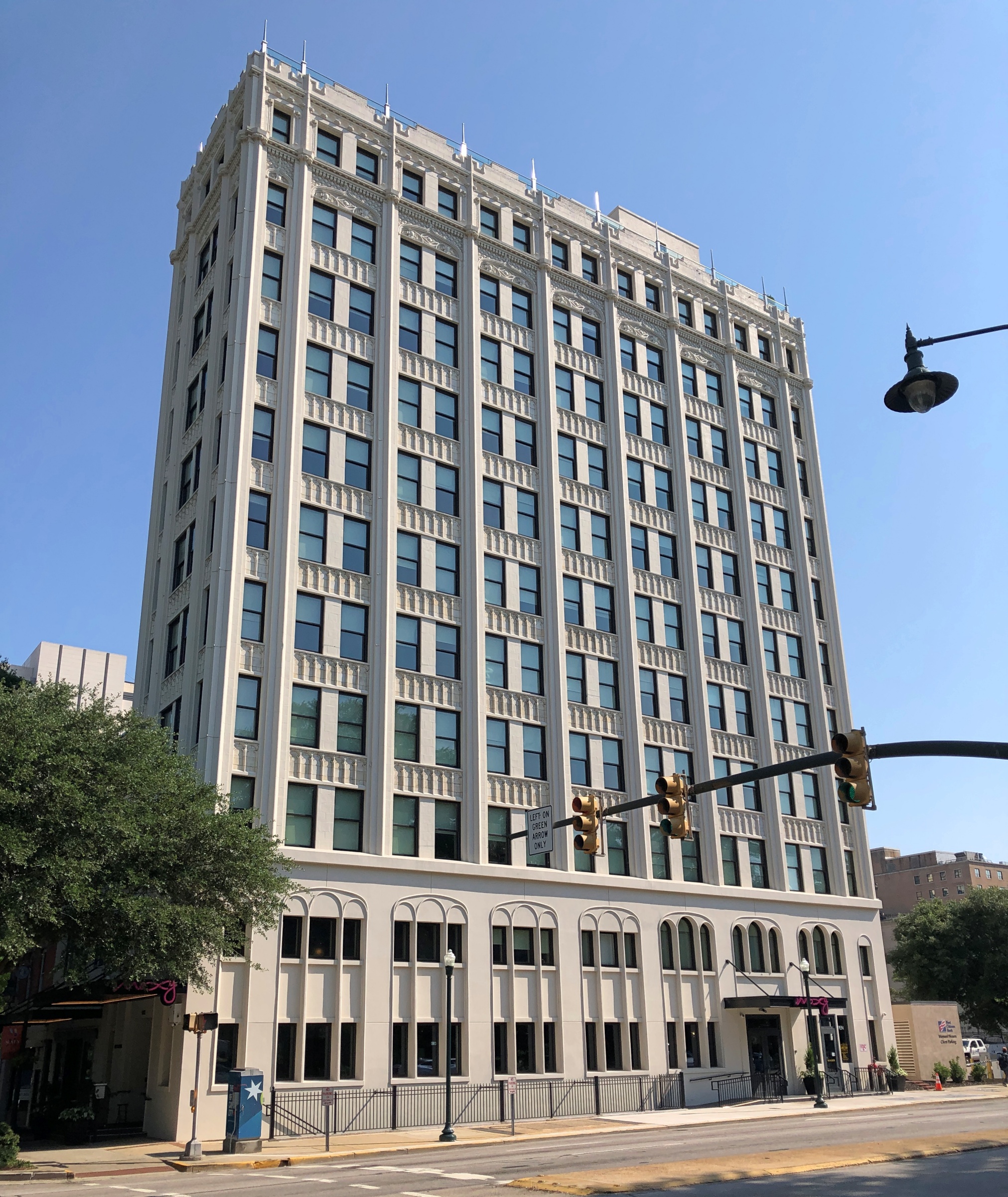
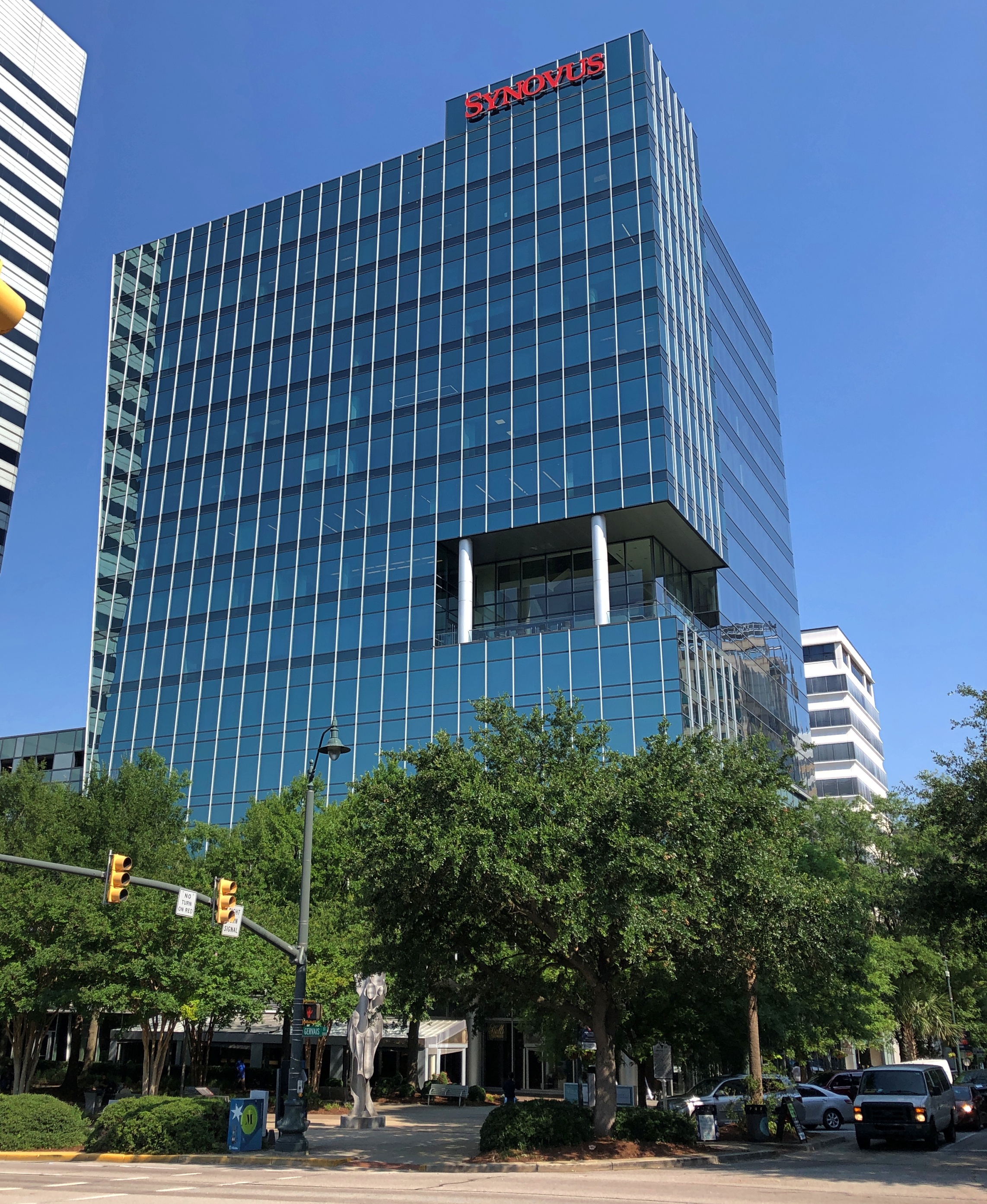
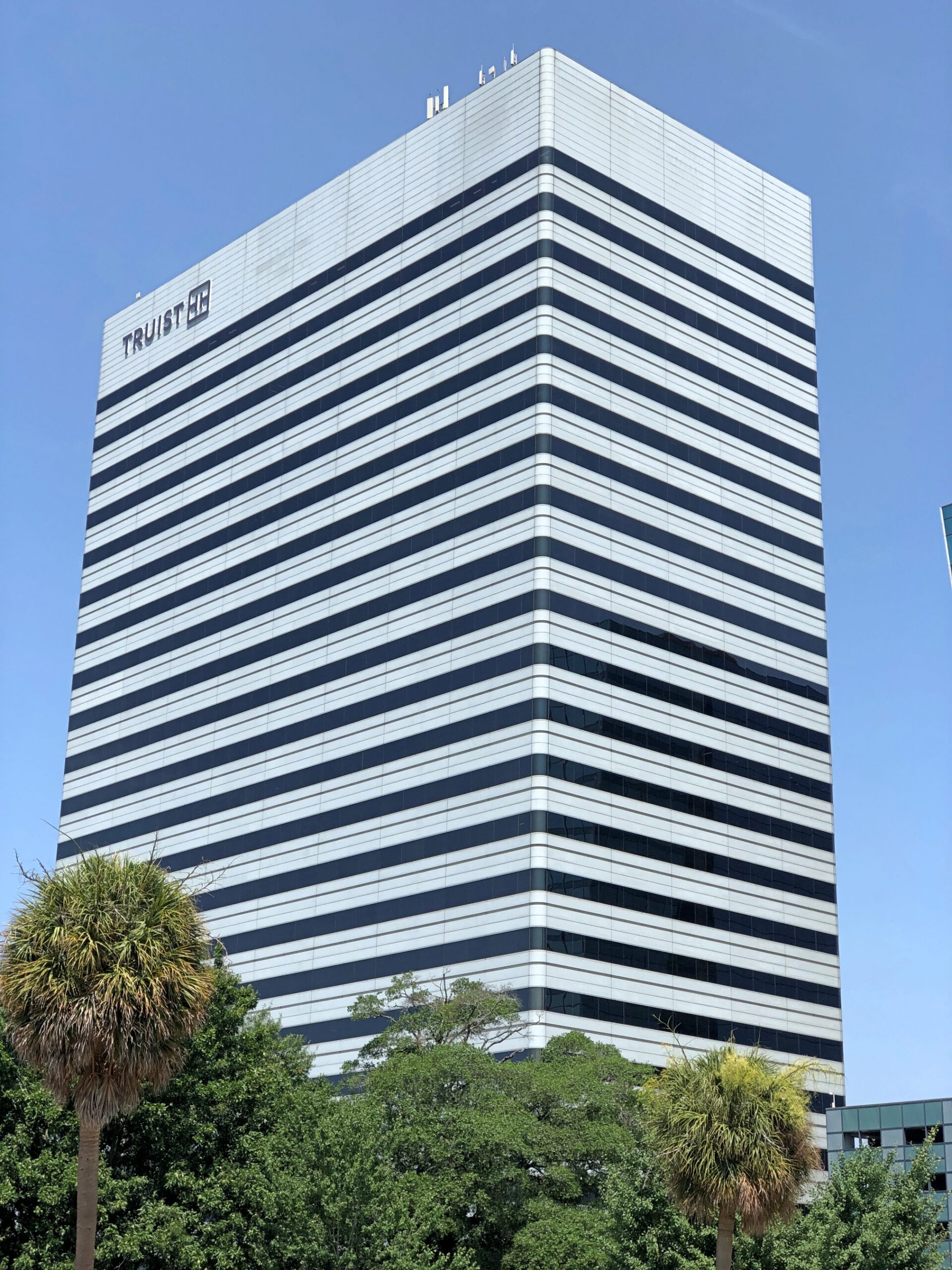
Other downtown structures tower nearby, but the capitol is set back fairly far, as capitols tend to be.

Downtown Columbia SC

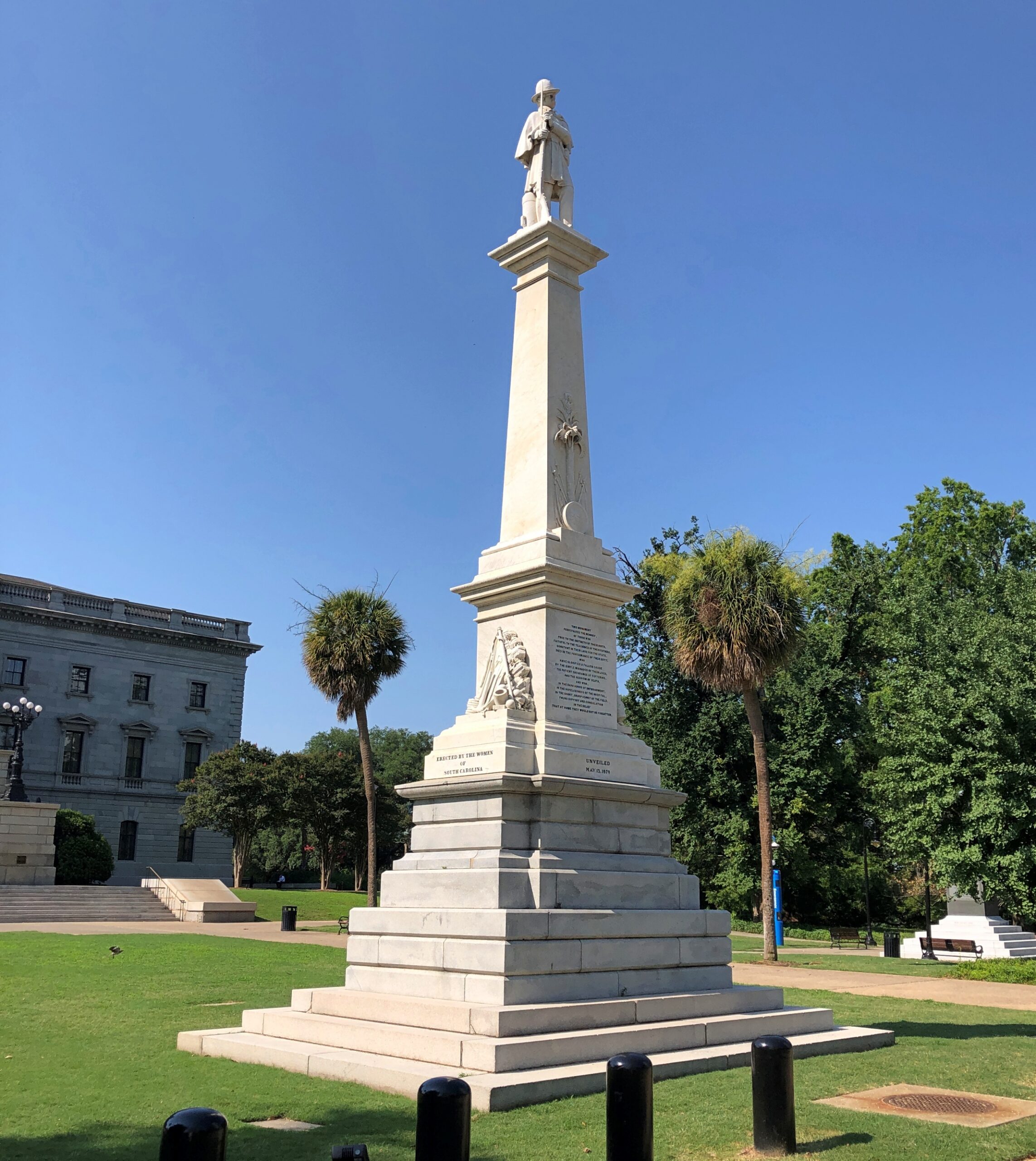
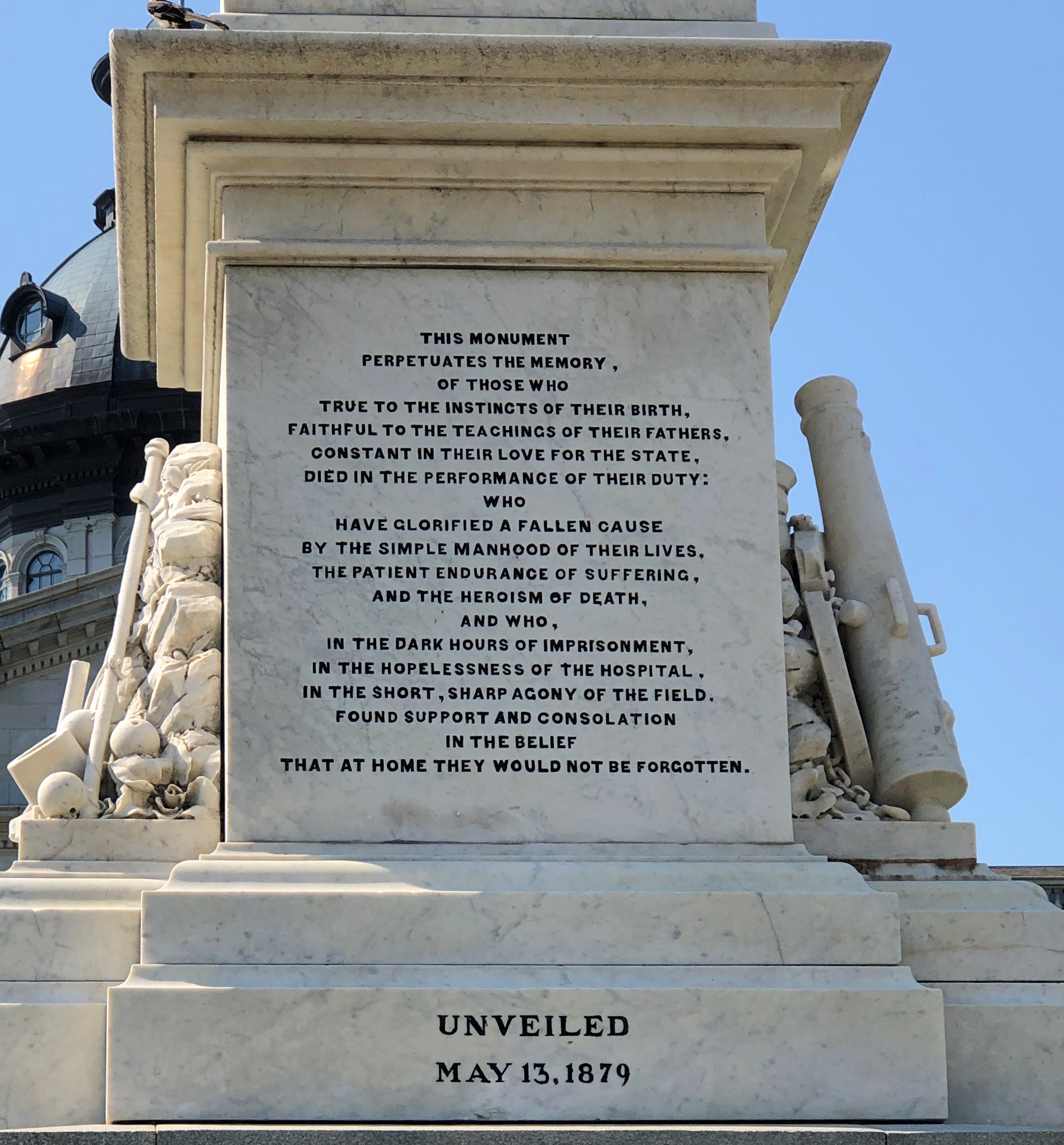
The memorial to the Confederate dead is prominently placed in front of the capitol.

SC State House
SC State House

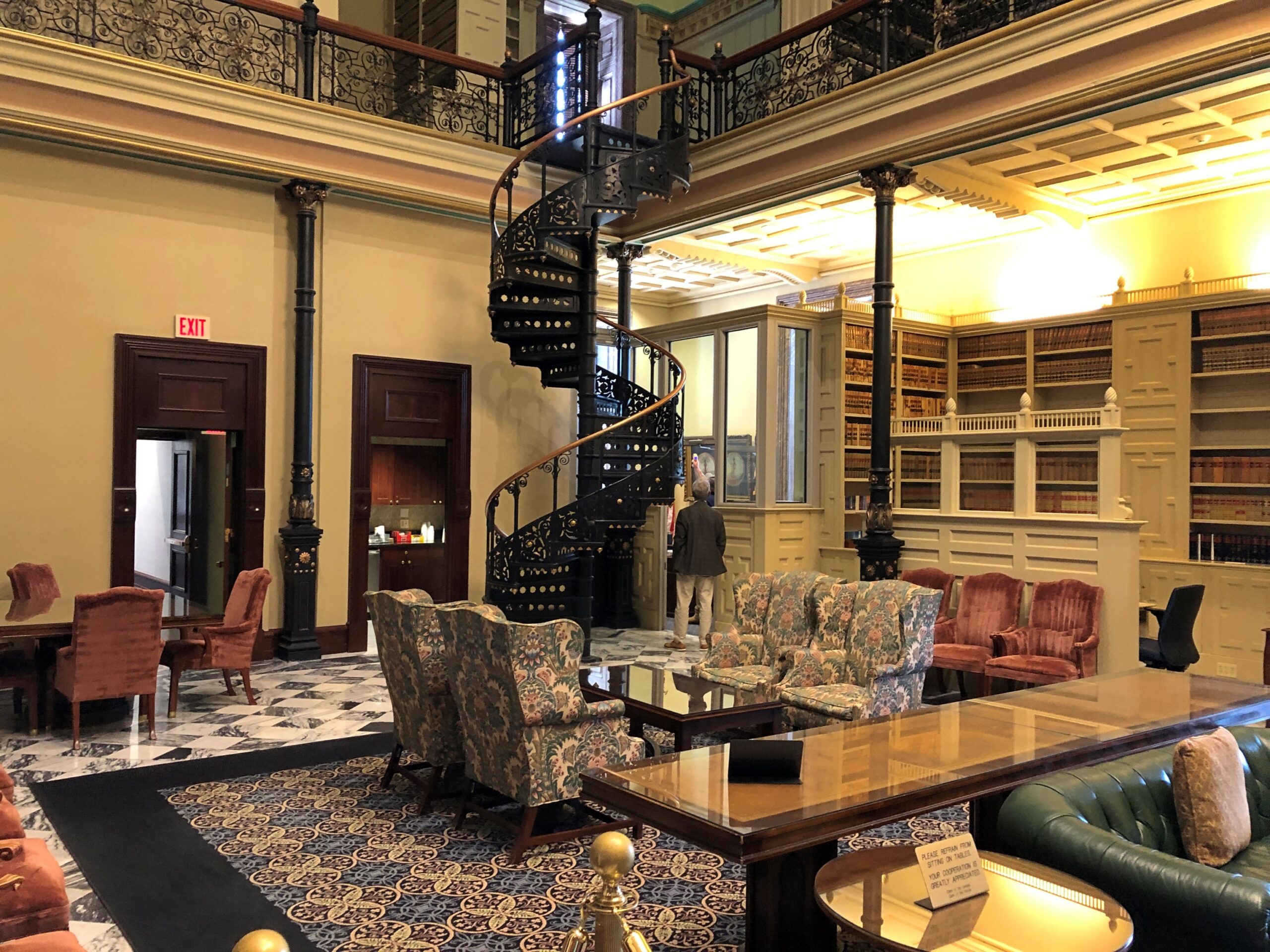
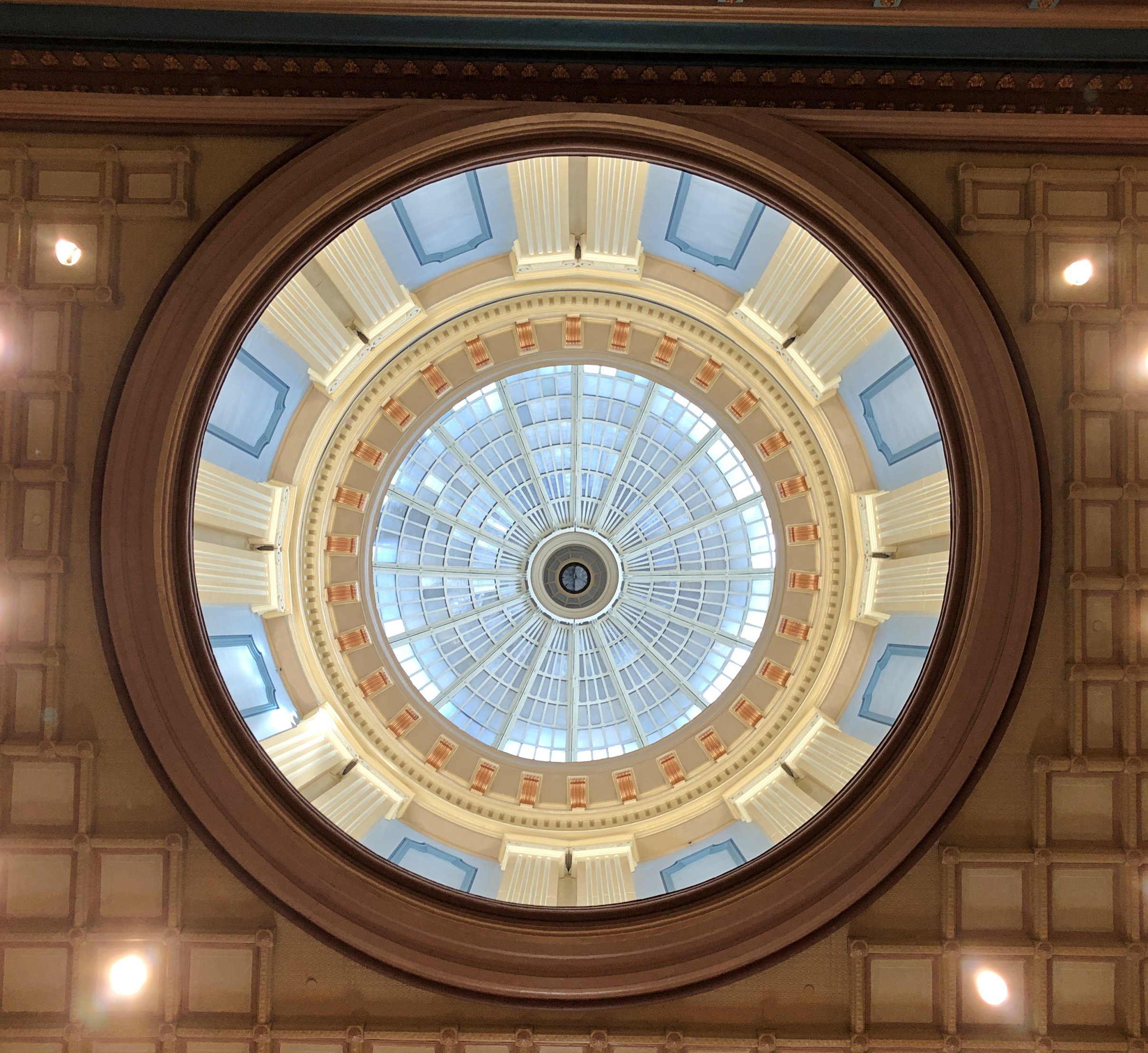
Plenty of other memorials stand on the grounds, such as a unique one honoring the Palmetto Regiment of Volunteers of South Carolina, memorializing SC participants in the war with Mexico, but I saw few, since the heat of the day encouraged me to head inside. There I found a resplendent interior indeed.

Including the capitol library.

SC State House

The interior of the dome.

SC State House

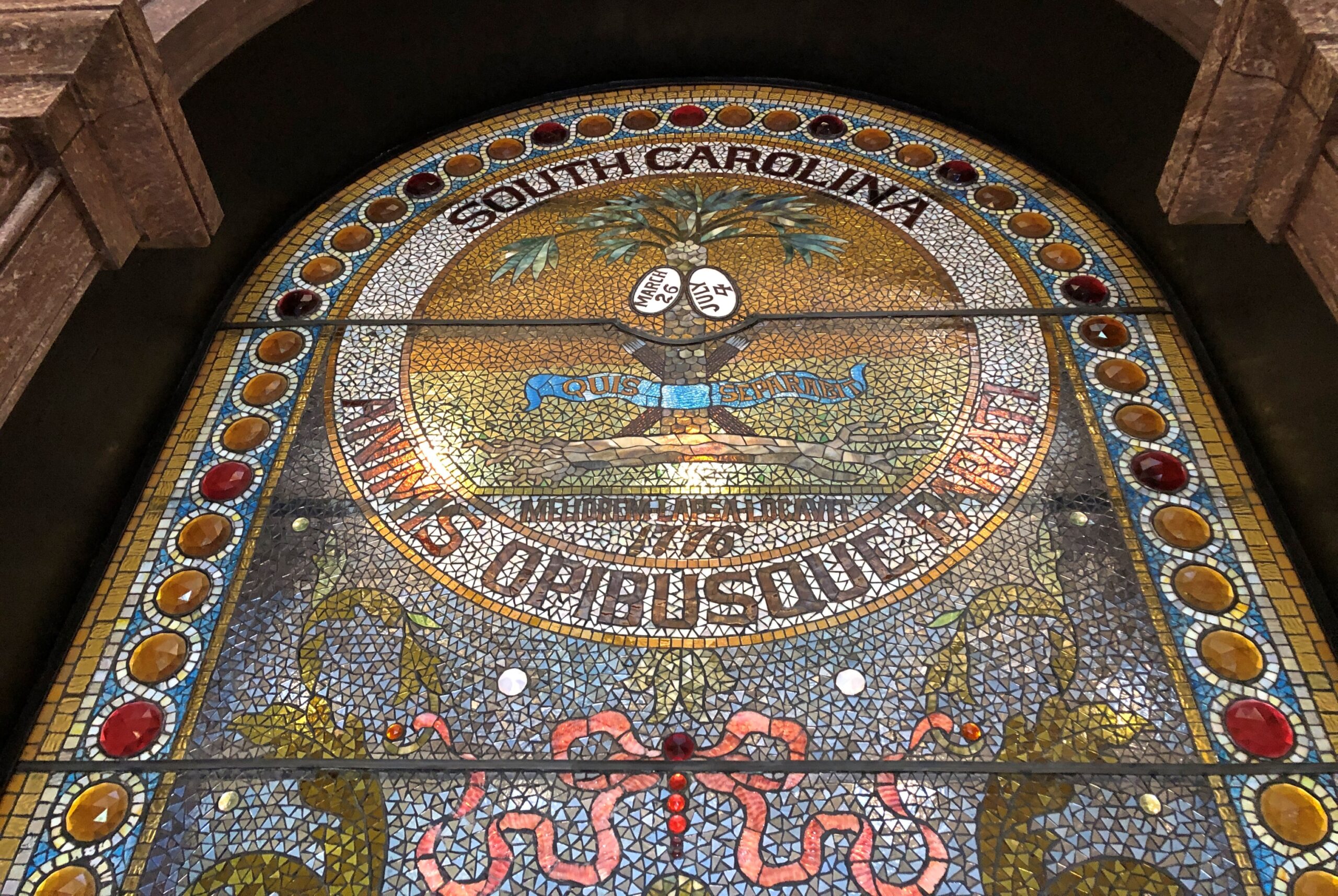
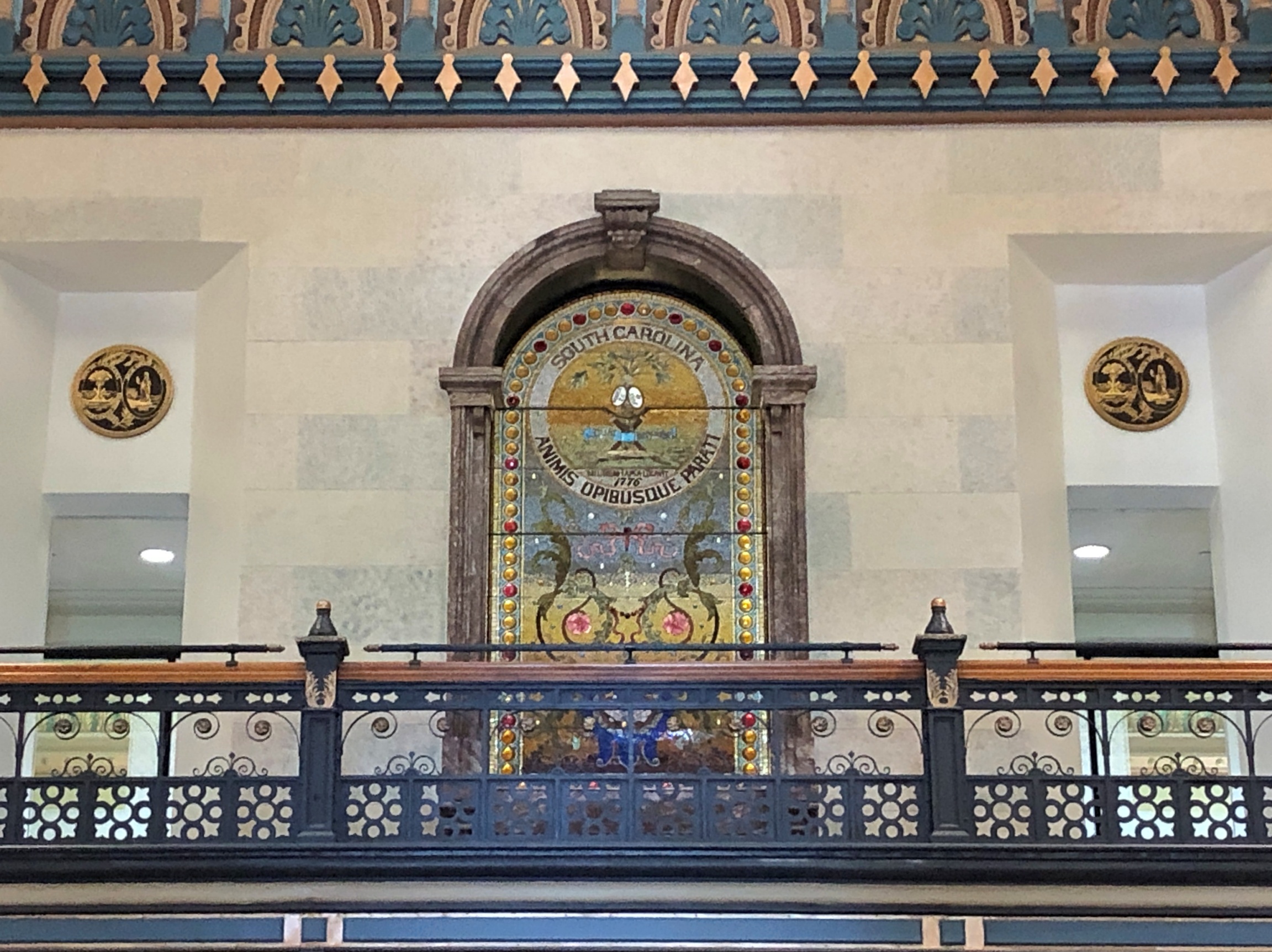
Other unique-to-South Carolina detail.

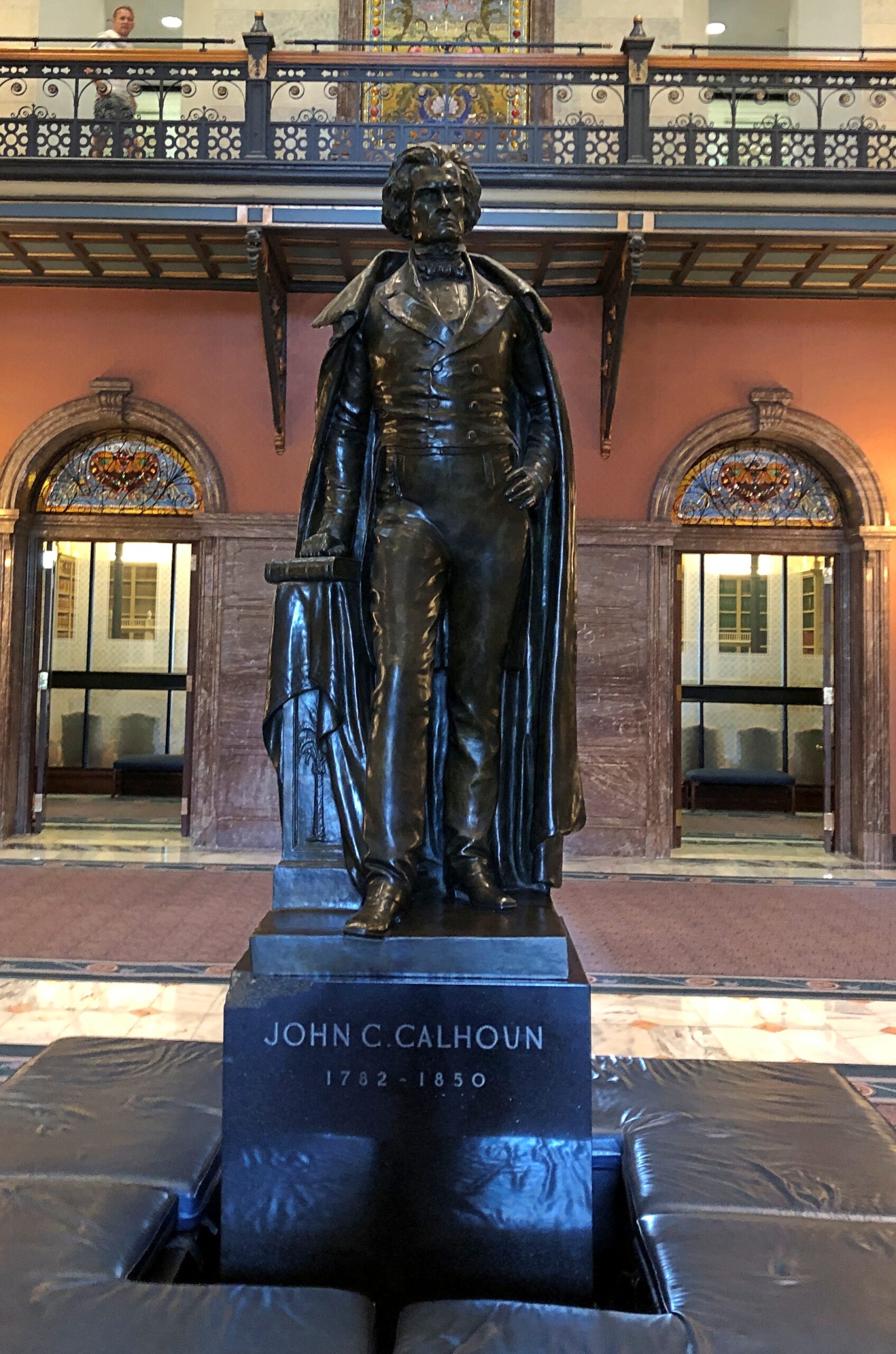
John C. Calhoun rates a prominent bronze in the rotunda and a painted portrait in the Senate chamber. His likeness went down in Charleston, I understand, but not at the capitol just yet.

SC State House

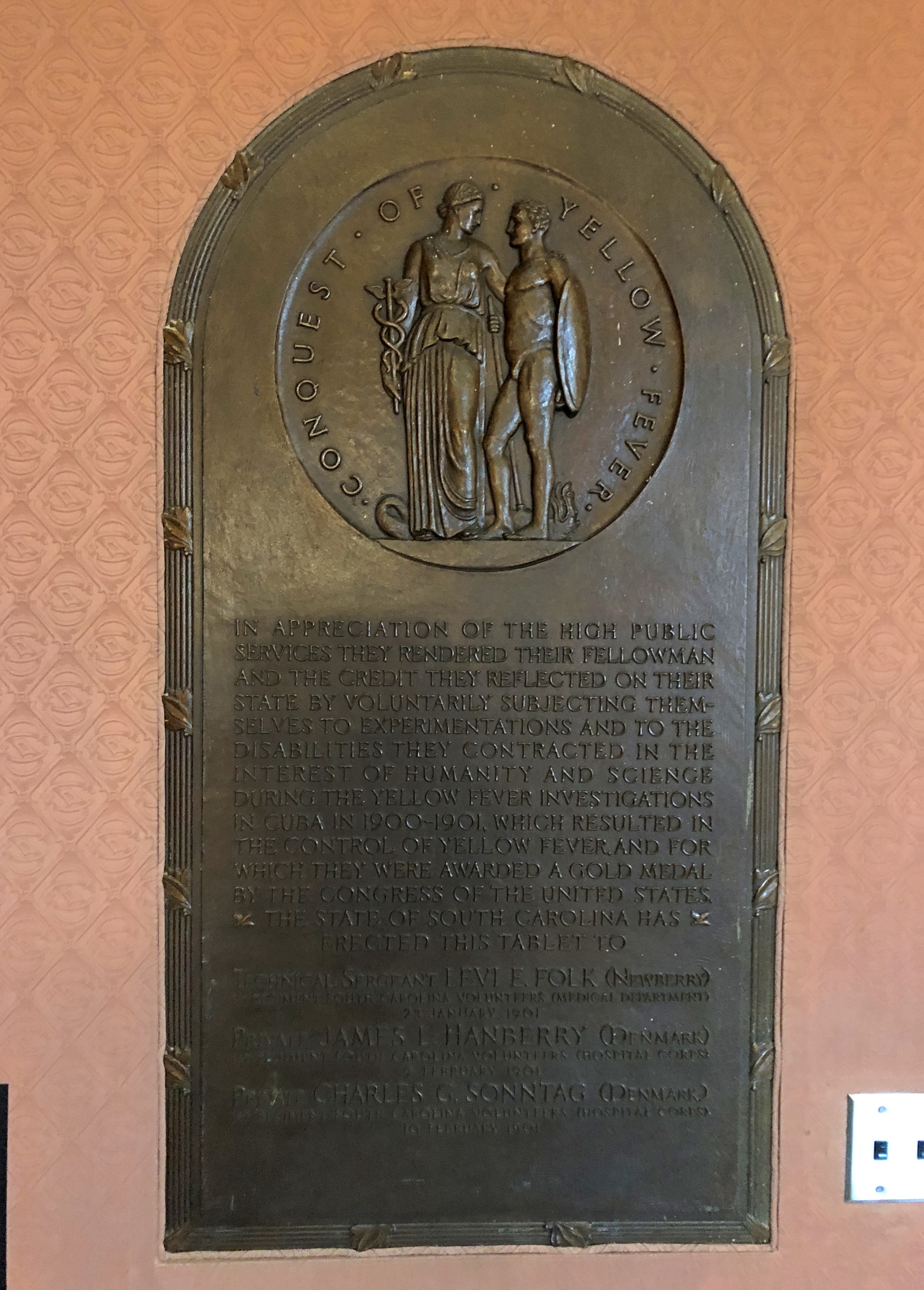
An unusual memorial hints at the state’s awful experience with yellow fever in pre-modern times.

SC State House

It’s hard to read, but the plaque memorializes three U.S. soldiers from South Carolina, TS Levi E. Folk and Privates James L. Hanberry and Charles G. Sonntag. They were among the 30 or so soldiers who volunteered to be bitten by yellow fever-infected mosquitoes in the famed (used to be famed, anyway) experiments conducted by Maj. Walter Reed in 1900-01 in Cuba that once and for all proved mosquitoes to be the vectors.

SC State House

Before the 20th century, yellow fever plagued South Carolina relentlessly. The Encyclopedia of South Carolina on the disease: “Yellow fever, like falciparum malaria, was introduced into South Carolina as a result of the African slave trade. The first major epidemic struck Charleston in 1699, killing about fifteen percent of the population, including many officials. At least five and perhaps as many as eight major epidemics occurred between 1706 and 1748. The disease was probably present in several other years as well. For several decades after 1748 no large epidemics occurred, although it appeared sporadically in some years. Between the 1790s and 1850s Charleston hosted numerous epidemics.”

Glad all that is over here in North America. Unless it isn’t.