The Internet might be more vast a wasteland than the worried Newton Minow could ever imagine, but its oases of information – actual information, to judge by internal consistencies, linkable references and good writing – continue to amaze. For example, Mummies.com, which has lists of Egyptian mummies in the United States.
I went looking for such a site because of a recent encounter with a mummy. Or rather, a “mummy,” but we’ll get to that later.
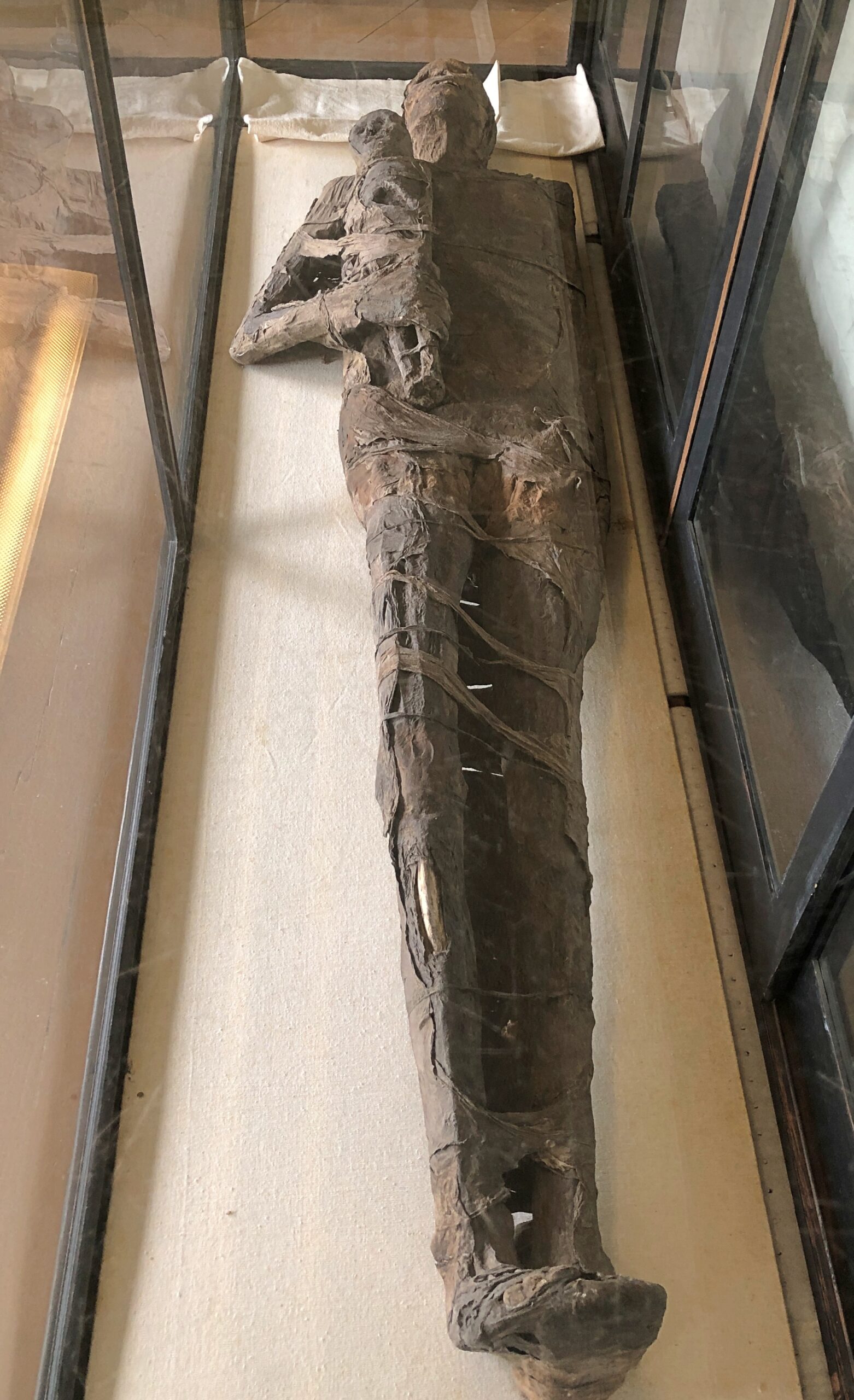
This figure is on display at the Fabyan Villa, which is part of the Fabyan Forest Preserve on the west bank of the Fox River, in Geneva, Illinois. We visited a few weeks ago. Both the villa and the “mummy” are legacies of George Fabyan (d. 1936), who has been fated to go down in history – in a small way, but more than most people – as a wealthy eccentric. One of his eccentricities, like William Randolph Hearst writ small, was collecting eccentric artifacts.
A sign near the mummy-shaped artifact says that modern examination has proven it to be a fake. Whether George Fabyan knew this or not is an open question.
Remarkable thought, that there was once a market for mummies so brisk that counterfeiters made bank. It wasn’t called Egyptomania for nothing.
An anecdote from Mummies.com about a real mummy (Harwa) in possession of the Field Museum, which has 33 mummies, tells quite the tale:
Harwa’s adventurous afterlife is one example of how things have changed. In 1939, he became the first mummified person to fly on an airplane, and he was taken to a Broadway show upon his arrival in New York City. On display at the New York World’s Fair for two years, he then returned to the Field Museum after getting lost in the luggage and being sent to San Francisco.
There’s streaming service comedy gold in that, say 10 episodes: the misadventures of the promoter hired in 1939 to take care of the mummy, and his oddball assistant, who also happens to be a bombshell of a woman. High jinx ensue. The mummy is misplaced, more than once. There are various shenanigans on the airplane, and on Broadway. A rival promoter tries to steal the mummy. Weird things happen at the World’s Fair. Nothing supernatural, though one or another of the characters might worry about the Curse of Harwa — which a publicist make up. Maybe even a guest appearance by Col. Fabyan, who wants to buy the mummy. Of course, the actual Fabyan was already dead by then, but this is TV we’re talking about. You know, the outclassed wasteland.
At Cantigny in late May, I wasn’t feeling that photo urge. Yuriko was, at least when it came to flowers in arrays.
And as singles.
We go to Cantigny every few years, usually in late spring or early summer, a time of exuberant greenery and, of course, vivid flowers. Not a flowerbed is idle.
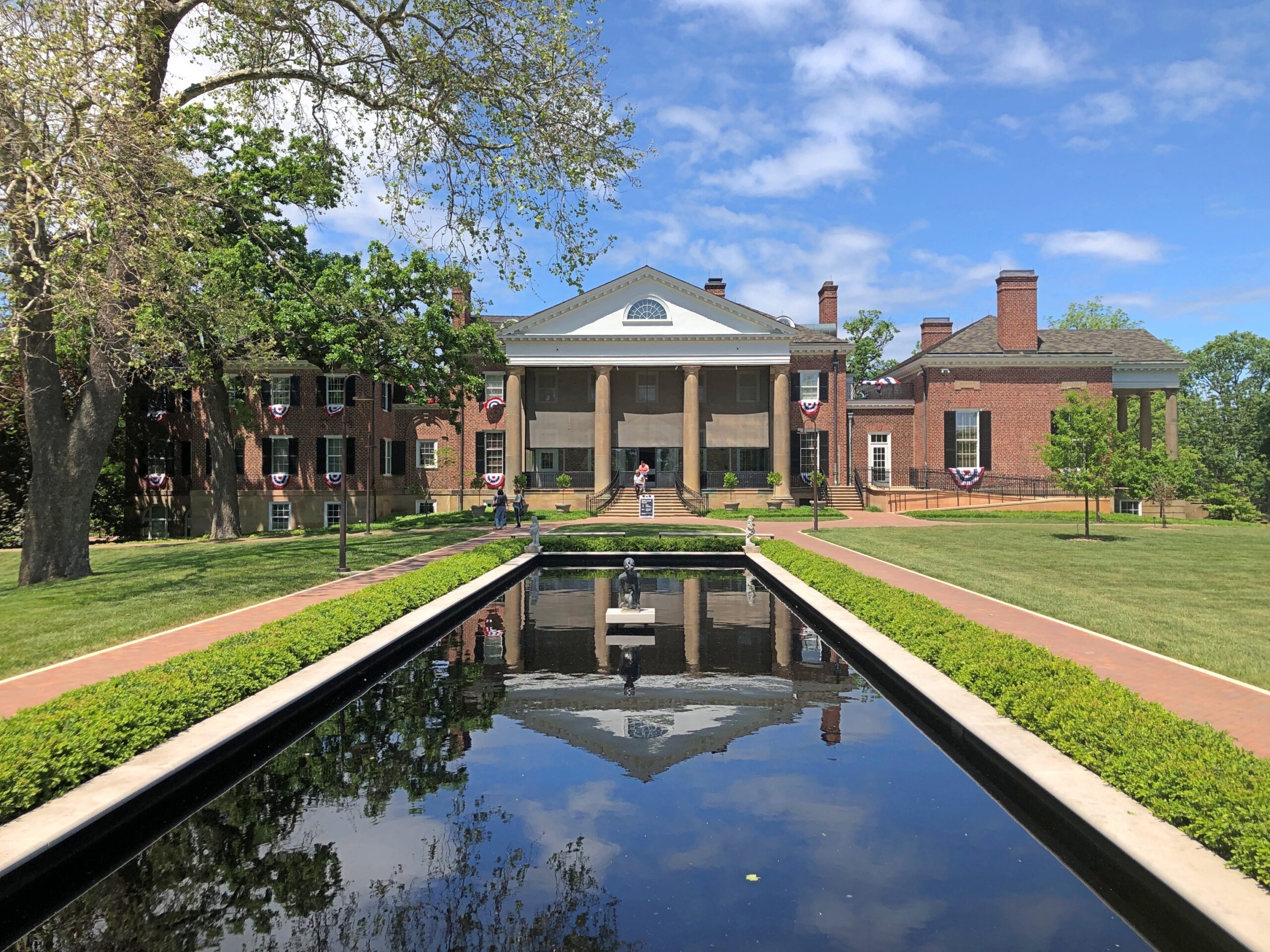
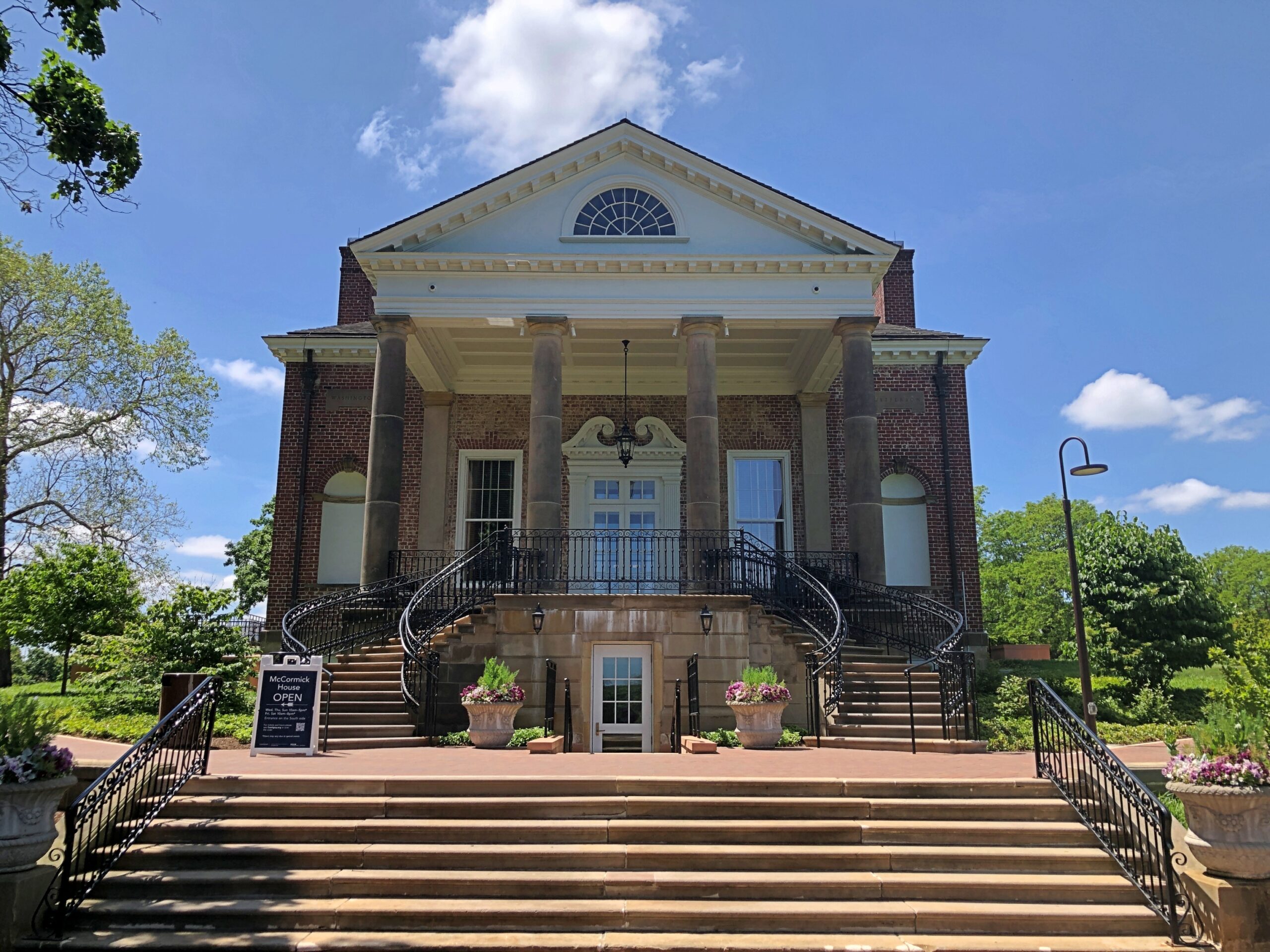
This time, I did take a few snaps of some of the Cantigny buildings and landscapes. Such as the former McCormick manse.
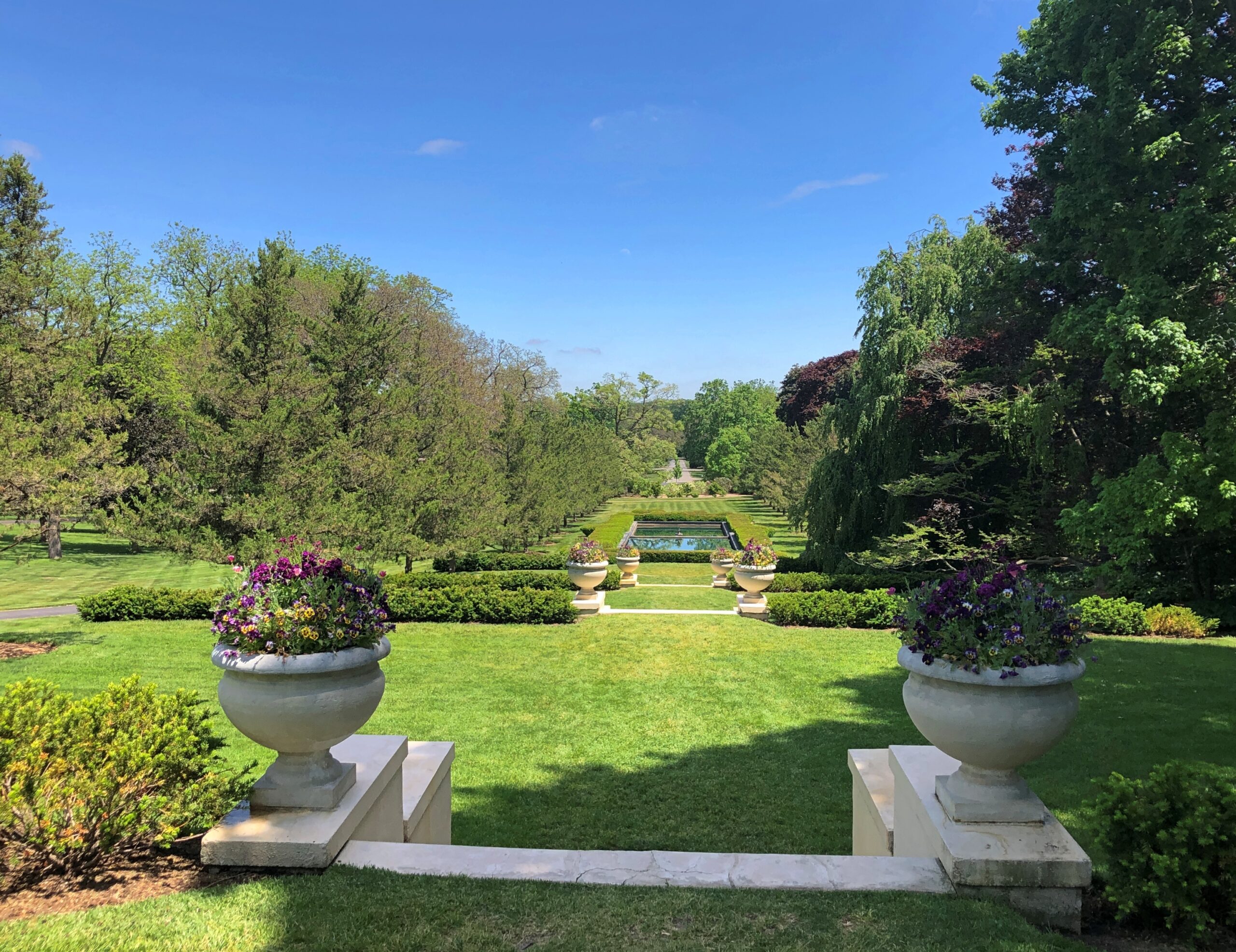
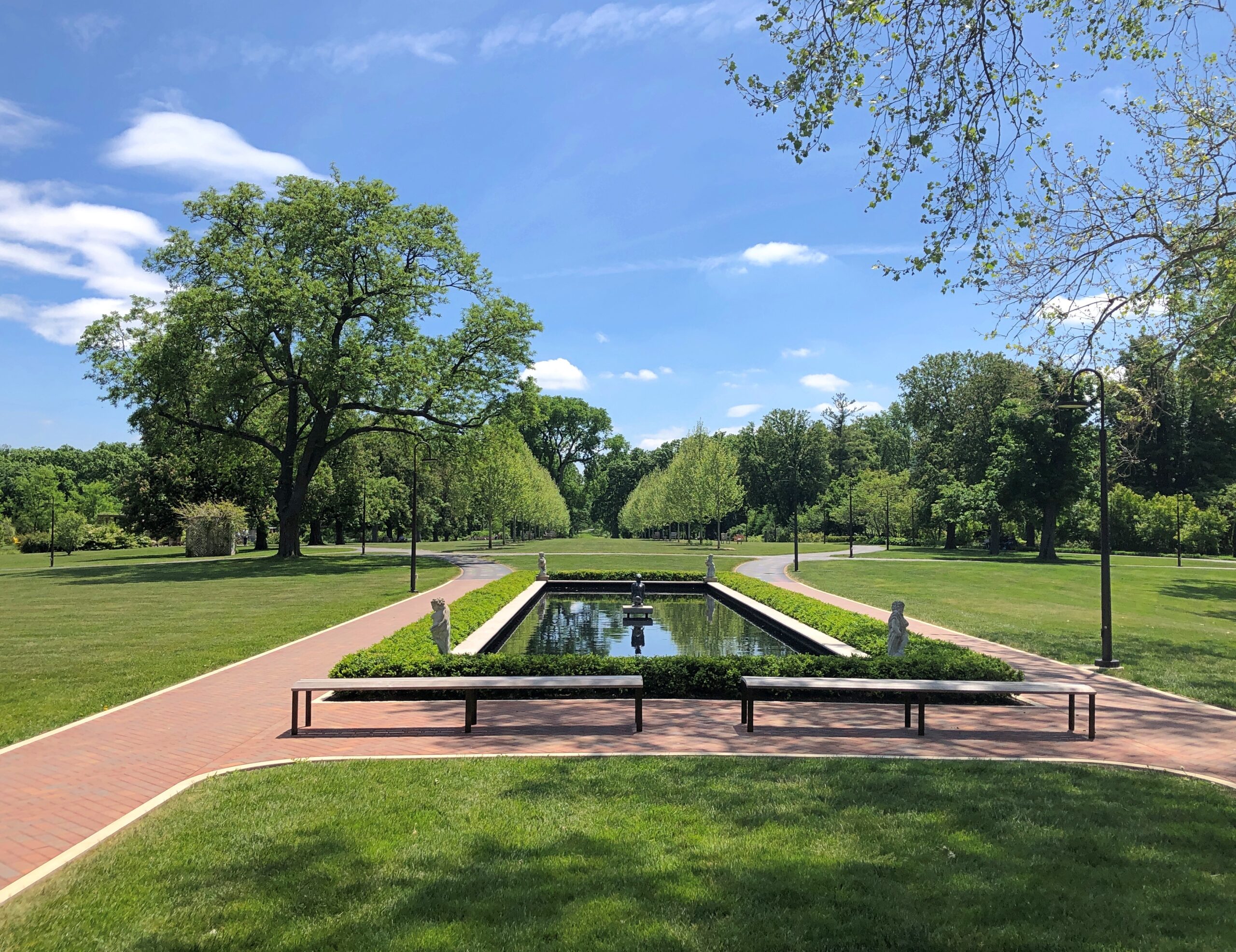
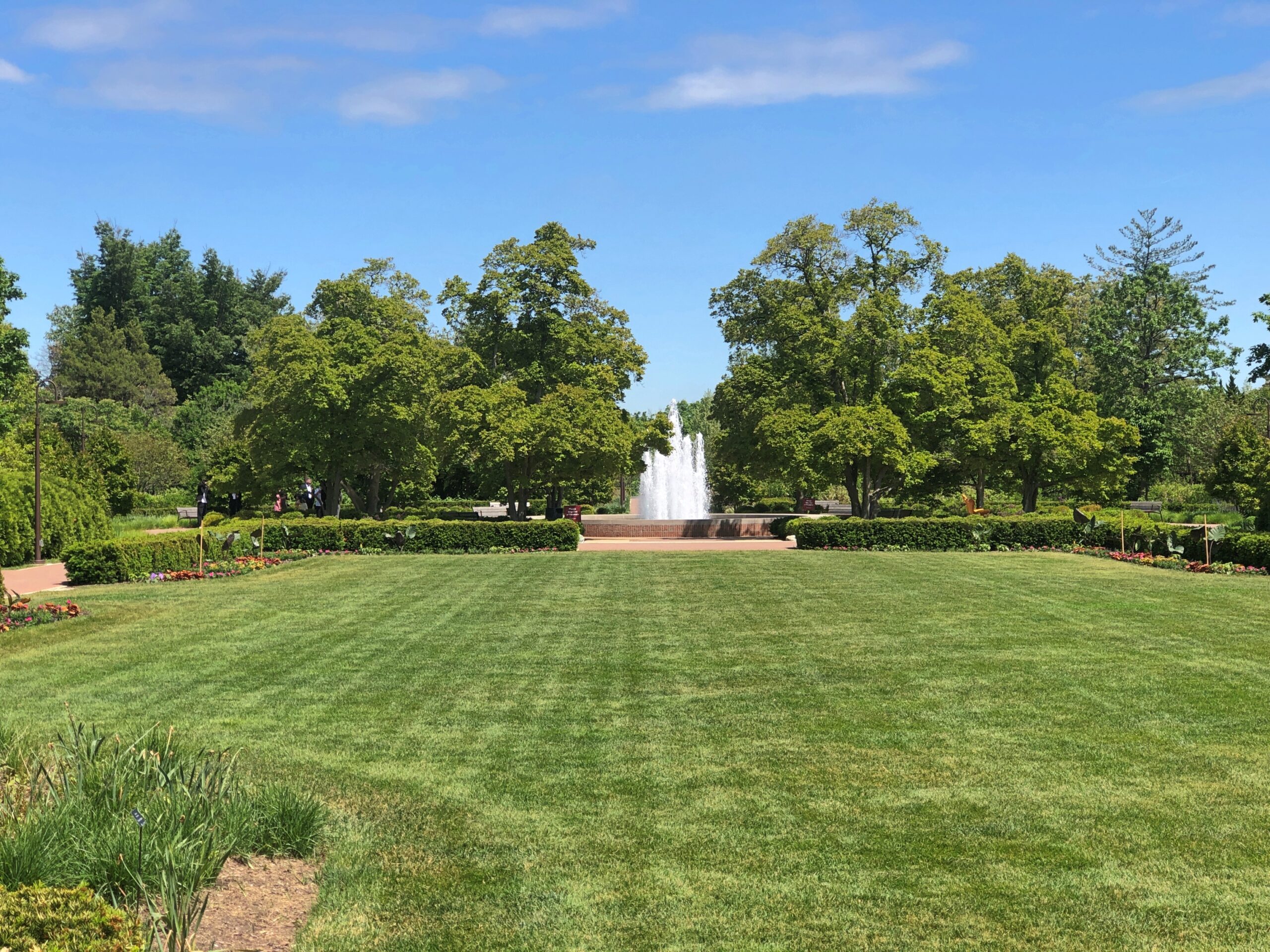
Some long views of the grounds.
As the publisher of a great metropolitan newspaper, back when there were such things, Col. McCormick had the scratch to keep the place running. What are tech barons doing these days with their lucre? Nothing so fine.
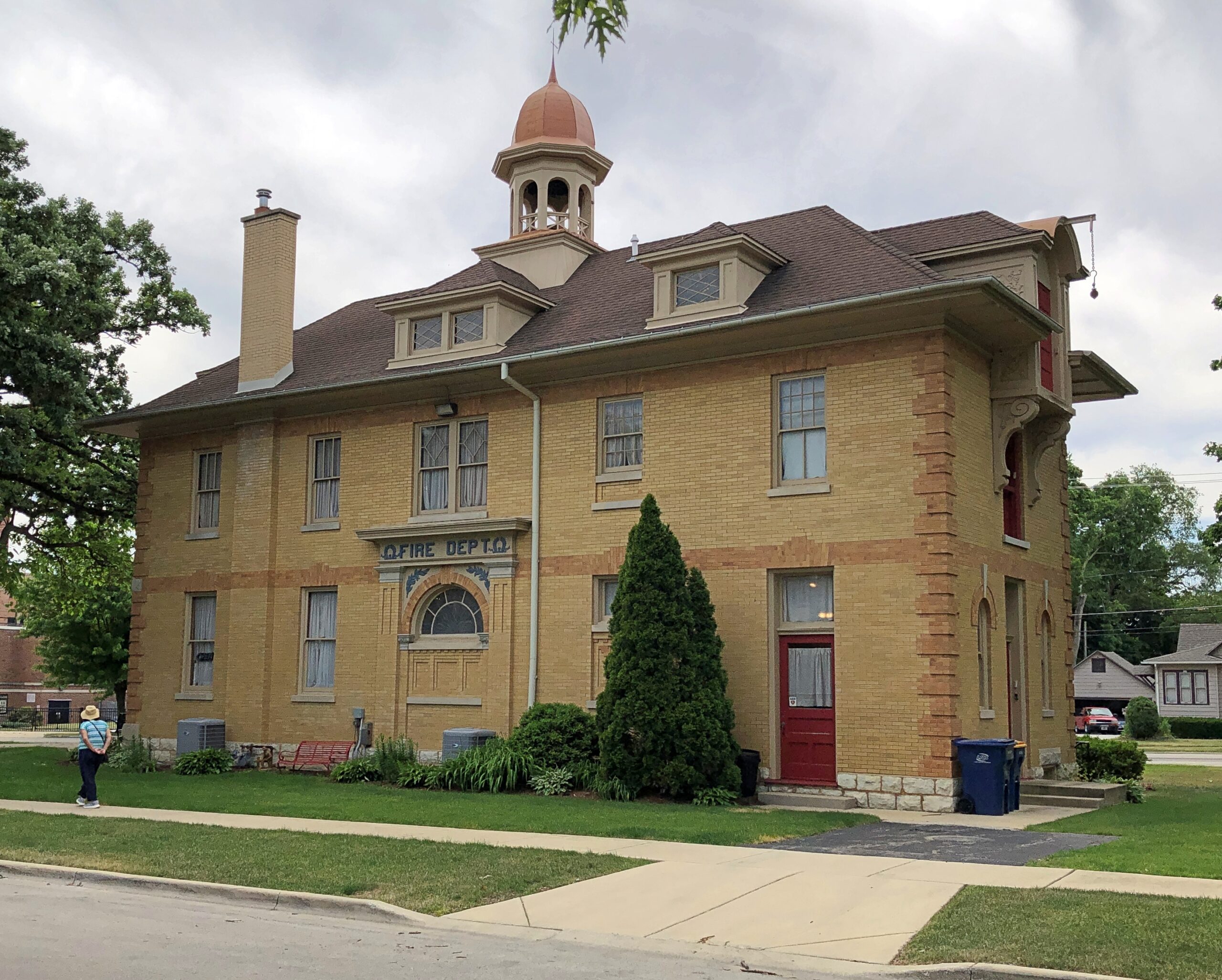
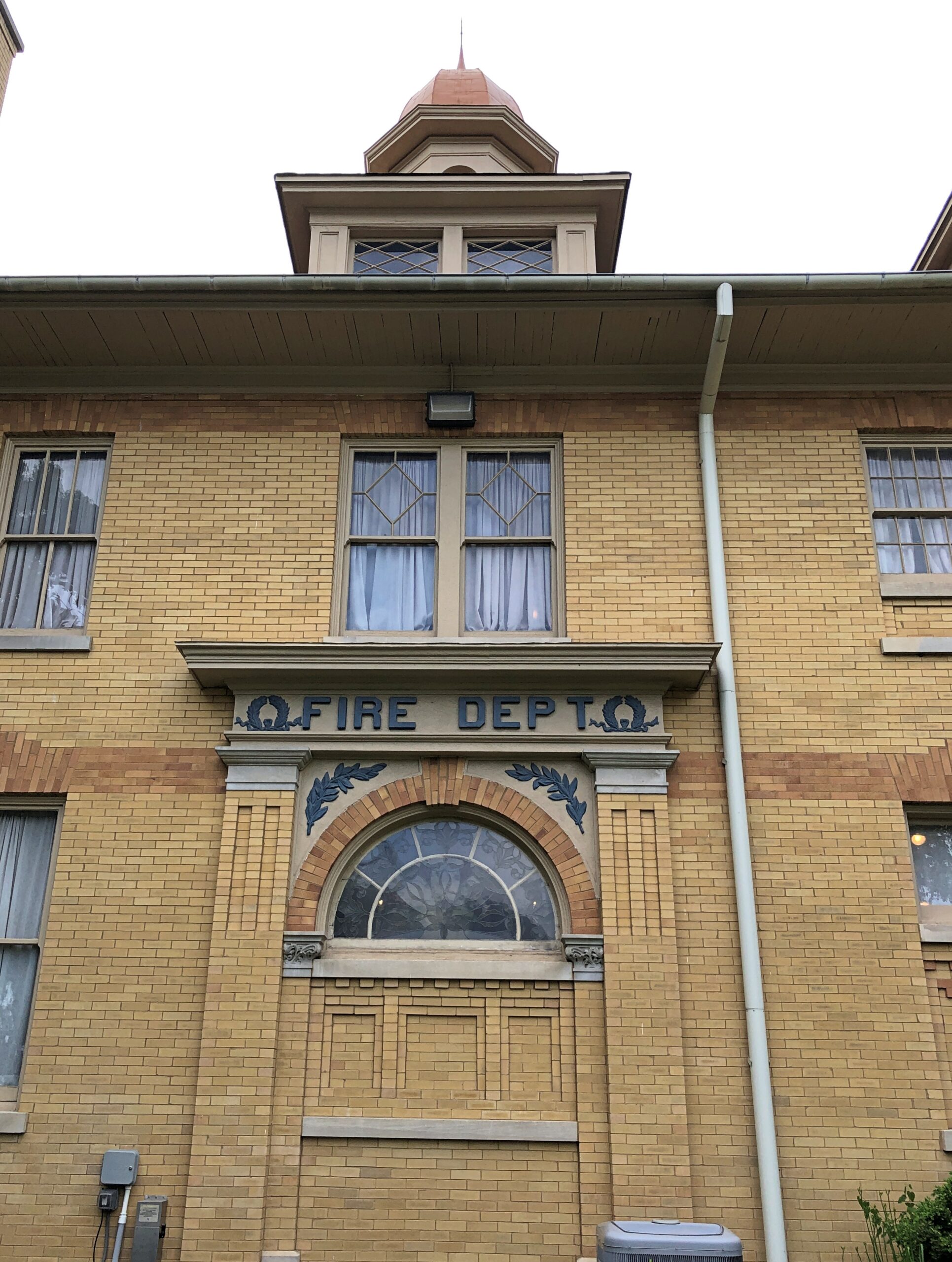
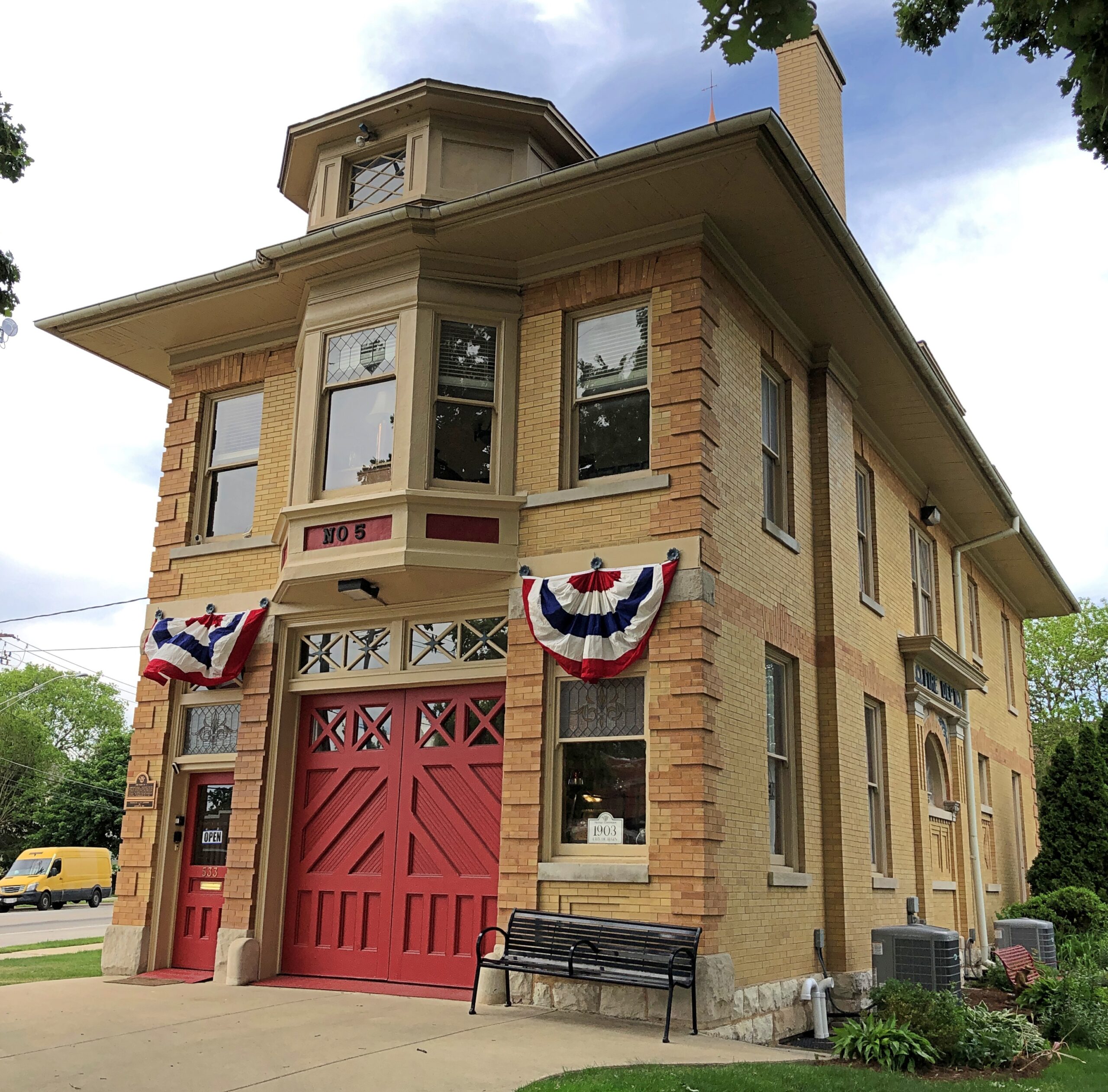
It was a small puzzle. The building in front of me was called a “fire barn.” Not something you hear very often, and in fact I wondered whether I’d ever heard of the term before. The standard term is, of course, fire station. But it didn’t take long to work it out: horses are known to be kept in barns; the fire engines in Elgin, Illinois, used to be horse-drawn; so a barn to keep fire-department horses – and naturally other equipment – would be a fire barn, even after fire engines became horseless.
So at Elgin Fire Barn No. 5 Museum not long ago that I took an instant liking to fire barn. Even though they don’t house horses anymore, we’d do well to call our fire stations fire barns instead. A touch of poetry to an otherwise dry municipal designation.
Elgin No. 5 Fire Barn is a legacy of progressive ideas about fire suppression in the late 19th and early 20th centuries, built in 1903 as a solid edifice showing how serious the city was about deploying the cutting edge of fire-control technologies of the time. The building was in service for almost all of the 20th century and, as often for these things, narrowly escaped demolition after 1990. But the citizens of Elgin ultimately didn’t want to part with it. Good for them. The barn is owned by a nonprofit these days.
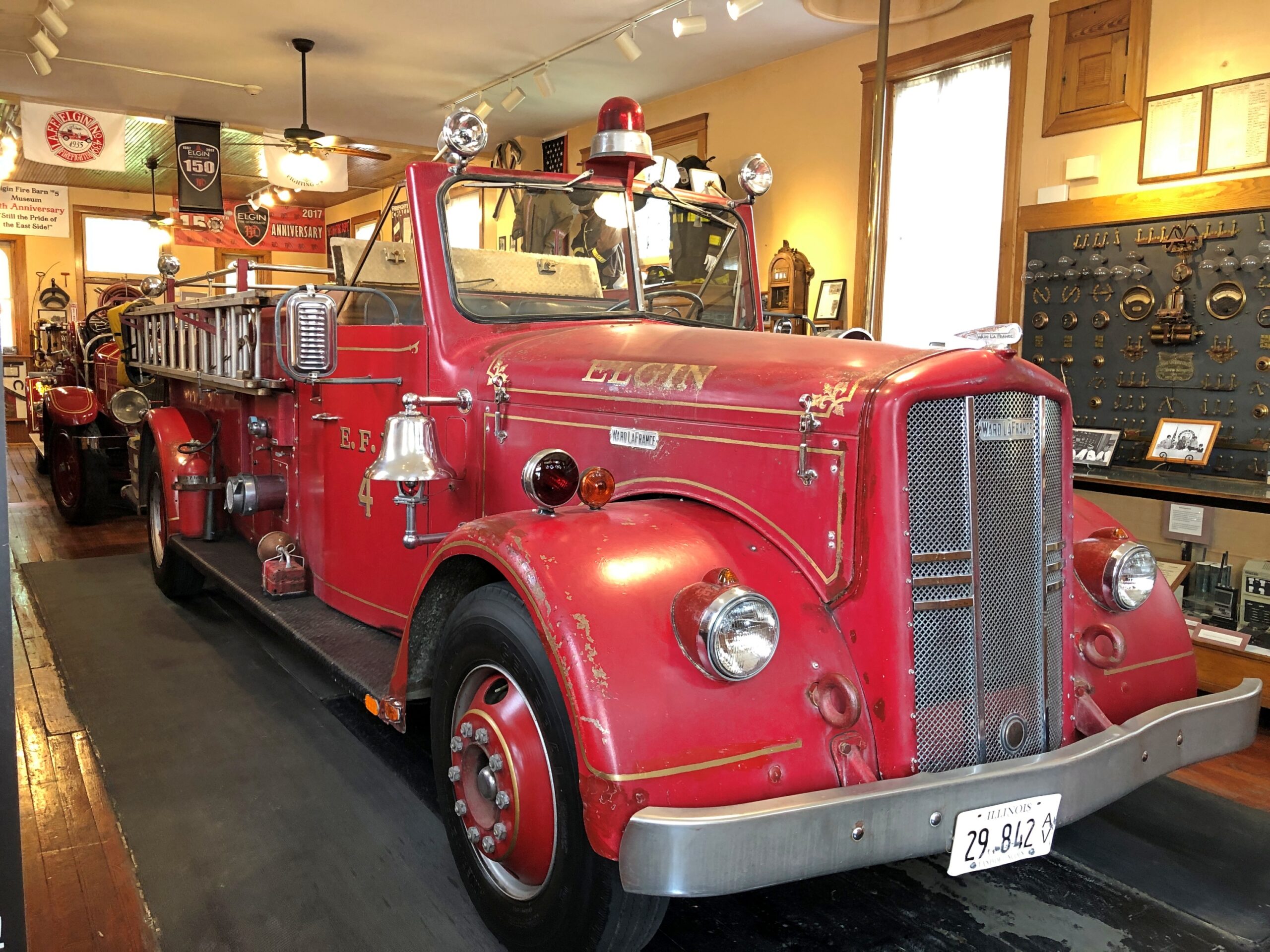
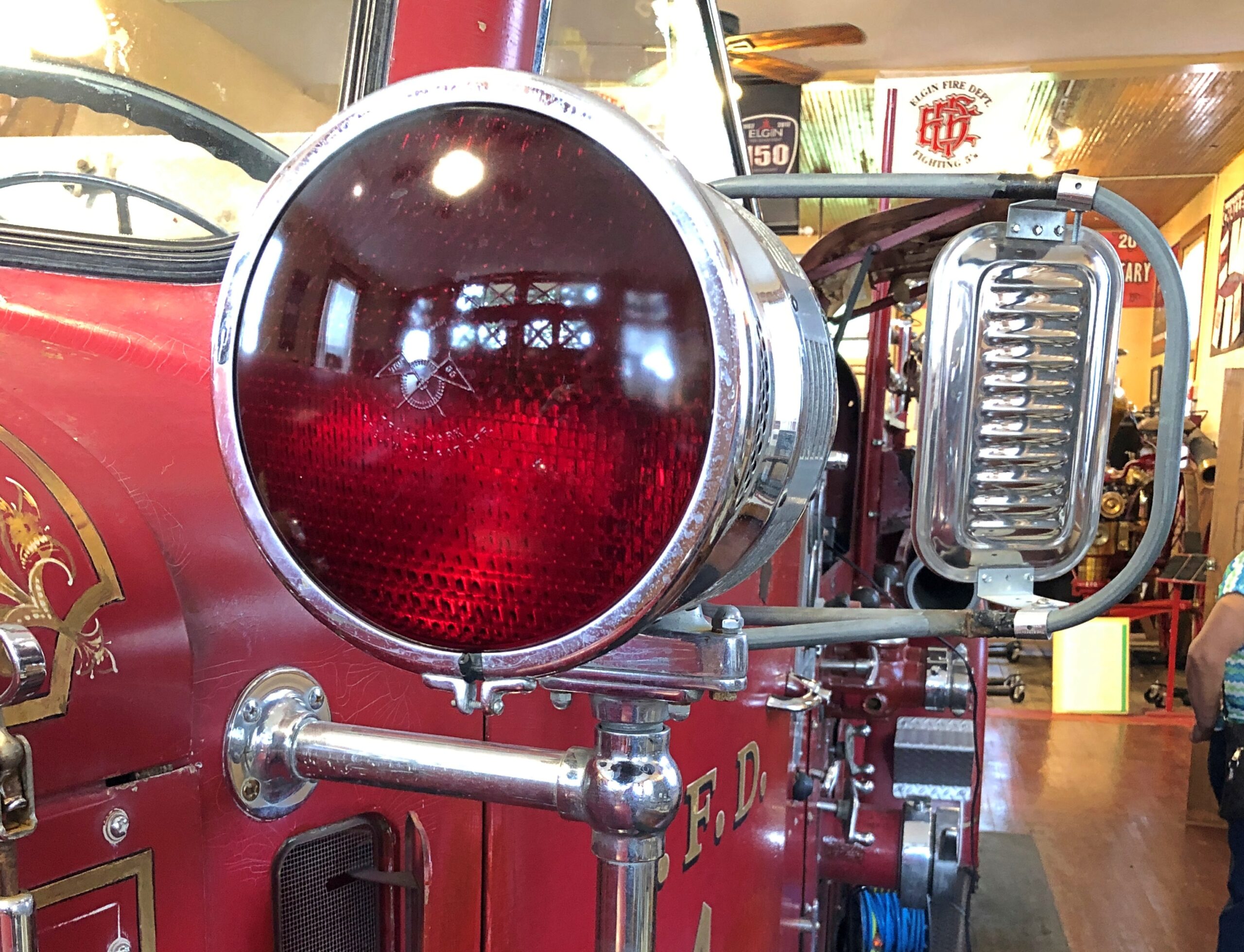
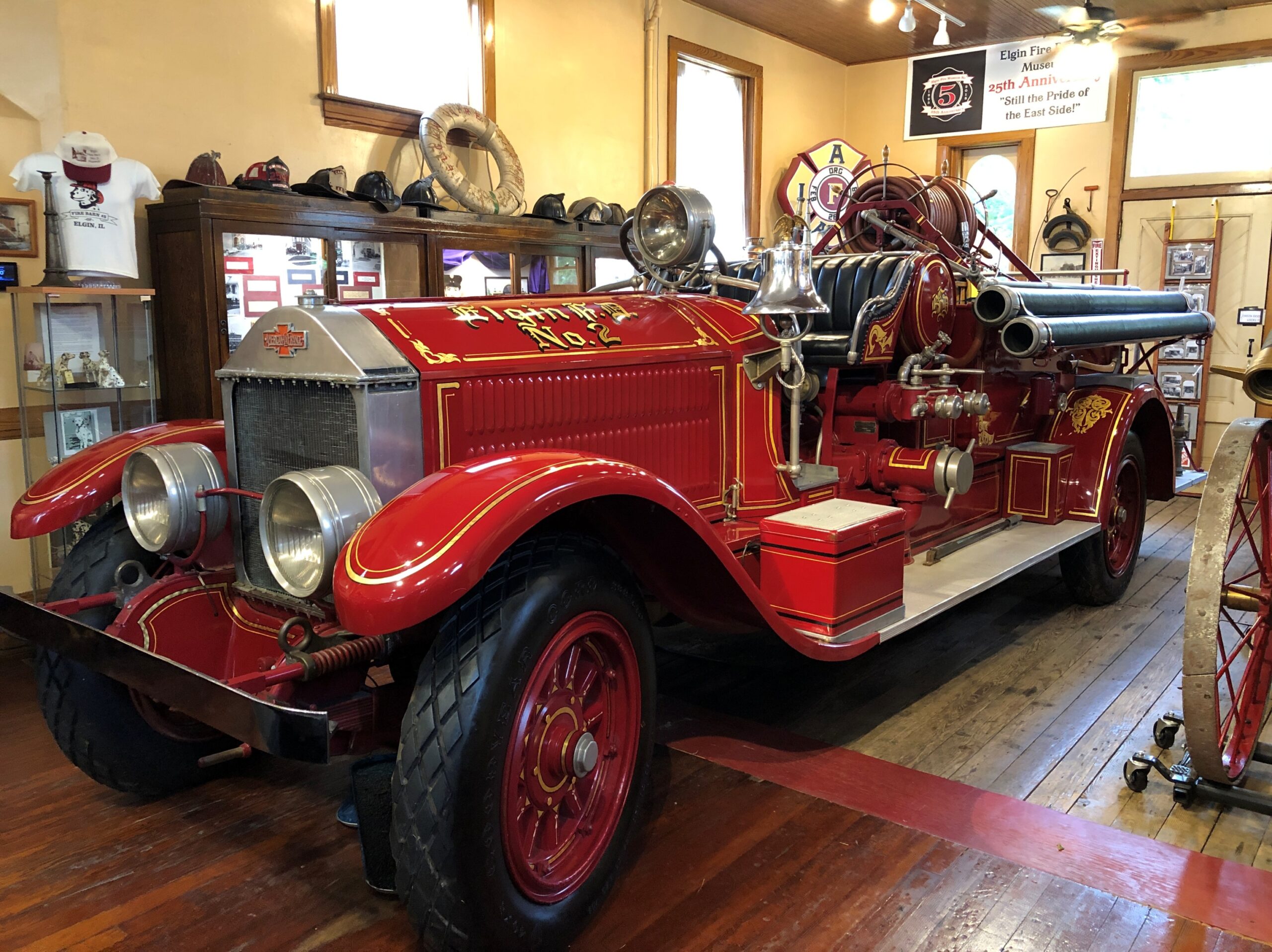
Much space in the museum is for fire engines that once called the barn home.
Good old open-cab engines. The only other place you see them regularly are stylized versions on yellow signs warning motorists that a fire station is nearby. Otherwise, they are museum pieces. I remember editing an article for Fire Chief magazine 30 years ago in which the executive of a fire engine manufacturer said that even a special commission by a fire department for an open-cab engine — and he didn’t think it likely — would be declined.
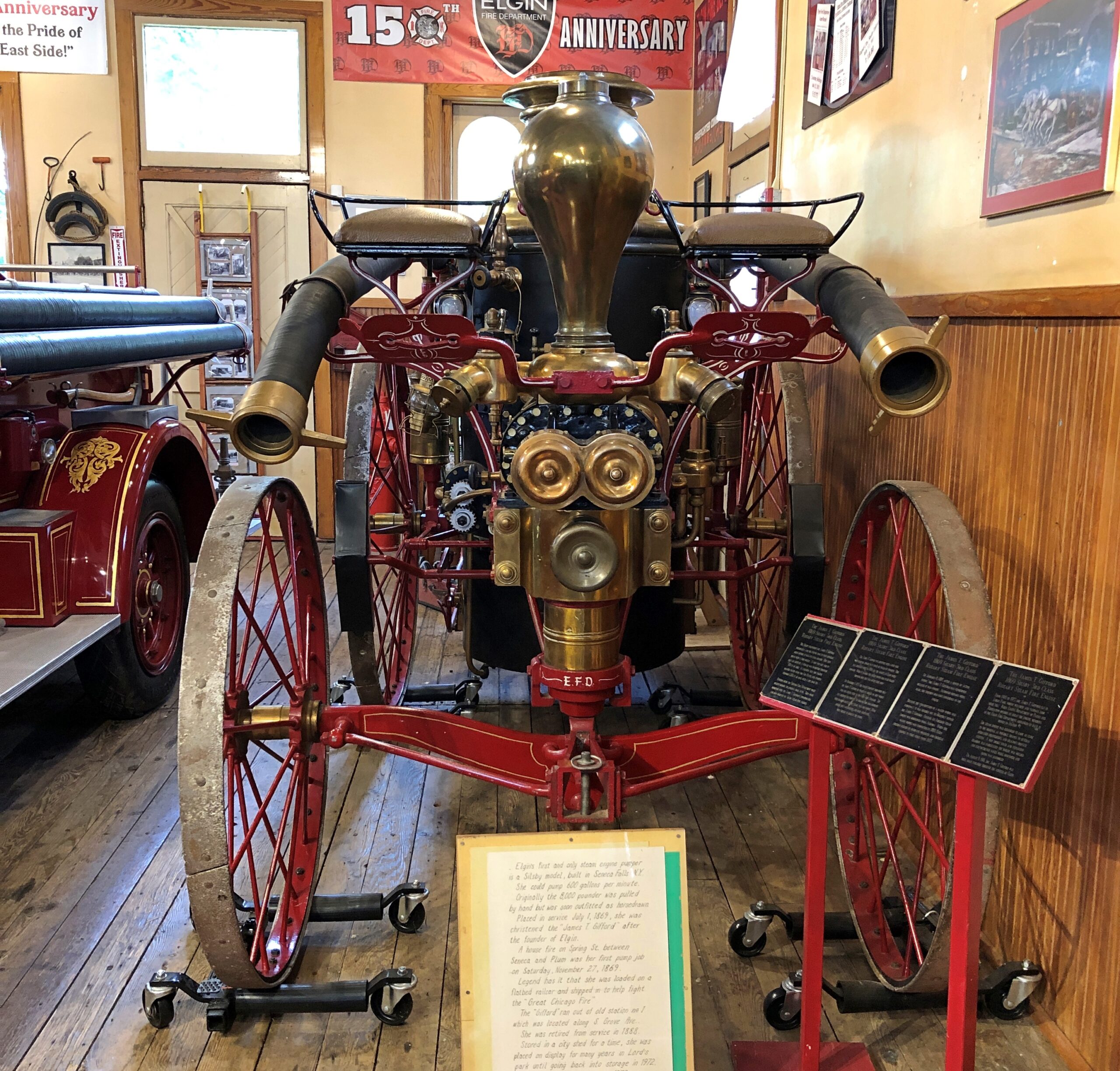
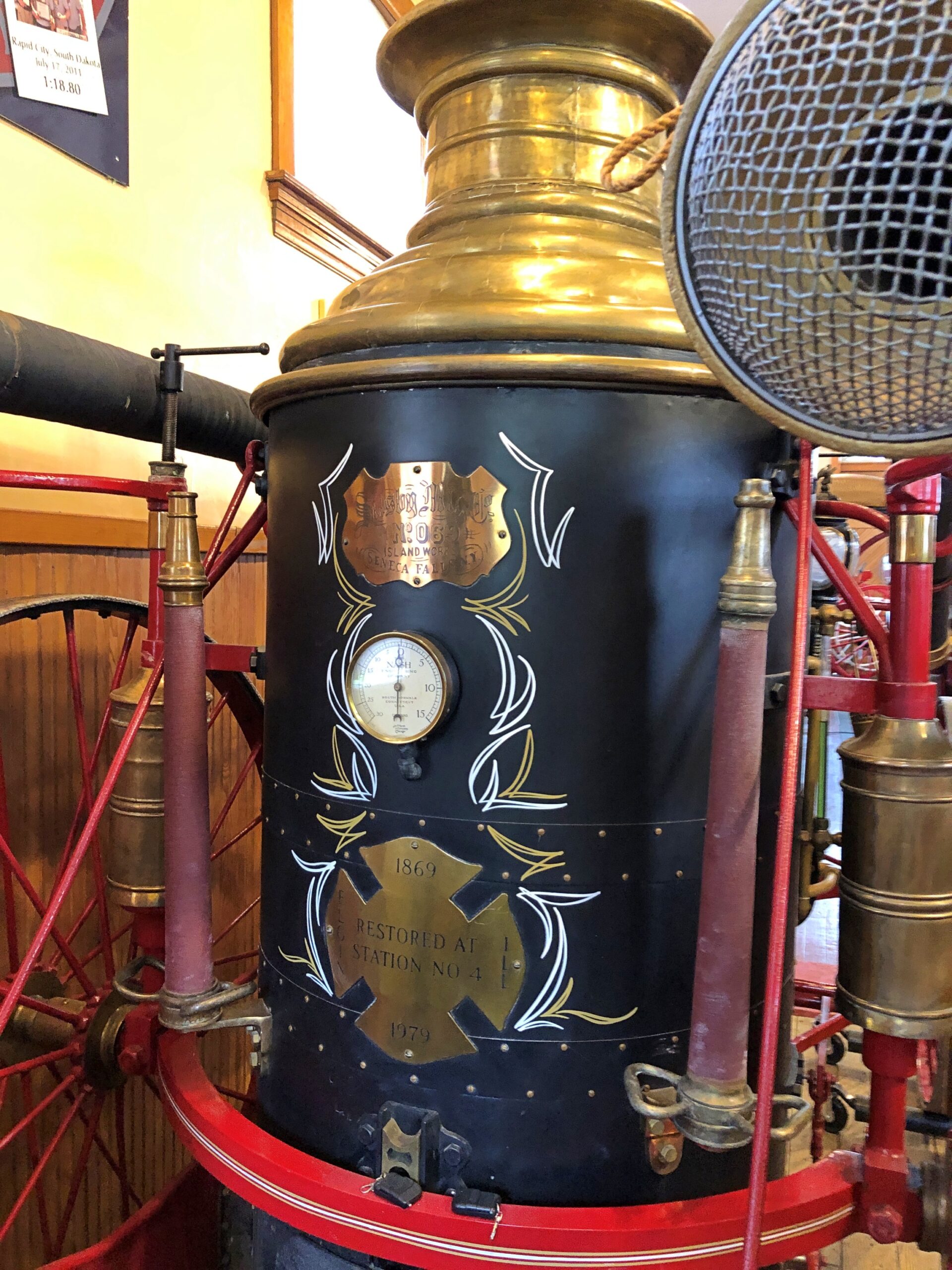
The museum also holds an Elgin apparatus that had been retired before the building of Fire Barn No. 5, though in its mid-19th century heyday, this steam powered pumper was Star Trek tech, compared to able-bodies citizens trying to put out building fires with bucket brigades.
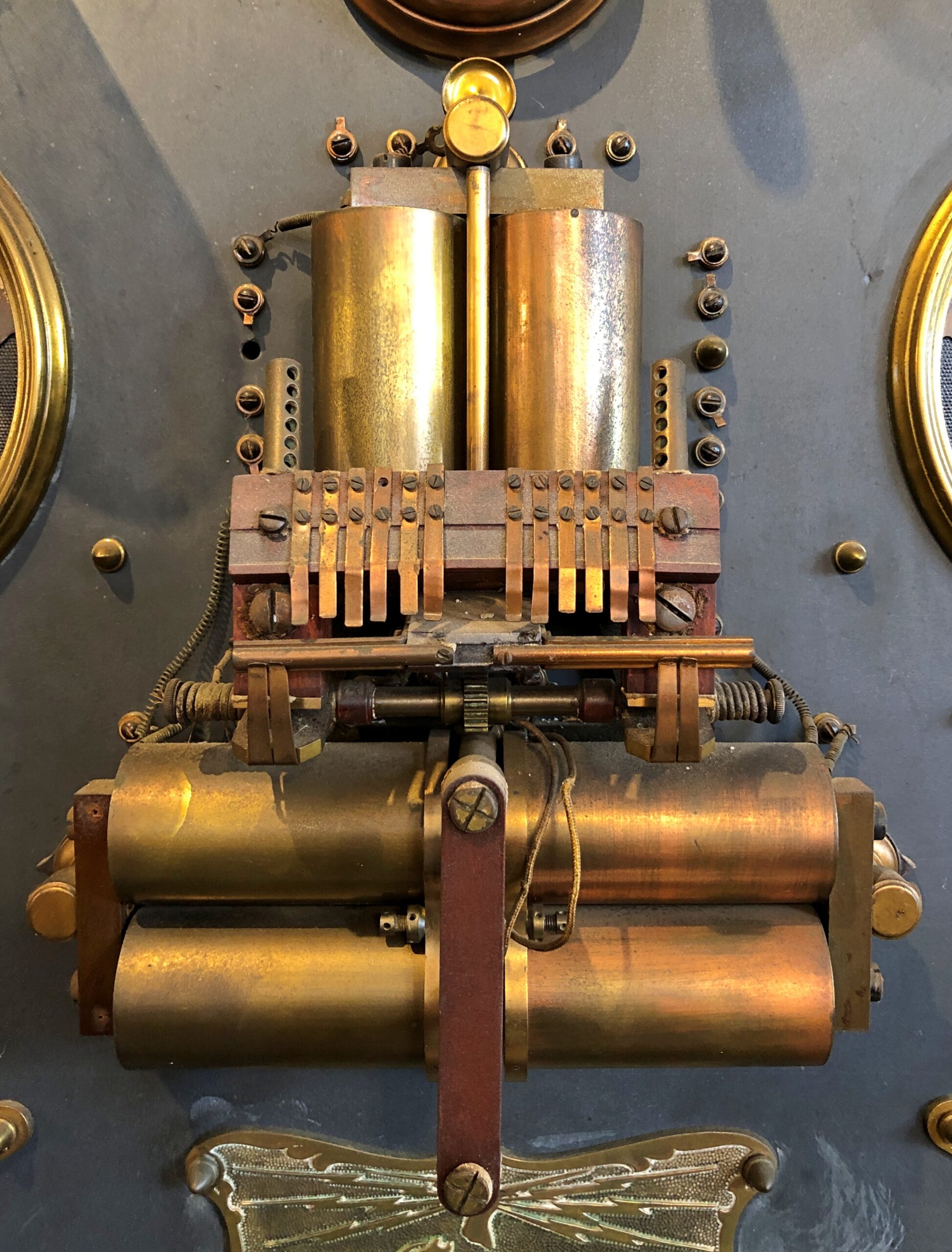
Speaking of advanced Victorian fire tech: the brass shapes of an alarm system based on telegraphy.
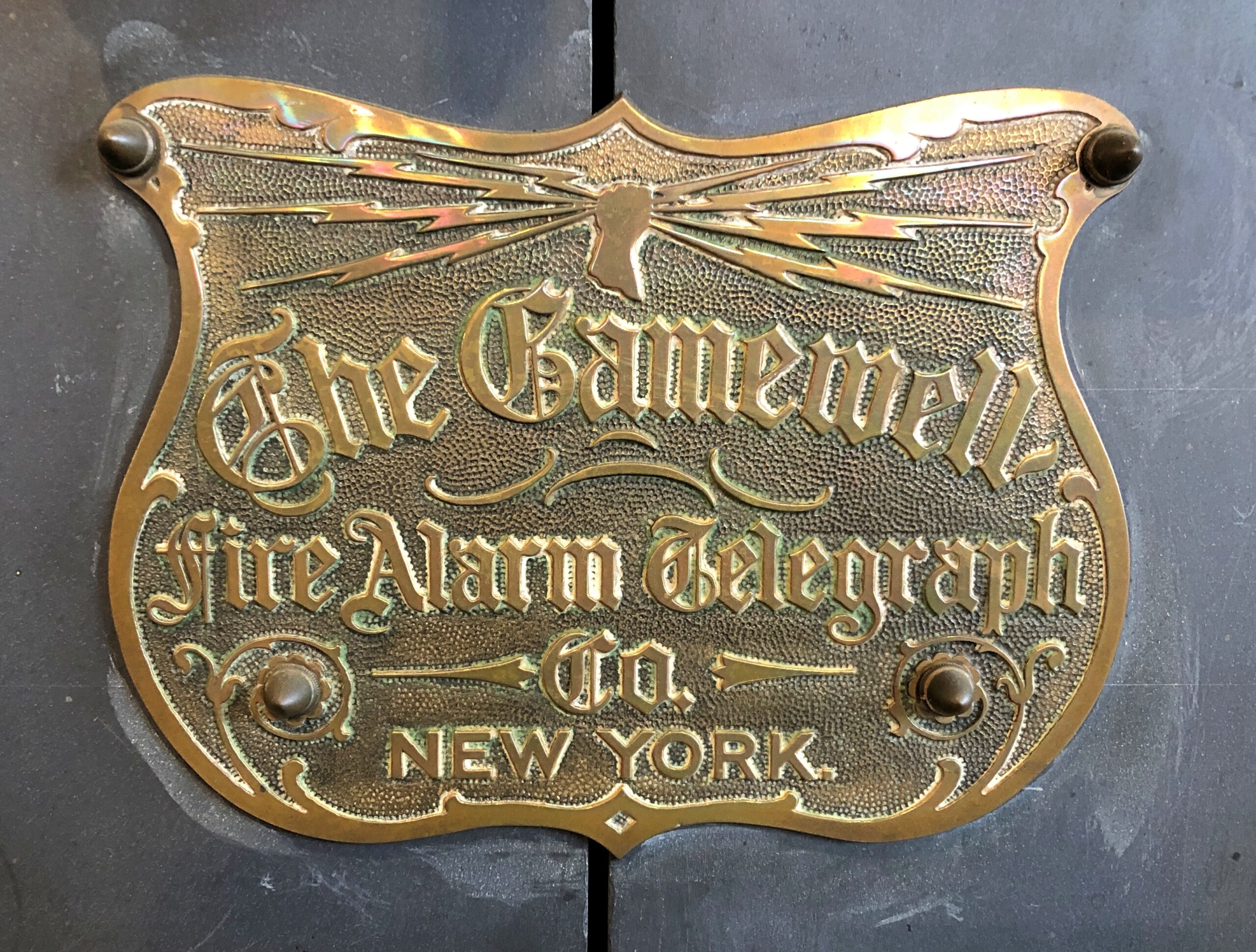
For a time in the 19th century, if you wanted a fire alarm telegraph system, you went to Gamewell. The name exists even yet as a unit of Honeywell.
We met Bob on the second floor. Well, “Bob” since my memory for names, never that good, isn’t improving with the years. A retired Elgin firefighter, Bob volunteered at the museum with a clear enthusiasm for the artifacts: the trucks, but also axes, ladders, a collection of helmets and turnout coats, department badges, photos of old-time firemen, documents and items and utensils used at the fire barn, considering that much time spent was there, between emergencies. Bob showed us around, since no one else was visiting the museum at that moment, and we had a good talk about the way things used to be, fire suppression-wise.
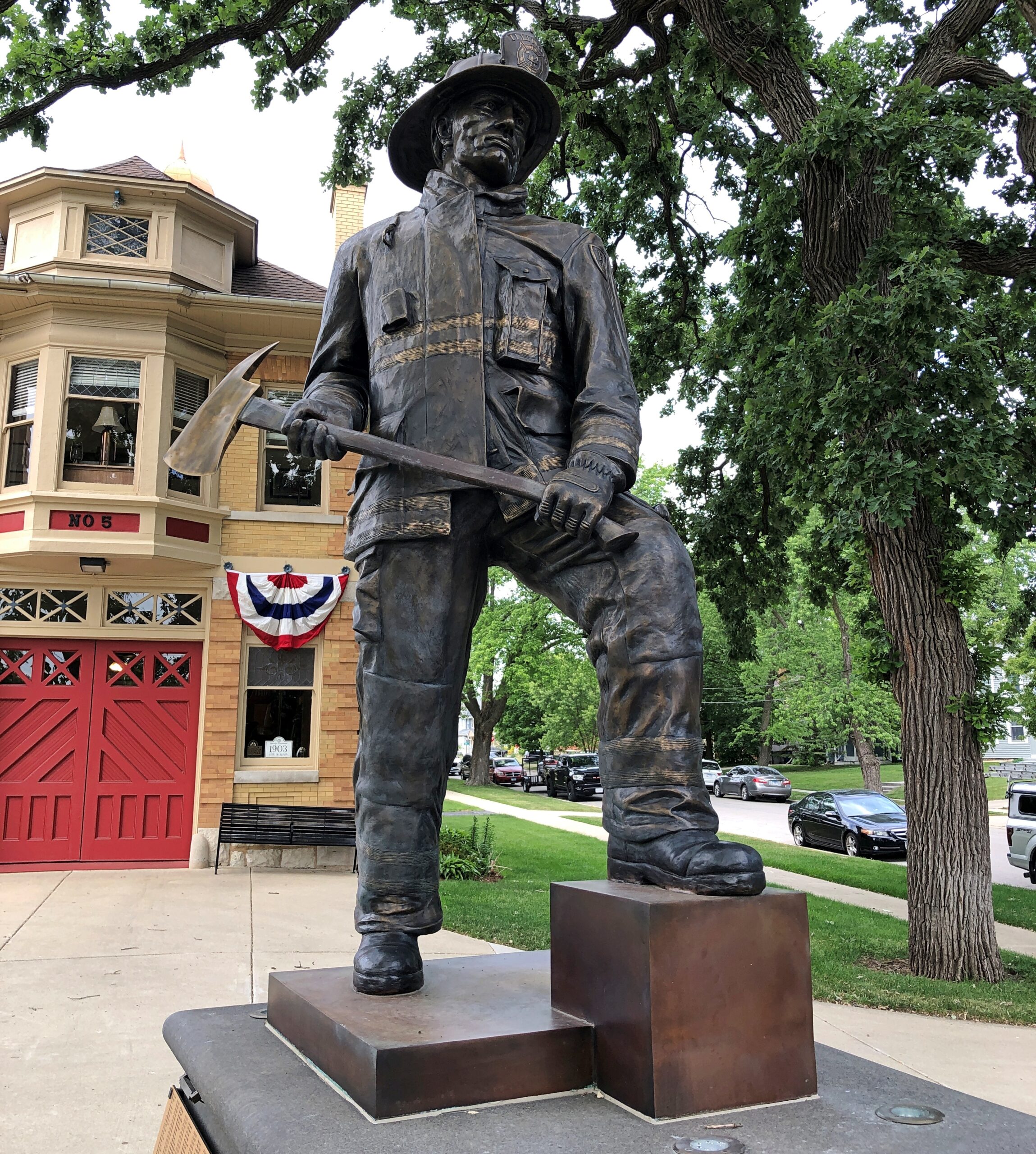
In front of the museum is a memorial to Illinois firefighters.
Part of the doughty school of bronzes, often depicting pioneers and soldiers and members of the CCC — and firemen ready to take on an emergency (though in this case, pre-SCBA, looks like). Doughty was definitely part of the job description.
The run of days from Juneteenth to July 4 at least, and even better to Nunavut Day (July 9), would be a fine time to slow down, like between Christmas and New Year’s Day, only warmer and without the mad runup to December 25. Back to posting around July 6.
Thousands of impressions flitter by on the road, most instantly forgotten when literally on the road – driving, you need to be in the moment, or else – or quickly forgotten, when “on the road” means you’re out and about somewhere that isn’t home. Still, a handful of details stick, even without photos. But photos help.
Maine
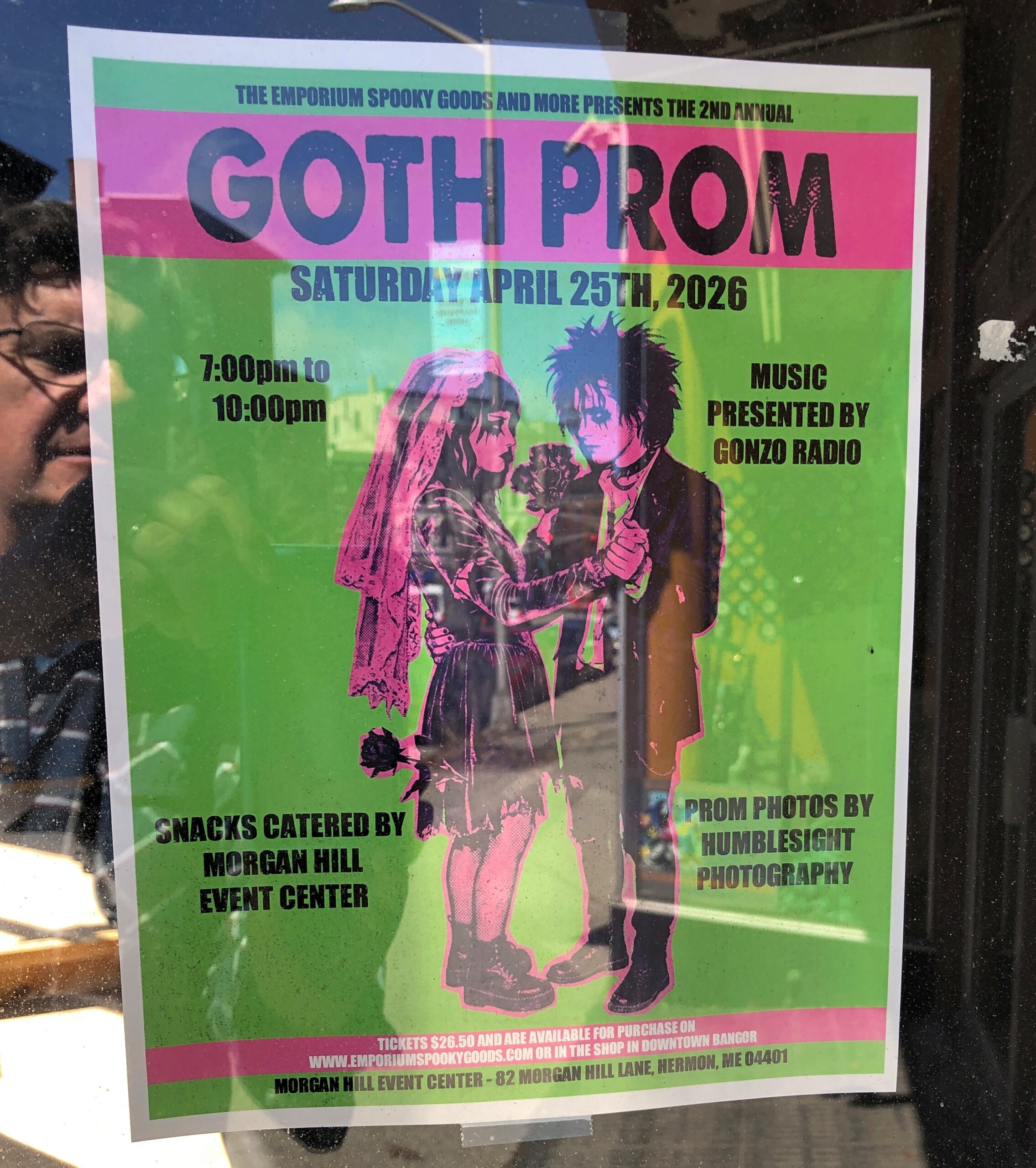
I call it “Self-portrait with Goth Prom.” Poster spotted in downtown Bangor.
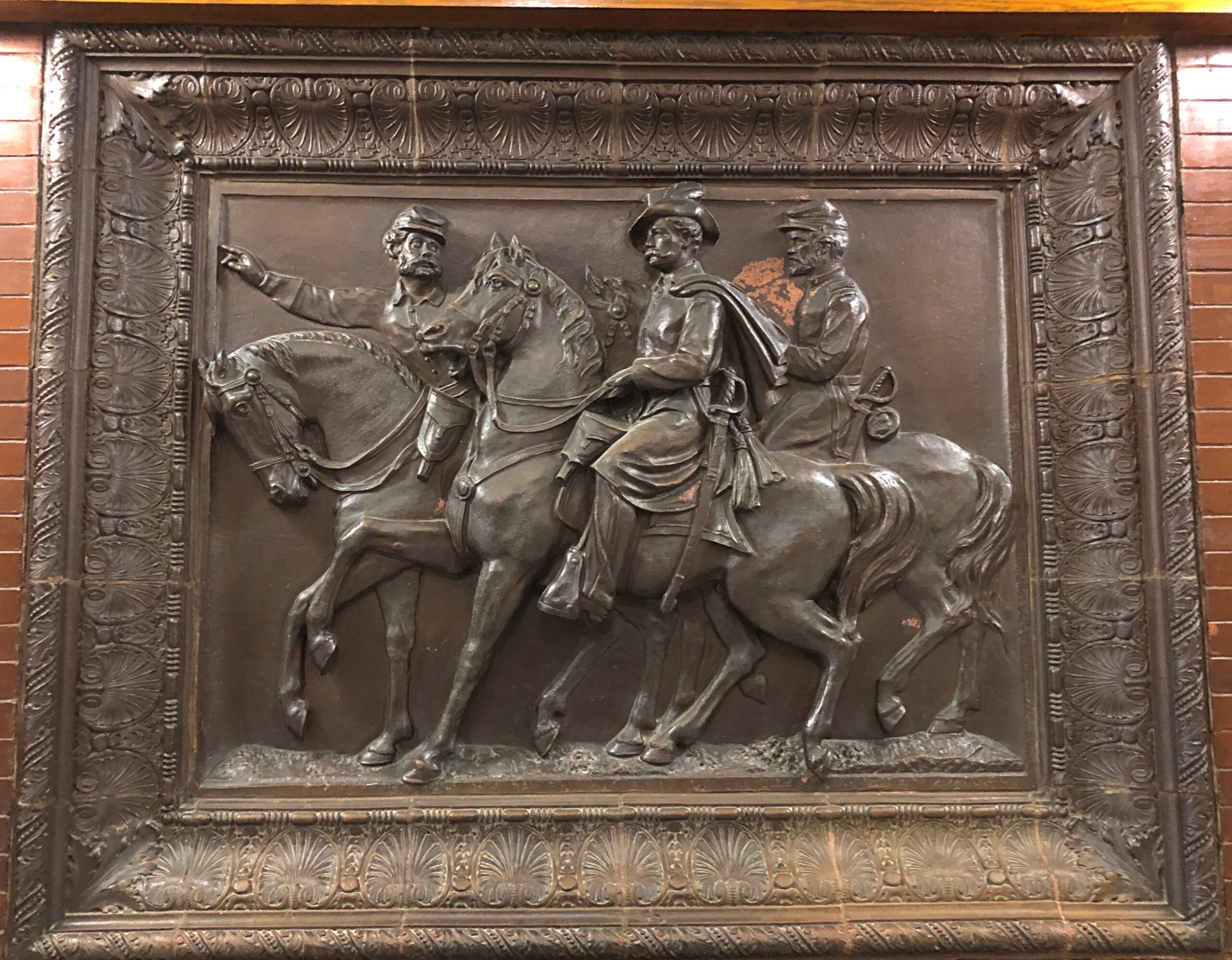
In the Maine Statehouse, a flat-ish object of a different kind.
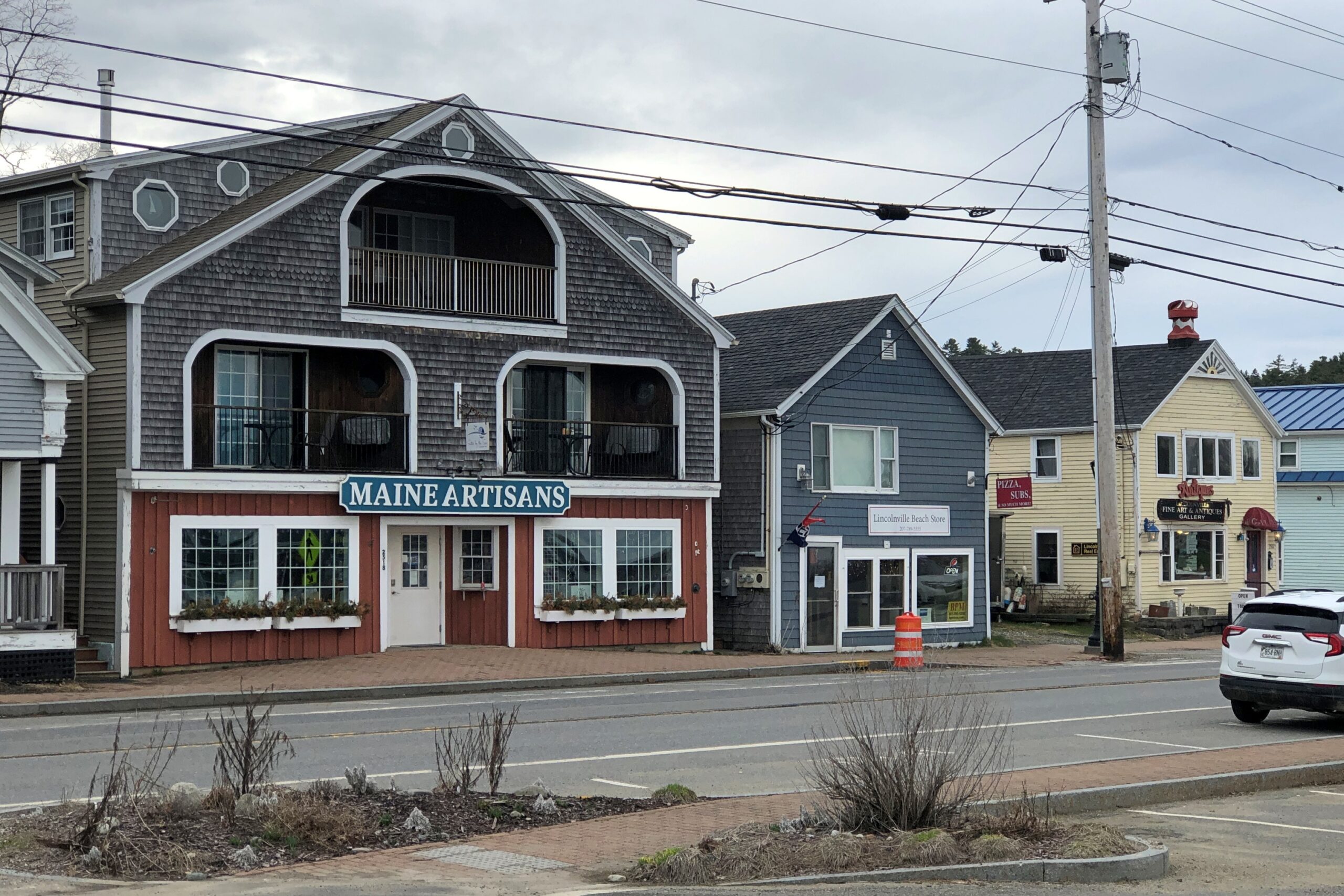
Lincolnville, on the coast of not far from Belfast.
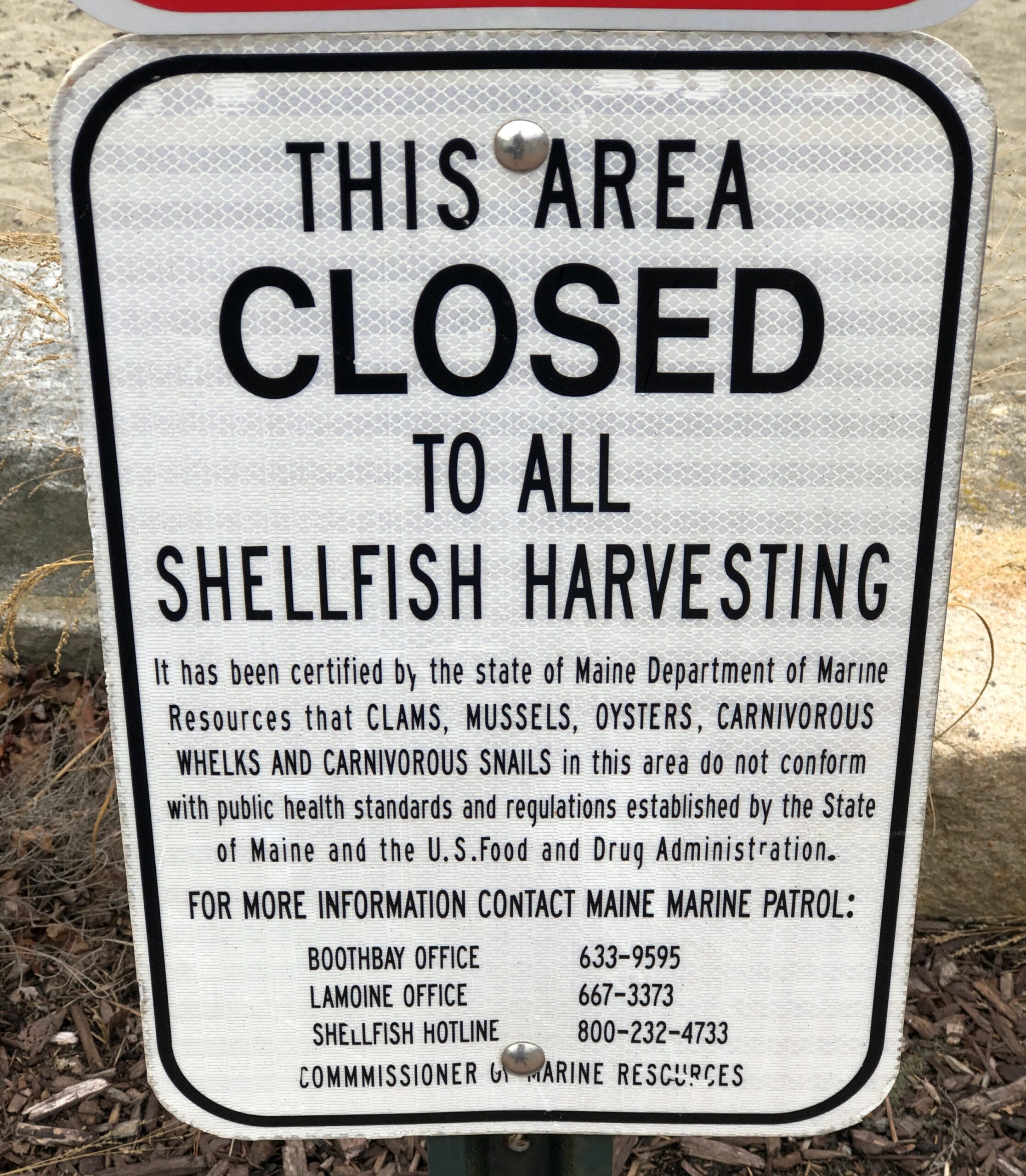
Carnivorous whelks. I was frankly ignorant about carnivorous whelks, and glad to learn a little about them. Because what a great name for a snail.
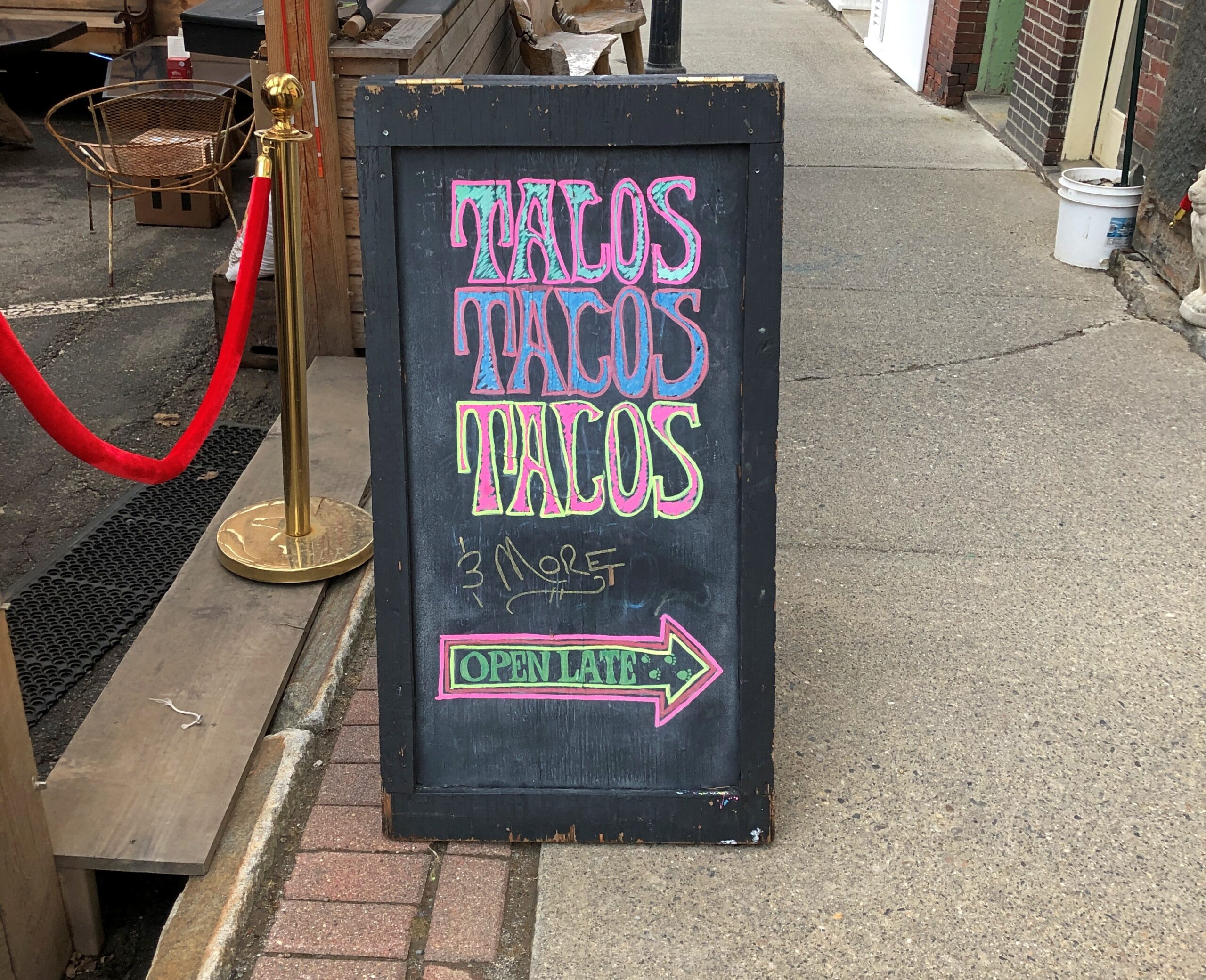
Too bad I wasn’t hungry in Belfast. I’d have had tacos.
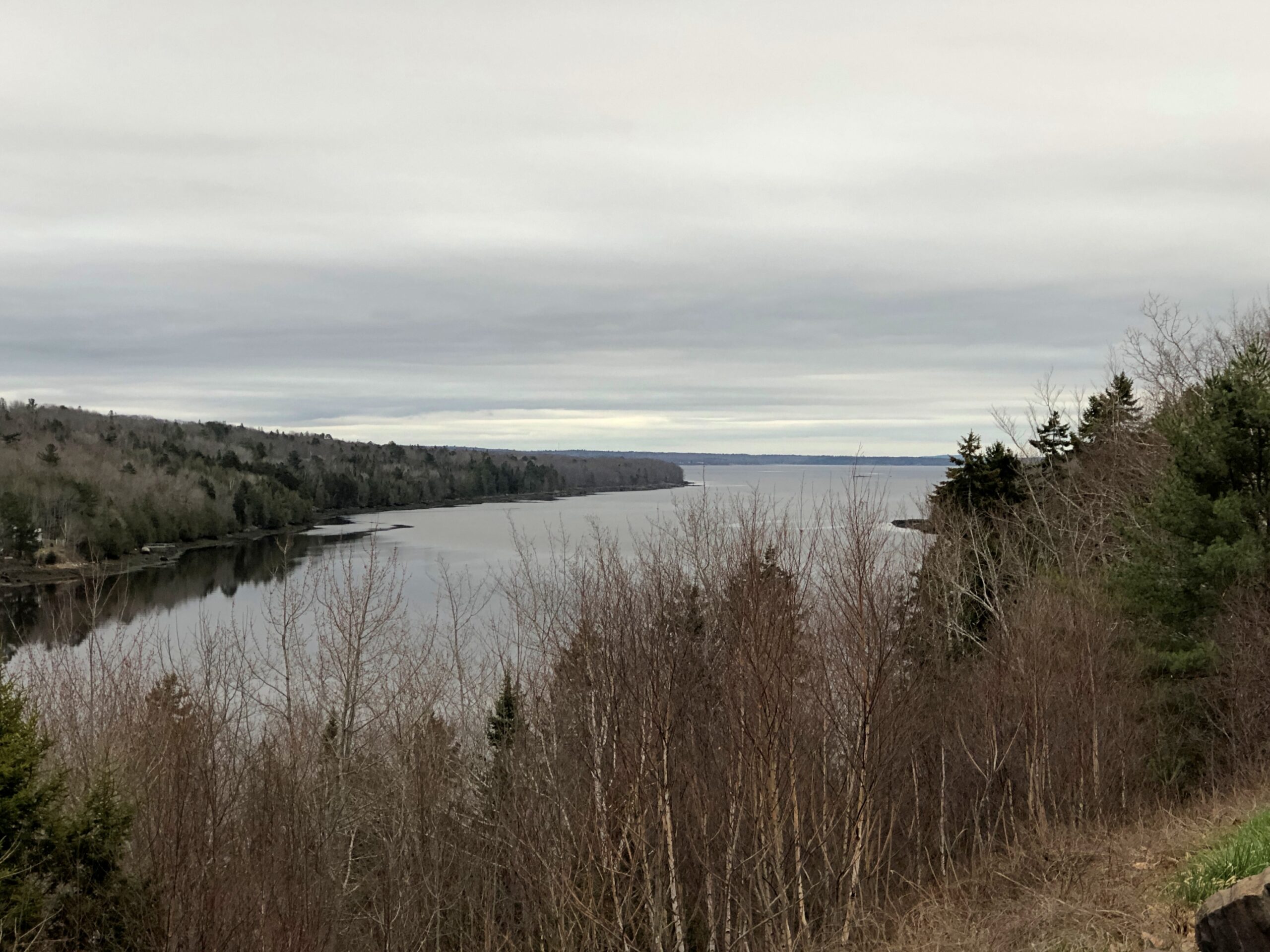
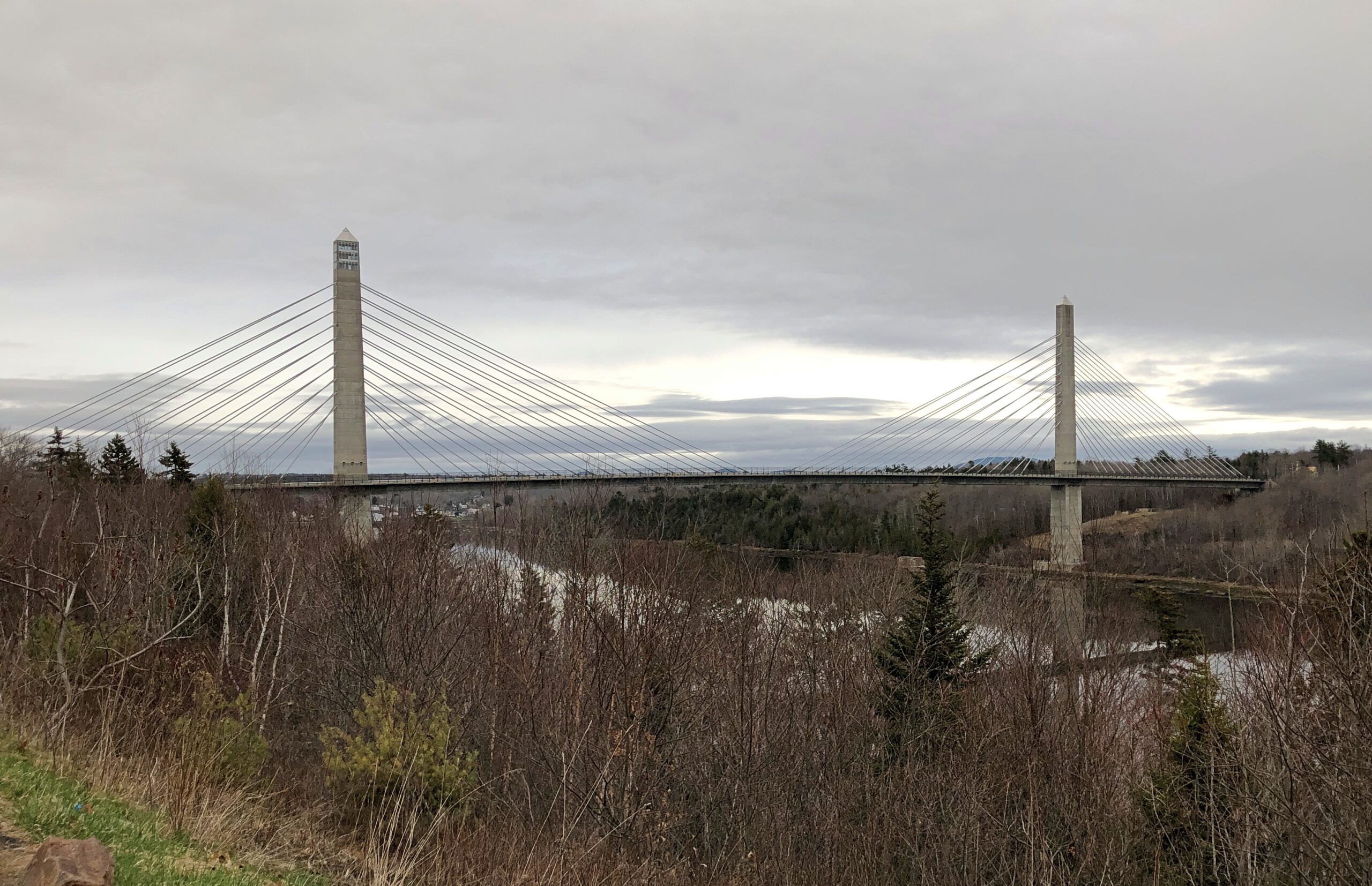
The Penobscot River and the Penobscot Narrows Bridge. A literal and scenic highpoint on that part of US 1 as it winds through near-coastal Maine. The bridge includes an observatory, unfortunately not open in April. Driving over the bridge itself was another pleasure of coastal Maine.
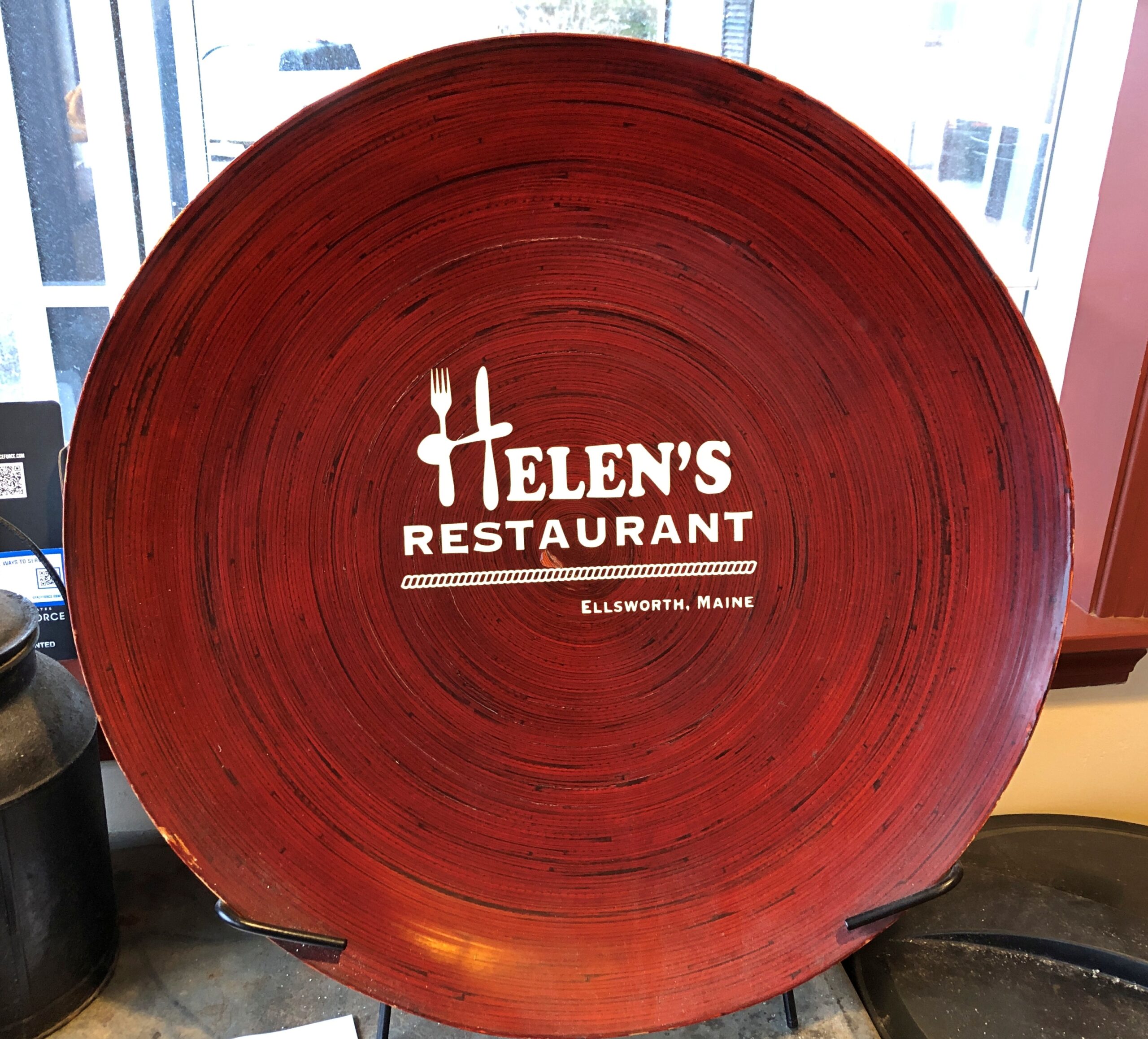
Helen’s Restaurant in Ellsworth. Tasty fish and chips. Haddock, specifically. What do you take for a haddock? “Well, sometimes I take-a aspirin, sometimes I take-a calomel.” It was some years before I learned that calomel was something I’d never take in a million years.
Massachusetts
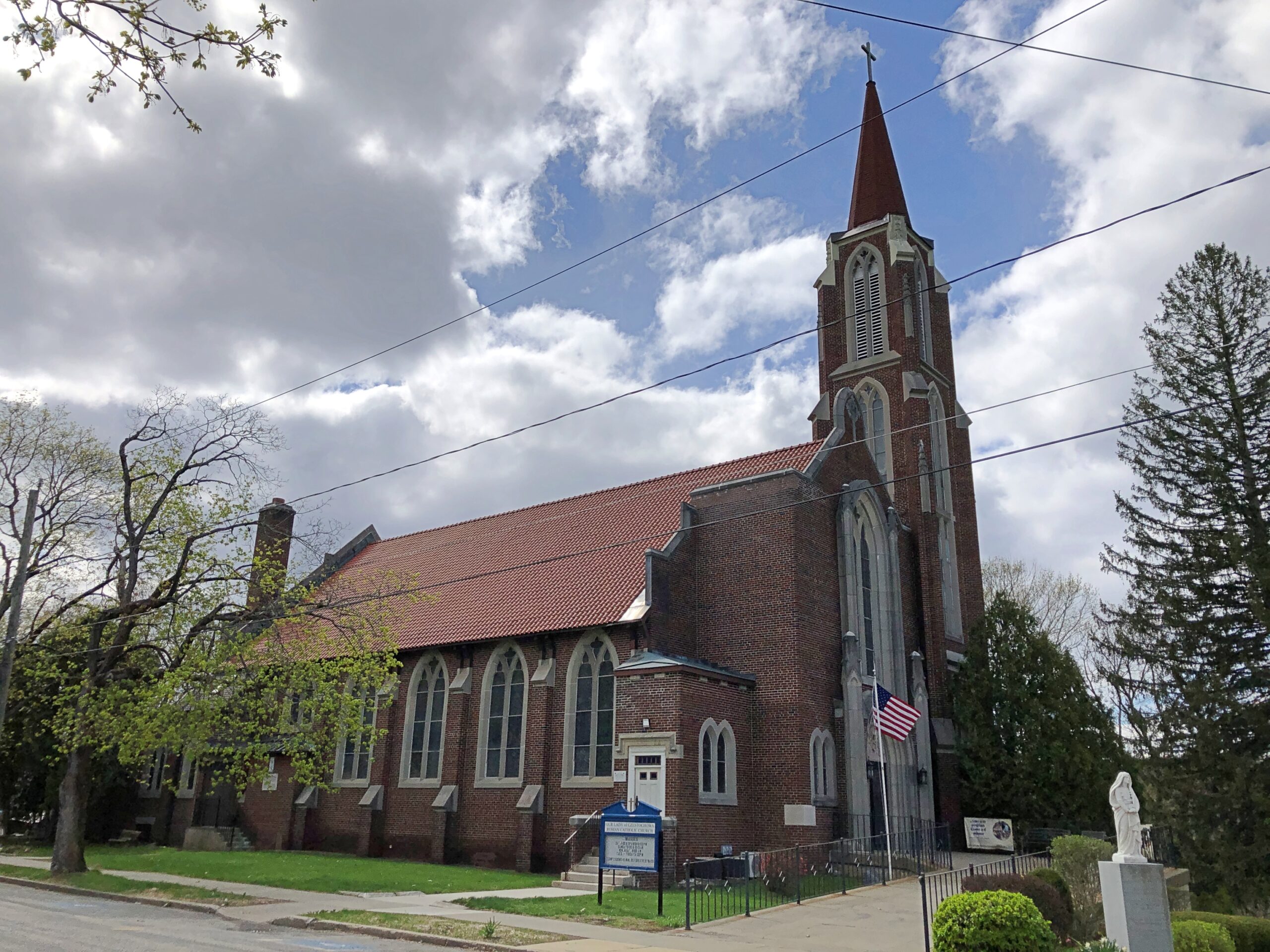
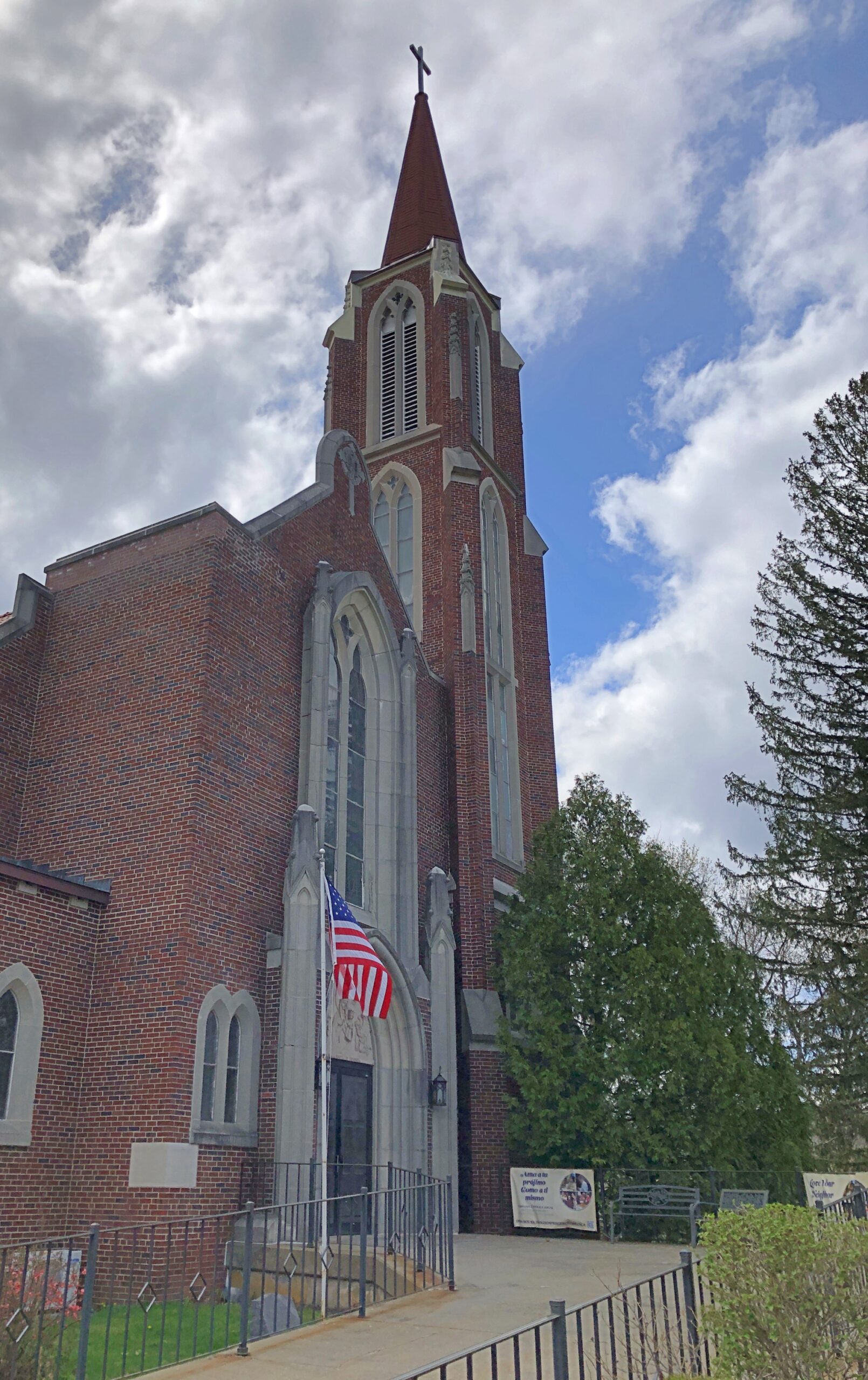
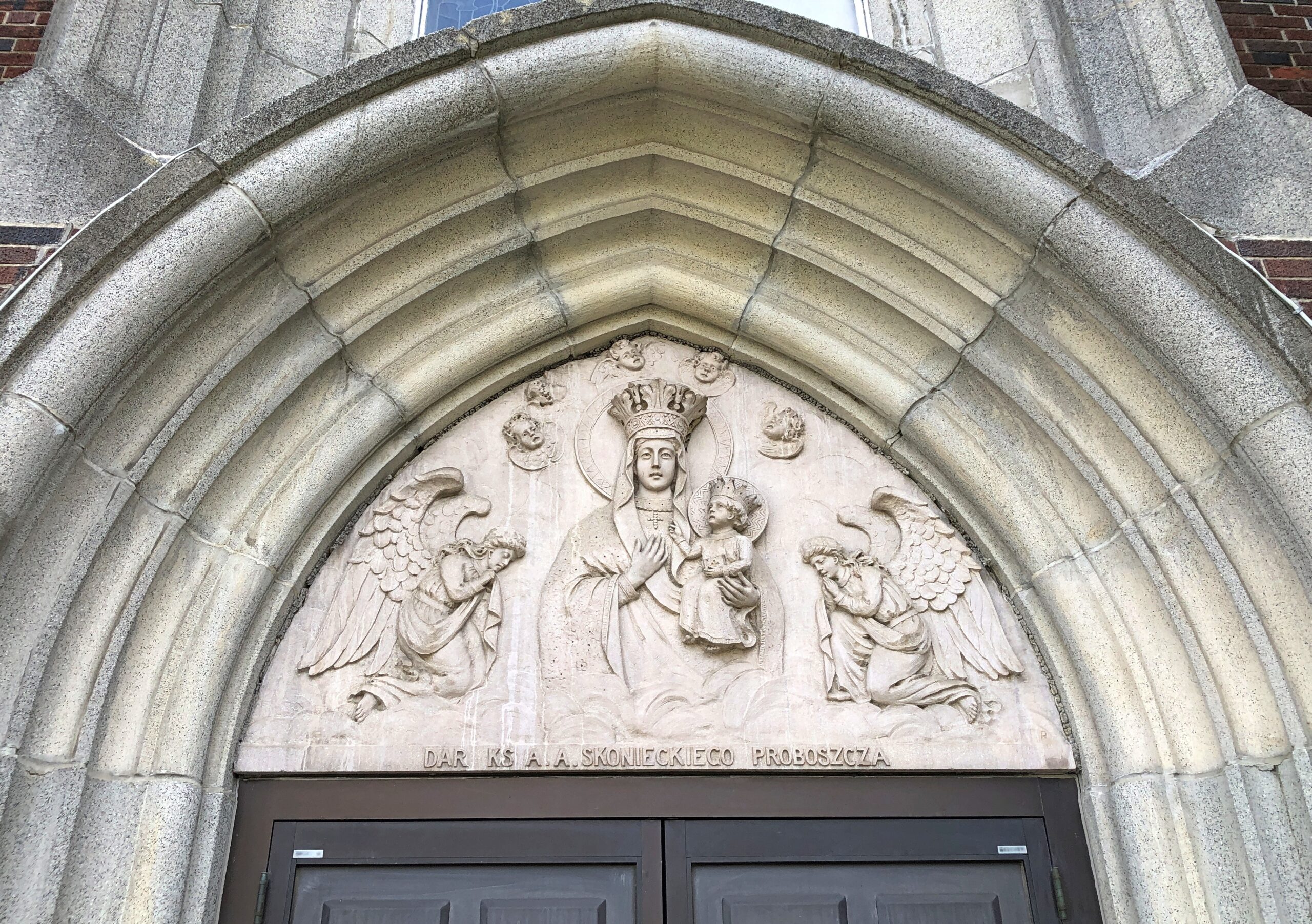
Our Lady of Czestochowa Parish, Turners Falls.
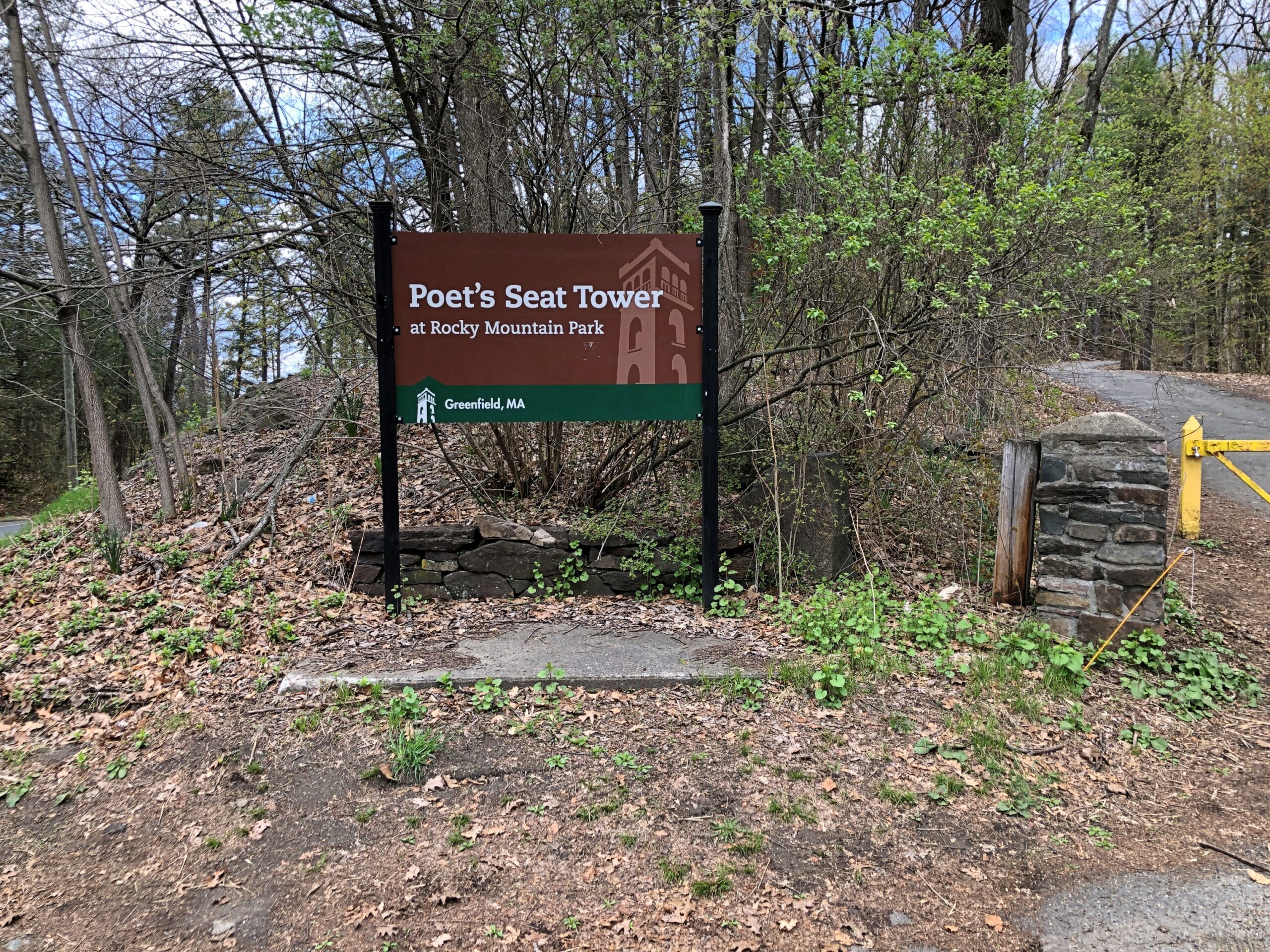
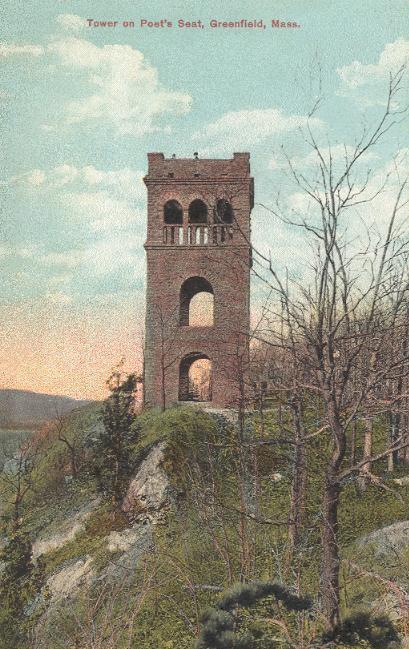
The church was closed. So was Poet’s Seat Tower.
As the tower appeared more than 100 years ago.
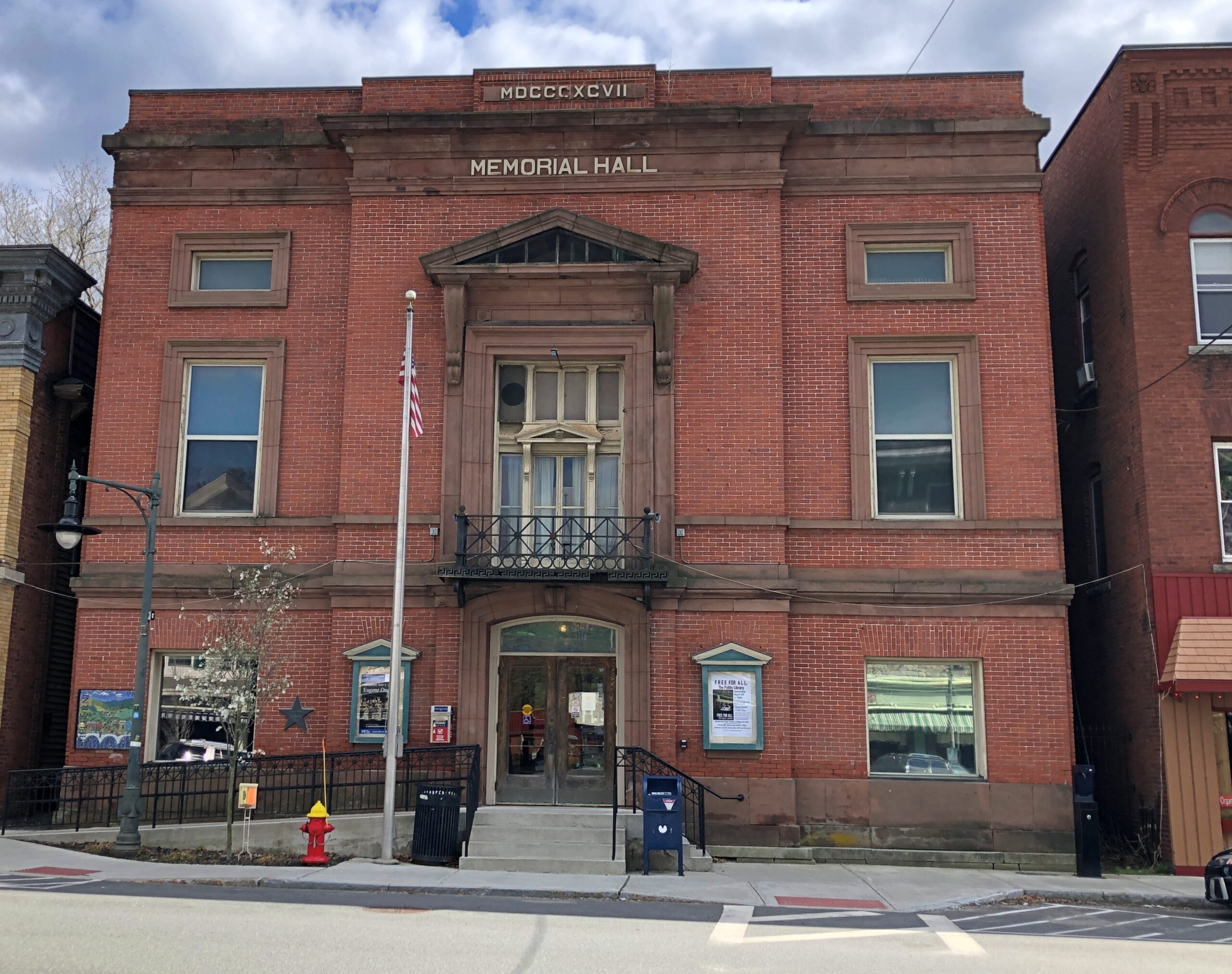
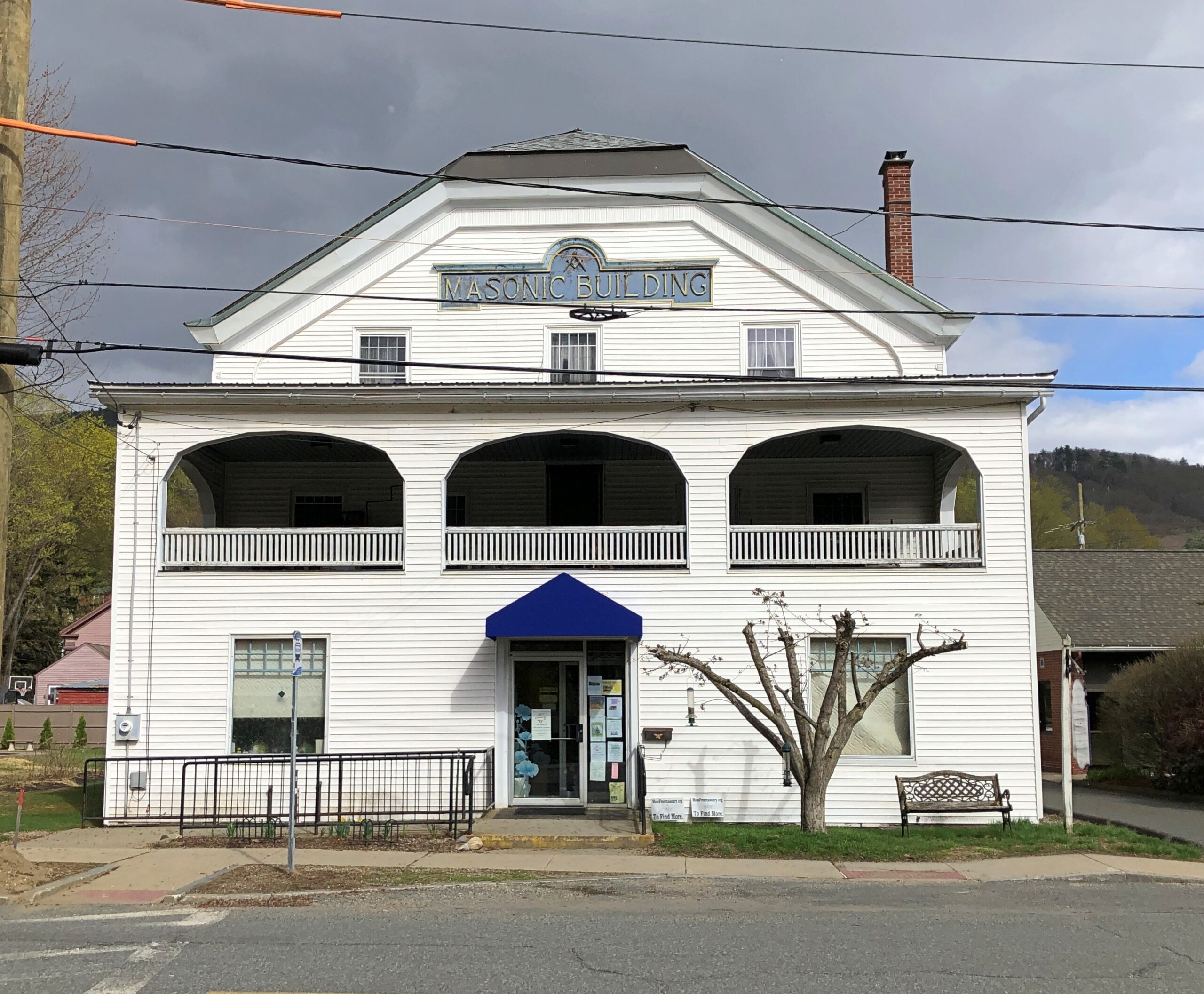
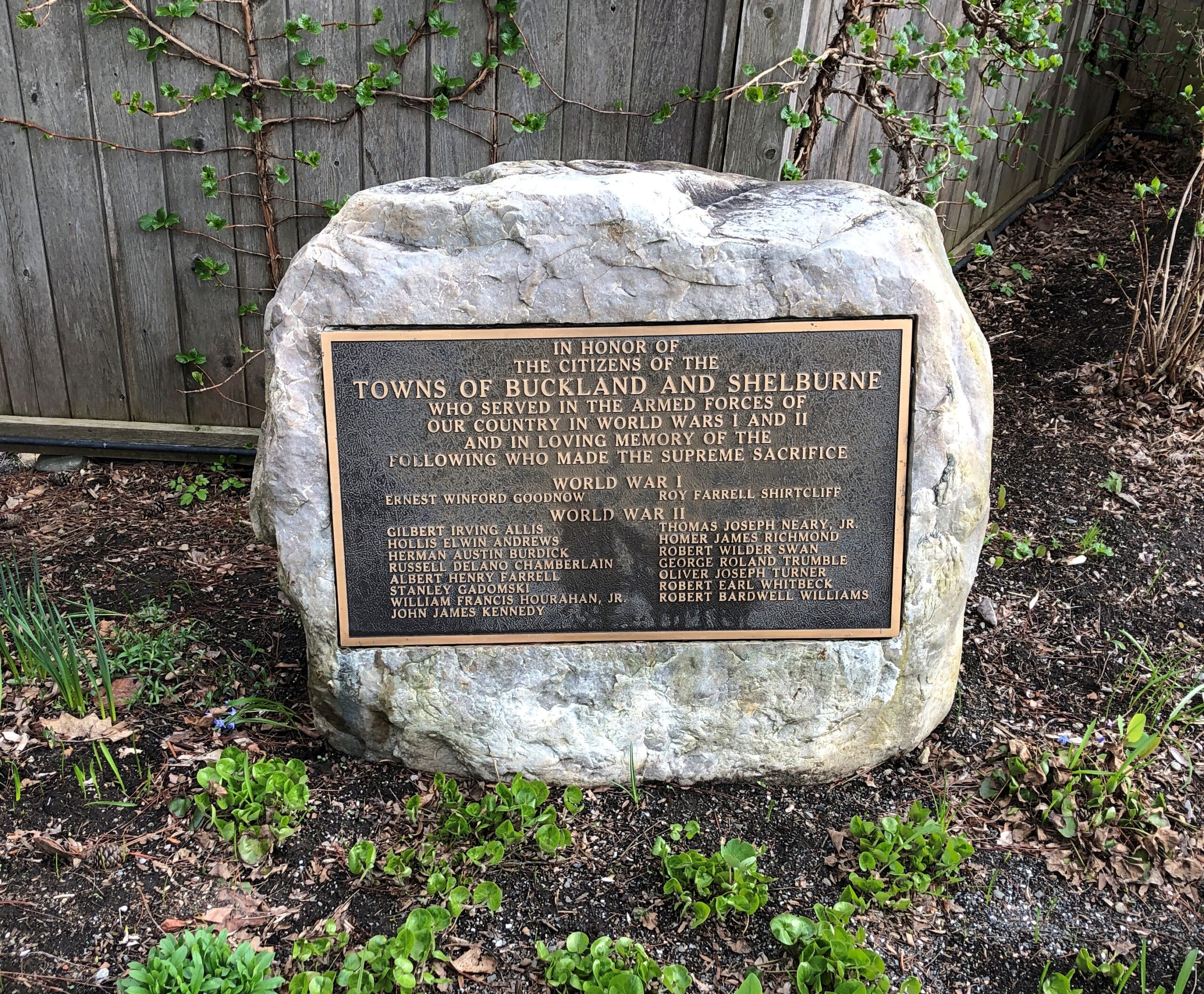
Shelburne.
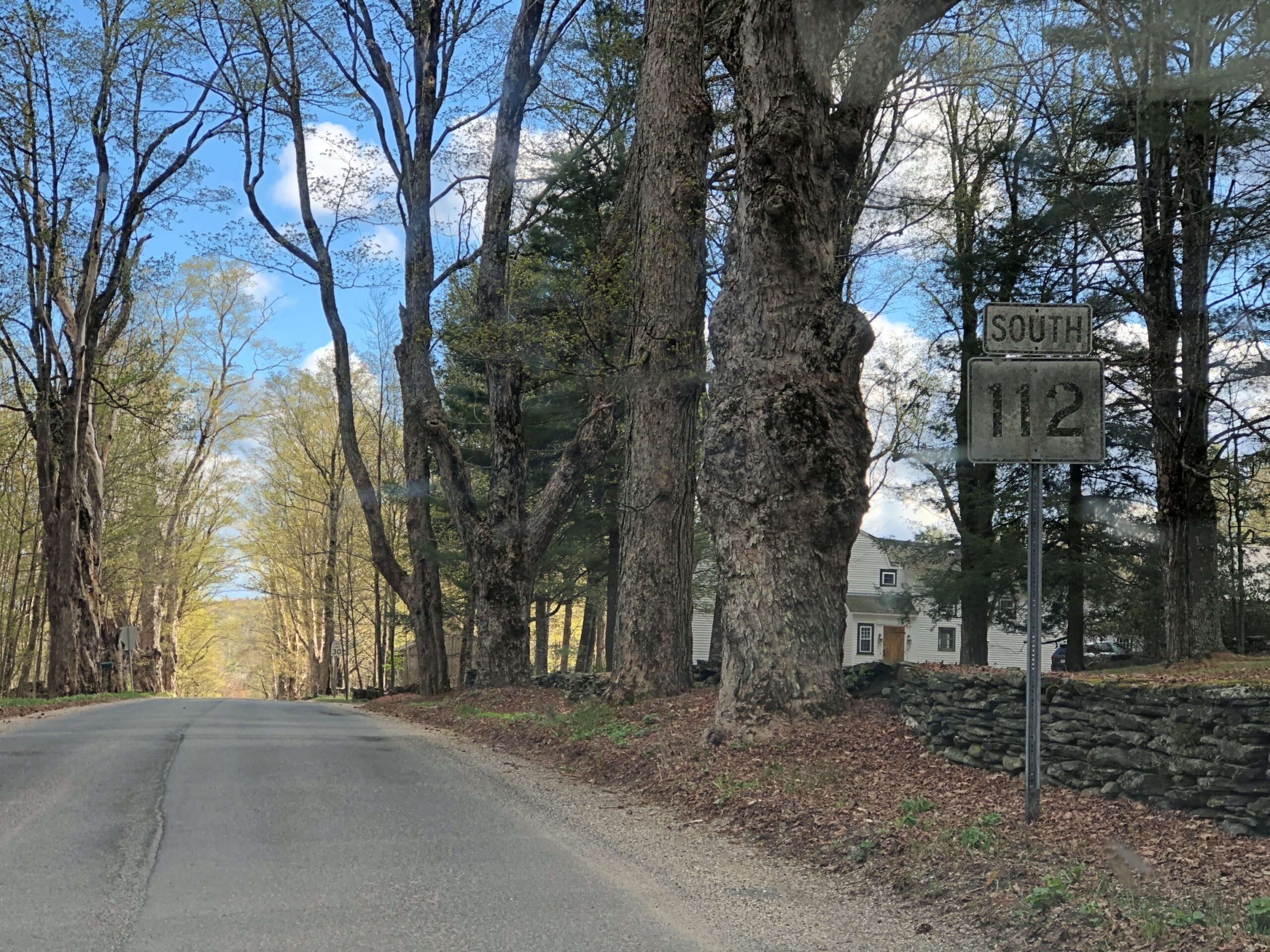
Massachusetts 112 (Route 112) in Hamilton County. Car commercial driving.
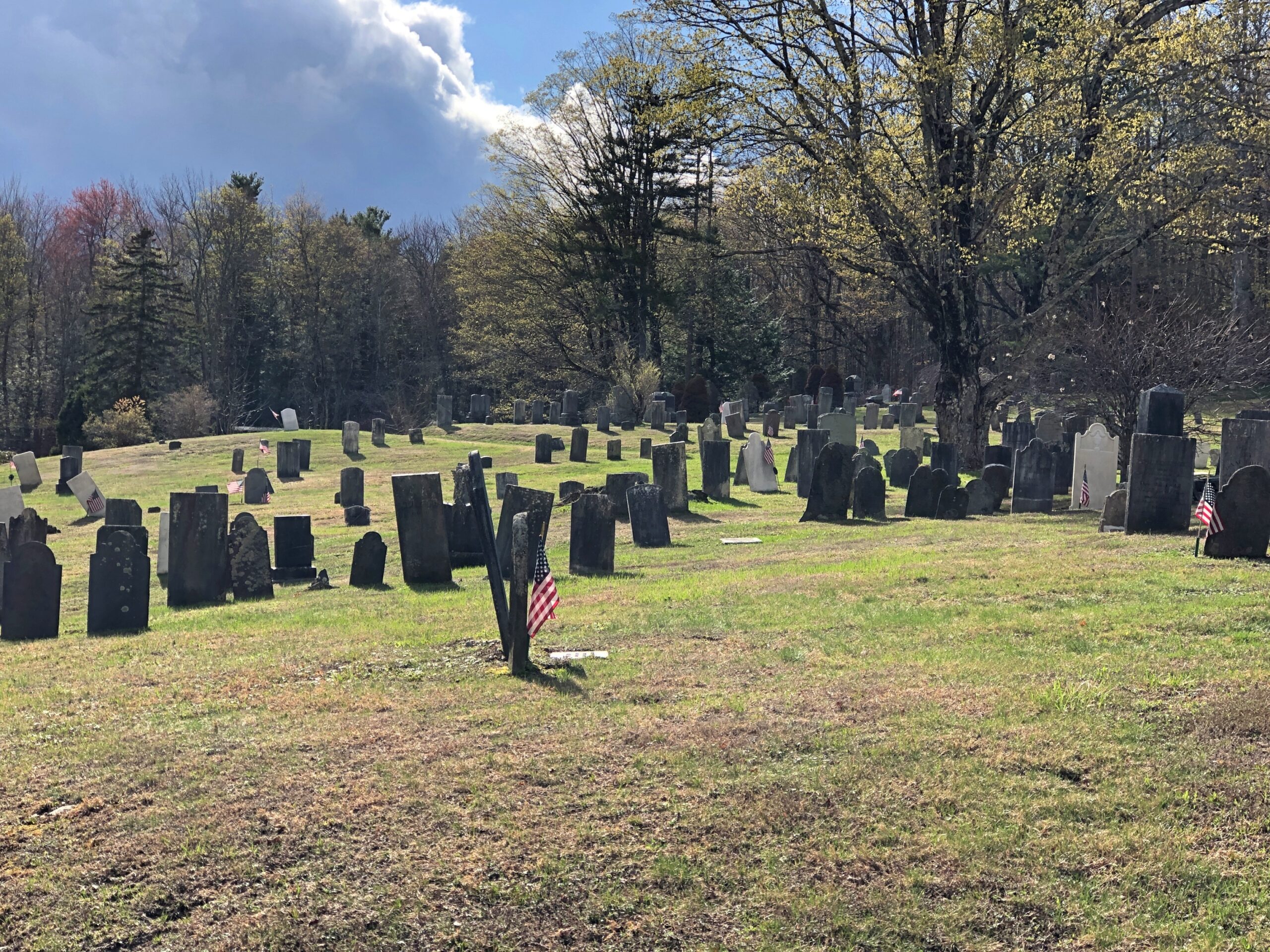
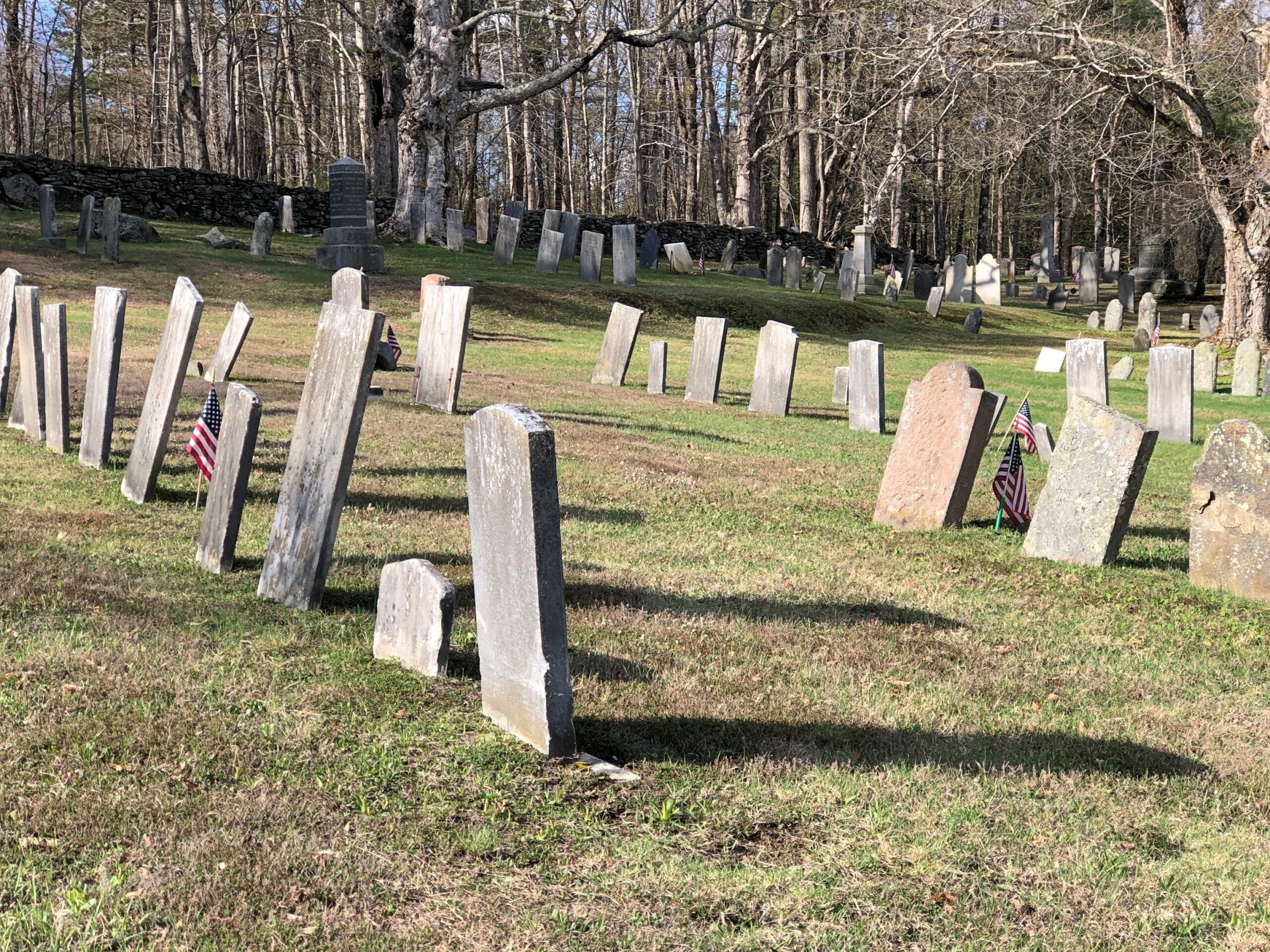
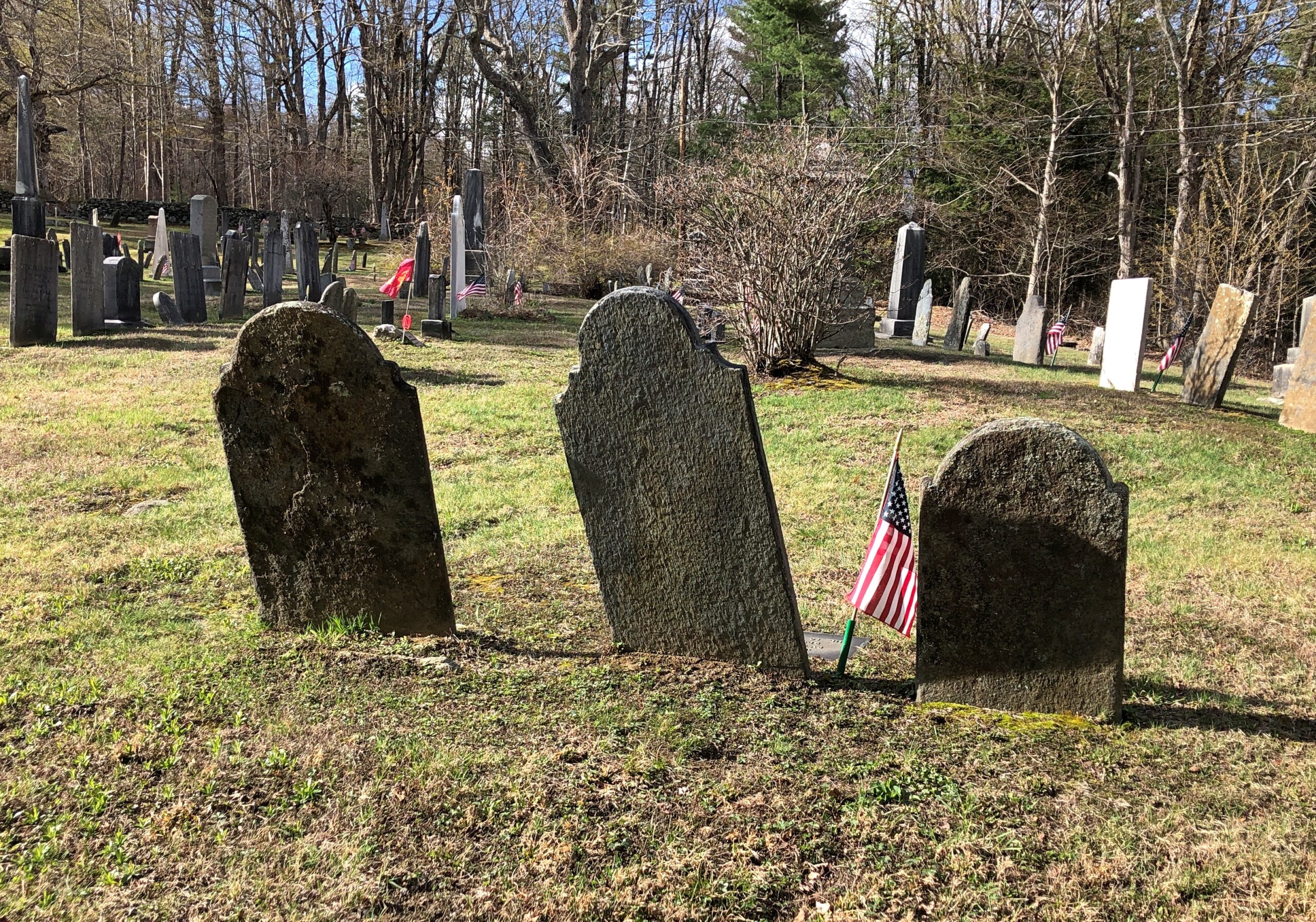
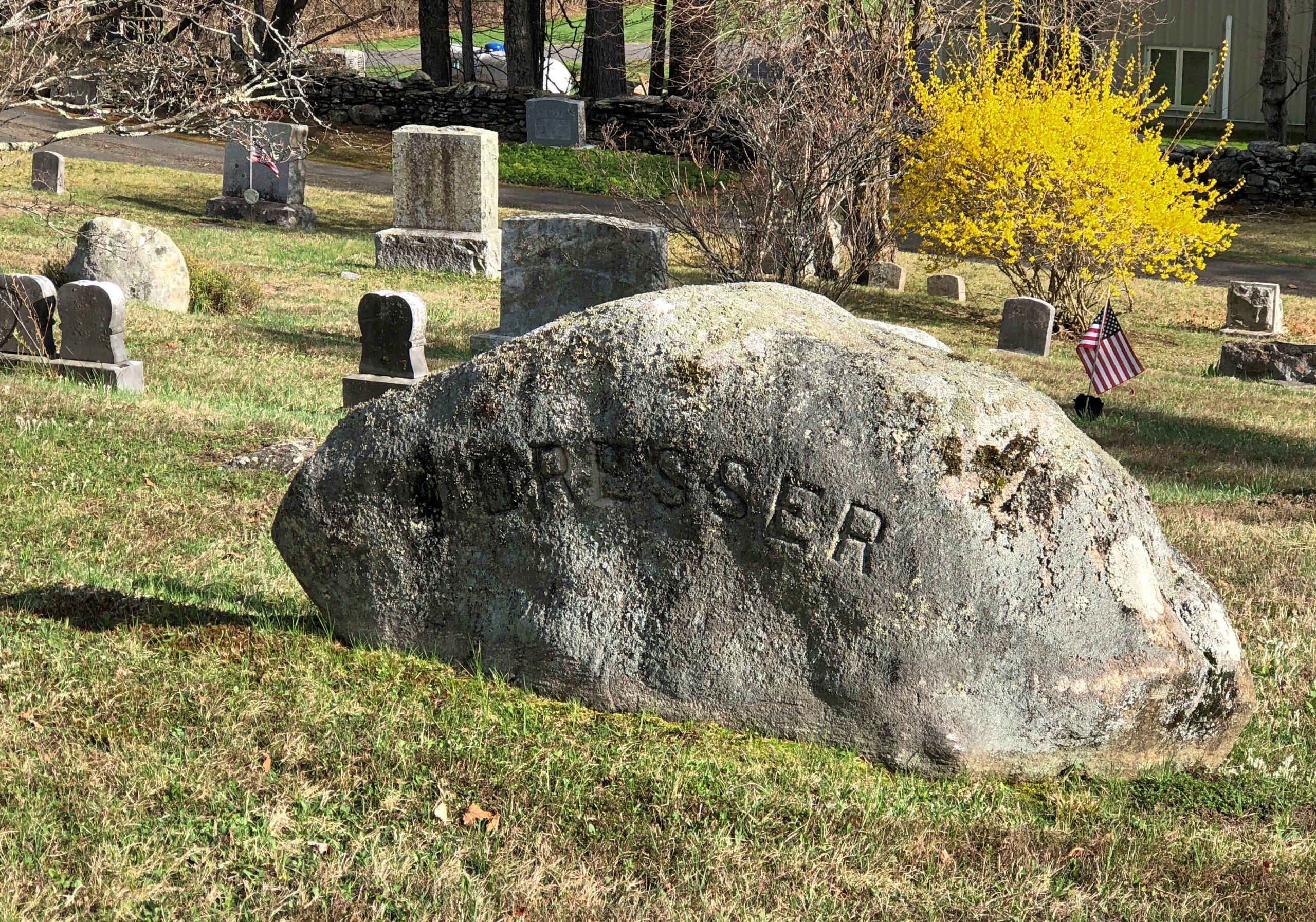
Goshen Cemetery, just off Route 112.
Ohio
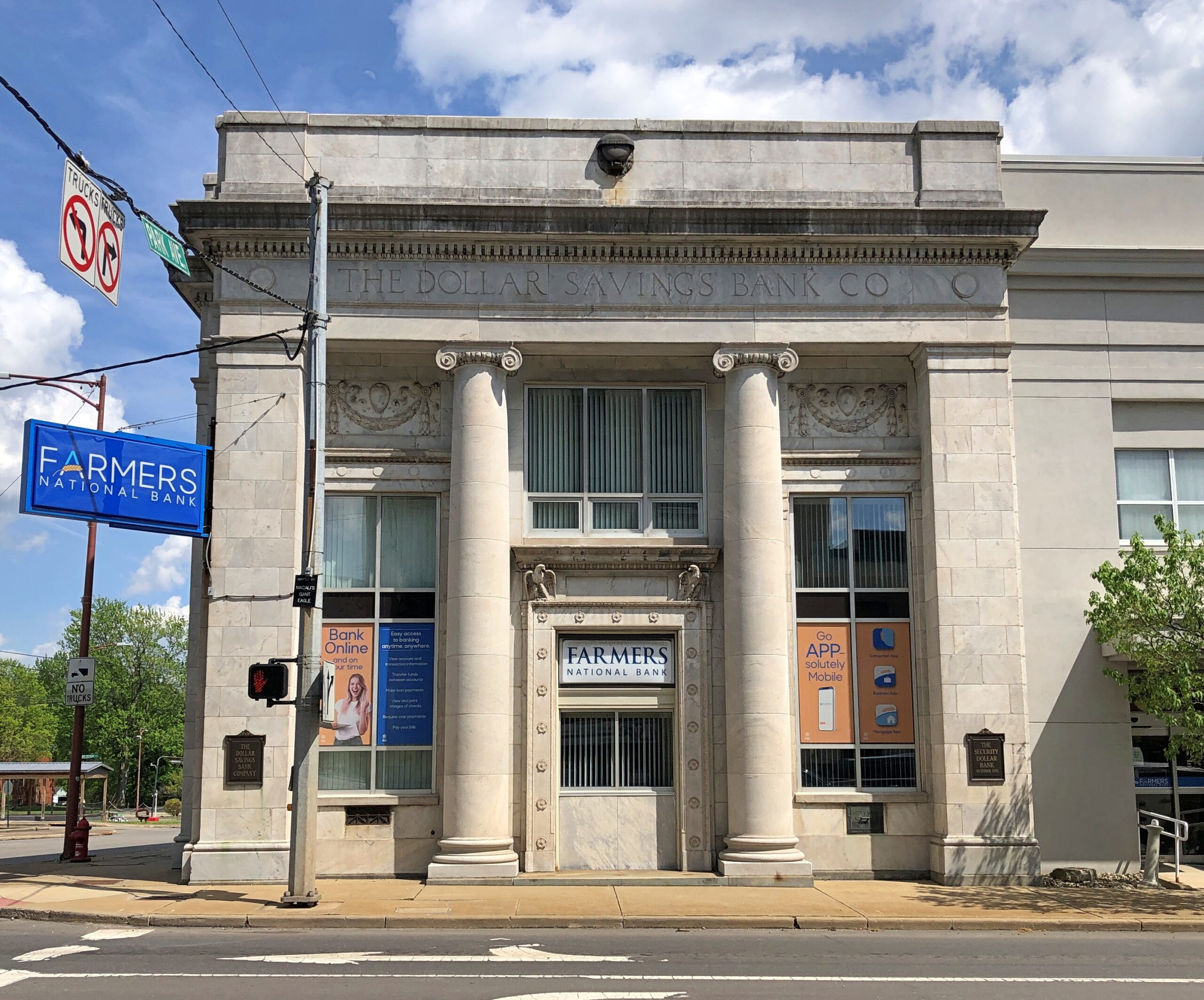
A solid bank building in Niles, across the street from where William McKinley was born. The Dollar Savings Bank Co. sounds like the kind of place that George Babbitt would mention, but distain in favor of a bank with longstanding ties to the best business men in Zenith.
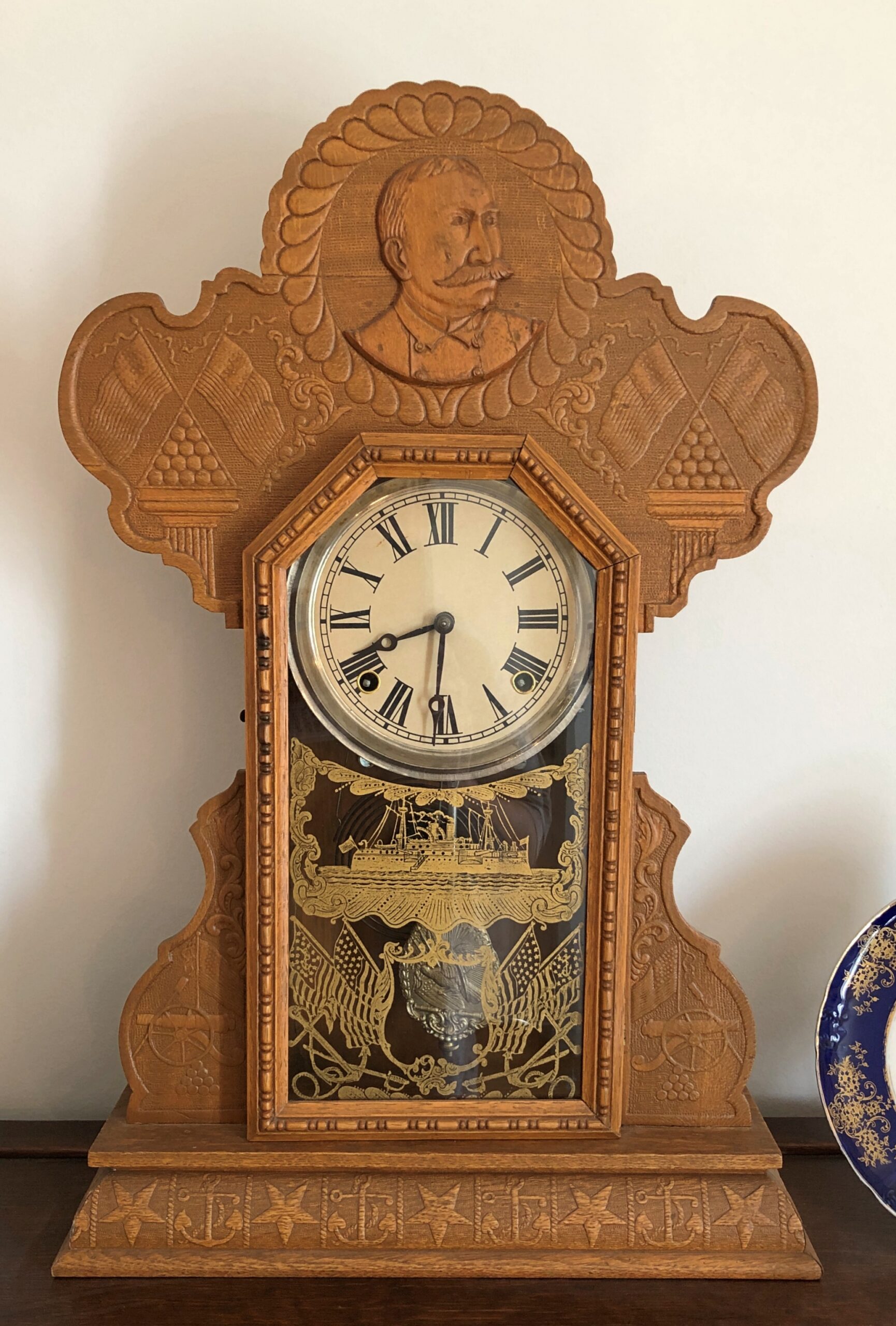
An Admiral Dewey clock at the McKinley Birthplace Museum. A textbook case, that Dewey, of how fleeting fame usually is.
Passing through northeast Ohio intrigued me greatly about that part of the state. Akron, Canton, Youngstown, Austintown — all places I can imagine going, and enjoying the visits. See ’em before the reverse migration really gets underway.
Further west, the drive on the Lincoln Highway (US 30) was a pleasure: mostly four lanes, rarely crowded. The flat farmlands don’t qualify as conventionally scenic, but the budding springtime fecundity has a lot to recommend it, even as a strictly visual pleasure: the bright greens of new leaves, the brown and grays of the fields recently plowed, small roads heading off usually at right angles to the main road, a run between Upper Sandusky and I-75 near Lima with few buildings of any kind, except distant farm structures.
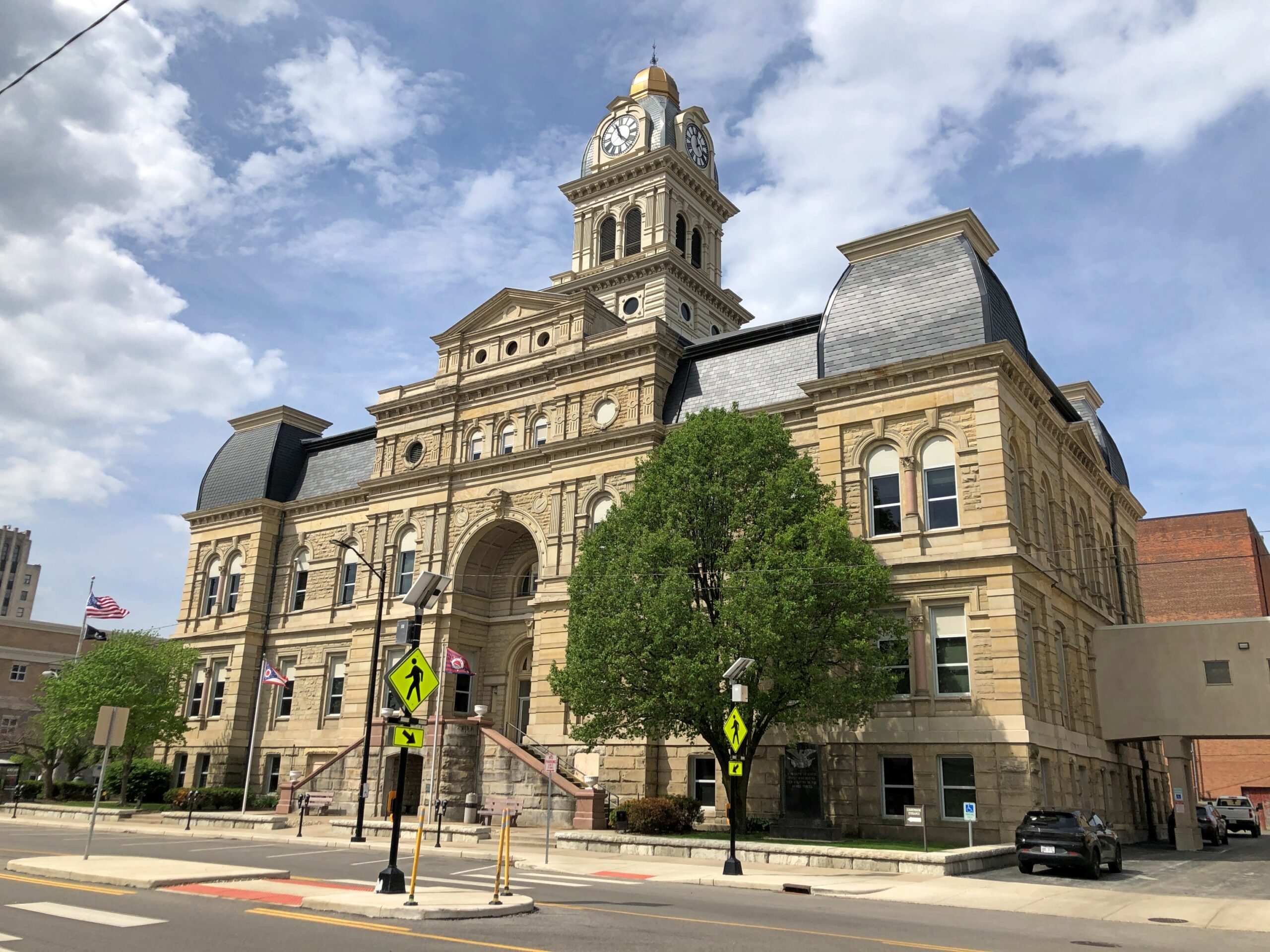
Downtown Lima: the Allen County courthouse, seen from North St.
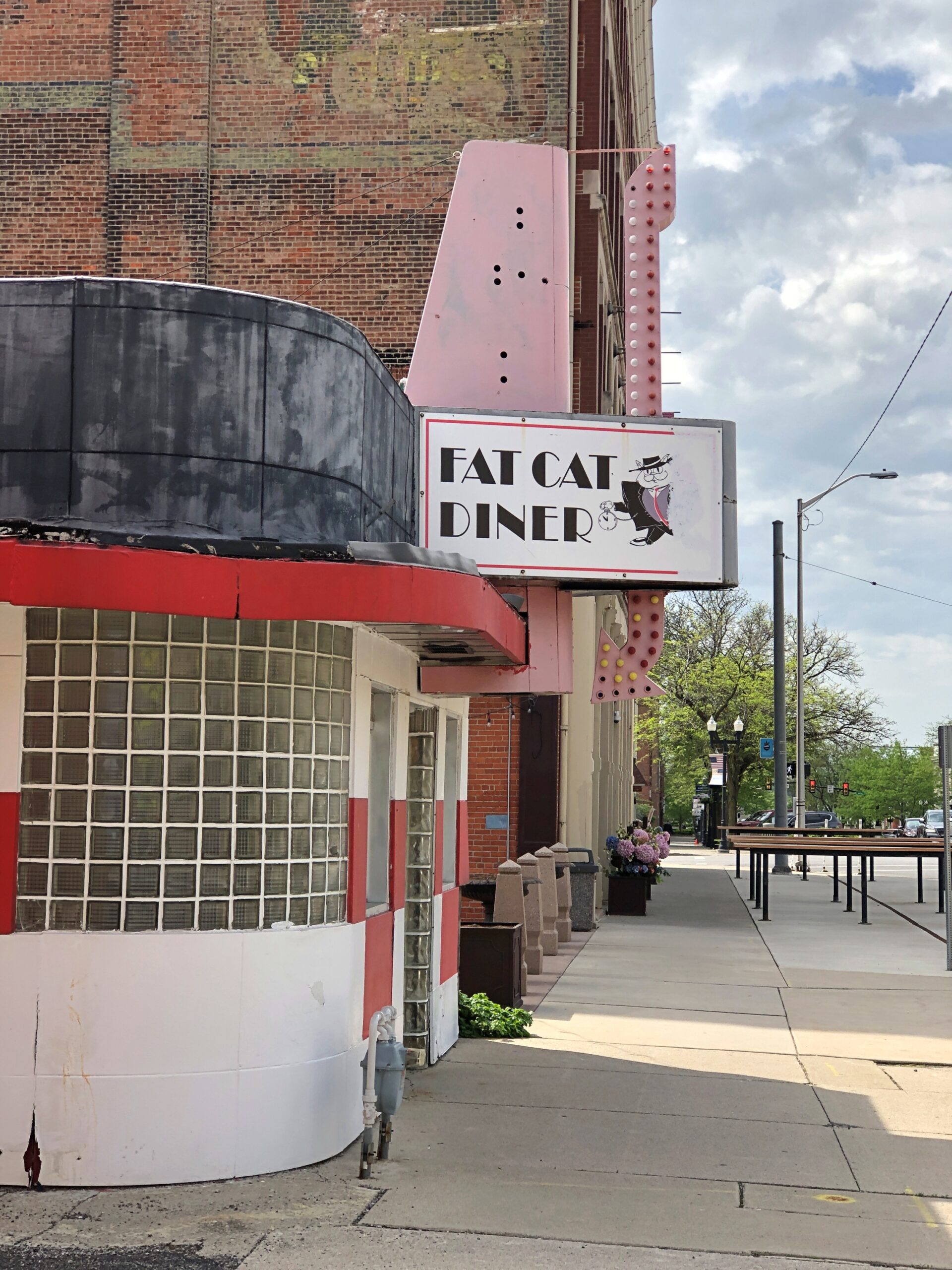
Looks like my kind of breakfast place. Closed on Sunday anyway.
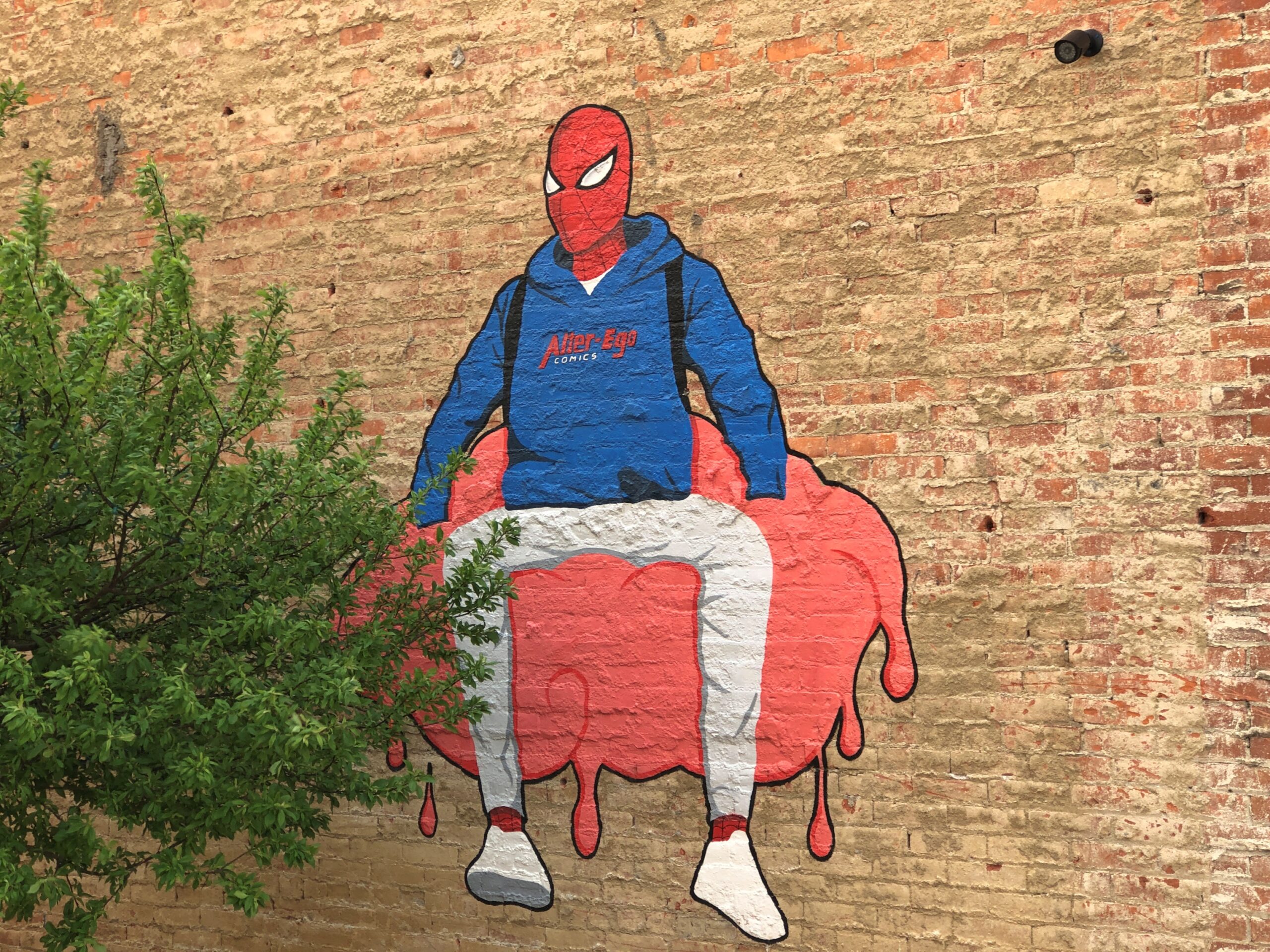
Another North St. detail. Spiderman sitting on — something. A large scoop of strawberry ice cream?
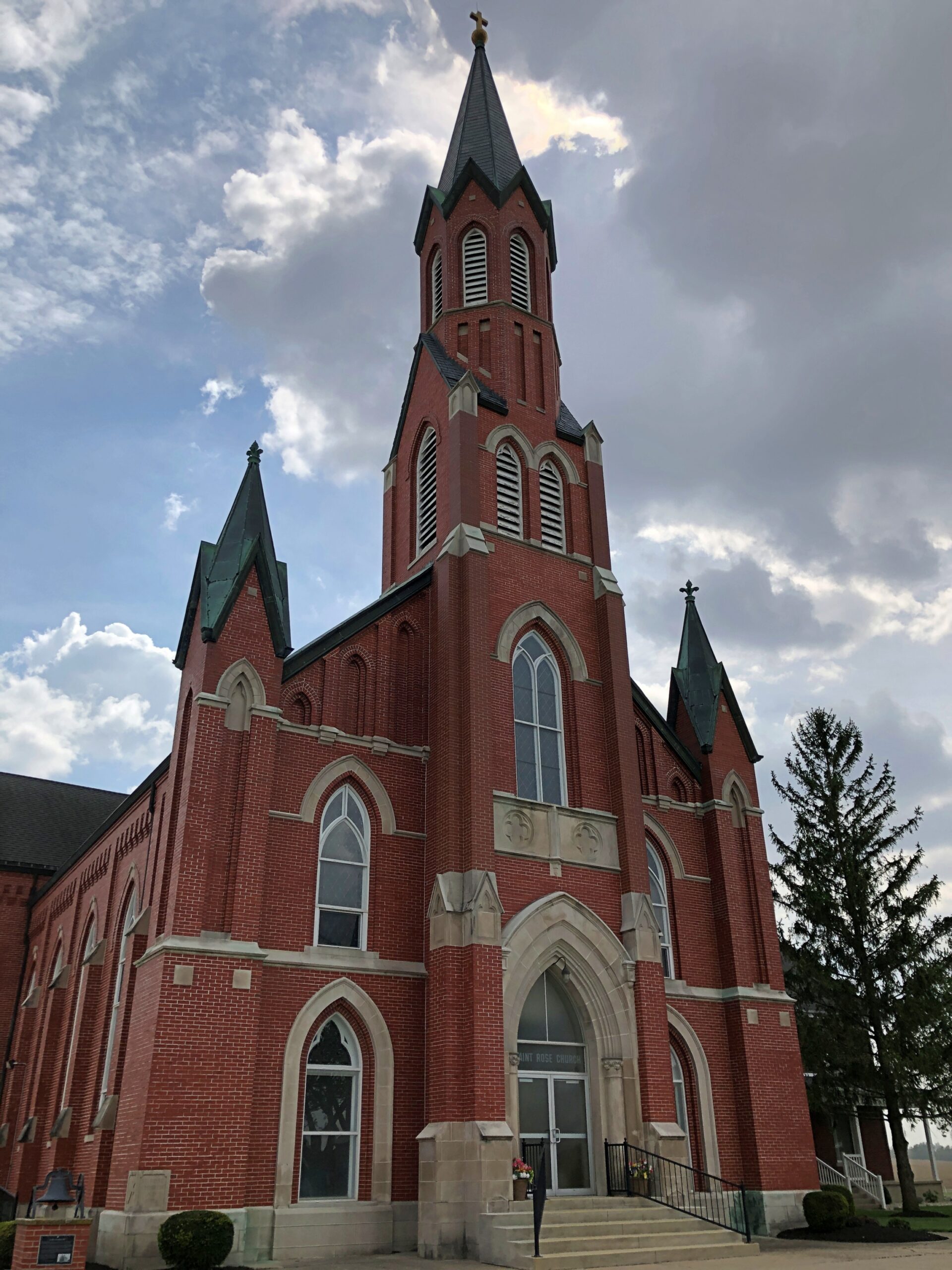
Saint Rose Church in the hamlet of Saint Rose, not far east of the Ohio-Indiana line. A Cross-Tipped Church.
Pennsylvania
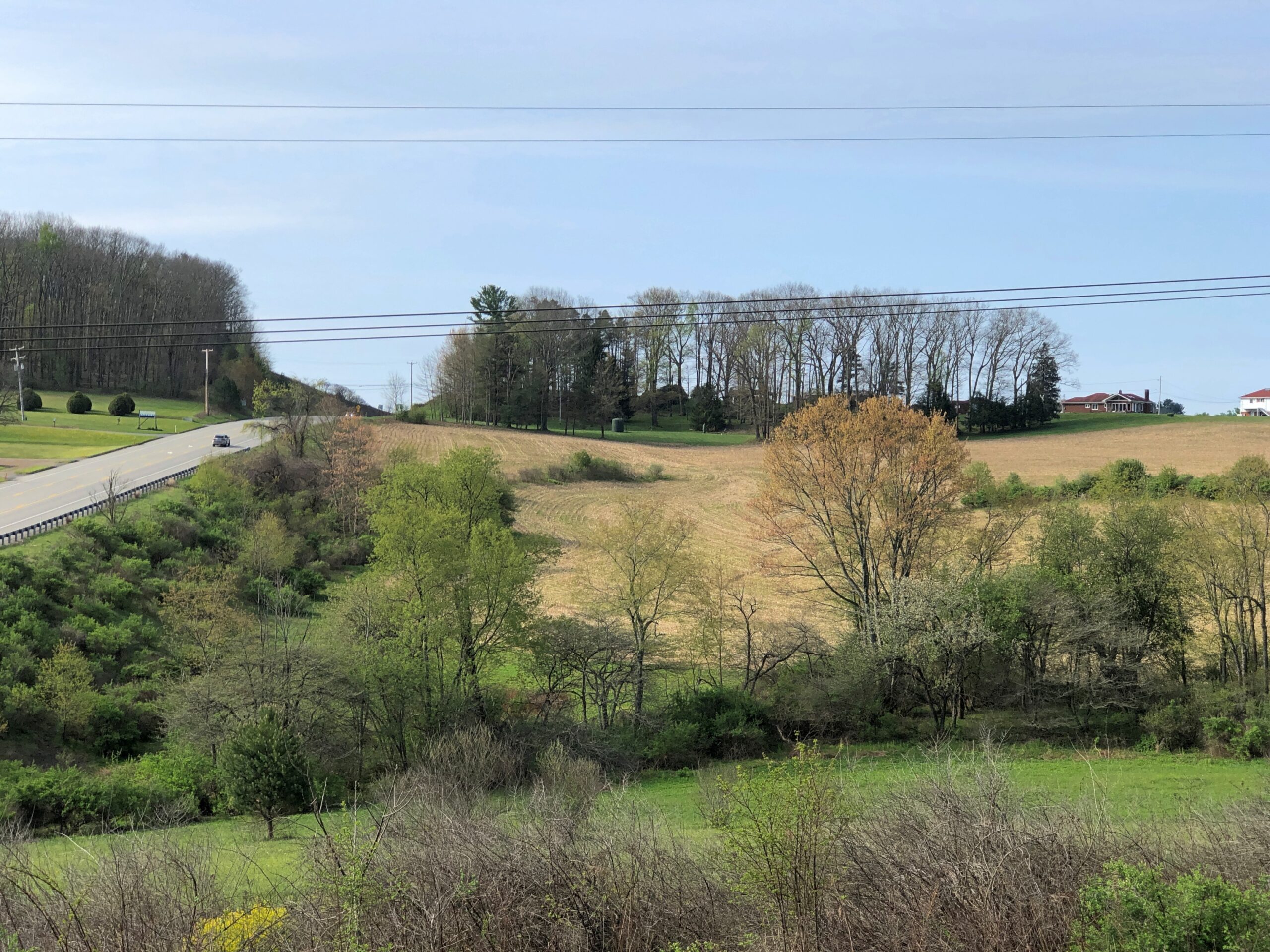
The hills at the edge of Punxsutanwney.
The drive west across Pennsylvania began across the Delaware River from Port Jervis, NY, taking US 209 southwest through part of Delaware Water Gap National Recreation Area. Bet the straight-ish, two-lane road is busier in peak recreation season in the Recreation Area, but in April, I booked along without encountering much in the way of traffic. Trees were still budding, but it wouldn’t be long before some stretches of the highway would pass through green tunnels. The sunlight was already casting green leaf shadows on the road.
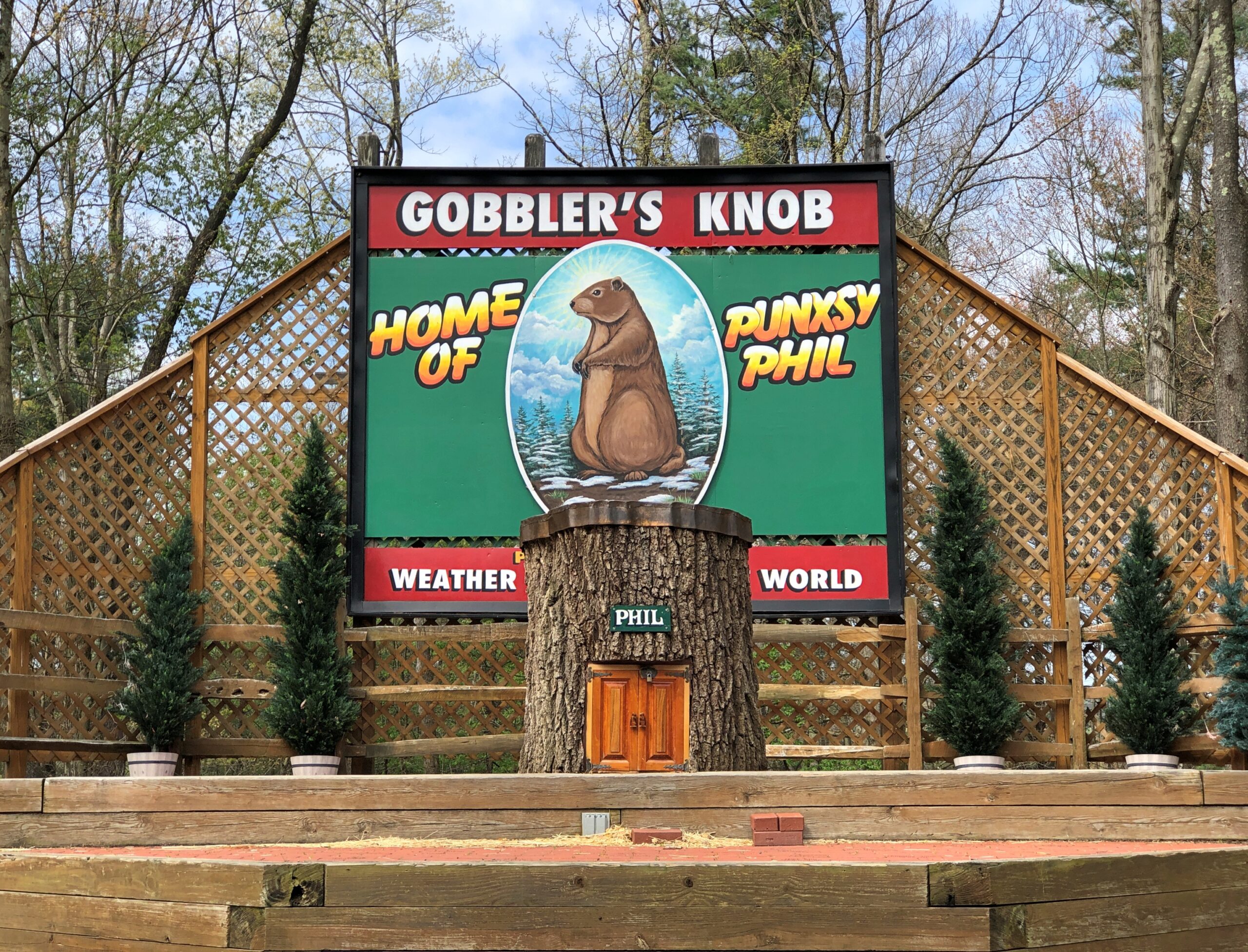
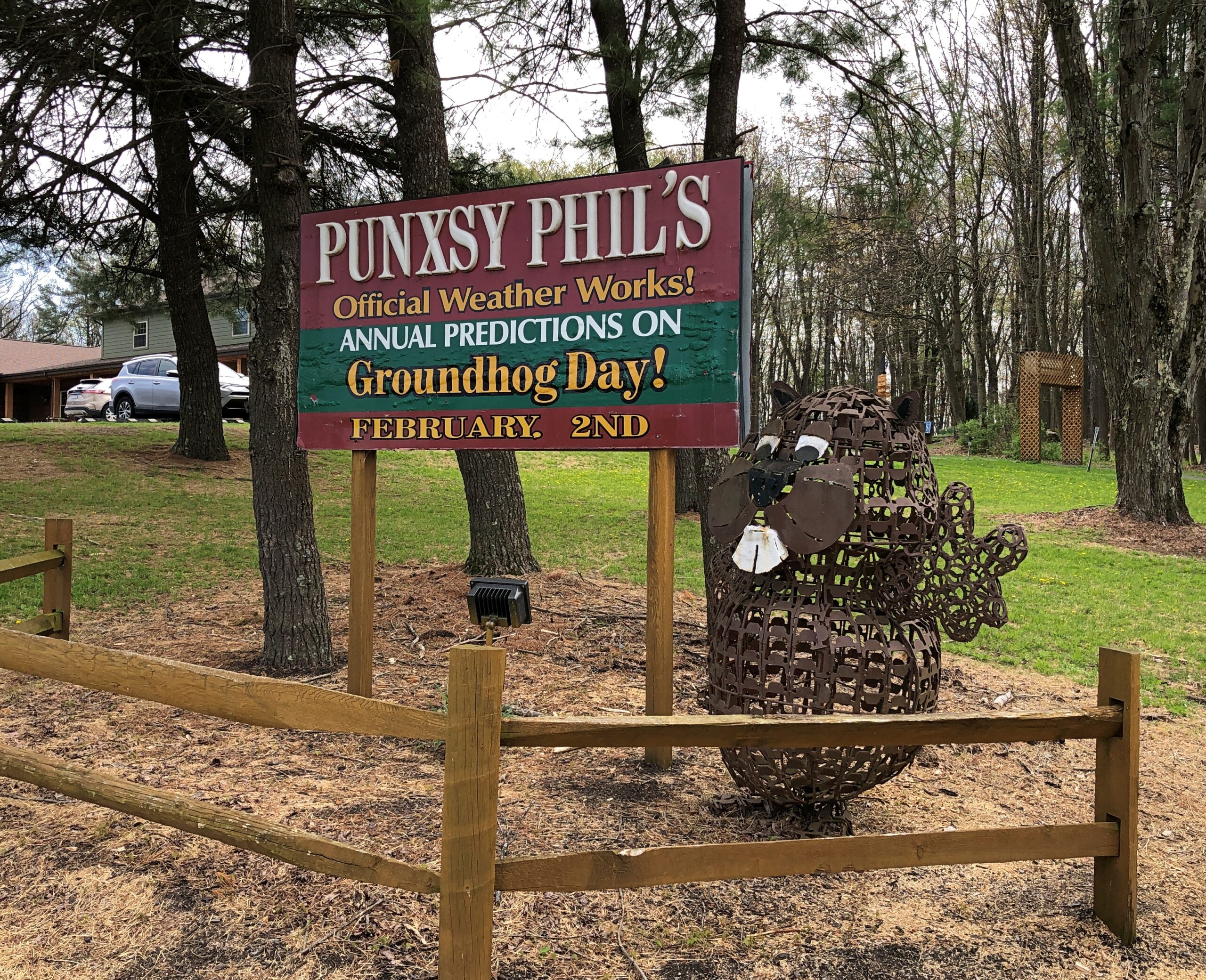
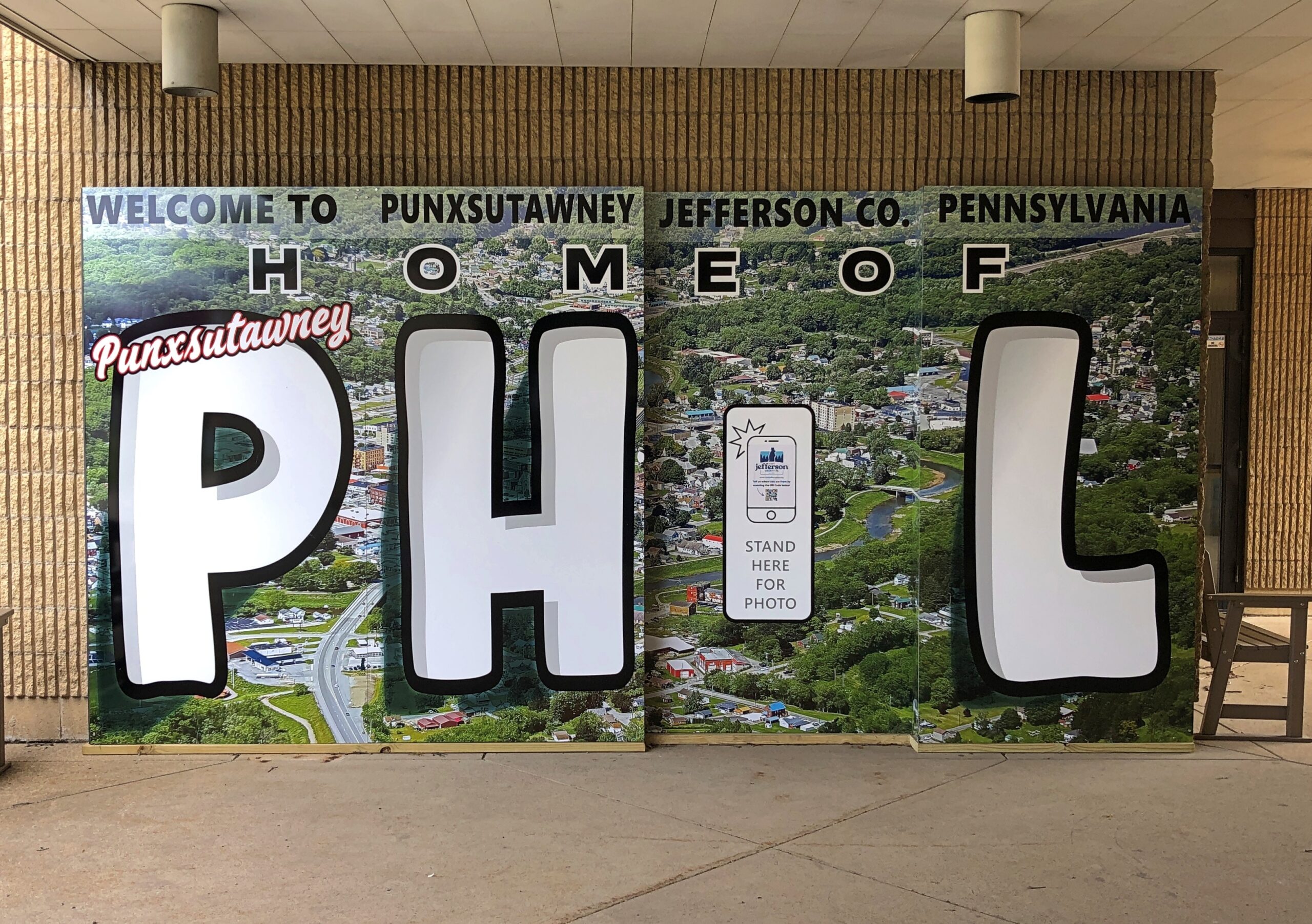
Watch Groundhog Day, and the impression is that the festivities are held in the center of town — which they are, in the Punxsutanwney stand-in of Woodstock, Illinois. Go to Punxsutanwney itself and learn that the February 2 fest is a few miles from town in a place called Gobbler’s Knob.
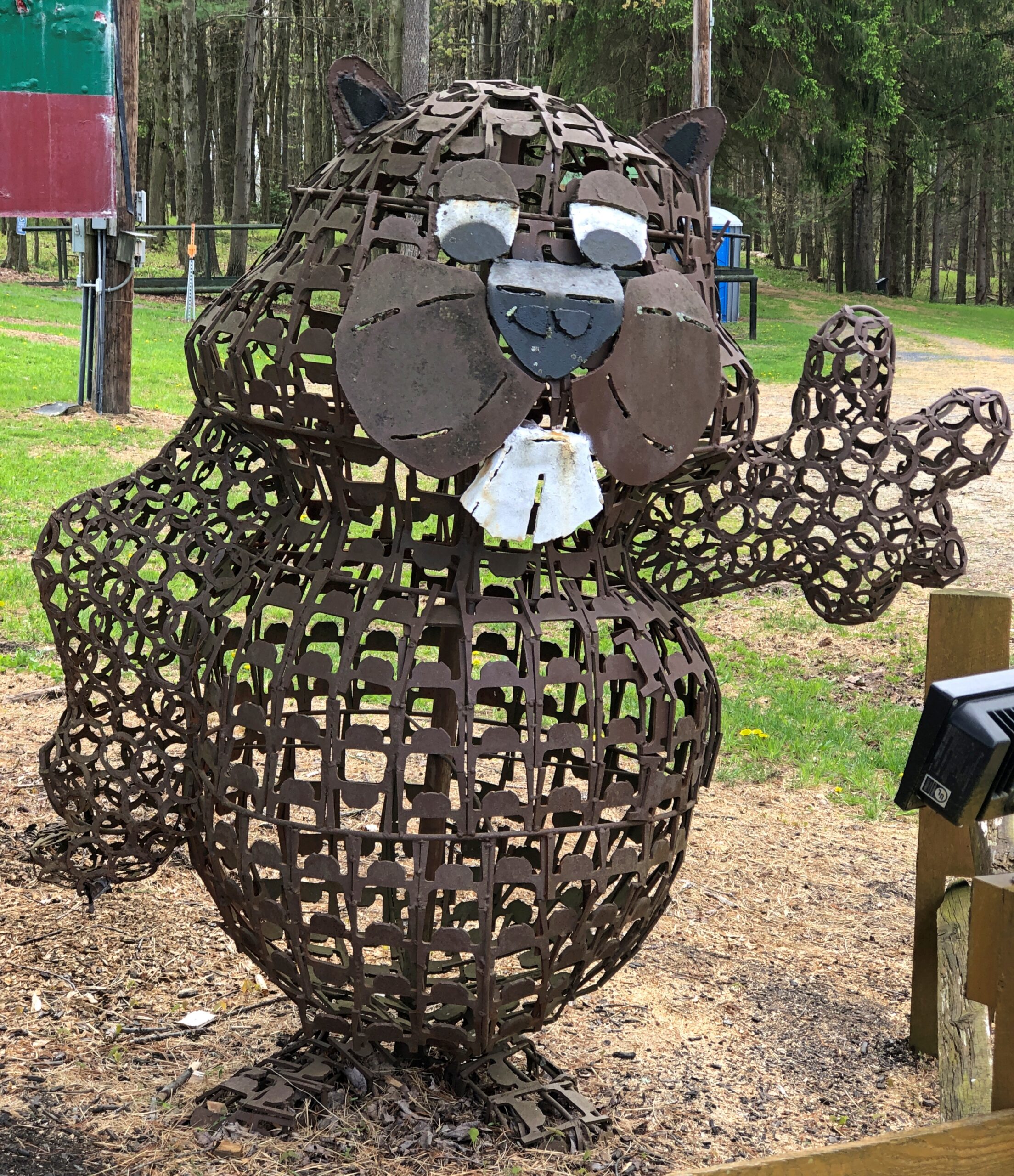
One more Phil. Iron Phil.
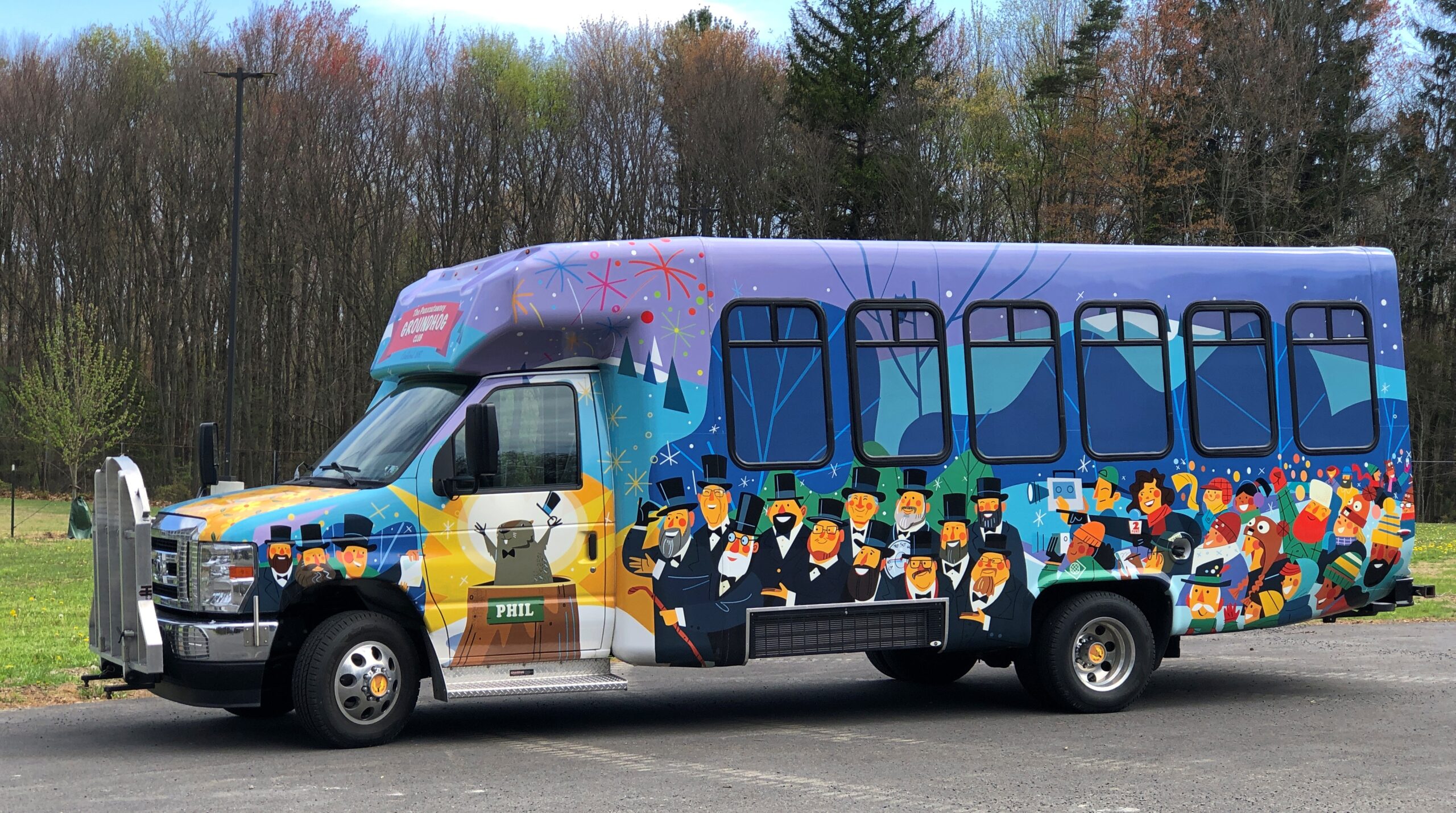
The clerk at the Gobbler’s Knob gift shop took pains to let me know that the site, and the festivities, were overseen by a nonprofit, not the commonwealth. Outside is the nonprofit’s bus, or at least I assume that, probably used to ferry people from town to GK and vice-versa, to help deal with the popularity of the event.
I like a good local festival as much as anyone, but February 2 is a deal-breaker. Can’t Phil come out again on August 2 to predict how much longer summer is going to last?
One More (Indiana)
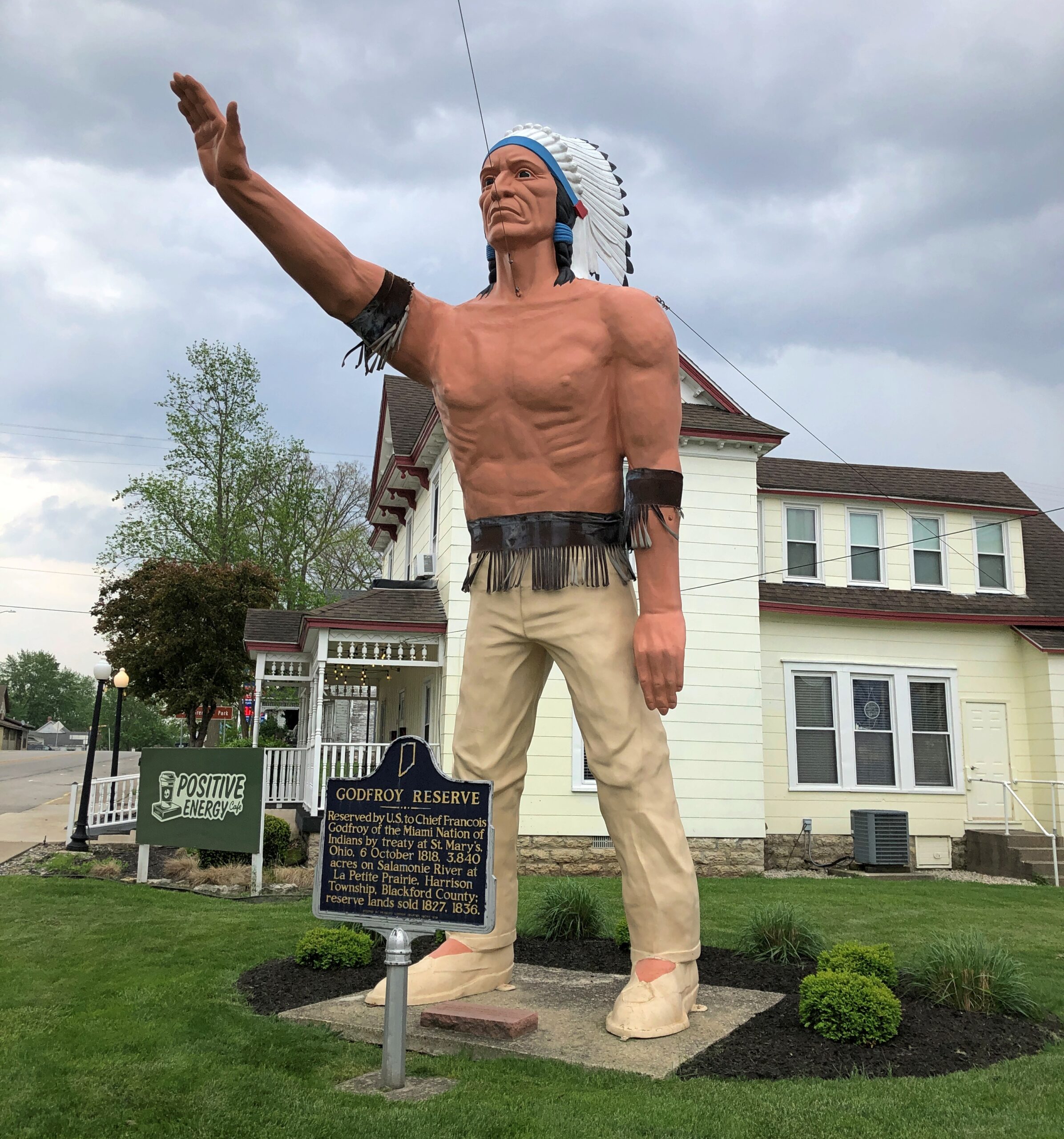
Miami Chief Francois Godfroy stands at the corner of Main Street and Huntington Street/Indiana 18 in Montpelier. Well, maybe it’s supposed to remind passersby of the chief more than actually depict him.
A Daughters of the American Revolution historical marker says: Reserved by U.S. to Chief Francois Godfroy of the Miami Nation of Indians by treaty at St. Mary’s, Ohio, 6 October 1818. 3,849 acres on Salamonie River at La Petite Prairie, Harrison Township, Blackford County: reserve lands sold 1827, 1836.
Waymarking says: “The statue was made in Venice, CA in 1960 for the Tom Wood Pontiac dealership in Indianapolis. Later it was in front of the Indian Museum at Eagle Creek Park In Indianapolis. After the museum closed, the statue (of more a plains Indian than a NE Indiana tribe) was obtained by Chief Larry Godfroy — a descendant who presented it to the City of Montpelier and they erected it as a monument in 1984.”
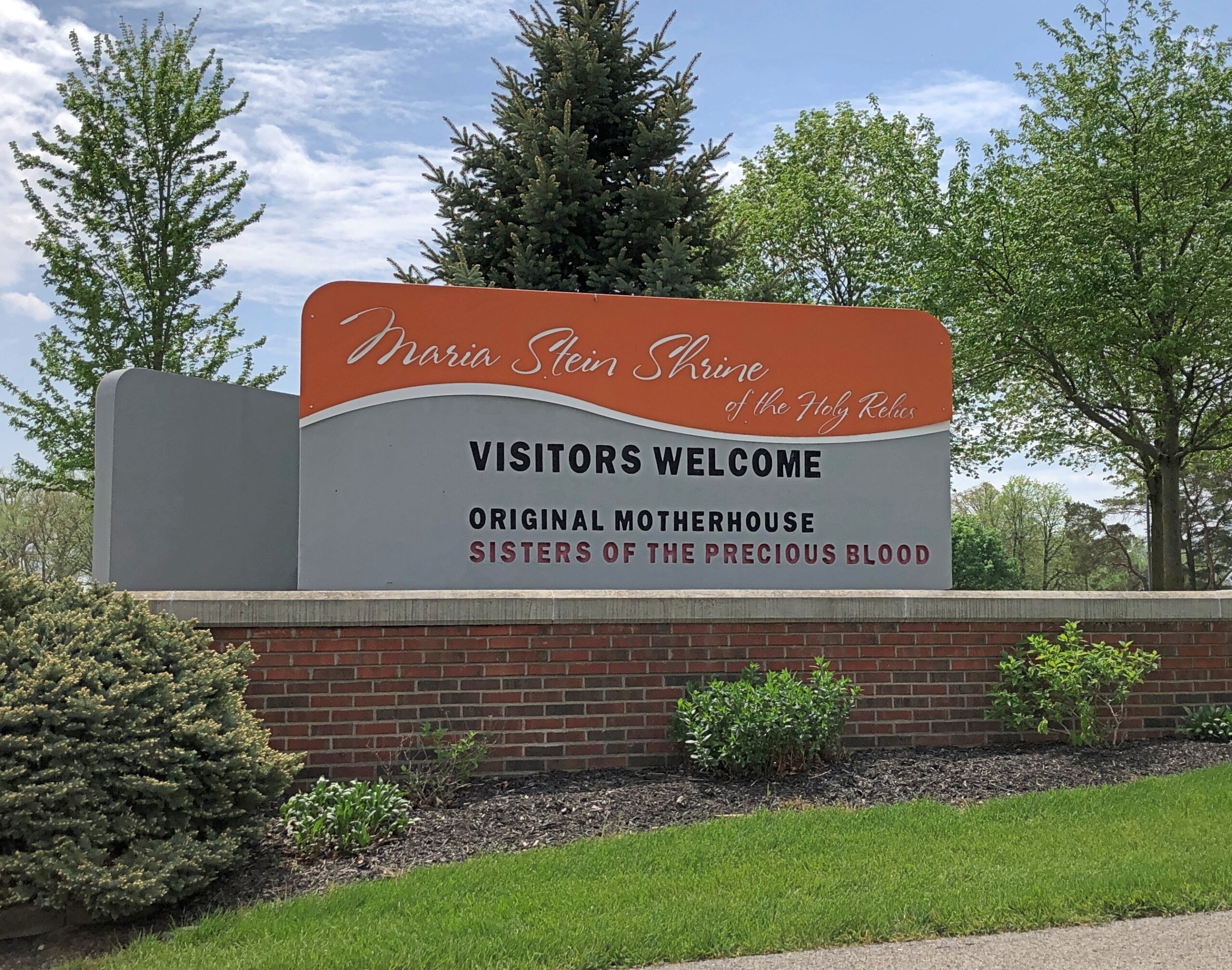
It’s always good to see that visitors are welcome.
To be a visitor at the Maria Stein Shrine of the Holy Relics, however, you have to make your way to Maria Stein, Ohio, a census-designated place in Mercer County whose population is just over 1,000. As for Mercer County, its western edge is the border with Indiana and the nearest city of any size is Lima, to the northeast. The region isn’t precisely remote – this is the Midwest, after all – but it isn’t overrun with visitors.
The shrine rates a point-of-interest on my Rand McNally Road Atlas (Maria Stein Shrine, it says), and I find that kind of thing intriguing, especially when I’m going to be nearby anyway. So I visited the shrine on the last day of my trip, on the way home.
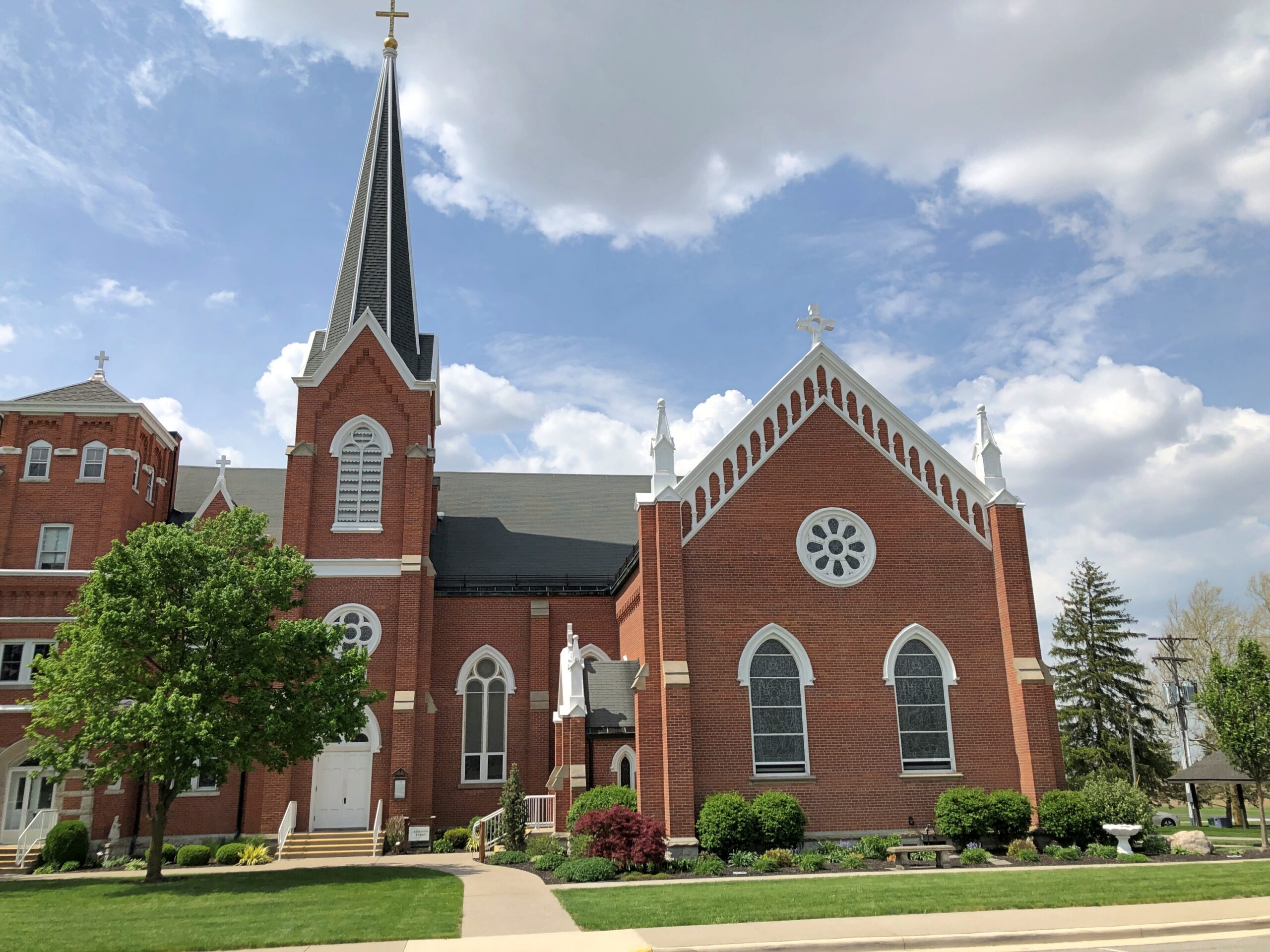
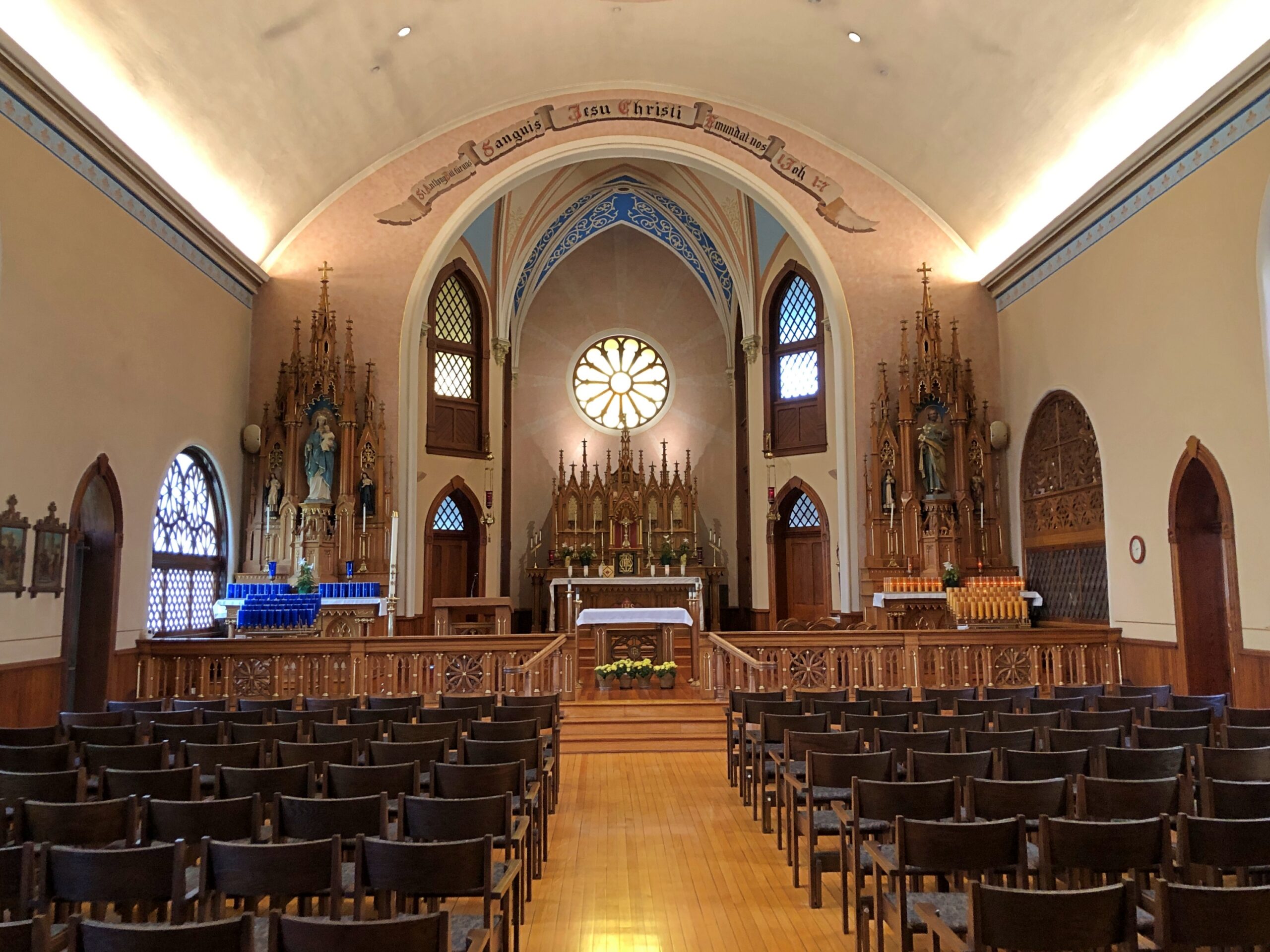
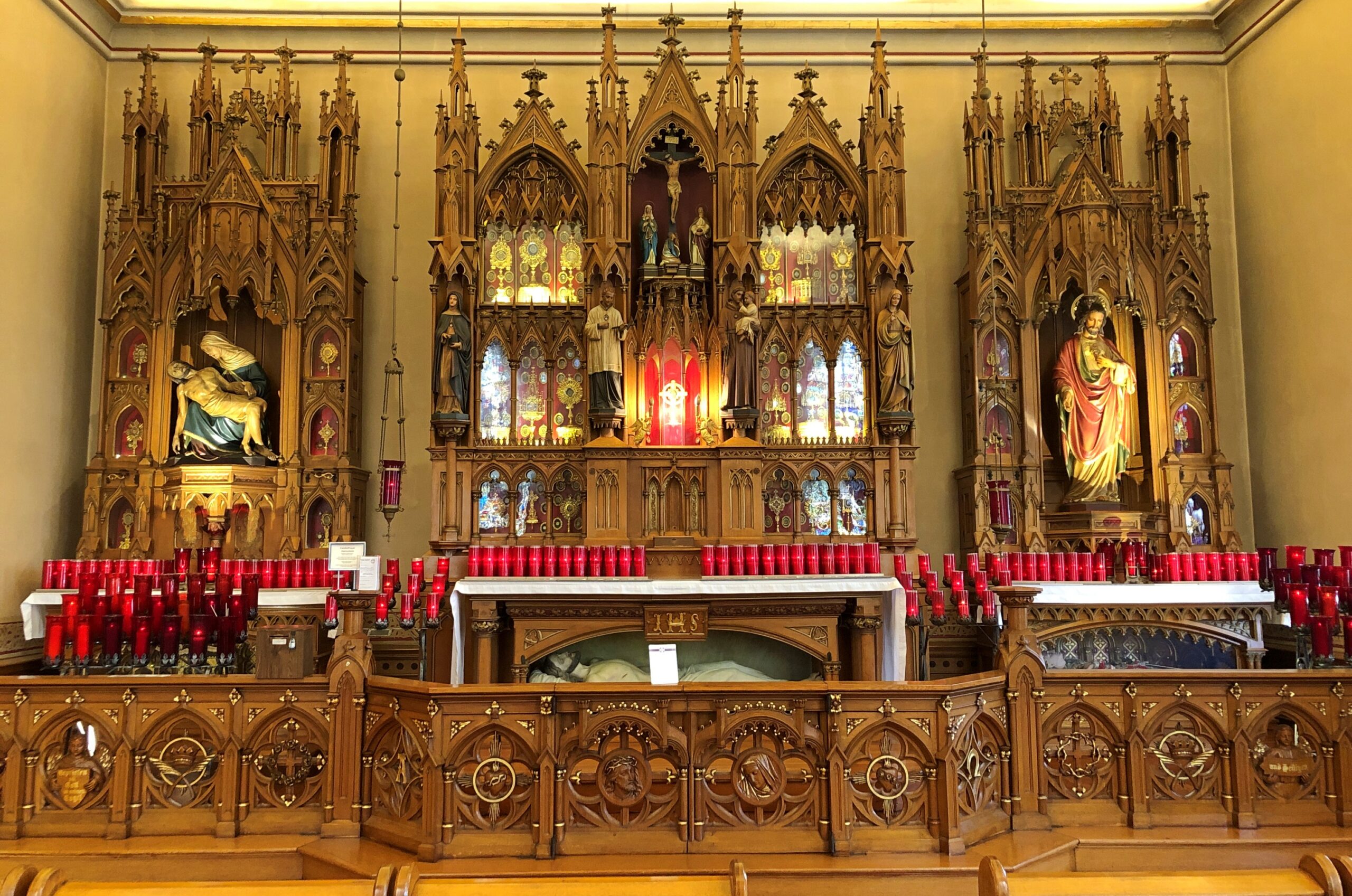
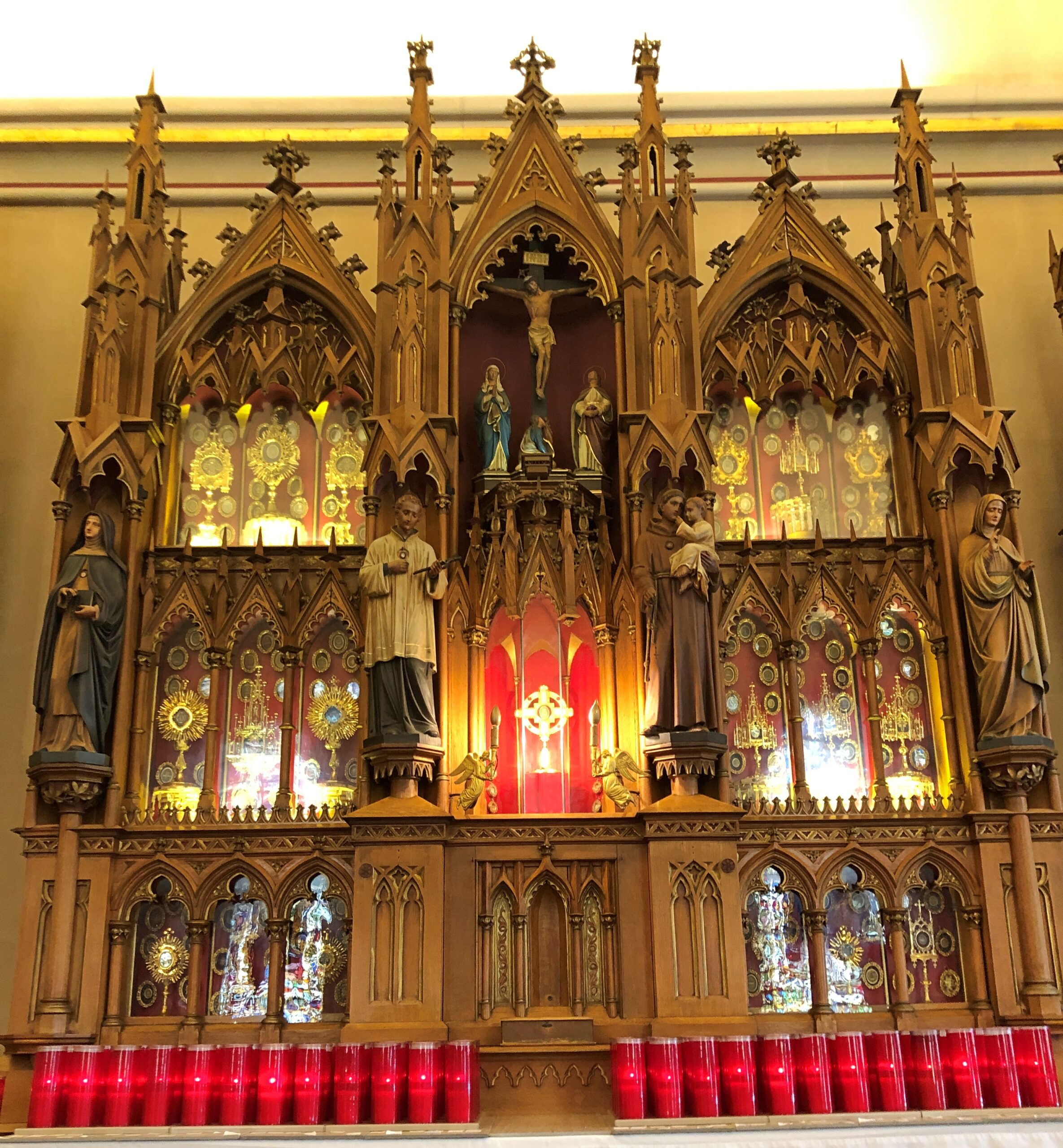
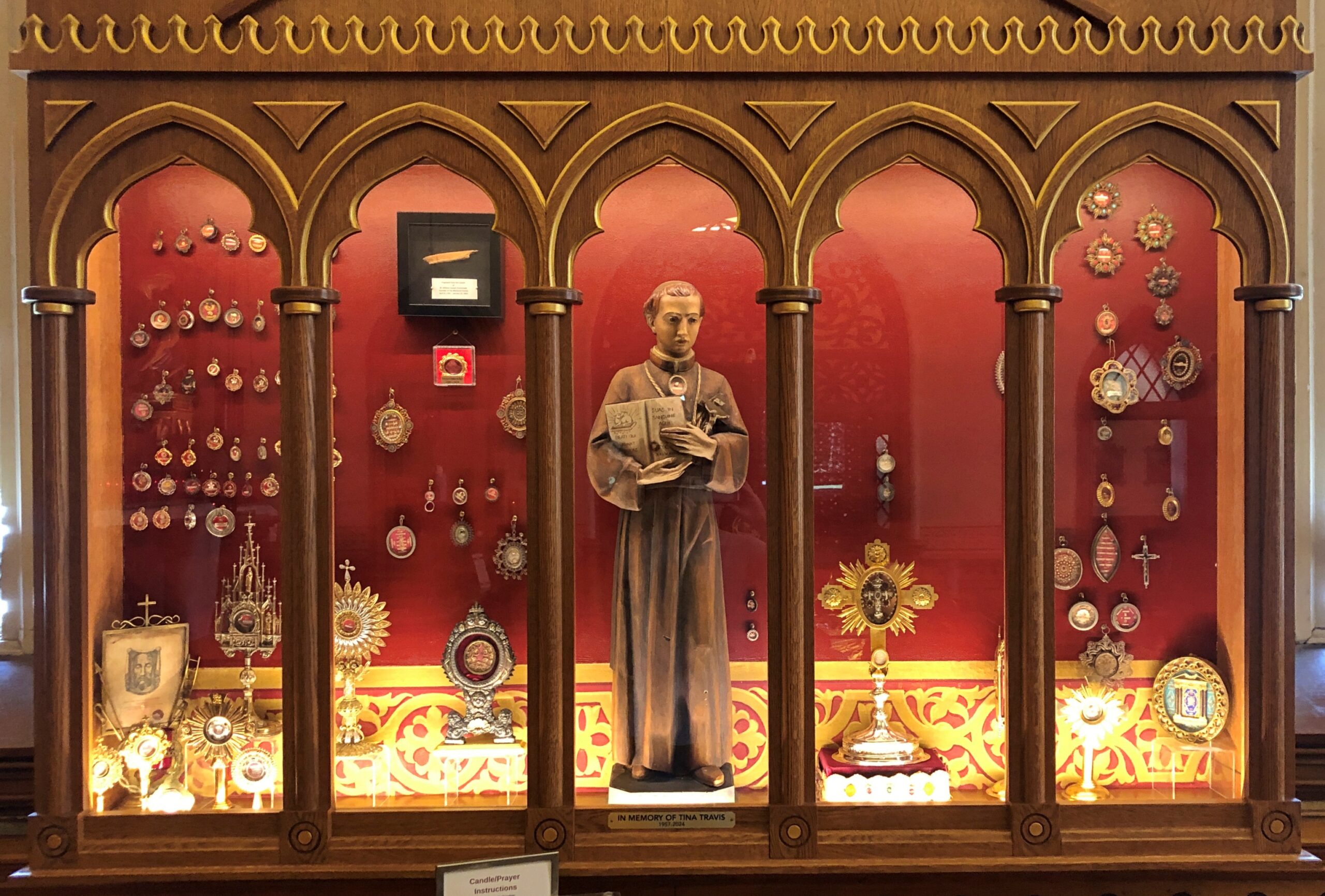
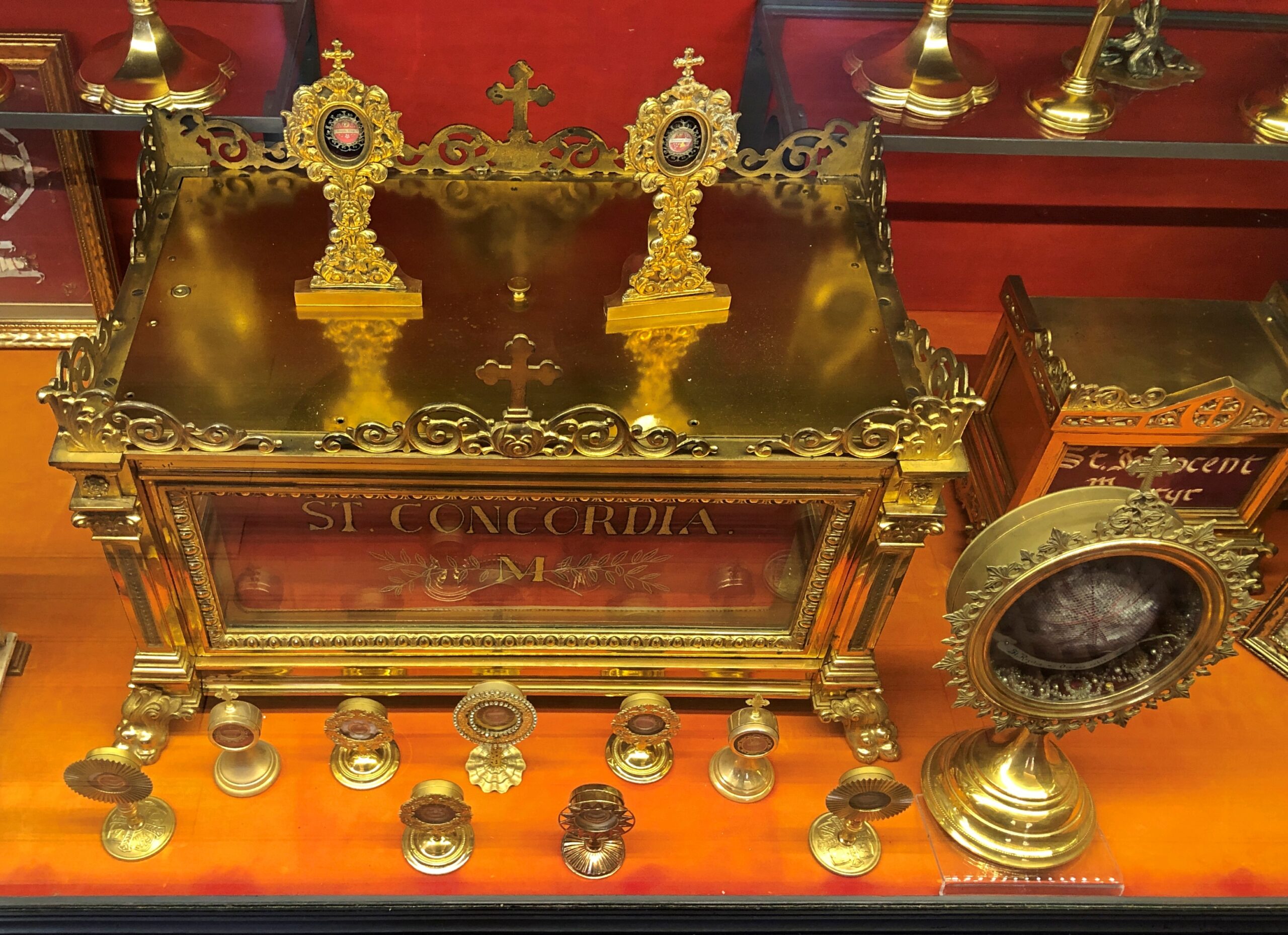
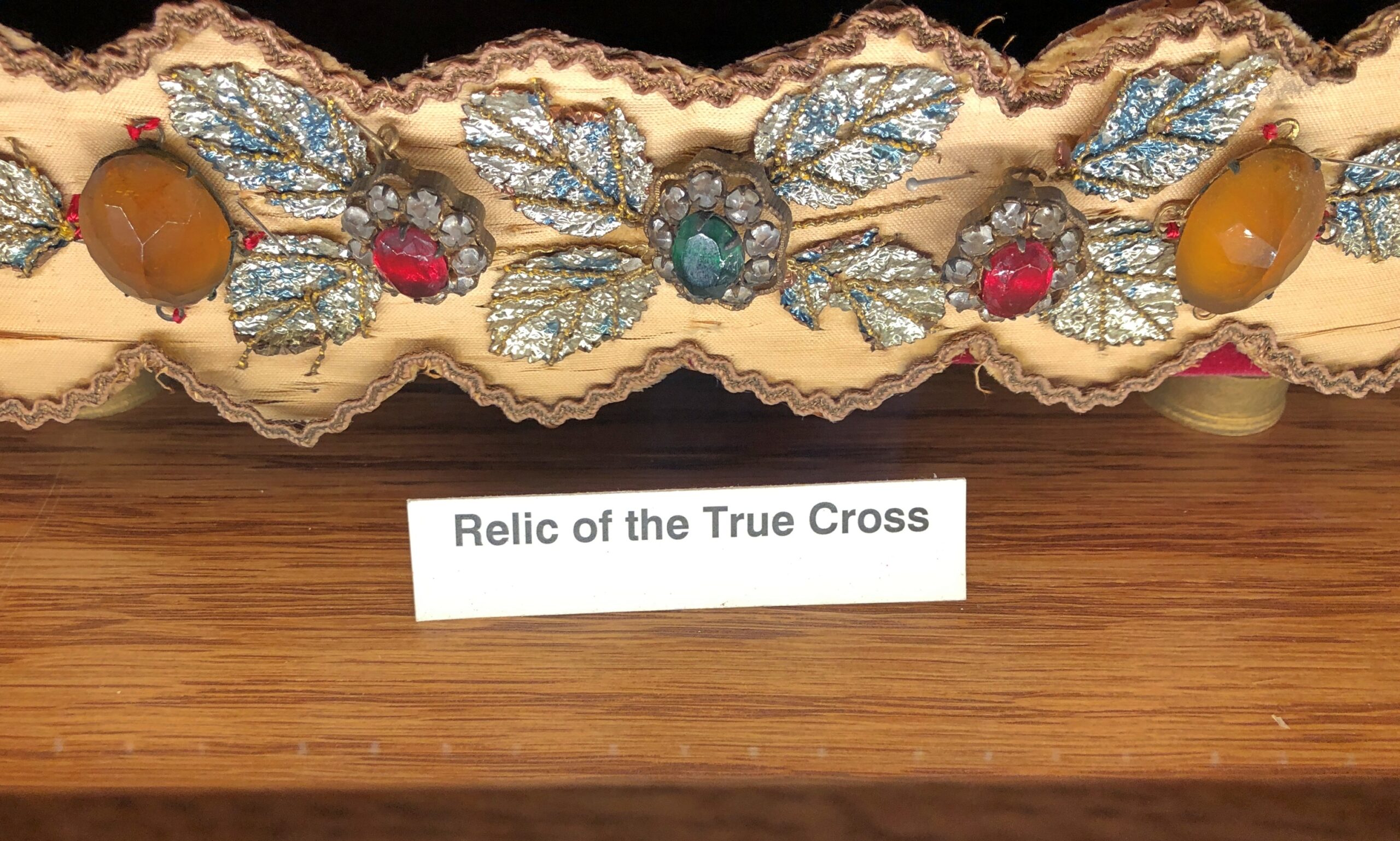
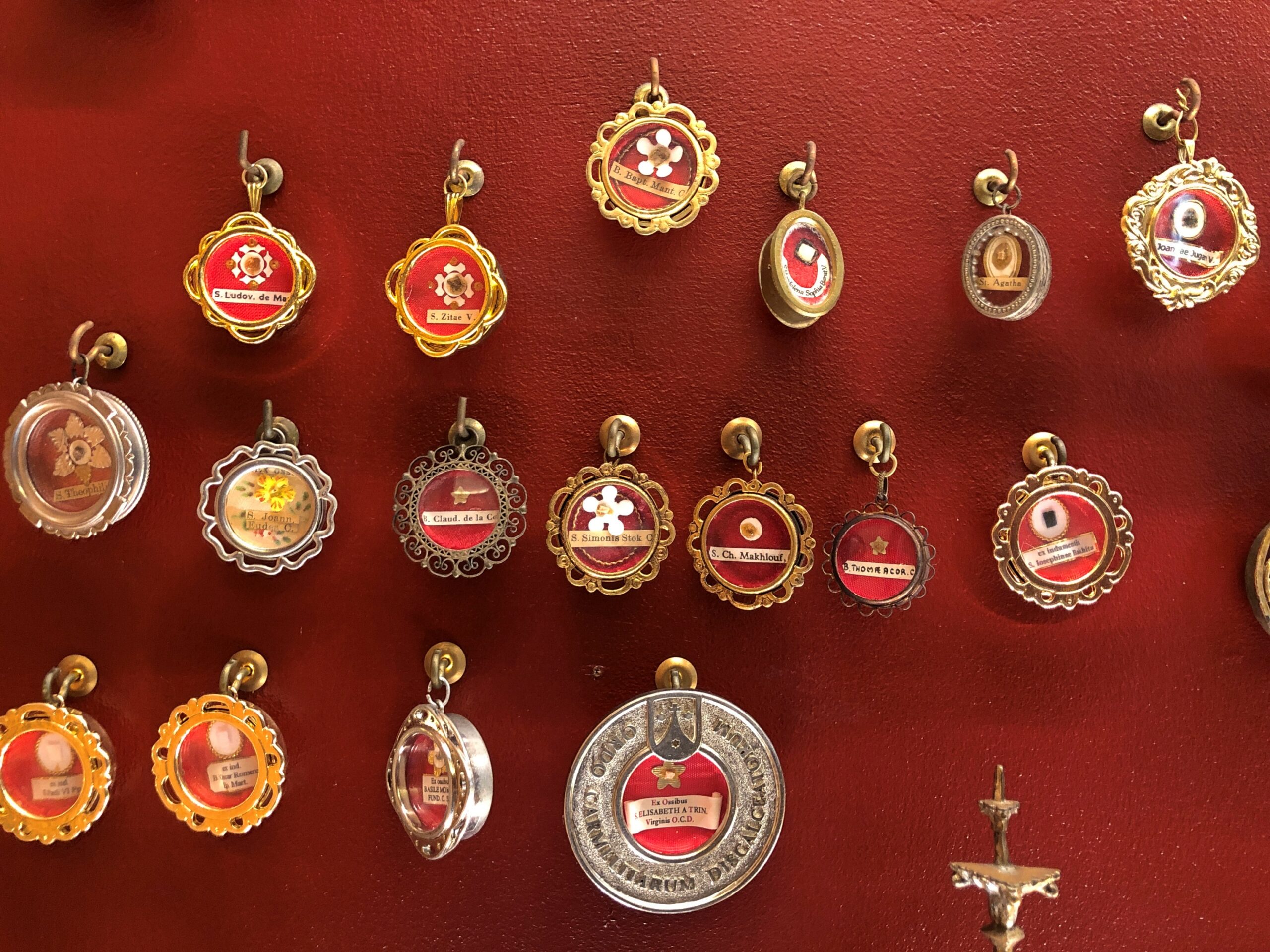
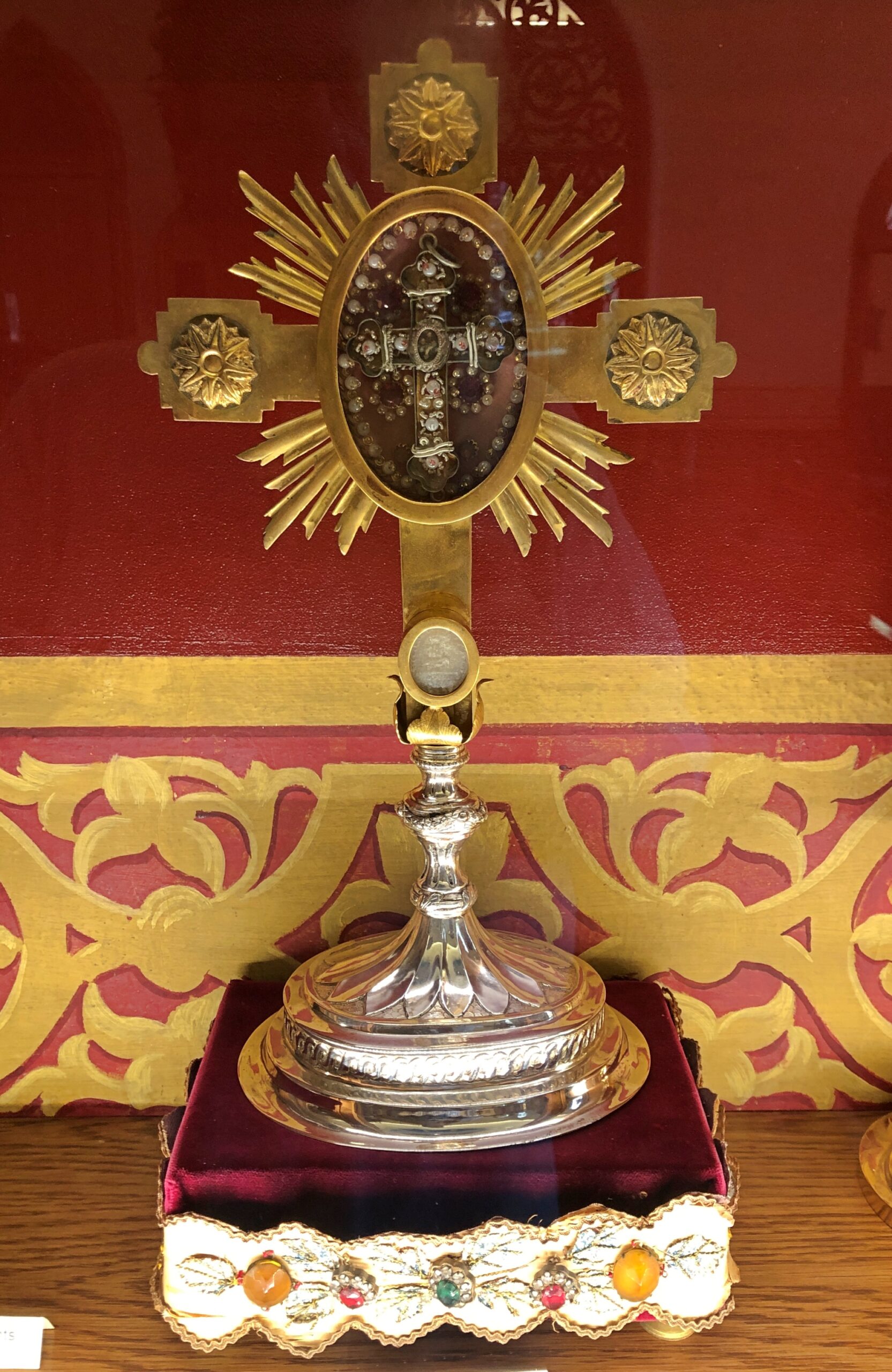
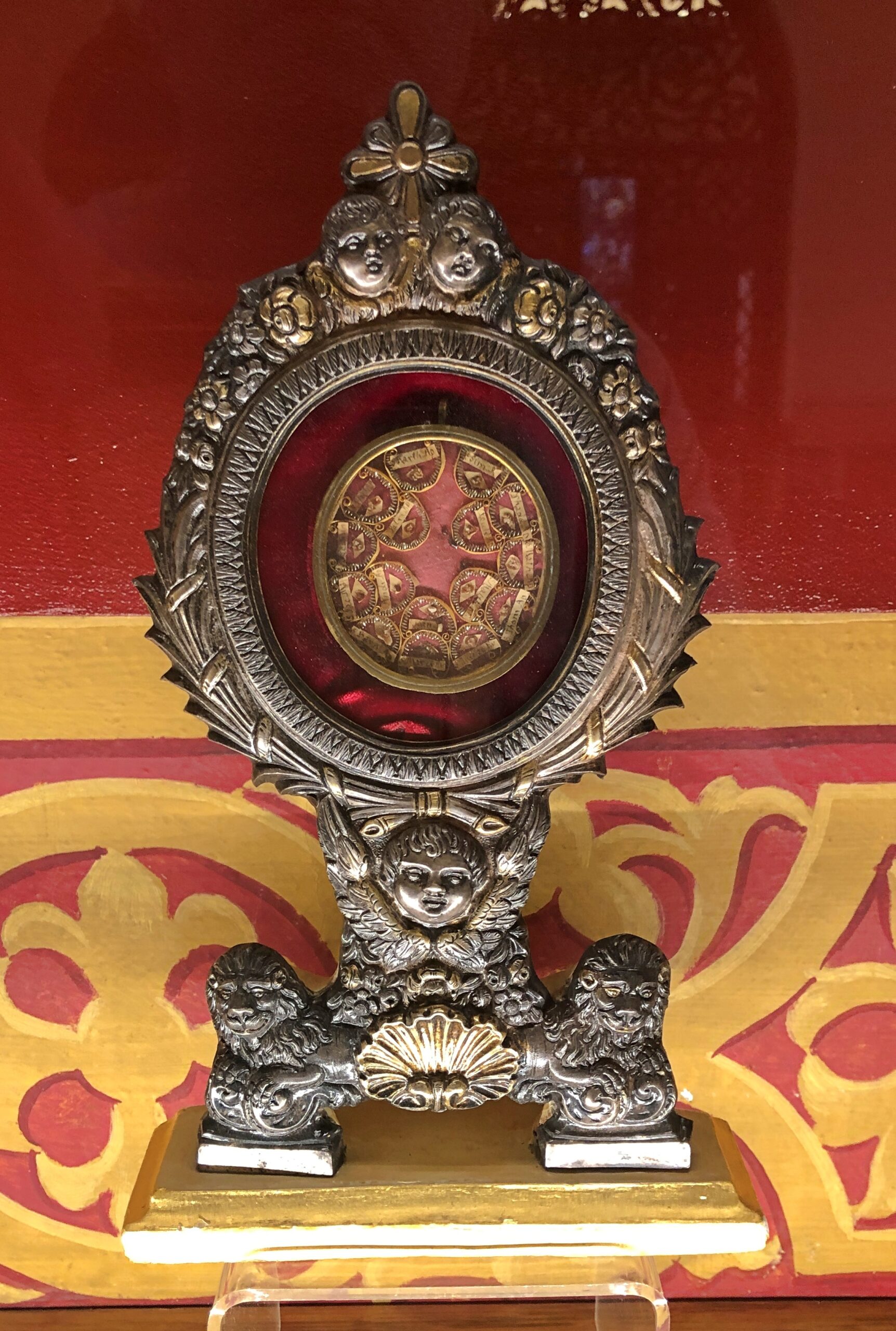
The relic shrine is adjacent to the chapel. It’s all about the relics. As it should be.
“The Maria Stein Shrine of the Holy Relics houses over 1,200 relics of the Saints and the True Cross,” says the shrine’s web site. “95% of the relics in the Maria Stein collection are First Class. The first relics were brought to the area by Fr. Francis de Sales Brunner, who founded most of the local churches and convents, bringing priests, brothers, and sisters of the Precious Blood communities to America.
“After his death, the significant collection of his relics, including a Calendar of Relics, and the bodily remains of St. Victoria, were under the care of the Sisters. In 1872, Fr. J. M. Gartner, a priest from Milwaukee, acquired 175 relics for safekeeping in the New World. When he brought them to America, his original intent was to have a kind of traveling exhibit. But the faithful wanted them kept together and suggested finding a permanent place for the collection.
“When he heard about the many relics under the care of the Sisters of the Precious Blood, he approached the Sisters, and together they gathered all of the relics into one collection, and we became the Shrine of the Holy Relics in 1875.”
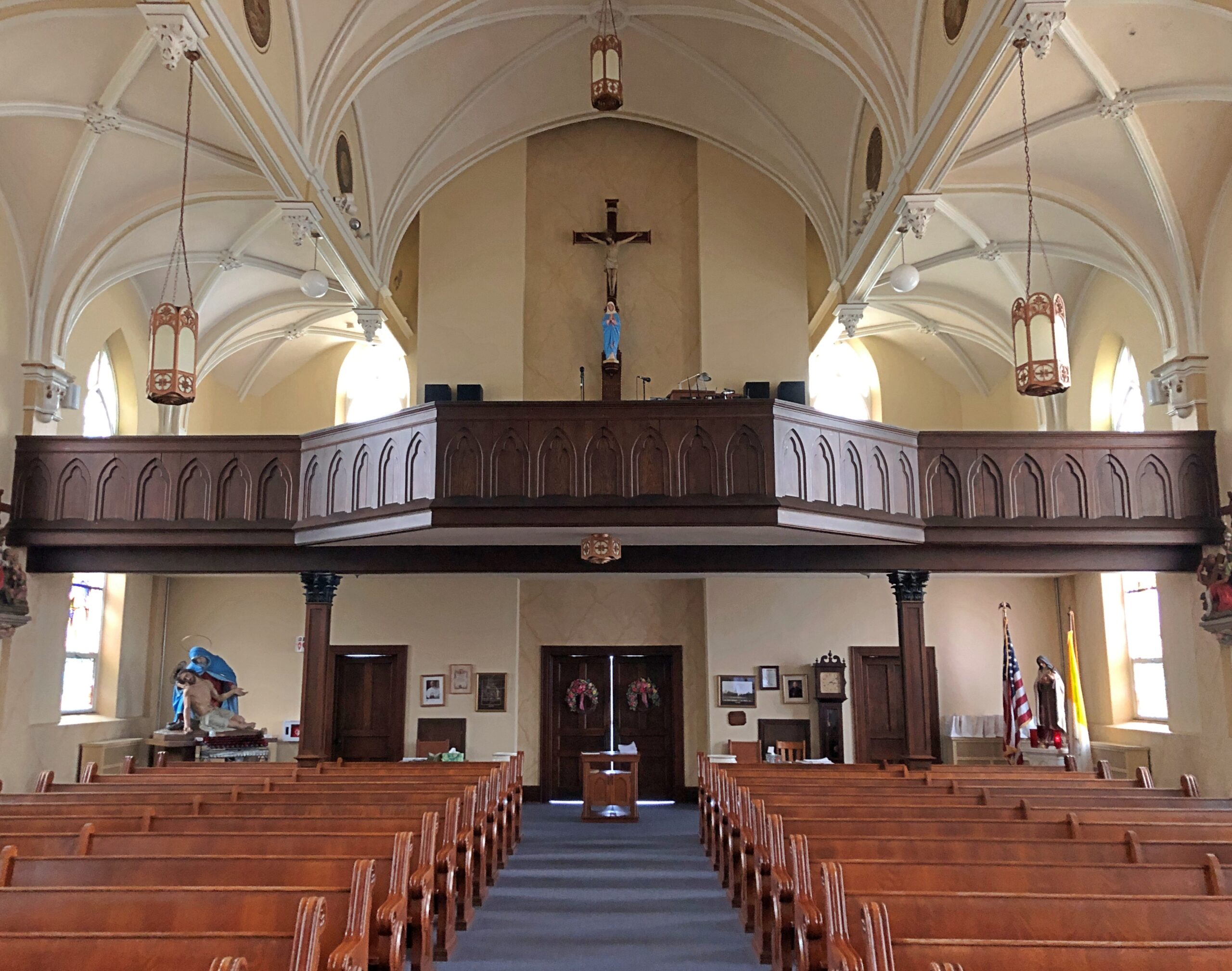
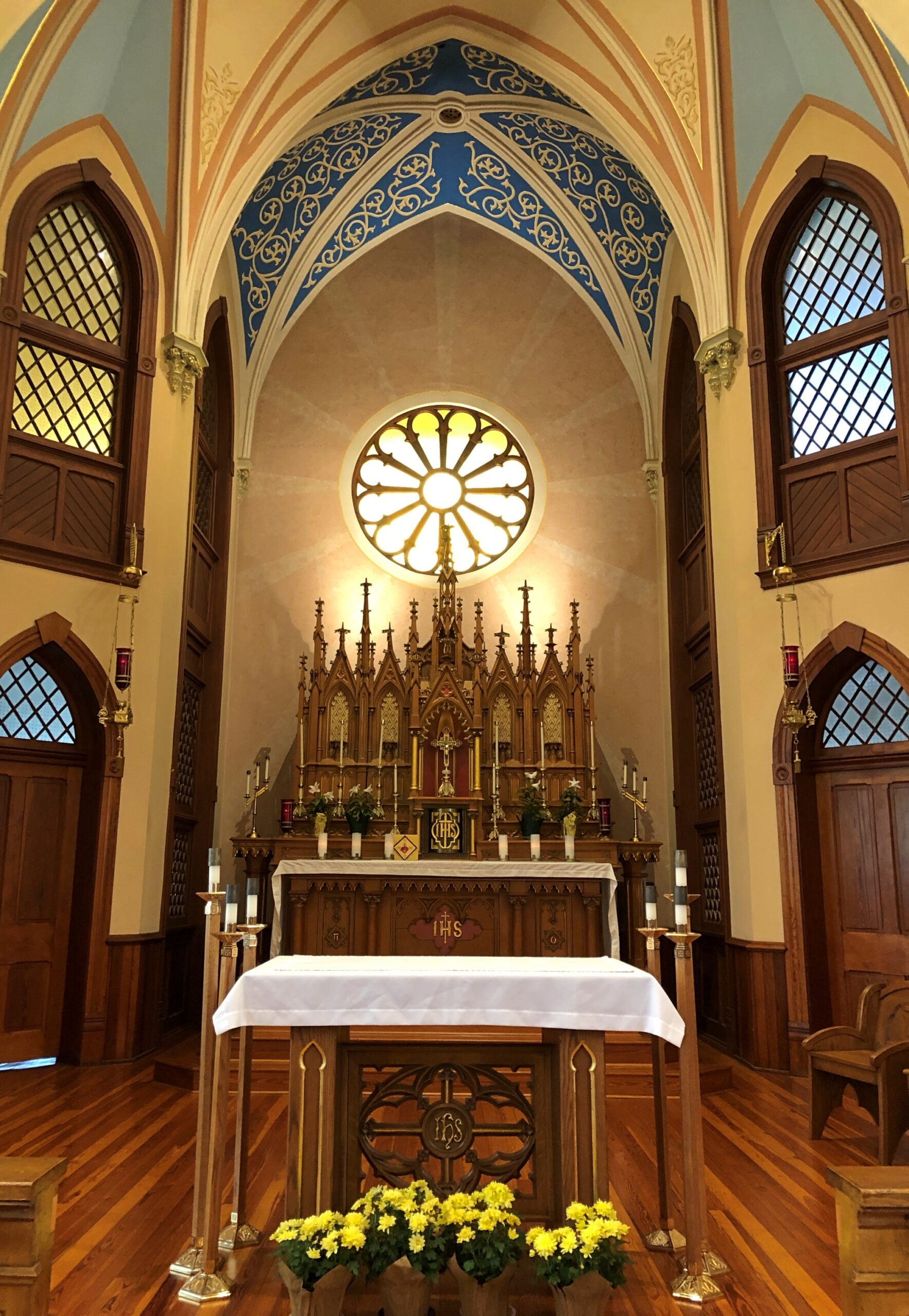
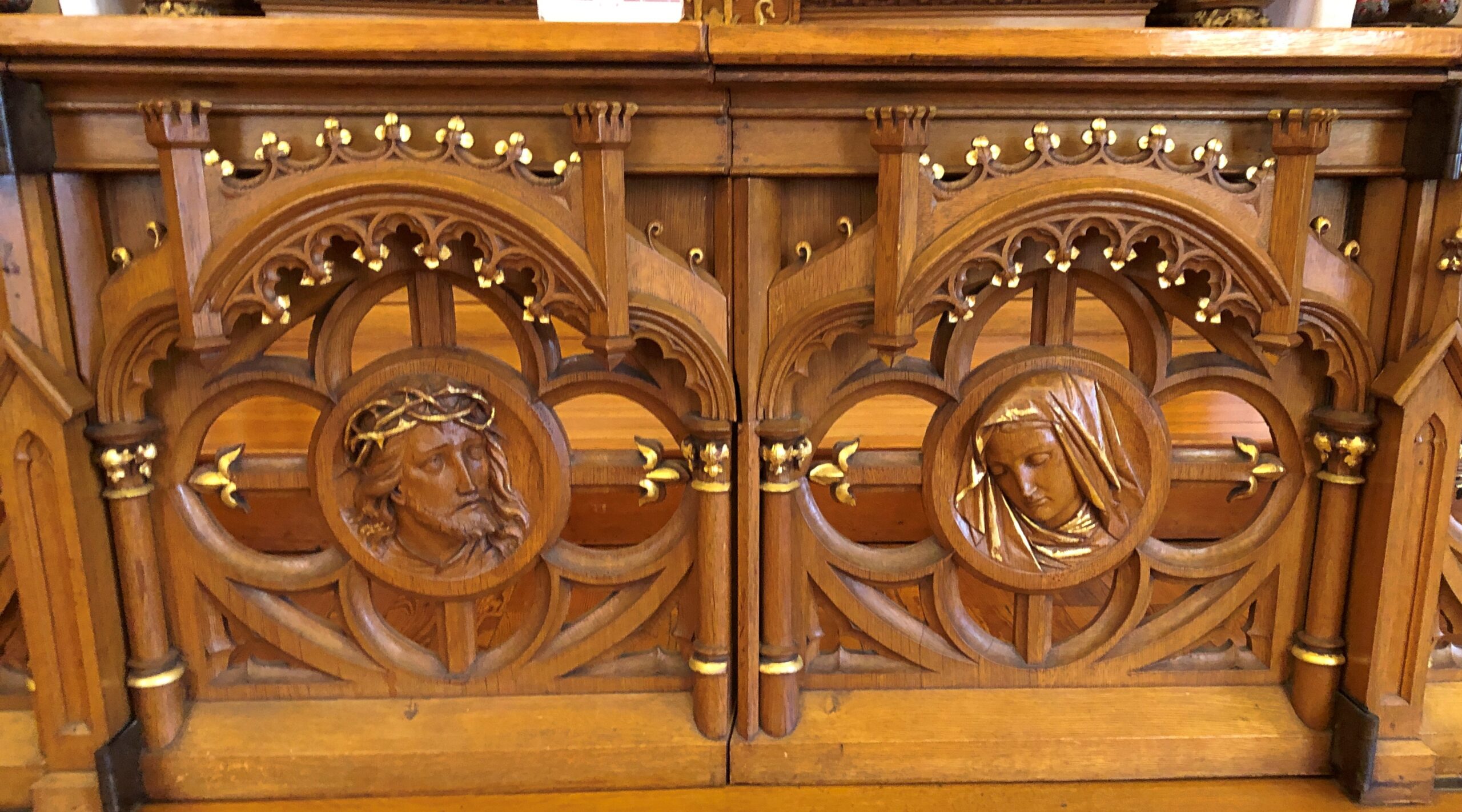
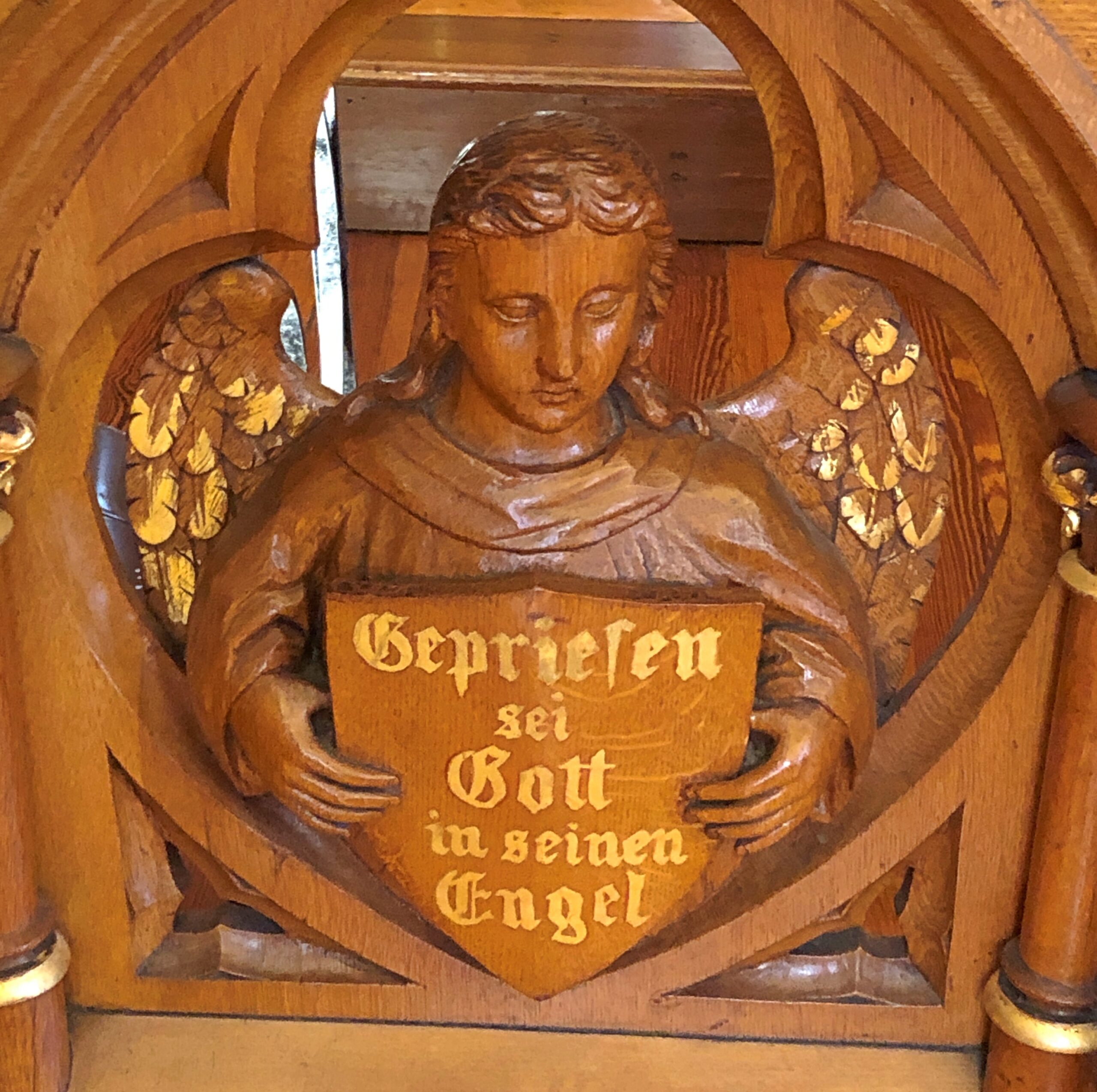
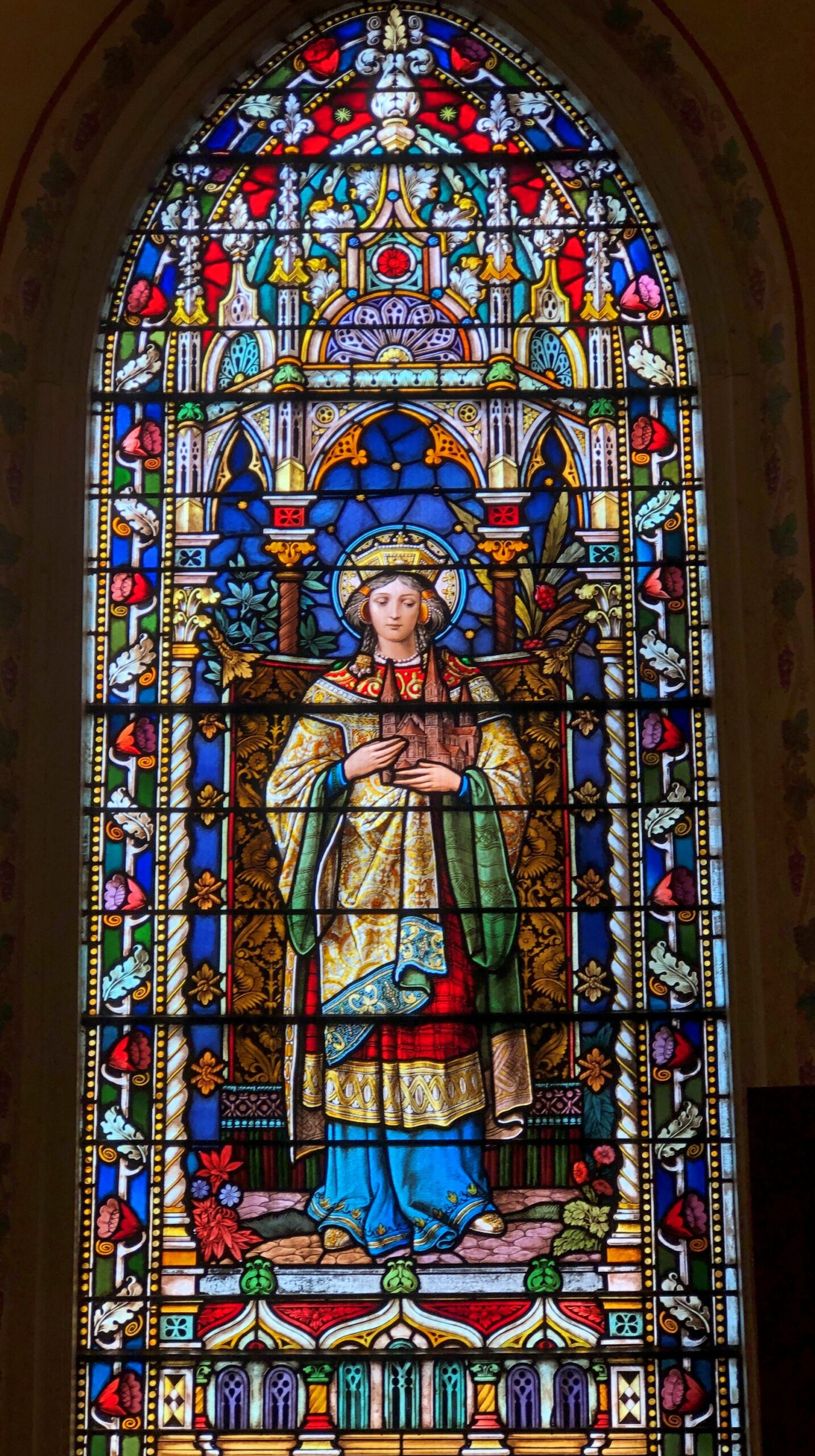
Besides reliquaries large and small, the shrine also includes some fine woodwork and stained glass.
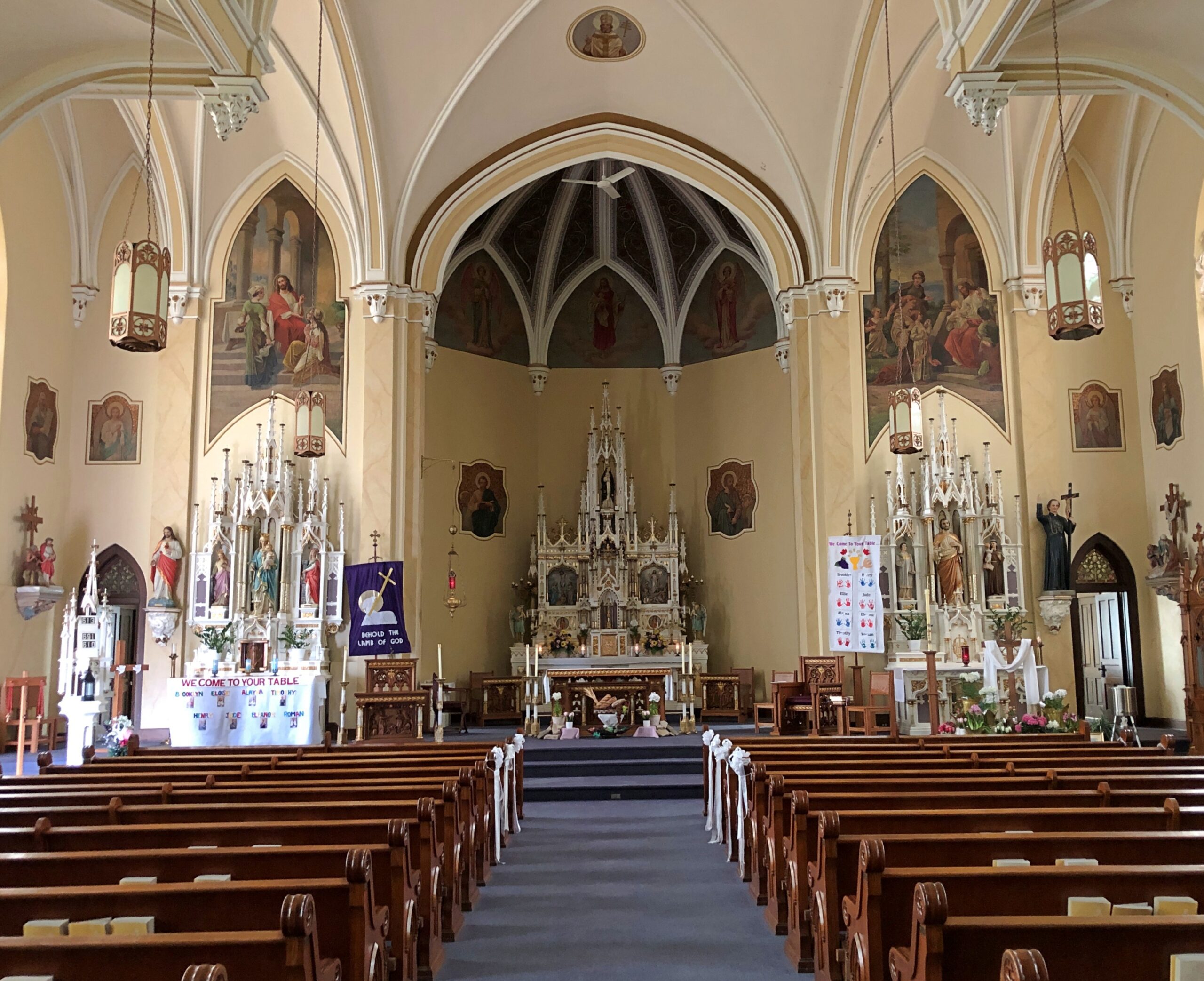
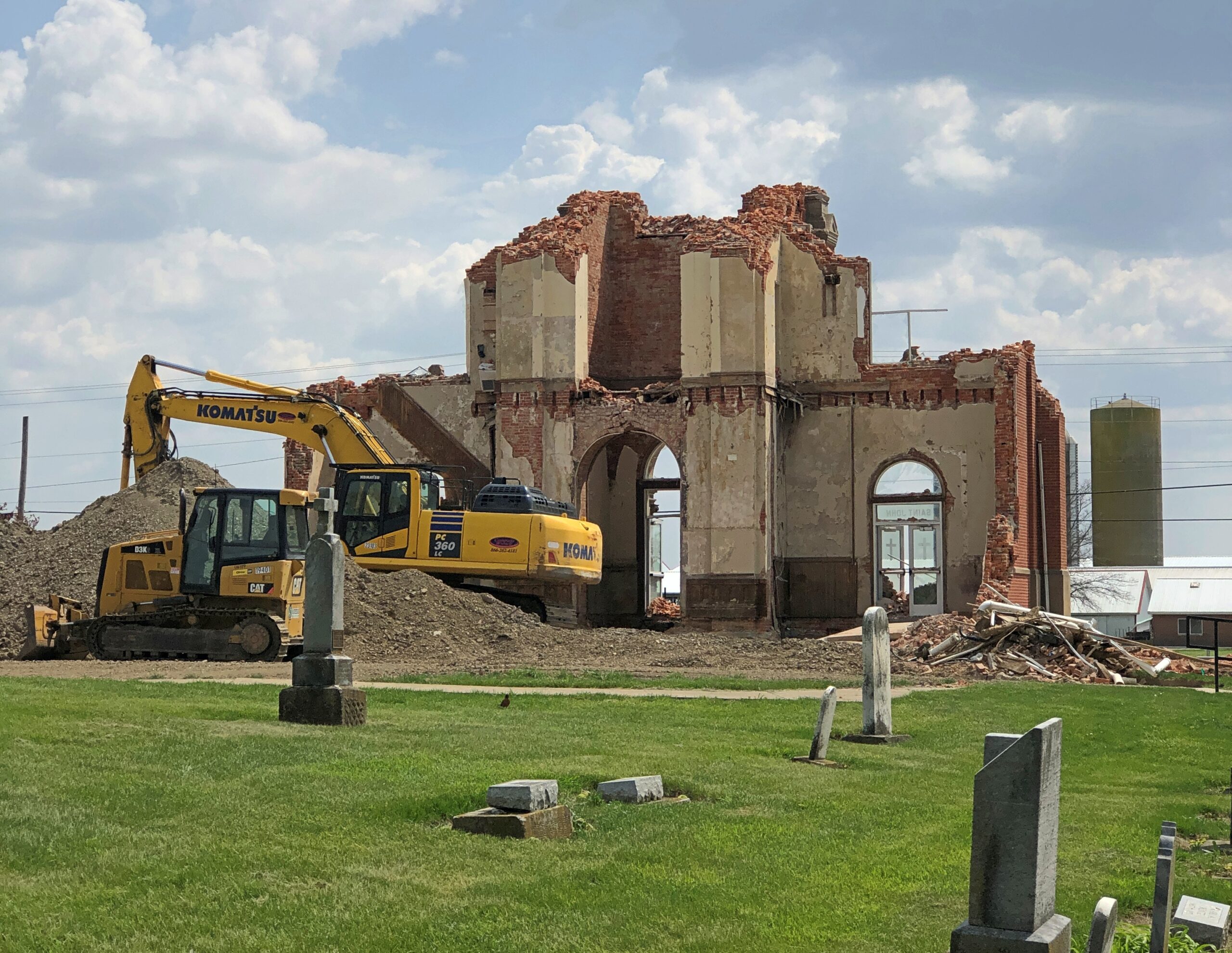
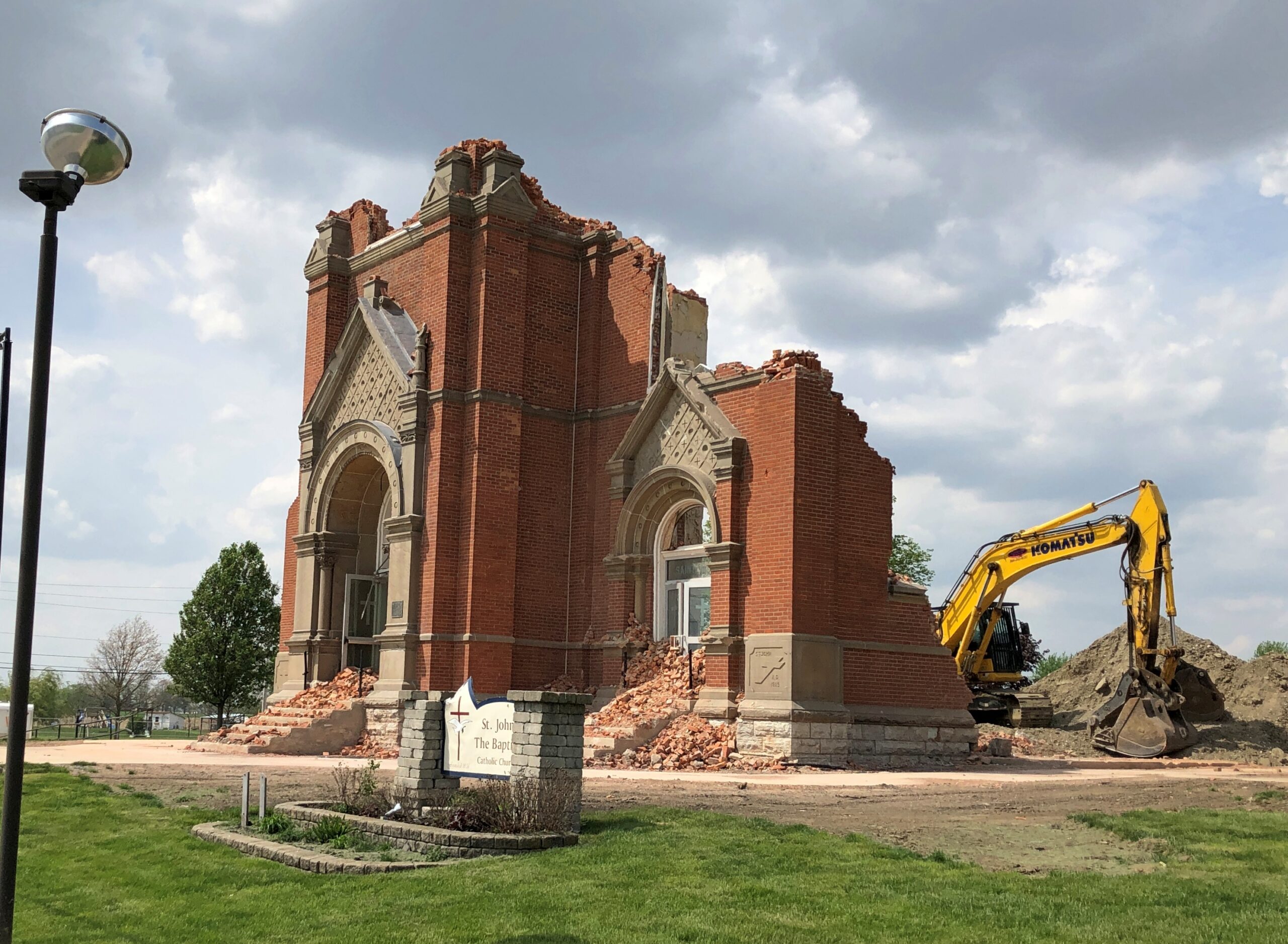
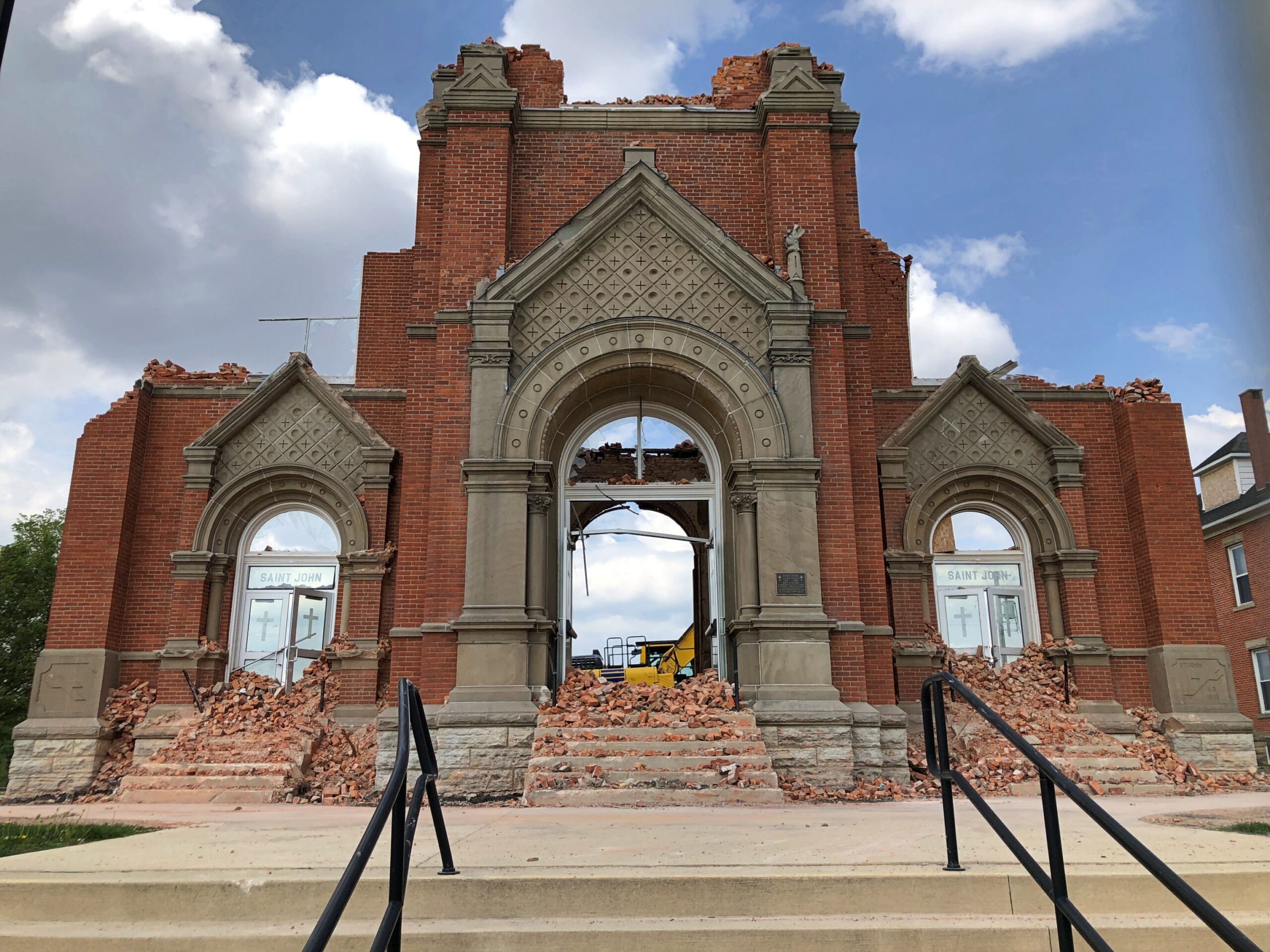
A minute’s drive from the shrine, on the two-lane highway Ohio 119, is the site of St. John the Baptist Catholic Church. Site because it is a ruin. Or was the day in April when I visited, as it’s probably gone by now. From the looks of things, demolition was in progress.
How is it that a late 19th-century brick church was being razed? I was aghast for a little while, but a posted notice told me that the church had been severely damaged by fire in May 2025.
A damn shame, but it turns out — something I didn’t know buzzing down Ohio 119, seeing church after church in otherwise tiny towns — that this part of Ohio is home to many immigrant Catholic churches, mostly tall and brick and over 100 years old. The cluster of churches even has a name: Land of the Cross-Tipped Churches. Dang, now this is another place I want to re-visit. This happens to me fairly often.
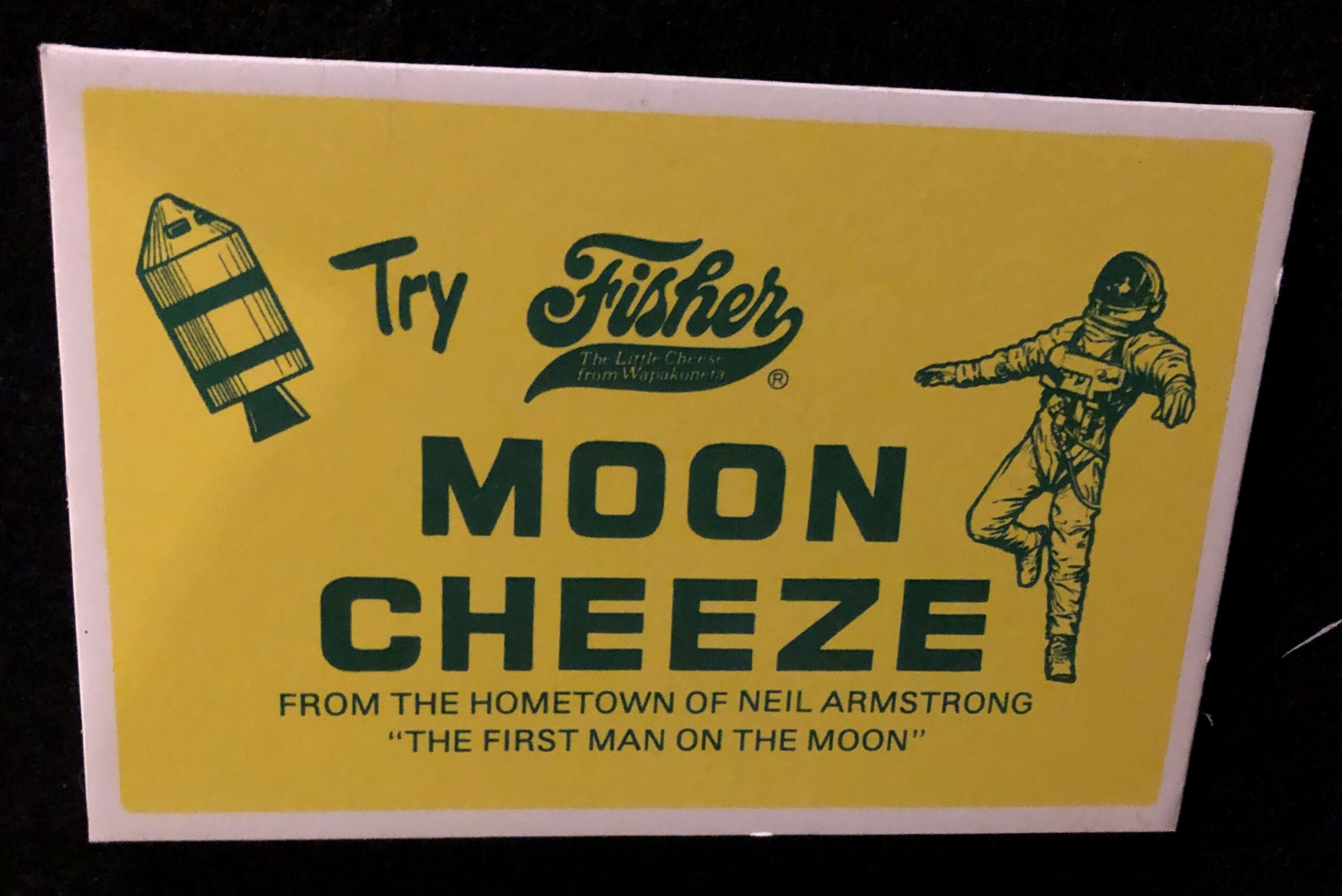
I’d never had any Moon Cheeze. Or even heard of it.
But I did eat Space Food Sticks from time to time in the days of Apollo and maybe a little after. As the ad says, Moon Cheeze was made in Wapakoneta, Ohio, hometown of Neil Armstrong.
“It seems to have been just regular American cheddar cheese,” Weird Universe says. “Only the packaging was special. It came in a container shaped like the state of Ohio.” In the ad above, it looks like an astronaut is drifting away from the safety of the Command and Service modules, like the (dead) astronaut did in 2001.
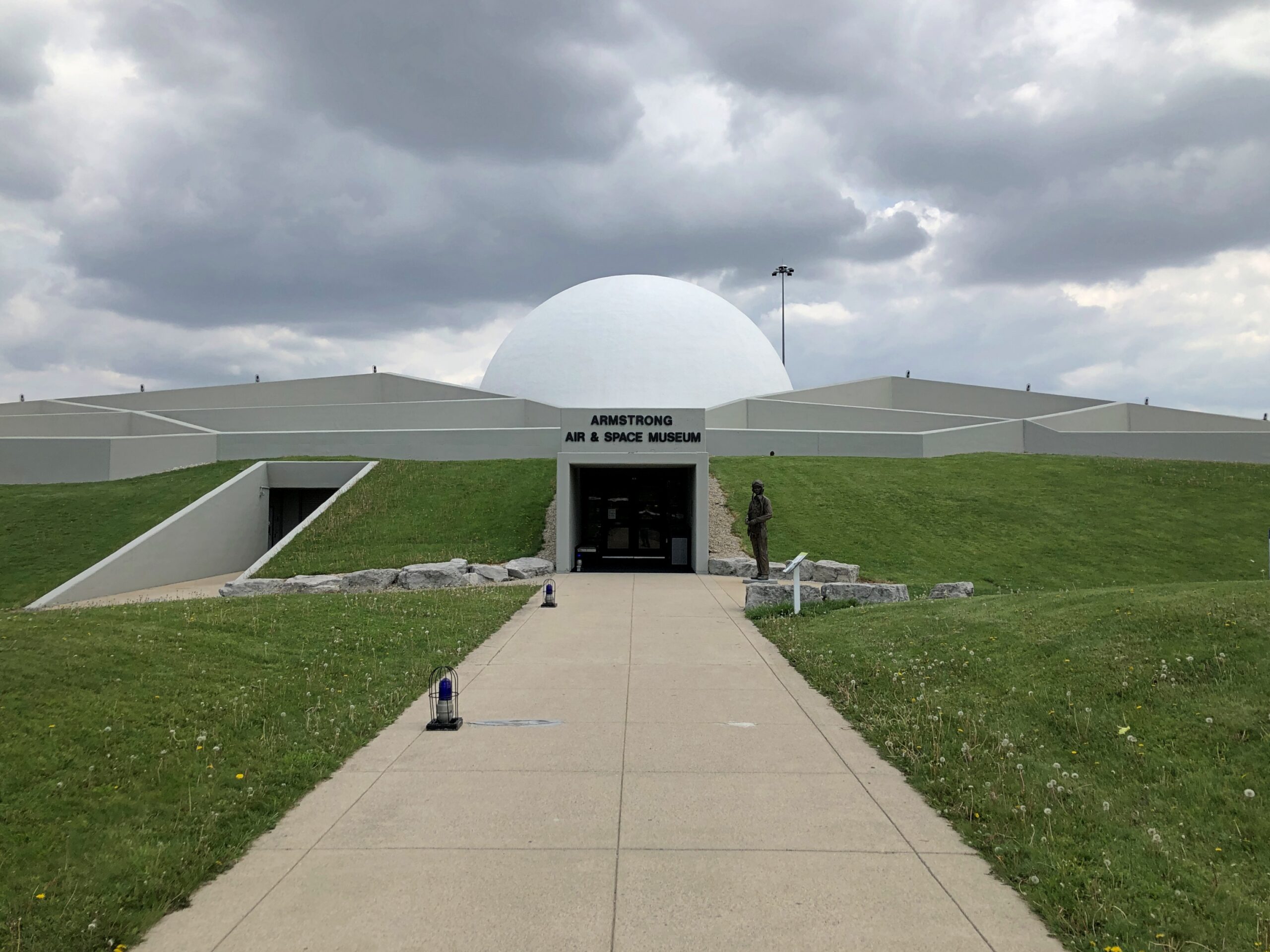
On the last day of my recent trip, I diverted a bit to Wapakoneta to visit the Armstrong Air & Space Museum, which I’d bypassed a decade earlier, and was rewarded for my effort when I saw the Moon Cheeze ad and a lot more.
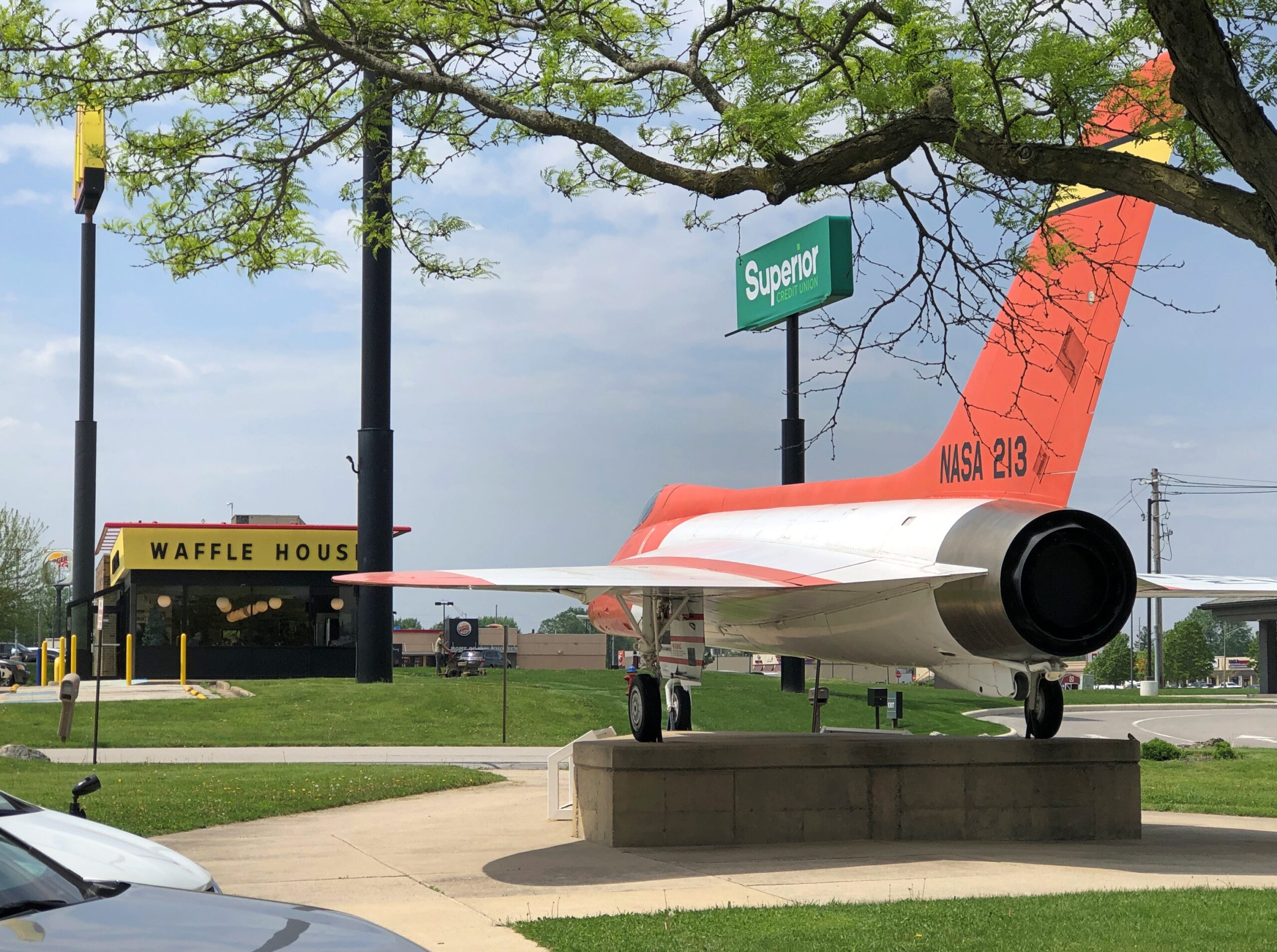
It’s conveniently located near a Waffle House.
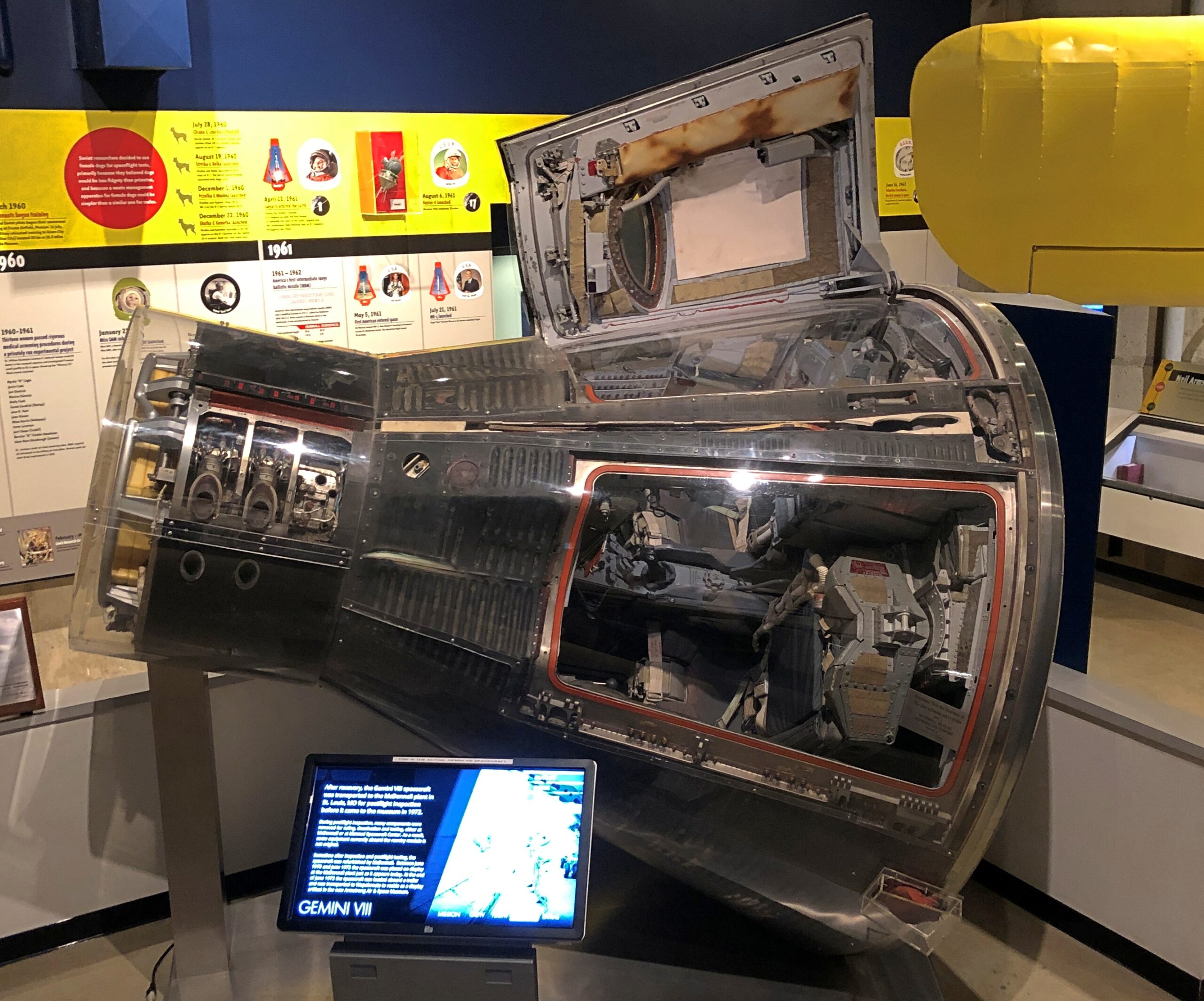
Worth the price of admission by itself: the Gemini 8 capsule, in which Neil Armstrong and David Scott nearly bought the space farm due to a malfunctioning thruster.
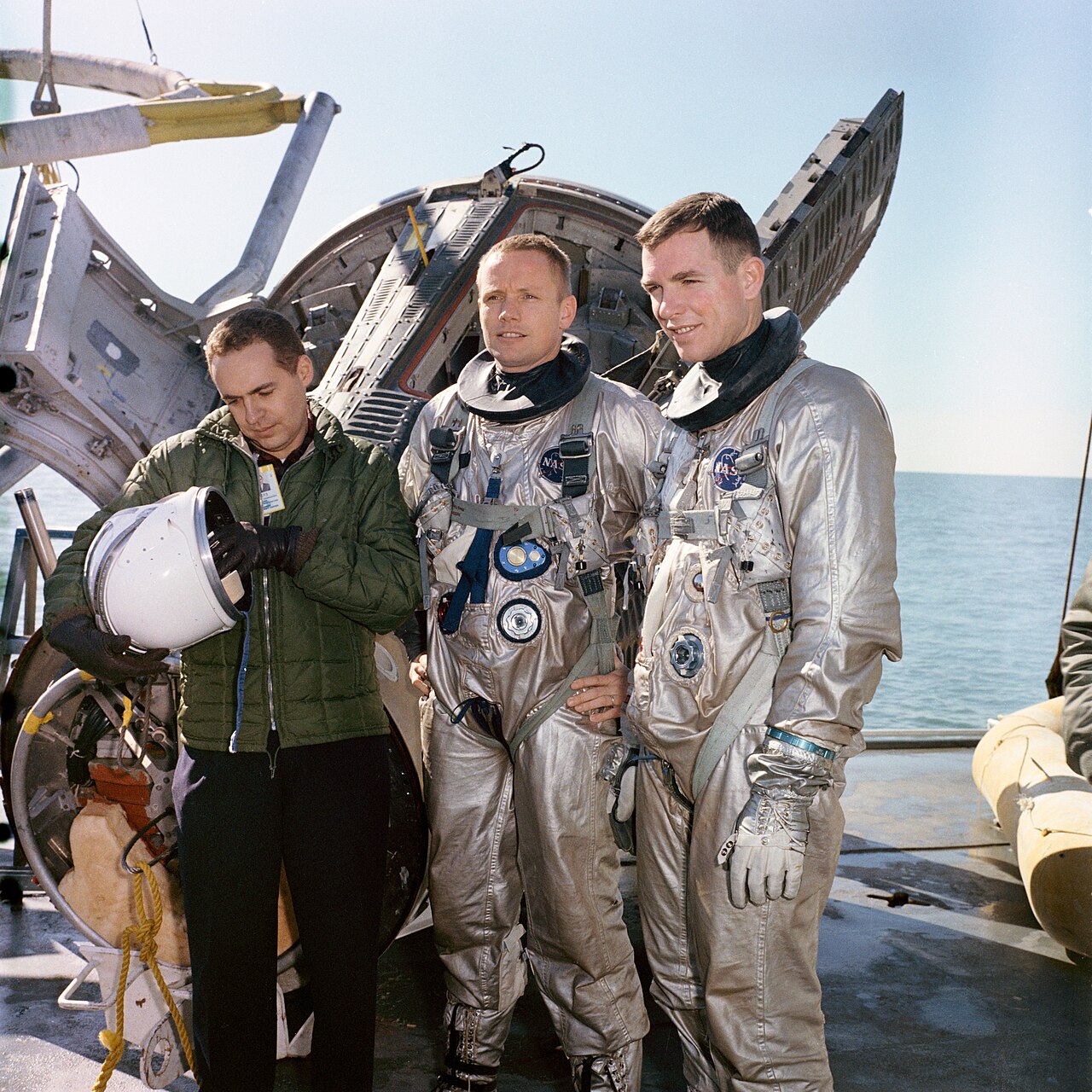
They survived, of course, and in fact Scott is still alive at 94. Besides Gemini 8, he flew on Apollo 9 and Apollo 15. Being seventh man to walk on the Moon doesn’t get you a museum, however; that’s reserved for being first. Fame is funny that way.
Neil Armstrong and David Scott. NASA public domain photo.
The museum isn’t large, but it does feature a number of good artifacts. The Smithsonian and the Kansas Cosmosphere shouldn’t have everything.
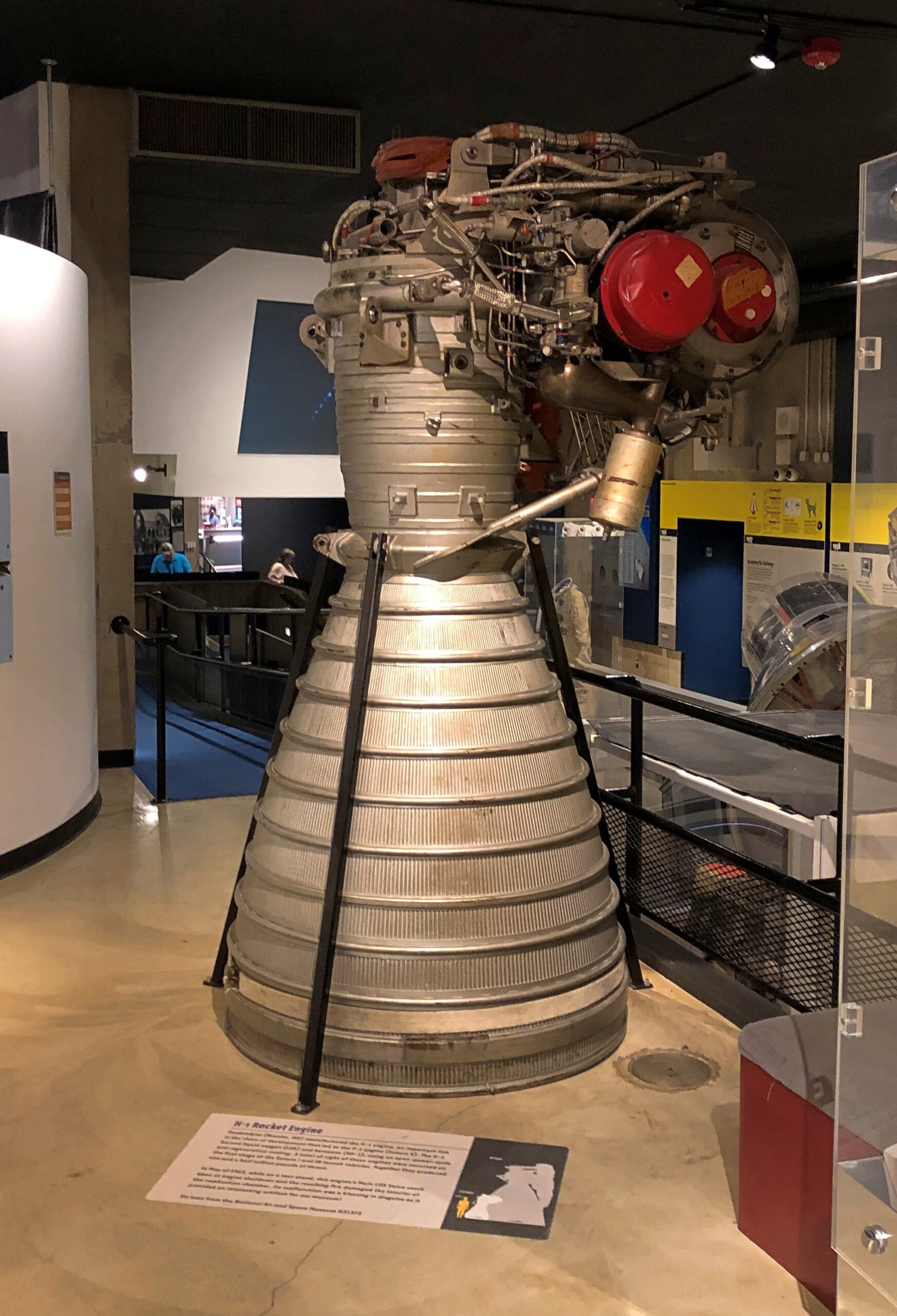
An H1 engine, which were used on Saturn 1 and Saturn 1B rockets.
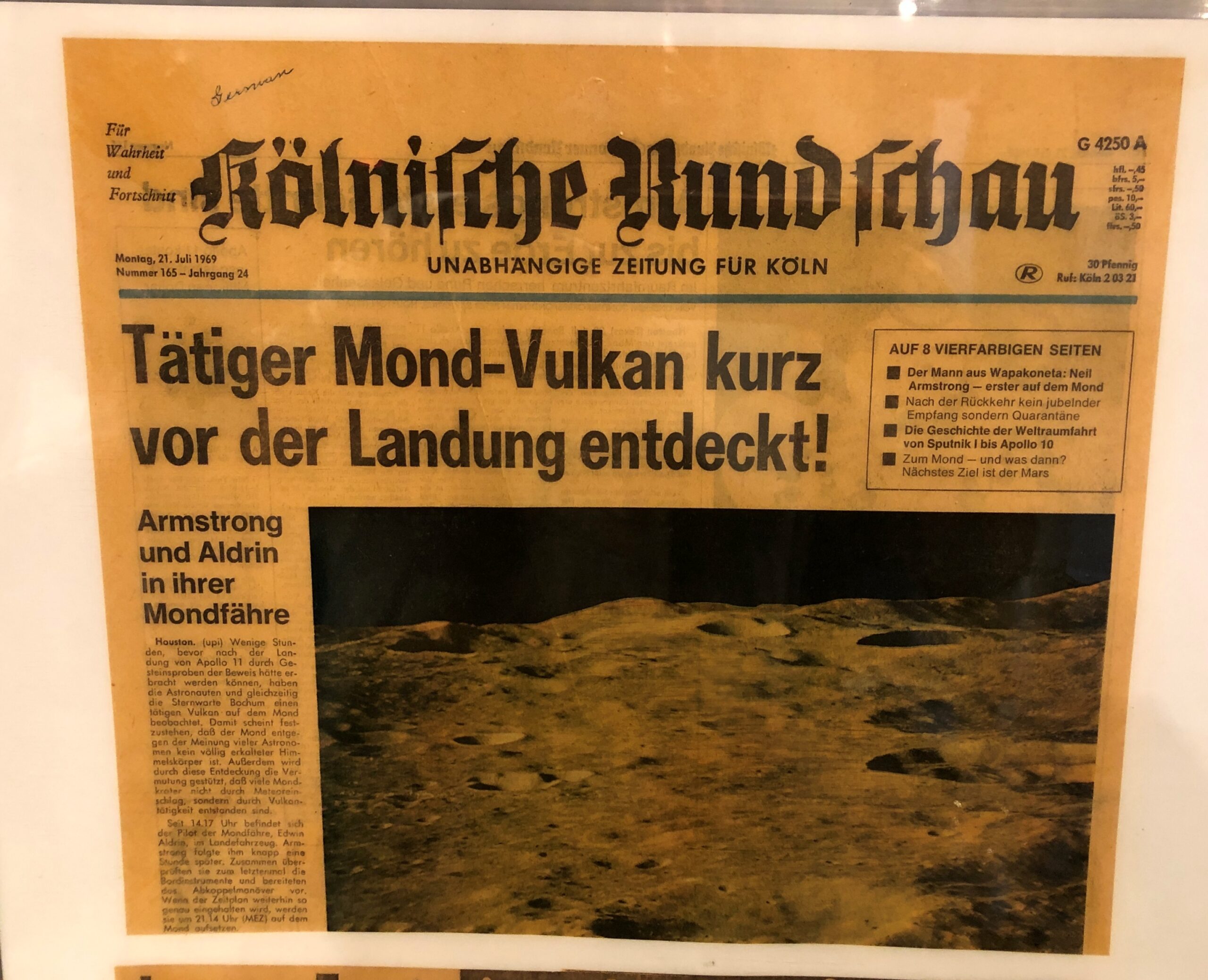
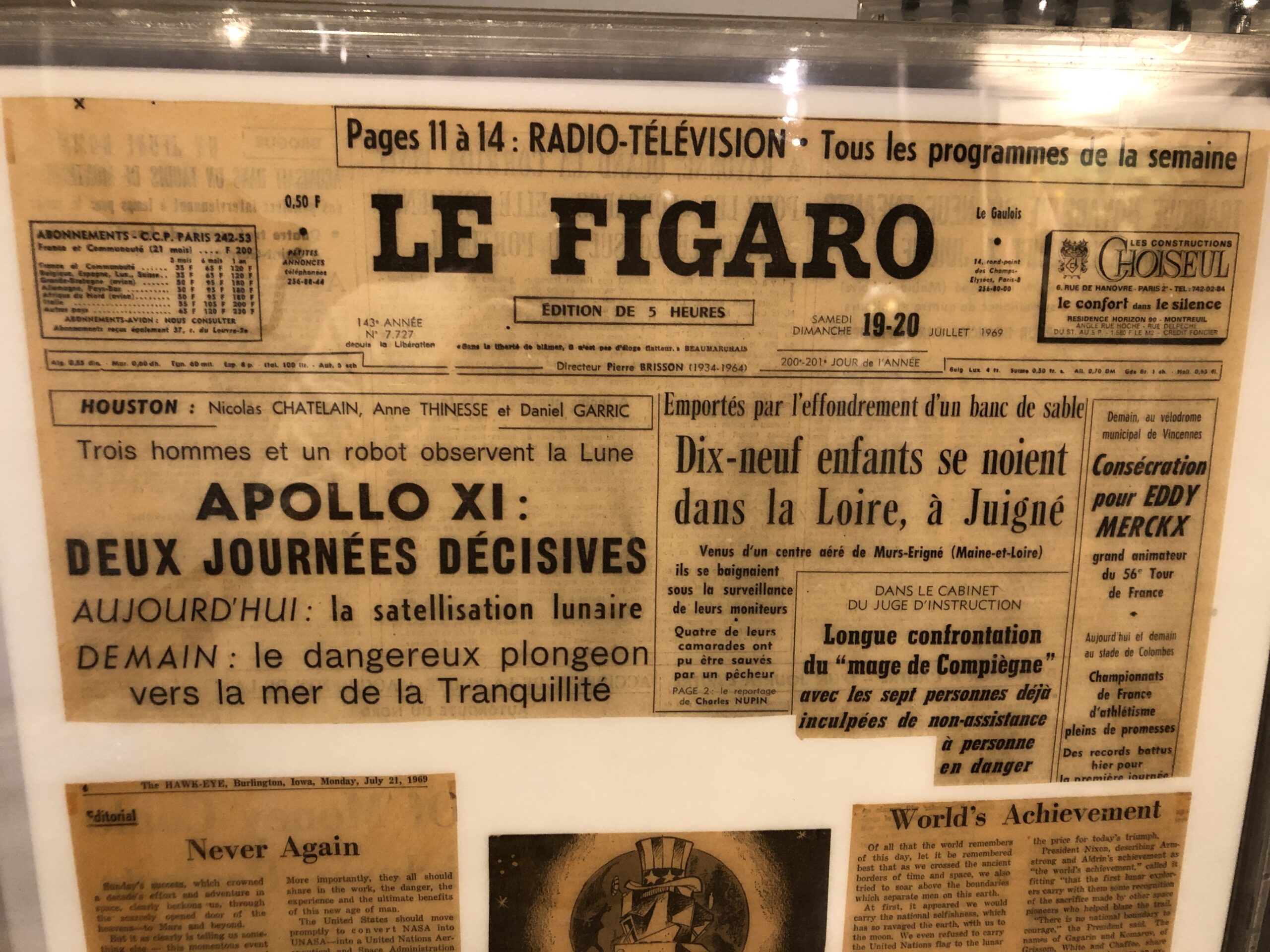
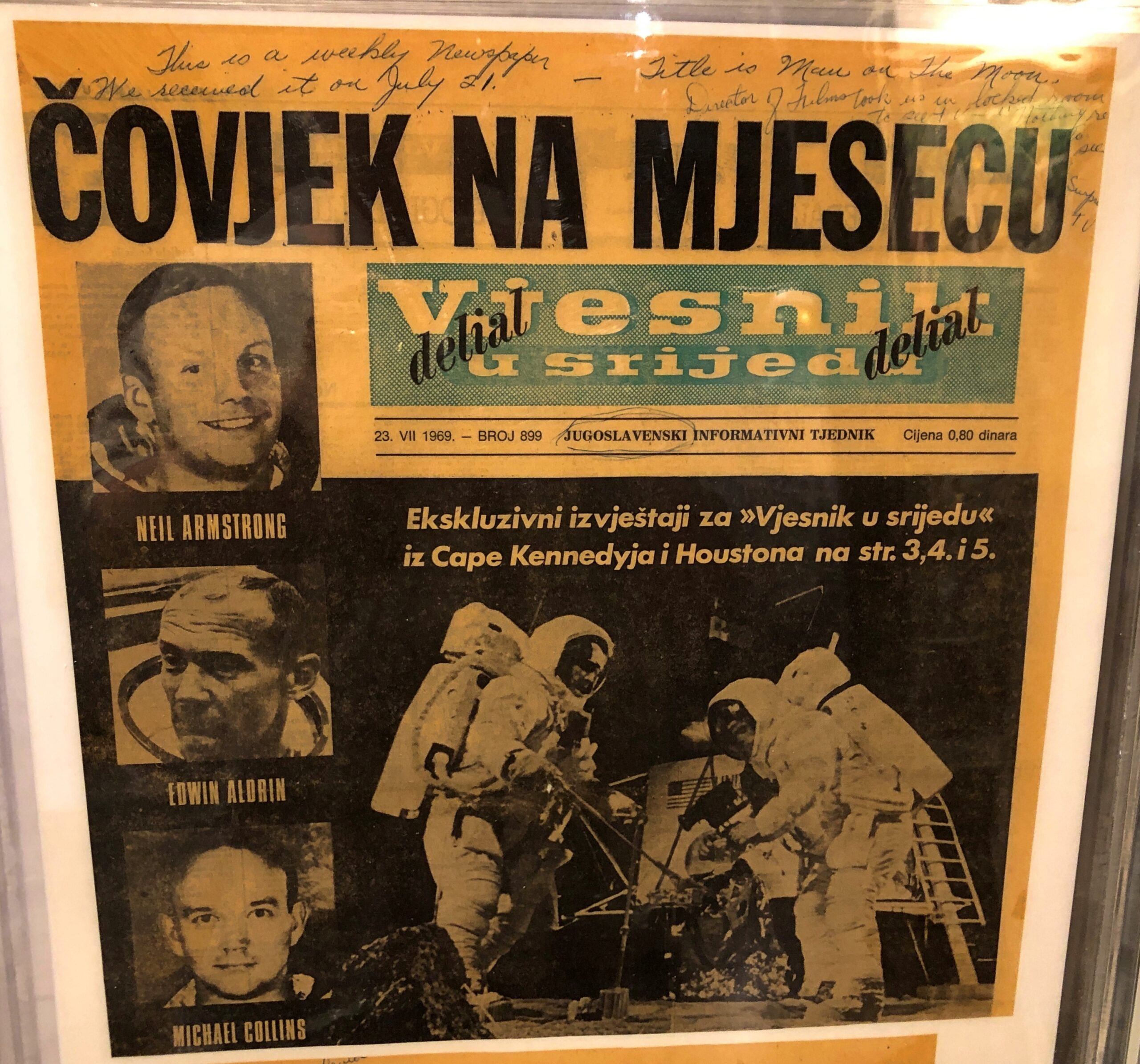
Newspapers from around the world covering the Apollo 11 landing.
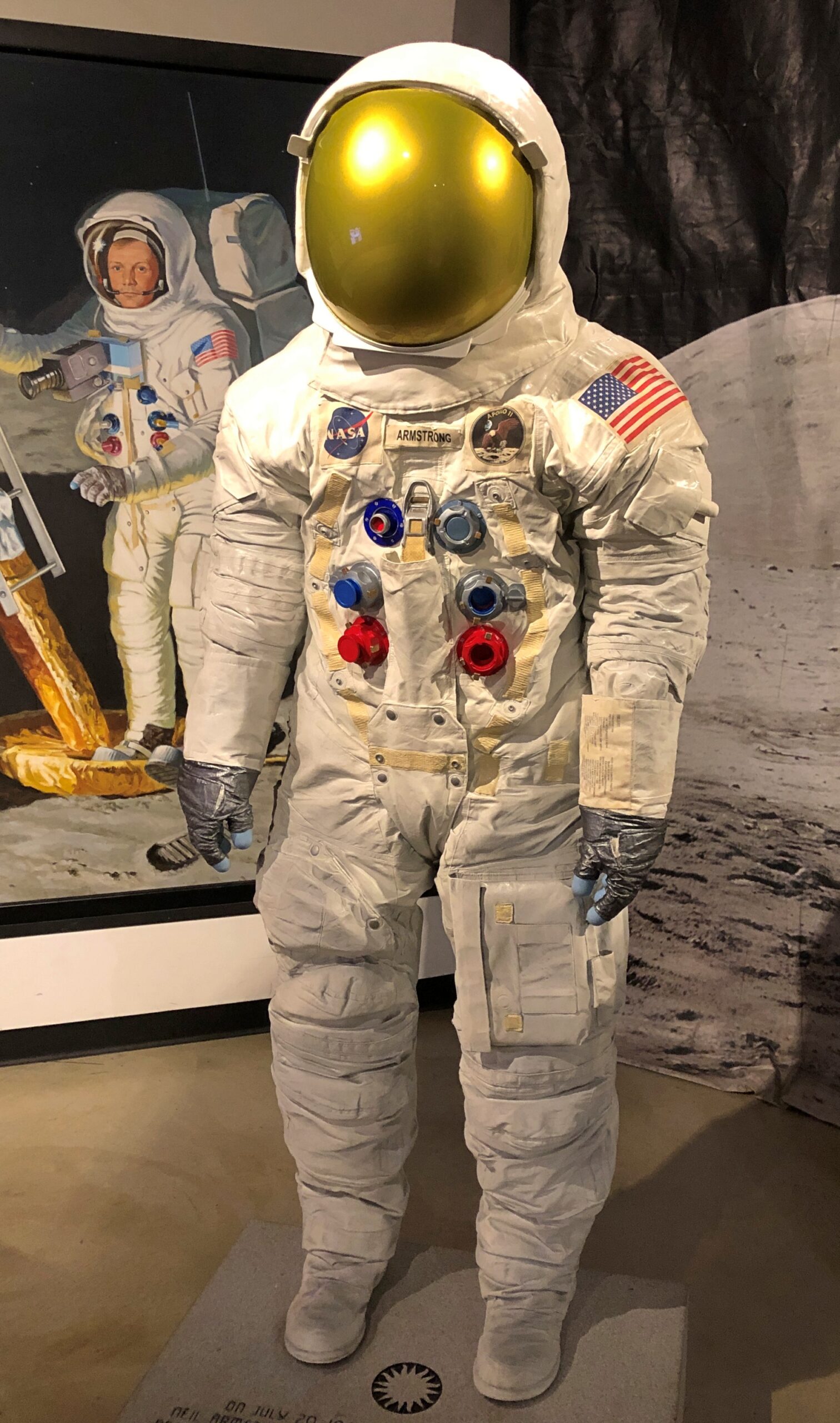
Some artwork. Looks like a spacesuit, but it’s a statue depicting Armstrong’s suit.
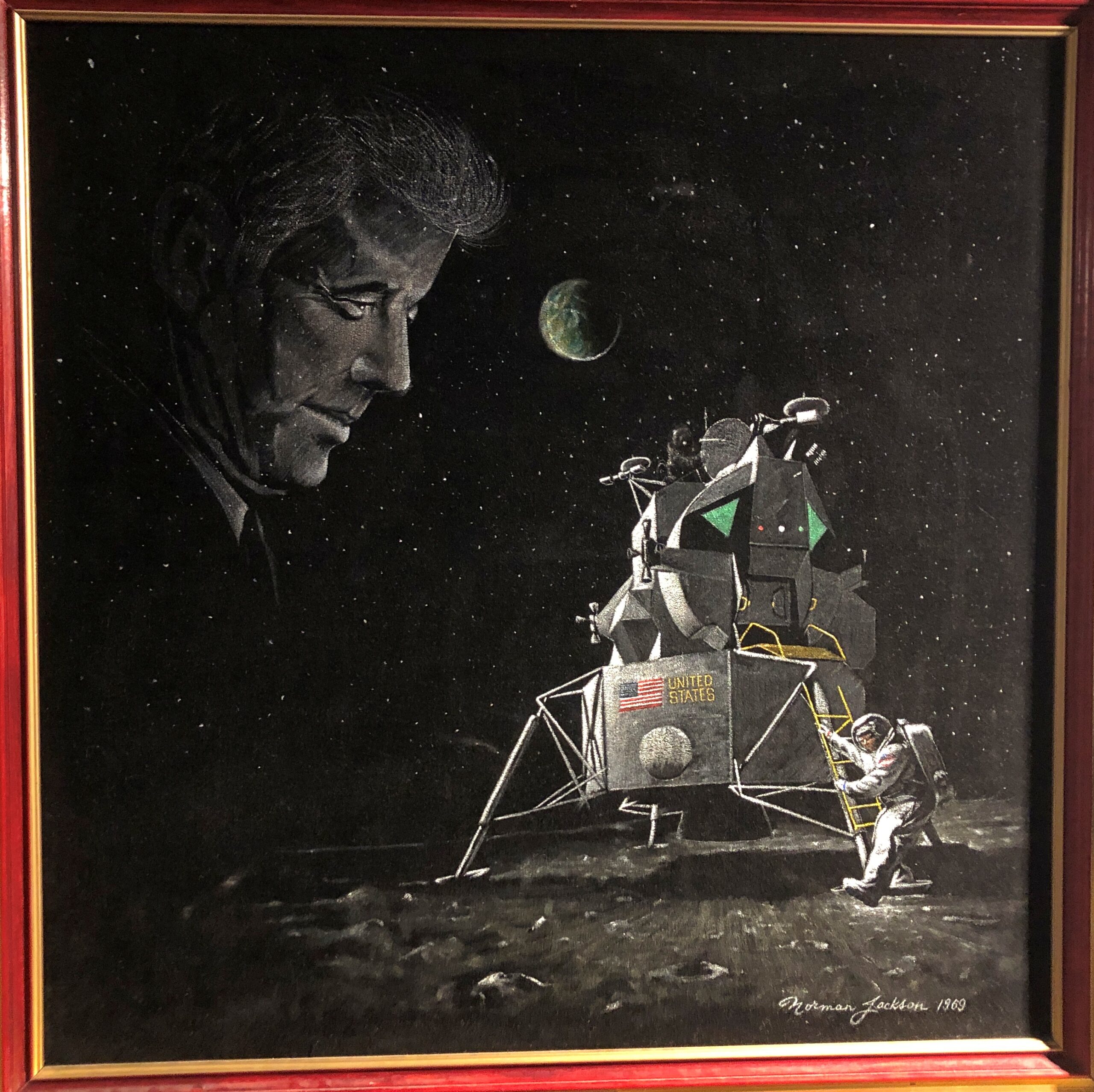
A painting from 1969.
It seems that the Armstrong and Aldrin didn’t report the alarming apparition of President Kennedy hovering over the lunar surface. Conspiracy theorists, take note.
An example of nonlinear tourism, a term I just made up, is my visit to Warren, Ohio. Linear tourism, another term I just (logically) made up, is picking a destination and sticking to it. That isn’t a bad approach, some of the time. But at other times, one follows an urge to go that next place on the map, to see what you can see. Nonlinear tourism has an element of spontaneity, obviously, and it probably isn’t the best way to plan a long trip.
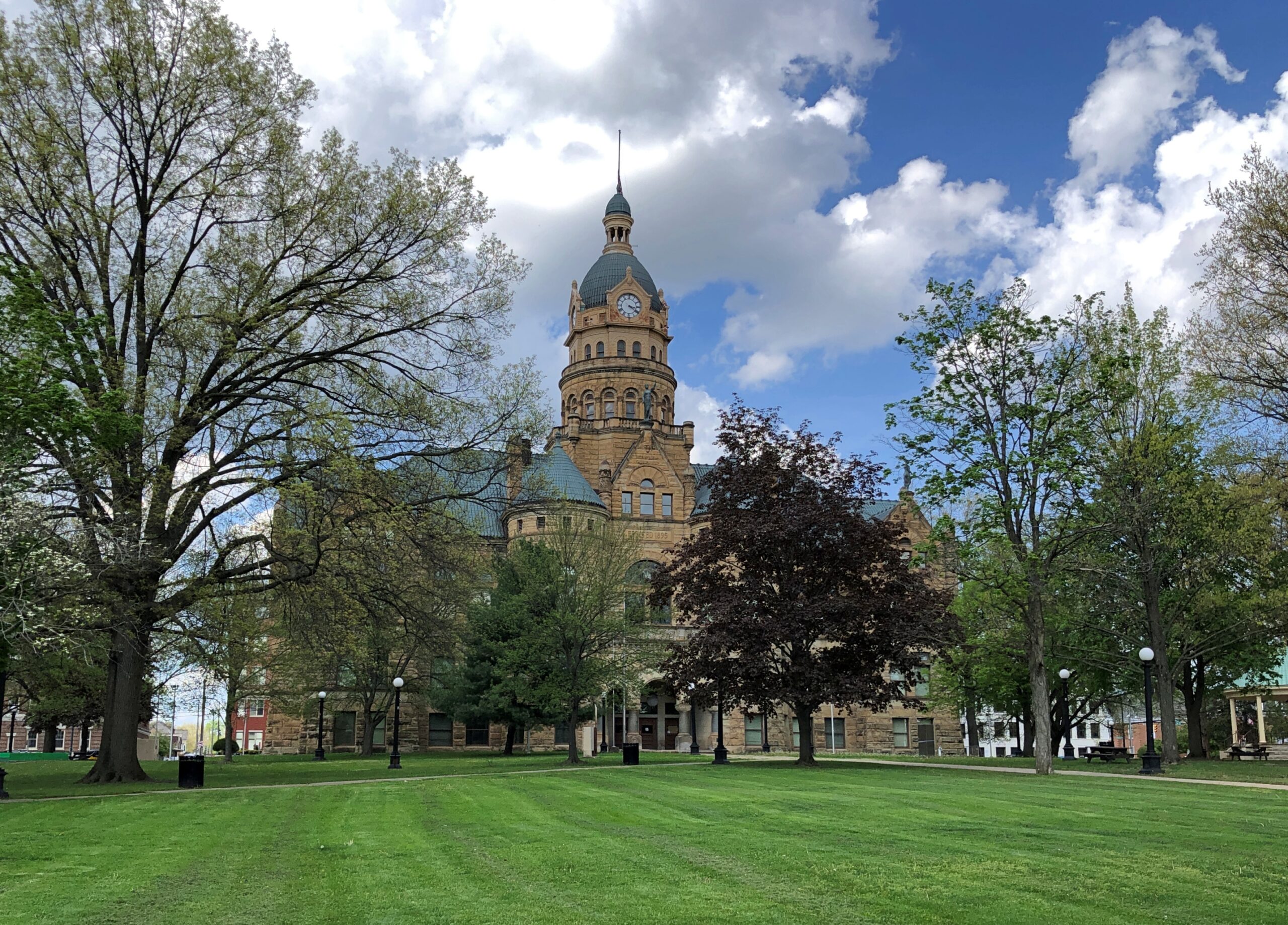
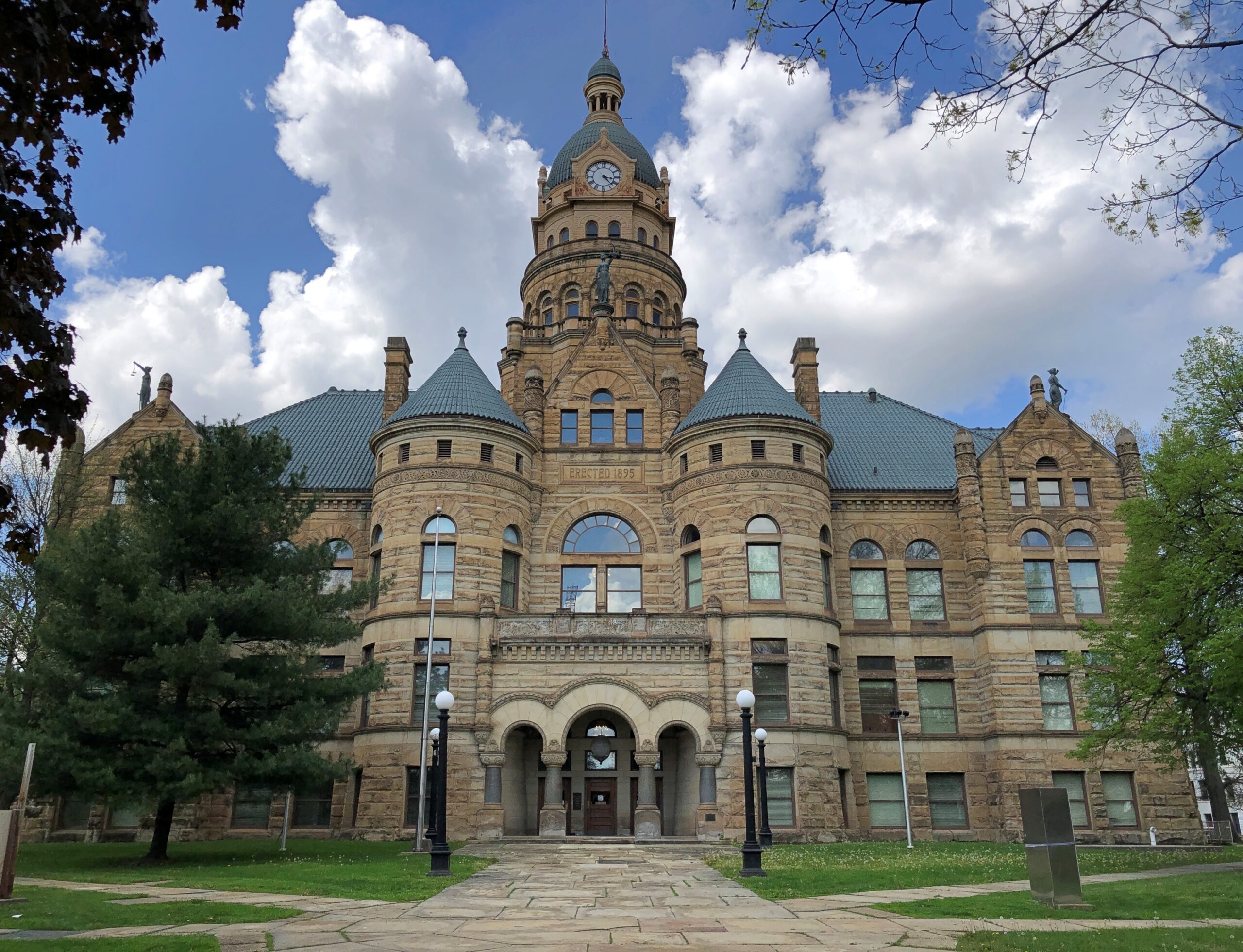
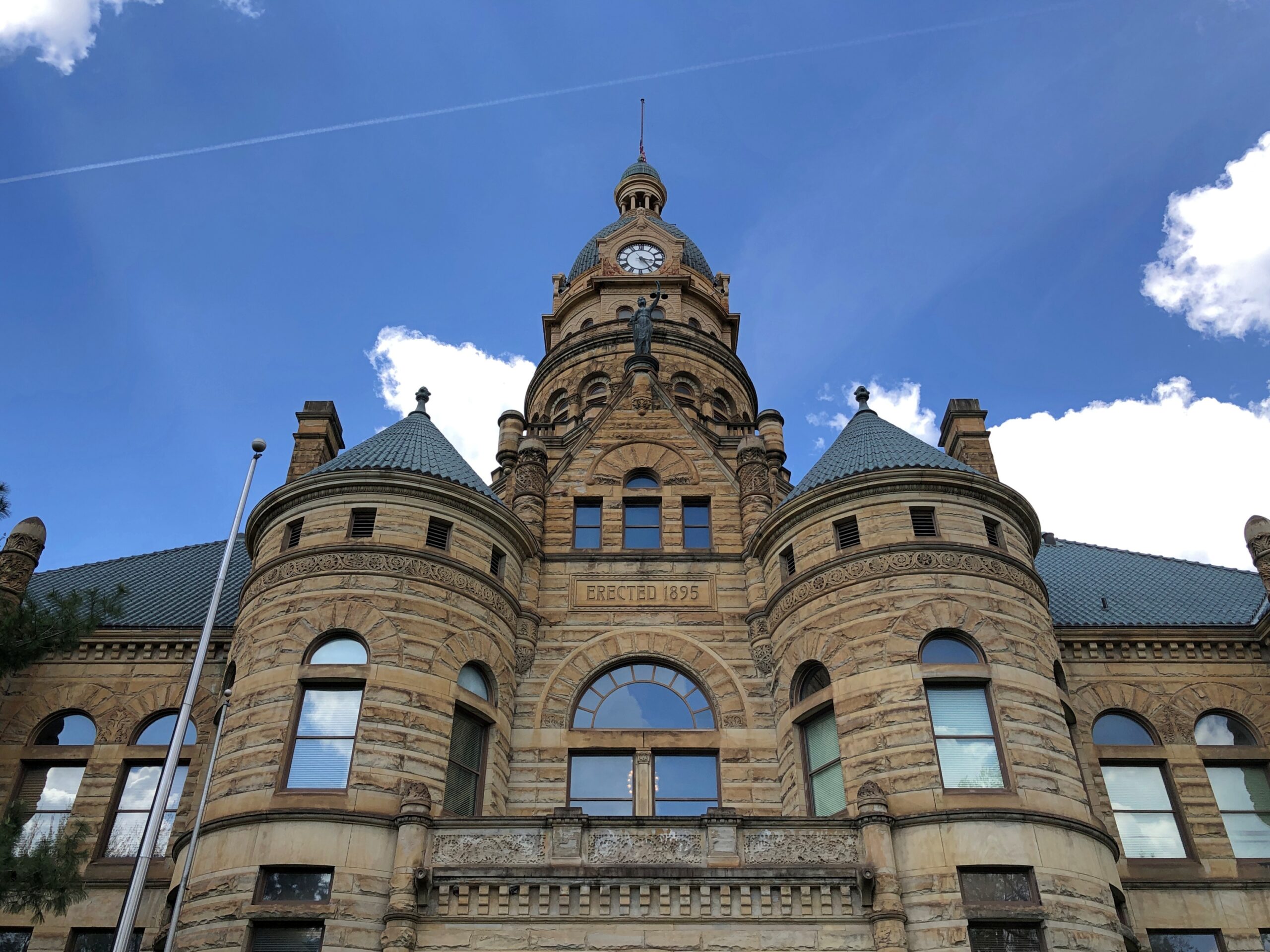
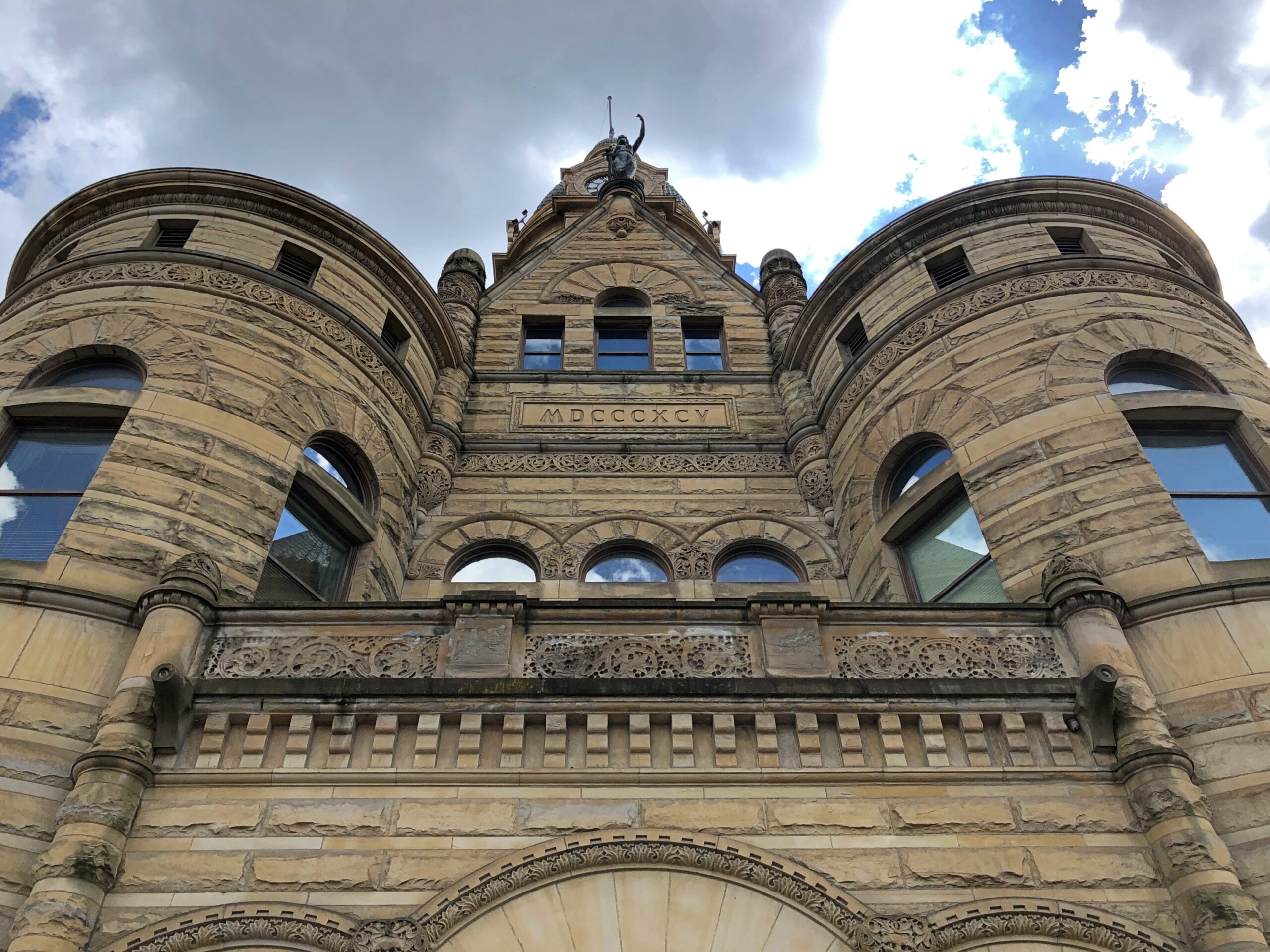
Sometimes the rewards are worth the slight meander. There I was in Niles, done with my visit to McKinley sites, and I thought: Warren’s just up the road. So I went. Warren is the seat of Trumbull County, and a prosperous place 100-plus years ago – Packard got its start there, for one thing – and so the county could afford a grand courthouse in 1895. That was worth the side trip right there.
Front and back.
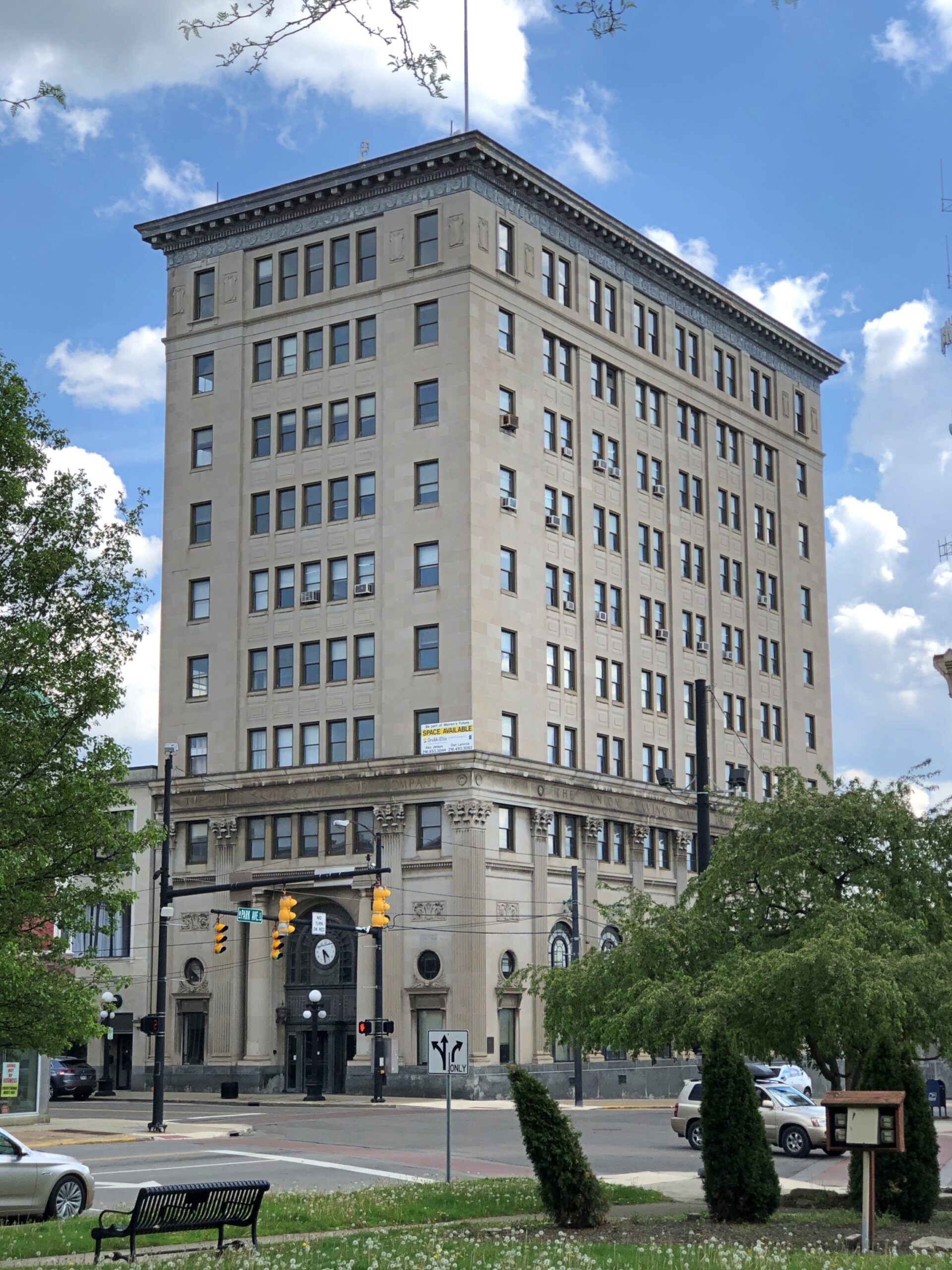
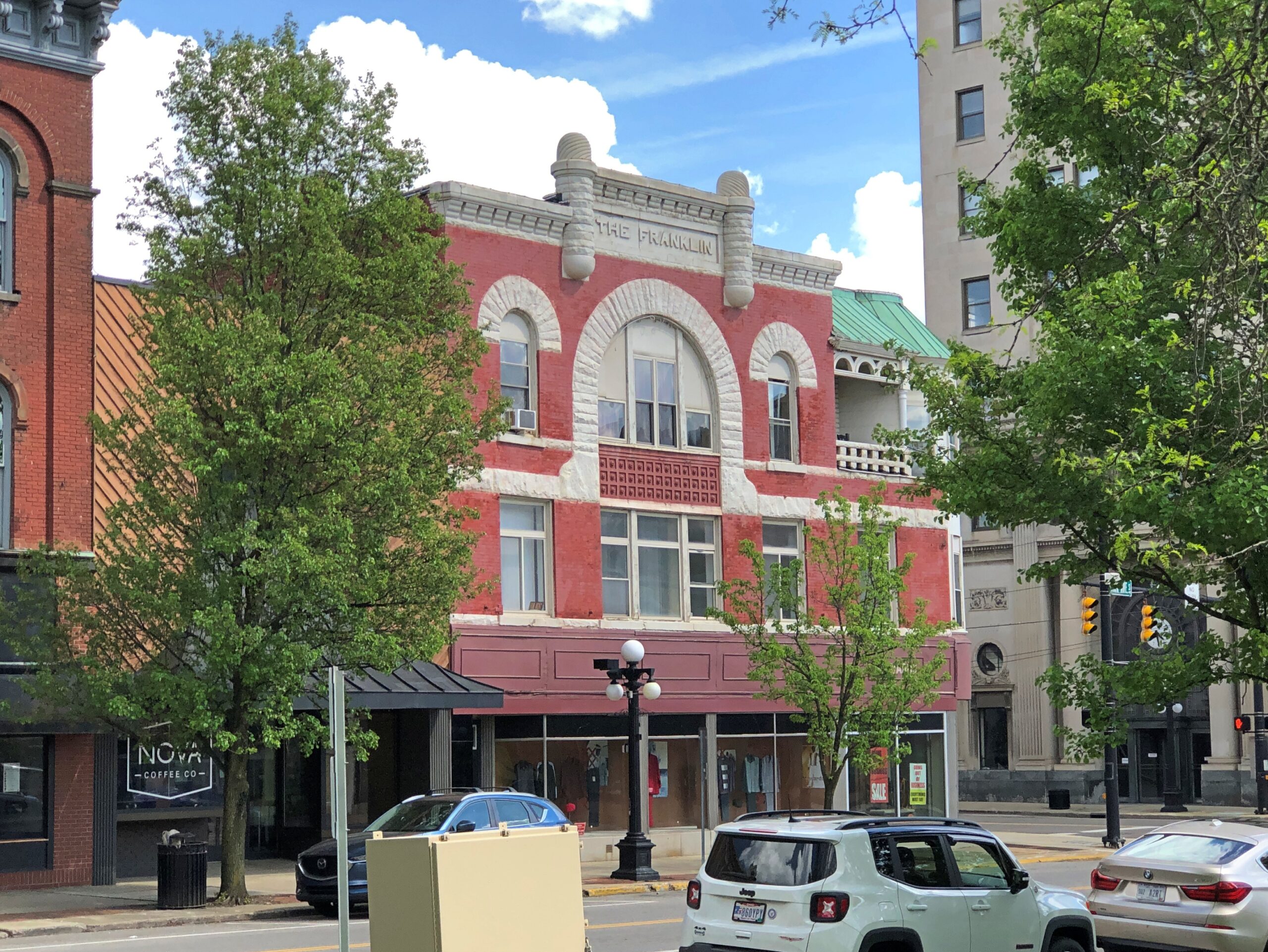
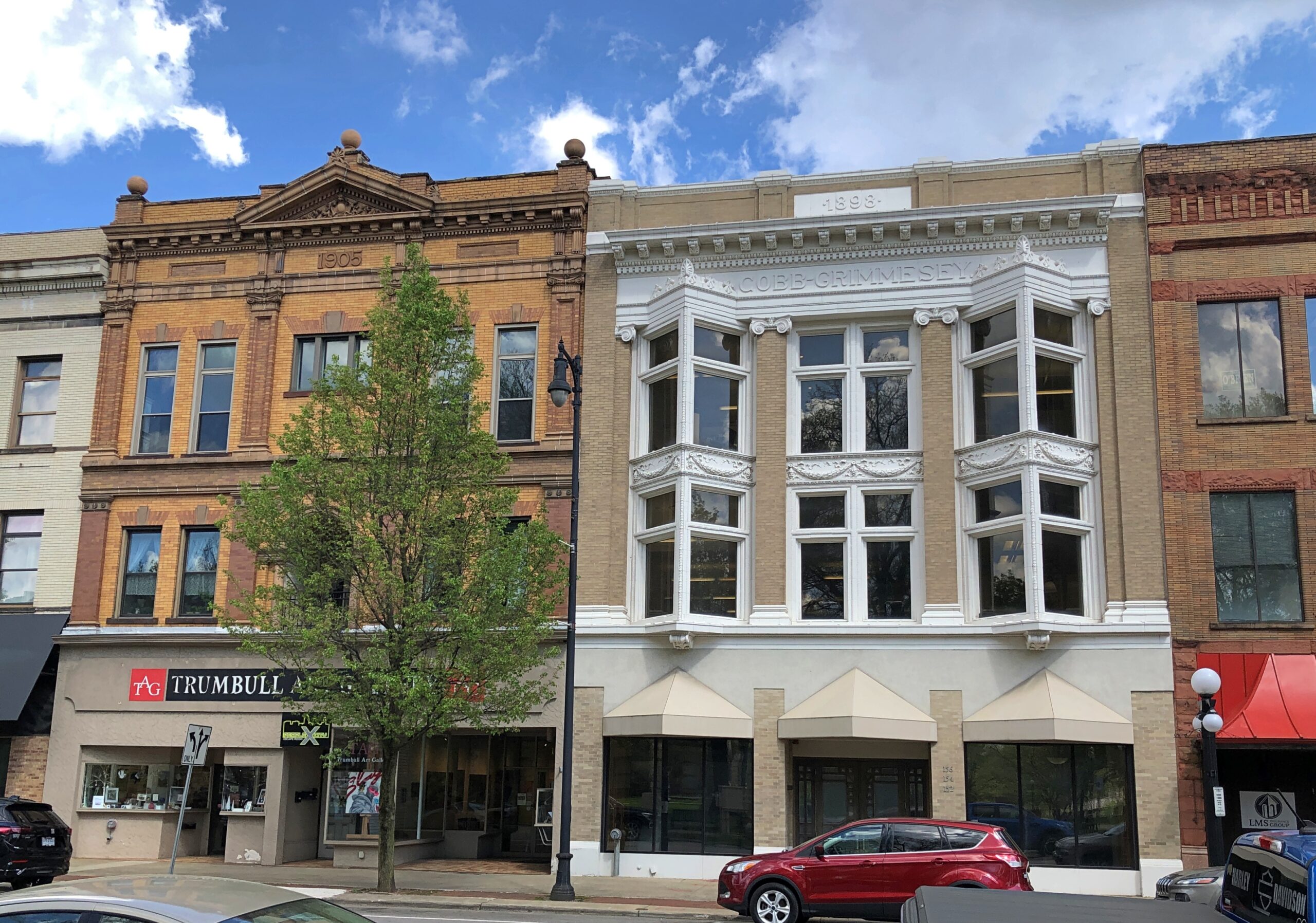
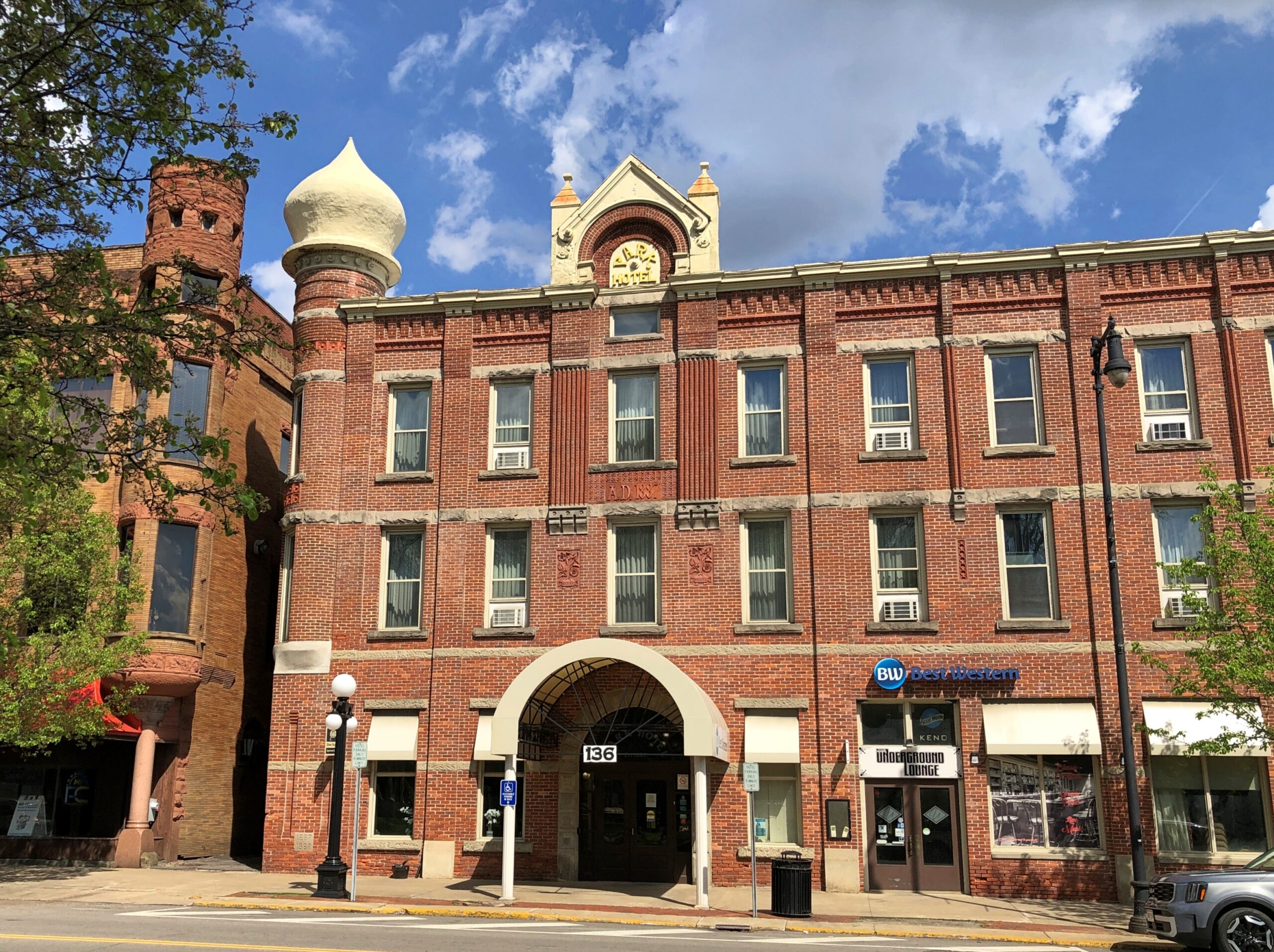
The buildings ringing the courthouse were also worth a look. Warren might not be the industrial hub it once was (though Ohio is making a comeback in that regard), but it isn’t in bad shape, from the looks of things.
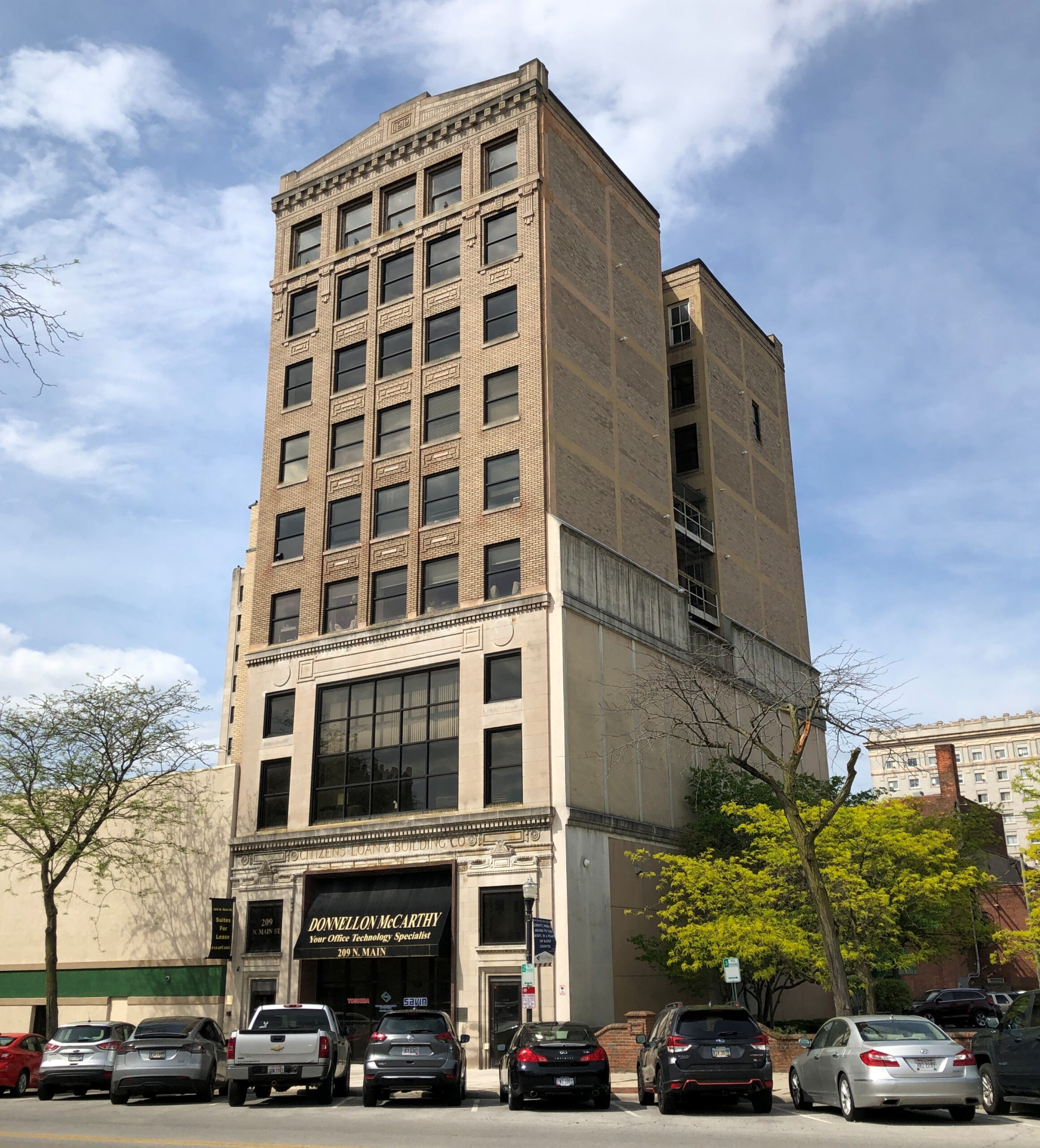
That’s what commercial buildings need more of: onion domes.
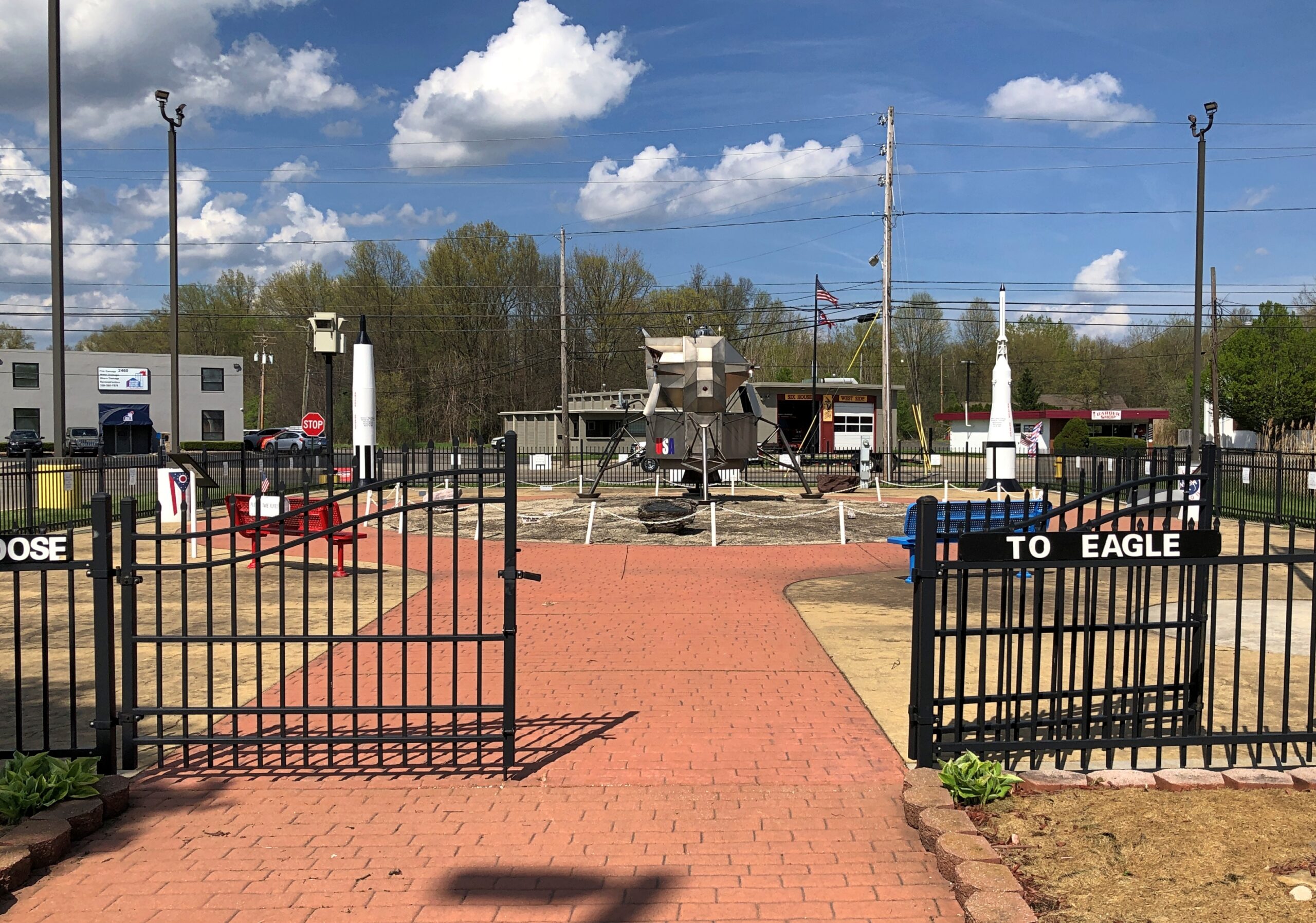
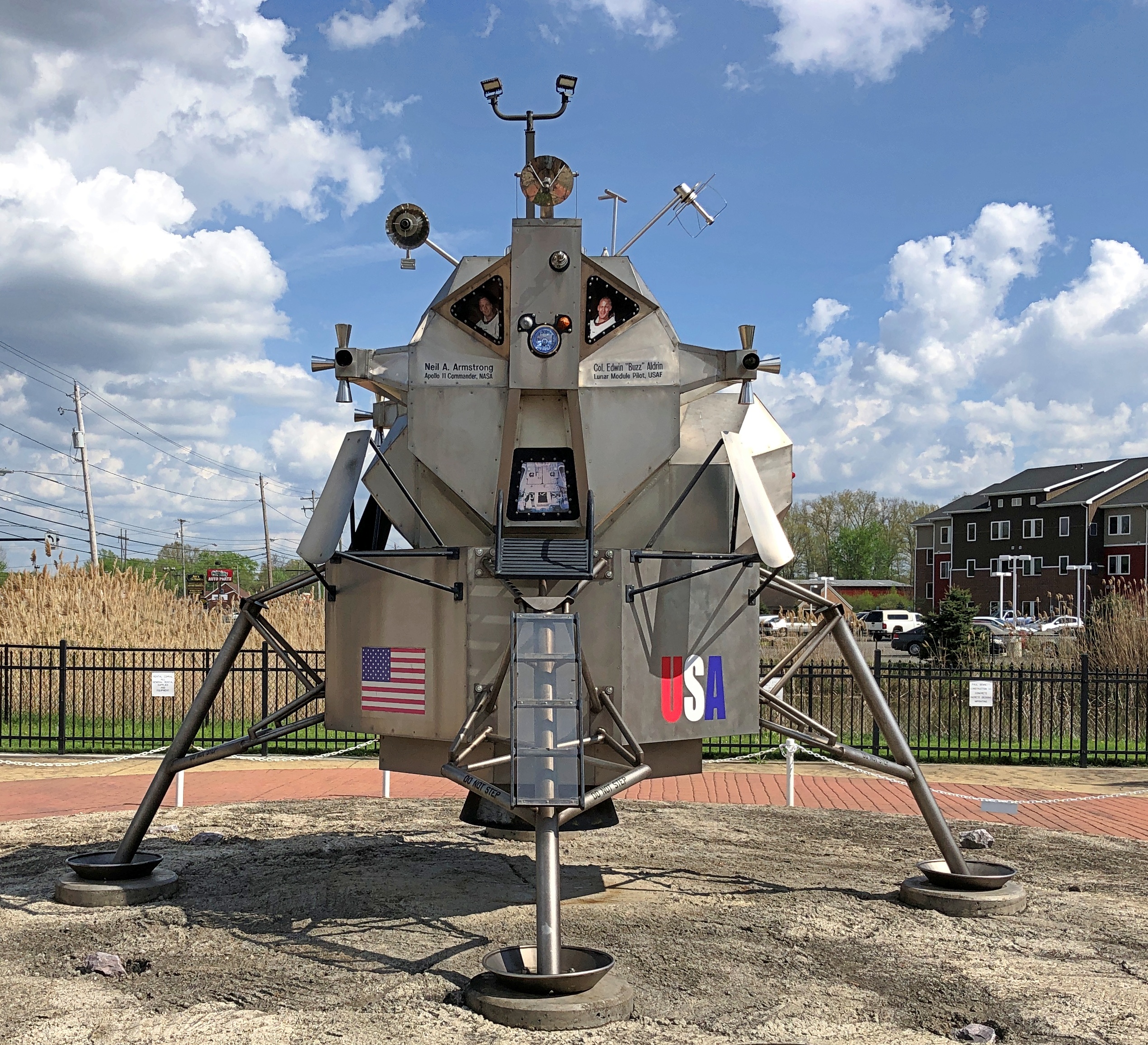
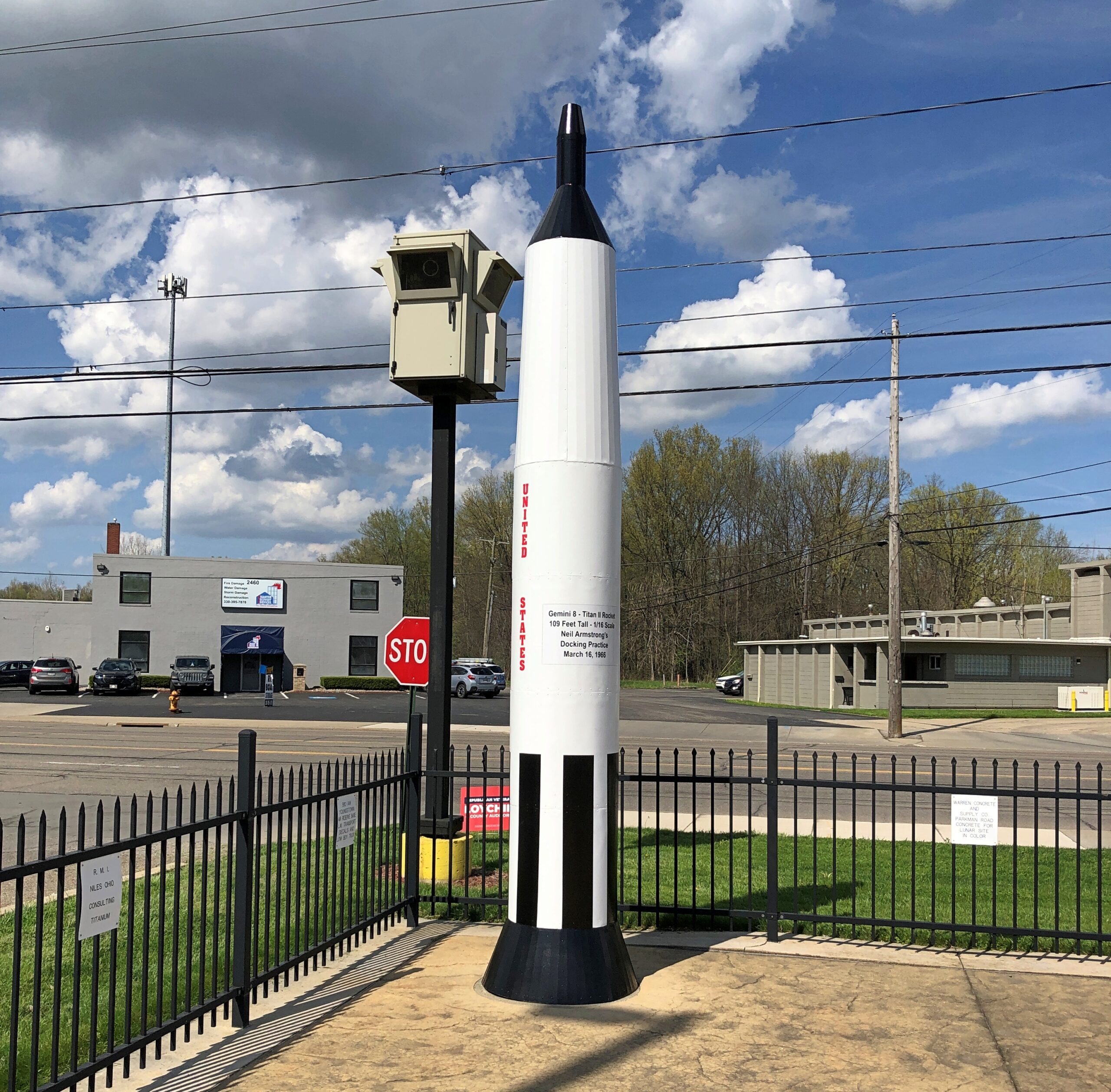
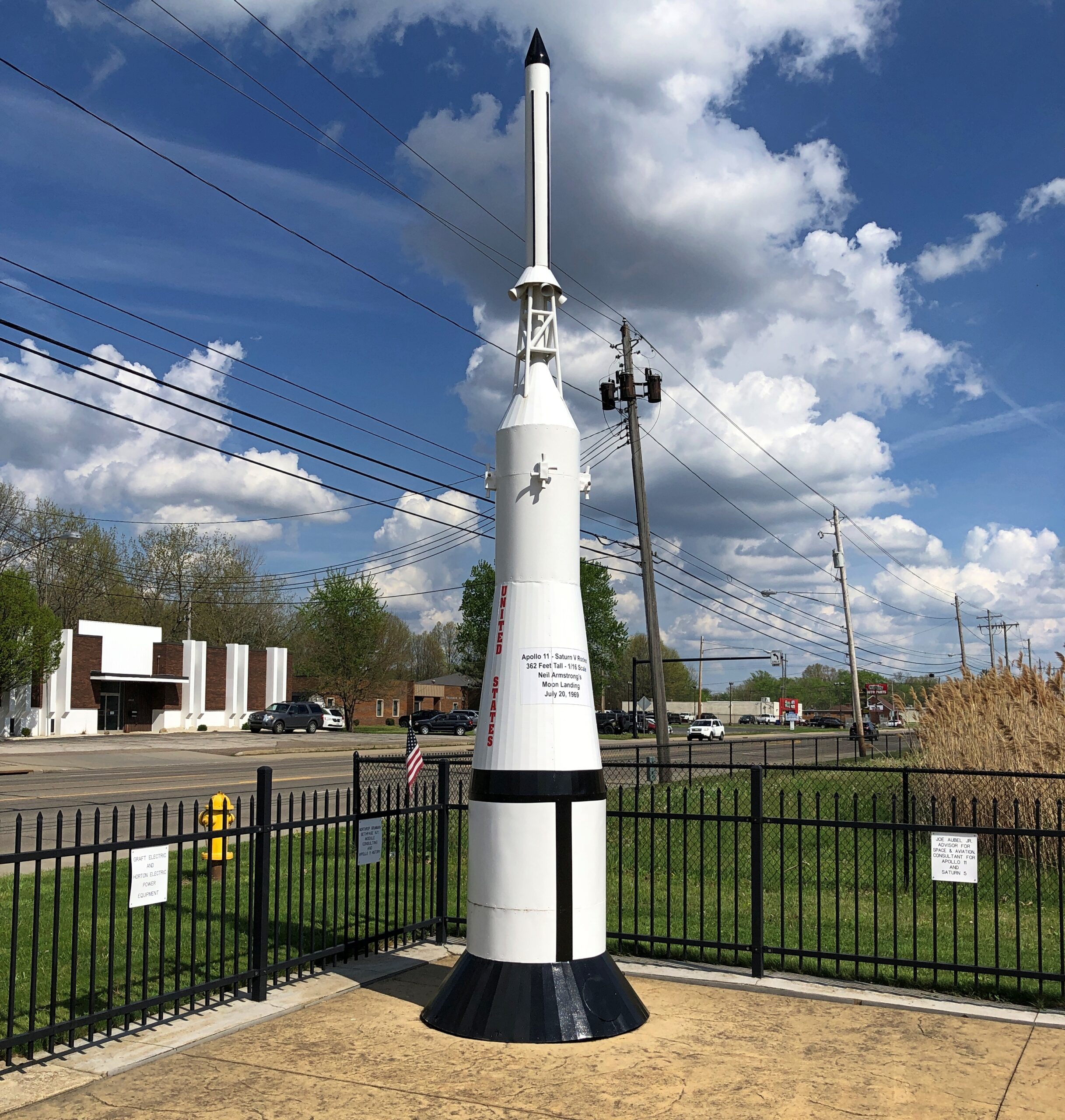
One more place in Warren before I headed west: a replica lunar module on a mock lunar surface.
It’s called “First Flight Lunar Module.” Its web site says: “Neil Armstrong and his family made their home in Warren, Ohio, for a time when he was a young boy. An interest in flying developed at an early age and on July 26, 1936, at the age of 6, young Neil and his father, Stephen, embarked on his first flight in a Ford Tri-Motor airplane – a Tin Goose – from Warren Airways on Parkman Road, now the site of the Apollo 11 First Flight Lunar Module…”
Replicas of Gemini 8 and the Apollo 11 Command/Service Module are also at hand. (And the Escape Tower and part of the third stage, too.)
“Neil’s achievements and ties to the local community inspired retired area photographer Pete Perich’s dream to create a memorial honoring Armstrong. Through the vision of Pete’s daughter, Linda Carpenter, and the technical assistance of Lisa Goetsch, the long-time dream began to become a reality in the summer of 2001.”
Cool. Another benefit of nonlinear tourism for me.
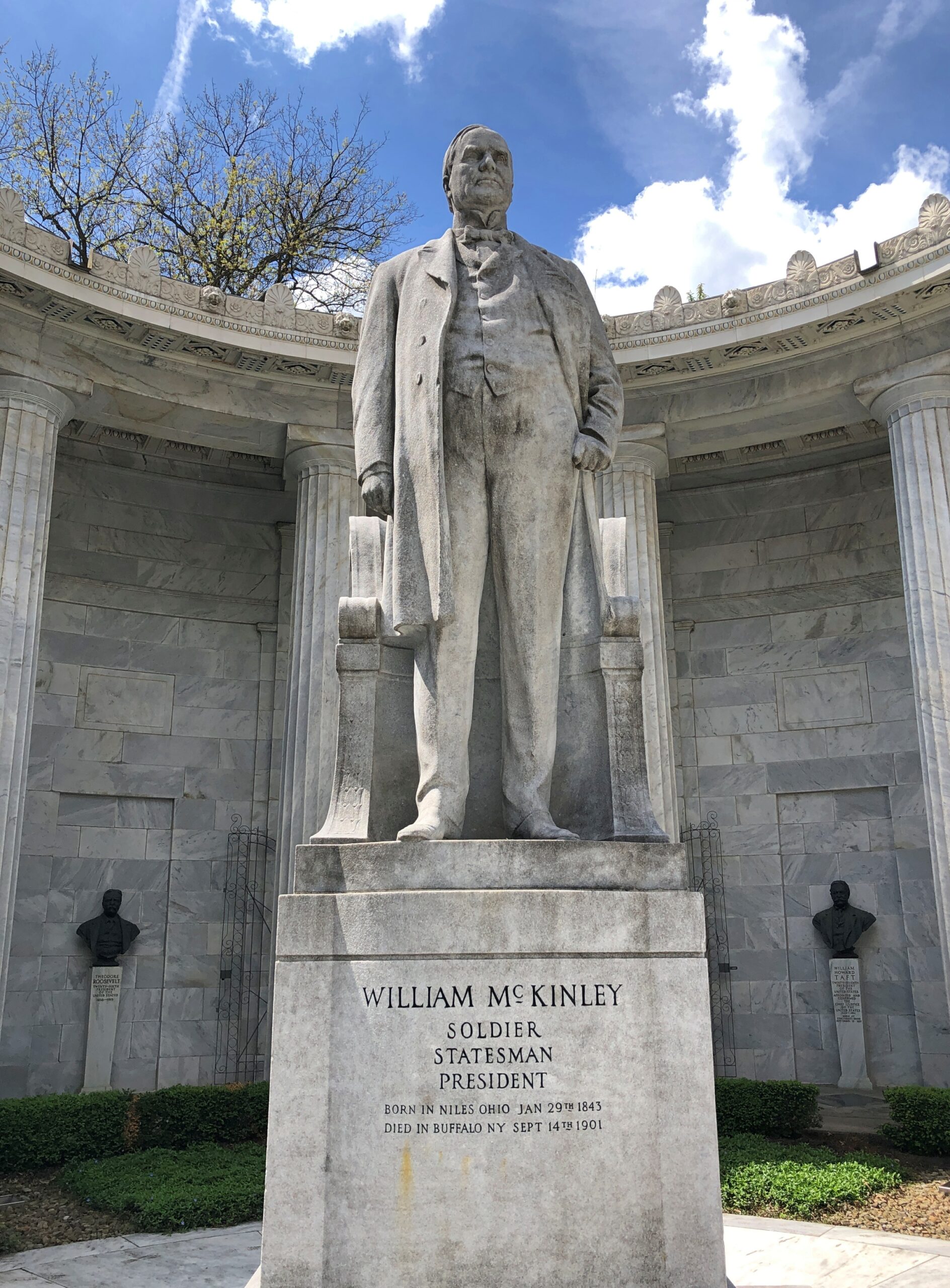
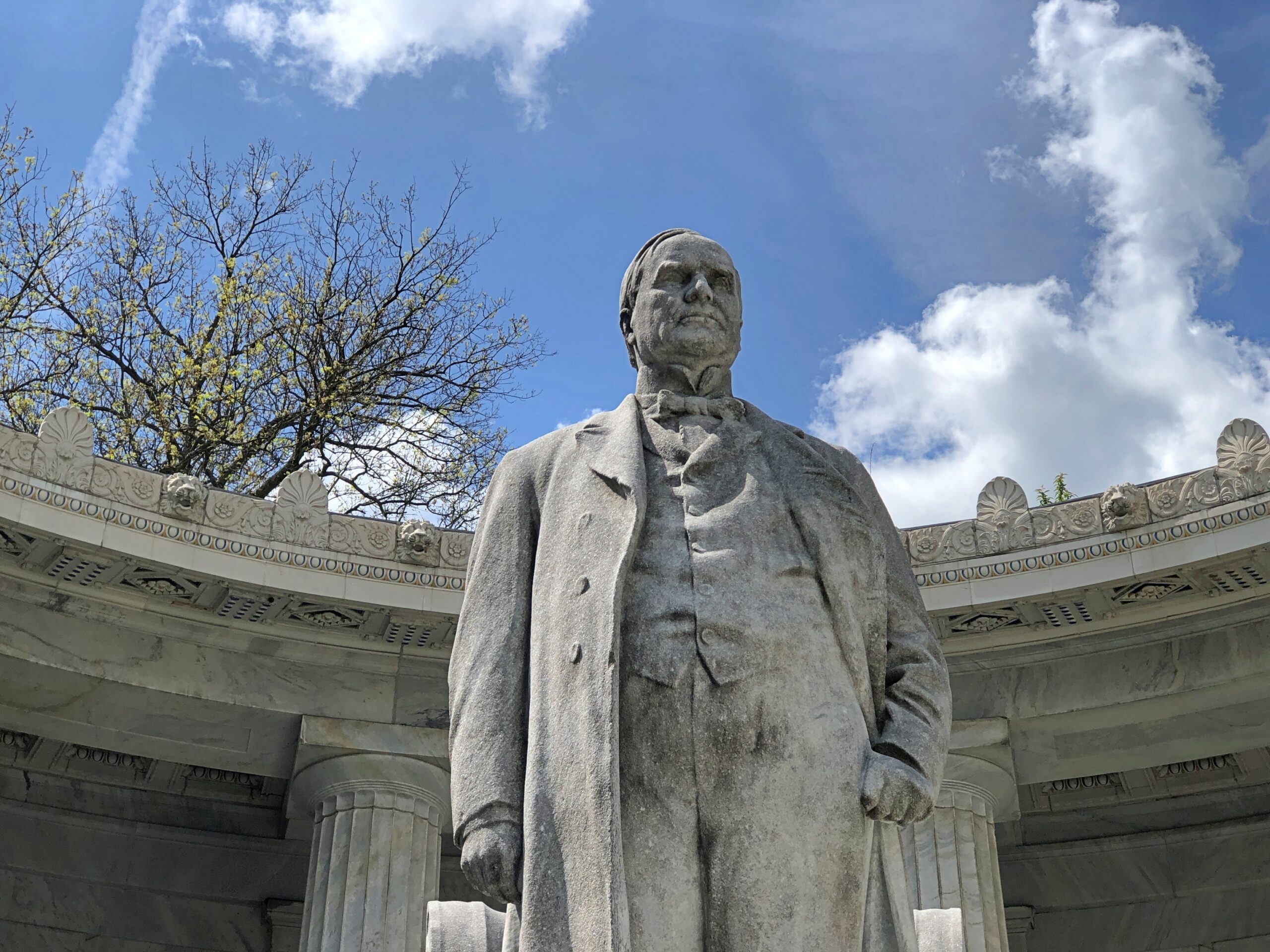
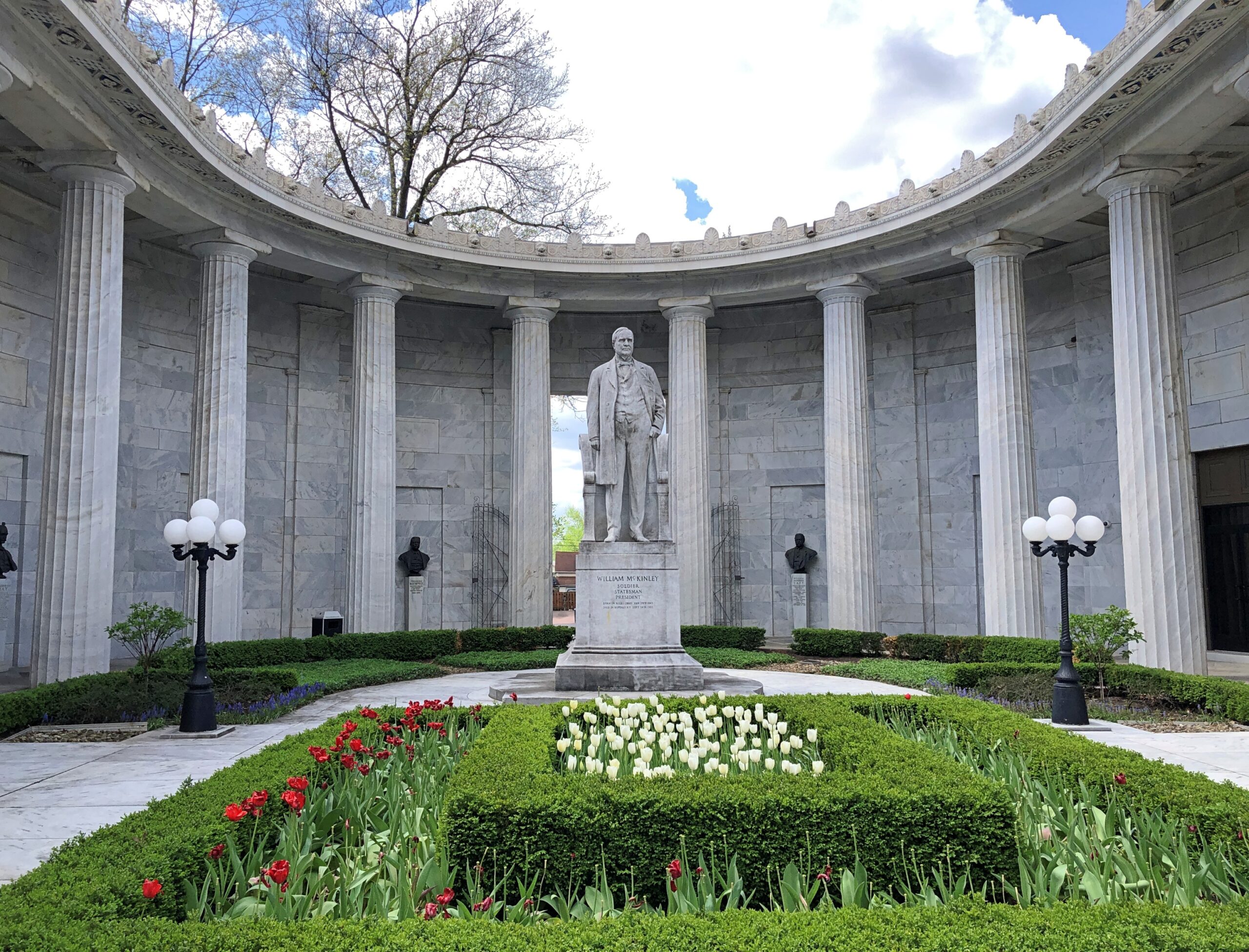
Recently in Niles, Ohio, I had an encounter with one of the four assassinated presidents. If you go to the right place in that town (pop. 18,400), you can’t miss him.
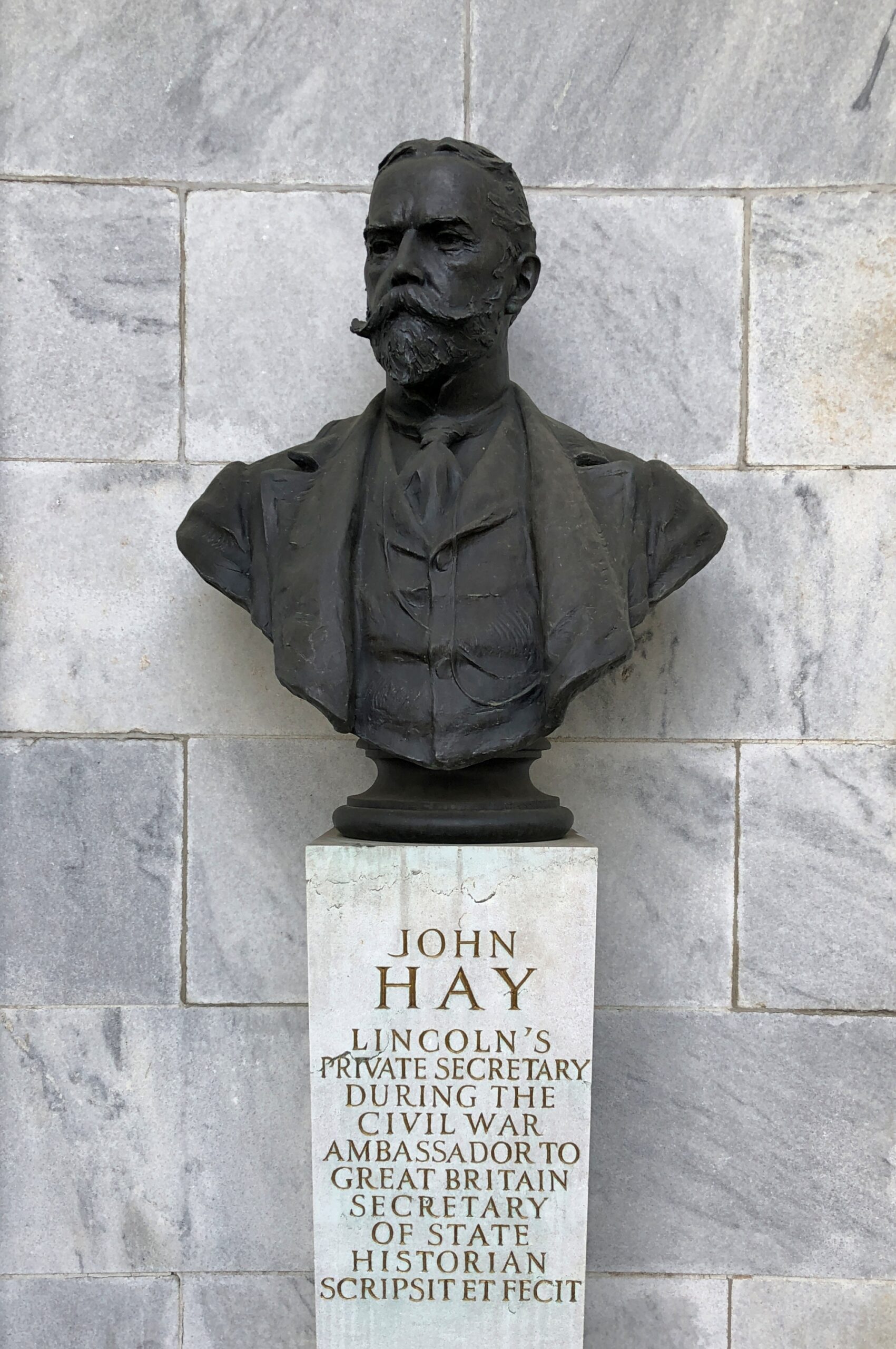
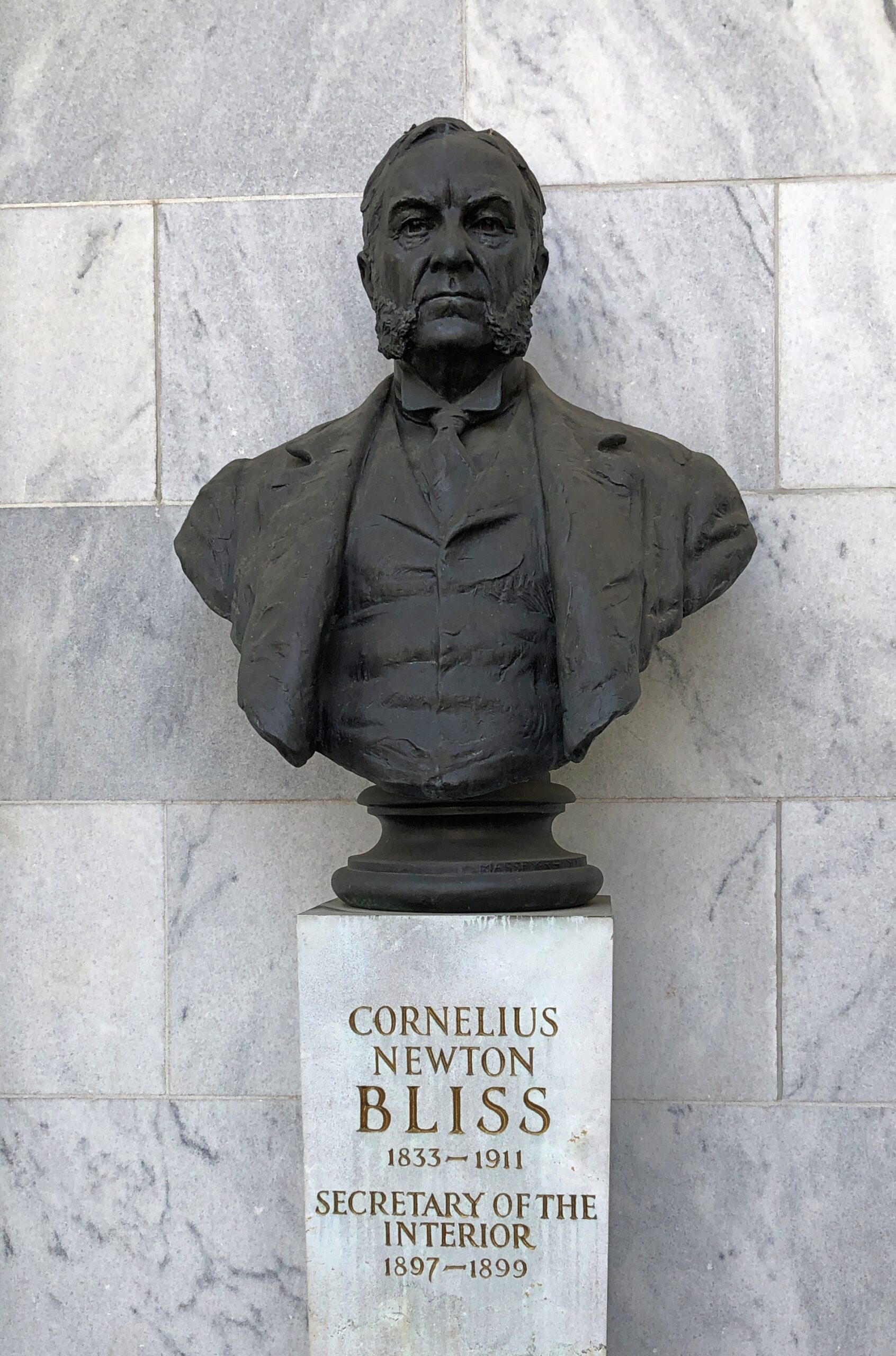
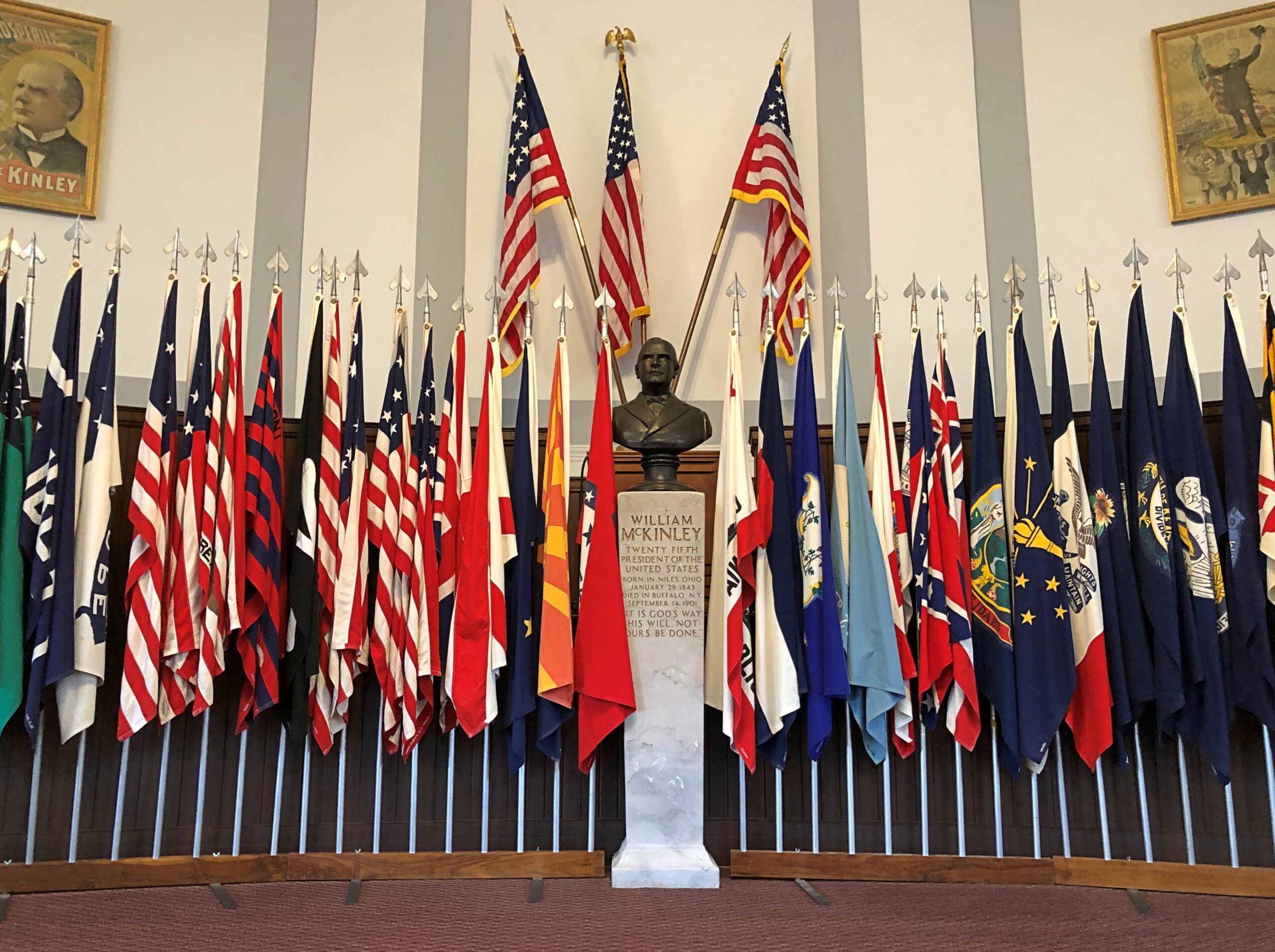
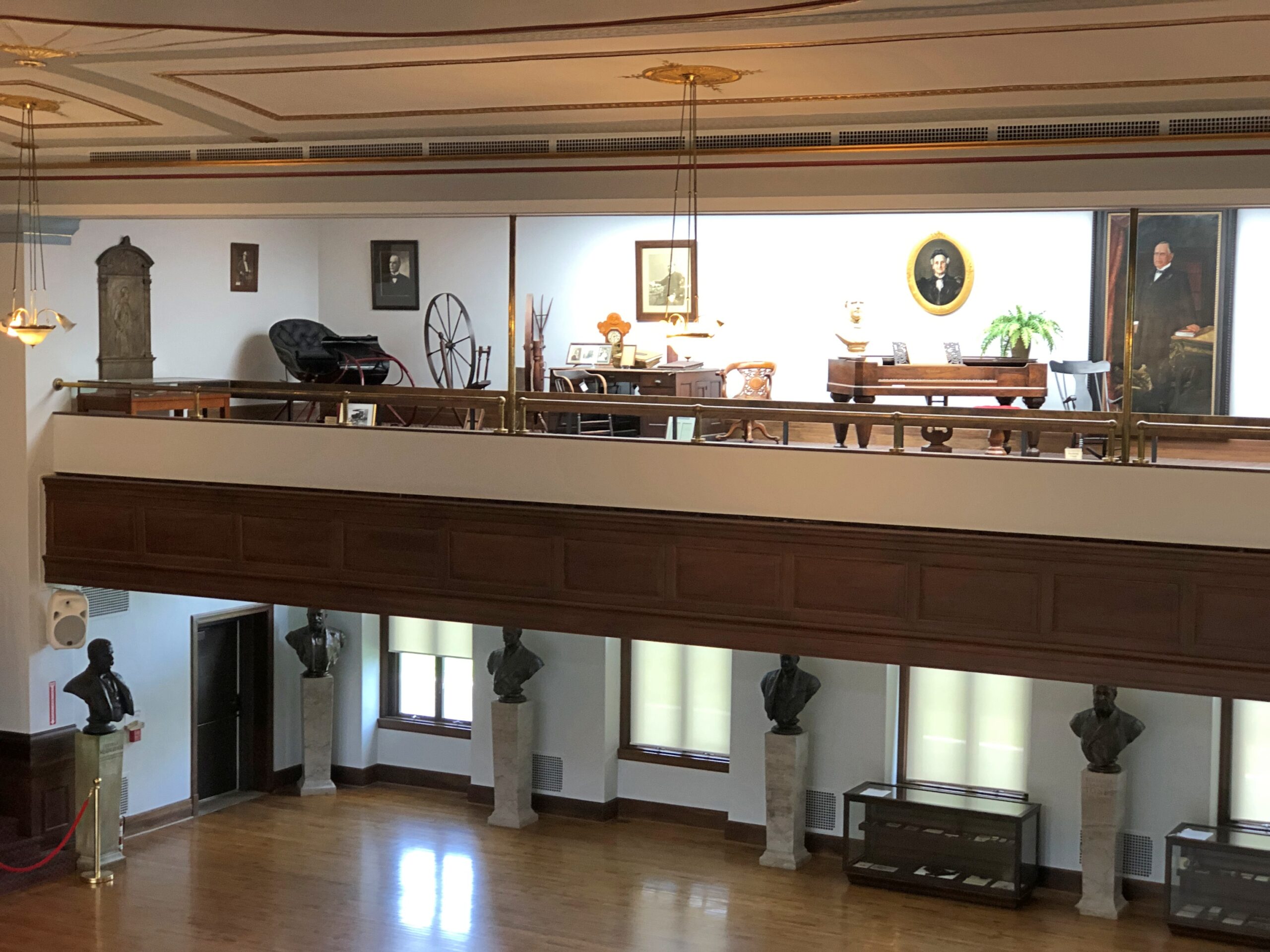
Not just him either. Note the busts surrounding President McKinley, who are men associated with him in one way or another. Hay I knew; Bliss I had to look up.
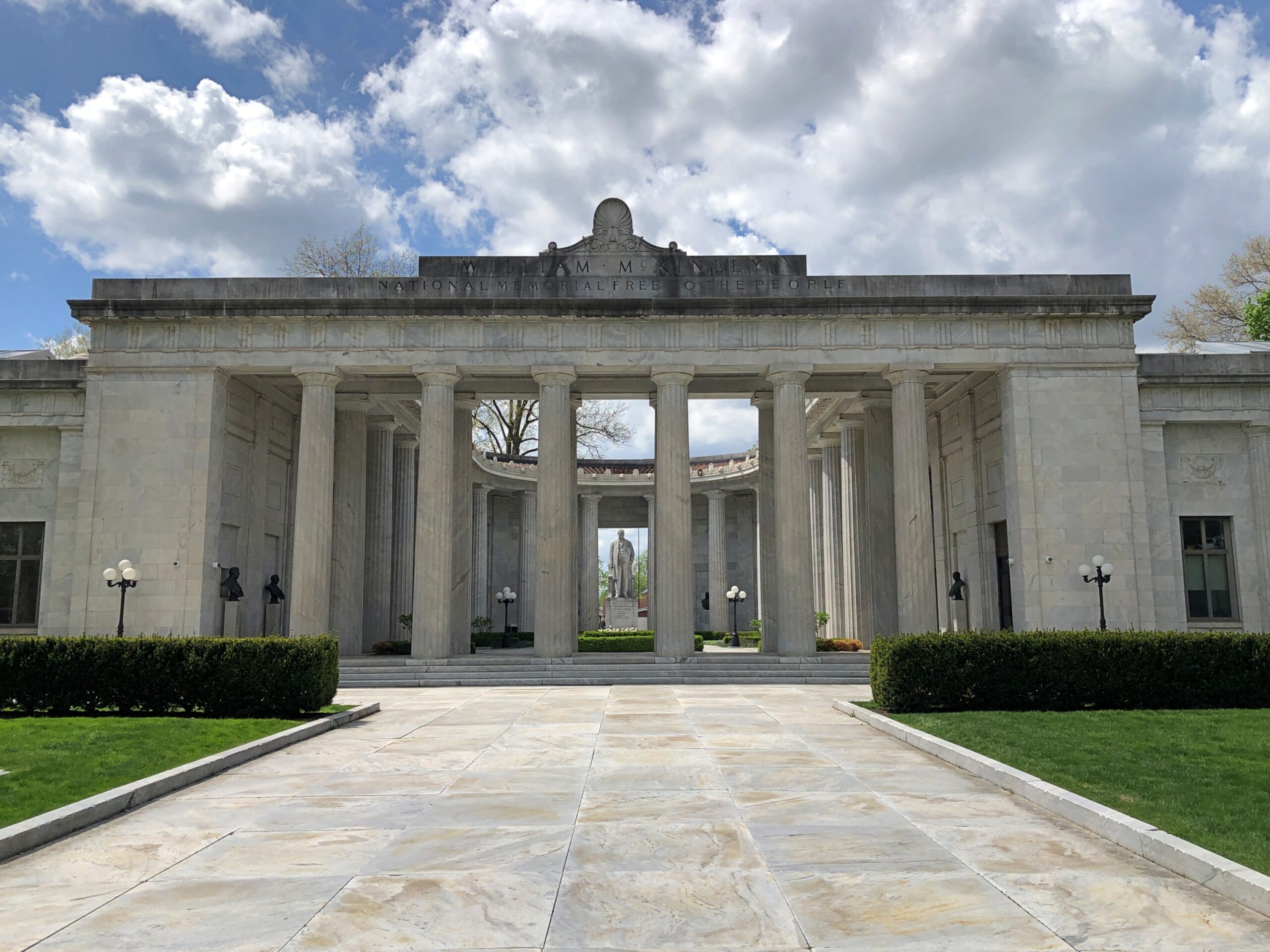
The most direct route between Punxsutawney, Pa. and Lima, Ohio, passes pretty close to Niles. I had a little extra time, by design, on the second-to-last day of my recent trip. Niles happens to be the birthplace of William McKinley, and in our time, home of the National McKinley Birthplace Memorial and the McKinley Birthplace Home and Research Center – that’s two entities, a block apart.
The Birthplace Memorial is imposing and grand, another edifice designed by McKim, Mead & White.
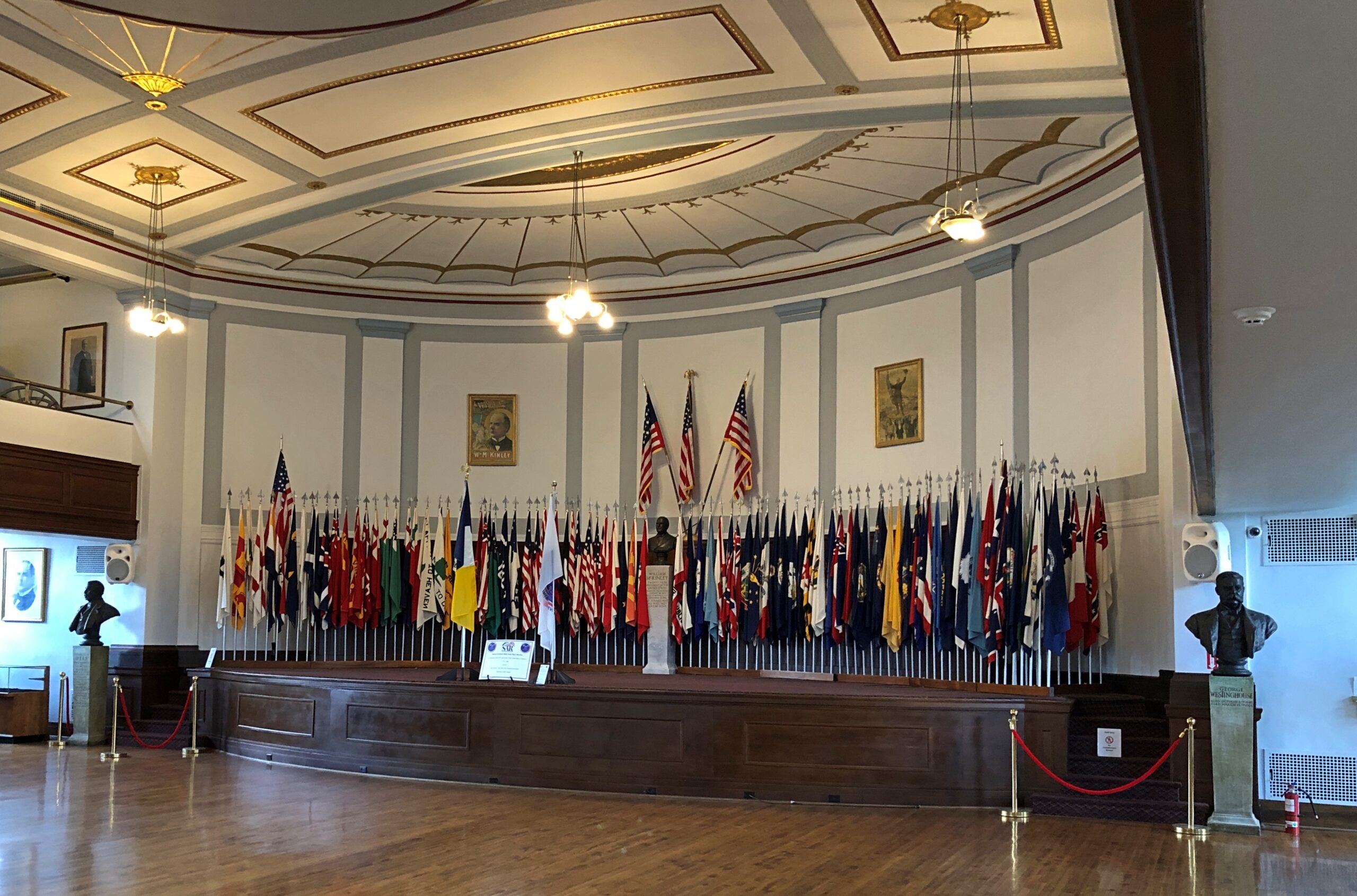
The memorial has two wings, one a public library, the other an auditorium sporting McKinley artifacts, and a collection of flags.
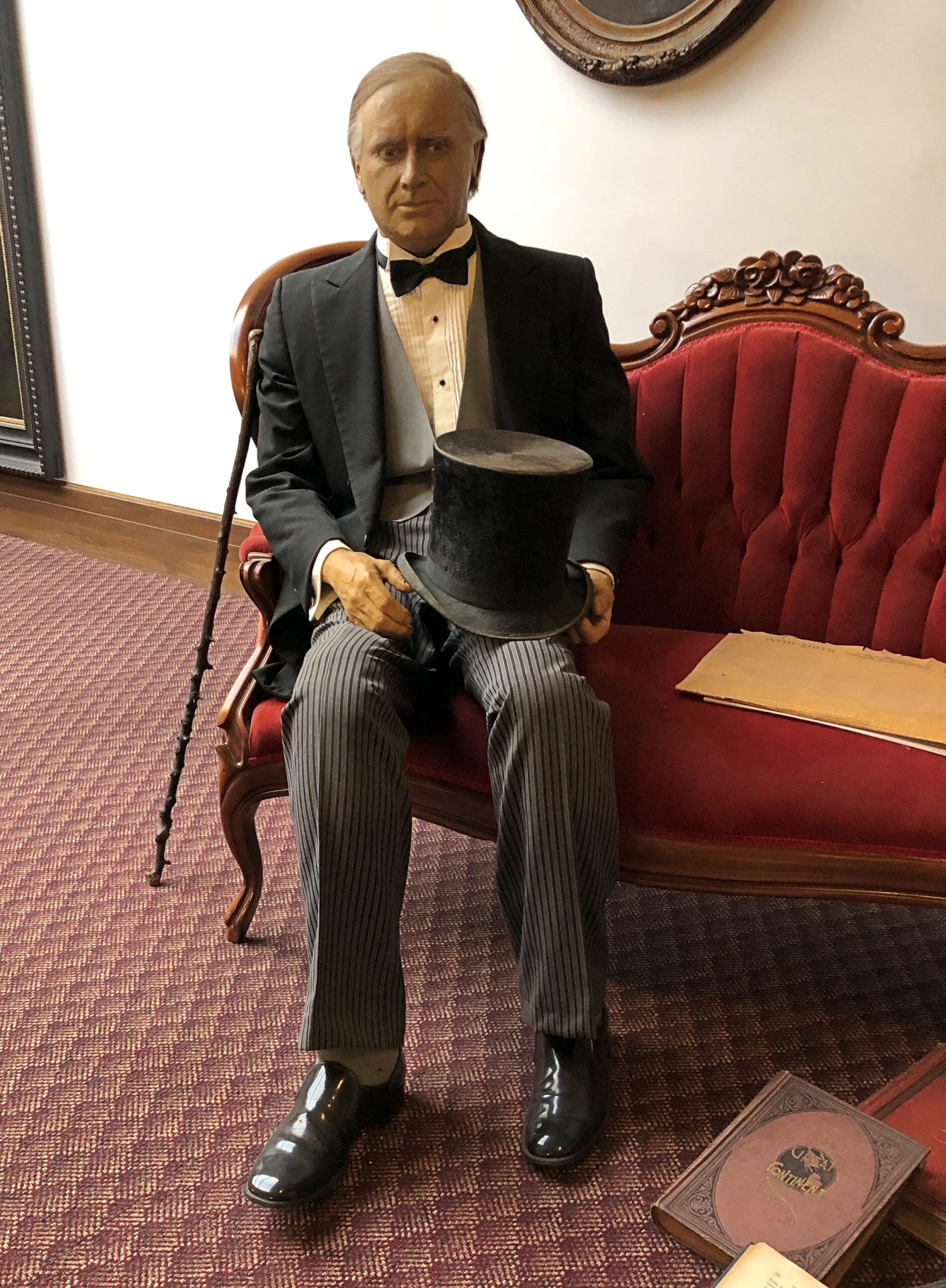
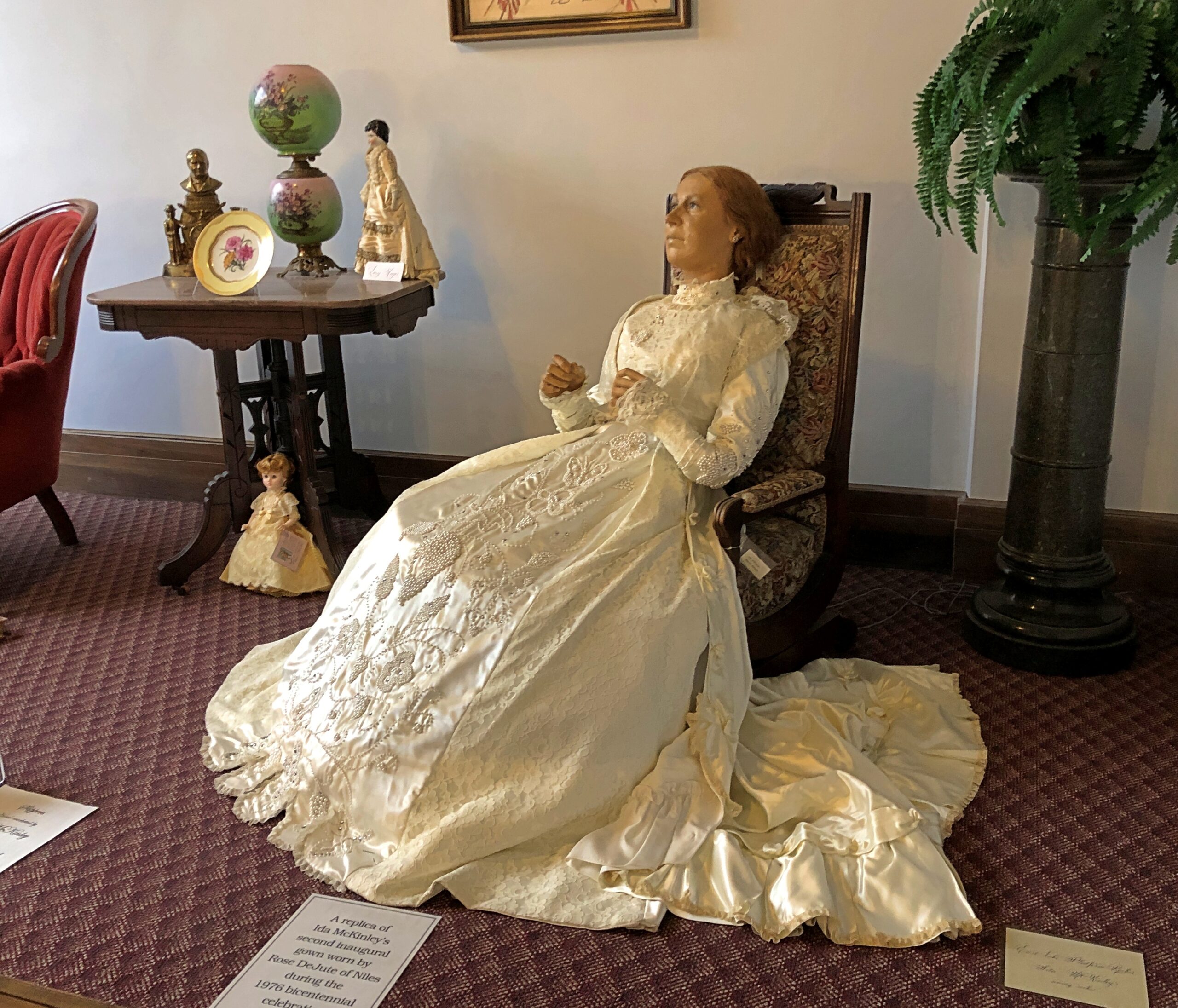
William and Ida dressed, I believe, for his second inauguration in 1901.
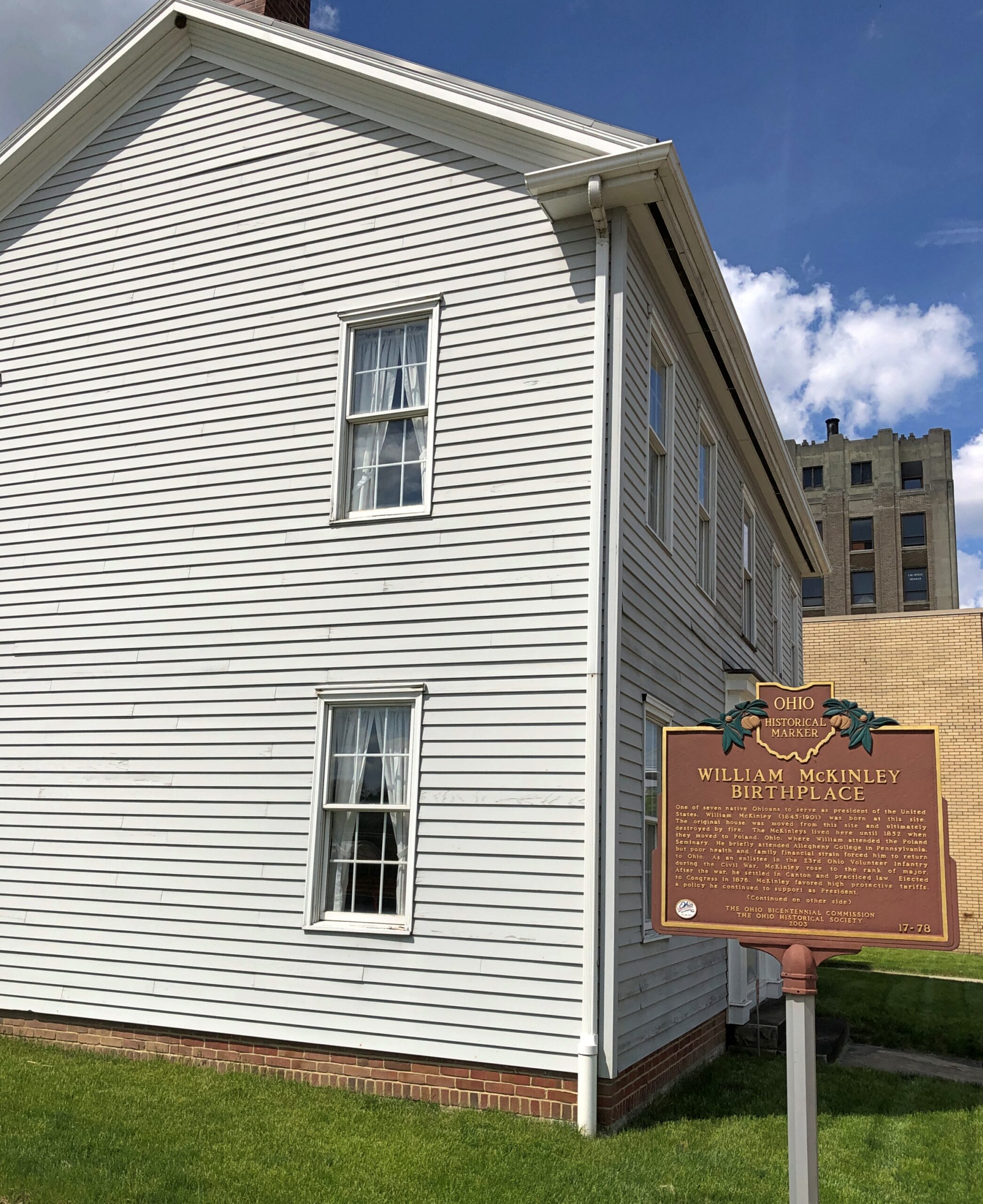
As mentioned, the McKinley Birthplace Home and Research Center is a block from the memorial. It’s considerably more modest.
It’s also a replica, and apparently not a very close one, the original house having burned down almost 90 years ago. Still, looks are free (like at the memorial), so I had a look.
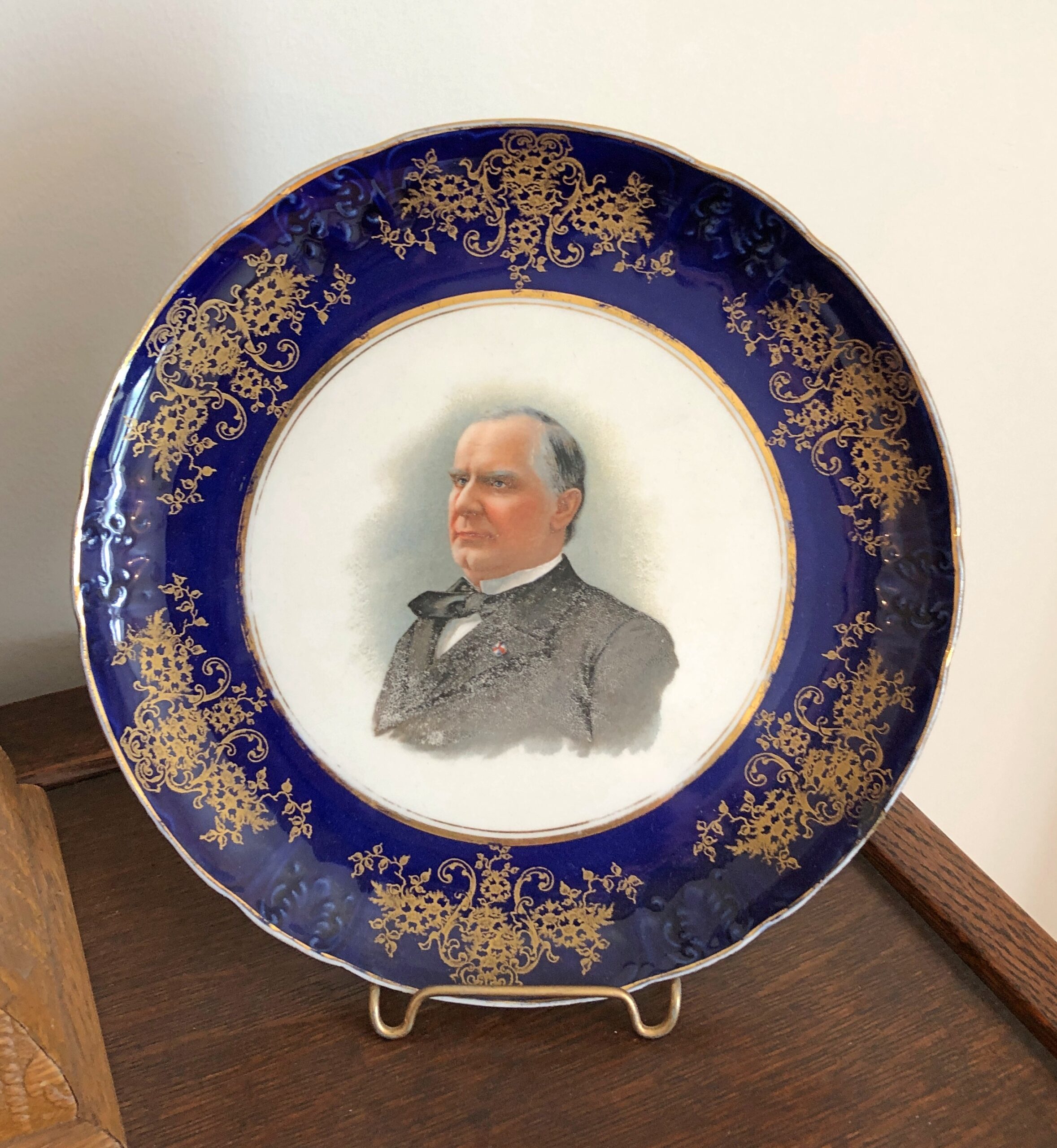
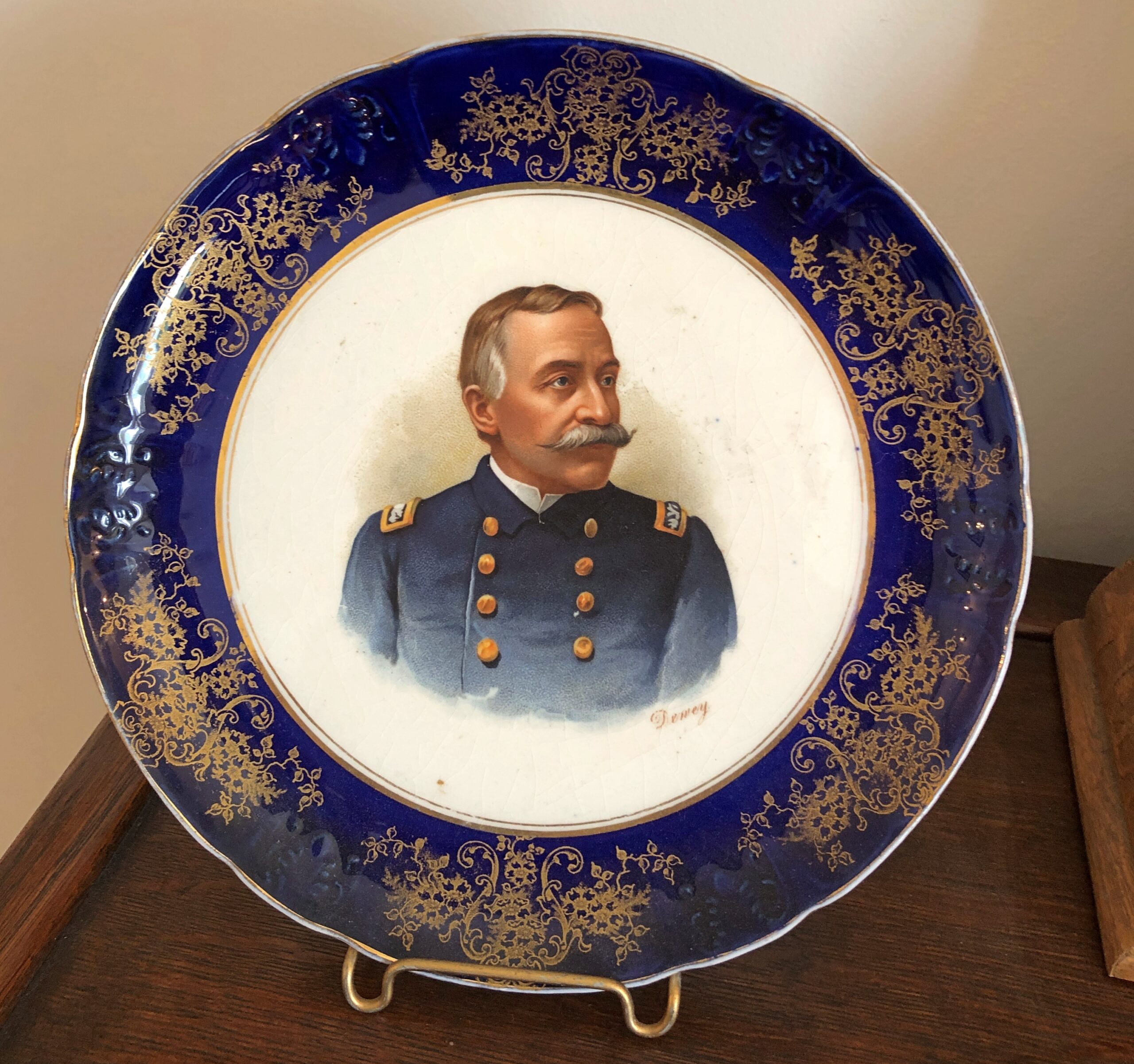
On display are a number of McKinley-adjacent artifacts. I liked the plates especially. One features the president himself.
Another features Admiral Dewey. How often do you hear about him any more? Even less than McKinley.
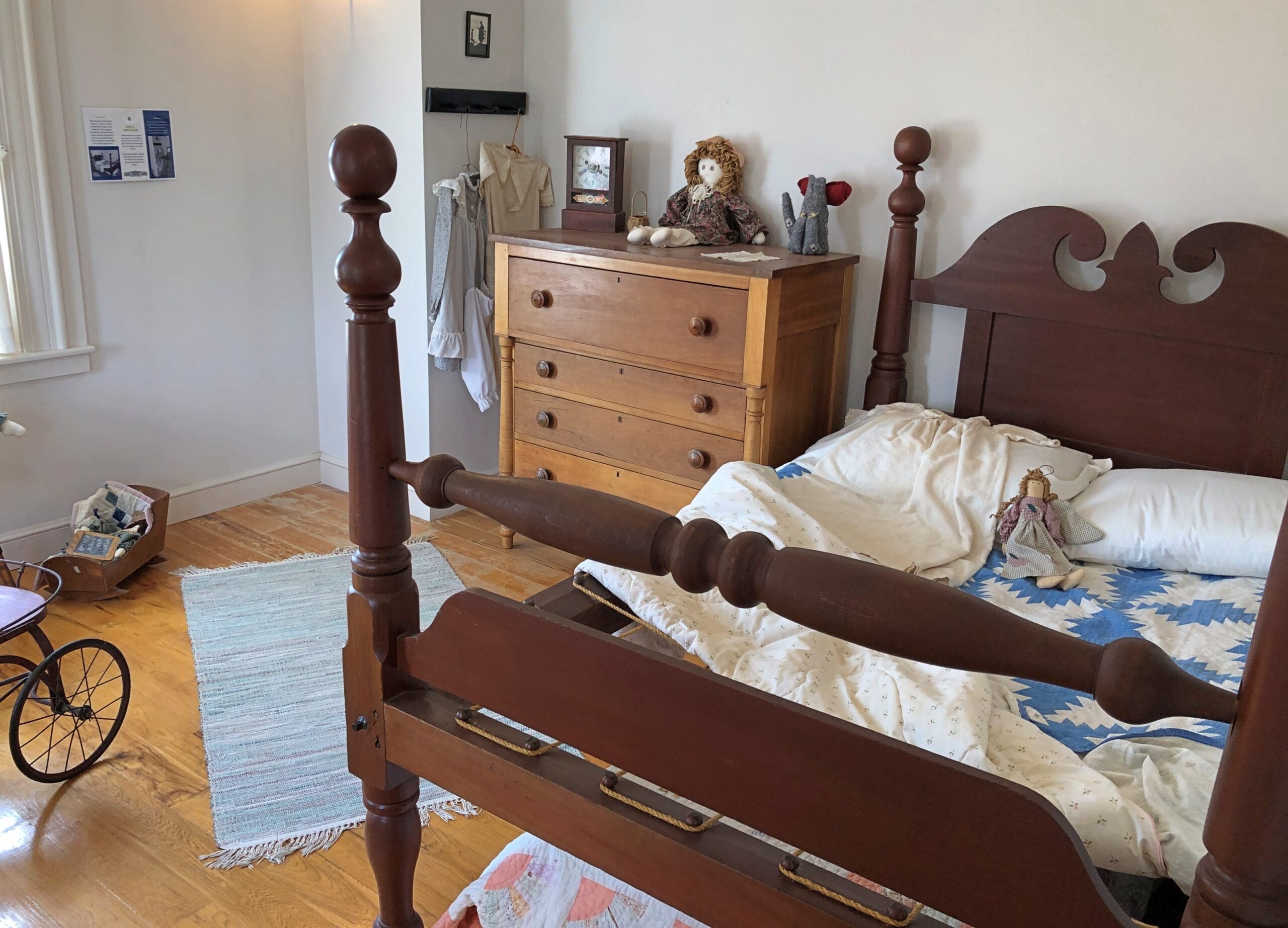
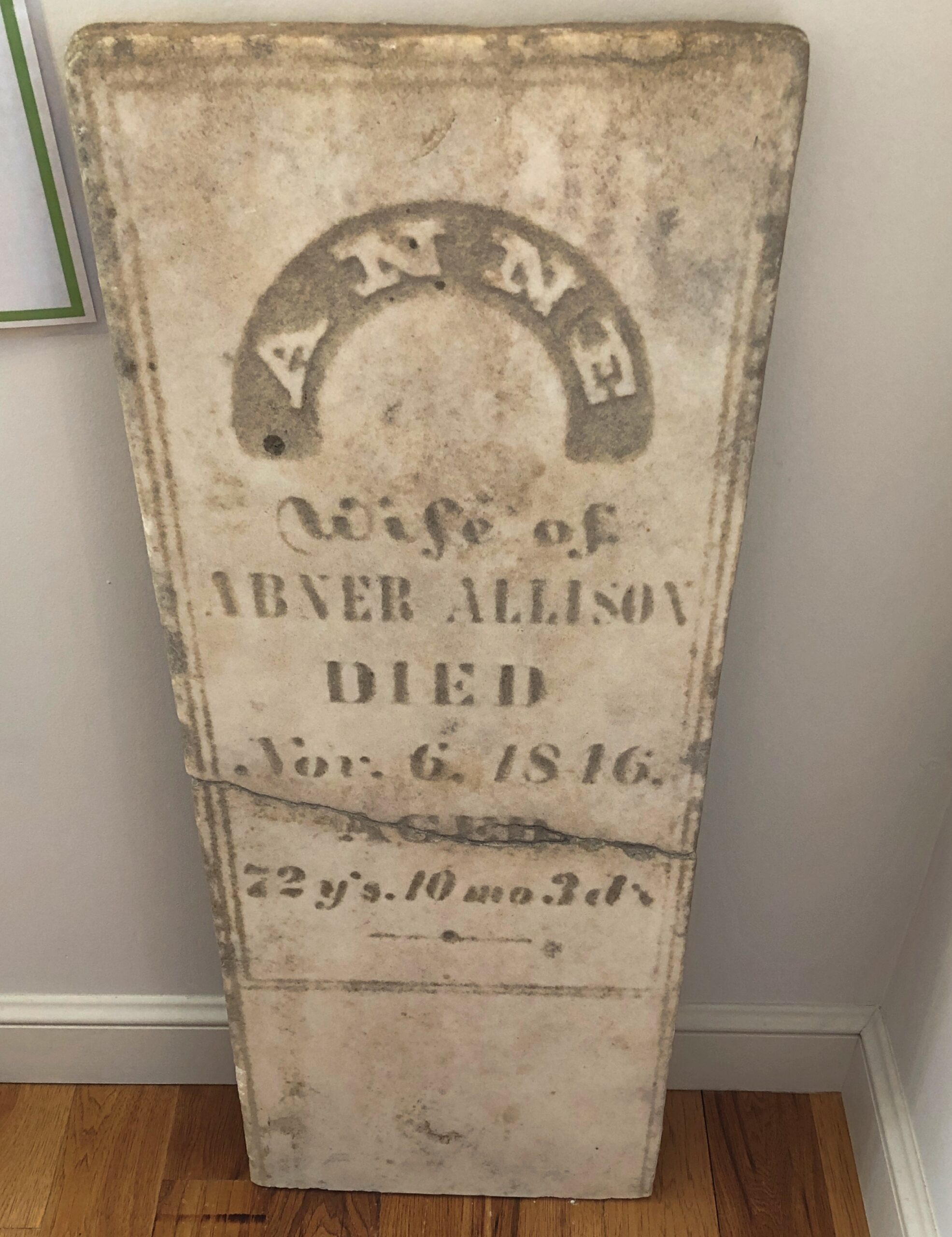
The president’s maternal grandmother’s gravestone is propped up against a wall. I suppose it was at risk of completely falling apart wherever it was, and (I hope) it was replaced in situ.
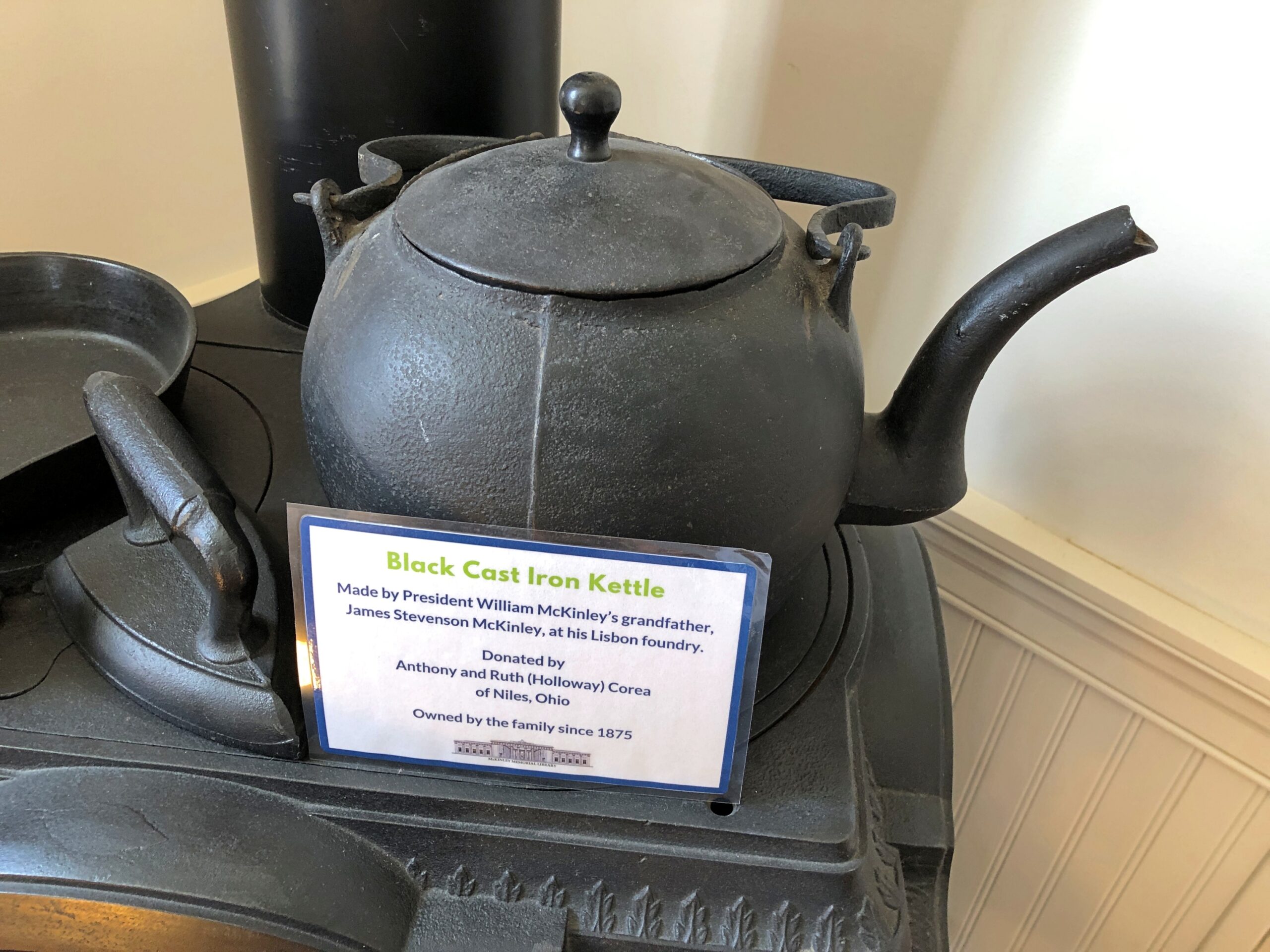
I liked this as well.
I looked up James Stevenson McKinley (d. 1847) on Find a Grave and that inspired me to look a little further into the McKinley ancestry. James’ father was David “The Patriot” McKinley (d. 1840). David’s father was John “The Wagonmaster” McKinley (d. 1779). John’s father was David “The Weaver” McKinley (d. 1760). That David’s father was James “The Trooper” MacKinlay (d. 1760), back in Ireland, at which point the nicknames peter out.
The strange thing about Groundhog Day, to me at least, isn’t its taproots in northern European folklore or even that weather forecasting based on mammal movements has been known for centuries if not millennia. Or that Germans brought its celebration to North America and that the event morphed in various ways, or that it became more widely known internationally because of a certain very good movie. Or even that the town of Punxsutanwney, Pennsylvania, has capitalized on Groundhog Day.
What mystifies me is why, among all the possible folkloric-flavored immigrant quasi-holidays, Groundhog Day has consistently been featured on calendars for longer than I can remember. It puzzled me as a kid, since I wasn’t sure I’d ever seen such a creature, and what I heard about the day involved some nonsensical thing in faraway Pennsylvania. That might have been childish provincialism at play, but even now it still strikes me as odd that so many Americans pay attention to the day, or at least have heard of it.
Just for grins – because I knew I wouldn’t get a compelling answer – I asked ChatGPT, “When did Groundhog Day start appearing on calendars?” I’ll boil the answer down for you: “Dunno. That’s just the way it’s been for years, Jack.” Maybe that’s how educators can get around AI cheating: assign essays on questions that don’t really have any answer. How many pancakes does it take to shingle a doghouse?* – that kind of thing. The learning isn’t in the finding an answer, but in the writing.
* Actually there is an answer: 42. Because oranges can’t fly, submarines have no doors and ice cream has no bones.
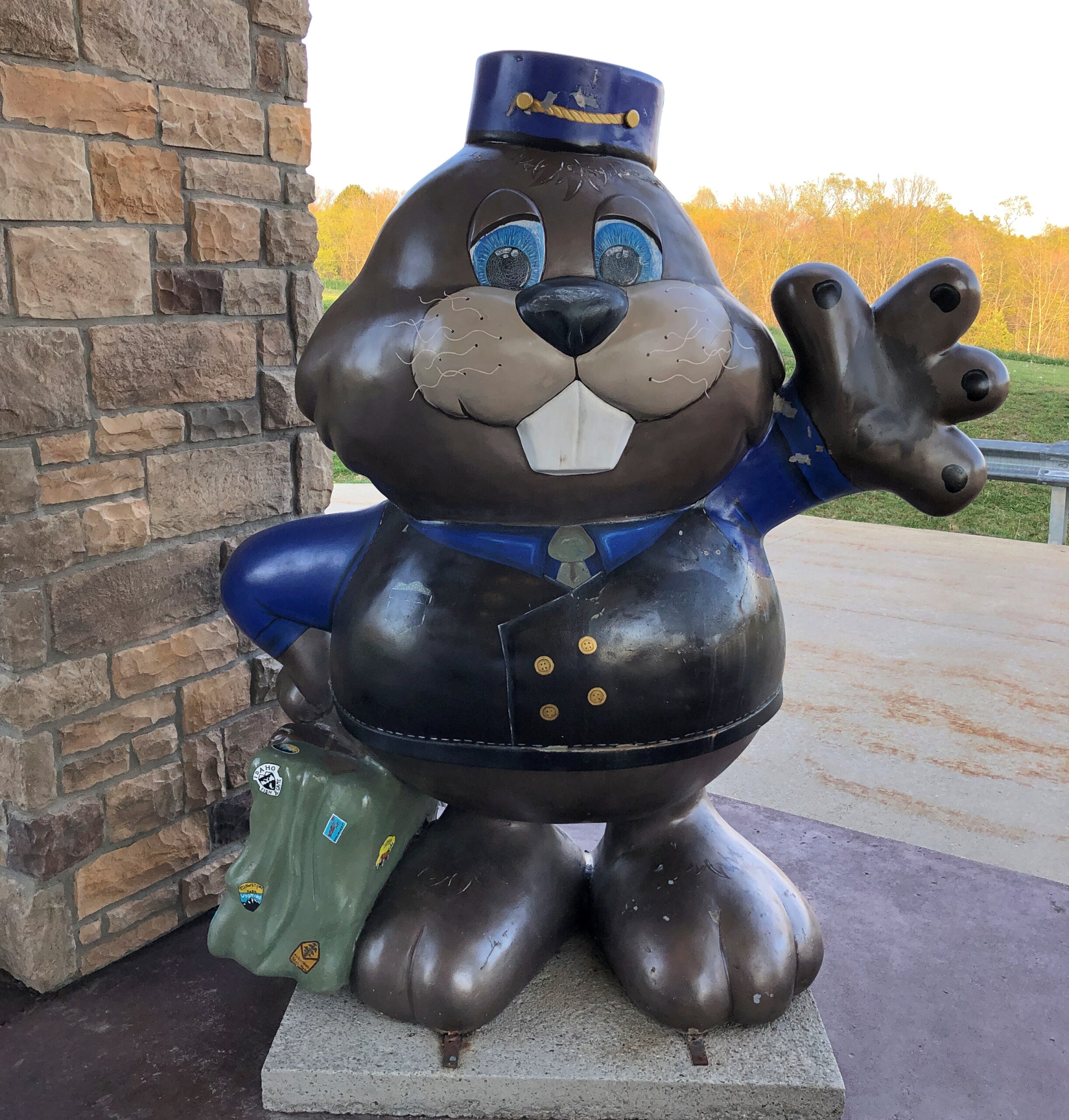
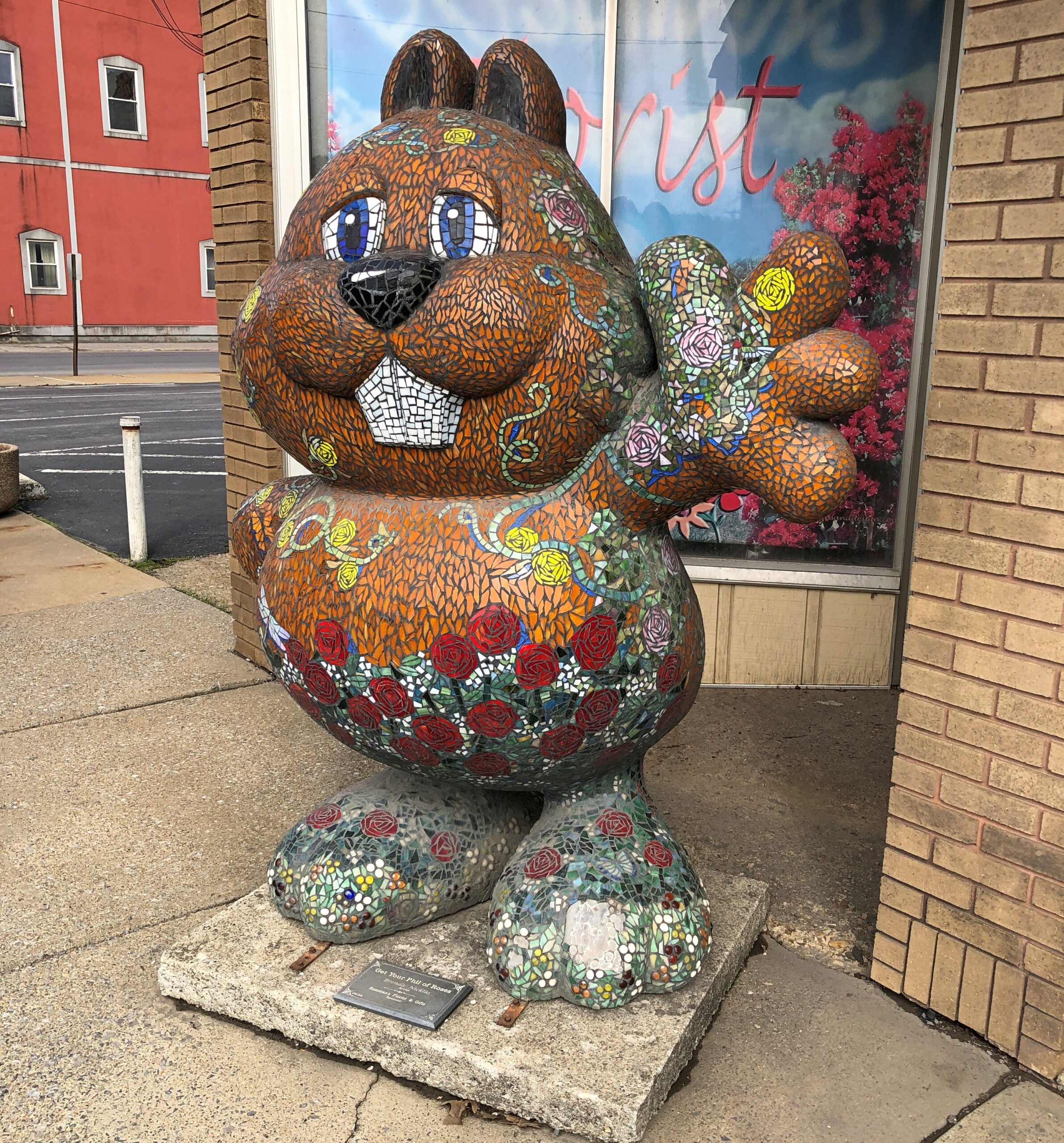
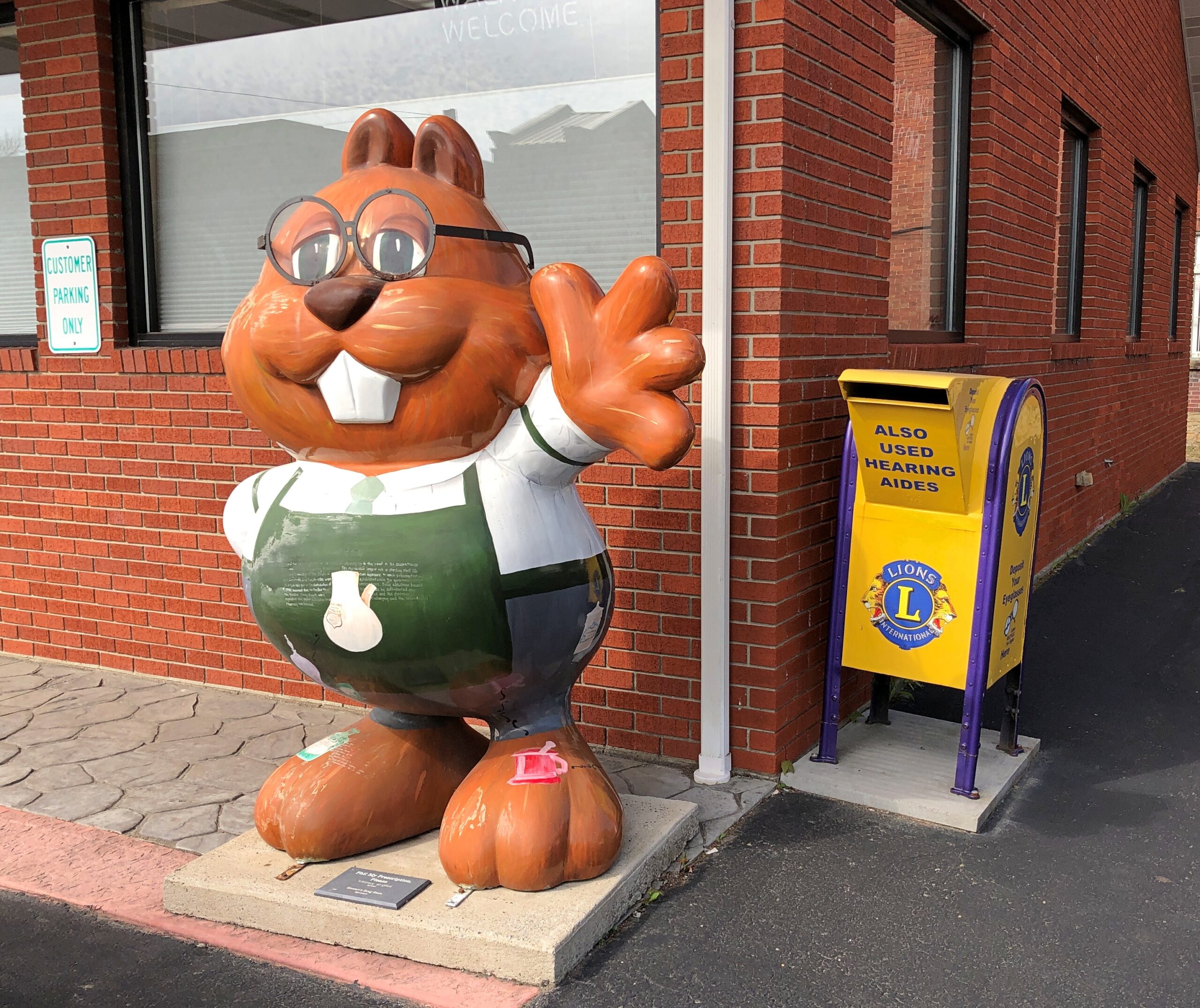
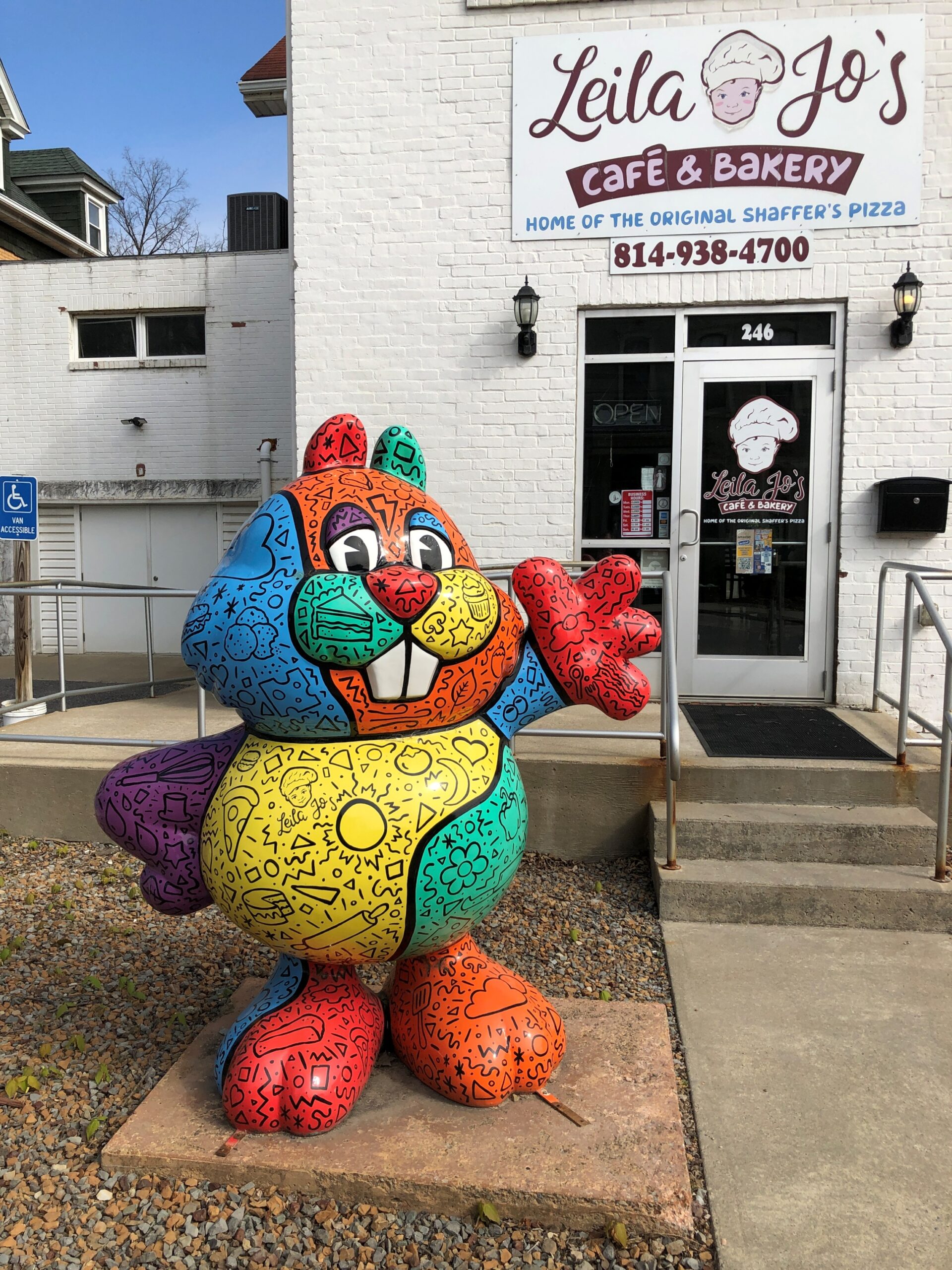
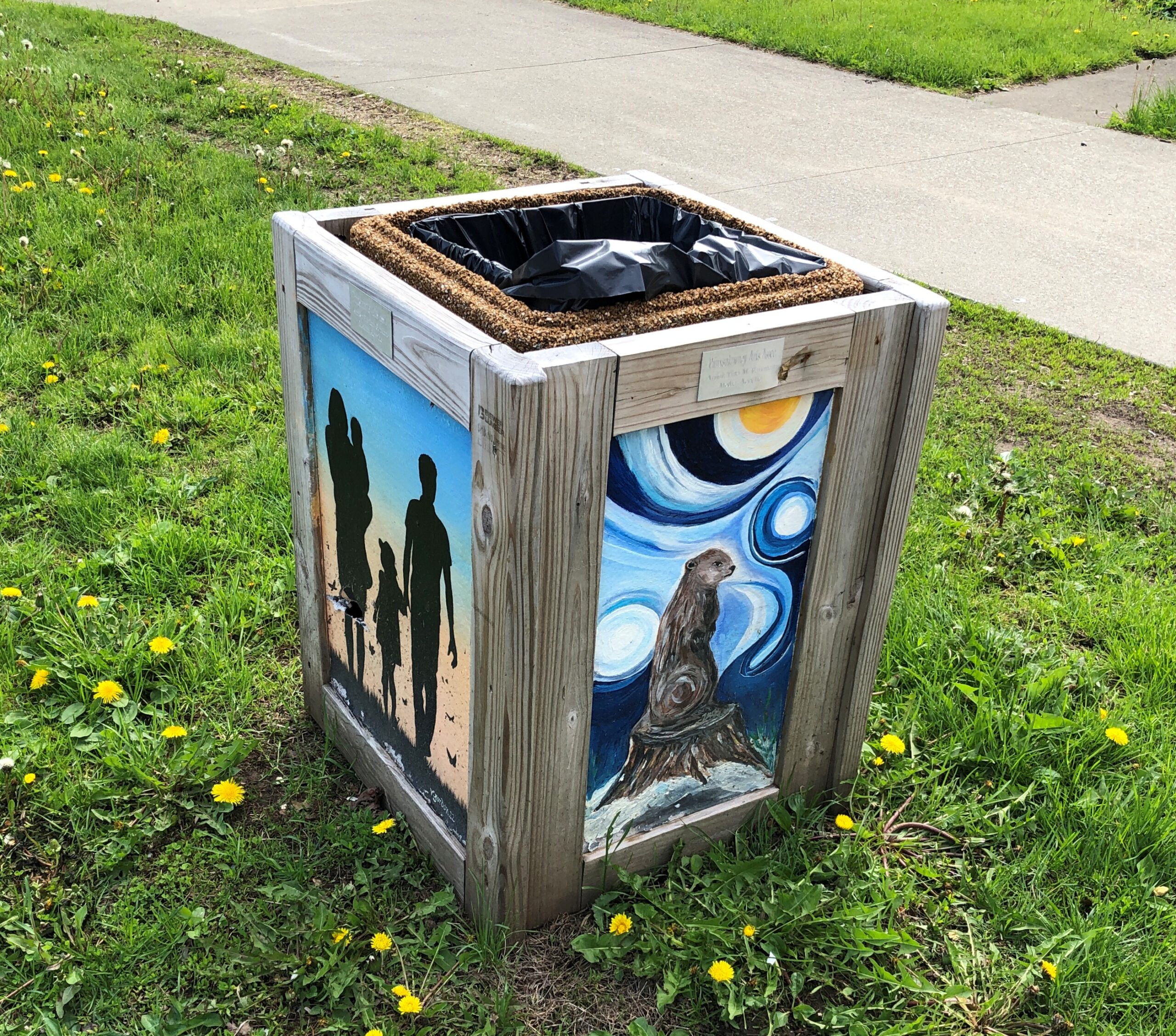
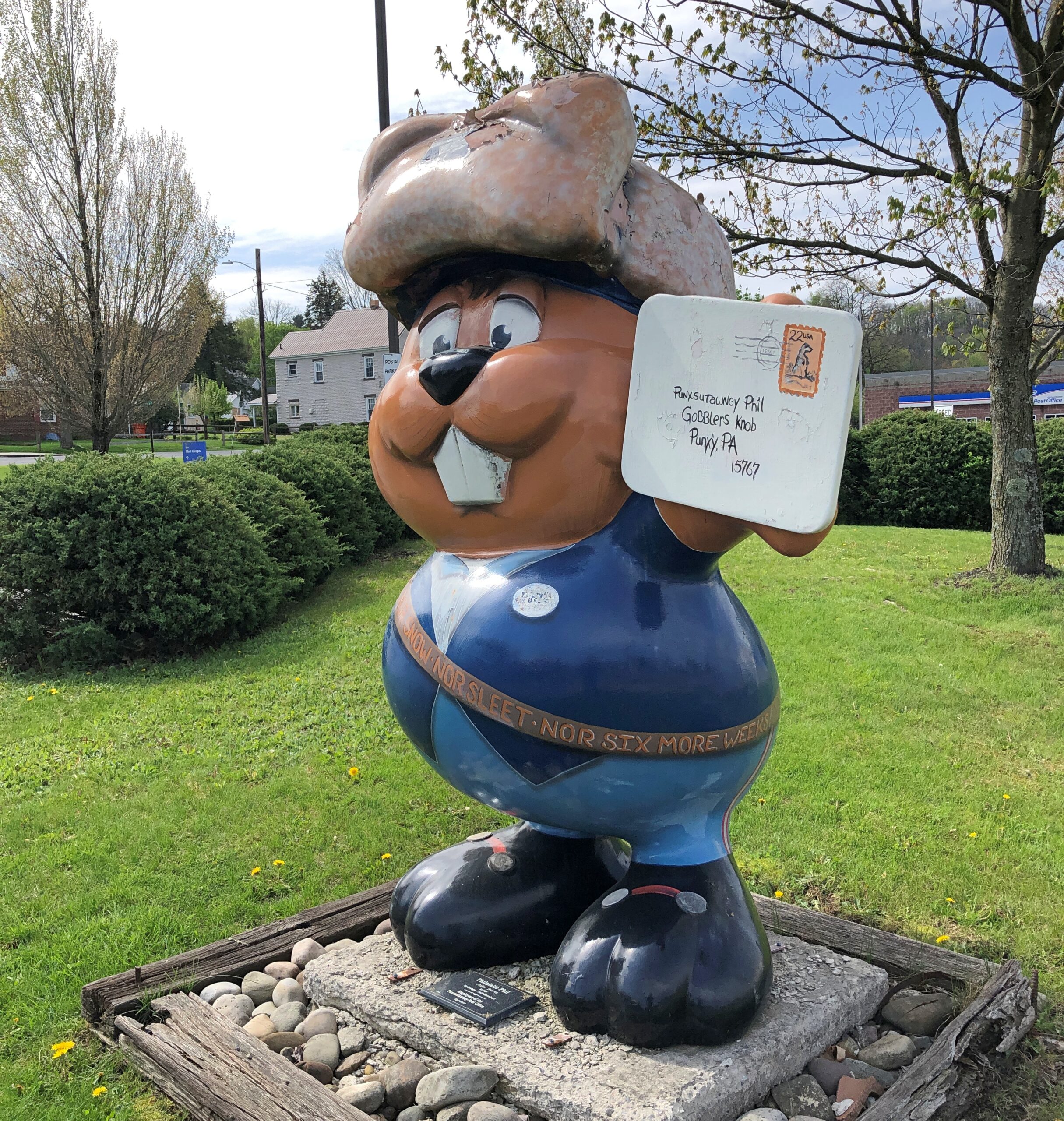
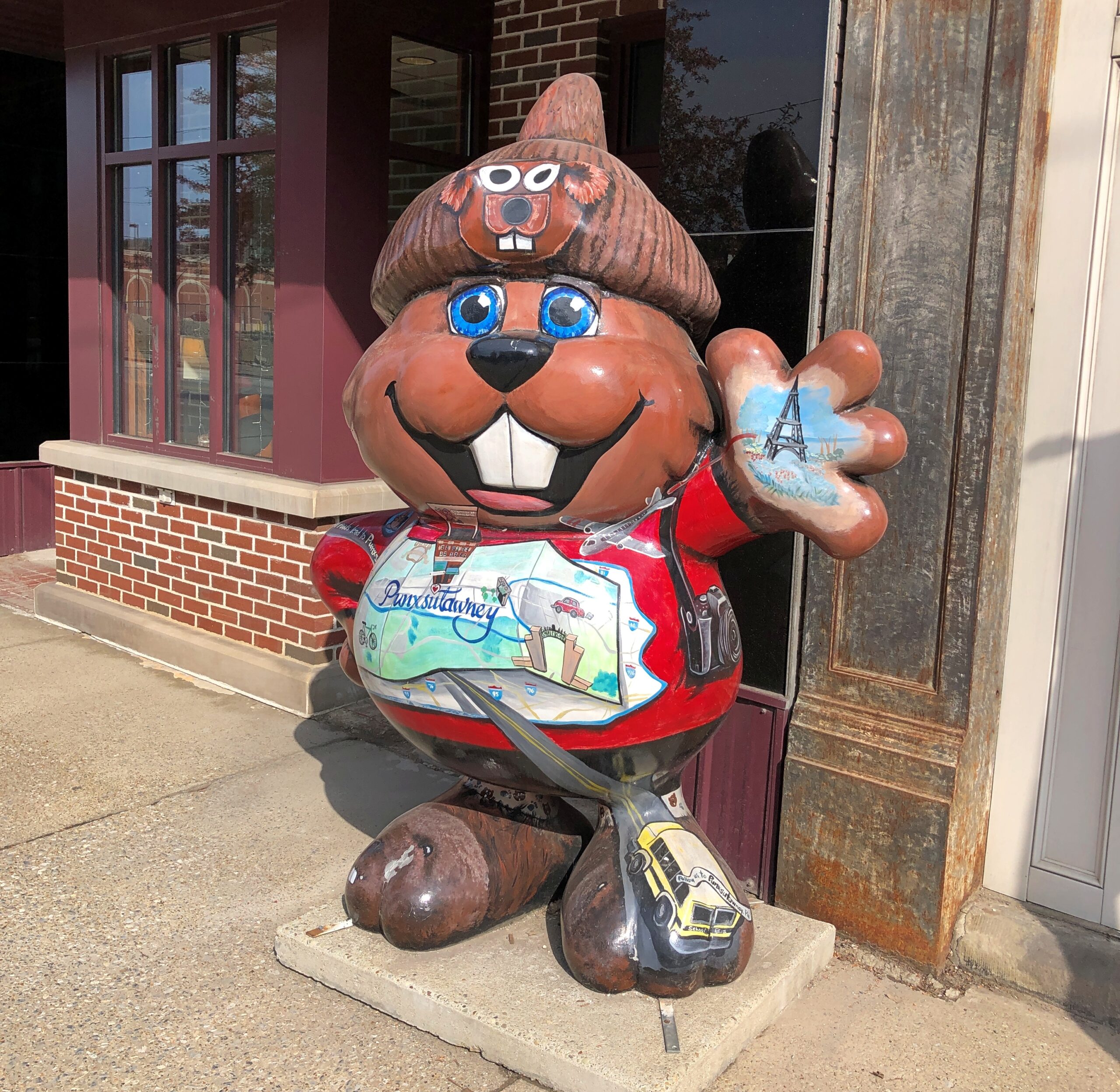
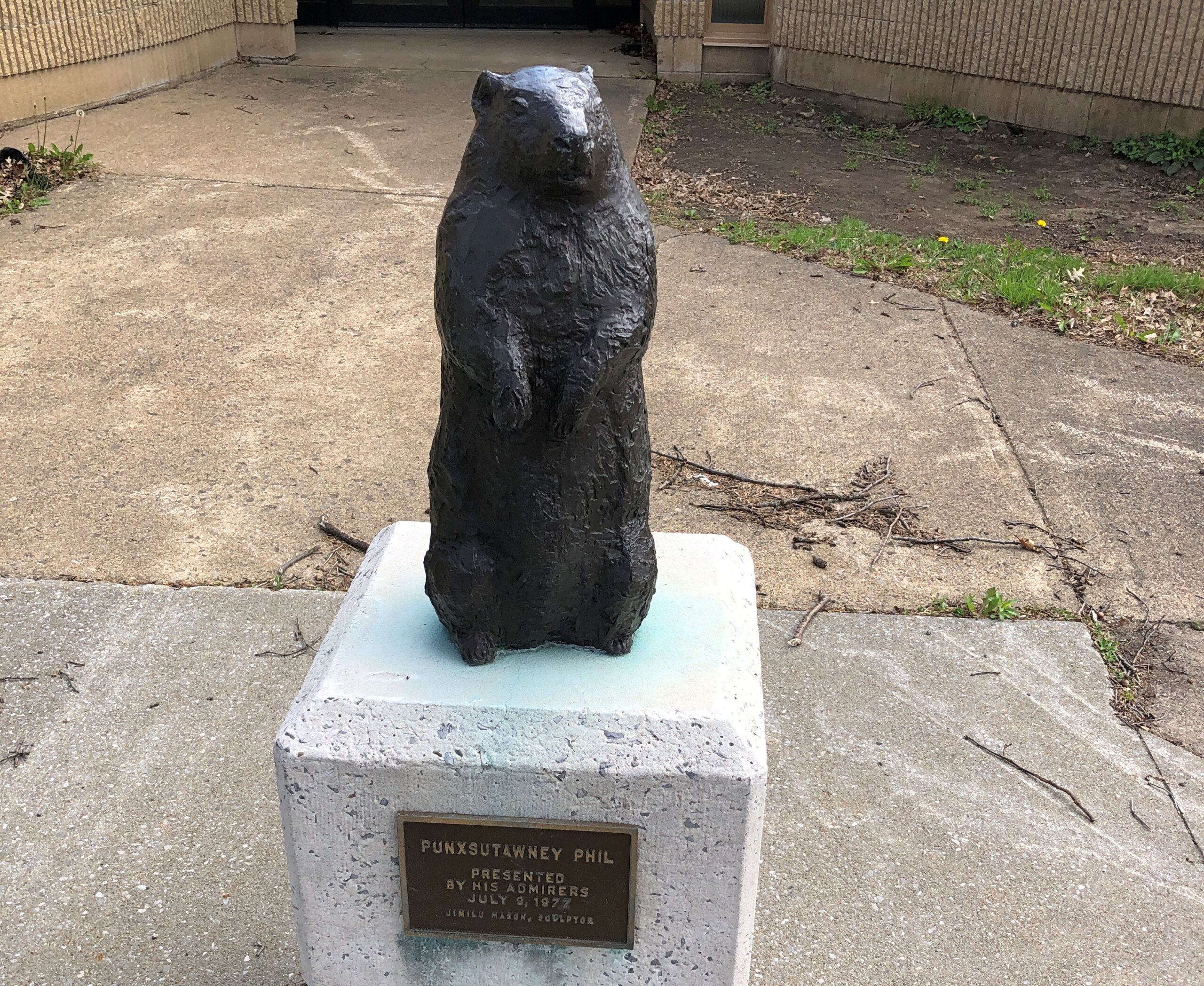
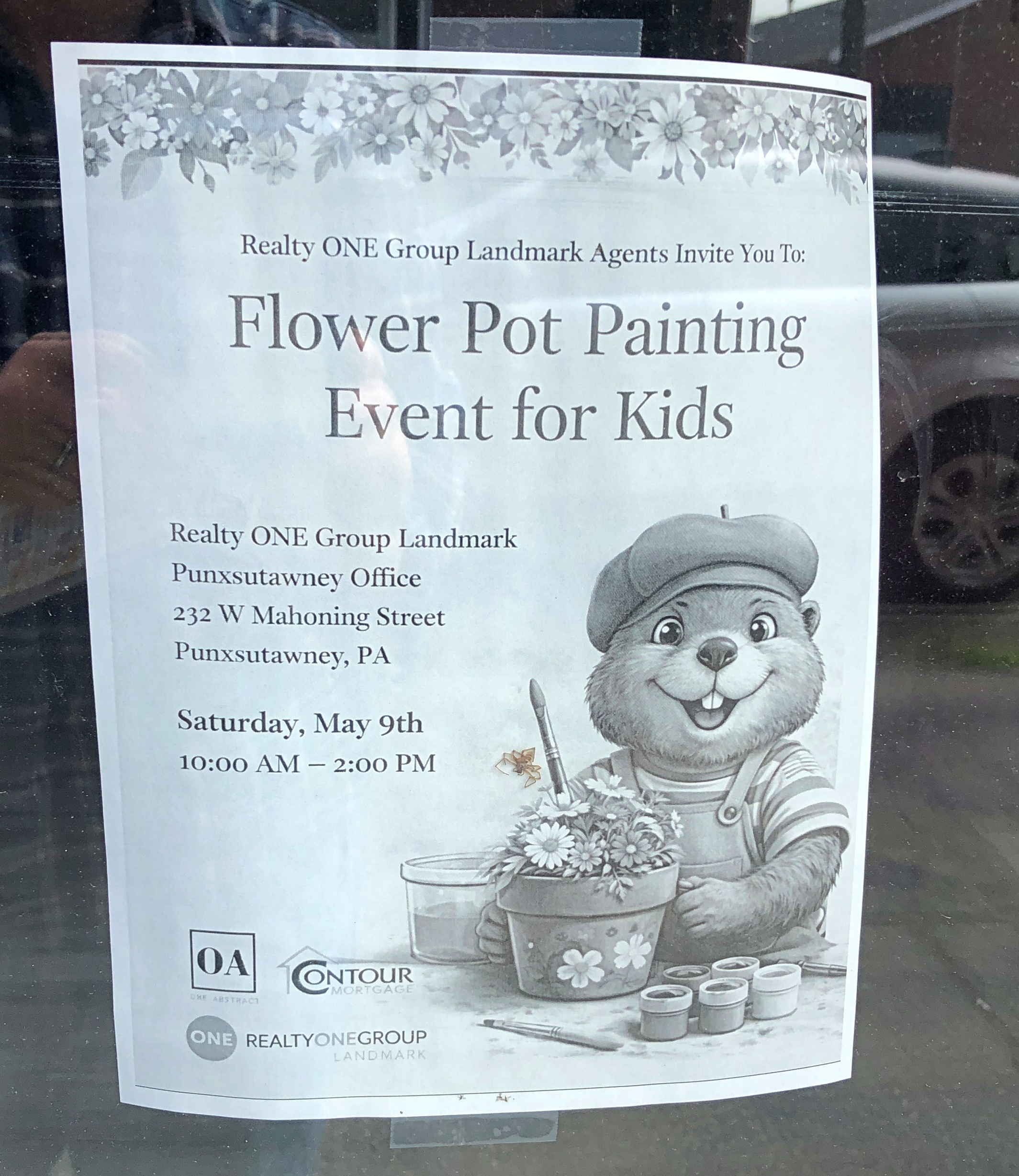
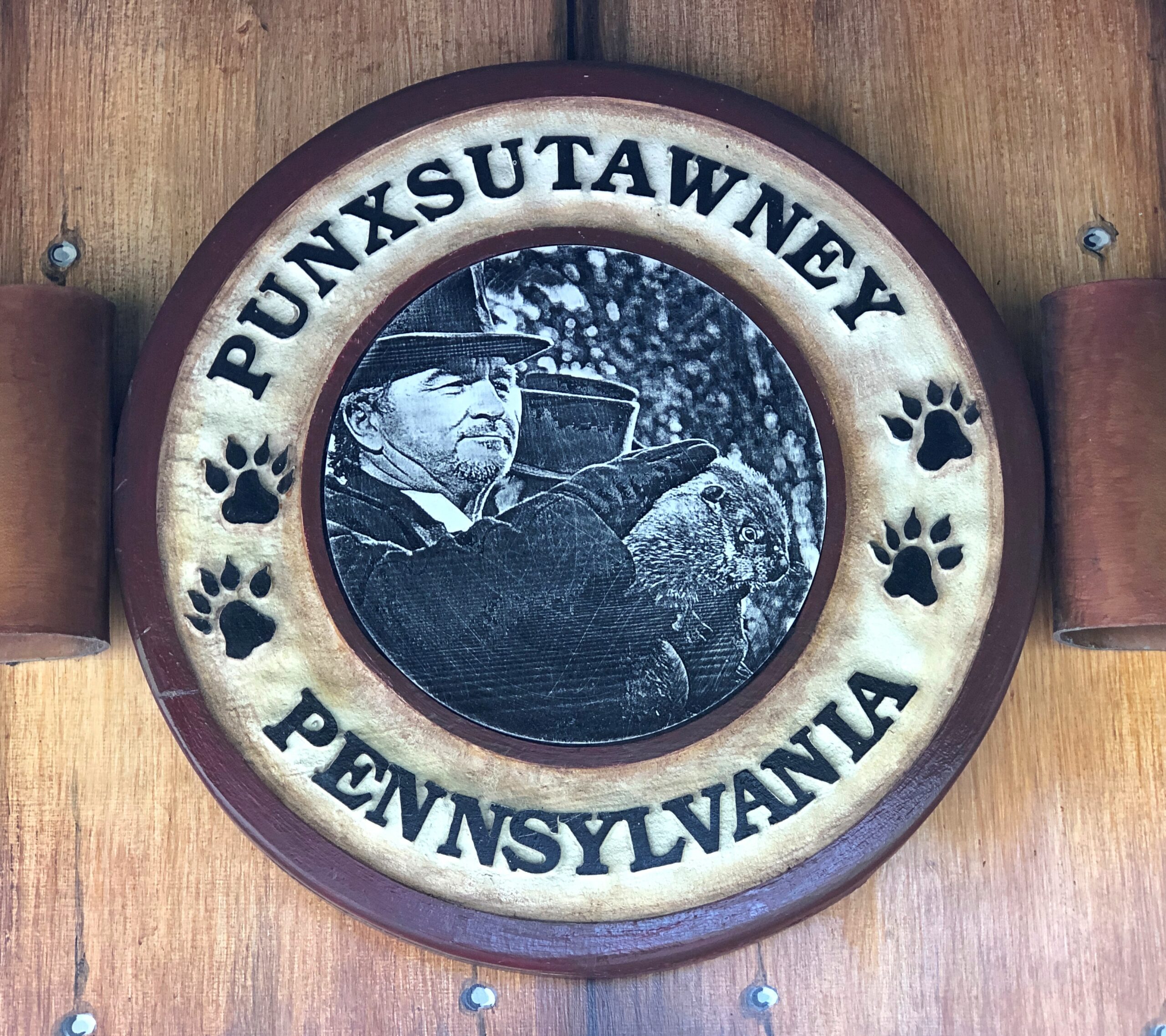
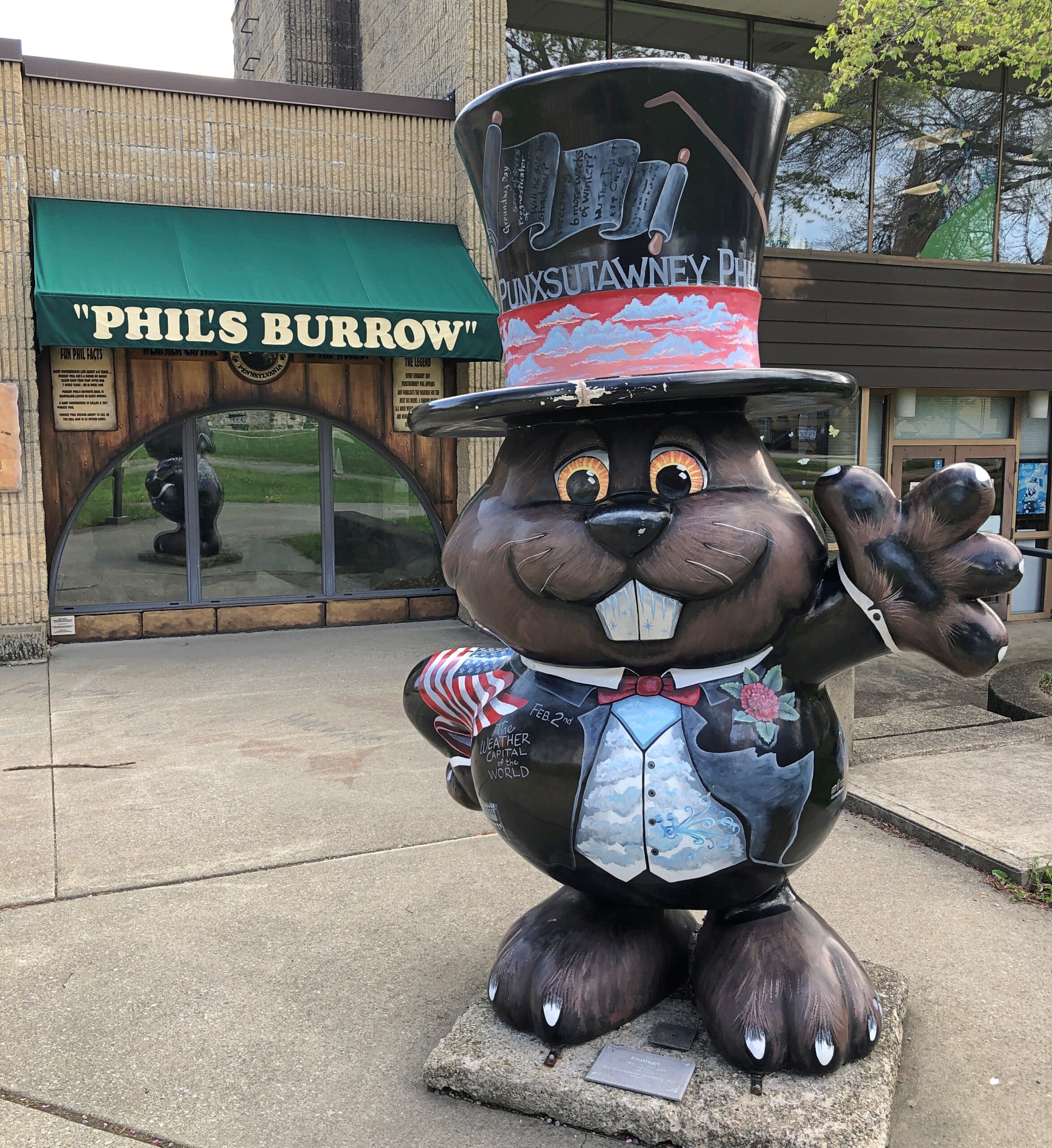
On the way home in late April, I spent the night in Punxsutanwney and had a gas the next morning looking for as many depictions of Punxsutanwney Phil as I could find. It’s an endless pursuit, something like looking for all the Lincolns in Springfield, Illinois.
This one was the closest to my motel. It was at my motel.
Downtown Phils, such as in front of a florist and an optometrist and a “beauty bar.”
In front of a bakery and on a trash can and at the post office.
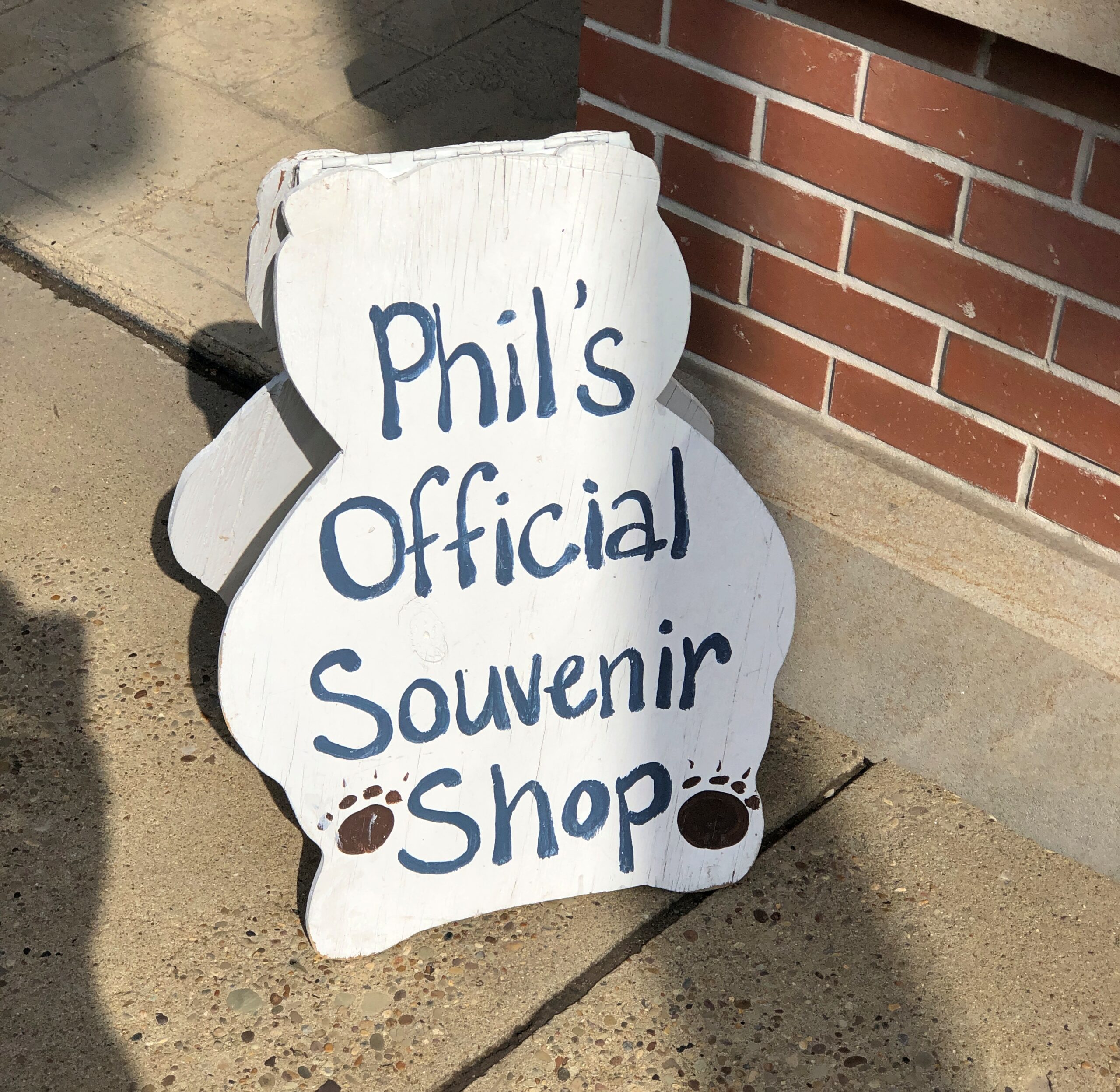
Of course he had his own shop. I bought postcards there.
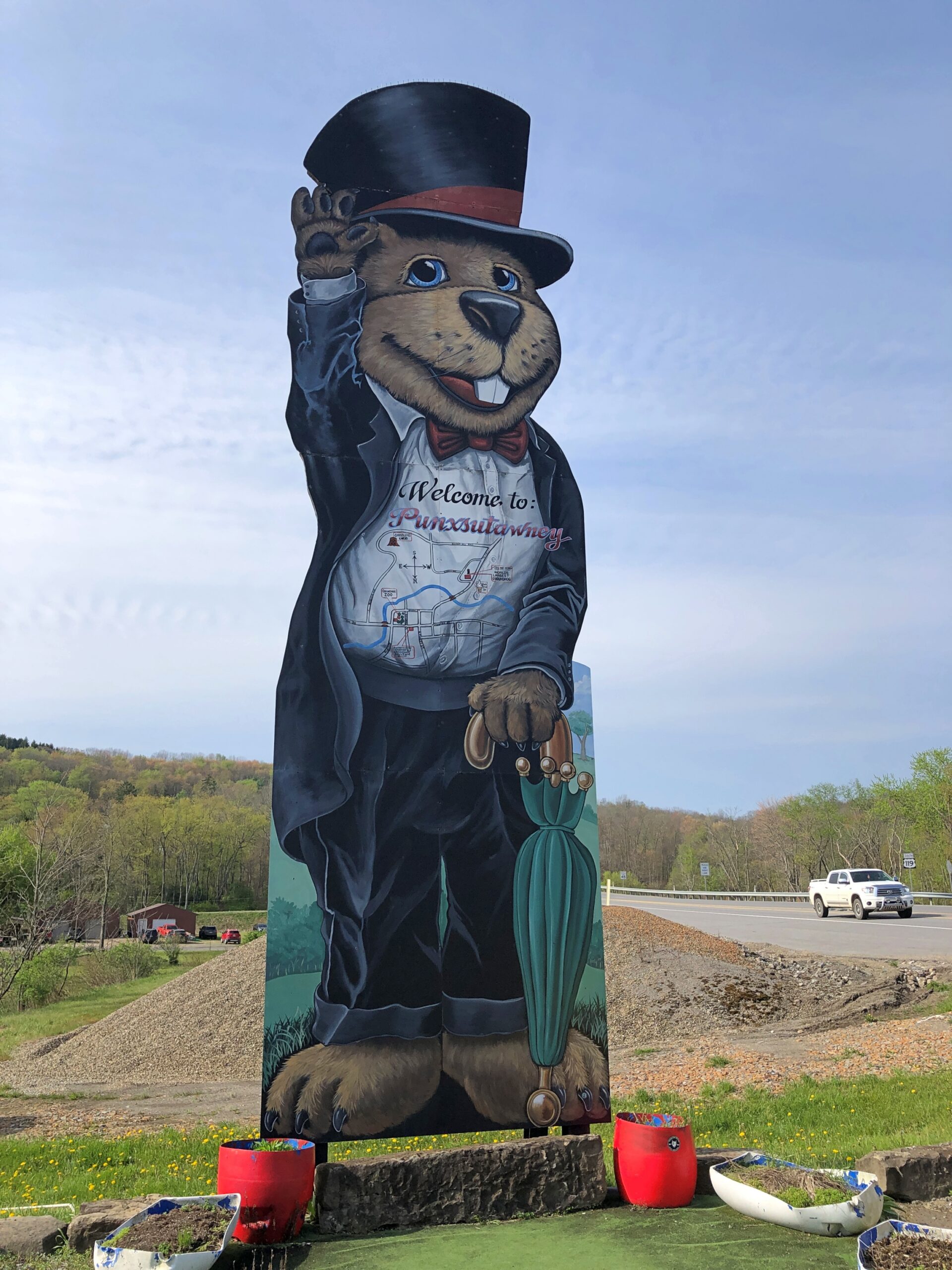
The tallest Phil, I think. I had to park the car to get a good look.
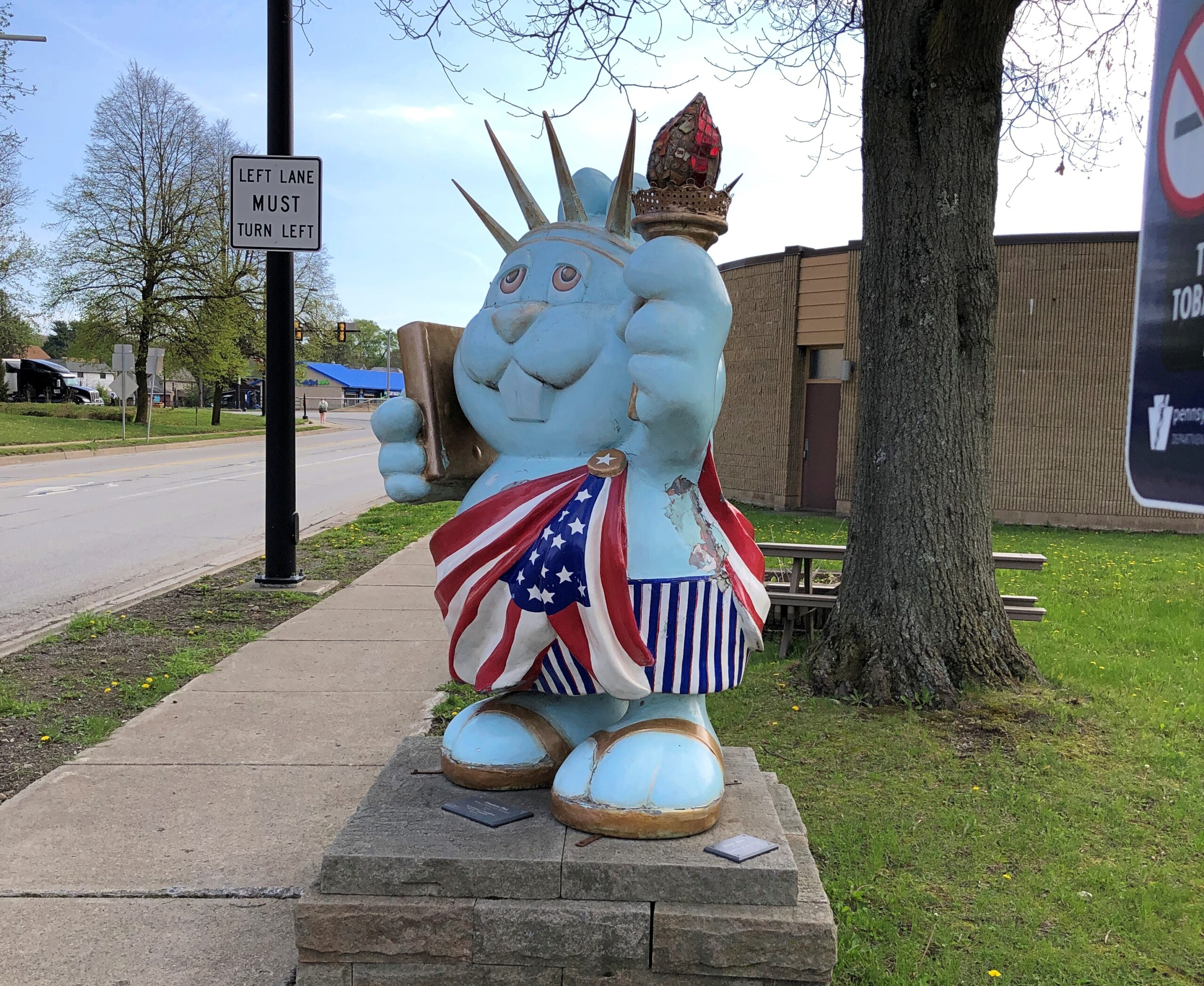
Patriotic Phil. We could do worse for the semiquincentennial.
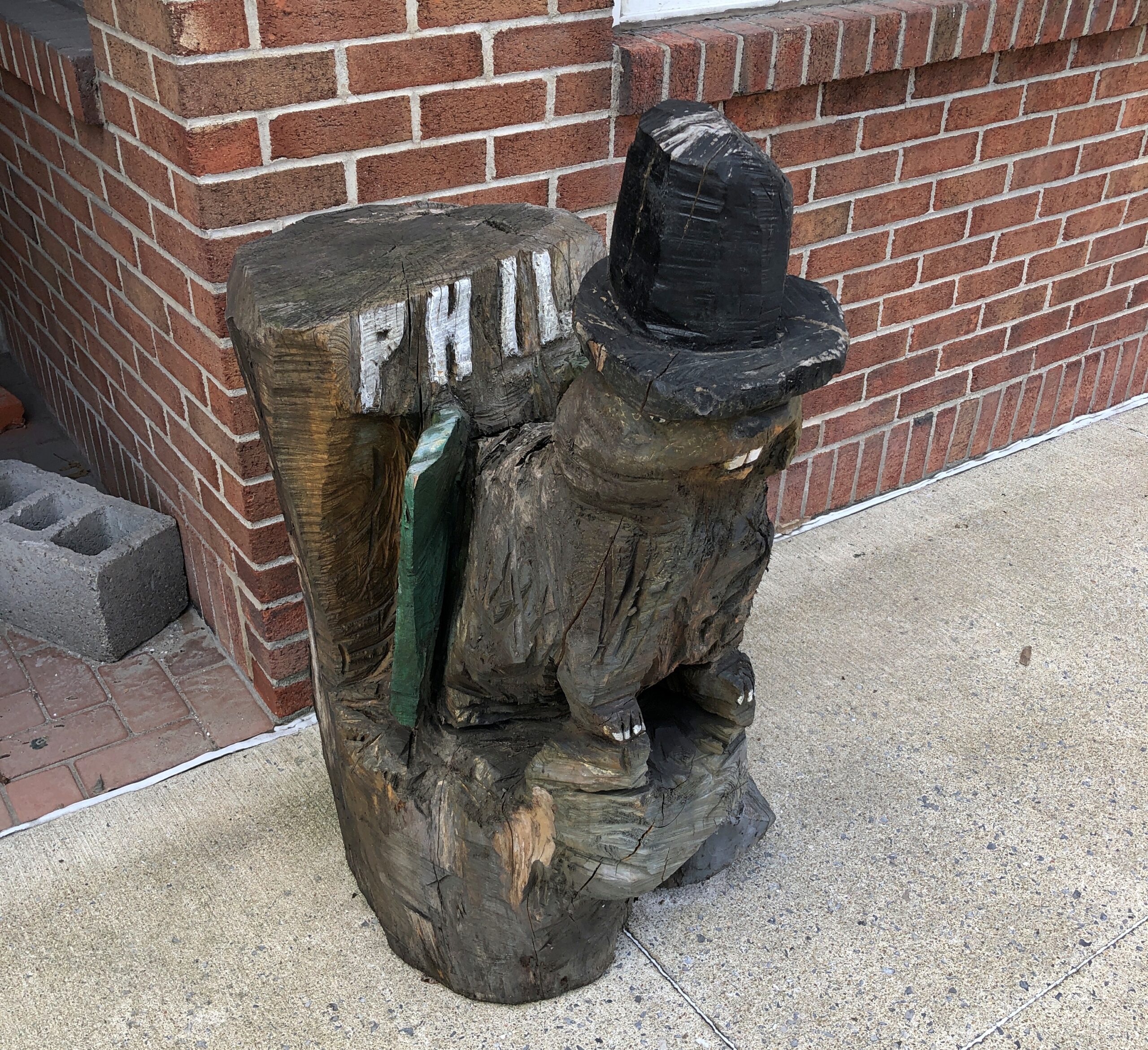
Phil carved from wood.
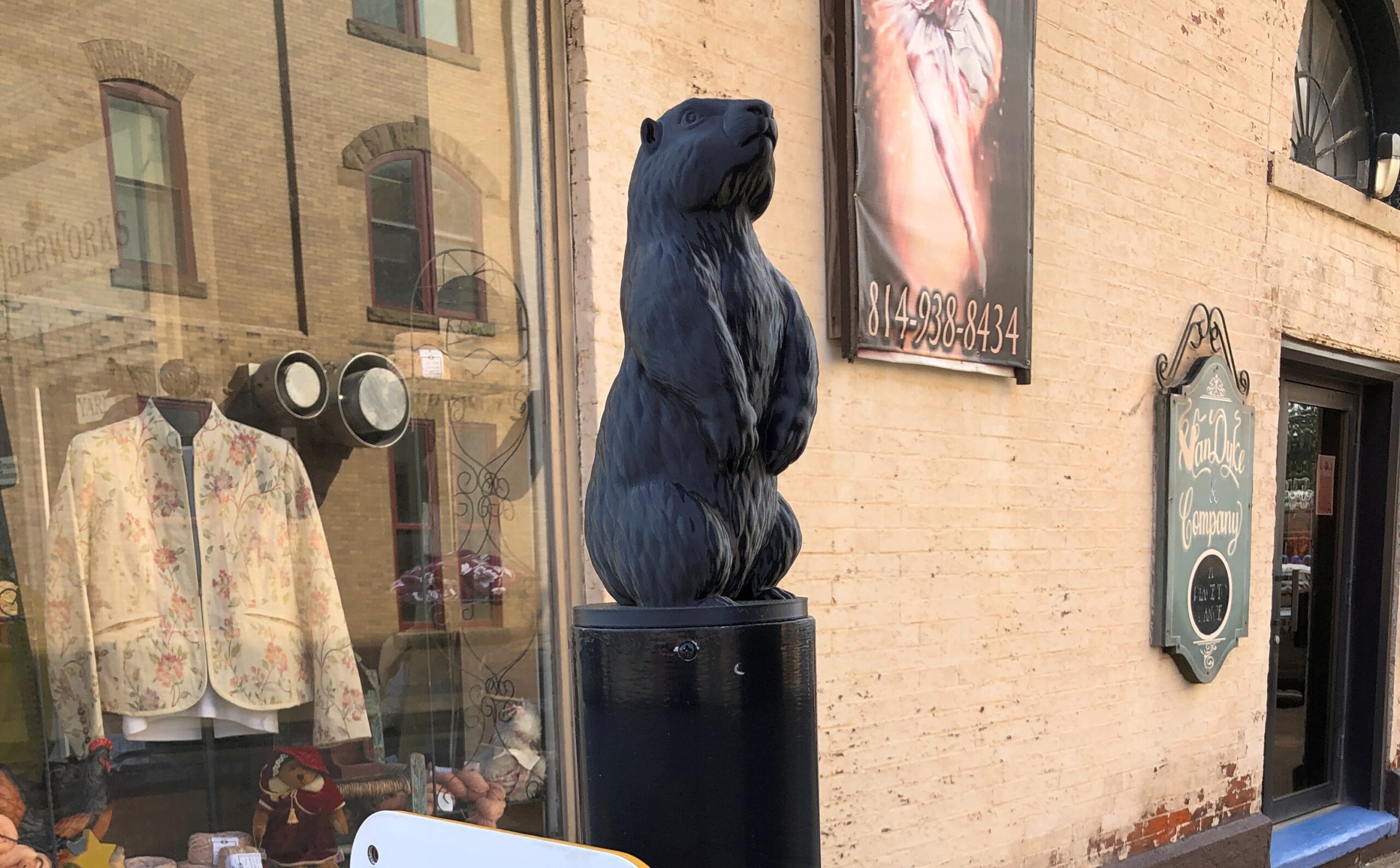
Metal Phil, one of four at some of the crosswalks that included a switch on the pole to let the lights know you were waiting.
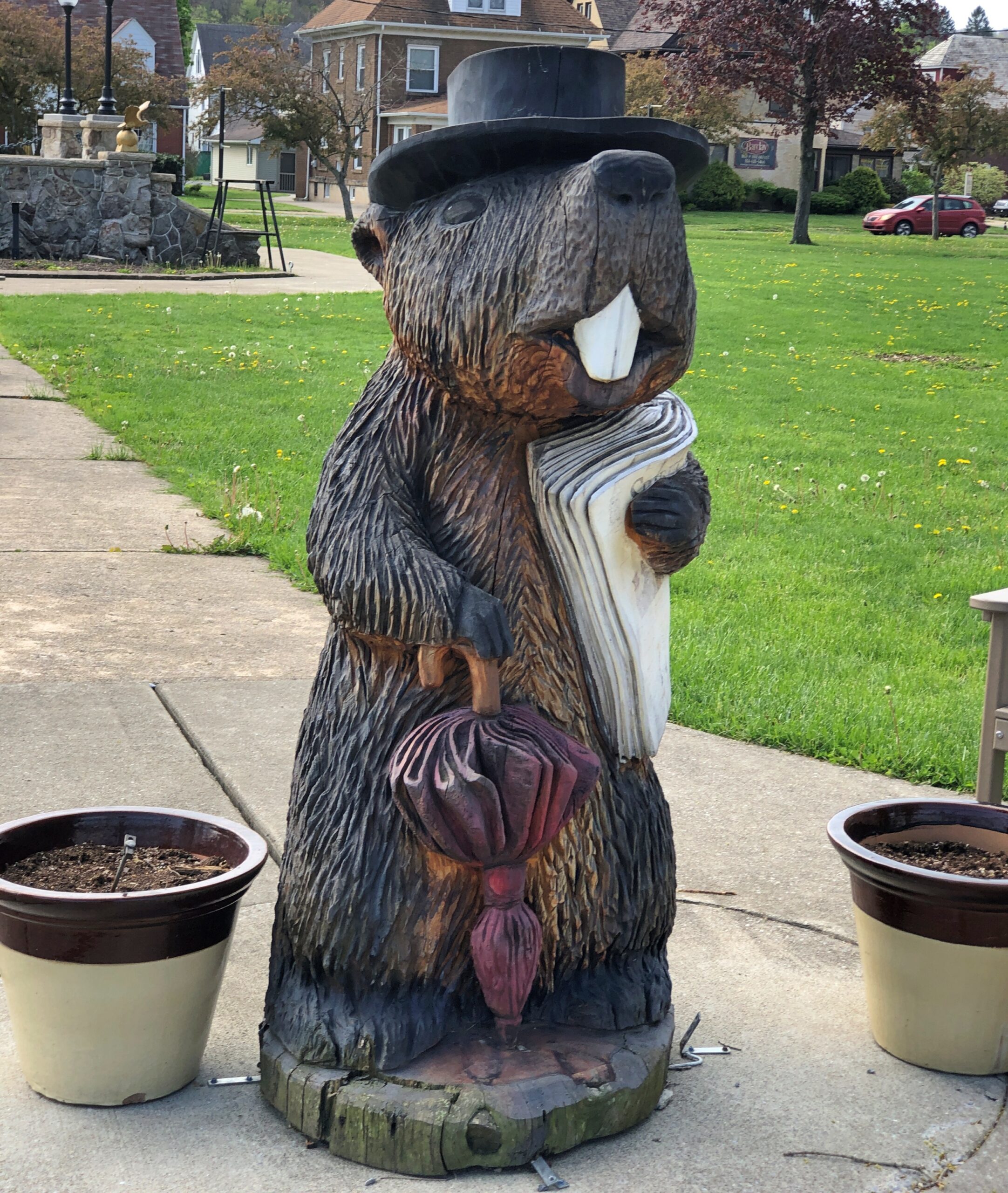
Serious Phil.
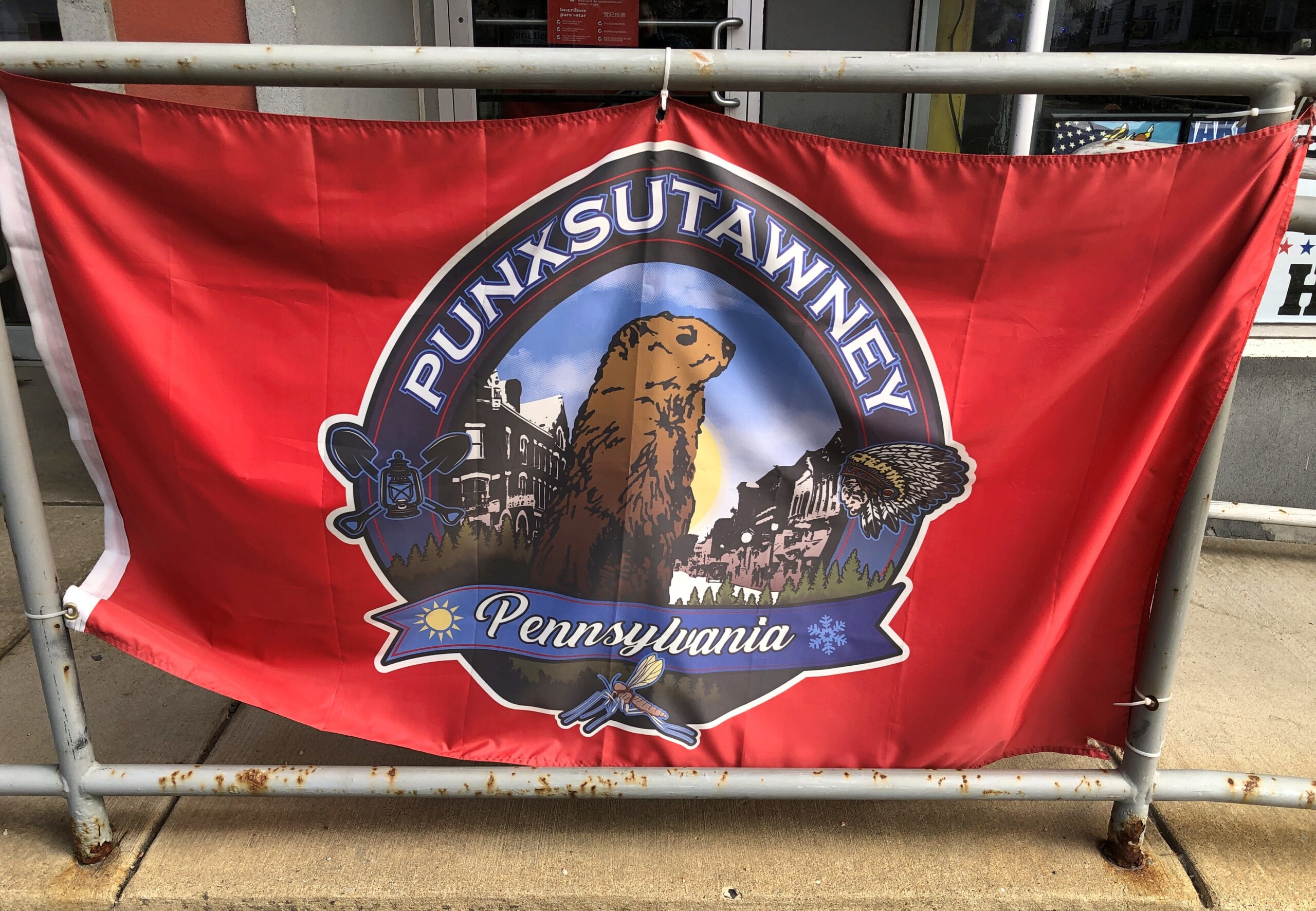
The city flag.
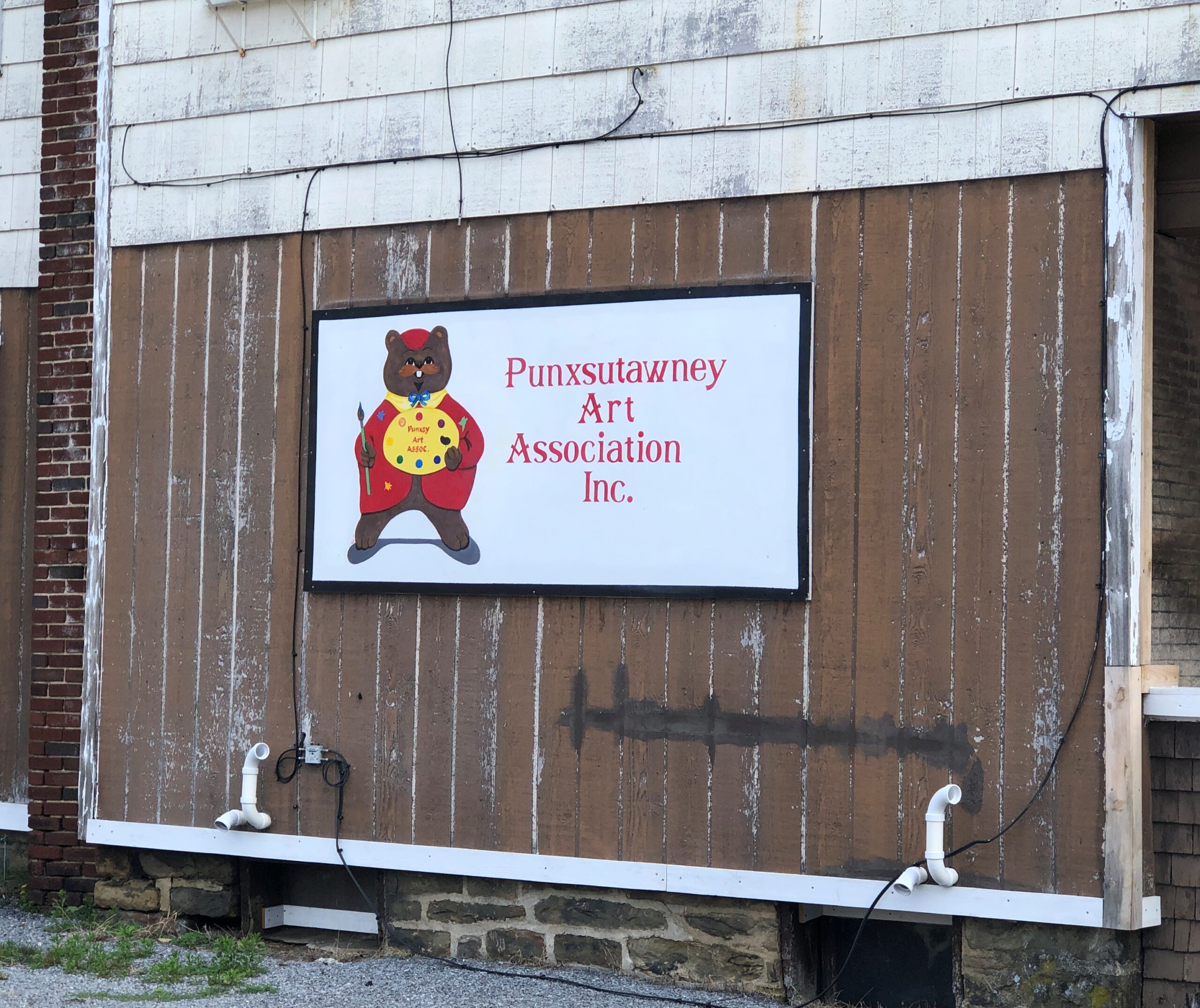
Actually, this one looks more like a cartoon bear. But I’ll bet it’s Phil anyway.
He’s everywhere.
Then there’s official Phil. He and mate Phyllis live behind glass, in the “burrow.”
The groundhog clearly counts as Punxsutanwney’s spirit animal, a concept that seems to be elastic enough to include mascot and whatever else you care to pack in. More towns ought to have them.