The Peony Crop of ’26

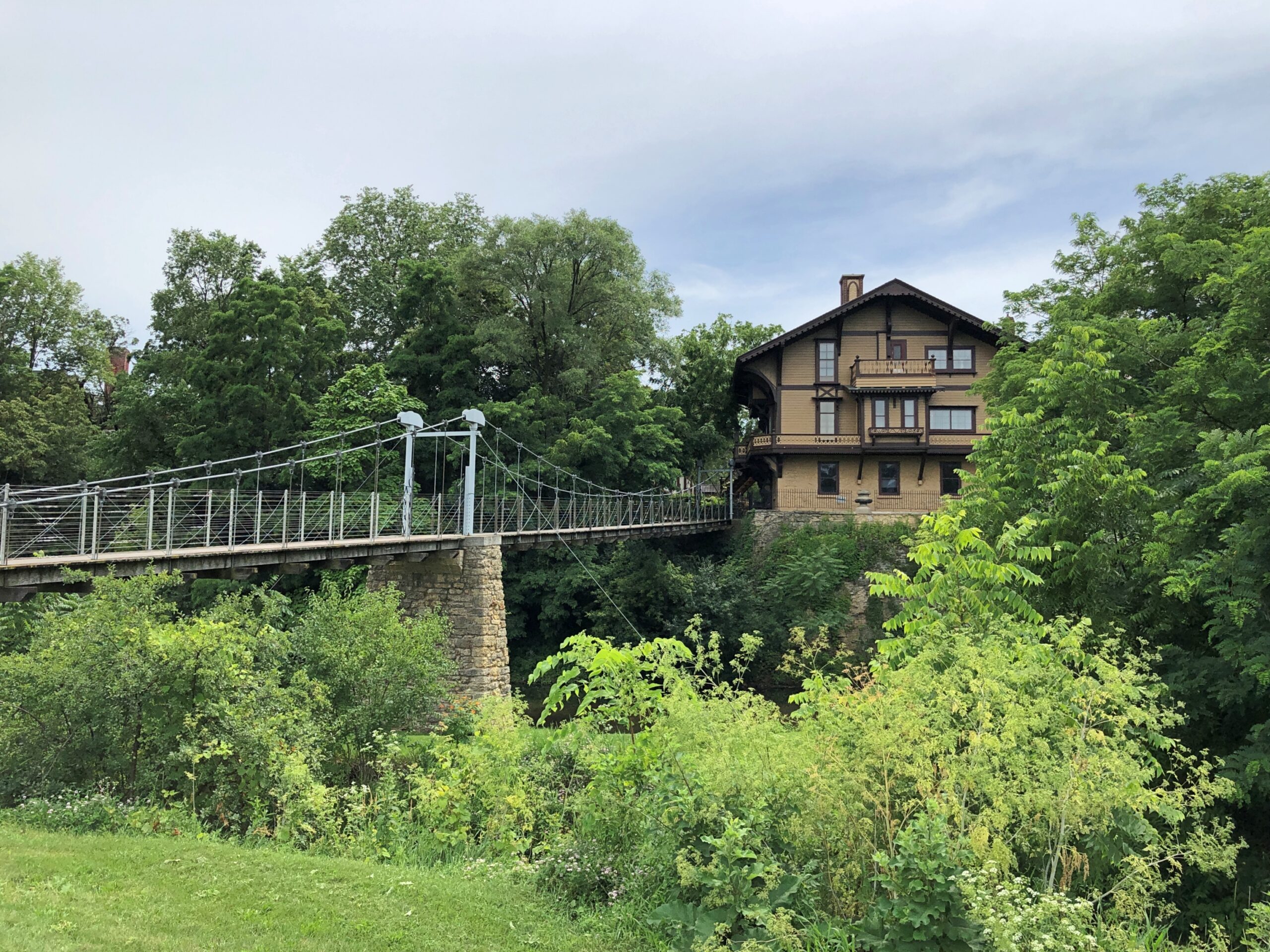
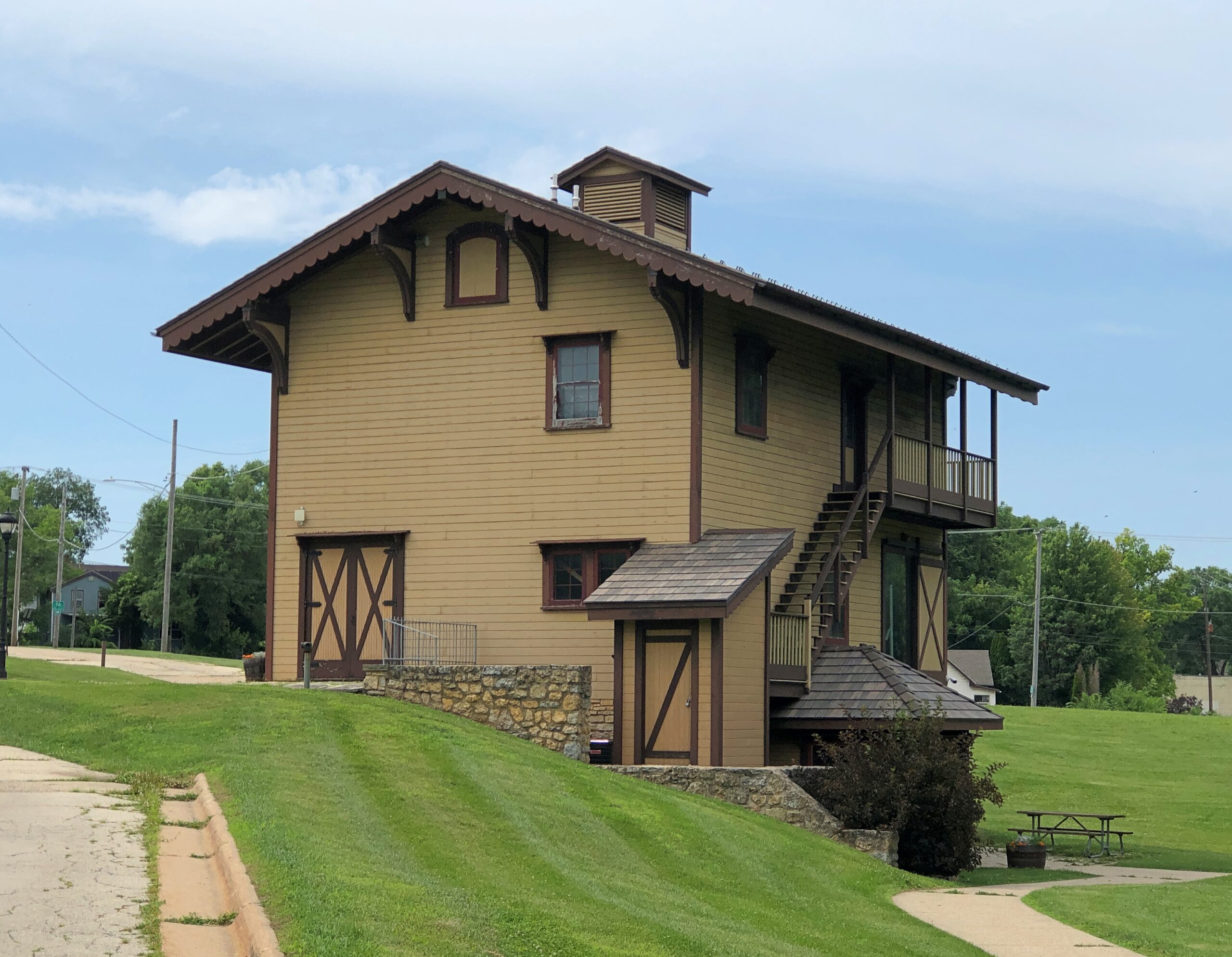
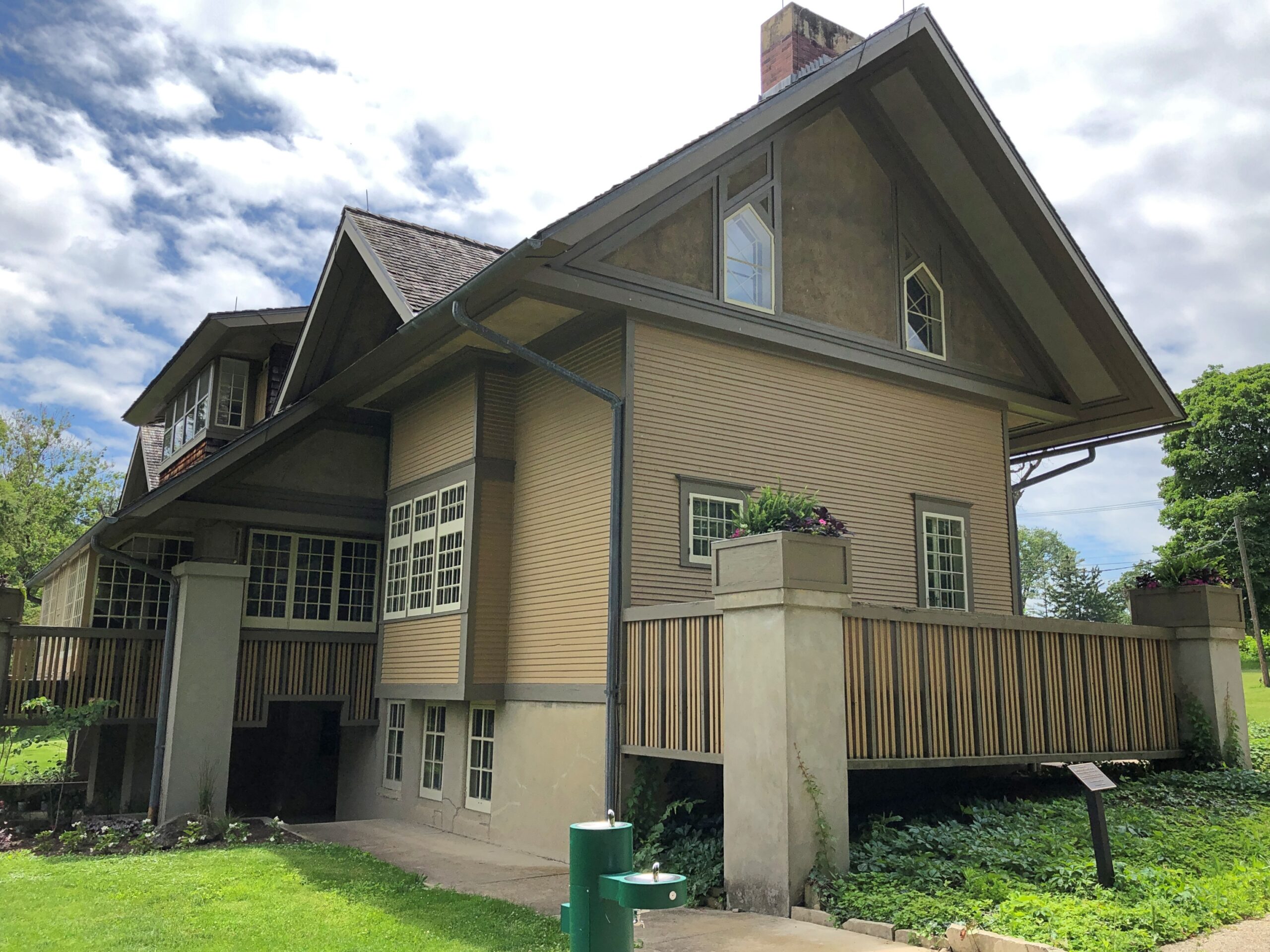
Consistent spring-like weather has arrived at last here in northern Illinois. So we took the opportunity late this afternoon to visit Volkening Heritage Farm, an open-air museum with structures dating from the 1880s. It’s part of the larger (135-acre) Spring Valley.

Spin the wheel of time back – not that long, really – and German immigrant farmers put this part of Illinois, the future northwestern suburbs, to prosperous use. The open-air museum of our time echoes that previous time. Not in each detail, but the facsimile is pretty good. There’s a vegetable and flower garden —

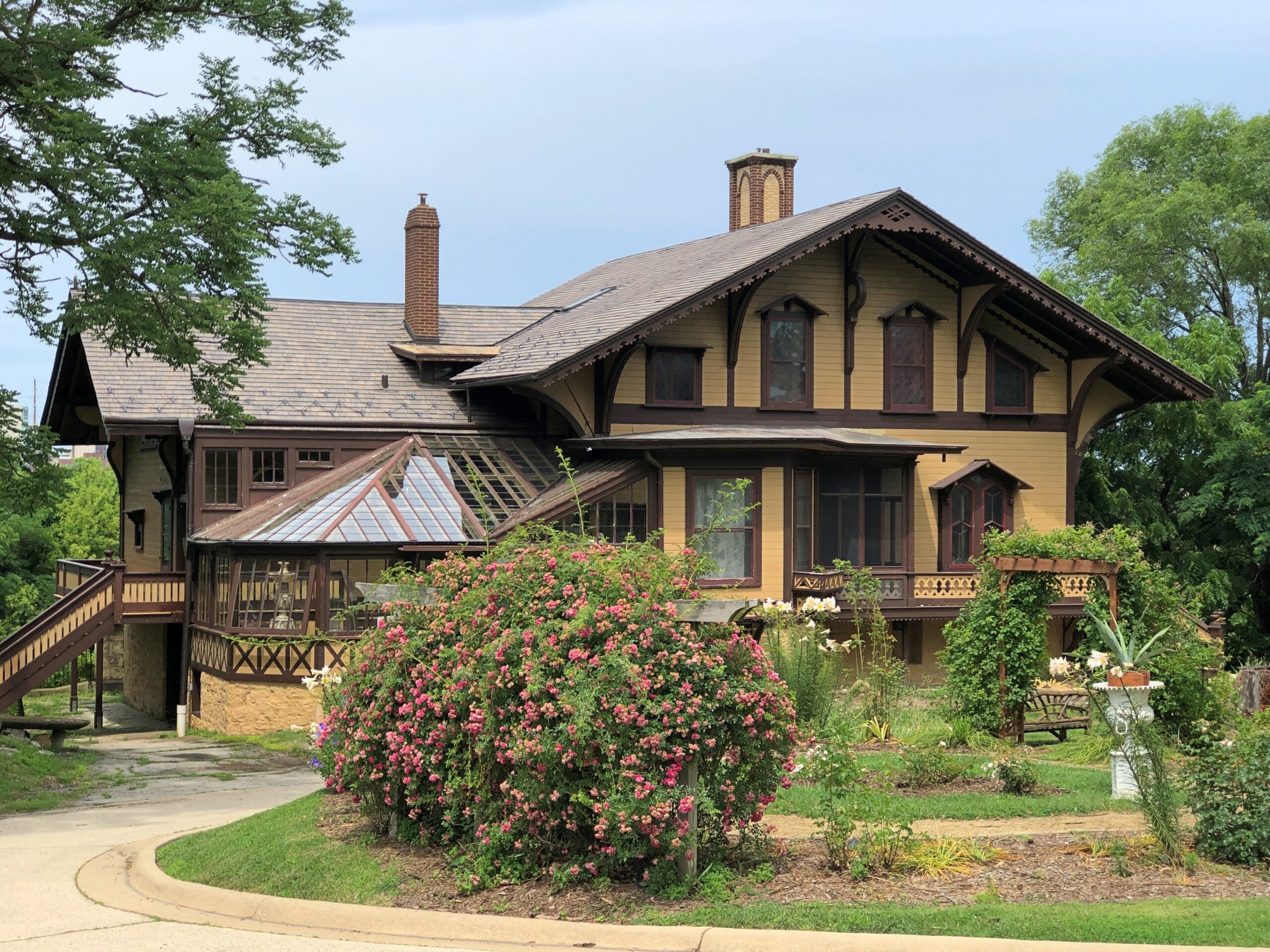
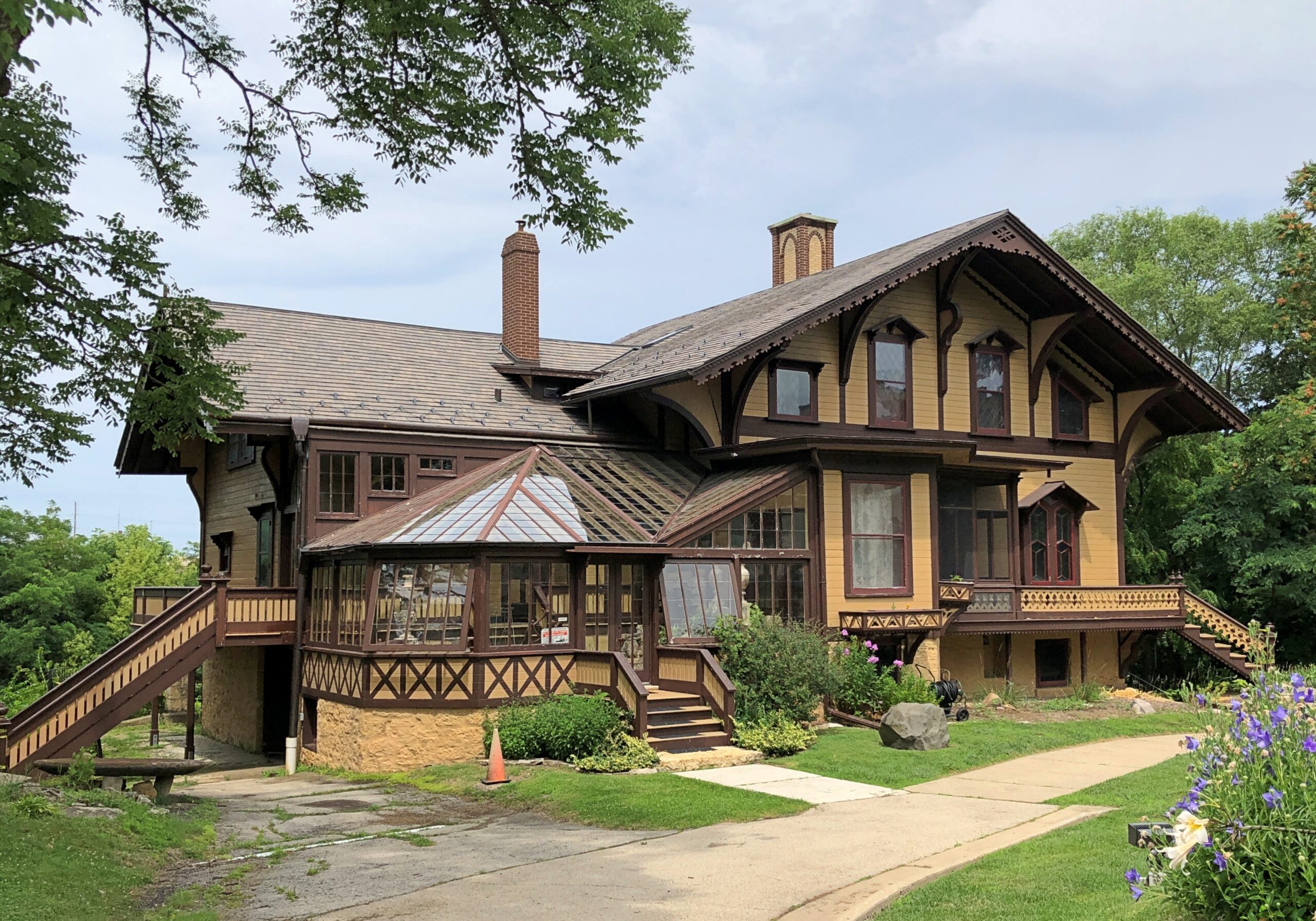
Volkering Heritage Farm

— and farm animals. Chickens, for example.

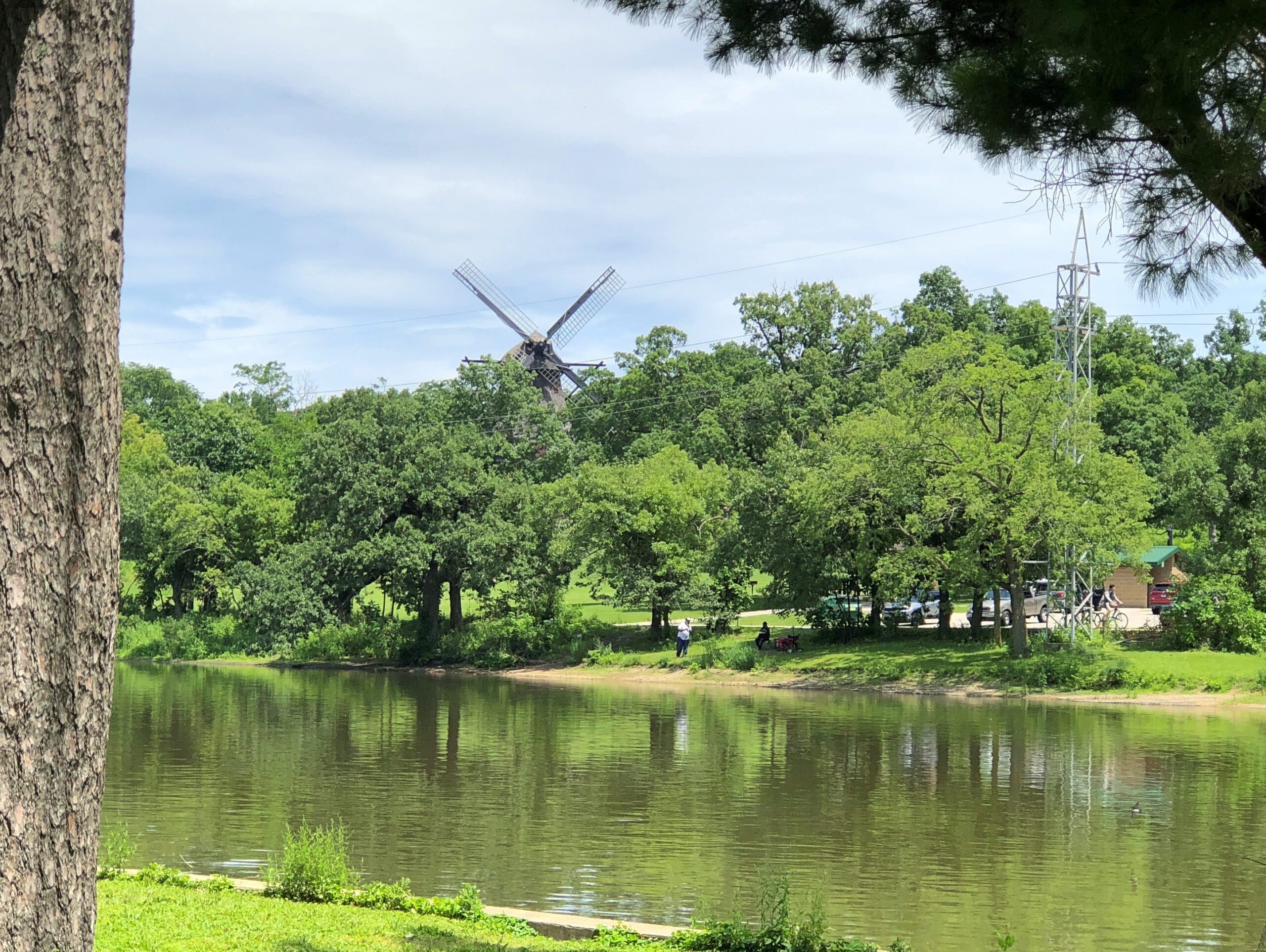
The windmill is missing. Has been for some years now, but I know it was there in 2012.

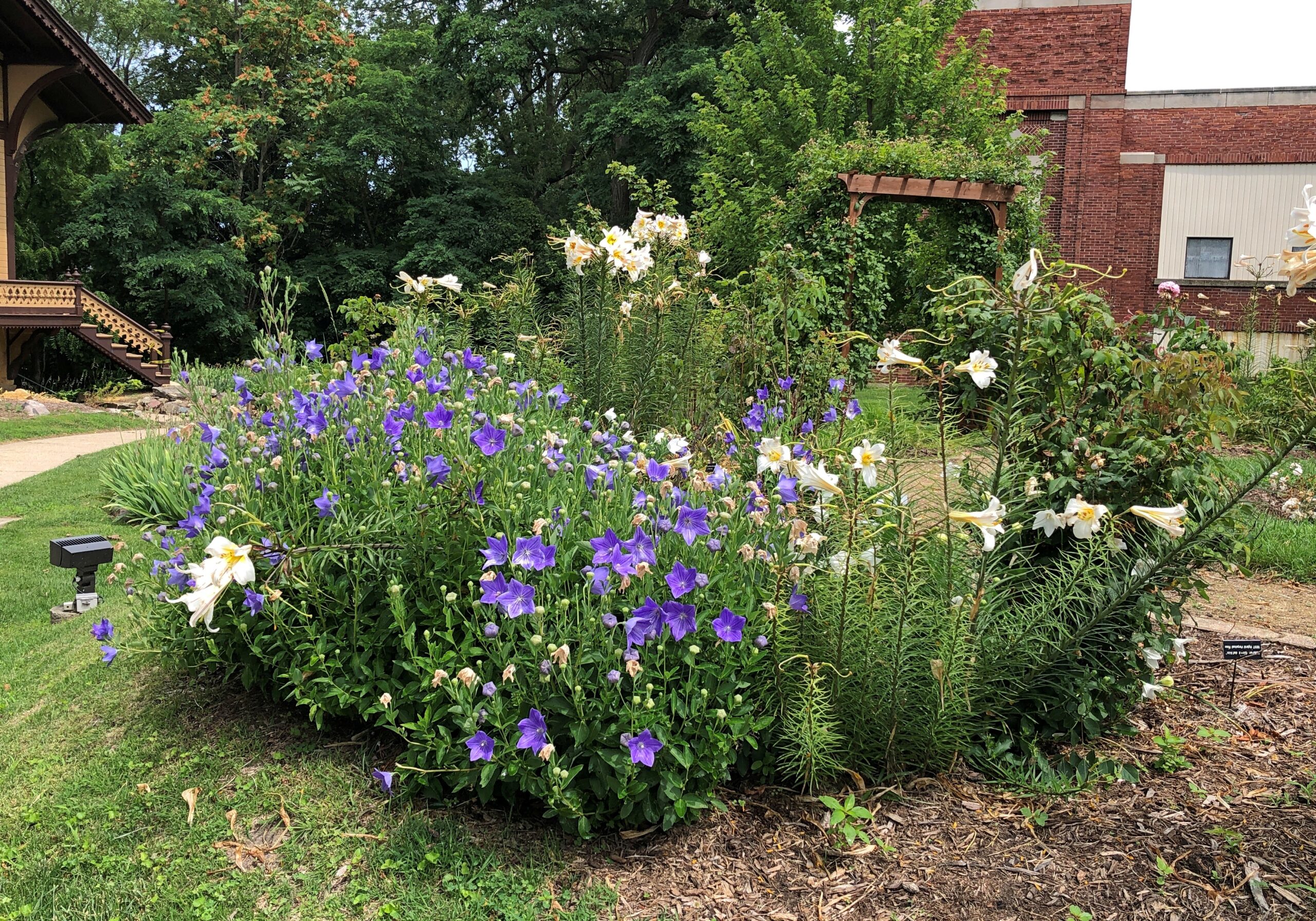
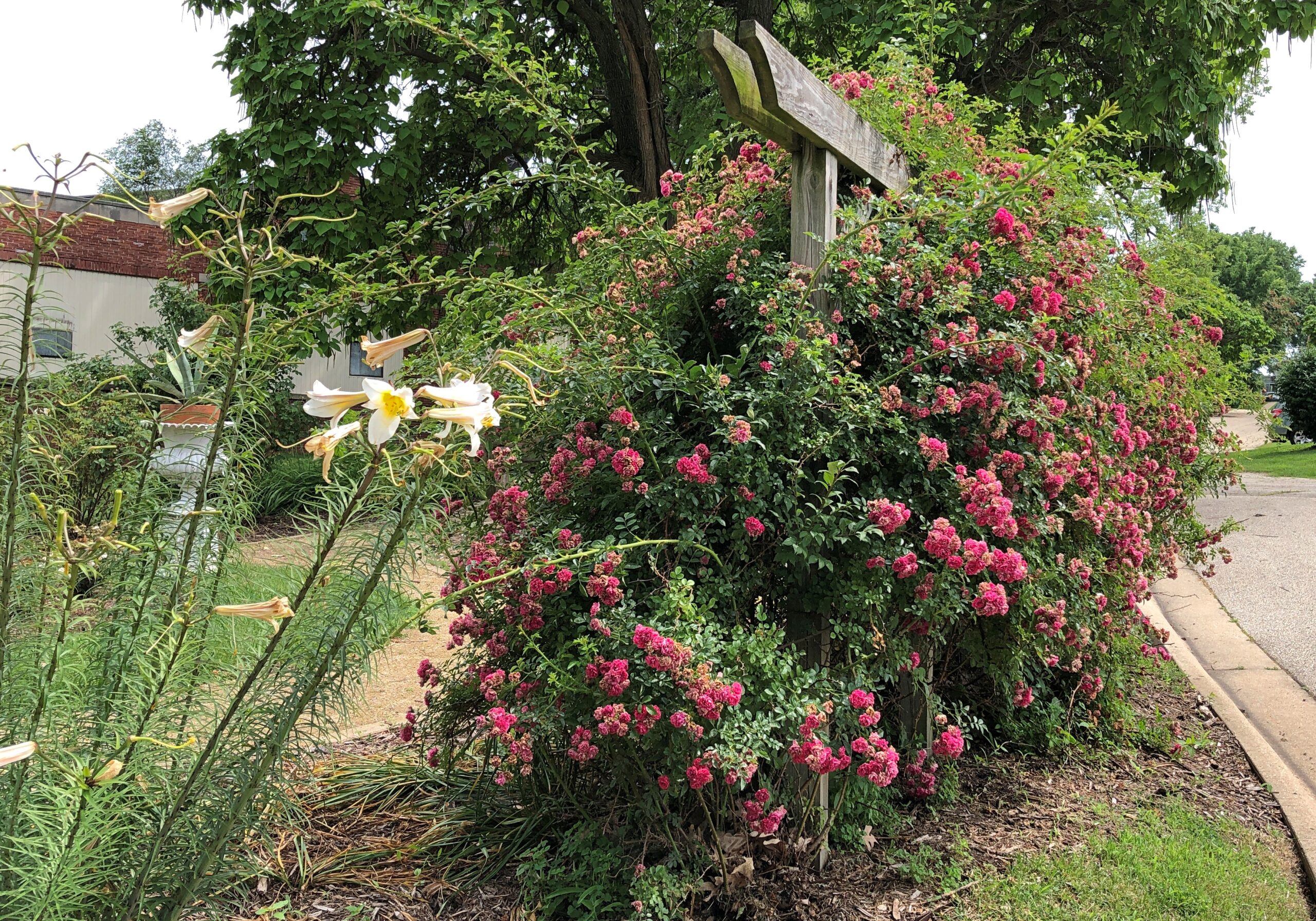
We noticed peonies near the farm buildings.

That meant that Spring Valley’s former peony farm, about a 10-minute walk from the former German farm, was abloom with peonies. Like cherry blossoms in other places and other contexts, they don’t last long. Some years we miss them all together, partly because the blooming isn’t quite fixed. One year, for instance, I visited on my early June birthday once and found an embarrassment of peonies. Other years, they are earlier. This is an early year.

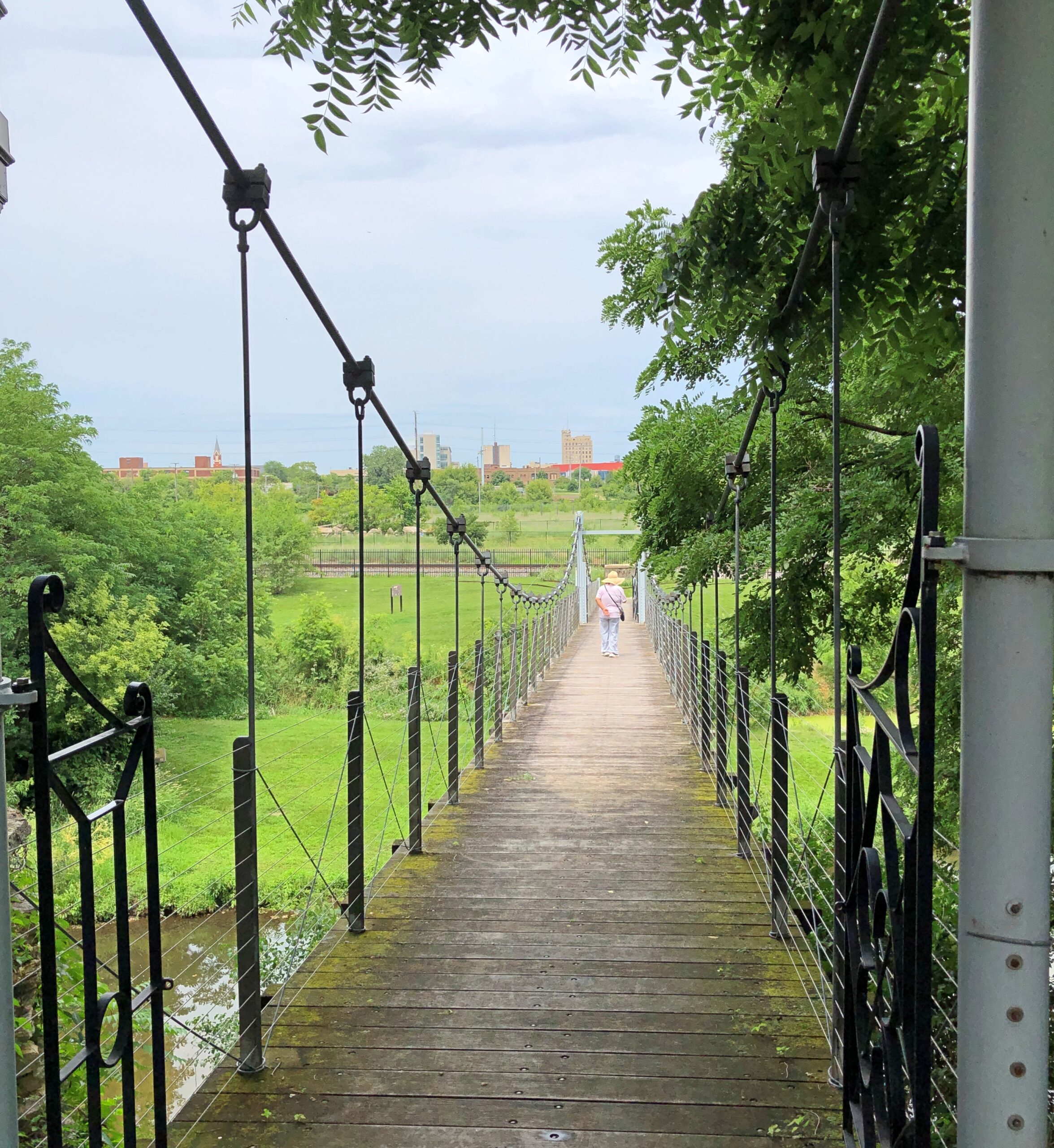
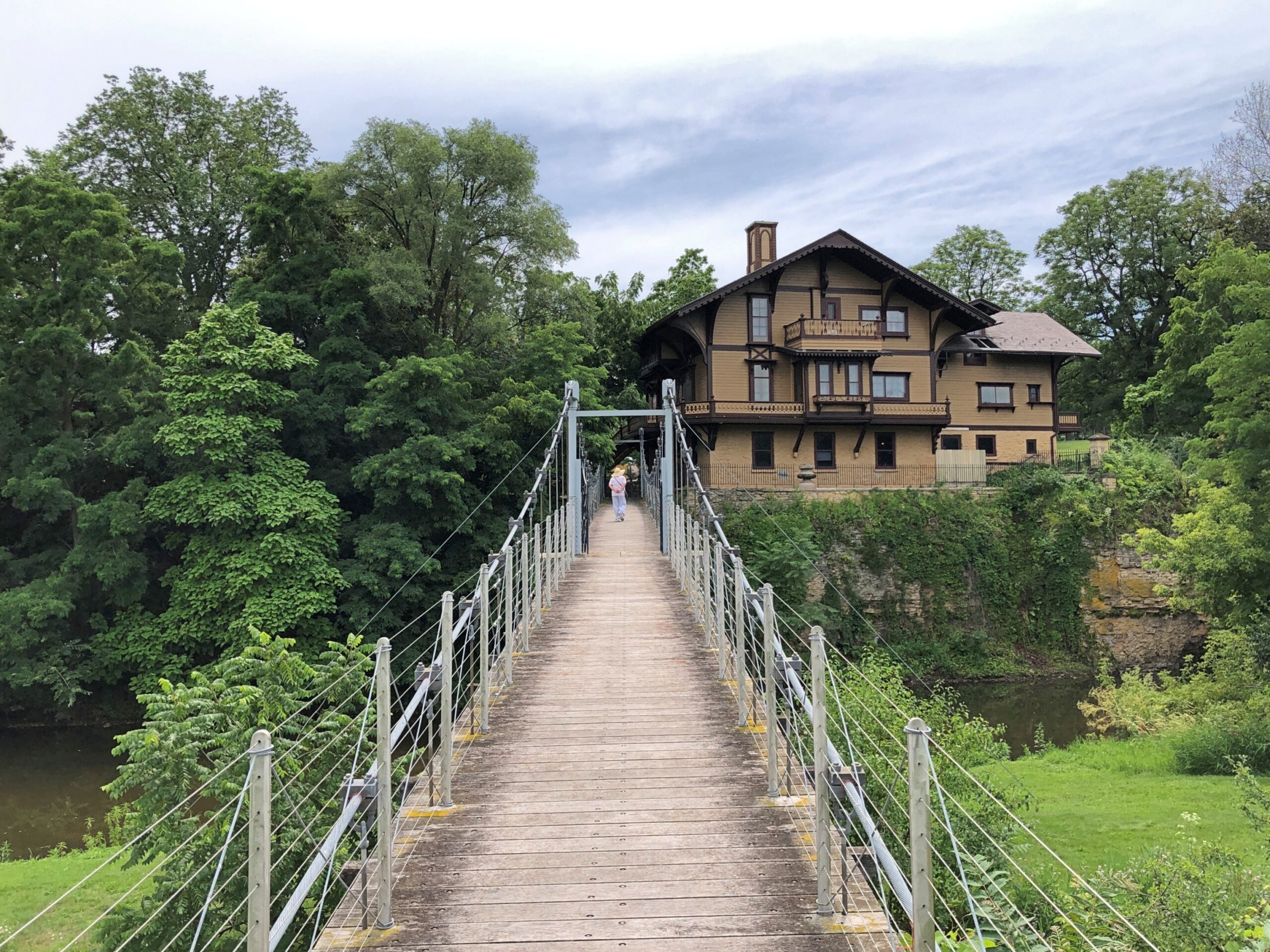
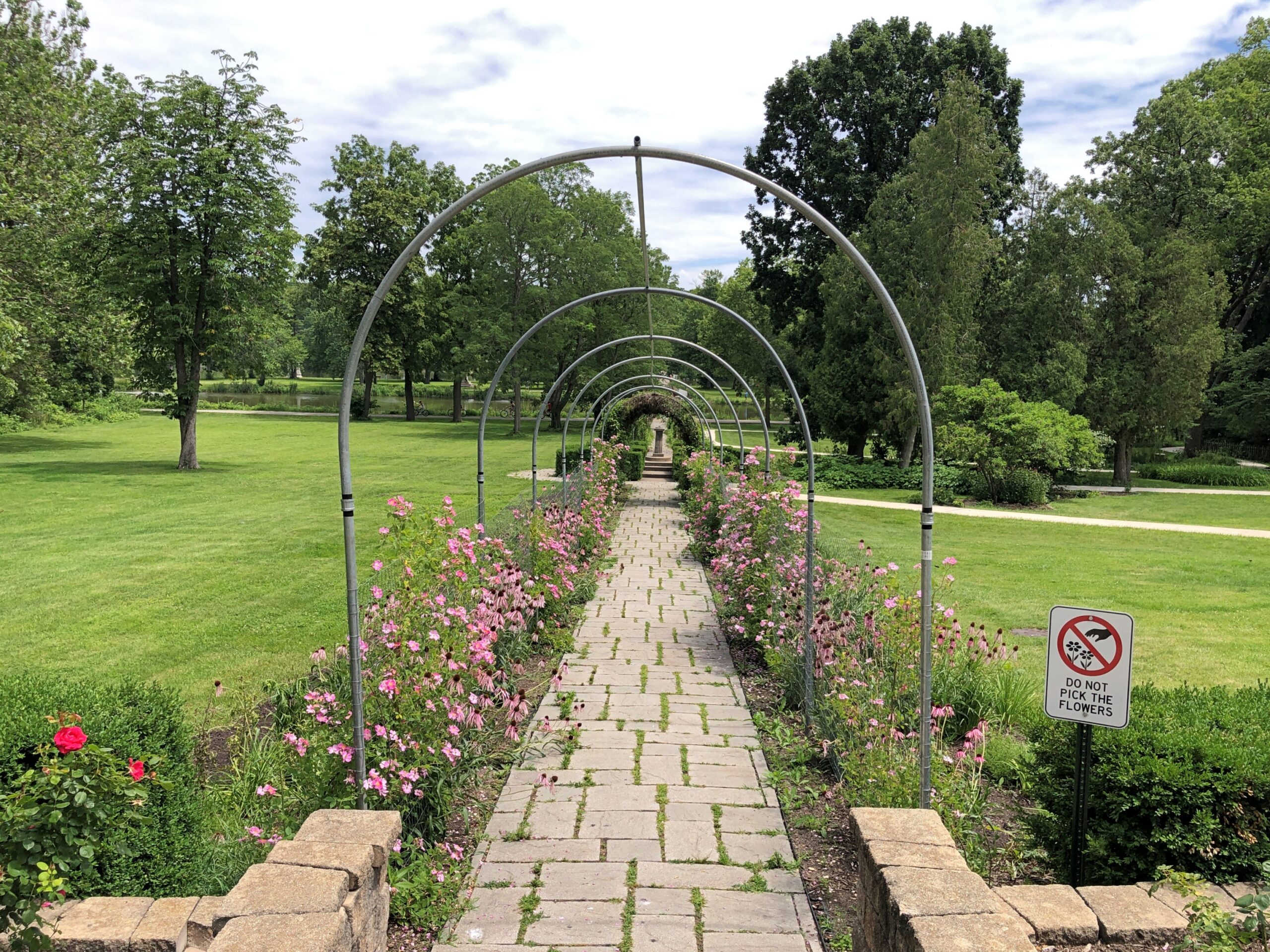
So we walked some of Spring Valley’s various trails, themselves flush with spring green, toward the peony field.

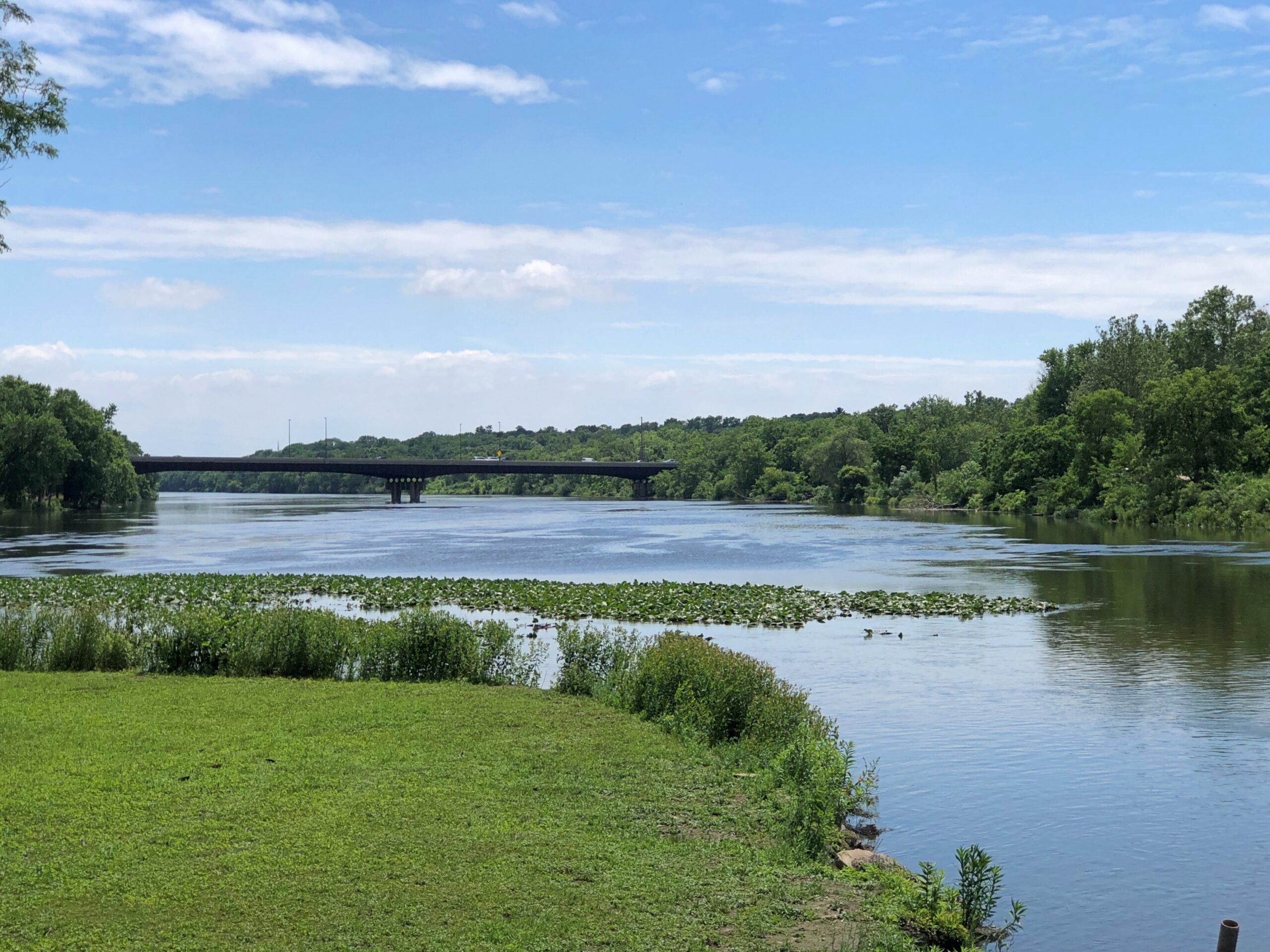
Across one of Spring Valley’s creeks, still vigorous from the heavy late-night rain a few days ago.

The peony field.

The blooms.

Digital cameras make astonishing images sometimes, but still pale compared to an eye view.

The Maine State House

Though state capitols tend to be grand buildings with opulent fixtures and decorous memorials, small surprises outside the official scheme sometimes await casual visitors. Such as rocking chairs at the Maine State House.

The building is perched on a hill, as capitols sometimes are, with a sizable porch with a long view. Obscured off in the distance is the Kennebec River.

That porch is a good place for rocking chairs, someone thought at some point; someone associated with the capitol in some way that made it a reality, so I suppose in that sense, the chairs are as official as memorial busts or portraits. I had a seat. I couldn’t very well ignore the obvious thing to do in a place where rocking chairs aren’t an obvious thing to have. Also, I get tired more easily than I used to. I took in the view.

Augusta was the last place I visited in Maine last month. I could hardly miss it on my way out of the state. For one thing, I’d been to Augusta, Ga. less than a year earlier. Mostly, I had a new state capitol to visit. A box to check. Thinking of it that way might perturb travel purists who insist that travel is about “expanding your horizons,” or “living like the locals” or some other vague nonsense. There’s nothing wrong with a few lists to consult along the way. Think of them as “goals.” Gives a little structure to an interest, and I’ve long had an interest in state capitols.
In this case, I was committed to meeting my friends that evening in suburban Boston, so as interesting as Augusta looked – especially the busy State St. on the way to the capitol – I only had time for one thing. The Maine State House was it.

Maine statehood was a process that “took 28 years… six referendums and a war before the District of Maine escaped the rapacious grasp (to some) of Massachusetts,” according to the New England Historical Society. But once the doughy Mainers had broken away, they needed a capital and a capitol. The more-or-less central Augusta for the former, and a design by Charles Bulfinch (d. 1844) for the latter. Bulfinch, who also designed the Massachusetts State House, was an architect of the early Republic, maybe the architect of the early Republic, as the starting point of Federal style.

Not the most ornate of capitols, but a pleasant design. Mainers of yore are honored in various spots, but a special place of honor is for Gov. Percival Baxter (d. 1969), who sounds like an all-around swell fellow. Baxter State Park way up in the northern wilderness is named for him, and for good reason: being personally wealthy, he was able to acquire the land for the park himself, which he gave to the state.

A number of portraits hang on the wall, also as usual for a capitol. One intriguing one: Jonathan Cilley (d. 1838). A Congressman from Maine who, as the sign under the painting says, was “victim of the last Congressional duel.” Shot by fellow Congressman William Graves over some arcane point of honor, he was. Quite the story.

Another story on the wall: Sgt. Harold Andrews, the first U.S. soldier from Maine to die in the Great War (November 30, 1917). An exact contemporary of my grandfather, and an engineer as well. Grandpa returned from France to have descendants, Andrews did not.

If for no other reason than to make the acquaintances of Gov. Baxter and Rep. Cilley and Sgt. Andrews, the Maine State House was a good box to check.

The thing about state capitols, though, is there aren’t many new ones left for me to visit. Got a few more provincial capitols — parliament buildings — however.

Green: interior visits. Orange: exterior visit only. Gold: uncertain. White: more boxes to check.

Mount Hope Cemetery, Bangor

It’s one thing to see Hannibal Hamlin’s bronze in downtown Bangor, but true vice presidential enthusiasts can’t leave it at that. The 15th Vice President of the United States also happens to repose in Bangor, along with a number of other Hamlins, at Mount Hope Cemetery.

He’s in the company of a lot of other Mainers, too.

Including a lot of 19th-century Maine politicos and nabobs, and silent screen actor Ralph Sipperly. Of course I had to look him up, even though I didn’t see his stone.

Wiki notes, ultimately citing the NYT for the theater anecdote: “Ralph Sipperly [d. 1928] was a comic and character actor who appeared in ten films (mostly silents) between 1923 and 1927. His most notable portrayal was as the barber in the Academy Award-winning film Sunrise: A Song of Two Humans (1927).

“During one theatrical performance of Six-Cylinder Love in New York in 1921, Sipperly, who played a high-powered car salesman, accidentally drove an actual automobile off the stage and into the first row of seats. No one was injured, though screams erupted in the sold-out hall, and one woman ‘became hysterical’ as people scrambled out of the way. The incident made The New York Times the following day, but apparently had no effect on Sipperly’s career.”

Mount Hope is credited with being the second U.S. cemetery of the rural cemetery movement. The cemetery organizers picked a partly wooded bluff whose slope rolls down to the Penobscot River. The first such rural cemetery was, of course, Mount Auburn in Massachusetts, which opened in 1831.

“At Mount Auburn, a large tract of land was converted into a romantic park with ponds, bowers, grottos, and a great variety of planting. It was consciously designed for the living as well as the dead,” the cemetery web site says.

“The City of Bangor was not long in following suit. Bangor became very much alive with the settlement of the Penobscot River Valley in the years preceding the Revolutionary War. In 1834, Bangor was declared a city. Among the citizens of Bangor came a strong sentiment for the creation of a new cemetery grounds for the burial of its dead.”

The new cemetery was opened in 1834, along the aesthetic lines pioneered in Boston. Climb the slope – I’ll admit, I drove on the road that snakes up that way – and you’re rewarded with a vista peppered with memorials.

Views of the river and the road that parallels it for a while, the epic US 2.

The cemetery extends further inland, all together totaling about 300 acres.

Aged and crumbly stones in mix, as usual.

Not a lot of large memorials, but some.

More modest memorials.

Actually, that isn’t the only memorial for Harry Merrill (d. 1924).

You have to wonder what the decision-making process was like among Harry’s family. Maybe they couldn’t agree on a fitting memorial, and one group went with a ground plaque, the other with a plaque-on-boulder?

Downtown Bangor

“If you’re taking pictures of buildings, you should take one of that building over there,” an old man said to me, pointing at a building partly obscured behind the curve of the street. I had been taking pictures of buildings. A spring day had come to Bangor: the air was a pleasure, so was the friendly warm sun, and I was out and about among the short downtown blocks.

“Thanks,” I said, adjusting my position on the sizable downtown plaza, so that the building came into view.

Wow. As I often do, I looked into the building later. A little gem of the brick arts known as the Circular Brick Building, a no-nonsense Maine sort of name, or the Merchants National Bank building, after a long-time occupant. Part built in the 1900s, part in the 1920s, a bank till the 1980s, a mix of apartments and ground-floor retail since the 2010s, after some decades vacant.

A random old man’s recommendation was a winner. He was idling on a bench in the plaza, so I went back and told him I agreed that it was an impressive building. The man could have been from central casting: Get me an old Mainer in ordinary but not shabby clothes, and don’t forget the bushy white beard and pale pink face. It was a missed opportunity when I asked him whether he’d lived in Bangor his whole life. The comic Mainer answer would have been, “Not yet.”

Instead the old Mainer told me he had. Wouldn’t live anywhere else. Couldn’t imagine living anywhere else. Didn’t want to go anywhere else. He implied he’d had enough of that during his time in the Army, exact years unspecified, and I didn’t ask when, though there’s a distinct chance a shooting war was going on then. That doesn’t mean he was anywhere near it, however. For all I know, he could have been a PFC excrement sanitation specialist (PFC-ESS) in Louisiana, to put it in the way the cinematic Patton didn’t, but the ’60s Army might have.

Anyway, he asked me where I was from, and long experience has taught me to say “Chicago,” and not something in any detail like, “Texas, but I haven’t lived there in a long time, and then I lived some other places like Nashville and Osaka, yes, the place in Japan, but it’s been Chicago for a long time now, except I actually live in the northwest suburbs.” Few people would hear any of that. Everyone pays attention when I’ve said Chicago (or Texas, the times I’ve said that). Somewhere years ago, I think it was a pudgy middle-aged Briton – you know, he looked a little like Benny Hill – who asked me where I was from. At hearing “Chicago,” he pantomimed shooting a Tommy gun.

When old man Mainer heard Chicago, he told me that soon after his discharge from the Army, he found himself in Chicago, in fact at the lakefront. He threw his Army ID into Lake Michigan. “Felt great to be out, but it was a problem, since that was the only ID I had right then,” he said. Obviously he made it back to Bangor.

The city’s got some fine streetscapes.

Some other handsome Bangor blocks and buildings.

Early examples of the art of the steel-framed highrise.

Paul Bunyan isn’t the only mural subject. This one is bees.

Because Bangor is known for honey production? I had to check and probably not much, the sort of thing that gets lumped in with “other” in the ag census for Penobscot County. These bees are bees for the sake of being bees. (Try that three times fast.)

“Bangor Beautiful partnered with Bangor Greendrinks to create a large bee-themed mural in Downtown Bangor during the summer of 2023,” notes the nonprofit Bangor Beautiful.”The artist Matt Willey is the founder of The Good of The Hive, a global mural project with the goal of hand-painting 50,000 honey bees, the number in a healthy, thriving hive. He has painted bee murals all over the world, including at the Smithsonian.”

I knew I got out of bed for a reason today: to find out that there is an artist whose obsession is bee murals. More than 11,780 painted bees so far, according to the artist. Eccentricity of the first order, and I salute it.

You can’t call Bangor bustling, but I’ve seen plenty more vacant downtowns. Business details, former and existing.

Temple of the Feminine Devine, eh? Not to be confused with the Temple of the Devine Feminine, an outfit in Seattle. I could make a Life of Brian reference here, but if you know that reference, you’ve already thought of it.

The unofficial Maine flag, and variations.

That flag failed to become official in the last election in a ballot question. No one in Maine cares what I think, but I think it should be made official again, but without disestablishing the current flag. Co-official, you could say. Maine would be unique that way. Also, no fixed pattern beyond a single pine tree and a single star to the upper left. Let a loose a proliferation of lone pine flags begin.

Bangor as a whole hugs the Penobscot River, but downtown clings to the much smaller Kenduskeag Stream, a tributary of the Penobscot.

A small island in the stream is a park.

The park sports a cannon captured at Fort Toro, Guantanamo Bay, Cuba in 1898.

It so happened that Rep. Charles A. Boutelle was the chairman of the Committee on Naval Affairs in the U.S. House at that moment, facilitating the war prize cannon’s permanent move to Bangor. Quite the career Boutelle had, per Wiki: “American seaman, shipmaster, naval officer, Civil War veteran, newspaper editor, publisher, conservative Republican politician, and nine-term Representative to the U.S. Congress from the 4th Congressional District of Maine.”

That’s not all. Vice President Hannibal Hamlin, Bangor favorite son, stands in bronze not far from the cannon.

“After Lincoln took office and even with the outbreak of the Civil War, however, Hamlin had almost no role in the administration, as was common for this period in history. Hamlin despised his new position as vice president. He missed being part of the political process and controlling patronage but felt it was his duty to serve. He also found presiding over the Senate boring and was frequently absent. Still, he was disappointed when the Republican Party dropped him from the ticket in 1864.” A curious, but all too familiar quirk of human psychology, in that last sentence.

The “diplomat” on the plinth refers to his posting to Spain in the early 1880s, named to the job during the brevity of the Garfield administration.

Paul Bunyan of Bangor

The good people of Bangor, Maine, want a word with the wider world about how to pronounce the name of the city. Or rather, they want to sing!

I have to say I’ve been careless myself about how I say “Bangor” all these years, including during college, when it was the punchy part of a running joke. The thing is, I don’t remember the joke, or who told it – me, sometimes, I guess – or under what circumstance. Just that it sounded like a funny name, which we were probably mispronouncing. Funny especially when you’re chemically enhanced, as college students are known to be.

But even said soberly, and correctly, it sounds a little funny, as some words are. There’s a town in Wales of the same name, which I assume lent its name to the settlement in Maine, and if you dig deep enough into the Welch, it means “wattled enclosure.”

On April 17, I wrapped up my visit to Maine and headed back toward Massachusetts. By way of Bangor, of course. I had to go there, considering my vague recollections that put it on my personal map of the world.

At the very least, I had to see Bangor’s Paul Bunyan. One of a surprising number of such statues.

Bangor claims the folkloric-ad man-created lumberjack as its own, and why not? Once upon a time, Bangor was a lumber town to beat all. The 31-foot statue looks pretty good, considering it has enduring Maine weather since its erection in 1959 on Main St. a short distance from downtown. Bangorian civic pride won’t let it fall into disrepair, no doubt. A local artist, J. Normand Martin (d. 2021) designed it and a New York company, Messmoor & Damon, built the statue.

Messmoor & Damon has a remarkable story of its own. The company was best known for its animatronic dinosaurs.

“In 1924, the model-making company Messmore & Damon of New York unleashed their masterpiece: the Amphibious Dinosaurus Brontosaurus, a moving, breathing, roaring animatronic dinosaur, based on displays in the American Museum of Natural History,” wrote Chris Manias, a historian at King’s College London.

“This commercial company constructed a whole menagerie of prehistoric automata and sought to take advantage of the growing appeal of paleontology and prehistory. Messmore & Damon presented dinosaurs and prehistoric animals through ever-evolving displays and in a range of contexts, and these were seen by hundreds of thousands of people in the United States, Canada, and France. Their creations were designed to mix commercial spectacle, novel technology, and narratives of life’s development.”

And Messmore & Damon did, one should add, Paul Bunyan of Bangor, who is still seen by many passersby to this day, unlike Amphibious Dinosaurus Brontosaurus, as awe-inspiring as it must have been.

A more recent depiction of Paul in Bangor – a variation of the statue, in fact – is a downtown mural.

Another local artist, Annette Sohns-Dodd, completed the work in 2021, including the slogan. Note that Paul’s not carrying the tools of the lumbering trade, but he seems eager to do his modern job as a Bangor booster.

Village Burying Ground, Bar Harbor

A month from now, Main St. in Bar Harbor is going to be a busy place, sidewalks thick with shoppers and walkers with their coffee and ice cream cones. People will gather at the well-trimmed Village Green. The park at the end of Main, Agamont Park, named for a storied 19th-century hotel on the site that burned down long ago, will be alive with the pleasant sounds of people on vacation, taking in the view of the harbor. Boats will ply the harbor. Lobsters will die en masse to make their appearance on the menus of Bar Harbor restaurants.

One place in town that will not be busy come high season, just as it wasn’t busy a month ago when I visited — and was the only living person there — is the Village Burying Ground, which is a minute’s walk from Main St., tucked away on a small slice of land between two churches, Bar Harbor Congregational and St. Saviour’s Episcopal.

“Established before 1790, this cemetery holds in many unmarked and unknown graves the remains of those courageous men and women pioneers on the frontier of Downeast Maine,” says a sign on site, put there by the Bar Harbor Village Improvement Association.

“Sea captains, fishermen, shipwrights and hotelmen, selectmen and legislators, their wives and children, and the occasional sailer [sic] dying far from home also rest here.”

One of those sea captains, Israel Higgins (d. 1823).

Capt. Higgins, son of Eden (later called Bar Harbor) founder Israel Higgins, was lost at sea. “Israel was considered a master mariner and served as an Eden selectman in 1802, 1803, and 1809,” notes the blog Adventures in Cemetery Hopping. “He was in command of the schooner Julia Ann (his son Seth was also aboard), thought to be the first ship built in Bar Harbor in 1809. Israel and Seth died at sea on March 29, 1823 about 25 miles south of Sandy Hook, N.J., which is about 600 miles south of Bar Harbor.”

His son Stephen seems to have escaped his father and brother’s fate. At least, no mention of perishing at sea.

Capt. James Hamor (d. 1873).

Lived to be 89. In those older days, an old sea dog who liked to hang out in the technically illegal bars in Bangor and tell harrowing and probably exaggerated stories about his seafaring youth? One of those old sea dogs who didn’t discuss the old days much? Did he regard steamships as unworthy of real seamen, or take positive joy in hearing about progress in seafaring?

Stones two by two. Maybe not coupled in life, but they are now.

Many stones are on their way to disintegration, as usual with a cemetery that goes back this far.

Dark rectangular slate, as seen in a lot of New England, though no others in this cemetery that I noticed, except for a handful of lighter-colored rectangles.

A memorial to Union soldiers from Eden, erected in 1897, ordered from a catalog. Attributed to Cook & Watkins of Boston, memorial makers.

The village paid for most of it, though the public at large donated. Their efforts were probably pushed along by the idea that we’d better get around to this now, what with all the graybeard vets.

Belfast, Maine

You can’t call it an obituary exactly, but not many people get a writeup like Eric R. Overlock, who died at 17 in Belfast, Maine, in 1999. The entire thing is worth a read, as are the two other entries on a Substack by one Matthew Hurley.

Eric Overlock was the toughest kid in Belfast, Maine. He was also the coolest. We grew up skateboarding. He was talented and sponsored in the ’90s when that was a big deal. His nickname was Big Poppa, like The Notorious BIG. He could fight, smoked cigarettes, and was dropping acid at 15…

I learned a lot from Eric, but it was from him I first learned that anyone, and eventually everyone, can and does die.

When I arrived in Belfast on April 15, a sign directed me to a public parking lot off Main Street. Next to the parking lot is the Eric J. Overlock Memorial Skatepark, marked by Eric’s plaque.

No one else was around, so I spent a leisurely few minutes documenting the skatepark at that moment in time. Like the Cadillac Ranch, I figure it changes according to the whims of Belfast graffitists.

Whatever the paint job, a world as strange to me as parallel bars or luge or the flying trapeze. How again does anyone learn it without serious bone breaks?

The skatepark and parking lot are on a long slope to the Passagassawakeag River. According to the Piscataquis Observer, “The Voice of Rural Maine,” it’s pronounced puh-SAG-uh-suh-WAH-keg. Which is just fun to say, once you get the gist. Wonder whether there’s a clipped version locally.

Main Street retail wasn’t quite closed for the winter, but mostly so for the chilly shoulder season. I expect the Moody Dog is gearing up for the summer season even now.

Main Street was very much worth a look anyway.

A handsome edifice at Main and High Streets. Maine seems to have, or had, a way with bricks.

As a settlement, Belfast is old enough to have been burned by British forces during the Revolution. Afterward, revivals and declines have come and gone, as industries cycle through the decades: shipbuilding, seafood processing, railroading, shoe making, poultry, credit card processing, shipbuilding again and tourism.

The Cooper Collection of US Railroad History

The building at the five-street intersection of Main, Church and Beaver Streets.

Details. Is Belfast a hotbed of anarchism?

But you can mock a two-faction system without being an anarchist. But note, back at the skatepark.

How about nanny-statism? I don’t know that you can plausibly accuse Maine of that, but still. A crosswalk example.

In case you were wondering.

What do you know, Maine was my first ever Belfast, not counting the HMS Belfast.

US 1 New Jersey

Driving the entire length of US 1 is more logistics that I want to take on at the moment, or maybe ever, but I figure I get a little of the same satisfaction doing it in sections. US 1 from Trenton to Newark, which I drove the afternoon of April 10, isn’t what anyone would call a scenic road, but that I’d say it’s better than the New Jersey Turnpike, whose main scenery is tail lights of other cars.

US 1 in New Jersey is four or six lanes most of the way through, generally is a divided highway, passing large cross streets, retail agglomerations, railroad tracks paralleling for a time, car dealerships, sporadic stretches of forested or other undeveloped land, thick traffic through New Brunswick especially, more than a few Jersey lefts and an uptick in spaghetti interchanges the closer you are to Newark. Stops were for traffic lights, but not too much for simple congestion. Take that, New Jersey Turnpike.

During the drive, I chanced on a radio call-in show that asked callers for stories about crashing wedding receptions, sneaking into off-limits places or other common enough rule infractions, such as taking food into movie theaters. One man claimed to have crashed a reception with a couple of friends, none dressed for the occasion; the father of the bride took a cotton to them and made sure they were well fed and good and drunk before long. One woman claimed to take entire meals to the movies and eat them there, and never being asked to leave. Now this was local radio, a real New Jersey thing to talk about.

Jan had told him many times, “It was you to me who taught:
In Jersey, anything’s legal as long as you don’t get caught.”

“Tweeter and the Monkey Man”, a group effort but clearly a Dylan song, is a brilliant example of a pseudo-ballad. A ballad tells a story, right? A pseudo-ballad seems to tell a story, but at some point near the end of the song, you wonder just what happened. Lyrically, not all of the pieces of the puzzle are available. “Crime and other weird behavior in New Jersey” is about a specific as you can get in this case.

In October, I’d spent a few hours wandering Yale’s stately lawns and buildings and the nearby cemetery. So it only stands to reason – if I’m the one doing the reasoning – that I also visit Princeton, a short way off US 1 not far from Trenton.

Stately buildings.

Early spring on the stately lawns.

Not the best collegiate manhole cover I’ve seen – that would be at Olivet Nazarene University in Bourbonnais, Illinois – but not bad.

Speak to the organ grinder, not the monkey.

A variation on, “Never hold discussion with the monkey when the organ grinder is in the room,” which is widely attributed to Winston Churchill.

Princeton is west of US 1; Grovers Mill, New Jersey is to the east, also not far. I had to go there, too. Specifically, to a small park on a small lake in the unincorporated Grovers Mill. A short park trail includes information about Grovers Mills’ claim to fame: in Orson Welles’ version of War of the Worlds, it was the first place the Martians landed.

There’s a sizable plaque, a little bit hidden away, but I found it.

The township of West Windsor, in an unusual display of municipal imagination, erected the memorial in 1988, on the occasion of the 50th anniversary of the broadcast. Sculptor Thomas Jay Warren did the relief.

The entire script is on line.

Ladies and gentlemen, I have a grave announcement to make. Incredible as it may seem, both the observations of science and the evidence of our eyes lead to the inescapable assumption that those strange beings who landed in the Jersey farmlands tonight are the vanguard of an invading army from the planet Mars. The battle which took place tonight at Grovers Mill has ended in one of the most startling defeats ever suffered by any army in modern times; seven thousand men armed with rifles and machine guns pitted against a single fighting machine of the invaders from Mars. One hundred and twenty known survivors. The rest strewn over the battle area from Grovers Mill to Plainsboro, crushed and trampled to death under the metal feet of the monster, or burned to cinders by its heat ray. The monster is now in control of the middle section of New Jersey.

The New Jersey State House

At the appointed time, I waited in a hallway whose entrance was off the New Jersey State House complex courtyard, expecting the tour to begin there. I started wondering about that assumption after a few minutes, and no one else, official or tourist, joined me in the room. But soon a capitol employee, a woman roughly my age, said she would take me to the beginning of the tour, which was through a couple of closed doors and down a stairway. We made small talk along the way. She asked, without using the word specifically, whether I was a capitol enthusiast. I said yes.

“I’ve been inside more than 40 state capitols,” I said. “And this one is the most like a fortress.”

I think she had a wry smile, as if to say, I’ve heard that a lot. If not quite in those words.

I’d made the 11 am tour of State House on April 10. The capitol building is impressive, as capitols tend to be, and directly fronting a sizable city street, as they tend not to be.

About an hour earlier, I’d wandered into what looked like a public door on State St. in downtown Trenton.

An imposing kind of place, but for those of us used to standalone capitol domes, the New Jersey State House is an odd duck.

A security guard pushing my age told me that casual visits to the capitol were not allowed, off limits and strictly verboten. Actually, he didn’t exactly say any of that, but he made it clear I had to go to the visitor center entrance about a half a block away and register there for a tour, as my only option for seeing the interior of the State House. He was pleasant enough, but I think a little annoyed at having to explain that for the nth time. A sign explaining all that outside the entrance would be the way I’d have handled that informational task, rather than putting the onus on a bored security guard, but I’m not from New Jersey.

I went to the visitor center. The next tour was at 11, nearly an hour in the future. That allowed me time to go look for the capitol dome. I knew there was one, but it mostly wasn’t visible from State St.

I took a stroll around the capitol grounds – the complex – or better yet, the compound. Eventually, I spotted more of the golden dome. Even then, it seemed hemmed in.

I also had time to stroll the block on State St. near the capitol. Nice.

Back at the visitors center, I was escorted through the complex’s courtyard. There, I was told, was the best view of the dome. It still seemed a little distant.

Then came my short wait in the hallway. Regarding my comment about this capitol being like a fortress, the woman leading me to the group acknowledged that security was indeed tight, had been for a long time, and by law the state police (I think) were in charge of it – even the governor had to abide by its dictates.

I joined the tour group and spent the next hour or so in the State House. From what the guide (a different woman) said, and what I saw, I’d say the Wiki text about the capitol is spot on:

The State House has experienced numerous expansions and renovations to meet the growing needs of the state since its original construction. Designed by Jonathan Doane, the original structure has seen architectural inputs from other notable architects across the centuries….

The New Jersey State House is unusual among state capitol buildings in the United States, the majority of which are reminiscent of the U.S. Capitol. The building consists of two parallel structures connected by the dome-capped rotunda, resembling the letter H, with its long arm parallel to State Street. A long portico wing, added by [architect John] Notman and subsequently enlarged, extends west from the rotunda toward the Delaware River. To this portico, a number of architecturally dissimilar, unusually shaped structures have been added. These structures have been the subject of subsequent renovations to blend them with the original wing.

The practical upshot of the agglomeration that is the New Jersey State House is that it’s hard to find your way around inside. That’s my assumption, anyway, as we wandered the corridors and took stairs here and there. Guess a guide was a good idea, after all.

The best way to see the dome is stand under it.

The floor under the dome. Note that Liberty has a Phrygian cap, just as Prosperity (Ceres) has a cornucopia. Also, Liberty and Prosperity look the same. A cogent argument could be made that they are indeed twins: go or come, buy or sell, be drunk or sober, as you please.

It’s a nice design for a state seal. Less so for a state flag, which I saw flying almost nowhere. At least it isn’t a state seal on a blue bedsheet.

About 10 years ago, this design won a competition for a new flag for New Jersey.

It’s a better flag, but does it really say New Jersey? Maybe the state’s distinctive outline, instead of a star? Anyway, the legislature hasn’t acted on flag redesign as yet.

The state General Assembly.

The state Senate.

More details from the capitol, such as fine secular stained glass, with a variation on the seal.

Many eagles.

Dragons supporting the balconies. Dragons?

Our guide also pointed out some capitol Easter eggs, to use a term the creators of such eggs – artisans whose names are lost to time – would not have used.

Such as an homage to a Great War solider, there on a staircase.

Pine Barrens Disorientation

Down in South Jersey earlier this month, I didn’t see the Jersey Devil. I did see Mighty Joe.

He counted as my introduction to the Pine Barrens, standing at a convenience store on US 206 in Indian Mills, Shamong Township, New Jersey. His story, which Roadside America tells well, began in Spain – really? – though immigrant Mighty Joe apparently has spent most of his existence in New Jersey as a commercial mascot of one kind or another. He’s still that, but also a memorial to the son of the store’s owner, Larry Valenzano, according to the sign on the gorilla’s chest. The younger Valenzano, a body builder nicknamed Mighty Joe, died of cancer in 1999.

I didn’t stop for Joe heading south on US 206. Can’t stop for everything. I figured I wouldn’t see him on my return to Trenton either, since I was planning to return on smaller roads through the heart of the Pine Barrens, after visiting Atlantic City. All went according to plan, until I actually got into the heart of the Pine Barrens fairly late in the afternoon of April 9.

Considering how close you are to Philadelphia and New York, it’s remarkable how remote the Pine Barrens feel. The region, I understand, is the largest surviving forest on the Eastern Seaboard south of Maine’s North Woods, totaling over 800,000 acres.

The region is also called the Pinelands. It certainly fits.

Remote, maybe, but still plenty of signs of human habitation, past and present. I stopped to take my bearings at a wide place in the road, and noticed gravestones.

French Cemetery, named for a number of people buried named French, not for their nationality. “One of the oldest burial grounds in South Jersey,” the stone asserts. Could be, but I have no way to check that.

Interesting little spot anyway, northeast from Egg Harbor City and past the Mullica River and near the Wading River. Or was that the actual location? I was traveling on marked county roads, but pretty soon I started seeing county road signs covered with black plastic bags, next to newer signs. I can only guess, but I think that meant a recent change in the numbering of the county roads.

That further meant that both my paper and electronic maps were wrong – in as much detail as they had anyway, which wasn’t a lot. “Lost” is too strong a word, but I’d say I was disoriented in a web of meandering, ill-marked roads. I stopped more than once among the pines of the Pinelands to try to figure out a better course.

Then it occurred to me: I remembered seeing some of the exit numbers on highways near Trenton had been changed, too. I’m speculating, but I think that had something to do with my GPS going just a little funny in the head the night before. Damn it, New Jersey.

Eventually I worked my way back toward Egg Harbor City, a sizable town on US 30, which connects with US 280, which goes straight back to Trenton; the way I’d come. That’s how I was able to stop to see Mighty Joe.

Even so, I happened across a few places in the Pinelands to stop, especially Batsto Village, site of the former Batsto Iron Works.

Most of the open-air museum buildings are 19th century, but the Batsto Iron Works had roots that went back to Colonial times. Some enterprising early NJ settlers found bog iron in the area. By the 19th century, the iron smelting was doing well enough to support a company town, including of course the boss’s house.

The company store.

The company paid in script until the workers were organized enough to demand legal tender for their labor. Unlike at Fayette Historic State Park in Michigan, the actual industrial facility, the 19th-century blast furnace, is long gone. The place has a good-looking lake, however. Created by a small dam on Batsto River to harness the water for the sawmill.

A vista that says New Jersey? Yes, but not the New Jersey of song and story.

Back in Egg Harbor City (pop. 4,442), I chanced across the Egg Harbor City Cemetery – another reason to leave the GPS inactive most of the time. If the box tells you where to go, you’ll miss minor misdirections that take you to unexpected places.

I’ve come up with my next approach to traversing the Pine Barrens. There will be a next time, provided my health holds out. That’s always a contingency these days, but anyway the approach can’t be as rational as trying to plot oneself on a map, or even follow the directions from a machine.

The region isn’t that large. That is, provided your car is gassed and in good running condition, since walking out of the Pine Barrels, even following surfaced roads, seems like a bad idea unless you’ve prepared yourself to do so. Assuming you drive, pick a direction – say east, toward the morning sun – and head that way, hewing to the direction as much as possible. It won’t be too long before you come to a reliably numbered state or US highway. Or in that case, the Garden State Parkway.

Sounds doable. Unless you encounter the Jersey Devil.