October Scene

Yesterday and today were unseasonably warm. They were also a Monday and Tuesday, so I didn’t have a lot of time to lounge around on the deck outside and enjoy it. In theory, I could take my computer outside and work there, but the charms of a warm afternoon are distracting when there’s laptop work to be done, and the screen can be hard to see.

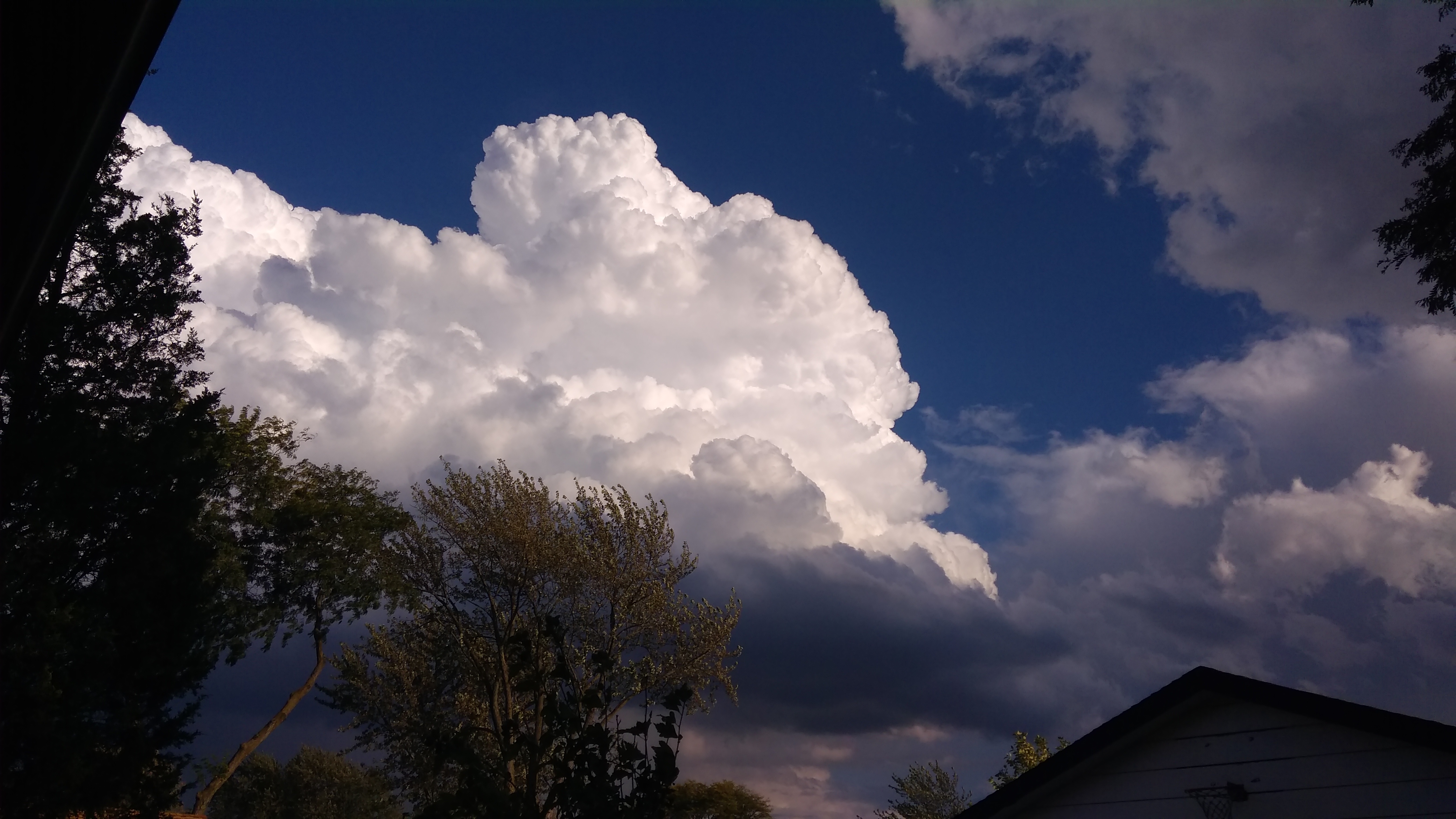
But I did have a few minutes in the afternoon to look up at the sky.

That’s to the southeast. The puffy mass was moving fast and left my view pretty quickly, replaced by grayer clouds that dropped some rain about 30 minutes later.

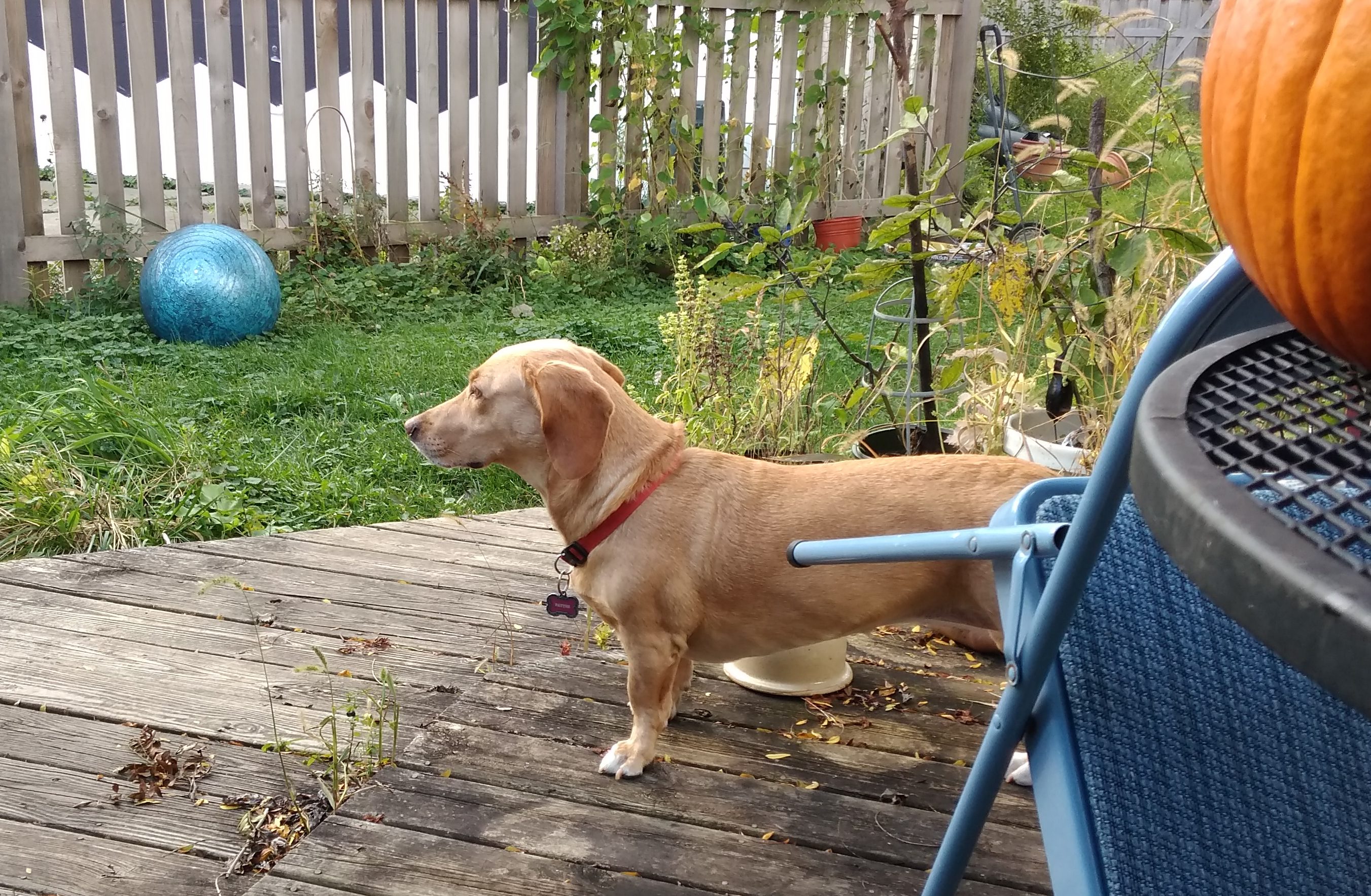
Does the dog care about the weather?

Who can say? But when the wind is up, she does sniff vigorously.

Early October Debris

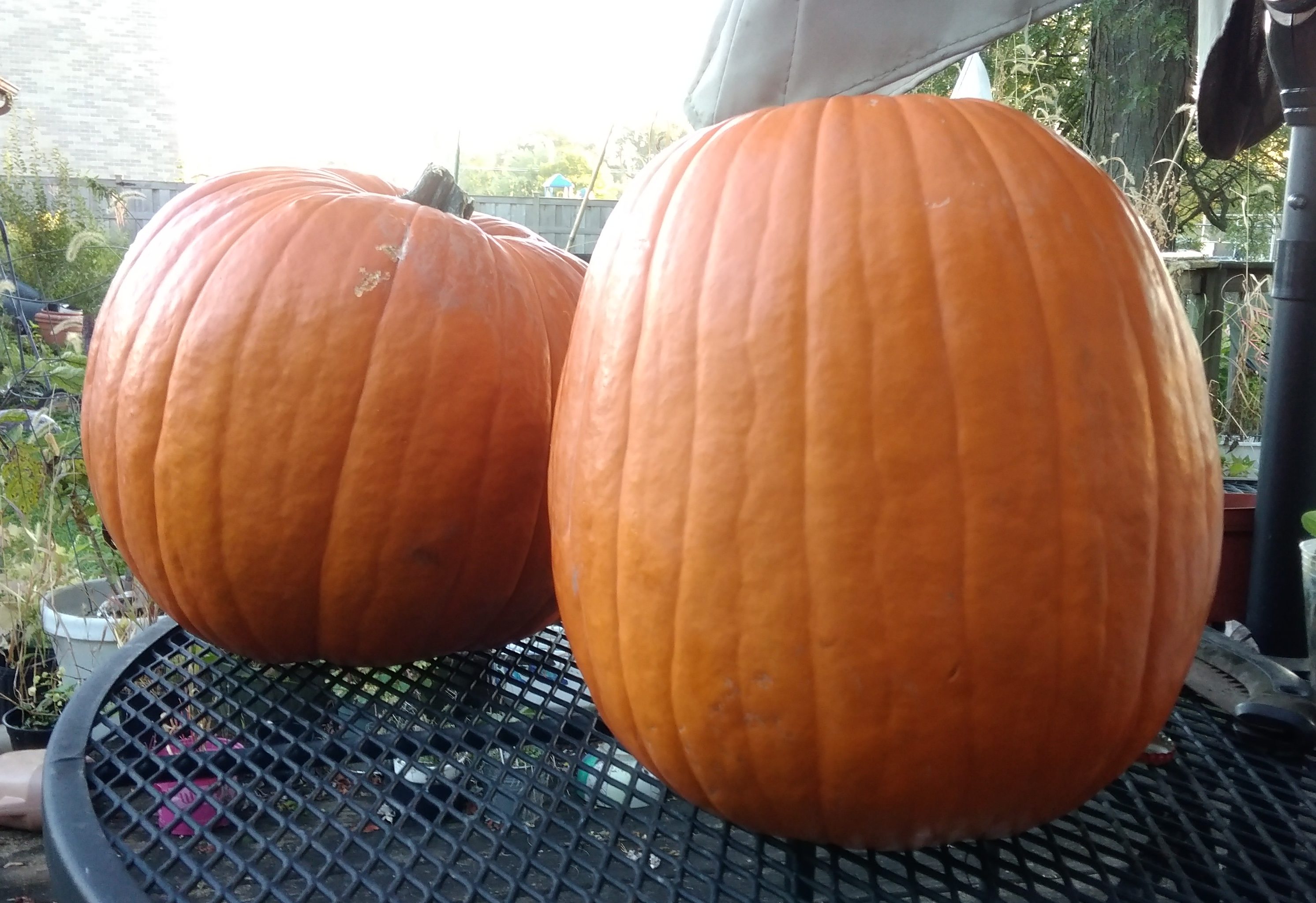
We acquired some pumpkins today.
For now they’ll be on the deck, at risk of squirrel attack. I suppose we’re aspiring to jack-o-lanterns, but the way things go, we might not do any cutting until October 30.

A recent press release I received said, in part: “_____ chewables are refreshing… tablets that ward off fatigue, foggy head and nausea.

“Using Japanese _____, an ancient detox extract with hangover prevention properties and anti-inflammatory effects, _____ also contains potent antioxidants that replenish lost electrolytes. They boost immune support, hydration and give your liver much needed love.”

That should be “much-needed love,” but I’m nit picking. Yet it’s true, we just don’t love our livers enough in this country. Think of all that the liver does for us, and what do we do to it (some of us, anyway)? Lacquer our livers with alcohol.

Even so, I decided to opt out of more mail from that source. I get a lot of email as it is.

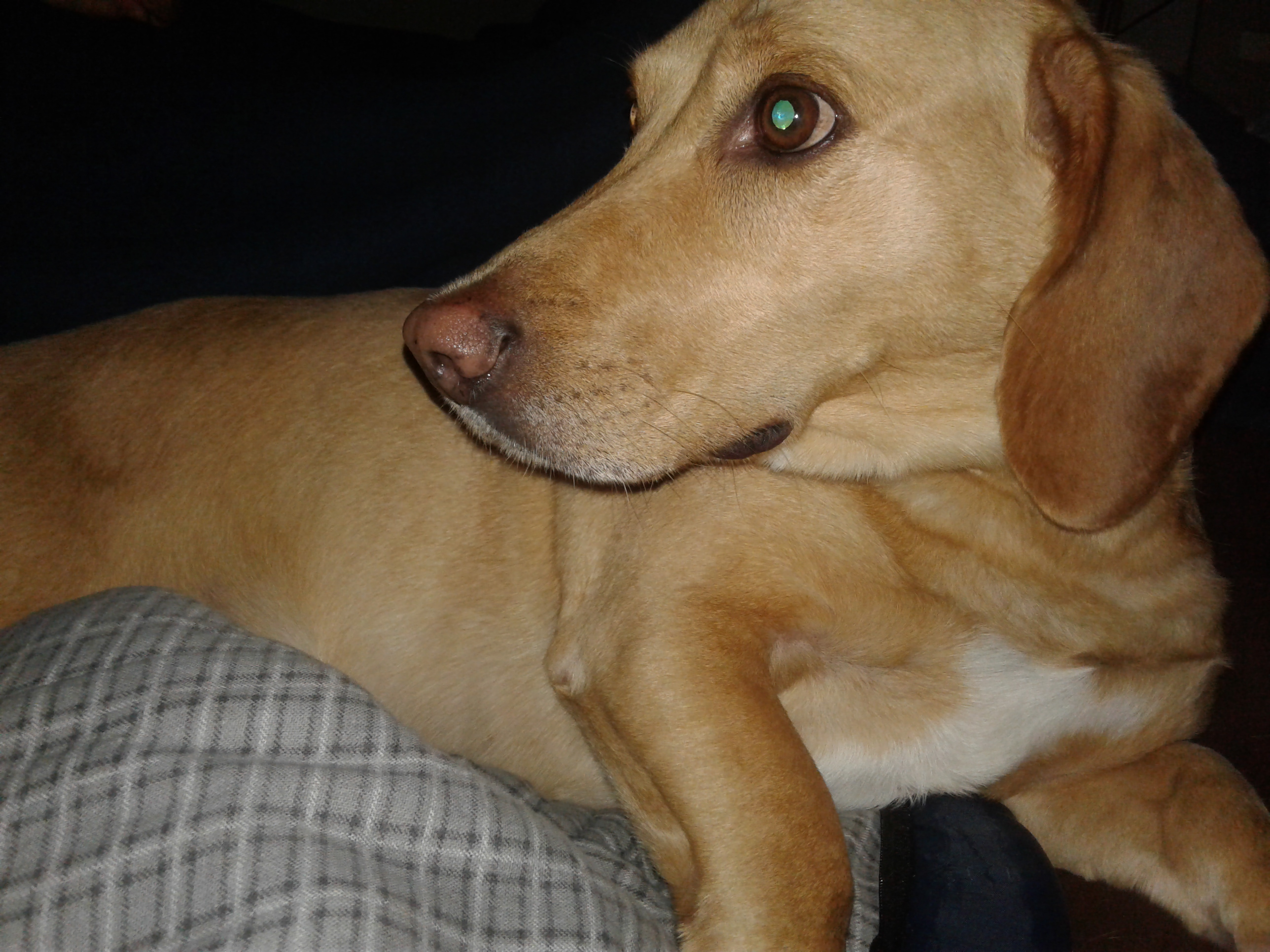
The camera does odd things sometimes.
That or I accidentally recorded the dog receiving a telepathic message from her home planet. It’s well known that such messages generate a fleeting green glow at the back of the eyeball.

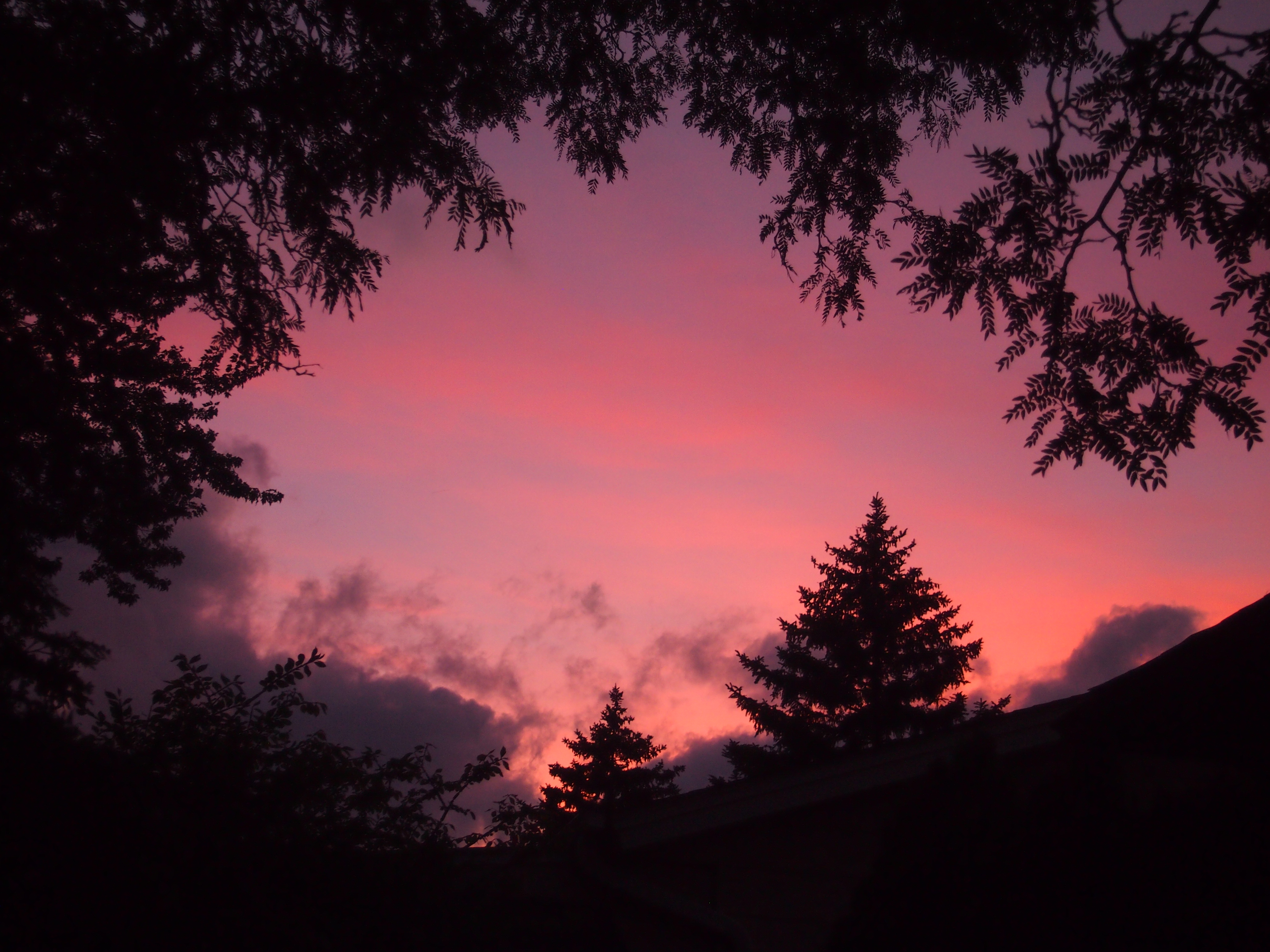
A recent dusk.

Not long ago I saw a rainbow at about the same time of day. I was able to tell Ann, “Rainbow at night, sailor’s delight, rainbow at morning, sailor take warning.” She’d never heard that. Modern education is pretty much a failure when it comes to weather proverbs. Or is it “red sky”? Both versions exist, as far as I can tell.

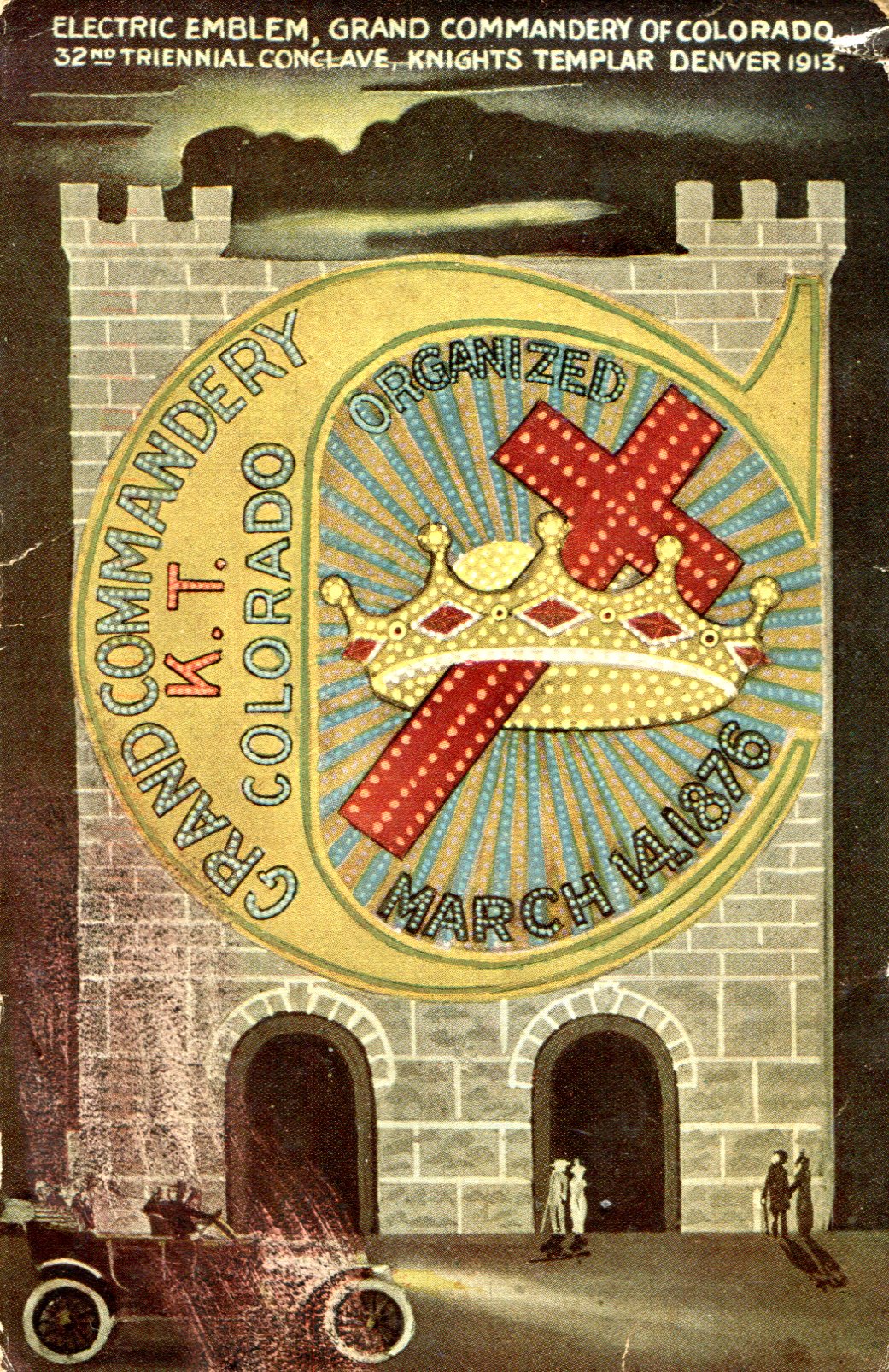
Electric Emblem, Grand Commandery of Colorado

Unusually warm and especially windy today. I would have spent more time on the deck, but the wind was distracting. That and dust was blowing in from the baseball field in the park.

I’ve seen people playing baseball there sometimes, even in recent weeks. But no peewee football in the park yet. That’s still going on as far as I know, despite concussion worries, and the occasional brawl among the parents.

I correspond by postcard with a handful of people. Sometimes I get delightful cards. This one from a correspondent in Tennessee is definitely that.

It depicts, according to the back of the card, the Electric Emblem, Grand Commandery  of Colorado (Knights Templar, who are still around). The card has a copyright date of 1913, which as far as I understand puts it in the public domain. Something so delightful should be.

My correspondent tells me the card was once owned by her grandmother in Arkansas, “a prolific card writer,” she says. Makes it even more special to get in the mail. Millennials have no idea what they’re missing by giving up on postcards.

The Rain of October 1

After dark yesterday, I heard the mild rumble of thunder off in the distance. Had rain been forecast? I hadn’t checked. Turned out, it was, and soon we got heavy rain that lasted an hour or so. Not much more thunder, though.

At about 9:30 I parked myself on the couch in the living room and listened to the pleasant rainfall. I had my audio recording device handy.

Then it occurred to me that my roof and walls were muffling the robustness of the falling water. So I got up — it was an effort — and stood just outside the front door for a short time.

The best version of rain-sound is between those two, achieved by opening a window during a heavy rain and listening from somewhere a little removed from the window. But I didn’t test this idea last night. Instead, I went back to the couch for a leisurely while.

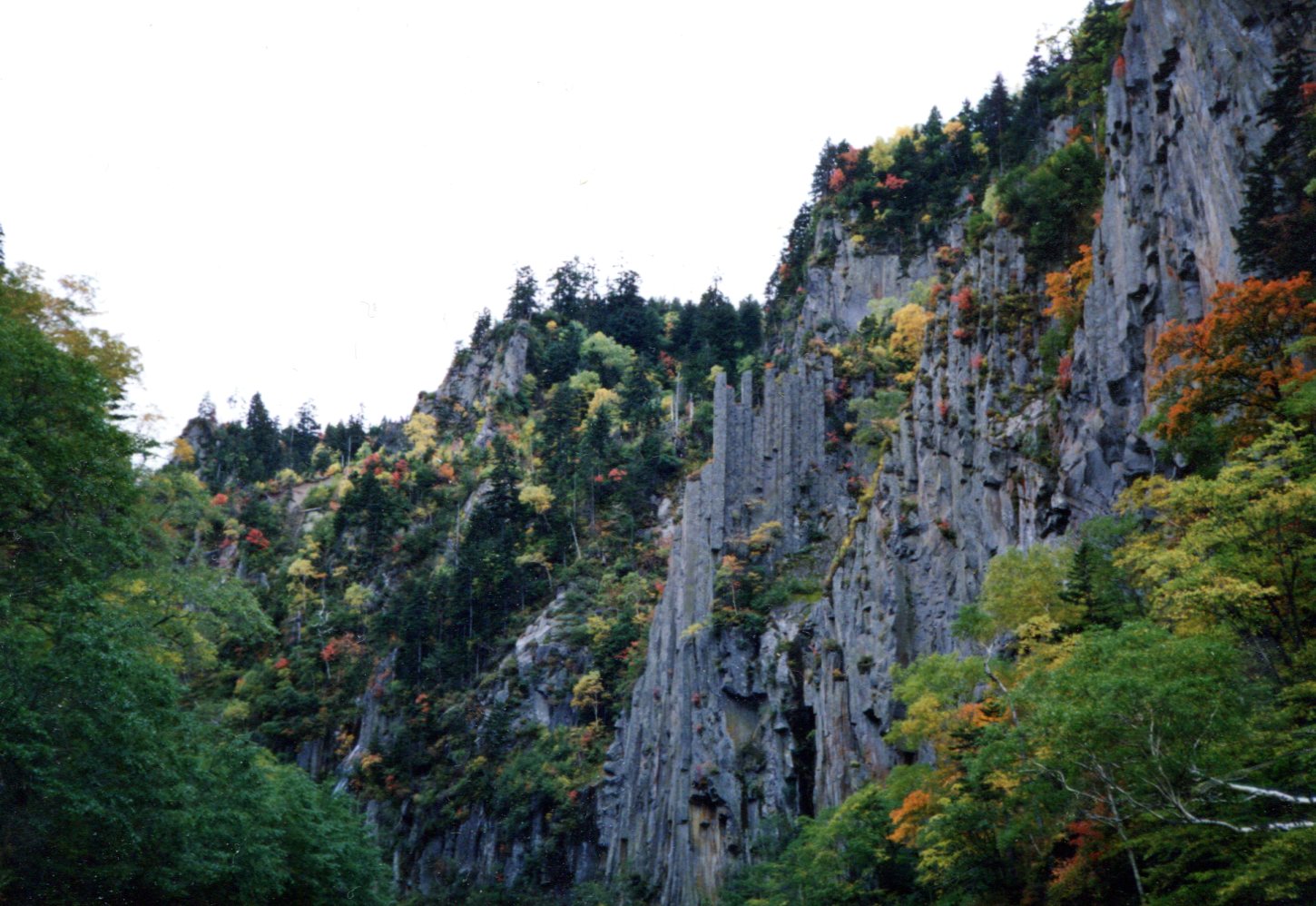
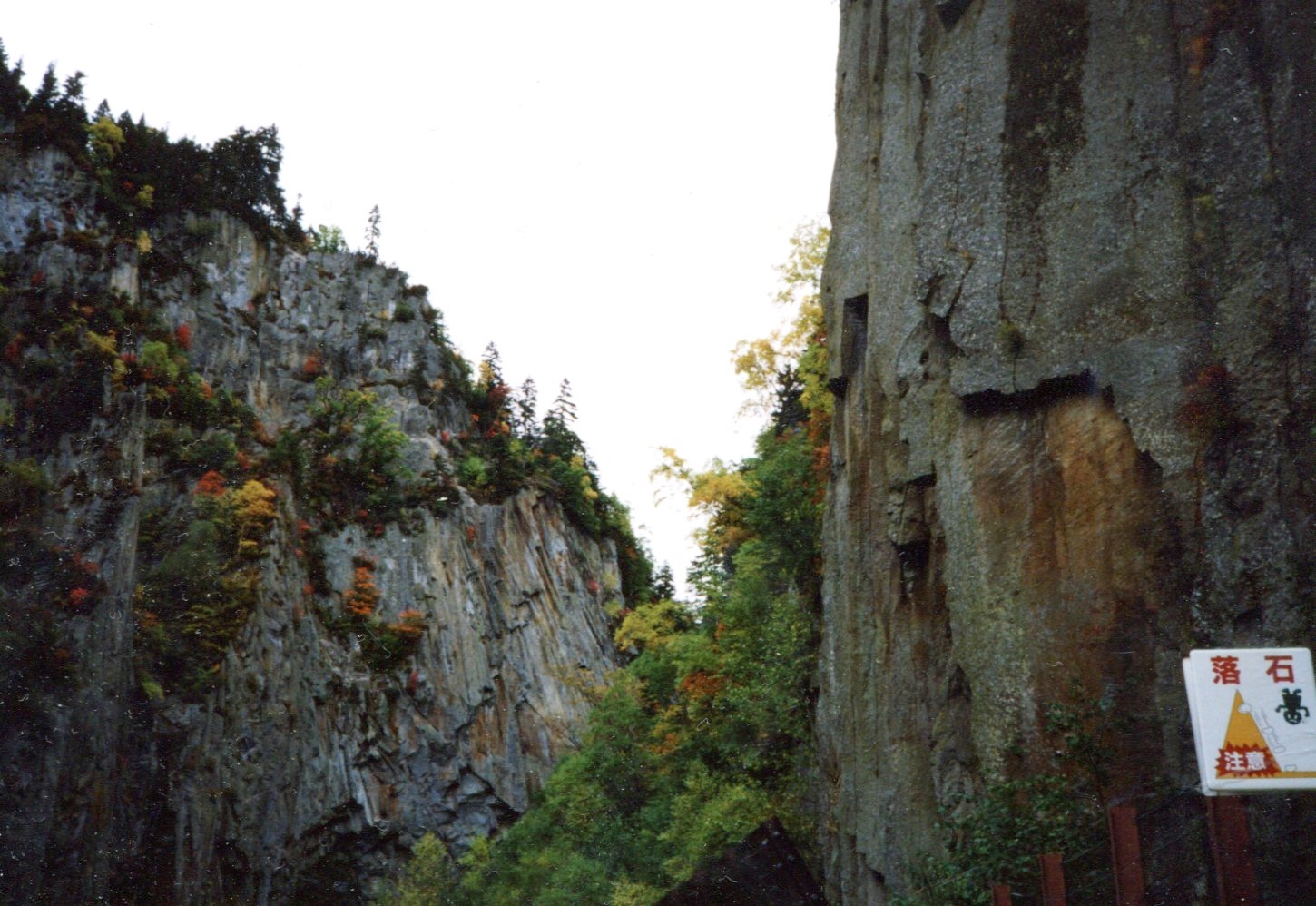
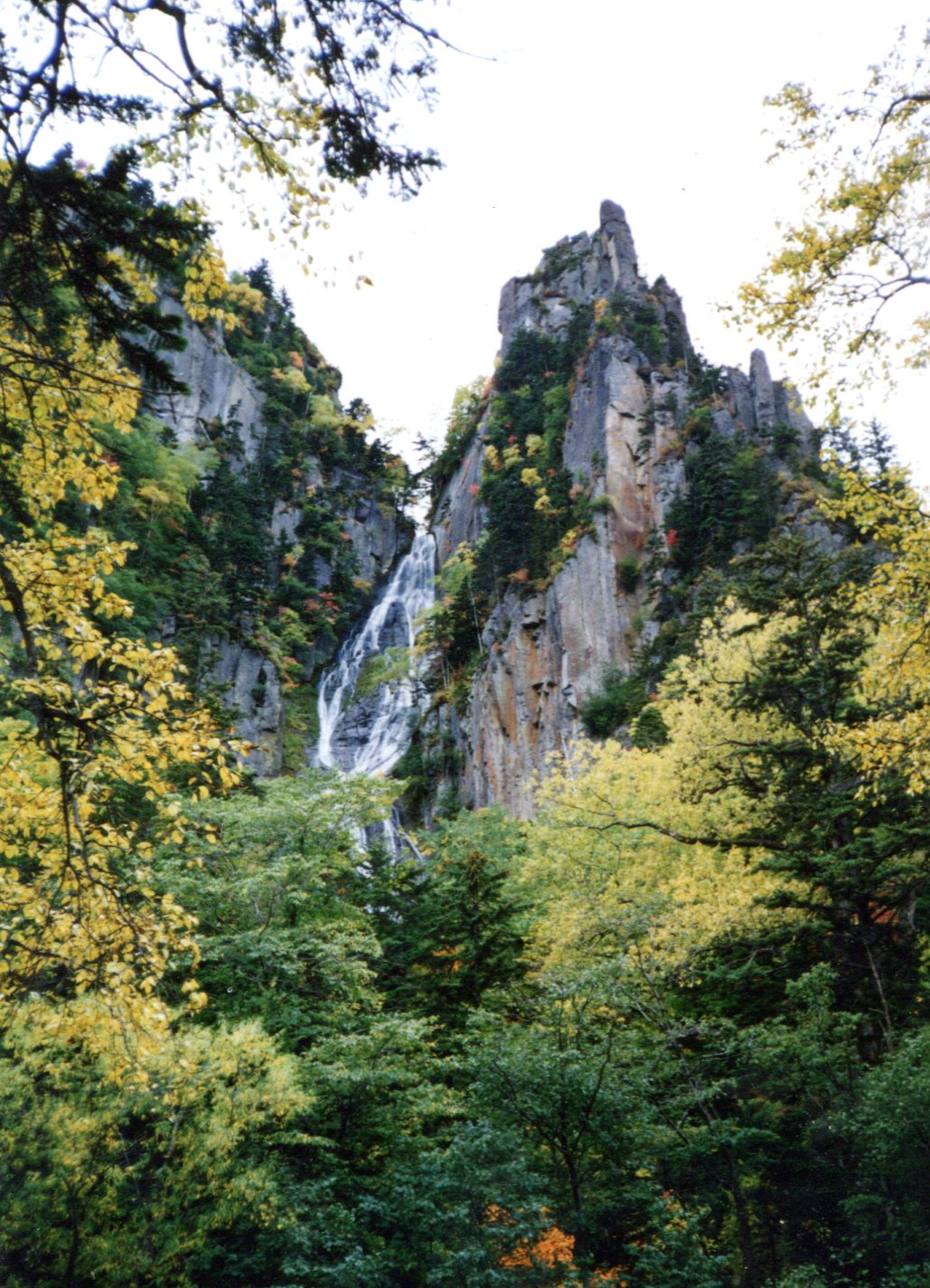
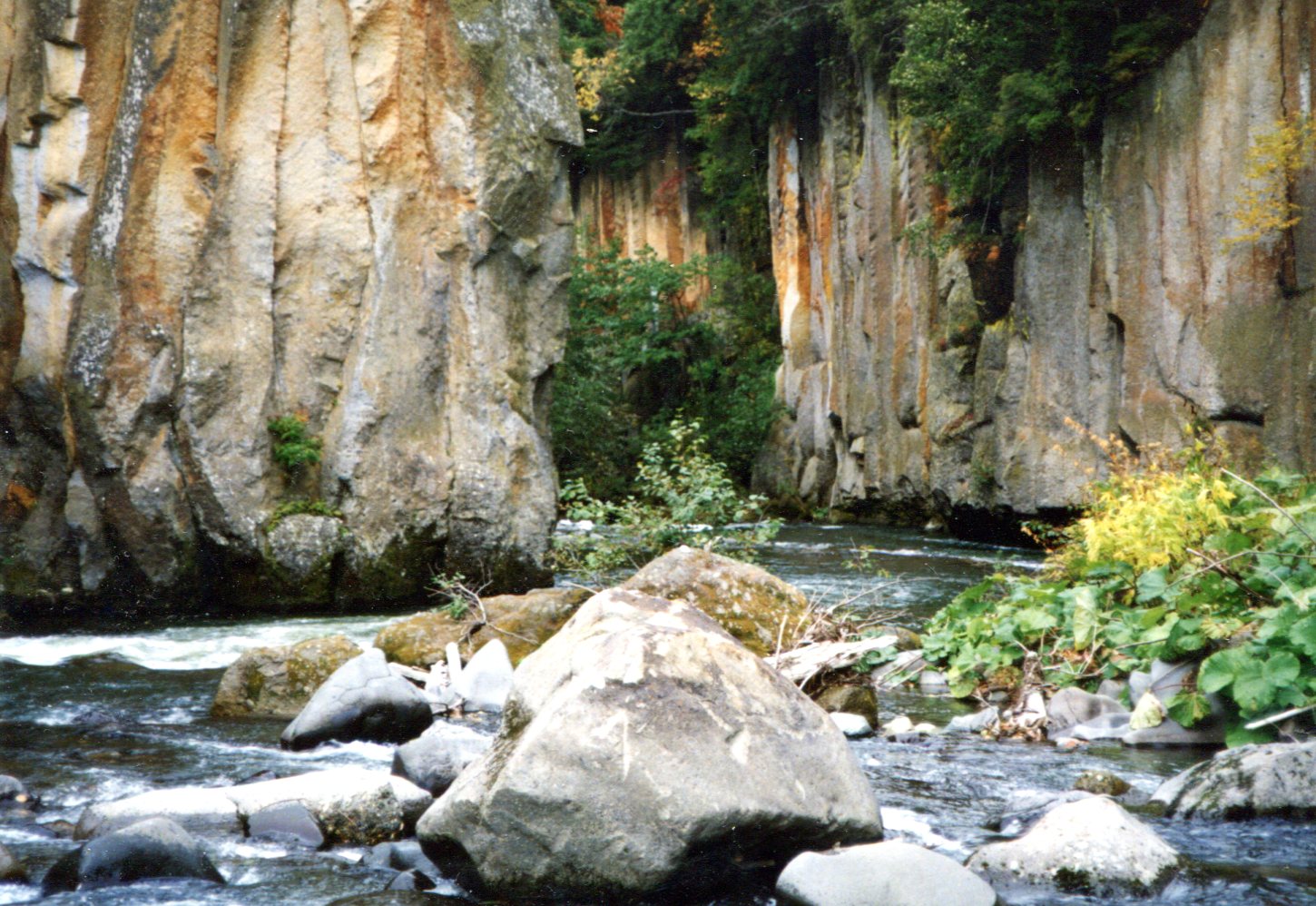
Sōunkyō (層雲峡), 1993

The usual markers of fall are here. Spots of yellow and other fall colors are appearing in the trees. Sometimes we use the heater to keep temps above 68 F during the day and 65 F at night, the non-summer settings. The days are notably shorter, but at least the Summer Triangle is still up. Orion is not. Won’t be long.

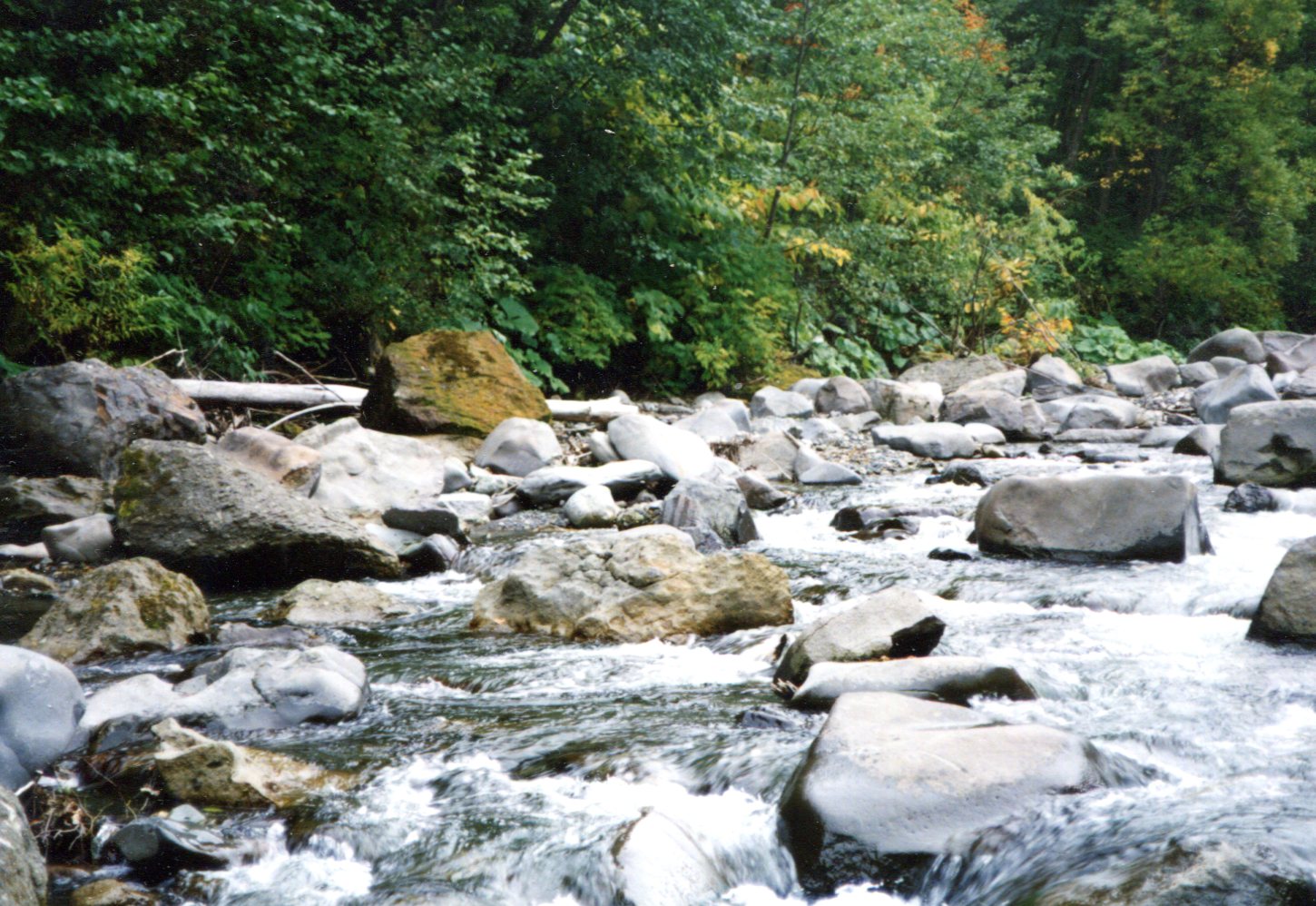
We visited Hokkaido in late September, early October of 1993, including Sōunkyō, part of Daisetsuzan National Park, and which is known for its gorges. The colors were autumnal.

October 4, 1993

Rented bicycles early and rode around most of the day. Went to O-dake and Ko-dake, two narrow gorges at some distance from the resort complex. Ko-dake was the best — a bike path runs through it, while the road, a little crowded with cars, is diverted through a tunnel.

The gorge walls are reams of gray rock, bristling with all-color foliage like wild beards. Saw an assortment of waterfalls en route, including a multi-stream cascade.

Ate roasted corn on the cob and ice cream, two regional specialties, at the wayside shacks of O-dake. 

The fall colors… throughout this part of Hokkaido equal in variety and mass anything I’ve seen in autumn excursions in East Tennessee or New England.

Recent Sounds

I take my digital audio recorder some places that I go — I’m resisting the temptation to call it a “tape recorder” — and sometimes to step outside the door and record the ambient sounds.

Such as outside my mother’s house in San Antonio last month. The birds were a lot livelier than in the cold Illinois I’d left, and the selection of birdsong somewhat different, though I can’t pinpoint the exact differences.

In Marathon, Texas, late last month the wind blew much of the night and into the morning one day. I captured 20 seconds of it, but it went on without much pause for hours.

The spring rainstorms in northern Illinois have been numerous and loud recently. This is what I heard from my front porch about 24 hours ago.

The rain had stopped by the morning and the sun dried up a lot of the puddles today. But not everywhere. The back yard is still marshy.

Sure Signs of Spring

Not long ago, a colorful lawn care truck showed up on my street.

The driver had work to do that didn’t involve my lawn, which in this image is my own modest field of cloth of gold. Imagine if no one poisoned their dandelions: the suburban lawns would burst out glorious gold and then white for a couple of weeks in the spring.

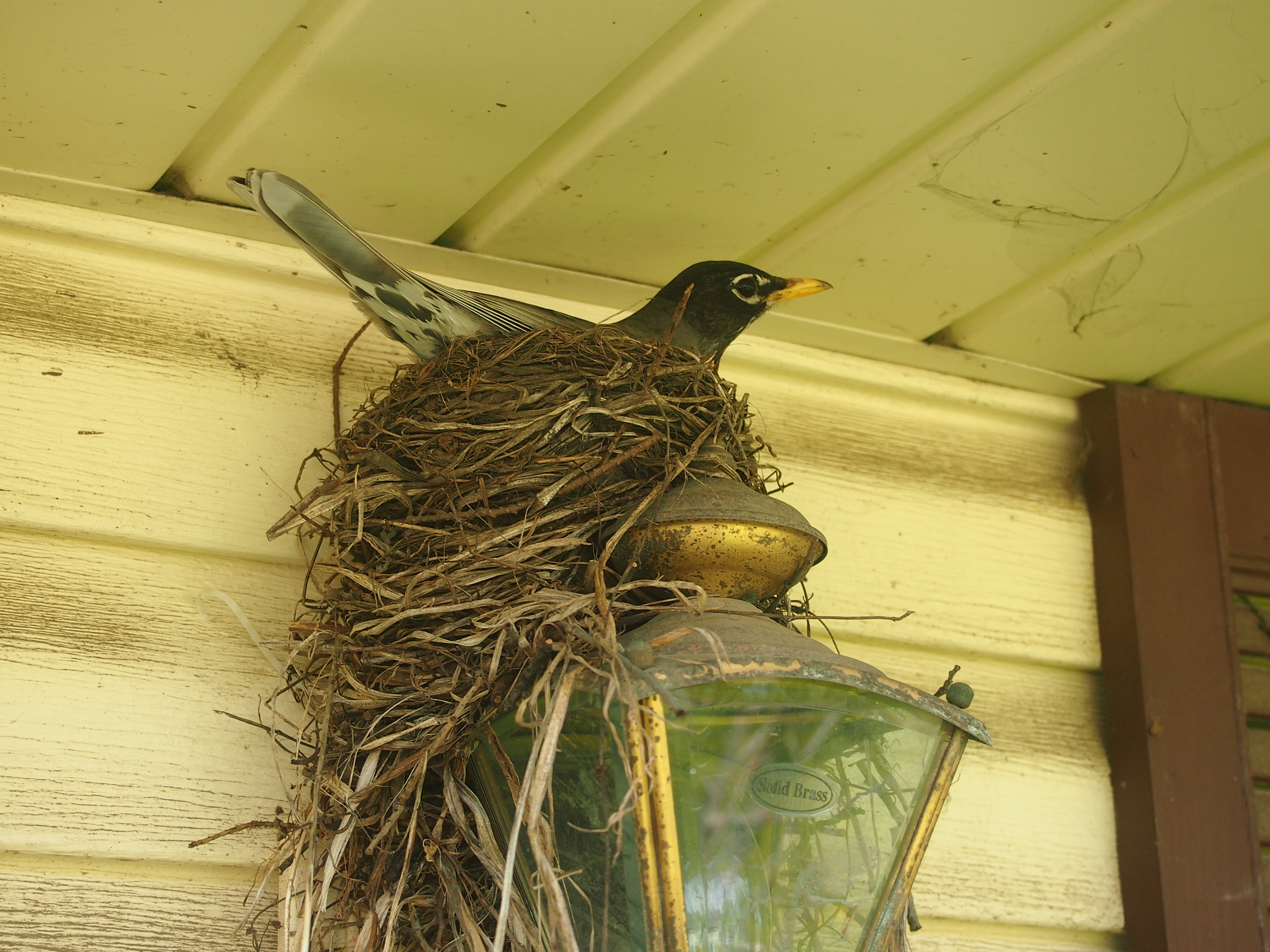
Also in our front yard, perched atop a nest built on one of our exterior lights: a robin.
These cool days lately she’s been sitting on her eggs constantly. I assume there are eggs there. I won’t disturb the nest to find out.

The duck that nested two years ago in the back yard never has returned. The robin nesting on the basketball hoop that year might be the same one in a new location, though who’s to know? I’m glad to see the robin this year anyway.

The McDonald Observatory

He died a good many years before I was born, and in fact I’d never heard of him until last week, but I have to like William Johnson McDonald of Paris, Texas. In life, he made a considerable fortune, but that’s not his distinction. Rather, in death McDonald left behind money enough to found the McDonald Observatory in far West Texas.

That’s a fine use for the fortune of a childless man. Maybe McDonald would look into the night sky there in Paris — and it was probably still pretty dark in that town in the early 20th century — and think that mankind needed to find out more. Build better telescopes, see further.

In full, the facility is the University of Texas at Austin McDonald Observatory, completed in 1939 and which now has telescopes on Mount Locke and Mount Fowlkes, near Fort Davis. Unlike Big Bend, I wanted to visit the observatory when I was young. That was the kind of youngster I was. In the spring of 1979, I think, a high school friend and I wanted to go, but found out there was a six-month waiting list. Or at least that’s what I seem to remember happened. We shelved the idea.

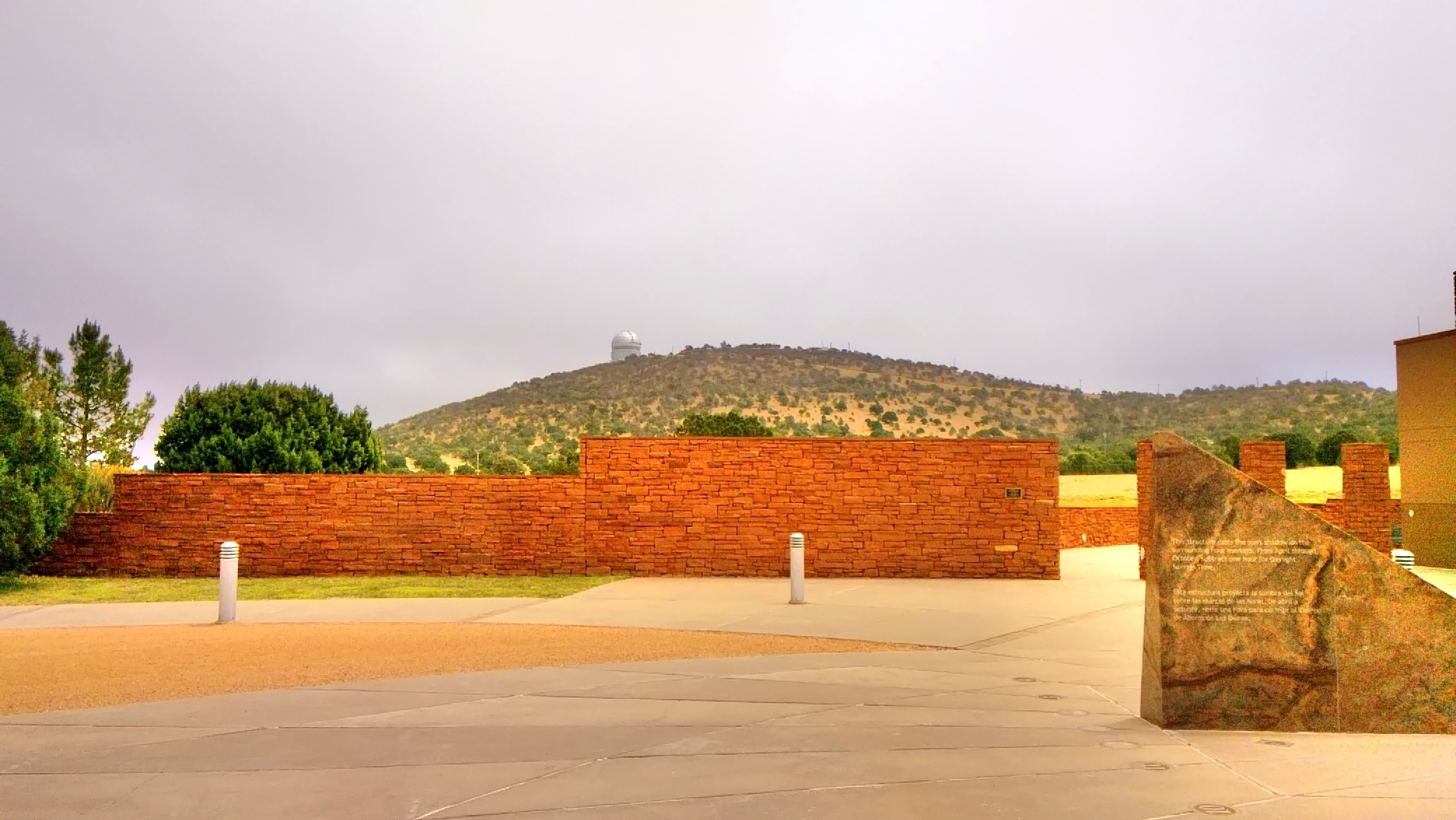
So for me it had to wait until the spring of 2018. The day after I visited Big Bend, I drove from Marathon to Fort Davis and then up the winding two-lane road into the mountains. Actually, pretty much every road in West Texas has two lanes, except I-10, but anyway I arrived at the observatory in time for the 11 a.m. tour, which is supposed to include a look at the two major telescopes and a look through one of the smaller scopes at the Sun.

Except that the Sun wasn’t to be seen. After clear skies and temps near 90 F. the day before, a front blew in overnight. When I went to bed that night, my room at the Marathon Motel & RV Park was about as dark and quiet as a place can be. Occasionally a train would roar by, which was pretty loud but not that often, and from time to time, dogs barked in the distance. That was it.

I woke at 4 or 5 a.m., while it was still very dark, to a constant whoosh of wind outside. Not the winds I’m used to at home, which can be loud and strong, but tend to subside for a few minutes at a time. This West Texas wind was constant. I fell asleep to it, and a few hours later, at dawn or so, it still was blowing with the same intense regularity. A little more sleep — that’s how I tend to sleep — and after that, the blow was still blowing the same.

With the wind came clouds, a little drizzle and much cooler temps. By the time I got to the observatory, I was in some clouds. So much fog that at first I could barely see the observatory buildings.

Instead of a look at the Sun, our guide showed us images of the Sun in the visitors center’s small auditorium, and talked about it and other stars. He was an informative young man, an astronomy enthusiast who happened to get a job in public affairs at McDonald. As usual with these things, I already knew a fair amount, but not everything.

I didn’t know, for instance, that UY Scuti is now the largest known star, at about 1,700 times larger than the Sun’s radius and 21 billion times the volume. Enough at least to engulf the the entirety of Jupiter’s orbit. Luckily, it’s at a safe distance of 9,500 light years or so. A near neighbor in galactic terms, but not really that near.

The tour first took us to the Harlen J. Smith Telescope, named after the observatory director who oversaw its construction. The scope is under the dome at some distance from the visitors center.
Under the dome, it’s a commanding presence.
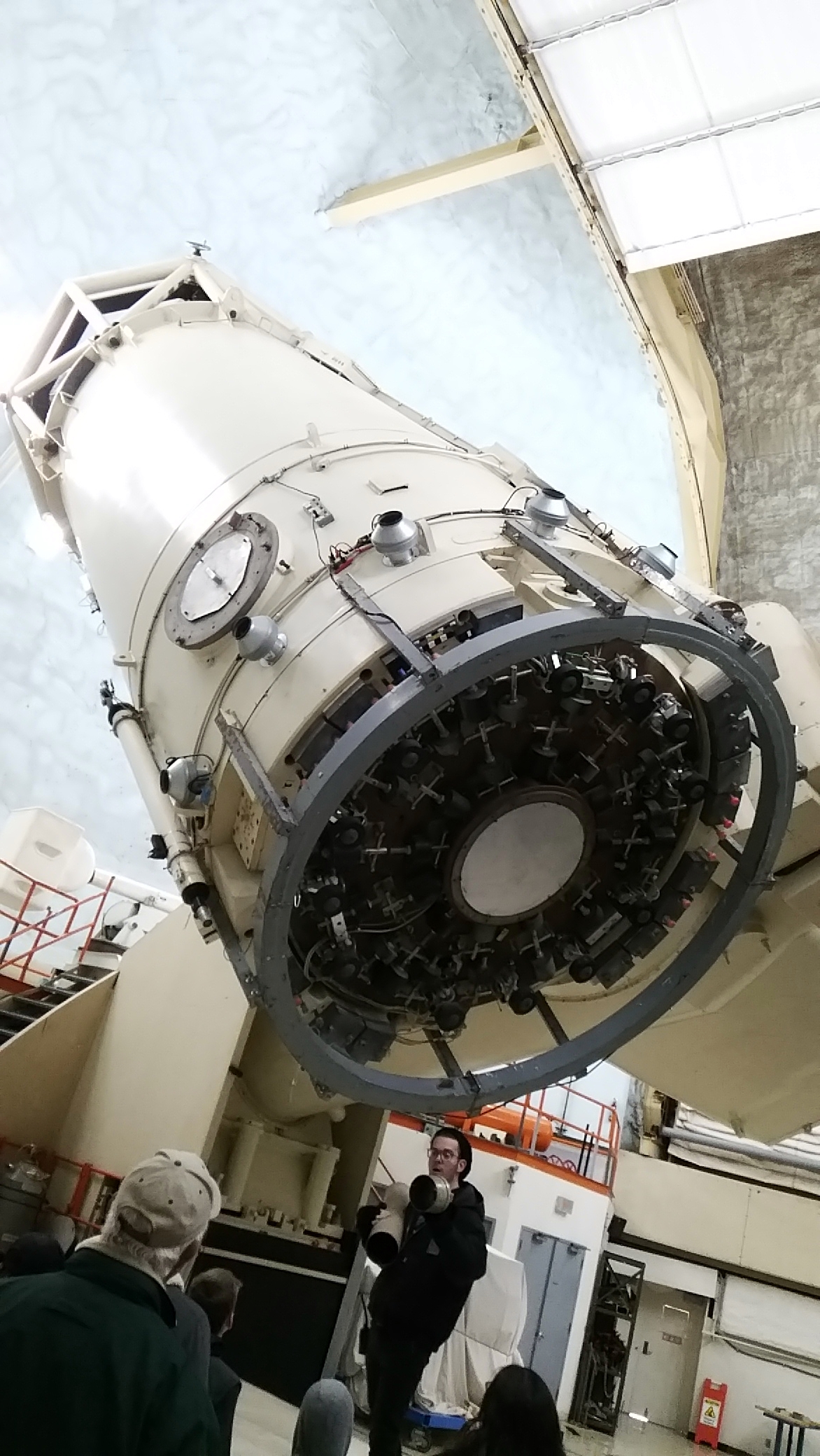
The instrument was a creation of the space race. “McDonald Observatory’s new director, Harlan J. Smith… convinced NASA to build one of those new telescopes at McDonald,” the observatory web site says. “The telescope brought new life and prestige to the observatory, helped recruit top young faculty members, and established McDonald as key player in the exploration of the Solar System.

“Planning began in 1964, and construction was completed in 1968 on Mount Locke. Built by Westinghouse for about $5 million, the new telescope was then the third largest in the world. Weighing in at 160 tons, it had a fused silica mirror 107 inches (2.7 m) wide that gave it a light-gathering power one-quarter million times greater than the unaided eye. It began regular observations in 1969.”

The Harlen was also where a laser was first set up to bounce a beam off the reflector that Armstrong and Aldrin left on the Moon, measuring the distance between Earth and Moon down to some ridiculously small (in inches) margin of error. If that’s not a cool factoid, I don’t know what is.

The final stop was at the Hobby-Eberly Telescope, completed in 1997, which is under this dome.
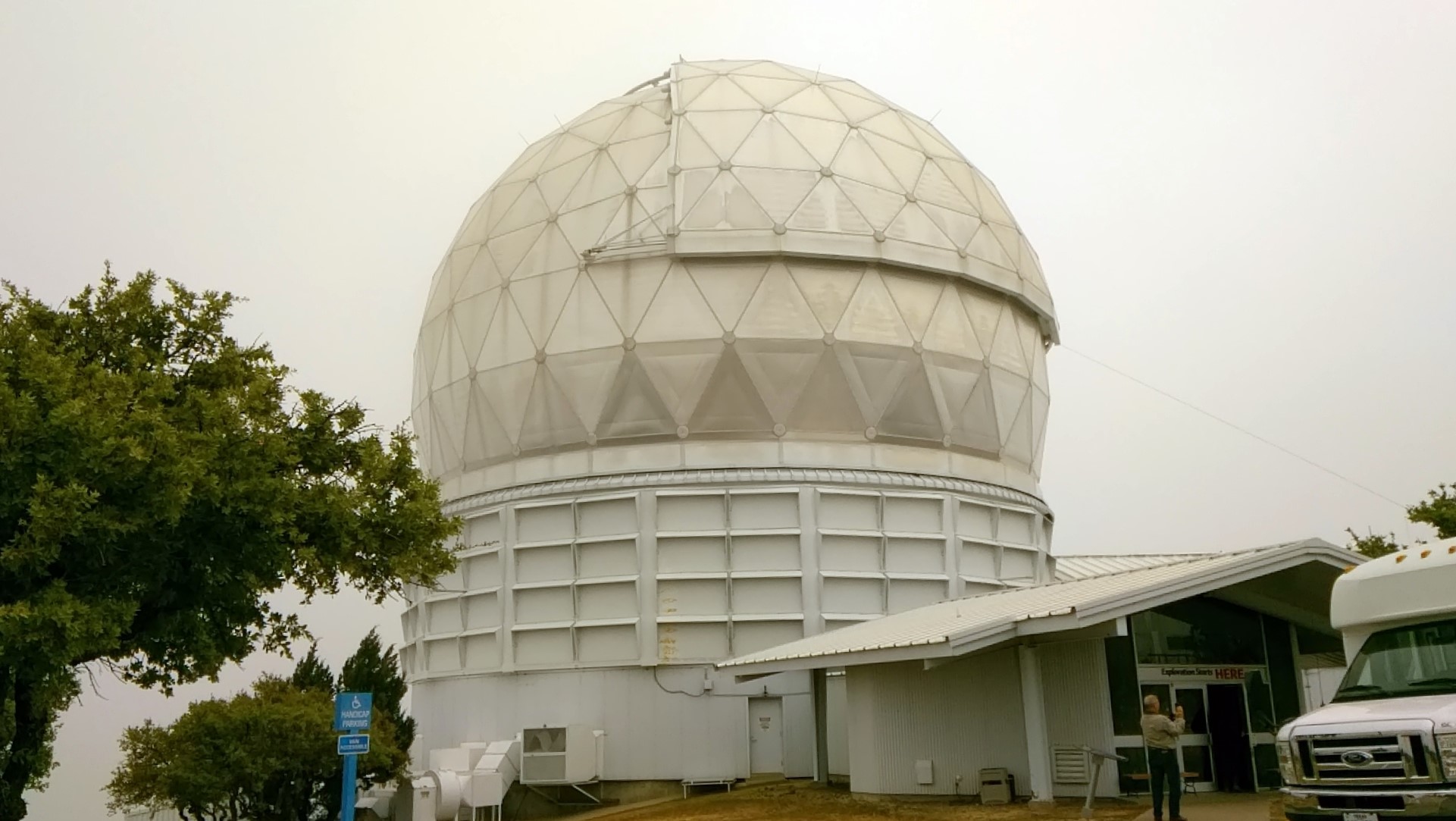
“It was designed specifically for spectroscopy, the decoding of light from stars and galaxies to study their properties,” the observatory says. “This makes it ideal in searching for planets around other stars, studying distant galaxies, exploding stars, black holes and more.

“The telescope’s mirror looks like a honeycomb. It’s made up of 91 hexagonal mirrors. To make good observations, the 91 segments must be aligned exactly, to form a perfect reflecting surface. The mushroom-shaped tower to the side of the HET dome contains a laser-alignment system that works to keep the segments in proper alignment. The mirror segments form a reflecting surface that is 11 by 10 meters.

“However, the HET is known as a 9.2-meter telescope because that’s how much of the mirror is actually in use at any given time. This makes the HET, scientifically speaking, the third largest telescope in the world.”

As I was leaving, the Sun came out. The afternoon cleared up and the night was fairly clear back in Marathon. Hope the astronomers got to collect their data from the dark West Texas sky that night.
Mid-February Natterings

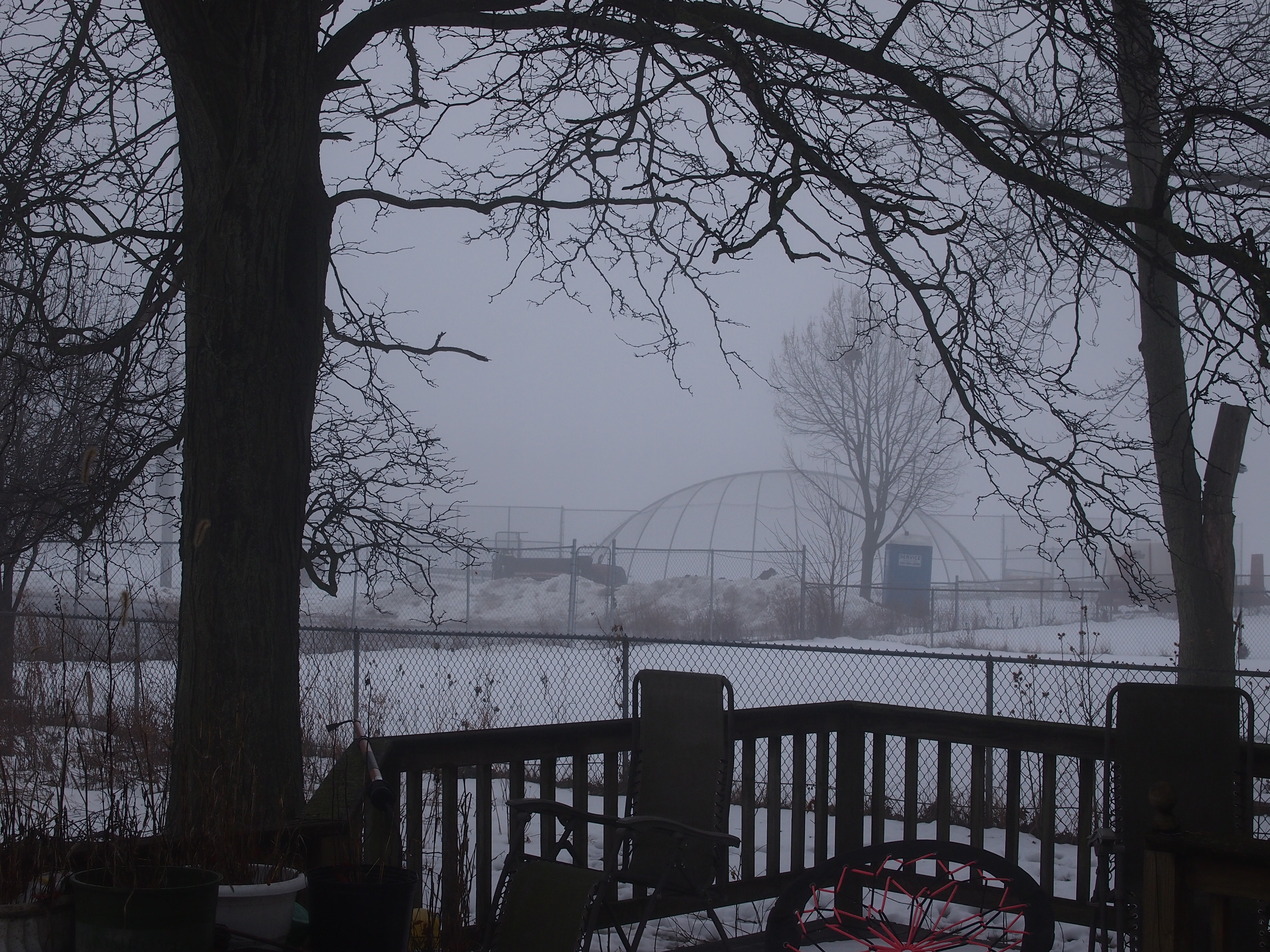
Remarkably foggy day Thursday.
Above freezing, too, reducing the snow cover and making random puddles.

Reading a book about Lincoln’s assassination puts me in a counterfactural frame of mind. Not so much What If Lincoln Lived — a lot of consideration has been given to that — but what would have happened to Booth had he capped his murderous impulse that day, and not gone through with it? What would have happened to him?

I picture him living into the early 20th century, since he was only in his mid-20s in 1865, a star of the American and European stage in the pre-movie years, so he was mostly forgotten by later generations. He did have a small part as an elderly wise man at the court of Cyrus the Great in D.W. Griffith’s Intolerance (but nothing in The Birth of a Nation, which was never made). Also, one of Booth’s sons founded Booth Studios in the early 1900s, which was later acquired by MGM.

In his memoir, published in 1899, Booth confessed that he had a strong impulse to murder Lincoln right at the end of the war, and was glad he never acted on it.

Got a form letter from the chancellor of the University of Illinois the other day. Let’s call it a worrywart letter. It seems that the public houses in old Champaign-Urbana are encouraging students, perhaps tacitly, to celebrate St. Patrick’s Day in a blotto state of mind. The university frowns on such goings-on and wants me to know it will do what it can to educate the students about the perils of demon rum. Or more likely in this context, whisky.

Not that alcohol isn’t a form of poison, with risks. I expect that a handful of students manage to off themselves across the years under its influence, mostly via reckless driving. But do I need a form letter about this?

Dog in Snow

Sure enough, a lot of snow fell Thursday night into Friday morning. Maybe a foot. But it was no blizzard, and no big deal. Even the side street on which I live was cleared by Friday afternoon. A little more of the same fell Saturday morning and then much more on Sunday morning. More shoveling and that was cleared too.

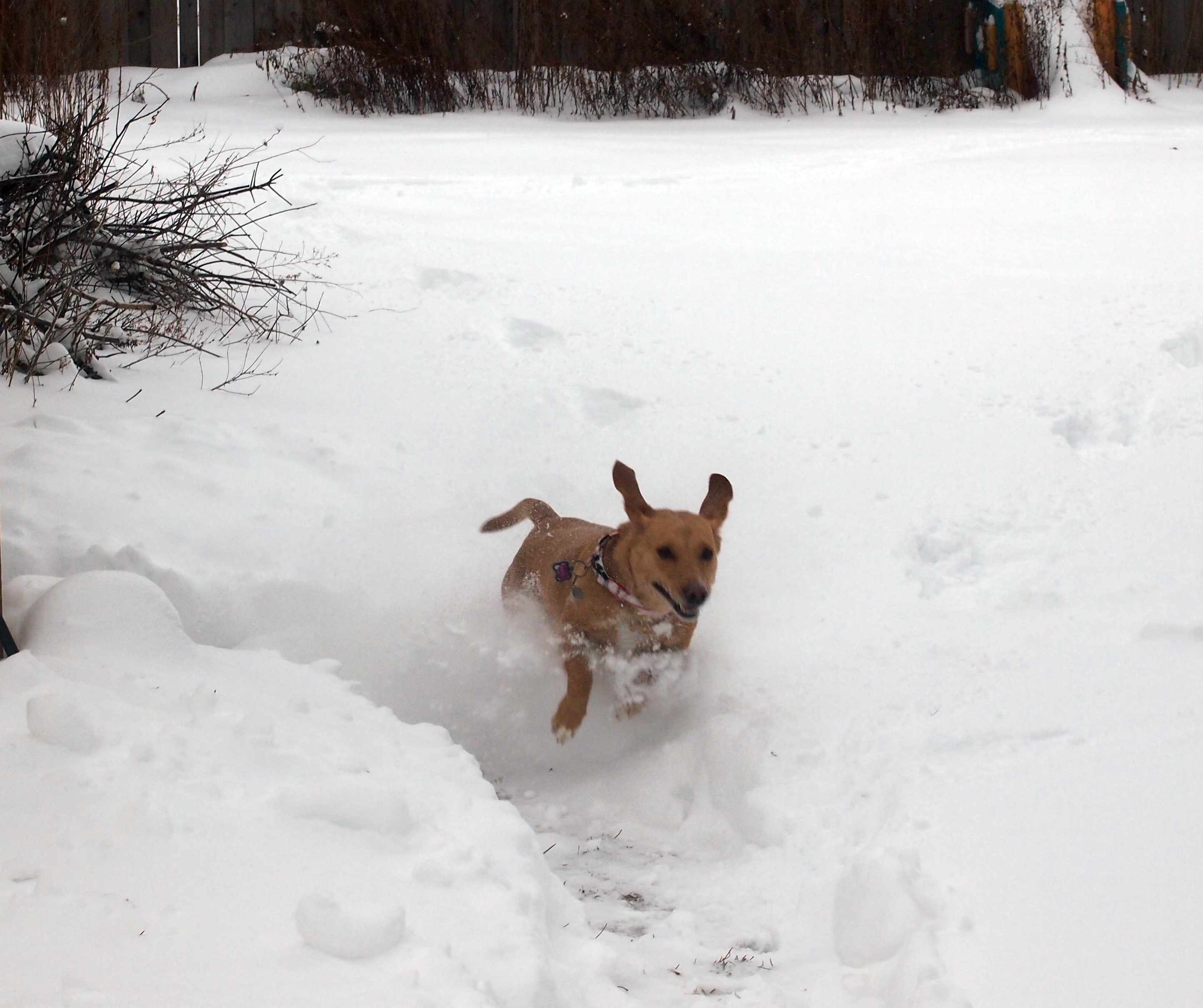
For the dog, this much snow means romping around in the back yard.

Every time it snows this much, a truck comes to clear the blacktop next to the school behind the house. Why this was necessary Friday, when school was cancelled, I don’t know, but anyway the dog rushes to the back fence to bark at it. And then along the fence as it drives nearby.
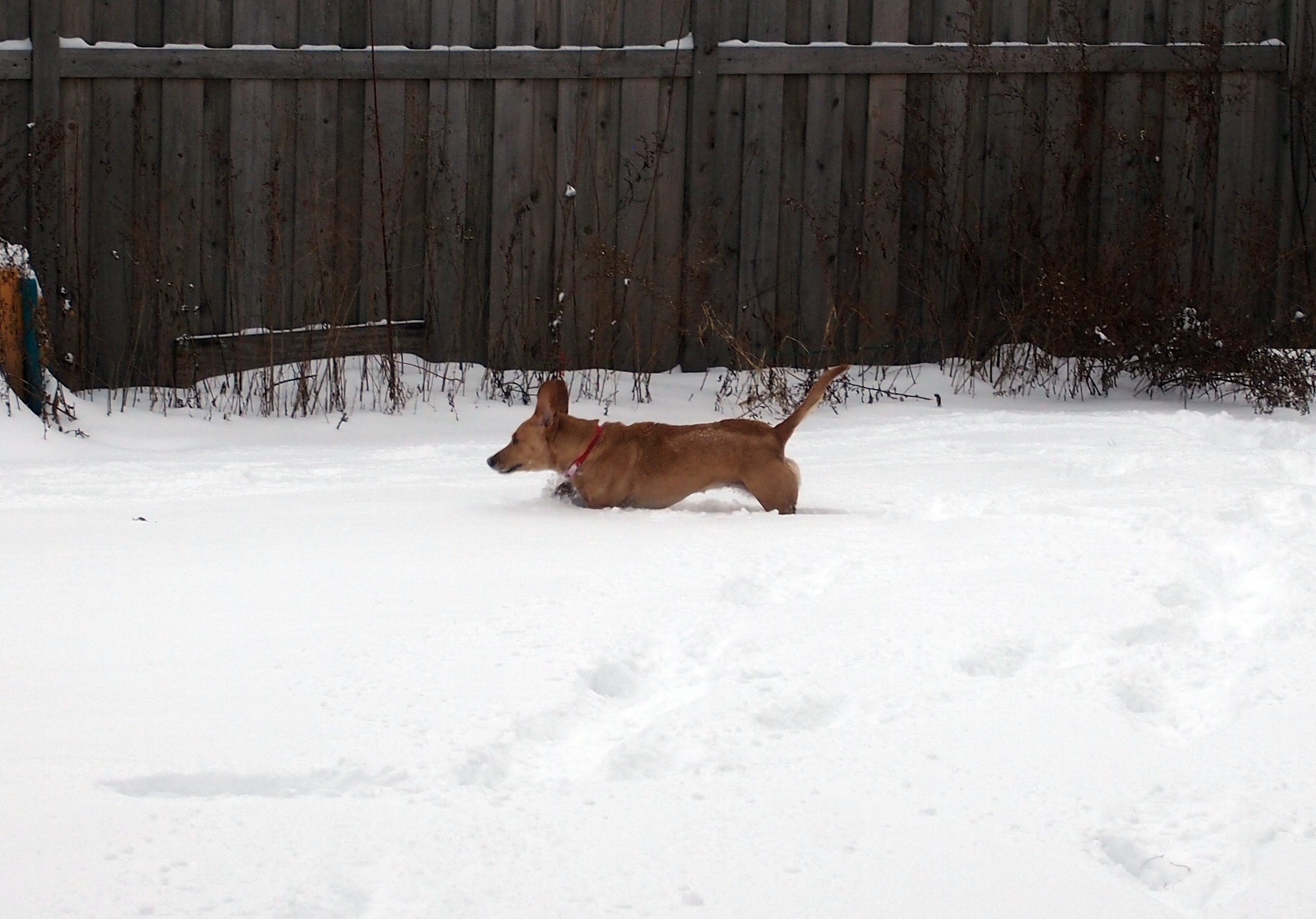
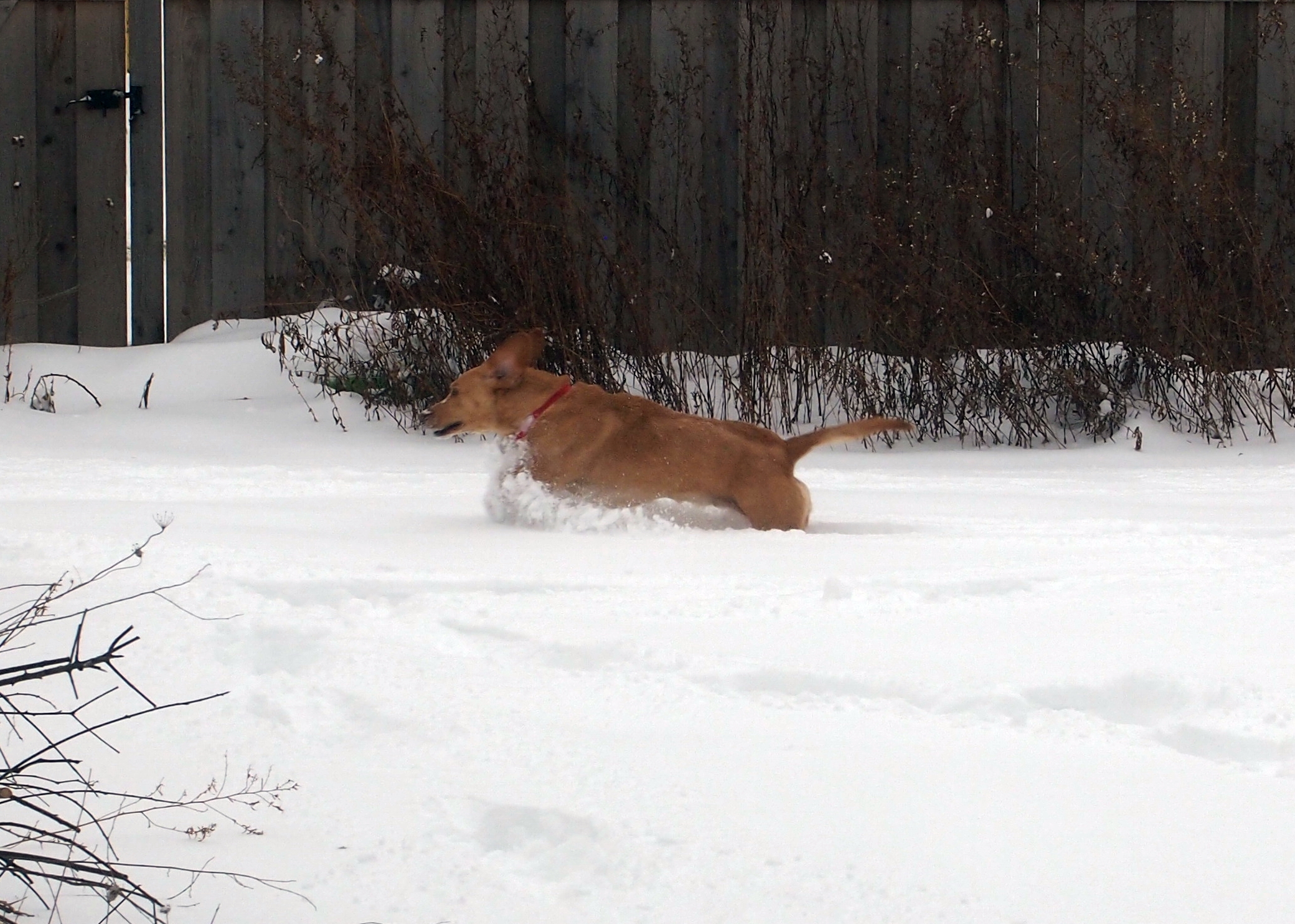
From the point of view of the dog, this must be effective. The truck goes away before long.