Fireflies, Cicadas, Crickets and Bops

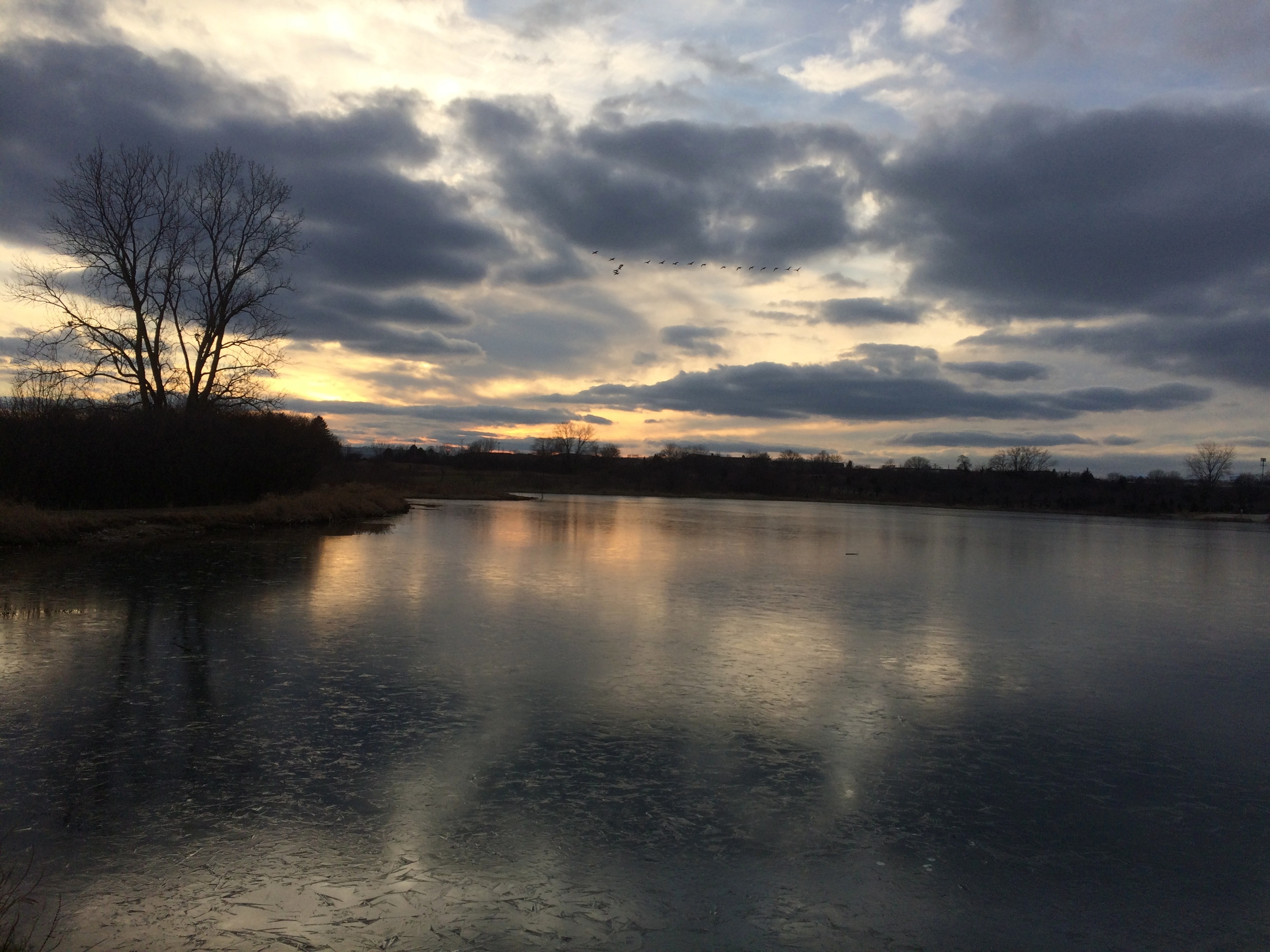
Late July is that rare moment here when the fireflies haven’t quite gone away, and the cicadas and the crickets have both started their noisemaking. The crickets are just beginning and not so loud, but the cicadas are reaching for peak loudness, which tends to be in August.

Got a lot to do. Time for a high summer break. Back to posting around August 7.

I was really glad to find this again the other day. It hasn’t been on YouTube in a long time, but it’s on Vimeo.

The Three Little Pigs – Three Little Bops from Rudolf Second Channel on Vimeo.

A cartoon of great charm that I don’t remember ever seeing as a kid. Maybe afternoon TV program directors thought the jazz off-putting for kids, or maybe there was some copyright issue. Anyway, enjoy it while it’s available.

Jerome Huppert Woods

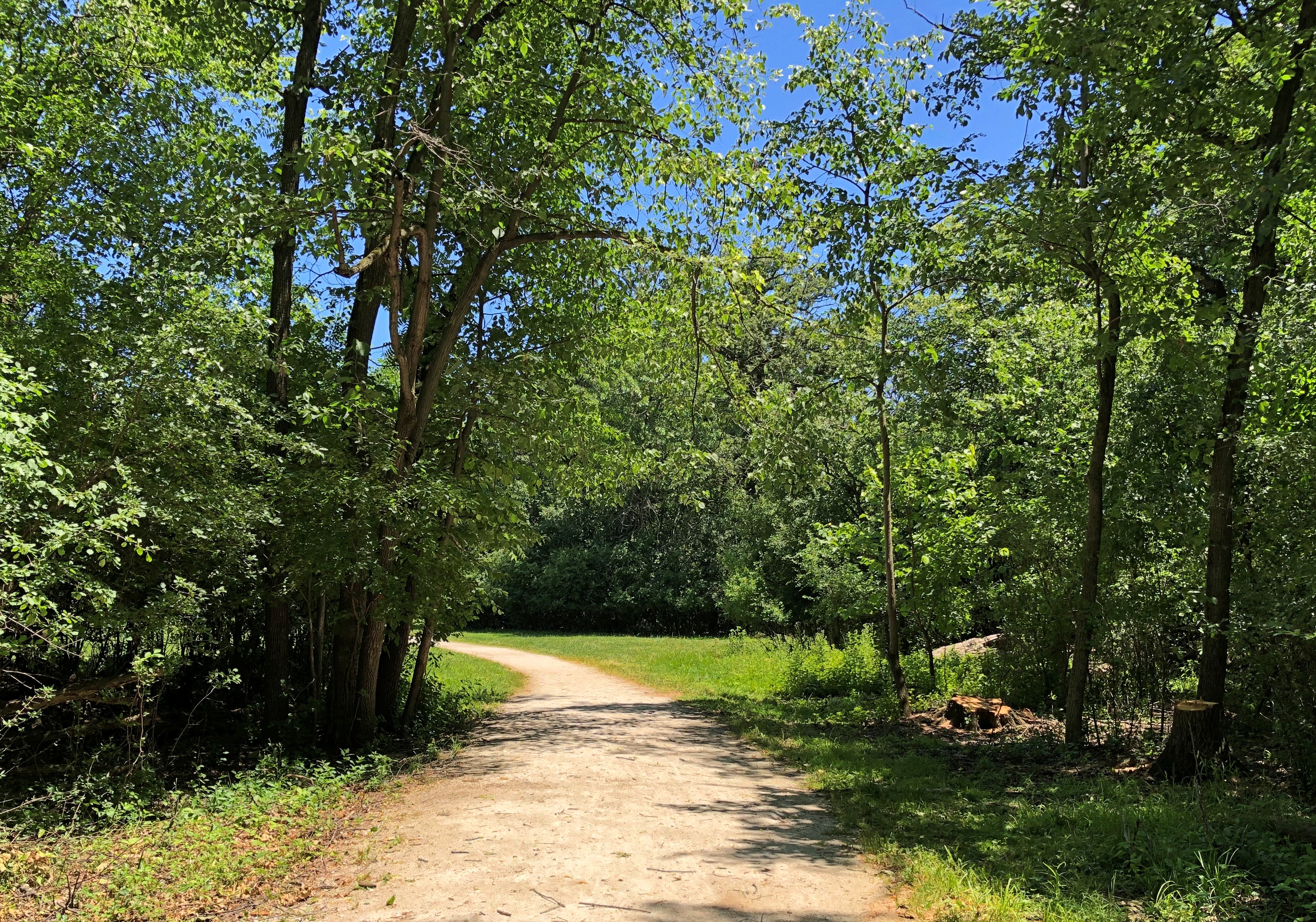
As forecast, temps didn’t break 80 degrees F. on Saturday. A good day to hit the trail.Jerome Hubbert Woods

A trail, anyway. The one we hit happened to be the Des Plaines River Trail, which parallels the river of that name, on a short section through Jerome Huppert Woods. The place might be named for this man, a casualty of WWII. How many Jerome Hupperts have there been? He was from Wisconsin, so that would be a little unusual, but hardly impossible.

The woods are a small slice of undeveloped land along the river. My guess would be that the Cook County Forest Preserve District was able to acquire most of the land along the Des Plaines because it is prone to flooding. A little further from the forest preserve land at that point, the suburb of River Grove surrounds the area, and it’s fully developed.

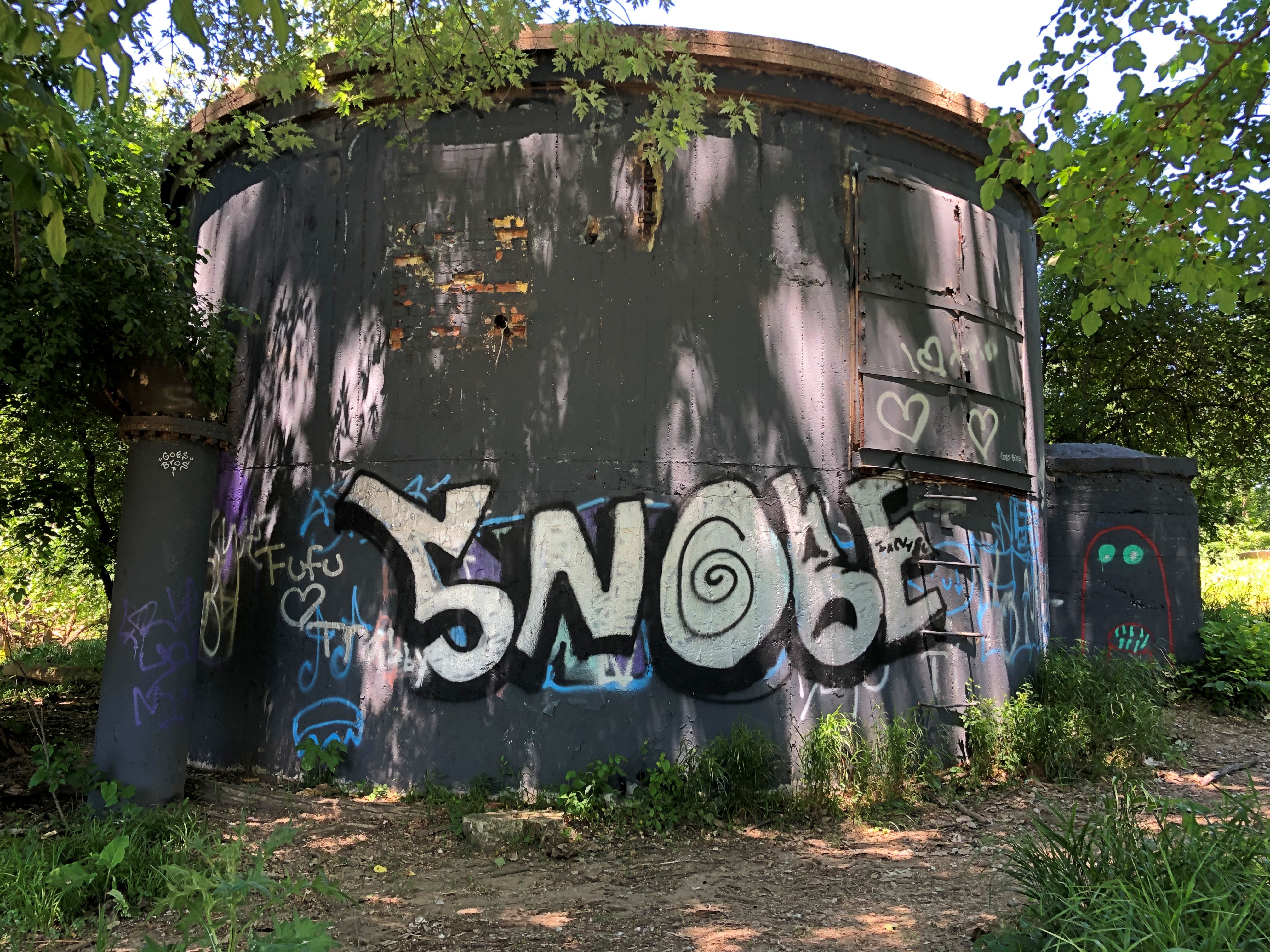
The reach the trail proper, you go along a connecting trail from a parking lot and recreation field to a short, graffiti’d tunnel under a road. Jerome Hubbert Woods

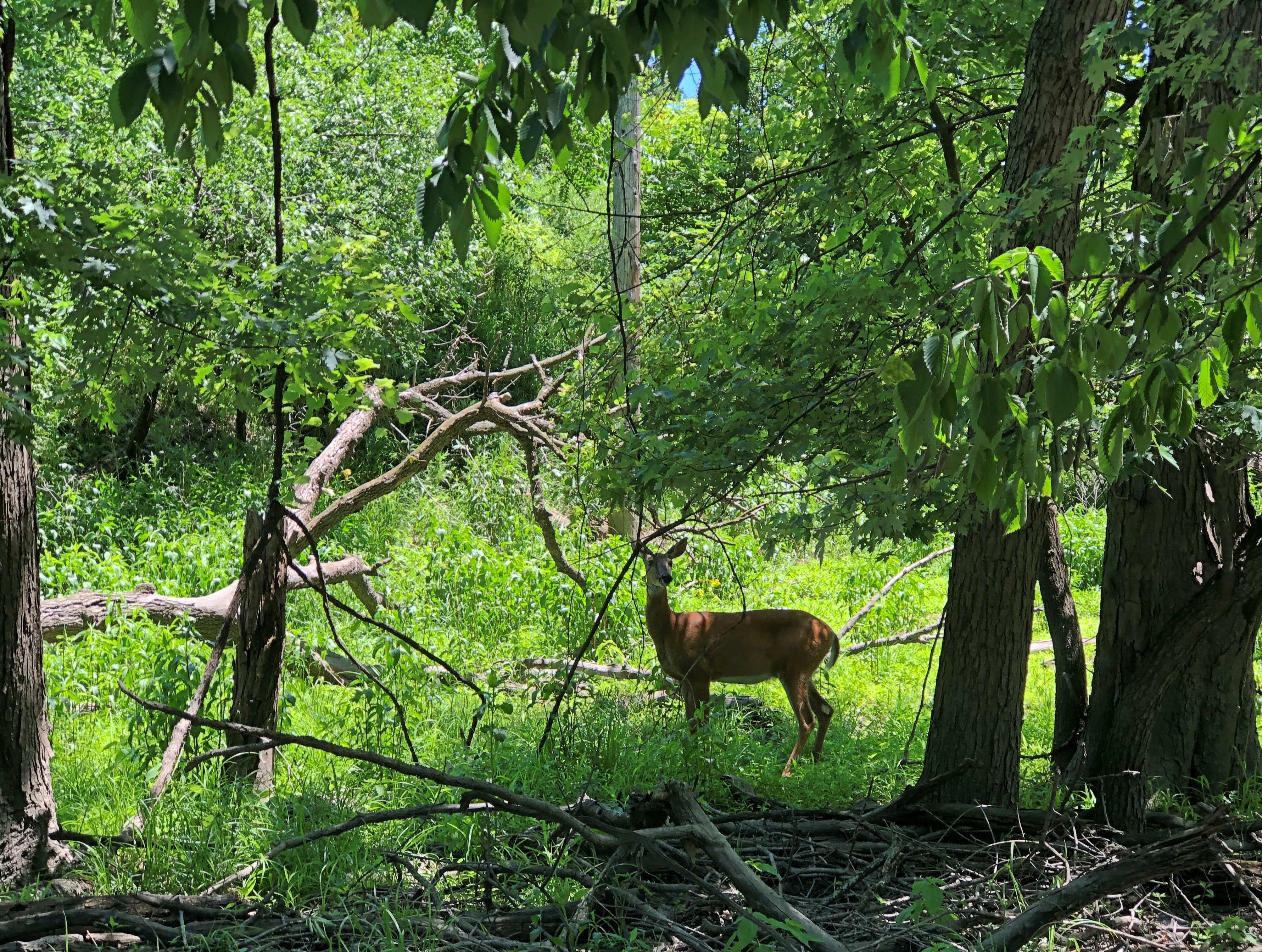
There’s enough undeveloped land in the area to support some large fauna, looks like.Jerome Hubbert Woods

I don’t look at the creature and think Bambi. Rather, I think, deer ticks, vector of Lyme disease. Best to keep your distance. Still, it was nice to see.

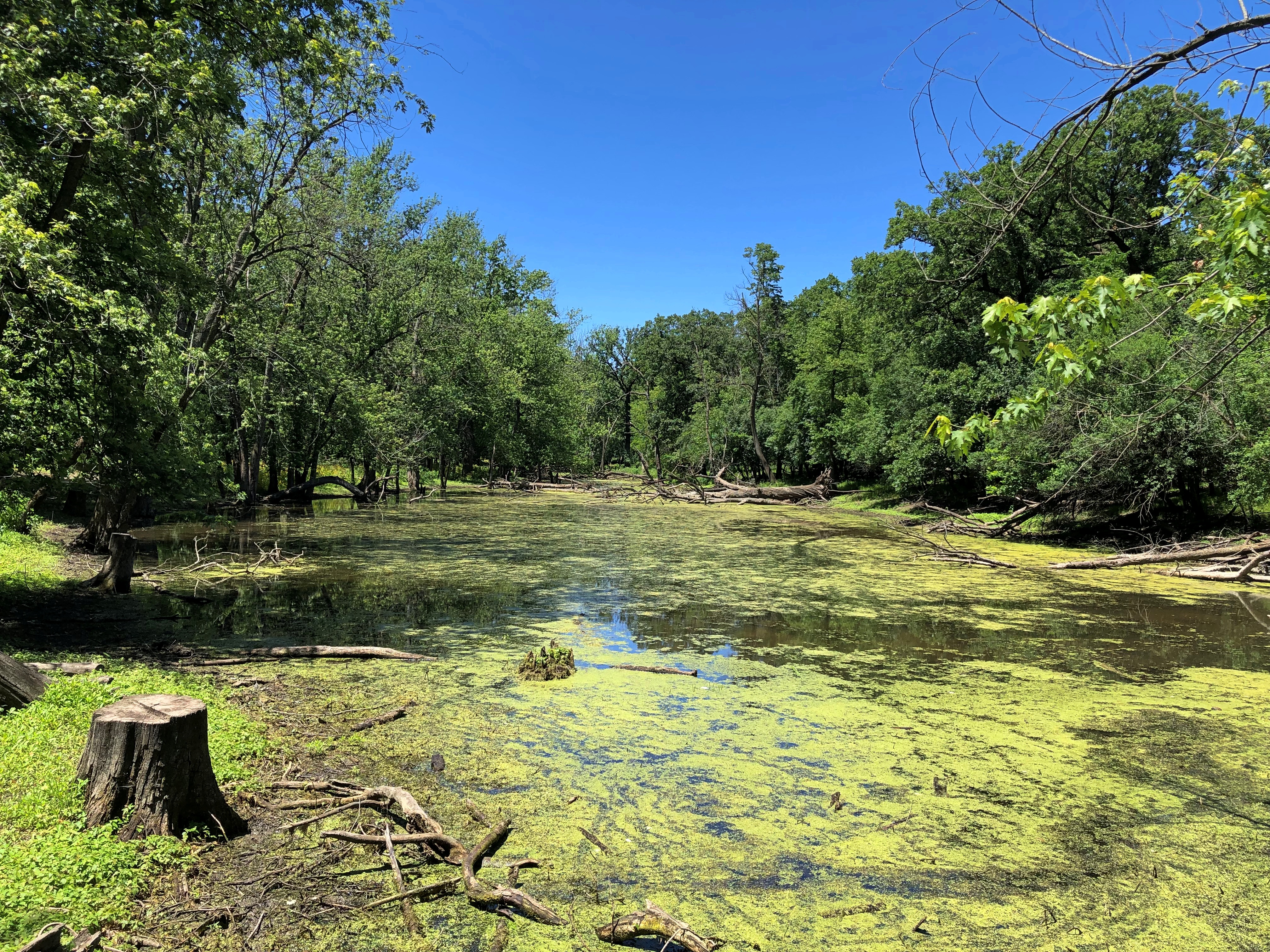
Recent rains seem to have created, or at least enlarged, a stagnant pond that isn’t visibly connected to the river.Jerome Hubbert Woods

Otherwise, lots of green. Lots of flowers. Lots of trees.Jerome Hubbert Woods Jerome Hubbert Woods Jerome Hubbert Woods

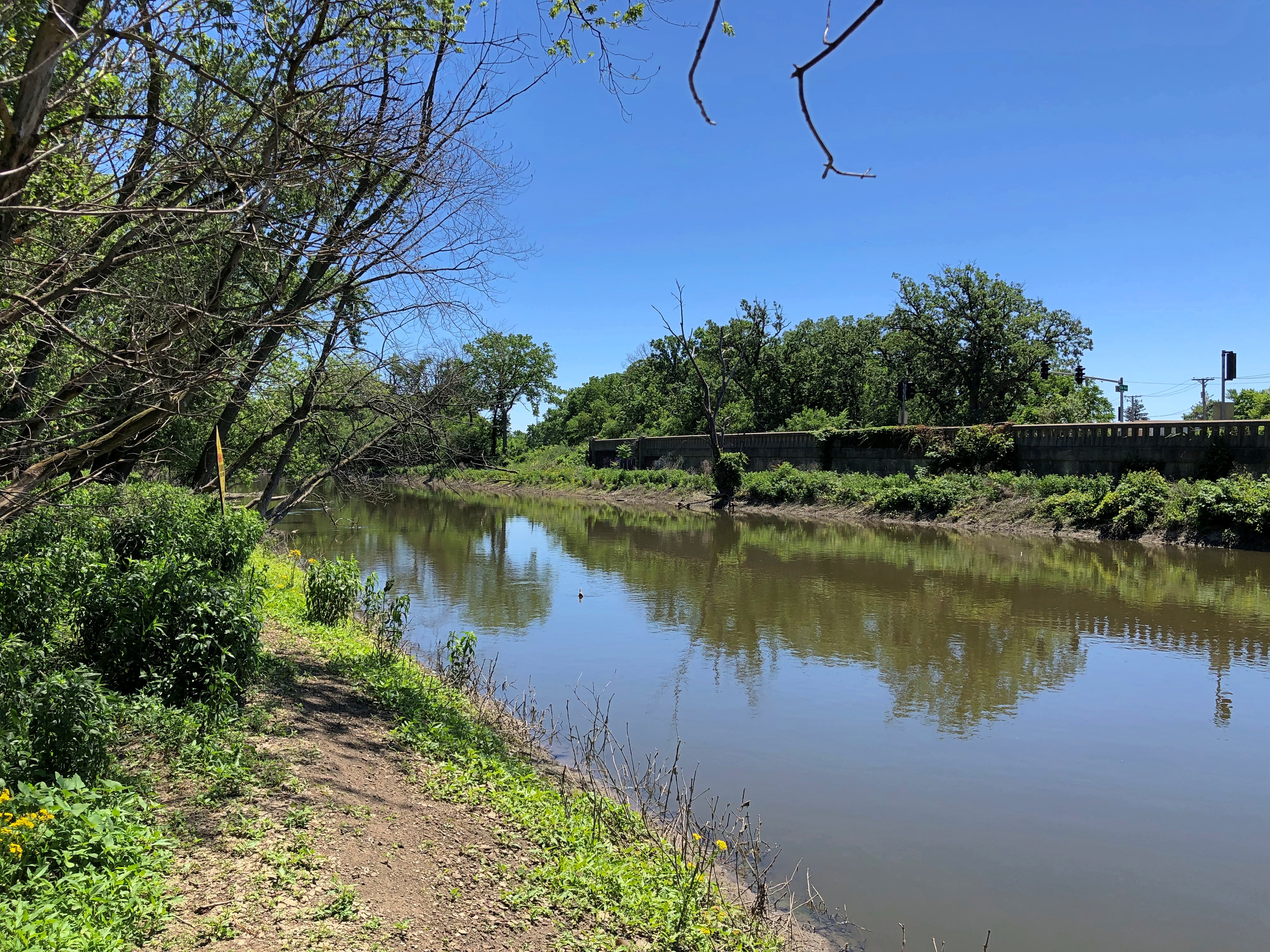
With views of the Des Plaines from time to time.Jerome Hubbert Woods - Des Plaines River

Along with abandoned structures.Jerome Hubbert Woods

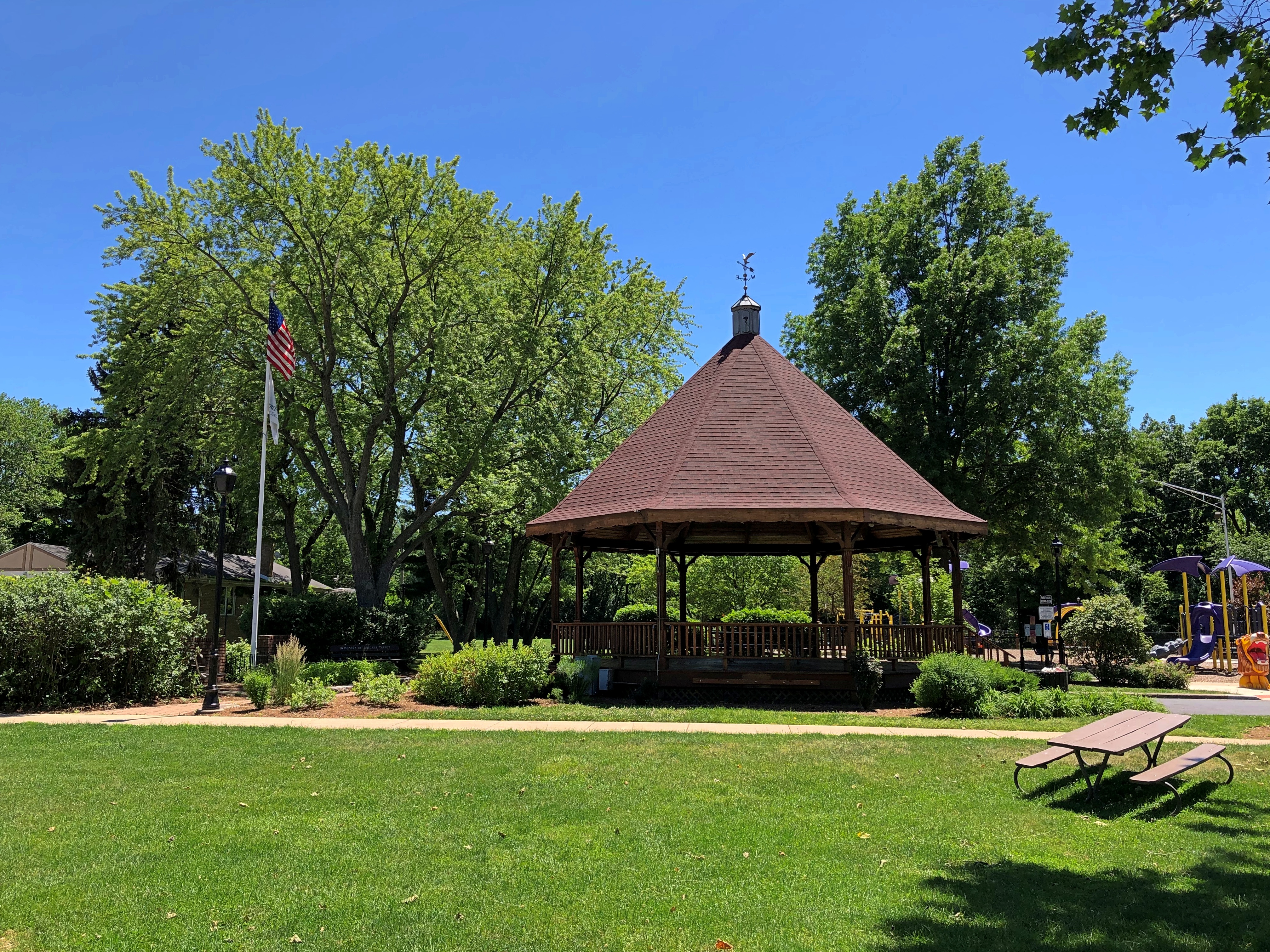
Eventually, we came to River Grove’s River Front Park, where we turned around. Not before resting a few minutes in the park gazebo, though.Jerome Hubbert Woods

As always, nice to find a gazebo. Obscure suburban parks are better for them.

Thursday Adds

RIP, Laura Ford, mother of two friends of mine in high school, Catherine and Melanie. I remember her fondly from the times we hung out at Catherine’s house in the late ’70s. She’s pictured here in May 1979.

More recently, she would comment occasionally on something I’d posted on Facebook — she really liked pictures of our dog — though I can’t remember the last time we met in person.

I didn’t know her exact age until I read the obituary, and was slightly startled to realize that when I met her, she wasn’t even 40 yet. Of course, from the vantage of high school, that seemed vastly old. Now, not so much.

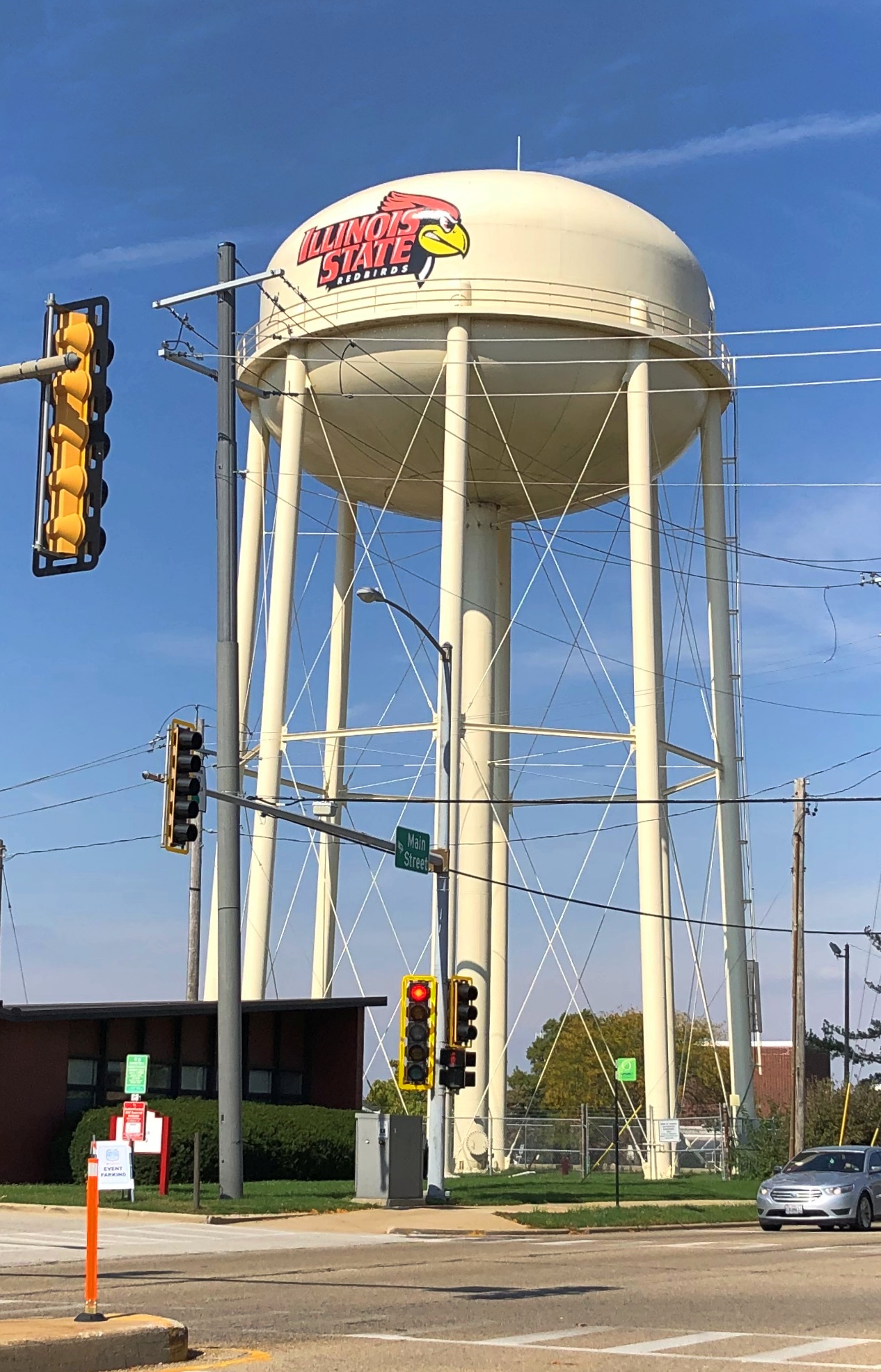
One more pic from Normal, Illinois, last weekend.
Normal, Illinois

As we drove toward Normal, Yuriko asked what kind of bird the ISU mascot was supposed to be — a cardinal? I told her I didn’t think it was supposed to be any particular species, though it does look something like an angry cardinal.

Later Ann said she thought “redbird” was picked since too many other places used cardinals. The dictionary definition of redbird (Merriam-Webster) is straightforward enough: “Any of several birds (such as a cardinal or scarlet tanager) with predominantly red plumage.”

I had to look further into scarlet tanagers. Only some of them are actually scarlet, it seems. Not sure that would be such a hot mascot name anyway. If you want an unusual bird mascot name, I’d go with the Andean cock-of-the-rock. Funny name, funny-looking bird.

I noticed that Dick Cavett had a small part in Beetlejuice. I don’t think I’d ever seen him in a movie in which he didn’t play himself, such as in Annie Hall or Apollo 13, which was a TV clip of him joking about sending a bachelor astronaut to the Moon.

In Beetlejuice, he played Delia’s agent, attending a dinner party she held. Delia was the story’s cartoonish antagonist, and among other things an artist who produces bad sculpture. Leaving the party, Cavett’s character got in a good parting shot:

“Delia, you are a flake. You have always been a flake. If you insist on frightening people, do it with your sculpture.”

Independence Day & Cicadas

At-home Independence Day weekend this year, unlike last year or the year before. Or rather, a metro-area holiday, since I spend some time on Saturday tooling around the border area between Cook County and Lake County before attending a backyard party in north suburban Wilmette, hosted by an old friend and her husband.

The weather turned conveniently dry (and pretty hot) after July 2, so the air temps were just right for an evening outdoor party, as well as for viewing the fireworks show in west suburban Westmont on Sunday. That morning, I got around to mowing our lawn, front and back, which had been greened up by the considerable late June rains. More rain is expected in a few days, so I’m not done with lawn maintenance for a while.

The weekend also involved a lot of time on the deck reading, or, during one particular few minutes at dusk on Monday, listening to cicadas. I hadn’t noticed them this year until that moment. There seemed to be only one (or maybe a small knot) of the insects in the tree over our deck, singing 20 or 30 cycles before being quiet for a moment.

More distant lone cicadas seemed to be doing the same in other trees. Are these the vanguard of the cicada army that will loudly fill the late afternoons of late summer?
Also, how can something so small be so loud? That’s a question new parents tend to ask themselves as well.

The Pond at Dusk

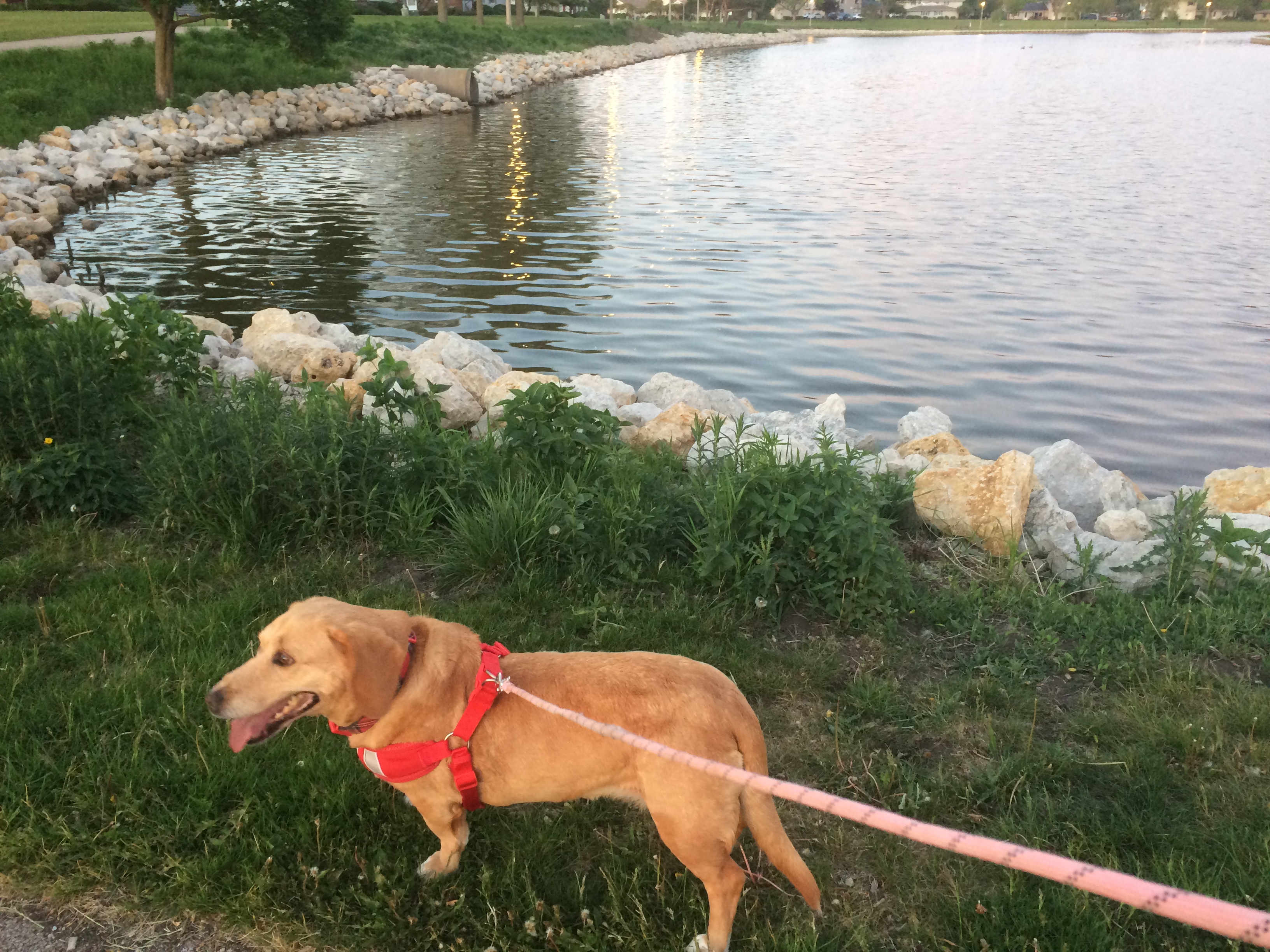
We walked the 0.7-mile circuit around Volkening Lake on Monday evening just as the light was fading. But there was still enough light to illuminate the dog.

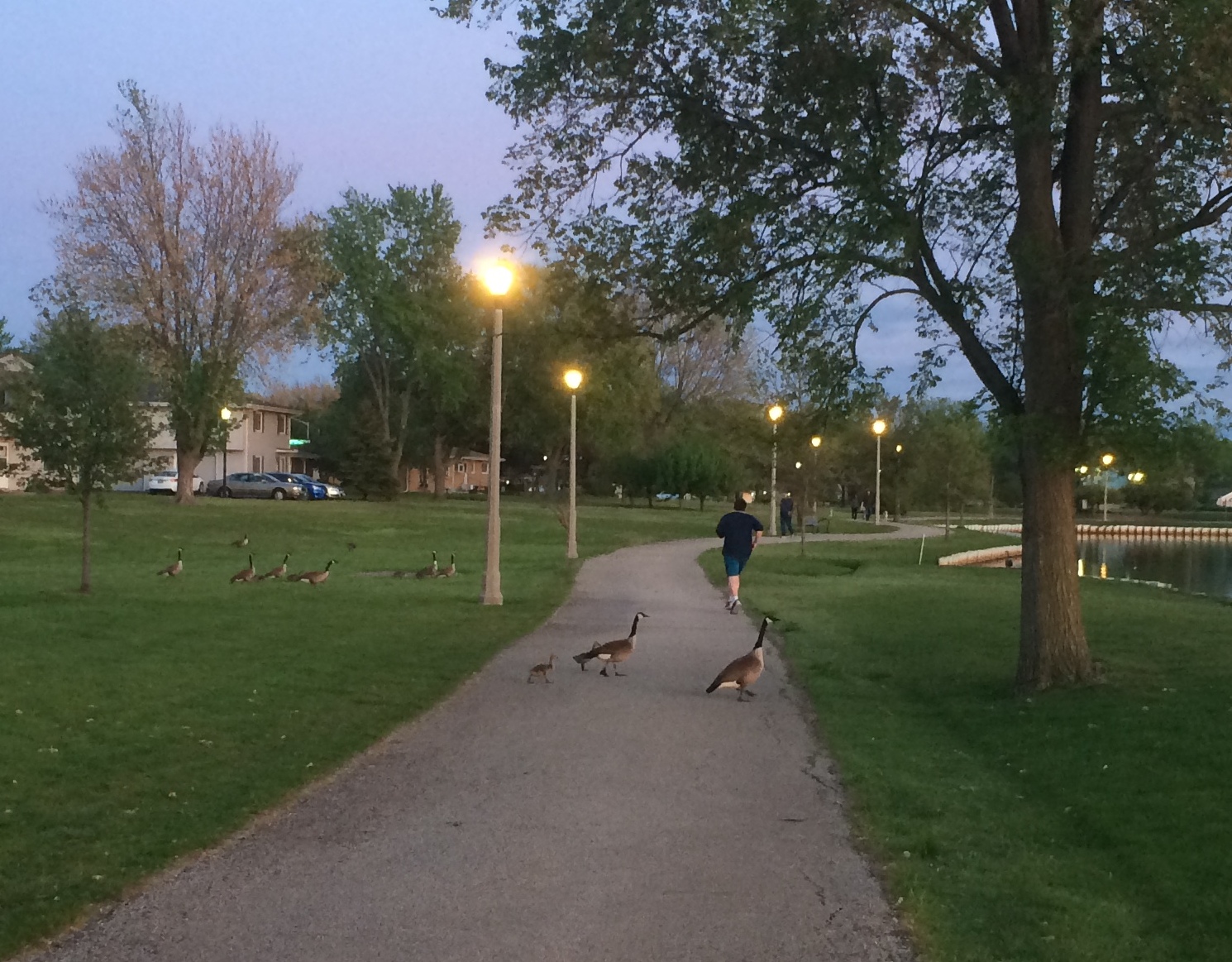
On the other side of the lake — which is really a large pond — we spotted geese and goslings crossing the path. 

We wisely held back as they waddled across, since we didn’t want the geese to get any wrong ideas about what our dog was up to.

Jelke Creek Bird Sanctuary

One thing leads to another, especially on the Internet, and yesterday I found myself curious about the township as a unit of government. That led to a document published by the Census Bureau, which tells me (p. 80) that there are 1,431 township governments in Illinois, at least as of 2012. There are townships in one form or another in 20 of the several states, and in Illinois, 85 of the state’s 102 counties have townships within their borders.

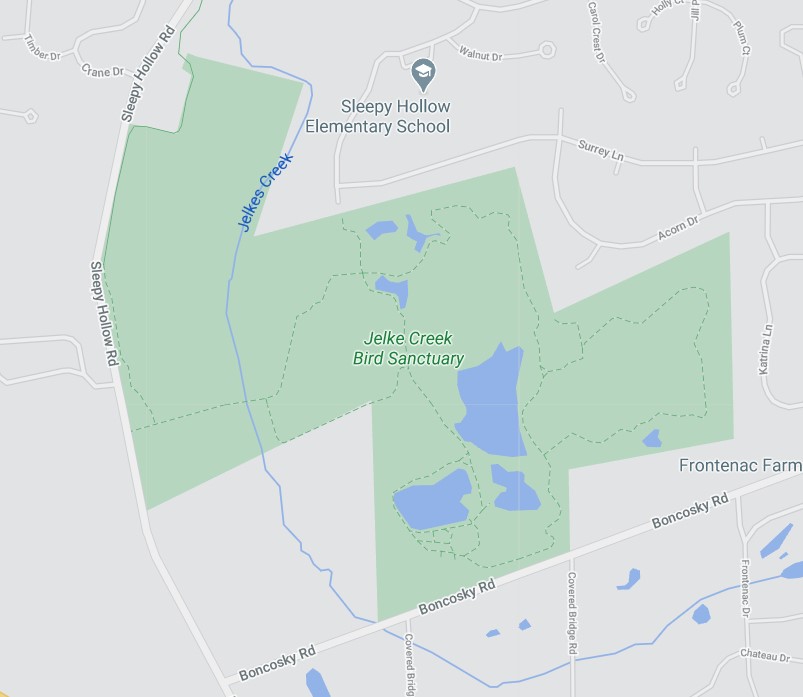
I looked into townships when I found out that Jelke Creek Bird Sanctuary is a township park, not part of the Forest Preserve District of Kane County. Specifically, the sanctuary is overseen by Dundee Township, which occupies almost 36 square miles in the northeast corner of Kane County.

Last weekend was another divided one, at least as far as the weather was concerned. Saturday was pleasant and warm, while Sunday proved blustery and chilly. So on Saturday we headed mostly west and took a walk at Jelke Creek Bird Sanctuary. We took a loop through the property that didn’t happen to pass by Jelke Creek, which is a tributary of the Fox River and, of course, ultimately the mighty Mississippi.
Jelke Creek Bird Sanctuary

Why there? I found it by one of my usual techniques: scanning Google Maps.

The sanctuary is fairly new as a public space. “This open space site was formerly owned by Chicago Elmhurst Stone and the Schuetz family,” the township explains. “The property was purchased as two separate parcels in 2000 and 2001 with grants from IDNR’s Open Lands Trust program at a cost of $4,128,709. The site’s 244 acres are partially protected by an IDNR easement.”

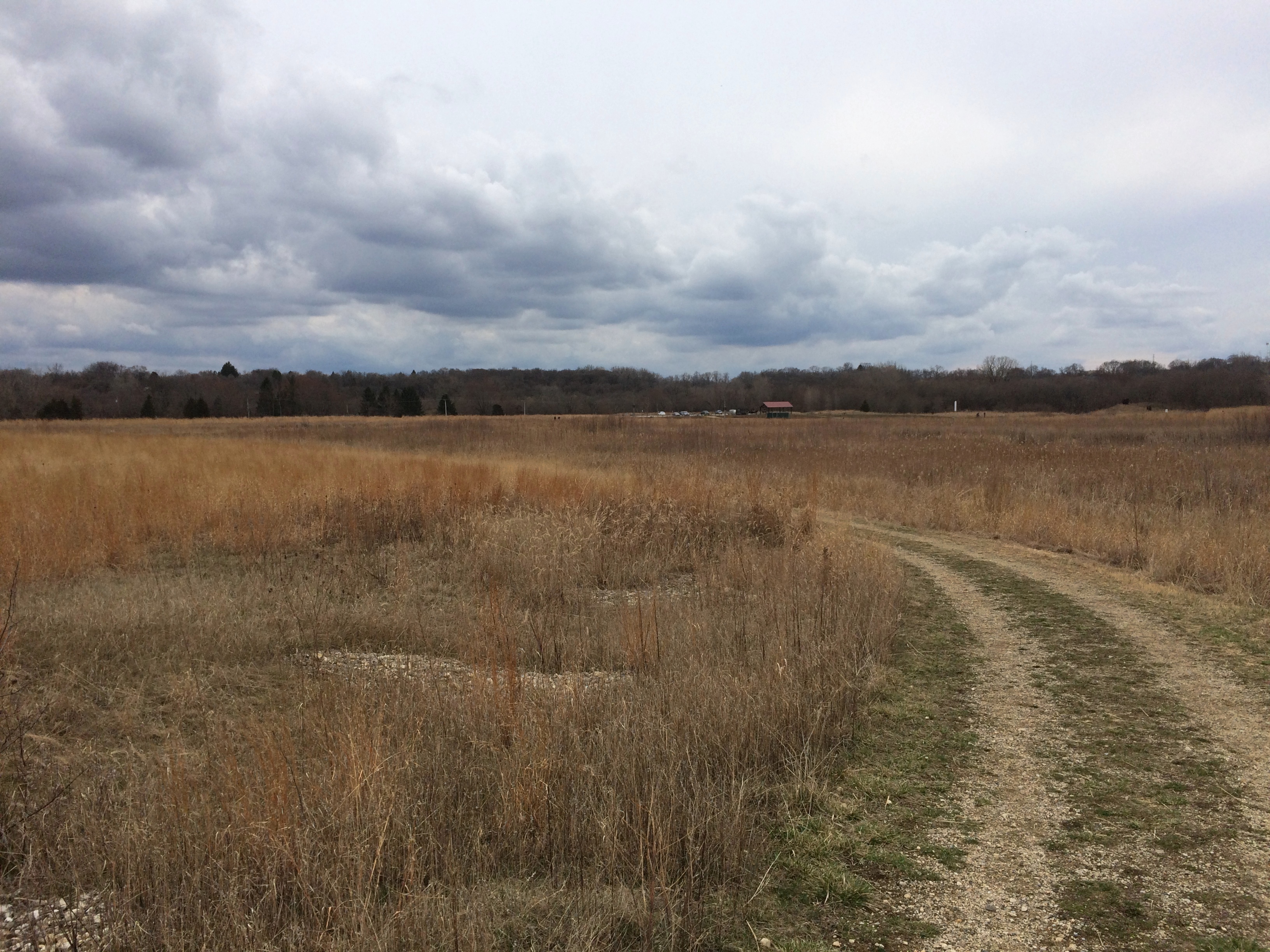
Saturday was a good day for a walk there. Summer would be less pleasant, since there isn’t a lot of shade along most of the trails.Jelke Creek Bird Sanctuary

Jelke Creek Bird Sanctuary

Jelke Creek Bird Sanctuary

There are some water features. Mid-sized and small ponds. A few spots along the trails were muddy, but mostly they were dry.Jelke Creek Bird Sanctuary Jelke Creek Bird Sanctuary

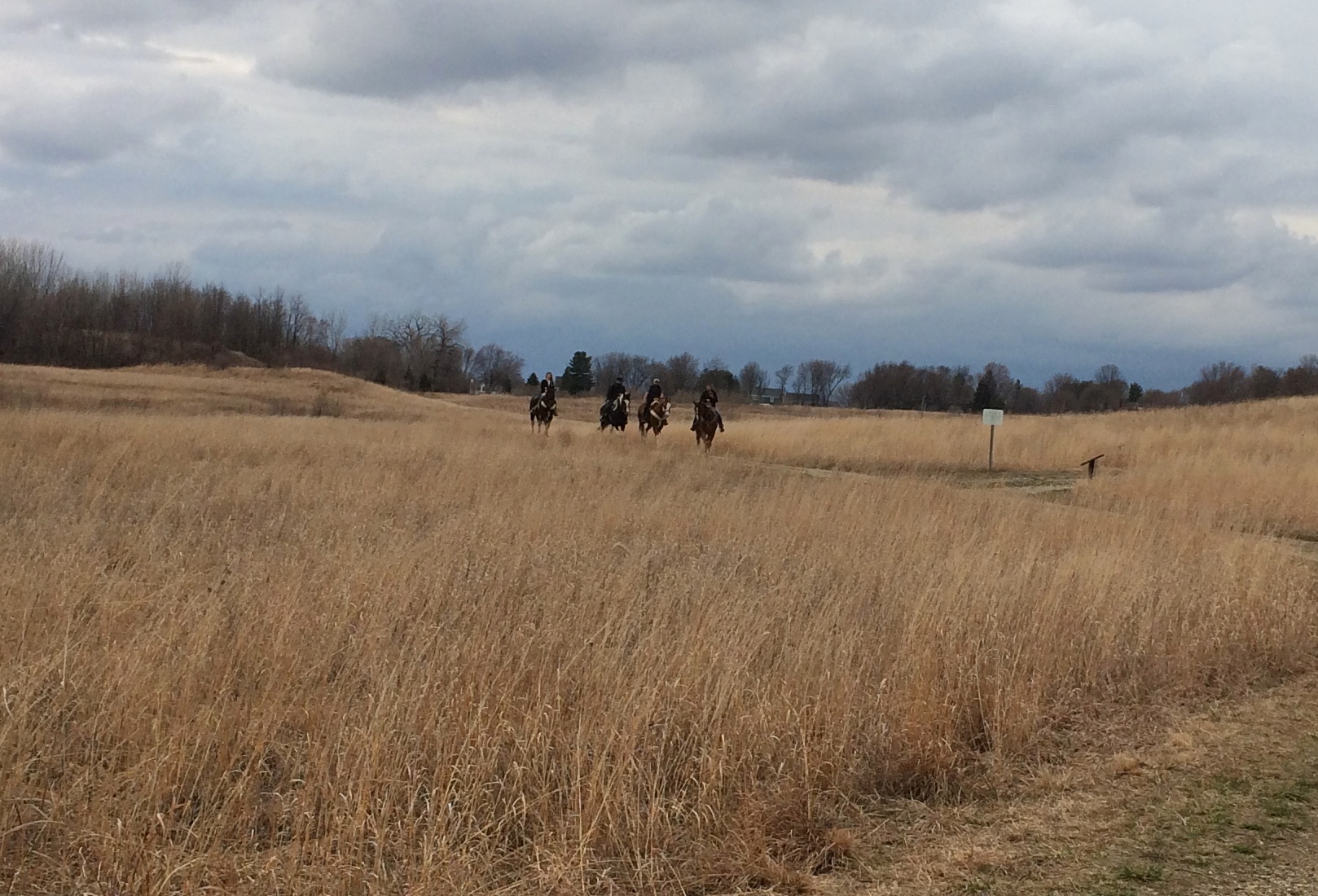
Not too many people were around, though at one point we did see four horses and riders. Not the Four Horsemen, fortunately.
Jelke Creek Bird Sanctuary
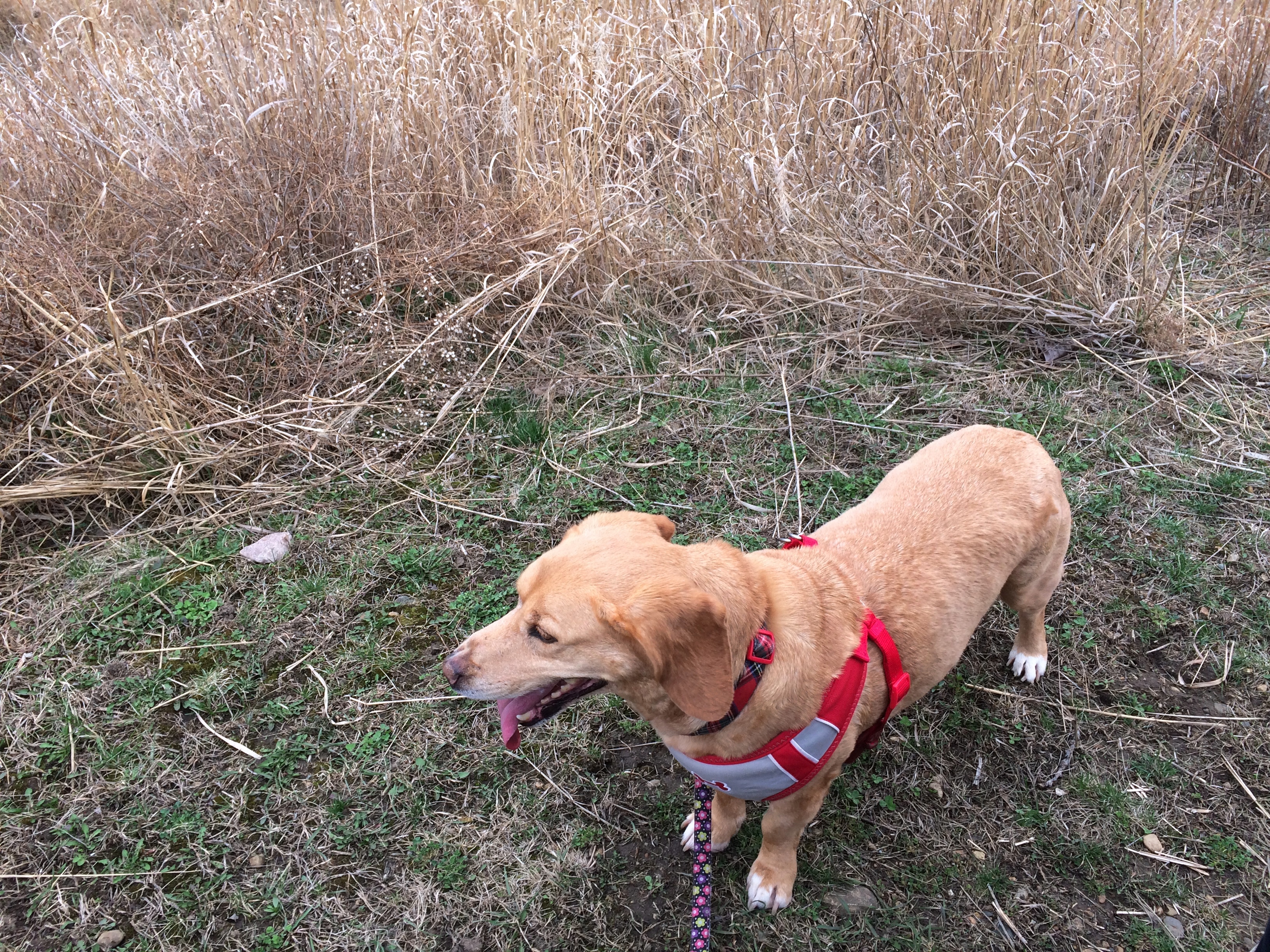
All together, we walked about a mile and a half, I’d say. The dog seemed to enjoy the walk too, including the opportunity to lap up a little muddy water. She wisely stayed clear of the horses.
Jelke Creek Bird Sanctuary
As for birds in the bird sanctuary, we heard some singing, but didn’t see more than a few sparrows and red-winged blackbirds. We passed by one small marshy spot and heard the croaking of frogs, which I took to be males in search of females for springtime action. As we got closer to the spot, the croaking tapered off. Maybe the frogs don’t like large animals eavesdropping on them. More likely, they’re as wary as small animals tend to be at the approach of something bigger.

East Branch

We haven’t been in any restaurants or theaters or concert venues since March, and our membership at the municipal indoor pool long ago lapsed. On the other hand, we’ve been to a lot of green spaces this year, now brown as fall has vanished into winter, including city parks, state parks, and one national forest, monument and park each. But especially that kind of undeveloped land specific to Illinois: the forest preserve, a localized legacy of Progressive Era activism.

I wondered how many we’ve been to this year, so I made a count. Five visits to forest preserves we’ve been to before, and 10 new ones, variously in Cook, DuPage, Kane and Lake counties. I doubt that we visited more than one or two new ones a year before 2020. Fifteen is only a small fraction of however many hundreds of preserves there might be statewide, but I’m glad we’ve taken the walks, and plan to continue doing so next year.

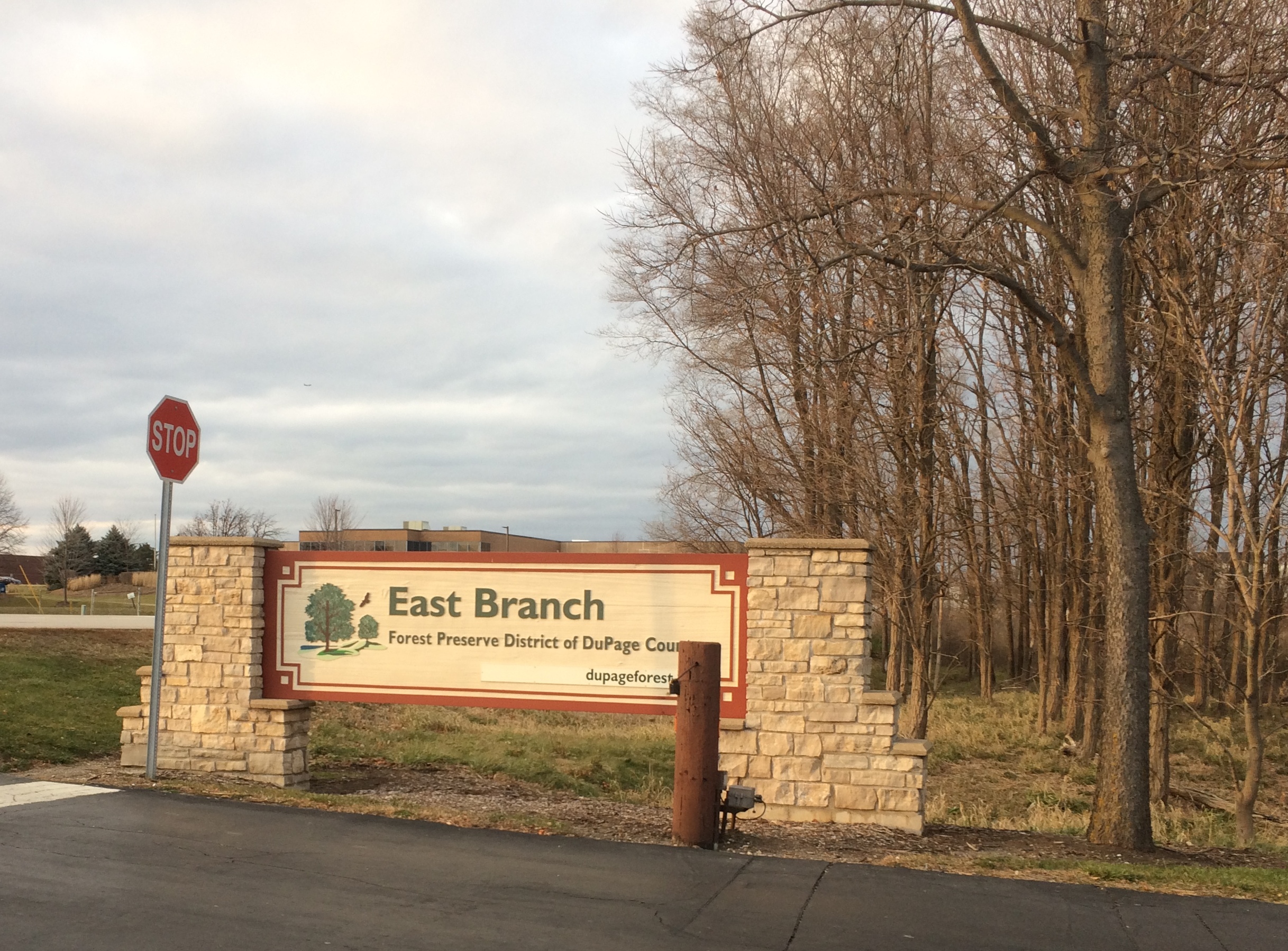
On Saturday afternoon, we took a walk at East Branch, a 521-acre unit of the DuPage County Forest Preserve District in Glendale Heights. Temps were in the 40s. That’s warm enough for a forest preserve walk.
East Branch forest preserve“East Branch was previously used as farmland prior to the Forest Preserve District acquiring it in the early 1970s,” the district web site says. “During the 1980s, wetlands were created along the East Branch DuPage River as mitigation for the construction of Interstate 355.”

A trail from a small parking lot off Glen Ellyn Road leads to a small lake.
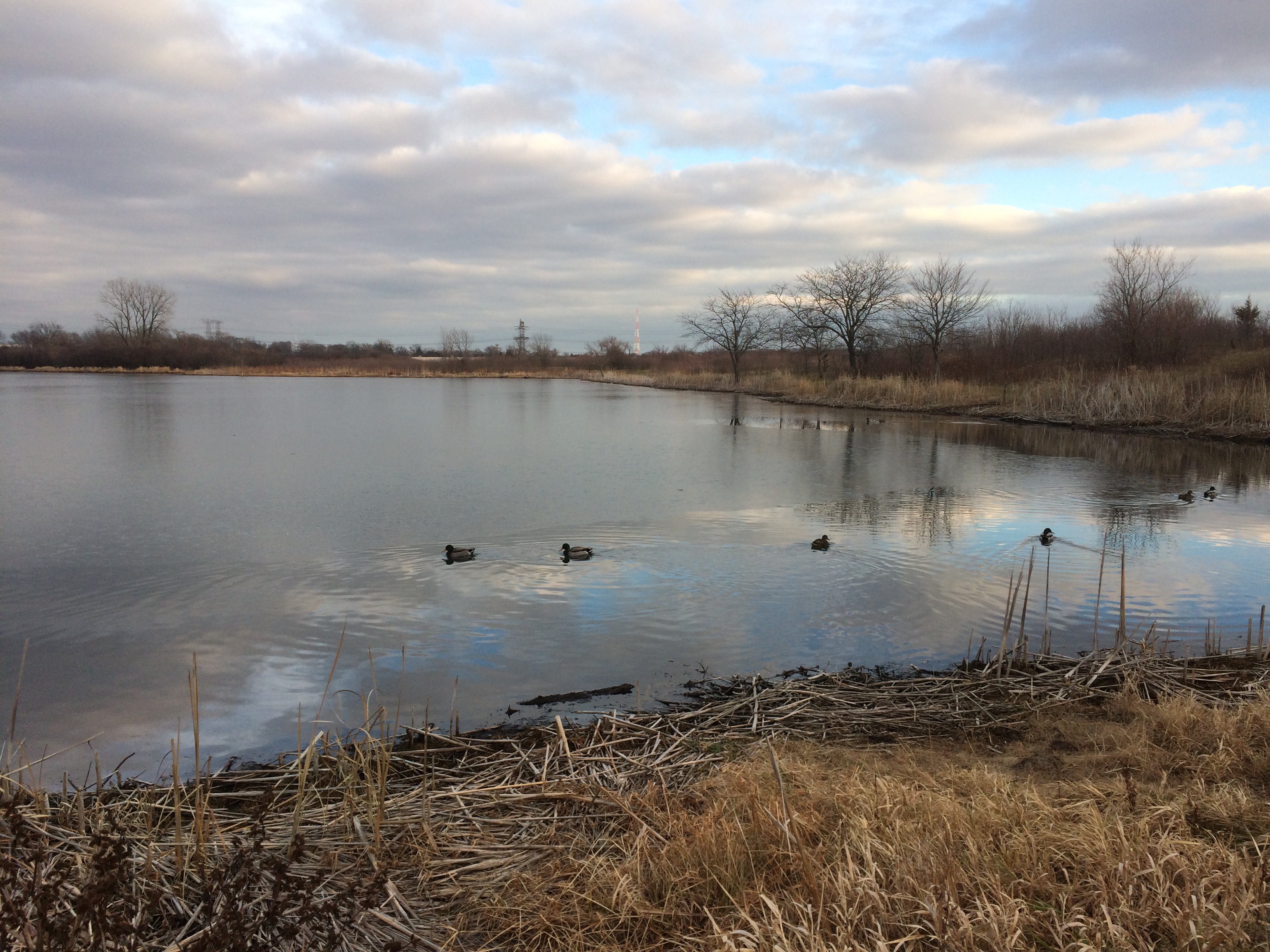
East Branch forest preserveIt’s called Rush Lake. The district asserts that it’s a good place to see waterfowl, and so it was. Ducks, at least.
East Branch forest preserveThe main trail circles around the lake, though sometimes a little ways from the shore. Hoofprints in the mud along the way meant horse riding is an activity there, but we didn’t see any riders. We saw two men with fishing poles, a woman walking a dog and a man simply walking around. That was all.
East Branch forest preserveIt was about an hour until sunset. The view to the west.
East Branch forest preserveThe view to the north.
East Branch forest preserveThe dome off in the distance is St. Andrew Ukrainian Orthodox Cathedral.

Dinosaurs of New York

Back in the days of paper letters and postcards, not every correspondence I started ended up in the mail. I have an entire file of letters and a few postcards that I didn’t finish and didn’t mail.

Usually that was for ordinary reasons, such as forgetting to complete it for months, by which time the news was stale. Only on rare occasions did I write a letter and think better of sending it because of its content, though I have a few insolent work memos of that kind.

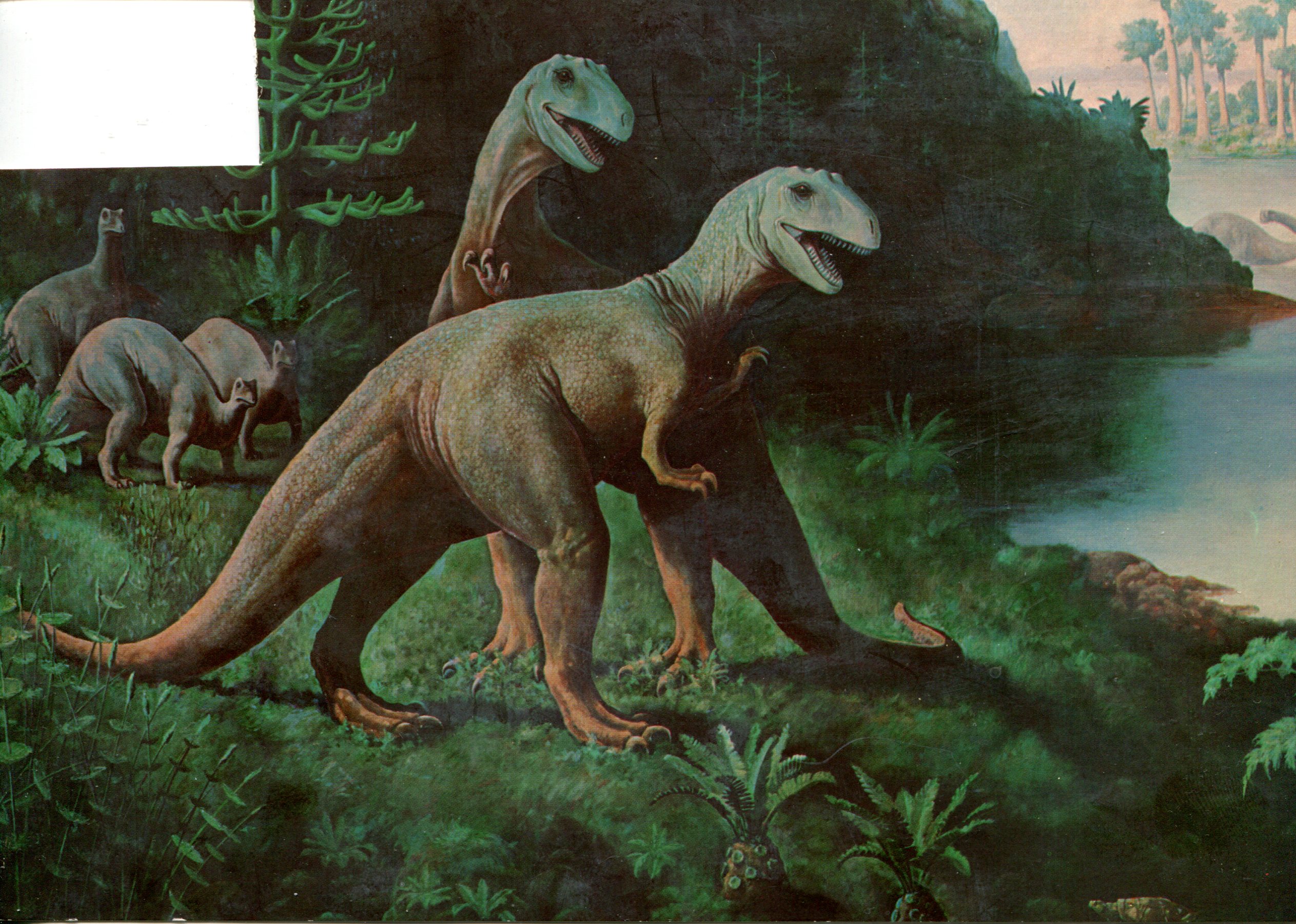
I wrote a large postcard to a friend of mine in Illinois on August 27, 1983, while I was still in New York City. I think it got lost among the papers I had with me a few days later when I went to Nashville, and all these years later, I still have it.

Note the missing piece. I got as far as stamping the thing, but later removed it for re-use.

The printed text of the card says:

ALLOSAURUS (foreground) was a large, meateating dinosaur that lived during the Jurassic period of earth history, about 140 million years ago. This aggressive reptile, which preyed upon other dinosaurs, was about 30 feet long and probably weighed several tons when it was alive. Several individuals of CAMPTOSAURUS, a small, inoffensive, plant-eating dinosaur, are shown in the background.

Painting on Display
THE AMERICAN MUSEUM OF NATURAL HISTORY
NEW YORK, U.S.A.

I wrote, in part:

Dear R—

I have come to New York to learn such oddities as “August is Bondage Month,” which a simple advertisement in the window of the Pink Pussycat Boutique told me. [Remarkably, the shop is still there; give the people what they want, I guess.]

Since the long line to pass through customs at JFK [returning from Europe], I’ve shuffled first to the P’s house in New Rochelle, then S’s house in Stamford, Conn. Since last Friday (the 19th), I have been at D’s apartment while she is on the Jersey shore with her parents. This is a good arrangement. I’ve become acquainted with the Village and various other parts of the city.

This card, for instance, is an accurate portrait of Brooklyn, by the East River.

Handy Map of London

I have in my possession a Handy Map of London. This is supposedly a German version of similar vintage; mine is in English, but it looks just the same. Mine is dated 1986, so I’m certain I picked it up in 1988.

It isn’t my favorite map of London — that would be that marvel of aesthetic mapmaking, the Bensons MapGuide.

Still, the multi-page, folding Handy Map, published by John Bartholomew & Son Ltd. of Edinburgh, was indeed handy. That company, long since a unit of Harper Collins, is one of the storied Scottish mapmakers, as detailed here.

Interesting material in the Wiki description, though without citation: “John Bartholomew Junior was credited with having pioneered the use of hypsometric tints or layer colouring on maps in which low ground is shown in shades of green and higher ground in shades of brown, then eventually purple and finally white.

“It is his son John George who is attributed with being the first to bring the name ‘Antarctica’ into popular use as the name for the Southern Continent, and for the adoption of red or pink as the colour for the British Empire.”

By gar, someone invented those conventions. But they’re such strong conventions that you hardly think of a time when maps didn’t feature them.

The Handy Map folds out to reveal ten separate maps, nine of which are parts of Greater London, and all of which are color- and number-coded. Want to look for a particular place? The map makes that pretty easy. Even more so than Benson, I have to say.

The tenth map is a view of all of Greater London. As you’d imagine, it can’t be overly detailed, but it is good for orientation. I was looking at it the other day (for now the Handy Map is in the downstairs bathroom) and noticed an oddity on the Greater London map.

Toward the eastern edge of the map, just north of the Thames near a place called Purfleet, is a pink, long oval shape (like a race track) simply marked DANGER AREA.

What? It took me a few days to remember to check it out on Google Maps. In 1986, a danger area. In 2020, it’s the RSPB Rainham Marshes, also known as the Rainham Marshes Nature Reserve.
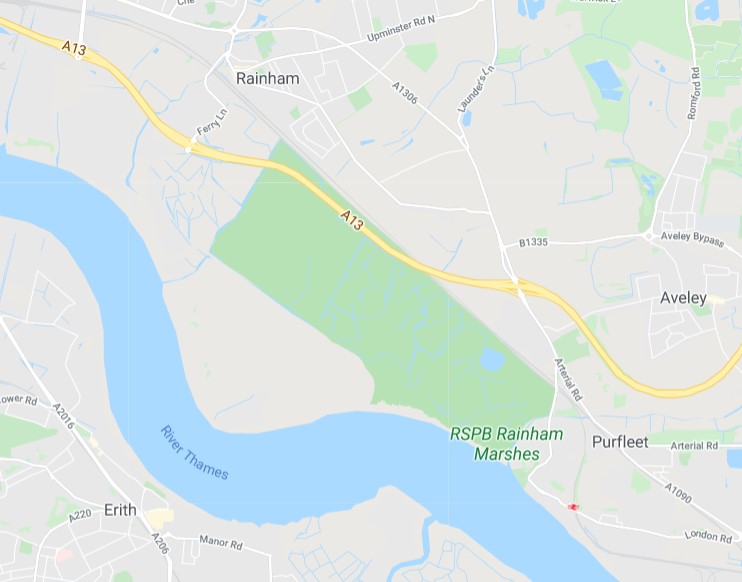
That would be, according to Google: “Bird-rich former marshland firing range with accessible boardwalks and a modern visitor centre.”

RSPB? The Royal Society for the Protection of Birds. The organization bought the land from the UK Ministry of Defence in 2000, opening it to the public in 2006. So danger area no more, unless you’re attacked by cetti’s warblers, little egrets or peregrine falcons. More about the marshes is here.

More about the organization is here.

“The RSPB was formed to counter the barbarous trade in plumes for women’s hats, a fashion responsible for the destruction of many thousands of egrets, birds of paradise and other species whose plumes had become fashionable in the late Victorian era,” its web site says.

“The organisation started life as the Society for the Protection of Birds (SPB), founded by Emily Williamson at her home in Manchester in 1889. The group quickly gained popularity and in 1891 it merged with the Fur, Fin and Feather Folk, to form a larger and stronger SPB, based in London.

“In its earliest days, the society consisted entirely of women and membership cost twopence. The rules of the society were:

“That members shall discourage the wanton destruction of birds and interest themselves generally in their protection

“That lady-members shall refrain from wearing the feathers of any bird not killed for purposes of food, the ostrich only excepted.”

Interesting that ostrich feathers were OK. If I felt like it, I could investigate why that was, but I have a hunch that ostrich farming was entirely too valuable before WWI to discourage, especially in South Africa. These days, leather is the main thing, with feathers just a sideline.