Walworth County Tin Man

It may be September, but it’s still warm. Time to take advantage of the second shoulder season of the year in my own slightly demented way. Back to posting around September 28.

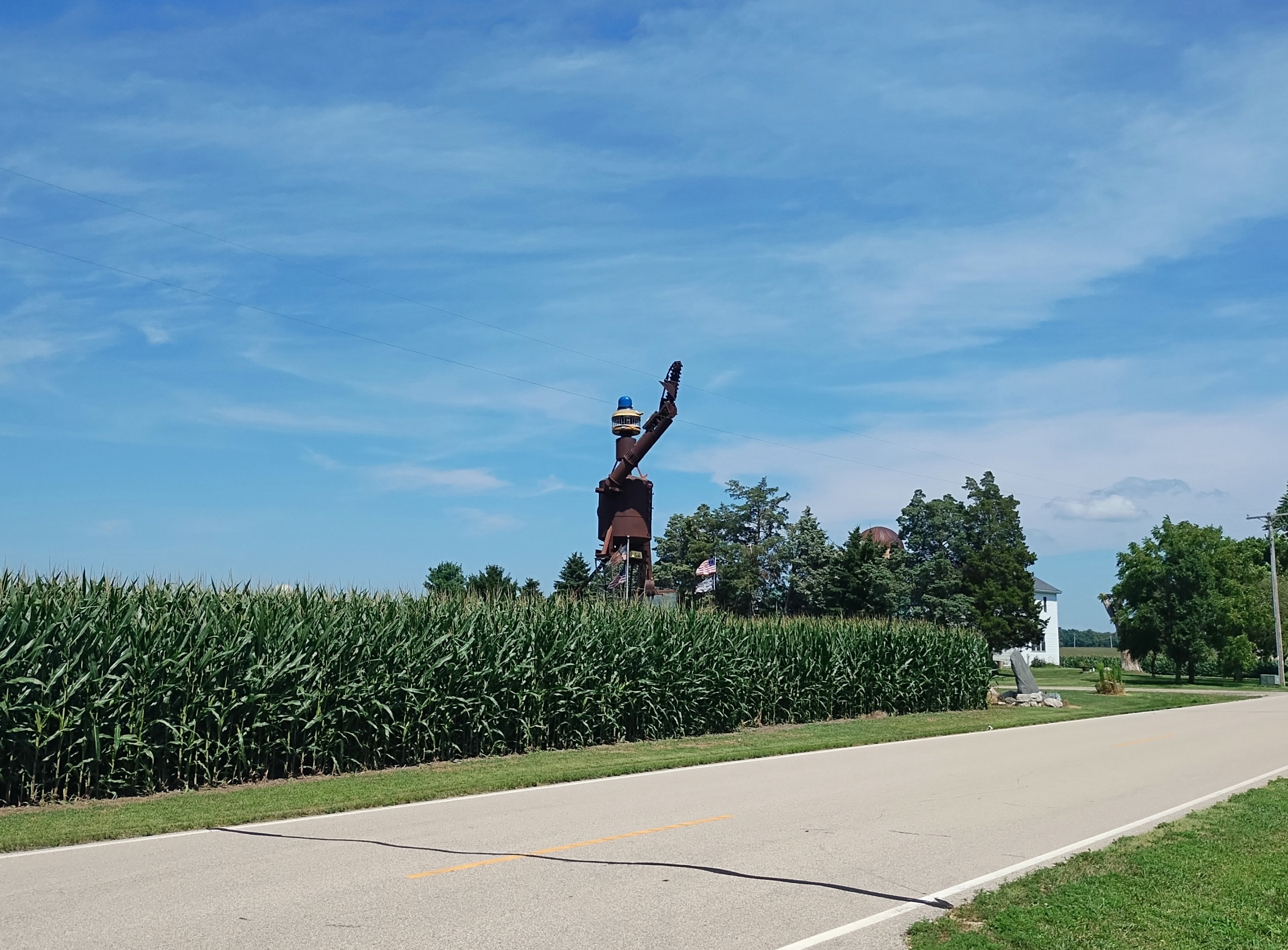
Last month I’d gotten a tip from one of the usual sources detailing roadside oddities, so there I was, tooling down a road in rural Walworth County, Wisconsin. The sun was hot and the corn was high. My tip was solid. I pulled off the road and walked a little ways for a good look at the oddity. It is larger than most.

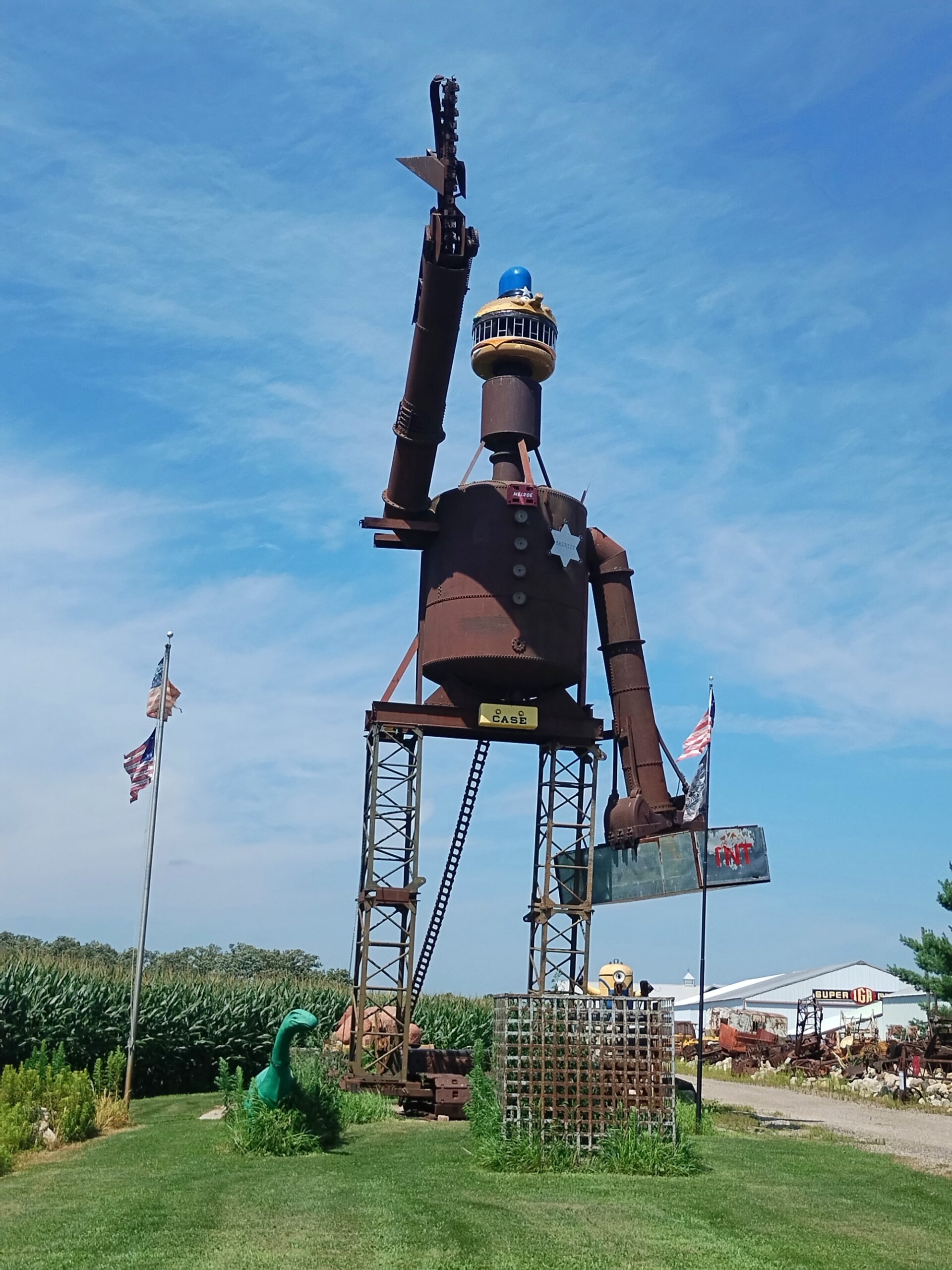
Tin Man, Wisconsin
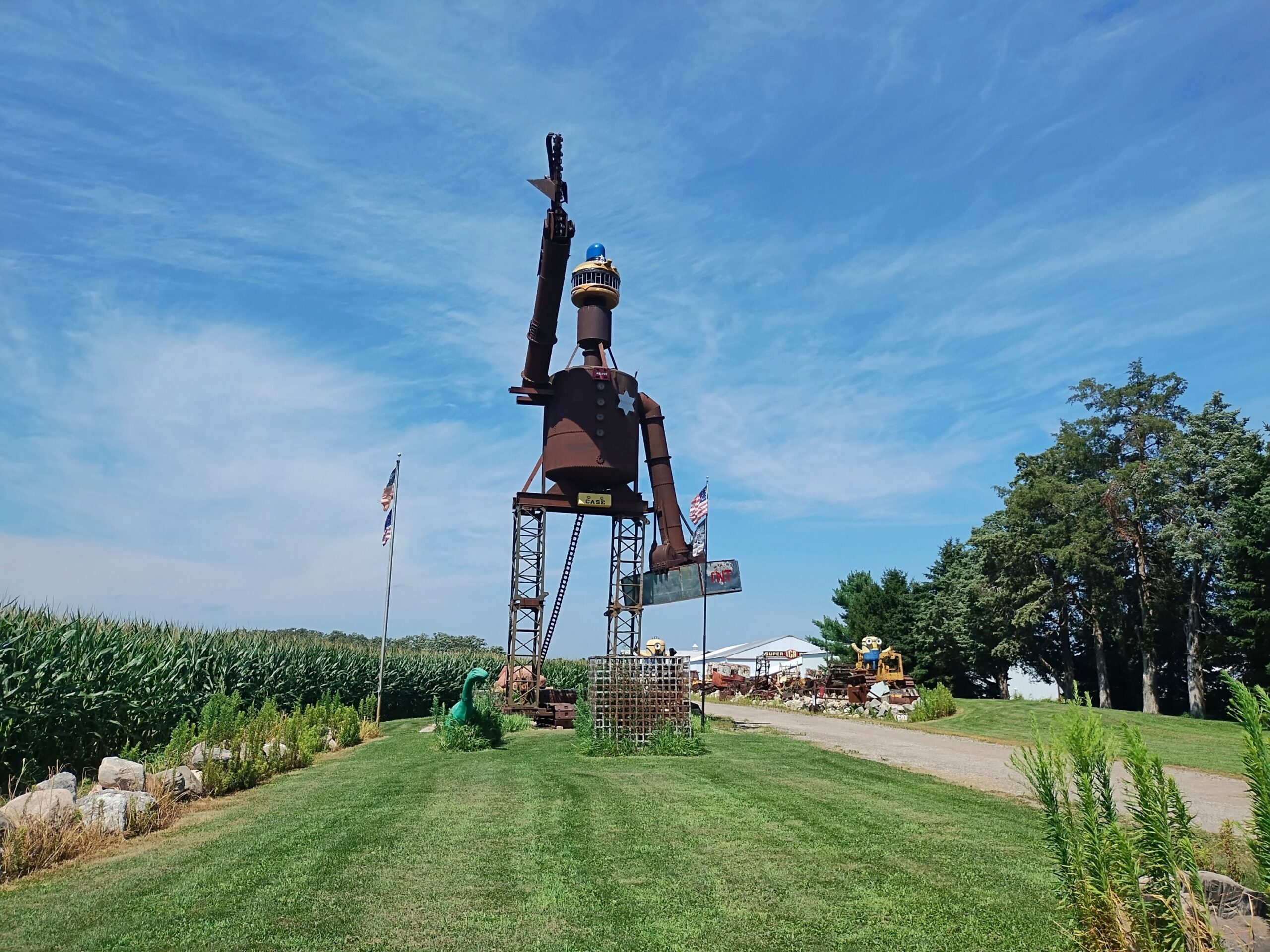
Tin Man, Wisconsin

It’s called “Tin Man,” according to published sources, rising 45 feet and weighing in at 20 tons. The creators were two local men entertaining themselves. Looks are free from the road. If that’s not an authentic roadside attraction, I don’t know what is. I was careful to stay off the property, however.

“That statue stands tall in Robert Stewart’s home near Lake Geneva. In fact, it can be seen from about a mile away. It took him and his friend Shane Pope two years to make it,” WTMJ-TV reported in early 2021.

“The statue was built primarily out of scrap metal that Robert was able to collect, which includes the legs, the arms, and body of the statue. The torso is an old water tank that was used in the Pabst Brewery. However, the most iconic piece of the statue might be its Officer Big Mac head.” (I can add that its legs are hay conveyors.)

I’d taken the head for Mayor McCheese – that would make sense in Wisconsin – but actually it’s the lesser-known Officer Big Mac, whom I suppose worked for McCheese until a falling out in the 1980s. Or actually did he answer to Ronald McDonald? Though Ronald had no official title, it was clear he was calling the shots in McDonaldland. Anyway, there the officer is, atop a scrap-metal creation.

Tin Man had been visible from a distance. That raised arm looks a little — odd. Let’s just say he’s waving at the occasional passersby on the road.

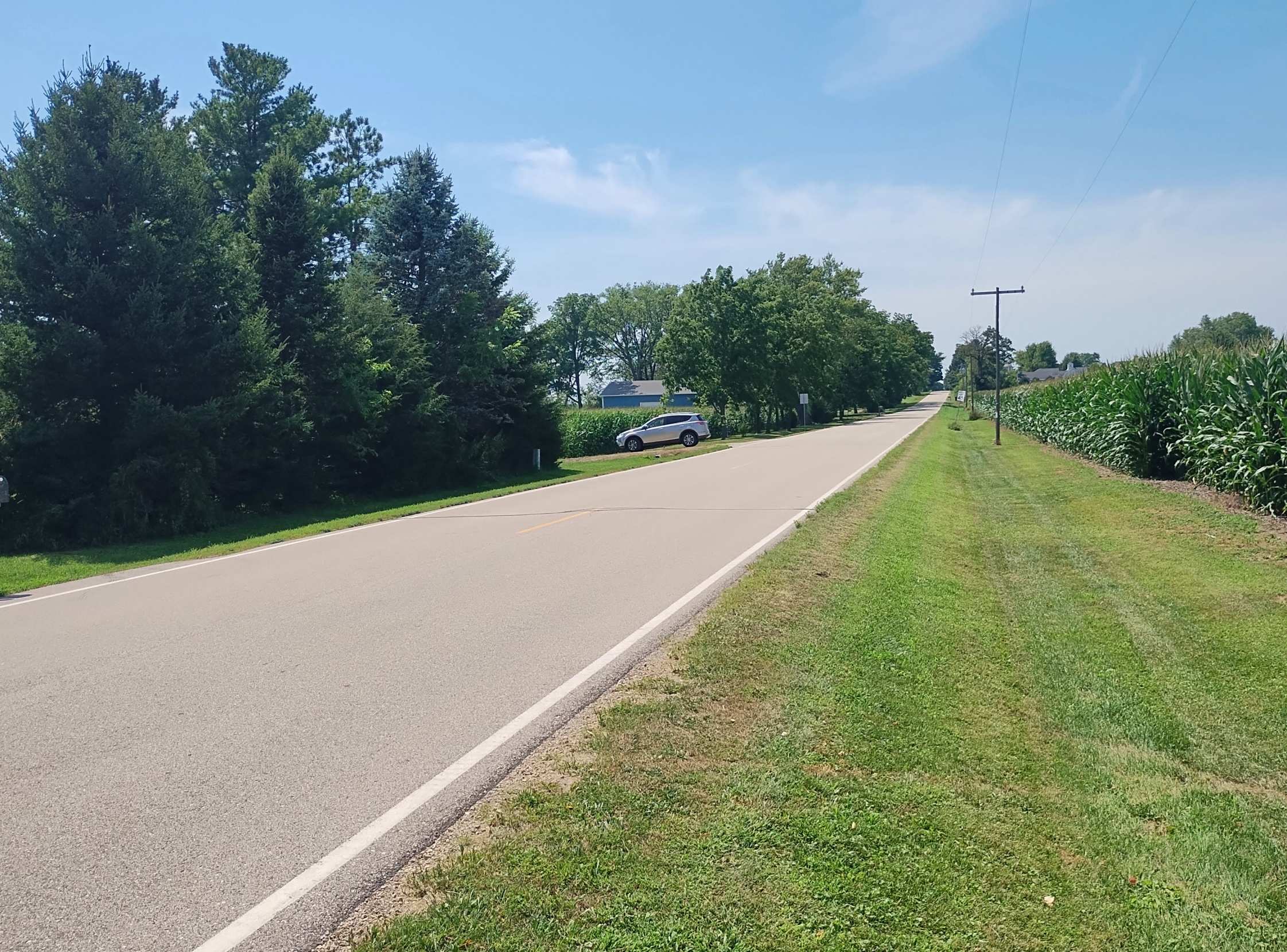
When I say rural, I mean rural.

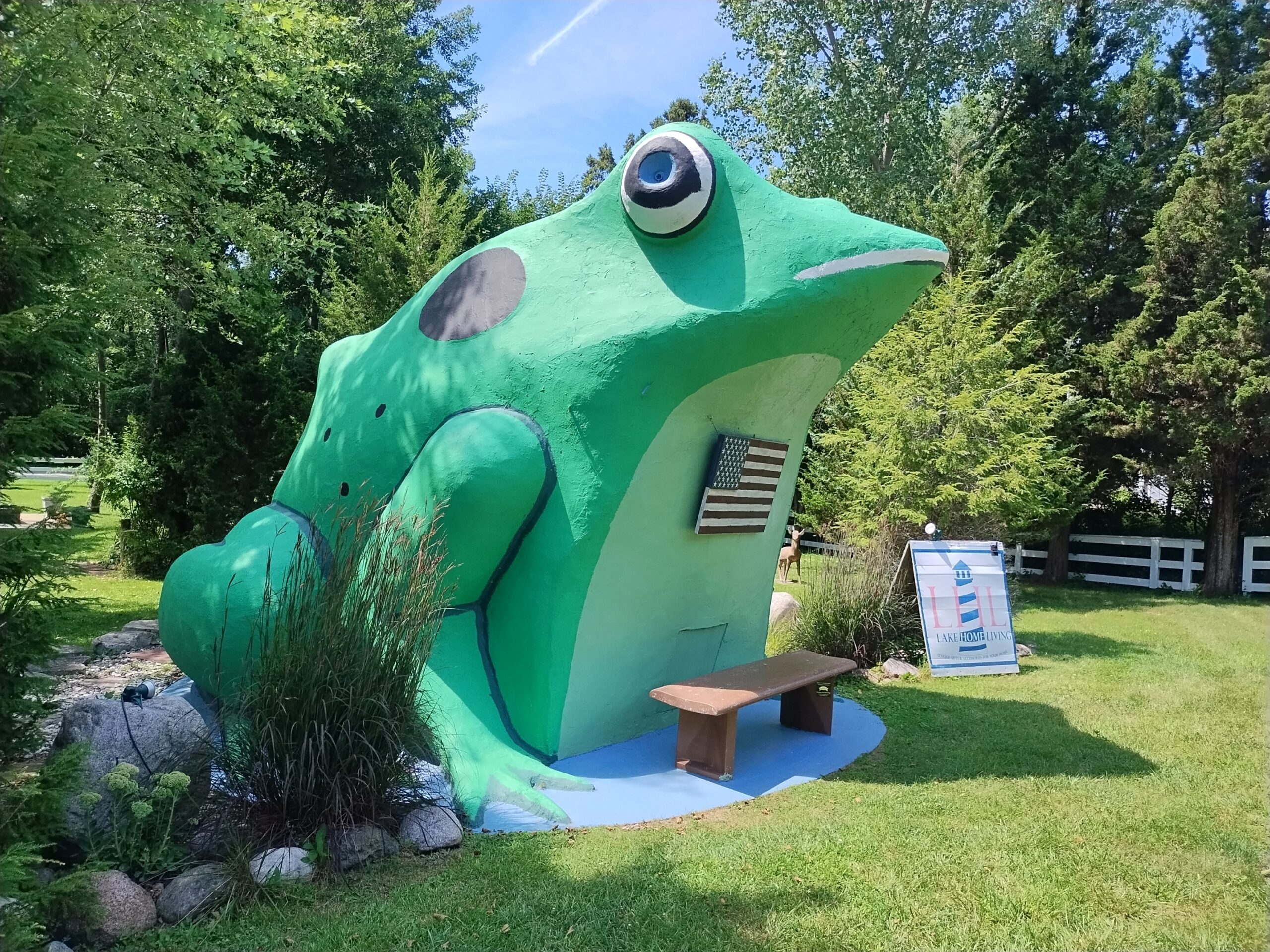
Closer to Lake Geneva, in fact in Fontana, Wisconsin, is the Fontana Frog. I saw it the same warm summer day as the Tin Man.

Fontana Frog

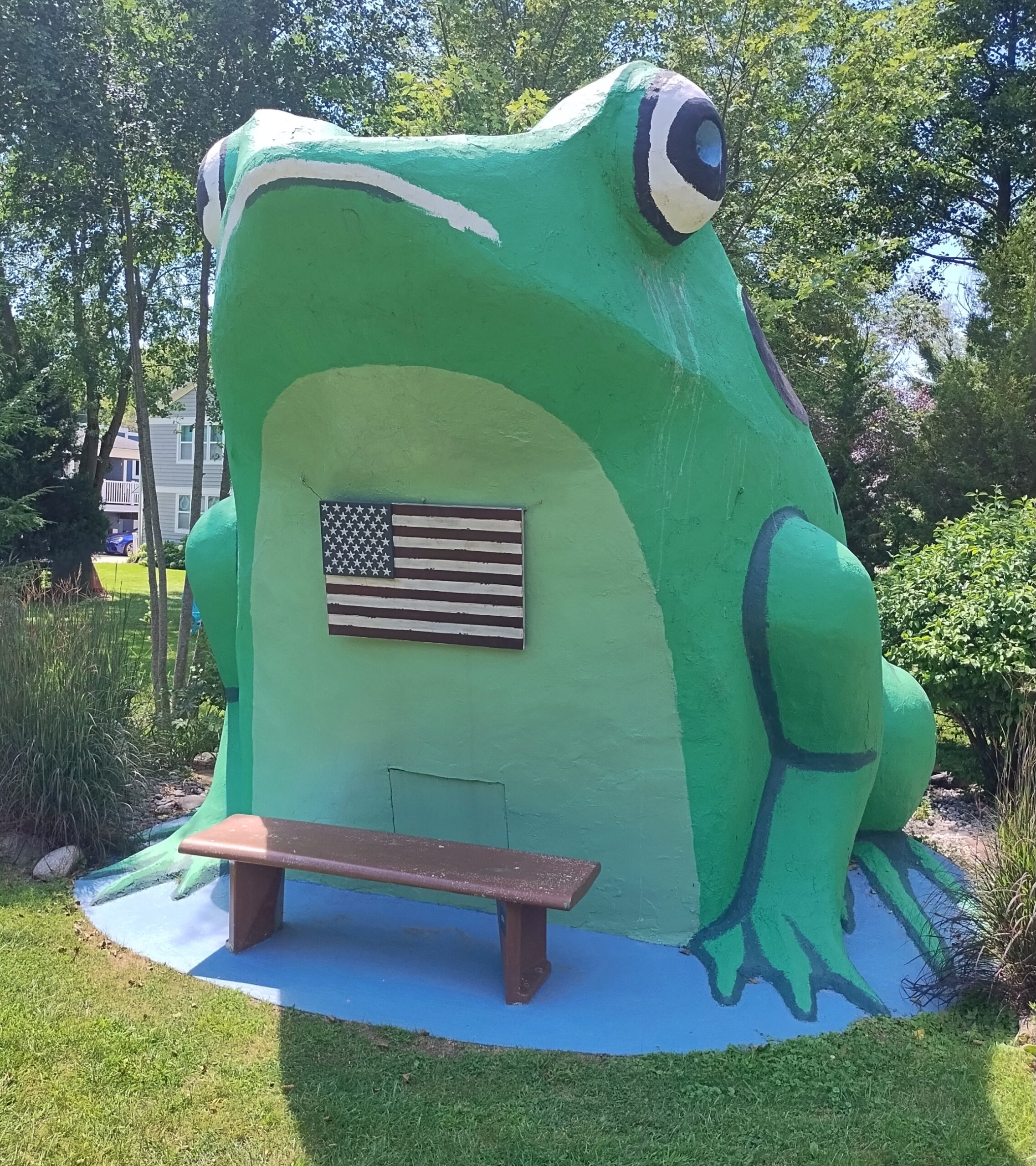
Part of the long defunct Frog Hollow miniature golf course, according to Roadside America. Looks the part.

Not to be confused with another model frog to be seen in Fontana. Two giant frogs in one town. The world’s a peculiar place.

Two Southern Wisconsin Cemeteries

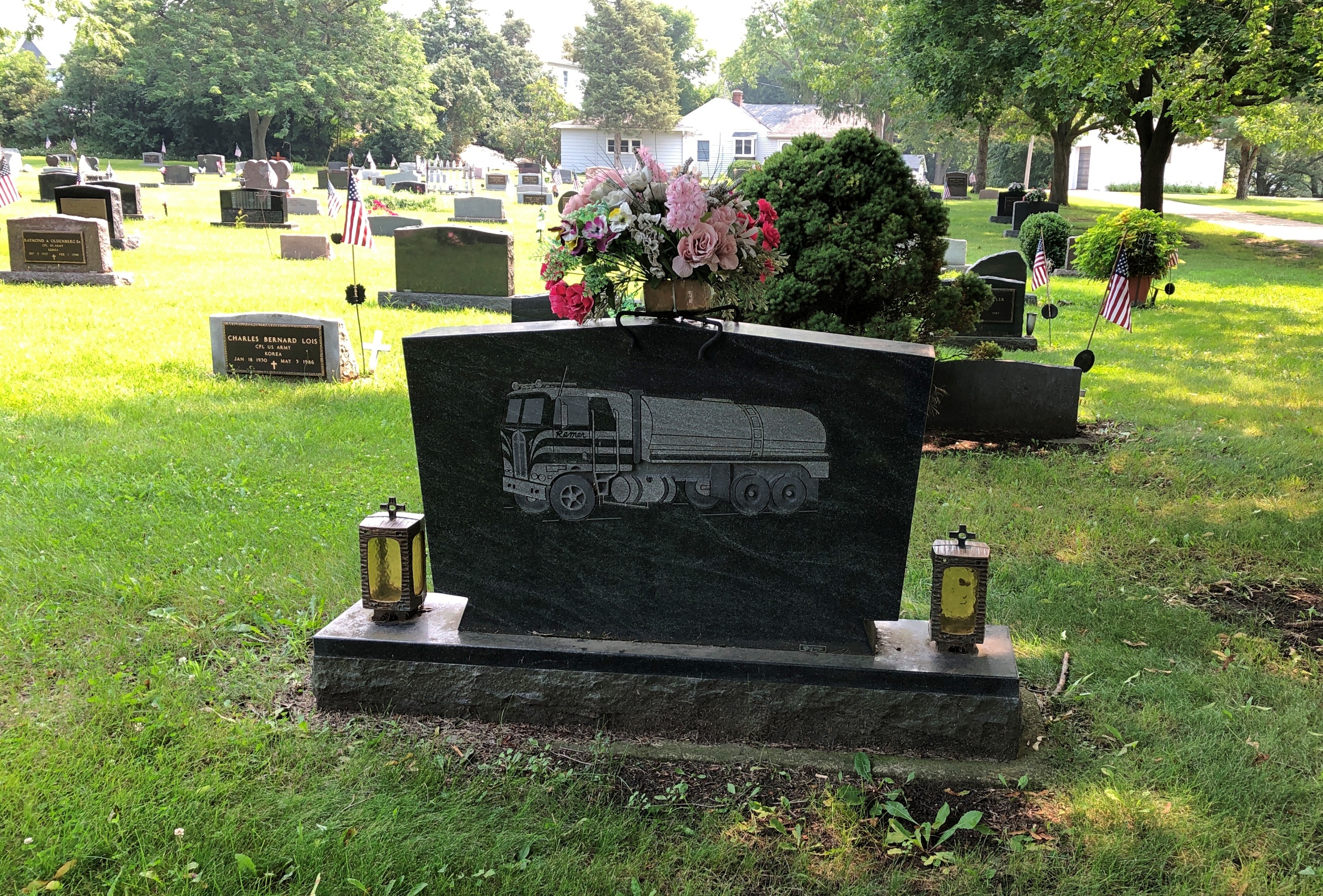
Something I’d never seen on a gravestone: a truck. I’ll bet most people can say that.

St Mary's Cemetery, Burlington, Wis

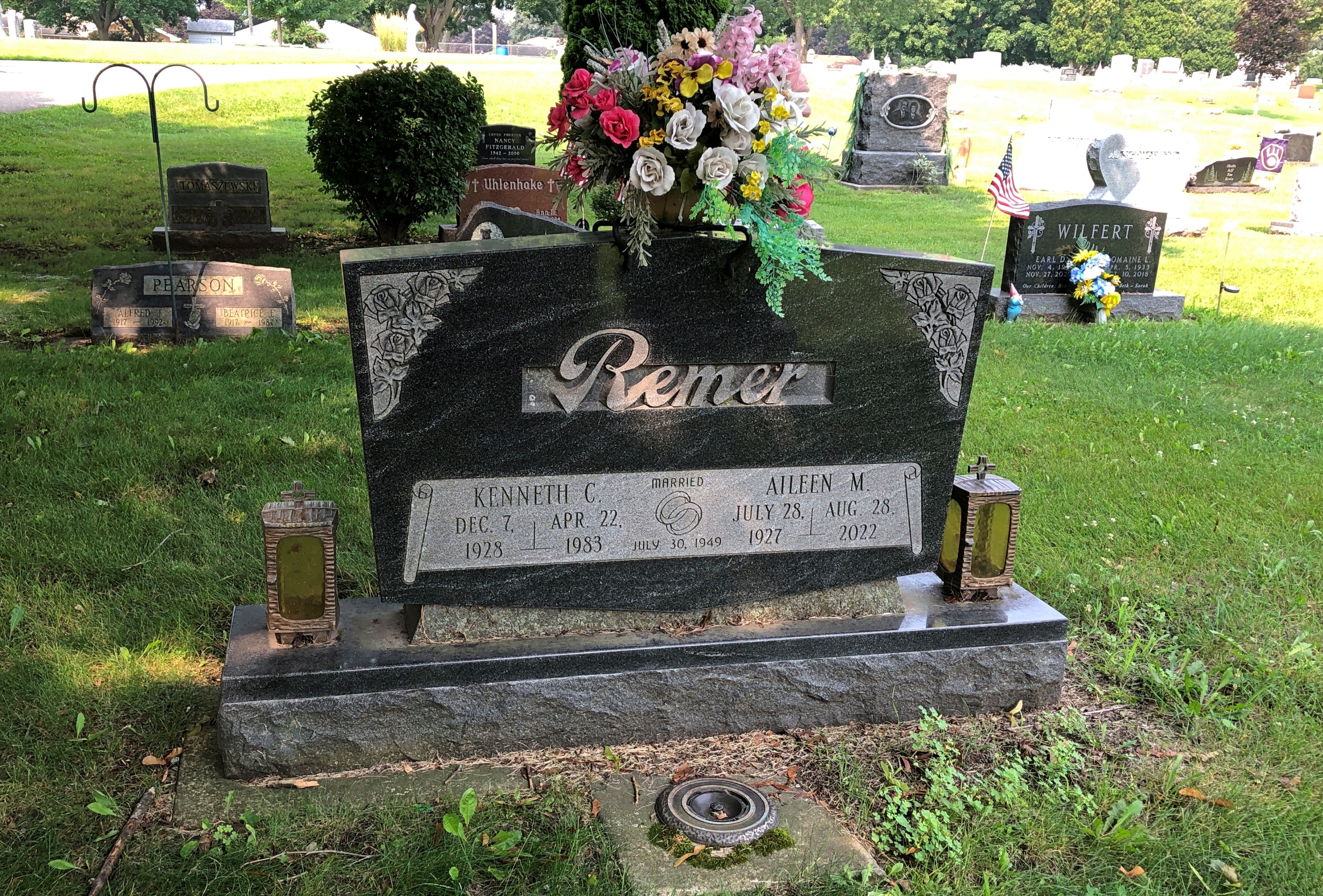
My best guess when I saw it was that Kenneth C. Remer was a trucking man who, among other things, lived through the short romanticization of trucking men in the mid-1970s. Something I’m sure is lost on later generations, as if that matters. If I were silly enough to say “That’s a big 10-4” to either of my daughters, I wouldn’t expect comprehension. That bit of code wasn’t invented by truckers, but even so.

I looked him up, as one can in our time. His obit says he was a “partner in Remer Milk Service.” So could be he drove a milk truck, at least sometimes. That is a liquid-hauling truck depicted on the stone. Not something celebrated in song and story, but useful work all the same.

Further down the rabbit hole, I came across this: “The 1970s Trucking Craze Can Be Traced Back to a Regional TV Commercial for Bread.” I never knew that, or if I did, I forgot it in the 50 years since then, because I’ve devoted very little thought to the subject over that time. Just another thing invented by ad men.

Another thought on that: though “Convoy” was much more popular, C.W. McCall’s “Wolf Creek Pass” is by far the more entertaining song. (And it’s a real place.) A better song about driving a truck is “Willin’,” originally by Little Feat. Of all people, the inestimable Linda Ronstadt did a remarkable cover of it.

I encountered Mr. and Mrs. Remer at St. Mary’s Cemetery in Burlington, Wisconsin last month. A Catholic cemetery with a nice assortment of stones.

St Mary's Cemetery, Burlington, Wis

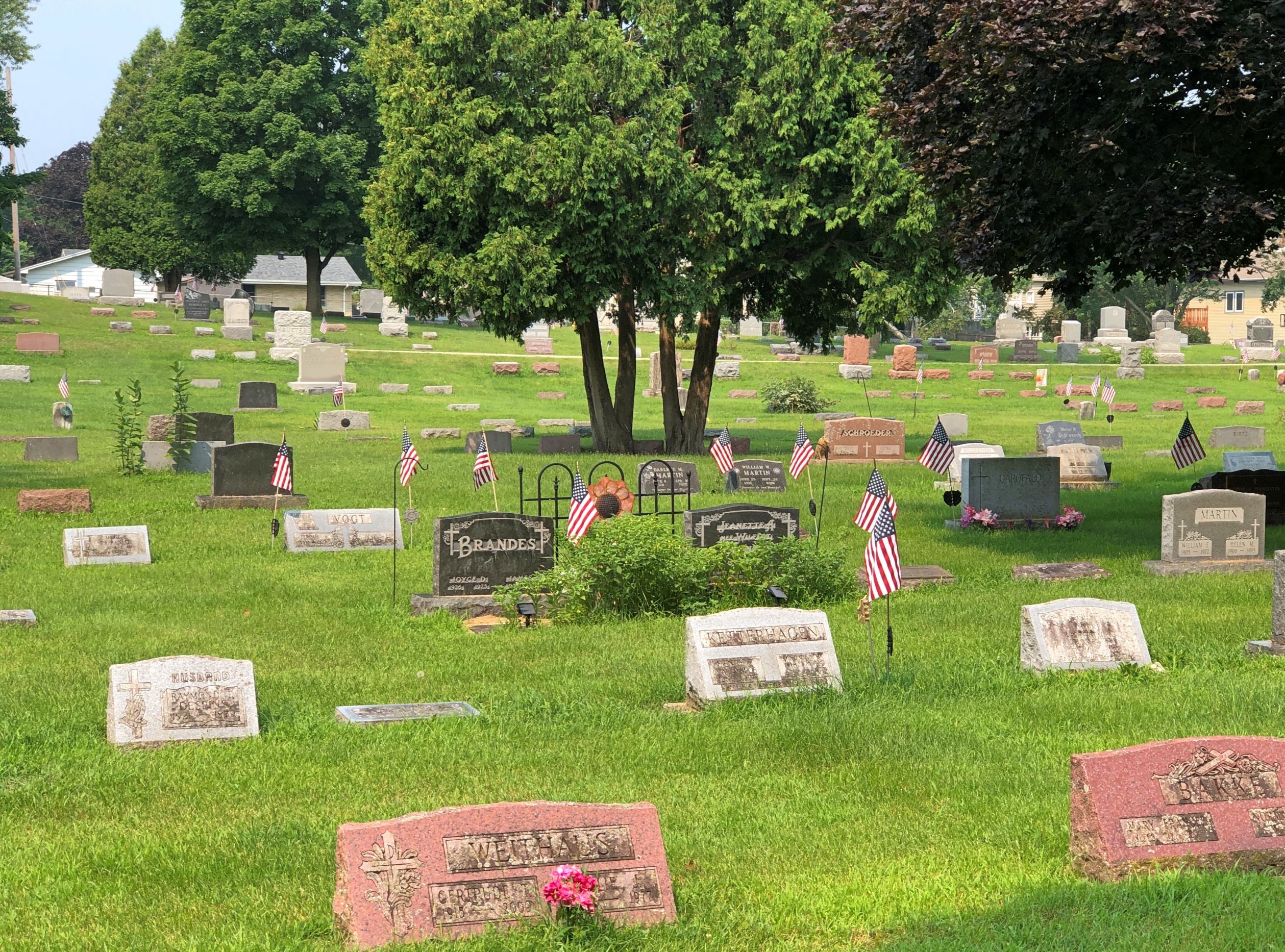
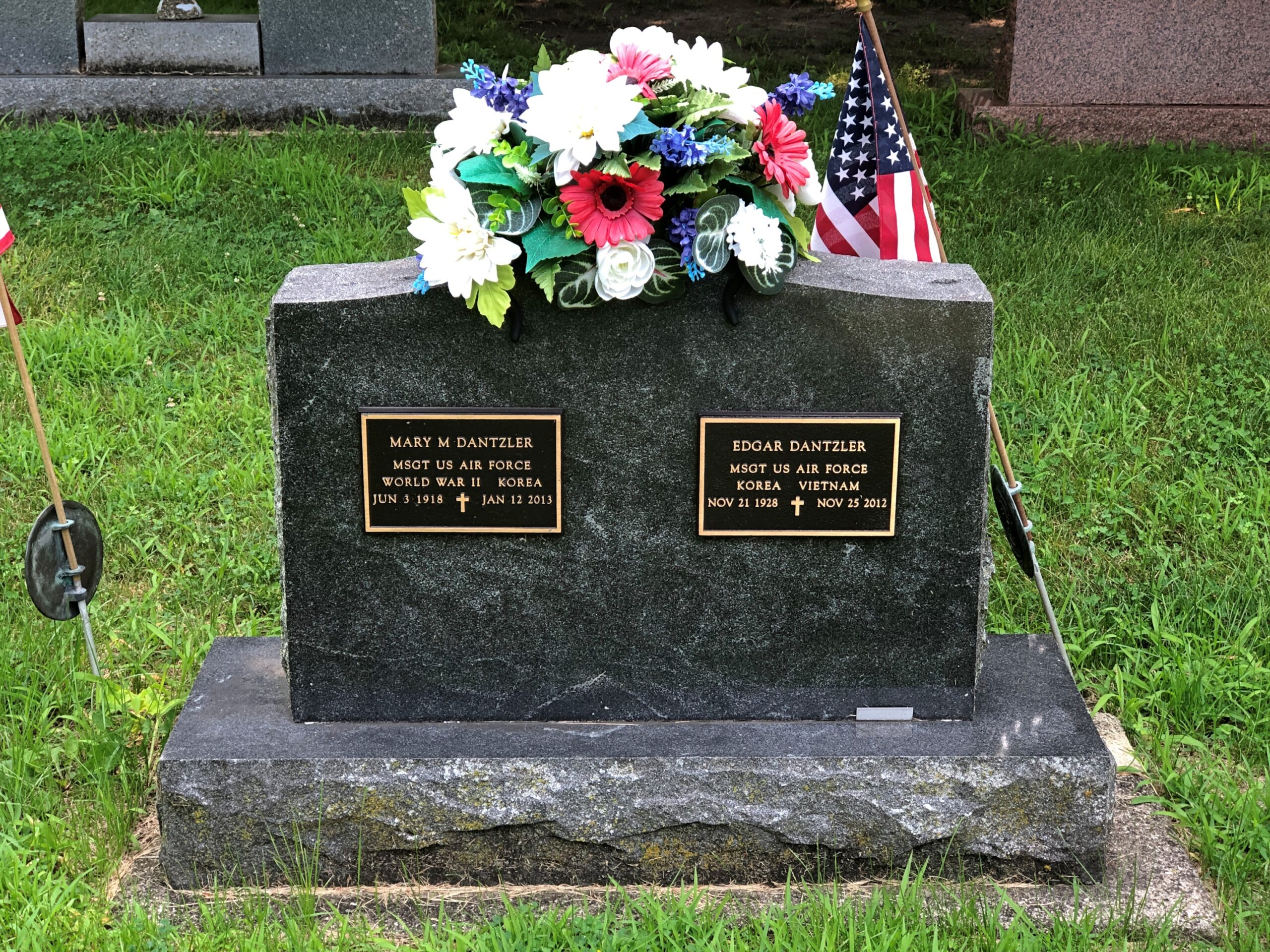
Unusual: two Air Force (I assume originally Army Air Corps) Master Sergeants, married to each other.

St Mary's Cemetery, Burlington, Wis

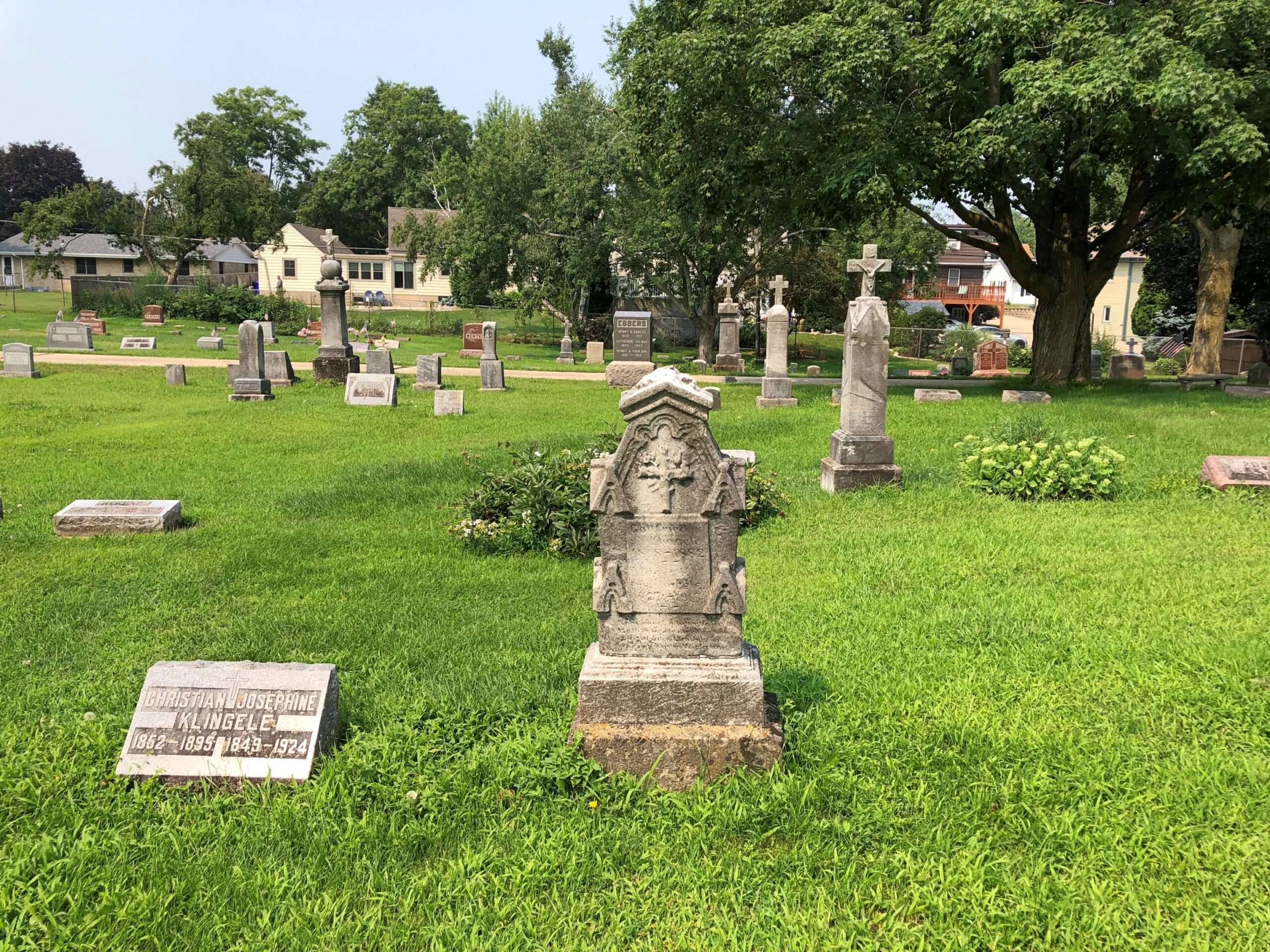
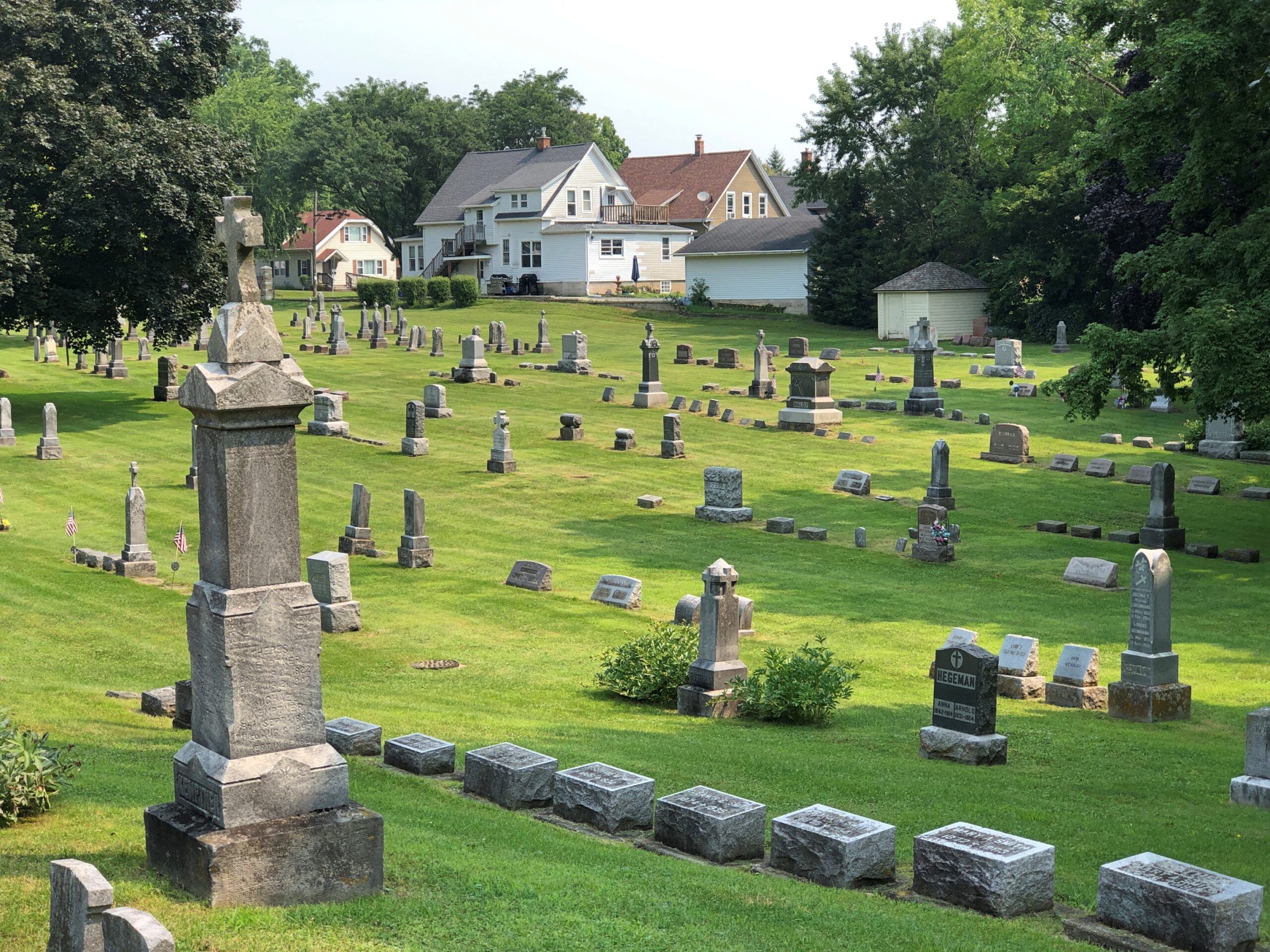
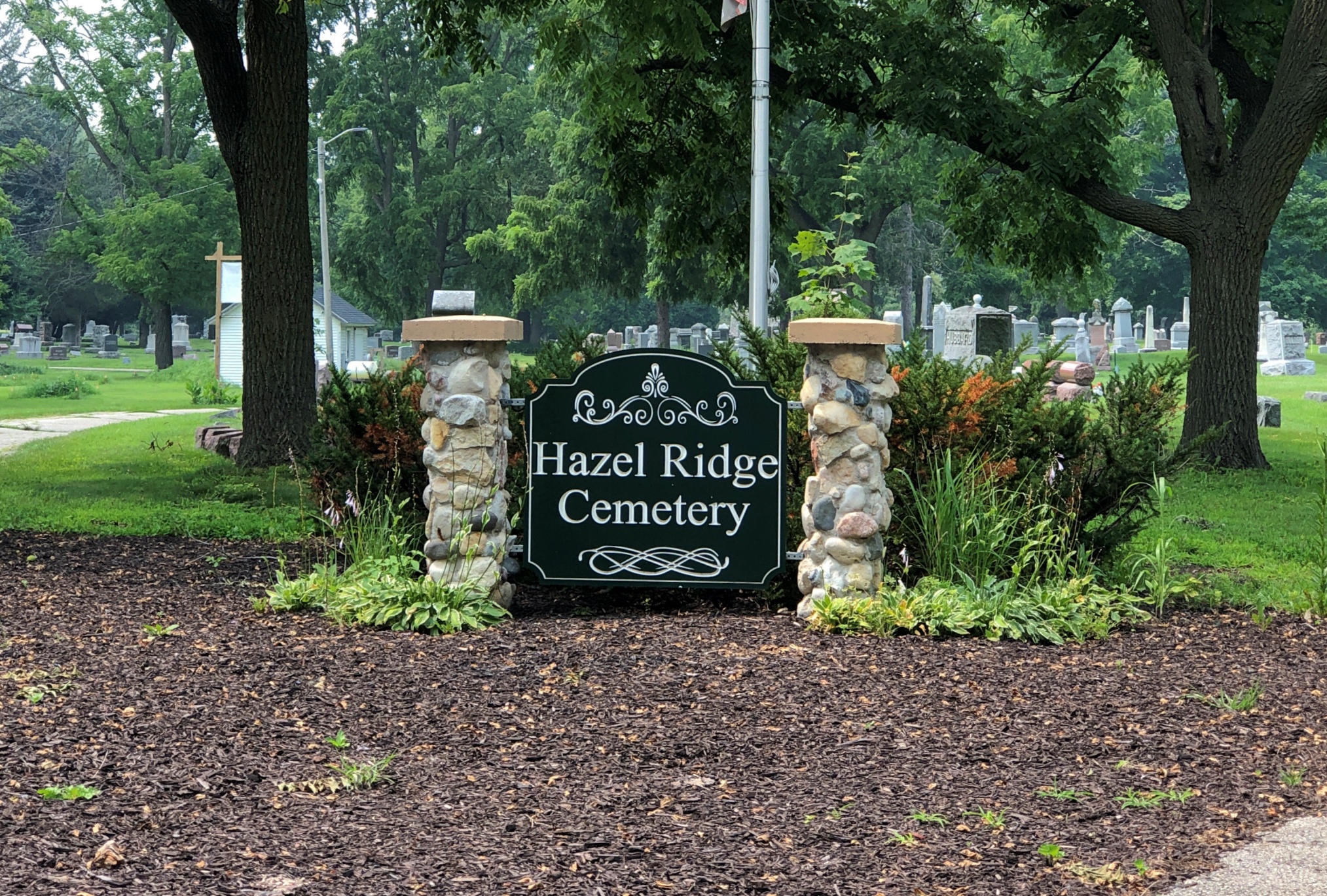
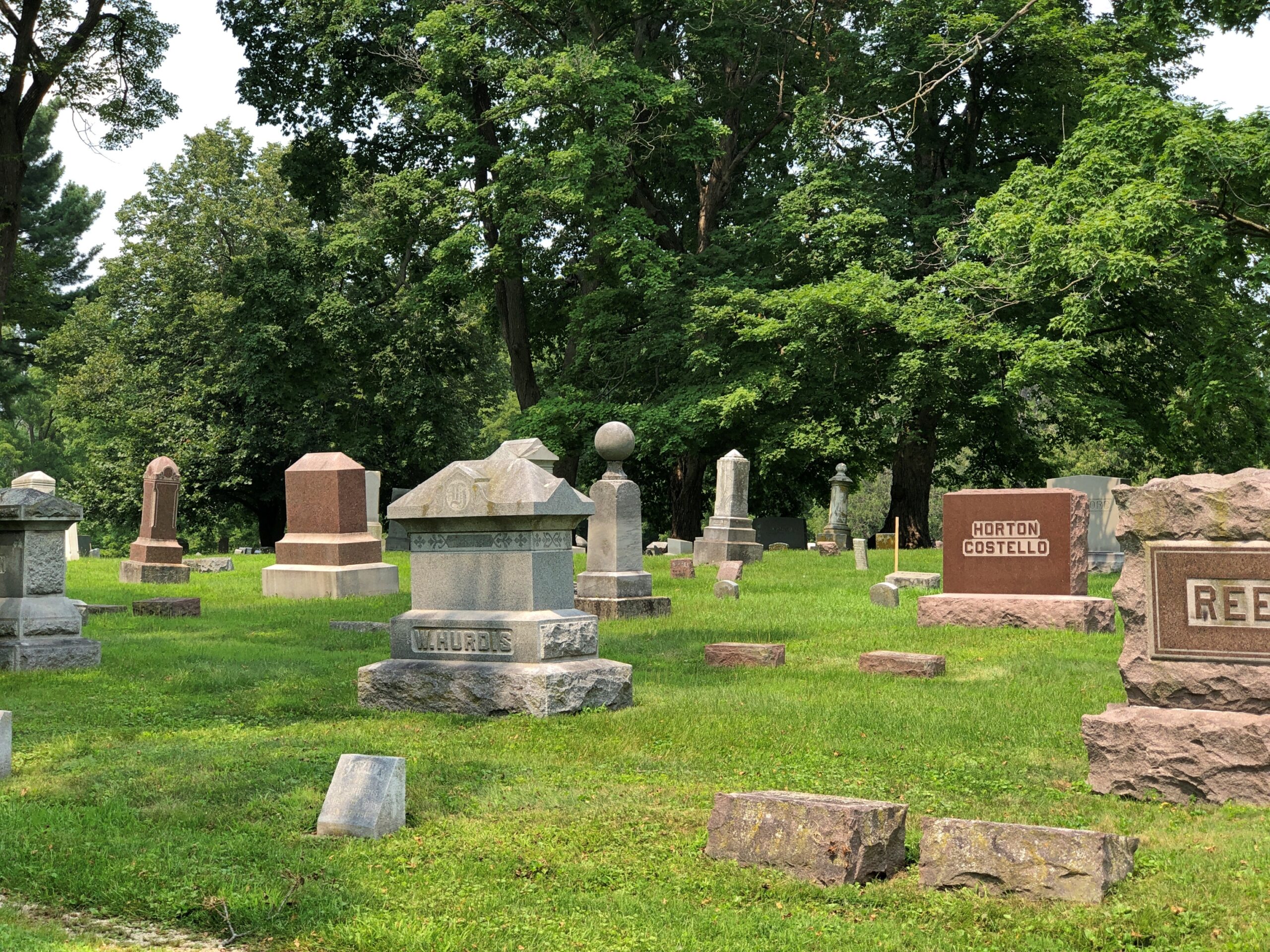
During my recent visit to Elkhorn, Wisconsin, I did no more than look for an “historic cemetery” on Google Maps to find Hazel Ridge Cemetery. Historic for sure, founded more than 150 years ago.

Hazel Ridge Cemetery

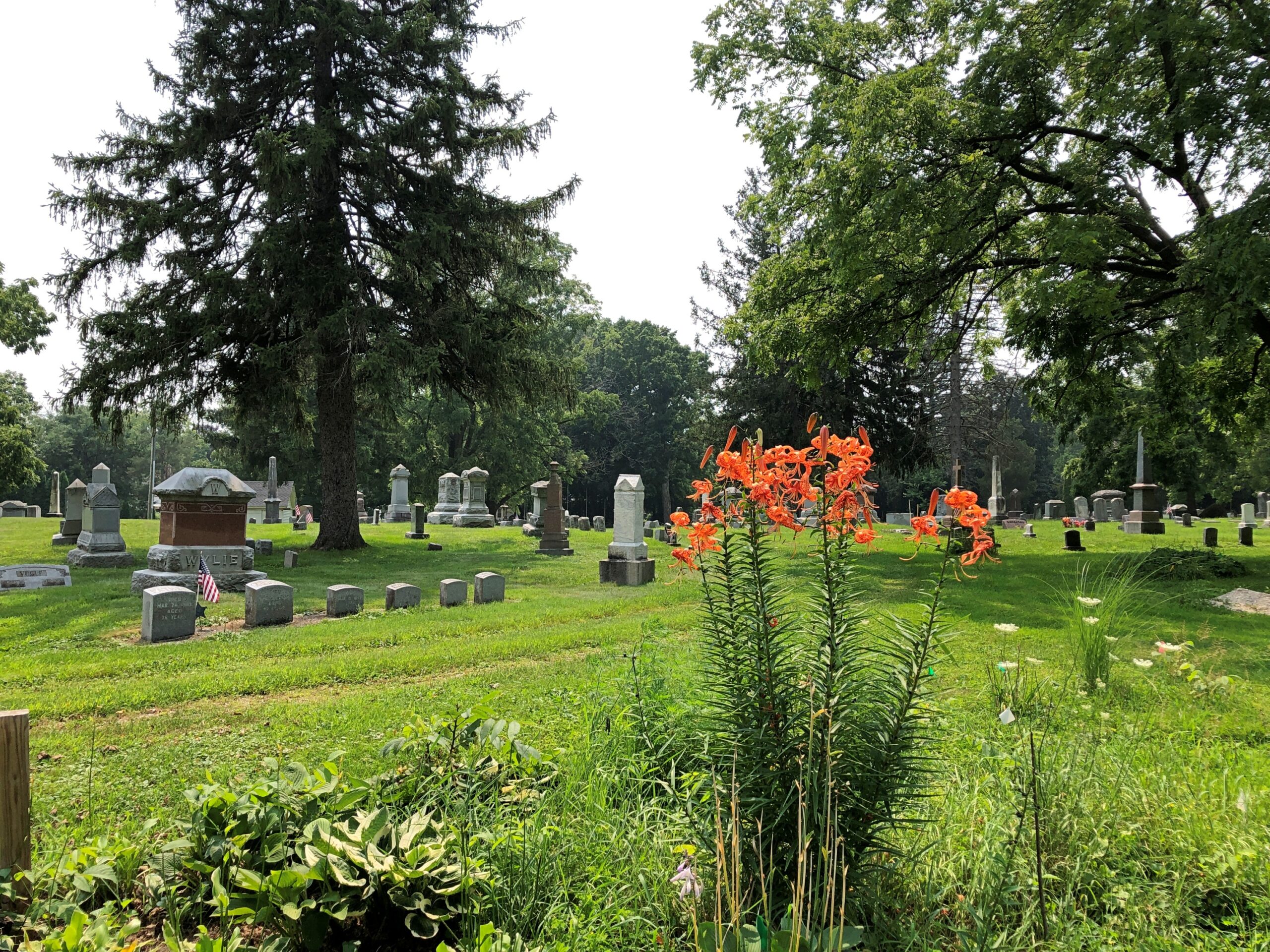
It too has a fine collection of memorials. The cemetery is also an arboretum, with more than 25 native species and ornamental varieties.

Hazel Ridge Cemetery

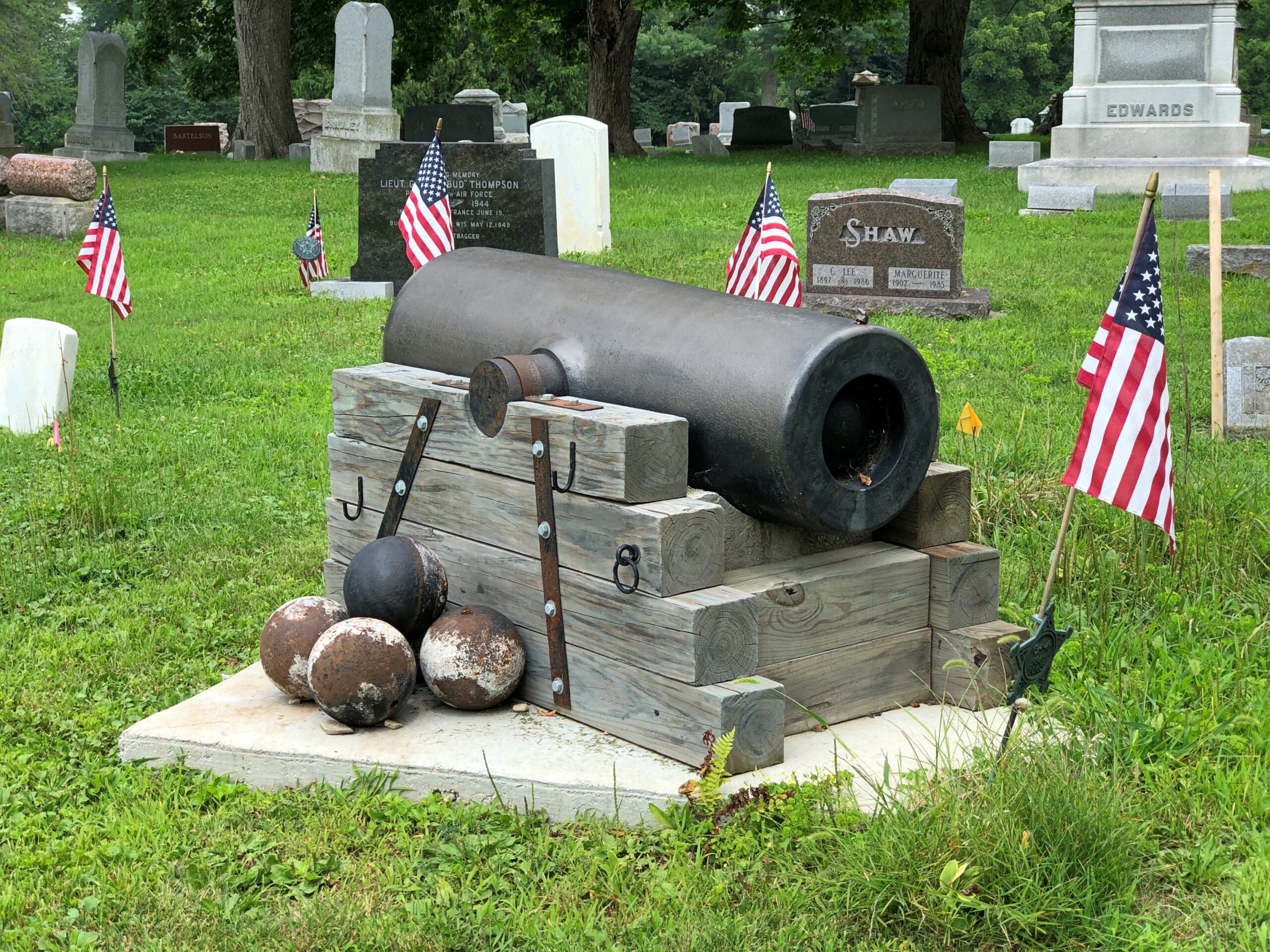
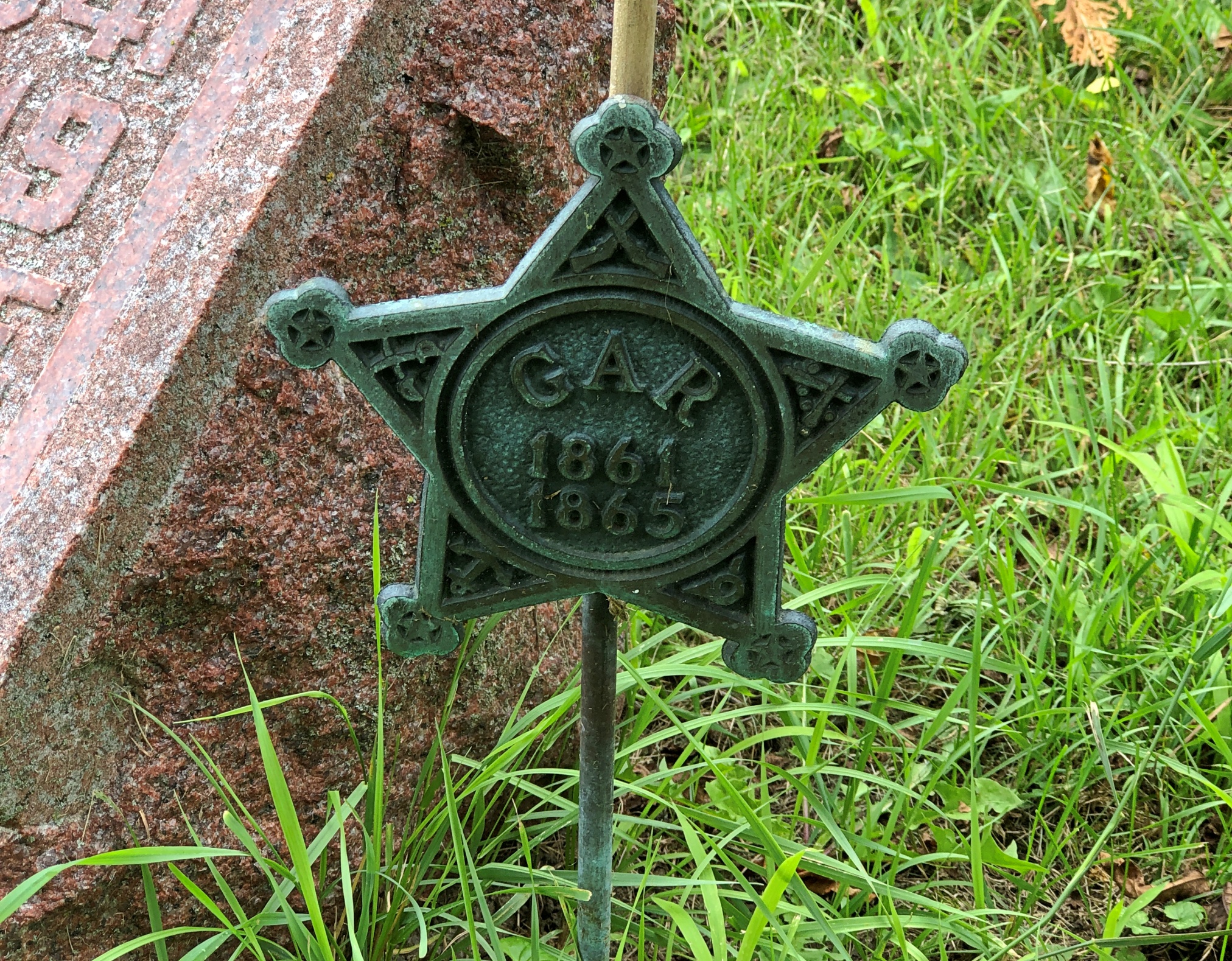
Hazel Ridge has a clutch of war dead memorials, including an 8-inch siege Howitzer as the centerpiece of a Grand Army of Republic memorial.

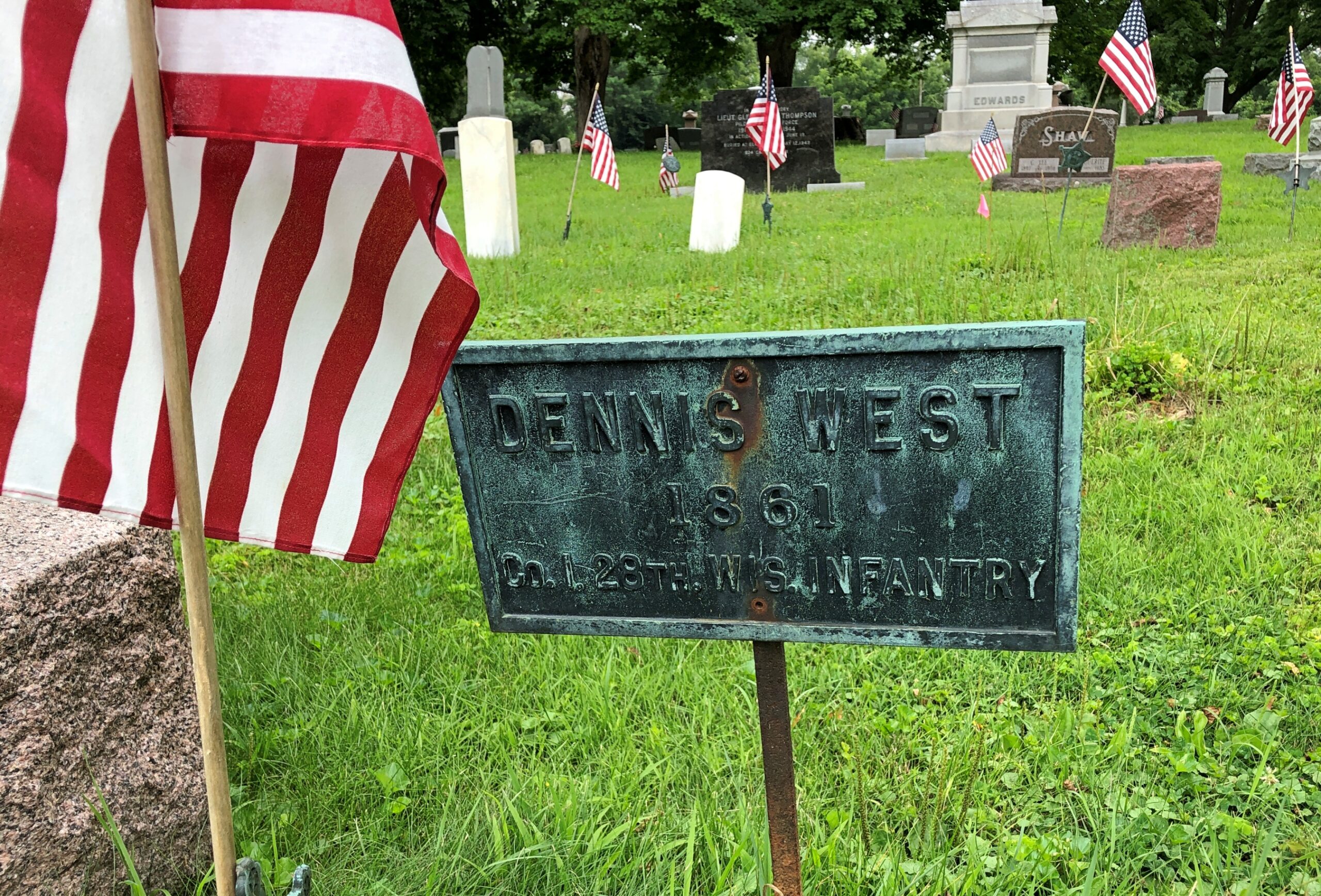
This particular cannon, according to a nearby sign, was made in 1862 at the Fort Pitt Foundry in Pittsburgh. I assume it did its part for the Union. Nearby are soldiers who did likewise.

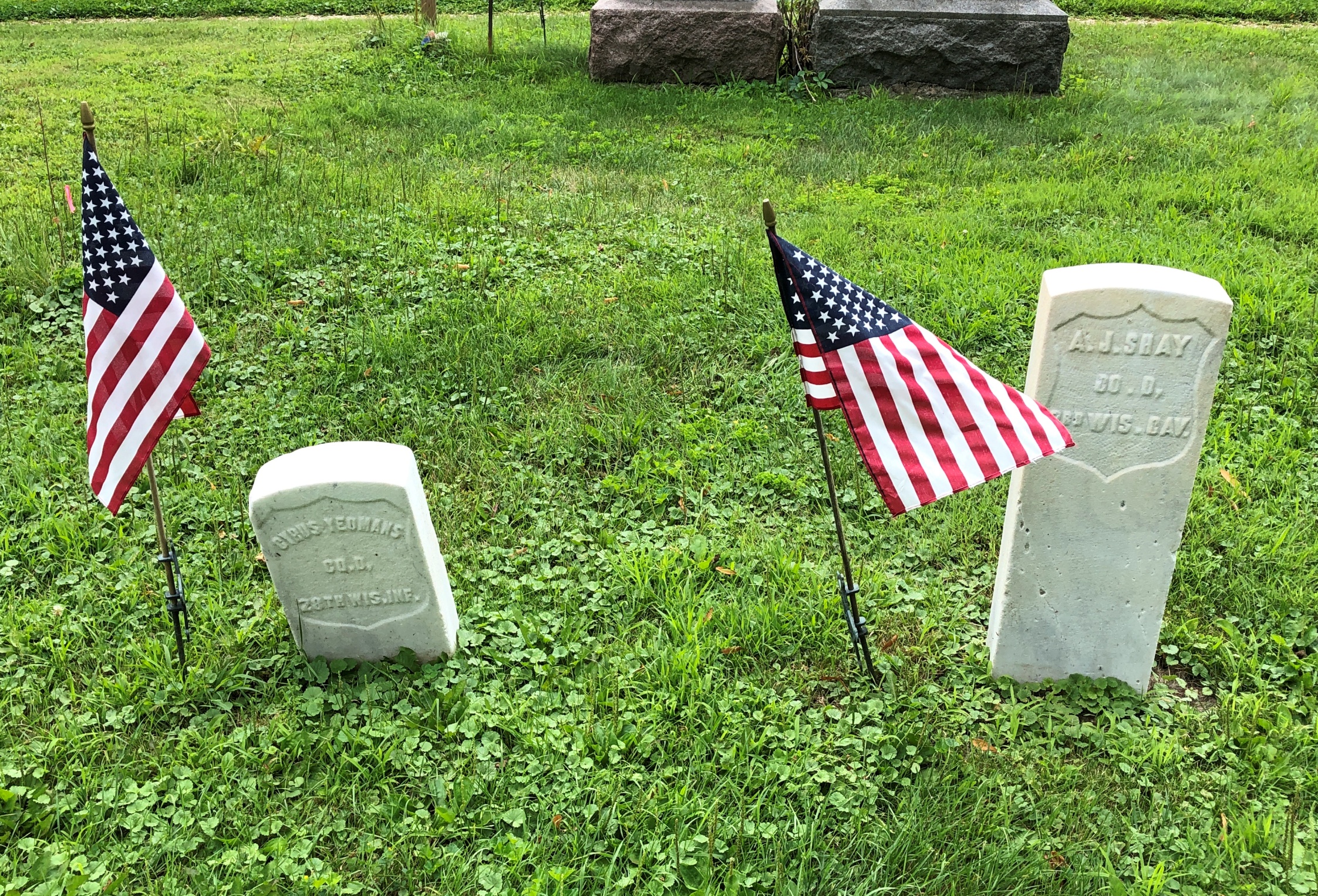
And those who died in later wars.

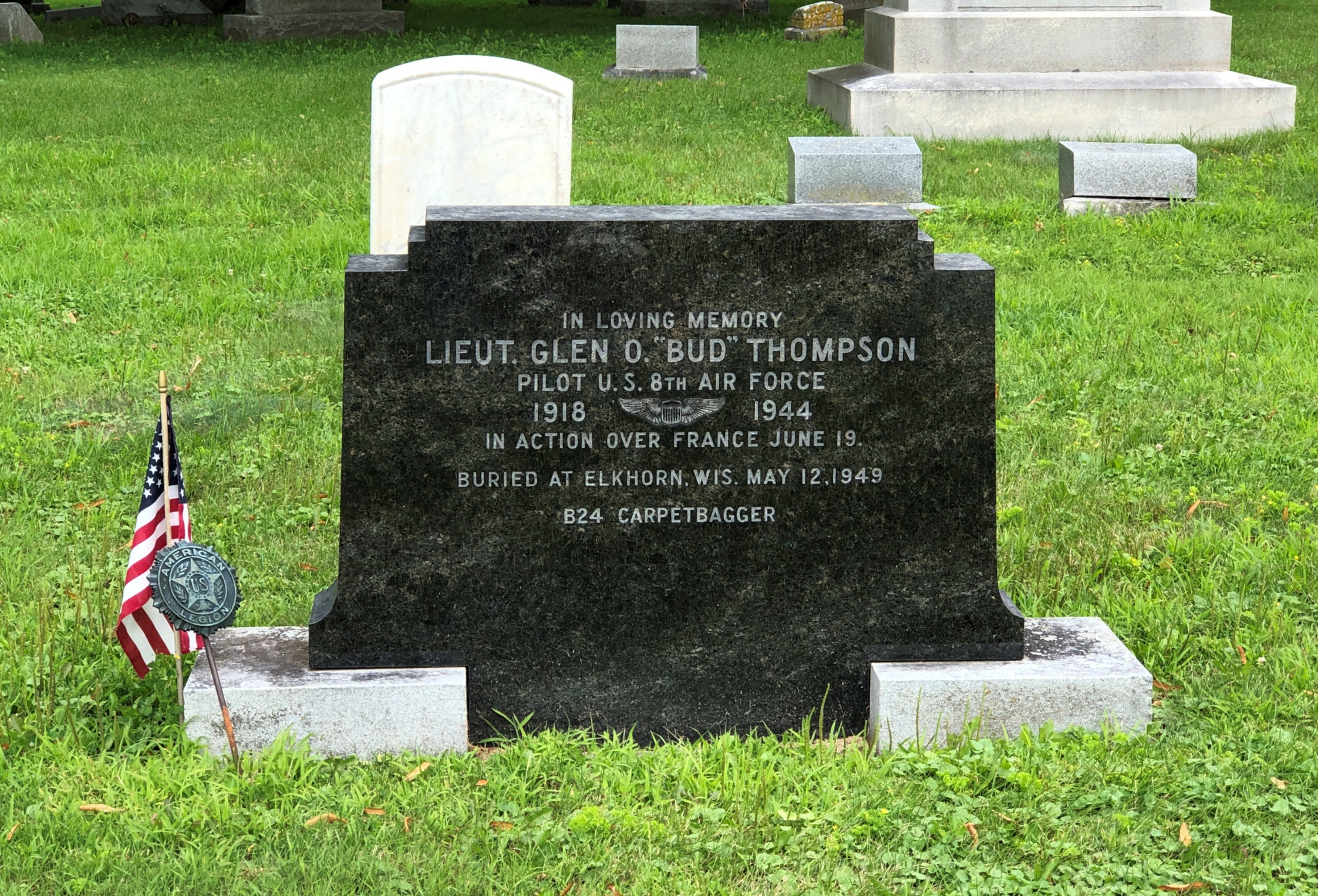
The single word “Carpetbagger” on the stone tells quite a story. Operation Carpetbagger involved black-painted B-24s flying low and slow by night, dropping supplies and agents to the resistance in France before and after the Normandy invasion. Clearly dangerous work. RIP, Bud.

Elkhorn, Wisconsin

Labor Day weekend again? How does summer vanish so quickly? Back to posting on September 2.

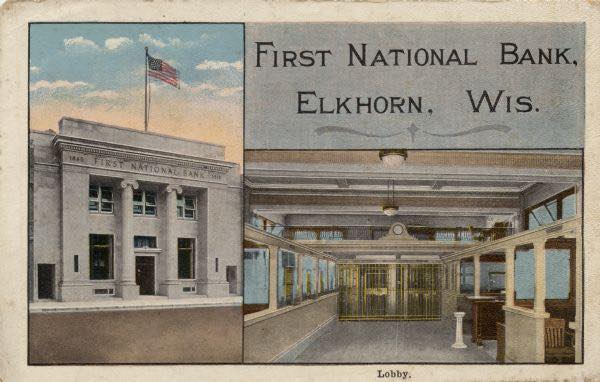
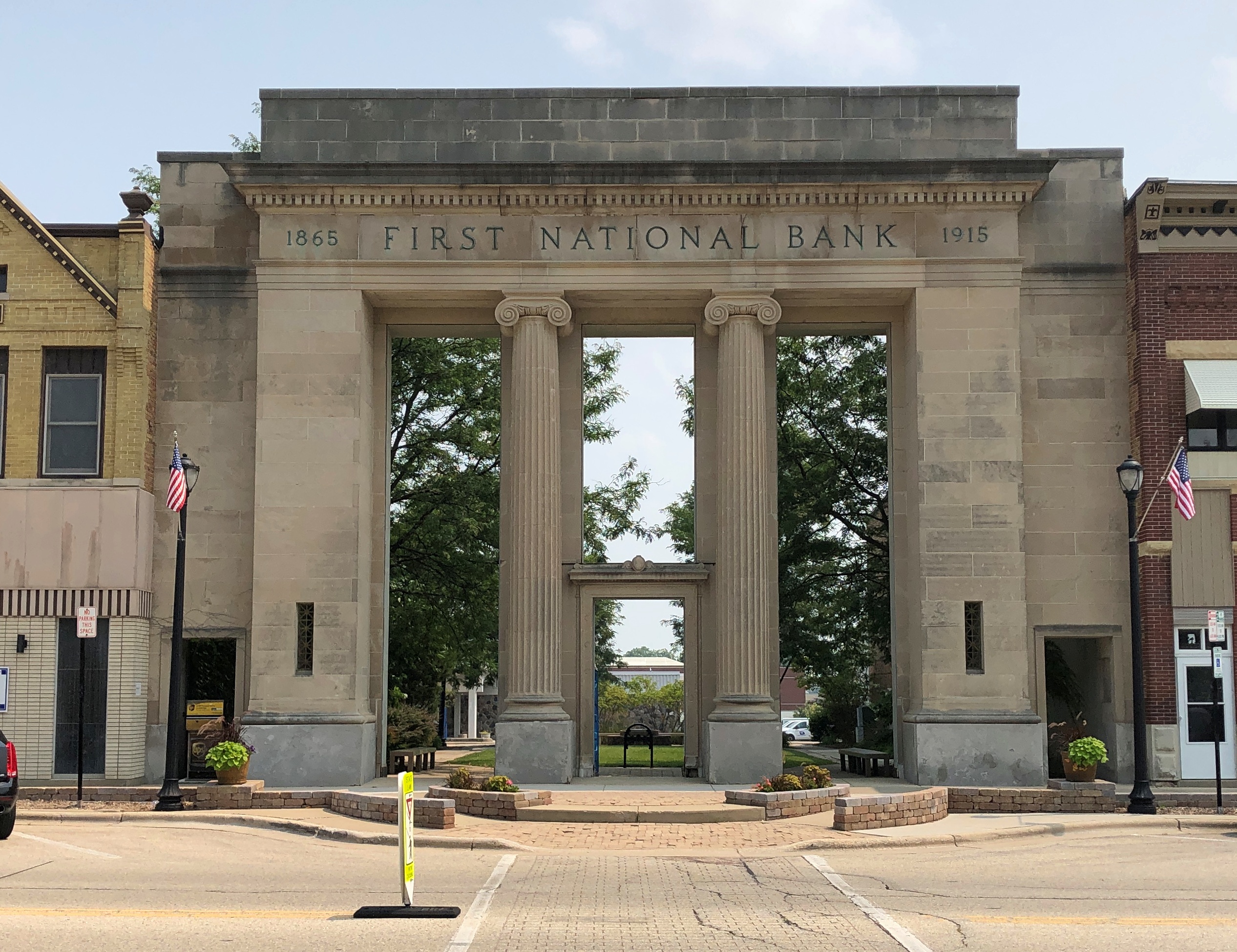
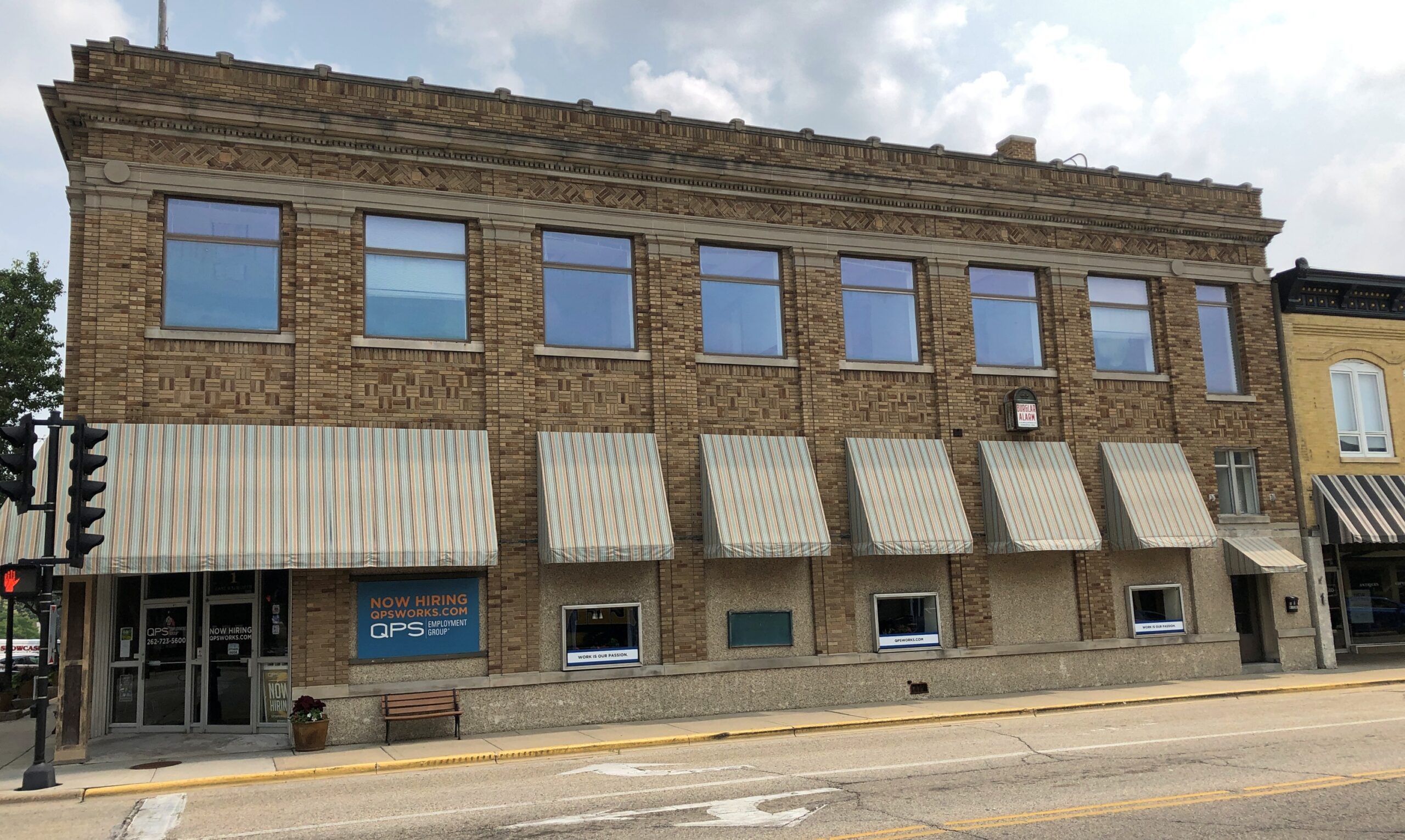
Once upon a time, one of the many First National Banks of the world stood in downtown Elkhorn, Wisconsin, complete with a sturdy bank interior common at the time. As seen in a postcard from the early 20th century.

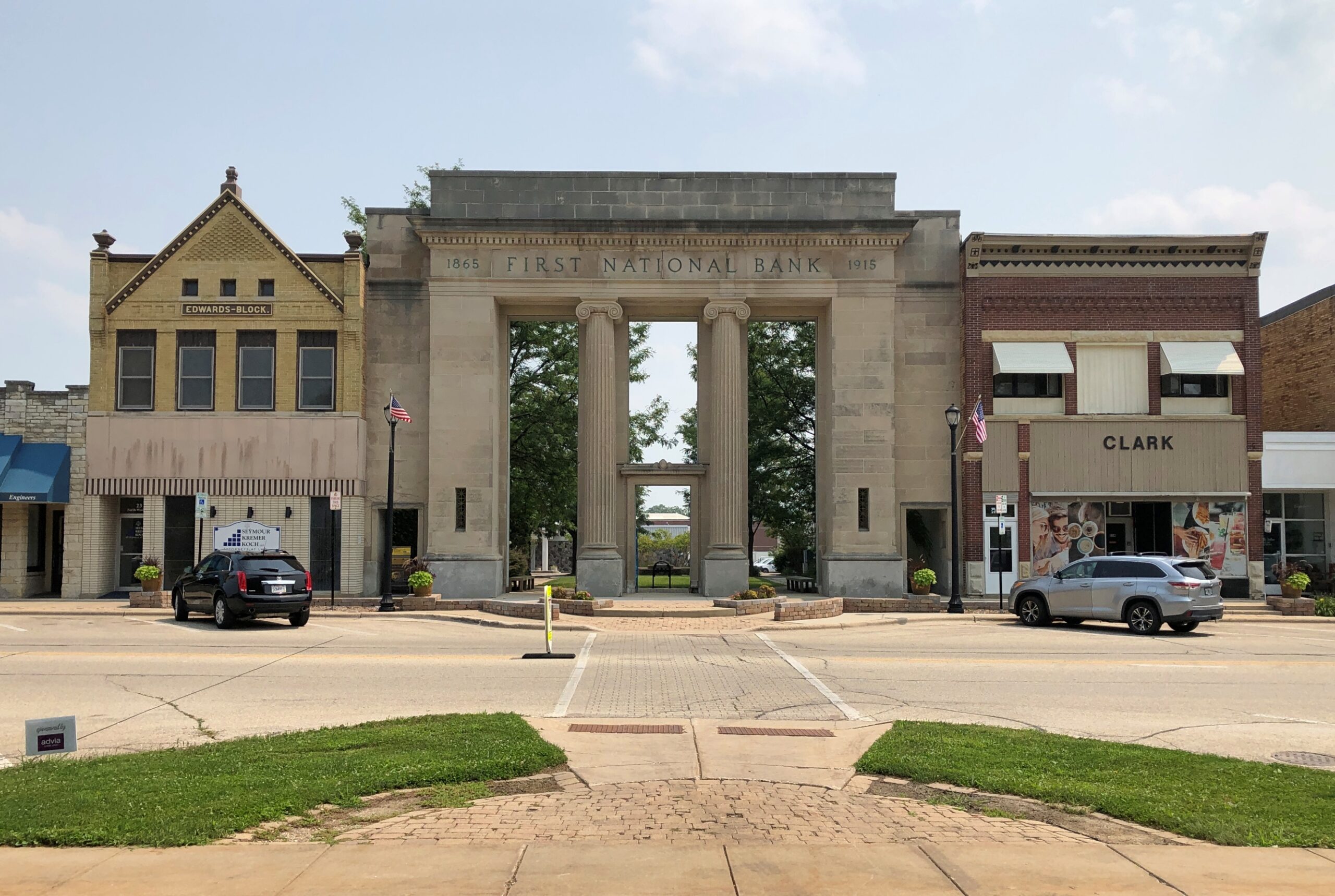
Go looking for the bank these days, and this is what you find.

Elkhorn, Wisconsin
Elkhorn, Wisconsin

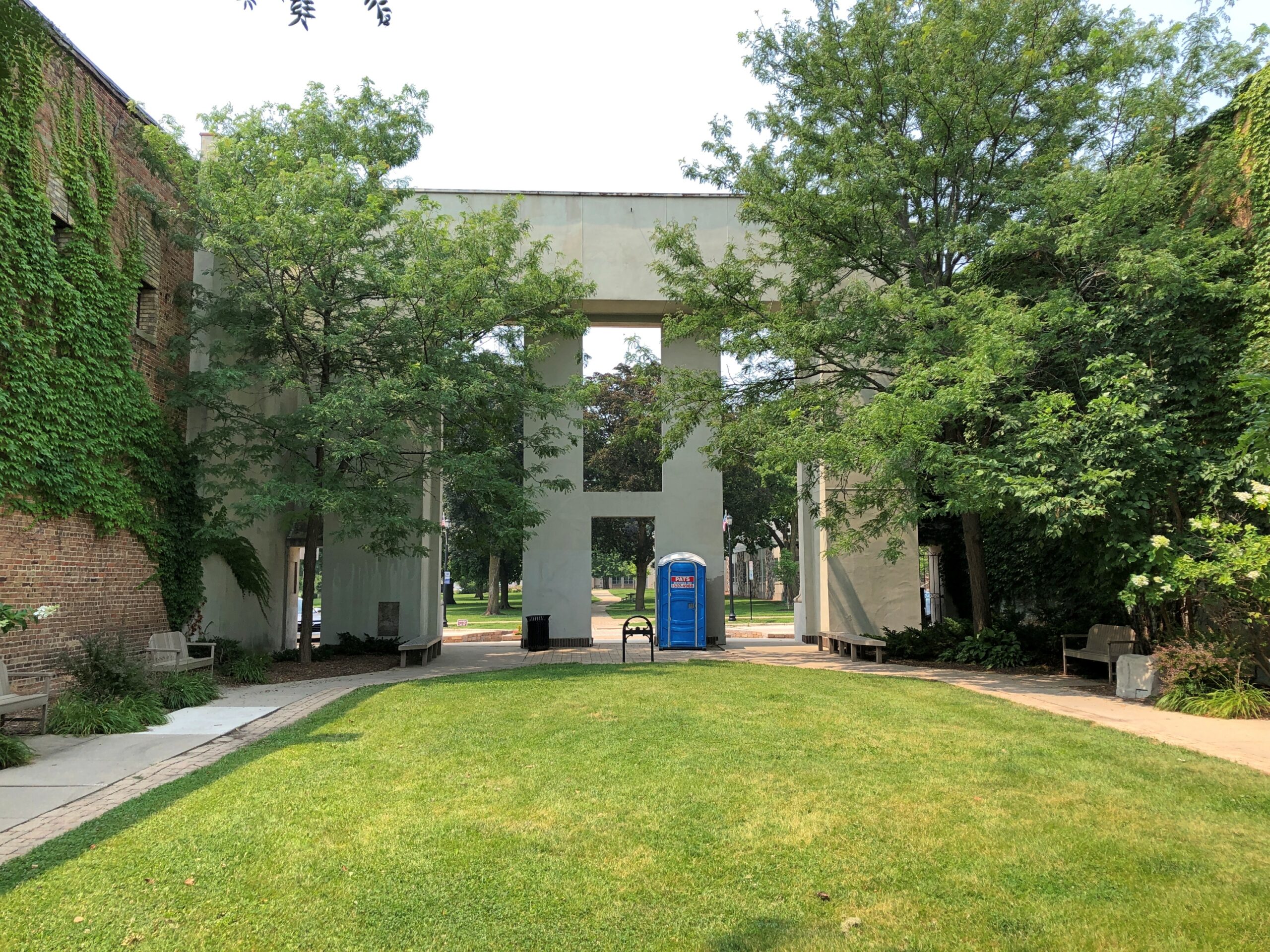
Once a bank, now a pocket park. The view from the inside, looking back at the facade.

Elkhorn, Wisconsin

There were no signs to indicate how the park came to be. A less imaginative act would simply have been to raze the old building in its entirety and leave a weedy gap in the downtown streetscape, hoping for redevelopment that might never come.

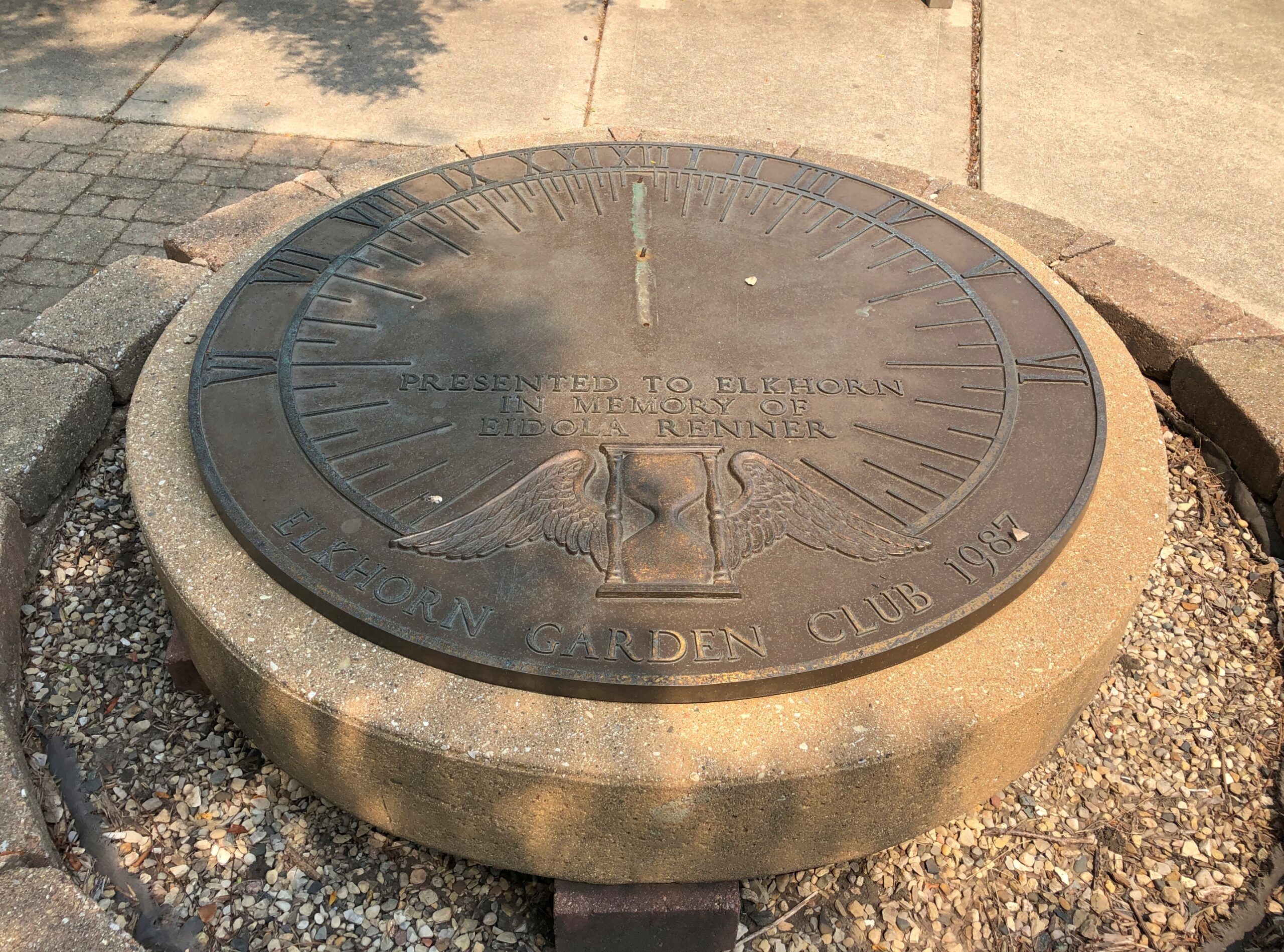
Inside the park is a sundial, dedicated to the memory of one Eidola Renner (d. 1983) of the Elkhorn Garden Club. Ah, garden clubs. The term makes me think of Khigh Dhiegh.

Elkhorn, Wisconsin

This must be her. The sundial – whose gnomon is missing, so it can’t function for telling time – has been there since 1987, so I assume the park has been there at least that long, if not longer.

I arrived in Elkhorn on a warm day in early August, traveling by myself in southeastern Wisconsin. It wasn’t too hot for a stroll around the town’s municipal square, home to a “government center,” a mid-century box, but not the storied old courthouse that should be there.

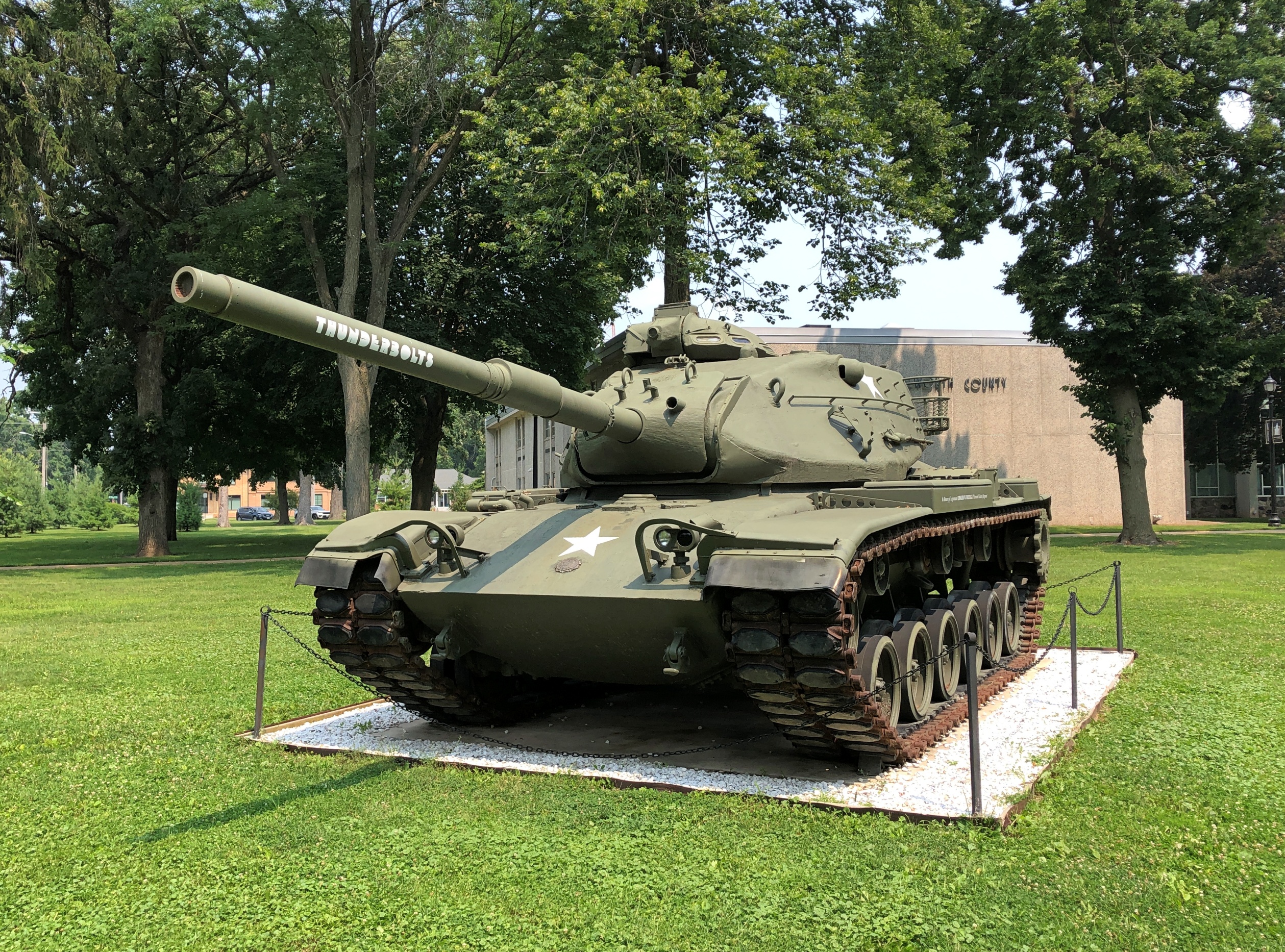
There was a tank. How many tanks are loose in Wisconsin?

Well-tended buildings near the square.

Elkhorn, Wisconsin
Elkhorn, Wisconsin

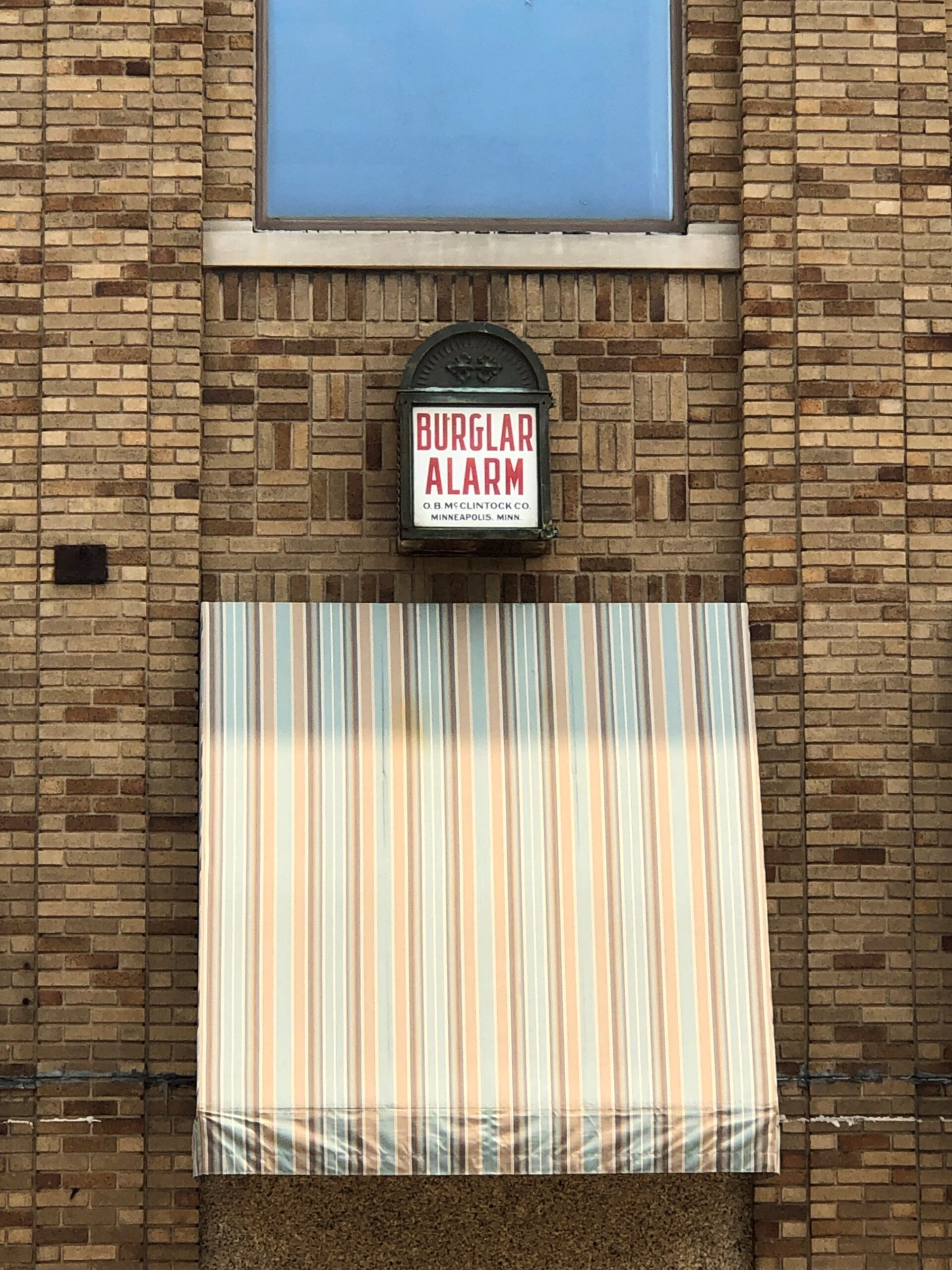
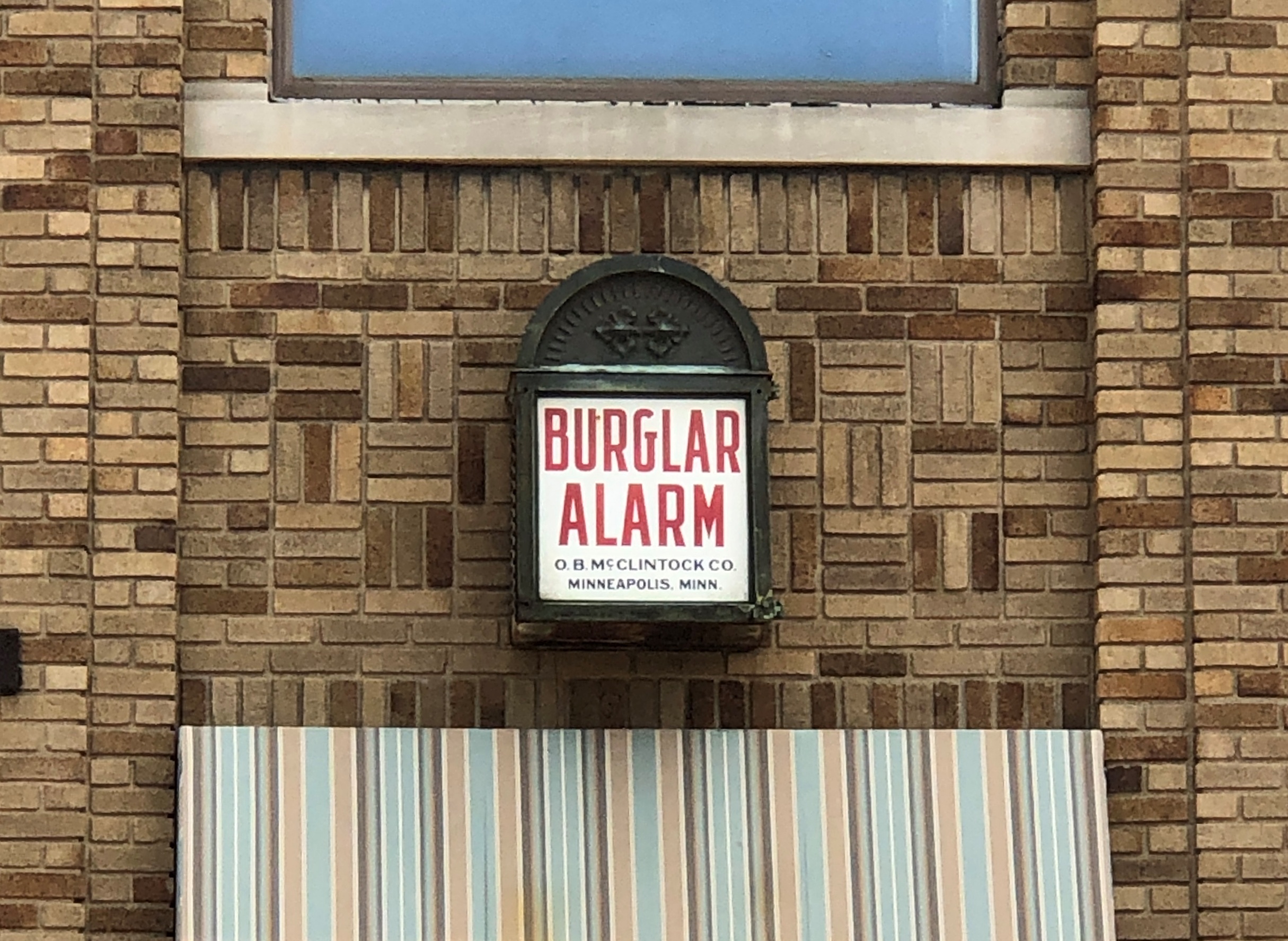
Every town has one of these, it seems.

What is that?

Elkhorn, Wisconsin

Public notice of an antique alarm system, that’s what.

Not the first one I’ve seen. This one was made by the O.B. McClintock Co. of Minneapolis. “In 1901 O.B. McClintock came to Minneapolis and founded the American Bank Protection Company, which produced burglar alarm systems,” explains a site called Lavilo. “After his resignation in 1908, he opened the O.B. McClintock Company to ‘manufacture electrical chime and clock systems,’ which he sold to financial institutions all across the United States.”

Banks began telling the public the time quite a while ago (McClintock surely wasn’t the first). I’m of course old enough to remember dialing time and temperature, though I can’t remember which financial institution sponsored the service in ’70s San Antonio.

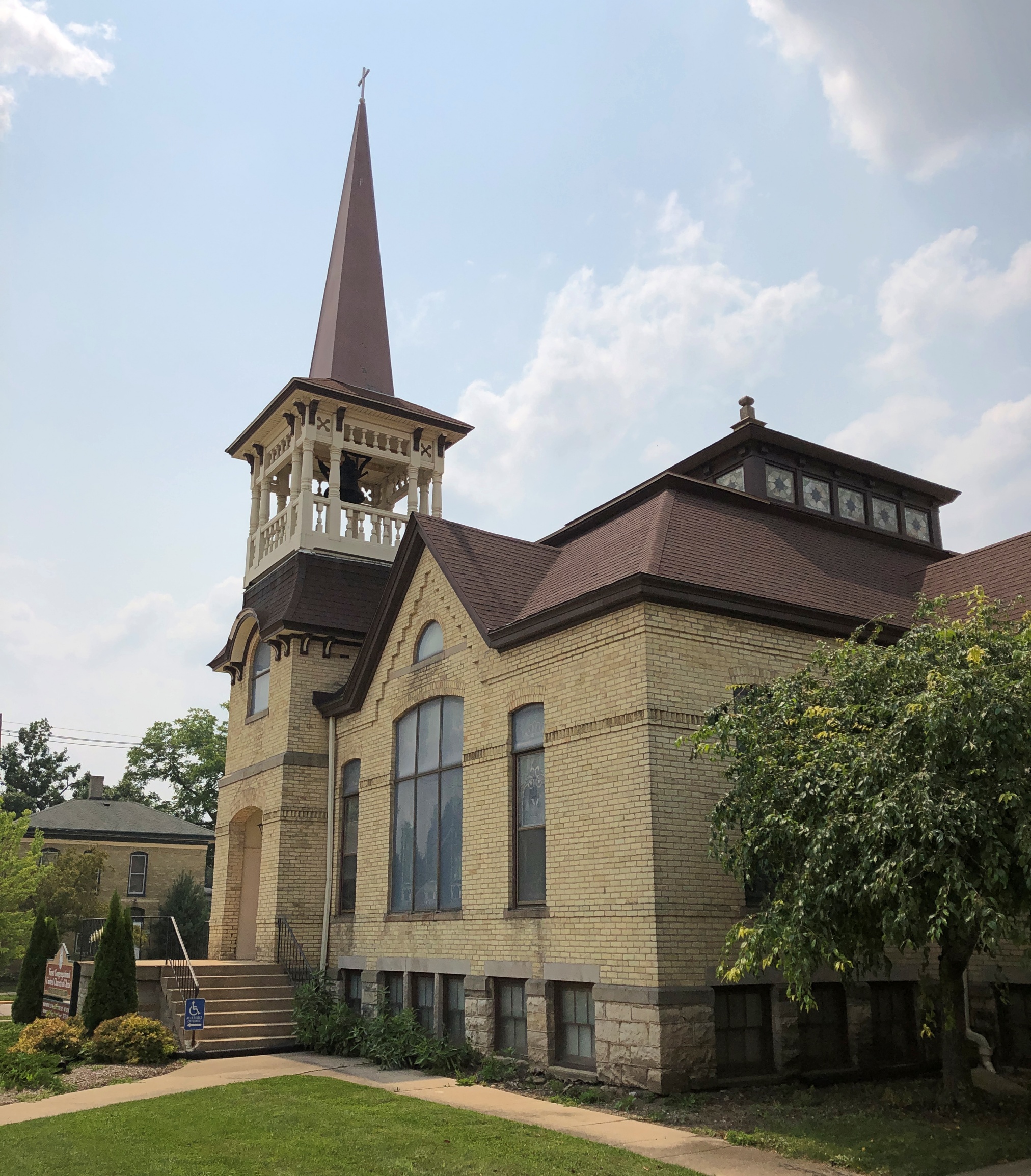
Elkhorn has a fine selection of downtown churches as well. Such as the First Congregational United Church of Christ.

Elkhorn, Wisconsin
Elkhorn, Wisconsin

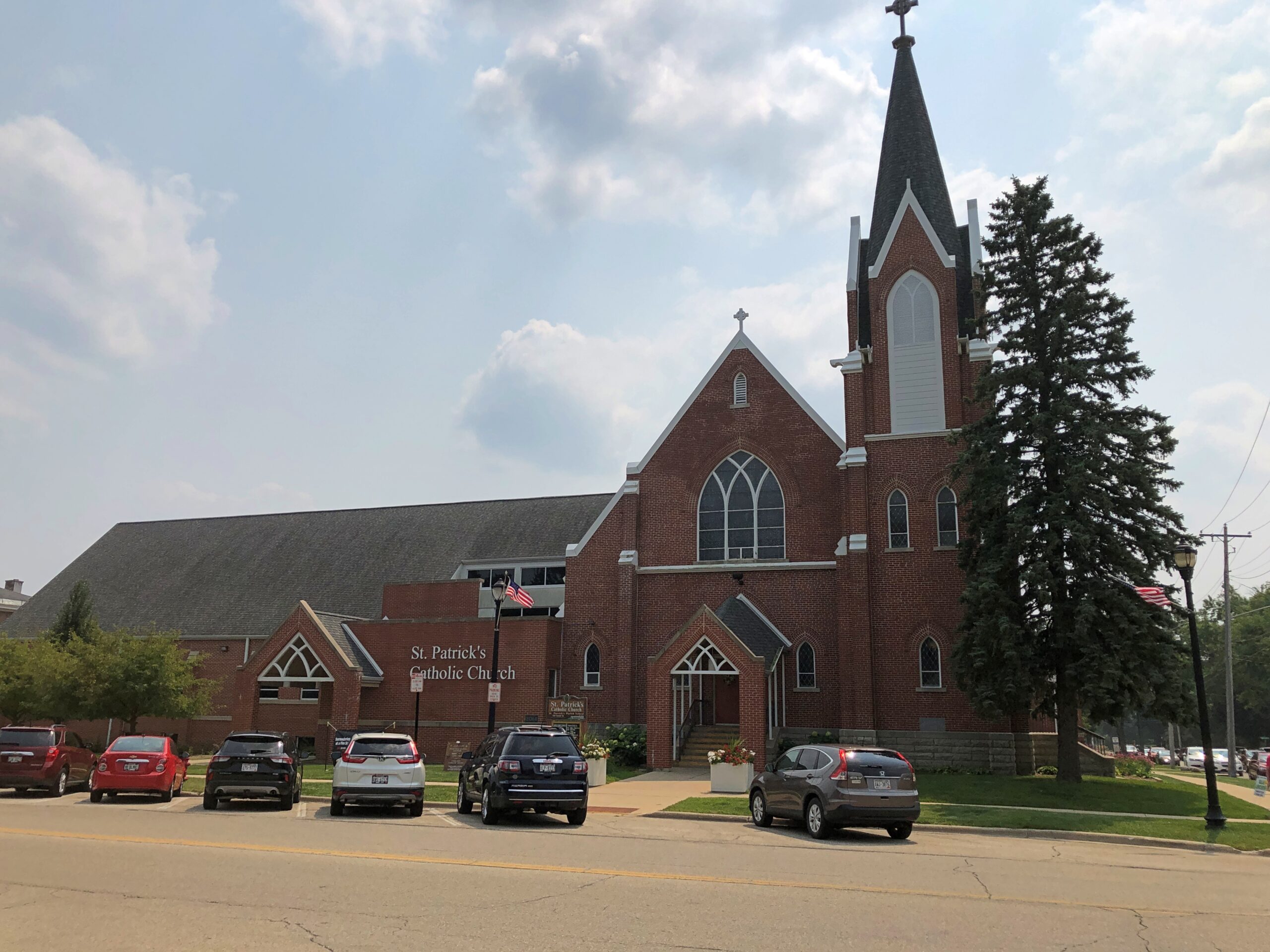
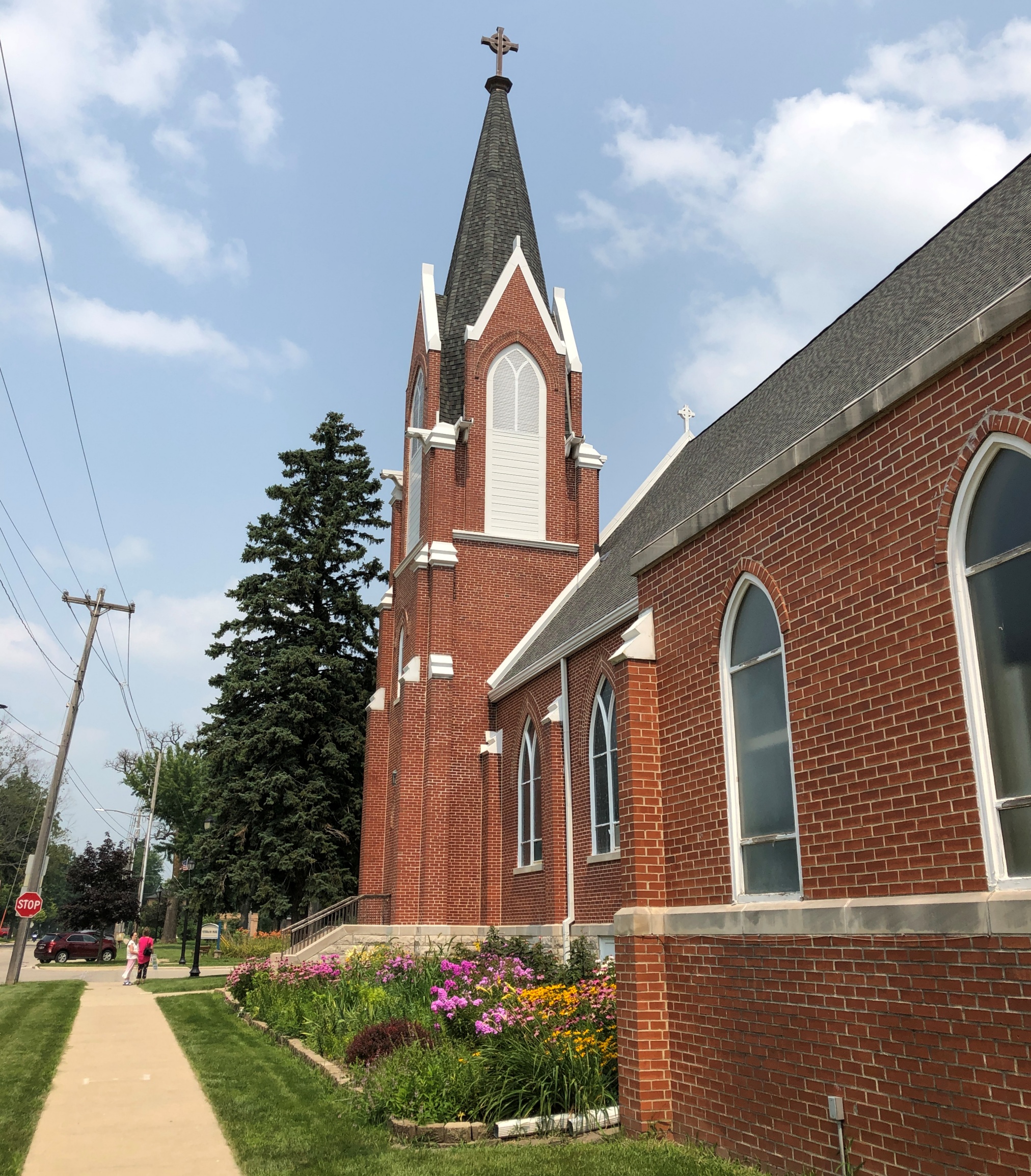
St. Patrick’s Catholic Church.

Elkhorn, Wisconsin
Elkhorn, Wisconsin

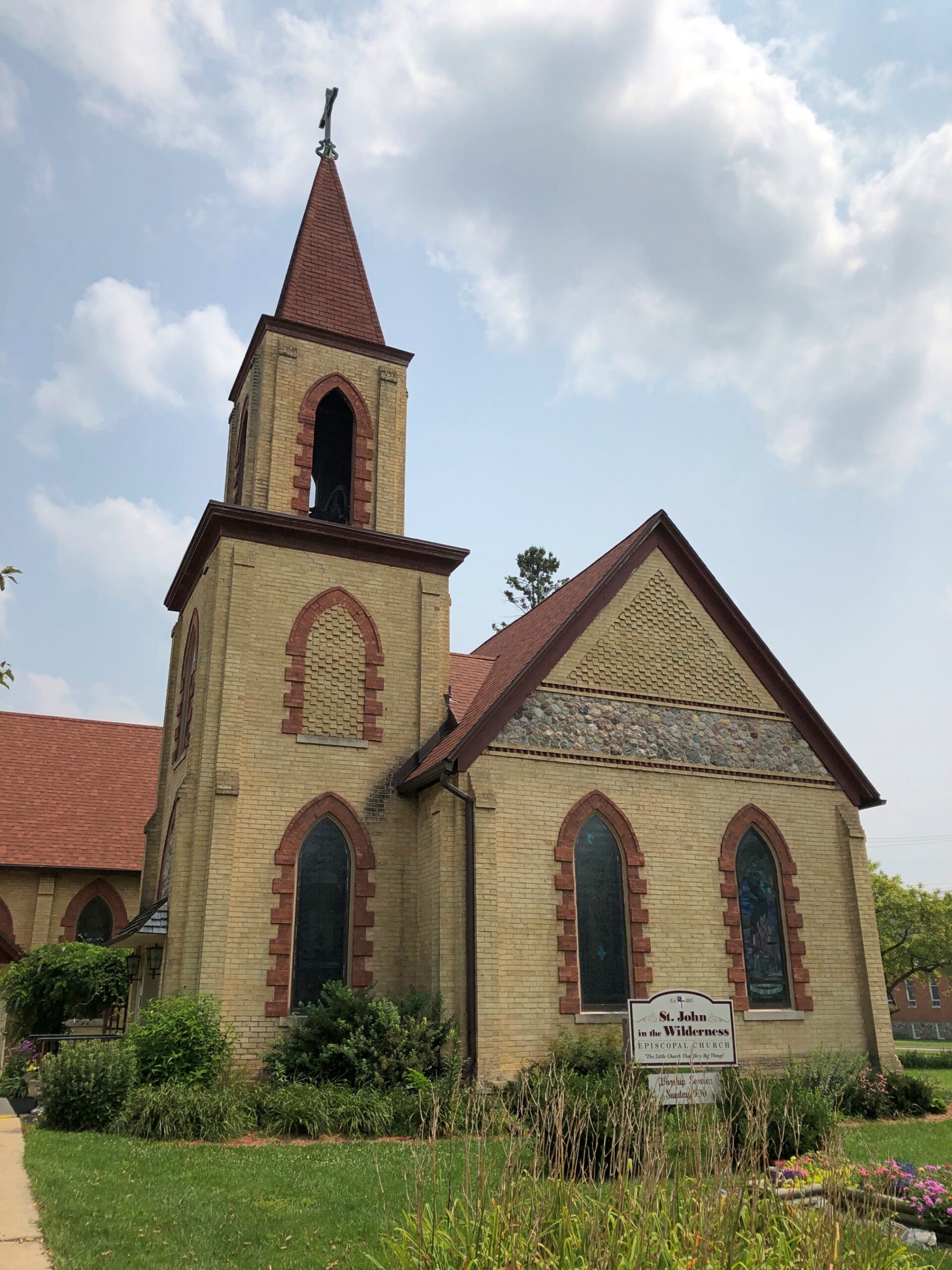
St. John in the Wilderness Episcopal Church.

Elkhorn, Wisconsin

Founded in 1841, back in Wisconsin Territory days, so “wilderness” was probably apt at the time.

Kenosha Walkabout, Featuring Franks’ Diner & Simmons Memorial Library

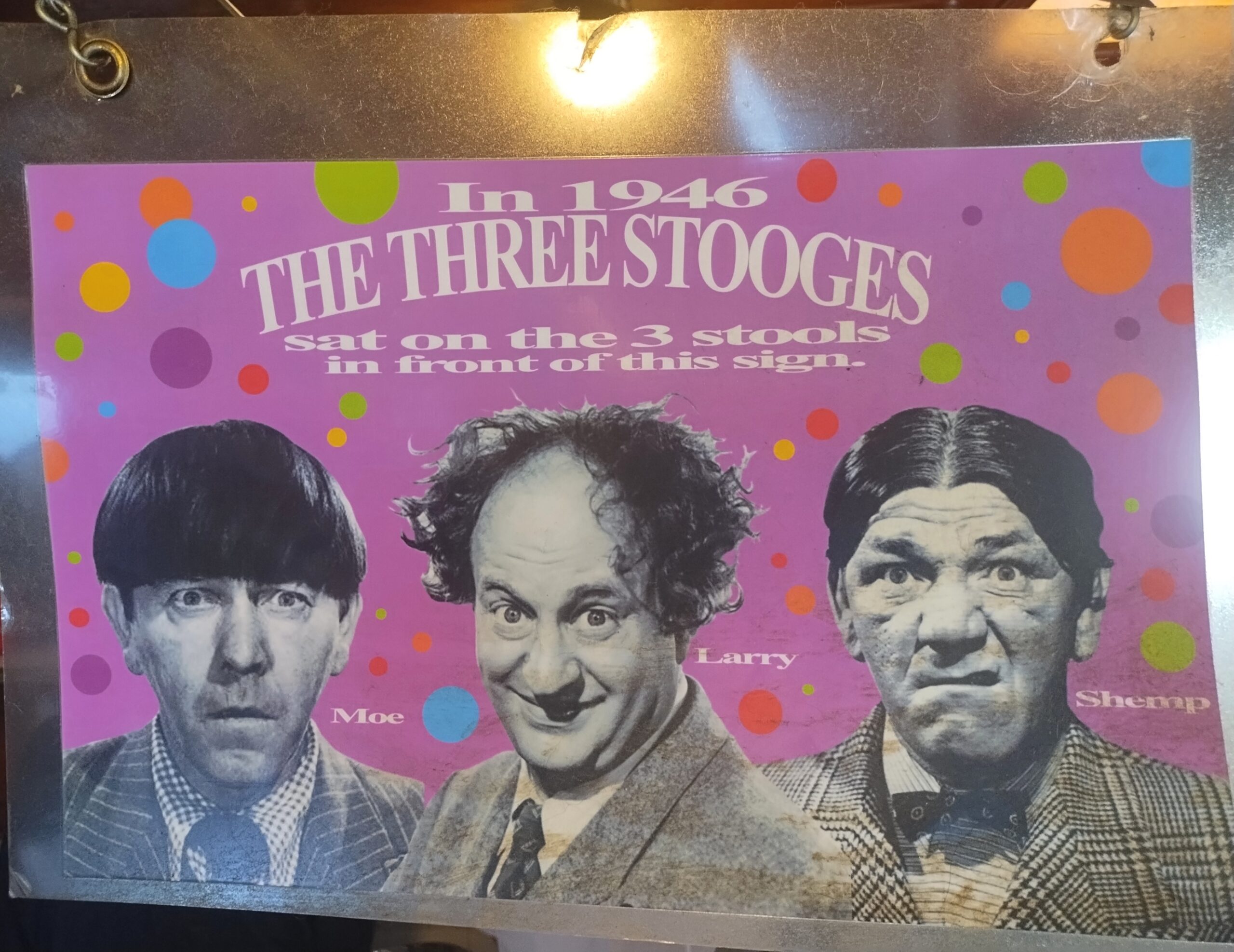
Always good to see their beaming faces.

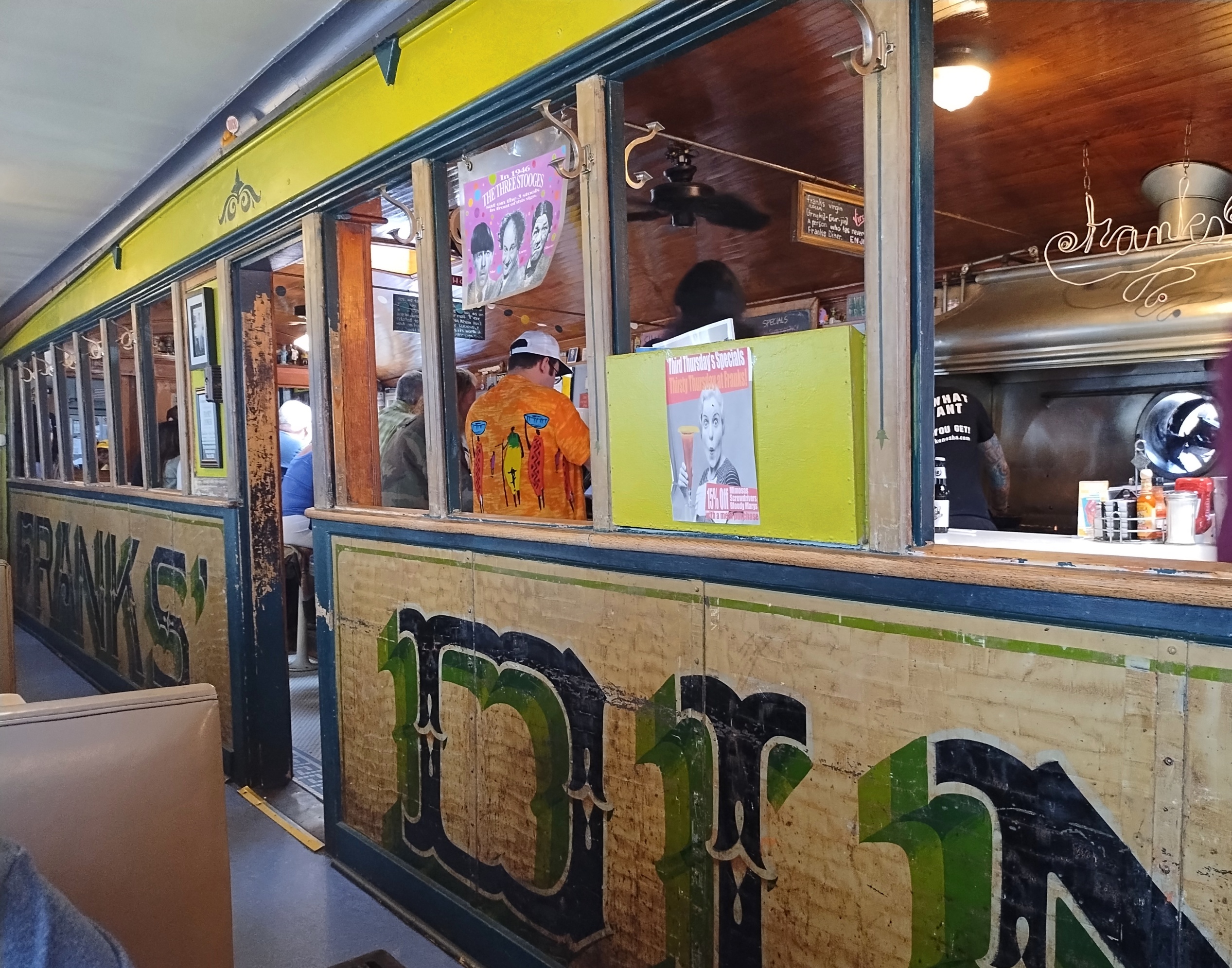
The poster is on a window at Franks’ Diner, formerly an exterior window, but with an expansion of the diner many years ago, now facing the added section, where Ann and I had lunch on a late July Friday. Kenosha, home of Franks’, was another stop in our recent rambles around southeastern Wisconsin.

Finding Franks’ Diner was no serendipity. We’d been there, back in 2012. The Stooges, back in 1946. I’ll bet they were playing the nearby Kenosha Theater, which is still standing, but in need of restoration.

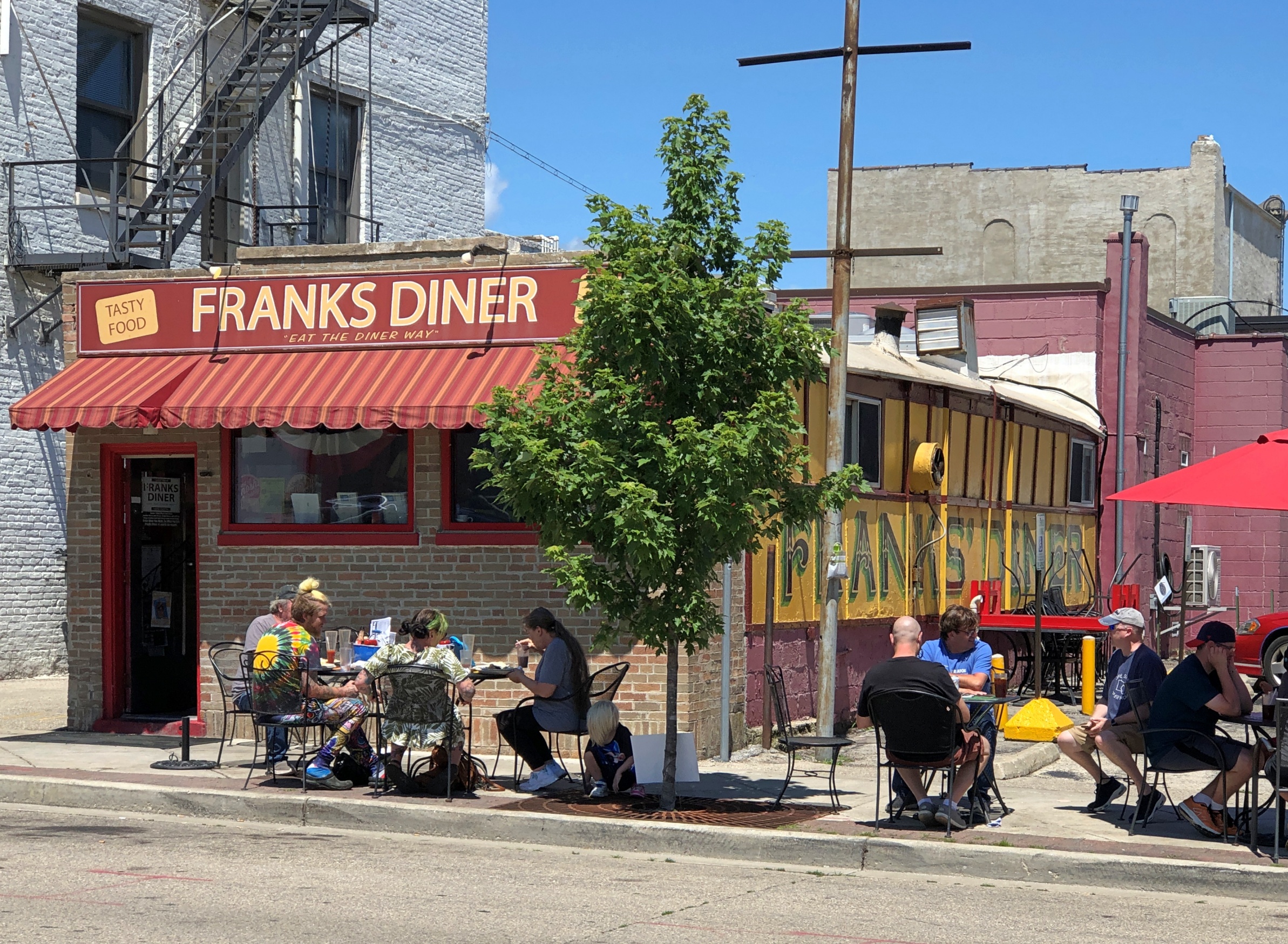
Not only is the 99-year-old Franks’ still there, it’s still dishing up dandy diner fare at popular prices. Back then, I wrote:

The place had that diner smell: eggs and meats and hash browns and coffee. It also had that diner sound: the murmur of conversation, workers calling to each other, silverware scraping plates, metal clinking metal, the hiss of the griddle.

It was packed. A row of people sat at the counter, while others were at booths in the small room added to the counter room. A line of people waited for their seats in a long row behind the people at the counter.

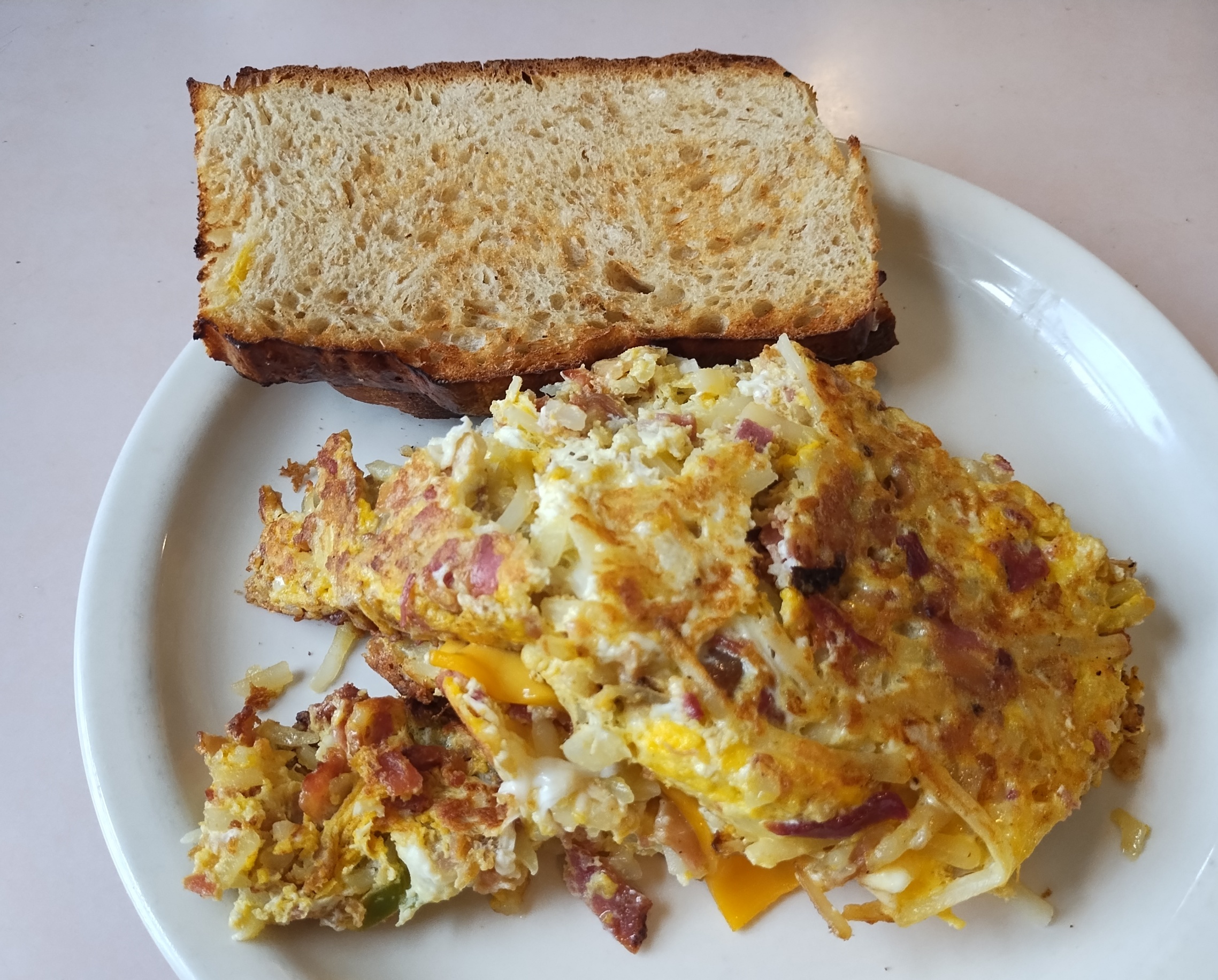
That’s exactly the same as our July visit, except that people waited outside, since it was summer instead of winter and (of course) prices were higher. Once seated, I had the Garbage Plate. I’d skipped it last time, and I wasn’t about to miss it this time around.

2012: The star of the show is its Garbage Plate, a concoction of hash-brown potatoes, eggs, green peppers, onions, jalapeños (if you want them), and a choice of three or fewer meats (or including no meat). The thing is seriously large. The standard Garbage Plate has five eggs.

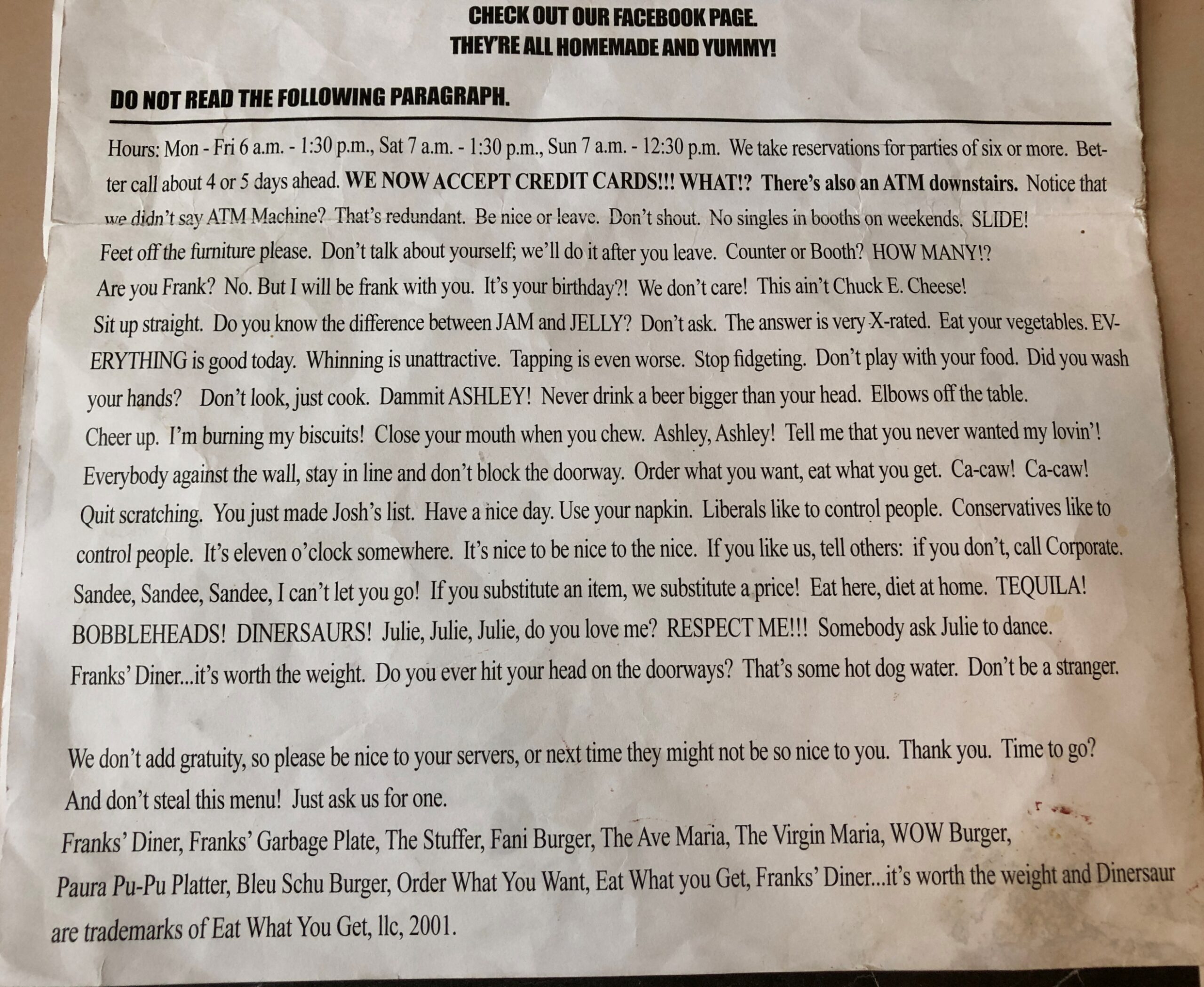
The restaurant also supplies some reading material.

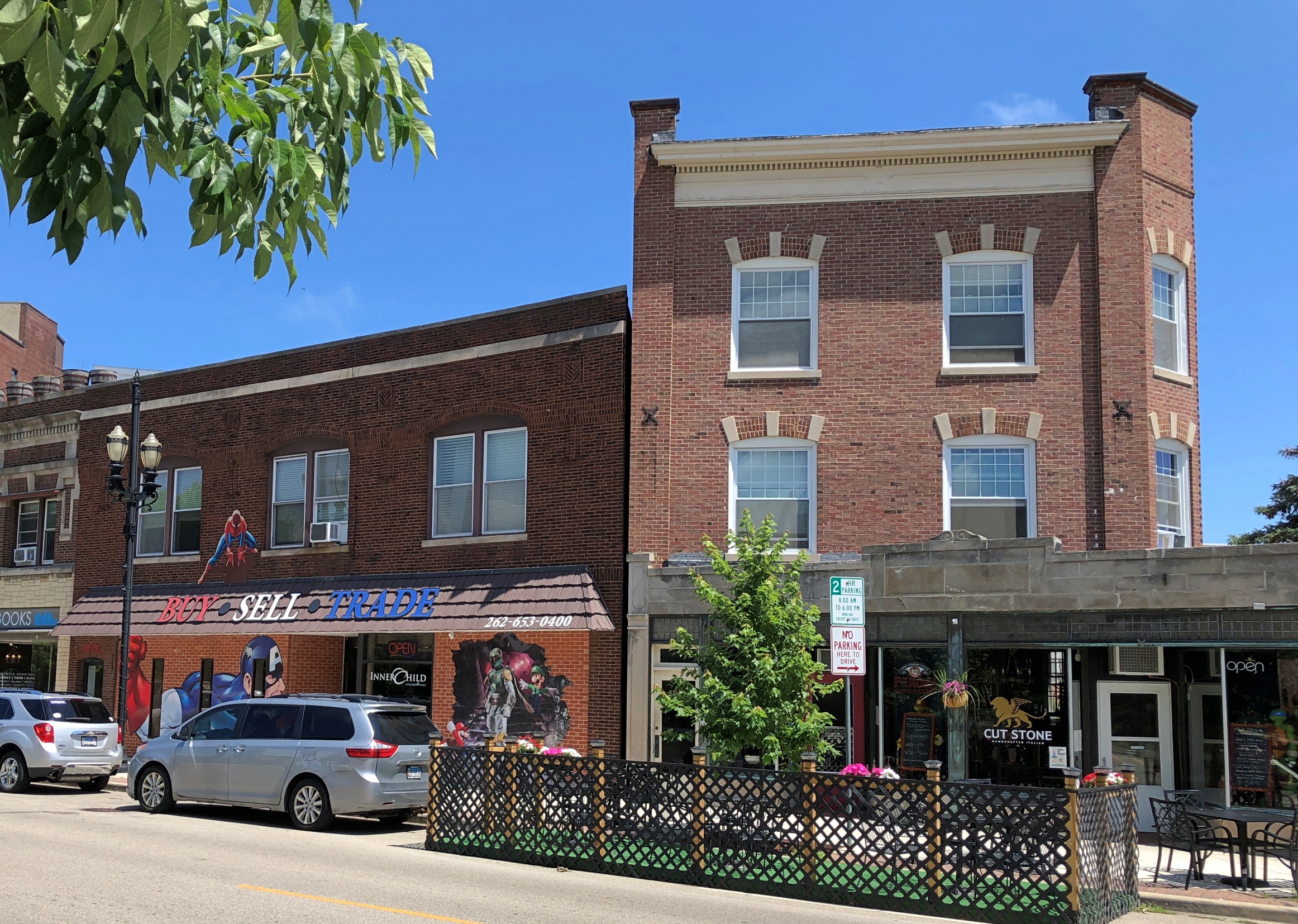
After lunch, we went a few blocks away and parked the car in the shade of large trees in Library Park. Ann waited in the car with the windows down – it was very warm, but not too warm for a few minutes of that – while I wandered around the immediate area, including a couple of streets of storefront retail in vintage structures.

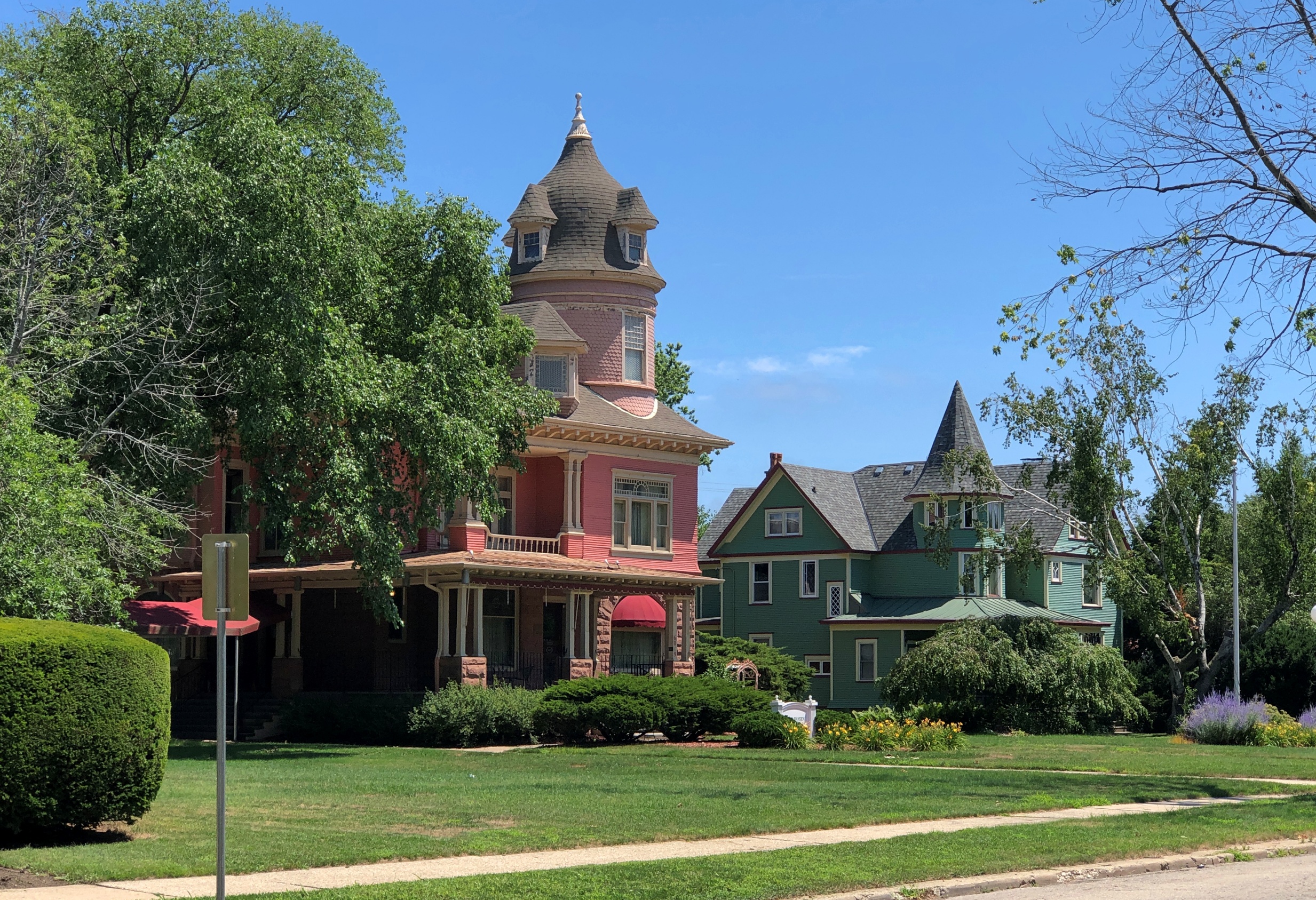
Houses across the street from where we parked.

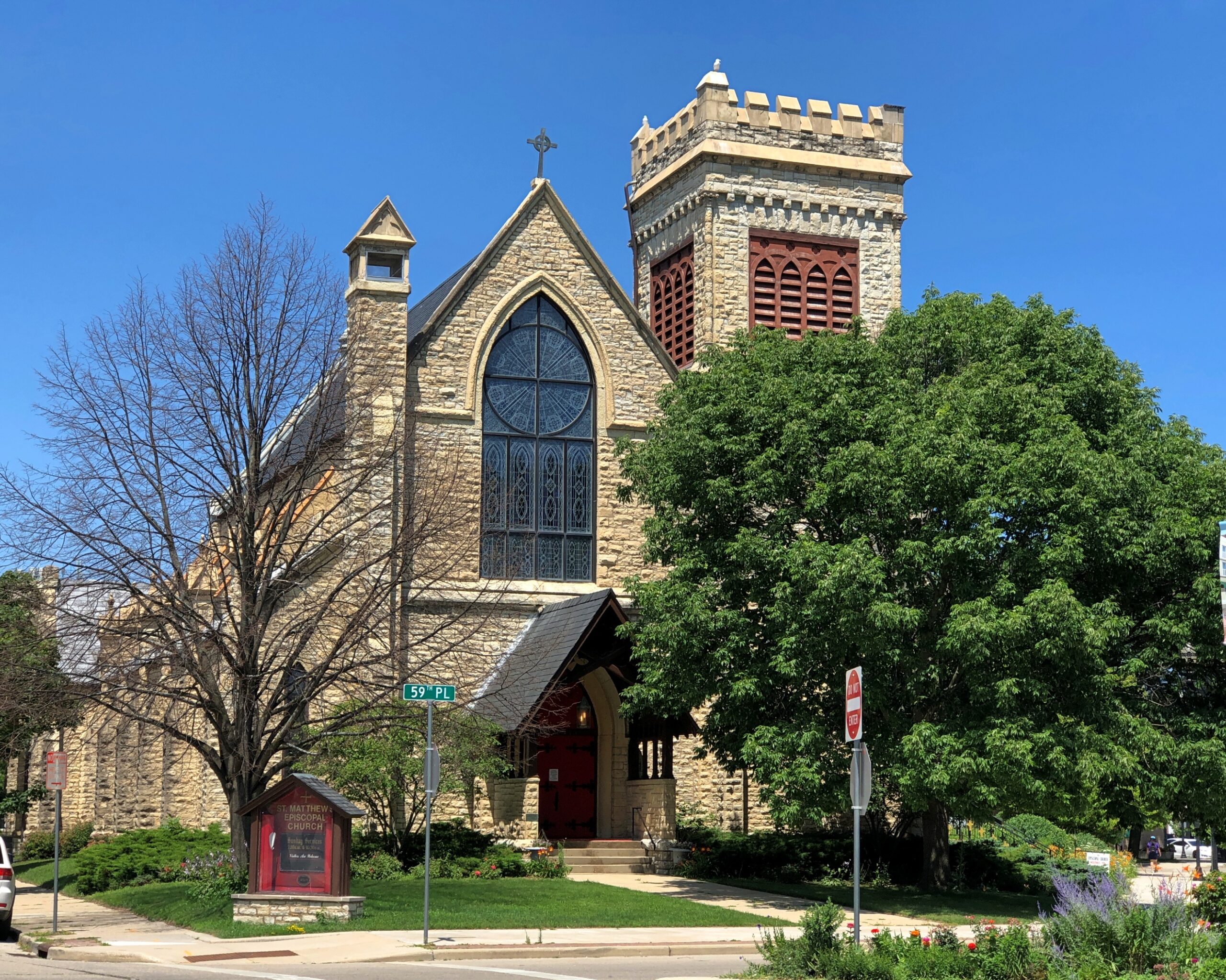
The nearby St. Matthews Episcopal Church.

Kenosha

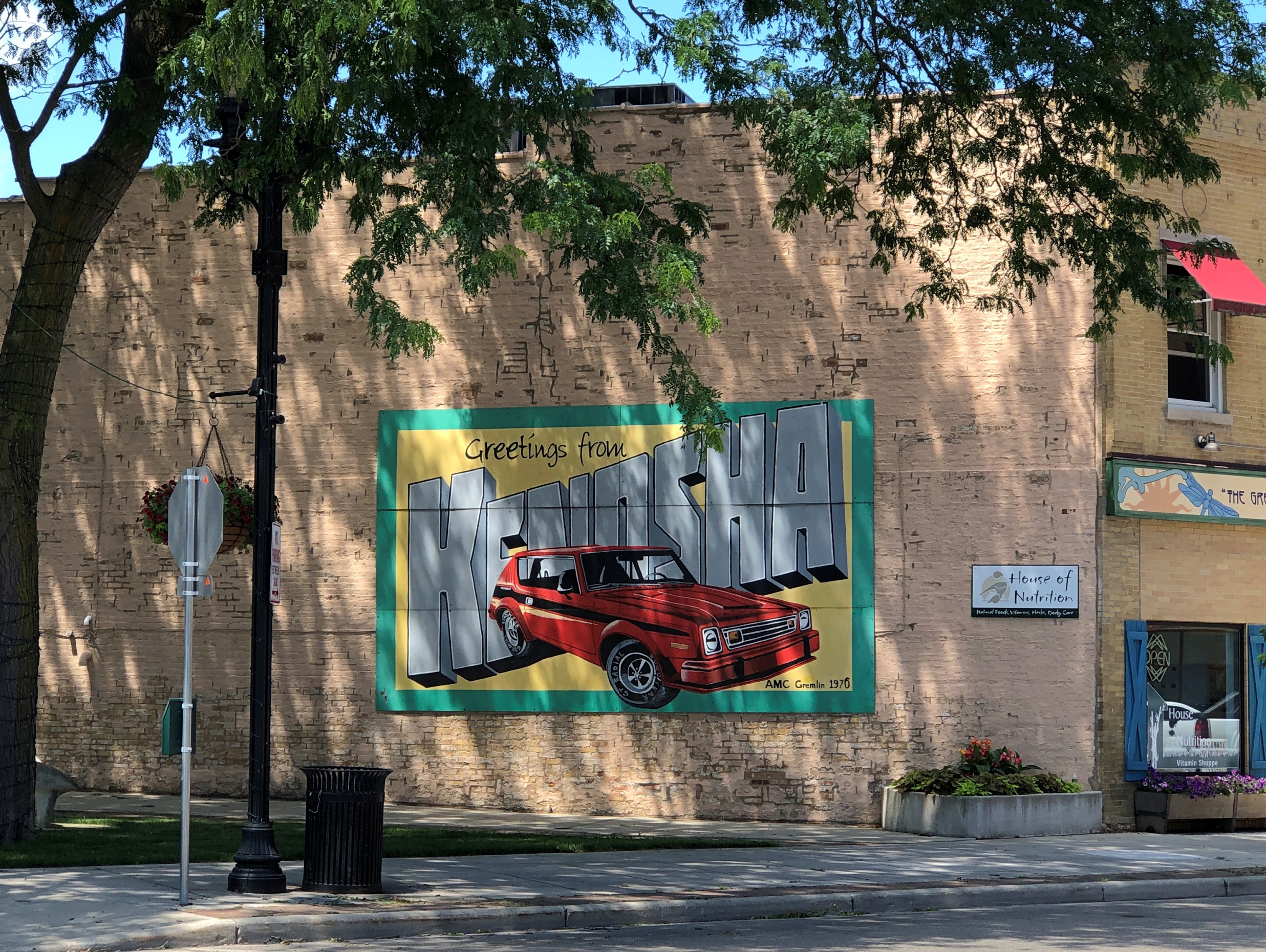
The inevitable welcome mural. The 1970 Gremlin is an unusual touch. But they were made in Kenosha, so not that unusual.

Kenosha

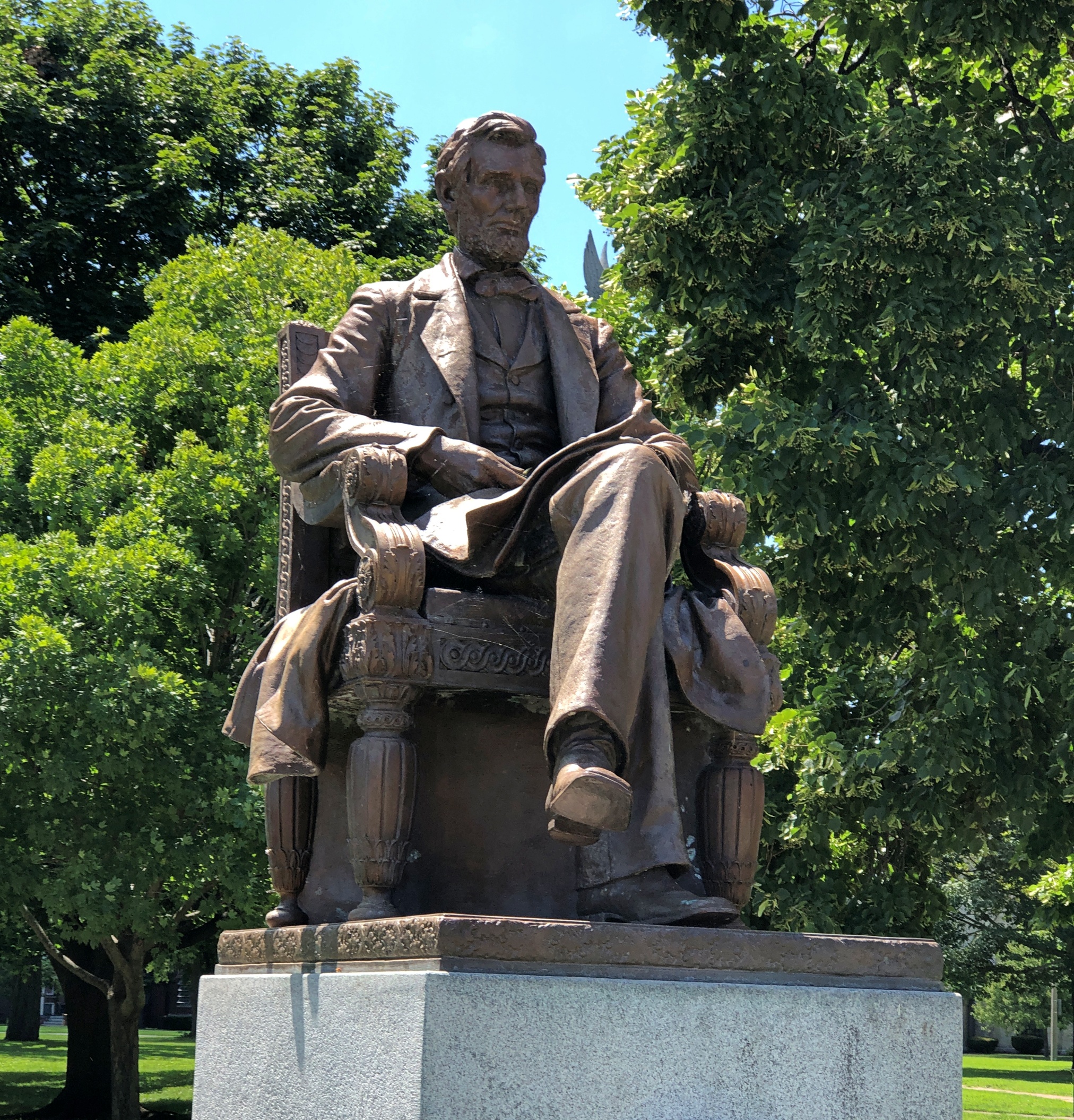
At the edge of the park, a seated Lincoln. Sculptor Charles Niehaus (d. 1935) did the work. Just one of many that he did all over the place. The president has been sitting there since 1909, centennial of his birth, with restoration work done in more recent decades.

Kenosha

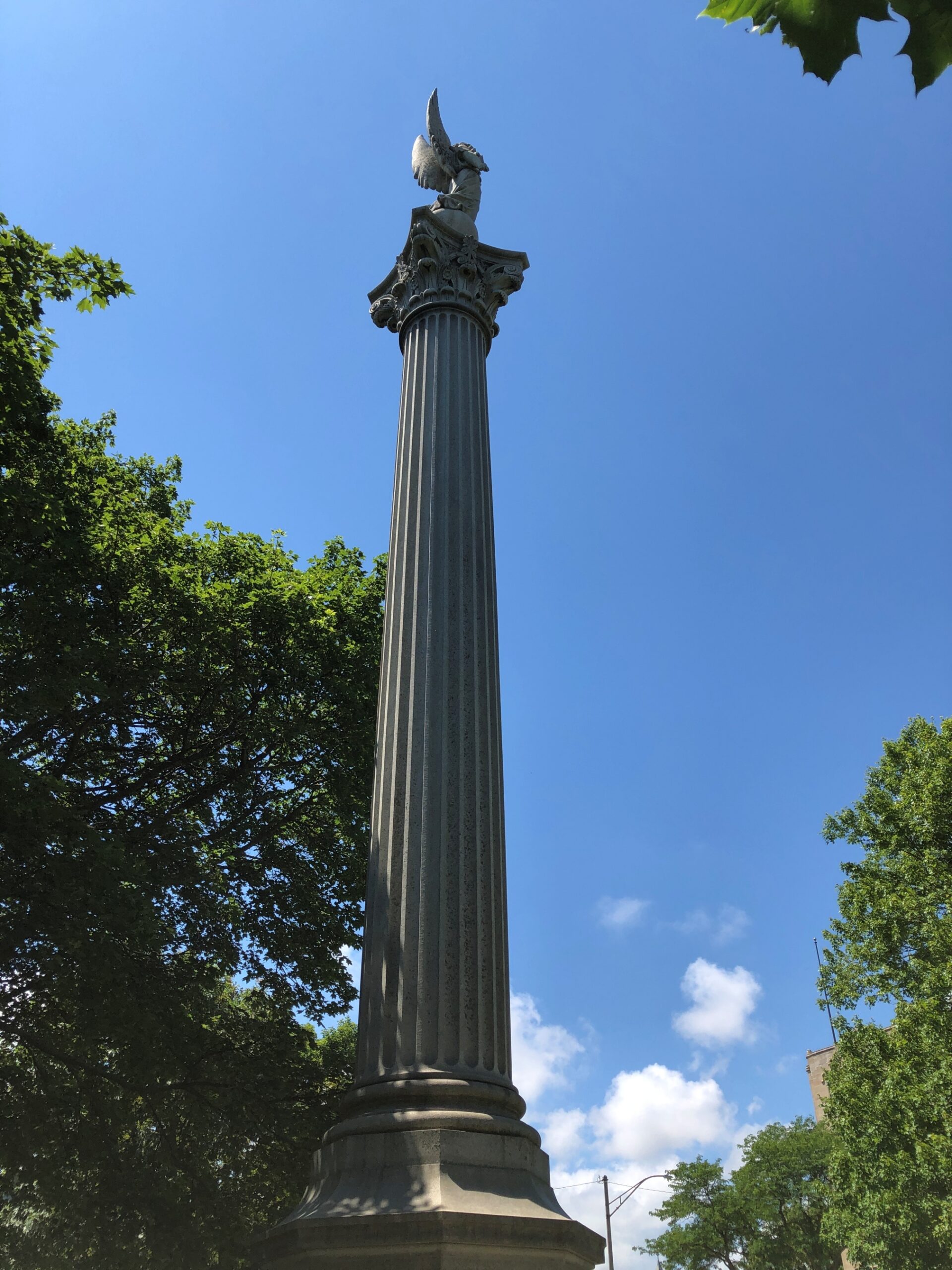
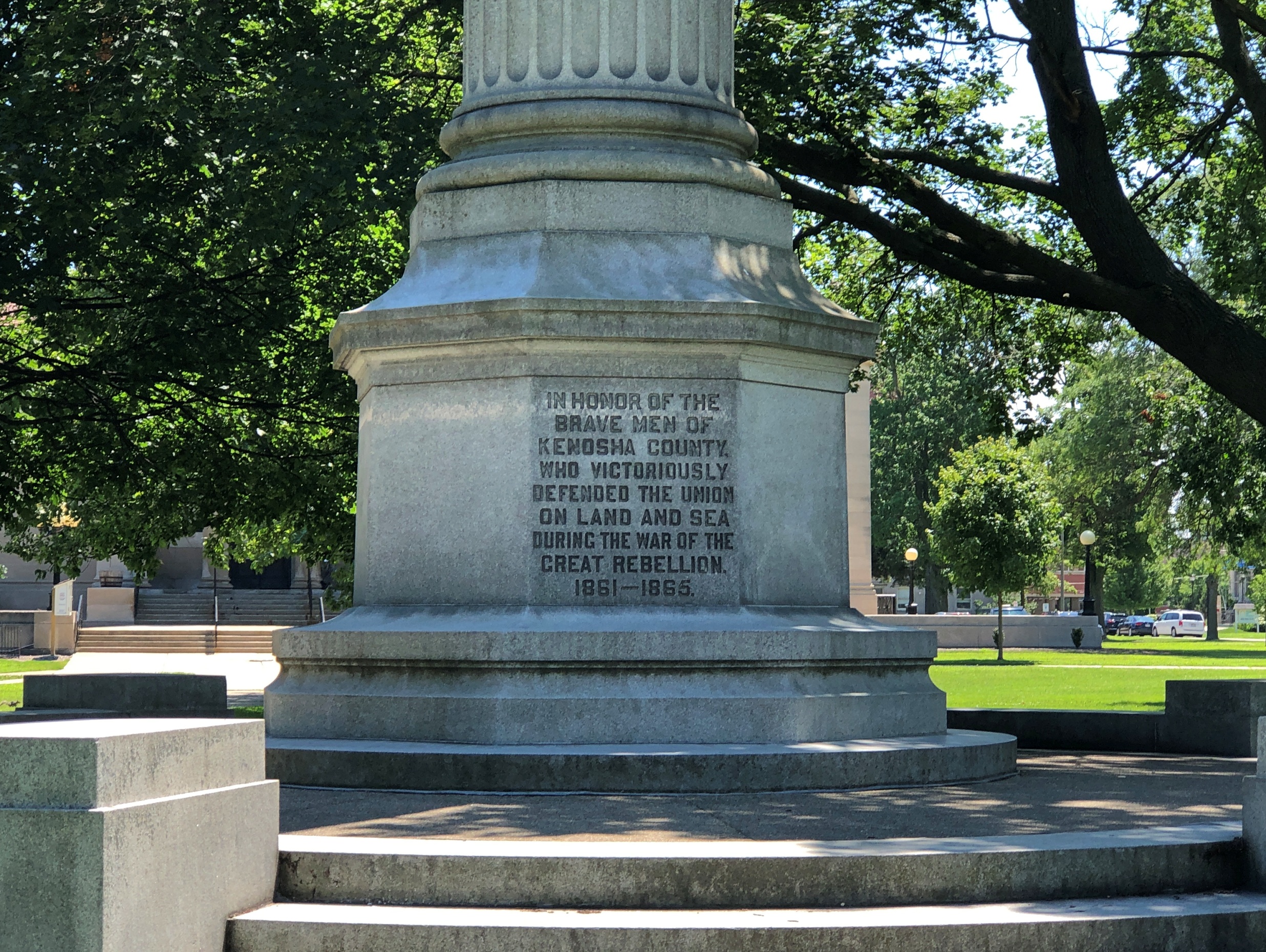
Nearby in the park, Kenosha’s Civil War memorial, called “Winged Victory” on electronic maps, a name that gets right to the point.

Kenosha

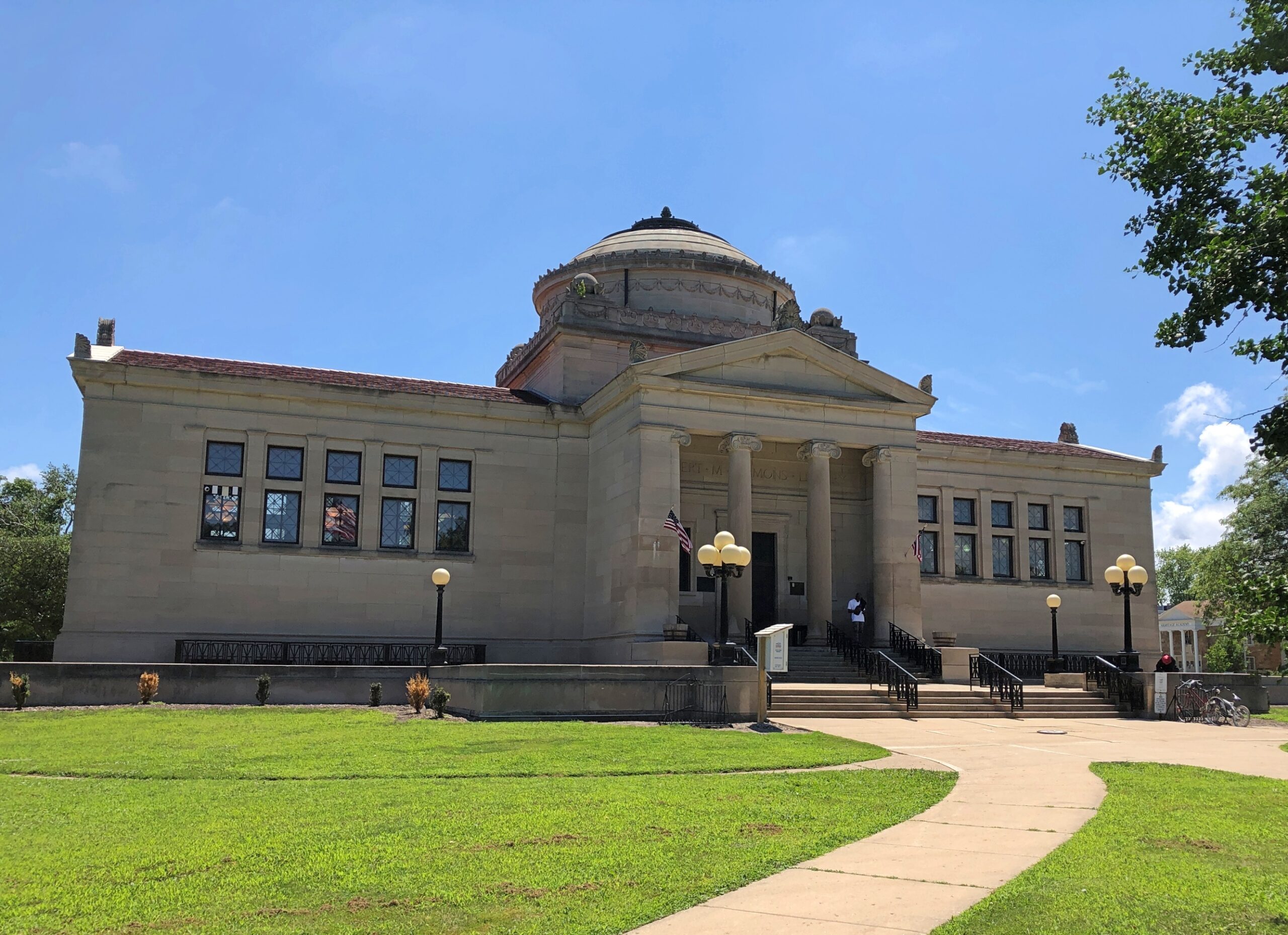
It’s Library Park because of the Gilbert M. Simmons Memorial Library, a branch of the Kenosha Public Library system, dominating its side of the park. It has a little more heft than most municipal branch libraries.

Kenosha

When it opened in 1900, the building formed Kenosha’s main library. Daniel Burnham designed it.

Kenosha

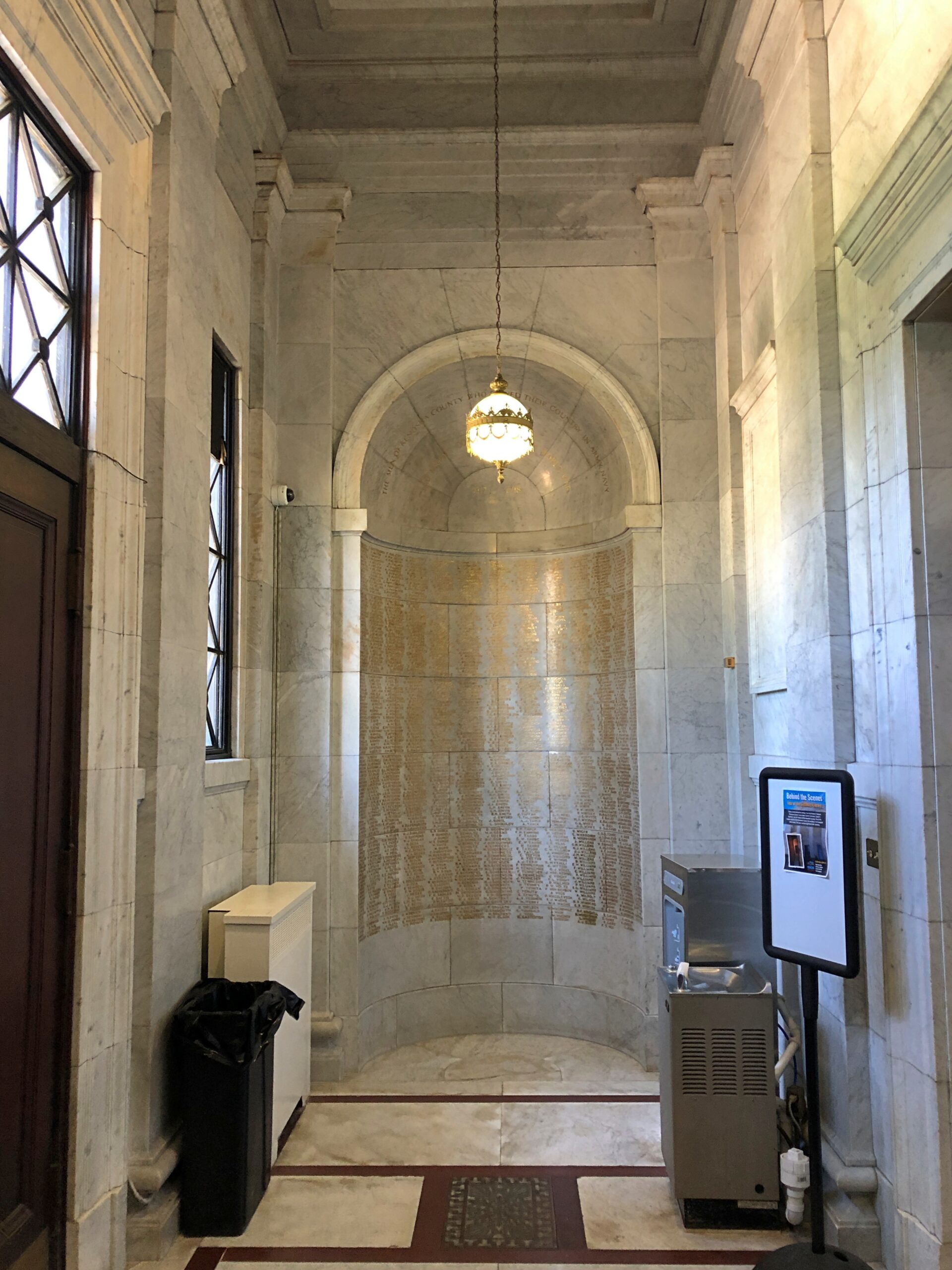
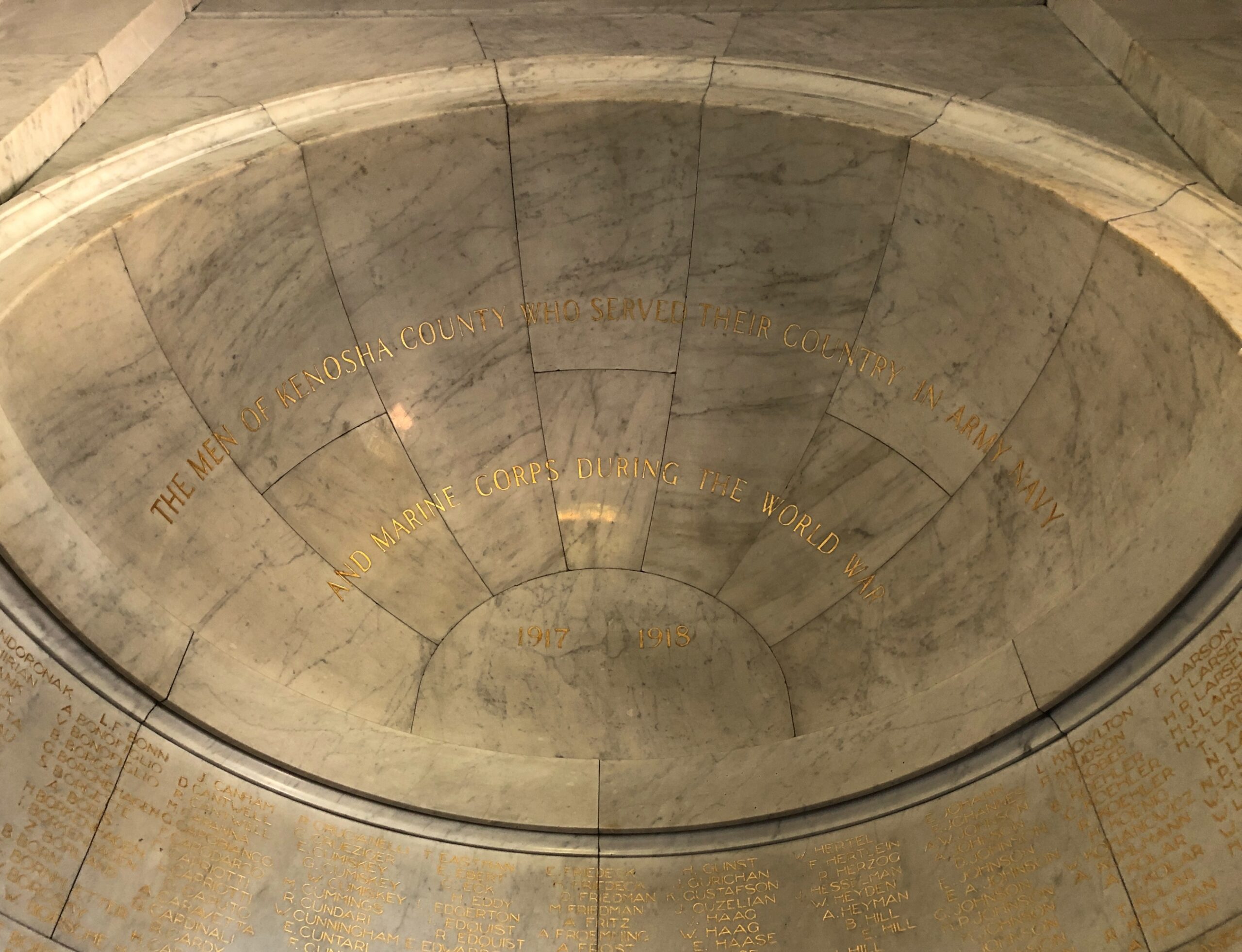
The Civil War veterans have their memorial outside. Great War vets are honored inside the library.

Kenosha
Kenosha
Kenosha

We’d happened on the Library Park Historic District, surrounding Library Park. The park itself goes back to the early years of Kenosha, when the land was a New England–style town commons. Forty-two properties, built from 1843 to 1930, form the district. A diner and an historic district: just the thing for a warm summer day stroll.

More Waukesha

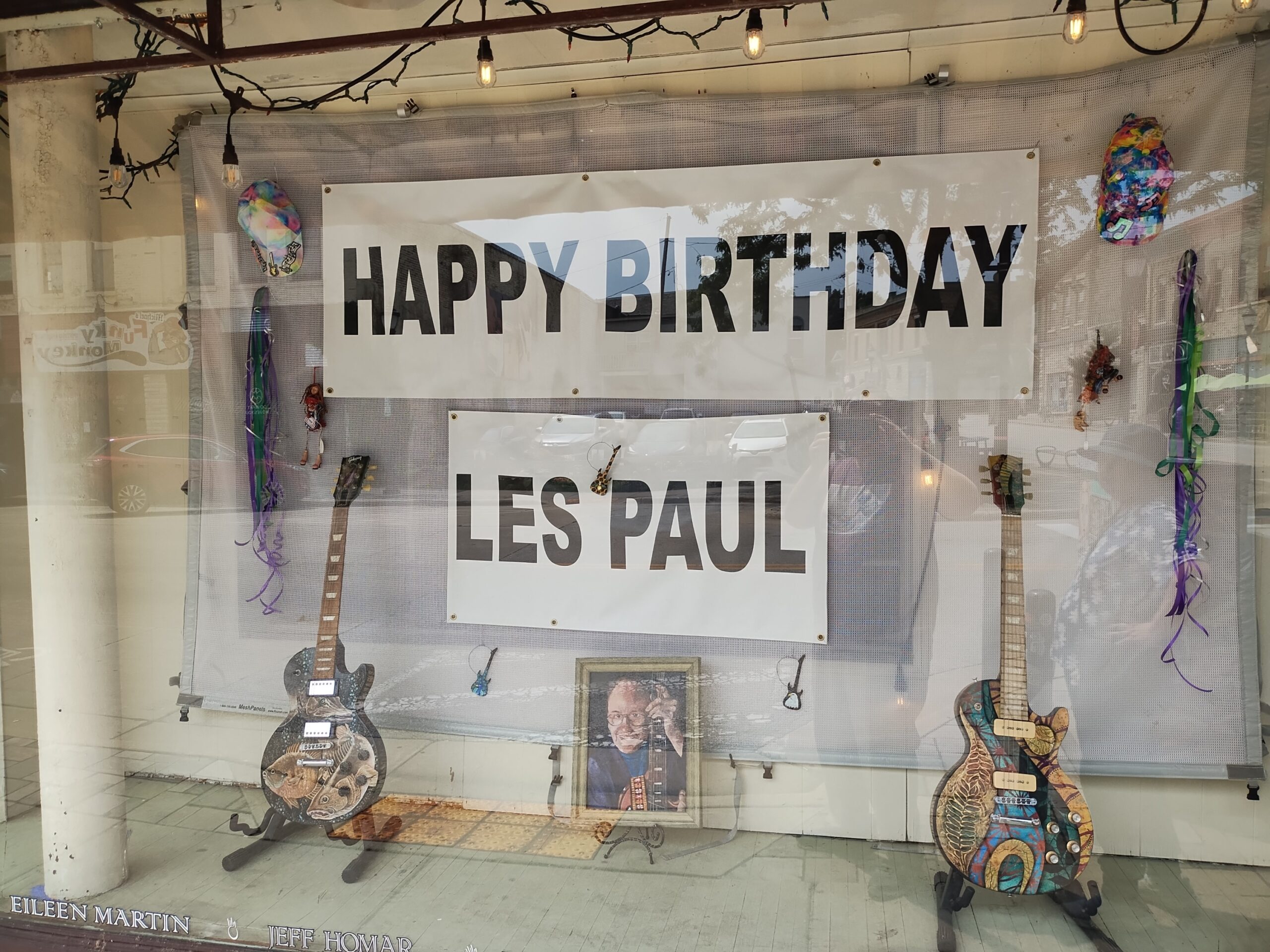
Something I didn’t know about Waukesha, Wisconsin, before we went there last month: that Les Paul (b. 1915) grew up around there. Waukesha certainly hasn’t forgotten.

Waukesha, Wisconsin

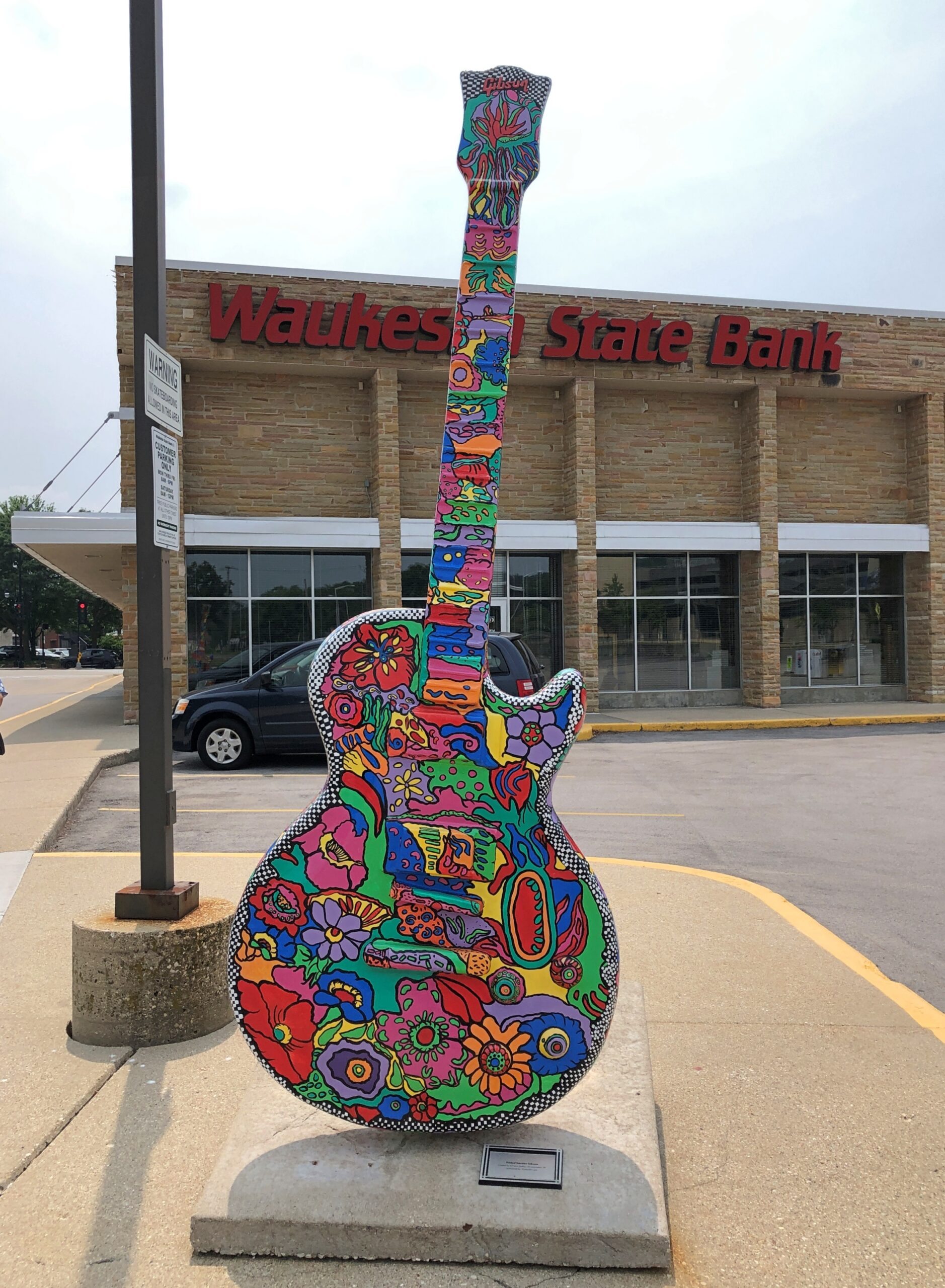
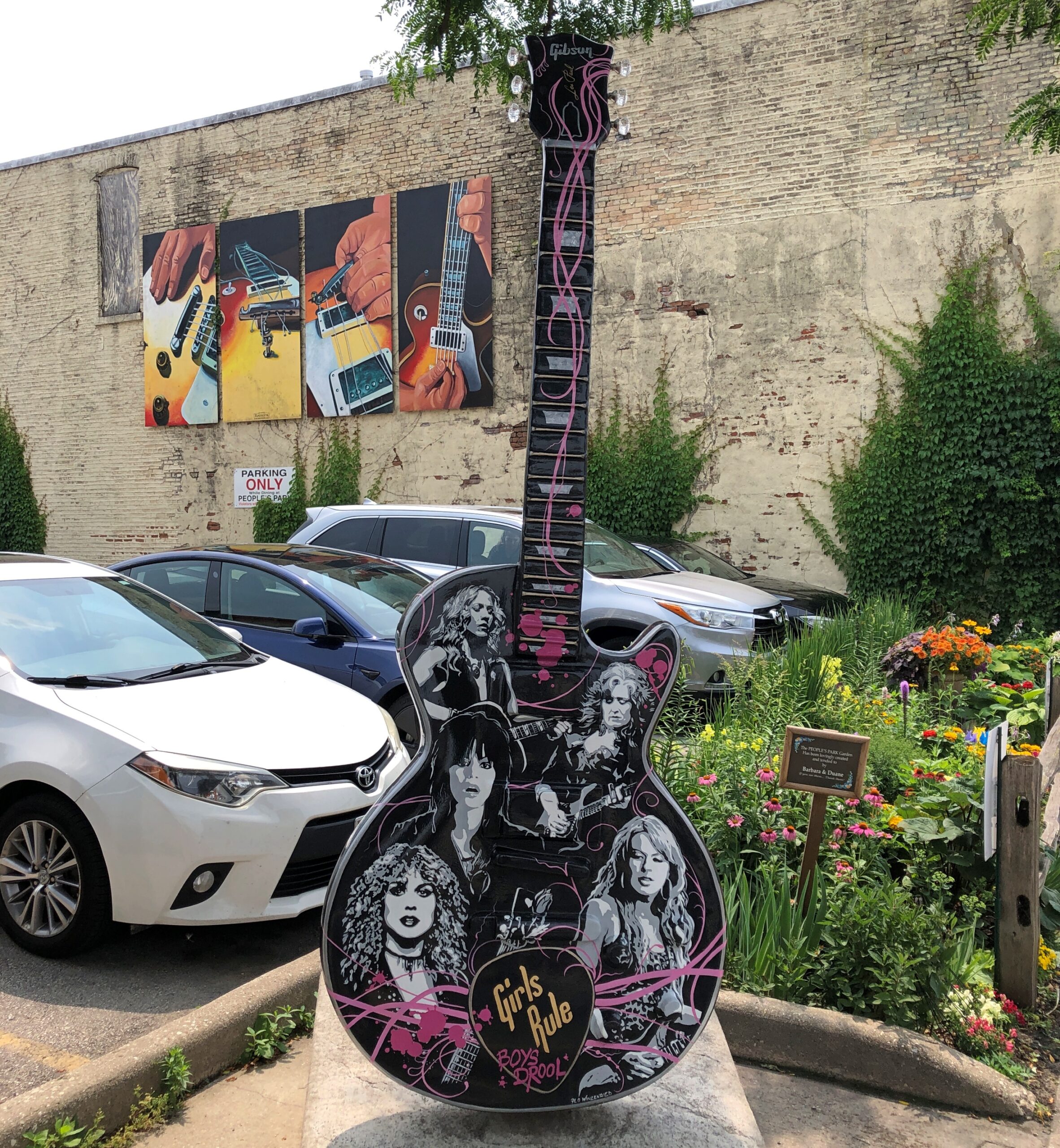
A recent sign, since his birthday is in early June. Waukesha is a “GuitarTown,” because of its association with the famed musician and music technologist. Apparently there is more than one GuitarTown, since Gibson Guitars doles out the moniker, or at least used to.

“Waukesha was named a Gibson GuitarTown in 2012 and 2013, two years in a row, to honor the birth and resting place of electric guitar legend Les Paul,” The Freeman reports. “Other GuitarTowns include Austin, Nashville and London.”

As GuitarTown, Waukesha has 15 guitar statues in public places, each 10 feet tall and designed by local artists. Elsewhere in town, you can find Les Paul Middle School, Les Paul Parkway, the Les Paul Performance Center, and the Les Paul gravesite monument. Missed that, alas. Maybe some other time. But we did drive on his parkway. And see a few of the giant guitars.

Waukesha, Wisconsin
Waukesha, Wisconsin

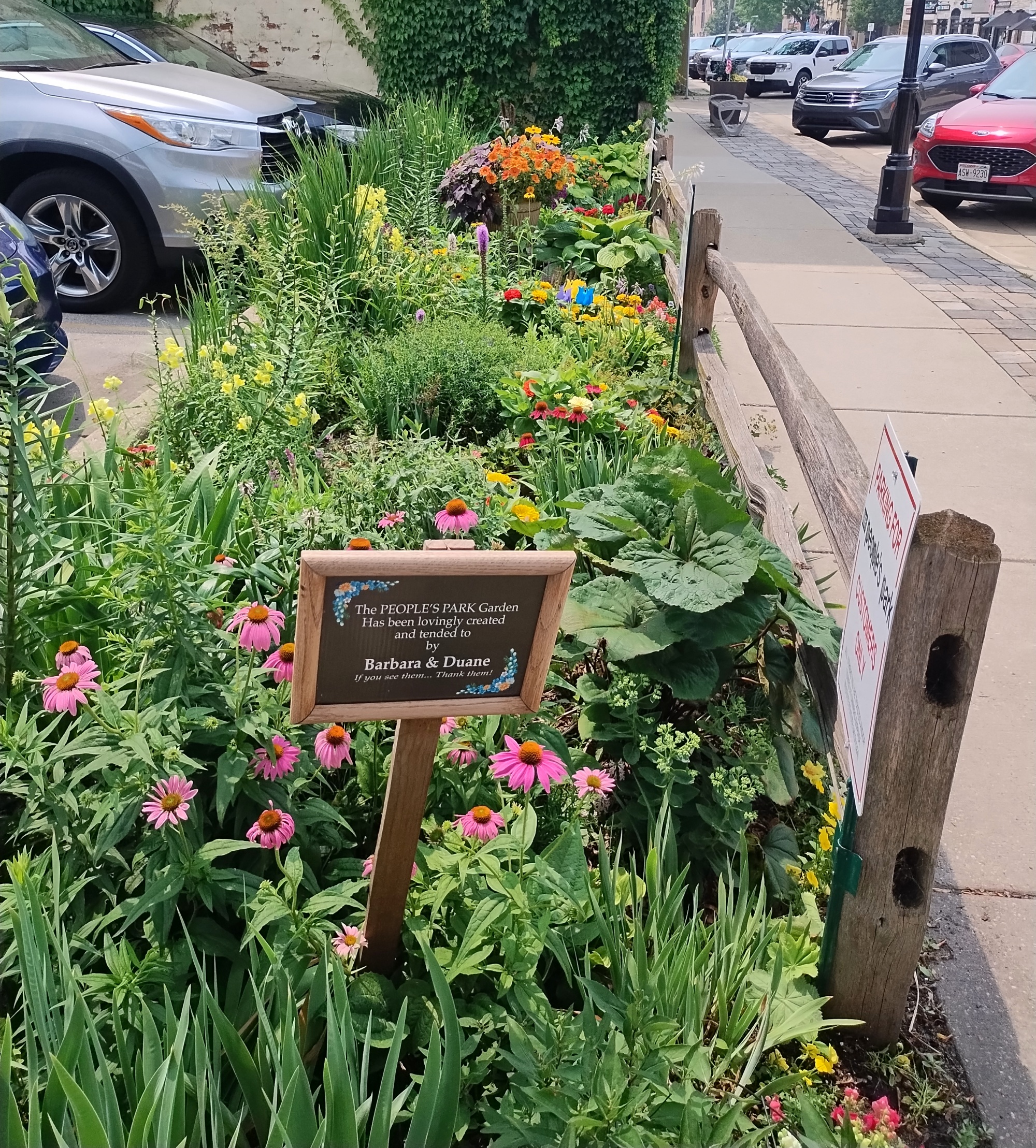
Next to that particular guitar, a small garden is wedged between the sidewalk and a parking lot. The PEOPLE’S PARK Garden, says the sign.

Waukesha, Wisconsin

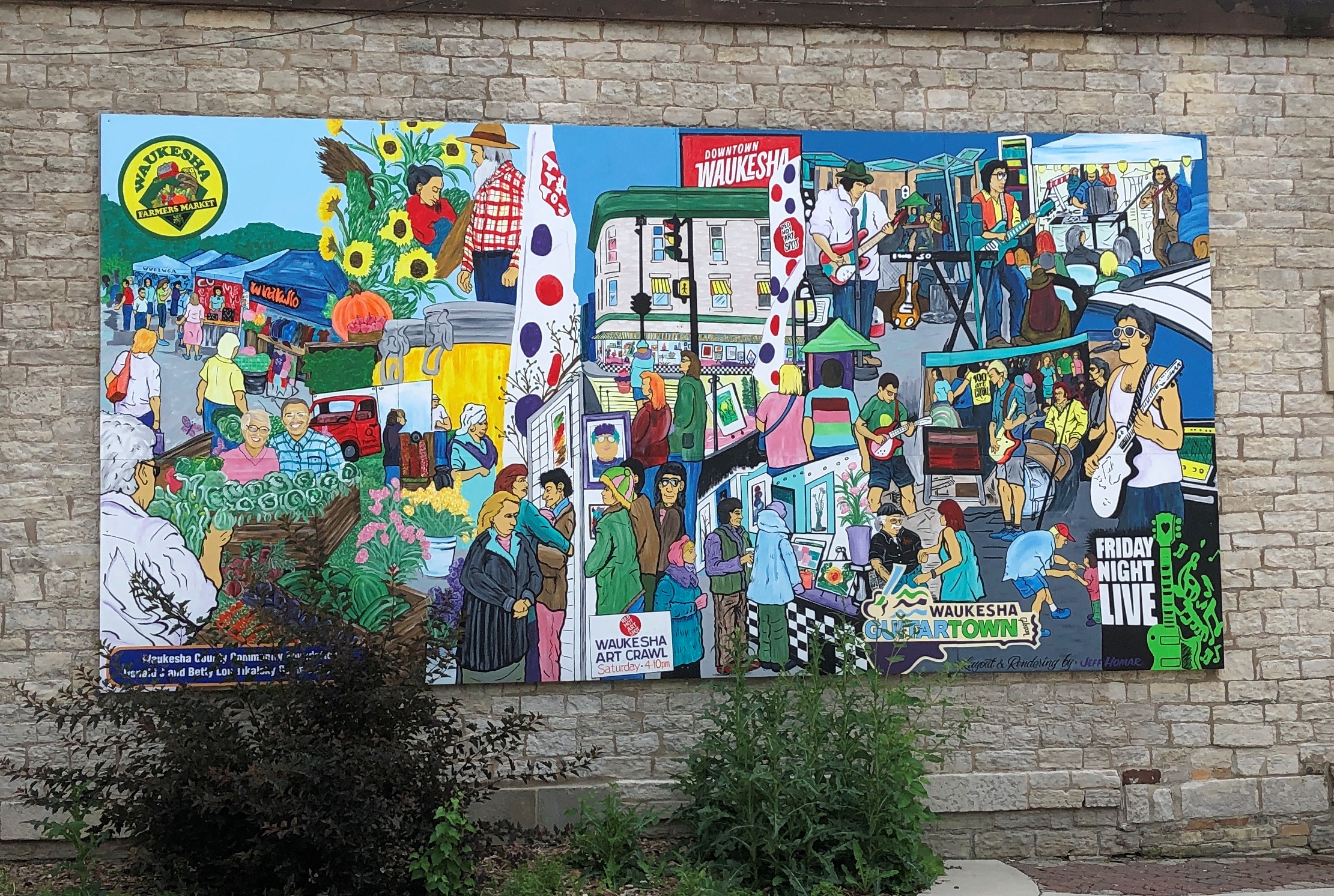
The Wall Dogs also came to town and painted 13 murals. I assume this is one of them.

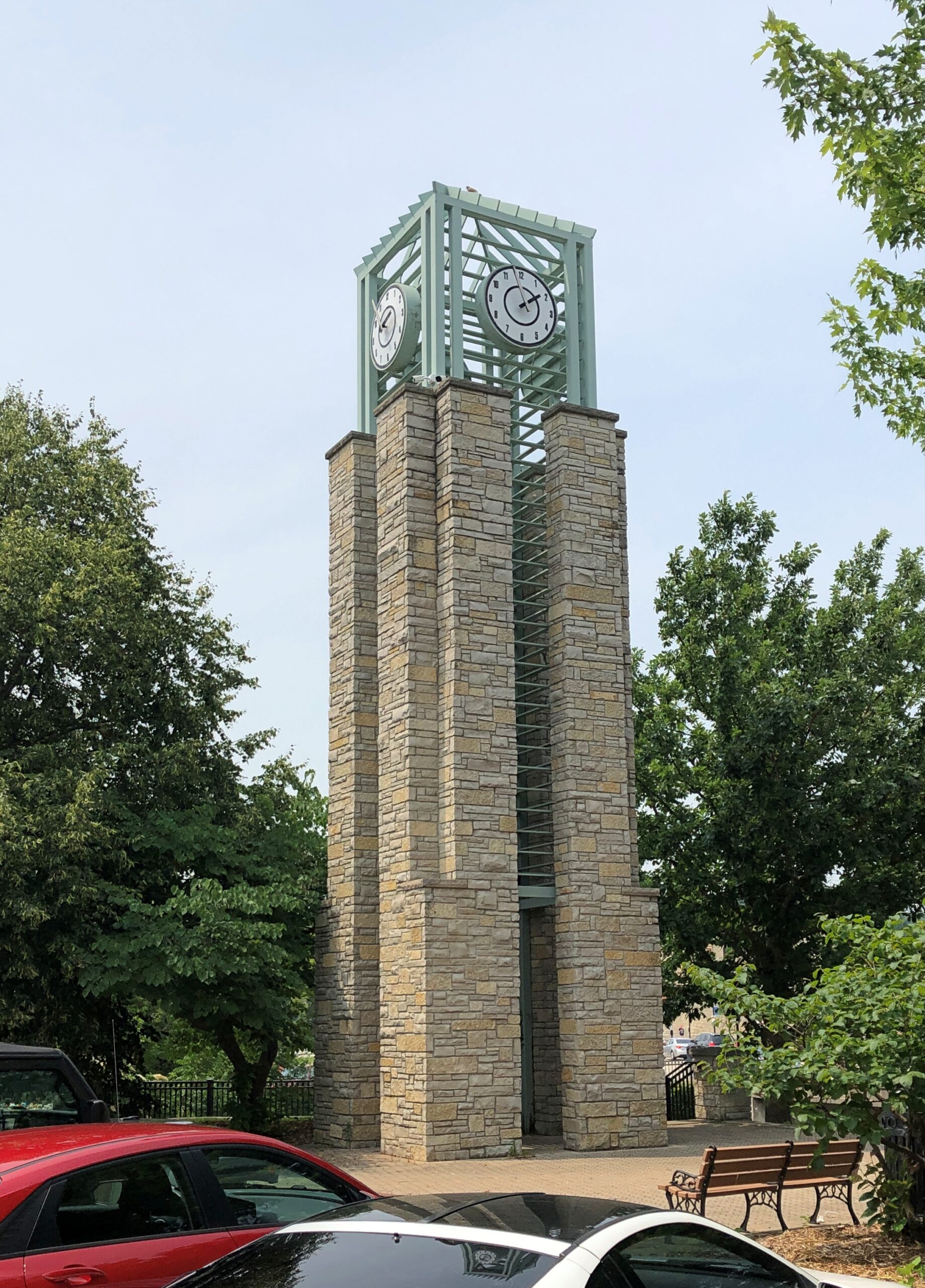
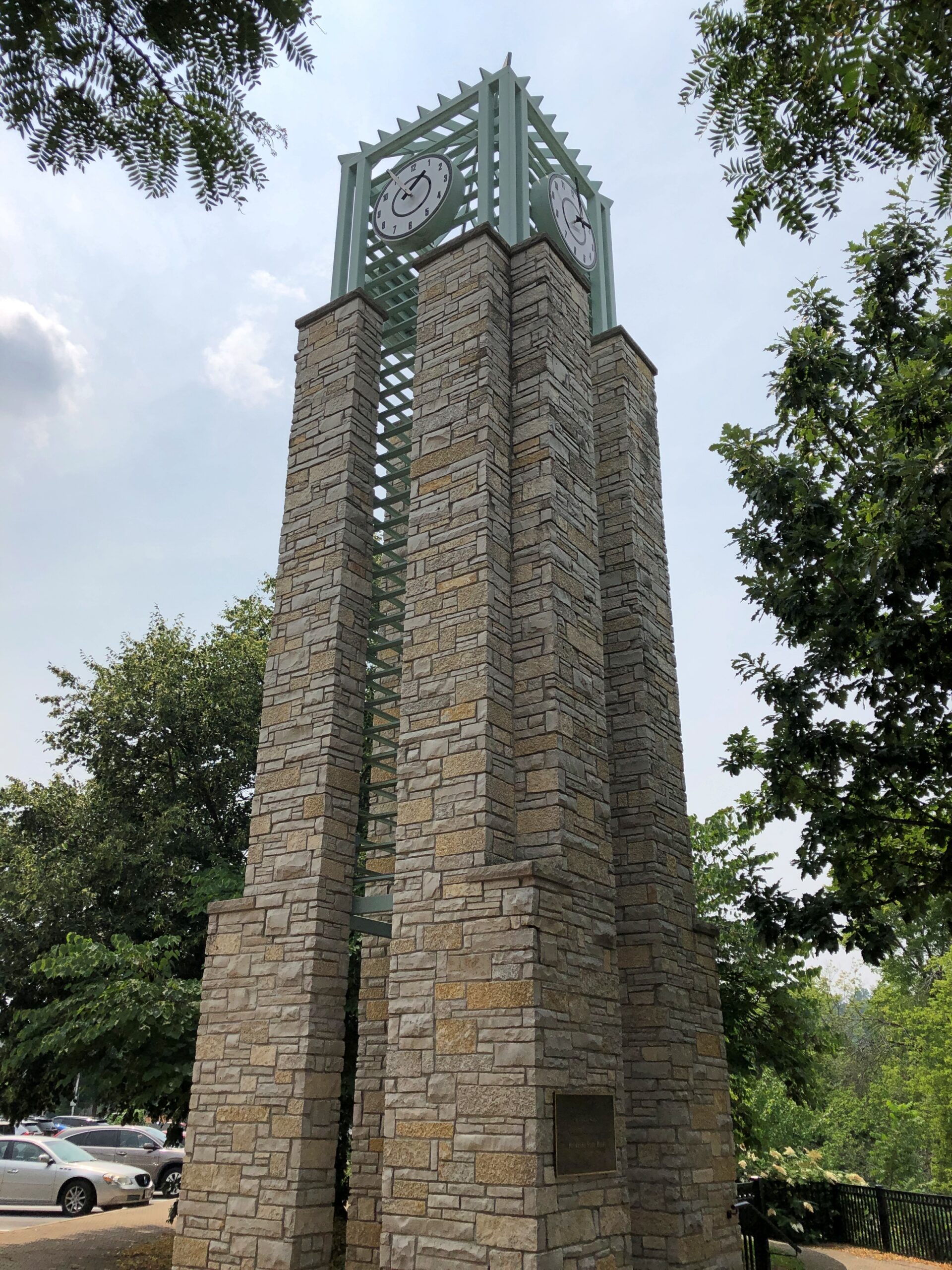
Across a parking lot from that mural rises Waukesha’s impressive stone clocktower.

clock tower waukesha

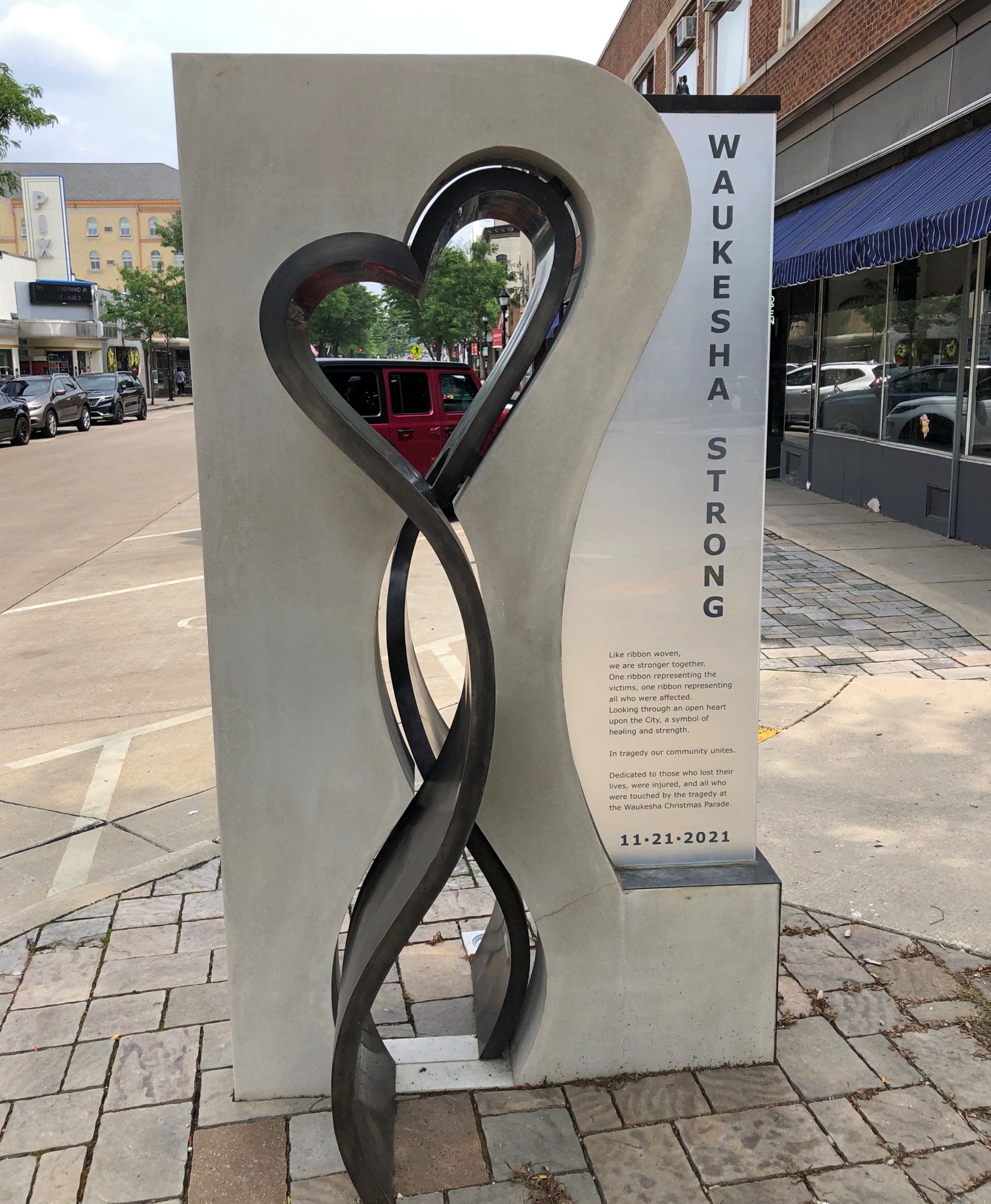
On Main Street, a memorial.

Waukesha, Wisconsin

Outrages by homicidal wankers are so common that I had to refresh my memory about that particular one, in late 2021. Then I remembered. The only good thing I can report is that the wanker, who went double wanker at his trial by asserting sovereign citizen nonsense, is now a permanent resident of a tightly locked state facility.

Upriver a half mile or so from downtown is the sizable riverside Frame Park.

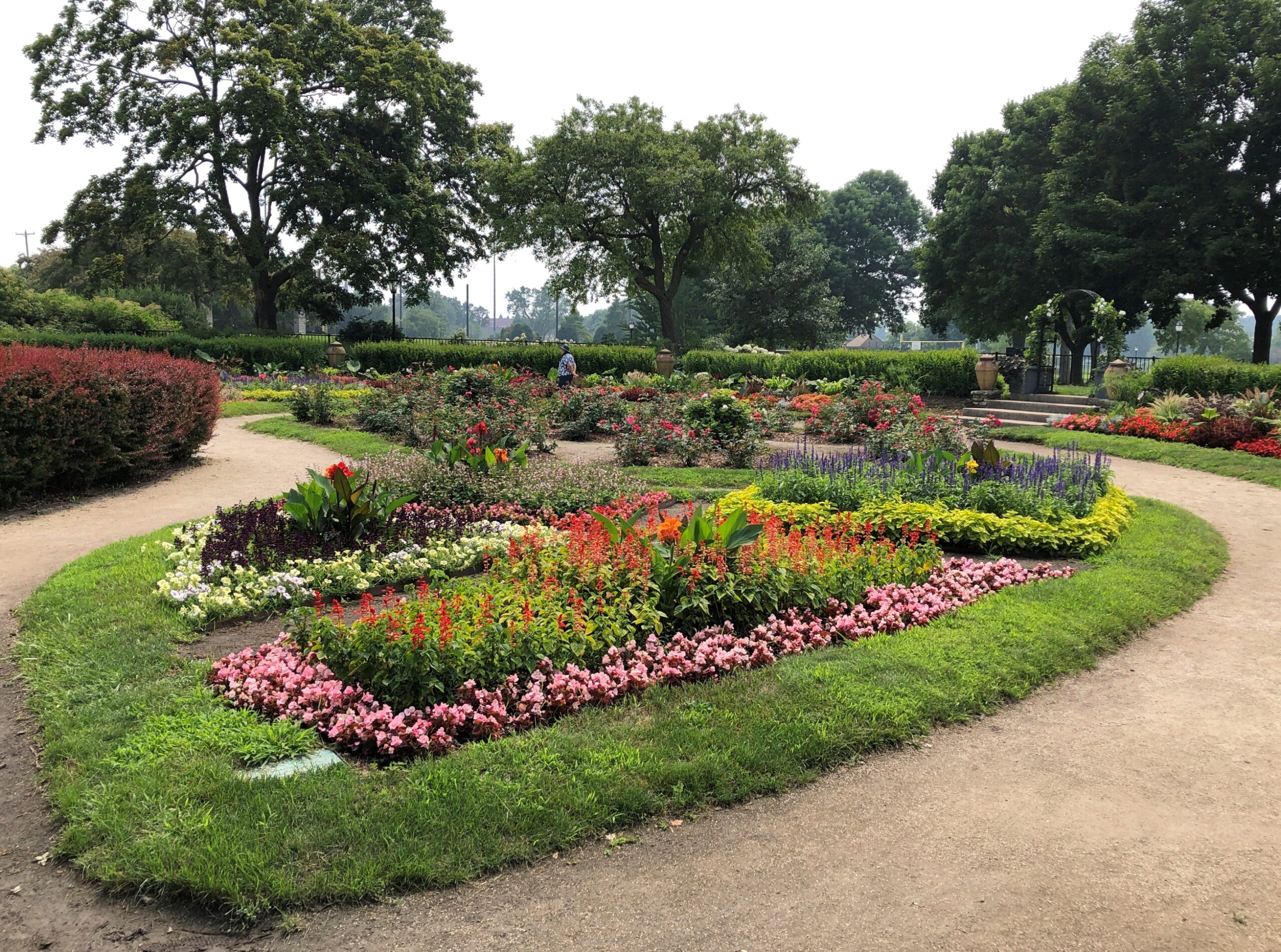
Including the Frame Park Formal Gardens.

Waukesha, Wisconsin
Waukesha, Wisconsin
Waukesha, Wisconsin
Waukesha, Wisconsin

I hope the park and its garden weren’t damaged too much by the raging Fox, since it is flat most of the way from the garden to the river.

Waukesha, Wisconsin

The Fox is large at this point. Not something you want to see described as “angry.”

Fox River, Waukesha

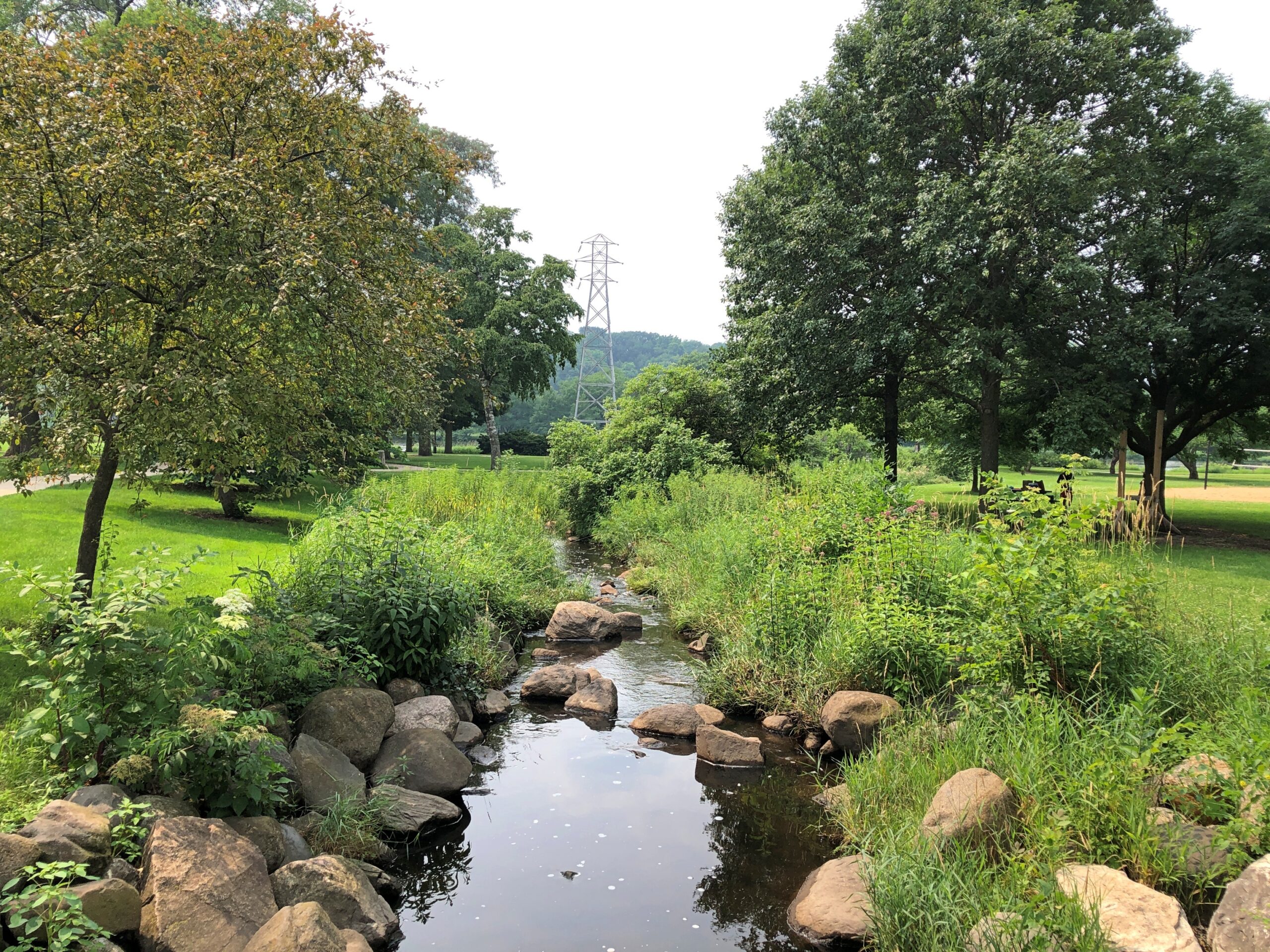
After being relatively wet, August in northern Illinois has turned relatively cool to end its days. A few days ago, we took a walk at the unusually green (for August) Spring Valley here in the northwest suburbs.

Spring Valley

August flowers, Illinois edition.

Spring Valley
Spring Valley

Earlier this month, an enormous rainstorm blew through southern Wisconsin, doing damage in Milwaukee and elsewhere, including Waukesha County. Too much water too fast, and not nearly enough space in the Fox River channel that runs through the city and county of Waukesha. In the city, the river made a raging, dangerous rise not far from the picturesque downtown. If that area had flooded, that would have been in the news cycle for a little while anyway, but it looks like most of the damage was in more rural parts of the county. Regardless, it represents a lot of property damage.

“In Menomonee Falls, a crew was spotted pulling a car out of a massive sinkhole,” local TV News reported. “The once-raging waters this weekend washed away the road in an industrial area on Campbell Drive, leaving just a cliff. In the crater, the car had been trapped. The driver was fine. Inside the sinkhole, drainage pipes seemed to be tossed around like Lincoln Logs.”

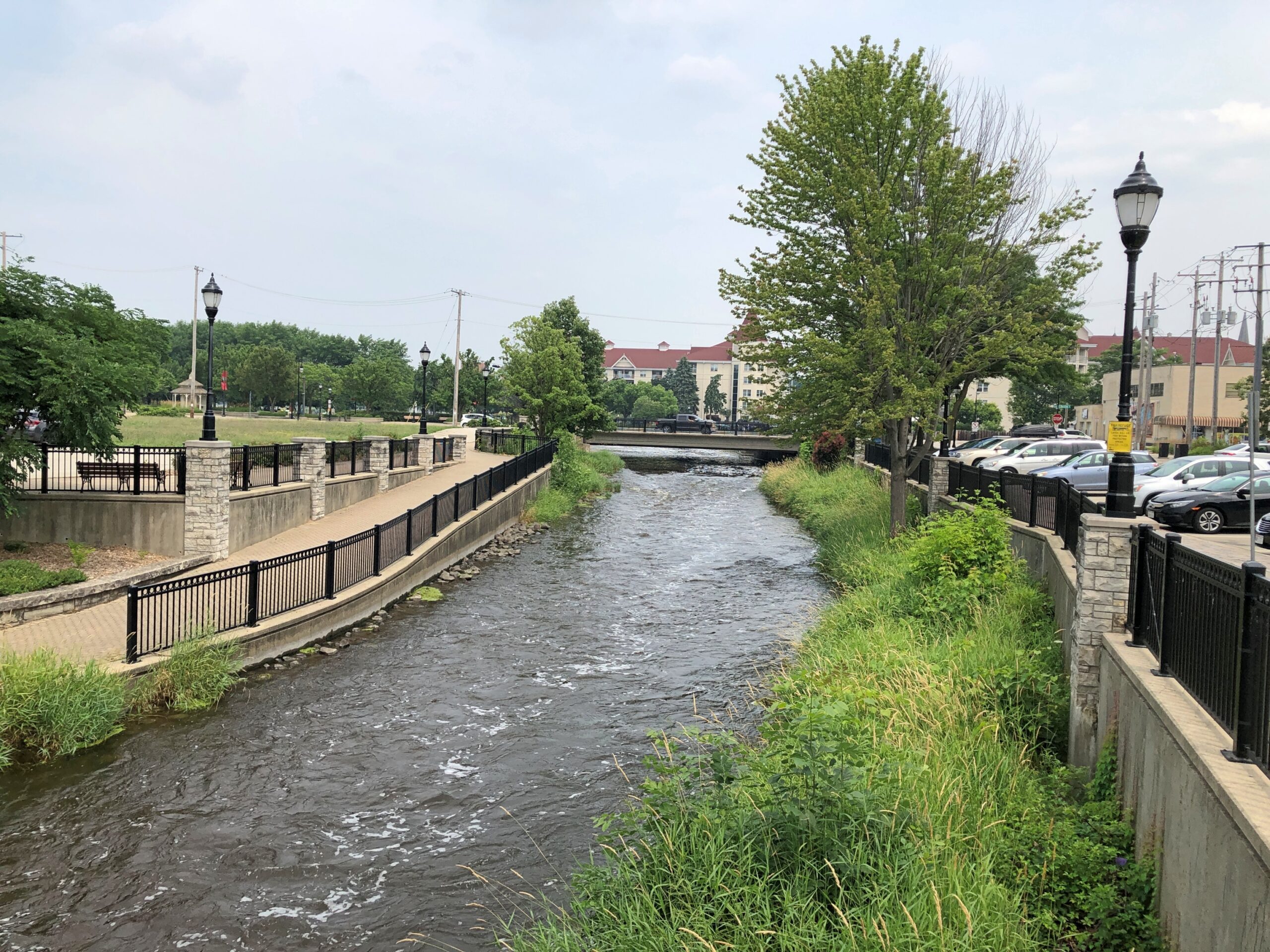
About two weeks earlier, on a nearly hot, clear day, we took a walk along the Fox, accessed a block or so away from downtown’s main streets. The river was flowing vigorously, but without a hint of the rampage to come (and why would there be?). This is the same Fox River that runs west of metro Chicago and to the Illinois River, and not the one that runs into Green Bay. Just to keep things interesting, there are apparently two other Fox Rivers in Illinois as well.

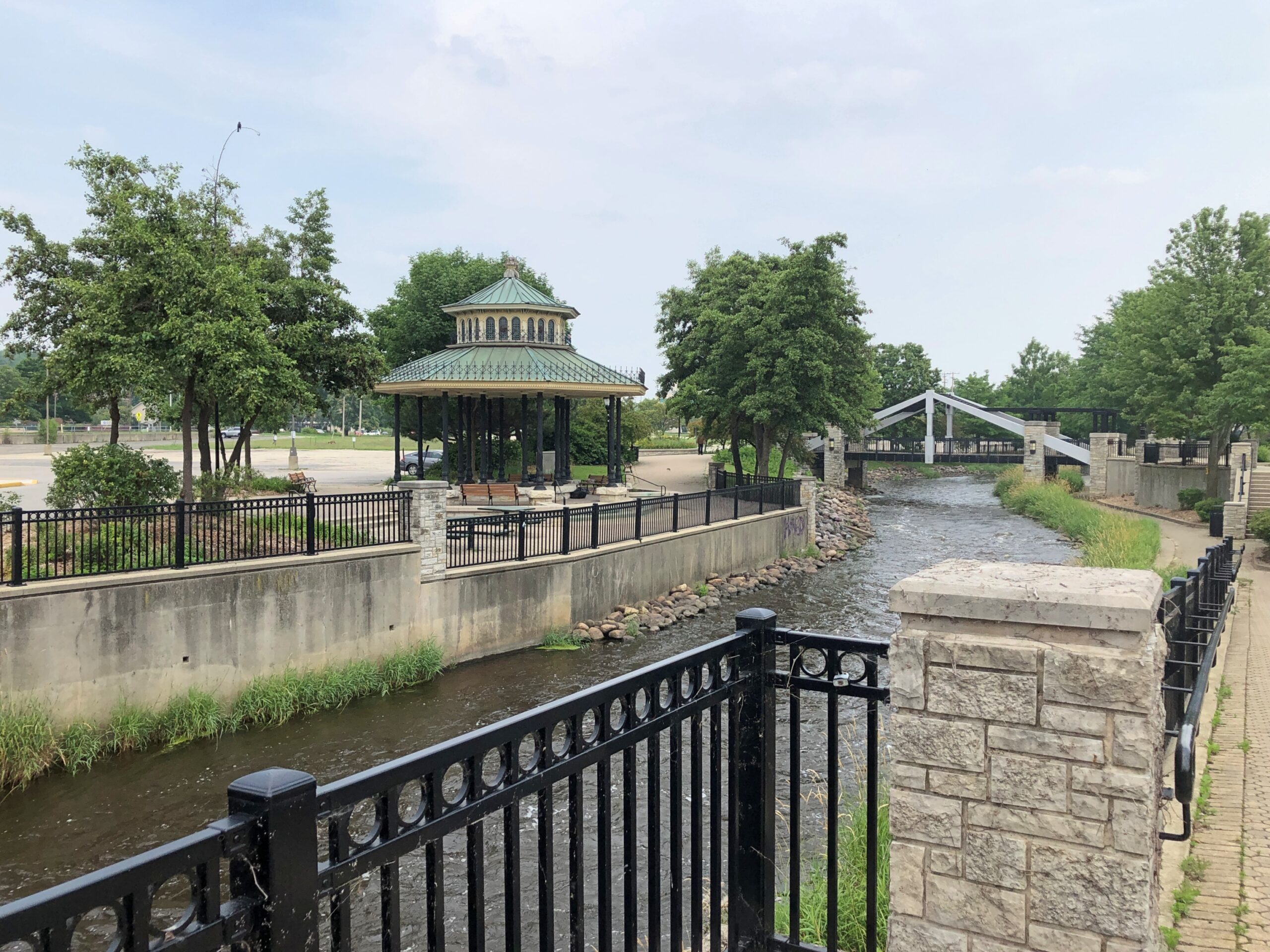
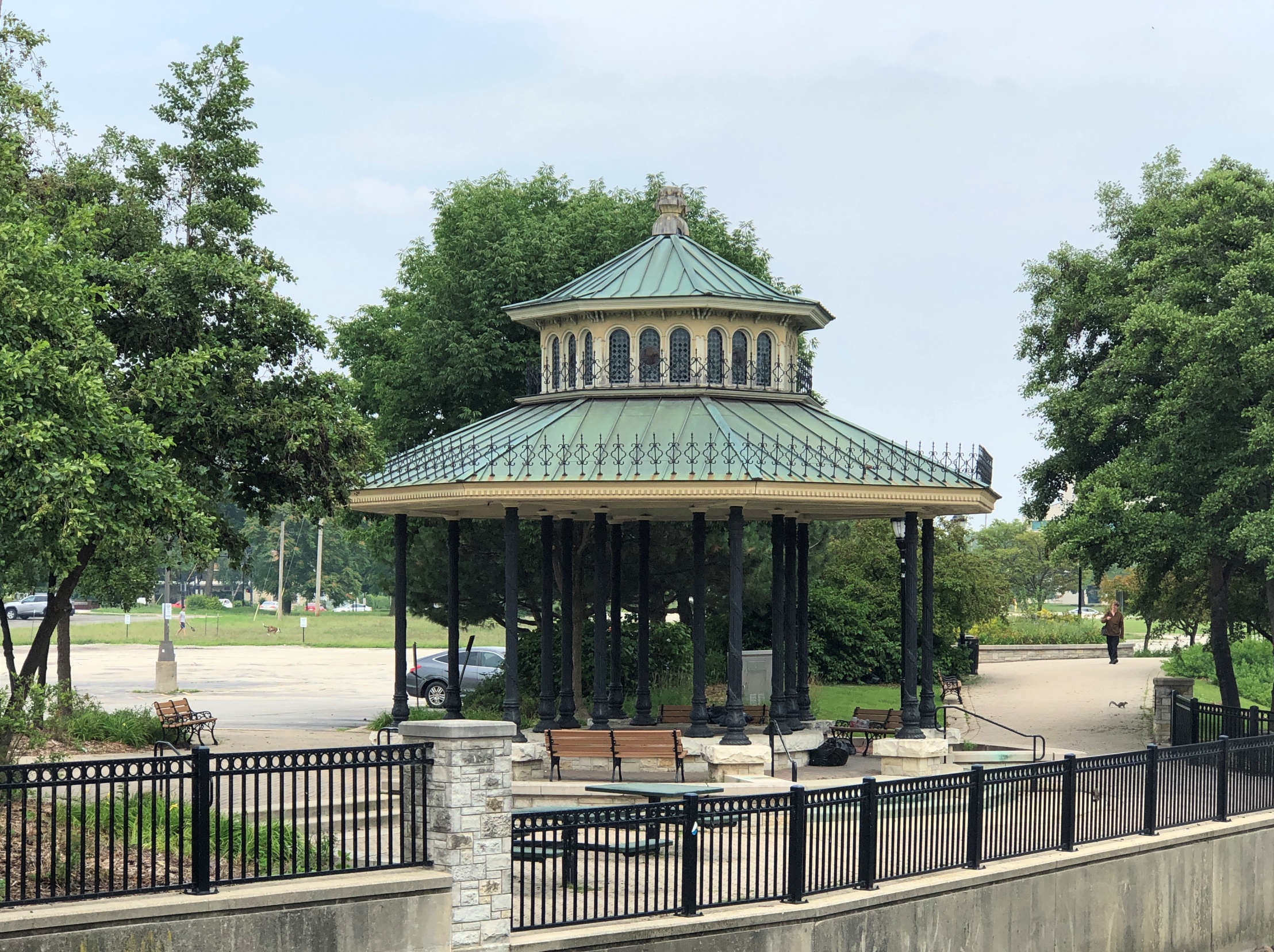
Across the way, a gazebo.

Fox River, Waukesha

Every town over 5,000 has to have a gazebo, according to Wisconsin law. Wisconsin is almost alone in its gazebo mandates, with most other states having repealed theirs in the 1960s and ’70s – though some counties in other states still mandate the structures.

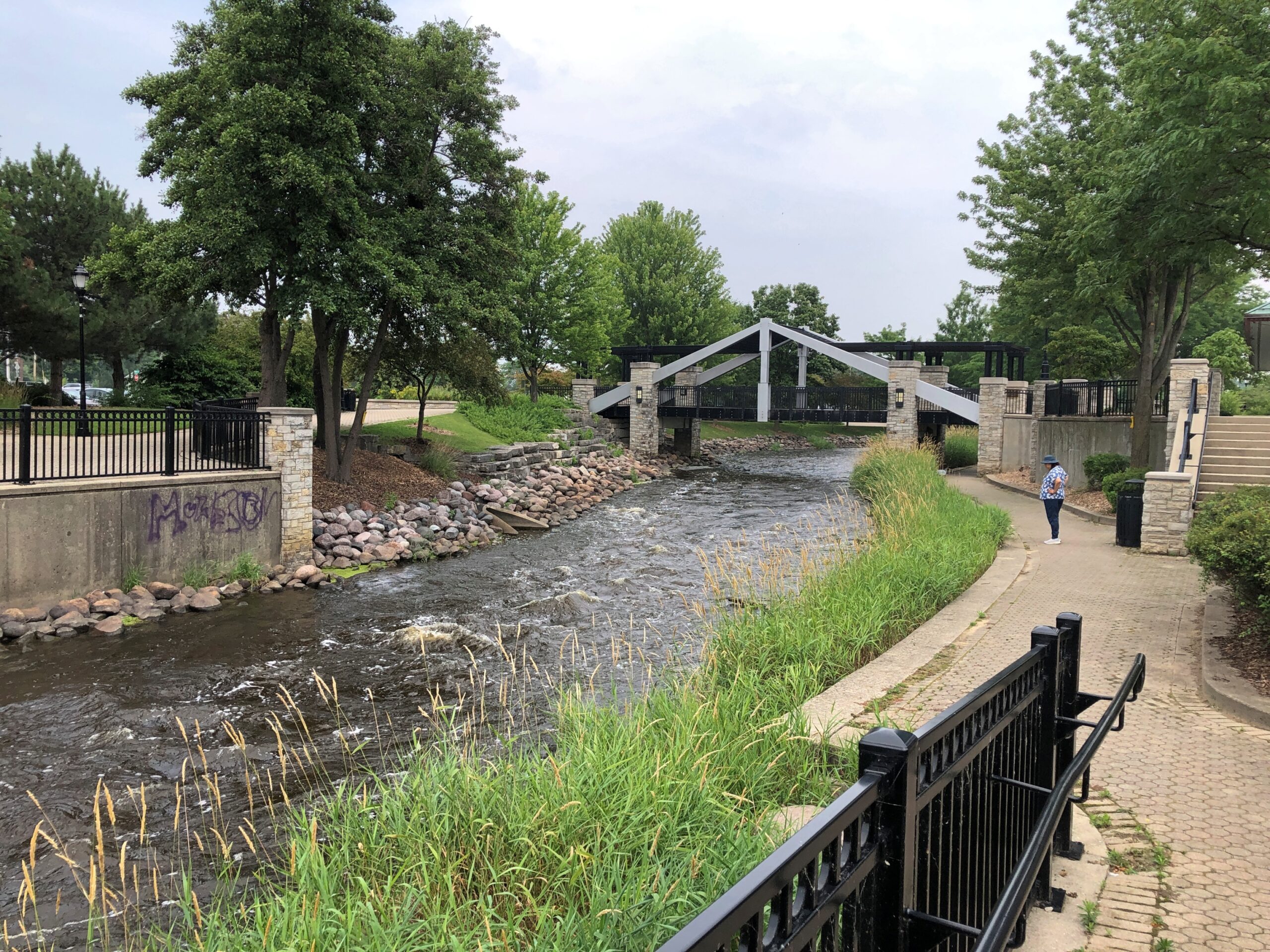
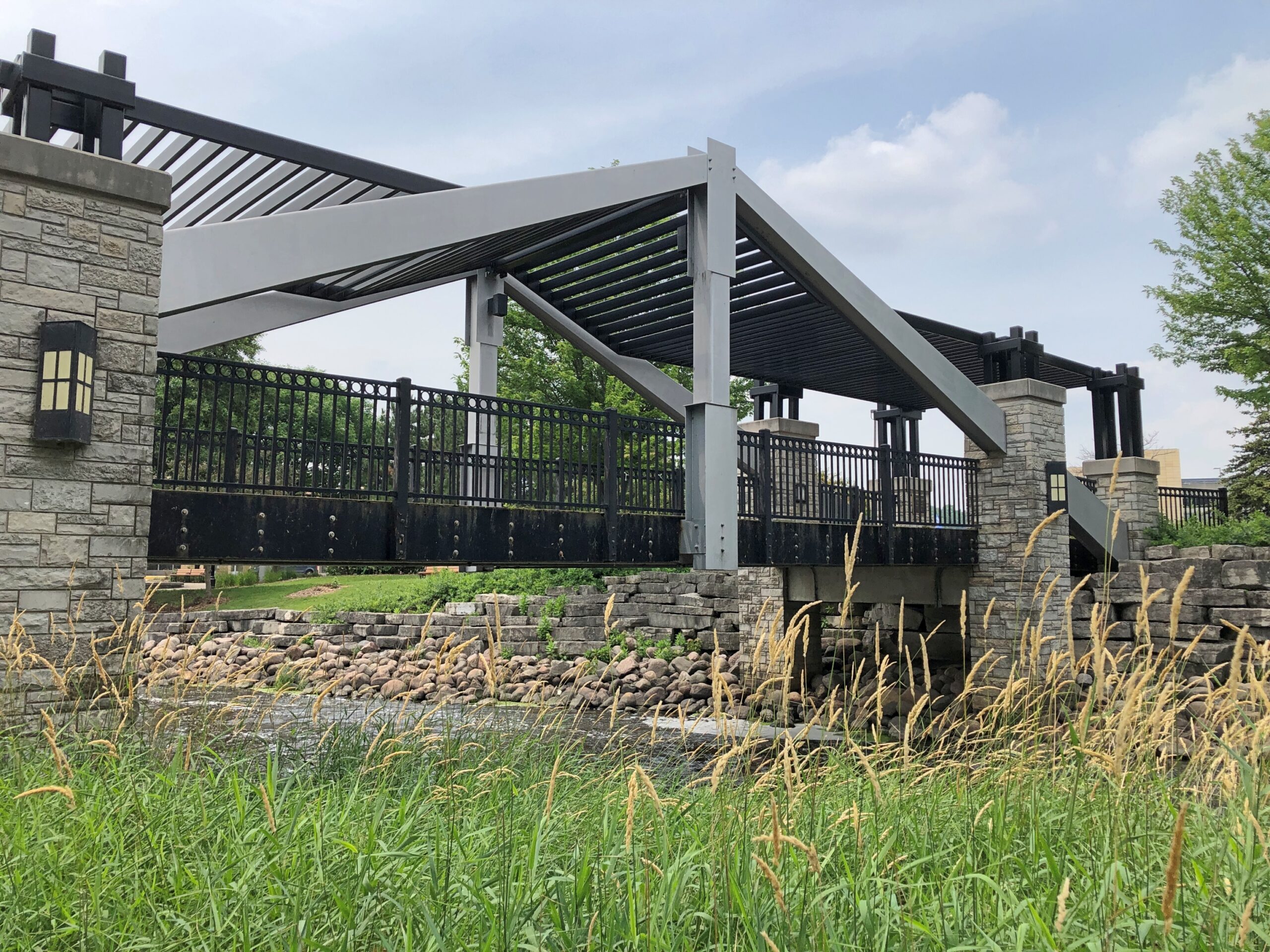
An artful pedestrian bridge.

Fox River, Waukesha
Fox River, Waukesha

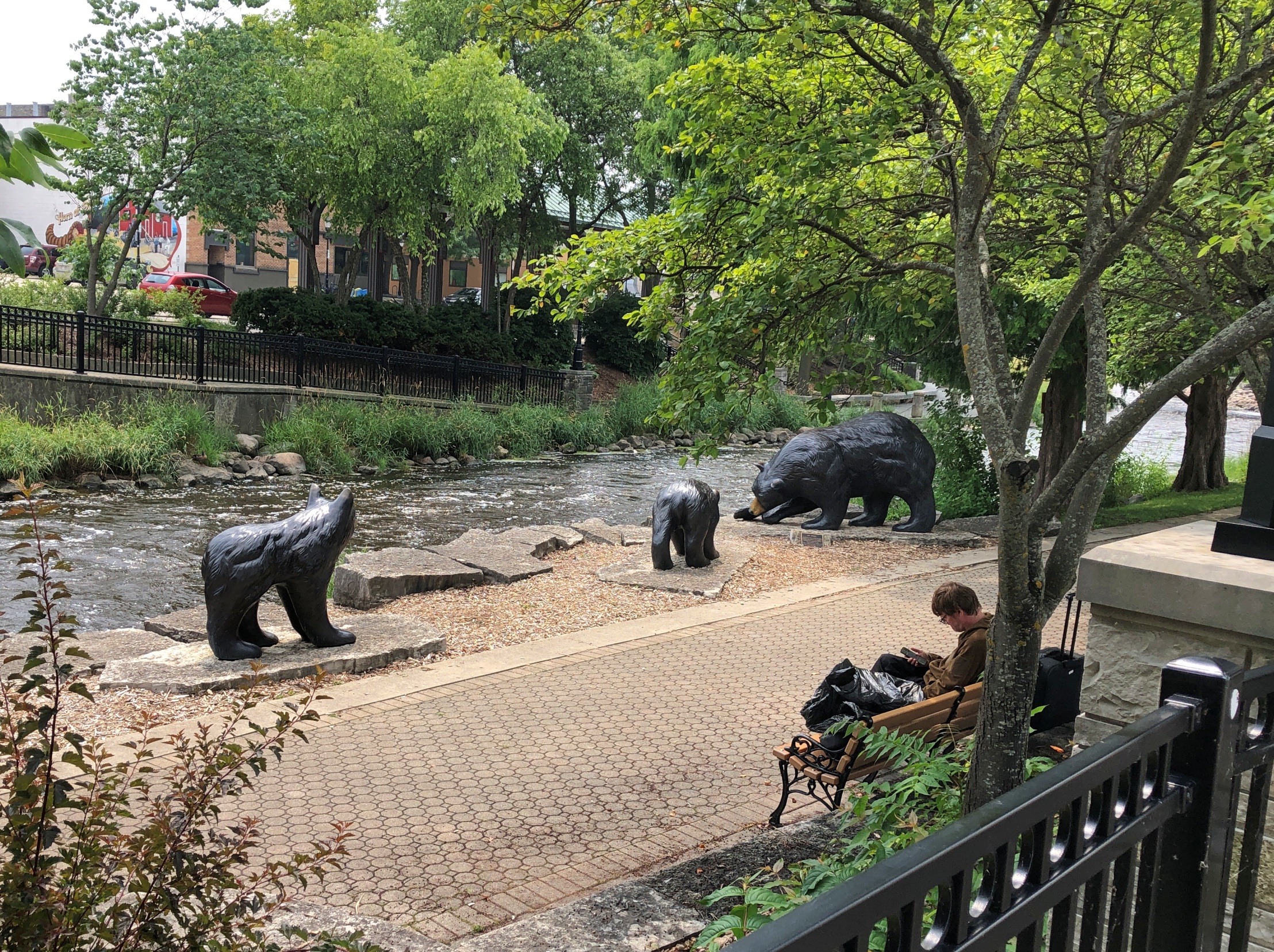
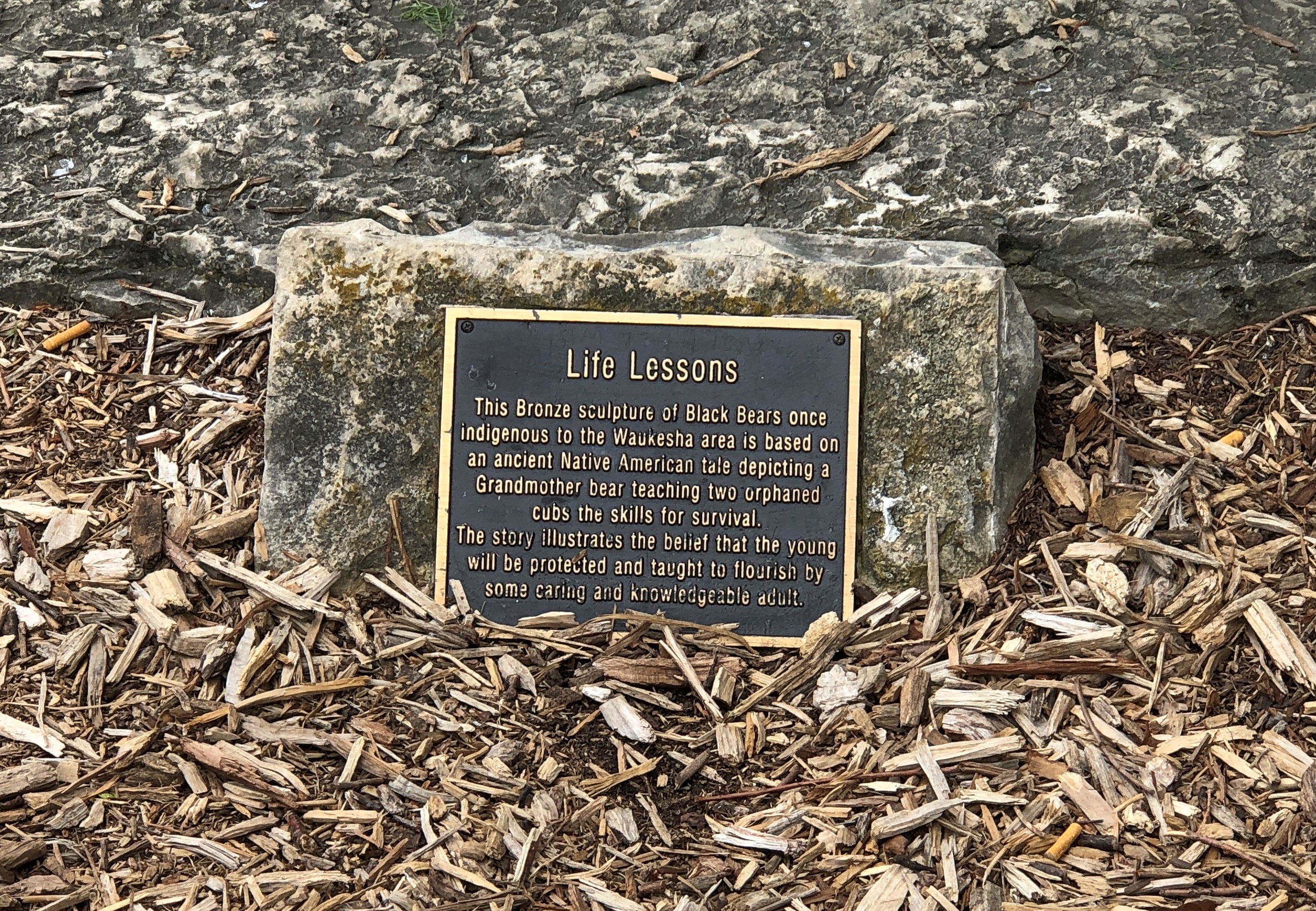
More river, and also bears. Bronze bears.

Fox River, Waukesha

Hope the river didn’t take them away, but I’d think the figures would be anchored pretty well.

Downtown Waukesha

The other day I wondered how long it would take to count a million dollars’ worth of nickels and dimes a million times. That’s one of the dream images from “Minnie the Moocher.” Not just a dream, but an opium dream. After all, no sooner does Minnie learn to kick the gong around, does a vivid dream of wealth begin, all shiny and metallic, ending with:

She had a million dollars worth of nickels and dimes

And sat around and counted them all a million times

Let’s say half the dollar value is nickels, half dimes. That would be 5 million dimes and 10 million nickels. So 15 million individual coins. Let’s also say it takes a second to count each, just to keep it simple. That would be 15 million seconds, or 0.475 years (roughly, I shaved off a few places). Counting them a million times would thus be (roughly) 475,000 years.

Of course, if it’s an opium dream, the niceties of time and such don’t apply. Still, it sounds like a hellish task of a Sisyphean kind. But maybe it would be a heavenly task, if you have no sense of the passage of time.

I didn’t sit down to figure all that out until I was at my desk, but the question came out of nowhere during a short interstate drive just before the end of July, up in the southeast corner of Wisconsin. One destination that day, a Sunday, was downtown Waukesha, an outer suburb of Milwaukee, but a place with a distinct history of its own, where people came to take the waters once upon a time.

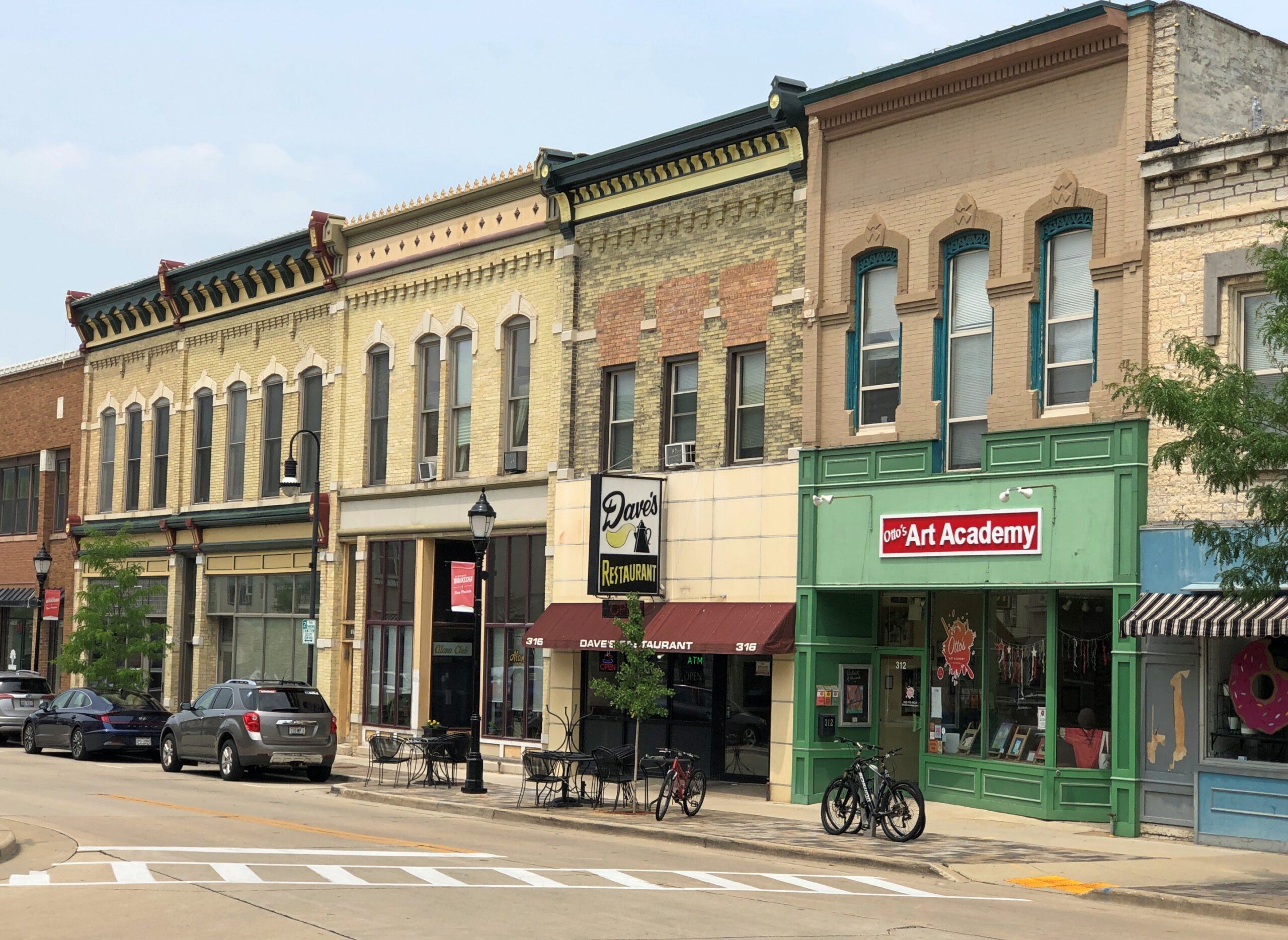
We spent some time near the five-pointed intersection of Main, Broadway and Grand, focal point of a handsome streetscape.

Waukesha, Wisconsin
Waukesha, Wisconsin

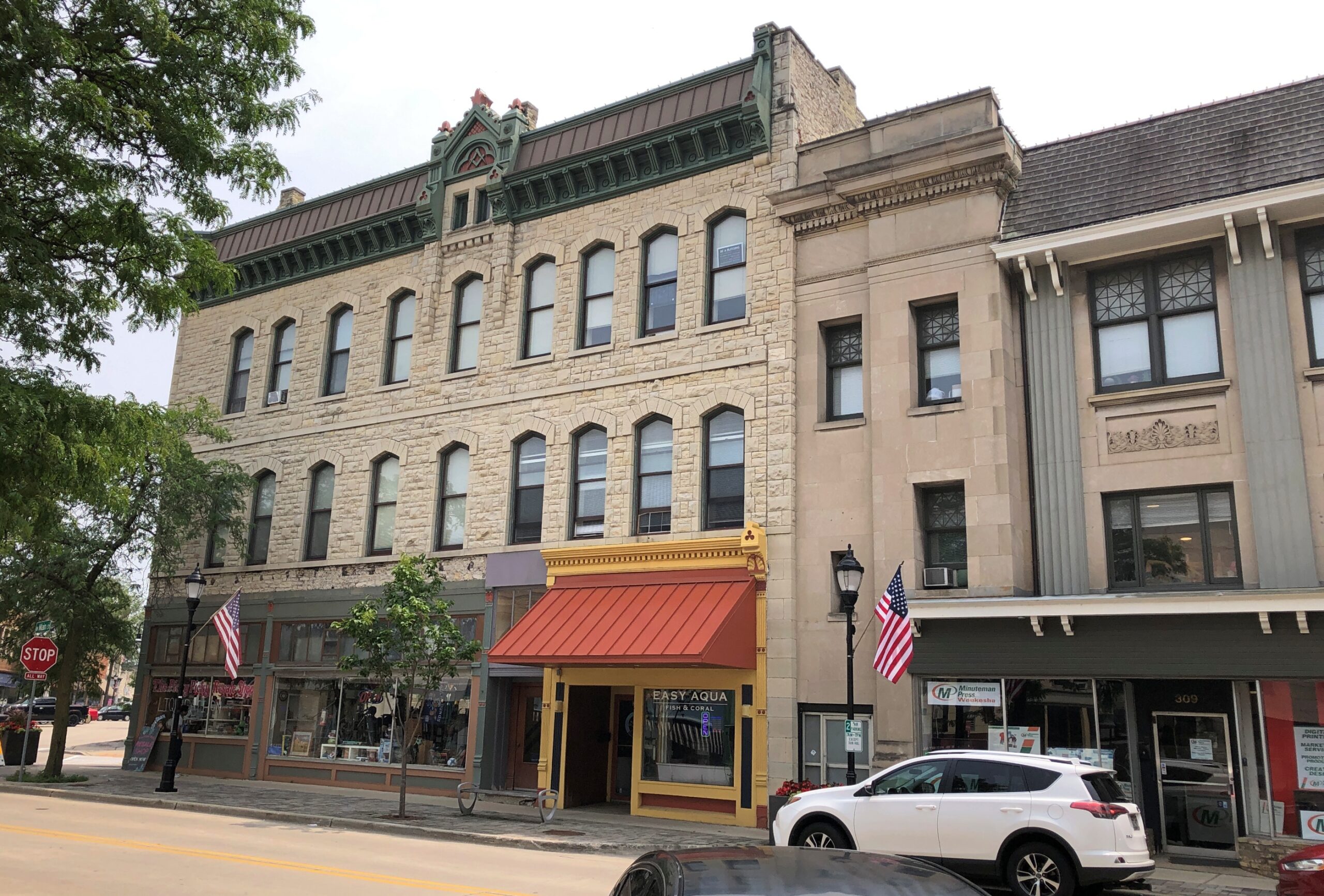
Now this is a set of buildings.

Waukesha, Wisconsin

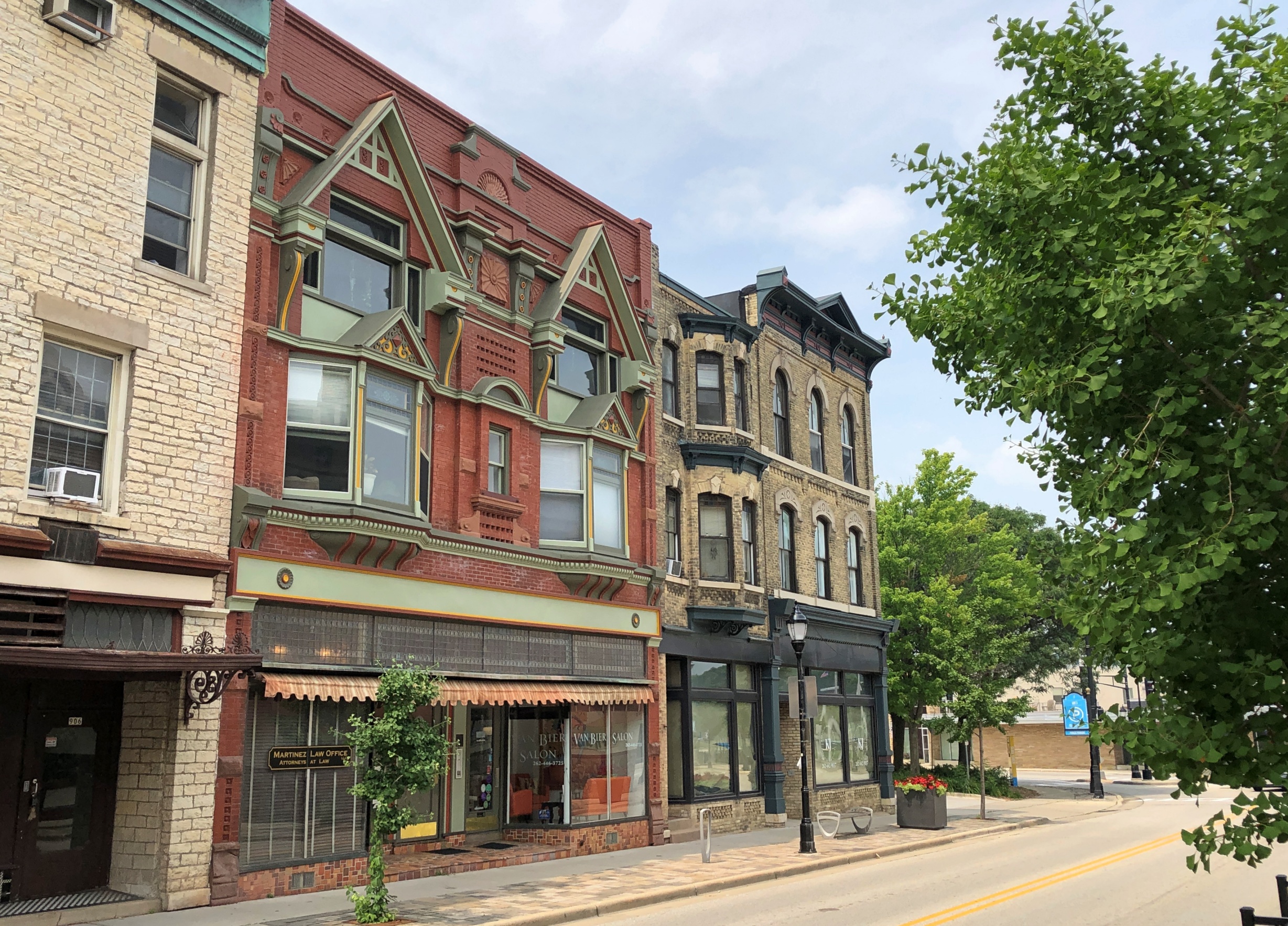
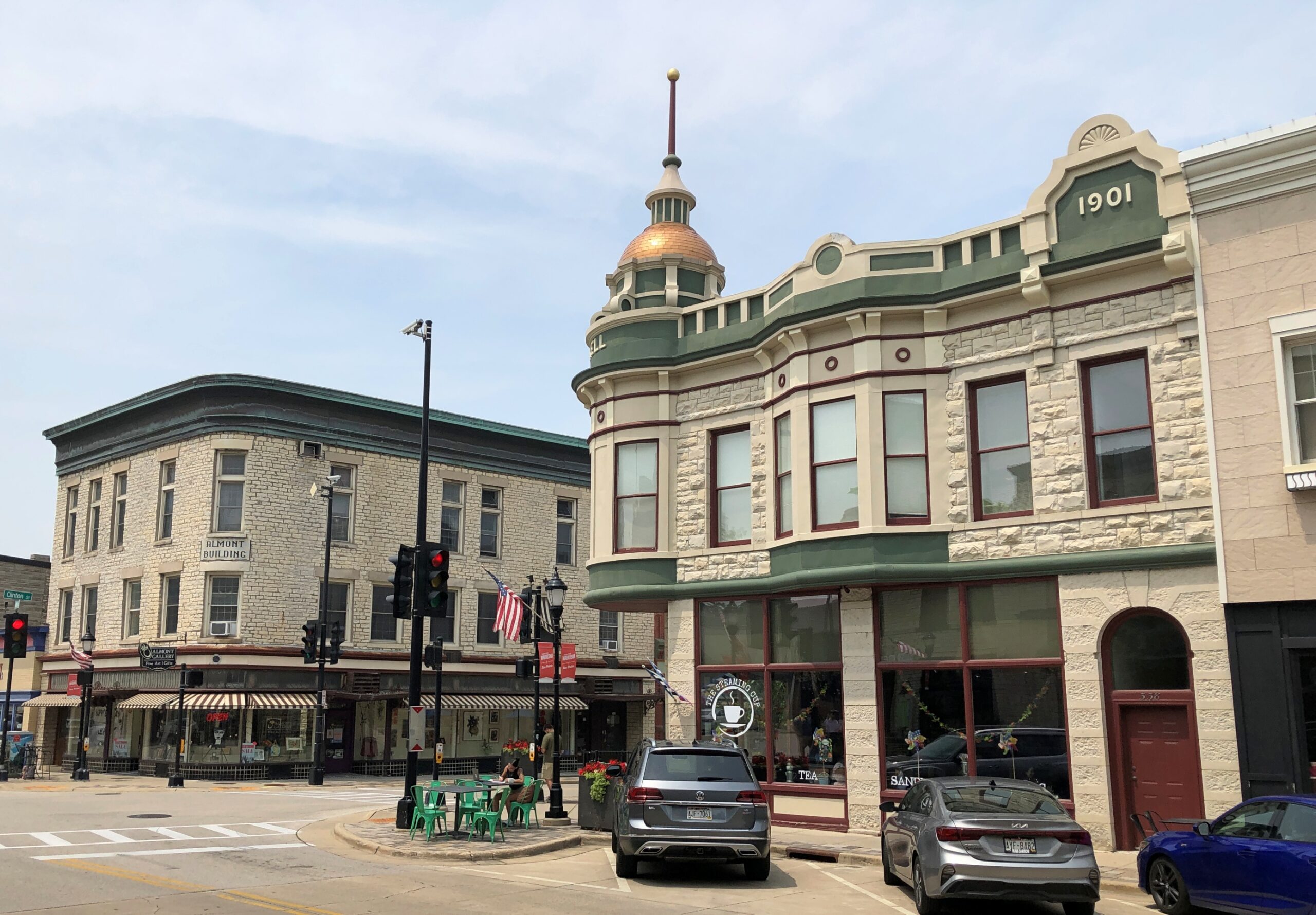
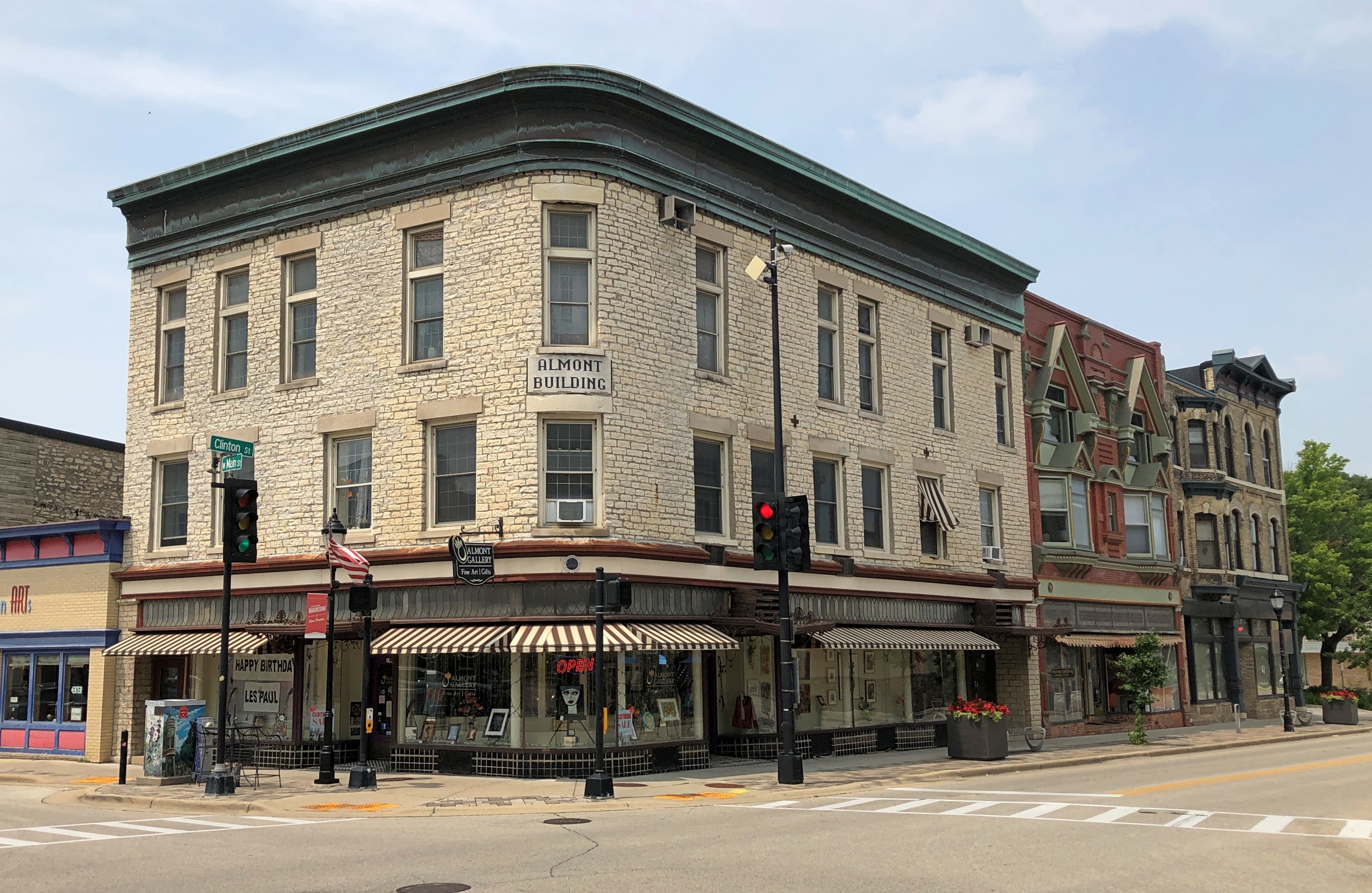
The Almont Building, whose original name was the Robinson Block.

“The core of the downtown, prior to 1856, consisted of freestanding wooden frame buildings, but a new era began after a massive fire nearly destroyed this northern section of Main Street,” the Waukesha County Historical Society & Museum says. “The Robinson Block was built in 1857 with fireproofing in mind and is the first Five Points building to use Waukesha limestone.”

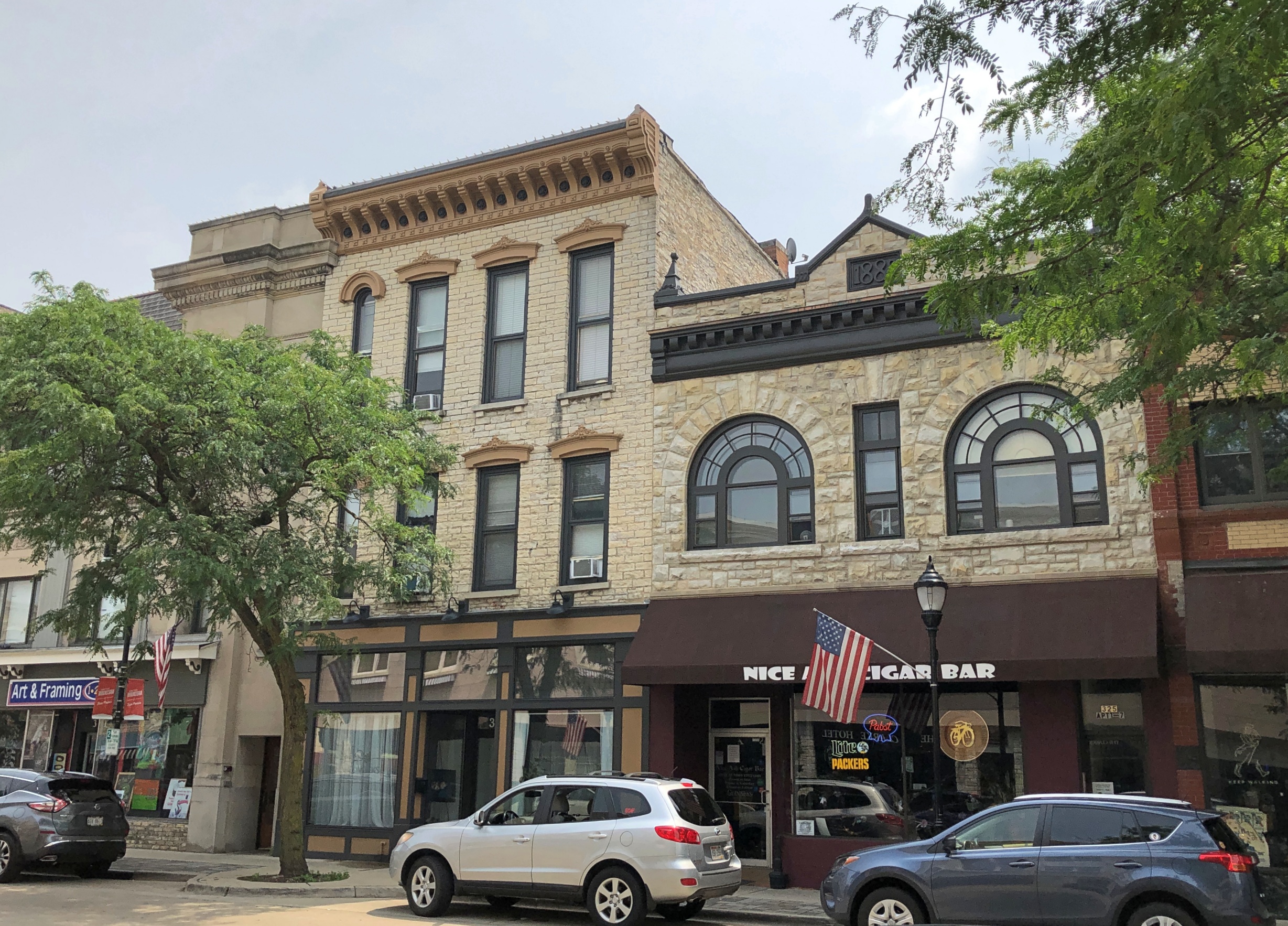
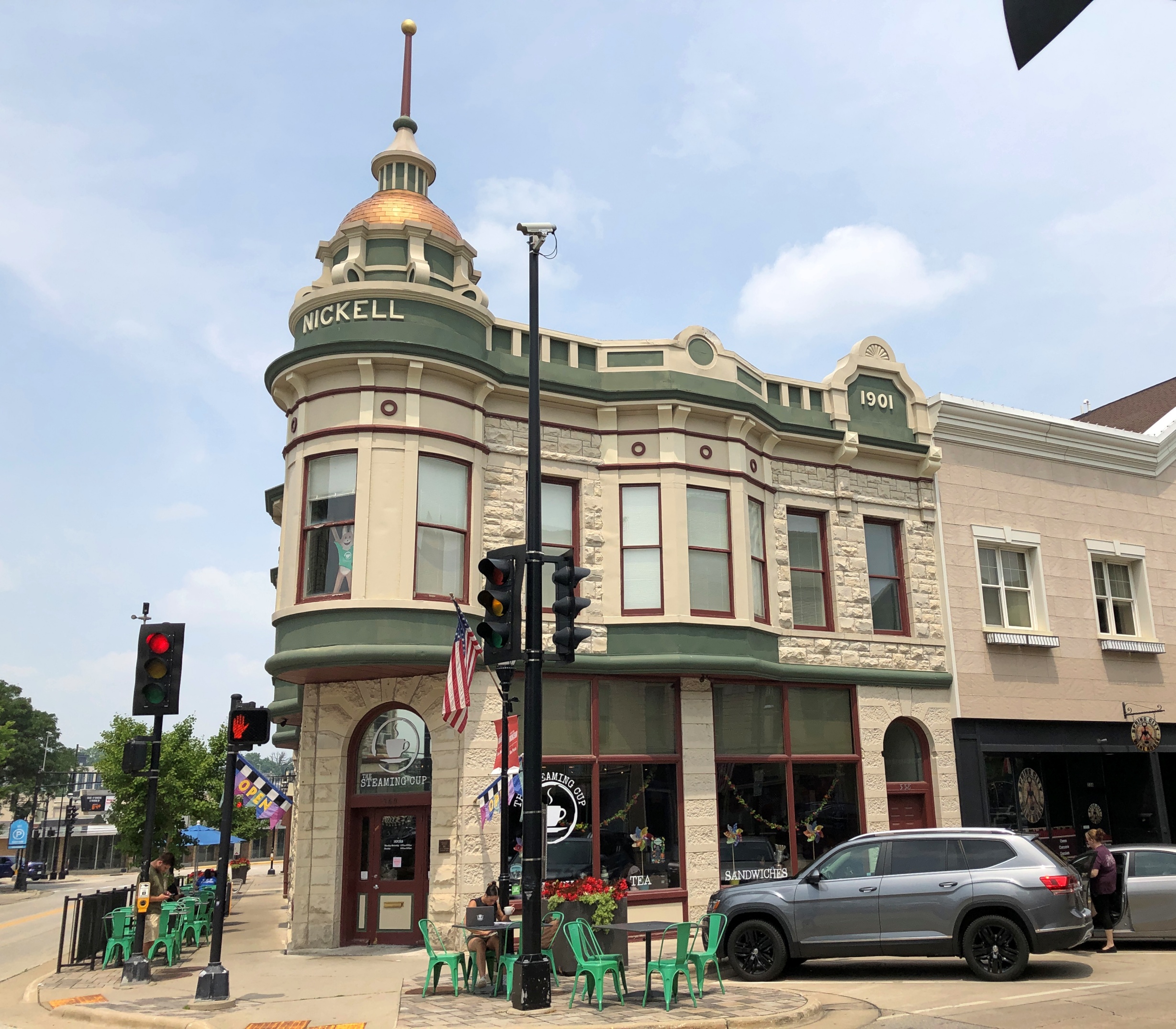
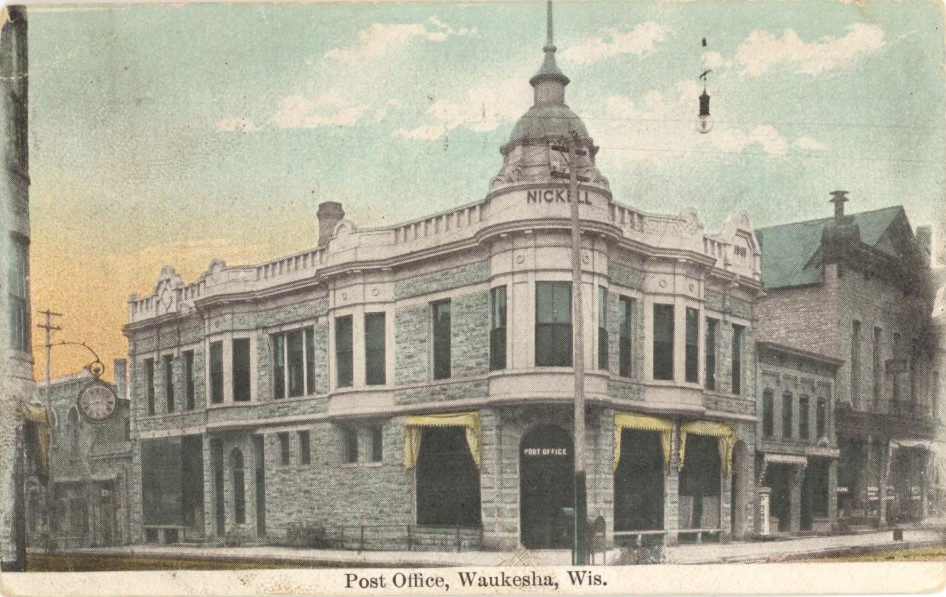
The Nickell Building, as it looked recently, and long ago.

“Built by Addison J. Nickell, local businessman and jeweler, the first floor housed the U.S. Post Office from 1902-1914,” notes the WCHS&M. “The work of Waukesha architect C.C. Anderson, this Queen Anne displays a projecting oriel and corner turret capped by a domed roof: both are covered by pressed metal.”

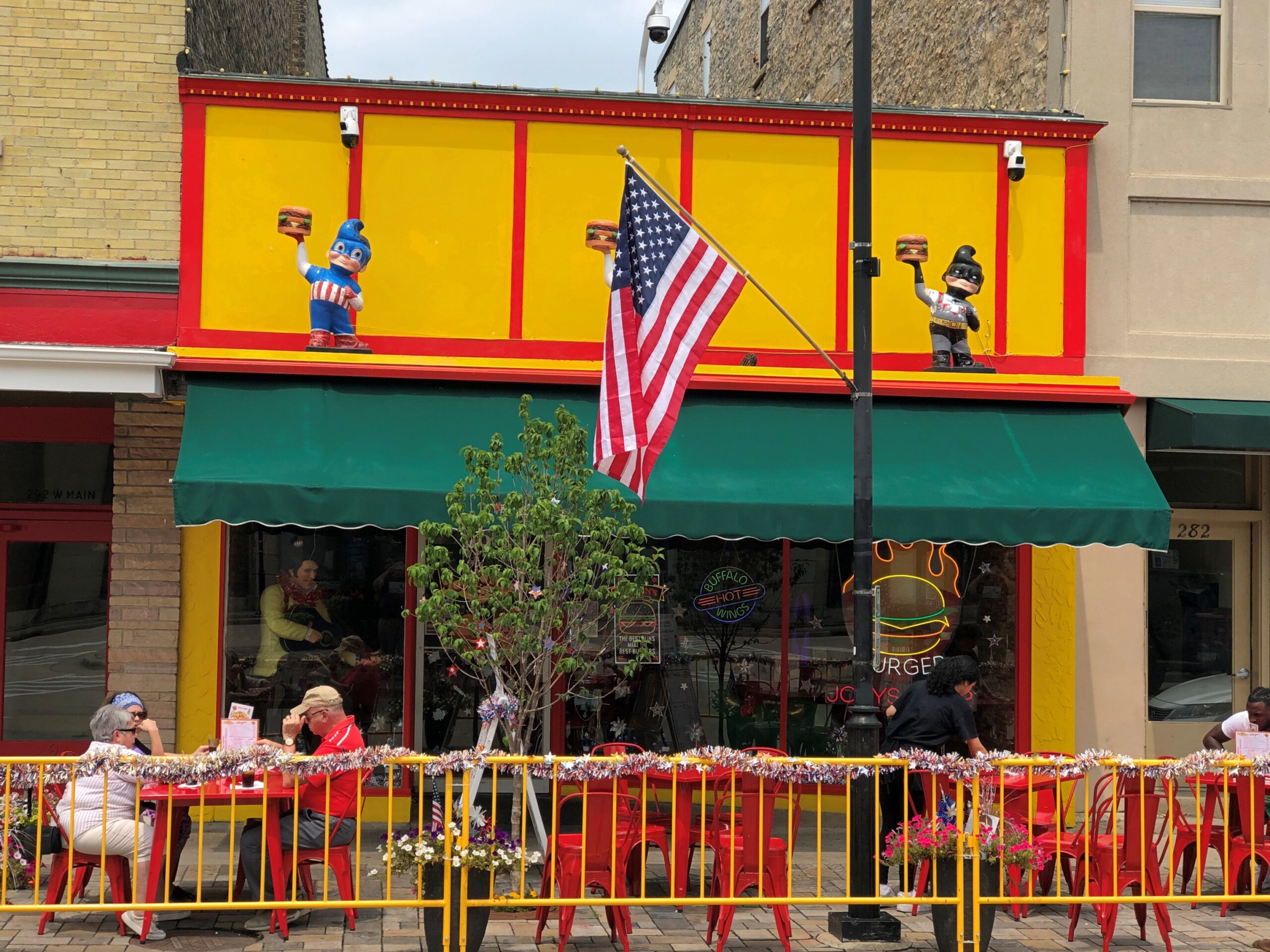
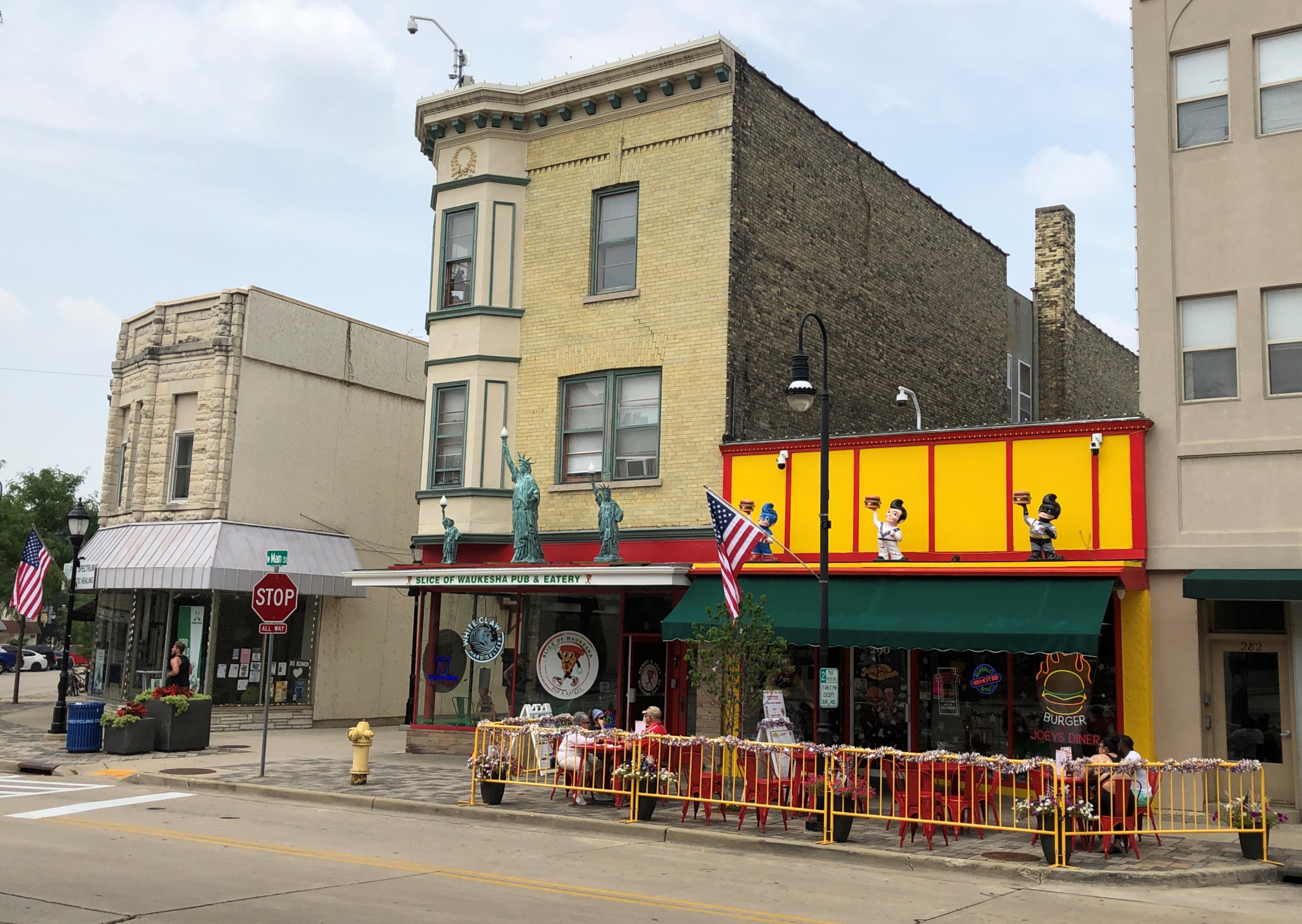
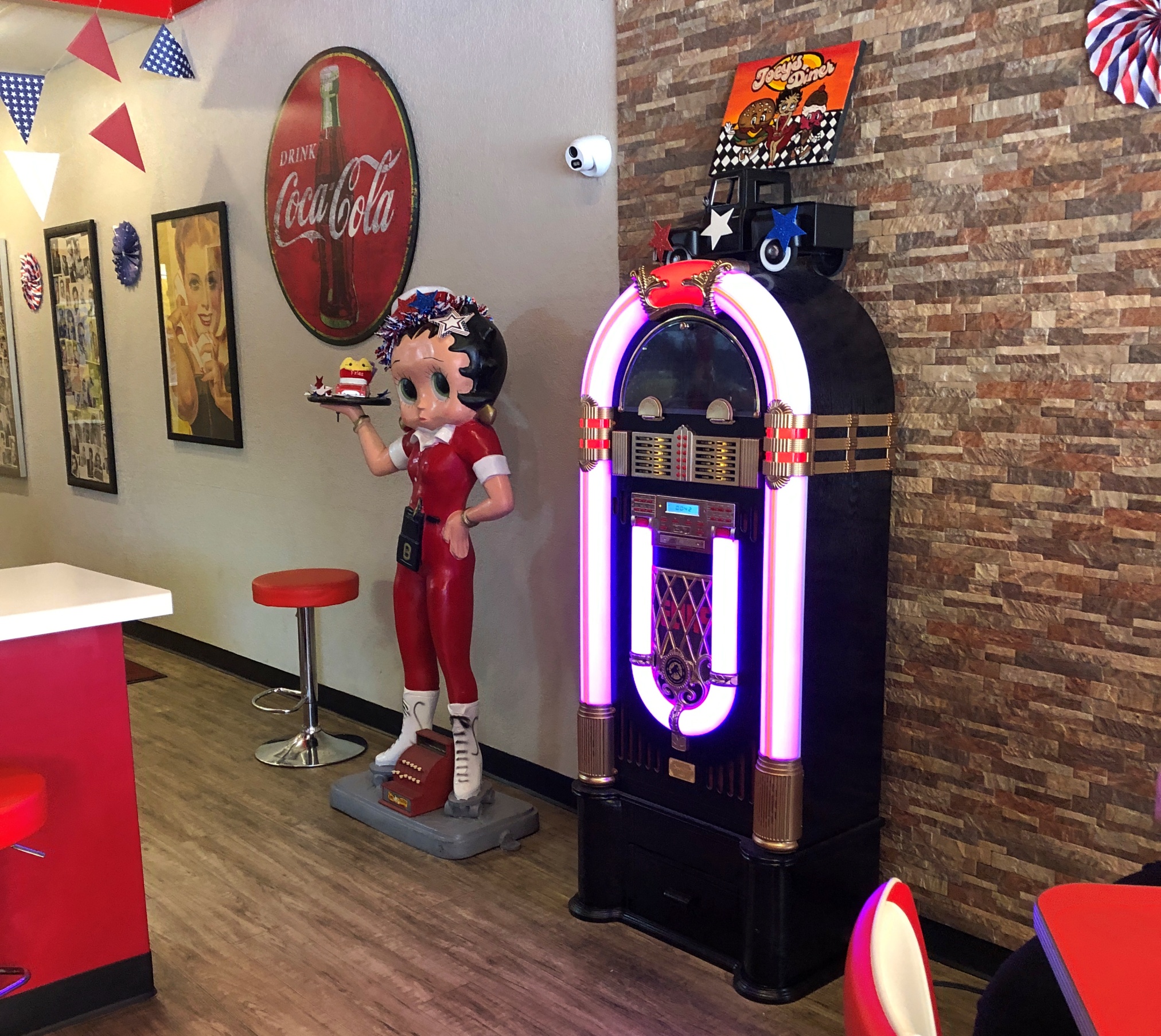
Being mid-day, one bit of business to take care of: lunch. We soon found the friendly joint called Joey’s Diner.

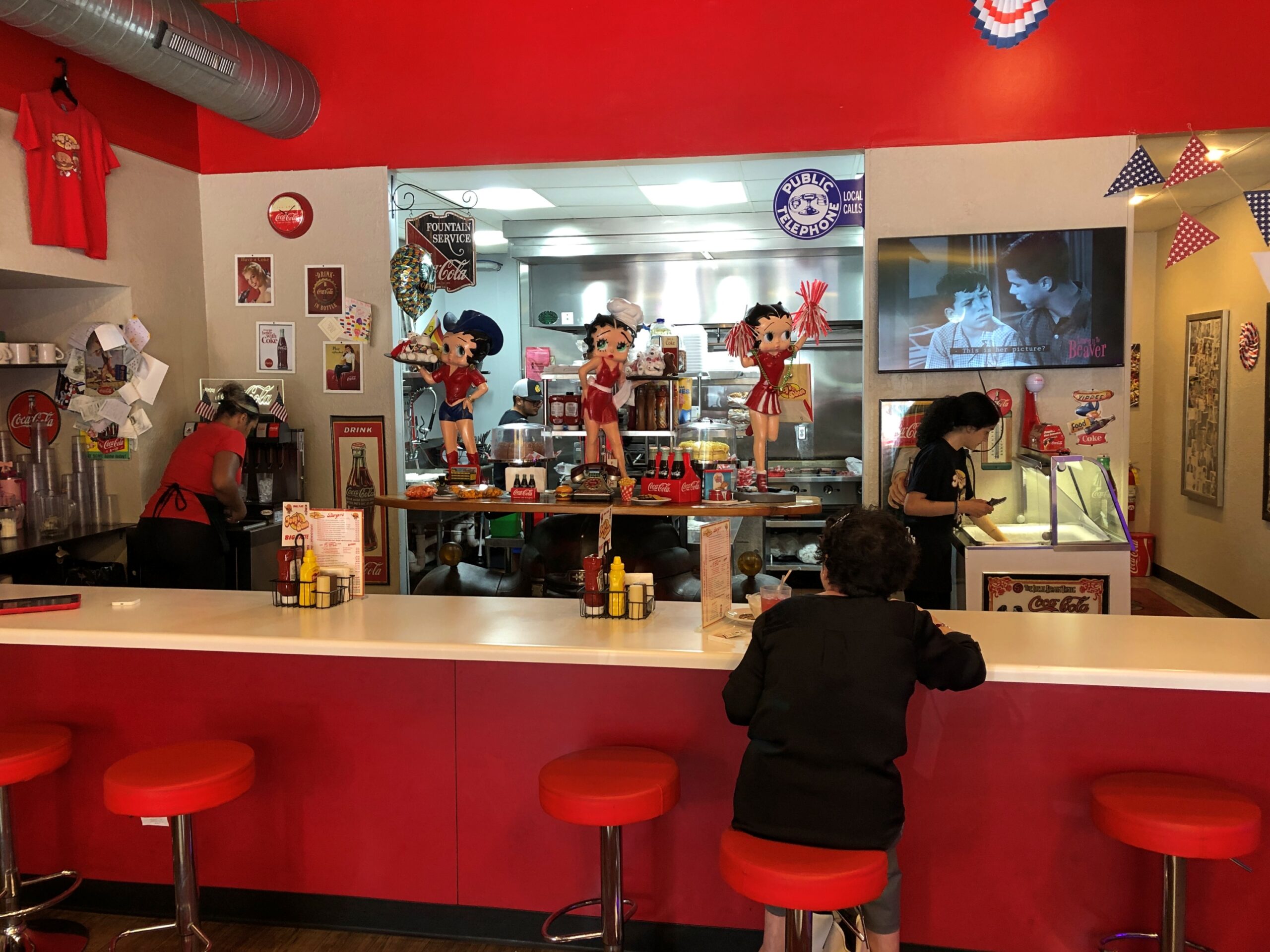
Joey likes Betty.

Joey’s is next to an Italian restaurant, similarly casual, that I think was owned by the same fellow. He was everywhere at once all the time — running a restaurant is nothing if not busy, and he seemed to be running two — but toward the end of our meal, asked how it was. I answered enthusiastically to the positive about my simple but also delicious hamburger. He responded by giving us a slice of chocolate cake, on the house. Thanks, Joey.

The street has other (many other) examples of places found here and nowhere else.

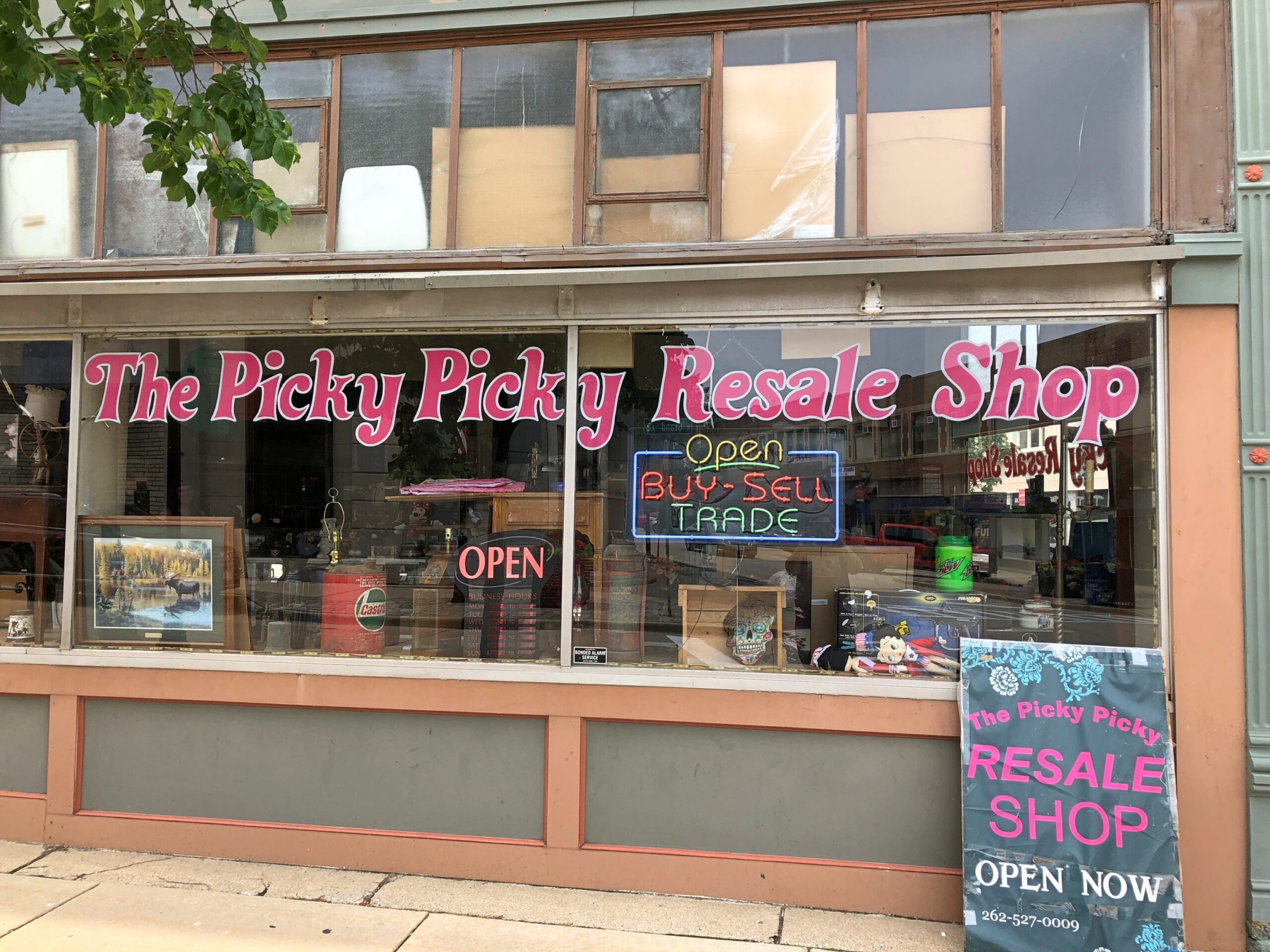
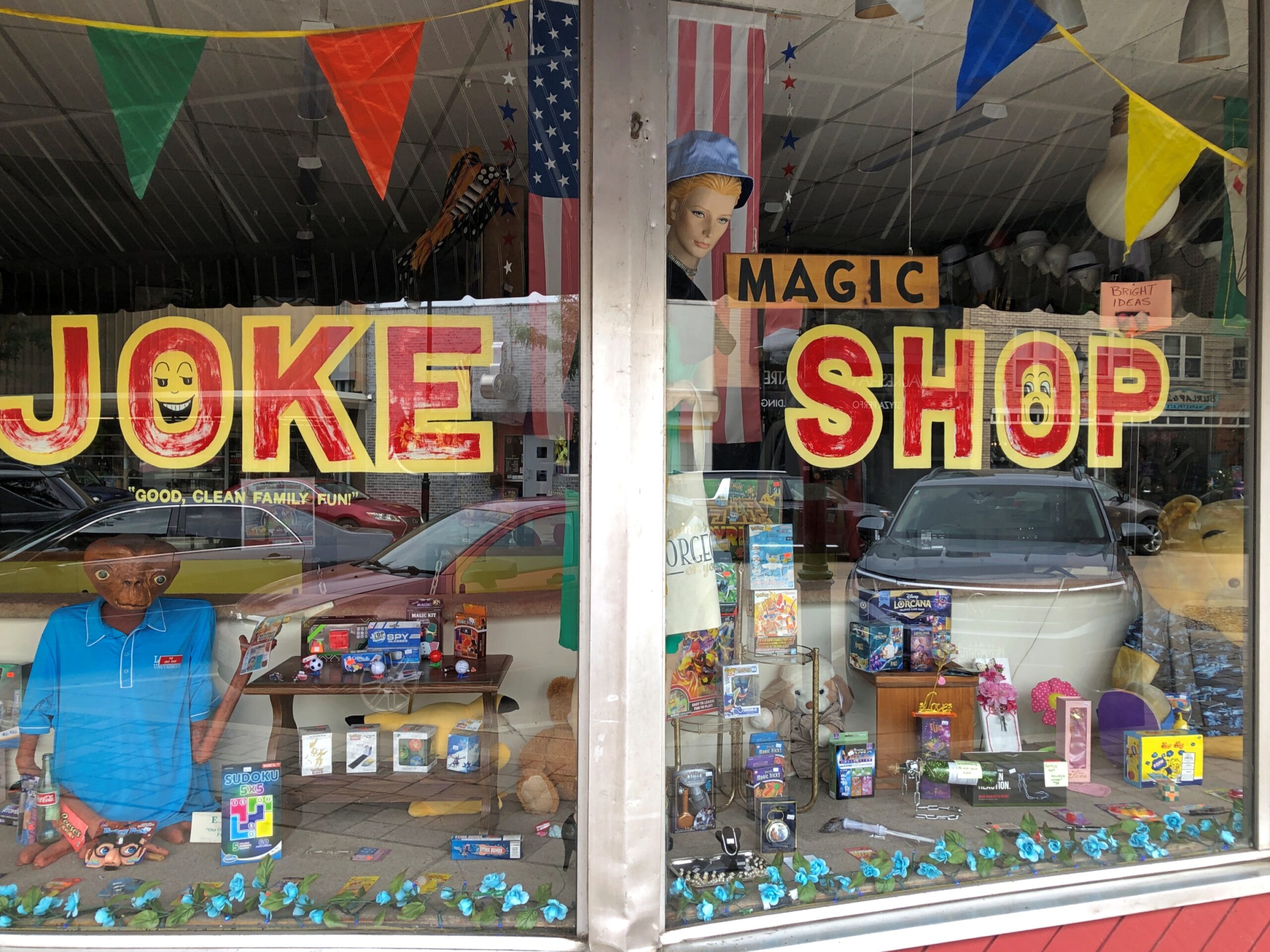
Been a while since I’d seen a joke shop. Closed.

Waukesha, Wisconsin
Waukesha, Wisconsin

The last one might have been Uncle Fun in Chicago, which closed some years ago. Too bad about that, but at least Jest For Fun Joke Shop, which has been at this Waukesha location more than 40 years, is keeping the retail tradition alive.

Corpus ’79

The sparse neighborhood cut off from the rest of Corpus Christi by I-37 at least offers a view of the new bridge, nearly complete, that will connect downtown with the North Beach district. New bridge in the foreground, existing through-type arch bridge in the background.Harbor Bridges, Corpus Christi
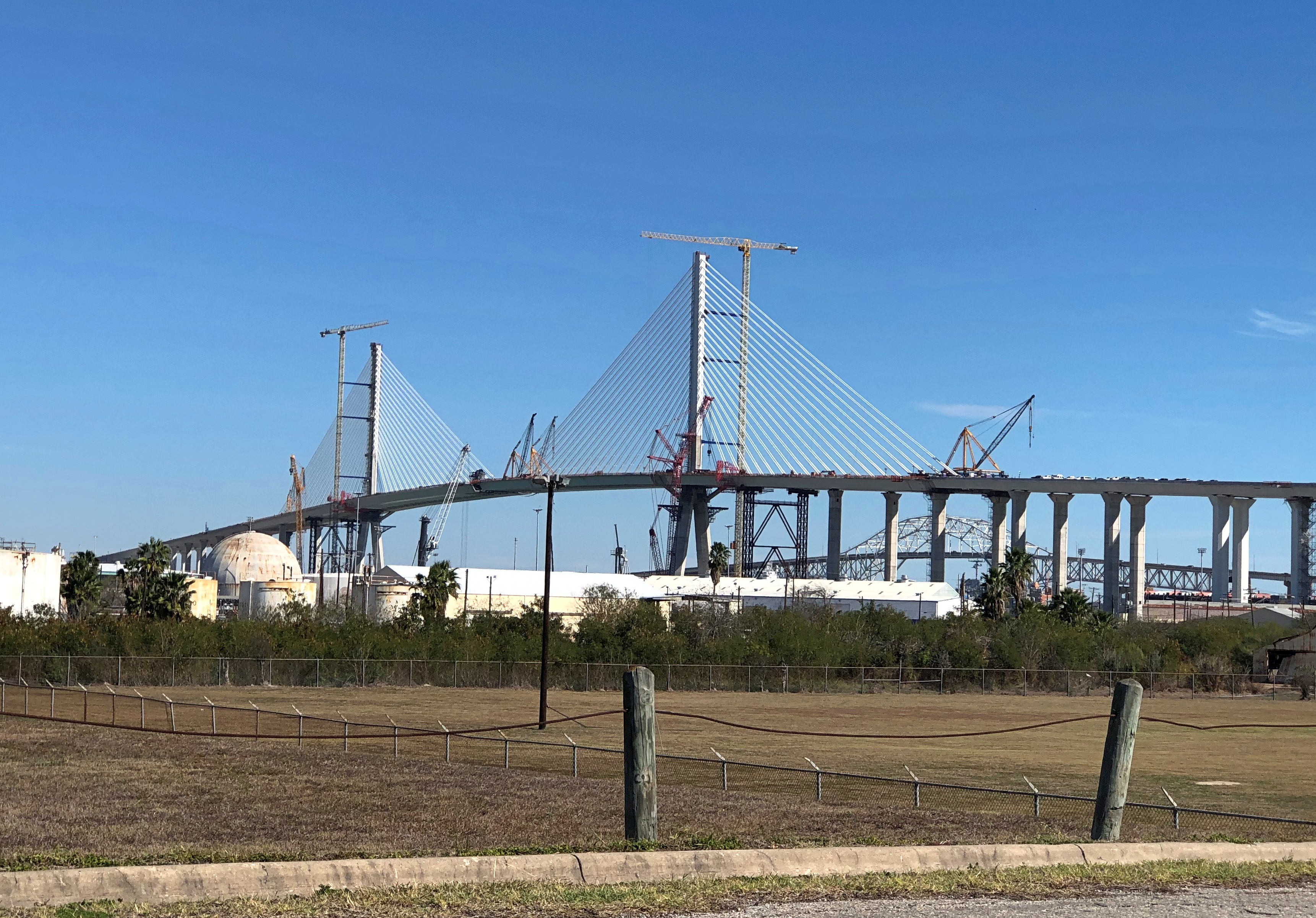
The new bridge has been in the works awhile, including a delay arising from firing FIGG Bridge Engineers from the project part way through. Another FIGG bridge had infamously collapsed in 2018, with the NTSB reporting that “the probable cause of the Florida International University (FIU) pedestrian bridge collapse was the load and capacity calculation errors made by FIGG Bridge Engineers.” Reportedly TexDOT in particular was leery of that company continuing on the Corpus bridge project.

The new bridge will be open by this summer, and soon after the old bridge (vintage 1959) will be demolished. For a narrow window, including January 2025, there are two bridges.

We got a good look at the old bridge from a different vantage.Harbor Bridges, Corpus Christi
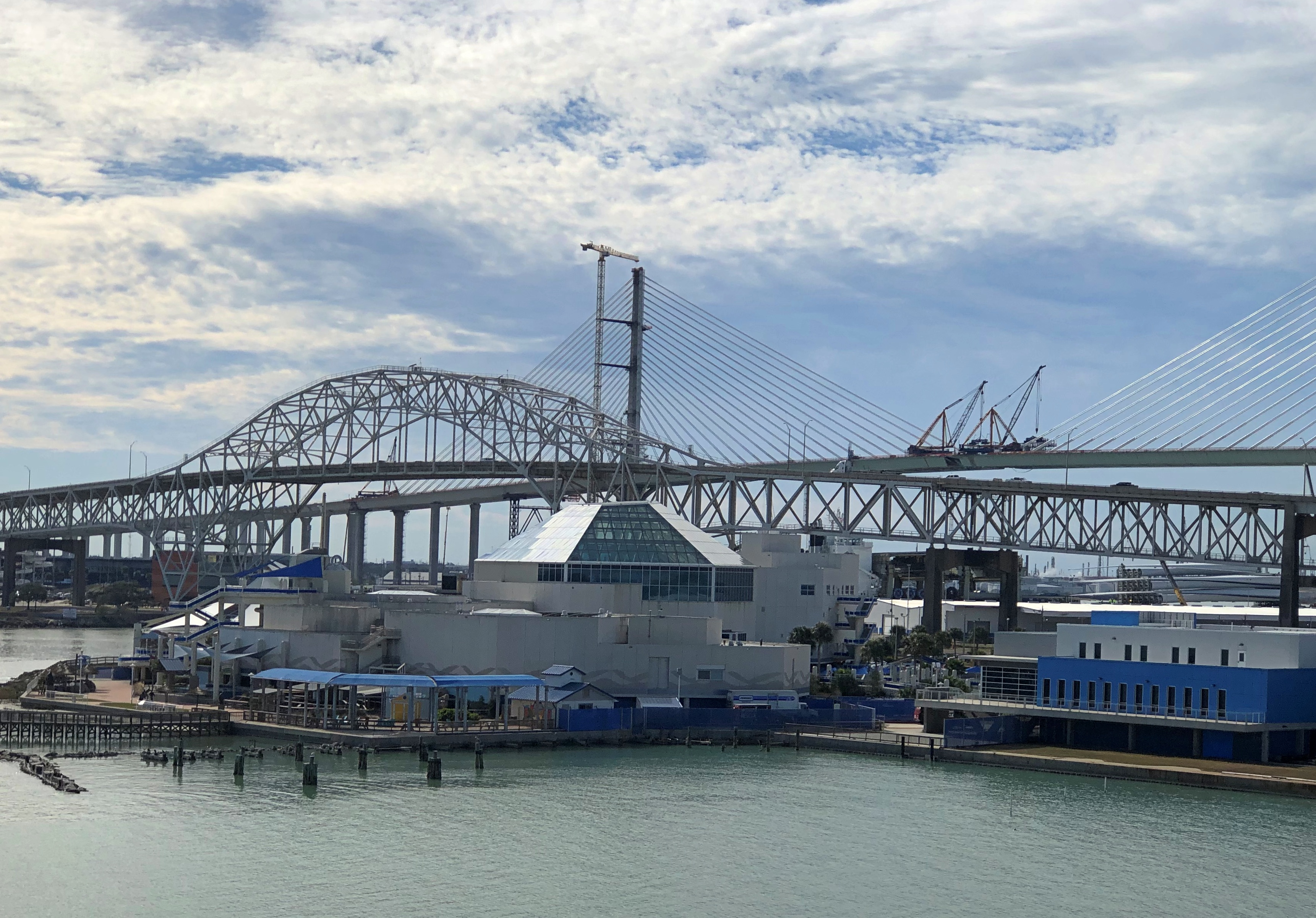
In this case, the Texas State Aquarium is in the foreground. If I’d known that old bridge was coming down so soon, I’d have taken better pictures of it, including from the ground practically under it in North Beach. Never mind. Time flies, things change.

When was the last time I was in Corpus Christi anyway? A question of no importance to anyone else, and not even that much to me, but something I wondered about while visiting the city (January 16). It occurred to me after I returned home that I might have documentation to pinpoint it – the pages of the desk calendars I kept, starting my sophomore year in high school. I used it, as one would, to keep track of things I had to do for school, but I also made notes about social activities, of which there were a fair number. A speech tournament counted as both, and a travel opportunity to boot, even if it were only to other high school campuses in town.

So I checked: I went to a speech tournament at CC Ray (W.B. Ray HS) January 12-13, 1979, and at CC King (Richard King HS) February 16-17, 1979, so the latter is the answer to my question. I don’t ever remember attending a tourney at CC Miller (Roy Miller HS), where my mother graduated in 1943, when the school was simply Corpus Christi HS, the only one in town.

Early in my sophomore year in high school, I was considering joining the speech club, which mainly would mean debating, and in the fullness of time that’s what I did. I must have mentioned my deliberations to my English teacher, Bill Swinny, who also taught drama at Alamo Heights HS. I can picture him: not as old as I am now, but wrinkled with a slightly leathery face, probably from years under a South Texas sun; silver narrow rim glasses; and a full shock of white hair without a hint of youth.

“If you do debate, your learning is going to go like this,” he said, holding his hands near each other, as if he were about to clap, and then spreading them wide apart – a hell of an effective gesture, with the fact that I remember it after nearly 50 years proving the point. Guess Swinny, who had been on the stage professionally, had that actor’s instinct for gestures.

He was right and it wasn’t long before I realized it. But I probably would have joined debate without his encouragement. Debate meant Friday and Saturday trips to other high schools in San Antonio (I suppose we got all or part of Fridays out of class to go, at least when I didn’t have a football game to go to, and assuming good enough grades). Even better, it sometimes meant going to other cities: Austin, Houston, Dallas, Corpus, even as far as Midland, Texas.

Under the sort of loose supervision that was common in those days. People wax nostalgic for that sort of thing, and they’re right.

I remember traveling by student-filled bus all the way to Stevens Point, Wisconsin in August 1978 for a school club trip (not speech, math) and being completely free to set my schedule once I got there. One day I skipped a few of the organized events and took a long walk around Stevens Point, including a visit to a local church, St. Stanislaus – probably the first time I’d ever looked inside a church, just to see it – and wandering through a large greenbelt around a pond, with fragrant pines that made the place seem intoxicatingly far away. I came home a better person for that amble, and being trusted not to be a moron.

Like band, speech was a social occasion with other members of the club, away from school, away from our families and usual-suspect friends for a little while. It meant nights in motels and occasionally actual hotels, and meals in restaurants beyond our usually haunts – generally organized by the students themselves, such as the time in Corpus we had to put our heads together, in those pre-Internet days, to find and procure food from the known-by-reputation somehow Star Pizza. (Or maybe Starr Pizza, since there’s a street of that name in the city). It might have been middling pizza by later standards, but I’m sure it tasted better for the effort we put into it.

We speech club types were bright but mostly well behaved, and I don’t remember that the teachers ever regretted our loose supervision. There were minor amounts of unreported underage drinking (which I never liked much myself), but no one got too stupid from it, to the point of anyone’s parents having to collect them.

There was the time we sang a few parody songs in one of our hotel rooms. In Houston, maybe. Fairly mild stuff, even then. “Rock Around the Clock” became “Rock Around the Cross,” for instance, with lyrics that would have been offensive, and certainly ridiculous, to some older ears in Texas at that time; but no one else heard it. We might have been loud enough to be heard in the hall, but I doubt in any other rooms. None of us recorded it, either. No one would have thought of that.

That same hotel-room gathering, without any one older around, we talked about what we knew or had heard about some of the other teams from other schools, including opinions about who were the toughest opponents, and otherwise. I don’t remember any details. It would be demented if I did. But I know that that moment was both business and pleasure.

Speech was also an opportunity to meet fairly smart girls who were also exotic. By exotic I don’t mean anything like ethnic background, but rather that they went to other high schools. Even more exotic, other high schools in other cities.

There turned out to be a lot of nuance to that meeting girls thing, something adolescent boys are only dimly aware of. During that single trip to Midland for a speech tourney, I remember my debate partner and I went up against two female partners from who knows what school in an early round of what was called Standard Debate: one team affirmative, the other negative, each partner speaking in turn about whatever the subject was that year. Energy policy? It was the energy-crisis ’70s, after all.

The opposing teams sat across from each other at the front of a classroom, with the judge and any other spectators sitting where students normally would, though in early rounds you could expect few other people besides the judge. So the teams had a pretty good view of each other. One of the opposing girls spent a fair amount of time staring at me. Or so it seemed.

She was lovely. My kind of lovely, as it happened: dark hair, dark eyes, slightly olive complexion. Unusual for those days – an era of straight hair for girls – she sported a lot of curls. Also, she was dressed if not to the nines, pretty close, since nice clothes were mandatory for all debaters, and of course the girls tended to put a lot of effort into how they looked, while it was enough for boys to be in a suit and have taken a shower recently.

I don’t remember anything else about that debate, not even who won. After it was over, the girl debate team was gone in a disappointing flash. No time for small talk, as was sometimes the case.

In conversation not long after with some other (male) debaters, this particular team and its curly-headed debater came up. That’s what she does, I was told, stares at male debaters to distract them. So it was high school-level psyop.

I could have taken a misogynistic lesson from that, but I don’t think I did, and certainly don’t now. She was just using an advantage that was temporarily hers, and, since everyone else seemed to learn about it pretty quickly, probably not that effective. But it was memorable.

One more story: there was that other time that the faculty advisor of the speech club, a youngish woman (early 30s, perhaps) who was with us on a trip to Uvalde, apparently left us completely and went across the border with her boyfriend for an entertaining evening (or night?). The student president of our chapter of the National Forensic League, who did not like her – thought of her as ditzy, if I remember his phrasing right – got wind of that and narked her out to the administration. Soon we had a new advisor. Supervision might have been loose, but it wasn’t supposed to be nil. I don’t know whether there were any other negative professional repercussions for that teacher or not.

Well, maybe that time that was an example of a teacher regretting the loose supervision of a bunch of bright ’70s high school students.
The National Bobblehead Hall of Fame and Museum

You might say I had a vision recently.

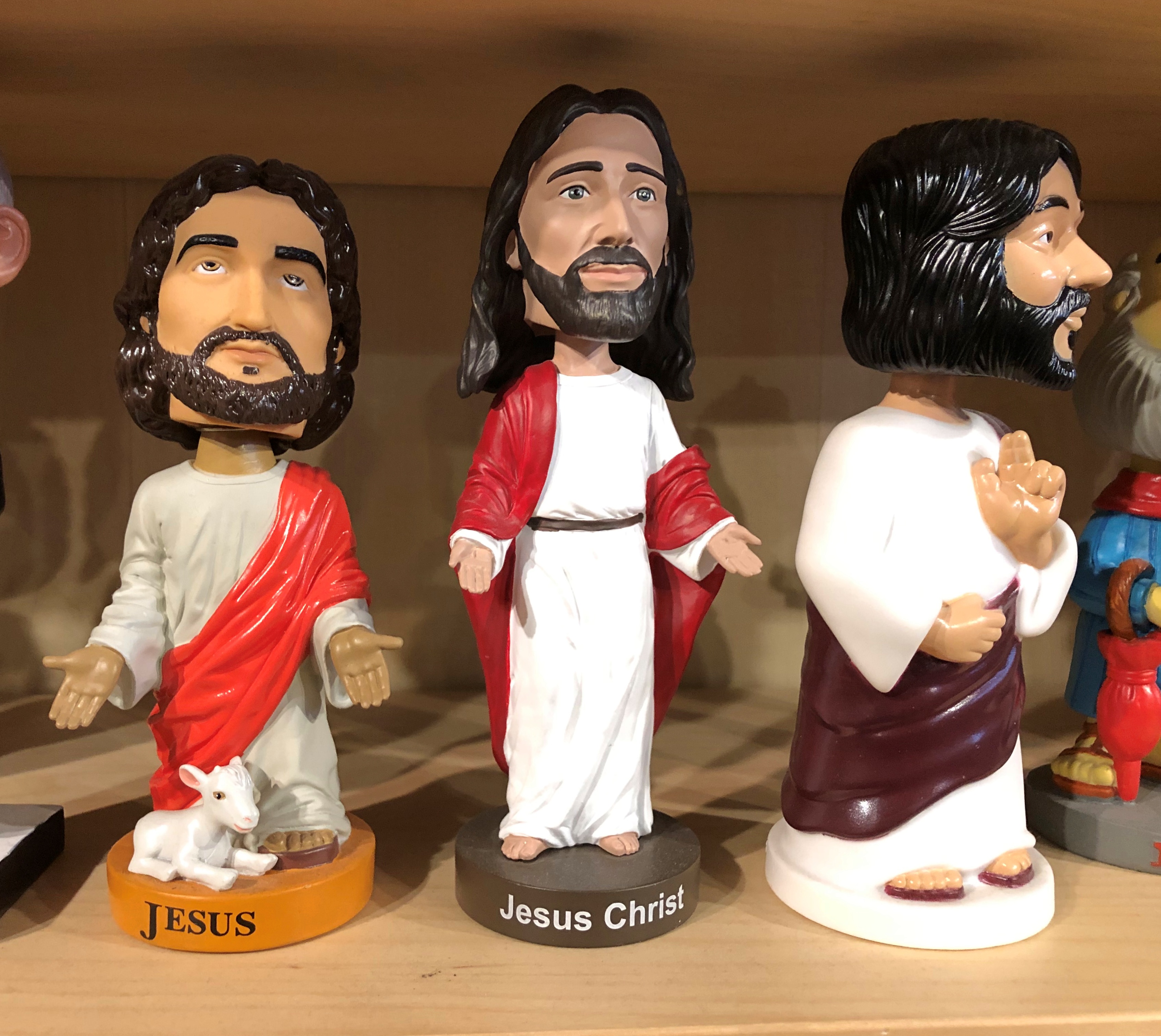
A vision, but no mystic revelations. When I saw the Jesus bobbleheads in Milwaukee on the Friday after Christmas, I thought that a really good lyricist could do a follow up song to “Plastic Jesus,” which would be called “Bobblehead Jesus.” But I am not that person.

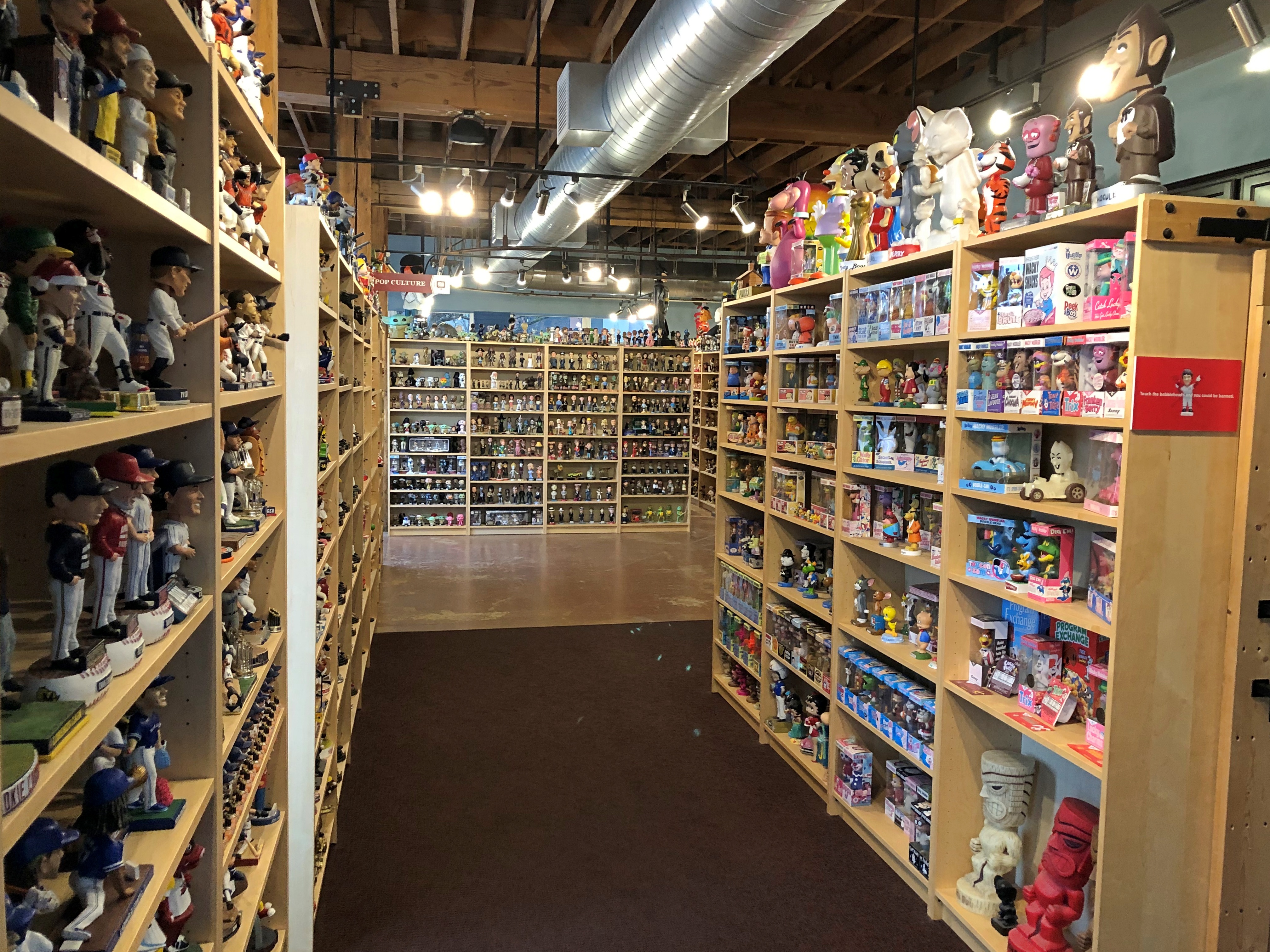
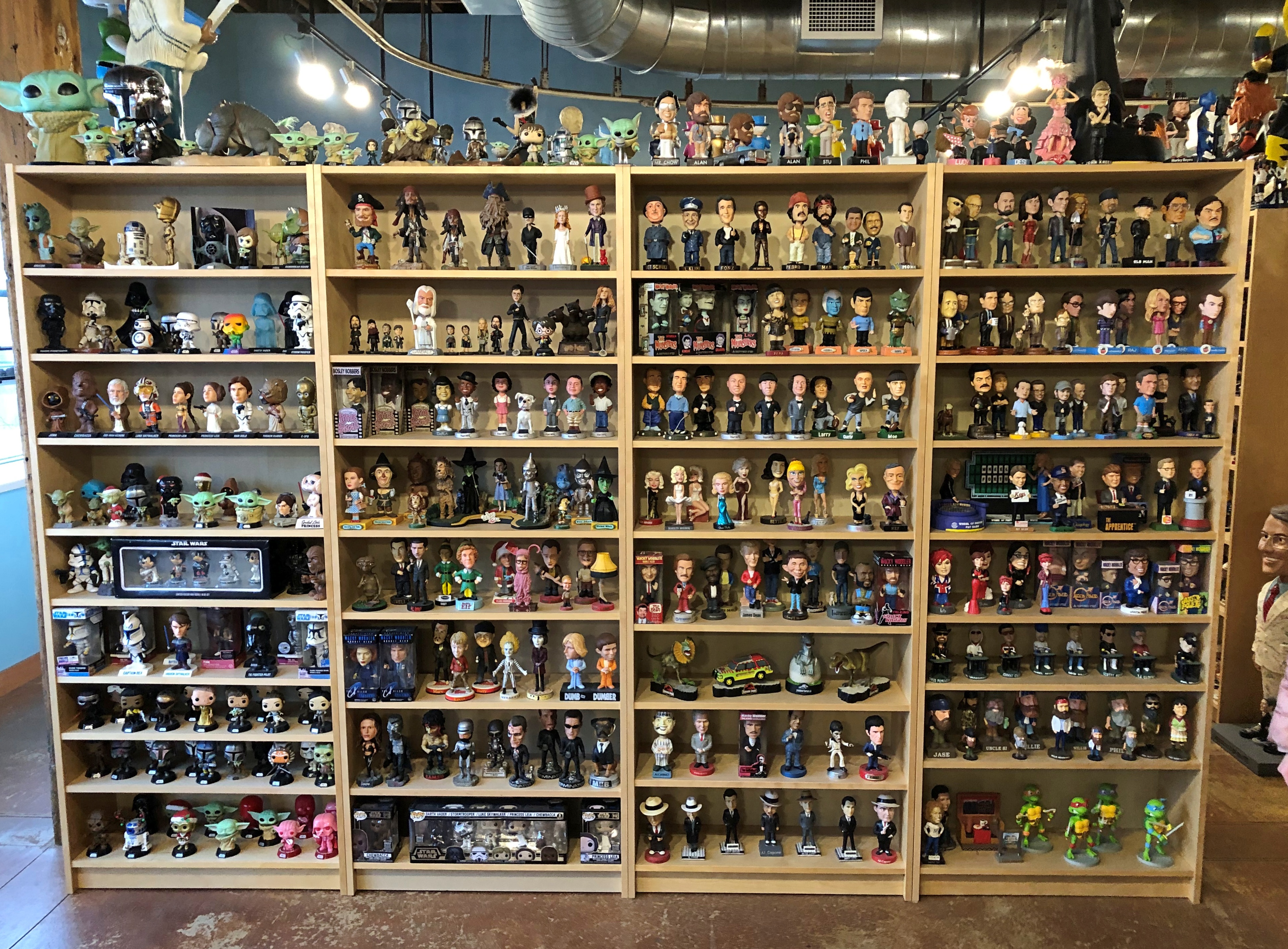
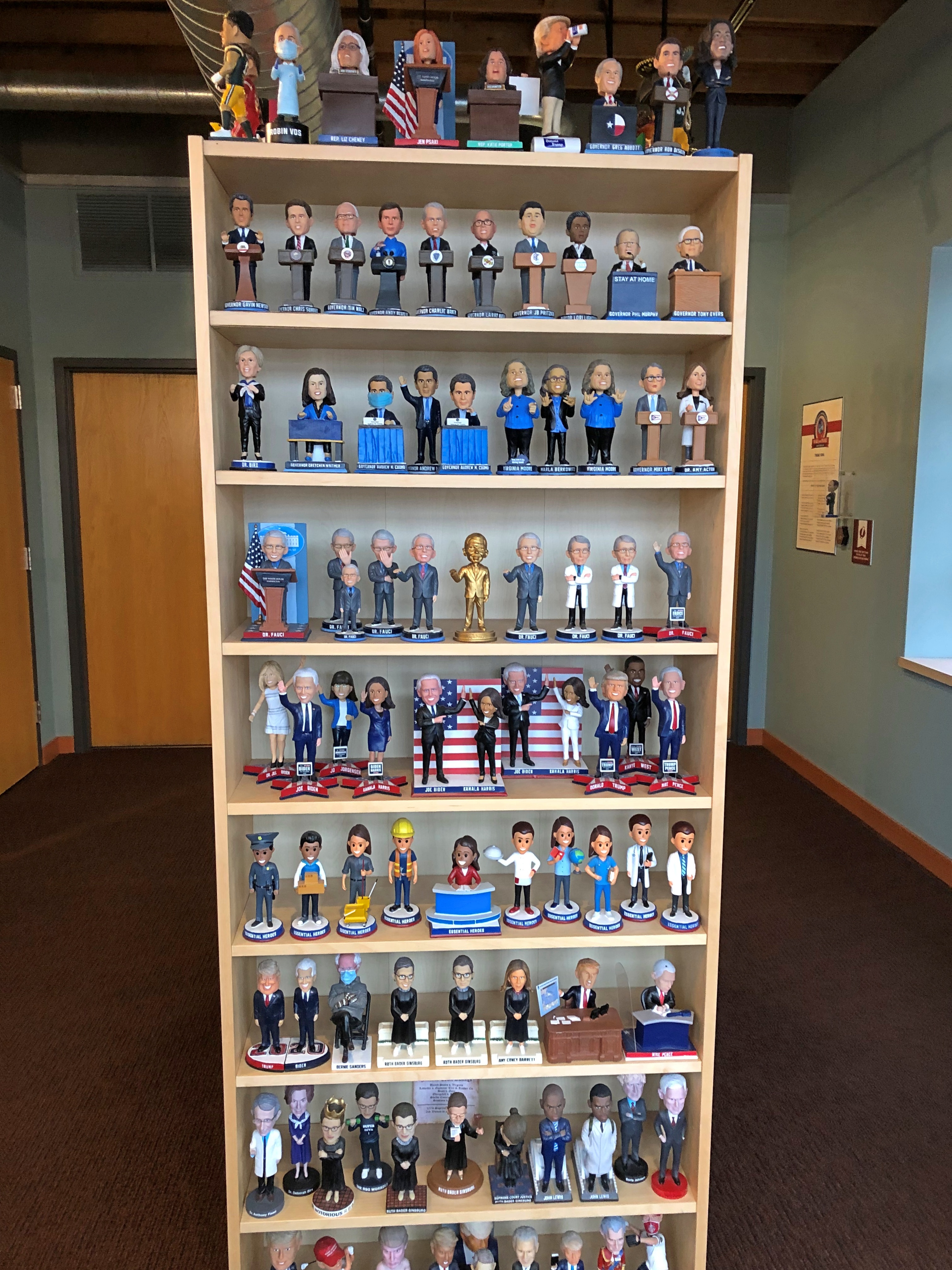
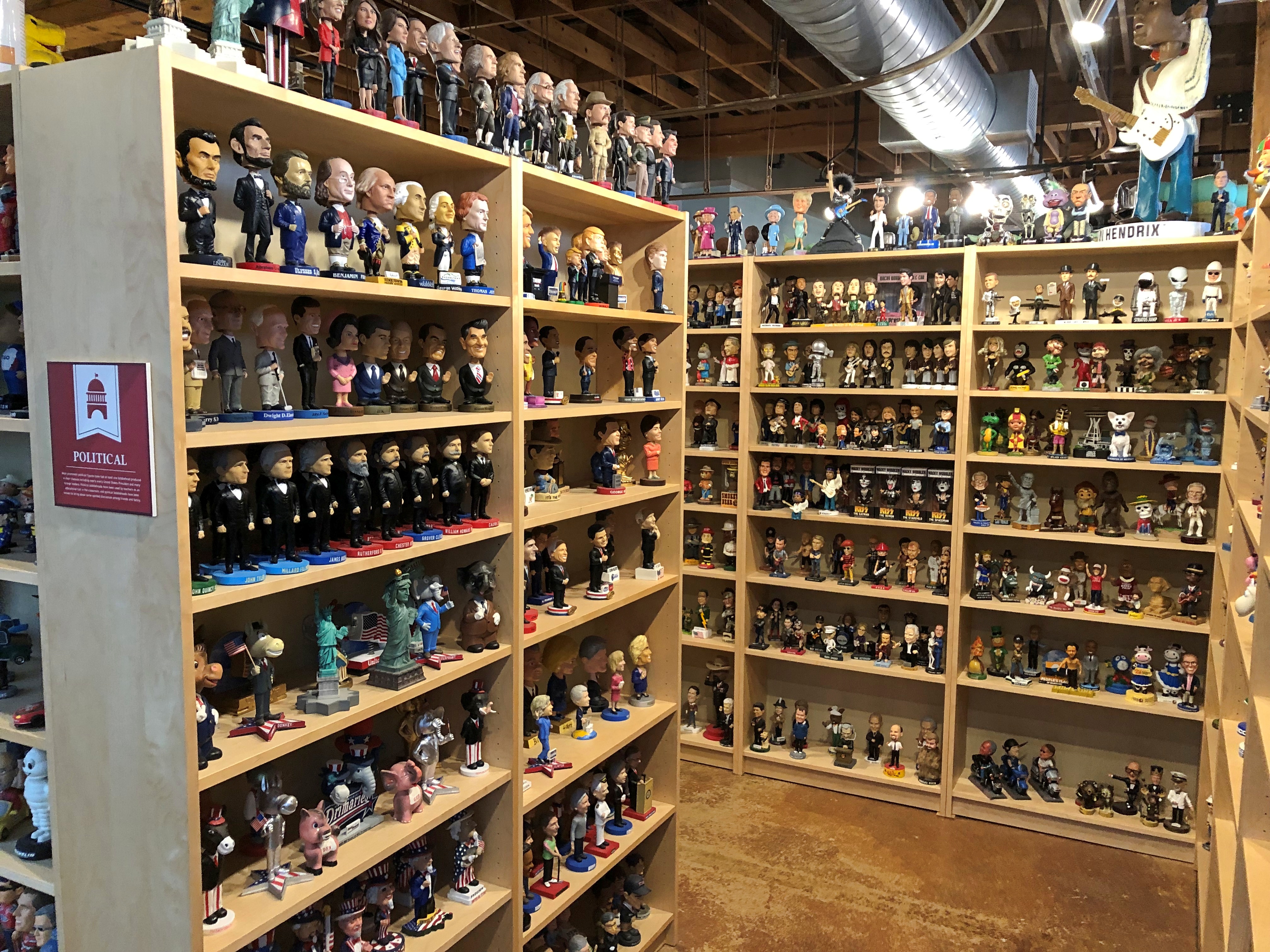
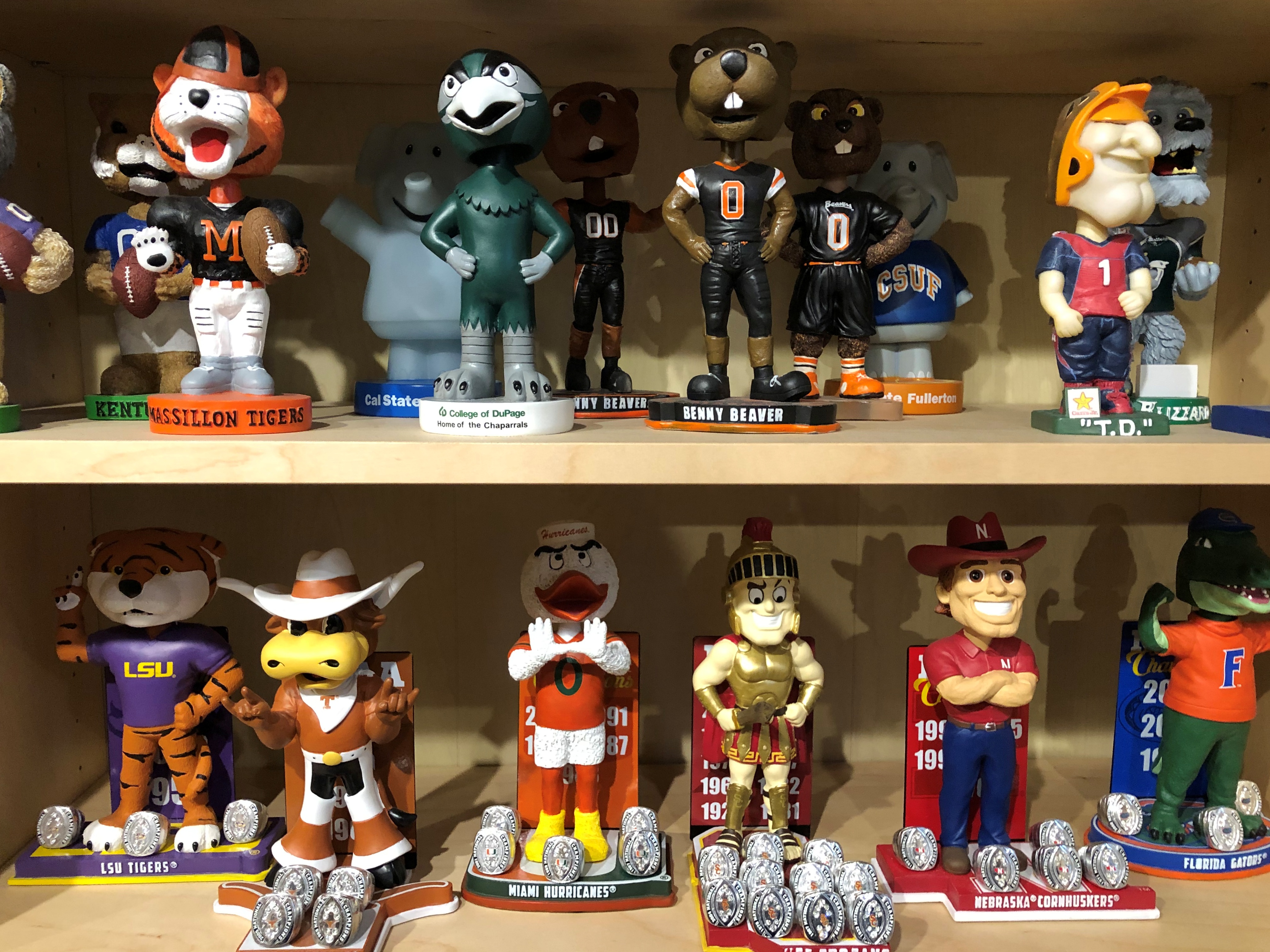
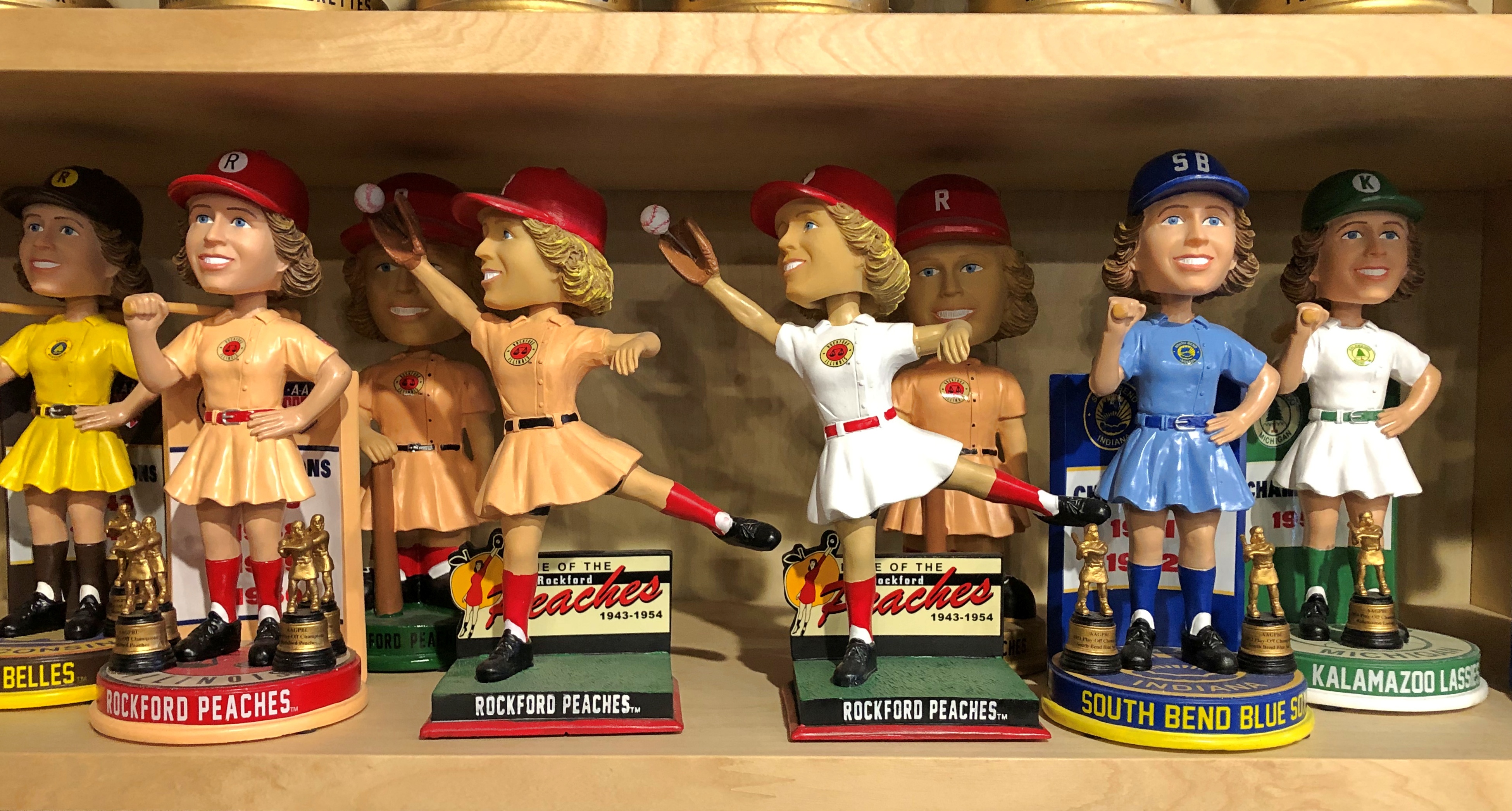
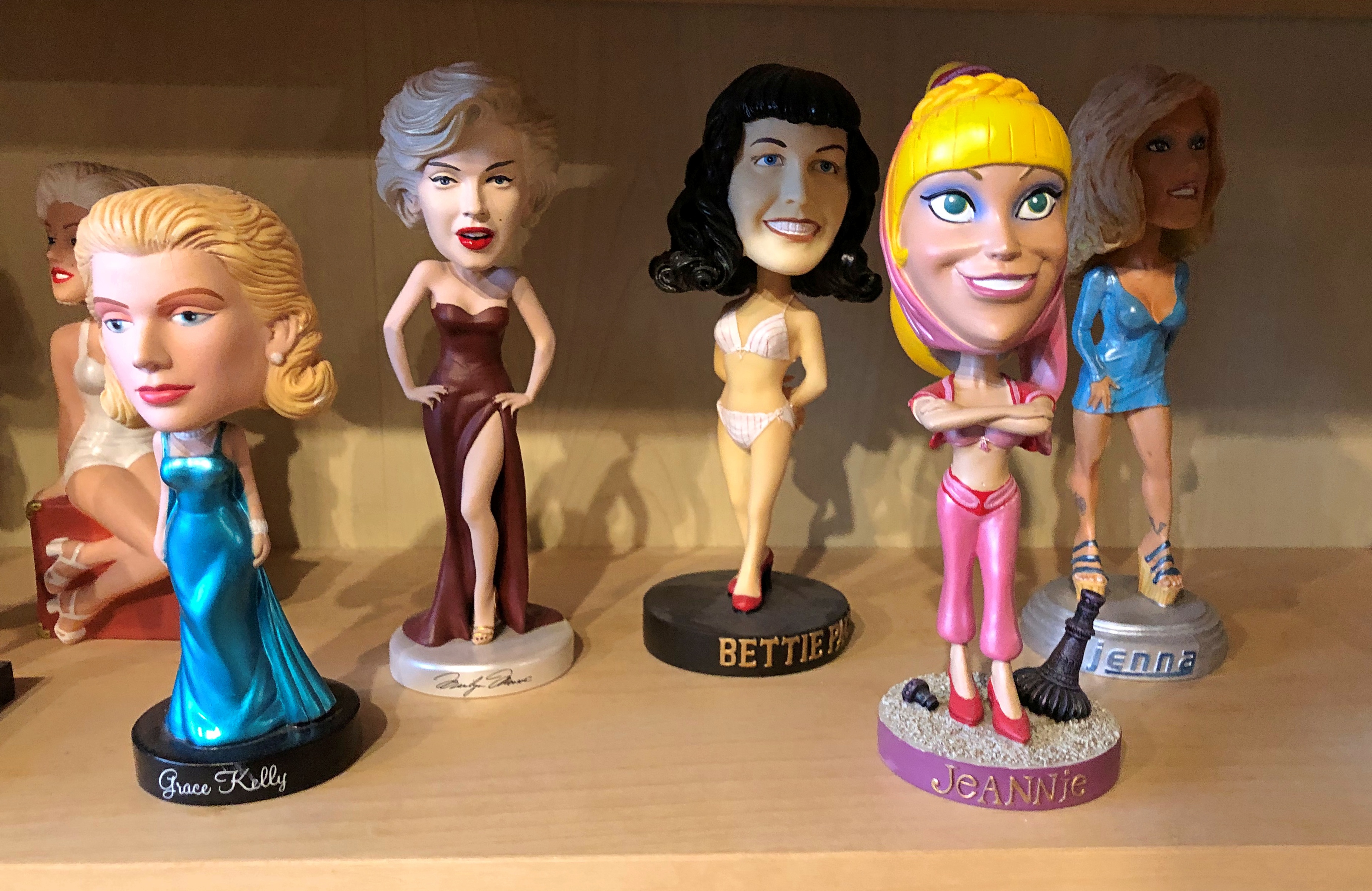
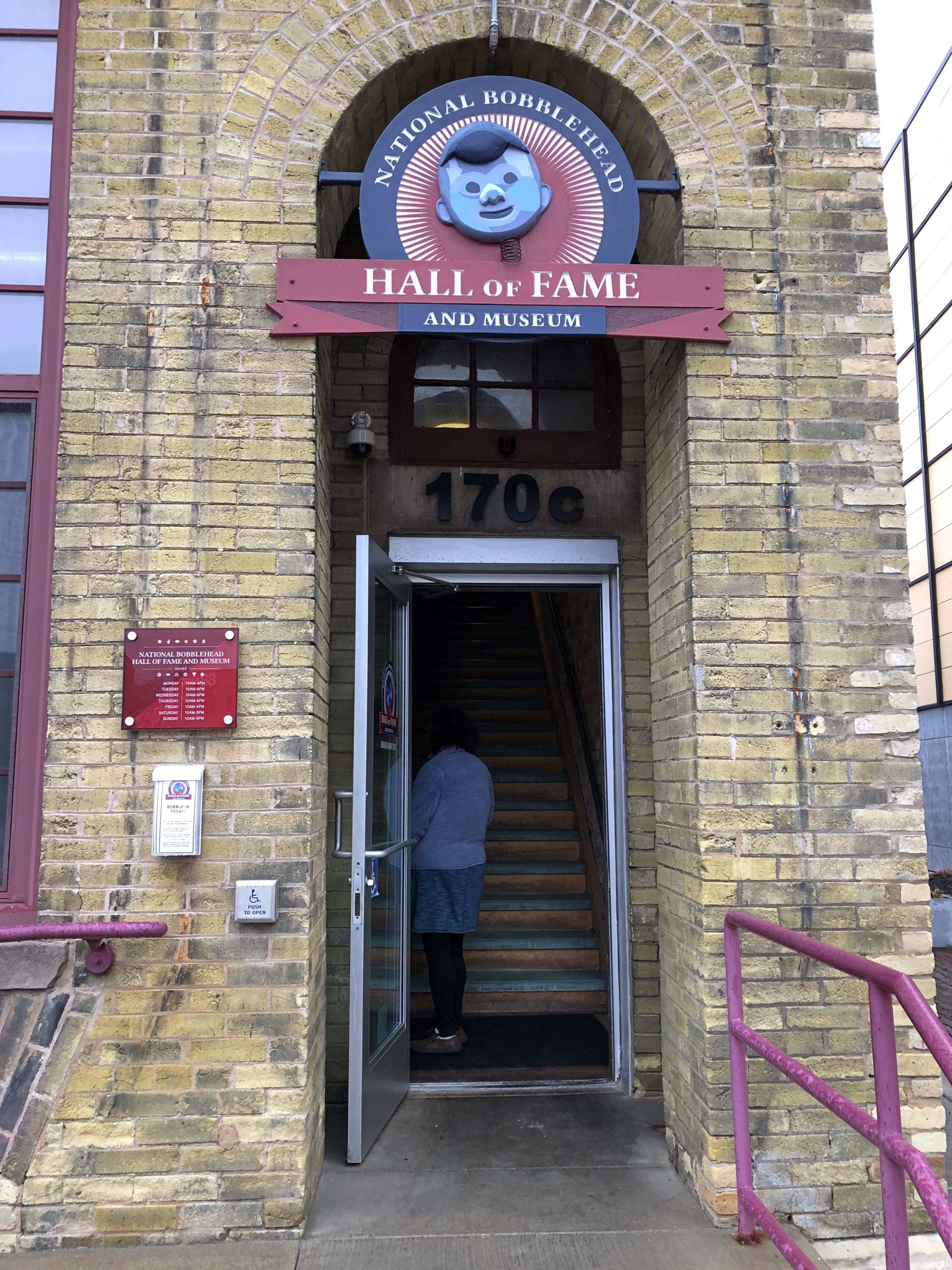
We’d dropped by the National Bobblehead Hall of Fame and Museum, where the bobbleheads crowd shelf after shelf after shelf: some 6,500 on display of the 10,000 figures the museum says it has.National Bobblehead Hall of Fame and Museum National Bobblehead Hall of Fame and Museum National Bobblehead Hall of Fame and Museum National Bobblehead Hall of Fame and Museum

But for Google Maps I might have missed National Bobblehead, which reminded me at once of the American Toby Jug Museum in Evanston. Still, there are some differences. Most of the tobies are behind glass, but not the bobbleheads, and most of the bobbleheads are sports figures, while the tobies have a wider variety of figures.

Like that other museum, National Bobblehead started with a single collection that morphed into something bigger – in this case, a bobblehead business for the two founders, Milwaukeeans Phil Sklar and Brad Novak. It isn’t enough that they collect them, though they still do, but they make them and sell them as well.

The museum asserts that Chinese nodding dolls had a vogue in Europe in the late 18th century, and that afterward various bobbly figures were made worldwide, with references to Germany and Russia and other places. These days sports figures dominate. Maybe three-quarters of the bobbleheads on display are sports figures, including both players and mascots.National Bobblehead Hall of Fame and Museum National Bobblehead Hall of Fame and Museum
National Bobblehead Hall of Fame and Museum

Their popularity in the sports world has been growing since their introduction in the early 1960s in baseball. The first player-specific bobbleheads formed quite a lineup: Roberto Clemente, Mickey Mantle, Roger Maris and Willie Mays.

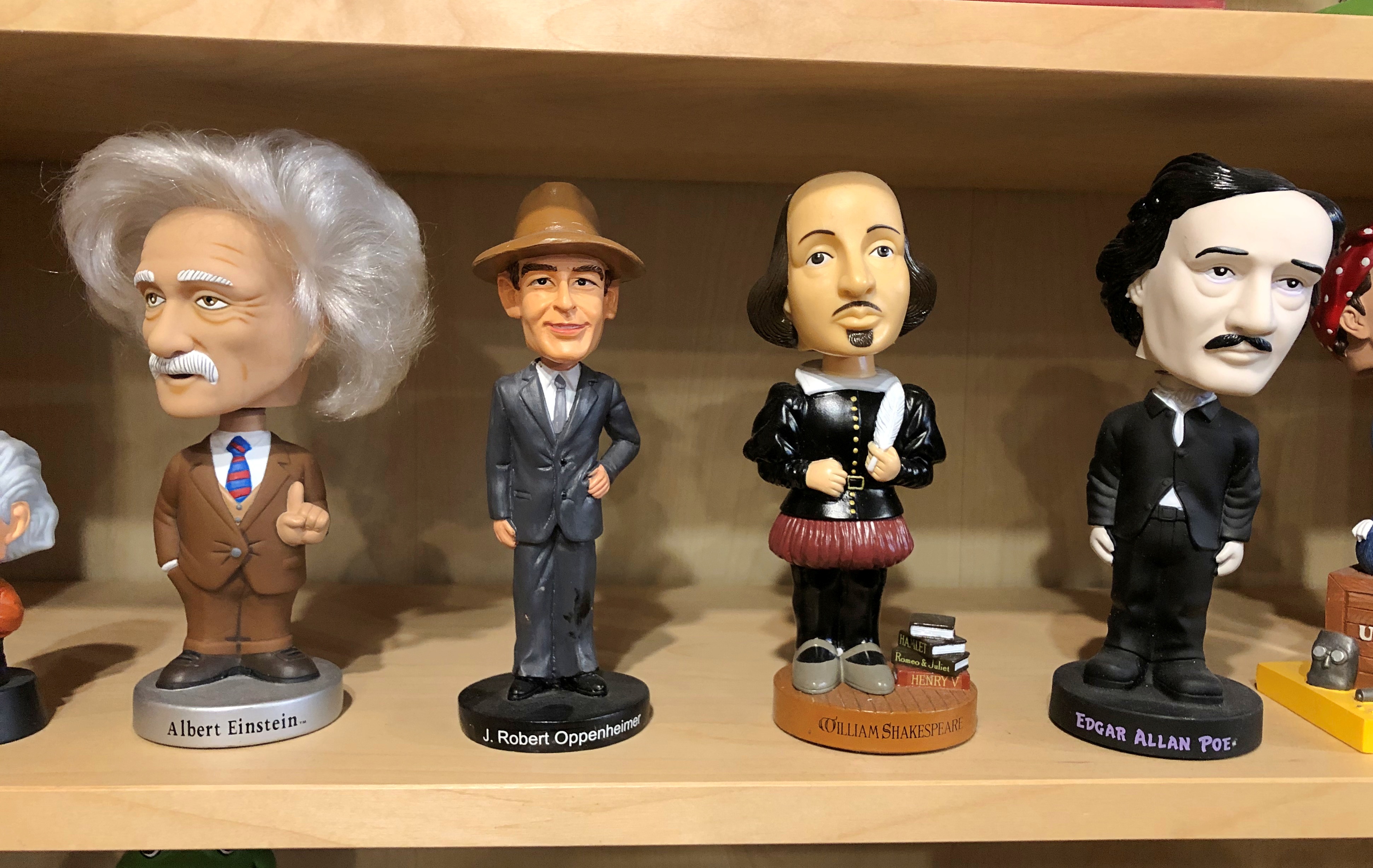
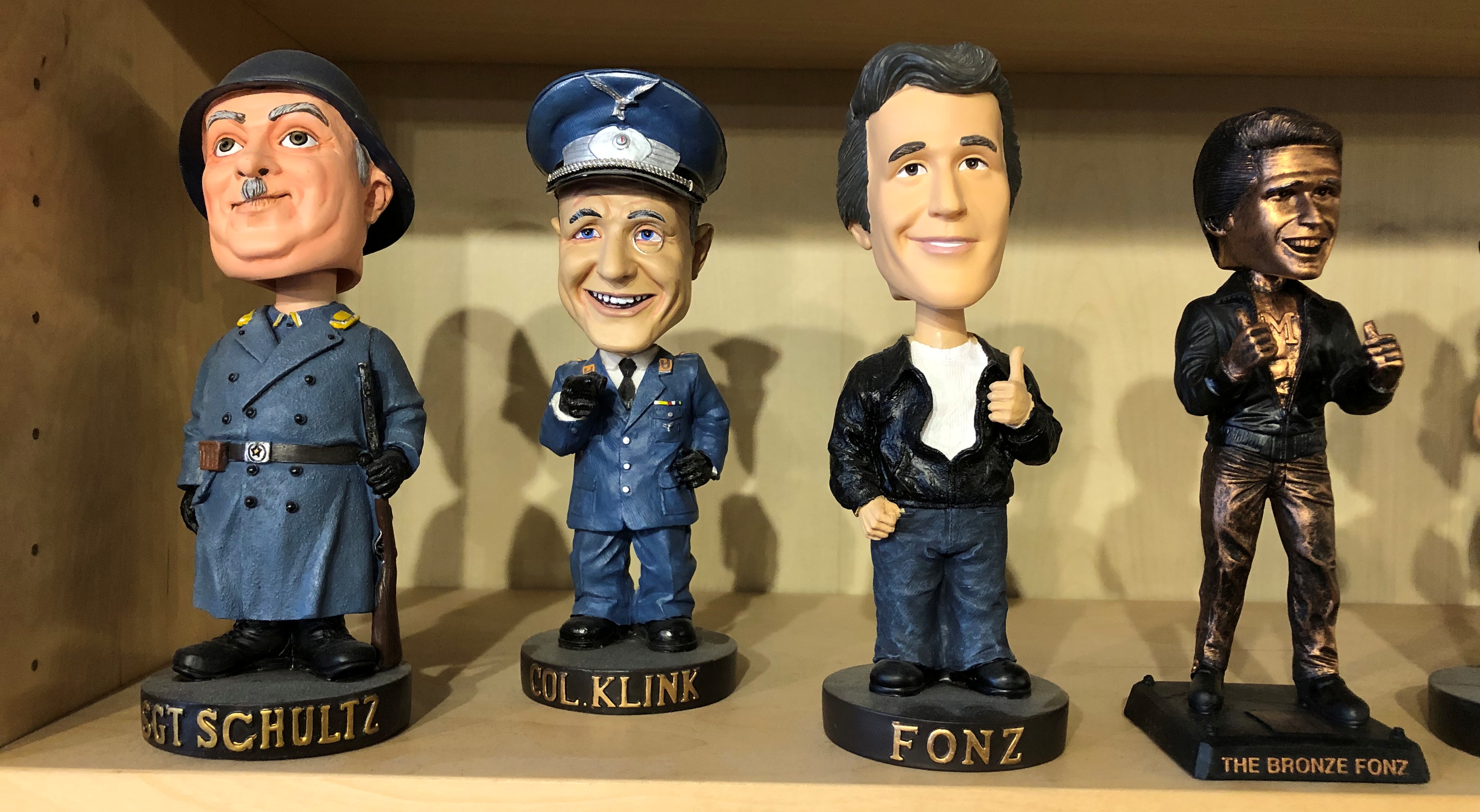
Most of the others are entertainers and political or historic figures, as you’d expect.National Bobblehead Hall of Fame and Museum National Bobblehead Hall of Fame and Museum

More of him than I’d expect.National Bobblehead Hall of Fame and Museum

Can you really be a famous entertainer if you don’t have a bobblehead? National Bobblehead Hall of Fame and Museum National Bobblehead Hall of Fame and Museum National Bobblehead Hall of Fame and Museum

Near the gift shop – which sells bobbleheads, naturally – is a more than complete collection of U.S. presidents, in order, back-to-front, left-to-right, Washington to Biden.National Bobblehead Hall of Fame and Museum

More than complete because FDR is represented twice, once standing (with a cane) and the other in a wheelchair. Grover Cleveland is represented only once, however. Curiously, beginning with Herbert Hoover, all of the figures have their hands raised, as one does to a crowd. Before him, only TR does so, and he’s holding a top hat.

One more note: the museum occupies part of the second floor of one of the redeveloped Kramer International Foundry buildings in the Walker’s Point neighborhood of Milwaukee. That early 2000s project was an early one in the transformation of the neighborhood from industrial to retail and residential.

Milwaukee continues to surprise.

Mitchell Park Domes ’24

Since we went to Indiana just before Christmas, it only seemed logical (to me) to go to Wisconsin just after Christmas. Due to considerations I don’t need to detail, we chose to make it a day trip. Milwaukee is convenient that way.

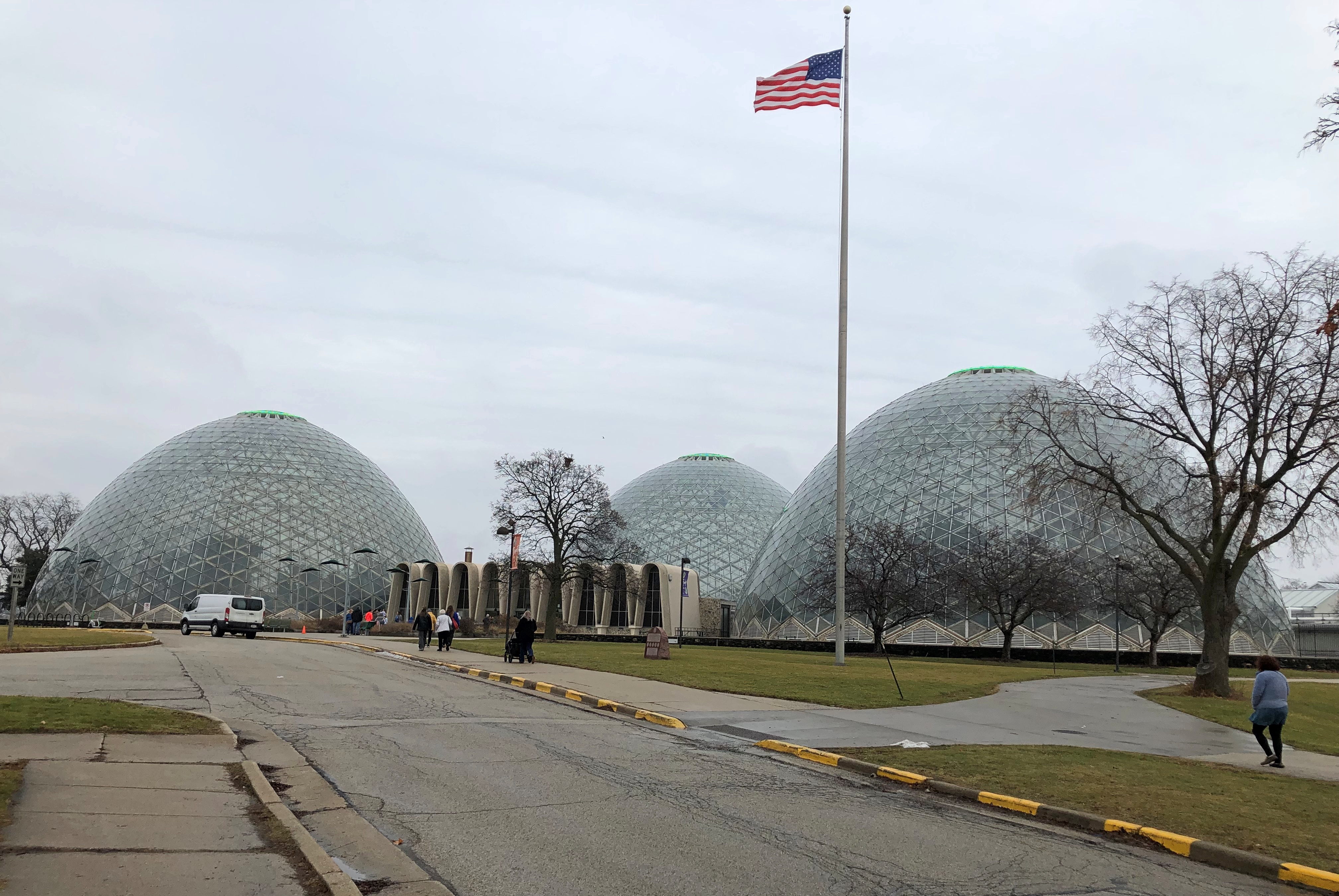
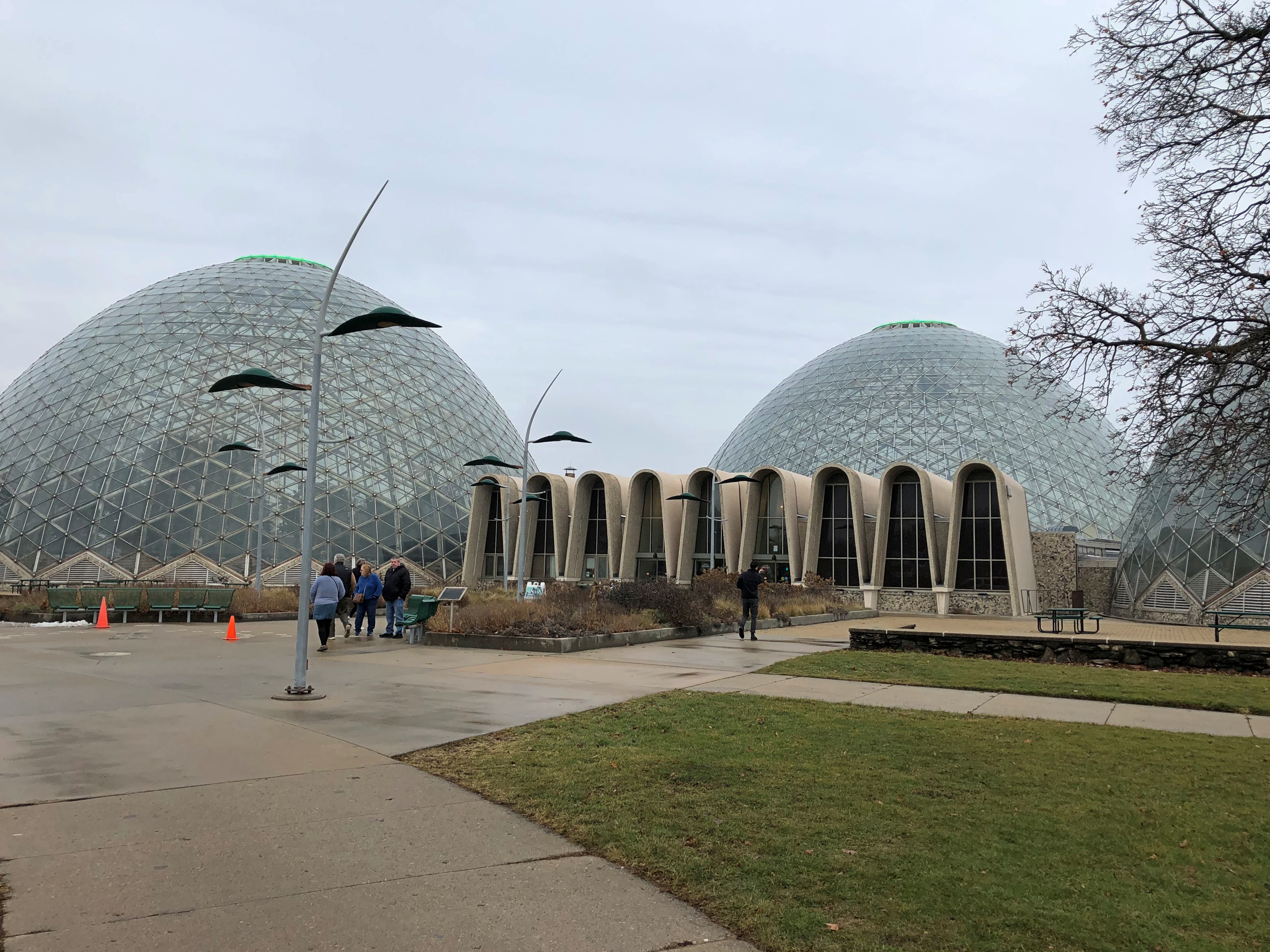
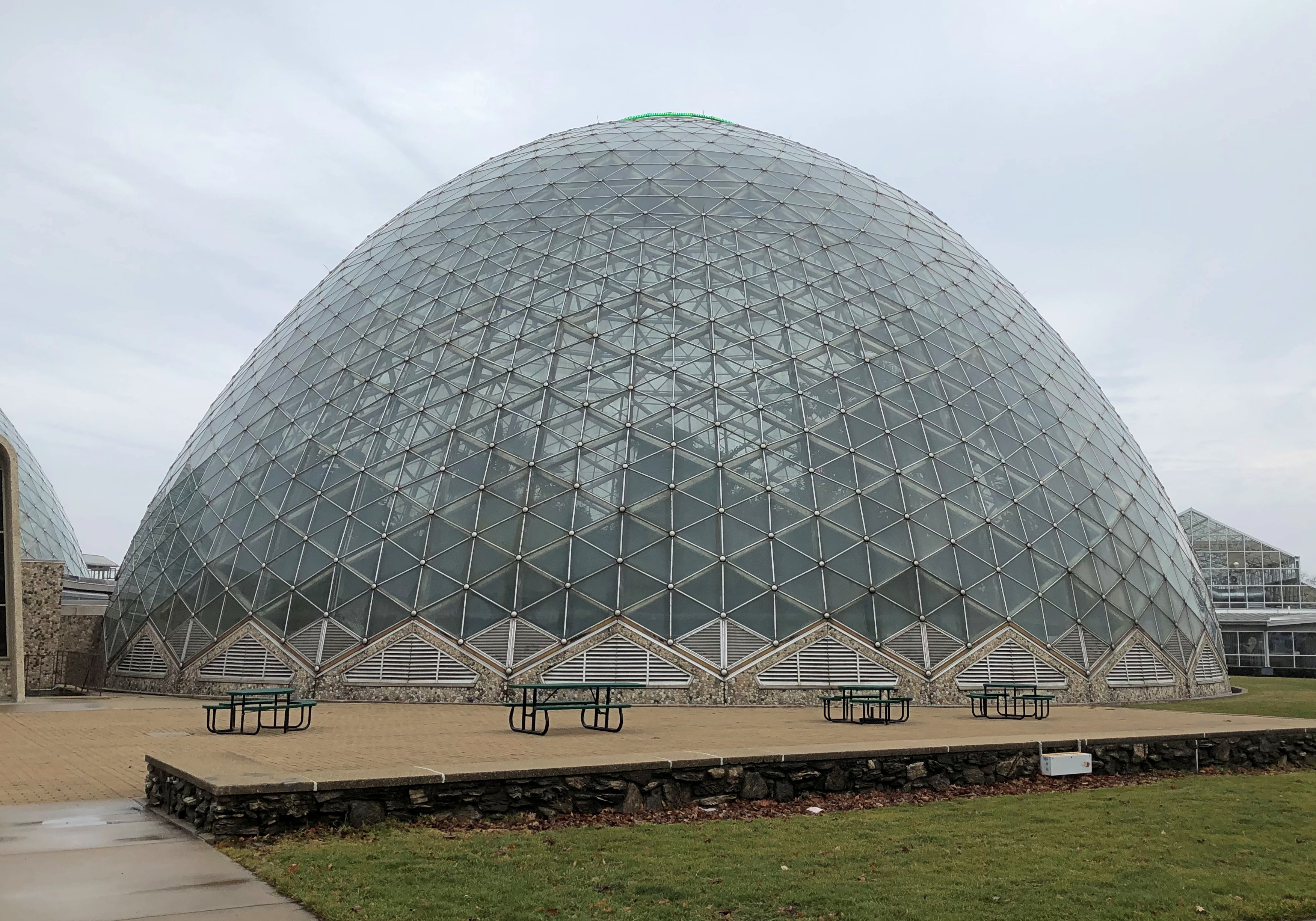
We arrived at the Mitchell Park Domes late in the misty drizzly but not freezing morning of December 27. Not our first visit, but the last time was quite a while ago.Mitchell Park Domes Mitchell Park Domes Mitchell Park Domes

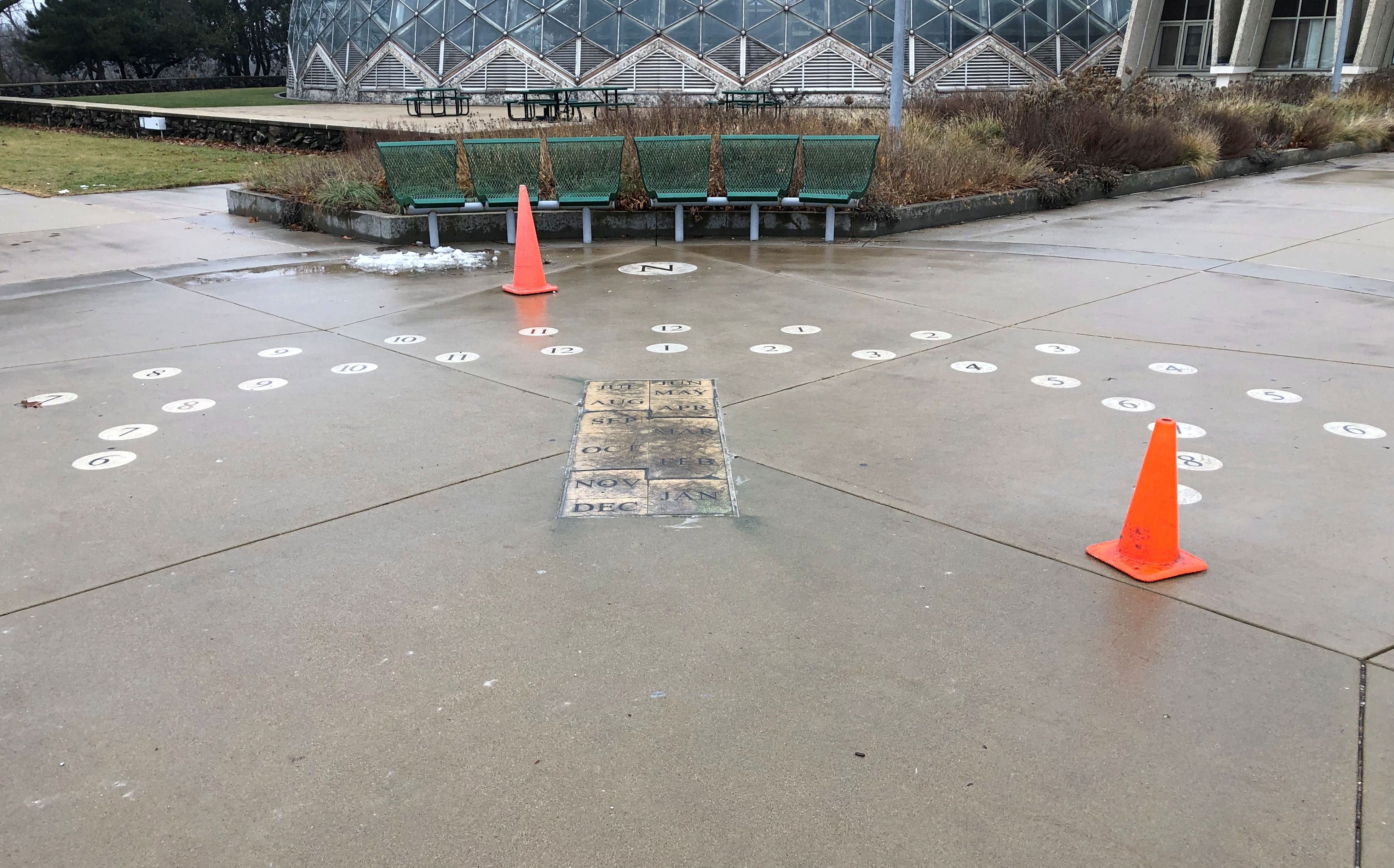
Didn’t remember this detail: An analemmatic sundial in the sidewalk near the entrance, the likes of which you don’t see often. But no sun.Mitchell Park Domes

Formally, the place is known as the Mitchell Park Horticultural Conservatory and, since the last time we were there, the fate of the Domes was the subject of a number of recommendations and other proposals. One proposal was to knock ’em down and replace them with something still undesigned, but which I suspect which would be more along the lines of immersive edu-tainment. Again, just a suspicion, but that would fit a pattern: destroy something distinctive to a particular place (in this case, Milwaukee) and put up something that could be anywhere, in the name of an enhanced guest experience that is interactive as a modest pinball arcade.

A few months ago, the county committed to spending some money on the Domes, including “a $30 million commitment from Milwaukee County once funding milestones are achieved,” according to Friends of the Domes, which unfortunately sounds like “when the county figures out how to get the money, this could take a while.” But at least the magnificent triad of domes isn’t going to be destroyed in a plan to merge it with the county’s Milwaukee Public Museum.

“Based on our review of the information we believe there could be a great guest experience which integrates the content and stories from Milwaukee Public Museum with the content and experience of the current Domes and Conservatory,”  a 2019 report by an outfit called Gallagher Museum Services notes. “Specifically, the natural history portion of the MPM storyline fits very nicely with the Domes experiences. From our analysis, GMS has concluded that the Milwaukee Domes should be demolished. The cost of properly renovating the Domes greatly outweighs the benefit of doing so…”

A far as I can tell as a non-Milwaukeean, the reaction to that was, “Outweighs the benefits? Says who?” Anecdotal evidence supports the preservationists. On the Friday after Christmas this year, when people have more time to go out, they were out in force at the Domes. Not obscenely crowded, but pretty busy. All ages. Many were families with small children. Children who will, if allowed, take their own children one day.Mitchell Park Domes Mitchell Park Domes
The GMS report makes it sound like the Domes themselves aren’t really part of the “Domes experience,” which really just involves an elaborate garden, as opposed to an elaborate garden in a distinctive, placemaking setting. The experience, the report seems to assert, is portable: take it out from under the Domes and you’d still have the “Domes experience” somehow in a spiffy new building.

People like the Domes. They already want to go there. The Domes are not the Milwaukee Public Museum, which is a fine institution in its own right, however one might shoehorn the “Domes experience” into a part of that museum that happens to be about nature. The “Domes experience” is only found at the domes, and the people of Milwaukee know that.

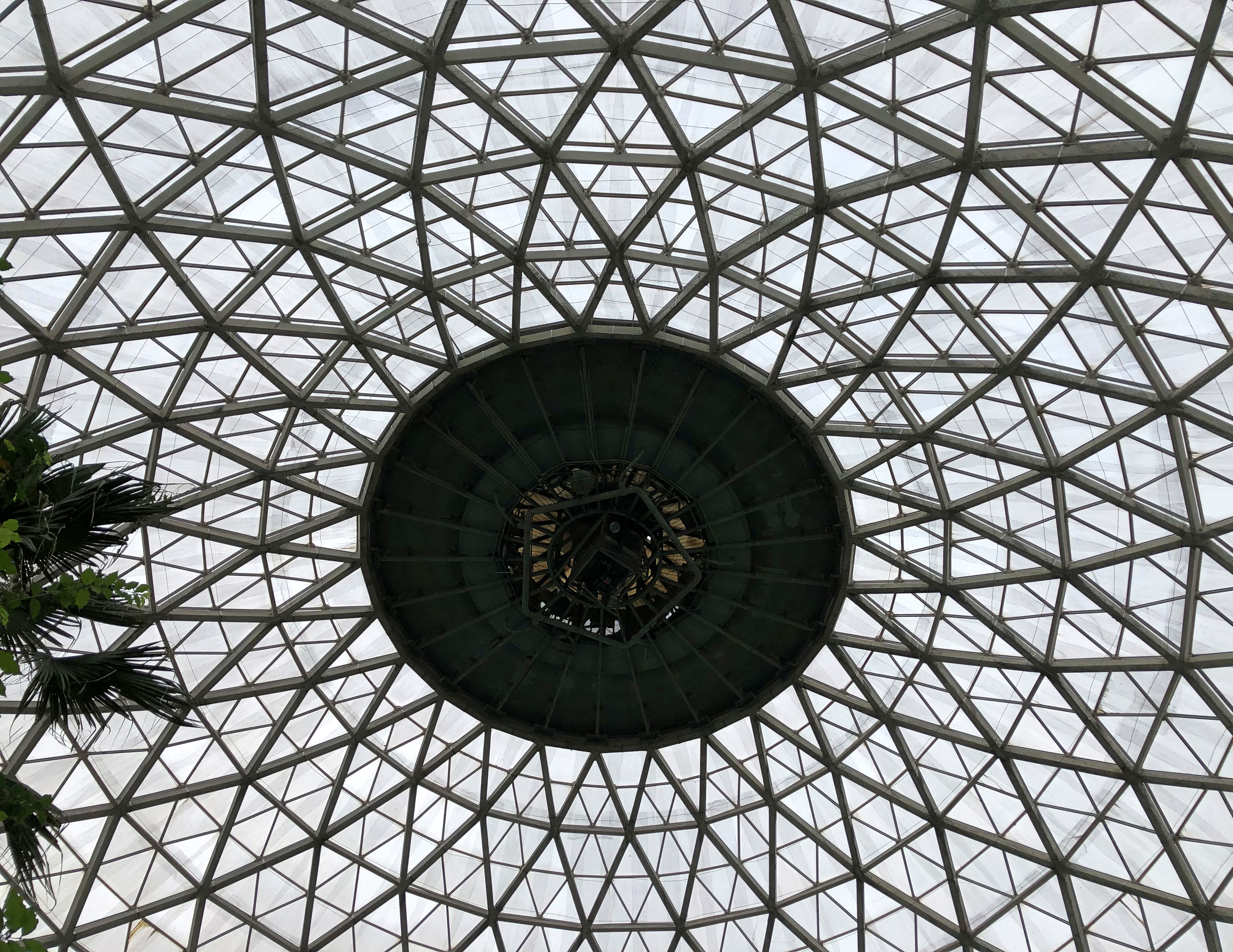
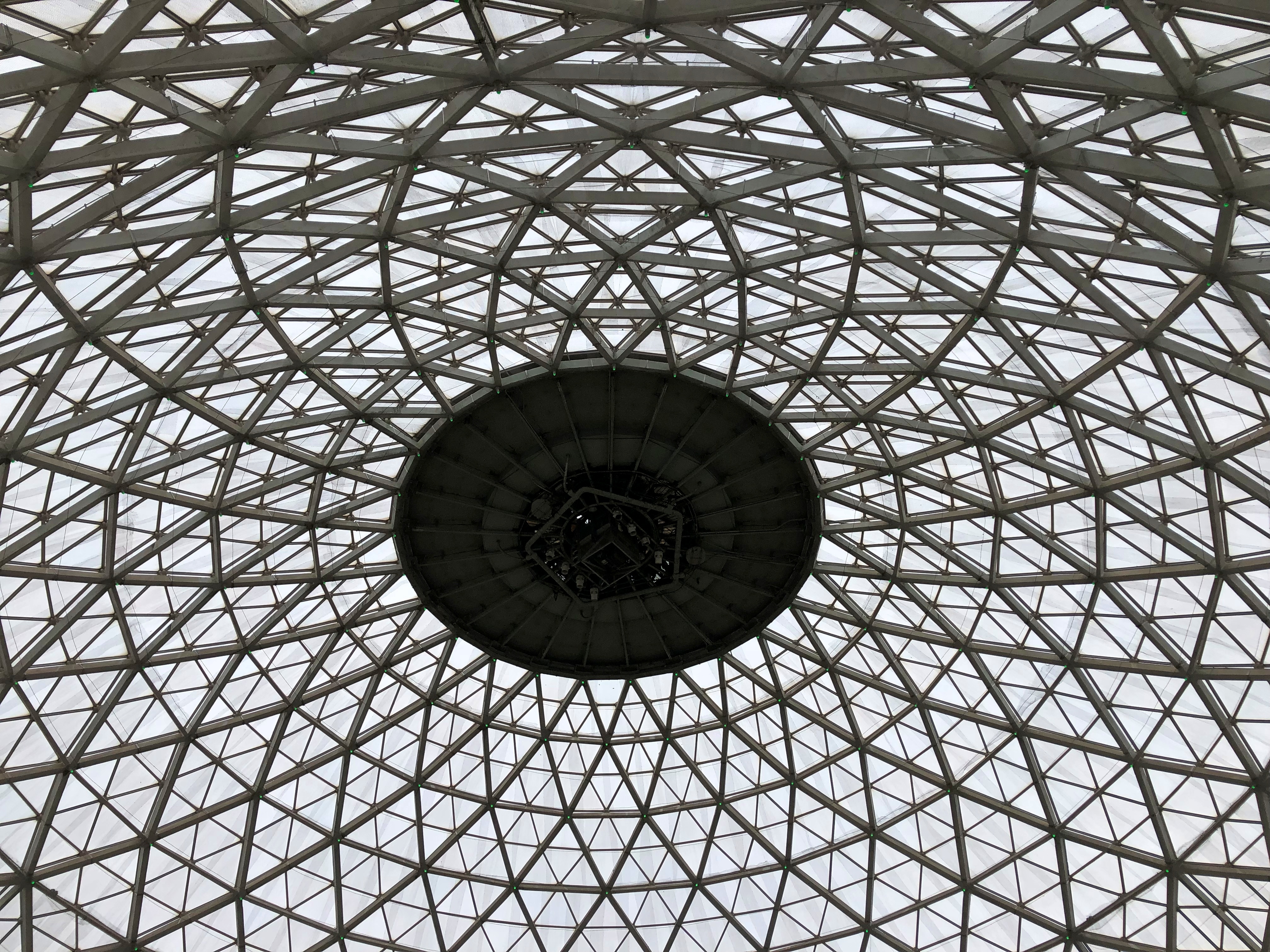
I believe that too. Just for the vaulting glass overhead, if nothing else.Mitchell Park Domes Mitchell Park Domes

The Domes hold their crowds pretty well, too. We were able to circulate comfortably and without any sort of jostling.

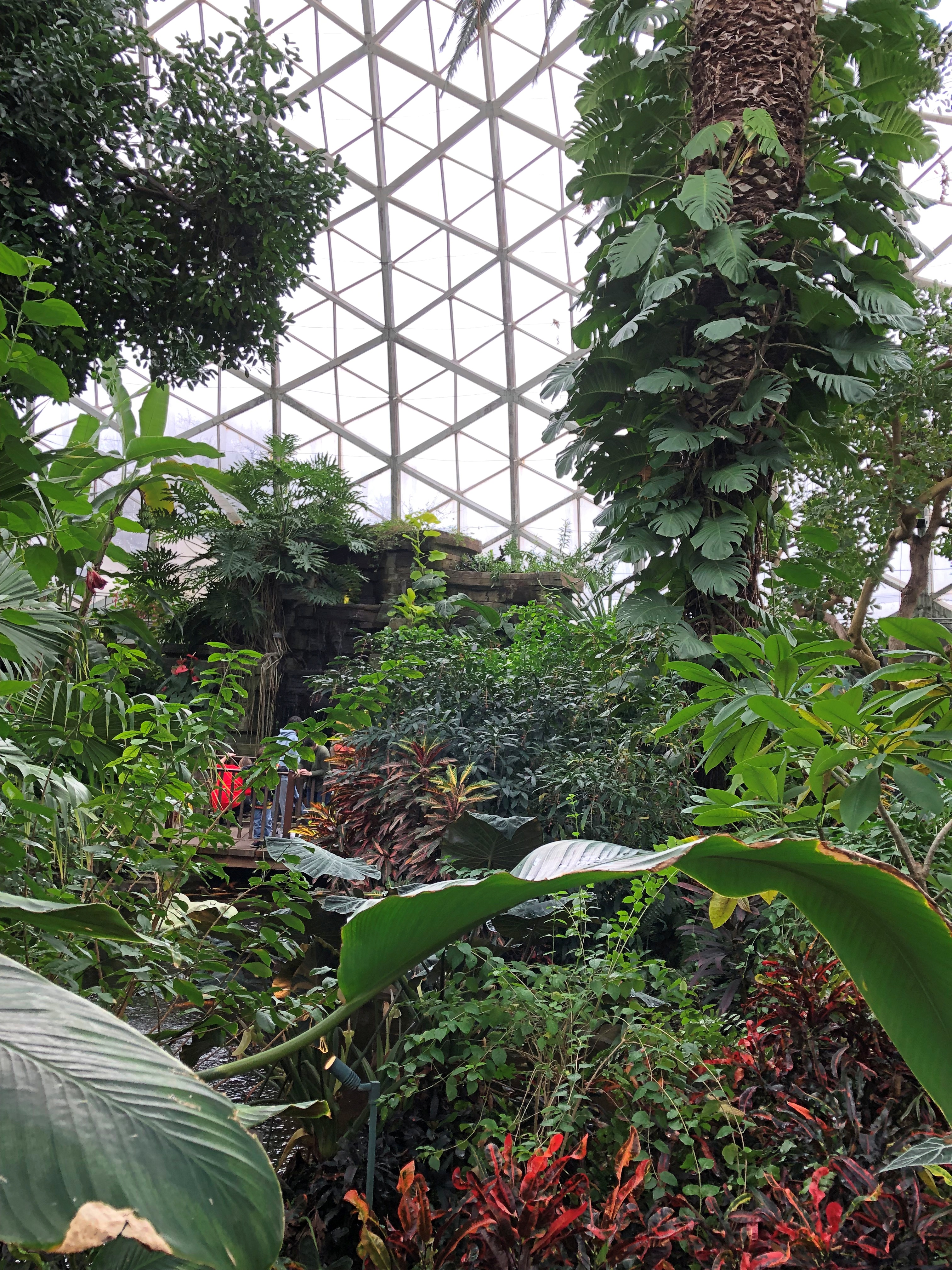
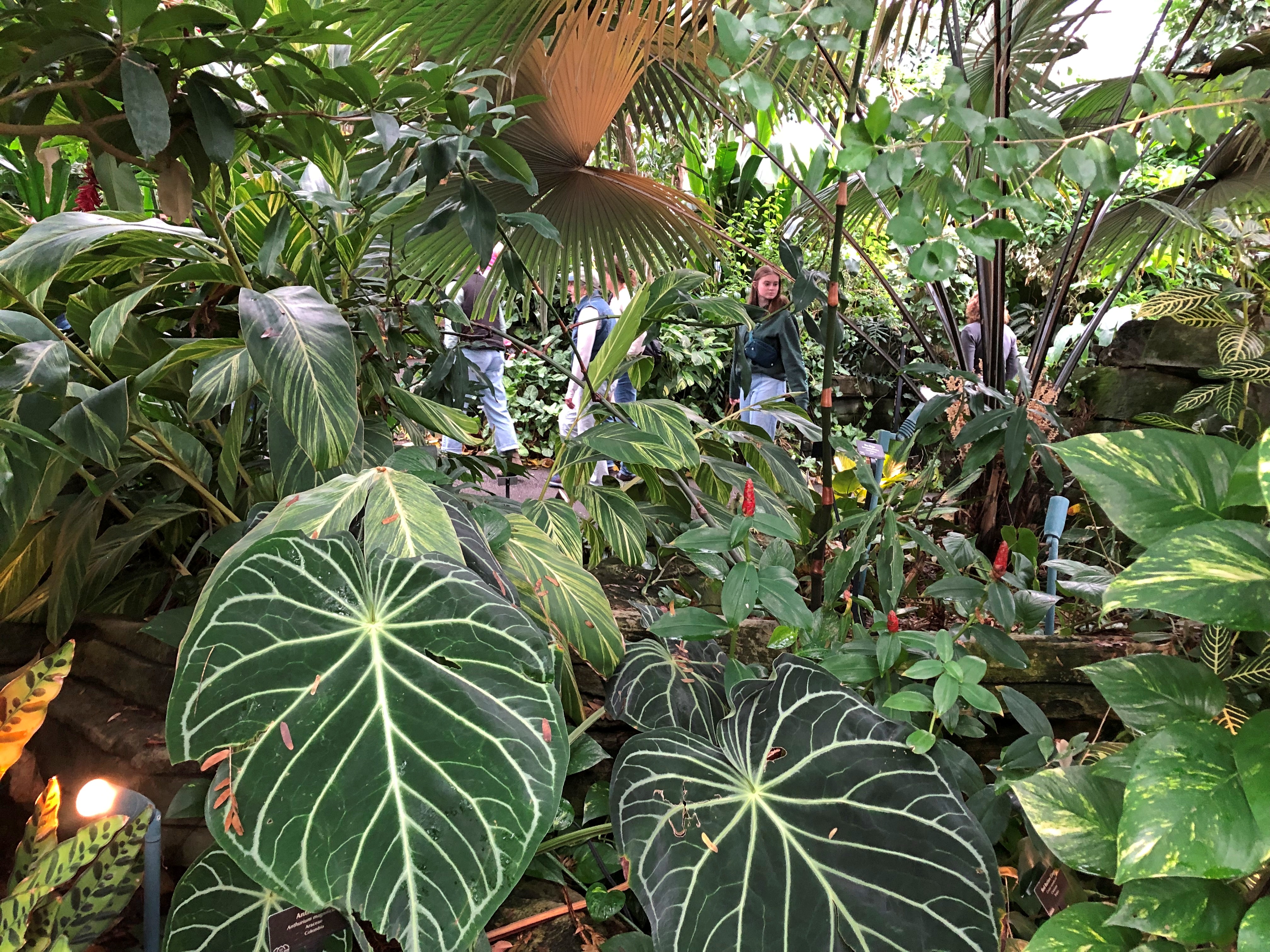
The tropical dome.Mitchell Park Domes Mitchell Park Domes Mitchell Park Domes Mitchell Park Domes

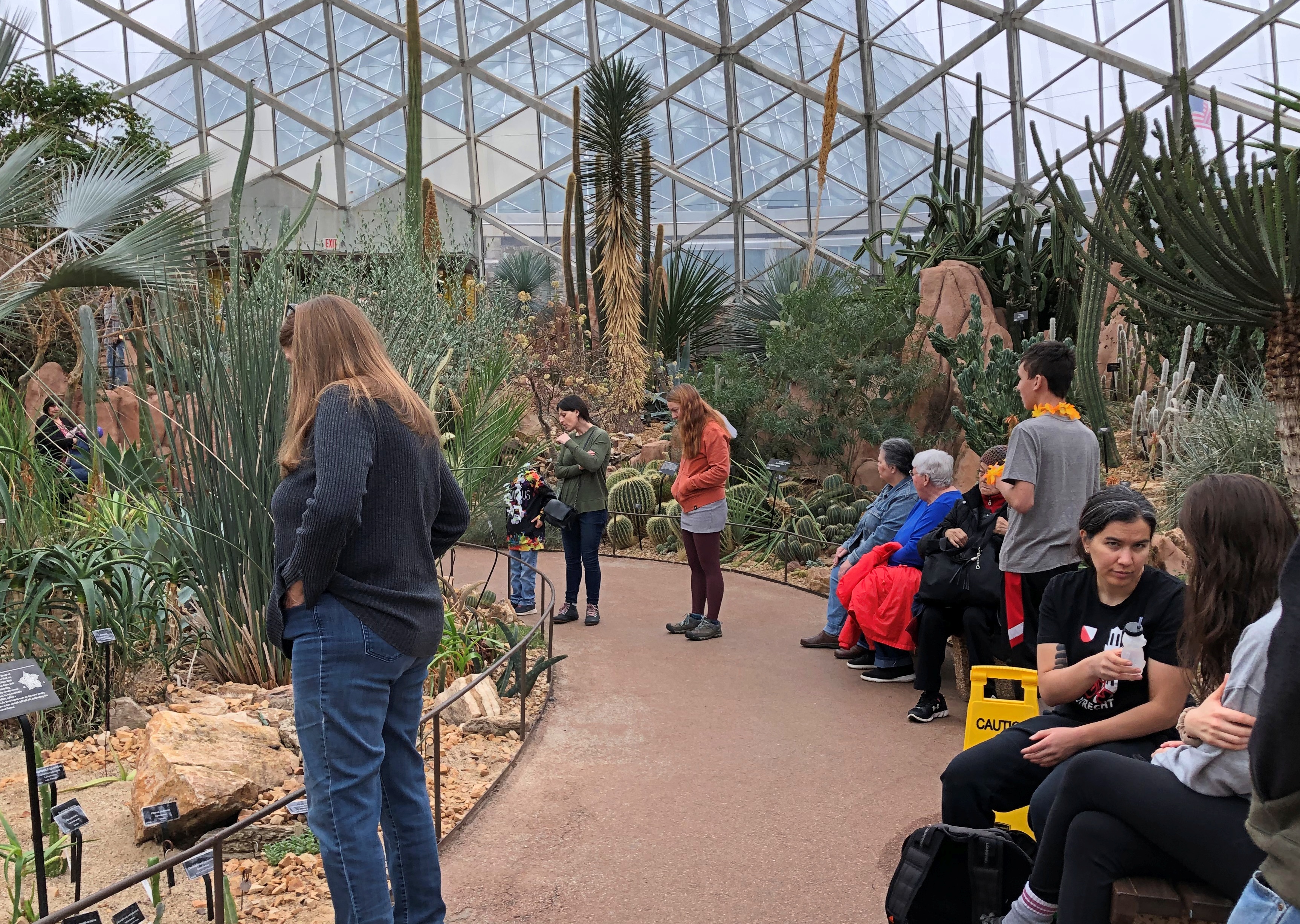
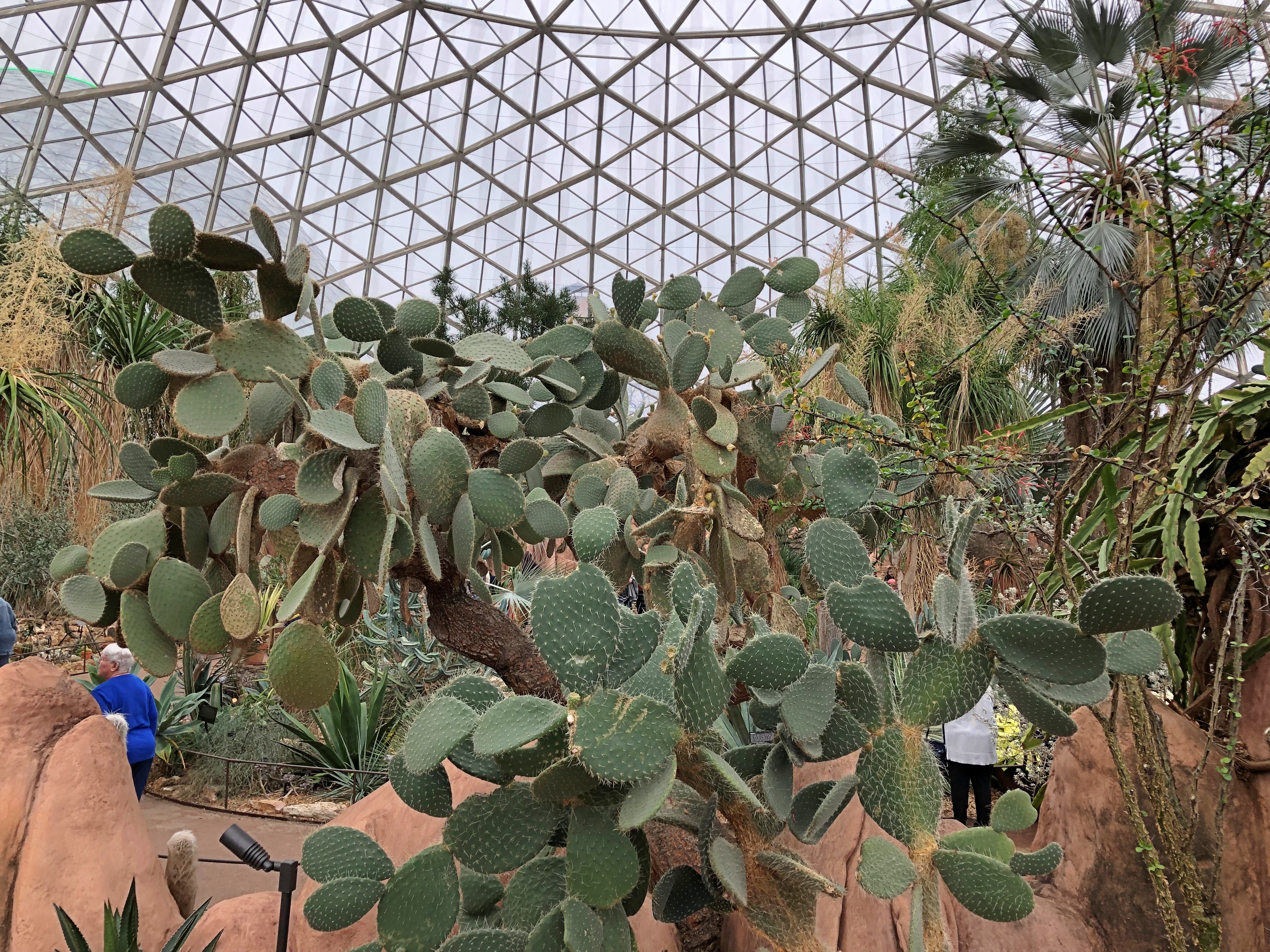
The arid dome.Mitchell Park Domes Mitchell Park Domes Mitchell Park Domes

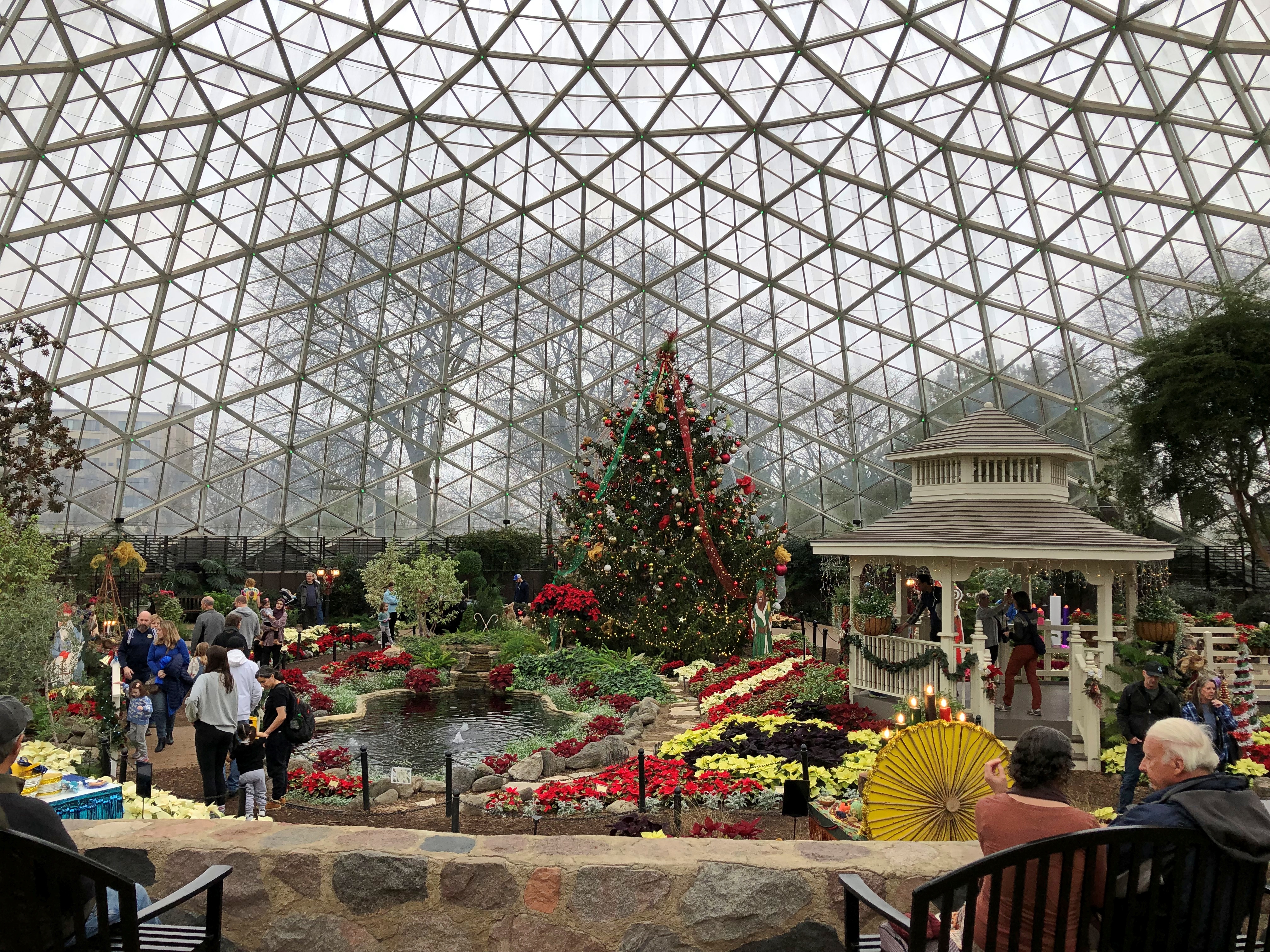
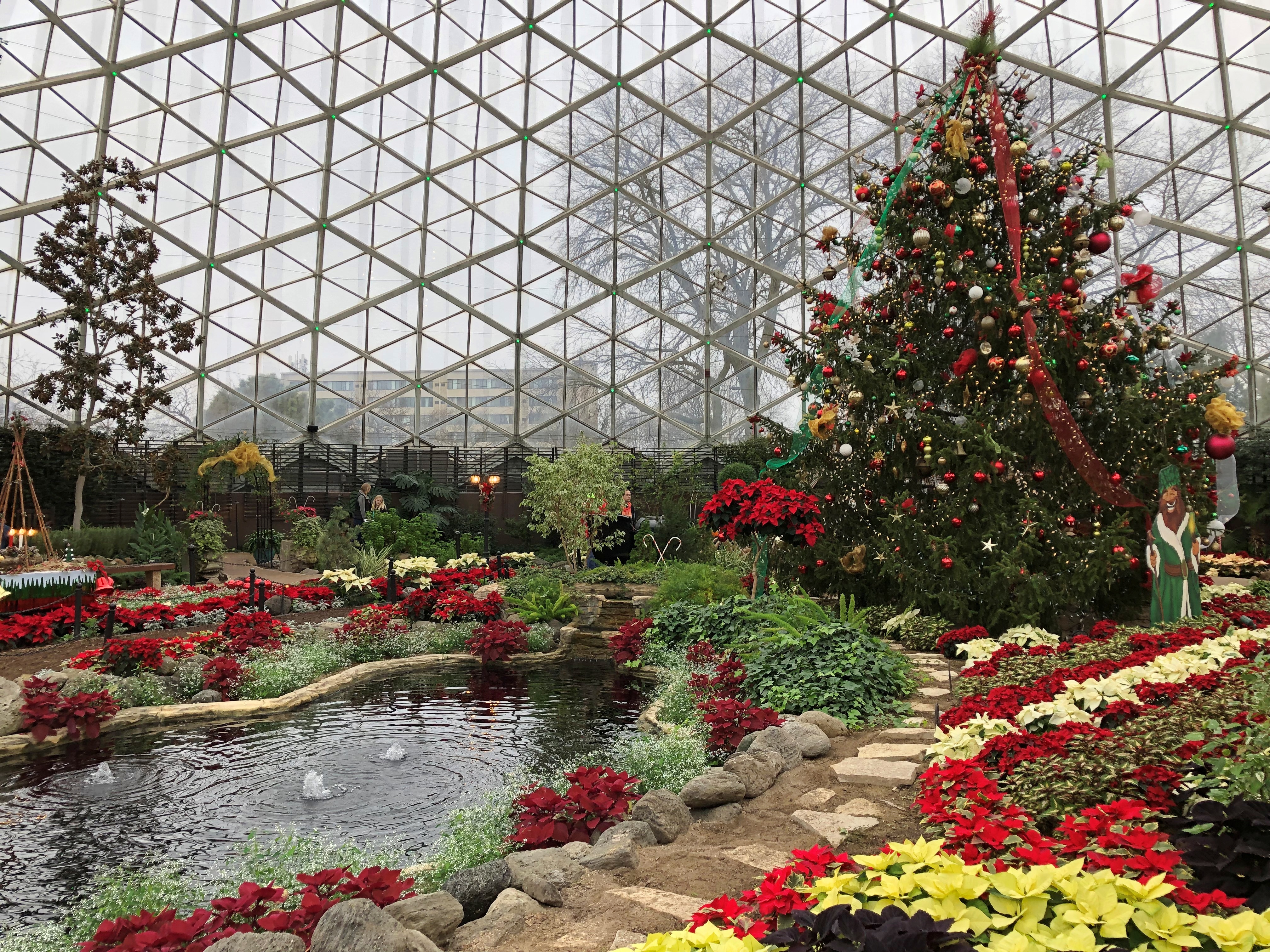
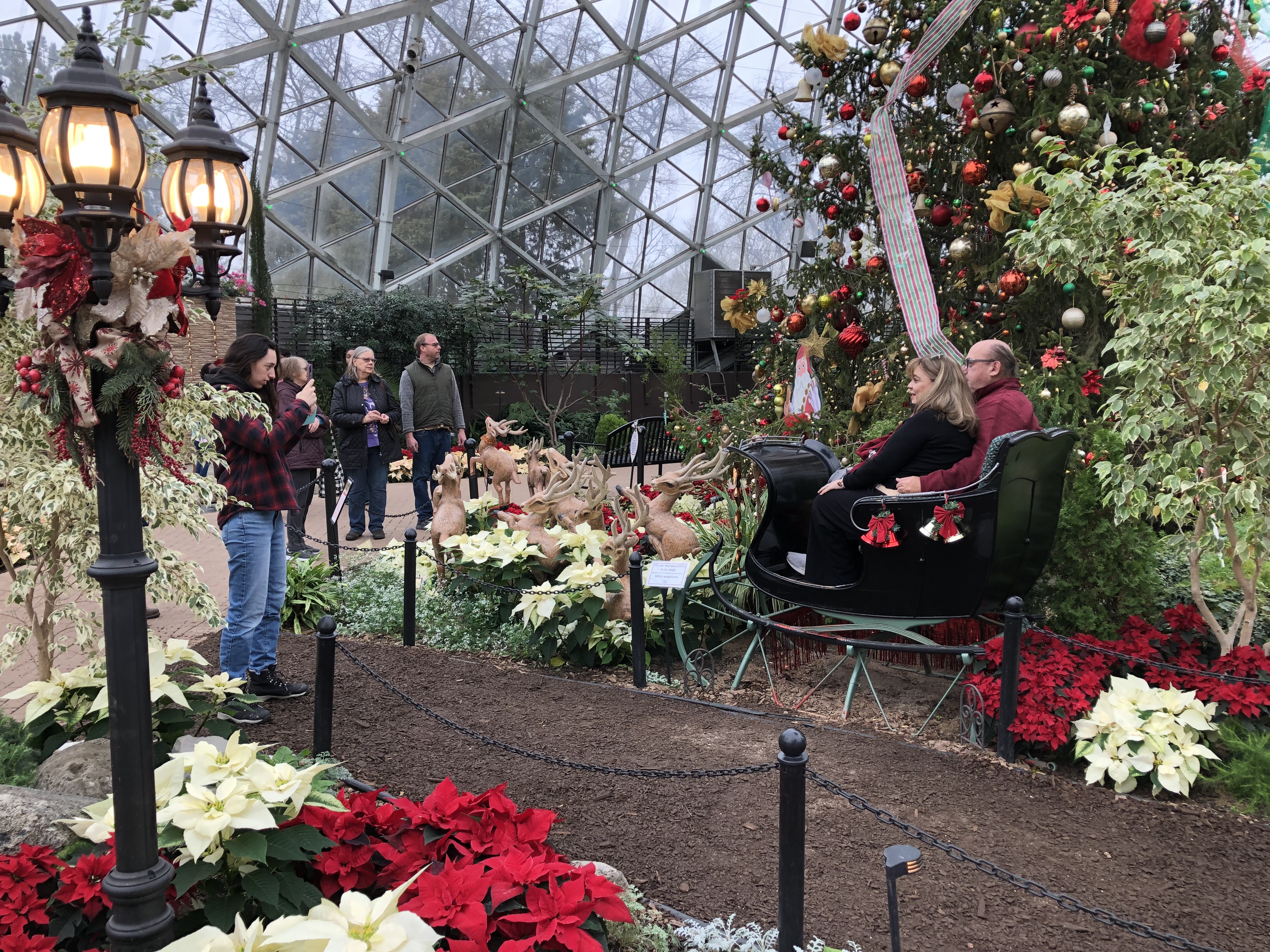
The show dome.Mitchell Park Domes Mitchell Park Domes Mitchell Park Domes Mitchell Park Domes

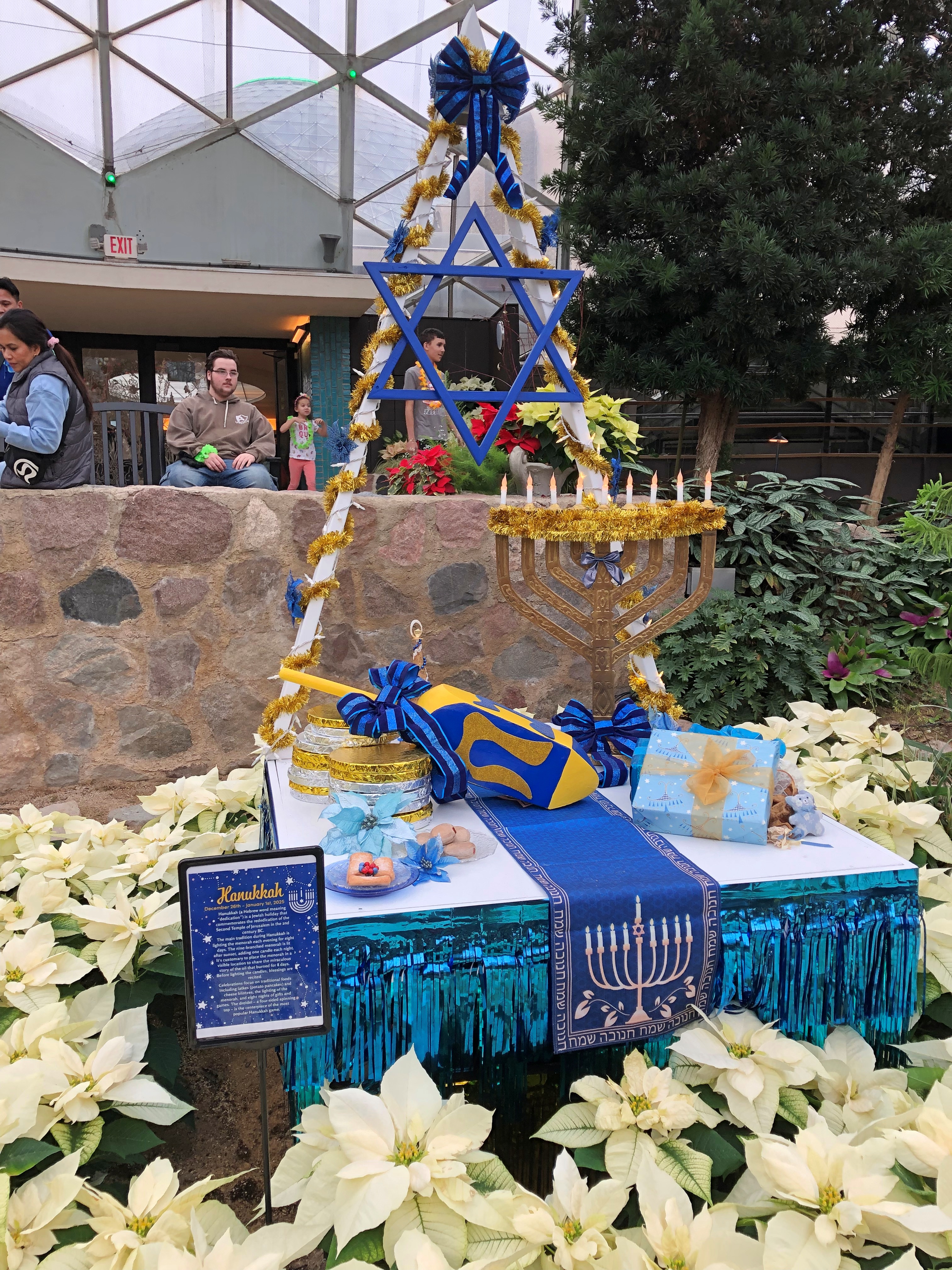
Christmas was represented, of course, but also Advent, Winter Solstice, Hanukkah, and Kwanzaa.Mitchell Park Domes

As we did those years ago, we caught it during the holiday season show, and quite a show it is under the Domes.