UVA, Part 1: Rugby Road

We arrived behind the Rotunda of the University of Virginia at about 4 pm on October 13. Under cloudy skies, but the day was warm and good for walking around the picturesque campus. Even parking had been relatively painless, and at no cost, on a street a few blocks away.

We walked down Rugby Road to get to the Rotunda. At one point, we crossed a bridge over railroad tracks. A specific message had been painted on the inside of one of the safety walls.
Rugby Road Beta Bridge CharlottesvilleThere was evidence of repeated painting.
Rugby Road Beta Bridge CharlottesvilleLater, as we walked back to the car, I got a good look at the other side of the bridge.
Rugby Road Beta Bridge CharlottesvilleLocal tradition. I figured it had to be. Didn’t take long to find an article about the bridge — Beta Bridge — in UVA Today.

“For instance, one of the most notable landmarks on Grounds, Beta Bridge, has been at the center of its own tradition since just the latter half of the 20th century.

“Often brightly colored with hand-lettered messages spanning its length, the bridge carrying Rugby Road over the C&O Railroad tracks over the years has become the place for paintbrush-wielding students to express themselves.”

I don’t know whether Riley accepted or declined the proposal, or even if it was serious, but I was able to look up the unfortunate fate of Henry McDavid Reed. He was a UVA student who died of brain cancer in August.

That’s not all I found out about Rugby Road, which has a number of frat houses on it, and passes by the university’s art museum and architecture school, among other things. It’s also the title of a UVA drinking song, mostly sung to the tune of Charles Ives’ “Son of a Gambolier.”

Its first verse no doubt includes some of the cleaner lyrics:

From Rugby Road to Vinegar Hill, we’re gonna get drunk tonight.
The faculty’s afraid of us, they know we’re in the right,
So fill your cups, your loving cups, as full as full can be.
And as long as love and liquor last, we’ll drink to the U. of V.

The version on YouTube also has a verse that I suspect is left out these days.

All you girls from Mary Washington and RMWC,
Never let a Virginia man an inch above your knee.
He’ll take you to his fraternity house and fill you full of beer,
And soon you’ll be the mother of a bastard Cavalier!

RMWC would be Randolph-Macon Woman’s College in Lynchburg, which is now simply Randolph College. Mary Washington is the University of Mary Washington in Fredericksburg, Virginia.

If I’d thought about collegiate drinking songs when I was in college, I probably would have considered them hopelessly old fashioned — and that was 40 years ago. Maybe I didn’t hang out with the right crowd. Or the wrong crowd, take your pick.

Monticello

Here I am again, I thought as I stood on the west lawn of Monticello, a place of such enormous resonance, in the early afternoon of October 13, 2019. The nickel view.
MonticelloYet I had a hard time remembering much about my first visit, which was on September 4, 1988. Maybe that’s because 31 years is a long time. Or because the view of Monticello from the west lawn, which I’ve known as long as I’ve known Jefferson nickels — all my life, for all practical purposes — is as close as anything gets to changeless.
I do know that the first time I saw the building in person, I realized that the nickel has a uninspired representation of Monticello. Flat. In person, you see that it’s a place to gaze at from more than one angle.
MonticelloI’m holding a nickel in this picture, by the way.
MonticelloMonticelloA look at the eastern elevation. I’m glad to say that the house sports lightning rods, unlike a hilltop structure in Wisconsin that’s going to burn down after a strike someday.
MonticelloThe east entrance is where the interior tours start. Actually, no. You’re not getting in the building without starting at the David M. Rubenstein Visitor Center, which is down the hill from Jefferson’s home. That’s something different from 1988. The 42,000-square-foot visitors center has only been there for about 10 years.

Exactly where we bought tickets back then, I don’t remember, but I suspect it was simpler facility — not like the five pavilion-complex of the Rubenstein. Also, there were no timed tickets the first time around. I even think our tour was self-guided. Nor did I experience the warren of interconnected parking lots next to the visitors center, which was largely full. There must have been parking in 1988, and it too must have been simpler, but who remembers things like that?
MonticelloAlso: this interesting chronology tells me that I paid $7 in 1988 for my ticket. That’s just over $15 in current dollars. Note the 2019 ticket price: $26.95. Guess that extra $12 is going to pay for ever-fancier guest infrastructure.

In 1925, not long after the house was opened to paying visitors, admission was 50 cents — the equivalent of $3.88 in 1988 and $7.34 now, so I suppose ticket inflation has been an ongoing thing at Monticello.

I originally bought tickets online for the 10:45 am tour, but jammed traffic on I-64 just outside Charlottesville put us at the visitor center at 10:50. The helpful clerk didn’t bat an eye at that, and put us on a 12:30 pm tour (meeting at 12:25).

What that meant was that we had time to walk up the high hill to Monticello, as opposed to taking a shuttle bus, and stop roughly halfway up to see the Jefferson family graveyard, so it worked out for the best. Climbing gives you a sense of just how high the hill is. Besides, it’s a lovely path.
MonticelloThe burial ground is behind an ornate iron fence.
Monticello GraveyardMonticello GraveyardThere are a lot of Randolphs. Jefferson’s daughter Martha married a Randolph, and they were the fecund parents of 13 children, 11 of whom survived childhood.
Monticello GraveyardPresident Jefferson himself.
Monticello GraveyardThe path from the burial ground to Monticello proper takes you past the re-created garden, planted on a long terrace dug out of the side of the hill. In October, most of the vegetables have been harvested already, but some still linger.

Monticello Graveyard

Monticello GardenThe house tour, lead by a lively gray-haired gentleman who was probably a retired teacher, took us through the first floor, beginning with the entrance hall and its displays of Indian artifacts and animal horns and paintings and maps and such. Museums as such didn’t much exist in early Republic Virginia, so Jefferson created one for himself.

Then I remembered the Great Clock, hanging over the main entrance, from last time. A favorite of mine.
Other rooms feature books, furniture, paintings — including a Gilbert Stuart portrait of Jefferson probably painted when he was president — more books, oddly placed beds, scientific instruments, papers, clocks, busts, yet more books, and the dumbwaiter that he had installed to fetch wine from the cellar below, something else I remembered from 30 years ago. It’s an admirable clutter.

After Jefferson sold much of his library to the U.S. government to form the nucleus of the revived Library of Congress after the British burned the original one in 1814, he started accumulating books again. The only reasonable thing to do, and hang the cost. Libraries as such didn’t much exist in early Republic Virginia, so Jefferson created one for himself. Twice.

From Monticello’s FAQ:

Who built the house?

Local white masons and their apprentices did the stone and brickwork. Local carpenters, assisted by several Monticello slave carpenters, provided the rough structural woodwork. The fine woodwork (floors, cornices, and other moldings) was the work of several skilled white joiners, hired from as far away as Philadelphia. One Monticello slave, John Hemmings, who trained under the white workman James Dinsmore, became a very able joiner and carpenter.

How much did the house cost?

No one so far has managed to calculate the cost of Monticello with any degree of accuracy.

That is, the house was a money pit for the third president.

We also spent some time looking around the exhibits in the North and South Pavilions, which are structures that branch away from the main house, though they don’t seem directly connected. We poked around such places as the wine cellar and the beer cellar next to it, plus the elaborate kitchen, which naturally wasn’t part of the main house. When you dined with Thomas Jefferson, the feast must have been sumptuous.

There are a few outbuildings. Such as this slave cabin replica, built since I visited last time.
slave cabin MonticelloI don’t remember exactly how much emphasis Monticello put on slavery during my first visit. I suspect it was a matter not of denying it, but not talking much about it either.
I can report that in 2019, not only does Monticello not deny the importance of enslaved labor at the house and farm, or the humanity of the enslaved, the official texts talk about it quite a lot. Including the Sally Hemings and Hemings family story — which rates a room of its own in one of the pavilions and a video. That pendulum has swung.

Monument Avenue, Richmond

Our original plan had been to visit Hollywood Cemetery in Richmond after the American Civil War Museum on the afternoon of October 12. But as so often happens in tourist mode, plans change. It was nearly 5 by the time we left the museum, too late to get to and see the cemetery that day.

But not too late to drive over to Monument Avenue, which I’d considered a secondary destination when planning the trip. Monument Avenue is northwest of downtown, with one terminus not far from the campus of Virginia Commonwealth University, which was alive with students as we drove through.

The avenue struck me as more of a boulevard, at least as that term is used in North America, with its long, wide median.
Monument Avenue RichmondNever mind the nomenclature. It’s a grand street with lined with trees and handsome houses. The plaque pictured above says that the Monument Avenue Historic District is a National Historic Landmark, and has been since 1977.

Picturesque as the avenue is, we came to see some of the monuments while they’re still here. However solid they appear now, they might not be in this place too many more years. A time to keep, and a time to cast away. That adds an extra layer of fascination.

The largest and oldest of the monuments, completed in 1890, depicts Robert E. Lee. It’s positioned in a large traffic circle.
Monument Avenue RichmondInteresting that Lee Monument Association commissioned the work from a Frenchman, Antonin Mercié, who later created statues of Lafayette and Francis Scott Key in this country. The 21-foot bronze rests on a 40-foot granite pedestal designed by another Frenchman, architect Paul Pujot. Guess France was the place to go for this kind of work; it was the Belle Époque, after all.

On all four sides of the massive plinth are signs of our time.
Monument Avenue RichmondFortunately, open parallel parking spaces weren’t hard to find on Monument Avenue, so we drove to the northwest a few blocks and parked near another large memorial: Jefferson Davis, created by Richmond sculptor Edward V. Valentine and architect William C. Noland.
Monument Avenue RichmondTo my eye, simply on aesthetic grounds, it isn’t nearly as impressive as Lee’s monument. The general is astride his steed, in a firm pose, perhaps surveying the battlefield. The plinth sports precisely one word: LEE.

By contrast, Davis is standing on a pedestal, arm out, overshadowed by a much taller column topped by an allegory. More columns (13) are behind Davis, symbolizing each state represented in the Confederate Congress. There’s verbiage all over, in English and Latin. It’s a busy bit of business.

Besides being as Lost Cause as a monument can possibly be — Davis’ pedestal says Jefferson Davis/Exponent of/Constitutional Principals/Defender of/the Rights of States — the work is as embarrassingly Victorian as can be, despite being completed in 1907. It was in the works a long time, being delayed by (among other things) the Panic of 1893. I’m not one to reflexively mock Victorians, who invented so much of the world we live in, but sometimes their expressed sentiment is just too damn much.

According to Virginia Places, “the literature created for the statue dedication… reads, ‘Symbolized in the Vindicatrix, which crowns the shaft of the monument… the emblem of Southern womanhood fitly stands, the immortal spirit of her land, shining unquenched within her eyes, and her hand uplifted in an eternal appeal to the God of justice and truth.’ ”

That was enough memorial-spotting for the day, so I turned my attention to the neighborhood. Memorial Avenue features quite a few impressive homes.
Monument Ave RichmondMonument Ave RichmondIncluding a Ronald McDonald House. I wasn’t sure I’d ever seen one of those before.
Ronald McDonald House, Virginia

As I walked back to the car — Ann had stayed behind when I went to see the Davis memorial — I came across a cannon on the median.
Monument Ave RichmondThe plaque says: This cannon marks the spot where in 1861, a large earthwork of the inner line of defense was constructed.

Small and probably not much noticed. It might well last longer than any of the large memorials.

The American Civil War Museum

I wasn’t in the best frame of mind when we got to the American Civil War Museum in Richmond on October 12. I expected an easy drive from where we parked, near the capitol, to the museum, which is at the site of the former Tredegar Iron Works on the James River.

No such luck. The Richmond Folk Festival had gummed up everything along the river, blocking all vehicular access, so after some time in sluggish traffic, we went back to the same parking lot near the capitol — luckily my receipt was good for the whole day — and walked the half mile or so to the museum. Not a bad walk, but it made me tired ahead of a walk through a museum. Such is the tourist experience, sometimes.

At first I thought the museum was in the multistory brick building.
American Civil War Museum RichmondWrong again. That building houses the visitors center and a Civil War museum associated with the Richmond National Battlefield Park, a NPS entity that encompasses that part of Tredegar along with a dozen Civil War sites around Richmond.

The new building for the American Civil War Museum — opened just this year — is the modernist structure next to the brick building, though it incorporates some of the other Tredegar ruins. Designed by a local architectural firm, 3North, the museum isn’t overly large, coming in at 28,000 square feet.

American Civil War Museum Richmond

American Civil War Museum Richmond

We spent a couple of hours at the museum. Though a little frazzled when I got there, I soon got into the groove of the place and mostly enjoyed my time there. Ann did too. The permanent exhibits wind through the first floor, featuring things you’d expect in a museum devoted to the history of a war: military and civilian artifacts, photos, maps (though not enough), things to read, a few interactive kiosks, audio narratives and videos and so on.

Perhaps the most striking features are the large-scale photographic images placed on various walls or hanging over display cases. They are images of people alive during the conflict, and are all colorized. Only a few years ago, the colorization might have bothered me, but since seeing They Shall Not Grow Old, I appreciate artful colorization, which the museum manages to do.

Some of the artifacts were particularly intriguing, such as the carvings that prisoners of war made from whatever material they had at hand, some of them exceptionally fine — that they then traded for food or tobacco or whatever else they badly needed. Other artifacts edged into the realm of oddities, such as a fossilized biscuit from the siege of Vicksburg and a luckless soldier’s a pocket journal, split by the bullet that killed him.

As at a number of other museums I’ve seen focusing on the 19th century, the most unnerving artifacts are the medical tools. The American Civil War Museum has a collection on display, along with a some poor bastard’s primitive prosthetic arm.

I also encountered some incidents and stories about the war that I’d never heard. Of course, the Civil War is a sprawling subject, with countless untold or undertold narratives. The museum has a knack for illustrating some of them. For instance, the New York Draft Riot is covered in some detail. No surprise there. But so is the lesser-known Richmond Bread Riot of 1863. Always good to learn about something like that.

As interesting and informative as the museum was, I came away feeling a little unsatisfied. I wasn’t sure why. On later reflection, I worked it out. It isn’t that the museum eschews glorifying the Lost Cause, which I’m sure bothers some people. I wouldn’t have expected anything else from a museum created by serious historians.

Rather, I missed the generals ‘n’ battles approach to the story of the war. Though not as pernicious as the Lost Cause, modern historians usually shy away from that too.

The museum mentions many of the military engagements of the war, sometimes in some detail, but that isn’t the thrust of most of the exhibits. Rather, the American Civil War Museum takes an almost sociological approach to the war.

That is, how the war affected all of 19th-century American society. Soldiers, naturally, but also white civilians, male and female, blacks, free and enslaved, immigrants and others. Is that a good way to organize a civil war museum? Probably yes. Still —

That I felt the absence of generals ‘n’ battles says more about me, and how I’ve conditioned myself with the books I’ve read and the movies I’ve watched and the battlefields I’ve visited over the years, than it does any historic study of the period. Even so, that’s how I felt.

The Richmond National Battlefield Park facility next door, which we also visited (though for a much shorter time), seemed more traditional in that regard, if only because it focuses on the fighting around Richmond. There you can see large maps depicting the movements of armies, for instance.

I can’t be the only one who feels this way. Oddly enough, the American Civil War Museum acknowledges that, perhaps unconsciously, in its gift shop. Generals ‘n’ battles is alive and well there.

In the form of Lee and Grant bobbleheads, for one thing.

American Civil War Museum RichmondAmerican Civil War Museum RichmondModels of the submarine boat Hunley and the ironclad Virginia.
American Civil War Museum RichmondGenerals of the Civil War playing cards, but also Joshua Chamberlain playing cards.
American Civil War Museum RichmondThe Chamberlain cards struck me as oddly specific. Wonder if the same card maker has a line of, say, Jubal Early playing cards?

The shop also had a nice collection of flags. Such as this one, which you don’t see too often. I had to look it up.
American Civil War Museum RichmondThe Battle Flag of the First Corps, Army of Tennessee.

The Virginia State Capitol

The Commonwealth of Virginia certainly doesn’t care what I think, but I’m going to offer it my opinion anyway, about what it calls part of its legislature. The modern name for the lower chamber of the Virginia legislature is the House of Delegates — modern, as in after 1776. Nice, but a little blah.

Before that, the chamber was the House of Burgesses. That’s a spiffier name. Virginia’s lower house ought to go back to using it. The House of Burgesses had a long and honorable history before the change. “Burgesses” must have been trashed in a fit of revolutionary ardor for new names, but that was more than two centuries ago. Even better, no other state uses it. By contrast, Maryland and West Virginia both use “House of Delegates.”

State legislature names are mostly uninspired anyway, except maybe for the formal title of the Massachusetts legislature, which is the Great and General Court of the Commonwealth of Massachusetts. Nearby, there’s also the the General Court of New Hampshire, which (incidentally) Ballotpedia tells us is the fourth-largest English-speaking legislative body in the world (at 424 members), behind only the Parliament of the UK, the US Congress, and the Parliament of India.

On the morning of October 12, Ann and I made our way to Capitol Square in Richmond. The Thomas Jefferson-designed state capitol is its handsome centerpiece.

Virginia State CapitolThe capitol has a distinctive look among those of the several states, taking its inspiration from a Roman temple in France, the Maison Carrée.

Just outside the capitol building is an embedded Virginia seal, with Tyranny lying slain beneath the foot of Virtus.
Virginia State CapitolI told Ann what the Latin meant, and she seemed amused that a state would put something so badass on its formal seal. Compared to the anodyne figures on most state seals, she has a point.

It looks like you walk up the hillside steps to enter the capitol, but in fact you walk down them. Since a redevelopment in the early years of this century, visitors enter the Virginia State Capitol via an underground passage that runs underneath the hillside steps.
Virginia State CapitolWe took a guided tour starting there. One of the first things you see in the underground annex — and it’s a large space, at 27,000 square feet — is the architect himself in bronze.
Virginia State Capitol“The statue represents Jefferson around the age of 42 — about the time he was designing the building — and he is holding an architectural drawing of the Capitol,” says the Richmond Times-Dispatch

“Ivan Schwartz, co-founder of StudioEIS, created the statue… The statue weighs 800 pounds and stands nearly 8 feet tall, representing a larger-than-life Jefferson. Its pedestal is made of EW Gold, a dolomitic limestone quarried in Missouri.”

The passage leads to the capitol proper. Though there’s no exterior dome, there is an interior one. Underneath it is another figure of the Revolution in stone. The figure of the Revolution.
Virginia State CapitolTracy L. Kamerer and Scott W. Nolley, writing for the Colonial Williamsburg Foundation, praise it highly: “In Richmond stands a marble statue of George Washington that is among the most notable pieces of eighteenth-century art, one of the most important works in the nation, and, some think, the truest likeness of perhaps the first American to become himself an icon.

“A life-sized representation sculpted by France’s Jean-Antoine Houdon between 1785 and 1791 on a commission from Virginia’s legislature, it was raised in the capitol rotunda in 1796…

“Houdon’s careful recording of Washington’s image and personality yielded a sensitive and lifelike portrait. When the Marquis de Lafayette, Washington’s friend and compatriot, saw the statue for the first time, he said: ‘That is the man himself. I can almost realize he is going to move.’ ”

The Houdon Washington spawned many copies in the 19th and 20th centuries, some of which are in other state capitols and cities, and one that I’ve seen that stands in Chicago City Hall. Others are as far away as the UK and Peru.

Jefferson and Washington are only the beginning of the statuary in the Virginia State Capitol. In alcoves surrounding the Houdon Washington are busts of the other U.S. presidents born in Virginia — Jefferson, Madison, Monroe, William Henry Harrison, Tyler, Taylor, and Wilson — along with Lafayette, who’s there until there’s another president from Virginia, the guide said.

The Old House Chamber, whose entrance is behind Washington’s back, has been restored to look the part of a 19th-century legislative chamber, but also to be a repository of sculpture. It’s replete with marble and bronze busts and statues, representing various Virginians, including George Mason, Richard Henry Lee, Patrick Henry, George Wythe and Meriwether Lewis. Non-Virginians have their place, too: namely Jefferson Davis and Alexander H. Stephens.

CSA generals include Stonewall Jackson, J.E.B. Stuart, Joseph E. Johnston, Fitzhugh Lee, and of course Robert E. Lee looking pretty much like Robert E. Lee.

Virginia State CapitolIt wouldn’t be the last representation of Lee we’d see in Richmond. This particular bronze was created by Rudulph Evans in 1931 and erected where Lee stood on April 23, 1861, when he accepted command of the military forces of Virginia.

That wasn’t the only event associated with the Old House. In December 1791, the House voted to ratify the proposed U.S. Bill of Rights in the room. In 1807, Aaron Burr was acquitted of treason in the room in a Federal Circuit Court trial presided over by John Marshall. Various Virginia constitutional conventions met in the room, and so did the Virginia Secession Convention of 1861. The entire Virginia State Capitol soon became the Confederate Capitol as well.

We also visited the modern Senate chamber — the modern House of Delegates was closed — and it looks the part of a well-appointed working legislative chamber, without a surfeit of statues.

The Old Senate chamber sports paintings depicting the first arrival of Englishmen in Virginia, John Smith, Pocahontas, and a scene at the Battle of Yorktown. In the Jefferson Room is a scale model of the capitol that Jefferson had commissioned in France to guide the builders in Virginia, since he wouldn’t be there to supervise things personally.

We spent time on the capitol grounds as well. The most imposing among a number of memorials near the capitol is the George Washington equestrian — formally the Virginia Washington Memorial, by Thomas Crawford — which is surrounded by other colonial Virginians of note and allegories.

Virginia State CapitolThe CSA was represented on the grounds as well, as you’d expect, including a Stonewall Jackson bronze. Other memorials are closer to our own time. This is part of the Virginia Civil Rights Memorial, created by Stanley Bleifeld and dedicated in 2008.
Virginia State Capitol

A memorial dedicated to Virginia women, a collection of bronzes, was still under wraps when we looked it — but slated for dedication only two days later, on October 14.

There was even more to see, but eventually hunger took us away from Capitol Square to a nearby hipster waffle house — the Capitol Waffle Shop — for lunch. I had my waffles with egg and sausage on top, a combination that worked very well. Also good: hipster food prices in a town like Richmond are less than in places like Brooklyn, just like prices for everything else.

Virginia ’19

Some time ago, I noticed that Ann not only had October 14 off — for Columbus Day, that barely there school and post office holiday — but the next day as well, one of those days on which the teachers come to school, but students don’t. According to the way I think, that meant an opportunity to go somewhere.

So on Friday, October 11, Ann and I flew to Richmond, Virginia, returning on the 15th, for what amounted to a U.S. history trip. Fitting for her especially, since she’s in an AP U.S. history class this year. Fitting for me, since the trip included destinations that I’ve wanted to visit for a long time, but never gotten around to.

On Saturday, we spent the day in Richmond — partly downtown, at Capitol Square, where we toured the Jefferson-designed capitol, and at the newly opened American Civil War Museum, which includes part of the ruins of the Tredeger Iron Works, cannon and locomotive maker of the Confederacy.

Navigating downtown Richmond in a car proved to be pain in the ass, with its high volume of traffic, limited parking and numerous one-way streets. Every other street seemed partially blocked by construction, either of buildings or the street itself. Also, the Richmond Folk Festival was that weekend — and a lot of folks showed up for it, crowding the area near the riverfront, where the American Civil War Museum happens to be.

Downtown, as seen from the steep banks of the James River.Downtown Richmond

Despite traffic snarls, Richmond struck me as an interesting city, full of life in the present and echoes of its storied past. A day wasn’t nearly enough, but there were other places we wanted to see in Virginia.

On Sunday, we drove to Charlottesville, with Monticello as the main destination. For Ann, a completely new experience. For me, a second visit. But the first time was in 1988, so I’d forgotten a lot. And some things have changed there.

We also visited the University of Virginia that day, which I didn’t do more than 30 years ago (not sure why not). See one famed Jefferson site, best to see another close by. Closer than I realized: from Monticello you can just see the white dome of the Rotunda, the school’s most famous structure.

On the third day, technically Columbus Day Observed, we drove the other direction from Richmond to Williamsburg. More specifically, Colonial Williamsburg, the open-air museum of large scale and ambition, an odd amalgam of past and present.

There’s a lot to Colonial Williamsburg, including structures and displays and artifacts and craft demonstrations, but also programs by reenactors. The high point of the visit was one such, held at a reconstructed 18th-century tavern and featuring the Marquis de Lafayette and James Armistead Lafayette.

Afterward, they were willing to pose for pictures.
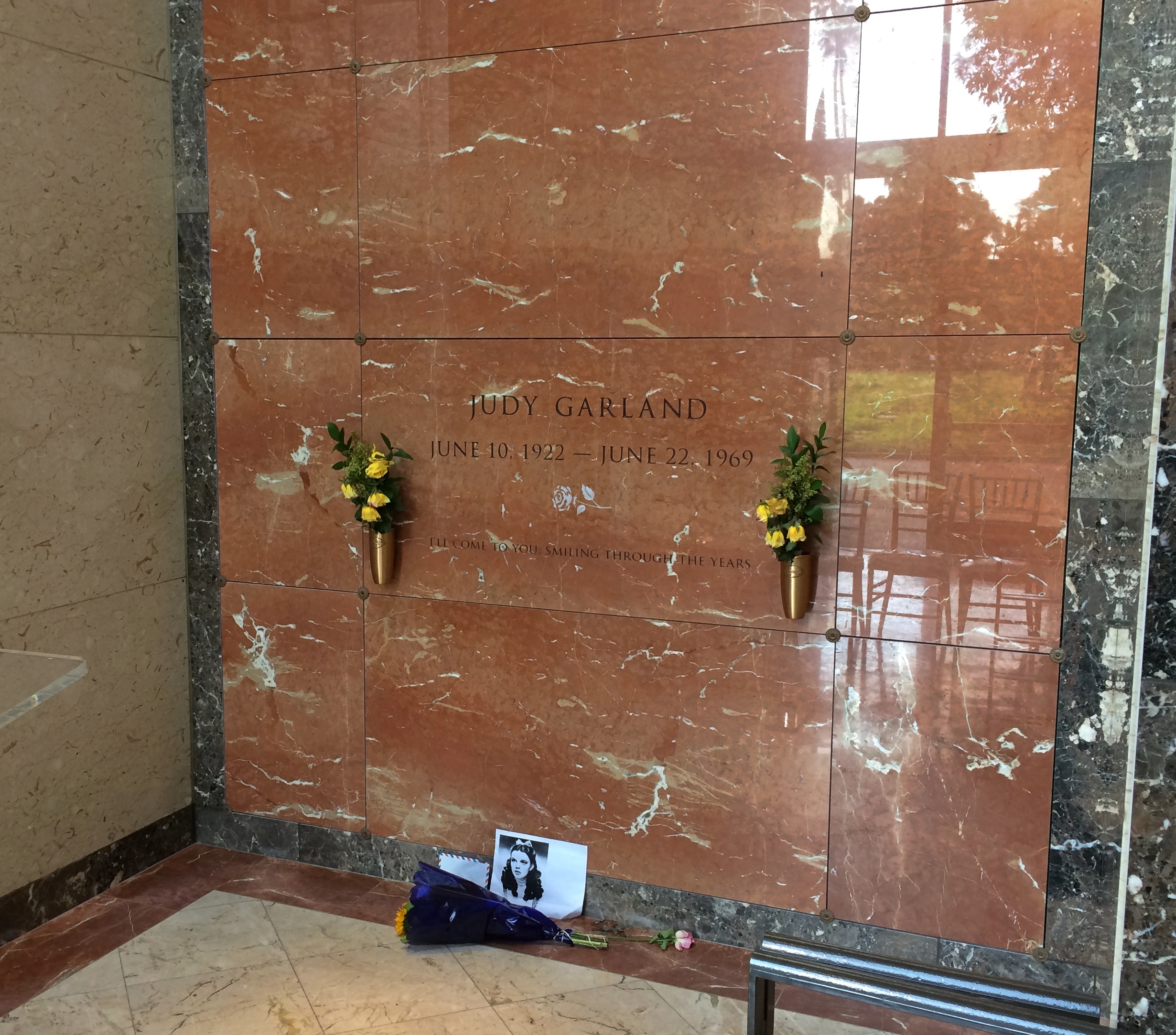
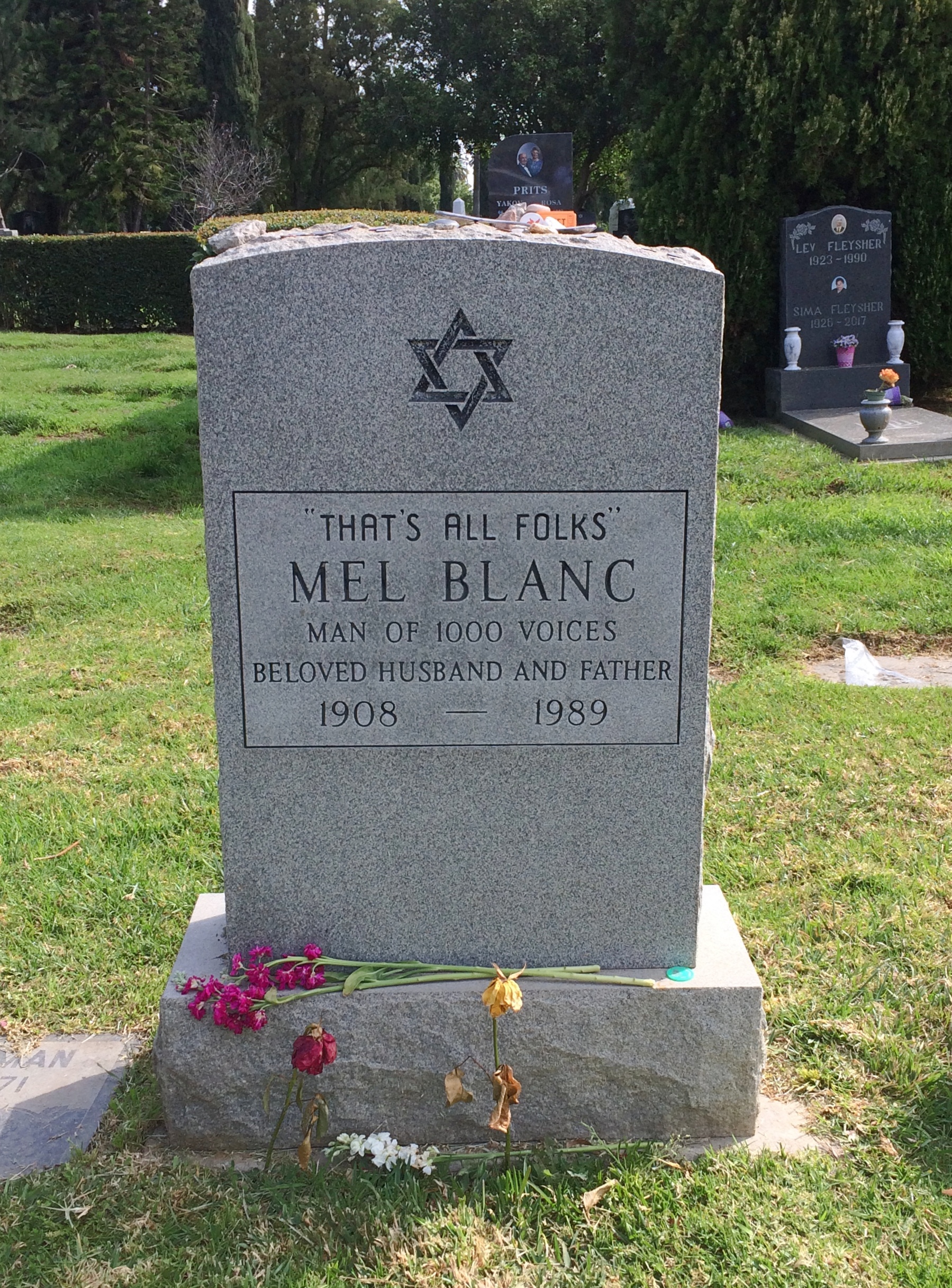
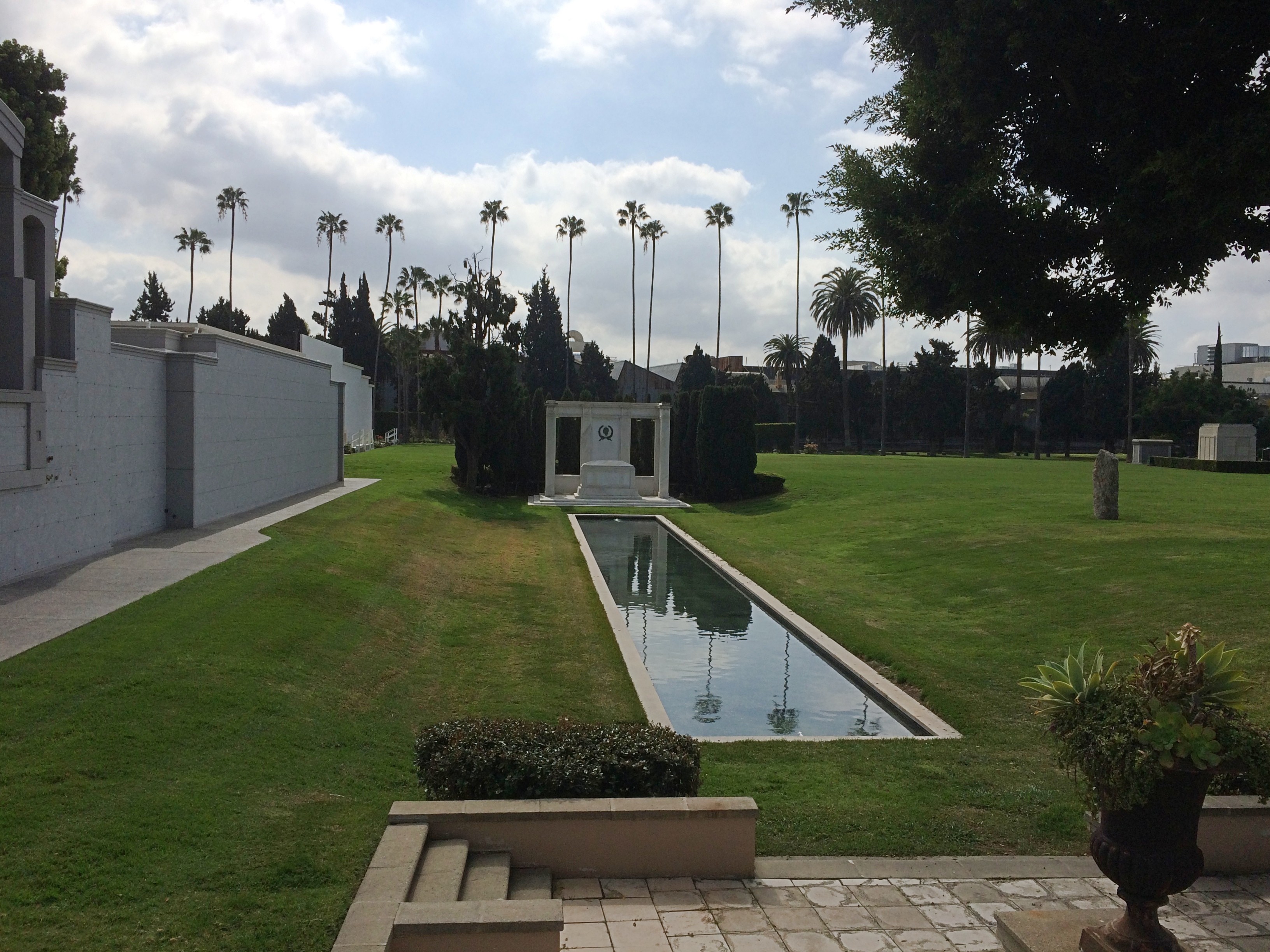
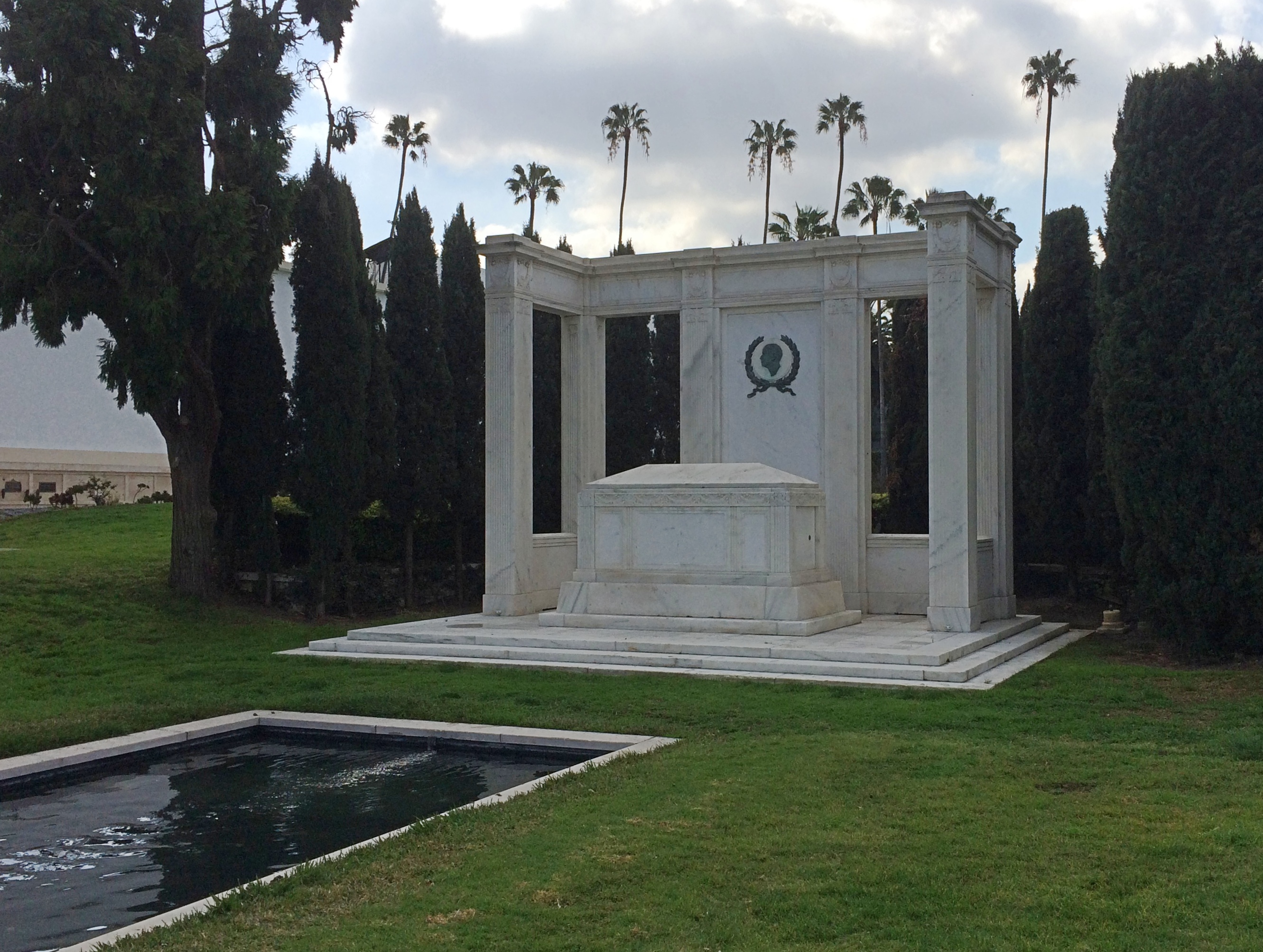
Colonial WilliamsburgOn October 15, we flew home in the afternoon. In the morning, I drove by myself to a place I’ve wanted to visit for years, the Hollywood Cemetery in Richmond, a stunningly beautiful cemetery perched on a hillside above the James River, populated by numerous historic figures.

After Ann woke up and we checked out of our room, we visited one last spot in Richmond: the Edgar Allan Poe Museum, small but compelling, managing to convey the misery of his life and the legacy of his art.

The Midsummer Carnival Shaft

Time for an autumn break. Back to posting around October 20, if all goes according to plan.

Last week in Milwaukee, I happened across an oddity that wasn’t part of the Doors Open event, but rather something in the median of Wisconsin Ave. near Calvary Presbyterian.

Court of Honor Milwaukee

A tall, freestanding Corinthian column with a sphere on top. Other statues in the median, not pictured here, include ones honoring Union soldiers, Spanish-American veterans and George Washington. So this column must honor something along those lines, right?

Hard to tell just looking at it. A plaque on the plinth is enigmatic: Presented to the City of Milwaukee by the Carnival Association, June 26, 1900.

Who? Why? Later, I found an article about the Court of Honor, as the median is called. “The Court of Honor is a series of statues, most honoring military figures, that line the median strip in West Wisconsin Avenue between 9th and 10th Streets,” Bobby Tanzilo wrote in On Milwaukee.

“The collection of sculpture became known as the Court of Honor because it was the site of the annual crowning of the Rex (or king) of the Milwaukee Midsummer Carnival Festival, which began in 1898 to celebrate the 50th anniversary of Wisconsin’s birth as a state.

“The carnival only endured for four years, but it must have been a fun event, because it drew visitors from across the state… Each year, for the carnival, the association that organized the week-long event would build temporary classical wood and plaster colonnades. Two years in, it commissioned architect Alfred Clas to design a Corinthian column – the Midsummer Carnival Shaft – that would be constructed of Bedford limestone to serve as a permanent centerpiece for the event.”

The Midsummer Carnival Shaft thus stands to this day, silently honoring an event that probably 99.44% of Milwaukeeans could not identify. Just another example of something that can make the urban texture of a city interesting — a forgotten oddity in plain sight.

Paper Purge

Not long ago, I decided to purge some paper around the house. Specifically, user manuals for machines that are long gone. You’d think that those would have been tossed along with the items themselves, but that’s not how clutter works, unless you’re Marie What’s-Her-Name.
Papers like this.

In the same vein, I had setup instructions for iMacs, a reel mower that now has vines on it, landline phones long junked, defunct cameras, a previous dishwasher, clothes washer, clothes dryer, and oven, and a few odds and ends I don’t even remember owning.

From a bilingual food processor manual, I learned the amusing fact that the French for food processor is robot culinaire.
Also: Woody warnings. We took the actual toy to Boot Hill long ago — well, metaphorical boot hill — after the dog did him bodily harm. Somehow, the pamphlet of written warnings was left behind.

Warnings because the only instructions involve replacing the batteries that power Woody’s voice box. The rest of the text lists warnings about the batteries: keep them away from small children, don’t swallow them yourself, put them in correctly, including the correct polarity, don’t mix different kinds of batteries, or old and new batteries, and don’t let the damn things leak, but if you do, throw them away — in a locally acceptable manner.

Pedestrian stuff. Not a single warning along the lines of: If you see Woody walking and hear him talking, you are not having a psychotic episode. Woody is a sentient creature with a secret life.

Once Upon a Time in Quentin Tarantino’s Childhood

We went to see Once Upon a Time in Hollywood not long ago. Been a while since I’d seen a new movie, or a Quentin Tarantino movie, for that matter. Come to think of it, I don’t think I’d ever seen one of his movies in the theater — everything’s been on tape or DVD or demand, to list formats chronologically.

I left Once Upon a Time wondering how old Tarantino is. I knew next to nothing about him, except for his fondness for putting ultraviolence in his movies. From the way he depicted the period of the movie, 1969, I got the sense that he remembered it, but not as an adult. Like me.

Sure enough, he was born in 1963. That makes us contemporaries. Later he must have filled in some of the gaps his own memory might not have retained, as one does. I can’t imagine, for instance, that a six-year-old would have paid much attention to Sharon Tate or any of the movies she was in, least of all a bomb like The Wrecking Crew. (Matt Helm movies are best forgotten.) On the other hand, Tarantino probably saw old TV westerns on reruns or shows like the FBI or Mannix in the early ’70s, just as I did.

Yuriko came away baffled by many of the references. She’d come to see Brad Pitt, whom she enjoyed seeing — he had a good part — but it isn’t a past she shares. Neither of our daughters went, but come to think of it, most of the references probably would have been strange to them as well.

Despite including the Manson family and some other unsavory aspects of the period, the movie was an exercise in nostalgia — of a kid who watched American movies and TV beginning in the late 1960s. For a time when Americans watched roughly the same TV shows and movies, because options were much more limited than they are now.

What will be the basis of pop-culture nostalgia for the 2010s in 50 years, if there’s any? I’d think it would be as fractured as entertainment is now. Well, so what? Can’t say that I care. Not my circus, not my monkeys.

Pitt, as stuntman Cliff Booth, had my favorite line in the movie. In a flashback, Booth was on the set of The Green Hornet with Bruce Lee, who is characterized as a preening, vain fellow, and they’re rehearsing a fight scene.

Bruce Lee: My hands are registered as lethal weapons. We get into a fight, I accidentally kill you? I go to jail.

Cliff Booth: Anybody accidentally kills anybody in a fight, they go to jail. It’s called manslaughter.

Greenwood Cemetery ’14

Has it been five years since I first visited Green-Wood Cemetery in Brooklyn for the first time? So it has. Green-Wood Cemetery remains one of the prettiest I’ve been to, even in drizzly early spring. No doubt the fall colors, as I saw them five years ago, are returning now.

Greenwood CemeteryThe main pond was a particularly lovely spot. This is the cemetery’s chapel, a 1911 Warren & Wetmore design; that firm also did Grand Central Terminal, among other things.

Greenwood CemeteryThis is Peter Brunjes, looking quite 19th century.

Greenwood CemeteryA casual search — “Peter Brunjes,” “Peter Brunjes New York,” “Peter Brunjes Green-Wood” — reveals nothing. Looks like he was a respectable citizen, even locally prominent, just to judge by his stone, which is probably the effect his family wanted. Sic transit gloria mundi, dude. Think you will be remembered? You will not. But so what?

The main entrance, dating from the 1860s, seen in a different light than last year.

Greenwood CemeteryIt’s a design by Richard Upjohn, who’s known for his Gothic churches.

The stone of one George Struthers, died 1849, aged 31 years.

Greenwood Cemetery

From Our Firemen, The History of the NY Fire Departments [all sic]: The “Harrington Guard” was a volunteer organization from Union Engine Company No. 18, and Henry Wilson was its captain. This volunteer company was in existence for a number of years, and one act while Mr. Wilson was in command should not go unrecorded. We allude to their noble conduct toward the first of the New York Volunteers who died after that regiment returned from the Mexican War.

“The late Sherman Brownell was called upon to deliver the address at the dedication of a monument placed in Greenwood by the Harrington Guard. That gallant fellow George Struthers was one of the first to enroll his name in Company 1 of the first regiment of New York State Volunteers.

“With them he went to Mexico, and remained among them until disbanded. He was one of the comparatively small number of the originals of the regiment that returned, and, although he escaped the ravages of the battlefield and returned to his friends, he was, like most of his companions, prostrated with the climate and exposure.

“He found, by disease contracted in Mexico, that he was fast failing. He went to the hospital, where his friends gave him all the attention that could be paid him. After remaining in the hospital for some time, he was called from his sufferings on earth.”