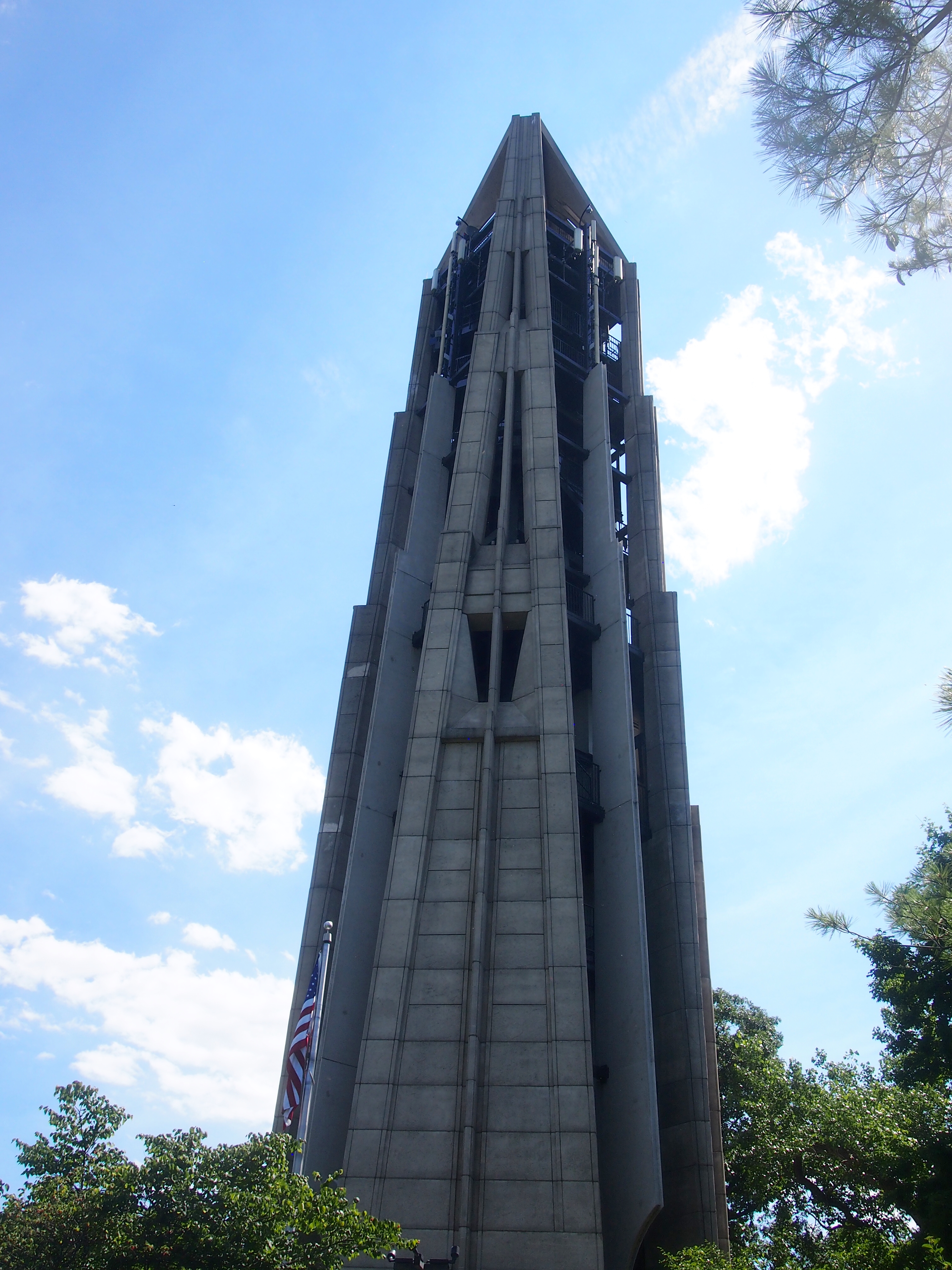
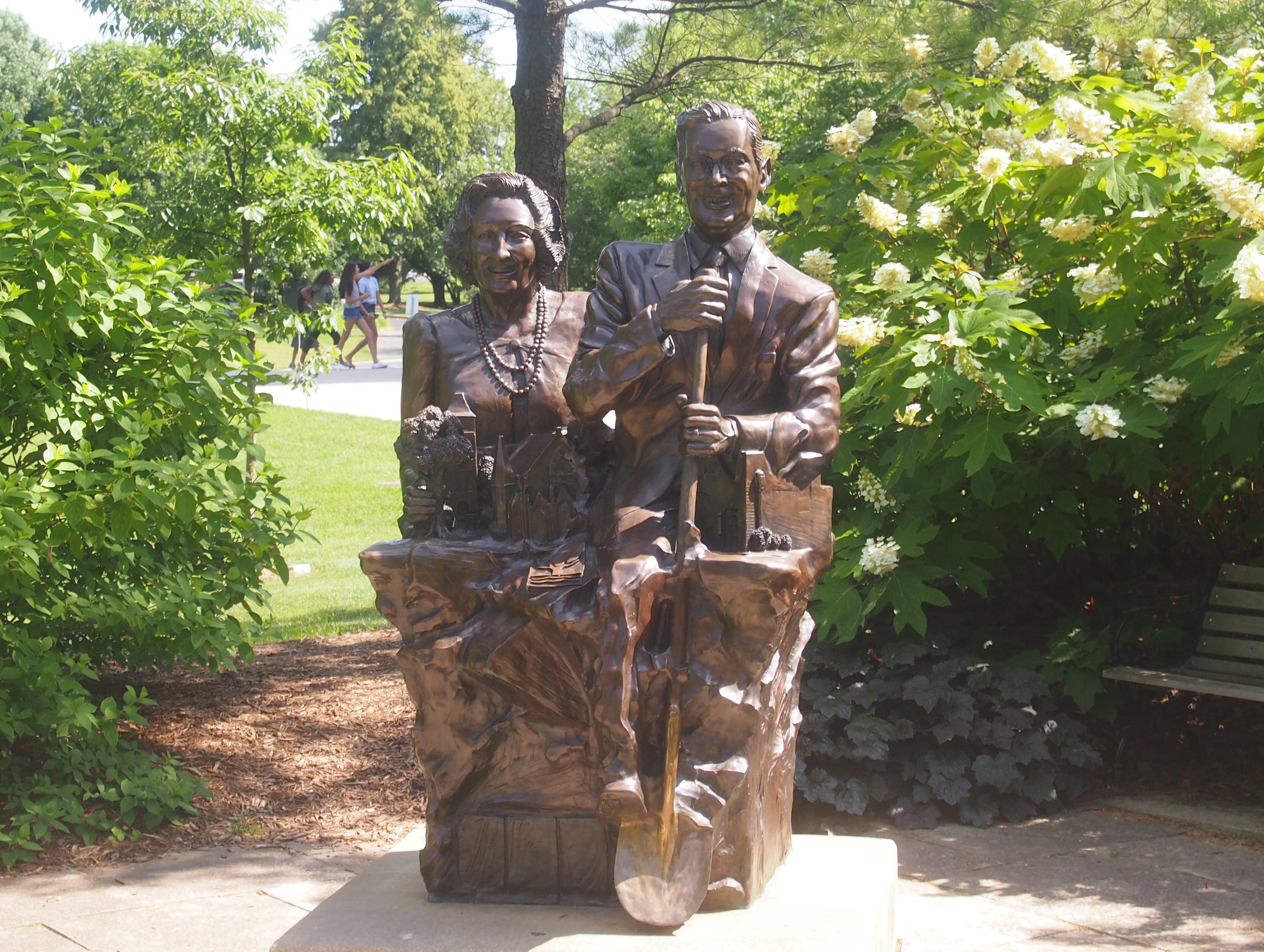
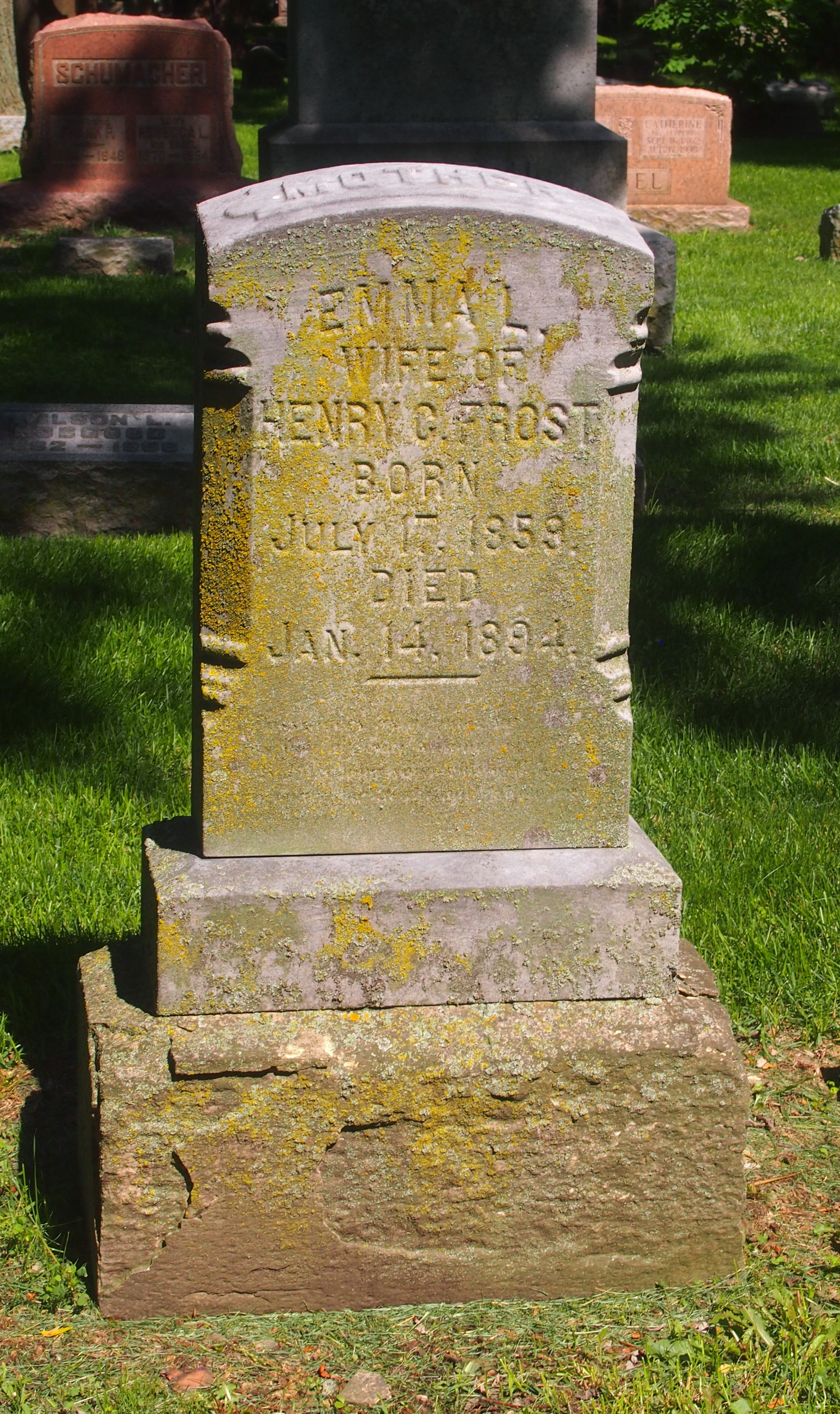
Mount Carmel Cemetery, Hillside

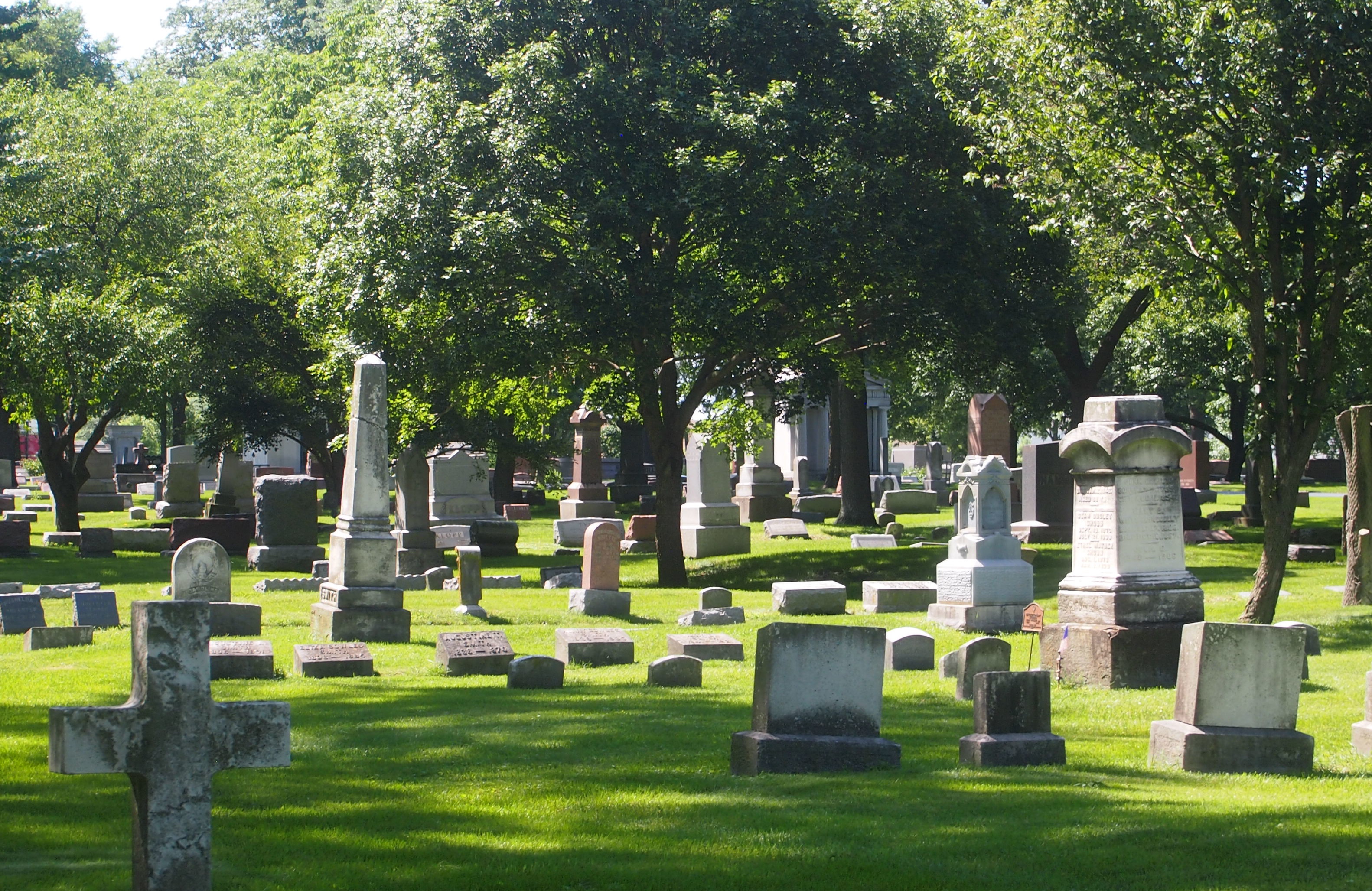
Demographic note: a lot more people reside in Mount Carmel Cemetery in west suburban Hillside, Ill., than in the village itself. The cemetery has about 226,000 permanent residents, while the village has only about 8,100 (living) people. But the advantage goes to the living, of course. For instance, they can vote in Cook County elections; most of the dead people can’t.

I’ve known about Mount Carmel for years, but only got around to visiting last week, on a cool and partly cloudy afternoon. The cemetery is thick with upright stones —

Mount Carmel Cemetery, Hillside ILMount Carmel Cemetery, Hillside IL… funerary art —

Mount Carmel Cemetery, Hillside ILMount Carmel Cemetery, Hillside… and mausoleums. In fact, there are a lot of family mausoleums there, about 400, including these three.
Mount Carmel Cemetery, Hillside ILAt Mount Carmel, one learns that the Lord is a Cubs fan.
Mount Carmel Cemetery, Hillside ILOn a hillock in the middle of the cemetery is the Bishops’ Chapel, or Bishops’ Mausoleum, but in full the Mausoleum and Chapel of the Archbishops of Chicago, complete with Gabriel blowing his horn.
Mount Carmel Cemetery, Hillside IL bishops' mausoleum and chapelInside are the remains of seven bishops, archbishops and auxiliary bishops of Chicago, mostly recently Joseph Cardinal Bernardin, who was entombed in 1996. I remember in the fall of ’96 seeing his funeral procession cross the Michigan Ave. Bridge from an office window in 35 E. Wacker, where I worked. Presumably they were headed for Mount Carmel.

The book Mount Carmel and Queen of Heaven Cemeteries by Jenny Floro-Khalaf and Cynthia Savaglio gives quite a lot of detail about the Bishops’ Mausoleum, which was completed in 1912. The cemetery itself was established with the new-born century in 1901, long before the Eisenhower Expressway ran to its north, and probably when Roosevelt Road to the south — not yet called that, but 12th St. in the city at least — was very rudimentary indeed.

“[The chapel] was the brainchild of Chicago’s second archbishop, James Quigley, who oversaw its construction,” Floro-Khalaf and Savaglio write. “He engaged a local architect, William J. Brinkmann, who came up with the simple, Romanesque style that embodies the building’s outline. However, in keeping with the aesthetic tastes of his predecessor, Patrick Feehan, Quigley engaged one of the most famous architects of the day, Aristide Leonori, who designed the building’s breathtaking interior… Leonari executed a design reminiscent of Rome in marble and mosaic.”
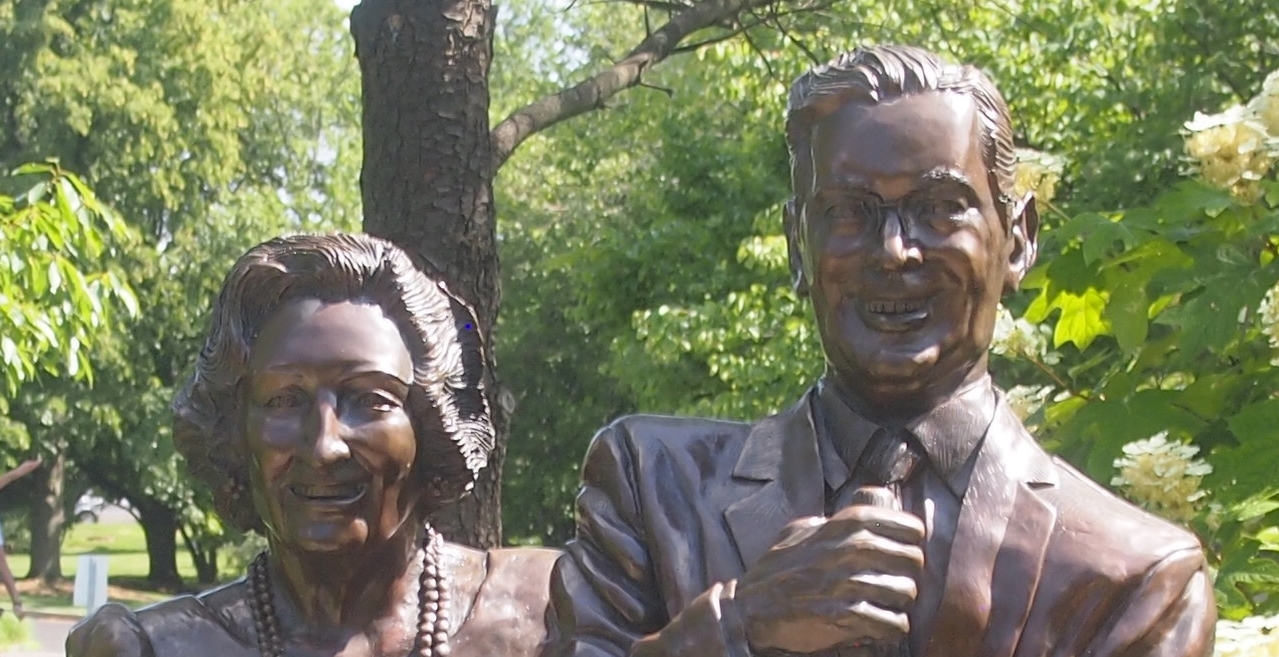
A locked door was as close as I got to the breathtaking interior, for which I blame wankers who would do harm to it. But over the door, you’re reminded that Quigley built the place.

Many Italian names dot the cemtery’s landscape. Benedetto, Bernardo, DeVito, DiGiovanni, Felicetti, Gazzolo, Genna, Mazzitelli, Salerno, Serritello, Truppa, Perazzo, Porcaro, Porzio, and Viviano were among those I saw, though there was a fair number of Irish names and others mixed in.

One name I didn’t see was Capone. If I’d done any research beforehand, I would have known where to look for Al Capone. The cemetery doesn’t guide visitors to his grave, unlike the signs posted to direct you to the Wright Bros. at the Woodland Cemetery in Dayton or the Hunley crews in Magnolia Cemetery in Charleston. Maybe some other time.
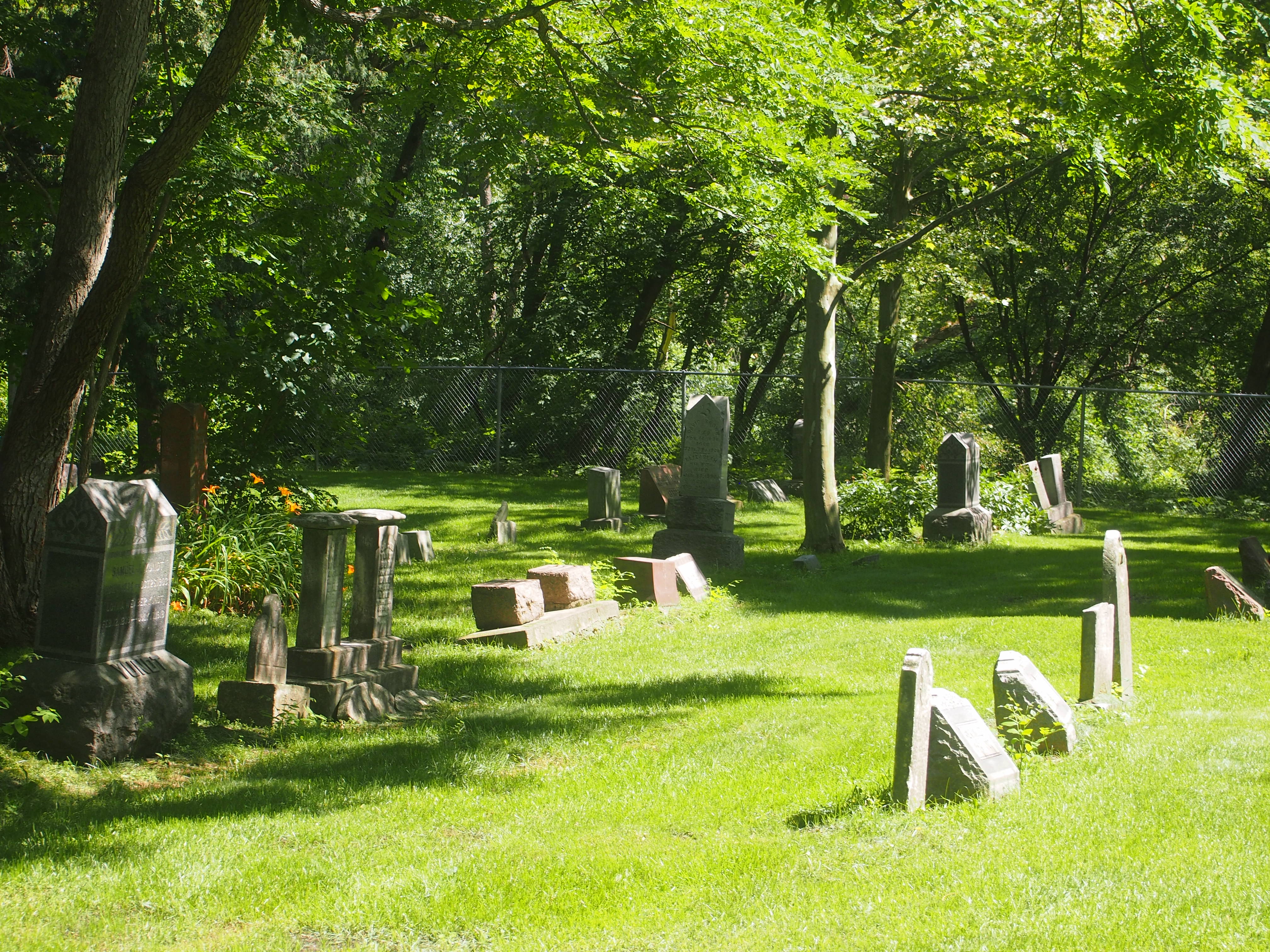
Other mafioso are buried in Mount Carmel, though not as well known as Capone any more. But their stories are no less lurid. Such as Joseph “Hop Toad” Giunta, who ran afoul of Capone in a particularly bloody way, or so the story goes. I didn’t see his grave, either.

Find a Grave says, “He was a high ranking member of the Capone gang who formed a secret alliance with Al Capone enemy Joe Aiello. Giunta planned to kill Capone and take over his operations, and enlisted the help of Capone triggermen John Scalise and Albert Anselmi with the promise of higher positions when Giunta was in power.

“Capone found out about the plan and invited Giunta, Scalise and Anselmi to a dinner party. During dinner Capone brought out an Indian club he’d received as a gift and proceeded to beat the three men to near death. Capone then allegedly finished the job with gunshots…”

Eda Wade’s Malcolm X College Doors

After leaving the Aon Center, but before leaving downtown last week, I popped over to the Chicago Cultural Center on Michigan Ave., originally completed in 1895 as Chicago’s main public library.
Chicago Cultural CenterIt’s a fine old repurposed building. Whenever I have a few moments and I’m in the area, I like to go in. For the striking staircase at the south entrance, for one thing. Or the building’s splendid GAR Memorial Hall.

The Cultural Center also features a changing assortment of art exhibits. By chance this time I happened across the murals of Eugene “Eda” Wade, which he painted on the steel doors at Malcolm X College, one of the City Colleges of Chicago, from 1971 to ’73.

According to the exhibit, “the inner-staircase door murals at the former Malcolm X College are one of the hidden gems of the Black Arts movement in Chicago, and a remarkable public-art achievement that went largely unnoticed at the time — except to the college’s students, faculty, staff and administrators.

“The 32 double-sided sets of 10′ x 4′ steel doorways were pained by artist-in-residence Eugene “Eda” Wade… At the behest of Malcolm X College president Dr. Charles G. Hurst Jr., campus projects coordinator Rosa C. Moore invited Eda, later a longtime art professor at Kennedy-King College, to paint the institution’s doors ‘so they wouldn’t look like solid black prison doors.’ ”

Solid black, not at all. More doors should be this interesting.

Eda Wade door

Eda Wade doorEda Wade doorEda Wade door“Along with images that related to department floors (architecture/engineering, sports/athletics, etc.), jazz, and militancy, many of the murals depict the links between ancestral heritage — expressed through ancient Egyptian and West African figures — and an urban present…”

As I was looking at the doors, I wondered, why are they here? Why aren’t they at Malcolm X College still? Then I read a little closer, and found out that the 1968 Miesian building at 1900 W. Van Buren St., long visible from the Eisenhower Expressway, was demolished last year, replaced by a spanking new building nearby. Somehow I missed hearing about that. Glad the doors were saved.

More about them is posted by the indefatigable Jyoti Srivastava at Public Art in Chicago.

Views from Aon

Recently I attended an event at the Mid-America Club, which happens to be on the 80th floor of the Aon Center, formerly known as the Amoco Building, and if you go back far enough, the Standard Oil Building (for some time after ’73, when it was completed). At 83 floors and 1,136 ft., it’s the third tallest building in Chicago, but that makes it only the 52nd tallest in the world in our time, when China and the UAE have decided that really tall buildings are just fab.

Aon Center 2017

Getting to the 80th floor, I encountered an elevator system I’d never experienced before. There are touchpads at each elevator bank, and you press the number of the floor you want to go to. Then the machine tells you which of the elevator cabs to board to go express to that floor. There are standard elevator buttons inside the cab, but they’ve been covered over by a hard plastic case and are inaccessible. Guess this makes inter-floor transit more efficient. For all I know, this kind of system could be common and not exactly new; I don’t go into that many very tall buildings any more.

I’d been up to the Mid-America Club before, though I couldn’t remember exactly when. Probably as long ago as the early 2000s. It offers a mighty 360-degree view, though this time around it was obscured some by overcast skies.

This is looking west, down at the top of the Prudential Center. Pru II, vintage 1990, has the pointy spire, maybe for zeppelin mooring. Pru I, vintage 1955, is the shorter structure immediately to Pru II’s left, though it was the tallest building in Chicago when new.
Prudential Center II Chicago spireUp and to the right, and on the river, with the cupola on top, is 35 E. Wacker, a handsome ’20s building in which I had an office for a few years.

Also seen from this vantage is 150 N. Michigan. Years ago, I ventured onto the exterior of that building, at a place marked by the red oval. It’s a lot safer than it looks like here.

150 N. Michigan Ave.

To the northeast, the entirety of Navy Pier, with part of Chicago’s massive Jardine Water Purification Plant behind it. Largest in the world by volume, I’ve read: nearly one billion gallons of water goes through per day.
Navy Pier from aboveOne of the pictures posted here is shot from Navy Pier, looking back in the direction of the Aon Center (and a lot of other buildings).

To the north, a large chunk of downtown off in the distance: North Michigan Ave. and Streeterville.
North Michigan Ave and StreetervilleTo the south, and looking nearly straight down, is Pritzker Pavilion. As seen from ground level in this posting.
Pritzker PavillionThe ribbon snaking off to the left is a pedestrian bridge. Officially, the BP Bridge, one of the projects funded by the oil company before its really big sponsorship of a hole in the Gulf of Mexico. Frank Gehry, who did the Gehry-like bandshell, did the bridge too.

Finally, the Bean, or “Cloud Gate.”
The Bean from the airFrom this vantage, looking like a bead of quicksilver surrounded by ants.

April 6, 1917

Been 100 years exactly since the United States entered the Great War. How could I forget to mention that?

Found this Pathé clip not long ago. Copyright is 1960, so a little late for this kind of newsreel-style March of Time-like bit of work. Can’t imagine anyone doing such a thing in 1970. Worth watching for the images especially, helpfully cataloged by the poster.

Interesting lines: “Never again would we see our entry into a major conflict excite so many to such heights of elation. Naive? Probably. But here was a generation of young men not yet saturated by the paralyzing variety of self-analysis and the mock sciences. They believed.”

Birds Above, Mud Below

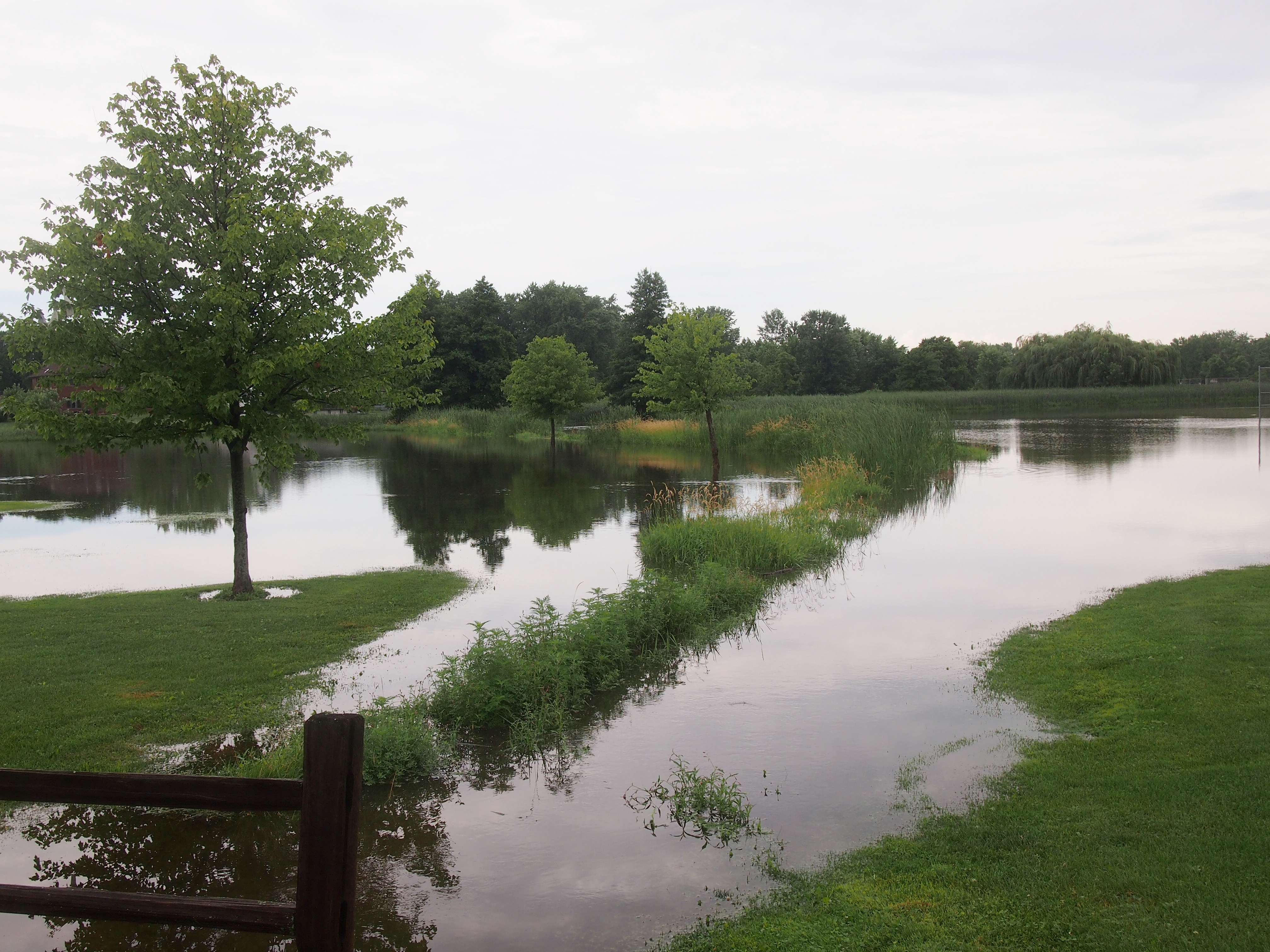
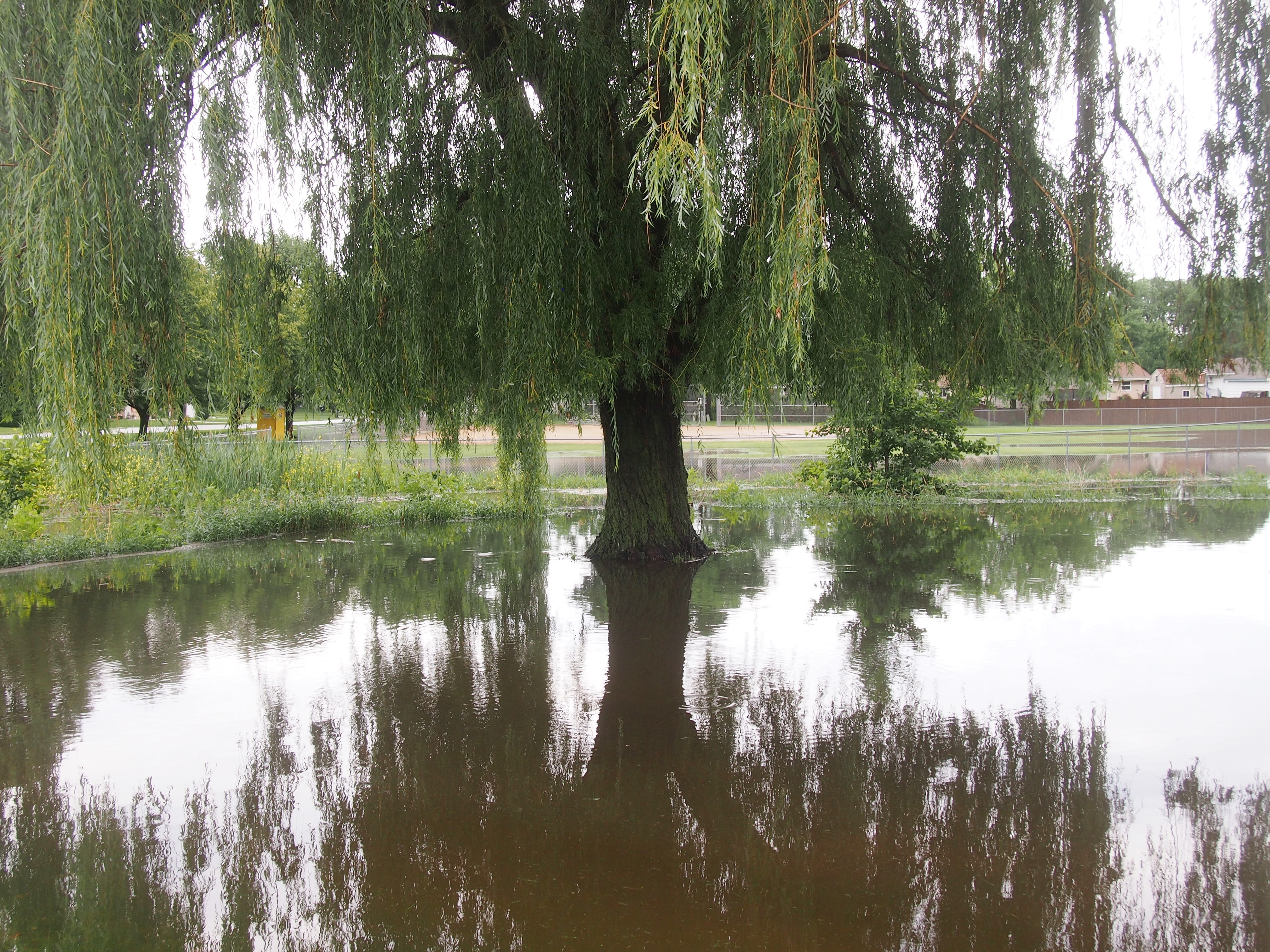
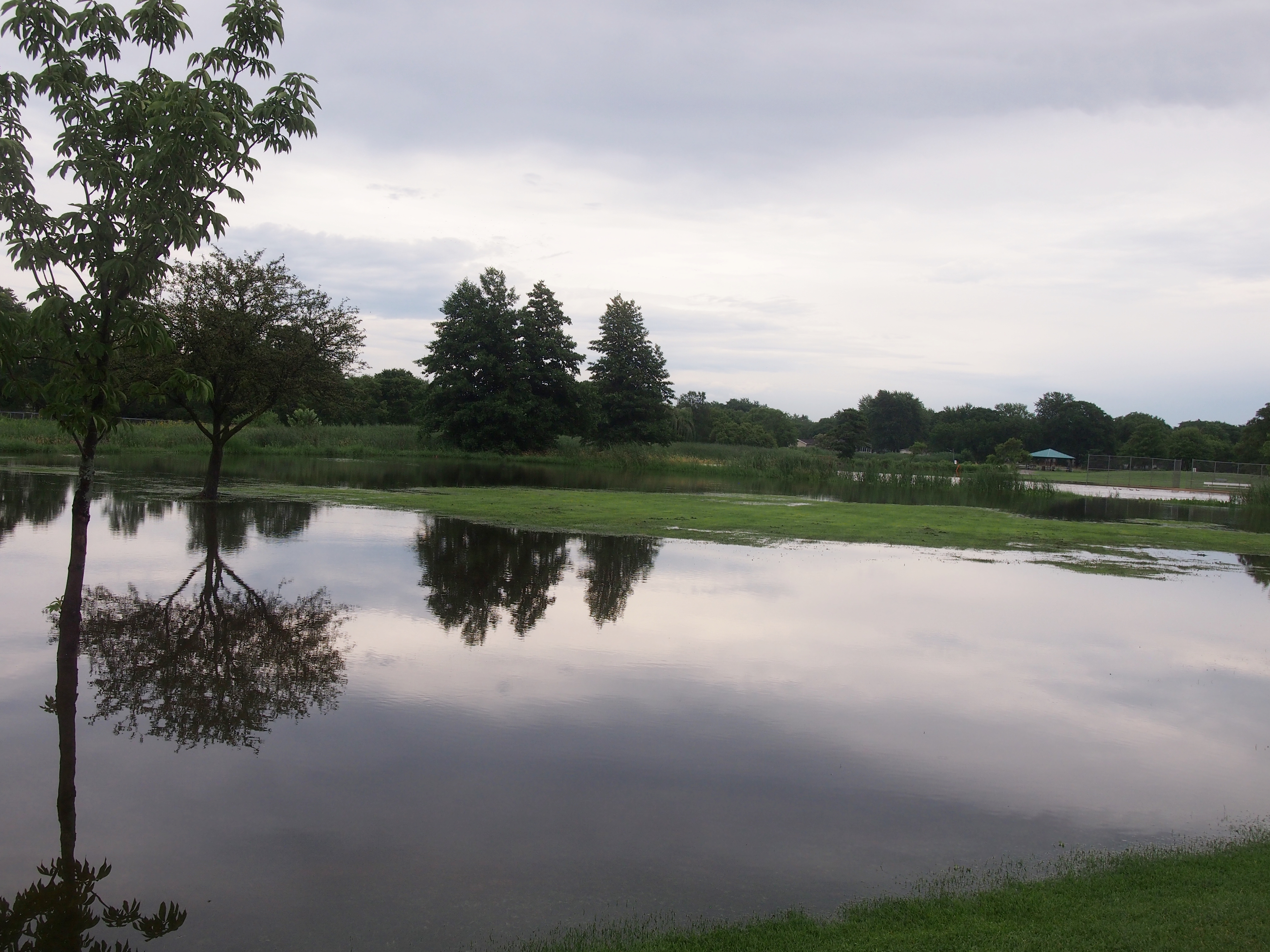
More rain, more mud. Such is early April this year. At least the grass is green, even where it’s underwater.

The season also means active birds. At about 2 this afternoon, I was out on my deck — but not for a leisurely sit-down, which was pleasantly doable on Saturday — and noticed a lot of birds in the tree overhead. Who sounded like this.

At moments like that, you feel like you’ve stepped into The Birds.

I saw The Birds on television when I was very young, sometime in the late ’60s. I didn’t see it again for about 25 years, though in the interim I managed to see The 39 Steps, Lifeboat, Notorious, Rope, Strangers on a Train, Dial M for Murder, Rear Window, The Trouble With Harry, The Man Who Knew Too Much, Vertigo, North by Northwest, Psycho, Marnie, and even Topaz (Hitchcock’s Henry VIII; can’t really recommend it). But I never got around to seeing The Birds as an adult until the early ’90s.

From the first time I remembered the birds pecking a woman to death, and a guy lighting a cigarette and blowing himself up at a gas station, as an indirect victim of the birds. I didn’t remember that Suzanne Pleshette played the pecked woman. Hey! That’s Emily Hartley being offed by birds!

Also, somehow I had it in mind that the movie depicted a worldwide attack by birds. So I was a little surprised to learn upon second viewing that the movie was about a local incident. In the hands of a lesser director — let’s say much lesser, like M. Night Shyamalan — the attack would have indeed been worldwide, and CGI birds would have destroyed the Statue of Liberty, Big Ben and the Eiffel Tower, just for the birdy thrill of it all. Hitch would have had none of that.

Combat Boots, Crimped Hair and Chokers are Out

The following email showed up in one of my inboxes recently. How this happened, I’m not sure. I have no professional use for this information, but I will post it here. It came without introduction or other explanation from someone named Duane.

If pearls, full skirts and tiaras are your version of a perfect prom—you’re in luck.
According to new data from online shopping site Ebates, full skirts (25 percent), a tiara (24 percent), gloves (20 percent) and pearls (18 percent) are America’s favorite retro prom fashions.

These retro fashion statements are also what Americans say their teens are planning to wear this prom season:

Pearls—23 percent
Tiara—21 percent
Full skirt—20 percent
Gloves—14 percent

While it seems that the 50’s and early 60’s were the favored era for prom fashion, Americans admitted that the 80’s were the worst. Combat boots (7 percent), crimped hair (8 percent) and chokers (11 percent) were the least favorite fashion choices.

Dang, it’s disappointing to learn that combat boots are so low on the list of prom fashion choices. Fatigues might be higher, though. The release doesn’t say.

Glad to learn that ’80s was picked as the worst retro fashion decade. The ’70s usually catches that slander. That was a poor decade for clothing, I suppose, but what people actually wear, as opposed to what people who care about fashion think they should wear, isn’t any better now than 40 years ago. Go to any large public event in the summer and see.

Mud Dogs

Spring rains returned today. The earth was still a little soft, so that meant more mud. Dogs are fond of mud.

There’s a story about the mud on her snout (not as visible in this shot as to the eye). It involves Psychodog, a neighborhood animal that not only always barks viciously at us from its back yard as we walk by (on a public walkway), it keeps barking until we’re very far out of range. This contrasts to other neighborhood dogs, who either know us and thus don’t bark, or who bark for a little while as we wander by.

Large puddles formed in Psychodog’s back yard during last week’s rain, along the fence line. That meant that if the animal were turned loose, it would charge across the yard, barking its vicious bark — straight into the puddles. We were on the other side of the fence. I like to think my dog pees there to annoy Psychodog.

I didn’t think the owners would turn Psychodog loose to get so muddy, but I was wrong: out the animal comes, straight into one of the sizable puddles. Splash! Some of the muddy water comes through the chain-link fence and hits my dog.

The Salvador Dali Museum Bench

On April 2, 2005, we visited the Salvador Dali Museum in St. Petersburg, Fla. As wordy as I was before I published pictures at BTST, I didn’t write much about the place. “Housed in a mid-sized, appropriately modernist building, the Dali Museum is all Dali, all the time, as it should be,” was one line. I also considered how the museum came to be in central Florida.

As far as I can tell, I didn’t take a picture of the building. I did take a picture of bench on the grounds. Lots of people have taken pictures of it.

Salvador Dali Museum benchI didn’t realize until I read more about the place today that the Dali has been in a new building since 2011, and apparently the bench was moved to be near the new structure. I don’t remember whether the giant Dali mustache was there in ’05. You’d think I’d remember a thing like that, but memory is a eccentric thief, taking things you’d never expect.

Regarding the new building, the museum web site says, “Designed by architect Yann Weymouth of HOK, it combines the rational with the fantastical: a simple rectangle with 18-inch thick hurricane-proof walls out of which erupts a large free-form geodesic glass bubble known as the ‘enigma.’

“The Enigma, which is made up of 1,062 triangular pieces of glass, stands 75 feet at its tallest point, a twenty-first century homage to the dome that adorns Dali’s museum in Spain. Inside, the Museum houses another unique architectural feature – a helical staircase – recalling Dali’s obsession with spirals and the double helical shape of the DNA molecule.”

A Poster, A Sign & A Lot of Bumper Stickers

Persistent rain starting last night and on through most of today. Mud season has started. But it also looks like the grass is greening.

Spotted on a telephone pole on Randolph St. on the near West Side of Chicago late last week. Looks like someone added the toothbrush mustache.

anti-Trump poster March 2017Spotted in Itasca, Ill., also last week, sometime after the presumed wedding. Glad that “Bubba” isn’t dead as a name.

Itasca Baptist Church 2017Spotted at a rest stop on I-57 between Champaign and Chicago.

Been There Bumper Stickers 2017I can’t quite make out all of the stickers, and there are more on the non-visible side of the van, but included in the destinations are the Kennedy Space Center, California, Nevada, Laughlin, NV, Key West, Roswell, NM, Wyoming, Mackinac Island (two), Naples, FL, Ventura, CA, Texas, the UP (more than one, including the 906 sticker), North Dakota, Piggly Wiggly, the Full Throttle Saloon (Sturgis), Route 66, Mississippi, Montana, Mount Rushmore, the Crazy Horse Memorial, and a sticker that says, “There’s a place for all God’s creatures. Right next to the mashed potatoes.”

Alma Mater, UIUC

I took Lilly back to school on Sunday. I didn’t do quite as much of a walkabout on the University of Illinois at Urbana-Champaign campus as I did in January, but I was determined to pause on the way out to see one thing: Alma Mater, a sculpture by Chicago’s own Lorado Taft.

Alma Mater UIUCAccording to UIHistories Project by Kalev Leetaru, “Unveiled on Alumni Day, June 11, 1929, the statue depicts ‘a benign and majestic woman in scholastic robes, who rises from her throne and advances a step with outstretched arms, a gesture of generously greeting her children.’ Behind her stand the twin figures of Labor and Learning, joining hands in a bronze incarnation of the University’s motto.”

This is Labor. The muscular man in the work duds.
Alma Mater UIUCLearning, in Classical garb. It would be more interesting if the costuming were reversed, since labor involves learning and learning involves labor, but never mind.
Alma Mater UIUC

Older pictures of the statue depict a green patina, acquired over time. During the 2010s restoration of the sculpture, that was stripped away, so presumably it now looks a lot like it did when new.

“Conceived in 1922, Alma Mater was cast in 1929 by the American Art Bronze Foundry and paid for by donations by the Alumni Fund and the classes of 1923-1929,” notes Leetaru. “It was crafted by Taft as ‘his gift to the University in commemoration of the fiftieth anniversary of his graduation.’ Alma Mater rests on a granite pedestal conceived by Charles Platt.

“The statue was originally placed directly behind the Auditorium, and at night spotlights cast twin shadows of Labor and Learning onto the rear wall of the Auditorium, making them truly larger than life. On August 22, 1962, the Alumni Association moved the sculpture to its present location in front of Altgeld.”

Altgeld being Altgeld Hall, named after the Illinois governor. There’s a bell in that tower, and I took this picture as it was ringing 4 o’clock on Sunday.

building behind Alma Mater UIUC“Completed in 1897, Altgeld Hall, originally known as the Library Building, was designed by Nathan Ricker and James McLaren White…” writes Leetaru. “From 1955 to the present, the Department of Mathematics and the Mathematics Library have called the building home.

“The building is an example of Richardsonian Romanesque architecture and the external stonework is pink limestone. The original pink hue may still be seen in the interior of the East entrance.”