The Last Gasp of the Federal Works Agency

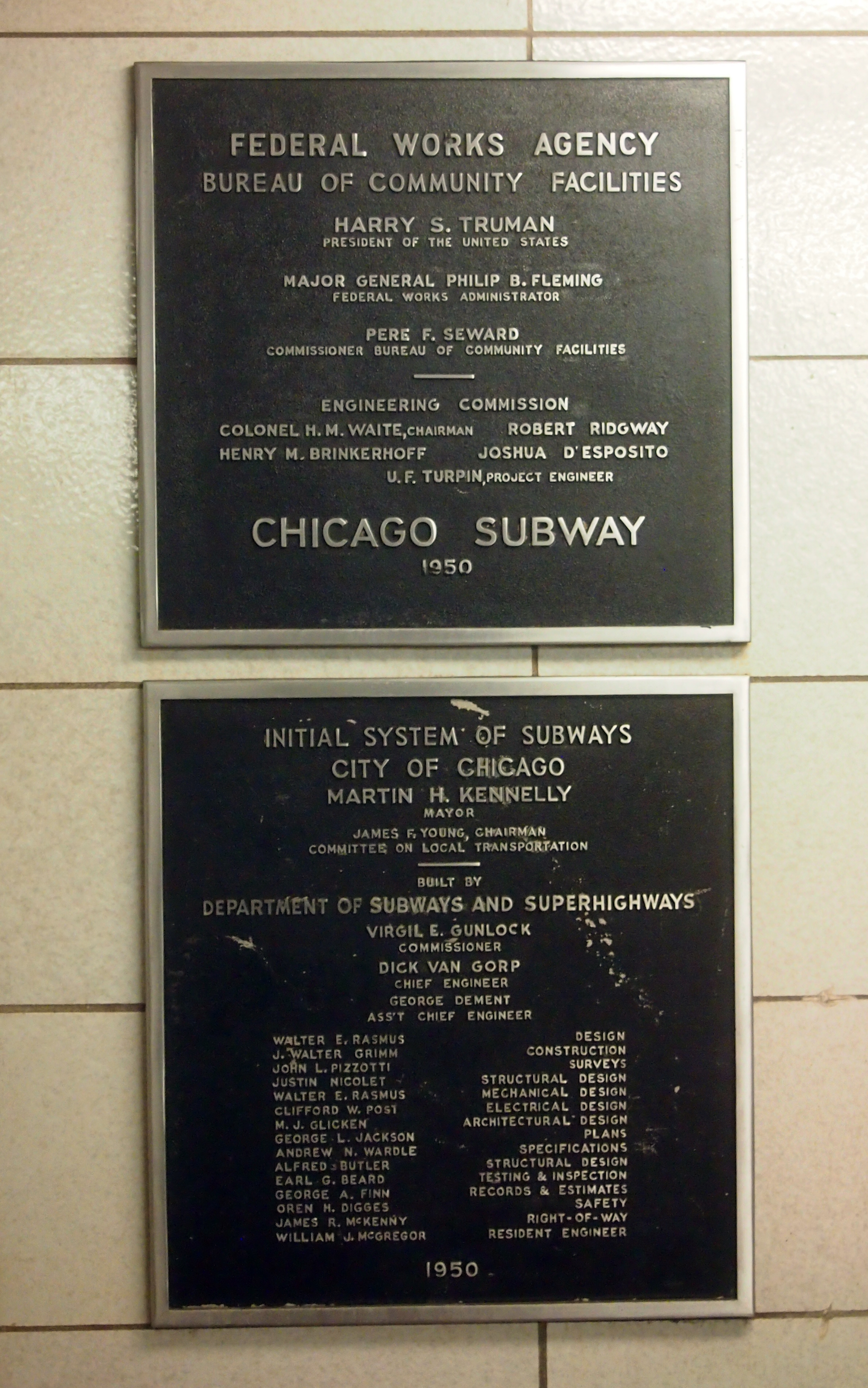
Not something you see everyday: a plaque marking a project by the Federal Works Agency. But there it was last weekend for me to see, at the Chicago subway station of the CTA Blue Line (O’Hare-Forest Park).

Federal Works Agency plaque, Chicago StationThe Federal Works Agency only lasted until 1949, but it’s a safe assumption that the subway construction project started under its aegis in the late ’40s, so it was thought fitting to use the name even in 1950. The agency had been created as a part of a major federal government reorganization in 1939, authorized by Congress and overseen by the executive branch.

To quote President Roosevelt, in his message to Congress on the Reorganization Act of 1939: “[The FWA will include] the Bureau of Public Roads, now in the Department of Agriculture; the Public Buildings Branch of the Procurement Division, now in the Treasury Department, and the Branch of Buildings Management of the National Park Service… now in the Department of the Interior; the United States Housing Authority, now in the Department of the Interior; the Federal Emergency Administration of Public Works; and the Works Progress Administration, except the functions of the National Youth Administration.”

Various additions and subtractions were made to that list until 1949, when the FWA’s remaining functions were parceled out to other agencies, as well as the newly created General Services Administration. As federal bureaucracies go, the FWA had a fruit-fly lifespan.

With a 10-year run, there couldn’t be that many FWA plaques. Certainly not as many as the GSA — nearly 70 years now — or even the WPA or the CCC, which also had short runs, but were really busy in their heydays. So maybe in the hobby of plaque-spotting the FWA is a nice find.

If there is such a hobby. Surely someone looks for plaques in a more enthusiastic or systematic way than I do. And is Blue Plaque-spotting a thing in the UK, or does this Spectator article merely refer to casually walking by them?

The Driehaus Museum

A fine Solstice. Clear and not particularly hot, followed by a short cool night.

The least plutocrats can do for posterity is build lavish, highly aesthetic houses that, decades or even centuries later, are restored and open to the public in one way or another. I suspect modern magnates, business tycoons, and captains of industry are mostly failing in this regard.

Late 19th-century and early 20th-century plutocrats, on the other hand, did not shrink from their duty along these lines. They might have imagined they were celebrating their worldly success in a highly visible way, and maybe they were, but sic transit gloria mundi. Beyond their own time and concerns, they were leaving something for later hoi polloi to ogle.

I will give Richard Dreihaus his due, however. I’m not sure he counts as a plutocrat, but he is a wealthy fund manager of our time. He might not have built a lavish house — or maybe it’s still private — but in any case, he managed to restore the Samuel M. Nickerson House at 40 E. Erie St. on the Near North Side of Chicago to its Gilded Age glory.

Now it stands, stocked with fine art and objets d’art, for the hoi polloi to see (for a fee). Hoi polloi such as Yuriko and I on Sunday afternoon, when we visited the Richard H. Driehaus Museum, which occupies the Nickerson House.
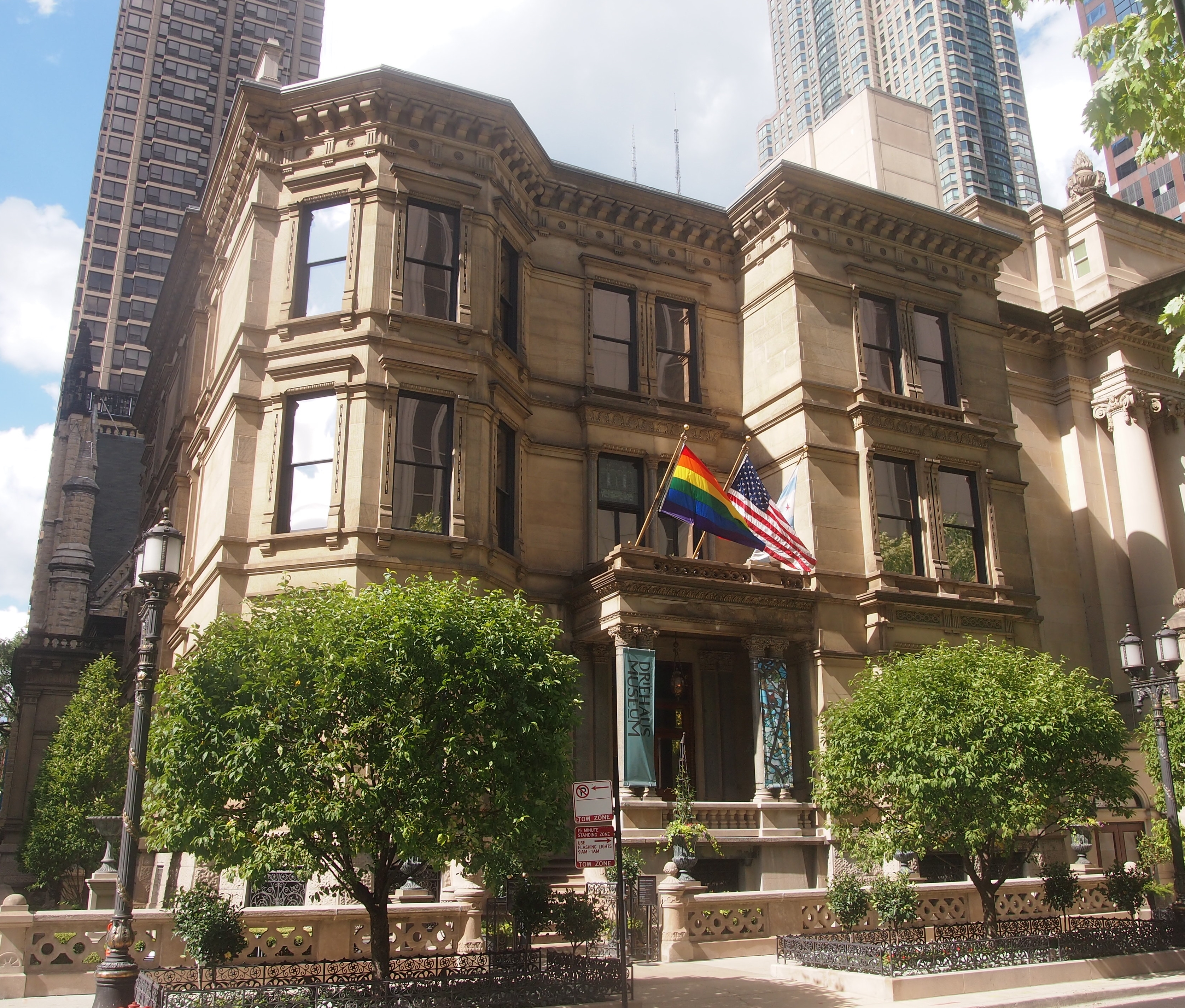
Richard H. Driehaus Museum

Chicago magazine in 2007 on the philanthropist: “Driehaus, the founder of Driehaus Capital Management… is no ordinary preservationist. He is a man who can afford to indulge his passions — for art, for parties, but mainly for restoring historic architecture — on a boundless scale, as anyone who has visited his many residences and offices around the world can attest.

“In the past two decades, Driehaus has emerged as one of Chicago’s most prominent advocates for historic preservation. He has also taken a leading role in encouraging the city and public institutions and groups to adopt a more design-centered approach to civic projects.”

Driehaus bought the building at 40 E. Erie St. in the early 2000s, when it was being used as an art gallery, and spent a good deal restoring it, including cleaning the exterior, which I’ve read was black from a century-plus of pollution. Considering its location on Erie, I’m sure that I walked and rode by the building any number of times in the 1980s and ’90s — and took exactly no note of it.

Since 2011, it’s been open to the public as the Driehaus Museum. I still took no note of it until last year, when I was walking by and saw its sign. Museum? This is a museum? Since when? Even in the Internet age, it’s hard to keep track of things.

Samuel M. Nickerson was a successful banker in early Chicago who tasked Edward J. Burling of the firm of Burling and Whitehouse to build him a mansion, which was completed in 1883. Burling had a long career in Chicago, with many of his buildings destroyed by the Fire.

The Nickerson House rooms feature 17 types of marble, along with onyx, alabaster, carved and inlaid wood, glazed and patterned tiles, mosaics, and Lincrusta, which was brand-new to the United States at the time. During Nickerson’s time, the place was replete with his and his wife Mathilda’s artwork, later donated to the Art Institute. Driehaus not only restored the house to its Gilded Age look, after years as office space and other uses, but made it into museum space for his collection of art from the period.

The museum says: “When the Driehaus Collection was formed during the early 1970s, acquisitions focused primarily on Art Nouveau posters by Alphonse Mucha and his contemporaries. From that essential core, the collection has grown to include master works of design by such Belle Epoque luminaries as Louis Majorelle, the Herter Brothers, Édouard Colonna, John La Farge, Emile Gallé, and Josef Hoffmann. In addition to these important holdings, the Driehaus Collection is one of the country’s leading private collections of works by preeminent American decorative designer Louis Comfort Tiffany.”

The lighting was good for looking, less so for non-flash photography. I got a few half-decent images, mostly of some of the artwork or room details, but not the rooms.

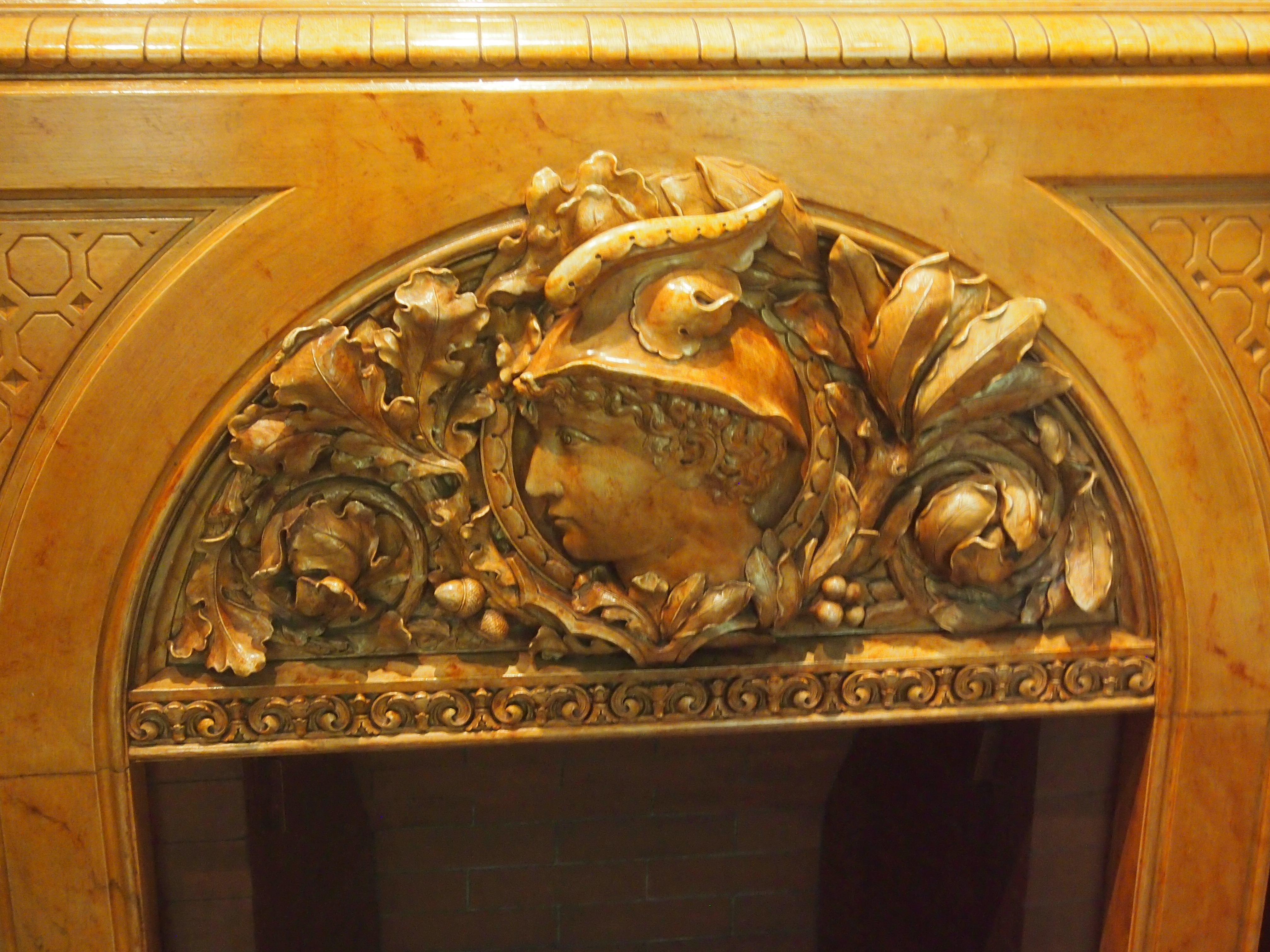
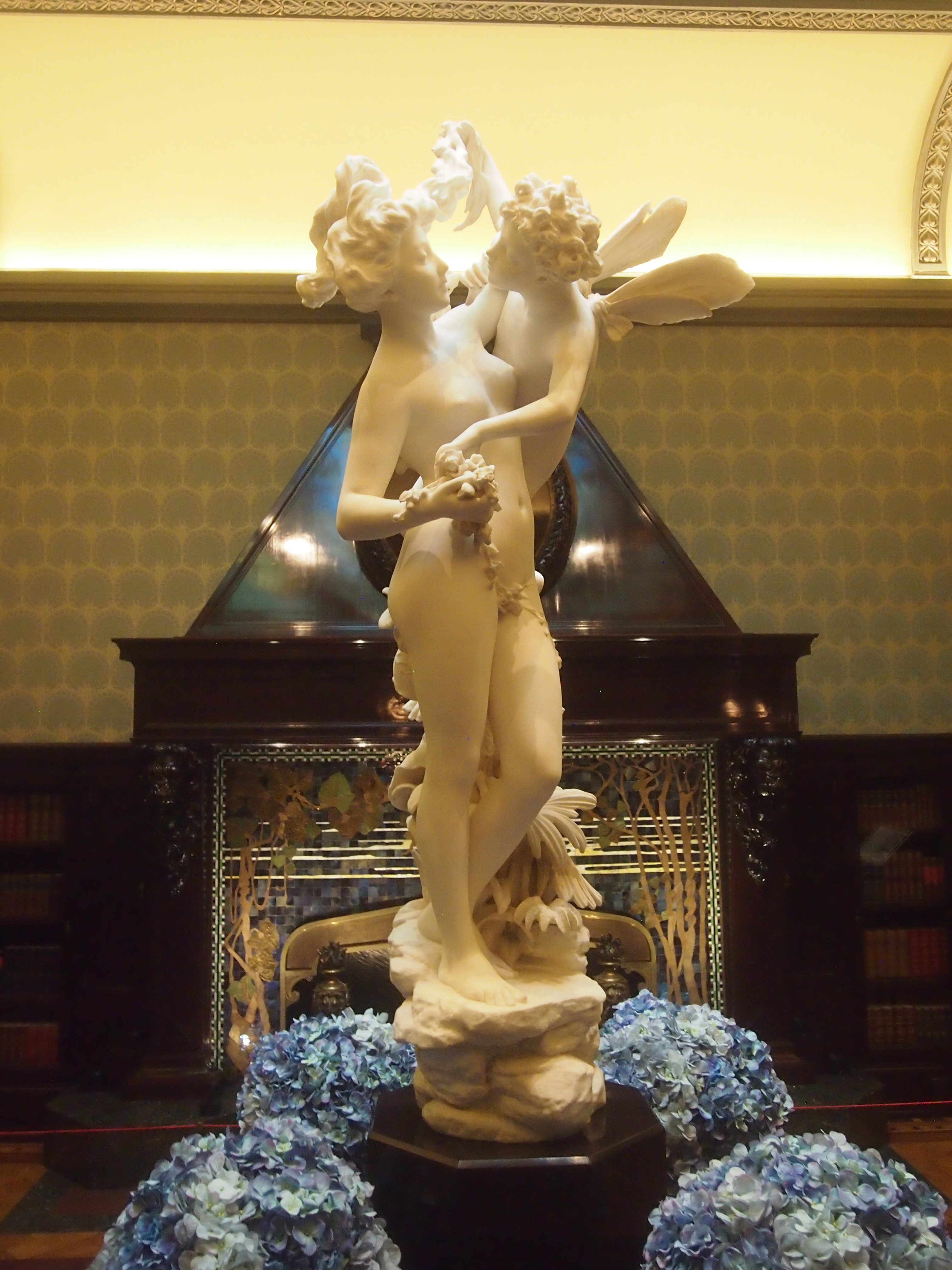
Richard H. Driehaus MuseumRichard H. Driehaus MuseumRichard H. Driehaus MuseumThat statue is in the Gallery Room. Always good to have a reminder of the Psyche and Eros story around. I especially liked the fireplace behind it.
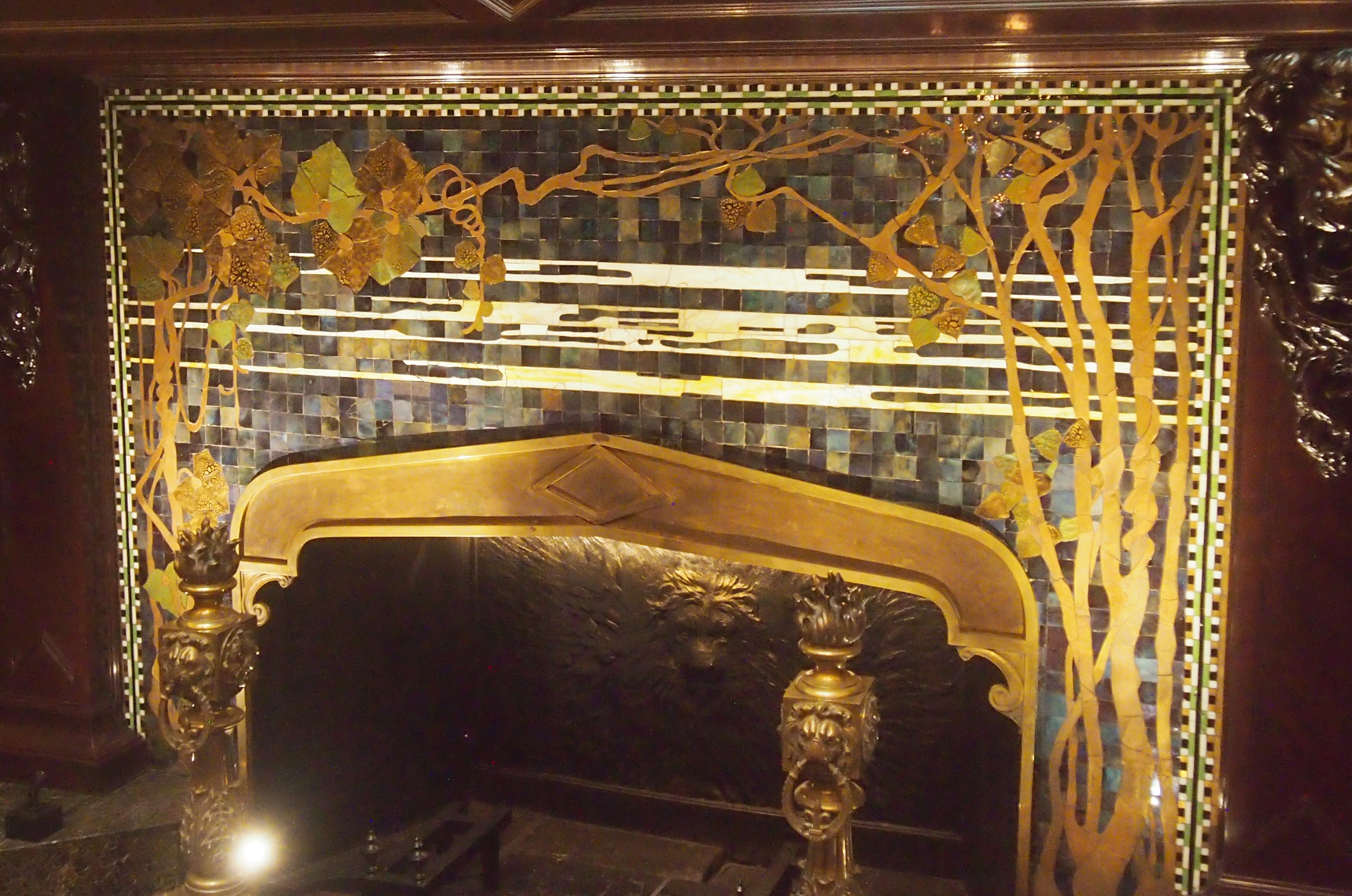
Richard H. Driehaus MuseumThe fireplace was put in by the second owner of the house, paper baron Lucius Fisher. He also had the distinction of commissioning Daniel Burnham to do the excellent Fisher Building, which still stands in the South Loop.

The fire surround, dating from 1901, was by Giannini & Hilgart, done in lacquered cherry and iridescent glass. Remarkably, traces of that operation remain on line. The studio also did the striking glass dome in the same room as the fireplace. Looks like Tiffany, but no.

Whatever else you can say about the Gilded Age, its aesthetics were first-rate, if you had the scratch for that kind of thing. A better look at the interior is this WTTW production, but even so it’s a pale substitute for being there.
St. John Cantius, Chicago

On Sunday I visited St. John Cantius, a Catholic parish church in what’s called the River West neighborhood, east of the Kennedy Expressway and west of the North Branch of the Chicago River. It’s easily accessible via the El, which is in fact a subway by the time you get near St. John Cantius.

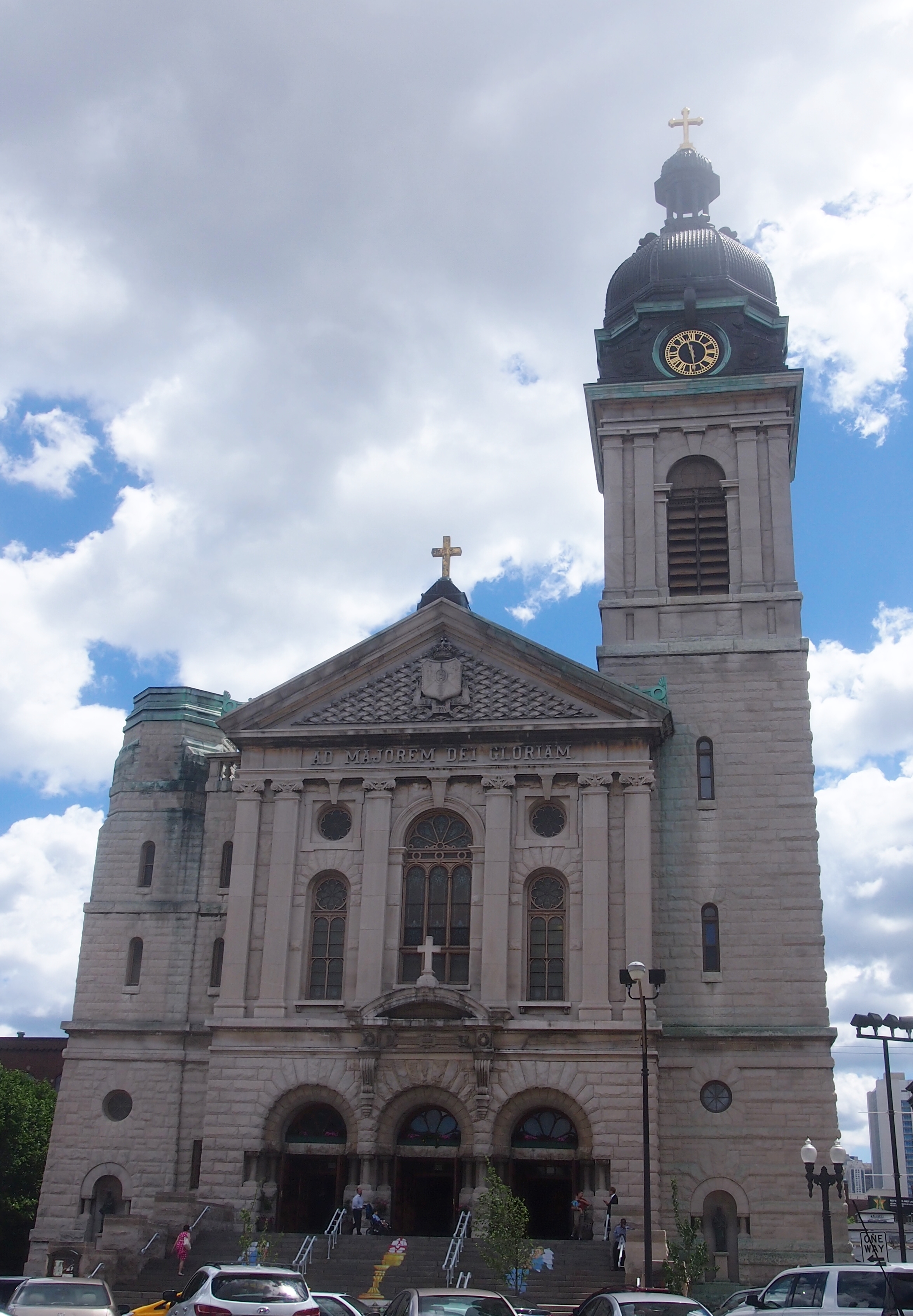
St. John Cantius, ChicagoThe church was part of a wave of Polish-style Catholic churches built in Chicago more than 100 years ago, as the local Polish population expanded mightily. I’d seen a few of these churches before — St. Adalbert and St. Stanislaus Kostka, for instance — but not this one.

“Designed by Adolphus Druiding and completed in 1898, St. John Cantius Church took five years to build,” the church web site says. “The imposing 130 ft. tower is readily seen from the nearby Kennedy Expressway.”
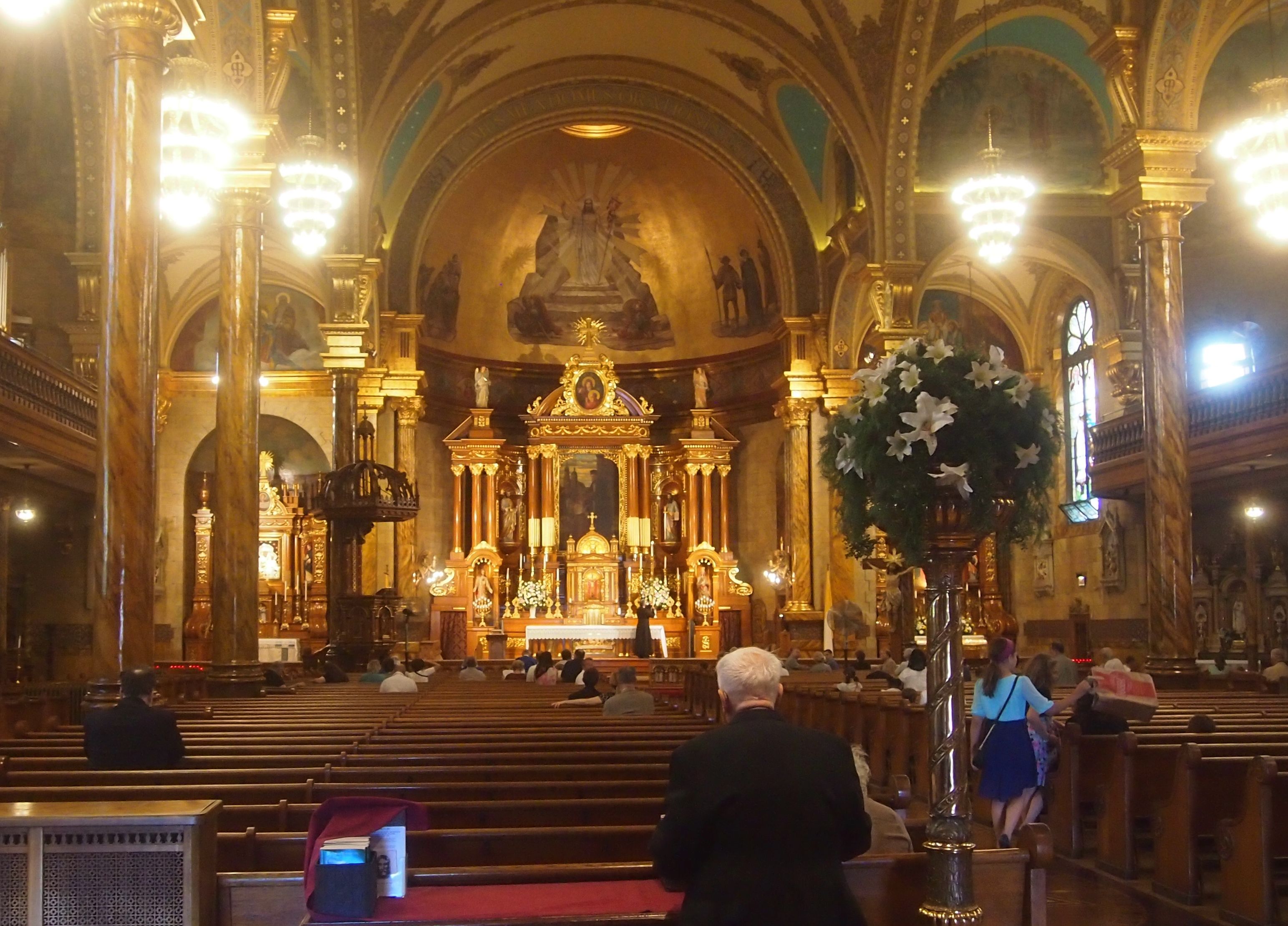
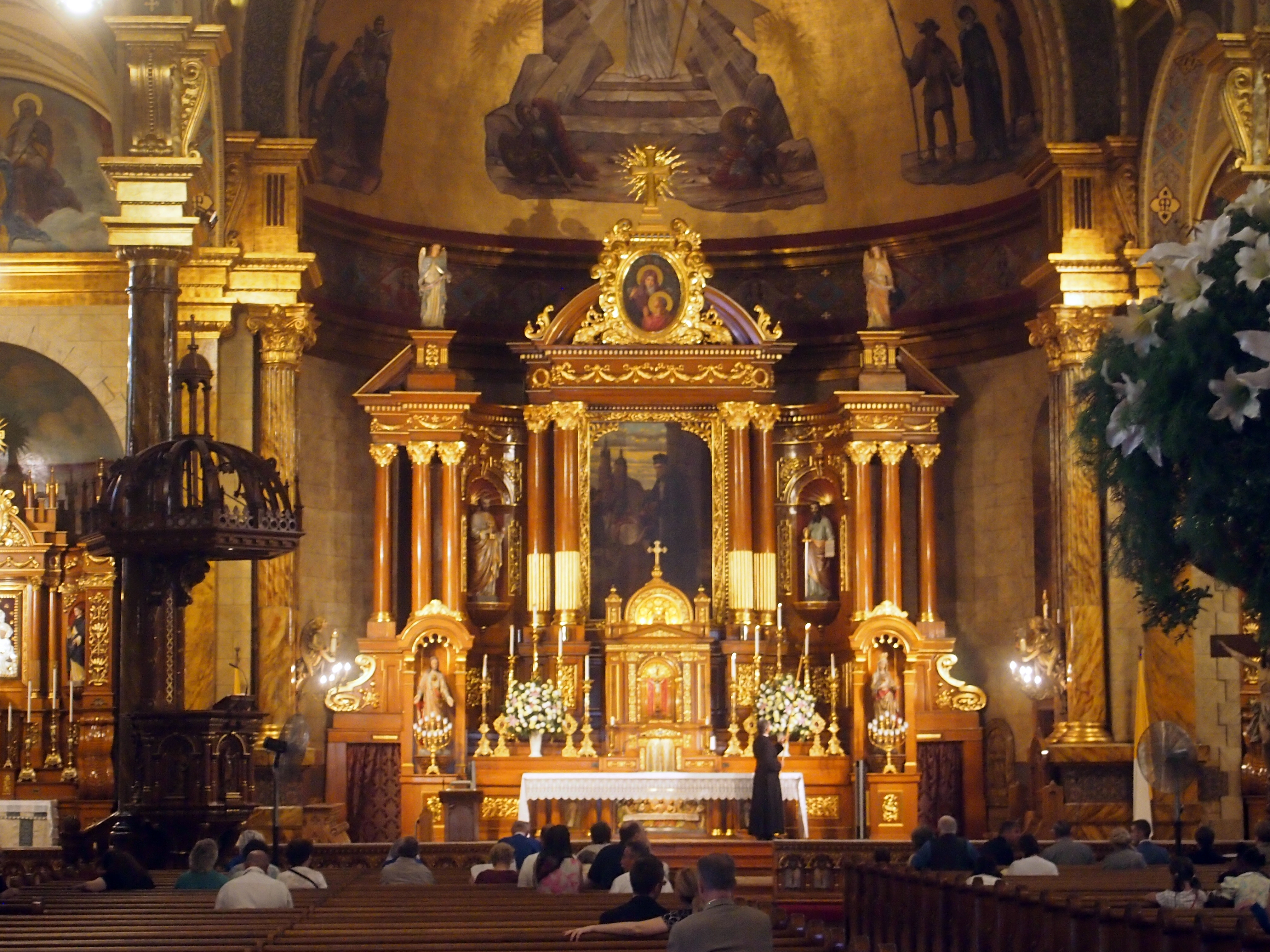
St. John Cantius“The unique baroque interior has remained intact for more than a century and is known for both its opulence and grand scale — reminiscent of the sumptuous art and architecture of 18th-century Krakow. In 2012, St. John’s completed an ambitious restoration, returning the lavish interior to its original splendor.”
St. John Cantius, ChicagoSt. John Cantius, ChicagoI also wanted to visit so I could hear a Latin mass, or part of one anyway. According to the church bulletin, I arrived in time for the Extraordinary Form of the Mass (Tridentine High Mass in Latin). Actually I was a little early, so I sat for a while in a back pew and admired the interior, as a pleasant wind blew in through the main doors and on my back, adding additional texture to the experience.

By the time the mass began, the sizable church was fairly full, though not packed, with a diversity of ages. I haven’t seen that many women cover their heads in quite a while, including some elaborate lace coverings.

Soon the church was filled with music. I was sitting in the back and couldn’t see the choir or the other musicians up in the balcony, but I surely did hear them. I’ve had only spotty exposure to sacred music, but that didn’t keeping me from understanding how astonishingly good it was.

Much more impressive, it turned out, than the priests and their Latin, mainly because I wasn’t within hearing range of much of it. Mostly I heard a hum of words, a few of which I could pick out. Not that I would have understood all of it anyway. Some other time at some other mass I’ll sit closer. My impression is that Latin is a pleasing language to hear.

Regarding St. John Cantius’ music, the church says: “Our Sunday Masses regularly feature Gregorian chant, chanted by our schola cantorum and by the congregation. The parishioners of St. John Cantius are intent on preserving the choral traditions of the Roman Rite which gives Gregorian chant ‘pride of place.’

“Additionally, the people of St. John Cantius work to preserve the patrimony of liturgical music that comes from the Renaissance period and from the Viennese choral tradition. But our choirs also sing modern choral works that are consonant with the Roman tradition of sacred music.” More about the church’s music is on this short video.

Wicker Park, The Neighborhood & Wicker Park, The Park

Juneteenth has come around again. We need more holidays in the summer, and that would be a good one, celebrating human freedom.

We went to the city on Sunday, giving me an opportunity to wander around Wicker Park on a warm but not too hot day. I visited both places of that name. Wicker Park’s both a fashionable area — which it was not 30 years ago, when I first lived in Chicago — and the name of a smallish triangular park within the neighborhood.

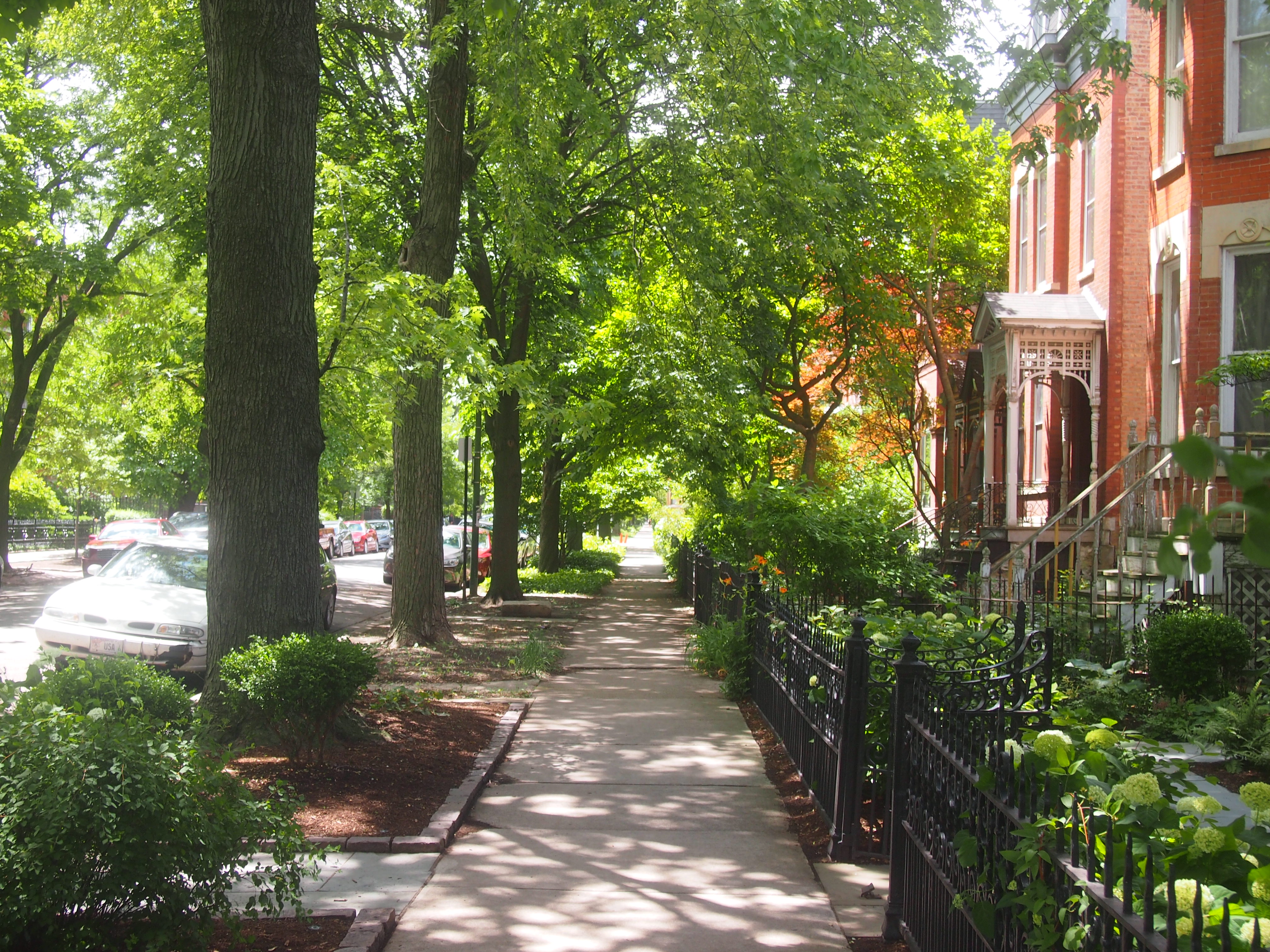
The intersection of North, Damen and Milwaukee is part of the neighborhood, but I didn’t hang around there much this time. Instead, I walked along some of the side streets. Much of the residential North Side of Chicago looks like this in June.
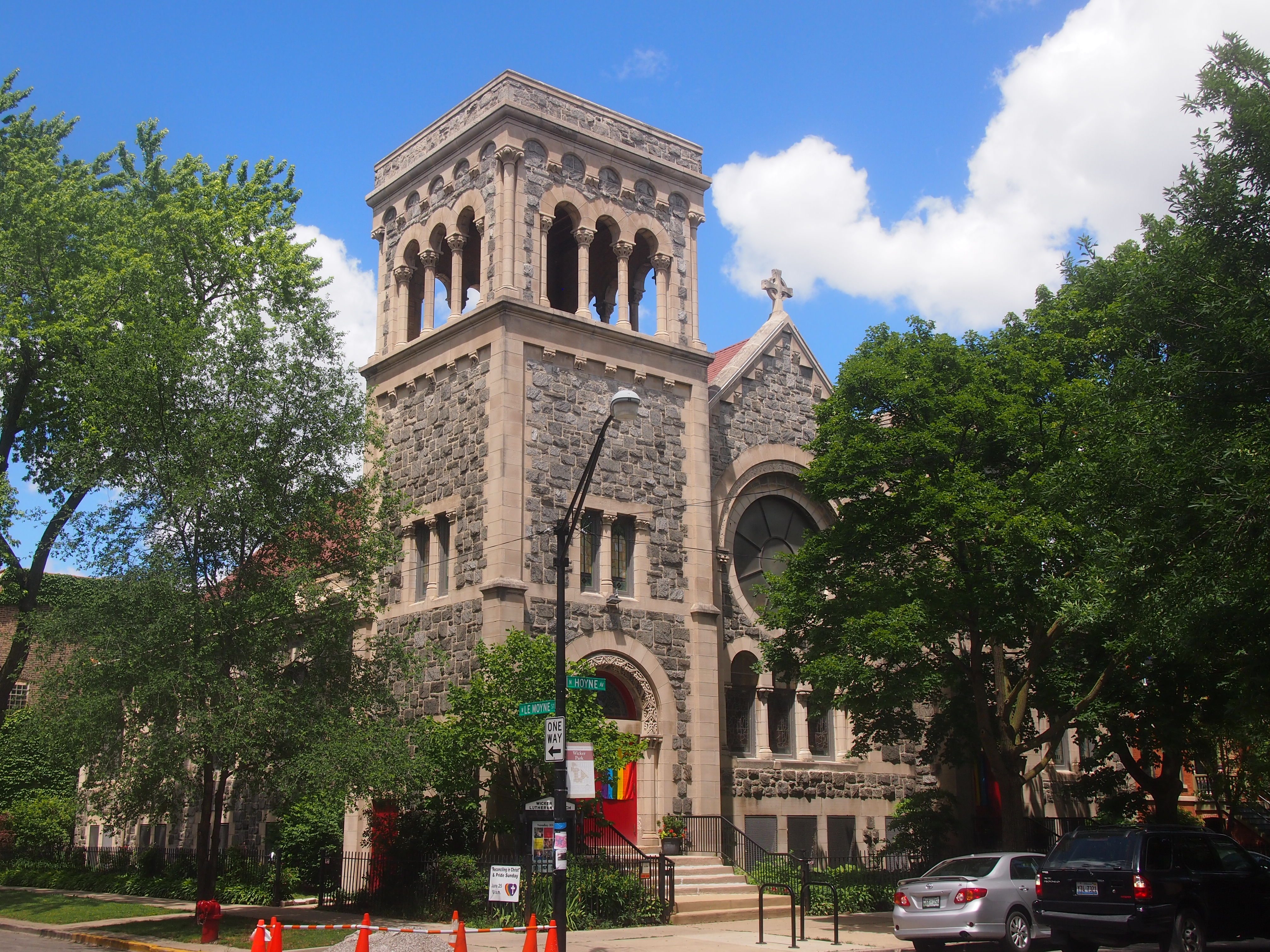
Wicker Park June 2017The handsome Wicker Park Lutheran Church is at 1502 N. Hoyne Ave.
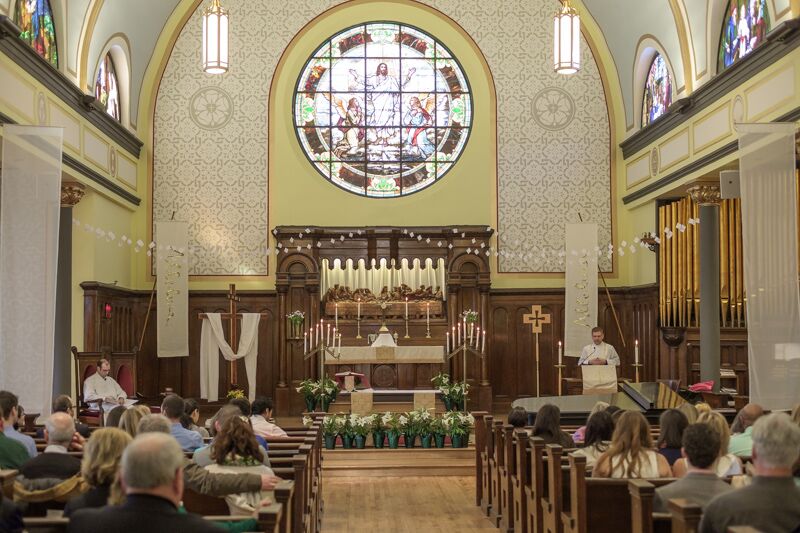
Wicker Park Lutheran ChurchIt was already closed by the time I got there, but the interior looks like this.

The building dates from 1906, though the congregation goes back to 1879. “It boasts a basilica design, with double colonnades and an apse, a style used in ancient Rome for courts of law or places of public assembly,” notes the church web site. “The two towers are based on those of Abbey of Sainte-Trinité (the Holy Trinity), also known as Abbaye aux Dames, in Caen, France, which was built in the 11th century.”

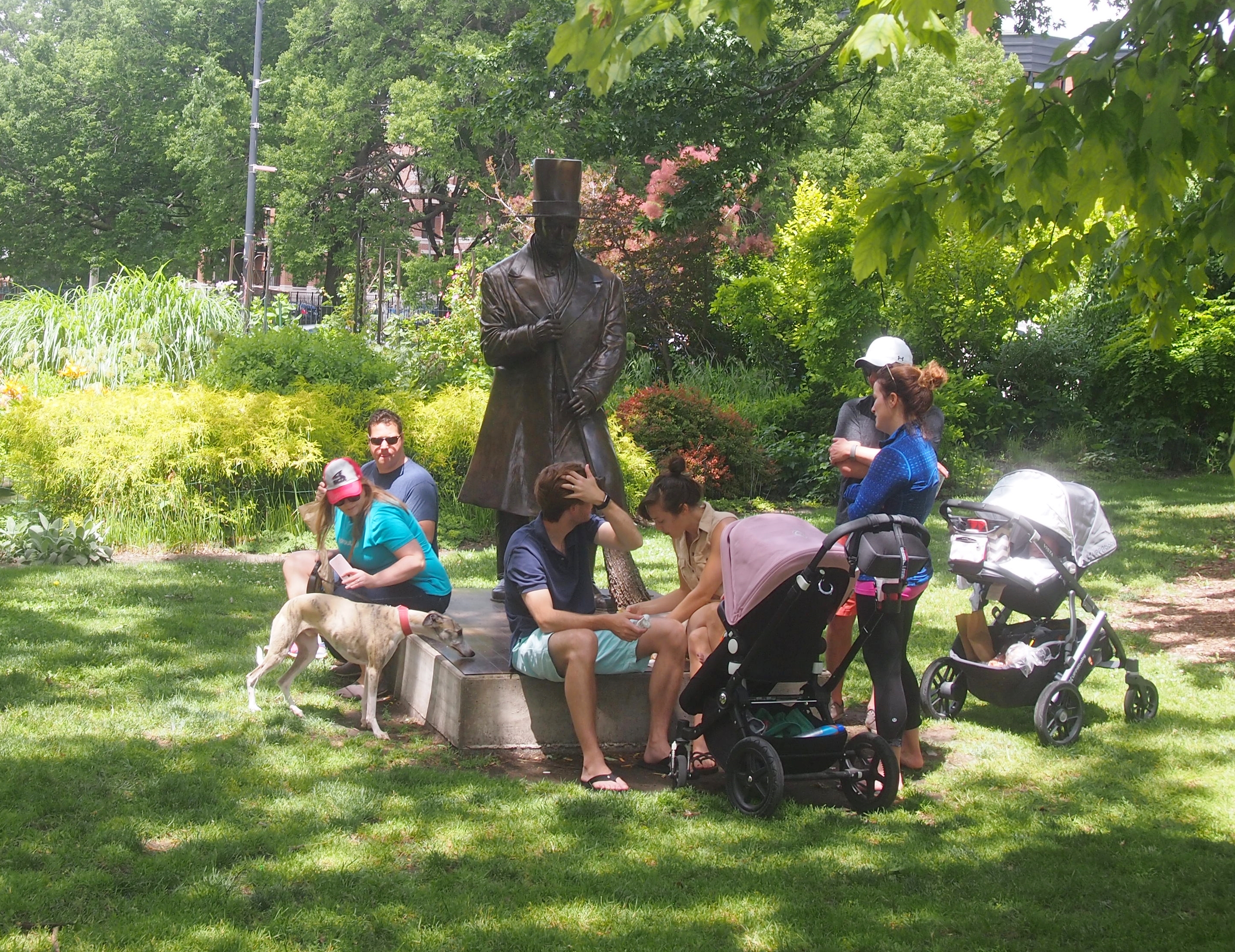
A few blocks to the east is Wicker Park, the park. It isn’t one of Chicago’s great parks, but it is pleasant on a warm summer Sunday, well stocked with people and their dogs enjoying the warm summer Sunday. The park has some trees, a lush garden sporting flowers and bushes, a field house, a modest water fountain, and some open lawn.

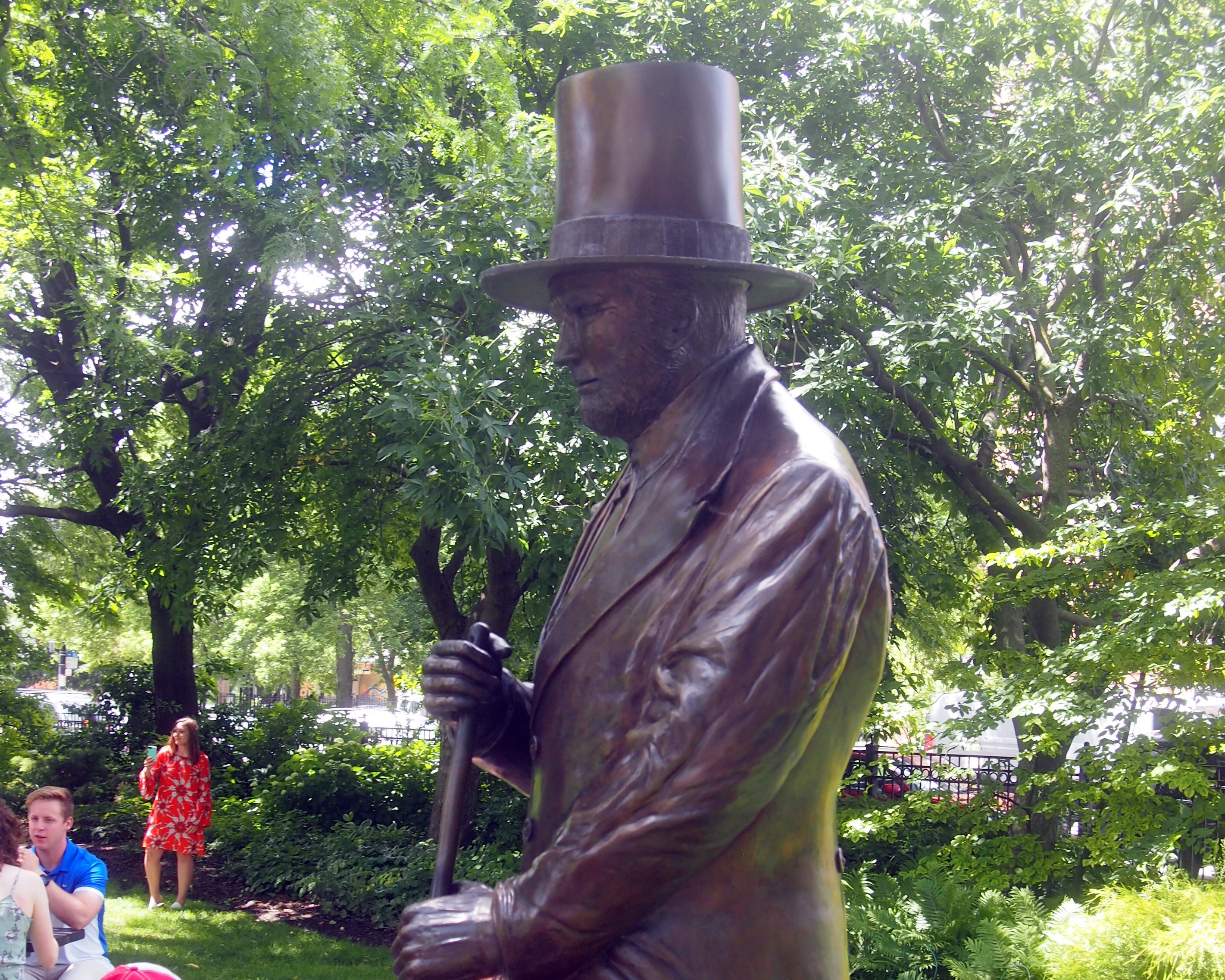
There’s also a statue of Charles Gustavus Wicker (1820-1889), complete with stovepipe hat, heavy coat and broom. It’s been in the park since 2006.
Charles G. Wicker Statue, ChicagoCharles G. Wicker Statue, ChicagoThere’s a plaque at the feet of Wicker that asserts that he was an important figure in the development of this part of Chicago. In fact, it’s a lot like a press release in bronze, this plaque. A sample: “The broom symbolizes his initiative and readiness to take personal responsibility. He, and people like him, established Chicago, where all who truly do their best will continue to make this unique community a place of opportunity with justice, freedom, and equality for everyone.”

About Charles and his brother Joel Wicker, the Chicago Park District says: “In 1870, when businessmen and developers Charles G. and Joel H. Wicker began constructing drainage ditches and laying out streets in their subdivision, they donated a four-acre parcel of land to the city to be used as a public park.

“Fencing the triangular site to keep cows out, the city created an artificial lake in the center of the park, surrounding it with lawn and trees. As the Wickers had hoped, the area developed into a fashionable middle- and upper-class neighborhood.”

Further discussion of Wicker and his brother is at the Chicagoist. A few years ago, the statue fell down — was knocked down — tumbled down somehow, and there’s a story about that as well. The statue was restored, of course. Oddly enough, the sculptor who created the statue of Wicker, and pushed for it to be in the park, was a great-granddaughter of his, one Nancy Wicker, who died just last year at over 90.

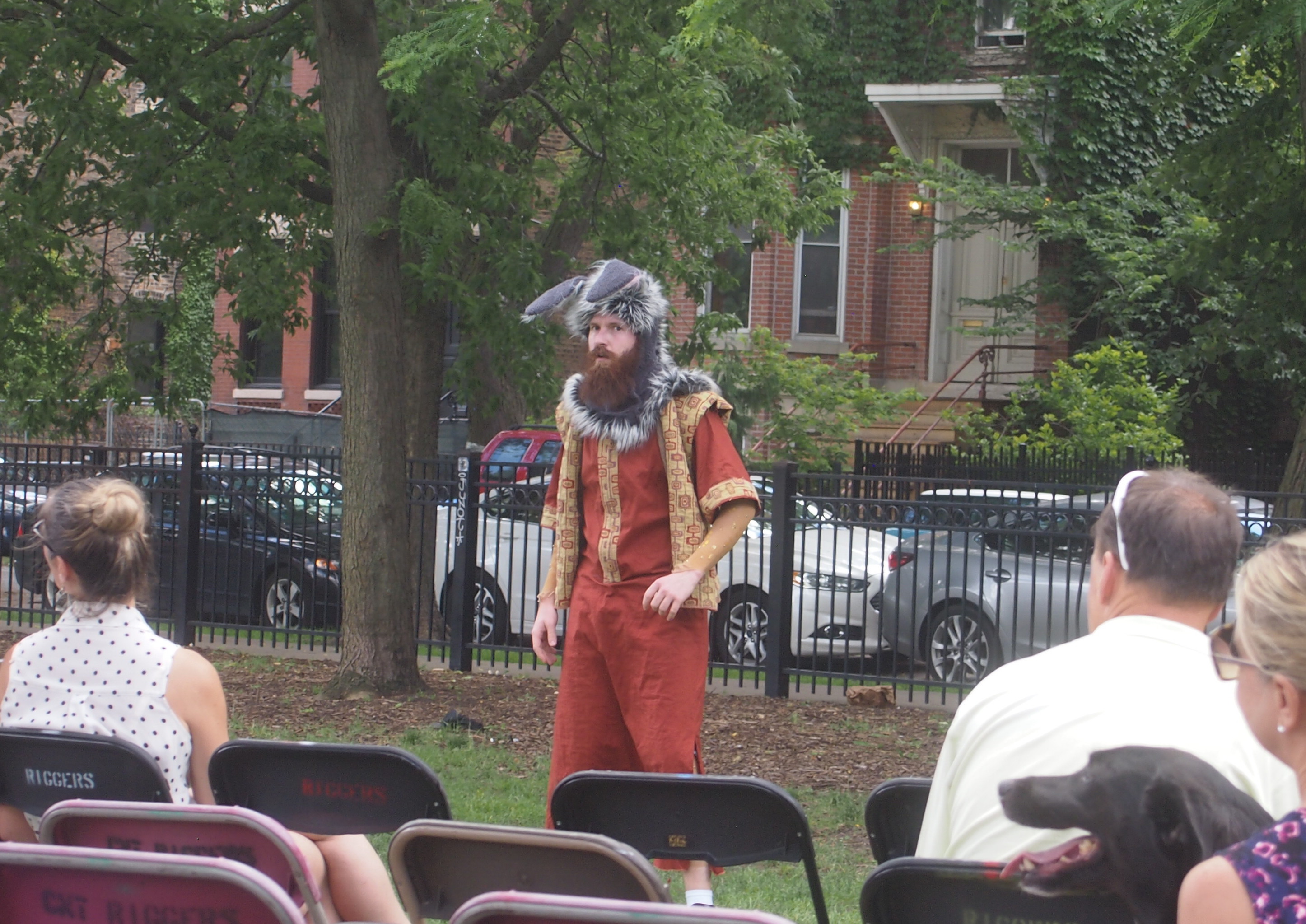
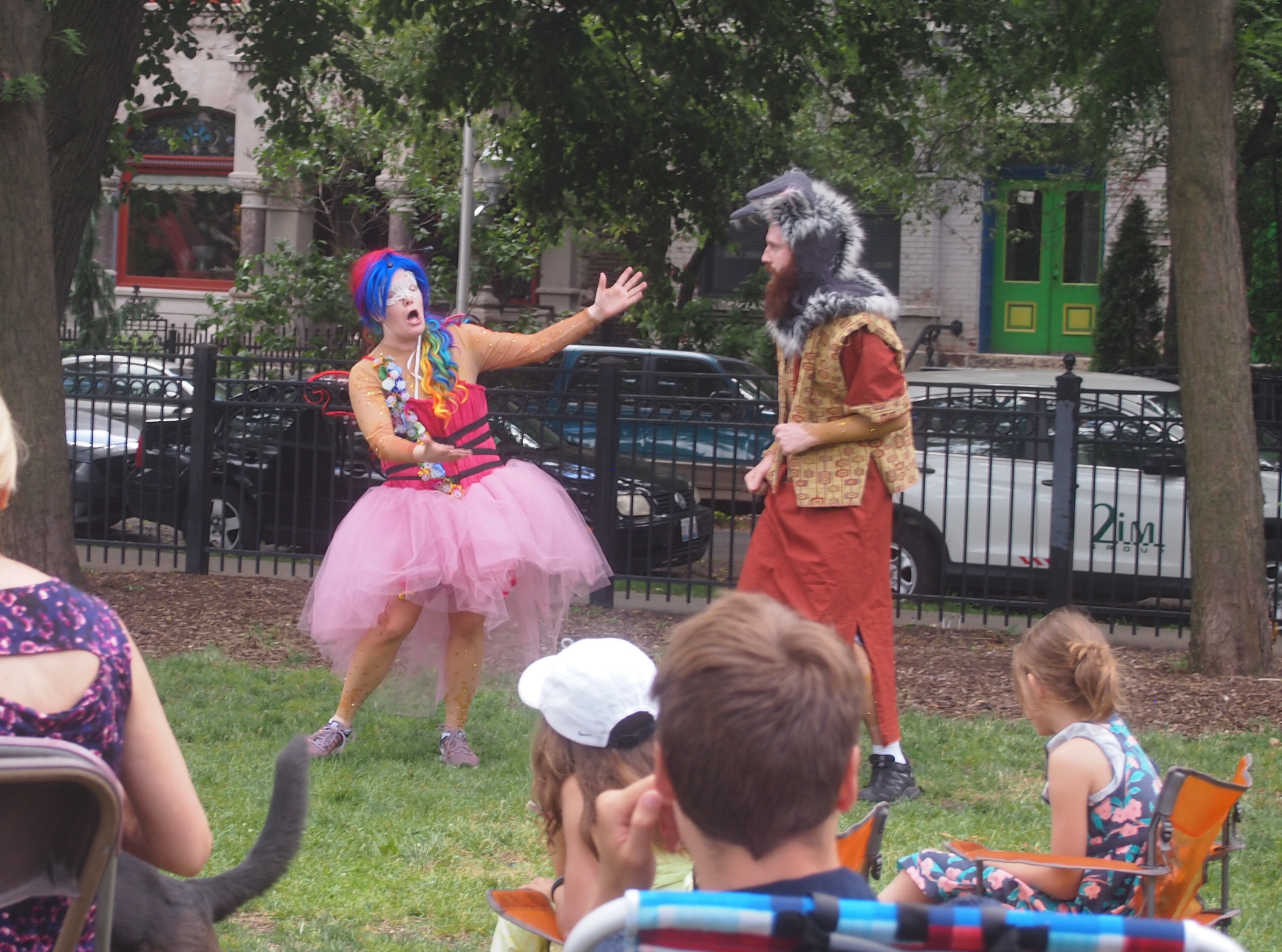
In one corner of the park, a troupe called Theatre-Hikes was doing a low-budget version of A Midsummer Night’s Dream. No sets, just costumes. I sat down for a few minutes to watch. I’m no expert on the play — in fact, this is the only live performance I’ve seen of any of it — but I was able (later) to pin down that I’d arrived during Act 3, Scene 1.

Here’s Bottom.

Theatre-Hikes, Wicker Park

Titania and Bottom. Both actors were good, and able to ham it up when the play called for it, to the amusement of all.

Theatre-Hikes, Wicker Park 2017

Titania:
Be kind and courteous to this gentleman.
Hop in his walks and gambol in his eyes.
Feed him with apricoks and dewberries,
With purple grapes, green figs, and mulberries.
The honey bags steal from the humble-bees,
And for night tapers crop their waxen thighs
And light them at the fiery glowworms’ eyes
To have my love to bed and to arise.

Tempus Fugit, Raggedy Ann

Has it been 10 years since we visited Arcola and Arthur, Illinois, twin hubs of the state’s Amish community? More or less. I posted a lot about that short trip, including the nearby Lincoln family sites, on May 30 and 31 and June 1, 4, 5 and 7, 2007.

Got a surprising amount of comments on the postings — more than zero — offering corrections for mistakes I’d made. Guess people care deeply about the details of Arcola and Arthur.

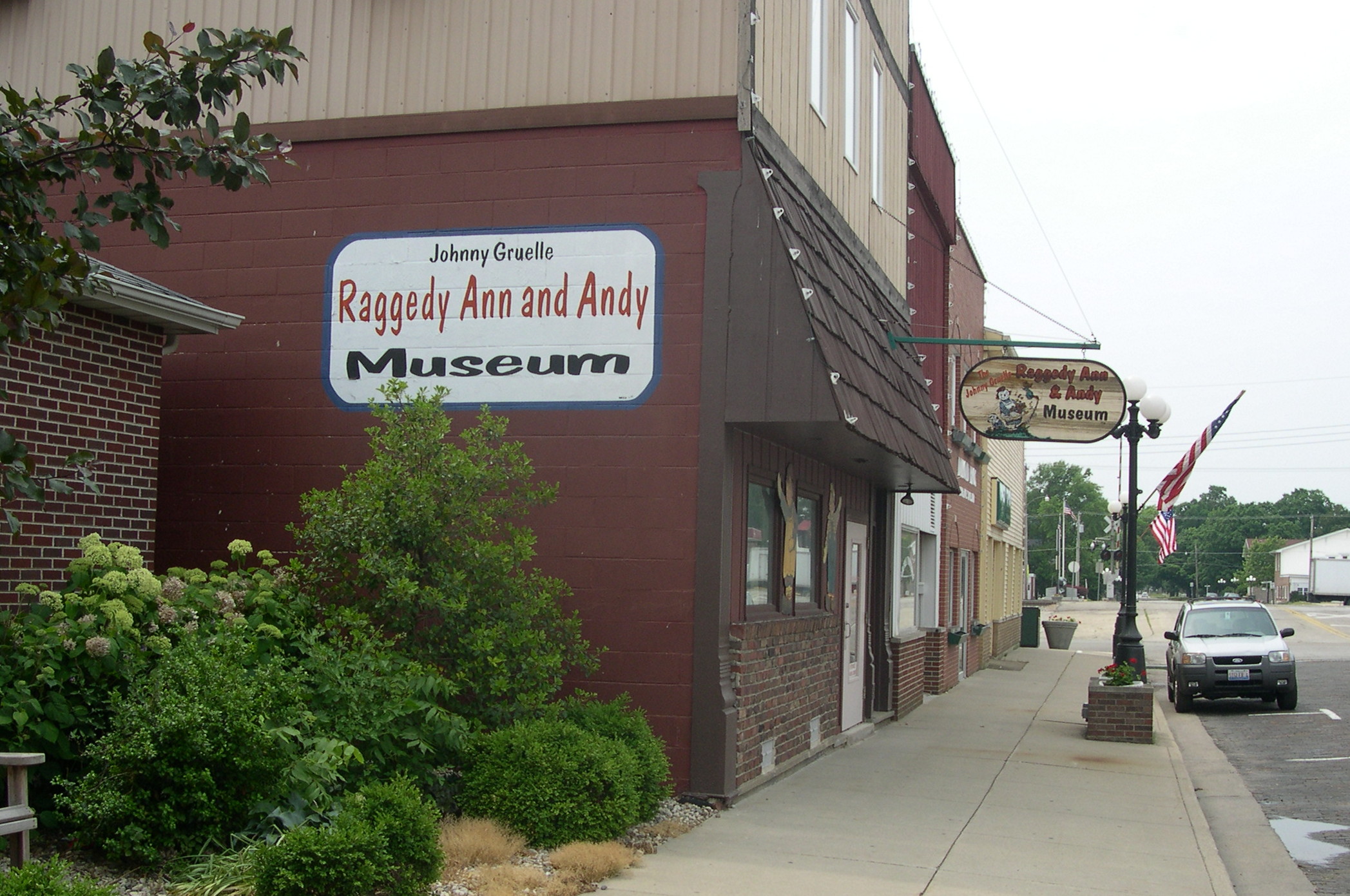
I think no photography was allowed in the Raggedy Ann and Andy Museum in Arcola, since this is the only other picture I have of it, besides one posted in ’07.

Raggedy Ann and Andy Museum, Arcola, 2007

Or maybe I wasn’t quite out of the habit of taking only a few shots at a time, as I did when I used a film camera, even though I was using a digital camera by this time. Or the camera didn’t have a lot of memory. My current SD card has a vast expanse: 64 GB.

It didn’t take too much digging around to find out that about two years later, the museum closed. Of course the economy was awful in 2009, but I suspect the deeper problem was that Ann and Andy’s time had passed.

Everyone’s time always passes. Here’s another image from about 10 years ago.

DSCN0889_2

I had no interest in a birthday cake with personalized writing on it, so I just picked one from the shelf at Costco. It happened to have balloons. This year I had a chocolate cake like this one: the Union Pacific steam locomotive of cakes. We ate it the old-fashioned way, without making an image of it.

Thursday Codswallop

Had about an 18-hour period of on-off heavy rain ending around dawn this morning. Till then, June had mostly been dry, with enough wind sometimes to blow dust off the ball field behind my back yard.

I looked up codswallop recently, curious about its origin, and was not surprised that Merriam-Webster says “source unknown.” I was surprised that the earliest known use was 1963. I’d have guessed 100 years earlier. Has a Victorian ring to it.

Not long ago I heard a song on WDCB’s Folk Festival that wasn’t exactly my idea of folk, but not bad, except that the singer kept mentioning the “some-or-other” blues. I couldn’t figure out what she was saying. After the song, the host said it was the fomo blues (or FoMO or FOMO): pronouced Foh-Moh, an acronym for “fear of missing out.”

I looked into it further. I find it hard to believe it’s a real thing, or very important if it is.

Not long ago I found that some of the animation work of the strange Harry Smith is on YouTube. Wonder if he had any influence on Terry Gilliam’s animation.

I’d never heard of a novelty song called “Crawl Out Through the Fallout” by Sheldon Allman until last week. Found it on YouTube as well.

The album, released in 1960, is called Folk Songs for the 21st Century, but the style of “Crawl Out” is more ’50s jazz. I checked a little more, and other songs from the record are also posted, including the amusing “Big Brother is Watching You.”

You’ll disappear in a wink
Unless you can doublethink

Allman’s voice reminds me of Tennessee Ernie Ford, which just adds a layer of strangeness. Now there’s a concept album: Tennessee Ernie Ford Sings His Dystopian Favorites.

More about Allman is in his 2002 obit. He composed the theme song for George of the Jungle. For that alone, he ought to be remembered.

Flag Day, Such As It Is

It occurred to me today, before I went out on some errands and for no particular reason, that it was Flag Day. So I decided to take note driving along whether there seemed to be more American flags than usual flying in my slice of the northwestern suburbs. The answer: not that I could tell.

Adam Goodheart, writing in 2011 in the former NYT blog Disunion, wrote about the origin of the day, which falls on the anniversary of the adoption of the flag by the Second Continental Congress: “It was destined, eventually, to become the runty stepchild among American national holidays. One hundred and fifty years after its original creation, no one ever hosts a Flag Day cookout or sends a Flag Day greeting card. Nobody gets to take a long weekend from the office. Even the most customer-hungry car dealers don’t advertise Flag Day sales.

“…exactly 150 years ago after it was first celebrated [in Hartford, Conn.], almost no one seems to have noticed the anniversary. Google searches for ‘sesquicentennial of Flag Day’ and similar phrases yield exactly zero hits.”

The day might not have endured as much more than text on calendars, but reverence for the flag has very much endured. I didn’t see no U.S. flags during my drive today, just flags where they usually are, which is a lot of places.

“Before 1861, the American flag had served mostly as a military ensign or a convenient marking of American territory, flown from forts, embassies and ships, and displayed on special occasions like the Fourth of July,” wrote Goodheart. “But after the Southern states began to secede — and the Union garrison at Fort Sumter took its stand as a lone bastion of resistance — the Stars and Stripes began to fly, as it still does today, from houses, from storefronts, from churches; above village greens and college quadrangles.”

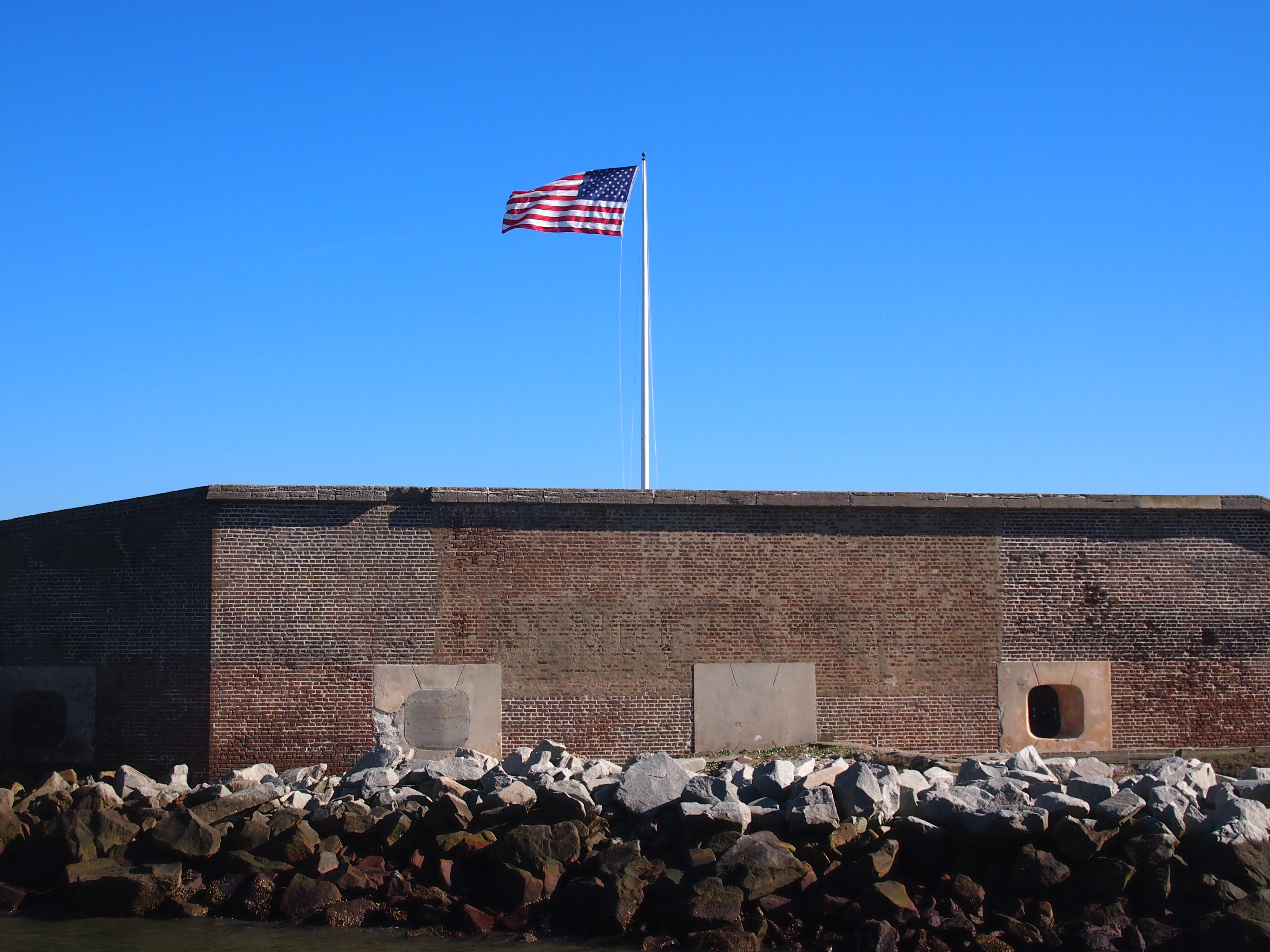
(And at Ft. Sumter to this day.)

Ft Sumter 2017“The adulation of the national banner hardly diminished during the years that followed… As for Flag Day, it seems to have remained a largely local observance during the Civil War and Reconstruction years, despite occasional efforts in Congress… to have it declared a national holiday. Official federal recognition came only in 1916.

“The holiday’s popularity seems to have crested in the period of the two world wars and the early cold war. Then, for the 1960s generation, it became more or less the epitome of square: a vaguely embarrassing grade-school memory to be filed alongside duck-and-cover drills and mandatory prayers.

“Flag Day never regained much of its former cachet in the decades that followed. And yet, holiday or no holiday, this June 14 — as on all other days of the year — the American flag remains as ubiquitous and as venerated as the most pious citizen of Hartford could have wished in 1861.”

Summertime Beer

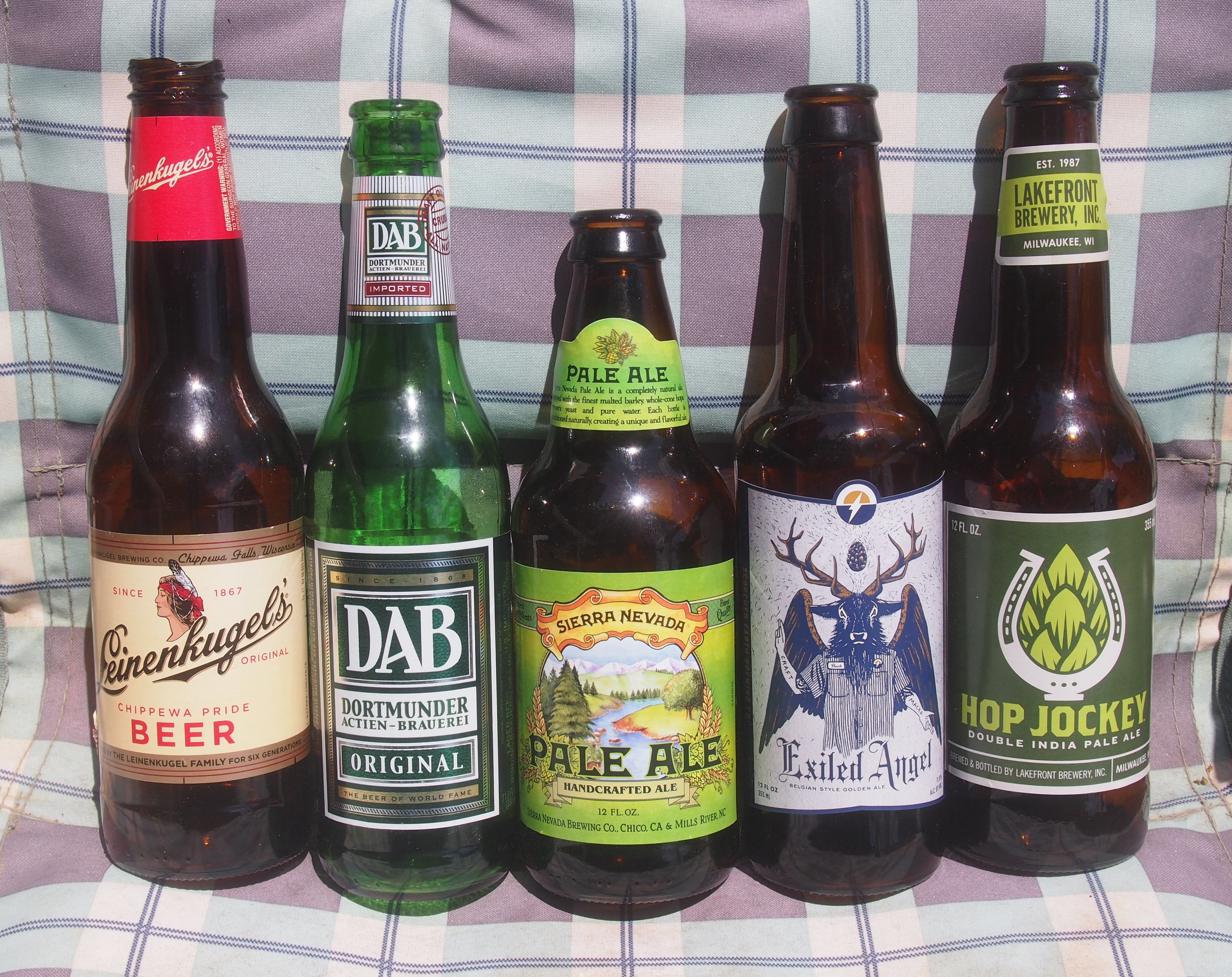
Old friends were over on Saturday for a grilling and gabfest, though it was too windy for an outdoor grilling, so I cooked inside. We did sit outside, however, for eating and drinking, and when it was over, some empty beer bottles were left behind.

beer

That’s five of the seven, with two other duplicates, consumed by six of us. We aren’t much in the way of drinkers, though a bit of wine went down, too. In any case, there was some label and geographic variety.

Leinenkugel’s, of course, is a Wisconsin brew. One of these days I might make it to Chippewa Falls for a tour of the brewery. The bottle is refreshingly clear of marketing blarney, and unapologetic about its Indian maiden mascot.

DAB is German, brewed in Dortmund. That stands for Dortmunder Actien-Brauerei. That’s the one I drank. Found it satisfying. Hard to go wrong with a German brew. The label claims Dortmund is the “brewcity of Germany,” but that’s like all those places that claim to have the world’s best hamburger.

Sierra Nevade Pale Ale is either from California or North Carolina. The bottle claims both locations. According to one online commentator at least, “Over the course of more than three decades, Sierra Nevada Pale Ale (henceforth ‘SNPA’) has evolved from an industry outlier to trusty dive-bar standby, all the while maintaining fierce allegiance among aficionados.”

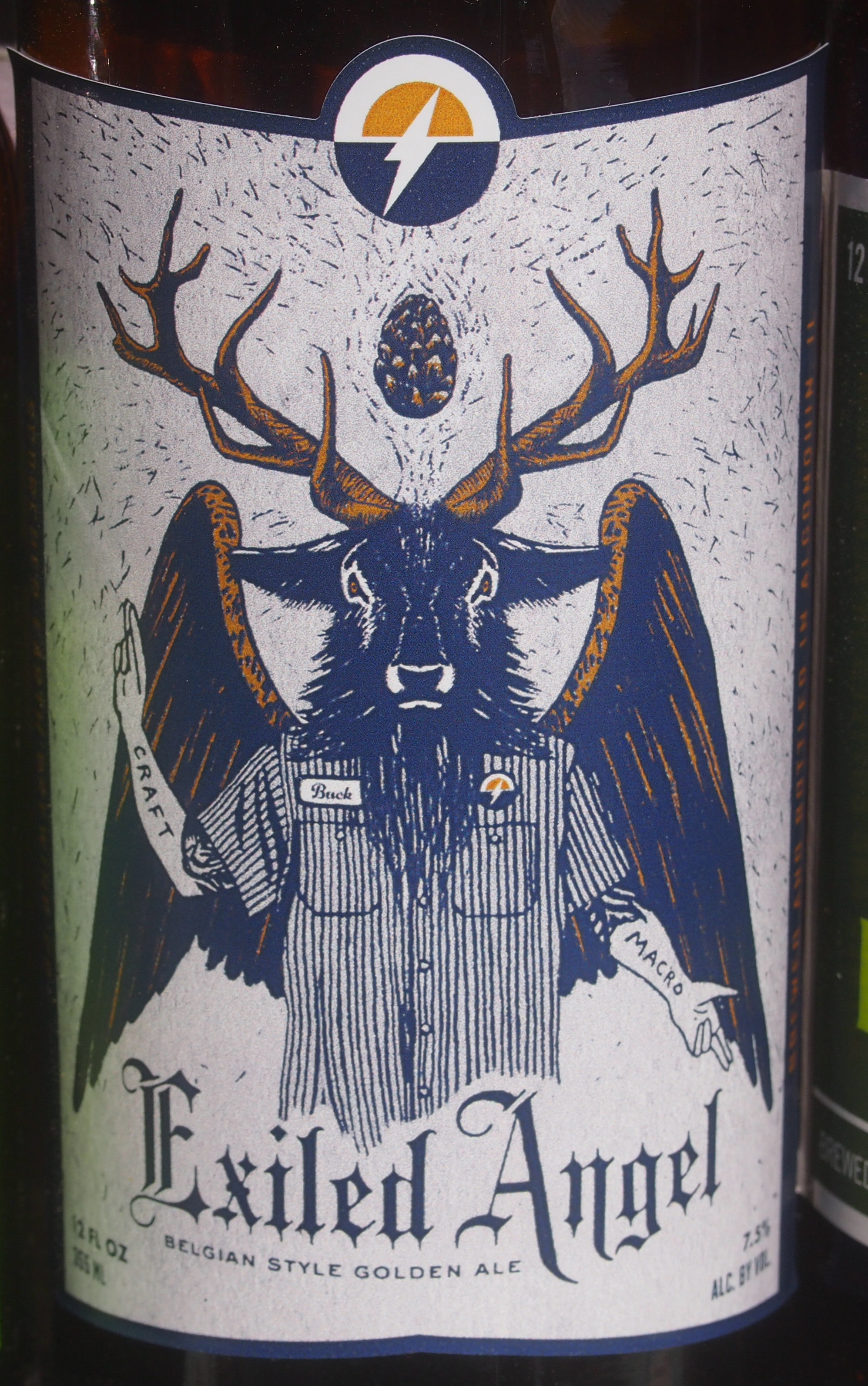
Exiled Angel is the local selection, brewed in not-far-away Algonquin, Ill. Exiled Angel is a Belgian Strong Pale Ale-style beer brewed by Scorched Earth Brewing Co. I didn’t get to try it. But Exiled Angel was my favorite label of the evening.

Exiled Angel

Reminded me some of last year’s Stone, with its diablo design. Seems like there should be a whole subset of beer named after evil characters. How about evil Old Testament figures? Cain IPA. Men of Sodom Pale Ale. Ba’al Bitter. Jezebel Stout.

There’s some diabolical revisionism on the label. “Lucifer, Satan and the Devil — names cast upon heaven’s Exiled Angel — marked as deceptive, seductive, and powerful: characteristics closely associated with the Belgian Style Golden Ale.” Sure, whatever you say.

Hop Jockey — I like that name — isn’t from much further away, Milwaukee. The beer columnist (now there’s a gig) for the Wisconsin State Journal seems to like it.

First, Fire All the Copy Editors

The following is a genuine headline from yesterday’s paper edition of the Chicago Tribune, featured with an article in the travel section.

img466 adjusted

Where is this place, Brazel? I wondered. A small place with a name unfortunately similar to the major tropical nation in South America? That might account for tourists sadly overlooking the place.

But no. The article is clearly about the vast South American nation.

Hulk Smash Nixon? No.

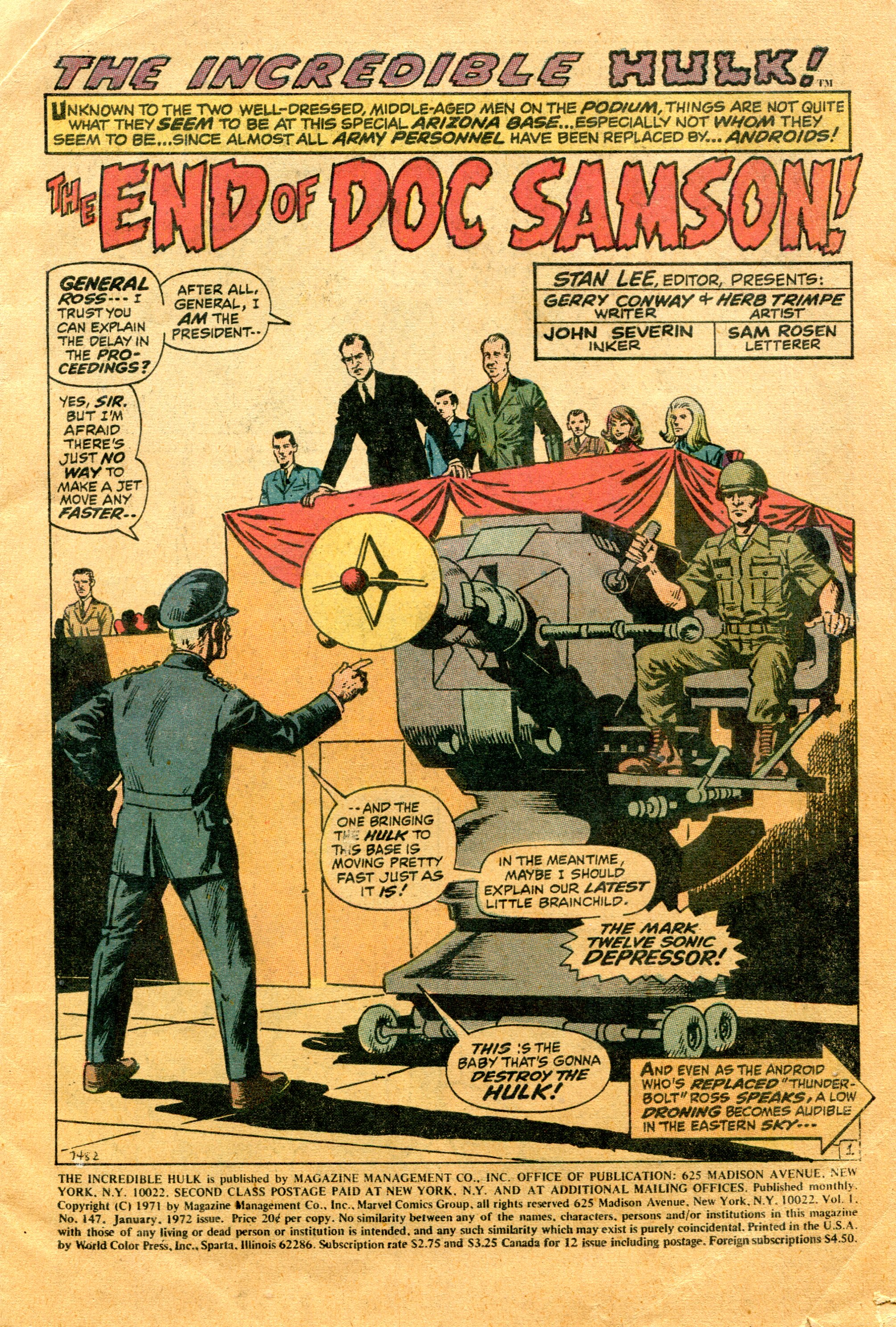
As a lad, I didn’t read The Incredible Hulk. I didn’t watch the TV show with Bill Bixby more than a time or two. I had no interest in movies featuring the character. I’m also pretty sure my older brothers didn’t care much about the comic, though it’s possible Jim bought The Incredible Hulk No. 147 (January 1972) on a whim. Or maybe one of my friends brought the comic into the house and left it. Tom T., whom I hung out with a lot at that time, probably read Hulk.

Whatever the reason, I spotted the comic at my mother’s house during our most recent visit. It’s missing its cover, which looks like this (oddly, the text describes the second story in the issue, rather than the first). I might not have paid it any further attention, but then I noticed a couple of characters on the opening page not usually associated with comic books of the time.

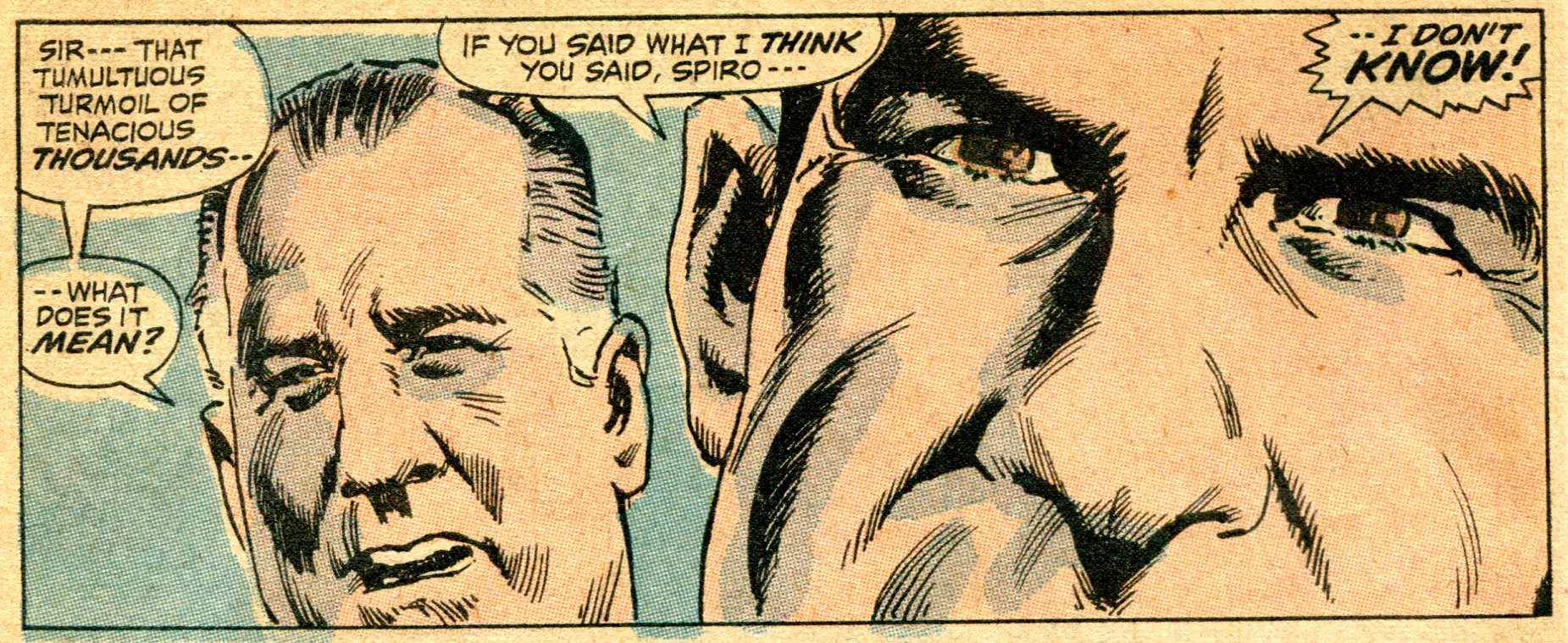
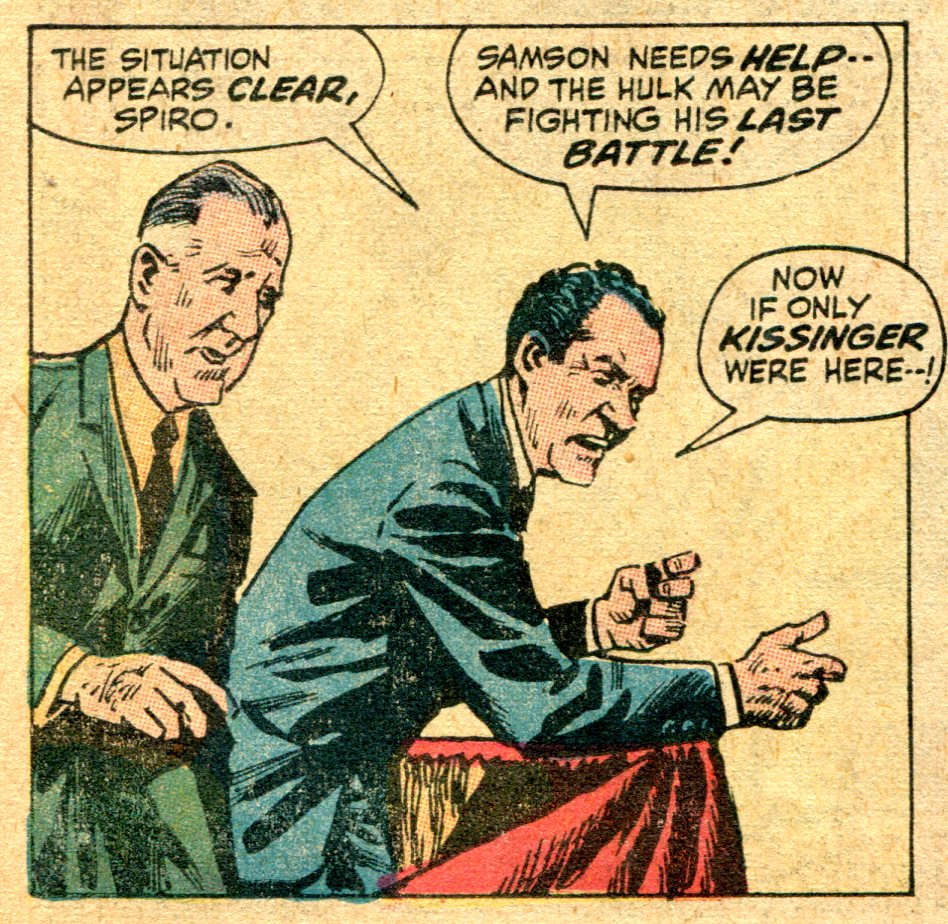
img463No fictional president for this comic. Though not named, Nixon’s clearly making a cameo, along with Agnew, who is called “Spiro” a few times.

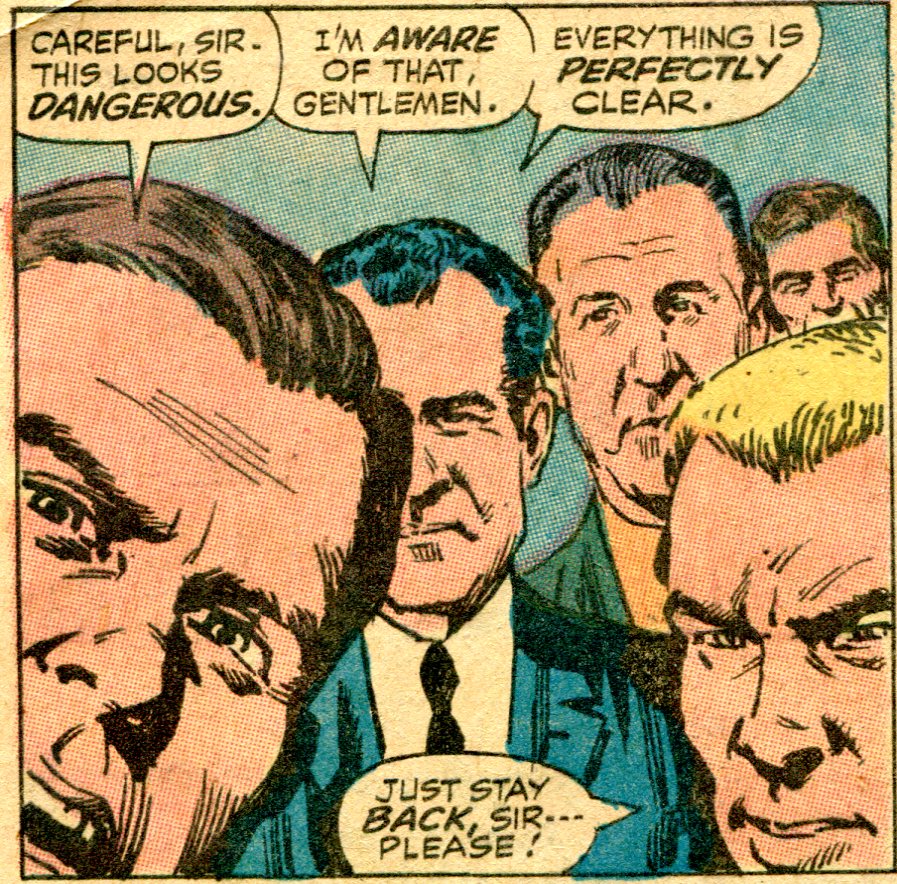
So I read the thing, just to see how Nixon and Agnew fared at the hands of the Hulk. The disappointing truth is that the comic had very little use for them. As the action unfolds, they’re at the periphery, though the boss bad guy vaguely mentions kidnapping them, or something. They appear in a few more panels, mostly it seems so the writer, Gerry Conway — apparently when he was very young — could have some fun with Nixon catch phases and Agnew alliterations.

img468img464Got in a mention of Kissinger, too.

img465

All this made me look at the long Wiki article on the Hulk, and I read some of it, but not even an appearance by Richard Nixon and Spiro Agnew could spark enough interest in the Hulk for me to read all of it. I did learn that at first he was gray-skinned rather than green, which I guess is a factoid worth knowing.