The Ambassador in His Salad Days

Today was about as foul a day as can be, marked by cold rain that varied unpredictably from drizzle to downpours. Strong winds blew nearly all the time. As much as 60 MPH, the National Weather Service said. At least it was warm for January, above freezing, or it might have been a blizzard.

Did a short item about Bill Hagerty recently, who will probably be the next U.S. ambassador to Japan. A little research told me that he went to Vanderbilt. A little more research told me he was Class of ’81, or two years ahead of me. I didn’t know him, and he certainly didn’t know me, unless it was as one of those characters who wrote for the student magazine Versus. Which he wouldn’t have, because no one pays attention to bylines, even if they read the articles.

I hauled out my copy of the ’81 VU yearbook, The Commodore. The spine cracked a little. Grumble. Anyway, Bill Hagerty’s with the other SAEs on p. 301 and his senior picture is on p. 396, which lists him as William Francis Hagerty IV, econ.

Bill Hagerty at Vanderbilt 1981

The girl immediately to his left — who presumably had nothing to do with him except for alphabetical placement — is a sad story I don’t know, and didn’t know then. Her caption reads, “Haberman, Harriett Susan, elem ed. May 20, 1959 — January 23, 1981.”

Captain Canuck & President Polk for Christmas

My last Christmas present came via UPS today. Lilly ordered it not long ago, some time after I assured her that a little while after Christmas is close enough. It’s an attitude that makes the holidays less stressful; more people should consider it.

I’d suggested the item almost off-handedly. In our time, such whims are easily gratified online. It’s alarmingly easy. Here’s a closeup.

Captain Canuck!

It’s a Captain Canuck t-shirt, 100 percent cotton, made in Nicaragua. Accept no less.

Also for Christmas this year, but some time earlier, Jay got me a t-shirt with another larger-than-life figure, though from the annals of U.S. history.

James K. Polk, Napoleon of the Stump

None other than James K. Polk, Napoleon of the Stump. Also all cotton, but made in Haiti. On the back it says POLK 11.

Tsūtenkaku and Billiken

At some point during their recent visit to Osaka, Yuriko and Ann made their way to the Tsūtenkaku, a tower rising above the Shinsekai neighborhood.

dscn8283

I hadn’t thought about the tower in years. I visited it very early during my time in Osaka. The present tower dates from 1956, probably counting as part of the postwar reconstruction. An earlier tower, built in 1912 and which supposedly took inspiration from the Eiffel Tower, stood until a wartime need for steel spelled its end in 1943.

I didn’t know, or had forgotten, that the current structure is the work of one Tachu Naito (1886-1970), Japan’s “Father of Towers.” He had a talent for designing towers that can withstand earthquakes, so he did a fair number of them.

Tsūtenkaku — fancifully translated as “tower reaching toward heaven” — has a mascot, Billiken. The same charm doll that’s the mascot of Saint Louis University, it seems, a creation and fad item of the very early 20th century in the United States.

How exactly Billiken made the transition to Japan isn’t clear to me, and I refuse to go down the rabbit hole looking for the story right now. Wiki says, without a footnote: “The Billiken made its Japanese debut in 1908. A statue was installed in the uppermost level of the original Tsutenkaku Tower as it was opened to the public in 1912. When the nearby Luna Park was closed in 1925, the tower’s Billiken statue disappeared. In 1980, a replacement statue made its appearance in a new Tsutenkaku Tower that was built in 1956.”

He comes in a number of guises near the tower, too.

Billiken Osakadscn8284I can see the appeal, actually. He looks like something that the Japanese would have created. They didn’t happen to, but no matter. He fits right in. The real question is why is he associated with the tower?

Speaking of Billiken, if you listen to the “Billiken Rag,” you might be the only person you know ever to have hear it.
Nipponese Debris

Yuriko and Ann are back from Japan, no worse for trip except for the usual jet lag. They brought back various things, including some printed items and small packaging material. Japanese aesthetics, known the world over, are present on every surface.

The only request I had for them to bring me some postcards. Here’s an Osaka-specific one.
Osaka postcard 2017Osaka has a sobriquet: The Kitchen of Japan. Specialty regional items include butaman, okonomiyaki, kushikata, and takoyaki. Delicious indeed.

Disposable chopsticks. Or rather, the paper wrapper for the chopsticks.
Disposable chopsticksSometimes even disposable items are too cute for words. Too cute is a running theme in Japanese design.

A nice brochure picked up at Nara Palace (Heijō Palace).
Nara Palace brochureHeijō Palace was the imperial residence in the Japanese capital city Heijō-kyō (Nara) during most of the Nara period, which essentially spans the 8th century AD. Things tend to get lost or kicked around after 12 centuries, so what visitors see on the site now are 21st-century reconstructions. Good ones, Yuriko said. Yet another thing for me to see, since they weren’t there in the 1990s.

Back to food packaging: Sakuma Drops hard candy.
Sakuma Drops Something a bit softer: Morinaga’s Milk Caramels.

Morinaga's Milk CaramelsThat’s the front of the box, plus one side. Each piece is wrapped in a yellow wrapper whose design is the same as the box.

The Air Zoo of Kalamazoo

Mid-week between Christmas and New Year’s, I popped off by myself to Michigan, more specifically to Kalamazoo, the city with the most fun name in the whole state — just repeat it a few times and see — for a look around. One of its main attractions is the Air Zoo. I’ve heard about that place for years, but an air (and space) museum is a moderately hard sell for the family. Not for me. Spacecraft especially, but also aircraft.
The Air Zoo is relatively small, at least with the Museum of the U.S. Air Force still fairly fresh in mind, but it offers an excellent collection, including early airplanes, a lot of WWII aircraft, examples from the age of jet fighters, and a number of space-related objects. The museum is also in the major leagues of aircraft restoration efforts. A number of items that it had restored were on display, and later I read about a WWII dive bomber, a Douglas SBD-2P Dauntless, that was pulled from Lake Michigan recently and which will be restored by the museum.
Here’s a WACO VPF-7, something I’d never heard of, probably because it was only one of six ever built.

According to the museum, the ’30s-vintage aircraft “was designed as a trainer/combat aircraft for the Guatemalan Air Force. As an attack aircraft, the front cockpit would be covered and .30-caliber machine gun pods would be placed under the wings. However, this particular aircraft has no indication of machine guns ever having been attached.”

A Ford Tri-Motor. Also known as a Tin Goose, produced from 1925 to 1933. Indiana Jones got around in these sometimes, I believe.
Air Zoo“The Air Zoo’s 5-AT Ford Tri-Motor (N4819) came off the assembly line in 1929 with serial number 58 and was delivered to National Air Transport, where it probably delivered freight and mail,” the museum says. “It quickly went to Ford Motor Company for modifications and then was sold to Northwest Airways, flying the Minneapolis-St Paul-to-Chicago run. It was one of five Tri-Motors bought by [the company that] would become Northwest Airlines.”

Maybe so, but as a display item, the plane is painted as if it were in service of the U.S. Army. I’ve read that until last year, this very plane was airworthy, and the museum gave rides.

Here’s a B-25, one of almost 10,000 produced during the war.
Air ZooThis particular one made strafing runs with the 489th Bomb Squadron, 345th Bomb Group, according to the museum. I like that paint job.

Modern wars aren’t won just with fighting machines, but by getting materiel here and there as fast as possible. Enter the DC-3.

Air ZooTime flies, there are more wars. Jets do the fighting, such as this F-8 Crusader.
Air ZooThe sign said: “Photo reconnaissance variants of the Crusader flew several dangerous missions during the Cuban Missile Crisis. Then… the F-8 became the first U.S. Navy aircraft to routinely battle North Vietnamese MiGs.”

A small but distinctive collection of space artifacts is on display at the Air Zoo. I take ’em where I can get ’em. Such as this J-2 engine, famed for its attachment to the second and third stages of the Saturn V.

J-2 Air ZooThere aren’t many machines that have to be just so or they’ll blow up. Kudos to the engineers.

Here’s something I’d never seen before: a Gemini boilerplate.
El Kabong, Air ZooEl Kabong I is its whimsical nickname. I’d forgotten that, “as El Kabong, Quick Draw would attack his foes by swooping down on a rope with the war cry “OLÉ!” and hitting them on the head with an acoustic guitar …” (Wikipedia). Quick Draw McGraw made a fairly faint impression on me, even at an impressionable age.

Anyway, the boilerplate’s main job was to test the feasibility of recovering spacecraft on land using extendable skid-type landing gear, a steerable gliding parachute (para-sail), and solid-fuel retrorockets to help slow the spacecraft for landing, says the Air Zoo. I don’t think Gemini landed that way, but it sounds pretty cool.

The concept of the boilerplate spacecraft might be an obscure one to the public at large, but I like coming across them.

Lull-Time Reading

The lull time between Christmas and New Year’s is also a good time for reading, so I alternatively read Between the Woods and the Water, the second part of Patrick Leigh Fermor’s remarkable travels on foot in Europe in 1934, and American Mirror: The Life and Art of Norman Rockwell (2013) by Deborah Solomon.

I picked up the latter at Half-Price Books not long ago after reading a bit of it in the store, and realizing that I knew next to nothing about Rockwell, besides what his paintings look like, and that he’s been the subject of revisionism lately. Maybe more than one cycle of scorn and then revision have come and gone, for all I know.

Solomon skillfully makes the case that Rockwell’s work is well worth thoughtful attention. “Each of his Post covers amounts to a one-frame story complete with a protagonist and a plot…” she writes. “In some ways, Rockwell’s paintings, which are grounded in the rendering of the particulars, demand to be ‘read’ like a story. The experience they offer is literary as much as visual, in the sense that he cared less about the sensual dazzle of oil paint than the construction of a seamless narrative. The public that saw and appreciated his paintings walked away from them thinking not about the dominance of cerulean blue or cadmium yellow but about the kid on the twenty-foot-high diving board up in the sky, terrified as he peers over the edge and realizes there is only one way down.”

As for Rockwell the man, he comes off as a decidedly odd duck. An enormously talented odd duck. While perhaps not the most colorful of personalities — which is often just a way of denoting a jerk, anyway — he’s worth reading about too. (Then again, his family might have had some thoughts on Rockwell as a jerk.)

“On most days, he felt lonesome and loveless,” notes Solomon. “His relationships with his parents, wives, and three sons were uneasy, sometimes to the point of estrangement. He eschewed organized activity. He declined to go to church. For decades he had a lucrative gig providing an annual painting for the Boy Scouts calendar, but he didn’t serve as a troop leader or have his own children join the Scouts.

“He was more than a bit obsessive. A finicky eater whose preferred dessert was vanilla ice cream, he once made headlines by decrying the culinary fashion for parsley. He wore his shoes too small. Phobic about dirt and germs, he cleaned his studio several times a day. He washed his brushes and even the surfaces of his paintings with Irovy soap.”

Naturally the book is well illustrated with his work, though only a fraction of (say) his Saturday Evening Post covers, since he did so many (323 from 1916 to 1963). That made me look up more images posted by the Rockwell museums, one in western Massachusetts, another in Vermont (seemingly more of a store for Rockwelliana), both places that he lived. Just more things to see if I ever make it back that way.

Lull-Time Entertainment

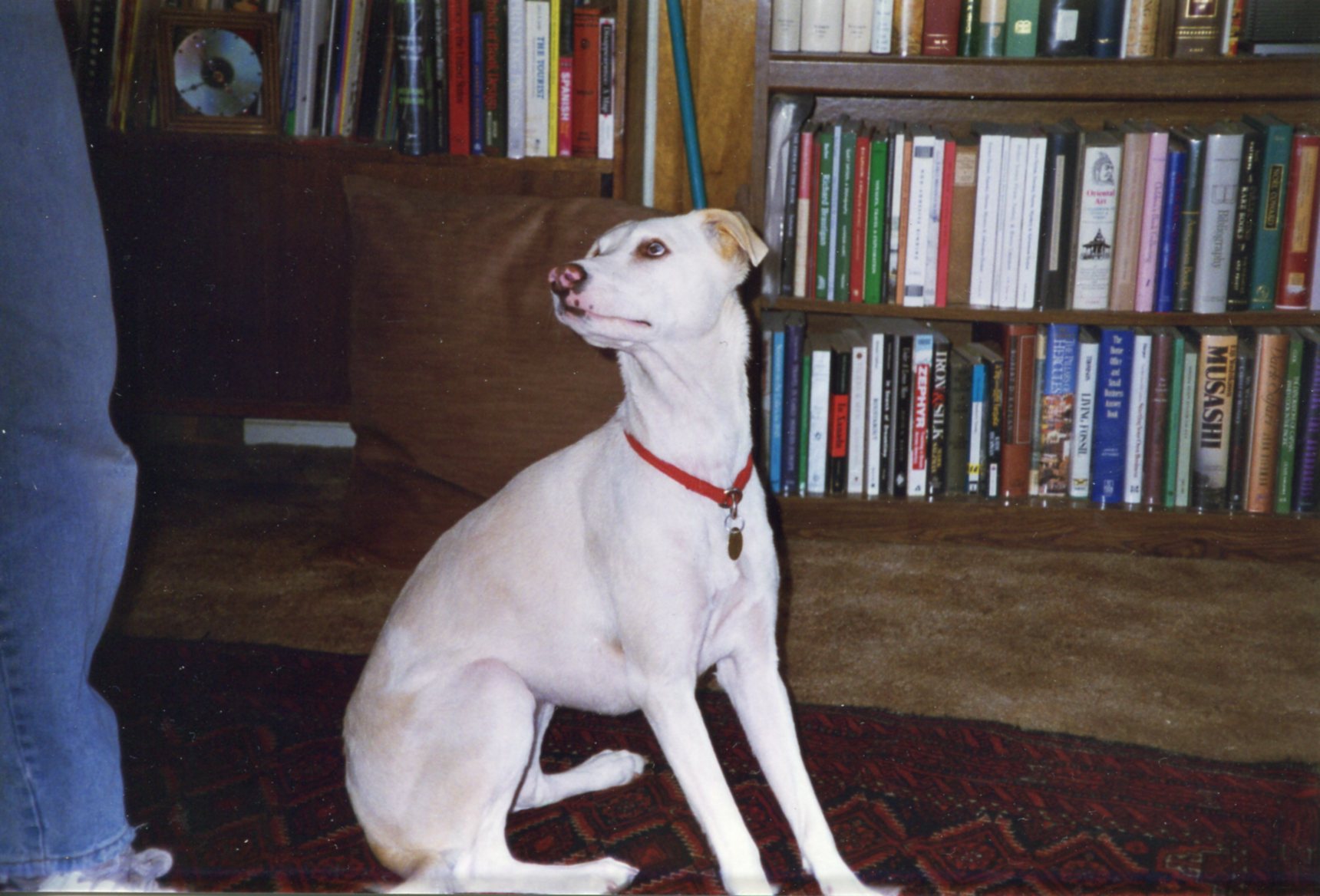
We opened our presents early on the morning of December 22, since Yuriko and Ann were off to Japan later that day. Christmas itself passed quietly, though we did prepare a nice dinner. As for New Year’s Eve, Lilly went out with friends — as you should do at 19 — while I stayed home with the dog, a more fitting evening for middle age.

In between those moments, work slacked off, and I enjoyed the lull. Among other things, Lilly and I watched various TV shows when she was home, such as episodes of Frasier (it holds up well) and the newer and considerably different, but also very funny Louie. I also had her watch the “Turkeys Away” episode of WKRP in Cincinnati.

We saw an episode of Bob’s Burgers that involved a gingerbread house contest. Could those really exist? I asked myself later. Yes indeed. Just Google “gingerbread contest” or the like and you get many hits about various events, such as the 2016 National Gingerbread House Competition at the Omni Grove Park Inn in Asheville, NC, held just before Thanksgiving.

“It all began with a small group of gingerbread houses built by community members in 1992 as another way to celebrate the holiday season with no plans to continue the following year,” says the competition’s web site. “There was no possible way to know that more than two decades later The Omni Grove Park Inn National Gingerbread House Competition™ would be one of the nation’s most celebrated and competitive holiday events.”

We’ve tried to build those things before. We aren’t dedicated much to the task, so it usually ends up more like a gingerbread trailer park after a tornado.

On the evening before New Year’s Eve, Lilly and I went into the city to see The Christmas Schooner on stage at the Mercury Theater, a mid-sized Chicago venue on the North Side not affiliated with Orson Welles that I know of.

The play is a musical set in the 1880s, involving a German-immigrant ship captain in Manistique, Mich., who hits on the idea of shipping Christmas trees to Germans in Chicago. The trouble is, sailing on Lake Michigan in late November/early December is dangerous, especially in the days of small wooden vessels and no weather reports. Eventually the captain goes down with his ship but his widow and son figure out a way to keep the trade going. The story is a fictionalized account of the real Christmas tree trade between the UP and Chicago in the late 19th and early 20th centuries, which claimed a number of ships and men, notably the Rouse Simmons, which went down with all hands in Lake Michigan in late 1912.

I’ve long been impressed by the level of talent involved in the Chicago theater, and The Christmas Schooner was no exception. The acting, singing and dancing — or rather, motions on the stage, not a lot of formal dancing — were all first rate. It reminded me that I need to see more live theater in the city, now that the logistics of parenthood isn’t quite as complicated as it used to be.

Twelve Pictures ’16

Back to posting around January 2, 2017, after I’ve said good riddance to this regrettable year in which a family member and two old friends departed.

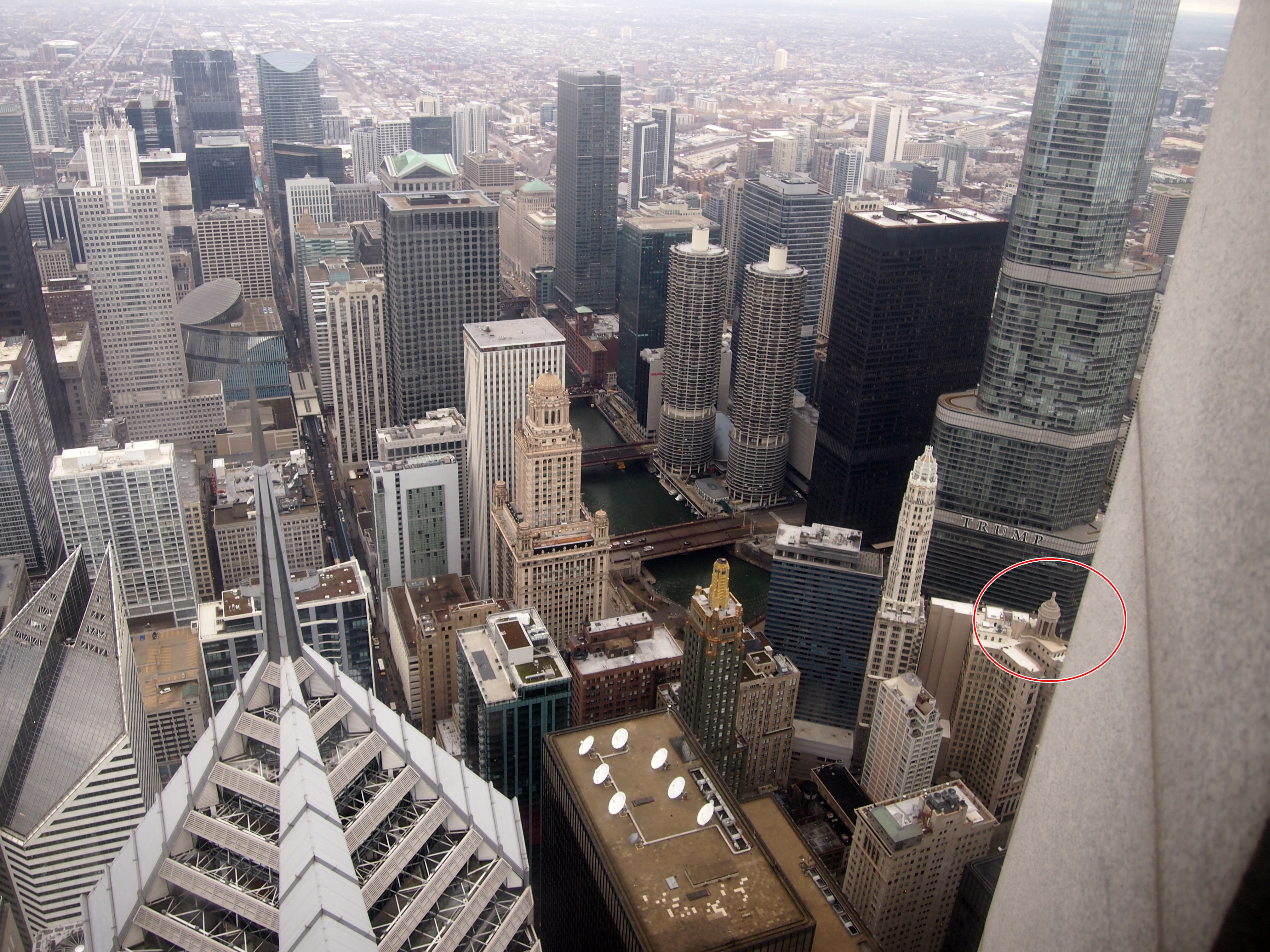
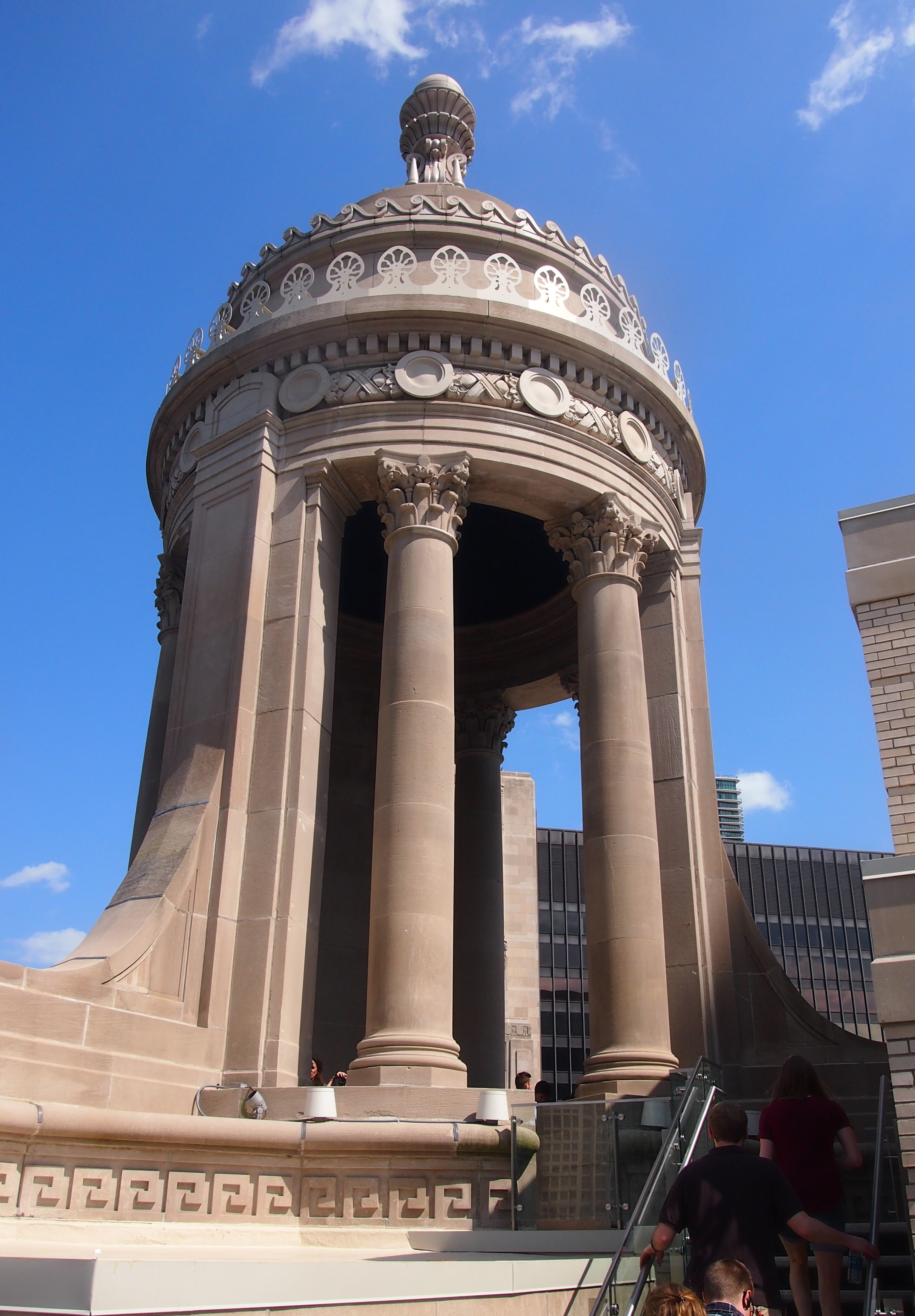
I ought to publish pictures at a site for pictures, since I take a lot more than I ever use here, a few of them tolerably good. The following are photos from each month of 2016. No overriding theme, just pictures.

Schaumburg, January 2016

Schaumburg Jan 2016

Libertyville, Ill. February 2016

Libertyville

San Antonio, March 2016

San Antonio March 2016Rockford, Ill. April 2016

Rockford April 2016Dayton, May 2016

Dayton May 2016Nashville, June 2016

Nashville June 2016Austin, July 2016

Austin July 2016Chicago, August 2016

Glencoe, Ill., September 2016

Chicago Botanic GardensPhiladelphia, October 2016

Philadelphia 2016

Schaumburg, November 2016

Westmont, Ill., December 2016

Merry Christmas to all.

Xmas Oddities

From the December 21, 1976 episode of Laverne & Shirley, “Christmas at the Booby Hatch” or “Oh Hear the Angels’ Voices.”

Featuring Michael McKean (Lenny) and David L. Lander (Squiggy). I don’t think I saw it 40 years ago — I only watched the show intermittently — but nothing every really goes away on the Internet.

Next, “Ríu Ríu Chíu,” as sung by the Monkees on their show on Christmas Day 1967.

I’m pretty sure I didn’t see that when originally shown either. But it was an inspired choice for the Prefab Four.

Finally, something not about Christmas: “Sailing to Philadelphia” (2000), sung by Mark Knopfler and James Taylor. It’s about Jeremiah Dixon and Charles Mason.

We are sailing to Philadelphia
A world away from the coaly Tyne
Sailing to Philadelphia
To draw the line
The Mason-Dixon Line

Just how many songs are there about the Mason-Dixon Line? One, anyway. I happened across it not long ago. A delightful discovery.

Uncle Bub’s

Good old Uncle Bub’s. It’s a barbecue joint in Westmont, Ill., and one of my favorites in this part of the country, along with Hecky’s in Evanston. We had dinner there on Saturday with my old friend Kevin — known him nearly 30 years now.

No reason to write much about Uncle Bud’s, when you have a picture that will offer up 1,000 words.
Uncle Bub'sThat’s pulled pork, mashed potatoes, baked beans and cornbread. A fine feast on a cold December night.

Uncle Bub’s is not to be confused with Uncle Bud’s, a catfish joint in exurban Nashville. One strange day in the spring of 1980, two friends and I wound up at Uncle Bud’s for a meal. The catfish was fine, but what I really remember seeing was Gregg Allman and his entourage — including a few very tan, very blonde young women — enter the restaurant and head for a back room.