The Dayton Aviation Heritage National Historical Park

In 2003, close to the occasion of the 100th anniversary of the Wrights’ first flight at Kitty Hawk, NC, Patrick Jonsson noted in the Christian Science Monitor that “the choice of location unwittingly sparked a quarrel over the genesis of manned flight: Was this barrier island near the town of Kitty Hawk merely a stepping-off point for an idea hatched in Ohio — or part of the very inspiration of flight?

“For its part, North Carolina boldly stated its claim a few years ago with license plates that boasted ‘First in Flight.’ It was followed by Ohio’s ‘Birthplace of Aviation’ claim a few years later. And in the late 1990s, North Carolina again moved first to put the flyer on its state quarter, taking a lot of oomph out of Ohio’s ‘Pioneers of Flight’ motto.

“But in the 100th year of flight both states have put rivalry aside, realizing the skies could not have been cleaved without the benefits of both locales.

” ‘In Dayton, they proved that powered flight was practical; at Kitty Hawk, they proved that it was possible,’ says Bob Petersen, a park ranger at the Dayton Aviation Heritage National Historical Park.”

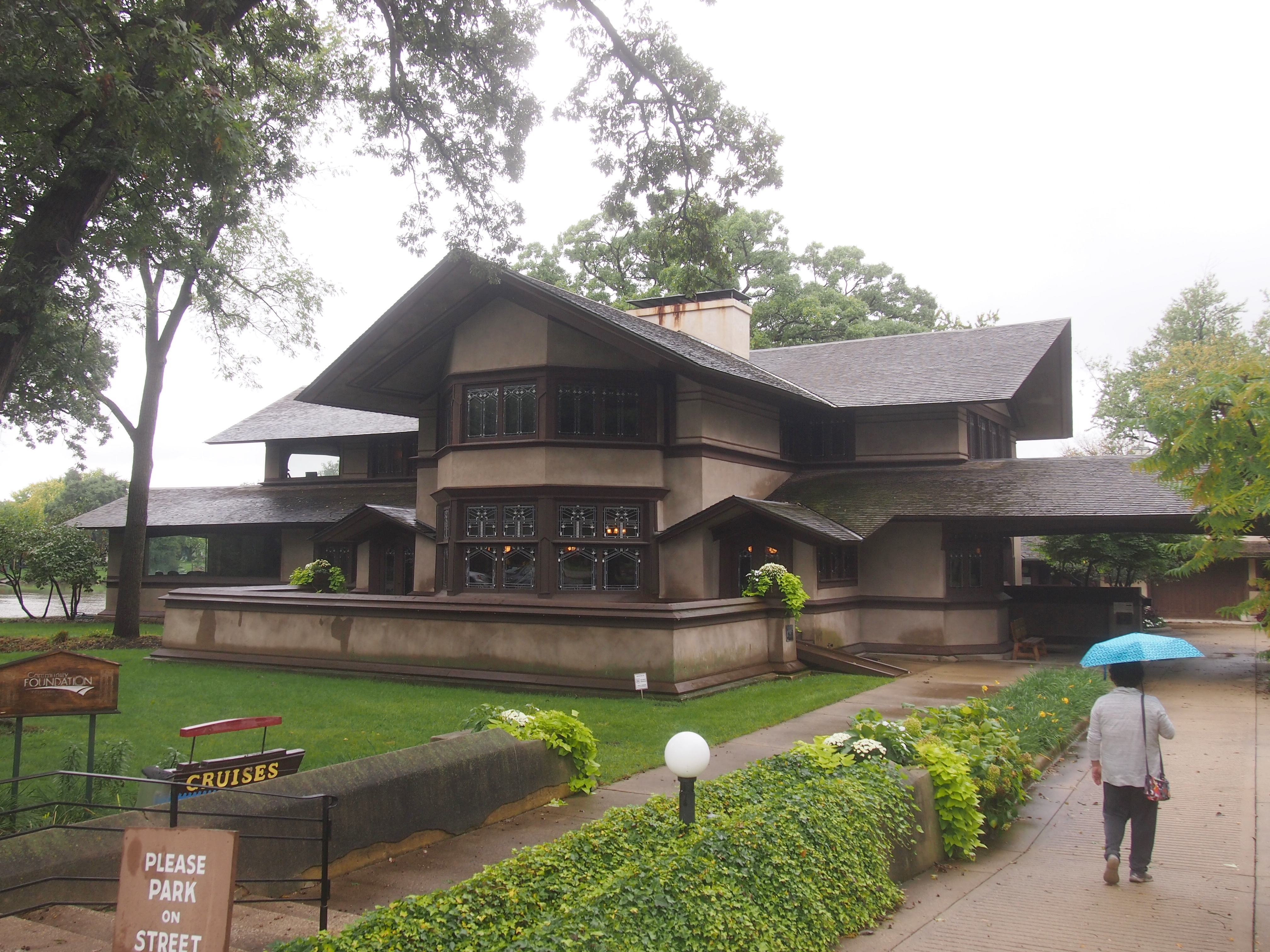
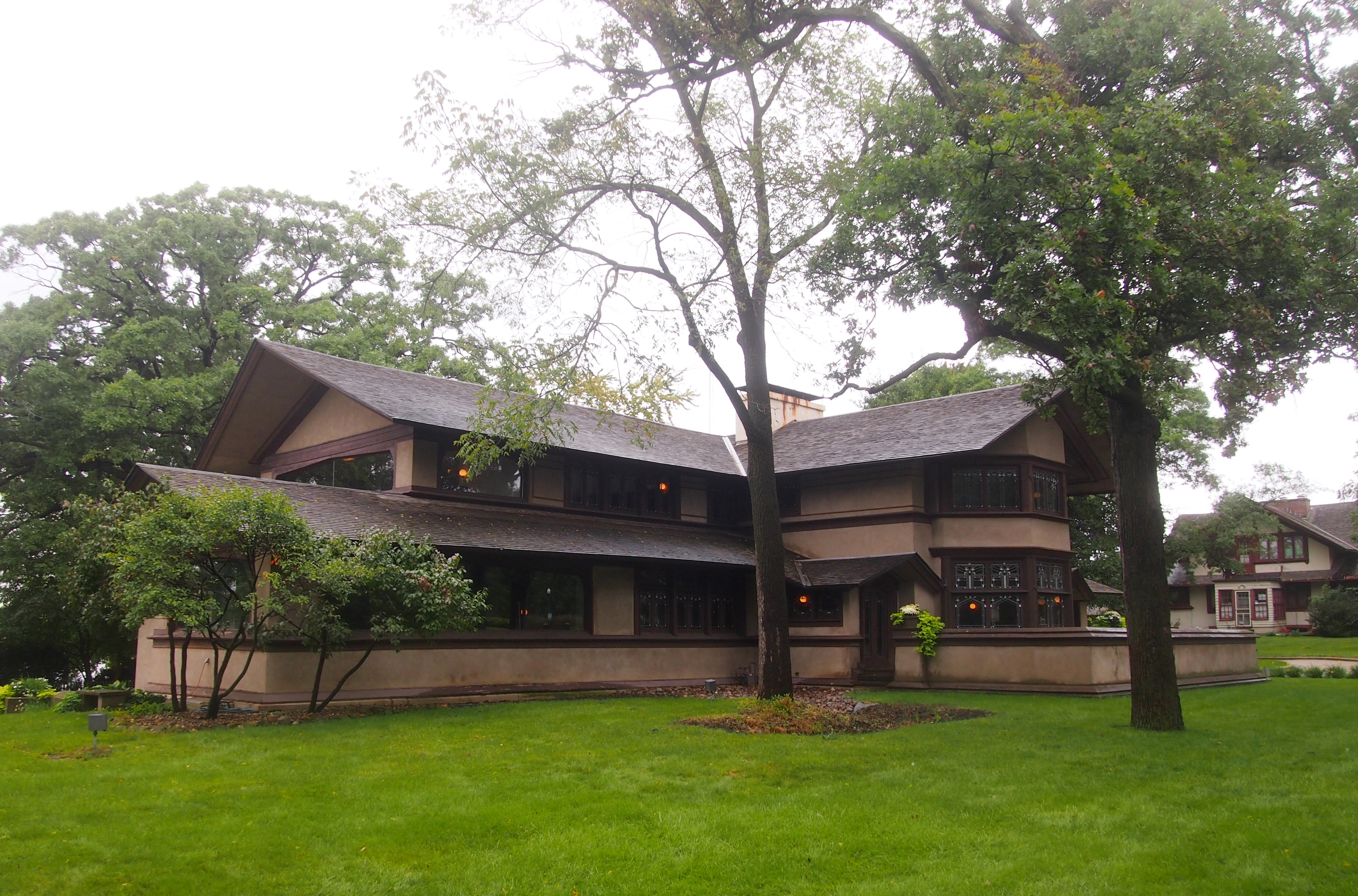
The national historical park is scattered around greater Dayton, including a Wright Brothers-Paul Dunbar museum (pictured below) along with one of the brothers’ bicycle shops; the Huffman Prairie Flying Field; an aviation exhibit at a open air museum in Dayton; Paul Laurence Dunbar’s house; and Orville’s mansion after aviation made him wealthy. We only had time and energy for the Wright-Dunbar museum and the Wright bicycle shop, which are on Williams St. west of downtown Dayton.
Dayton Aviation Heritage National Historic ParkThe focus of the museum, at least when it comes to the Wrights, is less about them as aviators, and more about their pre-Flyer lives growing up in Dayton, including other members of their family that aren’t well known, such as sister Katharine and brother Lorin.

Paul Laurence Dunbar’s exhibits were interesting mainly because I didn’t know much about him. Seems like he had a fine ear for verse, and literary success in spite of the misery of being a black man in the 1890s. He’s also called an influence on Langston Hughes. I’m no expert, but after reading some of Dunbar’s poems, I can see the point.

This is the debt I pay
Just for one riotous day,
Years of regret and grief,
Sorrow without relief.

Pay it I will to the end 
Until the grave, my friend,
Gives me a true release 
Gives me the clasp of peace.

Slight was the thing I bought,
Small was the debt I thought,
Poor was the loan at best 
God! but the interest!

— “The Debt,” by Paul Laurence Dunbar

The museum also features exhibits about the Wright printing business and then their bicycle shops. Lest we forget, the nation was in the grip of a bicycle craze in the 1890s, and for good reason: in a world of horse-drawn vehicles, it was a great new way to get around.

The re-created bicycle shop is next to the Wright-Dunbar museum, in the original building, which just barely escaped demolition.
Wright Cycle Co, Dayton OhioIt’s the only Wright bicycle shop location left in Dayton. Another one — they operated more than one over their career in bicycles — is now at Greenfield Village in Michigan, and the sites of one or two more have been demolished in the last 100-plus years.

Inside are artifacts such as bicycles and a lot of bicycle parts, photos, and more. Remarkable how familiar an early safety bicycle looks. Basic bike design hasn’t changed that much.

The Woodland Cemetery and Arboretum, Dayton

In the Spring/Summer 2014 edition of American Forests magazine, Tate Williams wrote, “In the early 19th century, as cities like Boston grew, inner-city burials were no longer cutting it. Land prices were rising and the small church burial grounds were overcrowding. Storms would flood the grounds with gruesome results. Outbreaks of diseases like cholera and typhoid fever had communities fearing urban burials.

“In response, the Massachusetts Horticultural Society presented a vision that would solve the city planning problem, while carving out a piece of land they would turn into a horticultural wonder to rival the gardens popular in Europe at the time. It was dubbed a ‘garden of graves’ or a serene ‘city of the dead.’ Mount Auburn Cemetery grew into a feat of landscape design, sculpture and meticulously manicured Victorian-style gardens.

“The rural cemetery movement spread as other cities established their own garden cemeteries, from Green-Wood in Brooklyn to Laurel Hill in Philadelphia. They were extremely popular among locals and visitors alike, becoming regular gathering places for strolling and picnicking. ‘In a country sorely lacking in public green spaces, these cemeteries provided these graceful, elegant places,’ says Keith Eggener, architectural historian and author of the book Cemeteries. ‘They were all around recreational and artistic centers for people. They became seen as major urban amenities.’ ”

So they still should be, but mine is a minority opinion. In 1841 — ten years after the founding of Mount Auburn — the growing manufacturing town of Dayton founded its own garden of graves, which in our time is called the Woodland Cemetery and Arboretum. Cemetery because about 107,000 souls repose there; arboretum because about 3,000 trees grow on its 200 acres.

It’s a hilly, gorgeous place. I spent about an hour and a half there on the morning of May 29.

Woodland Cemetery, DaytonWoodland Cemetery, DaytonWoodland Cemetery, DaytonWoodland Cemetery, Dayton

Some cemeteries make it a chore to find the noteworthy burials, such as way that St. Mary’s Cemetery in Appleton, Wis., doesn’t seem all that eager for you to find Joe McCarthy. Woodland helpfully provides signs to famed permanent residents, and it wasn’t five minutes before I spotted the one that pointed to the Wright family plot — including Wilbur and Orville, their sister Katharine, the two children who died as infants (Otis and Ida), and their parents (Milton and Susan).

Woodland Cemetery, Dayton - Wirght Brothers graveI spared a penny each for the Wrights.

Woodland Cemetery, Dayton - Wirght Brothers graveWoodland Cemetery, Dayton - Wirght Brothers graveWonder who left the shells. Not far away is the poet Paul Laurence Dunbar, who also happened to know the Wrights.

Woodland Cemetery, Dayton - Paul Laurence Dunbar graveNear the entrance is a sign that says that Dayton native Erma Bombeck’s grave is nearby. So I went looking for it. My mother read some of her books, presumably because they amused her. I remember seeing them around the house. I never had much interest in her writing until I read an article of hers in the early 1990s, in Outside magazine (I think), of all places. It was remarkably good article about her and her husband’s visit to Papua New Guinea. One of her main points: if you’ve got the time and means, but don’t ever go anywhere interesting, you’re a dullard.

I couldn’t find anything with her name on it in that section. I did notice a large orange-ish boulder in the section, and it had a few withered flowers nearby, but no plaque or carving that I could see. Was that her monument?

Yes. I read later at Find-a-Grave: “A 29,000-pound rock has become a monument for her grave. It was brought by flat-bed truck from her home in Arizona. It reflects the empathy she had for the Southwest desert and to her years of residency.” That Erma. What a card, even in death.

In keeping with my idea that it’s important to note the obscure as well as the famed, here’s one near Erma Bombeck’s boulder. An interesting one, at least in a place like western Ohio.
Woodland Cemetery DaytonIt’s a bilingual stone: the other side is in English, informing me that Peter and Anastacia Piatnicia, along with (I assume) their daughter Ludmila de Ybarra, repose there.

Woodland Cemetery May 29 2016The stone also says “Cossack” in Roman letters, as opposed to the more complicated designation in Cyrillic. Cossacks in Ohio. People get around.

Lilly’s Graduation

Lilly’s high school graduation ceremony was earlier today at the Sears Centre in Hoffman Estates, Ill., a mid-sized arena. We took to the back yard beforehand for cap and gown pictures.

Lilly, June 5, 2016Lilly, June 5, 2016She’s somewhere in this mass of maroon.

The ceremony itself admirable exercise in economy: barely more than an hour and a quarter from beginning to end. And only a few air horns squeaked a few times, mostly toward the end.

Things That Go Boom (Or, Nookular Combat Toe-to-Toe With the Rooskies)

As previously mentioned, models of Little Boy and Fat Man were nestled under one of the wings of the B-29 Bockscar at the National Museum of the U.S. Air Force near Dayton.

Fat Man, NMUSAFLittle Boy, NMUSAFI guess Little Boy was there for the sake of comparison. I’ve known about the difference for the a long time. When I was young, maybe even in junior high, I picked up a paperback copy of The Rising Sun: The Decline and Fall of the Japanese Empire, 1936-1945 (1970), by John Toland, and read the chapter about Hiroshima and Nagasaki with considerable interest.

In the museum’s post-WWII galleries, I started noticing the nuclear weapons casings. Some of them were hard to miss, such as this Mark 41, with a helpful illustration behind it.

Mark 41 NMUSAFDesigned to be carried by B-47s, B-52s, or B-70s, it was in the megaton range. Or about five times as powerful as Fat Man.

Most of the bomb casings were tucked away under the wings of some of the aircraft that carried them. Such as this sizable Mark 17.

Mark 17 NMUSAFA Mark 6 on the right (not sure what the other one is).

Mark 6 NMUSAFA Mark 7.

Mark 7 NMUSAFAnd some Mark 28s, also known as B28s.
Mark 28 NMUSAFA cul-de-sac off of the Cold War gallery, a silo-like structure 140 feet high, houses the museum’s missile collection. It’s a dandy collection, too, with Jupiter, Minuteman, Thor, Atlas, Titan and Peacekeeper missiles.
Missile gallery NMUSAFAlso included are more warhead casings, such as the W53, a version of B53 that the Titan II ICBM could carry. At nine megatons, it was a monster among monsters, now gone.
W53 - B53 NMUSAFRemember MIRV? All the rage in arms control discussions in the 1970s and ’80s.
MIRV NMUSAFTen warheads, count ’em, designed to be loaded on Peacekeeper missiles, all with different targets.

The National Museum of the U.S. Air Force

Before we went, I was sure the National Museum of the U.S. Air Force would be packed with other visitors. After all, more than a million people visit every year, according to the Air Force; airplanes are popular. The museum is free. Or at least, no extra charge beyond taxation. And while Dayton isn’t the largest of places, it isn’t in the middle of nowhere either.

So I’ll bet attendance was high on Memorial Day weekend Saturday. But the place didn’t feel crowded, except maybe in the gift shop. The museum soaks up people like the best of sponges. Its current three buildings — enormous hangers — total about 750,000 square feet and house more than 360 aerospace vehicles and missiles.

The exhibits are organized chronologically, beginning with the first aeroplane that the Wrights sold to the U.S. Army, the Wright 1909 Flyer, and ending in a hall of ballistic missiles. Not all of the aircraft are American made or were even in the service of the United States. Among the early airplanes are those from all the nations that fielded warplanes in WWI, such as a Sopwith Camel, Nieuport 28, Curtiss Jenny, Caproni, and a Fokker Dr. I triplane, which the museum is careful to point out is associated with Rittmeister Manfred von Richthofen, though the one on display is a replica, since none survive.

I’d never seen most of those planes before. Or a Caquot observation balloon. The museum has the only one in existence. “The hydrogen-filled balloon could lift two passengers in its basket, along with charting and communications equipment, plus the weight of its mooring cable, to a height of about 4,000 feet in good weather,” notes the museum.

Caquot observation balloonHydrogen filled. The Western Front Association says of the balloons: “That the jobs of the balloon commander and observer were hazardous in the extreme is self-evident, and casualties were correspondingly high.” I believe it. The picture above doesn’t show the open gondola hanging from the balloon. The gondola of death, it was.

Not all of the artifacts are aircraft. Equipment associated with airplanes, and the wars they fought in, is also plentiful at the museum. One particularly amusing item in the early aircraft gallery was a Model T ambulance.

Model T ambulanceNot because ambulances are funny, but because of the “Gunga Din” parody about the vehicle, which is quoted on a sign near the artifact. The full poem is here.

Yes, Tin, Tin, Tin!
You exasperating puzzle, Hunka Tin!
I’ve abused you and I’ve flayed you
But by Henry Ford who made you,
You are better than a Packard, Hunka Tin!

The difference between the WWI-era (and interwar) aircraft and WWII-era aircraft is astounding. That isn’t a revelation, but when you walk from one display to the other, the difference strikes you. The 1909 Flyer evolved into the likes of a B-29 Superfortress in only about 35 years. Think of the ingenuity.

The WWII gallery includes all kinds of interesting planes. Nothing like a modern war to spur the creation of weapons. Such as a Curtiss P-40, this one painted to represent one of the Flying Tigers that fought in China.

Flying Tiger NMUSAFA B17-G, the Shoo Shoo Baby, which I understand will eventually be moved to the Smithsonian. The famed Memphis Belle, currently under restoration, will take its place as the museum’s prime B-17.

Shoo Shoo Baby NMUSAFA B-24D Liberator, the Strawberry Bitch. The same kind of plane as Lady Be Good, which vanished in 1943 only to be found as wreckage in 1958 in the Libyan Desert.
Strawberry Bitch MNUSAFAnd of course, Bockscar. The Smithsonian got Enola Gay, the NMUSAF got Bockscar. Nearby were models of Little Boy and Fat Man, sitting beside each other. The nicknames were apt.
Bockscar NMUSAFThose are only some of the larger WWII planes. Also on exhibit were plenty of others, such as more bombers and fighters, transports, trainers, and so on, including some enemy aircraft, notably a Zero and a Nazi jet fighter, built by Messerschmitt too late in the war to do the Germans much good. I’m pretty sure I saw a Zero at the Yasukuni Shrine in Tokyo, but the jet was a new one for me.

Ann was interested to learn about the artwork on the aircraft and the squadron patches. These were ways of individualizing something mass produced, I told her. Besides the Strawberry Bitch — which has a painting of a redheaded woman on one side — many of the other airplanes sported drawings for her to inspect. There was also a display case devoted to squadron patches, including many designed by the animators at Disney, who were doing their bit for the war effort, along with sending Mickey Mouse, Donald Duck et al. off in cartoons to flight the Axis.

Apparently the patches were quite popular among airmen. Then again, I suppose most of them had grown up during the heyday of Disney cartoon shorts. My own favorite patch shows Donald Duck hoisting a cartoon bomb, the round sort with a fuse that cartoon anarchists used to hoist.

The next hangers featured aircraft and other items from the Korean War, Vietnam, and the Cold War. We went through these a little more quickly than WWI or WWII, since the vastness of it all was beginning to wear us down. Even so, these galleries had a lot to recommend them, such as in the Korean collection: a vast Douglas C-124 cargo plane; a B-29 (“Command Decision”) that you can walk through; and a MiG.
MiG NMUSAFI don’t think I’ve ever seen a MiG, so famed in air-combat lore. A North Korean pilot took this one out on a mission and used it as a handy way to defect.

One hallway featured an exhibit about the Berlin Airlift. I was amused to see this.
Jake Schuffert, Airlift TimesIt’s the work of TS Jake Schuffert, who did cartooning for the Airlift Times. I didn’t know the airlift had its own paper, but apparently so. Noted as niche cartoonist, he died in 1998.

Dayton ’16

Not long before Memorial Day weekend this year, my professional duties took me to AAA’s web site, and a press release there told me that among American travelers, “the top destinations this Memorial Day weekend, based on AAA.com and AAA travel agency sales, are: Orlando, Myrtle Beach, Washington, DC, New York, Miami, San Francisco, Boston, Honolulu, Los Angeles and South Padre Island.”

We didn’t go to any of those destinations last weekend, as interesting as they all are. (I’ll bet Myrtle Beach has its charms; it’s the only one on the list I’ve never been to.) Instead, we went to Dayton as the primary destination, with shorter stops in Wapakoneta, also in Ohio, along with Indianapolis and Fort Wayne — the last two for meals. So it was a western Ohio trip.

Ohio, land of the curious swallowtail flag. The Ohio Burgee, it’s called.
Ohio BurgeeOr maybe we took an aerospace-themed trip, since we spent the better part of Saturday at the sprawling, extraordinary National Museum of the U.S. Air Force just outside of Dayton, on the grounds of the Wright-Patterson Air Force Base. It has a reputation as one of the best aviation museums in the country, often mentioned in the company of the Smithsonian Air & Space Museum. Now that I’ve been there, I can see why.

The Wright brothers were from Dayton, and the Wright sister too. Four boys and a girl survived to adulthood, and all but the eldest brother were ultimately involved in the business of flying machines. These days, the city features the Dayton Aviation Heritage National Historical Park. Part of the park includes a museum dedicated to the Wrights — and, curiously enough, to Ohioan poet Paul Laurence Dunbar, who did have a remarkable life. After lunch on Saturday, we took in the Wright-Dunbar exhibits, despite our tired feet.

On Sunday morning, as my family lolled in our room, I went to the Woodland Cemetery and Arboretum in Dayton. Covering 200 hilly, wooded acres, Woodland is a fitting name and most aesthetic burying ground I’ve seen since Green-Wood Cemetery in Brooklyn.

We came by way of I-65 to Indianapolis and then I-70 to Dayton. I didn’t want to return the same way, so we headed north on I-75 to Wapakoneta, boyhood home of Neil Armstrong, and current location of a spaceflight museum. From there, US 27/33 took us to Fort Wayne, a city I’d never visited, despite its relative proximity.

I also wanted to drive US 30 from Ft. Wayne across Indiana. It turned out to be a fairly fast way to traverse the state, something like the Trans-Canada Highway out in Saskatchewan or Manitoba; that is, as a divided highway, but not limited access one.

Maxine’s Chicken & Waffles in Indianapolis offered the best meal of the trip, so good and filling that we barely needed to eat the rest of the day after stopping there at about 4 EDT on Friday (but still 3 CDT according to our stomachs). Chicken and pancakes were on the menu, which I had this time around.

When we came out of Maxine’s, I saw something I’d only ever heard about: a Megabus.Megabus, Indianapolis 2016The bus on the Chicago-Indianapolis run. I suppose there on N. East St., toward the eastern edge of downtown, is where it picks up its budget-minded passengers. According to the web site, the price for Chicago-Indianapolis is “from $25.” I’m not sure how much that really would be, but at least the bus offers wifi. They know their market.

Wednesday Leftovers

Fine warm day today, the latest in a string of them. Rain ahead. Back again on May 31, after Memorial Day and Decoration Day, one in the same this year. It’s possible I’ll see a few things between now and then.

Some evenings, lights illuminate the baseball field behind our back yard.

Nighttime baseball 2016If the lights suddenly looked like that to our eyes, we’d be alarmed. One of these days, maybe I’ll read the instruction manual for the camera on the subject of nighttime picture-taking. Or maybe not.

This one-panel Bliss from May 2009 was hanging on my office wall until recently. Now it’s in a file. I’ve taken a few things down.

I like a comic that assumes you know “The Rime of Ancient Mariner.” Bliss is still in the Tribune, and still amusing. Not long ago a panel showed a woman opening up blinds to reveal the sun, while a tired-looking man in bed under a blanket says, “Must you press the issue?”

I’m reminded of “When Potato Salad Goes Bad.” Has it been over 20 years since Larson discontinued The Far Side? Apparently it has.

Speaking of a writer that assumes his readers have a certain amount of knowledge, what follows is a passage from Ninety-Two Days (1934) by Evelyn Waugh, which I recently finished. The book’s a highly readable account of his journey through the British Guianan bush and across the border into Brazil, where he comes to the town of Boa Vista.

“Already, in the few hours of my sojourn there, the Boa Vista of my imagination had come to grief. Gone; engulfed in an earthquake, uprooted by a tornado and tossed sky-high like chaff in the wind, scorched up with brimstone like Gomorrah, toppled over with trumpets like Jericho, ploughed like Carthage, brought, demolished and transported brick by brick to another continent as though it had taken the fancy of Mr. Hearst; tall Troy was down.”

Bird update: the young robins seem to have left the nest. That was fast. I’m pretty sure I saw one of them flapping its wings yesterday, getting ready to go. Haven’t seen it since.
Both the duck and the drake were on the garage roof yesterday afternoon, when it was quite warm — mid-80s, which must be warm enough for the duck to leave the eggs a while.

Lately Mars has been in the southern sky, and the nights have been warm enough to spend a few moments looking at the red-orange planet. A small delight. I take them where I can get them.

Lawn Biodiversity

Today’s l’esprit de l’escalier. A fellow from Real Green Green Lawns or True True Green Grass or whatever the franchised lawn-care service calls itself came by recently and I opened the door. I should know better than to answer the door. Could be a land shark for all I know.

Actually, the dog was making a fuss, so I didn’t really talk to him. I could hear him start his pitch, but I waved him off. No thanks, no thanks.

“But you have so many weeds!” he said. That I heard. Dandelions in particular had returned after the last mowing, though not quite as thickly as before: their season is just about over. One more no thanks and I closed the door.

Instantly I realized what I should have said: “I call it biodiversity, buster.”

Duck in Residence

Last week I noticed a duck nesting in our back yard, near the wall of the garage in a thicket of tall grass that doesn’t seem to be coming back as robustly this year as usual. I was moving a plastic sandbox toward the garage door, with a mind toward taking it out and leaving it for the garbage collector, or someone like the fellow who recently took our plastic kid pool before the garbageman could get to it. I looked down and there was the duck, fairly well camouflaged.

A few weeks ago, a duck and a drake spent time in the back yard sometimes, especially when the heavy rains left large puddles. Could be this is the same duck.

Nesting duck, SchaumburgI left the frog-shaped sandbox near the nest — the green curve in the picture, though it looks closer to the nest than it actually is — and then put a couple of other sizable objects nearby to make a perimeter around the nest. My thinking was to discourage the dog from approaching the mother duck or her eggs.

That might not have been necessary, though. I’ve been watching the dog as she’s been in the vicinity of the duck, and she seems leery, very unlike her reaction to, say, a squirrel or a mouse. Maybe, in whatever way they have, snarling dog and hissing duck have reached a truce. That would be good. I figure an enraged duck, who can carry out air strikes and other attacks, might be able to do the dog some harm.

Occasionally during the warm afternoons, the duck isn’t on the nest, and I see she’s warming several eggs. I’m not sure why, but it’s been a good year for fecund birds in my back yard.

Lake Powell, 1997

In May 1997, we visited Arizona. First Phoenix, then up north to Flagstaff, Cameron and eventually Page, the town created to house workers who built the Glen Canyon Dam, which in turn created Lake Powell. It’s an impressive bit of work.

Glen Canyon Dam 1997A Story That Stands Like a DamI understand that Glen Canyon, now flooded by the lake, was even more impressive, but it’s something I’m not ever likely to see.

The dam is 710 feet from bedrock and holds back more than 26.2 million acre-feet of water, or 9 trillion gallons, when Lake Powell is full. (Puny, though, when compared to Lake Superior’s 3 quadrillion gallons; but no dam holds it back.) It’s the last of the major North American dams, started in 1956 and completed in ’66. I suspect that had the U.S. Bureau of Reclamation delayed even a few years in starting, it would never have happened, so completely did public opinion change.

We took the tour, which goes inside the dam to see various features, such as one of the massive turbines. In the gift shop, I bought A Story That Stands Like a Dam by Russell Martin (1989), and read it during the rest of the trip, and at home. It too is an impressive piece of work. As an Amazon reviewer put it: “This book is absolutely loaded with information on Glen Canyon, Glen Canyon Dam, Lake Powell, and Page, Arizona — the nearby town of dambuilders. Its author has tried incredibly hard, and succeeded, at writing a book that is unbelievably fair, and that presents the controversial story of the building of Glen Canyon Dam in as truthful and as unbiased a light as possible.”

Maybe Lake Powell should be the Glen Canyon again. Some future decade, perhaps. You can make the case. But for now, Lake Powell is there, and one thing to do is take a boat ride.

LakePowell97The boat we took had a destination: Rainbow Bridge National Monument, which is just across the border in Utah.

Rainbow Bridge NMThe NPS says: “On May 30, 1910, President William Howard Taft created Rainbow Bridge National Monument to preserve this ‘extraordinary natural bridge, having an arch which is in form and appearance much like a rainbow, and which is of great scientific interest as an example of eccentric stream erosion.’

“After the initial publicity, a few more adventurous souls journeyed to Rainbow Bridge. Teddy Roosevelt and Zane Grey were among those early travelers who made the arduous trek from Oljeto or Navajo Mountain to the foot of the Rainbow. Visiting Rainbow Bridge was made easier with the availability of surplus rubber rafts after World War II, although the trip still required several days floating the Colorado River plus a seven-mile hike up-canyon.”

Since the creation of Lake Powell, it’s an easy trip by boat. Good to see while you can. One of these days, like the Old Man in the Mountain in New Hampshire, which we saw about eight years before its collapse, erosion or some fool is going to bring the natural bridge down.