Bulldogs Grill, Wauconda

If I were writing professionally about Bulldogs Grill, a hamburgery in Wauconda, Ill., I might characterize it as a “diner for Millennials,” even though I’ve heard just as much as I need to about that vague generational grouping (if you chug beer each time you hear “Millennial” during a commercial real estate conference, you’ll get soused fast). Still, the point would be that Bulldogs takes an old form, the diner — with its short-order items and eclectic wall decor and chrome-trimmed stools and that deep-fry smell — and infuses it with elaborations on the basic formula.

Fortunately, the joint also retains the diner tradition of food at fairly modest prices. If it were in Brooklyn or San Francisco or Seattle or Cambridge, Mass., instead of northwest suburban Wauconda, in the heart of Lake County, that might not be the case.
Bulldogs Grill Feb 2016So the place serves not just burgers, but varieties of burgers mostly unknown to diners before the 21st century. Not just fries, but creative variations on the basic model. Not just a blue plate special, but the likes of handheld wraps formed by tortillas, naan or sourdough, and “street food” that includes baja fish tacos, “Chinese chicken quesadillas,” and pulled pork nachos.

None of that would be important if the food were bad. But it isn’t. Bulldogs Grill cooks up some wonderful food, including the best burger and fries that I’ve had in months, probably since Krazy Jim’s Blimpy Burger in Ann Arbor. The burgers have whimsical names to go along with their various ingredients, such as the Double D, Hangover, Slap Yo’ Mama, Scarlet Johansson, Zombie Apocalypse, Gettin’ Piggy With It, Bob Marley, Bedlam, Bluenoon Rising, and Area 51, among others (a full list and descriptions are here). I had the Slap Yo’ Mama, which featured bacon, grilled onions, cheddar cheese and apple barbecue sauce. That sounded like a winning combo to me, and it was.

We also ordered regular fries and a portion of Pig Fries for all to enjoy. The Pig Fries included pulled pork, cole slaw, bacon, barbecue sauce and ranch dressing, all mixed up with fresh-cut French fried potatoes. Wow. The food nags say this kind of thing is bad for you. Maybe so. I’ll just have to take my chances from time to time.

First Folio Exhibit, Lake County Discovery Museum

ShakesBirthI’ve done a little Shakespeare tourism in my time, such as visiting his birthplace in Stratford. When I scanned the ticket from that visit, I noted that I paid £1 for admission in 1983. The Bank of England has a handy UK inflation calculator that tells me that’s the equivalent of just over £3 now.

I checked the Shakespeare Birthplace Trust web site today and found that a “Birthplace Pass” now costs £16.50 for an adult. For that, you get into “Hall’s Croft, Harvard House, Shakespeare’s Birthplace, Shakespeare’s Grave,” so that’s not as outrageous as £16.50 for just the birthplace, but it still doesn’t quite sit right. Can you just buy a single ticket for the birthplace, or is the pass the minimum? Also, there are other, more expensive options that include other houses and a garden.

Shakespeare’s grave is at the Church of the Holy Trinity, and I don’t recall being charged admission. These days, the church asks for a £2 or £3 donation if you want to take a look at the playwright’s grave, and spare those stones and not move his bones. A good idea, since moving those bones wouldn’t just get you cursed, it would probably be a fairly serious criminal offense in the UK.

FirstFolioAll this comes to mind because last week we — all of us going the same place, an increasingly rare thing — went to the Lake County Discovery Museum in Wauconda, Ill., to see a First Folio. It was my idea. On the occasion of the 400th anniversary of Shakespeare being laid to rest in that church near the Avon, the Folger Shakespeare Library has sent out some of its First Folios in traveling displays. Each state has one display in one location over the course of 2016, and Illinois’ is this small museum in the far northwest suburbs.

Of all the times I’ve been to DC, I’ve never managed to make it to the Folger. There’s a good chance I’ve seen a First Folio somewhere — maybe at the British Library or the New York Public Library — but I don’t remember. So I wanted to see this one.

I’d been the Discovery Center a few times before, mainly to see excellent exhibits drawn from the museum’s Curt Teich Postcard Archives. That includes over 400,000 postcards of more than 10,000 towns and cities nationwide and elsewhere, plus a lot of other subjects.

The First Folio exhibit was straightforward: a room with tall signs offering various facts about Shakespeare, his plays, the Quartos and the 1623 and later Folios, along with the King’s Men actors who saw fit to have them published: John Heminges and Henry Condell. A smaller, adjoining room includes the First Folio itself, behind glass and opened to the page that includes Hamlet’s soliloquy.

First FolioIt’s a handsome volume, not much worn or yellow. This was no pulp publishing. It’s also one of the 233 copies that are known to exist, and one of the 82 that the Folger owns as the largest collector of them. Remarkably, Meisei University in Tokyo has the second-largest collection, numbering 12. How did that happen?

A cop lurked in the shadows at the exhibit; a wise precaution, no doubt. At a Sotheby’s auction in 2006, a copy fetched £2.5 million, and thieves have been known to target the book, though the fellow in that article sounded like a bumbler.

I thought it was worth the 45-minute drive to Wauconda. My family might not have been persuaded, except we also had an enjoyable dinner in that town first. More about that tomorrow.

At Least I Won a Coffee Cup

By mid-February, looking out at scenes like this is pretty tiresome. But there it is.
Feb 15, 2016Saturday was bitterly cold, even for February, which nixed any notion I had of going to Chinatown to watch the Chinese New Year’s parade. I’ve never been to one of those, so I toyed with the idea. But not when temps are single-digit Fahrenheit.

Sunday, snow. Monday, gloom. But at least we have the option of warm beverages in well-wrought ceramic cups, such as these.

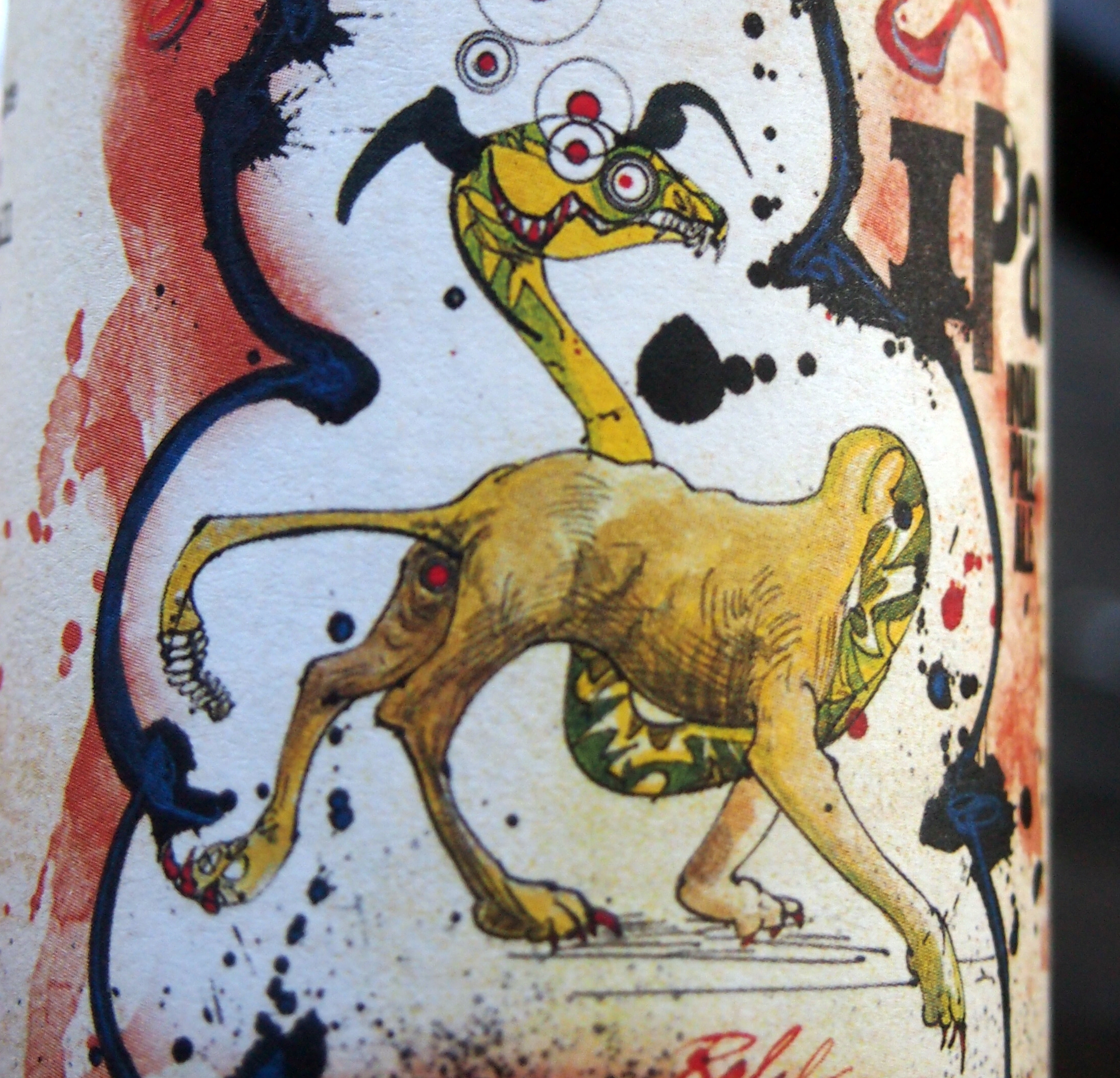
cupsThe black one with the Sam Hurt illustration of a prehistoric creature and his cup — “Early Breakfast” — was a thoughtful Christmas present this year from my nephew Dees and his girlfriend Eden.

The blue one — “Take Time for Fun” — I picked up at a park district facility last week. It was a prize.

A week earlier, two days before the Super Bowl, we’d visited the same facility, and I noticed a contest in progress. Guess the final score of the Big Game and get three months added to your membership. Write your guess down on a slip of paper with your name and address, and put it in a big box (refreshingly low tech, that).

So I guessed Denver 24, Charlotte 17. I was vaguely aware that Charlotte was the favorite, but I still wanted Denver to win. Not because I cared anything about the game, but so I could complete a slide show like this the next week, after having predicted that Denver would win.

As for the numbers themselves, I pulled them out of the air, though I made them football-plausible. 24 = three touchdowns + extra points + one field goal, while 17 = two touchdowns + extra points + one field goal.

I proceeded not to watch the Super Bowl or any of its ridiculously expensive commercials. On Monday, a woman from the park district called to tell me I’d won a coffee cup. Everyone who guessed 24 as the score for Denver got one, it seems — eight or 10 people. Two people, she said, had gotten both scores right and won the membership extension.

One thing people say at this point is that “I’ve never won anything,” but it isn’t so for me. Among other things, in grade school I guessed the number of jelly beans in a jar and won the beans — I picked my house address as the number — and once I was a member of a trivia contest team at a corporate meeting, and won some movie tickets, though that was partly because of my knowledge of obscure facts, not just blind luck.

How I Learned to Stop Worrying and Watch the Movie

“Presidents Day” is around the corner. The holiday is still officially for Washington’s Birthday, and yet because it’s the third Monday of February by law, it can’t ever actually be on his New Style birthday, the 22nd. This year, it’s exactly a week before.

Still, time to dwell on the immortal deeds of William Henry Harrison, Millard Fillmore, Rutherford B. Hayes, et al. You know, the greats. Back to posting on Tuesday, February 16.

On the last night I was in Seattle last summer, I attended a dinner party in Fremont with my old college friend Bill and his wife. Bill was wearing a Dr. Strangelove t-shirt, one featuring the menacing, cigar-sporting face of Gen. Jack D. Ripper, complete with the caption PURITY OF ESSENCE. It looked a lot like this.

Strangelove teeI thought so highly of the shirt that Bill told me the web site where I could buy my own, which I did when I got home. It’s pictured above. In October I wore the shirt to the State Fair of Texas, where it got a few looks and exactly one comment in passing, “Love that shirt!”

A few weeks ago, I watched Dr. Strangelove for the nth time. Late one night in the late ’70s, I happened across the last 20 minutes or so of the movie, perhaps on one of San Antonio’s UHF channels, which was the first time I saw any of it. I couldn’t make heads or tails of it, and only when I saw it in college did I realize what I’d seen. Oddly enough, I also caught the last few minutes of Lolita on the same channel, and only realized it when it was shown in film class some years later; maybe that UHF program director had a thing for Kubrick.

Dr. Strangelove is many things, especially dark Cold War satire with endless allusions to sex, as has been pointed out many times. I had another idea about it this time around, one that makes some sense as an interpretation: the movie’s also about various aspects of the masculine psyche.

In popular lore, especially in idiotic bits like “Manslator,” men are simple creatures, but no human being is simple, much less either of the genders imagined as a whole. The following are notes about the six main characters in that light. Not that I believe that anyone thought about the masculine psyche when the movie was being created, just that it’s an idea worth kicking around these 50-odd years later.

Gen RipperGen. Jack D. Ripper, the Psycho Killer. A fine example of an unsubtle name for a fictional character, but it does get to the point: Ripper wants to kill. Mind you, he isn’t a mindless killer. He’s a high-functioning, detail-oriented, completely delusional killer who fully believes he’s doing the right thing. This makes him exceptionally dangerous to everyone else.

Ripper feels under attack: an invisible, poisonous attack by a loathsome enemy aimed at his very manhood or, as he so famously put it, his “precious bodily fluids.” So for Ripper, it’s self-defense. For everyone else who isn’t a psychopath, it’s murder. Like it or not, the psycho killer’s definitely part of the masculine psyche, though fortunately not the controlling part for most men most of the time.

Group Capt. MandrakeGroup Captain Lionel Mandrake, the Rational Man. Mandrake is as rational as Ripper is delusional. He understands what’s happening, even asking Ripper why he launched the attack, to get to the bottom of things. Note his bitter laugh as he realizes just how nuts Ripper is and, at the end of the clip, how he rationally dives for cover when shots break the windows, while Ripper stands up. He also understands how horrible the situation is, and he’s fully committed to stopping the madness.

Rationality too is part of the masculine psyche, stronger in some men than others. Yet, like reason is in so many situations, Mandrake’s powerless in the face of determined madness, at least until the madness self-destructs. Even then, he doesn’t quite succeed, because of a string of impossible-to-predict incidents that defy reason: the bomber not being able to receive the recall order, the unexpected change in target, the dogged persistence of Major Kong.

President MuffleyPresident Merkin Muffley, the Nurturing Man. To say President Muffley represents the feminine side of a man’s psyche is to risk trading on stereotypes about women, so perhaps “nurturing” is better, even though Muffley’s name more than hints at womanhood: muff and merkin, which is a pubic wig theoretically for either gender, but more often associated with women.

Not only is the president eager to prevent a nuclear exchange, he’s aghast at the prospect of it, since it represents mass murder, the complete opposite of protecting and nurturing. Moreover, he has moral authority, and acts decisively. He calls out Gen. Turgidson more than once (like a mother bawling out her teenage son), he demands an audience with Gen. Ripper, tries to be calming with Premier Kissov, and wonders whether the survivors in Dr. Strangelove’s mine shafts would be too distraught to carry on. Like Mandrake, his best efforts fail. This is, of course, a pessimistic movie.

Buck TurgidsonGen. Buck Turgidson, the Adolescent. Like all of the names in Dr. Strangelove, “Turgidson” is absurd yet also speaks volumes. Adolescent boys are well known, and rightly so, for their turgidity. But as important as nooky is to an adolescent — it’s pointed out quite often that the only female character in the movie happens to be Buck’s mistress, and she happens to be in a bikini the whole time — adolescence is also marked by impulsive behavior, never mind what happens next. Gen. Ripper launched his wing? Damn, we’d better attack right now, hit ’em with everything we’ve got!

Adolescence also involves, in boys at least, an urge to fight, literally or figuratively, and enthusiasm for the cause. Turgidson tussles with the Soviet ambassador — literally — downplays 10-20 million deaths as mussed hair, and is quite excited in describing how a talented B-52 pilot can get through to his target, only realizing right at the end what it means, namely the end of the world. Adolescents are, after all, still learning that actions have consequences. One nice touch: Turgidson’s chewing gum most of the time.

Major KongMajor T.J. “King” Kong, the Engineer. People who happen to be engineers are many things, like anyone else, but Major Kong is the engineer whose focus, whose overriding concern, is to solve problems and get things done. Beyond that, he’s out of his competence. He can’t quite imagine the consequences of the thermonuclear war he’s participating in — at one point, he predicts promotions and medals, as if it were a conventional war; and there’s the hilarious line about “nookuler combat toe-to-toe with the Rooskies.” But he knows he has to do his part, and by gar, he’s going to do it.

So he puts his considerable talents toward that end, overcoming a hostile attack, damage to his aircraft and a stubborn bomb bay door. All that cleverness, all that technical prowess, all that problem-solving, all that persistence: even so the result is doom. The name Kong suggests brute force, which certainly is fitting for nuclear weapons, but Kong and his plane are a little more than that: a force that, once turned loose, is impossible to control again.

Dr. Strangelove, aka MerkwürdigliebeFinally, Dr. Strangelove, the Amoral Power Seeker. Nazis are hardly the only amoral power seekers in history, but they are a prime example of men seeking absolute power over other men. Strangelove is a barely reformed Nazi whose job is weapons research. How, in other words, to better project your power over other people. He isn’t a killer per se, but if people die as a result of his machinations, that doesn’t matter. With lust for dominance as his driving force — one of a number of kinds of lust in the movie — Strangelove nevertheless isn’t quite in control of himself, which give Peter Sellers a chance to be very funny indeed with the doctor’s Nazi-saluting, neck-grabbing hand, his true impulses beneath a veneer of sophistication.

Strangelove’s also coldly calculating, and considers the American people he’s supposedly working to protect as little more than animals. It’s telling that he says that a “nucleus of human specimens” might be “preserved,” and that men in the mine shafts will need to do “prodigious service” to “breed.” If most people are really like animals, it’s up to the strongest men — it’s practically their duty — to run things, by Strangelove’s calculations.

If I thought about the movie more, I might dream up interpretations for those amusing minor characters, Ambassador Alexei de Sadeski (“Our source was the New York Times“) and Col. Bat Guano (“You’re going to have to answer to the Coca-Cola Company”). But I think I’ve thought about it enough for now.

Mala Ars Longa, Vita Brevis

“There, now, that wasn’t so good, was it?” — Leonard Pinth-Garnell

I’m rarely persuaded that something bad, especially a movie, is so bad that it’s good. Usually bad is bad. I’m not going to waste much time watching bad romantic or other comedies, bad drama, bad action flicks, bad horror, bad adaptations of comic books, bad SF, bad war movies, and so forth. I have soft spots for some of the bad movies I saw as a child — The Robot vs. the Aztec Mummy, The Killer Shrews, Frogs, Godzilla vs. the Smog Monster, and a few others — but even so I don’t really want to see them again.

Reading about bad movies is another matter. The Book of Lists, mentioned earlier this week, introduced me to a number of titles universally acknowledged as bad, the only ones of which I’d be temped to watch — a few minutes of anyway — would be The Conqueror, just to see the ridiculousness of John Wayne pretending to be Genghis Khan, or Che! to see Omar Sharif as Che and Jack Palance as Castro. Other titles on its list included The Horror of the Beach Party, Lost Horizon (1973), Robot Monster, Santa Claus Conquers the Martians, and That Hagen Girl.

WorstMoviesIt’s a little hard to remember that before the Internet, lists like that, while not rare, weren’t everywhere you looked. They were still something of a novelty. On the remainder table at Harrods’ book department in 1988, I happened across a fuller example of a bad-movie list in the form of The World’s Worst Movies by Tim Healy (1986). For all of £1.99, it was a deal.

It’s more than a series of lists. Instead, the chapters are thematic essays — entertaining, not very serious essays — mocking bad monster movies, bad SF, bad action pictures, “sex schlockers” and “teenbombs,” along with subchapters along the lines of the Worst of Joan Collins, the Worst of Ronald Reagan, the Worst of Elvis, and the Worst of Roger Corman. Many familiar titles are discussed: Plan 9 From Outer Space, They Saved Hitler’s Brain, The Swarm, Glen or Glenda? etc, etc.

The book also introduced me to movies I’d never heard of, such as Night of the Lepus (1972), which is “a horror film about a horde of monster rabbits which roams the Arizona ranchlands in carnivorous packs leaving trails of destruction of their wake.” Or Zombies of the Stratosphere, a 1952 serial featuring a young Leonard Nimoy as a Martian. Or Percy (1971), about which the book asks, “What could be worse than a film about a penis transplant?” The answer: “Another film about a penis transplant,” referring to the sequel, Percy’s Progress (1974).

I will say that I went out of my way to watch Plan 9 From Outer Space on tape after I saw the entertaining movie Ed Wood. It was as bad as promised. Yuriko watched about 10 minutes and then left the room. I stuck with it and noticed that while Ed Wood tried to re-create some of the bad performances of that movie, they didn’t always work. Most notably, Bill Murray as Bunny Breckinridge, who was the “The Ruler” in Plan 9. Bill Murray is simply too good an actor to be that bad.

First-Season M*A*S*H

A few months ago, I noticed that Netflix on demand has all of the episodes of M*A*S*H (why isn’t there an asterisk after the H?). At first I didn’t feel the need to watch any of them.

Then it occurred to me that I’d missed the first season, and maybe part of the second, when the show was on the air. I was too young to be interested, and picked it up sometime in junior high, maybe when it was part of the extraordinary Saturday night prime-time lineup on CBS during the ’73-74 season: All in the Family, M*A*S*H, The Mary Tyler Moore Show, The Bob Newhart Show, The Carol Burnett Show.

By the time the scriptwriters dropped Henry Blake into the Sea of Japan (March 18, 1975), I was surprised along with the rest of the country, since I’d been watching a while by then. After 1979, I didn’t watch it much anymore. Not only had the quality declined, I didn’t watch much TV at all, though I made a point — like the rest of the country — of watching the finale on February 28, 1983.

So I decided recently to take a look at the first season at least, one every week or two. On the whole, it holds up well enough. I liked it then and I still do, though it’s not the best television, or even the best show in a sitcom-like format (arguably, it’s not a sitcom anyway). As for the first season, it’s good to see the original cast, complete with Trapper John and Henry Blake, both of whom were better than their replacements.

Also of note is first-season Radar O’Reilly, who is a bit more nuanced than he would be later. Besides his longstanding anticipation of events, and that he knew more about what was going on that Col. Blake did — an old joke, that — Radar drank alcohol, helped Hawkeye cheat at cards, traded weekend passes for favors, and was perfectly willing to ogle nurses as they walked by or spy on them in the shower, things he’d be too timid to do later. His evolution in the series into a naive Iowa farm boy did no favors to the character. There’s an essay waiting to be written about the infantilization of Radar O’Reilly.

And what happened to Spearchucker Jones, the talented African-American surgeon? He makes appearances in the first season but not later that I remember. Admittedly, that nickname wouldn’t have gone down well even in the 1970s, but it could have easily been dropped, while the character could have been developed, even as a supporting one. Apparently the producers decided otherwise.

M*A*S*H also suffered from the strictures of network television. One good example: Hawkeye and Trapper emerge from surgery, bitching about spending 12 or 14 hours or whatever operating, and there’s not a drop of blood on them. One of the salient visuals of the movie M*A*S*H is in complete contrast to that: there’s blood all over the place in the meatball operating room, and on the doctors too. Of course, had the TV show depicted that much blood, the audience of the time wouldn’t have noticed anything else. That was before splatter movies and cable TV shows inured people to that kind of thing, after all.

Speaking of cable, I couldn’t help thinking that M*A*S*H would be better — in competent hands, whoever that might be — on cable. More visible blood, dirt, and skin, for one thing, though it would be easy to overdo those aspects. More importantly, the characters could be fleshed out a good deal more. Once, just once, I’d like to see Hawkeye, after a long stretch of stressful surgery, and at the provocation of (say) a Korean character, explode in a tirade of ethnic slurs. Later he’d regret it, and drink himself blind to forget. That’s something a cable version of M*A*S*H could handle with aplomb.

Bicycle Thieves

Some days you get up and think, I haven’t seen enough Italian neorealist movies. Well, maybe it doesn’t happen exactly that way, but anyway you have a sudden urge to see Bicycle Thieves, also known as The Bicycle Thief, though it’s clear enough that Ladri di biciclette, the Italian title, is plural, and for good reason, as things turn out in the story.

At least, I had a urge to see Bicycle Thieves recently. It’s been a long time in coming. Back in high school, I had a copy of The Book of Lists, one of the more fun (if not very scholarly) reference works of the pre-Internet age.

In its section on movies, the book included the results of three Sight & Sound magazine polls of the ten best movies of “all time,” polls done in 1952, ’62, and ’72. Topping the 1952 list was The Bicycle Thief, as it was known then in English, though it came in at no. 6 ten years later and wasn’t on the ’72 list.

It was a movie I’d never heard of on a list compiled by a magazine I’d never heard of in a time and place (ca. 1978, Texas) when accessing either the movie or the magazine would have been difficult, so I had every reason to forget it. Which I did. Almost. Somewhere, for years afterward, tucked in the labyrinthine warehouse of filing cabinets that form my memory, was a little folder called The Bicycle Thief, whose entire contents were, “Wonder what that’s about. Why did some critics like it?”

Sight & Sound, incidentally, is still published by the British Film Institute, and it still does a greatest-movie poll every 10 years. In 2012’s poll, Bicycle Thieves was no. 33 out of 50, for what it’s worth. But it’s hard to take a great-movie list that omits Dr. Strangelove too seriously.

In 1983, I noticed The Bicycle Thief discussed in one of the better textbooks I’ve ever had, Understanding Movies, Third Edition (1982) by Louis Giannetti, which I used in my VU film class, though we didn’t see the movie in that class. I still have the book, which says, “[The] Bicycle Thief deals with a laborer’s attempts to recover his stolen bike, which he needs to keep his job. The man’s search grows increasingly more frantic as he criss-crosses the city with his idolizing, urchinlike son…”

Put like that, it doesn’t sound like much of a story. Yet it is. Mainly it’s about how awful poverty is, and how someone stuck in it just can’t catch a break — without making it an overt polemic about class injustice. The man and his son are fully human, with the serious misfortune of being poor. By the time the movie’s nearly over, you’re really pulling for Antonio (the father, pictured above) and Bruno (the son). You want them to find the bicycle, but you know it isn’t going to happen, and you know what Antonio’s going to do about it, and think, I might do the same, even though it turns out to be a bad idea.

“After a discouraging series of false leads, the two finally track down one of the thieves, but the protagonist is outwitted by him and humiliated in front of his boy,” Giannetti continues. “Realizing that he will lose his livelihood without a bike, the desperate man sneaks off and attempts to steal one himself… he is caught and again humiliated in front of a crowd — which includes his incredulous son.”

Director Vittorio De Sica used nonprofessional actors in the lead parts of father (Lamberto Maggiorani, above) and son (Enzo Staiola). It probably helped that Maggiorani was an actual factory worker, but how De Sica teased such a remarkable performance out of seven-year-old Staiola is astonishing.

Also of interest: Rome, 1948. Much of the movie was shot out in the streets of Rome. It might be the Eternal City, but a lot must have changed in nearly 70 years: the streetscapes, the non-monumental buildings, the way the crowds look and get around town. I tried to notice as much of the background as I could. Even when I visited Rome in 1983, there seemed to be a lot more cars than depicted in De Sica’s city, though at one hair-raising point Bruno’s nearly run over by two careless drivers, something that seemed entirely believable to me.

In all, an exceptionally good movie. So I’m glad that, for whatever reason a few weeks ago, I thought, I never did see Bicycle Thieves. Time to do it. In our time, when you have such a notion, you can put the movie in your queue — or get it at once on your gizmo. I saw it on DVD. People who are put off by old movies, or black-and-white movies, or movies that have subtitles, seriously don’t know what they’re missing sometimes.

“Happy Birthday” Has 13 Letters

For her 13th birthday, Ann wanted a simple cake without “thick icing.” So we got a round yellow cake — yellow icing topping a yellow cake, with a modicum of decoration — at a grocery store we know that has a good bakery.

Ann and Cake, Feb 6, 2106I found the candles by chance at the same store. As it happens, there are 13 letters in Happy Birthday, a fitting number.

Birthday CakeI might use them for my own birthday. Each candle would stand for about four years and three months of my lifetime. Also, I’m glad to report that however the cake looked, it tasted good too.

Map Hero’s Laminated Gitche Gumee

You never know what’s lurking in the fine print. Usually that’s taken to be a bad thing, but yesterday I took a look at a map I’ve owned for years and discovered a fine thing in the fine print.

First, the map. It’s laminated, and so in excellent shape. I got it when we went up to northern Wisconsin in 2003. At 16¾ inches x 10⅝ inches, it’s beyond the capacity of my simple scanner, so here’s a large detail from the midsection of the map: instantly recognizable as the ice-water mansion Lake Superior.
LakeSuperiorLake Superior Port Cities Inc., publisher of Lake Superior Magazine, published the map in 2001. It’s a quietly gorgeous map whose shadings not only indicate elevation above and below the surface of the lake, but are pleasing to the eye. Besides towns and roads, it notes all of the various state forests and parks along the shores of Lake Superior, plus the national lakeshores and the single national monument, Grand Portage in Minnesota.

Here’s a closeup of Keweenaw Peninsula, the UP’s UP, and a place I surely must see.
KeweenawVery small versions of the Lake Superior Circle Tour sign mark a network of roads that circumscribe the lake. If I had the time, that’s a drive I wouldn’t hesitate to do. I remember the first time I visited Lake Superior — Labor Day weekend 1989 — I was driving between Munising and Marquette and I saw one of the signs. I hadn’t realized there was a Lake Superior version of the drive; the Lake Michigan Circle Tour signs can be seen even in the Chicago area and, in fact, I’ve done my own version of circum-driving that lake twice (once was that ’89 weekend).

Instantly I was taken with the notion of driving around Lake Superior. I was by myself and could have done it. I didn’t have my passport, but you didn’t need a passport to visit Canada in those days. I hadn’t planned to take any time off after Labor Day, but I could have called in sick for a few days, something I very rarely did. But no. I was entirely too responsible.

On the lake itself, the map also features lighthouses and the sites of notable shipwrecks. Some of the lighthouses are probably easy enough to see, but others are impossibly remote, such as the Stannard Rock Light, more than 20 nautical miles southeast of Keweenaw Point, slap in the middle of the lake.

As the for the wrecks, few will ever see them in the chilly Superior waters (average temp, 40 degrees F.). The most famed of them, naturally, is the Edmund Fitzgerald, but it has a lot of company, such as the Onoko, Henry Steinbrenner, John Owen, Western Reserve, Gale Staples, Niagara, Superior City and others.

A handful wrecks are marked but also noted “went missing,” such as the Owen and Manistee. To quote Wiki on that ship: “The Manistee was a packet steamship that went missing on Lake Superior on November 10, 1883. It was presumed to have sunk, with no surviving crew or passengers. The cause remains a mystery, and the wreckage was never discovered.” Sometimes Gitche Gumee just eats ships, it seems.

As for the fine print, way at the bottom right corner of the map, in about 3-point print, it says, “Design/Cartography by Matt Kania.” He’s easy enough to find: Map Hero, maker of custom maps. Looks like he’s done a lot of wonderful maps besides Superior. If I had any talent for it, I’d do the same.

Michelin’s Central Texas

Here’s another map of considerable usefulness and aesthetic value. This is a detail from the Michelin 2015 North America Road Atlas.

CentralTexasI bought the 2003 edition back when it was new, but by last year it was worn out, so I replaced it. Instead of providing a map or two for each state, as the larger Rand McNally does, Michelin divides North America into a grid of squares. Central Texas above happens to be on square 61. The system takes some getting used to, but on the whole it works.

I also still buy Rand McNally most years. Some things on those maps won’t be on Michelin and vice-versa, though since Rand McNally is 15¼ inches x 10¾ inches, and Michelin is 8 x 11, the former has more room for detail. Yet Michelin packs an amazing amount of detail, as good maps should.

CentralTexasThen there are state highway maps. In whatever state I pass through, I try to pick up one. They were always easy to find in Texas — every rest stop with bathrooms used to have them, and maybe still do. The lesson is, you can’t have too many maps.

Without maps around the house, how could you browse? Looking at the Texas 61 map just now, I notice towns I’ve never heard of — at some distance from San Antonio, where I know most of the surrounding burgs — including the likes of Bleiblerville, Blue, Concrete, Ding Dong, Gay Hill, North Zulch, Oxford, Snook, and Sublime. All real Texas town names, according to Michelin.