The Field & the Basilica

As of June 21, 2014, there was no new development that I could see at the Field of Dreams movie site, which is near Dyersville, Iowa, about 20 miles west of Dubuque. Apparently there’s been a hubbub – or maybe a brouhaha (not sure which is greater dustup) – about plans for further development at the site.

I won’t dwell on that. Enough to say that the new owners of the property, who have a mortgage to feed, want it to be more than a baseball field amid the corn, while some residents of greater Dyersville and others very vocally do not want that to happen. More about the fracas here.

This is the kind of tourist that I am: although I’ve never actually seen Field of Dreams, I wanted to see the accidental tourist attraction created in haste in the summer of 1988 to serve as one of the main sets for the film. Why? Because it’s there. Or more exactly, because I was going to be near there anyway.

Besides, Yuriko had seen the film. As we drove in the vicinity of the Field, her eyes widened a bit. “This is what it looked like in the movie,” she said. She saw it a long time ago, and couldn’t really remember the story. I’d never seen it, but knew that the movie involved ghost baseball players, including Shoeless Joe Jackson. (Maybe Shoeless Joe got a raw deal from Baseball in his lifetime, but in terms of posthumous fame, he’s one of the better-remembered ball players of the early 1900s.)

The site is appealingly simple. You drive down a small road to get to it, park nearby, and walk a short distance over to the baseball field. It looks pretty much like any other non-pro baseball field, except in a wet late June, the backfield is bordered by lush rows of corn.
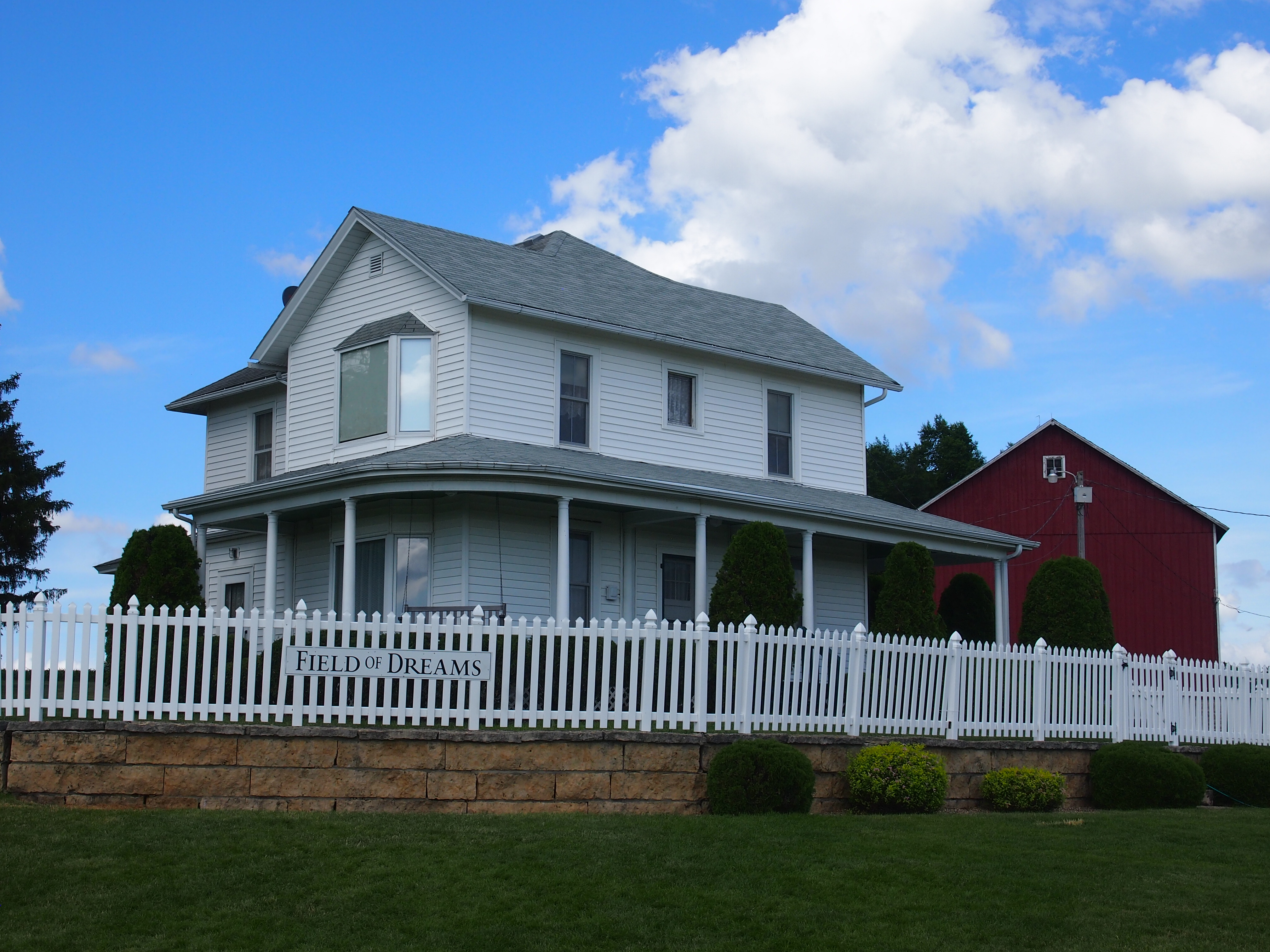
Field of Dreams, June 2014The immaculate white house stands nearby, along with a red barn. I understand that the movie producers added the white picket fence around the house to make it look more like our collective notion of rural Iowa (and they had to paint some of the surrounding vegetation green in that drought summer of ’88). Odd, it didn’t even occur to me to go see if the house was accessible. It looks like someone’s house, which it was until recently, so approaching too close would have seemed like trespassing.

A fair number of people were visiting on that Saturday in June. No one was playing a game, exactly, but people were tossing and hitting balls, including a man taking swings at a ball pitched by a kid who probably was his son.

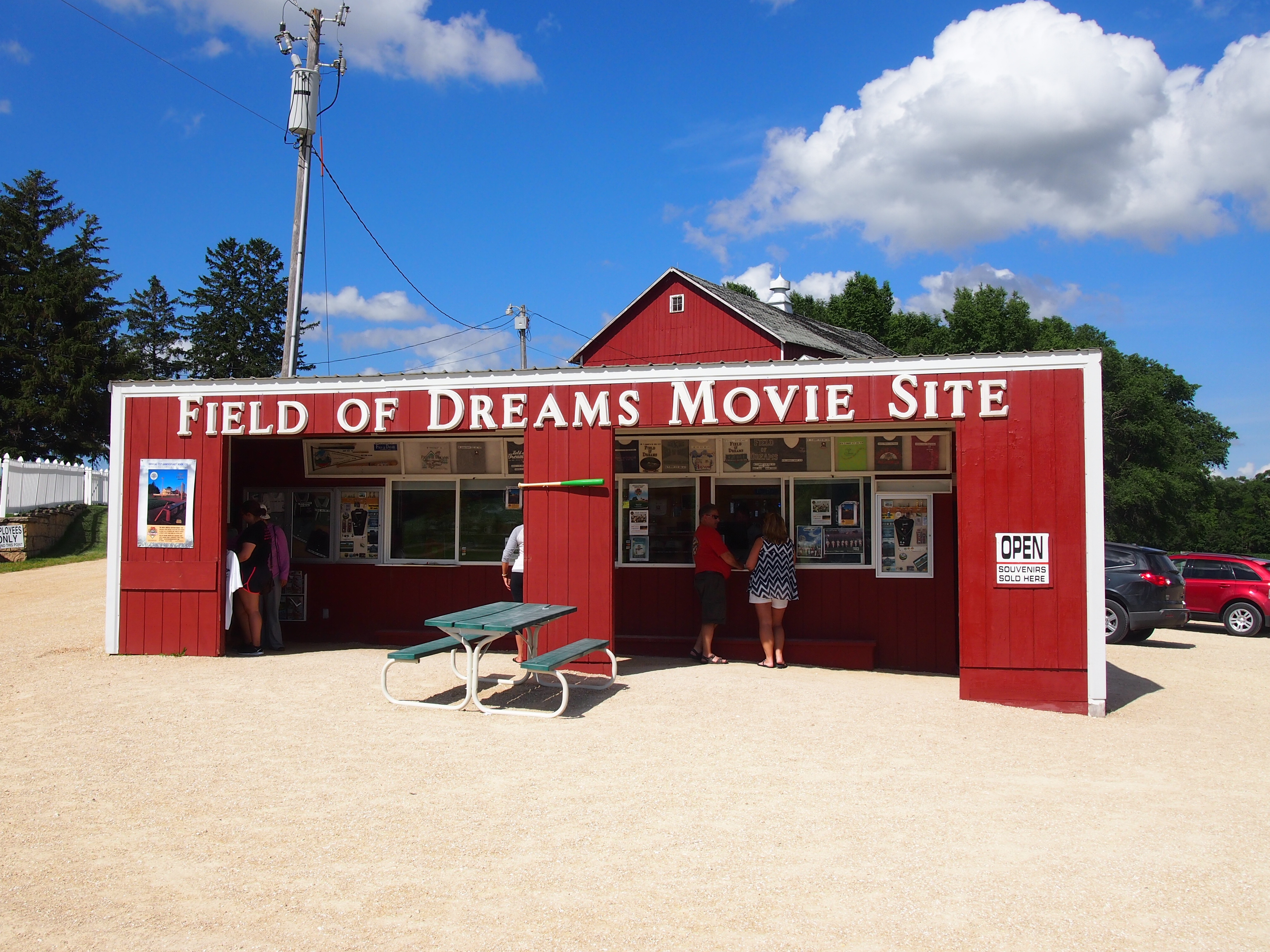
Field of Dreams, June 2014Naturally, there’s a gift stand. It’s a modest operation, not generating enough revenue to feed a large mortgage, I bet. In any case I bought a few postcards and a souvenir spoon for Yuriko.
Field of Dreams, June 2014The Field of Dreams isn’t the only thing to take a look at in Dyersville. The town is home to the National Farm Toy Museum, and while in theory that might have been interesting to visit, we bypassed it to take a look at the Basilica of St. Francis Xavier, an enormous and very ornate Gothic church right in town.

The interior was restored in 2000 and ’01, so it must have some of the brilliance of the original 1880s design. How many small-town basilicas are there in this country? Not many, I think.
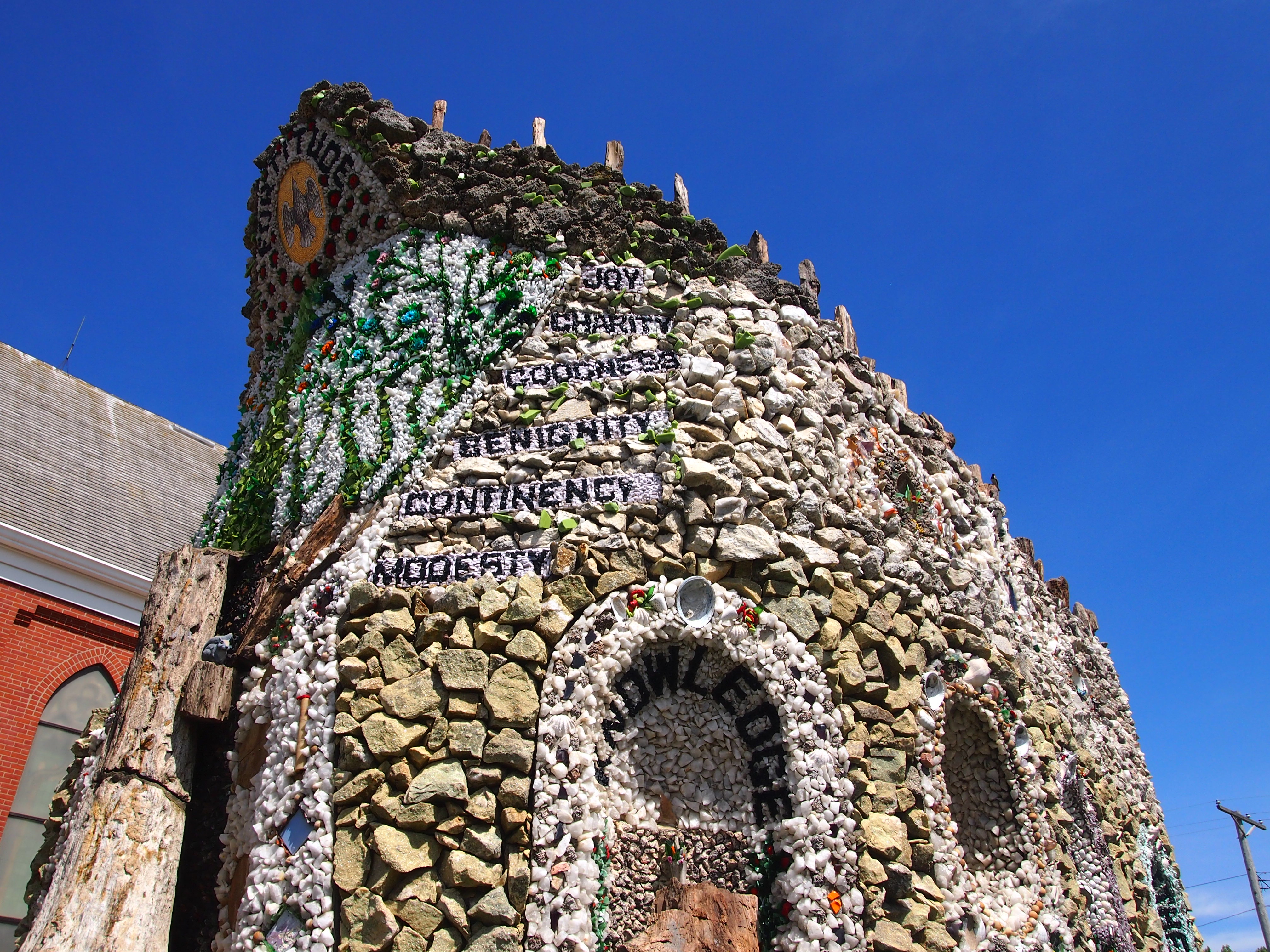
The Dickeyville Grotto

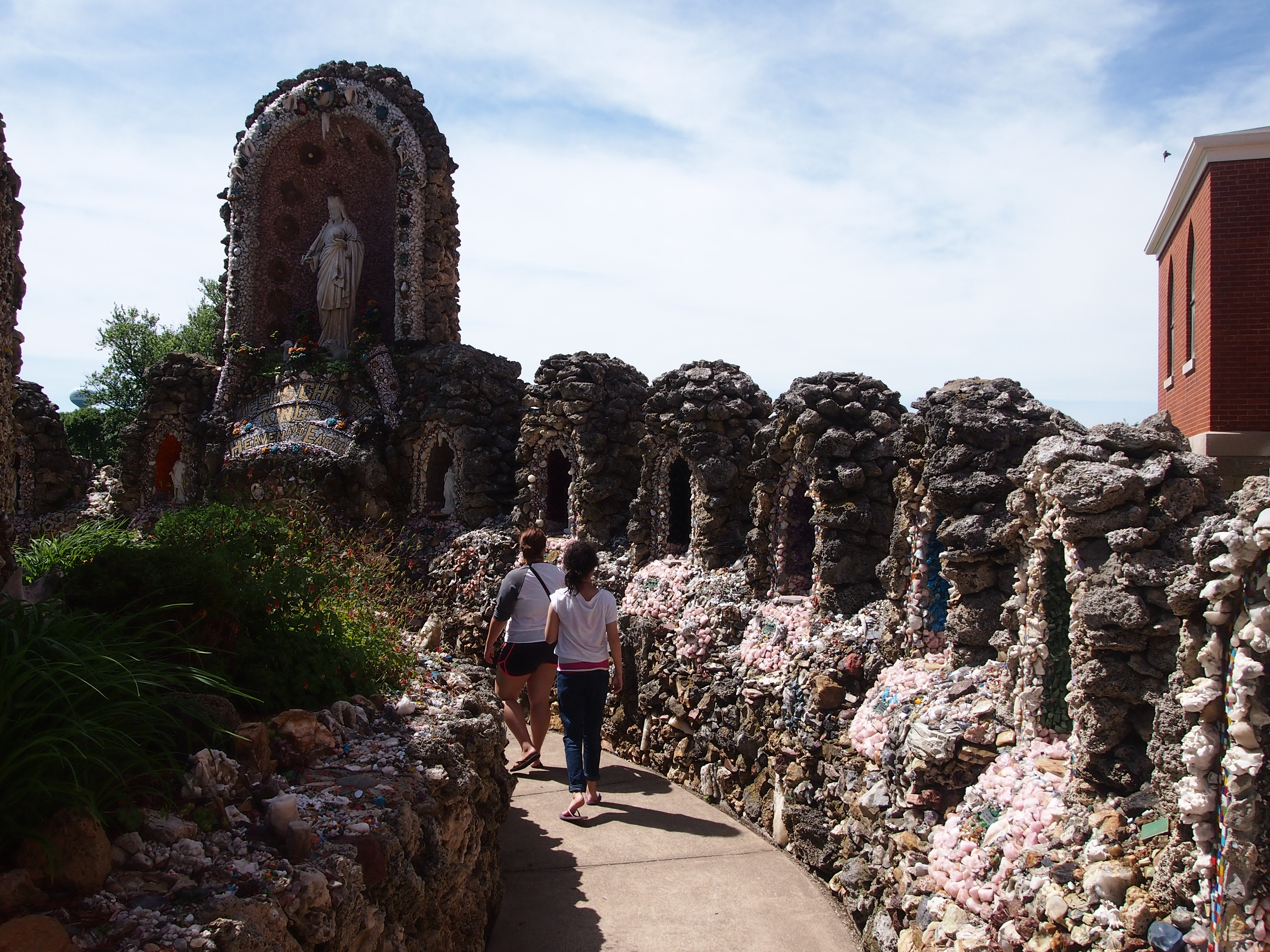
Writing for PBS, cultural anthropologist Anne Pryor says that, “In Dickeyville [Wis.], one of the area’s small towns, is Holy Ghost parish, the home of a remarkable piece of folk architecture. Situated between the rectory, church, and cemetery is the Dickeyville Grotto, a structure so amazing that I have seen unsuspecting drivers come to a full halt in the middle of the road to gape. What stops them short is a 15-foot-tall false cave, decoratively covered with colored stone and glass, dedicated to Mary the mother of Jesus, to God and country.

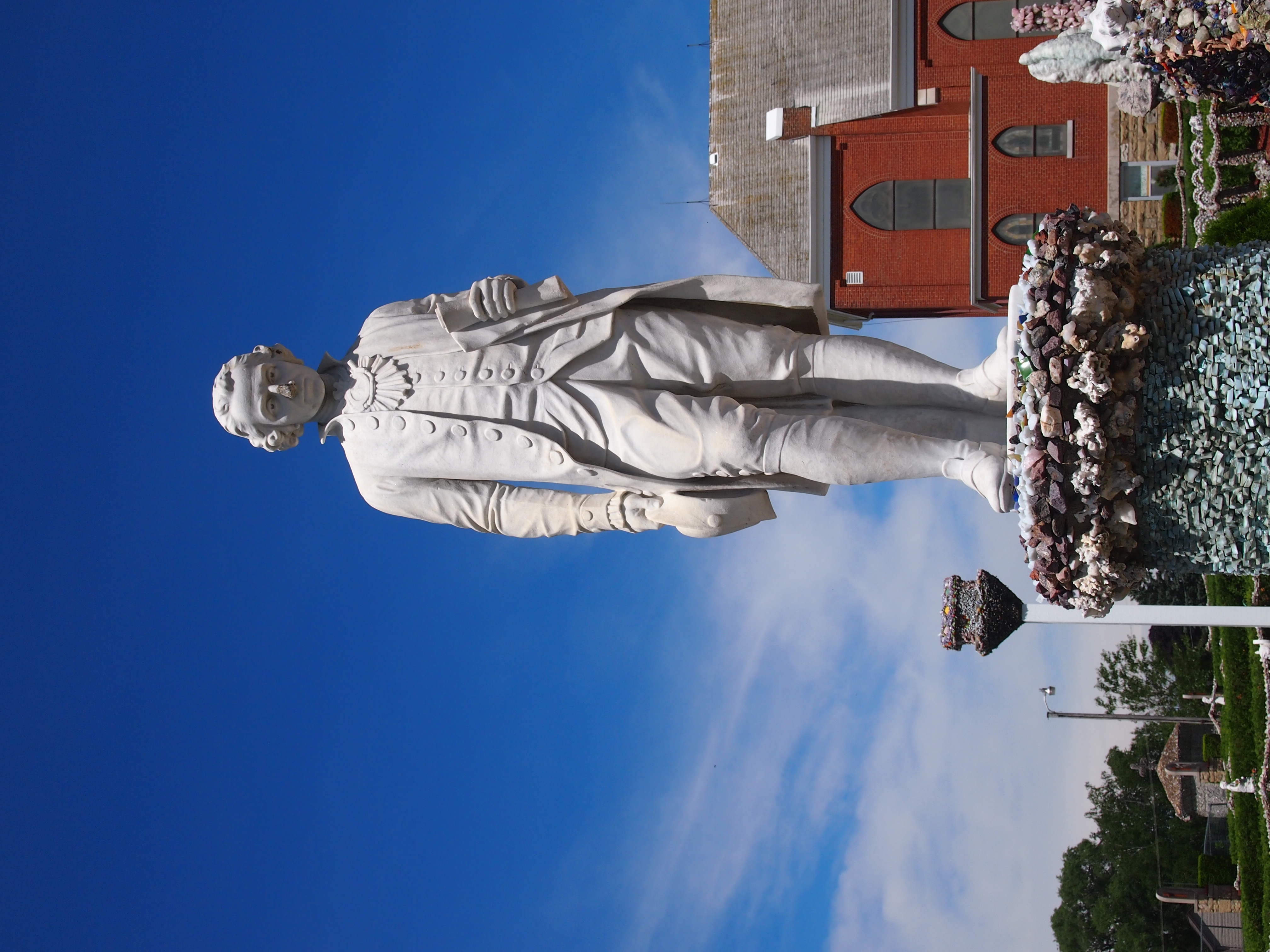
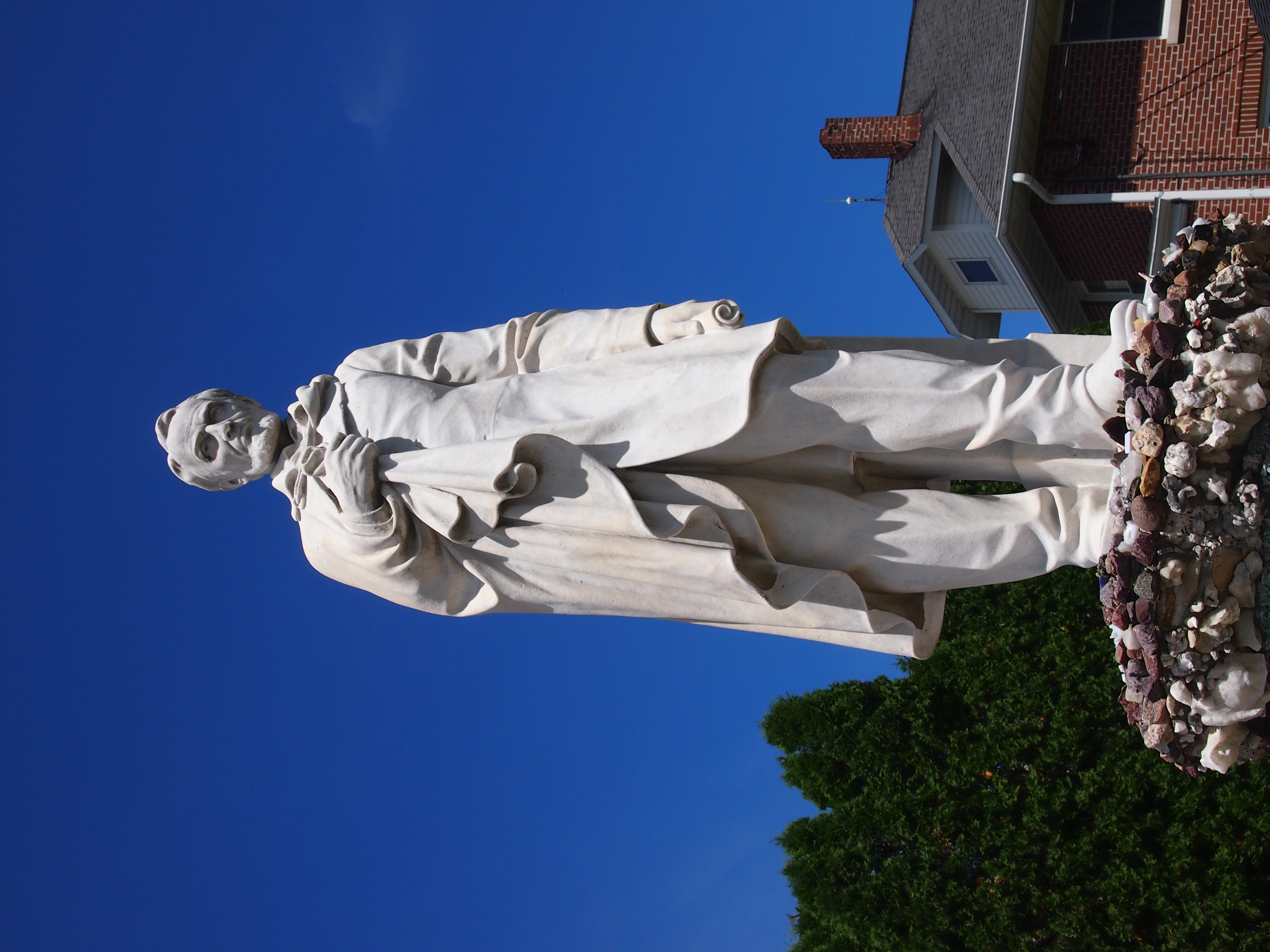
“Although the name implies a singular structure, the Dickeyville Grotto is actually a series of grottos and shrines. It includes the grotto dedicated to the Blessed Mother, the structure seen from Highway 61; a shrine dedicated to Christ the King; a shrine to the Sacred Heart of Jesus; and a Eucharistic Altar in the parish cemetery, formerly used for annual outdoor Corpus Christi processions. The large Patriotic Shrine depicts the history and love of country represented by Columbus, Washington, and Lincoln.

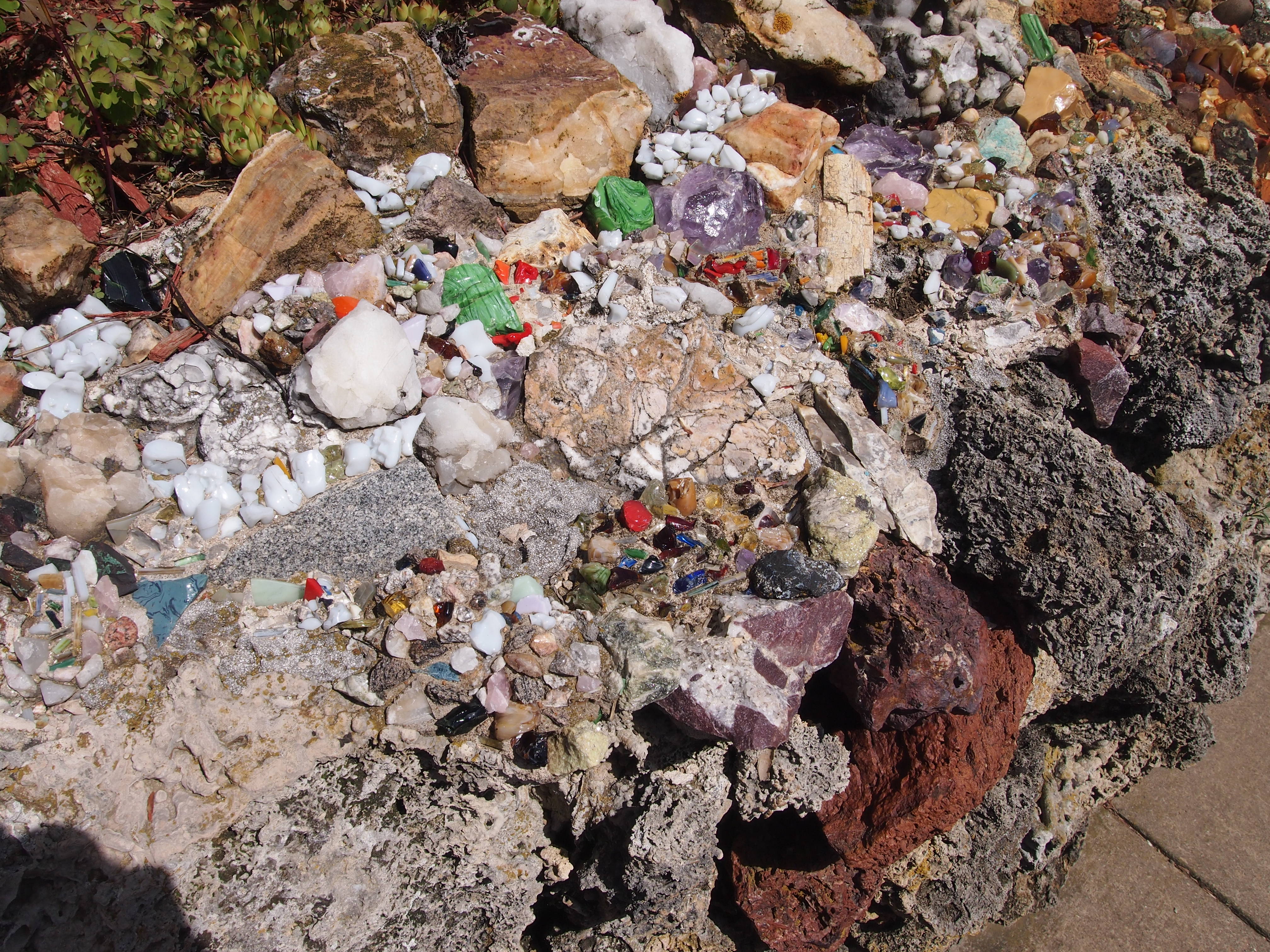
“All of these creations display decorative embellished cement ornamentation achieved by placing patterns of colorful materials in the concrete when it is still damp: shells, stones, tiles, glass, petrified moss or wood, geodes and gems. Iron railings with the same distinctive decorations border the walkways between the different shrines and grottos, unifying these separate structures.”

We arrived at the Dickeyville Grotto late in the morning on Sunday, when it was already sunny and very warm. The Blessed Mother grotto is striking indeed, and in case there’s any doubt, the site proclaims itself to be about RELIGION and PATRIOTISM. (And another sign mentions the gift shop.)Dickeyville Grotto, June 2014Dickeyville Grotto, June 22, 2014Here’s the back of the Marian grotto. Virtues are literally written in stone.

OLYMPUS DIGITAL CAMERAMost of the surfaces are as colorful as can be. Under strong sunlight’s a good way to see it.

Dickeyville Grotto, June 2014Father Mathius Wernerus, priest at Dickeyville’s Holy Ghost Parish, and his parishioners built the grotto during the late 1920s. It was renovated in the late 1990s. The timing of its origin must account for the aforementioned and odd (to us) Patriotism Shrine, with Columbus, Washington, and Lincoln. The patriotism of U.S. Catholics was widely and openly questioned at the time, so it makes sense.

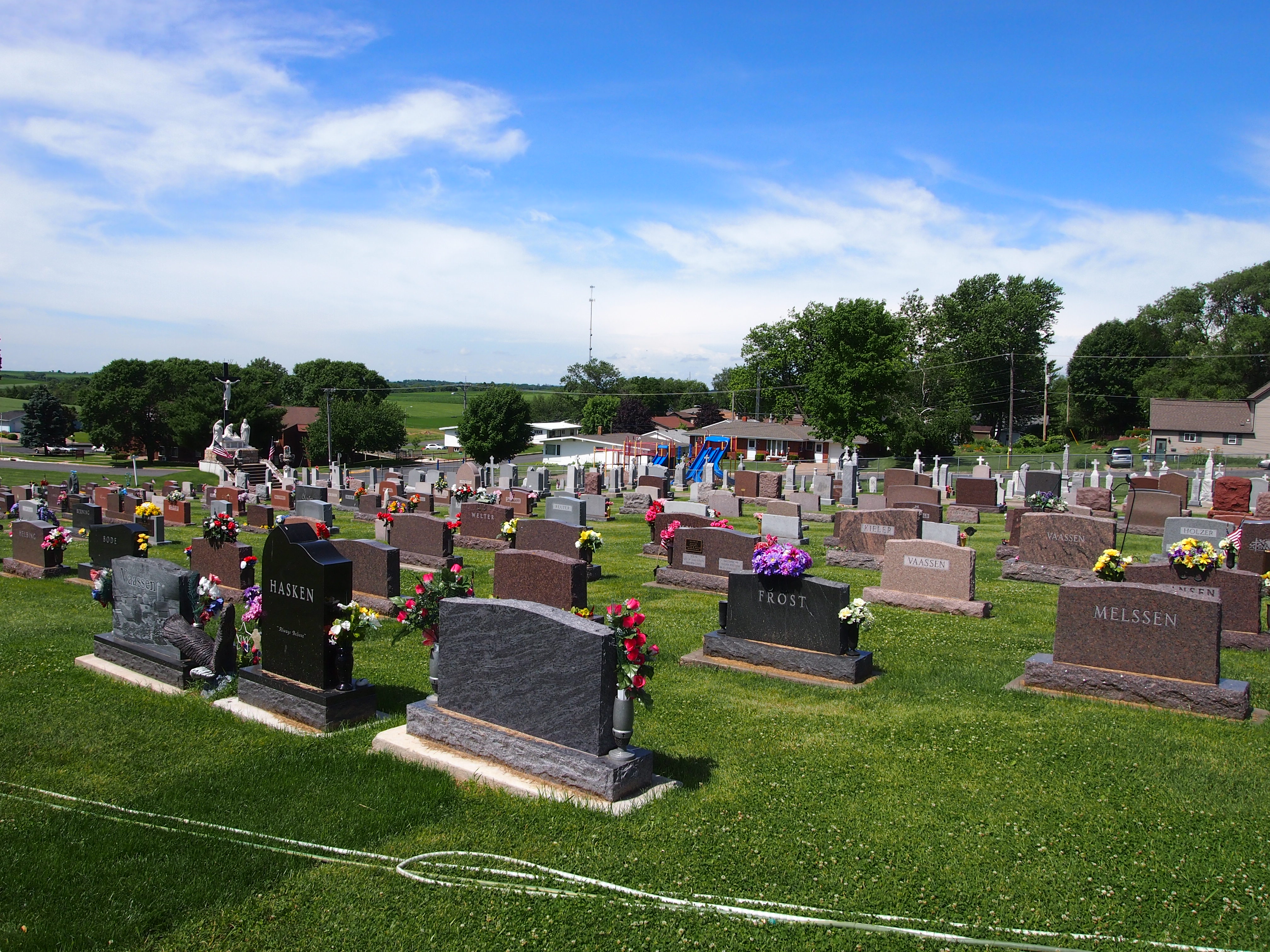
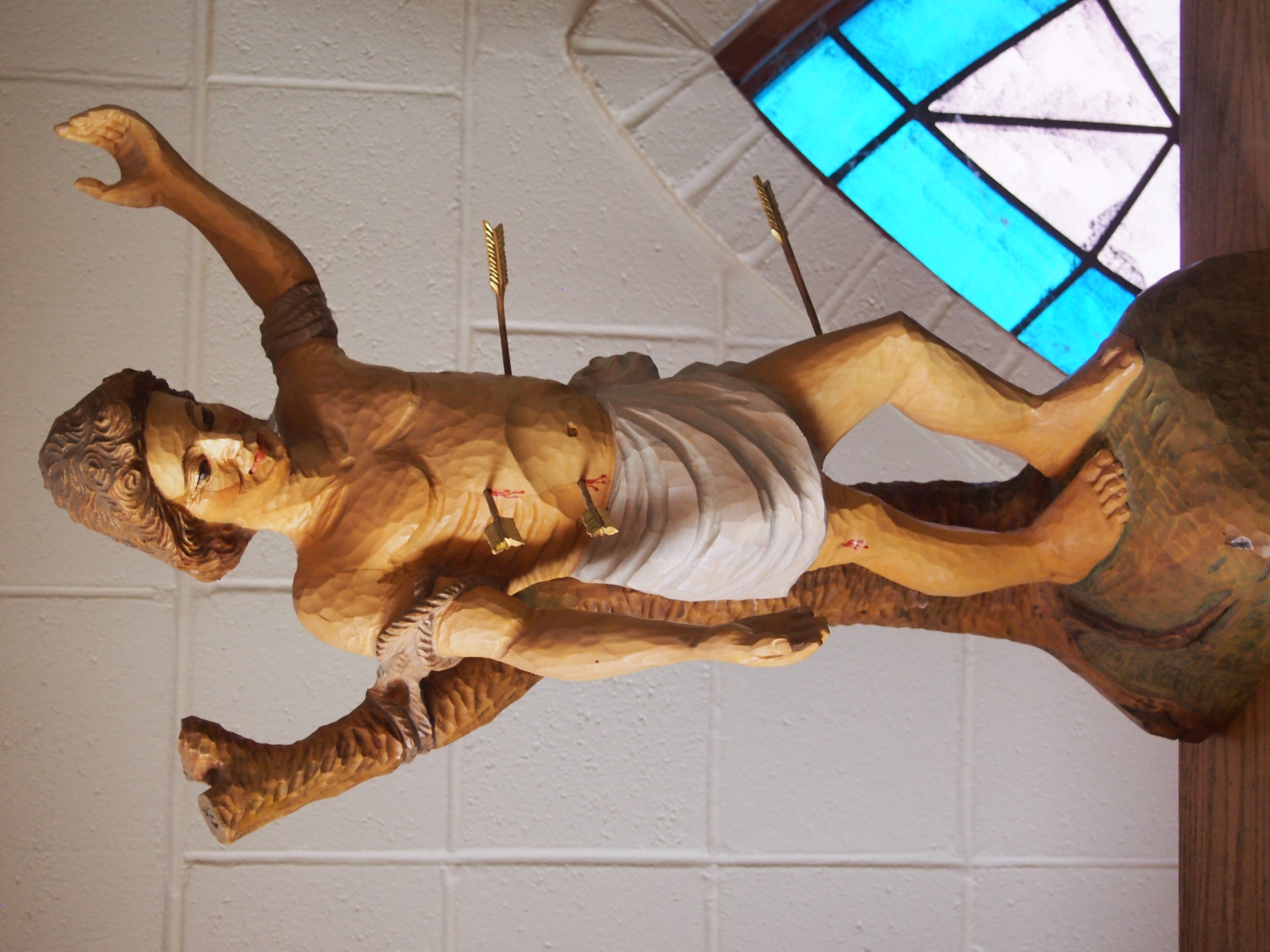
Dickeyville Grotto, June 2014Dickeyville Grotto, June 2014Also worth seeing at Holy Ghost Parish is the cemetery, which fulfilled my informal requirement of at least one cemetery visit per trip. While my family poked around the gift shop, I strolled through the cemetery. Not a lot of fancy funerary art, but still a handsome array of gravestones in a bright Midwestern setting. The most interesting stone I saw was a large one depicting a large farm, which presumably the deceased had owned and operated.Holy Ghost Parish, Dickeyville, Wisc., June 2014Also worth seeing, and not just for the air conditioning, was the church building. Its stained glass is nice, and tucked away in the landing of the stairway that connects the basement and the nave are a couple of statues with themes you don’t see that often (at least I don’t), such as St. Sebastian, whom I’ve seen depicted more often in paintings.

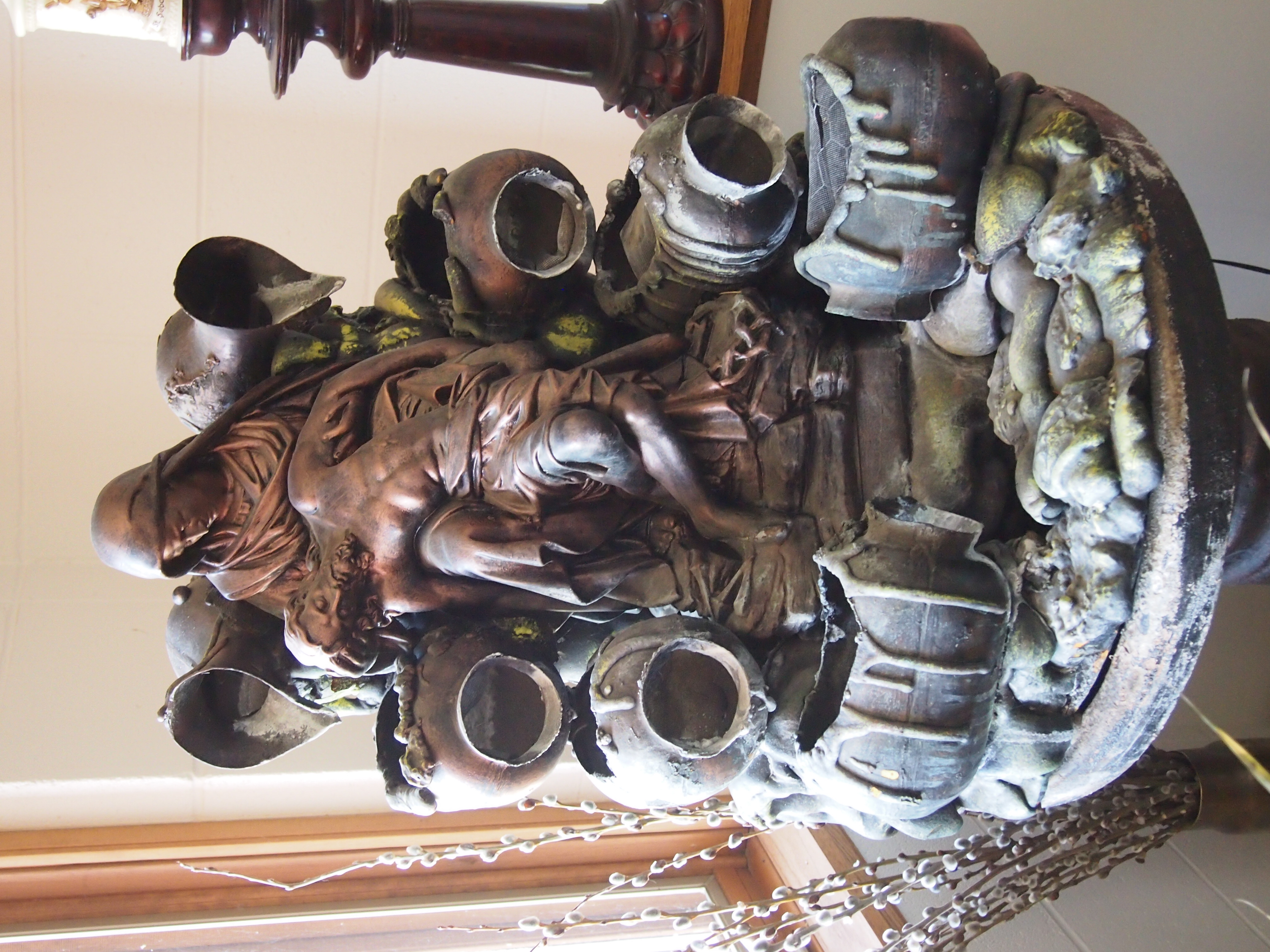
Holy Ghost Parish, Dickeyville, Wisc., June 2014 And this pietà. Maybe I’m not up on my Christian symbolism, though I have heard of broken vessels standing in for us sinners. But I’ve never seen a statue quite like this.

Holy Ghost Parish, Dickeyville, Wisc., June 2014I didn’t see anything to identify the work or the artist, so I’ll have to leave it at that. Enough to say that Holy Ghost Parish and its vernacular grotto were well worth detouring a few miles into extreme southwestern Wisconsin to see.

The Fenelon Place Elevator, Dubuque

Do you remember your first funicular? I know I do: Innsbruck, Austria, August 1, 1983. My friend Rich and I signed up for a group hike organized by the youth hostel we were staying at. We rode a bus up a mountain road to the terminus of a train that went further up the side of the mountain: a funicular.

Merriam-Webster: “A cable railway ascending a mountain; especially: one in which an ascending car counterbalances a descending car,” but that’s a latter-day usage. Go back far enough and you get to funis, which is Latin for rope.

Both the word and the thing itself please me. The Fenelon Place Elevator began as a cable car line up the side of Dubuque’s bluff in the 1880s, built by a banker who lived at the top of the bluff but who worked down near the river. By the 1890s it had evolved into a true funicular, using a system based on those used in the Alps, and according to the official history, “Ten neighbors banded together and formed the Fenelon Place Elevator Co…. This group traveled to the 1893 Colombian Exposition in Chicago to look for new ideas. They brought back a streetcar motor to run the elevator, the turnstile, and steel cable for the cars.”

Remarkable the things that are connected in one way or another to the 1893 world’s fair, isn’t it? In our time, a technically more modern – but still old-timey appearing – funicular travels the slope in Dubuque. I assume some people still commute on it, because the neighborhood at the top of the bluff is still residential, and the district at the bottom is still mostly commercial. But I’m sure that much of the Fenelon Place Elevator’s business involves tourists taking it for a lark.

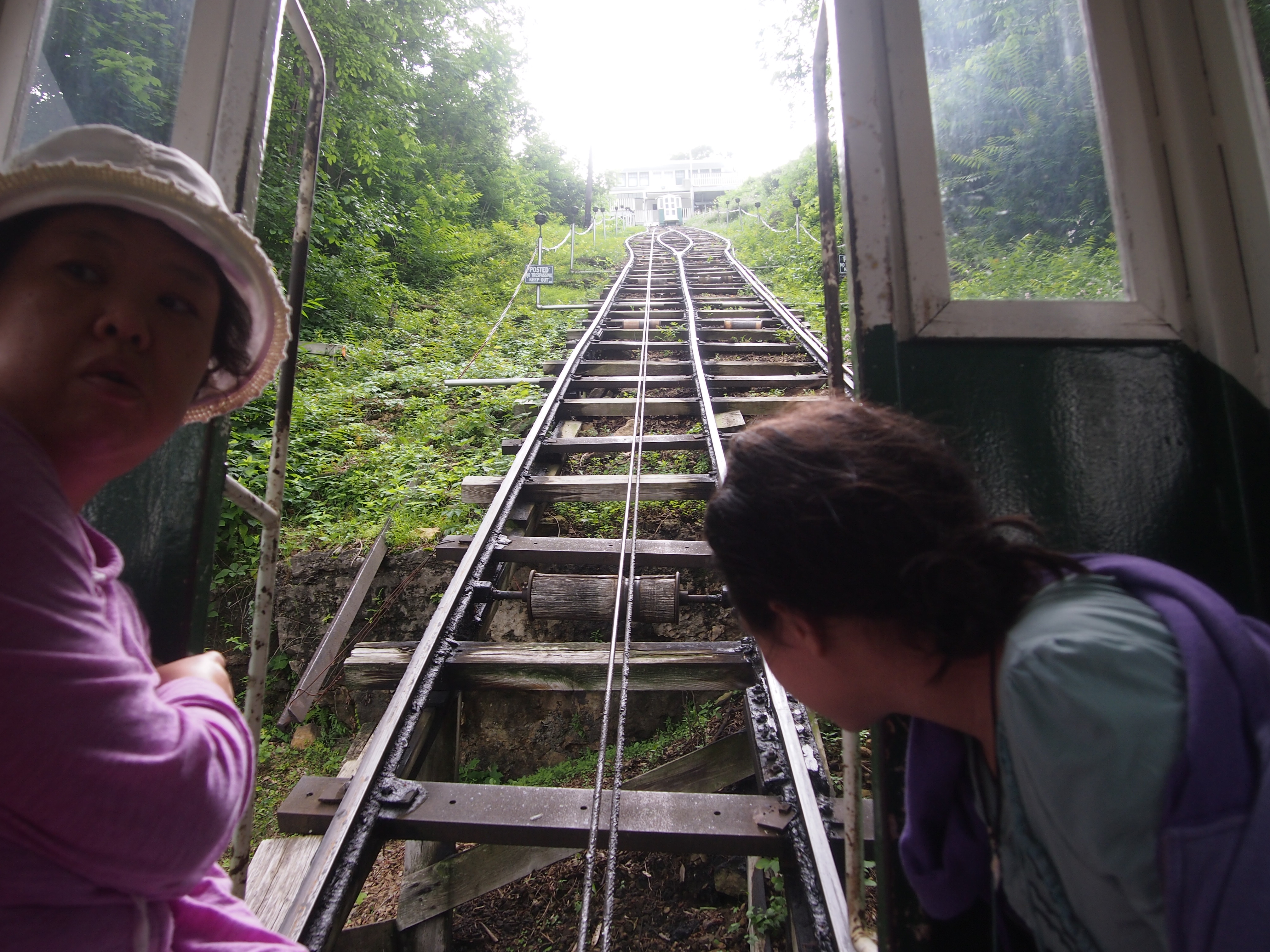
Here’s the view from inside one of the cars, waiting at the bottom. Fenelon Place Elevator

A sign at the entrance says:

CABLE CAR IS OPERATED FROM ABOVE

GET IN AND SIT DOWN

PULL BELL CORD WHEN READY

OPERATOR WILL SIGNAL, WITH A BUZZ, WHEN CAR WILL START TO MOVE

PLEASE REMAIN SEATED UNTIL CAR HAS STOPPED AT THE TOP

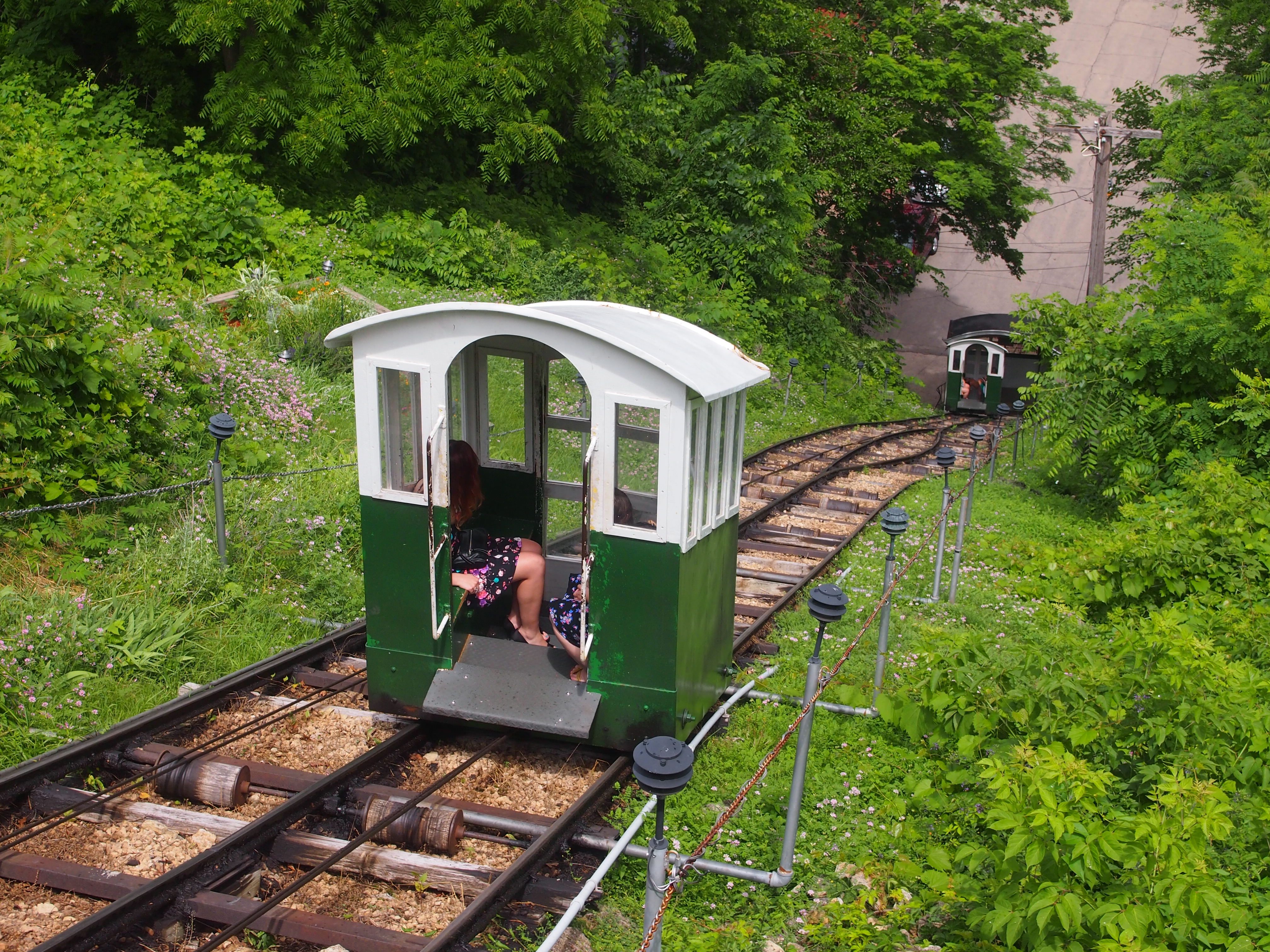
The funicular is 296 feet long, runs on a 3-ft. gauge, and while I didn’t time the trip, it couldn’t have been more than a minute. Here’s the view from the observation deck at the top, looking down on the funicular. The cars can hold about six people comfortably.

Fenelon Place Elevator, June 2014Round-trip adult fare: $3. A lot if you consider the literal distance traveled. A bargain, if you consider how cool funiculars are.

Driftless Views

The area we visited last weekend included places in three states, but that’s just political geography, invented by men and as transient as a firefly light in the grand scheme of the Earth. A more geographically apt way to think of our destination is the Driftless Area. That too is transient – everything is, over millions of years – but not quite as much.

The concept is well enough known that a part of Wisconsin markets itself as Driftless Wisconsin, no doubt to compete with the better-known wooded areas up north and the cities in the southeast part of the state. The organizations web site tells us that “the Driftless Area includes 24,103 square miles, covering all or part of 57 counties in southwest Wisconsin, southeast Minnesota, northeast Iowa, and a small part of northwest Illinois.

“The region’s distinctive terrain is due to its having been bypassed by the last continental glacier. The term ‘driftless’ indicates a lack of glacial drift, the deposits of silt, gravel, and rock that retreating glaciers leave behind.

“The Driftless Area is characterized by its steep, rugged landscape, and by the largest concentration of cold water streams in the world. The absence of glaciers gave the rivers time to cut deeply into the ancient bedrock and create the distinctive landforms. Karst topography is found throughout the area, characterized by shallow limestone bedrock, caves, sinkholes, springs, and cold streams.”

That is, this part of the Midwest actually has some pleasing topography, unlike most everywhere else. A 1989 visit to Galena, which is in that “small part of northwest Illinois,” introduced me to the pleasures of the land, even though visiting Galena is mostly about the pleasures of a late 19th-century streetscape put to modern uses.

Sometimes I miss hills. The modest hills of San Antonio, the more robust ones of the nearby Hill Country, the rolling hills of Middle Tennessee. So it’s good to visit the hills and take a look off in the distance.

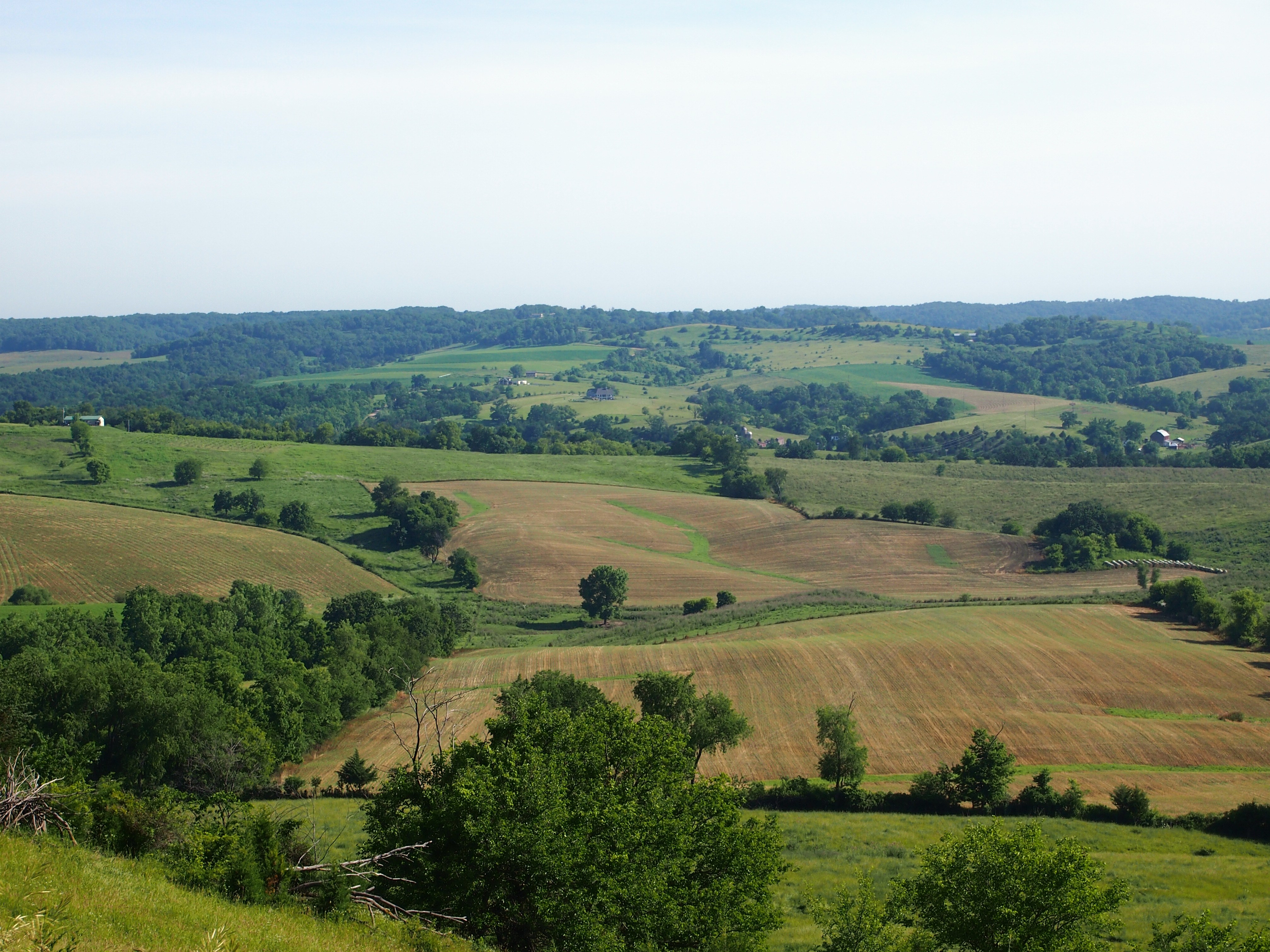
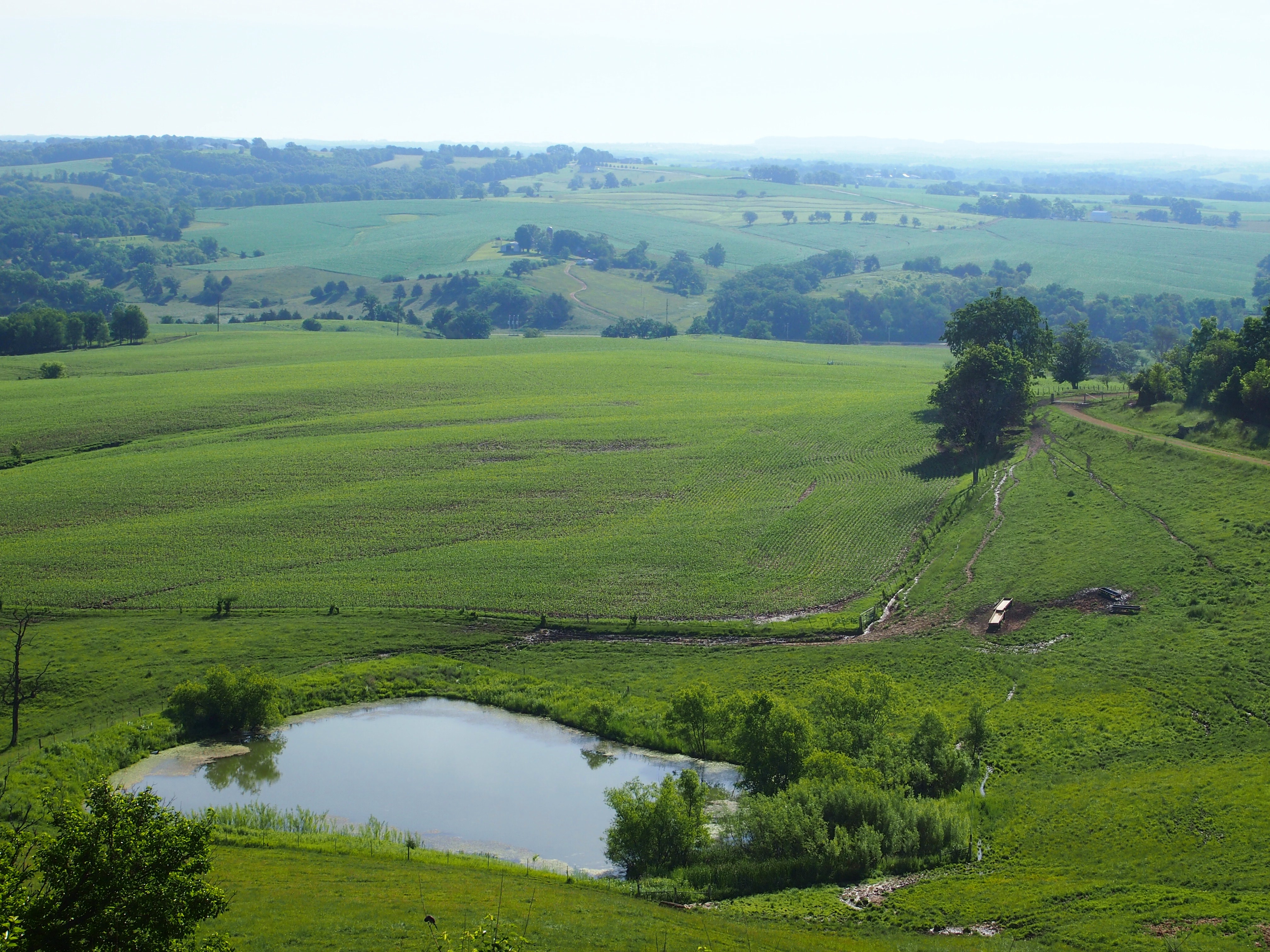
A few miles east of Galena, in rural Jo Daviess County, Ill., along US 20, there’s an overlook worth stopping at.

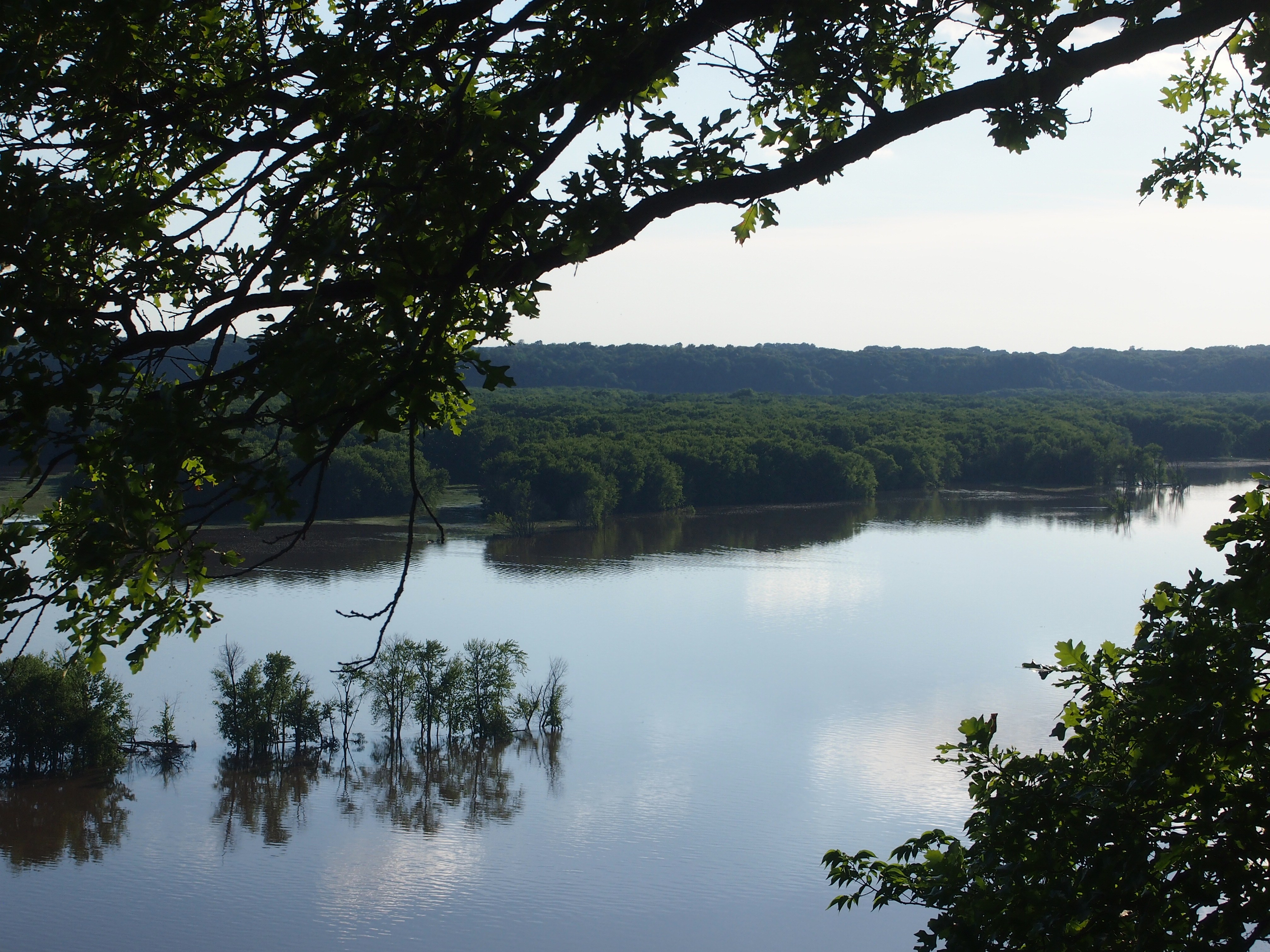
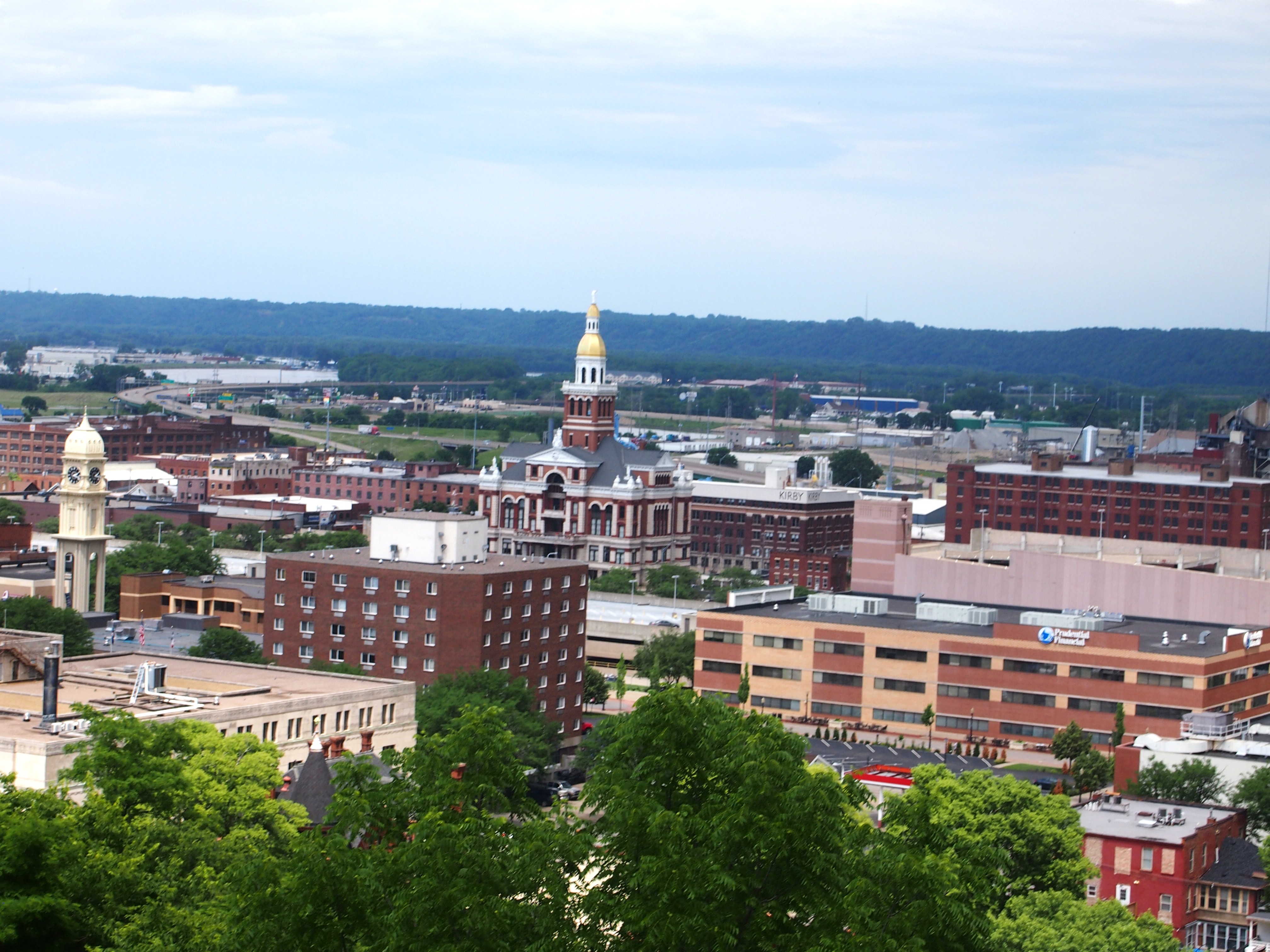
Jo Daviess County, June 2014Jo Daviess County, June 2014Further south at Mississippi Palisades State Park, there are views from the palisades. They’re not quite as lofty as the more famous Hudson River features, it seems, but offer fine views of the Mississippi all the same. Mississippi Palisades State Park, June 2014Mississippi Palisades State Park, June 2014The hilly topography shapes human settlement as well. A large bluff rises west of the Mississippi in the city of Dubuque. The older parts of the city spread out below the bluff, down to the banks of the river. Dubuque, June 2014Dubuque, June 2014Naturally, the visit only whets my appetite to take a look at more of the Driftless Area, especially up around Prairie du Chien in Wisconsin and Effigy Mound Nat’l Monument in Iowa. It’s a mild affliction I suffer.

Tri-State Summer Solstice Weekend ’14

Late on Friday morning we drove west for a few hours – and enjoyed a remarkably long in-car conversation among ourselves, no radio or other electronics playing – and by mid-afternoon arrived at Mississippi Palisades State Park, which overlooks the Mississippi River just north of Savanna, Ill. The plan included bits of three states in three days. My plan, really, since my family humors me in such matters, and lets me think up the details of little trips like these.

Friday was Illinois. We camped at Mississippi Palisades, which is an Illinois State park and incredibly lush this year, and we spent time in Savanna, a little river town on the Great River Road, mostly to find a late lunch. Toward the end of the day, we made our way to Mount Carroll, Ill., which is the county seat of Carroll County and home to a good many handsome historic structures.

On Saturday, we ventured into Iowa – it really isn’t far – and first saw Crystal Lake Cave, just south of Dubuque. In Dubuque, lunch was our next priority, followed by a visit to the Fenelon Place Elevator. Which is a funicular. When you have a chance to ride a funicular, do it. The last time we were in Dubuque, I remember the Fenelon Place Elevator being closed for the season (uncharacteristically, I don’t remember when that was — the late ’90s?). Anyway, this time I was determined to ride it.

Afterward, we headed west a short distance to the town of Dyersville, Iowa, home to the Basilica of St. Francis Xavier, but better known for The Field of Dreams movie set, which still draws visitors. We saw both.

Today was mostly about getting home at a reasonable hour, but I had to add a slice of Wisconsin by navigating a number of small roads until we came to Dickeyville. It would be just another rural Wisconsin burg but for one thing: the Dickeyville Grotto, which actually includes a main grotto, smaller grottos, shrines, a church and a cemetery (and a gift shop, for that matter). Like funiculars, grottos demand our attention, especially such as striking bit of folk architecture as the Dickeyville Grotto.

Juneteenth Firefly & Felipe

Saw the summer’s first firefly this evening, around dusk as you’d expect, but only a solitary bug, in the middle of the road ahead of me as I drove along. Still, it’s the first. A winged, flickering harbinger of the short high summer here around the Great Lakes.

Soon, bigger flashes were visible. Plenty of cloud-to-cloud lightning up high in evil-looking black clouds. According to the weather maps, most of the rest of the nation is having a quiet night, but we’re getting the pops and the rumbles. No big peals, cracks or claps of thunder just yet, but that could come at any time. No urgent warnings from weather experts, so I guess it’ll just be wet in the morning.

I had a lot else to do today, so I read a bit about the new King of Spain. Wiki’s handy for this kind of thing, and tells me a number of facts, such as his full name: Felipe Juan Pablo Alfonso de Todos los Santos de Borbón y de Grecia. I wonder how old he was before he learned all of them in order, or whether he ever bothered.

Also, and this isn’t particularly surprising, he’s the great-great-great-grandson of Queen Victoria through two different lines. More interestingly, he’s descended from the kings of the Two Sicilies, most recently Ferdinand II of the Two Sicilies (1810-59). There’s a kingdom you don’t hear much about any more, but the name always amused me.

Little Jet in the Sky

Last Friday afternoon I was out on my deck – partly to get it ready for the next day’s grilling event, but mostly just to loaf (is that verb disappearing?)  – and I heard an odd whizzing sound from somewhere above. It didn’t sound like a small aircraft, or at least one that was approaching the general aviation airport about a mile from where we live. Or a large insect near my face. Soon I realized it sounded like a jet. A small jet. That’s what it was.

For a moment I thought it was a drone. We’re nearly in the age of drones, after all, and not long ago I read about a drone spotted near one of the highways near where I live. I didn’t see it, but it turned out to be doing surveying work at a construction site.

What I heard and then saw on Friday was a model airplane flying in circles above the park visible from my back yard – a model jet airplane. I could also see the guy in the park controlling the thing. I had no idea there were model jets. All the model planes I’ve ever seen had props.

According to RC Airplane World (RC = radio controlled, I assume), “RC jets, whether gas turbine or electric ducted fan (EDF) powered, can provide the ultimate radio control flying experience if you’re looking to fly faster model aircraft.

“True gas turbine RC jets, however, are not for the beginner. They are very serious model aircraft that you have to work up to after gaining a large amount of radio control flying experience and an equally large amount of cash. They’re serious business!

“But the good news is that if you do like the idea of flying a radio control jet then there are plenty of options available these days; foam RTF (Ready To Fly) electric powered jets have become commonplace in recent years.”

I don’t know what kind of jet this fellow had, but a jet it was, and he made it do various maneuvers over the park and then landed it. Remarkable the things you see in the sky sometimes.

Arms & Armor at Dusk

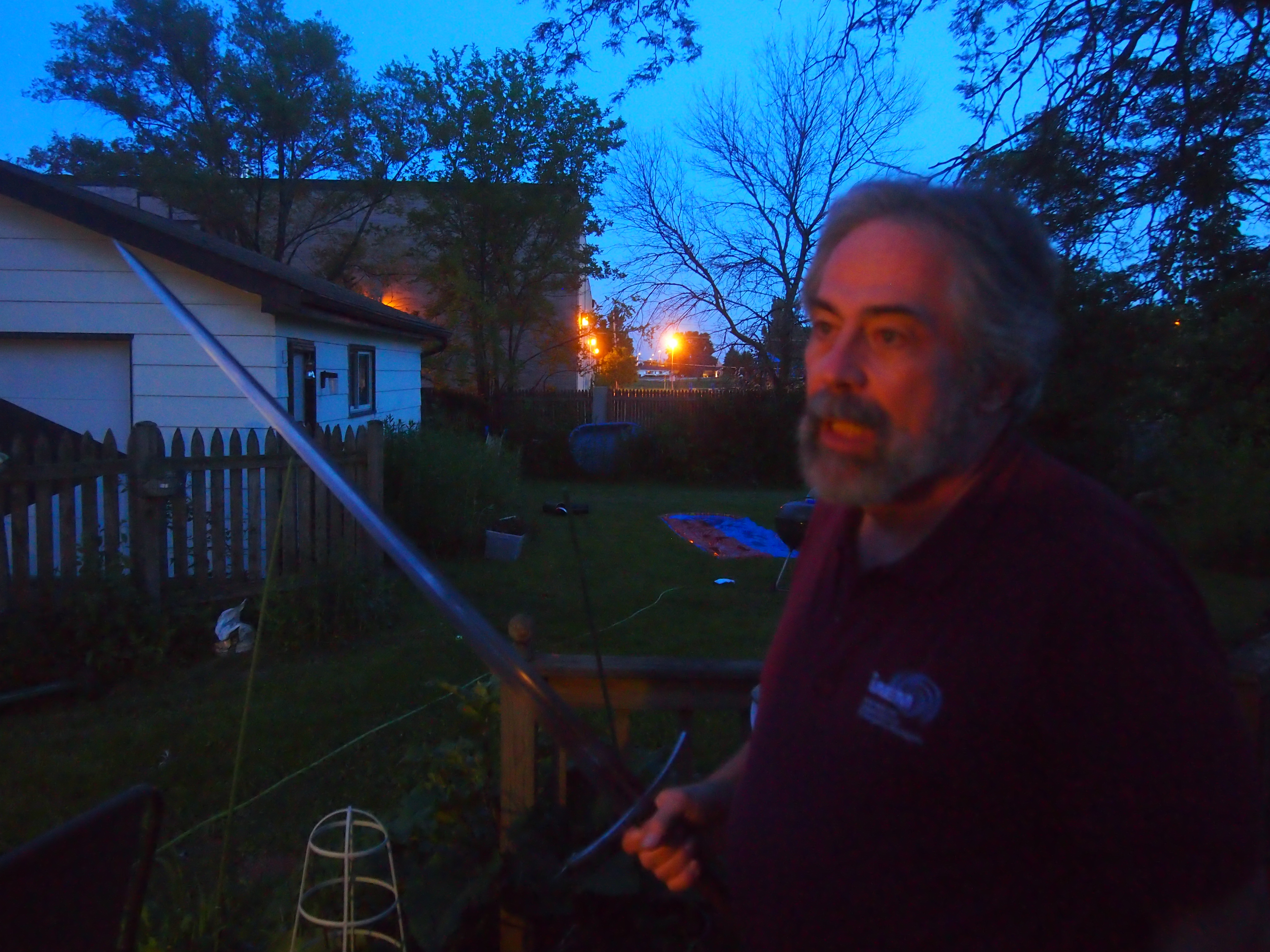
How often do you have the chance to wear a chainmail shirt? Not very often, unless you’re an arms and armor enthusiast, like my old friend Scott. He attended our Saturday barbecue and brought some items for us to look at, including a chainmail shirt, a breastplate, and a couple of swords. Here’s me in the mail, and Scott in the breastplate.

OLYMPUS DIGITAL CAMERAScott said the mail shirt was made in India, in the style of medieval Europe. Getting into the mail took some doing, and so did just standing up in it, so heavy is it.

“No wonder knights needed squires,” Kevin, another barbecue attendee, said during all of the rigmarole involved in me putting the thing on. That meant me getting on my knees, and Scott guiding the shirt down, with my head and arms careful to go through their respective holes. No wonder indeed. Not just to put it on and take it off a living knight, but to loot it from dead knights when the time came. Hard to imagine walking around, or riding a horse, or going into battle wear such weights, but then again I’m a pudgy 21st-century man, not a 13th-century tough.

The swords were very cool, too. This is one of them.

OLYMPUS DIGITAL CAMERAWe examined them at some length at dusk. Scott told us what kind they were, and where the styles had been popular, and showed us some moves, but my memory for those details is poor.

What I remember is that the longer of the two was quite heavy, while the shorter wasn’t so heavy. Both were serious blades.

My Charcoal Chimney Starter

On Saturday, I grilled in the back yard for a few old friends. Just ahead of the event, I bought a remarkable bit of fire-starting technology. Simple, but effective. It’s a device that ignites charcoal without the need for lighter fluid or even kindling wood. Naturally, it took me a while to find the damn thing, because I didn’t know what it was called (hardware stores are a marvel, but that’s a problem with them).

It’s a charcoal chimney starter. No doubt something along these lines was known to people as soon as metallurgy was discovered and the burning properties of wood charcoal were appreciated. Long ago, that is. For only about $15, I acquired a stainless steel cylinder, about a foot high and 7½ inches in diameter, with a row of inch-high slots around the bottom of the cylinder. Let’s see: the volume of a cylinder is V = hπr2, so that would be nearly 400 cubic inches. Enough space, as it turned out, to light enough charcoal to cook the evening meal.

Inside is a simple array of rods that divide the cylinder into a larger upper chamber and a smaller lower one, but air (and importantly, heat) can pass between the chambers easily. There are no covers or lids to it, but the cylinder does have a handle attached to its outside.

First, line the lower chamber with paper – newspaper in my case. Next, fill the upper chamber with charcoal. Then light the paper through the slots at the bottom. After the paper starts burning, leave it alone. The remarkable thing is that the paper will ignite the lower charcoal, with which in turn ignite the charcoal above it, until all of the charcoal is glowing hot. I suppose it works because the heat is contained and, since heat rises, it ignites the fuel above it. All together, the process takes about 30 minutes. Once the charcoal is hot, pick the cylinder up by the handle and turn it over to put the coals in the grill.

The hard part in all this was finding out what it’s called. I’d seen one used a few years ago, but that wasn’t much help, and I looked in vain in the grilling equipment sector of a big box store among many MeatMan 2000 UberGrills large enough to cook for a small army; say the Swiss Guard. So I did things the modern way, Googling “grill without lighter fluid” and the like, and before long, found a lot of videos like this.

Since I did this on Friday, it was then a matter of ordering one online for pickup in a store on Saturday morning. For mysterious reasons, the store cancelled my order right after I made it, and I didn’t notice the email telling me that, so it wasn’t waiting for me when I got there. But they had them in stock, so after some delay, the staff found one for me.

The surprise wasn’t that some high-tech system failed me in a minor way. The remarkable thing is that when I got the charcoal chimney starter home, it worked exactly as expected.  No inscrutable instructions; no auxiliary parts that you need to make it work but which you don’t have; no important steps in the operation of the device that everyone assumes you already know, and so no one tells you about. Life might be dull if everything were this easy, but some things should be this easy.

Birthday Eats

This year for my birthday I had curry duck at a northwest suburban Thai restaurant. Or, as the menu put it: “Boneless roast duck simmered in Thai spices, red curry, coconut milk, red peppers, green peppers, onions, grapes and fresh basil leaves.” Excellent choice, it was. I didn’t do the modern thing and point a camera at the savory concoction. I did the old-fashioned thing and ate it.

The cake this year was German Chocolate Cake. According to this list, at least, June 11 – close enough – is German Chocolate Cake Day, which I never knew until I looked into the question of just where German Chocolate Cake was created.

As luck would have it, Snopes weighs in on that subject, asserting that it’s in fact an American creation, and popularized only since the 1950s. Something like chop suey not really being Chinese, but who eats chop suey anyway? Or chili con carne in fact being norteamericano.

53rd birthday baked goodWe picked up the cake at a local bakery, and it proved as sweet and gooey as it needed to be. Note the candles. Lilly put them on, using all those we had handy. No one seriously suggested we load the thing with 53 little candles.

Good things to eat for your birthday, but still not as good as when I turned 21. My college friend Dan was taking a class that summer called Economy Botany, taught by one Dr. Channel, which I should have taken myself, but didn’t. Dr. Channel had invited Dan, and a girl named Rona, to his large house near campus for dinner. Dan asked me to come along, or maybe asked a number of us to come, but only I could. It was a coincidence that it was my birthday; I don’t think Dan knew till I mentioned it late in the evening.

“Dr. Channel served a multi-course, skillfully made meal,” I wrote. “We ate hors d’oeuvre – shrimp, vegetables, various dips – a special Georgia onion, baked, and a massive cheesy meaty spicy thick pizza, made from scratch by the professor, including herbs on top fresh from his sprawling garden, a part of his lush back yard that runs off in all directions. We ate under a bower near the garden, and finished off the meal with a wonderful pistachio pie.”

What did I do to deserve that meal? Right place, right time, I guess. The special Georgia onion, I know now, was a Vidalia. Dr. Channel had baked it in aluminum foil, I think. I never knew an onion could be so sweet.