Mega Cavern

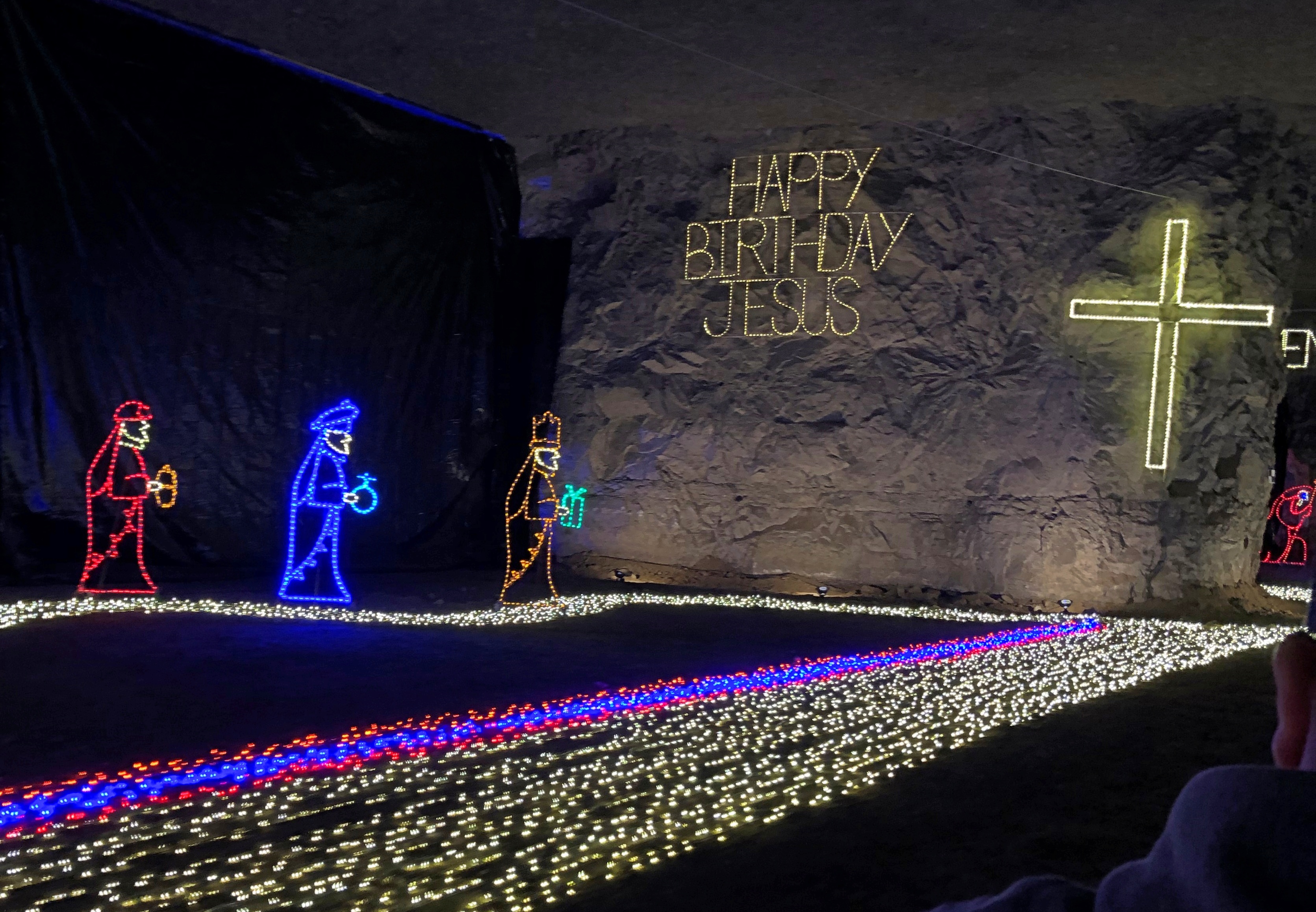
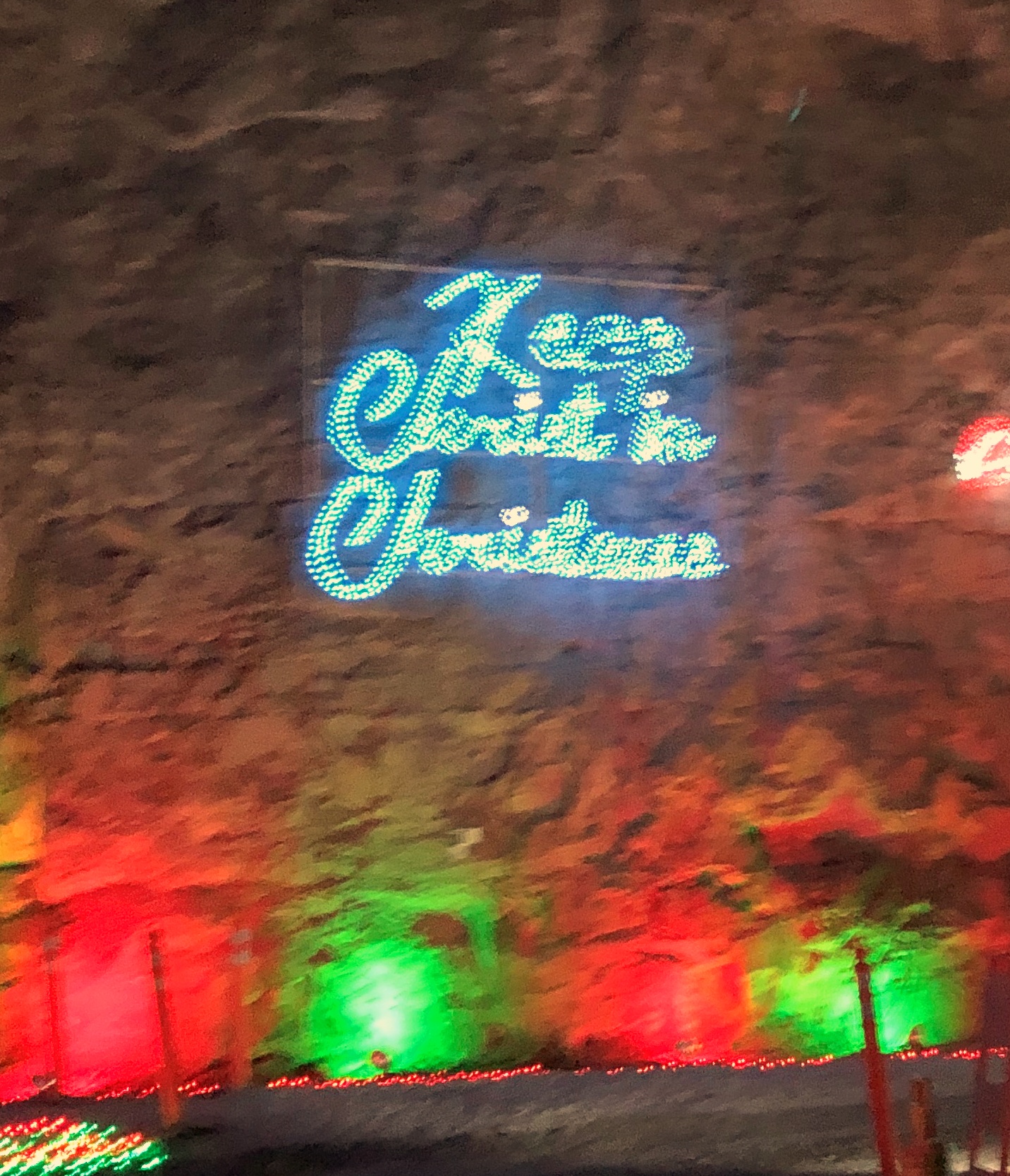
A message we saw in Louisville recently.Mega Cavern
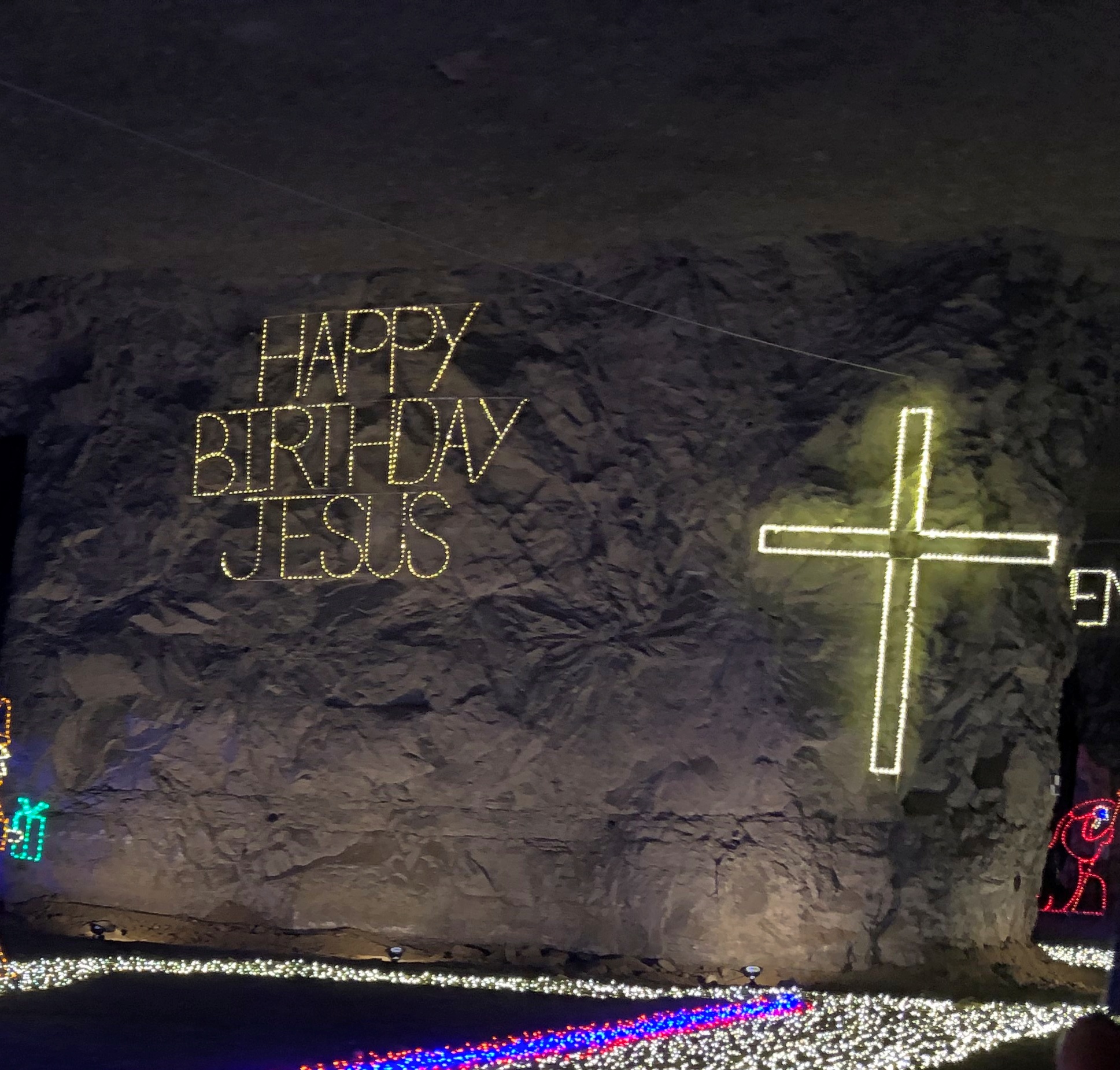
Not something you see that much, not put quite that way. Maybe that’s an unconscious acknowledgment that nowhere in Scripture is Jesus’ exact birthday ever mentioned. It reminded me of a scene from Full Metal Jacket.

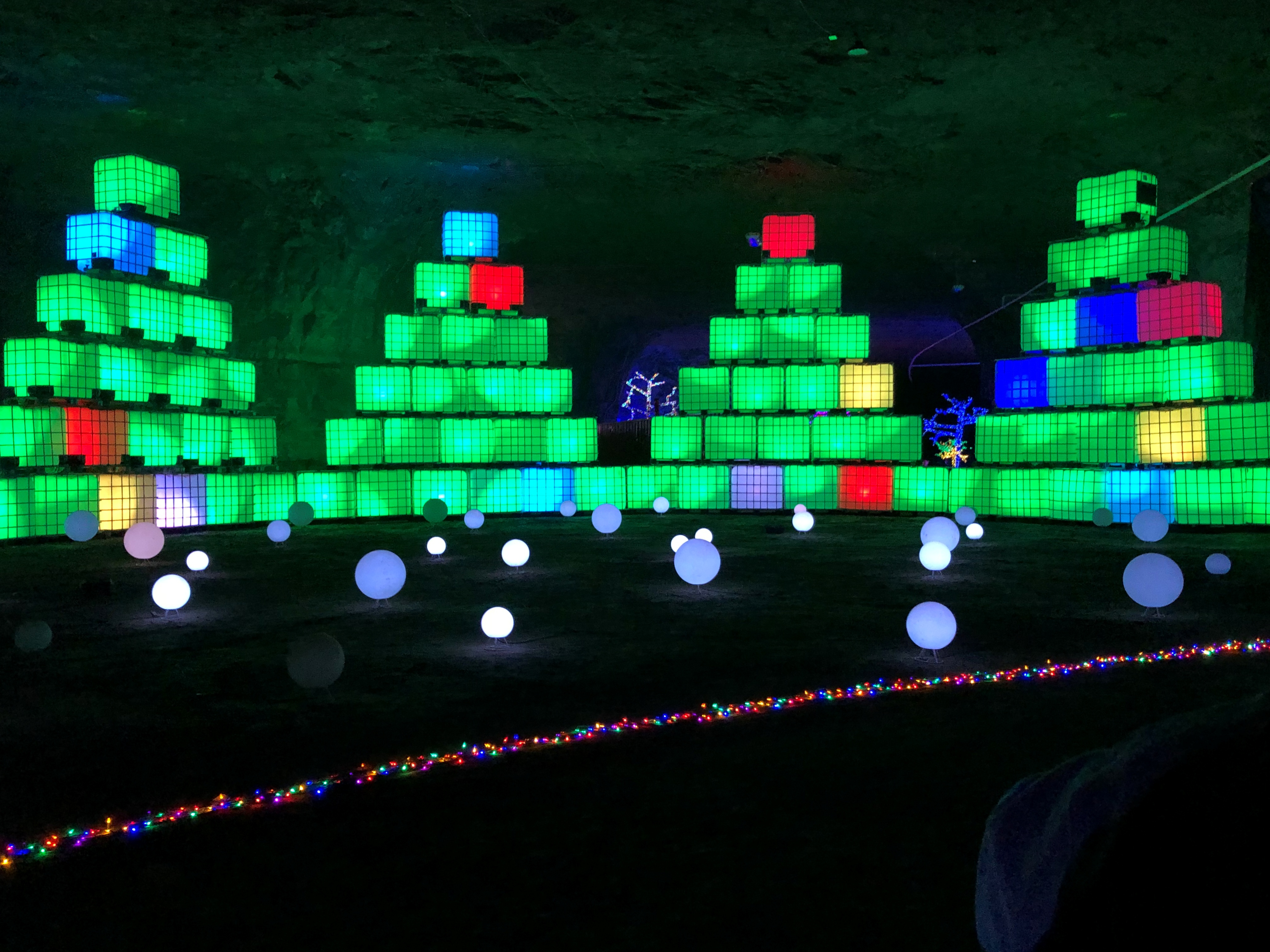
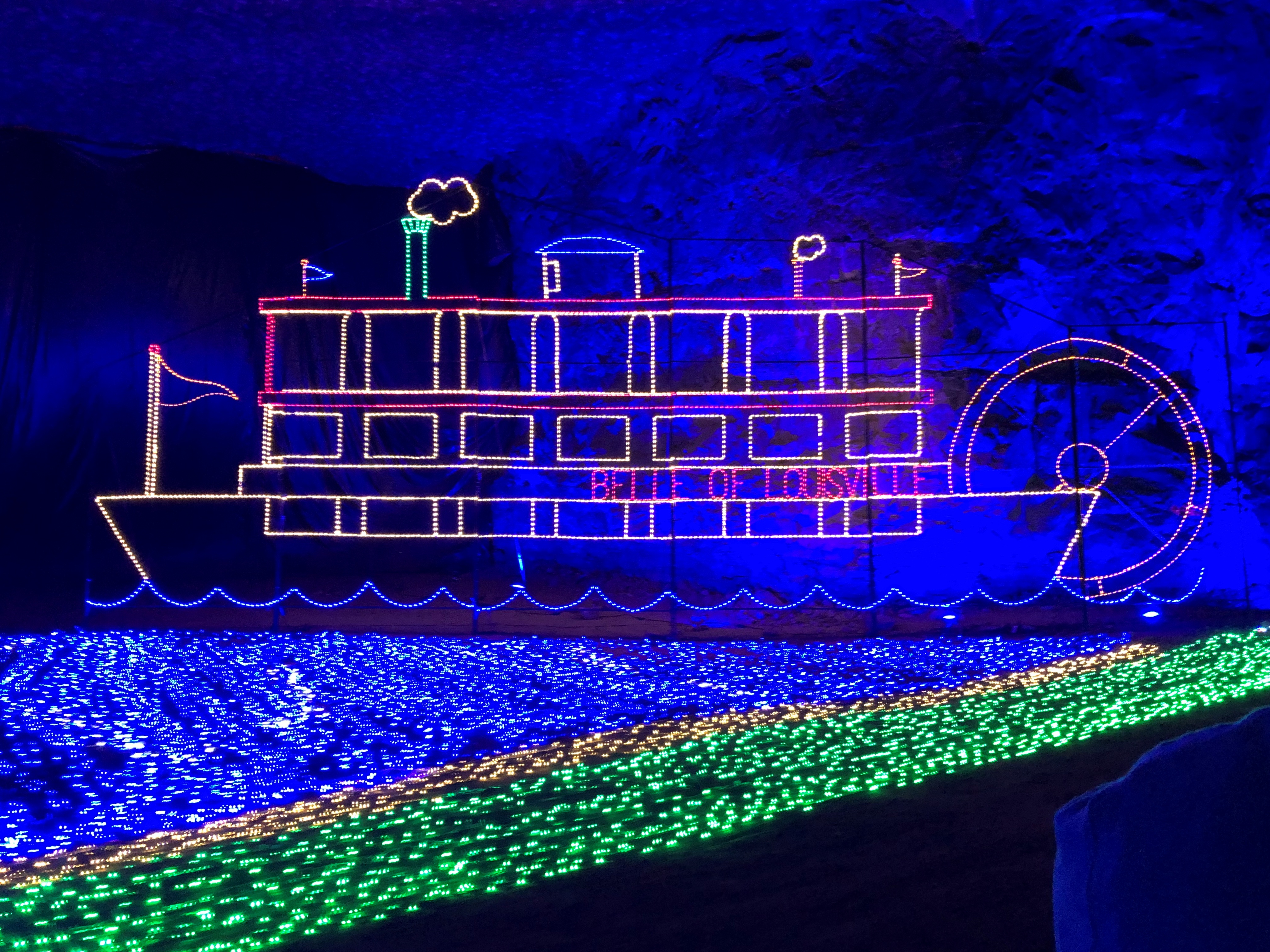
The message was in lights, and there was a good reason for that. It was part of Lights Under Louisville, an annual display of Christmas lights by Mega Cavern. A lot of lights: at 7 million, said to be the largest such light display in the world.Mega Cavern
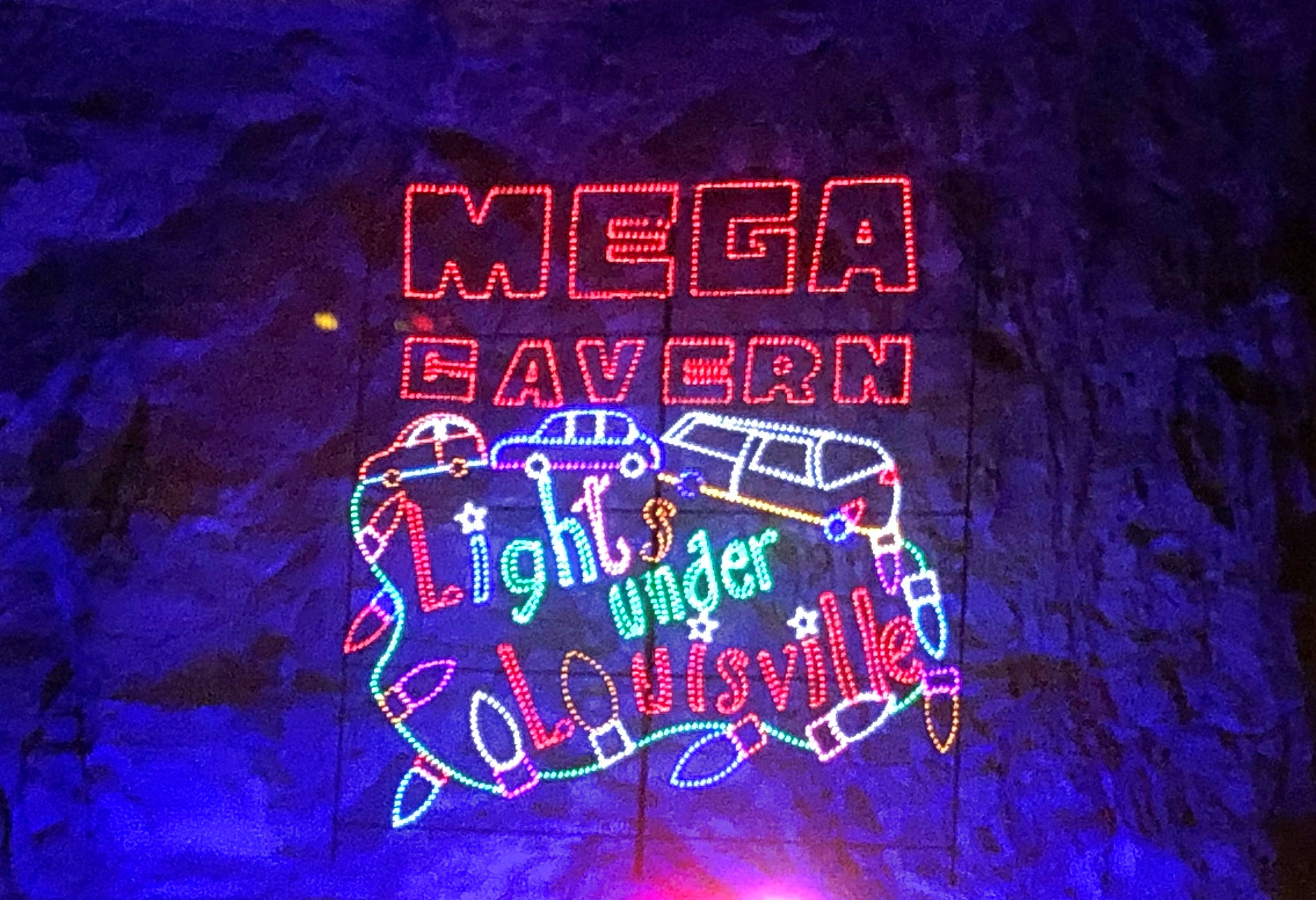
Mega Cavern is an attraction south of downtown Louisville, and a fairly recent one at that, opening for tourists only in 2009. In the mid-20th century, miners extracted limestone from under the area’s hills, eventually creating 4 million square feet of space. In comparison, the Sears Tower totals 4.4 million square feet, so nearly a Sears Tower worth of space was excavated under a section of I-264 and the Louisville Zoo and a major city park. By the early ’90s, mining had ceased, and the voids were developed into warehouse space.

In that, the place naturally reminded me of SubTropolis in Kansas City, Mo., which I visited in ’99. Unlike that man-made cave, which is still all business, Mega Cavern started adding activities for visitors, at first tours through the cave. There is still underground warehouse space, and tenants for it.

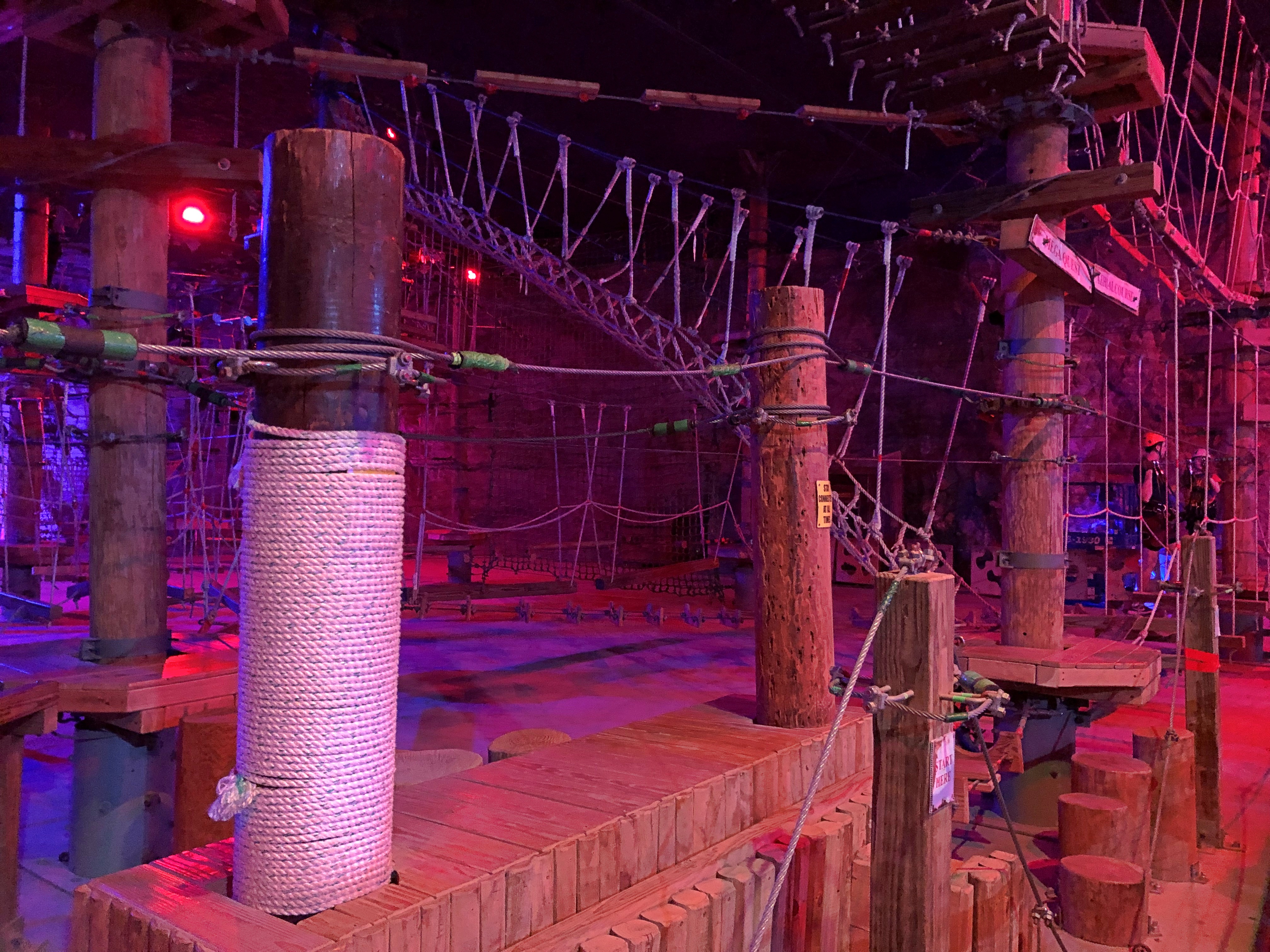
But now the facility also has underground zip lines, an aerial ropes course, and walking and tram tours most of the year. Mega Cavern used to have an enormous dirt bike course, at 320,000 square feet said to the the world’s largest underground off-road bike facility, but that didn’t last (I suspect insurance issues).

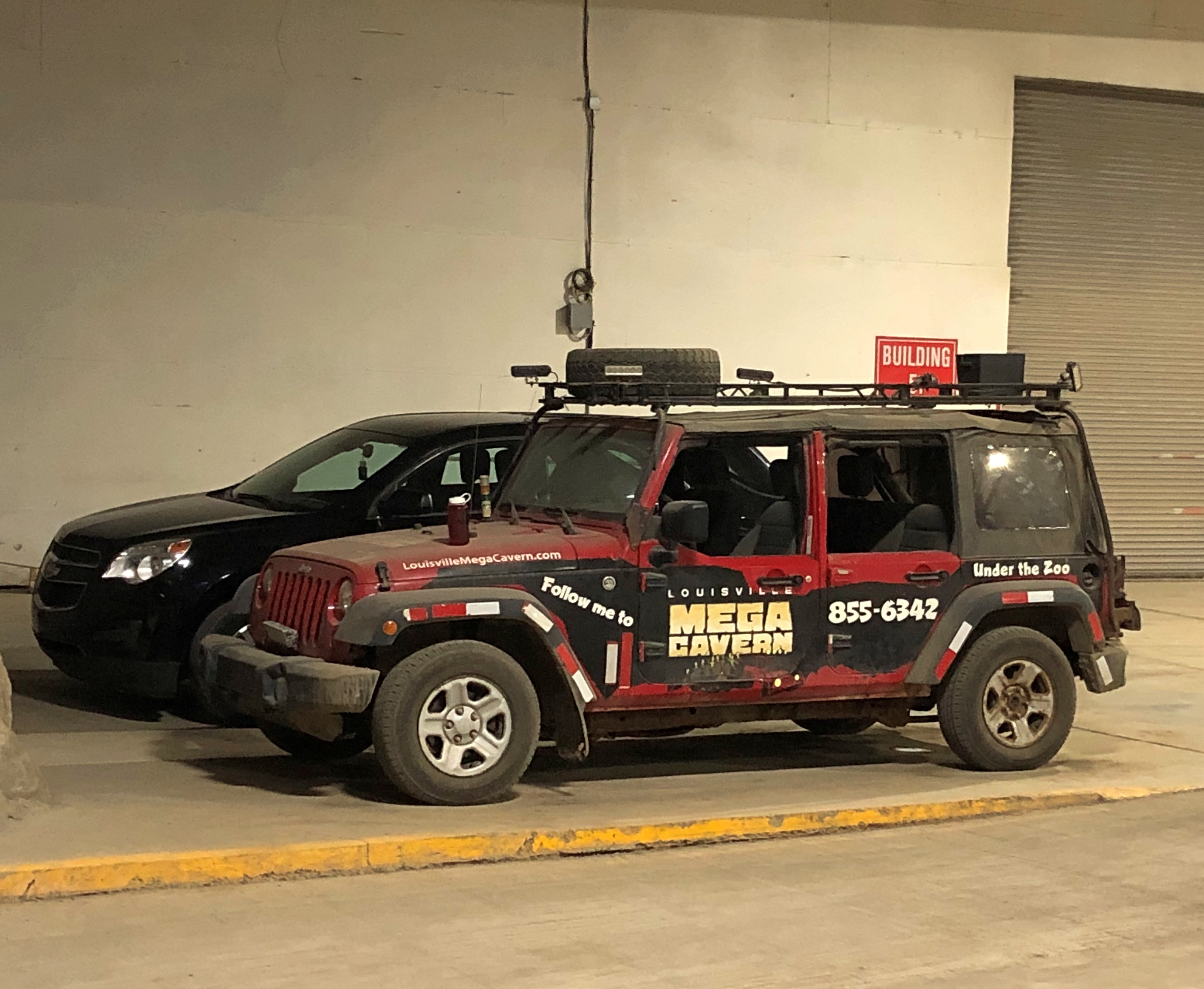
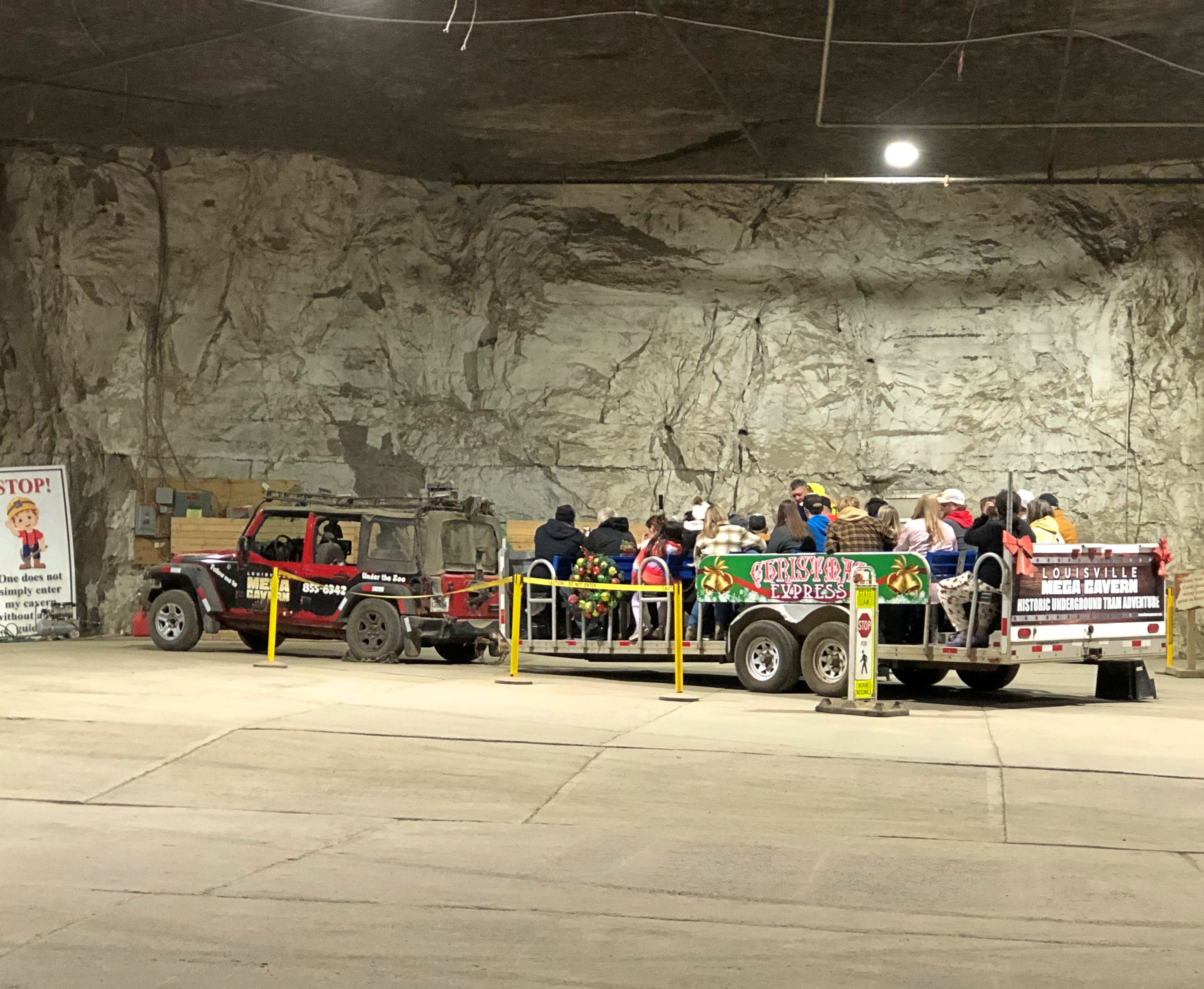
Around Christmas, you can either drive through Mega Cavern to see the millions of lights, or pay a little more and ride on a wagon pulled by a Jeep, which is what we did on December 30. It was the only activity on this trip that I had to book in advance.

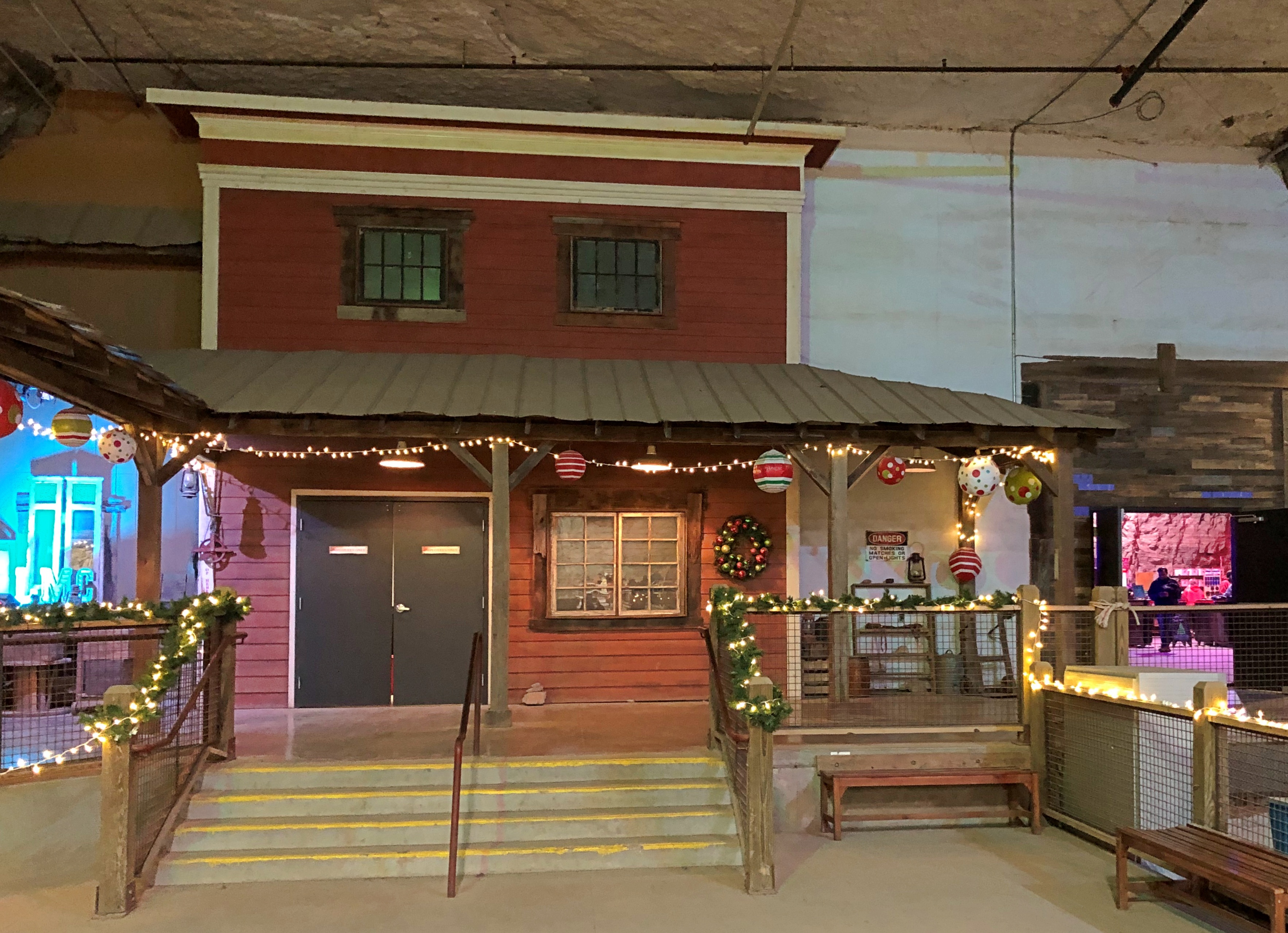
The public entrance to the cave doesn’t even hint at what’s below.Mega Cavern
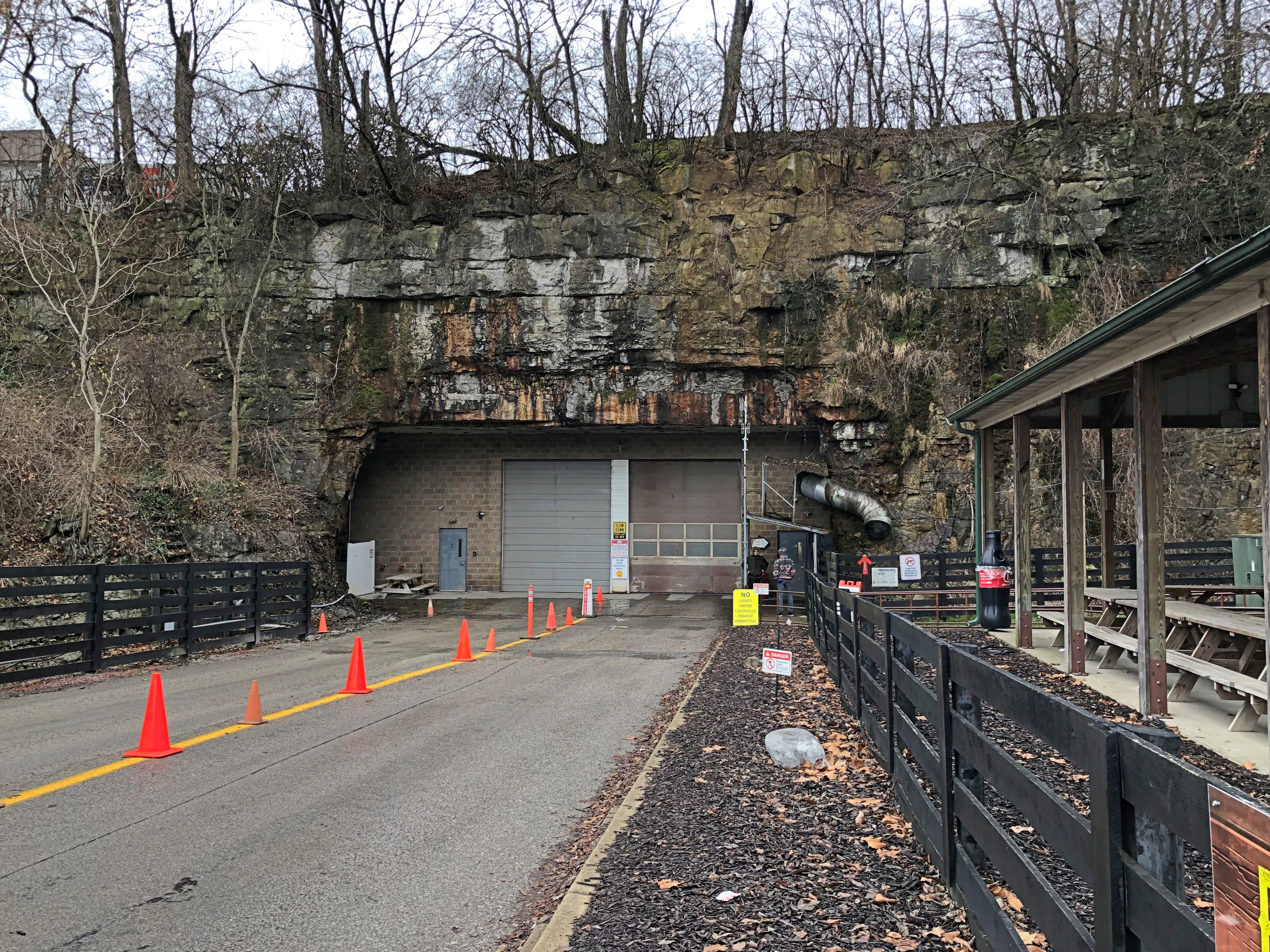
At the end of a short hall is a large room used to turn vehicles around, and as a waiting area for those riding trams.Mega Cavern Mega Cavern Mega Cavern
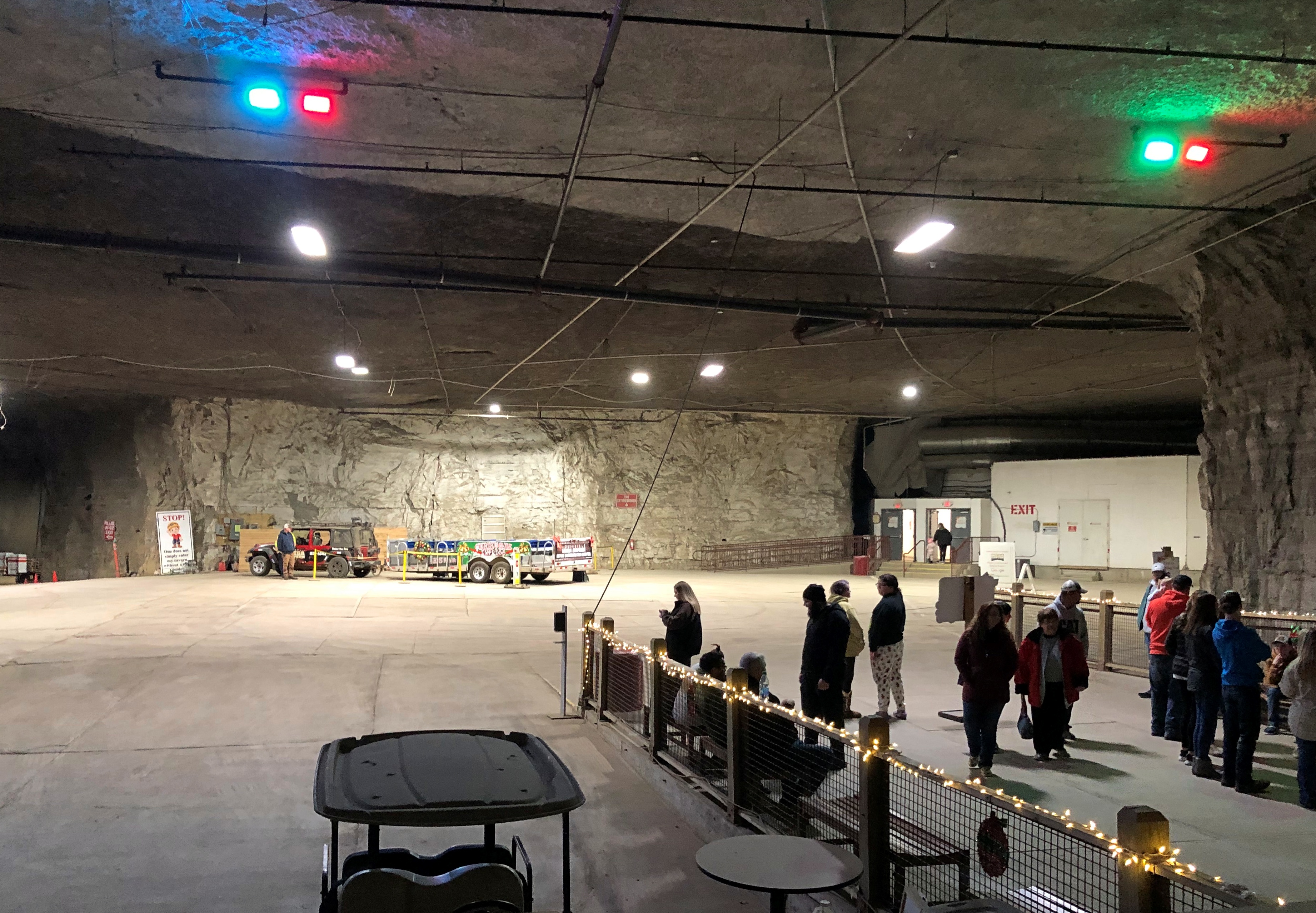
Beyond that is a room with the service desk, a small snack shop, a gift shop and a view of some climbing equipment.Mega Cavern Mega Cavern
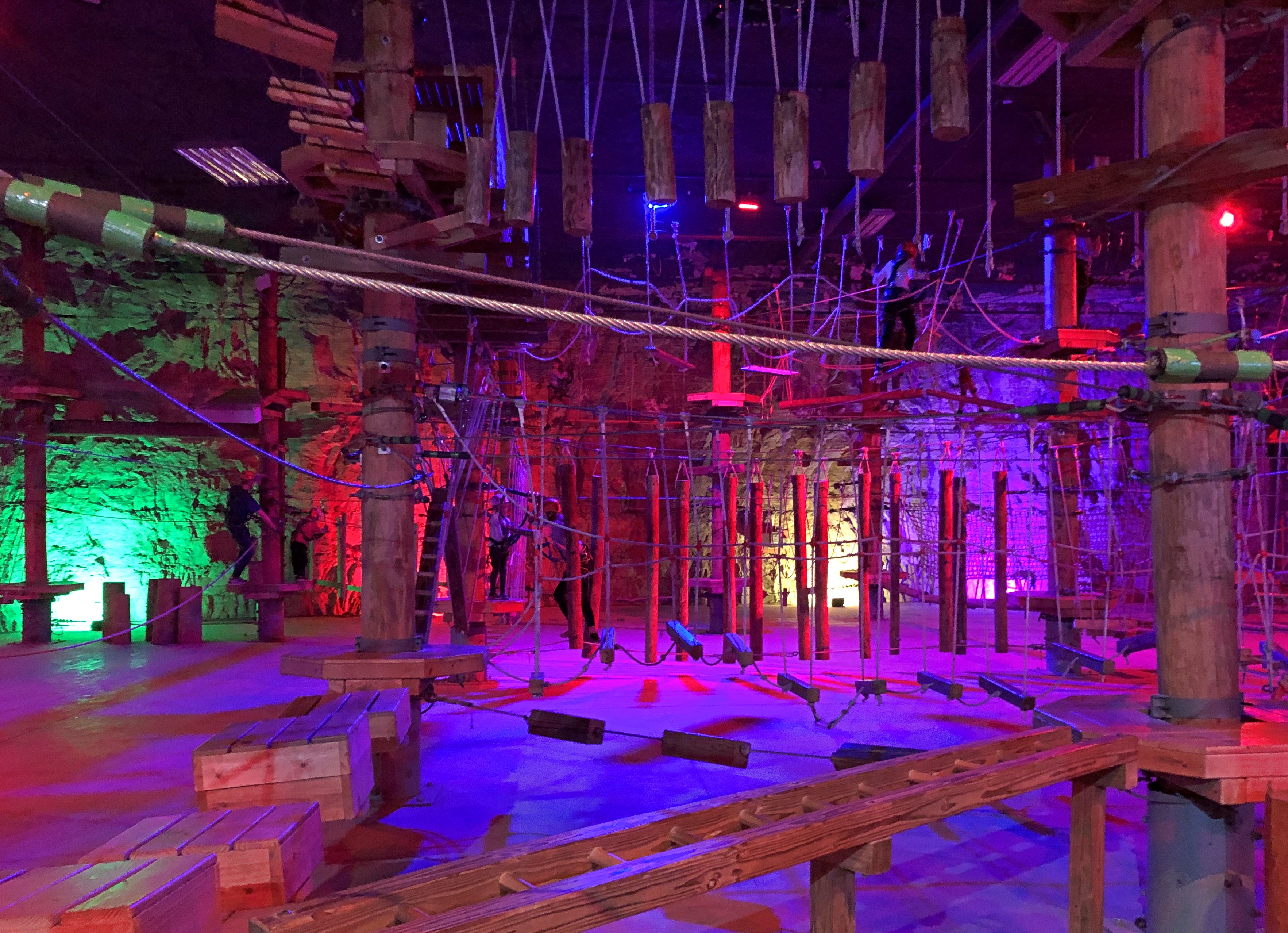
We’d come for the Christmas Express.Mega Cavern

Of we went, exactly as scheduled. I was expecting the lights to be arrayed in tree-oriented abstractions. Or just to be artful strings of lights.Mega Cavern Mega Cavern Mega Cavern
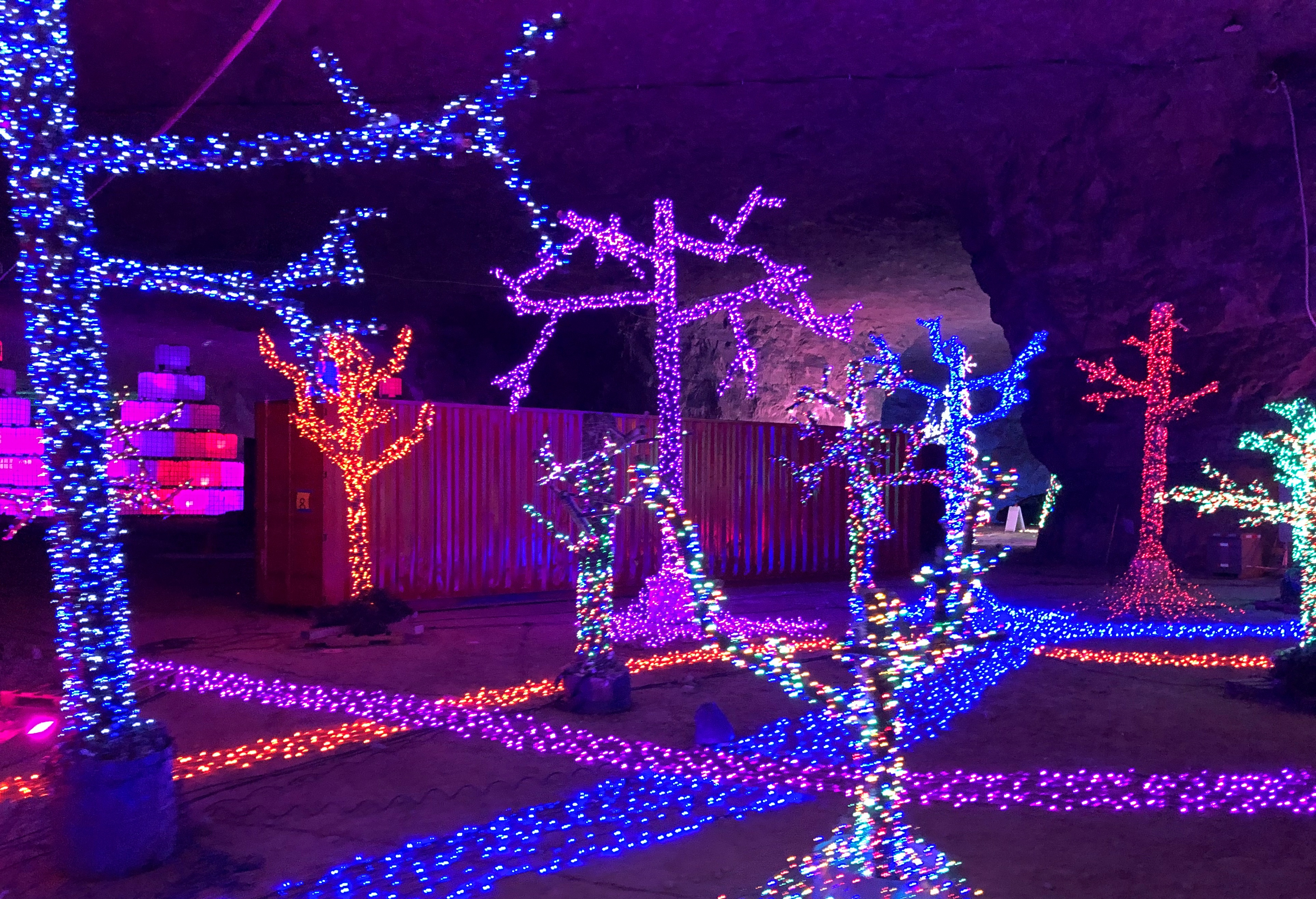
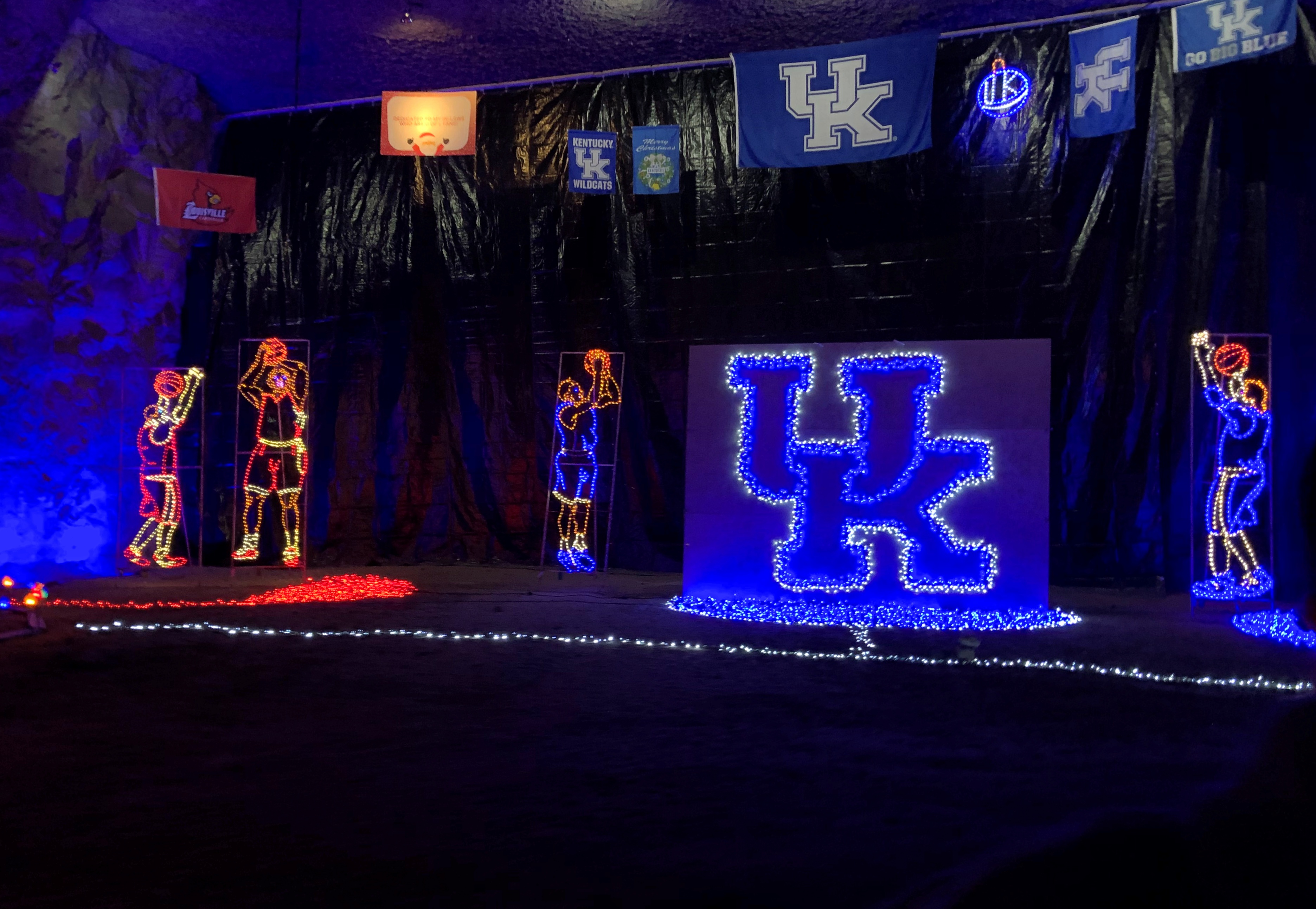
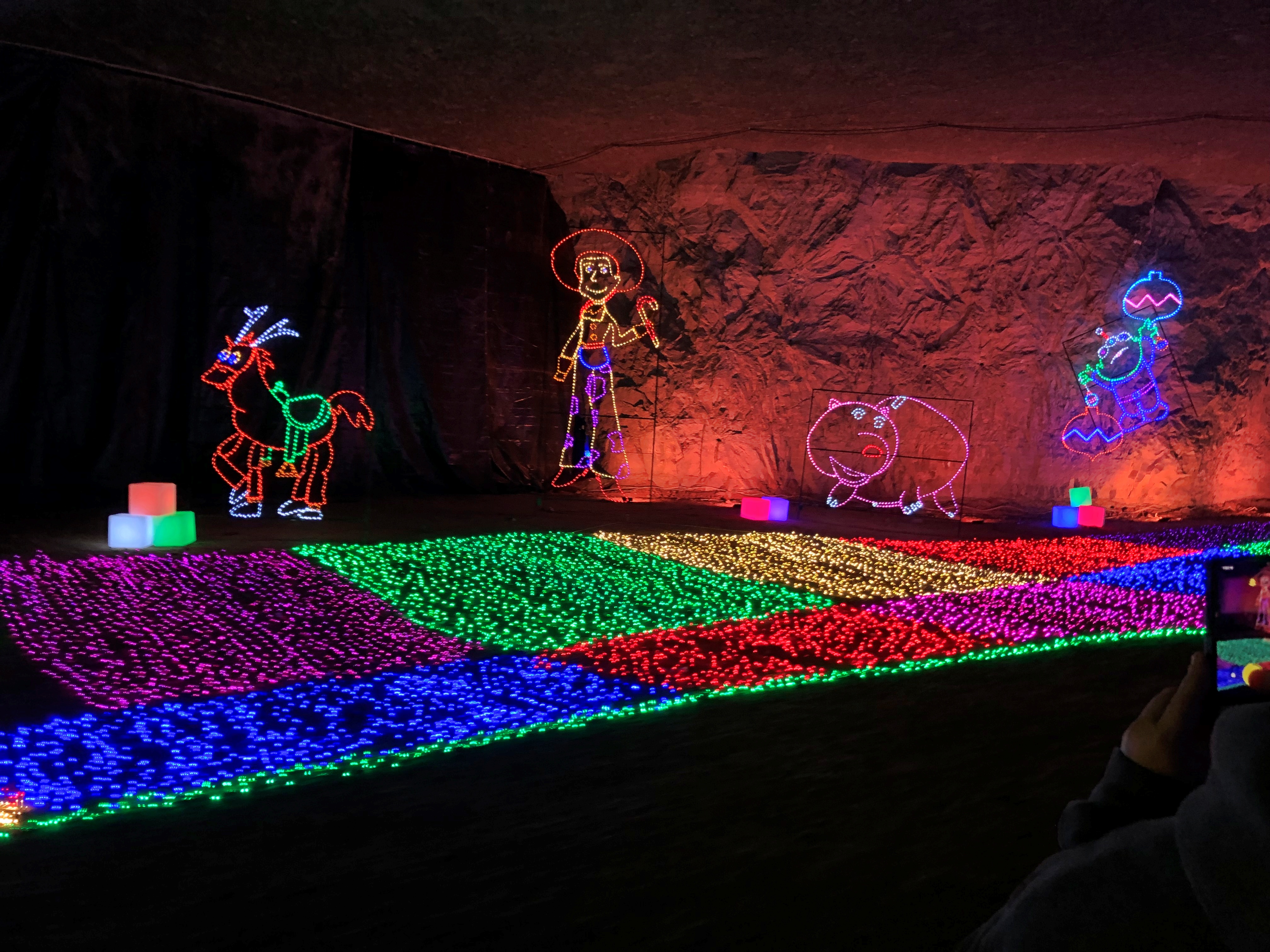
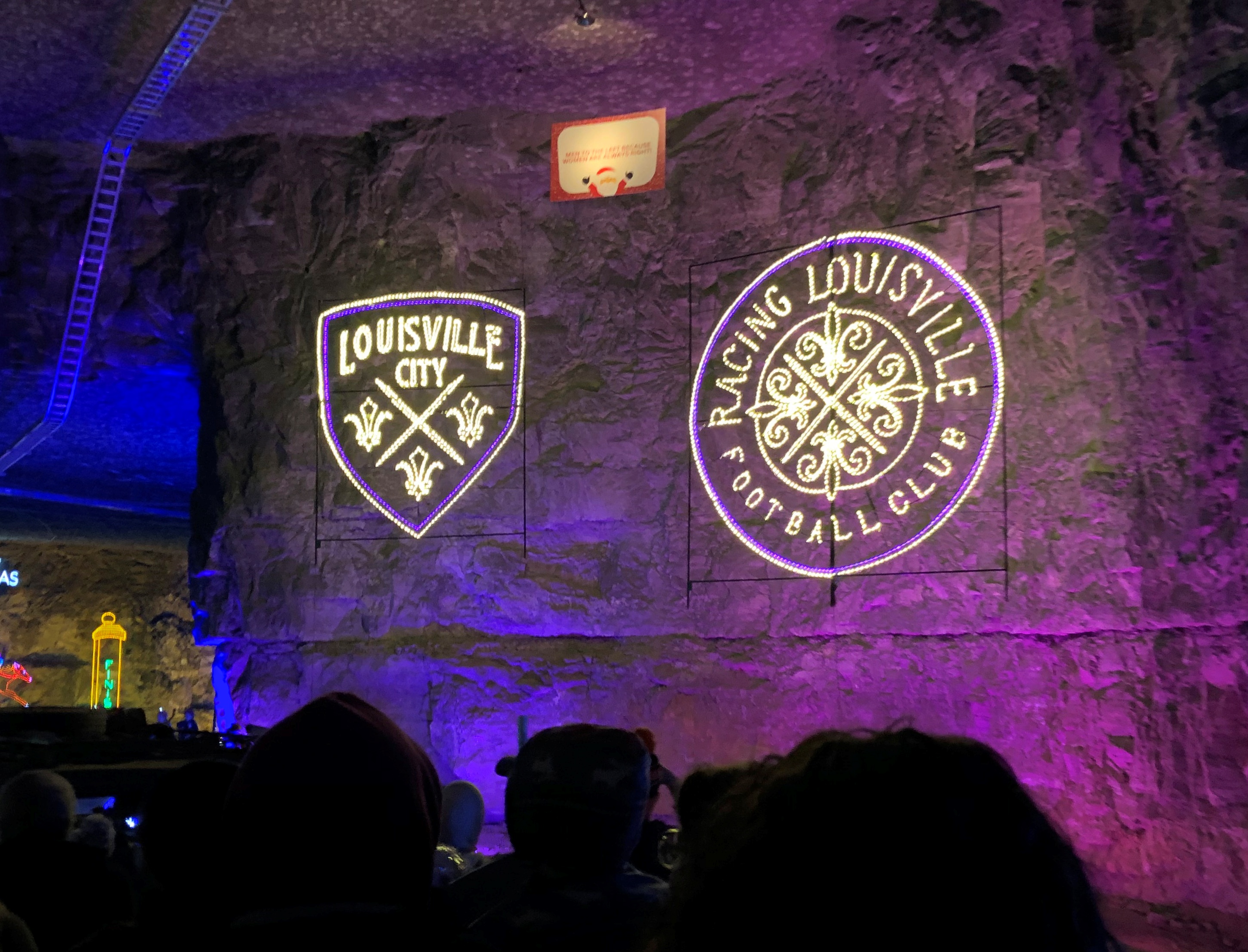
There was a lot of that. At the risk of sounding churlish, since we enjoyed riding through the lights thoroughly, the ride could have used more displays like these. Most of the displays had themes. Such as local themes. They were artful, too, just not quite as spectacular.Mega Cavern Mega Cavern Mega Cavern
Patriotic themes. Many more than this.Mega Cavern
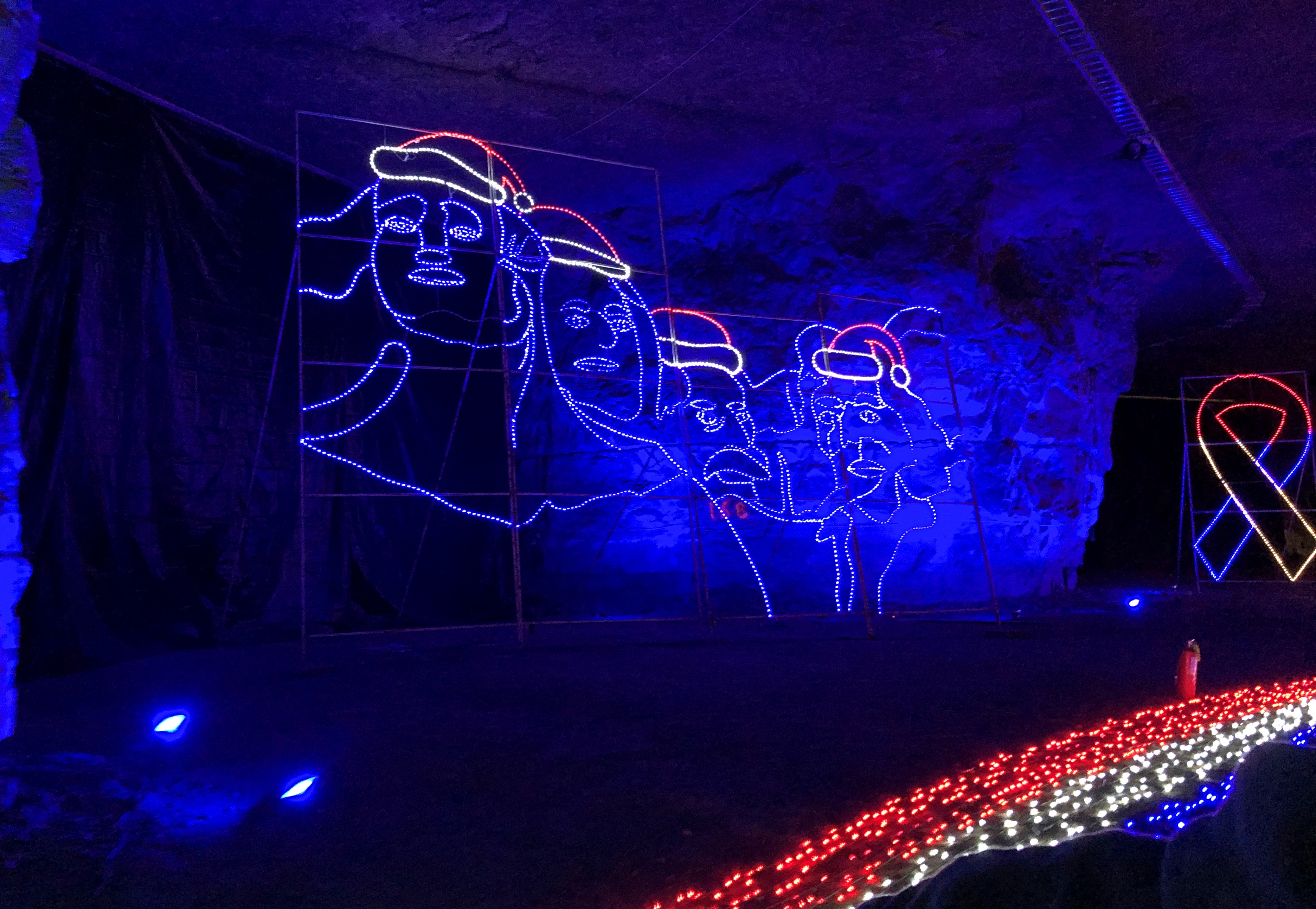
Christian themes.Mega Cavern Mega Cavern

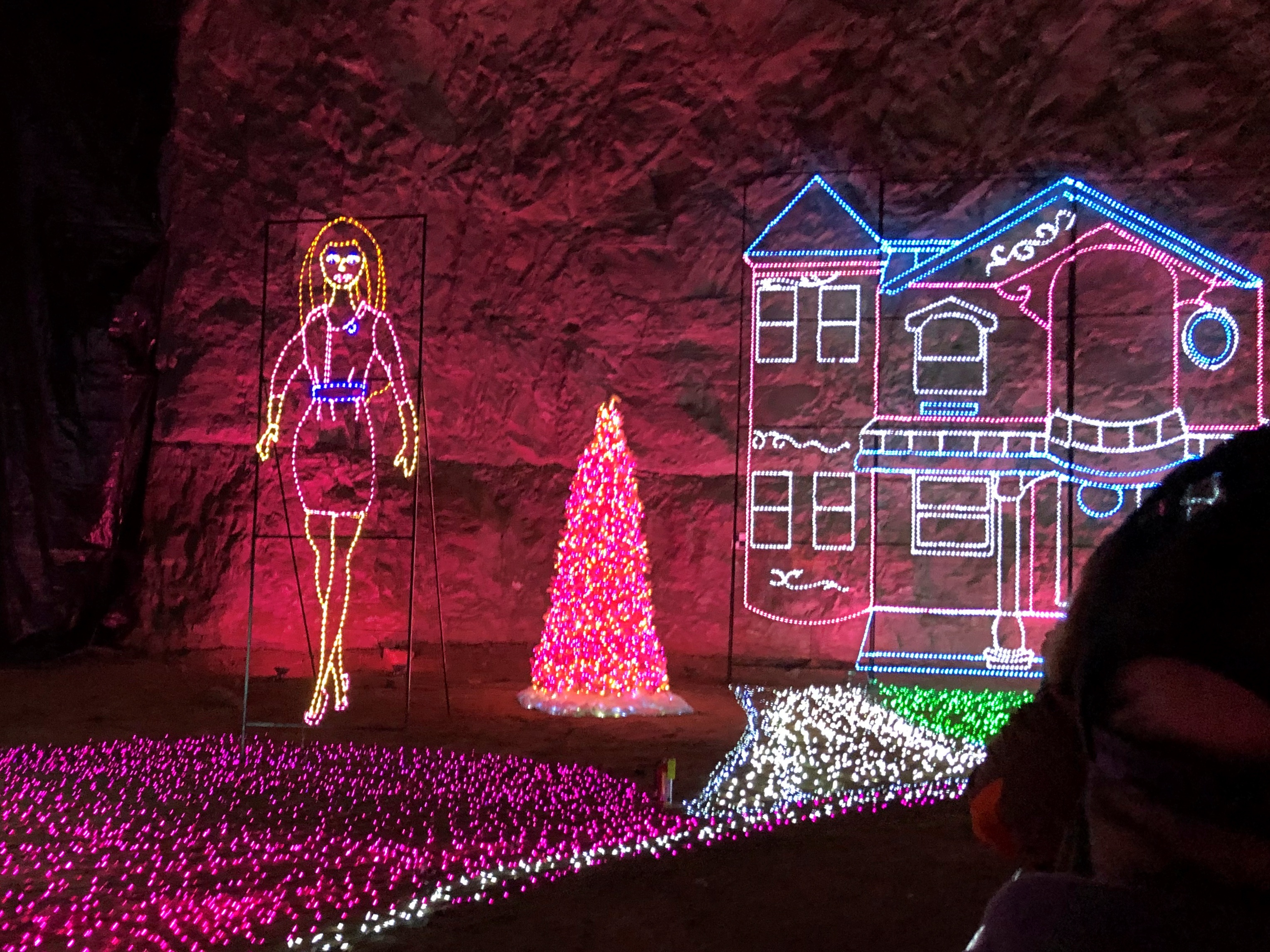
Movie franchises. More than pictured here, but I don’t remember all of them now. Many geared to children. I’d heard of almost all of them.Mega Cavern Mega Cavern Mega Cavern
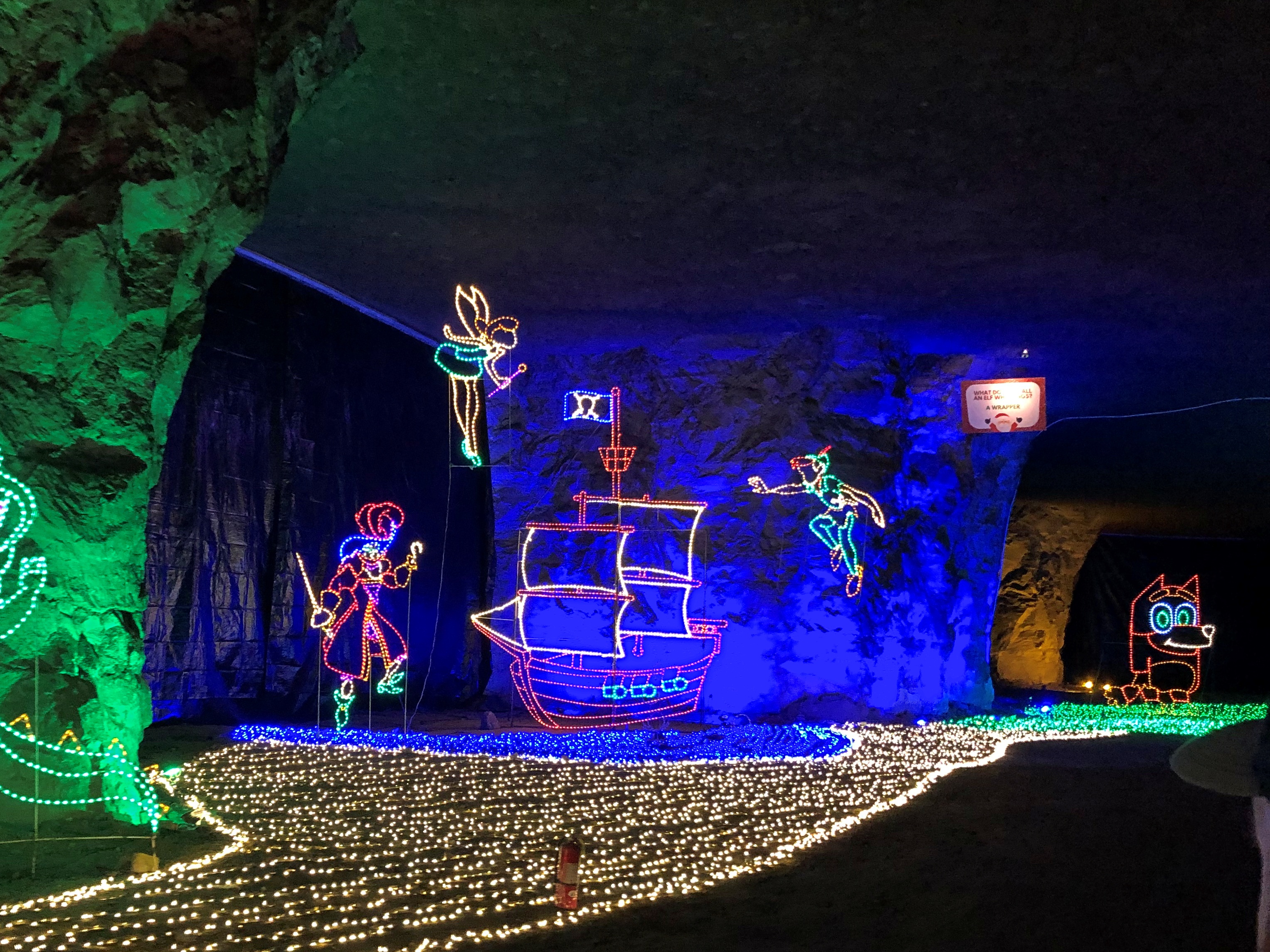
I remember a few omissions. Star Wars – more than one display, I think. But no Star Trek. Also, Barbie. Were pink Christmas trees in vogue over the holidays? Experts say yes. But what, no Oppenheimer? C’mon, they were peas in the same summer blockbuster pod.

I’m pretty sure a Manhattan Project display would have harshed everyone’s holiday buzz, so no go. But can you imagine? The centerpiece of the Oppenheimer display would, of course, be a mushroom cloud in holiday lights.
The Erie Canal

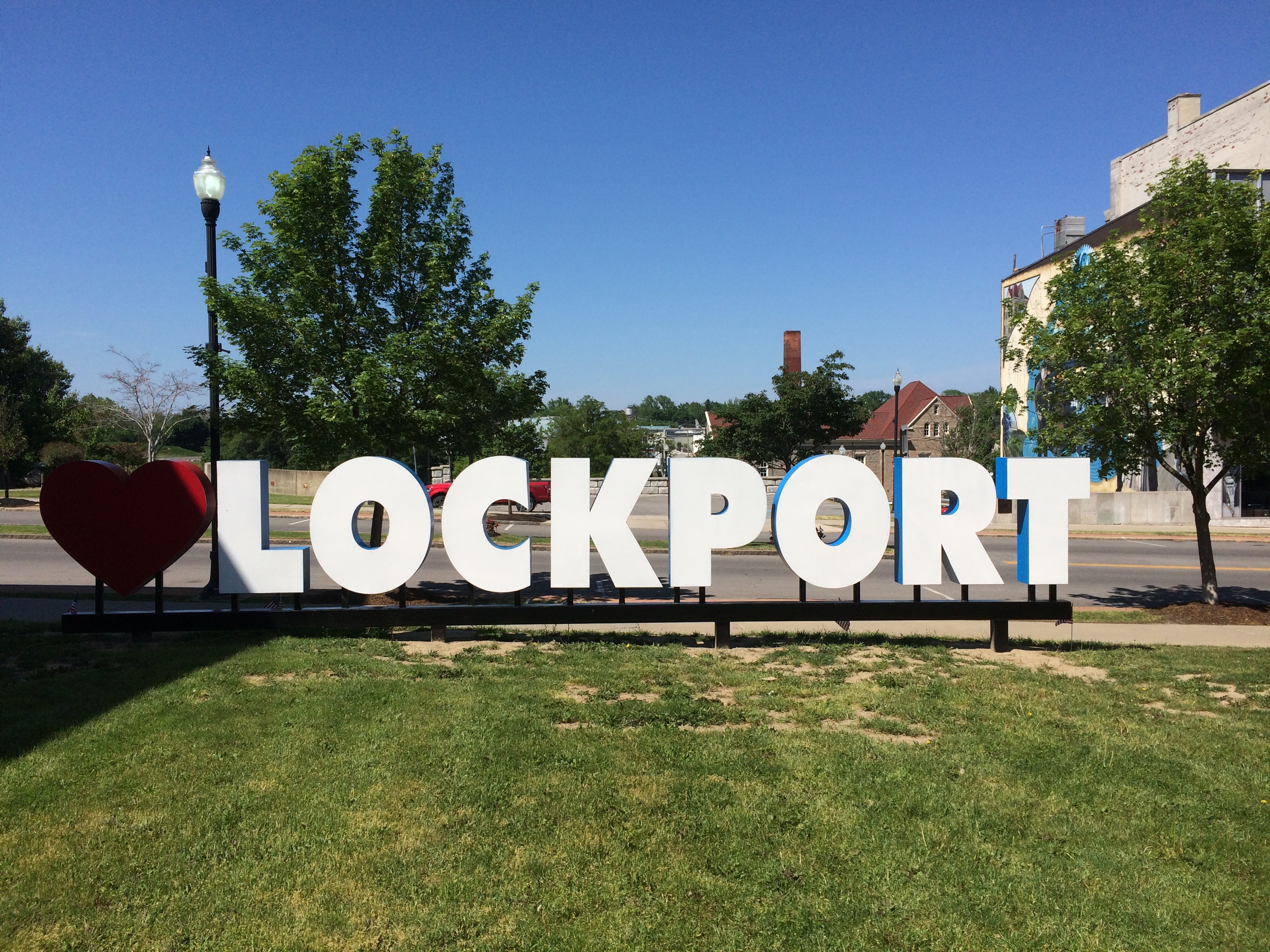
On our last day in metro Buffalo, we drove to Lockport, New York, late in the morning to see the Erie Canal. Even in my South Texas elementary school, and in U.S. history classes later, we heard about the Erie Canal. It probably was of special interest to my high school U.S. history teacher, the estimable former Wobbly Mrs. Collins, who grew up in Buffalo. Yuriko, on the other hand, heard nothing about it in Japanese schools; no reason she would.

I’ve heard the songs, too. The oft-recorded one about the loyal mule (which Bruce Springsteen does wonderfully, paying homage to Pete Seeger). The more fun one is about drunkenness among bargemen (and -woman), which I expect was true enough to life in the early days of the canal. The obscure Yellow Jack version, incidentally, used Lockport as a backdrop for the video.

Despite all that, I’d never gotten around to seeing the canal with my own eyes. So it was time. Naturally, we visited only the smallest slice, since the canal stretches more than 360 miles.

Lockport’s an interesting spot on the canal because it originally had five locks, which is unusual enough to have its own name: Flight of Five Locks, to allow the canal to cross the Niagara Escarpment. For the 1820s, I expect it was state-of-the-art engineering.

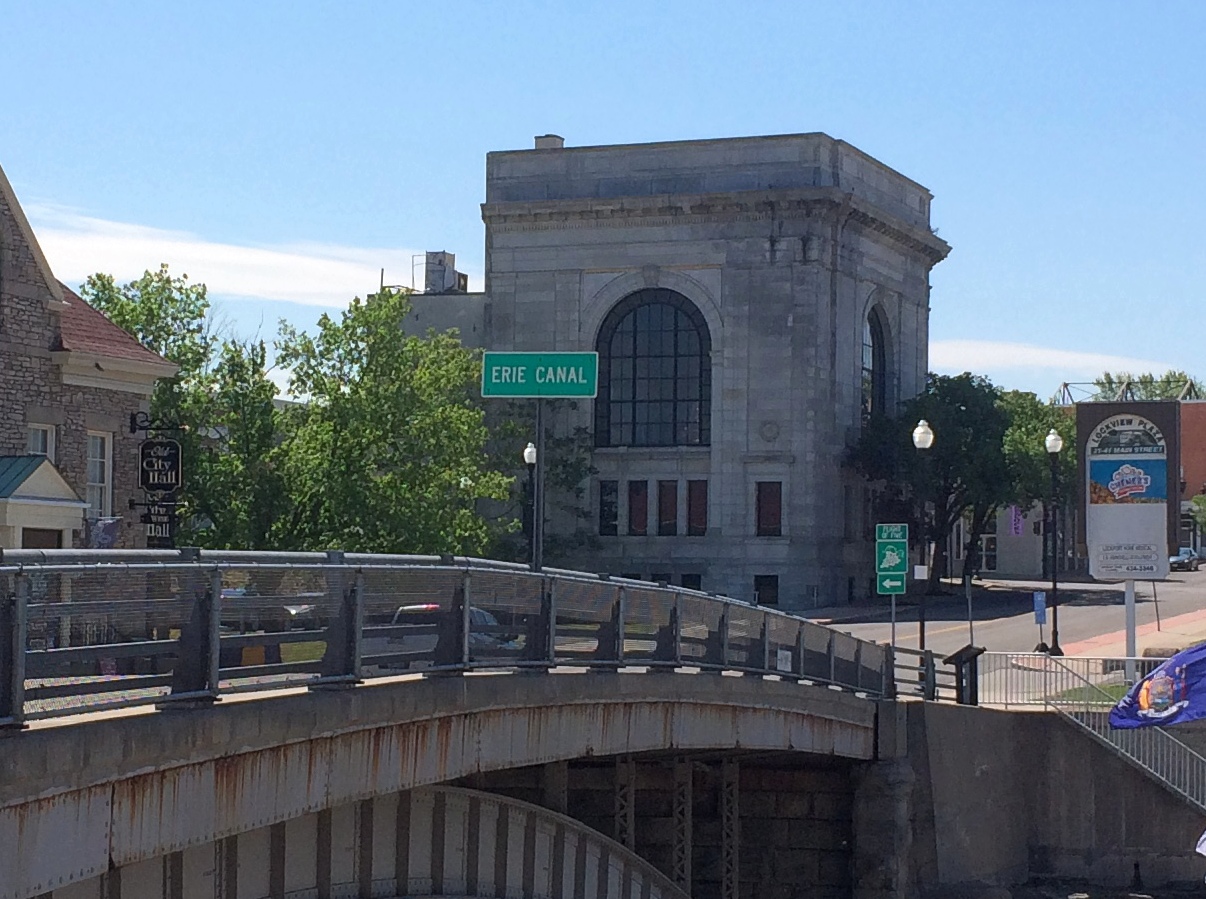
We got there at about 10:30 and knew we were in the right place.Erie Canal, Lockport NY

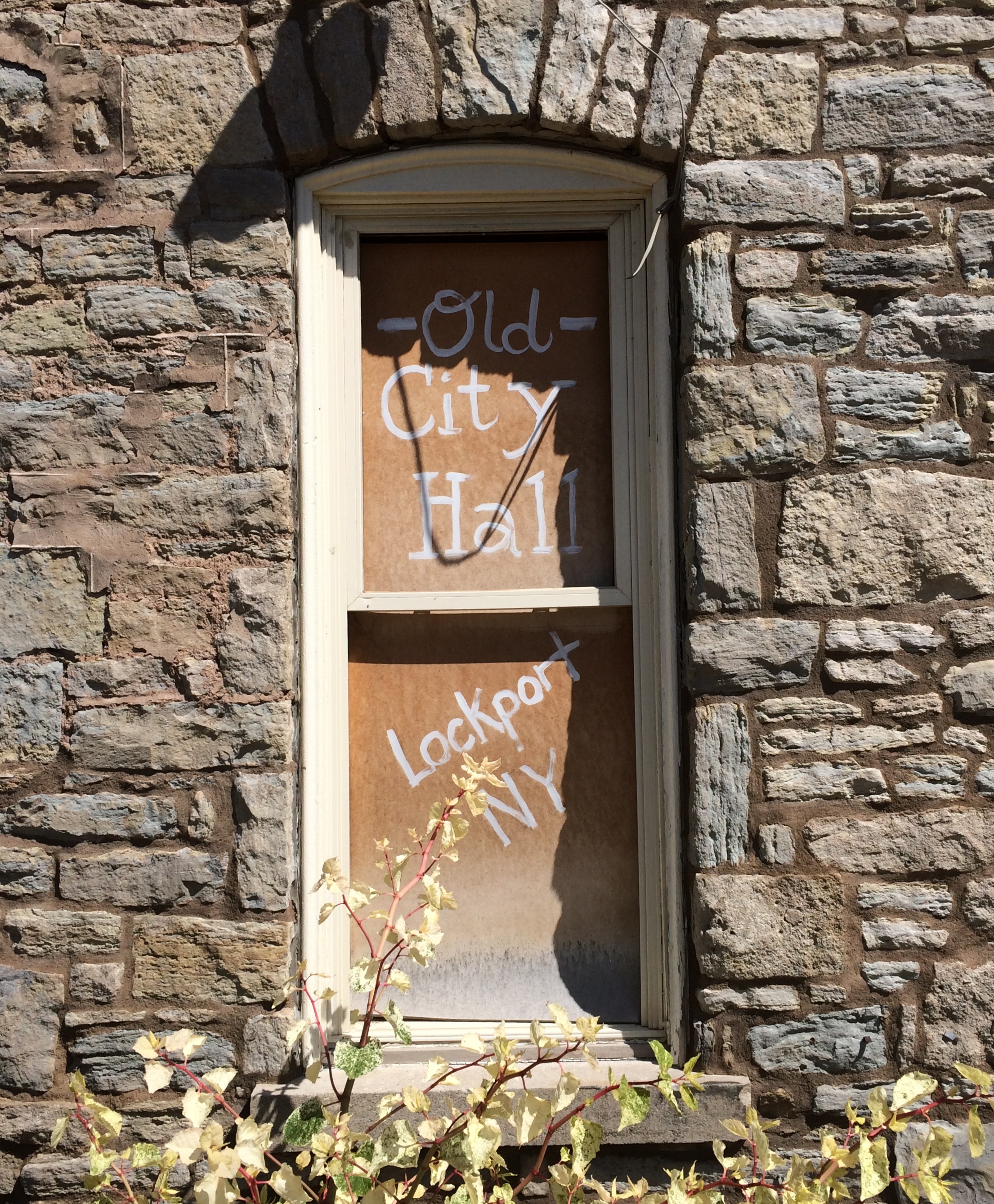
There were other signs as well.Erie Canal, Lockport NY Erie Canal, Lockport NY

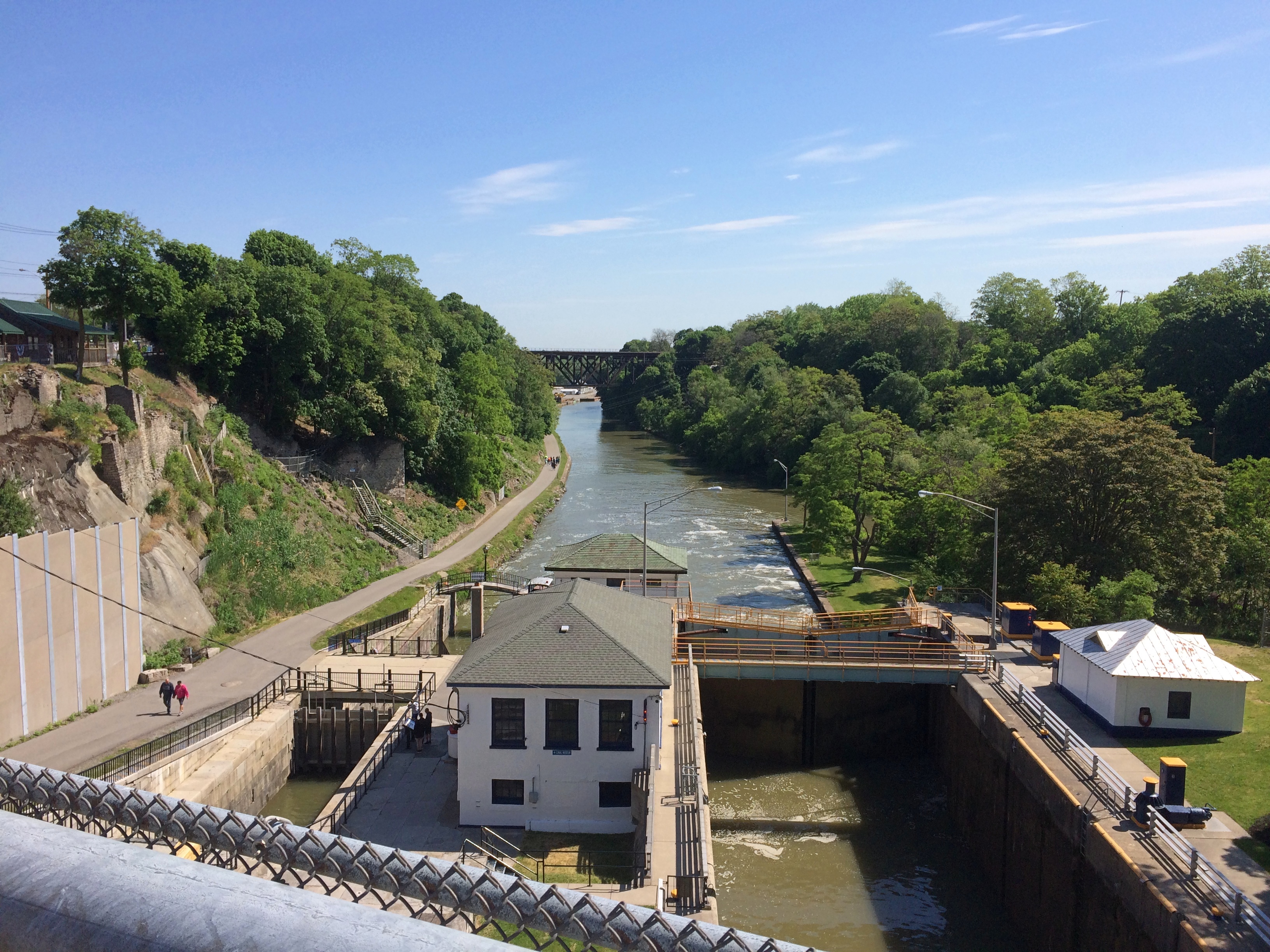
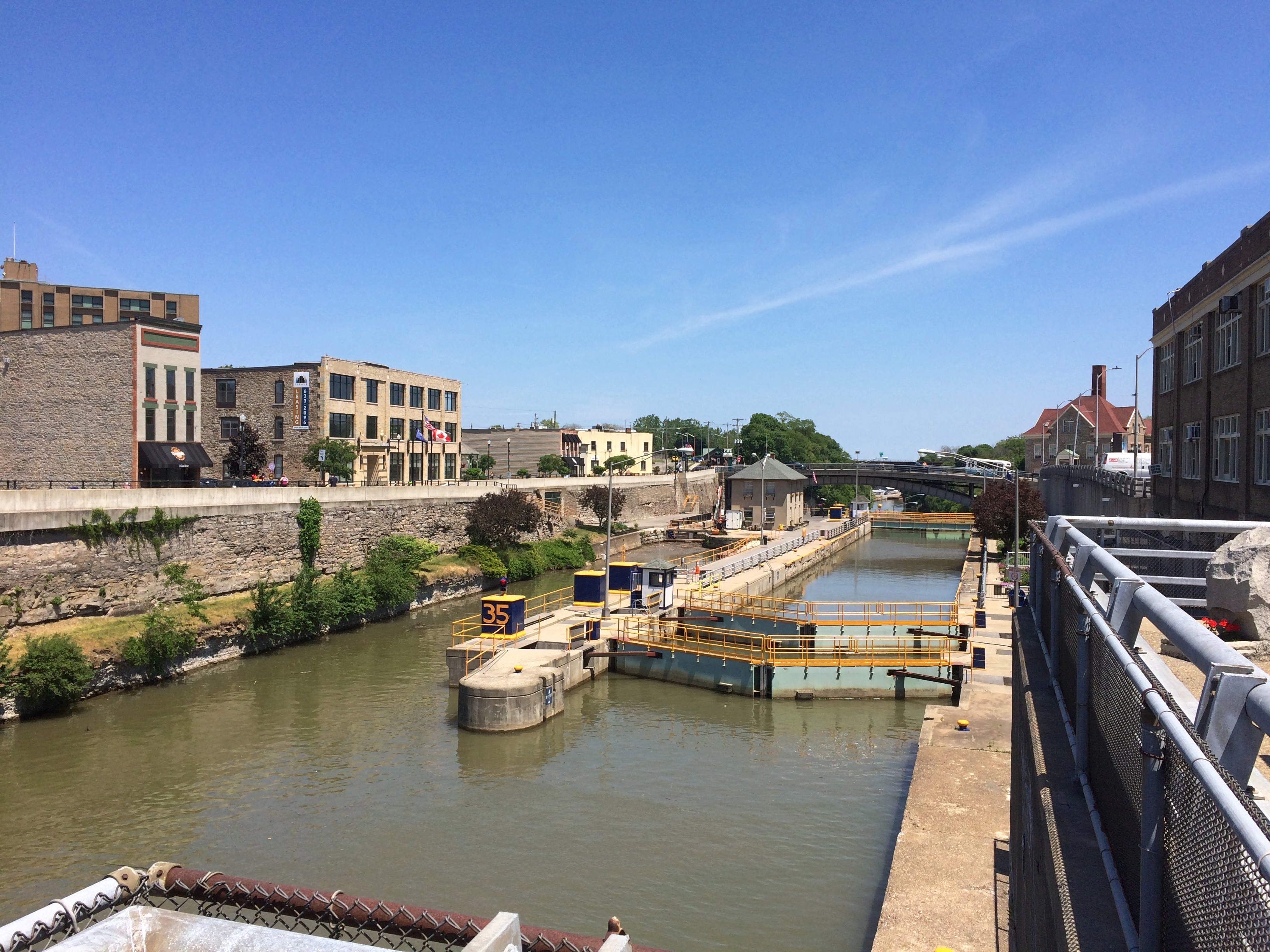
Looking east, from the bridge over the locks.Erie Canal, Lockport NY
As usual, an historic site isn’t as simple as somewhere or something that magically hasn’t changed since its most interesting period. In structure, and certainly a lot of other details, the canal as we saw it isn’t how the 19th-century bargemen would have.

To the left in the picture is the original canal locks, the five of the name. It’s a narrow passage compared to the wider channel on the right, which involves two locks covering the same distance as the older five locks. In the early 20th century, the state of New York upgraded its canals, including the Erie, to form the New York State Barge Canal system. That’s when wider channel was built, no doubt state-of-the-art in its time.

Such a change made for much faster commercial movement on the canal. Of course that’s an obsolete virtue now, though the wider canal still makes for the more expeditious movement of pleasure craft, which are all that use the waterway anymore. The last commercial vessel to ply the Erie Canal, or rather that branch of the NYS Barge Canal system, was the Day Peckinpaugh, which quit service in 1994. Later than I would have thought.

Apparently there was (in effect) a Day Peckinpaugh class of ships on the NY canals. “After her 1921 maiden voyage, she was followed by over a hundred similar motorships on the Barge Canal,” notes the Waterford Maritime Historical Society. A lot more about the ship, at first unimaginatively called the Interwaterways Line Incorporated 101 and built to traverse the Great Lakes as well, can be found here.

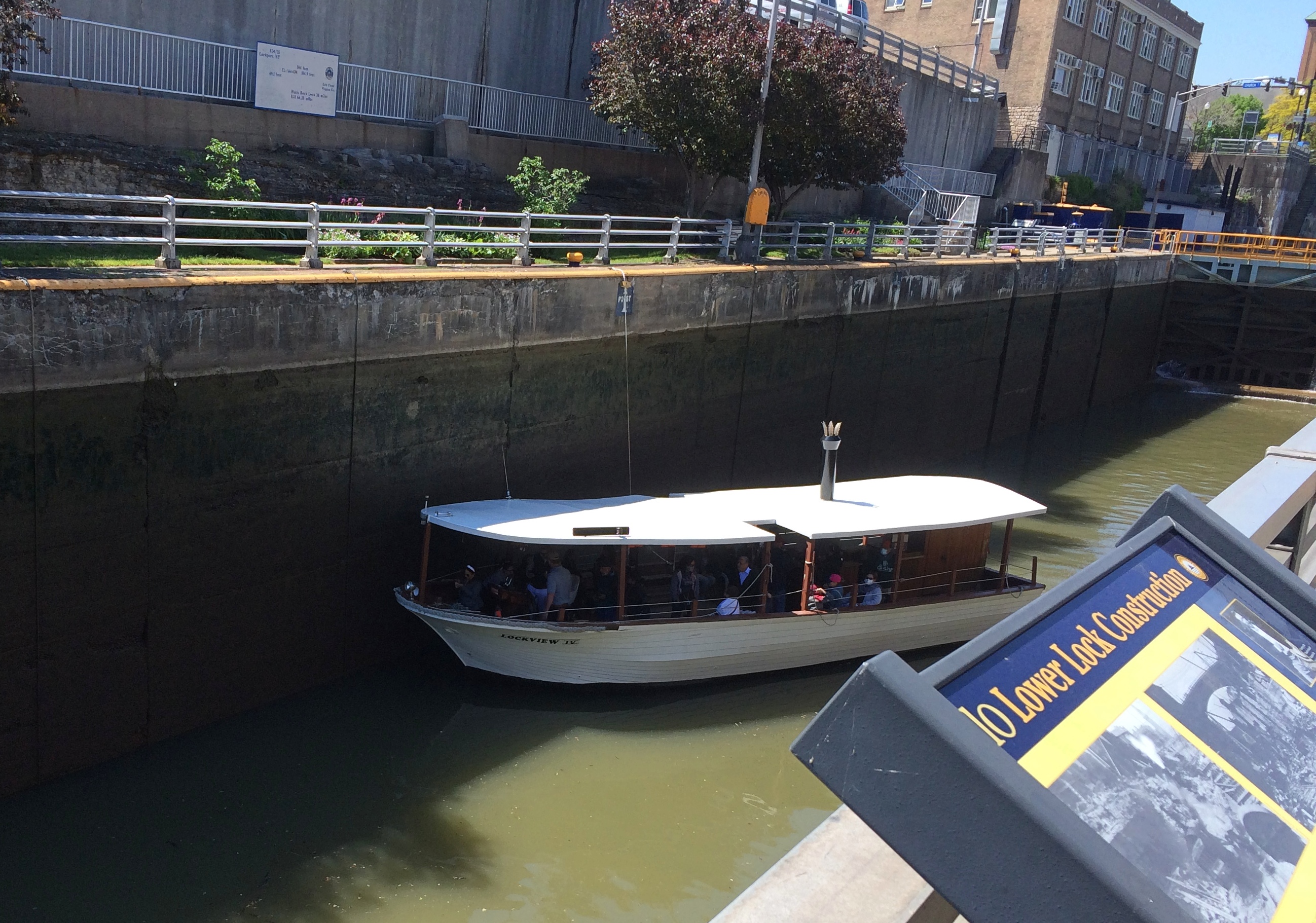
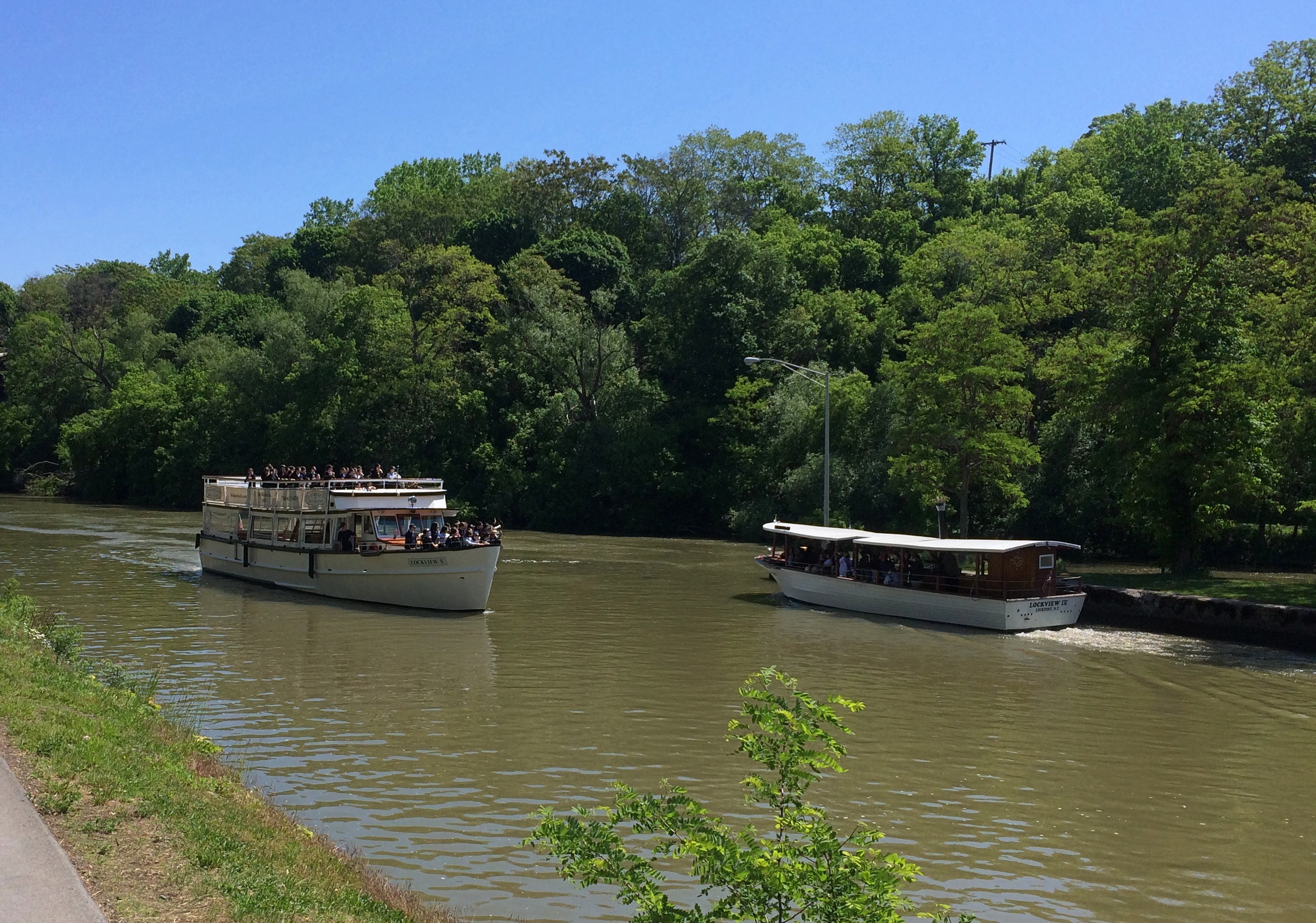
We took a tour that started with a walk along the canal. Here is one of the two locks filling or draining, I forget which.Erie Canal, Lockport NYMore boats.
Erie Canal, Lockport NY

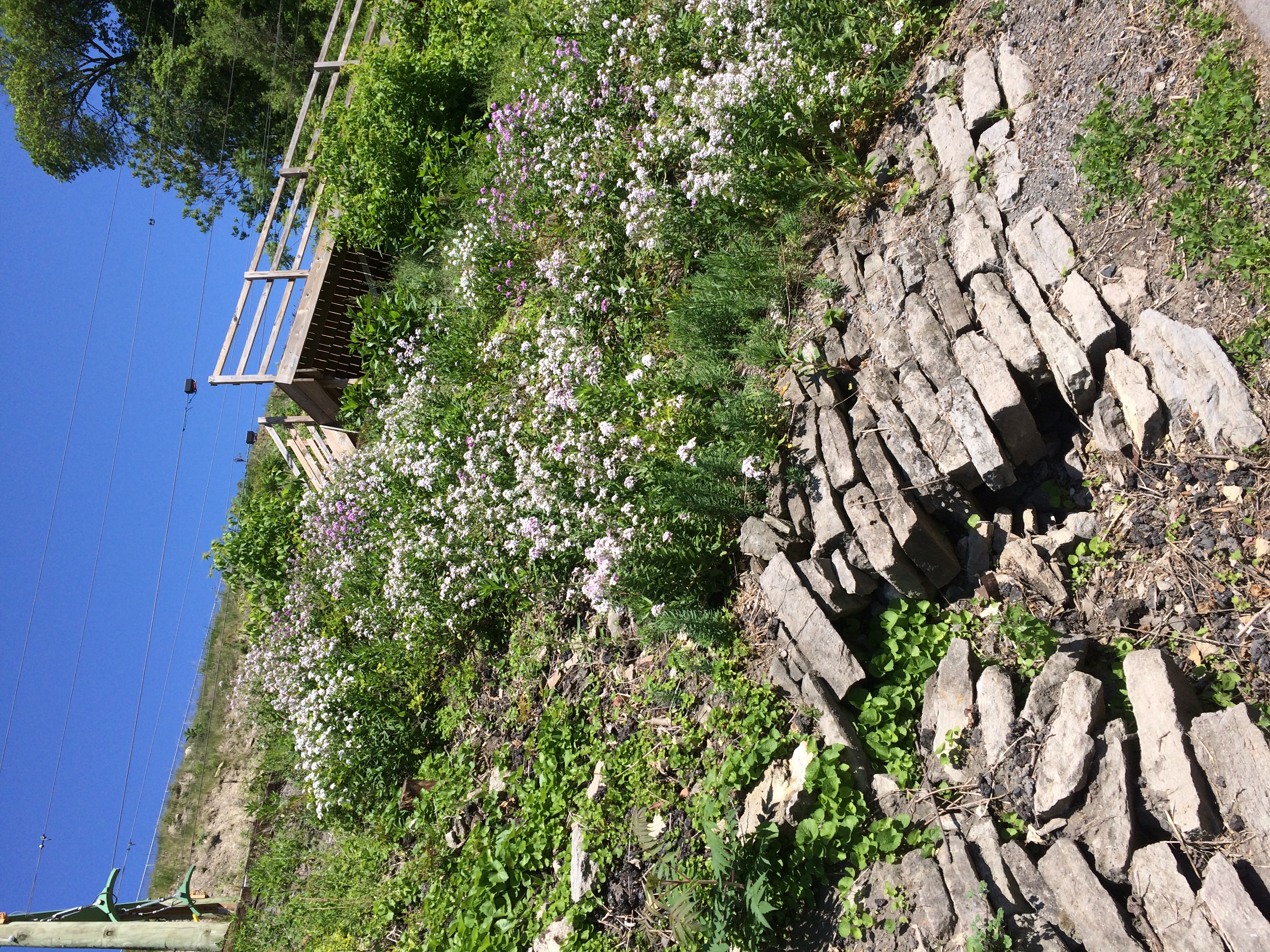
The hill side.Erie Canal, Lockport NY Erie Canal, Lockport NY

The “Upside-Down Bridge.” It’s a railroad bridge over the canal in Lockport, build just before the canal was improved.
Erie Canal, Lockport NY

“This bridge is a multi-span railroad bridge built in 1902 by the prolific and noteworthy King Bridge Company of Cleveland, Ohio,” says HistoricBridges.org. “The main span which crosses the river is a Baltimore deck truss. The bridge was referred to as the ‘Upside-Down Bridge’ because as a deck truss, it looks like a through truss positioned upside-down.”

Erie Canal, Lockport NY
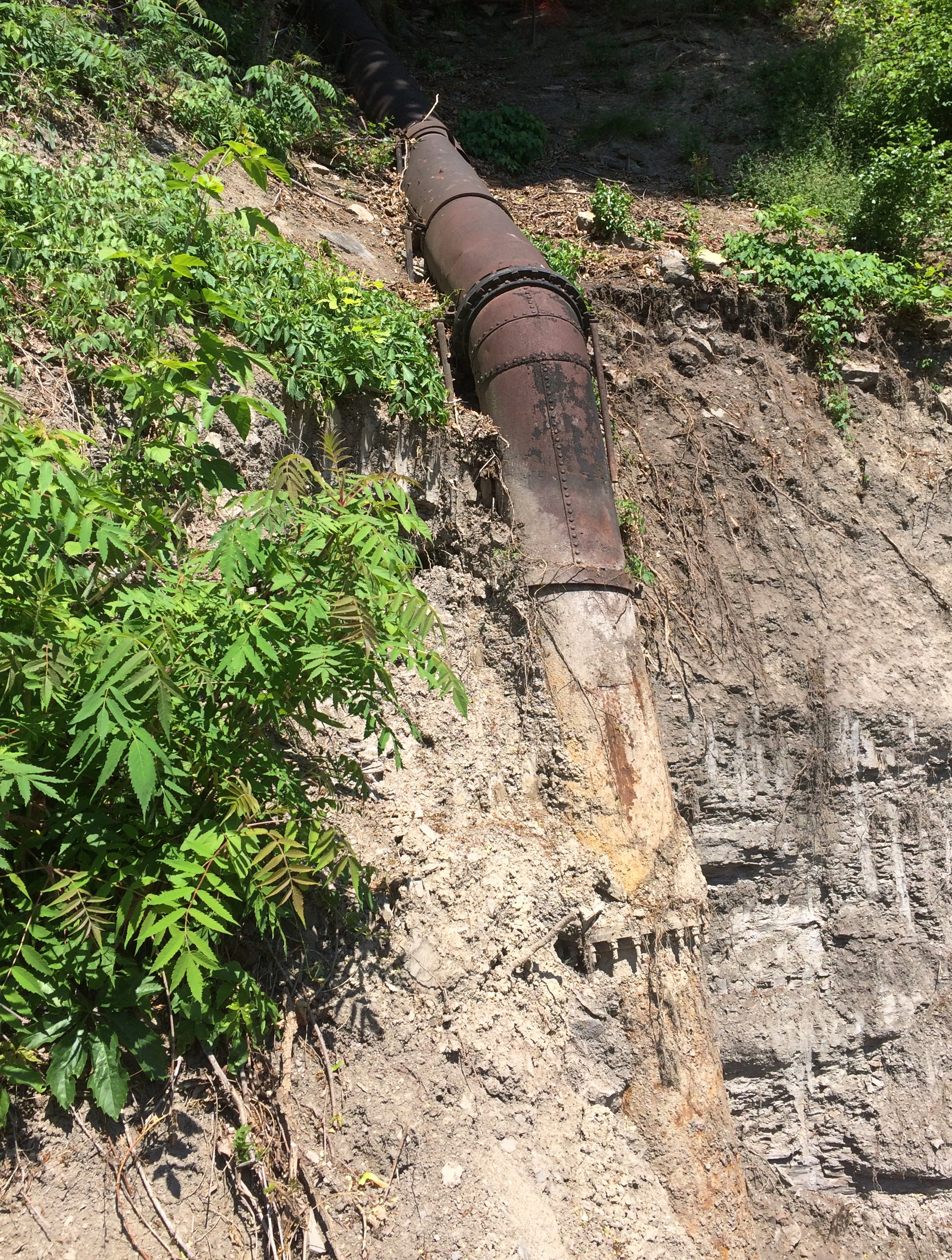
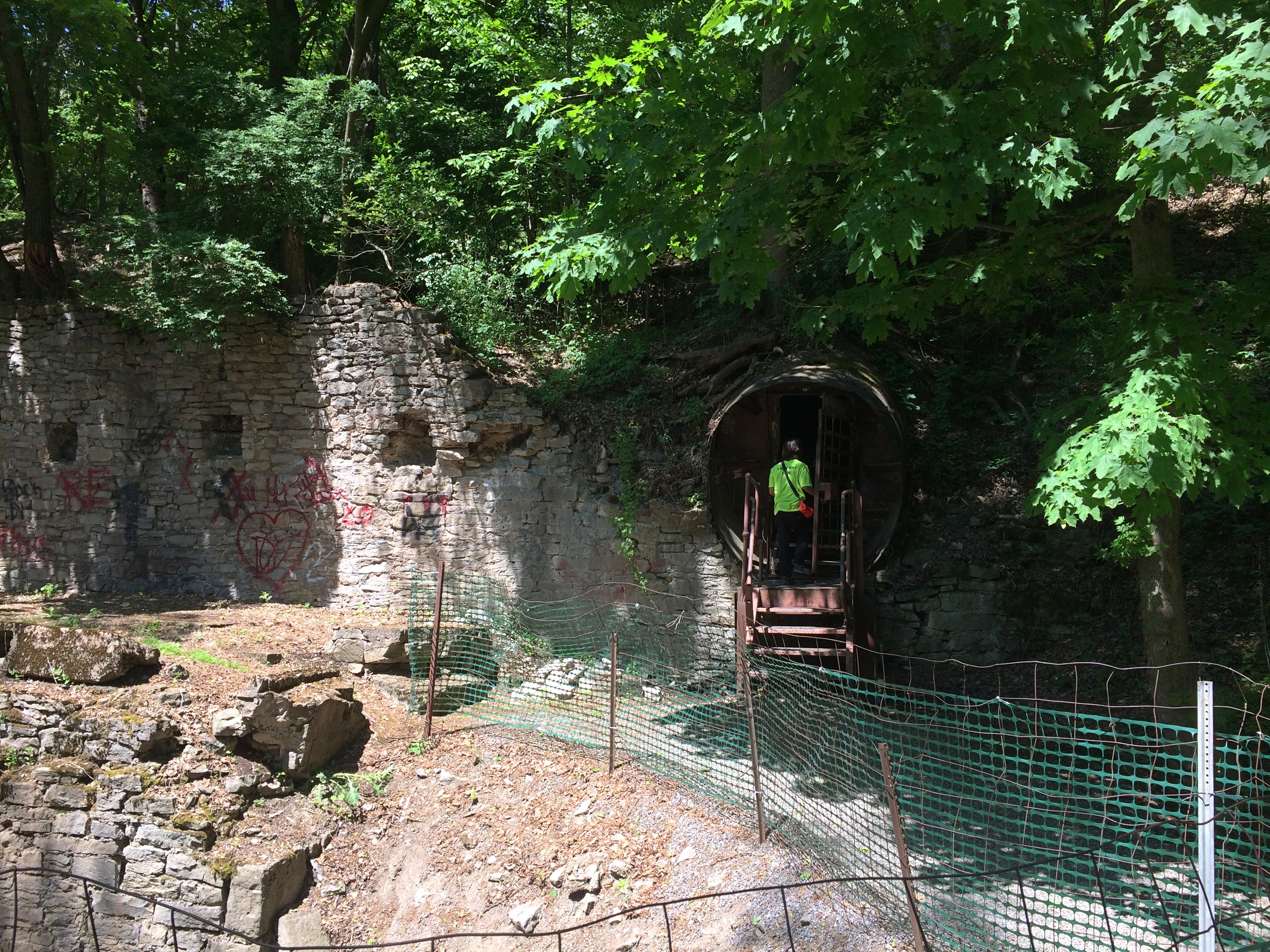
Near the bridge, the tour turned into a man-made cave in the hill, a water tunnel (hydraulic raceway) built in the 19th century using muscle power, hand tools and black powder.
Erie Canal, Lockport NY

The raceway used to power local industry, opening for tourists in 1977. That happened, it seems, because the natural cave in the limestone under Lockport proved disappointing in the 20th century, and possibly a locus of fraud in the 19th century.

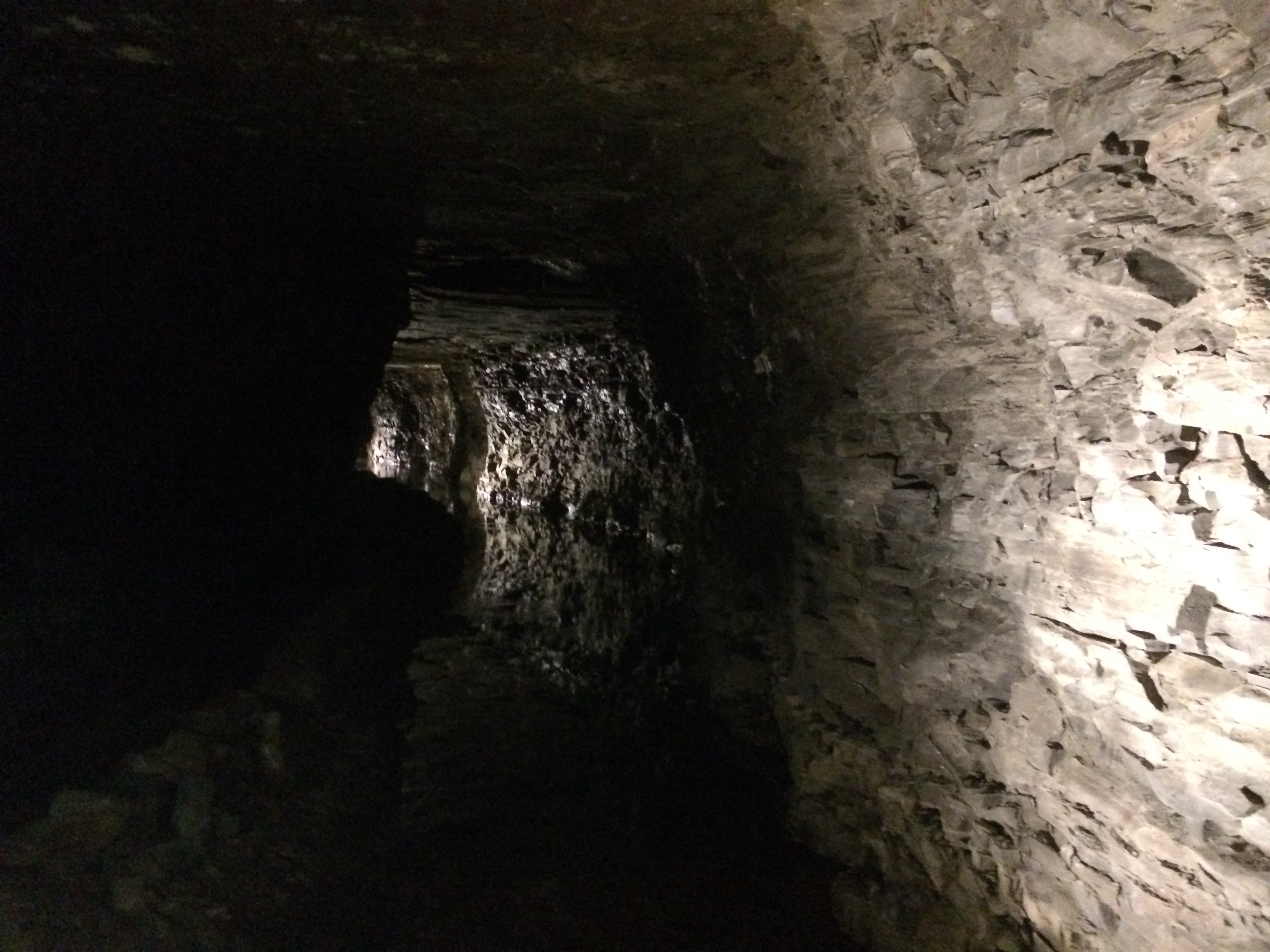
It was dark in there.Erie Canal, Lockport NY
The tour also involved a short boat ride in part of the tunnel that’s partly flooded still. A novelty, certainly, but not for anyone even a little claustrophobic. I figure they stay away from commercial caves anyway.

Out in the sun again, we looked around town a little more. The west entrance of the locks is visible from Big Bridge.
Erie Canal, Lockport NY

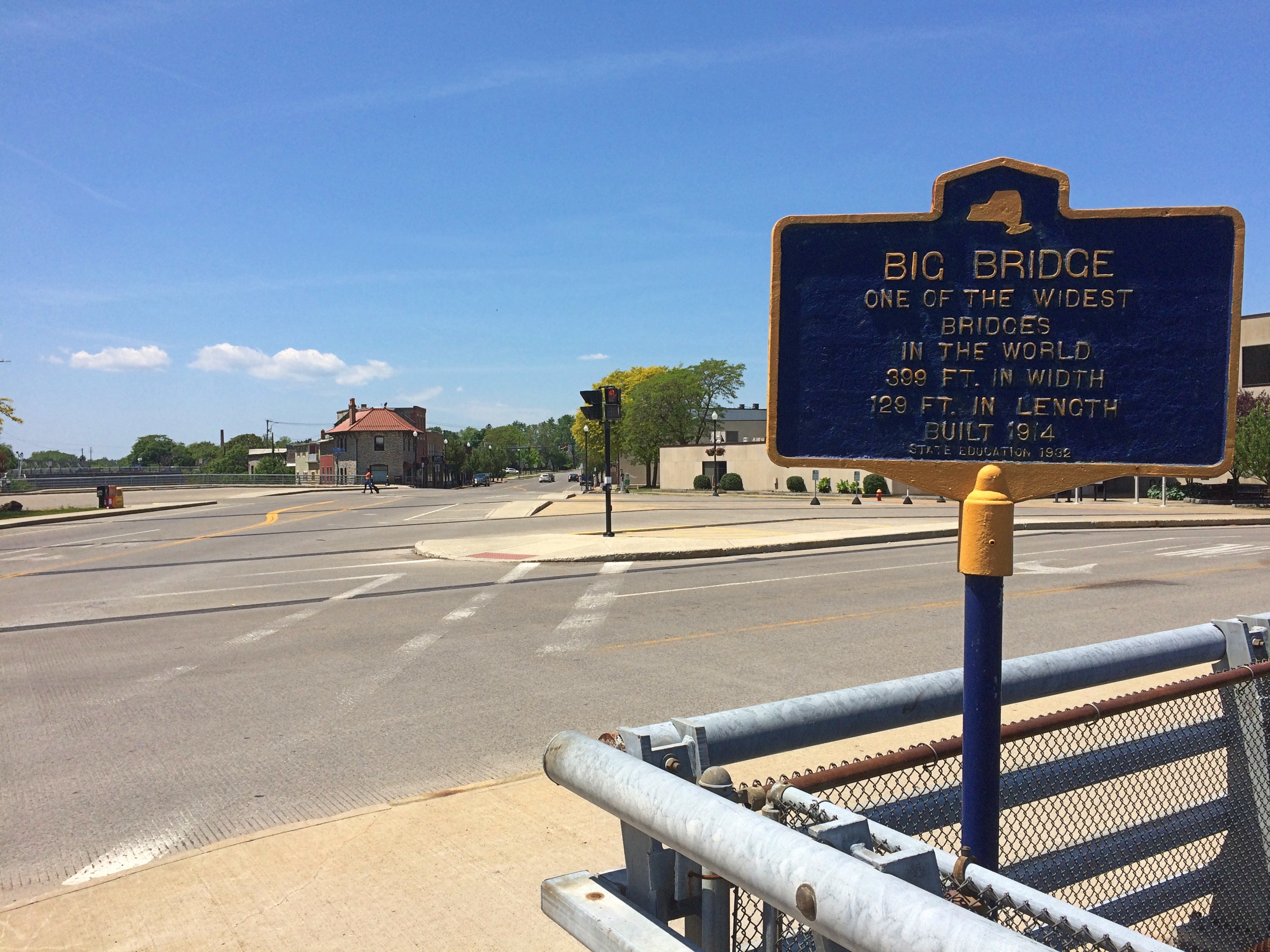
A sign near Big Bridge (built 1914) claims that at 399 feet, the bridge over the canal at that point is one of the world’s widest. Maybe so, but it’s completely undistinguished in every other way.Erie Canal, Lockport NY
One more sight in Lockport.Erie Canal, Lockport NY mural
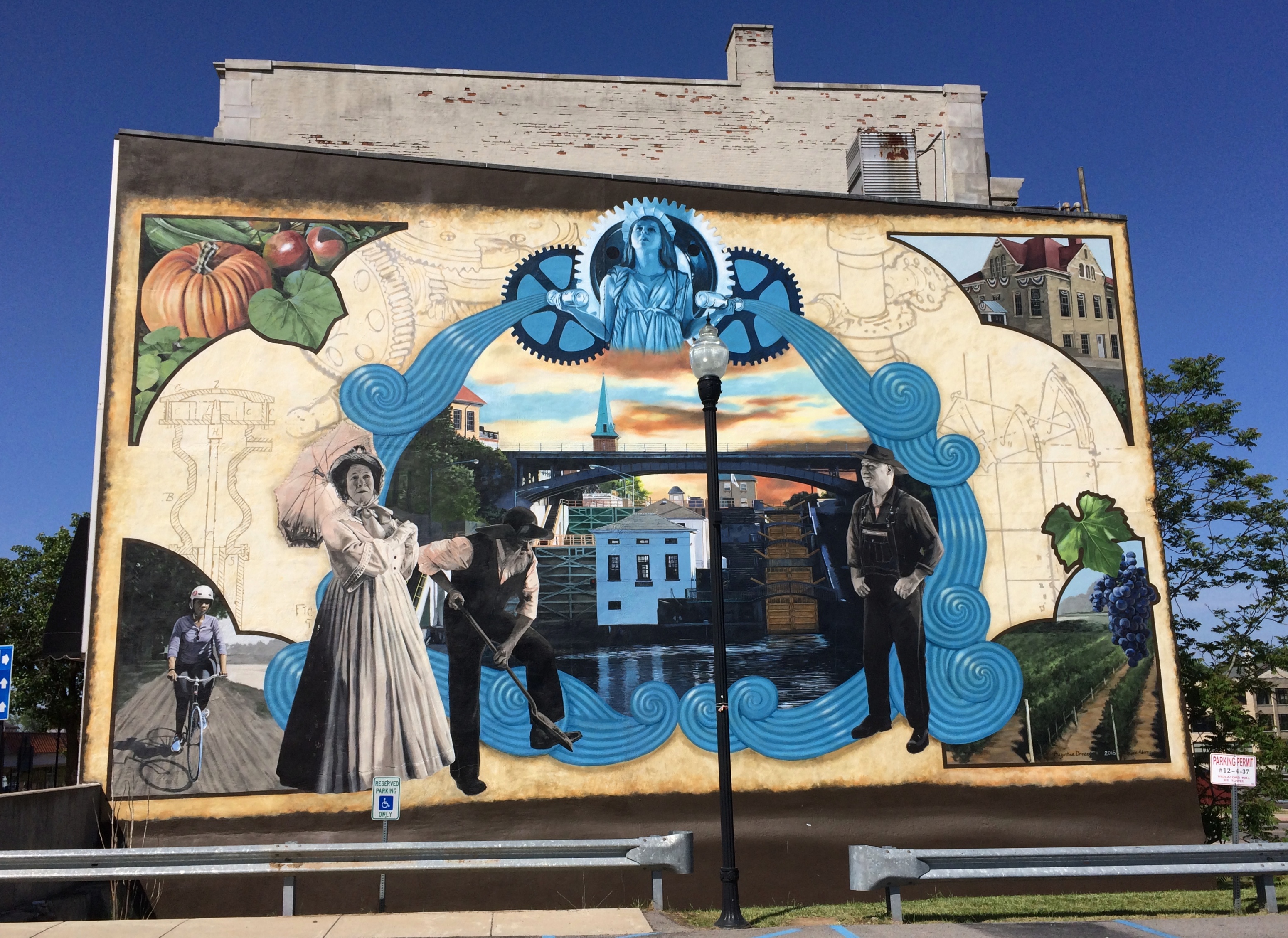
A fairly recent (2015) mural called “Guardian of the Waters” by Augustina Droze and Bruce Adams. Its plaque says: “The mural is inspired by the history and engineering marvel of the Flight of the Five Locks, which opened a path to the West, inspired inventions that changed the world, and gave rise to the city of Lockport, NY.”

Two Southern Illinois Towns: Cave-in-Rock, Equality

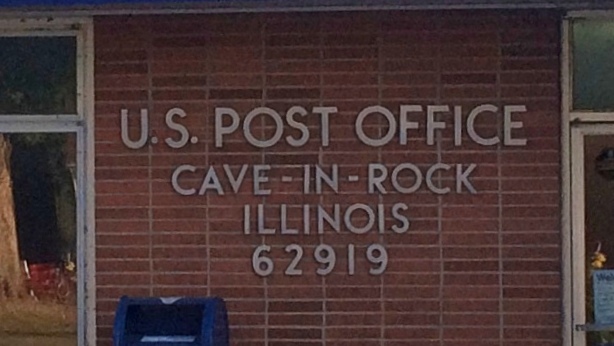
Cave-in-Rock IllinoisThe USPS uses the hyphens in Cave-in-Rock, Illinois. I saw the post office in the town and I documented the usage. Other signs around town were about evenly split on using hyphens.

After we visited the state park of the same name, I took a walk around town, mostly along a short stretch of Main Street, while Ann lounged around in the car.

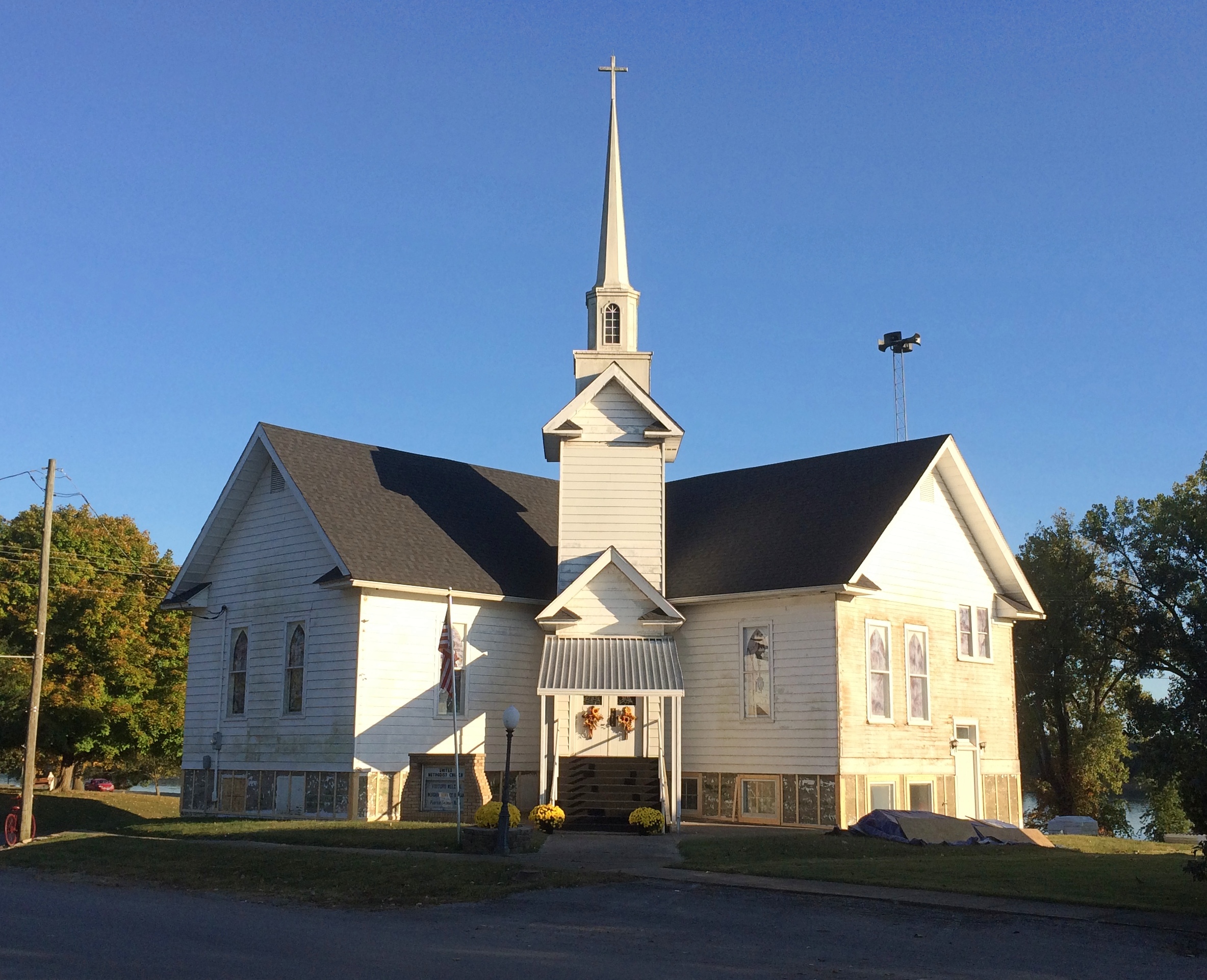
The town’s actual main street seems to be Canal Street, but Main — which parallels the Ohio River — features the post office and Cave in Rock United Methodist Church, which doesn’t bother with the hyphens. Actually, according to the sign out front, the church doesn’t bother with “Cave in Rock” at all.Cave-in-Rock Methodist Church

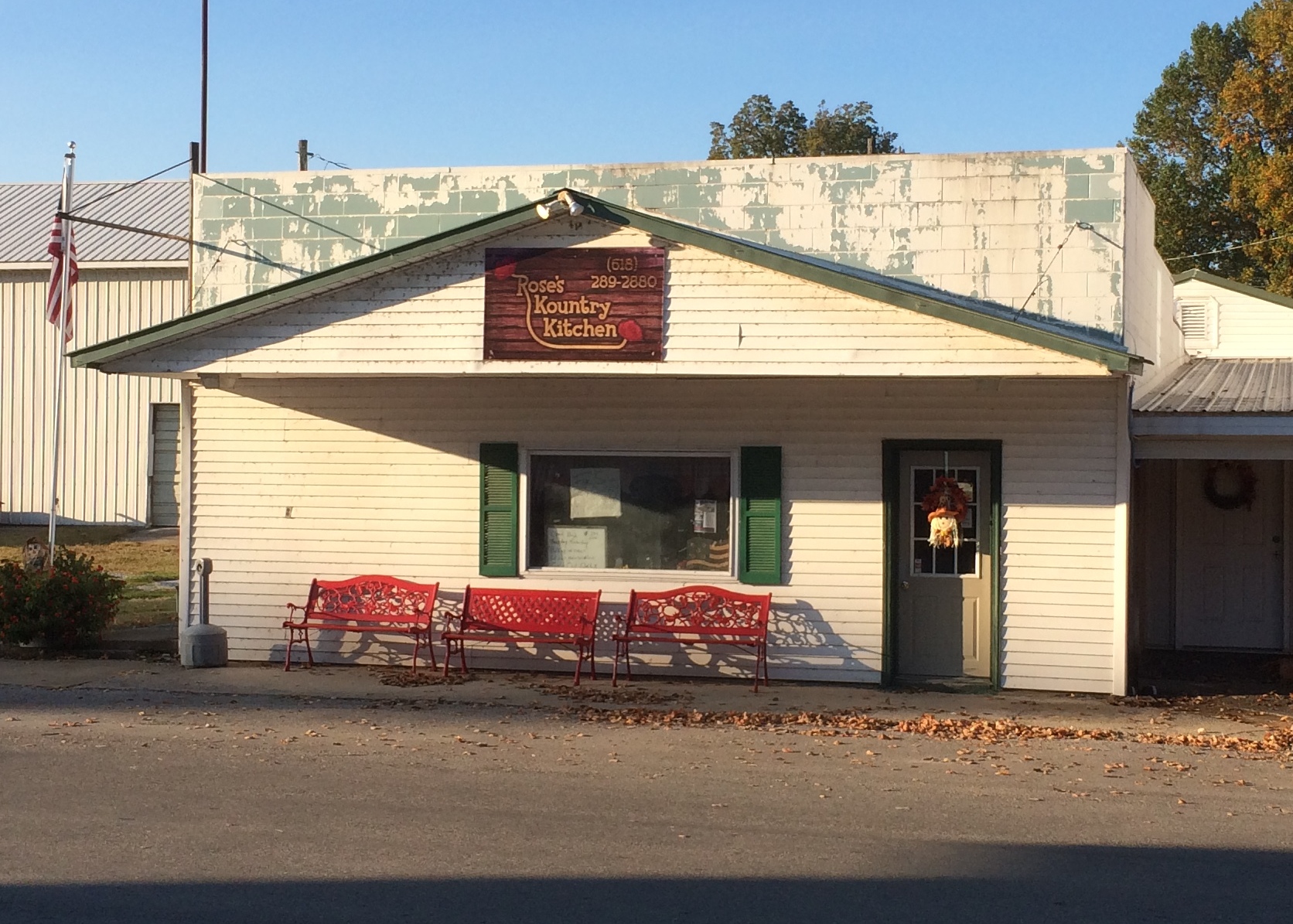
Rose’s Kountry Kitchen. Not too busy, but it was Sunday afternoon.
Cave-in-Rock Rose's Kountry Kitchen
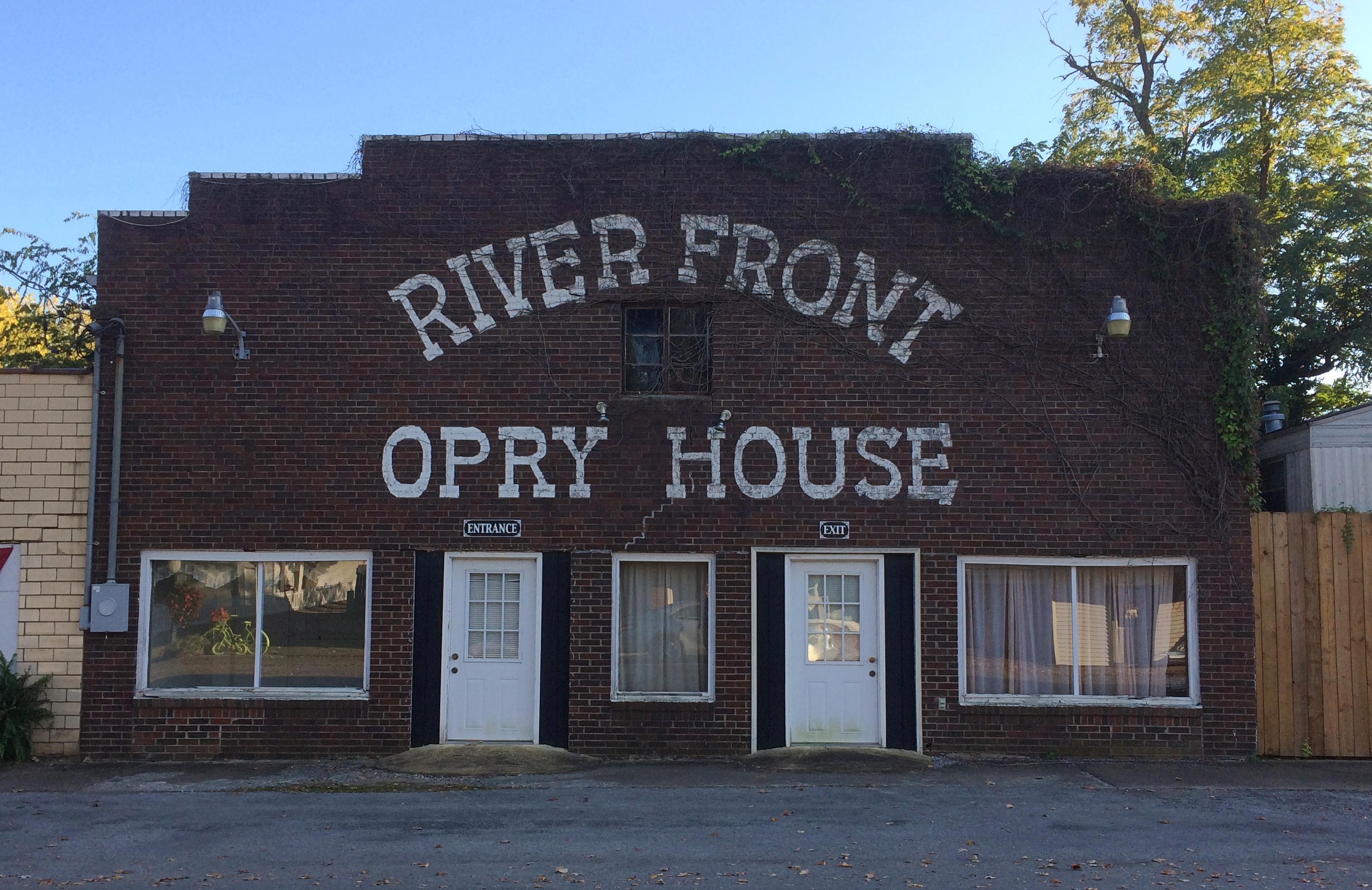
The River Front Opry House. Not sure if anything goes on there anymore.
Cave-in-Rock River Front Opry House
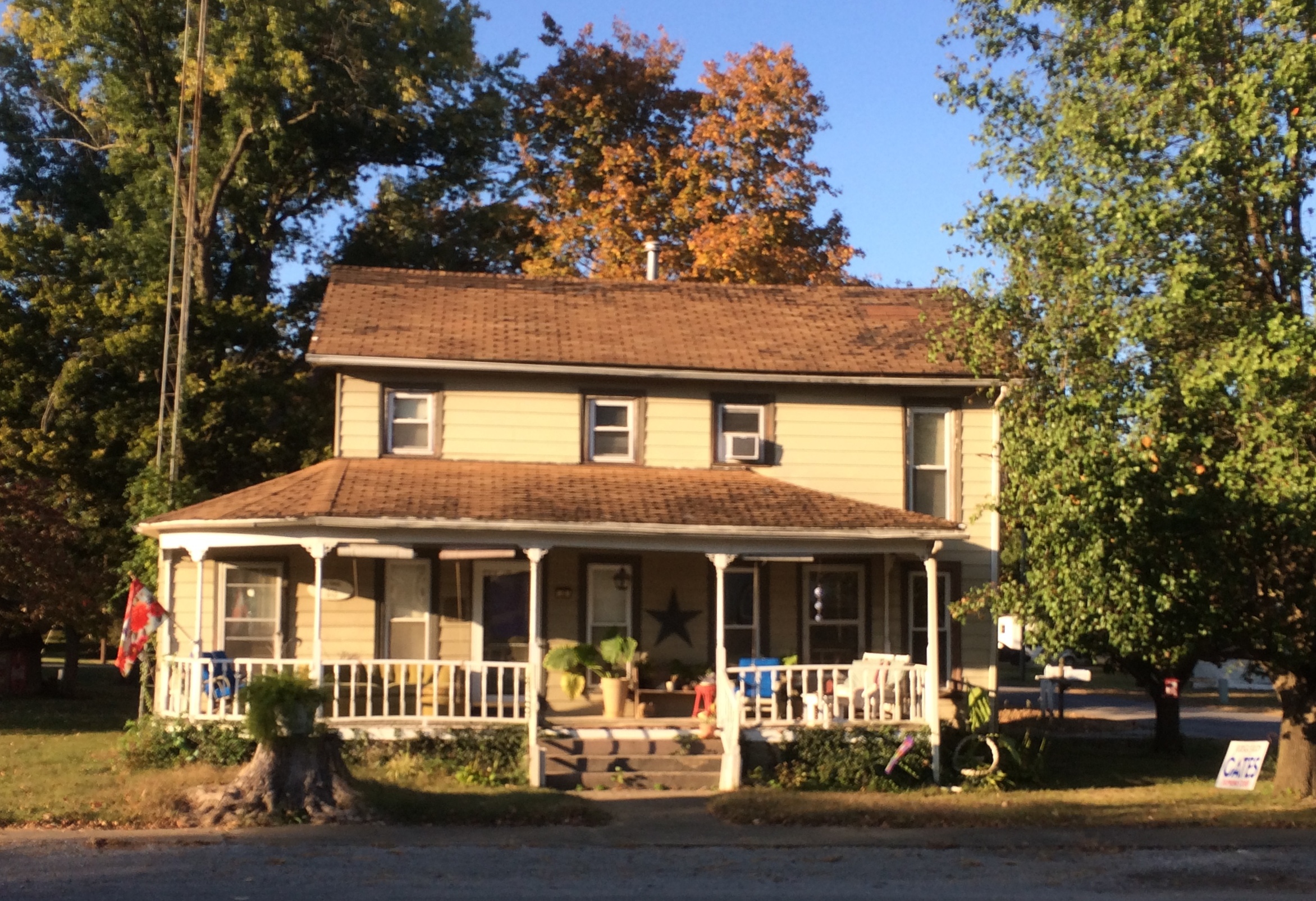
Some pleasant-looking houses.
Cave-in-Rock Illinois village
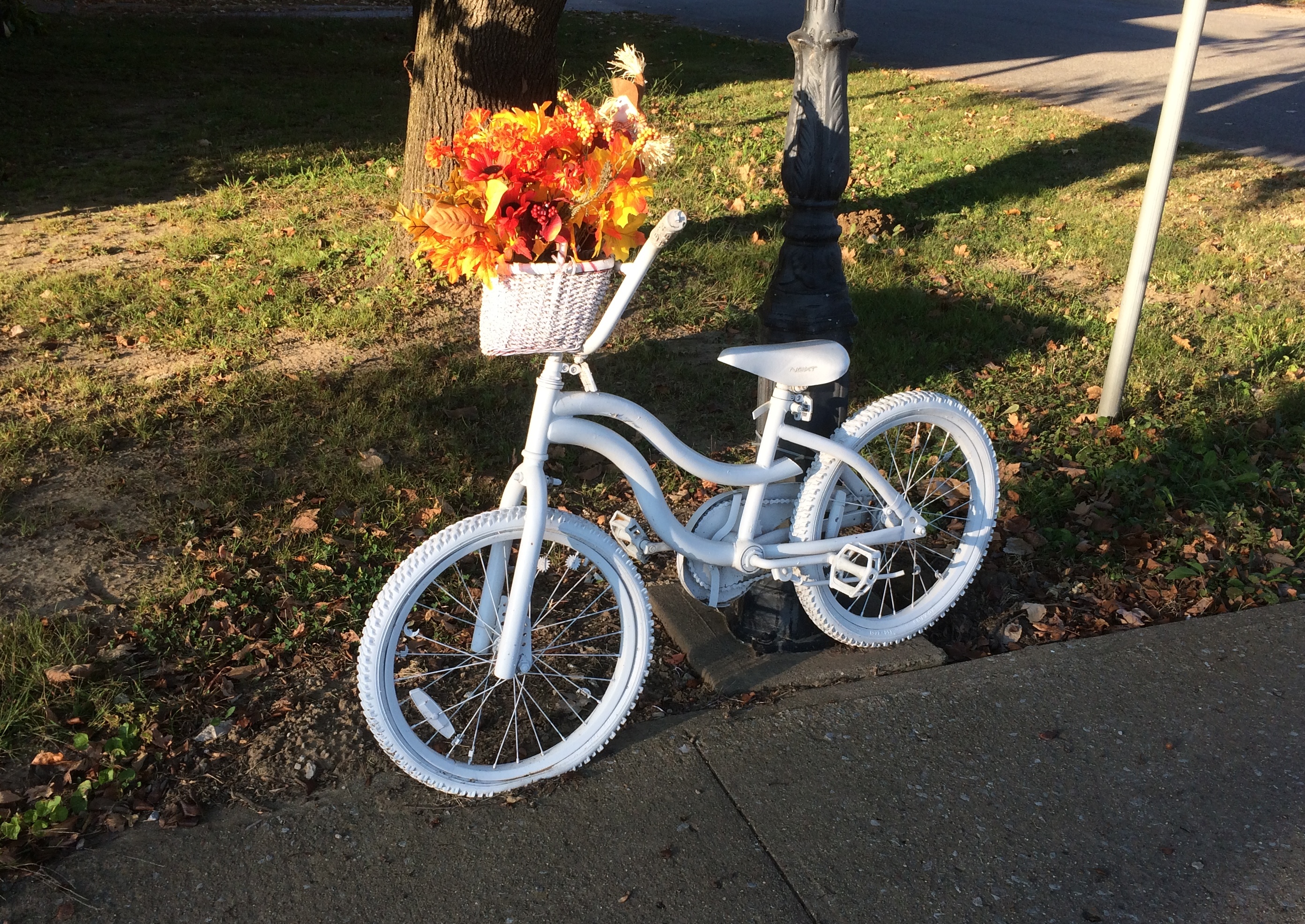
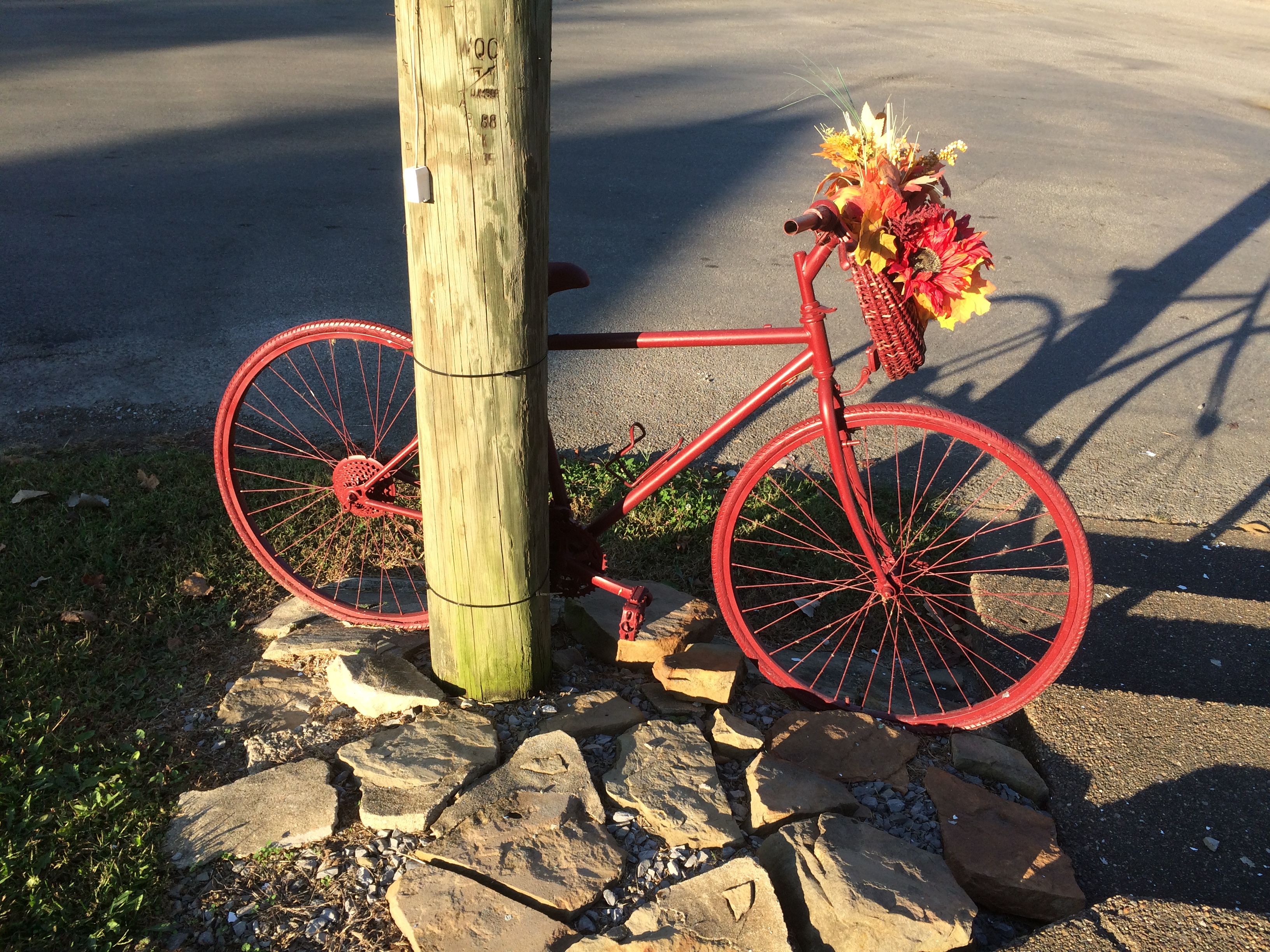
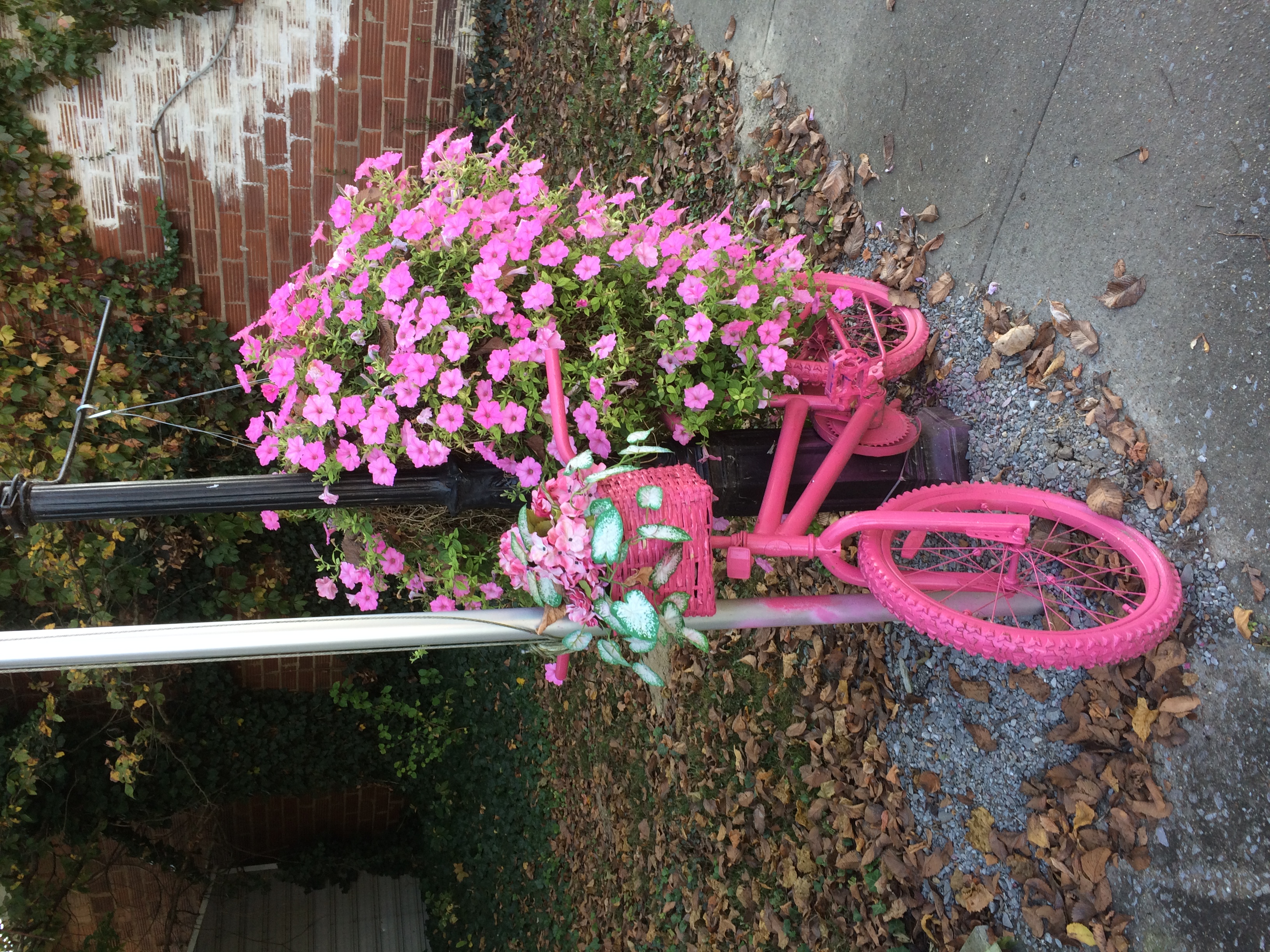
Also, art bicycles at various points near the street.Cave-in-Rock art bicycles Cave-in-Rock art bicycles Cave-in-Rock art bicycles
A small group of residents, acting informally, installed the bikes, reports KFVS-12. Civic-minded folks, from the look of it.

Something else about Cave-in-Rock: From 2007 to 2013, the annual Gathering of the Juggalos happened at nearby Hogrock Campgrounds. See SNL for a parody of an infomercial advertising the Gatherings of that period. Also, see a report by the FBI on the Juggalos. I have no idea whether it’s accurate, or whether the G-men had a burr up their butts for no solid reason.

Picture that, a town of 300 people inundated by 10,000 Juggalos. Guess they figured that Juggalo money spends too, despite the risk of damage to the town. Not the only hint of Insane Clown Posse I’ve run across this year.

Between Harrisburg and Shawneetown is the village of Equality, Illinois, pop. about 500. We drove down its main street, W. Lane St., then turned onto N. Calhoun St. Near the intersection of those streets, a restaurant called the Red Onion looked almost pre-pandemic busy.

Not far along Calhoun, I saw a place I wanted to stop.
Equality, Illinois water tower
The Equality water tower rises over the former site of the Gallatin County courthouse. The town was county seat for a while in the 19th century, but eventually lost that distinction. The building, later used as a school, burned down in 1894.

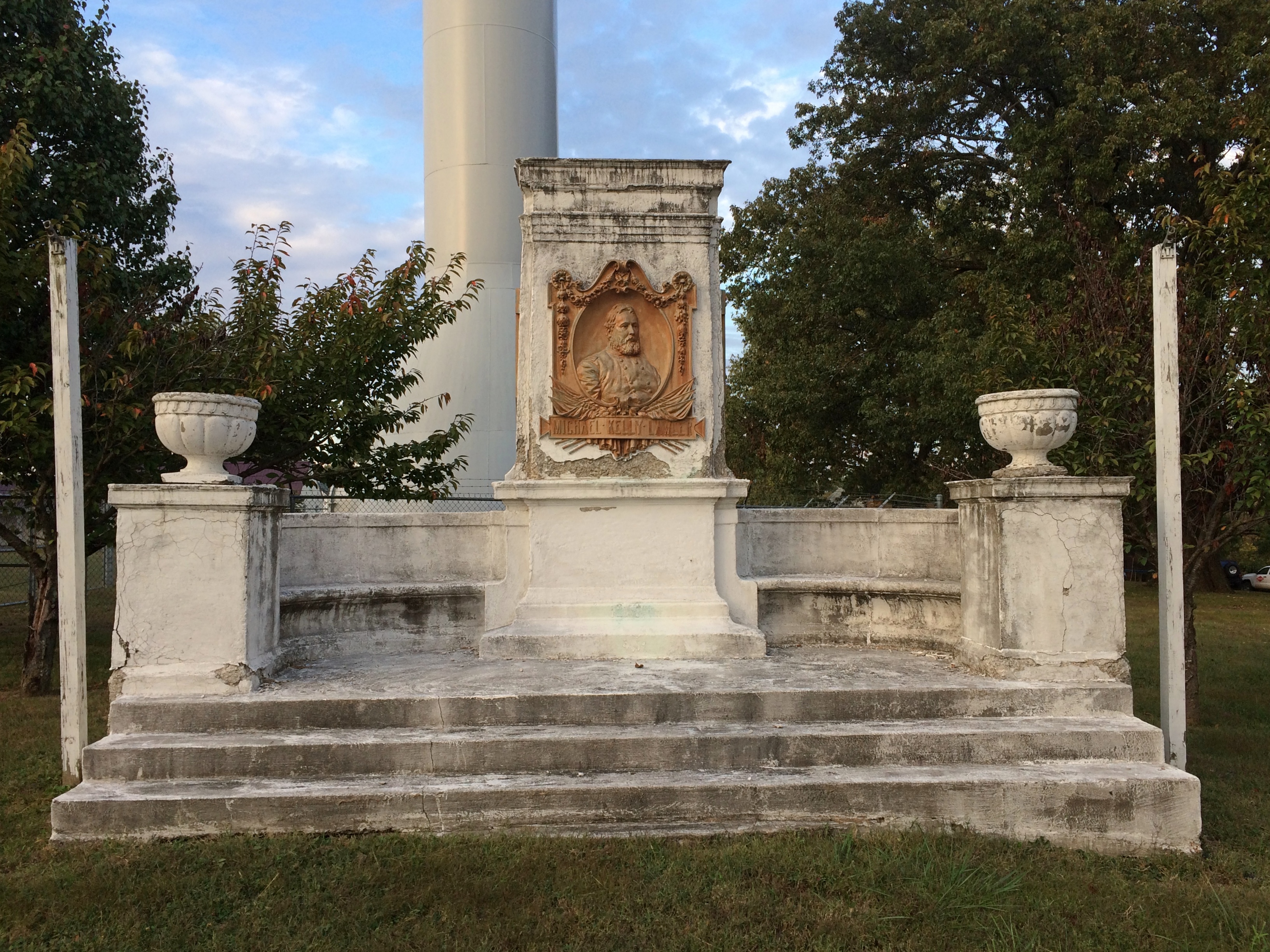
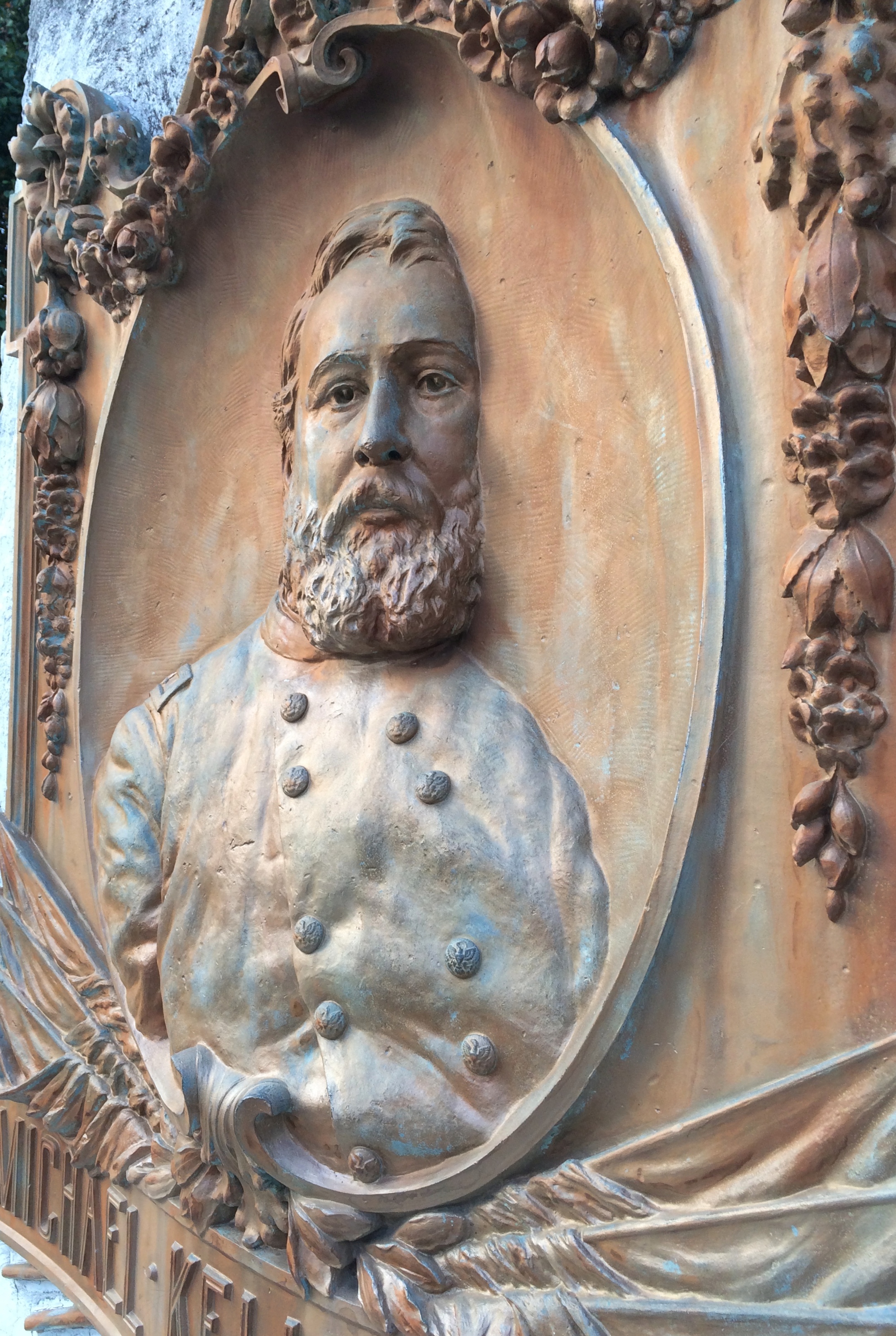
Under the tower is a sizable but timeworn memorial.Michael Kelly Lawler memorial Equality
Michael Kelly Lawler memorial Equality
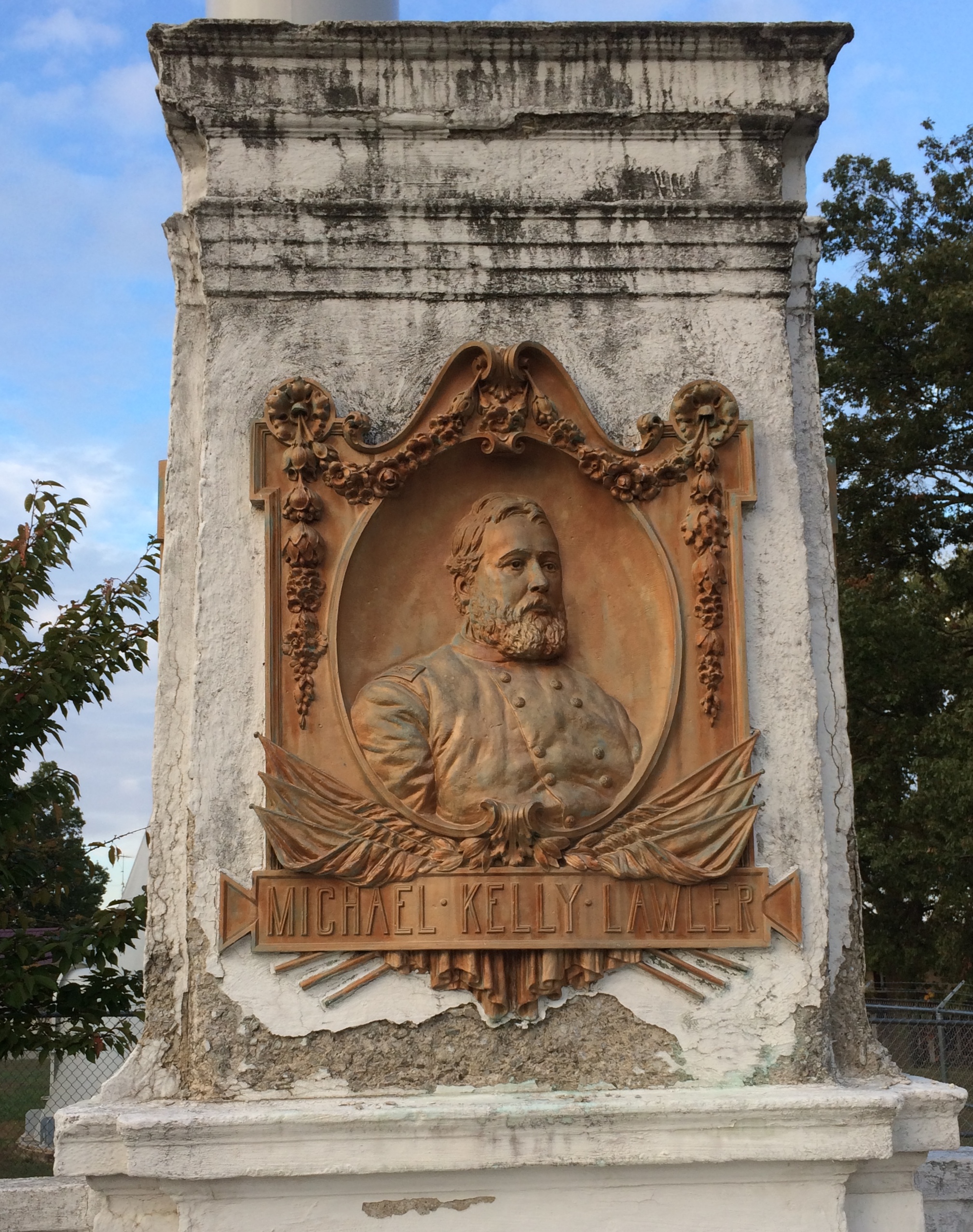
It honors Michael Kelly Lawler, born in County Kildare, Ireland, but who came to Gallatin County, Illinois, as a boy. A veteran of the war with Mexico, Lawler spent the Civil War in the western theater, most notably as a brigadier general leading Union troops during the Vicksburg campaign.

The state of Illinois erected the memorial in 1913, a good many years after the Gallatin County hometown general in blue had died. A plaque on the memorial lists E.M. Knoblaugh as the sculpture.

A simple Google search uncovers little about him, except the fact from the 1915 edition of Report of the Auditor of Public Accounts that the state of Illinois paid him $688.02 for service as a sculptor, and $4,210 to erect the monument, or $4,898.02 all together. In current dollars, more than $128,000, so he presumably did well in the deal.
Michael Kelly Lawler memorial Equality
Besides that, whoever he was, he did a fine job, especially on the relief, a lifelike visage that looks like it might have been restored sometime recently.

Cave-in-Rock State Park

Snow this morning. It didn’t stick, but it did remind us all of the cold months to come.

At the beginning of 2020, works published in 1924 finally entered public domain in the U.S. The Center for the Study of the Public Domain noted some of the better known works now available to all.

“These works include George Gershwin’s ‘Rhapsody in Blue,’ silent films by Buster Keaton and Harold Lloyd, and books such as Thomas Mann’s The Magic Mountain, E. M. Forster’s A Passage to India, and A. A. Milne’s When We Were Very Young.”

Plenty of obscure works are now available as well. One I have in mind is The Outlaws of Cave-in-Rock by Otto A. Rothert, published in 1924. Rothert (1871-1954) was secretary of the Filson Historical Society in Louisville, and apparently took a strong interest in regional history

The Outlaws of Cave-in-Rock can now be found in Google Books. I haven’t read it all, but I have sampled some of it. Such as the first few paragraphs.

“This book is intended to give the authentic story of the famous Cave-in-Rock of the lower Ohio River… and to present verified accounts of the most notorious of those highwaymen and river pirates who in the early days of the middle West and South filled the Mississippi basin with alarm and terror of their crimes and exploits.

“All the criminals herein treated made their headquarters at one time or another in this famous cavern. It became a natural, safe hiding-place for the pirates who preyed on the flatboat traffic before the days of steamboats….

“A century ago and more, its rock-ribbed walls echoed the drunken hilarity of villains and witnessed the death struggles of many a vanished man. Today this former haunt of criminals is as quiet as a tomb. Nothing is left in the Cave to indicate the outrages that were committed there in the olden days.”

The book also tells the tale, in four chapters, of the exceptionally murderous Harpe brothers (or cousins), a bloody story deftly summarized by the late Jim Ridley in the Nashville Scene some years ago. Enough to note here that the Harpes and their women roamed western Tennessee and Kentucky around the beginning of 19th century, murdering and robbing as they went, but especially murdering.

They spent some time among the blackguards at Cave-in-Rock, but were forced to leave after they threw a man bound to a horse to his (and the horse’s) death off the cliff’s edge above the cave for fun. Even river pirates have their standards.

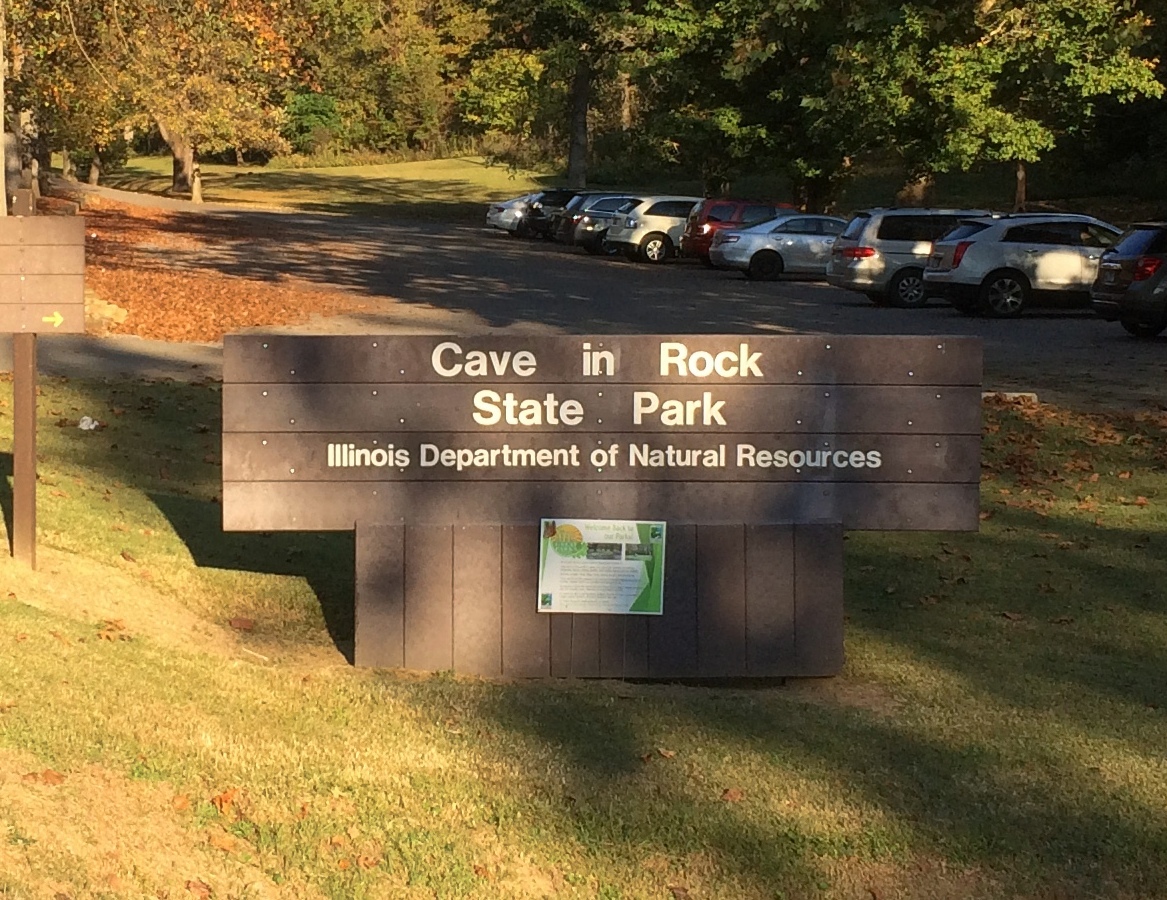
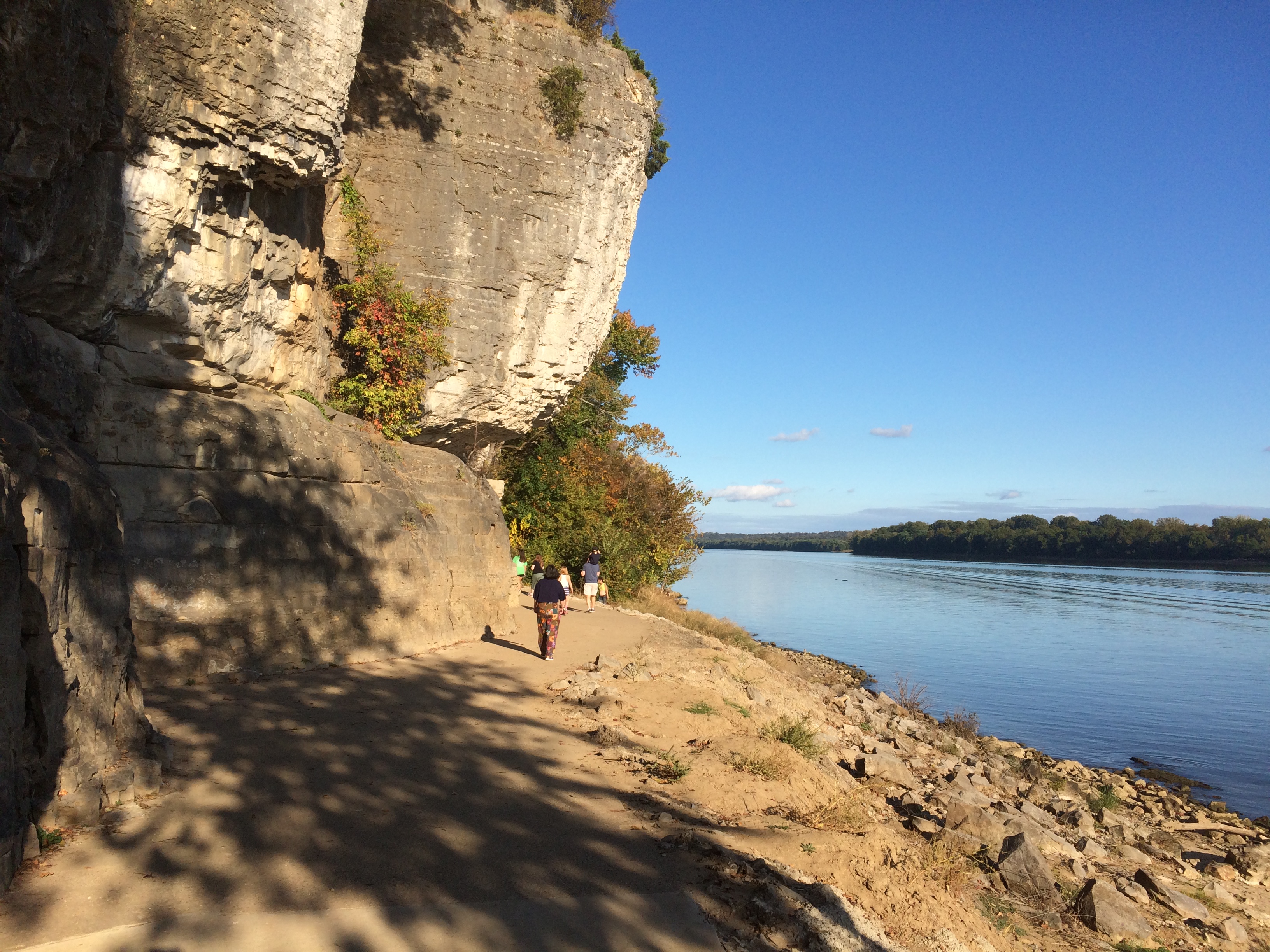
In our time, and in fact since 1929, the cave has been the central feature of Cave-in-Rock State Park. Not quiet as a tomb, quiet as a minor tourist attraction. It isn’t part of Shawnee National Forest, but some of the national forest lands are nearby. Note the sign isn’t a stickler for hyphens.Cave-in-Rock State Park

The park is near the small town of Cave-in-Rock, Illinois, which is walkable distance to the south from the park. We arrived at the park on the afternoon of October 11.

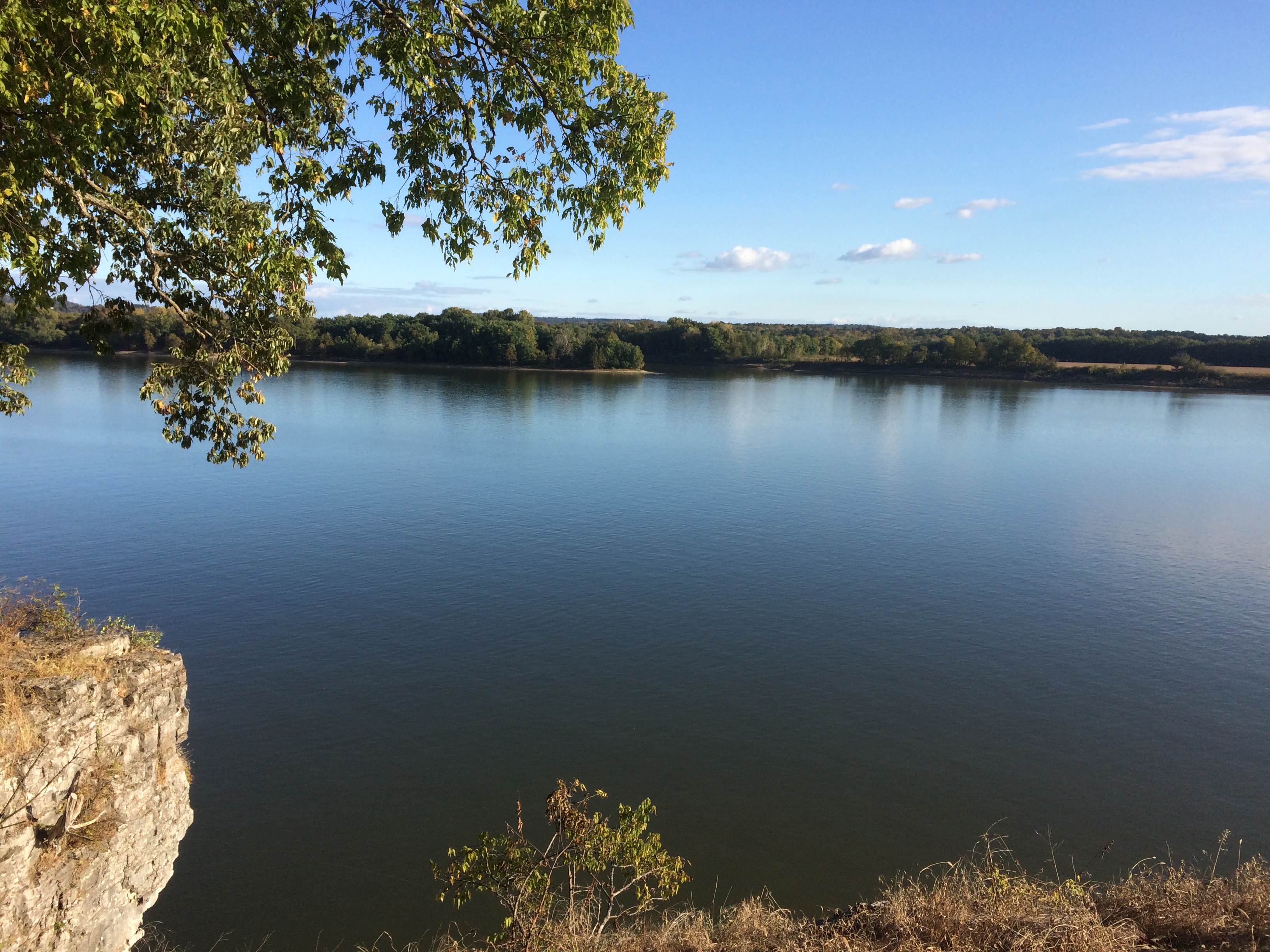
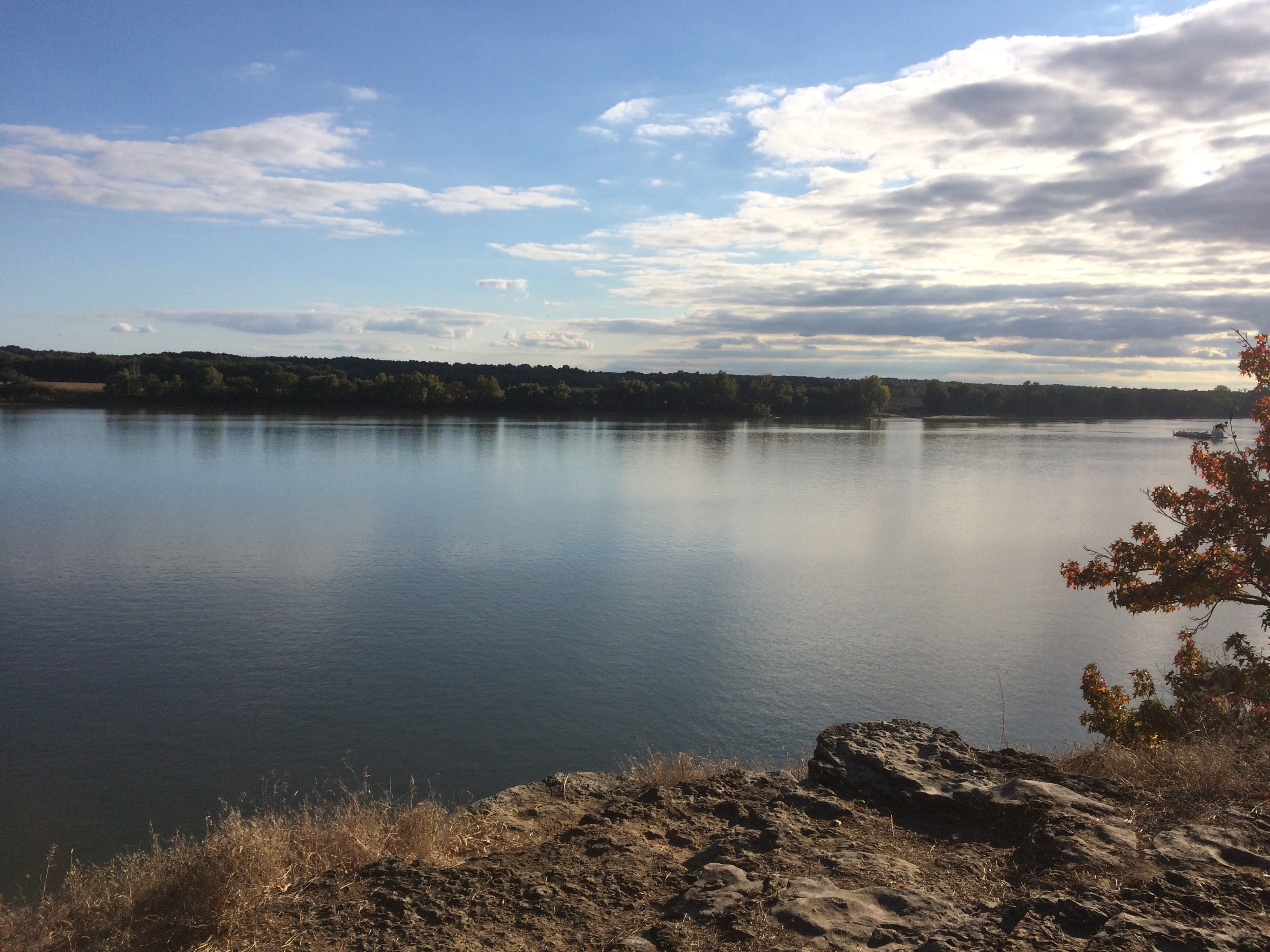
You park in a small lot and climb 50 or so steps uphill, to a crest overlooking the Ohio River, sporting picnic shelters and tall trees. Views from the crest, looking across to Kentucky.Cave-in-Rock State Park Cave-in-Rock State Park

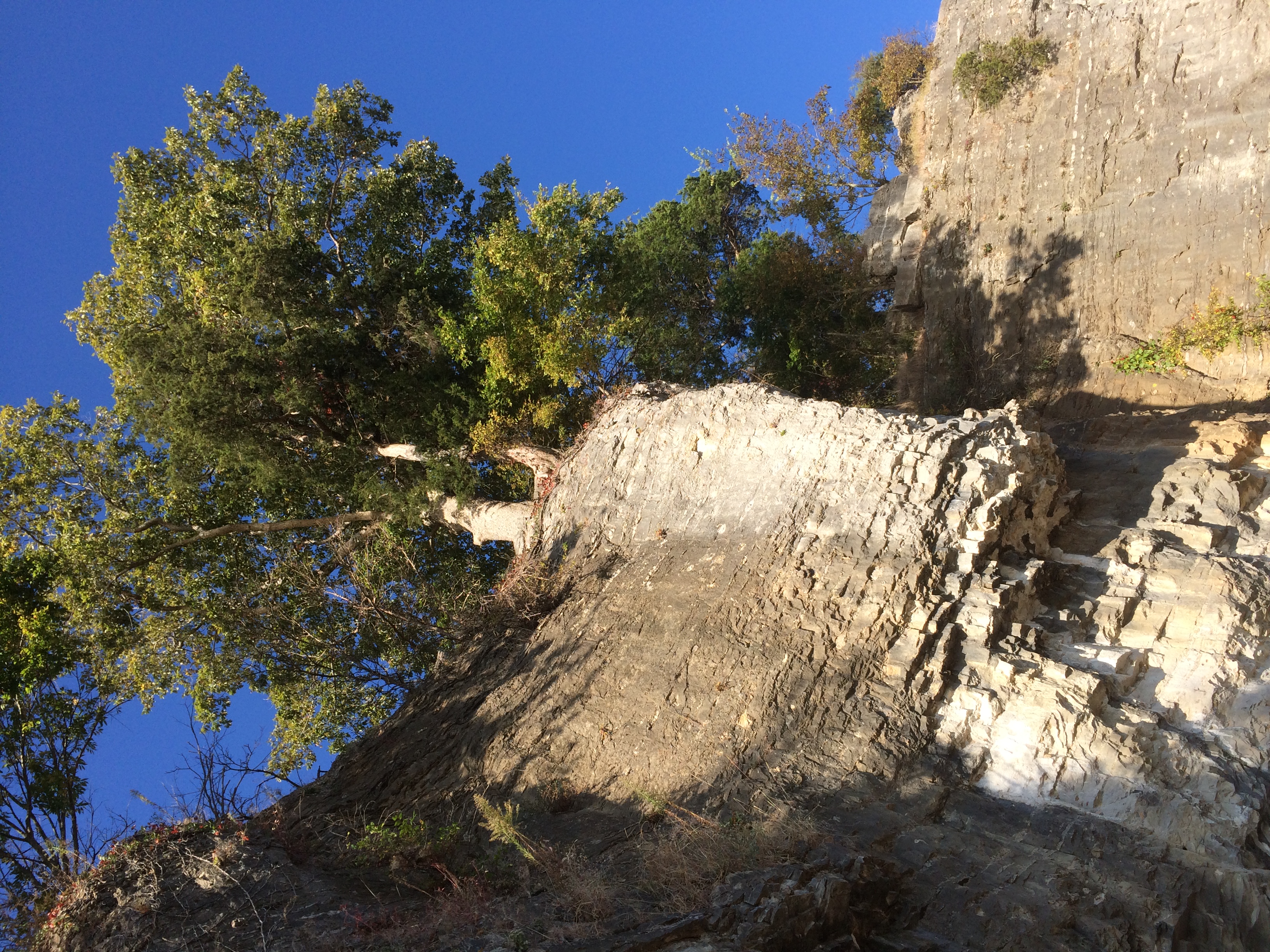
From the crest, you go down more stairs most of the way to the river’s edge. The cave entrance is under a high cliff and a few feet higher than a small beach on the river.
Cave-in-Rock State ParkLooking back up at some trees lording over the edge of the cliff.
Cave-in-Rock State Park

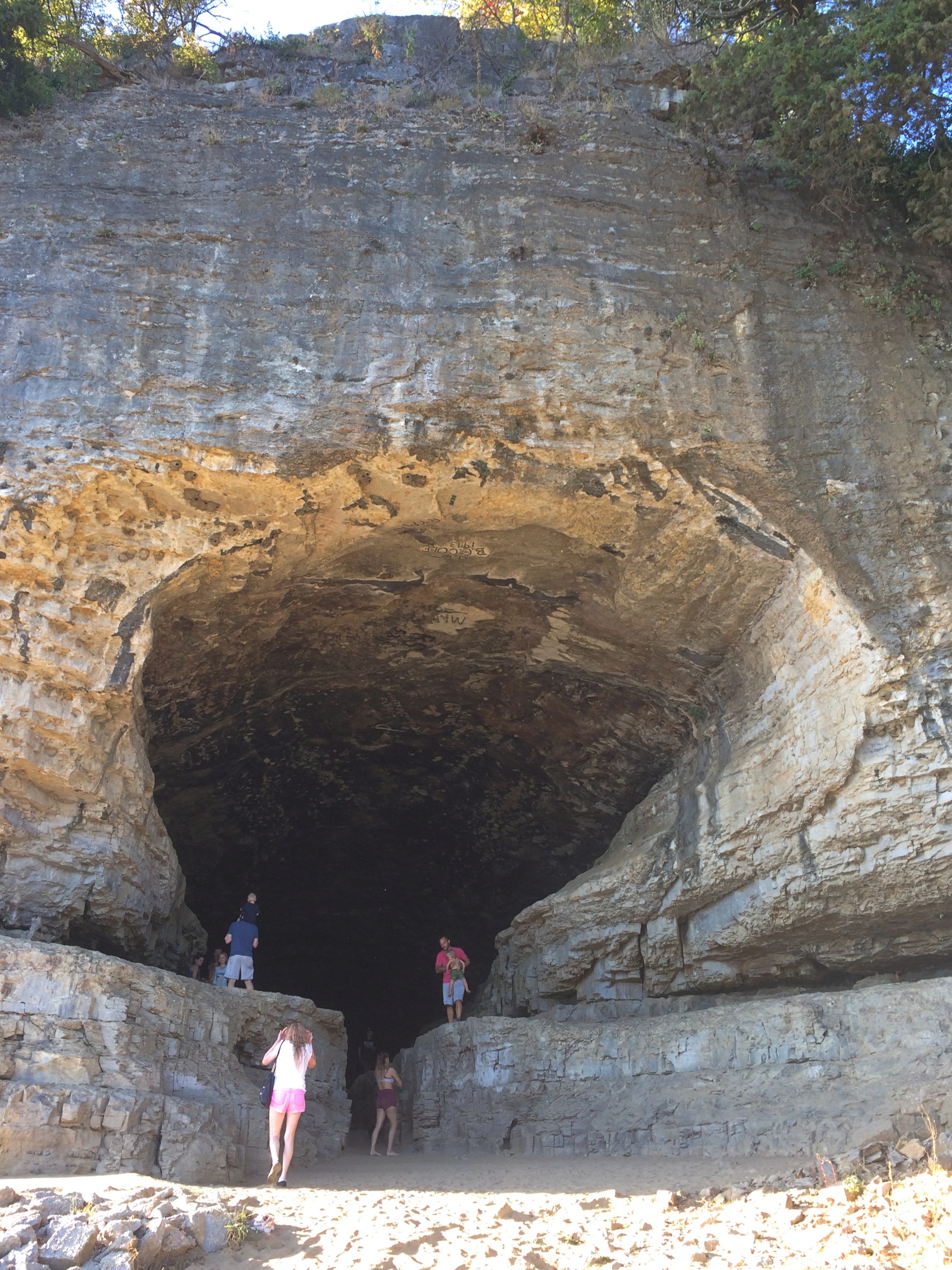
A few more steps and you’re in front of Cave-in-Rock. It’s an apt name.

Cave-in-Rock State Park Cave-in-Rock State Park

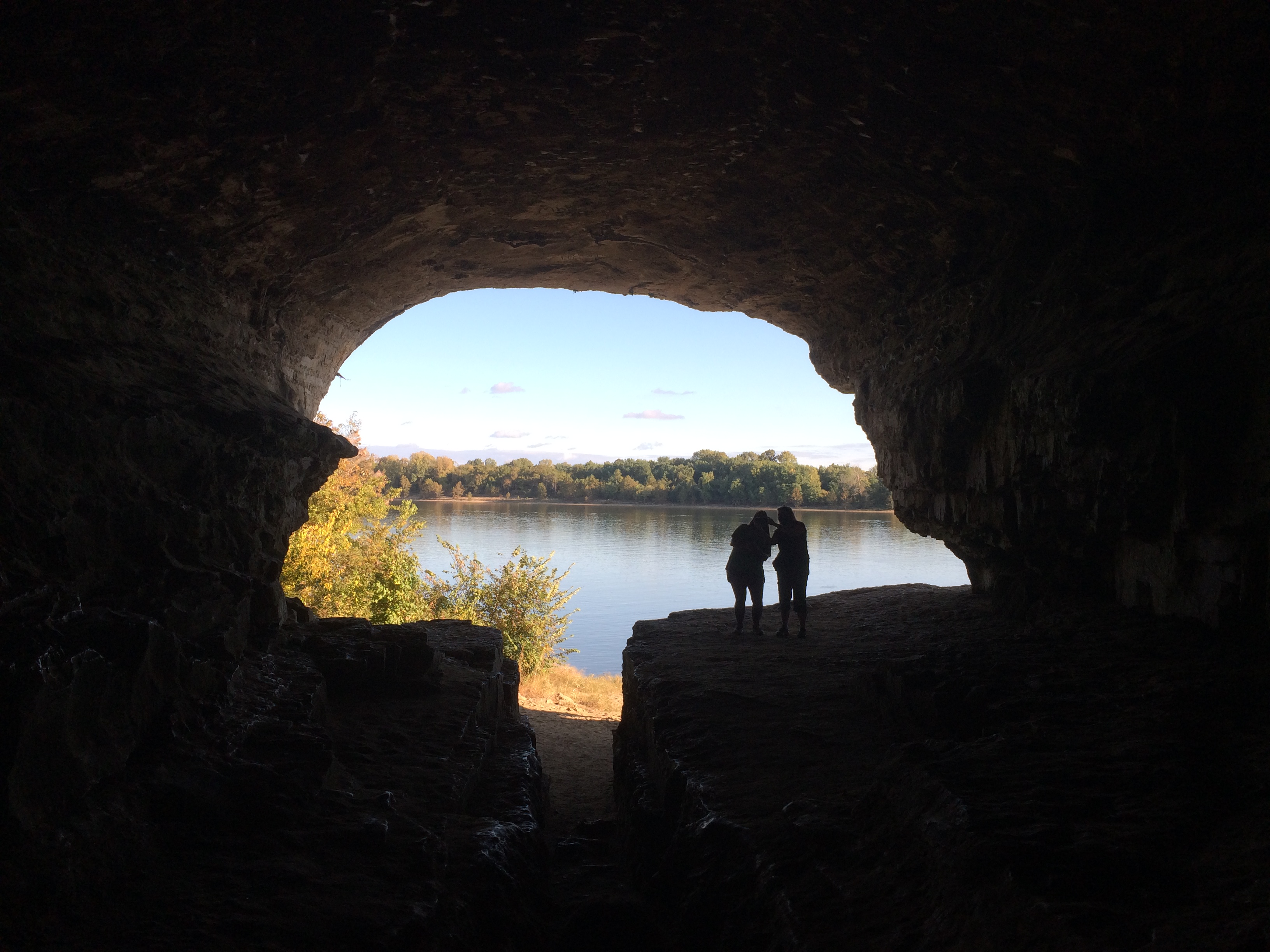
Soon you’re inside, looking out.
Cave-in-Rock State Park

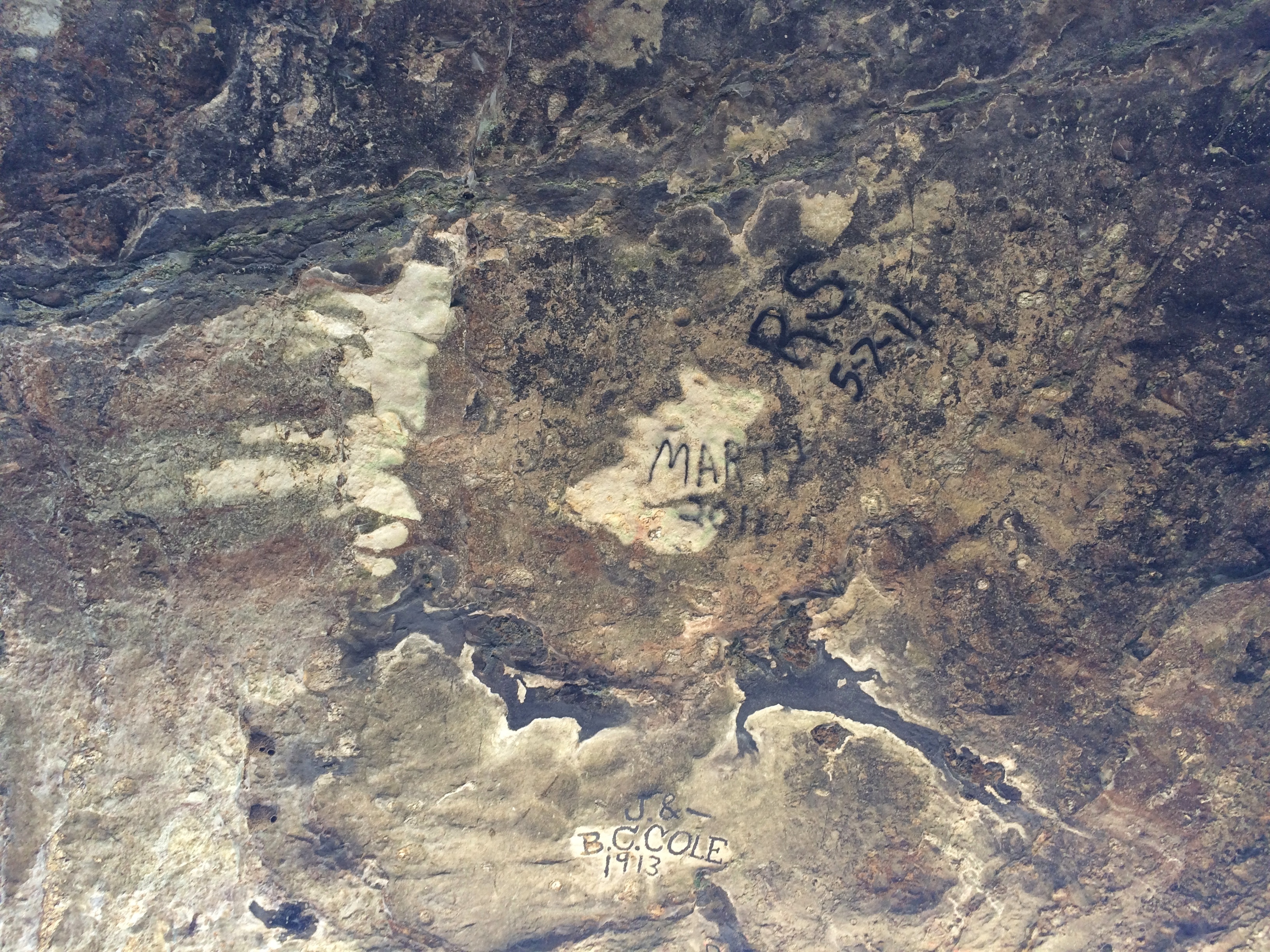
It doesn’t go too far back, at least not that I know of. Graffiti, mostly painted signatures, is prominent on the roof of the cave.
Cave-in-Rock State Park

J. & B.C. Cole were here in 1913, pre-park and probably dangling from a rope over the cliff edge. The more recent Marty and R.S. were here in 2011, and probably had rappelling gear.

Marengo Cave

Here’s something in the category of Things You Find Out Later: the Marengo Warehouse Distribution Center. It’s in Marengo, Indiana, and according to its web site, it’s “one of the largest underground storage facilities in the United States… The complex is located 160 feet (49 m) underground in a former limestone quarry and comprises nearly 4 million square feet of space.”

Elsewhere on the same page, its total storage capacity is said to be “more than 3 million square feet,” but never mind. Sounds like an impressive underground storage facility. About 20 years ago, I visited another such place, SubTropolis in Kansas City, Mo., which at 6.5 million square feet is king of the underground storage facilities, at least the ones we know about.

When we visited Marengo Cave on the afternoon of December 29, I had no idea about the nearby Marengo Warehouse Distribution Center, a complex of storage chambers and roadways carved out of the same Indiana limestone as the naturally forming cave. I found out about the warehouse later, when looking for further information about the cave. Reportedly the U.S. Defense Logistics Agency stores vast numbers of MREs (Meals Ready to Eat) there.

Marengo’s a small town in Crawford County, population somewhat over 800, and about 40 miles from Louisville. If that city someday becomes more robust in its growth, Marengo might be exurban or even an outer suburb, but for now it’s a small Indiana town with one main attraction: a show cave discovered in the late 19th century and measuring about five miles of known passages.

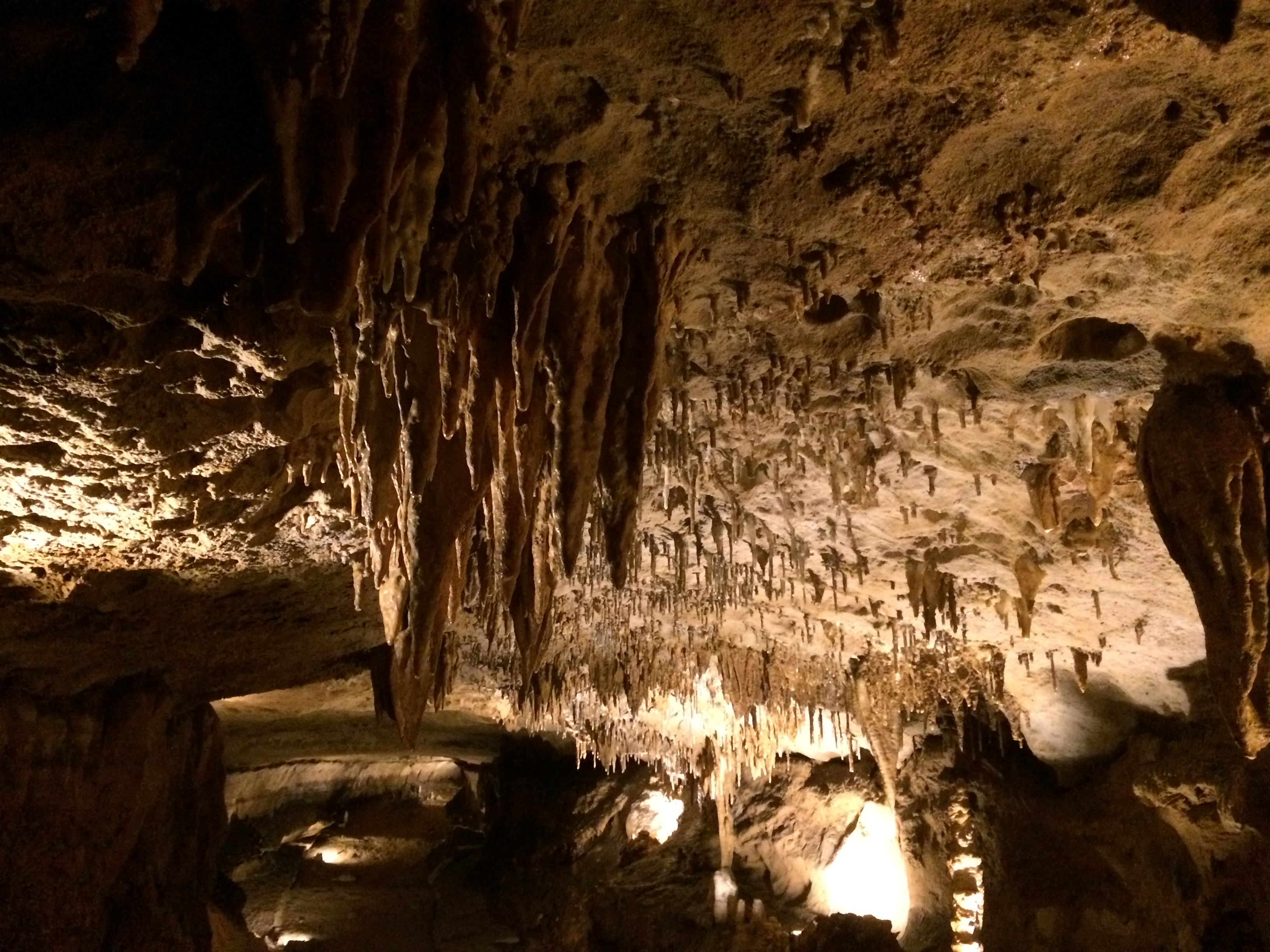
We took the mile-long Dripstone Trail walking tour, by spots with fanciful names, such as Sherwood Forest, Looking Glass Lake, Washington Avenue, The Masher, Music Hall and Penny Ceiling. That last one features a muddy roof to which pennies, or other objects, will stick if you throw them hard enough. The guide invited us to throw pennies up to the ceiling, noting that cave management would eventually remove them to donate to charity, something like pennies in a fountain, so many of us heaved our coins ceiling-ward. Me too. Mine stuck.

The place has some nice features.Marengo Cave

Marengo Cave

Marengo Cave

Including historic graffiti. Unlawful to do now, but not for much of the cave’s history after its discovery.Marengo Cave

According to our guide, the deepest point of the tour was 200-plus feet below the surface. But, she said, we might have noticed that we hadn’t descended very far on our walk. Indeed we hadn’t — after the initial climb down some stairs, and a few other drops, most of the trail was level. At the same time, she said, the ground above was rising. It’s hilly terrain, after all.

Southern Indiana at the End of the 2010s

A new decade is underway, and don’t let nitpickers tell you otherwise. At midnight as 2020 began — the beginning of the 2020s — I stepped outside for a listen, as I do most years. Pop-pop-pop went the fireworks in the freezing air.

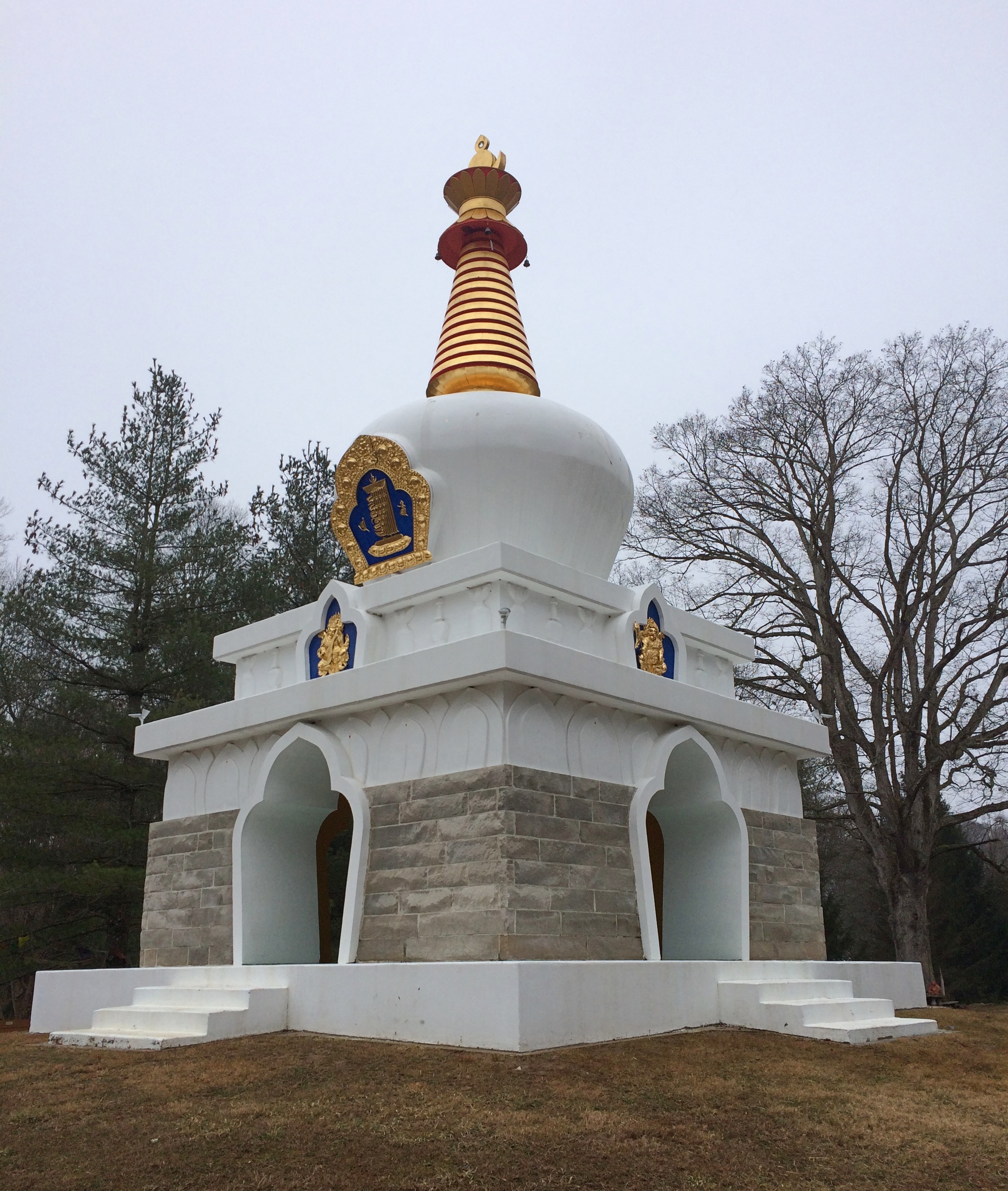
If you know where to look in southern Indiana, about 50 miles southwest of Indianapolis, you’ll find yourself standing near a Tibetan stupa. I did that myself ahead of the New Year.
Tibetan Mongolian Buddhist Cultural CenterWe wanted to take a trip between Christmas and New Year’s, but nowhere too far or expensive. In that case, weather is the main variable. A blizzard, or even heavy snow or subzero temps, would have kept us home. But post-Christmas forecasts called for mild temps until December 30 throughout our part of the Midwest.

So on December 27, we drove to southern Indiana by way of Lafayette and Indianapolis, stopping in the former but not the latter. We arrived in Lafayette just in time to visit the Haan Mansion Museum of Indiana Art, and take a look at the sculpture garden and nature walk behind it.

That evening we arrived in Bloomington, Indiana, where we spent the next three nights. Bloomington is home of the largest branch of Indiana University, one boasting nearly 50,000 students and the Kinsey Institute besides. But just after Christmas, the place is practically deserted. A ghost university.
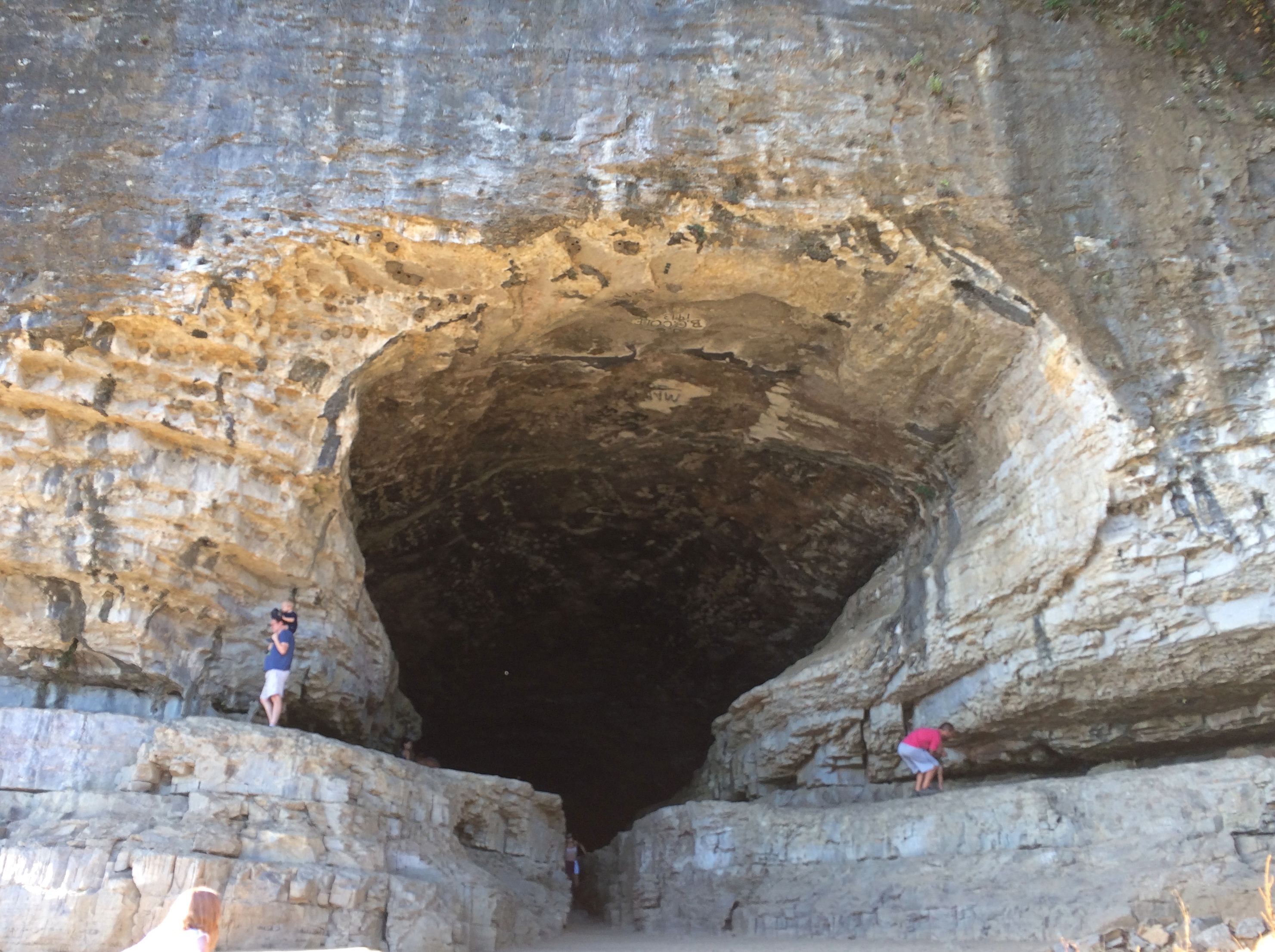
On December 28, we spent much of the morning at the Tibetan Mongolian Buddhist Cultural Center, which is out on the edge of Bloomington. We saw the stupas and the prayer wheels and flags and the Kumbum Chamtse Ling Monastery. We also happened to be there in time to see a fire puja ceremony.

We spent most of the afternoon that day in rural Brown County at the T.C. Steele State Historic Site, hilltop home and studio of the landscape painter of that name in the early 20th century. We also popped over to Nashville, Indiana, where we’d been in 2002. Instead of artwork, we bought lunch there this time.

The day was good for walking around outside — nearly 60 degrees F. and cloudy, but no rain. About as pleasant as you’re going to get in late December. The next day was nearly as warm, but rain fell on and off all day, sometimes heavily.

A good day for indoor sites. On the morning of the 29th, we headed south, deep into the rolling hills of southern Indiana, to visit the striking West Baden Springs Hotel, a grand hotel of the past revived only in recent years, along with its former rival and current sister property, the French Lick Springs Hotel, one-time home of Pluto Water.

After a lunch stop in Paoli, Indiana, we went to Marengo Cave, a limestone show cave under the small town of Marengo, and spent more than an hour among the stalagmites and -tites and flowstone. Near the cave’s entrance, a bonus site: a 19th-century Hoosier cemetery, whose weather-beaten stores were picturesquely wet with the most recent weather.

The 30th proved to be cold, though not quite cold enough for snow or ice. We drove home in the morning, stopping only for gas and rest stops. Strong winds blew. Sometimes strong enough to push the car slightly to the side. I white-knuckled the steering wheel a few times as a result.

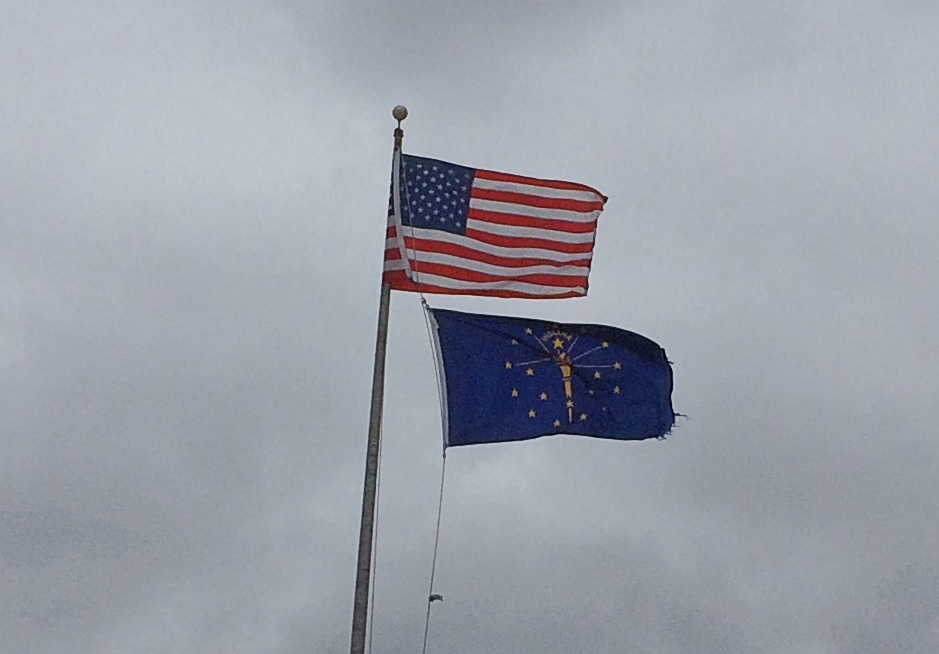
Indiana flag

The wind gusts also captured flags and pulled them straight. Here is Indiana’s flag at a rest stop. Better than those with a state seal slapped on: a golden torch and 19 stars, to symbolize Hoosier enlightenment and the state’s place as 19th to join the union.

The Snowballs of Fuji-san

Some sunny days lately, and longer ones too, but they’ve all been cold. If the weather had volition, I’d say it wanted to make up for the strangely warm days that northern Illinois experienced in mid-February.

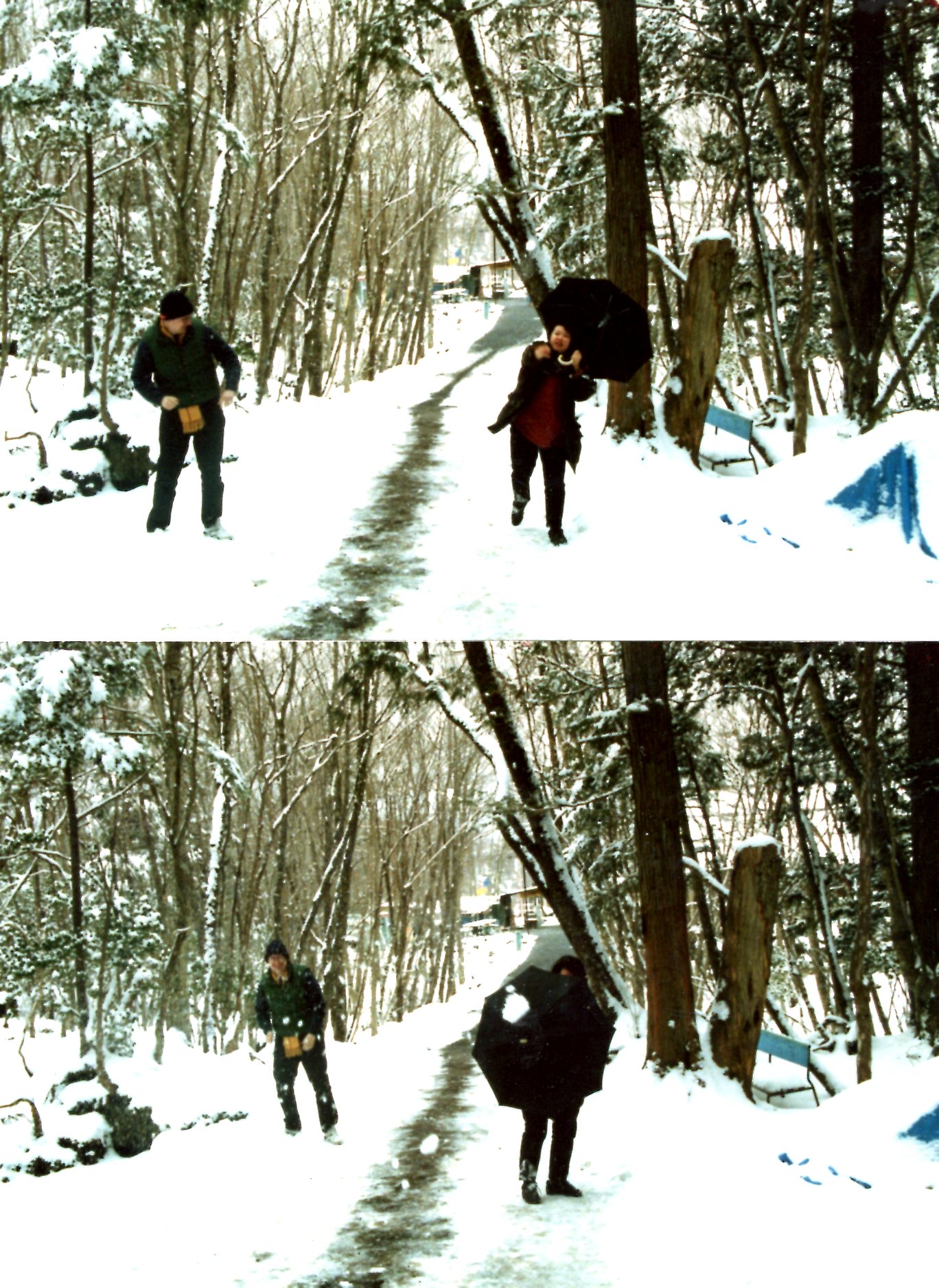
After 24 years, I don’t remember exactly where we visited in the environs of Mt. Fuji, though we got fairly close. Considering that it was mid-March, it was effectively still winter. We were able to see the mountain from one vantage point — not as easy as you’d think — and we visited a cave nearby.

We also tossed around some snowballs.

NearFuji1993Either my sister-in-law (to be) or her husband took the shots. I scanned them together for better effect.
Snaps of Early ’76

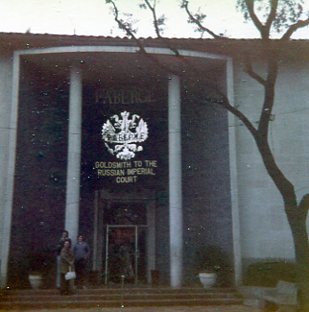
In late 1975, the Witte Museum in San Antonio opened an exhibition of Fabergé eggs that extended some time into ’76. I went to see the eggs with my family. That must have after Christmas but before New Year’s, before Jay went back to law school for the spring semester, since he took this picture.

Witte Museum Faberge Exhibit 1976

We’re hard to see, but that’s my mother (holding a white purse), brother Jim and me standing next to the museum’s front entrance. Above the double eagle the banner says, FABERGE, and I believe Фабержe across the eagle.

According to Fabergé Eggs: A Retrospective Encyclopedia, as accessed by Google, the exhibit displayed the Danish Palaces Egg (1890), the Caucasus Egg (1893), and the Napoleonic Egg (1912), beginning on December 14, 1975. The Witte exhibit was over before September 12, 1976, when the same eggs opened at the Huntsville Museum of Art in Alabama.

I have to say I don’t remember much about seeing the eggs, but it has been more than 40 years. I was probably as impressed as a 14-year-old boy could be.
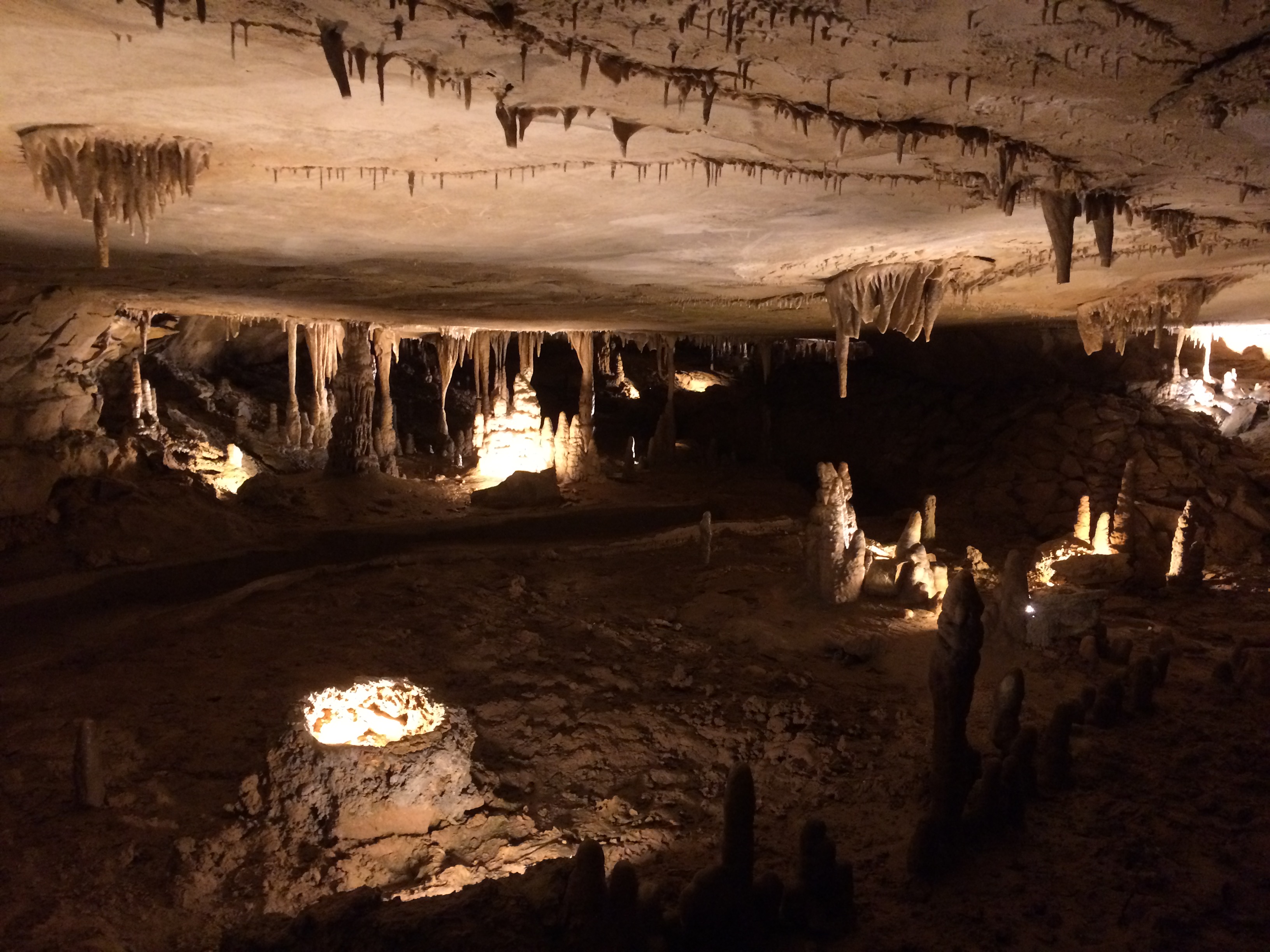
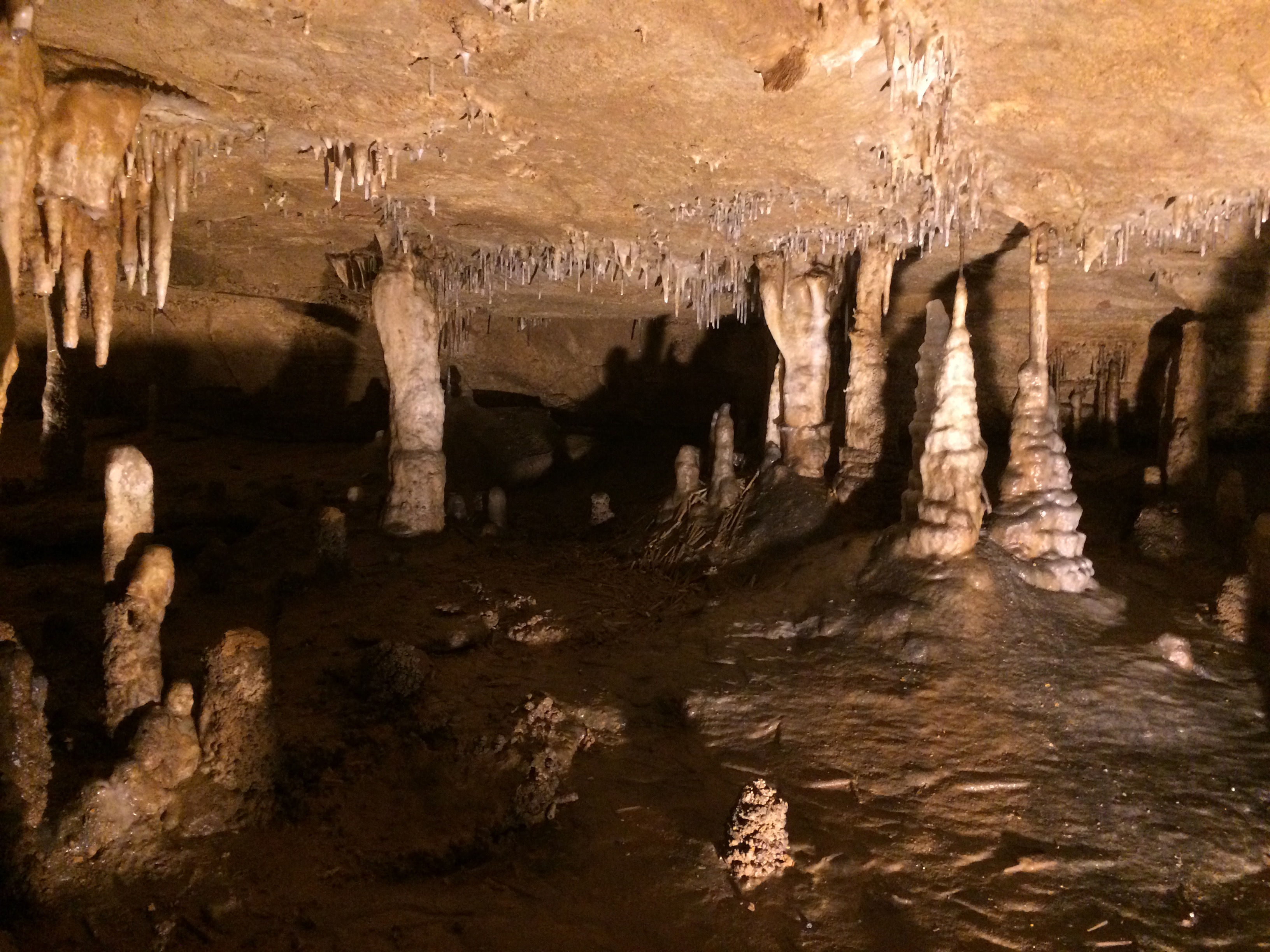
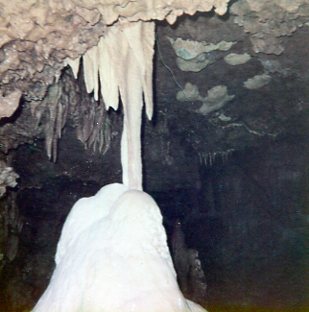
At some point in early 1976, we also went to Inner Space Cavern, which is just north of Austin.

Inner Space Cavern, Texas, 1976That’s about as good an image as I was going to get with my Instamatic 104. The exact same formation is pictured here.

Among Texas show caves, Inner Space was fairly new then, since it was discovered only in 1963 during construction of I-35, and open to the public three years later.

“Inner Space is situated in Edwards Limestone (Mesozoic Era) and is estimated to be sixty to 100 million years old,” says the Handbook of Texas Online. “Geologists attribute formation of the cave to the action of underwater currents when the Permian Sea covered the area. Ninety-five percent of the highly decorated and complex cave is still active.” Inner Space billboards call to passersby on I-35, as I sometimes am, but I haven’t been back since.

One more snap from early ’76: David Bommer.

David Bommer 1976

We were goofing around in my back yard and, as you can see, I caught him my surprise with the camera. David, a friend of mine since elementary school, has been gone now nearly 10 years.

To the Smokies and Back ’08

Our trip to the Great Smoky Mountains NP and other places in 2008 was a late June, early July event. Has it really been seven years ago? The world seems like a different place now.

At Mammoth Cave NP, there was the famed cave, but you could also rent fun vehicles to tool around in.

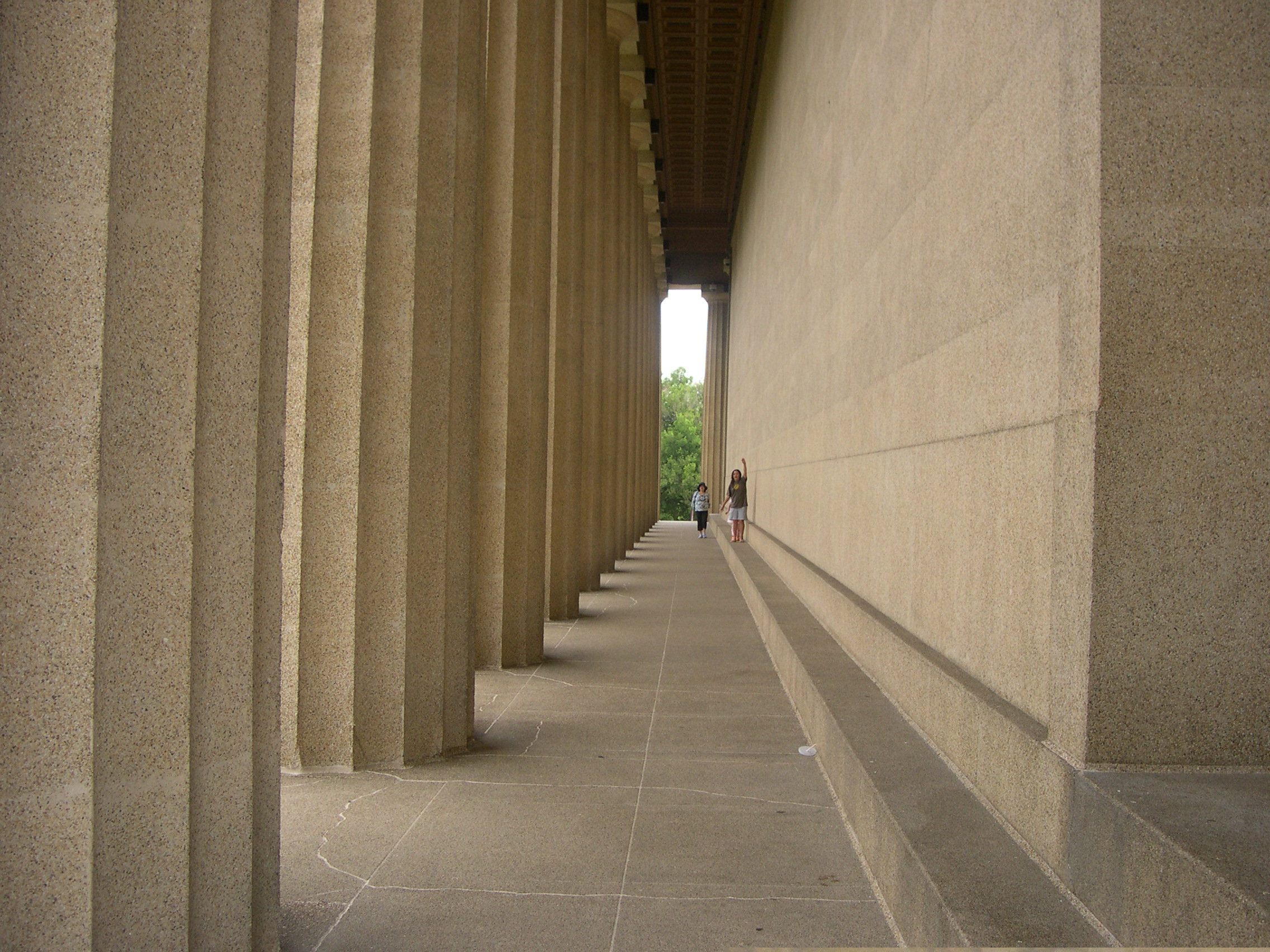
Lilly & Ann June 2008It’s good to show your family places you know, but which they don’t, such as the Nashville Parthenon.
Parthenon, June 2008That’s what this country needs, more public-private partnerships to re-create the wonders of Antiquity. The Hanging Gardens of Omaha. A new Lighthouse of Alexandria in Alexandria, Va. The Statue of Zeus at Olympia, Wash. A new Temple of Artemis in Tucumcari, NM. That kind of thing. (Or city walls around Dallas, as my brother Jay has suggested.)

Next, the Mingus Mill, which is part of the Great Smoky Mountains NP. I liked it just for the name. Water was flowing in the trough, and the girls liked it because they could float things in the trough.
Mingus Mill July 2015As the NPS says, “A half-mile north of the Oconaluftee Visitor Center is Mingus Mill. Built in 1886, this historic grist mill uses a water-powered turbine instead of a water wheel to power all of the machinery in the building. Located at its original site, Mingus Mill stands as a tribute to the test of time.” Yep.

In the Indian town of Cherokee, NC, you could pose for a small fee with this fellow. Chief Syd, he called himself.
Cherokee, NC July 2015It wouldn’t have been a good trip without dropping in on a dead president. Andrew Johnson, in this case. President Johnson reposes in his hometown of Greeneville, Tenn. As it happened, we saw his memorial on July 4. (I did. Family stayed in car.)
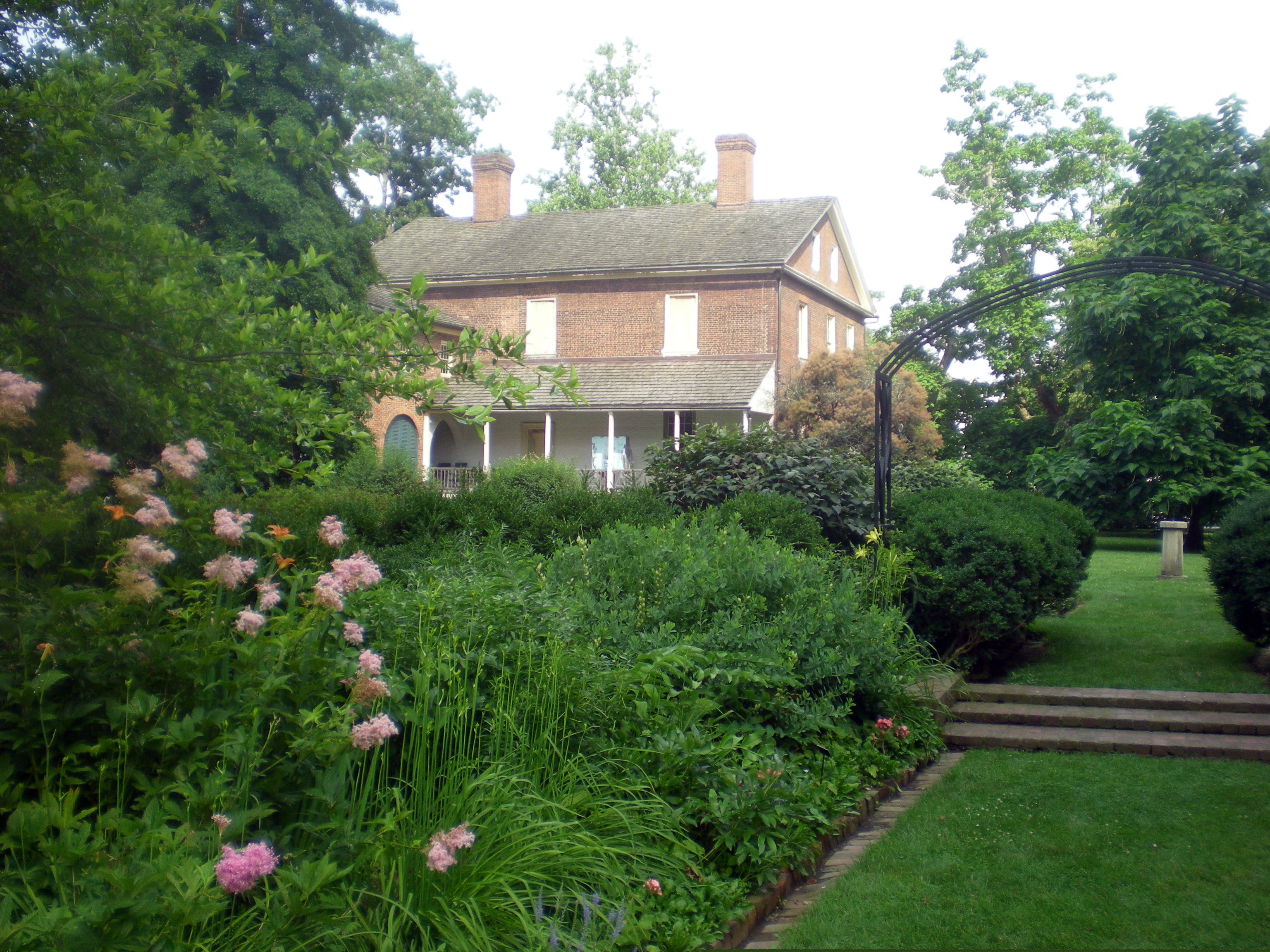
President Andrew Johnson, July 4, 2008It’s also good to happen across little-known historic sites, such as Liberty Hall in Frankfort, Ky. Little-known, at least, outside of the immediate area.
Libery Hall, July 2008“This Georgian mansion was begun in 1796 by John Brown and named for [the] Lexington, Va. academy he attended,” says the landmark sign. “His wife Margaretta and Elizabeth Love began [the] first Sunday School west of [the] Alleghenies in [the] garden. Guests have included James Monroe, Zachary Taylor, Andrew Jackson and Gen. Lafayette…” The plaque maker must have charged by the letter, what with all of the definite articles left out.

A lovely garden it was, too.

Liberty Hall garden July 2008One more thing. As I’ve said, it’s good to be open to sampling new things on the road.
Root beer, July 2008I don’t remember, but it was probably tasty. Things often taste better on the road.

Crystal Lake Cave

Three storms passed through northeast Illinois on the last day of June 2014, one in the wee hours, two others in the evening. All of them featured hearty electric displays and vigorous rain. We were warned about possible bursts of high wind, but didn’t see much of it. Not like the wind blasts of late summer ’07 (was it that long ago?) or the howling afternoon of June 18, 2010, but enough to worry property owners hereabouts, such as me. But the condition quite literally blew over.

Today, on this Canada Day 2014, it’s sunny and warm here somewhat south of Canada. (Actually, I could drive east and reach a small part of that nation.) Chamber of Commerce weather, as a former colleague of mine used to call it. Similar conditions are predicted for the run up to the Fourth of July.

Speaking of the last day of June, yesterday was the 80th anniversary of the Night of Long Knives. Who but Al Stewart would write a song about that? But as far as I know, he’s never done one about the assassination of Archduke Franz Ferdinand, the centennial of which was of course over the weekend. Not long now till Der Tag.

Crystal Lake Cave, a few miles south of Dubuque, has some nice features, but it was one of the tightest commercial caves I’ve ever been through. Often the ceiling was low, and the walls were close in as well, just wide enough for an adult to pass through in many places. Our guide pointed out that in its natural state, the floor was a lot higher. So the original cavers – men who were looking for lead deposits – would have had to crawl through. No thanks.

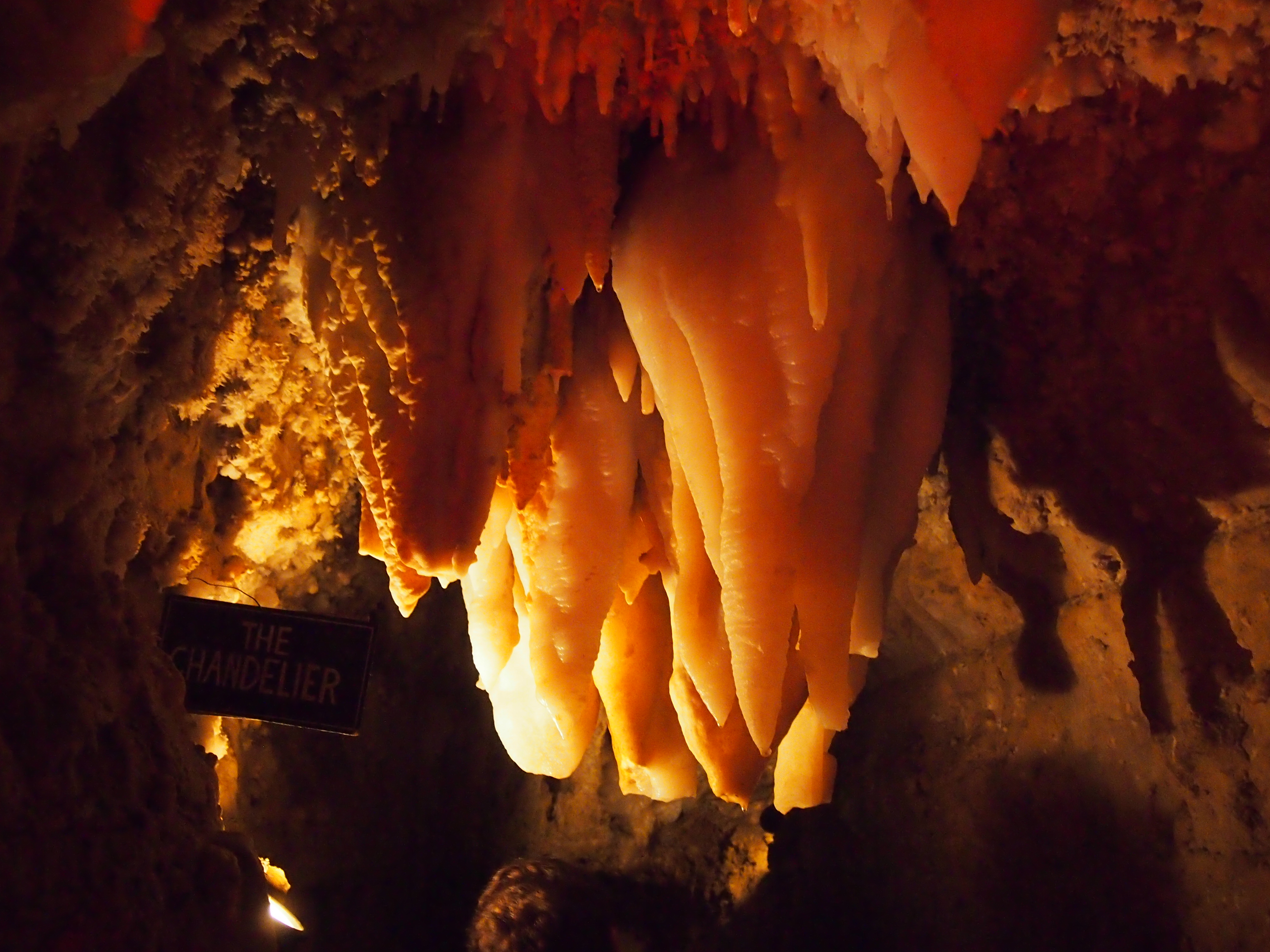
Crystal Lake Cave, June 2014The Chandelier.

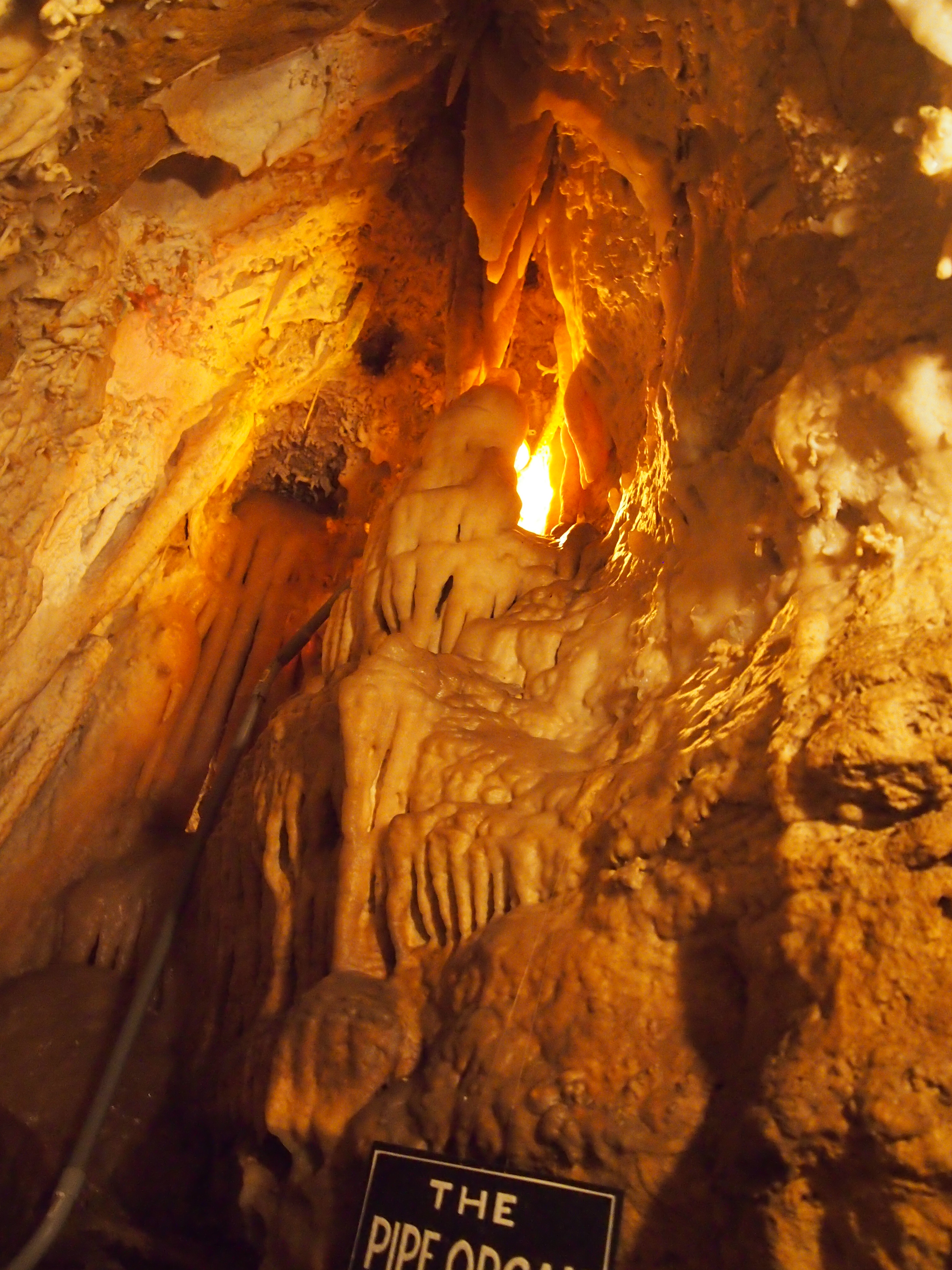
OLYMPUS DIGITAL CAMERAThe Pipe Organ.

Crystal Lake Cave, June 2014

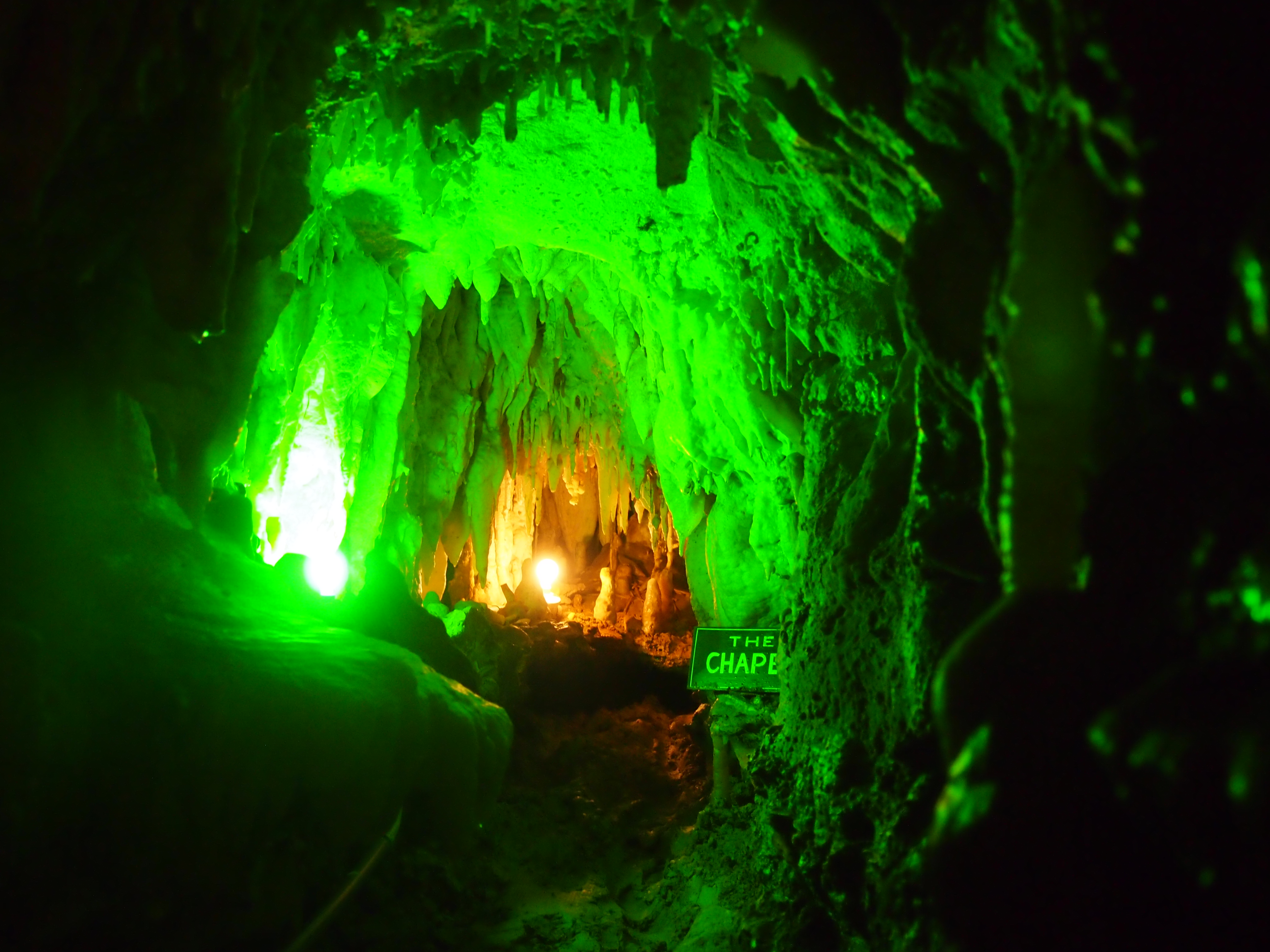
The Chapel.

Apparently Crystal Lake Cave enthusiasts have been married in the small room called the Chapel, though as far as I could tell, there would barely be enough space for two people, much less an officiator.

There’s also an underground body of water in the cave, hence “lake.” What I saw looked more like a pond, but it might extend much further. And anyway, “Crystal Pond Cave” doesn’t quite have the same ring to it.