I Like Ike, And Abilene Wasn’t Too Bad Either

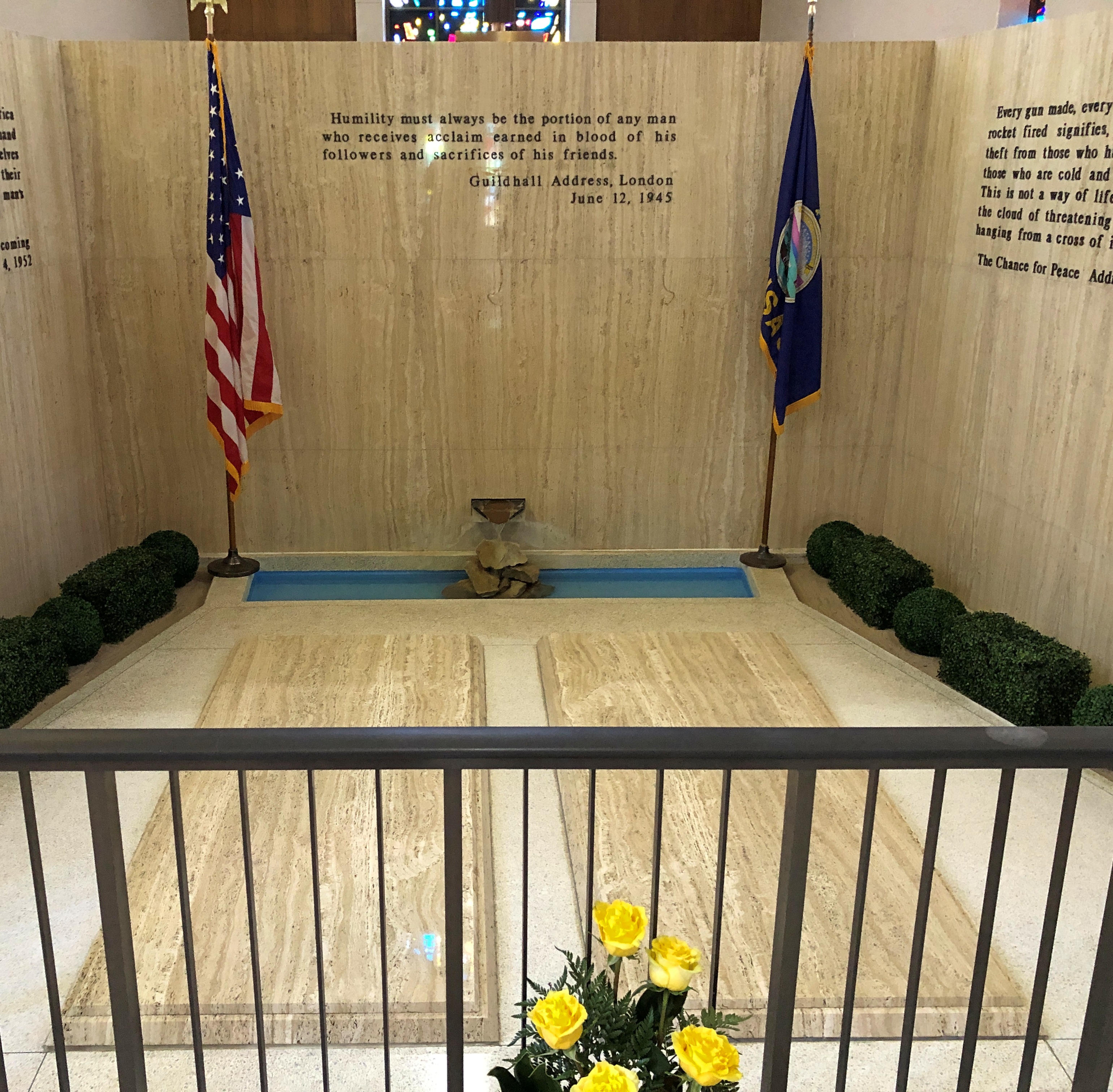
In Abilene, Kansas, not long ago, I found myself wondering, whatever happened to Manus Hand? That’s because I stood at that moment near the graves of President and Mrs. Eisenhower, Ike and Mamie.
Eisenhower

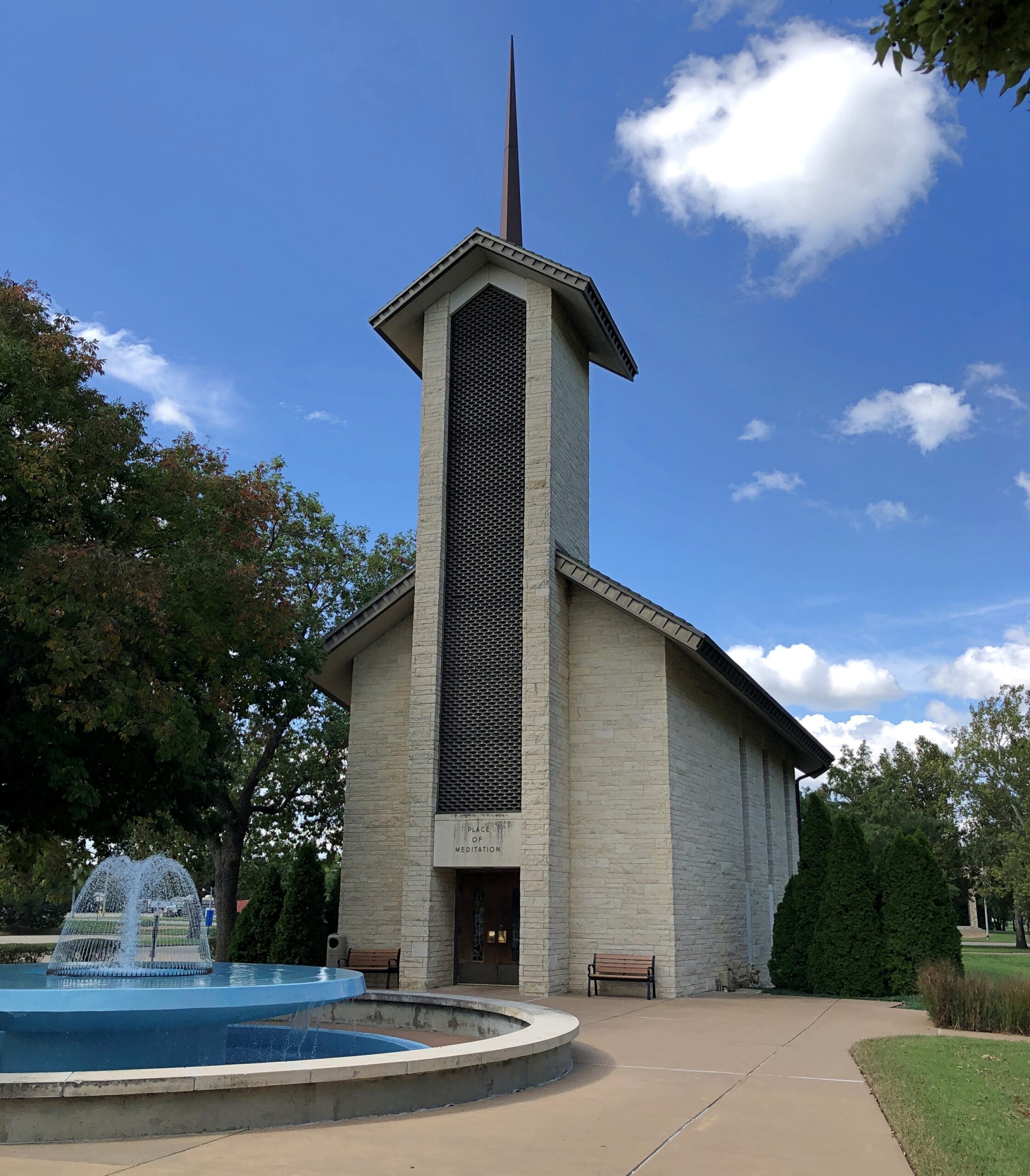
The 34th President of the United States and the First Lady repose in a chapel-like structure on the grounds of the Dwight D. Eisenhower Presidential Library, Museum and Boyhood Home in Abilene, pop. 6,400 or so, the town where the president came of age.
Eisenhower

I’ve been told I visited before, with my family during a trip to Kansas when I was a wee lad, but I don’t remember that at all. So I count this as a new visit to a presidential sight, including a grave site, which makes 21 presidential graves all together. But for the federal shutdown in October, there would be four more at least: Adams père et fils, FDR and TR.

I thought of Manus Hand because, back in the Neolithic age of the Internet, he had a web site featuring photos of him at presidential grave sites. In my own dead presidents days, I found Hand’s site at some point. He had visited almost all of them by then, 36 by his count. His site is still in existence, without much change, except an update to note that George H.W. Bush had died (2018), but not Jimmy Carter.

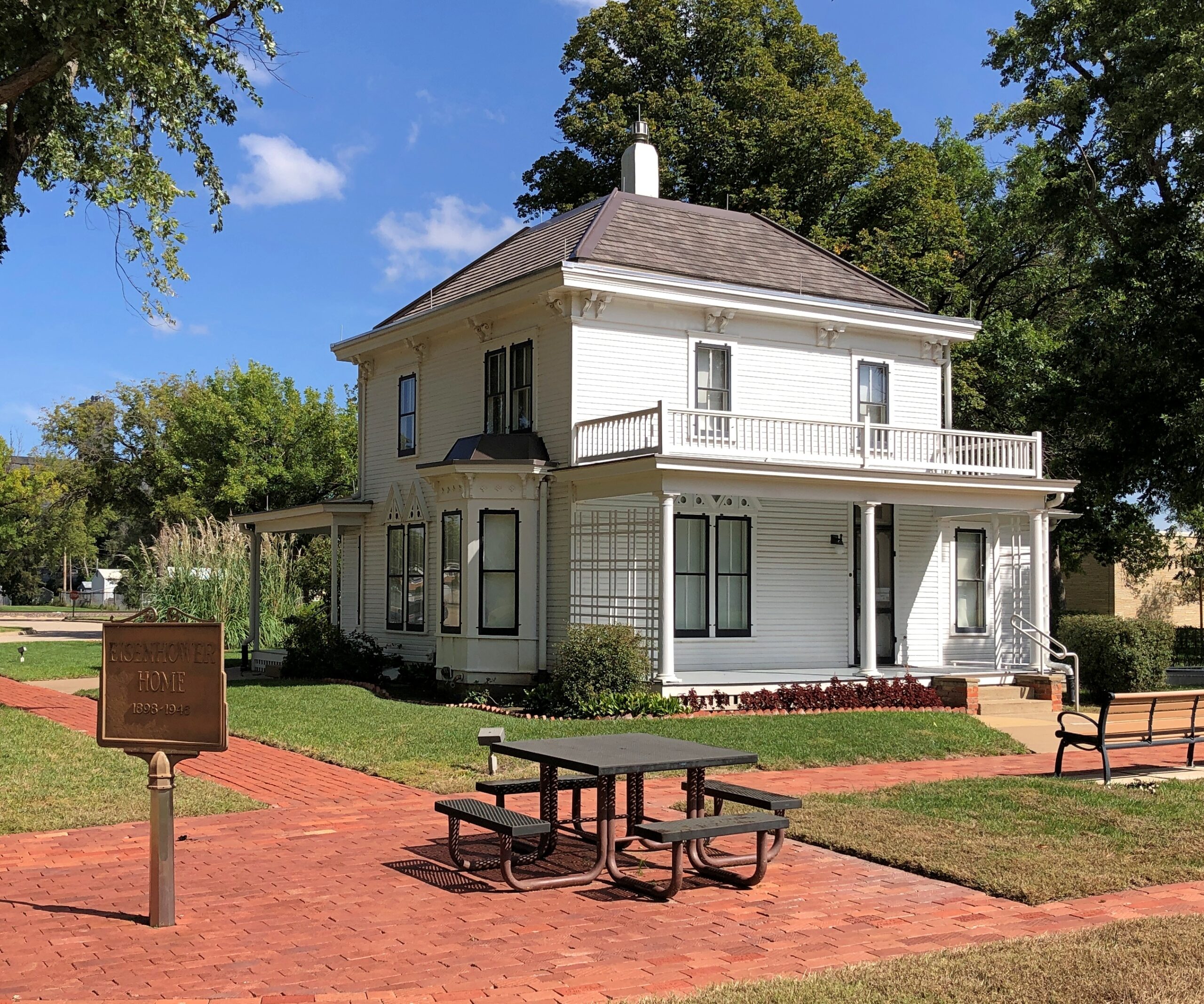
The Eisenhower Boyhood Home, moved to the site. No tours available when I came by.
Eisenhower

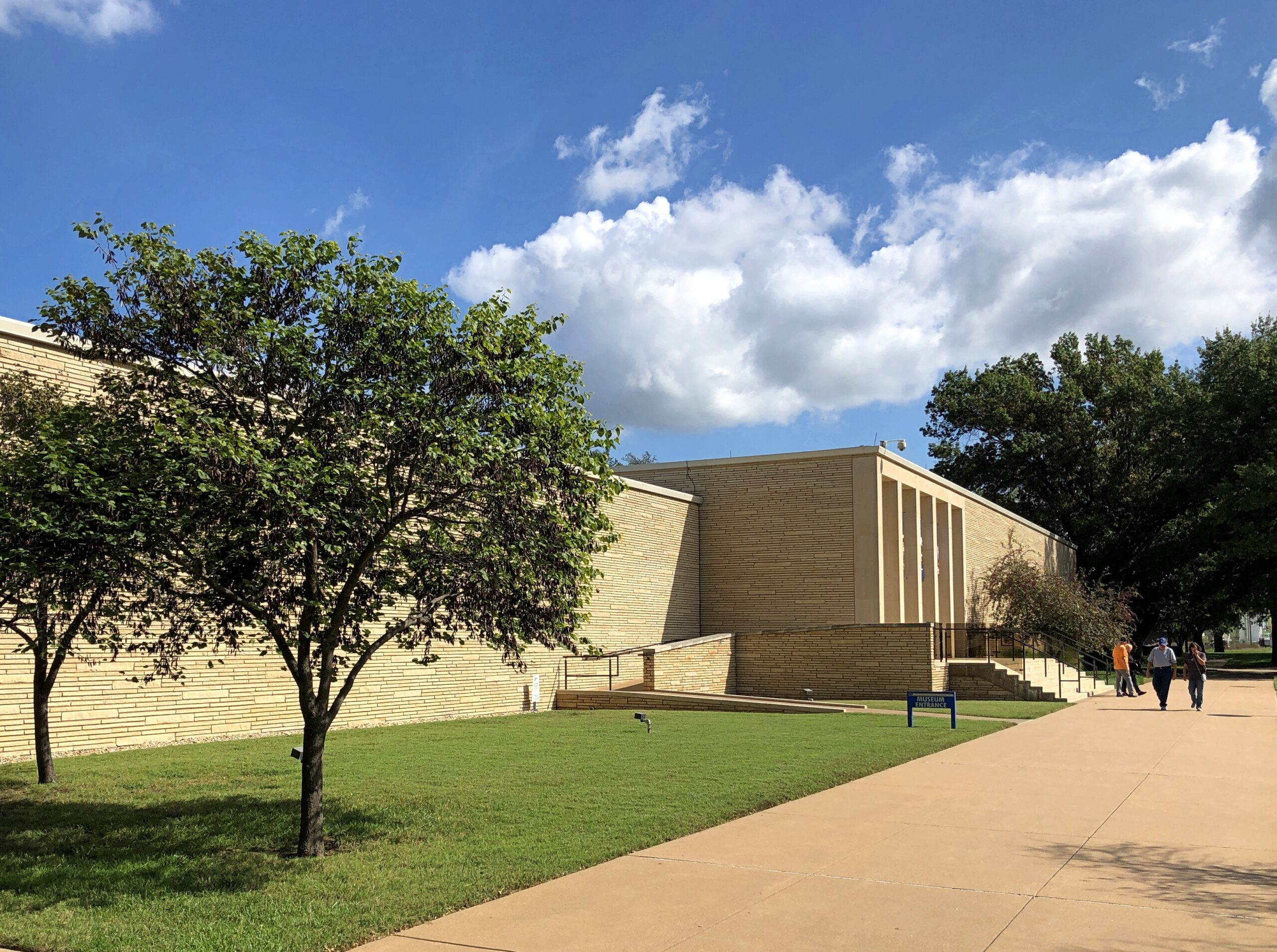
The Eisenhower Museum.

Midcentury, and what could be more fitting for Eisenhower? It’s chronologically organized: early Ike in Abilene; his Army career before WWII, including his cross-country epic; during that war and right after the war; his presidency and post-presidency, and a gallery about Mamie. Well organized, interesting artifacts, but (for me) none more interesting than a titanium sphere.
Eisenhower luna 2

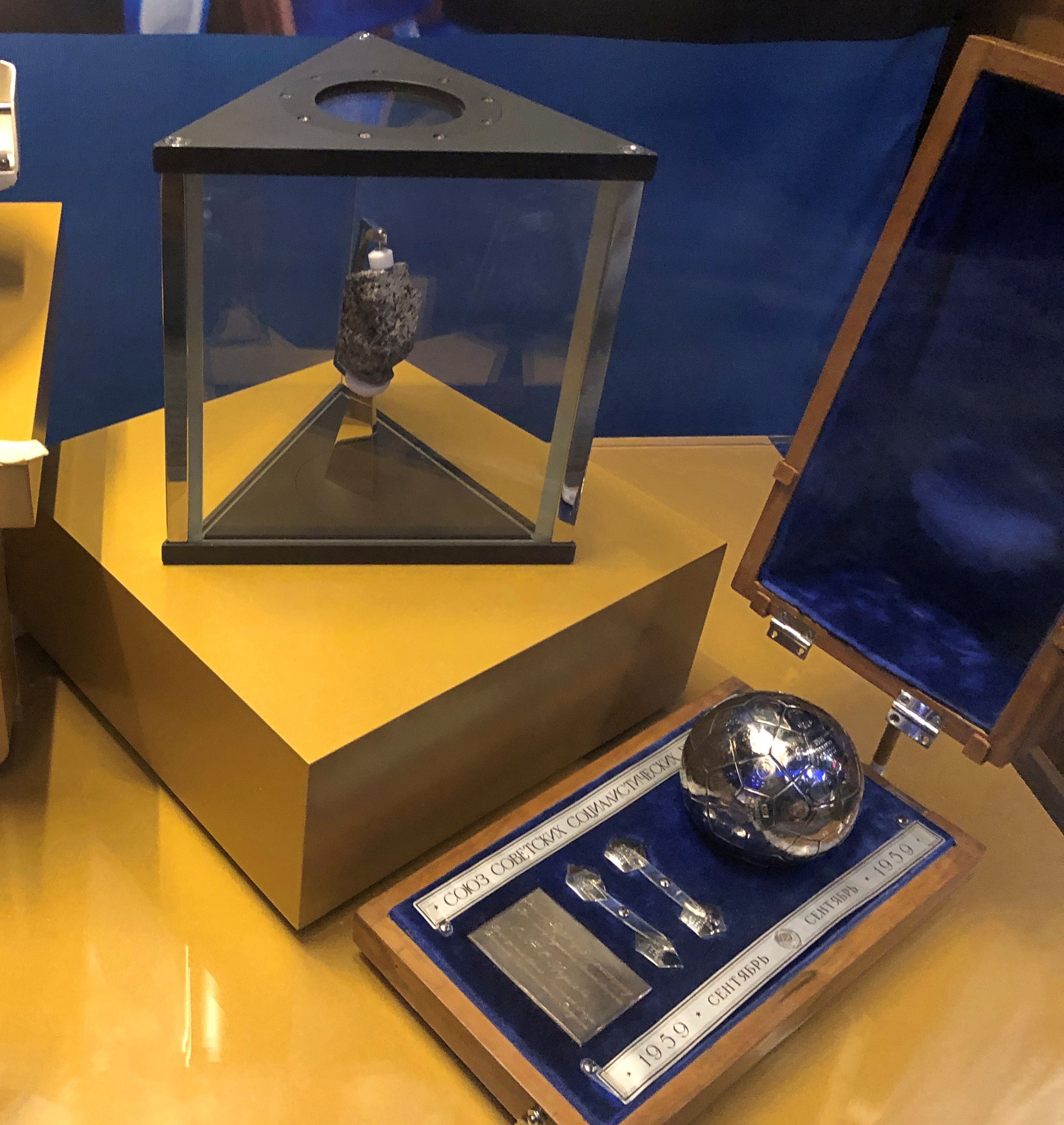
The sphere is a replica of the pennant sphere that traveled to the Moon in 1959 aboard the Soviet spacecraft Luna 2, which was the first manmade object to reach the lunar surface, or any celestial body. The sphere was a detail that I remembered from long-ago reading about space exploration. I didn’t realize one existed any more, even in replica form. Khrushchev presented it to Eisenhower during his famed visit to the U.S. that year (Khrushchev’s due at Idlewild!).

Luna 2 carried two spheres filled with liquid and an explosive charge, designed to burst apart on impact and scatter pentagonal pennants, the Moon Registry says. The pennants were imprinted with: 1) Sentiabr 1959 (September 1959); CCCP… ; and the state seal of the USSR, a wreath of grain around the hammer and sickle. It is theorized that the medallions vaporized on impact.

Russia is still shooting Luna missions to the Moon. The most recent, Luna 25, crashed near the lunar south pole in 2023 but, unlike Luna 2, not on purpose. Oops. More about the many pennants the Soviets sent into space is here. On display next to the sphere is a lunar rock, which must have been a posthumous gift, since Ike didn’t live quite long enough to benefit from astronauts rock-gathering on the surface, though he was still alive during Apollo 7, 8 and 9.

A close second excellent artifact was a dagger Marshal Zhukov presented to General Eisenhower on the occasion of the defeat of Germany, a good-looking blade with an ivory hilt and gold decorations. I picture an exuberant Zhukov, as in The Death of Stalin, handing the knife to Ike and saying something earthy. Apparently the two, Ike and Zuke, got along well in the early months of the joint occupation of Germany. Differences aside, they had job experience in common. I don’t remember seeing anything about that in the museum, but there was a lot of material, so that could have been easily missed. That and any reference to Kay Summersby.

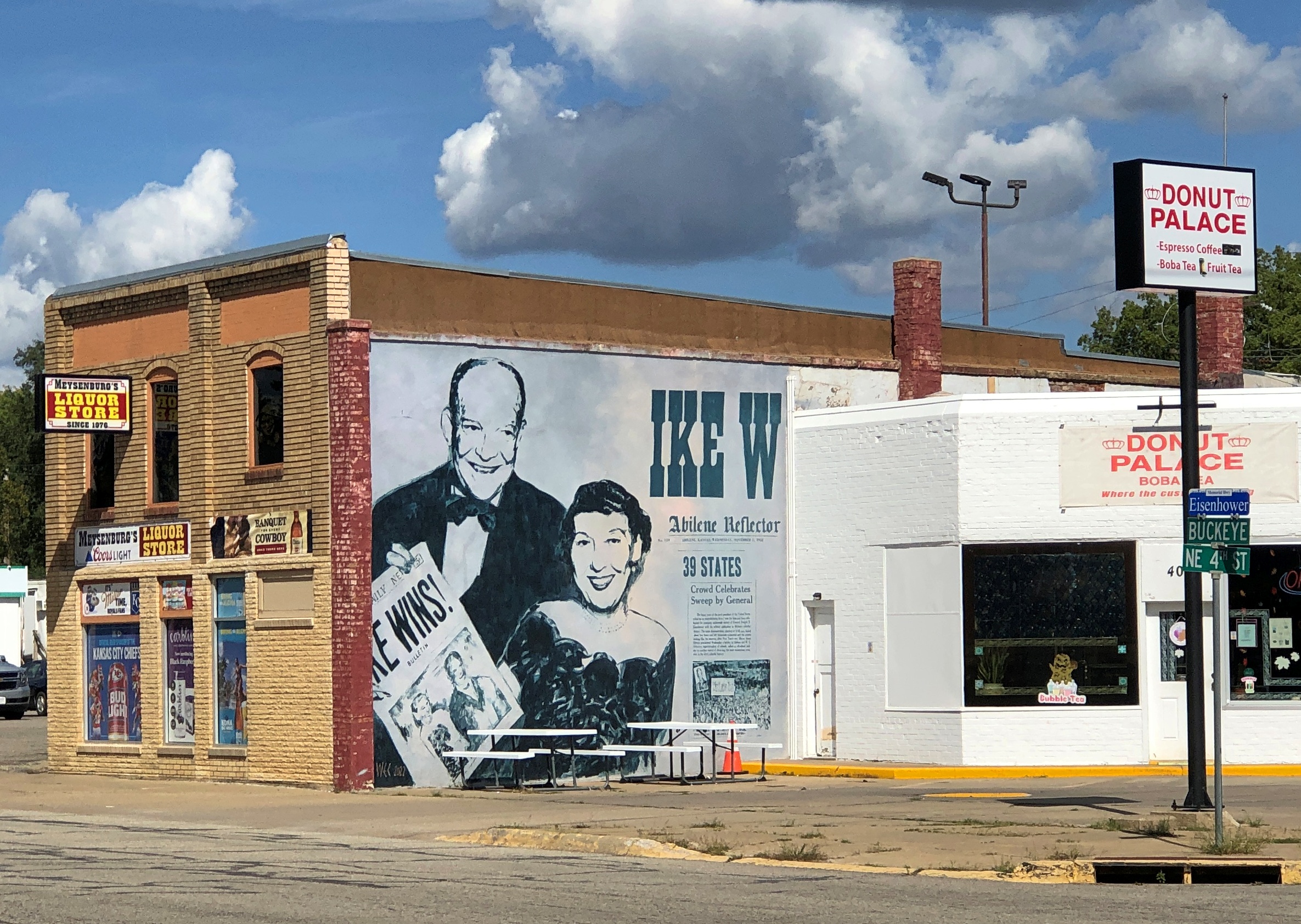
It was hot that day, September 24, but after visiting the museum, I took a look around Abilene anyway. The town hasn’t forgotten its most famous native son. Also, Donut Palace was closed.
Eisenhower luna 2

A lot of the detail would be different, but I’ll bet Ike would still feel at home with the scale of Abilene. Small town, small buildings, but some solid touches.
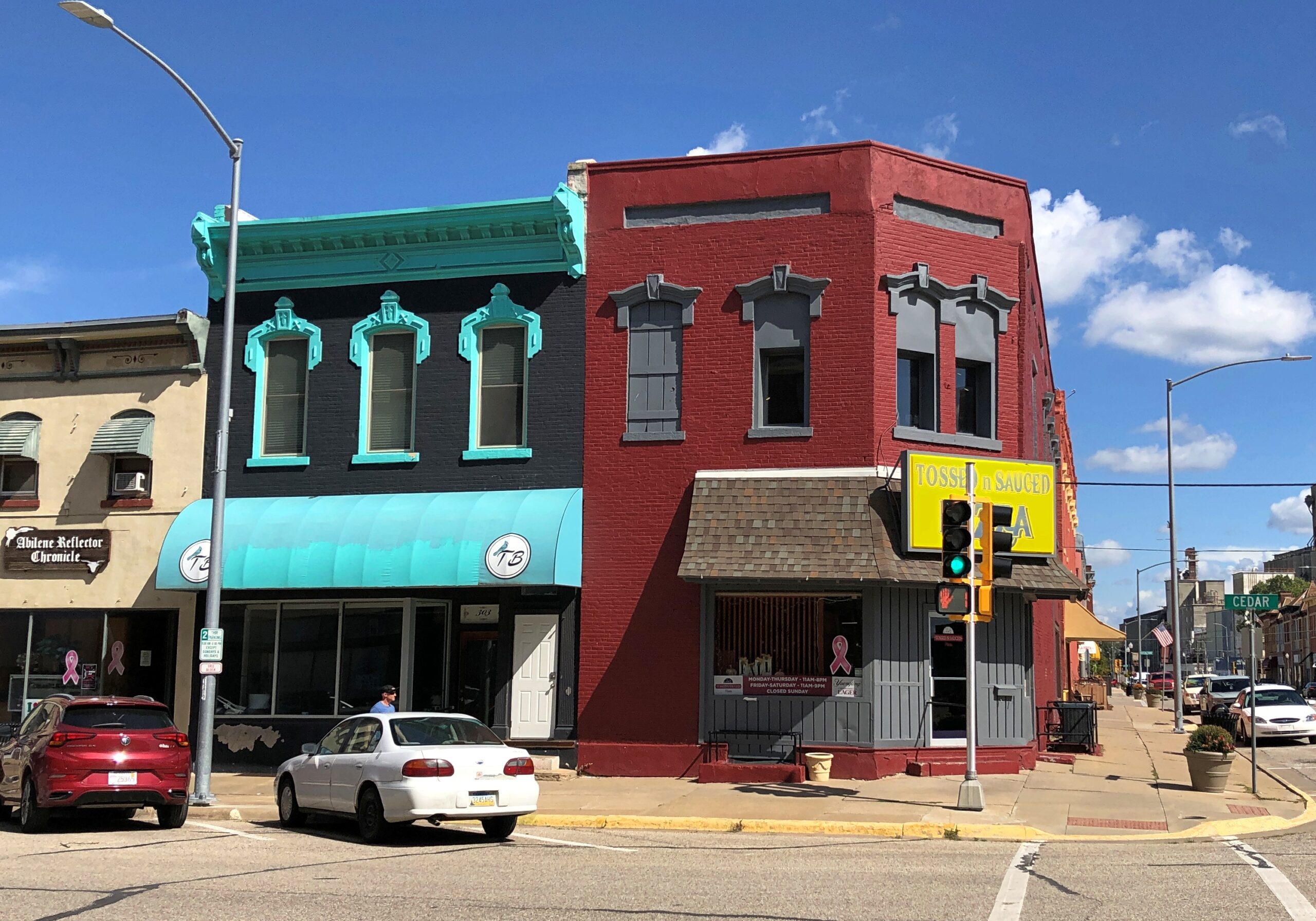
Abilene< KS

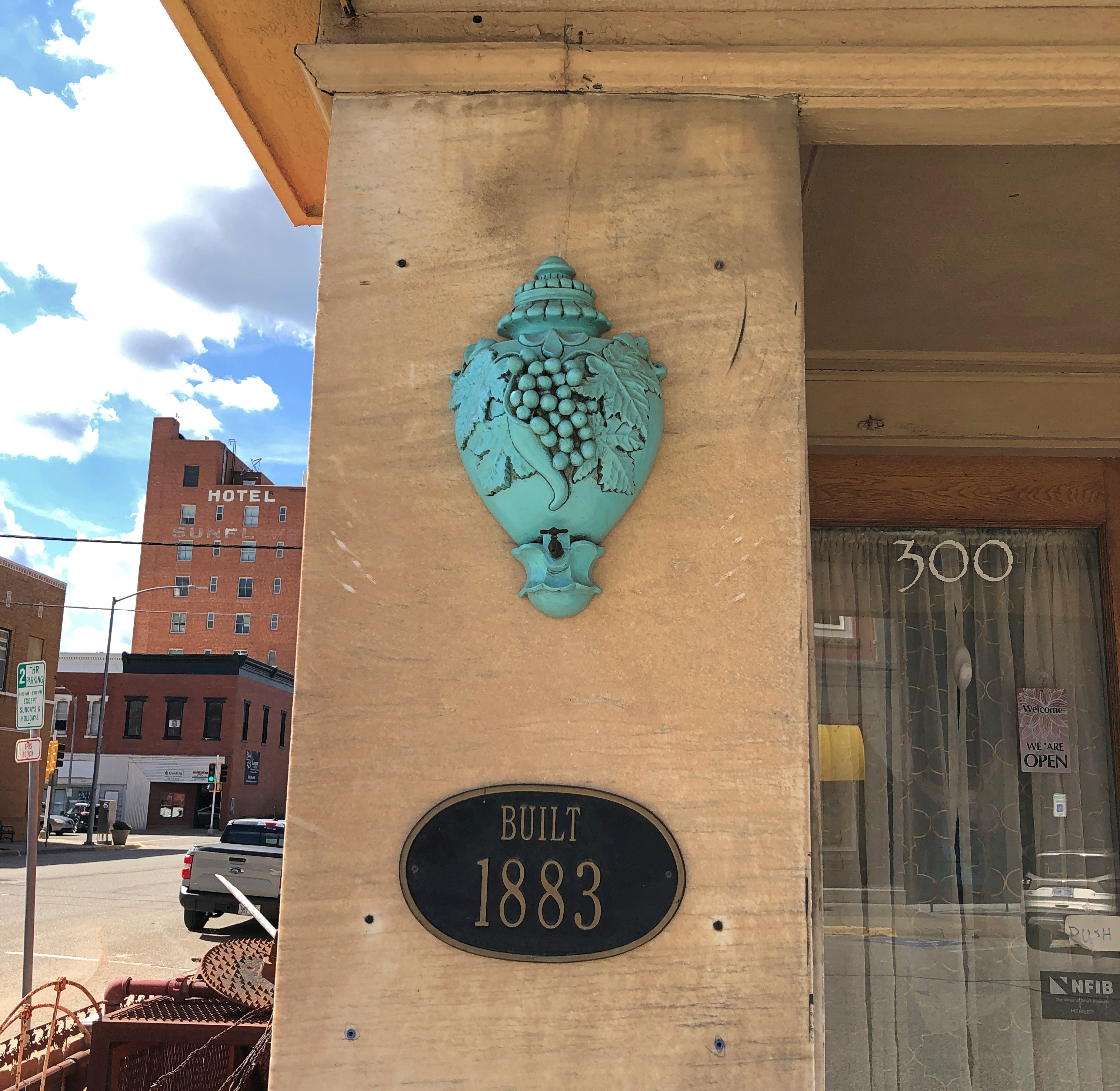
Including at least one building Ike would have known.
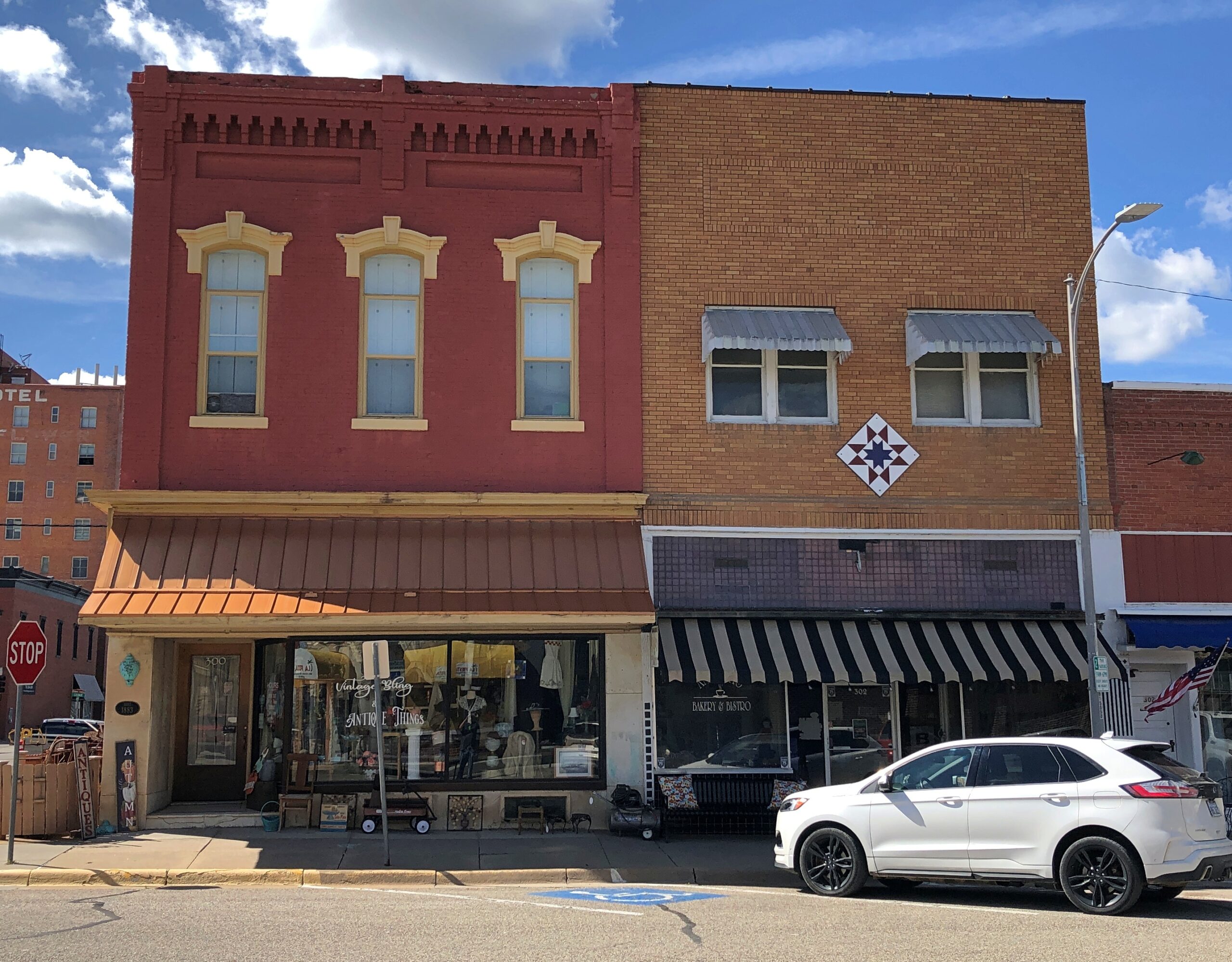
Abilene< KS
Abilene< KS+

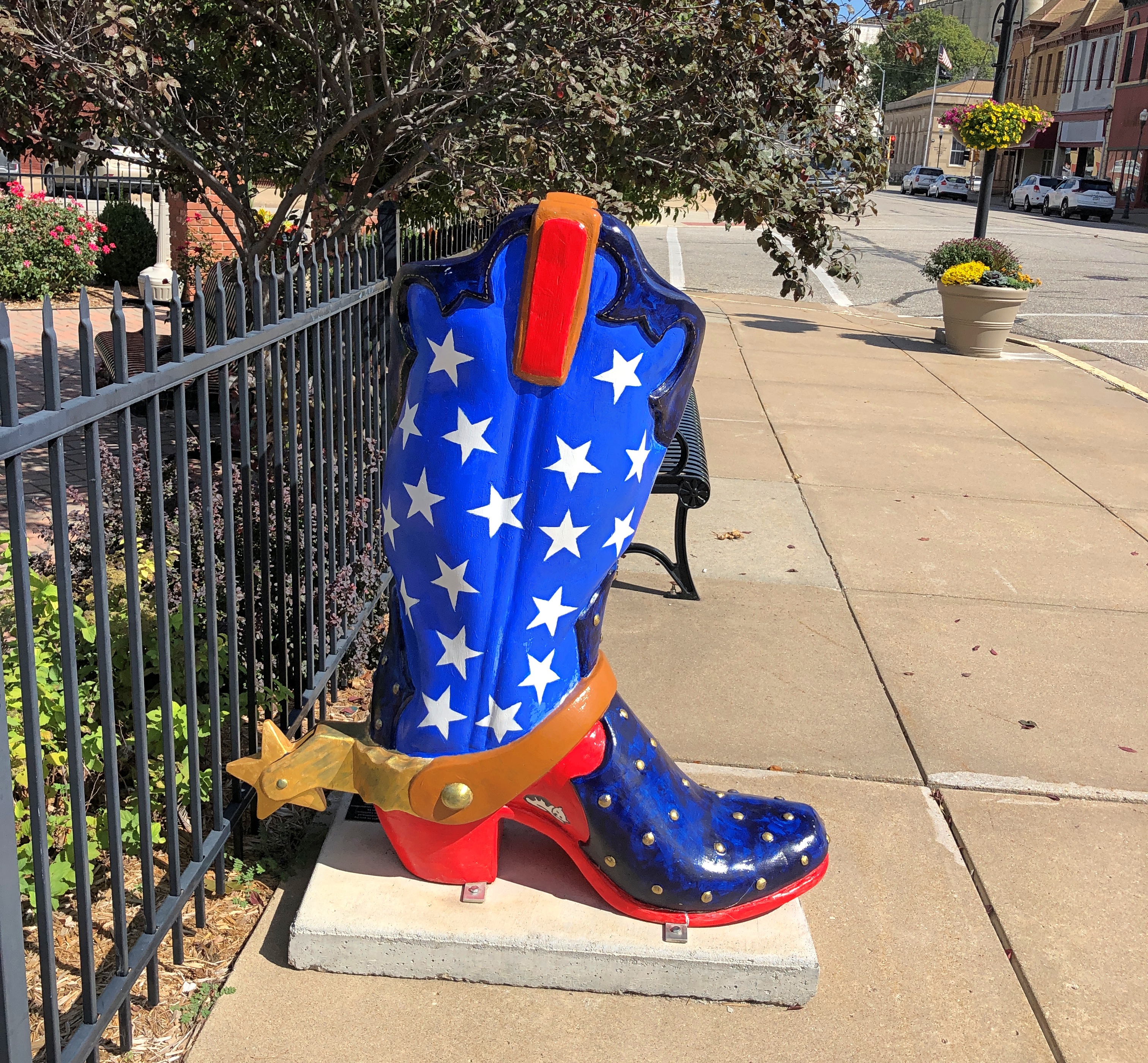
Chicago had cows, Abilene has cowboy boots.
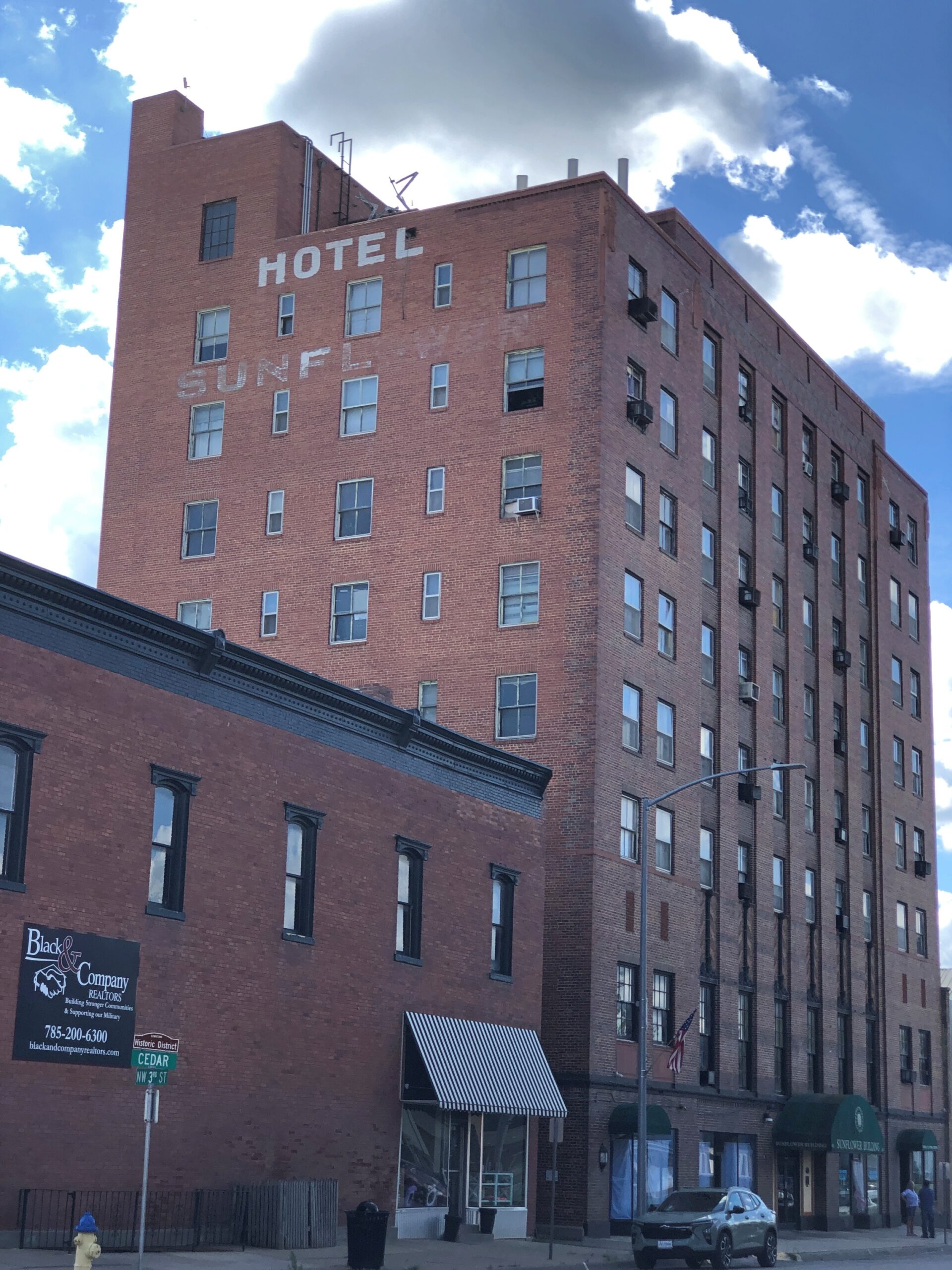
The Hotel Sunflower. Former hotel, that is, now apartments.
The Sunflower State. The flower looks a little ominous, peering down at the settlers.
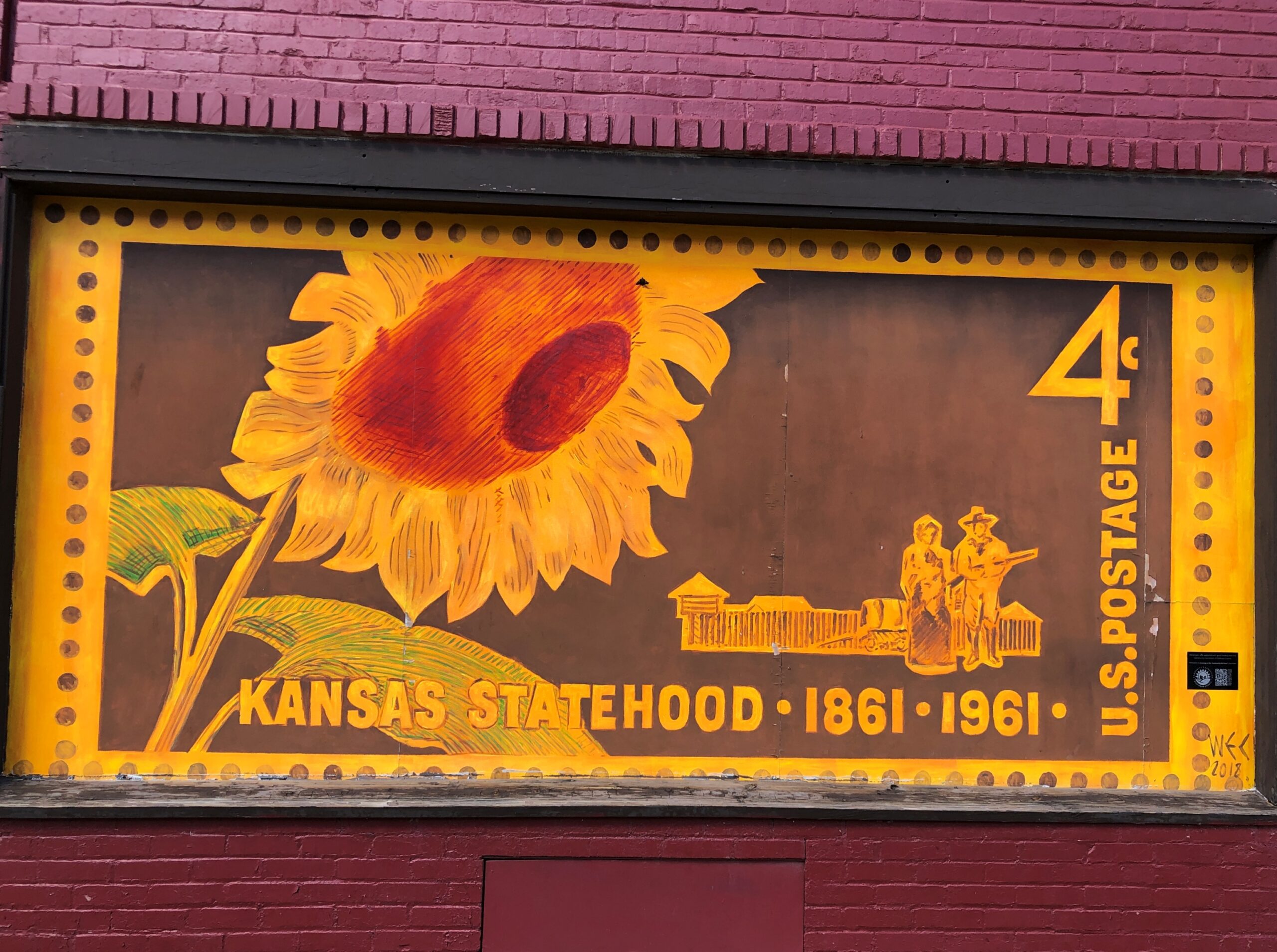
Kanzas

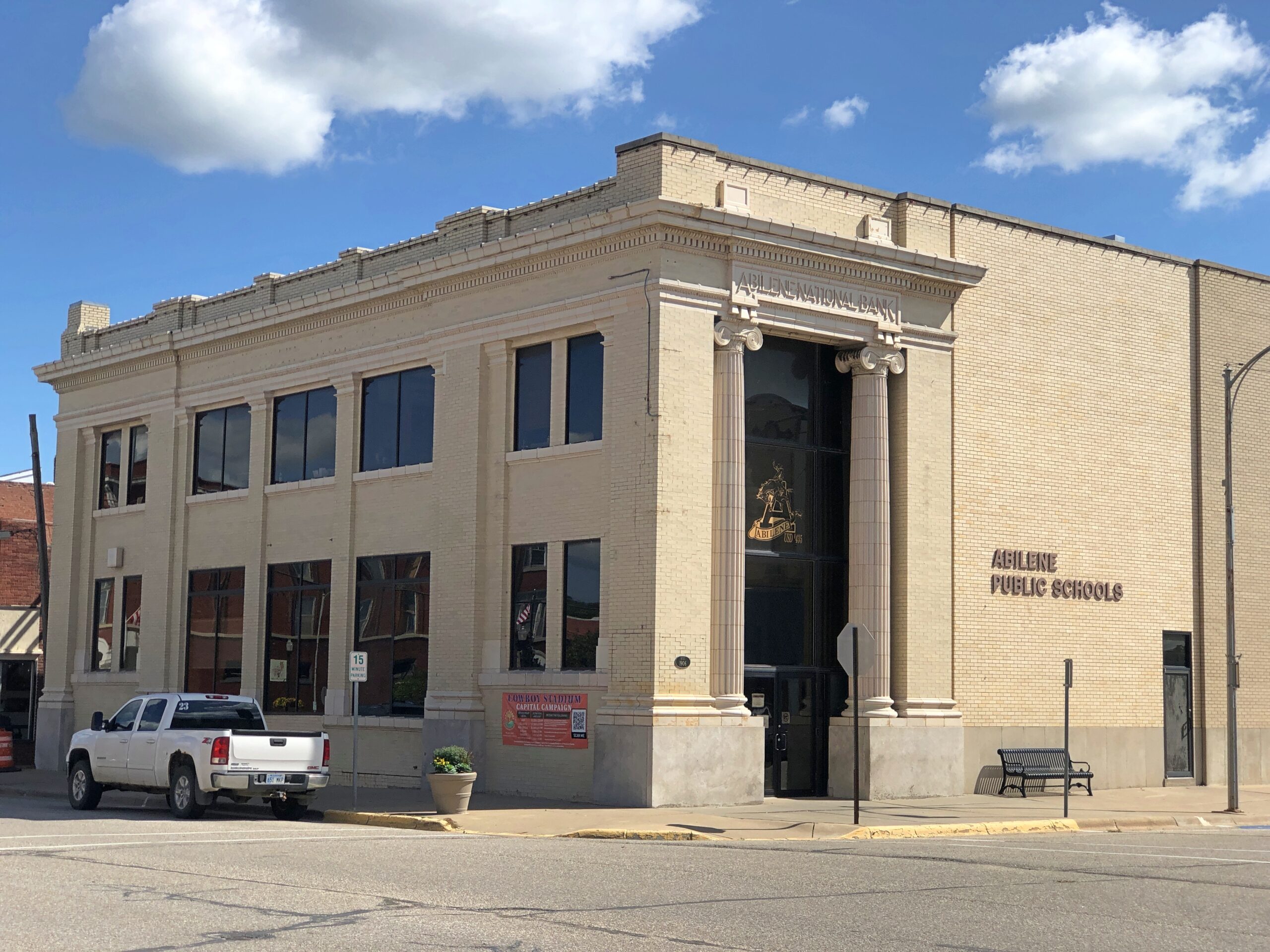
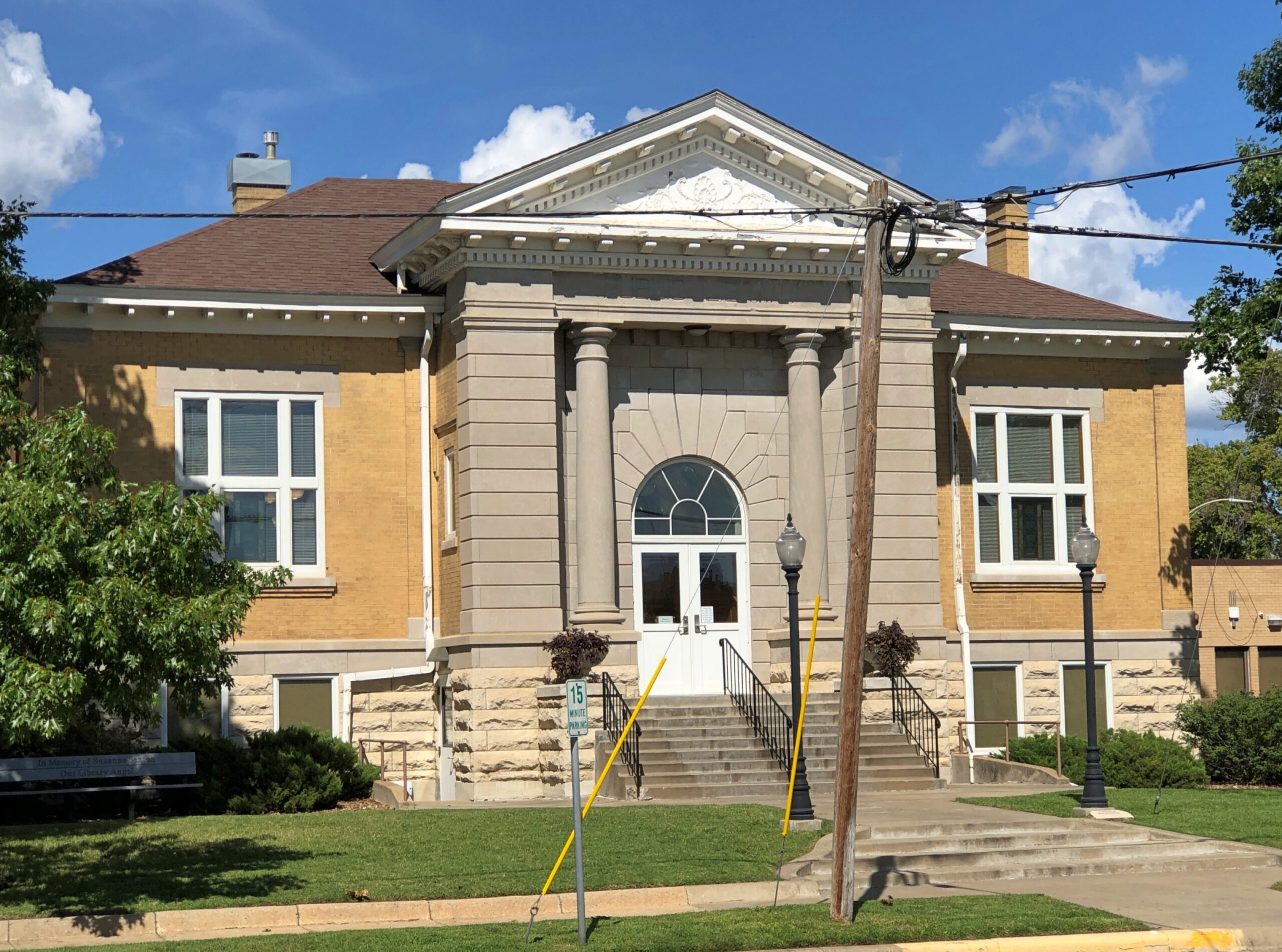
Structures that aren’t grand, but stately even so. Petite stately, you might call them.
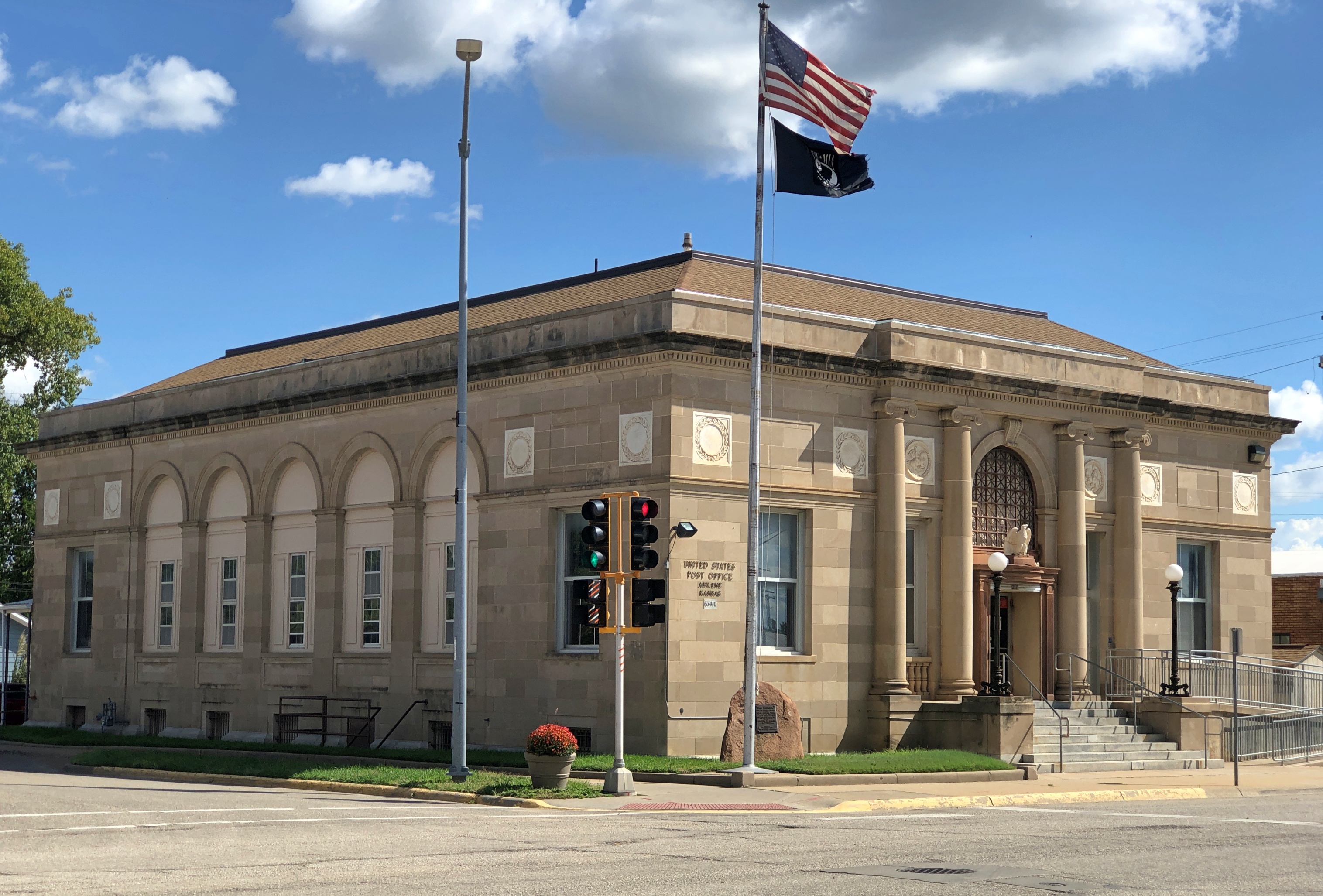
Abilene
Abilene
Abilene

The third one is a Carnegie library. Though the Carnegie grant was large, other fundraising for the library’s erection had been done in the early 1900s, including a benefit lecture by William Jennings Bryan.

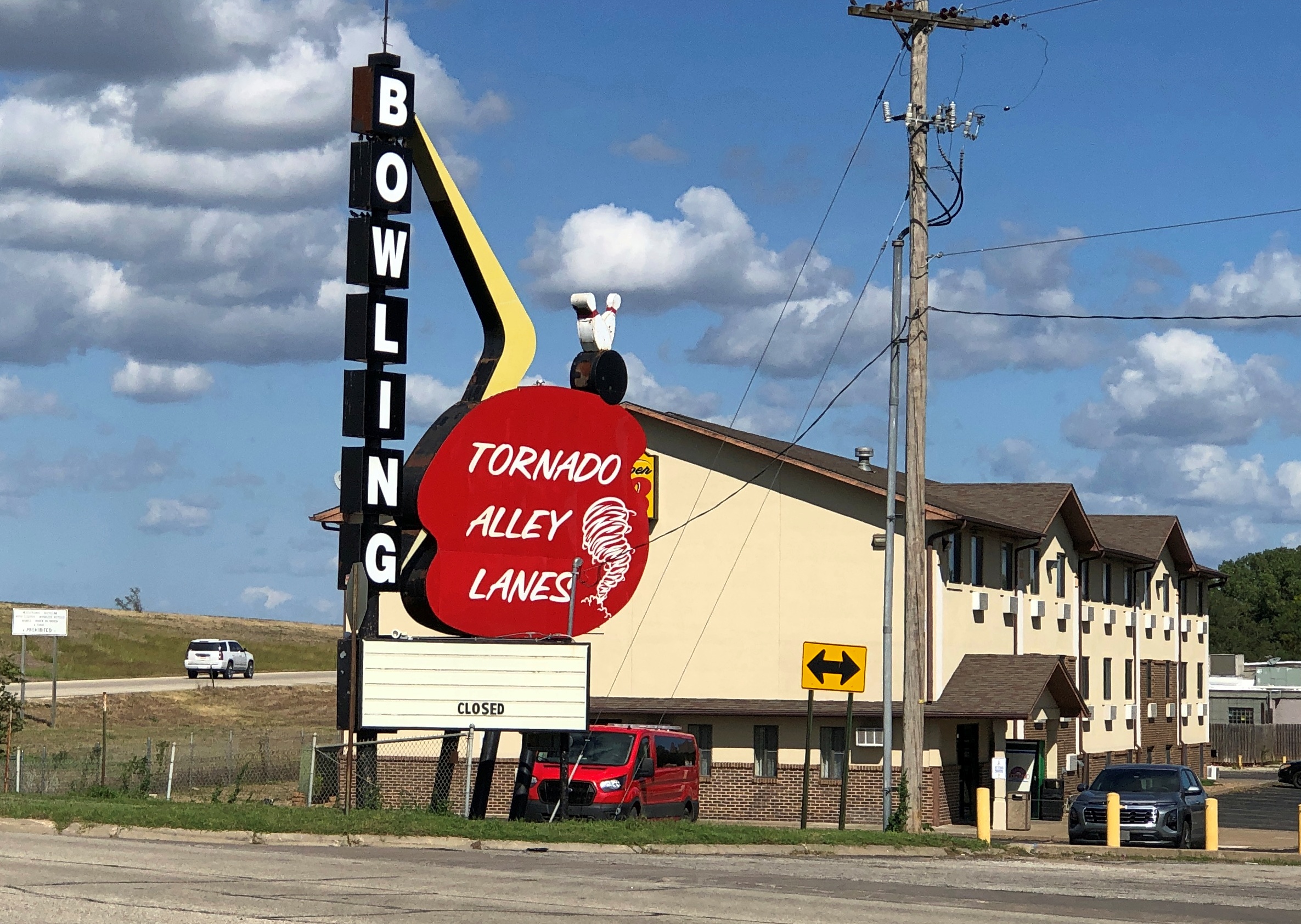
Out near the highway: truth in naming. But note also, the bowling alley is closed. I could go either way on the reopening of an alley in that location, but I really want the sign to stay.
One more thing Abilene is known for, at least since 2022.
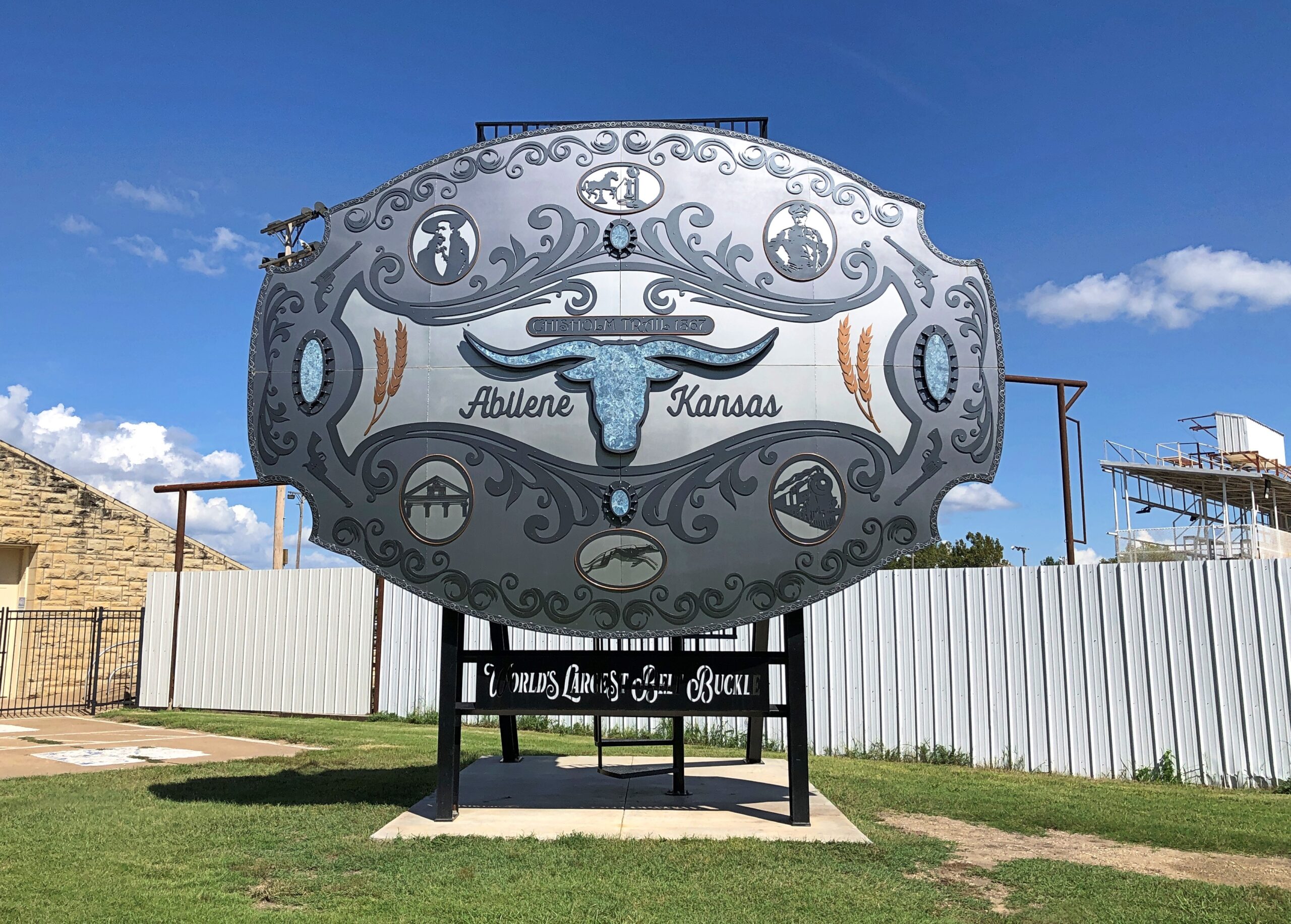
The World’s Largest Belt Buckle. Says so right there on it. How large would that belt have to be?

“Designed by local artist Jason Lahr, Fluter’s Creek Metal Works, the buckle features Dwight D. Eisenhower, Wild Bill Hickok, Abilene & Smoky Valley Railroad, Historic Seelye Mansion, C.W. Parker carousel horse, C.L. Brown telephone, a racing Greyhound and Chisholm Trail longhorn inlaid with blue quartz,” says the city of Abilene, Kansas.

“The buckle is a project of the Abilene Convention and Visitors Bureau which hopes the new roadside attraction will entice travelers to stop and visit the Best Historic Small Town.”
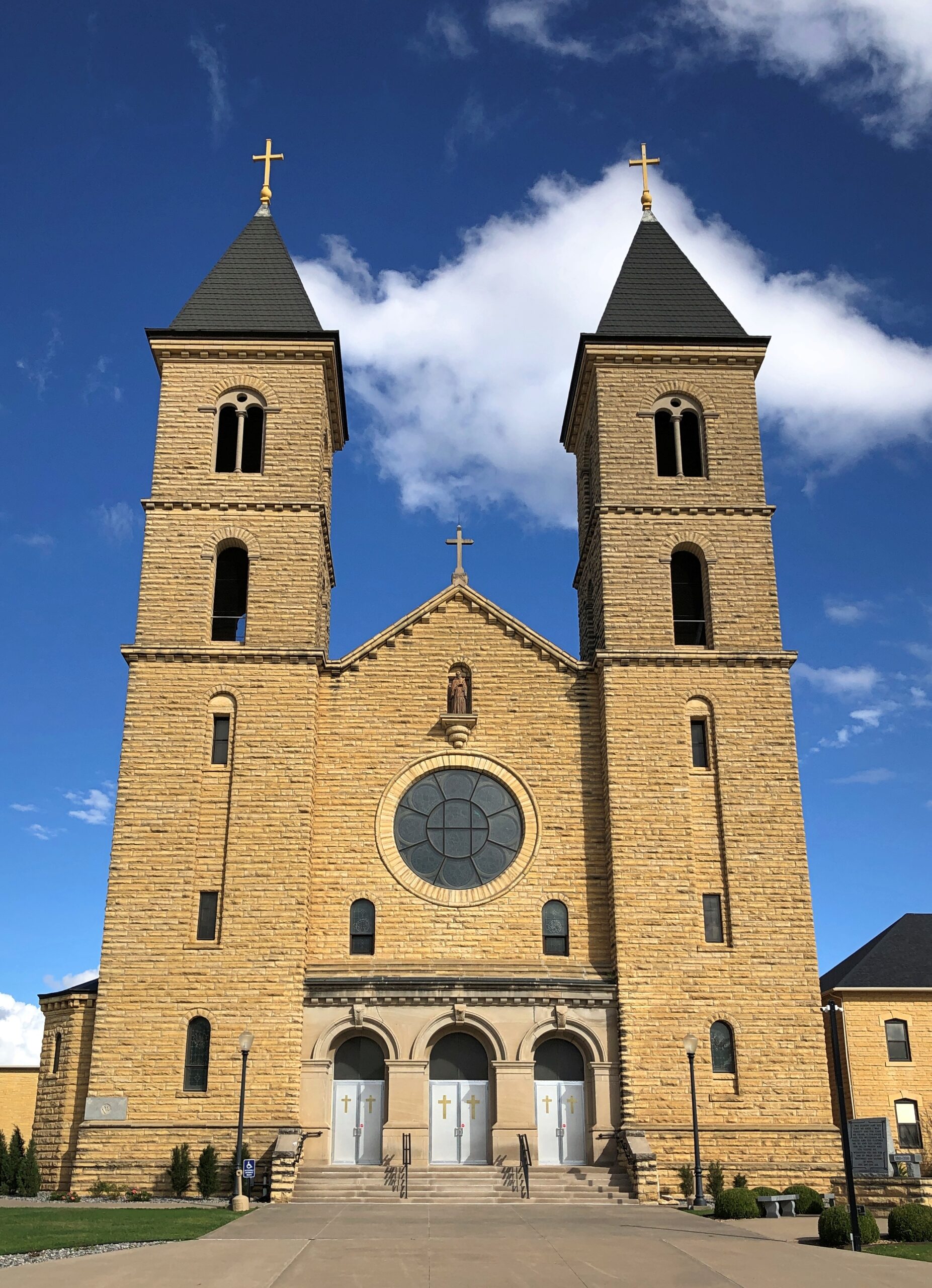
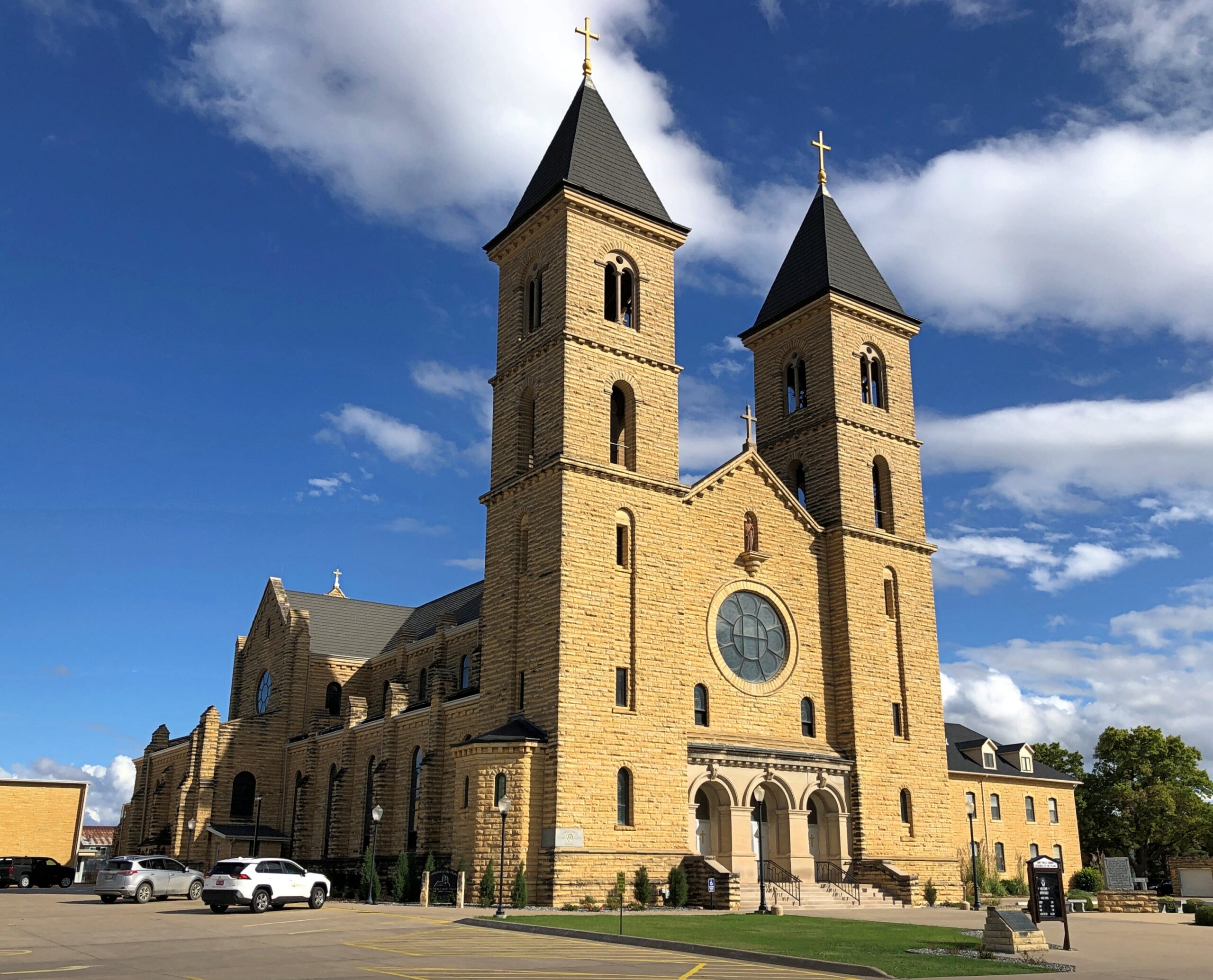
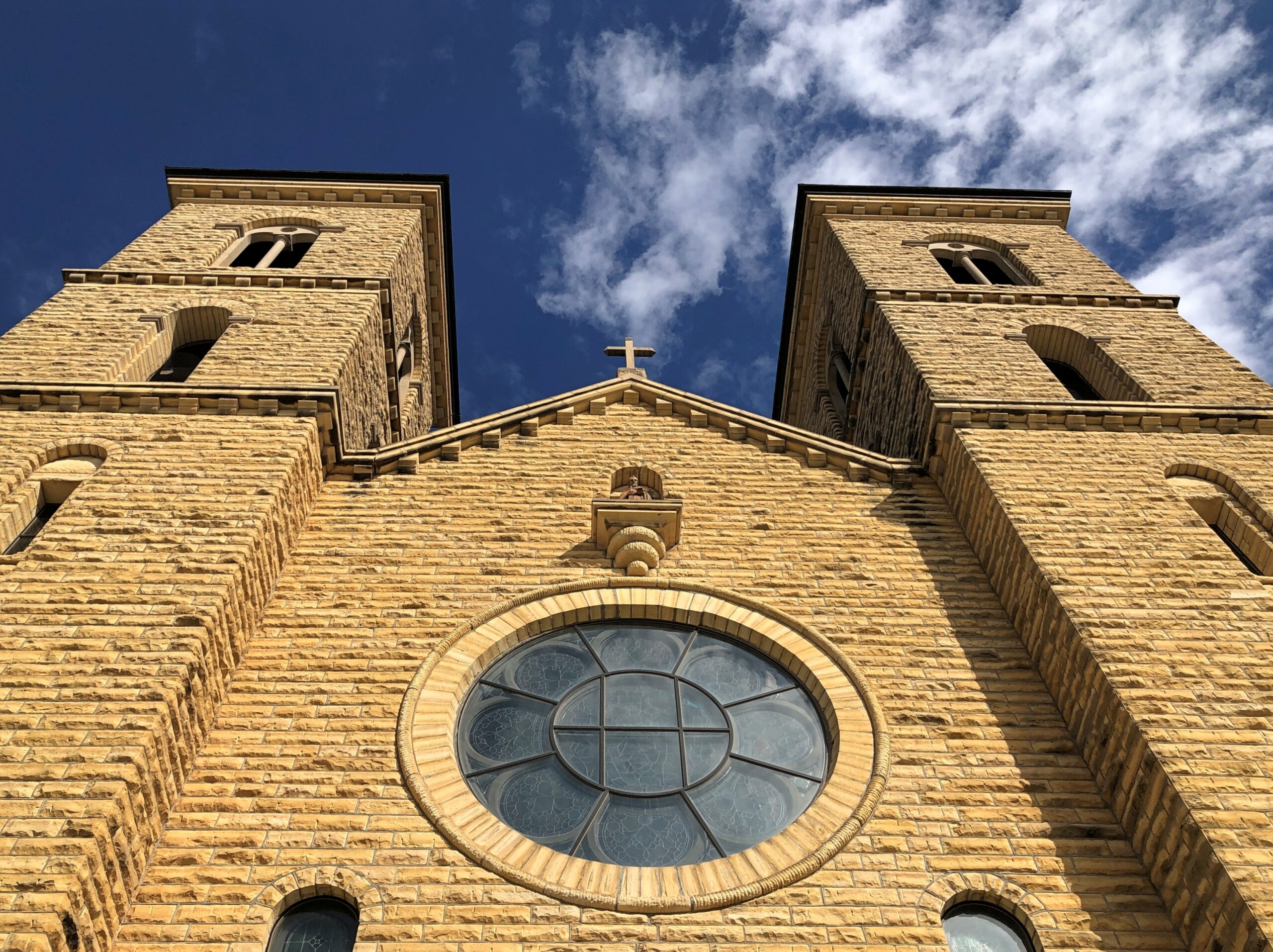
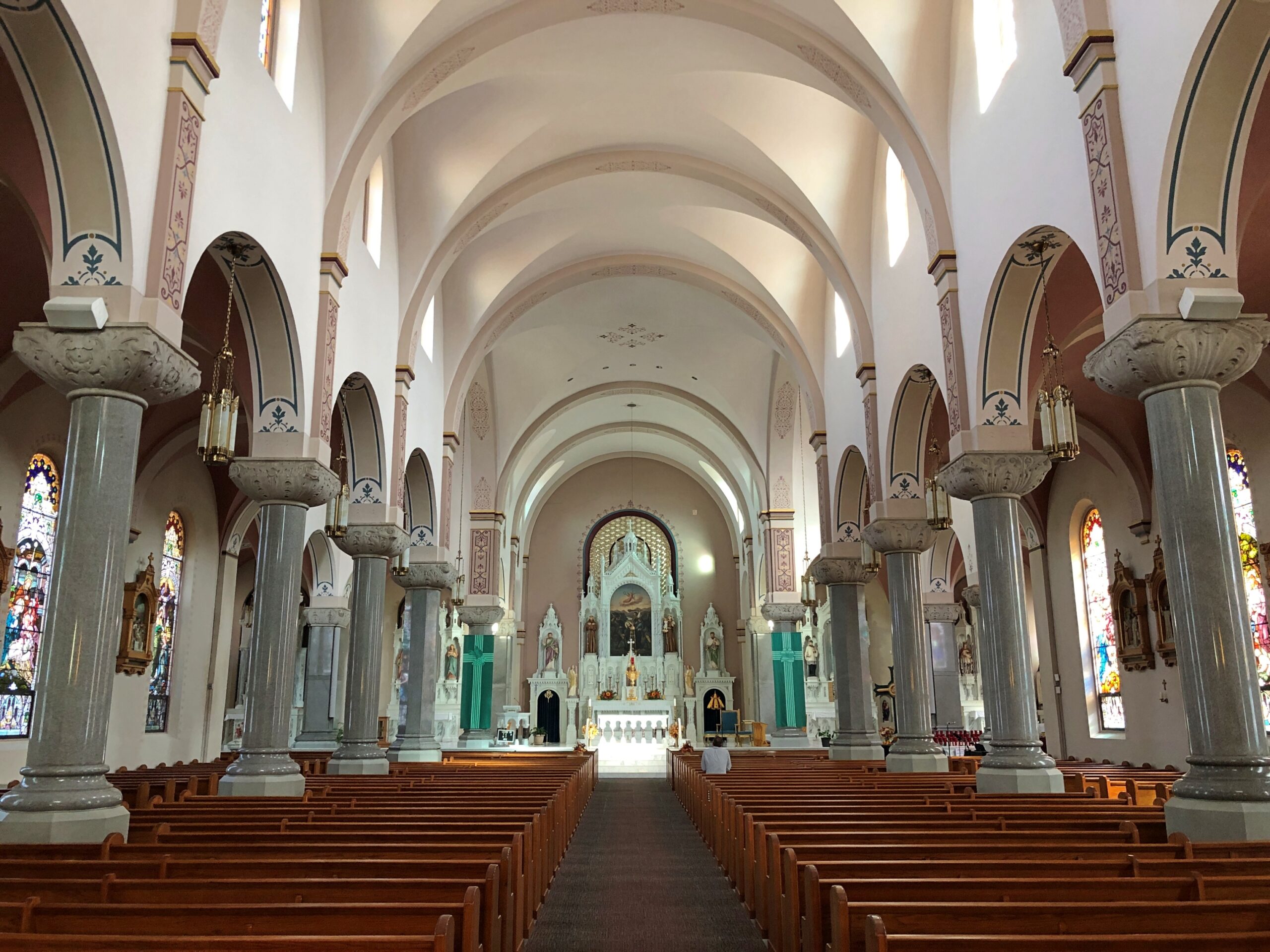
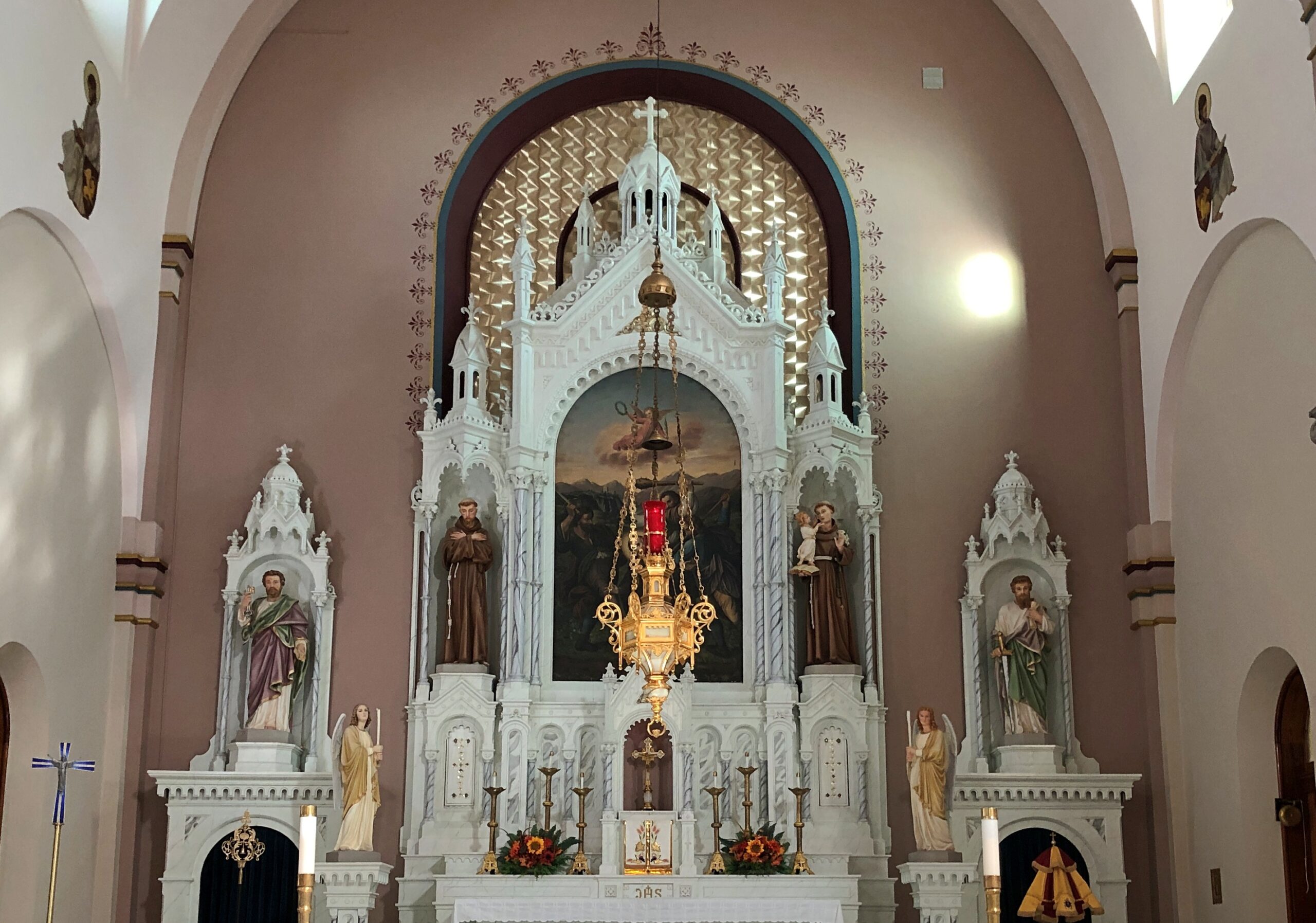
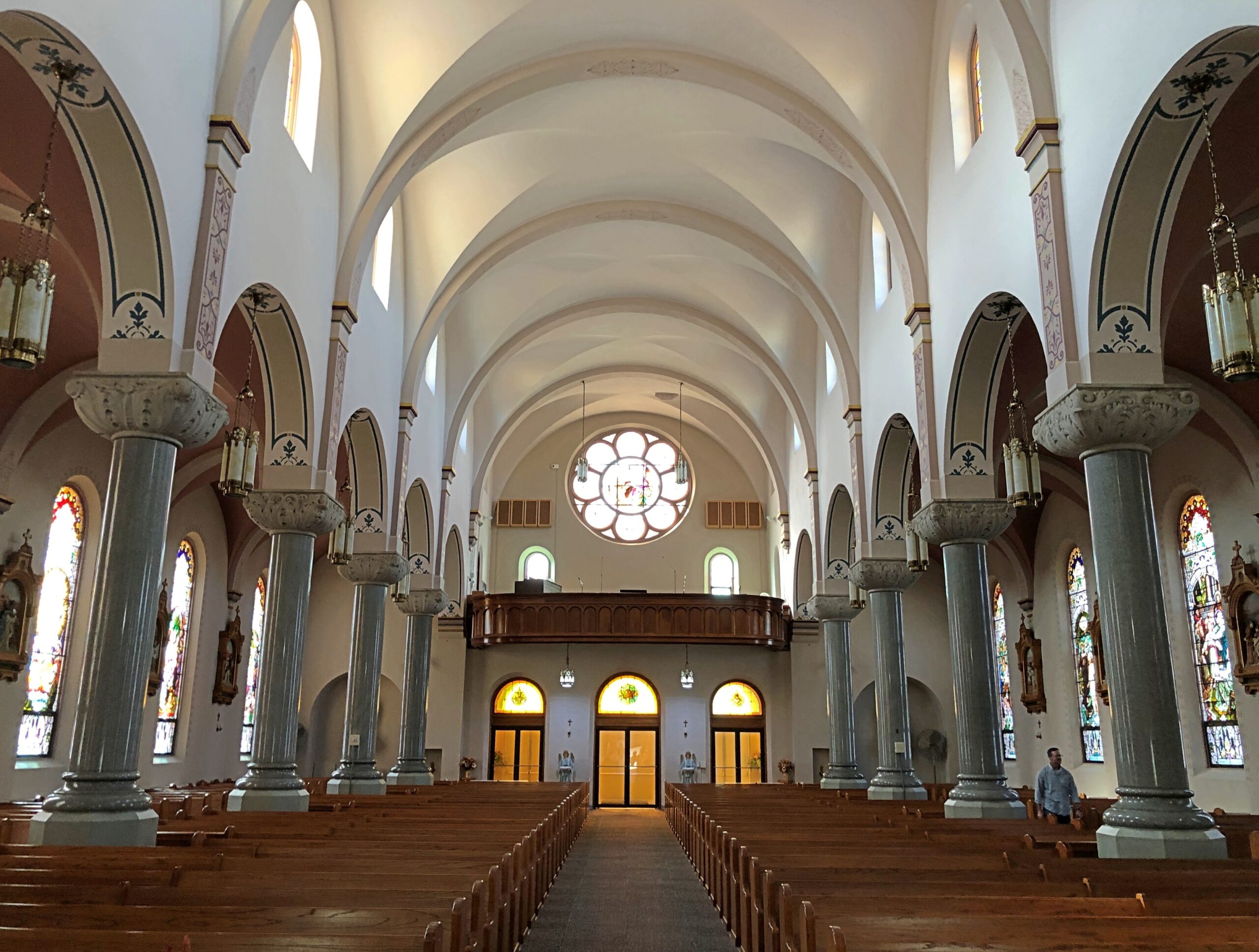
The Basilica of St. Fidelis, Cathedral of the Plains

Today I let Google finish “Cathedral of the…” and got the following responses, top to bottom (capitalization sic): Sea, deep, Holy Angels, holy angels photos, forsaken, immaculate conception, incarnation, Madeleine, deep ds3, pines.

Cathedral of the Sea is La catedral del mar, a “Spanish drama series” that I’d never heard of, though I have been to Santa Maria del Mar. The Cathedral of the Deep and of the Forsaken appear to be aspects of electronic games, and the others are churches in various places.

Not on the list is the Cathedral of the Plains. But it’s out there, in central Kansas.

Cathedral of the Plains

That’s a nickname, since the church isn’t actually a cathedral, but the wording does appear on its point-of-interest spot on road maps – and naturally that got my attention. Formally, the church is the Basilica of St. Fidelis, said to be the largest church west of the Mississippi by seating capacity (1,100) upon completion in 1911 in Victoria, Kansas. Conveniently (for me), some decades later I-70 was built not far away.

John T. Comès (d. 1922), a Pittsburgh architect, designed the church for a congregation of Volga German immigrants. Who had come to greater Victoria starting in the 1870s. Why Victoria? Why not? No doubt they looking for flat farmland.

Comès, an incredibly prolific specialist in Catholic churches, did a fine job.

Cathedral of the Plains

Nice.

Cathedral of the Plains

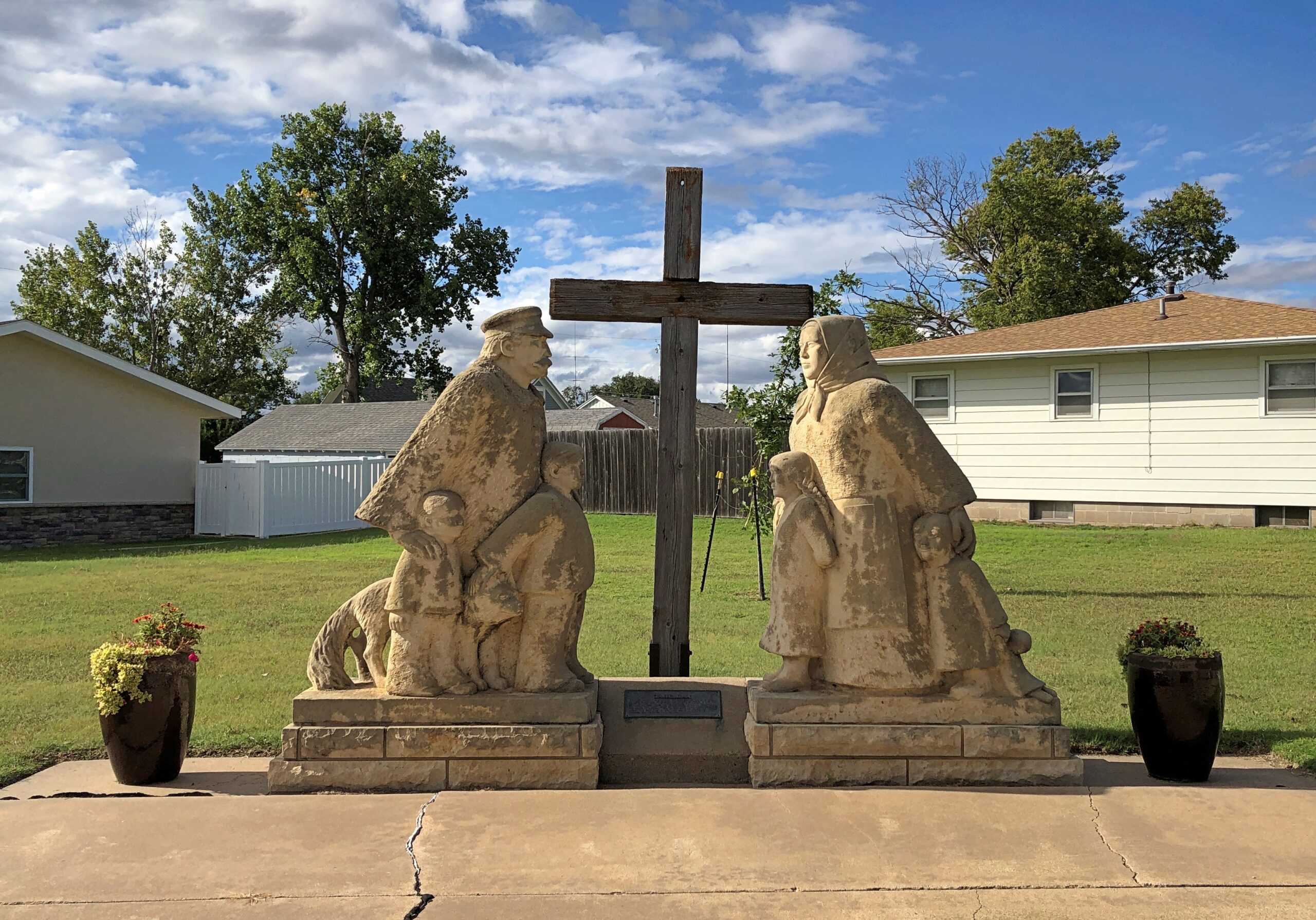
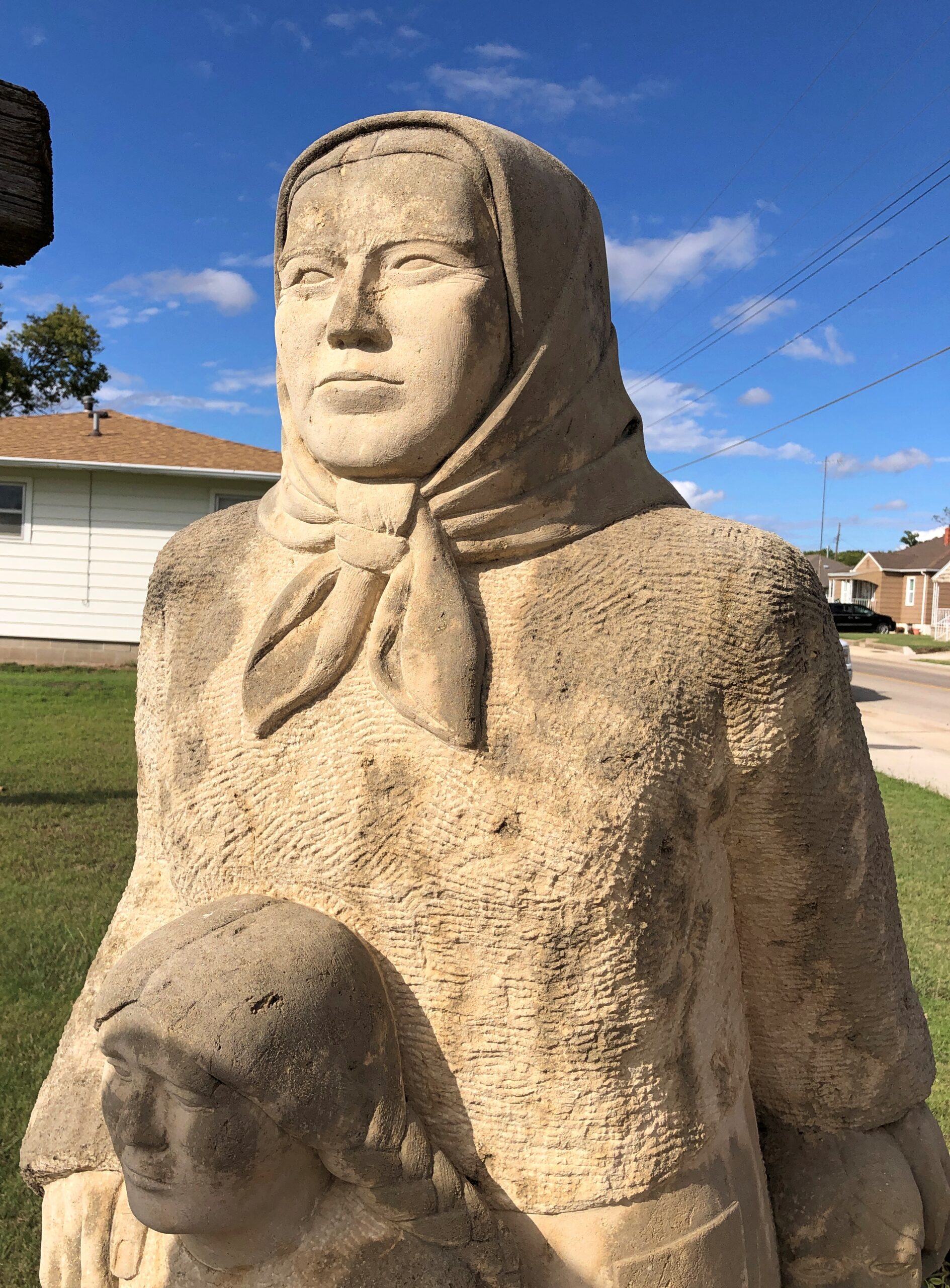
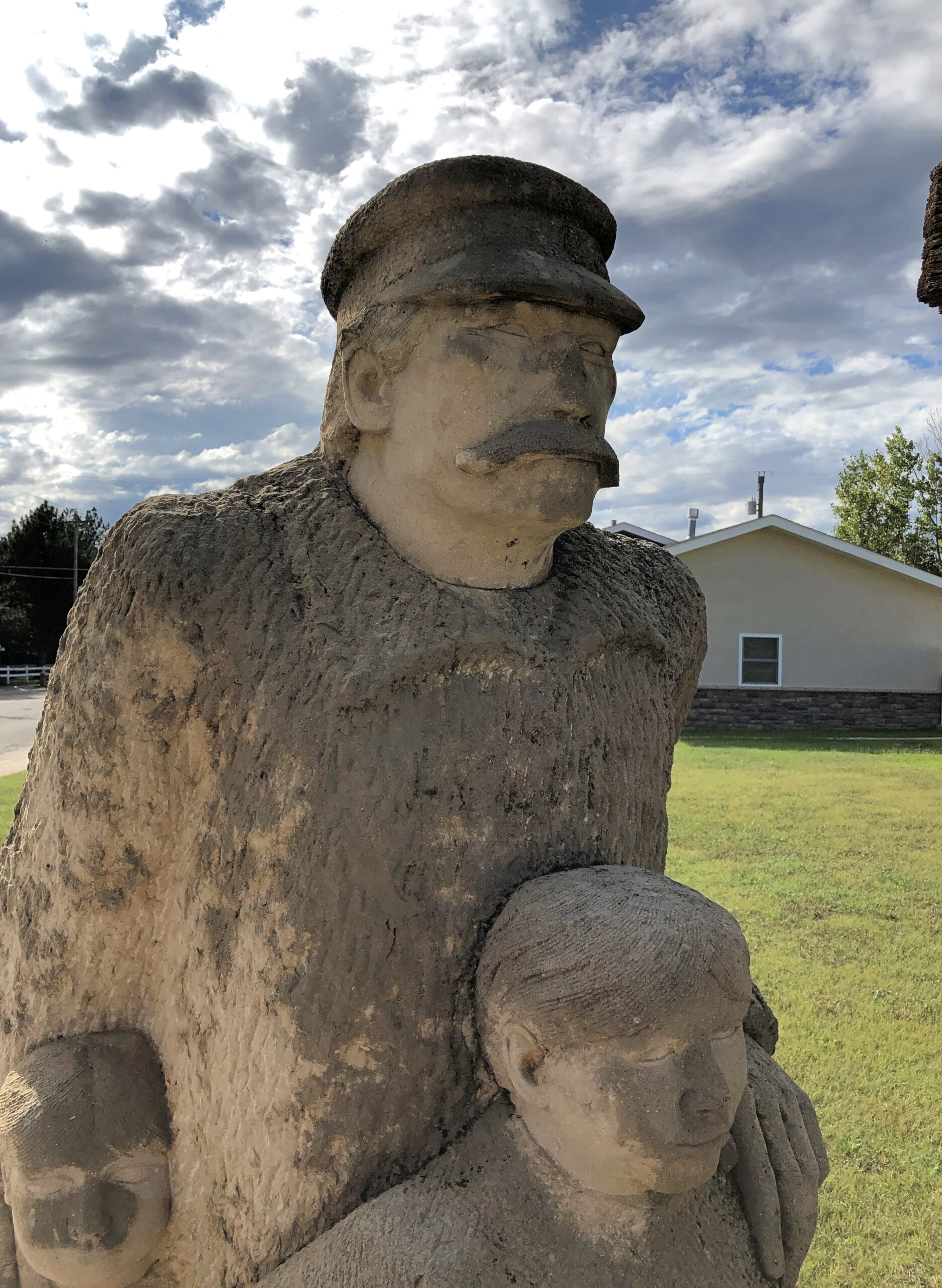
The Volga Germans aren’t forgotten. No doubt their descendants are all around this part of Kansas. In 1976, the townspeople erected a memorial to their immigrant ancestors, across the street from St. Fidelis. A work by Pete Felton, a “Kansan limestone carver,” according to this posting, which also mentions limestone fenceposts as important in Kansas — something else to look into sometime.

After nearly 50 years, the statues are looking a little weatherworn, but they abide.

Victoria, KS

The woman and daughters caught the light at that time of day, the afternoon of September 23.

Victoria, KS

The man and sons did not. Would sunlight have made him less – Stalinesque?

Victoria, KS

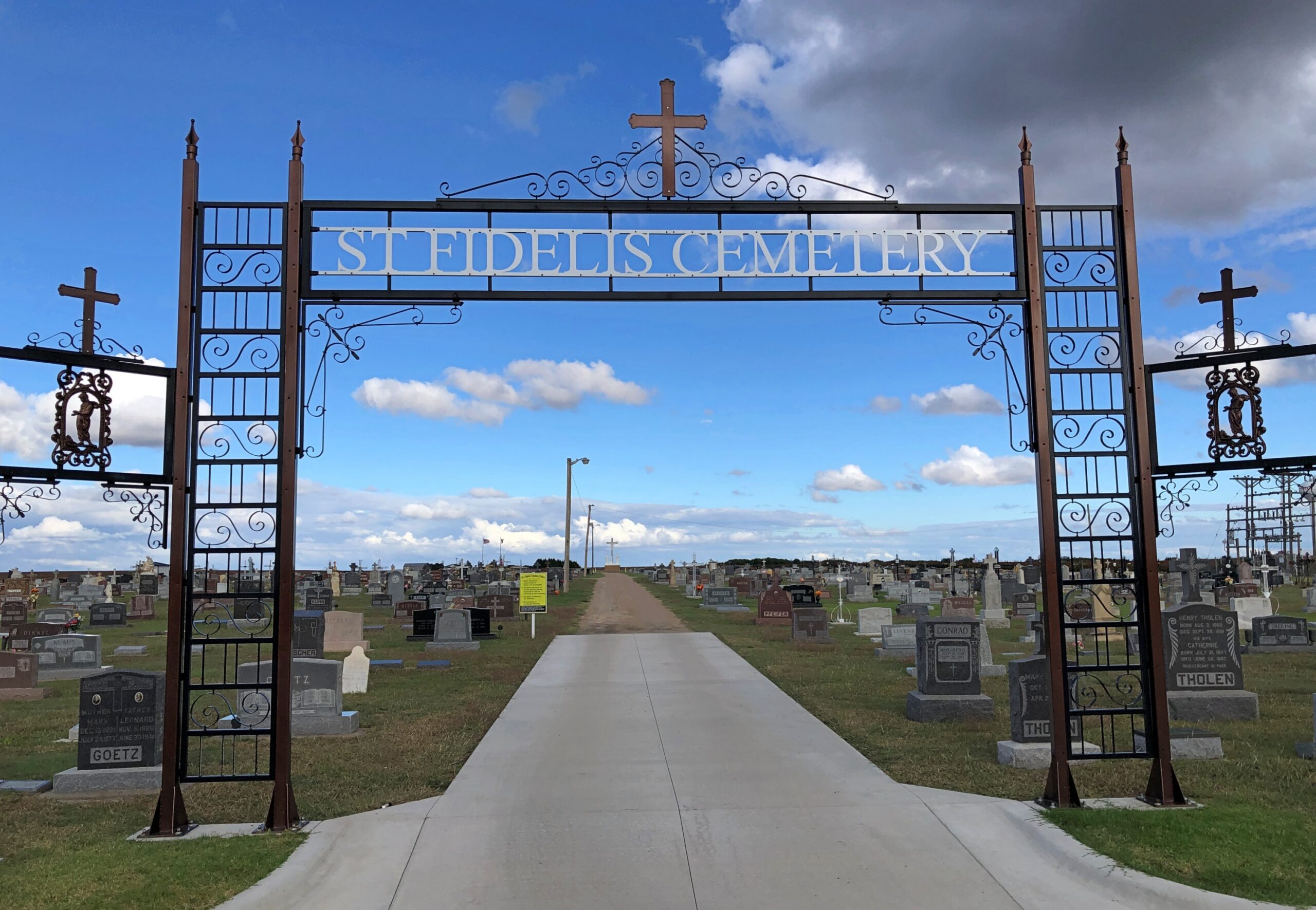
Never mind. St. Fidelis Cemetery isn’t far to the north of the basilica, and I stopped by.

St Fidelis Cemetery

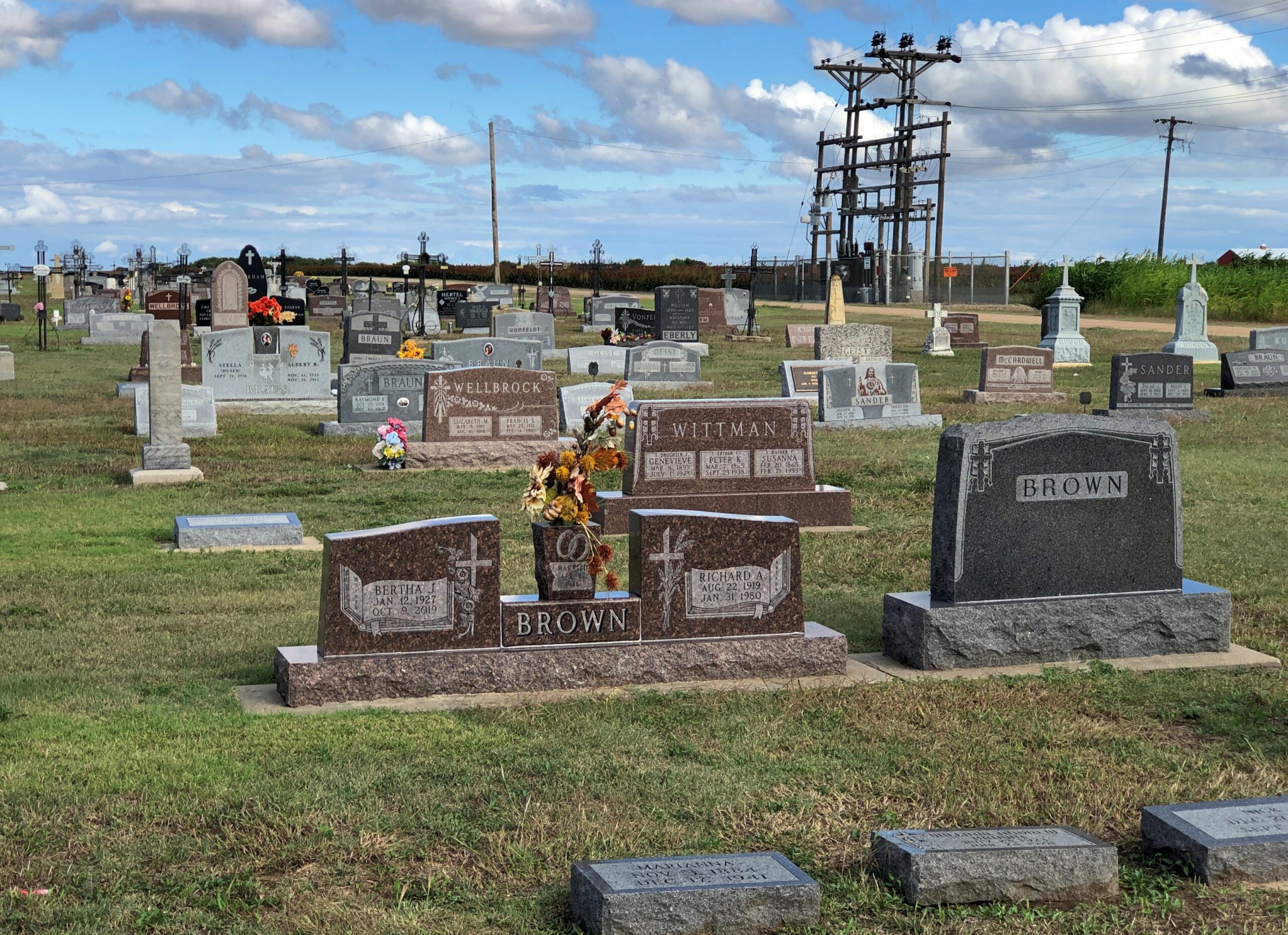
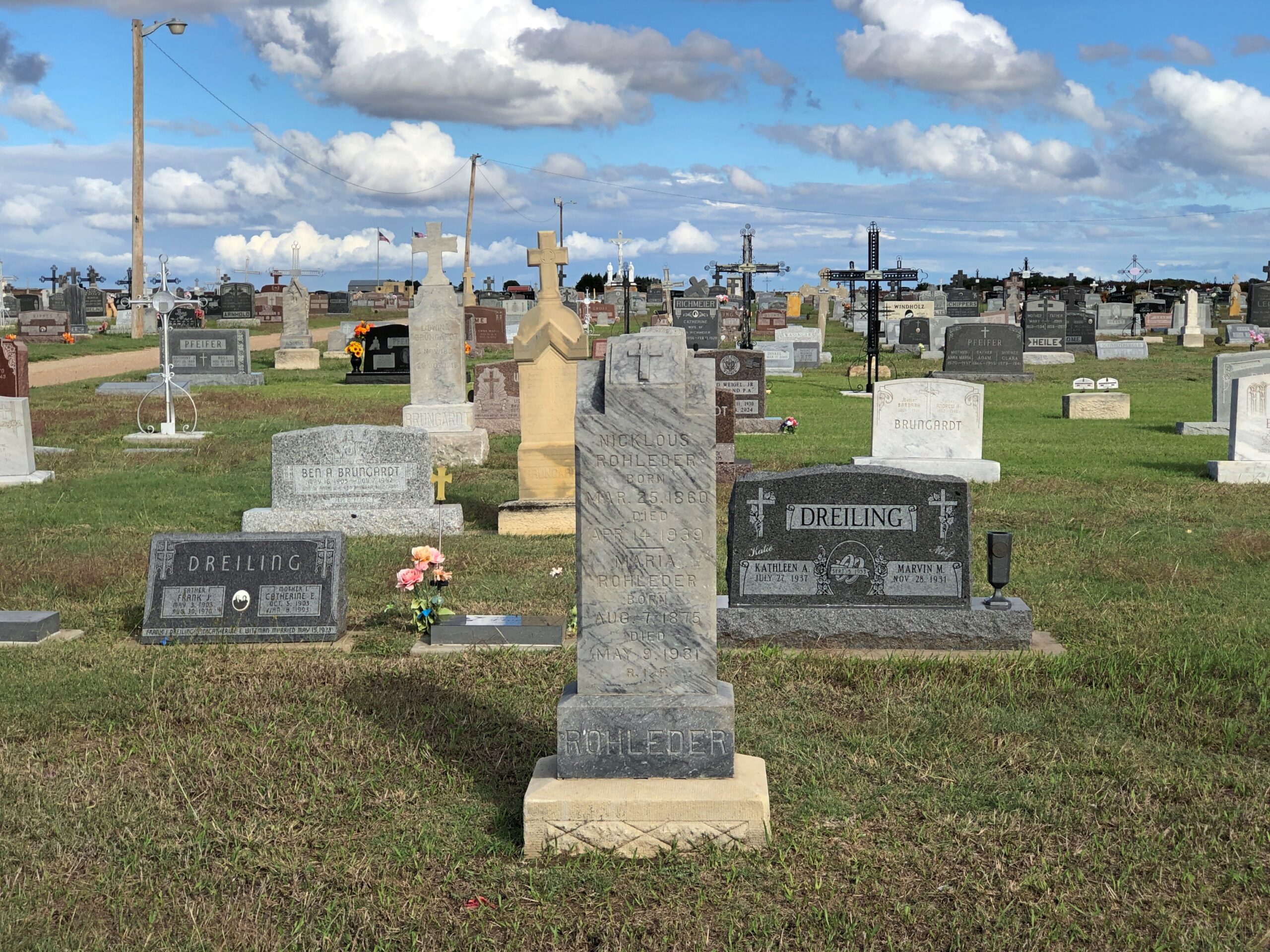
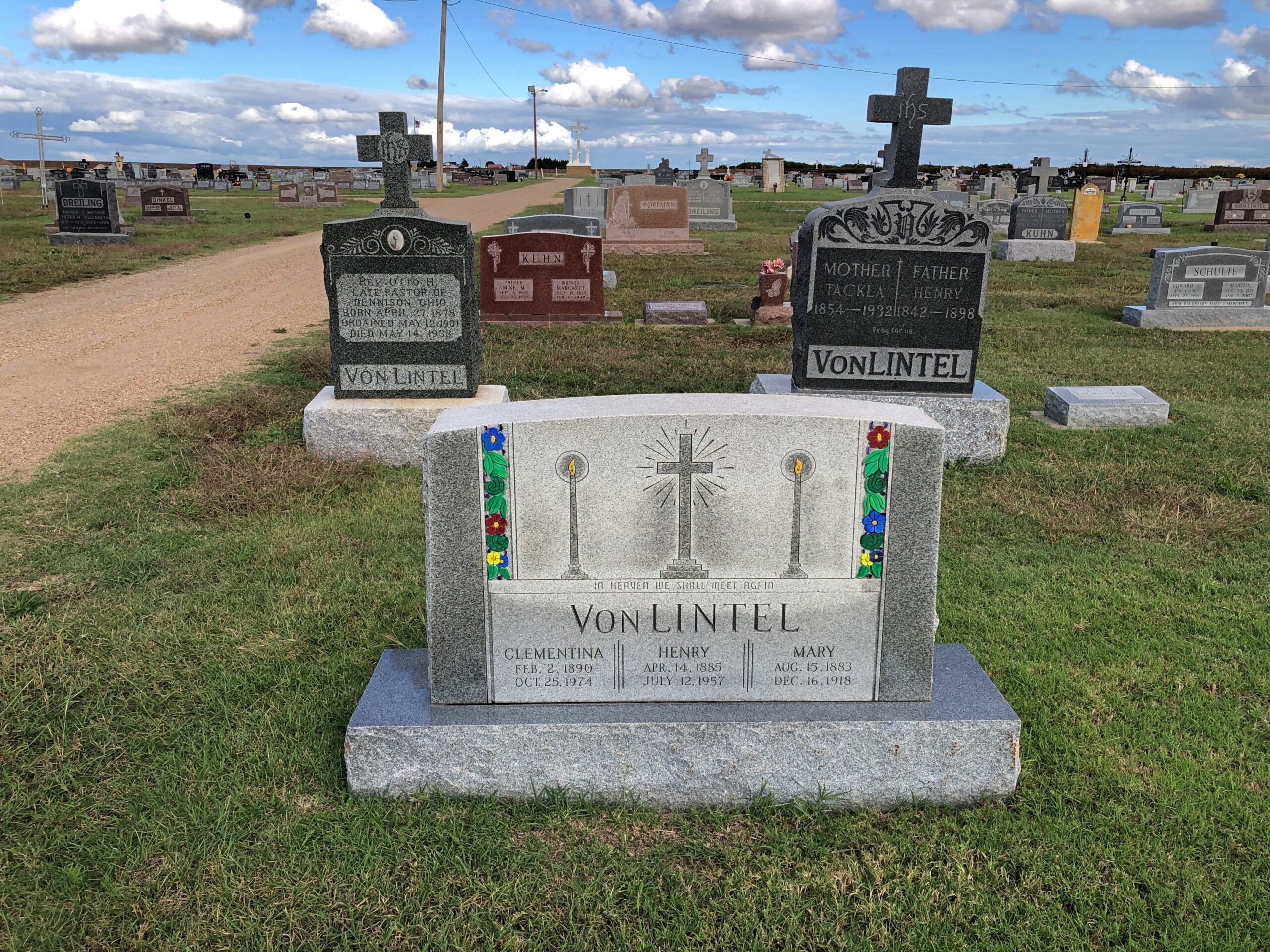
A good variety of memorials in a nice setting, even if the land lacks contour and there’s no flora beyond grass and cut flowers.

St Fidelis Cemetery
St Fidelis Cemetery
St Fidelis Cemetery

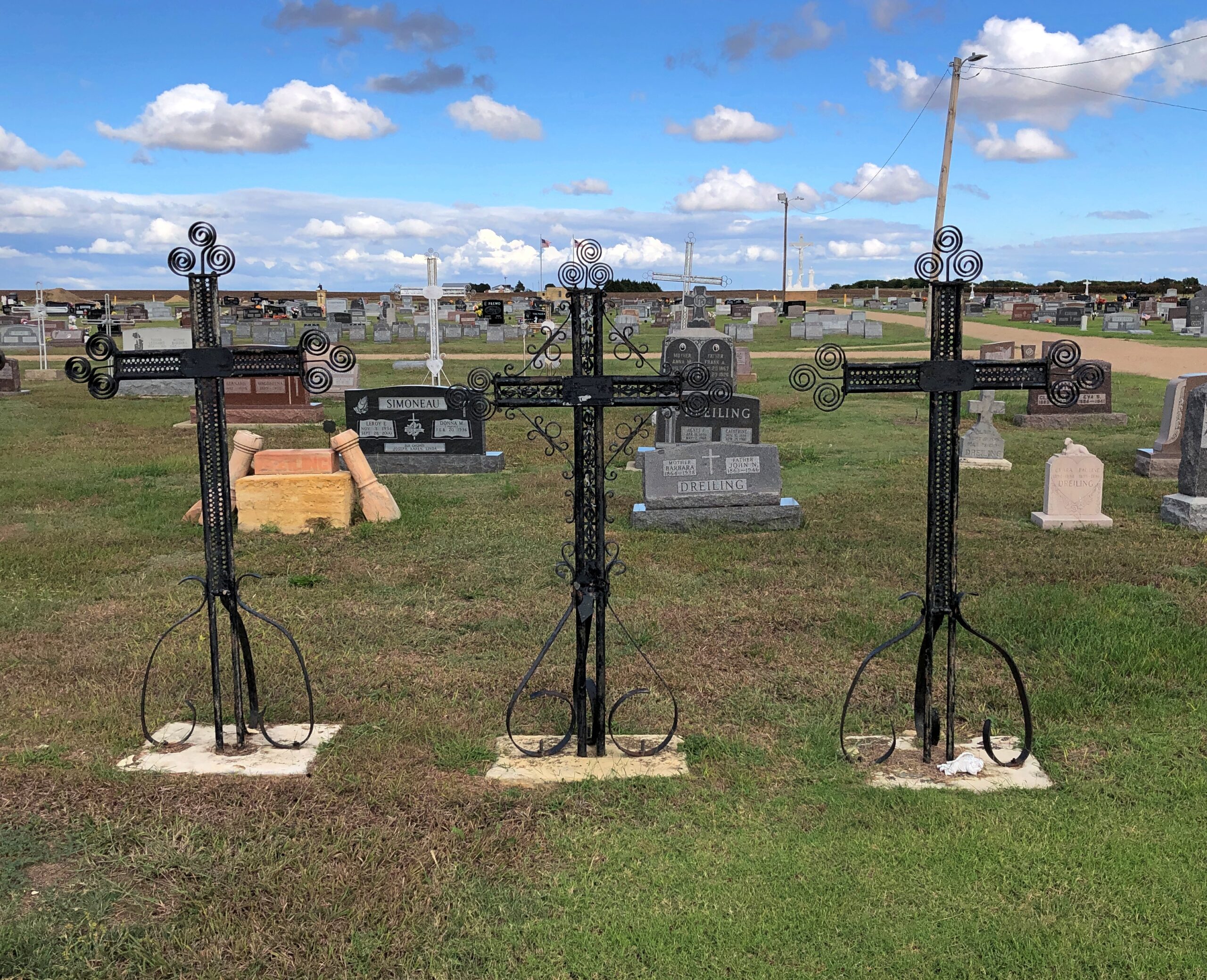
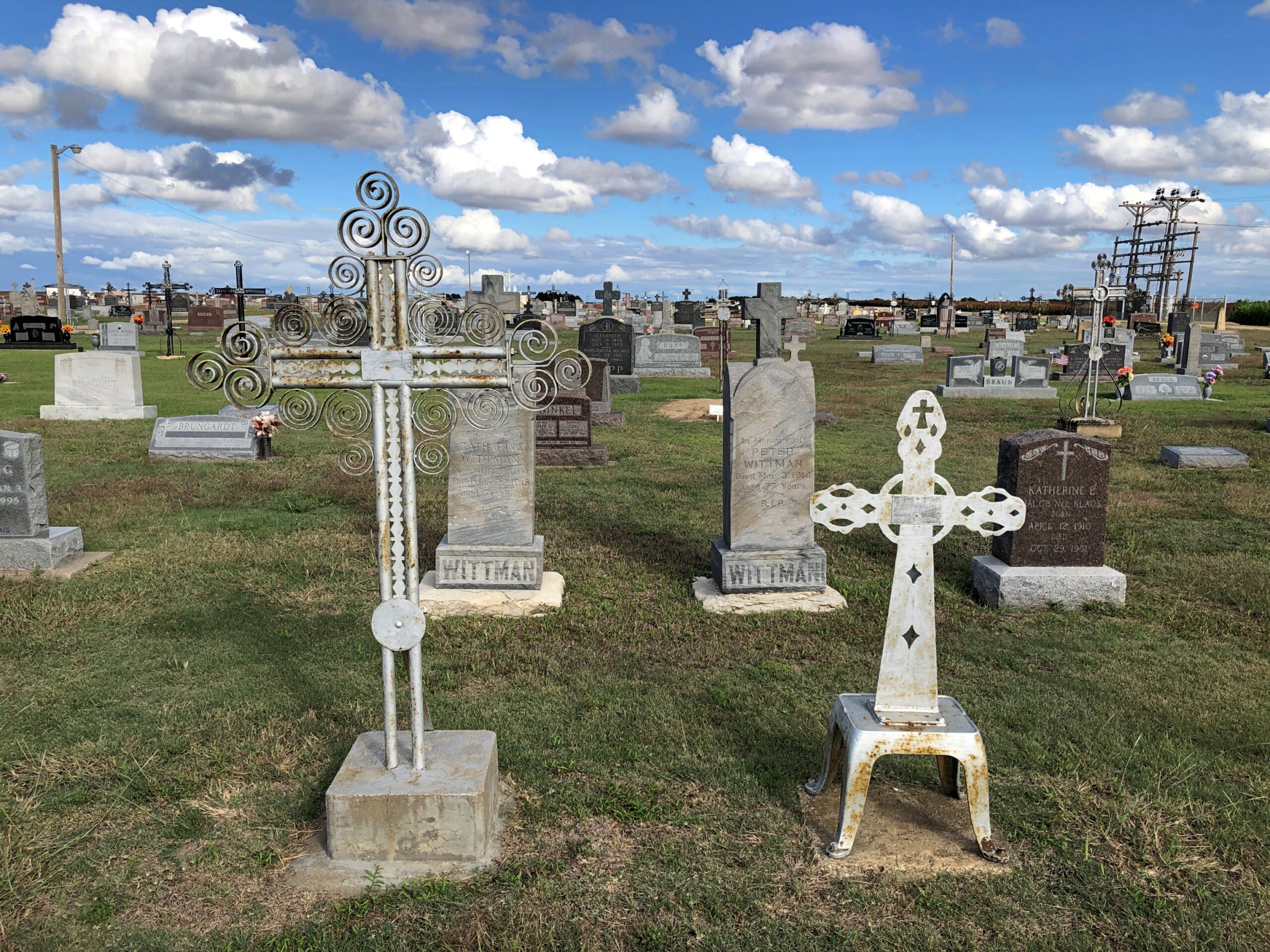
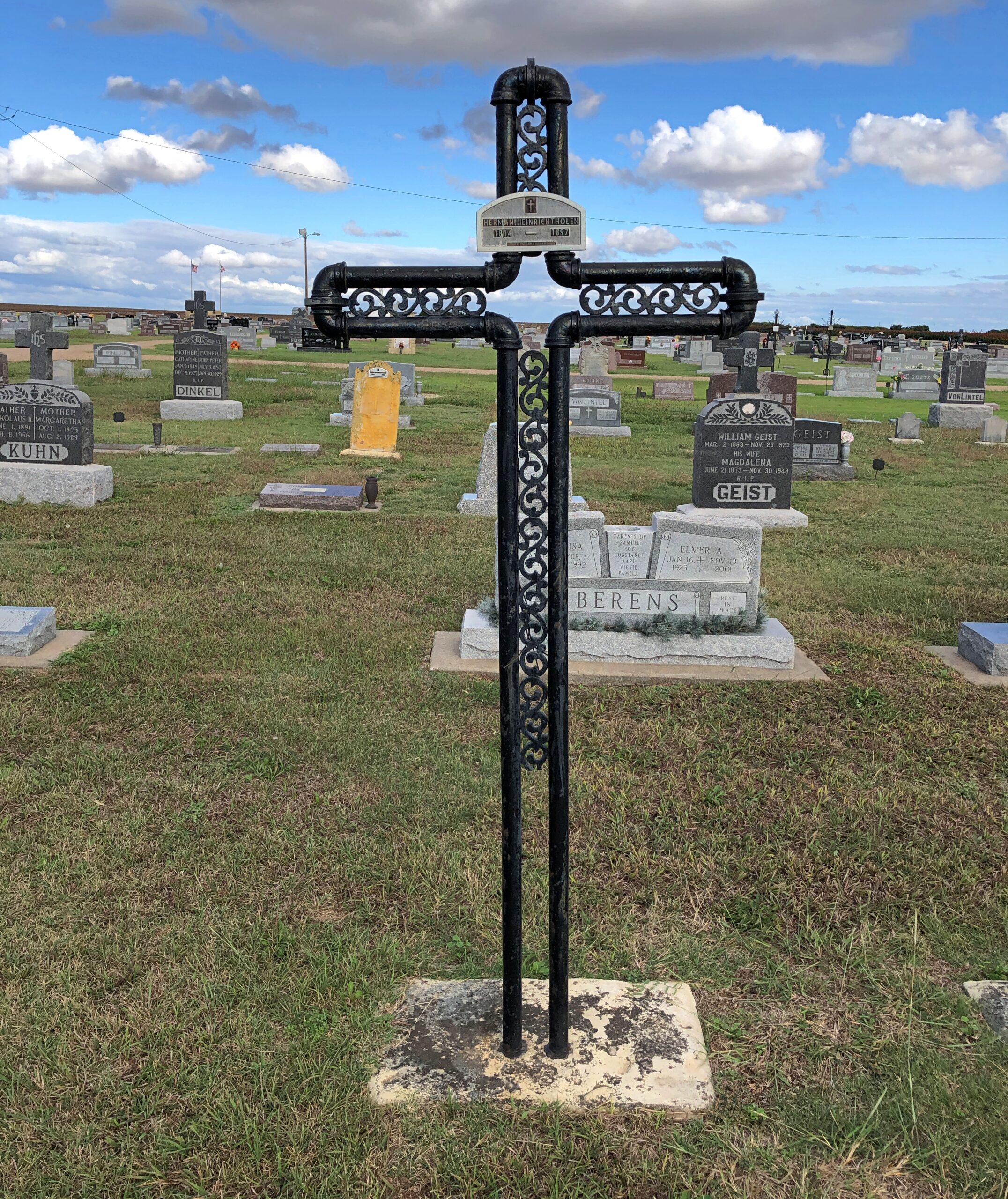
Then I started to notice iron crosses.

St Fidelis Cemetery
St Fidelis Cemetery
St Fidelis Cemetery

A lot of them. That called for further investigation, and it wasn’t long before I found out that Volga Germans were known for their wrought-iron crosses.

“German-Russian blacksmiths began making wrought-iron crosses in North Dakota as early as 1884,” says an article posted by North Dakota State University. “The hand-made crosses were most prevalent in central North Dakota from the late 1880s to about 1925, when marble and granite became more popular for grave marking. Most wrought-iron crosses appear in Catholic graveyards, although a few of these markers are also found in German-Russian Lutheran graveyards.”

The article talks of their crosses in North Dakota, but notes that they are also found in the “Northern Plains.” Such as Kansas, apparently.

Sacred Heart Cathedral, Salina, Kansas

The in-motel breakfast on September 24 in Salina, Kansas (pop. 46,800 or so) had been less than satisfactory, so Google Maps guided me to a doughnut shop on one of the wide, lightly traveled streets of downtown Salina. I ate in the car parked on just such a street, and soon started out for the highway (I-70) to head east.

Then I noticed Sacred Heart Cathedral.

Sacred Heart Cathedral, Salina, Kansas

I had to take a closer look.

Sacred Heart Cathedral, Salina, Kansas

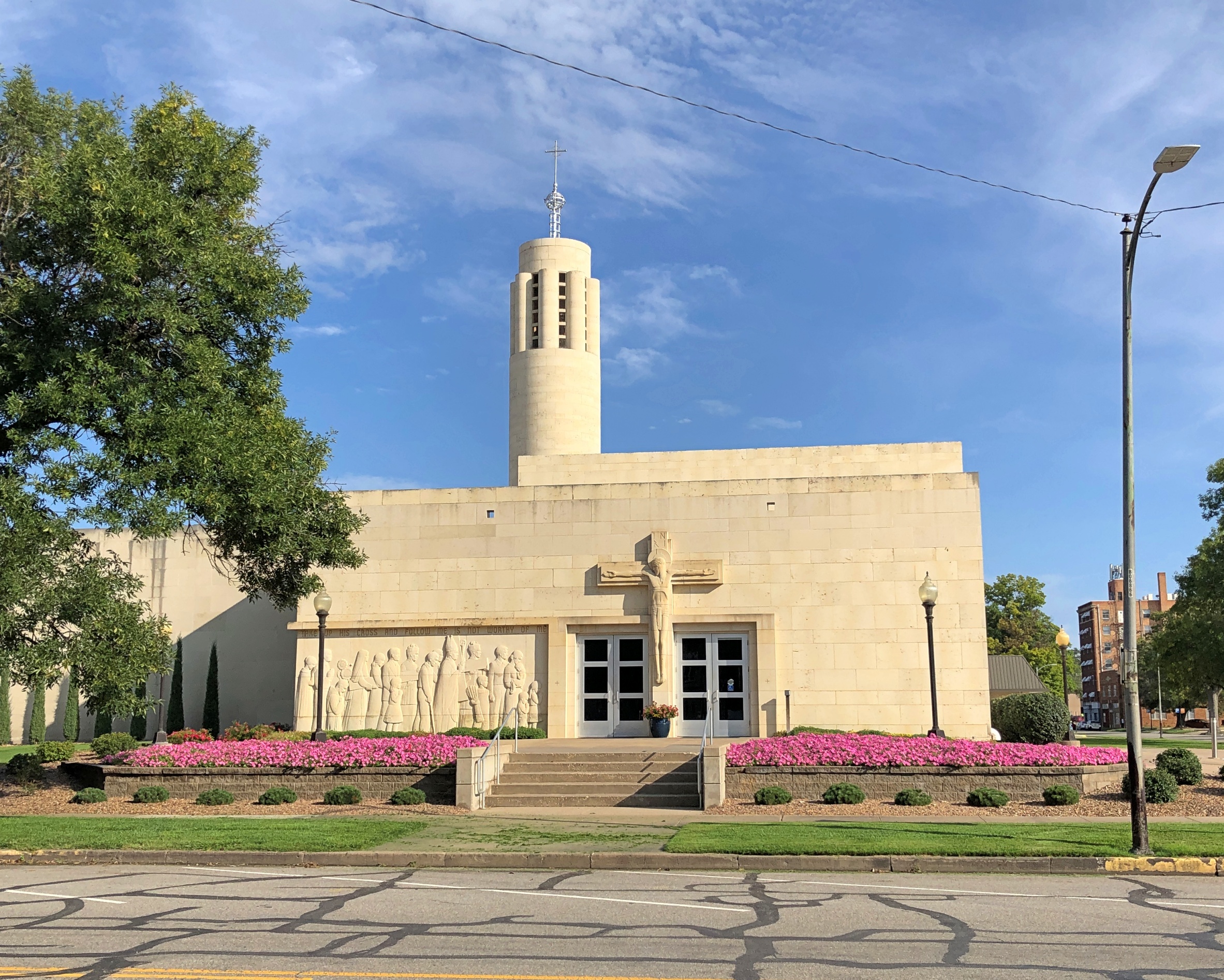
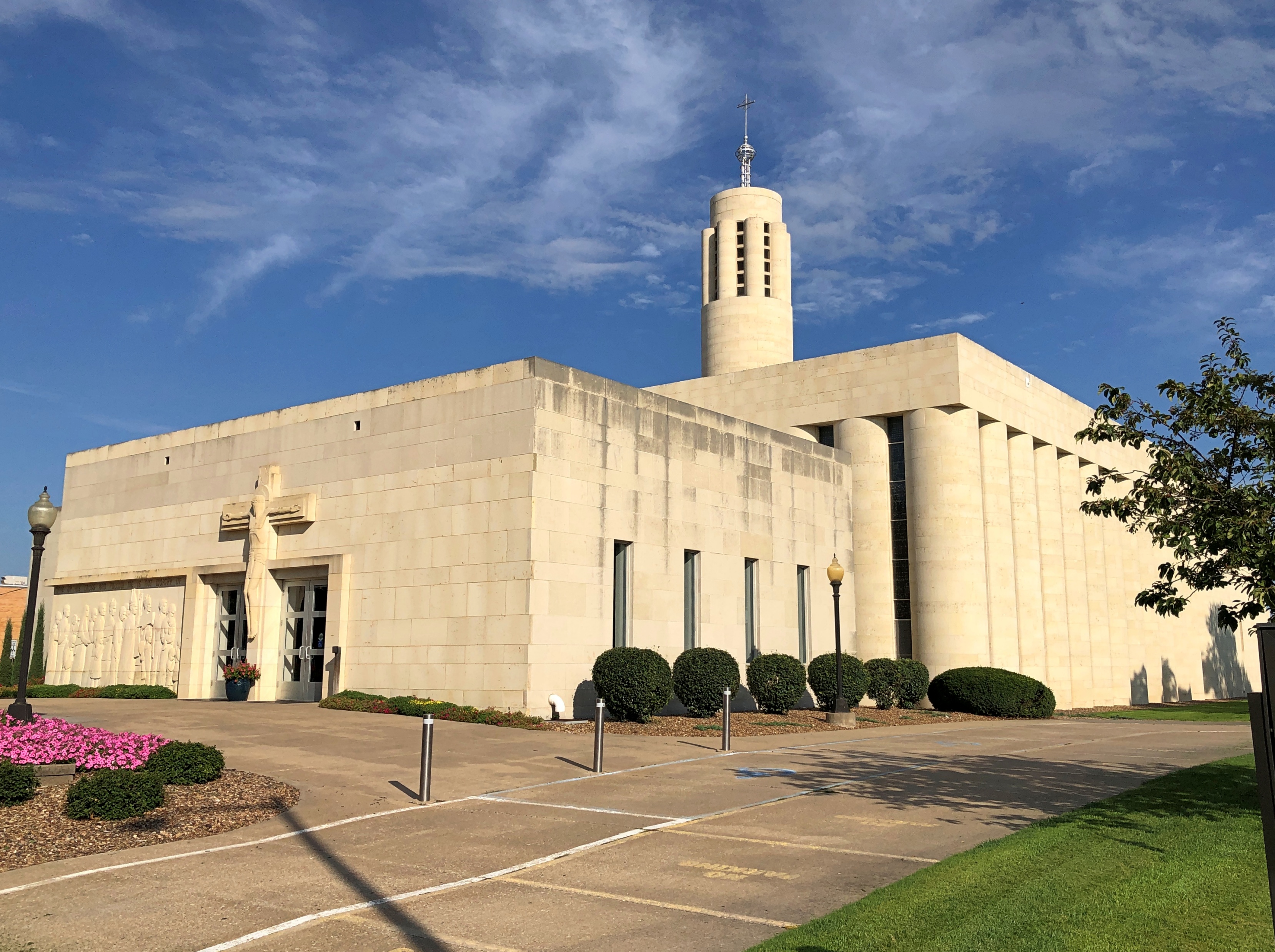
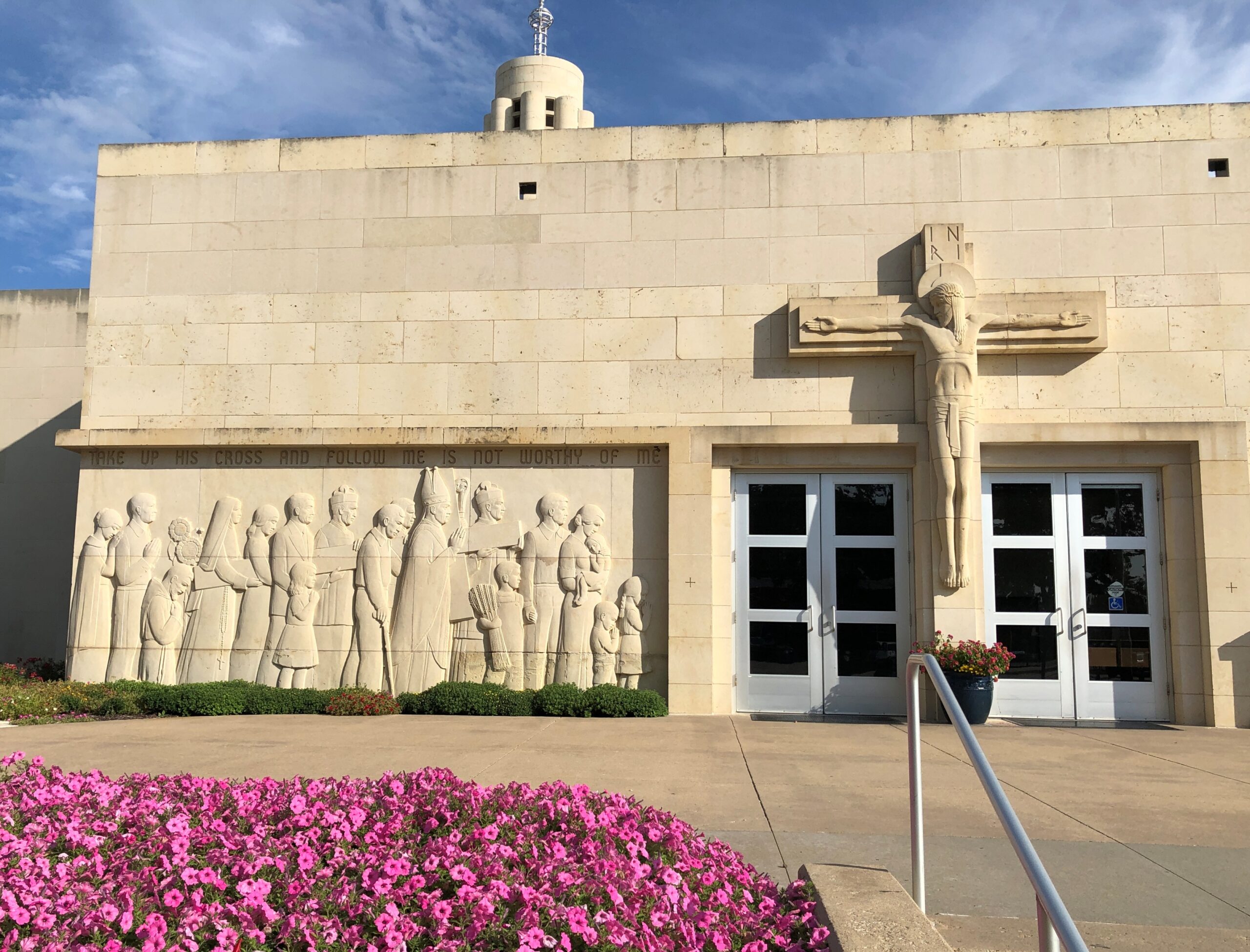
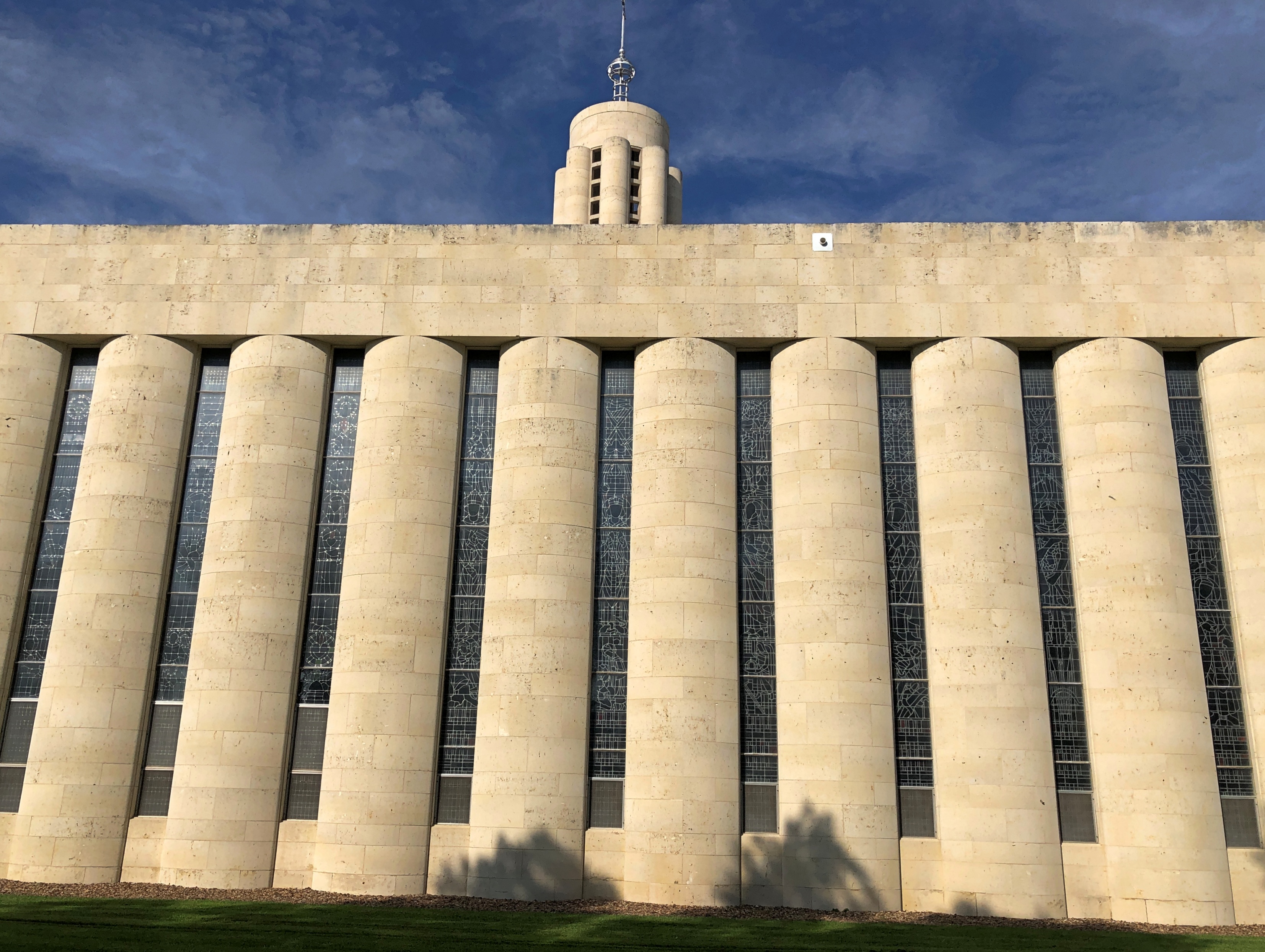
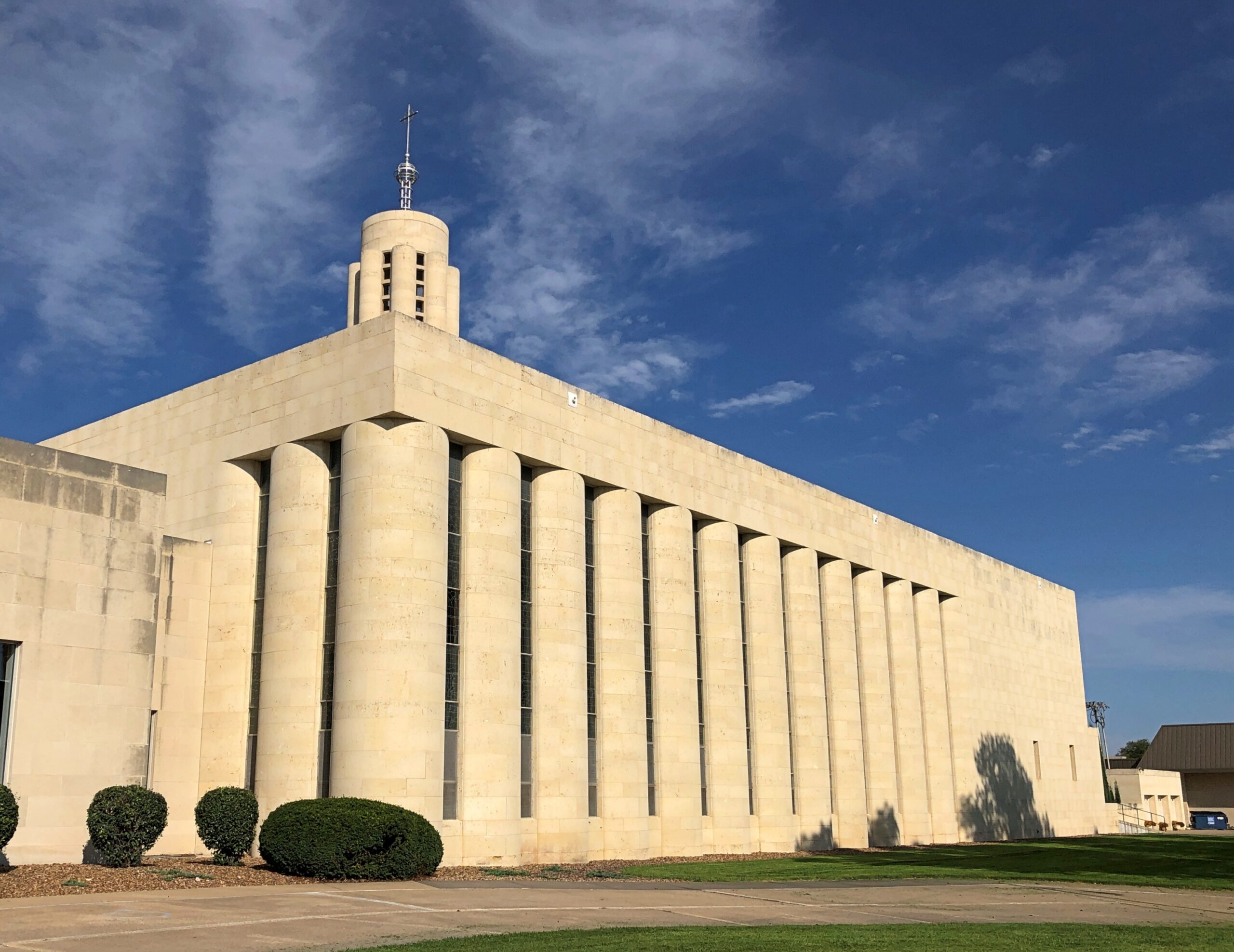
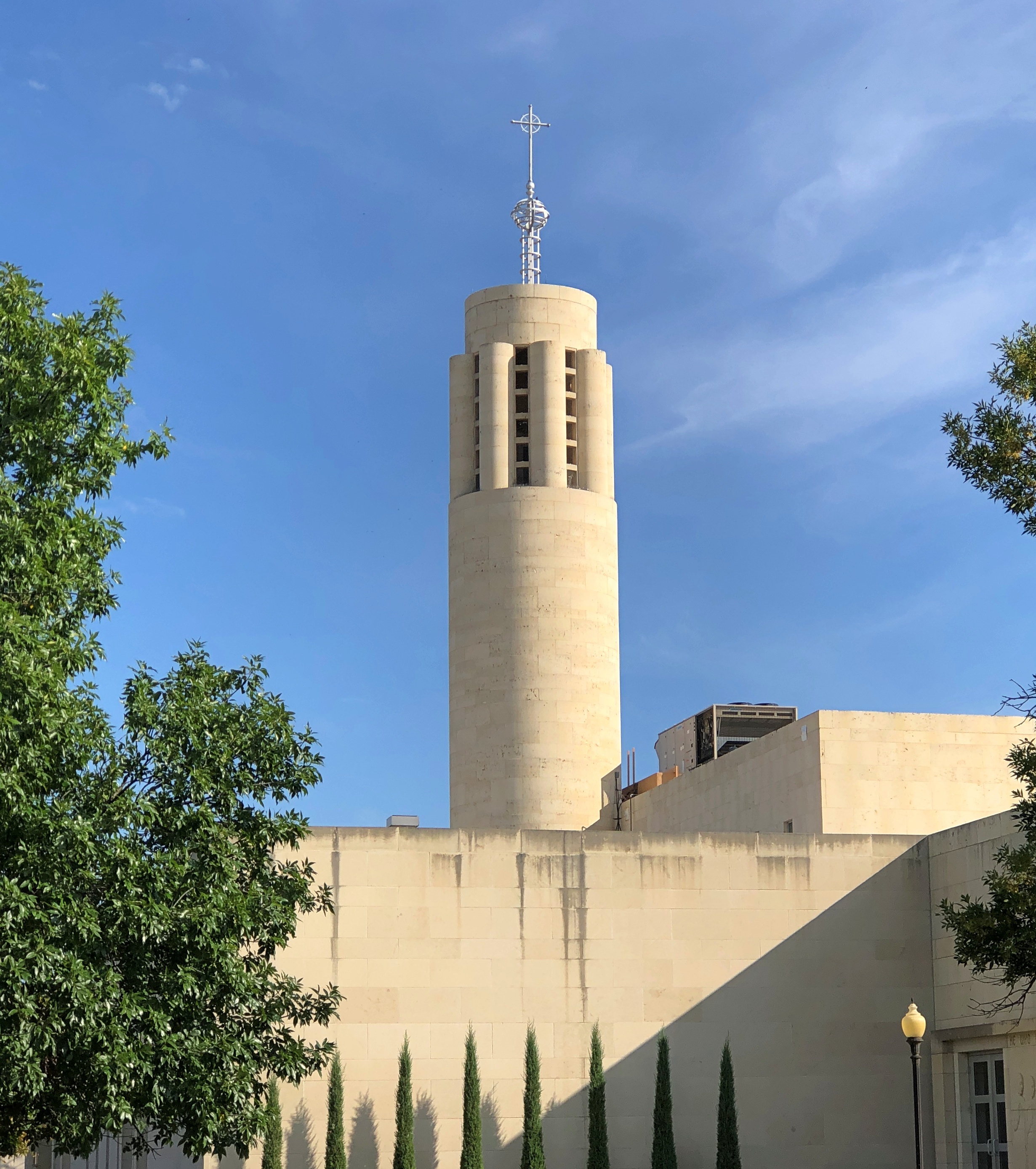
If that structure doesn’t say midcentury, I don’t know what would. Indeed, the cathedral was built in the 1950s. But it isn’t quite like any other church building I’ve seen, even of that period. Also, it isn’t mid-century concrete, which it looked like from a distance, but limestone.

Sacred Heart Cathedral, Salina, Kansas

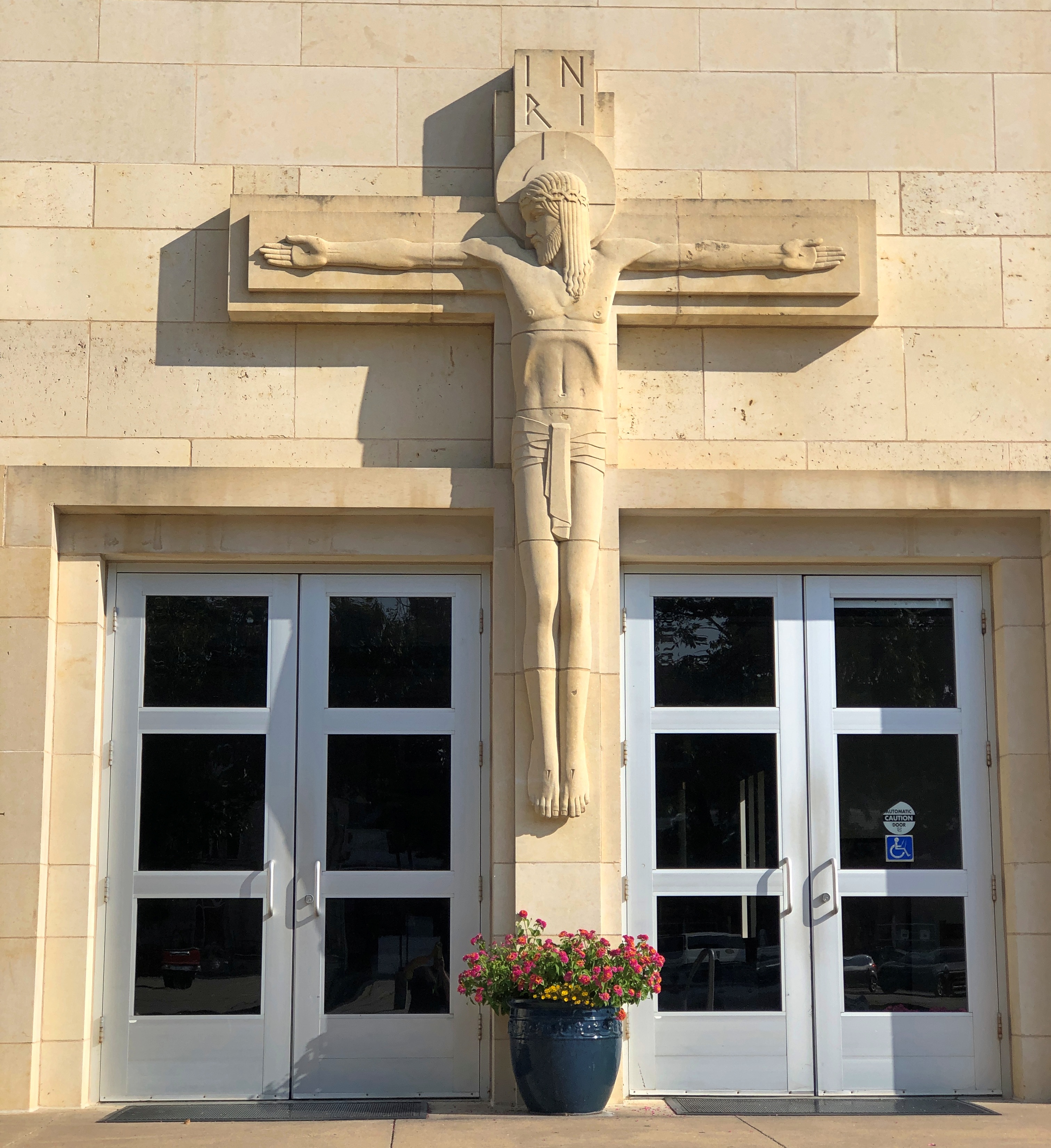
Note the Kansas elements.

The cathedral’s web site says: Sacred Heart Cathedral is a distinctive building that draws upon rural Kansas imagery and uses it in the service of Christian mythology. It is a noteworthy example of the work of Edward J. Schulte [d. 1975], a prolific designer of Catholic facilities across the Midwest through the greater part of the twentieth century.

Its most striking features are what appear to be a row of cylinders thirty feet in circumference extending the full height of the eastern and western facades, which resemble the grain elevators that dominate the skyline of most towns in western Kansas.

The allusion to grain elevators helps to link the church to its place in Kansas. It can also be seen as a symbol — the Cathedral is a place where the faithful come to receive the sustenance of the Eucharist.

It was open. That was unexpected, but I didn’t let the opportunity pass.

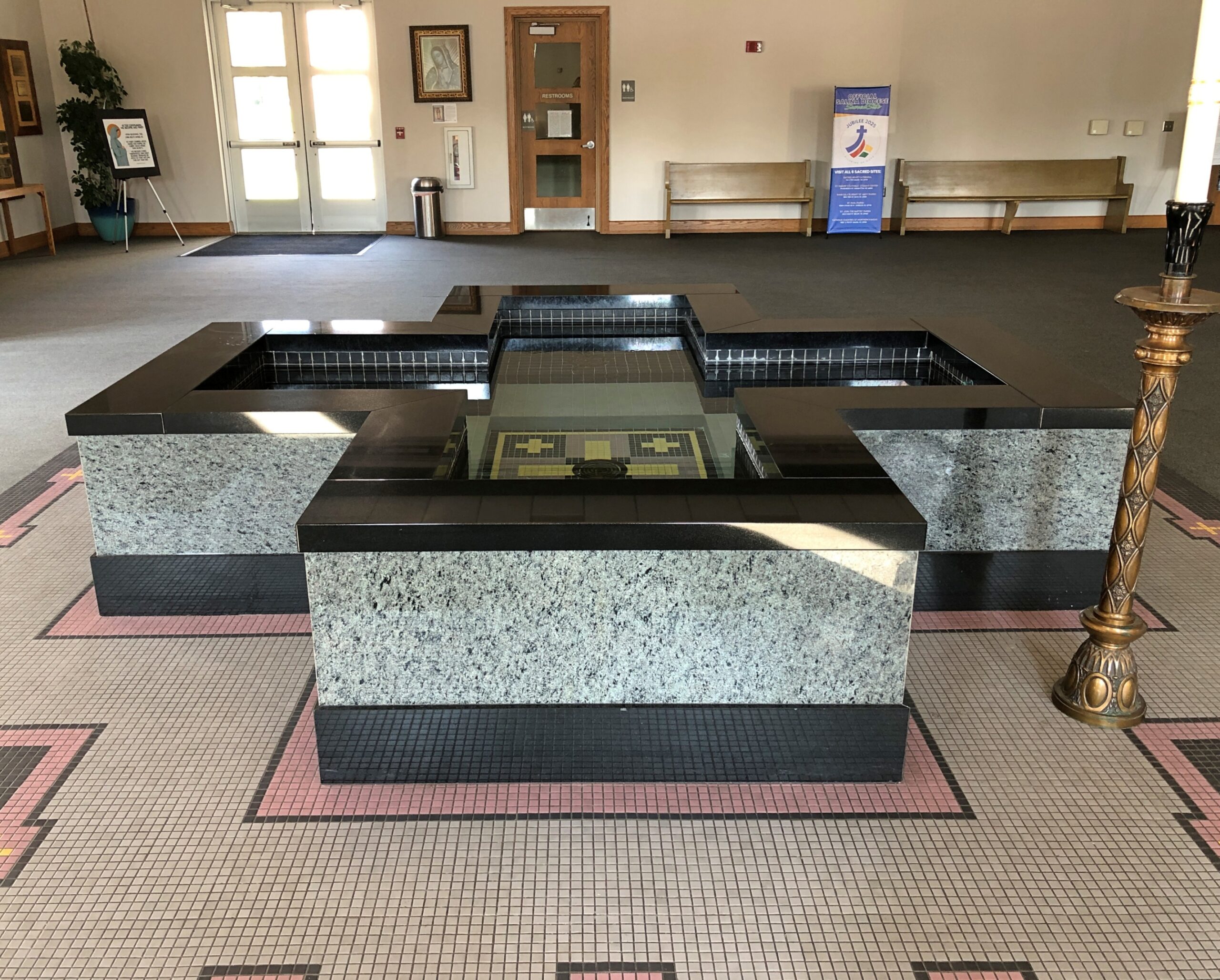
The baptismal font in the narthex.

Sacred Heart Cathedral, Salina, Kansas

The nave.

Sacred Heart Cathedral, Salina, Kansas

That part of downtown Salina was thick with churches. Another is First United Methodist, across the street from Sacred Heart.

First Methodist, Salina, KS

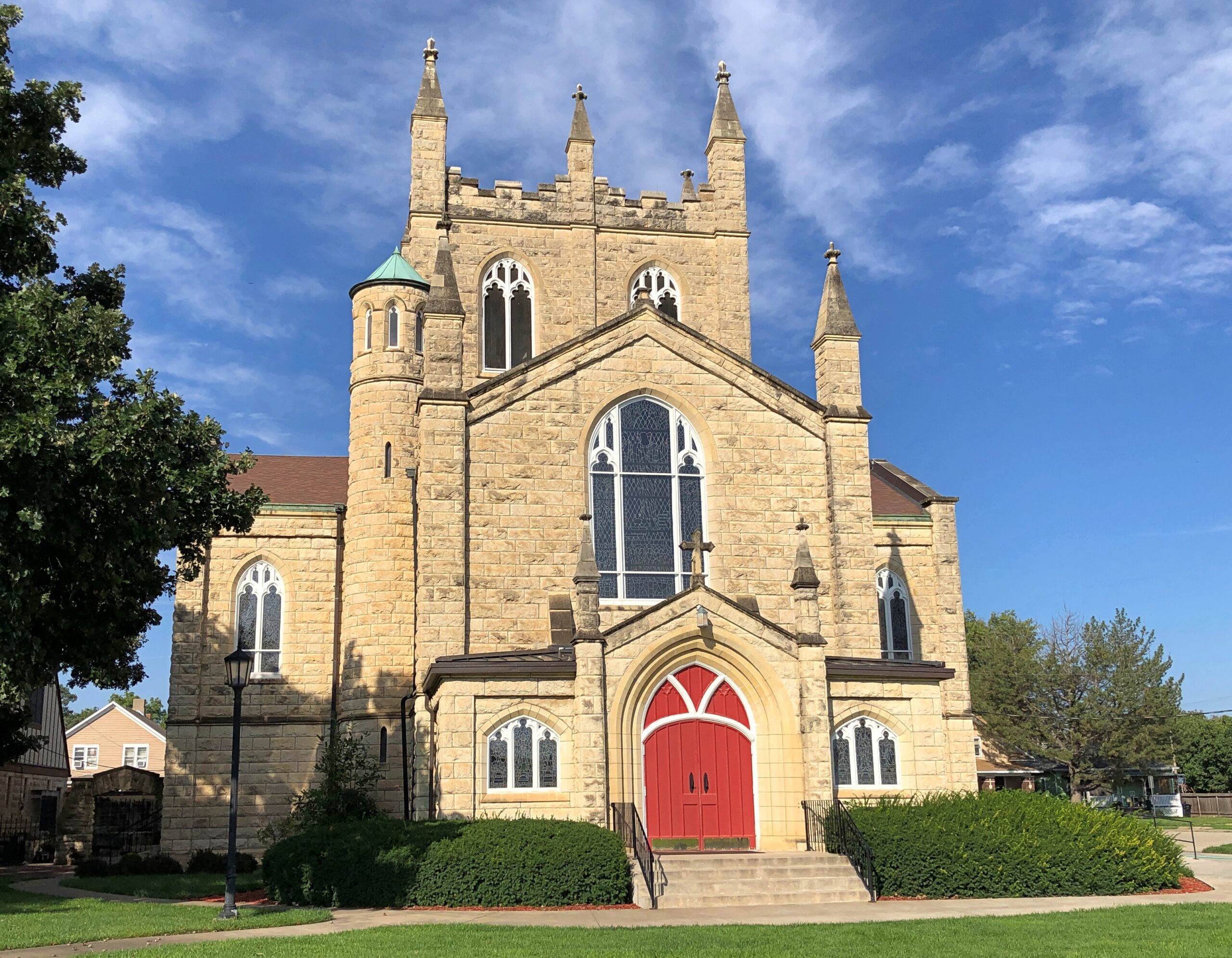
About a half block away, Christ Cathedral Episcopal. The other churches weren’t open.

Christ Cathedral Episcopal, Salina, KS

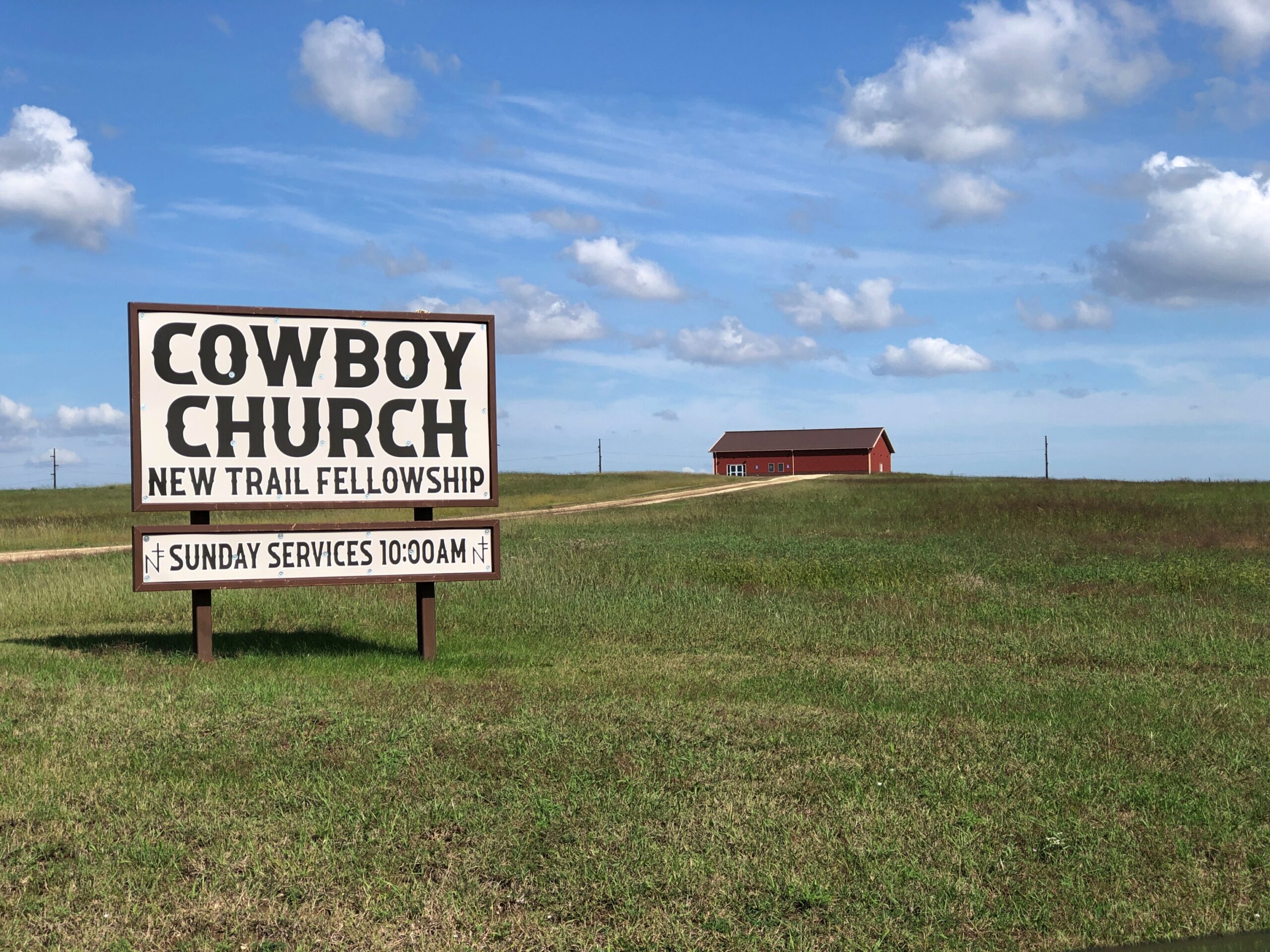
Later that day, at an exit just east of Abilene, I went looking for one more church — a kind of church I’d only ever driven by before.

Cowboy Church, Abilene, KS
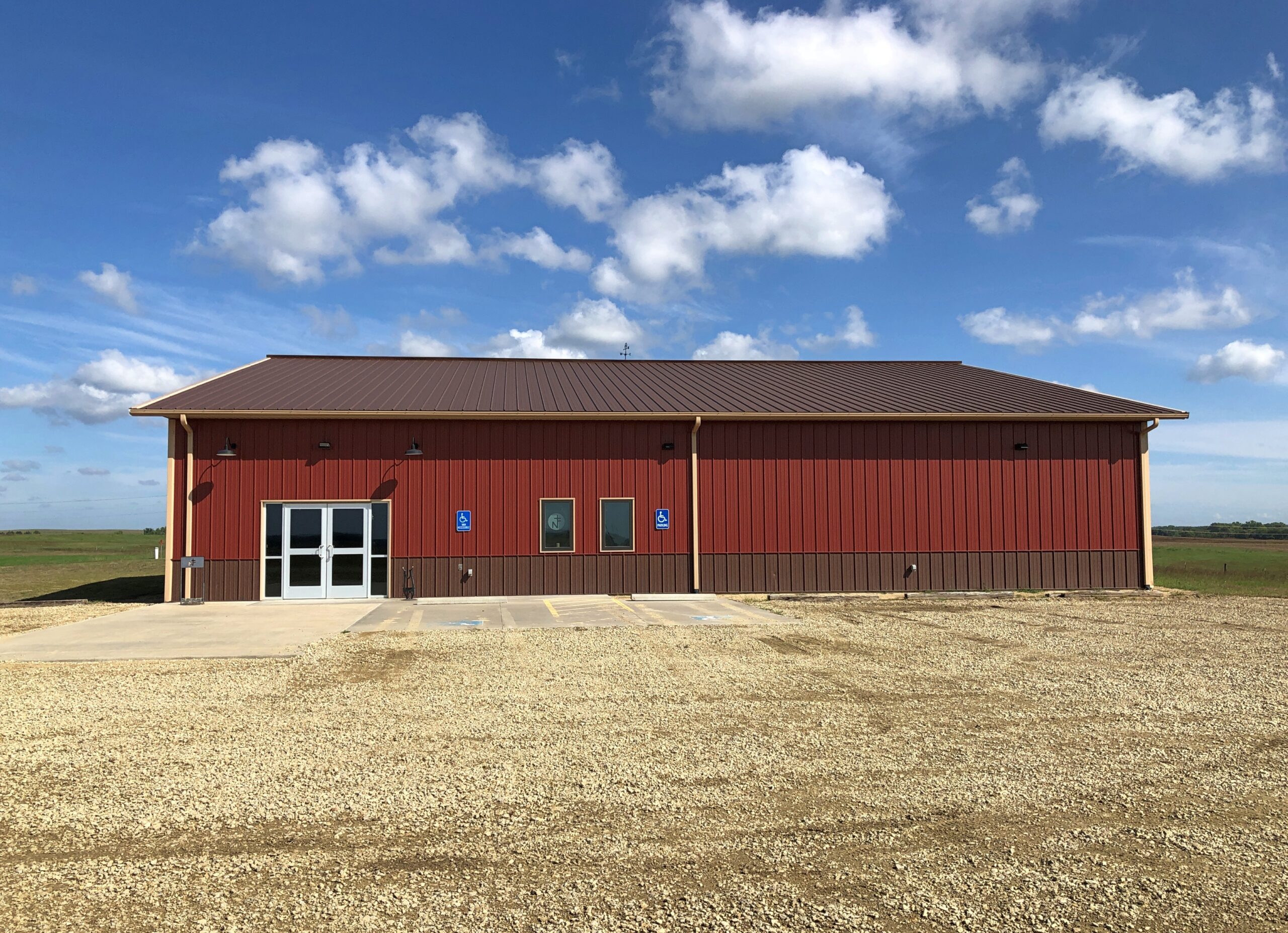
Cowboy Church, Abilene, Kansas

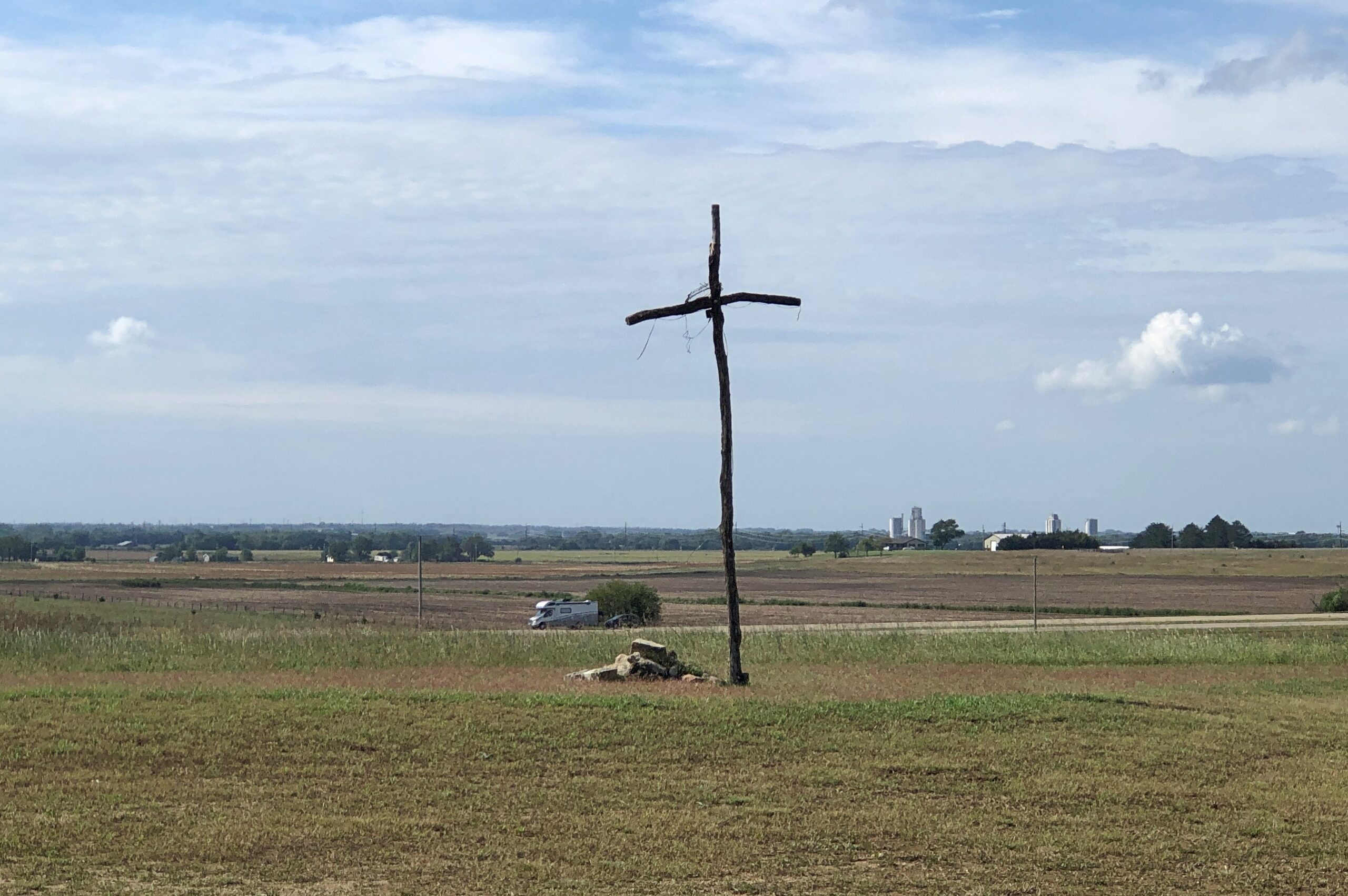
Google Maps told me that this Cowboy Church was open for a few hours that day. I was skeptical, but went anyway, on the off chance that I’d get to see the inside of a Cowboy Church. As expected, it wasn’t open. Still, I got to look around in all directions.

Cowboy Church, Abilene, KS

Informality, I’ve read, is important to the nondenominational Cowboy Churches, whose number seems to be large, but without an exact count. (And some individual churches are pretty large.) I can only hope that at one or more of them, somewhere and at sometime, Yippee-Ki-Yay, Lord! is part of their prayer.

The Kansas State Capitol

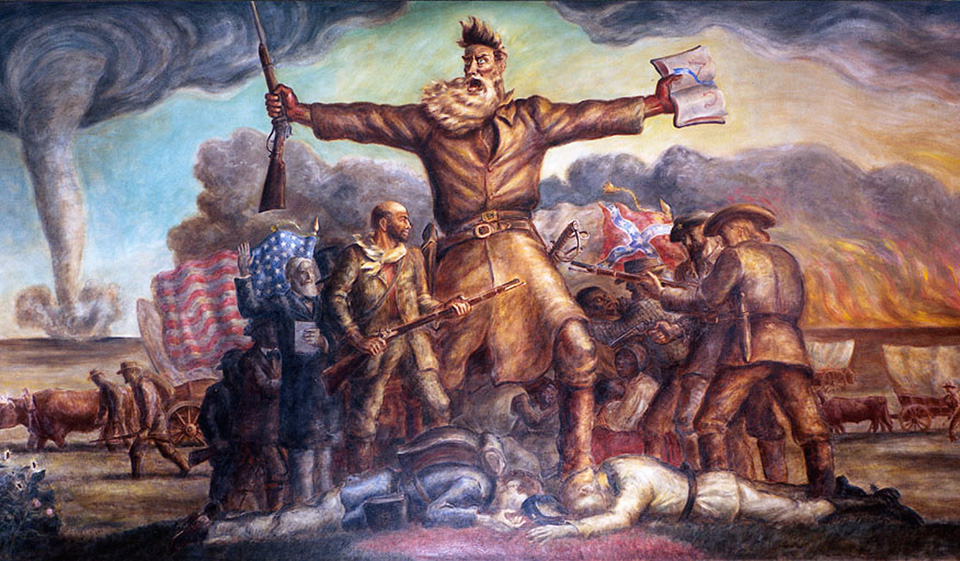
One fine day in the Kansas State Capitol last month, I turned a corner and found myself looking up at Old Testament John Brown. Larger than life, as he has loomed these 160+ years.

The mural, actually called “Tragic Prelude,” is more than 11 feet tall and 31 feet long, taking up an entire wall in the capitol. The lighting isn’t particularly good for taking images of the whole work – a ceiling light in particular washes out much of John Brown’s (let’s say) emphatic expression. Luckily, the image seems to be in the public domain.

A plaque under the mural says:

Sponsored by Kansas Press Association, aided by Kansas school children, these murals were painted in 1940-41 by John Steuart Curry, who was born near Dunavent, Kansas. In John Brown’s outstretched left hand is the word of God. In his right, a “Beecher’s Bible.” Beside him, facing each other, are contending Free Soil and Pro-Slavery forces.

The plaque does not say that the many members of Kansas legislature hated the painting at first, and refused to hang it in Curry’s lifetime (he died in 1946). Curry had had the temerity to depict Bleeding Kansas, by far the most interesting period in the history of the territory and state; the interesting times no one wants to live through. Maybe they thought it glorified John Brown — which it half way does, but with more than a tinge of madness in him as well. Bottom line, the work apparently didn’t sit well with those who might have wanted a Kansas of doughty farmers and hardy pioneers and fertile landscapes.

Eventually, to its credit, the legislature did have the work installed. Whatever you think of John Brown, it’s a striking piece. I’d seen depictions of it, but either never knew or had forgotten that it hangs in the Kansas State Capitol, which made coming across it all the more memorable.

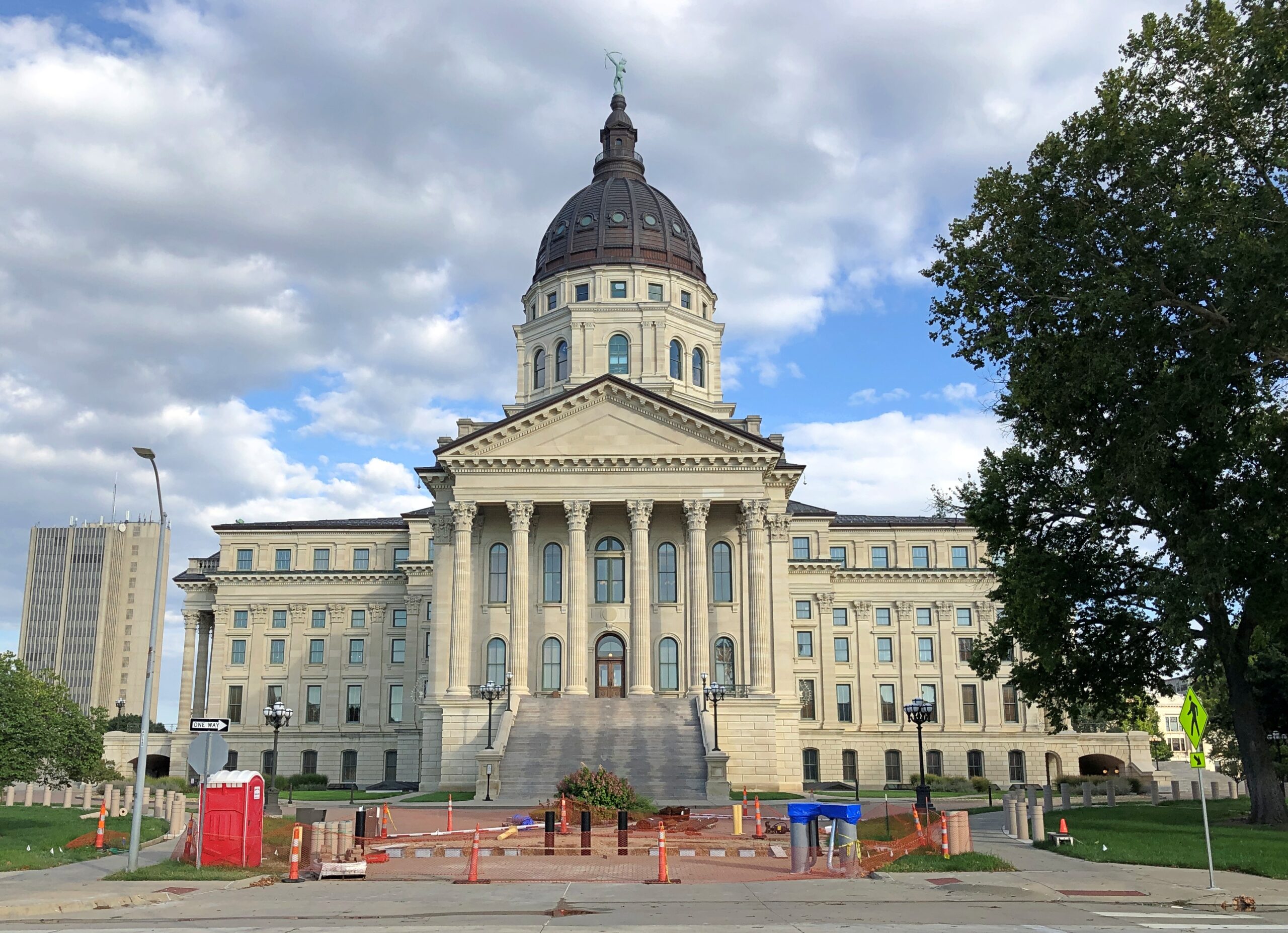
I almost missed it, having dawdled in Salina and Abilene for most of that day (September 24), but I made it to Topeka and the capitol about 30 minutes before it closed.

Kansas State Capitol

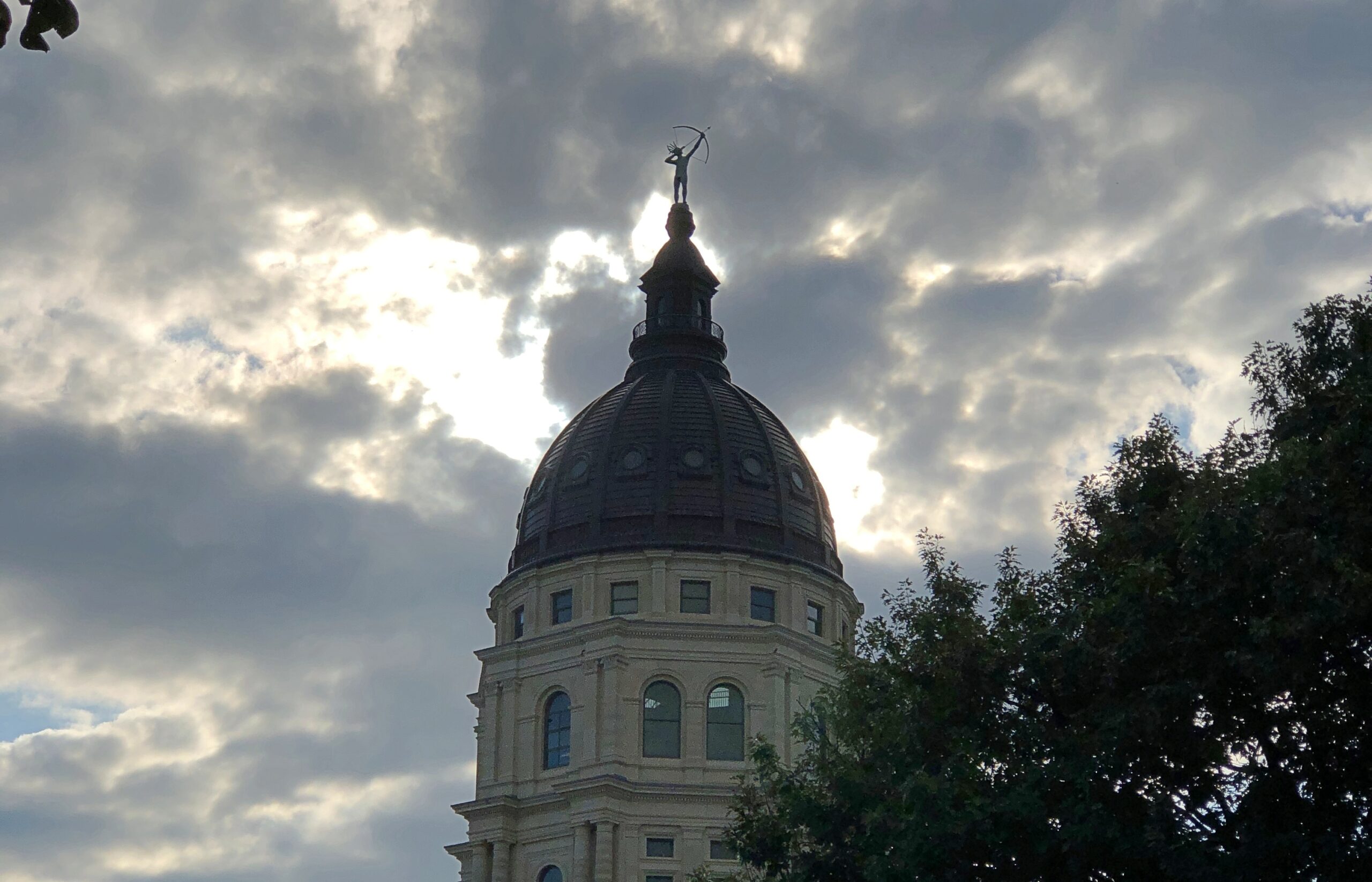
Like any number of monumental edifices, this one took time: construction finished in 1903 after 37 years in the works, not counting renovations or the comparatively recent addition of the 4,420-pound, 22-foot tall bronze “Ad Astra” on top of the dome, which was in 2002. The figure is an acknowledgment of the Kaw Nation (Kansa), who lent their name to the state.

Kansas State Capitol

Architect E. Townsend Mix (d. 1890) designed the capitol, though he didn’t live to see its completion. Most of his work is in Milwaukee, where he lived the longest, including St. Paul’s Episcopal in that city.

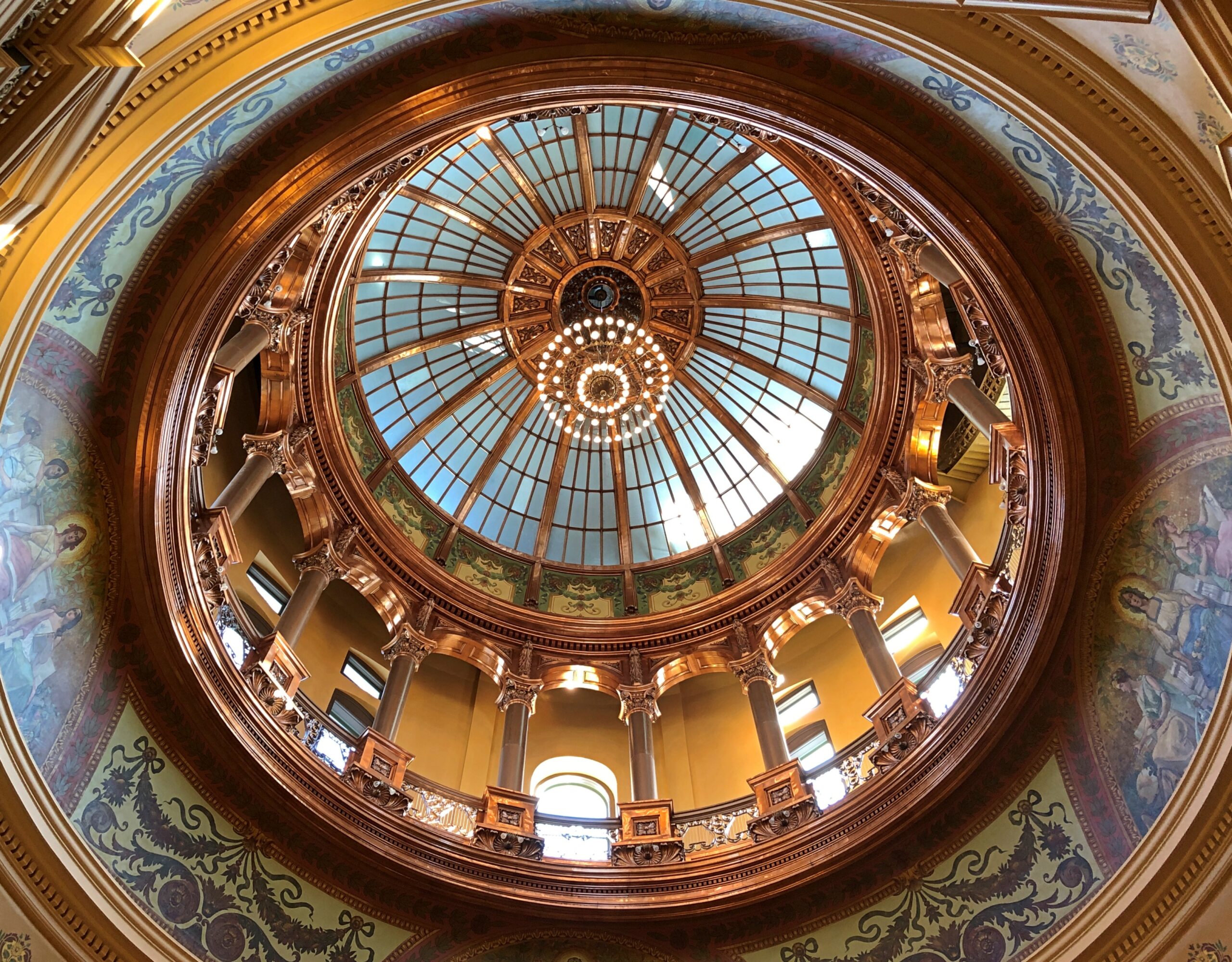
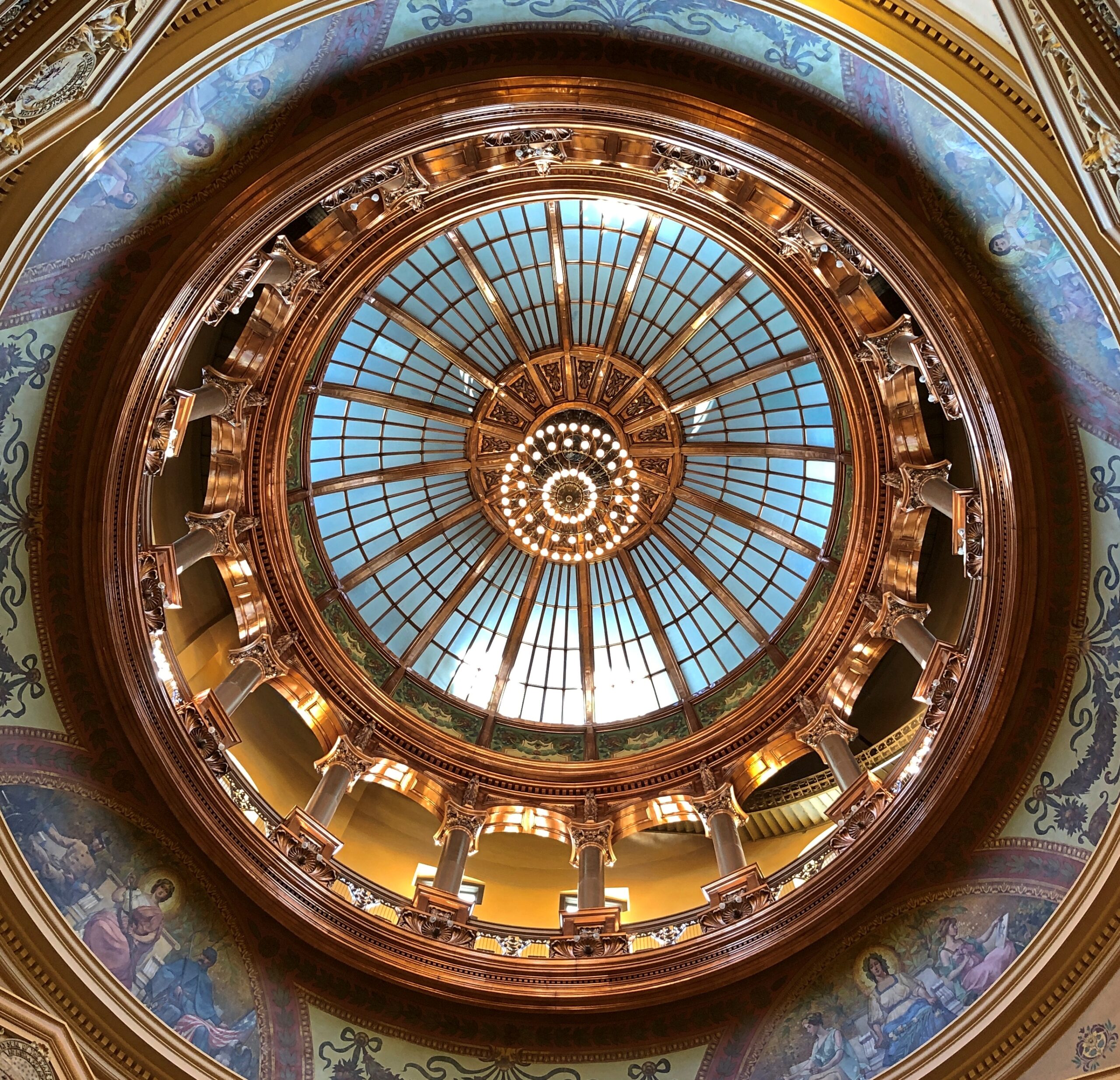
A fine dome.

Kansas State Capitol

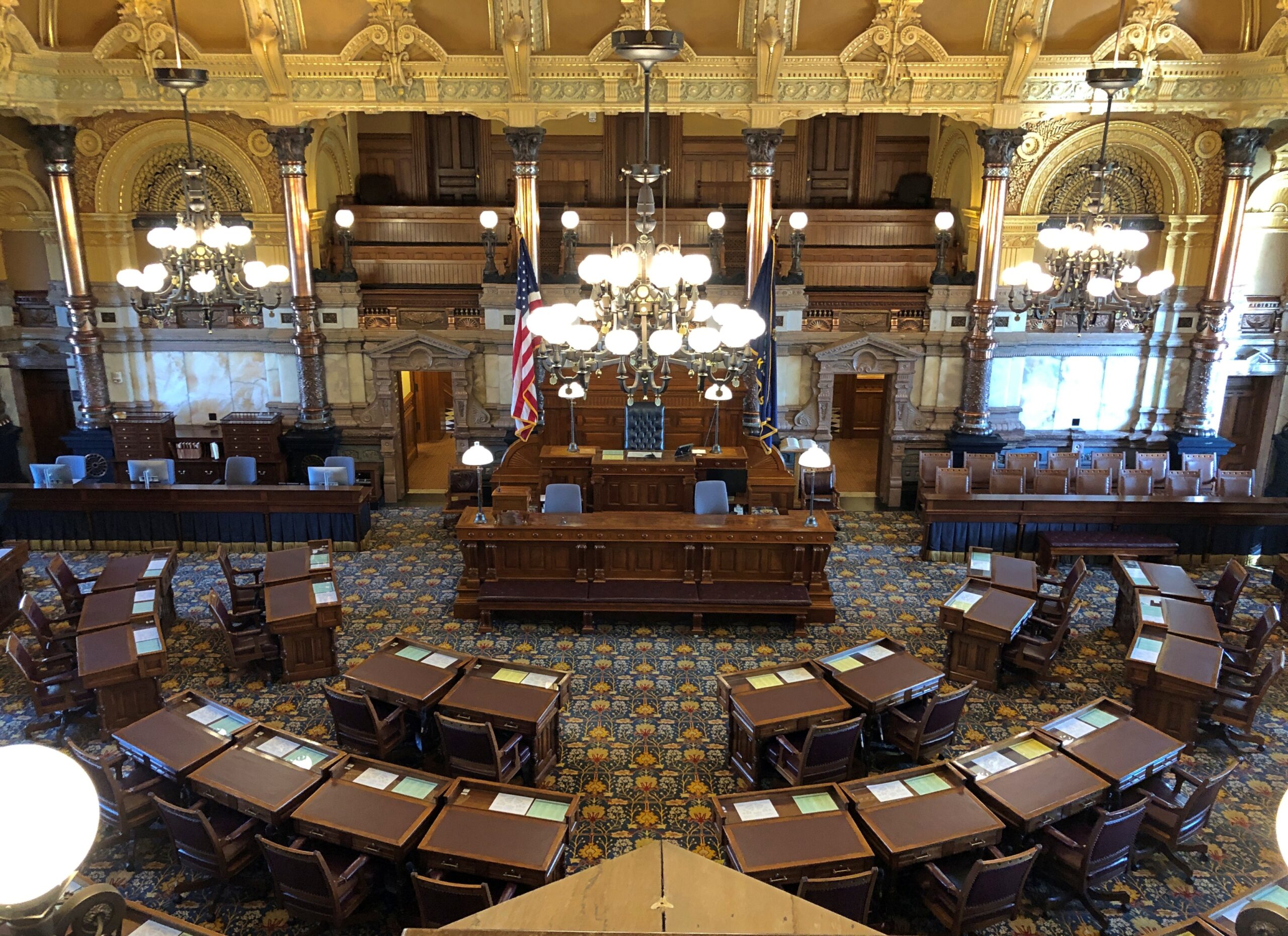
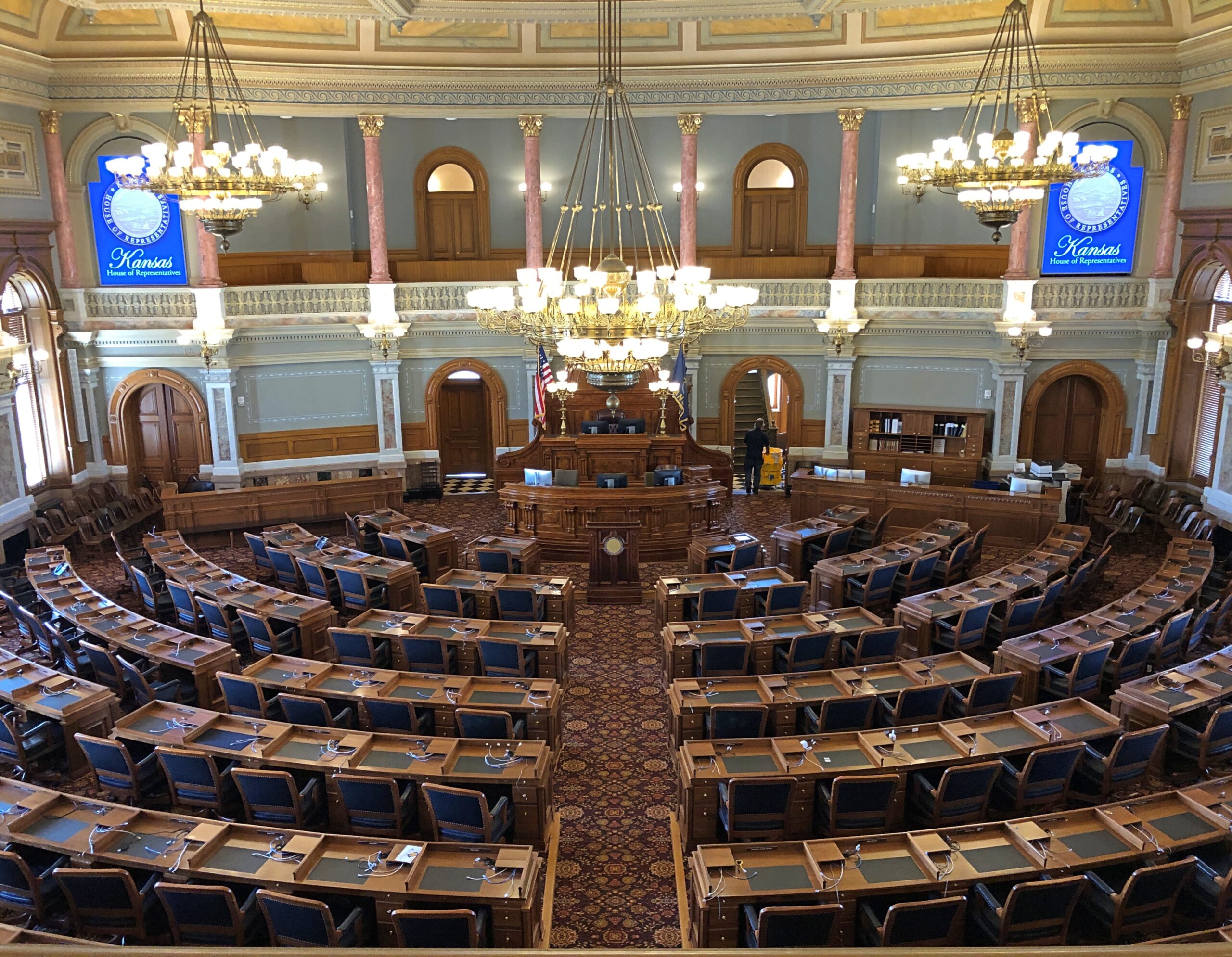
Well-appointed chambers.

Kansas State Capitol

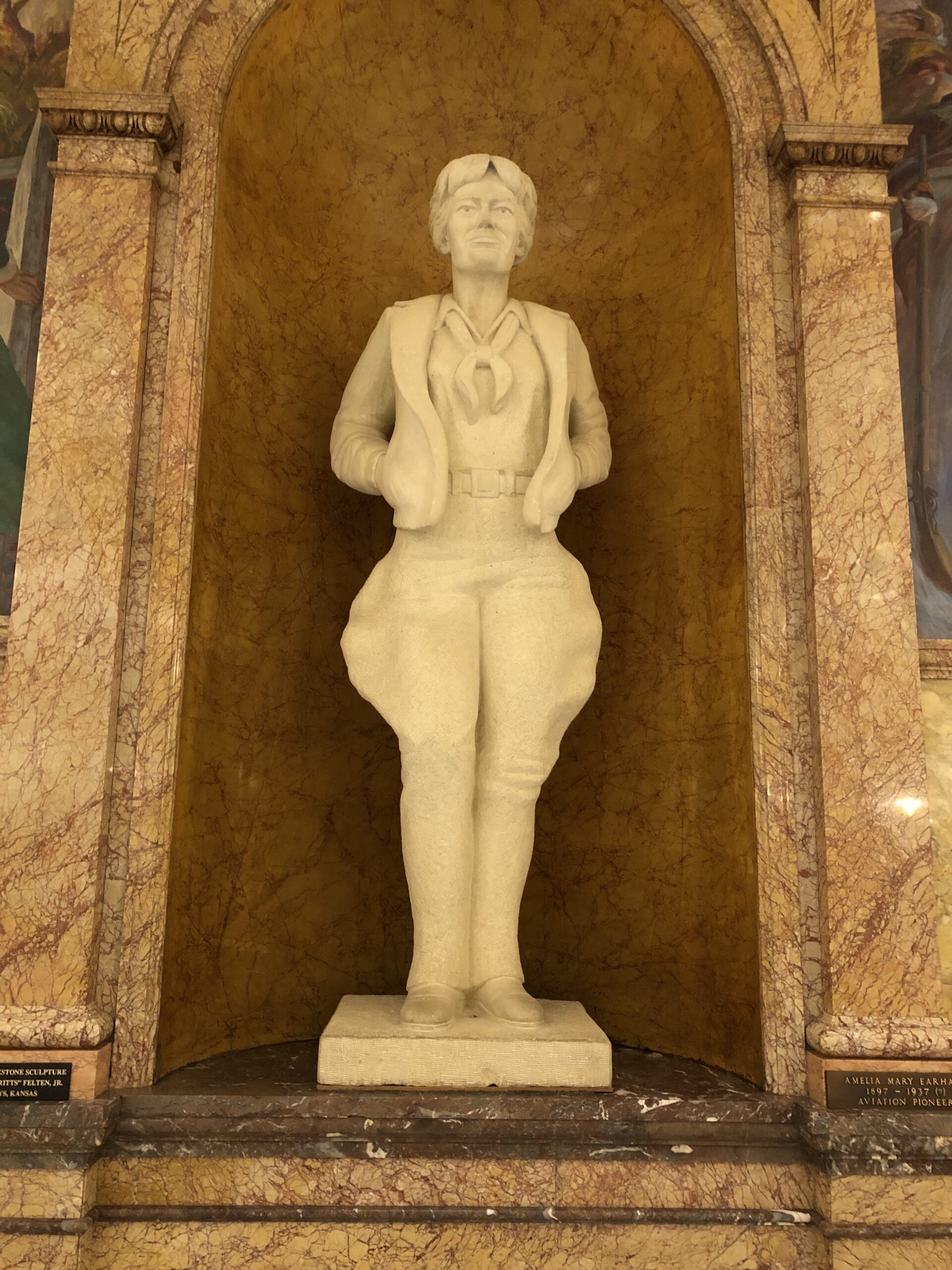
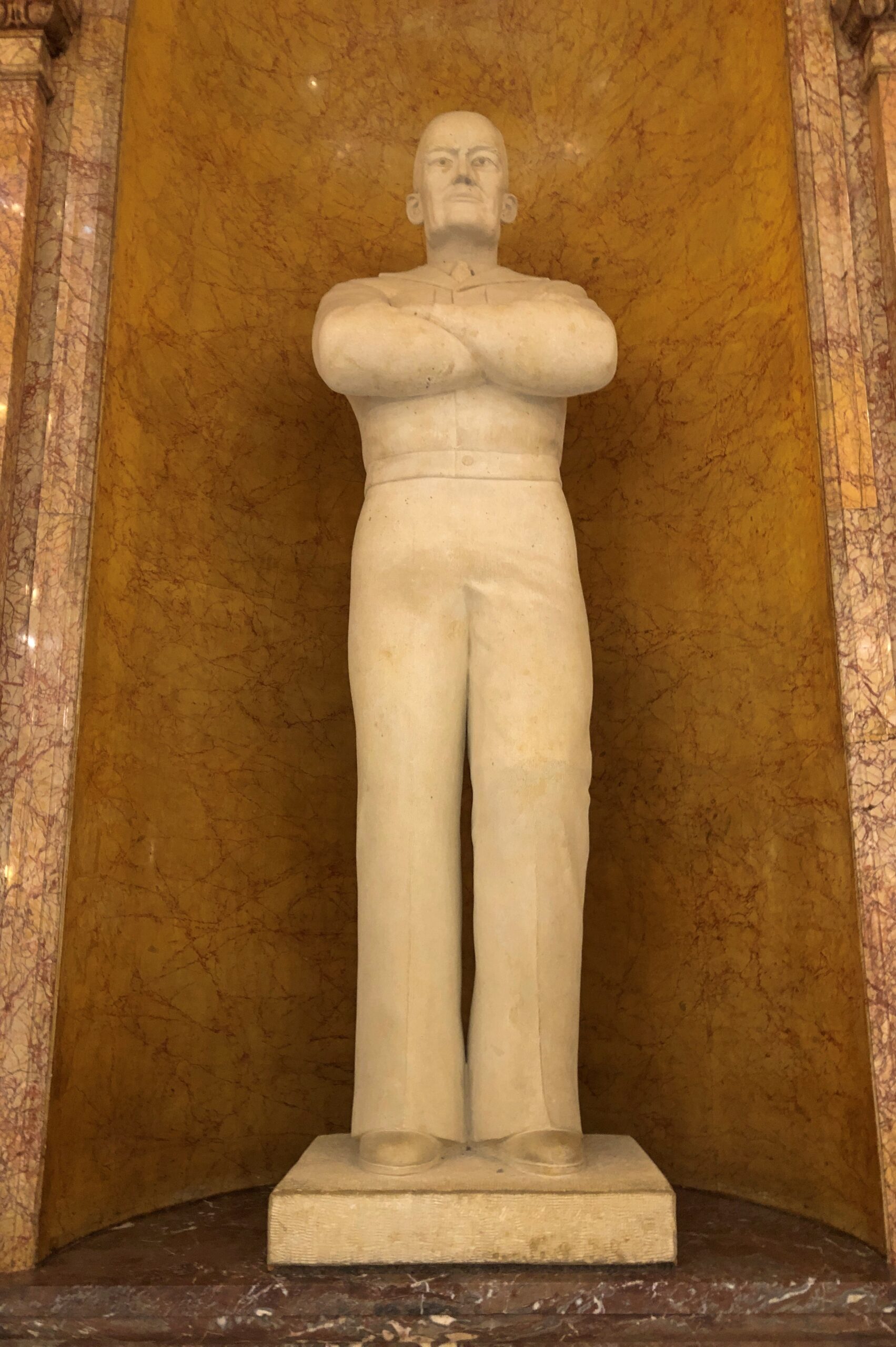
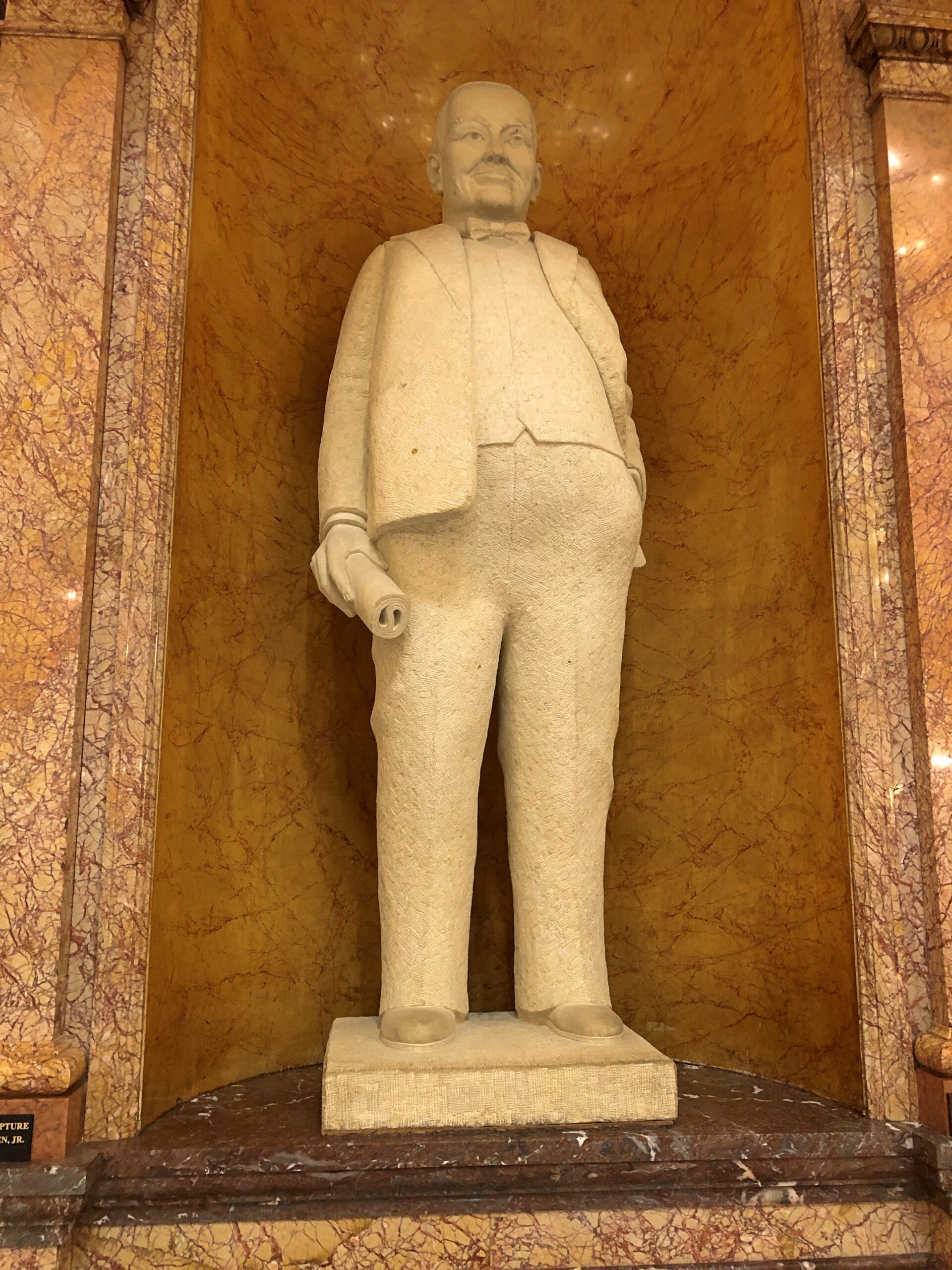
The capitol interior is fairly art-intensive. Not all capitols are. For instance, there are limestone statues in large niches — native limestone, a sign says — of famed Kansans, by Peter “Fritts” Felten Jr. of Hays, Kansas. Such as one of the aviatrix from Atchison.

Kansas State Capitol

Amelia Earhart is immediately recognizable, which is no mean feat for someone who is (very likely) been dead for nearly 90 years.

I like Ike, but this?

This figure is also more-or-less recognizable – though a depiction of him that’s a little strange, looking for all the world like Mr. Clean. Only a little like that Ike fellow on an Eisenhower dollar.

The fellow below’s fame has, I’m afraid, shriveled up like a balloon that lost its helium: William Allen White (d. 1944) Probably not even known in Kansas any more, since he was a noted journalist, a profession whose posthumous fame tends to be brief. Editor, Pulitzer Prizewinner, his plaque says. A Progressive Through-and-Through, it does not say. That might not play in Kansas at the moment.

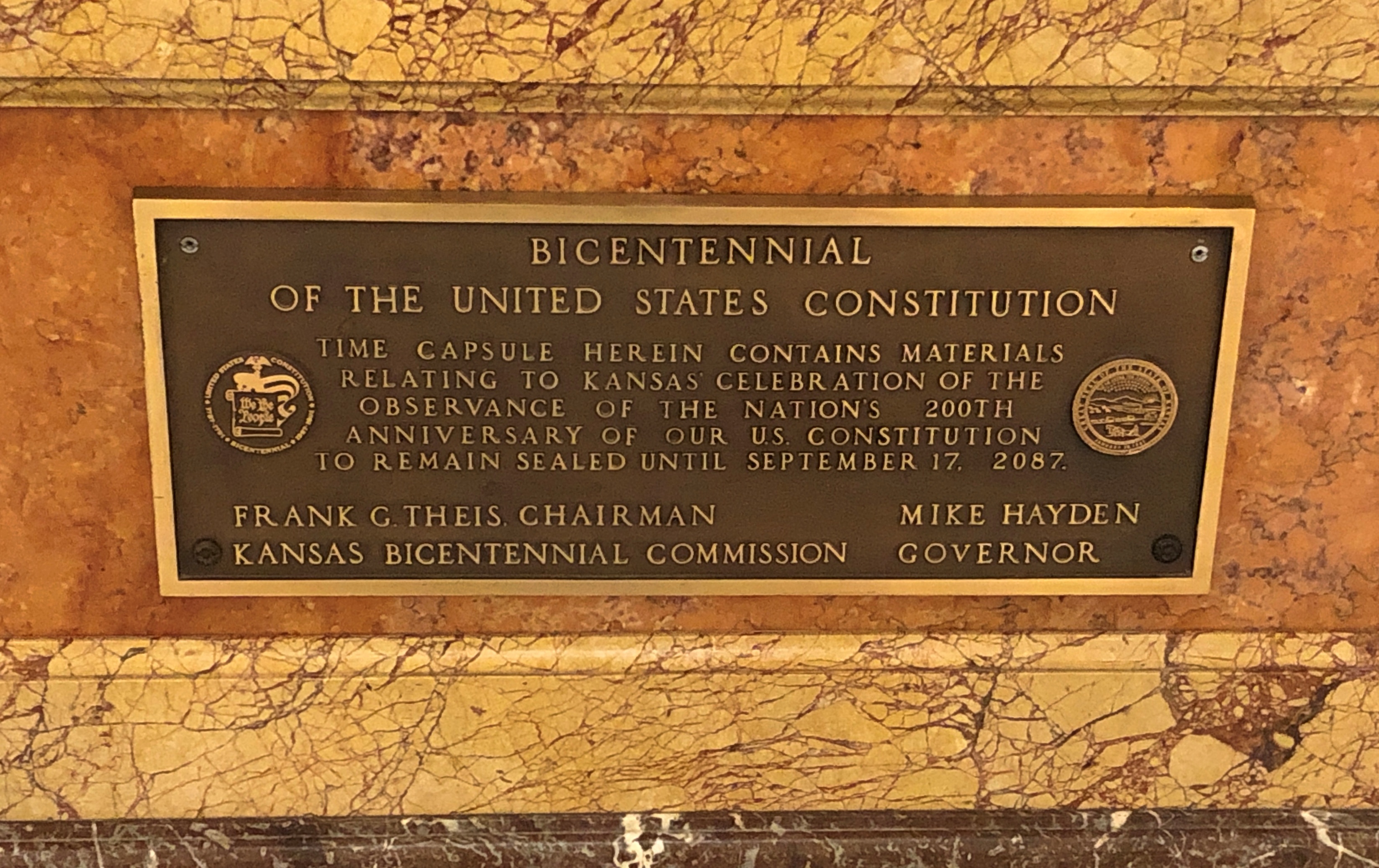
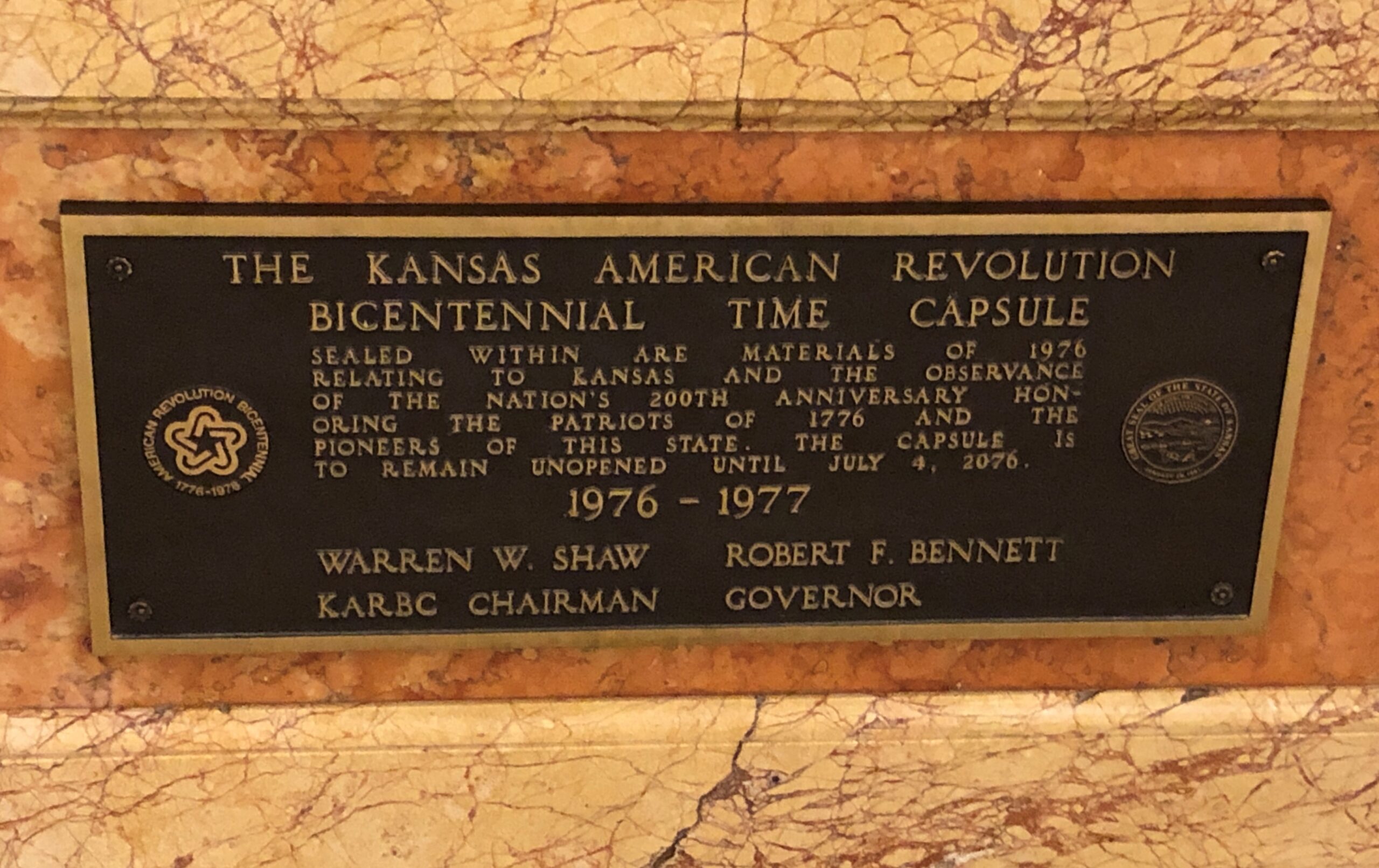
Not one, but two time capsules reside with the capitol walls. At least two that I saw.

Kansas State Capitol

This is a digression, but one thing still leads to another on line, and I came across a list published in 1991 by the International Time Capsule Society: “10 Most Wanted Time Capsules.” That is, a list of time capsules whose location had been lost and thus were (up till then) unrecoverable. The page notes that two have been found over the last 30+ years, but eight are still beyond the ken of man. Such as:

MIT Cyclotron Time Capsule.

In 1939 a group of MIT engineers placed a brass capsule beneath an 18-ton-magnet used in a brand new, state-of-the-art cyclotron. The capsule was to be opened in 50 years but was not. No one remembered the time capsule was there (the cyclotron had long since been deactivated). But when reminded of its existence, MIT was faced with another problem: how do you get a time capsule out from under a 36,000-pound lid?

Bicentennial Wagon Train Time Capsule.

This capsule was supposed to hold the signatures of 22 million Americans. But on July 4, 1976, when President Gerald Ford arrived for the sealing ceremony in Valley Forge, Pennsylvania, someone stole the capsule from an unattended van in the bicentennial wagon train. The capsule’s maker, the Reynolds Company, had broken the mold. The thief’s identity and the whereabouts of the capsule are unsolved mysteries.

Further investigation reveals that the whereabouts of the papers that Americans signed in 1976 – a good many pounds of it – mysteriously disappeared, and that theft from a van was one idea, though organizational misdirection sounds more plausible to me. To the same warehouse as the Ark of the Covenant, in other words. Anyway, there’s a 12-episode streaming service comedy in that incident.

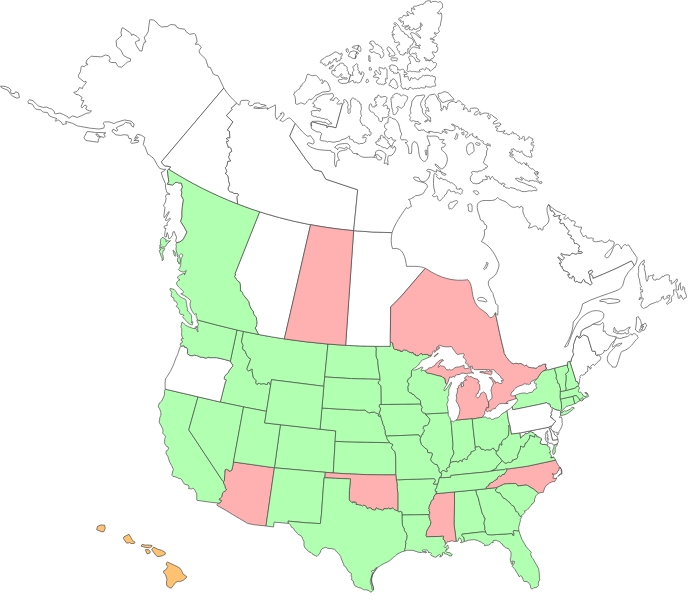
Back to capitols. It’s now easier to keep track of the ones I haven’t seen than otherwise.

Green for an interior visit, orange for exterior only, gold representing uncertainty, and white no visit.

Kansas Mud (Or, Three Places in Kansas I Had Practically to Myself)

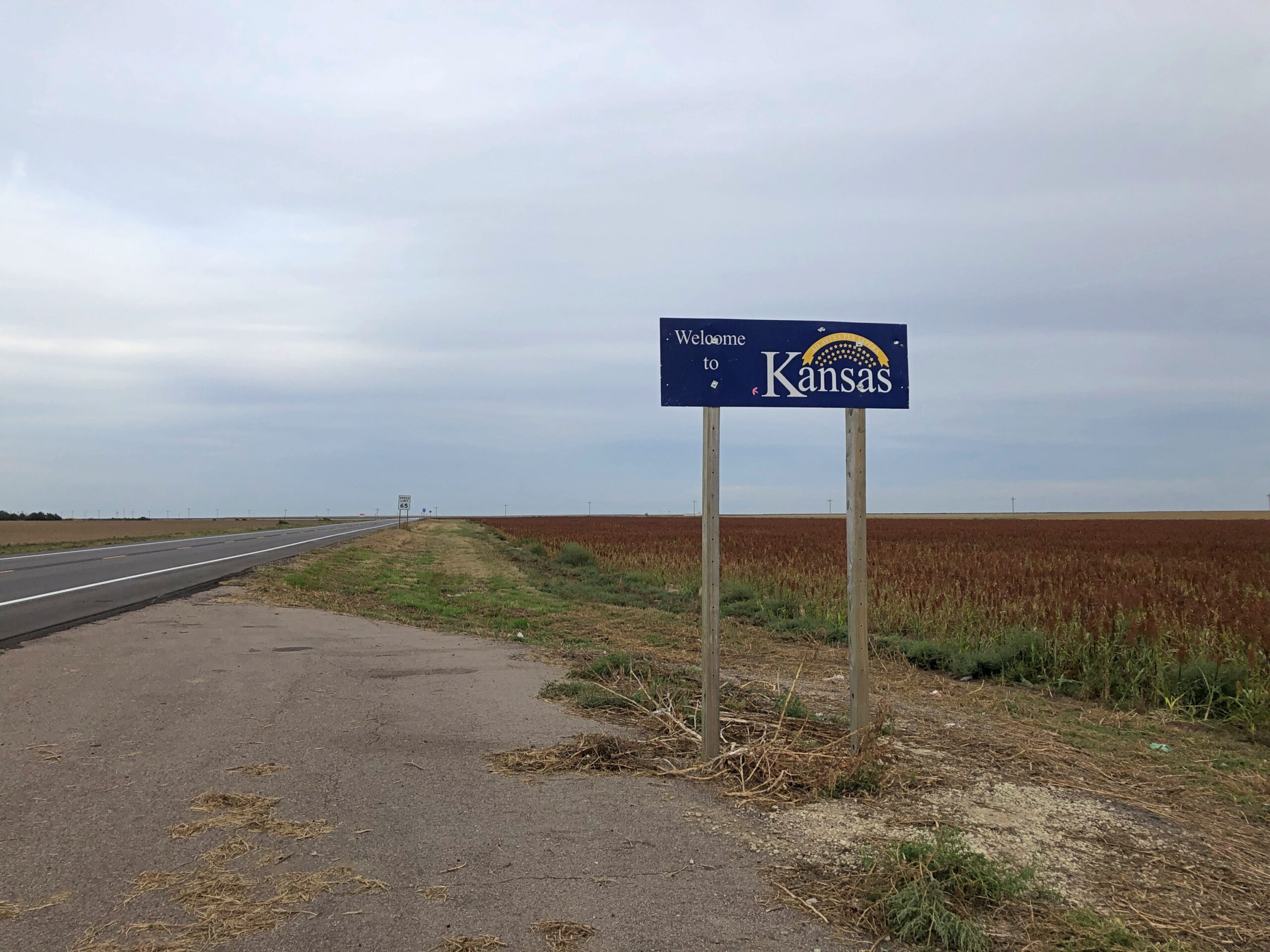
I returned home from Colorado via Kansas, heading eastward from Colorado Springs on September 22. I took this is a sign that day that I had, in fact, reached the western border of Kansas, created at the time of statehood in 1861.

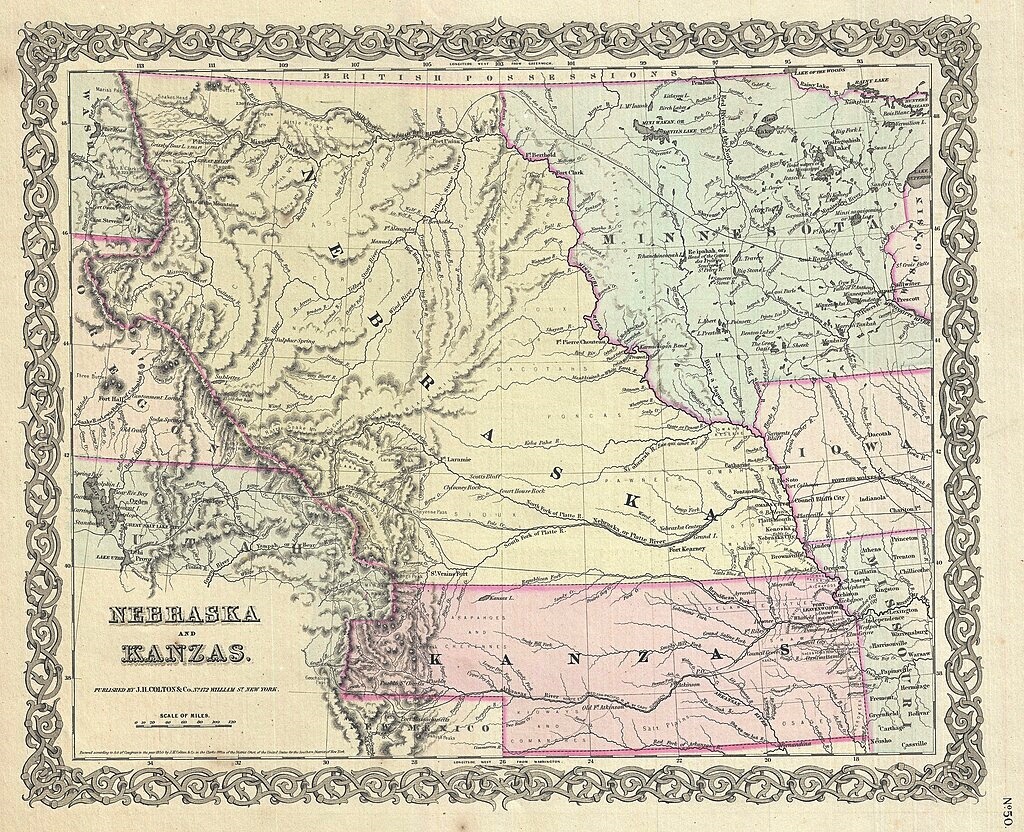
An 1855 map of “Kanzas” and Nebraska.

It would be cool if the spelling Kanzas had caught on. As it stands, “z” is used only once in all the state names, in Arizona.

The current Colorado-Kansas border is fairly close to 102 degrees West of the prime meridian, but actually follows 25 degrees West of the meridian that once cut through the Old Naval Observatory in Washington, DC, as fixed in 1850, assuming the initial surveys out in remote Kansas-Nebraska were accurate. Until later in the 19th century, and not officially until 1912, it seems the U.S. wasn’t having that limey prime meridian; or the froggy one through Paris. (And I was amused to read that for a long time the French referred to Greenwich Mean Time as “Paris mean time, retarded by 9 minutes and 21 seconds.”)

I spent my first full day in Kansas seeking out obscure sights. In western Kansas, there really aren’t any other kind.

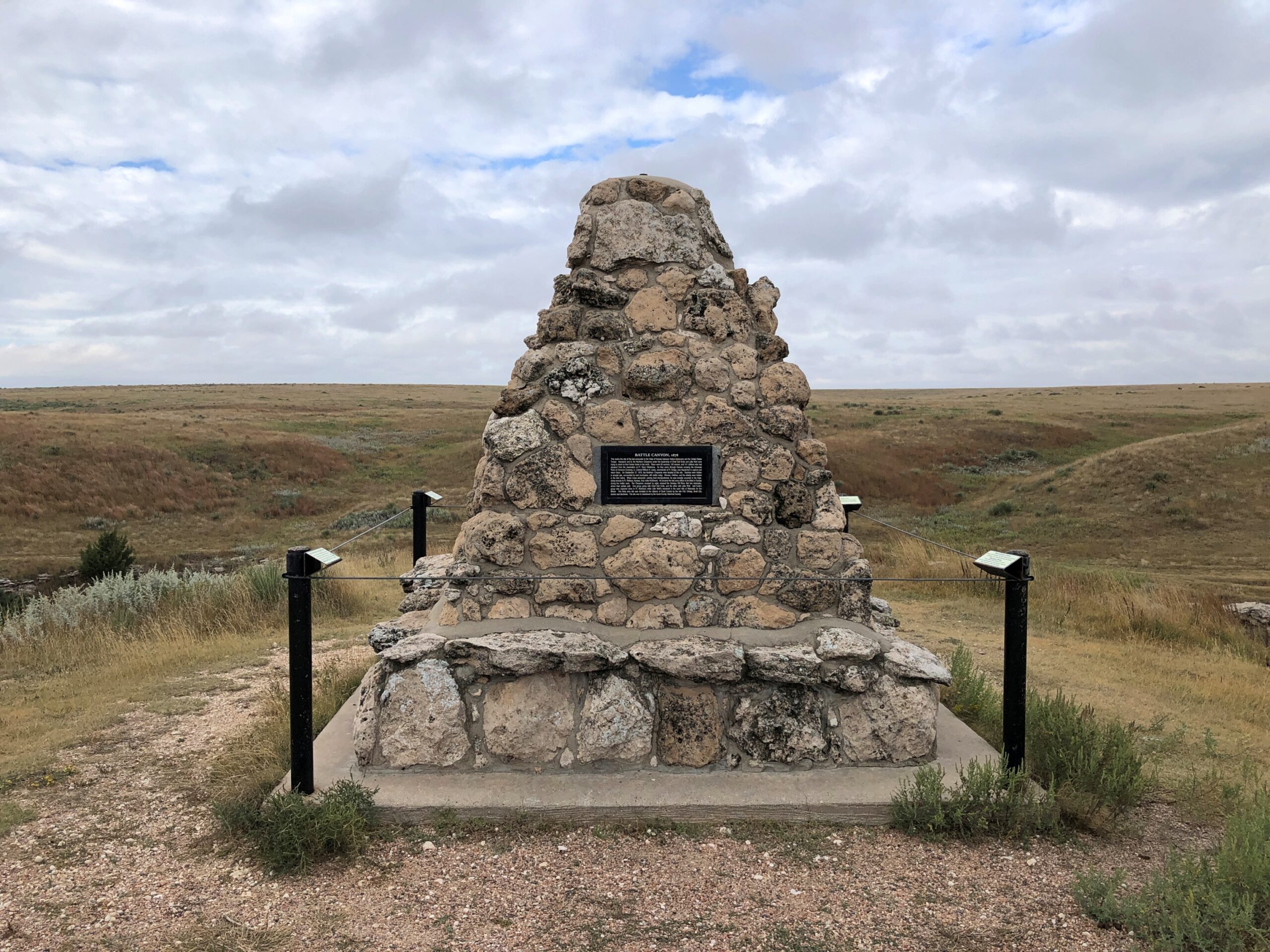
Site of the Battle of Punished Woman’s Fork (Battle Canyon)

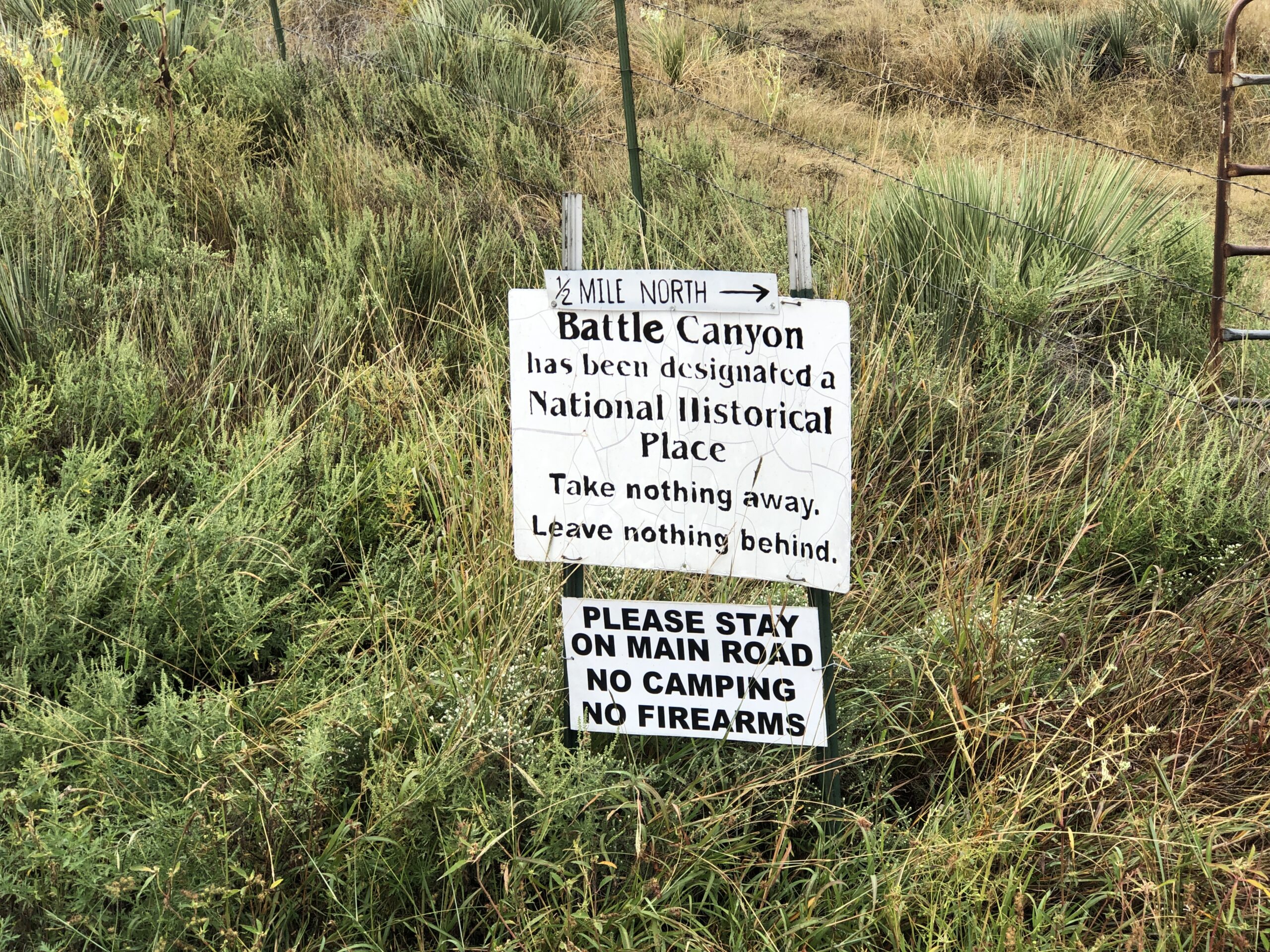
Serendipity on the road is your friend, if you let it be. That is, pay attention to signs. Driving north on the 23rd from Scott City, Kansas, on the highway US 83 – on which you could drive to Brownsville, Texas, if you had a mind to – I saw a small sign directing me to a battlefield of the Indian Wars, in this case the last skirmish between Natives and the U.S. Army within the borders of Kansas: the Battle of Punished Woman’s Fork.

This isn’t the sign I saw, but rather another one at a fork in the road, pointing the way to the battlefield, down an unpaved road.

Battle Canyon, Kansas

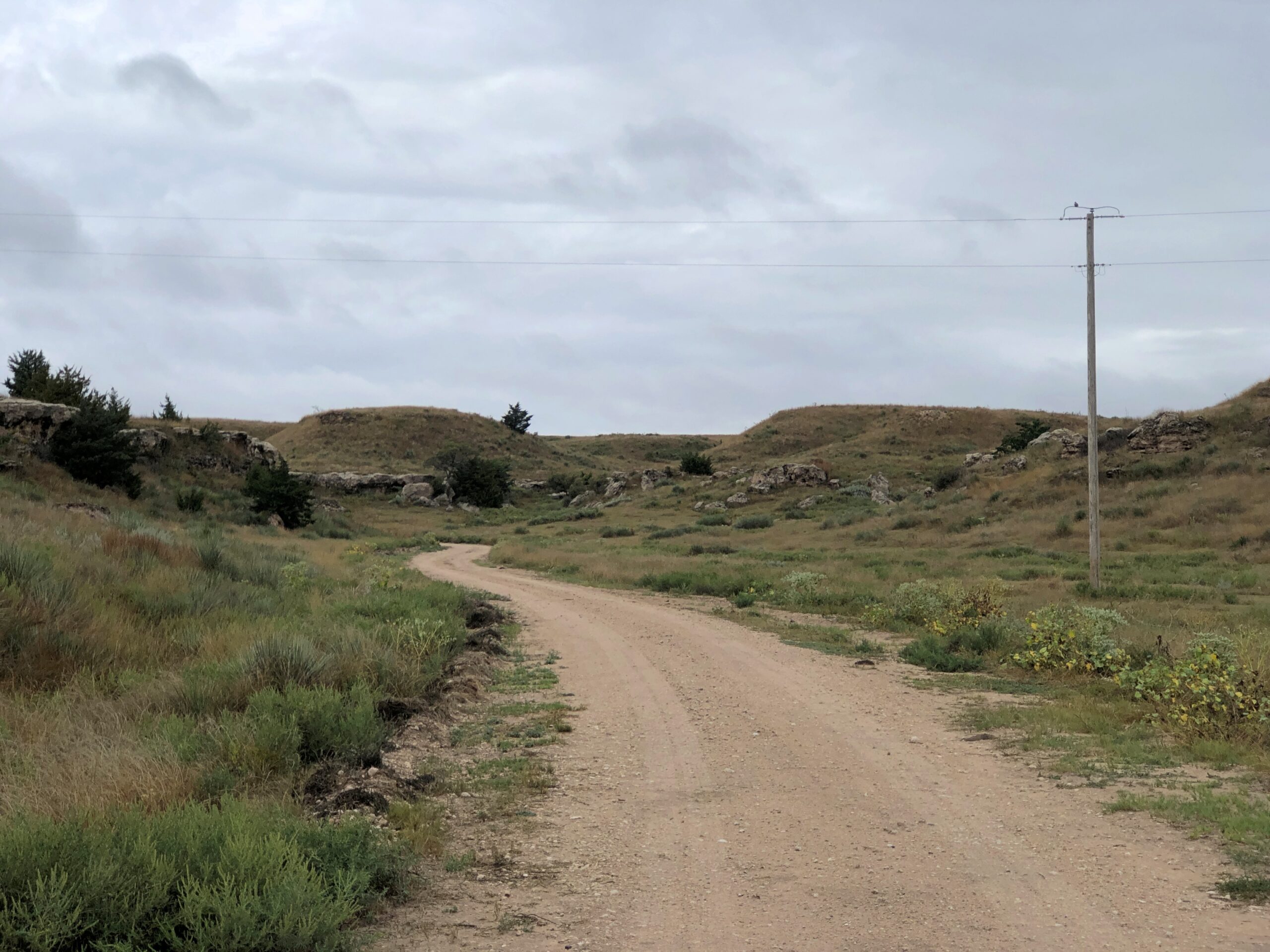
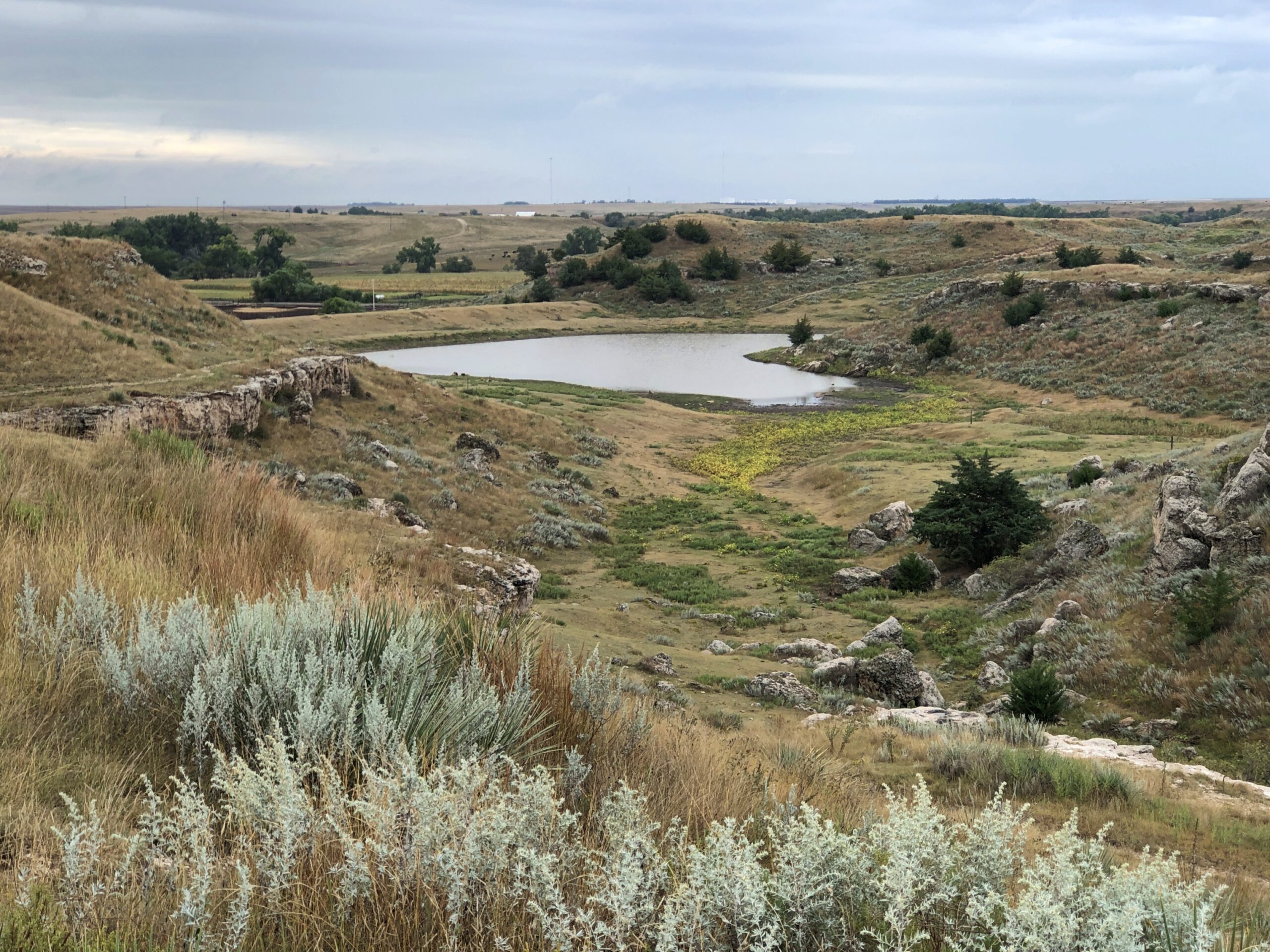
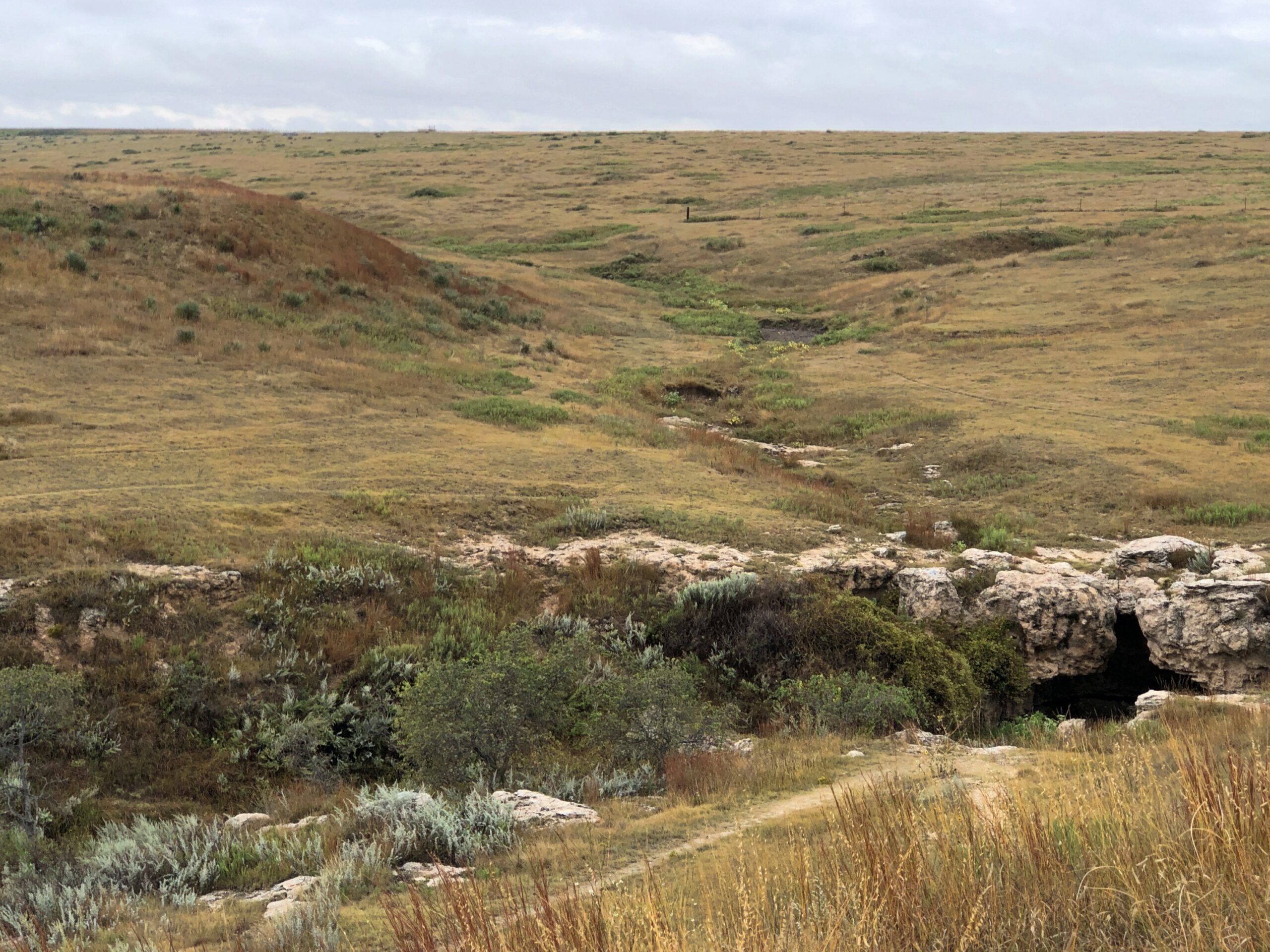
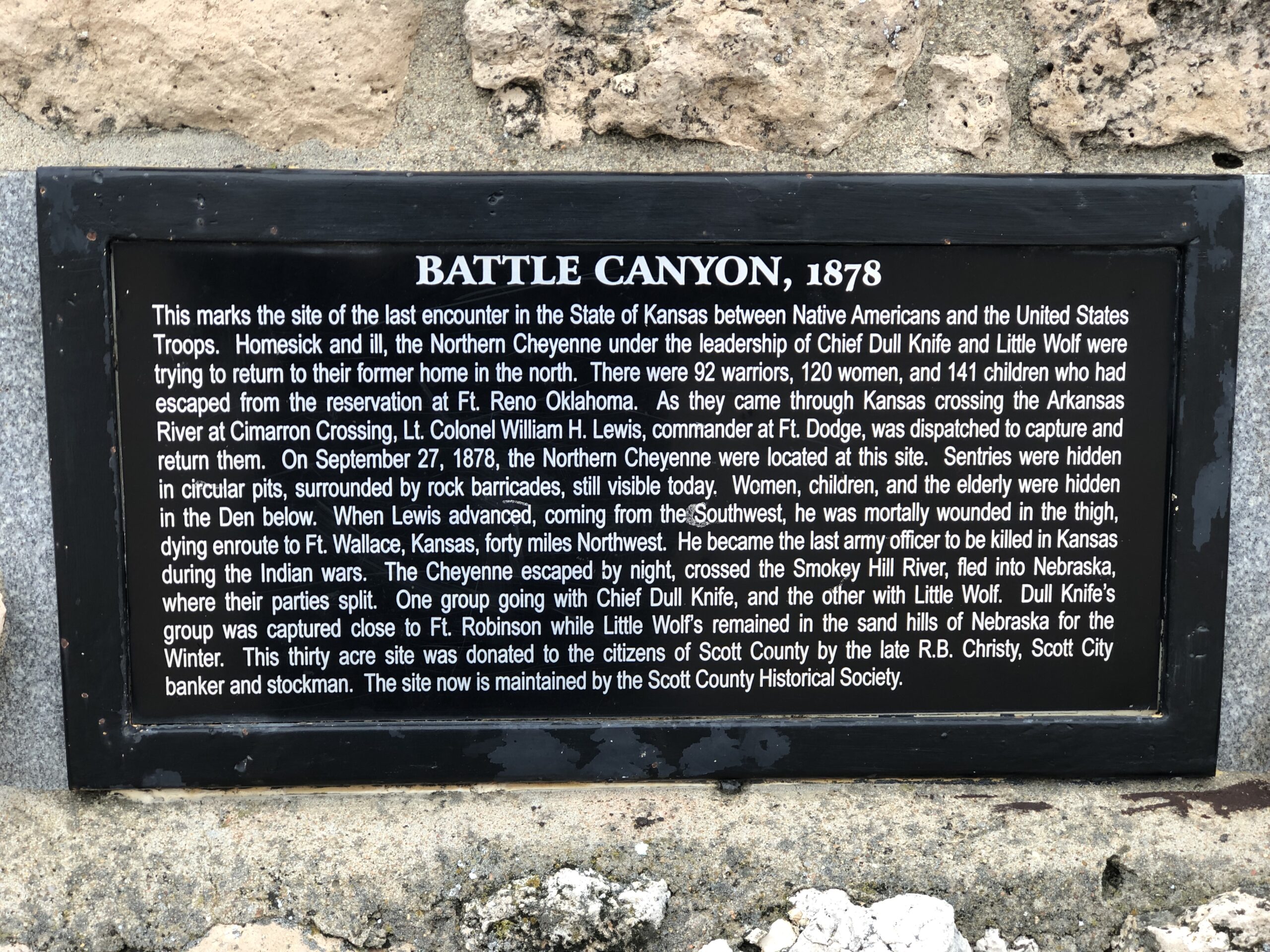
Unhappy at being forced to live in Oklahoma, 350 or so Cheyenne headed north toward Montana in 1878. The U.S. Army gave pursuit and the two sides fought inconclusively at a lonely spot in Scott County. Lonely then, lonely now.

Battle Canyon, Kansas

But not so remote that there isn’t a monument, with exposition.

Battle Canyon, Kansas

The Cheyenne acquitted themselves well in the skirmish, and while they lost horses and food, were able to escape northward. Eventually some of the group – but not all – did indeed make it to Montana, and were able to stay. The incident is known as the Northern Cheyenne Exodus.

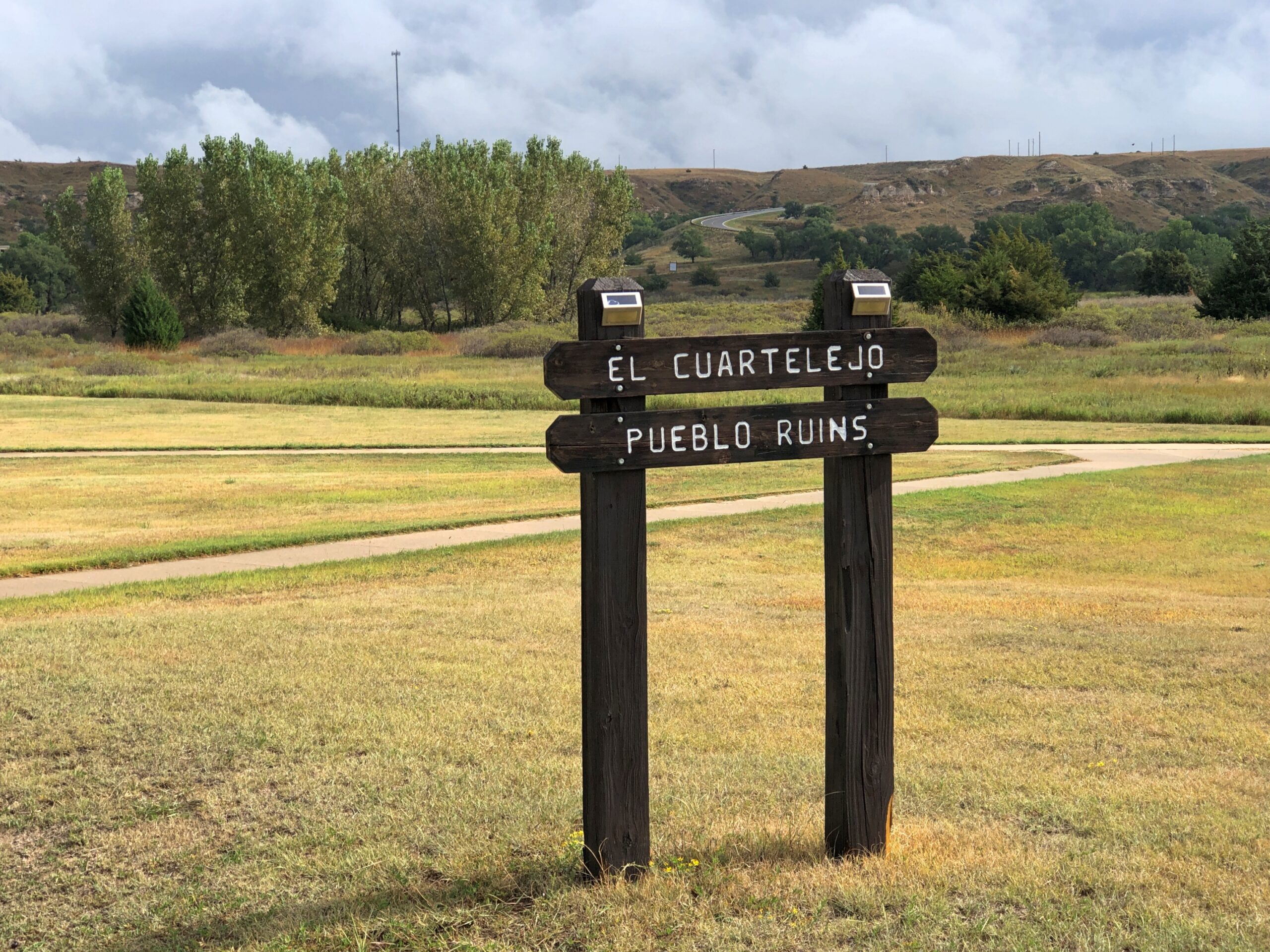
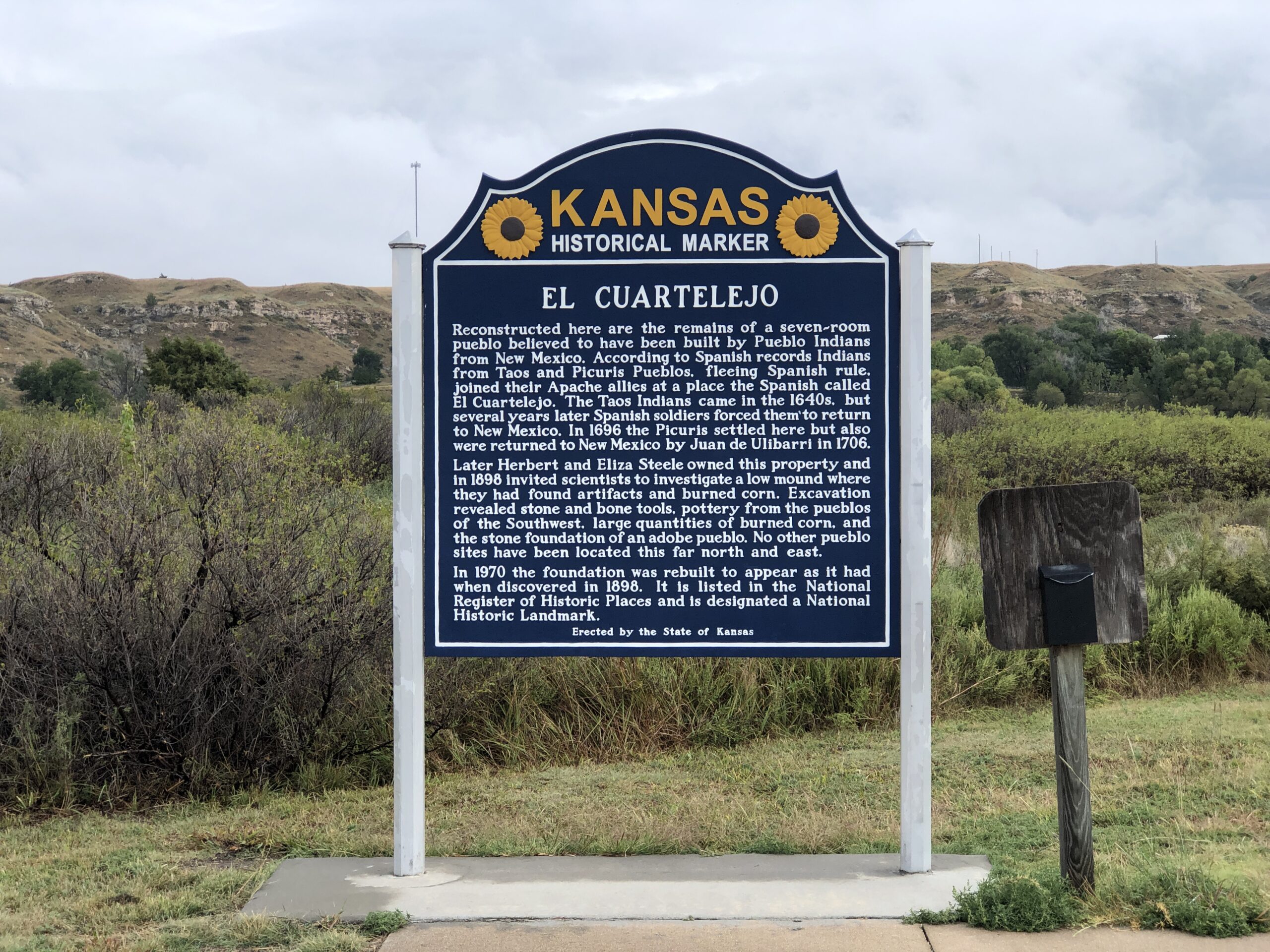
El Cuartelejo

I quote the following at length, because it’s well written, and also happens to be public domain material, published by the National Park Service. Read it while it’s still posted.

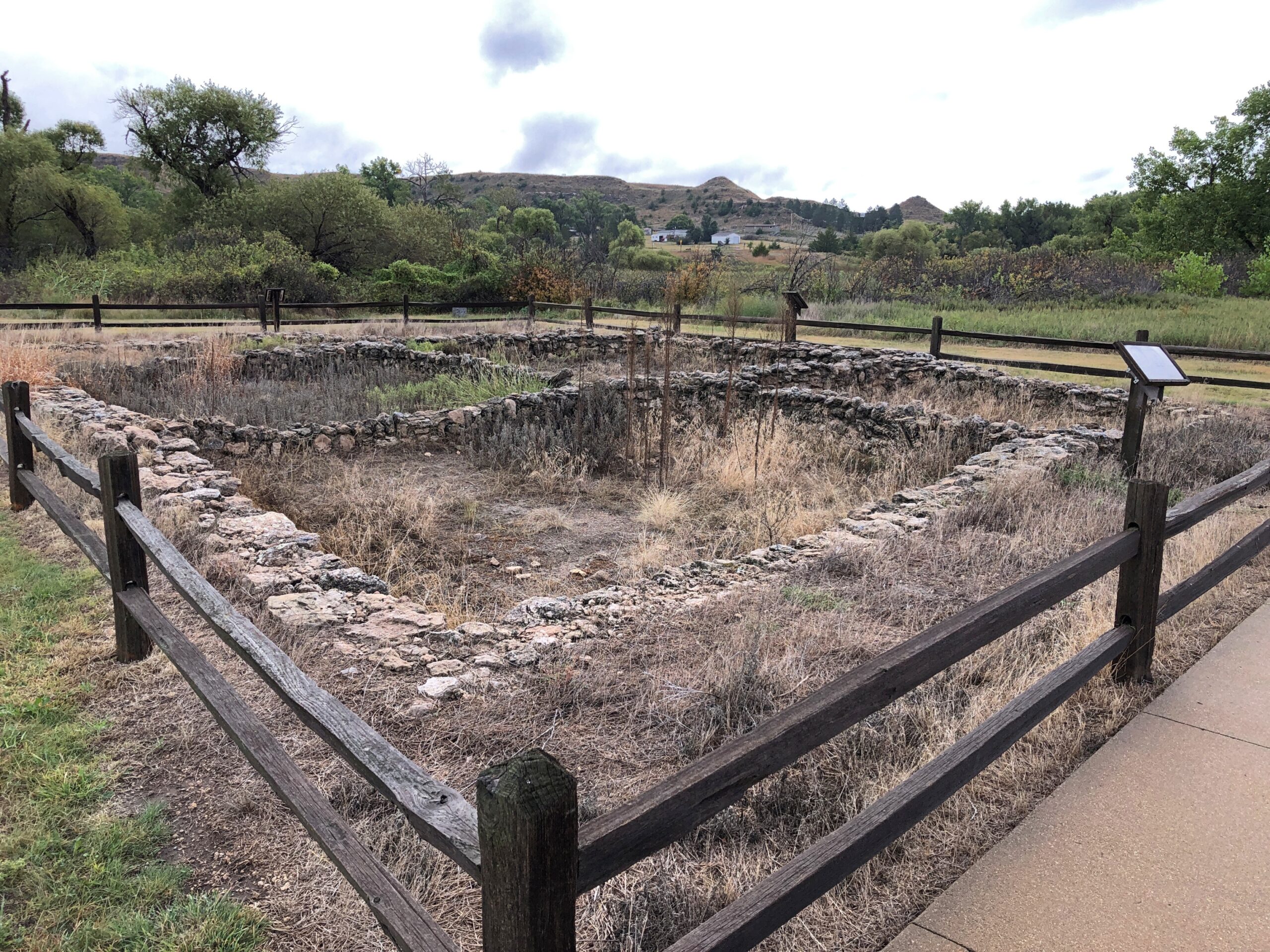
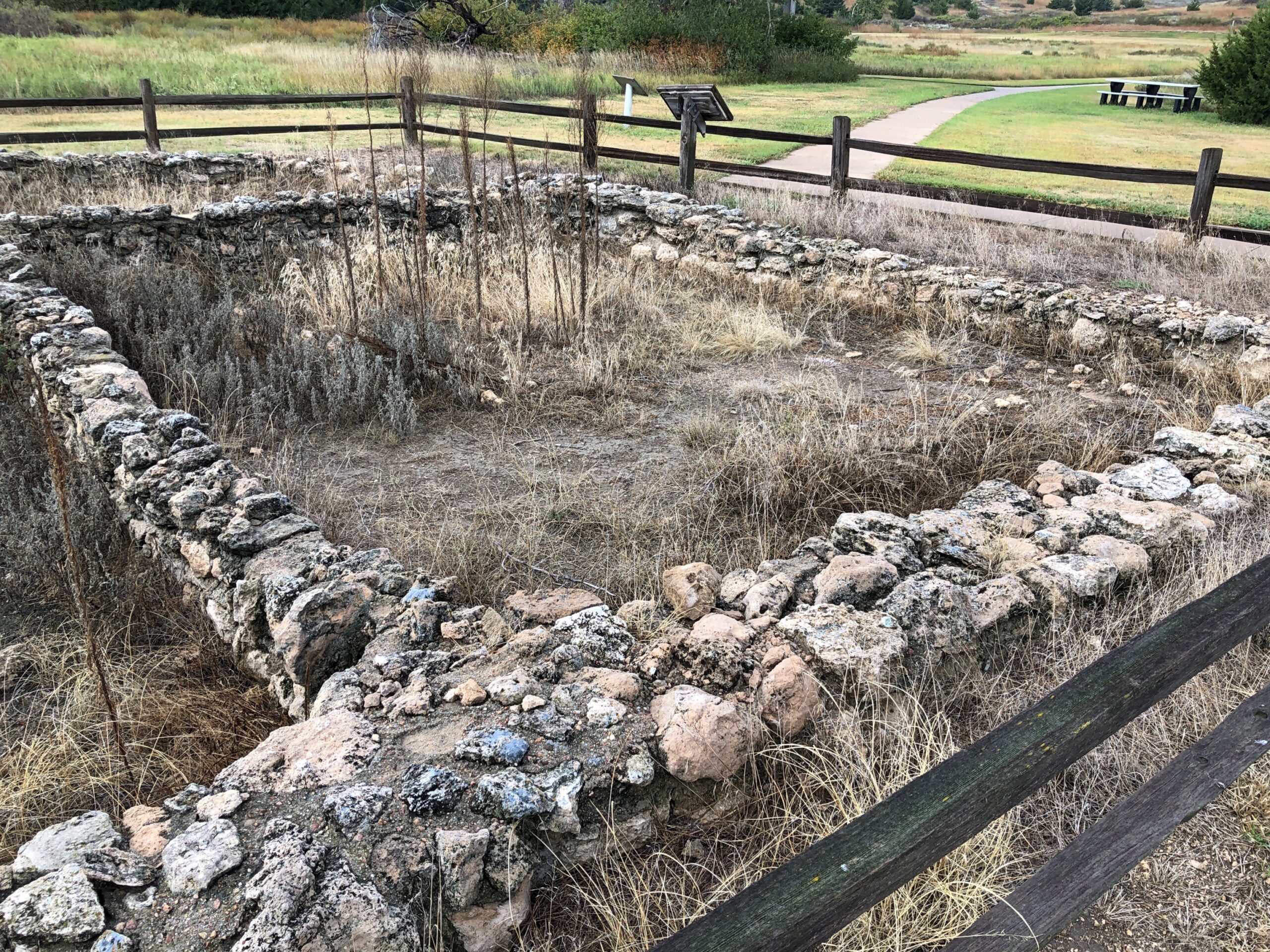
[El Cuartelejo] is one of the key sites indicating the far-reaching expansion of Spain beyond New Mexico and her interest in the Great Plains. It consists of the ruins of a seven-room, stone Puebloan structure, probably built by a group of Picuris Indians who in 1696 emigrated from New Mexico to live with the Cuartelejo Apaches. As early as the 1660s, friction between the Pueblo Indians of New Mexico and the Spanish rulers and priests had caused groups of Indians to migrate to El Cuartelejo.

Spanish expeditions under Archuleta (pre-1680 Pueblo Revolt) and Ulibarri (1706) probably came to El Cuartelejo to return groups of Indians to New Mexico. In 1719, Governor Valverde led an expedition northeast from Santa Fe, visited the Cuartelejo Apaches, and learned from them of French penetration into the Plains. As a result, in 1720, the Spanish sent out the Villasur expedition, which passed through El Cuartelejo but was destroyed later by the Pawnees in Nebraska.

Archeological excavation of the site has produced only a few artifacts of Southwestern origin. The pueblo ruin and its typically Southwestern appurtenances — slab-lined hearths, grinding trough, oven, and the like — were directly associated with a material culture complex that was almost entirely Plains Apache. Either the Puebloans stayed in the area only a short time, or they readily adapted themselves to the everyday implements and utensils of the local residents.

I didn’t know all that detail when I decided to go to El Cuartelego. Just that it was the northern- and eastern-most pueblo, which was enough.

El Cuartelejo, Kansas

The site is within Lake Scott State Park, where I had considered camping the night before. My earlier camping experience on the trip, in Nebraska, while not terrible, was exhausting enough to put me off the idea. No more camping, I think, where I have to do absolutely everything myself. In any case, it was a good decision, since on the night of the 22nd, a sizable rainstorm blew through Scott County. I listened to the storm with some satisfaction in my rented room in Scott City.

The ruins.

El Cuartelejo, Kansas

More exposition.

El Cuartelejo, Kansas

Like at the battlefield, I had the place to myself.

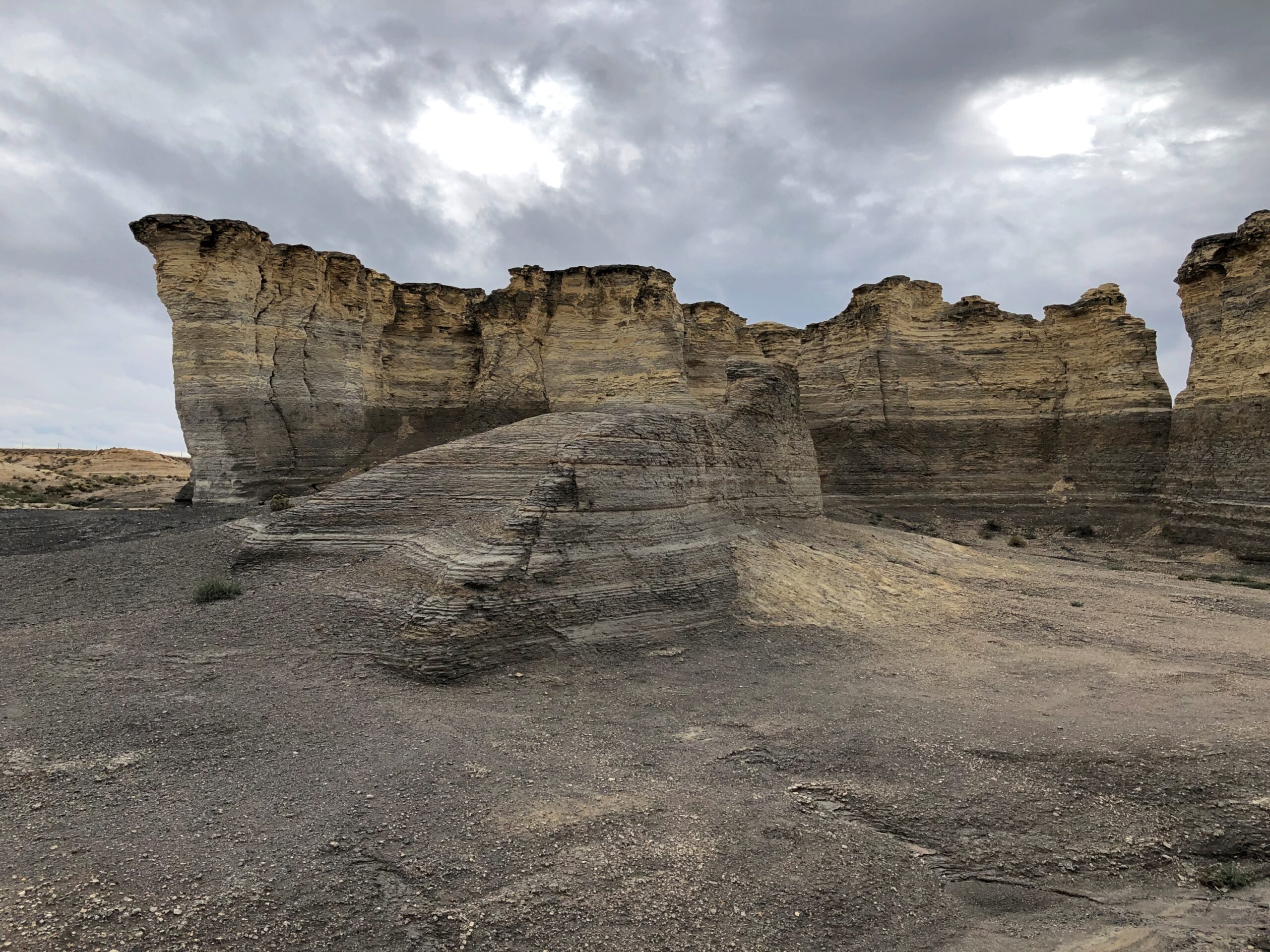
Monument Rocks

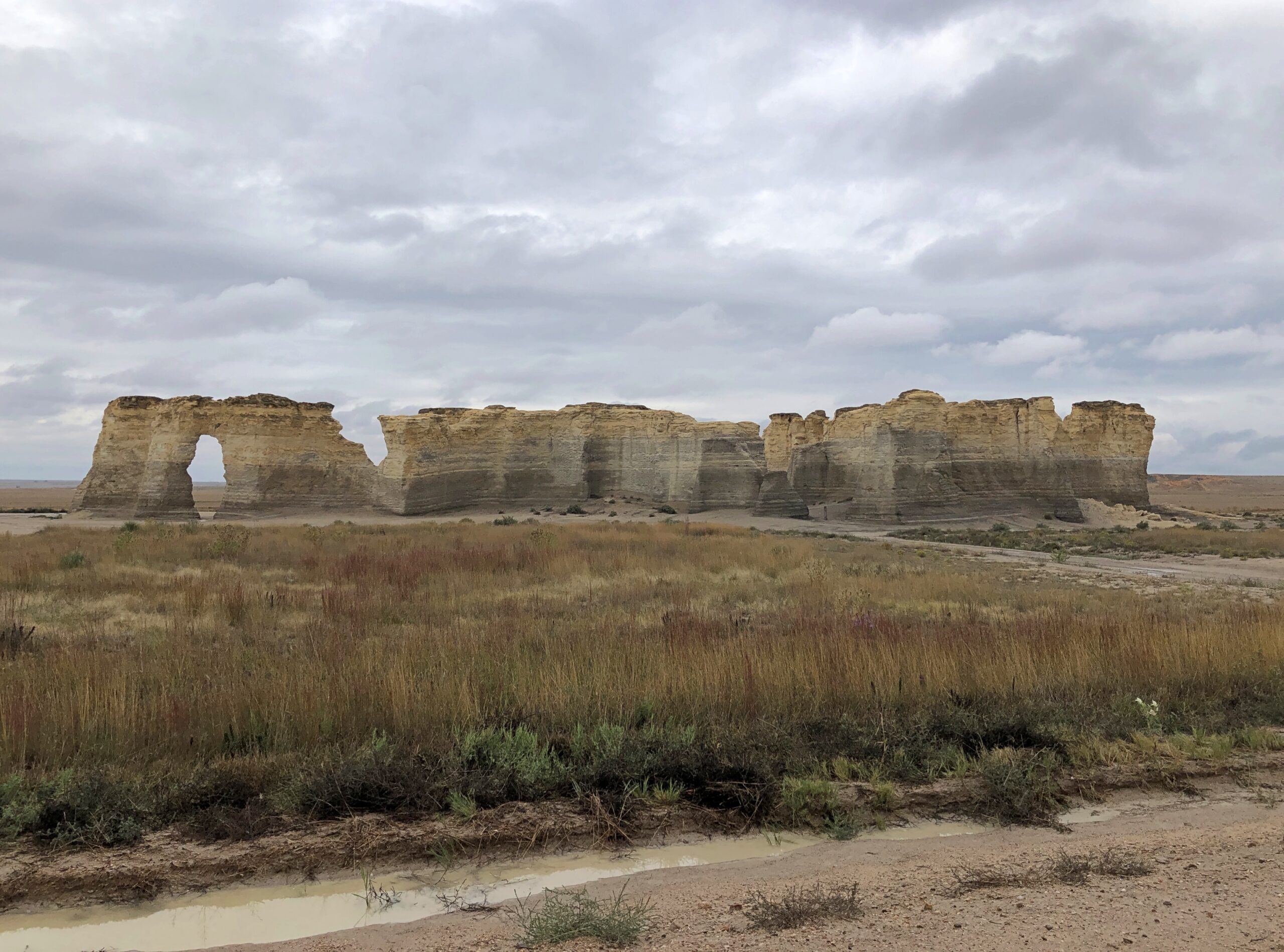
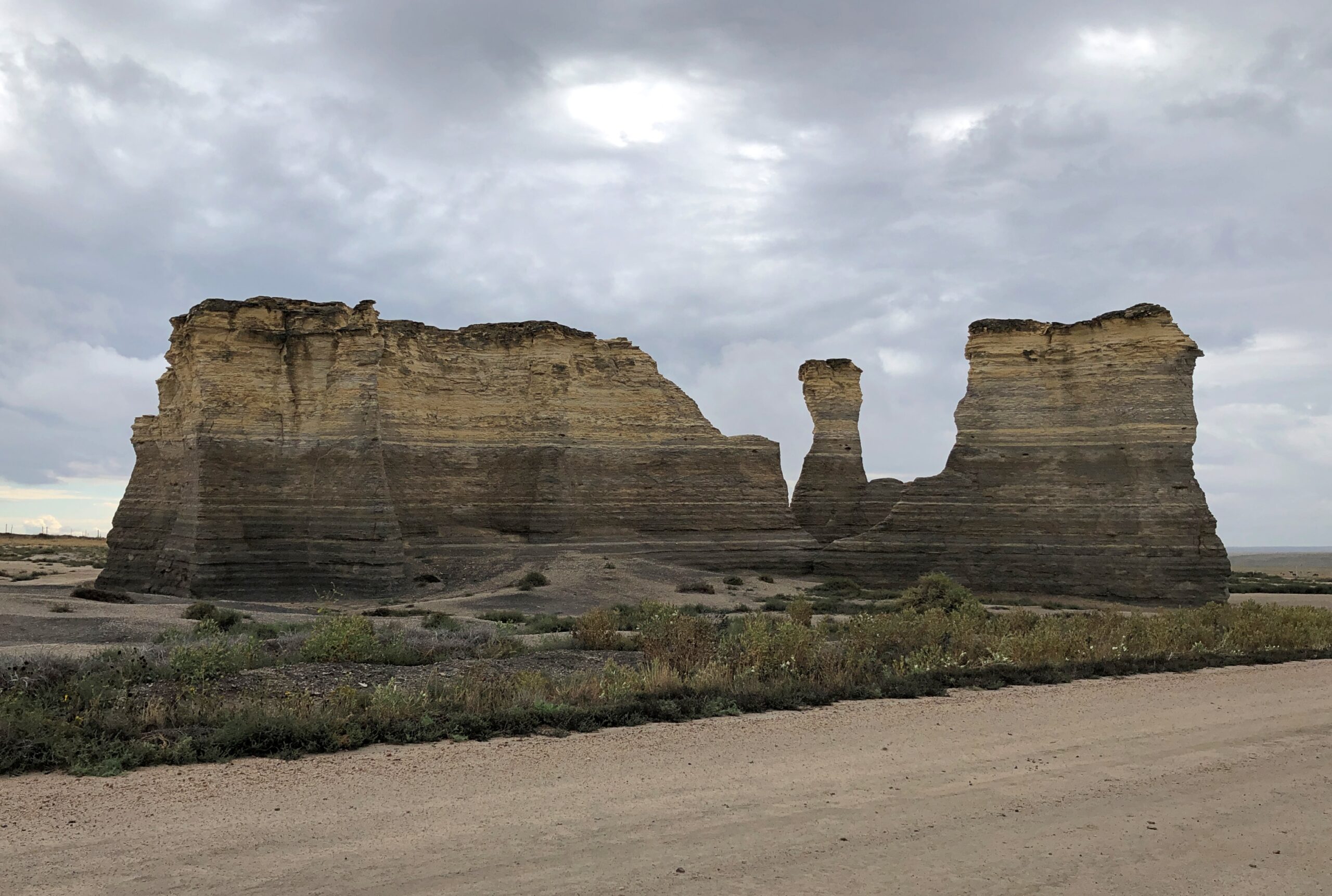
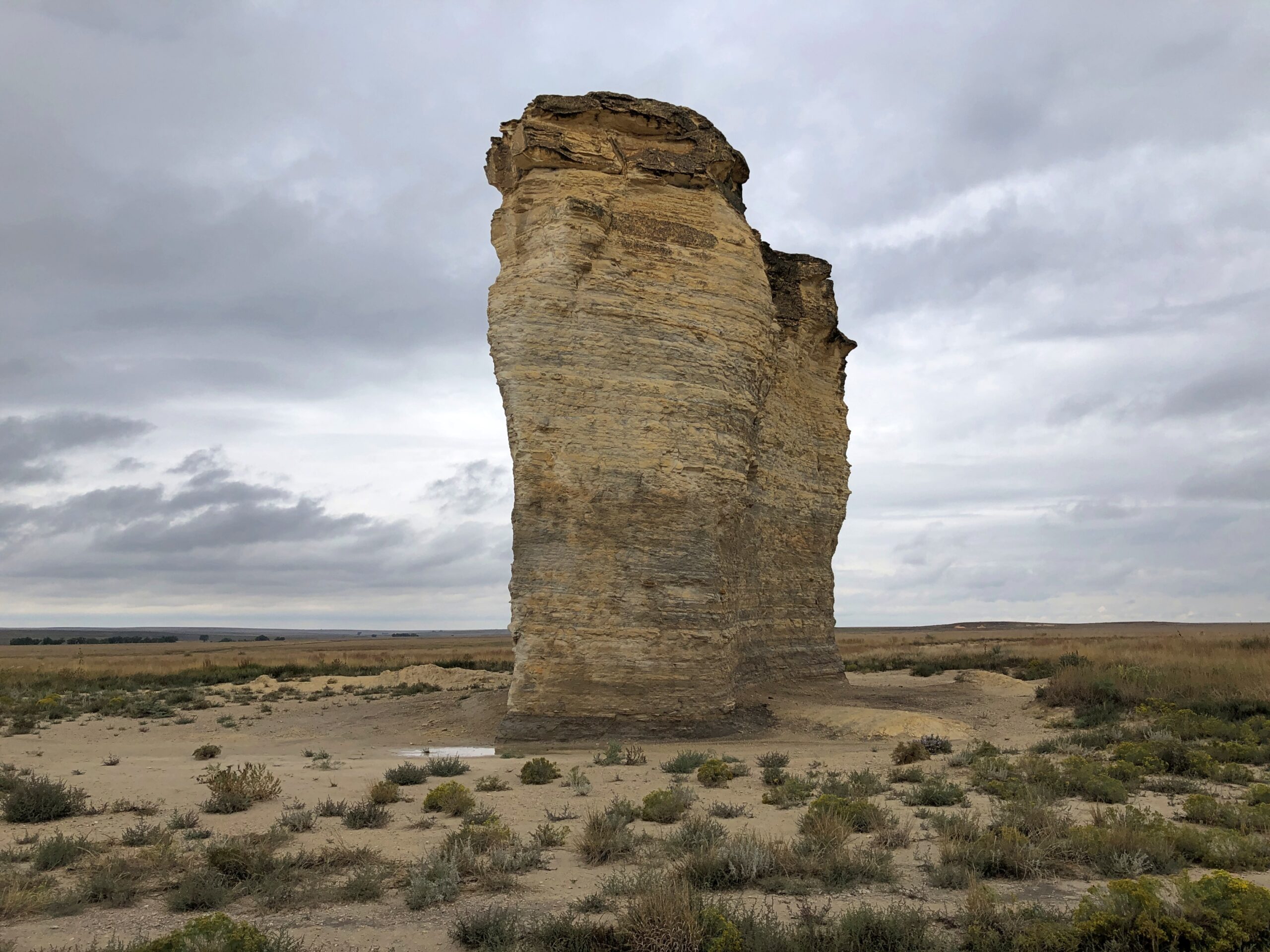
During the planning for the trip, which naturally meant quality time with maps, I spotted a point-of-interest for Monument Rocks in western Kansas. Sounded interesting, and on September 23 I made the trip, again on unpaved roads. The rain the night before made the driving surface a little dodgy, but the roads, layered with gravel, were generally up to the task. I was rewarded with the sight of rocks that are, in fact, pretty monumental.

Monument Rocks, Kansas

I didn’t quite have the place to myself. When I arrived, another car was there, occupied by an older couple. They left, and soon after that, two young men appeared in an SUV. But that was all.

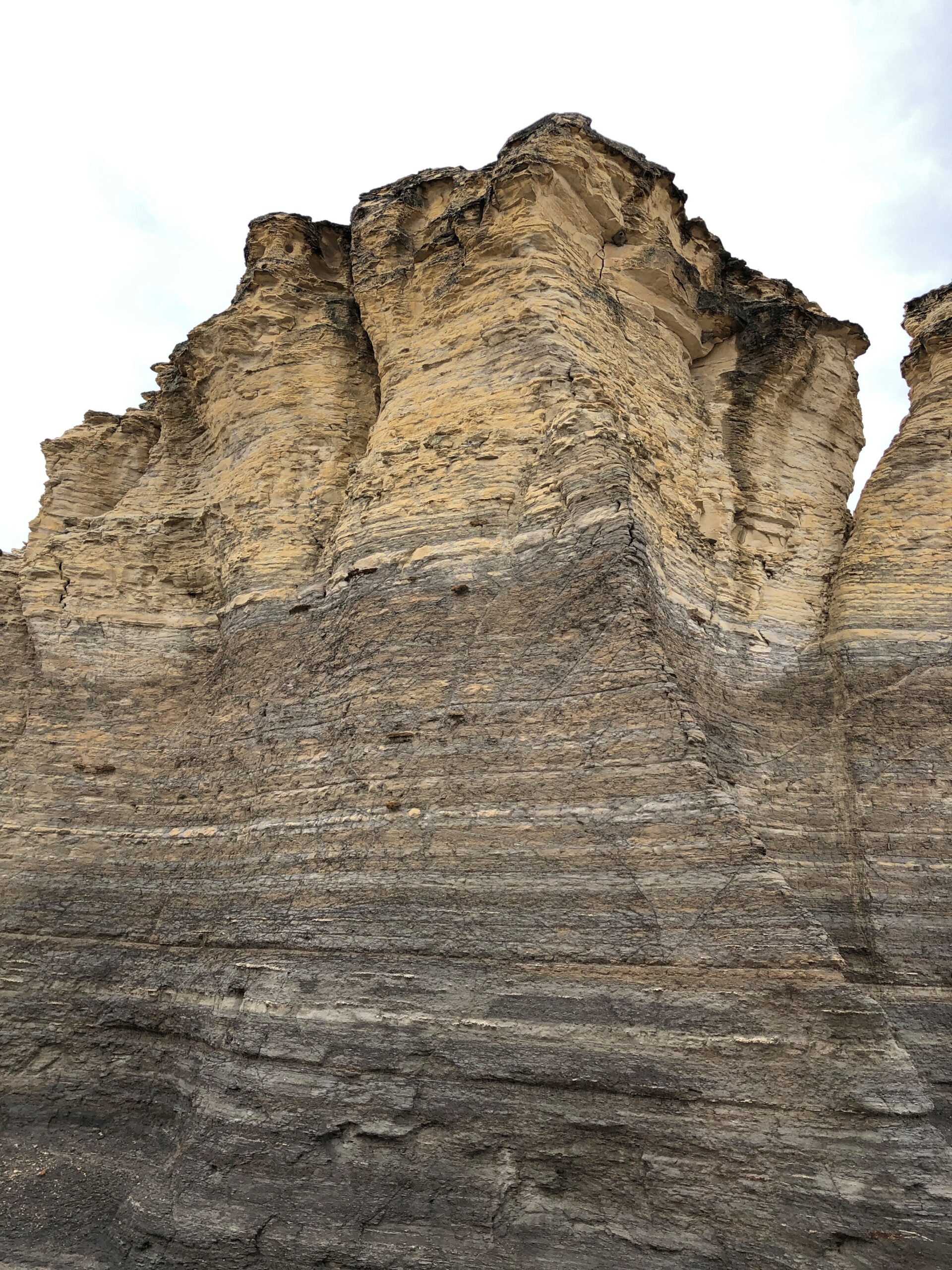
Washburn U. in Topeka tells us: West of Castle Rock area in Gove County, Kansas, erosion has carved these chalk pyramids from what was once the floor of a vast inland sea. Also called Monument Rocks, this site is the first natural landmark chosen by the US Dept. of the Interior as a National Natural Landmark. This landmark in on private land. The owners are generous to share this site with the public. Treat it with respect.

This limestone was once the floor of a great inland sea, existing some 80 million years ago. The sea dried away over time and the rock was carved by elements of nature to create these formations, which now stretch up to 70 feet in height.

The rain the night before had also made mud all around the rocks. I should have taken the time to put on my better shoes for a walk near the rocks, but no. While making my way through the muck, I lost traction, and down I went, on my butt. Luckily, the soft mud cushioned the fall, which was more of a slide anyway, so I wasn’t even bruised.

The back of my pants were, however, coated with sticky, yellowish Kansas mud. So standing outside my car, I changed my pants. The two other visitors were in another part of the site by that time, so no one was around for the unwelcome spectacle. My shoes were covered with mud too, so much so that even a good soaking when I got home didn’t get it all off. When I wear those shoes now, I take a bit of Kansas with me.

Colorado Lasso ’25

Driving down from the alpine wonders of Rocky Mountain National Park a couple of weeks ago on highway US 36, I realized we’d be passing through Boulder, Colorado. So during one of the moments of standstill traffic on that highway as it winds into Boulder — it’s a crowded road, especially on a weekend during warm weather — a thought occurred to me. More of a memory-thought, since it harkened back almost 50 years.

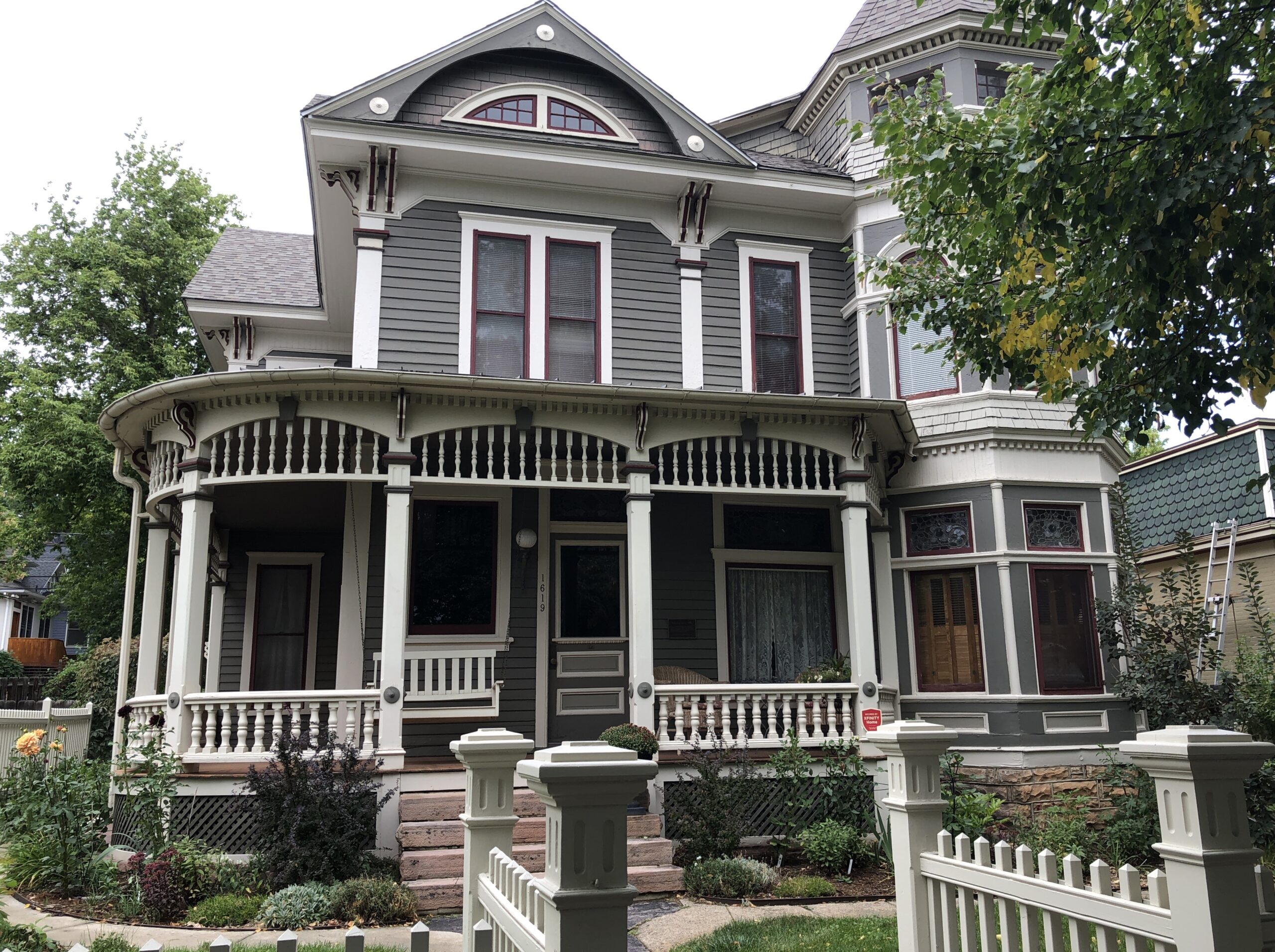
At zero mph, I had time to consult Google for more information. (Remarkably, the signal was strong.) Google Maps pinpointed the location I’d thought of, on a leafy street in Boulder. That day I expended some tourist energy, of which I don’t have quite as much as I used to, to find Mork’s house.

That is, the house used in establishing shots in Mork & Mindy to show their home, since the show was set in Boulder. I know I’d seen Boulder on maps. Funny name, I thought as a kid. Really Big Rock City. It’s still a little funny. But other than as a spot on the map, the show was probably the first time I’d heard anything else about the place.

The passengers in my car, Yuriko and Emi, having grown up outside of the orbit of ’70s American sitcoms, didn’t particularly appreciate the place. At least not until I conveyed the information that the show made Robin Williams famous. He’s a known quantity. I read a bit about the house later, and there seems to be no consensus about whether the owner cares whether anyone stops by the take a picture. My guess would involving factoring in a dwindling number of people coming by. You know, because the show went off the air over 40 years ago.

Then again, if my U.S. travels have taught me nothing else, it’s that retirees are out being tourists. They have the time they didn’t used to, and currently are just the right age to take a peek at Mork’s house at 1619 Pine Street, which is easy enough to find. Even if, like me, their fondness for that show was lukewarm at best.

Boulder and Mork came early in the second leg of my three-legged, 4,498-mile drive, which seemed to kill that many bugs on the windshield and front hood and bumper. The house counted as merely one spot in a trip that took me through hundreds of places. I spend most of September on the road, heading west from Illinois early in the month along I-80 and smaller roads, especially Nebraska 2 through the Sandhills, and spending time in western Nebraska and its rocky outcroppings and in southeast Wyoming, before going to Denver. That would be the first leg. Which, I’m very happy to say, included a good look at Carhenge.

Yuriko flew to Denver on the last of the points I got from SWA for the Christmastime FUBAR a few years ago and we met there. (New motto for the airline: Now We’re Just Another Airline!) After an overnight jaunt to Rocky Mountain NP in the company of our friend Emi, the two of us then spent more than a week taking a clockwise circle-(like) course — a lasso, you might call it, a straight line connected to a loop — from Denver to Colorado Springs to Pueblo to Walsenburg to Alamosa to (coming down from Wolf Creek Pass) Pagosa Springs to Durango to Silverton to Ouray to Montrose to Salida and back to Denver, where Yuriko flew home. That was the second leg. The drives were varied and gorgeous.

You’d think that would be enough, but I had to drive home, loosely following I-70 this time, making my way from Colorado through Kansas, Missouri and Illinois, and making a number of stops, big and small, such as Kit Carson, Colorado; Abilene, Kansas; and Kansas City, Missouri, for a third and final leg. No single small road took me through Kansas, but a series of them did, some as empty as, well, eastern Colorado and western Kansas. That’s some fine driving. Mountains are great, but after a week or so of their twisty ups and downs on two lanes, flat is all right. More relaxing, even.

For reasons that will soon be obvious, not long ago I looked up 2024 visitation statistics for the four national parks in Colorado: Rocky Mountain, Mesa Verde, Great Sand Dunes, and Black Canyon of the Gunnison.

Far and away the top national park draw in Colorado is Rocky Mountain NP, which received 4.2 million people last year, according to the NPS. In fact, it’s a top ten among most-visited U.S. parks. That isn’t so much of a surprise, considering the monster population that lives nearby in greater Denver and other parts of the Front Range. Indeed, for a lot of people, RMNP is easily a day trip.

That isn’t true for the other three national parks, but even so I was surprised to learn how few people actually visit any of them. They aren’t that remote. We aren’t talking Gates of the Arctic NP or American Samoa NP remote. Still, out of the 63 current U.S. national parks, last year Mesa Verde ranked 41st, Great Sand Dunes 44th, and Black Canyon 49th. The three of them combined saw only about 30 percent as many visitors as Rocky Mountain in 2024.

We set out to see all four of the national parks in Colorado. And we did. You could call it a national park trip, along the lines of the one a few years ago mostly on the Colorado Plateau. But the parks were only a framework, never the total picture, over mountains and across plains. We saw a lot else besides, such a male bear outside our window about 10 miles north of Durango, a female in a tall nearby pine snarling at him, and cubs higher up in the tree. More detail to come on that, in the fullness of time.

Rocky Mountain NP is an exercise in rising above the tree line, by vehicle but also on foot, up a path, into to a satisfying exhaustion before majestic mountains. The pale sand dunes of the Great Sand Dunes NP rise from a valley and back up against a mountain range, as if a giant broom swept it off to corner, and for visitors amounts to a giant sand box. Mesa Verde NP, where the stone dwellings of the Ancient Ones are tucked away in steep stone canyons, shows how much effort people will put into making a home for themselves. Black Canyon of the Gunnison NP is a scenic great unknown, a great dark crack in the earth that reminds you that gravity is in charge, its ragged cliff edges rife with opportunities to die for an Instagram image.

Road Eats ’14

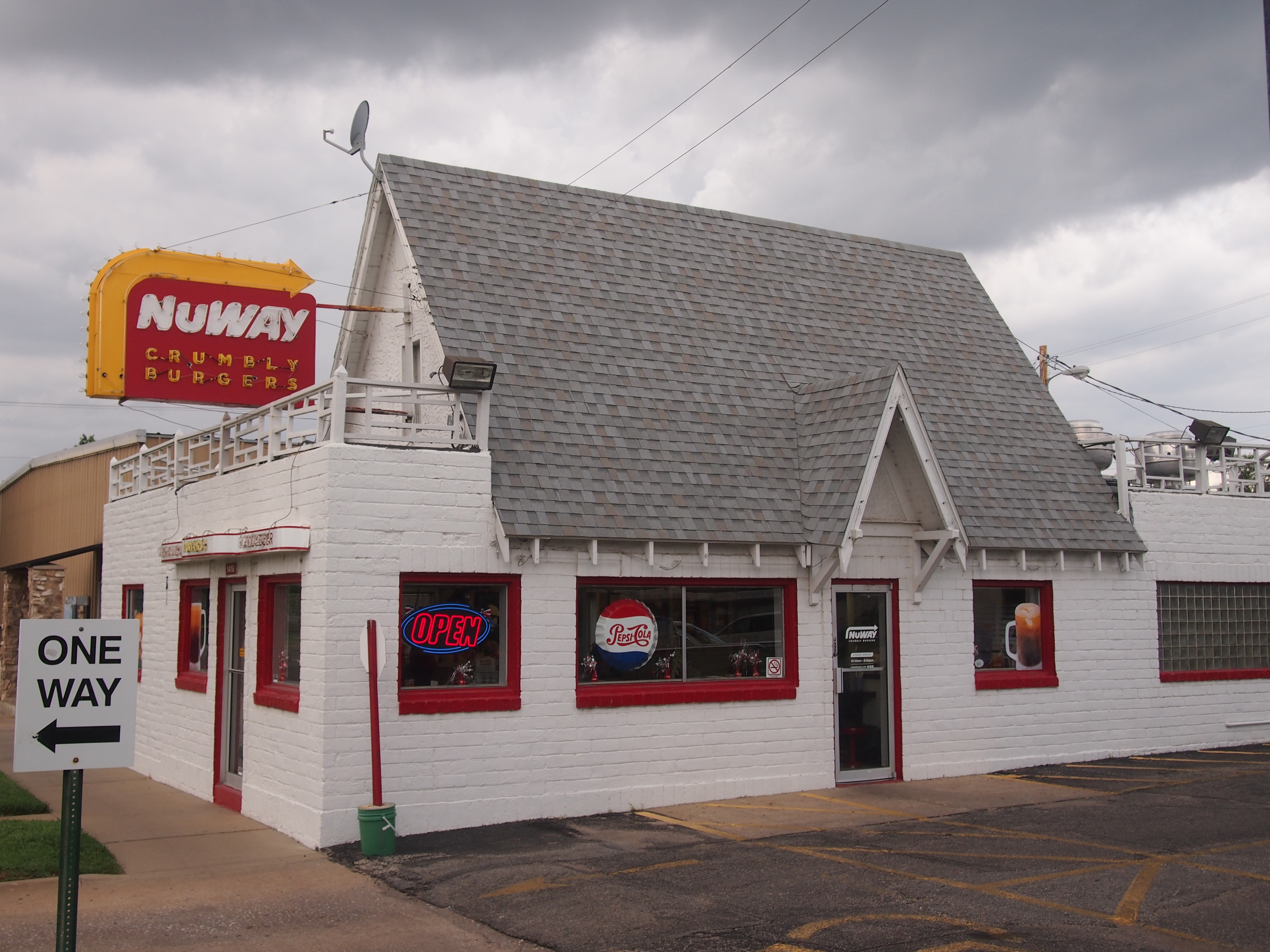
Serendipity is your friend on the road, but you have to be open to it. After spending some time at the Wichita Public Library’s main branch in downtown Wichita on July 14, we headed west on Douglas Ave., the way we’d come into downtown. We wanted lunch, and I thought I’d seen something interesting coming in. But I couldn’t remember exactly what. Then I saw Nu Way Crumbly Burgers.

Crumbly Burgers, yumClearly my kind of place. It’s a small Wichita chain. “The Nu Way tradition began on July 4th, 1930, at the same location we still call our ‘original’ home at 1416 West Douglas,” the Crumbly web site tells us. “It all started when Tom McEvoy… moved from Iowa to Wichita and built the first Nu Way. The dedication and absolute commitment to quality Tom began can still be tasted today as we carry on his reputation.

“We still make Nu Ways with the exact same recipe using our patented cookers and we still make our world famous Root Beer daily along with our homemade Onion Rings.”

Crumbly burgers are loose-meat sandwiches and root beer is, well, root beer, and we had both (Ann’s was a float), sitting at the counter. Considering that it was mid-afternoon on a Monday, the place was busy. For good reason. Those crumbly burgers might crumble, and you have to position your wrapping to catch those loose odds of meat, but they were satisfying. The frosty chilled root beer hit the spot exactly.

Nu Way harkens back to the ’30s. In Dallas, Keller’s evokes the 1950s, I think. But not the ’50s of televised nostalgia – we saw a lot of that in the ’70s – but just an ordinary burger-and-shakes joint that’s simply never been updated. Jay calls it Jake’s, since that used to be its name, but there was some kind of family ownership split or something. We went to the one on Garland Rd., but there are a few others, including one that’s supposed to be a drive-in. Anyway, the Garland location serves tasty burgers, fries and shakes, ordered and picked up at the front counter.

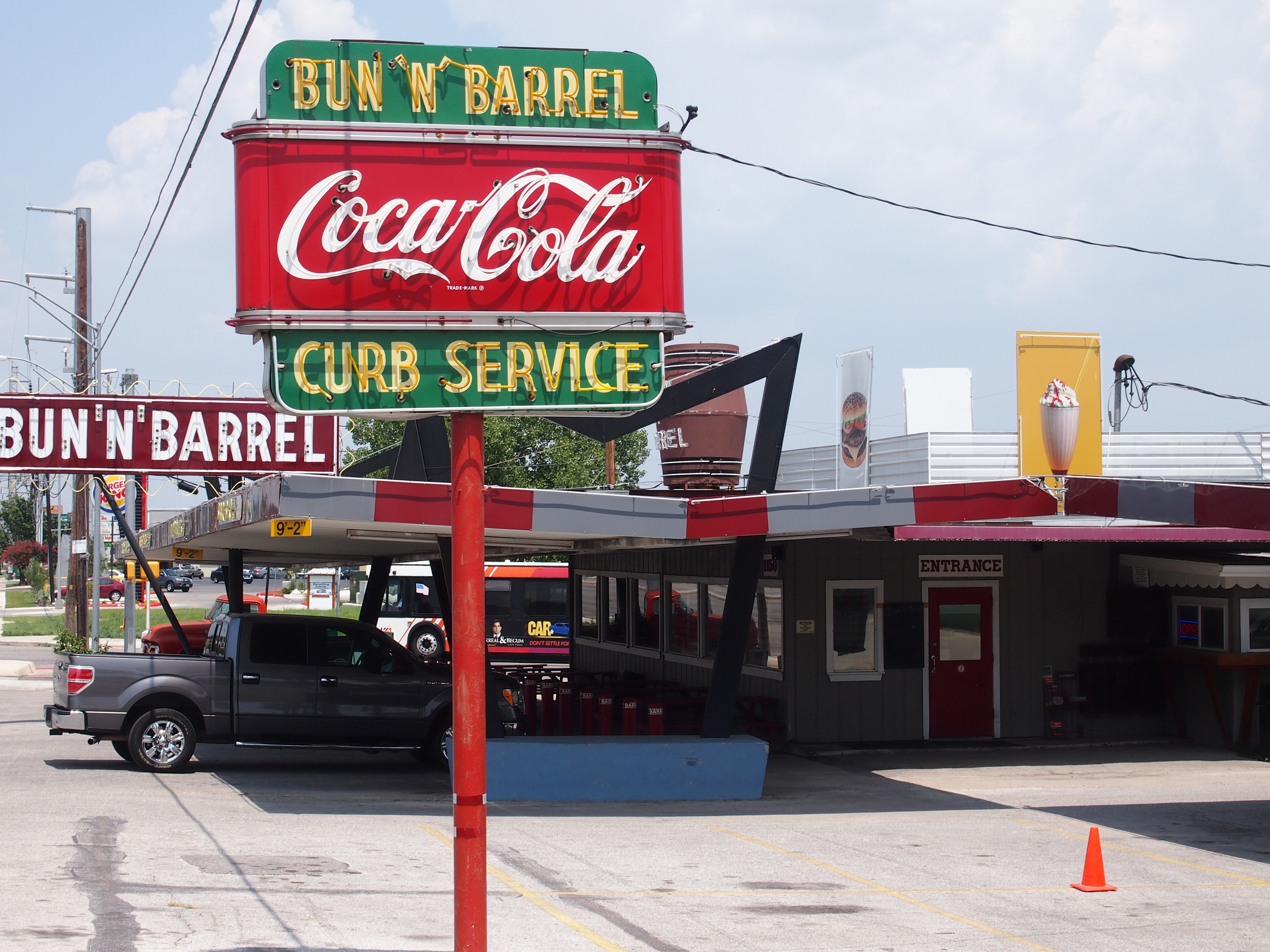
Bun ‘n’ Barrel is on the Austin Highway in San Antonio. Points for actually having two apostrophes. It’s been there since I can remember (it was founded in 1950, so that makes sense). The last time I went might have been in the late ’70s. It doesn’t seem to have changed too much with time, though there’s been a few recent renovations, such as the addition of a little nostalgia-oriented decor. They’re also happy that what’s-his-name on Diners, Drive-Ins and Dives showed up to do a segment a few years ago.

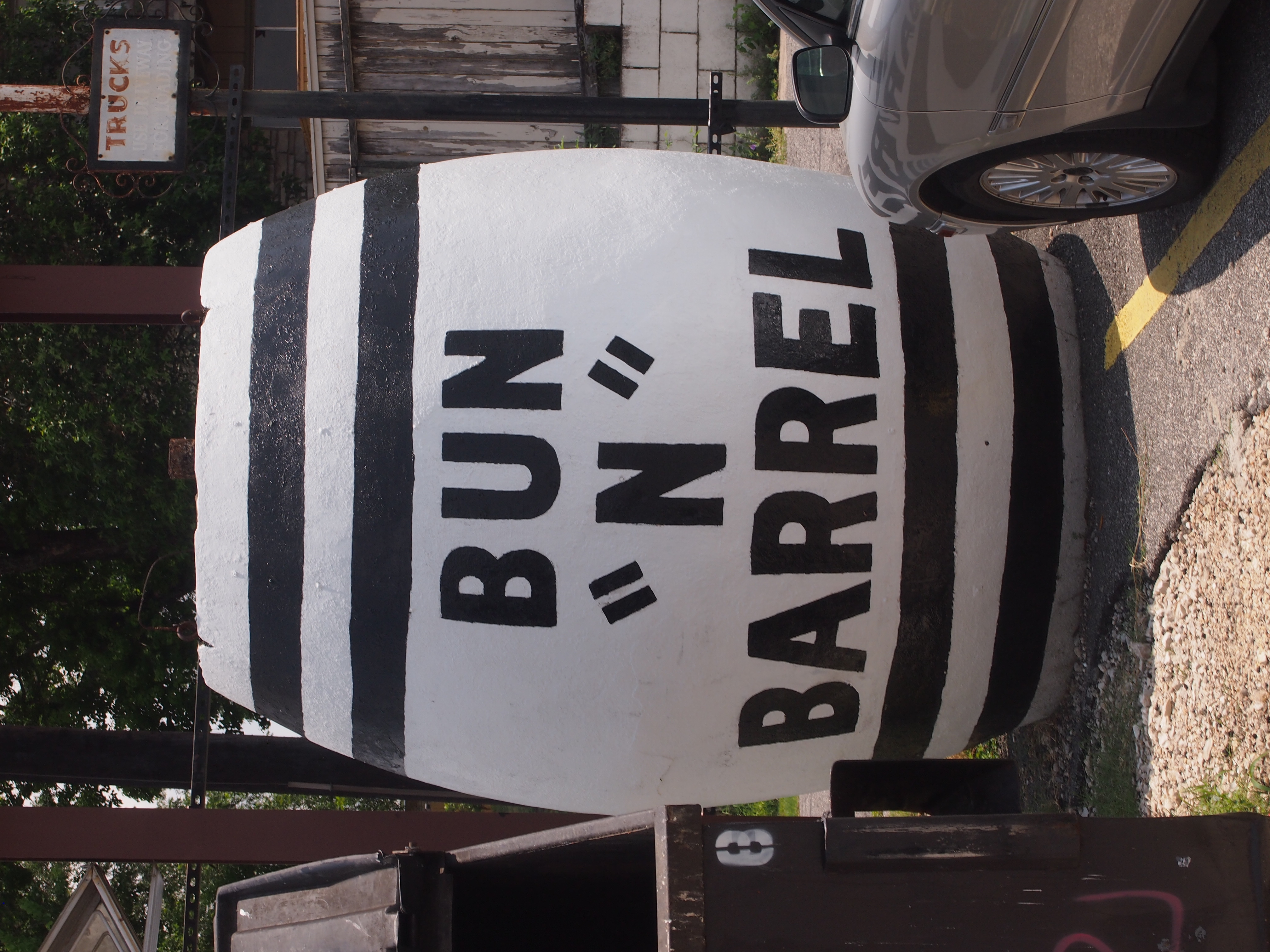
Bun 'n' BarrelThere’s a barrel on the roof, but I had a hard time getting a good shot of it. Also, it was over 90 F that day, and I didn’t want to loll around outside. Instead, I snapped the painted concrete  barrel out in the back parking lot.

Bun n BarrelI got the wrong thing: a ham plate. It wasn’t bad, but it was exactly like ham I can get at a grocery store. Probably the barbecue or a burger would have been a better choice.

Threadgills in Austin isn’t a classic road-food diner or a greasy spoon, but it makes a mighty chicken fried steak. Be sure to have it with mashed potatoes and fired okra. Its nostalgia is late ’60s, early ’70s. For instance, I saw that the Jerry Garcia Fest will be at the restaurant’s beer garden this weekend. We went to the one in South Austin, one of two locations. The current restaurants are descended from a beer joint that opened as soon as Prohibition ended, with a musical heyday 40 or 50 years ago.

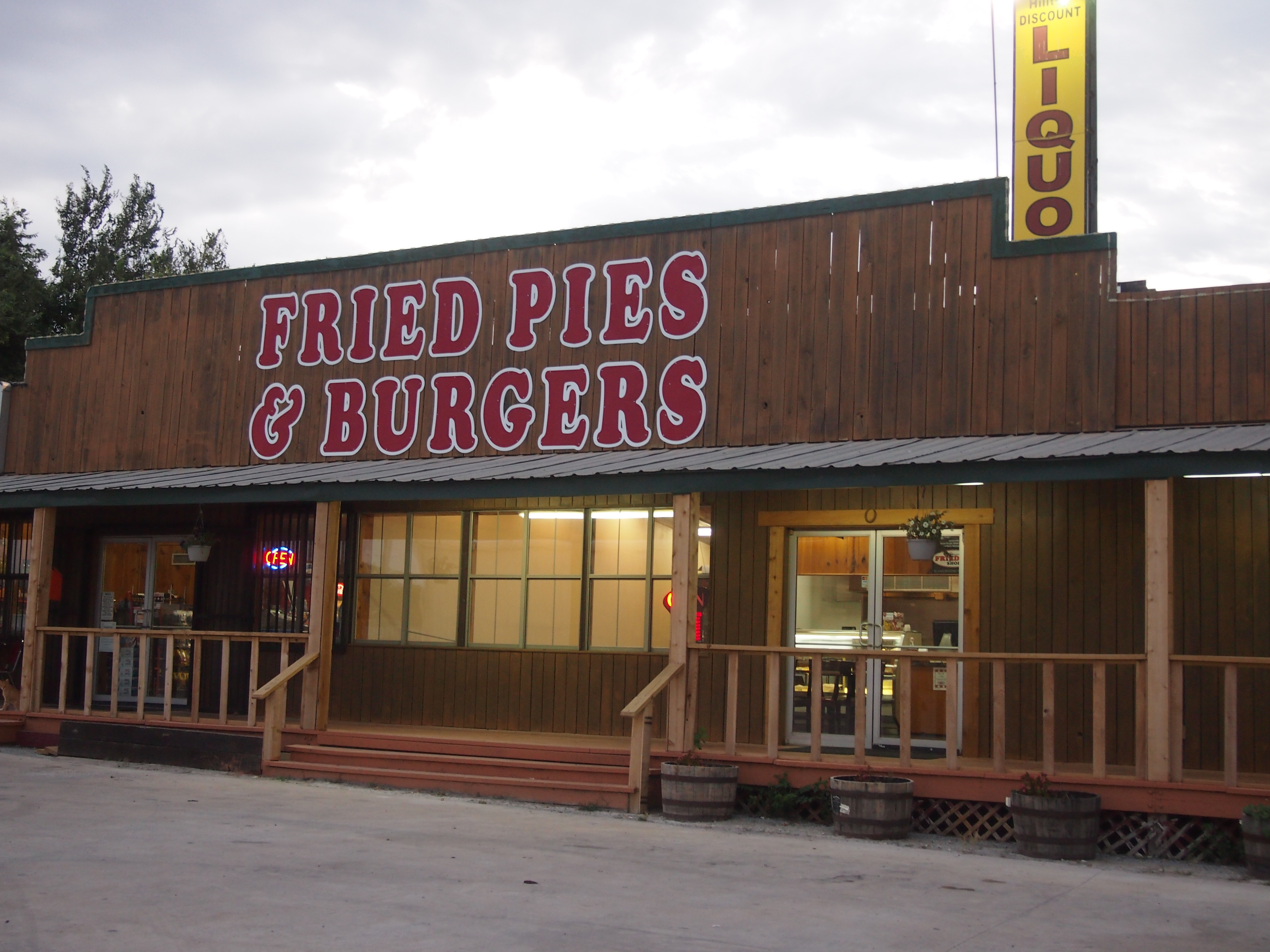
Finally, if you’re southbound on I-35 north of DFW and you take the very first exit after crossing into Texas, and then gas up at the gas station there, you will also see this.

Fried Pies!Among roadside eatery names, that’s high concept. Through much of southern Oklahoma, I’d seen fried pies advertised, like you can see pasties advertised in the UP. I decided it was time to investigate. It was arrayed like a doughnut shop, except replete with fried pies – bigger than the ones you buy in the grocery store, if you’re in the mood for high-calorie, barely mediocre treats. I bought a chocolate pie and a coconut one, and Ann and I split both. They were a lot better than any factory-make ones at a grocery store.

The Kansas Cosmosphere and Space Center

Why Kansas? Even the Kansas Cosmosphere and Space Center web site asks that question in its FAQ page. Why is a first-rate spacecraft museum – absolutely the best I’ve ever seen, except for the Smithsonian Air & Space Museum – in Hutchinson, Kansas, a town of about 42,000 northwest of Wichita? The answer: that’s the way the cookie crumbled. Right place, right time.

“The Cosmosphere began in 1962 as nothing more than a tiny planetarium on the Kansas State Fairgrounds,” the page says. When the planetarium outgrew its original facility and moved to its current location, Patricia Brooks Carey and the Hutchinson Planetarium’s board of directors sought business advice from Max Ary, then director of Ft. Worth’s Noble Planetarium. “Interestingly, Ary was also part of a Smithsonian Institution committee in charge of relocating thousands of space hardware artifacts to museums throughout the U.S. The Cosmosphere was granted many of the artifacts.”

These days the museum measures over 105,000 square feet and includes a large exhibit space for rockets and spacecraft, plus a planetarium, dome theater, and more. We arrived in the mid-afternoon of July 13, too late to catch a planetarium show, but in plenty of time to look at a lot of space stuff, expertly and chronically organized for display.

“Most everything you see in the museum was either flown in space, built as a back up for what was flown in space, built as a testing unit for what was flown in space, or was the real deal, but was never meant for space,” the museum continues. “Only a few artifacts are replicas, and those that are replicas, are for good reason. For example, the lunar module and lunar rover in the Apollo Gallery are replicas (though built by the same company that produced the flown modules), because those that went in space, stayed in space. No museum in the world carries a flown lunar module or rover. In fact, they’re all still on the Moon.”
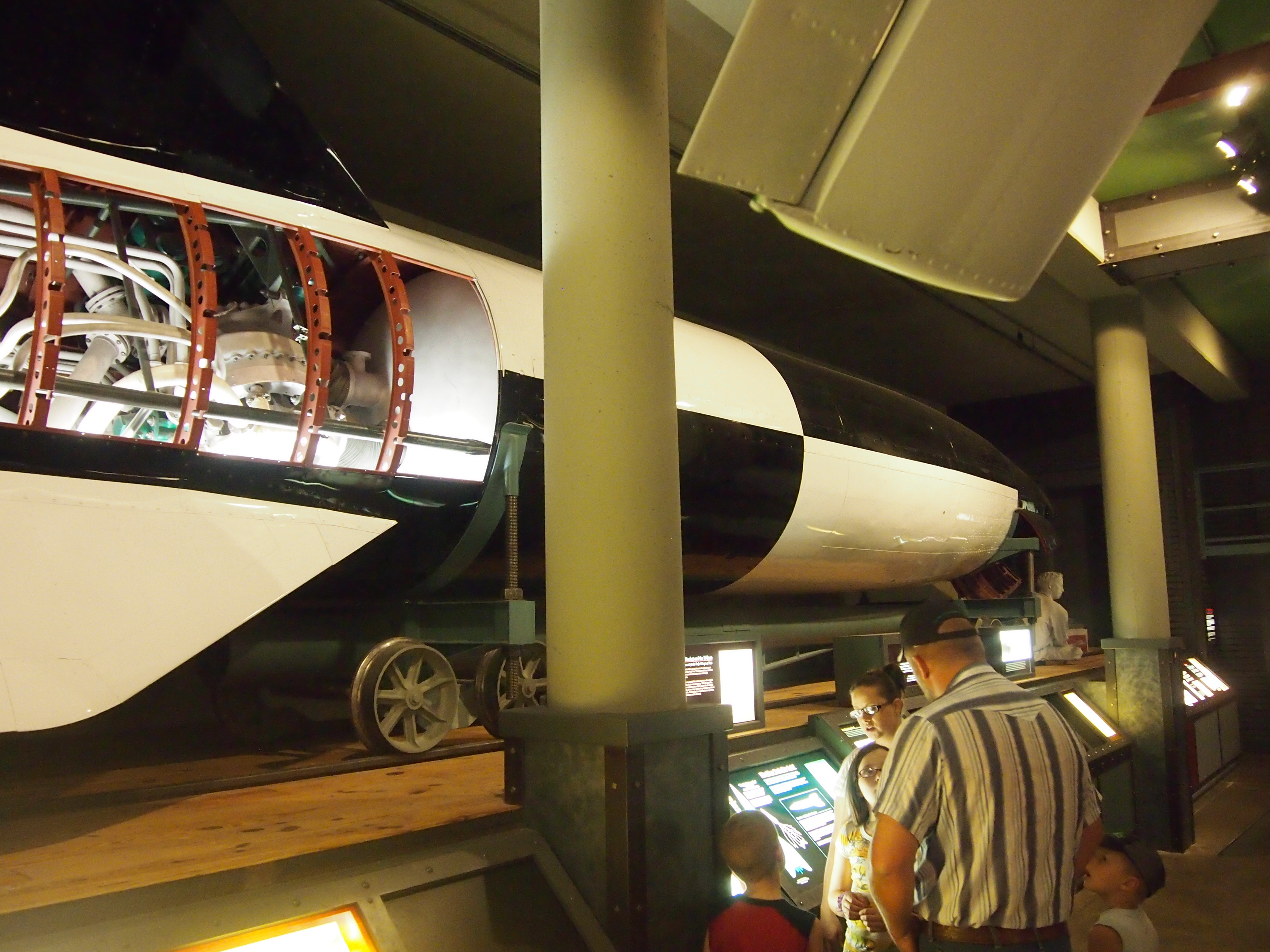
The displays begin at the beginning of modern rocketry – Konstantin Tsiolkovsky and Robert Goddard and on to Nazi rockets, including a restored V-1 and V-2.

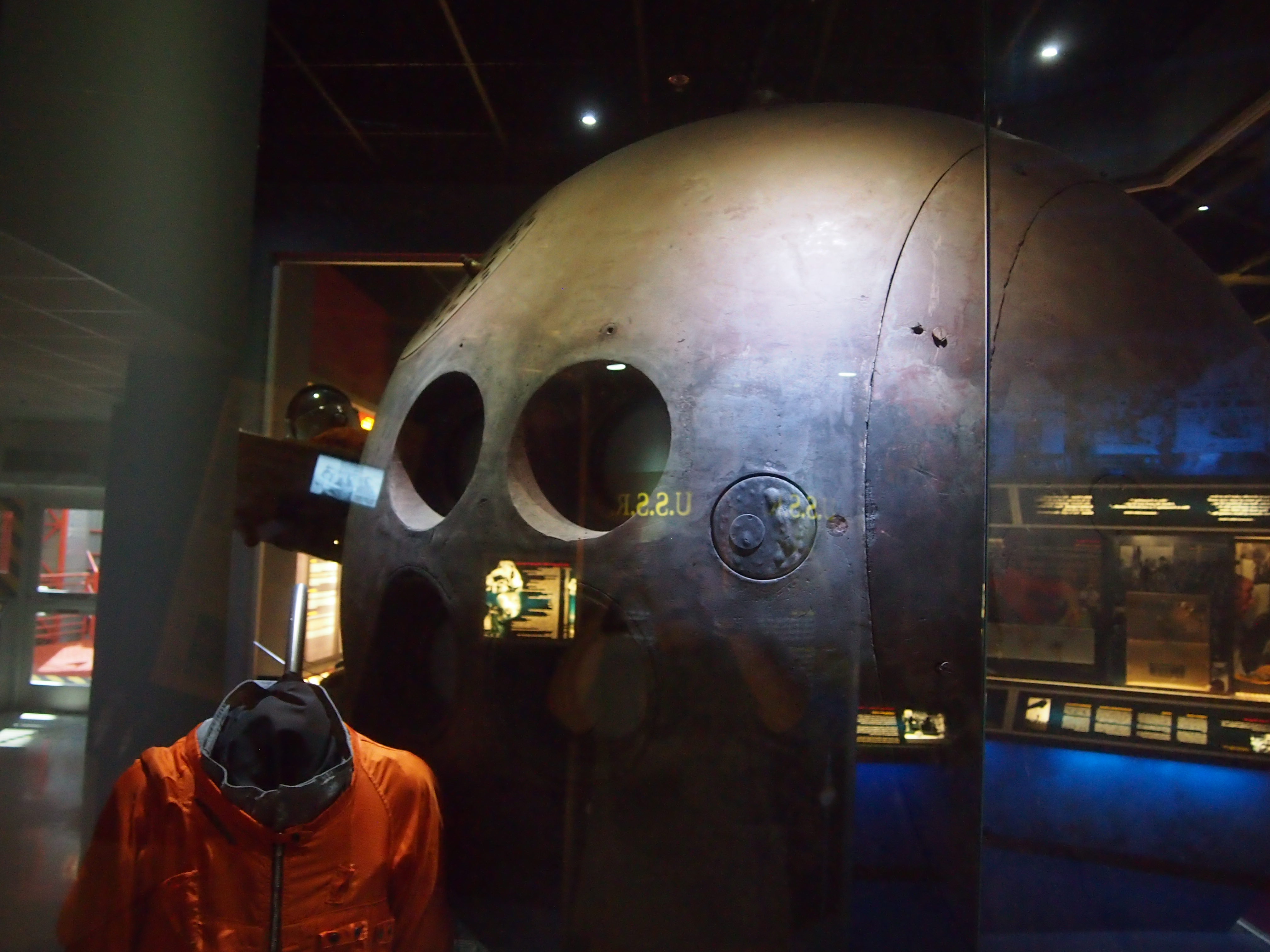
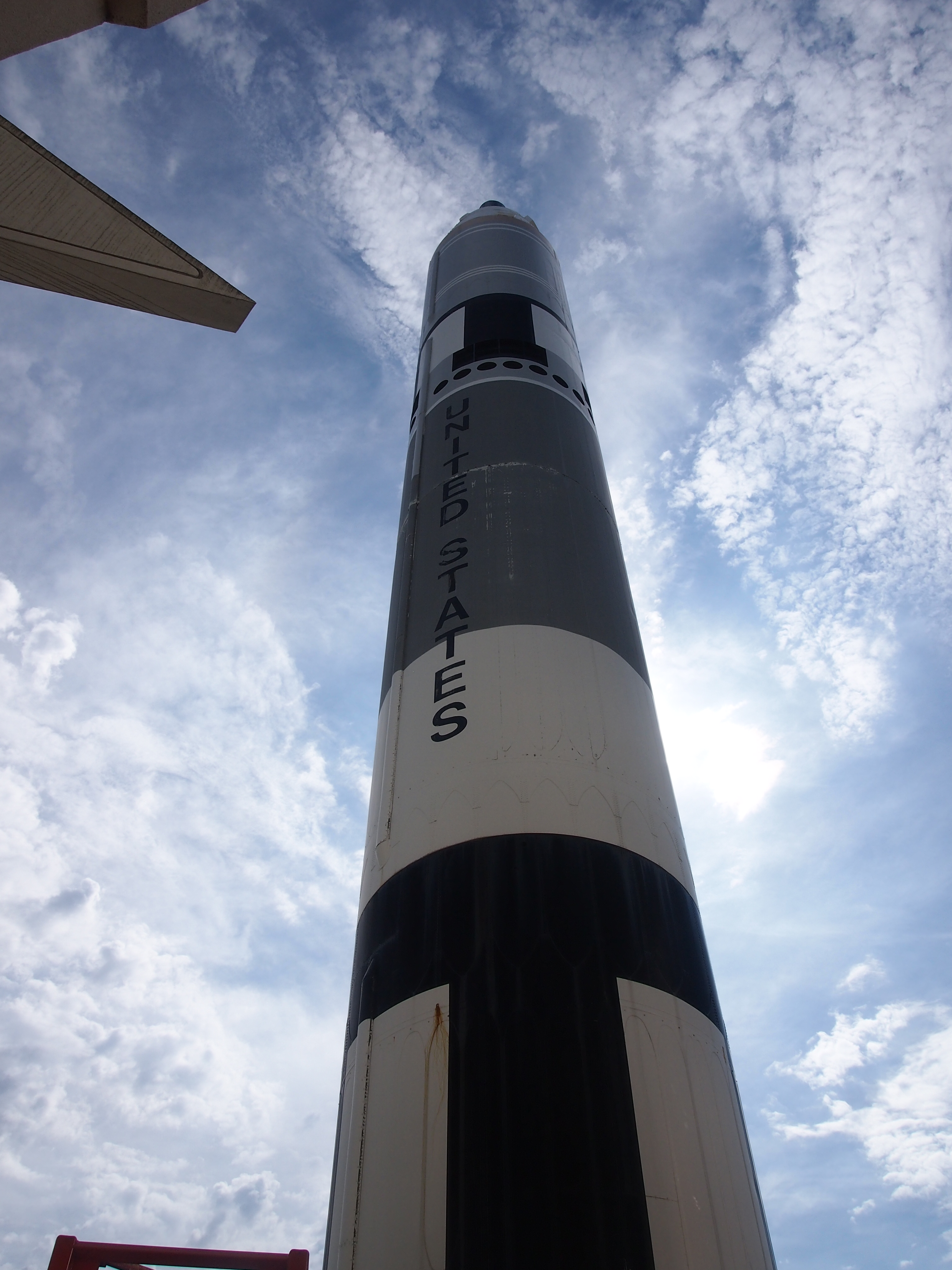
V-2 rocketThen on to Soviet and U.S. rockets and capsules that ventured into space, plus a lot of ancillary items. It’s an astonishing collection, including a replica of the X-1, a flight-ready backup for Sputnik 1, a backup version of the Vanguard 1, a Russian Vostok capsule – the only one outside Russia – Liberty Bell 7 (pulled from the ocean floor and restored), a Redstone rocket and a Titan, too, the Gemini 10 capsule, a Voskhod capsule, the Apollo 13 Command Module, a Soyuz capsule, various Soviet and American rocket engines, an Apollo 11 Moon rock, and a lot of smaller artifacts.

I took a particular interest in the Russian equipment because I’ve seen so little of it. In fact, I’d never seen a Vostok, and there it was. Looking like a large bowling ball behind glass. “Hop in, Comrade, and we’ll shoot you into space.”
VostokThe American equipment was impressive, too, though more familiar. It’s always an impressive thing to stand under a rocket like a Titan, which used to deliver Gemini into orbit. Titan

Ann seemed to enjoy herself, and probably learned something. But to really appreciate this museum, it helps to have been an eight-year-old boy in 1969. You find yourself turning the corner and saying, “Wow, look at that!” a lot.
The Mighty F-1 Laid Low

I hadn’t heard until today about the expedition that found some Saturn V first stage engines – the mighty F-1 — on the bottom of the Atlantic. The Bezos Expedition site is careful to note that “many of the original serial numbers are missing or partially missing, which is going to make mission identification difficult. We might see more during restoration,” so they could be from any of the missions that used the engines, though I believe they were looking for Apollo 11 relics.

There might be less headline glory in finding something from (say) Apollo 16, but I think it would be just as cool. The expedition site goes on to say that whatever their origin, “the objects themselves are gorgeous.” Bet they are. They’ve gone to the Kansas Cosmosphere and Space Center for stabilization, so maybe they’ll stay there for display. That place would be worth going to that corner of Kansas to see, F-1s or not.

Seems that Amazon boss Jeff Bezos paid for the expedition, or at least much of it. Good for him. It’s the kind of thing that billionaires should spend some of their money on. That and the 10,000-Year Clock.