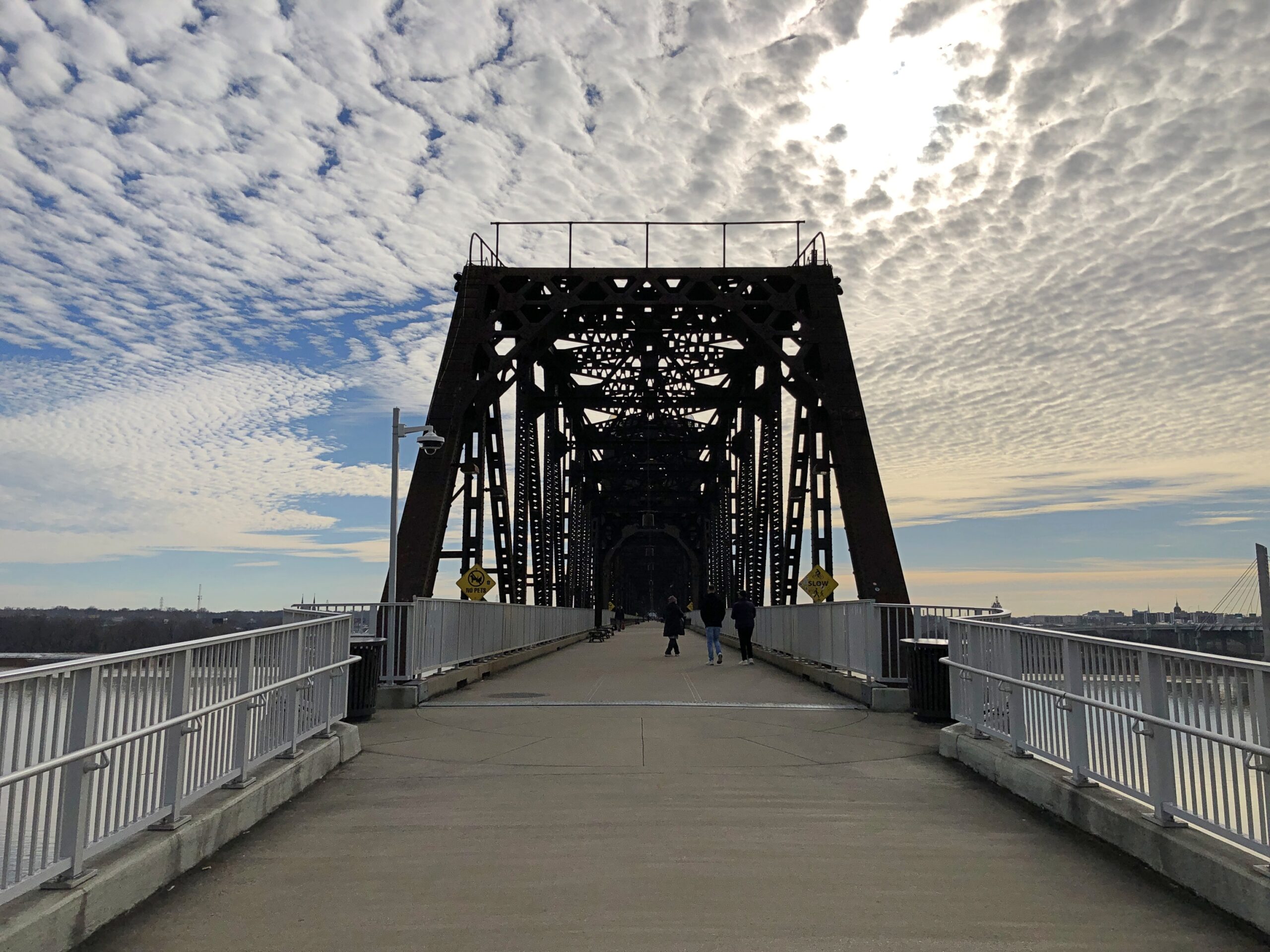
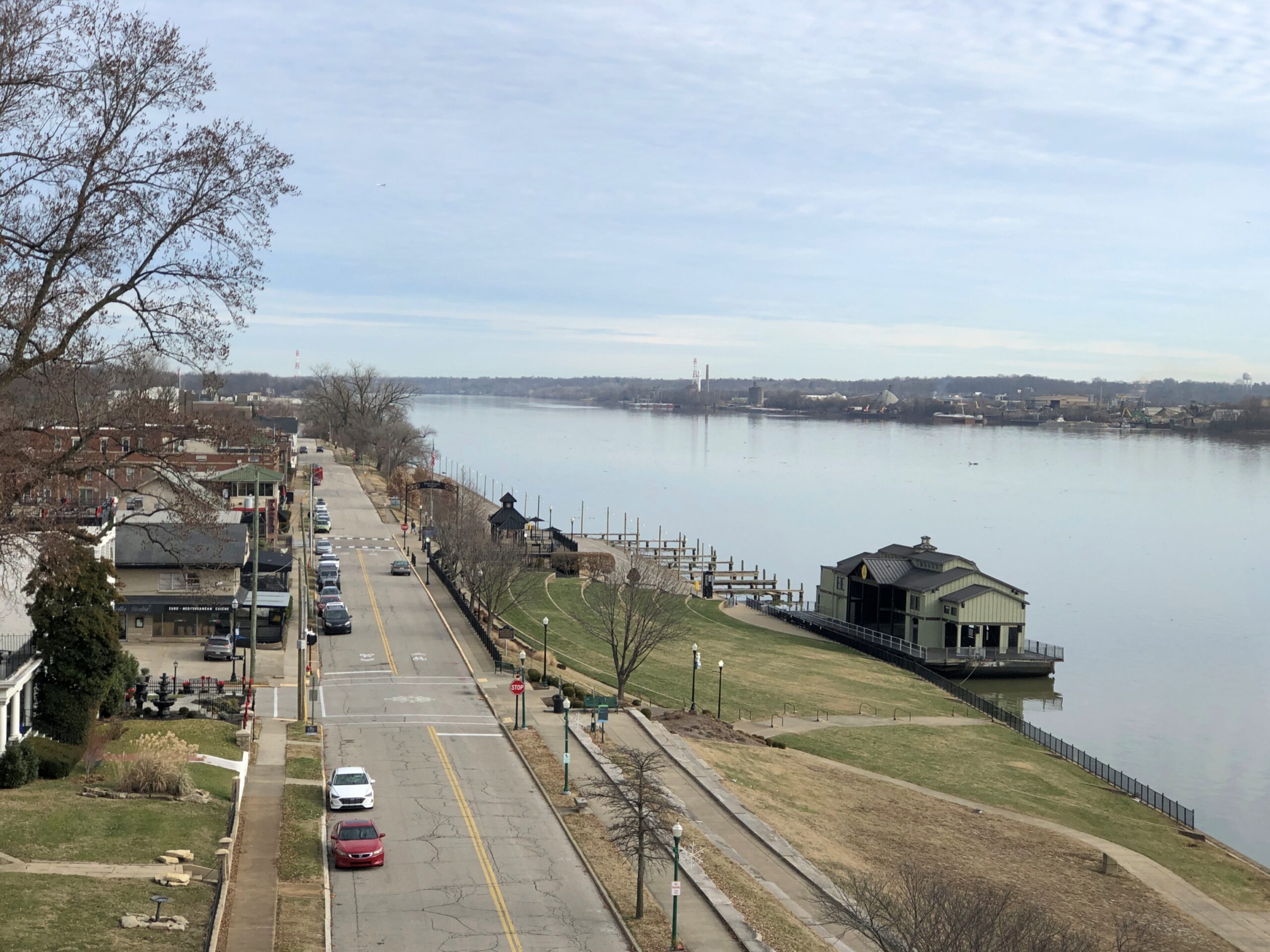
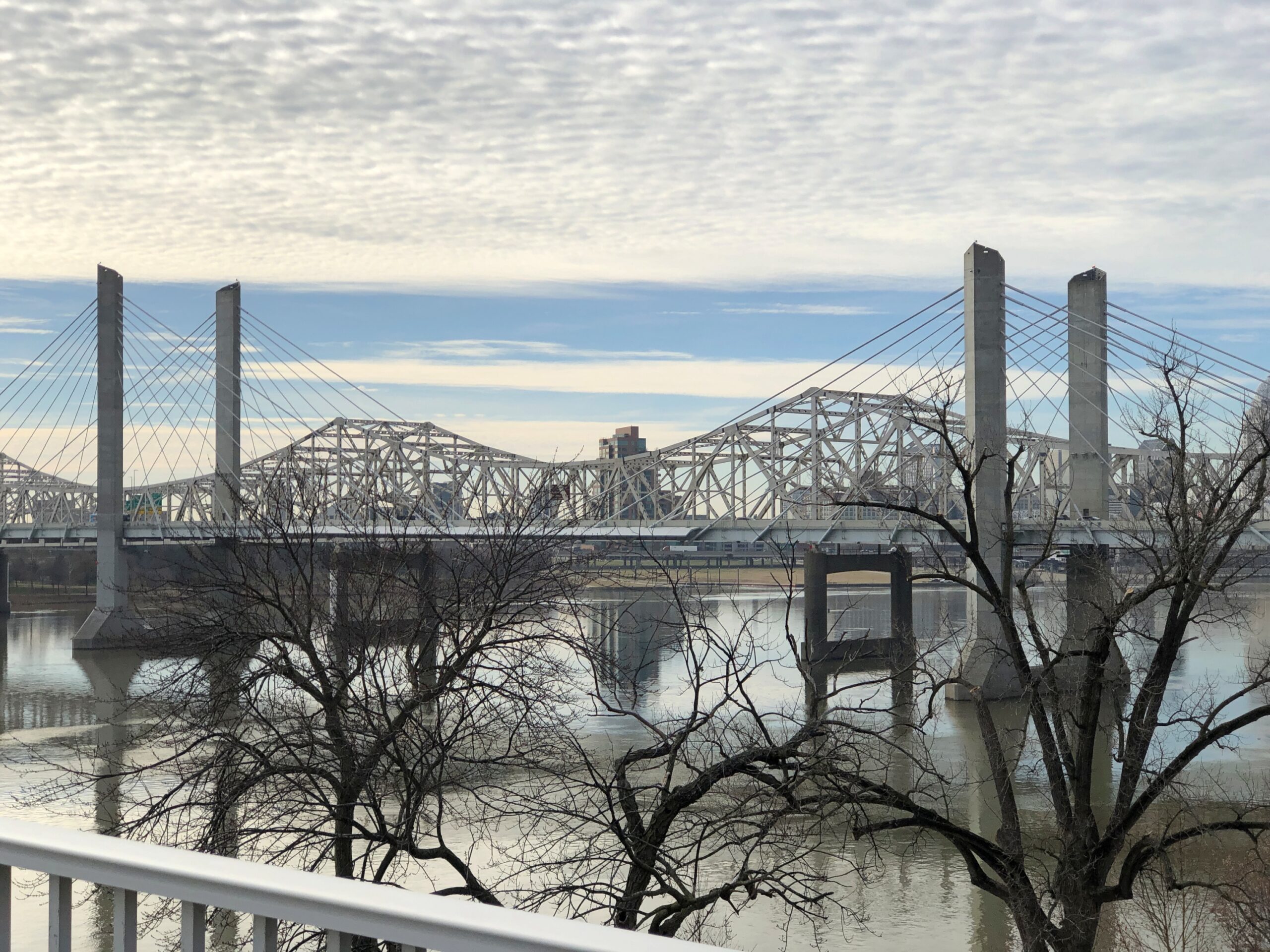
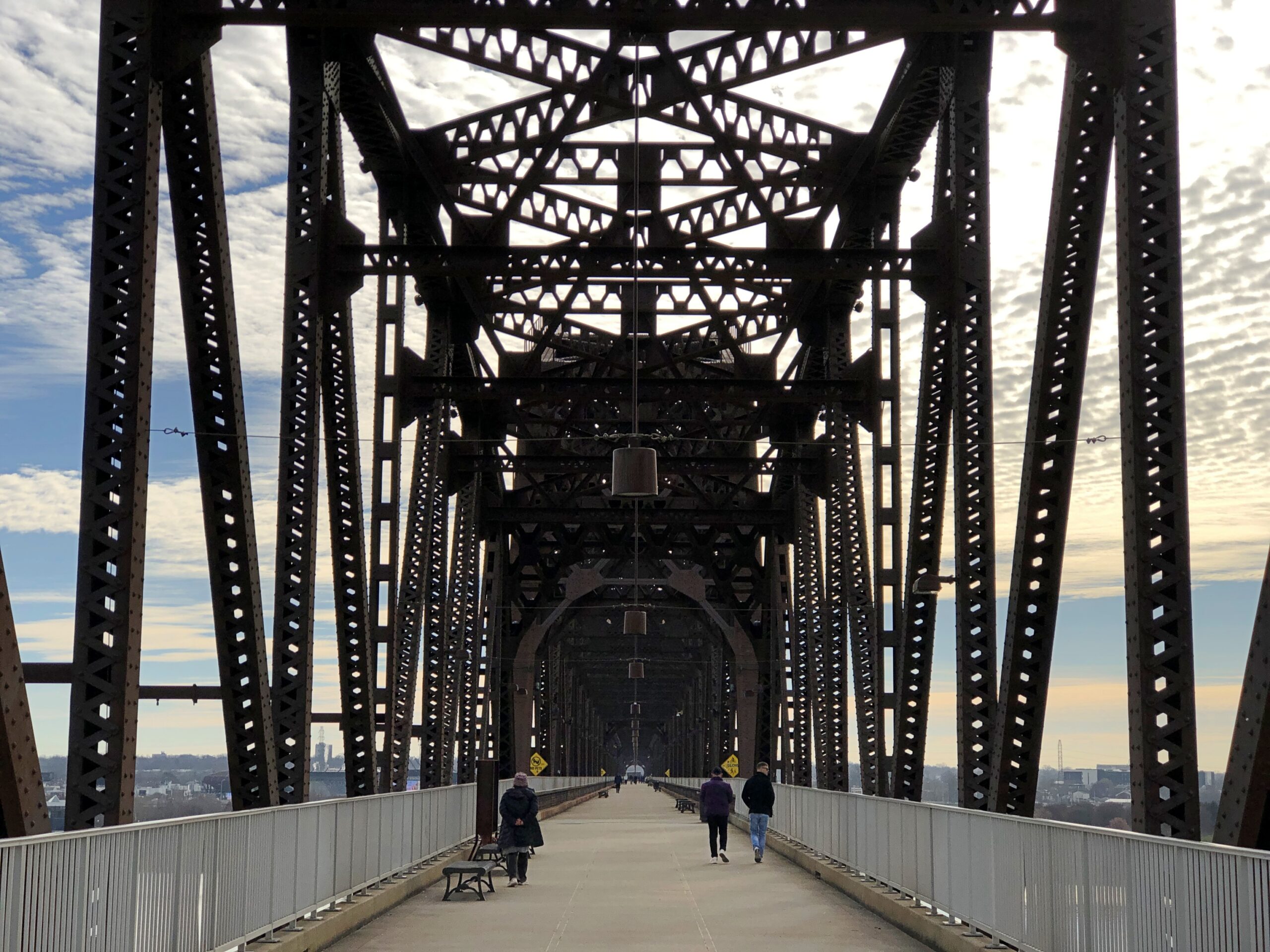
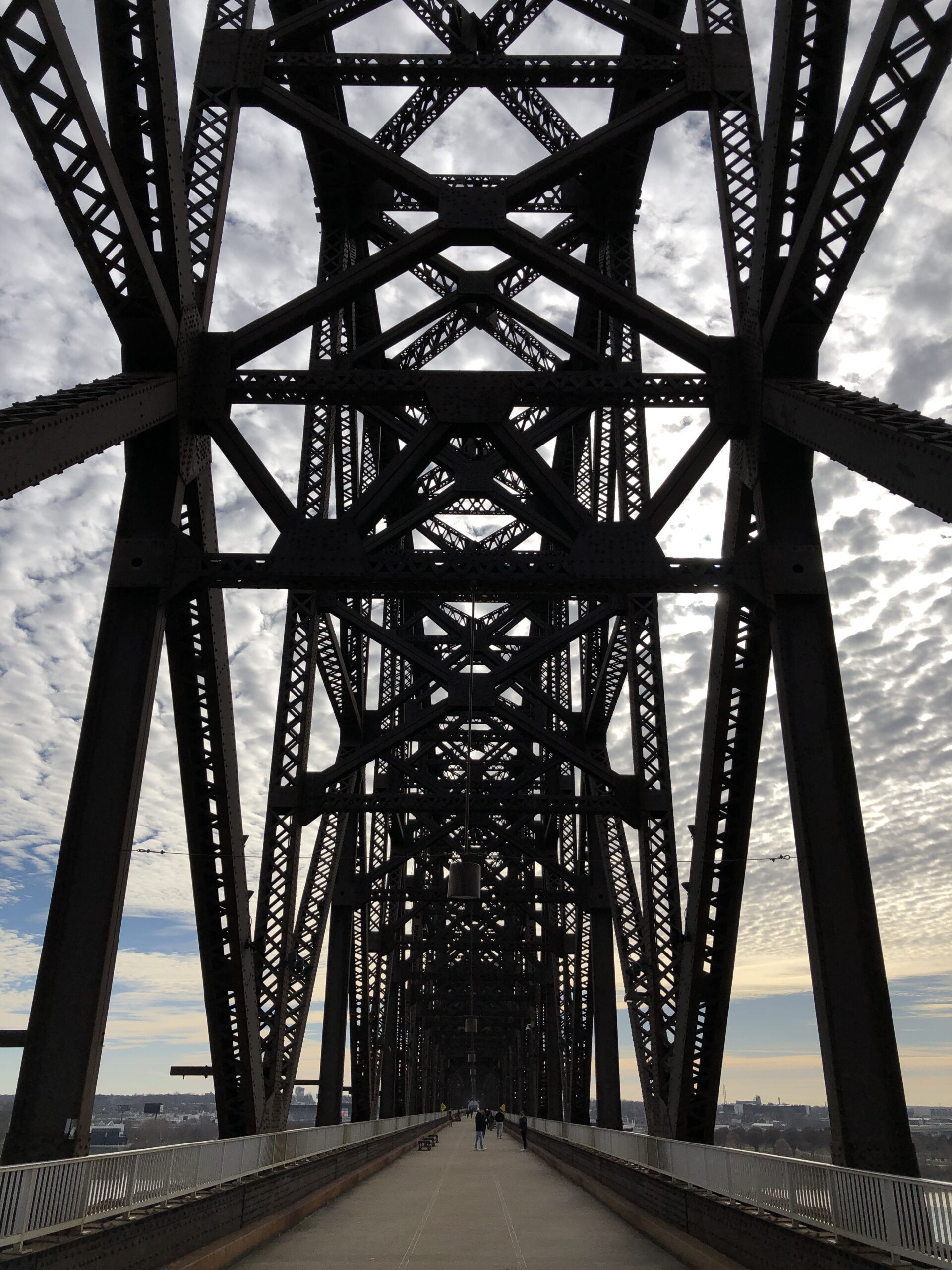
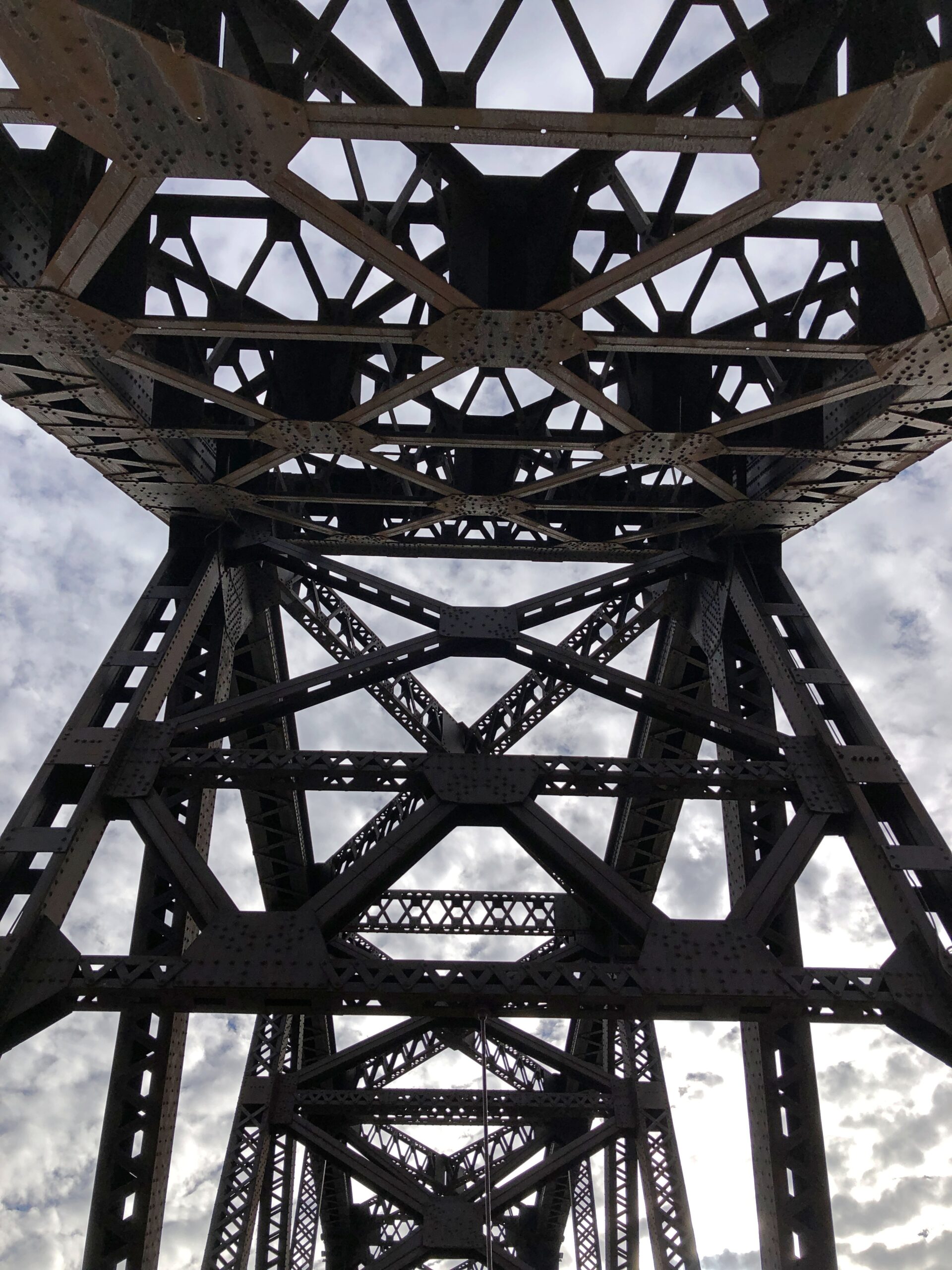
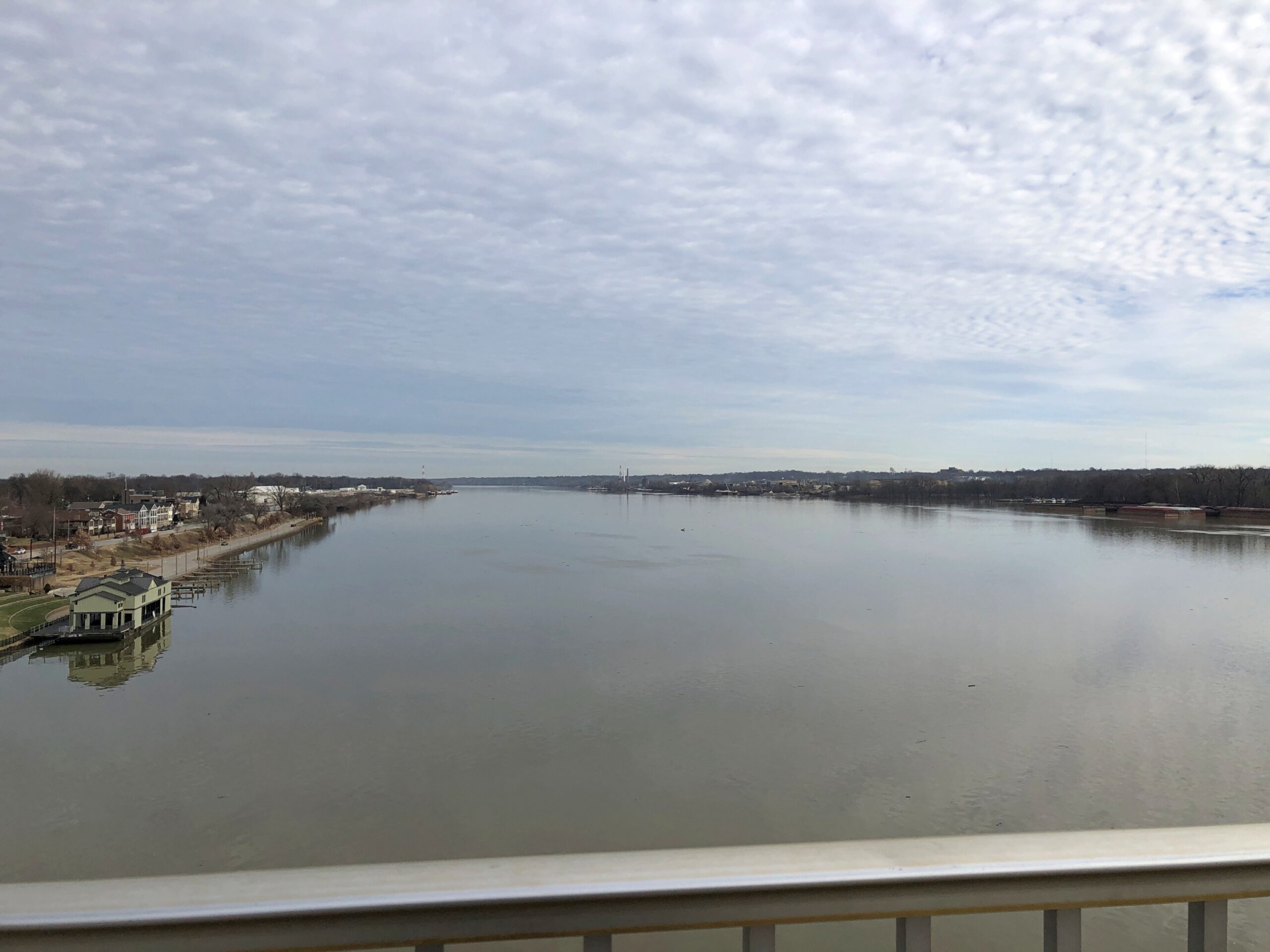
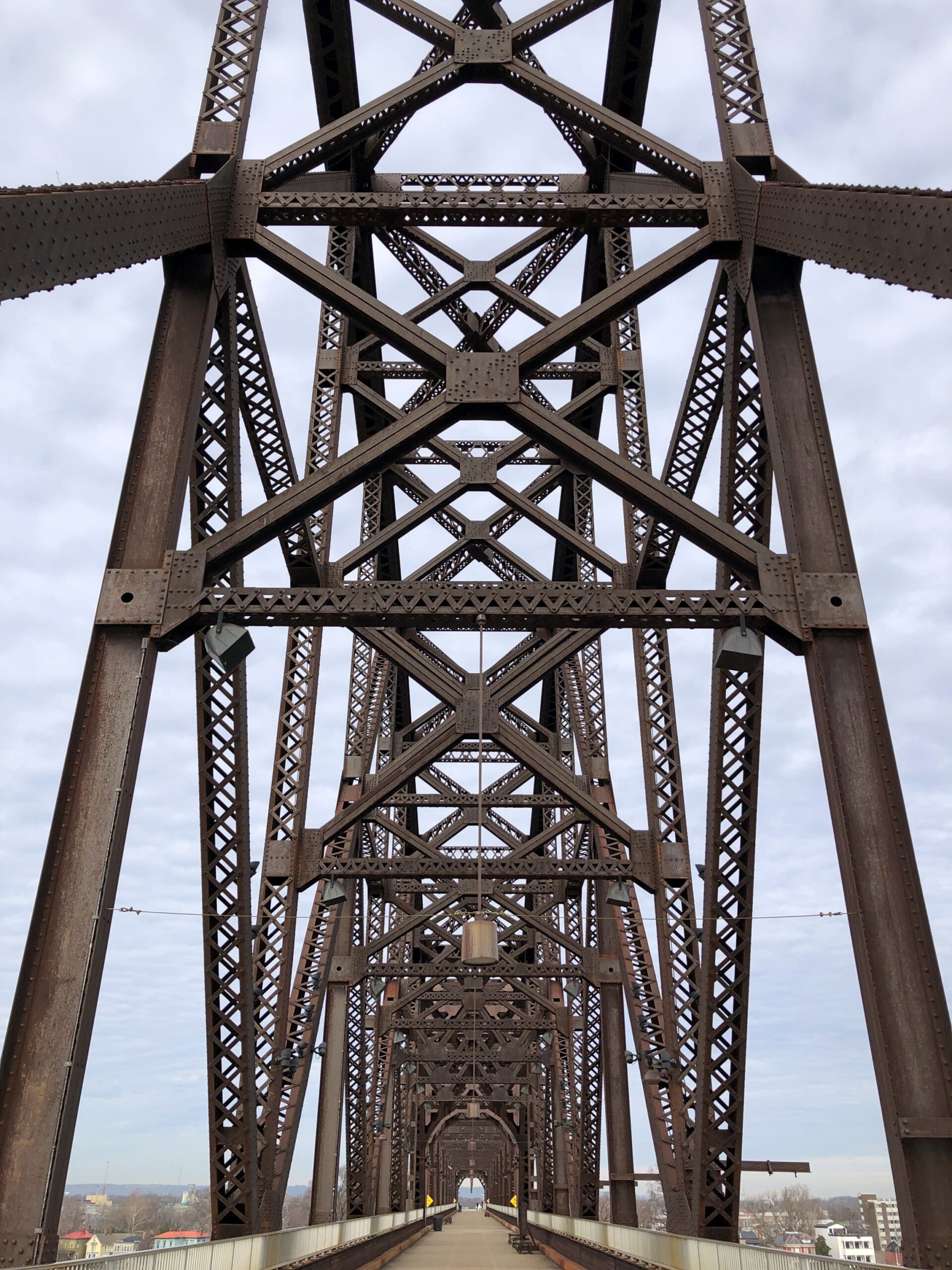
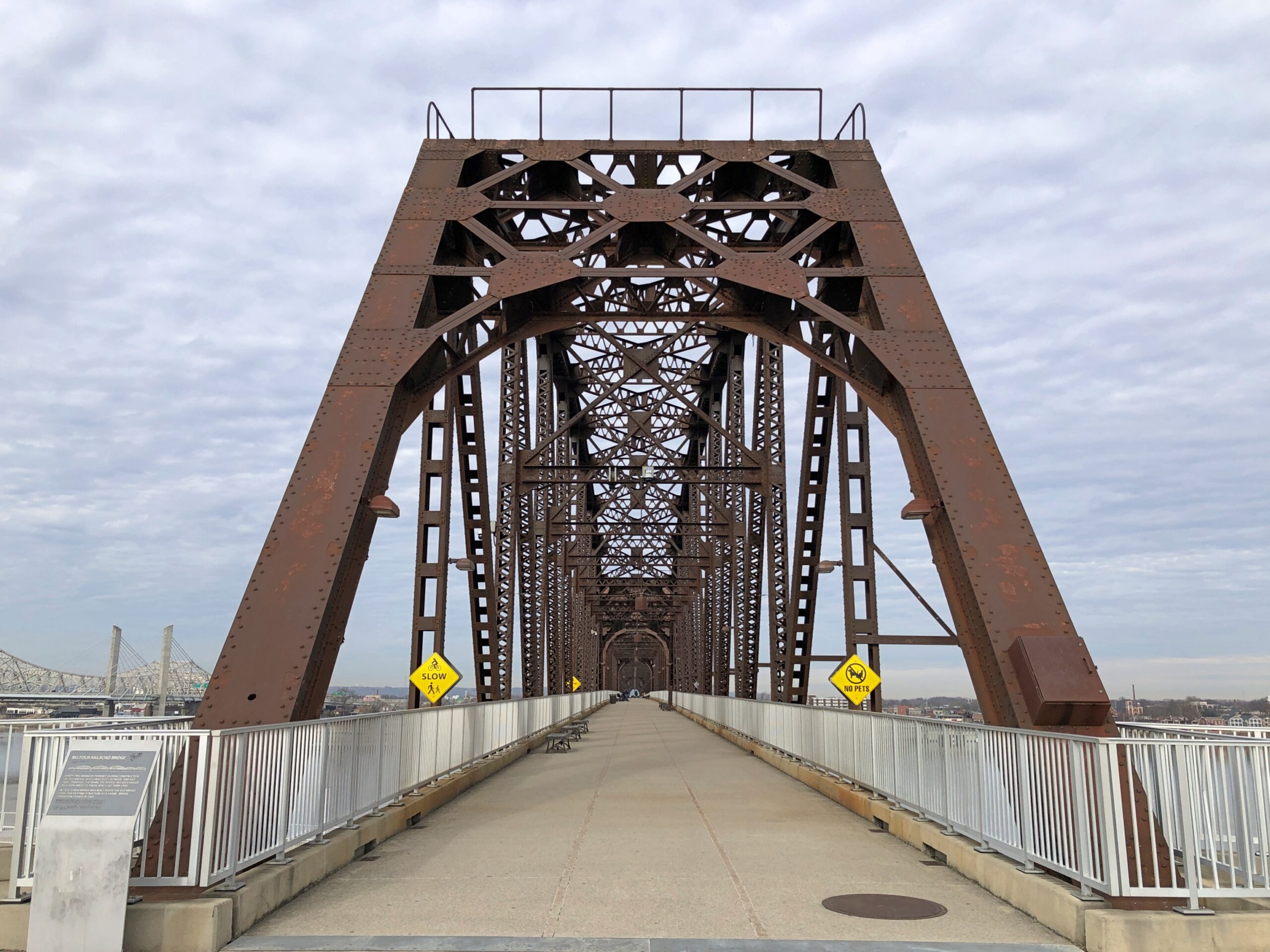
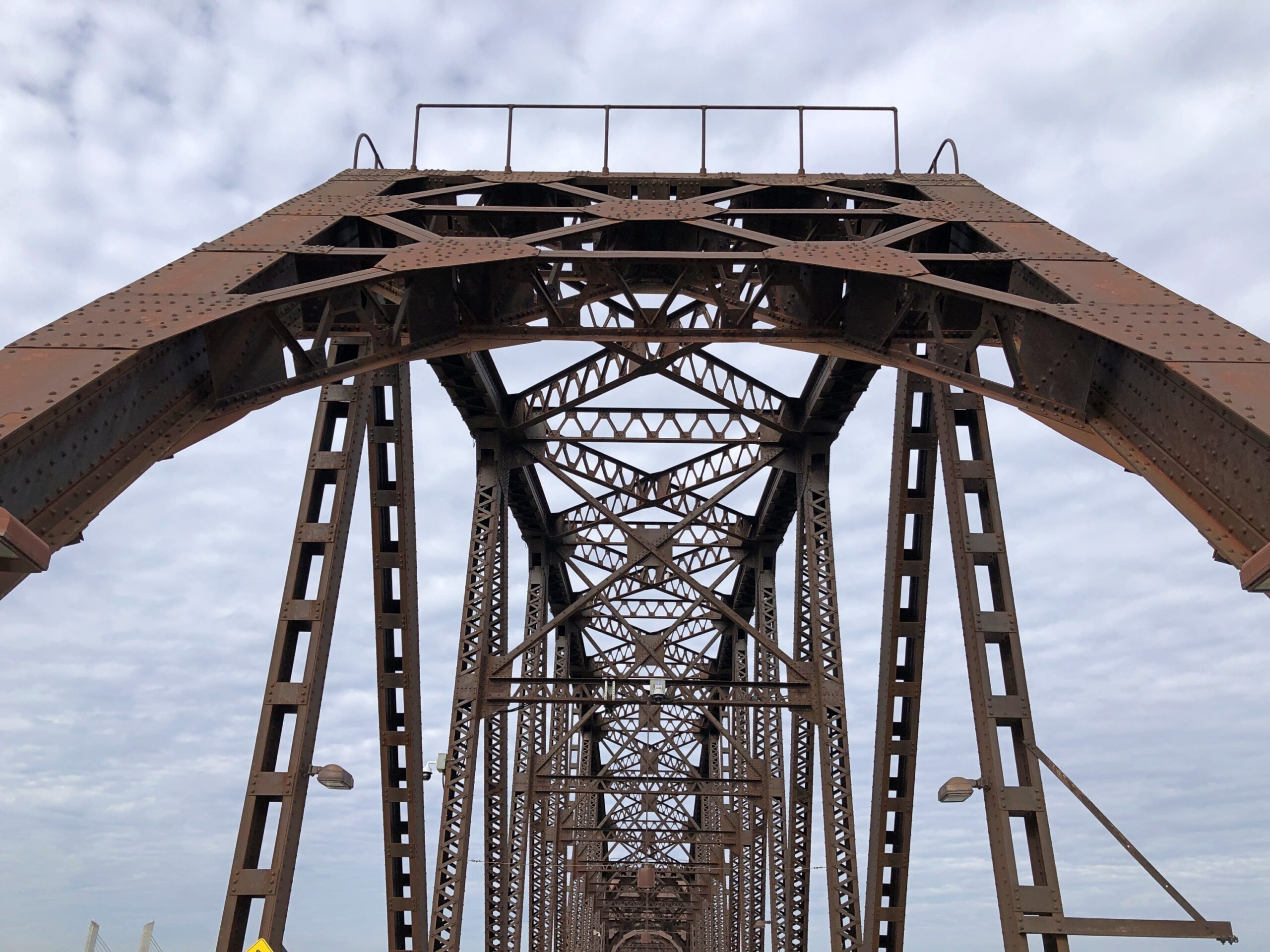
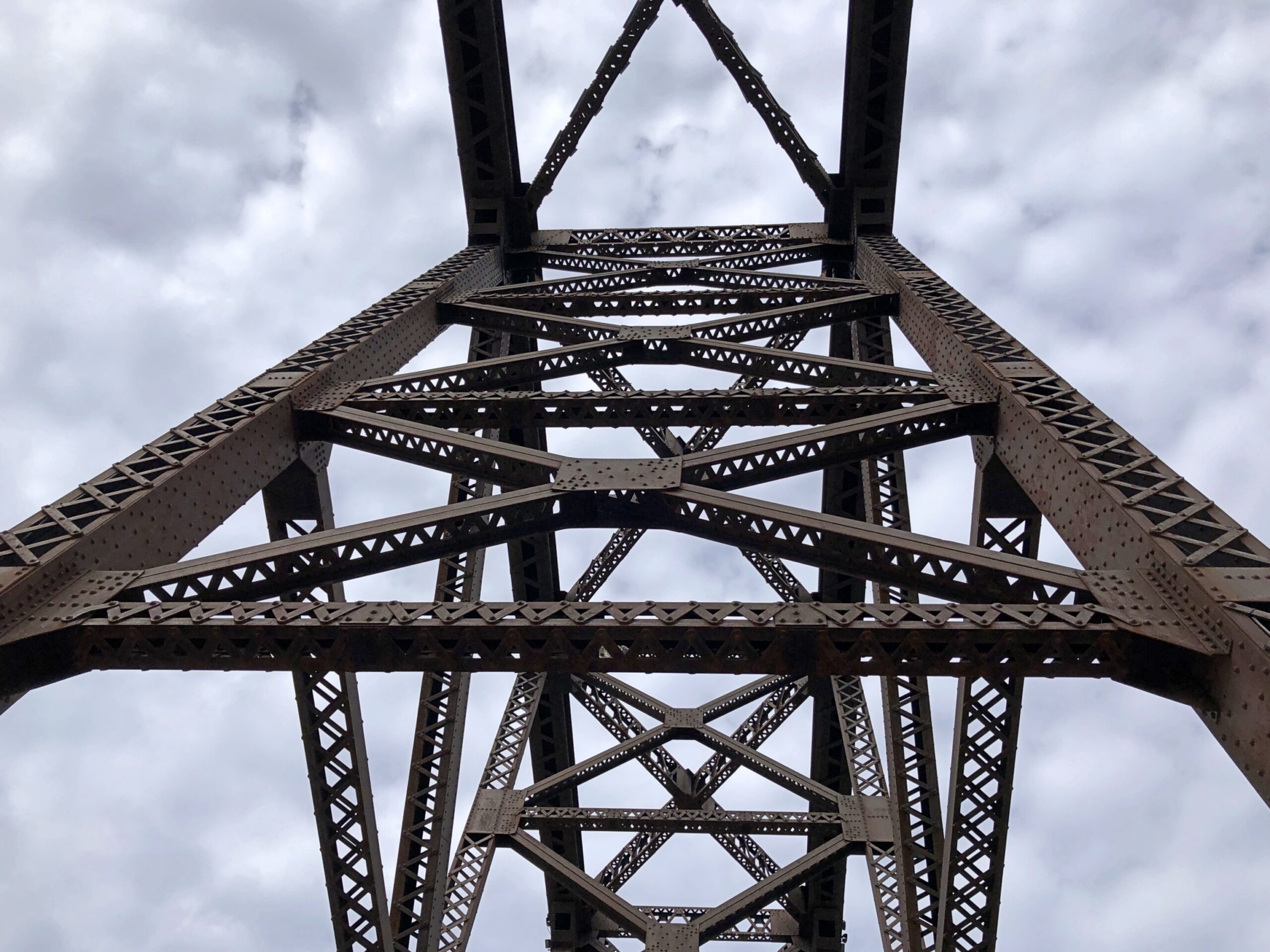
Even the last day of a long trip can include – should include – something to see. With that in mind on December 22, after we crossed the Ohio River from Louisville on the I-65 bridge, which I have done many times, we took the first exit to go to Jeffersonville, Indiana, which I have done only once, in 1990. Then we went back across the river to Louisville, this time on foot on a massive iron structure known as the Big Four Bridge.
The Jeffersonville side of the bridge offers views of that town and its riverfront, where I took a wintertime stroll all those years ago. At that time, Big Four Bridge was a decaying relic, inaccessible to the public.
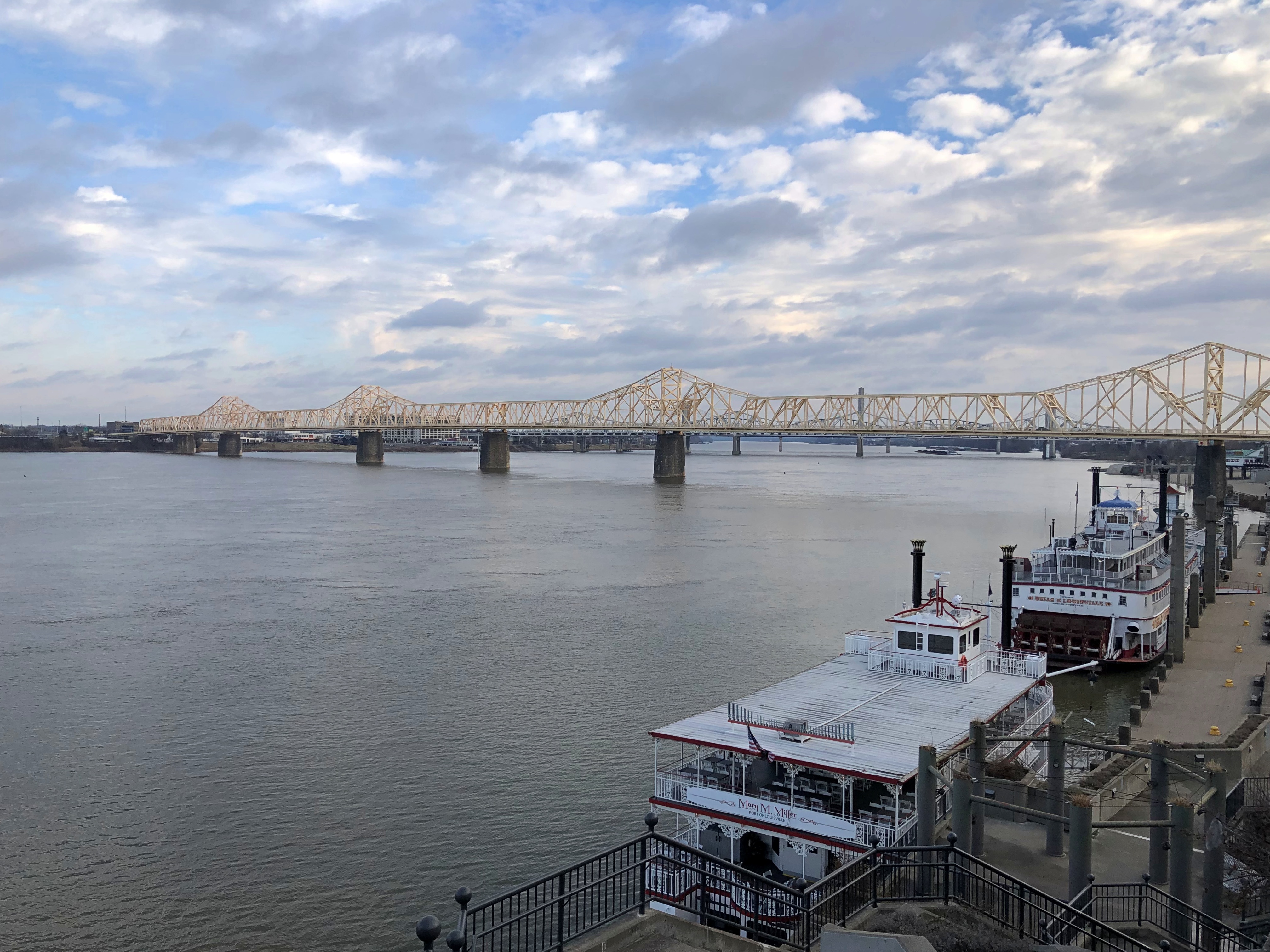
You can also see the I-65 bridge from that vantage. It too is an elegant design.
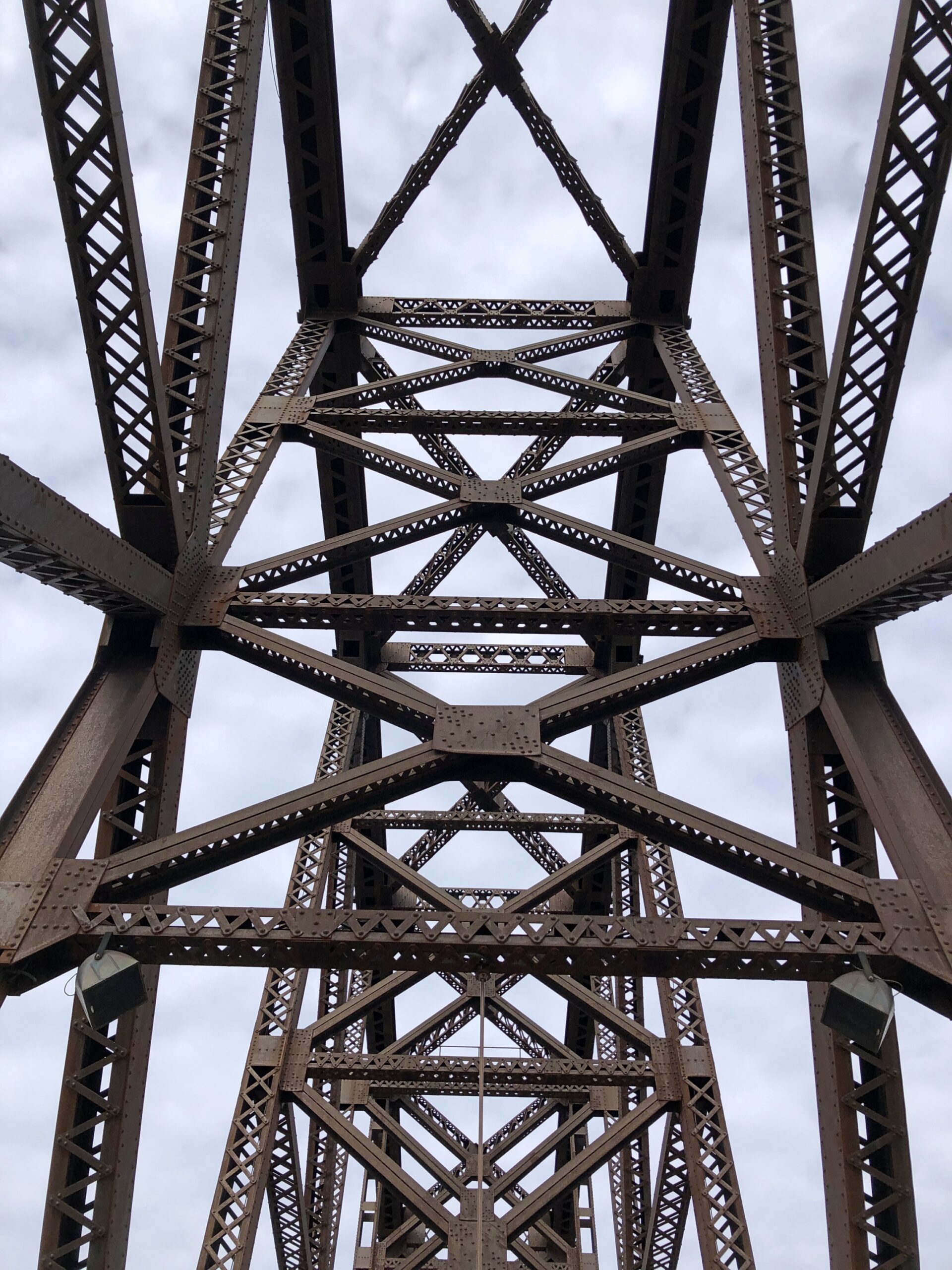
But not as impressive as the sweeping ironwork of Big Four Bridge.
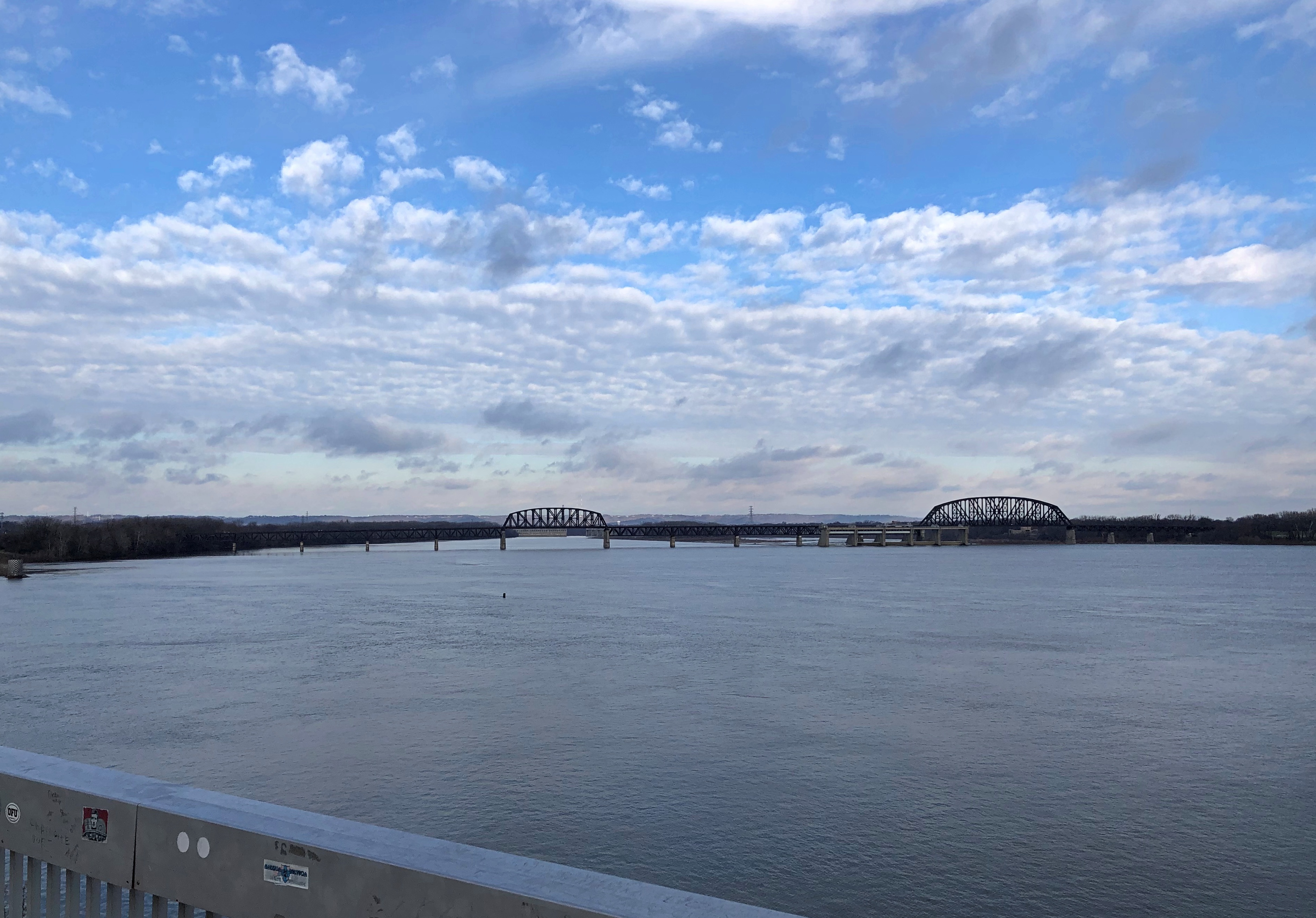
The Ohio sweeps along as well.
I couldn’t take enough pictures of Big Four.
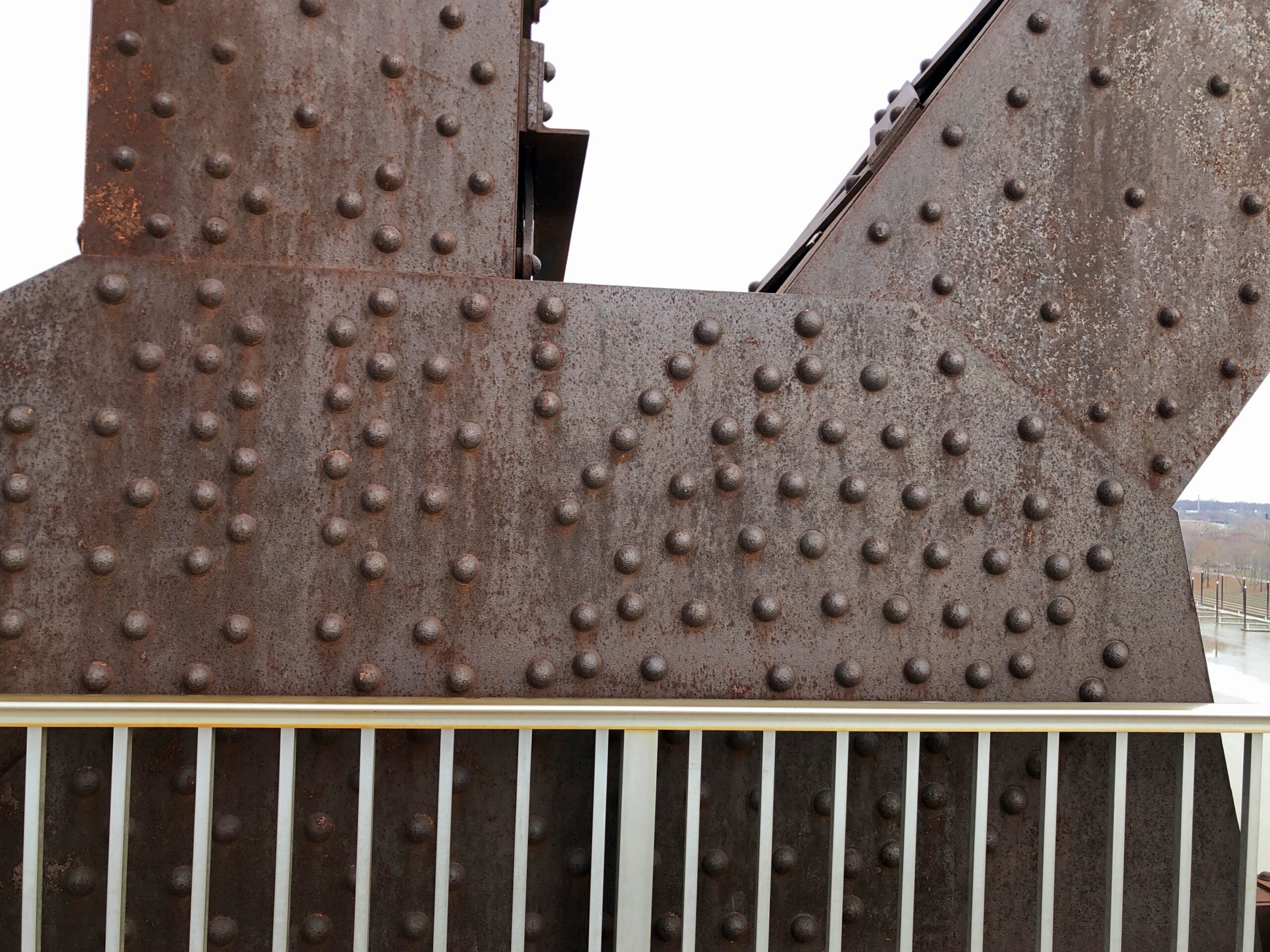
Once upon a time, Big Four carried the Cleveland, Cincinnati, Chicago and St. Louis Railway, also nicknamed the Big Four Railroad. The 2,525-foot span contains six trusses, beginning as a late 19th-century project, the sort of pre-OSHA work that killed dozens of workers during construction (so why not ghost stories?).
Completed in 1895, “The Big Four Bridge allowed freight traffic to dramatically increase in Louisville, and began carrying high-speed interurbans on September 12, 1905…” says Bridges & Tunnels. “Due to bigger and larger trains, not only in size, but in weight, contracts were let in June 1928 to build a larger Big Four Bridge. The new span, constructed by the Louisville & Jefferson Bridge Co., was built on the piers of the old bridge, while leaving the existing span intact while it was upgraded.”
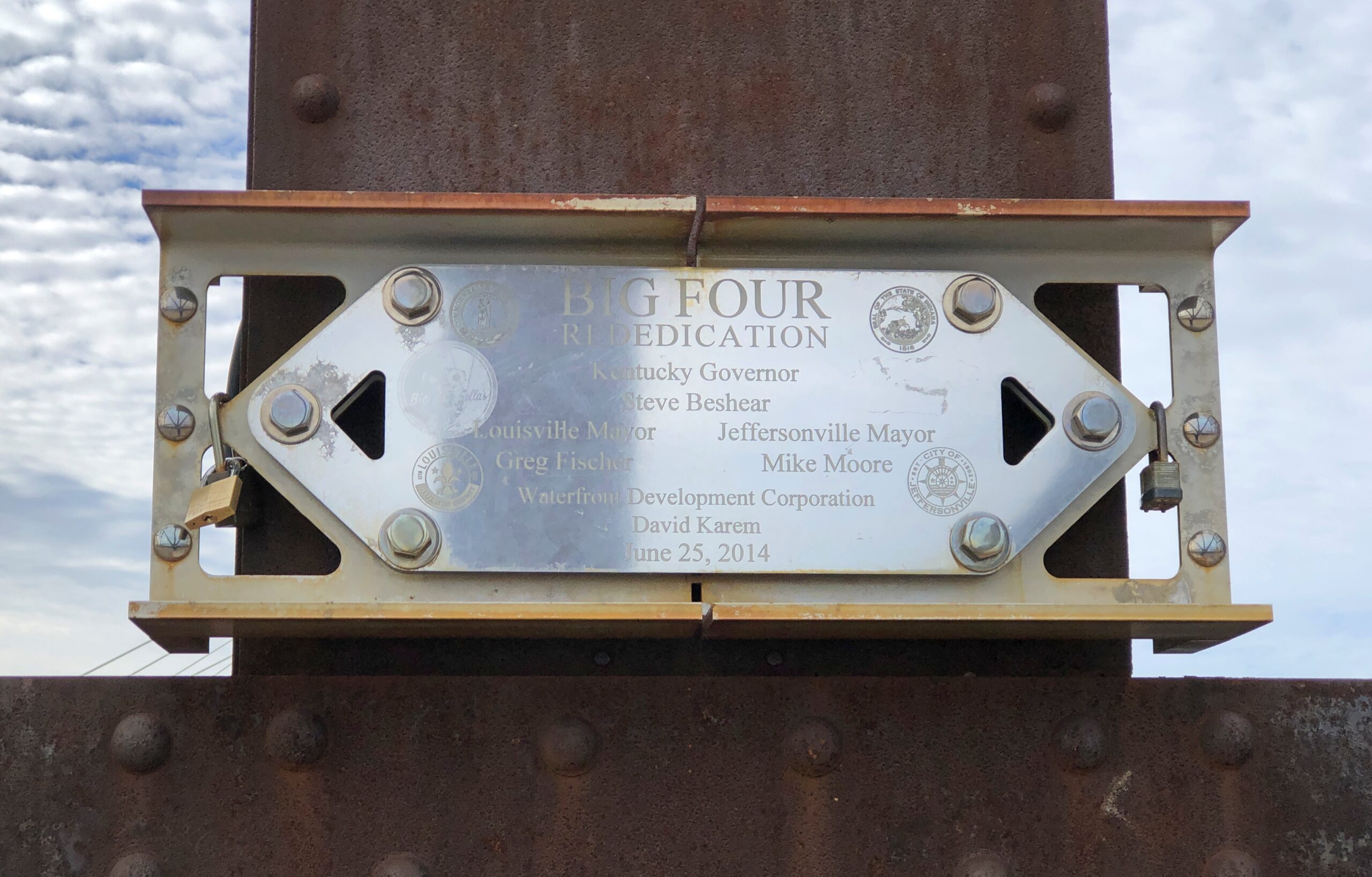
That is the structure we see today, except that in the early 21st century, it was redeveloped into a pedestrian/bicycle bridge.
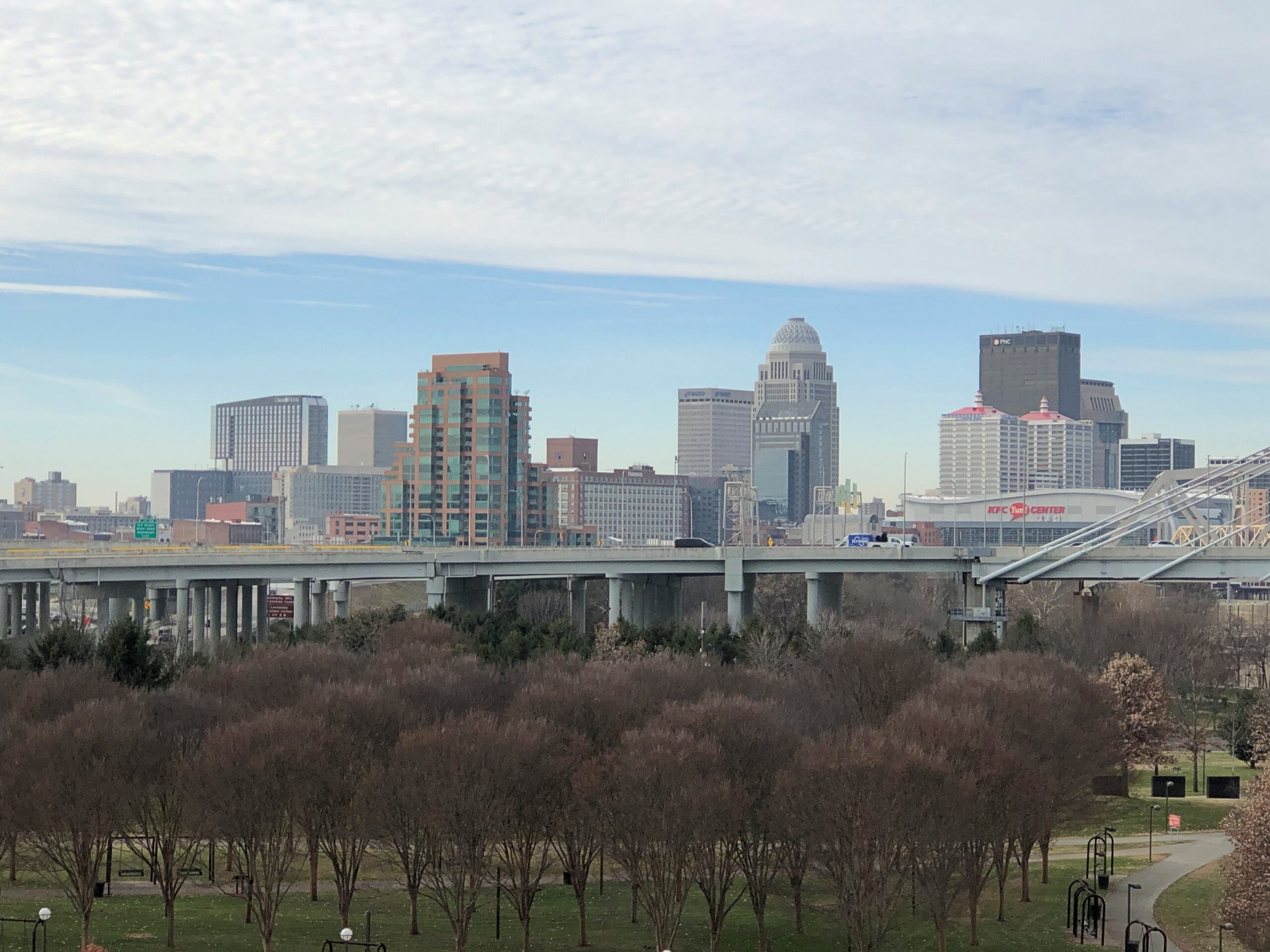
At the Louisville side of the bridge, views of the city.
And looking back at the bridge from the Kentucky (Louisville) side.
We saw the daytime bridge, of course. But “the Big Four Bridge has an LED lighting system that wraps the iron fretwork in vibrant colors,” says Our Waterfront. “The lights can be programmed to have a rainbow effect, highlighting the beauty and strength of the bridge structure. At night, the bridge becomes a colorful beacon in our city. Lights operate daily from twilight until 1 am.”
Another reason to come back to Louisville-Jeffersonville, obviously.
I have to admit it, we bought gas at Buc-ee’s more than once on our trip to Florida. Turns out that the chain’s gas prices are comparable with Costco. That is, 20 to 30 cents cheaper per gallon than most standard gas stations. Costco tends to be on main thoroughfares in densely populated places, which is sometimes convenient, sometimes not. Buc-ee’s is the flip of that, tending to be on major highways at some distance from densely populated places. Sometimes convenient, sometimes not.
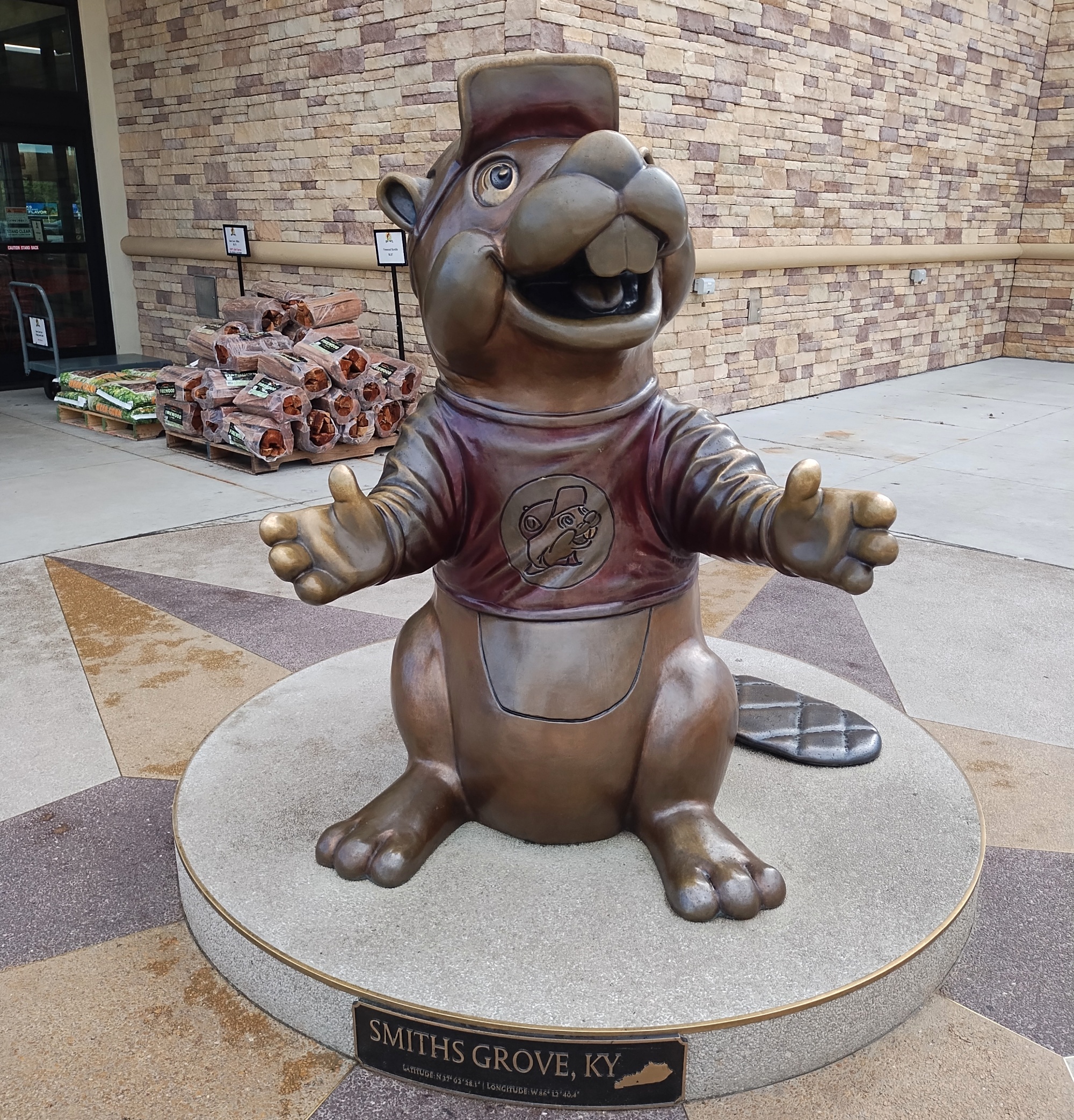
We gassed up at the Smiths Grove, Kentucky Buc-ee’s just off I-65 on December 5, early in our trip. We had to make a decision on how to proceed from there. One choice: continue on I-65 to Nashville, take I-40 east from there roughly to Cookeville, Tennessee, and take smaller roads into Jackson County, to reach our friends’ home in the holler. Or: take smaller roads across southern Kentucky and into Tennessee, bypassing metro Nashville and going through towns and hamlets and farmland and woods we’d never seen before, ultimately connecting to the appropriate small roads in Jackson County. It isn’t too hard to guess what we did.
Kentucky 101
It so happened that exiting from Buc-ee’s in Smiths Grove takes you to Kentucky 101, a two-lane highway that can either take you back to I-65 or south through Warren and Allen counties. Coming from the crowds of Buc-ee’s, people and cars, the contrast of heading south on Kentucky 101 is clear.
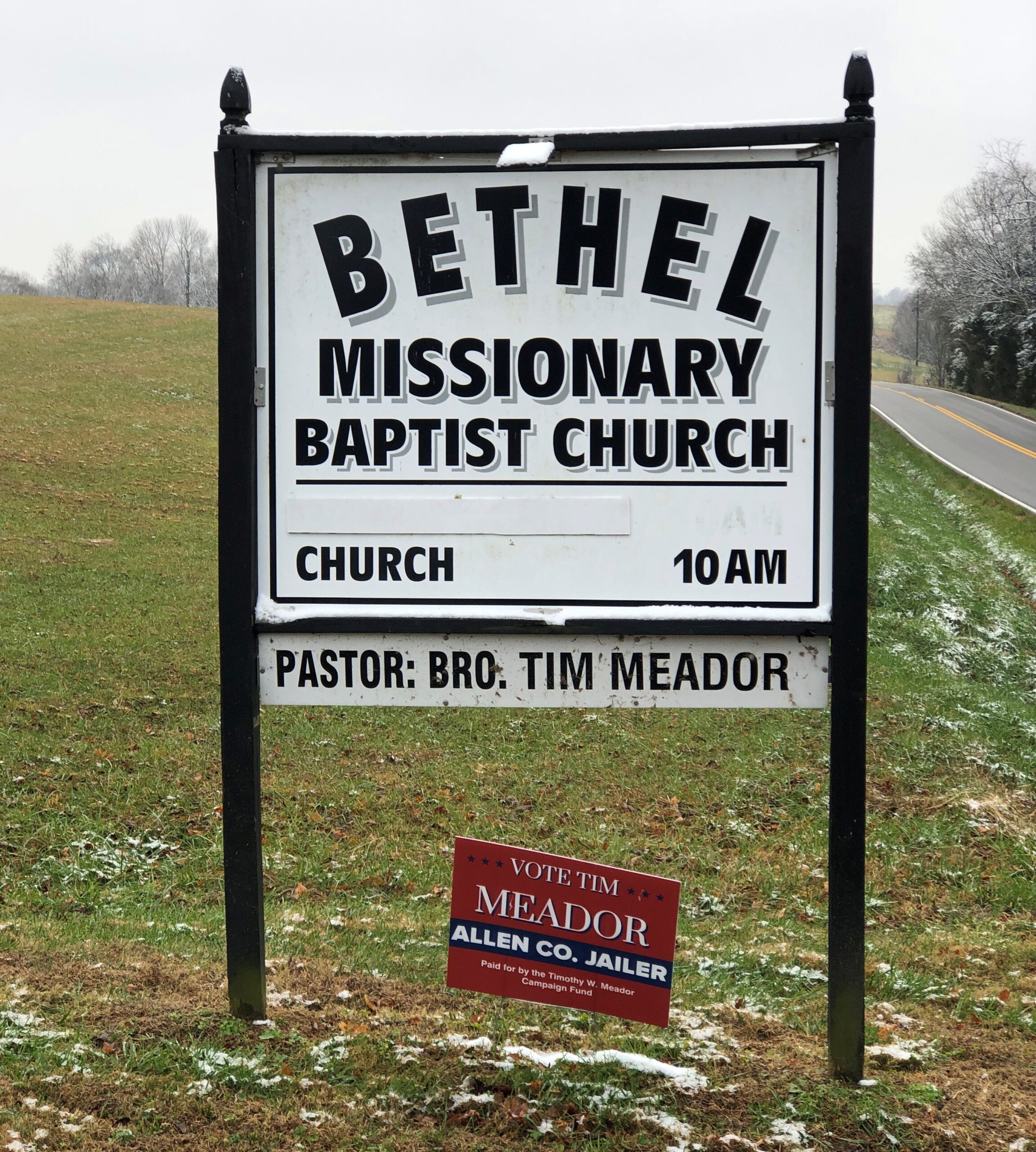
As of now, at least, Bro. Tim Meador is the Allen County Jailer, so I assume he won the most recent election.
I know that’s a county job that probably involves a fair amount of paperwork. Still, I picture the Jailer as an official who, like in a movie, puts offenders in the jug himself, turning a skeleton key (one of a few jangling on a big ring) to lock the cell.
Scottsville, Kentucky
The main traffic hub of Scottsville (pop. 4,300), the seat of Allen County, is the junction of Kentucky 101 and 98, known as Main and Court streets locally. Instead of a county courthouse, the hub is in the form of a square with businesses around it and a lot of traffic passing through. More than I would have guessed.
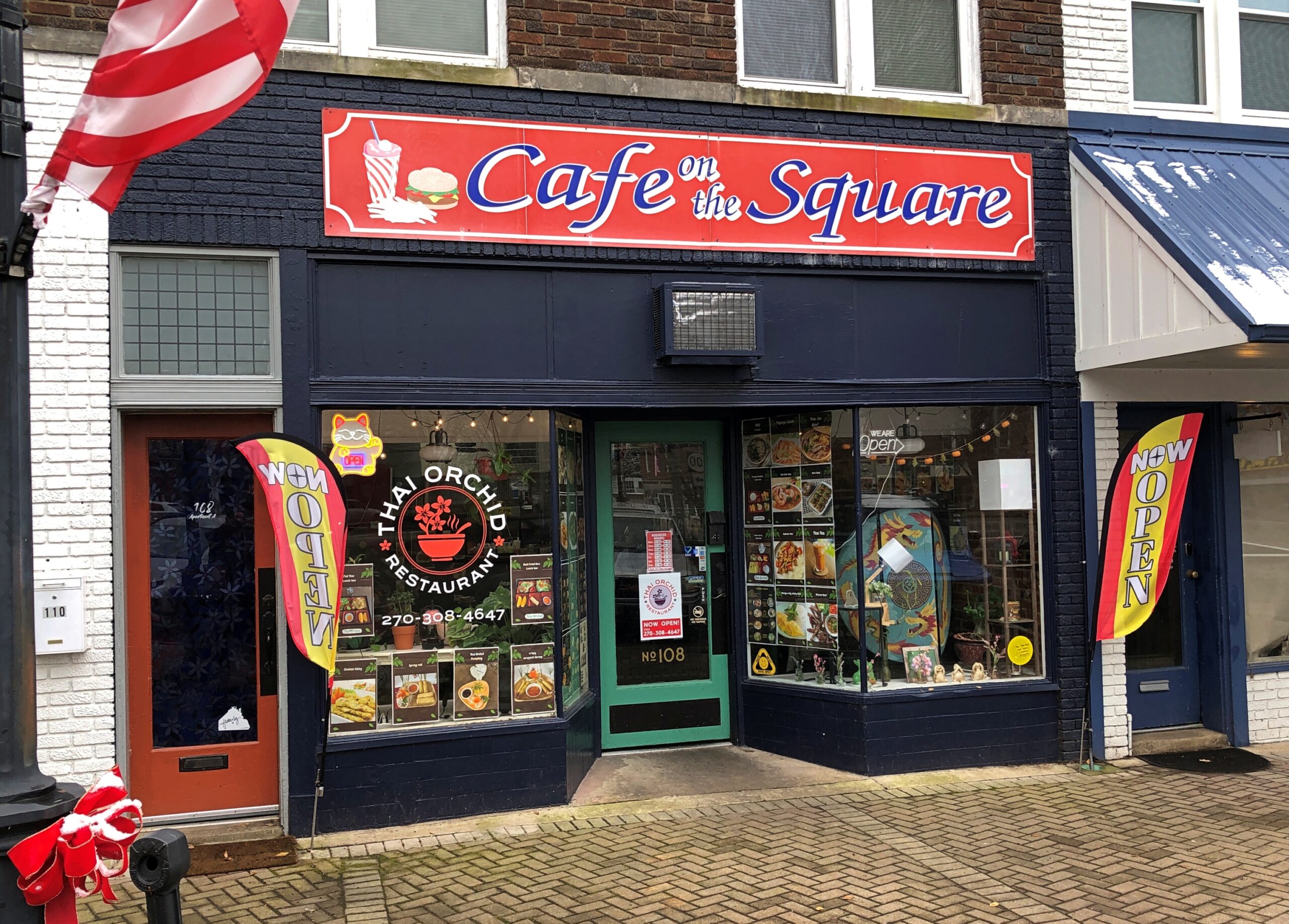
It was lunchtime. I can report that Thai Orchid is as good as you might find in a larger town. In our time, Thai has pretty much joined the tapestry of American cuisine as thoroughly as Chinese or Mexican food did in previous generations.
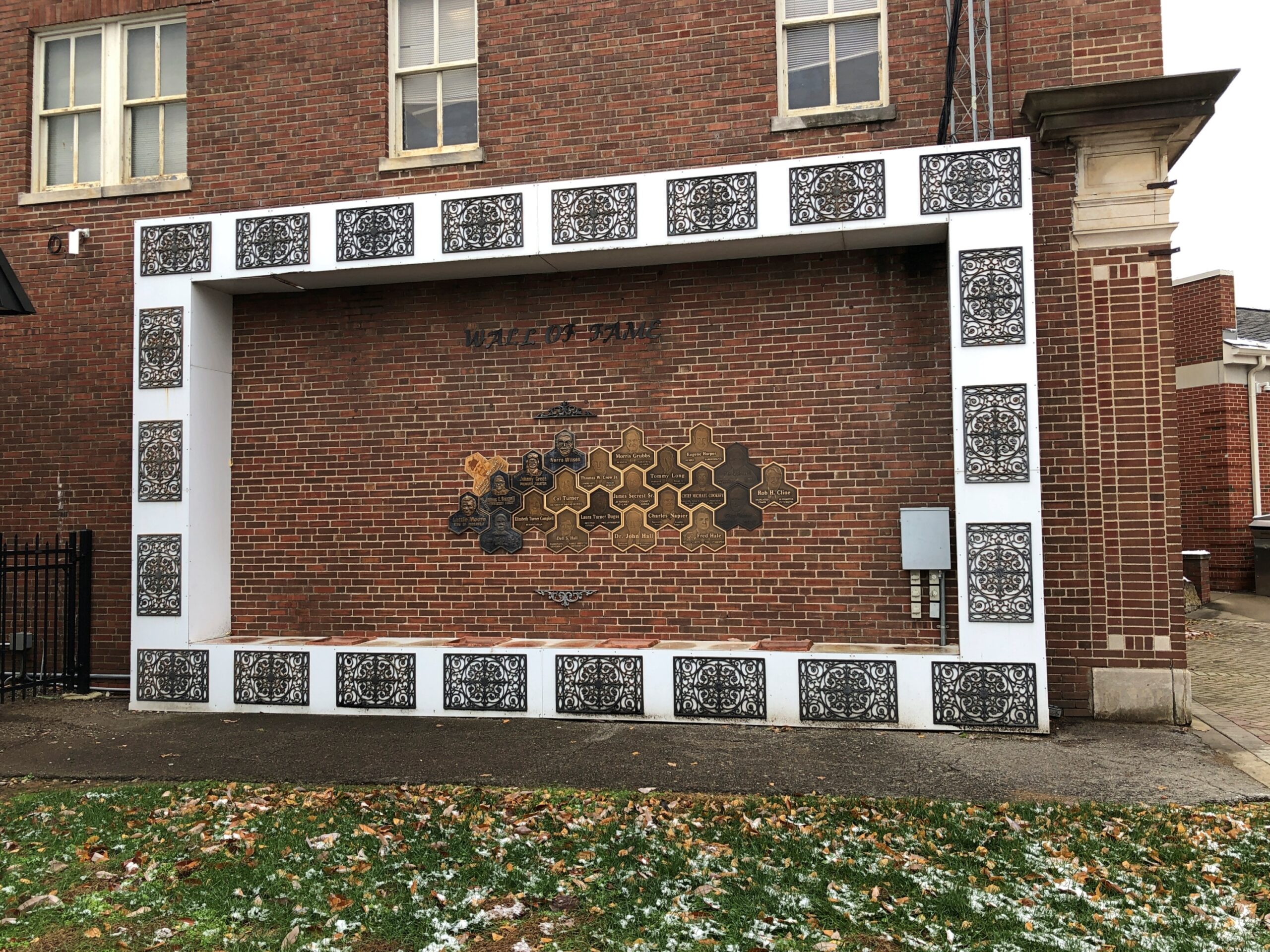
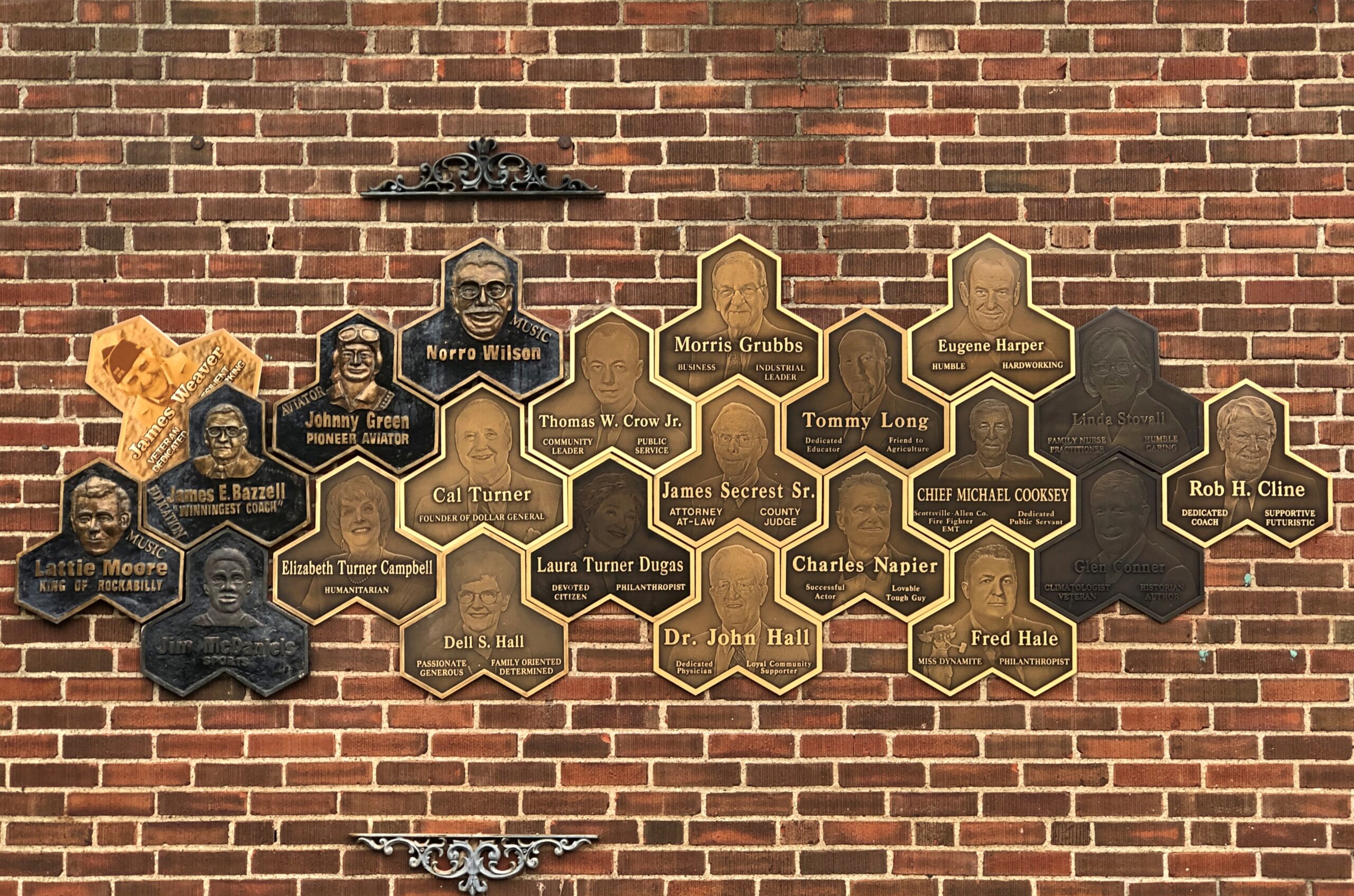
The main public library is near the square, sporting a local Wall of Fame.
The names include Lattie Moore, who sang, “I’m Not Broke but I’m Badly Bent,” a song with pretty much the same theme as Al Dexter’s “Wine, Women and Song.”
I won’t look all the names up, but the Scottsville Wall of Fame also includes Johnny Green, pioneer aviator, who did the first commercial flights between Florida and Cuba, apparently.
Red Boiling Springs, Tennessee
We drove on Kentucky 98 east to the near-border town of Gamaliel, pop. 391, still on the Kentucky side of the line. A lesser-known Biblical name, but I also can’t help thinking of the G. in Warren G. Harding.
South from there, Kentucky 63 turns into Tennessee 56 after a few miles. There’s no sign marking the border, just one announcing the Tennessee highway number. Pretty casual for a line that might have been an international border, had the secessionists had their way (unless, of course, Kentucky left the old US).
Besides a cool name, Red Boiling Springs (pop. 1,205), Tennessee, has a history. As the name suggests, people took the waters there.
“As recently as 1920, Red Boiling Springs had about a dozen places in which visitors could stay,” The Tennessee Magazinereported a few years ago. “The largest was the Palace Hotel, which had 180 rooms. Over the next several generations, business declined… and… a 1969 flood destroyed large parts of the town. However, three of the Red Boiling Springs resort hotels are still open. They were in (nearly) continuous operation throughout the 20th century and still reflect more of the lifestyle of the late 19th century than they do the 21st.”
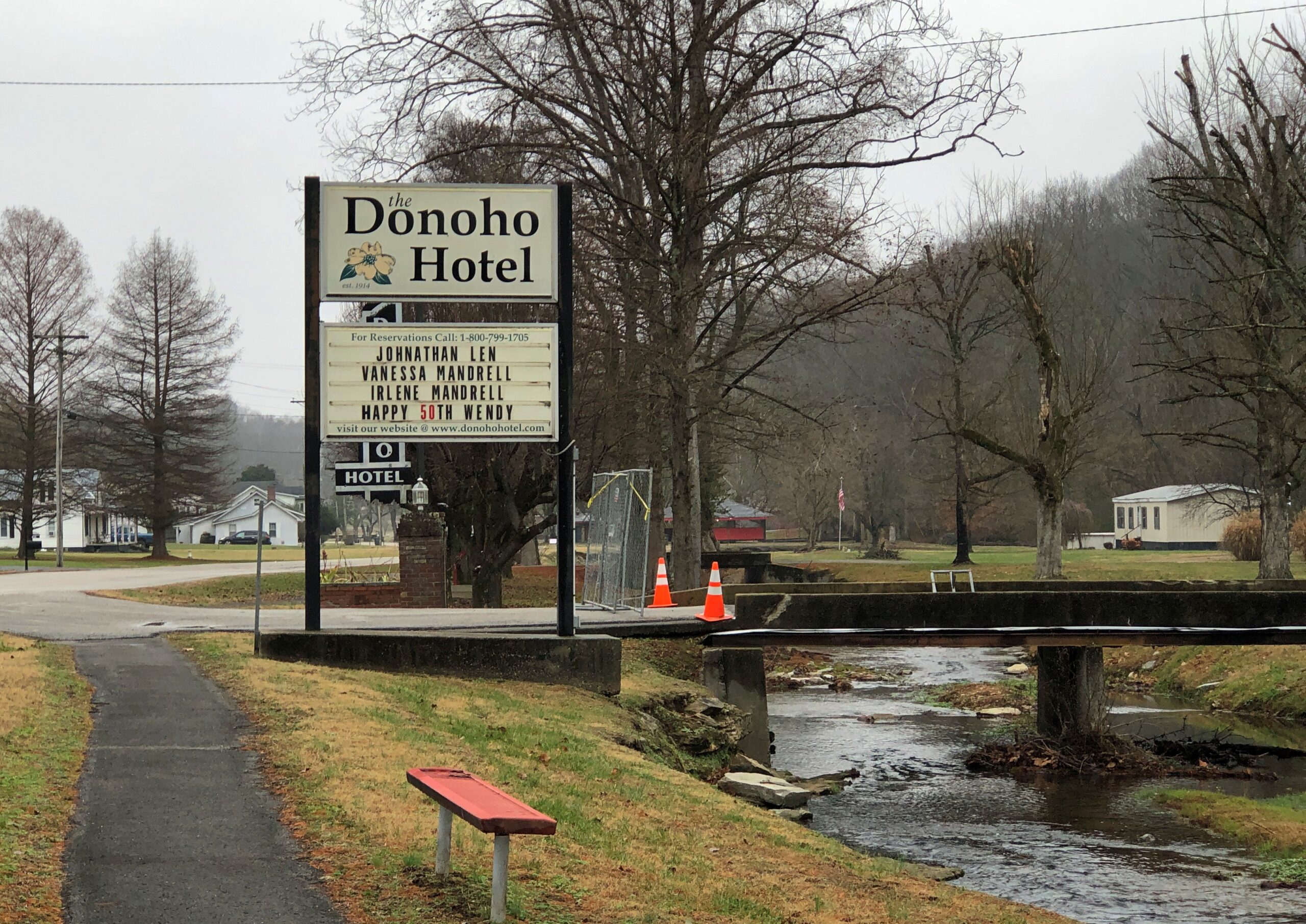
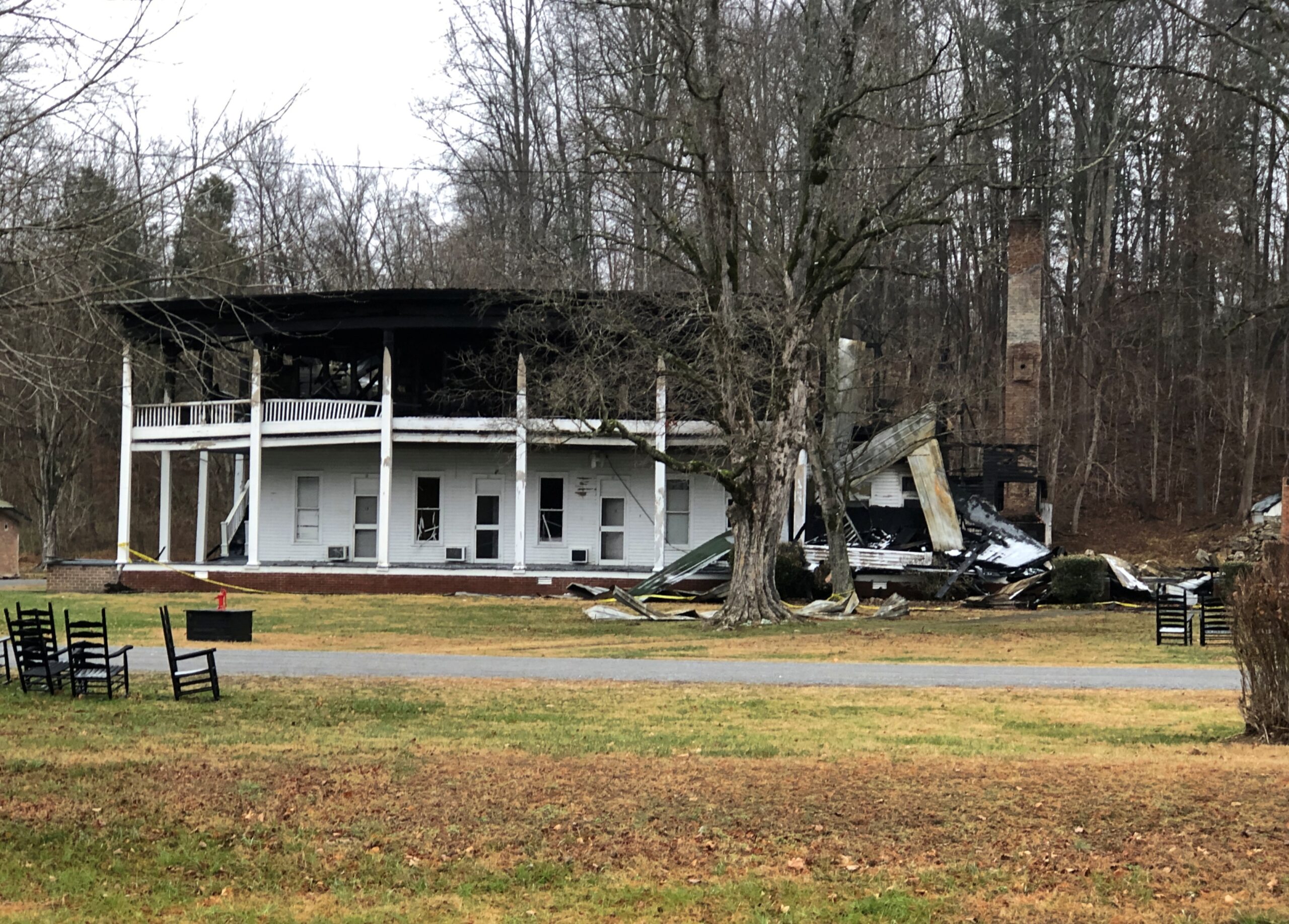
Make that two hotels. One of those mentioned in the article, the Donoho, burned down in November.
The gray, chilly day somehow fit the scene of a wrecked historic hotel.
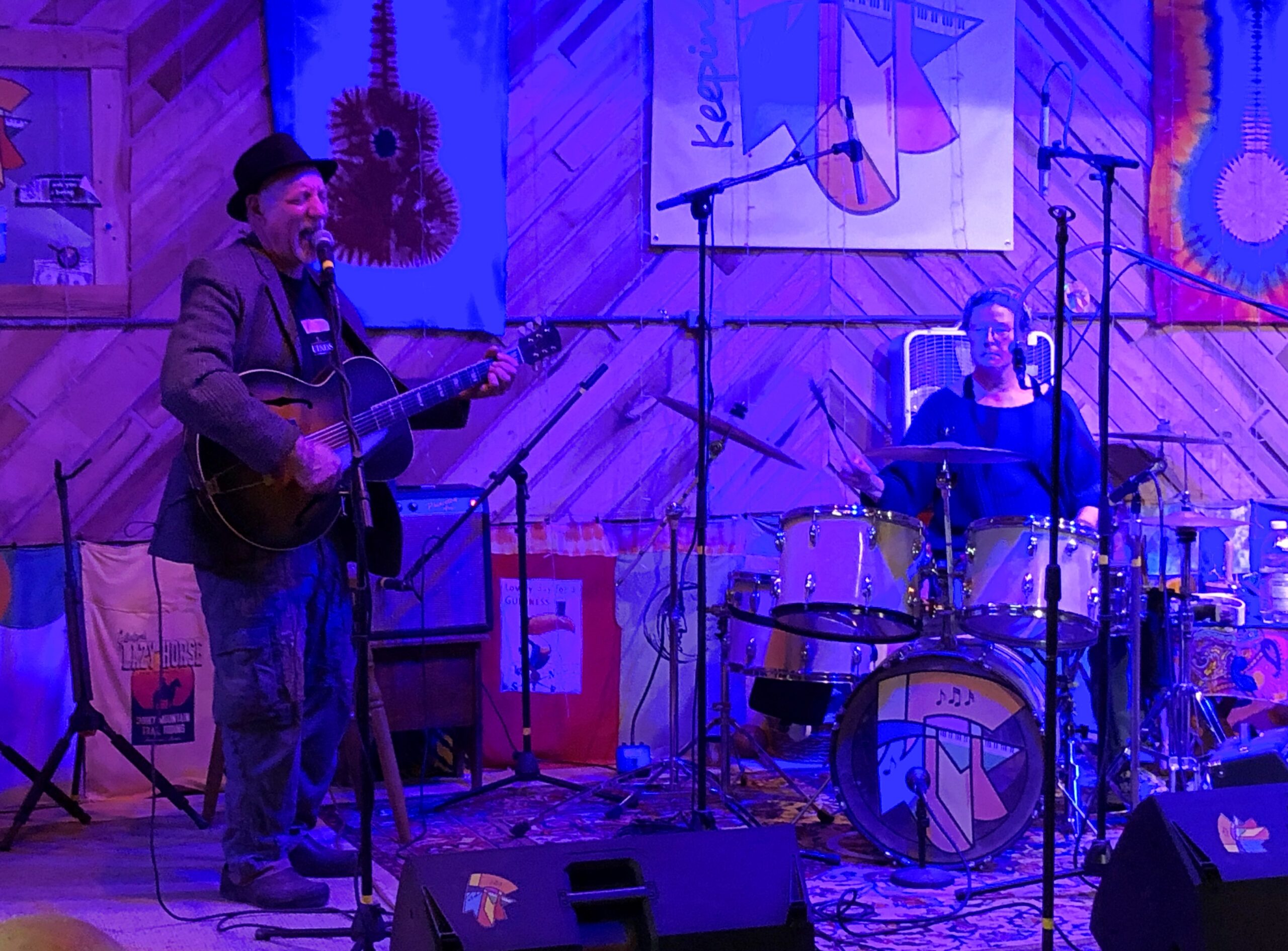
Damned shame. I can’t leave it at that. Soon after passing through Red Boiling Springs, we arrived at our destination in eastern Middle Tennessee. The next day, we enjoyed a Tennessee hootenanny.
Our hosts, Dave and Margaret, on guitar and drums.
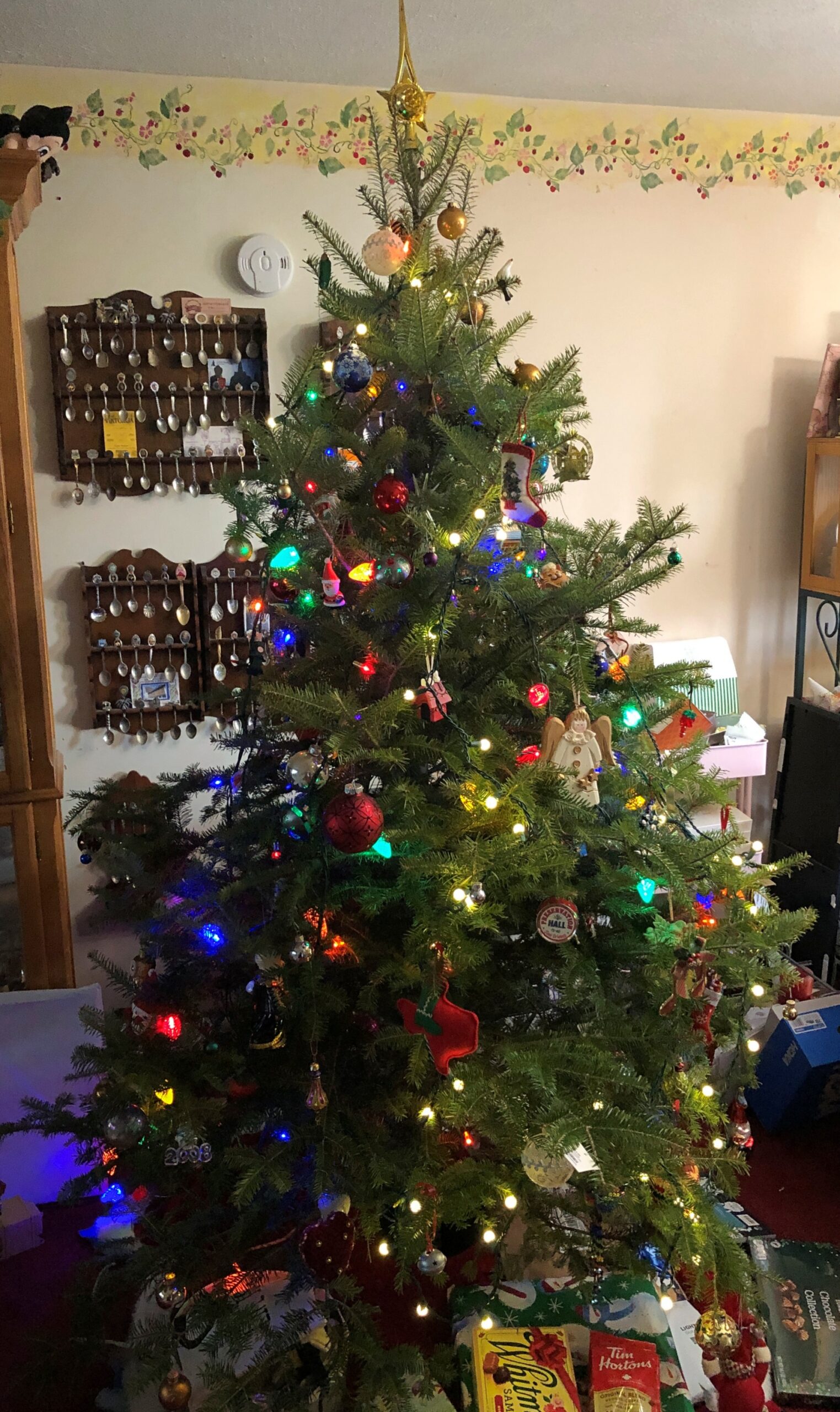
Decorating for Christmas this year meant a rapid set-up. We spent a fair number of hours on the 23rd making the living room ready for a tree – moving clutter, mostly. On Christmas Eve, I brought the tree in from the garage, and Ann mostly decorated it. Finishing touches, by me, were in progress even on the morning of Christmas Day, but since that moment in the life of our family doesn’t involve an early-morning rush downstairs by children anticipating Santa’s bounty any more, that was doable.
Ann did a fine job of decorating, in the style of our family: fill up the tree with a wide variety of glowing and glinting objects accumulated across the decades.
We got a late start on decorating for Christmas, though when I think about, decorating after the Solstice discourages the sort of front-loading of Christmas that a lot of people complain about, but which they do anyway.
We had a good reason for the late start: a drive to Florida and back, beginning on December 4 and ending on the 22nd. Not just to Florida, but as far as you can go in that state, at least by car, namely to Key West and back. Early to mid-December seemed like a good time to do such a thing, after any traveling people do for Thanksgiving but before the worst of the Christmas-New Year’s rush. A short shoulder season in other words, but a good one, with room rates not quite subject to surge pricing, and crowds thick in some high-volume tourist destinations, but not impossible.
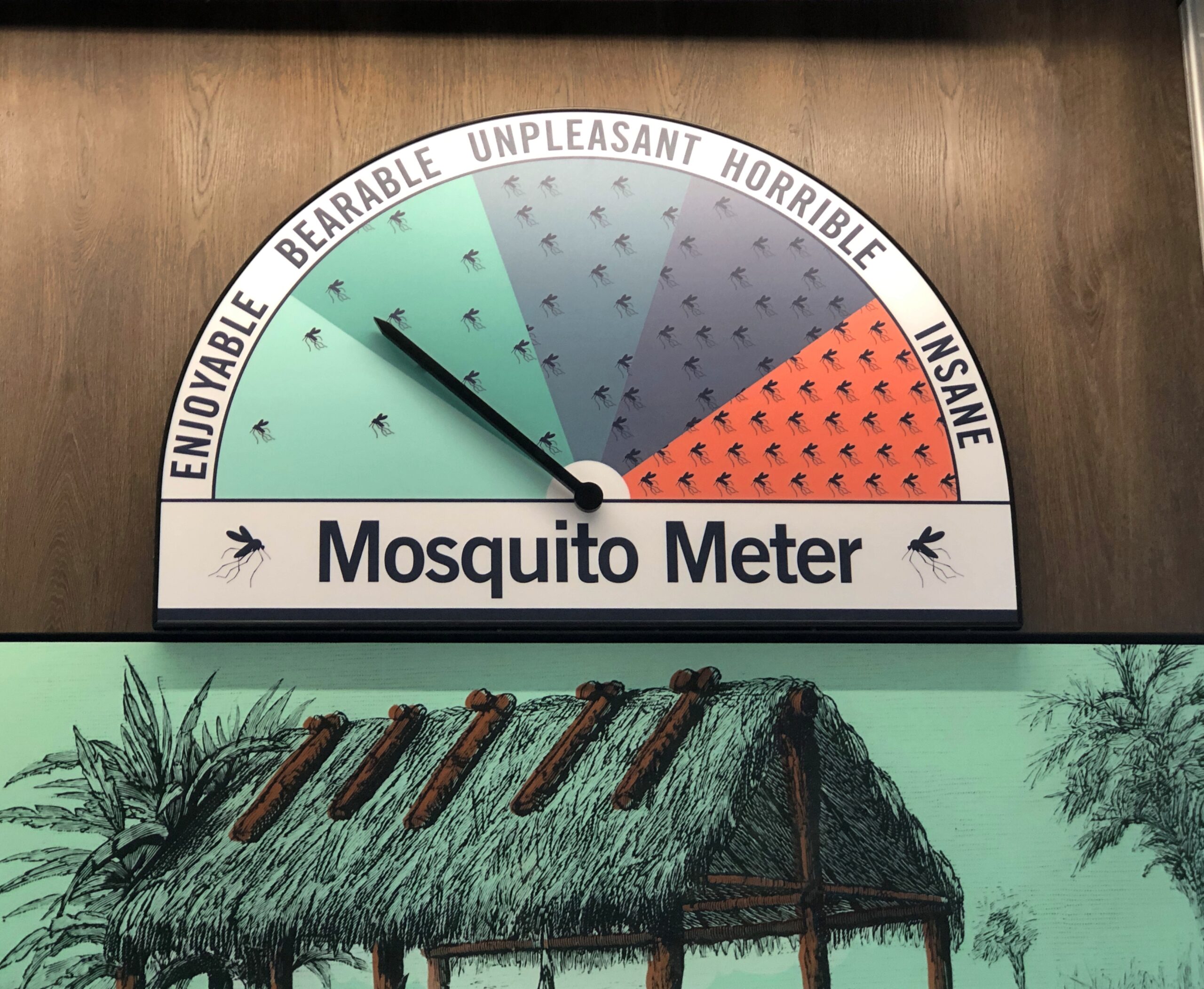
Also, Florida has few mosquitoes this time of year. Not no mosquitoes, as we found out one day in the southern reaches of the peninsula, just a “bearable” number.
Sometime earlier this year, I got the idea that I wanted to take four long drives after turning 64. Four for 64, you could say. Doing so by the end of 2025 wasn’t part of the idea, but that’s how things worked out. The drive to Florida and back, by way of such places as Indianapolis, Louisville, Chattanooga and Atlanta, totaled 3,682 miles. For all four trips since June, the total is about 14,300 miles.
That could be made to sound impressive, but in fact American men my age average more than that every year, about 15,000 miles, at least according to this source, which cites US DOT data. Younger men drive even more annually. Most of that is commuting, however. My commuting mileage by car has been exactly zero this year, and while I drive locally to stores and such, it couldn’t be more than a few thousand miles. So it seems clear that, as an American man, it was my duty to get out and drive.
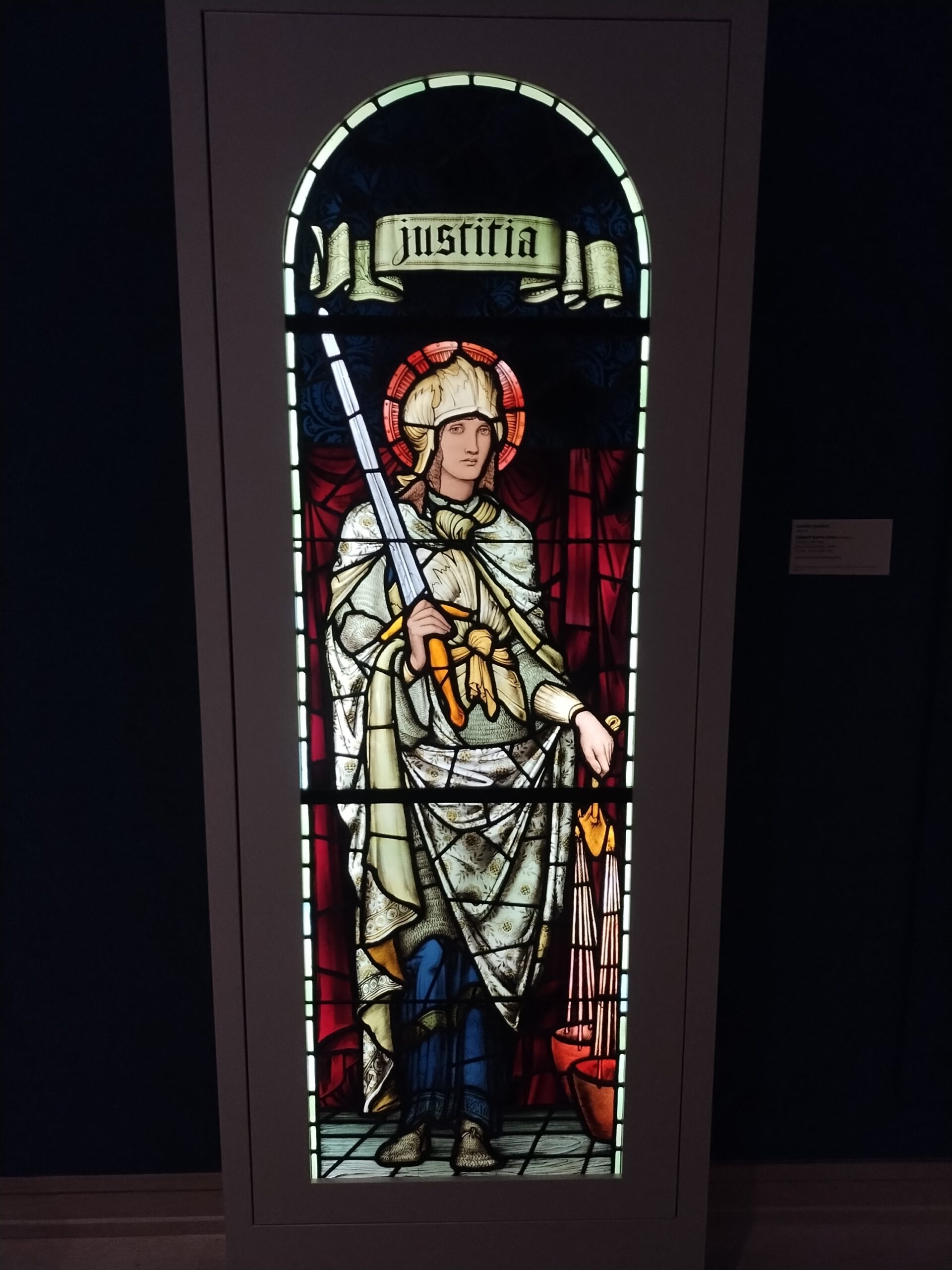
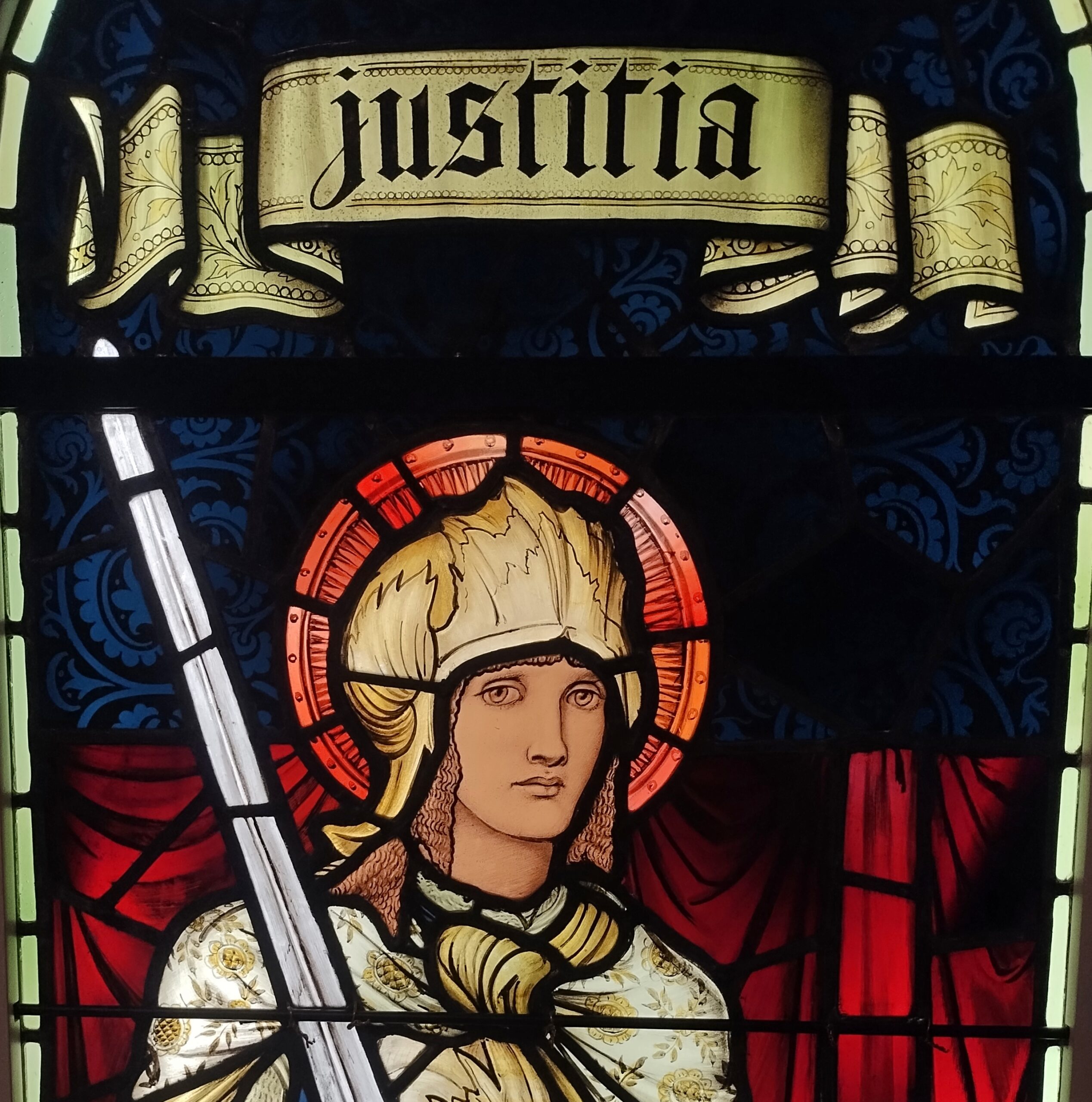
When we headed south in early December, snow covered the ground all the way past Indianapolis, where we stopped for a few hours at the Indianapolis Museum of Art, which is part of a larger campus called Newfields – and better examined in summer, I think. But the museum is a good one, with a solid collection, especially 19th-century American and European works. Such as “Justitia,” a Morris & Co. work from the 1890s.
After overnighting south of Louisville, we diverted from I-65 and took smaller roads through southern Kentucky and into Tennessee to a holler in Jackson County, where we were the guests of dear friends. Tennessee musicians from those parts — some professional, others skilled amateurs — gathered on the the evening of Saturday the 6th, for one of the periodic jams in our friends’ barn, which houses no animals these days, but a small stage and some sound equipment and a fair number of folding chairs. A joyful jam it was. Food was potluck. I like to think we went to a hootenanny.
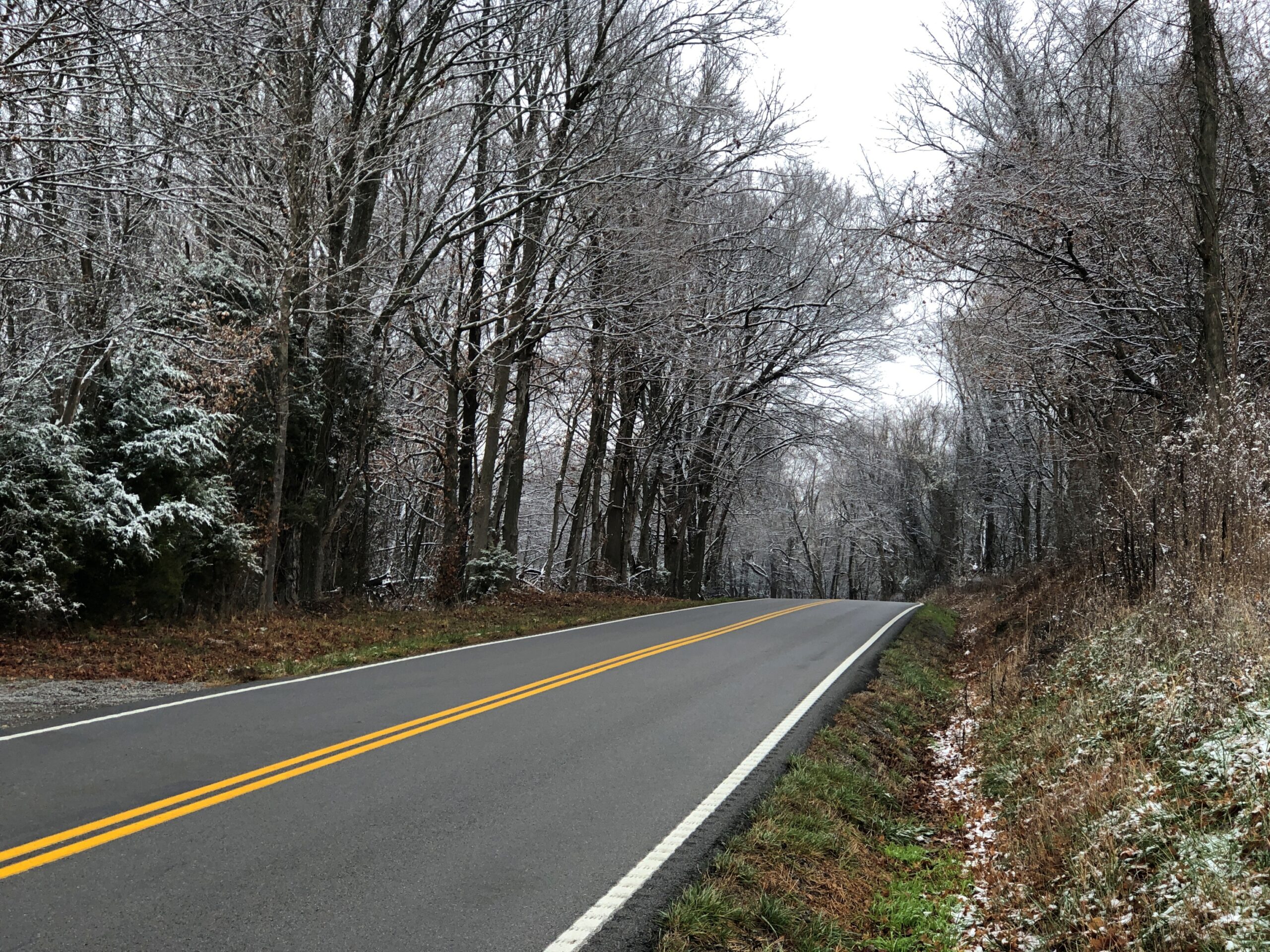
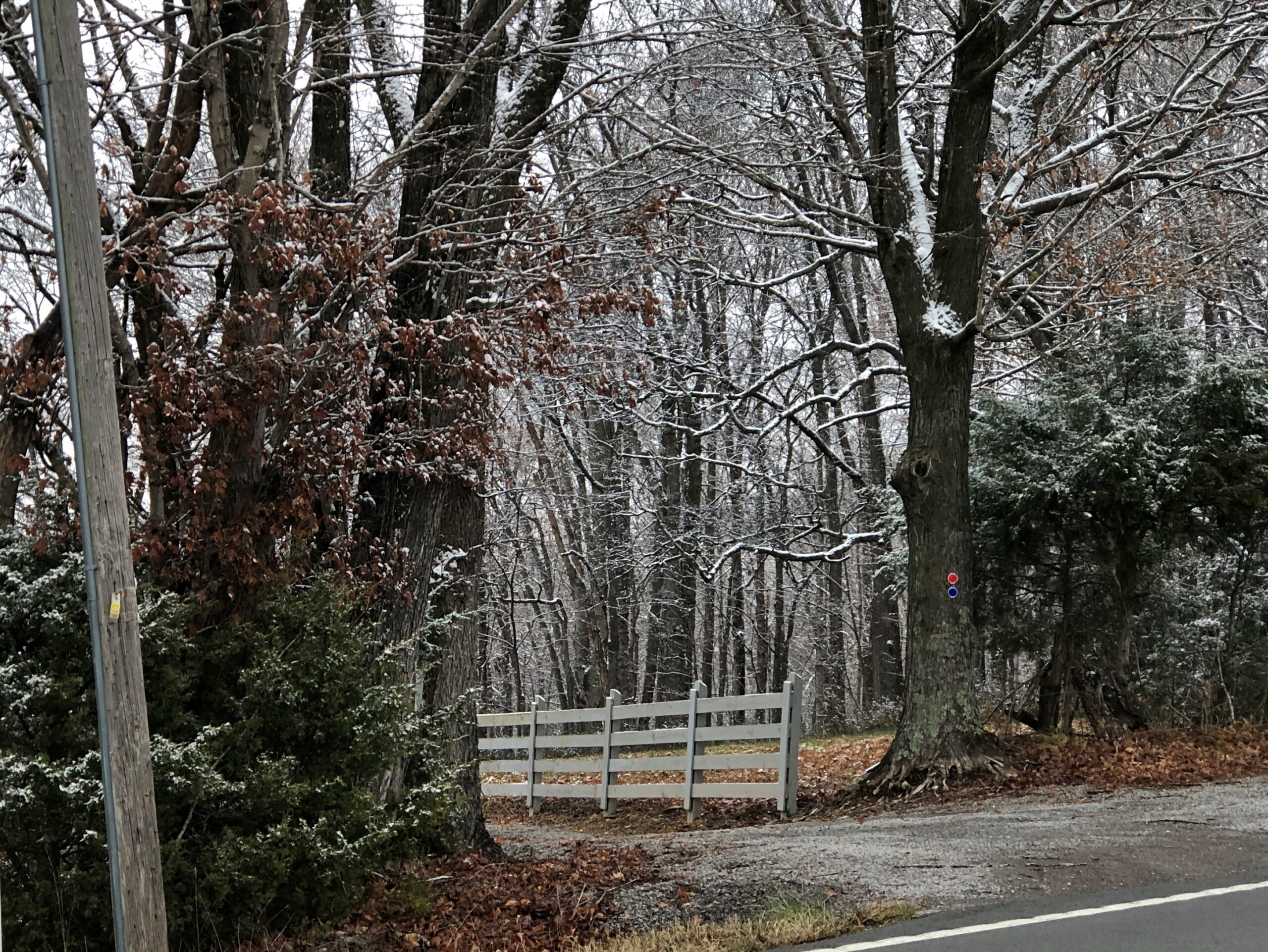
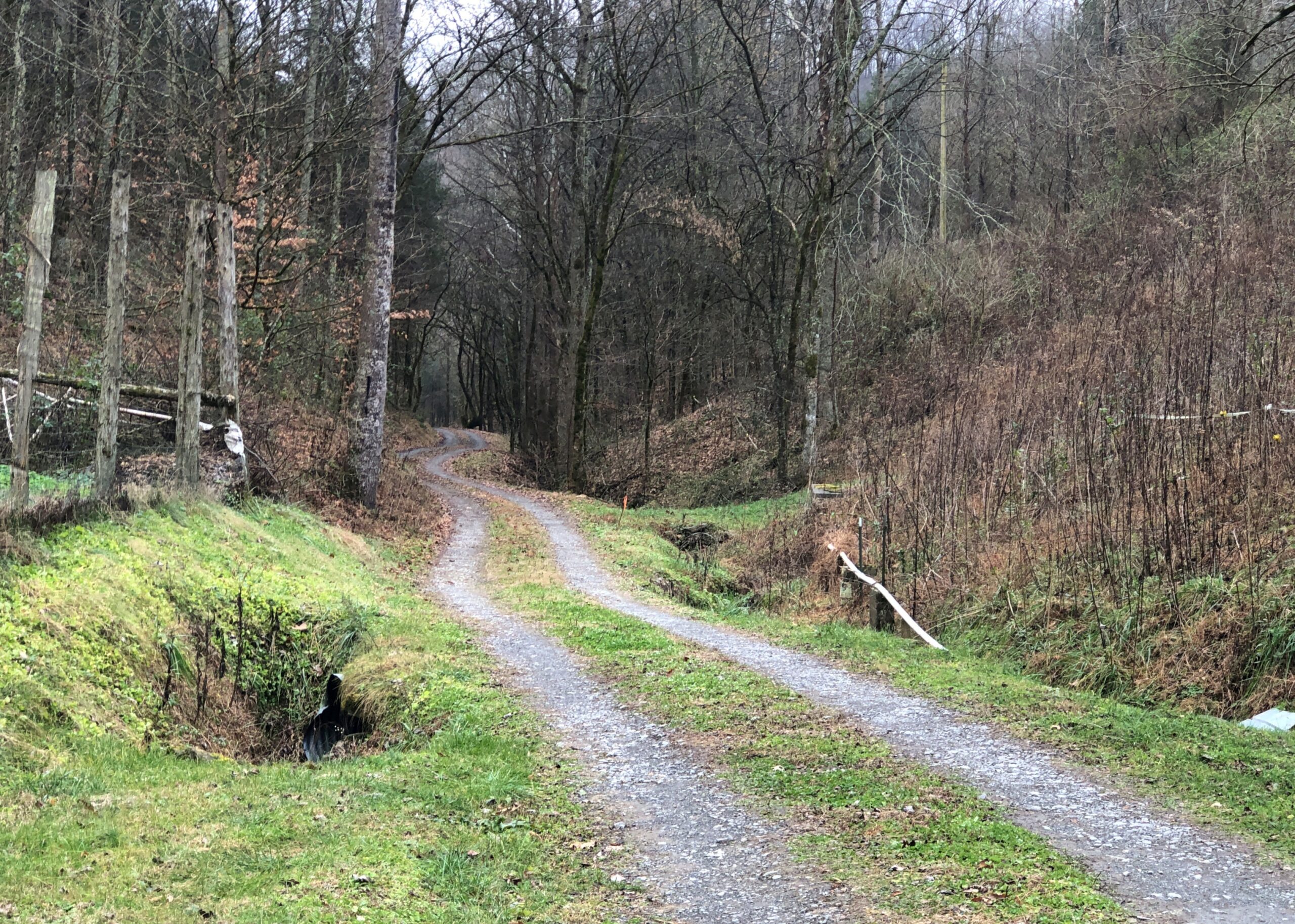
The road through the holler. By this point, no snow. We were trading cold for warmth. That was one of the goals of the trip. Maybe the main one.
From there it was mostly a straight shot down through Georgia on I-75 to Florida, and eventually US 27 to Orlando by way of non-coastal Florida places like Gainesville, Ocala and Lady Lake, a string of settlement less agricultural and less pastoral now than ever, more like an endless outer suburb. Heavy traffic is an invasive species in this part of Florida, surely as pythons are in damper parts of the state. Not just masses of cars and trucks, either, but also golf carts. We passed close enough to The Villages to see billboards advertising legal representation in the event of golf cart accidents. Carts, I’ve heard, provide transport in great numbers in that sprawl of a settlement.
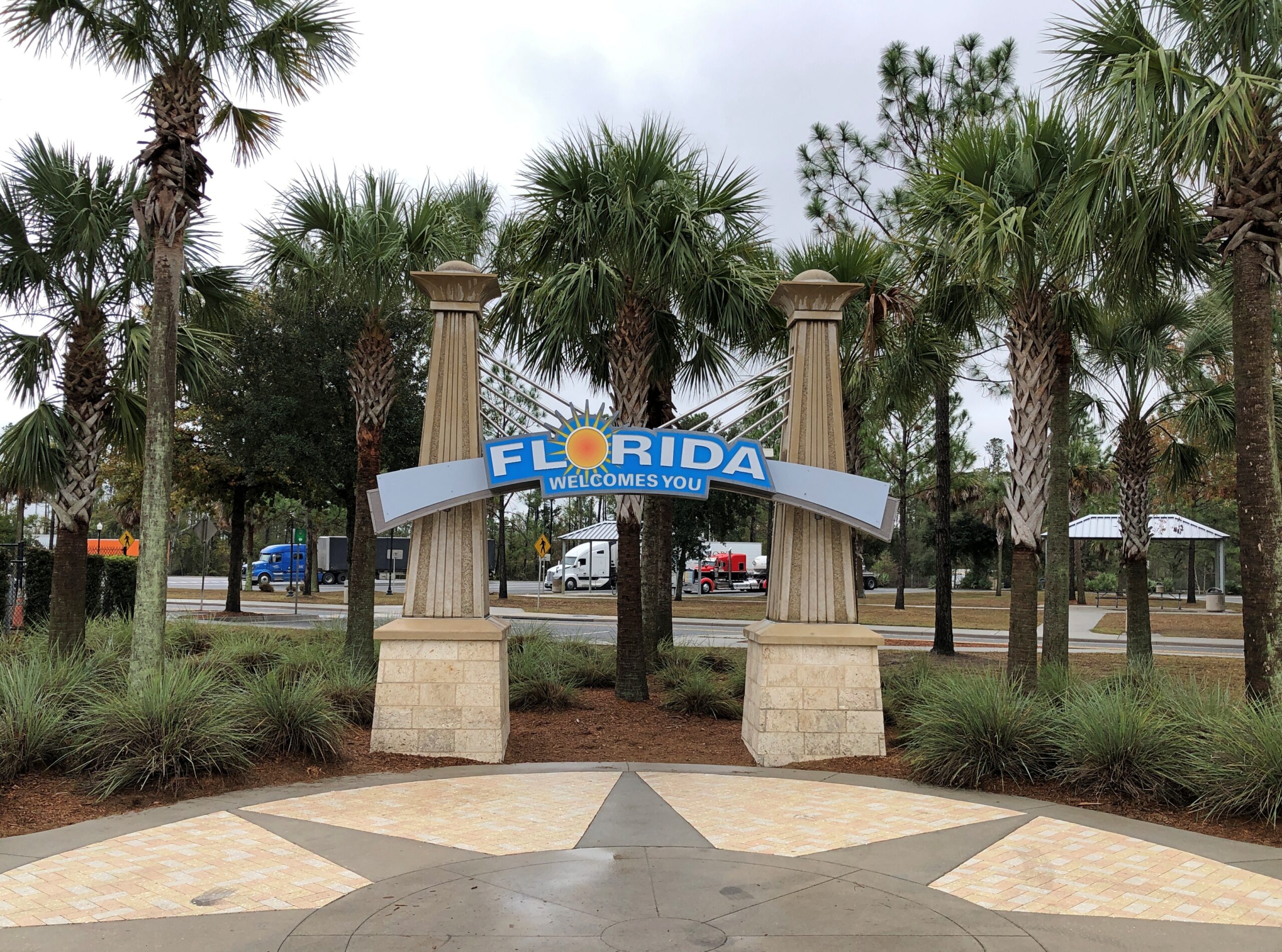
The drive to and in Florida involved the usual North American mix of large and small roads, smooth and ragged, grid-like and irregular, though Florida cities tended toward the irregular (except for Key West), and as crowded as can be and as empty as can be. Snow lined the way up north, thinning out the further south we went, giving way to brown landscapes and bare trees. Then we came into greenery – evergreens and palms and even deciduous species turning color. We crossed mighty bridges over mighty rivers, small culverts over alligator haunts, and the string of bridges that make up the civil engineering marvel known as the Overseas Highway (US 1). We crossed barely acknowledged borders and signs at the Florida visitor center on I-75 proclaiming The Free State of Florida.
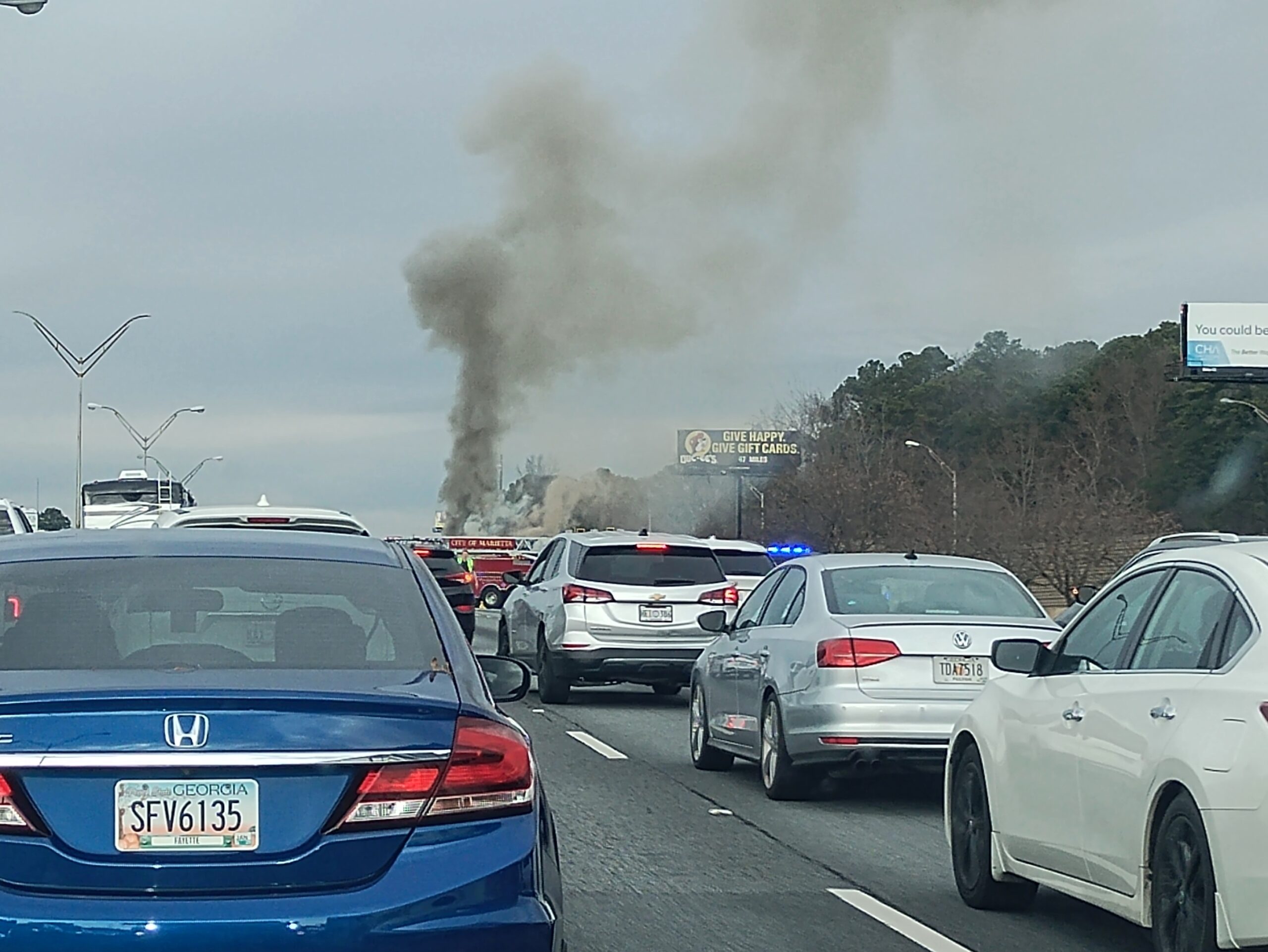
Florida Man was out and about, weaving in and out of high-speed traffic, pushing 100 and pretty sure that physics doesn’t apply to him, though I have to admit that Florida isn’t different from any other state in that way. Traffic stopped cold more than once: for a banged up, upside-down SUV; for a raging RV fire, attended by a half-dozen firemen; for a serious two- or maybe three-car wreck on the other side of a divided highway; for construction, usually without any workers in sight; and once for no reason that we could tell at all.
In Orlando, we spent all December 9 at Universal Epic Universe, a theme park that only opened in May. Ann flew in the day before we went to the park and flew home the day afterward, taking advantage of the low prices that discount airlines offer to high-volume places in a shoulder season, if you take no bags and buy nothing to eat or drink at sky-high prices, literally and figuratively. A small bag of hers had been stowed in our car for the visit.
A theme park is one thing, but I wanted a look at Orlando, at least a sliver of it, the next day. Ann’s flight was fairly late that day, so we were able to spend part of it in posh Winter Park, including a tour boat ride through the town’s small lakes, lush with greenery and expensive houses on their banks, and connected by canals.
A drive that included the stretch of US 41 that passes through the Everglades took us to Homestead, Florida, and the mid-century charms of The Floridian motel. A day in Everglades NP followed, including an airboat tour and a drive to the coast at Florida Bay. The next day, before leaving Homestead for a drive in the rain across the Overseas Highway to Key West and while the sun still shined, we toured the Coral Castle, a one-man construction project using 1,000 tons of oolite to make walls, carvings, stone furniture, and a castle tower.
Key West was a two-day, three-night mid-December ramble on the busy and less busy streets of Old Town, including humans but also chickens, taking in the likes of the Hemingway House, the Little White House, Mallory Square, the San Carlos Institute, the Key West Aquarium, and the Key West Cemetery. Also, tourist shops, boutiques and the building where Pan-Am was founded. We ate and drank, though as our wont, nothing alcoholic. Key West was decked out for the holidays but not over the top. We walked and walked some more. It felt like a couple of pleasant summer days.
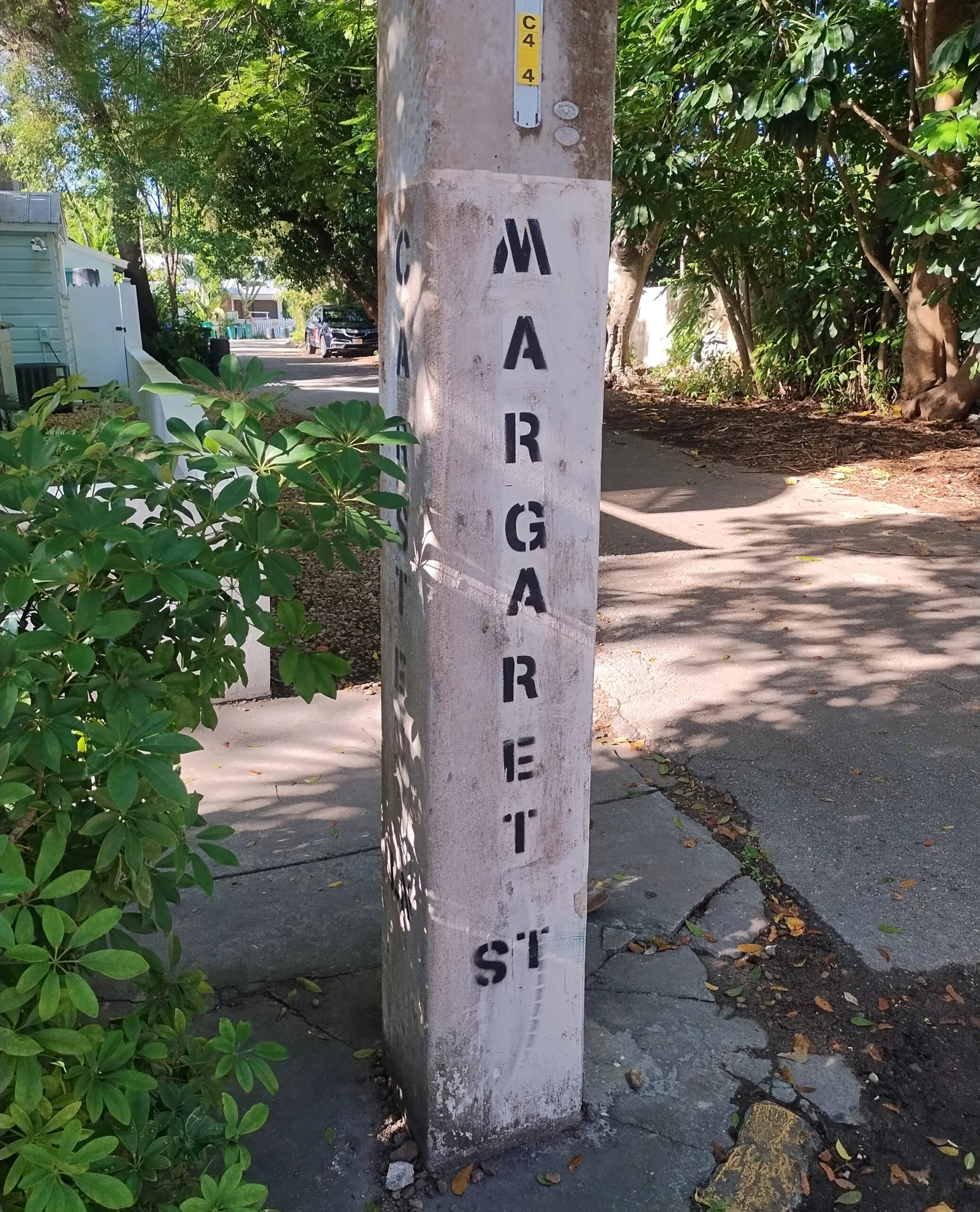
From my 2014 visit, I knew that on the back streets near the little-visited cemetery, parking was possible on an otherwise cramped island. So it was. On Margaret Street, within sight of the cemetery.
The return drive took us up the eastern coast of Florida, but avoiding the worst traffic in Miami-Dade by taking Florida’s Turnpike. By December 17, we’d arrived in Orange Park, a large suburb of Jacksonville, for a stay with two other dear friends, former Austinites now in northern Florida. Part of the next day was in and near downtown Jacksonville, one of the larger U.S. cities I’d never visited before (I believe San Jose is now the largest on that list). During our downtown stroll, we encountered the coolest building in Jacksonville and certainly one of the coolest in Florida.
We quit Florida on the 19th, but weren’t quite done with the trip. Yuriko had never been to Atlanta and wanted to go. Though I’d been however many times since 1982, I was happy to oblige, so we spent two nights and a day there, using the day to see the astonishing Georgia Aquarium and the impressive but somewhat overpriced World of Coca-Cola.
The last legs of the trip were long drives: Atlanta to Elizabethtown, Kentucky; and from there to home the next day. I wasn’t about to let them be completely dull drives, so we stopped on the second-to-last day in Chattanooga, to see the conveniently located, blocks-from-the-highway Chattanooga Choo-Choo redevelopment. On the last day of the trip, we stopped in Jeffersonville, Indiana, and walked across the Big Four Bridge, a former RR bridge across the wide Ohio, now serving pedestrians and bicyclists.
Home and then — Christmas, when things slow down for a week or so. Good timing.
The Buc-ee’s imperium marches on. On my way to Tennessee that first day, I stopped at the location near Smiths Grove, Kentucky, to visit its gleaming facilities. Business was reasonably brisk that Monday, but nothing like the bedlam on the Sunday, nearly two weeks later (on the trip’s last day), when I stopped on the way back home at the same place, for the same reason.
South Carolina
Had a pleasant walk down a non-tourist street on a Sunday in Myrtle Beach. Not a lot going on. The late afternoon light had a nice glow.
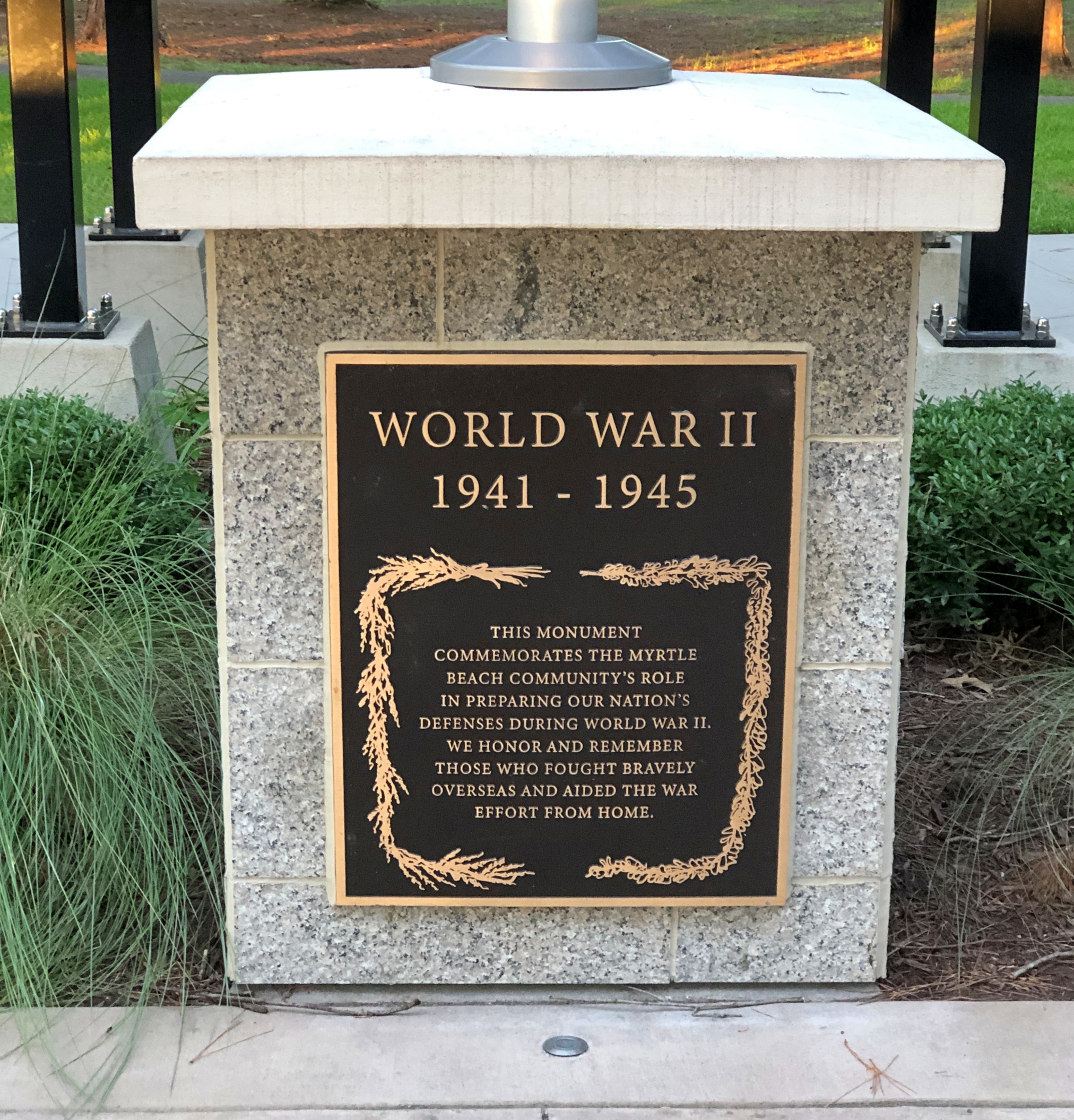
Myrtle Beach International Airport used to be Myrtle Beach Air Force Base, which began as Myrtle Beach General Bombing and Gunnery Range in 1942 for use by the U.S. Army Air Corps. It closed in 1993.
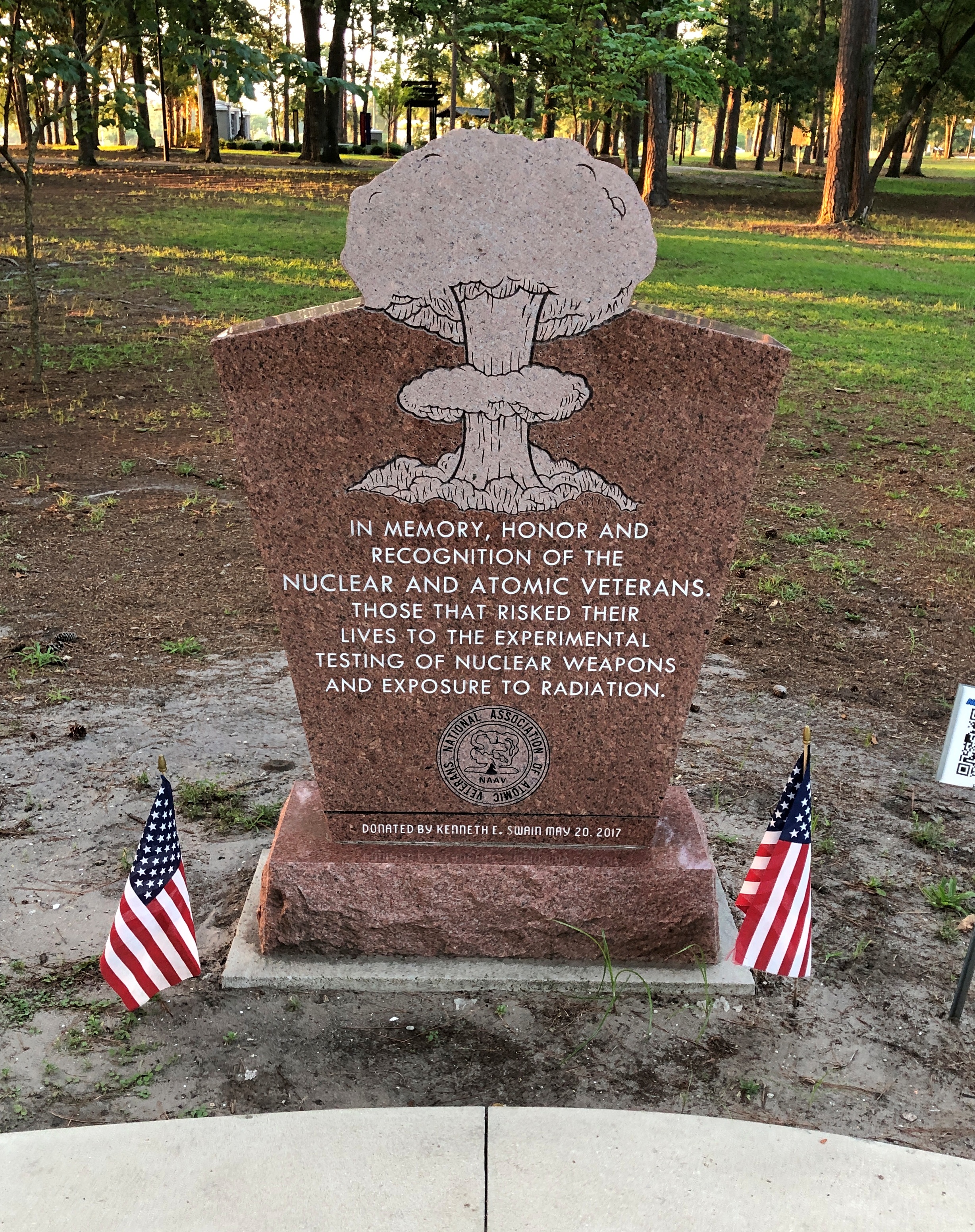
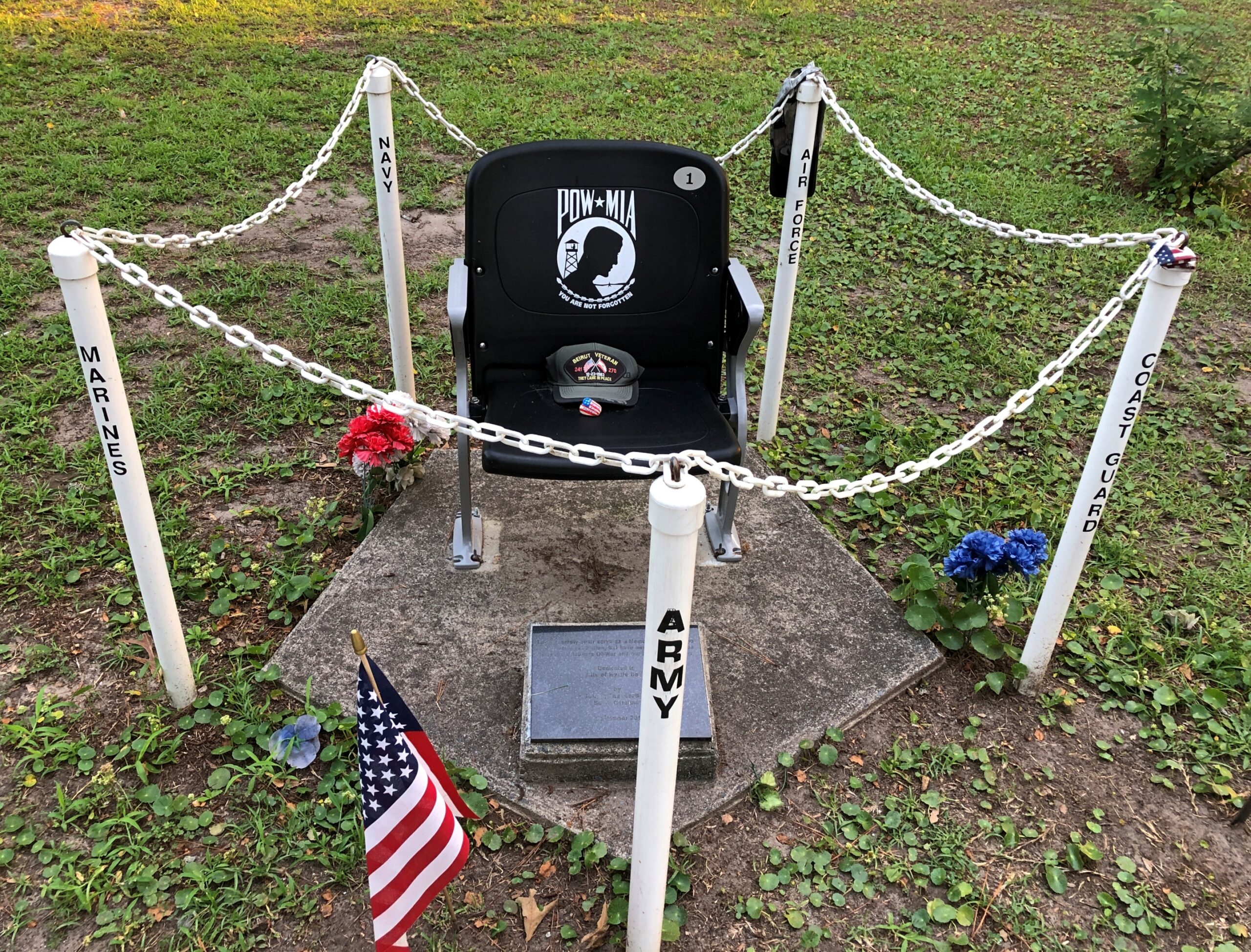
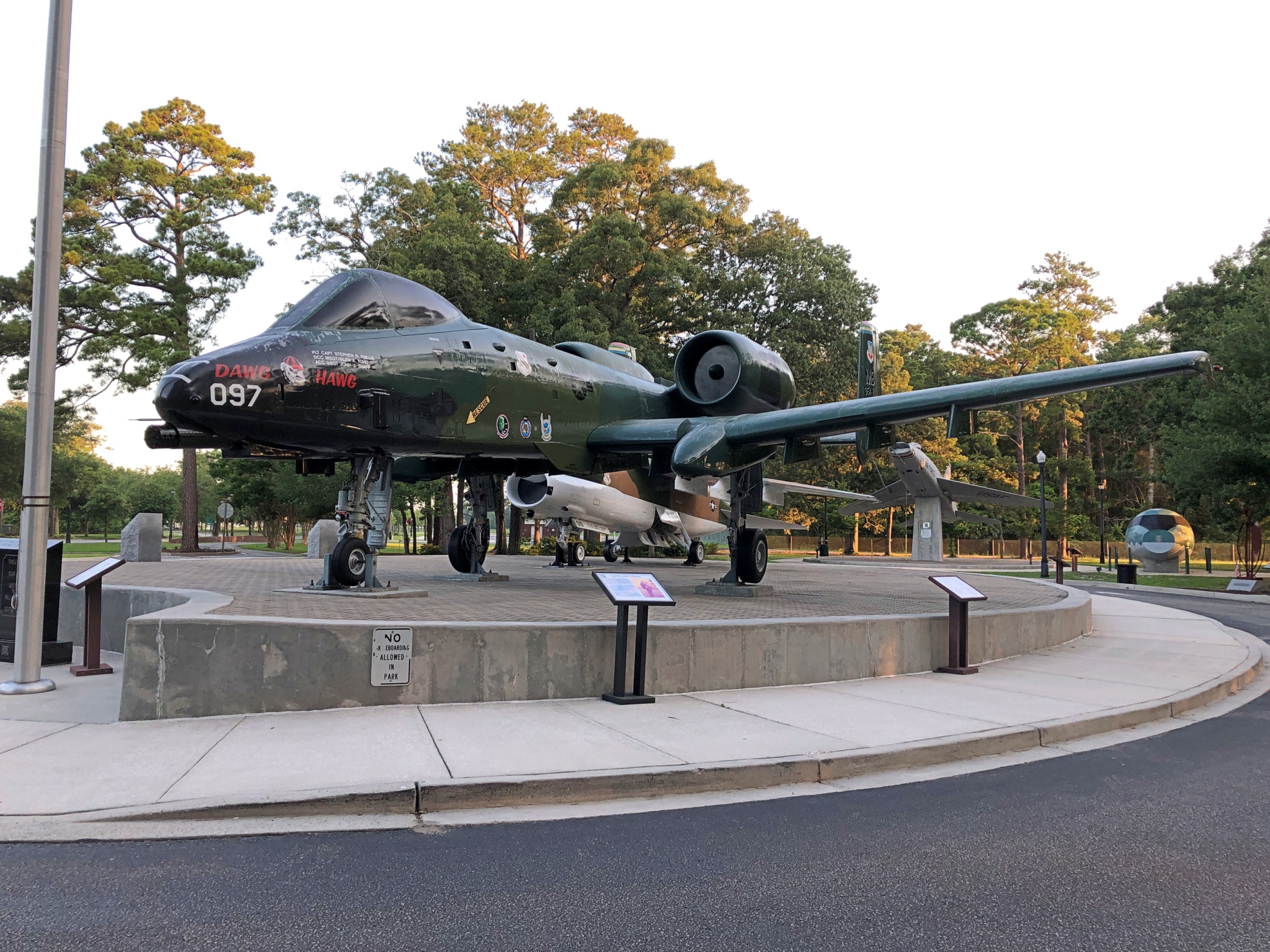
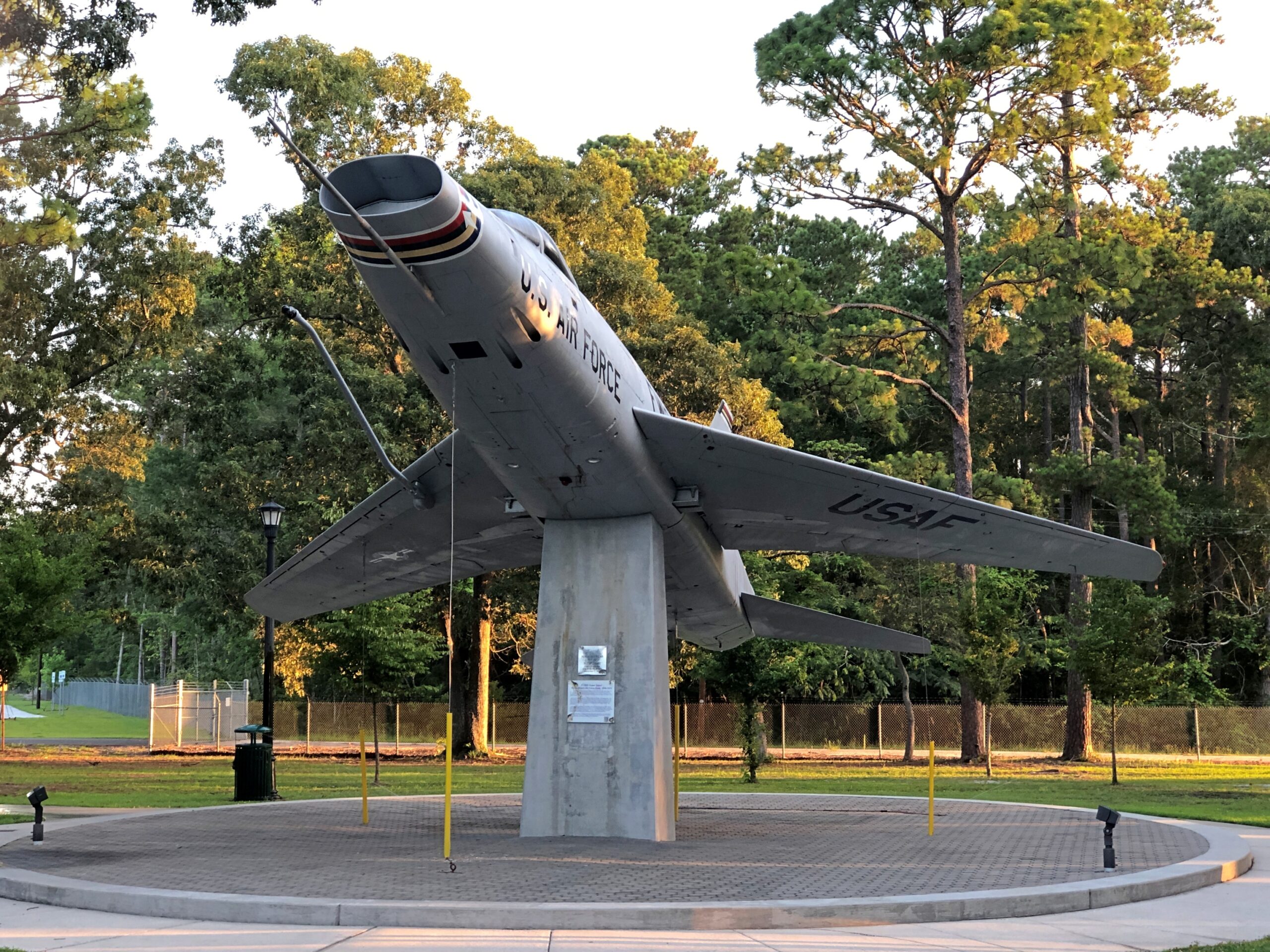
One legacy of the base is a cluster of military memorials near the perimeter of the airport – at a place called Warbird Park, which is fully accessible to casual visitors – that includes something you don’t see all the time.
It is one memorial among many.
As well as some of the aircraft that used the air base.
Found at a MB beach shop among the clothes and beach equipment. Nothing says Myrtle Beach better than skulls, no?
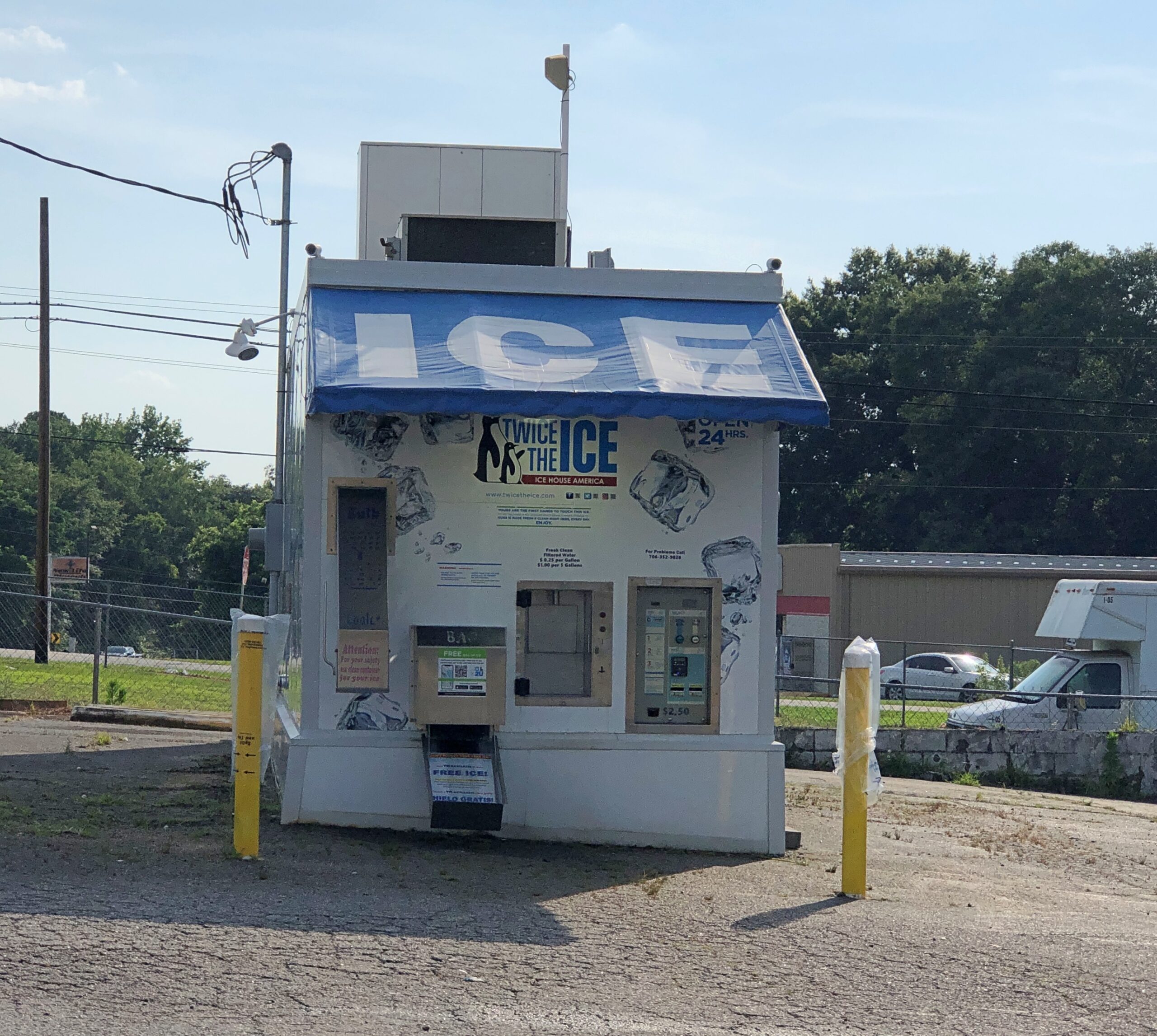
An automated, Fotomat-style ice store in north Georgia. They’re not as common up north, with the closest of this brand to me (I checked) in Aurora, Illinois.
Twice the Ice is the brand name. Quick facts: there are about 3,300 Twice the Ice locations so far in the United States and elsewhere – water and ice “vending machines,” according to one page on the company web site. Another page on the same site puts it at over 4,000 locations, which just means part of the site isn’t being updated. Whatever the exact number, there are a lot, and most if not all are franchised, representing about 1,000 franchisees.
It’s automation we call all get behind. I don’t think the machines are putting ice handlers and baggers at local gas stations and grocery stores out of work, since who holds that specific job?
So far as I know, “Ice is Civilization” is not the company motto. But it could be. It was said with such conviction by Allie Fox in The Mosquito Coast.
Of course, by the end of the book and movie both, he was howl-at-the-moon mad. So maybe some other slogan. Then again, that line is one of the few things – besides the fact that Allie Fox goes nuts chasing Utopia – that I remember from either the book or the movie after about 35 years. So it’s pretty memorable.
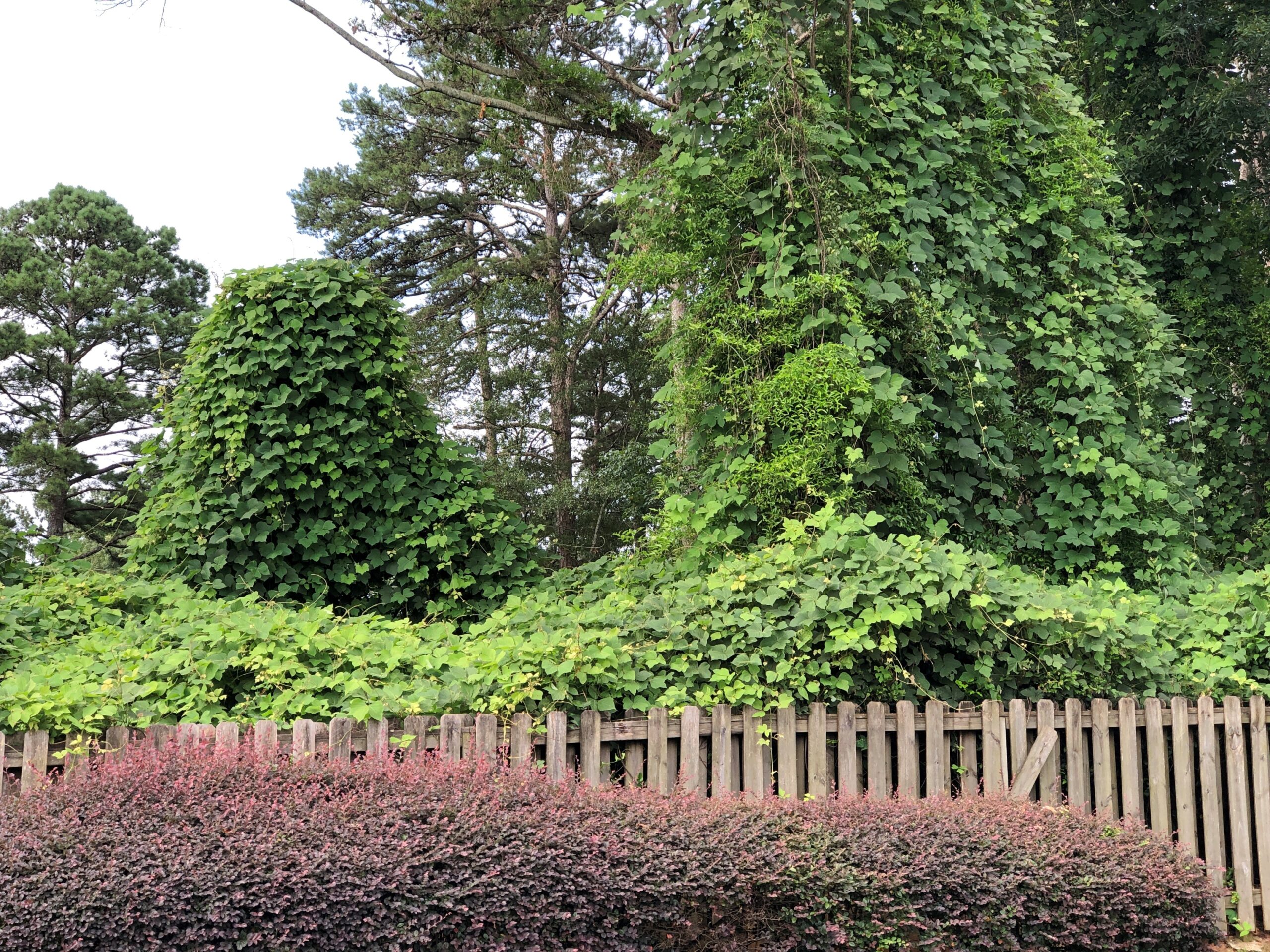
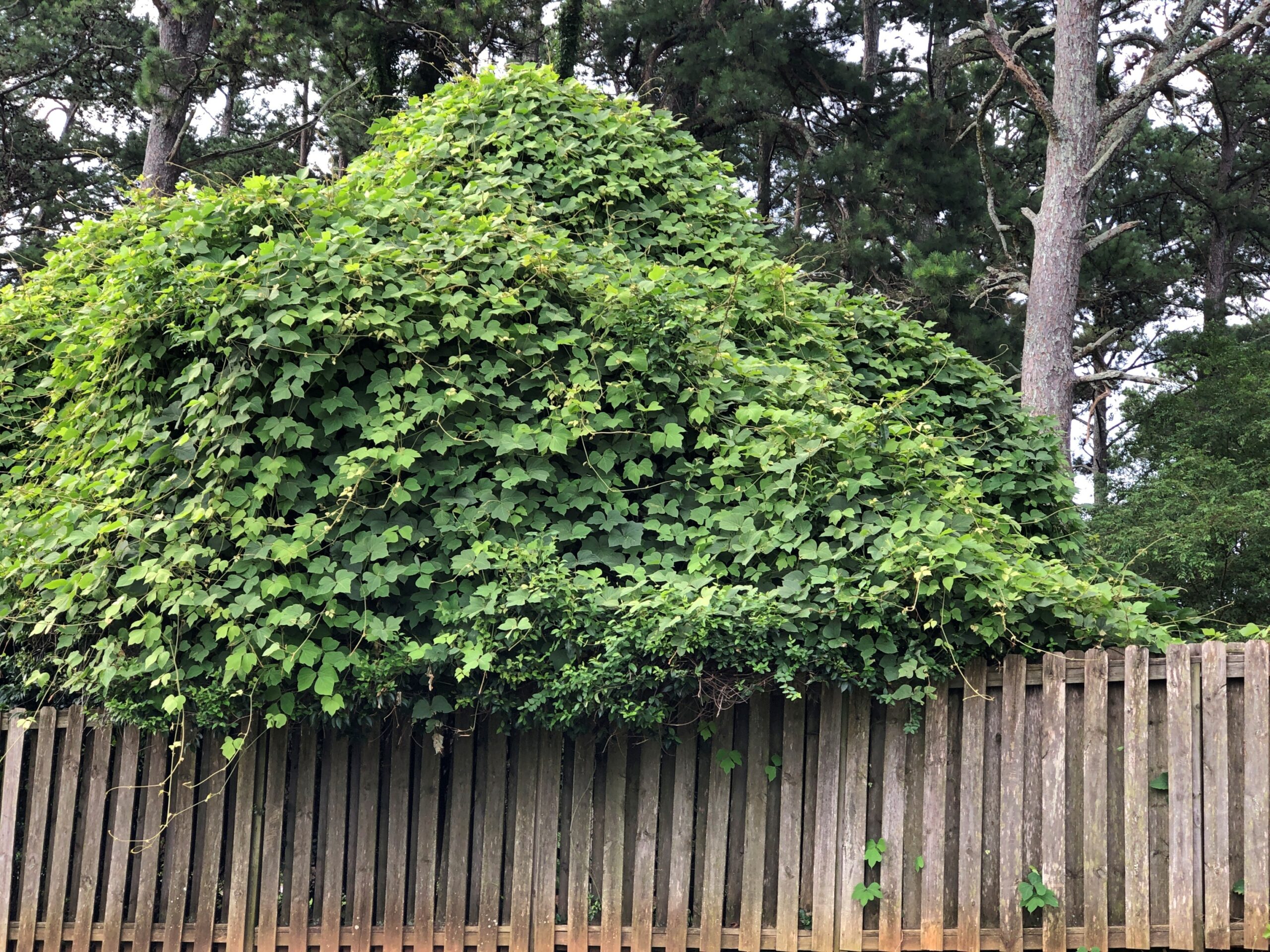
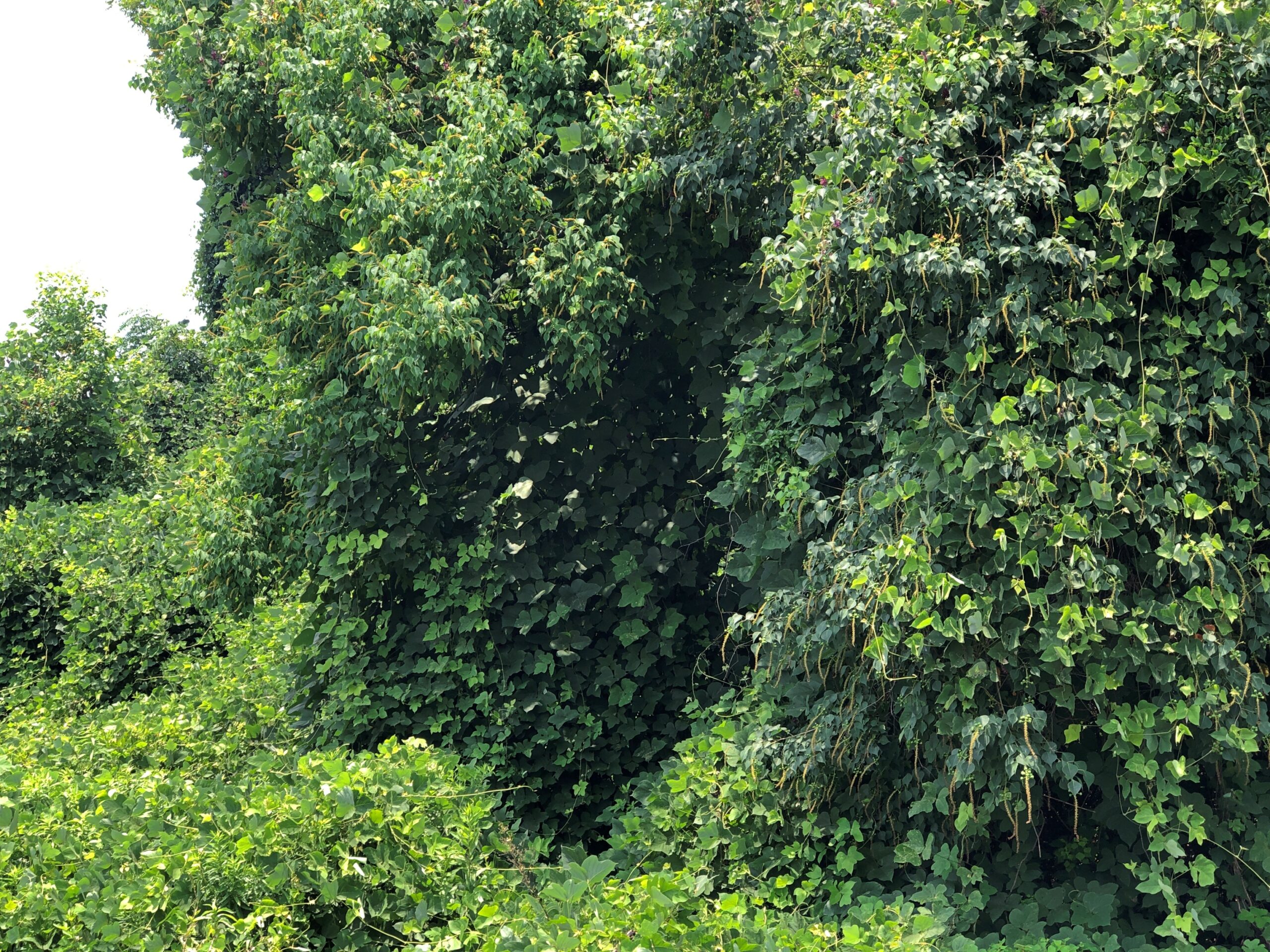
After gassing up at a station in north Georgia, I parked away from the pumps near the edge of the property to fiddle with my phone for a few minutes. Just outside the car window, kudzu lurked.
Which got closer.
And closer. Man, it grows fast.
Not really, but I did see all that kudzu at the edge of the gas station property. Kudzu. Who hasn’t seen the walls of it down South?
“In news media and scientific accounts and on some government websites, kudzu is typically said to cover seven million to nine million acres across the United States,” Smithsonian magazine reported in 2015. “But scientists reassessing kudzu’s spread have found that it’s nothing like that. In the latest careful sampling, the U.S. Forest Service reports that kudzu occupies, to some degree, about 227,000 acres of forestland, an area about the size of a small county and about one-sixth the size of Atlanta.
“That’s about one-tenth of 1 percent of the South’s 200 million acres of forest. By way of comparison, the same report estimates that Asian privet had invaded some 3.2 million acres — 14 times kudzu’s territory. Invasive roses had covered more than three times as much forestland as kudzu.”
Yet kudzu is regarded as a particularly intractable invasive species. How is that? It grows well in highly visible places. Such as next to a gas station parking lot. Smithsonian notes: “Those roadside plantings — isolated from grazing, impractical to manage, their shoots shimmying up the trunks of second-growth trees — looked like monsters.”
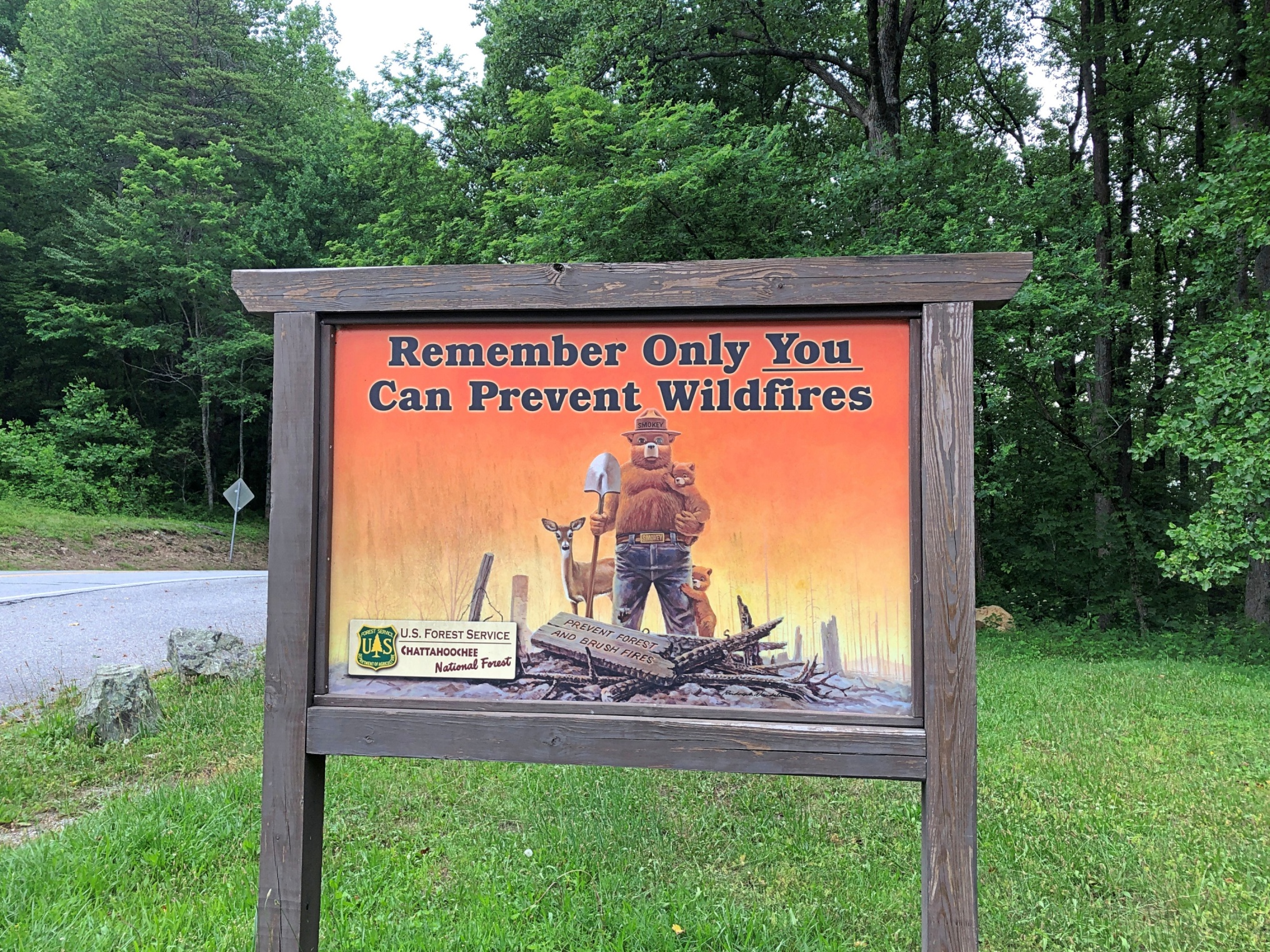
Along Georgia 60 in Chattahoochee NF, Smokey Bear is still at his job.
One thing leads to another online, and Smokey eventually lead me to “Smokey the Bear Sutra.” Only takes a few minutes to read, and it’s a trip. Just like the song “Elvis is Everywhere,” there’s a founding document of a religion in the distant future, one that asserts that humans should never have given up worshiping bears.
Many of my postcard agglomeration are blank, of course. Couldn’t say a percentage, but it would be substantial. I add to it regularly, so I expect the agglomeration will outlast me, if only by a little.
One of the places we went on our last full day in Louisville recently was a flea market. Not just any flea market, but the Kentucky Flea Market New Year’s Spectacular at the Kentucky Expo Center. A sea of tables in a vast structure and – wait, there’s another sea of tables in another, connected vast structure. Safe to say it was big.
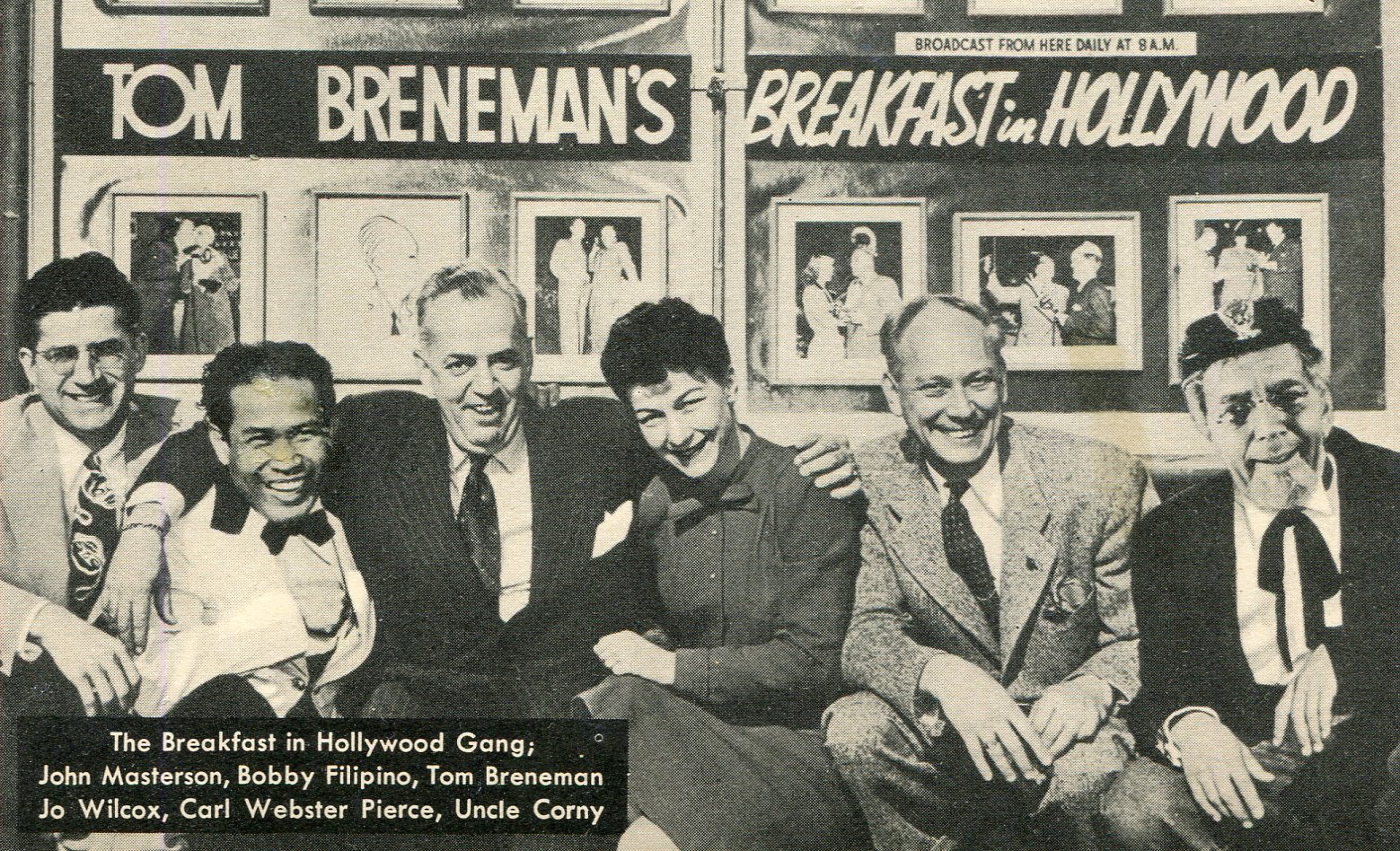
One of the first tables we encountered offered postcards for sale, which didn’t turn out to be that common at the Spectacular. I spotted what turned out to be promotional cards for a radio show called Breakfast in Hollywood, hosted by one Tom Breneman. I wasn’t familiar with it.
The man at the table made me feel a youthful spring in my step by comparison: gnarled, he was, as they used to call old men. Full head of white hair and a shaggy white beard and wrinkles that often come from a lifetime of hard work just to get by.
“Do you know that show?” I asked.
“No, it was a long time ago.”
The old man was right – a long time ago, longer even than his lifetime, or possibly he was a small child when the show was on, and it was nothing a child would listen to. Fifty cents each, that’s not bad. Not particularly rare or valuable as a collectible, as far as I can tell. I bought a handful.
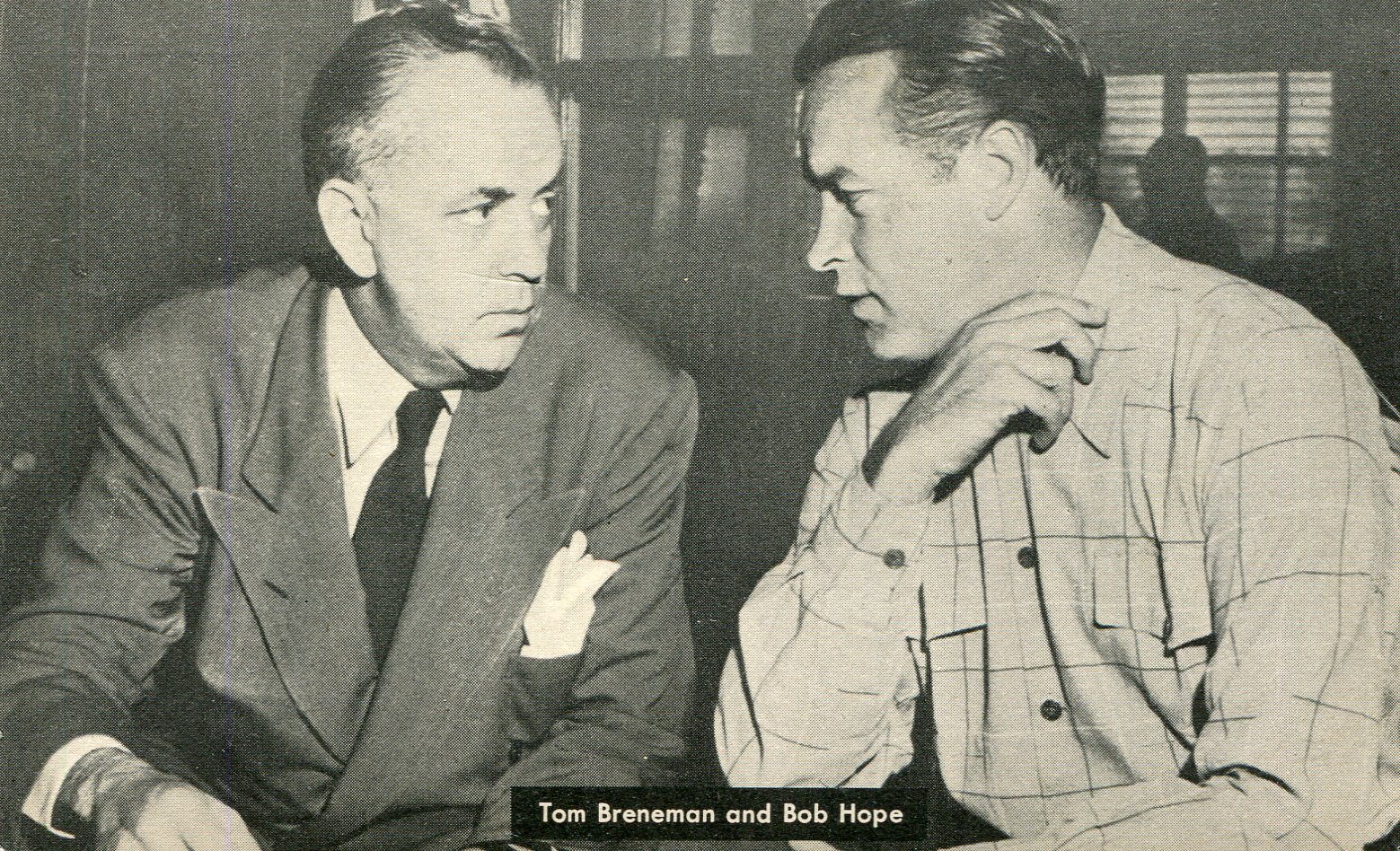
Breneman pictured with the famous.
And the less famous. They weren’t even in the same room, these two.
Uncle Corny, huh? I’d look further into him, but for now I’d rather wonder about him. A character brought to the show by its actor from years of honing in vaudeville?
Breakfast in Hollywood wasa chat show, with host Breneman an experienced radio hand by the time he started the show in 1941. In the waning days of World War II he opened a restaurant in Hollywood from which to broadcast. The show had a large and loyal following among listeners, but in 1948 Breneman died suddenly.
Later I read about the show, its high fame long evaporated. Got me into a mild counterfactual frame of mind. Breneman wasn’t that old when he dropped, only 46. Wife and youngish children. Television wasn’t far off – would he have made the transition successfully (many did), hosted a show or run of shows into the ’60s or even a little later, and be remembered among my cohort for some last semi-retirement gig like a regular square in the Peter Marshall Hollywood Squares?
It wasn’t to be. Sure, that isn’t one of the ponderous issues that counterfactuals usually spend their time with: What if Lincoln had lived longer, what if Germany won the Great War, what if Ronald Reagan had played Rick Blaine, that sort of thing. So what?
A man calling himself Korla Pandit (d. 1998) appeared regularly on Breakfast in Hollywood. If this article is even half accurate, he was one of the hardest working men in U.S. show business in the mid-century and later, and a lot else surprising besides. He’s had a documentary made about him. You can listen to his organ recordings, right now. There’s a biopic about this guy just waiting to be made.
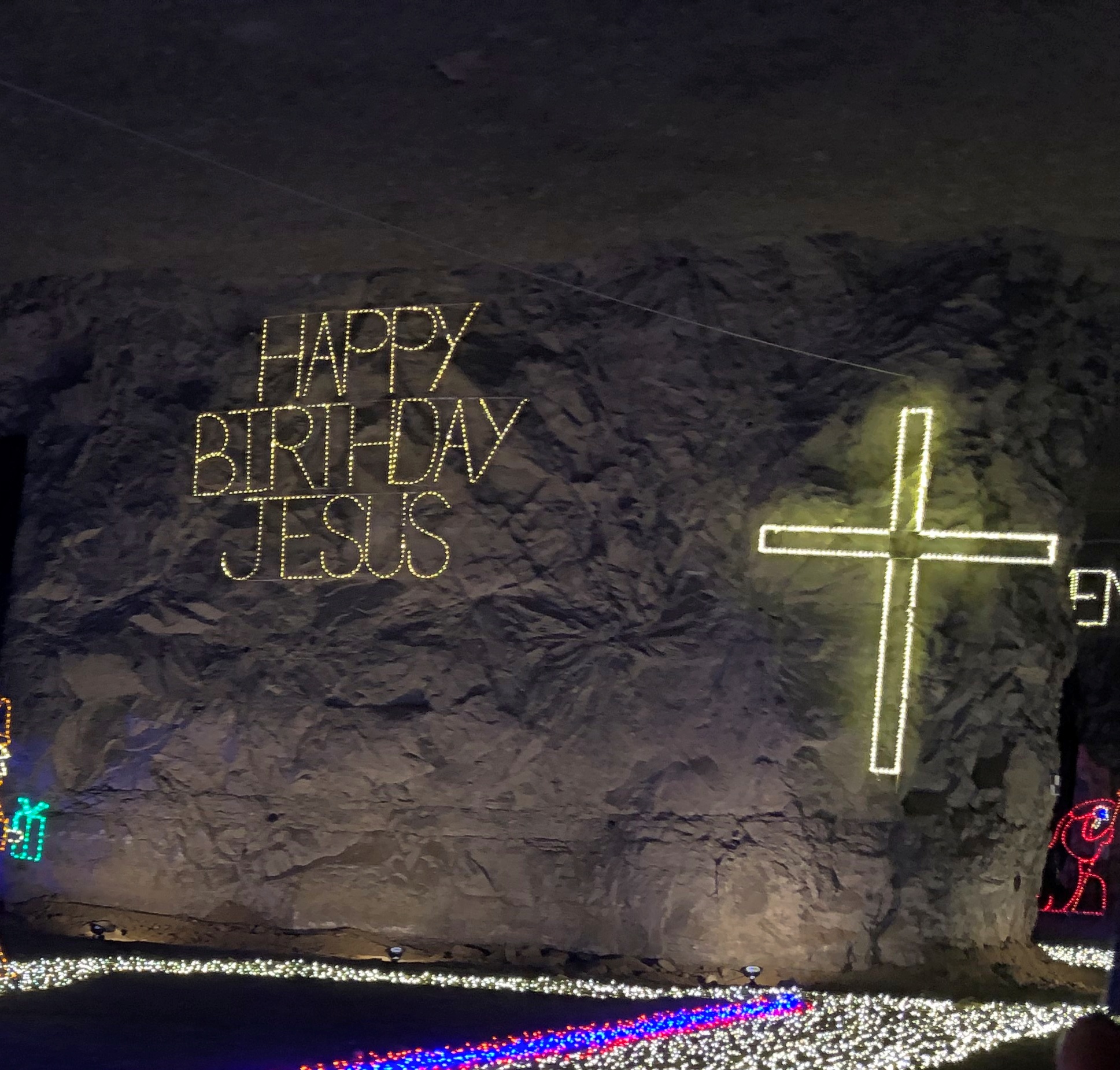
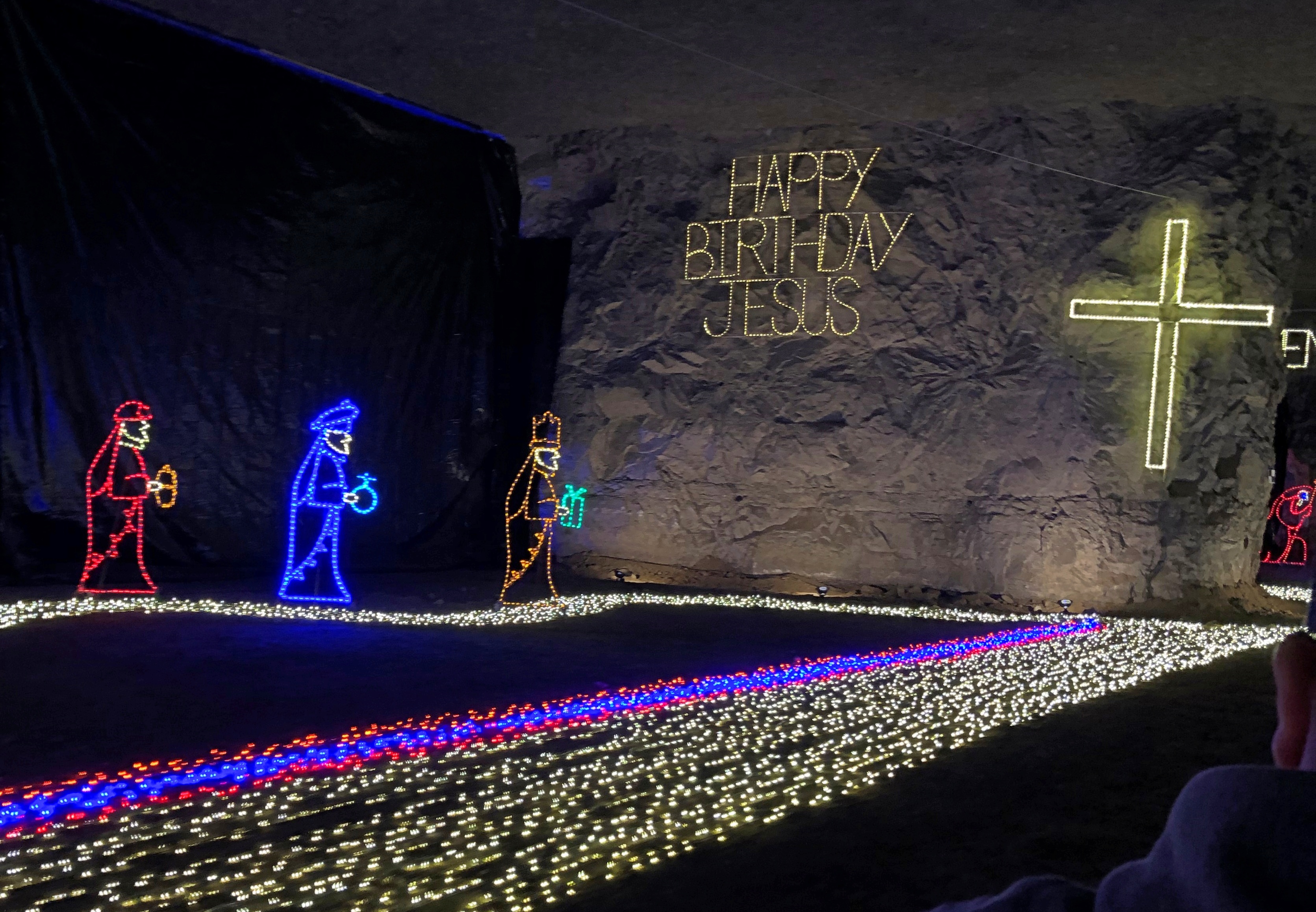
Not something you see that much, not put quite that way. Maybe that’s an unconscious acknowledgment that nowhere in Scripture is Jesus’ exact birthday ever mentioned. It reminded me of a scene from Full Metal Jacket.
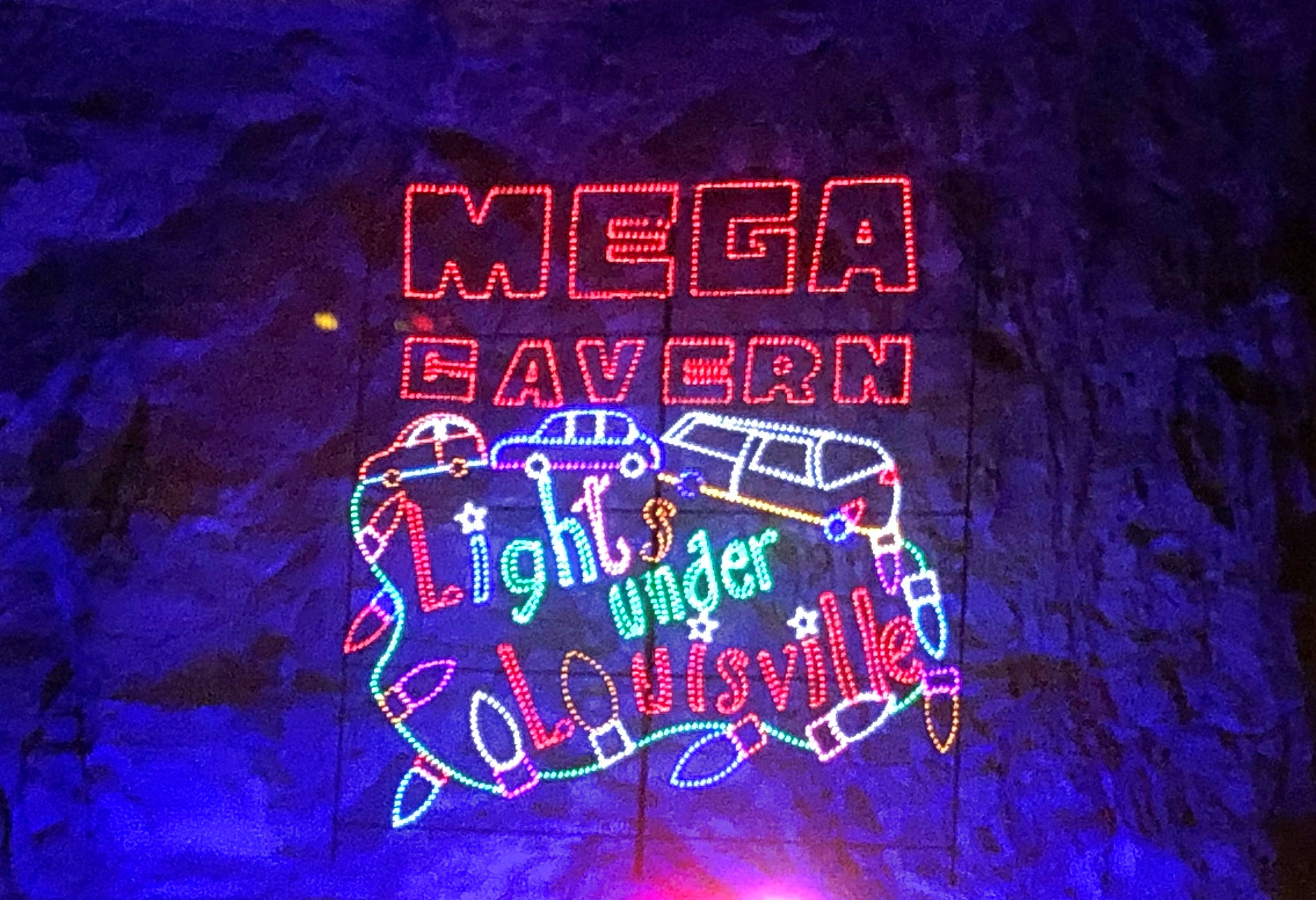
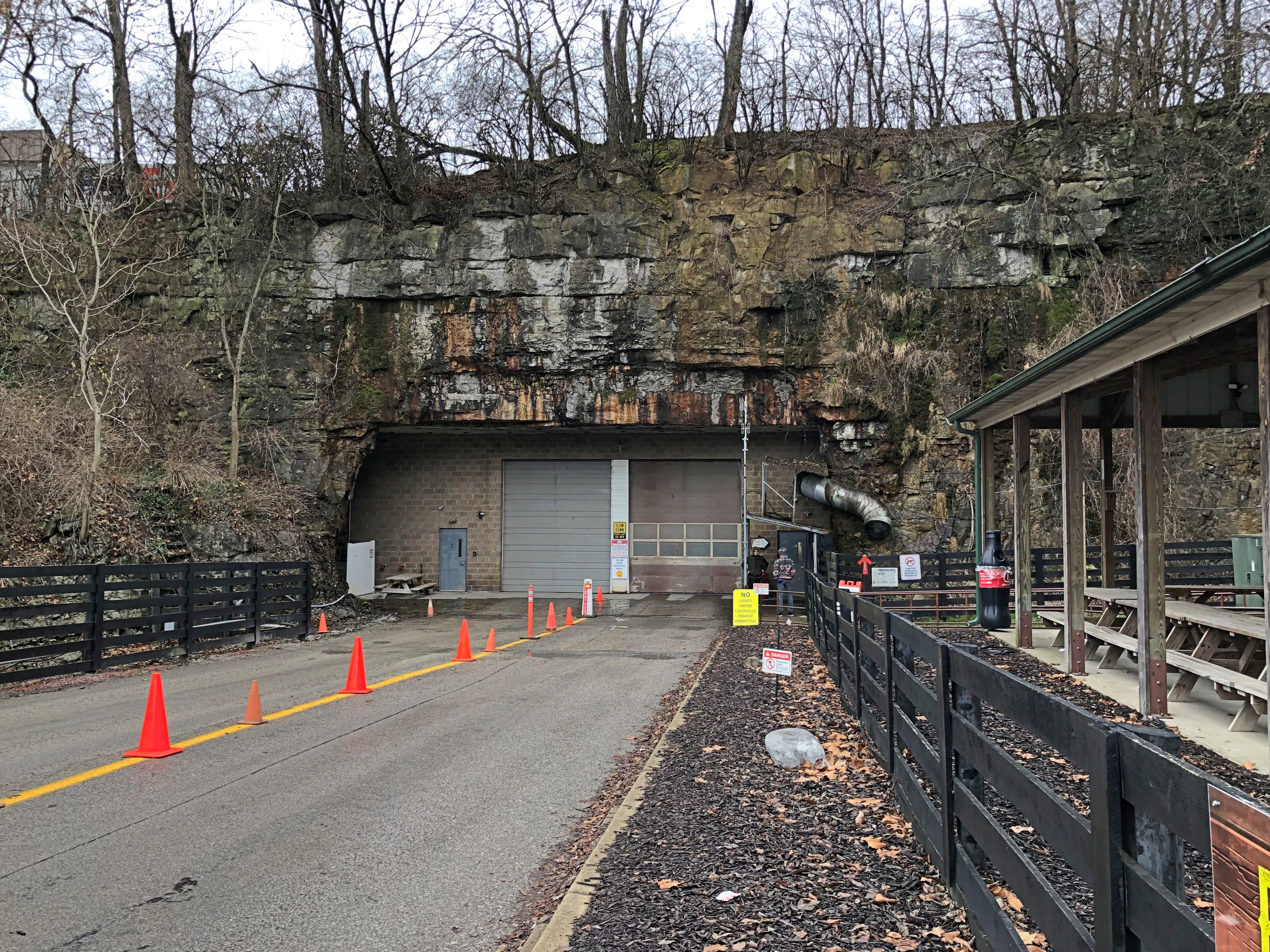
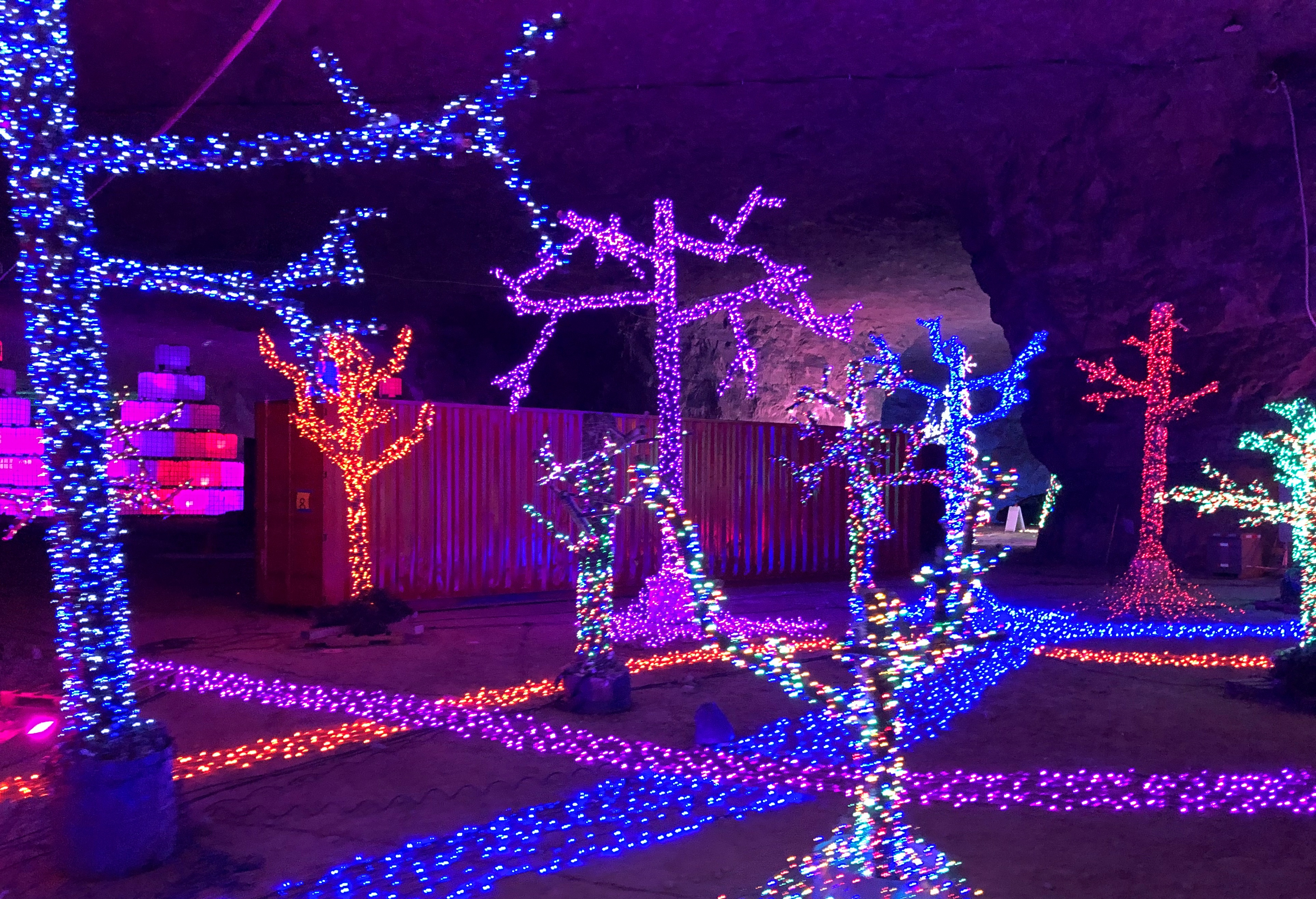
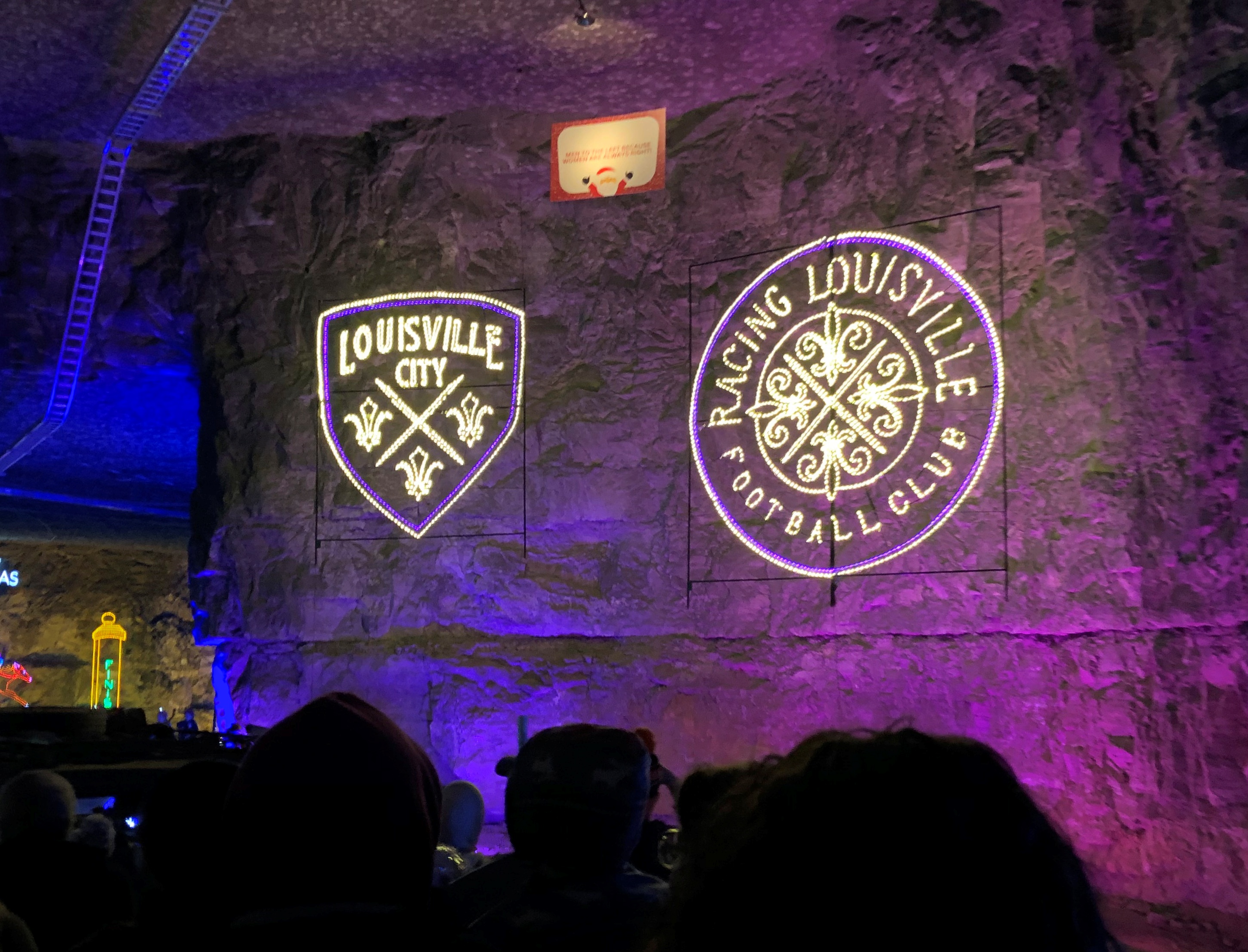
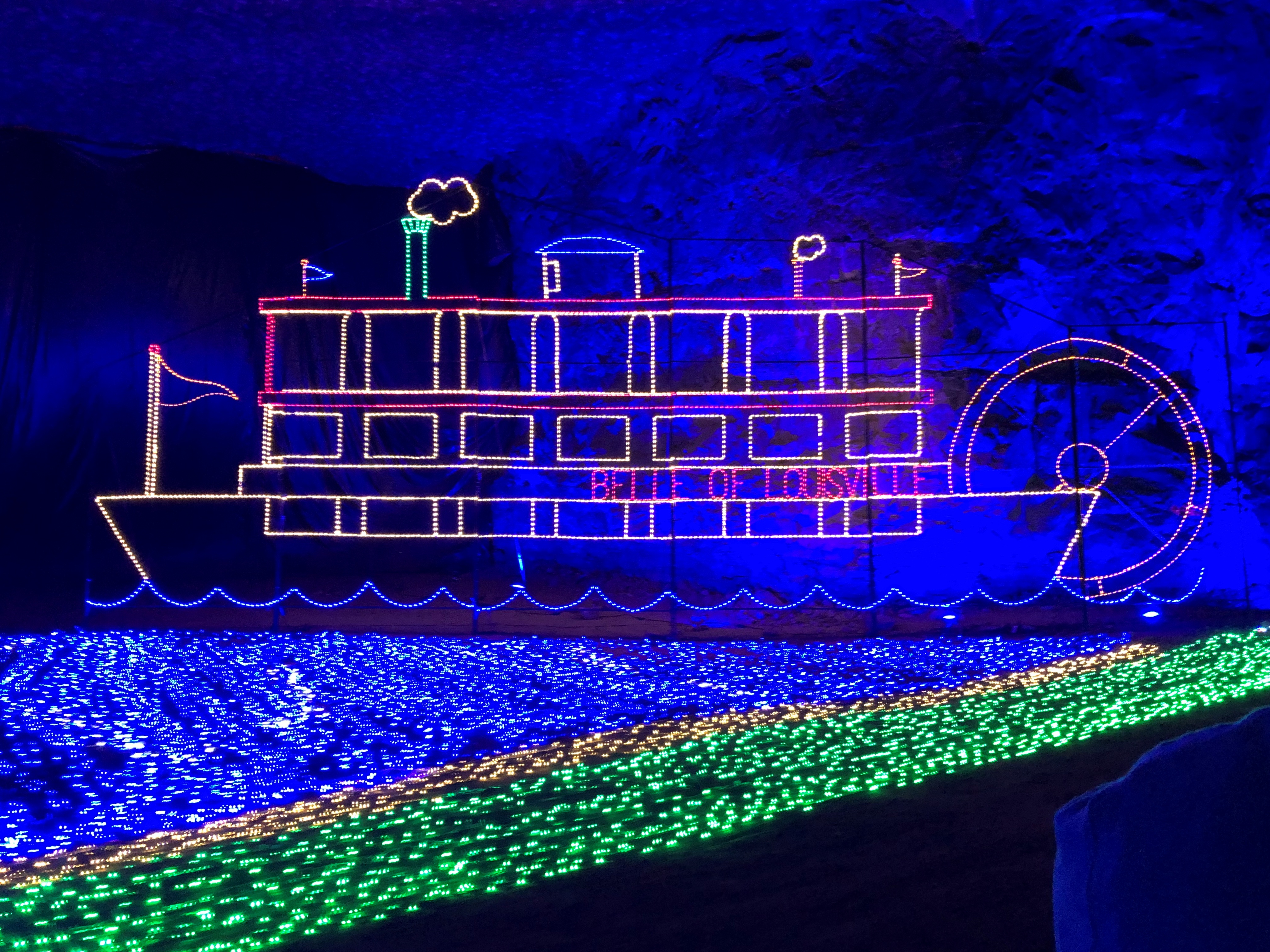
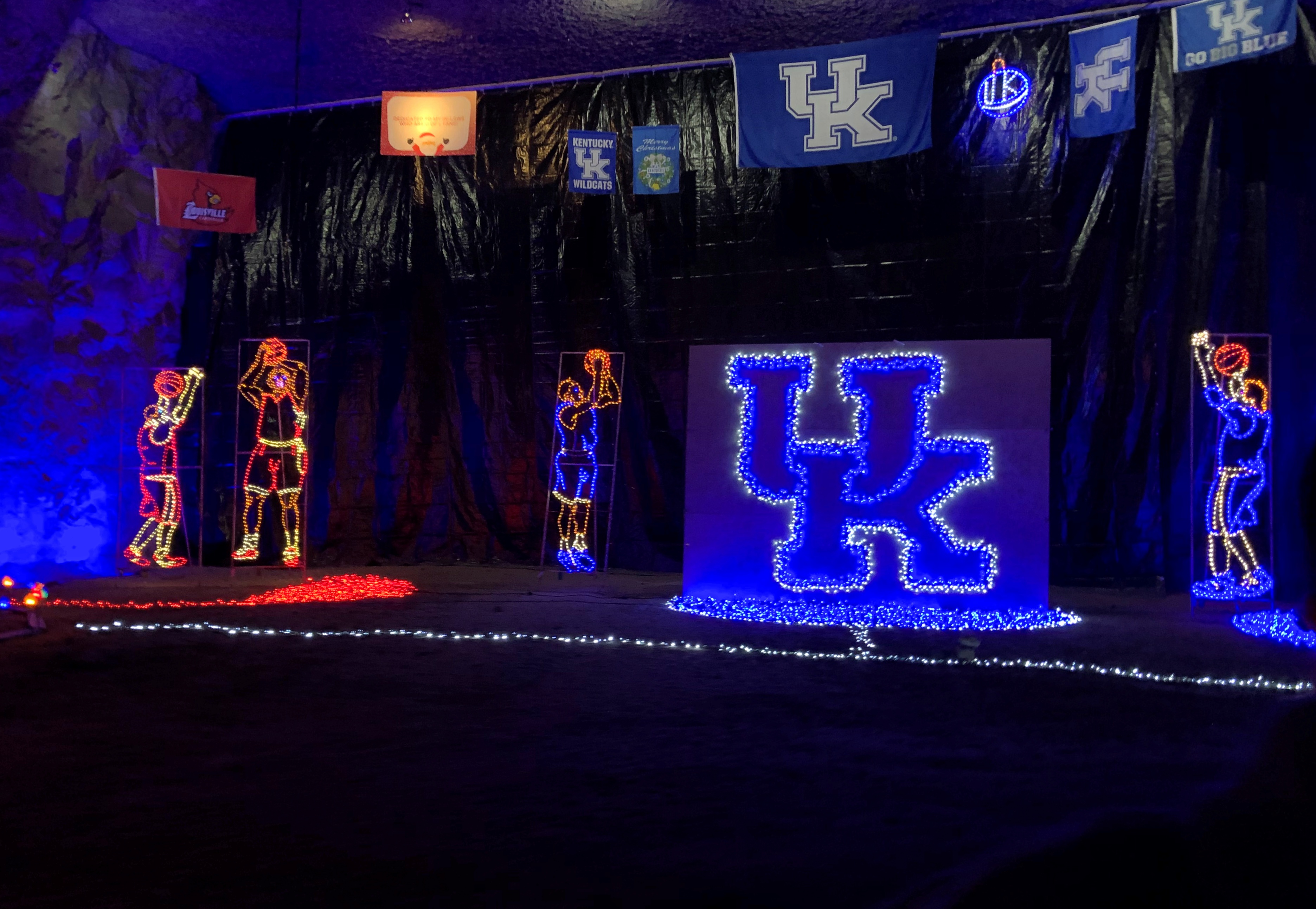
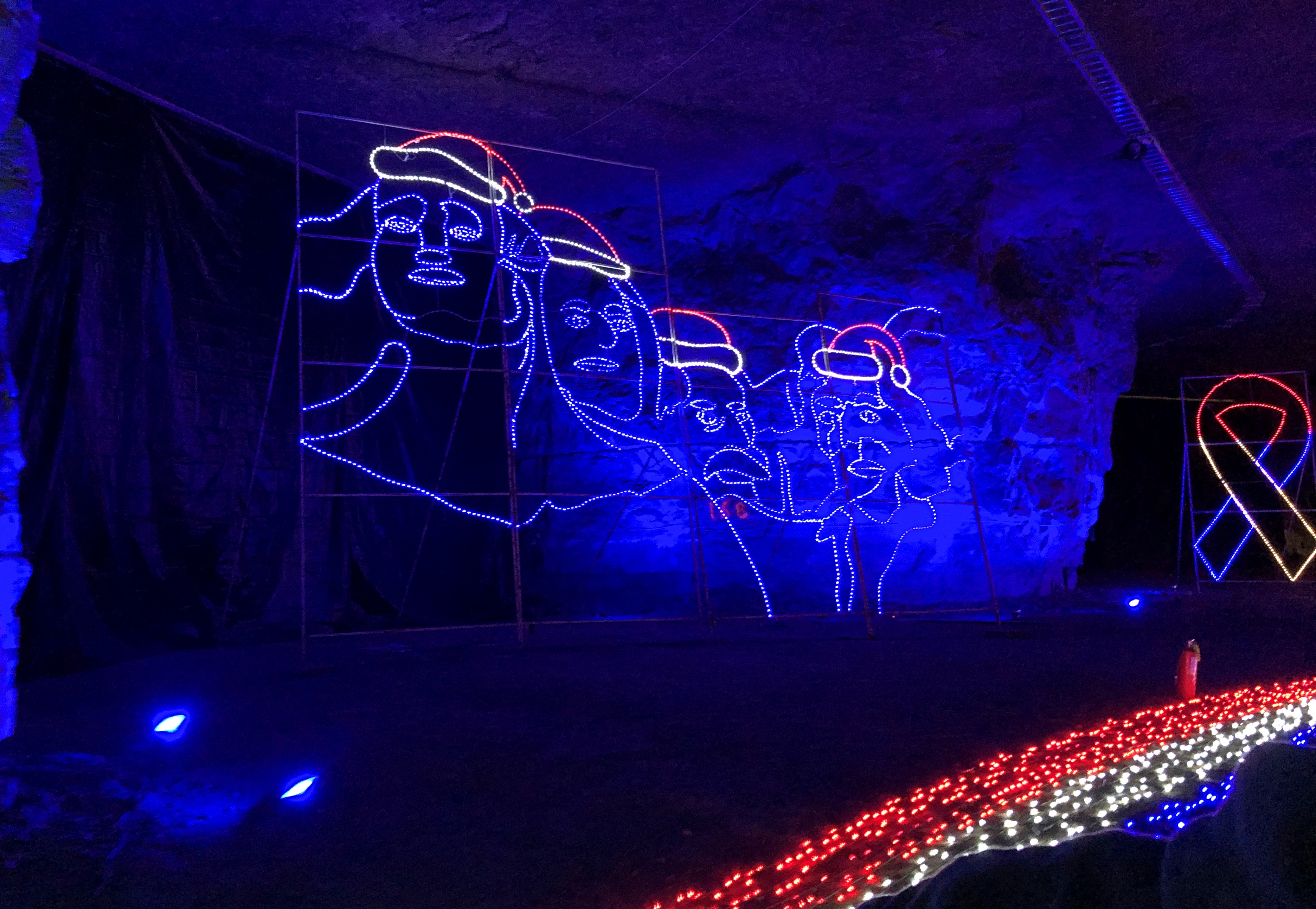
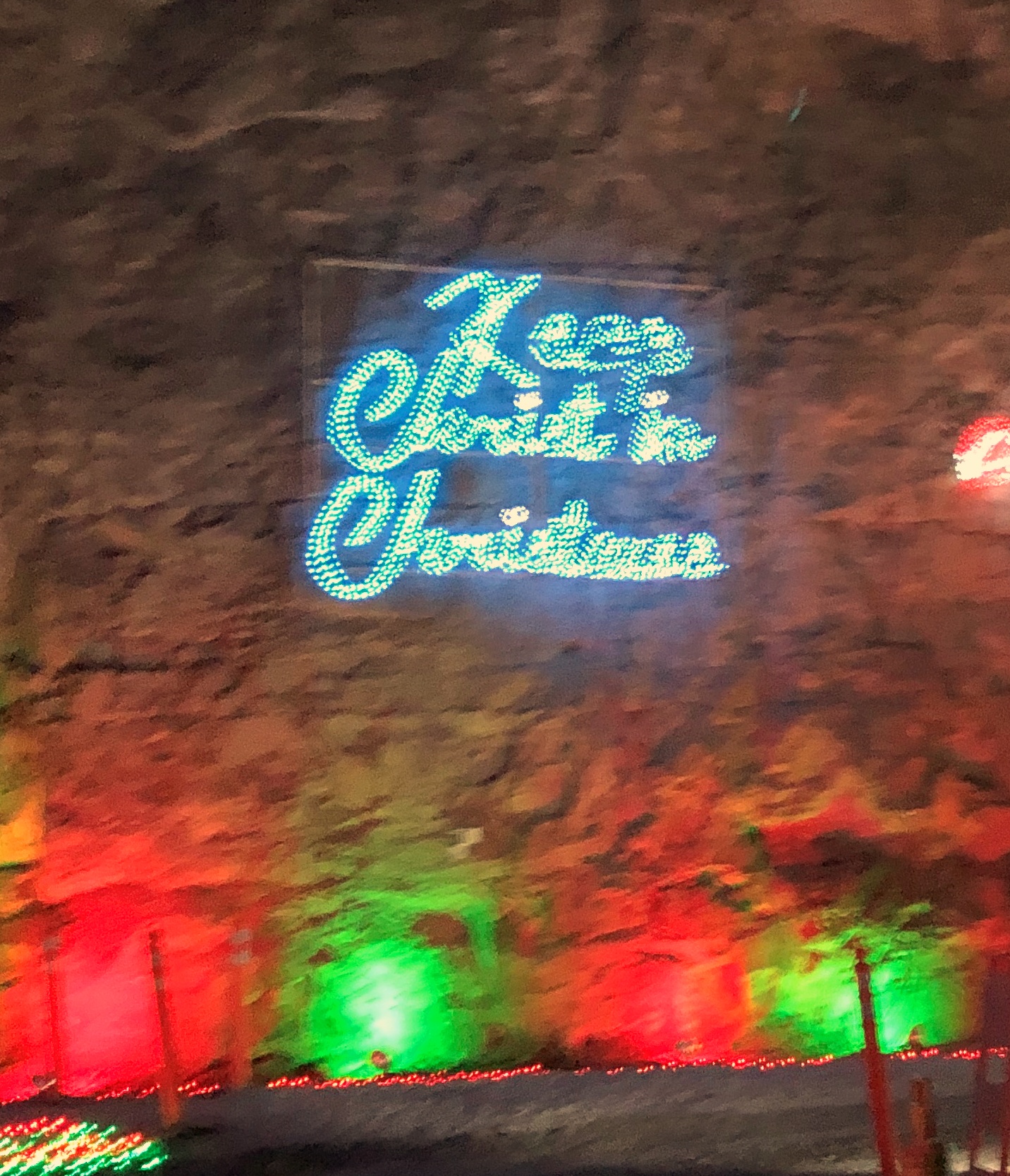
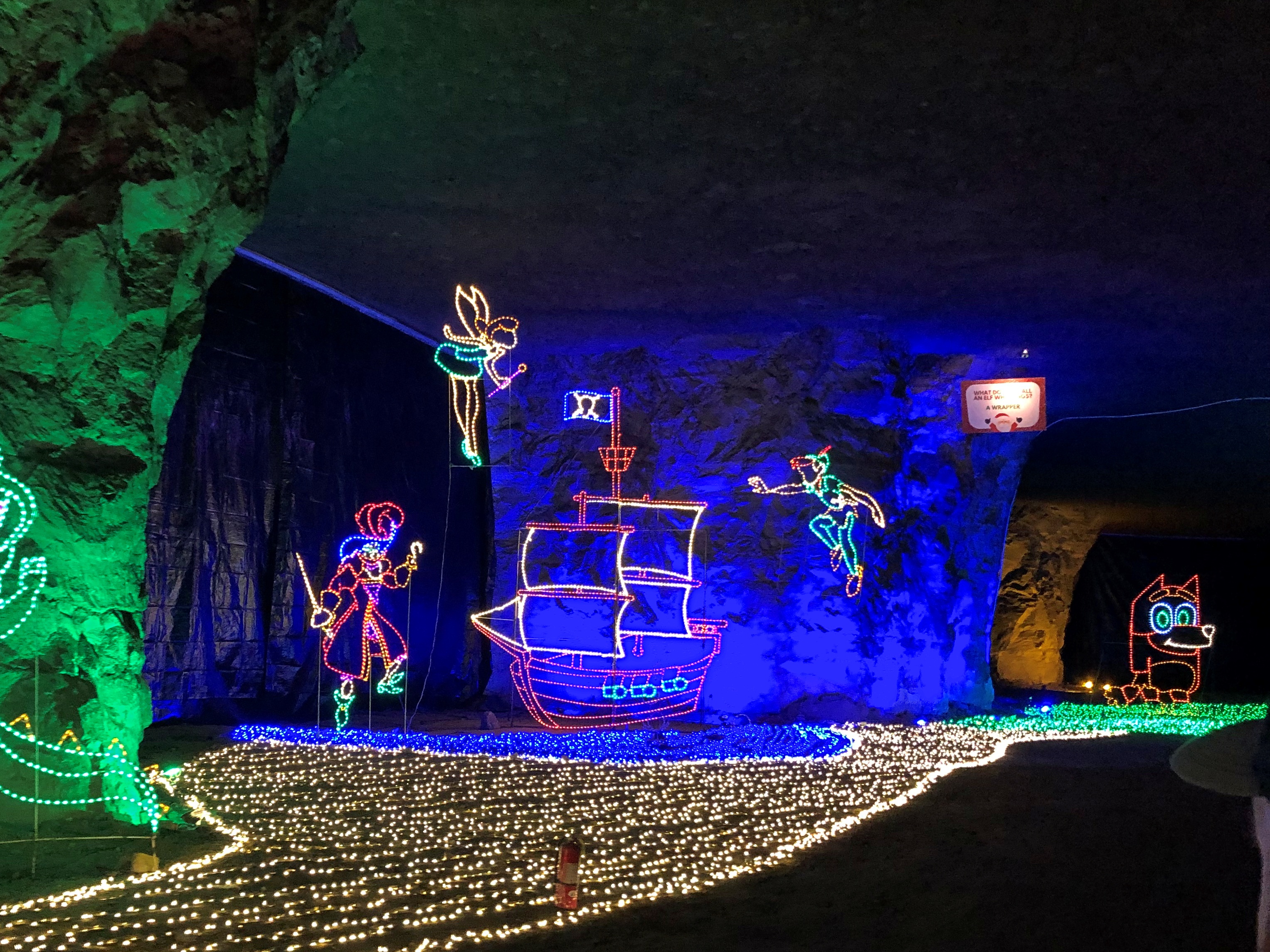
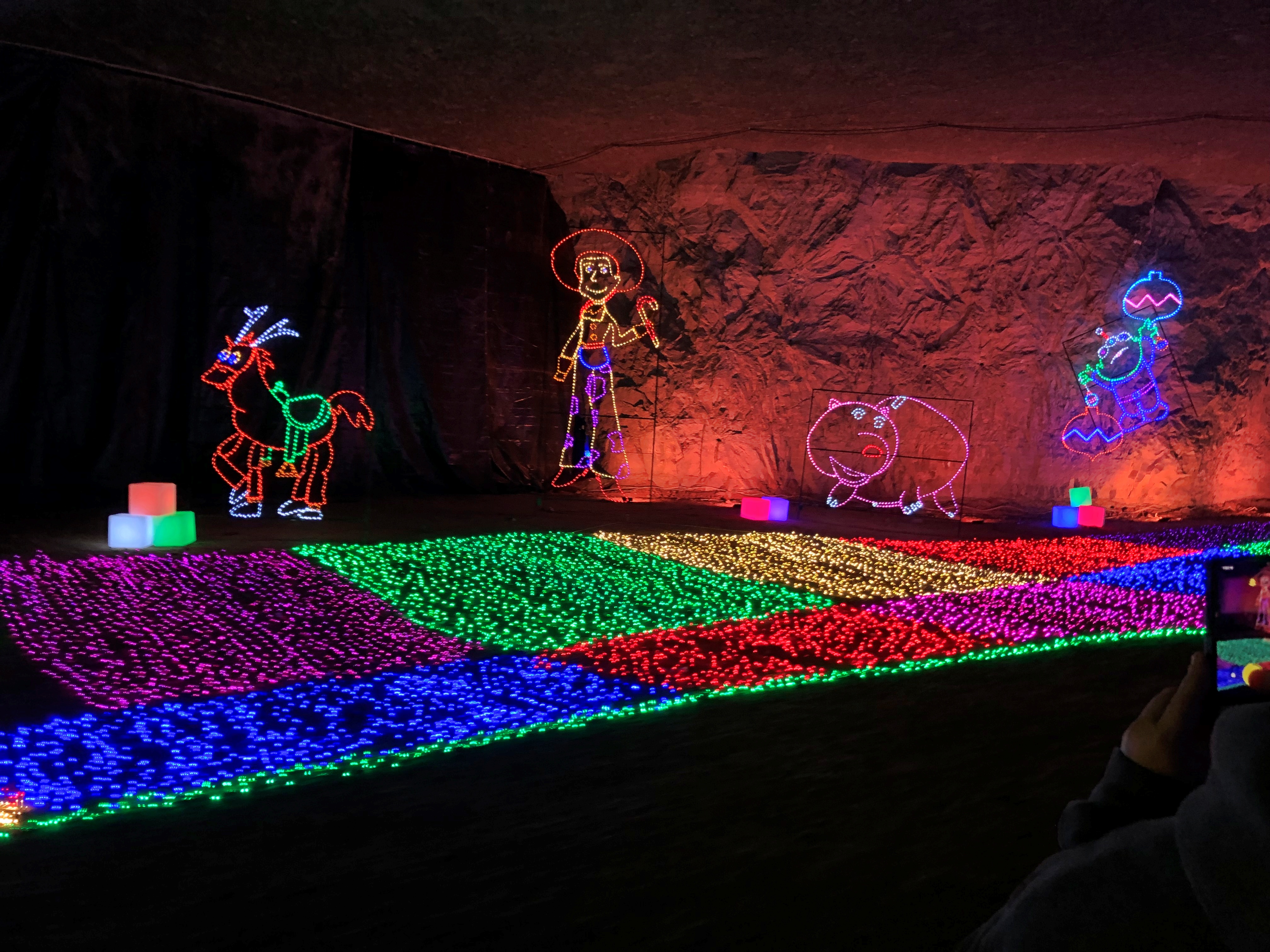
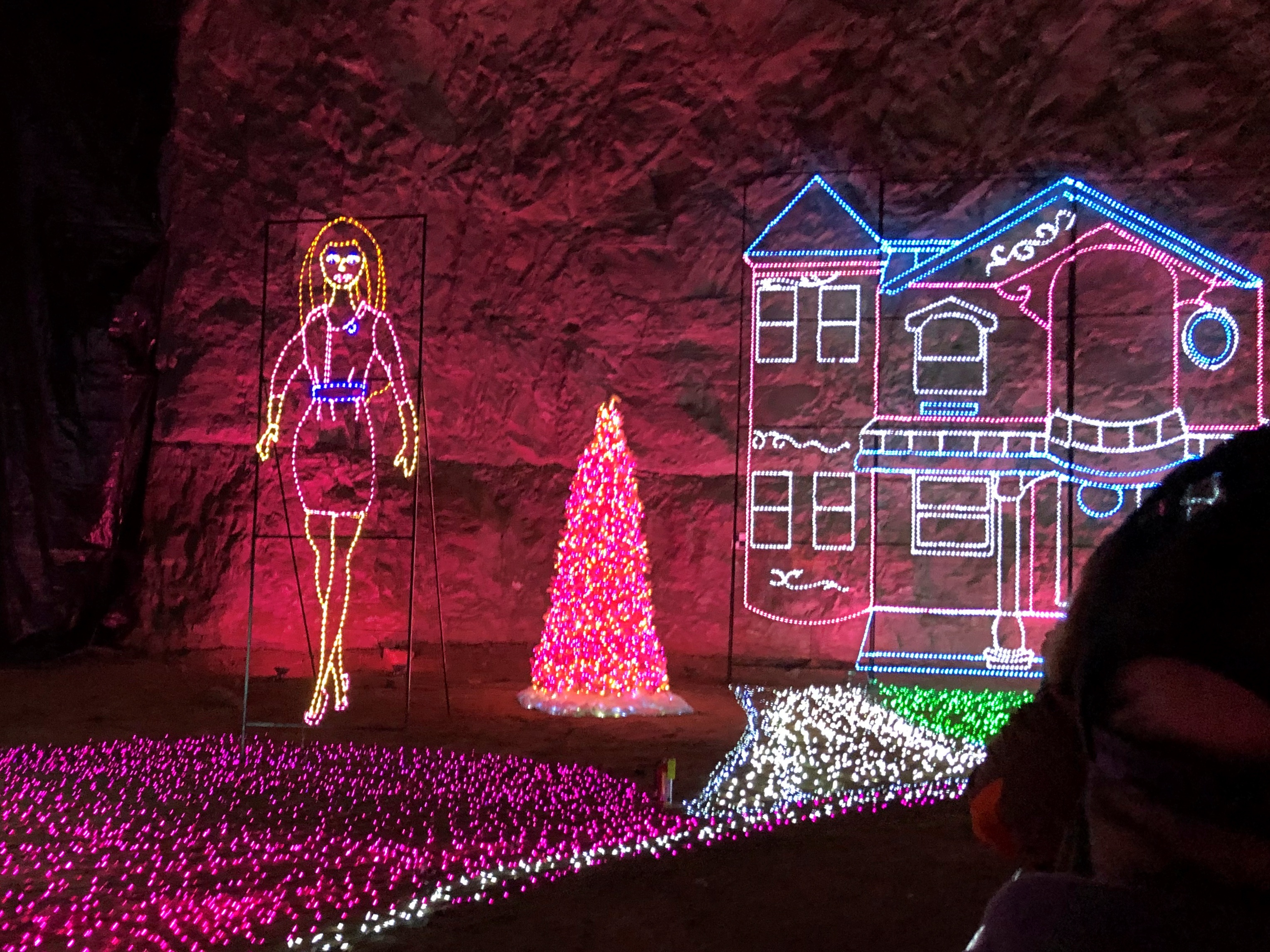
The message was in lights, and there was a good reason for that. It was part of Lights Under Louisville, an annual display of Christmas lights by Mega Cavern. A lot of lights: at 7 million, said to be the largest such light display in the world.
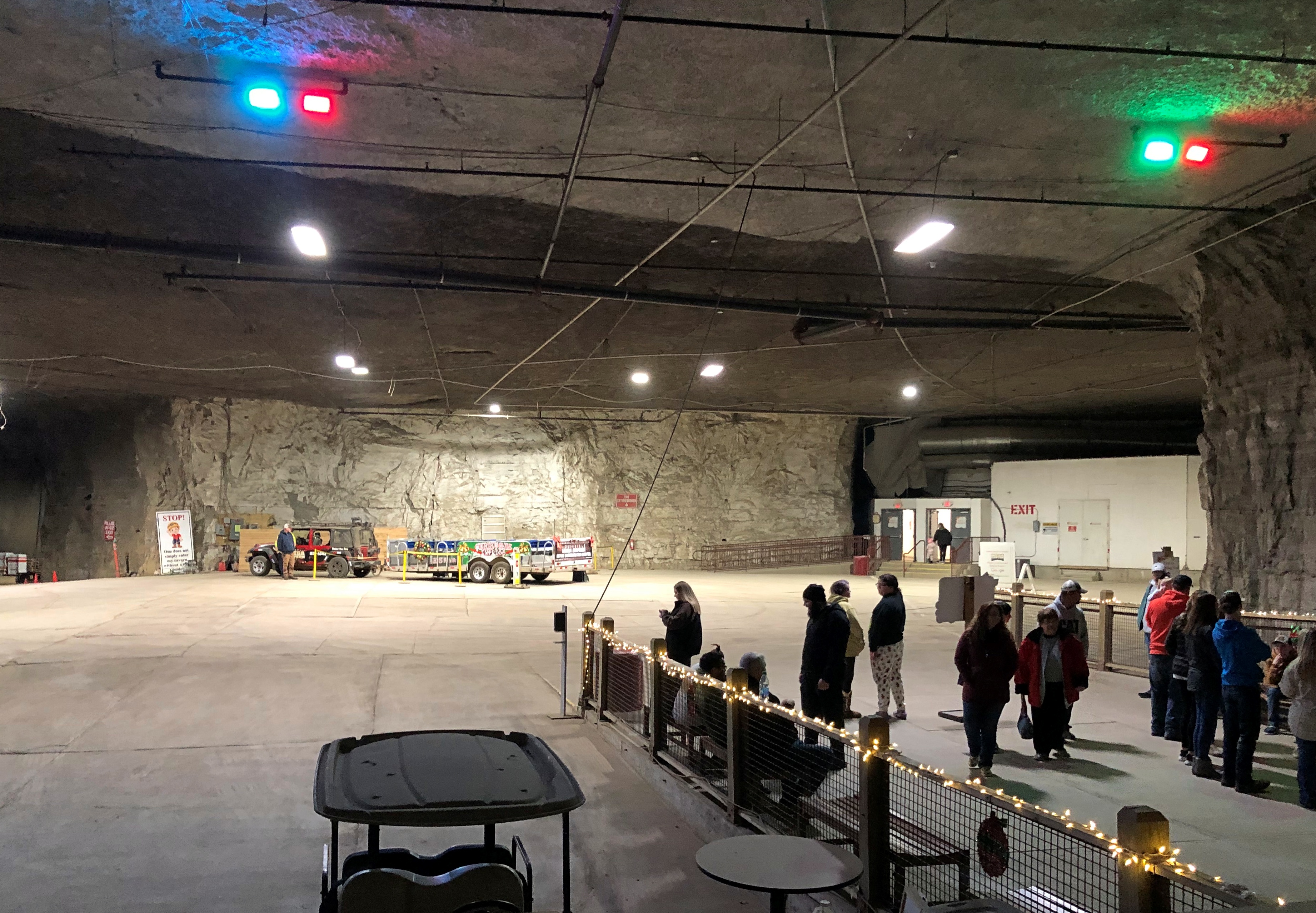
Mega Cavern is an attraction south of downtown Louisville, and a fairly recent one at that, opening for tourists only in 2009. In the mid-20th century, miners extracted limestone from under the area’s hills, eventually creating 4 million square feet of space. In comparison, the Sears Tower totals 4.4 million square feet, so nearly a Sears Tower worth of space was excavated under a section of I-264 and the Louisville Zoo and a major city park. By the early ’90s, mining had ceased, and the voids were developed into warehouse space.
In that, the place naturally reminded me of SubTropolis in Kansas City, Mo., which I visited in ’99. Unlike that man-made cave, which is still all business, Mega Cavern started adding activities for visitors, at first tours through the cave. There is still underground warehouse space, and tenants for it.
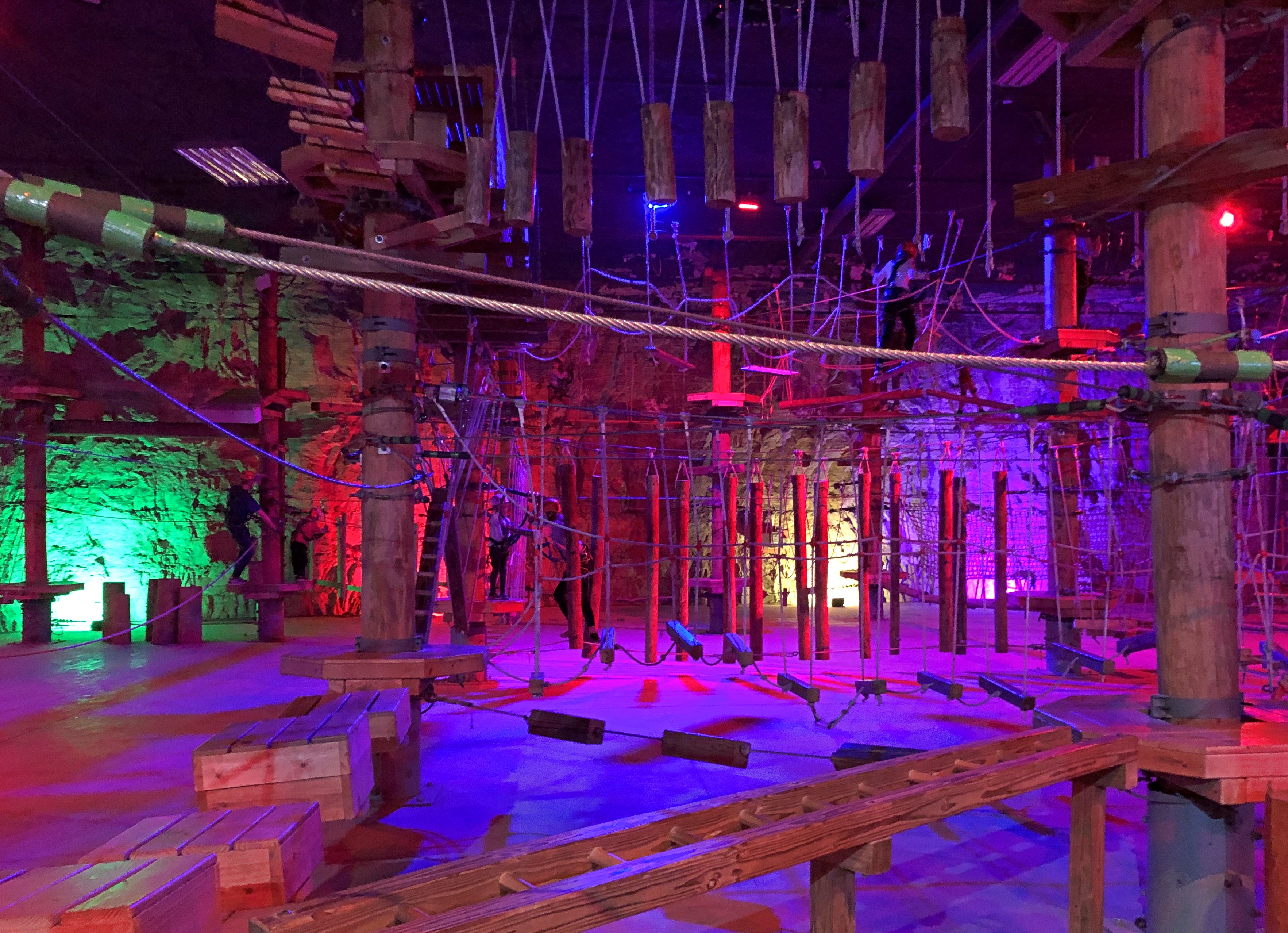
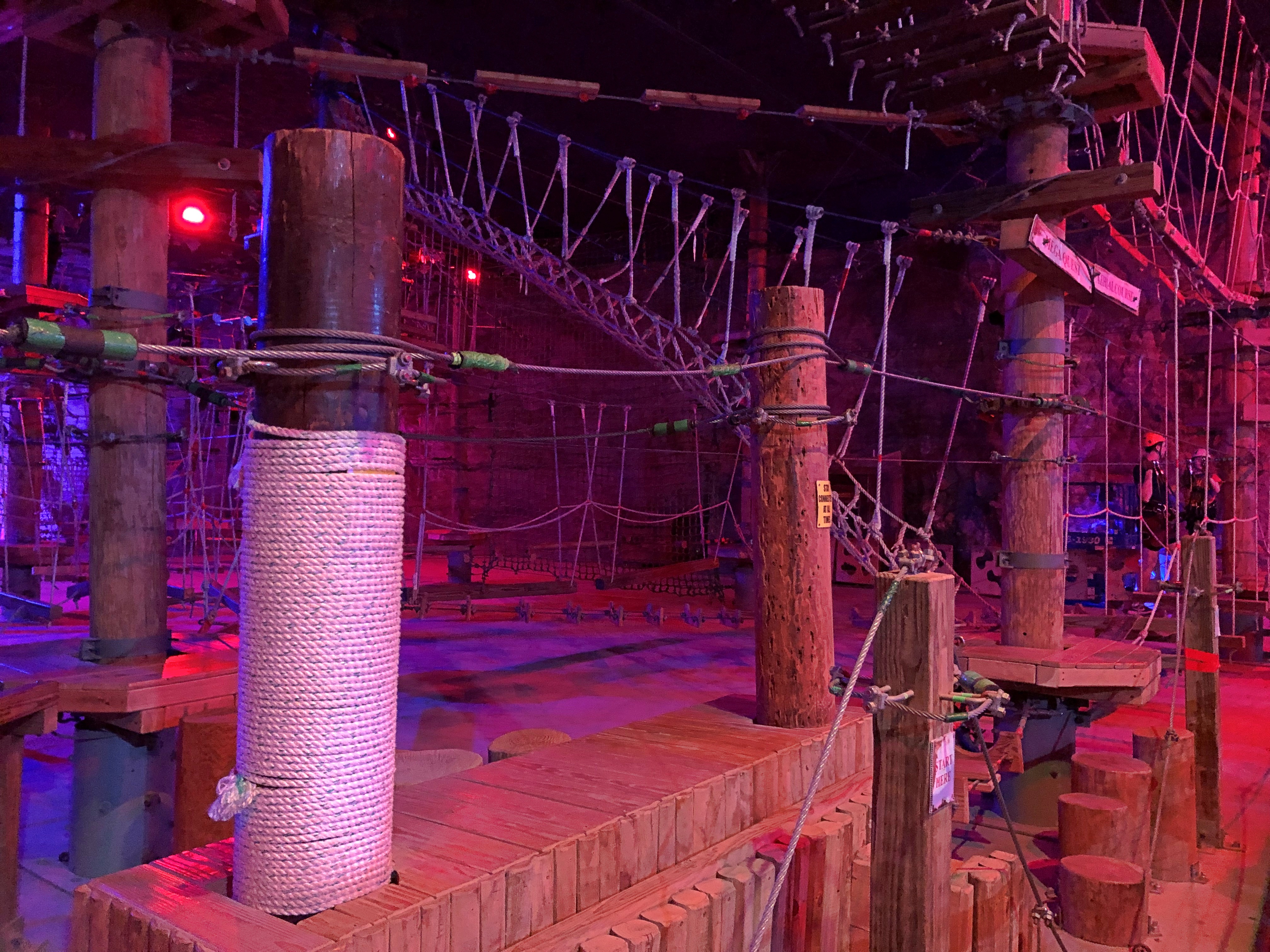
But now the facility also has underground zip lines, an aerial ropes course, and walking and tram tours most of the year. Mega Cavern used to have an enormous dirt bike course, at 320,000 square feet said to the the world’s largest underground off-road bike facility, but that didn’t last (I suspect insurance issues).
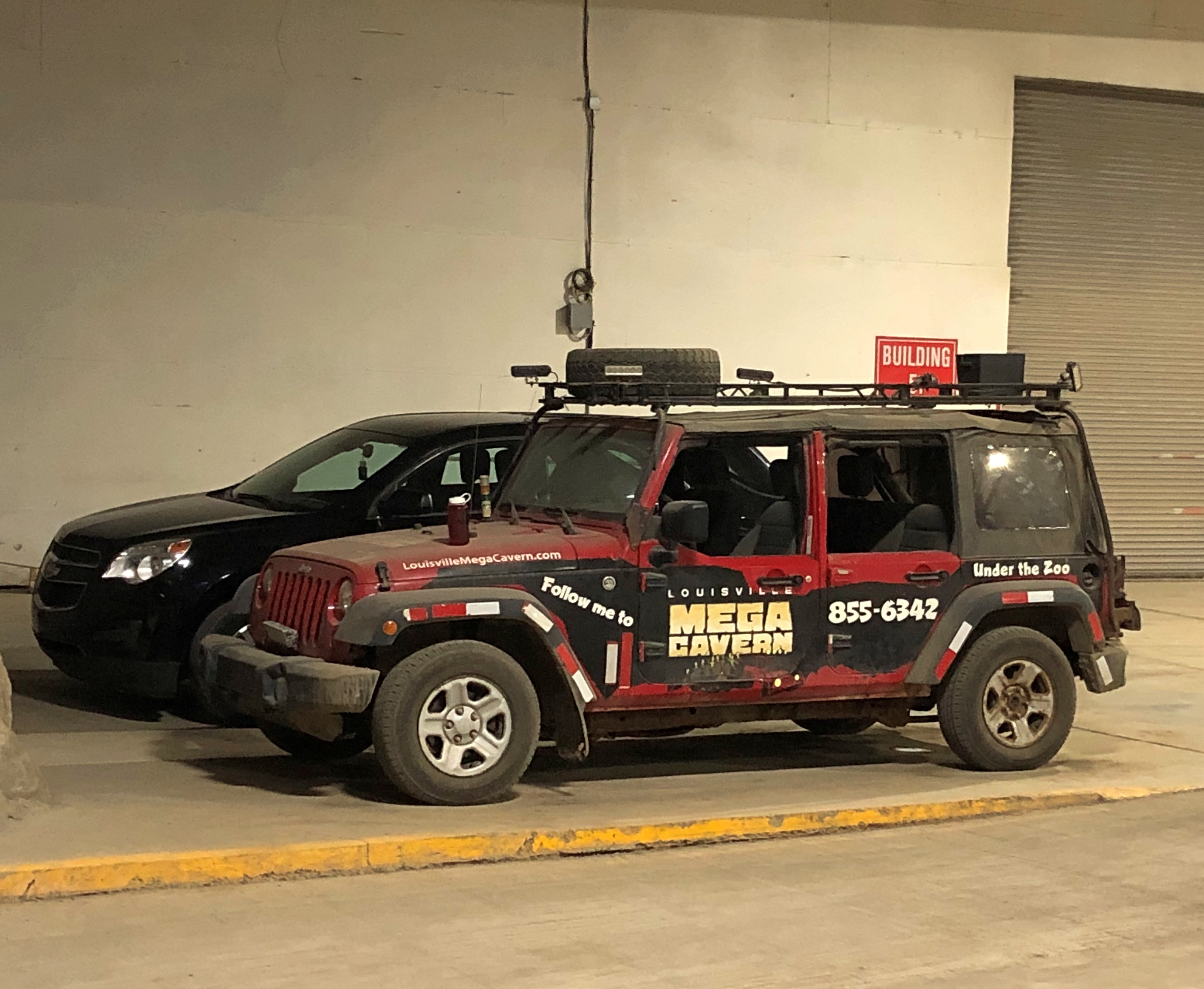
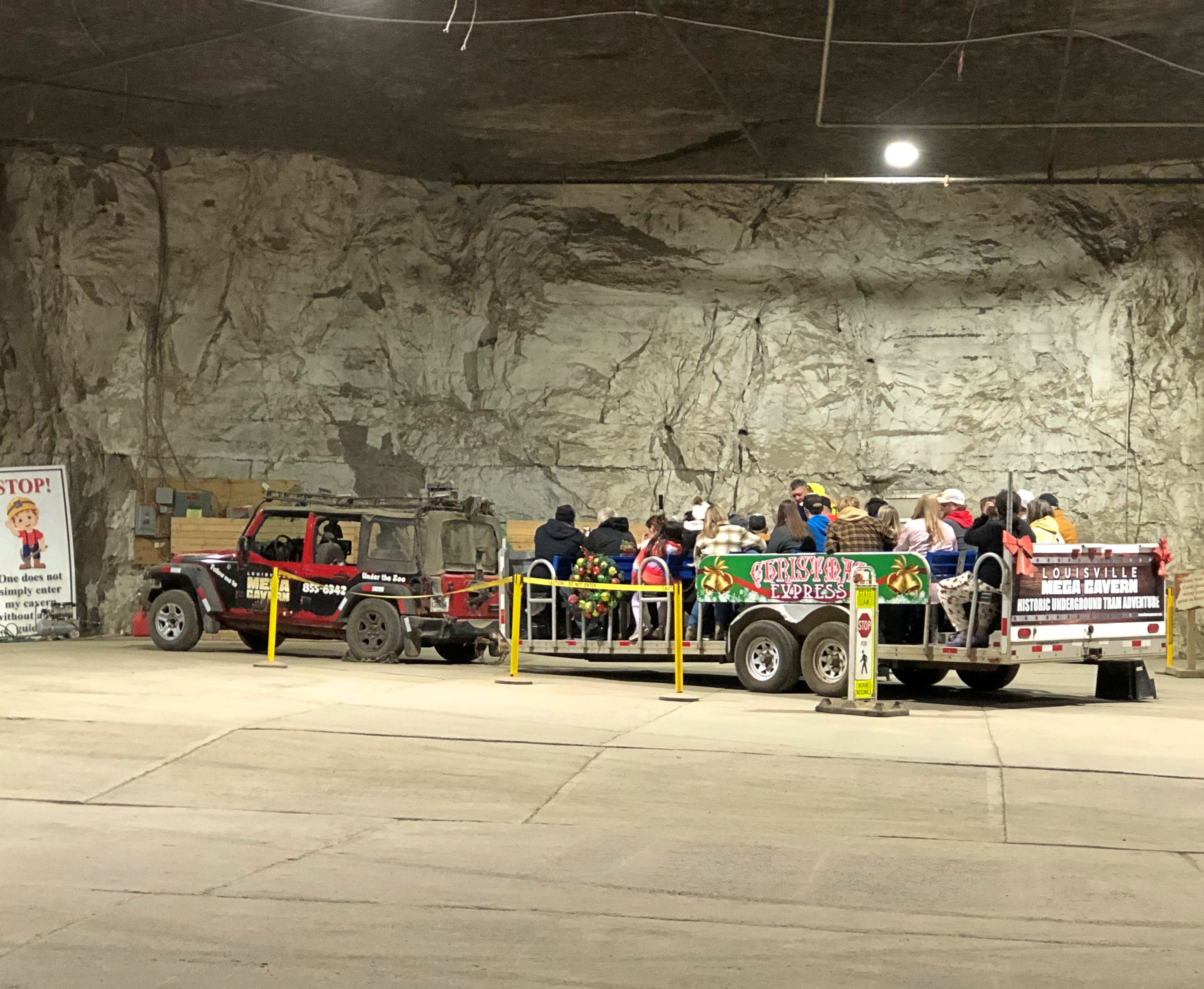
Around Christmas, you can either drive through Mega Cavern to see the millions of lights, or pay a little more and ride on a wagon pulled by a Jeep, which is what we did on December 30. It was the only activity on this trip that I had to book in advance.
The public entrance to the cave doesn’t even hint at what’s below.
At the end of a short hall is a large room used to turn vehicles around, and as a waiting area for those riding trams.
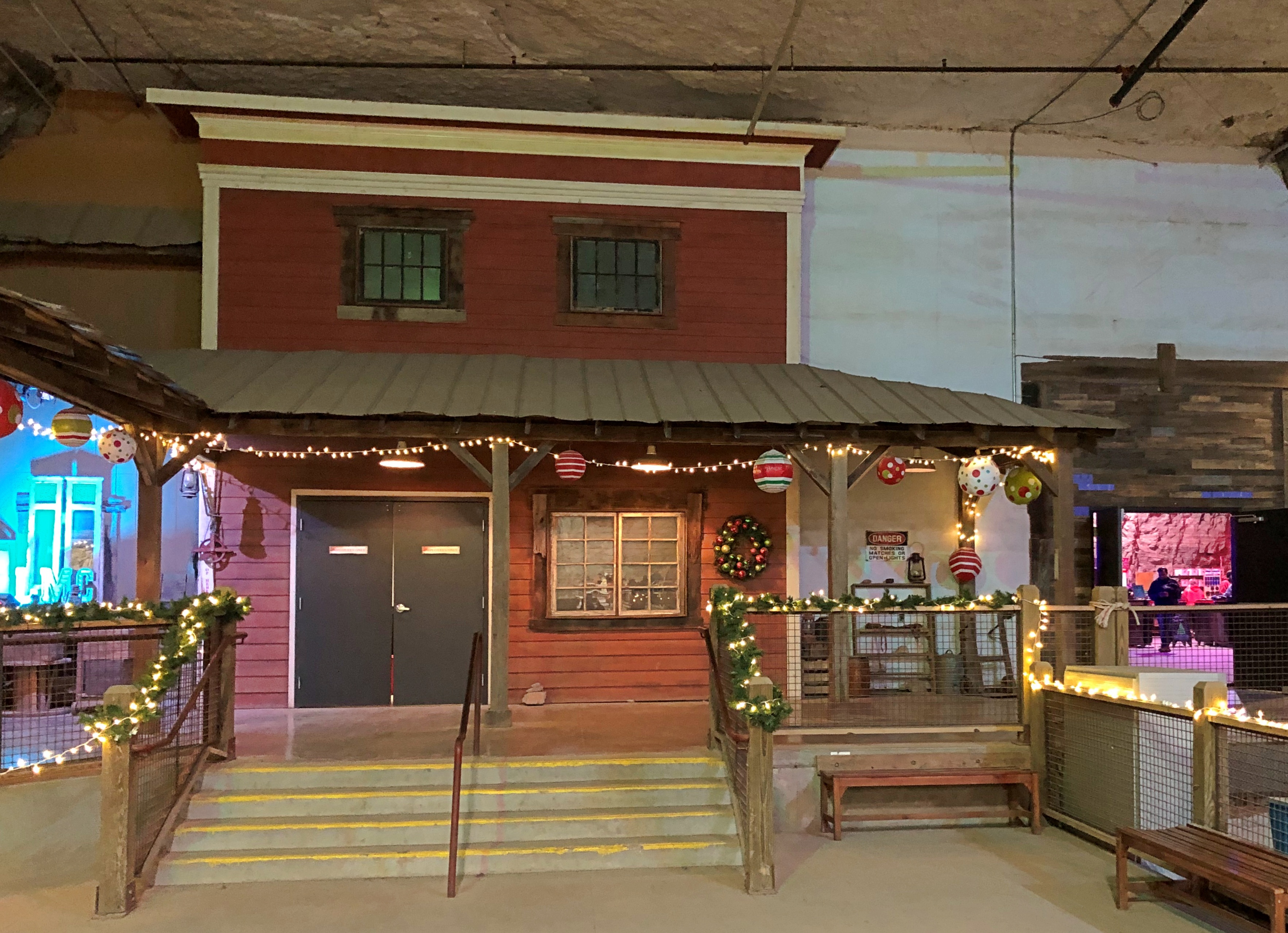
Beyond that is a room with the service desk, a small snack shop, a gift shop and a view of some climbing equipment.
We’d come for the Christmas Express.
Of we went, exactly as scheduled. I was expecting the lights to be arrayed in tree-oriented abstractions. Or just to be artful strings of lights.
There was a lot of that. At the risk of sounding churlish, since we enjoyed riding through the lights thoroughly, the ride could have used more displays like these. Most of the displays had themes. Such as local themes. They were artful, too, just not quite as spectacular.
Patriotic themes. Many more than this.
Christian themes.
Movie franchises. More than pictured here, but I don’t remember all of them now. Many geared to children. I’d heard of almost all of them.
I remember a few omissions. Star Wars – more than one display, I think. But no Star Trek. Also, Barbie. Were pink Christmas trees in vogue over the holidays? Experts say yes. But what, no Oppenheimer? C’mon, they were peas in the same summer blockbuster pod.
I’m pretty sure a Manhattan Project display would have harshed everyone’s holiday buzz, so no go. But can you imagine? The centerpiece of the Oppenheimer display would, of course, be a mushroom cloud in holiday lights.
Not quite the depth of cold today as the three days before. I think temps reached double digits, reckoned in Fahrenheit, and tomorrow we’ll enjoy a balmy 20 F. With a little more snow, and sliding temps for the weekend. Such is January.
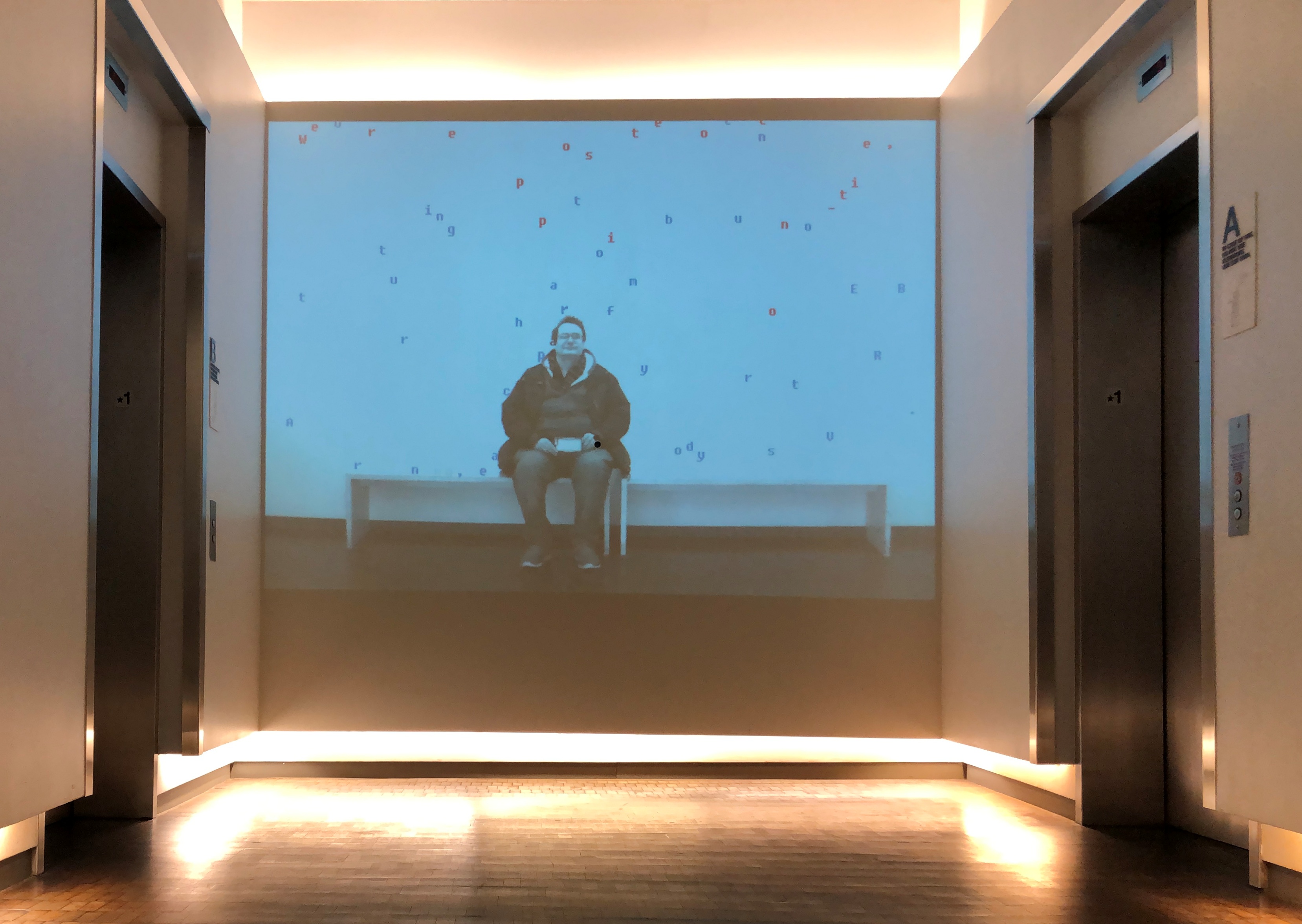
One of our more interesting moments in Louisville at the end of ’23 came at the lower level of a downtown hotel. I took a moment to rest on a bench.
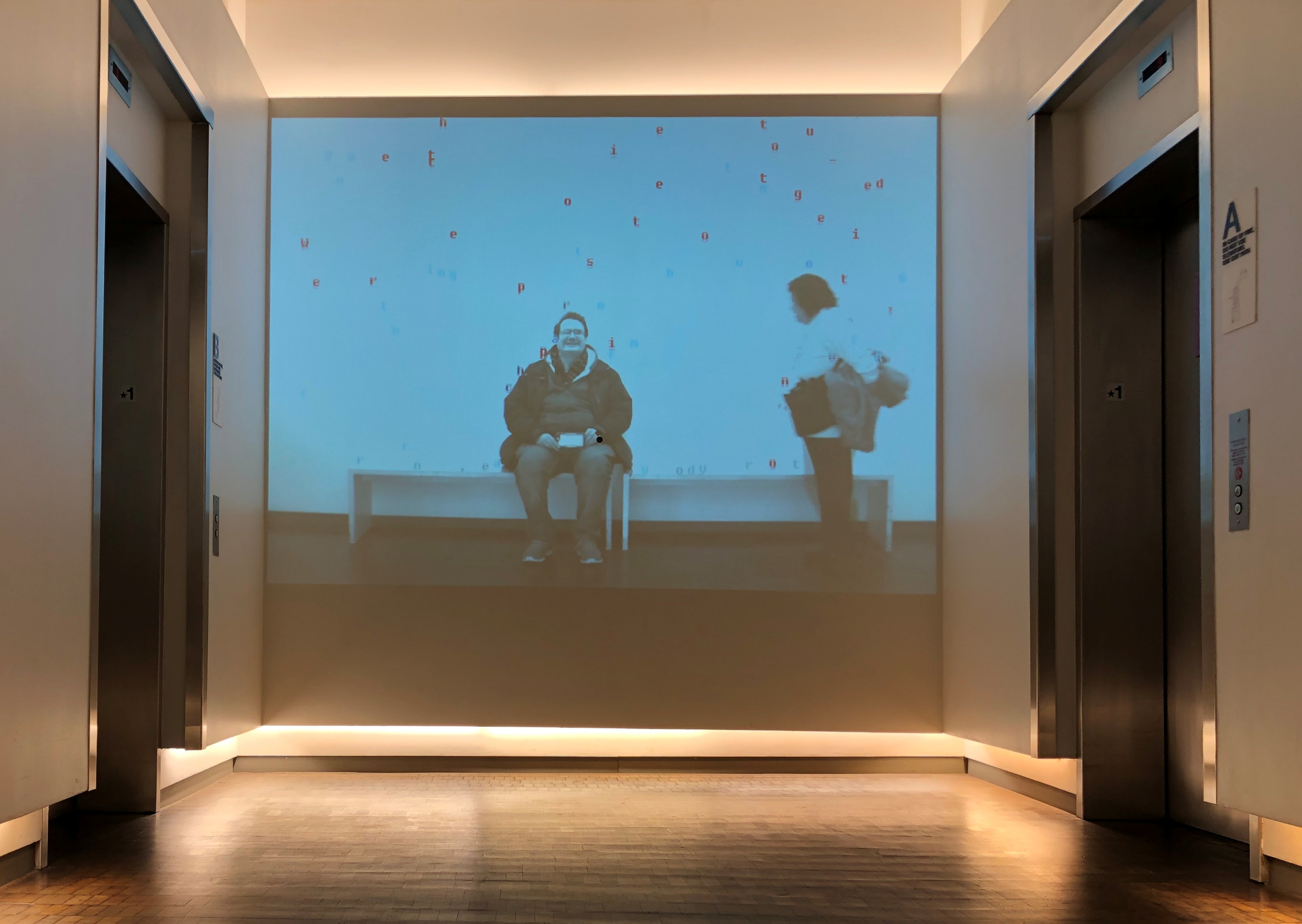
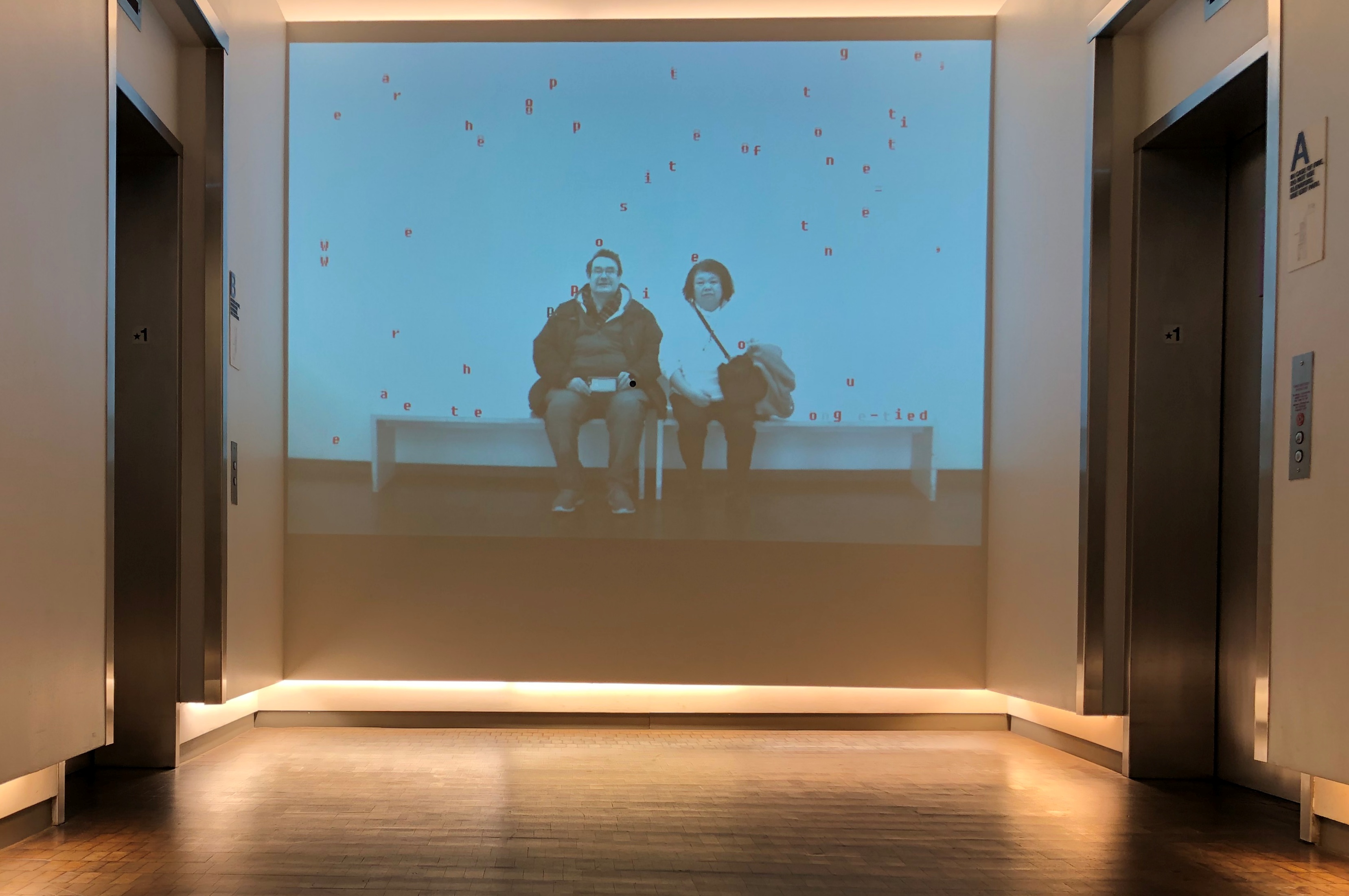
Soon, Yuriko joined me.
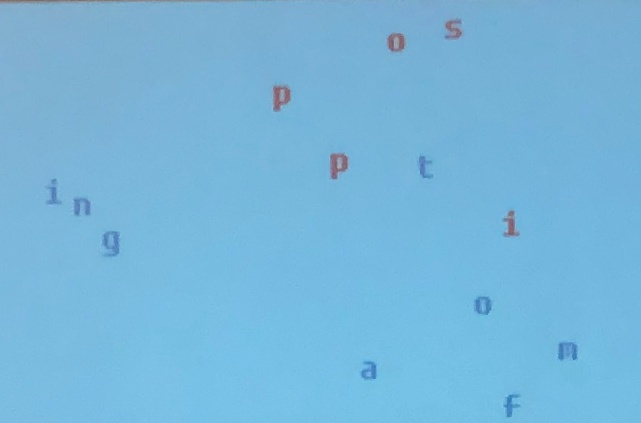
It’s a little hard to tell with still images, but the letters appeared to drift downward and then rest on your reflection. Up close, the letters looked like this.
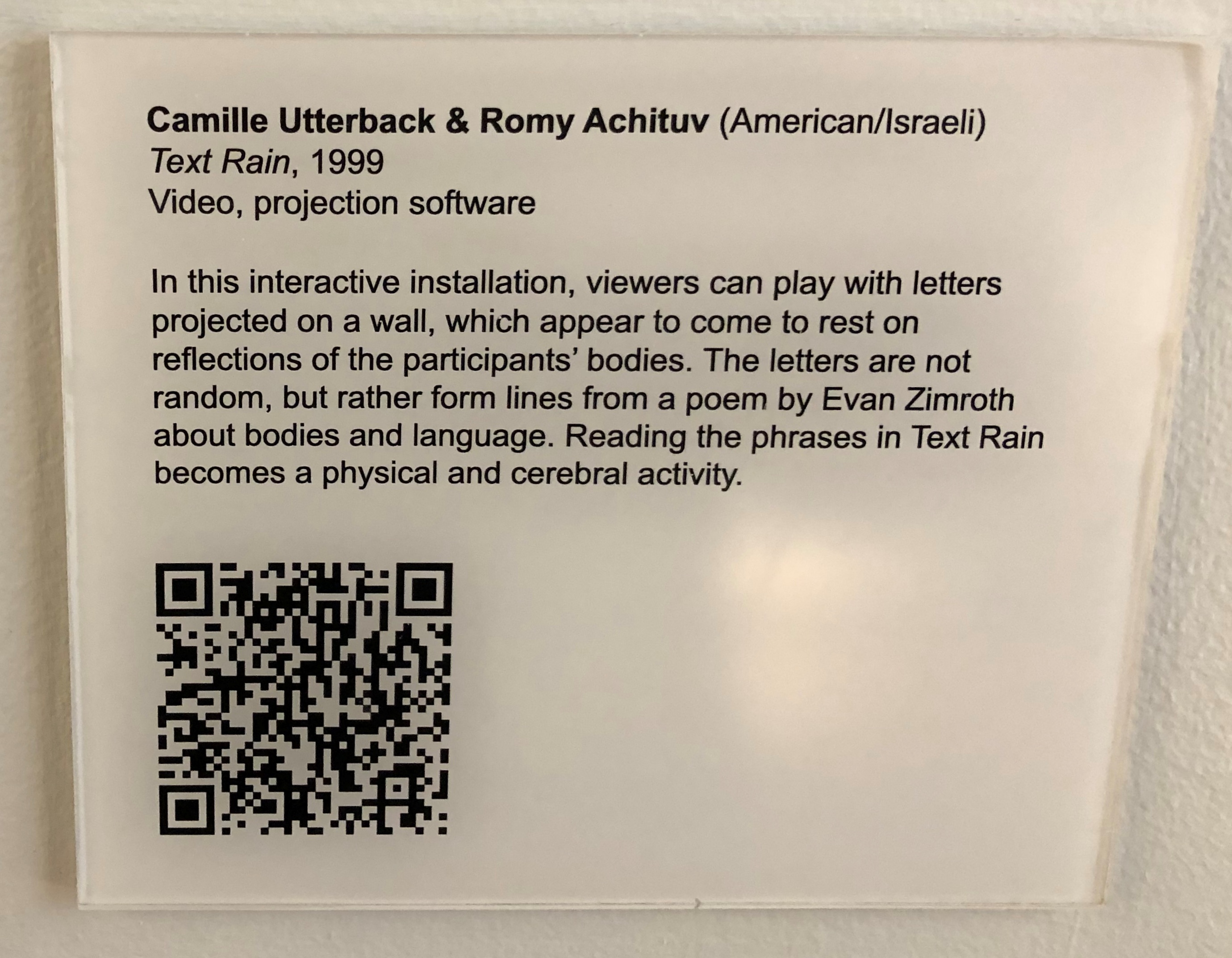
We were looking at an art installation next to a bank of elevators.
Back in the 2000s, I wrote at least one article, already lost to time, about a new boutique hotel in Louisville, of all places. The redevelopment of a number of derelict downtown warehouses, joined for the purpose, created the 21c Hotel Museum. I brought my professional skepticism to the task. Saving warehouses is a good idea, and if the market can bear high-priced hotel rooms in downtown Louisville, fine.
But the hotel was supposed to be a contemporary art museum as well, as its founders were art collectors. I doubted that it was much of a museum, though without any evidence one way or the other. It just sounded like the sort of claim a new boutique hotel would make: put a few paintings in an empty room on the property, call yourself a museum, elevate your room rates.
That was in a time – before the panic of 2008 – of a number of boutique hotel rollouts, often smaller brands owned by very large hotel chains, each angling for something to make it stand out, at least superficially, from the sameness of the mainstream brands.
That all was in the back of my mind when, on December 30, we dropped by 21c Hotel Museum.
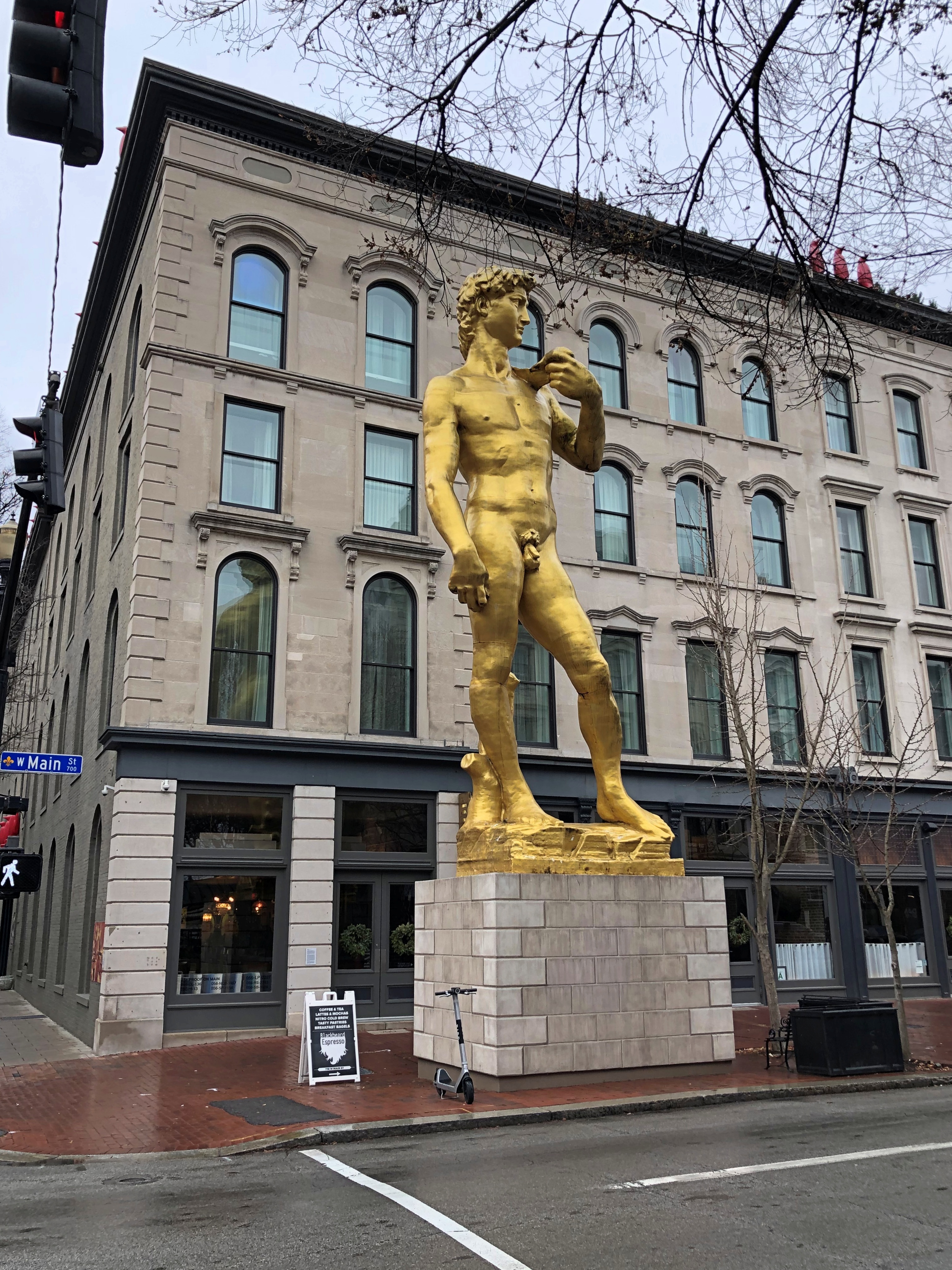
A gilded statue stands watch outside: “David (inspired by Michelangelo)” (2005), which is double the size of its inspiration and largely fiberglass, by Turkish artist Serkan Özkaya.
I hadn’t thought about the 21c in a number of years, so even as I entered, I wasn’t expecting much. I was wrong. As a museum, the place is fair-sized, its art in galleries on the hotel’s lower level, and it has an interesting collection.
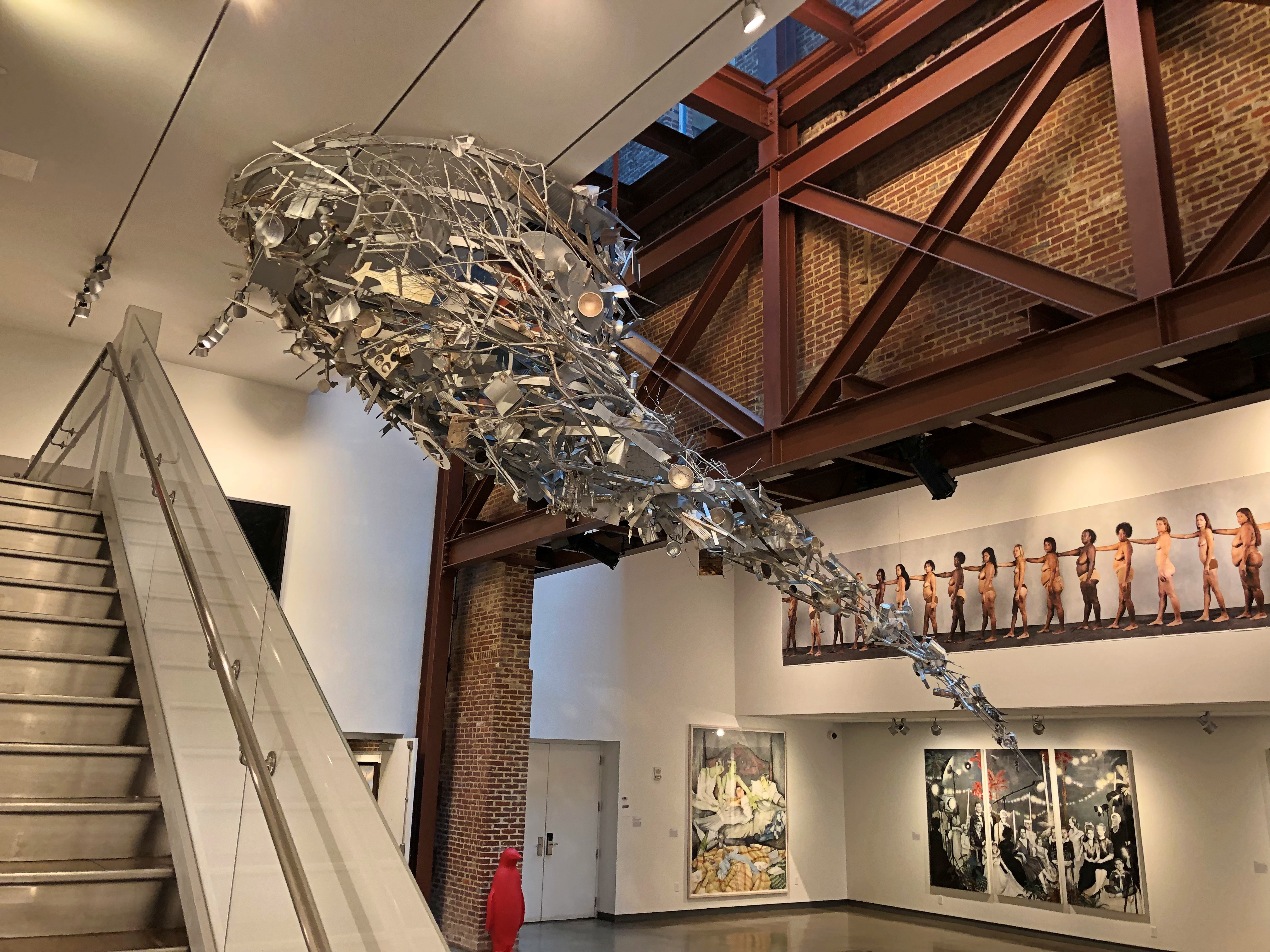
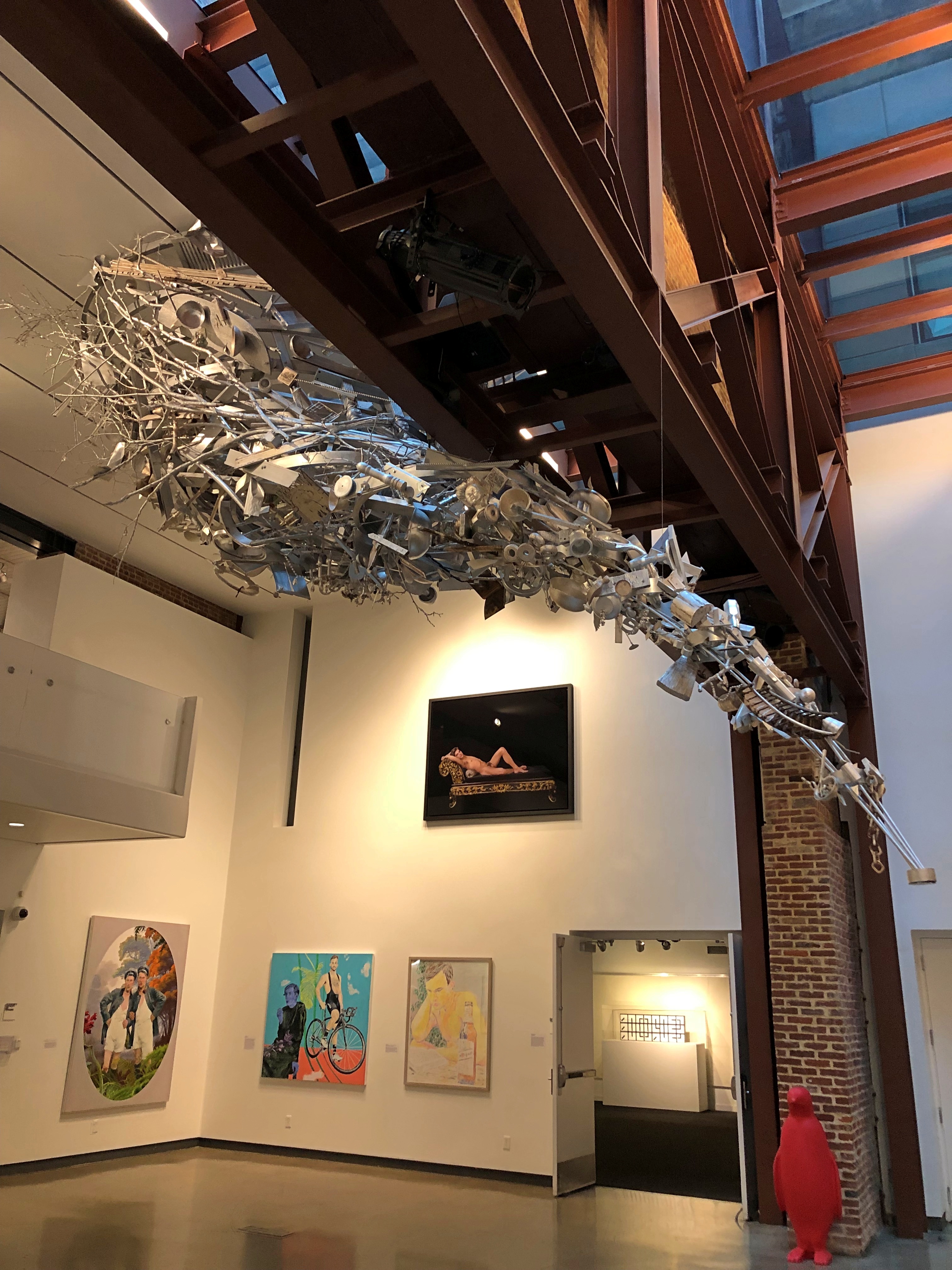
I couldn’t find the description of the metal tornado near the ceiling, but I liked it.
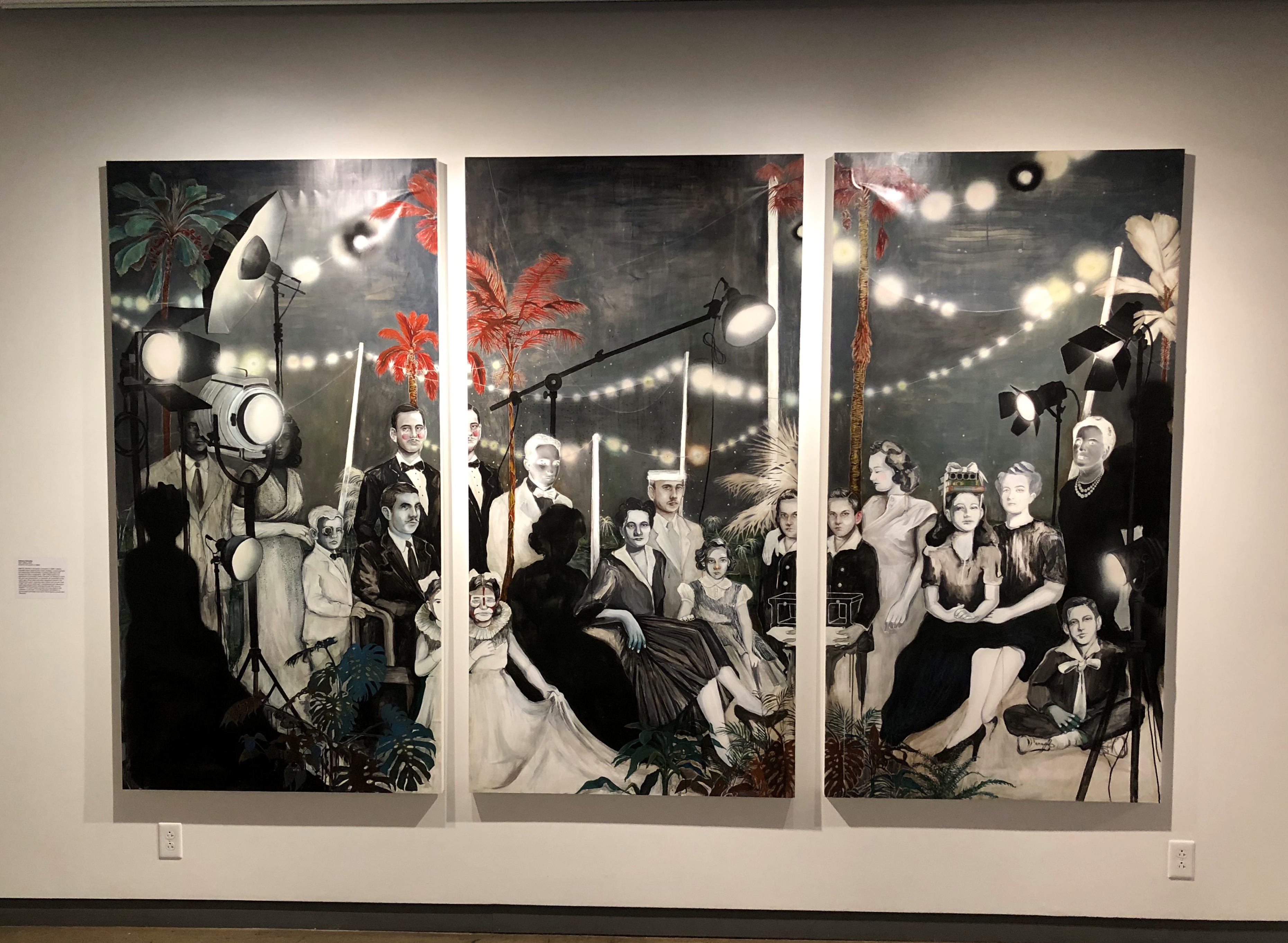
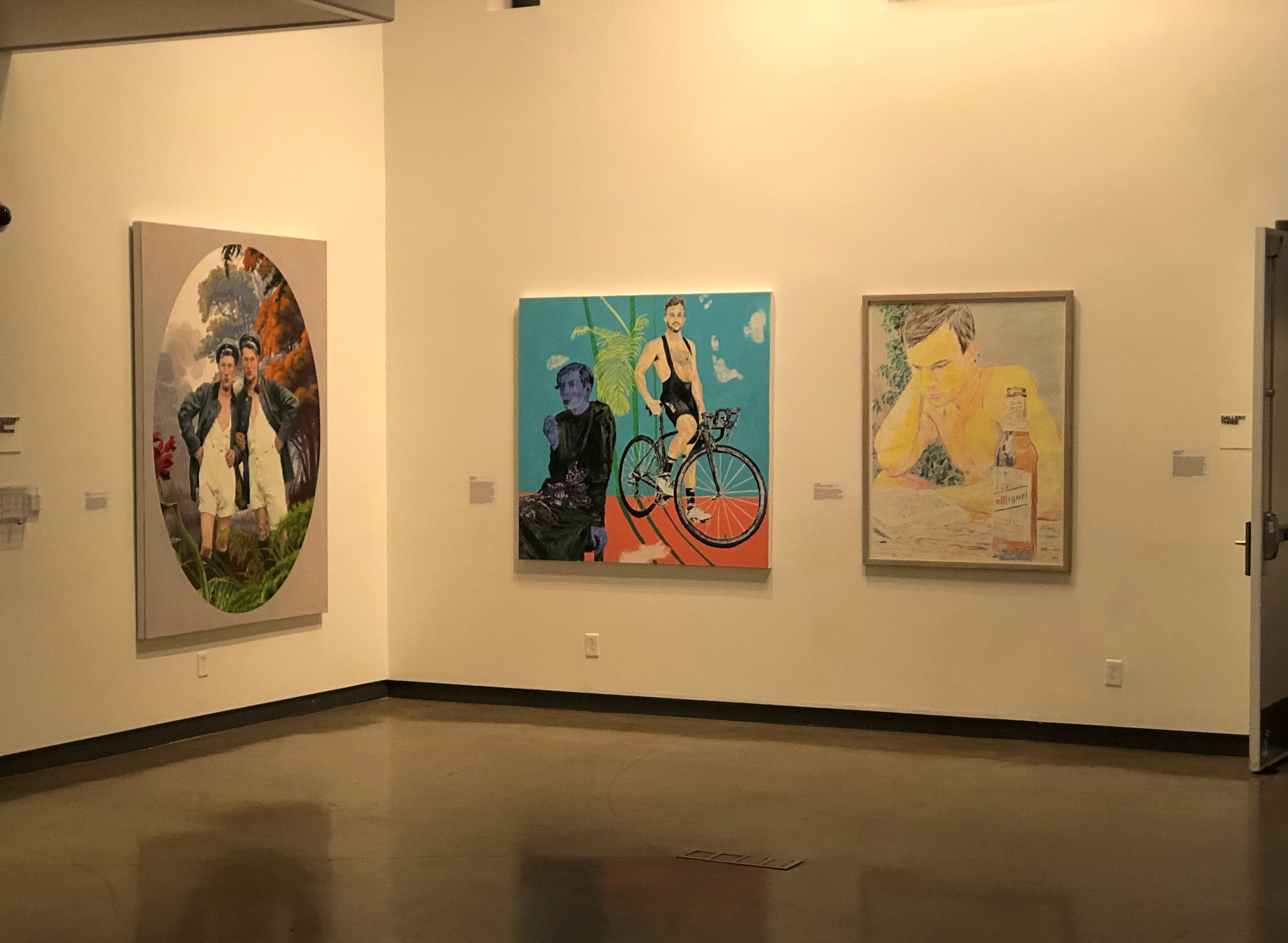
Details of other works at the 21c. A series of faces.
All of the works are recent vintage, as in 21st century. Fitting the name. Though the Louisville redevelopment was the first of them, there are currently eight 21c Hotel Museums, owned by Accor, including others in Bentonville, Ark., Chicago, Cincinnati, Durham, NC, Kansas City, Mo., Lexington, Ky. and St. Louis. Each has exhibit space, collectively totaling 75,000 square feet.
Best of all, you can just wander in and look at it. No admission, no questions asked.
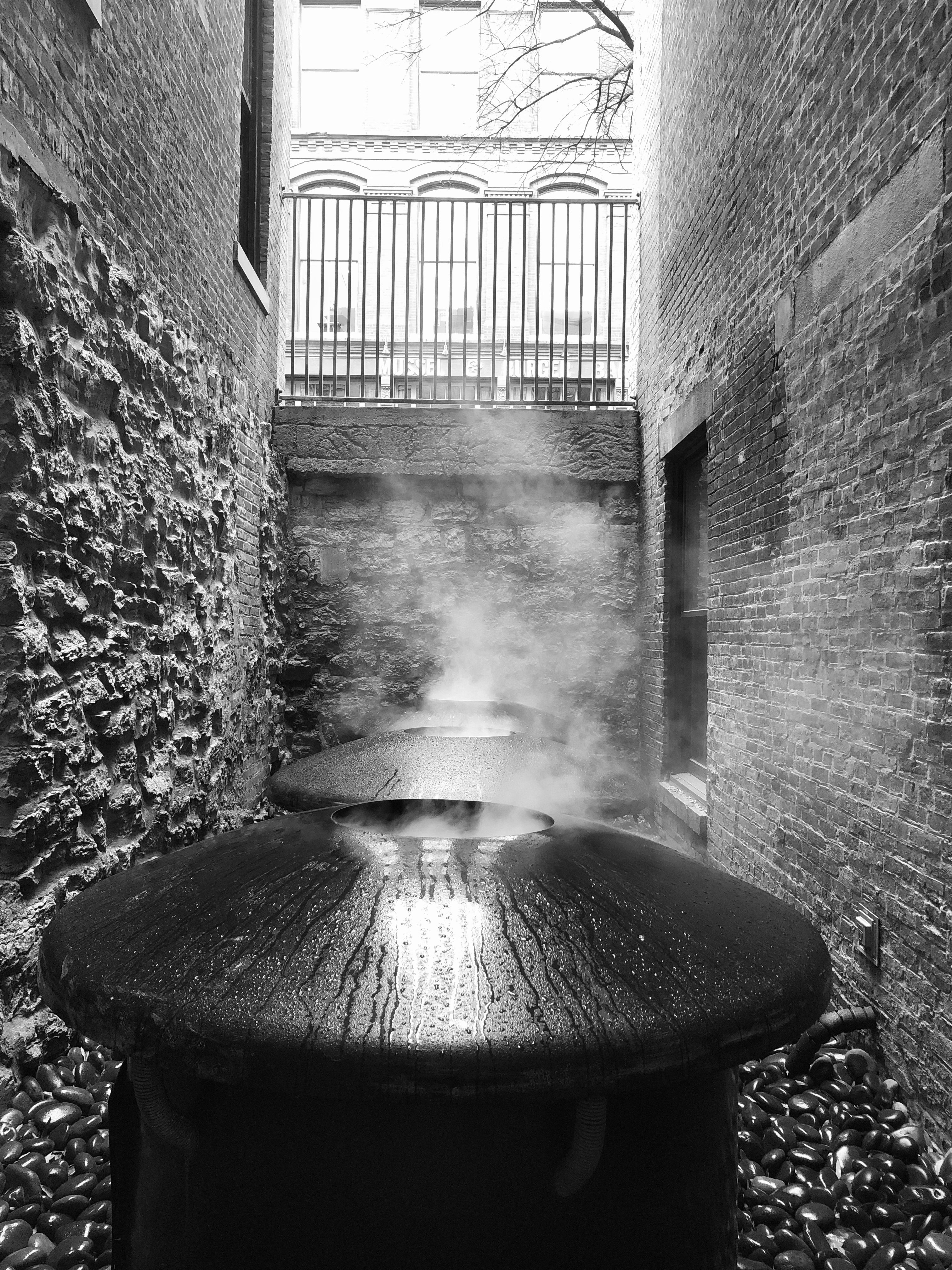
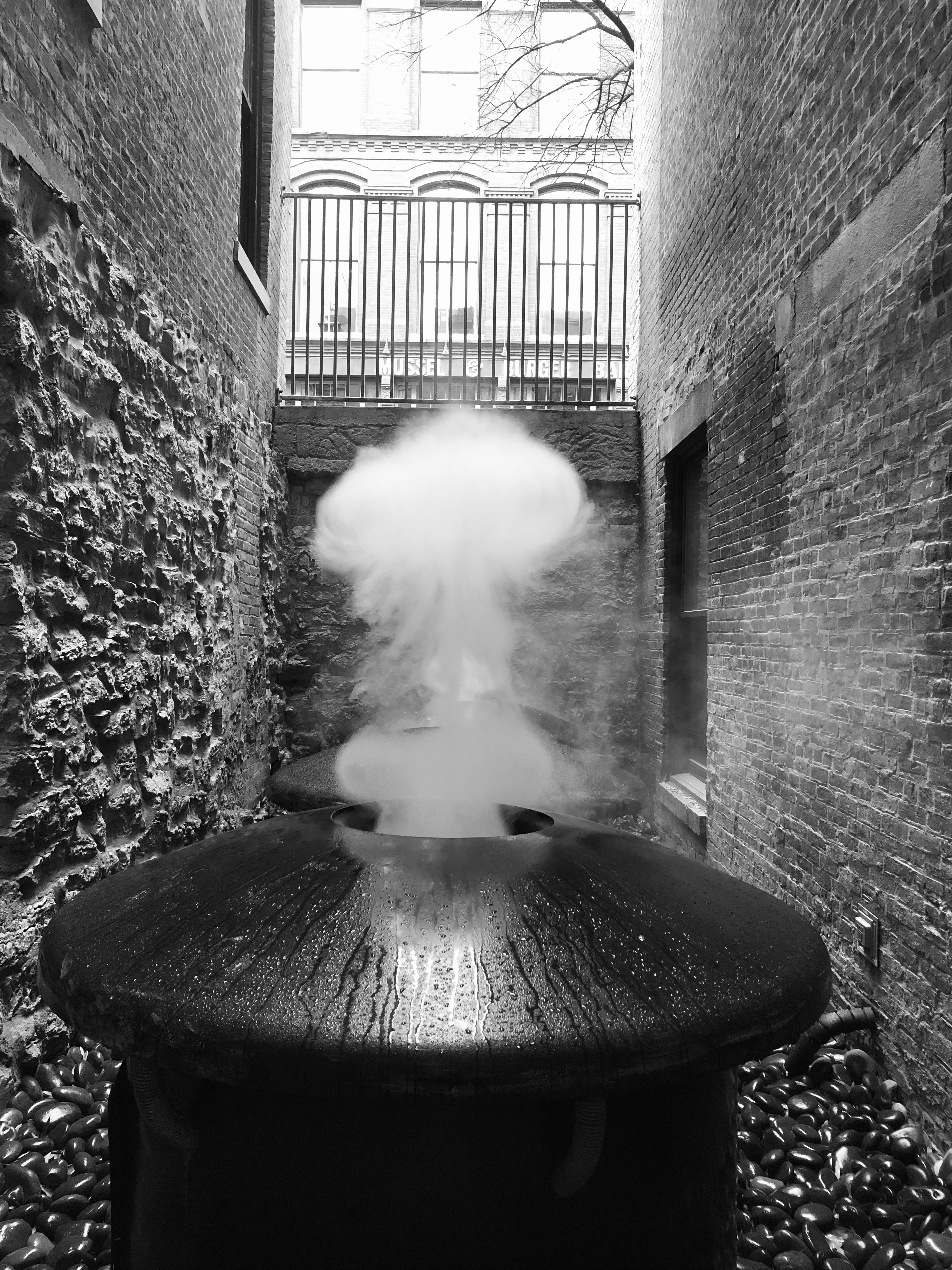
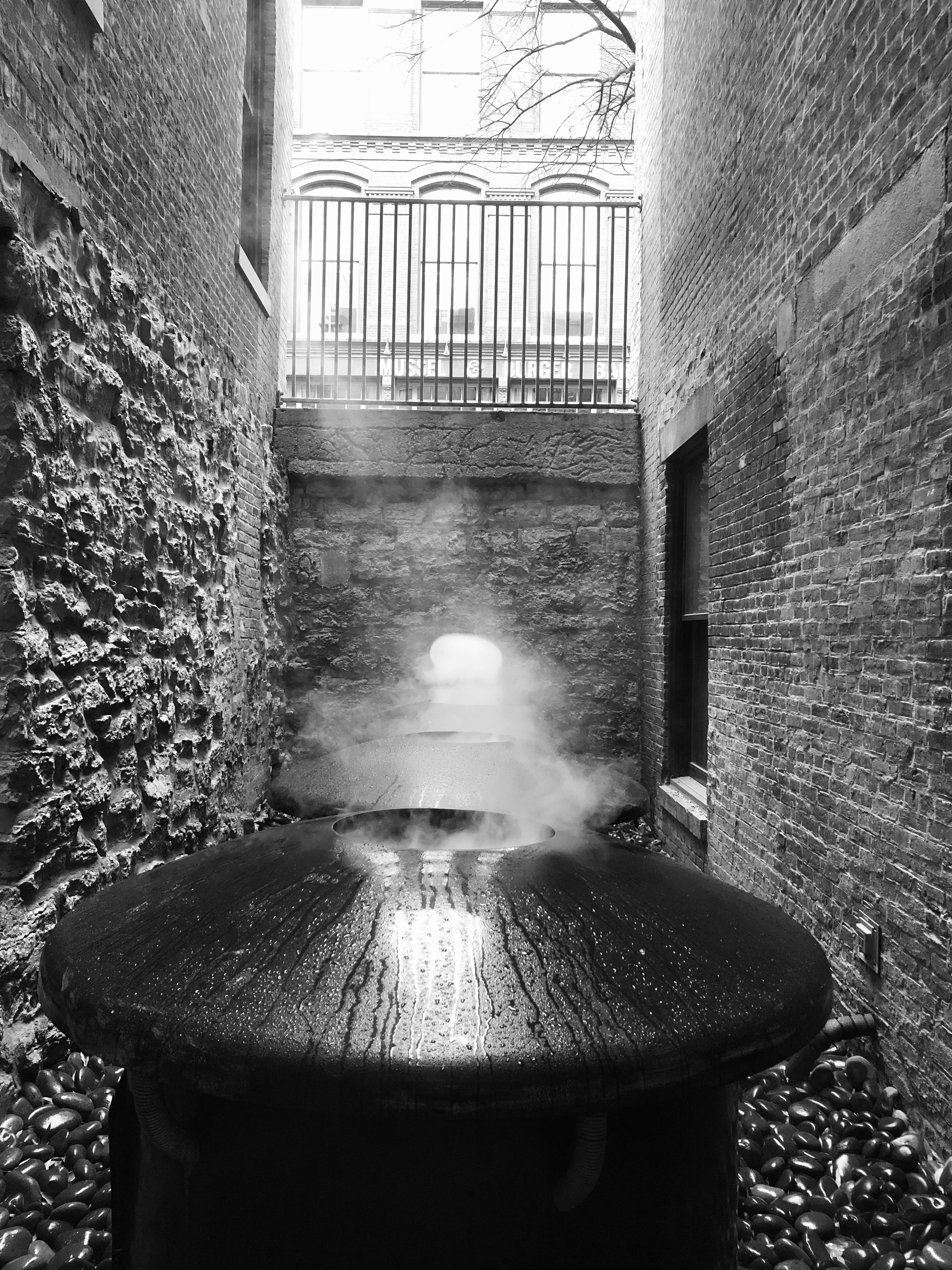
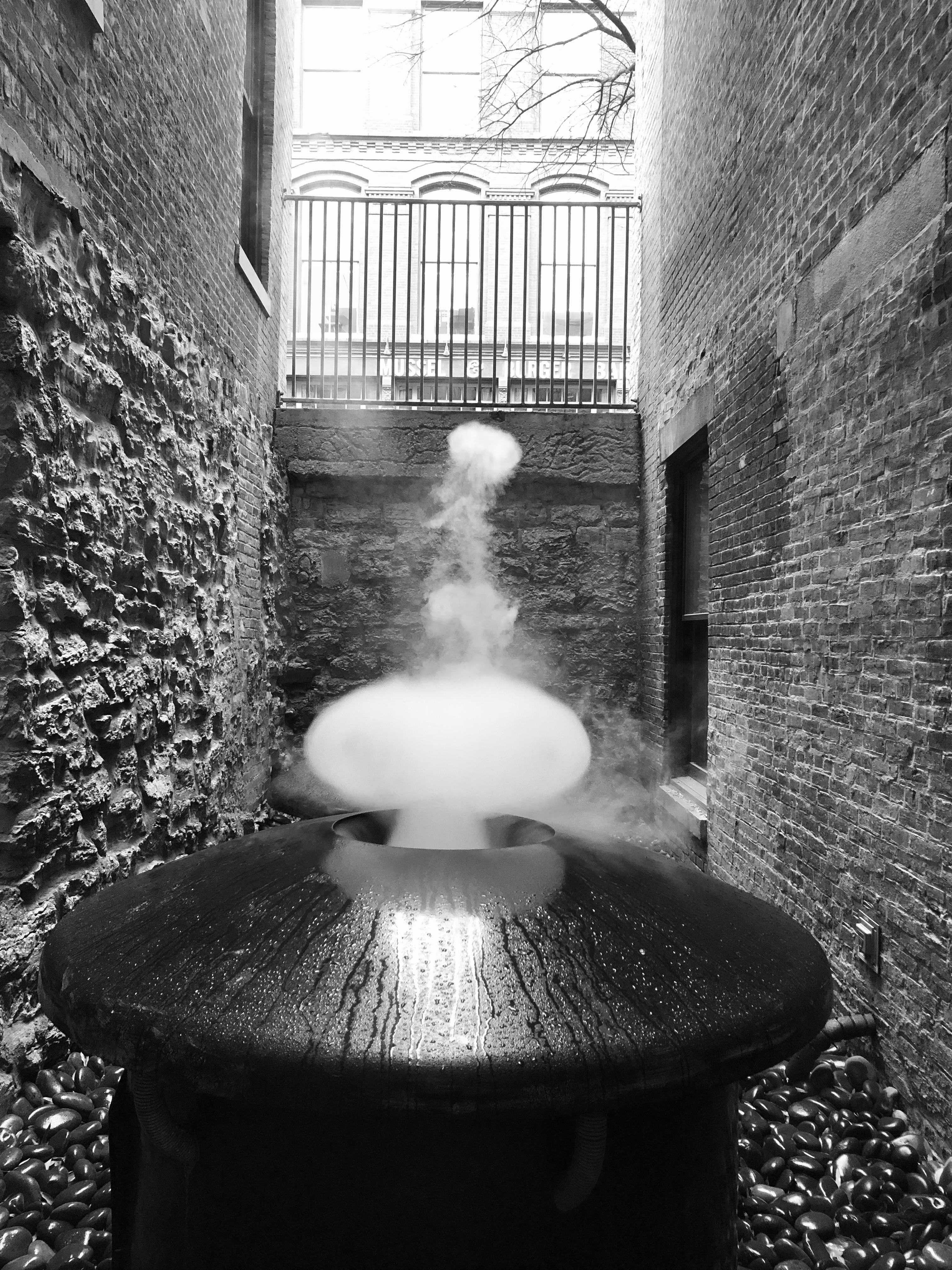
Down the hall from the “Text Rain” is a work tucked away in a utilitarian lower space outside a window, “Cloud Rings” by Ned Kahn (2006). Its sign says: A series of devices that continuously shoot rings of fog up into an exterior sunken courtyard space.
Deep cold these last few days, so we passed the time, including the MLK holiday, in 21st-century central heated space, that is, home. Filed papers, hauled my boxes of postcards out of the closet for a look and a touch of reorganization – not to the point of being highly organized, though – and removed ornaments and lights from the Christmas tree and in one brief expedition into the frozen waste of our back yard, deposited the tree out there.
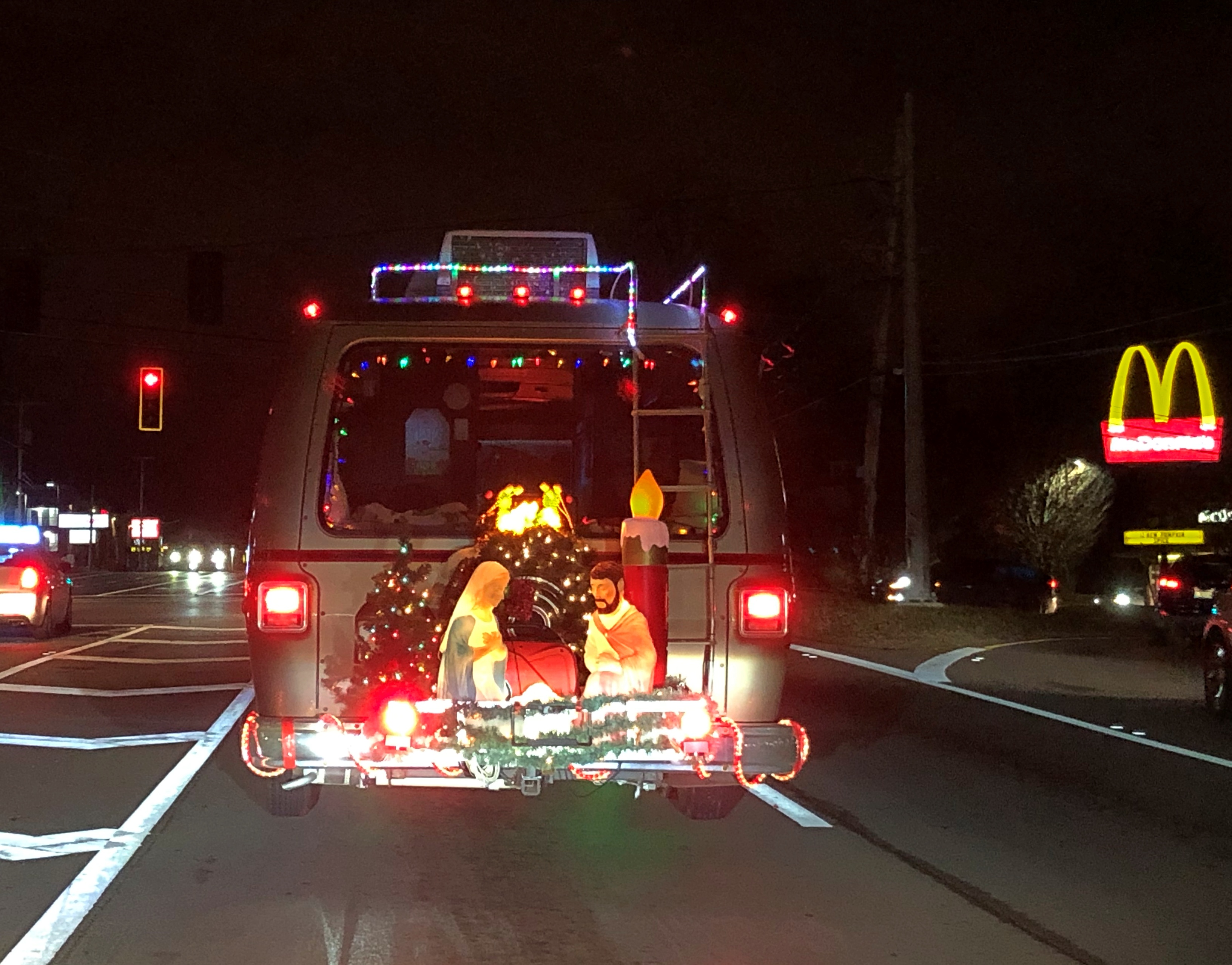
Wonder when the owner of this vehicle removed the Nativity.
Whenever that was, I have to say that I’d never seen that familiar display in this unusual location. For all I know, however, it could be the next big thing in honoring the First Christmas.
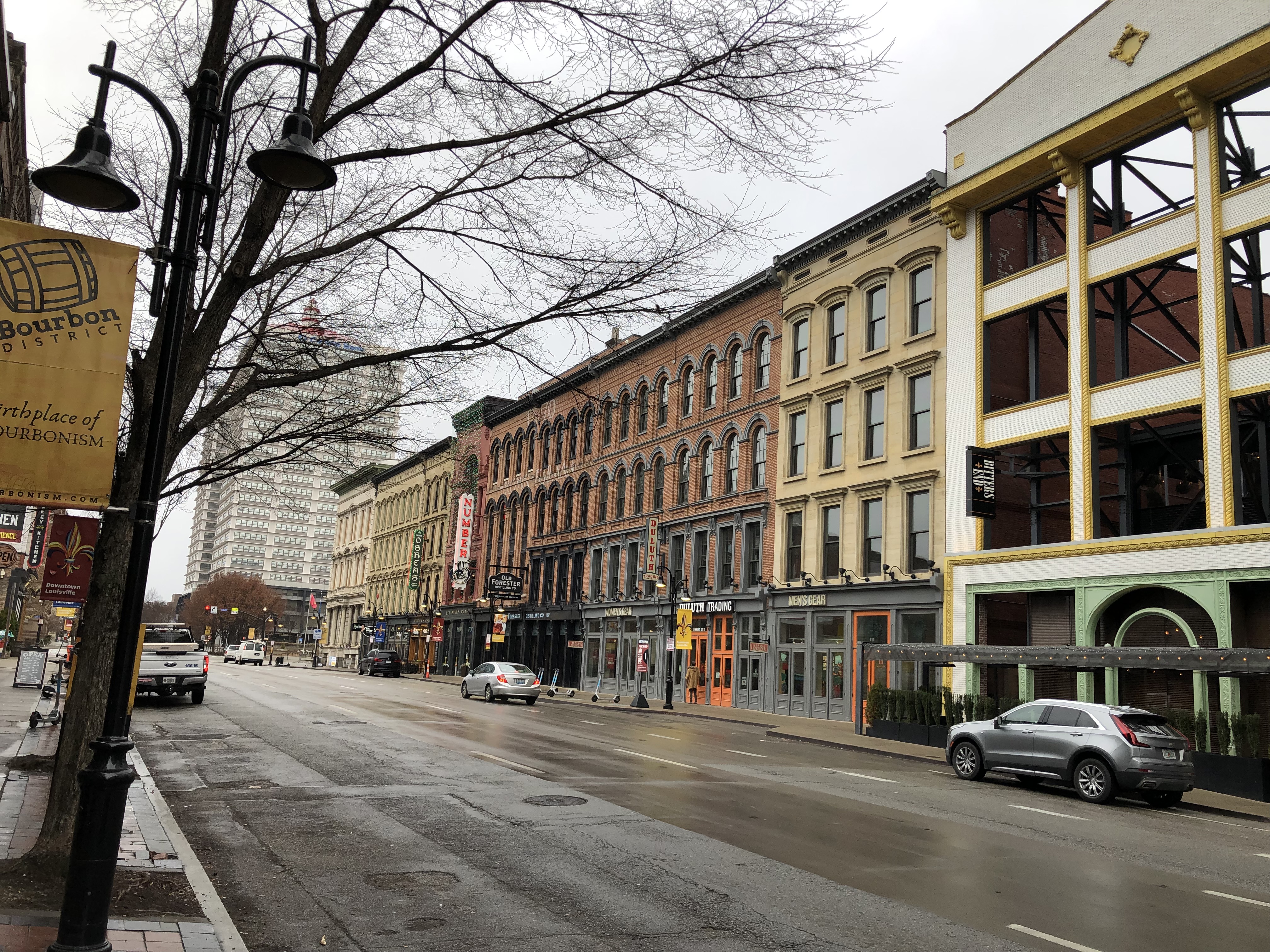
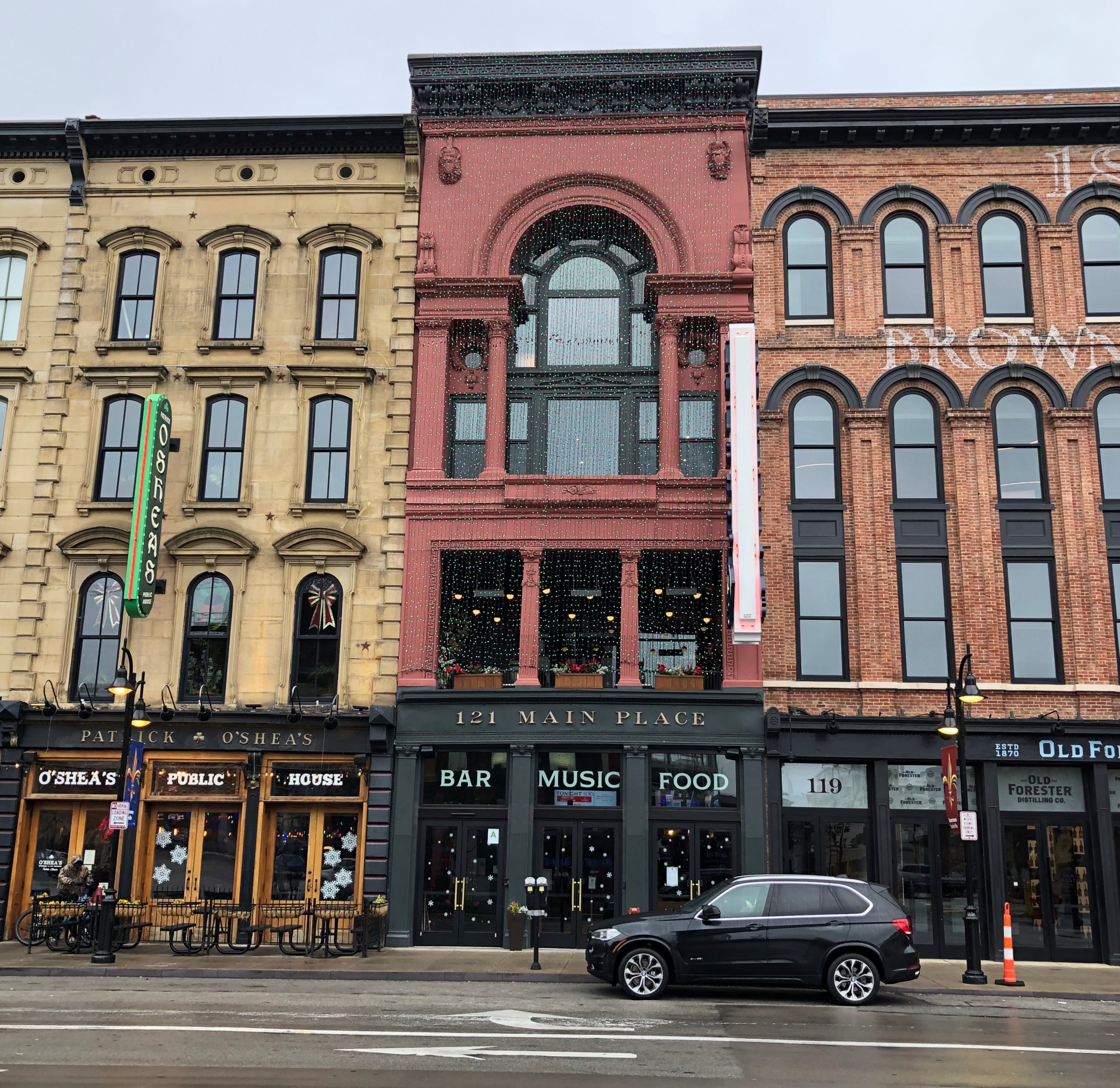
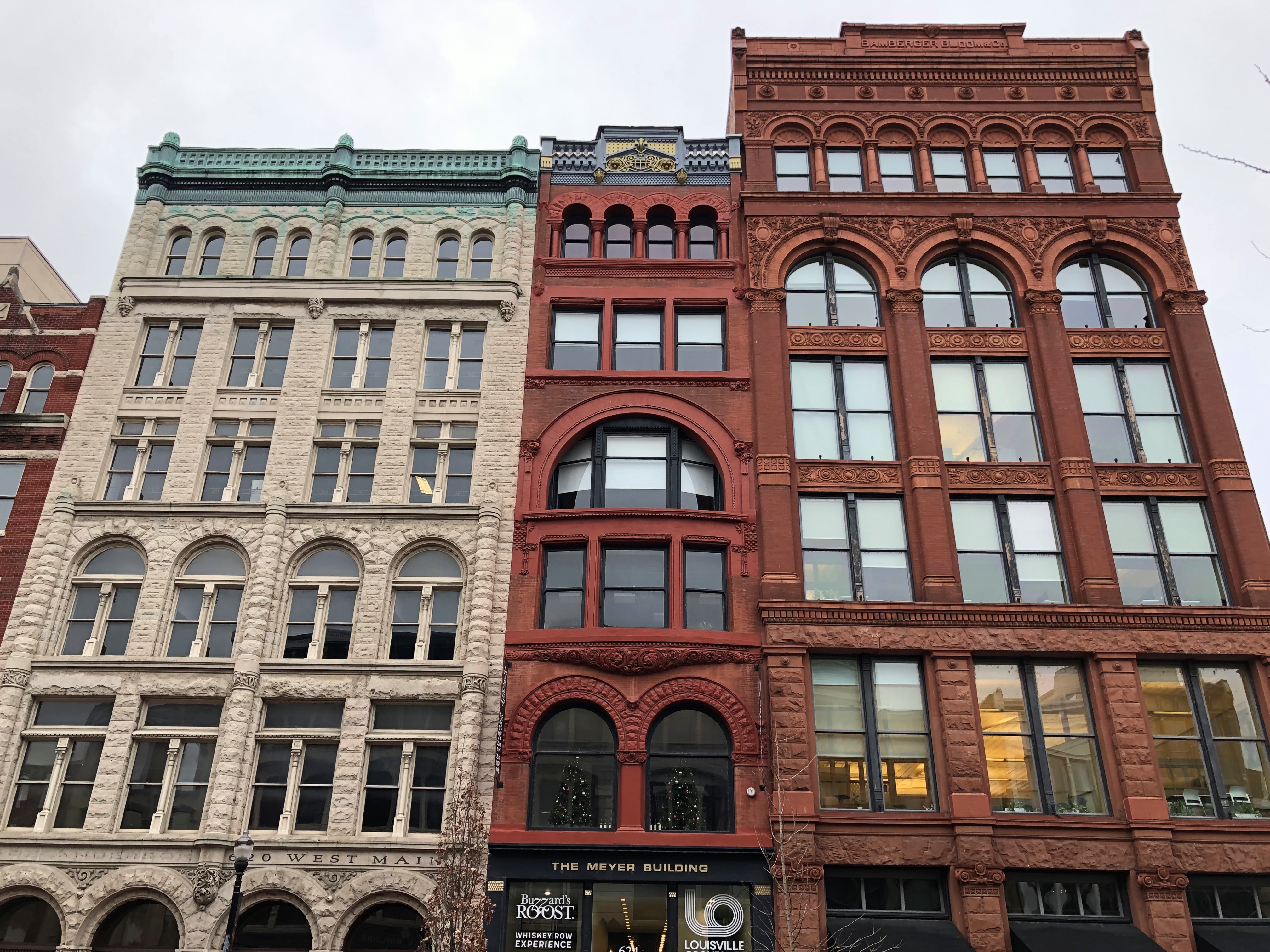
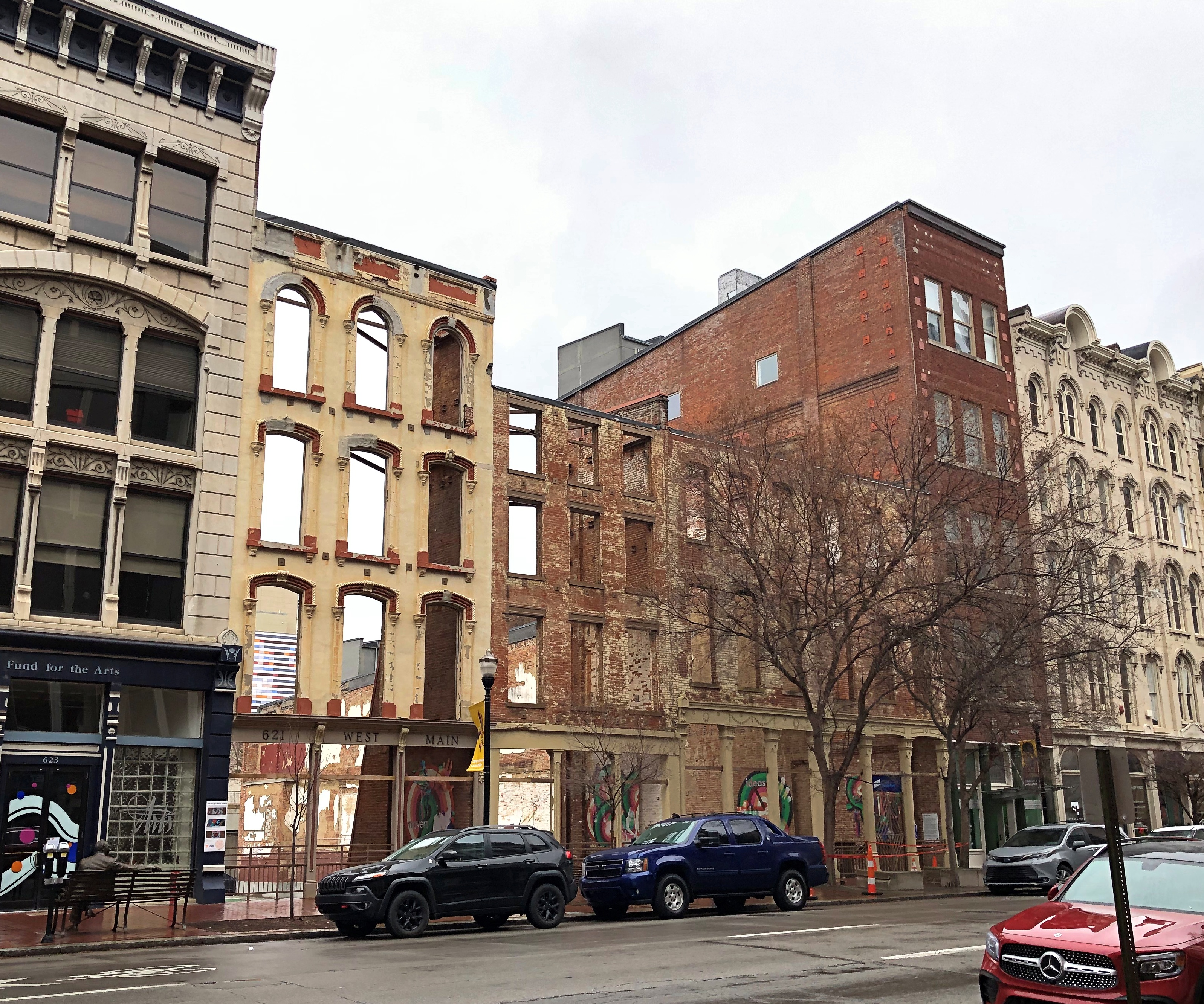
We spotted Bethlehem on wheels in east Louisville on the evening of December 29. The next morning we made our way to Main Street in downtown Louisville; and we returned to the area just before we left town on the morning of New Year’s Eve. Some blocks are exceptionally handsome.
The valuable facades of these pre-Great War vintage buildings look to be, in some cases, saved for later development behind them. Maybe mixed-use, largely residential but also specialty retail. I could imagine that outcome.
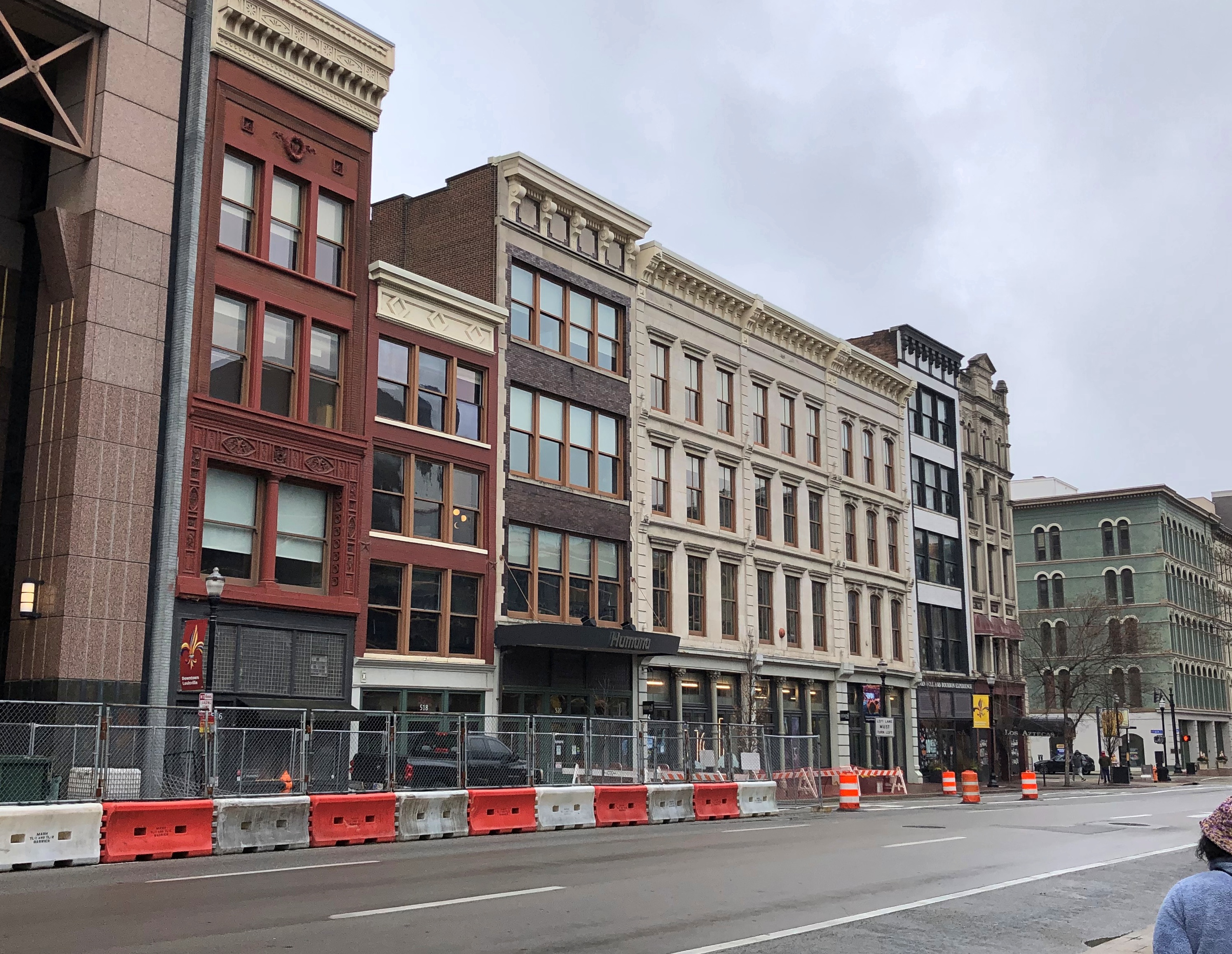
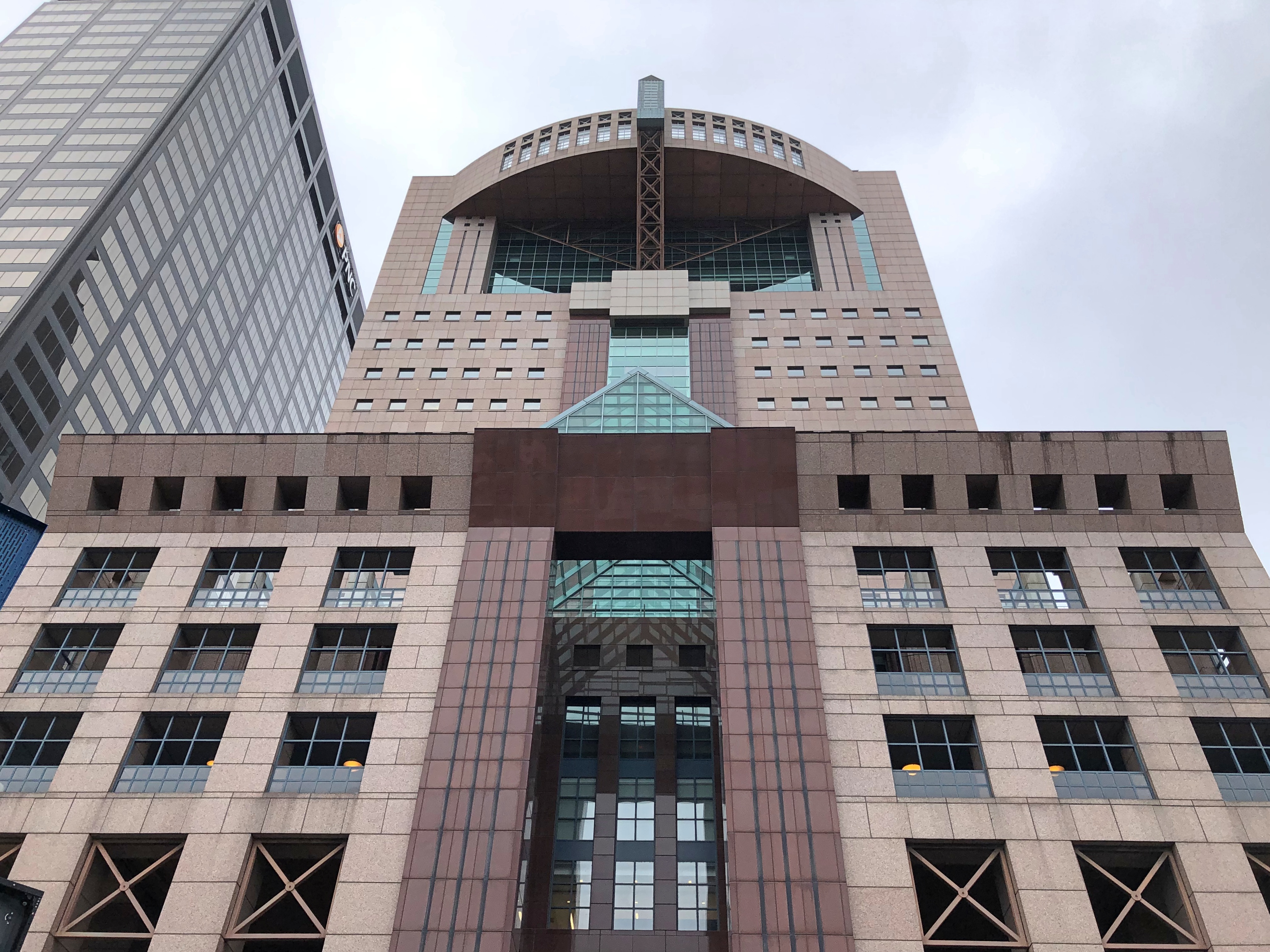
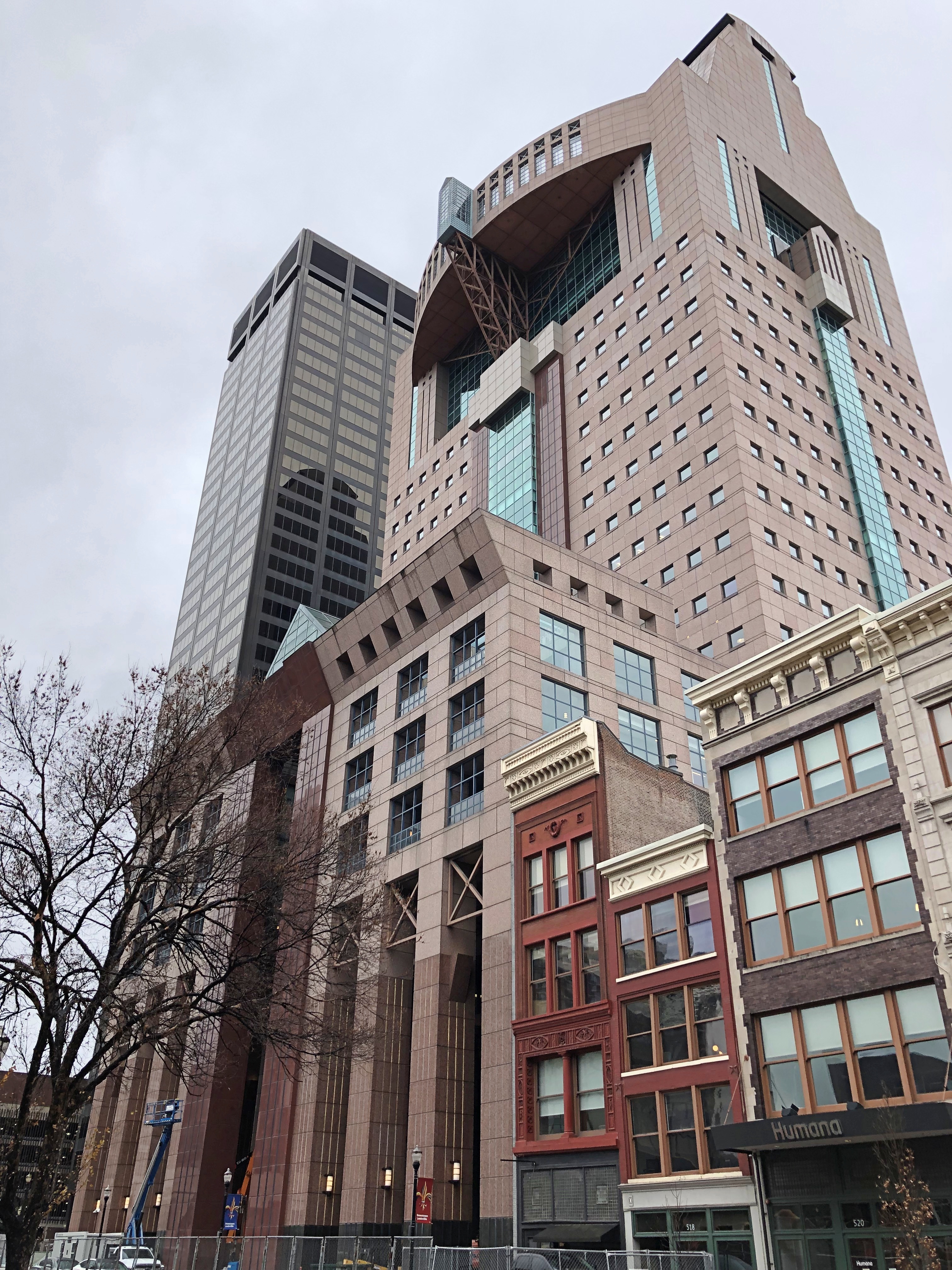
Not all of the street features refurbished leftovers from the late 19th century. Rising at W. Main and 5th Street is a behemoth occupied by a for-profit healthcare behemoth, the Humana Building. Designed by Michael Graves in 1985. Look up postmodern and I think you’d see an image of this building.
The structure is such a behemoth that it was impossible to get the building all within a shot, standing across the street from it. Still — something of a bird of prey vibe, seems like. Mecha-Owl?
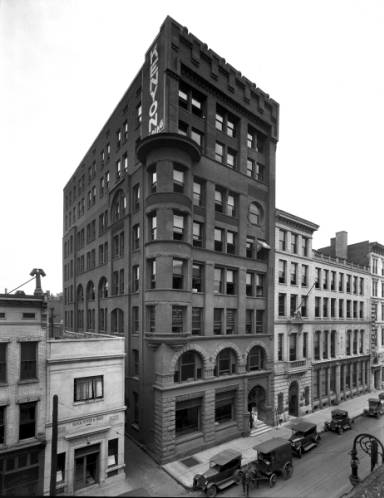
It stands on the site of the Kenyon Building, pictured here in 1927.
The Kenyon itself no doubt replaced earlier, smaller structures. Louisville emerged as a city with rapidity in the early 19th century, with Main its first focus.
“West Main Street was the first street in the city,” Louisvilleky.gov notes. “The first businesses to line West Main Street included an attorney, grocer, boardinghouse, auctioneer, merchant, carpenter, tailor, shoemaker, tobacco inspector, blacksmith, engineer, physician, hatter, tallow chandler, barber, painter, upholsterer, insurance company, plasterer, druggist, and brewer.”
How many of those professions remain on Main Street? I’m not going to do anything like work to find out, but my guess would be attorneys and insurance companies, certainly, maybe an engineer or two, some physicians, and merchants, depending on how you define that. Very likely no blacksmiths, hatters or tallow chandlers.
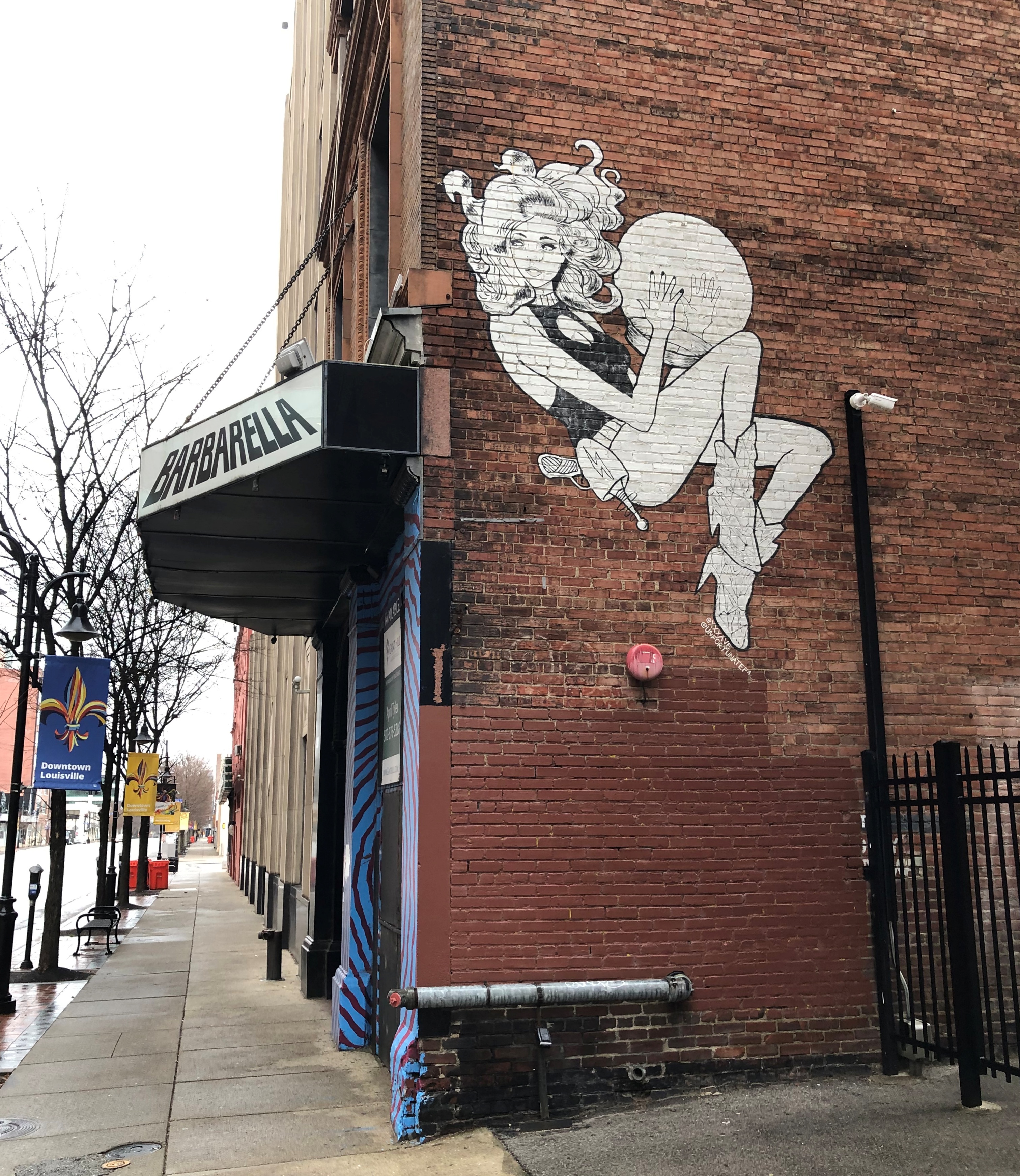
In our time, Main is also a street of some curiosities. Such as Jane Fonda in microgravity.
Nightspot Barbarella apparently didn’t survive the pandemic. This is the entirety of the last note from Barbarella on Facebook (October 5, 2021): “Permanently closed bitches!!! Loved y’all. It was a wild ride. But the roller coaster has come to an end!”
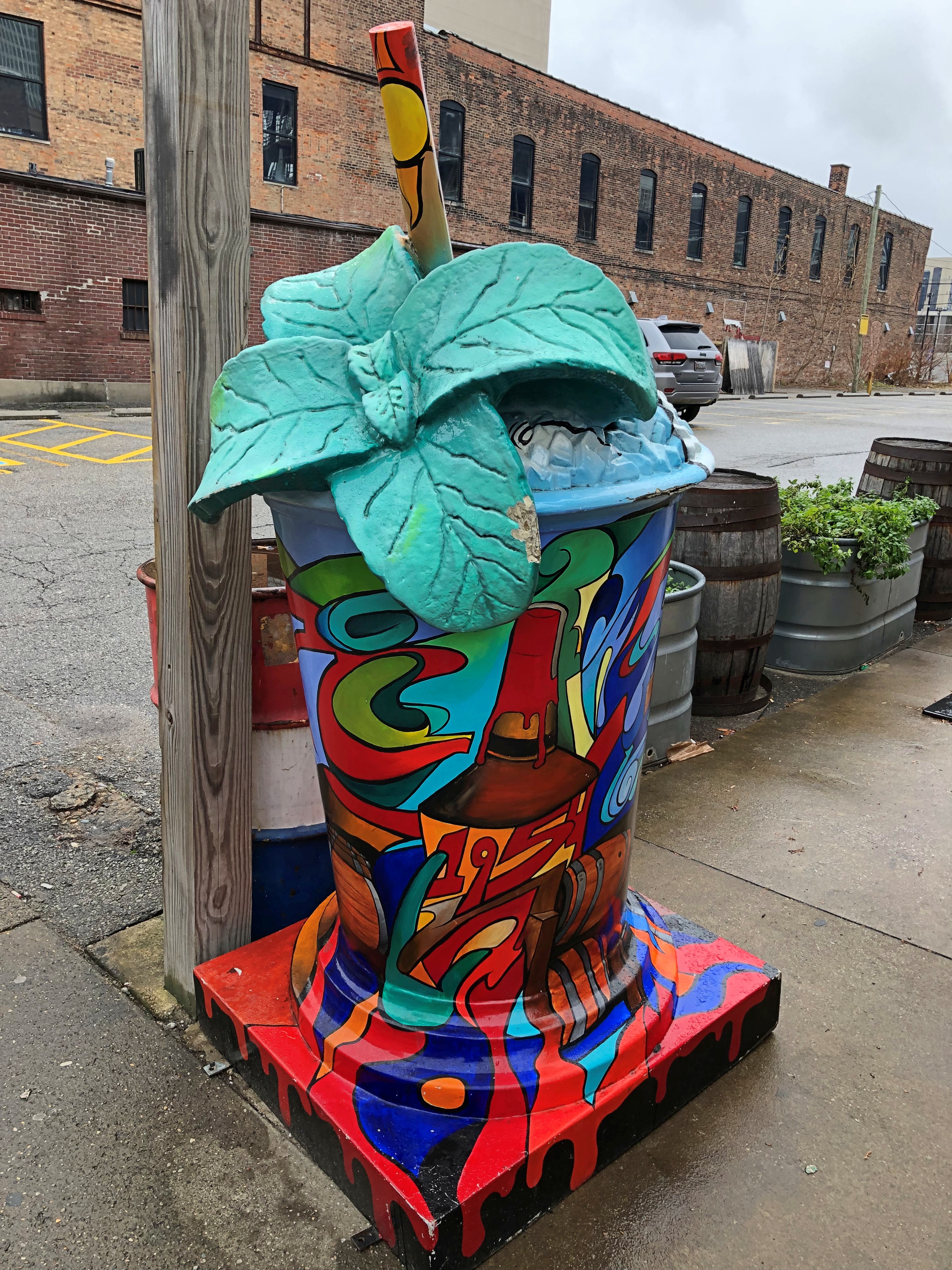
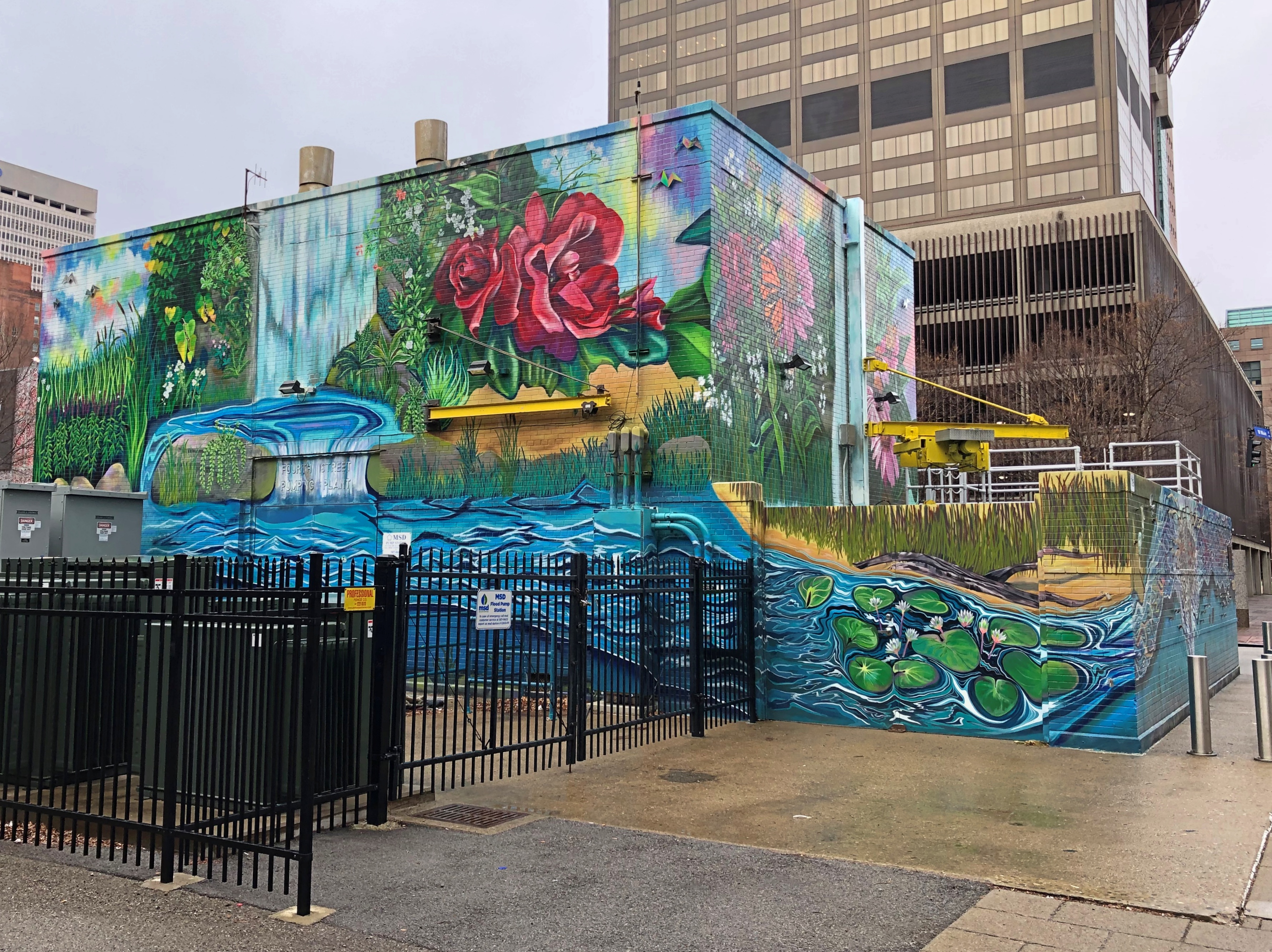
That last image is the Metropolitan Sewer District 4th Street Flood Pump Station, since 2022 adorned with a mural called “Hope Springs – The Wishing Well” by local artist Whitney Olsen. The linked press release also makes mention of the recently completed, fully invisible tunnel under the city — the Waterway Protection Tunnel, four miles long and 18 stories below ground, to capture surges of storm water. I’m no engineer, but that sounds pretty impressive
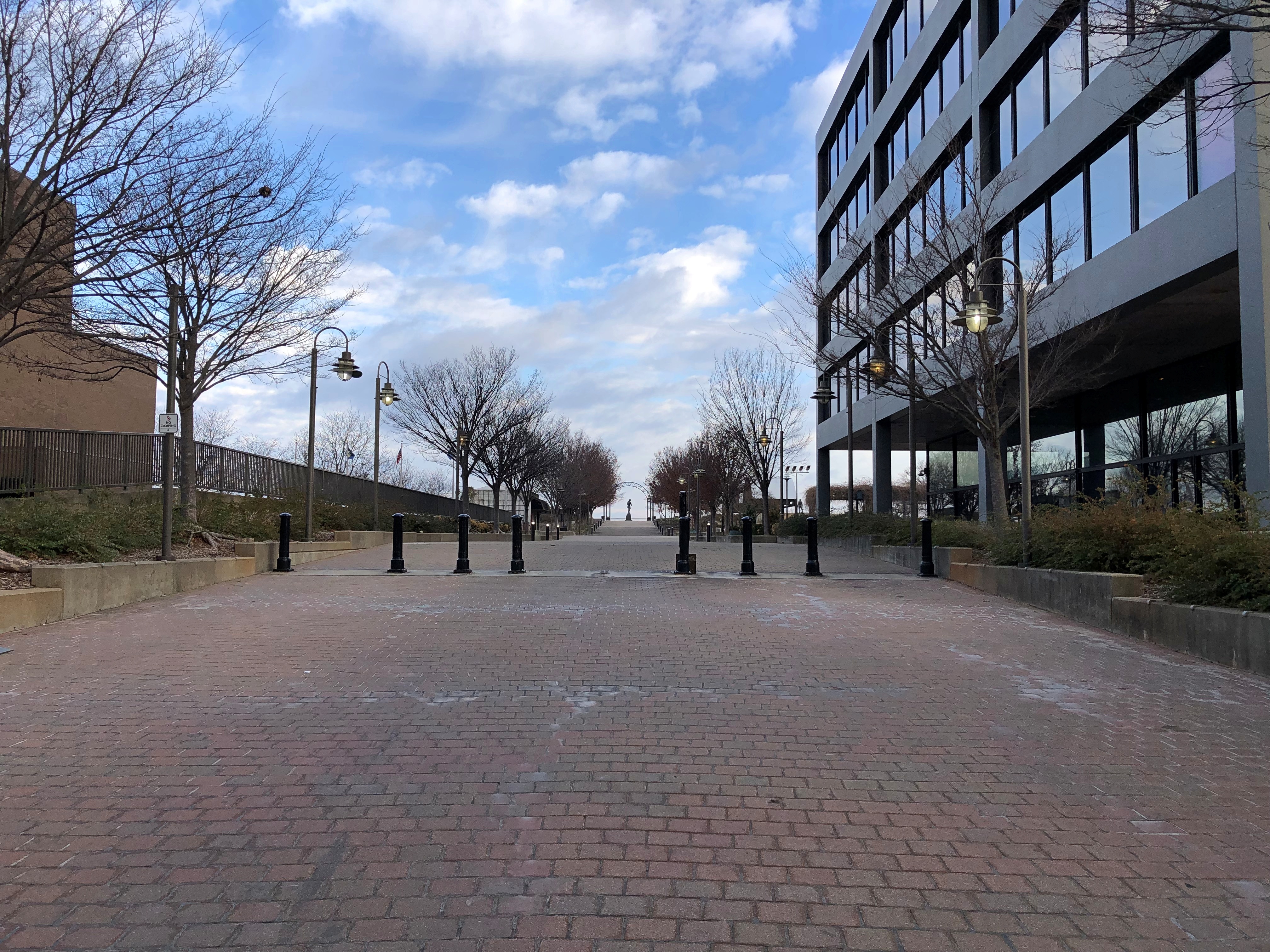
A more-or-less empty plaza, formally called Riverfront Plaza/Belvedere, extends from Main to a view of the Ohio. Part of the plaza is built over I-64.
Off in the distance an outline of a statue is just barely visible from Main. I imagined that the statue honored Muhammad Ali. As long ago as 1978, the city renamed a major downtown street after him, though not without resistance that’s completely unimaginable now; and the sizable Muhammad Ali Center is also downtown.
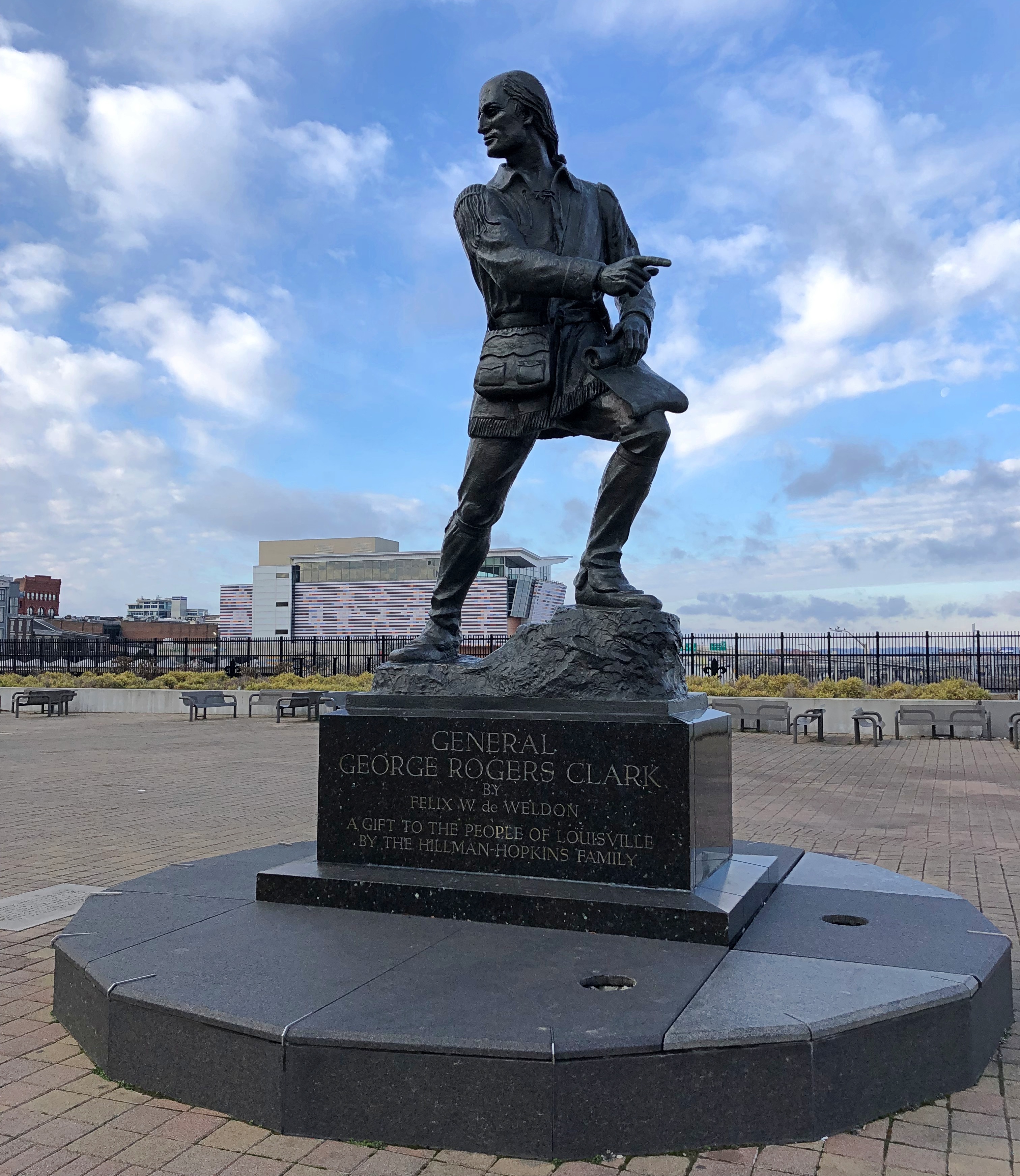
But no: the 1973 work is much more traditional, honoring Louisville founder George Rogers Clark, who has, of course, a larger memorial elsewhere. (The Ali Center is in the distance behind him in my image.)
Felix de Weldon did the statue. He’s better known for the Marine Corps War Memorial (Iwo Jima Memorial) at Arlington National Cemetery and, interestingly, he also did the Malaysian National Monument (Tugu Negara) in Kuala Lumpur. I have a vague memory of seeing that, in wilting tropical heat. Weldon did much more over a long life. His partial listing of public sculpture on Wiki begins with King George V in 1935 and ends with another sort of king, Elvis Presley, in 1995.
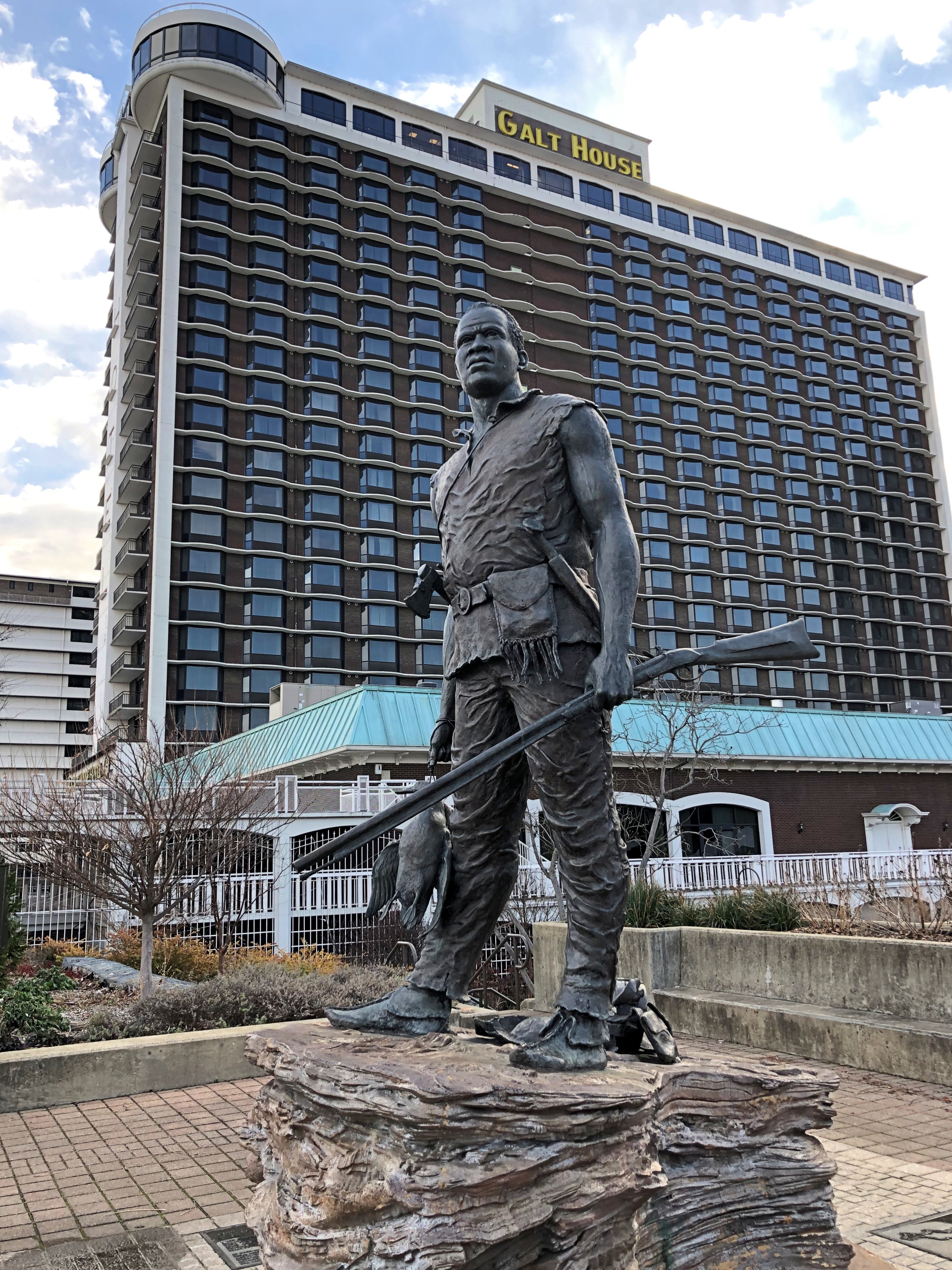
The George Rogers Clark bronze dates from 1973, but there is another more recent statue on the plaza: York, the only black member of Lewis and Clark’s expedition and as such the first African-American known to cross the continent, in a 2003 work by Ed Hamilton.
Coming to the Corps of Discovery as Clark’s personal slave, York has quite a story, and an especially awful one after the expedition returned, only much recognized in recent decades (see 37:23 and after in this lecture). No doubt York would have preferred freedom after the trek to the Pacific and back was over, instead of honors 200 years later, but the former isn’t in anyone’s power these days, while the latter is.
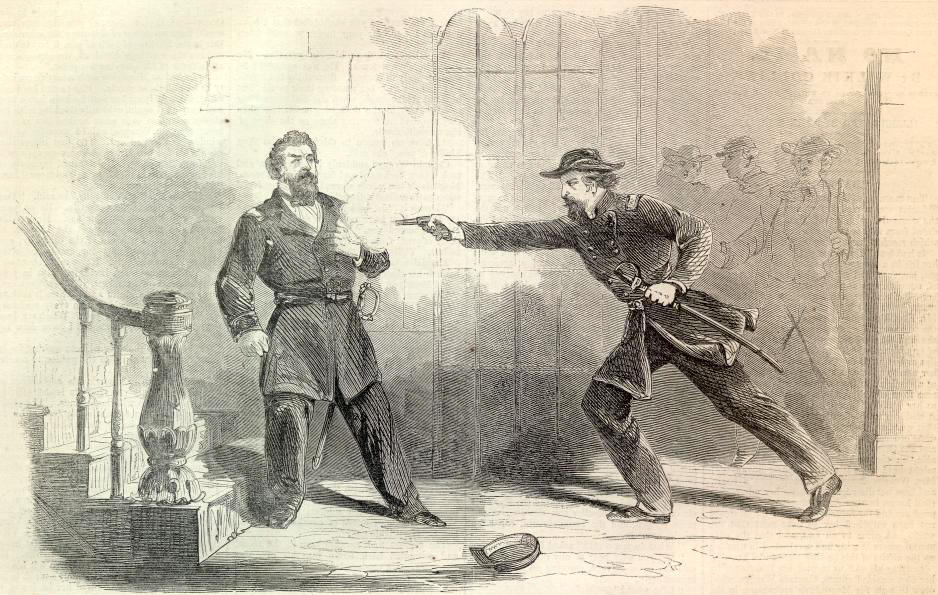
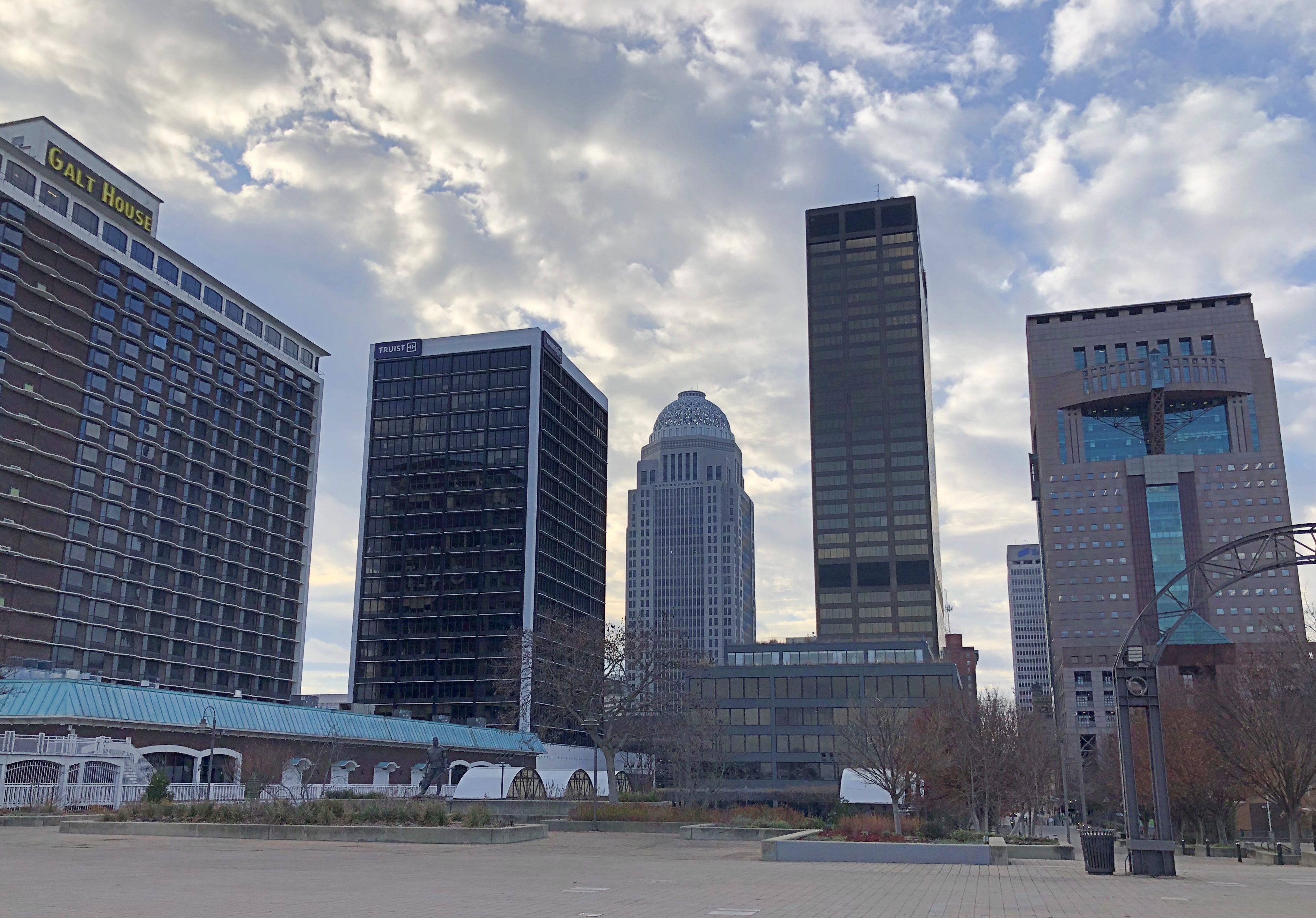
The plaza also offers nice views of the Louisville skyline. The Galt House hotel is a whopper: at 1,310 rooms, reportedly the largest in Kentucky, plus 130,000 square feet of meeting space and six restaurants. Developed in the 1970s, the hotel bears a name that’s an homage to a series of earlier hotels called Galt, one with a particularly colorful history that was the site, in ’62, where one Union general offed another Union general with a pistol shot at close range.
THE MURDER OF GEN. NELSON. ON page 669 we publish an illustration of the ASSASSINATION OF GENERAL NELSON BY GENERAL J. C. DAVIS, which took place ten days since at Louisville. Our picture is from a sketch by our artist, Mr. Mosler, who visited the spot immediately after the affair.
Even more remarkably, the Galt is owned by a single family, not an transnational. A single, sometimes quarreling family, but there isn’t so much remarkable about that.
The 35-story 400 Market, with the domed top, is the tallest building in Louisville.
Look the other direction and spy the mighty Ohio.
Stairs lead from the plaza down to a riverfront park developed in the 1990s, but late December wasn’t a good time for such a stroll, even though the drizzle had abated by the last day of the year. Some other warmer time, perhaps. Whatever the merits of that park, I doubt that it can erase the fact that the Robert Moses gash that is I-64 largely cuts downtown Louisville off from the river – the very reason there is a city in the first place.
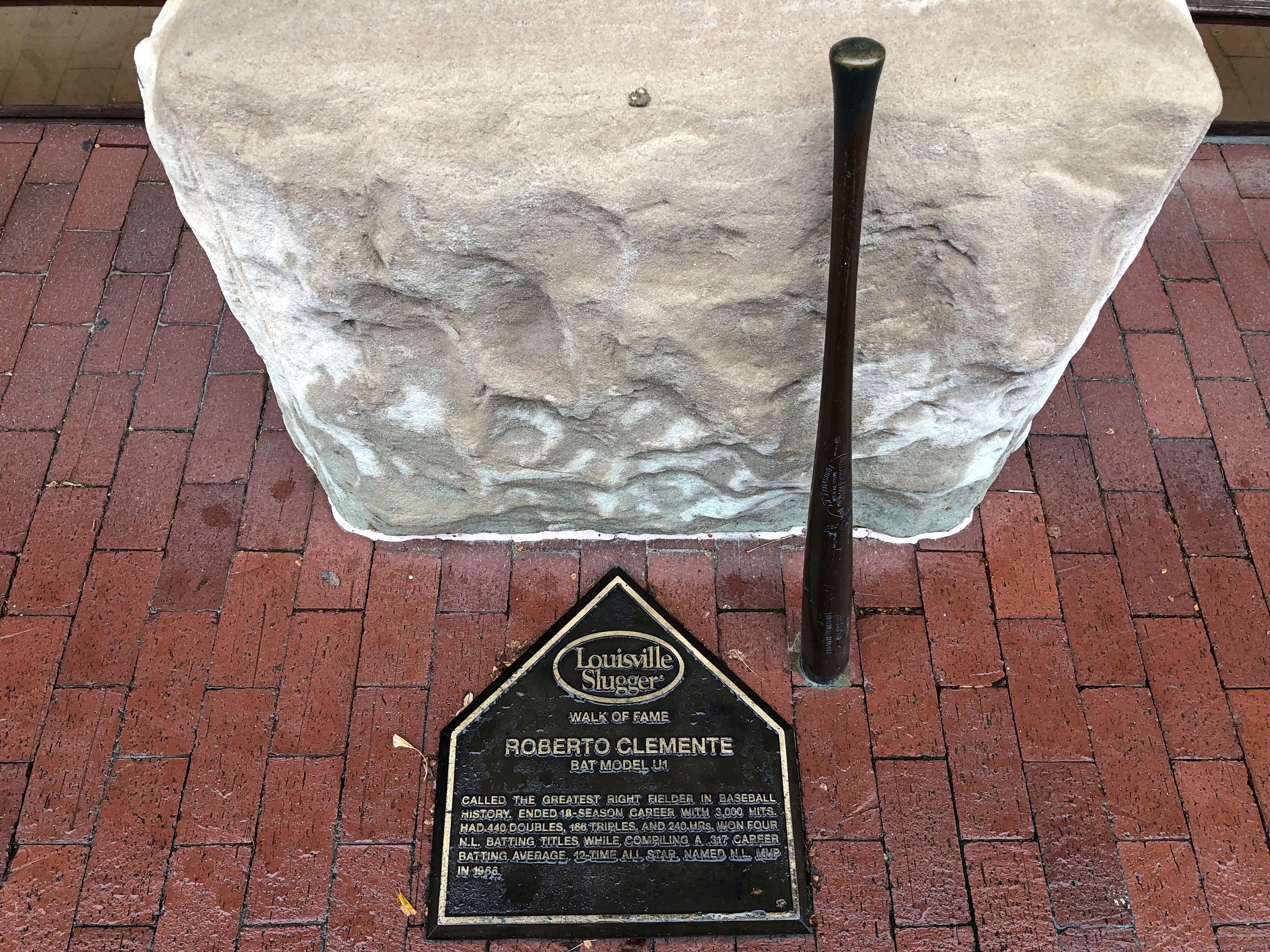
Main Street plaques, along with metal bats, honor baseball players along the way.
Roberto Clemente is one of 60 honorees in the Louisville Slugger Walk of Fame, which stretches on sidewalks from the Louisville Slugger Museum & Factory on Main St. to Louisville Slugger Field a little more than a mile away. We decided not to visit the baseball bat factory itself, which includes the world’s largest baseball bat (bigger than “Batcolumn in Chicago? Yes, by 19 feet.). Still, we walked by a few other bronze bats and home plates embedded in the sidewalk.
Is Chico Escuela is among the honored? I have to wonder. He should be. Considering that he’s fictional, the plaque wouldn’t have to bother with tedious stats. All it would have to say (naturally) is, “Baseball been barra, barra good to me!”
Winter’s been pretty easy on us so far, but that’s almost over. We’re headed for the pit of winter now, maybe a little earlier than it usual comes (end of January, beginning of February, I always thought). It might be a long narrow pit that will be hard to climb out of.
Even so, I will enjoy Monday off, including all professional and nonprofessional writing. Back to posting on January 16.
Though not a drinking couple, we figured we couldn’t visit Bardstown, Kentucky, and not drop in on a distillery. Think of all the marketing dollars spent by the Kentucky Distillers’ Association, and the distilleries themselves, that have gone into making this part of the commonwealth a bourbon destination. Toward that end, the KDA established a “Bourbon Trail” in 1999, focusing on Kentucky, but also including operations in Indiana, Ohio and Tennessee.
First we drove to the gates of the Barton 1792 Distillery, which is in town and had a most industrial aspect to it. Also, the gates had a sign saying the place was closed to the public, in spite of what other information had told us.
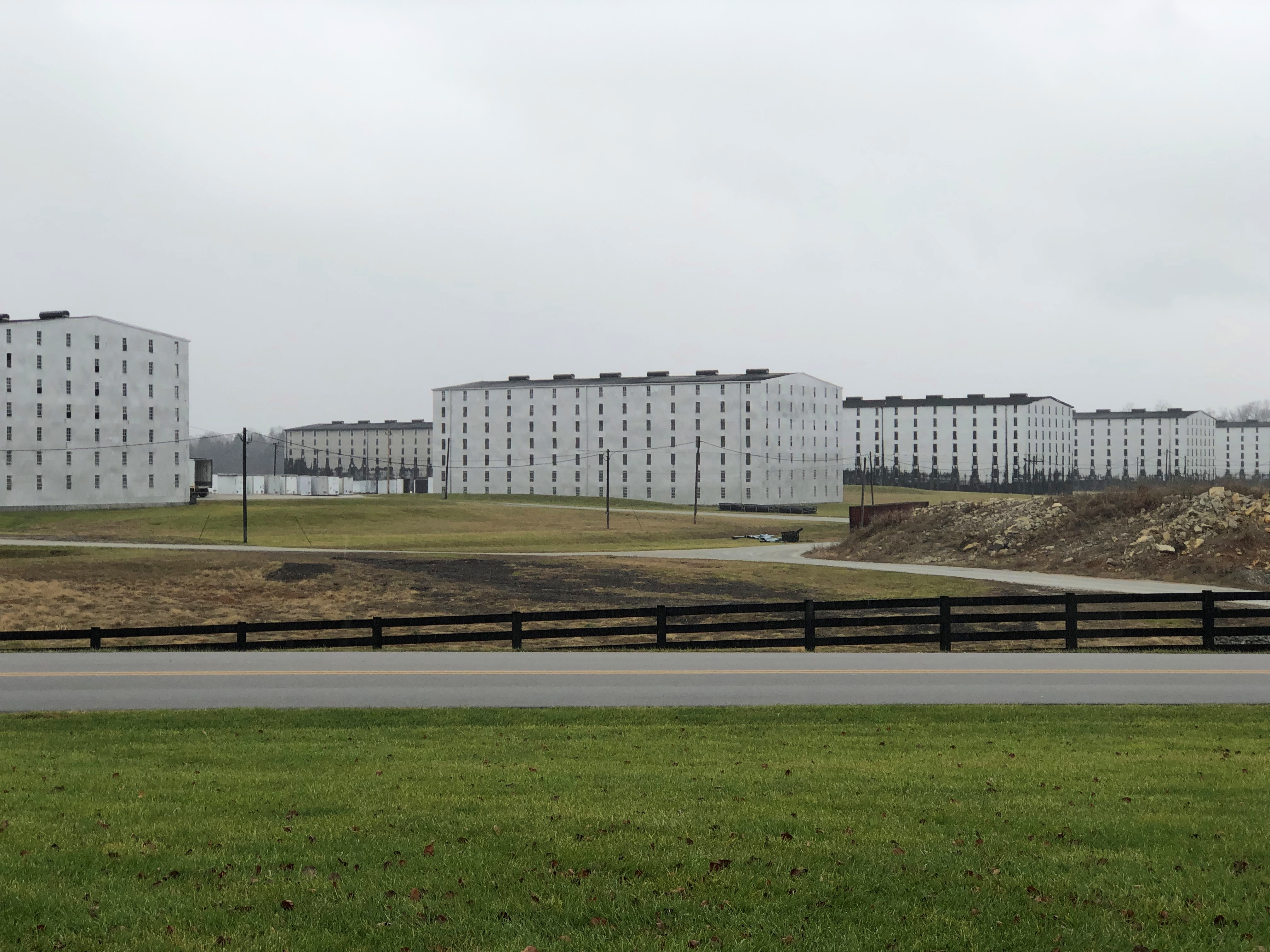
So we headed out to another distillery on the map, Heaven Hill, on the outskirts of town. It’s a big operation. Off in the distance from the visitor center parking lot are clusters of enormous HH buildings – rickhouses, they’re called, a term used industrywide – to store barrels of the distillery’s products while they’re aging.
“Heaven Hill’s main campus [in Bardstown] holds 499,973 barrels and was also the site of the famous 1996 fire,” the HH web site says. “Fueled by 75 mph winds, the fire ultimately destroyed seven rickhouses and over 90,000 barrels of Bourbon, which was two percent if the world’s Bourbon at the time.”
Bacchus wept. His wheelhouse is wine, but surely he takes an interest in hard liquor too.
Wonder why the HH rickhouse designers didn’t add space for 27 more barrels, so the total would come in at an even half-million. Anyway, that’s a lot of hooch. As for the fire, I must have heard about it at the time, but have no memory of it. I understand that occasionally rickhouses collapse, too. Bad luck for any poor fool inside, who’d be victim of a freak accident. Alcohol kills a lot of people, but not many that way.
Heaven Hill was swarming with visitors, and all tours were sold out on the drizzly afternoon of December 29. We spent a little time at the visitors center looking at some of the exhibits, including about the fire, but also about the family that has run the distillery for many years, the Shipiras – originally successful Jewish merchants in Kentucky – and the original master distiller, Joseph L. Beam, who was Jim Beam’s first cousin.
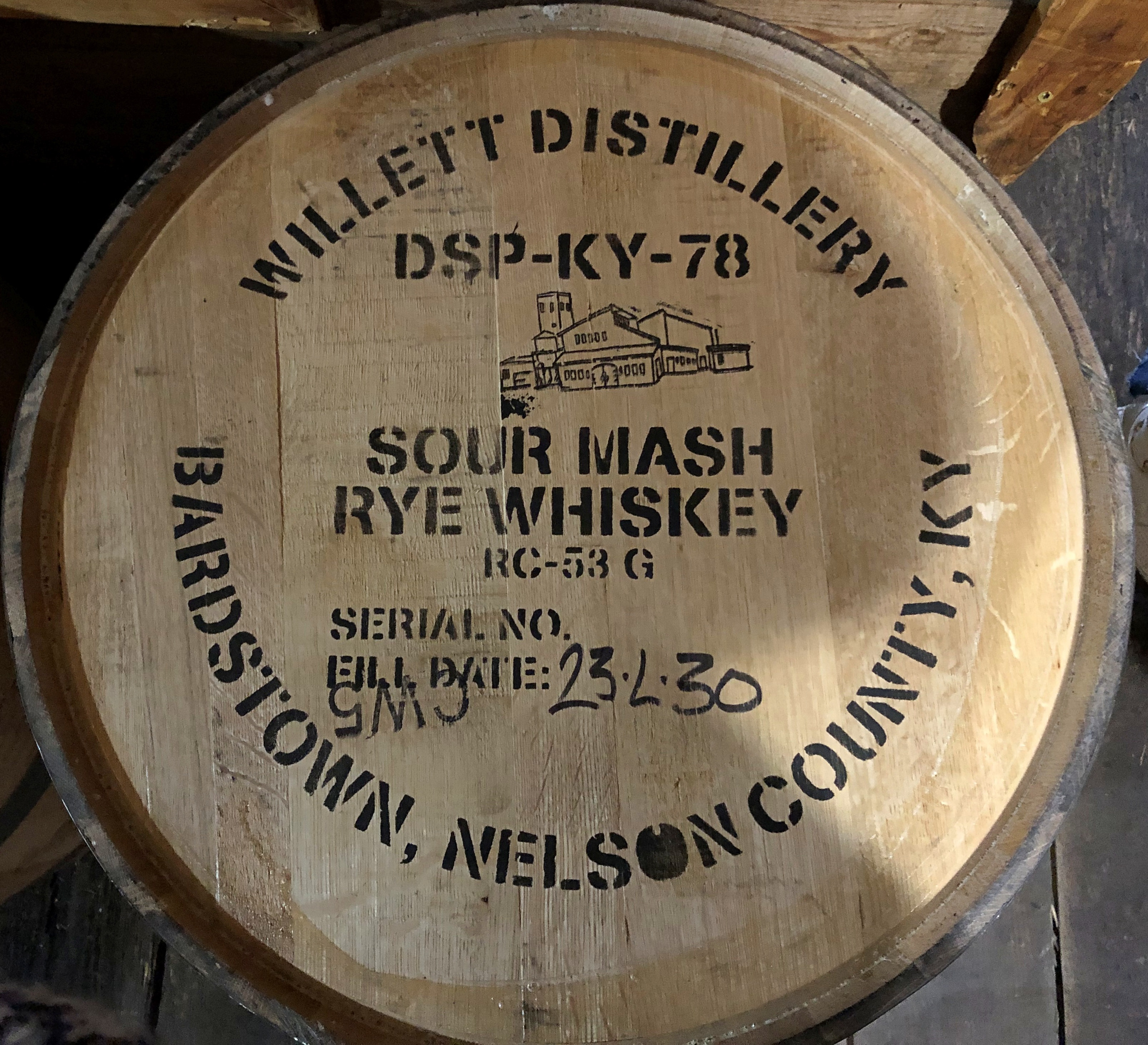
Soon we went to the Willett Distillery, up the road a piece from Heaven Hill. It isn’t as large an operation, but it too is a family-run business, by descendants of John David Willett (d. 1914) and a Norwegian who showed up in America in the 1960s at a young age and eventually married into the family. Importantly for our purposes, spots were available on the last tour of the day.
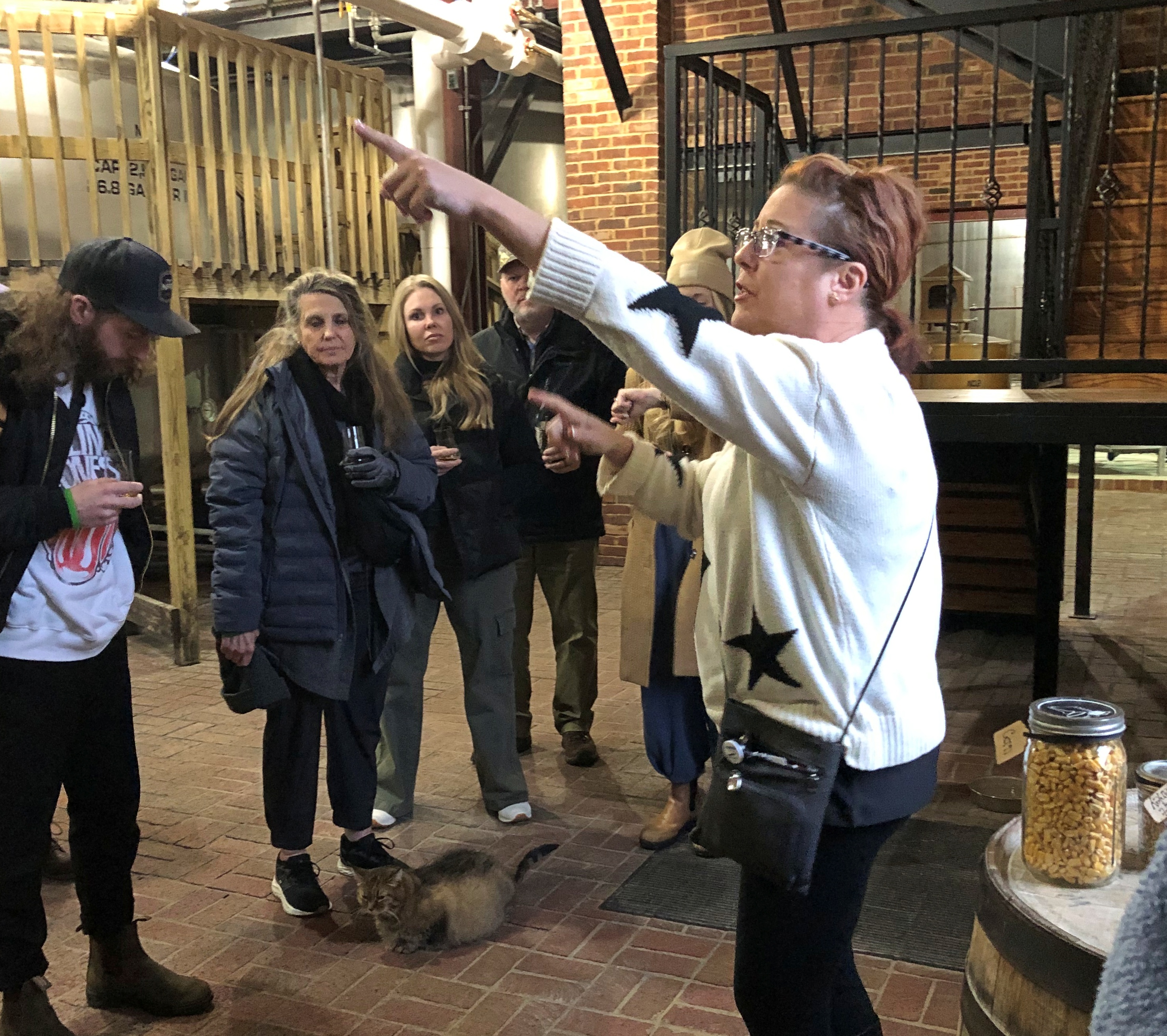
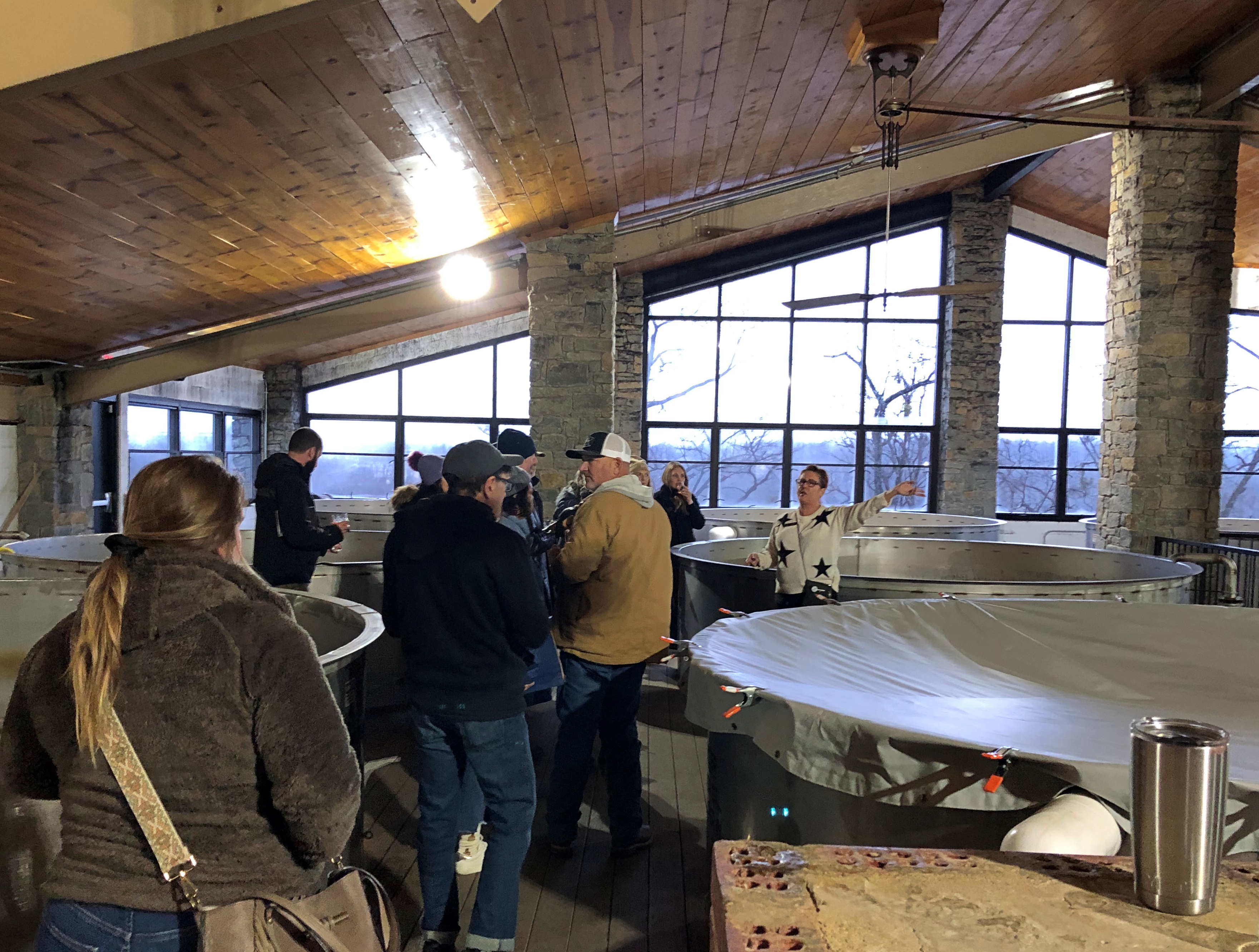
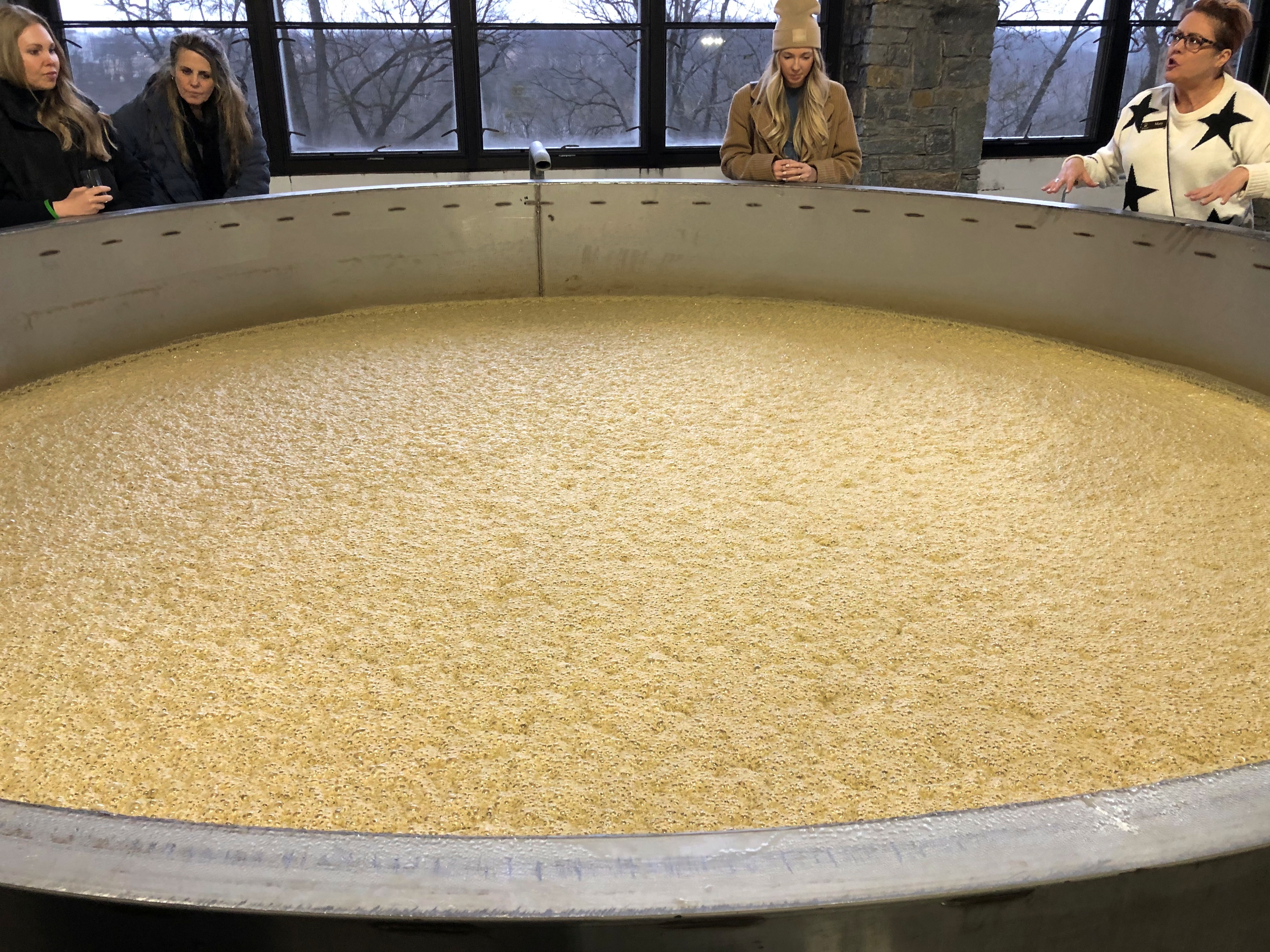
Our guide was a voluble woman in her 50s, who perhaps has a sign in her house that says It’s 5 O’Clock Somewhere. She was informative about distilled spirits, and herself, so we learned that she’s a widow with grown children and some grandchildren, and not originally from Kentucky. Or a bourbon drinker.
“I used to be a clear spirits gal, but since I’ve worked here, I’ve learned to love bourbon more,” she said.
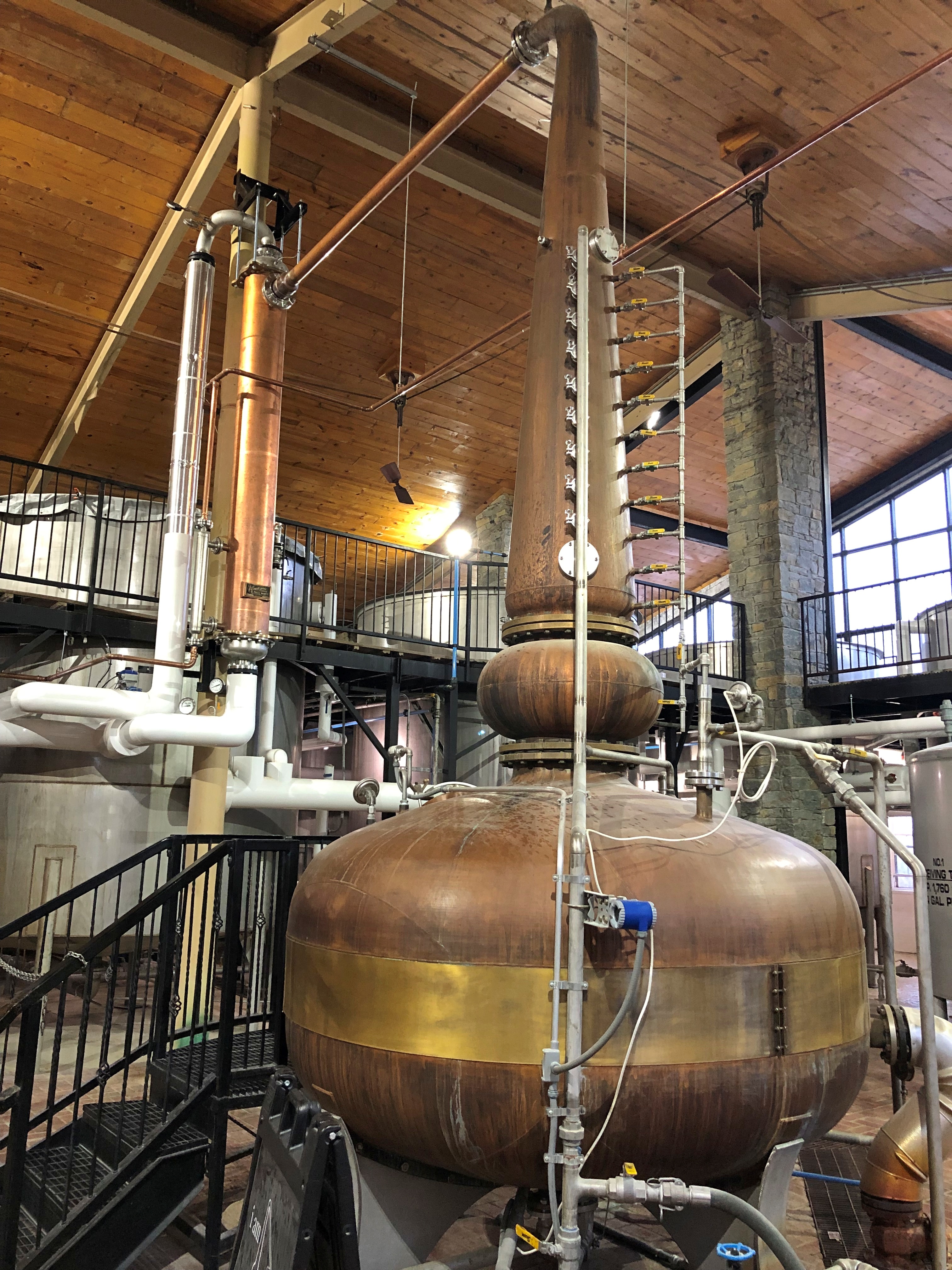
I might not drink bourbon, but I appreciate the fact that distilleries have a lot of cool-looking equipment. Willett certainly does.
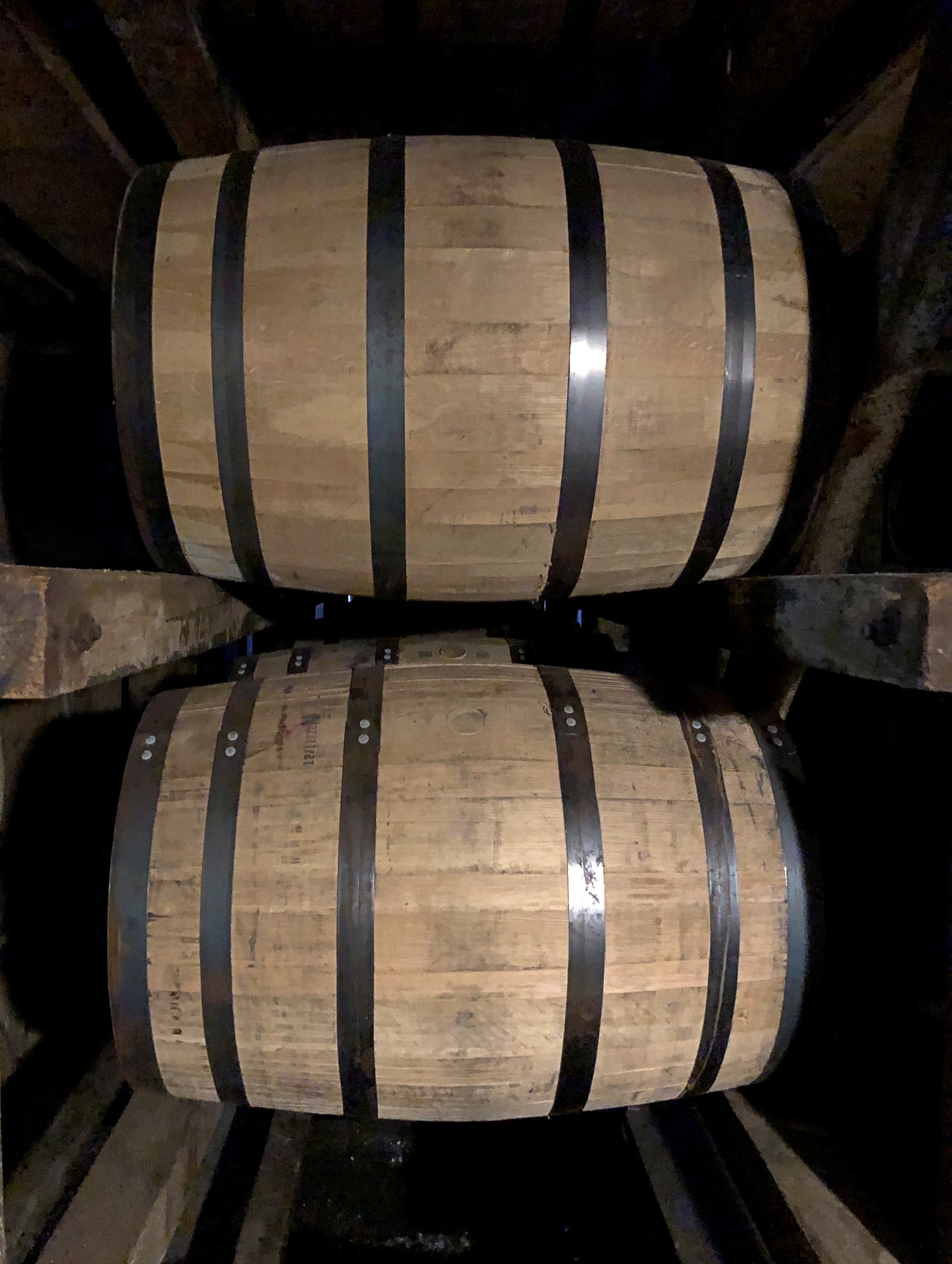
Best of all, we went into one of the Willett rickhouses.
Willett is small compared to Heaven Hill, with all of its barrels able to fit into one HH rickhouse, according to our guide. She said that more than once. But she also played it as a virtue, hinting — since it would be impolitic to say it outright — that the neighboring distillery was entirely too big for its britches.
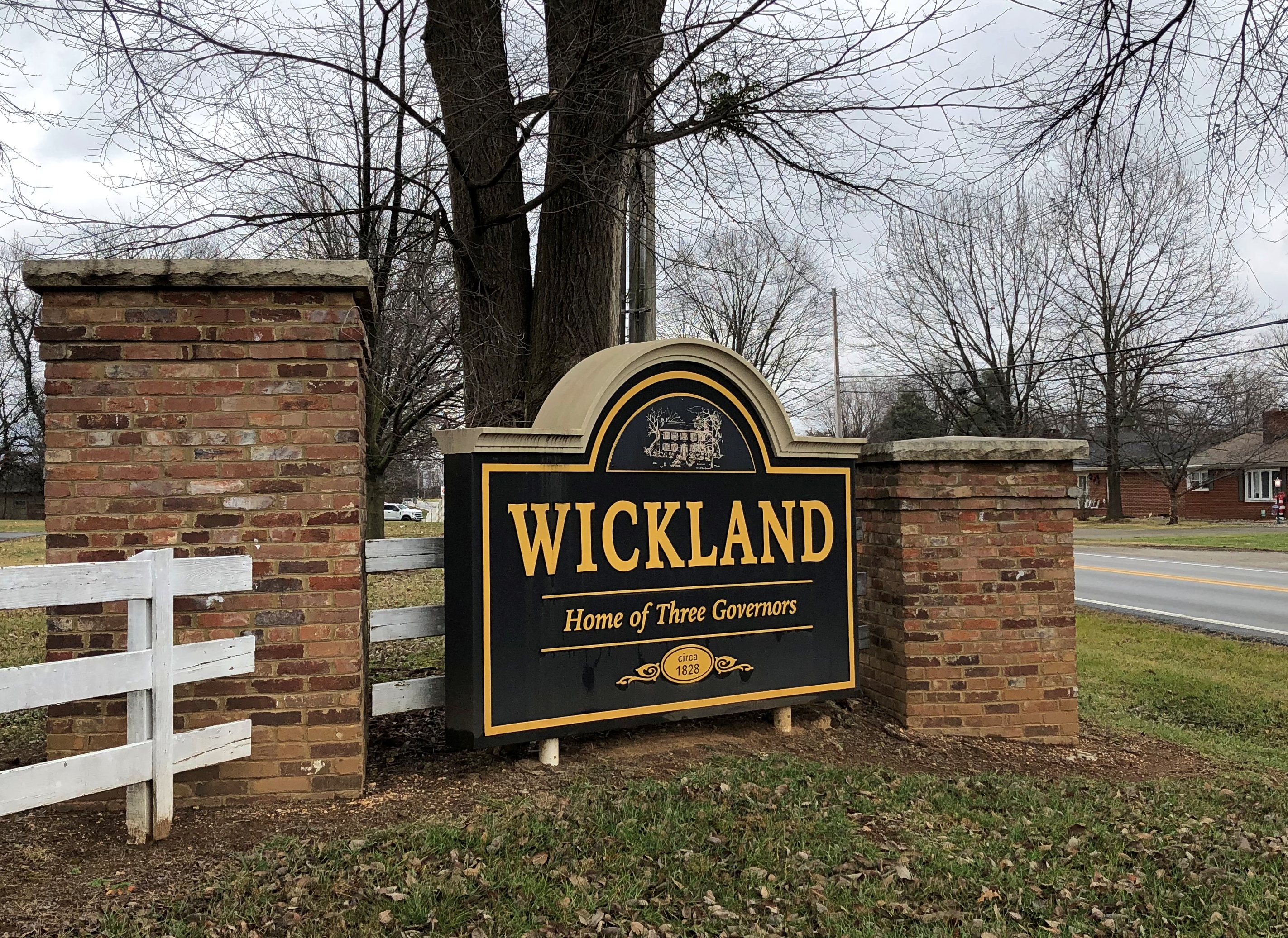
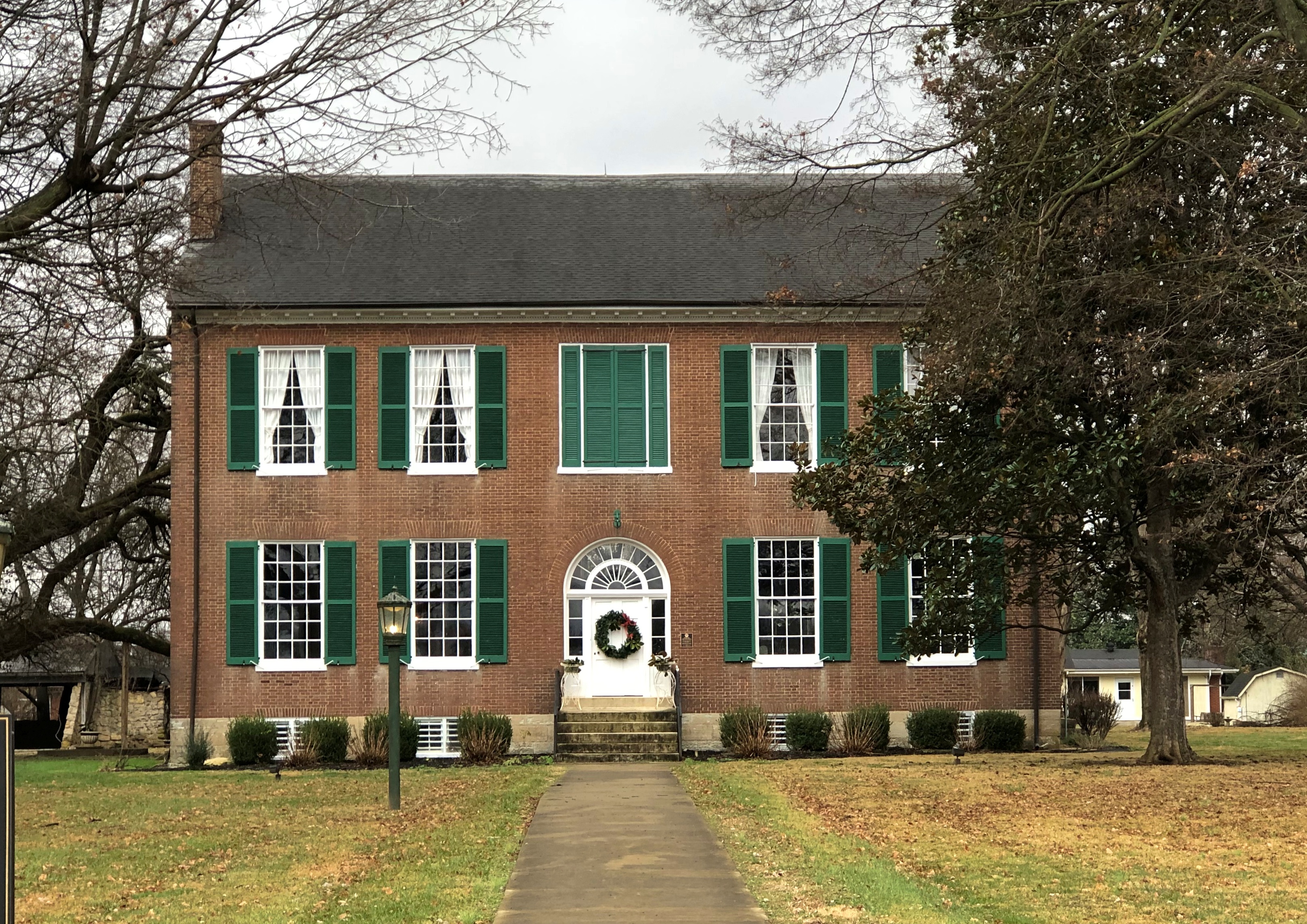
From My Old Kentucky Home State Park, it’s a hop and skip, not even a jump, to another old Kentucky home, Wickland. Or as it is called on Google maps, Wickland, Home of Three Governors.
For good reason, it turns out. That wording is on the sign at the entrance.
Whatever else you can say about Google as a rapacious entity, you have to admire its maps. My affection for paper maps hasn’t dwindled, and I still use them, but sometimes things pop up on Google Maps that I instantly know I should visit, such as Wickland.
Though with a Bardstown address, it is a bit out of town.
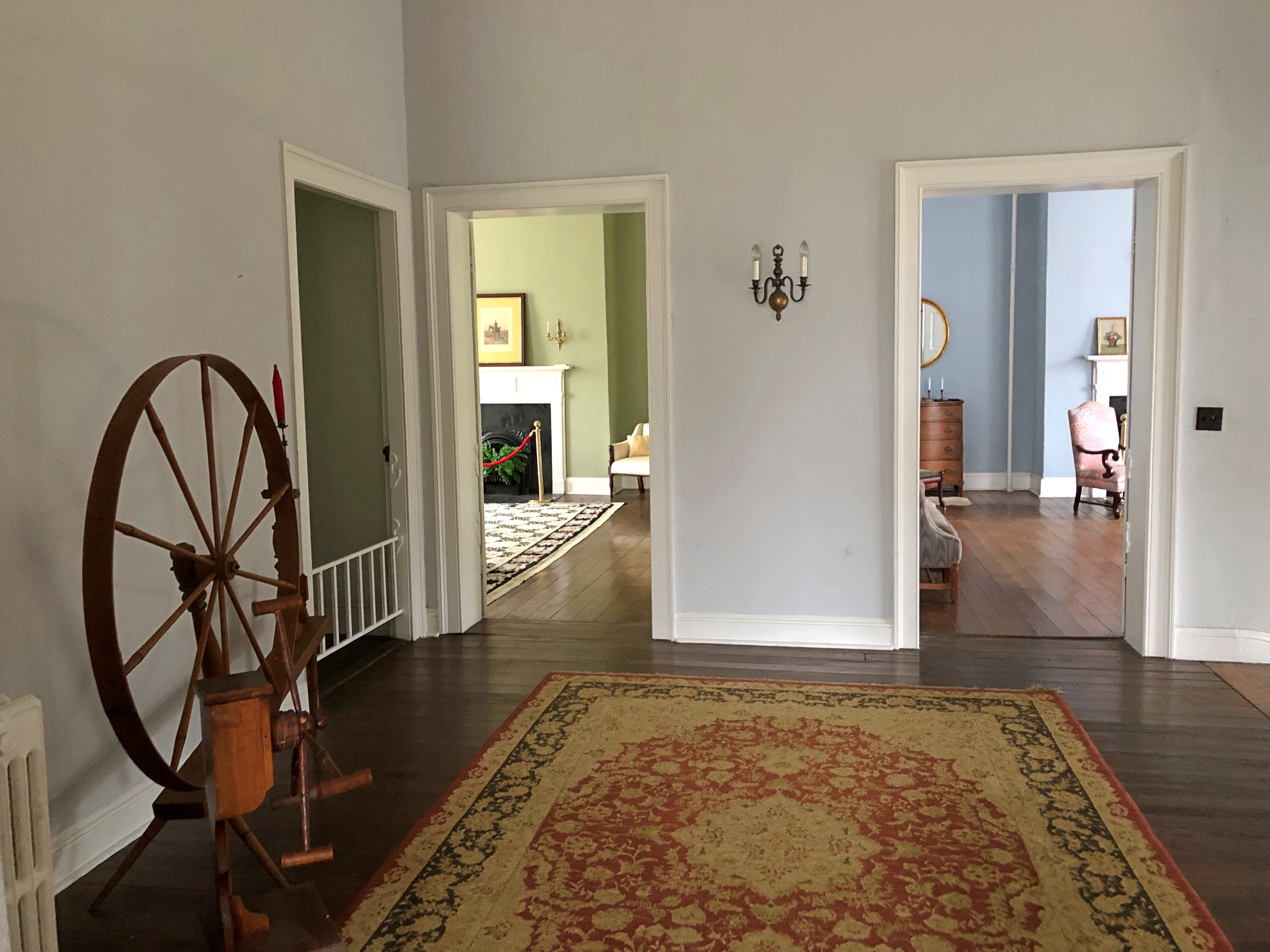
Done in Georgian style, rather than Federal, Wickland is roughly a contemporary of Federal Hill (My Old Kentucky Home). We weren’t entirely sure it was open, but in we went, to be greeted by a woman perhaps 10 years younger than me whose name I forget, but who said she managed the place.
That meant taking taking down some of the Christmas decorations at that moment, but she paused that activity to tell us about the mansion for a few minutes, intimating that it was just as interesting as Federal Hill, but received much less attention. I’ll go along with that. She was the only other person there, and said that we were the only visitors so far that day.
Its original owner, one Charles A. Wickliffe, built the house in the 1810s from a design by a Baltimore architect named John Rogers, and later Wickliffe became governor of Kentucky. His son Robert C. Wickliffe grew up at Wickland but moved to Louisiana, where he was governor of that state just before the war. John Crepps Wickliffe Beckham, Charles’ grandson and John’s nephew, was also born at Wickland and he too was a governor of Kentucky, taking office in 1900 after the death of four-day Gov. William Goebel, who was assassinated. That’s an entirely different story, and one I won’t get into, but more about it is here.
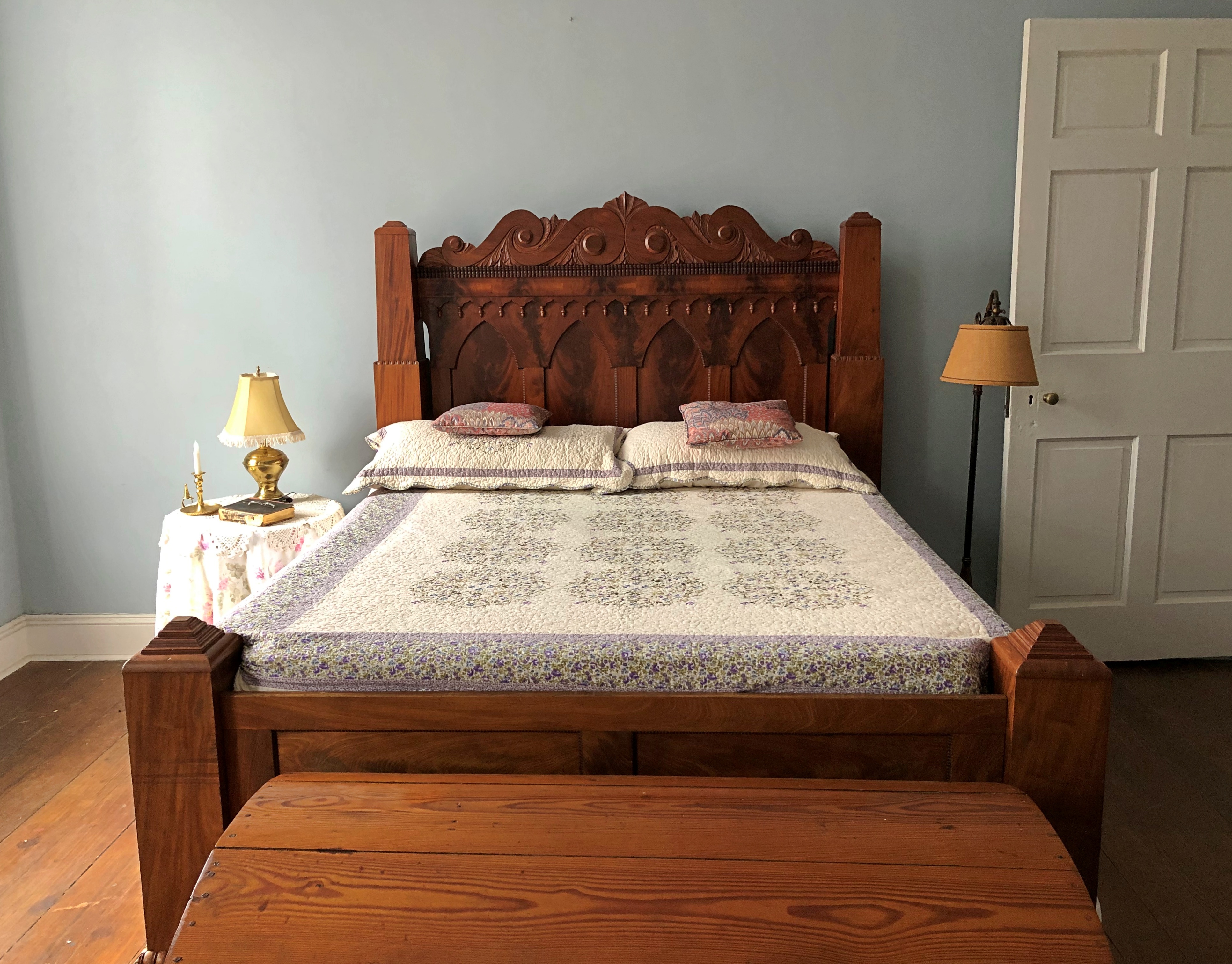
After our brief chat, the manager of Wickland turned us loose for a self-guided tour. That is, we wandered around the mansion’s three floors, completely unsupervised. Also, unlike at Federal Hill, we could take pictures, so I did.
Nice. Not all of the Christmas decorations were down yet.
Wickland doesn’t charge anything to visit, but we made a donation equal to what we paid to see the more ballyhooed My Old Kentucky Home. Seemed only right.