My Old Kentucky Home State Park

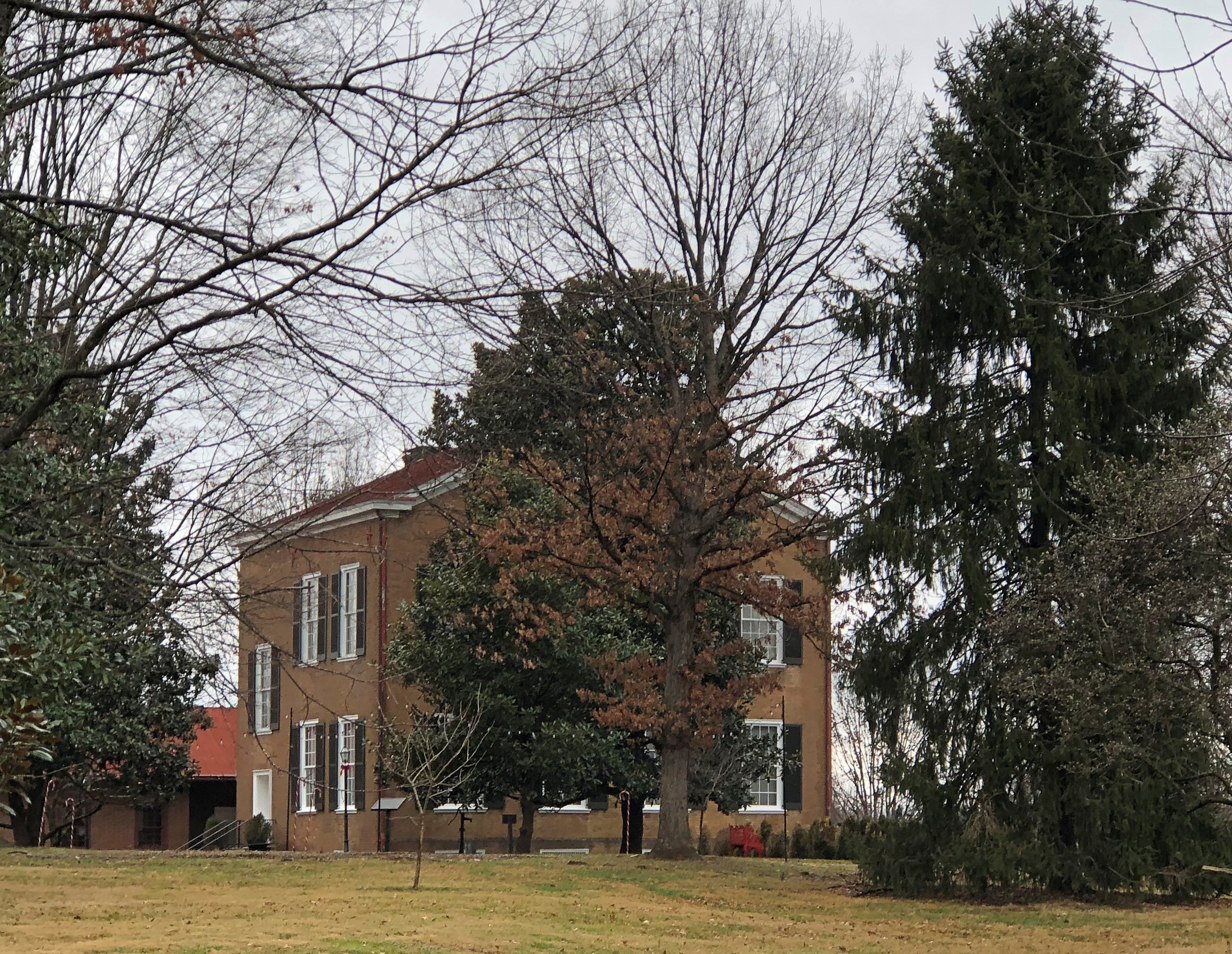
When John Rowan began work on a house for his family in north-central Kentucky in the 1790s, he called it Federal Hill. Finally completed in 1818 largely by slave labor, it stands today as the centerpiece of My Old Kentucky Home State Park in the outskirts of Bardstown, a handsome structure in a pleasant setting.My Old Kentucky Home State Park My Old Kentucky Home State Park
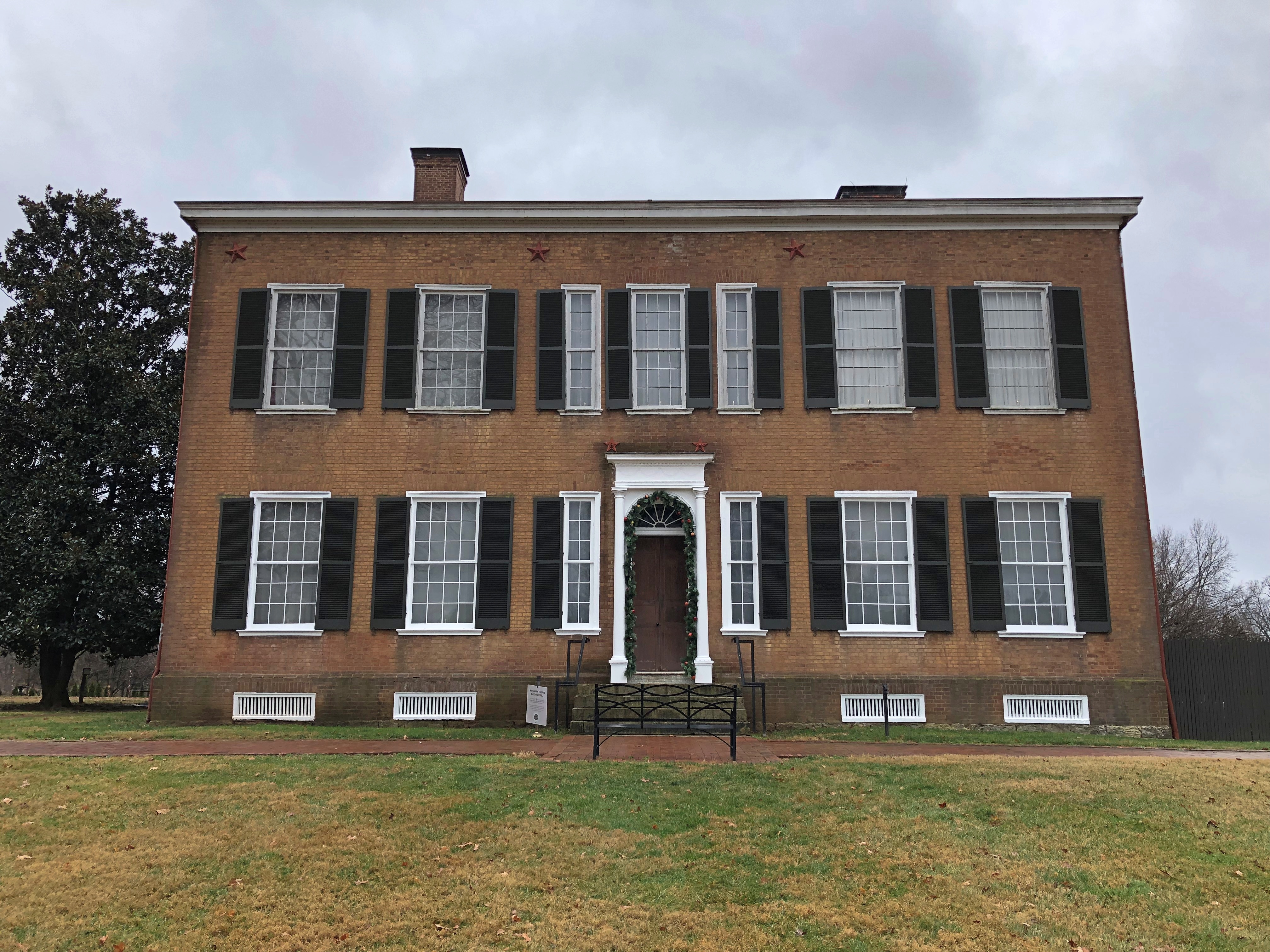
Besides surviving an 1801 duel in which he killed the other fellow, and beating the rap, Rowan went on to be an important politico in early Kentucky, including a term in the U.S. Senate as an antagonist to Henry Clay and the Whigs, being a Jackson man. He died in 1843, missing the later unpleasantness, and even the war the Mexico.

We visited around noon on December 29. We were the only ones on the tour, in contrast (later that same day) to the distilleries we visited. I hadn’t read much about the place before the visit, and vaguely assumed that there was some good reason that the property’s current name evokes the famed Stephen Foster song. It inspired him in the composition in some way, perhaps.

The house museum doesn’t exactly discourage this line of thinking. At the visitors center is this portrait of Foster.My Old Kentucky Home State Park

There he is, in a 1939 painting by Howard Chandler Christy, receiving the gift of composition from a muse – Euterpe, I suppose, muse of music and lyric poetry and, perhaps, the modern popular song. To the left of the muse’s wings (did muses have wings?) is the entrance of Federal Hill, and there are visual references to some of Foster’s other songs as well.

The Kentucky Colonels’ organization commissioned the painting for the world’s fair in New York that year, and “My Old Kentucky Home” had become the official state (commonwealth) song not too many years earlier. So I assume the Colonels wanted to emphasize a Kentucky connection with the famed song, aside from the fact that the name is in the title and opening lines.

An aside: I know that a Kentucky Colonelcy is an honor bestowed by the commonwealth, but I’m still a little surprised by some of the names on this list, such as Princess Anne, Bob Barker, Foster Brooks (well, he was from Louisville), Phyllis Diller, George Harrison (actually, all the Beatles, even Ringo), David Schwimmer, Red Skelton, and both Smothers brothers (RIP, Tom).

The museum (at least in our time) doesn’t explicitly claim that Federal Hill was an inspiration for the song, since the evidence for that seems to be gossamer thin. I’ve read conflicting reports about whether Stephen Foster, described as a “cousin” of the Rowan family – which could mean various levels of consanguinity in the loose definitions of 19th-century America – even visited Federal Hill from his home in Pittsburgh.

It is clear, however, that “My Kentucky Home” was inspired by Uncle Tom’s Cabin, and as such, sympathized with slaves separated from family members without pity or recourse. The song’s association with a particular mansion in Kentucky, namely this particular one, apparently came later – well after the Civil War. The idea seems to have been promoted by, among others, the last member of the Rowan family to own the mansion, an elderly granddaughter who managed to sell the property to the commonwealth in the early 1920s.

Can’t really blame her if she took a little creative liberty with the history of Federal Hill, since she probably wanted to live somewhere with less expensive upkeep. Also, such a thing would be firmly within the American (and entirely human) tradition of historical storytelling known as “making things up.”

Be that as it may, Federal Hill is well appointed inside with period items, and our guide, a young woman dressed antebellum style, knew her non-made-up stuff. She also sang the first verse of “My Old Kentucky Home” for us, in a pleasant and practiced voice, which I understand is part of all the tours. Of course, the first lines weren’t quite the Steven Foster original, being:

The sun shines bright in the old Kentucky home/
‘Tis summer, the people are gay.

The Kentucky legislature mandated the change, at least for official renditions, after an embarrassing incident in 1986 when a visiting group of Japanese students sang the song, original lyrics and all, to the legislature.

Our guide mentioned, almost in passing, an horrific incident from the time of John Rowan. In 1833, the family, or many of them, ate or drank something contaminated with Vibrio cholerae, and three of Rowan’s children (he had nine), a son- and daughter-in law, a granddaughter, and his sister and brother-in-law all died of cholera in short order, as did a similar number of slaves.

Many of these Rowans are buried within sight of the mansion, and the visitor center, for that matter.My Old Kentucky Home State Park
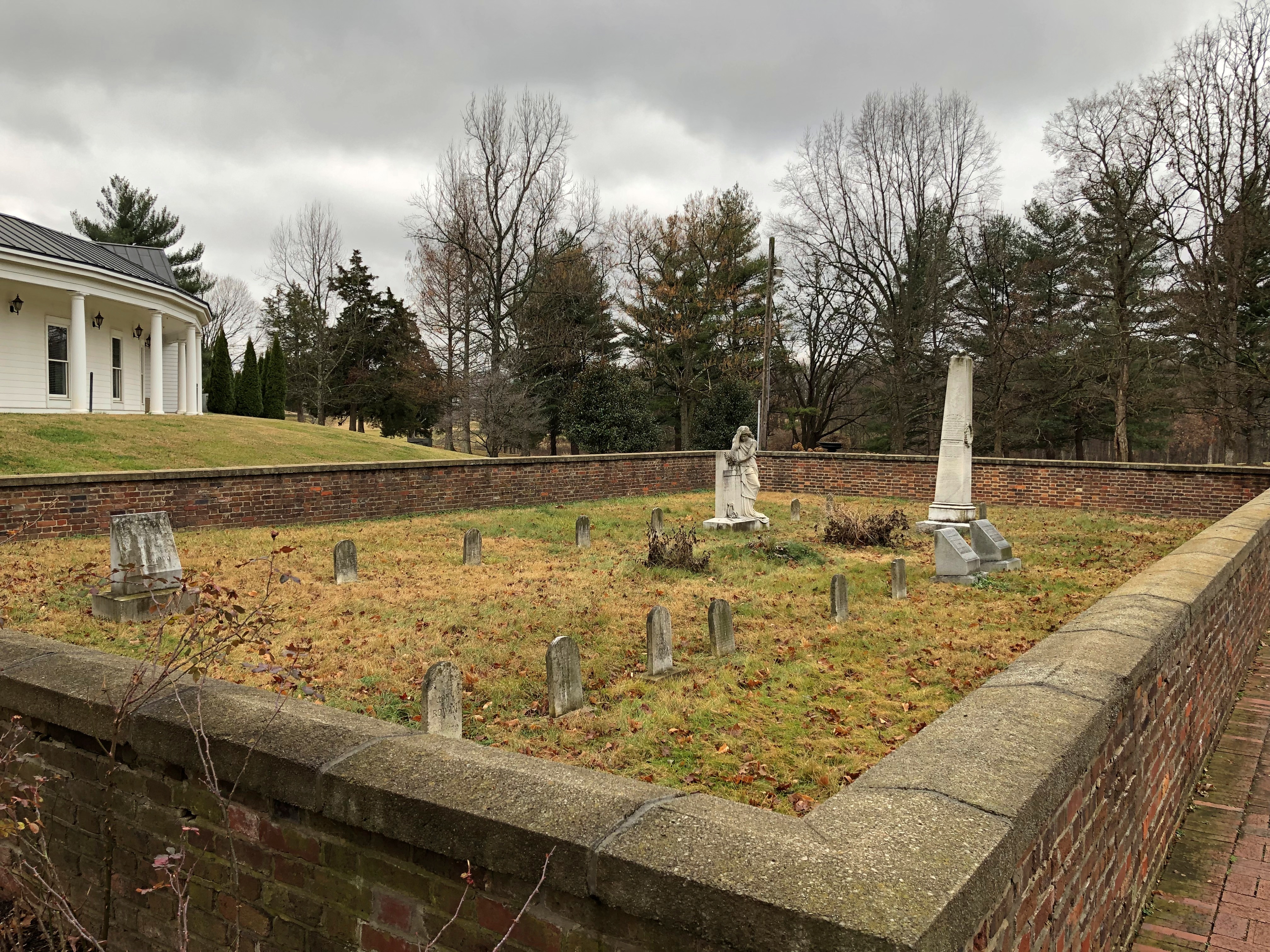
Sen. Rowan himself joined them later, marked by the obelisk. The memorial behind his, with the grieving figure and lyre, is that of Madge Rowan Frost (d. 1925), the granddaughter who sold the property to the state.My Old Kentucky Home State Park

The park, in the form of its guided tour, and written material on signs, doesn’t ignore the enslaved population, as no historic property of this kind would do any more, possibly following the lead of Monticello. Sen. Rowan owned as many as 39 people at one time. A sign near the Rowan cemetery details what is known about them.My Old Kentucky Home State Park
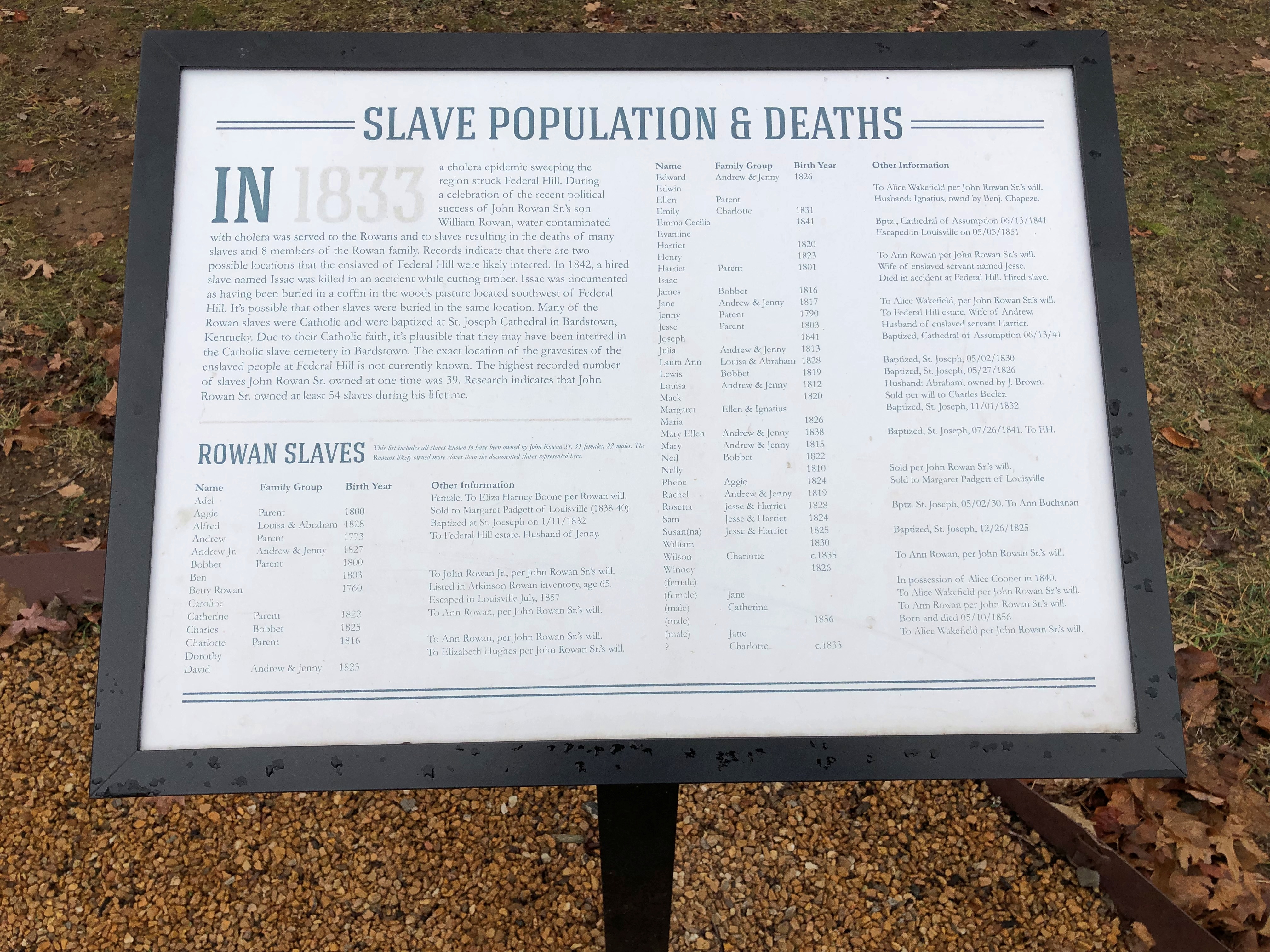
But not their burial sites; that remains unknown. Likewise, their cabins, along with most of the other outbuildings, are long gone. Mostly what you’ll see at the state park is a picturesque mansion retroactively tied to an enduring song.
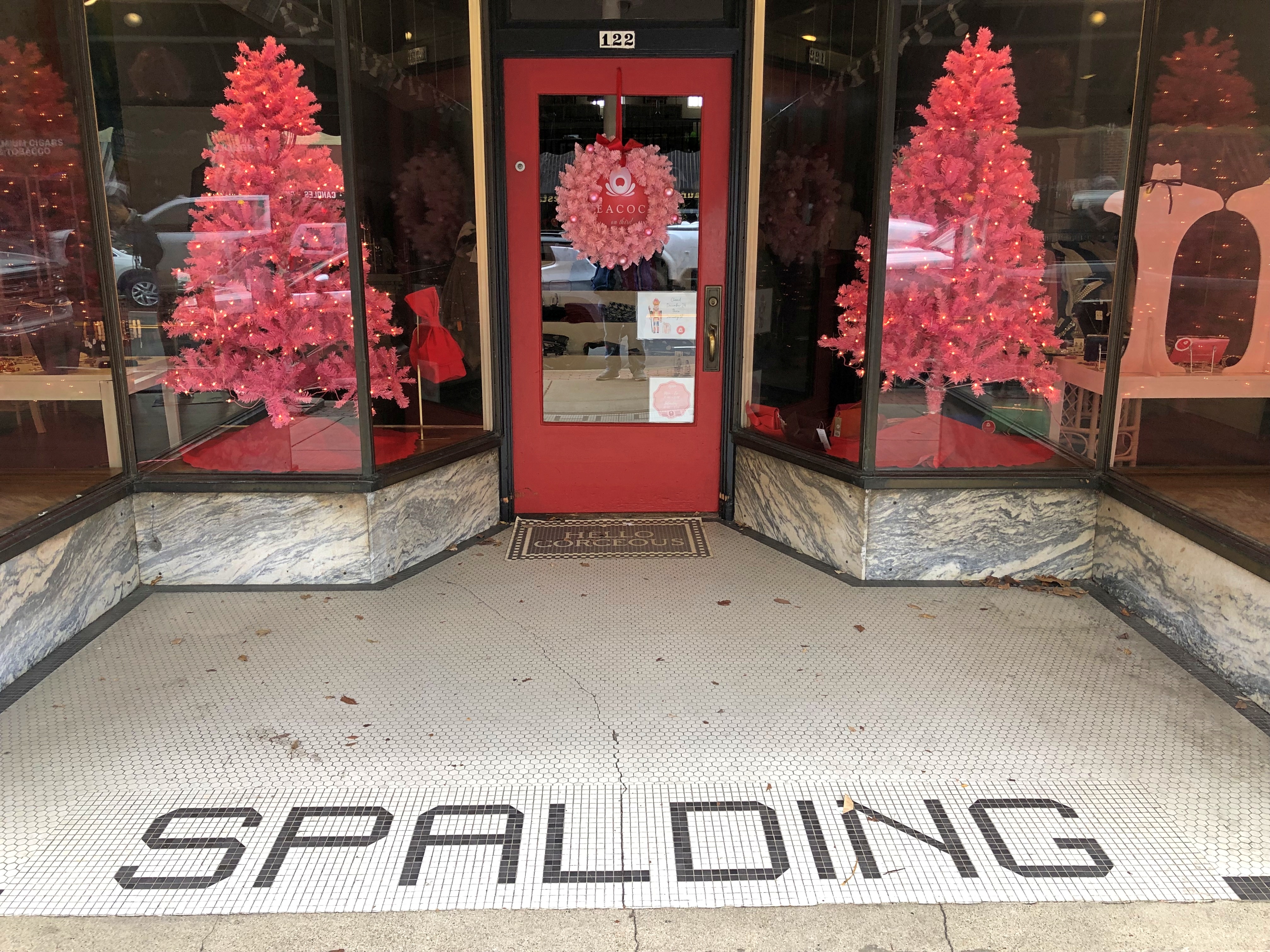
Bardstown Walkabout

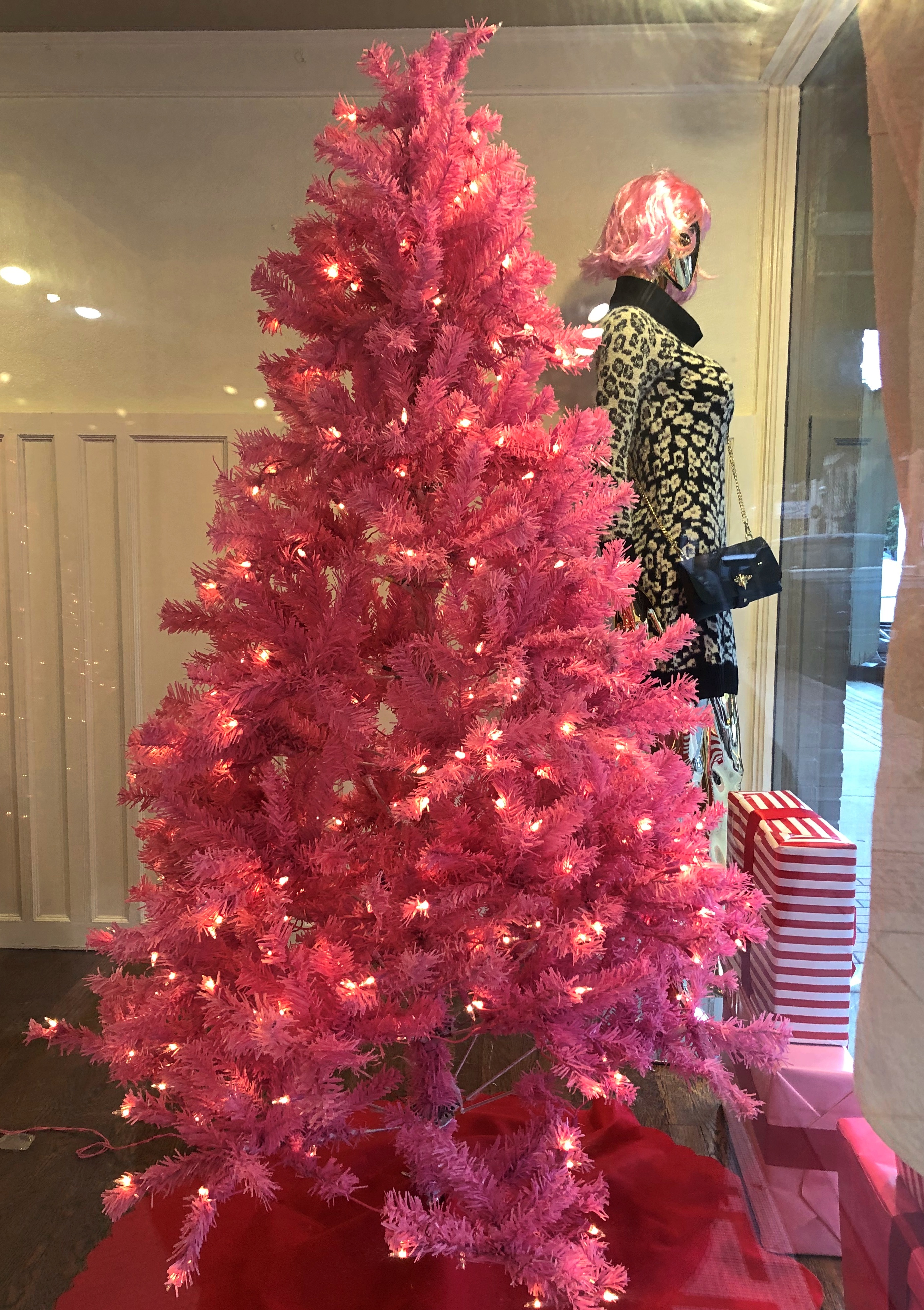
For those who dreamed of a pink Christmas this year, there was this shop window in Bardstown, Kentucky.Bardstown, Kentucky

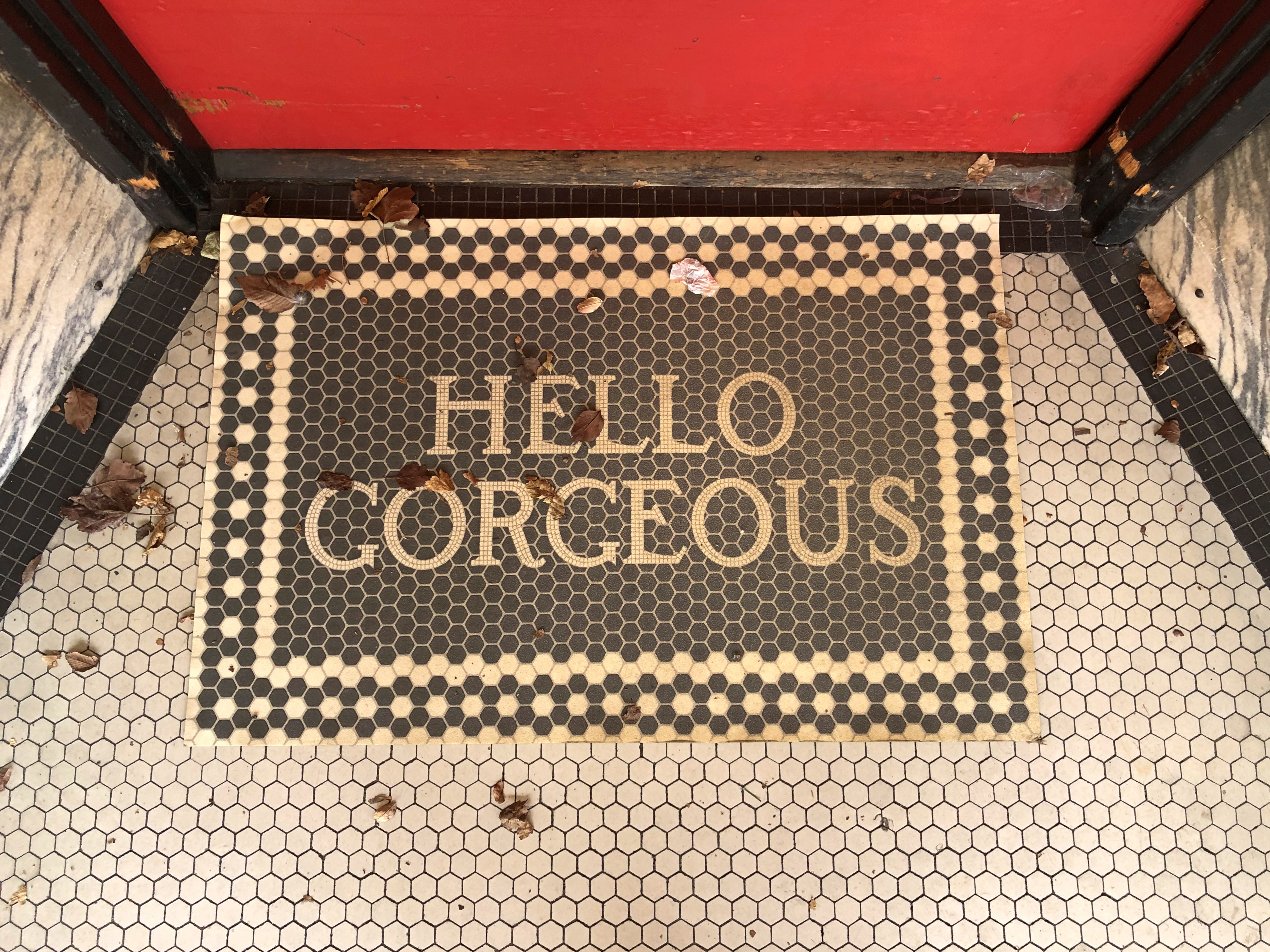
Not only pink trees, but an entrance with a Fanny Brice sort of greeting.Bardstown, Kentucky
Bardstown, Kentucky

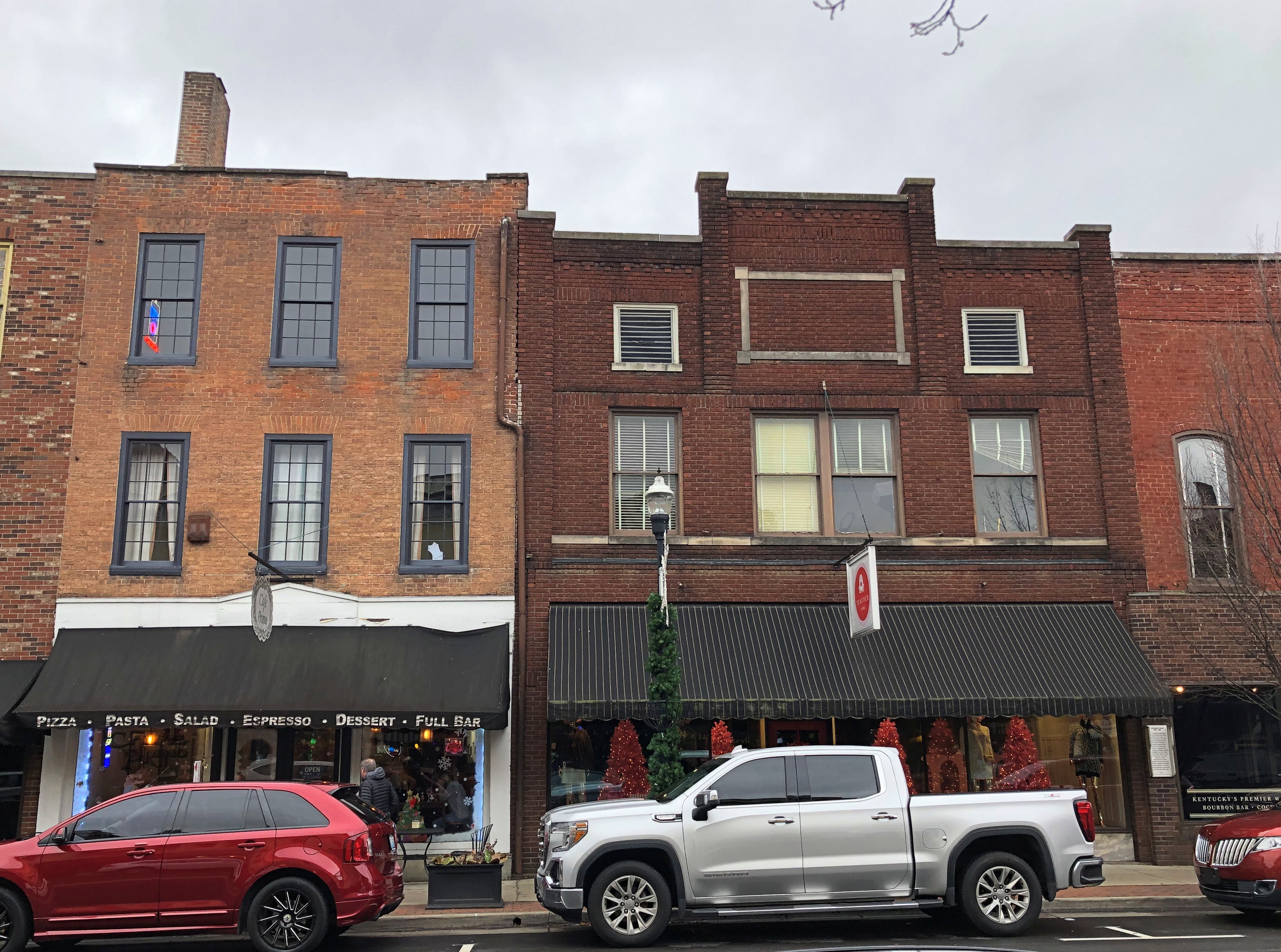
For many years, the building on North Third Street housed Spalding & Sons, a dry goods store founded in the 1850s which later morphed into a small-town department store that finally closed for good only in 2013. A woman’s boutique, Peacock on Third, now occupies the space (the dark building on the right in the picture below).Bardstown, Kentucky

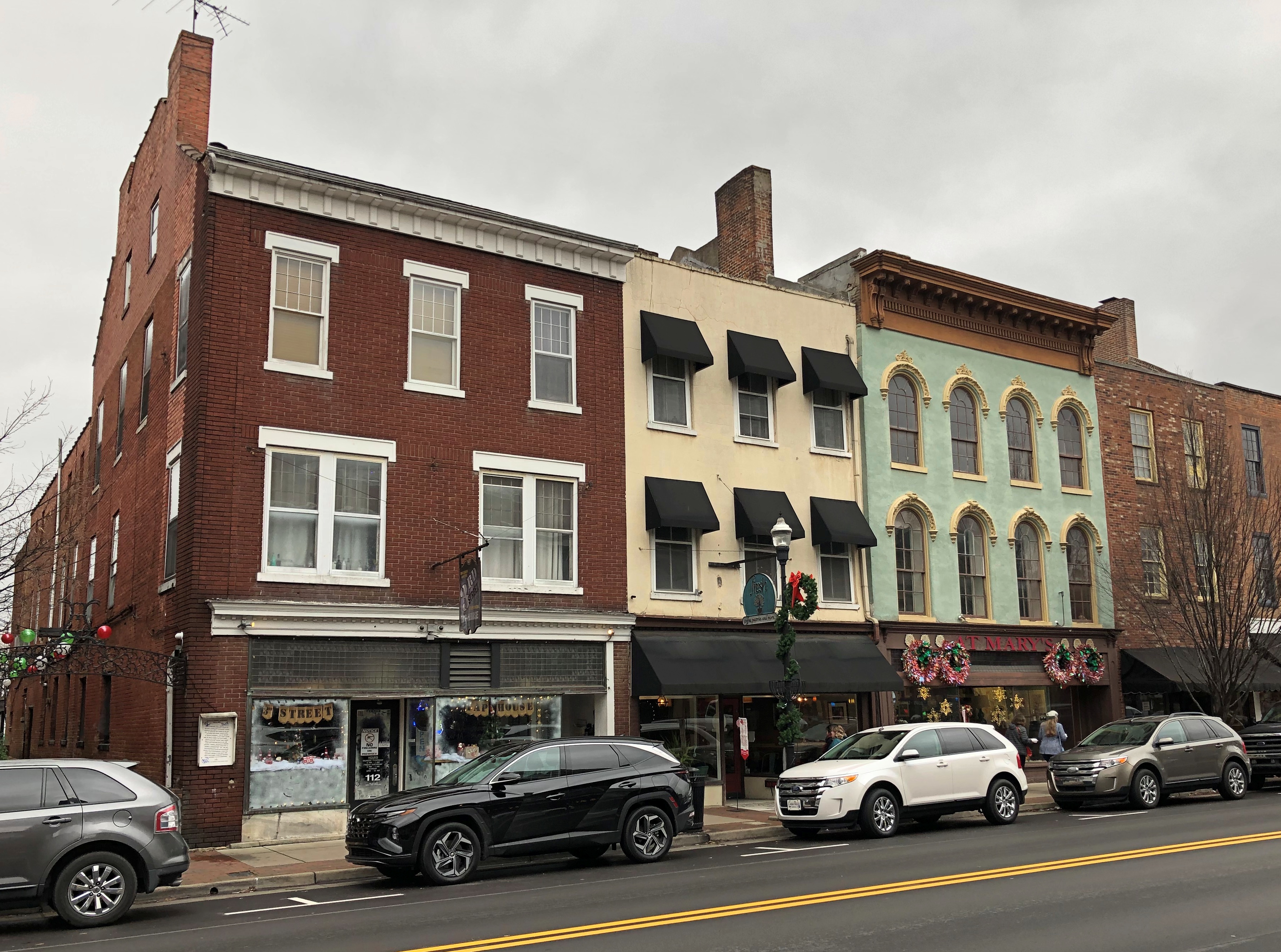
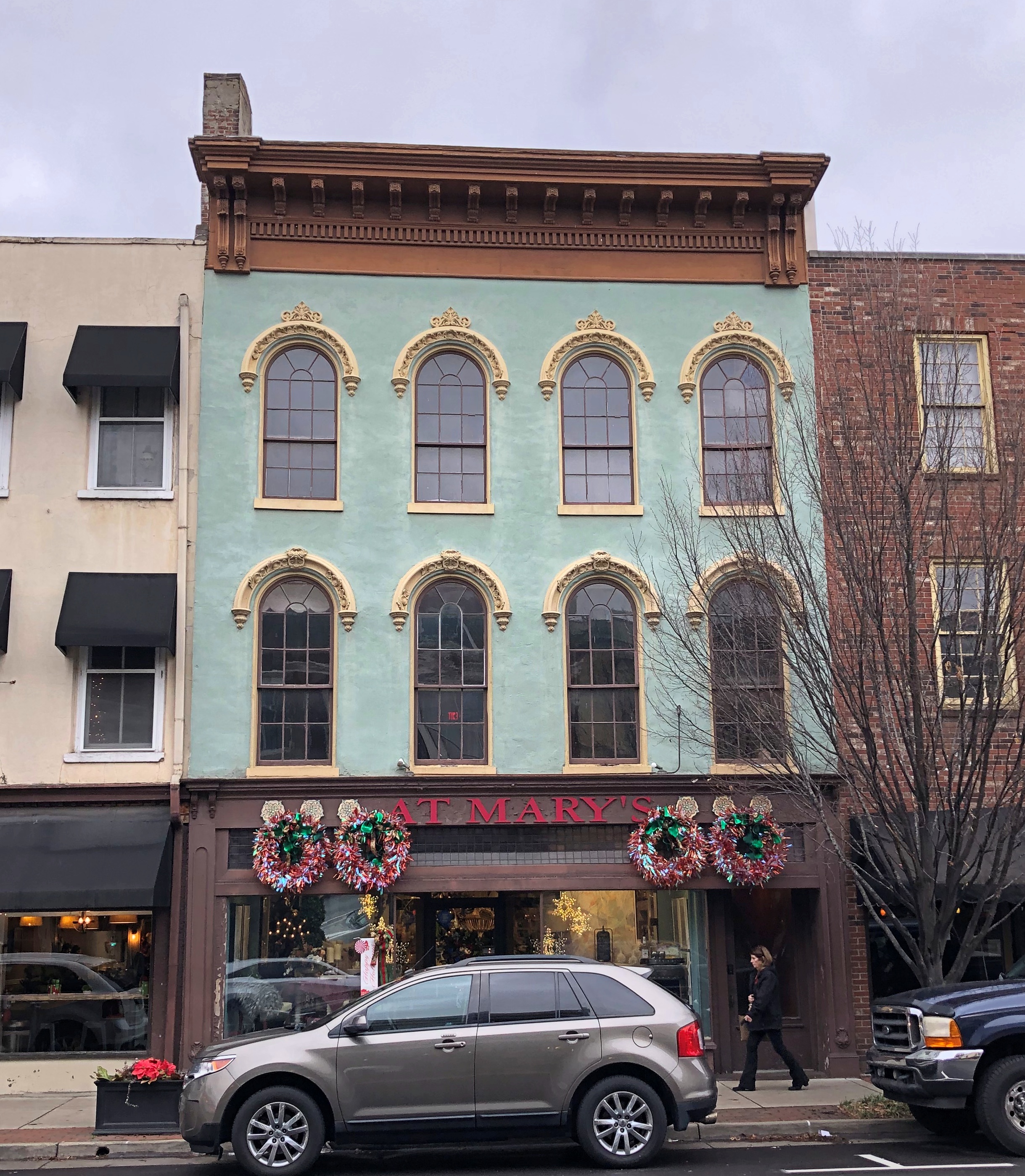
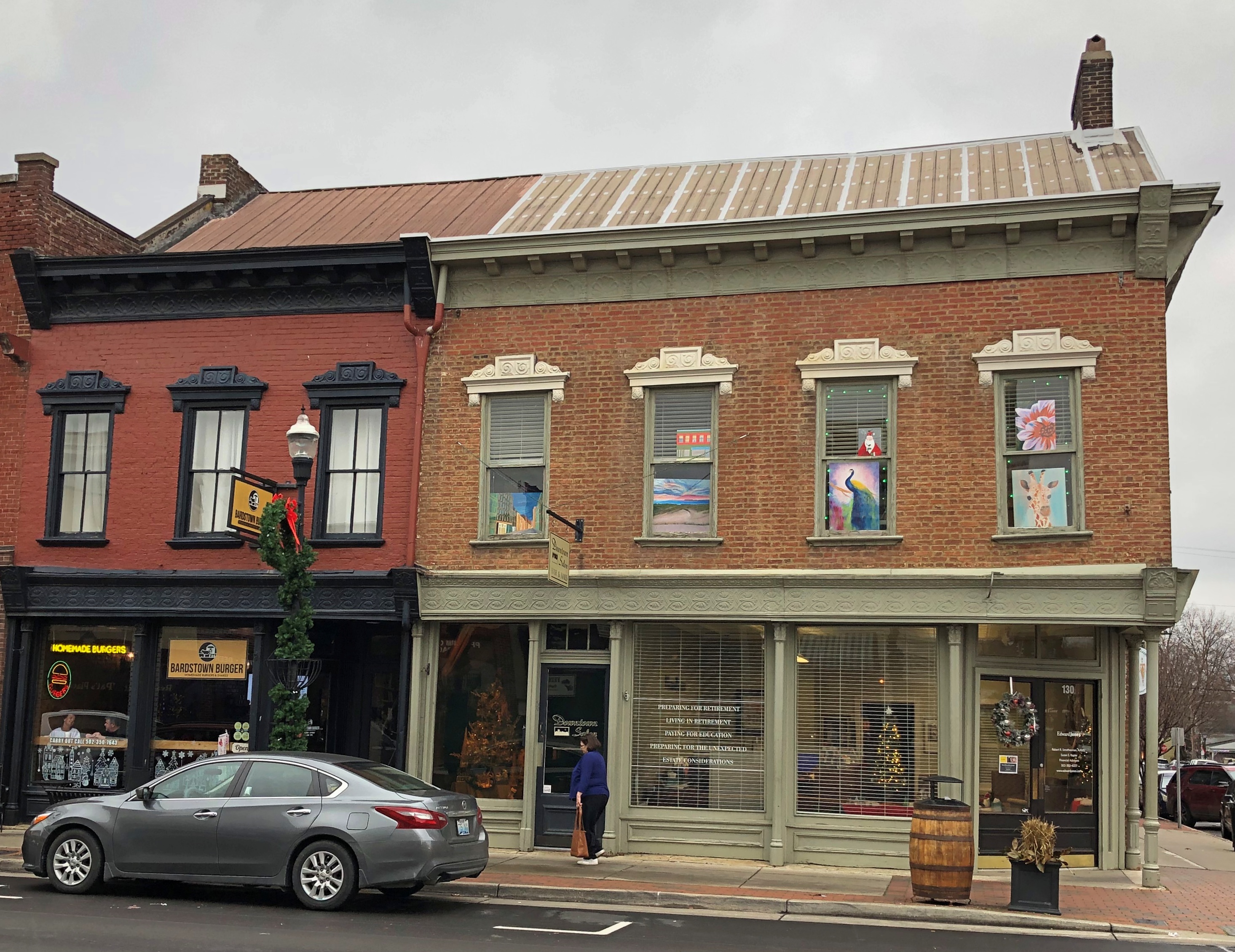
These days a boutique of that kind fits right in on Third, which is Bardstown’s main street. Other nearby specialty shops include At Mary’s gift shop, the Tea Cozy, Shaq & Coco (furniture), Kaden Lake and Cactus Annie’s (both women’s clothes), and Pink Fine Consignments & Boutique and Gnarly Gnick Gnacks; eateries in the vicinity include Bardstown Burger, Cafe Primo, Pat’s Place and the Old Talbott Tavern.

We were out and about in Bardstown on December 29, the second day of our trip, an overcast and moderately chilly day, having driven the 30 miles or so from Louisville that morning. This part of Bardstown caters mostly to visitors, who were few that day, but the street wasn’t completely deserted.
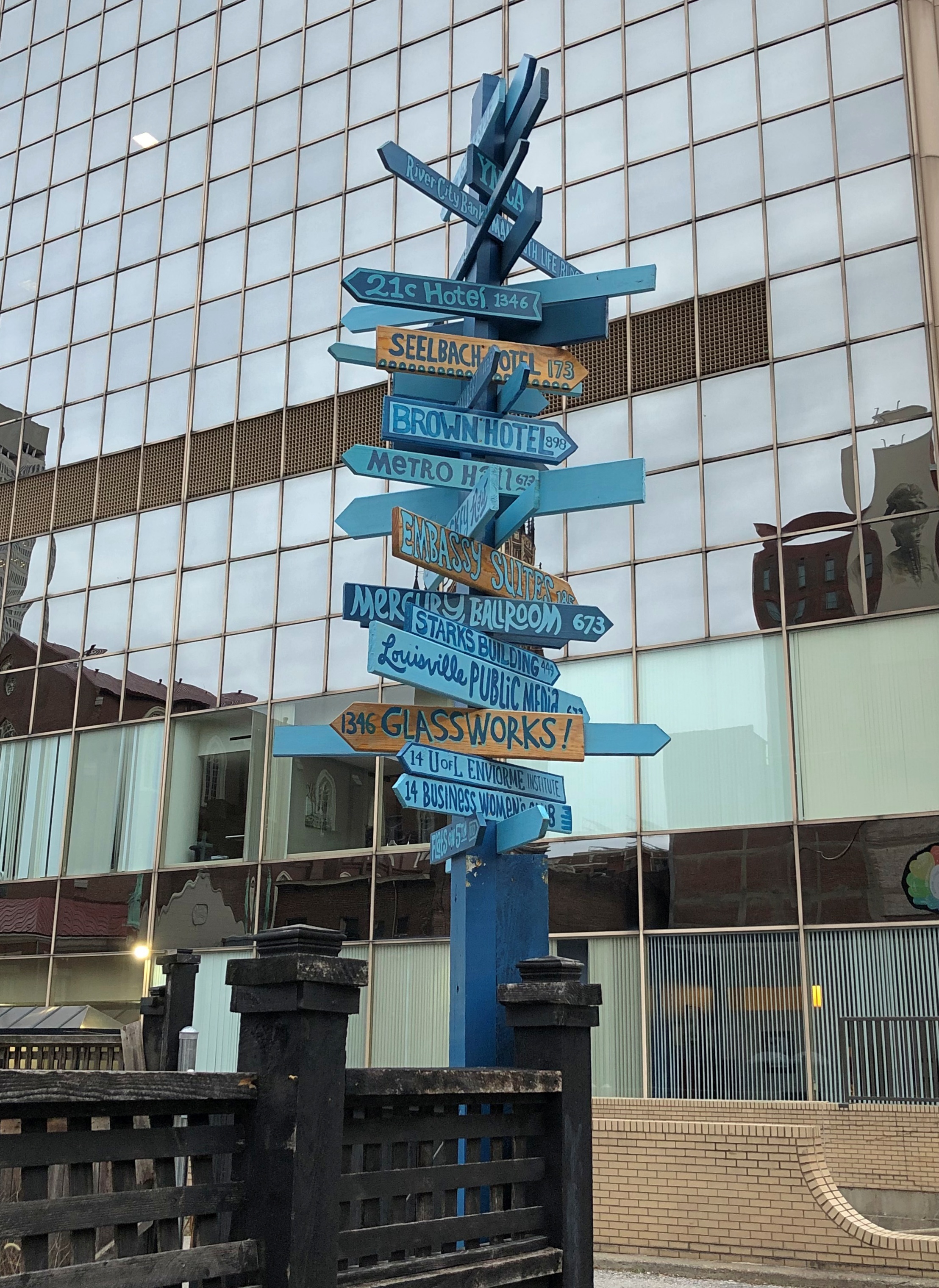
The town has managed to preserve a nice collection of century-and-older buildings that are mostly still in use.Bardstown, Kentucky Bardstown, Kentucky Bardstown, Kentucky

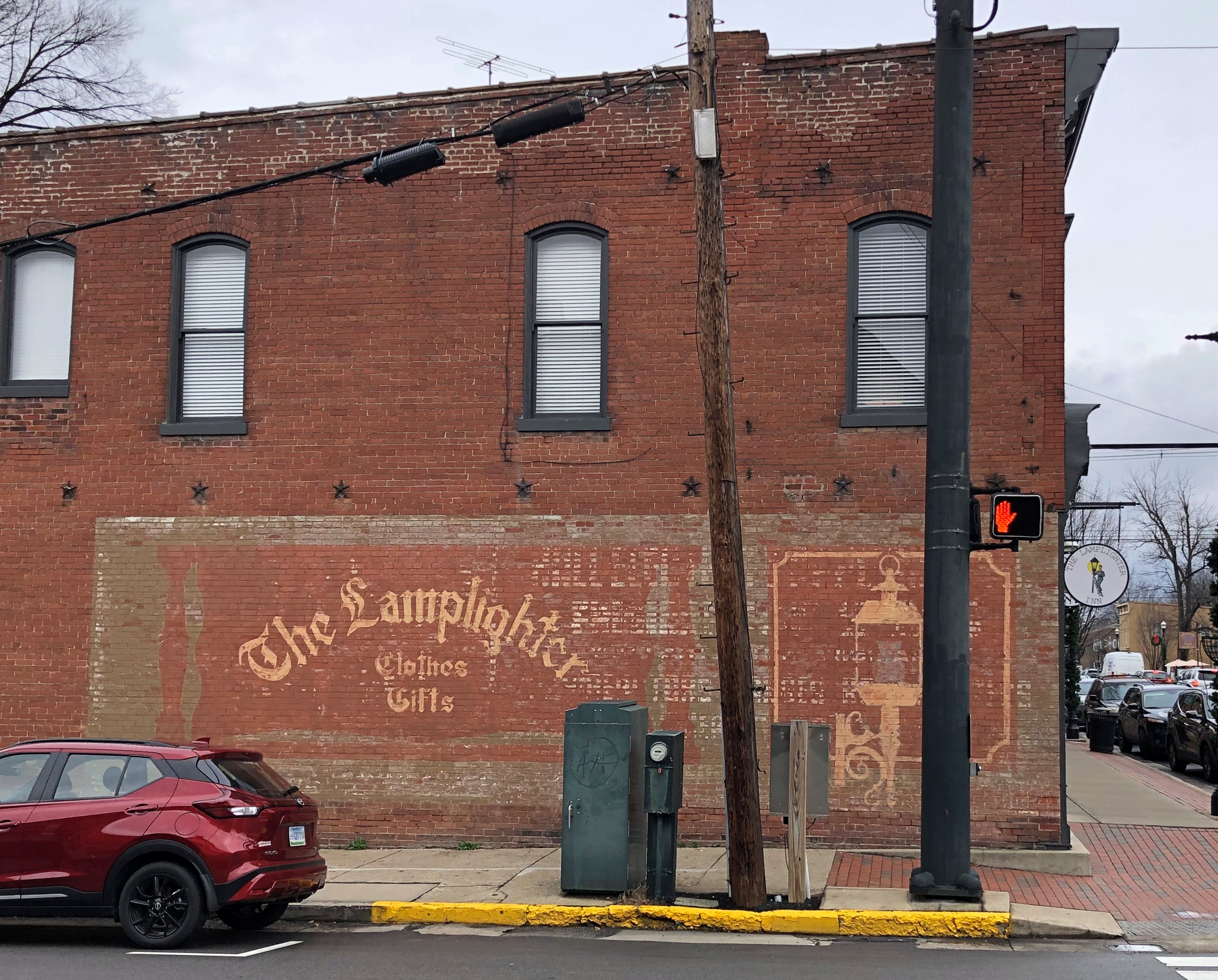
A few ghost signs.Bardstown, Kentucky

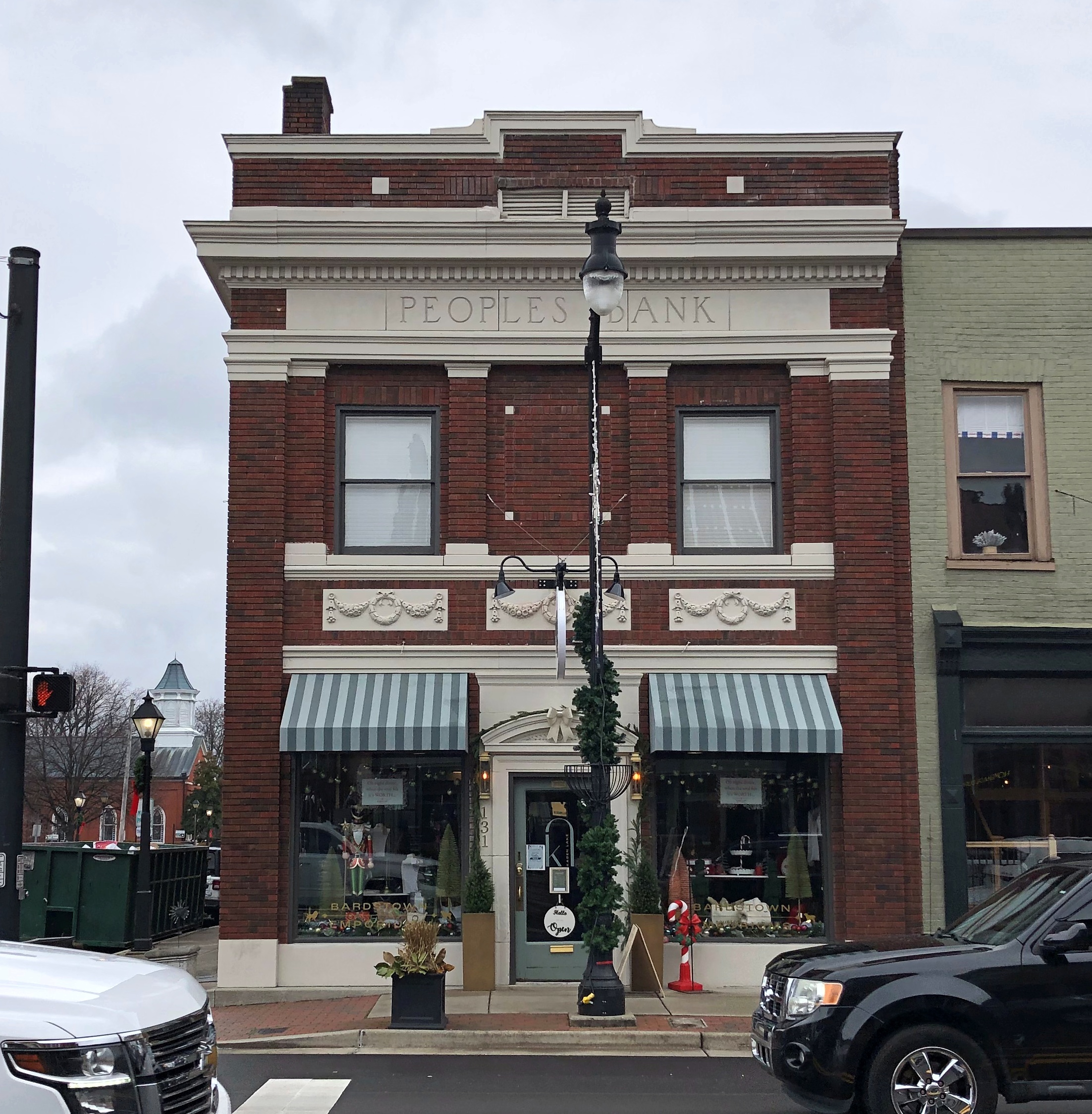
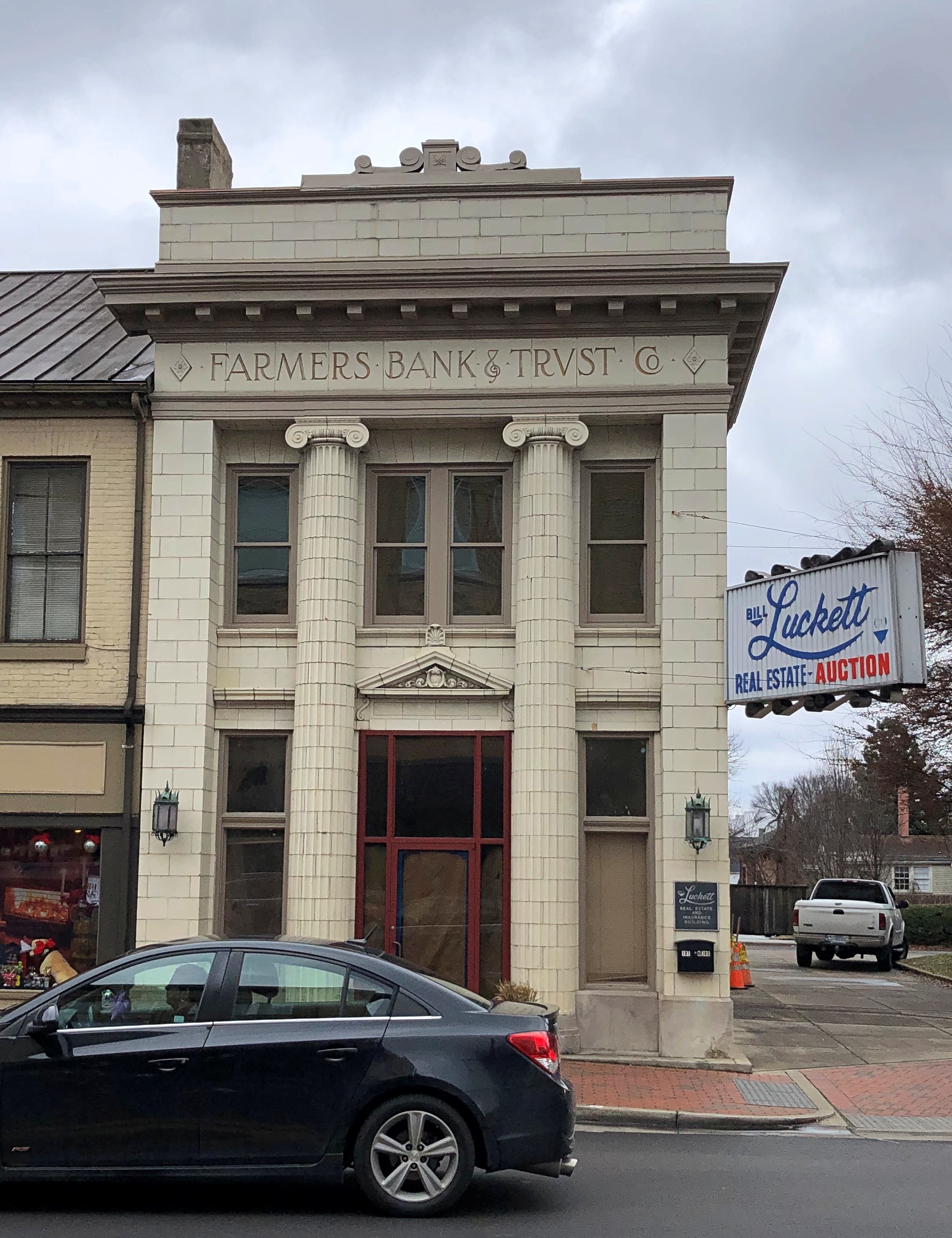
A selection of pre-FDIC bank buildings.Bardstown, Kentucky Bardstown, Kentucky

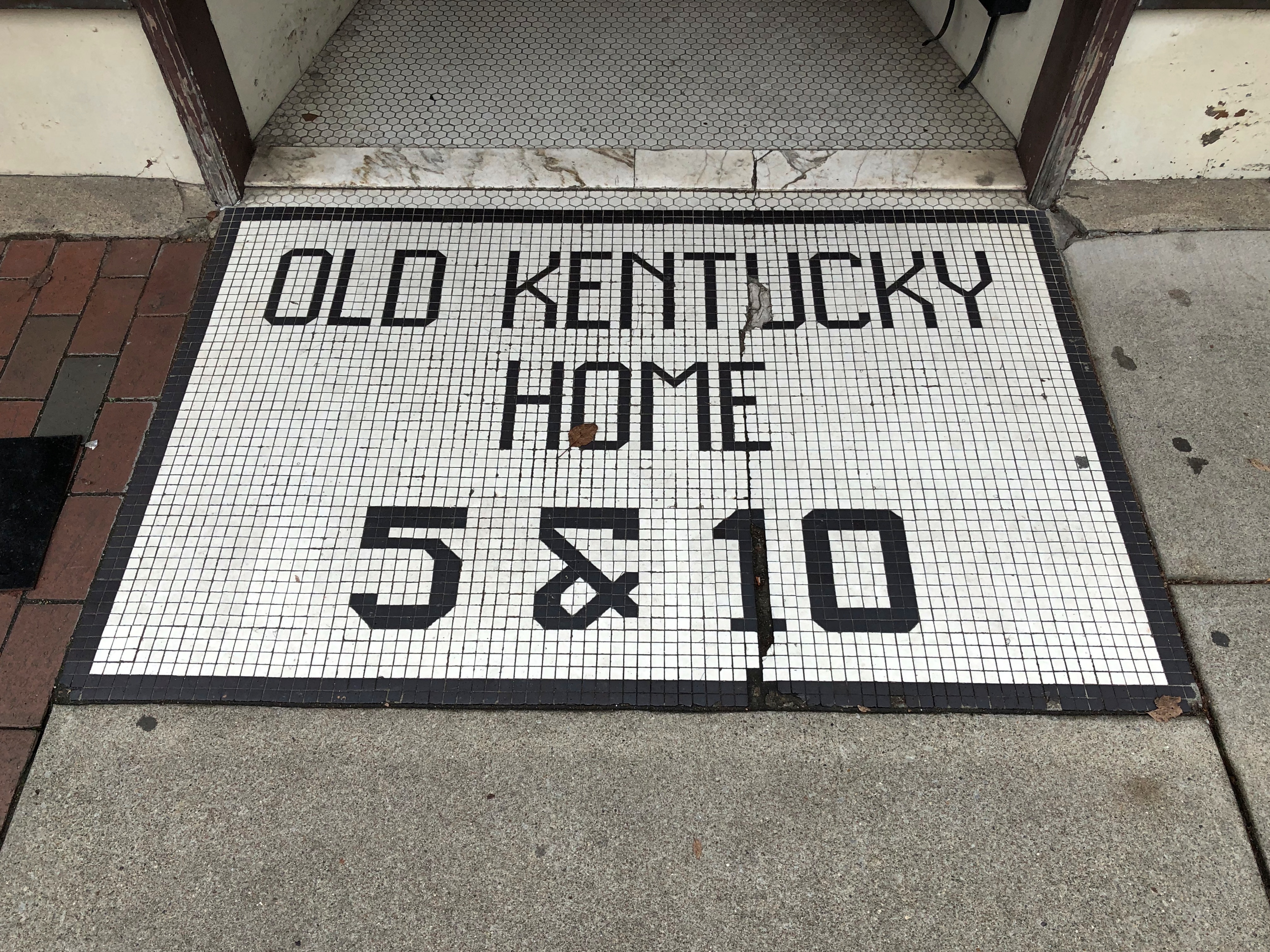
The five-and-dime is also gone.Bardstown, Kentucky

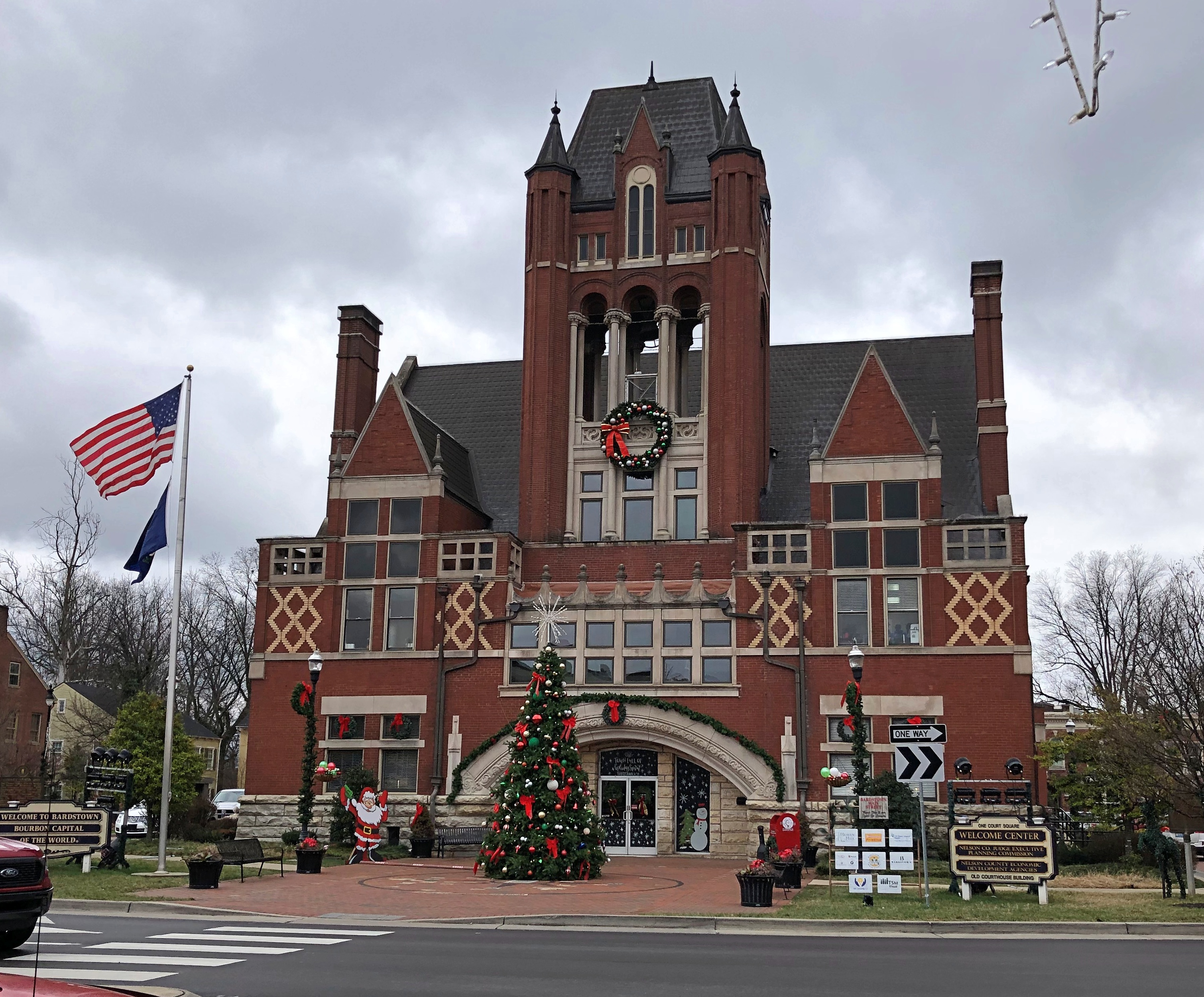
At the junction of Third and another major street, Stephen Foster Avenue – more about him later – is a roundabout, and in the roundabout is the imposing former courthouse, which these days houses the Bardstown Tourist & Convention Commission, the Nelson County Economic Development Agency and the Bardstown Nelson County C-of-C.Bardstown, Kentucky Bardstown, Kentucky

Another relic of the great age of courthouse building in the United States, designed by Mason Maury and completed in 1892. Most of Maury’s work was in Louisville, and in fact he designed Kentucky’s first skyscraper in that city, the Kenyon Building. Sadly, that structure didn’t survive the mid-century purge of old buildings.
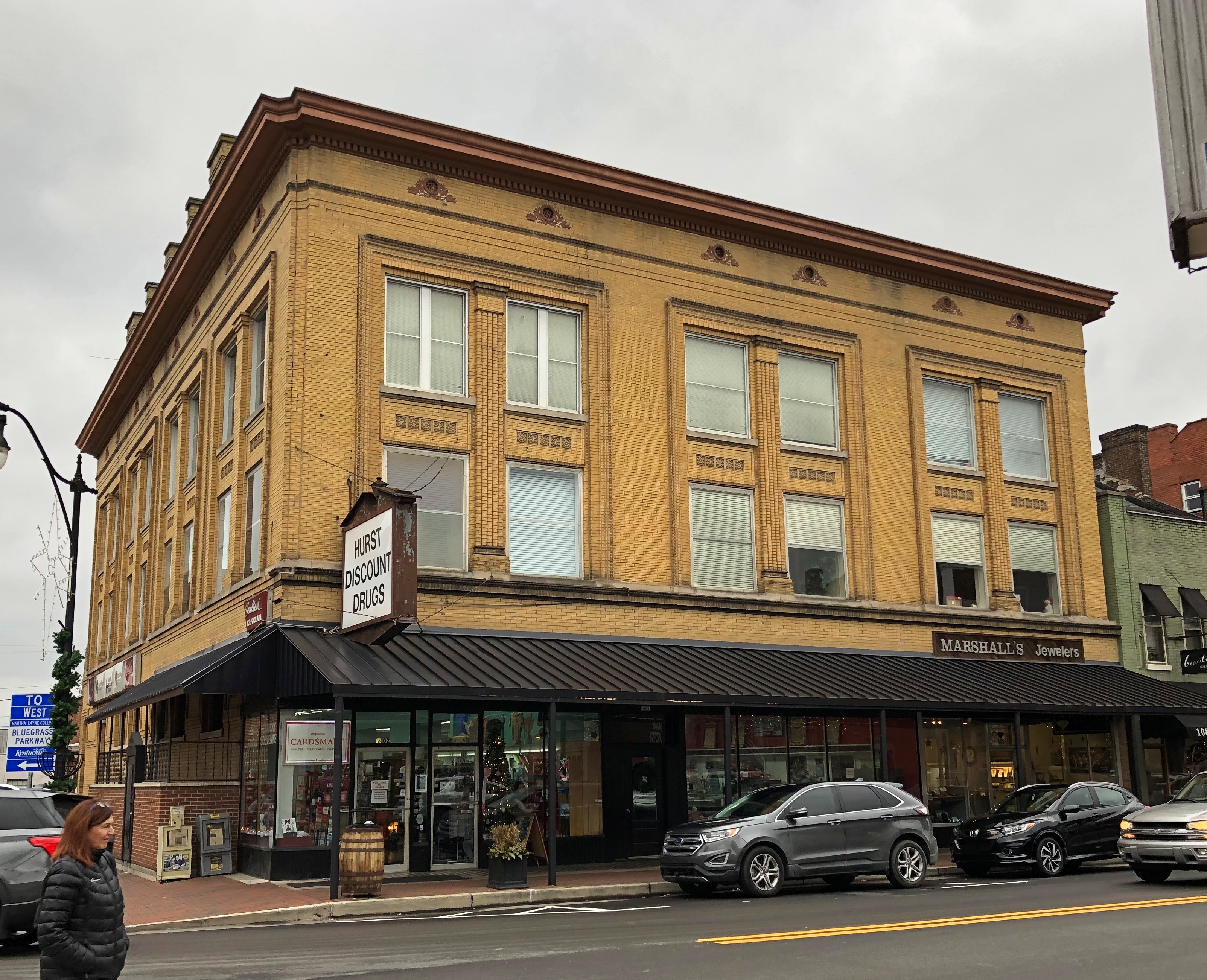
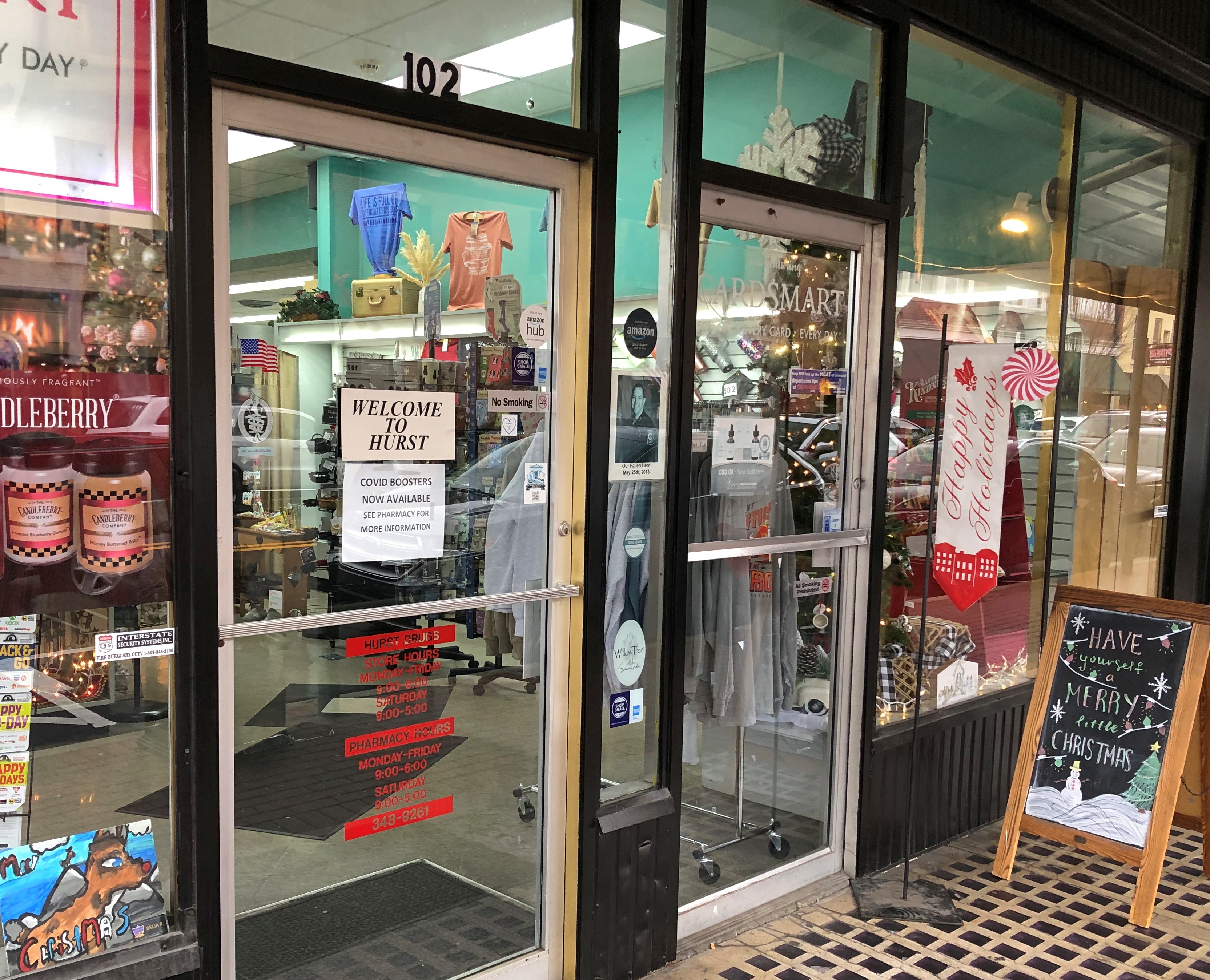
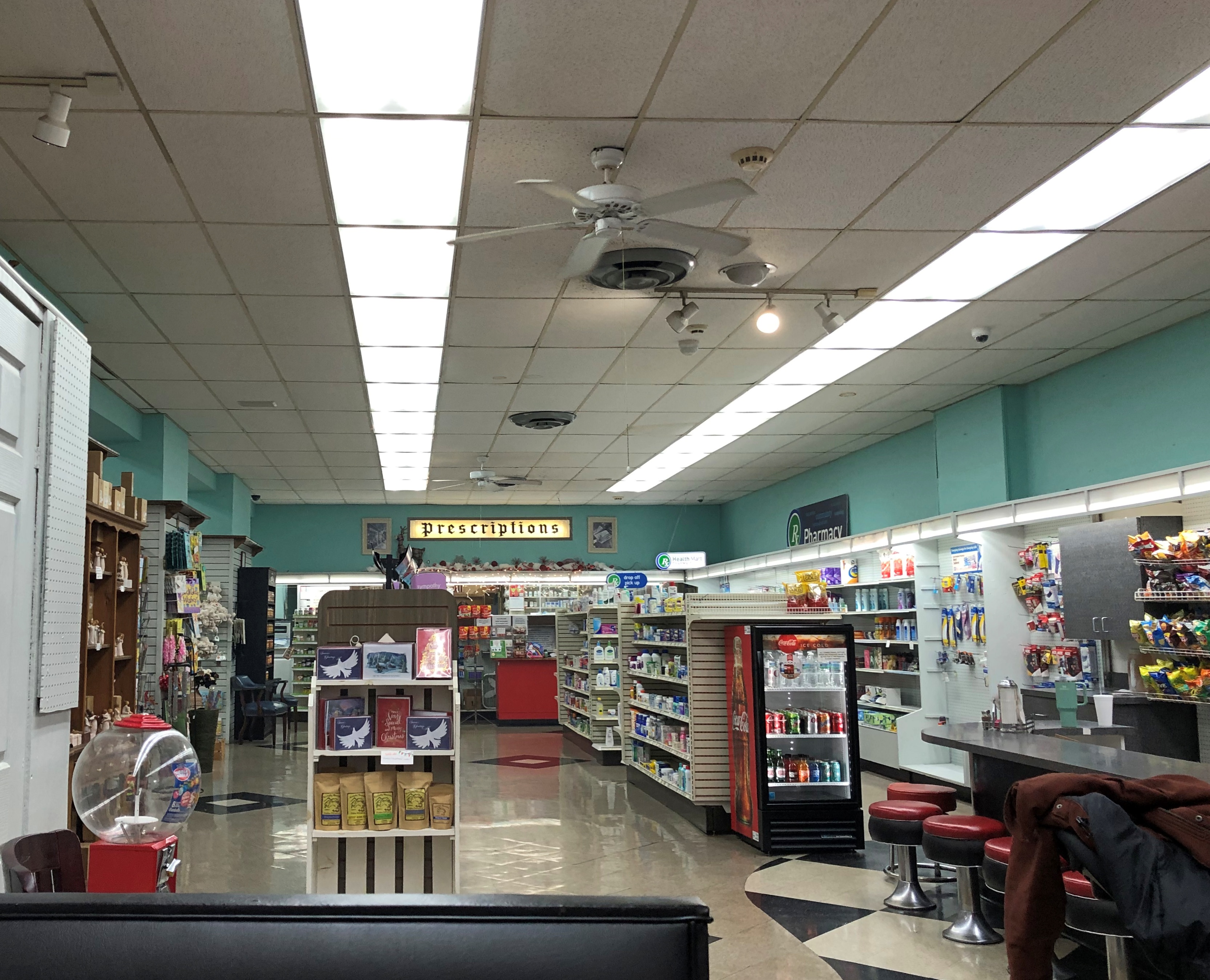
At one corner Third and Stephen Foster is a building whose first floor is occupied by a drugstore: Hurst Discount Drugs.Bardstown, Kentucky Bardstown, Kentucky

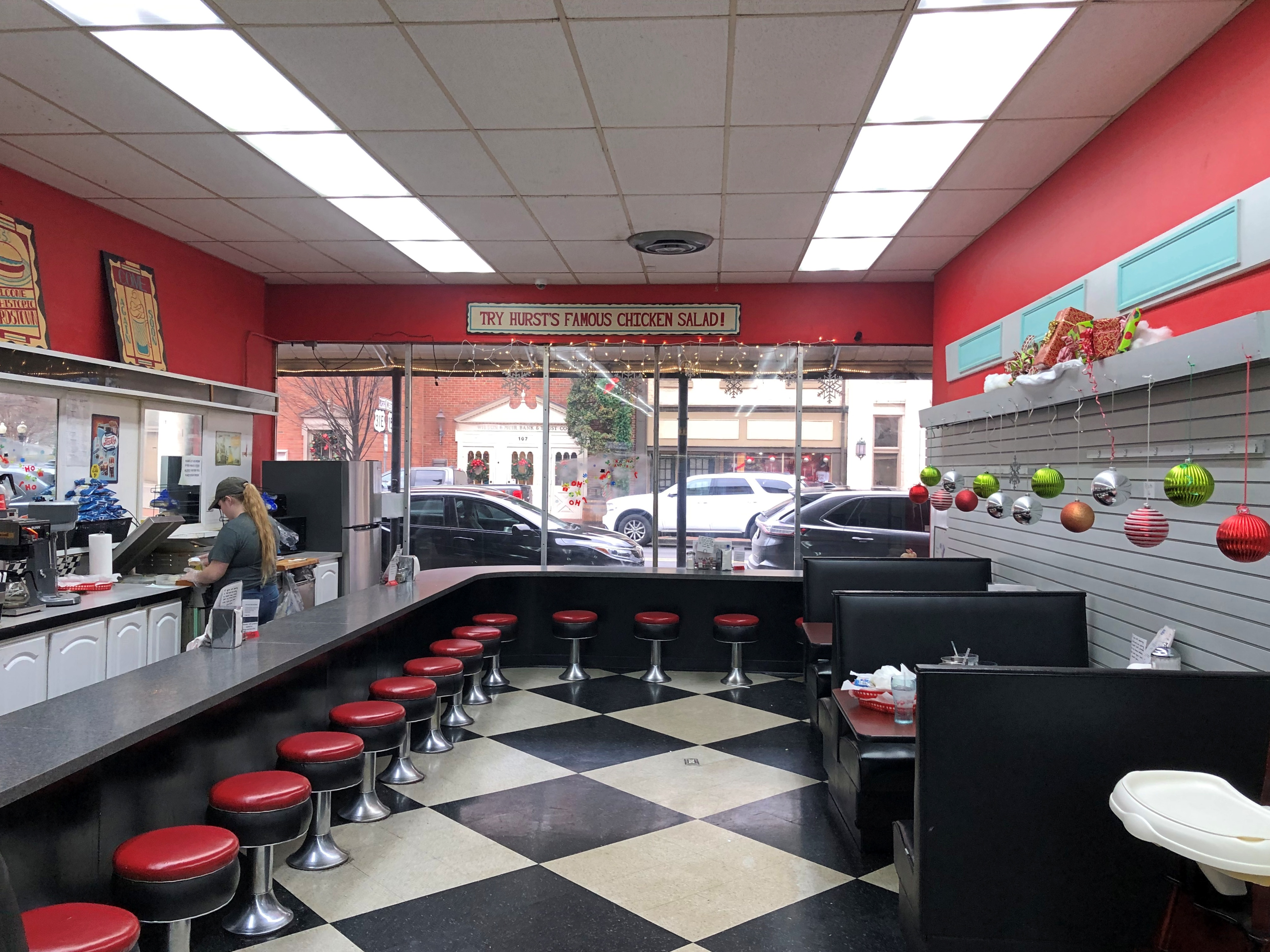
We happened to be looking for lunch at that moment, and happened to notice that Hurst also includes a lunch counter. How many drugstores have lunch counters any more? How many did even 30 or 40 years ago? We instantly decided to eat there. I did, anyway, since I’m not sure Yuriko appreciated what a rara avis we’d found, but she was game.Bardstown, Kentucky Bardstown, Kentucky

We weren’t the only customers, though everyone else left before we did.Bardstown, Kentucky Bardstown, Kentucky

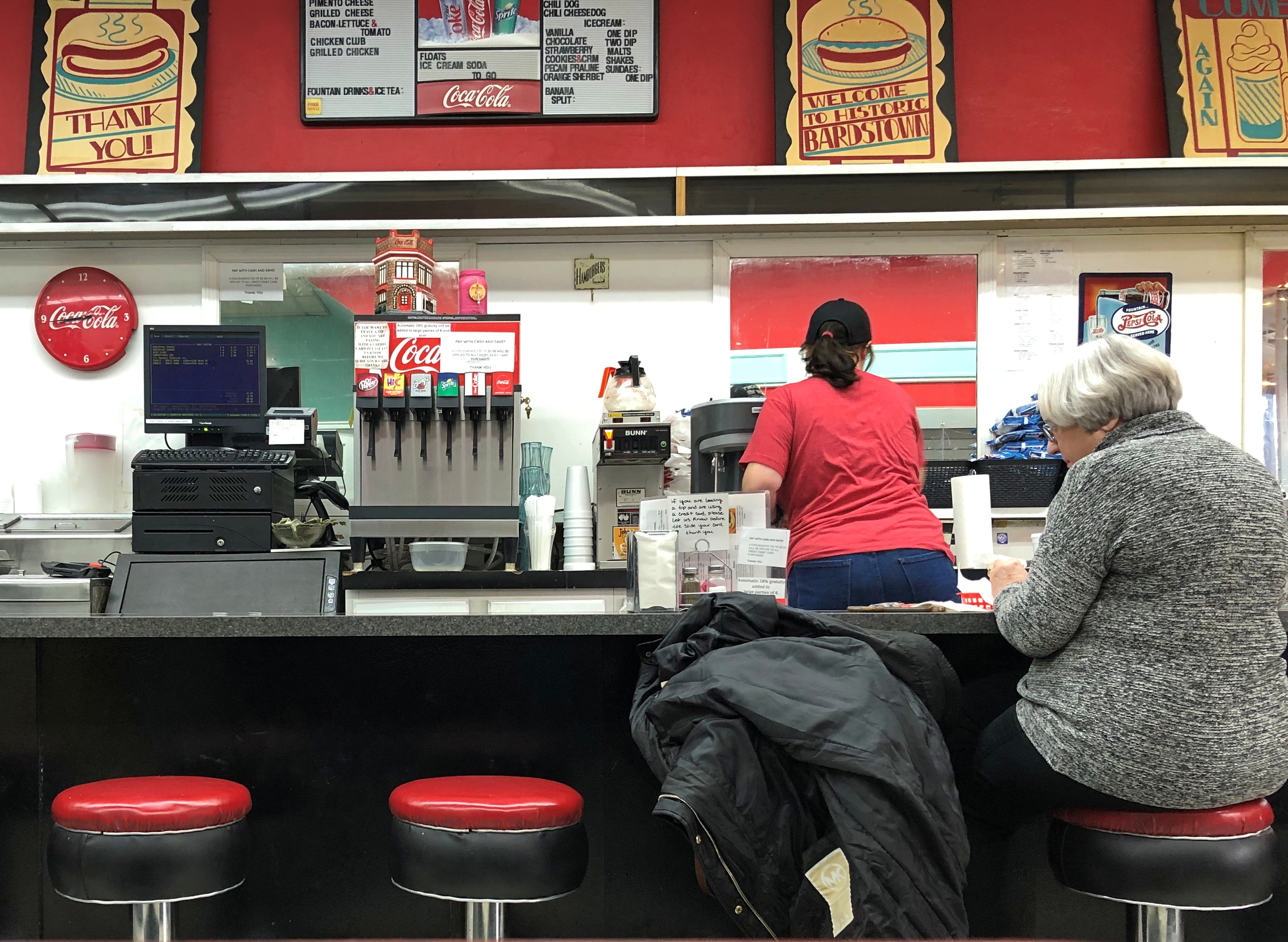
Speaking of rare birds: only one thing on the menu was more than $10, the double bacon cheese burger deluxe at $10.19. Order deluxe and you get mayo, ketchup, mustard, tomato, lettuce, pickle and grilled onions.

Besides burgers, other options included sandwiches and a few breakfast items. Even better, the flip side of the menu offered an array of ice cream products: scoops, shakes, malts, ice cream sodas, banana splits and sundaes, and floats — black cow (Coke), brown cow (root beer), and orange cow (orange sherbet and Sprite).

I had the more modest cheeseburger deluxe at $7.49, plus a chocolate shake for $6.29. Elevated compared to only a few years ago, certainly, but still reasonable, especially considering that the burger was good and the shake was really good.

Churchill Downs & The Kentucky Derby Museum

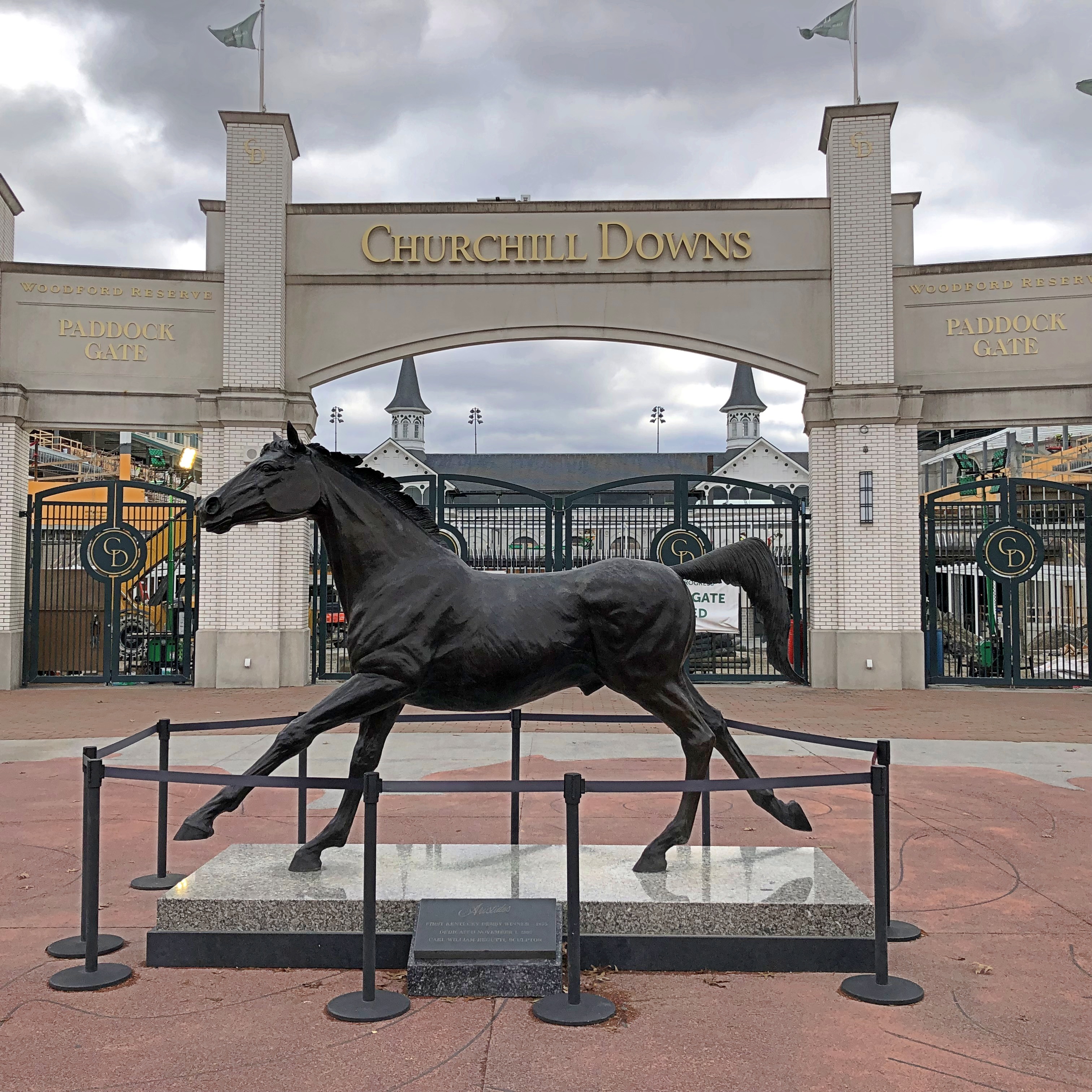
Even before you enter the grounds of Churchill Downs, you encounter bronze horses. Both are winners of the Kentucky Derby. One is Aristides, at the Paddock gate, who came in first in the first Derby in 1875 – long before it was a Run for the Roses,® or the first race of the Triple Crown,® or the Most Exciting Two Minutes in Sports,® or the object of 21st-century renovations.Churchill Downs

The Derby was about drinking and gambling from day one, I believe, and not in moderation, yet genteel enough (at least in the stands) for the monied elite — traditions that grand event upholds to the present, all the other trappings notwithstanding. What better for a spring day in Kentucky?
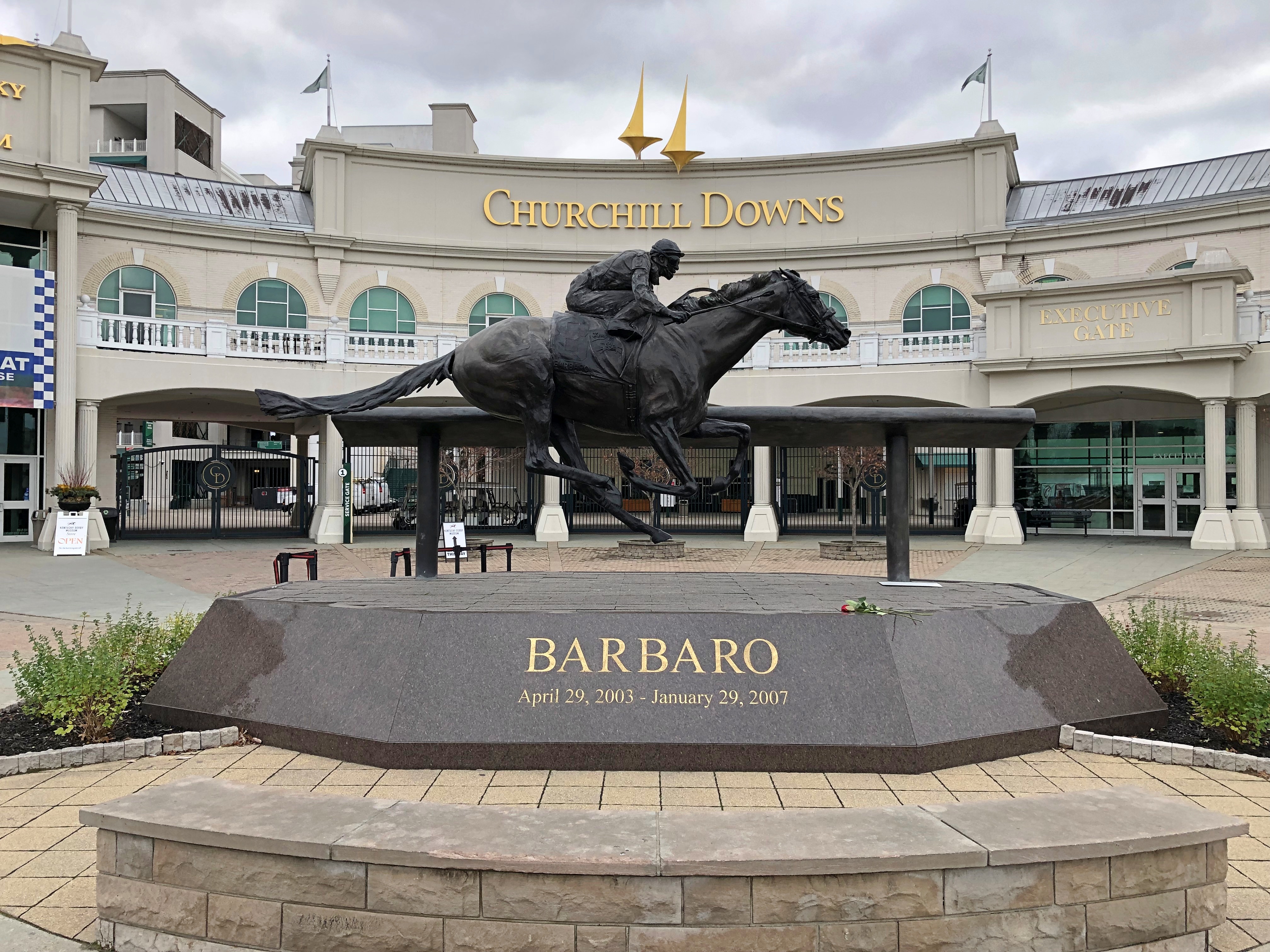
The other horse, and statue, is more recent: Barbaro.Churchill Downs

I suspected right away that some physical remains of Barbaro were there as well, and yes, his ashes are, I read later. I’ve pretty much ignored thoroughbred horseracing most of my life, and even my limited interest in the ’80s was because I enjoyed going to the Derby in person. So I wondered about Barbaro. I must have heard the news story in the 2000s, but it had evaporated, gone amid the backdrop of a household with little kids.

Still, I figured, as a Derby winner his birth and death years (2003 to 2007) pretty much got to the heart of Barbaro’s career – a shooting star among race horses, brilliance to ashes. Later I looked up the details, including in a succinct, eulogizing video, and that’s about the size of it.

A thoughtful comment from the video’s comment section: Not making an anti-racing statement but, if you feel bad for Barbaro, take a moment to think about all of the other horses that broke down and died, on/off the track, too. Barbaro got kind letters, flowers, signs and even gift baskets with horse feed sent to his veterinarian centre, because he was a champion. Just seems sad that we only do that for the gifted athletes of the sport, even though every one of those incredible animals gave it their all for our entertainment.

@catarena8031

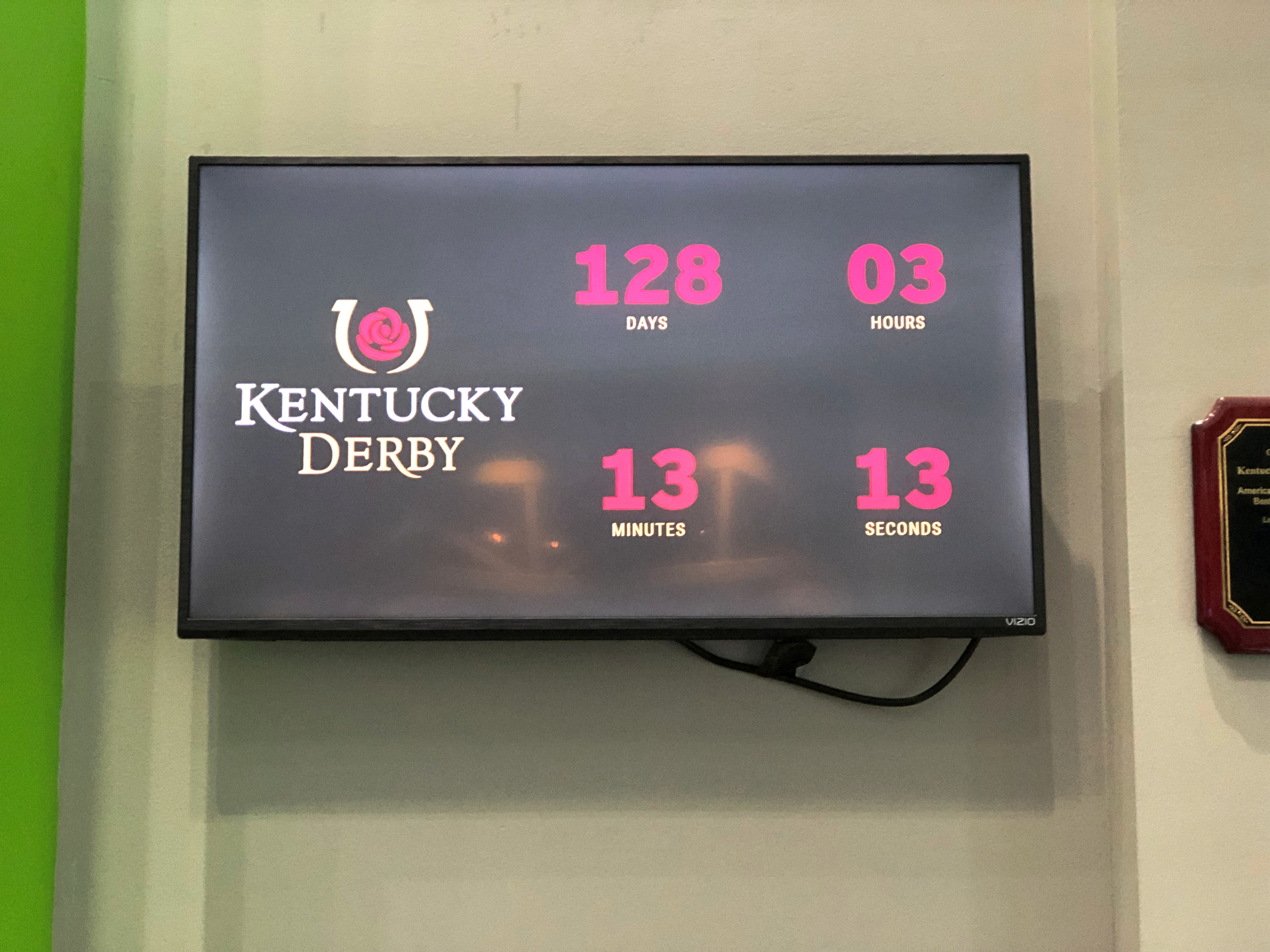
Near Barbaro is the entrance to the Kentucky Derby Museum, and near the admission desk is a countdown clock.Museum of the Kentucky Derby

(As it appeared on December 28.)

While we were still in the parking lot, headed for the entrance, we passed by a young couple leaving. Out of the blue the man said to us, “Take the Barn and Backside Tour. It costs more, but it’s worth it.”
“Really?” I said, in a friendly tone. They both nodded their agreement.

“You get to see a lot more,” he said, gesturing with his hands a bit, sort of making parentheses around his sizable beard. “Some of the stables and other places behind the track.”

We agreed that that sounded good and parted ways. I asked about it at the desk. Sorry, sold out. So we got the basic tour and museum admission, a spot over $20 per person. The museum, well organized and informative but not overtaxed with dense reading, was worth a look, for a small glimpse into a whole other world.

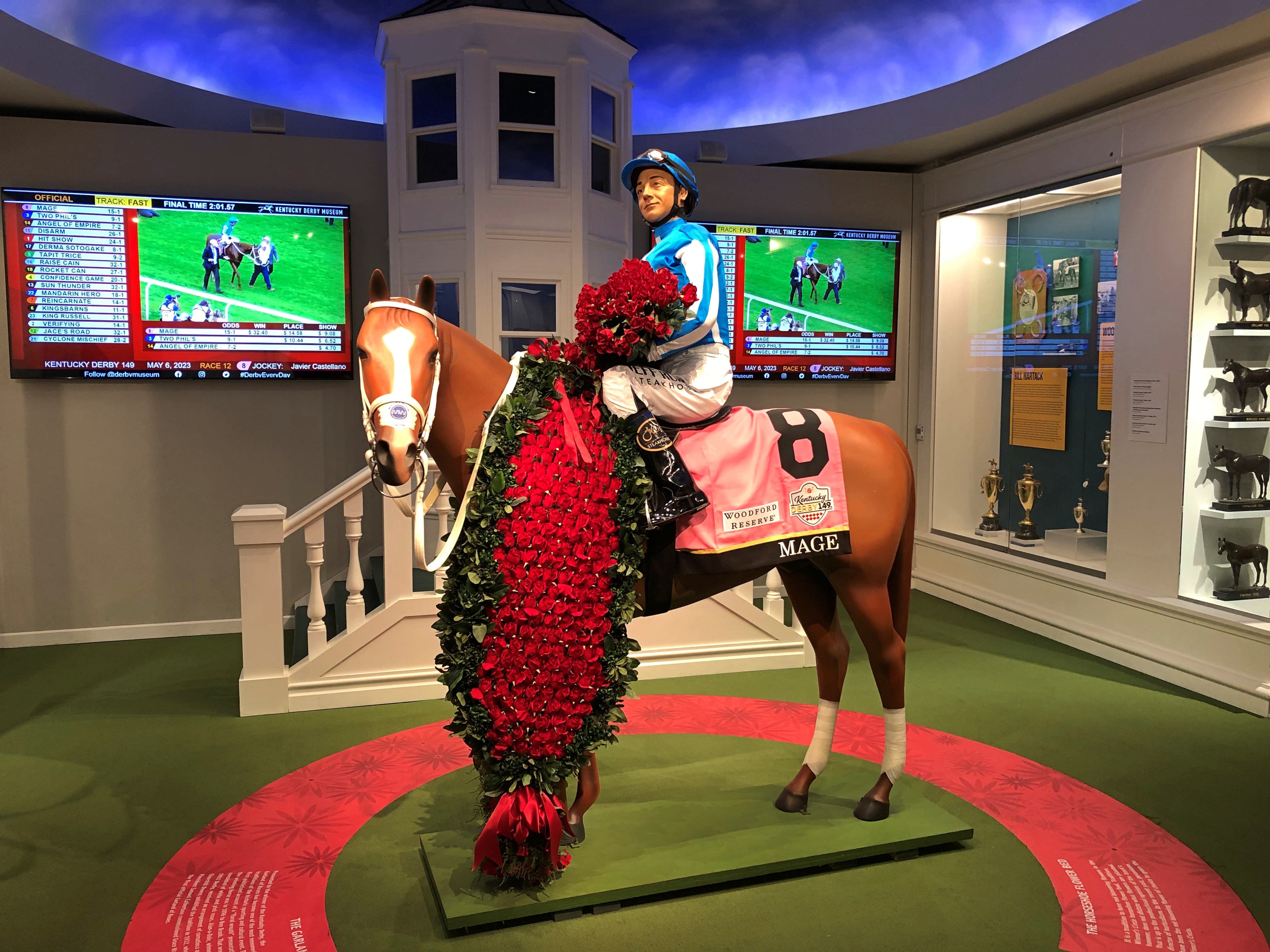
Also, you get to see a facsimile of Mage, last year’s winner.Museum of the Kentucky Derby

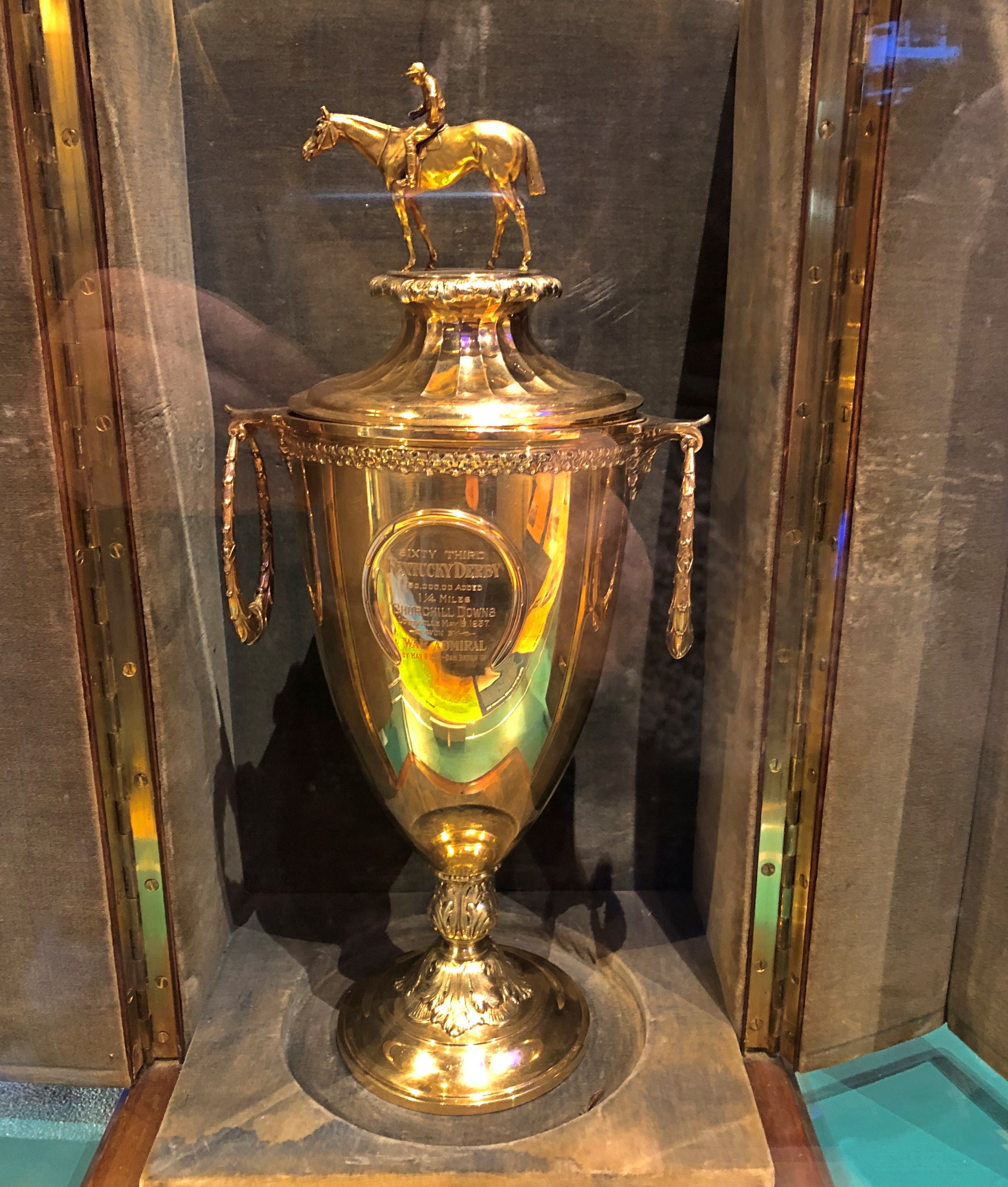
And the trophy War Admiral received in 1937 for winning the Derby.Museum of the Kentucky Derby

Along with a good many other items. Other displays included Triple Crown winners – each one had a kiosk – how thoroughbreds are raised, the building of the track and the early races, video screens to call up and watch previous televised races (I watched ’86; I only heard it when there), images of the flamboyant hats and dresses worn by female racegoers, and the part African-Americans have played in the event, especially as jockeys: a good many in the early years, including Oliver Lewis; nil as Jim Crow solidified; some since the legal end of segregation.

The tour started with a short presentation on a 360-degree screen well above eye level: part movie, part still images with a sound track, and about what the horses and the jockeys and all the many other support staff do to put on the Derby. Quick-moving, it idealized the event somewhat, but who would expect otherwise?

The cinematography was exceptional sometimes, giving me the sense that whatever else the racehorses are, they’re massive, powerful beasts of tremendous energy. And what manor of men would perch themselves atop these beasts at their top speeds? Besides relatively small men and a few women, that is. I have a new-found respect for jockeys.

Also, it got me to thinking, a little along the lines of the comment above. Sure, it’s fine to know about the winners down the years, and I’ll go along with the notion that, say, Secretariat was a very great racer indeed. But what about the also-rans? Not just also-rans, but last rans?

Back when Aristides took the prize to the crowd’s acclaim, a horse named Gold Mine proved not to be one, coming in 15th and last. When Sir Barton won on his way to the first Triple Crown in 1919, Vindex was 12th and last.

Vindex? After the Roman who rebelled, unsuccessfully, against Nero? Could be. I can imagine the owner reading about the bold Vindex in the works of I forget which Roman historian. It would have been a thing for a horse-owning Kentucky gentleman to do in his youth in late 19th century, possibly even in the original Latin.

One more. When Secretariat won the day in 1973, before a national audience (including a 12-year-old me), Warbucks was 13th and last.

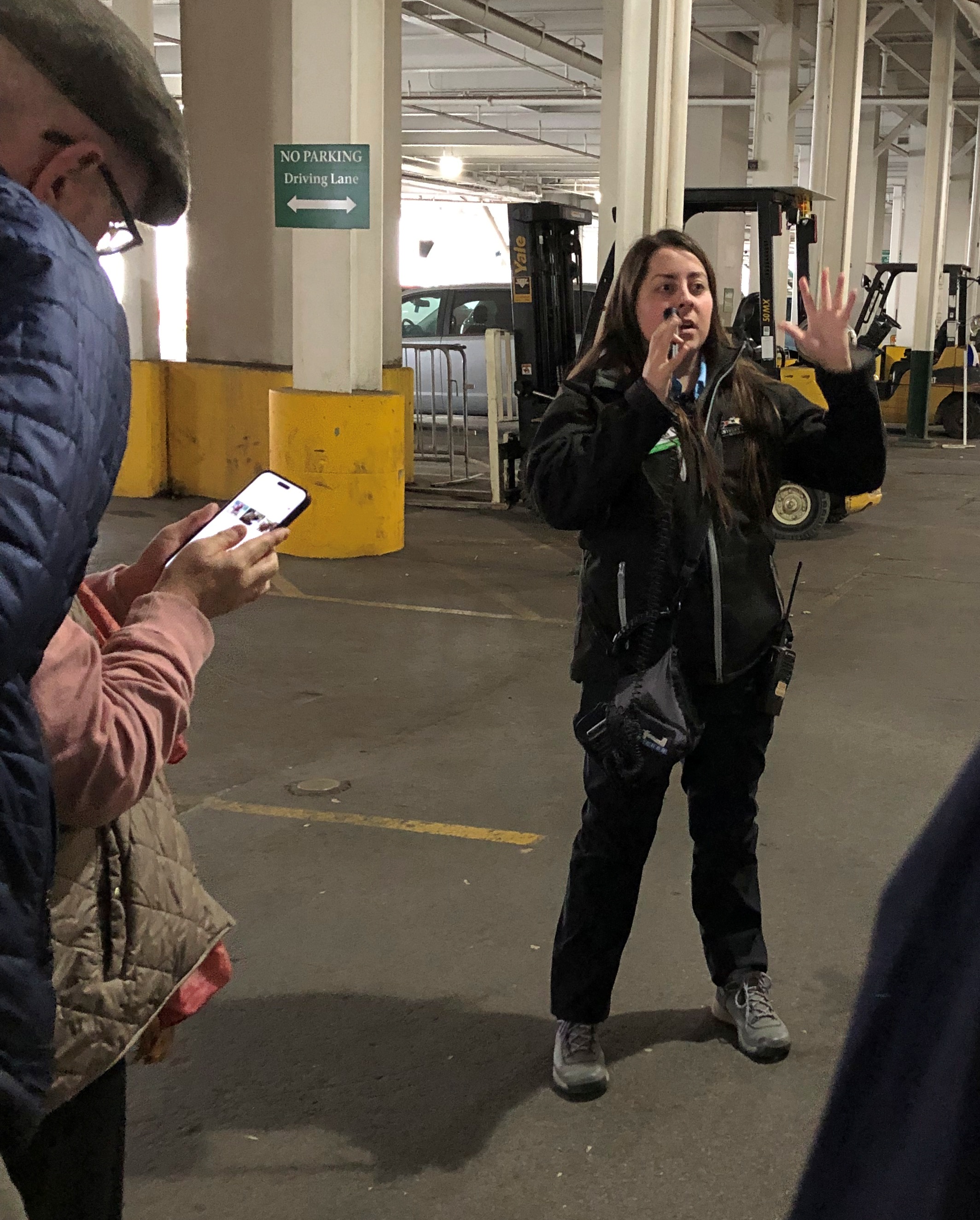
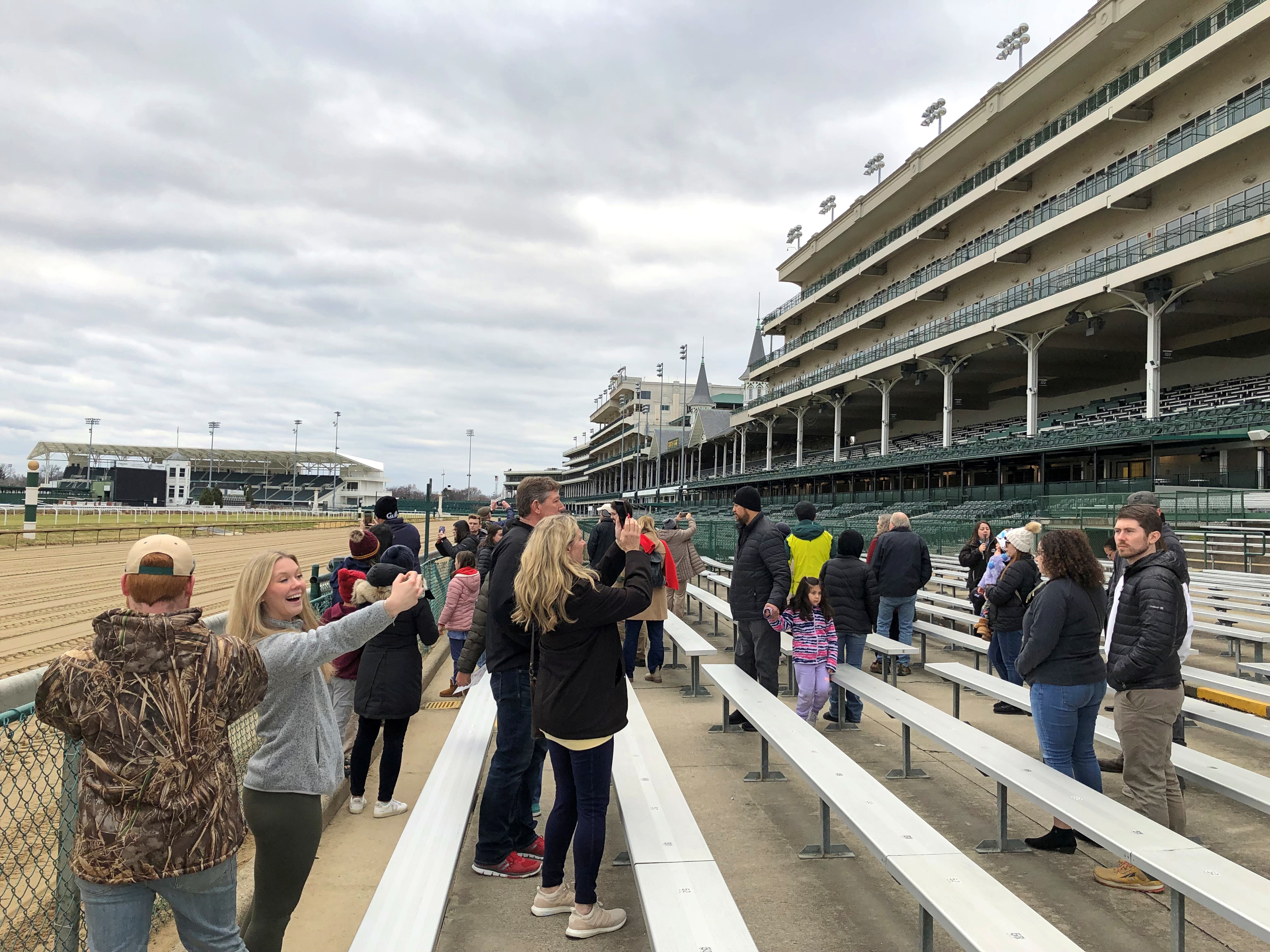
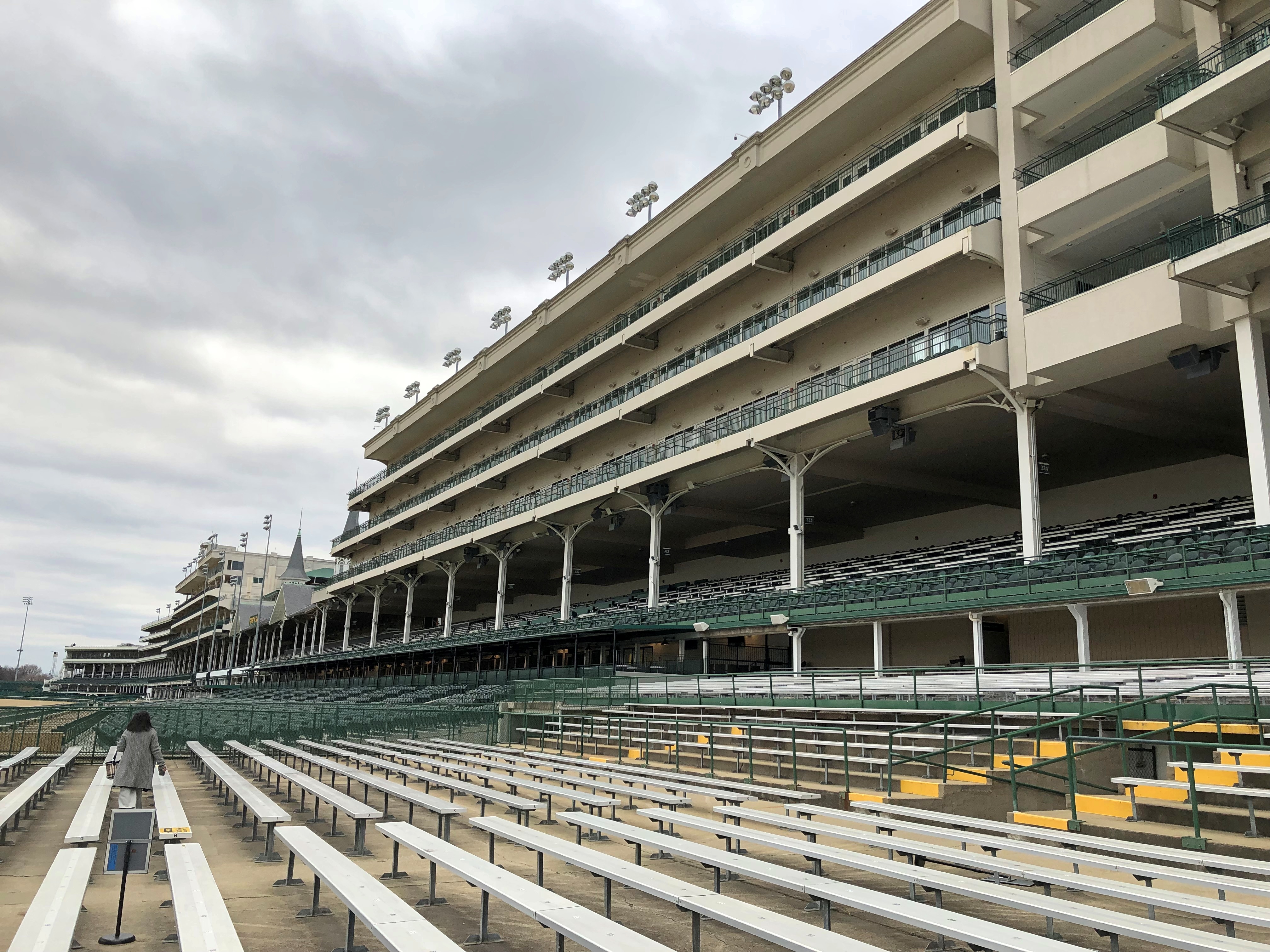
From the museum, the tour group moved to under the grandstands, guided by a competent employee of the track. She told us a capsule history of the race and the Downs.Churchill Downs

Out to the lowest level of the grandstand. It’s a good view, I have to say.Churchill Downs Churchill Downs Churchill Downs

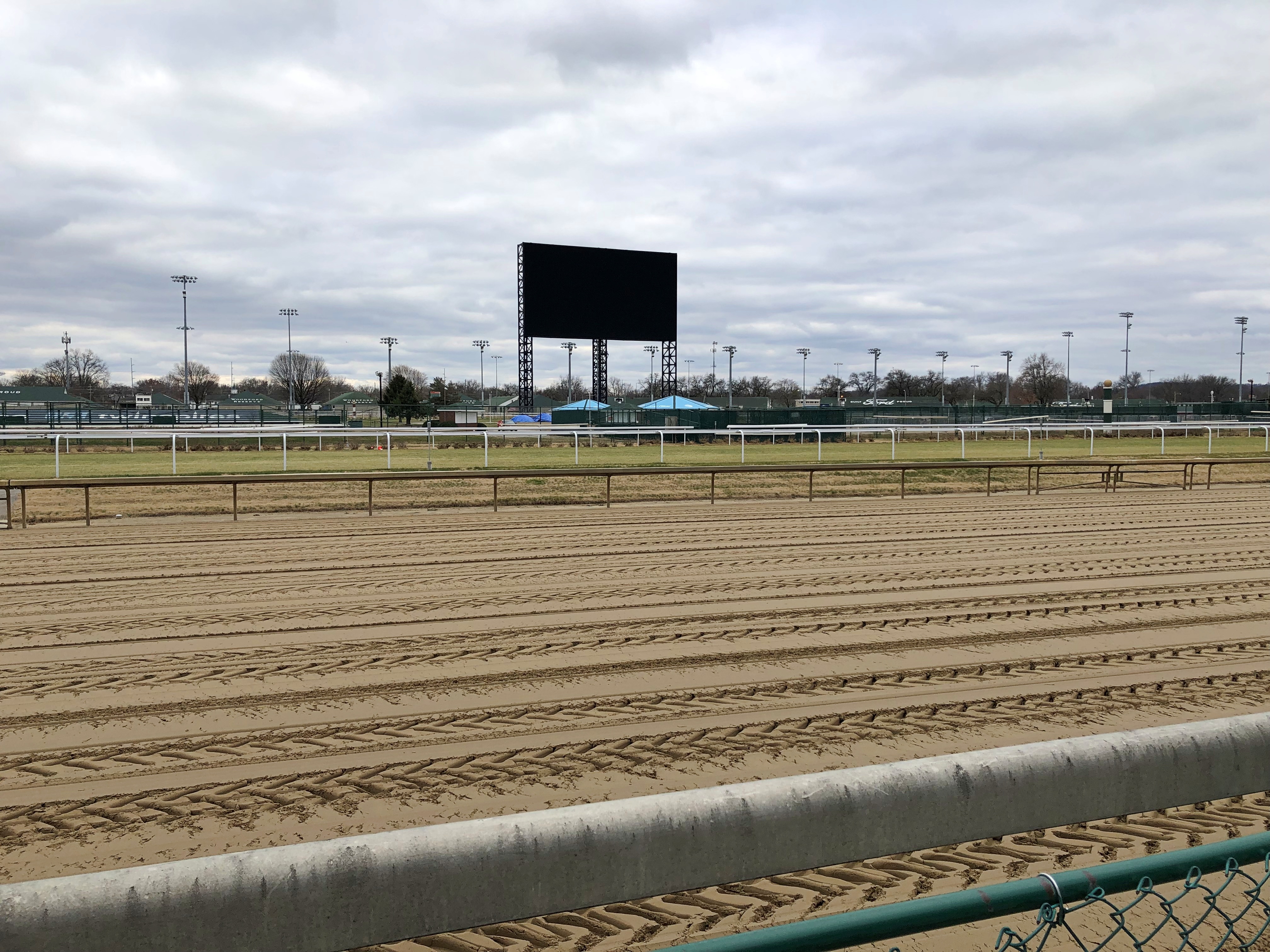
When was the jumbotron added? About 10 years ago.

The guide provided more history and some physical information about the track itself, and about the enormous stable complex on the other side of the track, way off in the distance, which sounded big enough to have its own zip code. (It doesn’t seem to.)

Then we headed back to the museum for a few more minutes, and that was that. Chintzy, Churchill Downs. That was more like a $12 museum + tour package. Not even a few minutes up in the grandstands? Did some whiz in the organization, or maybe a computer program, determine that eliminating the small but measurable cost in elevator maintenance and maybe slightly higher insurance premiums was worth shorting the patrons in their experience? Just speculation.

All I know is that the view from the grandstands should have been part of it. One visit to the Derby, I had access to the grandstands, and wandered around quite a while. You really get caught up in the thing looking down on the lively, colorful crowds and the active racetrack. Even on an empty winter day, I think you’d feel an echo of those festive times.

Three Louisville Churches

A friend on Facebook – and actual friend, known him 35 years — signed off with HNY today. Dense fellow that I am, that didn’t register, so I Googled it and found Happy New Year and Hot Nude Yoga. I’ll assume he meant the first one.

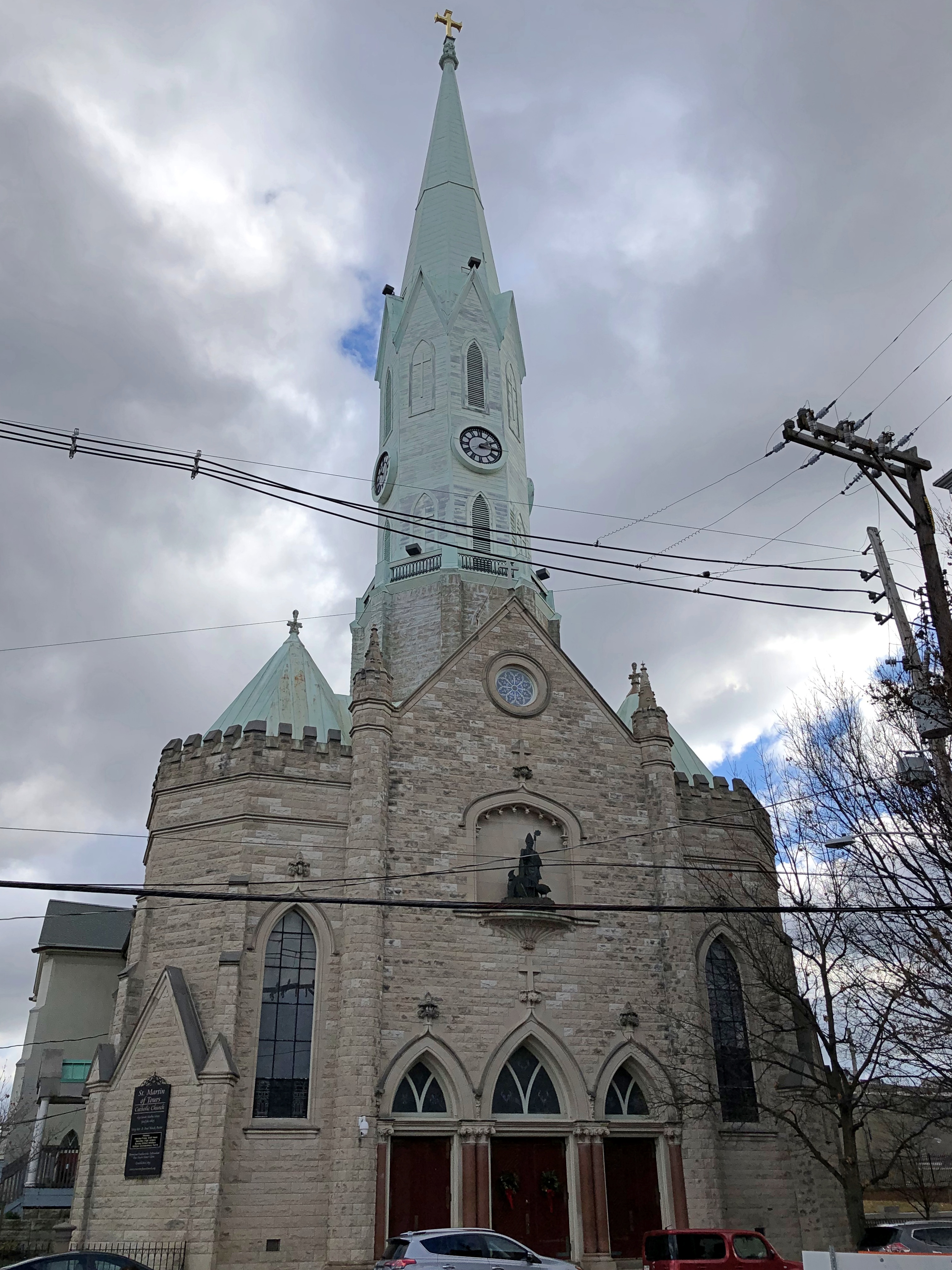
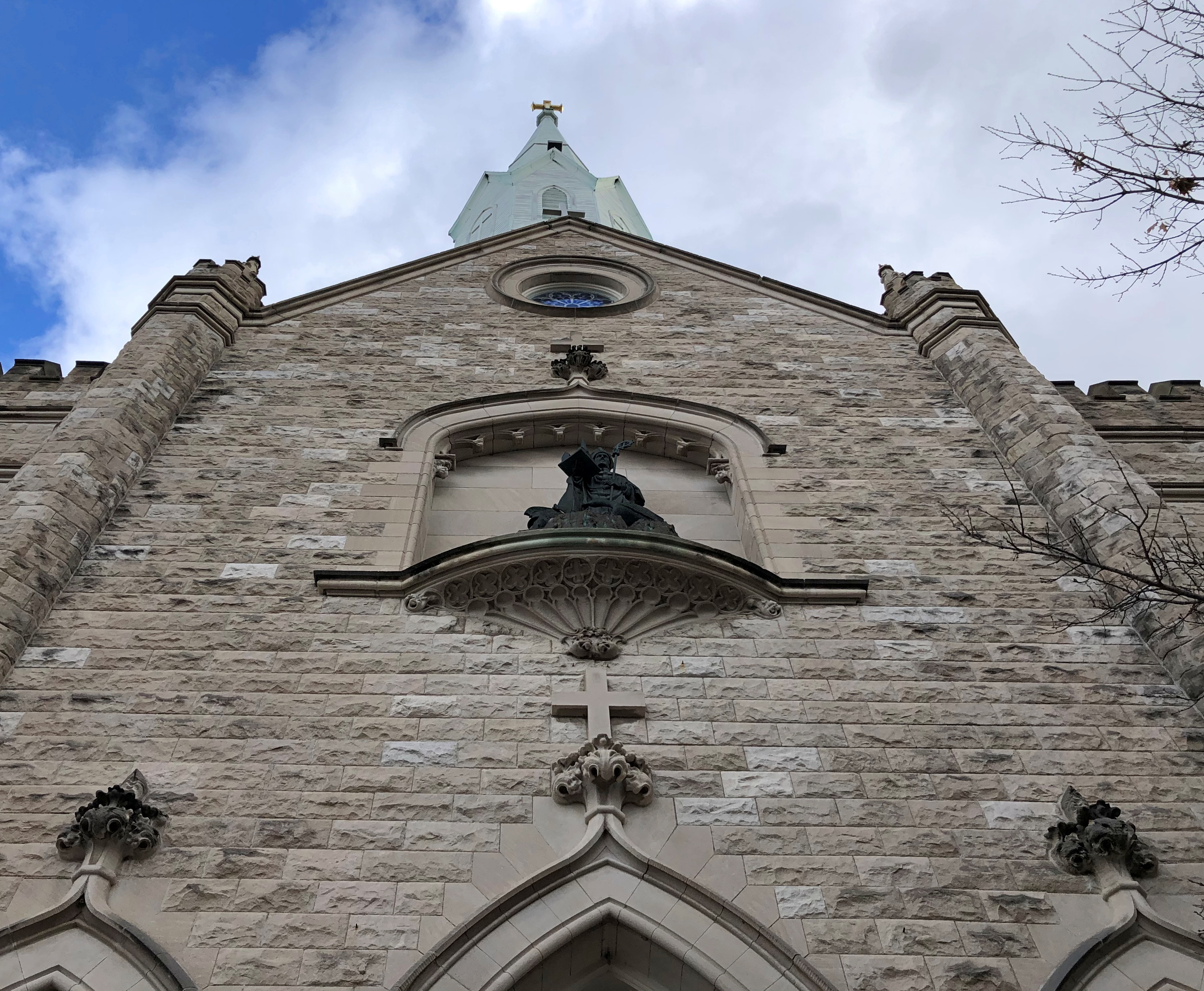
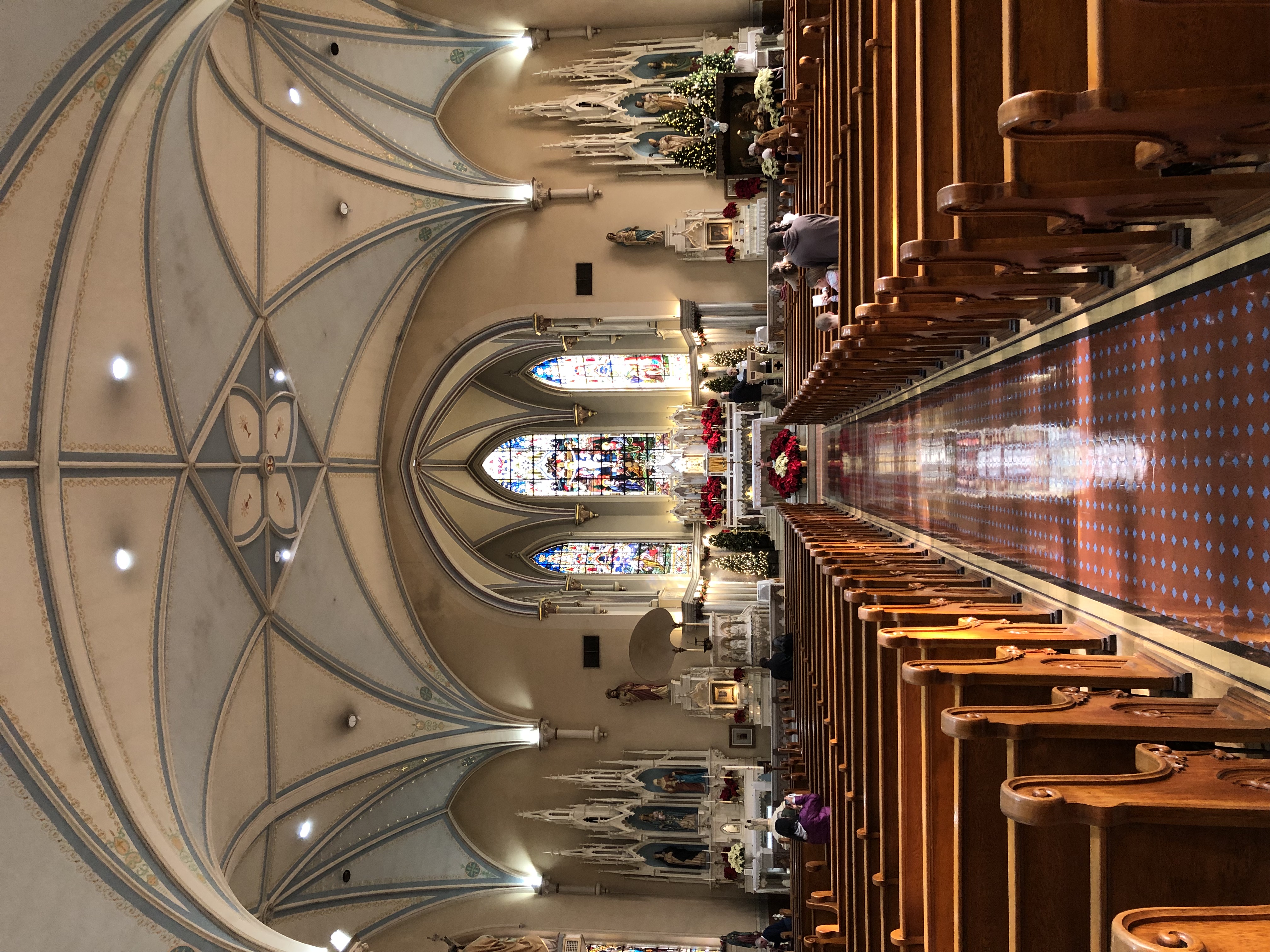
Fairly early on our first day in Louisville, we found our way to St. Martin of Tours, a Catholic church that rises in the Phoenix Hill neighborhood, among clusters of shotgun houses, more than I’d seen anywhere else.St Martin of Tours
St Martin of Tours

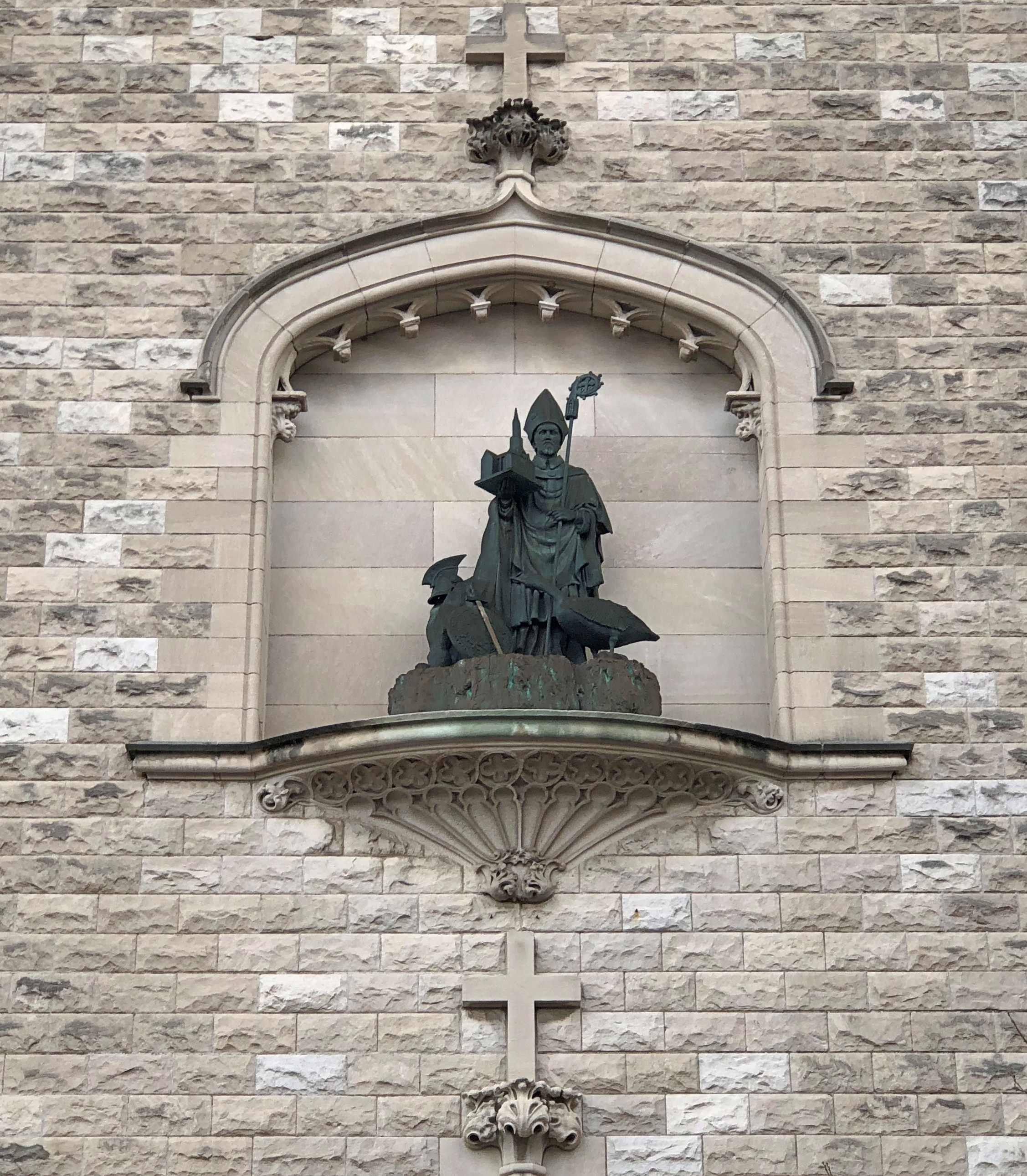
Must be St. Martin himself. He holds his basilica in Tours (I assume) as if on a serving plate.St Martin of Tours

I heard about him in a VU history class, but after so many decades, it was all a little fuzzy, so I looked him up. I remember now: Martin and his mentor Hilary of Poitiers kicked butt when it came to fighting the Arian heresy in the fourth century.

Patron of France, Martin is, but so much more: beggars, cavalry and equestrians, hotel and inn keepers, reformed alcoholics but also vintners and wine growers, quartermasters, and the Swiss Guards at the Vatican, among many others.

I suppose the saint was popular among the antebellum German immigrant population. They were on the receiving end of a Nativist mob attack not long before the war, a serious enough atrocity that it might have encouraged the waves of German Catholics to go to Chicago, St. Louis and other cities instead of Louisville.Cathedral of the Assumption

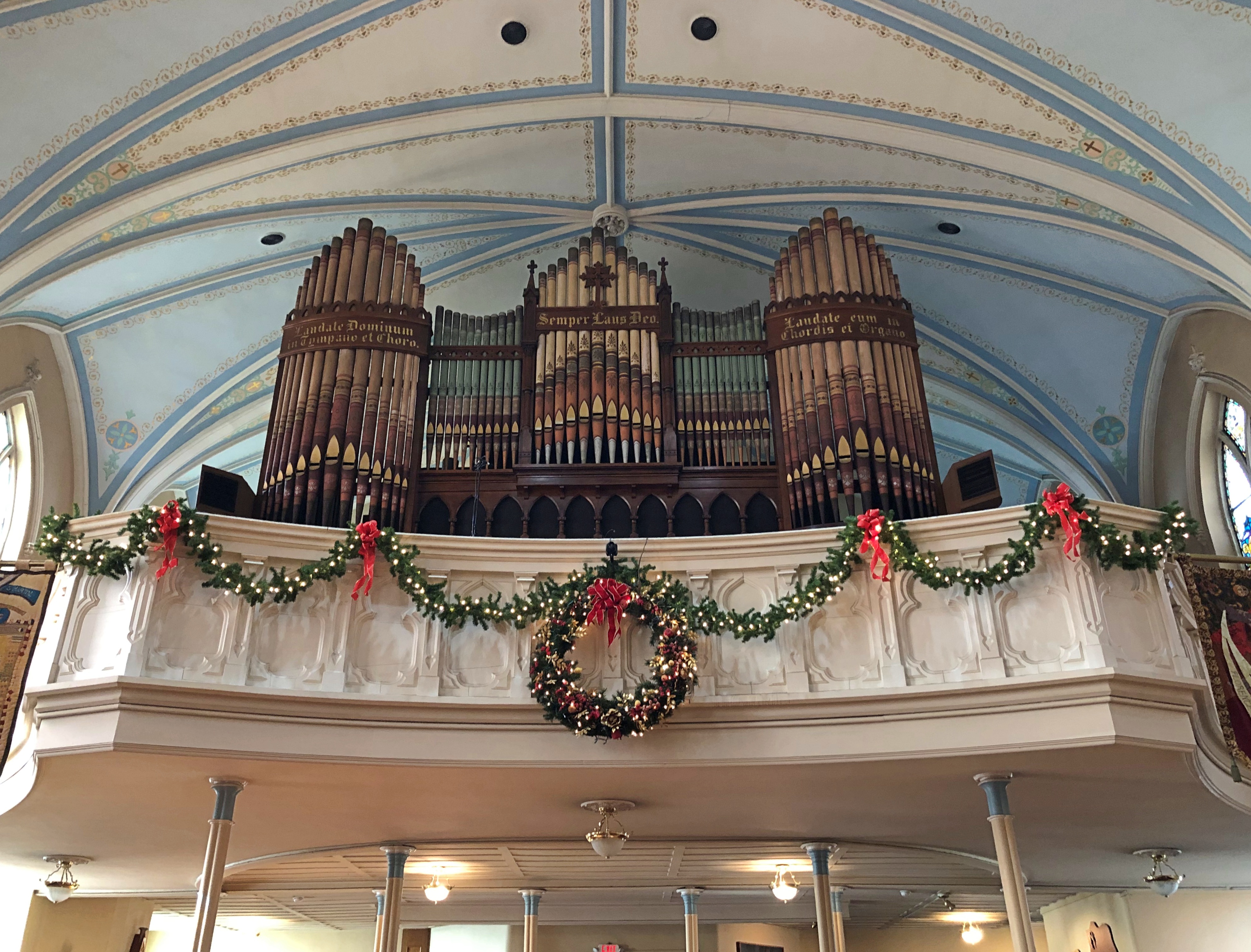
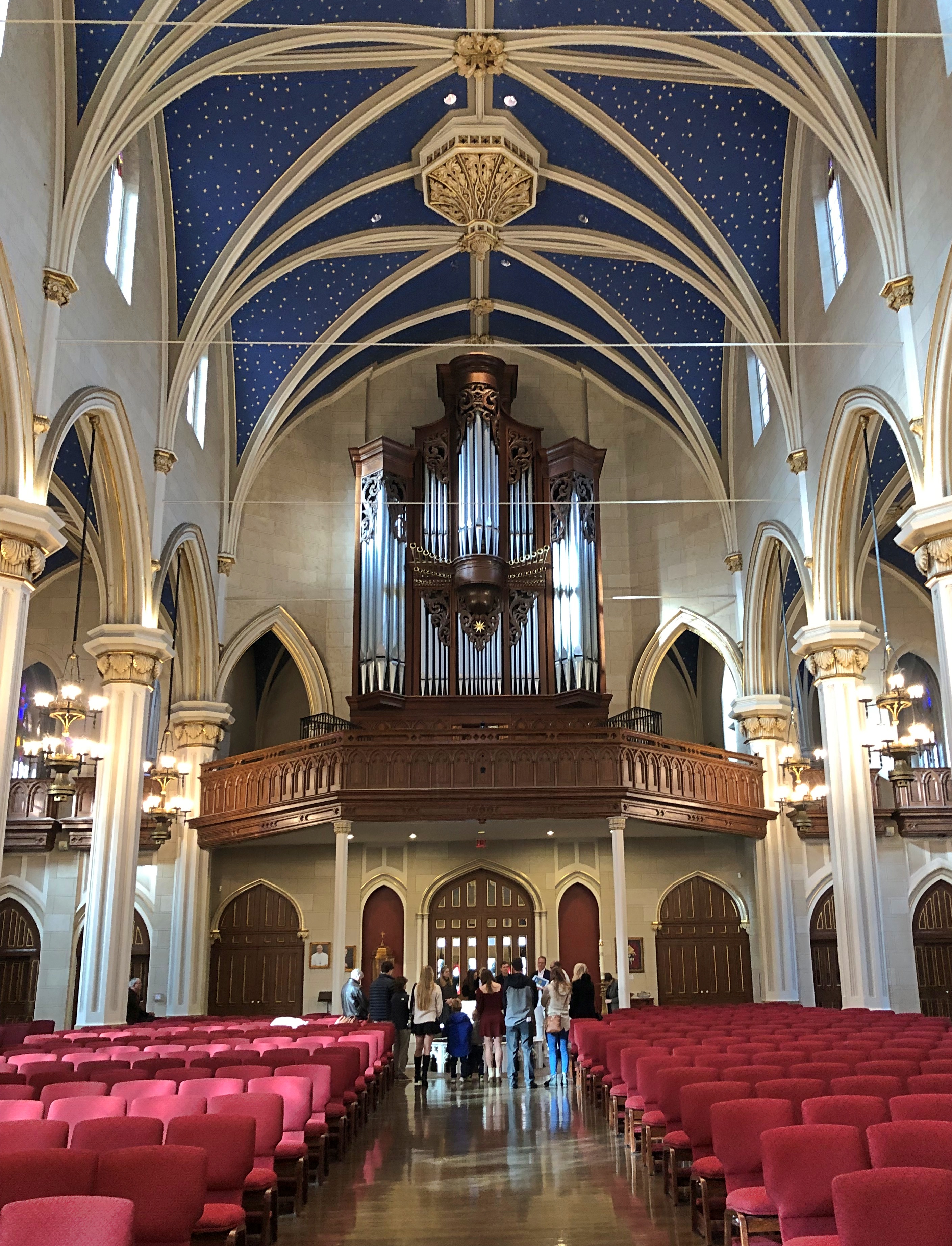
The mighty-looking organ was silent during our visit.Cathedral of the Assumption

A side chapel is a site of perpetual adoration, but I didn’t want to bother the man in there, who looked pretty intent. Closer to the altar are the bones of Saints Magnus and Bonosa, fourth-century figures and the subjects of the sort of vague saintly stories common in that period.

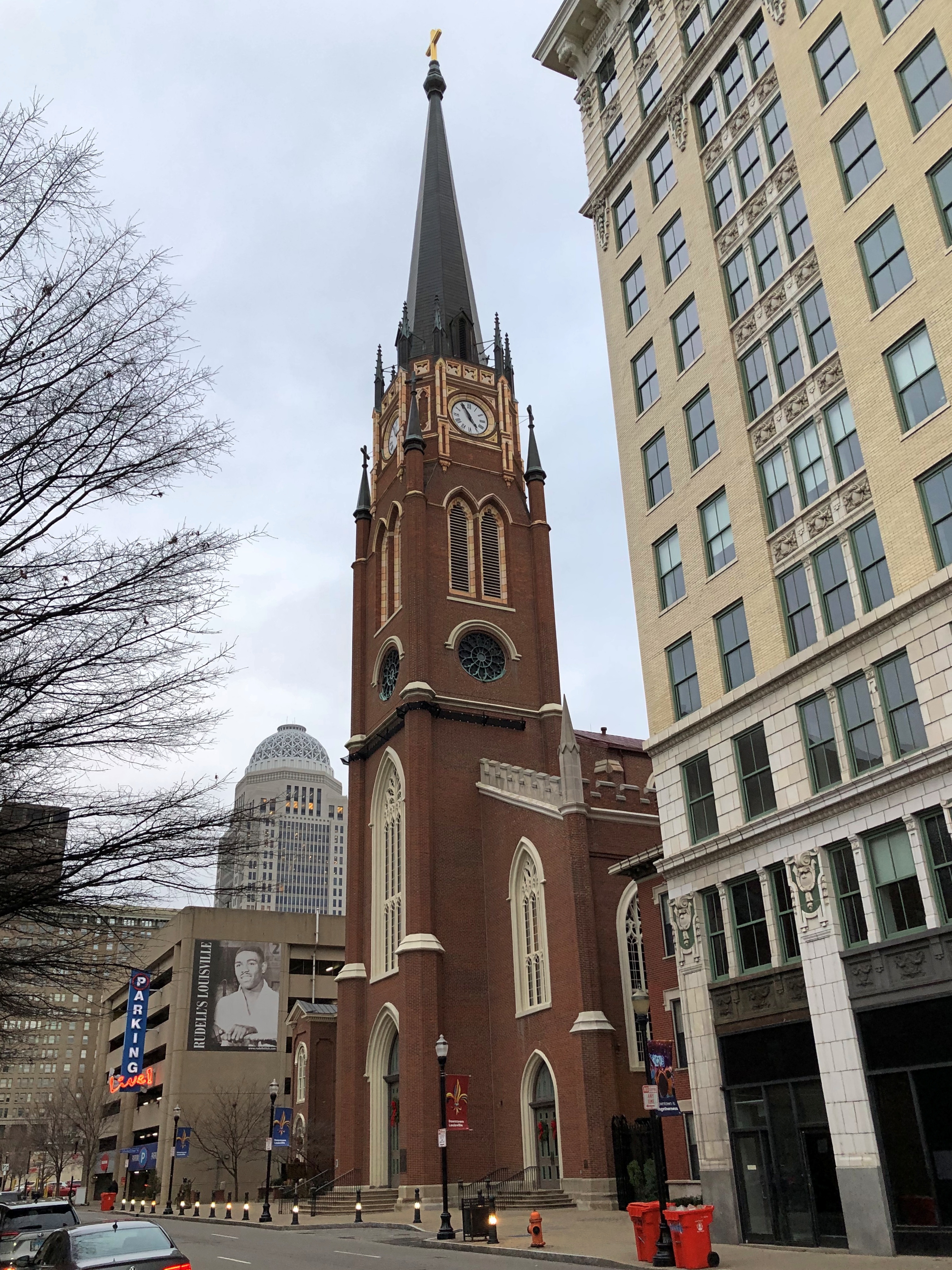
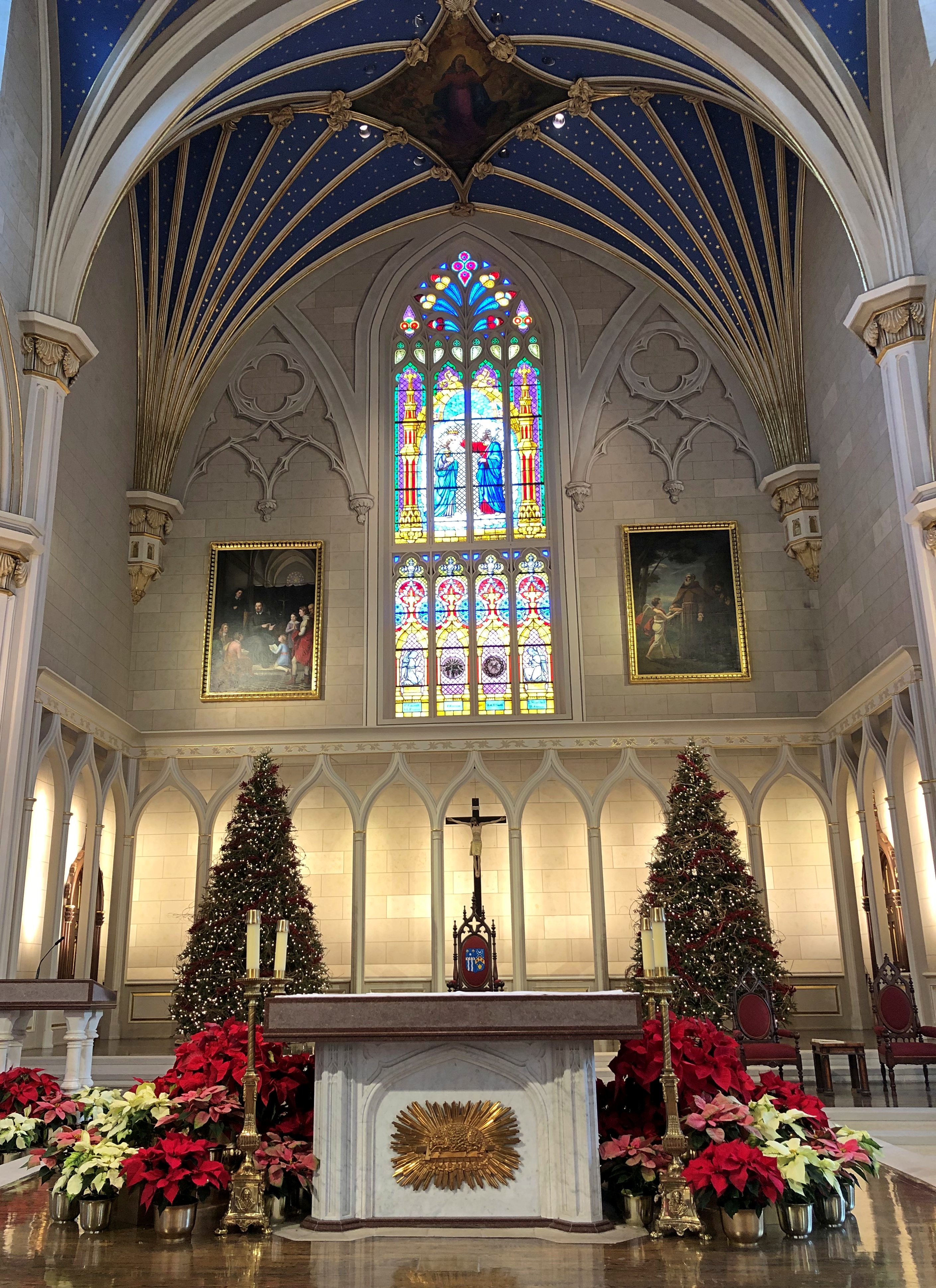
Later that same day, we parked across the street from Cathedral of the Assumption.Cathedral of the Assumption

It too was new in the 1850s when the Know-Nothings nearly burned it down. In our time, it’s closed on Thursday afternoons. So I took a short stroll in that part of downtown. Yuriko had sense enough to wait in the warm car. Louisville  Louisville  Louisville

We returned to the cathedral on Sunday for another look. Near the entrance, a baptism in progress.Cathedral of the Assumption Cathedral of the Assumption, Louisville

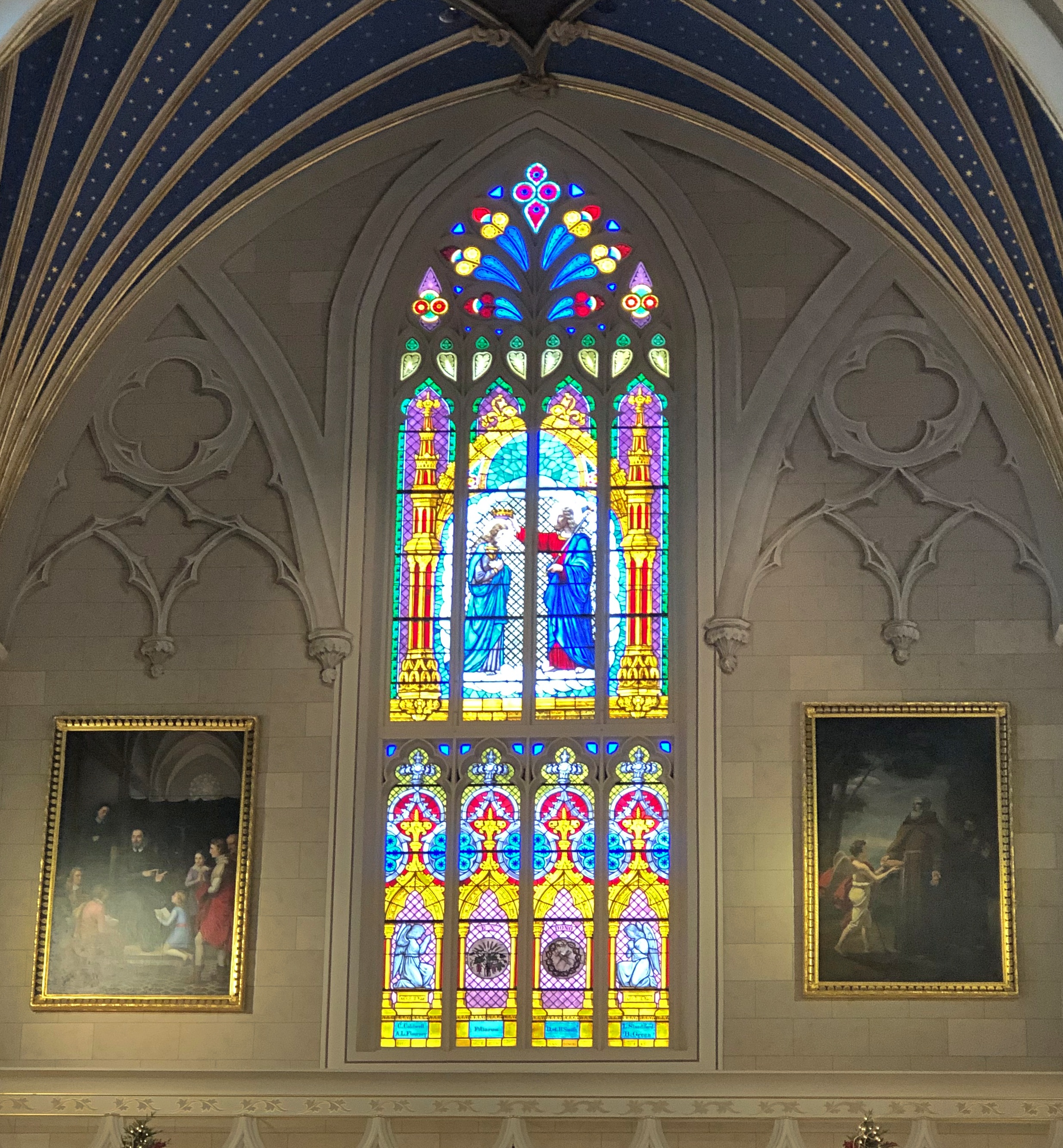
The Coronation Window.Cathedral of the Assumption

How many windows have proper names?

“Original to the Cathedral, the Coronation window depicts the crowning of the Virgin Mary as the Queen of Heaven,” the church web site says. “Designed by the Blum Art Co. in 1883, it is one of the oldest and largest hand-painted glass windows in the United States. The window was removed in 1912 and stored in the Bell Tower until 1994, when it was restored to its original position.”

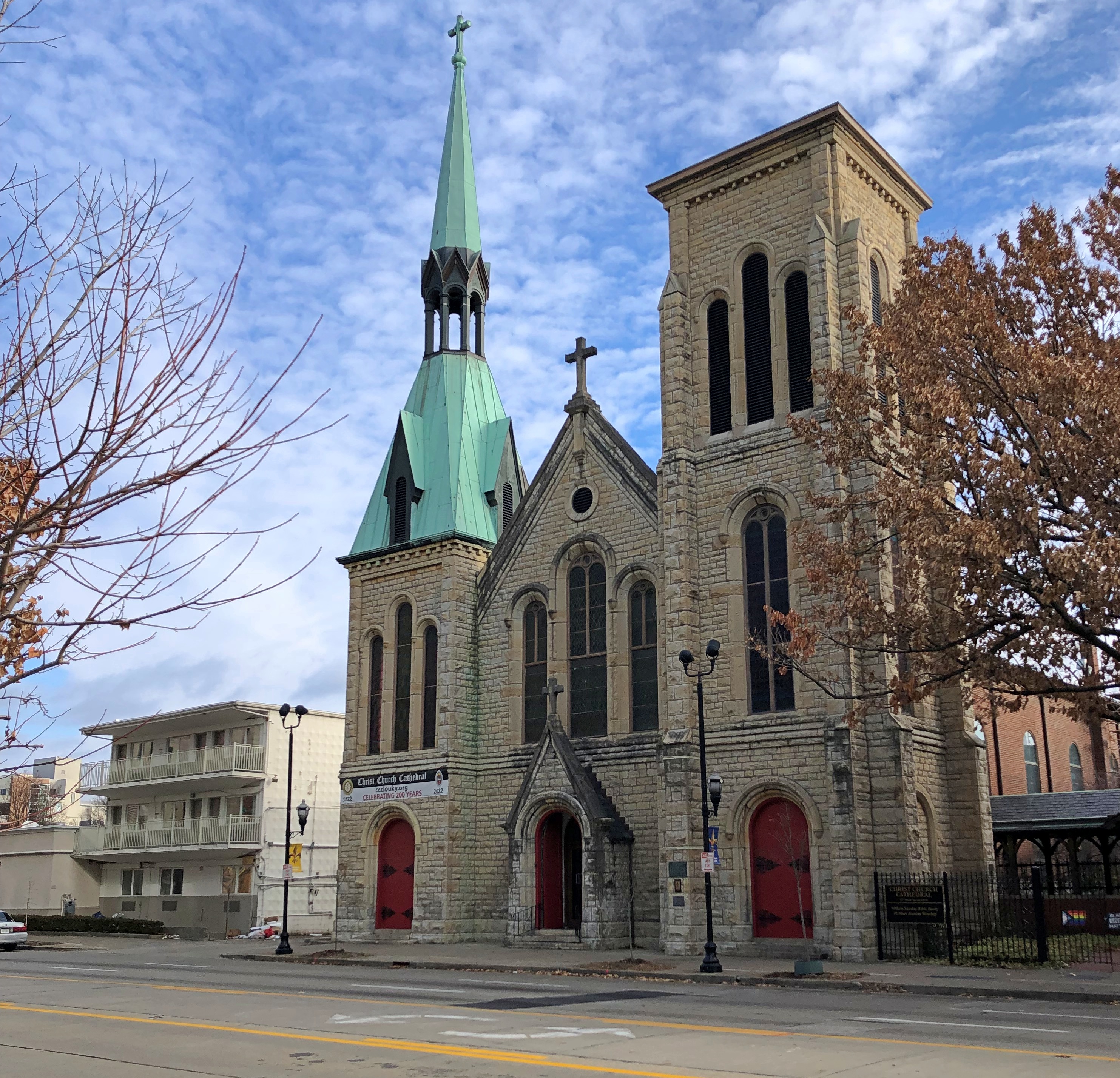
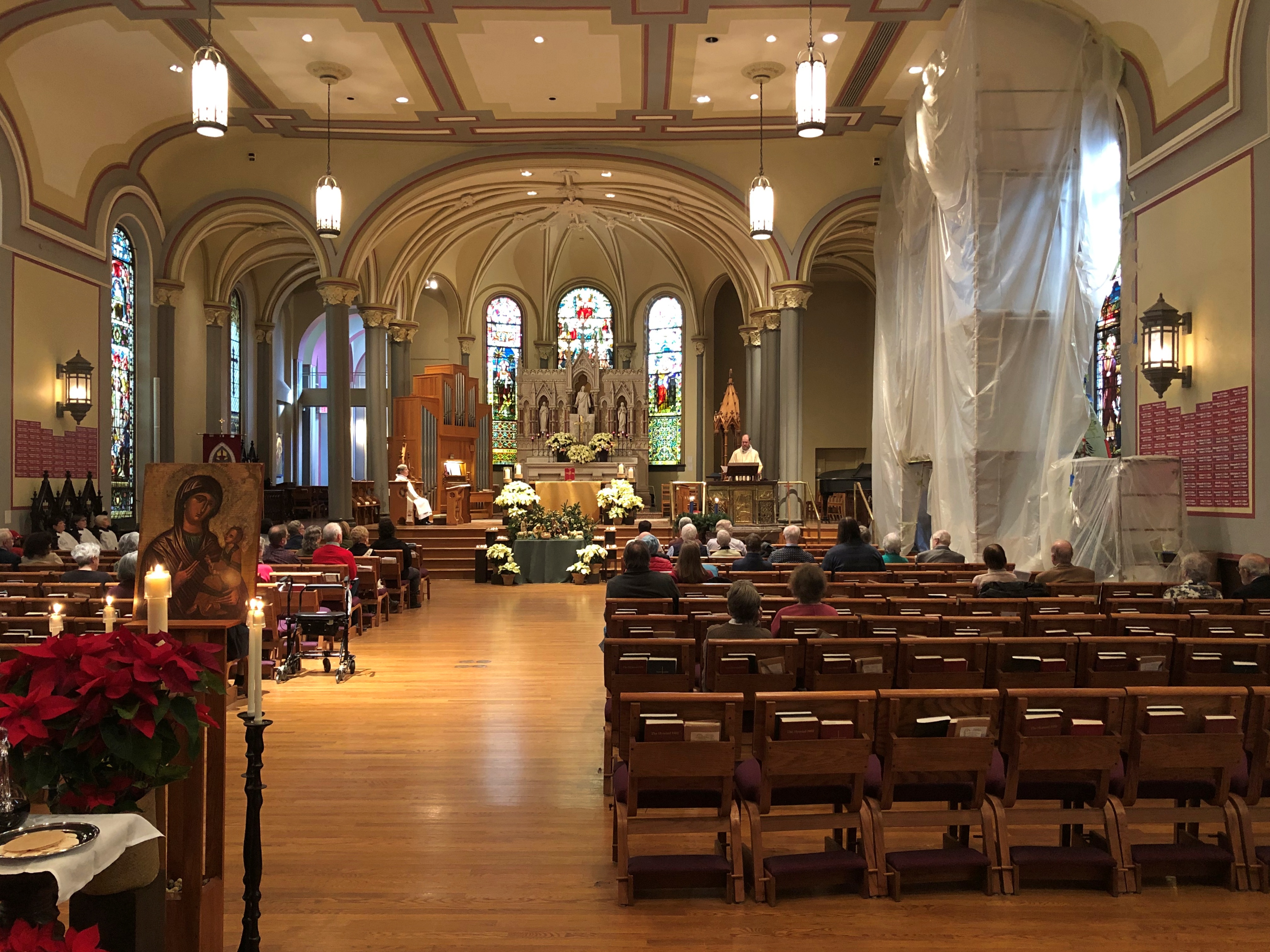
A few blocks away is the Christ Church Cathedral, seat of the Episcopal Diocese of Kentucky, and at just over 200 years, one of the oldest buildings in Louisville.Christ Church Cathedral. Louisville, Dec 31, 2023 Christ Church Cathedral. Louisville, Dec 31, 2023

Homily in progress. We didn’t stay for it. The priest was probably not denouncing Arianism, but who knows.

Northern Kentucky ’23

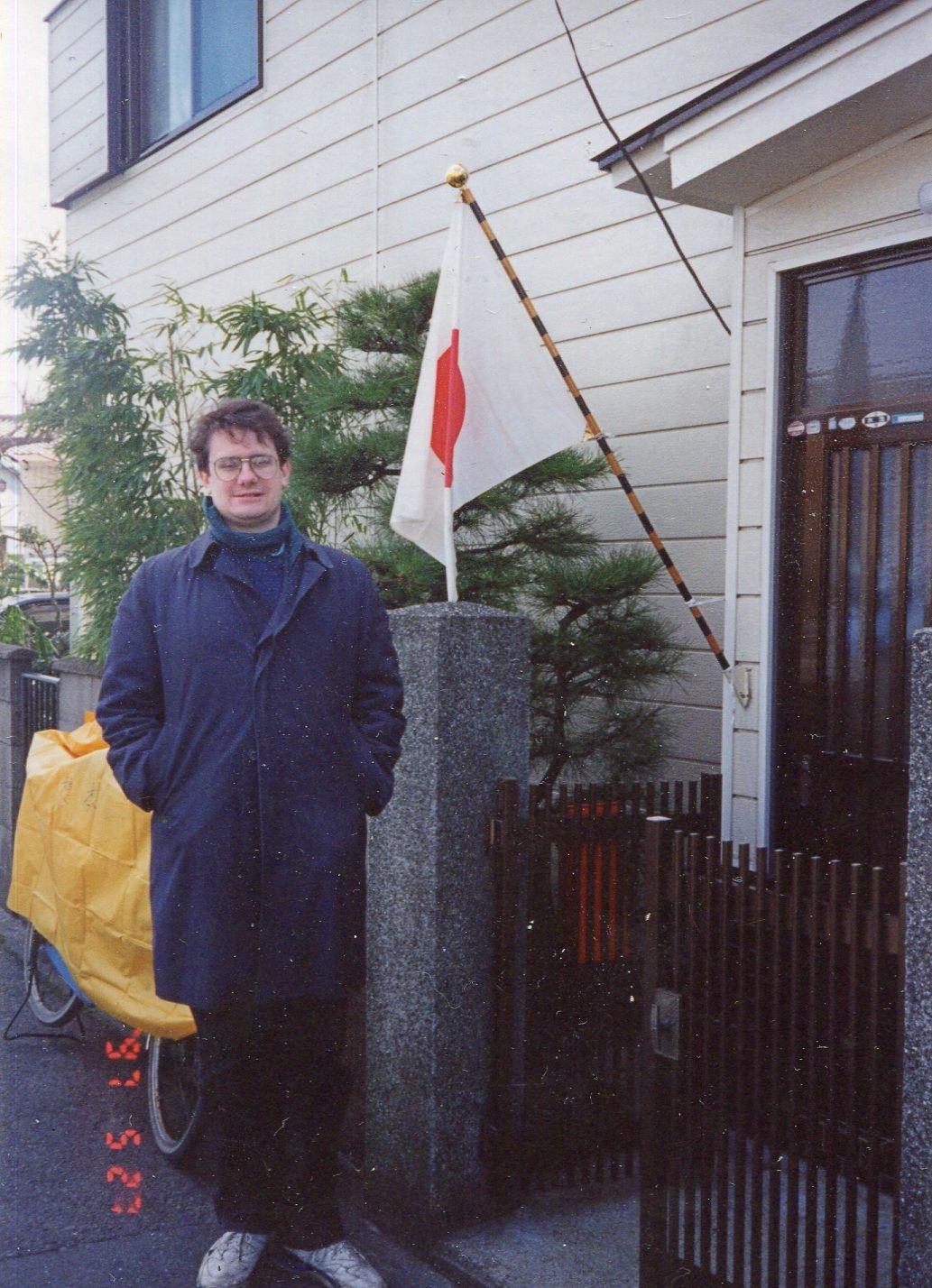
Among our collection of physical prints, most of them pre-2005 or so, is this image.

I’m standing in front of my in-laws’ house on January 1, 1994 (one feature of the camera was to imprint the date, but for whatever reason, it is wrong on this print). I spent most of winter break there. Much of the time I was in their kitchen, the warmest room in the house, where I read War and Peace. My in-laws considered this slightly peculiar, but not so much that I didn’t hear about it until much later.

Forward almost 30 years and we found ourselves in Louisville. We arrived late on Wednesday, actually past midnight on Thursday, late enough that the night clerk at our hotel was the only person around when we got there. He had been putting together a model figure from a kit before we arrived. Some pieces were arrayed on the desk near him, but he was mostly finished. Yuriko recognized it: an action hero from an anime, something I would have never recognized.

“I got it for Christmas,” the clerk, a large young man with a large beard and collection of pimples, told us when Yuriko mentioned that she recognized it. “He’s my favorite.”

“Helps pass the time on the night shift?” I said. He agreed that it did.

Otherwise it was a standard check-in process, but the momentary interaction made the experience more memorable. The property was part of a behemoth hospitality outfit, and if the company had any imagination (such companies seldom do), it would instruct its clerks to have some kind of conversation-piece project at hand that would engage more curious patrons. You know, to build the brand by associating a mildly memorable and pleasant experience with the place one stays.

Maybe that isn’t such a good idea. Such a company could be counted on to mandate their clerks detail in reports the interactions thus generated – fill up that spreadsheet, tick those boxes, remember that documenting the process is as important as the results – and press them to meet some sort of quota of being memorable to their customers.

Thursday was the first of three full days in northern Kentucky, returning on New Year’s Eve. Rather than venture somewhere by plane this year — with last year’s dud in mind — we opted for a drive. As long as no blizzard was forecast, we’d be good to go. Head somewhere to the south. We focused on Louisville because it occurred to me in November that I hadn’t spent much time there in more than 30 years, since my visits to attend the Kentucky Derby in the late ’80s, and Yuriko had never spent any time there.

Since then, I’d also heard it on good authority, namely from someone who used to live there, that Louisville is a city of distinctly interesting neighborhoods, perhaps more than you’d expect from a metro its size (1.3 million). Something like Nashville, though that metro is larger. In fact some similarities with Nashville are fairly close, such the downtown street grid that, away from downtown, soon devolves into as non-grid as a pattern of streets can be, wandering this way and that at odd angles through hilly territory, and changing names without warning.

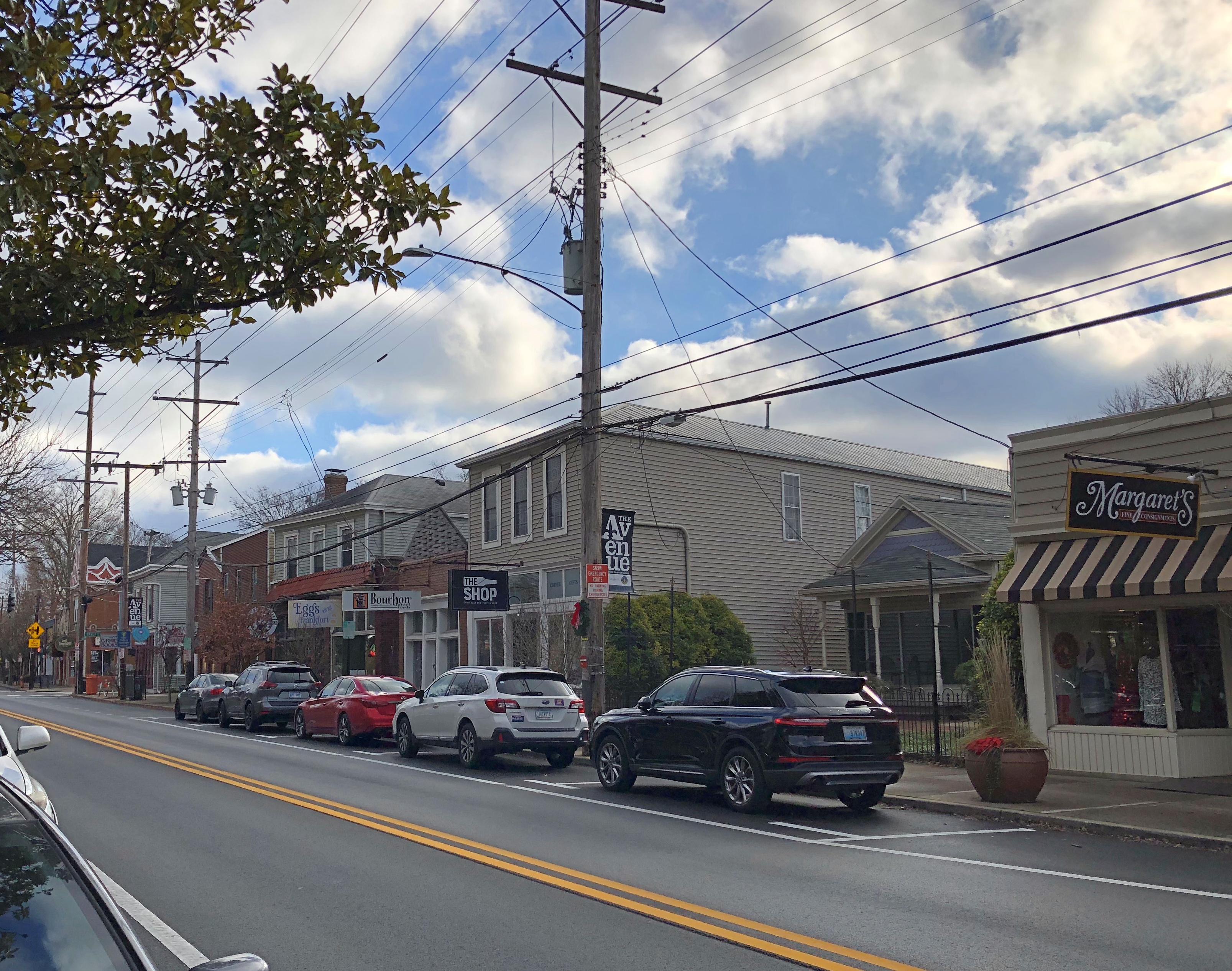
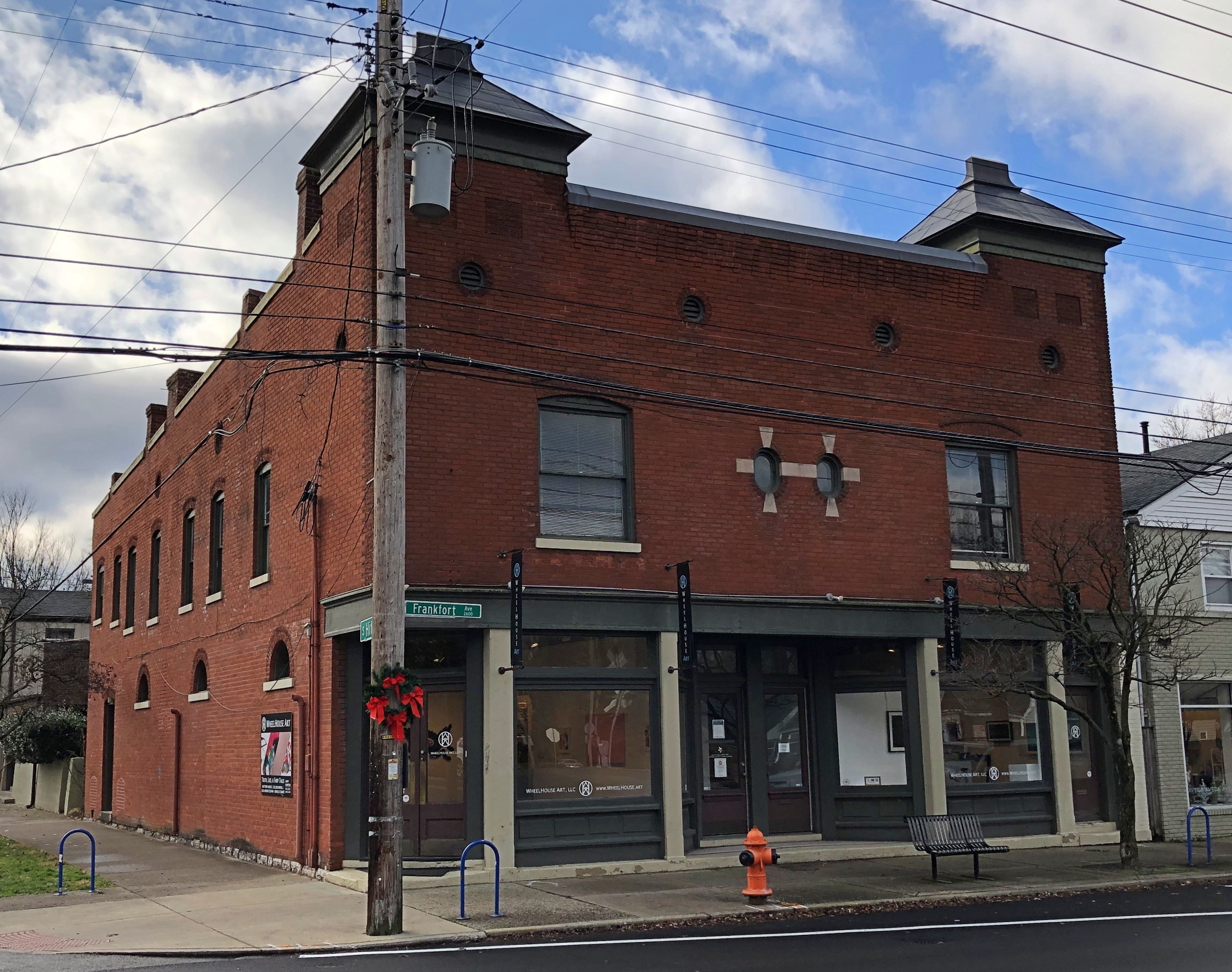
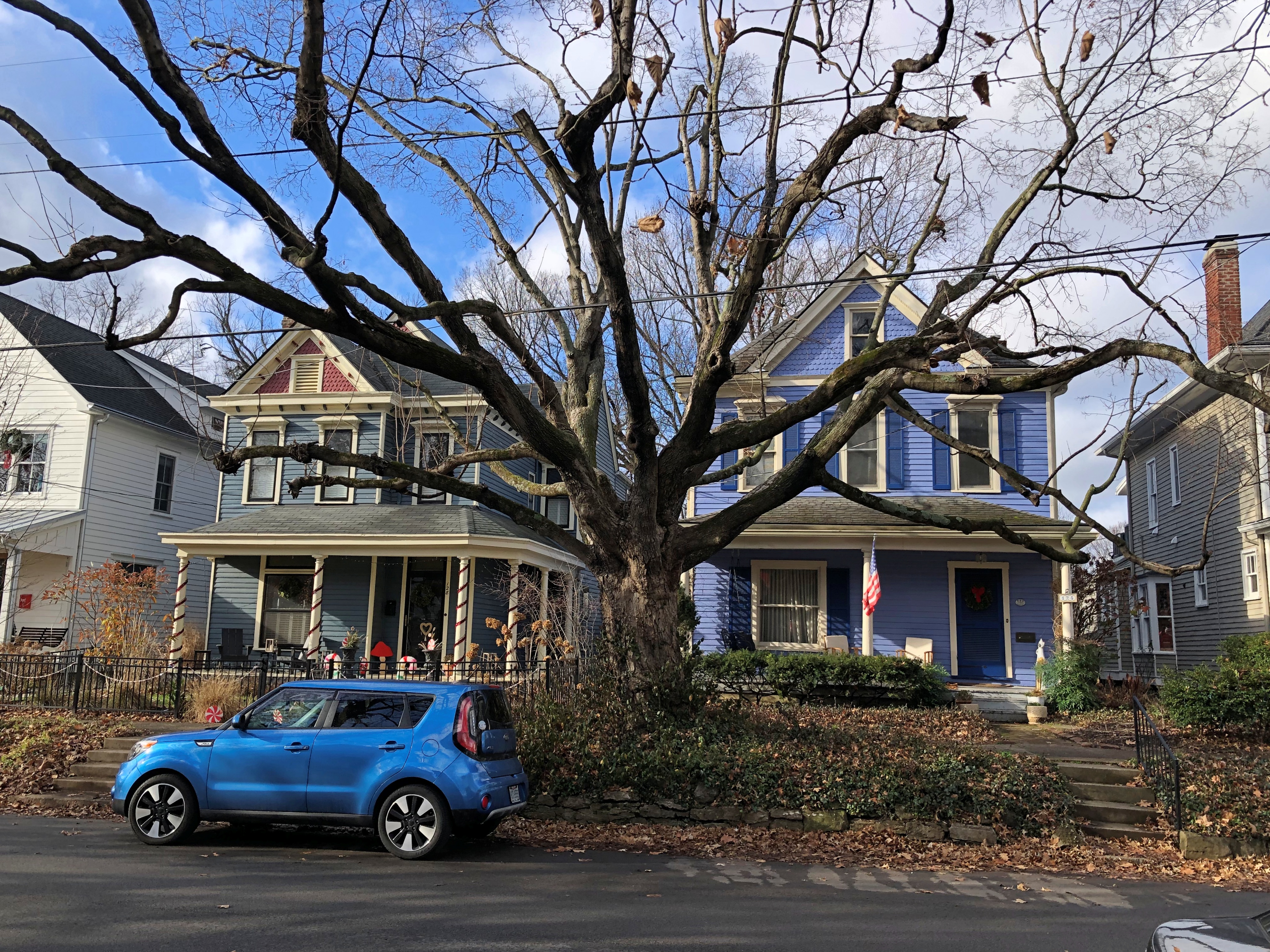
We first encountered Crescent Hill, a well-to-do neighborhood east of downtown, stopping for a few minutes to look in a few of the shops of Frankfort Avenue. I’ve read that the area was formerly known as Beargrass, after a nearby creek. A name the area should have kept, if you asked me.Crescent Hill, Louisville

Included are the sorts of places well-to-do neighborhoods support, such as Urban Kitty Consignment Boutique, Wheelhouse Art, Era Salon, Eggs Over Frankfort, Carmichael’s Bookstore and Margaret’s Fine Consignments. Temps were maybe 10 degrees warmer than at home, so not bad for a short stroll.Crescent Hill, Louisville Crescent Hill, Louisville Crescent Hill, Louisville

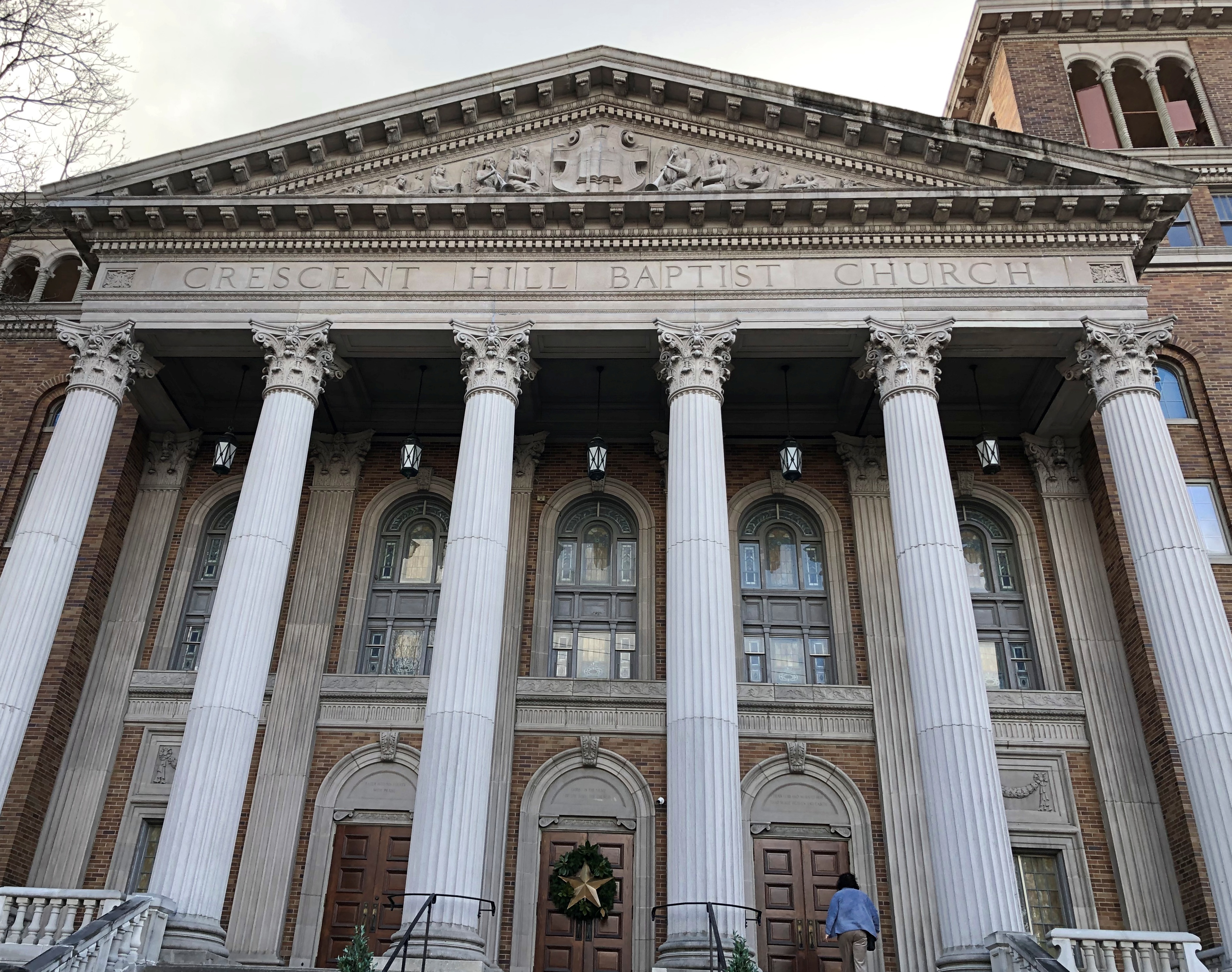
The imposing Crescent Hill Baptist Church is on Frankfort Ave. Closed.Crescent Hill, Louisville

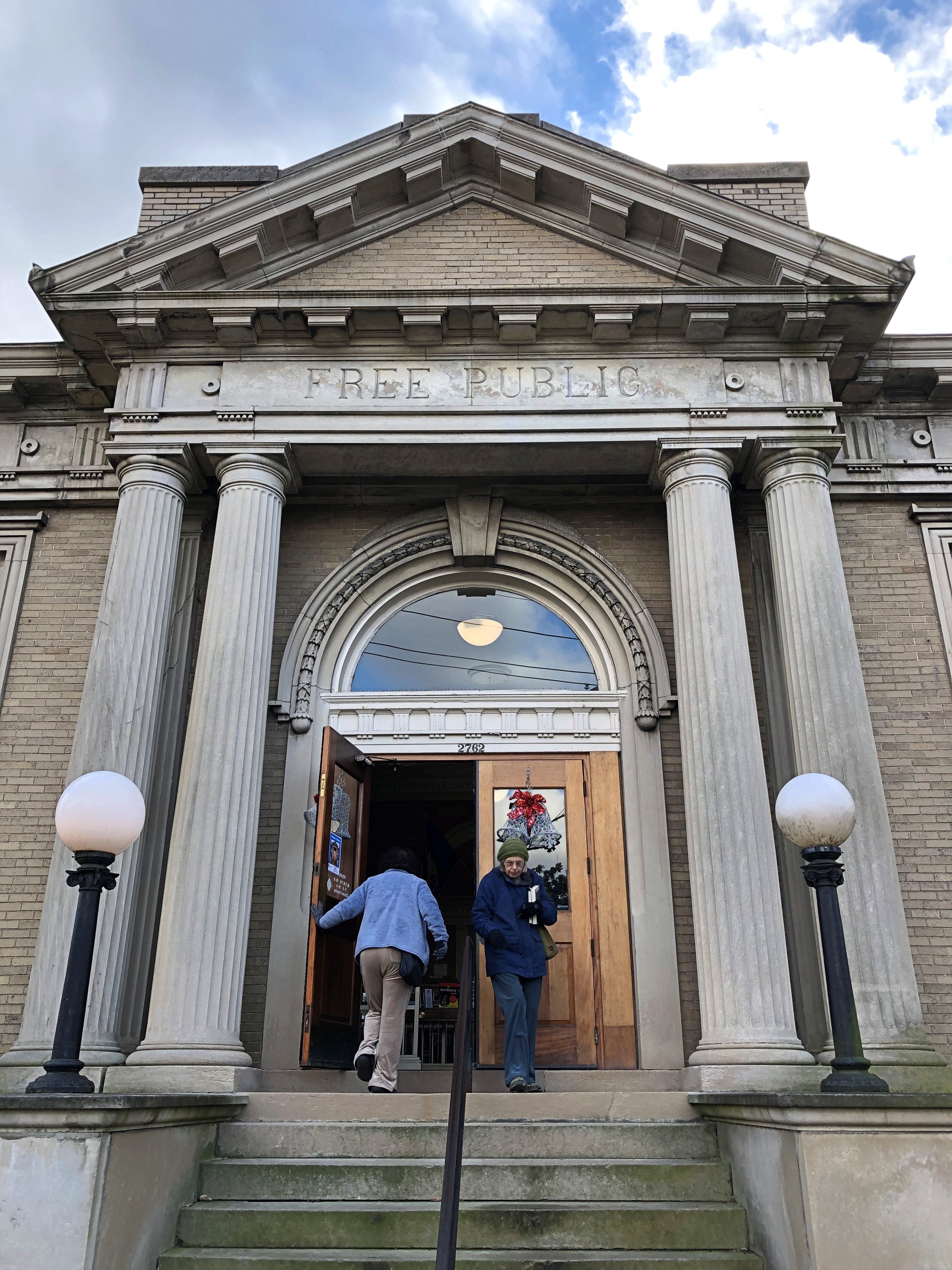
The local library was open, so we went in.Crescent Hill, Louisville

Inside was a table with books for sale, and I picked up a paperback for $1 entitled The Taste of Conquest: The Rise and Fall of the Three Great Cities of Spice by Michael Krondl (2008). The cities in question are Venice, Lisbon, and Amsterdam. I started reading that night and it’s good. He brings up a few interesting points right away, such as that the hoary old explanation about the medieval use of spices, namely that they covered up rot, is nonsense.

“But what if the meat were rancid?” Krondl asks rhetorically. “Would not a shower of pepper and cloves make rotten meat palatable? Well, perhaps to a starved peasant who could leave no scrap unused, but not to society’s elite. If you could afford fancy, exotic seasonings, you could certainly afford fresh meat.”

From Crescent Hill it’s a short pop over to the Louisville Water Tower, including a short drive on Zorn Avenue, which instantly became my favorite street name in Louisville.

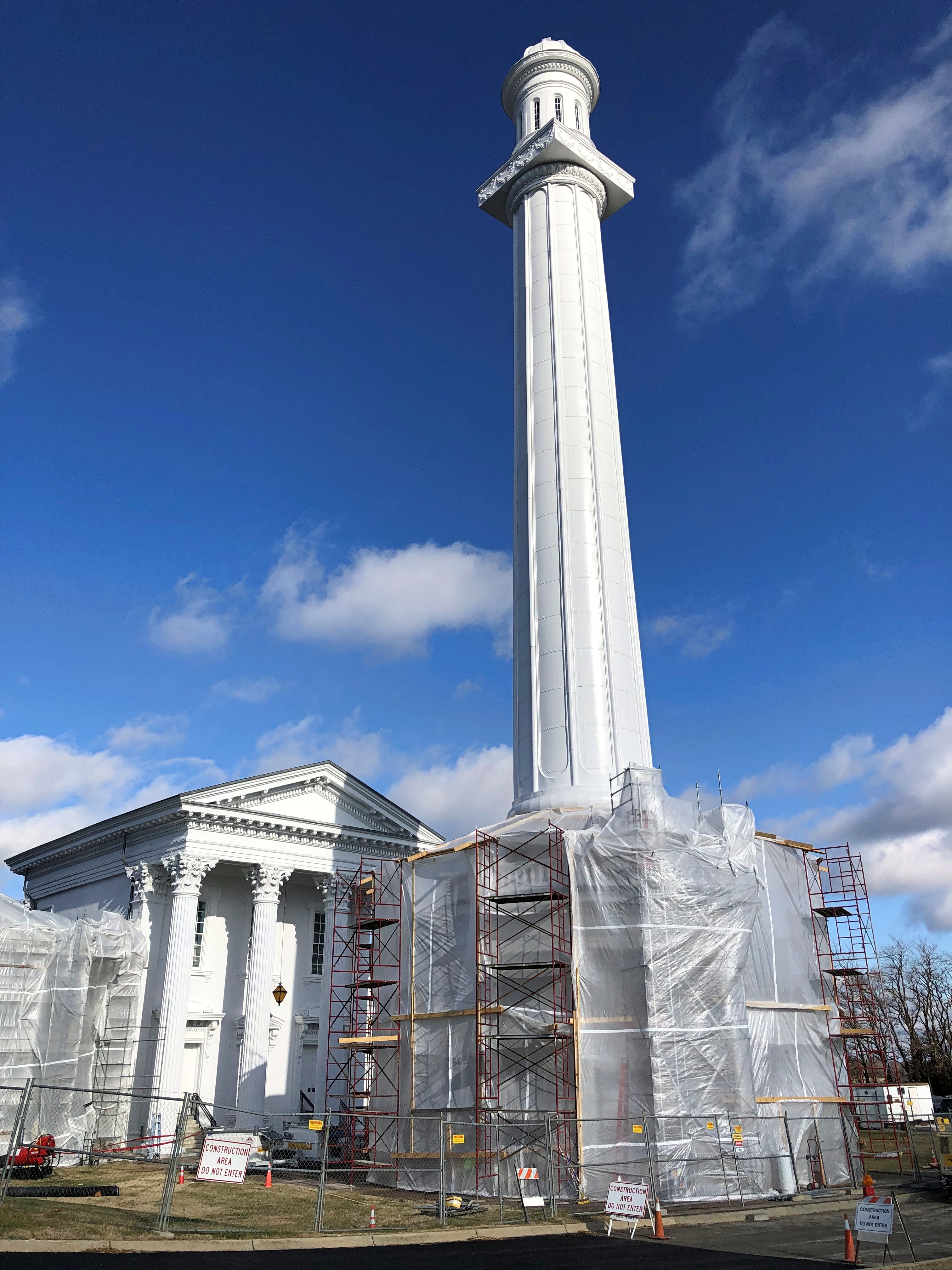
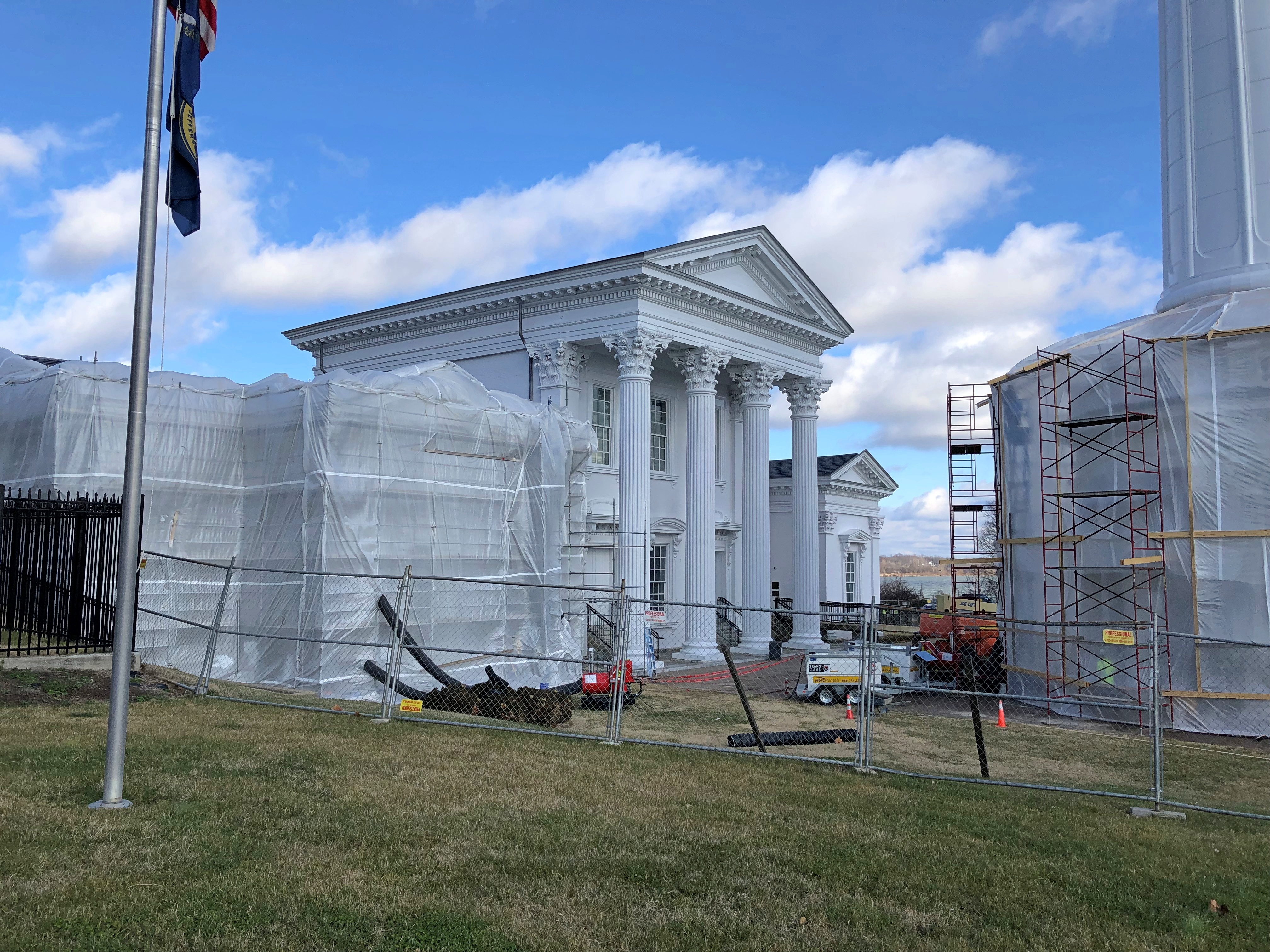
For a bit of water infrastructure, it’s impressive, rising 185 feet over the banks of the Ohio River and dating from 1860. And still in use. It’s also being renovated, so we couldn’t get that close.Louisville Water Tower Louisville Water Tower

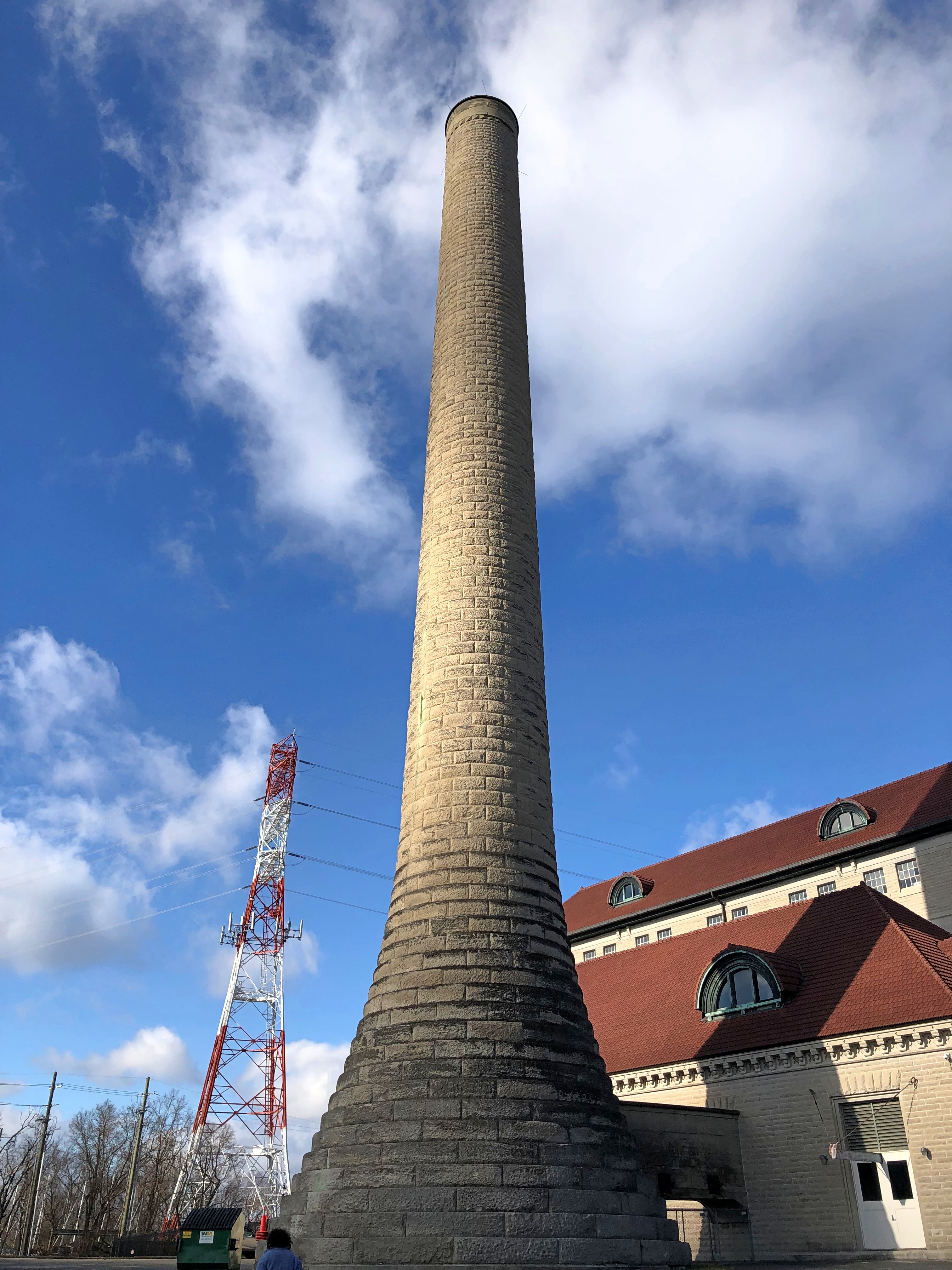
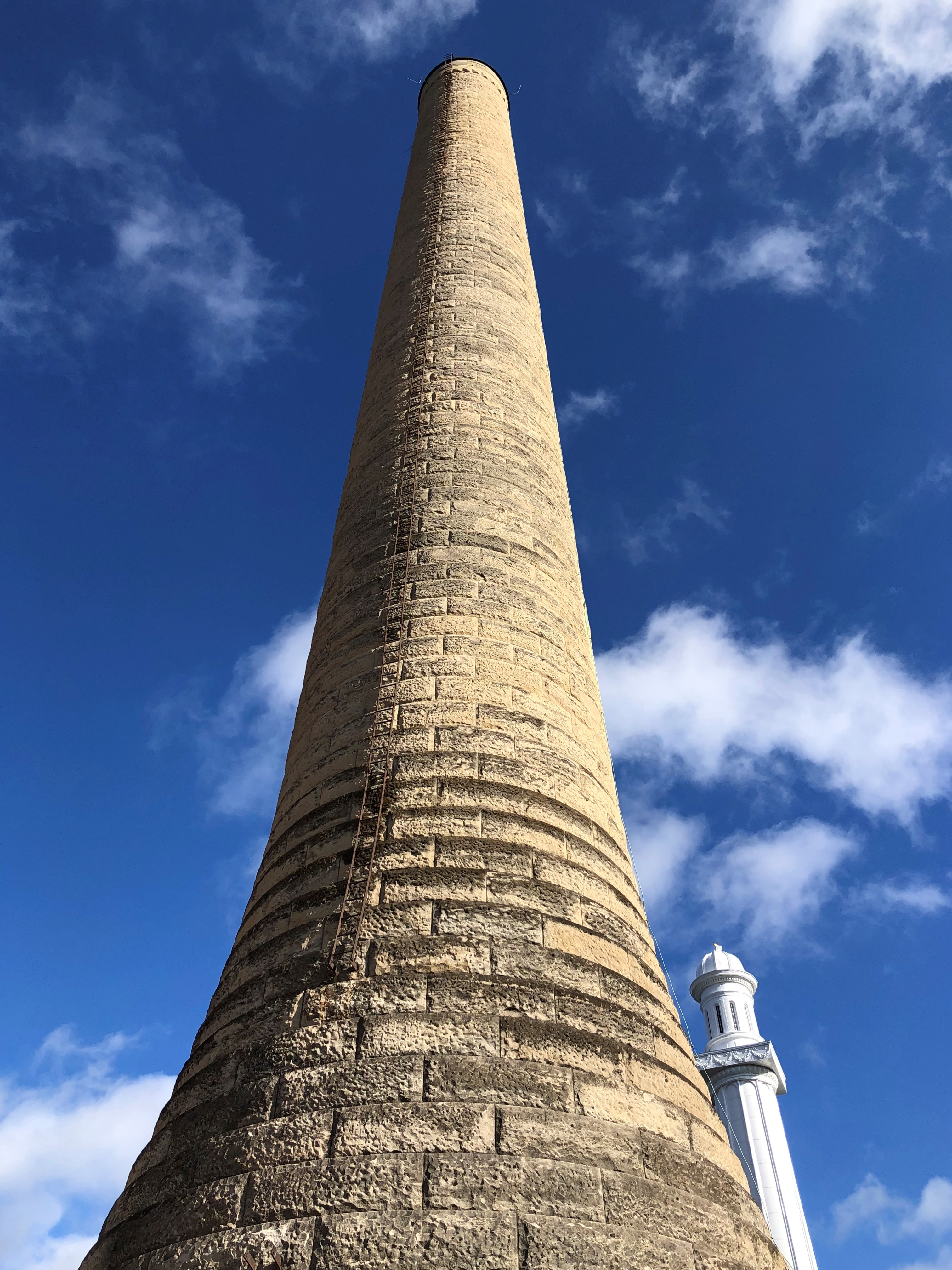
In its own way, the nearby smokestack – I took it to be a smokestack – is just as impressive.Louisville Water Tower Louisville Water Tower

Note the iron ladder rising up the side of the stack. Note also that its bottom section is missing. Removed, I bet, after one too many moron teenage boys decided to take a climb, sometimes resulting in a sudden and shattering loss of their youthful health and vim.

Cave Hill Cemetery, Louisville

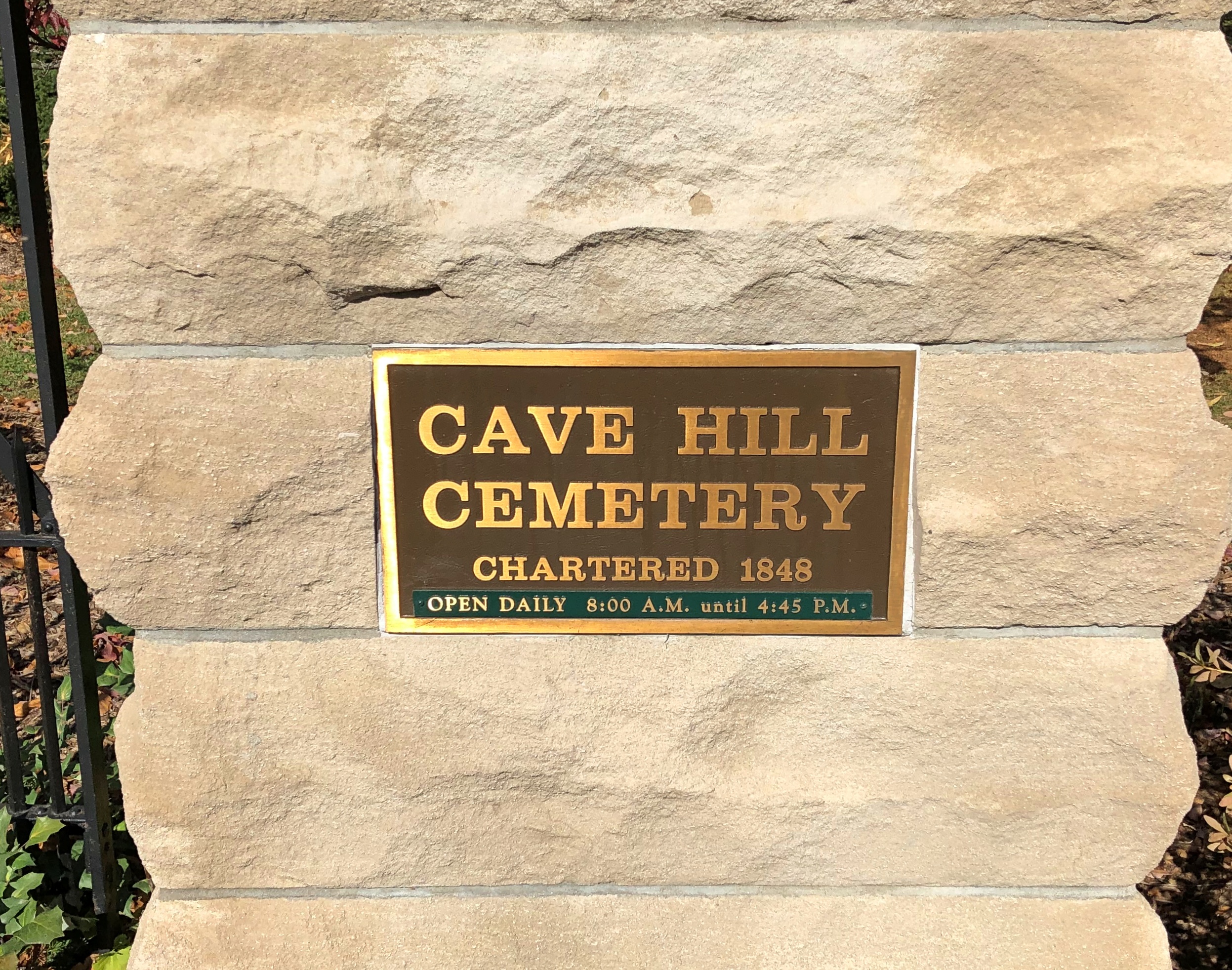
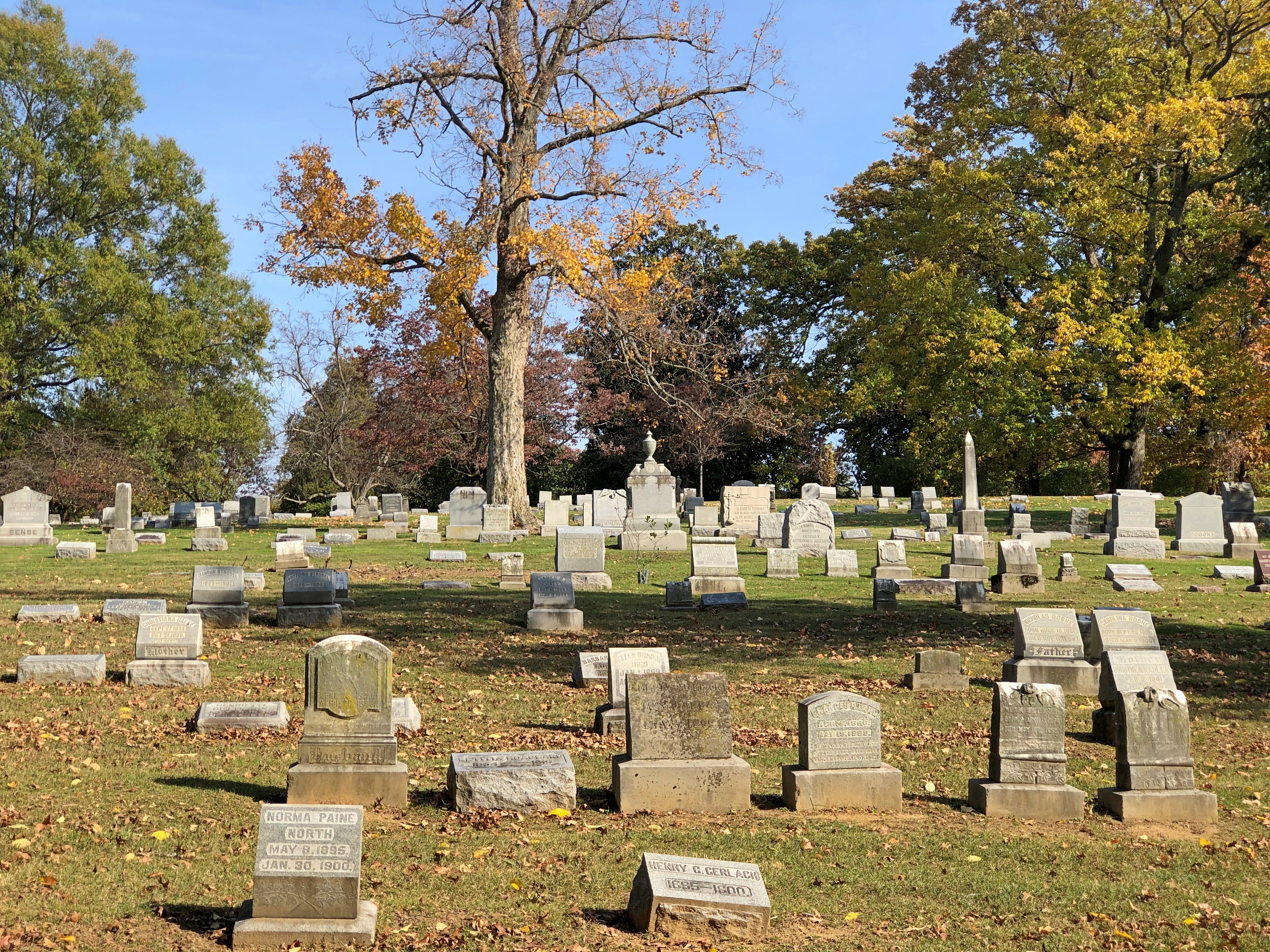
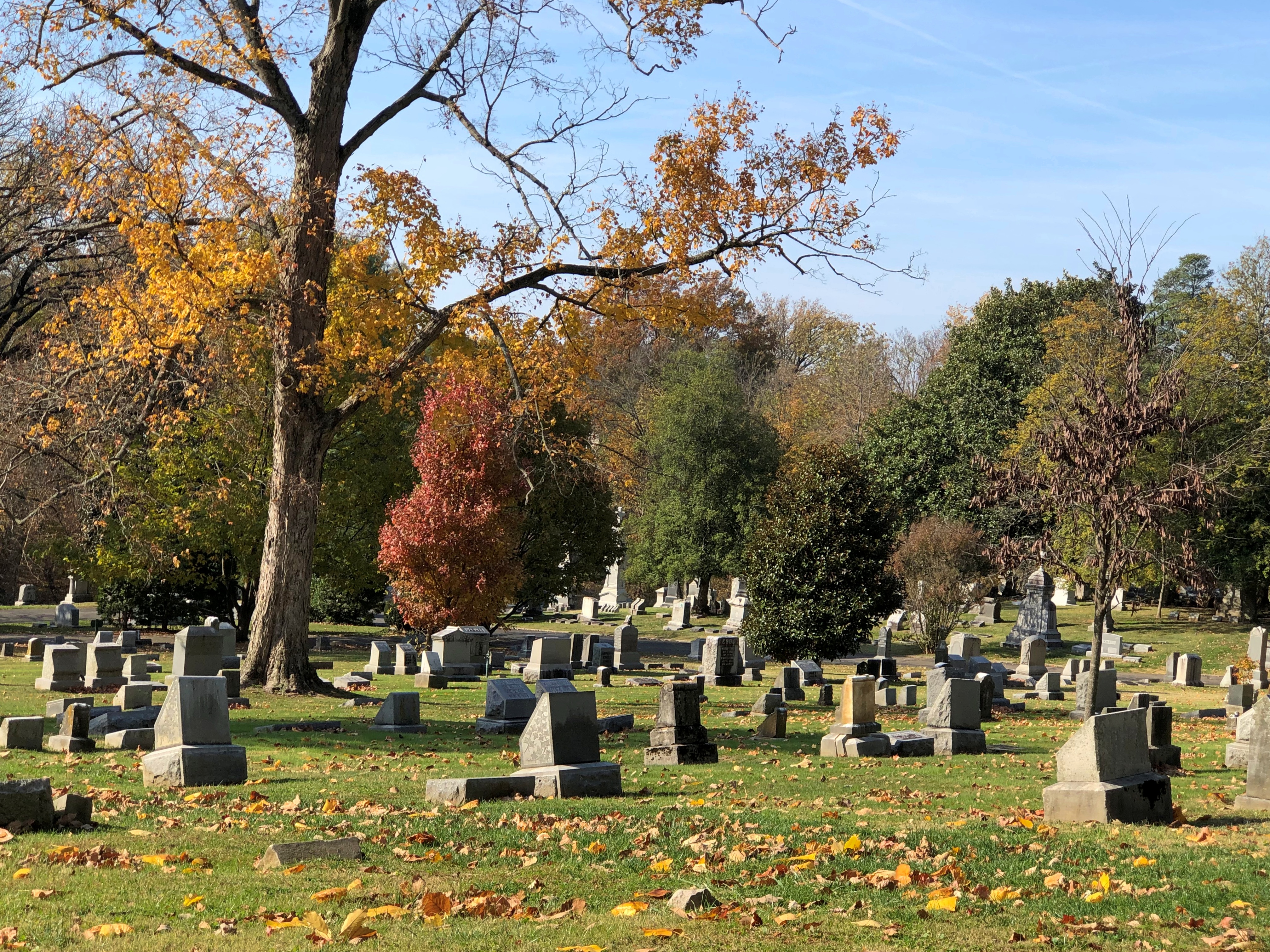
Wrapping up a fun long weekend is always a bit of a downer, but so it goes. Rather than grind all the way north from Nashville on Monday, I decided to pause on the return in Louisville. I couldn’t remember the last time I’d spent any time there – 1990? – though I’ve passed through many times since then. This time, I got off I-65 and made my way to Cave Hill Cemetery.Cave Hill Cemetery

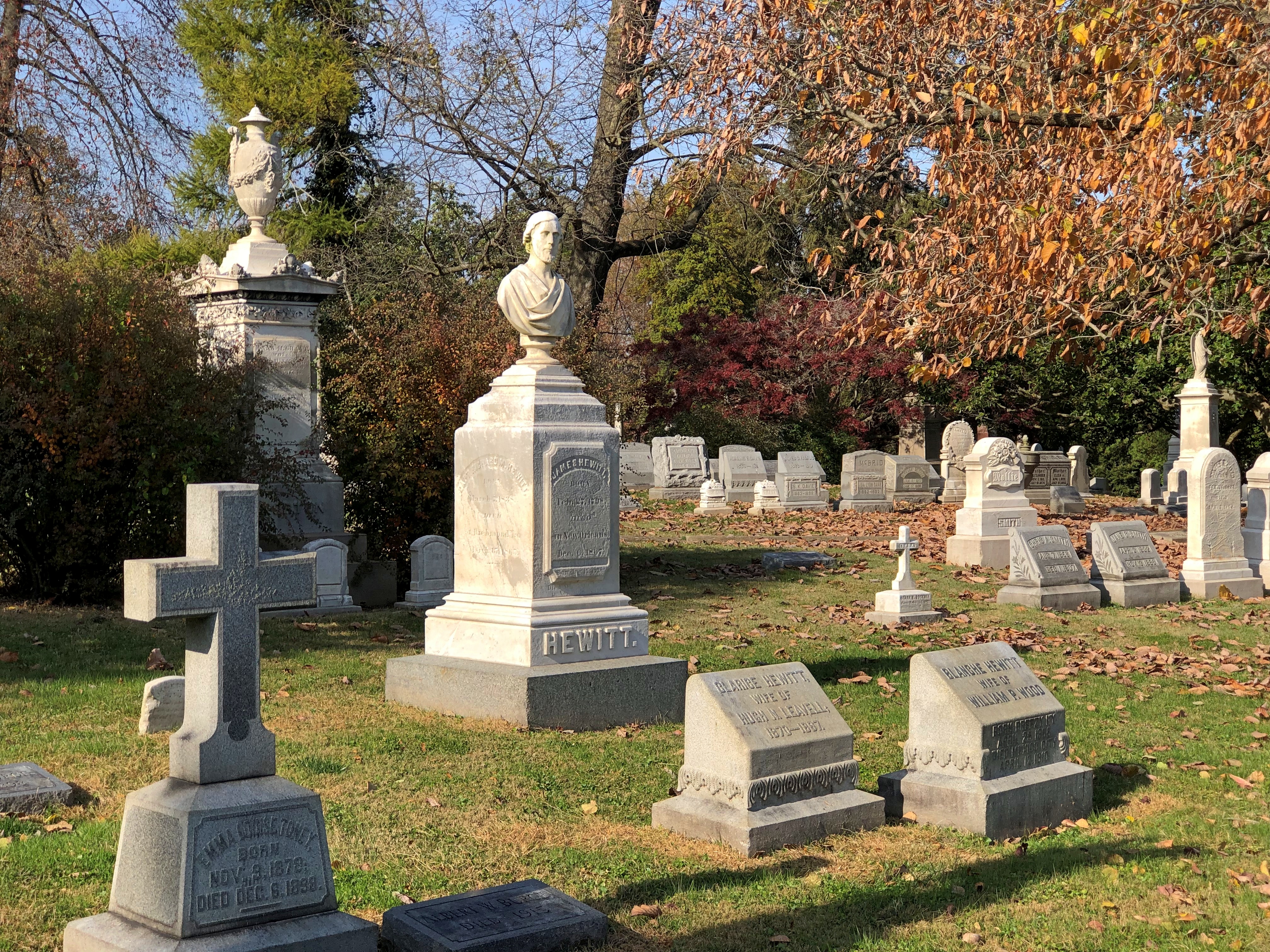
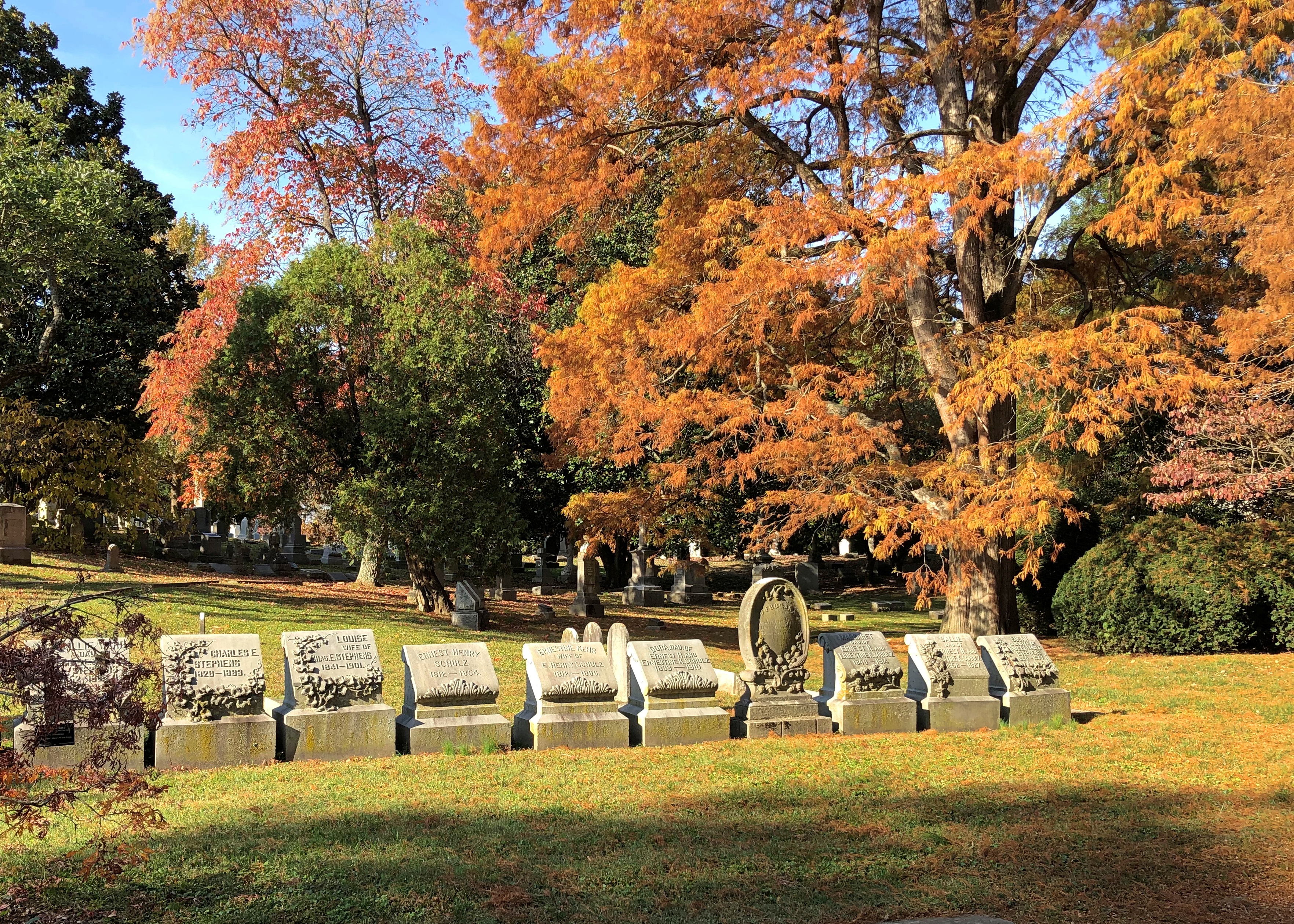
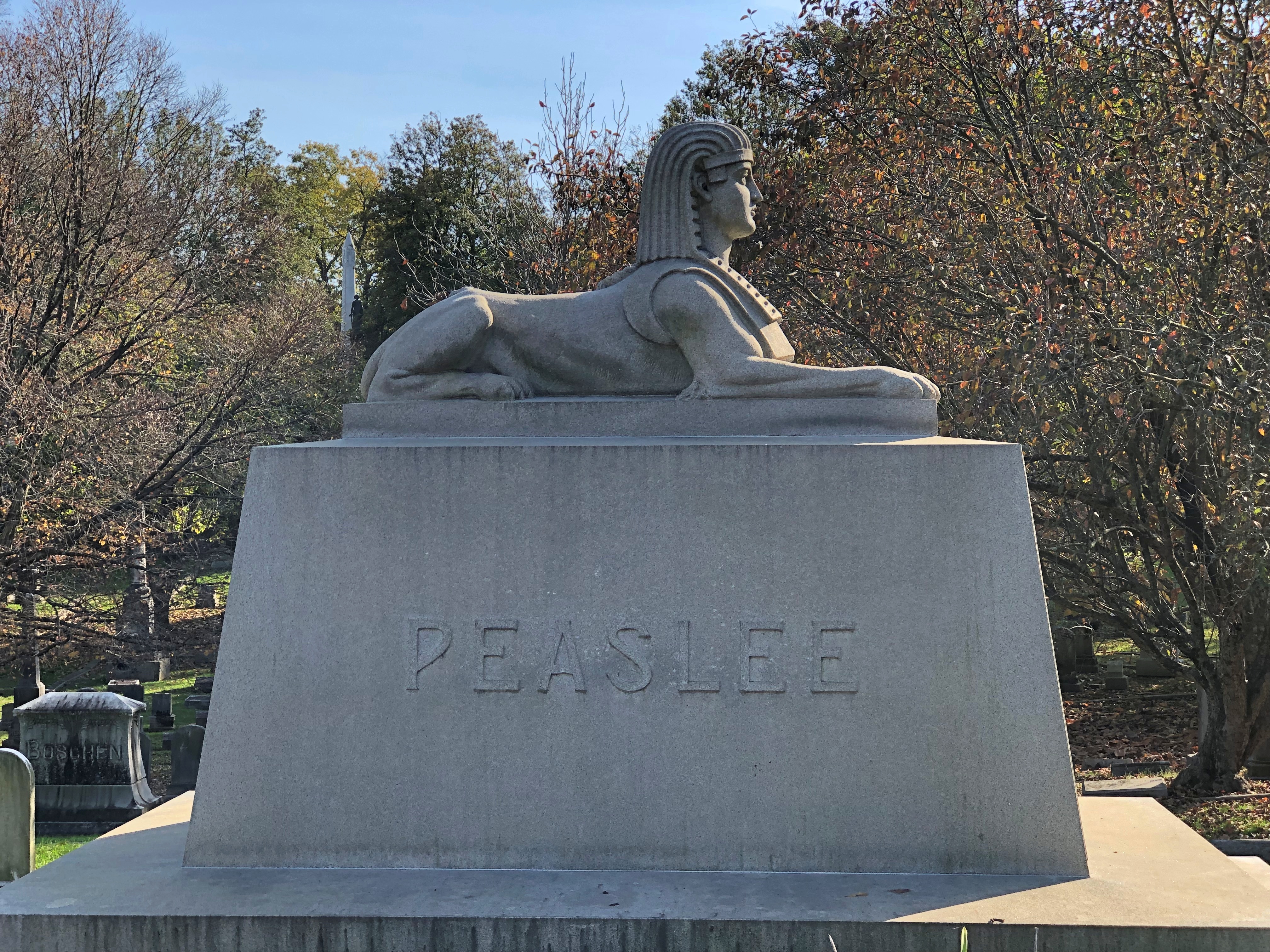
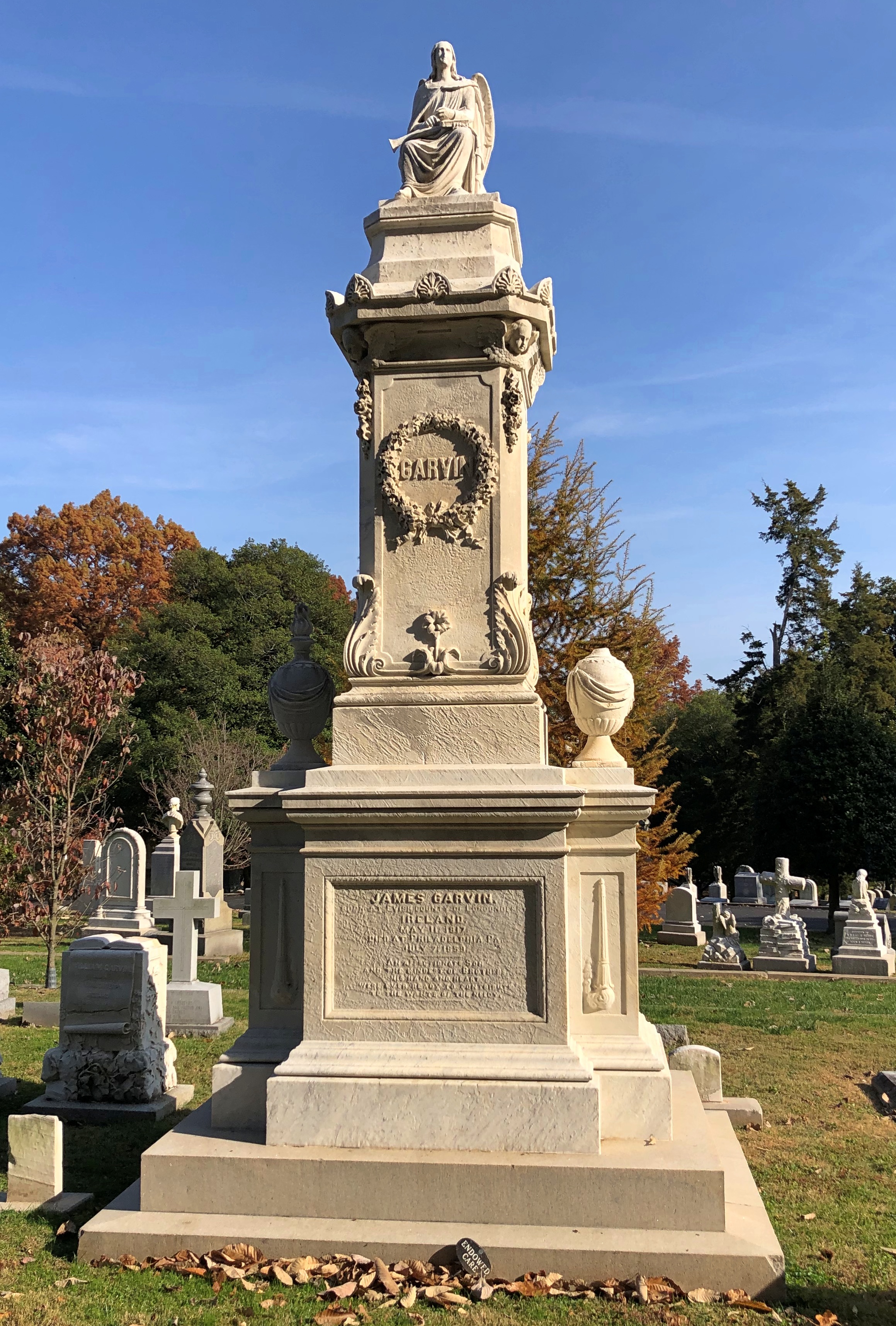
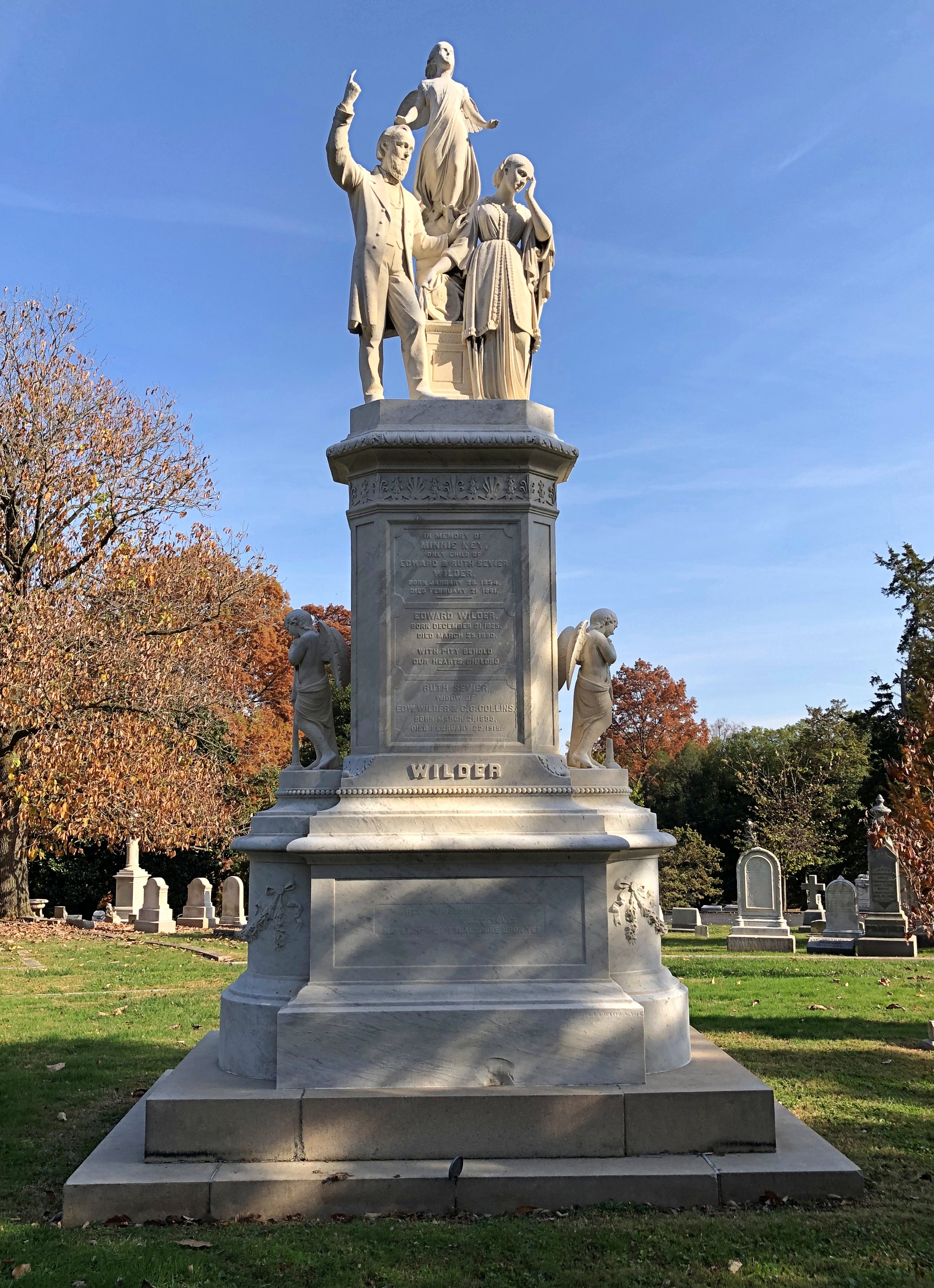
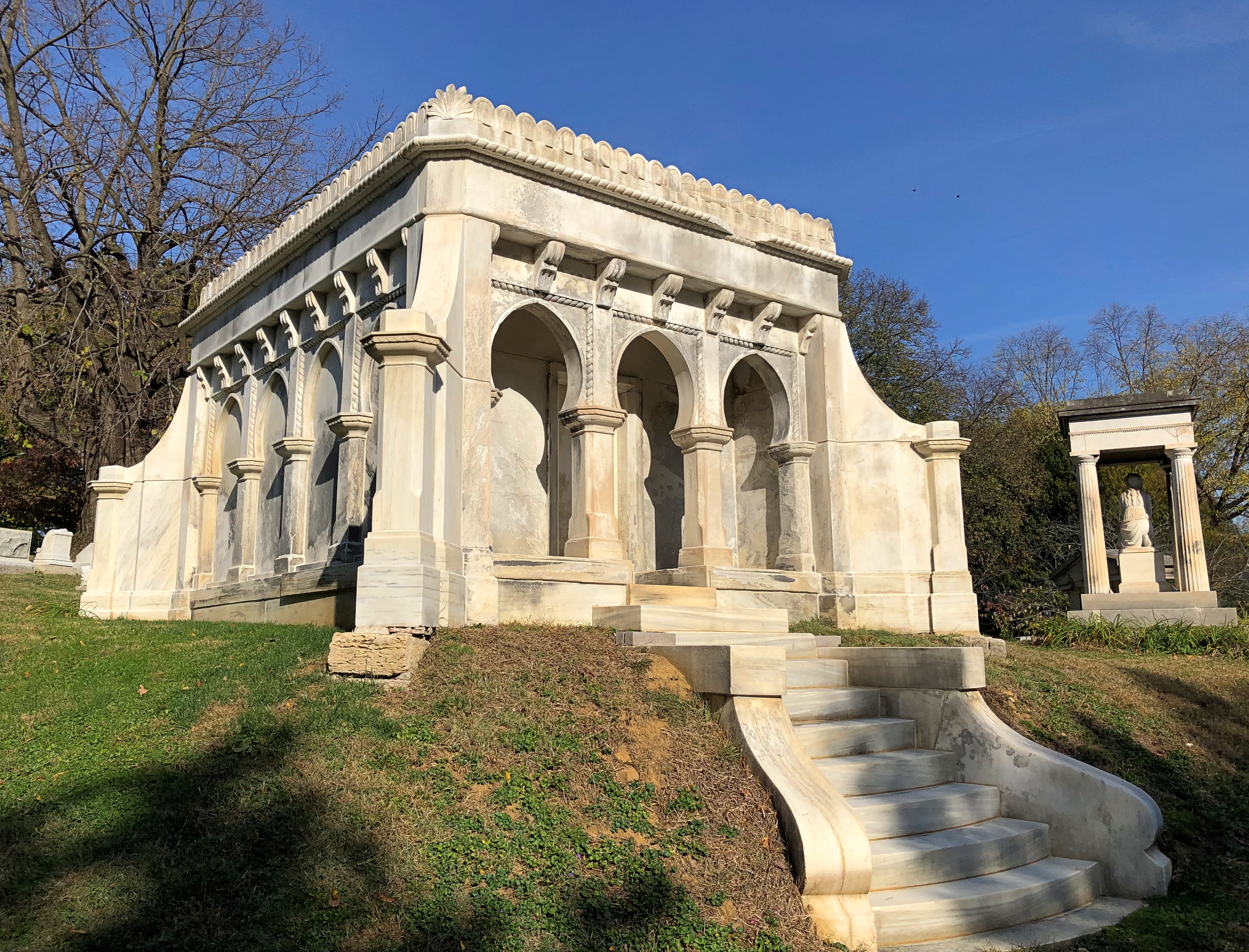
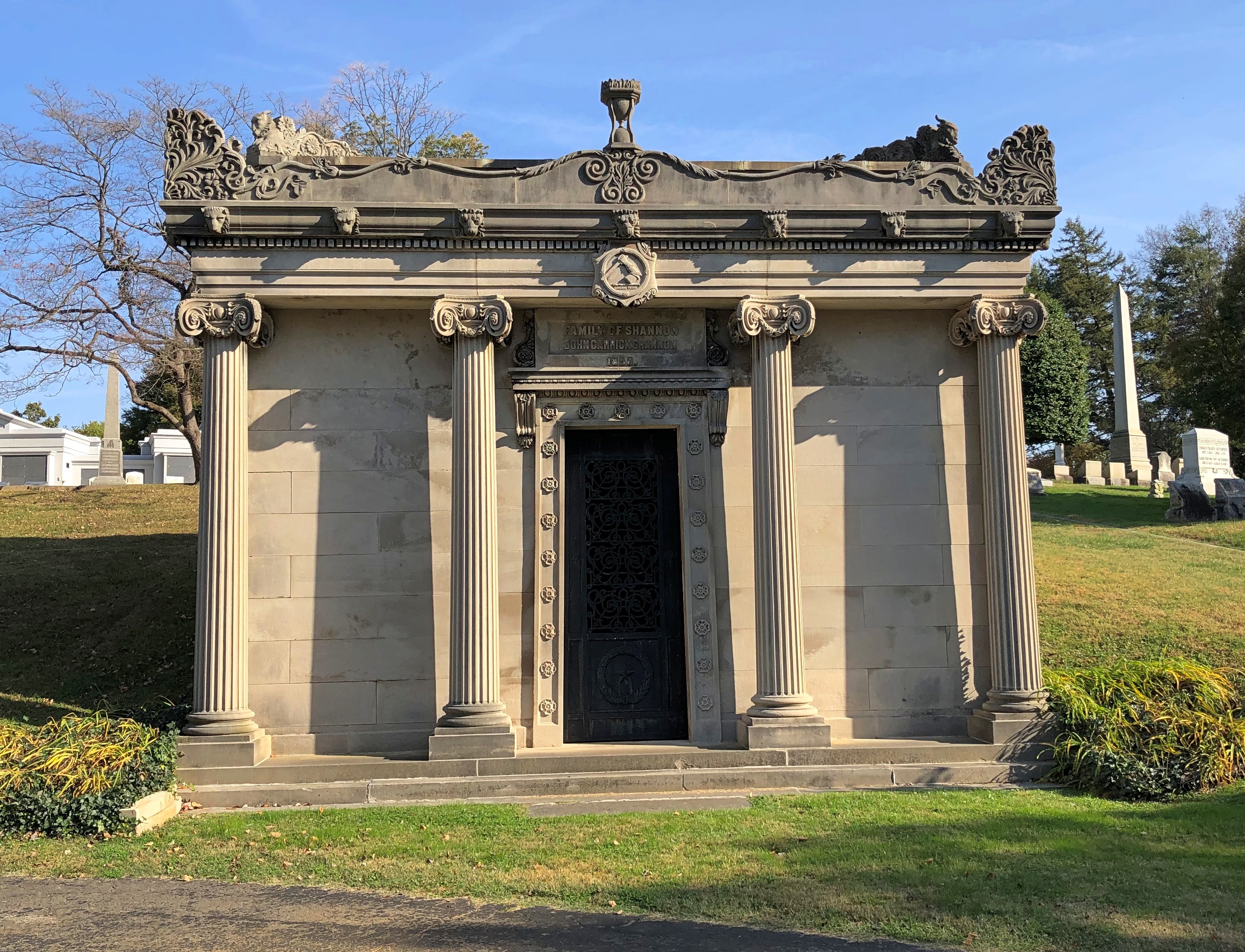
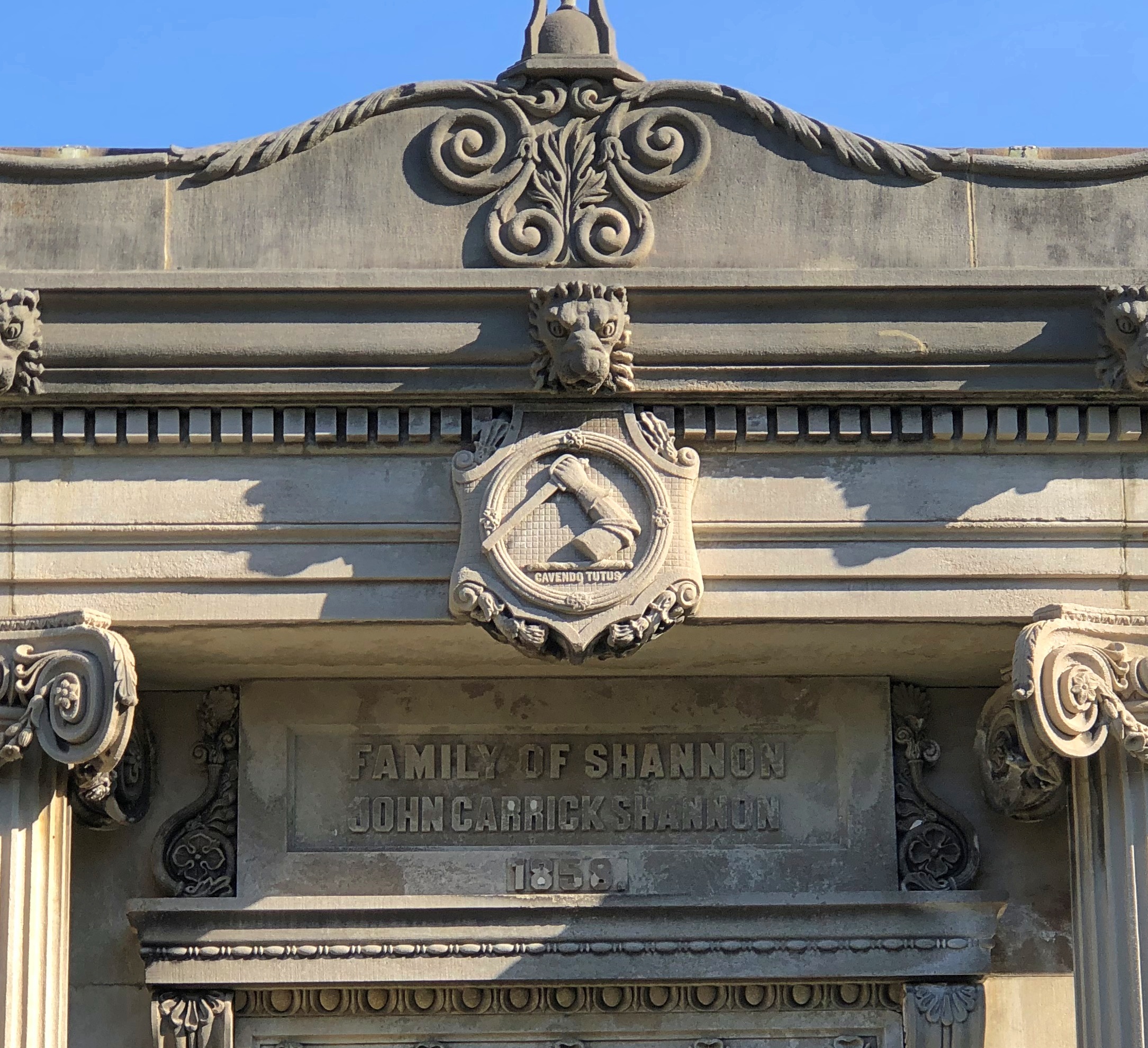
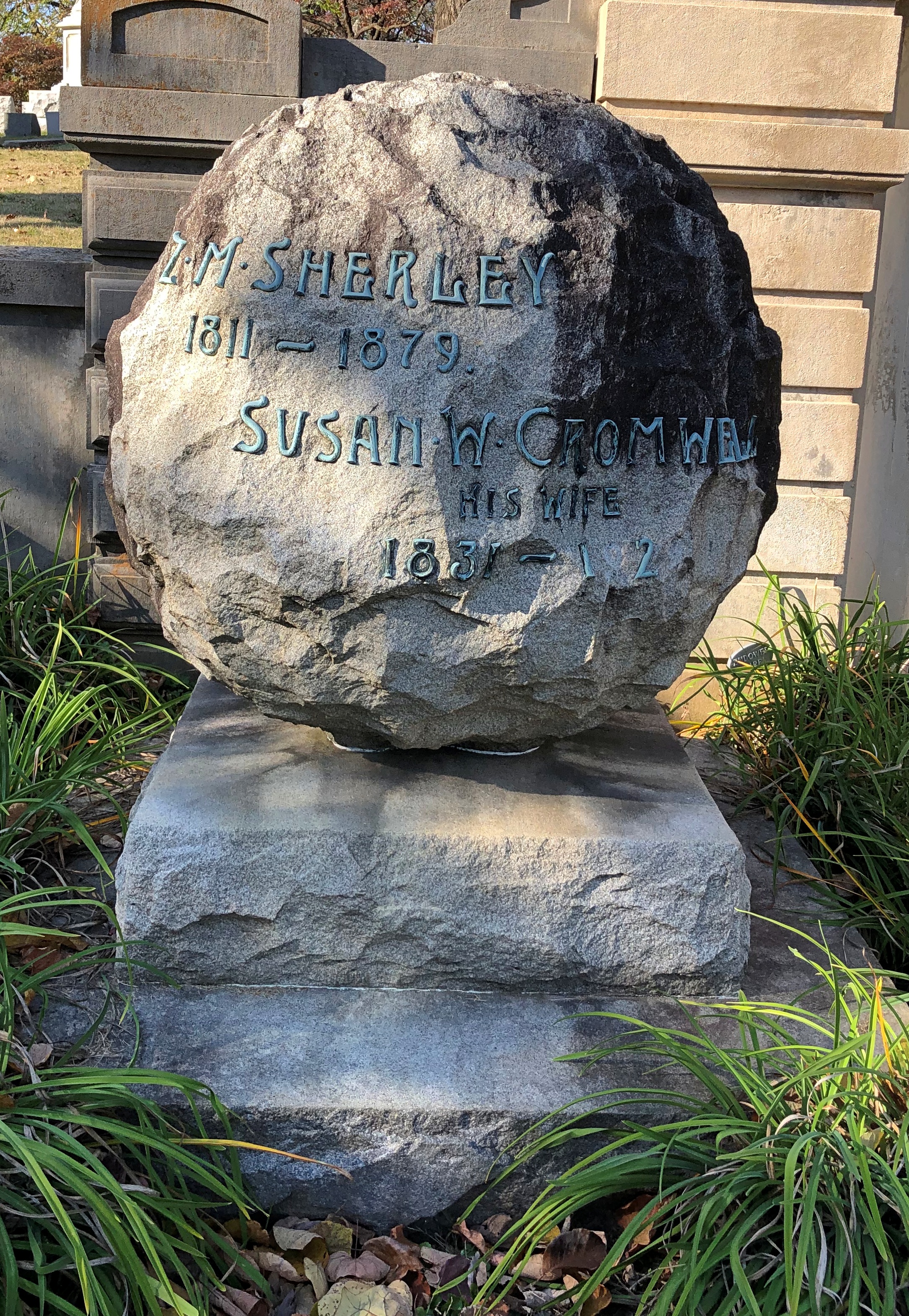
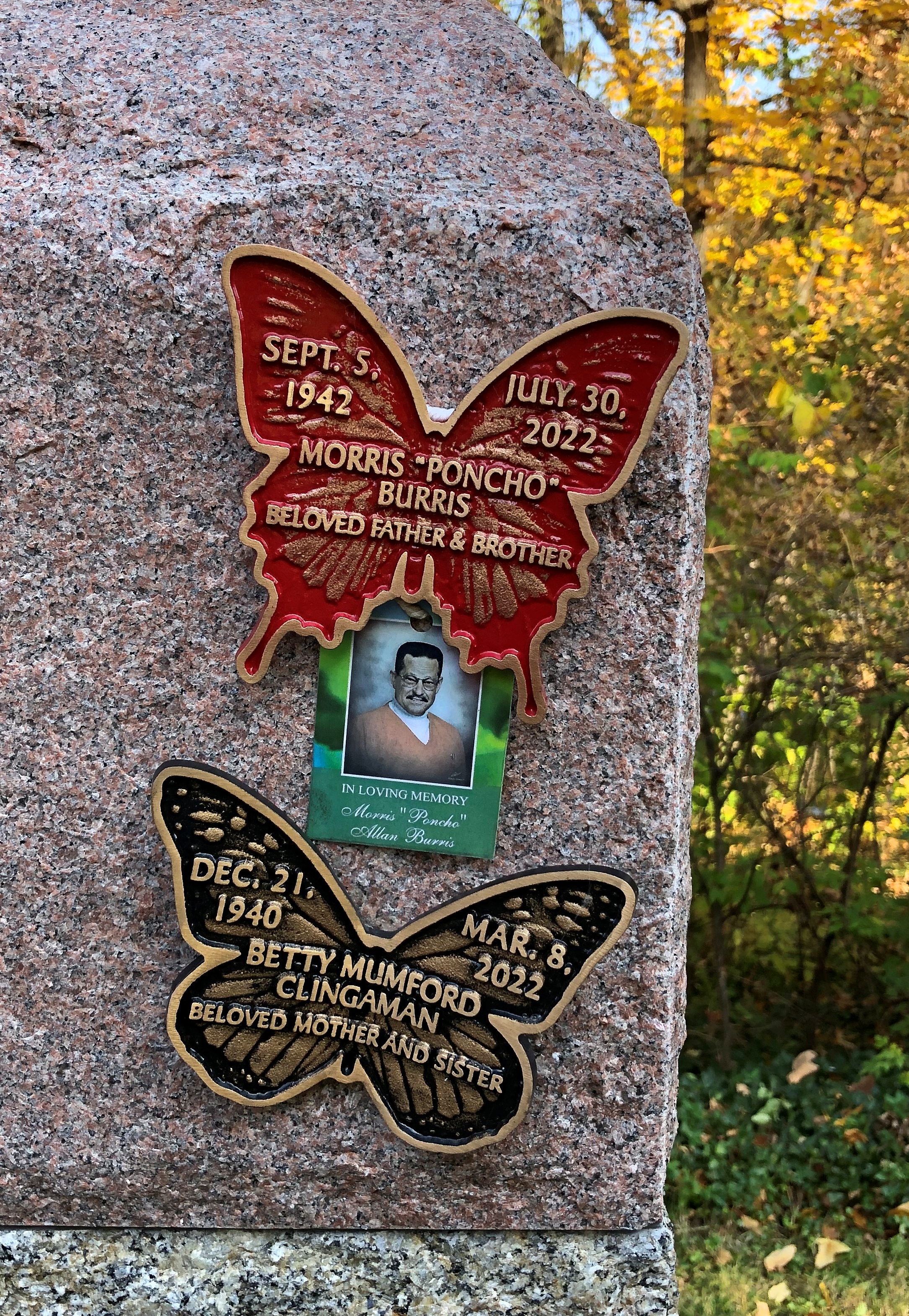
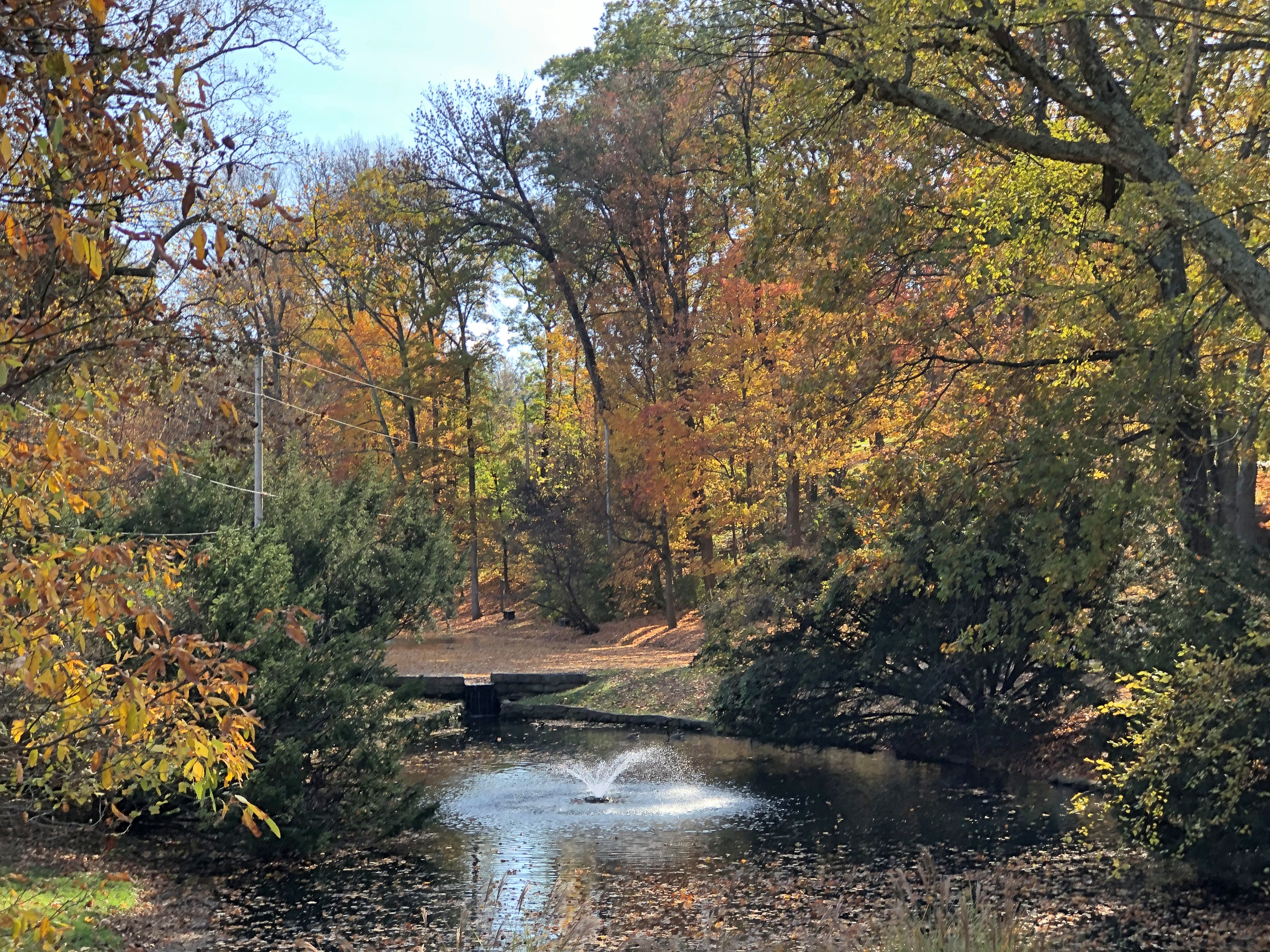
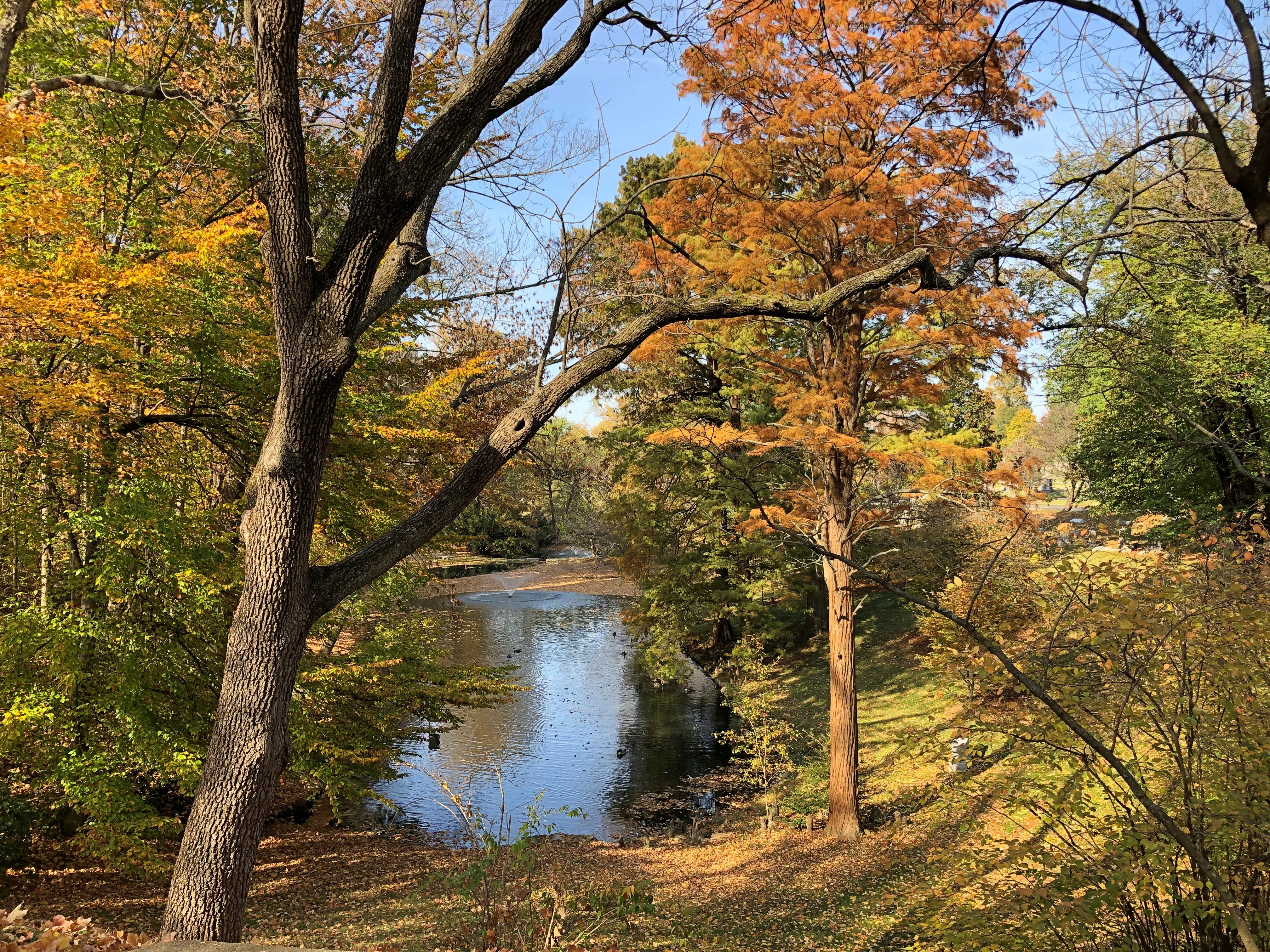
Cave Hill is a Class A cemetery. Or Class A+ or maybe A++. I ought to create an aesthetic rating system for cemeteries, but I think that would be a lot of work. Enough to say that Cave Hill has everything a top cemetery should have: a vast variety of standing stones, plain to elaborate, including a lot of funerary art and mausoleums and a scattering of odd memorials; historic burials of those notable locally and a few famed worldwide; a Victorian rural cemetery movement pedigree; hilly contour (in places where that is possible) and enough mature trees, bushes and flowers to count as an arboretum; water features; and a chapel or two.

By those criteria, Cave Hill is the complete package. Definitely in the same league as Bonaventure in Savannah, Forest Lawn in Buffalo, Hollywood Forever in Los Angeles, Hollywood in Richmond, Saint Louis No. 1 in New Orleans, Green-Wood in Brooklyn, Woodlawn in the Bronx, Bellefontaine in St. Louis, Laurel Hill in Philadelphia, Woodland in Dayton and Graceland or Rosehill in Chicago.

Bonus in early November: fall foliage.Cave Hill Cemetery Cave Hill Cemetery Cave Hill Cemetery Cave Hill Cemetery

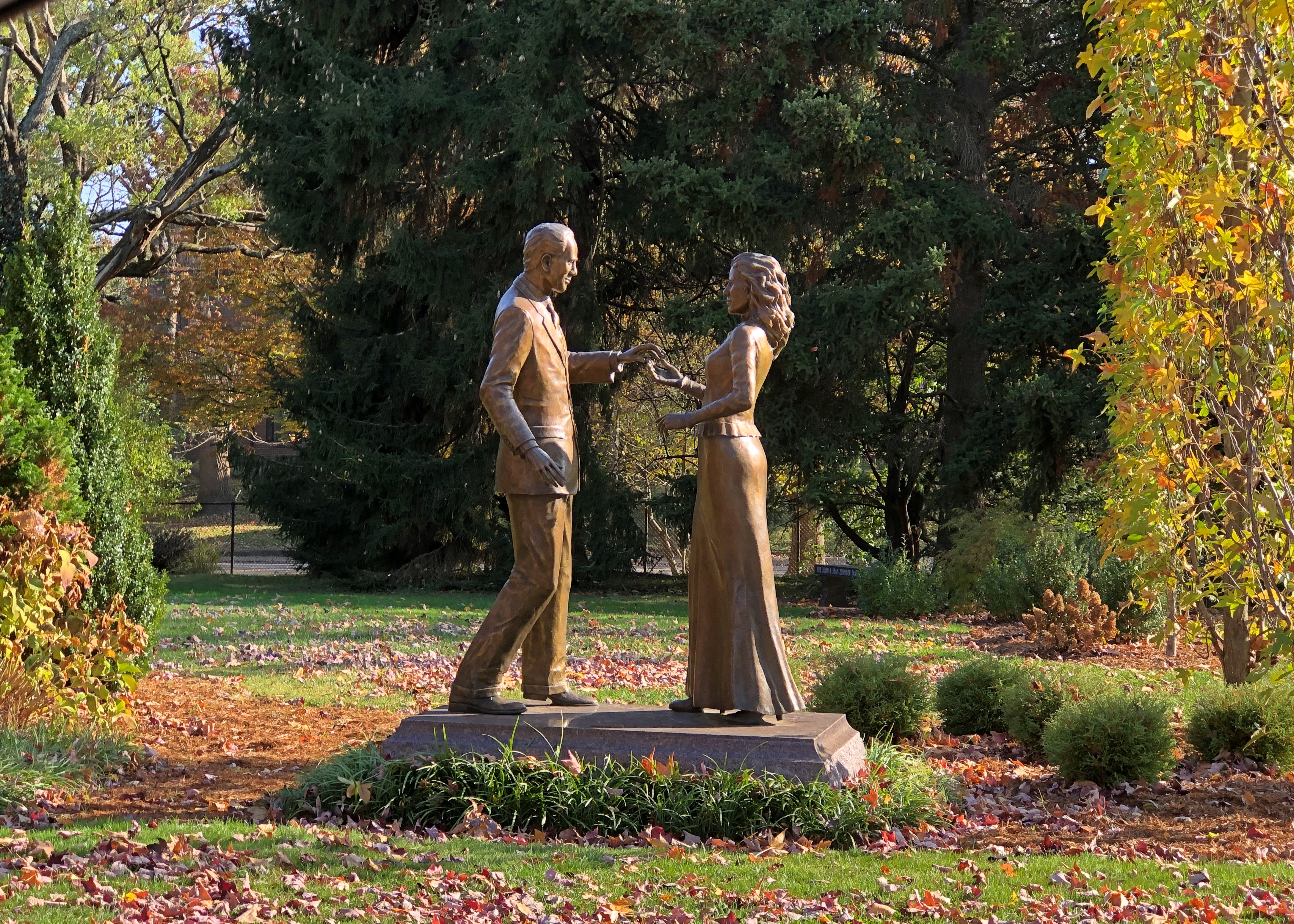
Funerary art, some relatively modest.Cave Hill Cemetery Cave Hill Cemetery Cave Hill Cemetery

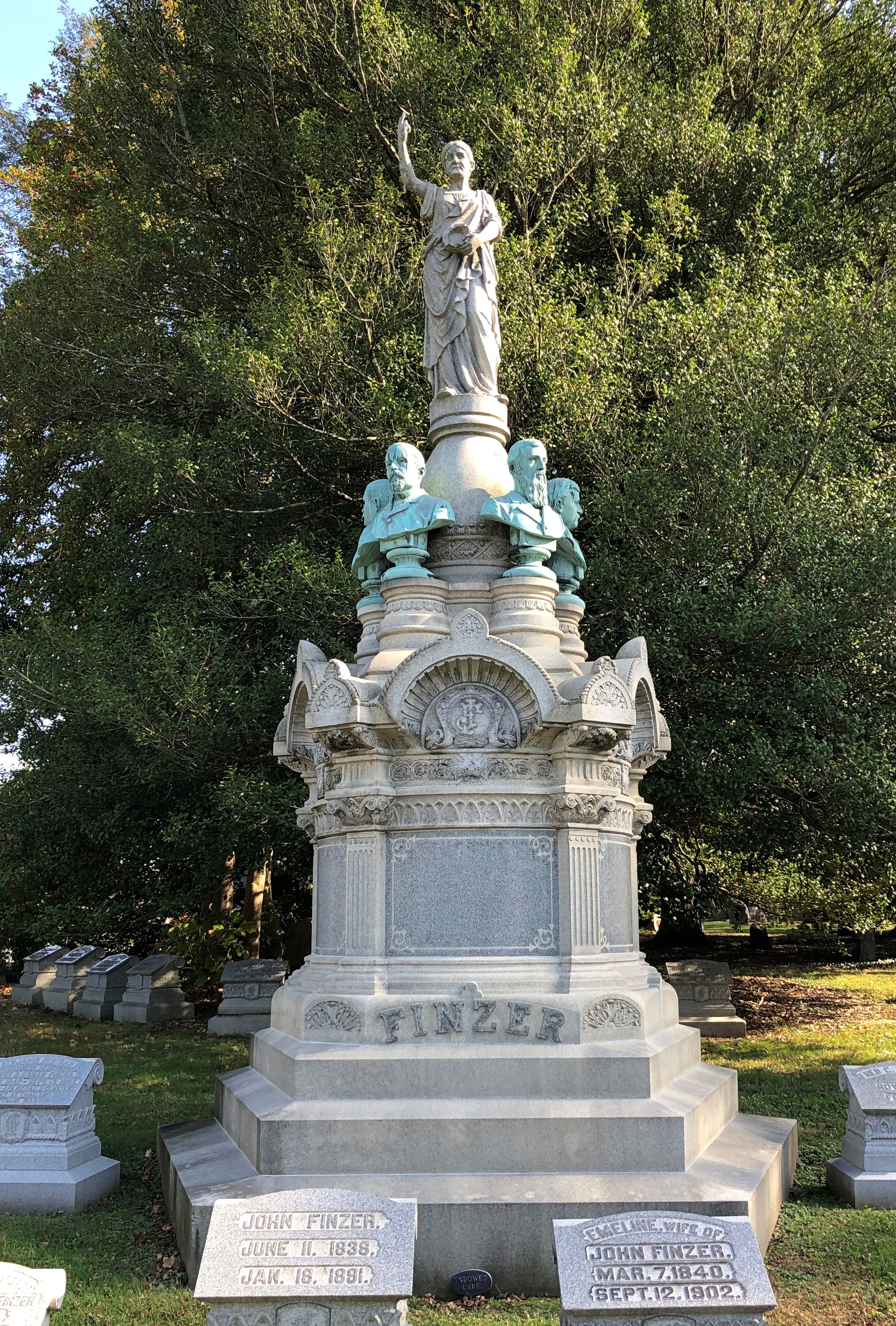
Funerary art, more monumental.Cave Hill Cemetery Cave Hill Cemetery Cave Hill Cemetery Cave Hill Cemetery

Structures.Cave Hill Cemetery Cave Hill Cemetery Cave Hill Cemetery

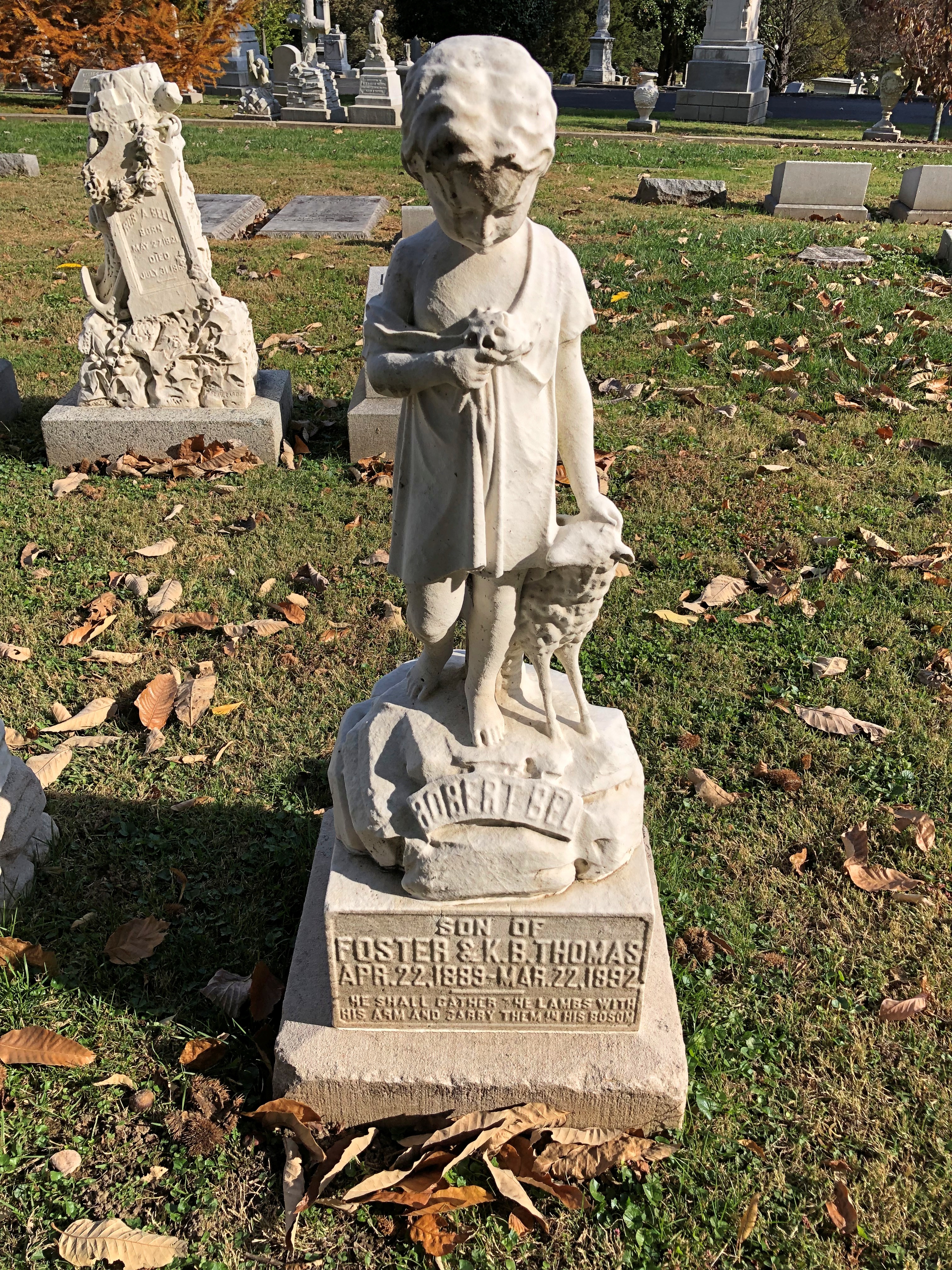
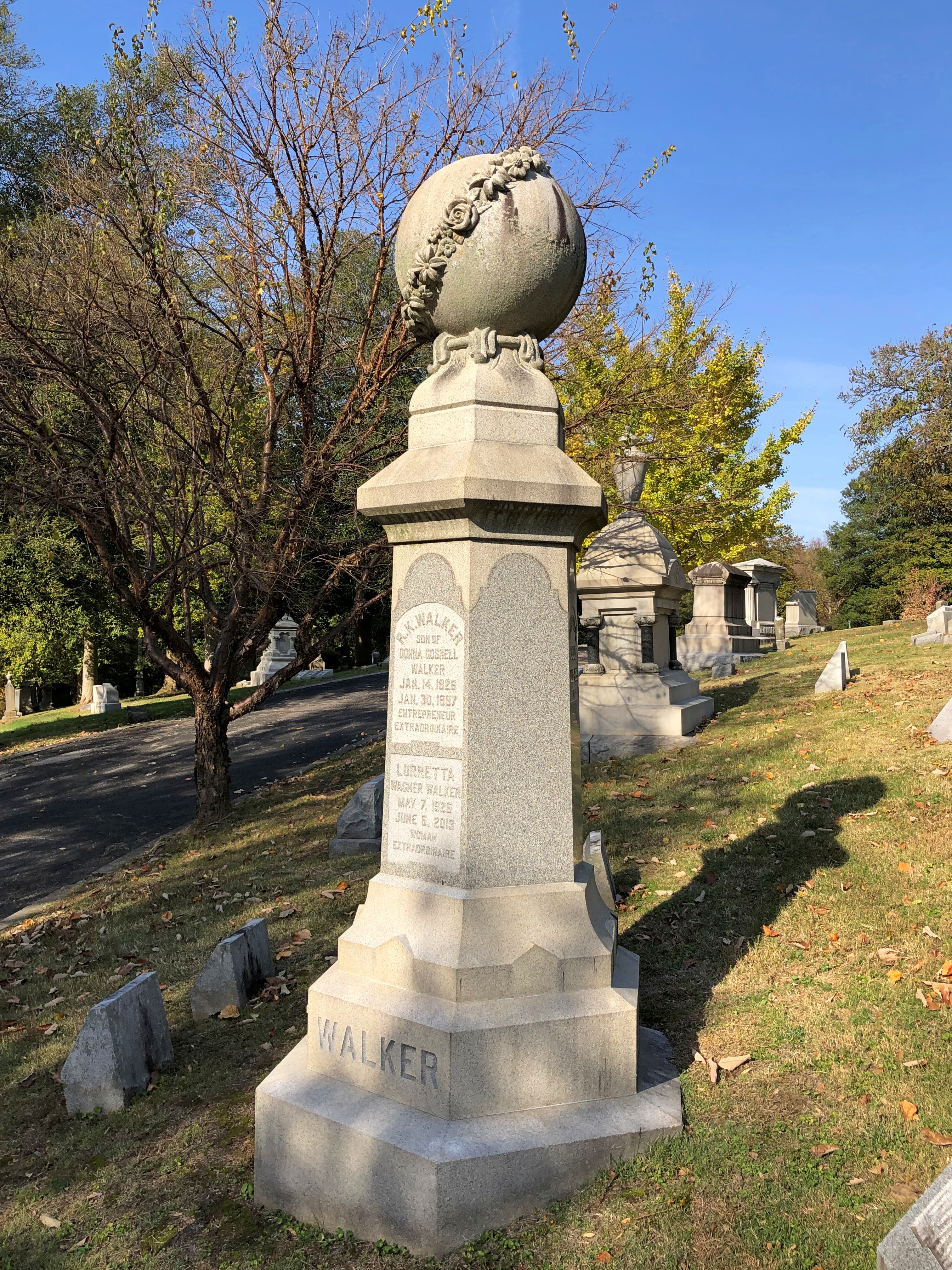
An oddity.Cave Hill Cemetery

Their ashes were probably scatted nearby. This stone is near a part of the cemetery called the Scattering Garden.Cave Hill Cemetery

Among scenes of fall, at least for now.Cave Hill Cemetery Cave Hill Cemetery

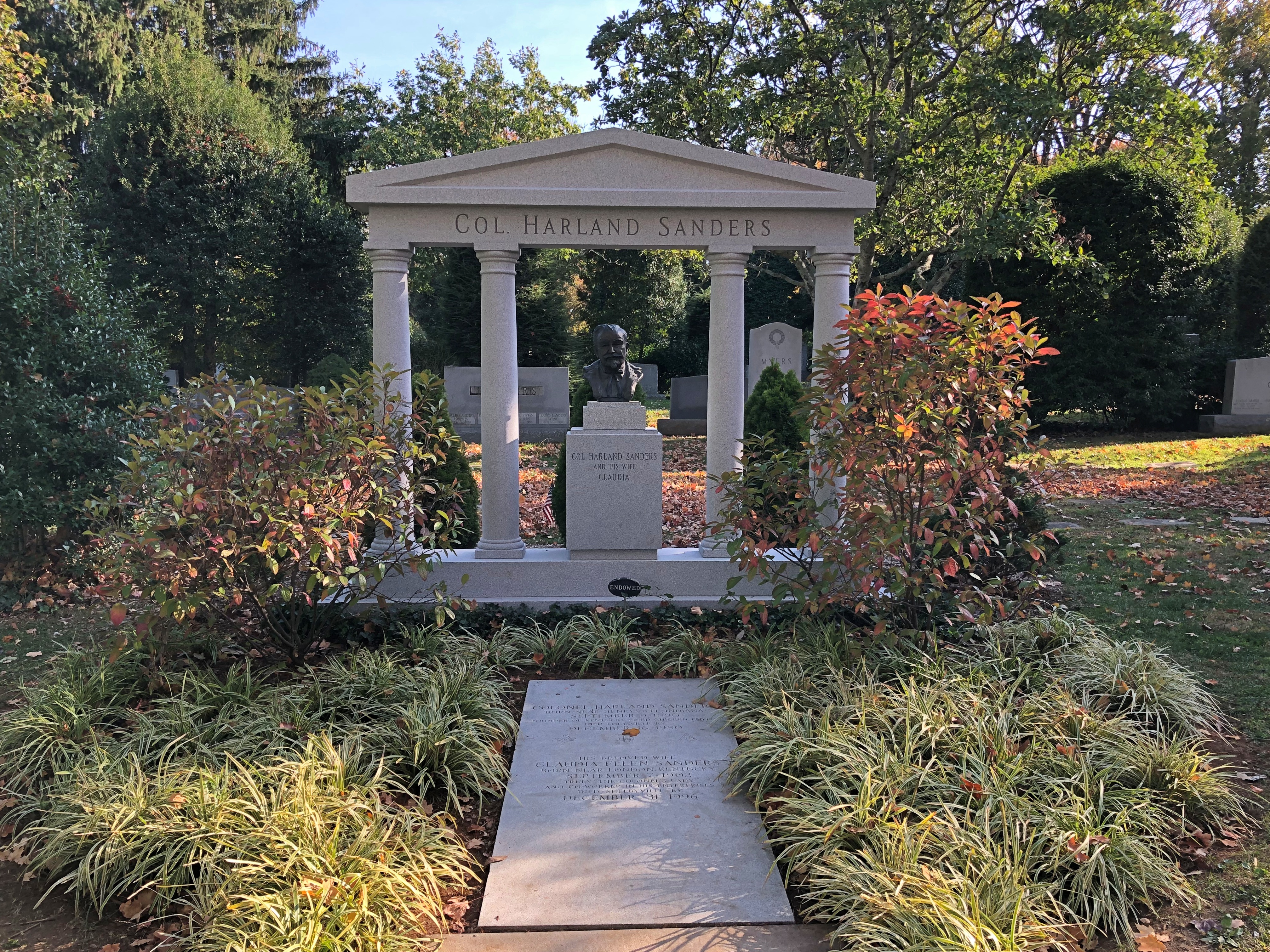
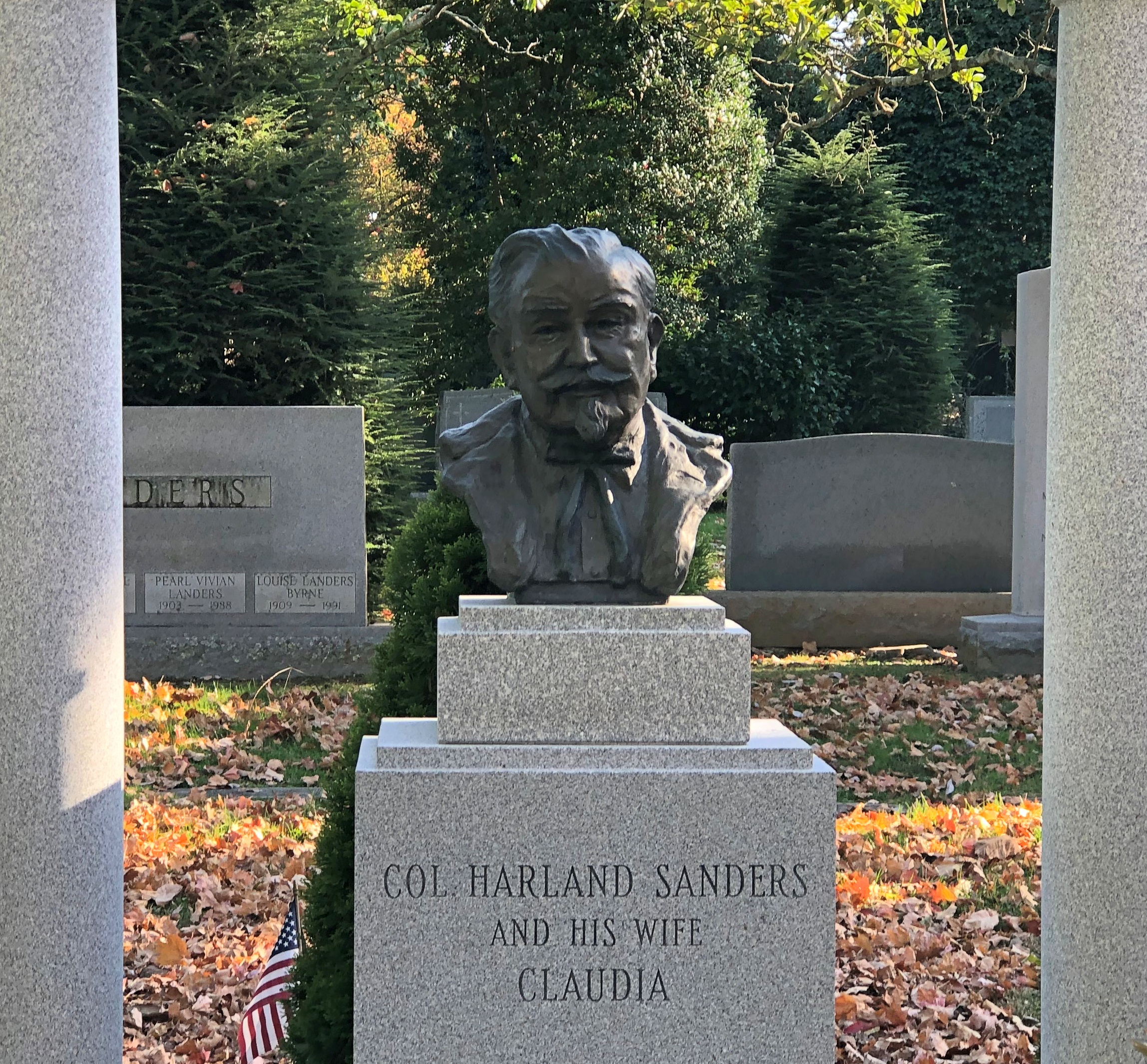
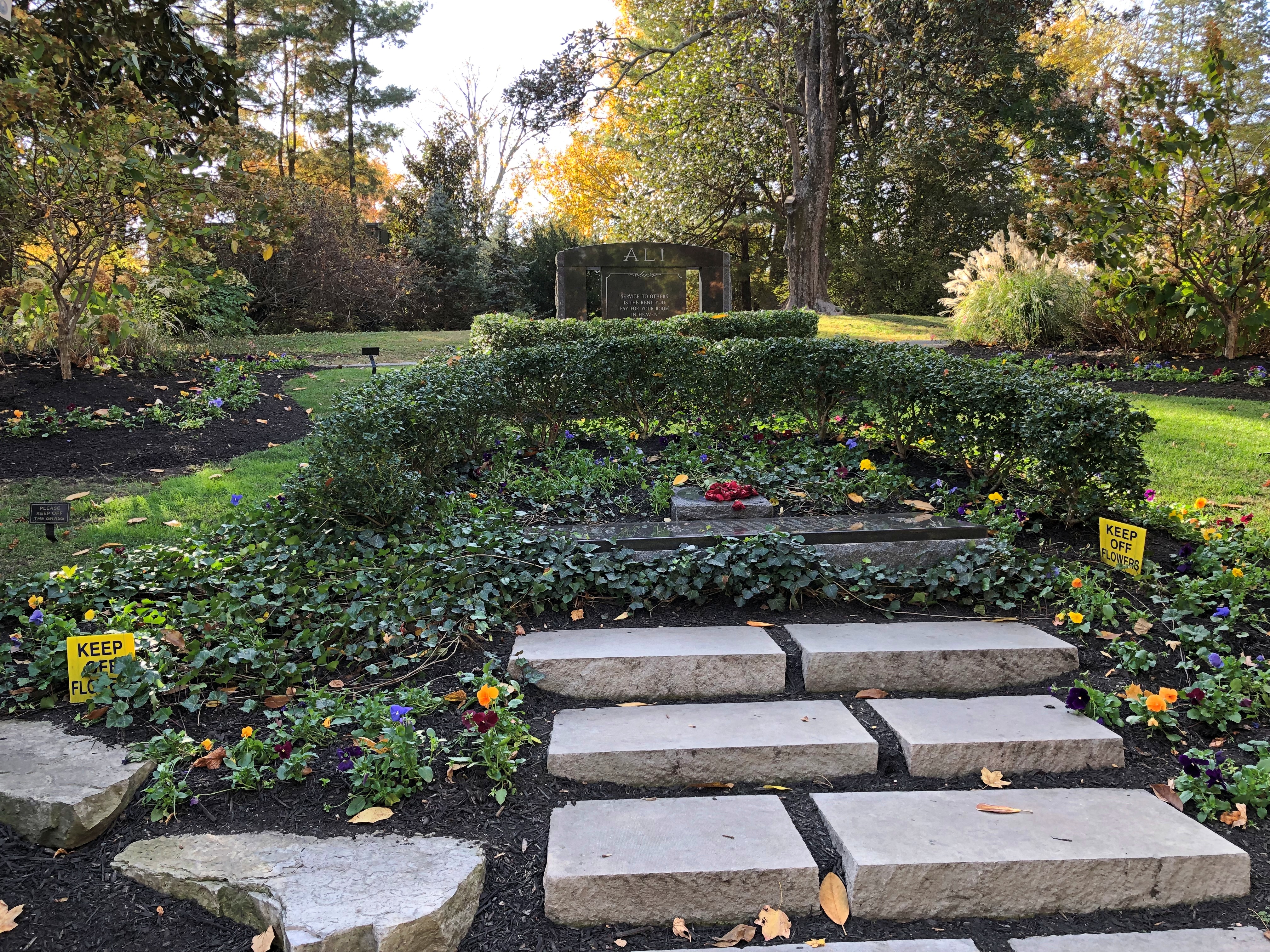
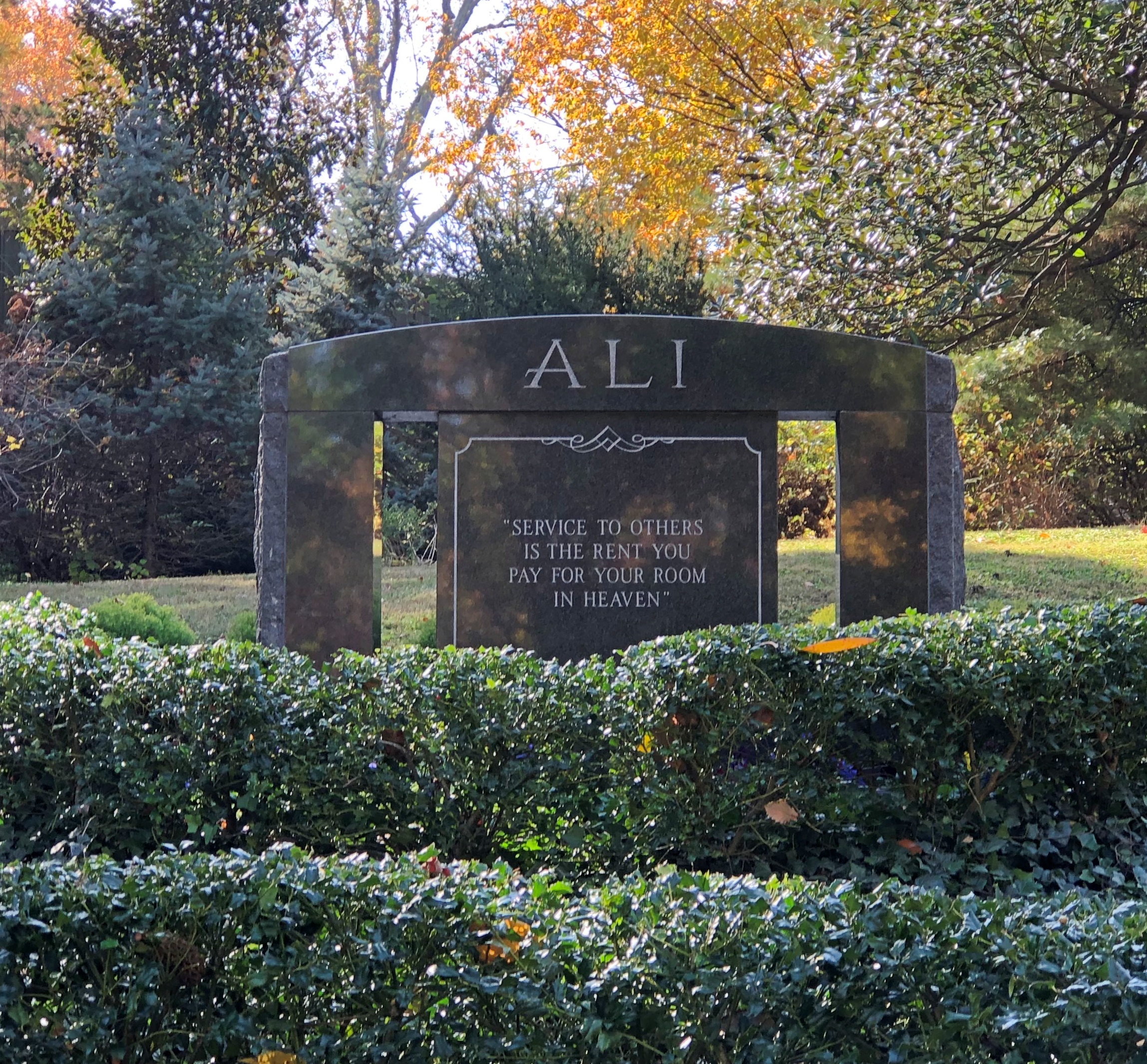
Cave Hill sports a number of notable permanent residents, but two far outshine the rest in terms of posthumous fame. At least for someone my age; I can’t vouch for later generations, who may not realize that Col. Sanders was an actual person, not just a cartoon mascot for KFC.Cave Hill Cemetery Cave Hill Cemetery

Even more famous worldwide, at least during the last half of the 20th century, was Muhammad Ali. At some point, he was thought to be the best-known person on Earth, or so I read. If not, he was in the running.Cave Hill Cemetery Cave Hill Cemetery

Even boxing-indifferent people like me knew him, since he was no mere prizefighter. Float like a butterfly, sting like a bee.

Cave-in-Rock State Park

Snow this morning. It didn’t stick, but it did remind us all of the cold months to come.

At the beginning of 2020, works published in 1924 finally entered public domain in the U.S. The Center for the Study of the Public Domain noted some of the better known works now available to all.

“These works include George Gershwin’s ‘Rhapsody in Blue,’ silent films by Buster Keaton and Harold Lloyd, and books such as Thomas Mann’s The Magic Mountain, E. M. Forster’s A Passage to India, and A. A. Milne’s When We Were Very Young.”

Plenty of obscure works are now available as well. One I have in mind is The Outlaws of Cave-in-Rock by Otto A. Rothert, published in 1924. Rothert (1871-1954) was secretary of the Filson Historical Society in Louisville, and apparently took a strong interest in regional history

The Outlaws of Cave-in-Rock can now be found in Google Books. I haven’t read it all, but I have sampled some of it. Such as the first few paragraphs.

“This book is intended to give the authentic story of the famous Cave-in-Rock of the lower Ohio River… and to present verified accounts of the most notorious of those highwaymen and river pirates who in the early days of the middle West and South filled the Mississippi basin with alarm and terror of their crimes and exploits.

“All the criminals herein treated made their headquarters at one time or another in this famous cavern. It became a natural, safe hiding-place for the pirates who preyed on the flatboat traffic before the days of steamboats….

“A century ago and more, its rock-ribbed walls echoed the drunken hilarity of villains and witnessed the death struggles of many a vanished man. Today this former haunt of criminals is as quiet as a tomb. Nothing is left in the Cave to indicate the outrages that were committed there in the olden days.”

The book also tells the tale, in four chapters, of the exceptionally murderous Harpe brothers (or cousins), a bloody story deftly summarized by the late Jim Ridley in the Nashville Scene some years ago. Enough to note here that the Harpes and their women roamed western Tennessee and Kentucky around the beginning of 19th century, murdering and robbing as they went, but especially murdering.

They spent some time among the blackguards at Cave-in-Rock, but were forced to leave after they threw a man bound to a horse to his (and the horse’s) death off the cliff’s edge above the cave for fun. Even river pirates have their standards.

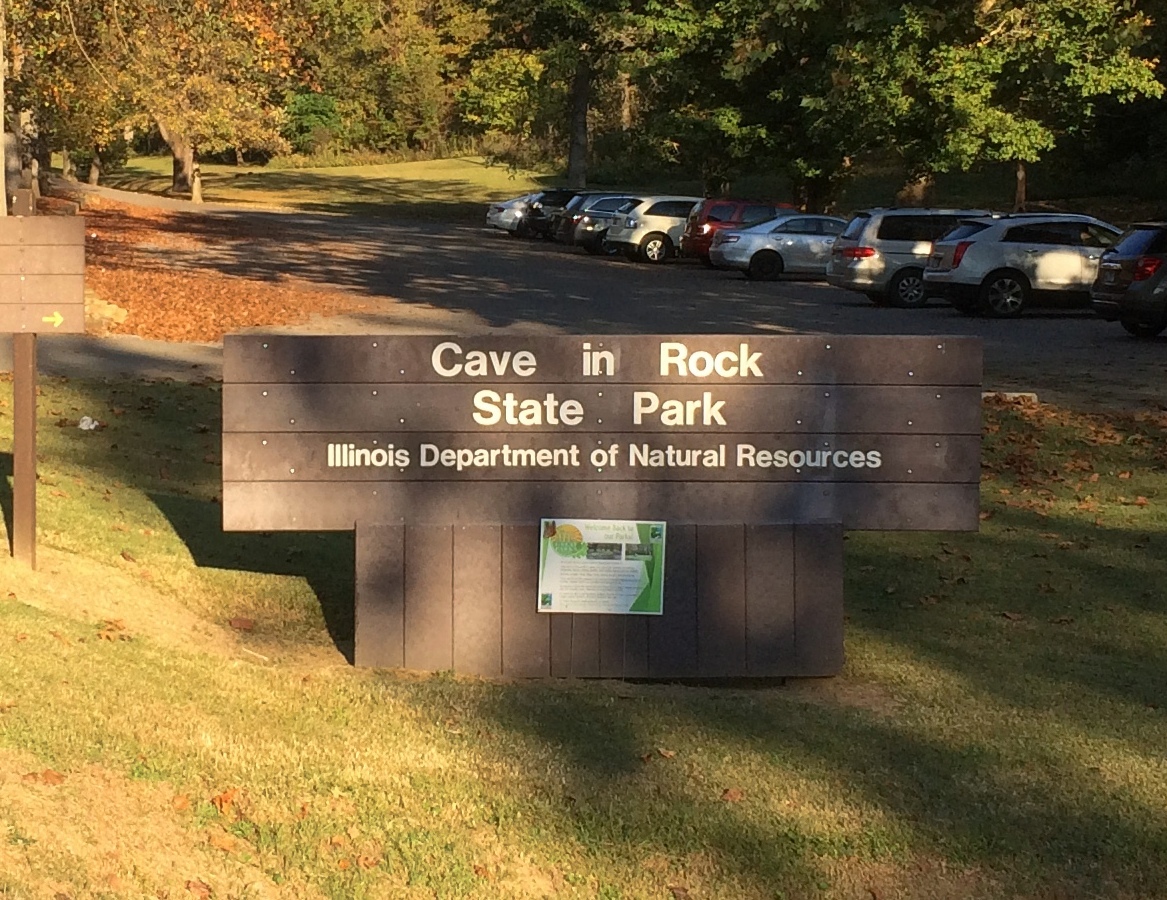
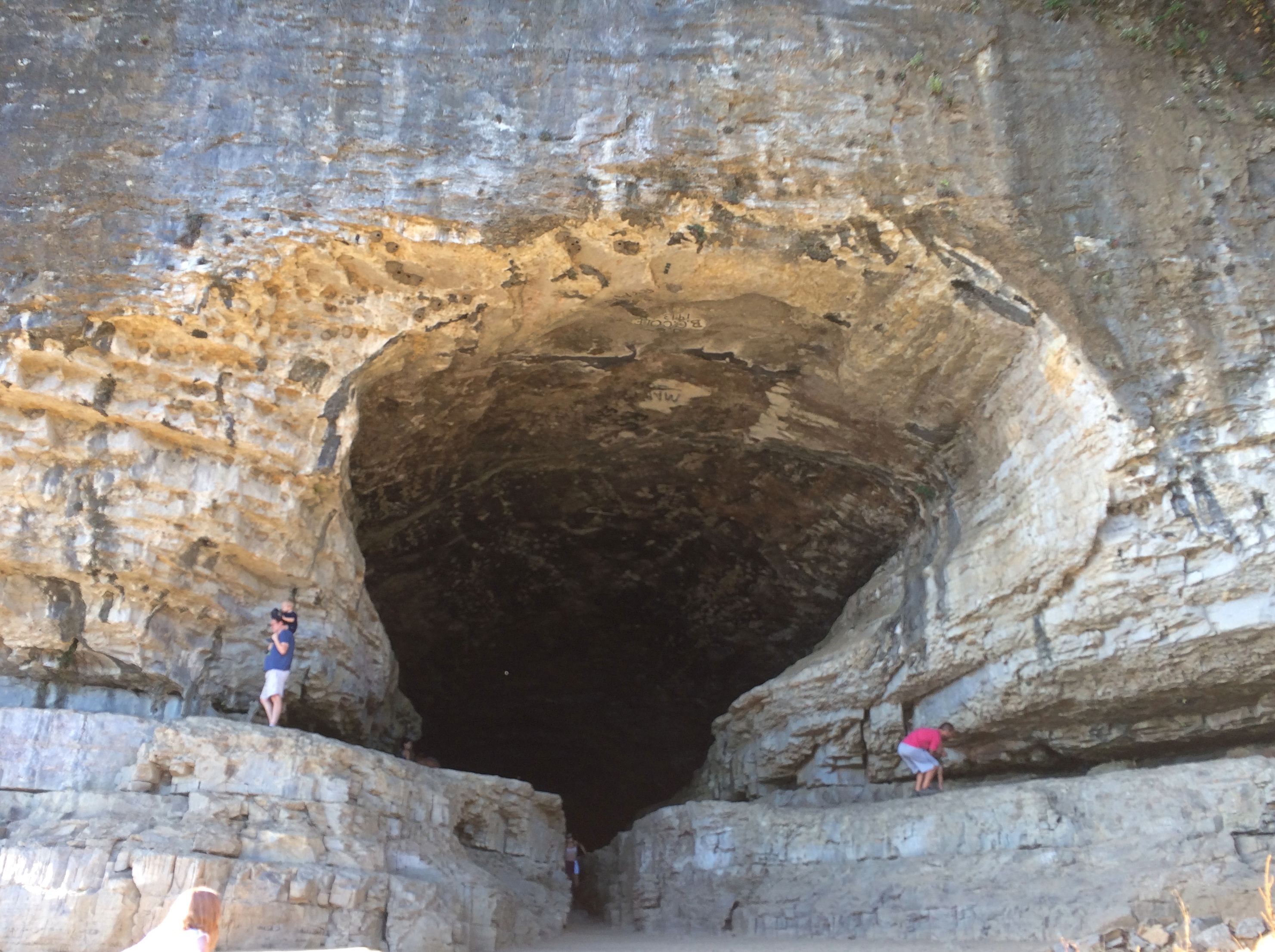
In our time, and in fact since 1929, the cave has been the central feature of Cave-in-Rock State Park. Not quiet as a tomb, quiet as a minor tourist attraction. It isn’t part of Shawnee National Forest, but some of the national forest lands are nearby. Note the sign isn’t a stickler for hyphens.Cave-in-Rock State Park

The park is near the small town of Cave-in-Rock, Illinois, which is walkable distance to the south from the park. We arrived at the park on the afternoon of October 11.

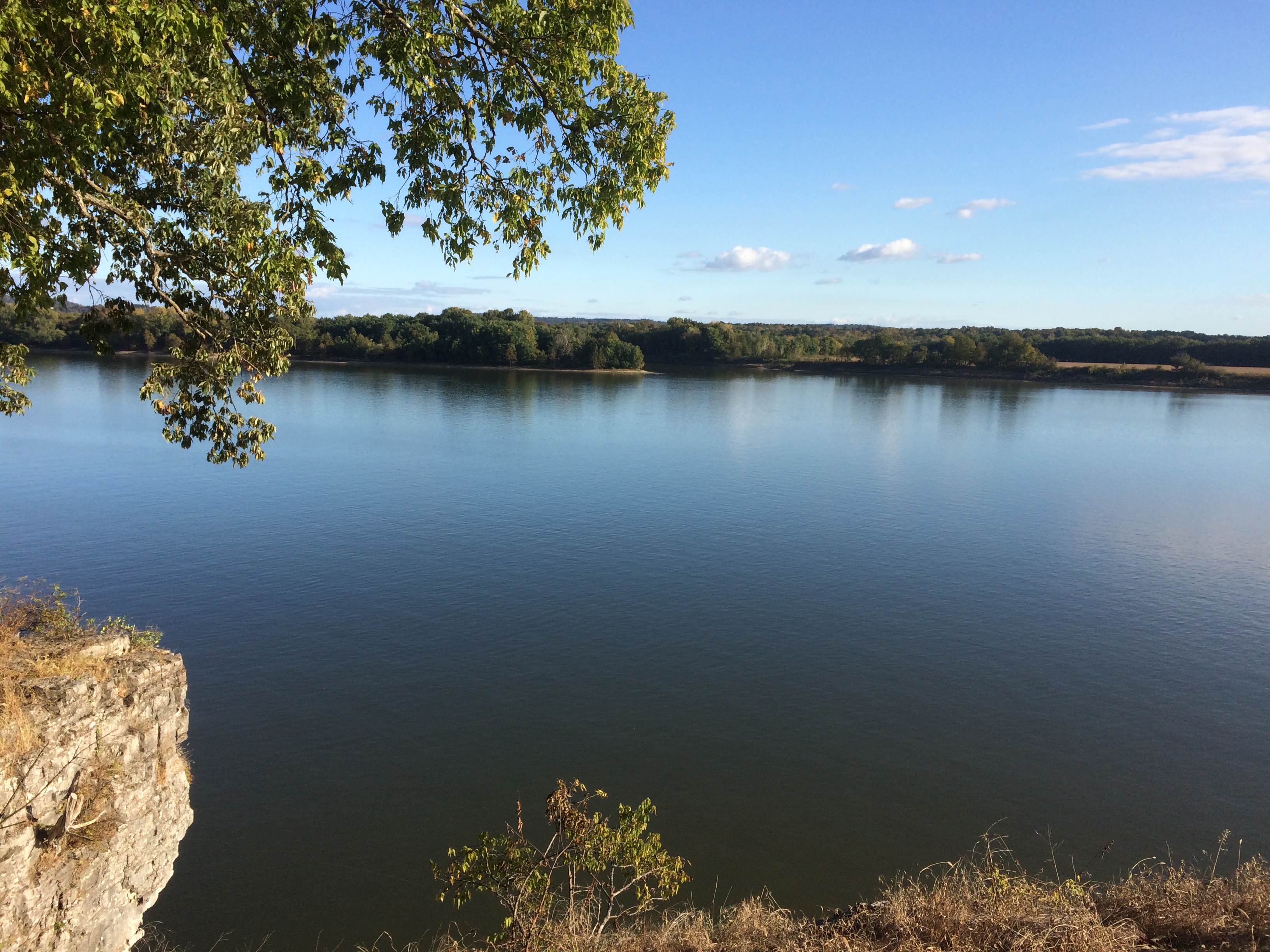
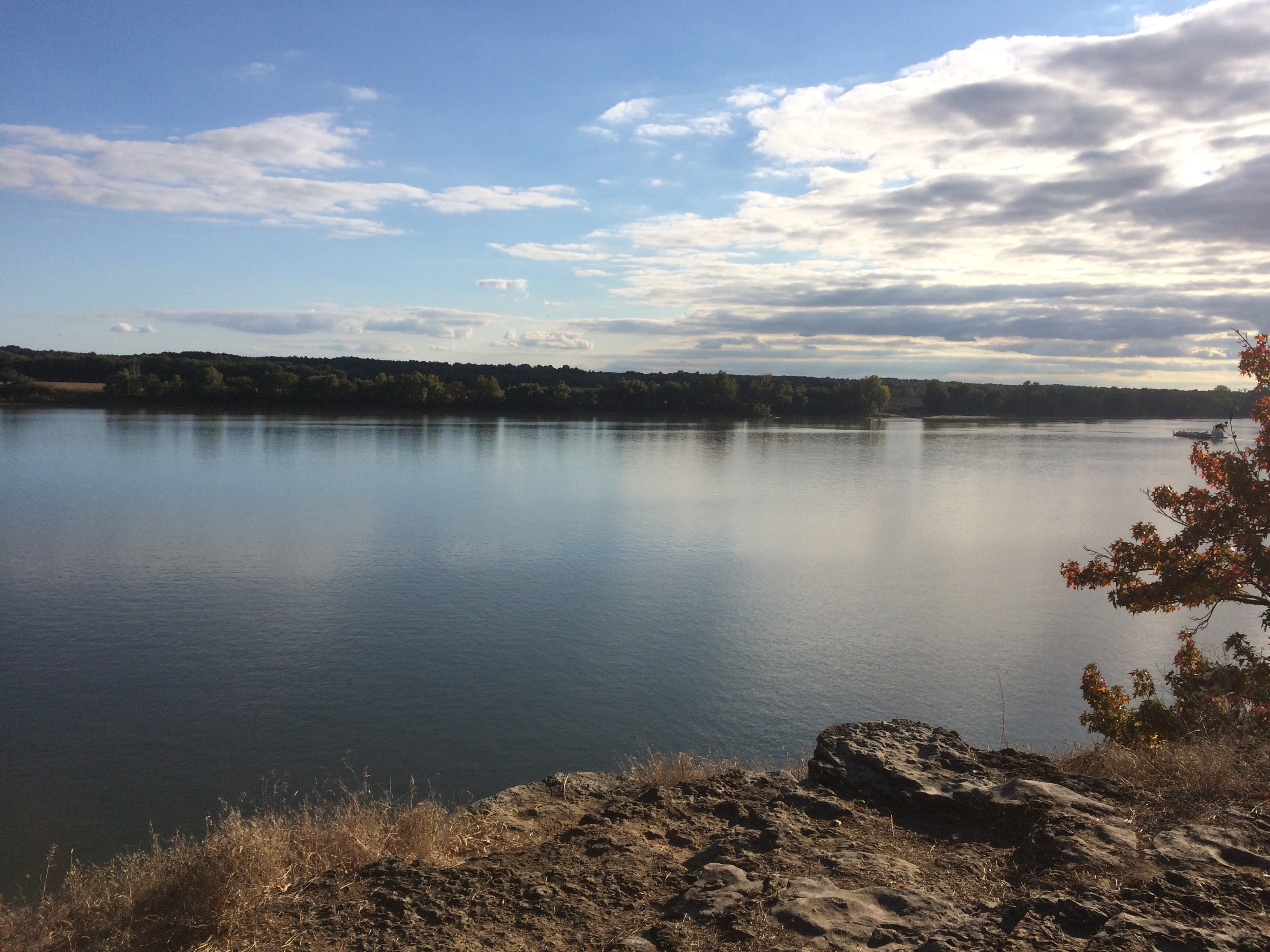
You park in a small lot and climb 50 or so steps uphill, to a crest overlooking the Ohio River, sporting picnic shelters and tall trees. Views from the crest, looking across to Kentucky.Cave-in-Rock State Park Cave-in-Rock State Park

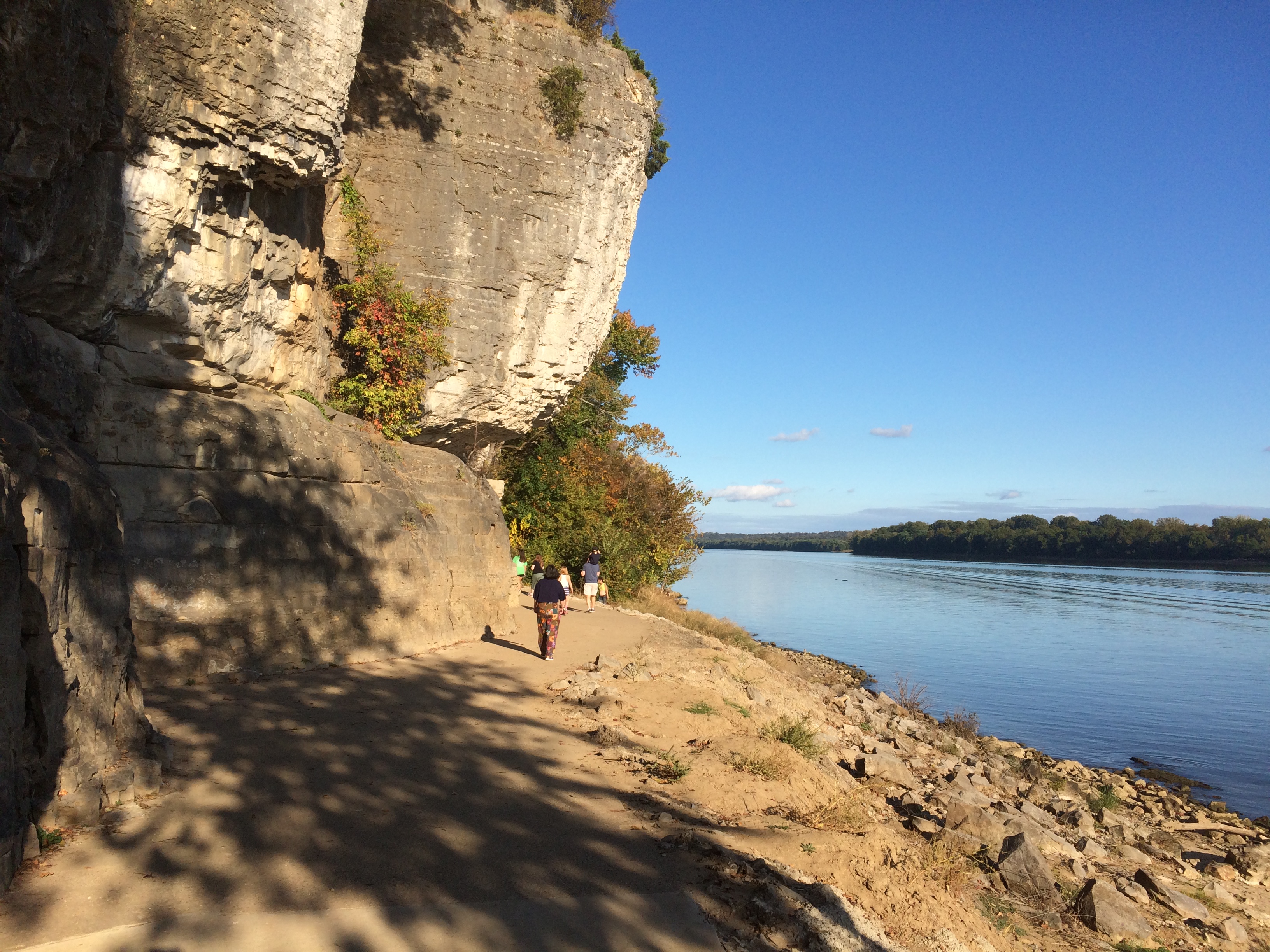
From the crest, you go down more stairs most of the way to the river’s edge. The cave entrance is under a high cliff and a few feet higher than a small beach on the river.
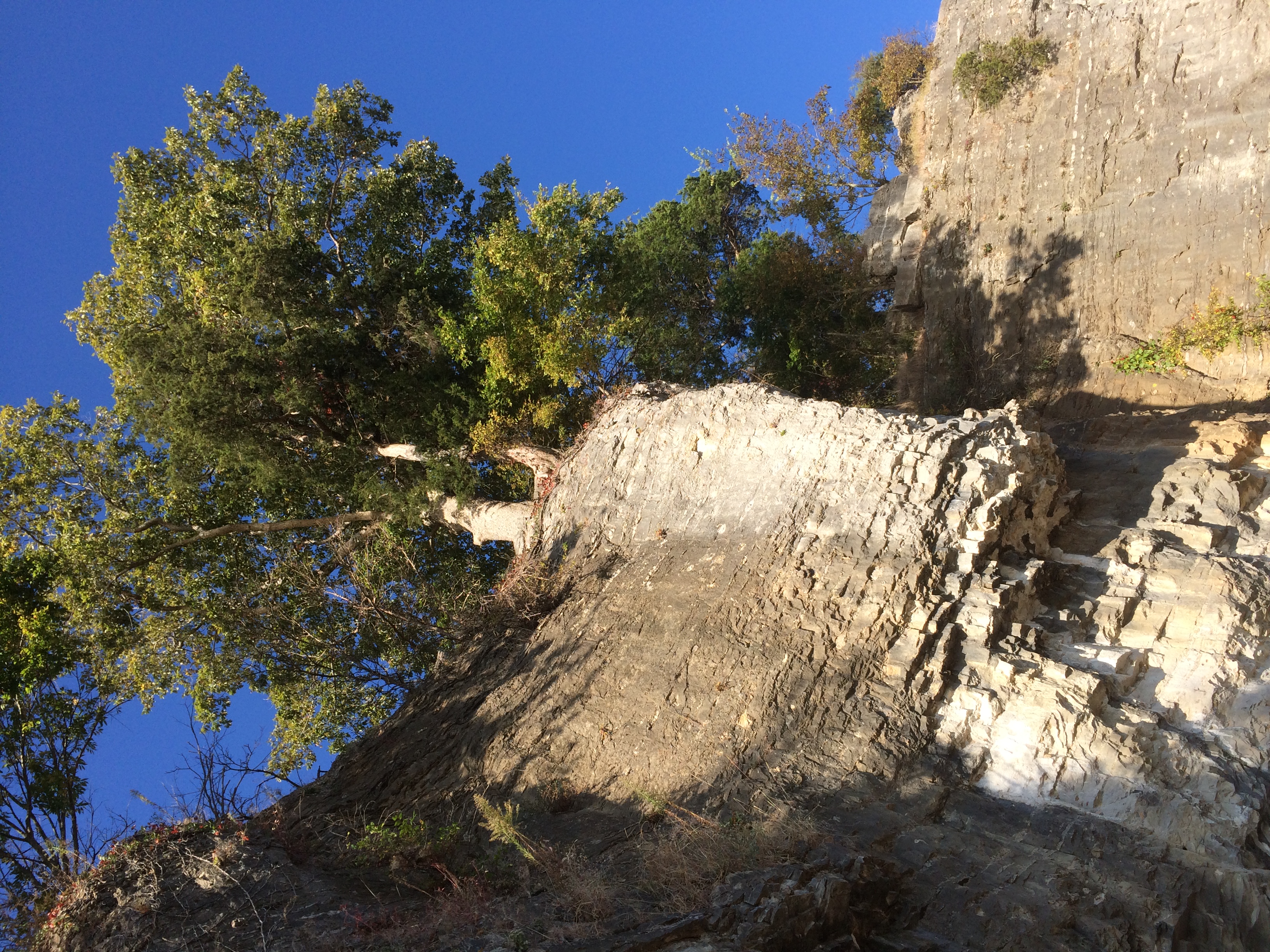
Cave-in-Rock State ParkLooking back up at some trees lording over the edge of the cliff.
Cave-in-Rock State Park

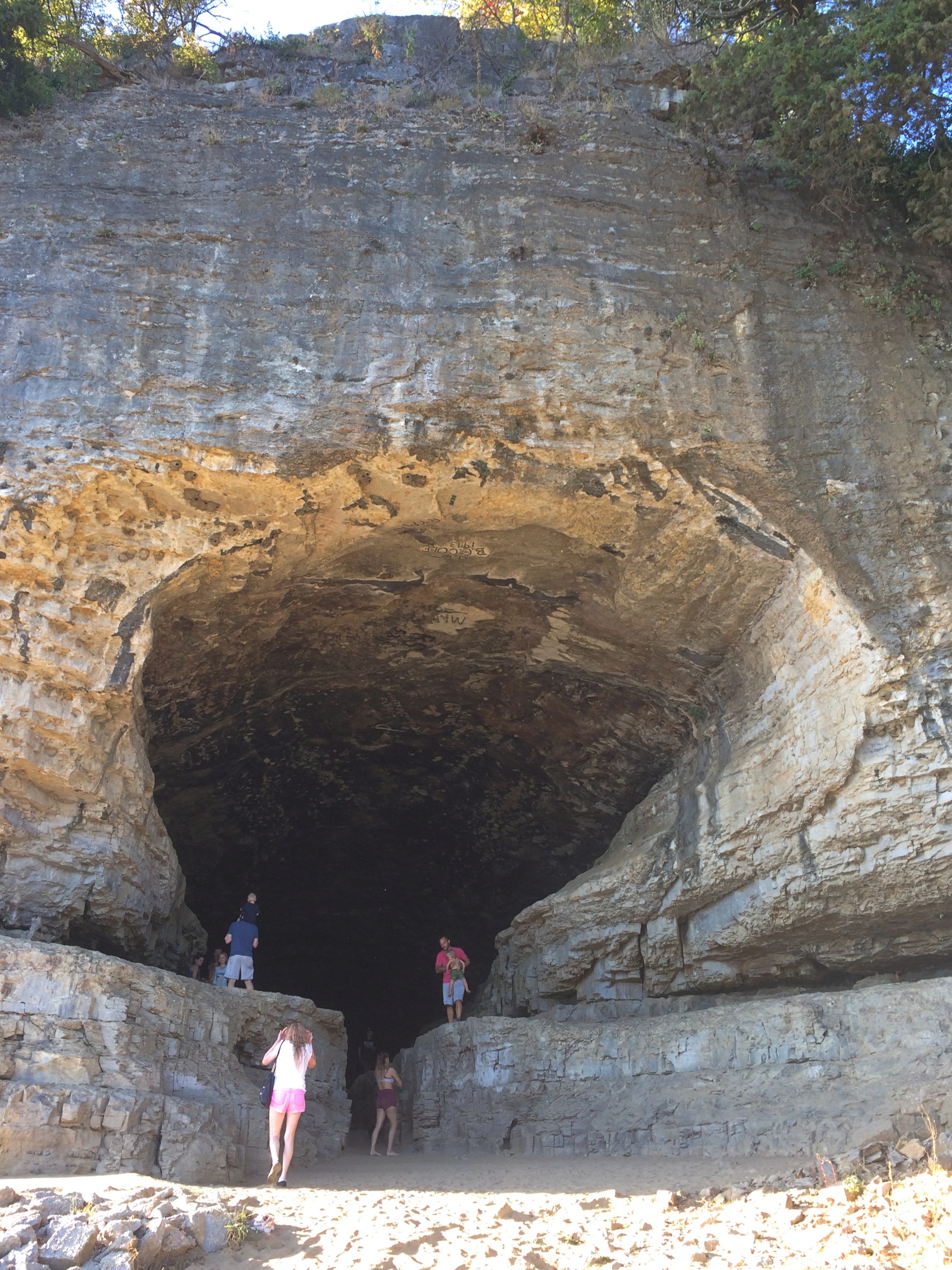
A few more steps and you’re in front of Cave-in-Rock. It’s an apt name.

Cave-in-Rock State Park Cave-in-Rock State Park

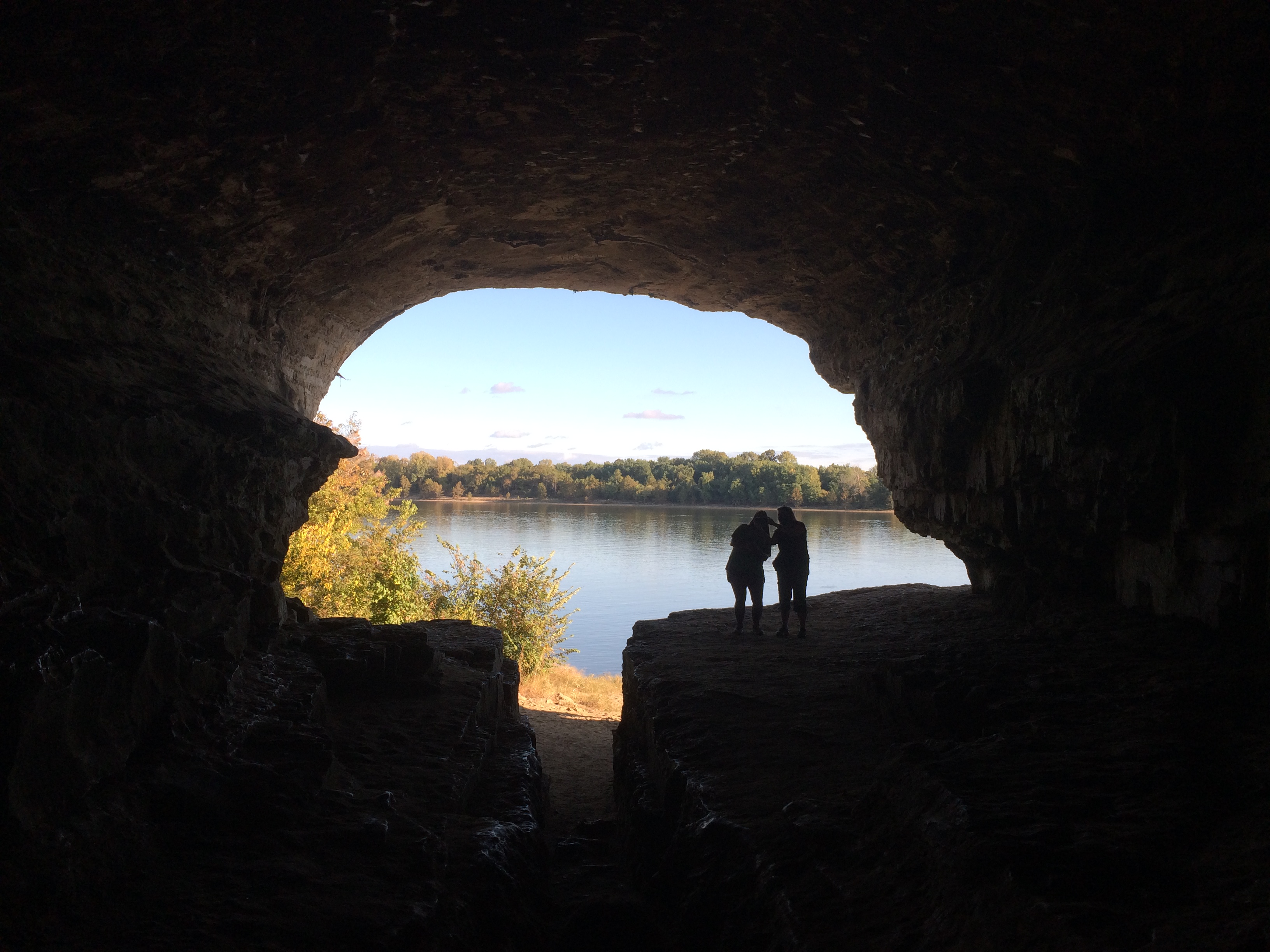
Soon you’re inside, looking out.
Cave-in-Rock State Park

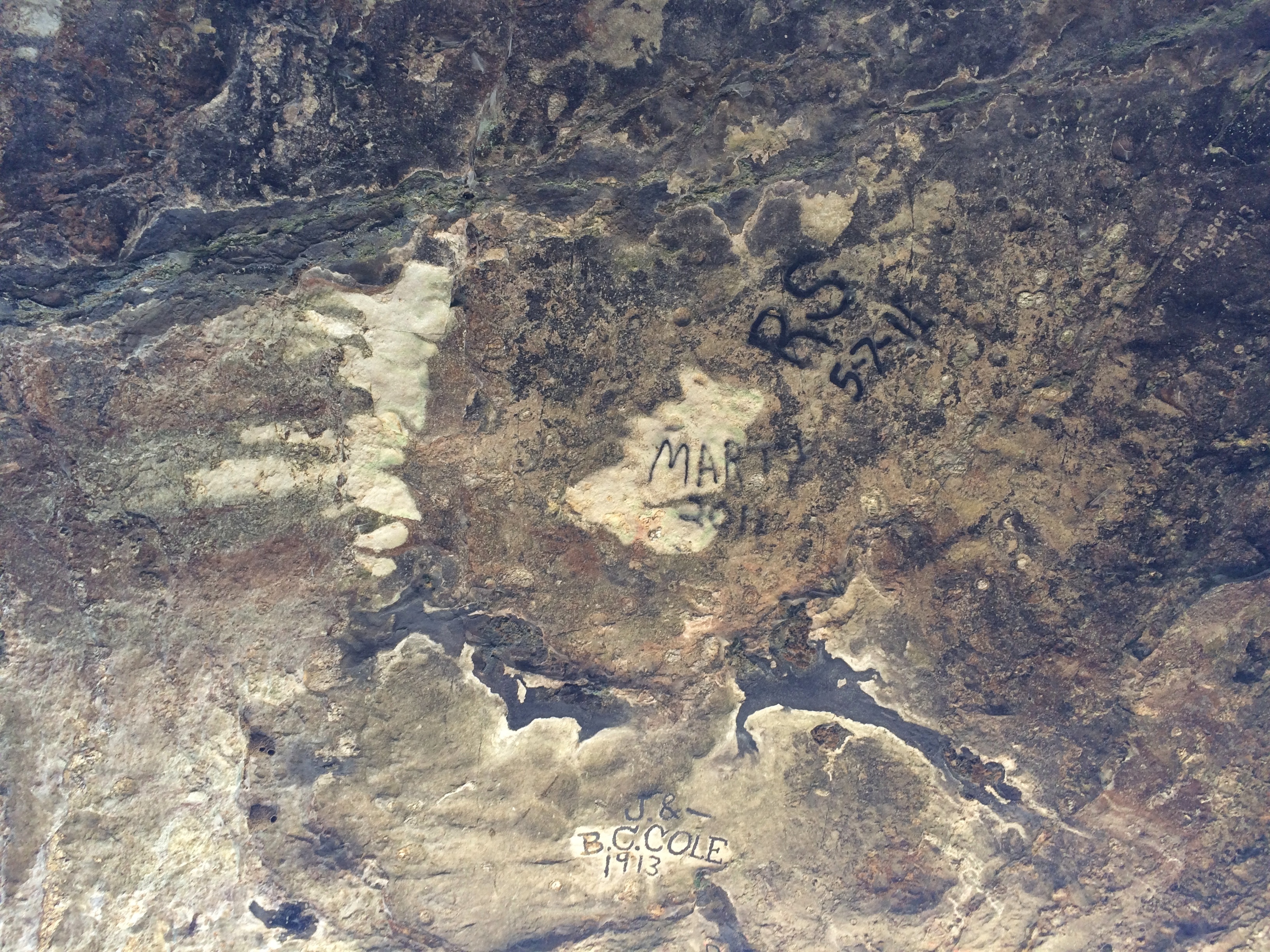
It doesn’t go too far back, at least not that I know of. Graffiti, mostly painted signatures, is prominent on the roof of the cave.
Cave-in-Rock State Park

J. & B.C. Cole were here in 1913, pre-park and probably dangling from a rope over the cliff edge. The more recent Marty and R.S. were here in 2011, and probably had rappelling gear.

Postcards To Ed

It’s been almost four years since my old friend Ed passed. His bequest to me was many postcards, including some of those that I’d sent to him over the years. I spent some time looking at them the other day. Odd to see something you dashed off, never expecting to see it again.

A selection.

June 16, 2008

Dear Ed,
Welcome back from Mongolia, etc. I’m expecting a letter. You will soon receive cards from Tennessee or NC or maybe even SC.

Dees

***

June 25, 2009

Dear Ed,
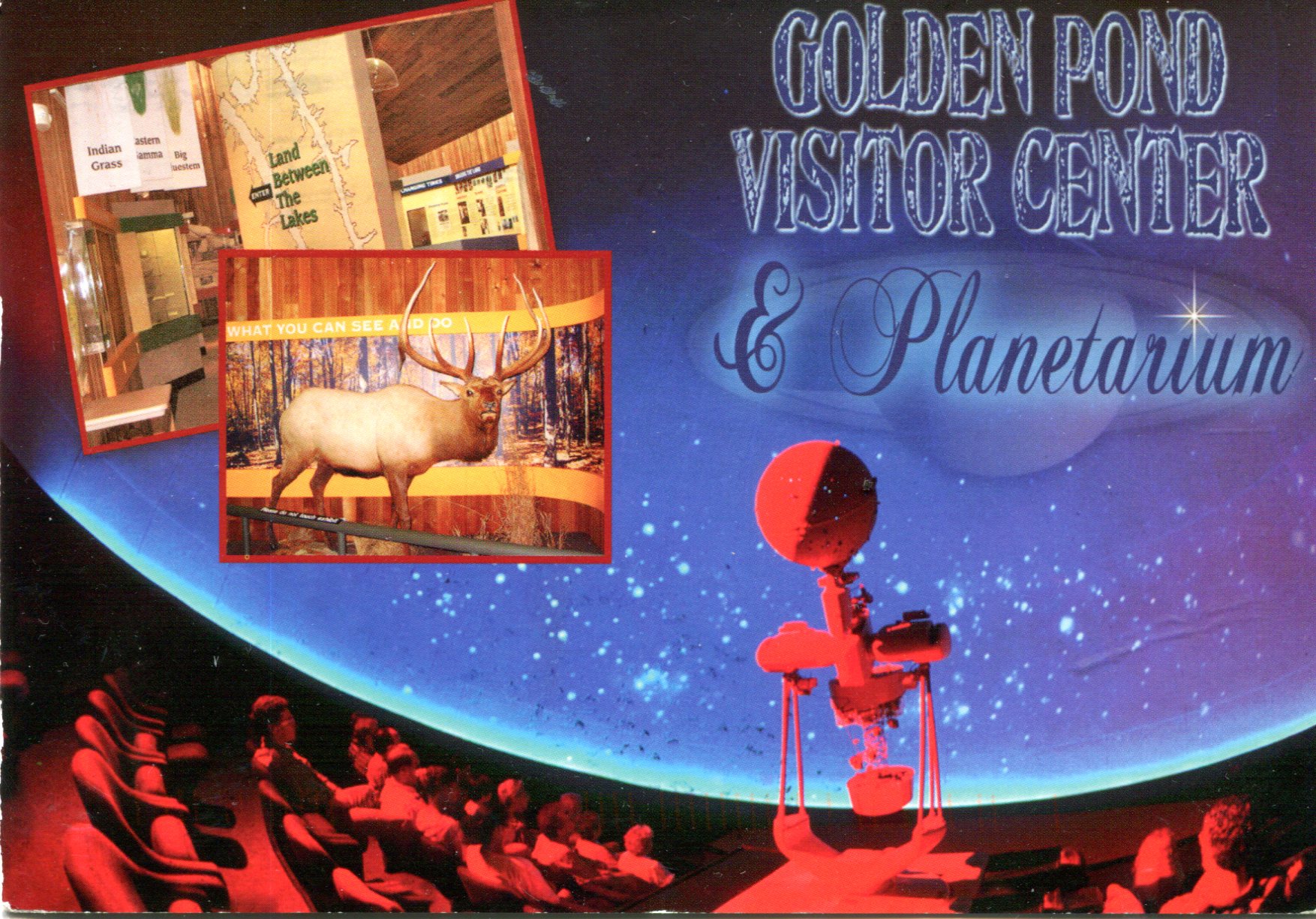
From the last batch of cards I bought. I didn’t expect a planetarium at LBL [Land Between the Lakes]. The show wasn’t all that interesting, however.

Dees

***

Sept. 22, 2010

Dear Ed,
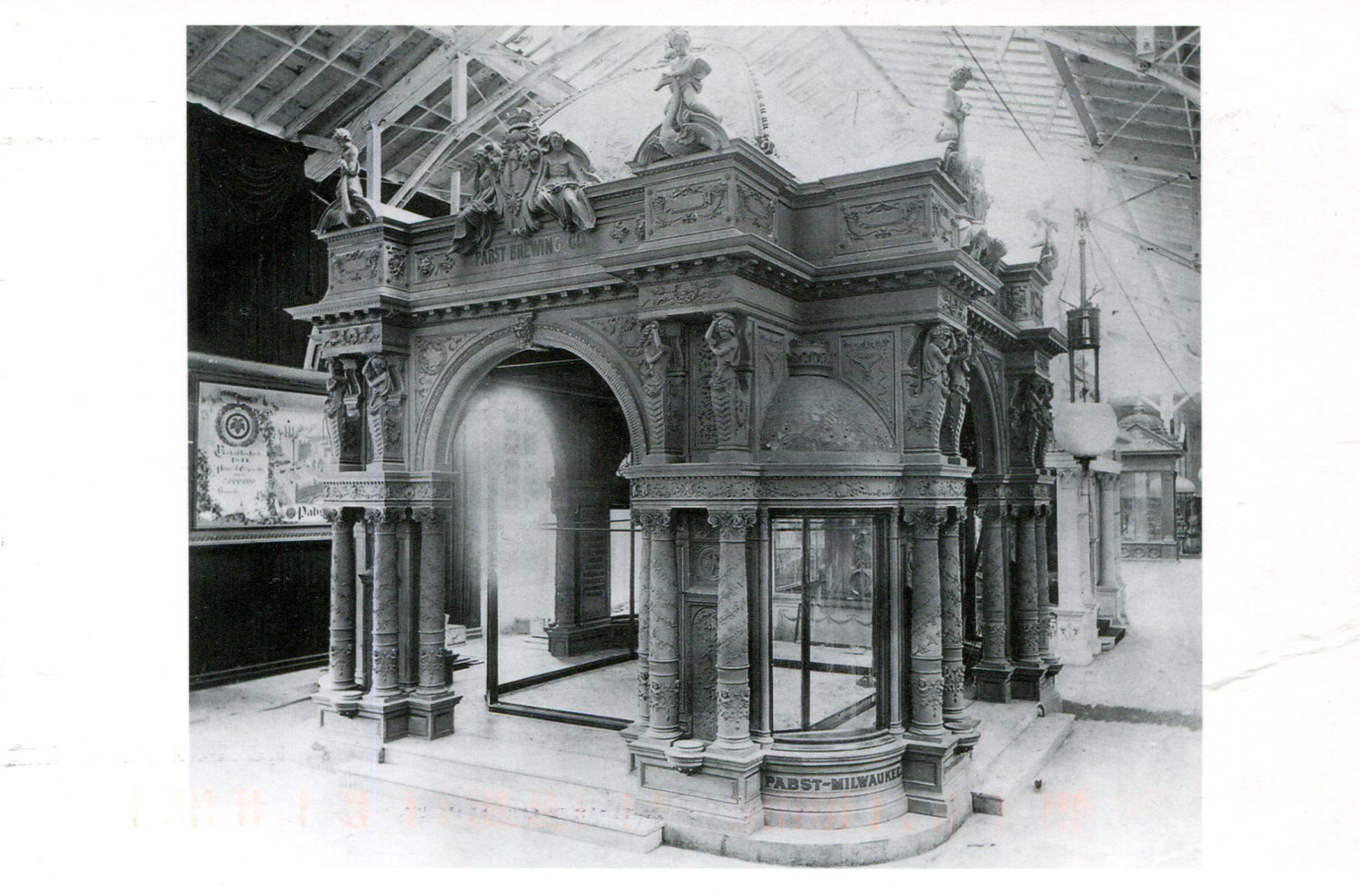
Now this was worth driving to Milwaukee to see: a piece of the 1893 world’s fair. If only I had that time machine —

Dees

***

April 26, 2011

Dear Ed,
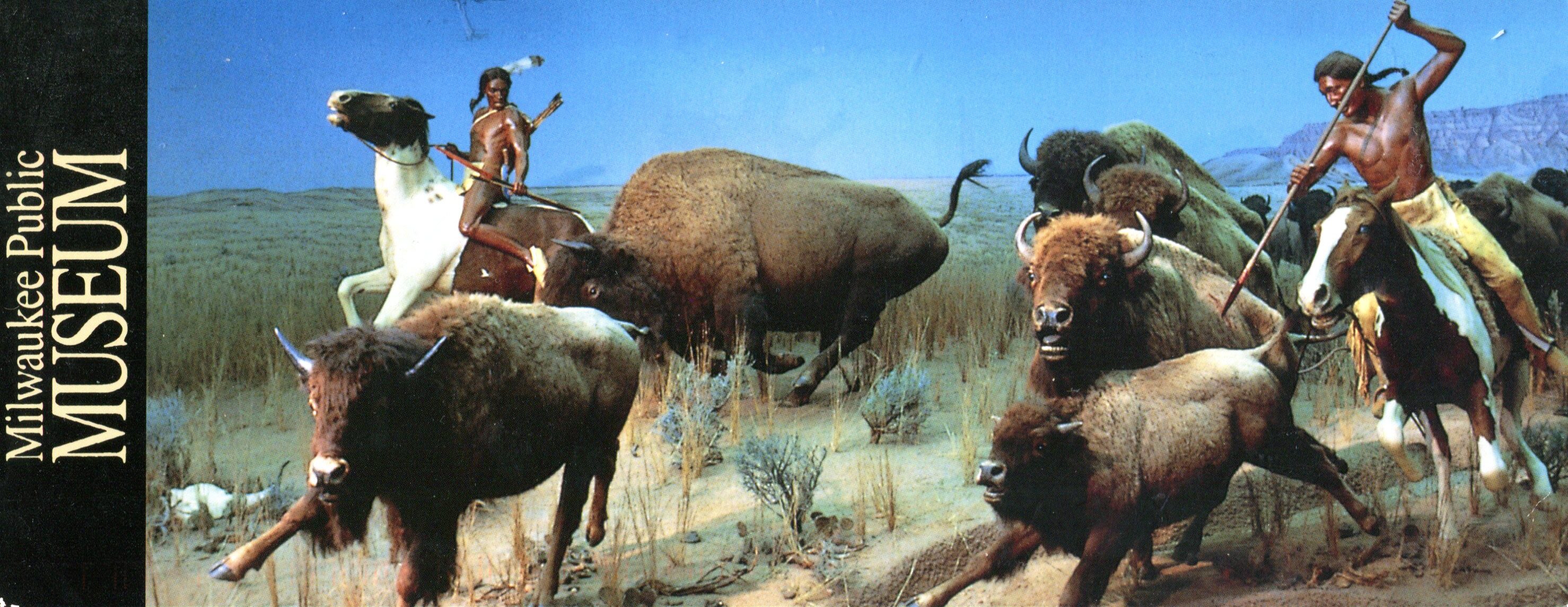
Bet it’s been a while since you’ve rec’d a stretch postcard — the gift shop at this museum was practically giving them away, so I got several. I have to like a museum that’s still proud of its dioramas. Until holodecks come along, they will have to do.

Dees

***

April 6, 2012

Dear Ed,
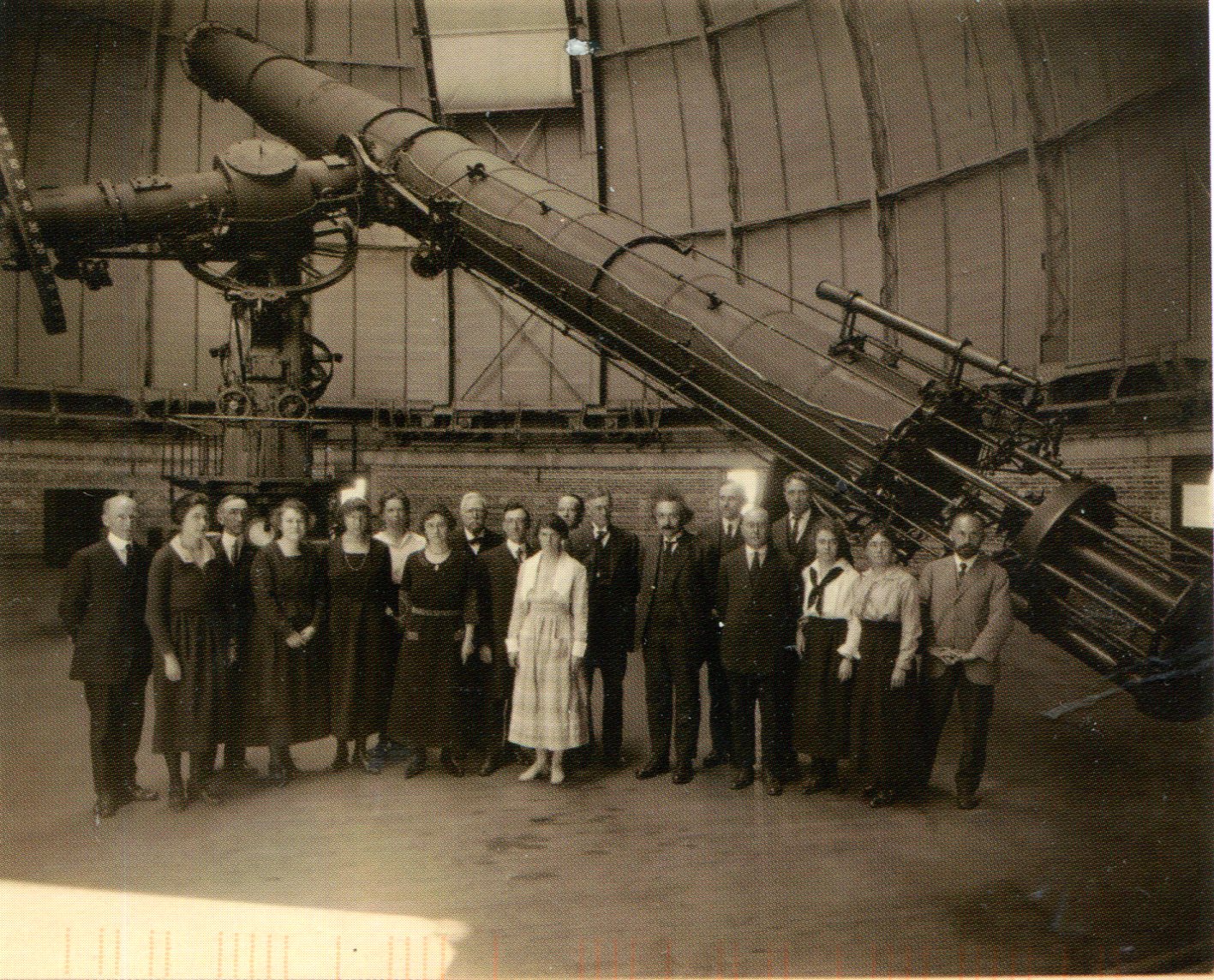
I’ve been remiss is sending cards lately, so here’s one from Yerkes. In case you don’t have enough pictures of Einstein. Nice pics of Africa, by the way [that he sent me].

Dees

Totality

There’s no suspense to this narrative: we saw the 2017 total eclipse in its full glory on Monday (Moon Day, fittingly) beginning at about 1:22 p.m. CDT. That’s hindsight, of course. During the 30 minutes before totality, there was no way to know which way the wind would blow, and where it would carry the clouds.

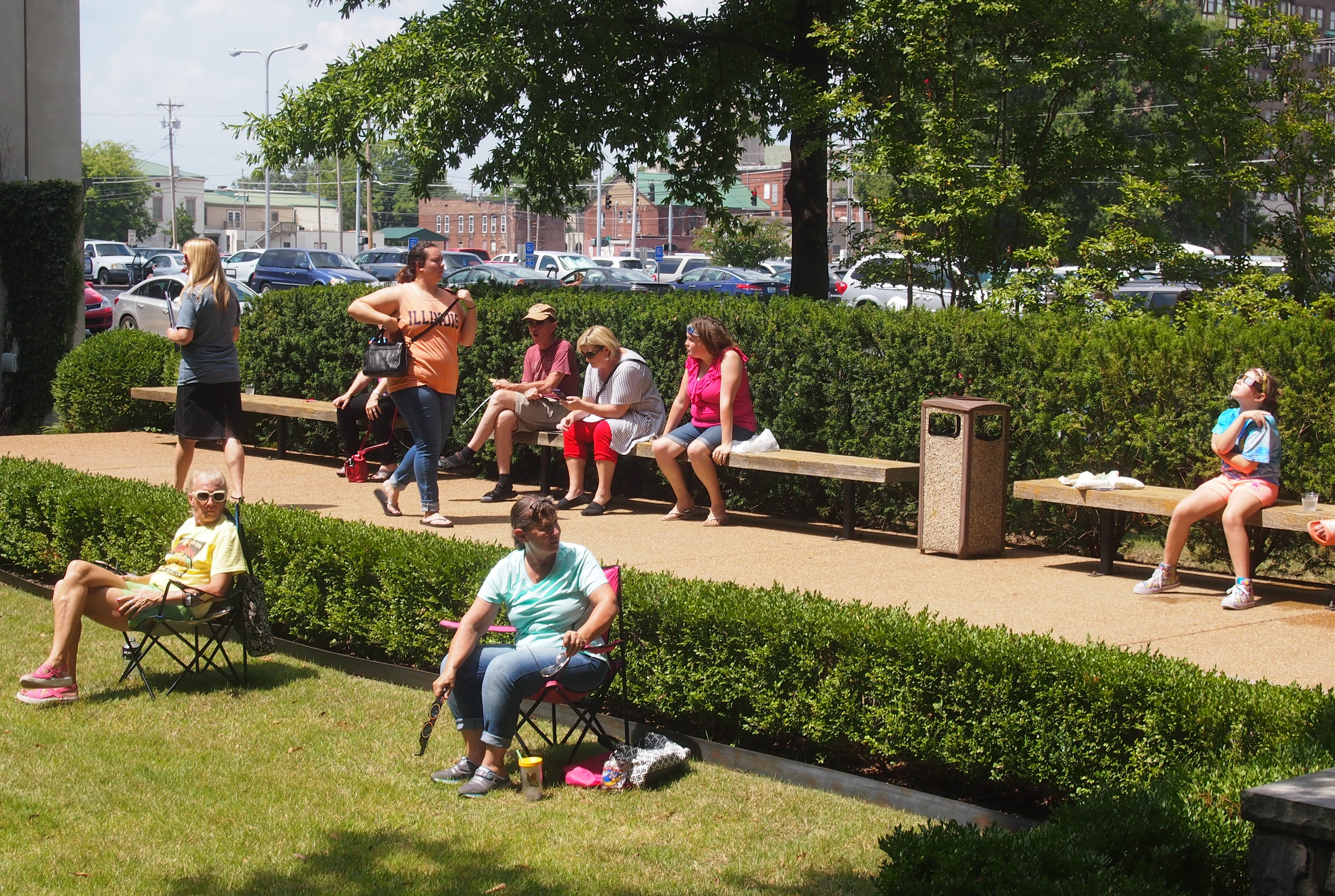
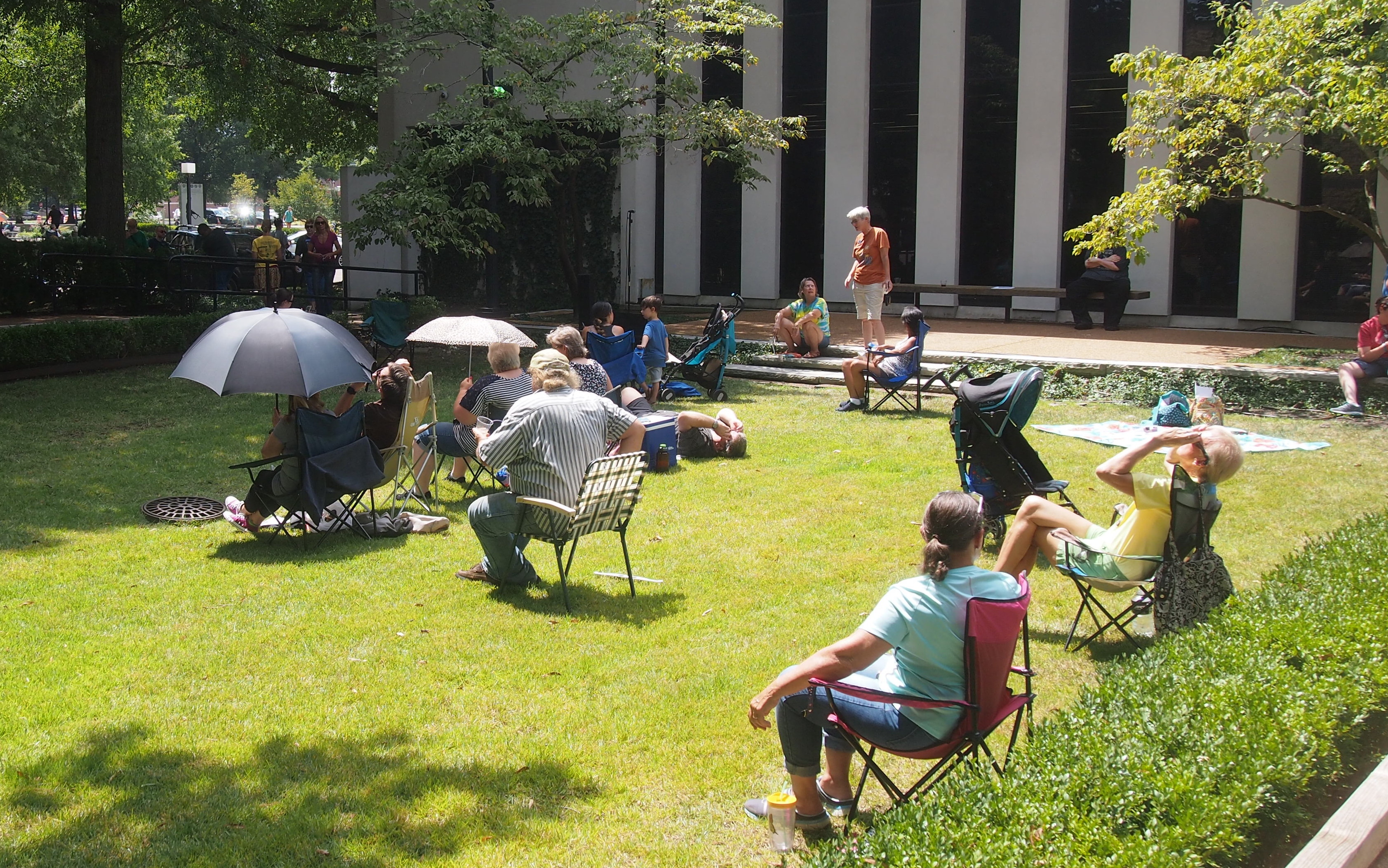
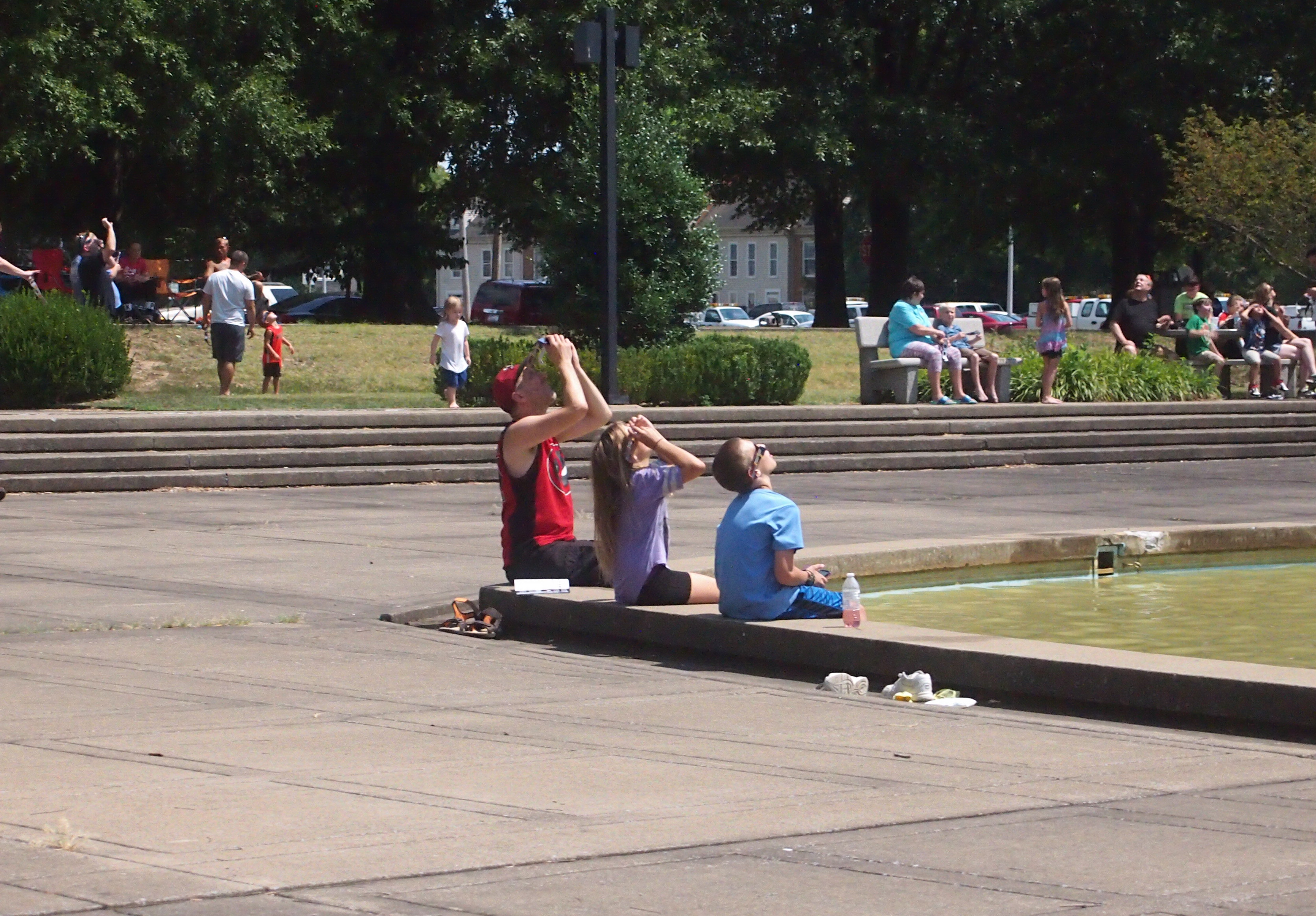
As the Moon slowly ate the Sun, people gathered at the McCracken County Library courtyard for the event.

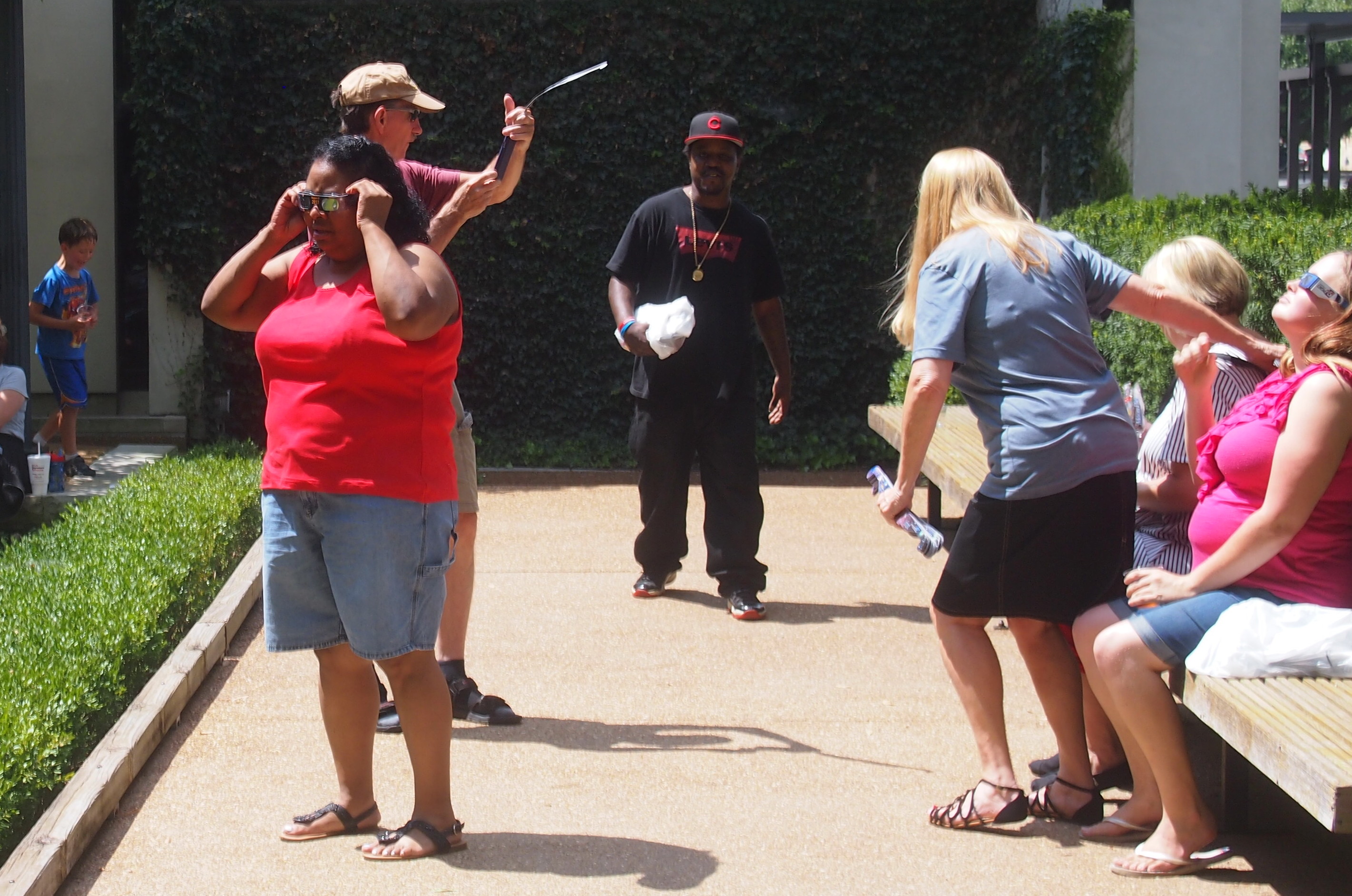
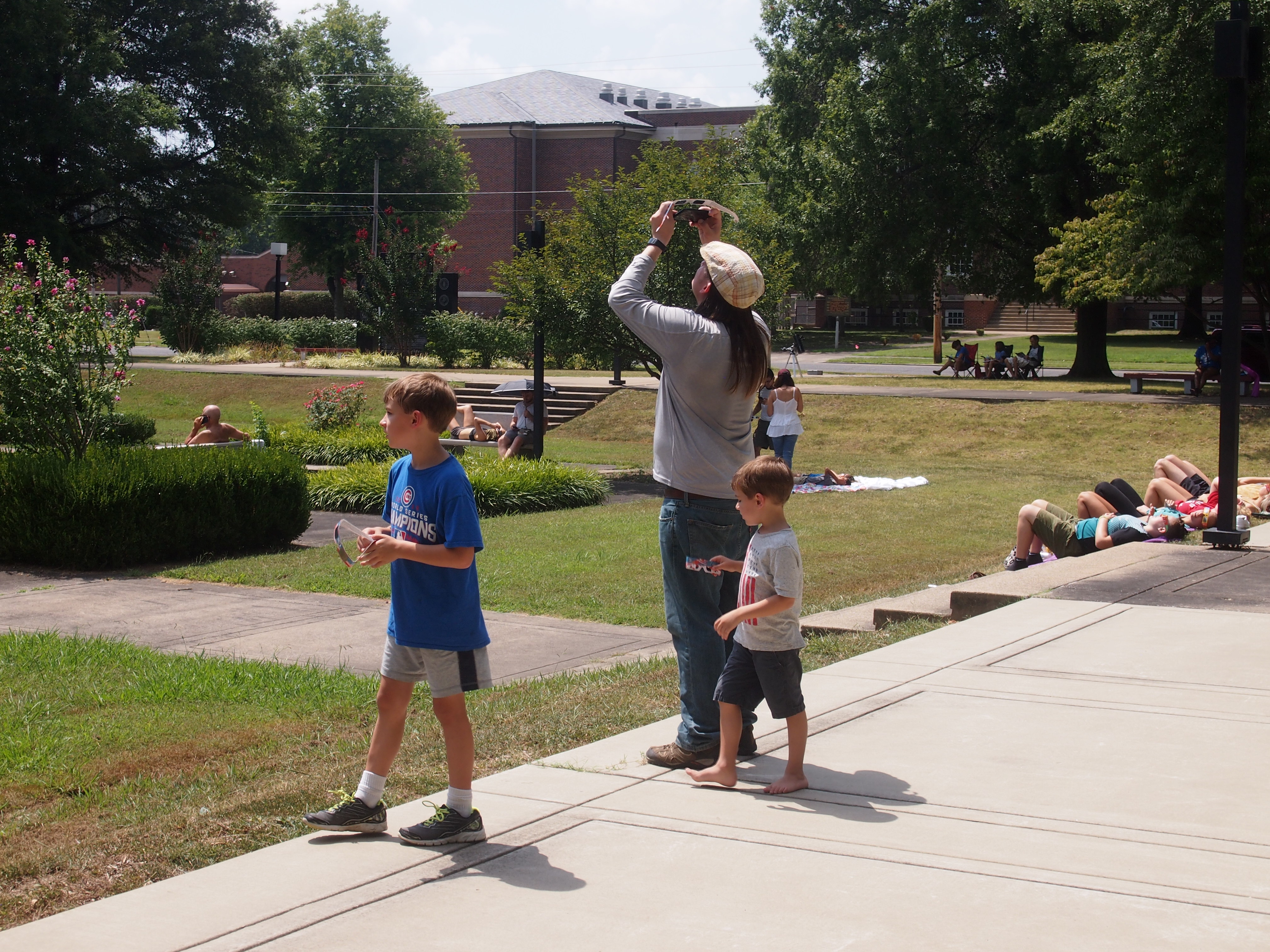
Paducah KY Total EclipsePaducah KY Total EclipsePeople tried on their glasses.
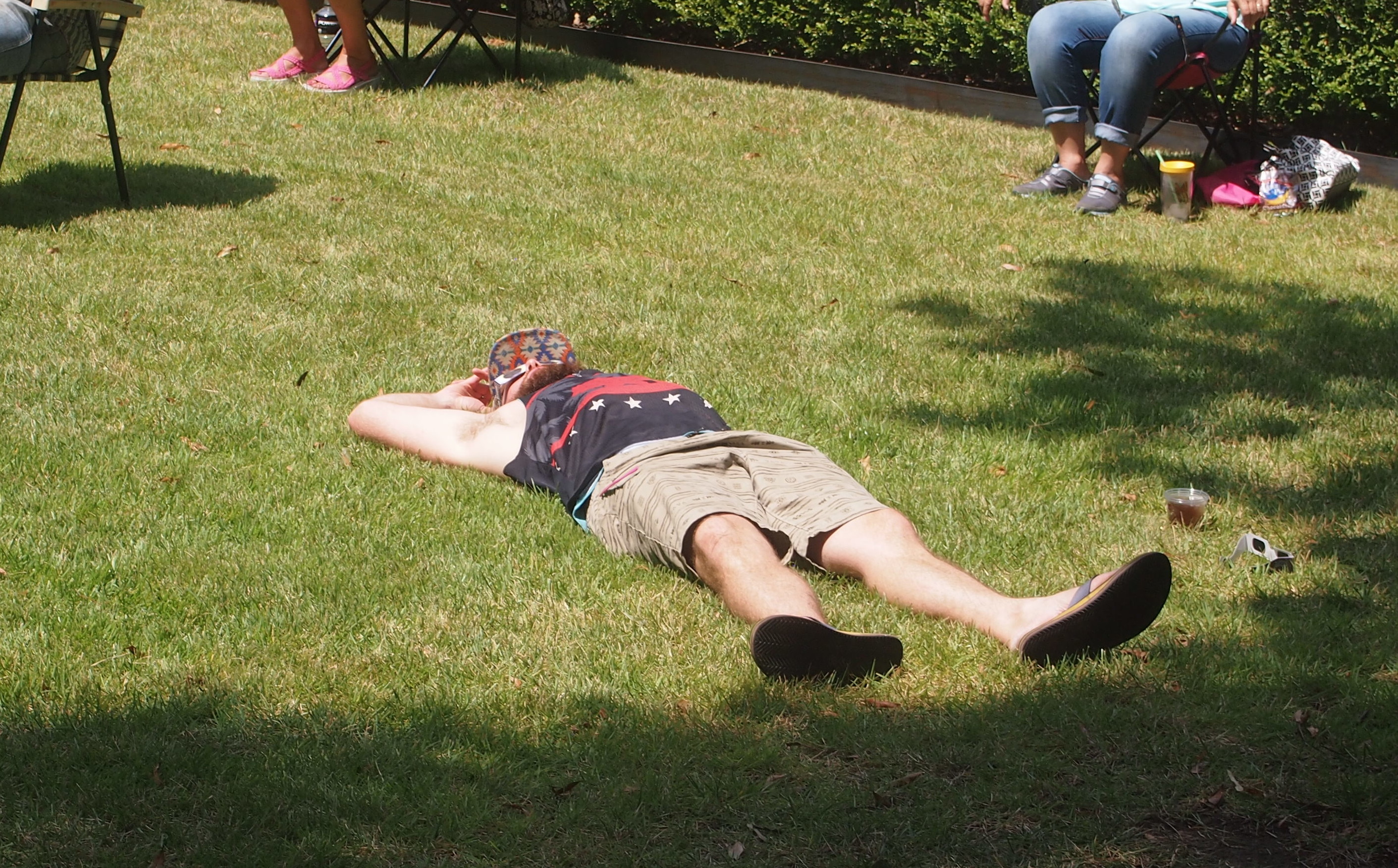
Paducah KY Total EclipseDudes were stretched out on the grass with their glasses. This dude, anyway.
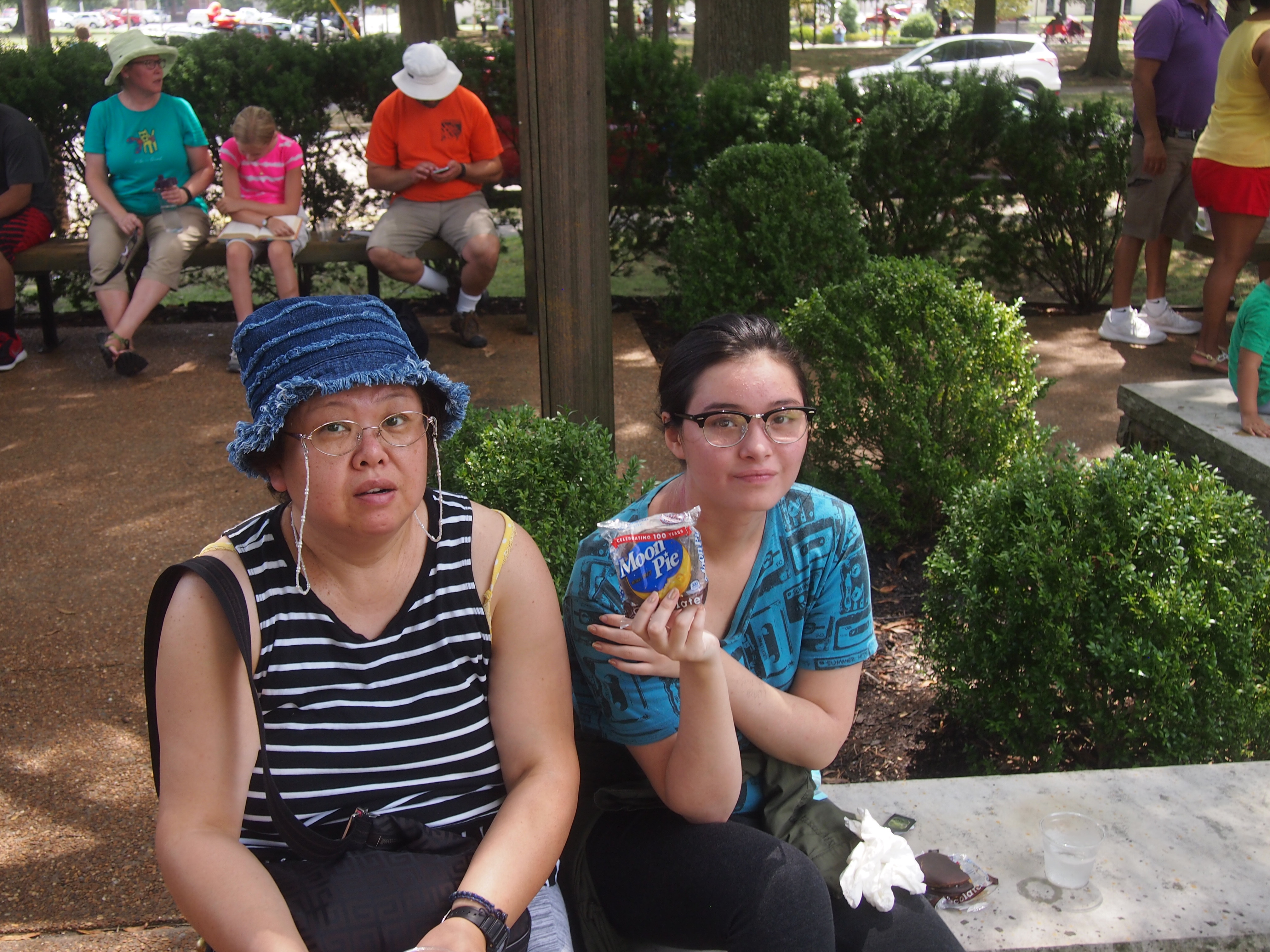
Paducah KY Total EclipseThe library was giving away glasses, but also cold water, tea and Moon Pies.
Paducah KY Total EclipseWe stayed at the courtyard a while, but then I went over to the plaza across Washington St. to see whether the vantage was better. The sky was more open there, and so we all went.

Later I found out that the place is formally called Dolly McNutt Memorial Plaza, named after the first female mayor of Paducah, who was in office during the 1970s. The plaza is a square city block, ringed on four sides by trees but open to the sky inside, and featuring memorials to various branches of the armed forces.

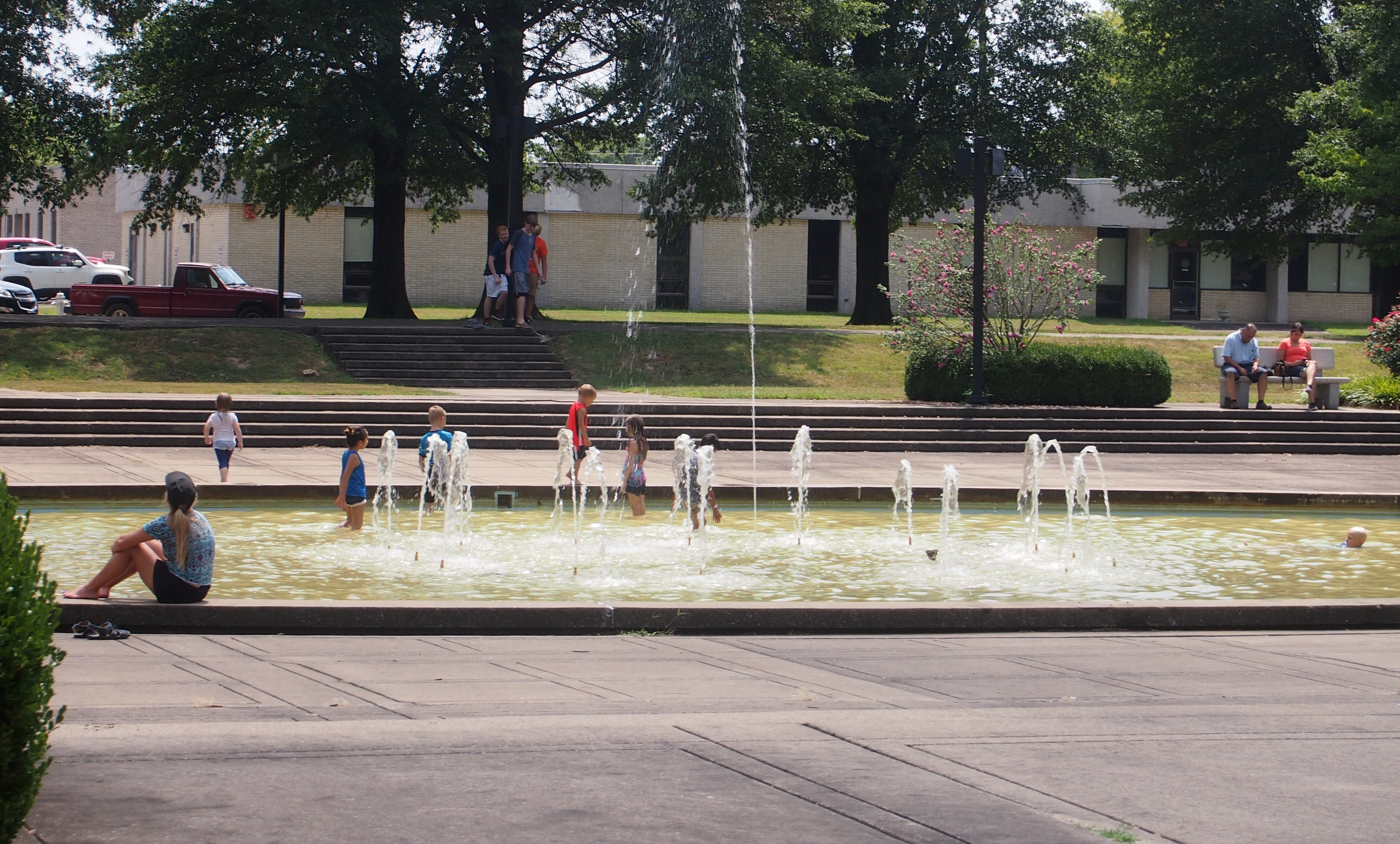
A sidewalk inside the plaza forms a smaller square around an oval-ish fountain at the center. On Monday afternoon, kids were splashing around in the fountain — which looked pretty scummy, actually — just like they would on any warm day.
Paducah KY Total EclipseAt that moment, people were looking to the sky all around the plaza.

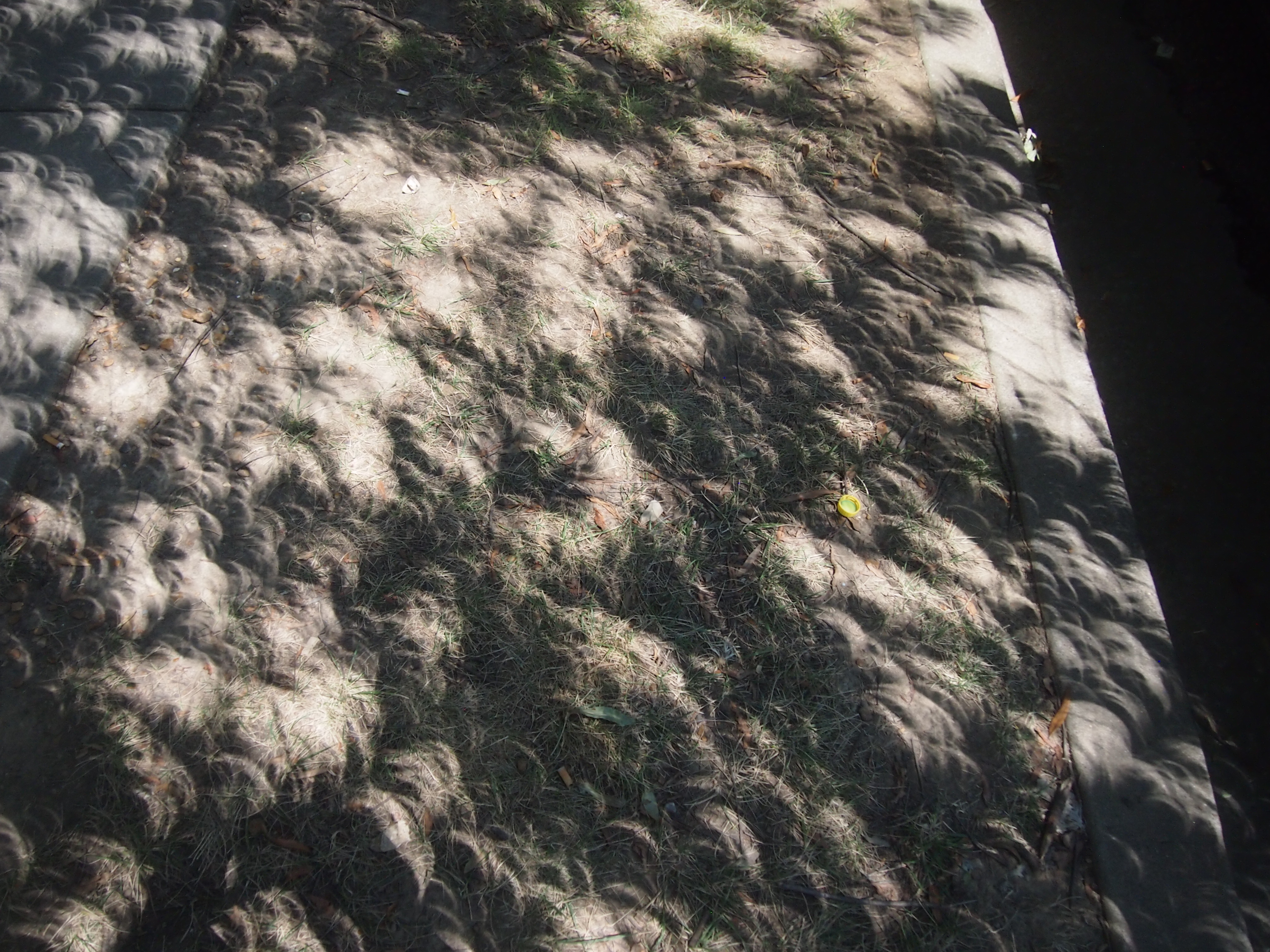
Paducah, KY EclipsePaducah KY Total EclipseAt first, we sat under some of the trees, since it was still fairly hot. The curious shadows of the leaves were visible.
Paducah KY Total EclipseSoon we moved to the short set of steps surrounding the fountain and sat there. By then the sky was dimming and the air was noticeable cooler, maybe 10 degrees F. It wasn’t exactly a comfortable spot, but good enough for the minutes leading up to totality.
Paducah KY Total EclipseThe clouds had held back. I knew we were going to see totality unobscured from Dolly McNutt Memorial Plaza, at about 37.083543 degrees North, 88.598450 degrees West, according to calculations I later made using Google Maps, so take that for what it’s worth.

The dimming of the sky proceeded, unlike any dusk. I saw streetlights come on, and a flock of birds head out from a tree. The last of the crescent sun, seen through our glasses, dwindled to nothing. Then it happened. Glasses came off, people in the plaza mostly expressed themselves without words, cheering and whooping and even clapping, and the show was on. We were swept up by it.

Much has been written about totality. A common theme is that photos do it no justice. This is completely correct, even an understatement. The event doesn’t look like its pictures, not even the best images from the best machines. We fool ourselves into thinking that cameras capture images like the eye. A solar eclipse puts the lie to this. For human beings, eyes are the thing.

I’d never seen anything like it. The black disk — the corona’s tendrils — wisps — curls — glowing ringlets — luminous strands — and the surrounding darkness where sunlight should be — were awesome. As in, inspiring awe.

It wasn’t a religious experience. It didn’t make me appreciate the wonders of the cosmos any more than I did before, which is a lot. It didn’t change my life in any fundamental way. But the black sun and wondrous corona did make me very glad to be alive and fortunate enough to see such majesty.

One Hot Morning in Paducah, Kentucky

The weather forecast for Paducah, Kentucky, on August 21, 2017, called for partly cloudy skies. Ah, but which part? As good as weather forecasting has gotten in recent decades, that’s beyond its competence. When waiting for a solar eclipse under partly cloudy skies, you just have to hope for the best.

In the mid-morning that day, at least, partly cloudy meant high, thin cirrus clouds that probably wouldn’t obscure the eclipse too much. They certainly didn’t block the bright sunlight. So we went about our business. Mine was business. I got up early in the morning and wrote and filed and edited and so forth, continuing what I’d started Sunday afternoon and evening, compressing the day’s work into the morning, so I’d be free to watch the sky in the early afternoon.

Late in the morning, we checked out of the motel and headed to downtown Paducah, to seek out a late breakfast. We didn’t want to be distracted by hunger while looking up at the totality, nor during much of the drive home afterward. A scattering of stores along the way, and a few downtown, offered eclipse-related souvenirs.

That was the case even before we got to Paducah. One small-town restaurant not actually in the path of totality had a marquee advertising eclipse burgers and eclipse shakes, whatever those were. Officialdom, in the form of flashing highway signs, had also taken to warning drivers about traffic around the time of the eclipse. One sign — in rural Indiana, I think — said that pulling over to the side of the road to watch the event was unsafe.

All the way down to Kentucky, the radio mentioned the event, both in the form of news and deejay patter, some of it not very bright. On the morning of the eclipse, I spotted people wearing t-shirts commemorating the event. I know it was a superstitious feeling, but I thought that was a bad idea. Wearing a shirt about an event that hadn’t happened yet, and which could be spoiled by errant clouds? That’s just asking for cloudy trouble.

We arrived at about 11:00 for late breakfast/early lunch at the Gold Rush Cafe on Broadway. Gold rush indeed. The place was doing a land-office business. There was a 30-minute wait for a table, we were told. While the rest of my family waited, I took the opportunity to scout out the place where I’d planned to see the eclipse, a few blocks away at or near the McCracken County Library, which was holding an eclipse-themed event starting around noon.

I made my way from the restaurant south on 4th St., to Washington St., where I turned west. At Washington and 5th St. is the library, a modernist joint with a small area of greenery and trees next to the building. People were already gathering there, their cars filling the parking lot behind the library. Looked like an OK spot, as did the plaza across Washington from the library. I turned north on 5th past, amusingly, the offices of the Paducah Sun, and headed back to Washington. Another block east and I was back at the restaurant, sweating profusely. (Is there any other way to sweat on a hot summer day?) It was about 90 F and the sun was strong under those thin hazy clouds. Not perfect, but very good skies — if it would last another two hours.

We only waited about 20 minutes to get a table. The restaurant was abuzz with eclipse talk. The people at the next table, two of whom were wearing science-nerd t-shirts, talked about it. A woman at another table talked of seeing another eclipse in Australia. A bearded fellow at the table next to ours, eating by himself, talked to his waitress about where he might find some eclipse glasses. The place was full — more business than they usually get on a Monday, I figure — and the event seemed to be on everyone’s mind.

Later, I saw the restaurant’s Facebook page, which posted that morning: “Ok folks, I don’t imagine many of you are running around downtown today…. we’re taking our last orders at 12:30 so that way we can go see the eclipse as well. Thanks for your understanding!”

As for eclipse glasses, I’d acquired some Celestron brand shades online the month before, when I’d read that such glasses shouldn’t be used after more than three years. The ones we have from the Transit of Venus are five years old. That’s erring on the side of caution, since I don’t really know whether they degrade enough to be hazardous after five years.

Then, of course, there were reports of substandard glasses, either made carelessly or purposely so. If made with intentional disregard for eye safety, that’s as bad as making bogus antibiotics. Bastards. So that’s in the back of one’s mind, though I’d tested the glasses the week before in my back yard without ill effect. I’m glad to report that our Celestrons seem to have protected us.

As for a shortage of eclipse glasses on the day itself, there was none. The library was giving them away, and so was an antique shop across the street from Gold Rush Cafe (or maybe selling them, I didn’t ask).

While eating lunch, the skies outside dimmed for a short spell. I knew it was too early for the partial phase of the eclipse, so that meant only one thing: clouds. When we emerged from the restaurant some time after noon, white, fluffy cumulus clouds punctuated the sky. The kind you don’t mind seeing any other time. Some were sizable. This was bad. Periodically the sun would be obscured for a few minutes.

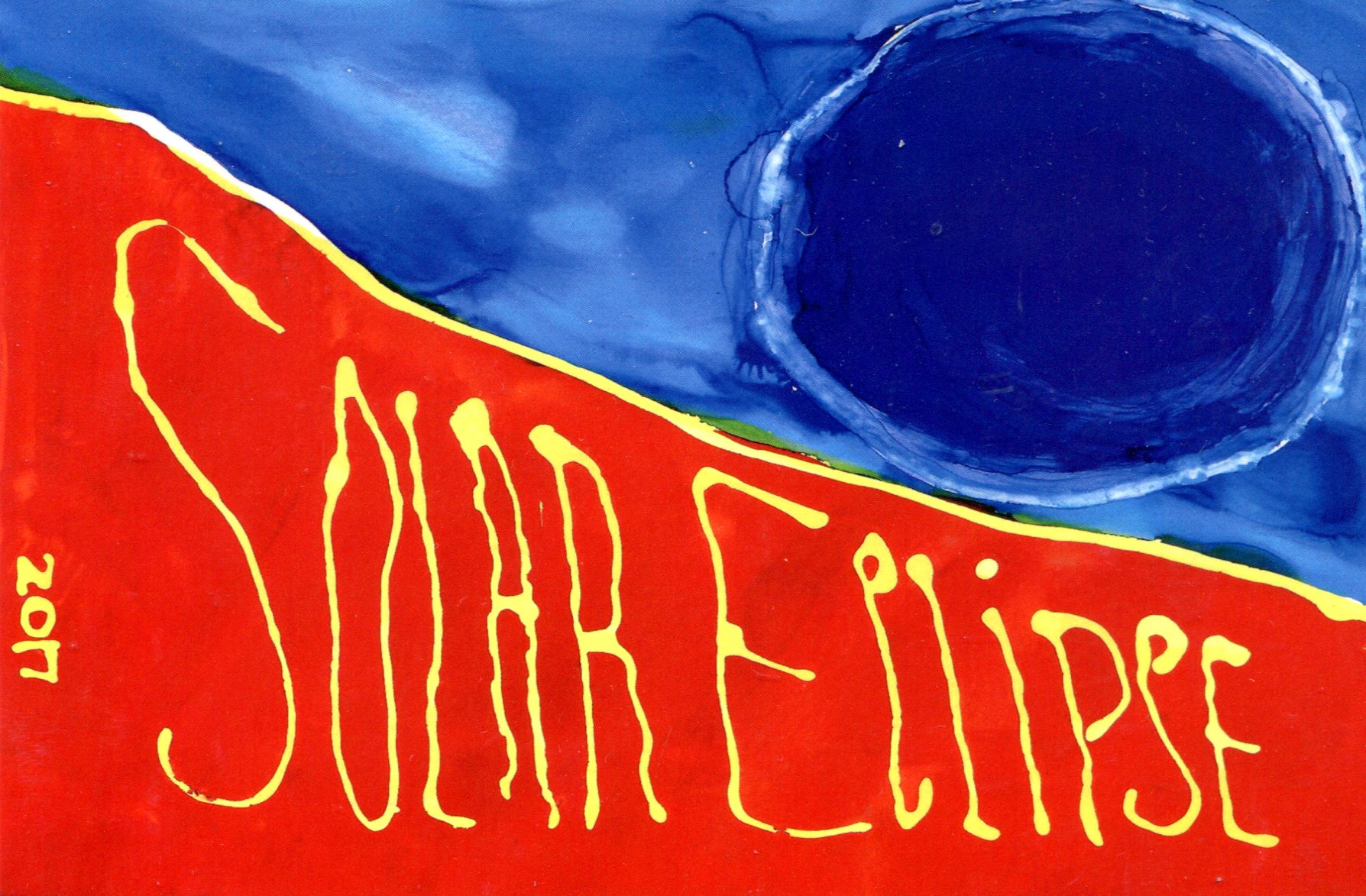
There was nothing for it but to wait. We spent a while in the antique store. I bought some postcards there, because of course I did, including an eclipse souvenir card. Glad I found it. The artist is Jane E. Viterisi, apparently a local artist.

At about 12:30, we went to the McCracken County Library. The crowd wasn’t enormous, but sizable. People were milling around, parked in chairs and sitting on the ground. Just about everyone had glasses. We tried our eclipse glasses out for our first look at the event while in the library parking lot.

There it was, through the shades that excluded all other light: a fat orange crescent sun. Quite a sight all by itself, and getting leaner all the time. Meanwhile, the skies around the sun were clear, but clouds lurked elsewhere. Totality was coming.