The Great American Solar Eclipse Road Trip

How long did I know about this week’s solar eclipse? I don’t know. It wasn’t because of the recent media buzz. The better part of a decade ago, probably. Sometime back then, I filed away the notion: I am going to see the solar eclipse of August 21, 2017. In the path of totality.

So I did yesterday, along with my immediate family. And some unspecified millions of other people. It was an event among events. During totality, we were in Paducah, Kentucky, which occurred there for a bit more than two minutes beginning at 1:22:15 pm CDT. All my remaining days, I will remember where I was at that moment, and what I saw, and I hope so will the other members of my family.

I’d like to report that I overcame various trials and adversity to arrive at that place at that time, like an intrepid 19th-century scientist off to see eclipses over remote parts of the globe, but all it really took was a modest amount of planning, plus a bit of time and money. Back in October, for instance, I booked a room at a limited-service motel in Paducah for the night of August 20. I mentioned this to the clerk.

“That’s why you paid the regular rate,” she said. “People who booked this month had to pay twice as much.” Surge pricing among motels. She also claimed that nearby motels, only a bit better than the one we were staying in, charged $400 a night for some rooms. “And they’re getting it.”

We left on Saturday and drove from the northwest suburbs via Champaign-Urbana to Terre Haute, Indiana, where we spent the night of the 19th. On the way, we stopped at Shades State Park in Montgomery County, Ind.

The next day we went from Terre Haute to Paducah, spending a few hours in between in Vincennes, Indiana, on the Wabash River. We saw three things there: Grouseland, home of William Henry Harrison as governor of the Indiana Territory; the splendid Basilica of St. Francis Xavier, and the monumental yet obscure George Rogers Clark National Historical Park.

The thinking behind these stopovers was that seeing the eclipse at totality was no certain thing. Clouds don’t care about your peak-life-affirming-you-are-a-child-of-the-Universe experience, or even if you’re a scientist (or citizen scientist) looking to add to mankind’s body of total knowledge. It’s just another day to the atmosphere. So in case that happened — and the prospect kept me antsy for days — the trip wouldn’t be a total bust.

All together, the trip from our house to Paducah, using the most direct roads, is nearly 400 miles. St Louis is closer, about 300 miles, but I wanted to stay away from a large city for the event, which would mean adding crowds to crowds. Also, I’d acquainted myself with much smaller Paducah in 2009 at the same time as Metropolis, Ill. (misspelling Paducah in my posting), and found it pleasant enough.

Why see the eclipse at all? Because of the astronomy books I had as a kid that explained and illustrated the phenomenon, especially with maps of where total eclipses would be in far-off future years like 1979. Because of the eclipse of March 7, 1970, which was partial in Texas. My eight-year-old self made a pinhole box but, finding that unsatisfying — and this was before widespread eclipse glasses — I stole an instant’s look at it the thing itself in partly cloudy skies, very clearly seeing the black disk on the bright one. Because the subject came up at the planetarium I visited almost monthly in elementary school. Because men were going to the Moon at the same time. Because of the lyric in “You’re So Vain” that seems to reference the ’70 eclipse. The idea of winging off to Nova Scotia just to see an eclipse seemed (seems) impossibly intoxicating. Because of A Connecticut Yankee in King Arthur’s Court and “Nightfall” and other stories and movies using an eclipse as a plot point. Because I read Isaac Asimov writing about the Eclipse of Thales, and later read Herodotus on that event, which probably was on May 28, 585 BC, and if so history’s first exact date. Because I read about the eclipse of May 29, 1919, which helped confirm general relativity. Because of the annular eclipse I experienced in Nashville (as a partial) on May 30, 1984, which dimmed the sky in a strange way. Because it’s a cool thing to see not before I die, but while I’m still alive, just like the Transit of Venus. Because, to paraphrase George Mallory, it’s up there.
The Abraham Lincoln Birthplace National Historical Park

“Where are we going?”

“Lincoln’s birthplace,” I told Ann on the morning of June 24 as we left Elizabethtown, Ky. “It’s about 10 miles off the Interstate. Bet his parents were glad to have a place near the highway.”

Ha, ha, Dad, was the reaction.

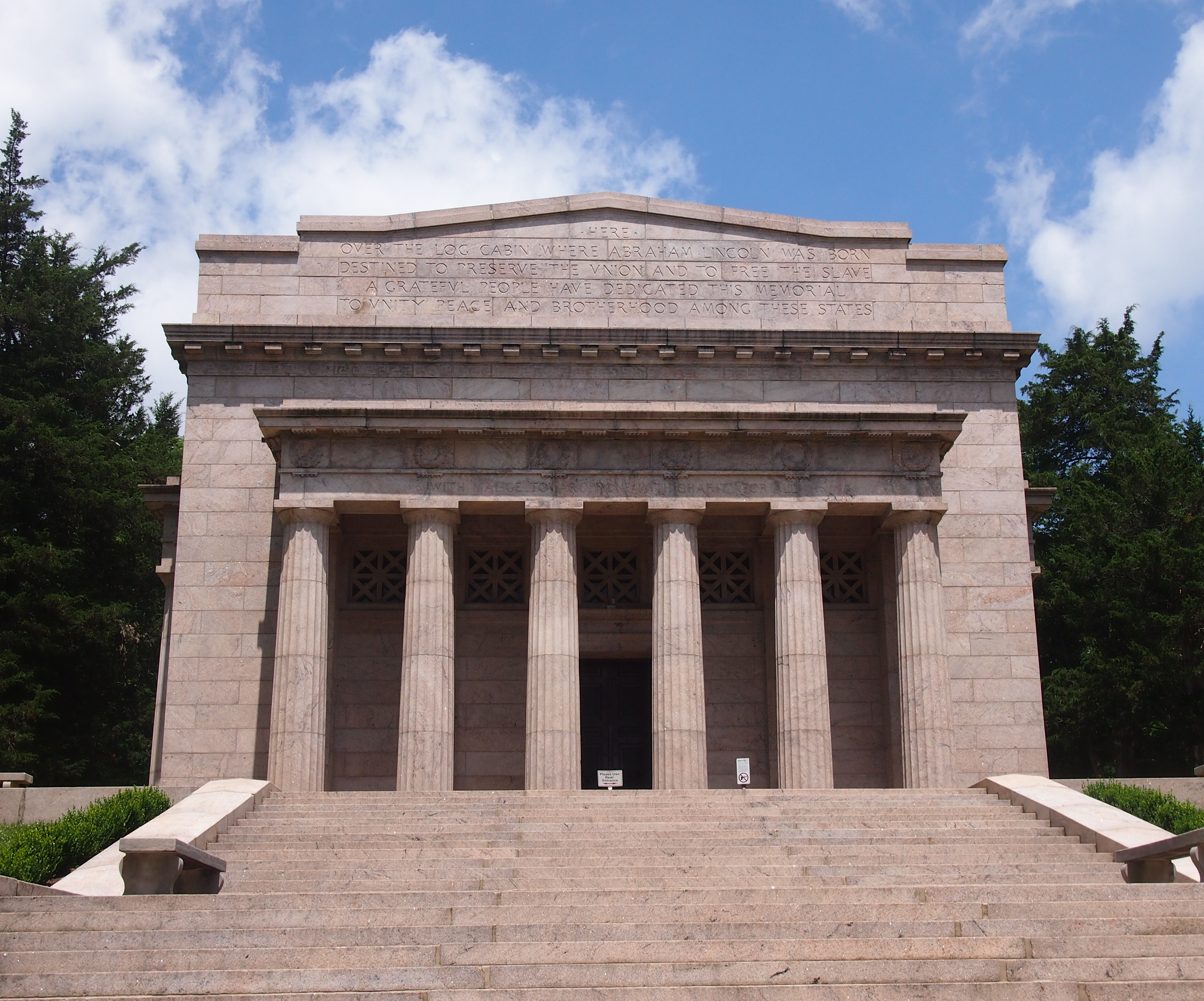
The Abraham Lincoln Birthplace National Historical Park is in fact about 10 miles east of I-65, a roadway built much later than the Lincolns’ cabin or even the monumental building erected on the site 100 years later, with its groundbreaking on February 12, 1909. TR was there that day to wield the ceremonial trowel, which is now on exhibit at the visitors center.

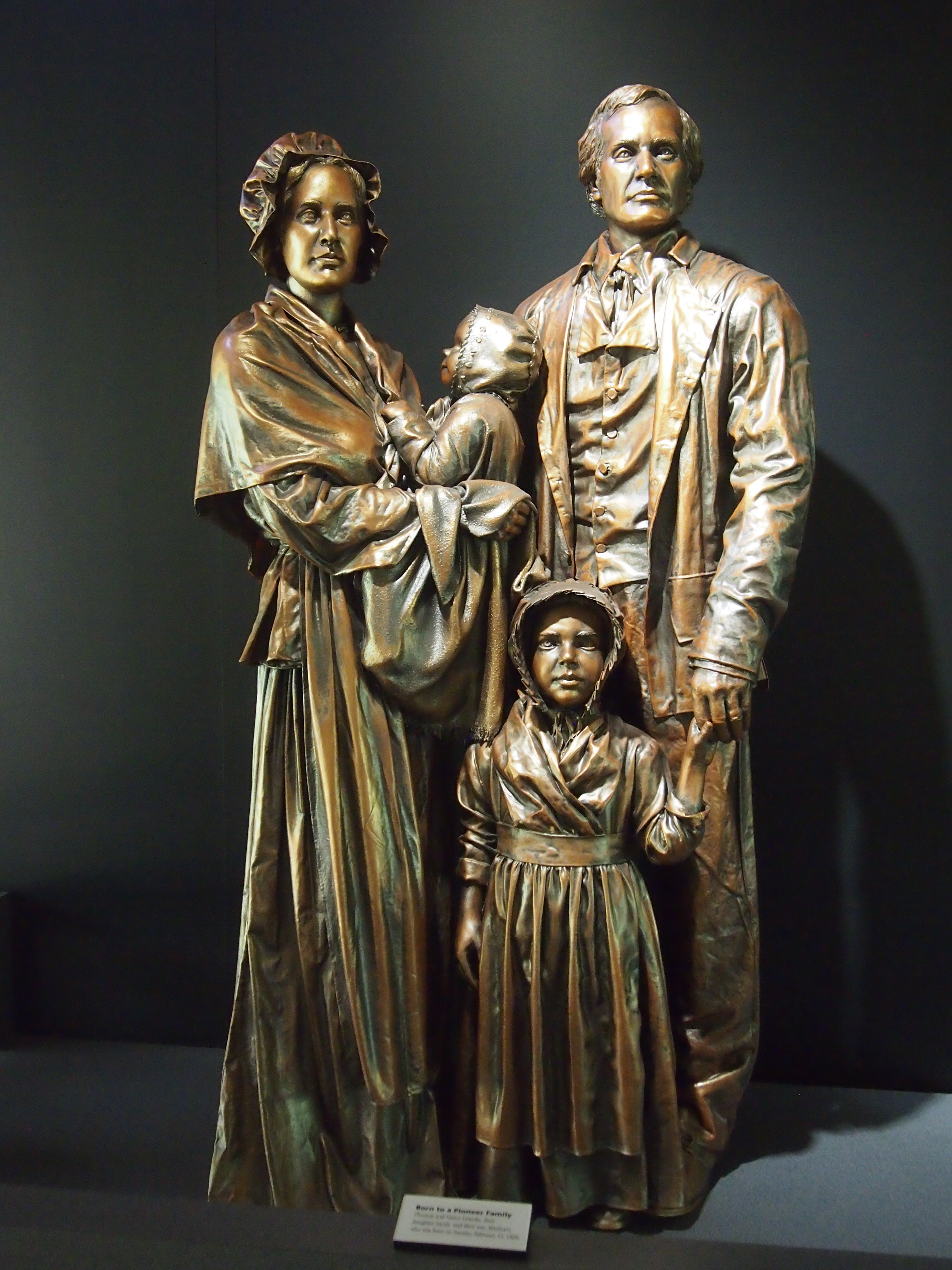
So is a statue of the Lincoln family. It includes the only depiction that I’ve seen of toddler Abraham Lincoln, with his parents and older sister Sarah. Lincoln Birthplace Lincoln Family StatueJohn Russell Pope, who also lived long enough to do the Jefferson Memorial in Washington, DC, and a good many other things, designed the birthplace memorial.
Lincoln BirthplaceLincoln Birthplace 2016“Built on the knoll above the sinking spring where many believe the Lincoln cabin originally stood, the Memorial Building at Abraham Lincoln Birthplace National Historical Park was constructed between 1909 and 1911 in an effort by the Lincoln Farm Association to commemorate the life and accomplishments of the sixteenth President of the United States and to protect his ‘birth cabin,’ ” notes the NPS.

“Pope’s design of the building included many symbolisms related to Abraham Lincoln, including fifty-six steps leading up to the building to represent the fifty-six years of Lincoln’s life. Sixteen windows in the building and sixteen rosettes on the interior ceiling are there to remind visitors that Lincoln was the sixteenth president.”

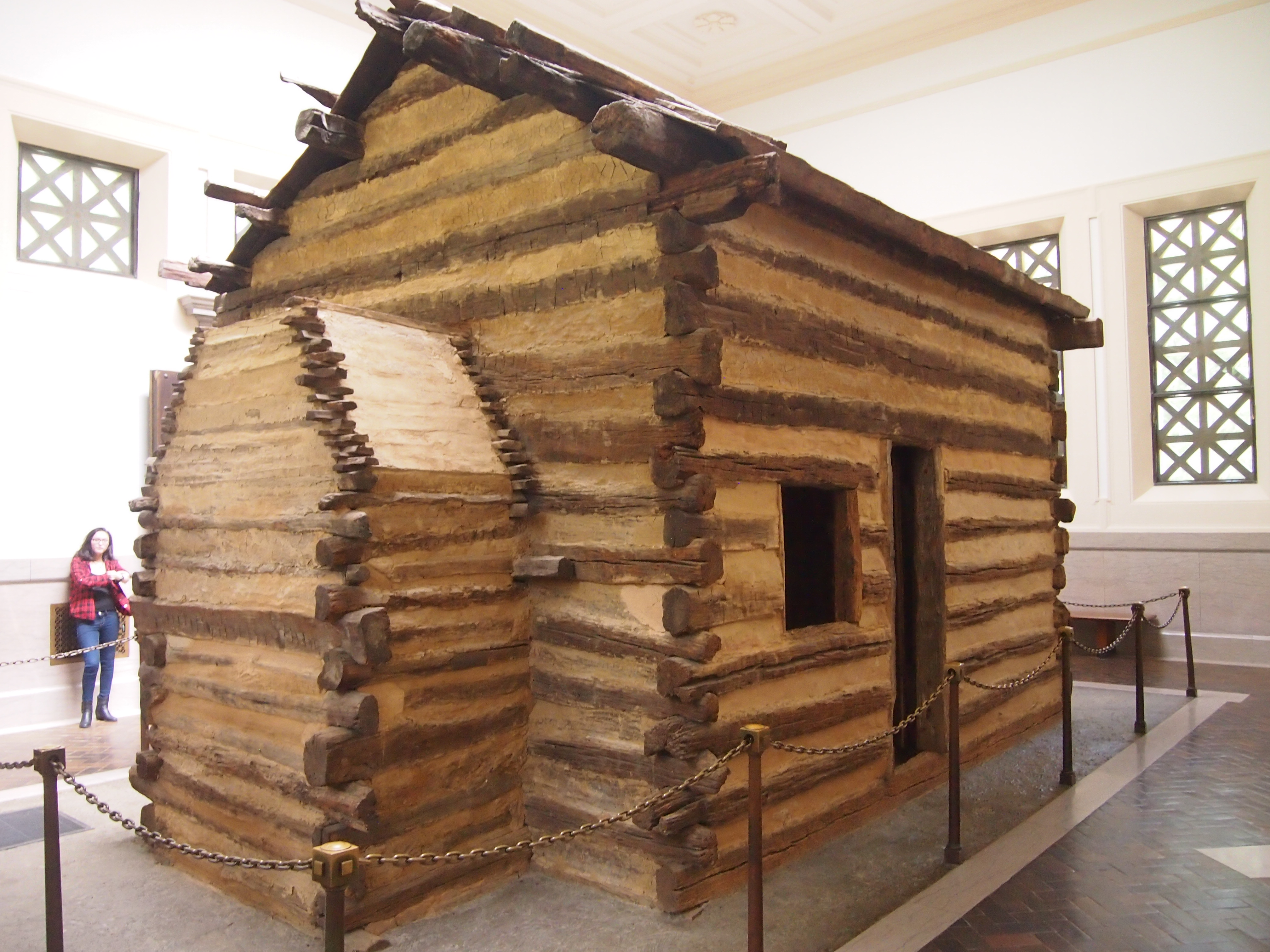
Inside is the fake Lincoln cabin.
Fake Lincoln Birth CabinHaven’t got an historic relic? Make one that looks right, especially during the late 19th century, when touring exhibits were a way to make money. (Read about promoter Alfred Dennett and the fake cabin here.) According to the NPS, the structure now characterized as a cabin that “honors” the original. Sure, why not – and besides, the faking of the cabin was so long ago (1890s) that it too is of historic interest.

Up the road (US 31E) from the monument a bit is Lincoln Boyhood Home, which is only a few structures, all re-creations, but none made of marble or granite. From there, of course, the Lincolns moved to Mississippi and Abraham grew up to be a leader of the Confederacy… no, that was Jefferson Davis, also a Kentucky boy born in the early 1800s. Geography is destiny? I’m not smart enough to know.

Hodgenville, Ky., which is between the birthplace and boyhood home, does what it can to make passersby stop for a little Lincoln at the local “museum,” which mostly seemed like a gift shop. Also, the town traffic circle has a statue of an adult Lincoln and a boy Lincoln.

One more thing I saw on US 31E, south of the birthplace: a ghost sign on the side of a barn that said SEE ROCK CITY. If I’d been able to pull off to the side of the road at that moment, I would have, to take a picture (and baffle Ann). It was not to be. But it was there.

GTT 2016

On June 23, Ann and I left the Chicago area and headed south, returning earlier today. I’m calling the trip GTT 2016, as in Gone to Texas, but also Gone to Tennessee, another destination. Our route took us south to through Indiana and Kentucky and then to Nasvhille; west through West Tennessee and Arkansas and on to Dallas; and south again to Austin and San Antonio. The return was via Dallas and through Oklahoma and Missouri. All together, from backing out of my driveway to coming back to it, I put exactly 3,005 miles on my car, mostly on Interstates and US routes, but also a fair amount on the streets of Nashville, Austin and San Antonio.

None of the routes or places were new to me, except maybe Texarkana, where I’d never stopped before, and it’s been a long time since I’d traveled US 281 north of Johnson City, Texas, or on US 67 on to Dallas. But no matter how familiar the place or the route, you can always find new things.

In central Kentucky, near Elizabethtown, we visited Abraham Lincoln Birthplace National Historical Park, which features a granite and marble monumental building with a not-really-Lincoln’s log cabin inside. Near Mammoth Cave NP, we walked through Diamond Caverns, an unrelated show cave.

By the time we got to Nashville, the heat was on — in the 90s at least every day, which made stomping around outside less pleasant, especially for Ann, but I did manage to take her to the Nashville Parthenon, which she didn’t remember seeing in 2008. The more important thing we did in Nashville was spend time with old friends Stephanie and Wendall, and pay a visit to Mike Johnson’s widow, Betra.

In Memphis, we saw the Peabody Hotel ducks and the National Civil Rights Museum. In Texarkana, we drove down State Line Road and stopped at the only post office in the nation in two states. In Little Rock, I visited Mt. Holly Cemetery in the morning just before the heat of the day and then the Clinton Library (in full, the William J. Clinton Presidential Center and Park) and, just before we left town, the Arkansas State Capitol.

Dallas was mostly given over to visiting my brother Jay and working. Jay joined us for our few days in Austin, including the Fourth of July, and for a few more days in San Antonio. In Austin on July 2, Ann went to RTX 2016 at the Austin Convention Center, a sizable event held by the media company called Rooster Teeth; I was her chaperon. We visited my old friend Tom Jones the next day, and on Independence Day, saw both the Baylor Street Art Wall and municipal fireworks over Lady Bird Lake. San Antonio was mostly about visiting my mother and brother Jim, and (for me) holing up in a cool place with Wifi and doing more work.

Naturally, the trip involved long stretches of driving. I want to do that while I still want to do that. Because of my obstinance in not getting Sirius or the like, terrestrial radio helps fill the yawning spaces between destinations. The trip was bookended by two news events whose coverage was limitless, even when there was no new information beyond speculation: Brexit near the beginning, and the murder of Dallas policemen toward the end. I also listened to more religious radio more than usual, mostly only minutes at a time, except for the erudite Alistair Begg, whom I will listen to until his show’s over or the signal fades.

The selection of music was mostly what you’d expect, drawn from the rigid genres created by the radio business, though there were a few oddities, such as the Mesquite Independent School District radio station (KEOM) in metro Dallas that played teacher and student shows, besides a selection of completely conventional ’70s music. On I-40 between Nashville and Memphis — the Music Highway, according to official signs along the way — I picked up an oldies station whose playlist was a little older and odder than usual. I heard it play “Waterloo” (Stonewall Jackson), “Ahab the Arab,” “and “Running Bear and Little White Dove,” the last two I haven’t heard in years.

We stayed in a nondescript chain motel in Elizabethtown; in Stephanie and Wendall’s fine guest rooms in Nashville; in another, less nondescript motel in Little Rock; with Jay in Dallas; in the Austin Motel on South Congress in Austin, an updated version of a tourist court that’s been there since 1938; and in an updated former company hotel (vintage 1914) in San Antonio, the Havana Hotel, since there were too many of us to be comfortable at my mother’s house.

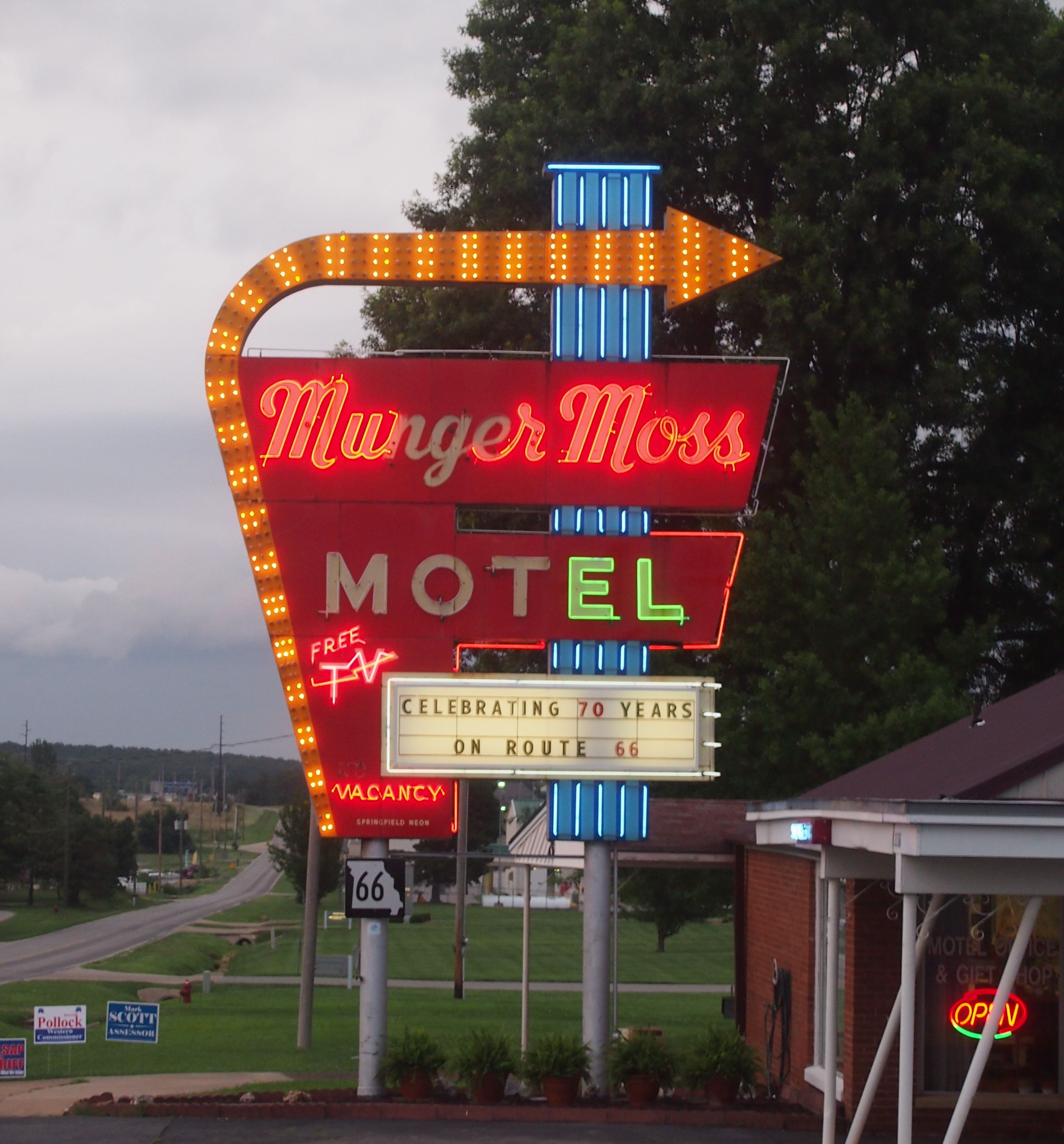
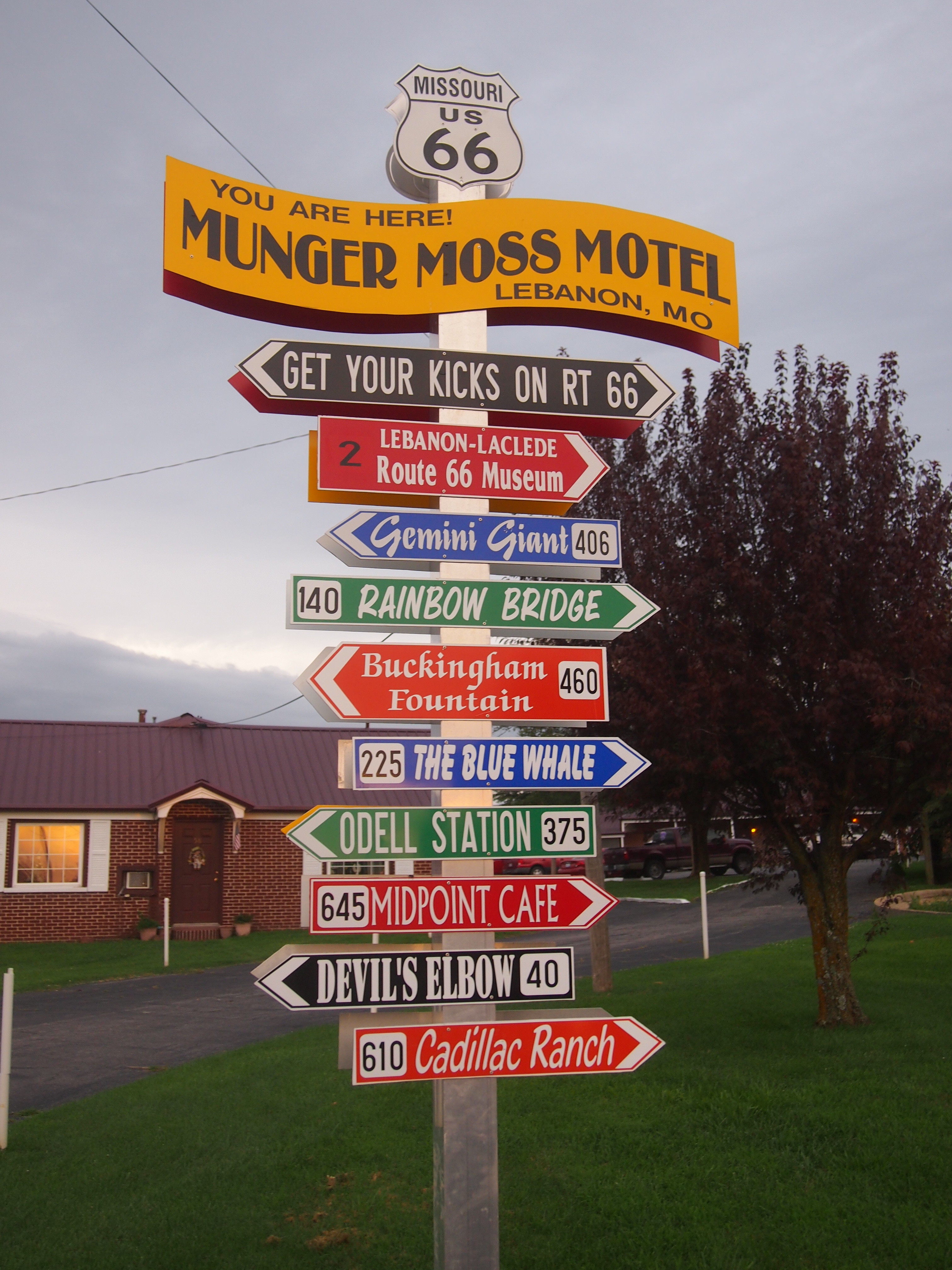
During the return home, we stayed at the Munger Moss Motel in Lebanon, Mo., last night, because of course we did.

Munger Moss Motel 2016It’s the same as it was in 2009 and two years ago. Except (maybe) a couple of signs like this were added to the grounds.

Munger Moss Motel 2016Motel co-owner Ramona Lehman was selling Gasconade River Bridge postcards, sales of which help support the restoration of the bridge, a structure about 15 miles east of Munger Moss on the former US 66. I bought one. I didn’t stop to look at the bridge — this time — but it’s visible from I-44 if you know when to look, and I did.

To the Smokies and Back ’08

Our trip to the Great Smoky Mountains NP and other places in 2008 was a late June, early July event. Has it really been seven years ago? The world seems like a different place now.

At Mammoth Cave NP, there was the famed cave, but you could also rent fun vehicles to tool around in.

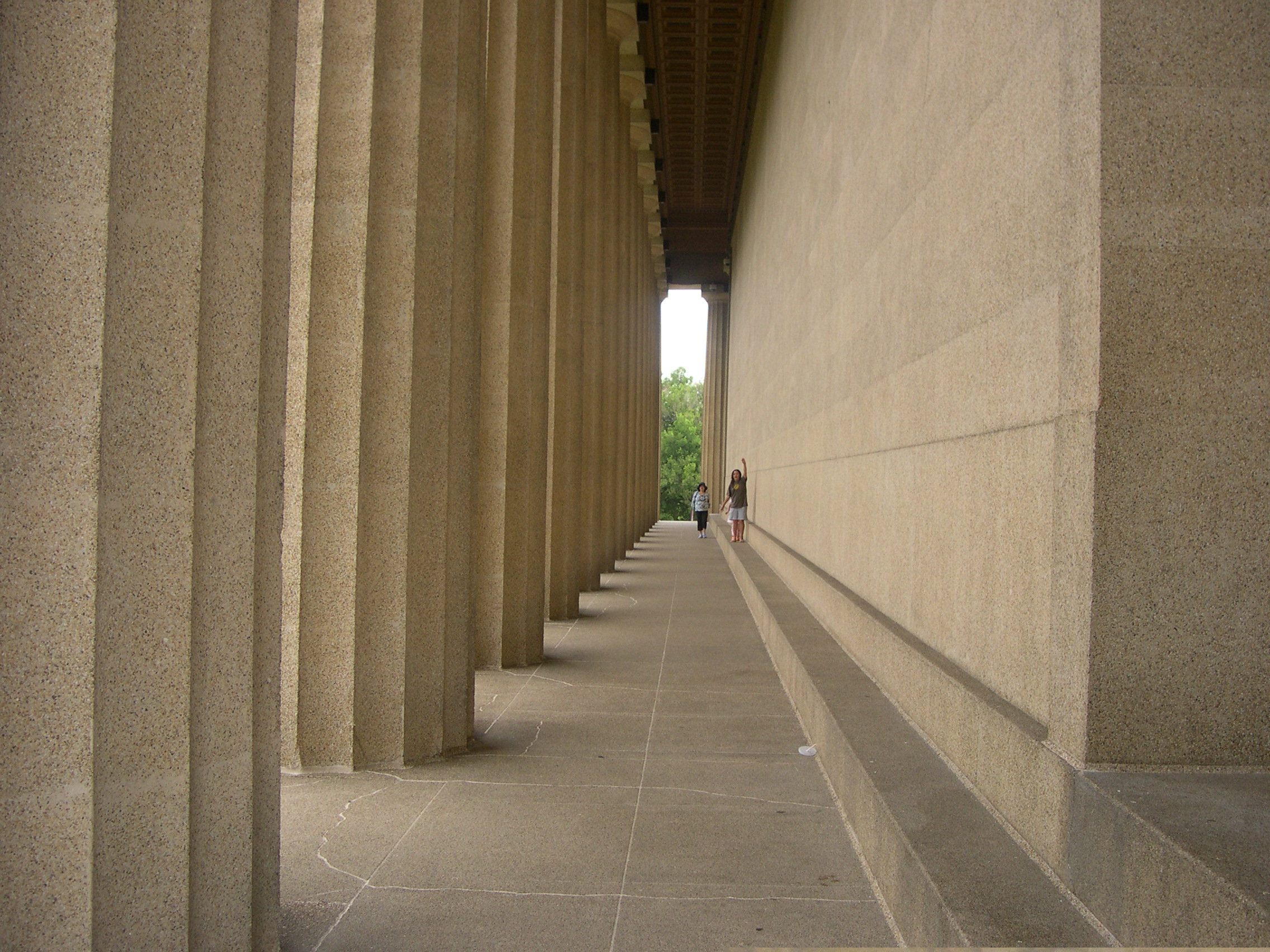
Lilly & Ann June 2008It’s good to show your family places you know, but which they don’t, such as the Nashville Parthenon.
Parthenon, June 2008That’s what this country needs, more public-private partnerships to re-create the wonders of Antiquity. The Hanging Gardens of Omaha. A new Lighthouse of Alexandria in Alexandria, Va. The Statue of Zeus at Olympia, Wash. A new Temple of Artemis in Tucumcari, NM. That kind of thing. (Or city walls around Dallas, as my brother Jay has suggested.)

Next, the Mingus Mill, which is part of the Great Smoky Mountains NP. I liked it just for the name. Water was flowing in the trough, and the girls liked it because they could float things in the trough.
Mingus Mill July 2015As the NPS says, “A half-mile north of the Oconaluftee Visitor Center is Mingus Mill. Built in 1886, this historic grist mill uses a water-powered turbine instead of a water wheel to power all of the machinery in the building. Located at its original site, Mingus Mill stands as a tribute to the test of time.” Yep.

In the Indian town of Cherokee, NC, you could pose for a small fee with this fellow. Chief Syd, he called himself.
Cherokee, NC July 2015It wouldn’t have been a good trip without dropping in on a dead president. Andrew Johnson, in this case. President Johnson reposes in his hometown of Greeneville, Tenn. As it happened, we saw his memorial on July 4. (I did. Family stayed in car.)
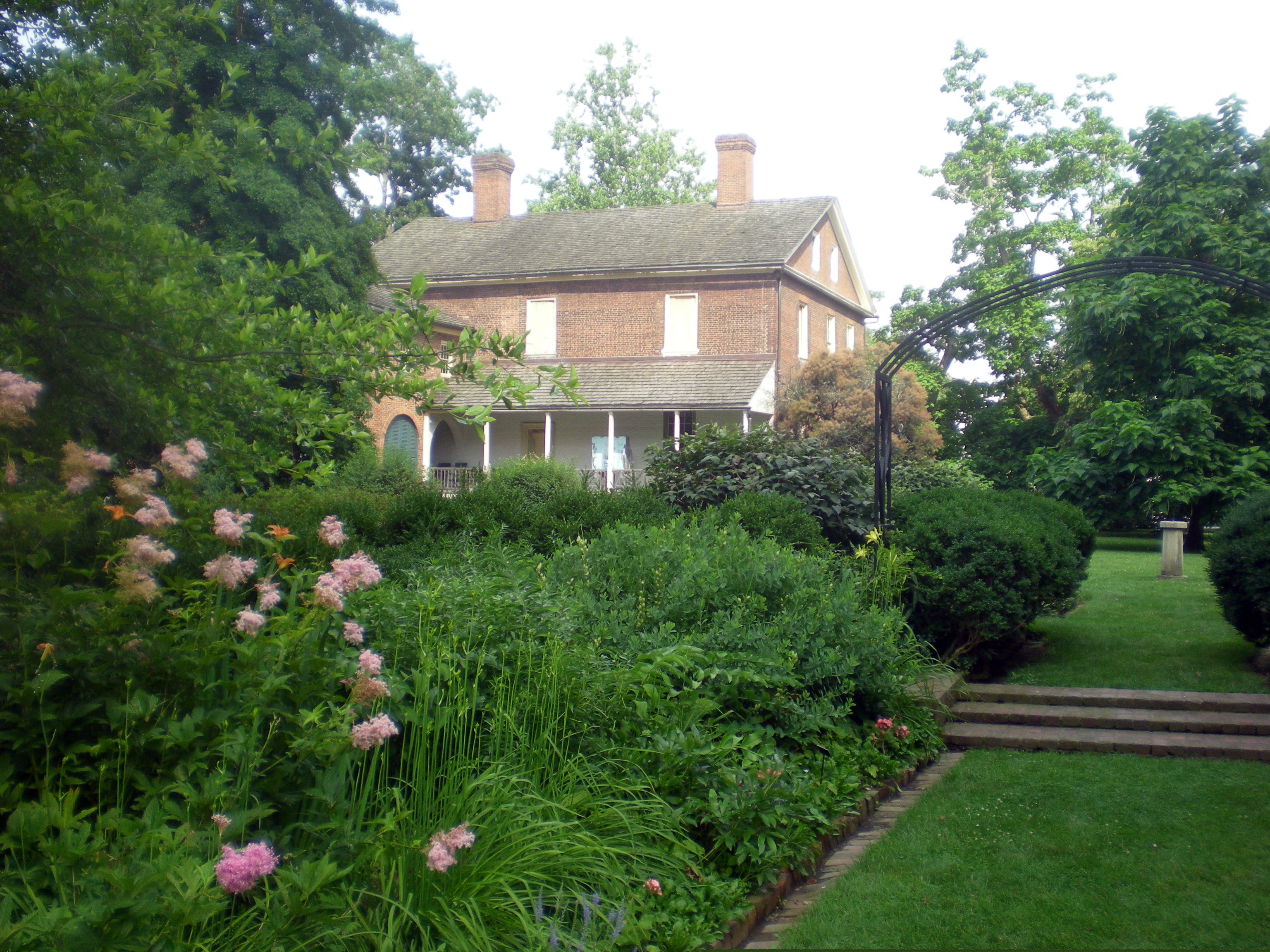
President Andrew Johnson, July 4, 2008It’s also good to happen across little-known historic sites, such as Liberty Hall in Frankfort, Ky. Little-known, at least, outside of the immediate area.
Libery Hall, July 2008“This Georgian mansion was begun in 1796 by John Brown and named for [the] Lexington, Va. academy he attended,” says the landmark sign. “His wife Margaretta and Elizabeth Love began [the] first Sunday School west of [the] Alleghenies in [the] garden. Guests have included James Monroe, Zachary Taylor, Andrew Jackson and Gen. Lafayette…” The plaque maker must have charged by the letter, what with all of the definite articles left out.

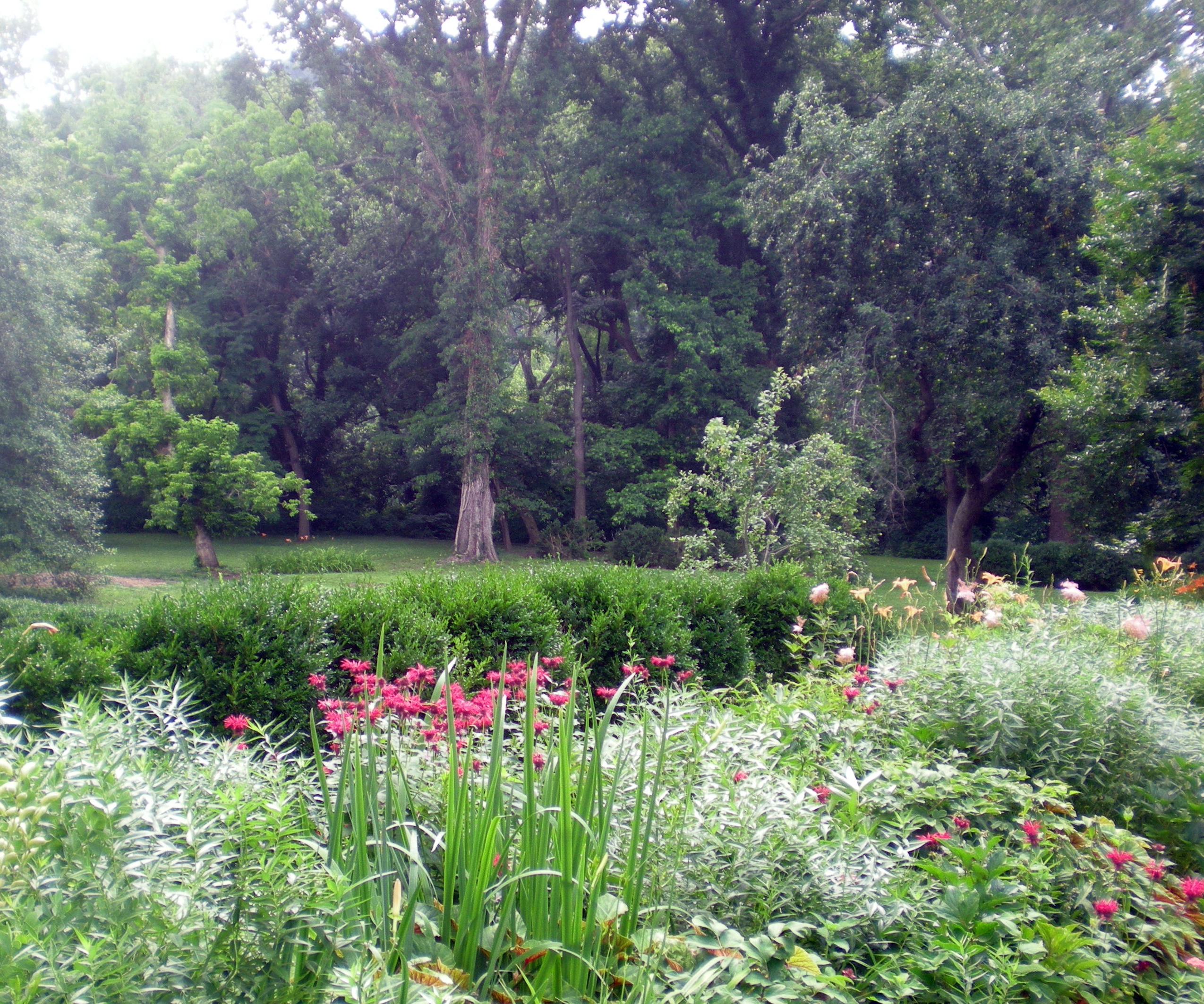
A lovely garden it was, too.

Liberty Hall garden July 2008One more thing. As I’ve said, it’s good to be open to sampling new things on the road.
Root beer, July 2008I don’t remember, but it was probably tasty. Things often taste better on the road.