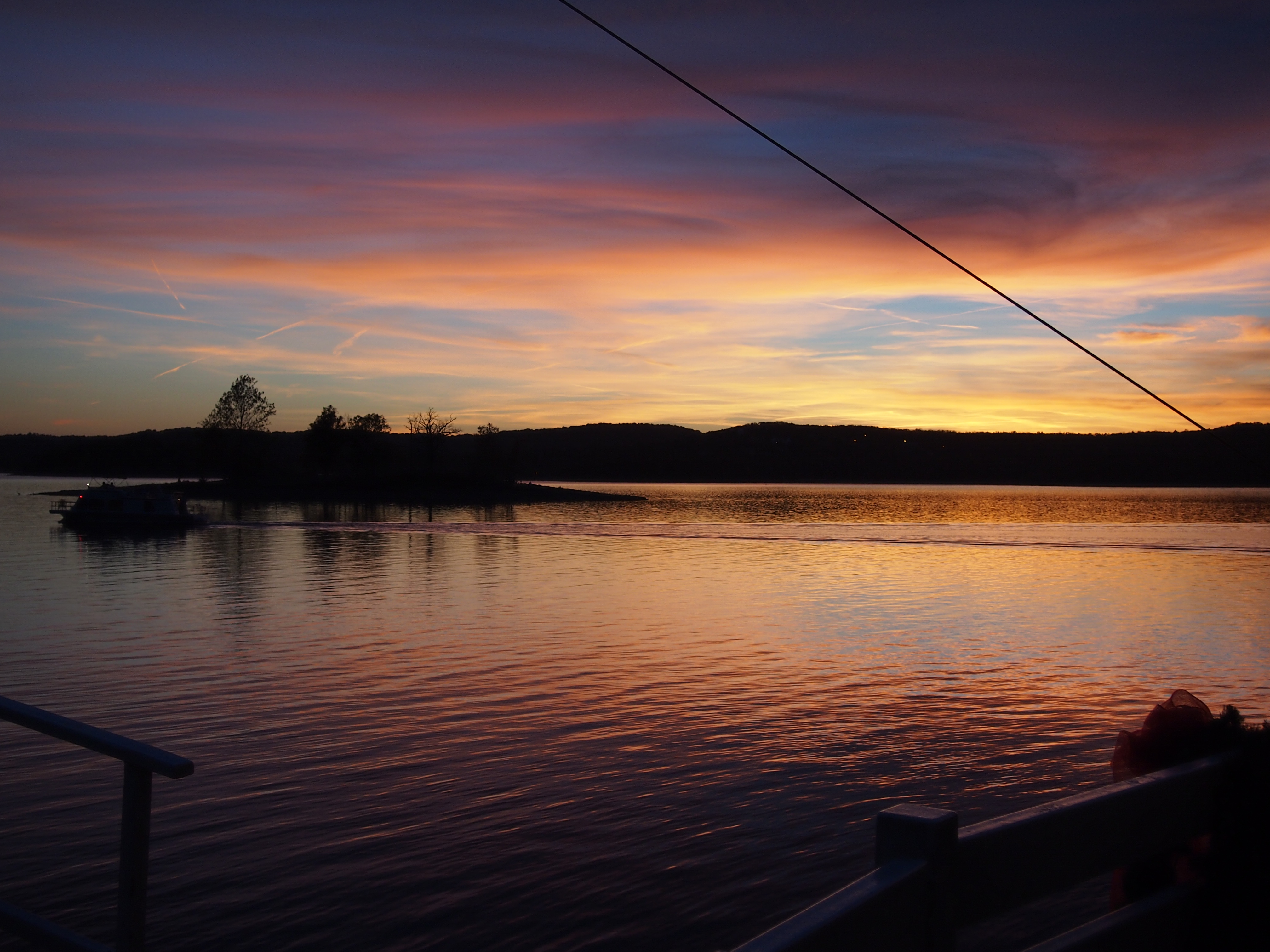
Table Rock Lake Sunset

Those formerly eager dam-builders, the U.S. Army Corps of Engineers, built Table Rock Lake near Branson in the 1950s to control flooding by the White River. Since then the lake has also done its part to attract visitors to Branson. It’s a fine lake.

We spent the afternoon of November 2 on the lake, aboard the showboat Branson Belle, which wrapped up its 4 pm cruise just as the light was disappearing in the west.

The Titanic Museum Attraction

When you buy a ticket for the Titanic Museum Attraction in Branson—that’s its slightly odd name—you get a “boarding pass.” On the front the pass says “permission to come aboard” and gives the sailing dates of the doomed steamer, which sailed from Southampton to Cherbourg to Queenstown to Unwanted Immortality.

On the back is a short bio of one of the passengers or crew, but not his or her fate on Titanic. That’s the hook. To find out what happened, you have to consult a wall in the museum that lists all those who lived and all those who died, and wall is designed to be the last thing you see (besides the gift shop) in a normal tour of the museum. Of course, not quite every “boarding pass” has that kind of suspense. Another fellow on our press trip got Capt. Smith, and I’m afraid we all know what happened to him.

I got William Sloper, First Class Passenger from New Britain, Conn., who was a young stockbroker and son of a banker who’d just finished spending three months in Europe. A wealthy swell, in other words. I won’t maintain the suspense: he survived. Lived on until 1955, in fact, according to the Encyclopedia Titanica.

“When the Titanic struck the iceberg, Sloper was playing bridge with some friends,” the Encyclopedia notes. “Sloper was rescued in lifeboat 7. The lifeboat was one of the early boats sent away and First Officer William Murdoch was freely allowing men into the starboard side lifeboats when there were no women around. According to Sloper, he owed his life to Dorothy Gibson, an actress and one of his bridge companions, who got into the lifeboat and insisted that he join her.”

Luck was with him, in other words. Even first-class passengers needed some. But the experience haunted Sloper in an unusual way: “A New York Herald reporter identified Sloper… as having dressed in women’s clothing to escape the ship,” the Encyclopedia continues. “On the advice of his father, other family members and trusted friends, Sloper did not sue the Herald nor the reporter. He decided that the fuss would eventually pass [but] spent the rest of his life refuting the charge.”

On the outside, the Titanic Museum Attraction is built to look something like the ship, only smaller. I knew little about the place going in, and was prepared for a Disneyfied version of the disaster or worse. So I was astonished to find a first-rate museum inside, a fine blend of standard displays and written information with various kinds of interactivity. Besides actual artifacts from the bottom of the Atlantic, it features a wealth of photographs and other images, models, maps, period clothing and items and accoutrements, and a full-scale replica of the ship’s grand staircase, which is a functioning staircase between the museum’s two floors.

Since Titanic amounted to a floating city, it’s a large subject, yet the museum does a good job of illuminating the larger story of the disaster, which is hardly obscure, but also dozens of smaller stories. One story in particular caught my attention: the photographs of Father Frank Browne, a Jesuit who sailed from Southampton to Queenstown, and then disembarked with a large cache of pictures he made on the ship.

For some reason, I’d never heard about him, though I think I’ve seen some of his pictures. The better part of a room in the museum is given over to the story of the priest and his camera, and I’m glad I spent some time finding out about him. That’s all I ask from a museum: to come away knowing something new.

Underground Branson

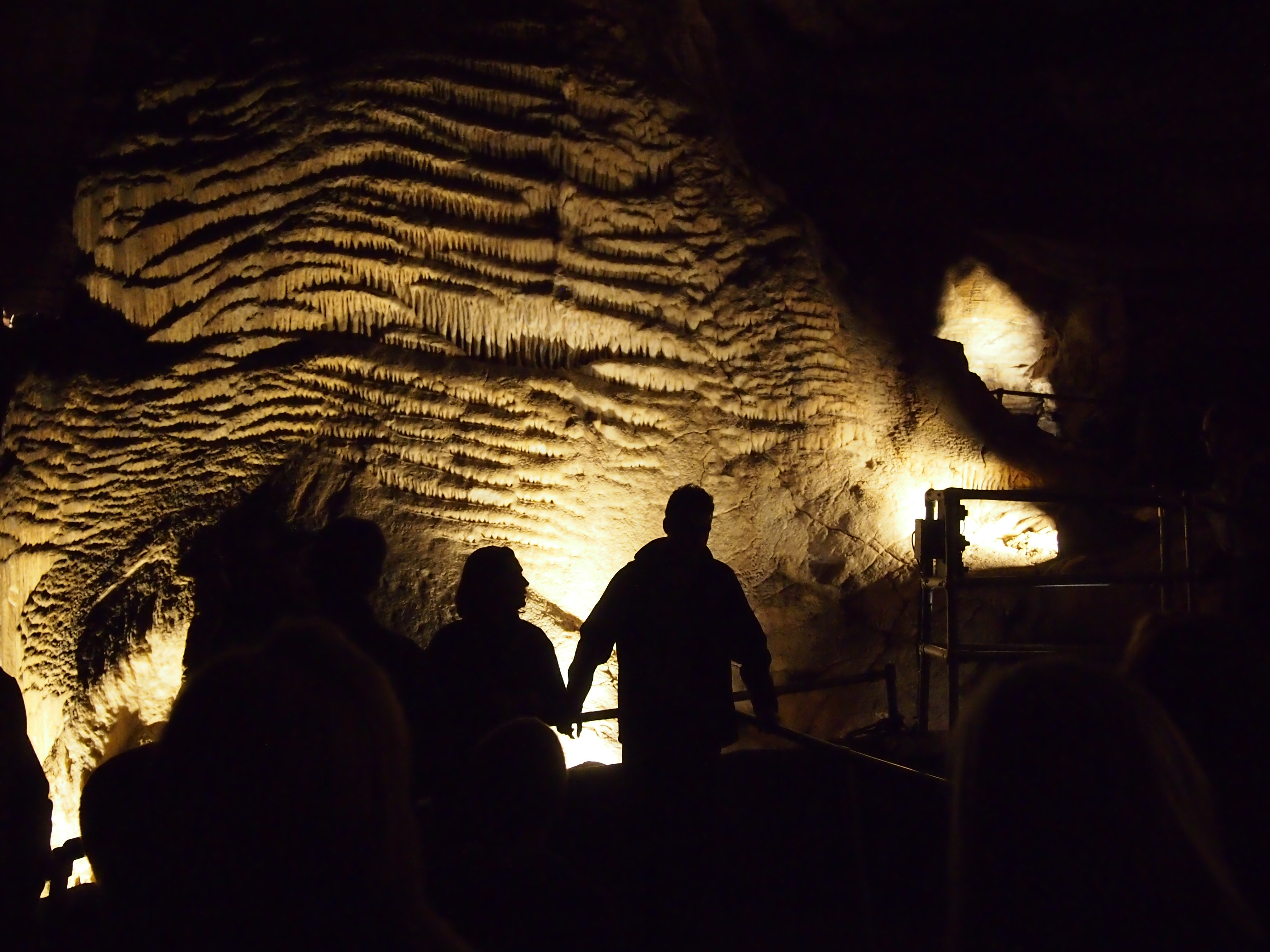
I’ve finally learned to take passable snapshots in caves. While visiting Branson, I took the tour of Marvel Cave, which begins with a long walk down steel stairs and then passage along a trail to the bottom of the enormous Cathedral Room, where I caught an image of a man and woman holding hands in front of a formation called The Sentinel.

The guide was happy to regale us with certain size comparisons, such as that the fact that the Statue of Liberty, not counting the pedestal, would fit easily in the Cathedral Room. I had to check that later, and sure enough, the Cathedral Room is 204 feet high, while the statue is 151 feet high. The room is large enough to accommodate hot air balloons in flight, and in 1963 balloonist Don Piccard set the “underground altitude record” in the room. The guide also said that someone stood on top of a hot air balloon once and touched the ceiling of the room, probably the only person ever to touch it.

Marvel Cave is the original Branson-area tourist attraction. Tours began in the 1890s, after the commercial uses of the cave, namely the extraction of bat guano, had played out. That’s older than the area’s many theaters, museums, and other attractions, older than massive local lake built by the U.S. Army Corps of Engineers, older even than The Shepherd of the Hills, the 1907 book that inadvertently encouraged travelers to come to the Ozarks. Silver Dollar City, which is on the surface directly above the cave, owes its existence to the fact that people were coming there anyway—a theme park ought to work on the site, and it has. It opened in 1960, during the immediate post-Disneyland boom time for theme parks.

The cave’s bats must be hibernating already, since we didn’t see or hear any. White nose syndrome hasn’t reached Missouri yet, and we were warned not to enter the cave wearing any clothes worn in caves with infected bats, since the fungus that apparently causes the disease is thought to travel that way.

Marvel Cave offered up one of the more difficult walks I’ve ever taken in a cave, or maybe I’m just getting old. The paths are slippery in places, and not all the stairs are even. The ceiling comes down to meet your head in a lot of spots, especially one called Tall Man’s Headache. The walk down was easy enough, but the climb up involved a lot of stairs, though the last part of the tour involves being taken out of the cave by a short cable railroad.

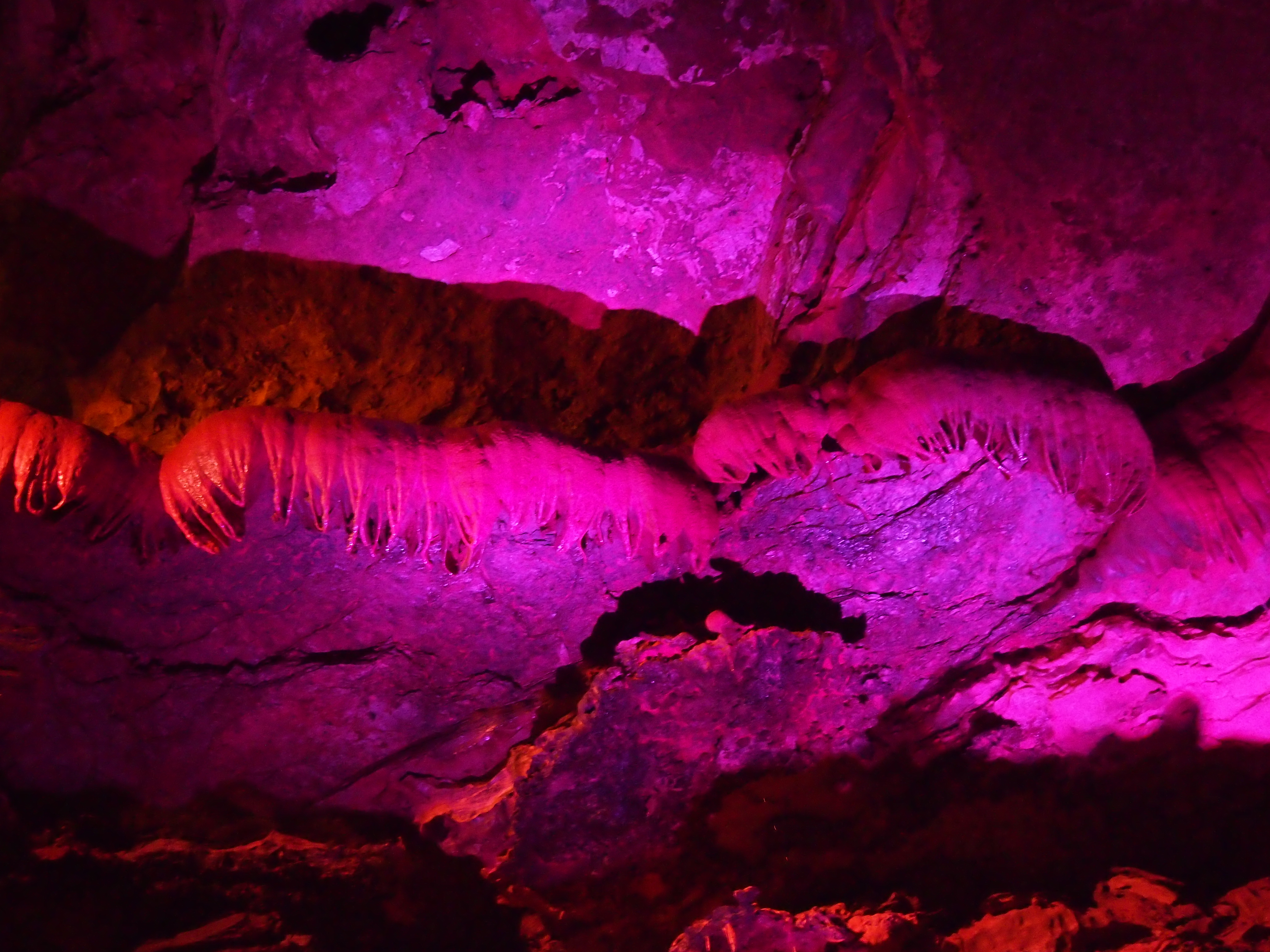
But it was worth the exertion. It isn’t the largest or the most feature-packed commercial cave I’ve ever toured, but it’s an impressive one with a range of pretty features, only a few of which include the use of colored lights.

It Isn’t Christmas in Branson Until Andy Says It Is

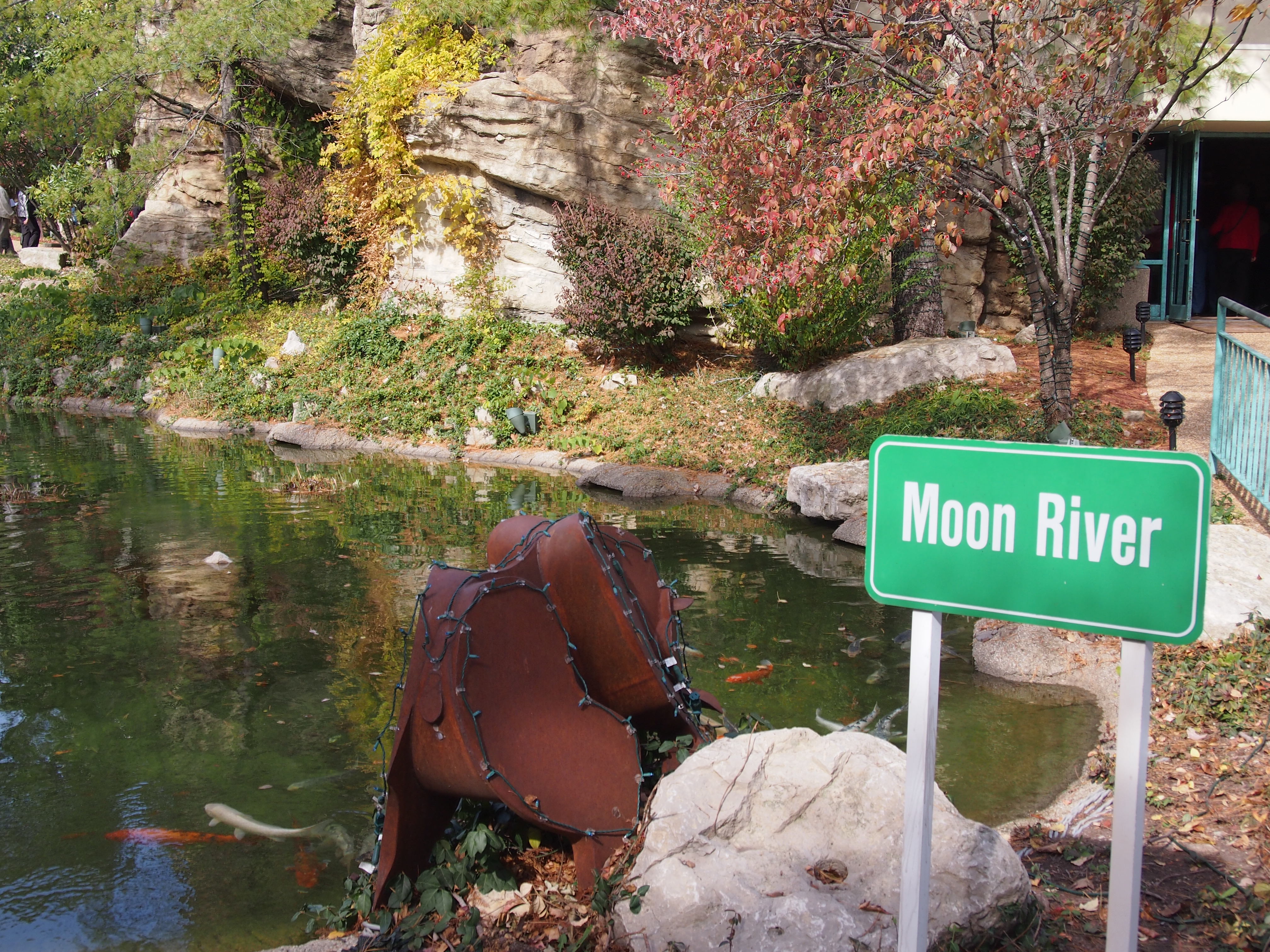
The Andy Williams Moon River Theater in Branson is a theater, naturally, and a spacious and well-designed one, but it’s also an art gallery. I didn’t see everything, or even that many works, but included are paintings and sculptures by Willem de Kooning, Henry Moore, Kenneth Noland, Donald Roller Wilson, Jack Bush, Jacque Lipchitz, and Robert Motherwell. There’s also a collection of pre-modern (or maybe Meiji era) kimonos, which are in glass cases on the back wall of the theater. The nearby Moon River Grill also displays artwork, for that matter, with Andy Warhol works especially prominent.

The story I heard was that Andy Williams lived near Andy Warhol for a time in New York, and the singing Andy became friends with, and a patron of, Andy the artist. I hope that’s true, but in any case Andy collected Andy’s works.

We toured the theater, including some dressing rooms and the green room downstairs, and our guide told us that Andy William’s nickname, Mr. Christmas, wasn’t just about the Christmas specials he used to host. In Branson, the guide said, it wasn’t Christmas until Andy Williams said it was Christmas. For many years before his death, he said that Christmas began on November 1.

Marketing and his showman’s instincts must have been a factor in that date. But I suspect that he really wanted to see his theater, and the town, decked out for Christmas two months out of the year. And so it is. The town’s streets are adorned, lights are up everywhere, and the shows switch to Christmas iterations around the first of November. I’d prefer that Christmas not eat up early December, much less November, but Branson’s a whole other world, so I didn’t mind the early Christmas so much during my short stay, when the weather was warm and un-Christmas-like and Halloween had just ended.

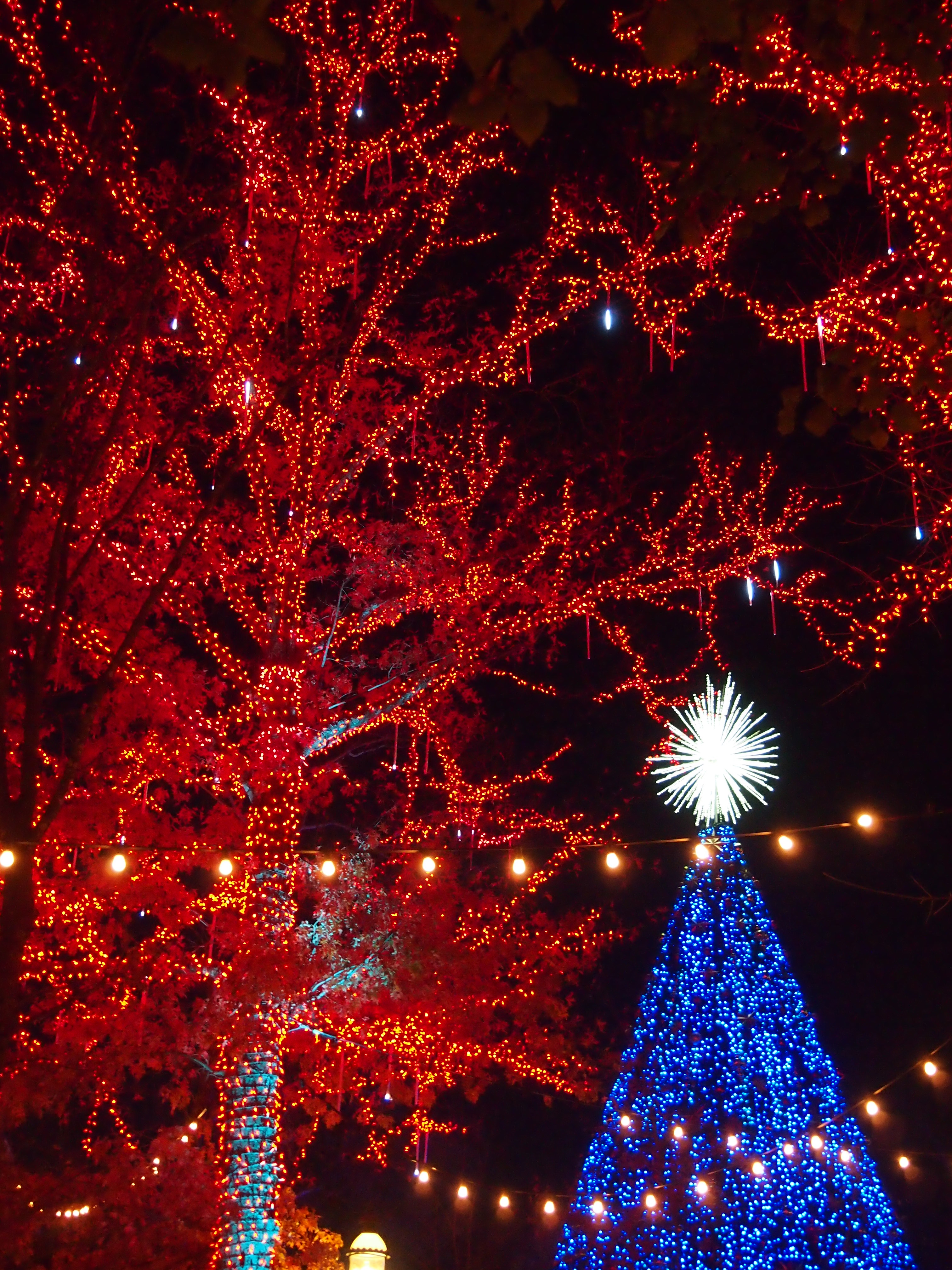
Besides, when Branson decorates for Christmas, it pulls out all the stops. After dark in Silver Dollar City, for instance, you can see these kinds of lights.

It’d be churlish not to be impressed by all that, even in November.

Branson III

Since the previous BTST broke down, I’ve been a few places, worked a lot, voted in an election that a lot people believed important (and maybe I did, too), even watched “The Great Vegetable Rebellion” on a whim because I saw it was available on Hulu, and because it’s Irwin Allen at his best.

To kick off November, I took a trip to Branson. Not sure how the AP feels about Branson as a dateline, but I think it should stand alone: Branson, rather than Branson, Missouri, so famed has the place become. I’ve heard that I visited Branson when I was small, and when Branson was small, in the mid-60s, but remember nothing of that. En route elsewhere in 2001, we drove into town, ate lunch, and took away vague impressions. Mostly, I remember liking Yakov Smirnoff’s billboards lining the road between Springfield and Branson.

So this time might as well have been a first visit, even though it was my third. It was a busy press trip. Being Branson, that meant seeing more musical-variety-comedy shows than I might see in many ordinary years. In fact, I realized in the middle of my stay that when the variety show died out from television, it was reborn in Branson. The shows I saw included singing, dancing, visual gags, bad jokes, good jokes, sometimes lavish sets and costumes, adaptations of classic theater and movies and the Bible, and even an aerialist – who played violin during her aerial act, which I’ve never seen anyone else do, not even in a circus. We also met a handful of entertainers in person, namely a couple of Lennon Sisters, as well as a fellow whose act is a Neil Diamond tribute.
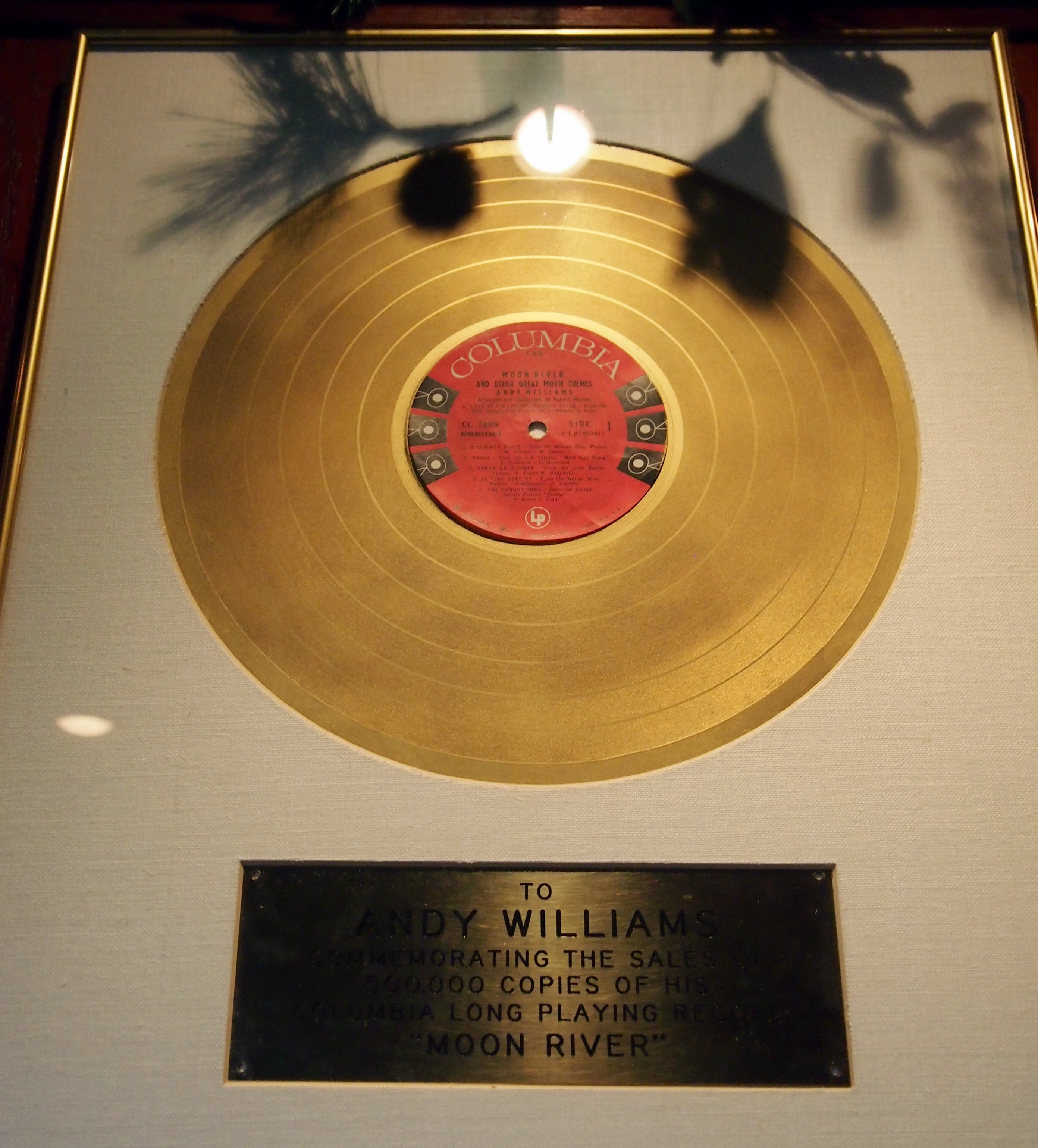
I noticed some relics, too. Saints’ relics aren’t what they used to be, since we tend to prefer celebrity relics in our time. At the Andy Williams’ Moon River Grill, the late entertainers’ gold records are on walls. That includes, of course, the LP Moon River (pictured), but also the Love Theme from The Godfather, among many others. That’s a movie I hadn’t realized had a love theme, much less one sung by Andy Williams. Its actual title, I’ve discovered, is “Speak Softly Love (or You’ll Sleep With the Fishes).” (Parenthesis added by me.)

Branson wasn’t all live entertainment. During my three full days there, I also managed to ride a train made of vintage railroad cars a short way into Arkansas, wander around the Silver Dollar City theme park, take the tour of Marvel Cave, and visit the surprisingly interesting College of the Ozarks – but not, unfortunately, see the Beverly Hillbillies’ truck, which is there. Branson also sports some museums, and I went to three of them – one about a maritime disaster, another about war, and a third, smaller one about Branson and environs.

On foot one day, I checked out the newly developed downtown riverfront and its attendant open-air retail space, and not far away examined a store that called itself a Five and Dime and had an usually large assortment of merchandise, over and above Branson-oriented gimcracks and gewgaws. Those can be found everywhere in great profusion.