Thursday Whatnots

News I missed, and I miss a fair amount, which I figure is actually healthy: “For the second time in history, a human-made object has reached the space between the stars,” a NASA press release from December says.

“NASA’s Voyager 2 probe now has exited the heliosphere — the protective bubble of particles and magnetic fields created by the Sun…

“Its twin, Voyager 1, crossed this boundary in 2012, but Voyager 2 carries a working instrument that will provide first-of-its-kind observations of the nature of this gateway into interstellar space.”

Voyager 2 is now slightly more than 11 billion miles (18 billion kilometers) from Earth. Or 16.5 light hours. That’s still in the Solar System, though. “It will take about 300 years for Voyager 2 to reach the inner edge of the Oort Cloud and possibly 30,000 years to fly beyond it,” NASA says.

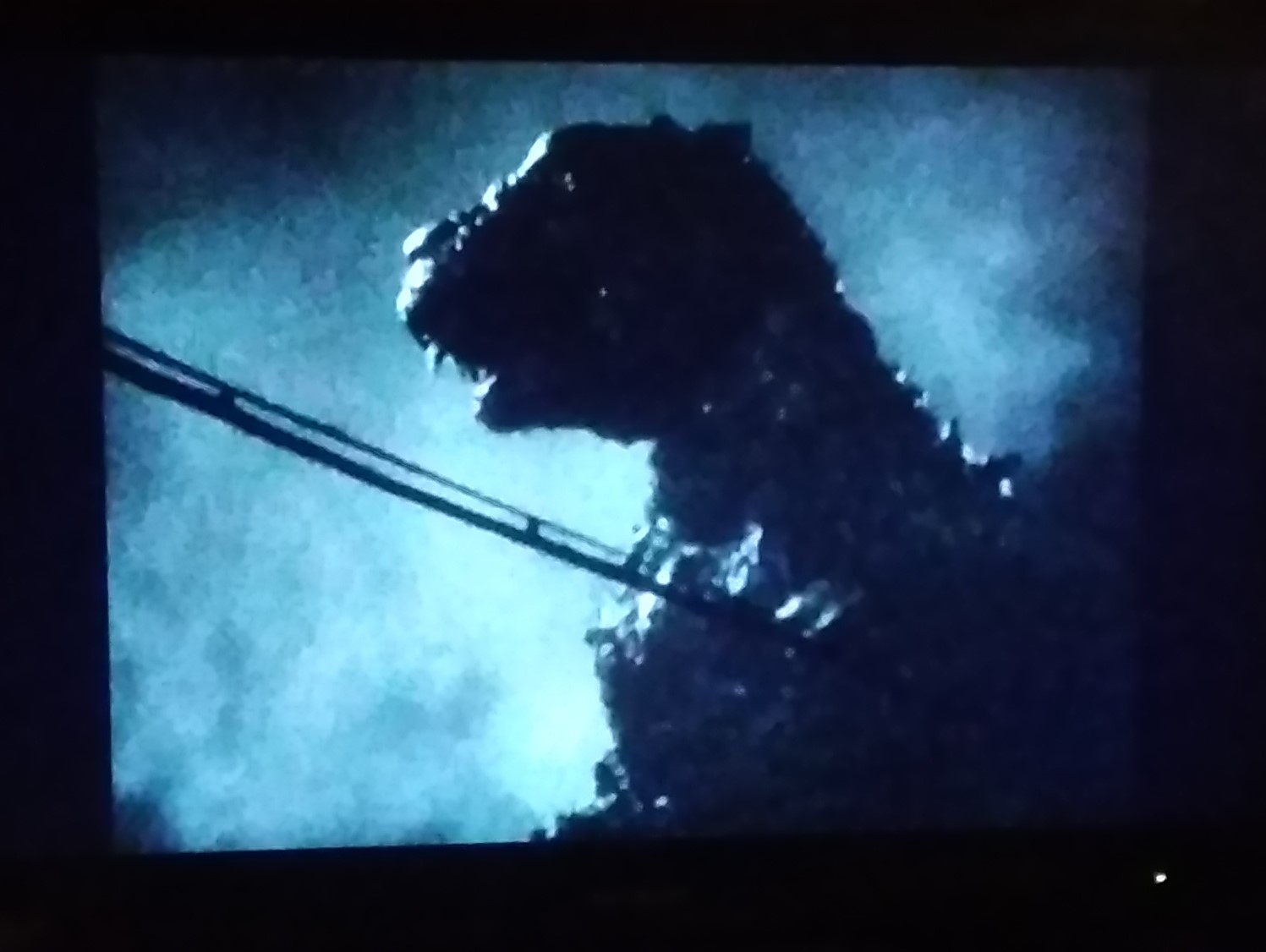
Not long ago, the original GodzillaGojira, to be pedantic — appeared on TV, in Japanese with subtitles. Not that the famed atomic beast needs any subtitles. I had my camera handy.
I didn’t watch it all, but that’s one way to approach televised movies. Not long ago, I watched the first 15 minutes or so of The Sting, a fine movie I’ve seen a few times all the way through. But other tasks were at hand, so I quit after Luther is murdered.

Later, I had the presence of mind to turn the TV back on and watch the last 10 minutes or so, when the sting is put on gangster Doyle Lonnegan. It’s a satisfying ending, but it got me to thinking.

A con with that many people would surely generate rumors. Just as surely, the rumors would make their way to the murderous Lonnegan, who wouldn’t rest until Henry Gondorff and Johnny Hooker were dead. But that’s overthinking things.

Here’s another example of a dim algorithm. Just about every time I use YouTube, I see anti-teen smoking PSAs. Or maybe they’re blanketing the medium, regardless of audience. Still, if I didn’t take up smoking 45 years ago, I’m not going to now.

That brings to mind the first time I remember seeing one of my contemporaries with a cigarette. That was about 45 years ago at a place called the Mule Stall.

The Mule Stall was a student space on the campus of my high school with a few rooms, chairs, a pool table and I don’t remember what else. It was tucked away about as far as you could get from the rest of the school, opening up to the street behind the school.

High schoolers used it, but junior high kids from the district had gatherings there occasionally as well. The event I remember might have been the wrap party for one of the plays I was in. Besides not acquiring a taste for smoking back then, I also discovered the theater wasn’t for me, except as an audience member. But ca. 1974, as a junior high school student, I did a few plays.

There we were, hanging out at the Mule Stall, when we noticed a girl named Debbie, who was in our class, pass by with a cigarette between her fingers. I didn’t know her that well, and I don’t remember much about her now, though she had curly hair, glasses and the sort of development adolescent boys pay attention to. At that moment, I guess she was on her way out to smoke the thing, though we didn’t see that.

I don’t know anything about her later life. She attended high school with us for a while, but either moved away or dropped out before the Class of ’79 graduated. I wonder if even now, she holds her cigs in yellow-stained fingers and spends part of the night coughing.

As for the Mule Stall, we had occasional high school band parties there later. One in particular involved almost everyone lining up to dance to the “Cotton-Eyed Joe.” That was fun. As Wiki accurately says, the dance was very much alive in Texas in the 1970s.

In fact, the Wiki entry has a description of the style of dance we did. Someone who did the dance seems to have written it, because this is exactly right.

“This dance was adapted into a simplified version as a nonpartner waist-hold, spoke line routine. Heel and toe polka steps were replaced with a cross-lift followed by a kick with two-steps. The lift and kick are sometimes accompanied by shouts of ‘whoops, whoops,’ or the barnyard term ‘bull s–t.’… The practice continues to this day.”

We used the barnyard term. An administration with no sense of history apparently razed the Mule Stall in the 1990s. Now the site is parking.

Various Spacewalkers

The daylight around the spring equinox around here stretched from an overcast sunrise to an overcast sunset. But at least it wasn’t especially cold. Hints of spring are around, such as croci peeking out of the earth and robins bob-bob-bobbing.

For the equinox, time to list to “Equinox” by Coltrain.

Or, more obscurely, “E.V.A.” by Public Service Broadcasting. After all, a few days ago was the anniversary of the first spacewalk, undertaken by cosmonaut Alexei Leonov. He very nearly bought the farm there in orbit in 1965, but survives to this day at age 84.

He didn’t get a Google doodle this year. You’d think it would be a good one to illustrate, with “Google” standing in for the Voskhod 2 spacecraft, and Leonov floating nearby.

Interestingly, looking at this table, I see that there were long gaps between Soviet spacewalkers in the early days. After Leonov, no cosmonaut did so again until 1969, when two did; and then not again until 1977, after which red spacewalking became more regular.

The first non-American, non-Soviet spacewalker? One Jean-Loup Jacques Marie Chrétien, who also happened to be the first Frenchman in space in 1988.

The first woman? That would be Svetlana Yevgenyevna Savitskaya in 1984. Bet neither she nor Chrétien ever got a Google doodle.

Once the Rockets Go Up…

I’m much of the way through Von Braun by Michael Neufeld (2008), aptly subtitled “Dreamer of Space, Engineer of War.” Overall, a solid biography, though the chapters I’ve just finished bog down a bit in all the mid-50s interservice rivalry and the fog of uncertainty about who would get to launch the first U.S. satellite. It’s hard to keep track of all the bureaucrats, official acronyms and other long-forgotten missile minutiae.

In the end, the answer of who would get to launch for the Americans came after Sputnik was up and beeping. Namely, whatever’s ready, launch it now! Which of course led to flopnik, since the Navy’s Vanguard rocket wasn’t quite up to snuff.

Rather, it was the Army’s Redstone, a design overseen by von Braun, that put Explorer 1 into orbit (to be fair, the Navy launched a Vanguard satellite successfully on March 17, 1958, the second U.S. satellite, and it’s still in orbit). I didn’t realize it until now, but the Explorer Program is ongoing after six decades, with over 90 missions to its credit.

Granted, we’ve been sluggish about getting around to the big-deal missions like sending astronauts to Mars, but by no stretch of the imagination has humanity turned its back on space exploration during any of the last 60-odd years.

As for von Braun, the bio doesn’t shy away from his early employment history and the various Nazi bureaucracies that facilitated development of the V-2, often using slave labor. He was a rocket engineer to his core, and happy to work for whomever would facilitate rocket development — hideously expensive when you get beyond fireworks — up to and including membership in the SS.

One of these days, I’ll have to return to Huntsville, Ala., to see what NASA has done with its rocket displays at the Marshall Space Flight Center (the haus that Wernher built). I remember seeing some of them in 1984, but I suspect the museum’s been expanded since then.

Also, I was only vaguely aware of how well known von Braun was to the American public, even in his pre-Saturn V days, what with his collaborations with Collier’s and especially Disney in the 1950s. Von Braun was famed as a space-flight evangelist at a time when a lot of people probably considered it a not-in-my-lifetime sort of proposition. Lehrer was making fun of a celebrity.

Remarkably, PDFs of “Man Will Conquer Space Soon!” and the other Collier’s articles are available here, complete with the magnificent Chesley Bonestell illustrations.

Digression: there’s a Bonestell Crater on Mars (42.37° North, 30.57° West). An image is downloadable, in this case from NASA. Which I did.

One more thing about von Braun. I don’t have to go very far to find a small tribute to him.

That’s Von Braun Trail in Elk Grove Village, here in the northwest suburbs of Chicago. The neighborhood dates from ca. 1970, and some of the nearby streets honor other space pioneers: Aldrin Trail, Armstrong Ln., Cernan Ct., Conrad Ct., W. Glenn Trail, Haise Ln., Lovell Ct., Roosa Ln. and Worden Way, and probably others I haven’t spotted.

Apollo 9

Now I’ve seen everything. An ad for something called “Crop Preserver Deodorant Anti-Chafing Ball Deodorant” popped up on YouTube the other day. Ball deodorant?

The ad is here. It is as ridiculous as you’d expect. So is the price: $20 for 3 fl. oz. Someone is guffawing on the entire route to his financial service provider.

This year, as NASA is eager to point out, marks the 50th anniversary of the first Moon landing. I’m glad to point that out too, but it’s more than just Apollo 11.

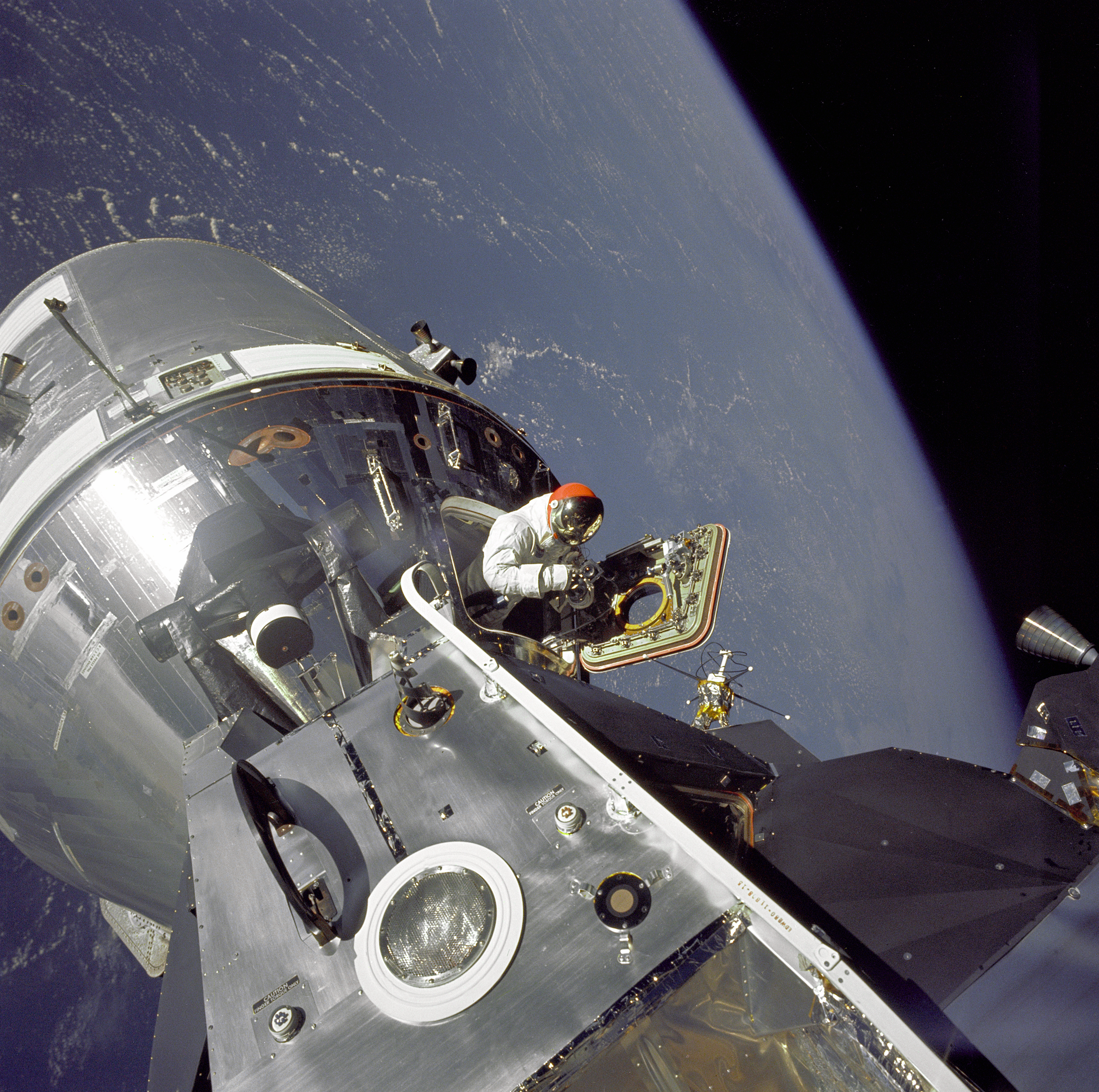
Fifty years ago this week, Apollo 9 orbited the Earth, its main mission to test the lunar module. The flight was an unqualified success.
Gumdrop Meets SpiderApollo 9 is a special one for me. Odd, considering that Apollo 8’s trailblazing journey to the Moon was so much bolder. It was, and that caught my attention, but it wasn’t until Apollo 9 that my full attention — as much as a near eight-year-old can muster — was on the space program.

By then, I’d realized that something very special was going on. Apollo 9 was part of something big. From then on, I followed all of the missions closely, down to the bittersweet Apollo 17 and its glorious night launch, when I was an older and wiser 11-year-old wishing that the rest of the missions hadn’t been cancelled.

NASA created an Apollo 9 video for the anniversary. The dance of Spider and Gumdrop in orbit. Remarkably, all of the crew are still alive.

It’s pretty rare that you can, as a late middle-aged person, look back on an opinion you had as a child and say, I was right. Something very special indeed was going on.

First Thursday Debris of 2019

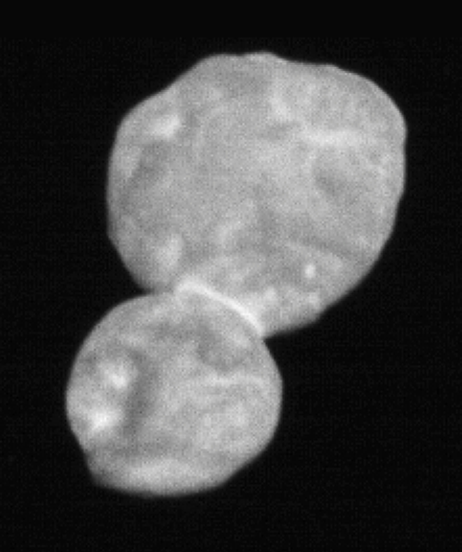
I was glad to hear about the successful flyby of Ultima Thule at the beginning of the year. And to see the public domain photos. Who wouldn’t be?
Not long ago I also read that actual interstellar probes — or what this article terms “precursor” interstellar probes — are under serious consideration by the people who plan robotic space probes.

Space.com: “The APL study — which focuses on a mission that could launch before 2030 and reach 1,000 AU in 50 years — is based on the next extension of what we know we can do, propulsion physicist Marc Millis, founder of the Tau Zero Foundation, said.

” ‘It is a reasonable candidate for the next deep-space mission,’ Millis told Space.com. ‘It is not, however, a true interstellar mission. It is better referred to as an “interstellar precursor” mission.’ ”

After that I had to look up the Tau Zero Foundation. An organization promoting interstellar space flight. There’s a long-term goal we can all get behind.

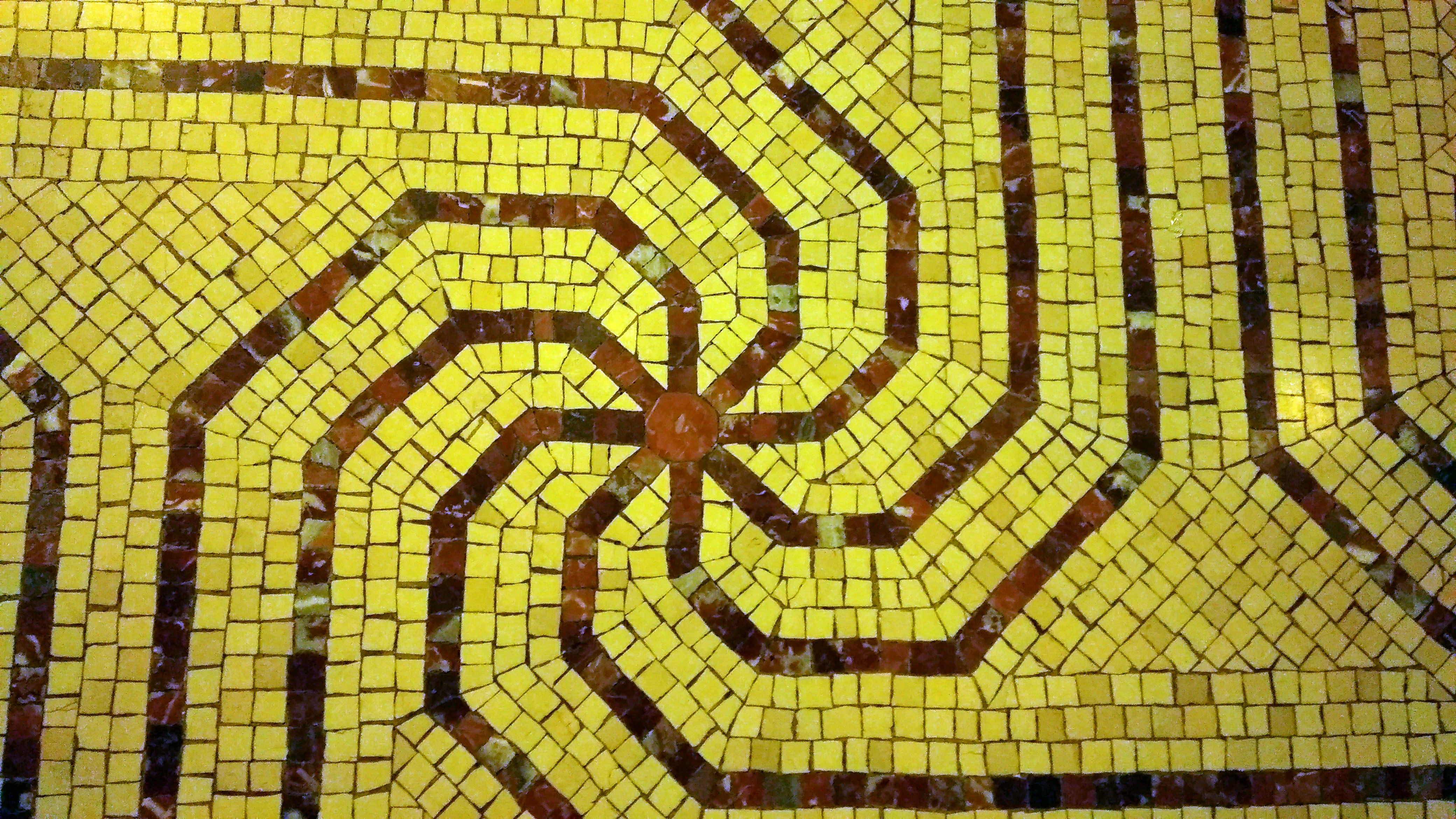
A shot of floor tiles at the Chicago Cultural Center.

Some variation of that pattern can be a symbol for the interstellar ambitions of humanity.

I haven’t given much thought to Brussels sprouts over the years, since I’m not especially fond of them. So I looked down in surprise recently at a grocery store at Brussels sprouts still on the stalk.
There’s something a little otherworldly about the stalks when still in the ground.

Not the best of images, but I thought I’d take some before the 2018-19 tree gets the heave-ho.
Its last lighting might be tomorrow.

What Spring is Like on Jupiter and Mars

This time of the year, it’s easy to go on about the weather. All I have to do is look out my window and see the icy evidence that nature is indifferent to my comfort or more likely, my existence at all.

At 10:41 pm night before last, I heard the rumble of thunder as the snow fell. I happened to look at my computer’s clock at that moment, so I know the time. Been a few years since I heard any thundersnow.

The beginning of a long snowy winter? Maybe. Winters tend to be unpredictable. For all I know there will be a snow drought after this week. Or a tiring series of hardcore blizzards to come before the first croci bud in the early spring.

Further away, much further, I was glad to hear that the InSight probe landed without incident on Mars. The weather at Elysium Planitia looks pretty clear, even if the air isn’t breathable. Even though spacecraft have been flying to Mars for over 50 years, and landing nearly that long, it’s still a thrill.

Could have a better name, that probe. Like New Horizons could be better. InSight sounds like a company that sells “software solutions” for vague problems, not one of the most sophisticated machines ever built and whose purpose is pure exploration. Must be that capital S.

Mariner, Viking, Pathfinder, even Spirit, Opportunity and Curiosity — those are names for explorer craft. Insight would arguably go with the latter three.

The American Geographical Society Library (Or Wow, Look at All the Globes!)

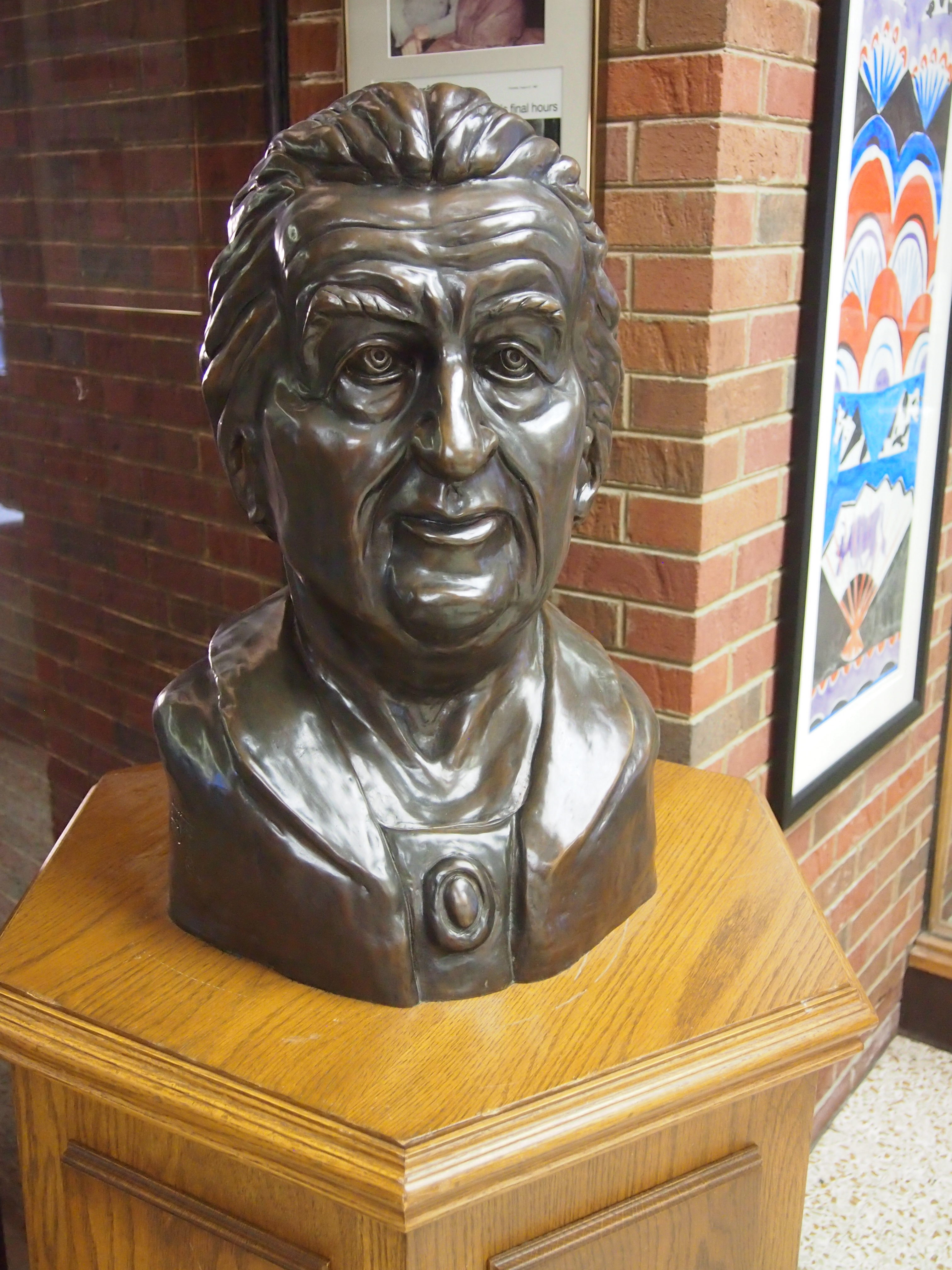
At the University of Wisconsin-Milwaukee’s Golda Meir Library, which is the school’s main library, it isn’t hard to find a bust of the fourth Prime Minister of Israel. She was an alumna of the university’s predecessor institution, Milwaukee State Normal School.
Behind the bust is a mounted Milwaukee Sentinel article, dated August 27, 1987, about the sculptor, Maurice Ferstadt, whom I’ll give credit for not trying to idealize the prime minister’s face. On the morning of February 19 of that year, Ferstadt — who was 75 –finished the sculpture. That evening, he died of an aneurysm.

Part of the library participated in Milwaukee Doors Open last weekend. Special Collections is on the fourth floor. We spent some time there, looking at some of the old and rare books on display. Interesting.

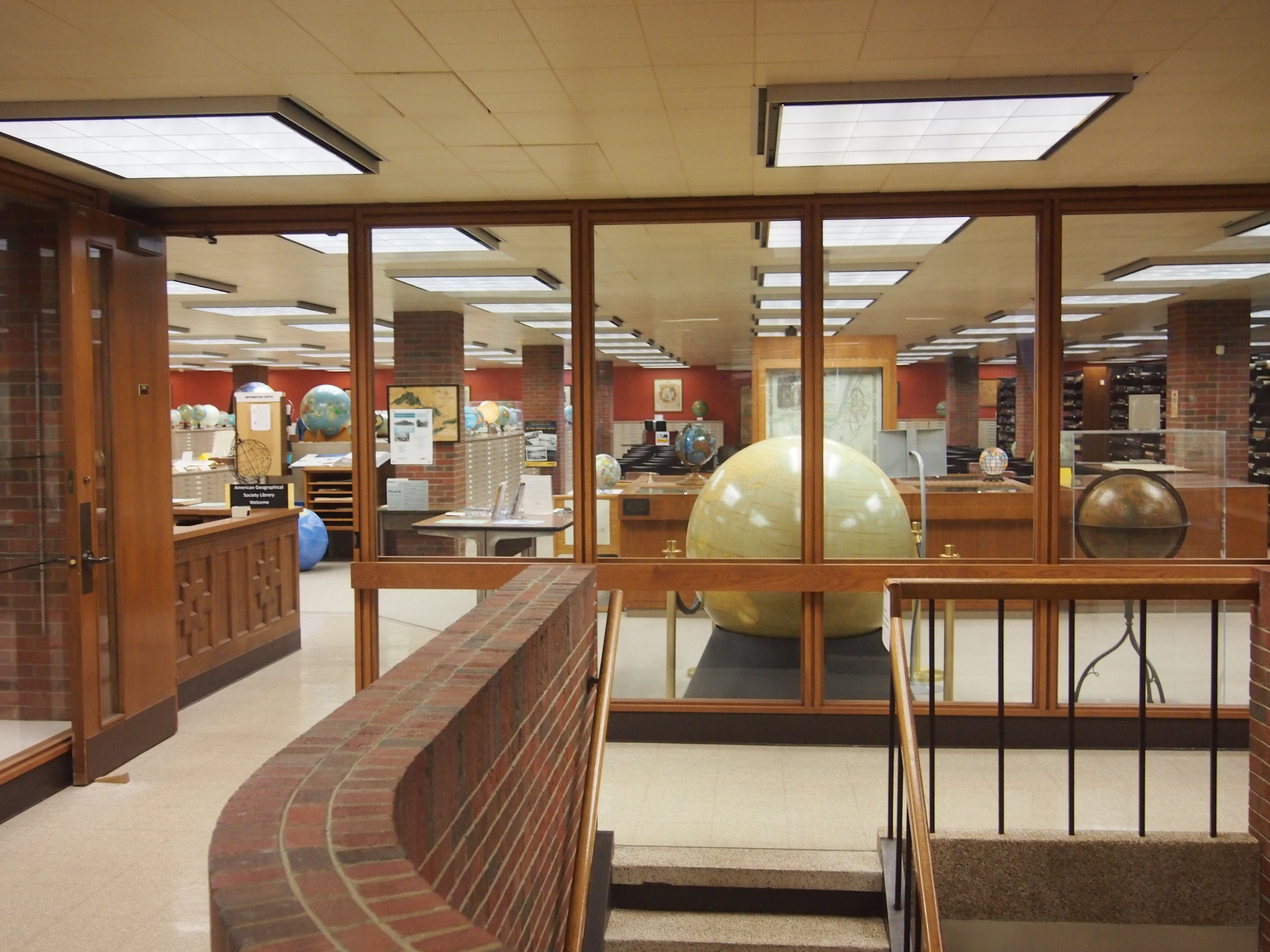
Then we went to the third floor, which is home to the American Geographical Society Library.

The closer I got, the more excited I felt. That’s not a verb I use much in my well-established middle age. But as soon as I entered the library, that rare feeling came over me. This is best thing ever!

You know, that kid on Christmas morning feeling. The giddiness passed, of course, but I remained vastly impressed by the collection all the same.

According to the library’s web site, it “contains over 1.3 million items supporting instruction, research and learning. The collection is global in scope — ranging from the 15th century to present — and includes maps, atlases, books, periodicals, photographic and film media, and geospatial data.”

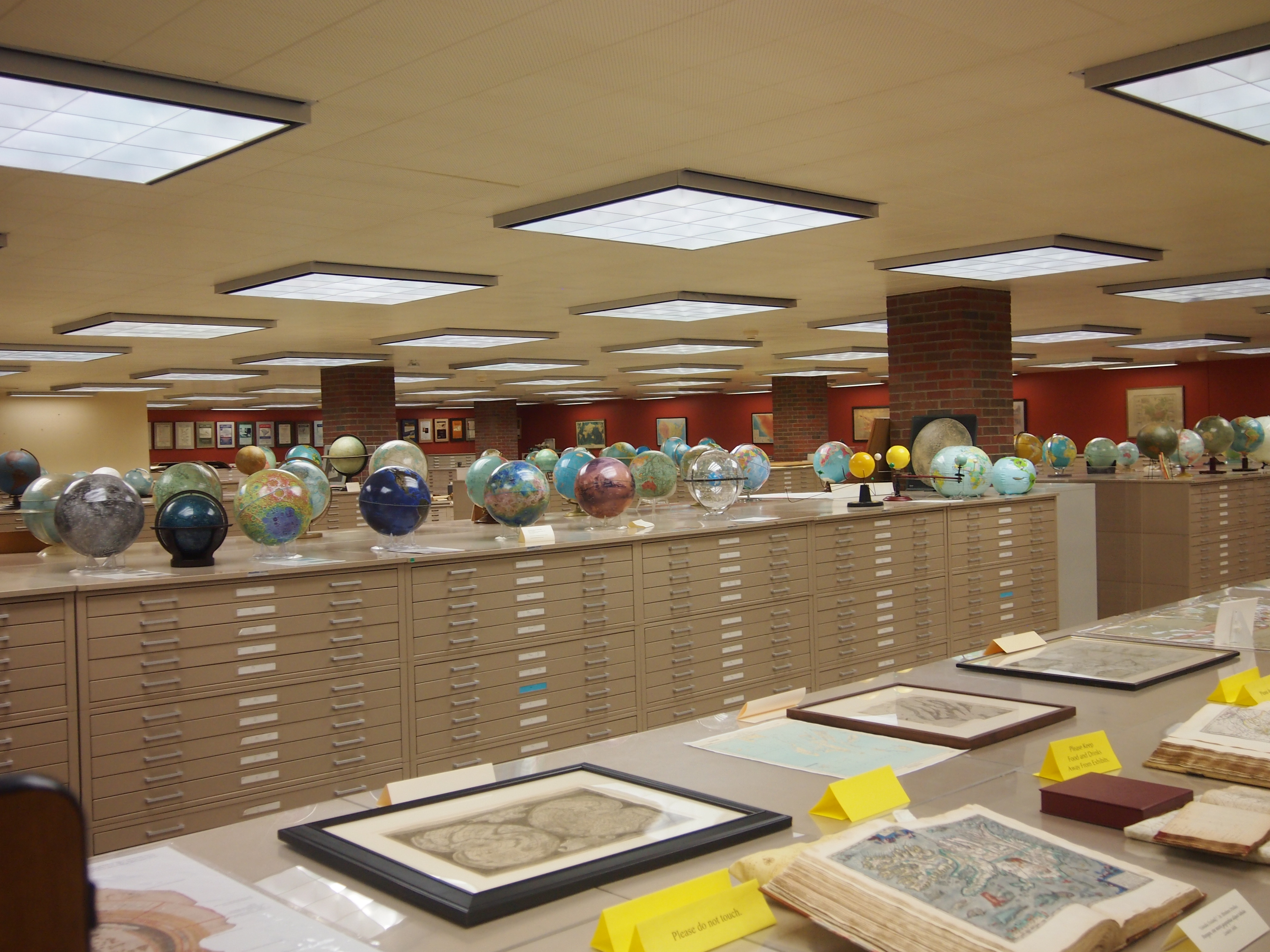
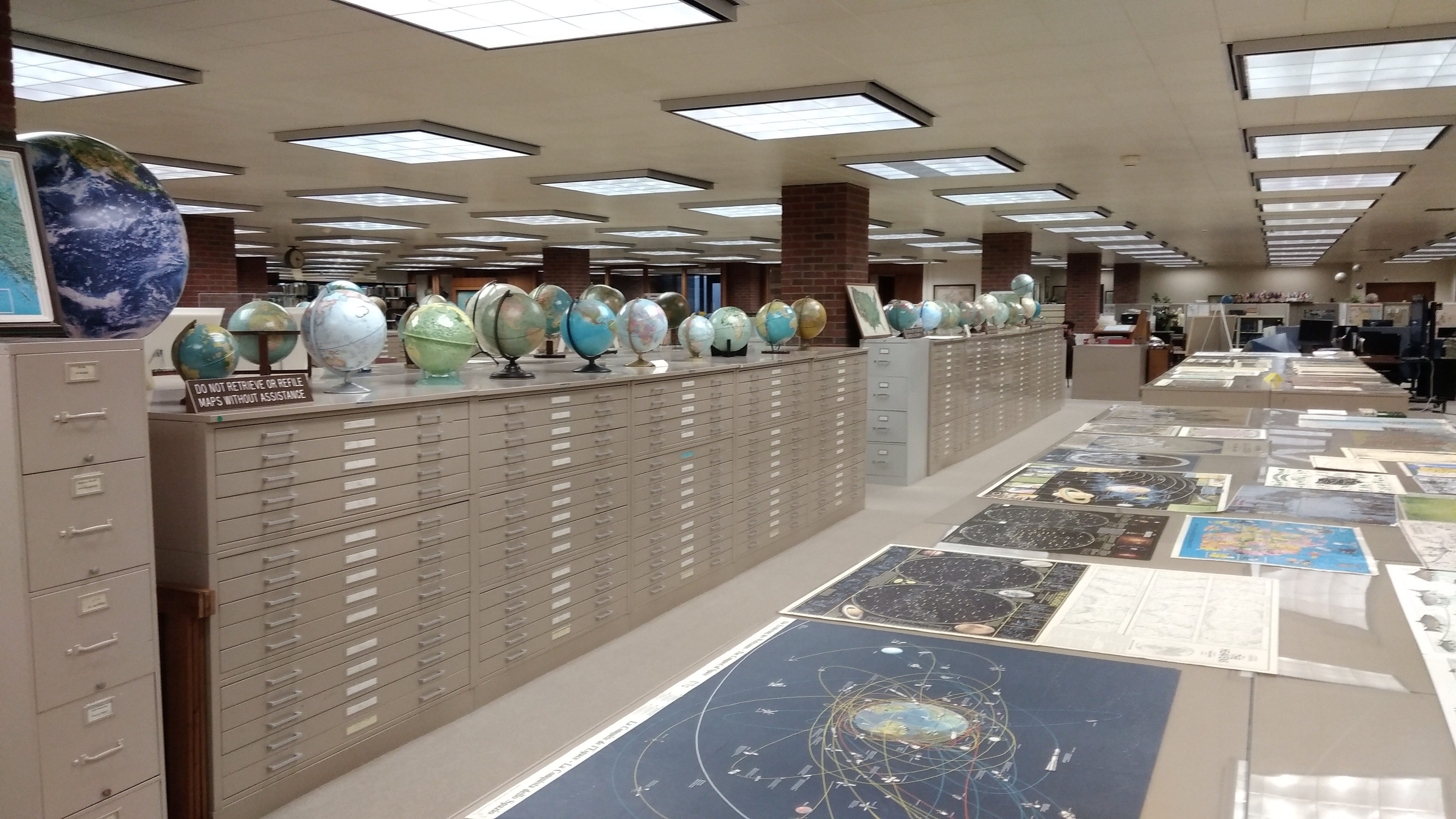
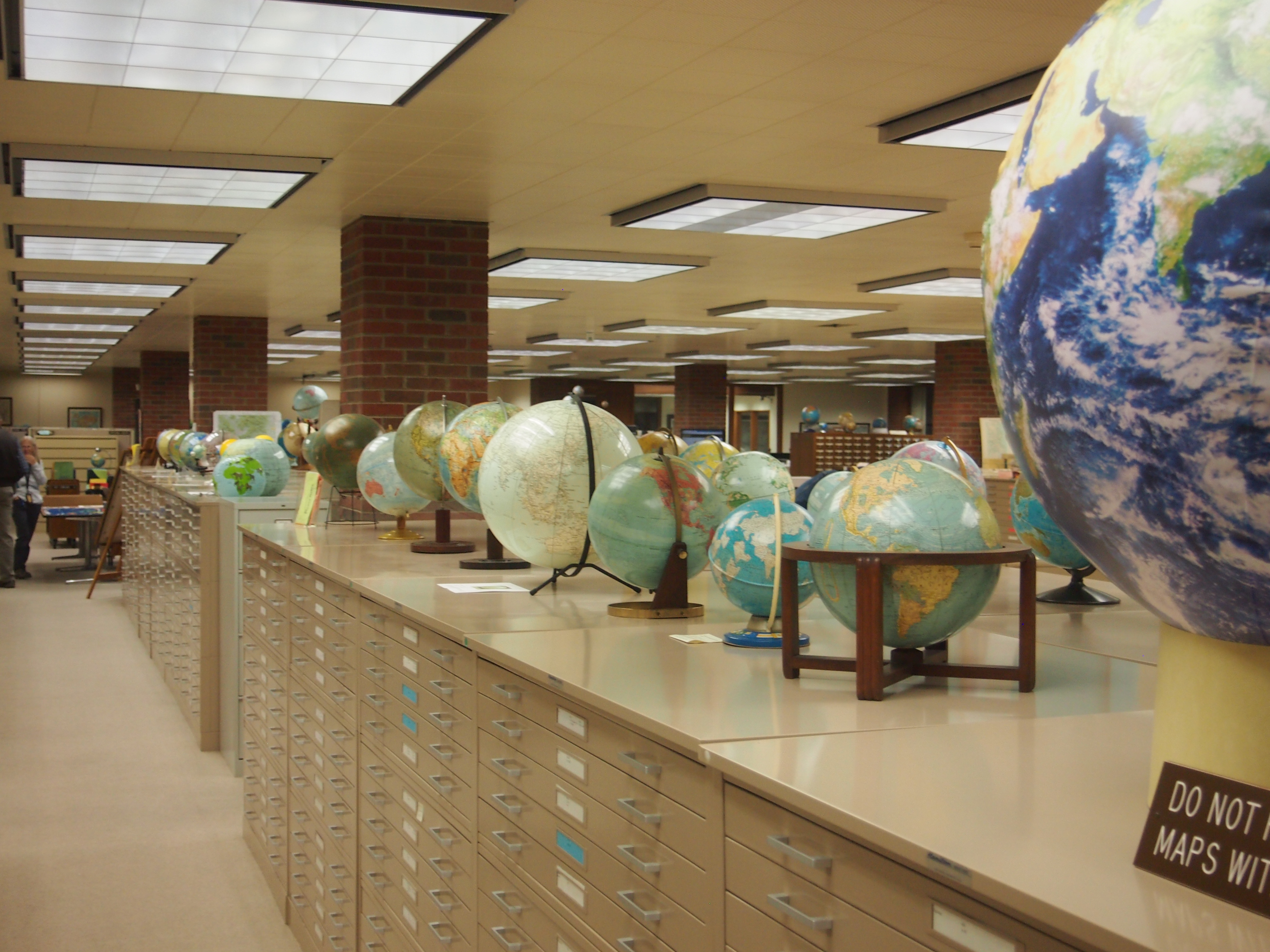
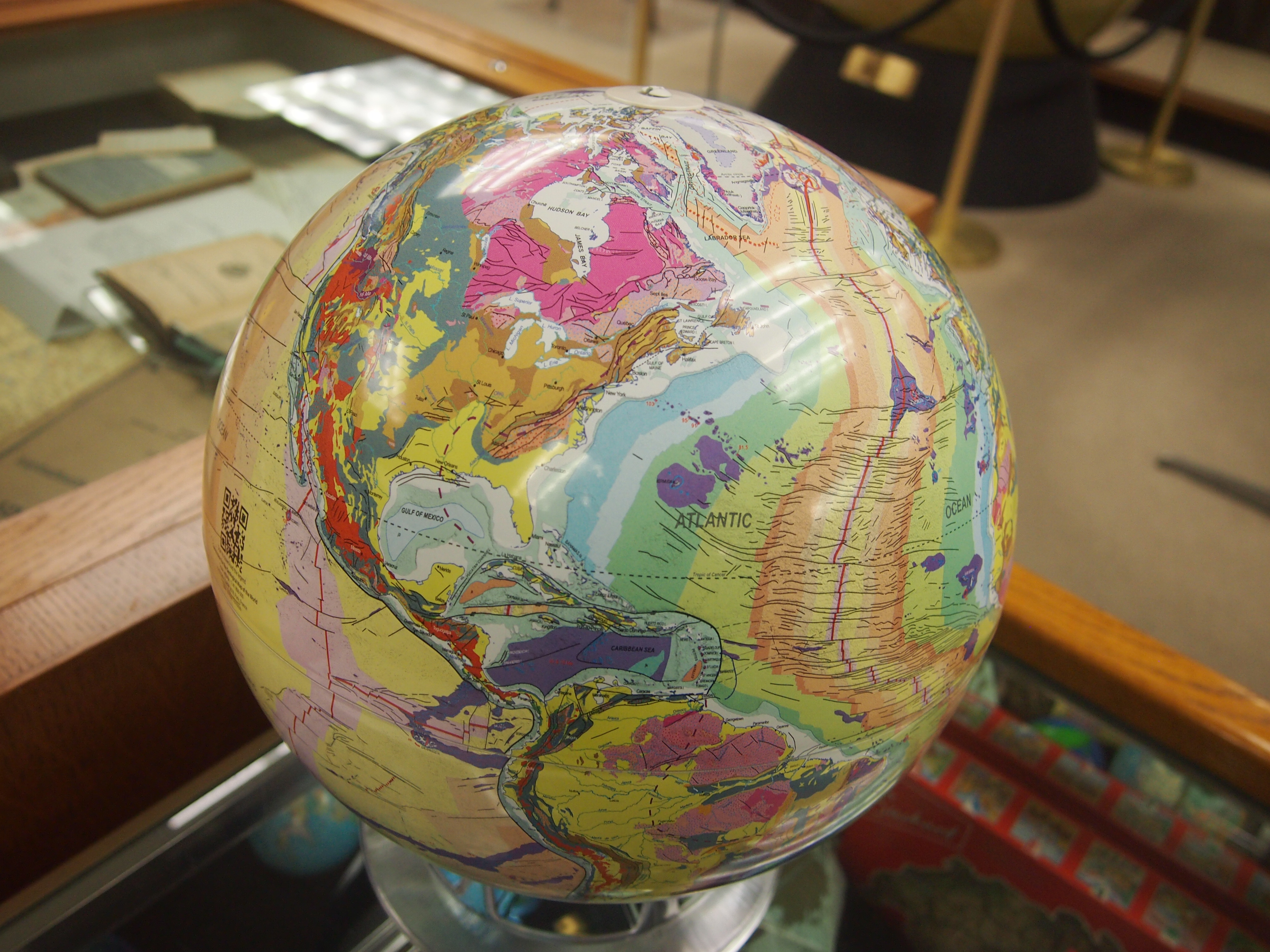
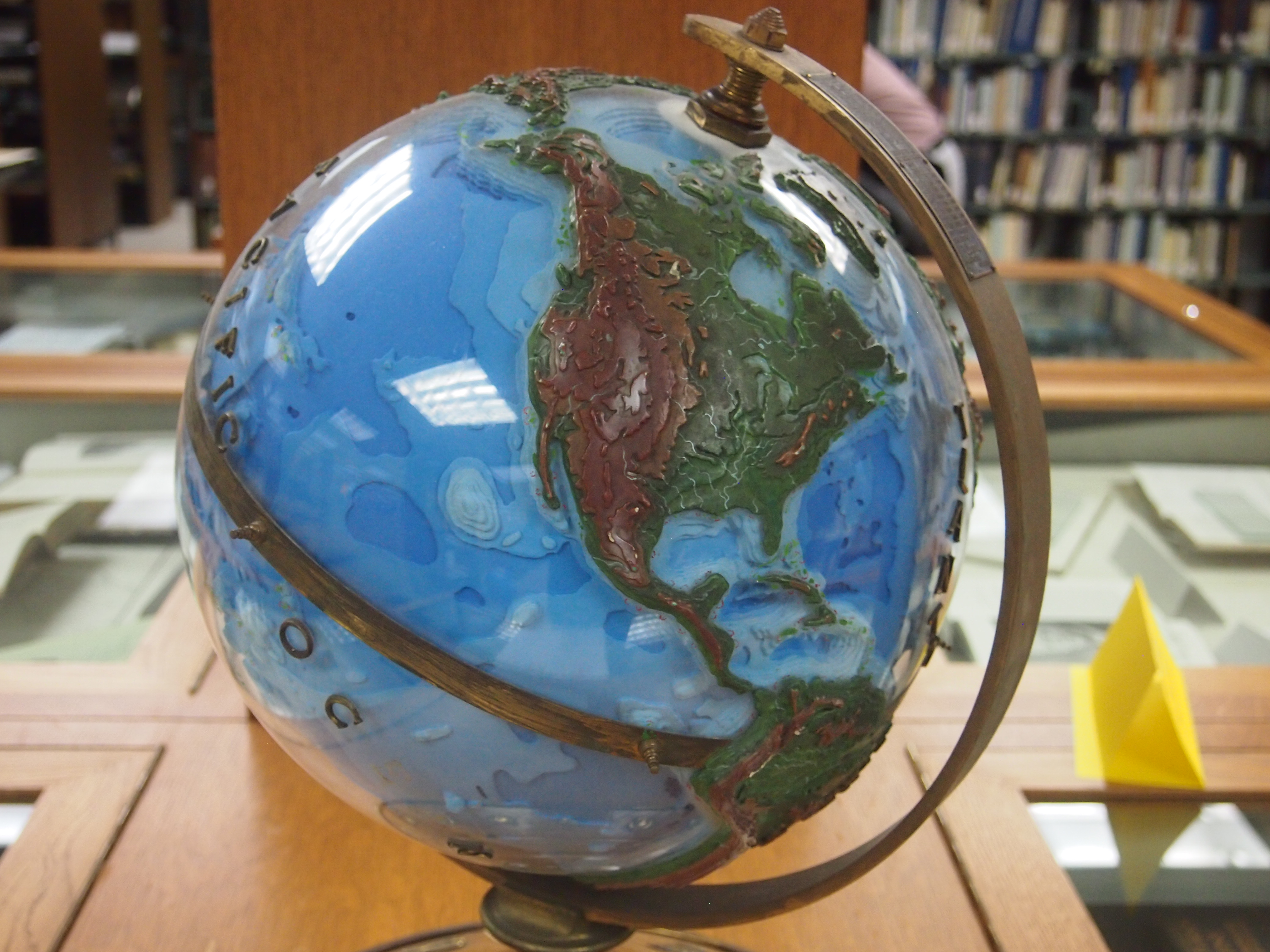
And I have to add, globes. Look at all the globes! That’s what we looked at most, though there were some fine maps on exhibit too. Old globes, new ones, globes in various languages, small orbs, much larger ones, thematic globes, and globes of the Earth, Moon, the Skies and probably Mars and some other planets that I missed.

What a beaut: a geological globe.

Here’s a relief globe, made in Italy ca. 1950.
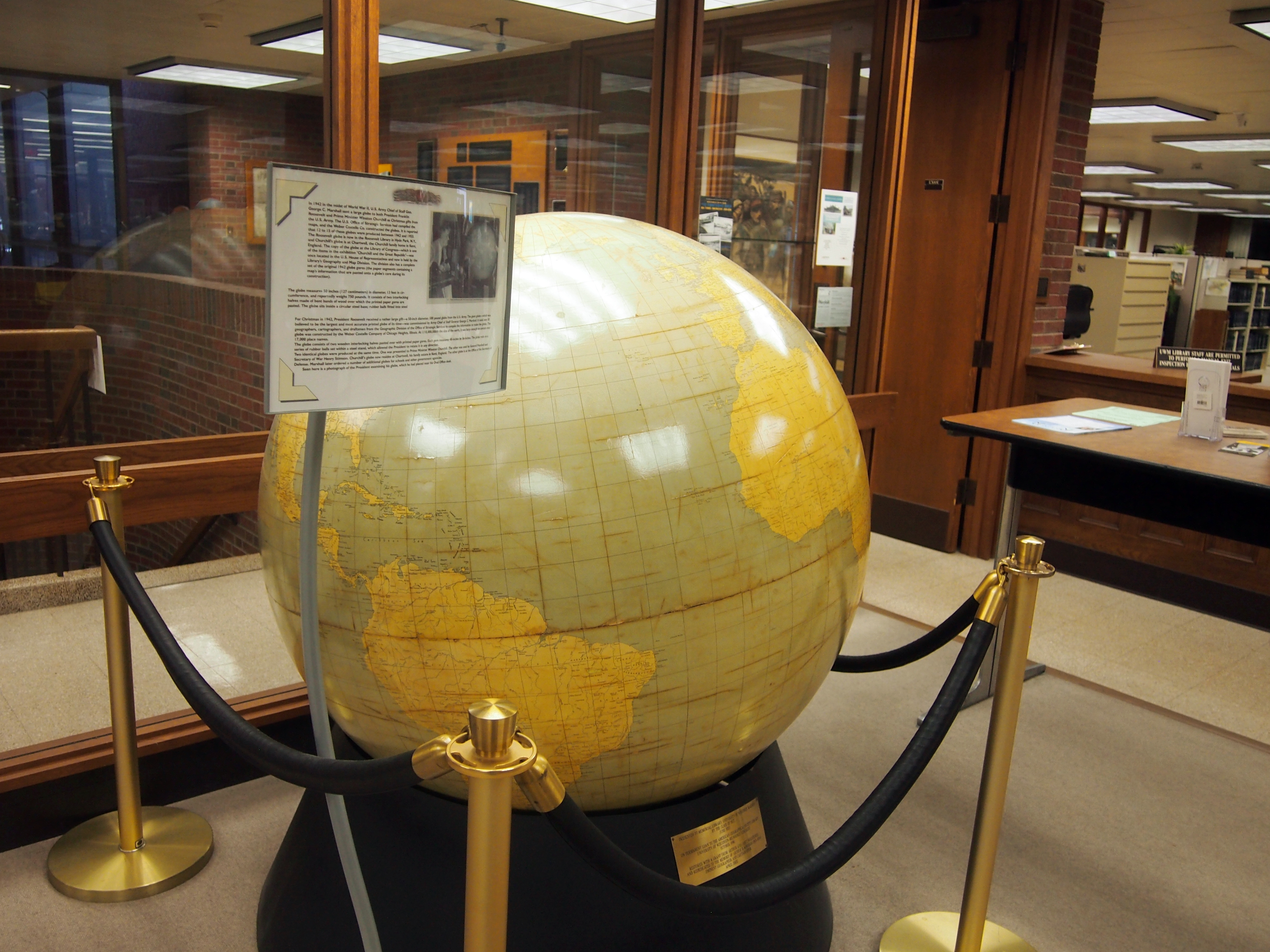
I could have looked at and taken pictures of globes all day. Here’s one more. The granddaddy of all the globes in the collection.
The Library of Congress says, “In 1942 in the midst of World War II, U.S. Army Chief of Staff Gen. George C. Marshall sent a large globe to both President Franklin Roosevelt and Prime Minister Winston Churchill as Christmas gifts from the U.S. Army. The U.S. Office of Strategic Services had compiled the maps, and the Weber Costello Co. constructed the globes. It is reported that 12 to 15 of these globes were produced between 1942 and 1955.

“The globe measures 50 inches (127 centimeters) in diameter, 13 feet in circumference, and reportedly weighs 750 pounds. It consists of two interlocking halves made of bent bands of wood over which the printed paper gores are pasted.”

One of the library staff confirmed to me that this indeed was one of those 12 to 15 globes — though not either of those given to Roosevelt or Churchill, since they are at Hyde Park and Chartwell, respectively.

In recent years, the American Geographical Society’s had its globe refurbished. Looks good for its age, I’d say.
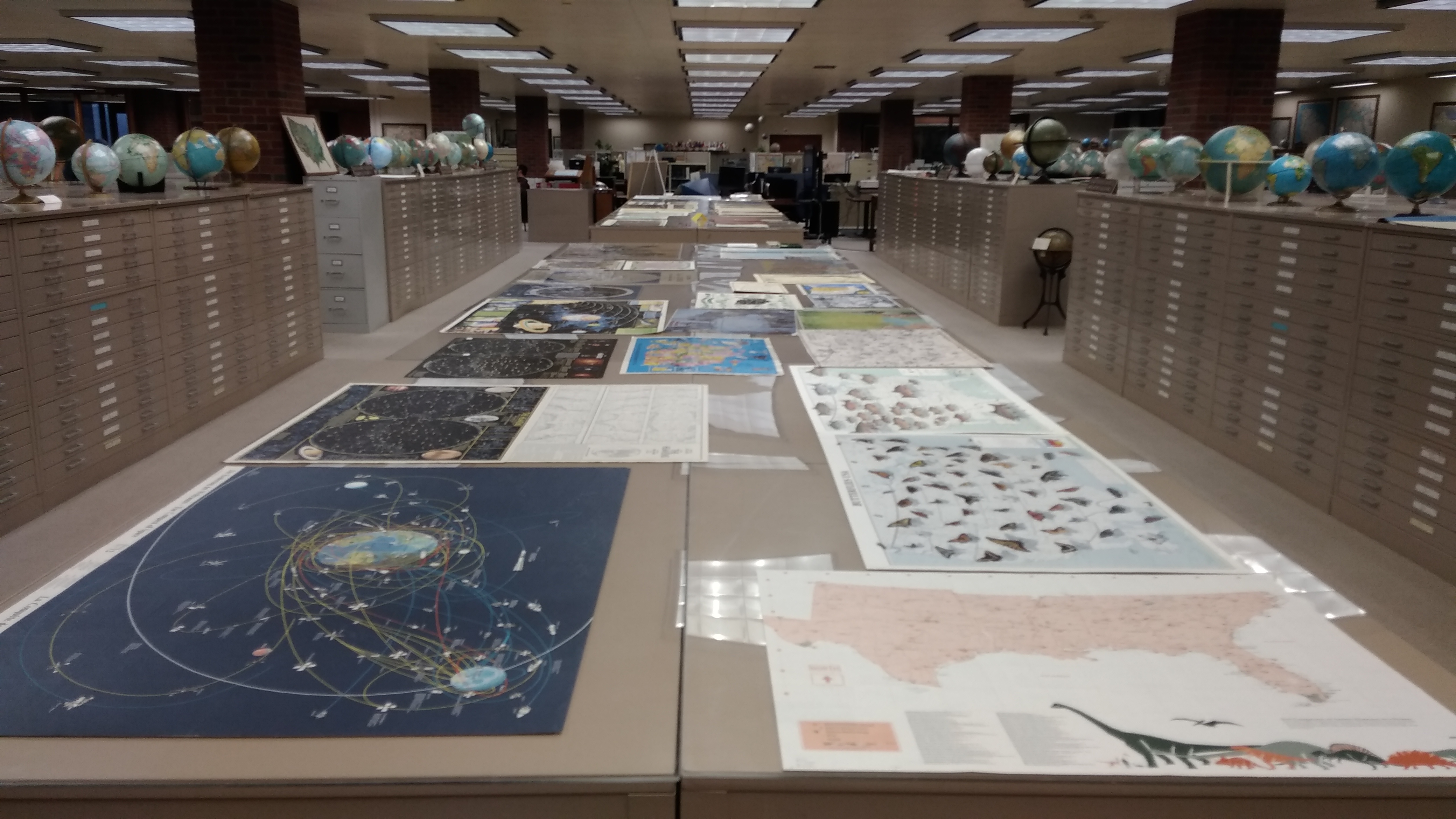
As I mentioned, there were maps on display from among the library’s vast collection, laying flat on tables for a convenient look.
There were all kinds of maps, such as one of the rayon acetate (silk-like) escape maps that helped Allied POWs escape during WWII, highway maps, non-English maps, space maps, hobbyist maps, historical trend maps, and comedy maps, such as the MAD Pictorial Map of the United States from 1981, with artwork by the inimitable Sergio Aragonés (who’s still alive).

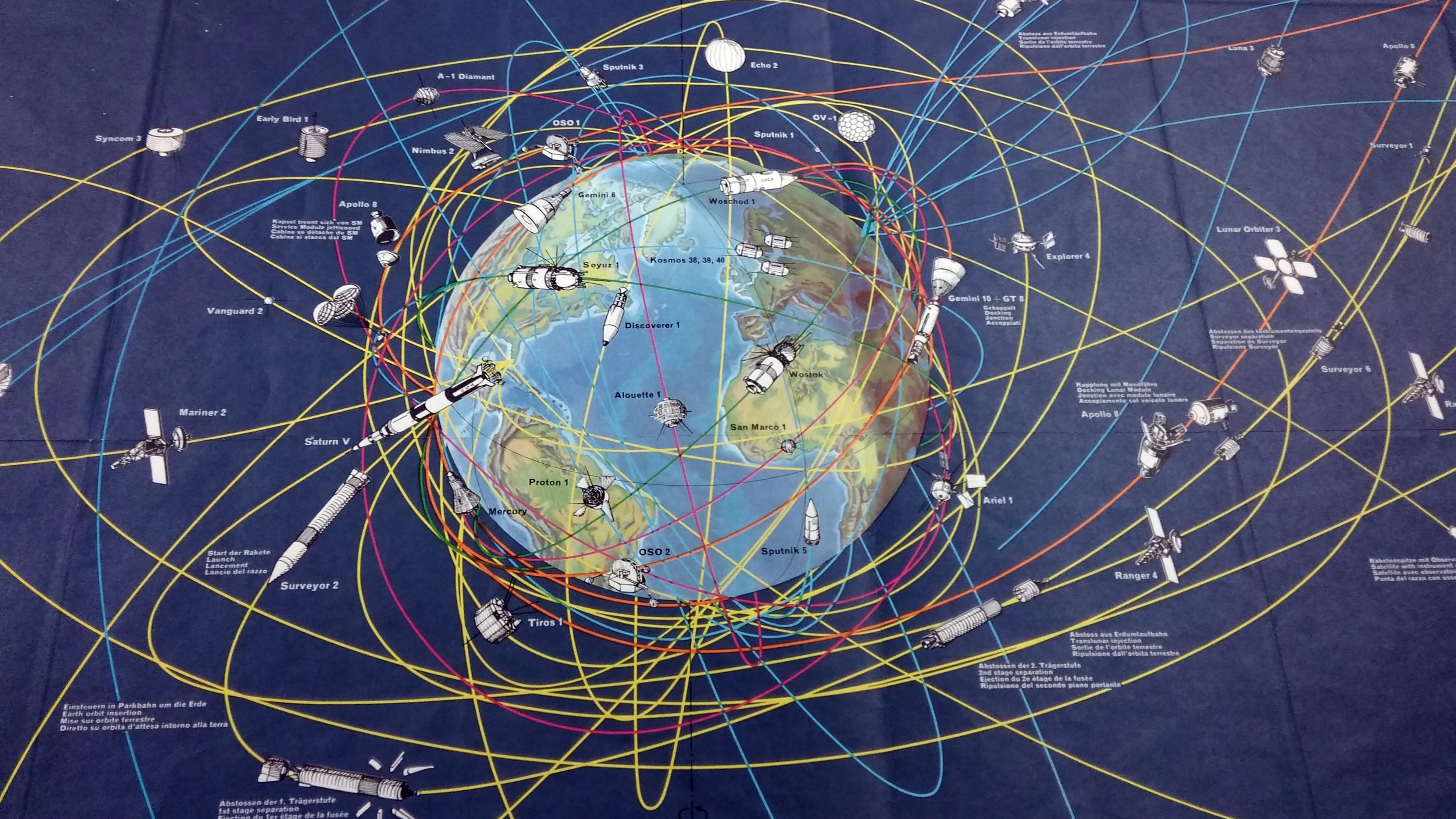
As fun as that was — and I spent several minutes looking at it, since any Sergio Aragonés work is going to be incredibly detailed — my favorite was a Swiss map: Die Eroberung des Weltraums.

Or rather, a schematic depicting the progress of space exploration as of the publishing date in 1968. Here’s a detail.

Not shown in my detail are the Moon, or Venus and Mars, though spacecraft had voyaged there by ’68. There had been no exploration of the outer planets or Mercury yet, so those weren’t depicted at all. What a remarkable lot of information the artist, whose name I don’t have, was able to pack into the image.

High Summer Misc.

Time for a high summer break. Back to posting around July 22.

Last night around midnight I spent a few pleasant minutes on my deck. Temps were neither hot nor cold, the noise from traffic was subdued, and Mars hung above the garage, a pretty orange point of light. The suburban haze dimmed it some, of course, but not enough to obscure the planet as a object of contemplation.

We, as in human beings, could go to Mars if we really wanted to. So far we don’t. The people who will go there might not be born yet, but I think they will go.

Closer to home, I visited a mall recently and decided to document something that might not be around much longer.

The same retailer has a location in Chicago — a neighborhood store, smaller than the suburban locations, that I drive by sometimes — that’s closing. Or maybe it has already. I wouldn’t mind documenting it either, but it would be a pain in the butt to find parking, and then a vantage to get a good shot.

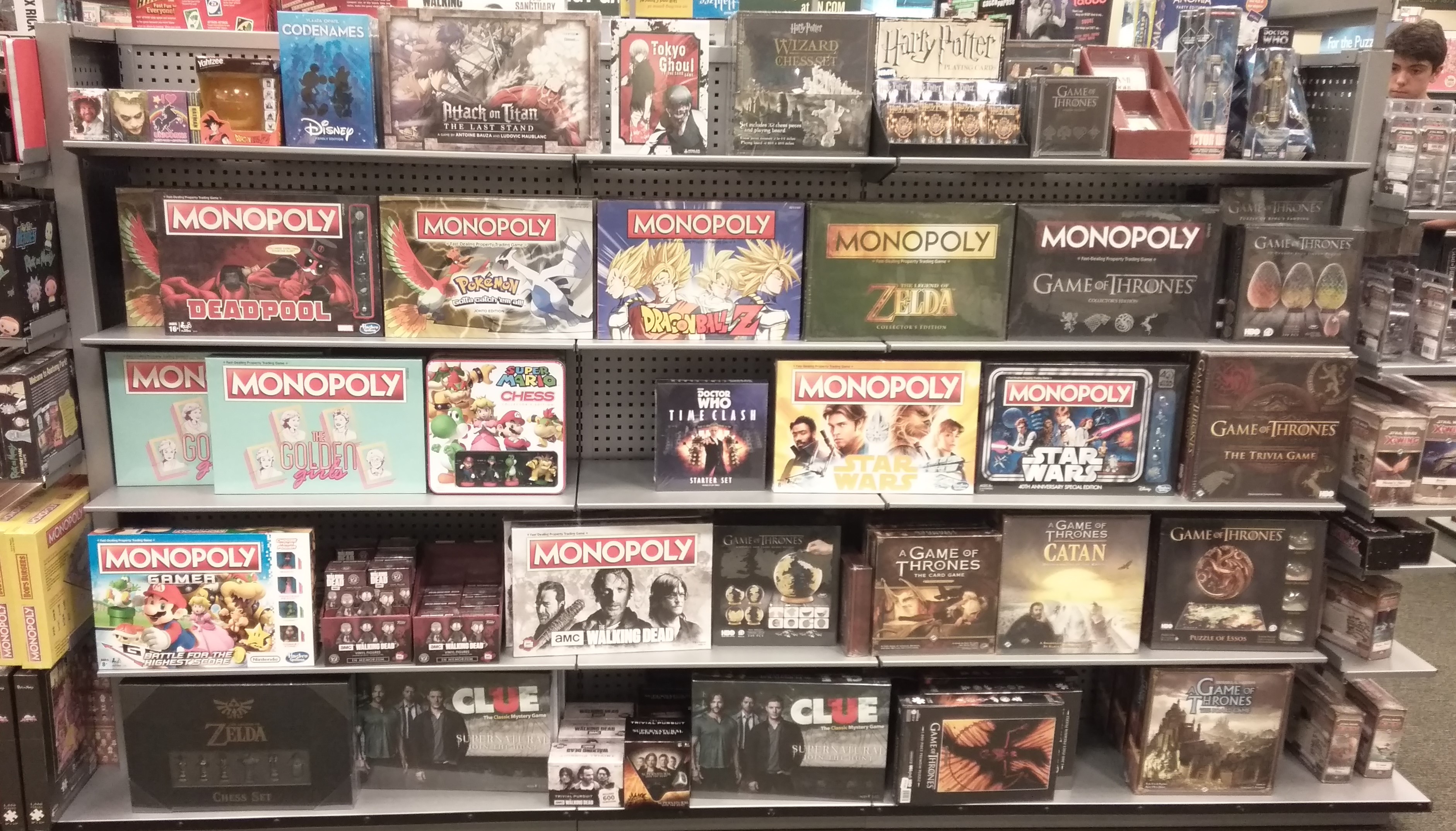
In another store, an actual bookstore that sells other things, I saw these recently.

I know there are a lot of variations on Monopoly, but Deadpool Monopoly? Walking Dead Monopoly? Golden Girls Monopoly?

Somewhere out there is a collector of Monopoly editions. Must be hard to keep up. Or maybe the Smithsonian, or the Library of Congress, has tasked itself to preserve a copy of every edition. Maybe not. Maybe Golden Girls Monopoly will be highly prized for its rarity by collectors during the Monopoly craze of the 2160s.

Finally, a picture of Independence Day fireworks here in suburban Chicago.

Not a great picture. But not bad for a phone camera.

2001 at the Music Box

Just before the screening of 2001: A Space Odyssey at the Music Box Theatre in Chicago at noon on Saturday, one of the theater’s managers spent a few minutes telling us what to expect. Not in terms of content — it was a safe assumption that most (but not all) of the audience had seen the movie sometime in the last 50 years — but that there would be a few minutes of introductory music to a dark screen, and an intermission.

She also mentioned that the Music Box was one of a relatively small number of movie theaters nationwide equipped to screen the new 70 mm print of 2001. Interesting that a neighborhood jewel box of a theater from the 1920s has the latest movie screening tech.

I’d read about the new print. It was made recently from the original negatives, the goal of which wasn’t to clean up the images or digitally goose the movie, but to re-create as closely as possible what an audience would have seen in 1968. When I read about that, I knew I wanted to see it, even though I’ve seen the movie n times over the years.

For one thing, it had been a long time since I’d seen 2001 in a movie theater. I know I did at some point in the early ’70s, when I was old enough to be dropped off at a movie theater, the Broadway Theater in Alamo Heights, but not old enough to drive there myself. I saw it again at some mall theater during high school, after which I read Arthur C. Clarke’s book. In college, I saw it a few more times, at the Vanderbilt student cinema, and I think at an early multiplex in San Antonio during an early ’80s summertime revival.

Since then, I’ve seen it on VHS, DVD and on demand, but not in a theater. I was miffed that TCM didn’t pick it for its big screen series this year for the 50th anniversary, while choosing to show entertaining but lesser moves like Big and Grease. But maybe that’s because the 70 mm version was in the offing elsewhere (including Cannes, where it was first shown not long ago).

More than wanting to see 2001 in a theater, I was intrigued by the idea that it would look like it did 50 years ago. I wasn’t old enough to see it then. I’ll never have the experience of seeing it when it was just a strange new movie — no one ever will again — before it worked its way into the common culture, inspiring volumes of interpretation and giving us an unshakable image of a killer sentient computer with an unctuous voice. Still, this would be as close as I’d get to an original showing.

Ann went with me. Yuriko did not want to go and Lilly had a conflict. The Music Box wasn’t full for the showing, but there was a fair crowd, and not everyone was my age or older. The 70 mm “unrestored” print didn’t disappoint. It also showed, if there was ever any doubt, that 2001‘s special effects were special indeed, from the closest foreground to the furthest background.

Odd how those model spaceships, on actual celluloid, look more real than any GCI spaceships I’ve seen in a digital medium. That observation might be conditioning left over from my youth, or valid for most people, or meaningless all together. I don’t care. That’s what I see.

I noticed a few imperfections in the print: a scratch or two, minor pops of light, that kind of thing. That took me back. Do I remember right that probably as late as the 1980s, movies displayed those kinds of visual ticks?

Speaking of visuals, one new thing that occurred to me during this viewing, and there’s always something new each time, was the visual debt that some of the backgrounds owed to Chesley Bonestell and Luděk Pešek. For instance, a long shot showing the vertical landing of the ship that took Dr. Floyd to the Moon, with unrelated astronauts in spacesuits in the foreground, instantly brought Bonestell to mind — this time. You’d think I’d have noticed that before.

The soundtrack was loud. Except when it wasn’t. At first I thought that was a function of the more advanced sound systems of our time compared with 1968, and so not quite like an original audience would have experienced it. Now I’m not so sure.

“The team also went back to the original six-track soundtrack and faithfully transferred it to the new prints,” the Variety article notes. “ ‘The film is mixed in a very extreme way,’ [director Christopher] Nolan says with awe. ‘There are incredible sonic peaks that are beyond anything anyone would do today.’ ”

Sonic peaks from the get-go, I’d say, as the heavens align to the “Also sprach Zarathustra” fanfare. But for me the most startling sonic peak comes when HAL decides to murder the hibernating astronauts. The cut is from the quiet of the spaceship while Bowman is out retrieving Poole’s body to a sudden, full-screen, flashing COMPUTER MALFUNCTION accompanied by a loud beeping. Louder, I believe, than in other versions of the film. I heard at least one audience member gasp when the scene started.

As well she should have. In my earliest viewings of the movie, that scene disturbed me the most. Sure, you can say HAL went just a little funny in the head because of contradictory programming. Or maybe he was just an evil bastard willing to murder people in their sleep. You know, like some people are. I’m hardly alone in noting that HAL was pretty much the most human member of the crew, for better and definitely worse.

Then again, the sound wasn’t always loud, or even quite intelligible. The more-or-less idle chitchat on the space station at the very beginning of the spoken dialog was a little hard to hear. Everything is intentional in a Kubrick movie, so I suppose that fits with the movie’s well-known lack of exposition.

That was one of the few things I told Ann before the movie. I didn’t want to over-prepare her, but I did say that obtrusive exposition wasn’t one of the movie’s characteristics. Had there been voice-over narration — the original script apparently called for that — I believe that would count as obtrusive, and the movie wouldn’t be regarded as highly. I never did quite like the brief narration at the beginning of Dr. Strangelove, though I can see why it’s there.

Here’s something I never noticed in the soundtrack. Again, during the idle chitchat at the beginning, there’s a background PA voice announcing the following. Twice.

A blue lady’s cashmere sweater has been found in the restaurant. It can be claimed at the manager’s desk.

How did I never hear that before? It popped out at me this time. Maybe that’s a function of the new print. Or maybe it’s just one of those things tucked inside a densely layered work of art that isn’t noticeable early on.

Later, the PA says: Will Mr. Travers please contact the met office.

Whatever that is. Interesting detail, those PA announcements. As if to show that by the end of the 20th century, space travel will have some of the ordinariness of air travel in 1968. Many of the space station details — the customs screening, the restaurant, the phone call — point to that.

Guess that counts as 1968 optimism about the future of space travel. It’s easy to deride that in hindsight, but it wouldn’t have been completely unreasonable at the time. We were well on the way to the Moon, for one thing.

After that would come large space stations, Moon bases, voyages to Mars and rocket engines and spaceships large enough to mount an expedition to Jupiter in 18 months. The idea that extensive space travel would be part of the near future had jumped out of speculative fiction into the realm of serious expectation. Turned out no one wanted to pay for those things, but that was still in the future.

The movie is not, on the other hand, optimistic about future of politics, as you’d expect from Kubrick. That’s another thing that occurred to me for the first time. It’s only hinted at, but the hints are pretty clear. Mainly, the movie assumes that political bureaucracies will be the same prevaricating, susicious entities they’ve long been.

Dr. Floyd is either an important official of the U.S. government, or in a quasi-governmental body, but in any case the lid is slammed down on the discovery of the monolith on the Moon. He offers the official, and secret, reason.

Floyd: I accept the need for absolute secrecy in this and I hope you will too. Now, I’m sure you’re all aware of the extremely grave potential for cultural shock and social disorientation contained in this present situation if the facts were prematurely and suddenly made public without adequate preparation and conditioning. Anyway, this is the view of the council.

Eighteen months later, the monolith is still a secret, even from the astronauts going to investigate where the radio beam pointed. Talk about paranoid secrecy. It’s almost Soviet in its reach.

Floyd expresses the idea, which isn’t unusual in science fiction, that the discovery of extraterrestrials would somehow cause “cultural shock and social disorientation.” Not just science fiction. I seem to remember discussion along those lines — a “fundamental change” in our thinking or some such, if not shock or disorientation — as far back as when the Vikings were digging unsuccessfully for microbes on Mars.

I’m skeptical that any such thing would happen. Say we discovered an alien artifact tomorrow. Something indisputable, except that there would be a group of fools that disputes it anyway. But let’s say most people accepted it for good reasons.

Then what? Assuming the artifact isn’t attacking us or producing pathogens, nothing too dramatic. The reaction would be, how about that. Someone is out there. How interesting. Maybe over the course of decades or centuries, the discovery would change the way we think, but for most people in the here and now, it would be a curiosity. Our lives would go on. Besides, we’ve already been conditioning ourselves, in books and movies and TV and more, to the possibility of aliens for years.

Overall, I’d say 2001 is optimistic, assuming a certain common interpretation of the movie. After much travail — it is an odyssey, after all — mankind does reach for the next level of development, just as the ape-men did.

One more thing I thought about for the first time this time around: Why no redundancy for HAL? The astronauts talk about shutting down HAL and resuming the mission using Earth-based computers, which would certainly be a clunky way to go about it at that distance. And mission control mentions “twin” 9000 series computers at its disposal. So why weren’t at least two HAL-class computers built into the Discovery? In case, you know, one fails in some way, such as trying to go all HAL on the crew.

A nit to pick. After it was over, Ann seemed impressed, and had some questions and observations. She did sleep through some of the movie, though. Especially those long scenes outside the spacecraft.

She may or may not grow to like 2001 as much as I do. It’s an acquired taste, and not for everyone. But I’m glad she went.
Trans-Pecos & Llano Estacado 3,600+ Mile Drive Tidbits

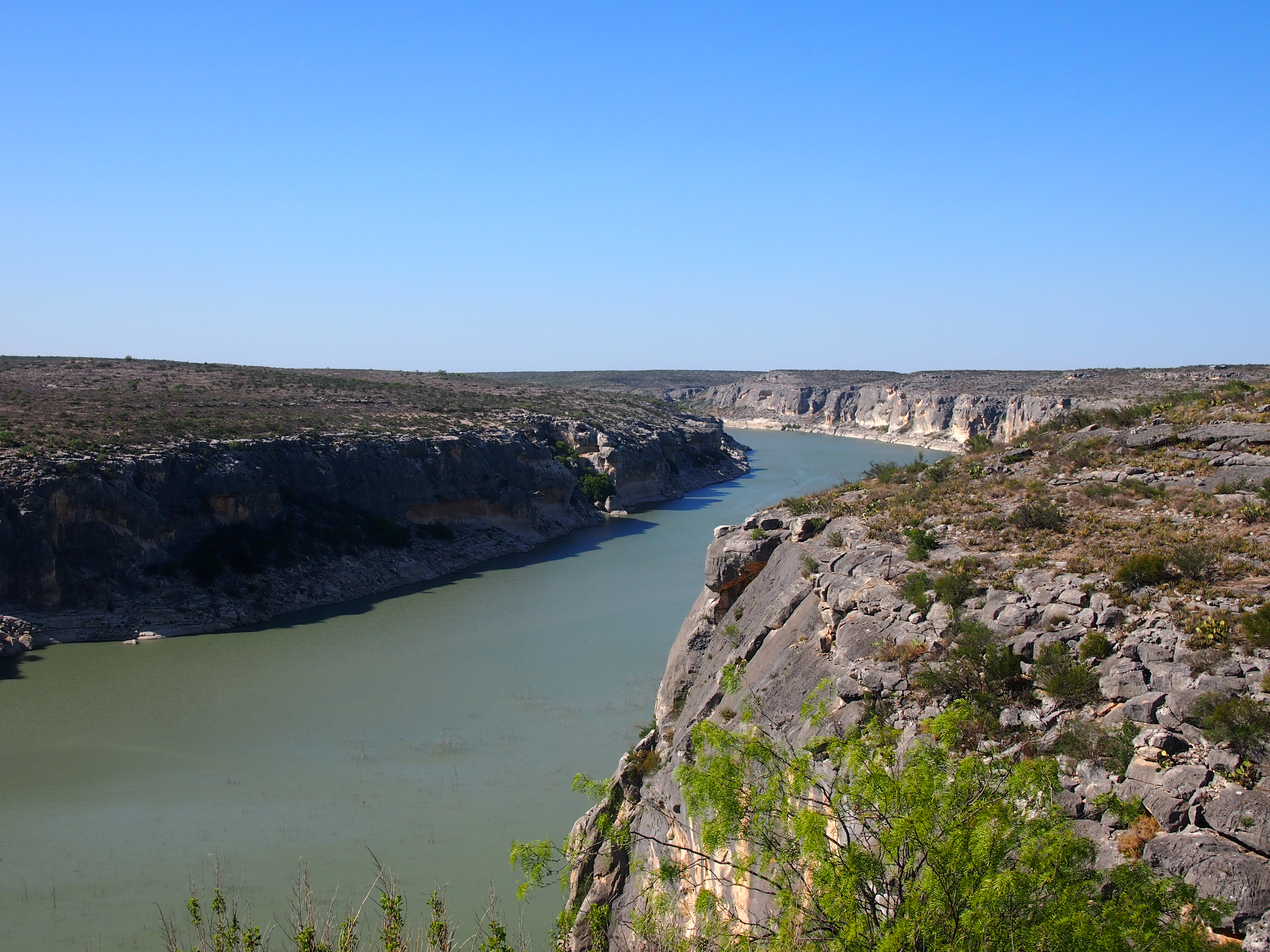
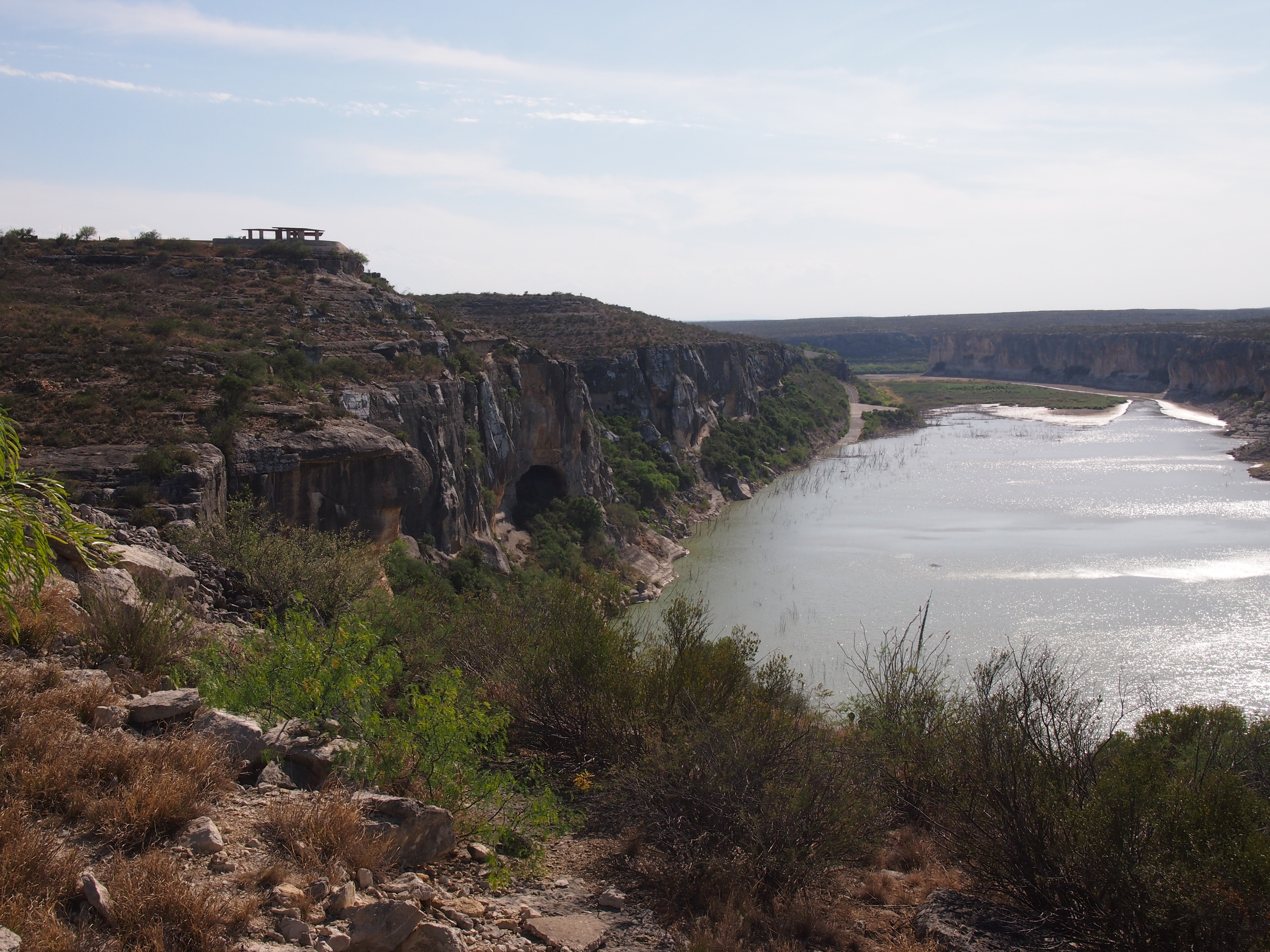
Along U.S. 90, not far west of the town of Comstock, Texas, the road crosses the Pecos River. The east end of the bridge has a place to stop and take in the view. This is looking upriver.

Downriver, toward the Pecos’ meeting with the Rio Grande.

Hard to believe there’s that much water in West Texas. Anyway, the river (of course) marks the beginning of the Trans-Pecos.

One of the grand hospitality properties of the Trans-Pecos is the Gage Hotel in Marathon, originally developed in 1927 by West Texas cattle baron Alfred Gage (born in Vermont), and designed by El Paso architect Henry Trost. Fifty years later, Houston businessman J.P. Bryan bought the rundown property and made it into a modern boutique hotel.

I didn’t stay at the Gage, though I had a good meal there and used its wifi. Instead, I stayed at the Marathon Motel & RV Park down the road. It has all the charms of a tourist court — separate cabin-like buildings of two or four units, even a bottle opener fixed to the wall — at a more modest price than the Gage.

There is an astronomy enthusiast at the Marathon Motel in the evenings, Bob, who sets up a couple of sophisticated telescopes a short walk outside the property and shows guests the night sky, which is pretty dark out in Marathon. I spent about an hour talking with Bob and looking his scopes the first night I was there.

Trouble was, the Moon was waxing gibbous, which made the sky a lot less dark. But we looked at some easy-to-find brighter objects, such as Jupiter and some of the Galilean moons, as well as Mizar and Alcor, and tried to spot the Orion Nebula. Orion was trending toward the horizon, about to bid adieu for the warm months.

Bob said the sky would be dark again a few hours before dawn, but I didn’t get up at that time until the last morning I was at the motel. At about 5 that morning, I woke (for the usual reason), but also got dressed and wandered outside for a few minutes. Bob was right. The Moon was gone, and there was what I wanted to see, no telescope necessary — the wispy, luminous edge of the Milky Way, billions and billions of stars at a glance. It was like seeing an old friend.

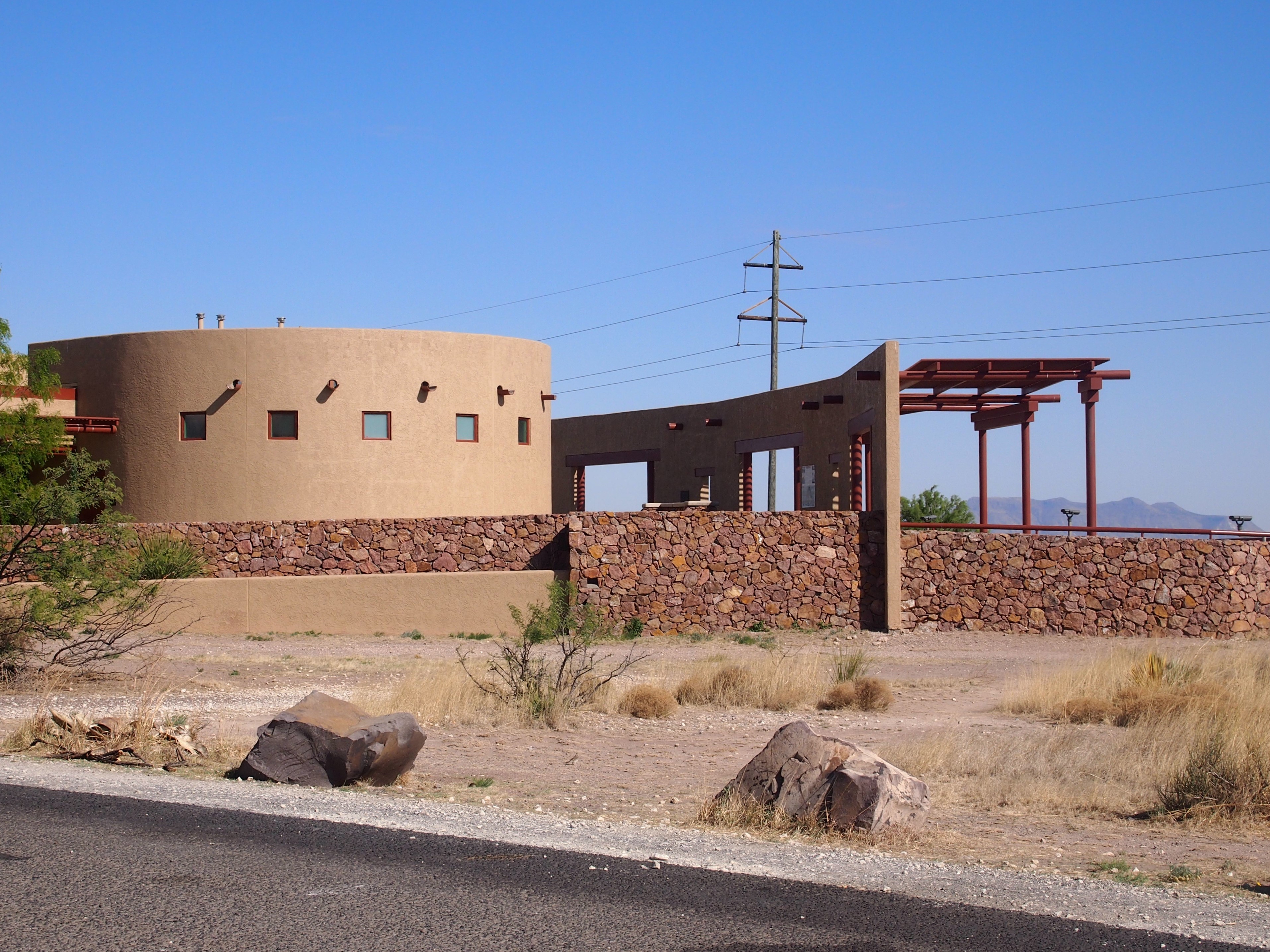
Speaking of nighttime spectres, not long after I left Marfa, I stopped along U.S. 67/90 at the Marfa Mystery Lights Viewing Center, which is essentially a rest stop with extra windows in the wall.

I wasn’t about to come that way at night and wait around for a glimpse of a desert will-o’-the-wisp, so I had to be satisfied with a daytime view of the direction of the Marfa lights. Eh.

While driving along I-20 in metro Midland-Odessa, I saw an official highway sign for the Midland International Air & Space Port. What? Space port? Seems a little optimistic on the part of the local airport authority.

Indeed, in 2014 the FAA approved the airport’s application to become first primary commercial service airport to be certified as a spaceport. XCOR Aerospace was due to start flying its Lynx spaceplane from Midland, but the company went bankrupt in 2017 before that ever happened. Oops. Maybe Fireball XL5 will start using Midland International soon. (That theme song has more traction than I realized. Even Neil Gaiman did a cover; once, anyway.)

In Amarillo, I saw another kind of sign. Fake street signs. I was driving along I forget which street, and saw a diamond-shaped sign, off to the side of the road but actually on private property, that said WE CALLED HIM COUNT DRACULA. It was a non-standard color, too: black with red letters.

Huh? But I had driving to do, and other cars not to hit, so the thought passed. Sometime later, I saw another sign — different color, similarly located — that said MINE BY RIGHT OF CONQUEST.

This got me to wondering, and I actually remembered to look into these odd signs. Doesn’t take long to find image collections of the signs, which are all over Amarillo, apparently.

According to Roadtrippers Chronicles — “The Raddest Stories From The Road” — “the strange signs are part of an art installation called The Dynamite Museum. Partially funded by oil heir and patron of offbeat art Stanley Marsh 3 (most famous for his work with Ant Farm on Cadillac Ranch), there are even a few in the nearby town of Adrian (it’s said that Marsh liked the idea of putting the signs in towns that started with the letter A).

“There was no rhyme or reason to the messages on the signs; the people behind the project would come up with ideas, or vote on suggestions sent in, and then install their favorites all over town.”

If I’d known that before I went to Amarillo, I would have looked for more.

The morning I left Amarillo, I had the radio to keep me company on the open road to Oklahoma City (I-40 in our time), and for a while I got a strong signal from Turkey, Texas, to the south. That day was Bob Wills Day in Turkey, and it sounded like a big to-do. The biggest shindig of the year for the town, probably. After all, Bob Wills is still the king.

I didn’t know until I looked it up that the King of Western Swing spent some of his youth on a farm near Turkey. The town of Turkey clearly remembers him. Sounded like fun, but it was too far out of the way. Just another thing missed because of scheduling.