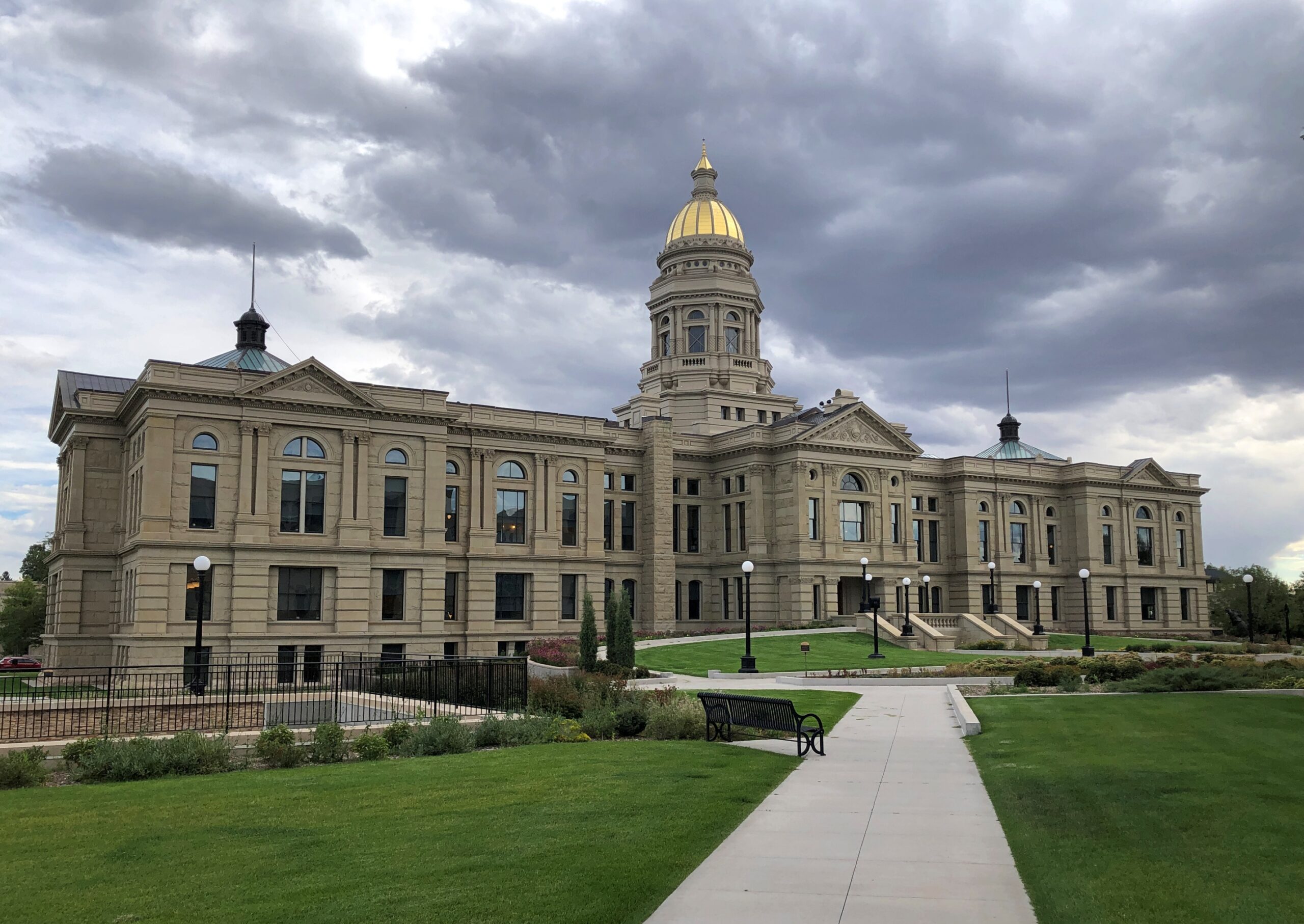
The Wyoming State Capitol

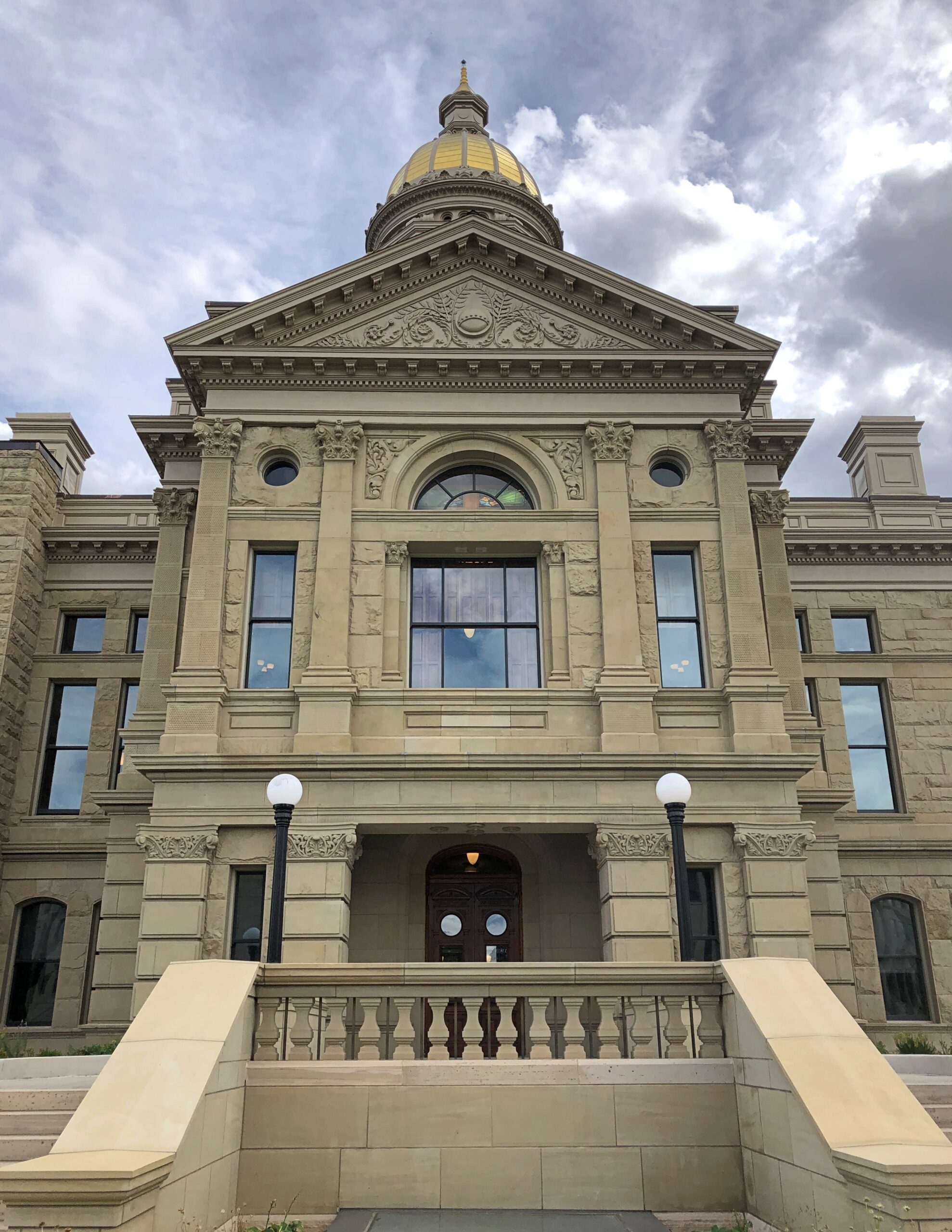
No skeletons were to be found at the Wyoming State Capitol last month, but you can hardly expect too many bone collections on display at state houses. The state of Wyoming does, however, want to remind visitors that they are in Wyoming.
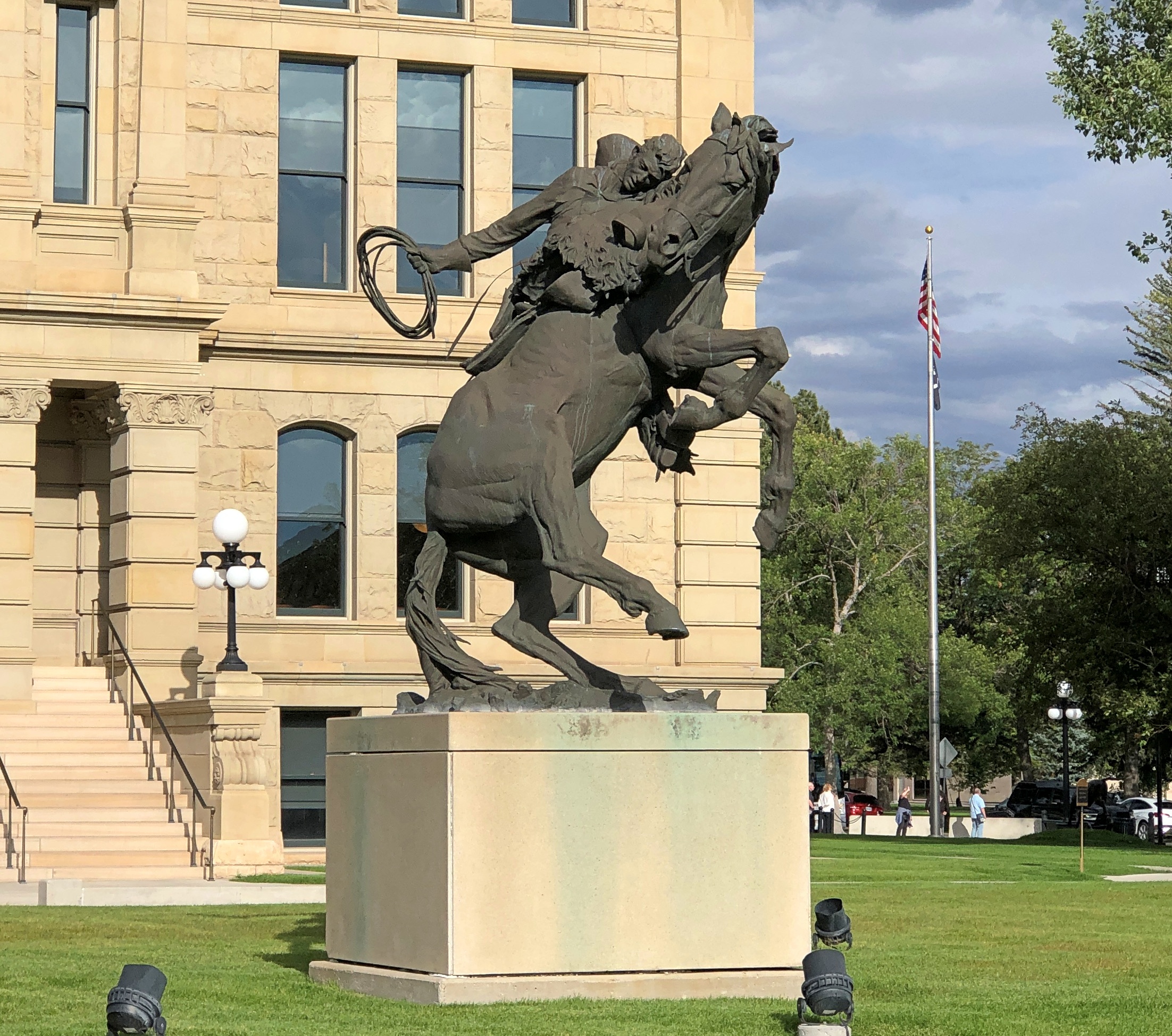
Wyoming State Capitol

The work is called “Spirit of Wyoming,” and it stands on the capitol grounds, created by artist Edward J. Fraughton (d. 2024). The more I look at it, the more there is to think about. Which I suppose is at least one indication of a good work of art. So the Spirit of Wyoming involves the immediate risk of catastrophic injury by being thrown from a horse? Probably not what the legislature had in mind.

Rather, it might be the determination to hang on, no matter how much or madly the horse bucks. Especially in territorial and early statehood days, that sort of determination applied to a lot of Wyomingites, whether they were cowboys or not.

I had the opportunity to walk all the way around the capitol after arriving on the cloudy but warm afternoon of September 8.
WY state capitol
WY state capitol
WY state capitol

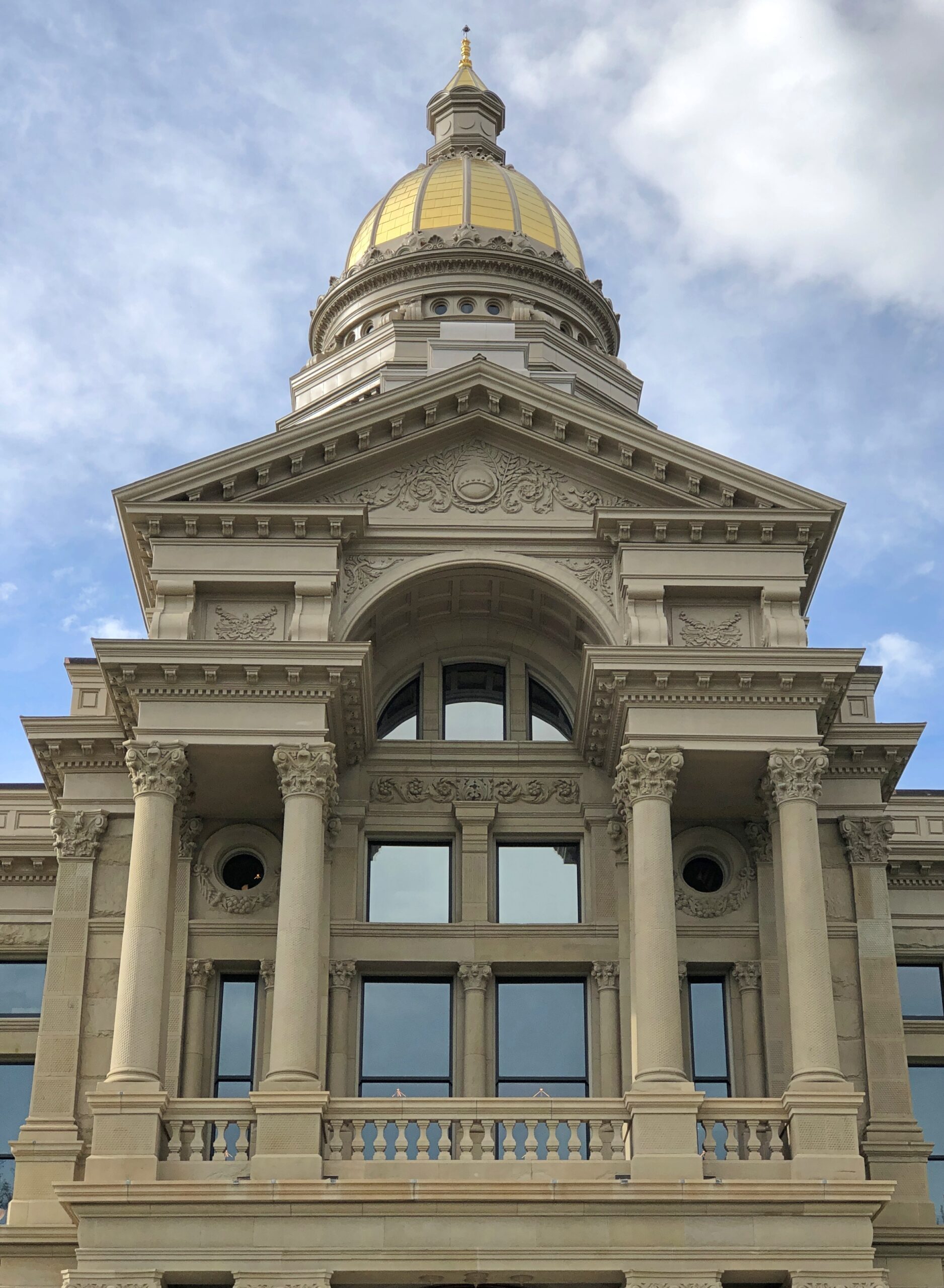
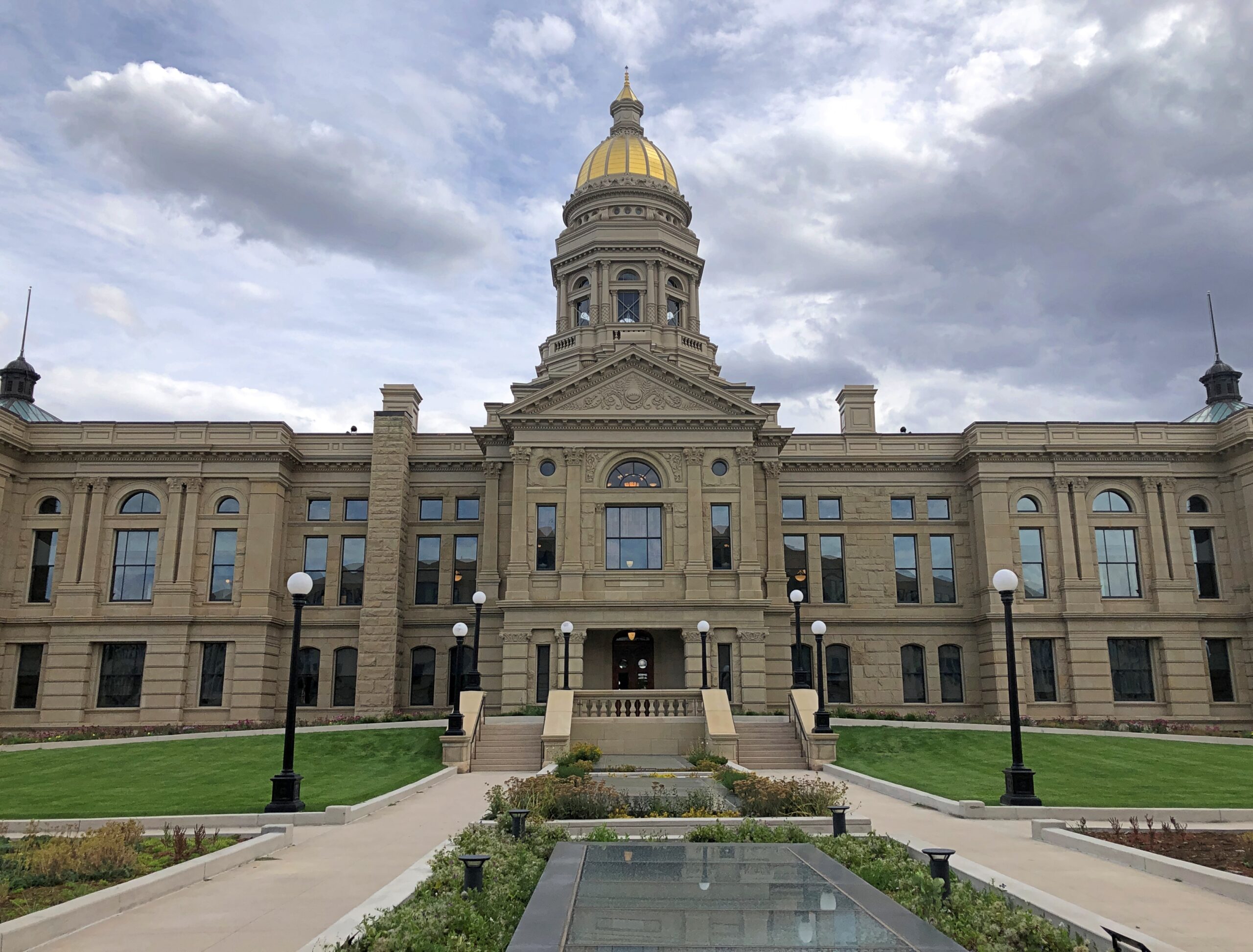
Golf leaf on a copper dome. Gold probably because it’s gold, not because Wyoming has ever produced that much. As of 2025, the state isn’t even among the top 10 all-time U.S. state producers.

I think this was the front.
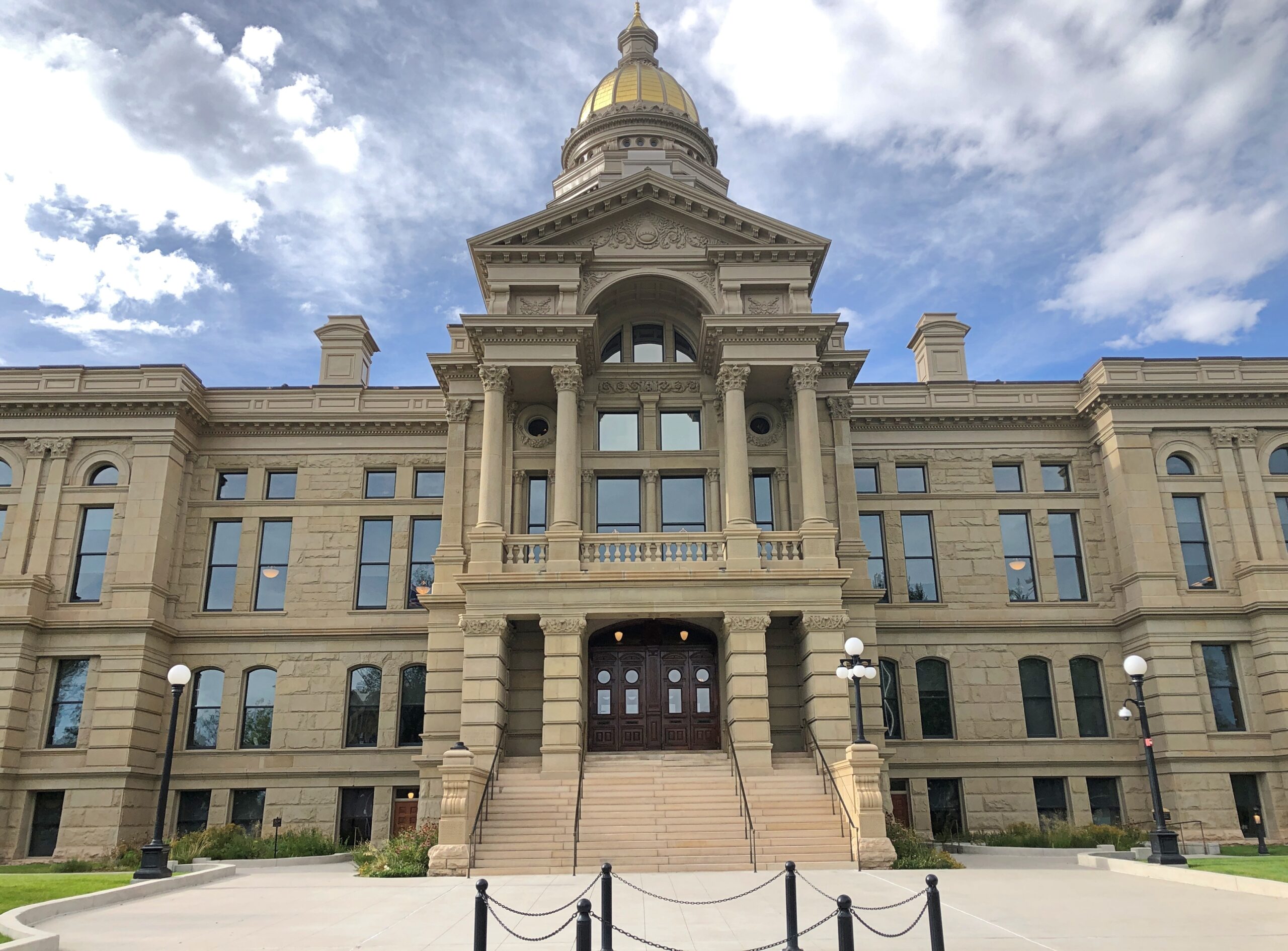
WY state capitol
WY state capitol

It faces a long avenue. It was a Monday. Cheyenne isn’t, just yet, cursed with heavy traffic.
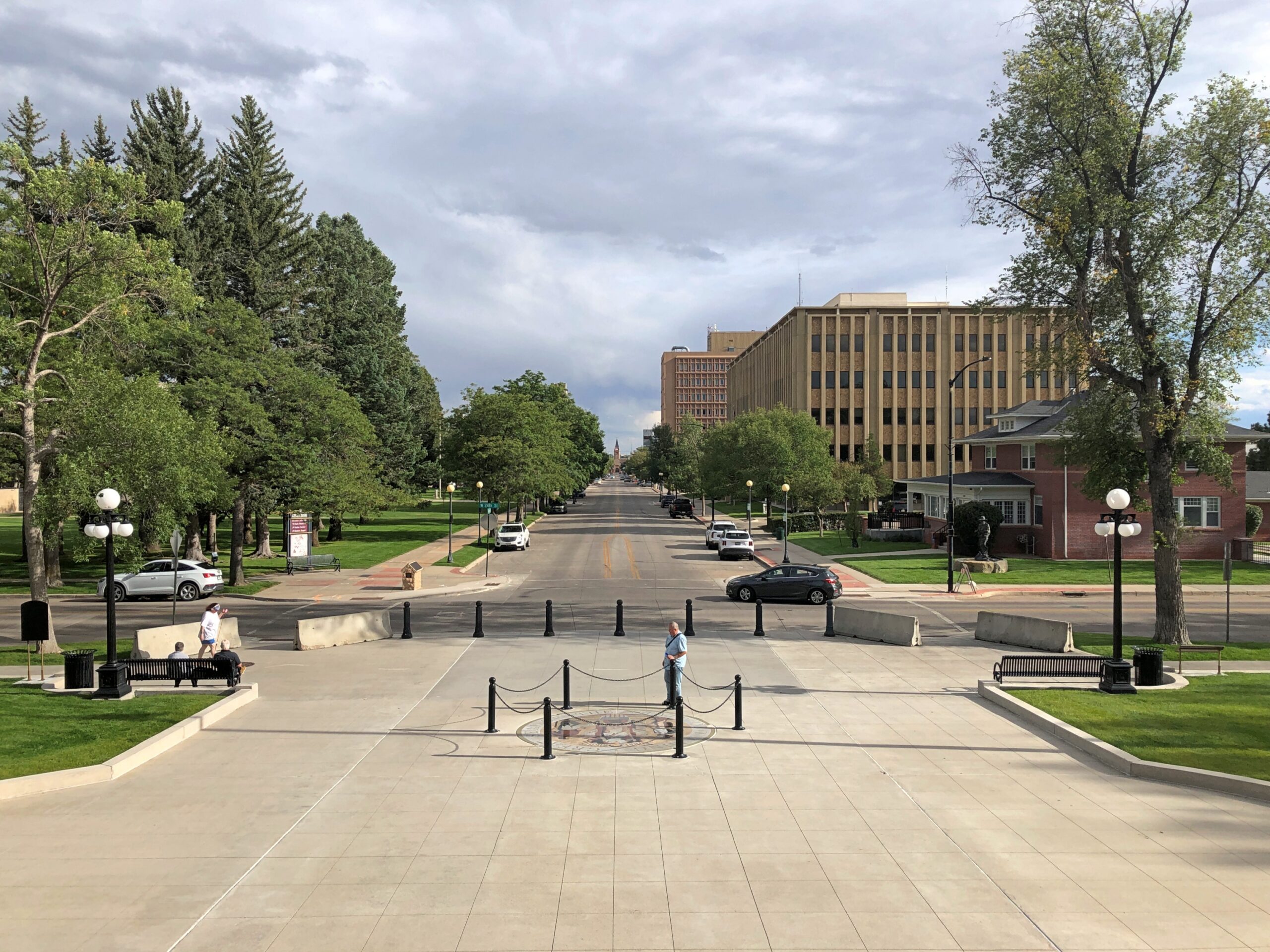
Cheyenne Wyoming

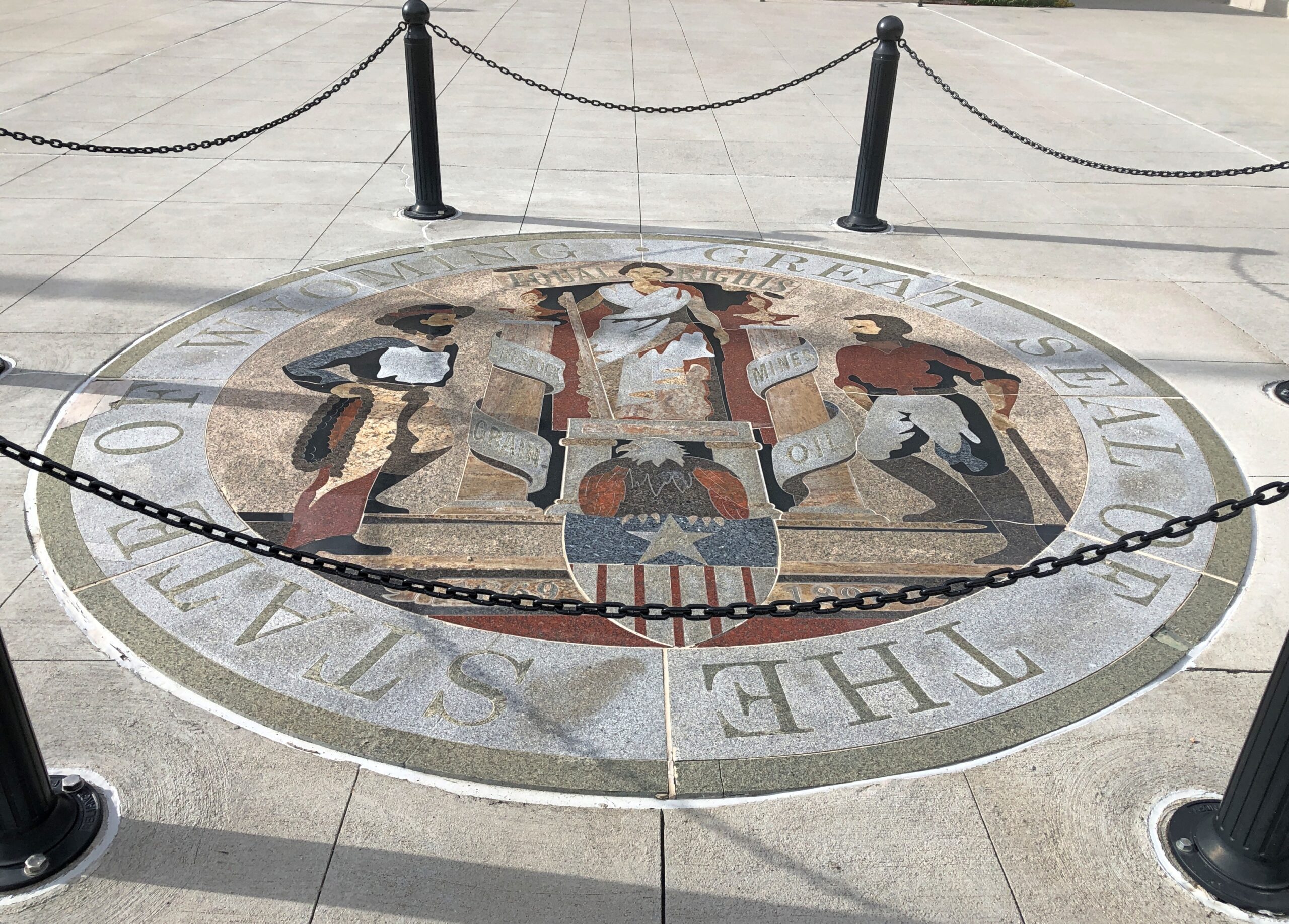
Also, the Wyoming state seal was to be found on that side of the building, in the sidewalk. Like in Virginia, except that you can walk on that one, like the slain tyrant it depicts. No treading on Wyoming.
WY state capitol

Adopted in 1893, not long after statehood, and revised in 1921, the seal lists four sources of wealth and livelihoods, unusually (I think) for a state seal. They go with the cowboy and miner figures: livestock, grain, mines and oil. In our time, farming and mineral extraction, at least in terms of employment, are declining industries in Wyoming. Maybe the seal will be revised someday to include data centers, as they sprout in the Equality State.

On the other hand, Wyoming is still a major energy producer among the several states, especially when it comes to coal: 41.1 percent of the total nationwide (EIA stats), though national coal output is a much smaller pie – a dirty pie, to be sure – than it used to be. Also worth mentioning: a quarter of net electricity generation in the state is by renewables, roughly the same percentage as nationally. There is no nuclear power generation in Wyoming. When those data centers eventually get small modular reactors, that would change.

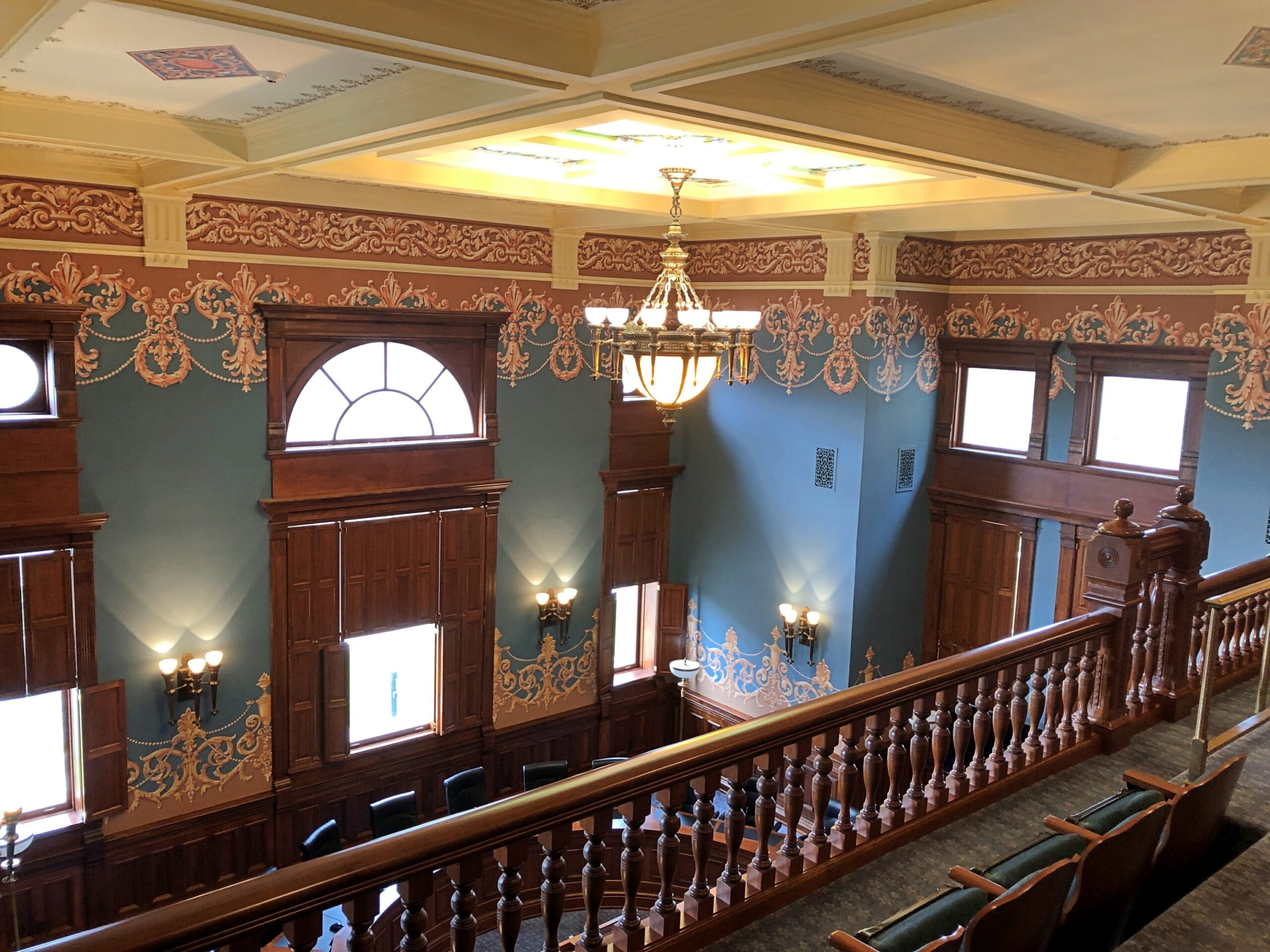
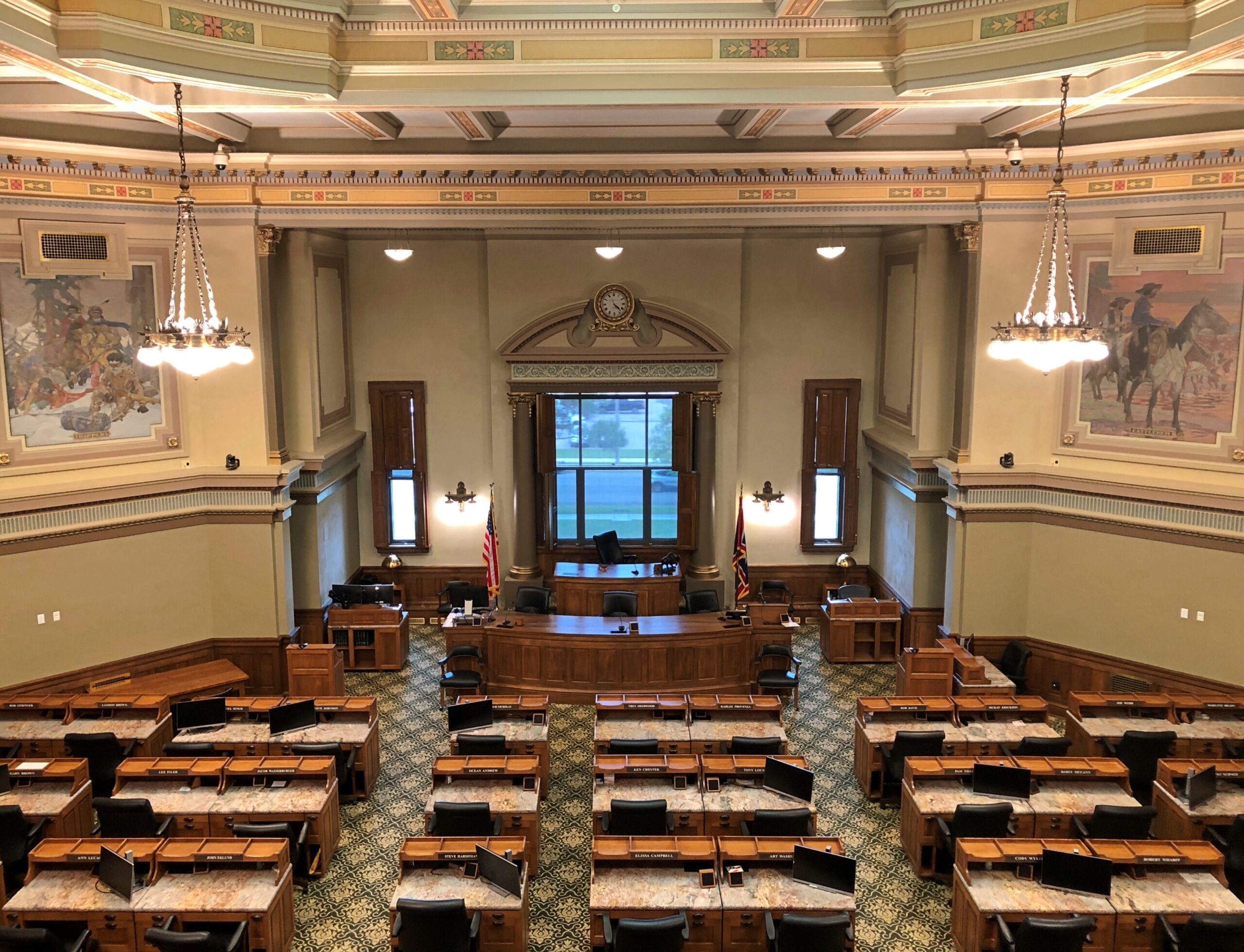
Another distinction of the Wyoming capitol is that work started on it before statehood, with ground broken in 1886. David Gibbs – later mayor of Oklahoma City, of all things – and the prolific William DuBois (a Chicago trained architect) did the design, one of restrained elegance.
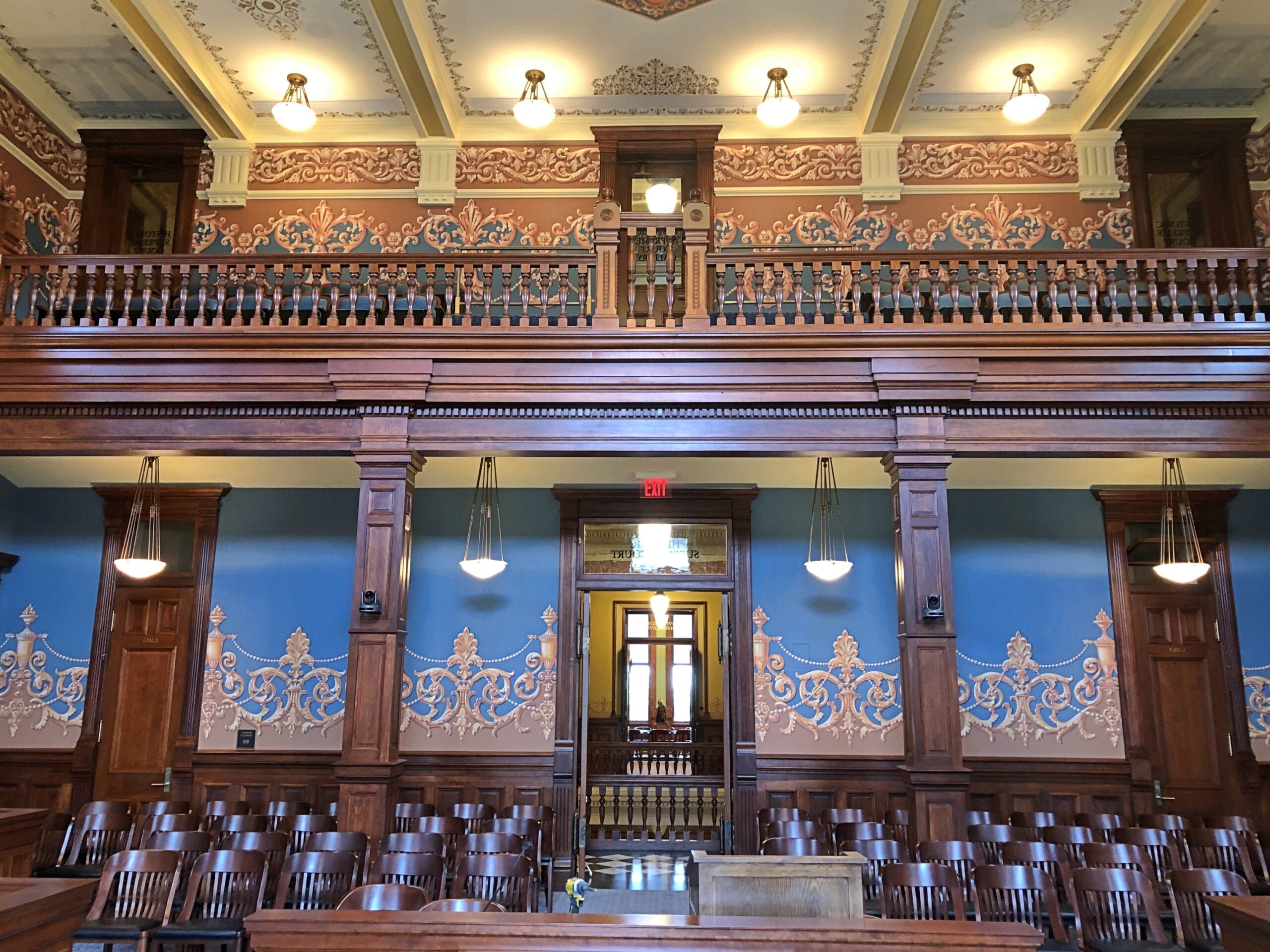
It faces a long avenue.

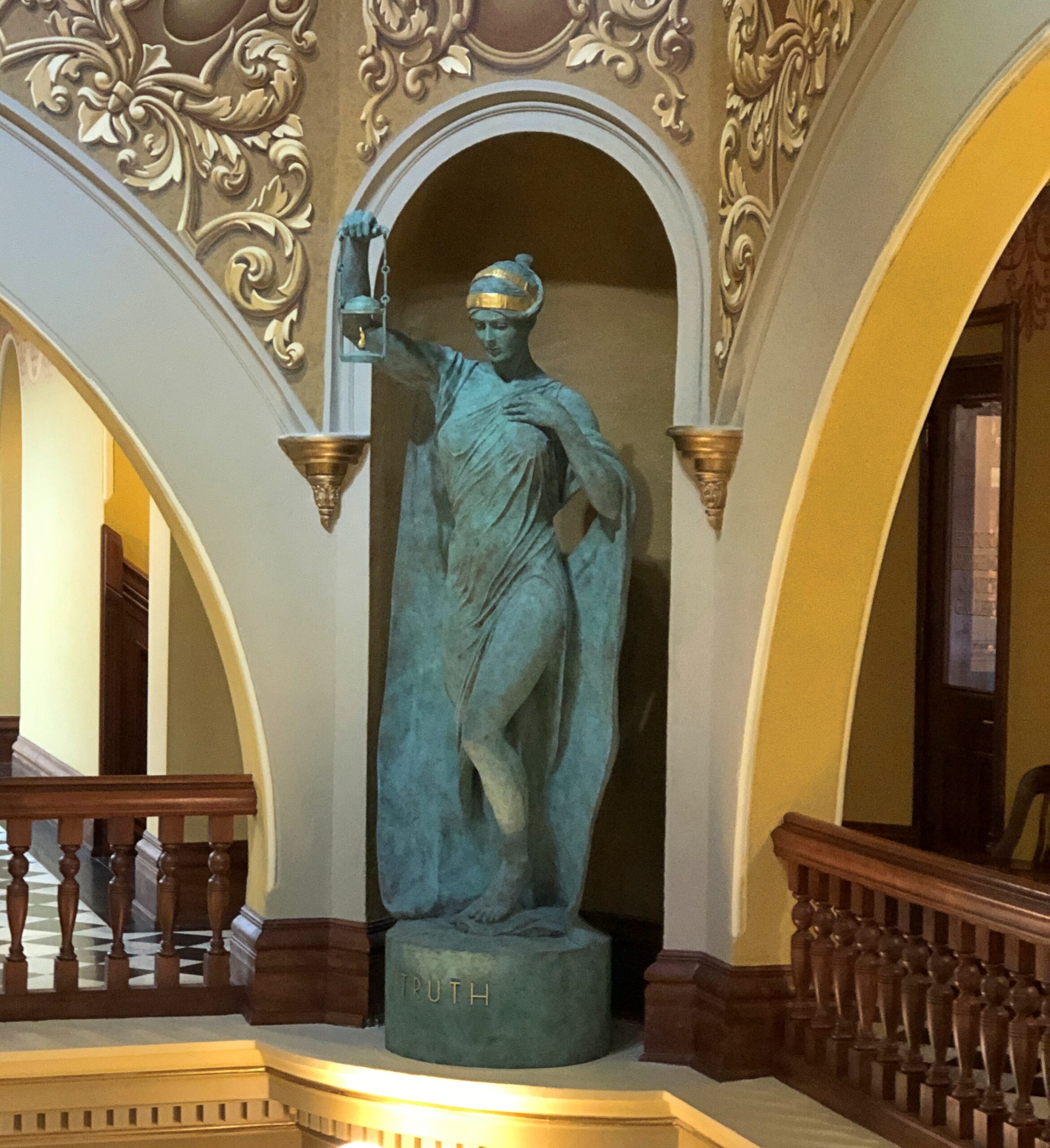
This is one of the four statues at the capitol known as the Four Sisters: Truth. The others are Justice, Courage and Hope.
It faces a long avenue.

Though they look vintage, their niches remained empty for 131 years “for reasons that remain unclear,” according to a sign in the capitol. In more recent times, the state tapped the mononymous sculptor Delissalde to fill the niches, and the works were unveiled only in 2019.

They’re way up there.
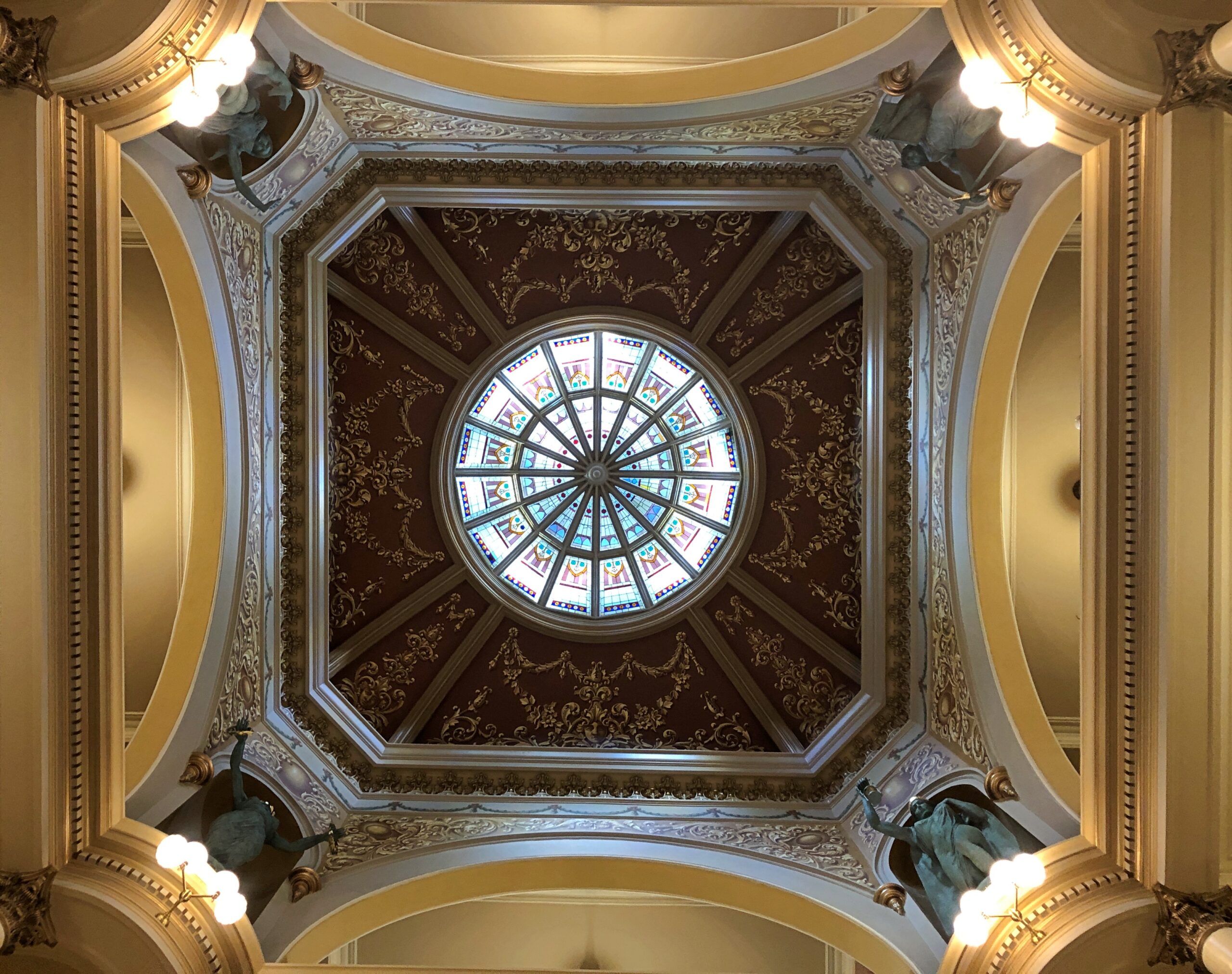
WY state capitol

One more thing to note: a display in the capitol lauds the state – actually the territory – for its enfranchisement of women in 1869, the first place anywhere to do so. Why Wyoming? You could chalk it up to the toughness of frontier women, but certainly women in all the other 19th-century territories were plenty tough. The broader movement to expand the franchise was already underway, though early in the game – and from the sound of things in this article at least, the territory’s move was something of a retroactively happy result “for a large, strange mix of reasons.”
Colorado Lasso ’25

Driving down from the alpine wonders of Rocky Mountain National Park a couple of weeks ago on highway US 36, I realized we’d be passing through Boulder, Colorado. So during one of the moments of standstill traffic on that highway as it winds into Boulder — it’s a crowded road, especially on a weekend during warm weather — a thought occurred to me. More of a memory-thought, since it harkened back almost 50 years.

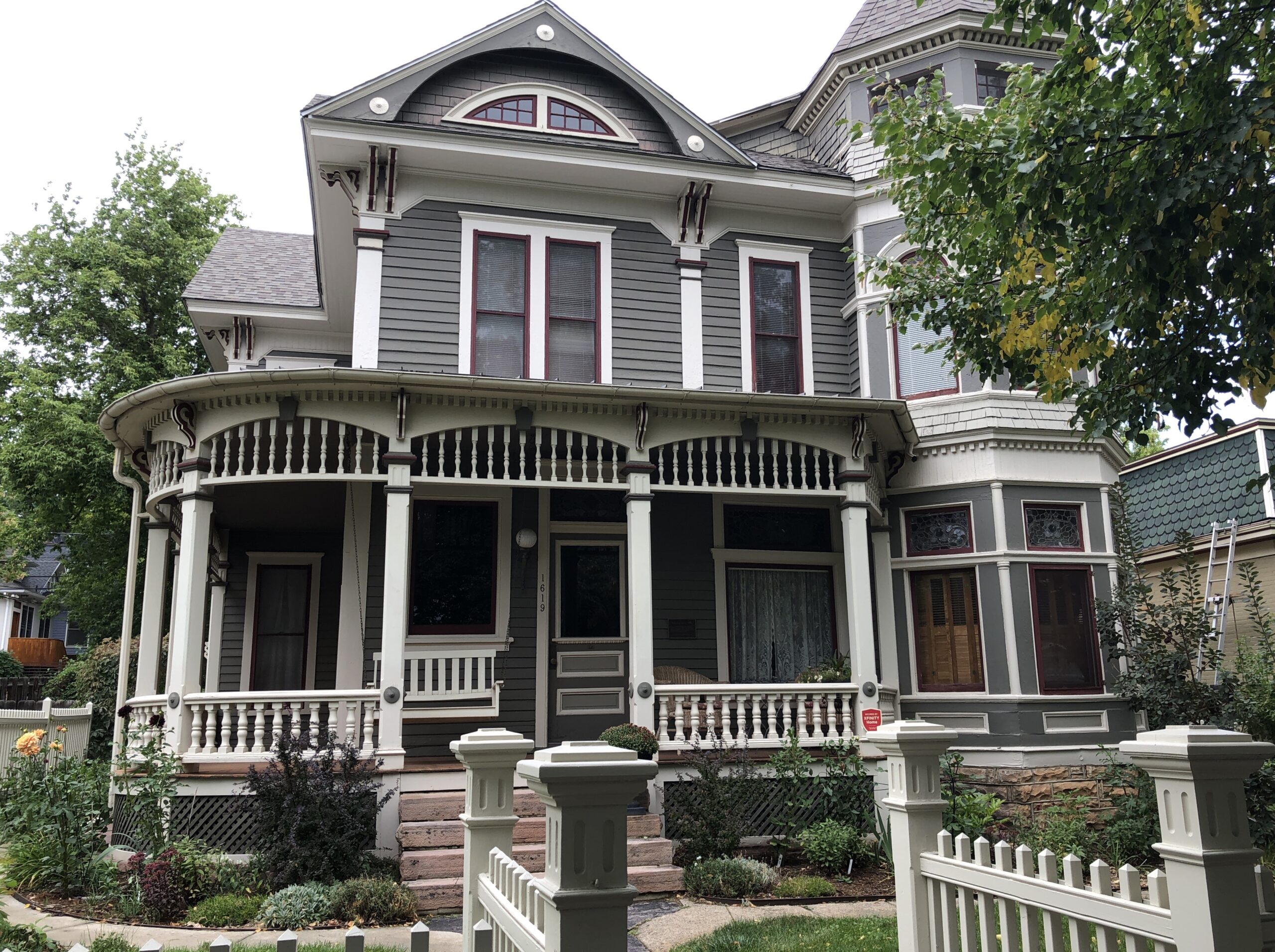
At zero mph, I had time to consult Google for more information. (Remarkably, the signal was strong.) Google Maps pinpointed the location I’d thought of, on a leafy street in Boulder. That day I expended some tourist energy, of which I don’t have quite as much as I used to, to find Mork’s house.

That is, the house used in establishing shots in Mork & Mindy to show their home, since the show was set in Boulder. I know I’d seen Boulder on maps. Funny name, I thought as a kid. Really Big Rock City. It’s still a little funny. But other than as a spot on the map, the show was probably the first time I’d heard anything else about the place.

The passengers in my car, Yuriko and Emi, having grown up outside of the orbit of ’70s American sitcoms, didn’t particularly appreciate the place. At least not until I conveyed the information that the show made Robin Williams famous. He’s a known quantity. I read a bit about the house later, and there seems to be no consensus about whether the owner cares whether anyone stops by the take a picture. My guess would involving factoring in a dwindling number of people coming by. You know, because the show went off the air over 40 years ago.

Then again, if my U.S. travels have taught me nothing else, it’s that retirees are out being tourists. They have the time they didn’t used to, and currently are just the right age to take a peek at Mork’s house at 1619 Pine Street, which is easy enough to find. Even if, like me, their fondness for that show was lukewarm at best.

Boulder and Mork came early in the second leg of my three-legged, 4,498-mile drive, which seemed to kill that many bugs on the windshield and front hood and bumper. The house counted as merely one spot in a trip that took me through hundreds of places. I spend most of September on the road, heading west from Illinois early in the month along I-80 and smaller roads, especially Nebraska 2 through the Sandhills, and spending time in western Nebraska and its rocky outcroppings and in southeast Wyoming, before going to Denver. That would be the first leg. Which, I’m very happy to say, included a good look at Carhenge.

Yuriko flew to Denver on the last of the points I got from SWA for the Christmastime FUBAR a few years ago and we met there. (New motto for the airline: Now We’re Just Another Airline!) After an overnight jaunt to Rocky Mountain NP in the company of our friend Emi, the two of us then spent more than a week taking a clockwise circle-(like) course — a lasso, you might call it, a straight line connected to a loop — from Denver to Colorado Springs to Pueblo to Walsenburg to Alamosa to (coming down from Wolf Creek Pass) Pagosa Springs to Durango to Silverton to Ouray to Montrose to Salida and back to Denver, where Yuriko flew home. That was the second leg. The drives were varied and gorgeous.

You’d think that would be enough, but I had to drive home, loosely following I-70 this time, making my way from Colorado through Kansas, Missouri and Illinois, and making a number of stops, big and small, such as Kit Carson, Colorado; Abilene, Kansas; and Kansas City, Missouri, for a third and final leg. No single small road took me through Kansas, but a series of them did, some as empty as, well, eastern Colorado and western Kansas. That’s some fine driving. Mountains are great, but after a week or so of their twisty ups and downs on two lanes, flat is all right. More relaxing, even.

For reasons that will soon be obvious, not long ago I looked up 2024 visitation statistics for the four national parks in Colorado: Rocky Mountain, Mesa Verde, Great Sand Dunes, and Black Canyon of the Gunnison.

Far and away the top national park draw in Colorado is Rocky Mountain NP, which received 4.2 million people last year, according to the NPS. In fact, it’s a top ten among most-visited U.S. parks. That isn’t so much of a surprise, considering the monster population that lives nearby in greater Denver and other parts of the Front Range. Indeed, for a lot of people, RMNP is easily a day trip.

That isn’t true for the other three national parks, but even so I was surprised to learn how few people actually visit any of them. They aren’t that remote. We aren’t talking Gates of the Arctic NP or American Samoa NP remote. Still, out of the 63 current U.S. national parks, last year Mesa Verde ranked 41st, Great Sand Dunes 44th, and Black Canyon 49th. The three of them combined saw only about 30 percent as many visitors as Rocky Mountain in 2024.

We set out to see all four of the national parks in Colorado. And we did. You could call it a national park trip, along the lines of the one a few years ago mostly on the Colorado Plateau. But the parks were only a framework, never the total picture, over mountains and across plains. We saw a lot else besides, such a male bear outside our window about 10 miles north of Durango, a female in a tall nearby pine snarling at him, and cubs higher up in the tree. More detail to come on that, in the fullness of time.

Rocky Mountain NP is an exercise in rising above the tree line, by vehicle but also on foot, up a path, into to a satisfying exhaustion before majestic mountains. The pale sand dunes of the Great Sand Dunes NP rise from a valley and back up against a mountain range, as if a giant broom swept it off to corner, and for visitors amounts to a giant sand box. Mesa Verde NP, where the stone dwellings of the Ancient Ones are tucked away in steep stone canyons, shows how much effort people will put into making a home for themselves. Black Canyon of the Gunnison NP is a scenic great unknown, a great dark crack in the earth that reminds you that gravity is in charge, its ragged cliff edges rife with opportunities to die for an Instagram image.

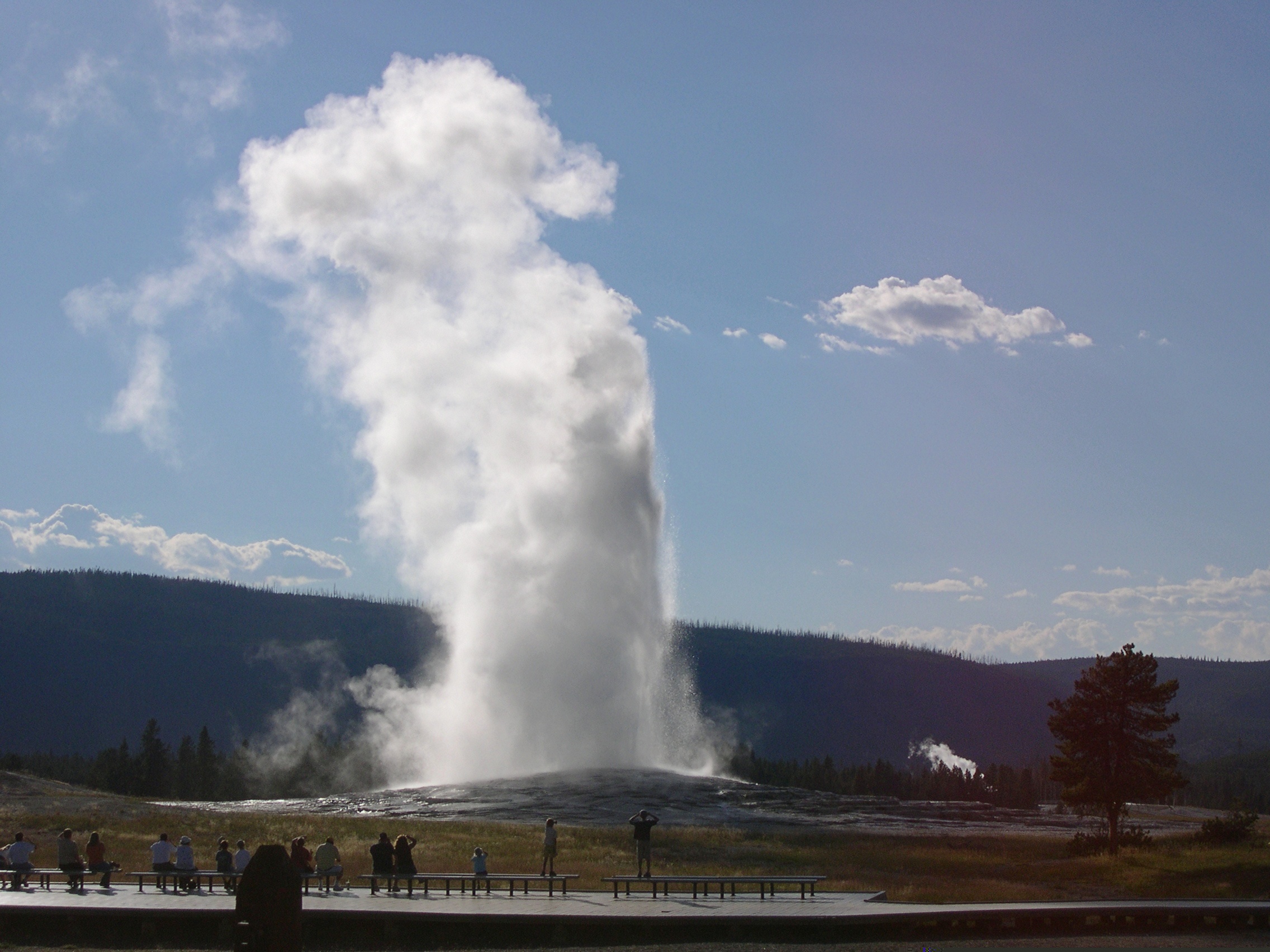
Old Faithful

Ten years ago, I wrote: Has it been ten years since we visited Yellowstone NP? So it has. Tempus fugit, dude.

I see that decade and raise it by another decade. The children who went with us are now grown. The green Sienna we drove across North America that year and the next, to the Canadian Rockies, is long gone, to a junkyard or just maybe still held together with wire and gum and puttering around some distant road in Mexico.

Less than a week after our visit, I wrote: Naturally we visited Old Faithful. Gotta go see Old Faithful, and wait for it to fulfill its impressive duty, which it did for us at about 6:45 pm on August 5, 2005, pretty much as the rangers predicted — at the information booth, they wrote an estimated time of eruption on a little whiteboard.

That exact eruption 20 years ago.

The geyser is still blowing regularly, according to the NPS, though a little more slowly:

“Old Faithful is one of nearly 500 geysers in Yellowstone and one of six that park rangers currently predict. It is uncommon to be able to predict geyser eruptions with regularity and Old Faithful has lived up to its name, only lengthening the time between eruptions by about 30 minutes in the last 30 years. Thermal features change constantly and it is possible Old Faithful may stop erupting someday.”

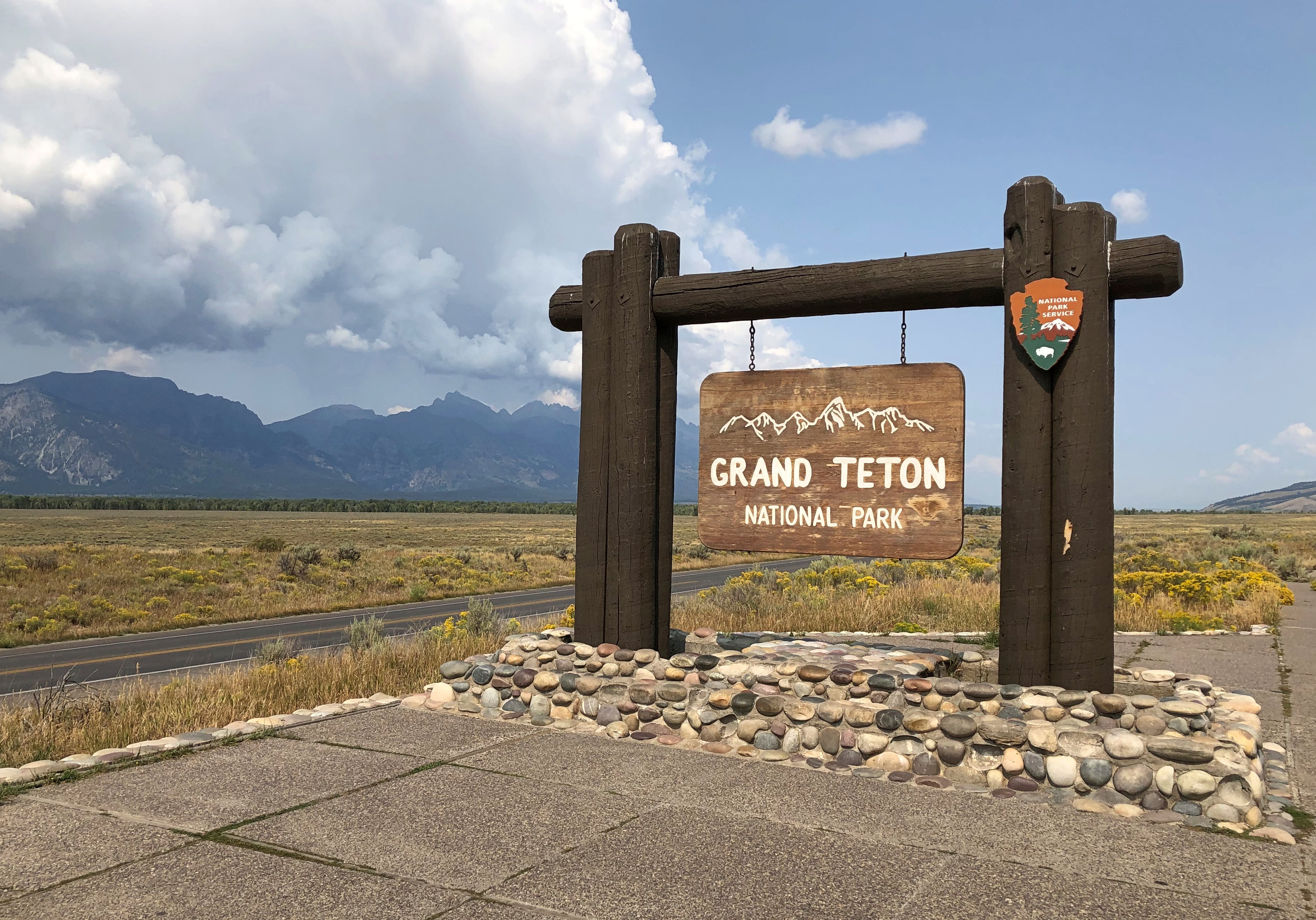
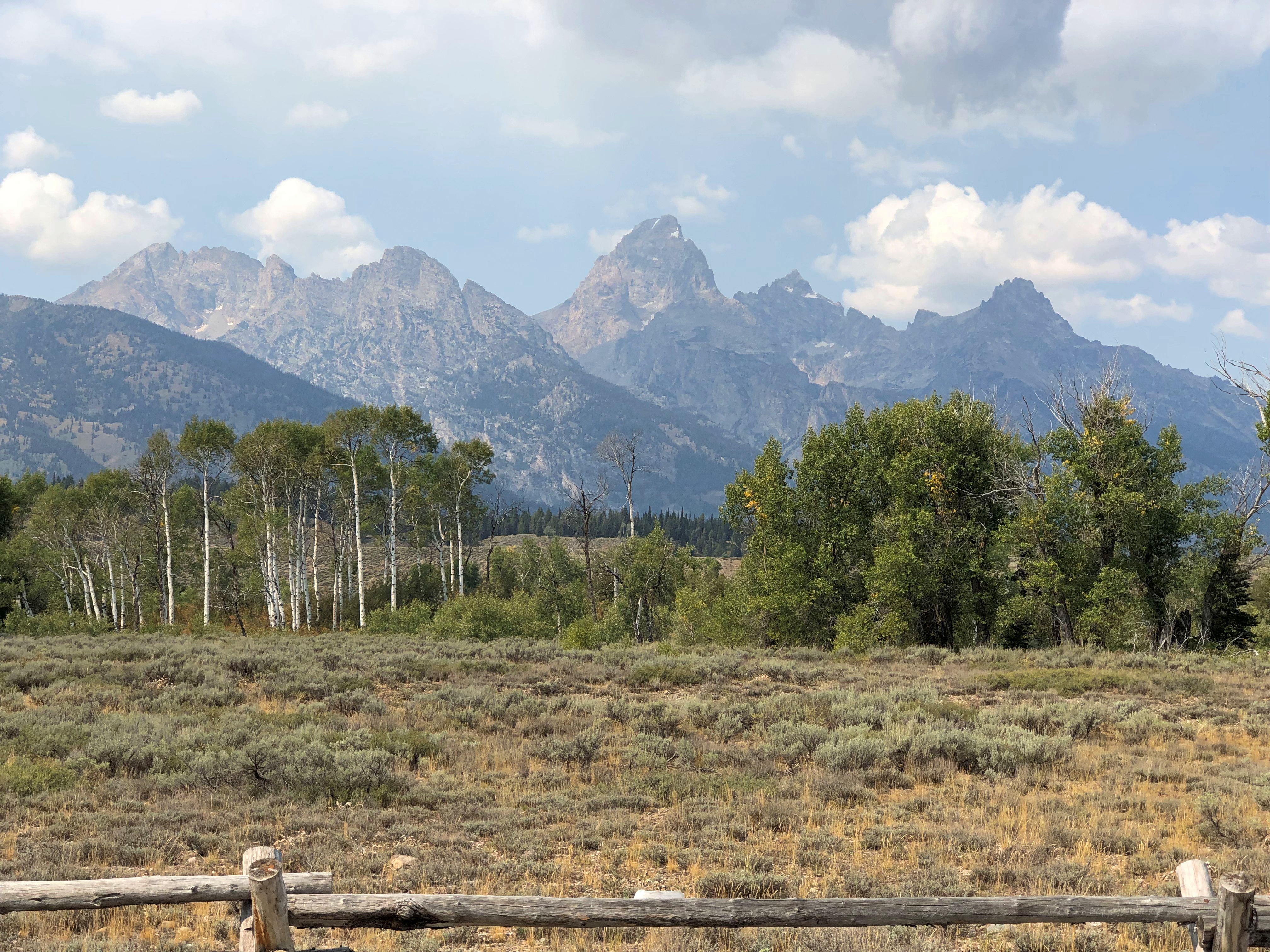
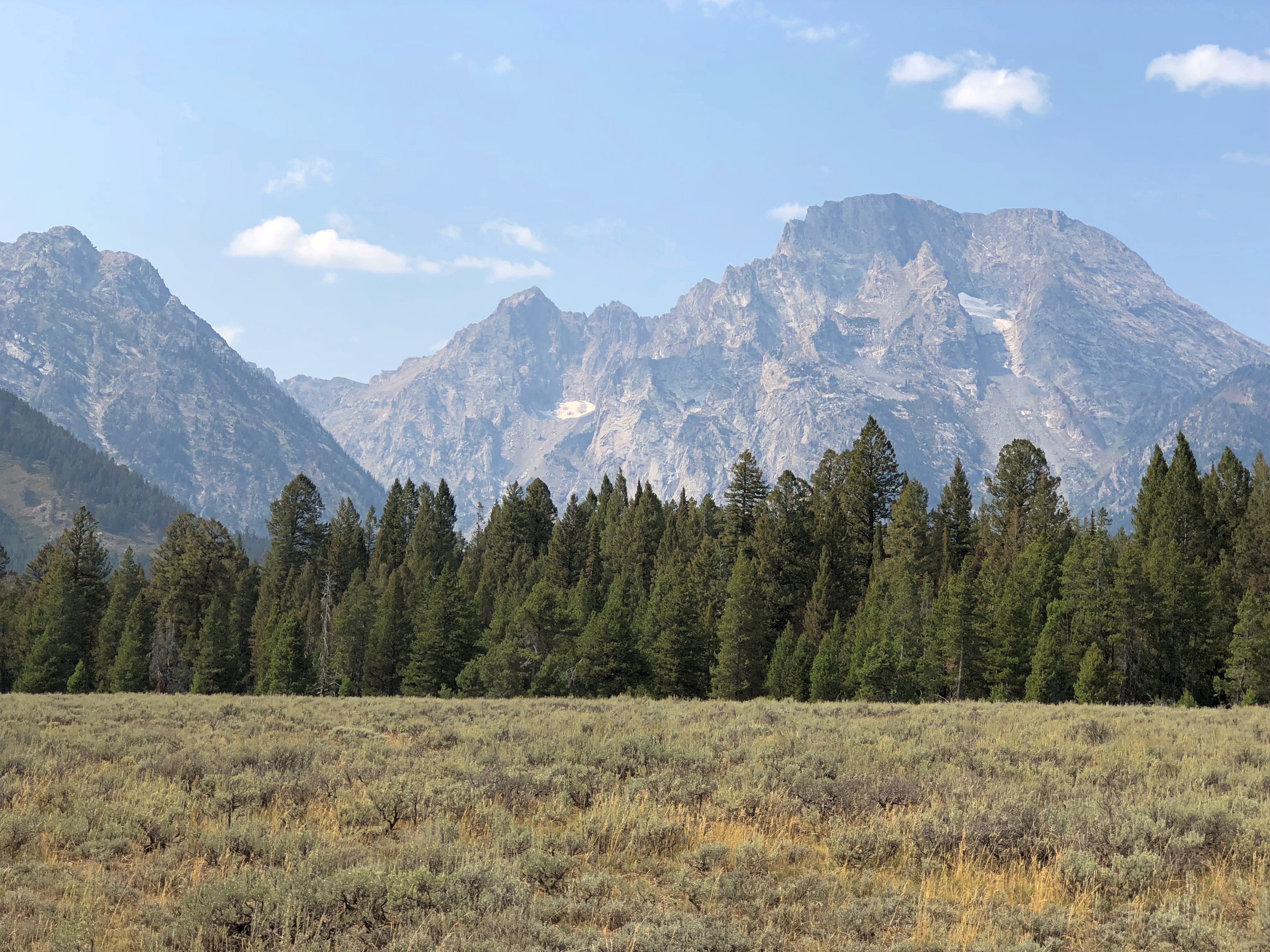
Grand Teton National Park

Time for a fall break, though it hasn’t been much like fall lately. Cool nights, but warm and almost hot days. This weekend, the nights weren’t even that cool. On Saturday evening we sat on the deck and ate our pizza dinner. The wind was a bit brisk, and willing to carry away unanchored napkins, but other than that it was a wonderful time for dining al fresco. Here in October.

Back to posting on October 13 or so. Or maybe October 15, to honor Italian Food Day, as Ann calls it. Still technically a holiday in most states.

For a North American mountain range, the Tetons are pups, with current scientific assessment putting their age at 6 million to 9 million years. The likes of the Sierra Nevada and the Cascades come in between 40 million and 45 million years old; the Sierra Madre at 60 million years; the Great Smoky Mountains from 200 million to 300 million, just to cite North American examples.Grand Teton National Park

The Tetons’ ongoing formation has something to do with one plate subducting under another and a vast crack in the Earth. I don’t have a deep understanding of geology, but I can get a sense of a slow motion crash – really slow motion, from a human perspective – and enormous volumes of rock being pushed upward.

The wider geology of this part of the West is just as strange and interesting. Deep down under the crust is a hot spot, an imponderable heat bulge that brought volcanism to the surface in Idaho and later Wyoming, as the big North American plate passed over the spot over the last few million years. An eruption of the Yellowstone Caldera is due. Could be tomorrow, could be 1,000 or 10,000 years from now, I understand.

Then there’s the matter, very recent on a geological scale, of the freezing and thawing of ice ages, creator and destroyer of ancient lakes in the area, as illustrated by the unstable ice dams on the Columbia and the cubic miles of water unleased on the gorge not only once, but many times.

Geologically speaking, this part of North America’s having a rumble. What’s really remarkable is that we humans, with our firefly lifespans, have figured all that out. Mostly in my lifetime. You can’t tell that just looking at the grandeur. But knowing all that adds to the view.

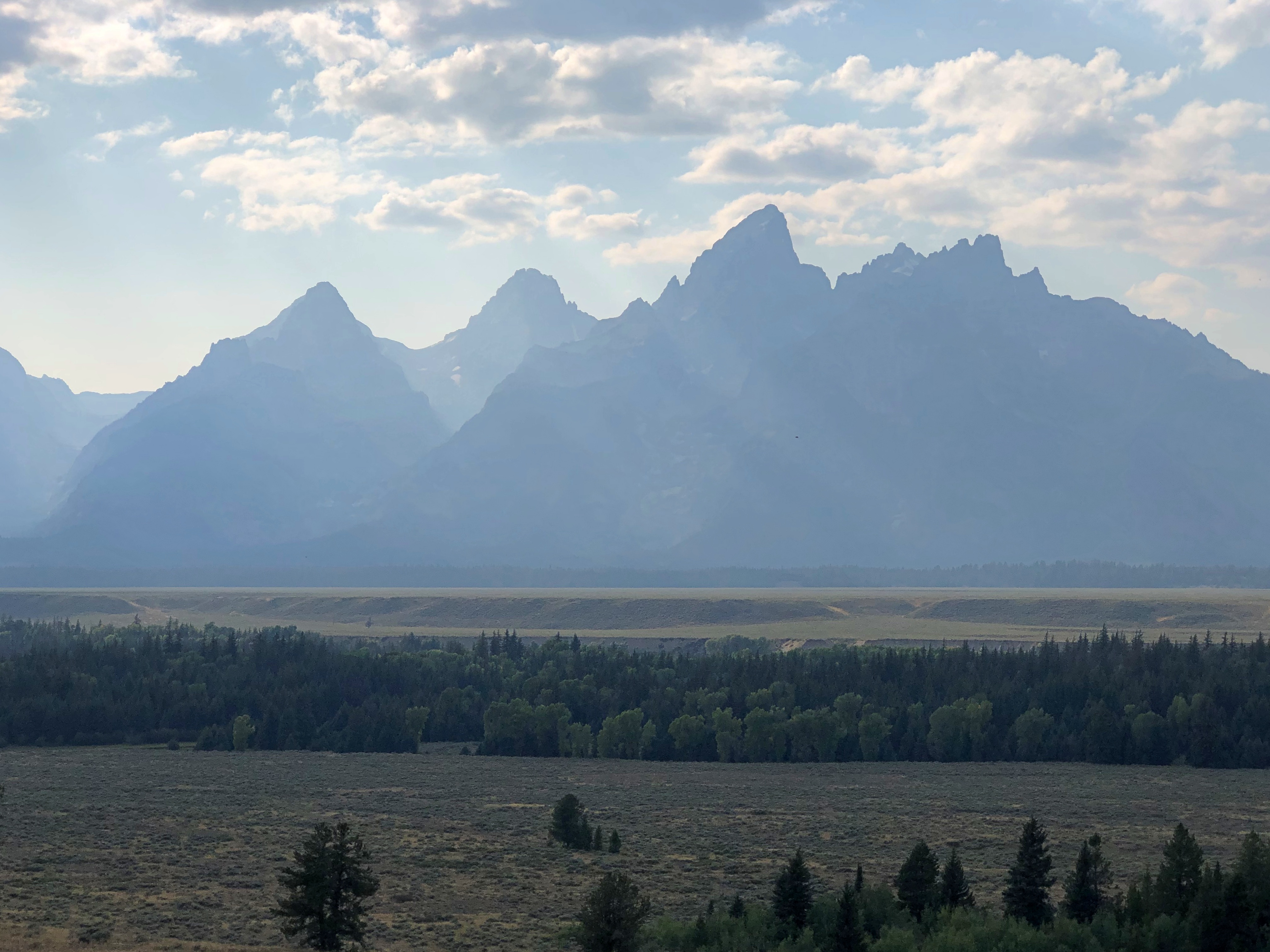
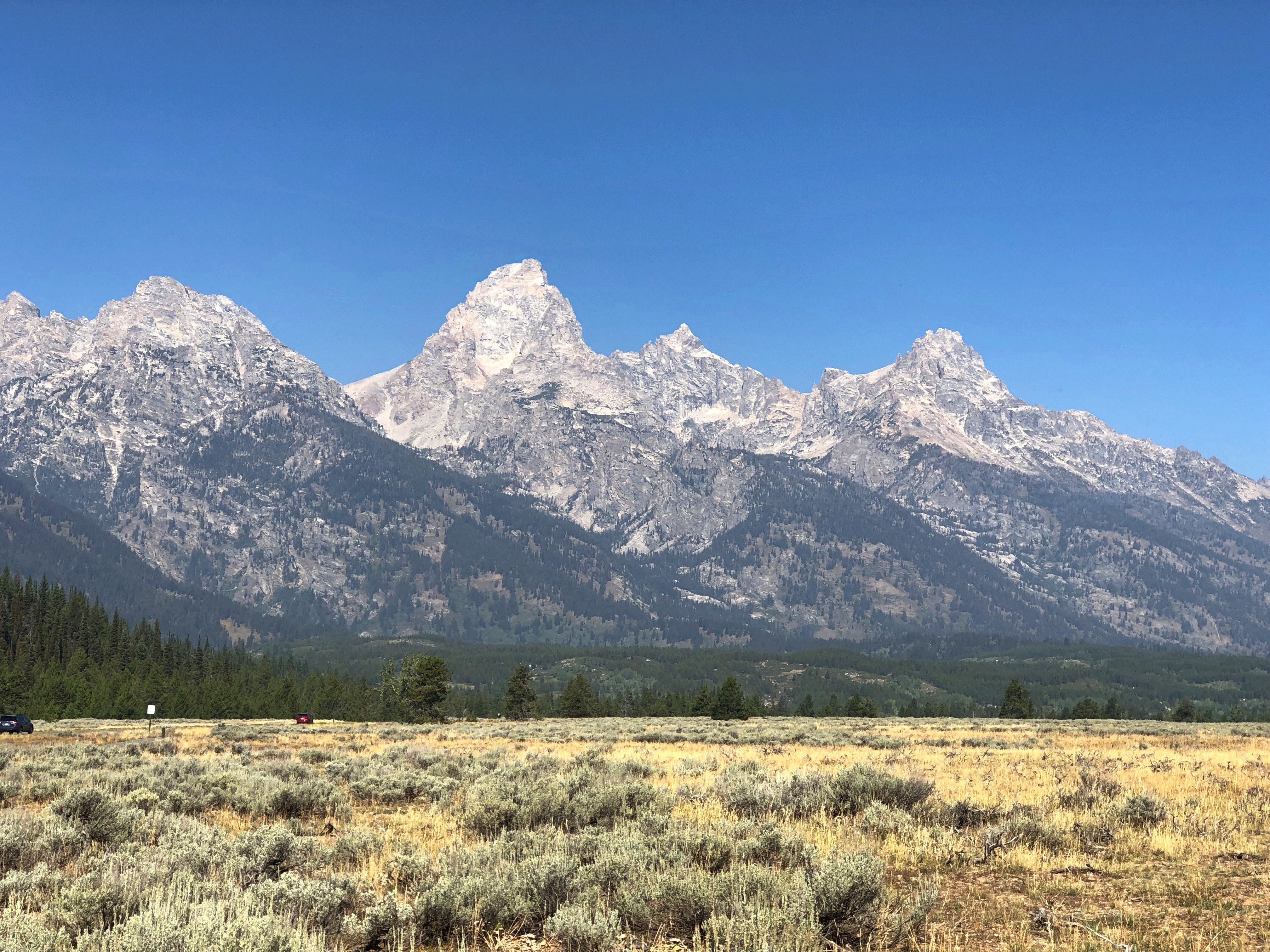
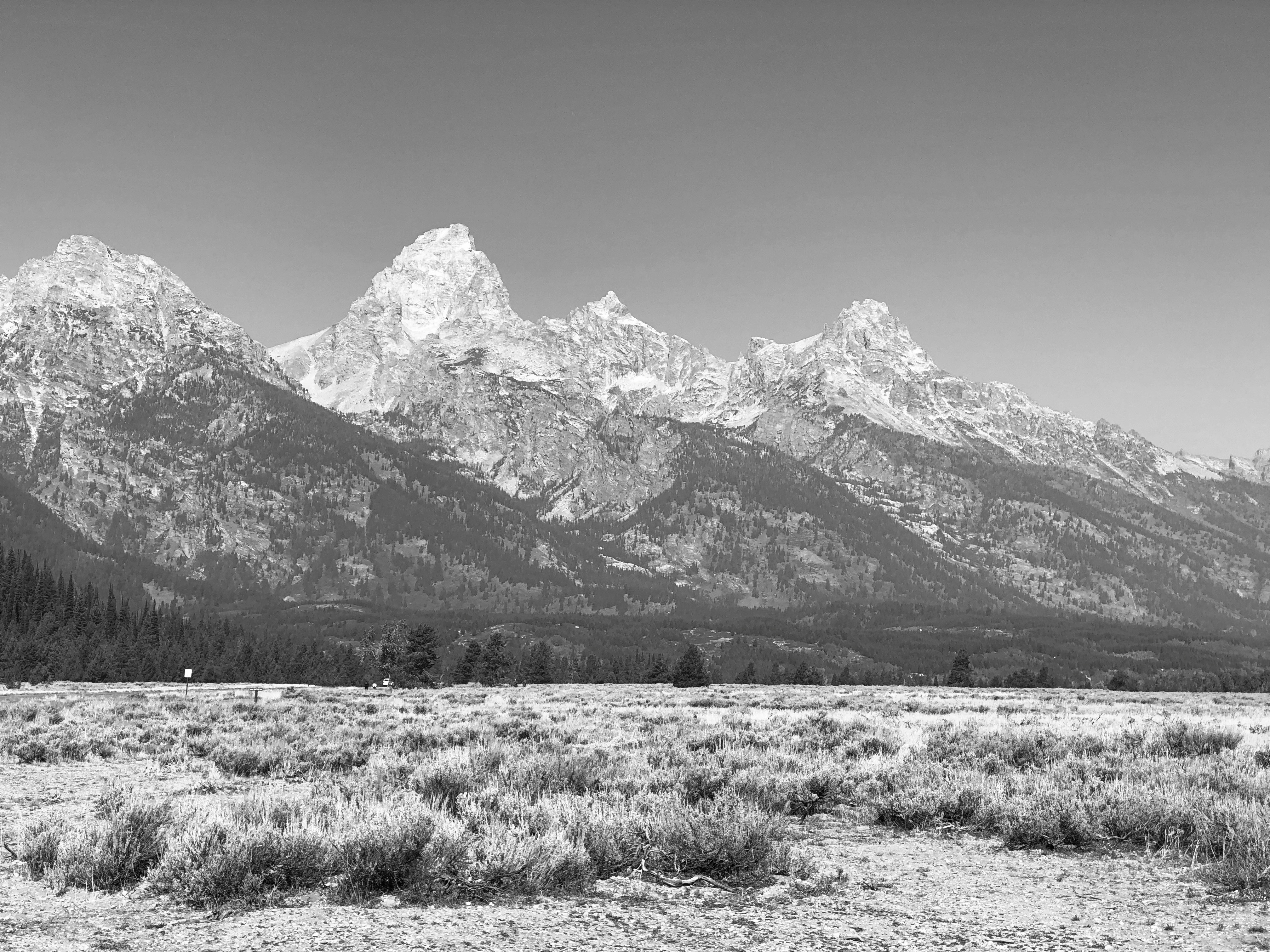
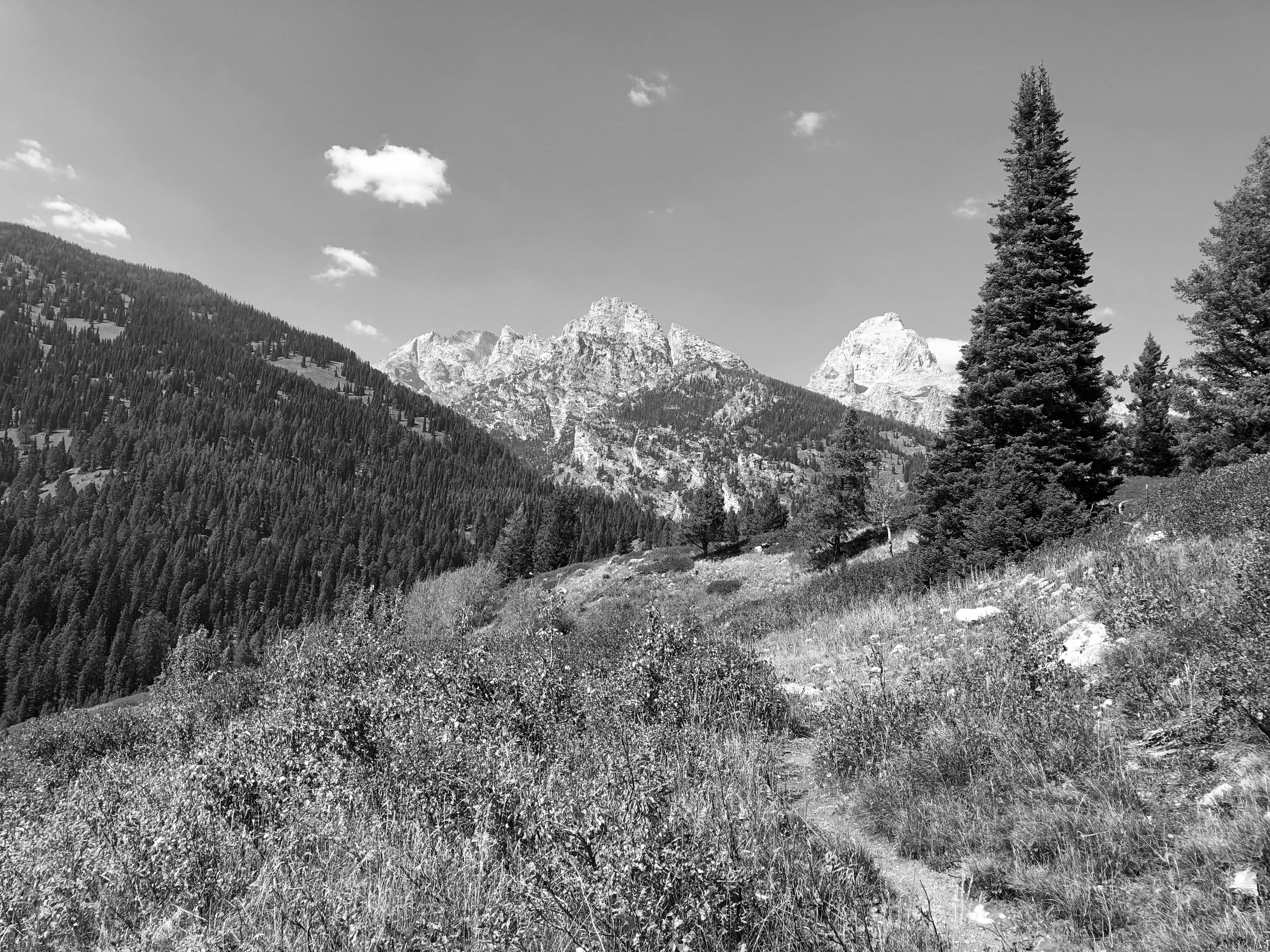
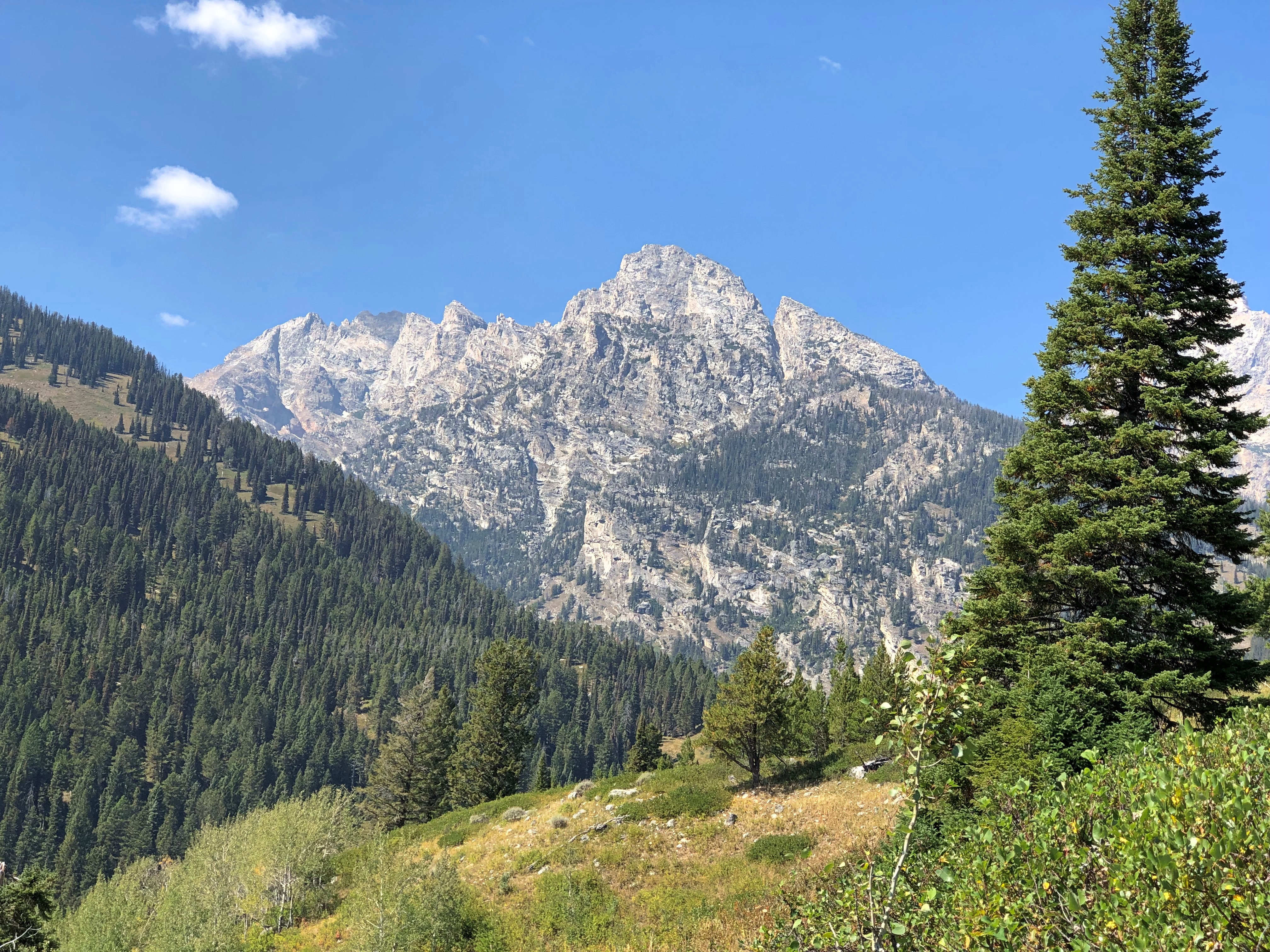
Day one. Our first day at the park was driving and some hiking.Grand Teton National Park Grand Teton National Park Grand Teton National Park

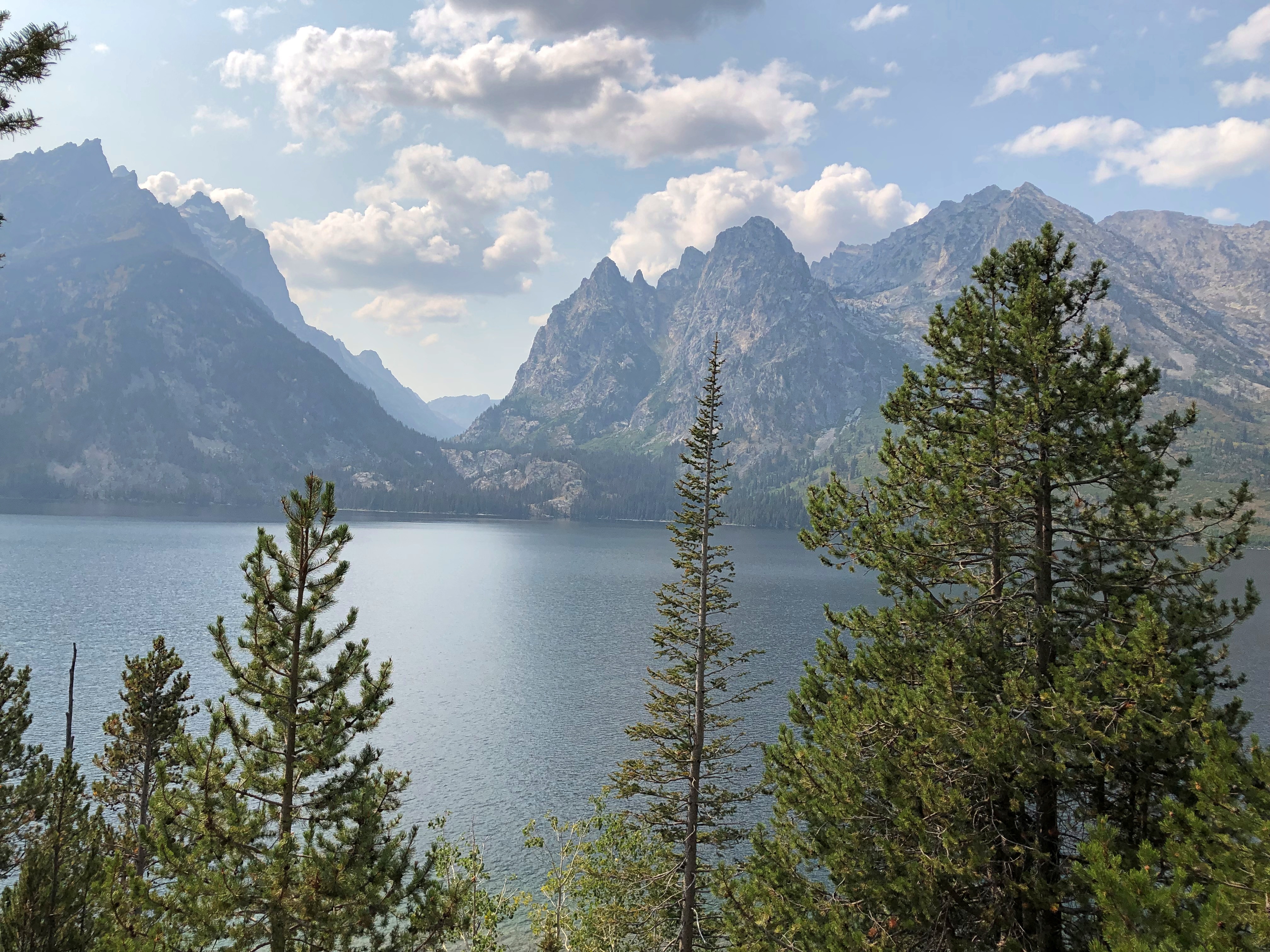
Jenny Lake. A scenic drive skirts its shore.Grand Teton National Park Grand Teton National Park

A roadside view of the mountains, but also a river.Grand Teton National Park

The trees line the Snake River. I had little appreciation for the Snake before taking this trip and looking at fine maps like this, which not only details the mighty Columbia but the serpentine Snake, though both of them wind around. We saw the Snake at Grand Teton NP near its origin, but also crossed it where it forms the Oregon-Idaho border, and at Idaho Falls.

Our second day was hiking and some driving.Grand Teton National Park Grand Teton National Park

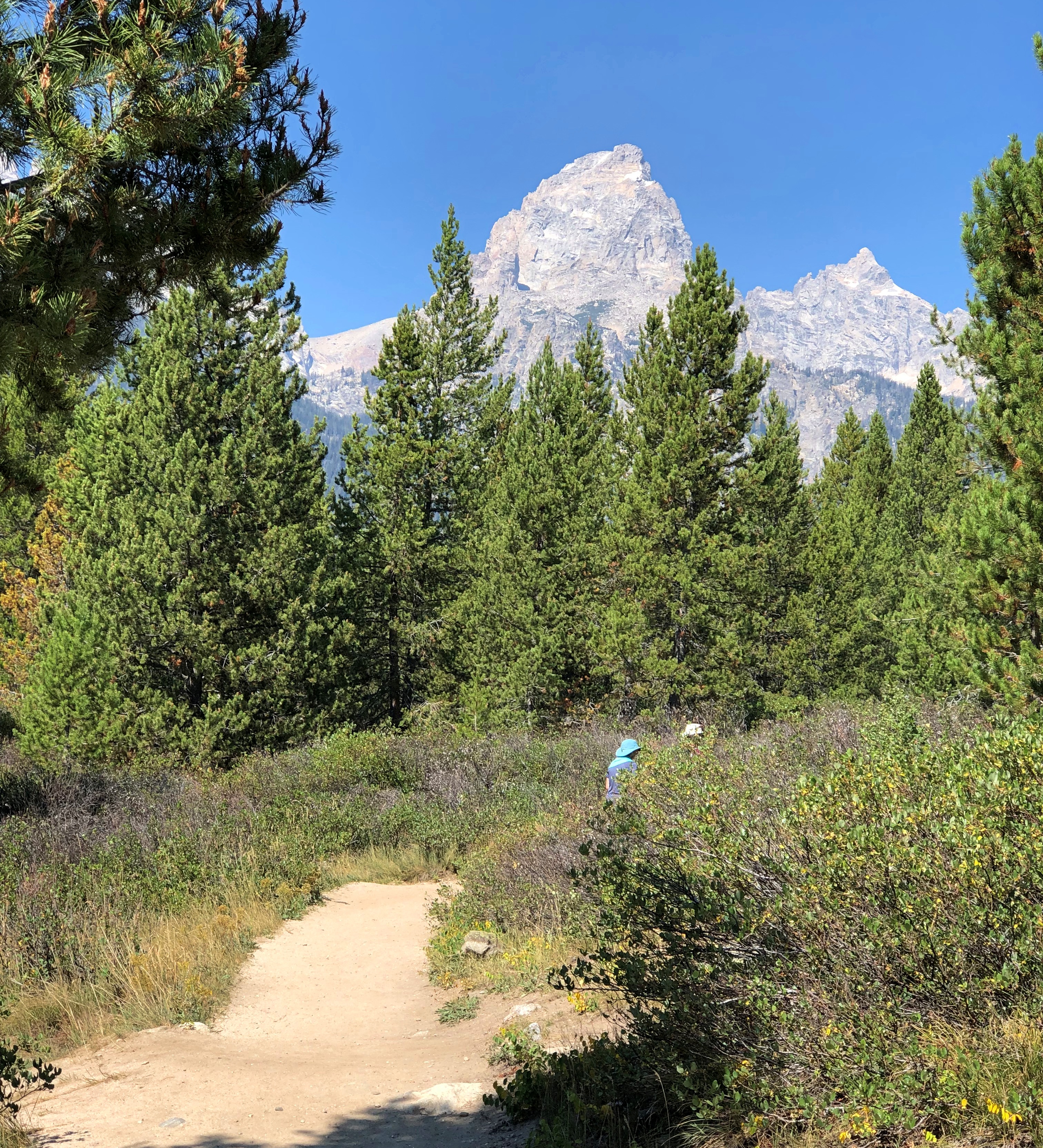
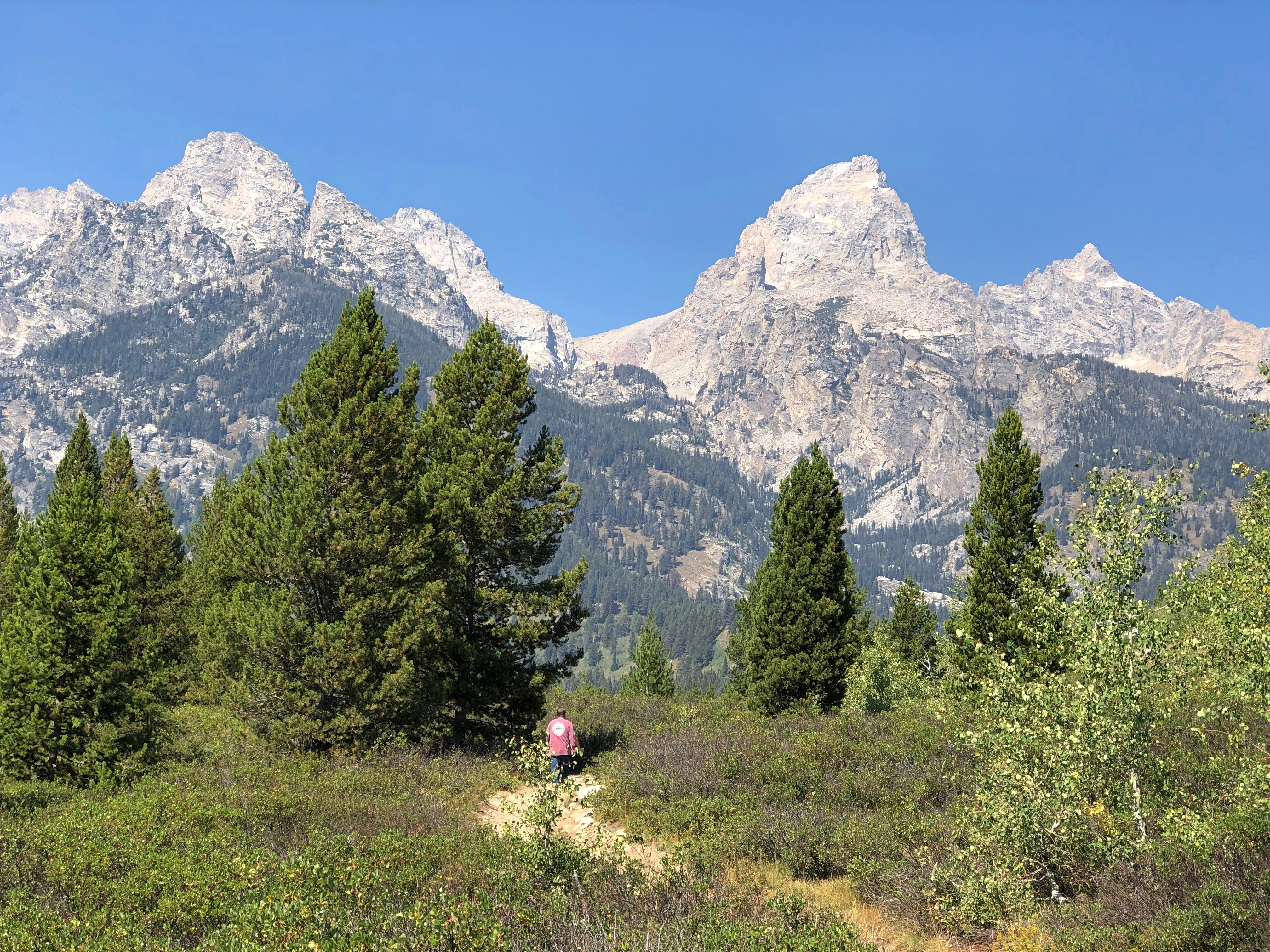
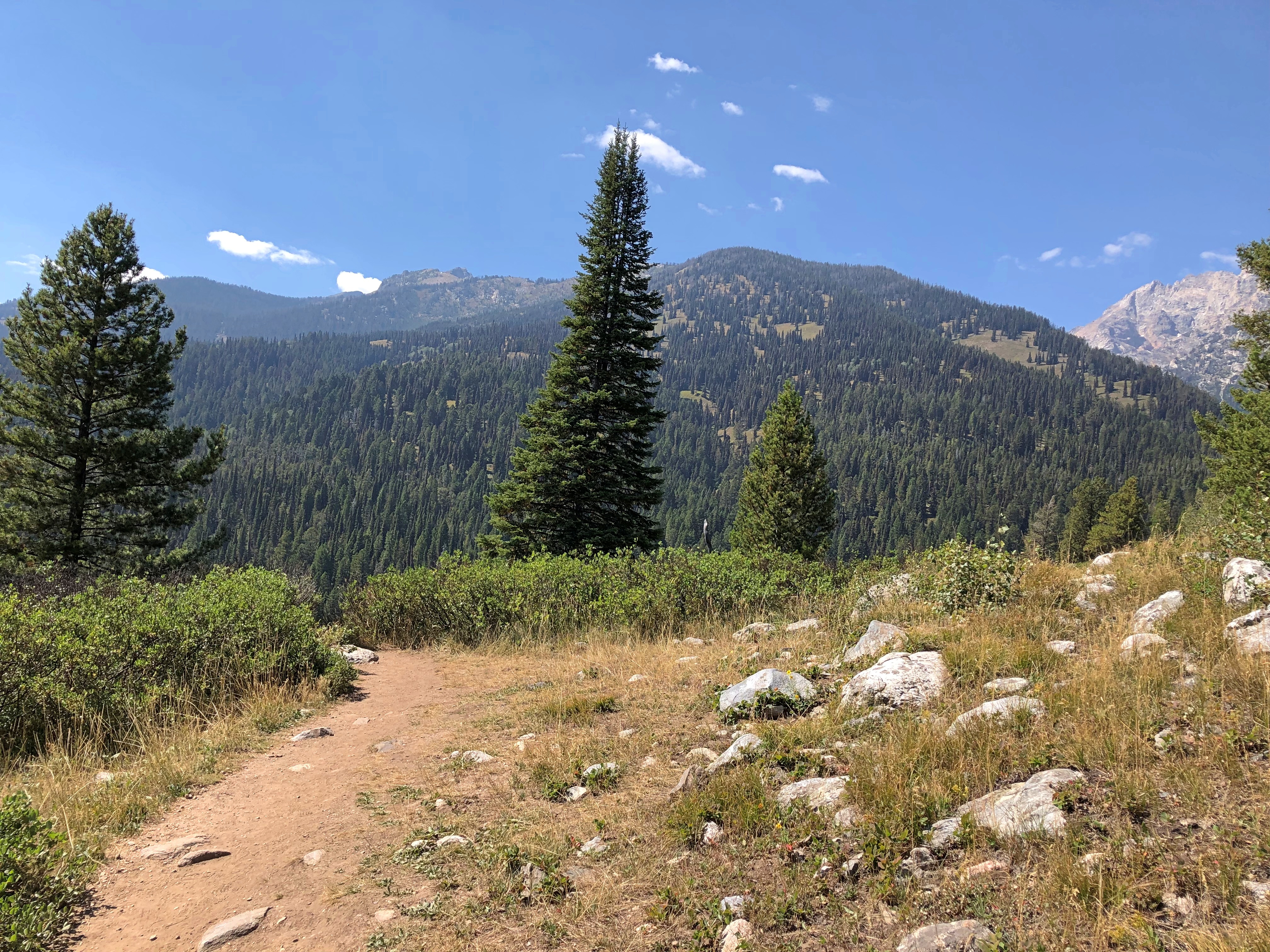
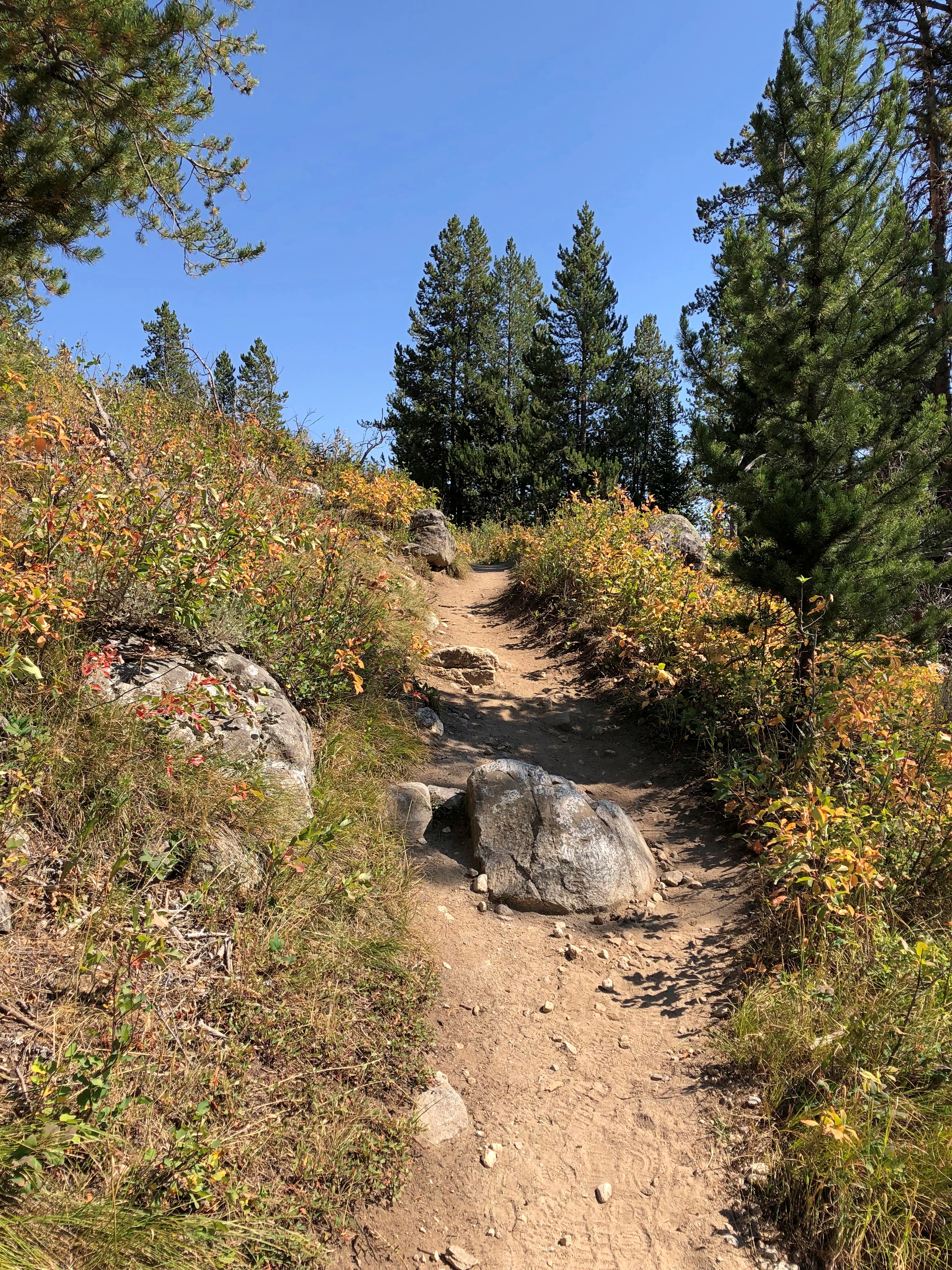
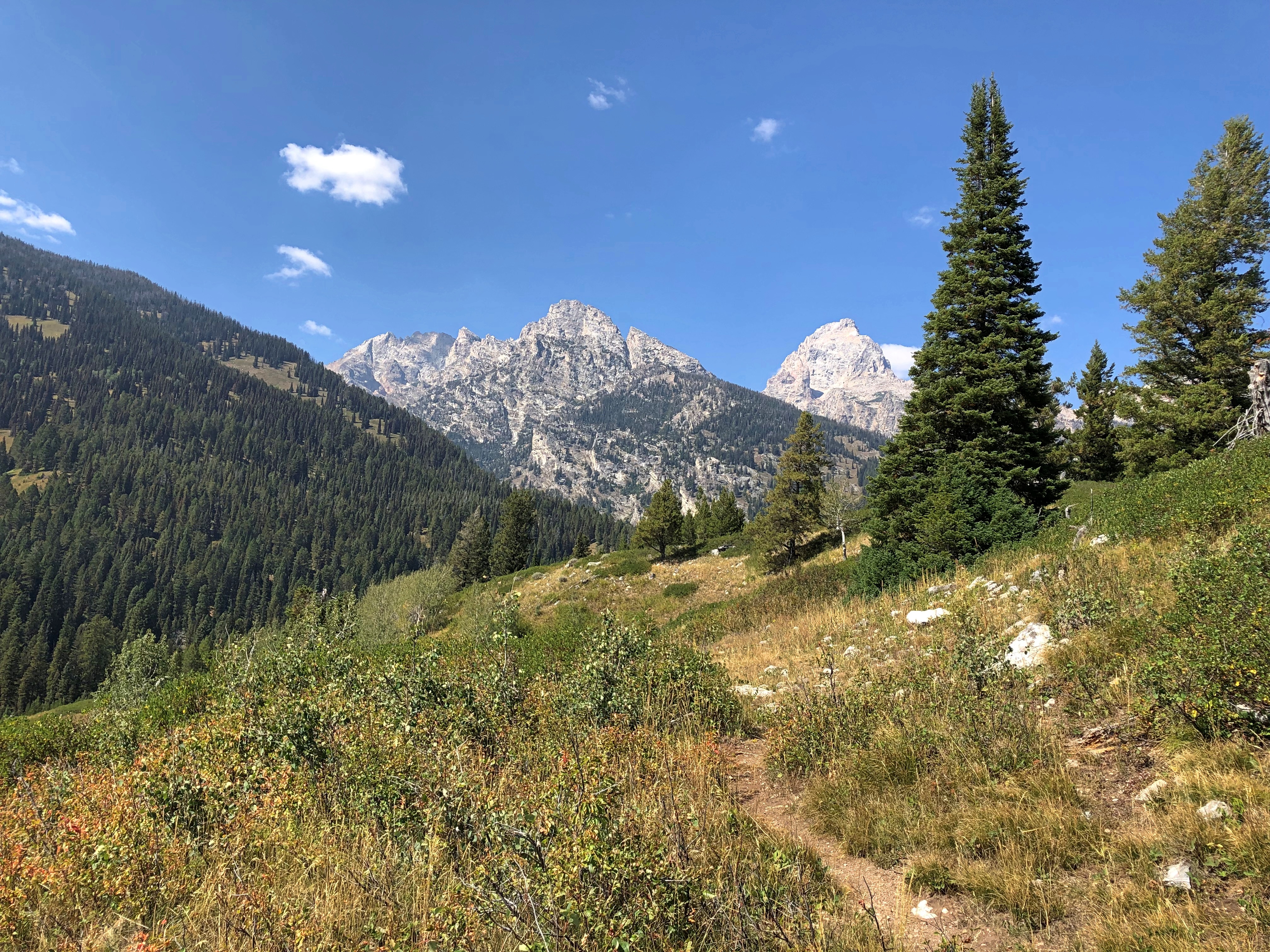
The trail to Taggert Lake.Grand Teton National Park Grand Teton National Park Grand Teton National Park

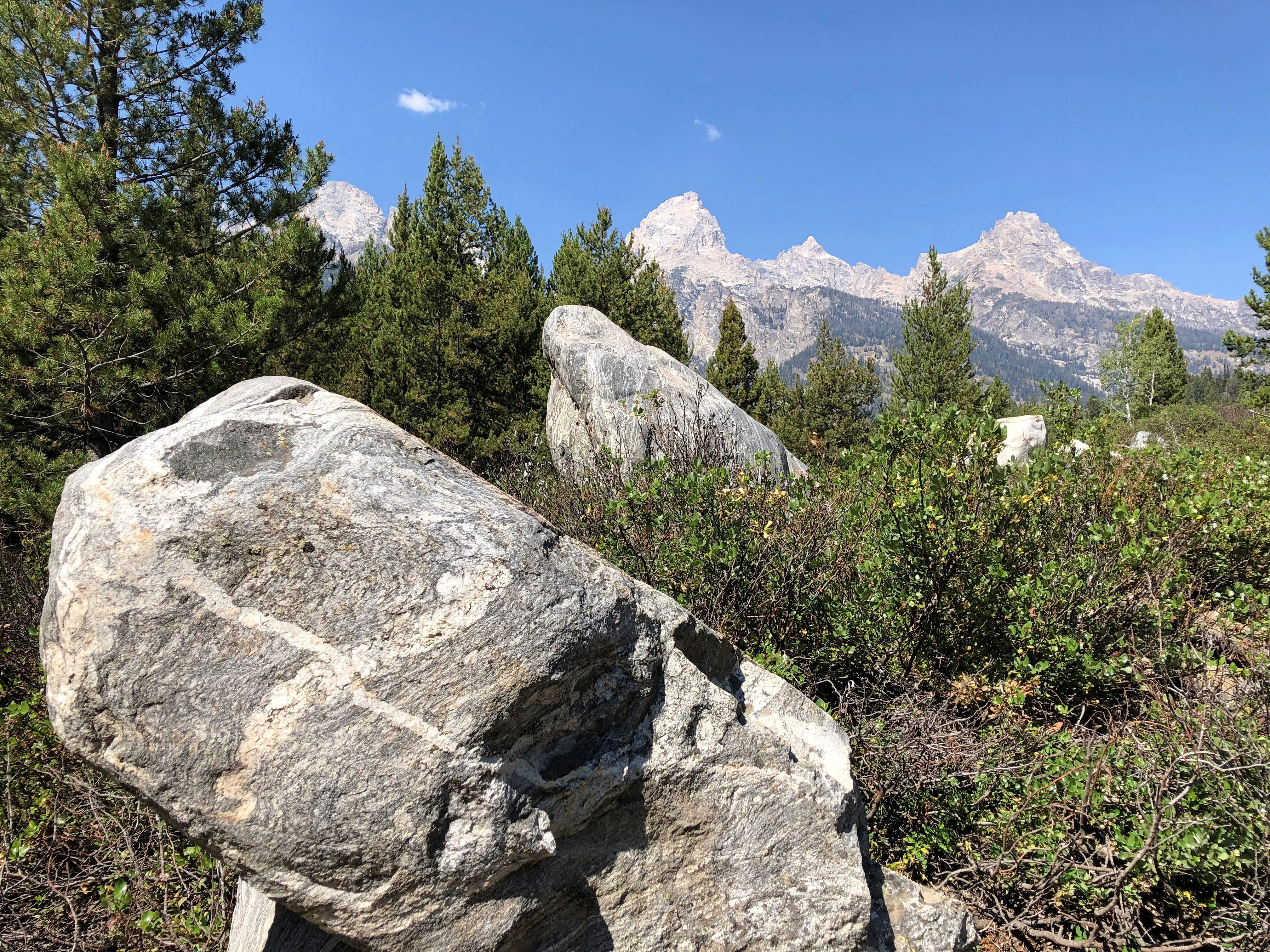
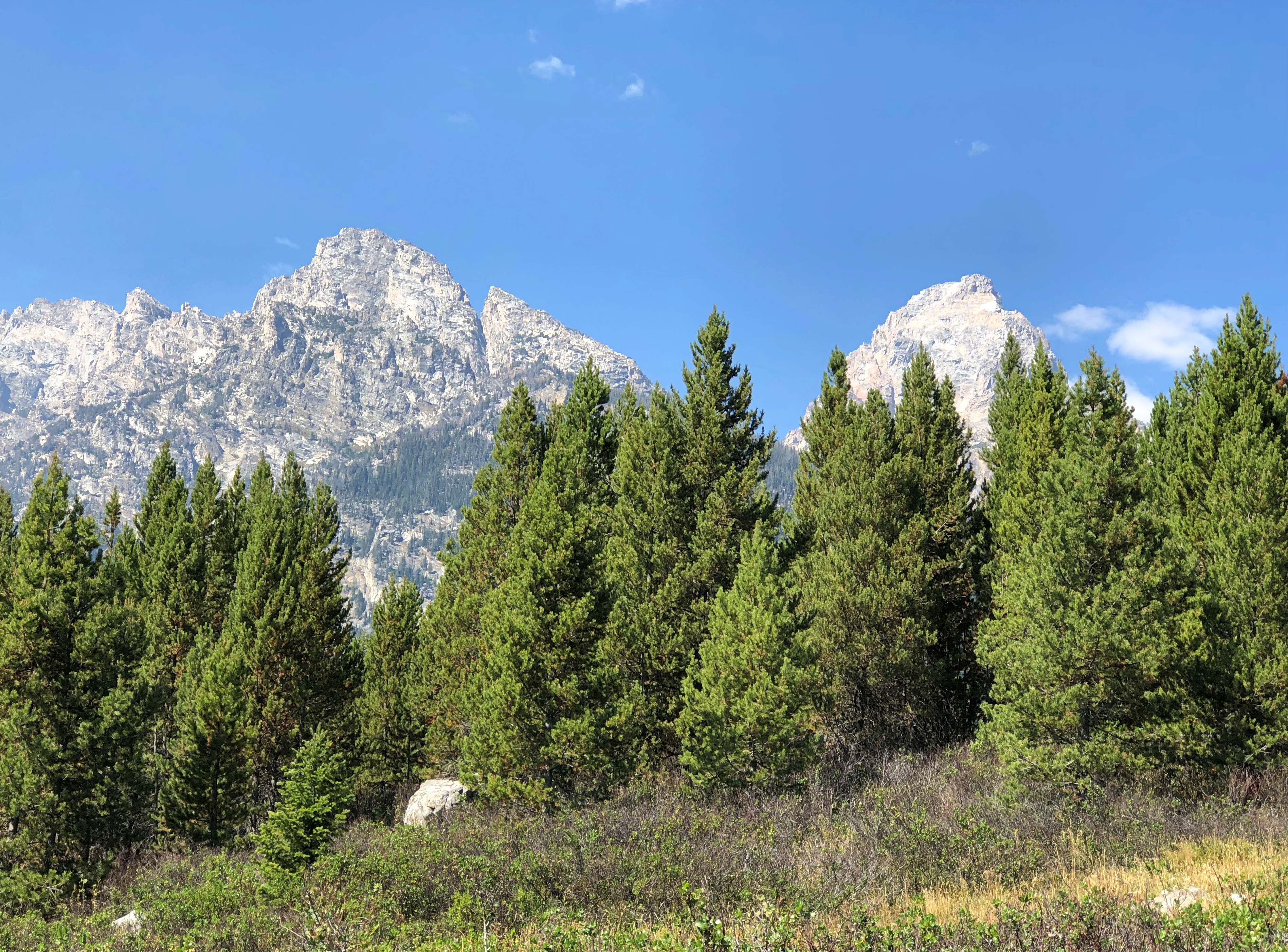
When we passed these boulders, the thought popped into my head: What’s the difference, really, between these chunks of rock in the foreground and the peaks in the background? Just mass.Grand Teton National Park

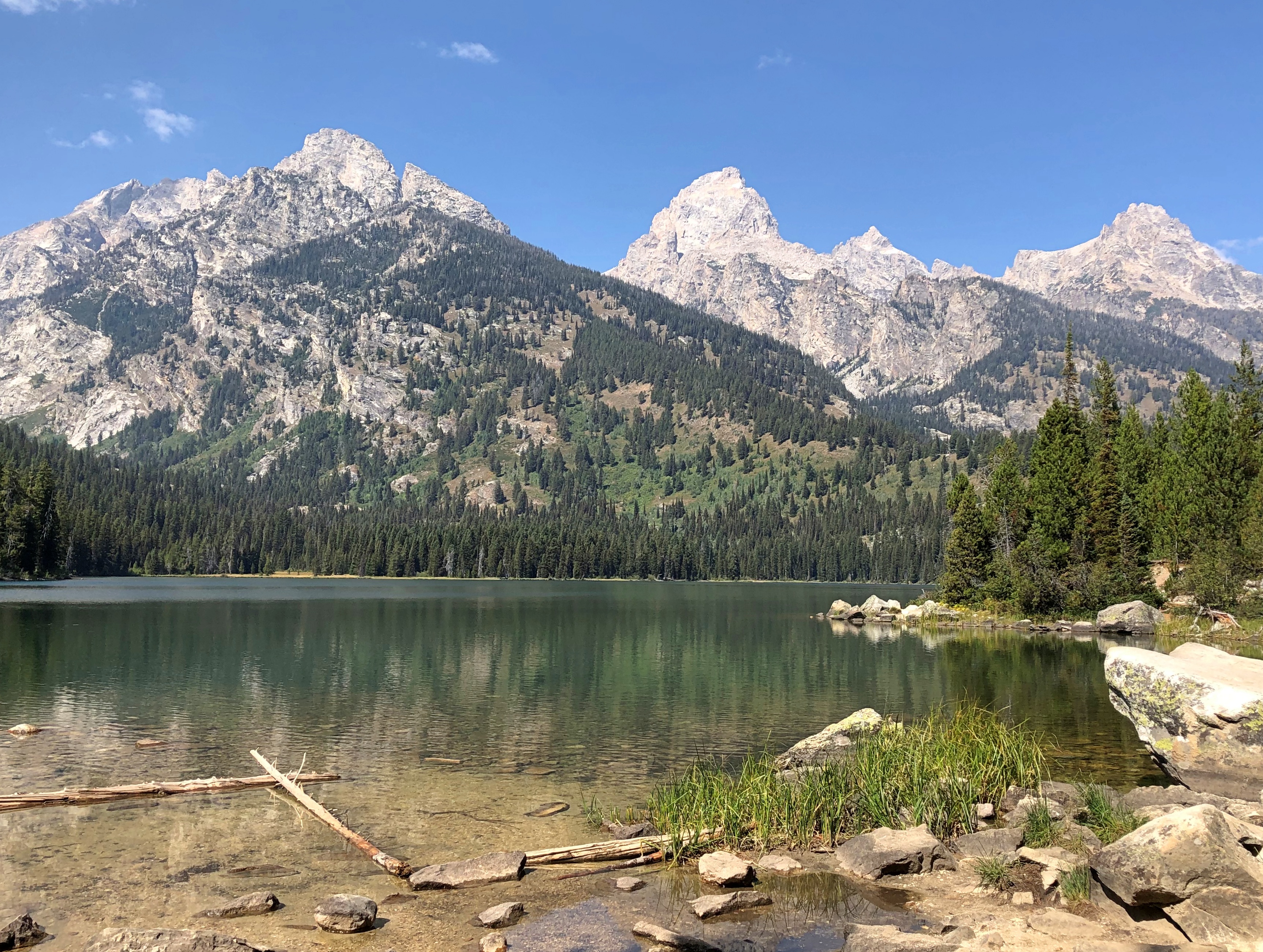
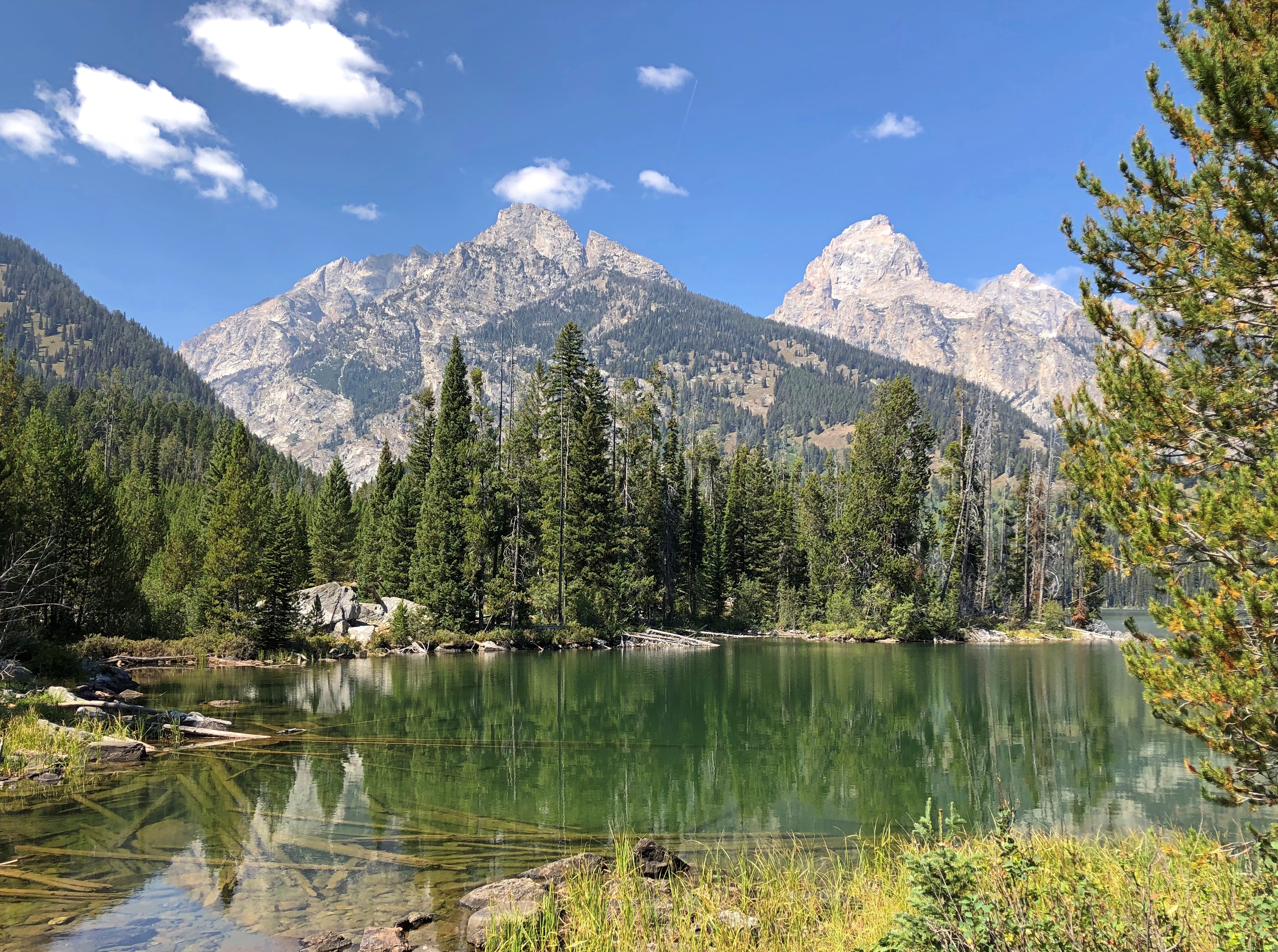
The lake. Wow.Grand Teton National Park Grand Teton National Park

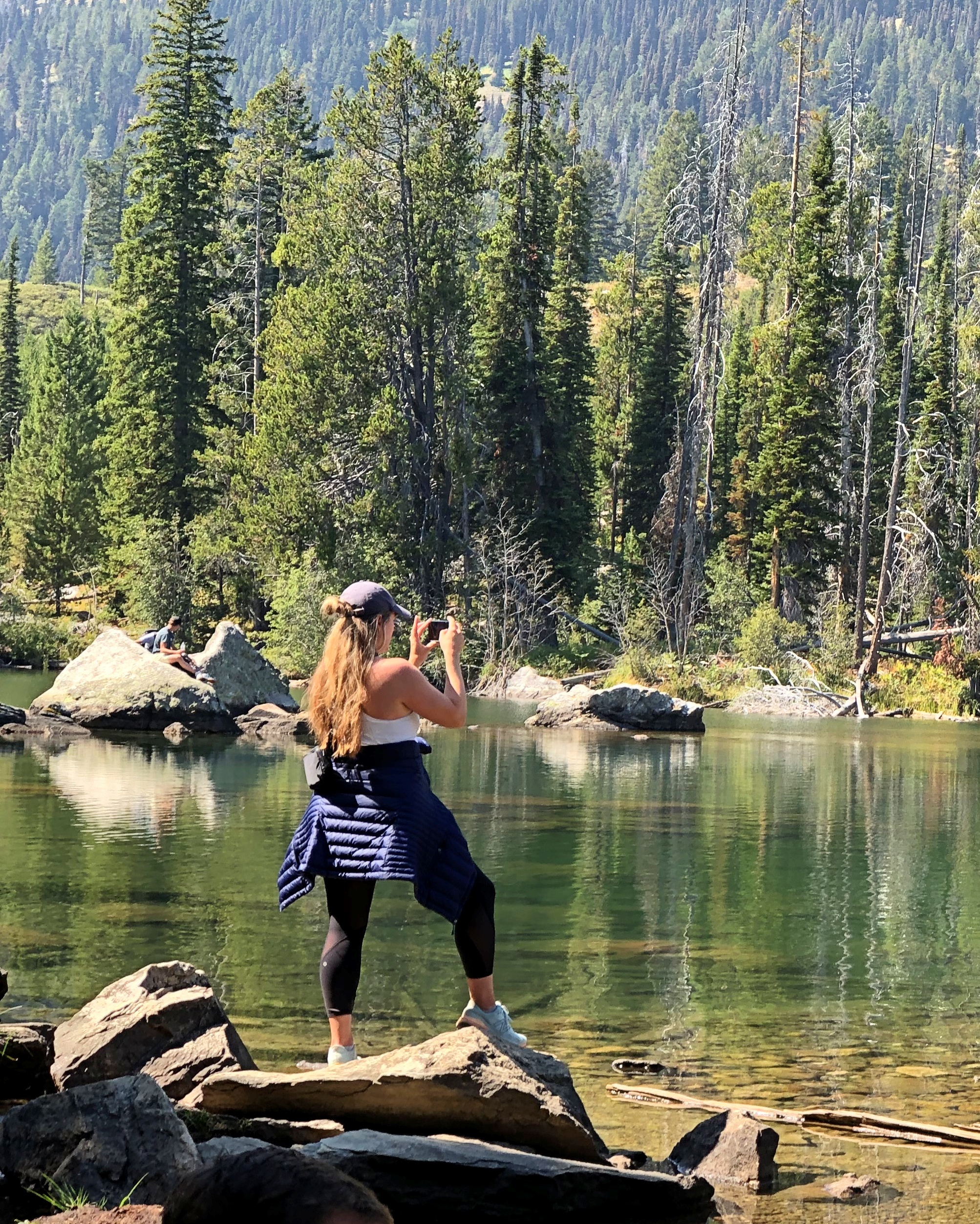
Not a solitary experience.Grand Teton National Park Grand Teton National Park Grand Teton National Park

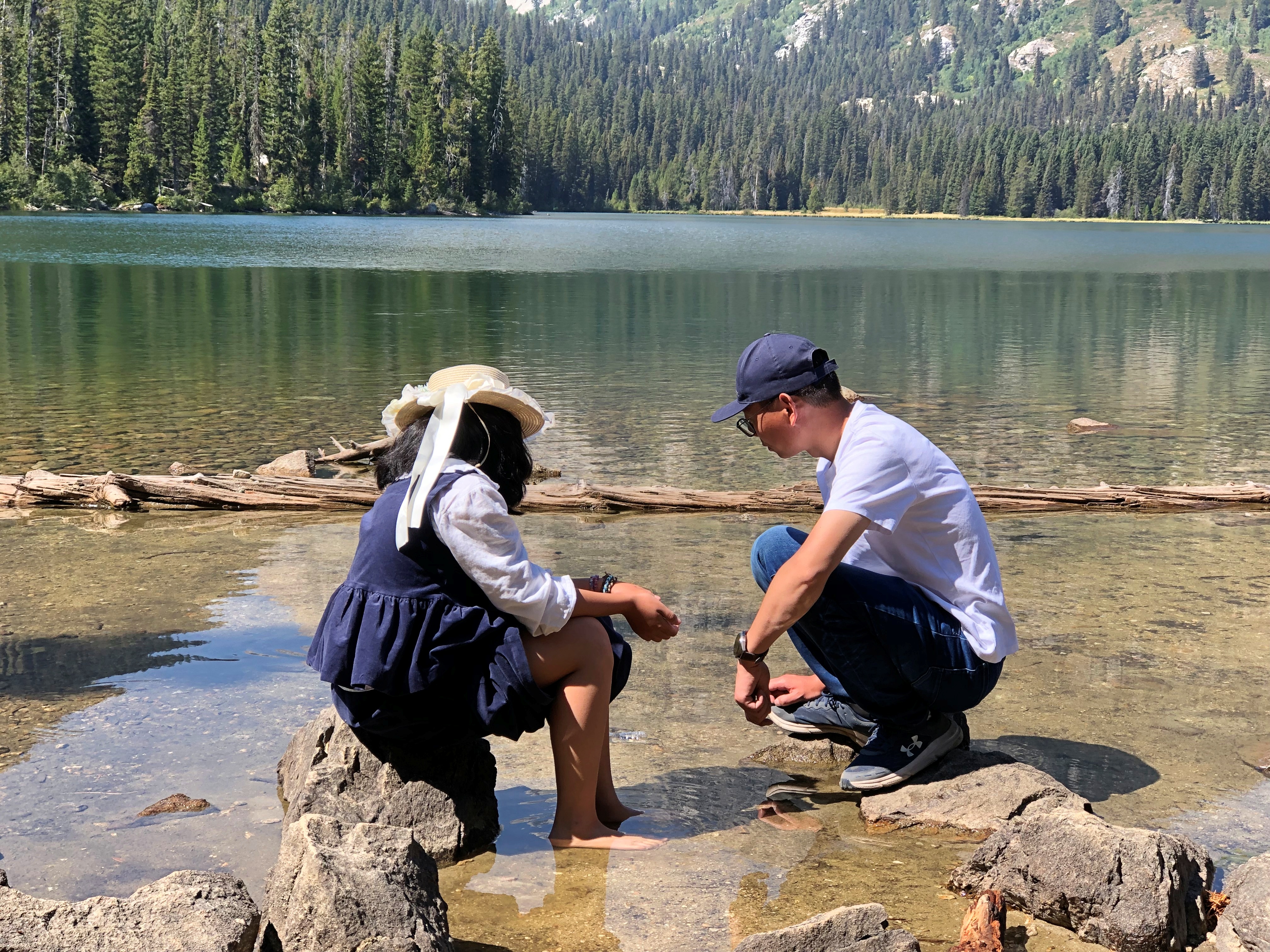
Father and daughter, I assume. They spent quite a while looking at the many tadpole-like fish in the shallows.

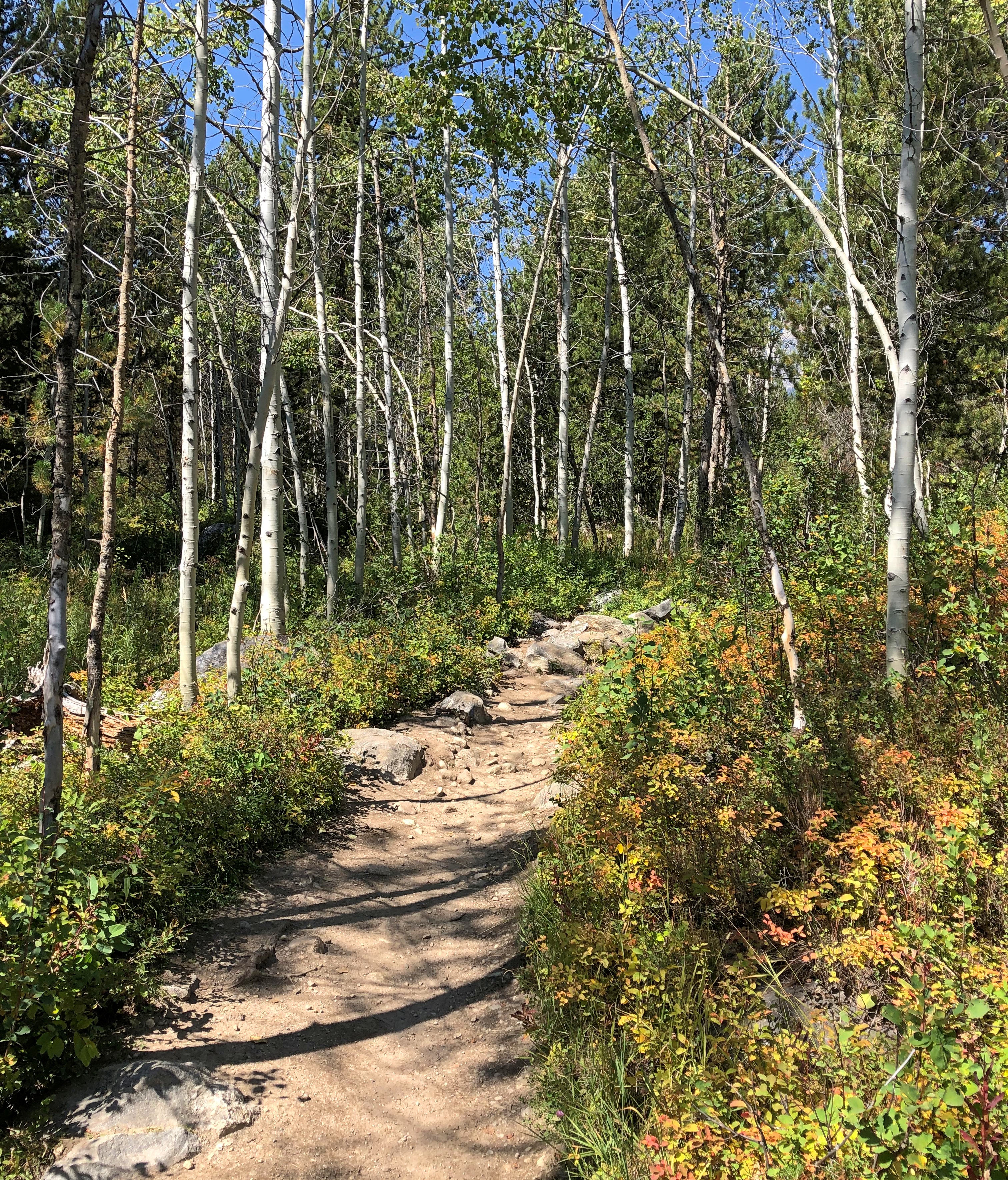
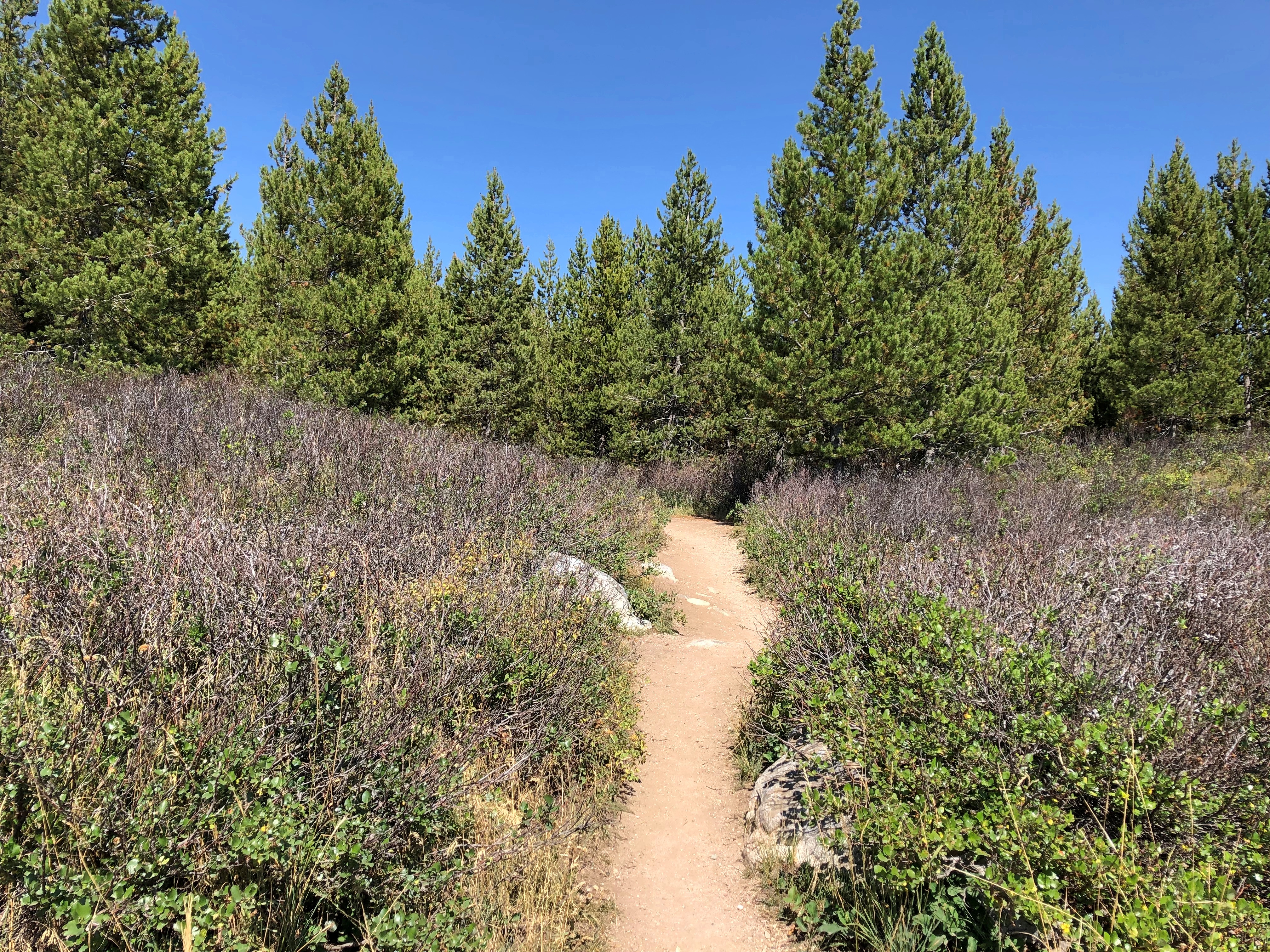
More solitary away from the lake, on the long looping trail back to the parking lot.Grand Teton National Park Grand Teton National Park Grand Teton National Park

We did make the nodding acquaintance of a family. Probably grandparents and their two university-aged grandsons (or maybe one with a friend), probably from a metro in the Northeast. The grandmother, maybe 10 years my senior, looked particularly exhausted by the trail, grayish hair frazzled, face a little pink.

We passed them, though they passed us later as we relaxed in a shady spot. Later, we passed them again as they rested, the grandsons clearly worried about grandma, though I don’t think she was in any real danger, unless she had a health problem I didn’t know about. Still, she was making the effort at however many thousands of feet we were in elevation, with its thinner air.

Again I ask – and always wonder – what is it about mountains? I don’t have the urge to climb, but I do want to get close enough to see their majesty.Grand Teton National Park Grand Teton National Park Grand Teton National Park Grand Teton National Park

Once the hiking is over —Victor, Idaho

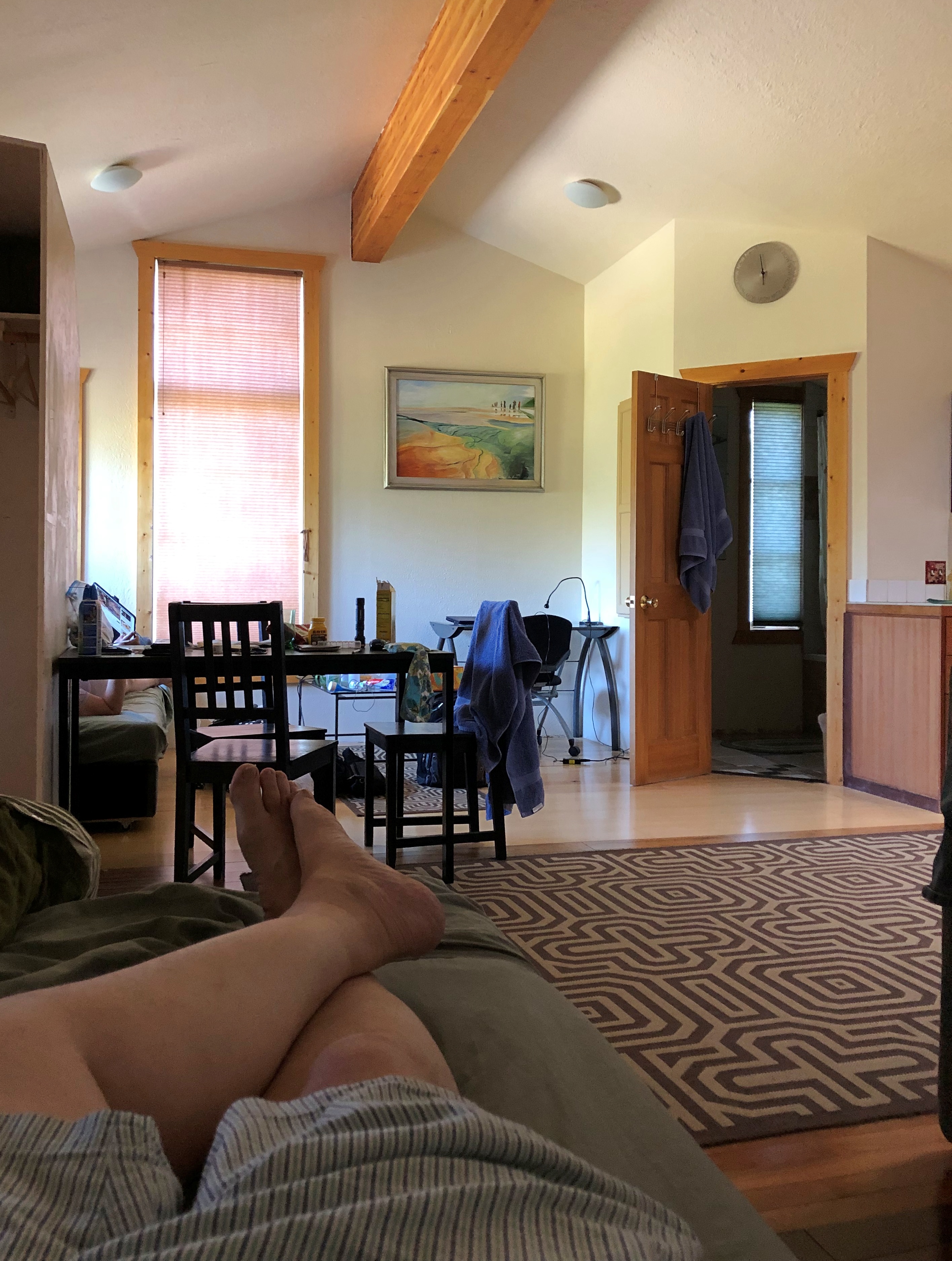
Waiting are the comforts of a rented room. Ahh.

Chapel of the Transfiguration

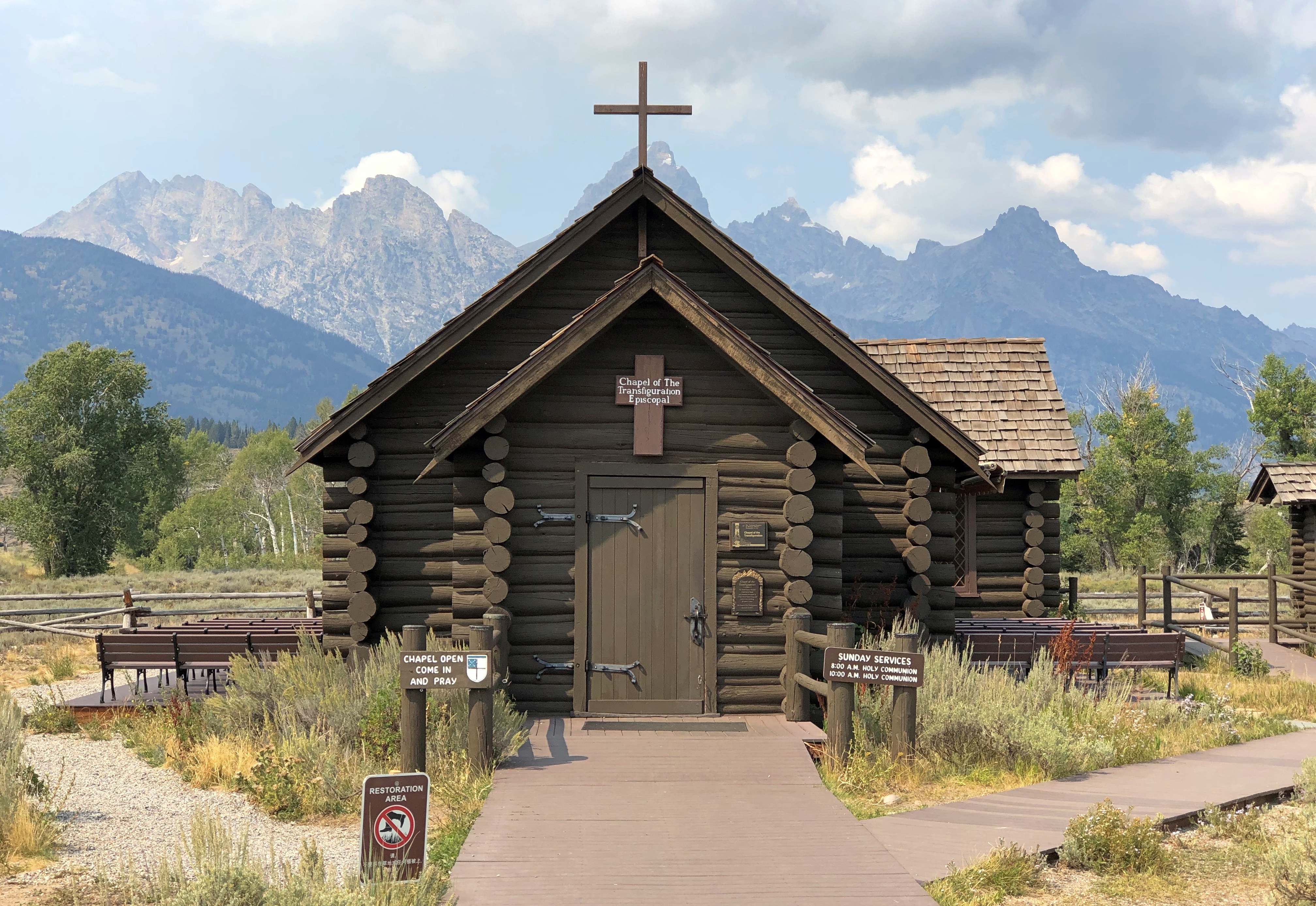
The place to contemplate the great outdoors is usually outdoors. But not quite always.Chapel of the Transfiguration, Wyoming

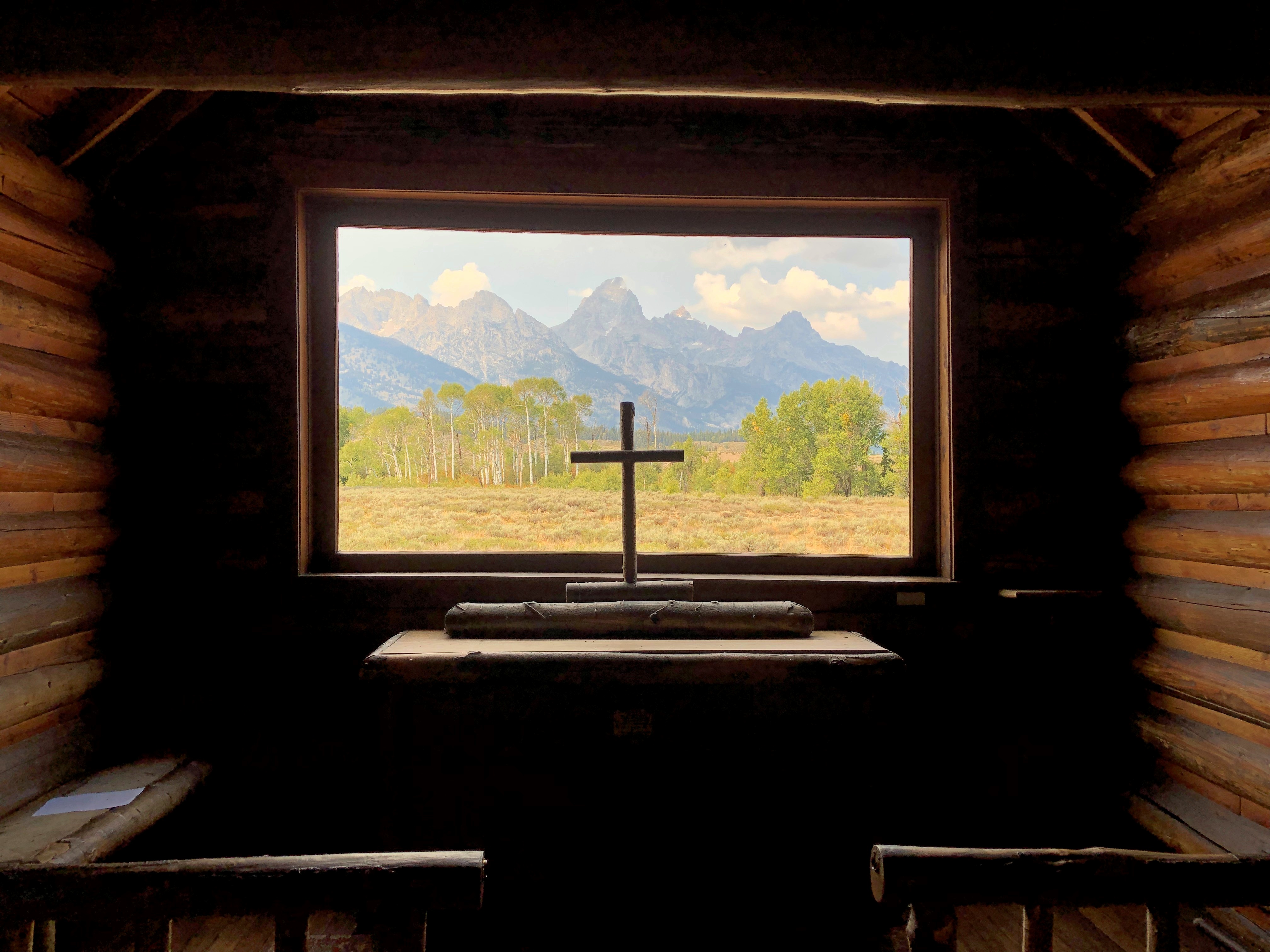
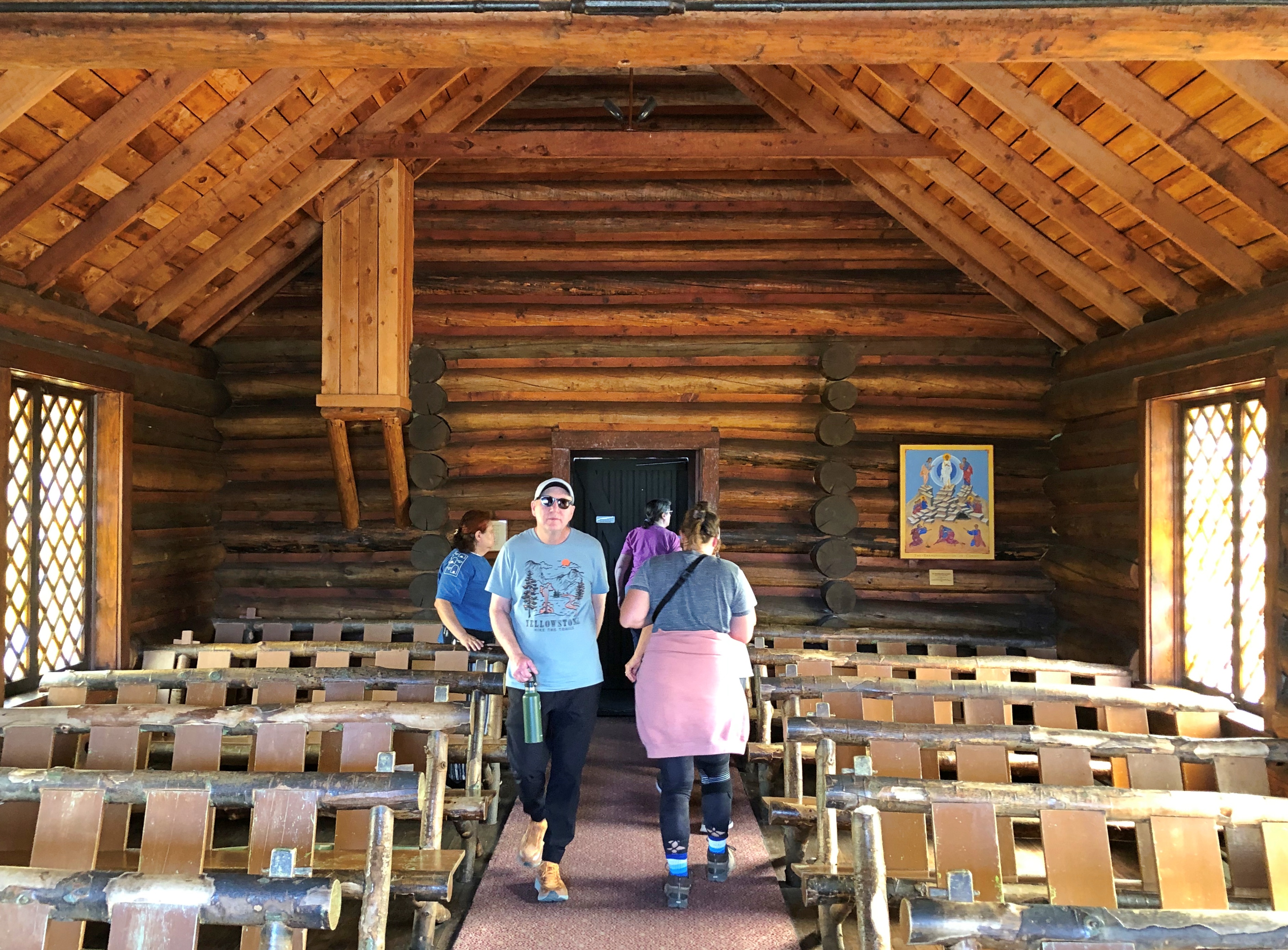
About a month ago, we entered Grand Teton National Park at the Moose Entrance. Not far inside the park is the Chapel of the Transfiguration.Chapel of the Transfiguration, Wyoming Chapel of the Transfiguration, Wyoming

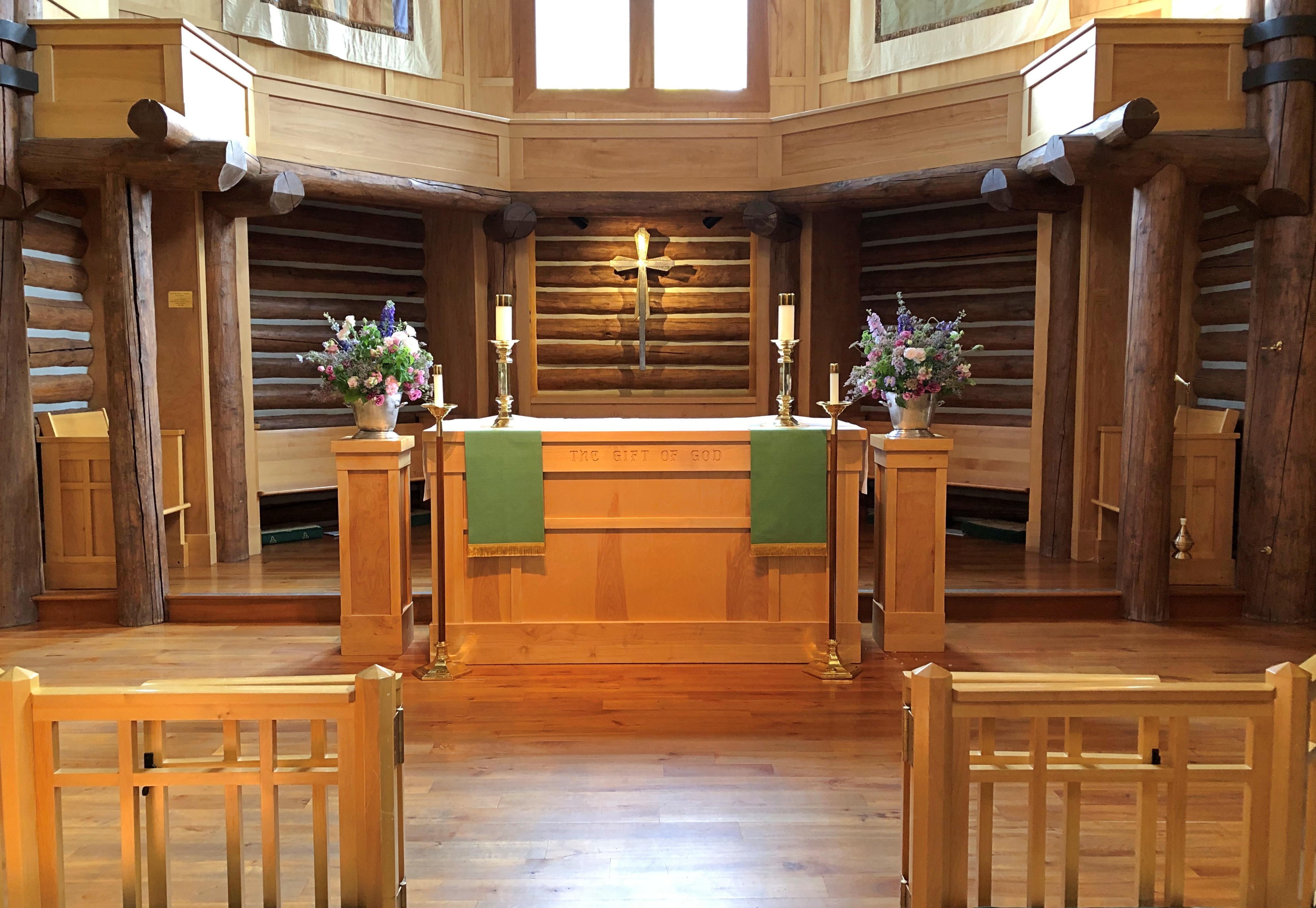
Rustic, the style is called. A picture window behind the altar, looking toward the Cathedral Group of mountains, was clearly no accident. Liturgical east in this case points to the grandeur of Creation.

The chapel has stood in this spot in Wyoming for nearly 100 years, built to serve guests at the various dude ranches that existed in the area before it was a national park. Grand Teton became a national park in 1929, with President Coolidge inking the bill at the tail end of his administration, but even then the chapel wasn’t in the park, which didn’t expand down to Moose until 1950.

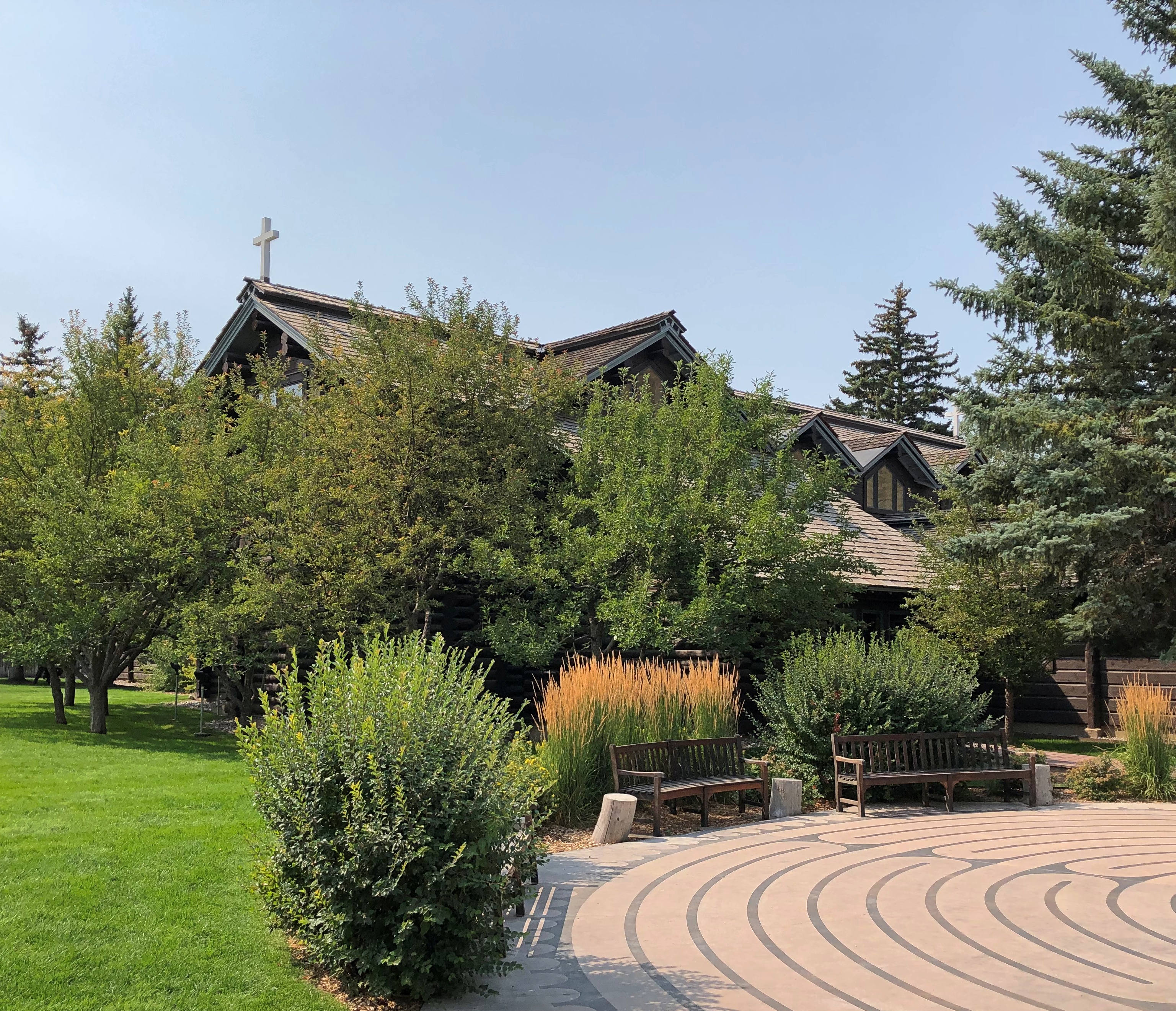
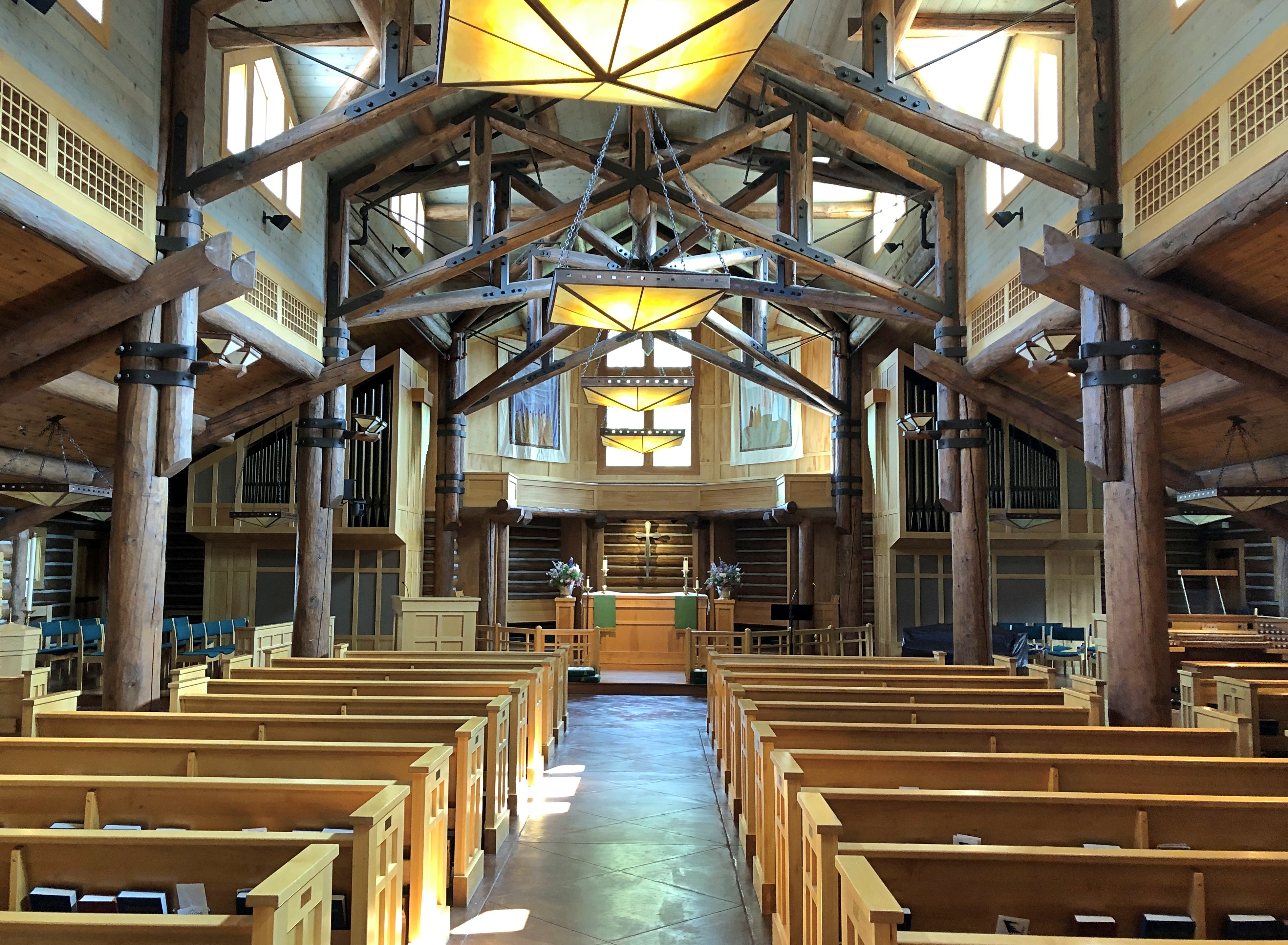
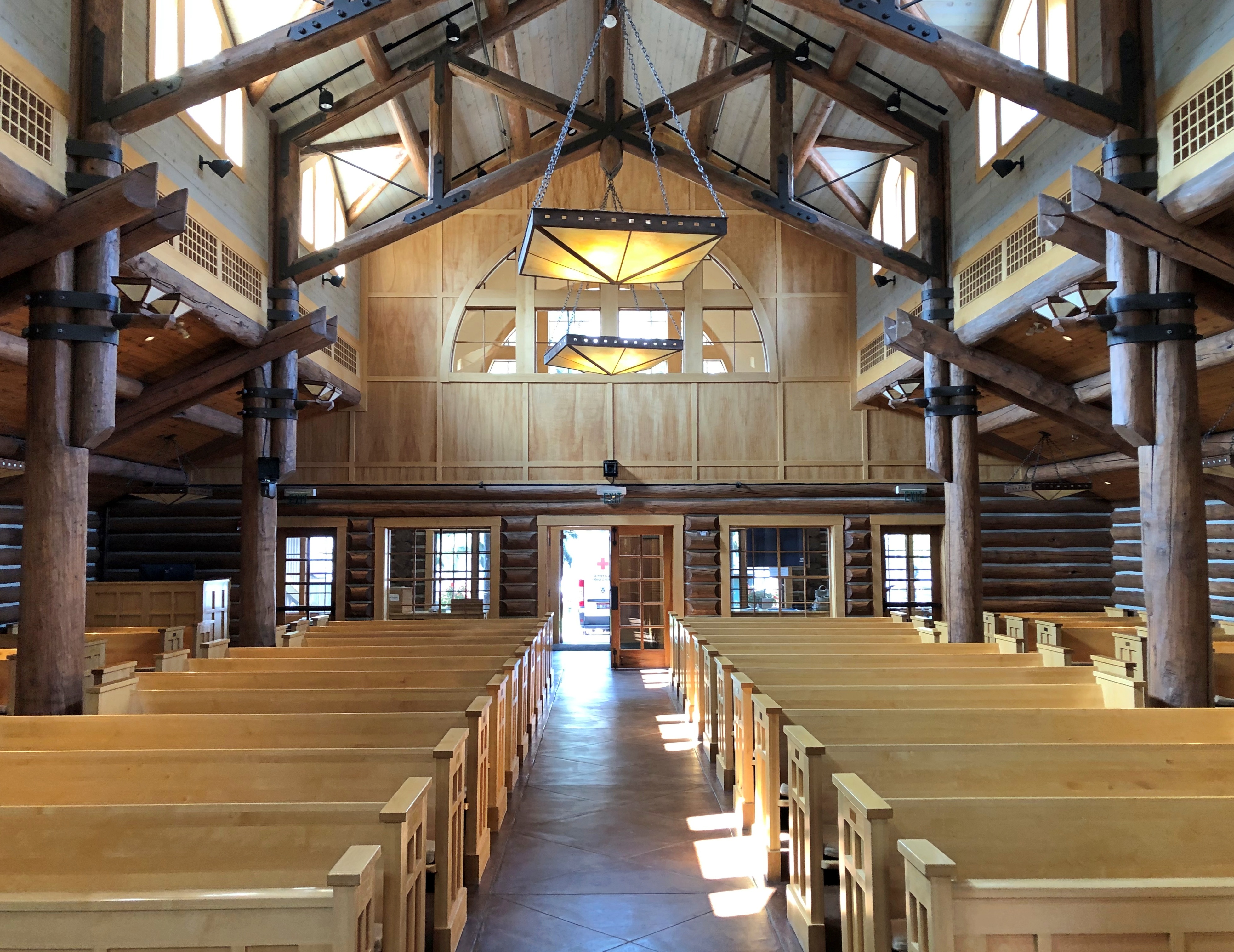
Transfiguration is an Episcopal chapel, associated with St. John’s Episcopal Church in Jackson, Wyoming. St John’s, a large log structure over 100 years old, is just off the busy main street in that town, a little apart from the many shops and restaurants and attractions. We spent a while in Jackson before entering the Grand Teton NP, including a visit to St. John’s.St John's Episcopal, Jackson, Wyoming St John's Episcopal, Jackson, Wyoming St John's Episcopal, Jackson, Wyoming St John's Episcopal, Jackson, Wyoming

The church was open, but no one else was there. If any place qualifies as the beaten path, Jackson, Wyoming is it. And as usual, it took about a minute to get off the beaten path.

Dam It

Plenty of people visit places simply because they’ve been in some famous bit of entertainment, and can’t say I’m immune to the impulse. Still, my choices are a little more – obscure. Eccentric? I’ll bet the Grand Coulee Dam never appears on formulaic lists like these, mainly because the compiler (he, she or it) has never heard of the Woody Guthrie song of that name.

Or the version I like best, by the King of Skiffle himself.

I’d probably have heard of the Grand Coulee Dam anyway, but would we have gone maybe an hour out of our way in eastern Washington to see it, but for the song? I’m going to say no, because how many dams are there, even very large ones, on the rivers of North America? A lot. How many had skillful publicists like Grand Coulee? Not as many.

The Bonneville Power Administration paid Guthrie to write some songs about the mighty Columbia, and write he did, including “Grand Coulee Dam.” Fairly obscure, maybe, but not unknown more than 80 years later. I’d say the agency got its money’s worth.

They got some extraordinary verse.

In the misty crystal glitter of that wild and windward spray,
Men have fought the pounding waters and met a watery grave,
Well, she tore their boats to splinters but she gave men dreams to dream
Of the day the Coulee Dam would cross that wild and wasted stream.

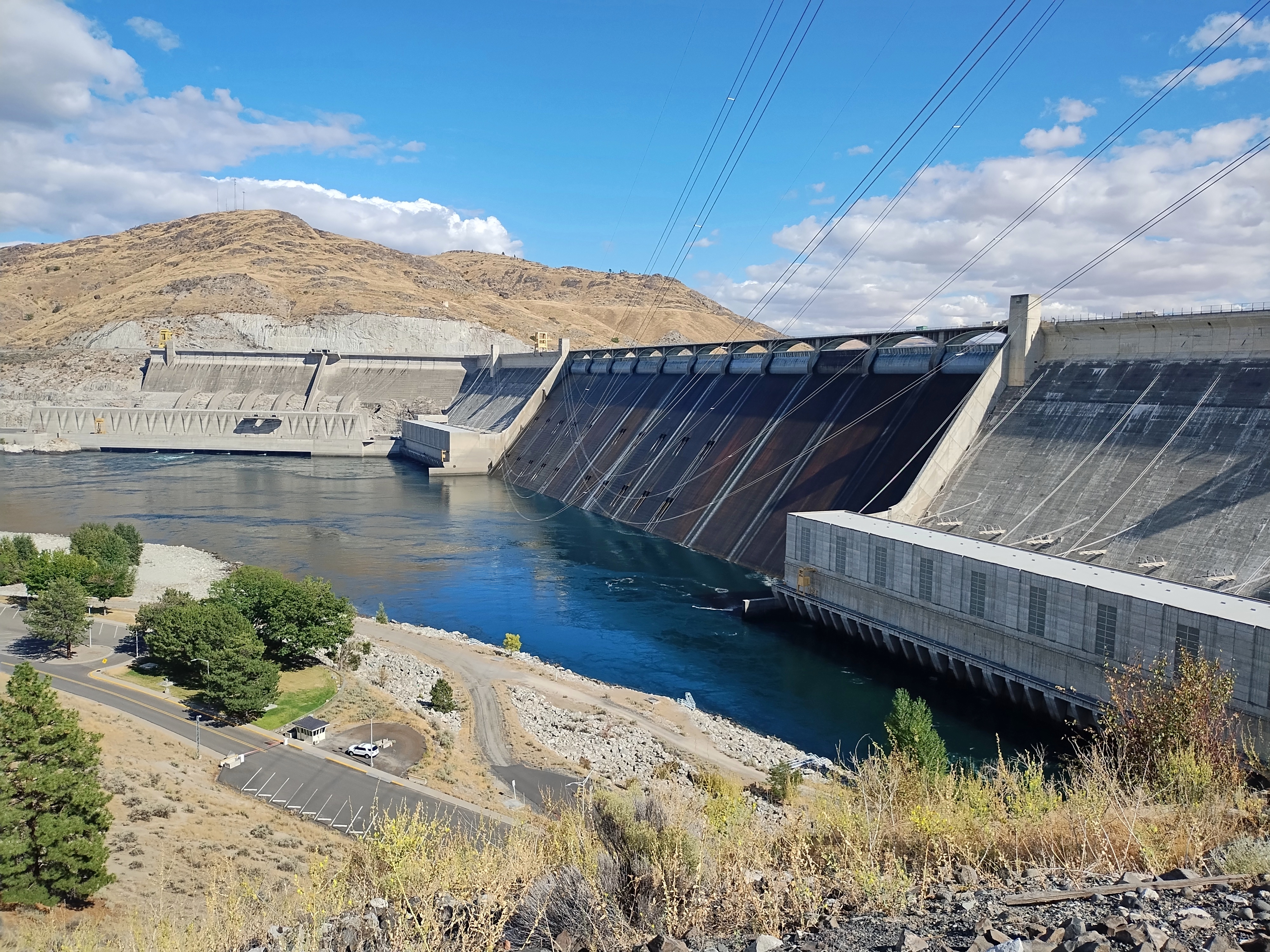
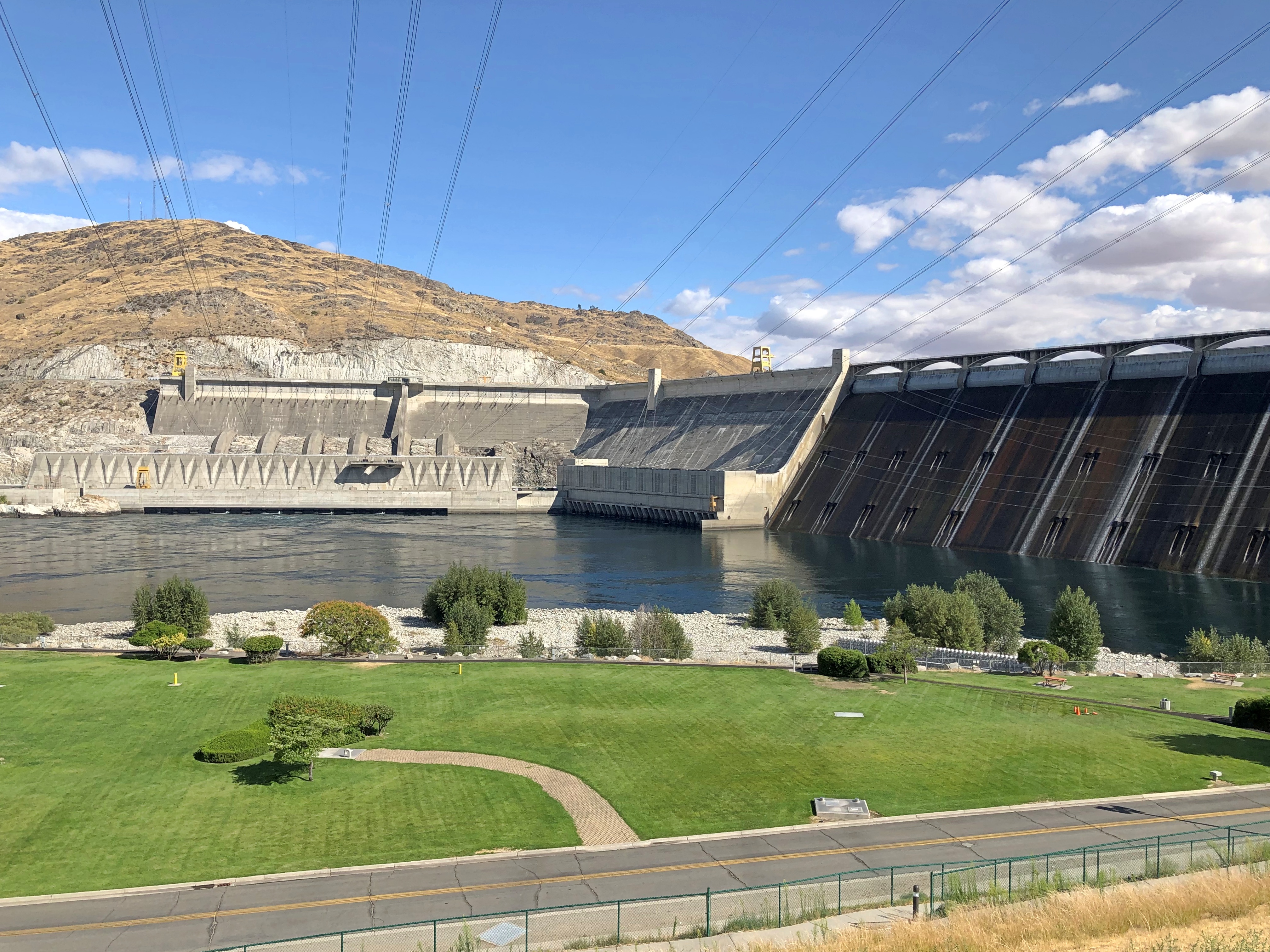
The dam doesn’t disappoint, if you’ve a eye for infrastructure.Grand Coulee Dam Grand Coulee Dam

How is it that human beings can building something that large?

“Grand Coulee Dam, The Eighth Wonder of the World” gets right to the point of awe-inspiring comparisons.

“Holding in check the mighty Columbia, at a point where the river flows through a lava-rimmed, 1600-foot-deep chasm on its way to the sea, the dam dwarfs the efforts of the Builder Cheops, to whom is accredited the largest of the pyramids at Gizah, Egypt,” the booklet says.

“The ancient sepulcher of kings is surpassed in size nearly four times by the Grand Coulee Dam…”

The payoff.Grand Coulee Dam

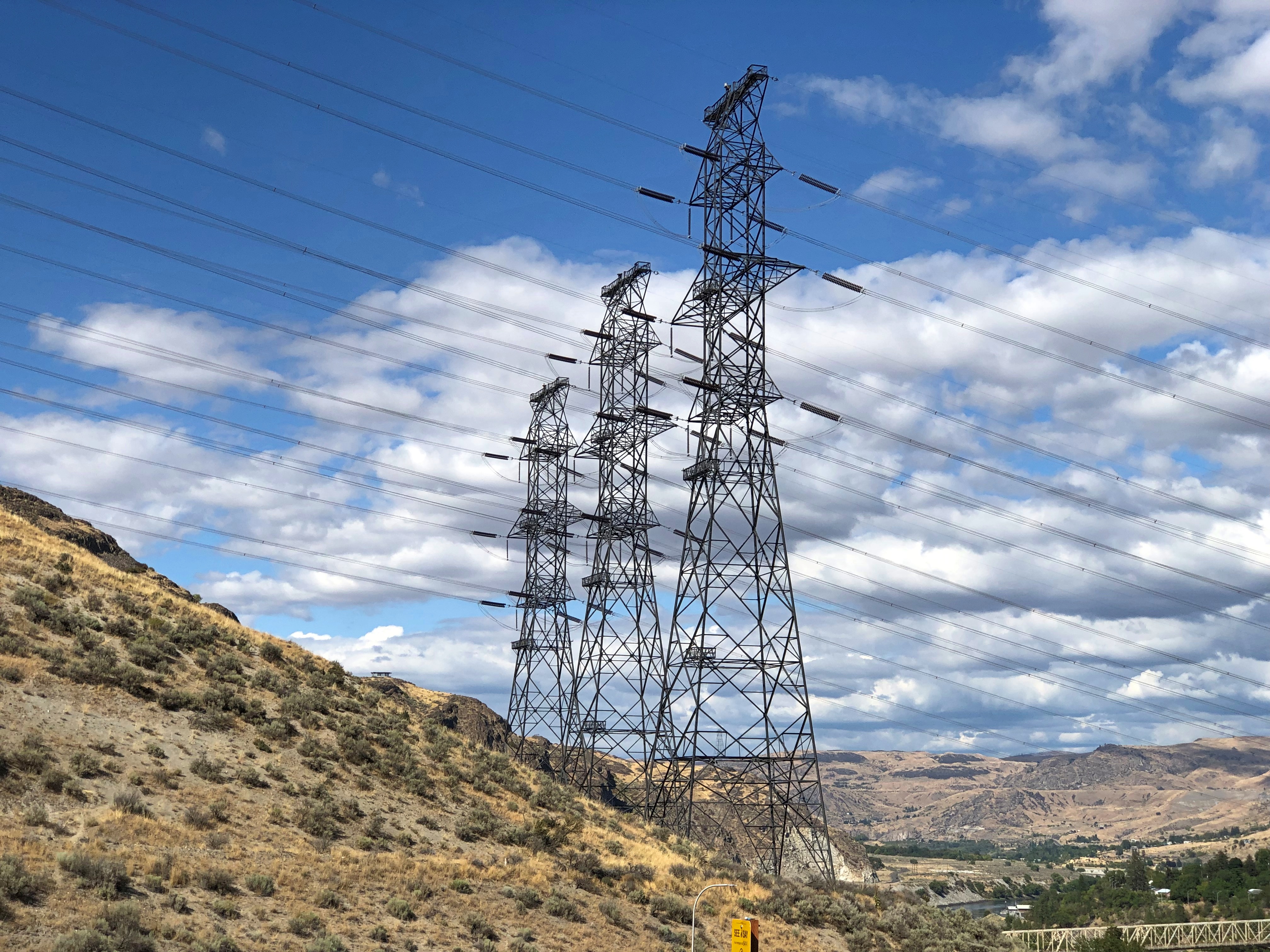
Roosevelt Lake provides irrigation and recreation, but the core function is its hydropower generation capacity, which is 6,645 MW. Number-one in the United States and still among the top dams worldwide, on a list that’s mostly crowded with Chinese structures these days.

By the time Guthrie wrote the song, he was able to include this rousing verse.

Now in Washington and Oregon you can hear the factories hum,
Making chrome and making manganese and light aluminum,
And there roars the flying fortress now to fight for Uncle Sam,
Spawned upon the King Columbia by the big Grand Coulee Dam.

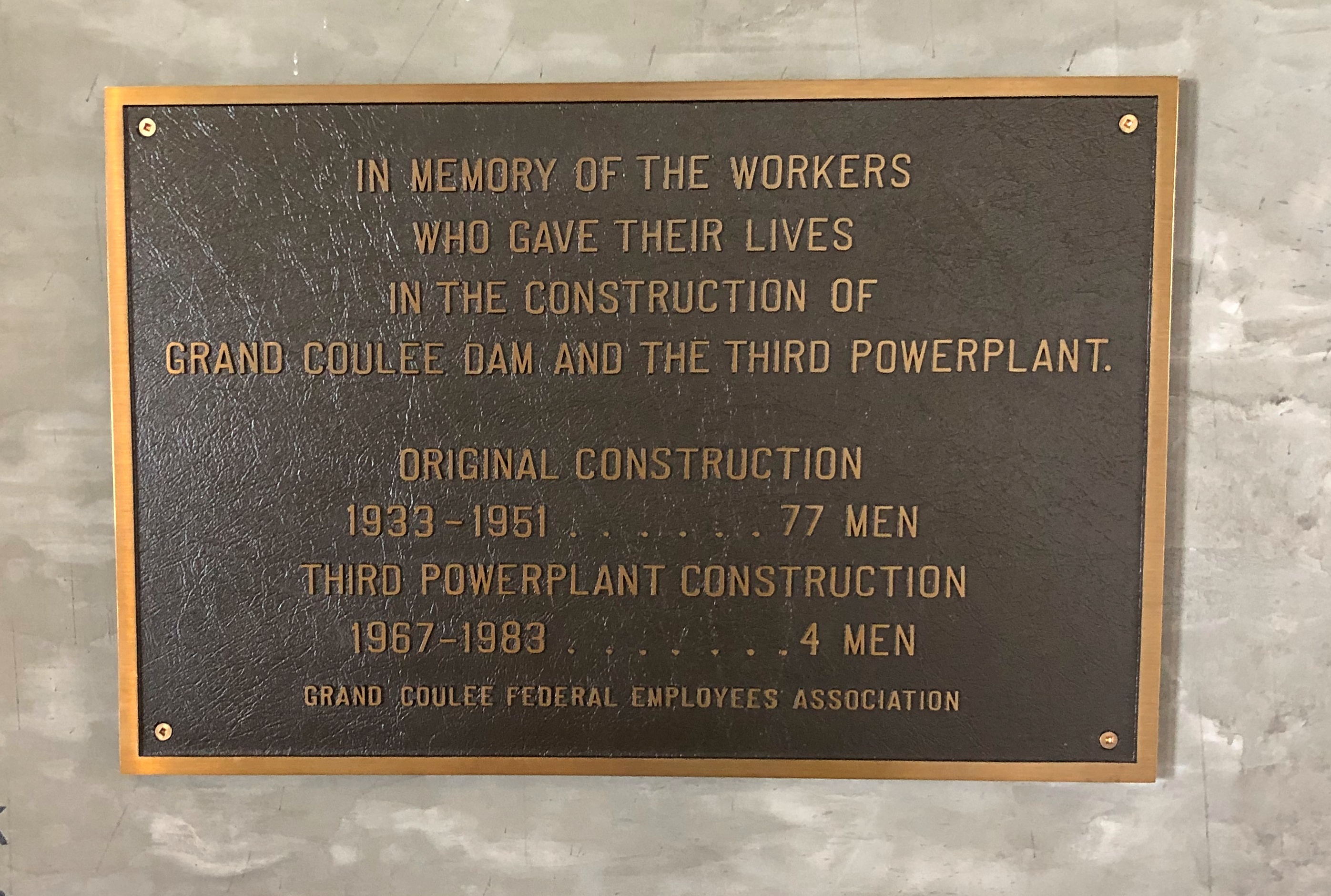
The dam has a visitor center with a mid-sized museum about the dam, including such artifacts as building tools, enormous corona rings, the wheelchair available to President Roosevelt when he came to dedicate the dam, bottles that held water from each state and territory that were used in a ceremony at the dam in 1951, and film and stills from the construction itself. Woody Guthrie and the song get a mention, as did ordinary dam workers and people displaced by the creation of Roosevelt Lake. There is a map illustrating the 31 dams of the Federal Columbia River Power System and a plaque for workers who died on the job.Grand Coulee Dam

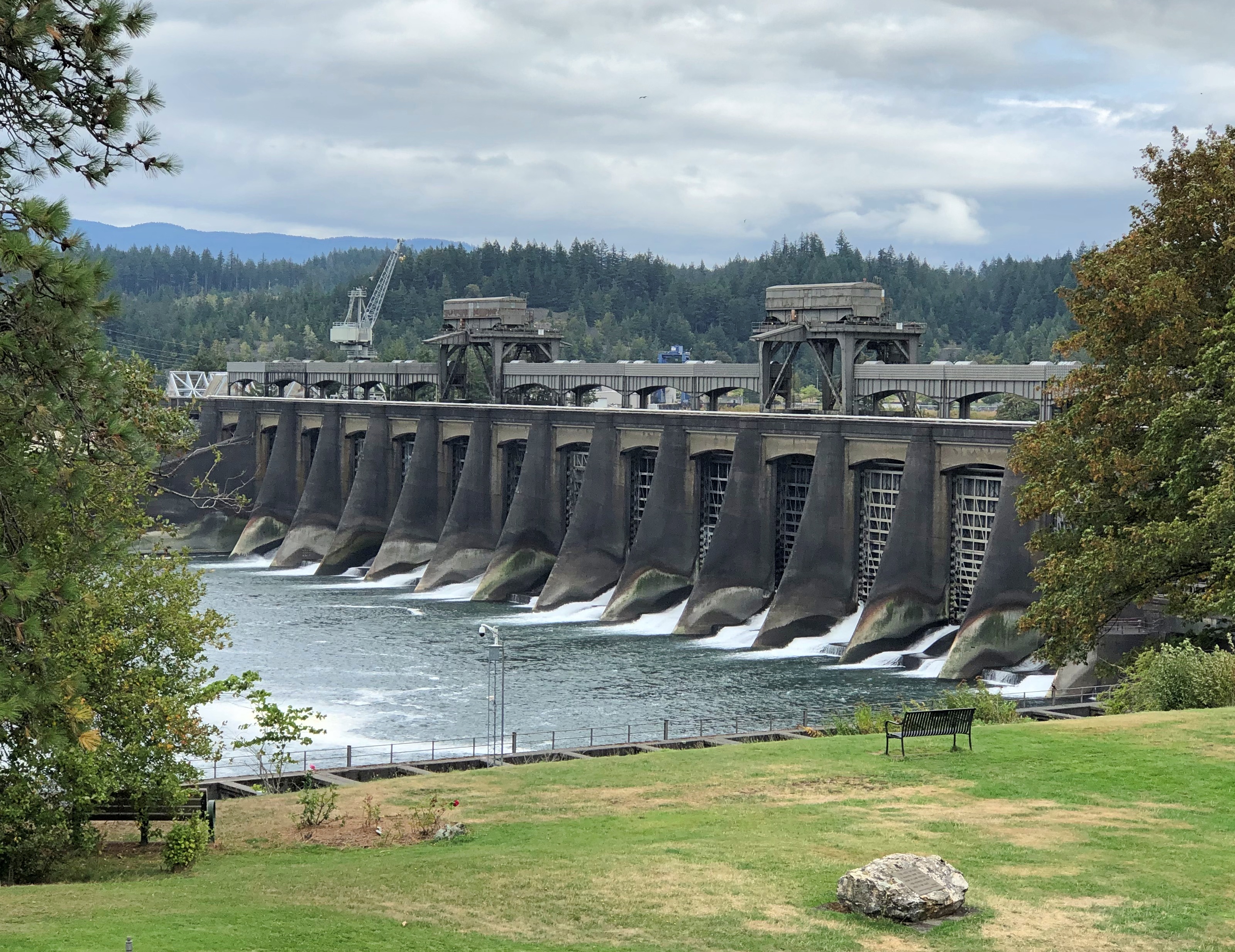
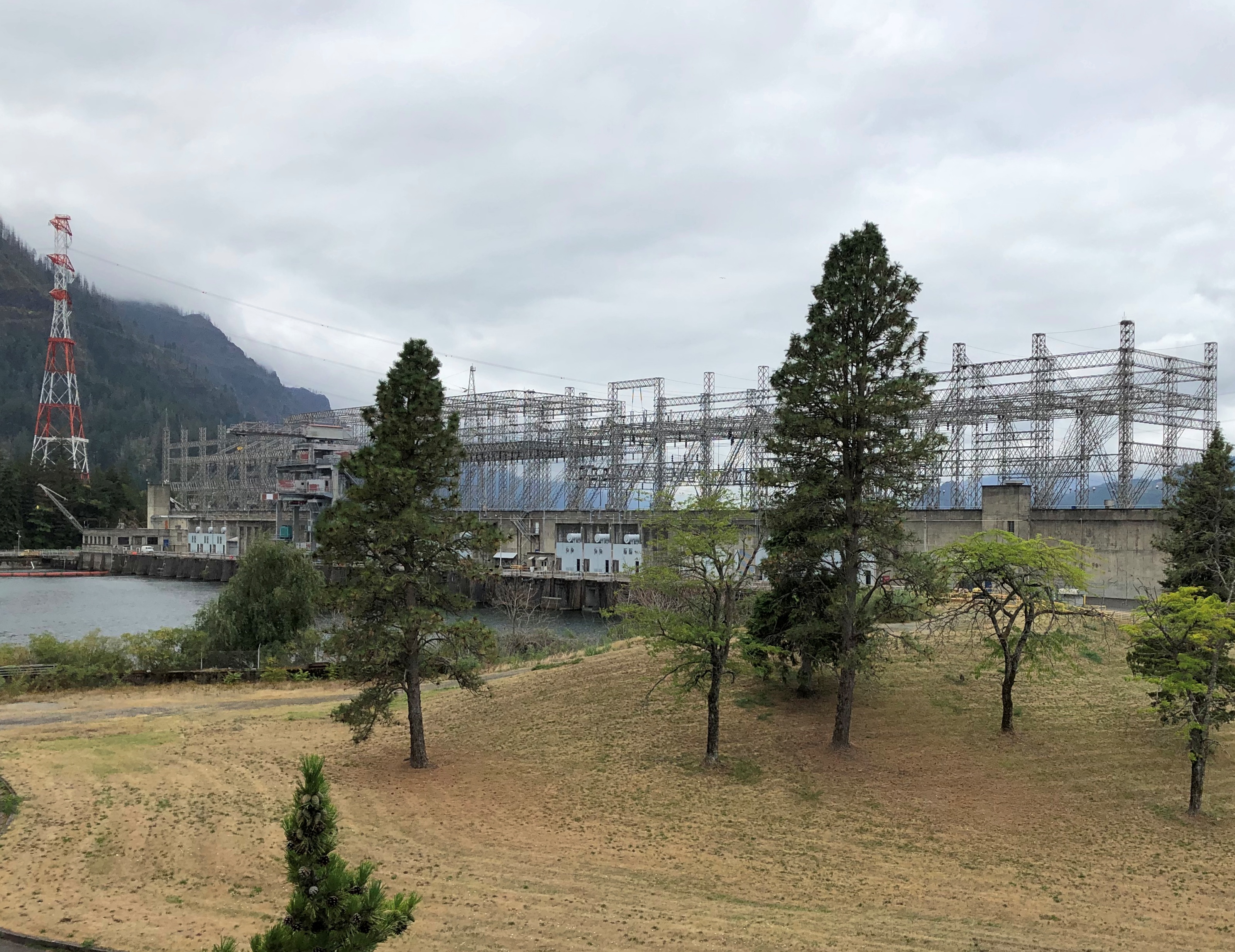
Grand Coulee wasn’t the only dam we saw. On our return trip, we paid a visit to the Bonneville Dam, also on the mighty Columbia, just further downstream.Bonneville Dam Bonneville Dam

Also mentioned in a Woody Gurthrie song, “Jackhammer Blues.” The one I prefer is a late Weavers’ modified version.
Hammered on the Bonneville, hammered on the Butte
Columbia River to the five mile chute…

Hammered on the Boulder, Coulee, too
Always broke when the job was through

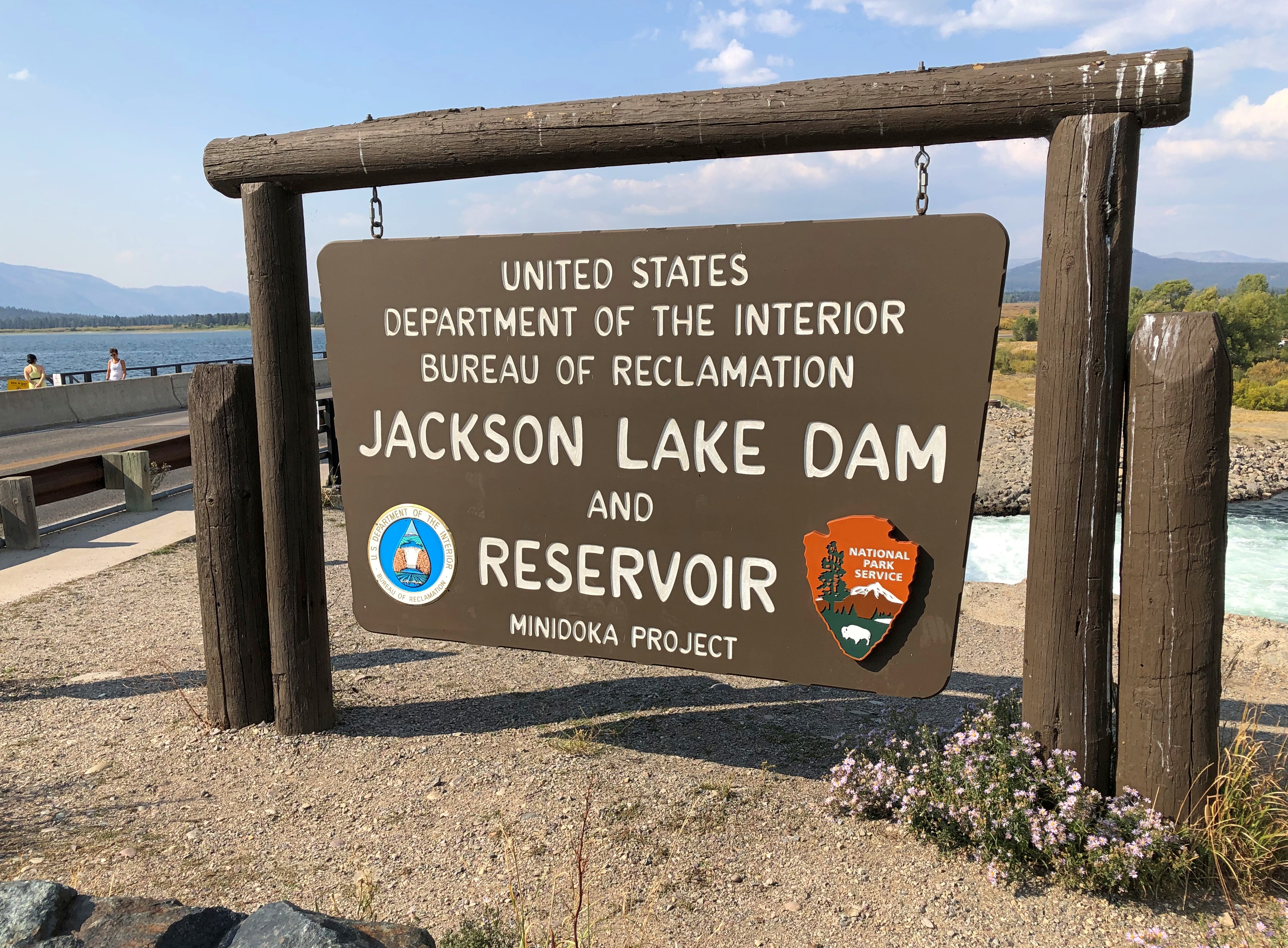
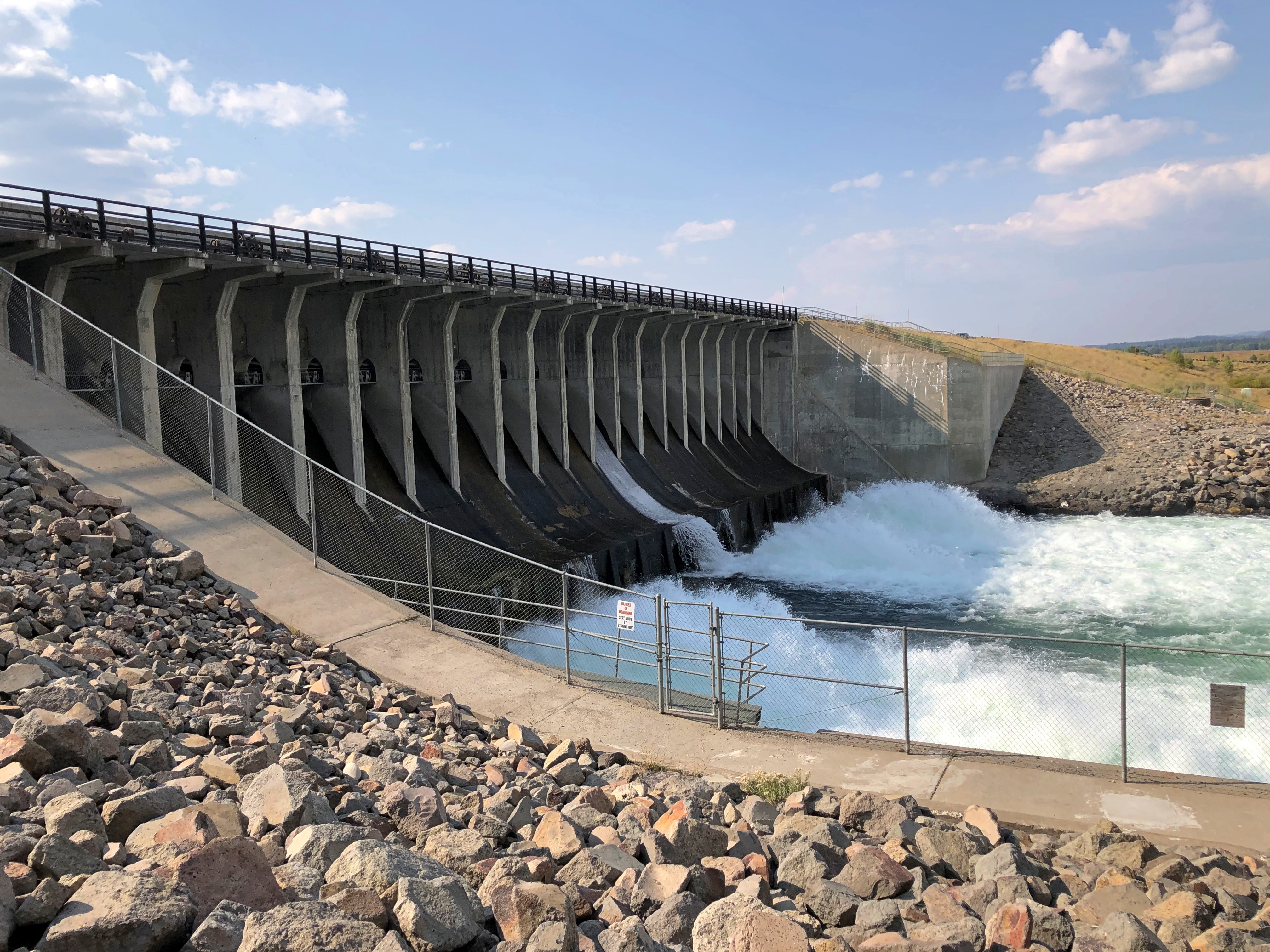
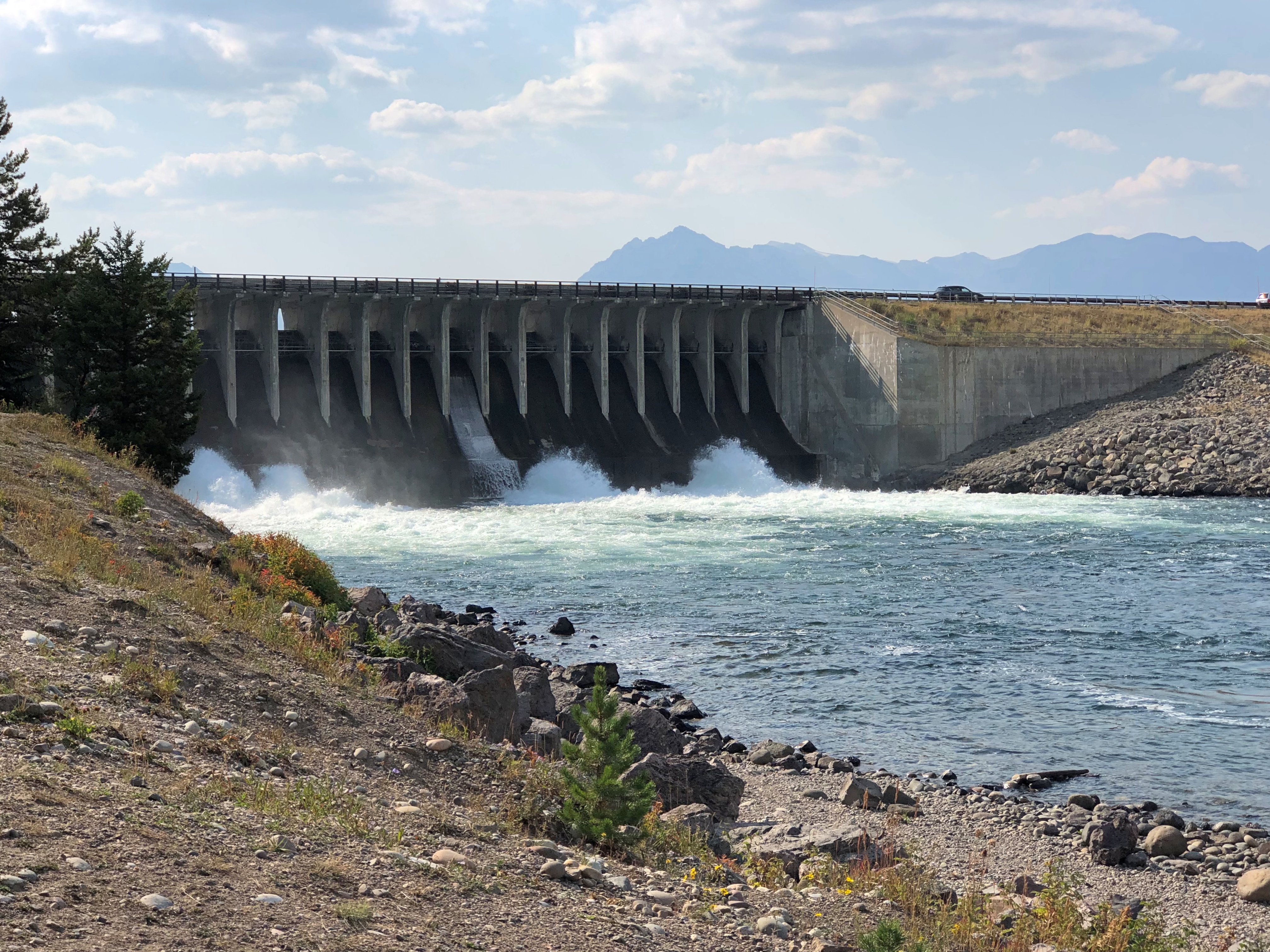
One more dam, much smaller, but impressive in its way. The Jackson Lake Dam in Grand Teton NP.

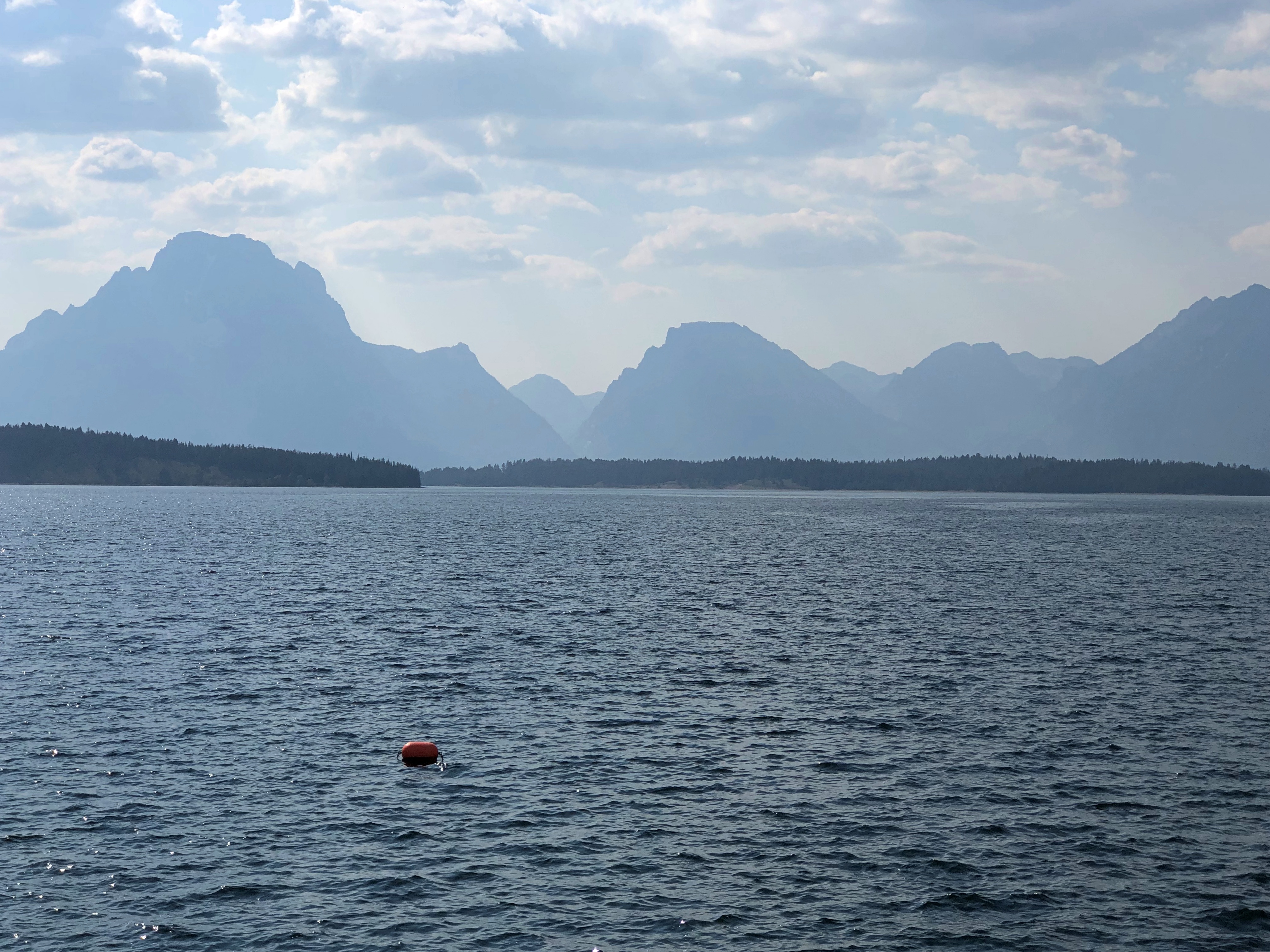
Holds back the Snake River to form an enlargement of a natural lake.Lake Jackson

Not mentioned in any song that I know of, but a tip of a massive reservoir system.

Helena, Montana

Missing a hike around Devils Tower meant we had time for other things, including a fine second breakfast in Hulett, Wyoming (pop. 300+). I asked the waitress what it was like a few weeks earlier, during the Sturgis Rally.

“Crazy,” she said, adding that the rally started on her third day on the job, for that extra measure of crazy.

She and her husband and daughter had been living on a boat for five years until recently, she also said, including a sail through the Panama Canal once. She mentioned that almost in passing, as if five years on a boat is something people often do, followed by relocating far away from any oceans. Though not Sturgis-busy, the place had more than a few customers, so I wasn’t able to get more detail.

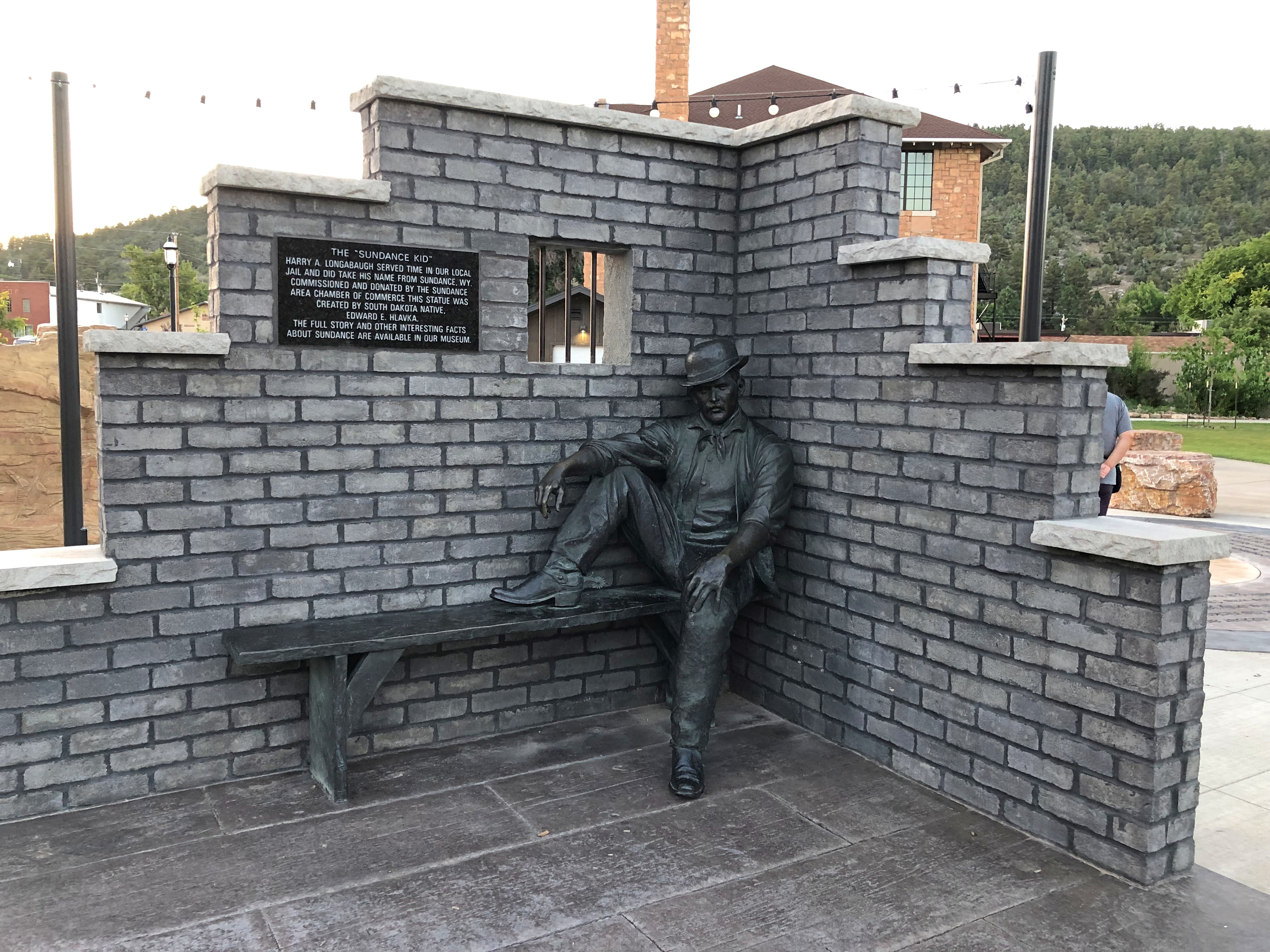
We had time to look around Sundance, Wyoming before we left. Turns out Harry A. Longabaugh spent some time in the local jug for a bit of thieving near Sundance, and so he became known as the Sundance Kid. The town of Sundance (pop. just over 1,000) wants you to know this, communicating it to passersby with a memorial in the town’s main municipal park.Sundance, Wyoming

Despite his long history of criminal shenanigans, that was apparently the only time he was imprisoned. Guess you can get away with a lot when you have the dashing good looks and vim of a young Robert Redford.

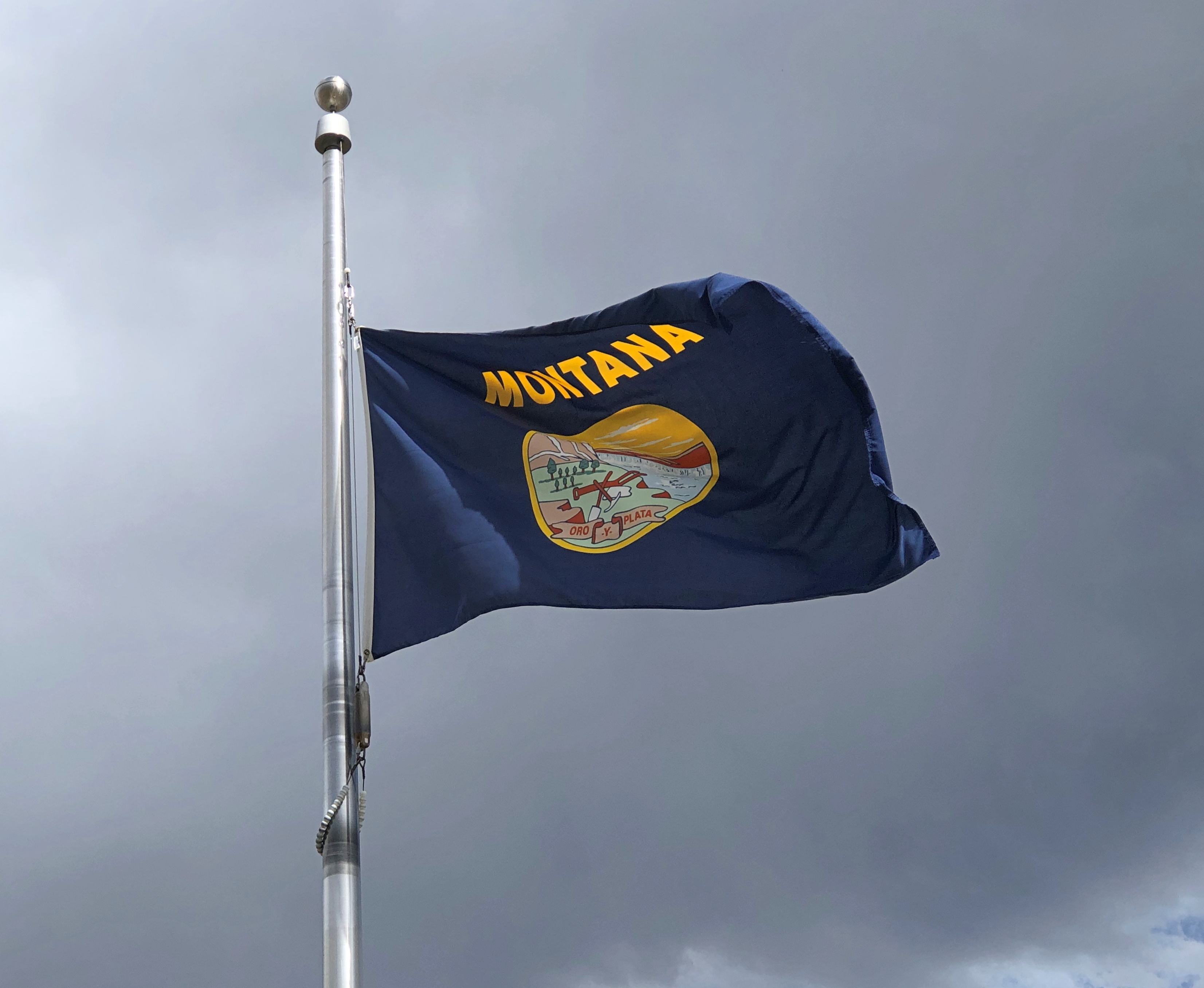
The drive from Sundance into Montana and on to Helena took up most of the day on August 21.Montana flag

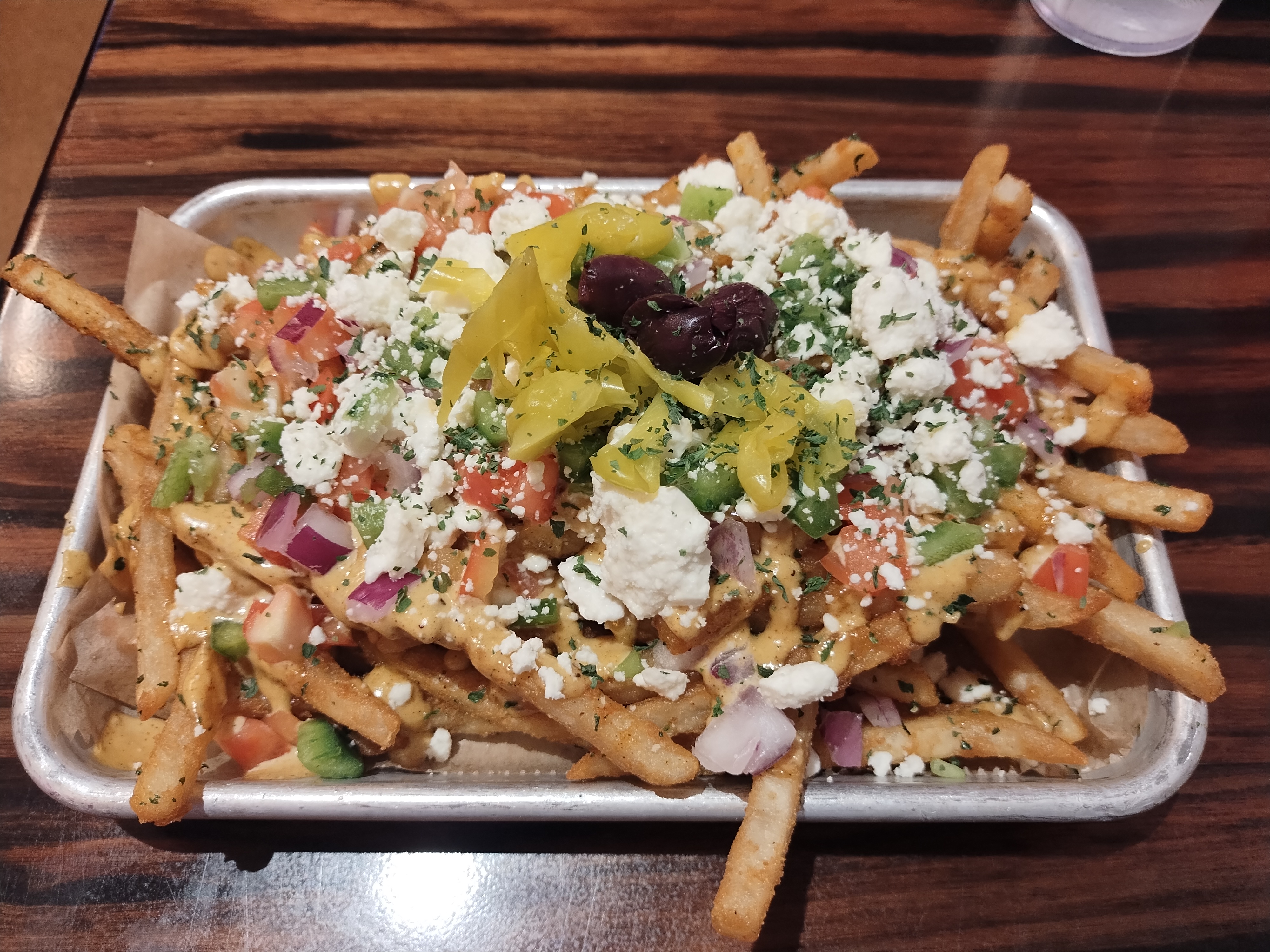
Billings, Montana, bears further investigation if we’re ever out that way again. All it takes to impress me sometimes is a terrific lunch, and that we found at Spitz Mediterranean Street Food in downtown Billings. It didn’t seem like a chain – and I’d never heard of it – but there are about 20 of them, and it seems that Billings can support one. Other locations are in such usual-suspect retail markets as southern California, Denver, Portland, Ore. and DFW.

We spent the night in Helena and woke the next morning to more than a hint of a wildfire in the air, from elsewhere in Montana, but less than an air action day.

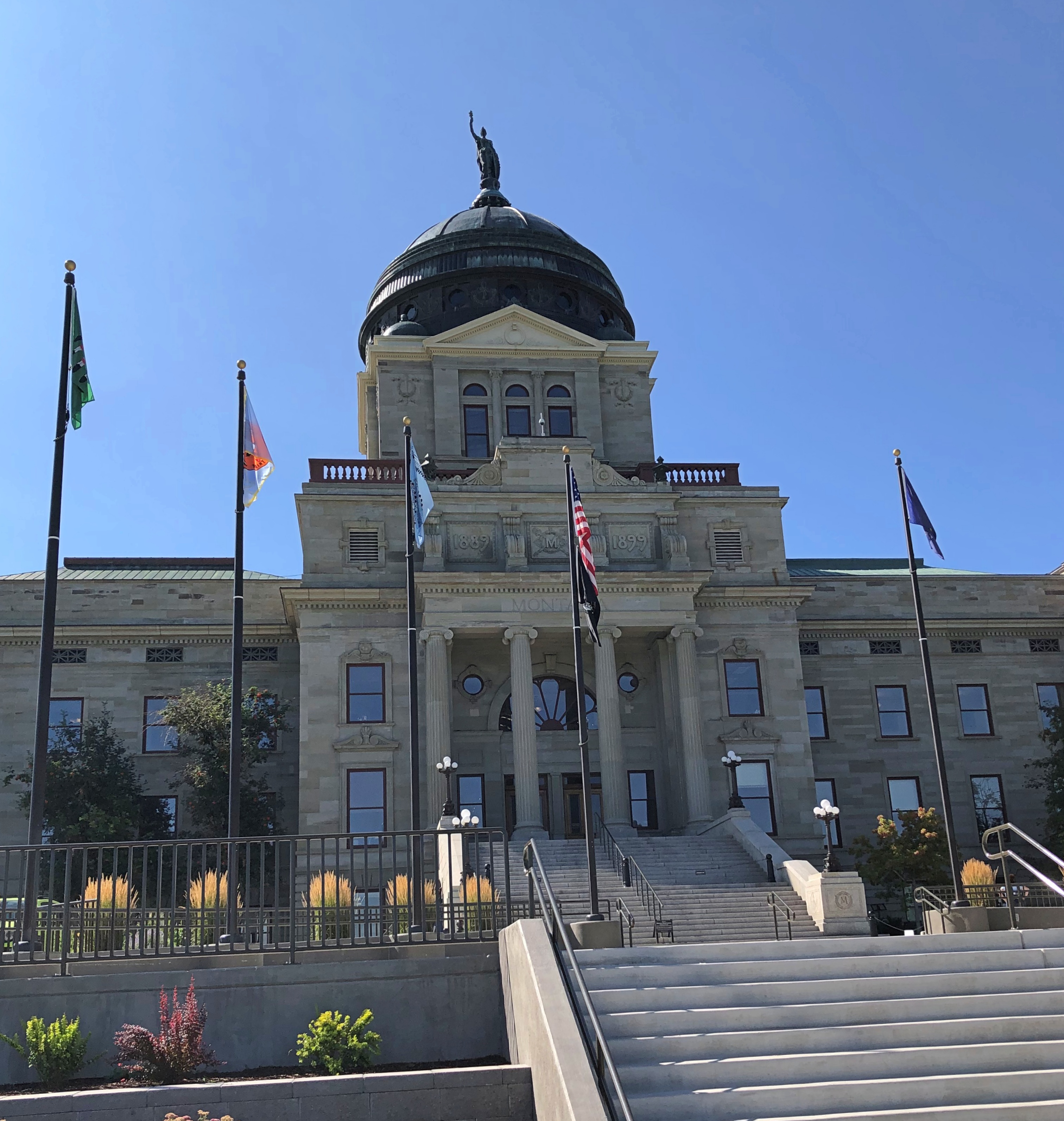
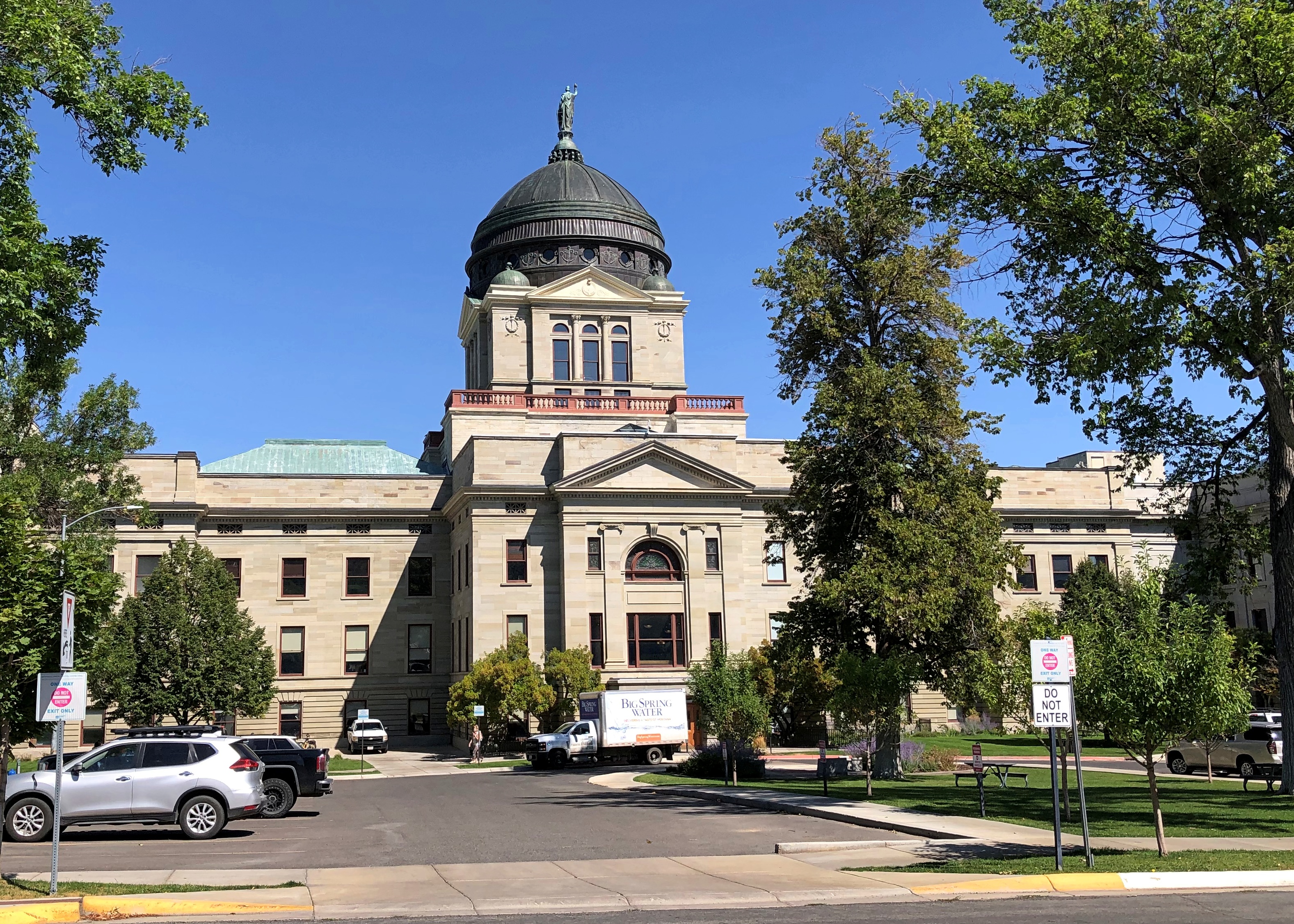
We planned to drive to the entrance of Glacier NP that day, but we couldn’t leave the capital of Montana without seeing the capitol. Front and back.Montana State Capitol Montana State Capitol

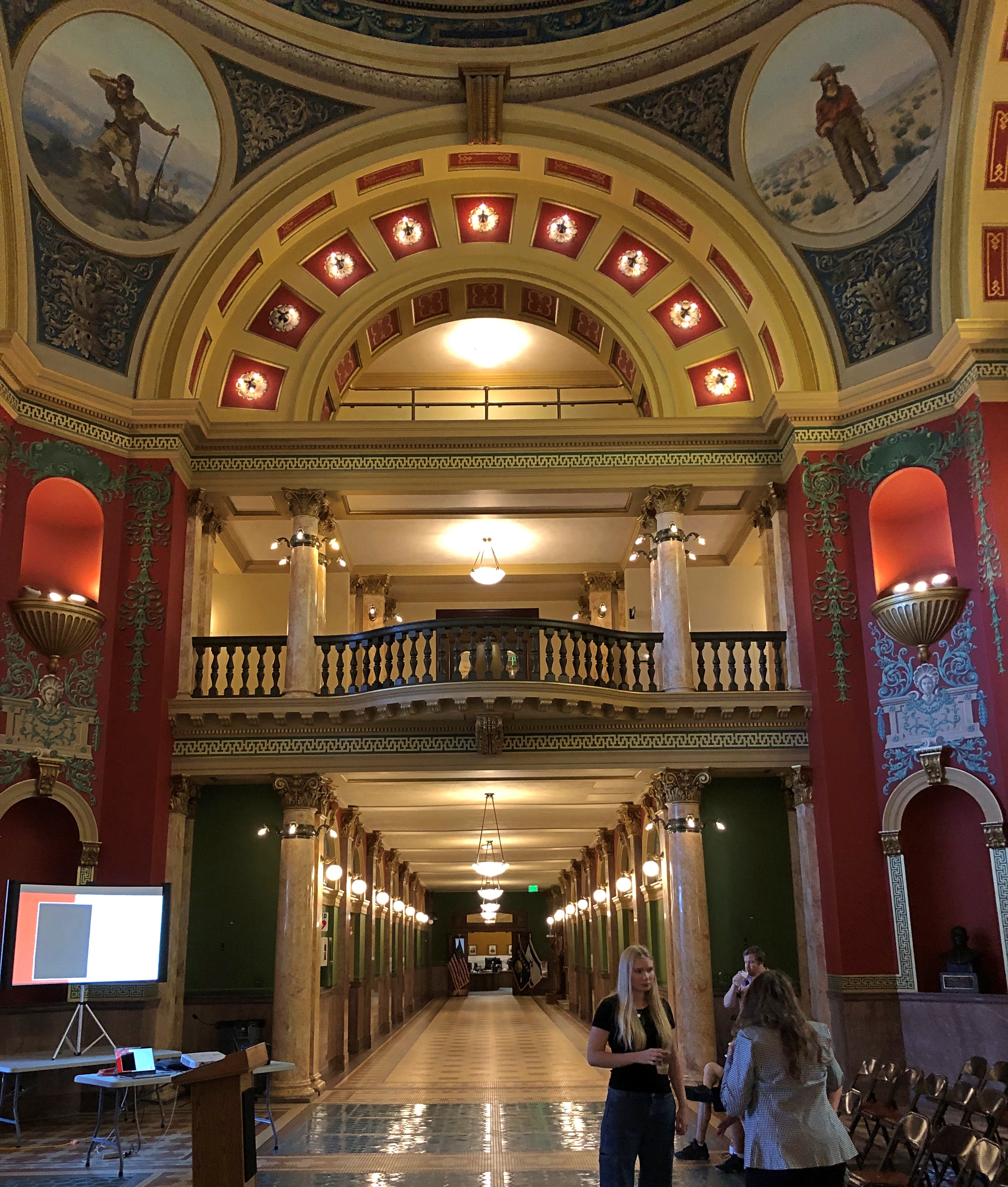
Inside.Montana State Capitol Montana State Capitol

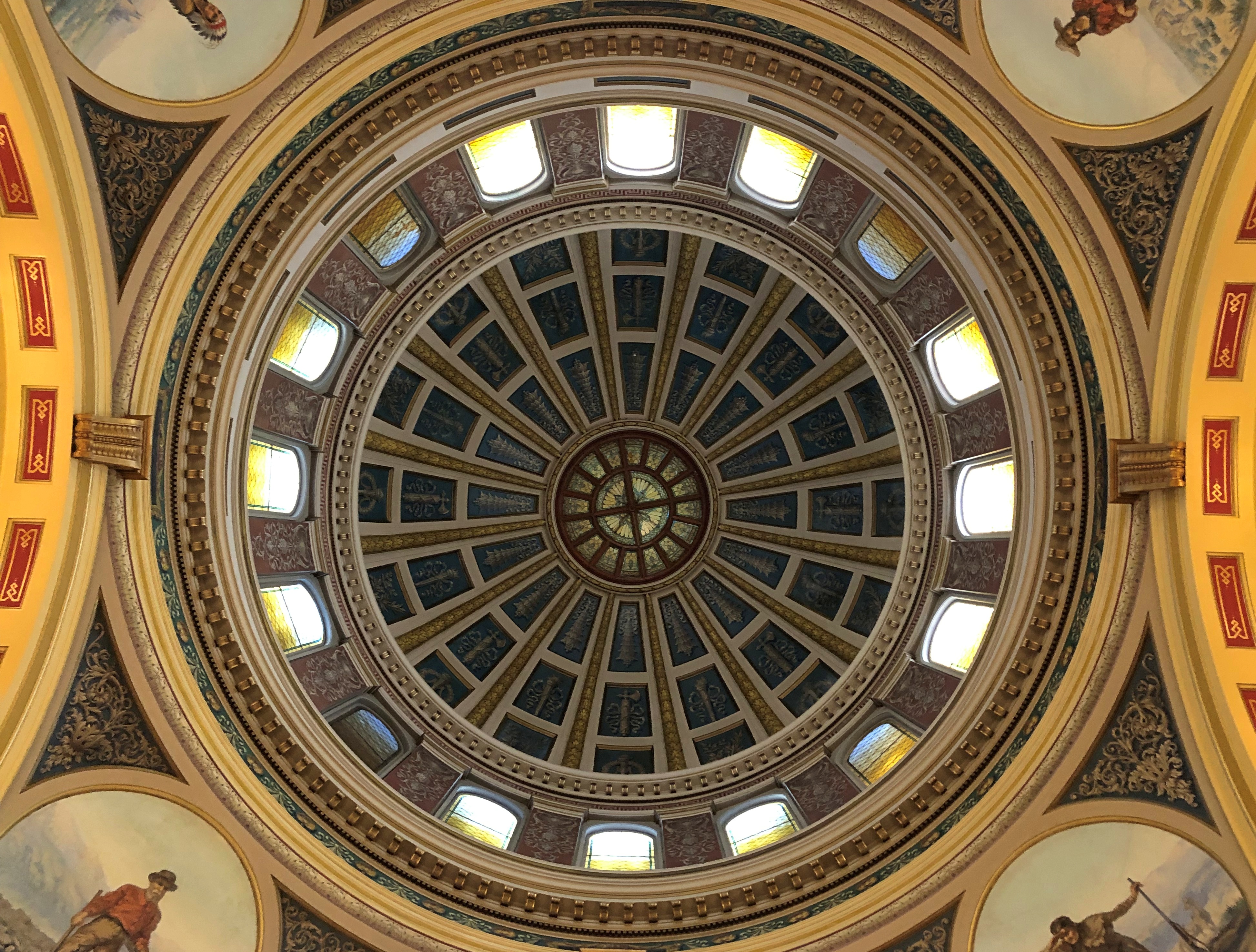
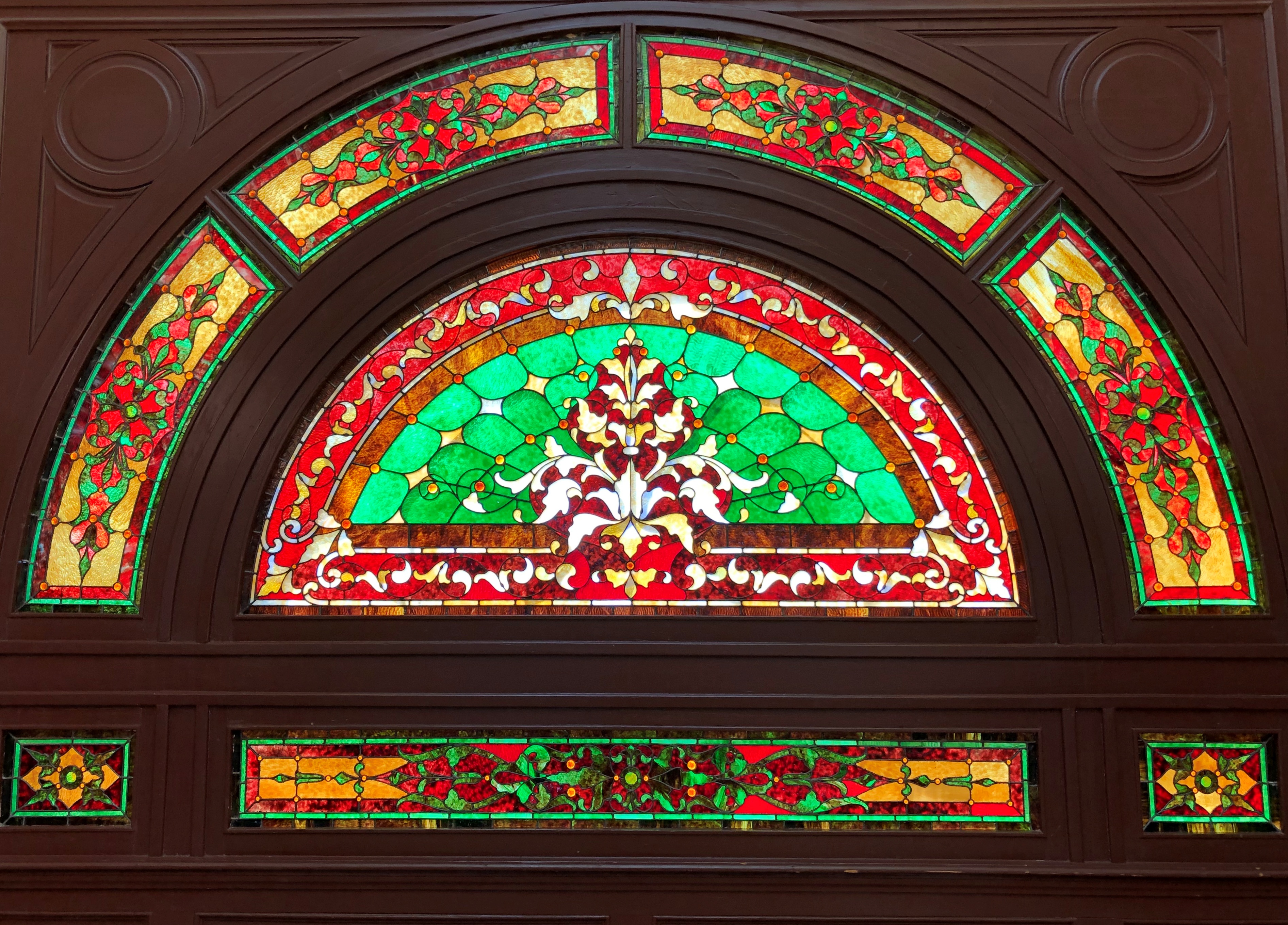
Stained glass is a little unusual in a capitol, but not unheard of.Montana State Capitol

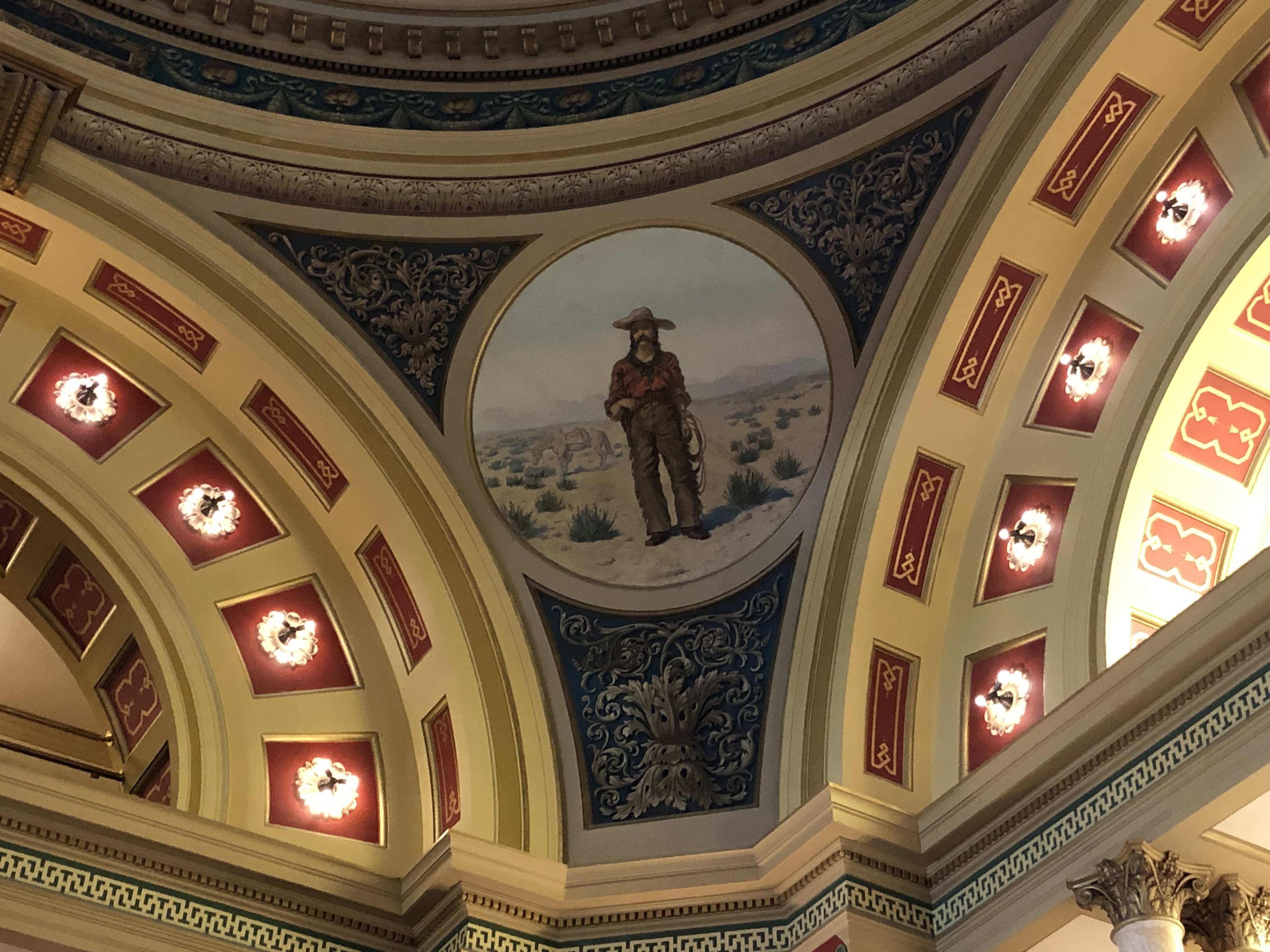
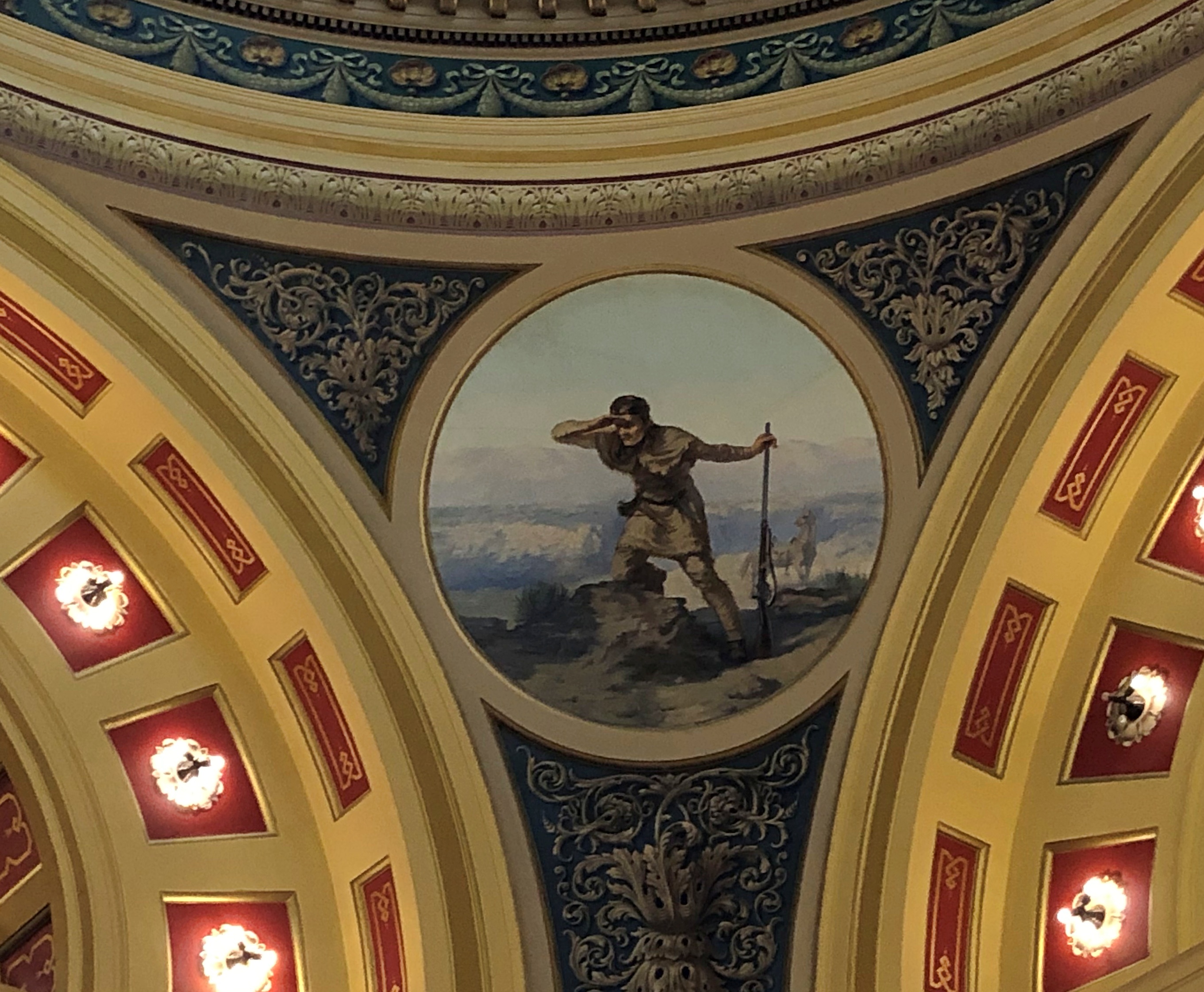
Murals are more common. Some clearly from an earlier period.Montana State Capitol Montana State Capitol

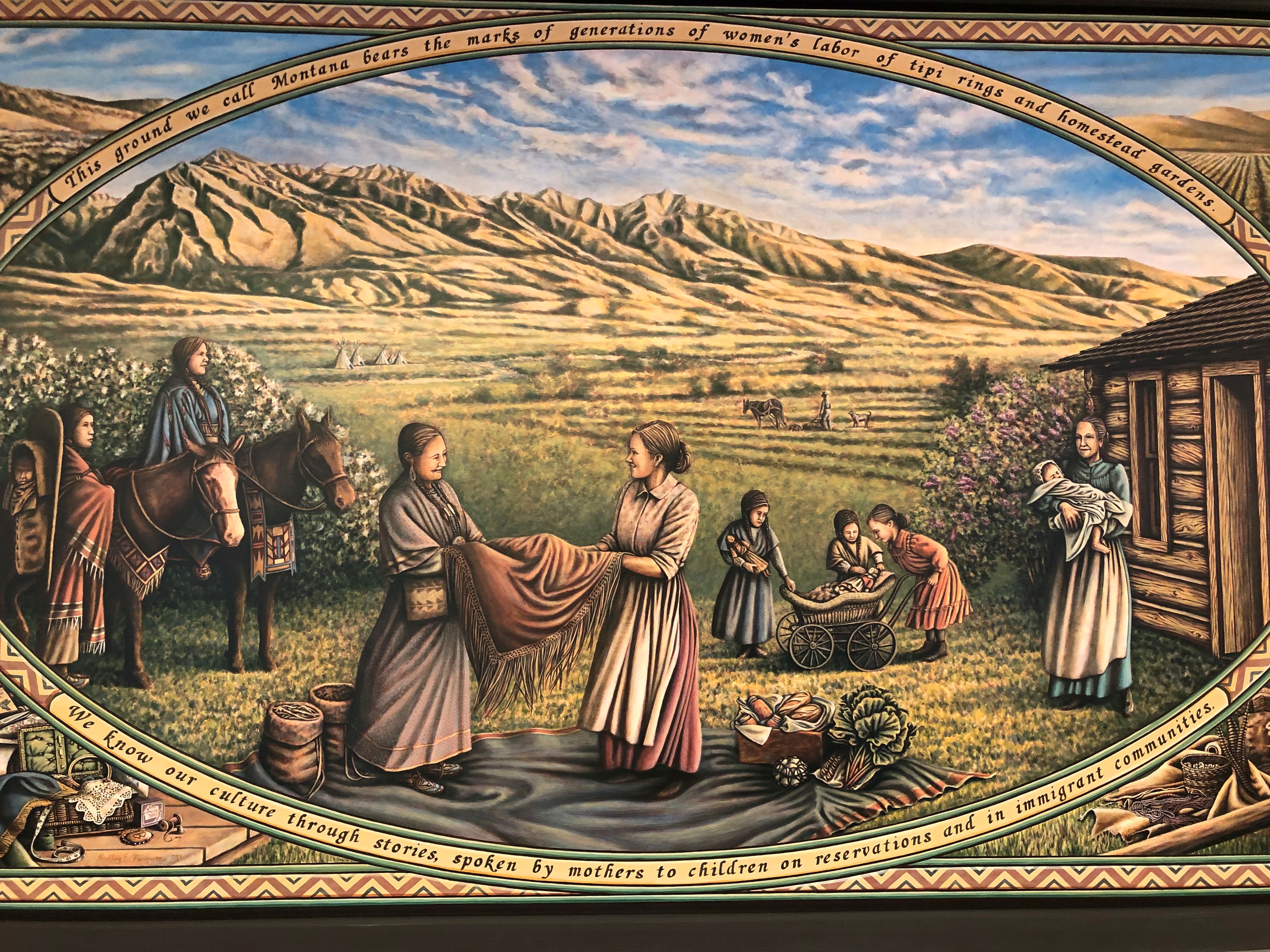
More recent murals depict scenes like this, the cooperative spirit between native and settler women.Montana State Capitol

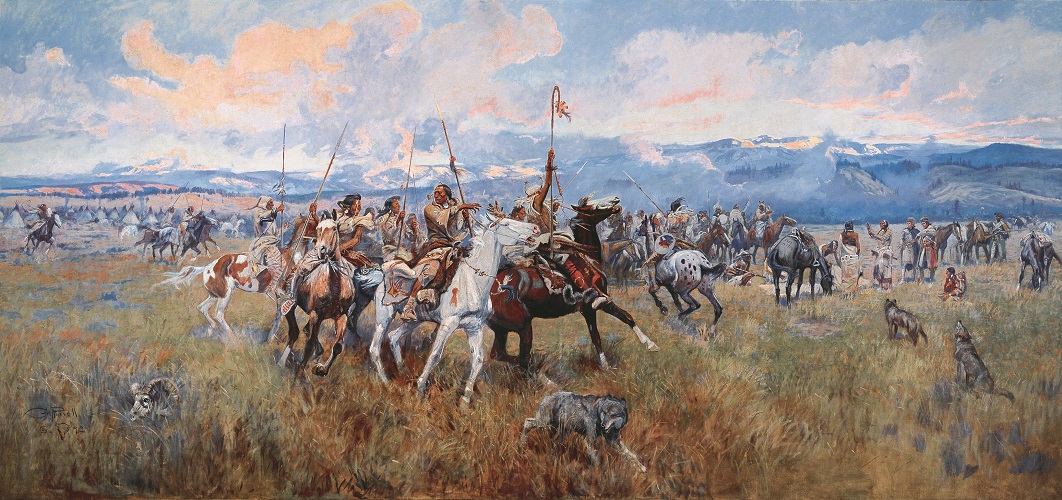
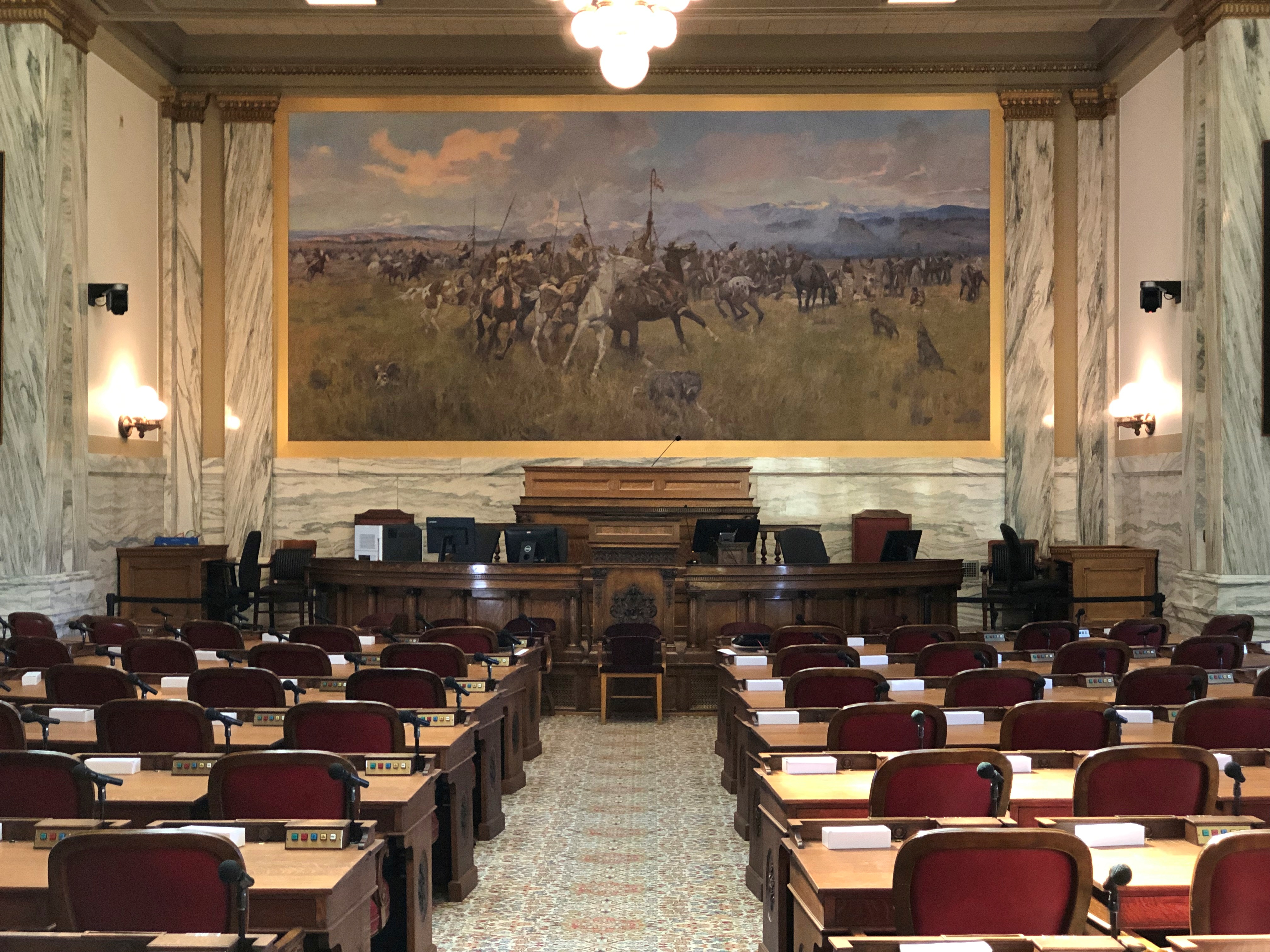
On display in the Montana House of Representatives chamber – and the reason its door is always locked, to protect it, a sign said – is the painting “Lewis and Clark Meeting the Flathead Indians at Ross’ Hole,” by Montana artist Charlie Russell (d. 1926). It is a highly esteemed work of his.

In situ:Montana State Capitol

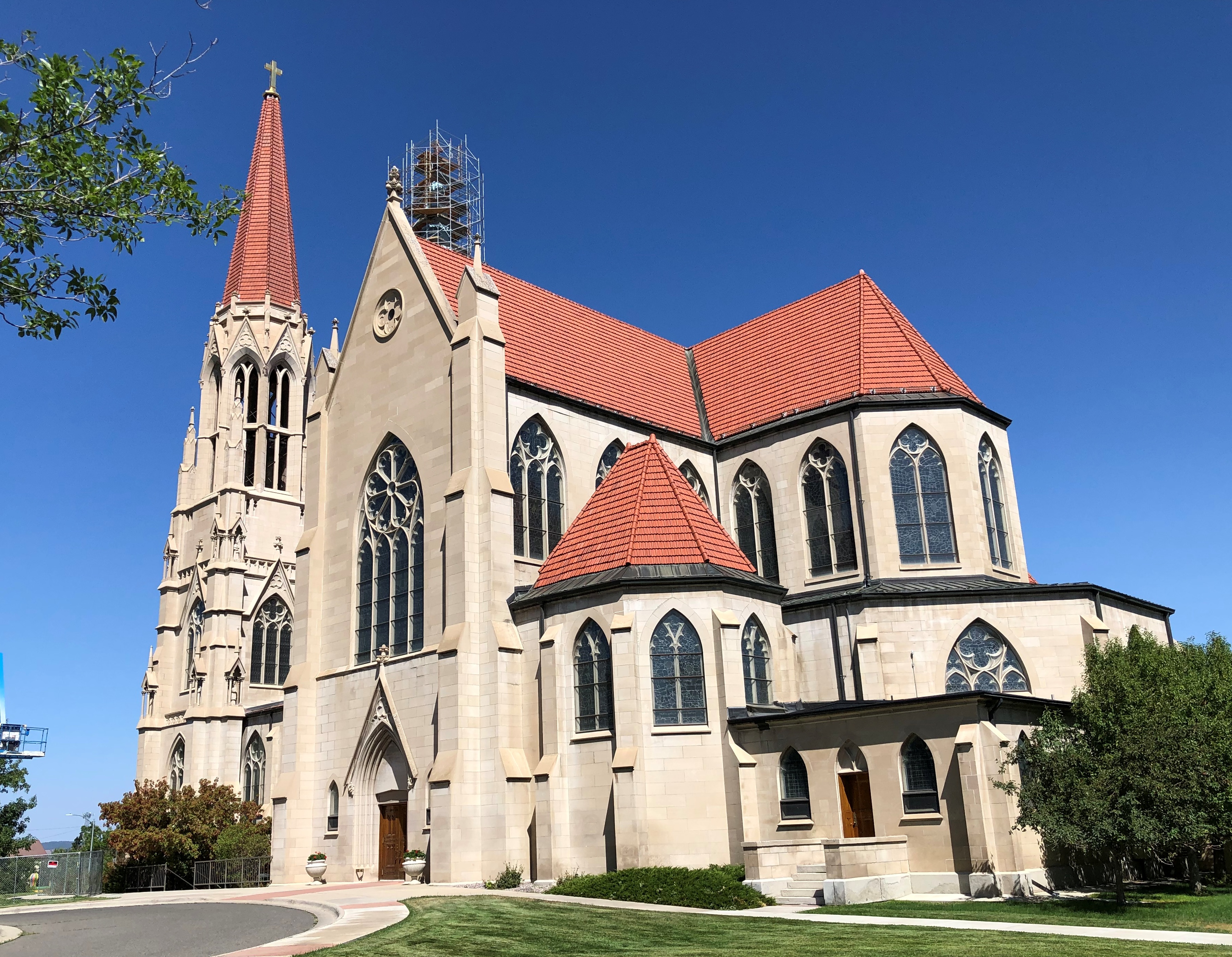
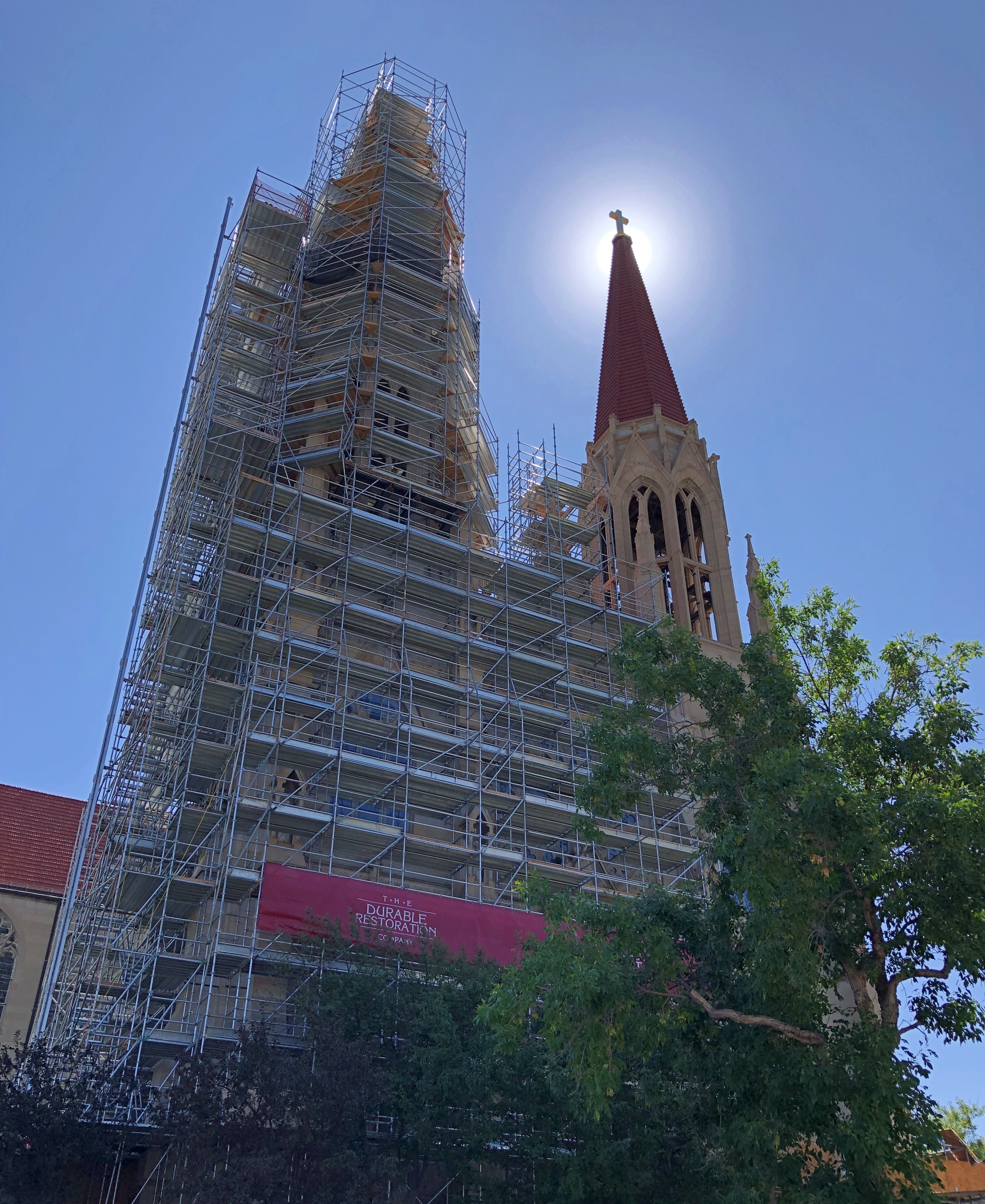
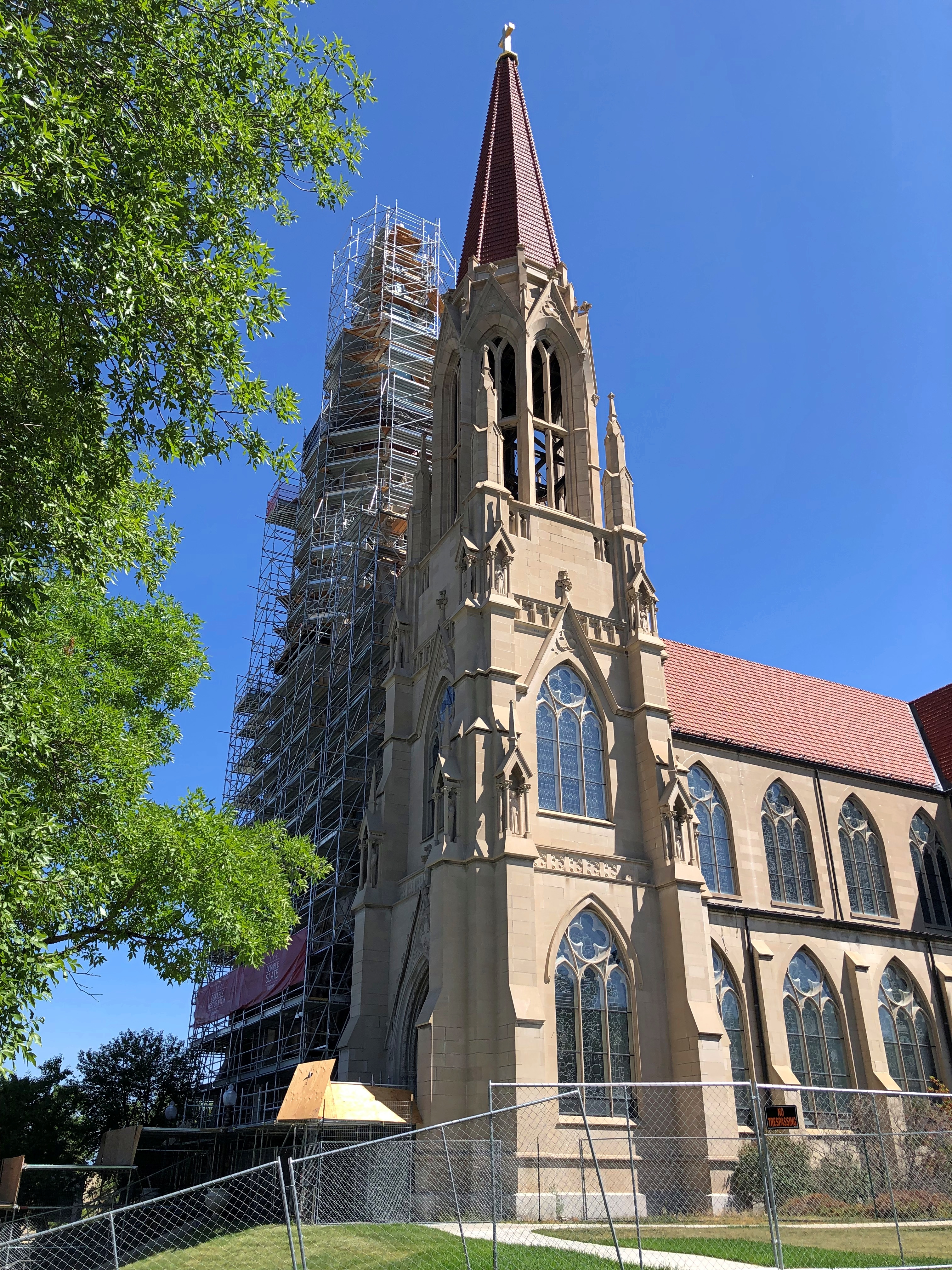
Only a few blocks from the capitol is the Cathedral of St. Helena, which is undergoing exterior renovation.Cathedral of St. Helena Cathedral of St. Helena Cathedral of St. Helena

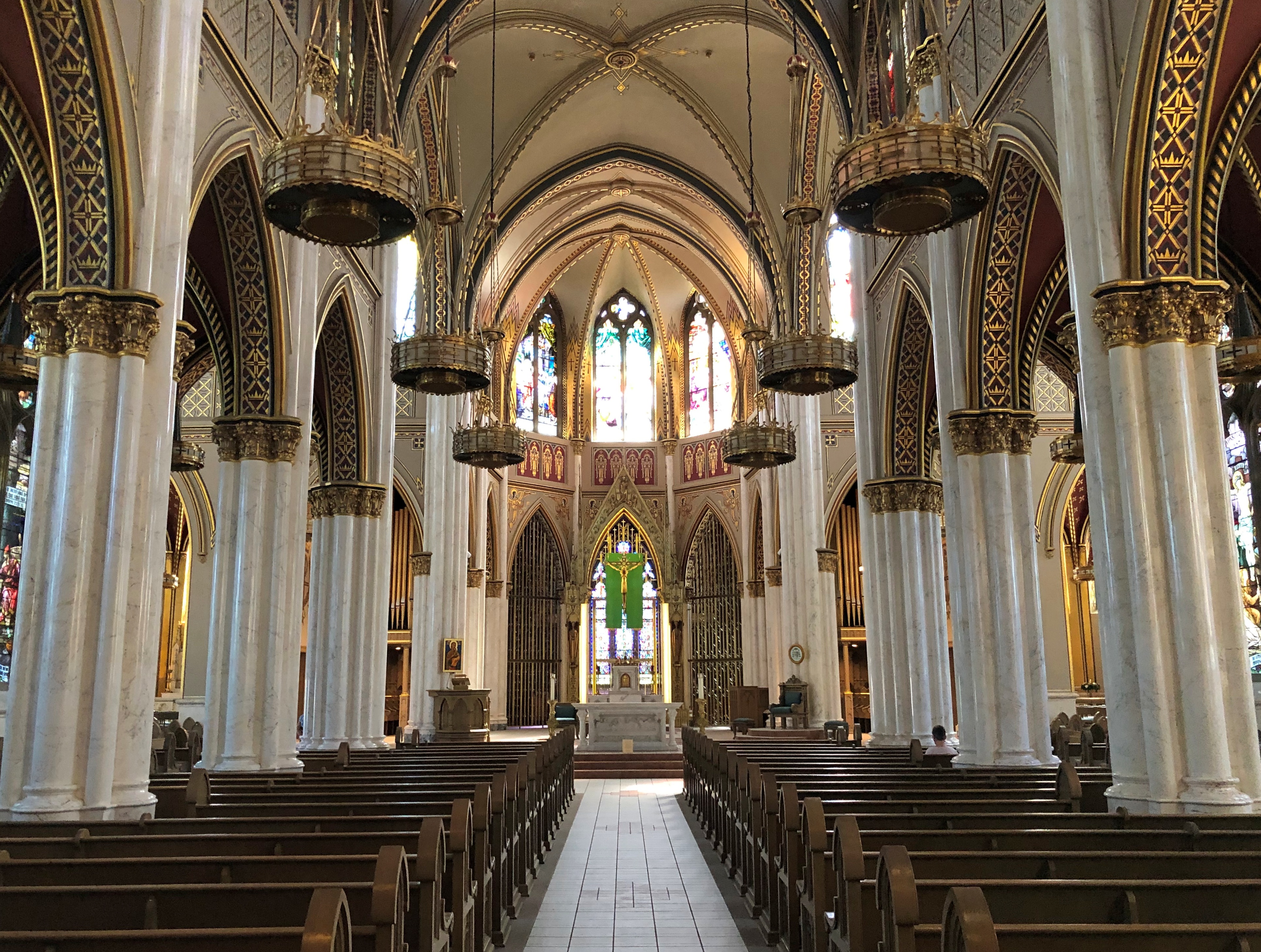
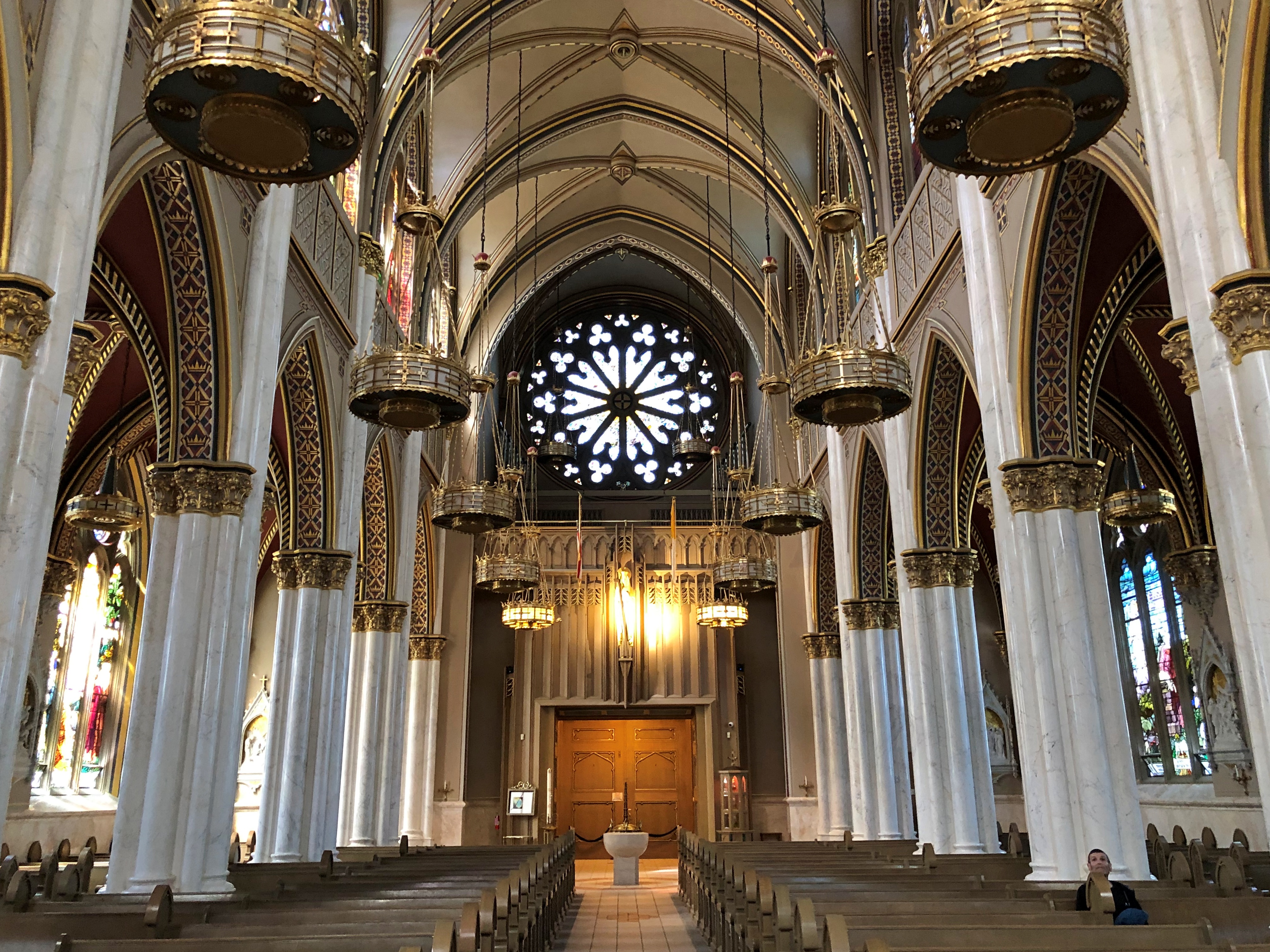
It was open.Cathedral of St. Helena Cathedral of St. Helena

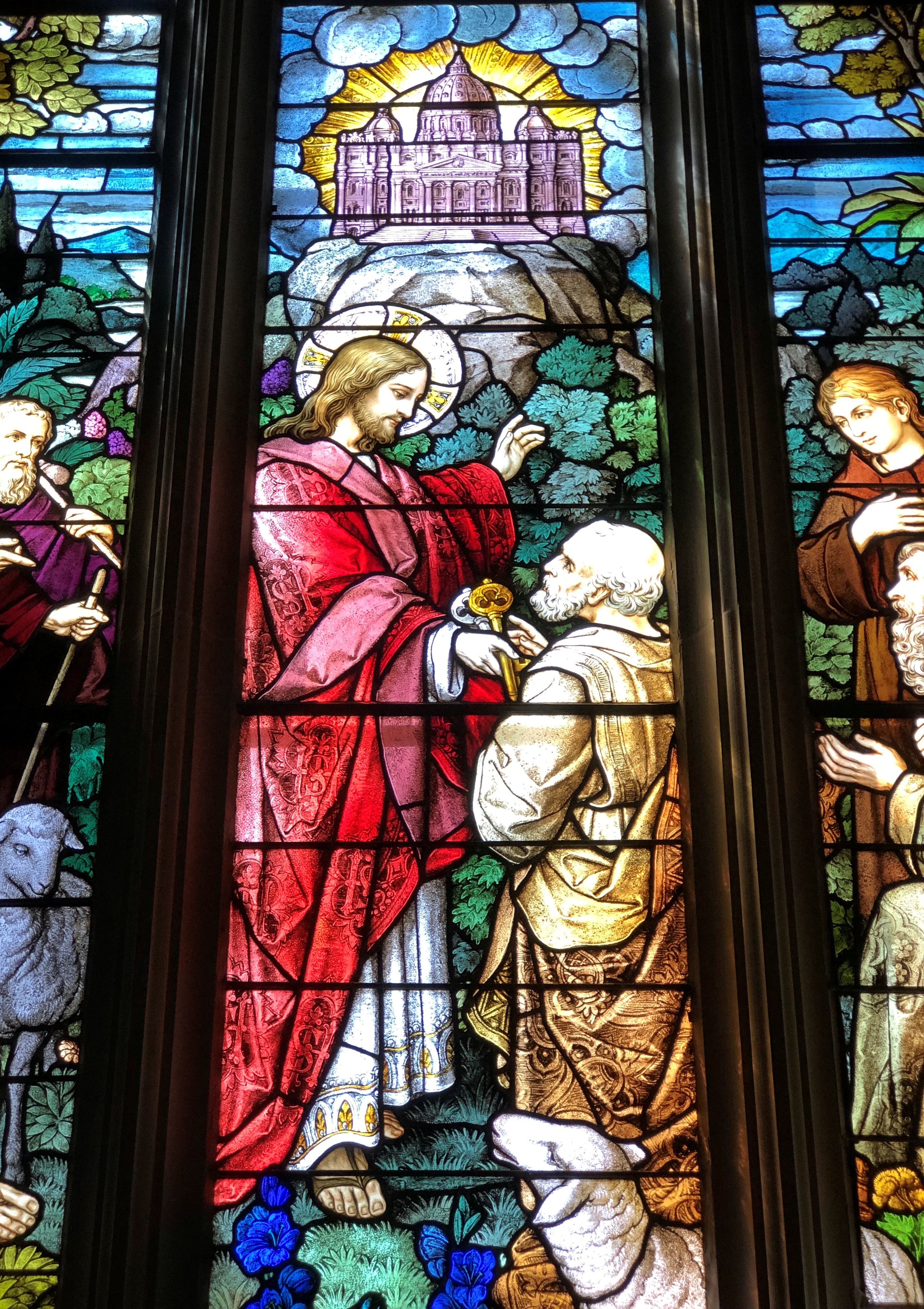
Some magnificent stained glass.Cathedral of St. Helena

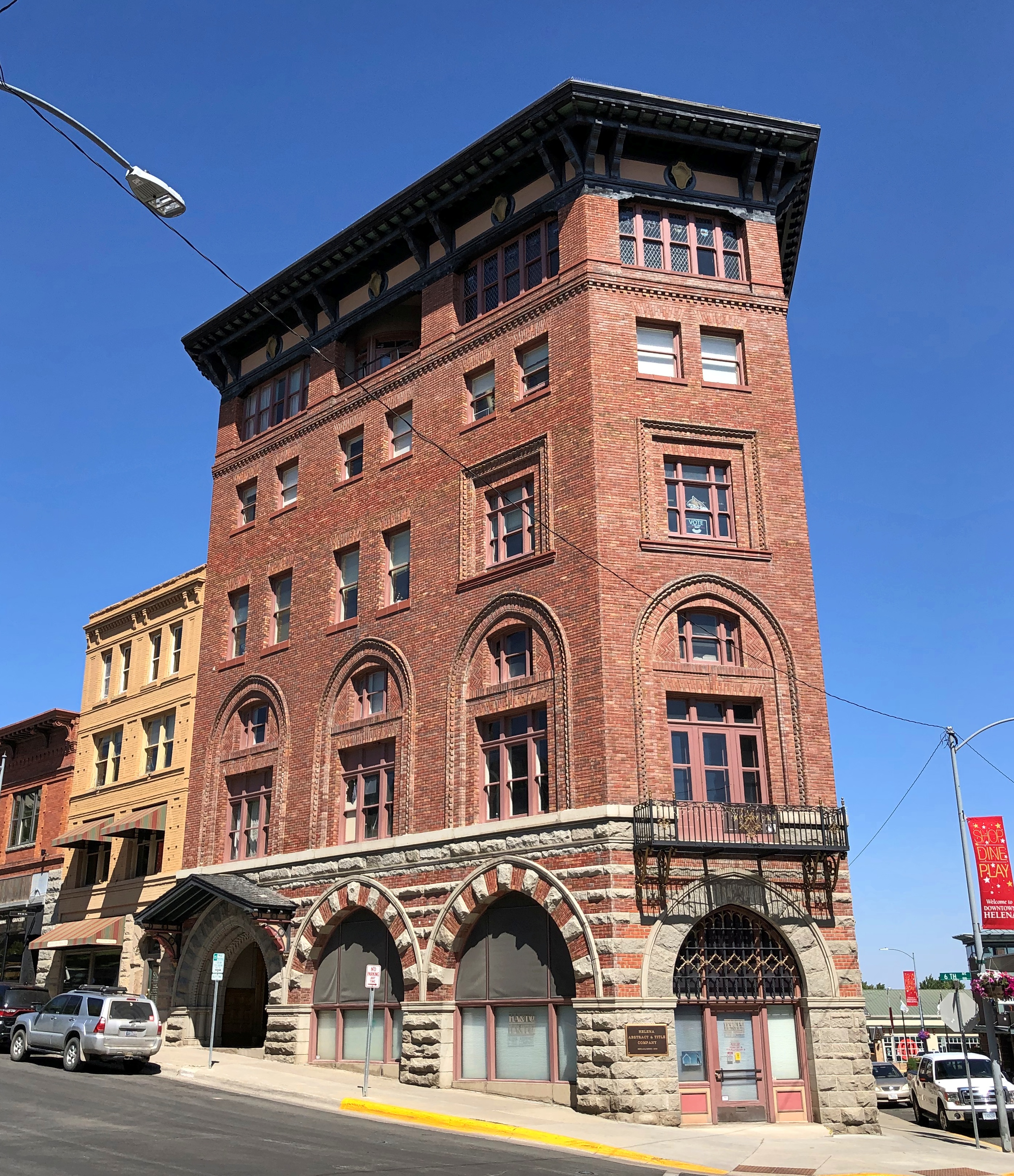
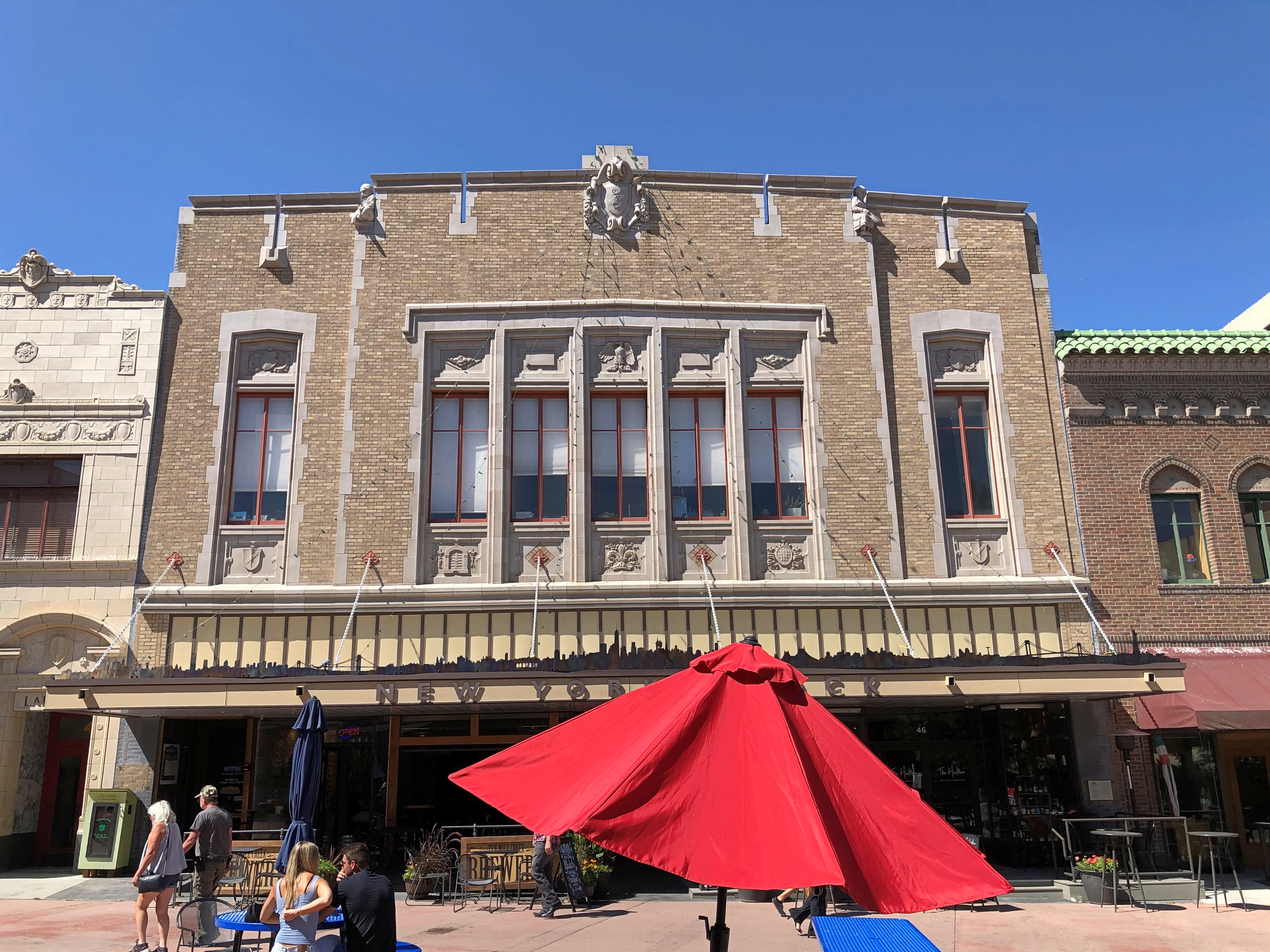
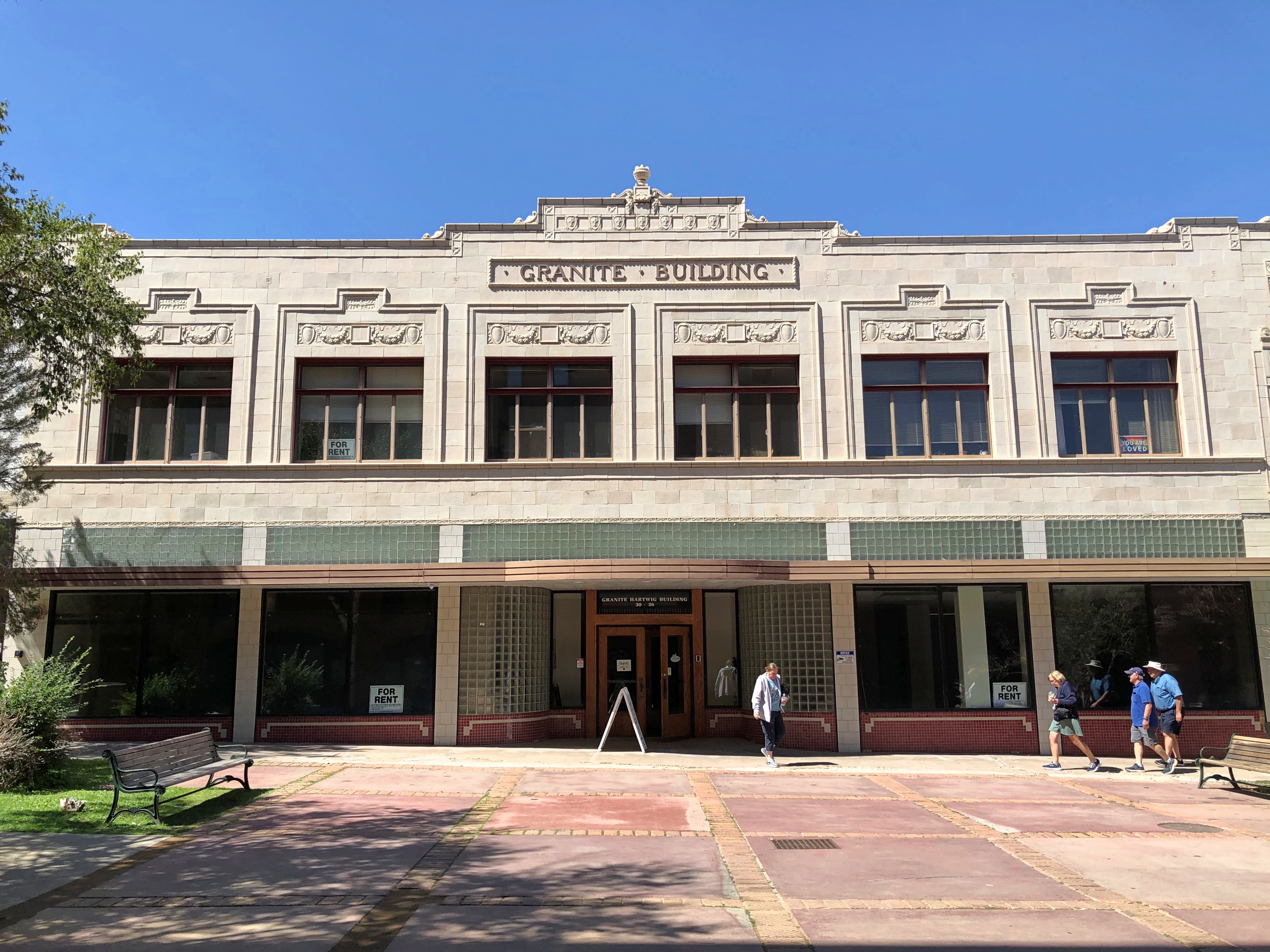
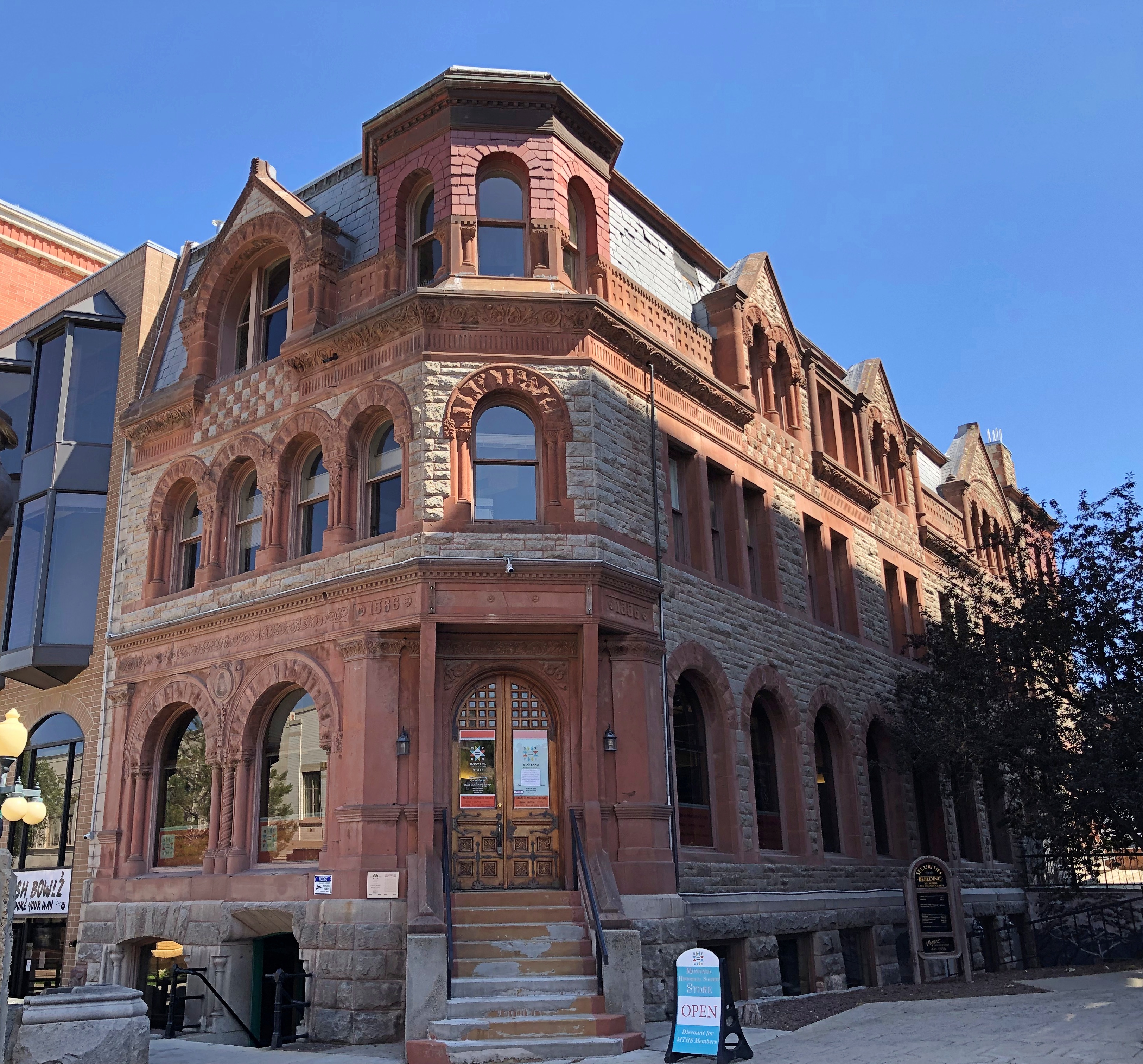
Before leaving town, we visited downtown Helena. Helena, Montana

Soon we made our way to N. Last Chance Gulch Street, which is a pedestrian thoroughfare. At least, that’s what Google Maps calls it.

The Helena As She Was web site says of this street, in answer to what its real name is:

“The answer is: Both. Last Chance Gulch is the name of the actual gulch in which gold was discovered in 1864. The thoroughfare which was built down the Gulch was originally named Main Street. It remained that way for some 85 years, until July 20 1953, when acting Helena Mayor Dr. Amos R. Little, Jr. signed an ordinance officially changing the name of Main Street to Last Chance Gulch. Both names are still used locally for what was once the grand thoroughfare of Helena’s business district.

“Last Chance Gulch meanders as it does because it was originally routed between mining claims; it was not designed that way to lower fatalities from stray bullets, as some promotional literature has claimed.”
Stray bullets, eh? Helena wouldn’t be the only place that trades on a history of (fortunately) long-ago violence. That kind of thing is a dime a dozen west of the Mississippi, and not unknown to the east.

Along N. Last Chance Gulch. And there is a S. Last Chance Gulch, though we didn’t walk that far.Helena, Montana Helena, Montana Helena, Montana

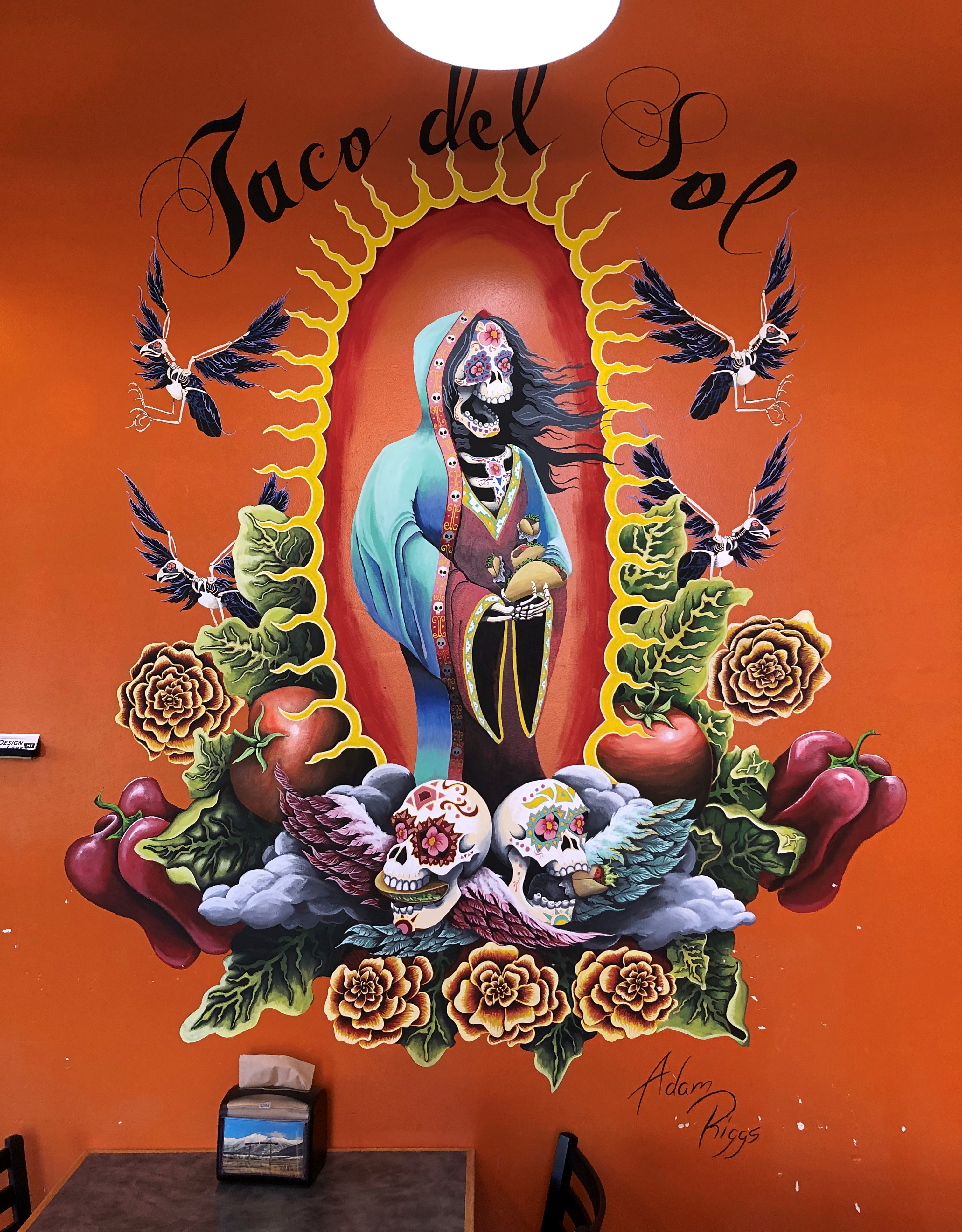
We found Taco del Sol on N. Last Chance Gulch. Unlike Spitz, a standalone operation.

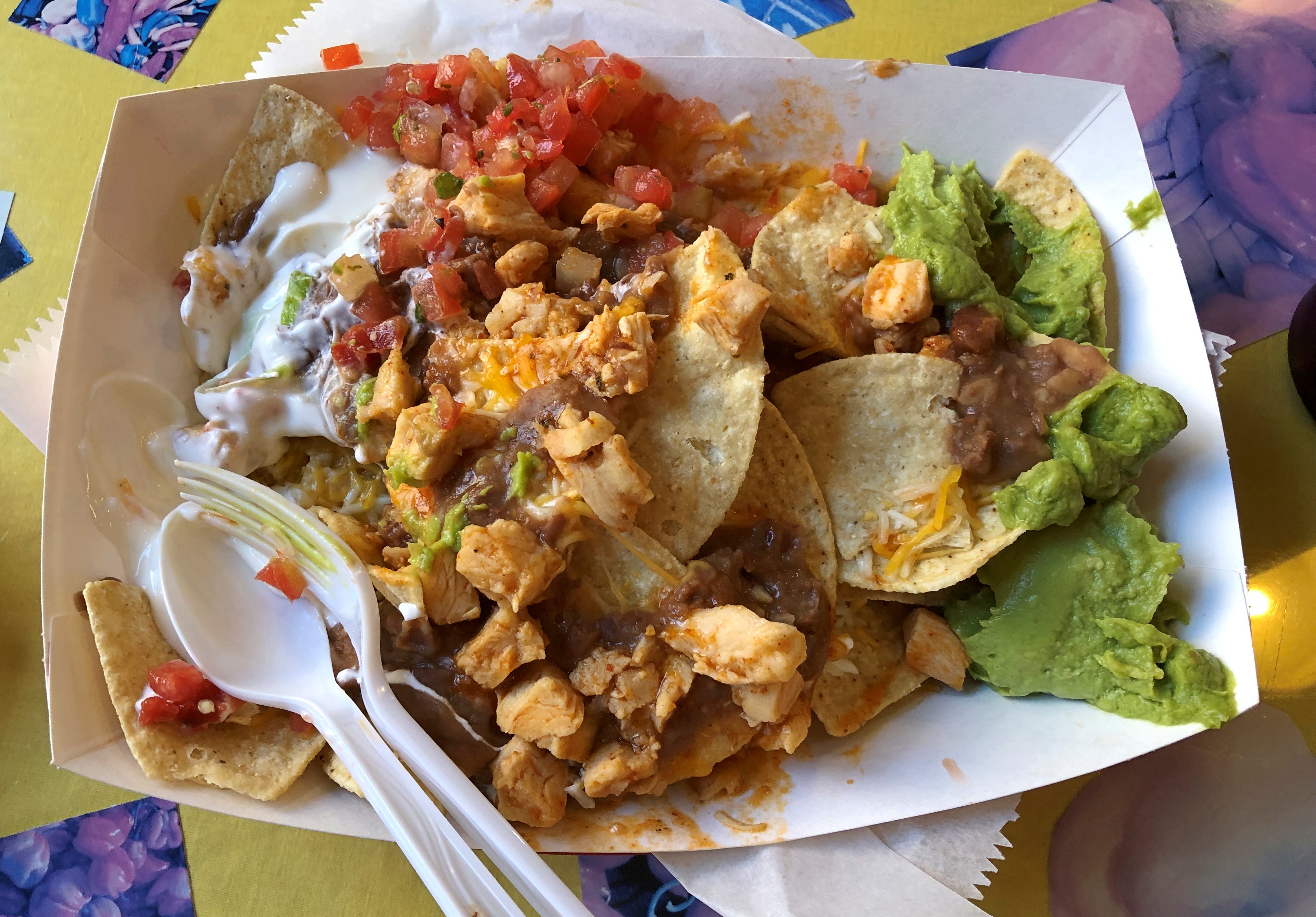
If you want tasty nachos in Helena, Montana, Taco del Sol is your place.

Devils Tower National Monument

Days are still fairly long in mid-August, so spending some time at Badlands NP before driving to Wyoming wasn’t a bad idea. As long as we got to our campsite with some light left, setting things up wouldn’t be difficult.

I’d checked the weather for our destination, Devils Tower National Monument, and the only time rain was expected was the late afternoon on August 19, exactly when we would arrive. Ah, well. Nothing to do about that but press on.

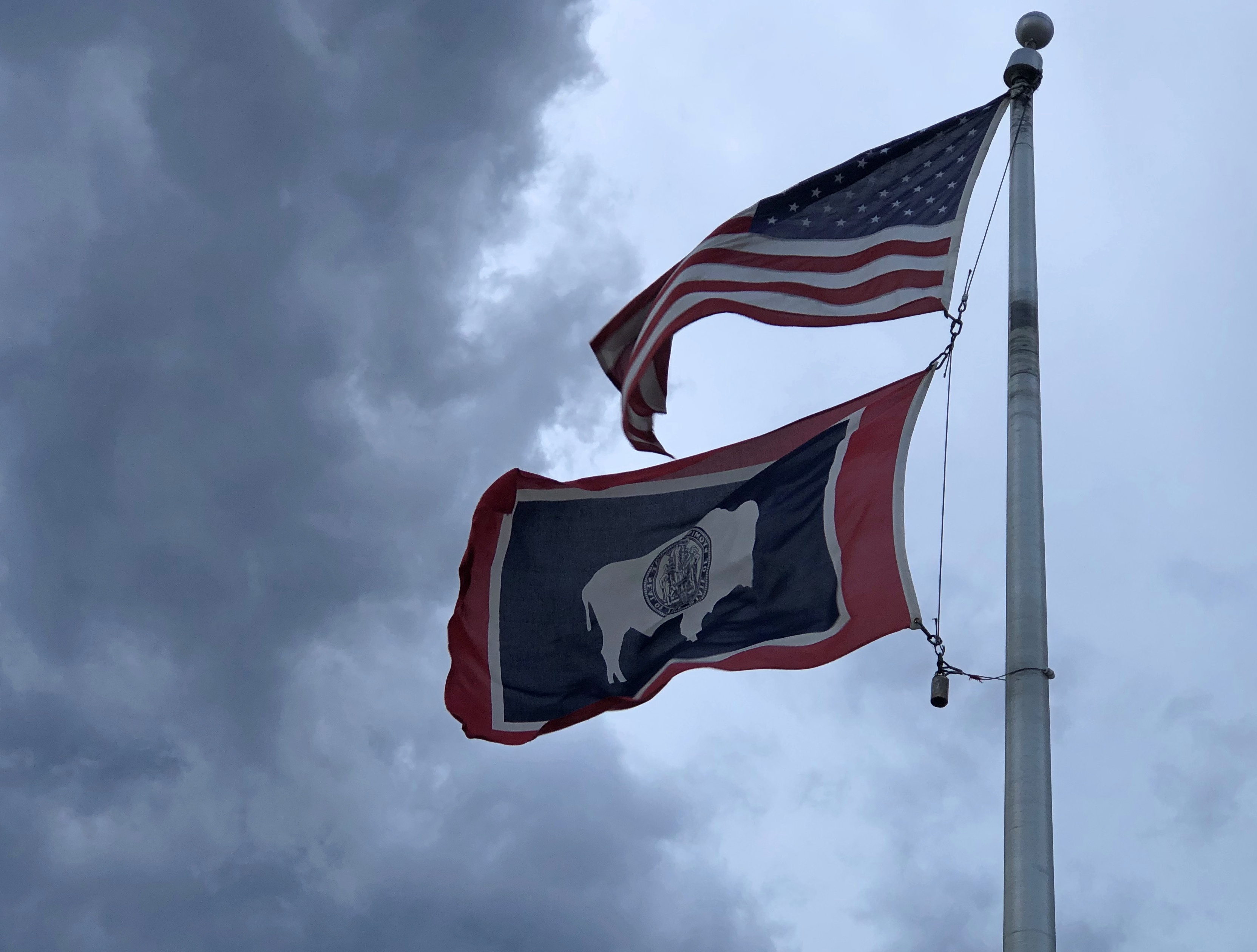
Skies were cloudy and the wind was up by the time we got to Wyoming.Wyoming

The monument isn’t far from the border with South Dakota. Take I-90 to Sundance, then US 14 and then a short stretch of Wyoming 24 to the monument. Soon after we got off the Interstate, that ominous gray cut loose some fierce rain, so heavy at times that it was best to find a wide place in the road to stop and wait for it to pass. That happened more than once as the rain variously intensified and slacked off.

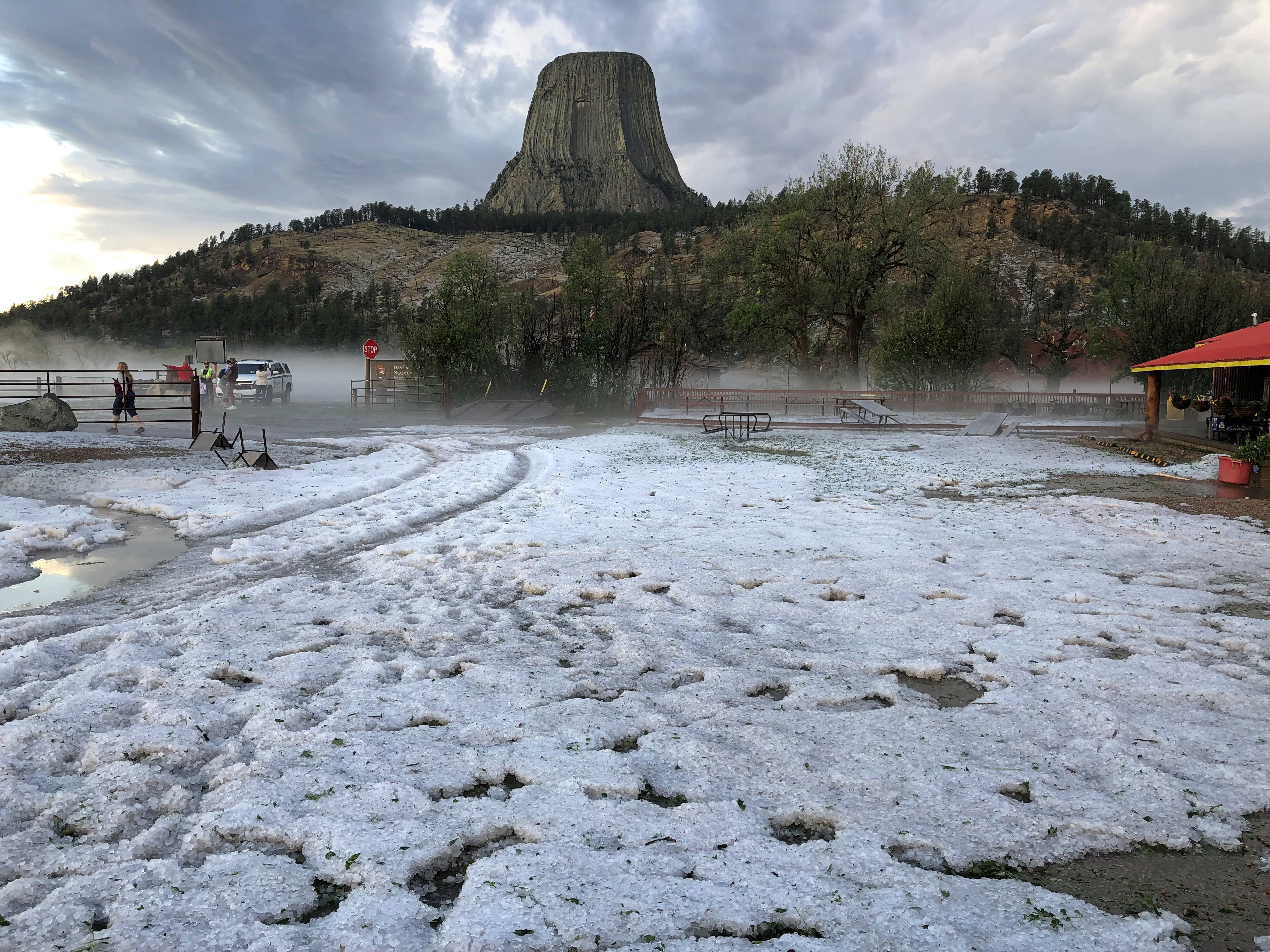
Even so, we got the the entrance to the monument – and the campground just outside the entrance – well before dark. No worries. Did it snow here while it was raining on us a few miles away?Devils Tower National Monument

No. That was hail. Some fairly big hailstones, too; not quite golf ball-sized, but not too far off the mark. We went in to register to find that the campground had lost its power.

“Storm knocked out your power?” I asked the clerk, a middle-aged woman. It had, she said, and done a lot of other damage, including to vehicles parked in the campground. She also explained that the places where tent campers go was probably covered by melting ice. She offered to do a refund for the day’s worth of camping we’d paid as a down payment on two days — as soon as the computers were up again.
And she did. Cell service was possible in the area, to my surprise, and I looked into a couple of motels in Sundance, about 20 or 30 minutes away. The Bear Lodge Motel had what we needed: two nights at a middling price. The motel was a comfortable independent with a fairly traditional streak when it came to motel décor and amenities, though (damn it) no bottle opener attached under the sink outside the bathroom and no Sanitized For Your Protection ribbon. Nice beds, though, and bathroom for that matter.

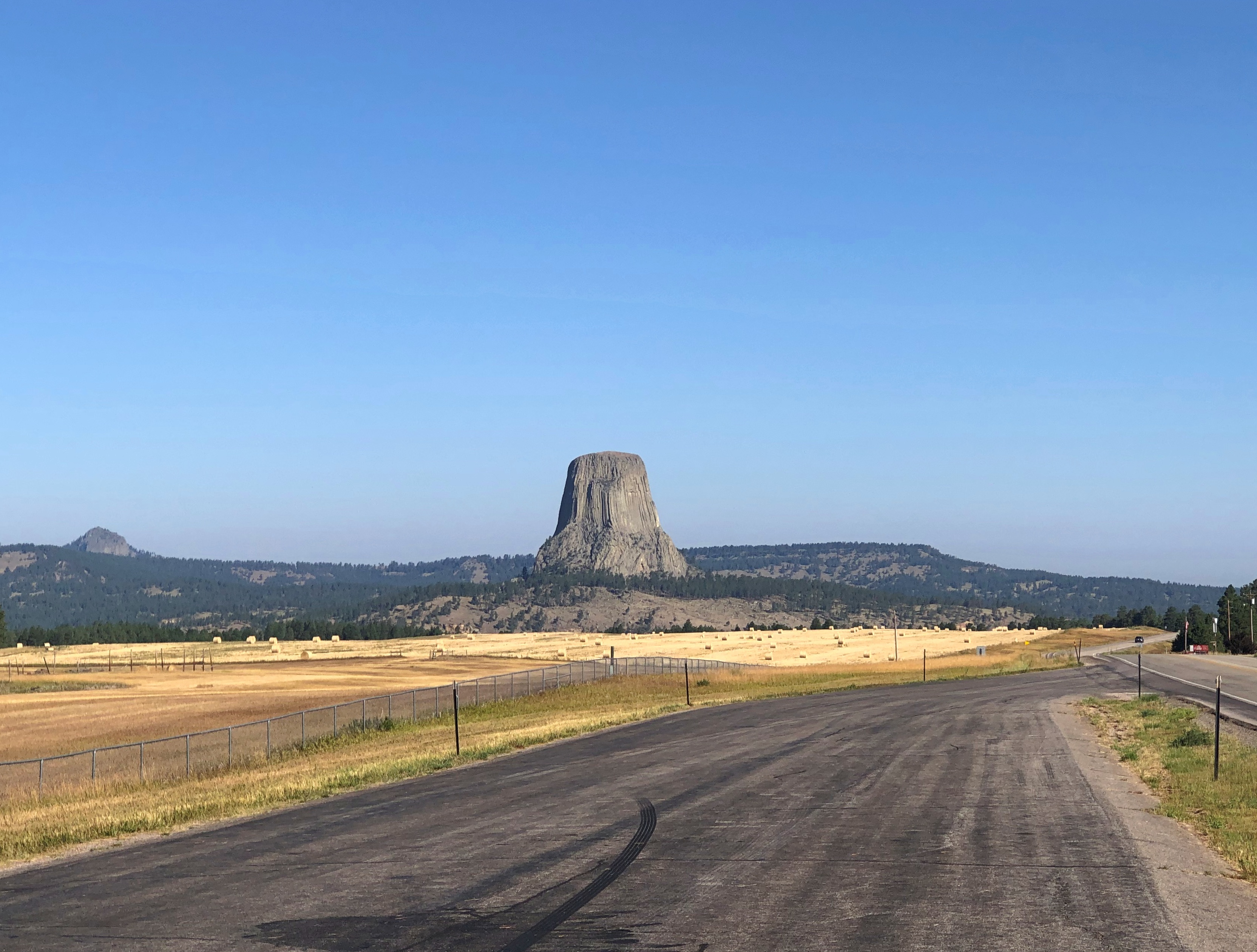
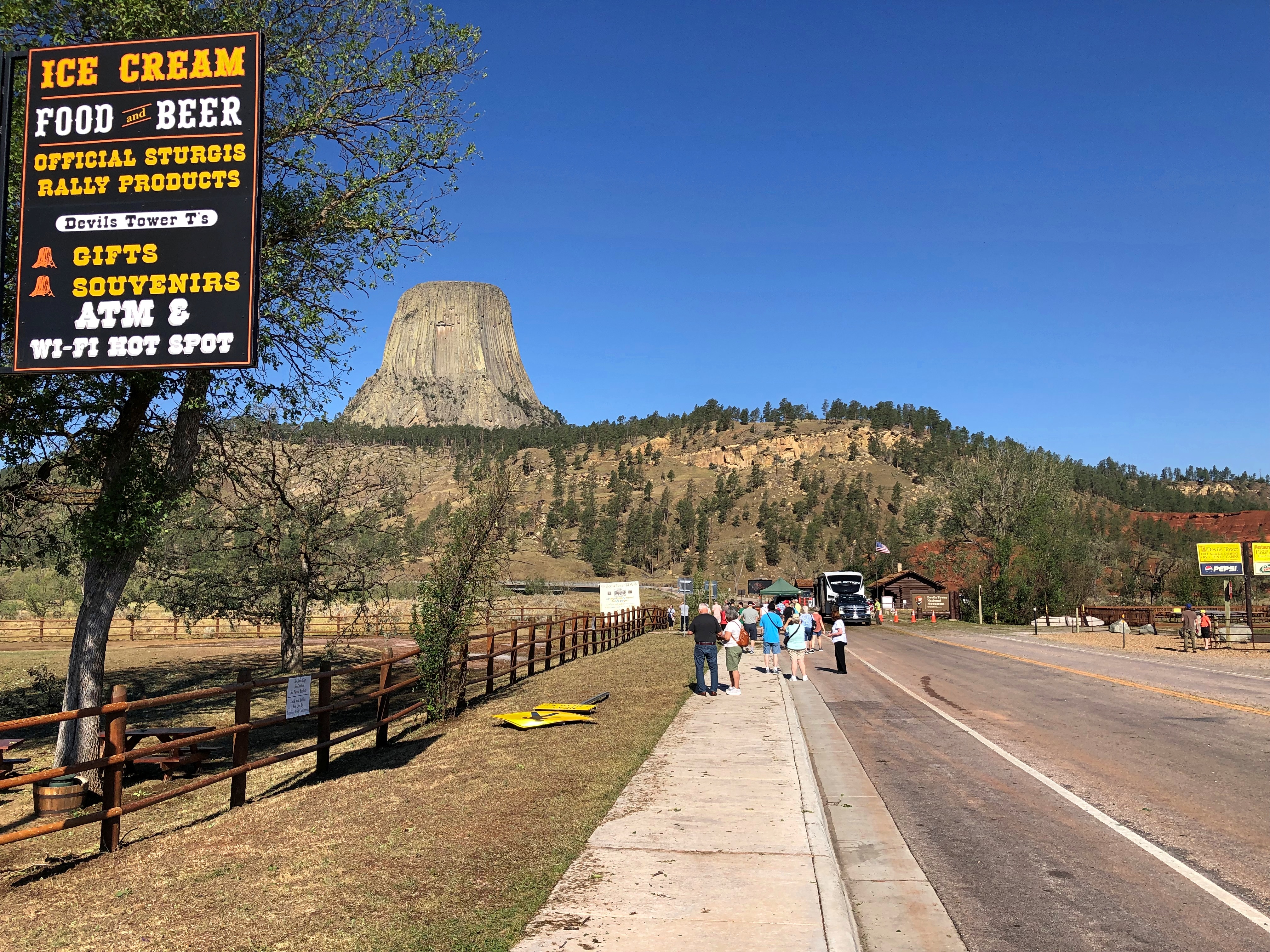
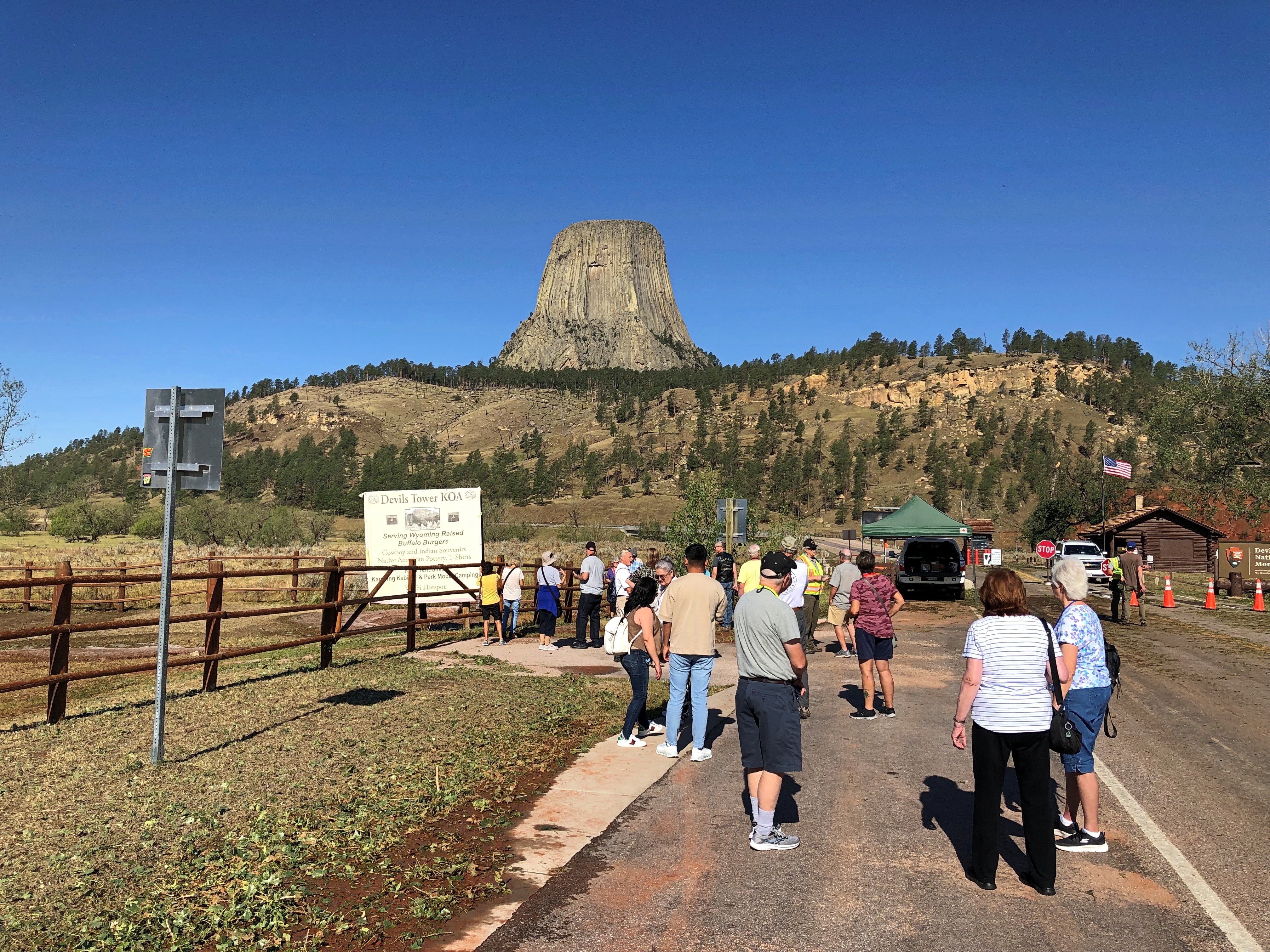
The next morning was clear and after a simple breakfast in the room, we returned to Devils Tower with the idea that we’d hike the trail that circles the tower. This time I had the leisure to document the approach to the monument.Devils Tower National Monument Devils Tower National Monument Devils Tower National Monument

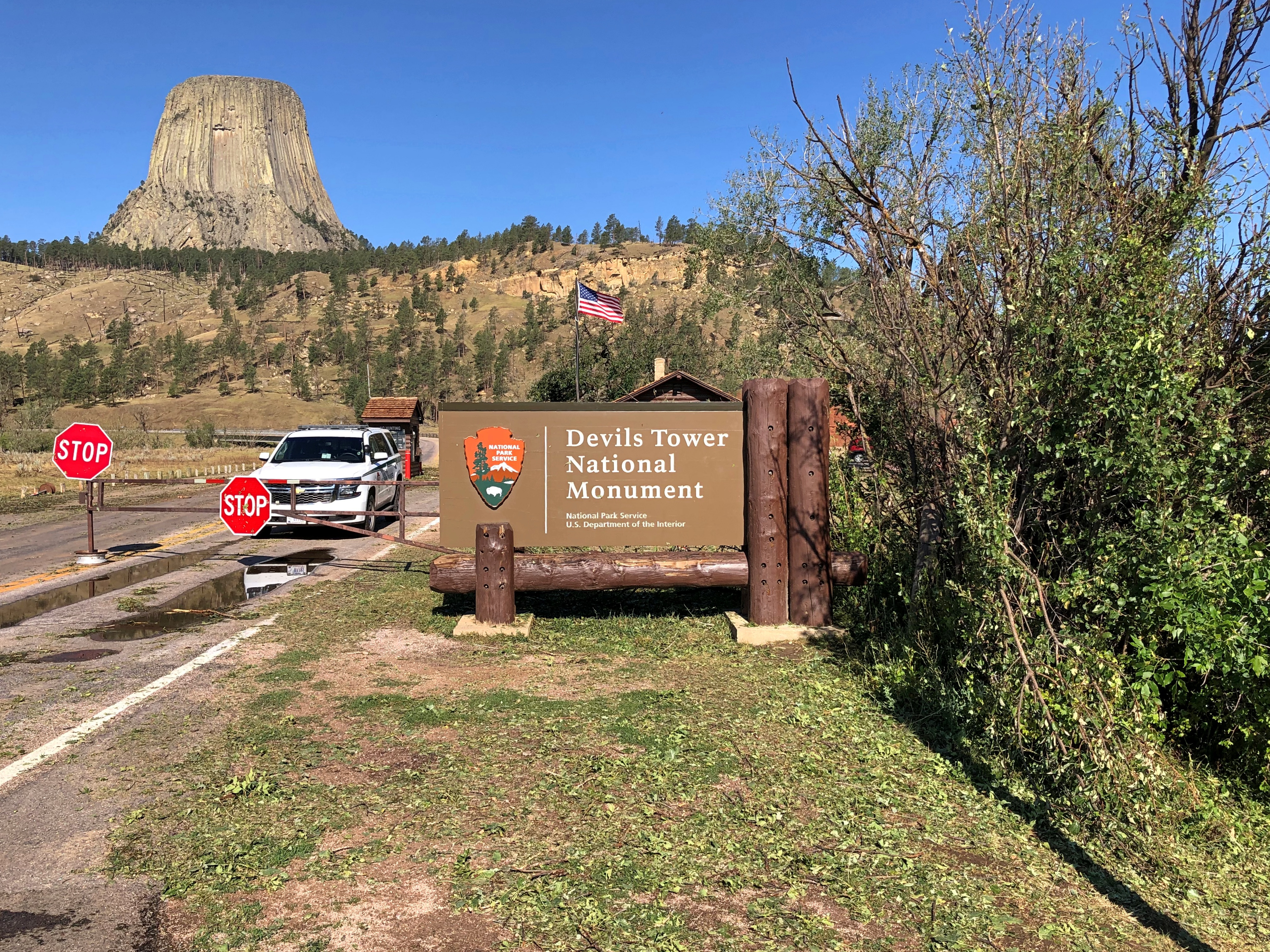
Soon we discovered that the monument was closed. People from their cars and tour buses found out the very same thing.Devils Tower National Monument Devils Tower National Monument

I asked a NPS ranger at the entrance about it, and he said that a lot of trees and maybe rocks and other debris had fallen on the road inside the monument, and he didn’t know when it would open again – though he guessed not today, stressing that that wasn’t the official word. I thanked him and we figured, not today was about the size of it.

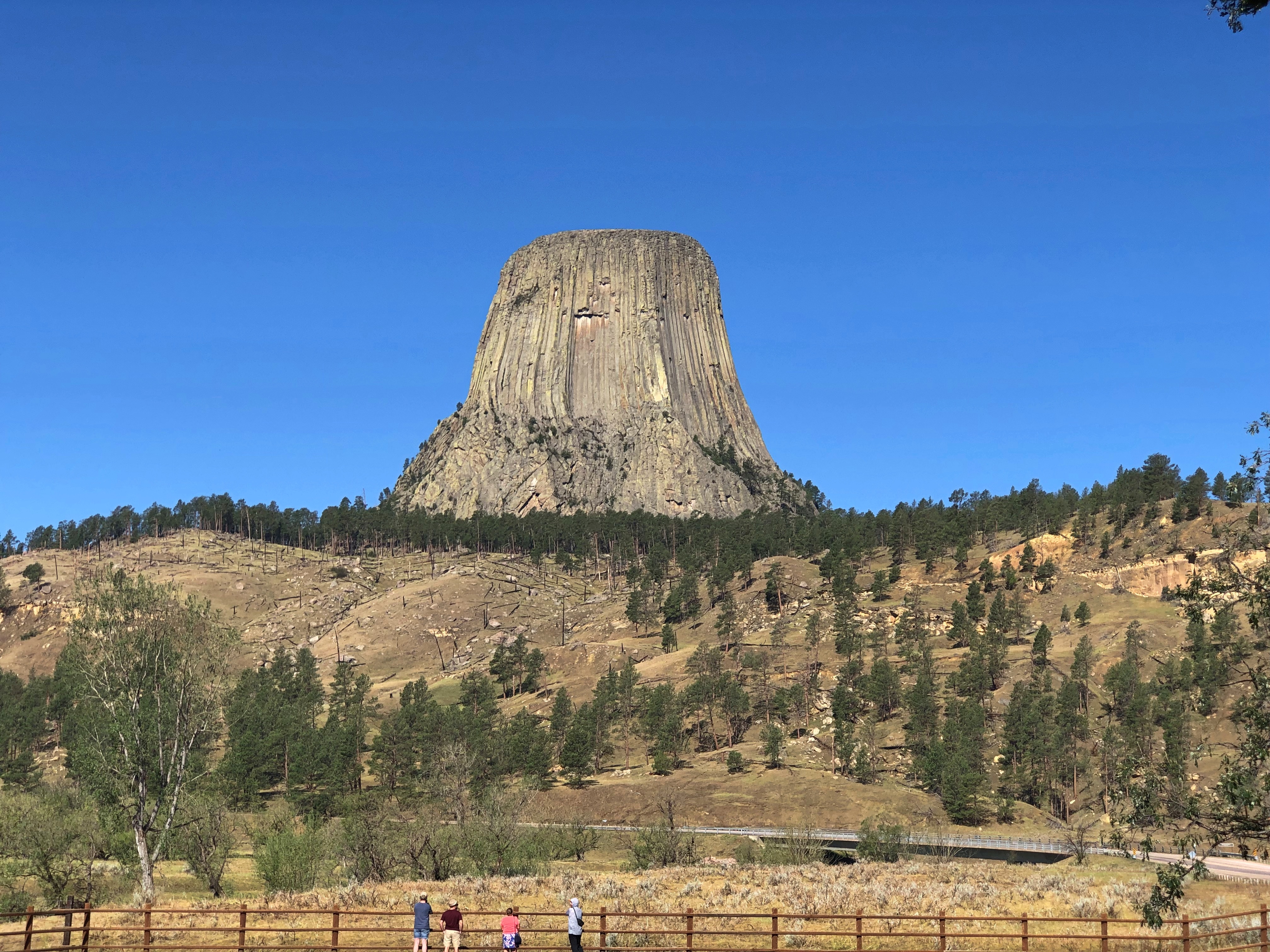
We wandered around a bit, taking a look at the thing. “Bear Lodge” is the translation of native names for the tower. The reference to the Devil was a Victorian-era creation (another of the four fonts of the modern world, and a particularly big one).Devils Tower National Monument

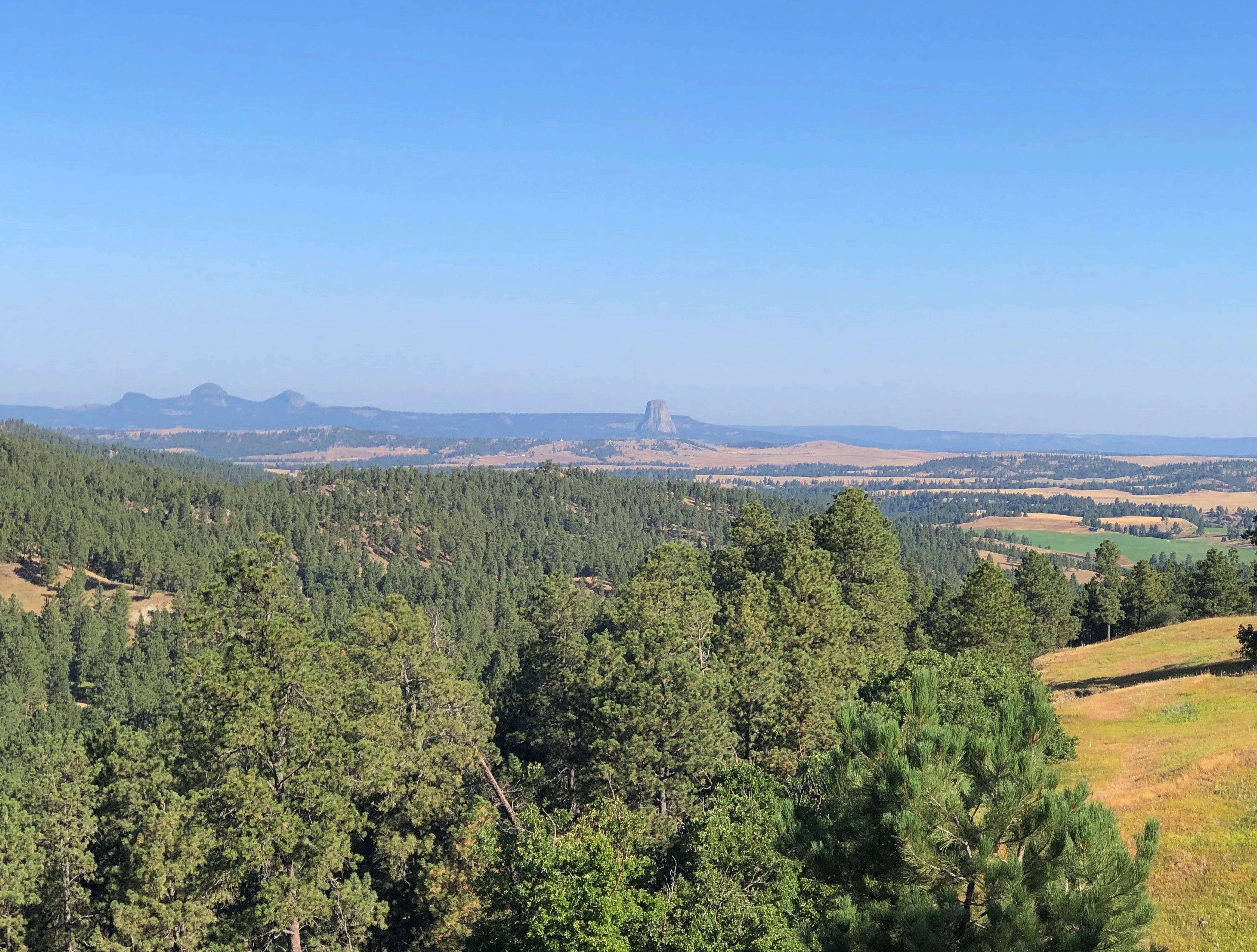
Impressive. If I understand what I read, scientific opinion isn’t quite solid on the exact process that caused the rising of the tower, but there it was: an igneous tower rising over sedimentary plains. Lording over the plains? There’s nothing that can’t be anthropomorphized.

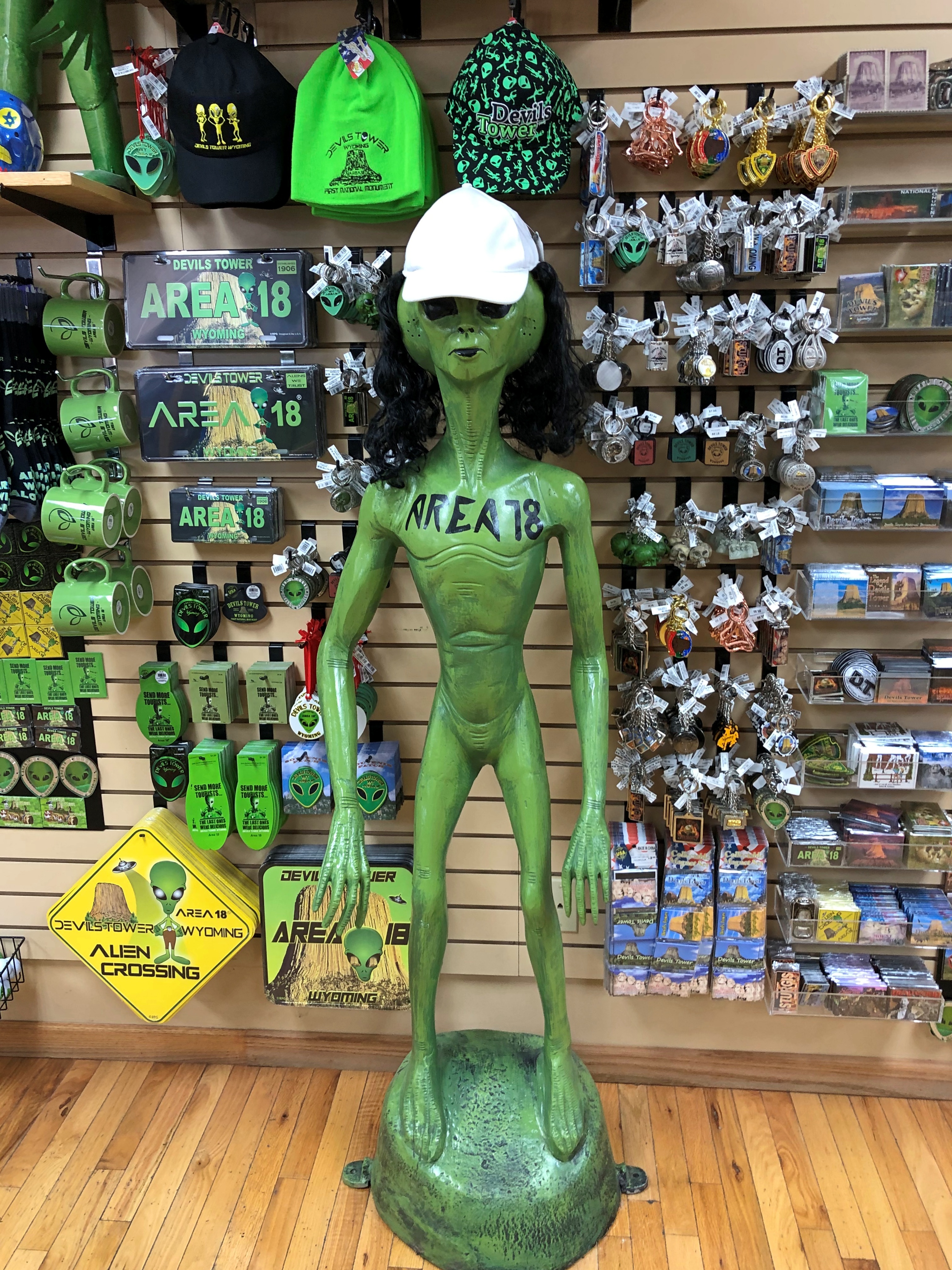
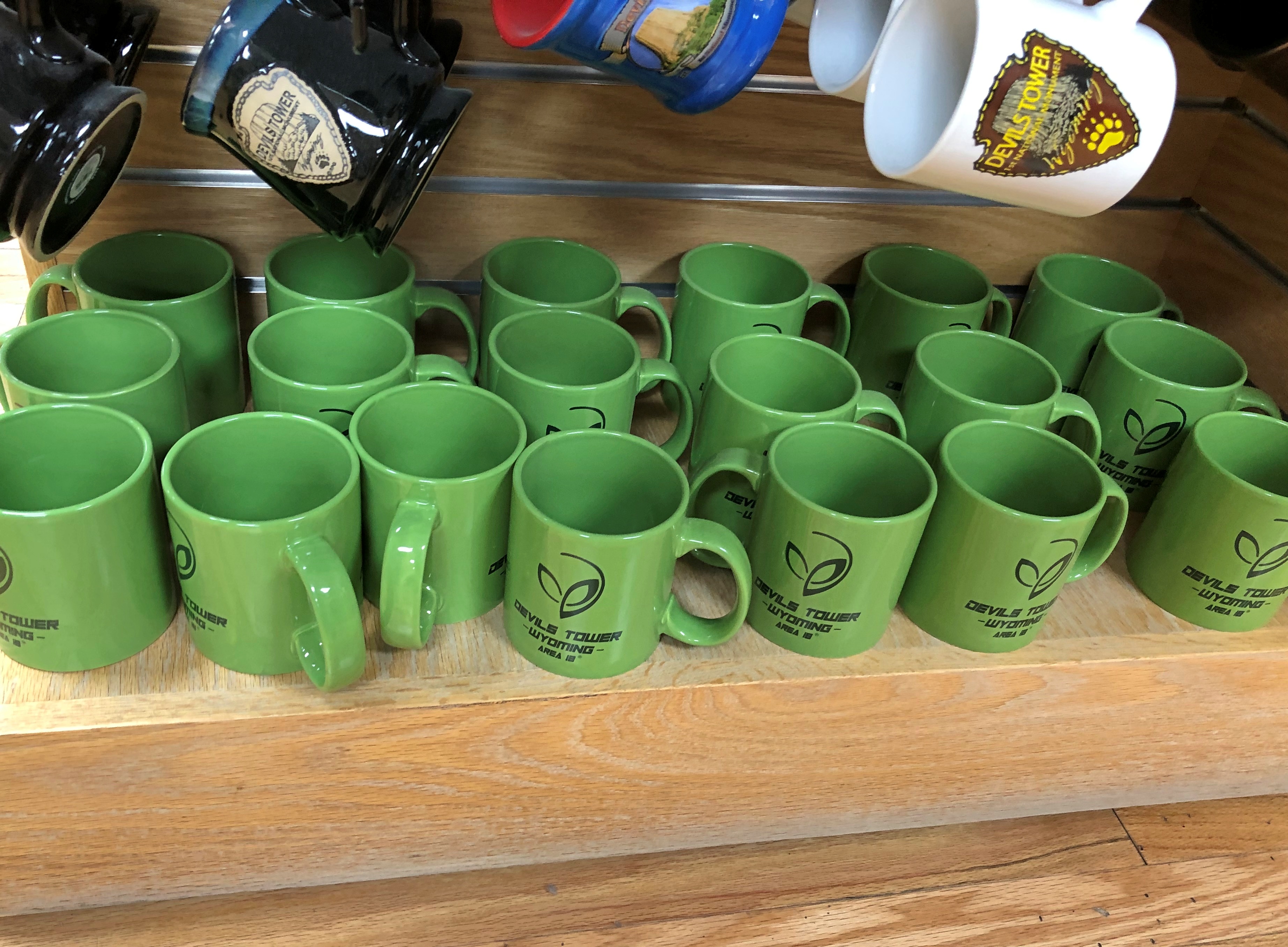
Speaking of which, bipedal and stretched-body space aliens of a distinct green hue can be found in the main gift shop outside the entrance (not a NPS shop).Devils Tower National Monument Devils Tower National Monument

Remarkable, the ongoing influence (though admittedly minor) of a movie that came out nearly 50 years ago. Guess that shows the value of putting a catchy tune in your movie.

I hadn’t thought about that movie in years, much less seen it. In fact, I’ve seen it only once, as a new movie in late 1977, in those heady first months of having a drivers license, which meant I could take girls out. I did to Close Encounters of the Third Kind, though I’m not quite certain now which girl I took.

If you asked me, the gift shop had too much space alien bric-a-brac and not enough Teddy Roosevelt. His name is on the presidential proclamation creating the monument, the very first one under the Antiquities Act of 1906.

I sent a picture of the tower to my old friend Tom.

Tom responded with a text: *Hears the movie theme to Close Encounters*

Me: Looking at the gift shop, you’d think there was a permanent alien settlement on top.

Tom: *Looks around shiftily.* Isn’t there? Have you actually been up there to find out? They could have their own Starbucks up there for all we know.

Me: The truth is out there.

Tom: And it might be caffeinated!

Other Sweet Drives, Part 2

It’s one thing to expect a scenic drive experience and then experience it. That can be outstanding, such as driving on the Going-to-the-Sun Road through Glacier NP. (Which has a remarkably poetic official name for a government project.)

Then there’s the class of excellent drives you were not expecting. Such as the Moki Dugway, to cite an example from a previous trip. Or the following road.

Washington 155

From the Grand Coulee Dam and the adjacent town of Grand Coulee southwest to the town of Coulee City, which isn’t near the dam, is about 30 miles on a highway known as Washington 155. I wasn’t expecting much.

Immediately you launch into arid, rocky country, and soon high cliffs appear, facing a long lake most of the way. The road runs between the cliffs and lake. Off to the right headed in our direction is the narrow Banks Lake, part of the massive Columbia Basin Project to create power and capture water for crop irrigation. Beyond the lake were some mountains, but in the distance.

Reading about it later, I discovered that the lake, while manmade, doesn’t dam any river, much less the Columbia. The lake submerges part the formerly dry Grand Coulee with water pumped in from Roosevelt Lake, the much larger body of water formed by the Grand Coulee Dam.

All that was nice enough to look at, but nothing like the towering black cliffs to the left of the road. Walls of black stone, crumbling in many places, devoid of much vegetation, inspiring to contemplate. Closer to the town of Grand Coulee, the road briefly cuts through two rock walls, one of them part of the impressive Steamboat Rock State Park. At least I’m pretty sure that’s what the road does. It’s a little fuzzy even about a week later, but a good kind of fuzzy.

Mostly I have images of a highway in the shadow of dark cliffs, but all brightly lighted by the late summer sun, and the (apparently) moving forms of the rocks themselves. No two sections of the cliff were quite alike.

This series of images, though going the opposite direction as we did, conveys a bit of the scenery.

US 20 East of Boise

If you’re going to cross Idaho from Boise across the Snake River Plain, at least by car, you can take I-84, which generally follows the river and passes through the most populated sector of the state, with Boise, Mountain Home, Twin Falls, Pocatello, Blackfoot and Idaho Falls as beads on that particular string.

Or you can take I-84 to Mountain Home, and then head east on US 20 across to Idaho Falls. That’s what we did. Good old US 20, a road to Boston in that direction, if you want to go that far. In Idaho, it’s a road through dry, hilly, sparsely populated territory.

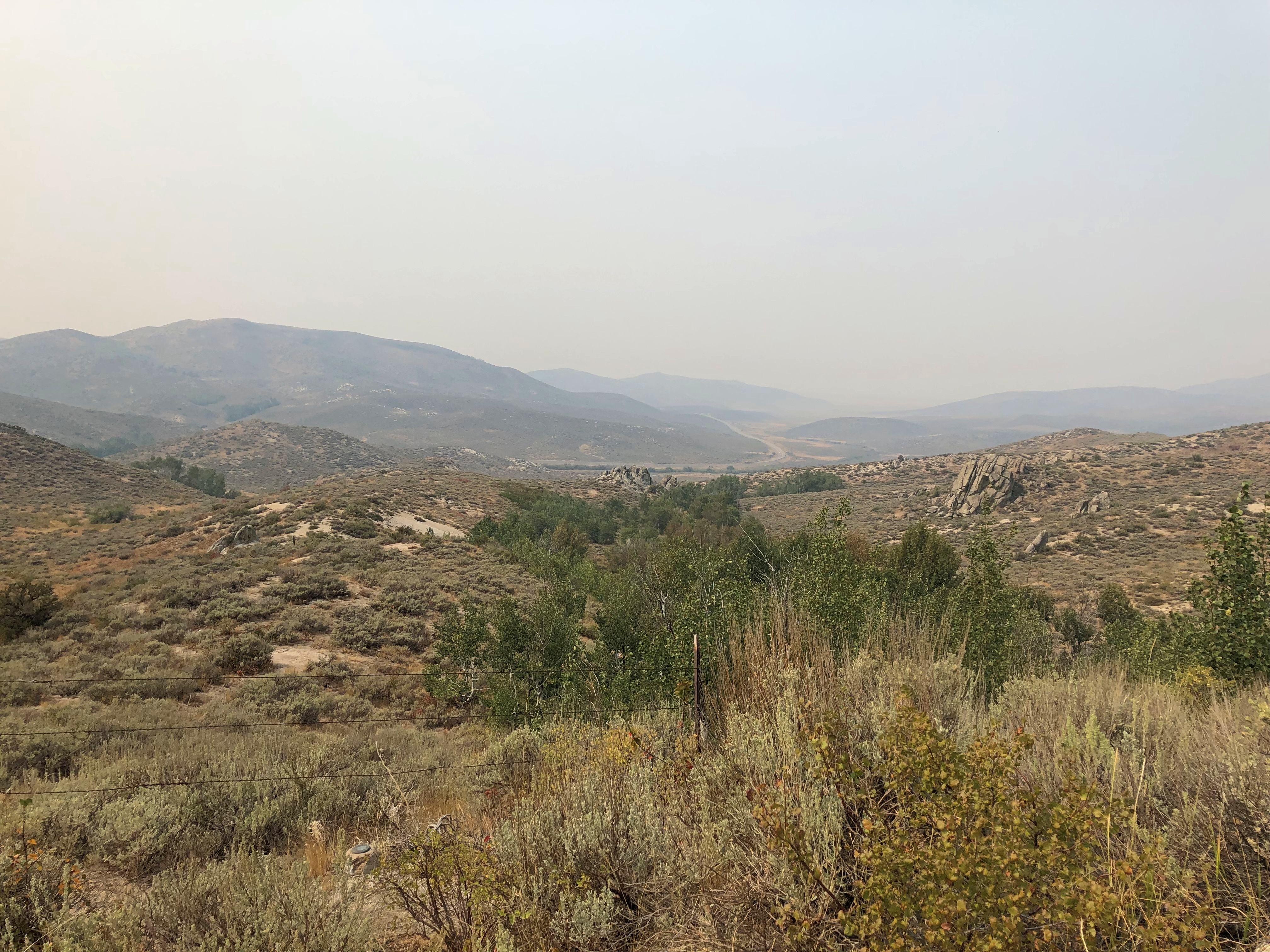
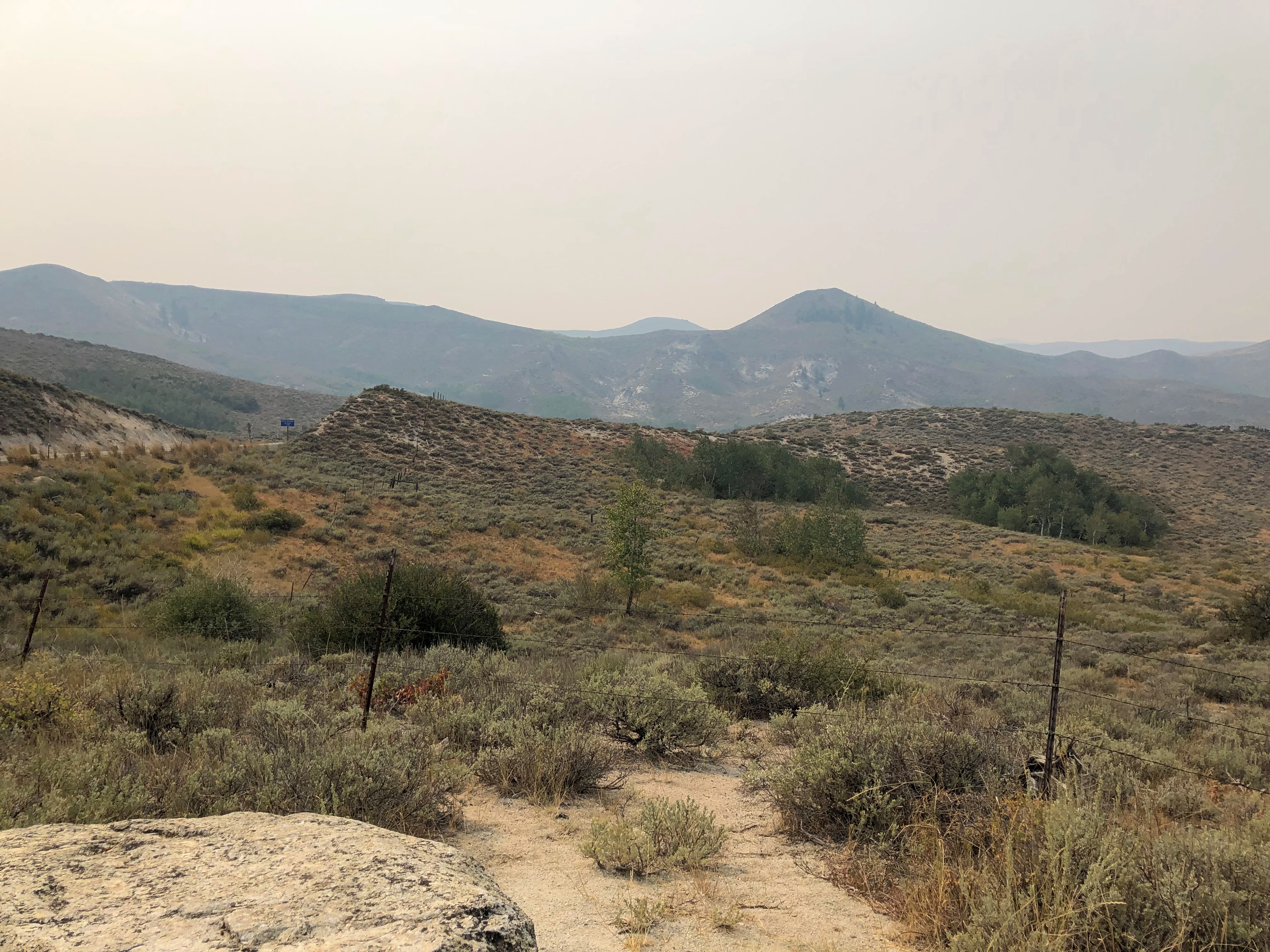
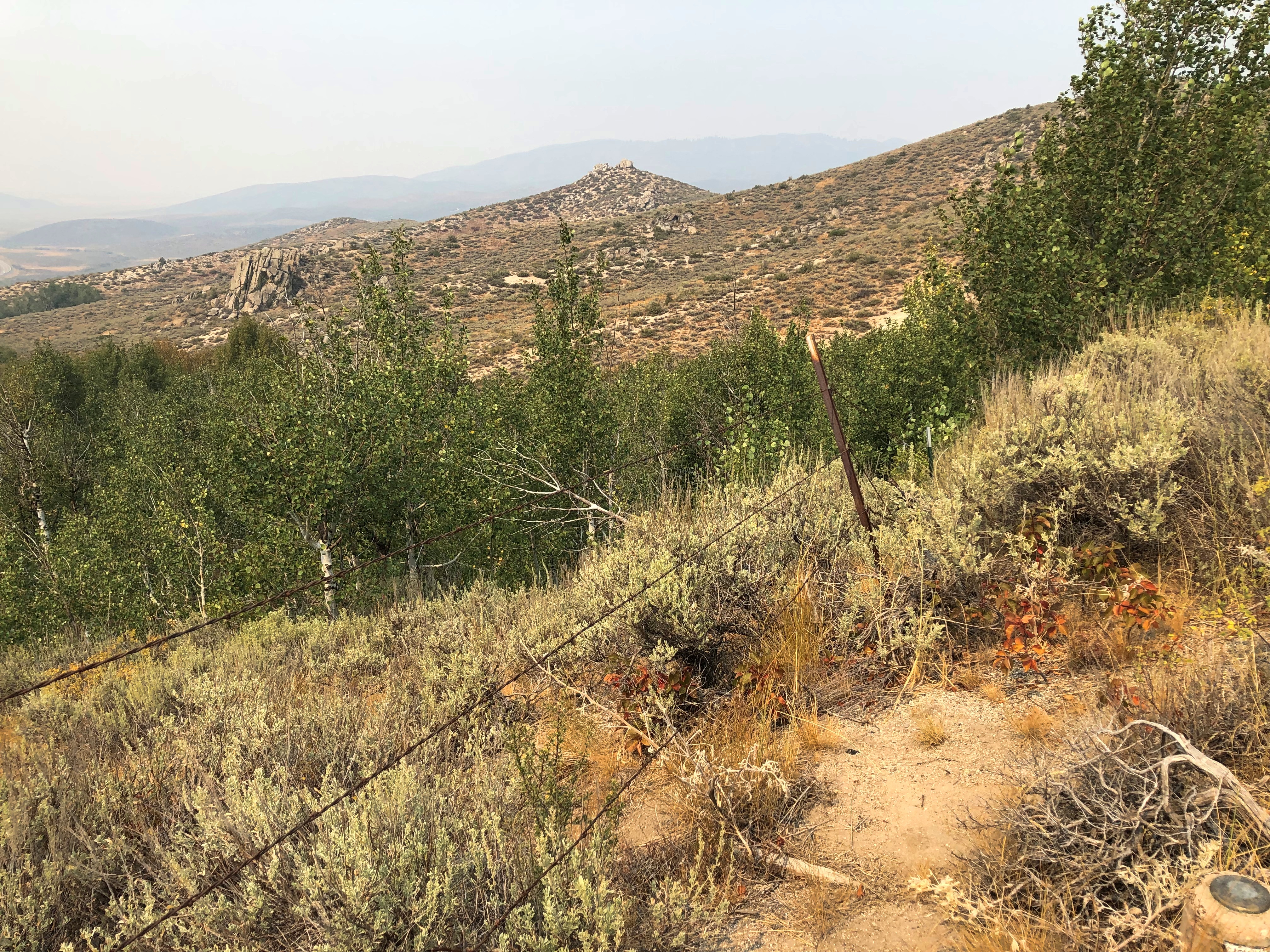
This summer, with the haze of a not-too-distant wildfire.US 20 east of Mountain Home US 20 east of Mountain Home US 20 east of Mountain Home

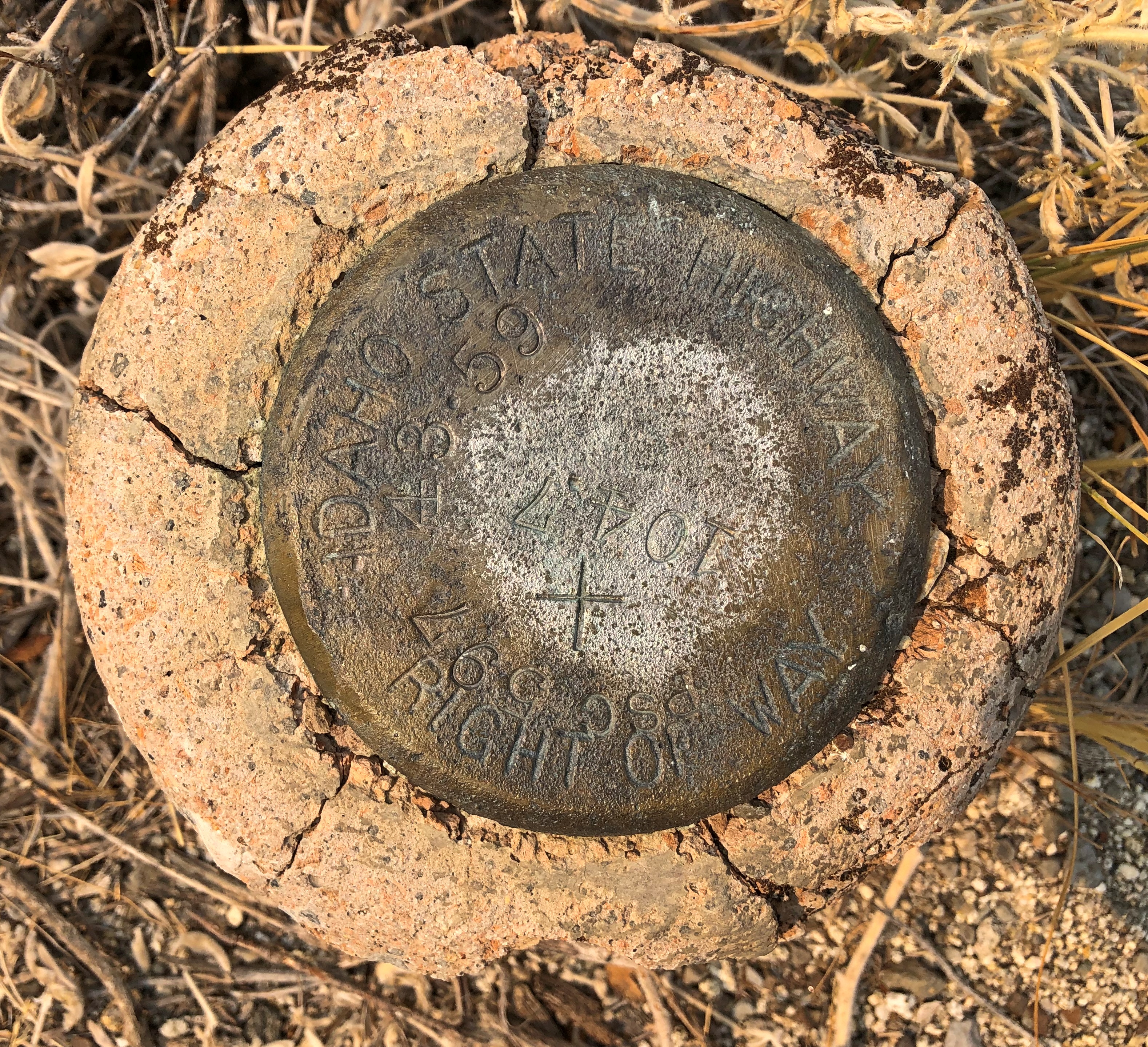
An Idaho State Highway survey marker of considerable age. No doubt built to last. ID Highway Survey Marker

The route was, I suspect, a state highway originally, only later (in the 1940s) becoming part of the US system. Or maybe even US routes had to bear these markers, at least in Idaho. The answer is in some paper files in storage somewhere.

US 20 in Idaho also connects with the entrance, and only paved driving, in Craters of the Moon National Monument. East from there, the road goes through flatter country, including a few small towns, such as Arco (pop. 879), which has the distinction of being the first town to be lighted using atomic power, in 1955, by the nearby National Reactor Testing Station, now the Idaho National Laboratory. Also, the Butte County HS senior class paints its graduation year on the side of a high hill near the town. Since the 1920s, so that’s a lot of numbers. They were so distracting I pulled over for a moment to look at them,

Teton Pass Highway

Back in June, a section a winding mountain road, Wyoming 22, collapsed. The road’s eastern terminus is in Jackson, Wyoming, tourist hub and wealth magnet. The western terminus is at the border with Idaho, where the road becomes Idaho 33, which takes you to Victor, Idaho, just a few miles west of the border. For simplicity, I’ll call both sections the Teton Pass Highway.

I read about the collapse at the time, since I knew we might go that way, and promptly forgot about it when we set off and, more importantly, when we booked a place to stay in Victor, for the same reason anyone stays (or lives) in Victor: the avoid the high costs of Jackson. I’m glad to say WYDOT had the stretch open by the time we first drove there, on September 4, though it was a slow spot, with a lot of construction equipment still active on and near the road.

The Teton Pass Highway is an exercise in climbing a steep grade (signs say 10%) and then rolling down another one. You and your machine, that is. Our engine growled fairly hard, but nothing sounding like it was being overtaxed. There are some winding stretches on the highway, but they aren’t that numerous. Traffic is fairly thick. So on the whole, it isn’t the best of scenic drives.

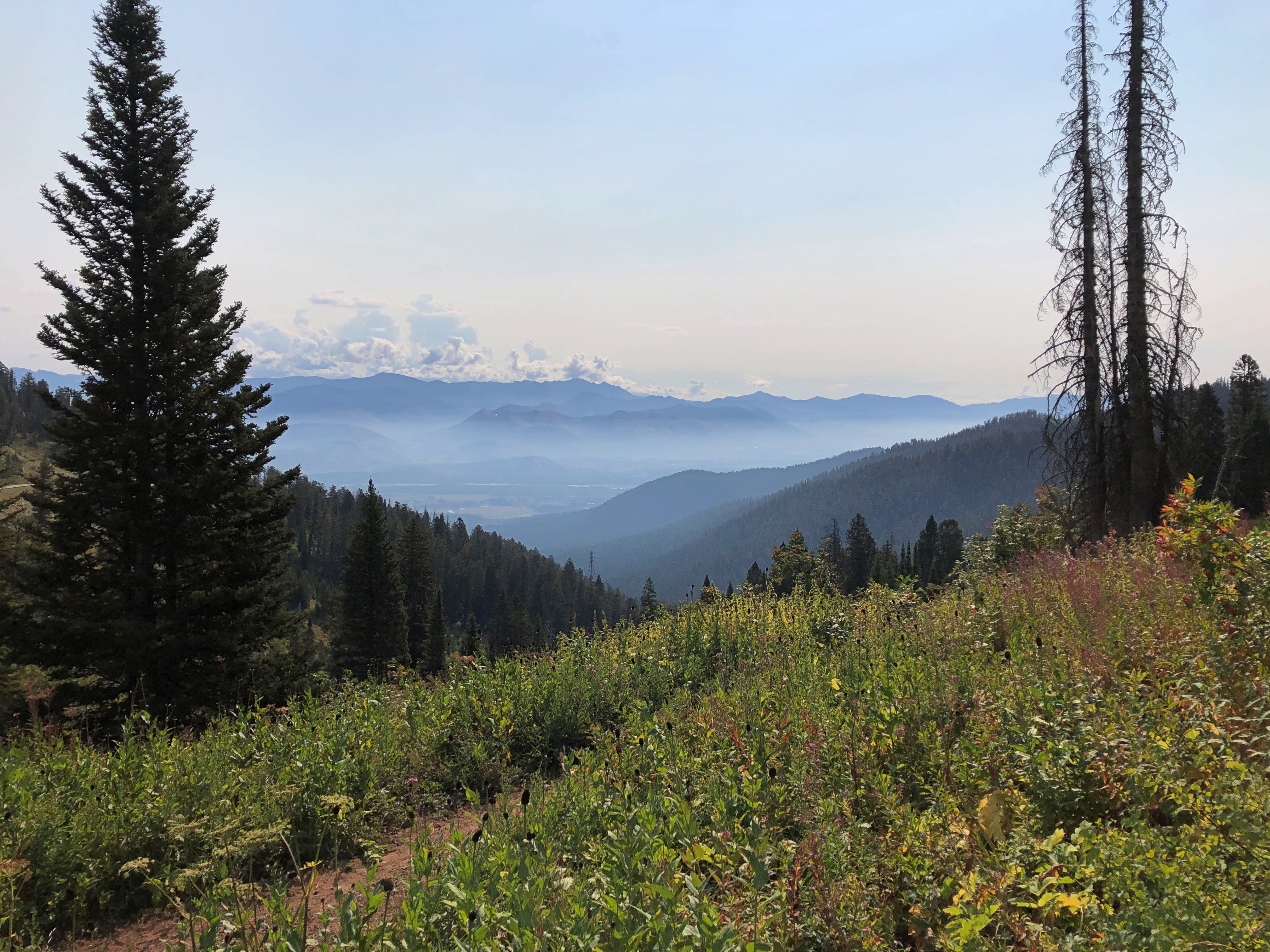
But if you stop at the pass itself, elevation 8,431 feet, you get your first glimpse of the Grand Tetons. First ever for us.Teton Pass Sept 2024

Honorable Mention: I-84 in Eastern Oregon

After paralleling the Columbia River, eastbound I-84 dips sharply to the southeast, taking a route between the Blue Mountains and the Wallowa Mountains in parts of Wallowa-Whitman National Forest. Not that I knew those names when we were barreling down that mostly empty, very black blacktop. But I could see them along the way. The mountains, that is: some of the yellowest mountains I’ve ever seen, with some brown blended in, but also a healthy dose of gold.