Thursday Chaff

It’s been a warm week for March so far, even warm enough last night before bed to crack the window a bit and listen to the strong winds and occasional rain showers. Did that account for the occurrence of one of my semiannual phantasmagoria dreams early this morning? Maybe.

Great Fortune, subtitled “The Epic of Rockefeller Center,” by Daniel Okrent (2003) is a delightful book so far, and I’m only a chapter in. Certainly the most delightful thing I’ve ever read about a major urban mixed-use redevelopment project.

The first chapter sets up the story nicely, telling a short history of the Manhattan land that would be Rockefeller Center up until the time that John D. Rockefeller Jr. got involved in the project in the late 1920s. I didn’t know that the parcel had belonged to Columbia University for many years, and the scheme to redevelop the land (known as the Upper Estate) was ultimately driven by the university’s need to pay for its stately campus in Morningside Heights.

“… this meant that expansion on the grand scale of McKim, Mead & White’s Olympian campus on Morningside Heights had somehow to be financed, and the Upper Estate was the only cash cow in sight,” Okrent writes. “The milking commenced in 1904…”

An important person at the beginning of the story is Otto Kahn, multimillionaire financier and patron of the arts (an American Maecenas, back when educated people would have known that reference), who was president and chairman of the board of directors of the Metropolitan Opera. I didn’t know that he was well enough known that the Marx Brothers parodied him as Roscoe W. Chandler in Animal Crackers.

A digression. Apparently, for $200, one can own an original Otto Kahn letter. Then again, they aren’t rare. Okrent called his correspondence “oceanic.”

Okrent also writes some good standalone lines: “His [architect Ben Morris] neo-Georgian Union League Club on 37th and Park is probably as close as one can get to the architectural equivalent of a stuffed shirt.”

The other day, I was driving along with Ann and playing with the radio dial as we went. On came “Copacabana.” Hadn’t heard that song a good while, but as I mentioned to Ann, it seemed to be on the radio all the time in 1978.

I thought a bit about it, and it seems remarkable that such a downer of a song was so popular. As a ballad, the entire story is, a woman’s boyfriend is killed in front of her, and psychologically she never recovers.

“Yeah,” Ann said. “But the music is so peppy.”

True enough. There’s also a derivative short story in there somewhere. Maybe the incident and the aftermath from the point of view of Rico. Maybe he was the playboy son of a Fulgencio Batista crony. In his highly publicized murder trial in New York in 1949, his lawyers argued self-defense and he was acquitted.

While walking the dog at Fabbrini Park this week, I noticed a memorial plaque on a bench honoring a man named William “Mr. Bill” X (I forget the last name). Nicknamed Mr. Bill, eh? And what were his last words? Oh Noooooooooooooo!

Of course, like Wile E. Coyote, Mr. Bill couldn’t actually die, just suffer endlessly, which seems a lot more hellish. Still, we celebrate the likes of Mr. Bill. I used to have a Mr. Bill t-shirt, and have photographic evidence to prove it, in as much as photographs prove anything anymore. It’s among the t-shirts I’ve lost over the years, which also includes the Kill ‘Em All, Let God Sort It Out shirt that sported a black beret-wearing skull.
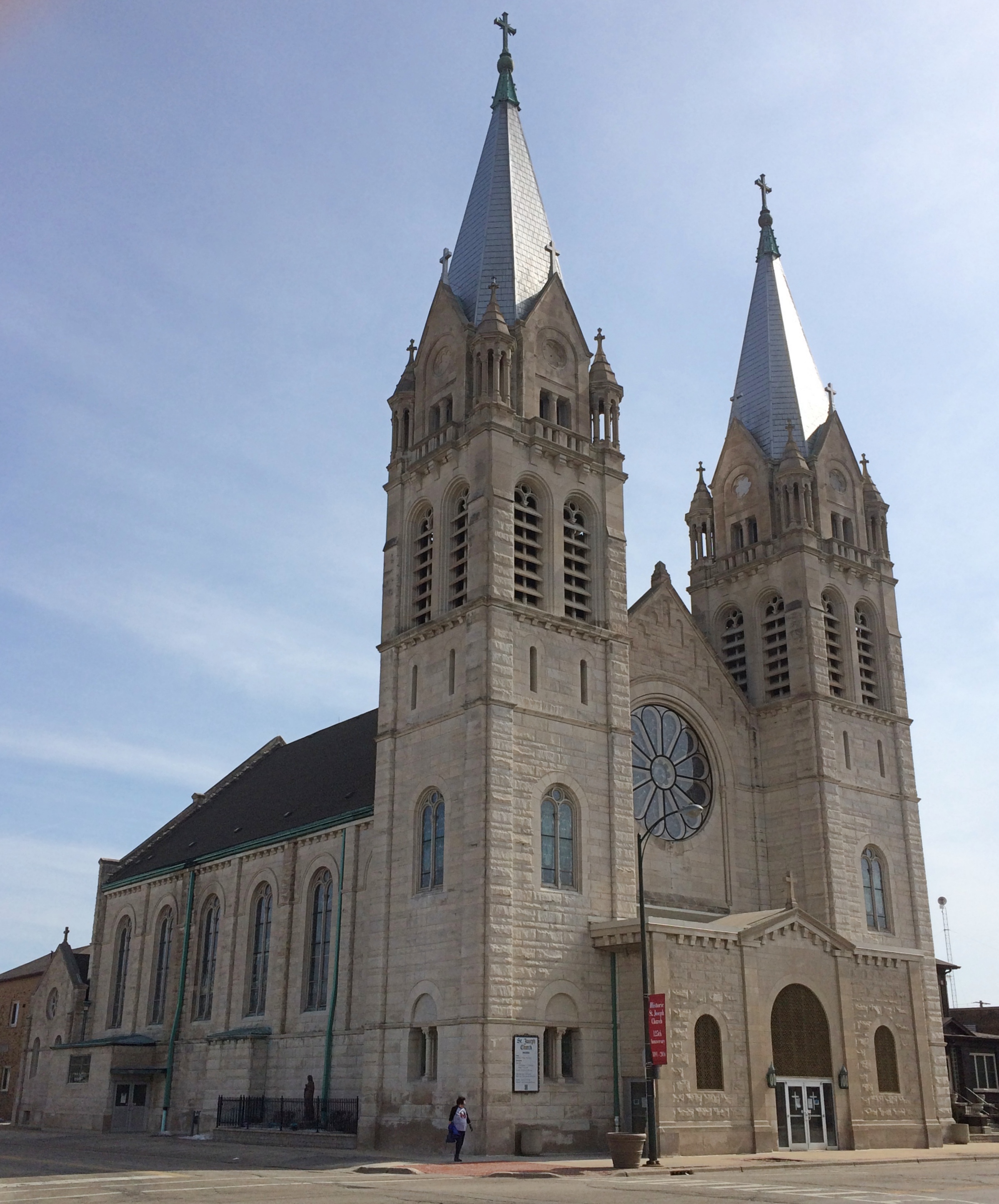
St. Joseph, Joliet

The iron works in Joliet might be ruins these days, but St. Joseph Catholic Church, one of the city’s major church buildings, still stands on Chicago St. downtown. It’s the second church on the site, built in 1905 to serve Slovenian immigrants, many of whom worked in the local iron and steel mills.
St Joseph Catholic Church, Joliet

By the time we got there on Sunday, masses were over, and it might have been closed in the afternoon even under normal circumstances. Still, we got a good look at the exterior.

“The St. Joseph community includes Slovenian attire and music in its Masses, offers one Mass in Slovenian each month, refers to the Virgin Mary by her Slovenian name of Marija Pomagaj and holds a celebration for St. Nicholas Day, which is a tradition in Slovenia,” Shaw Media reported on the occasion of the parish’s 125th anniversary, including some interior shots.

Charles Wallace, an Irish-born Chicago architect (1871-1949), designed St. Joseph. He apparently did a fair number of churches in the Chicago area during the golden age of church building for large immigrant communities.

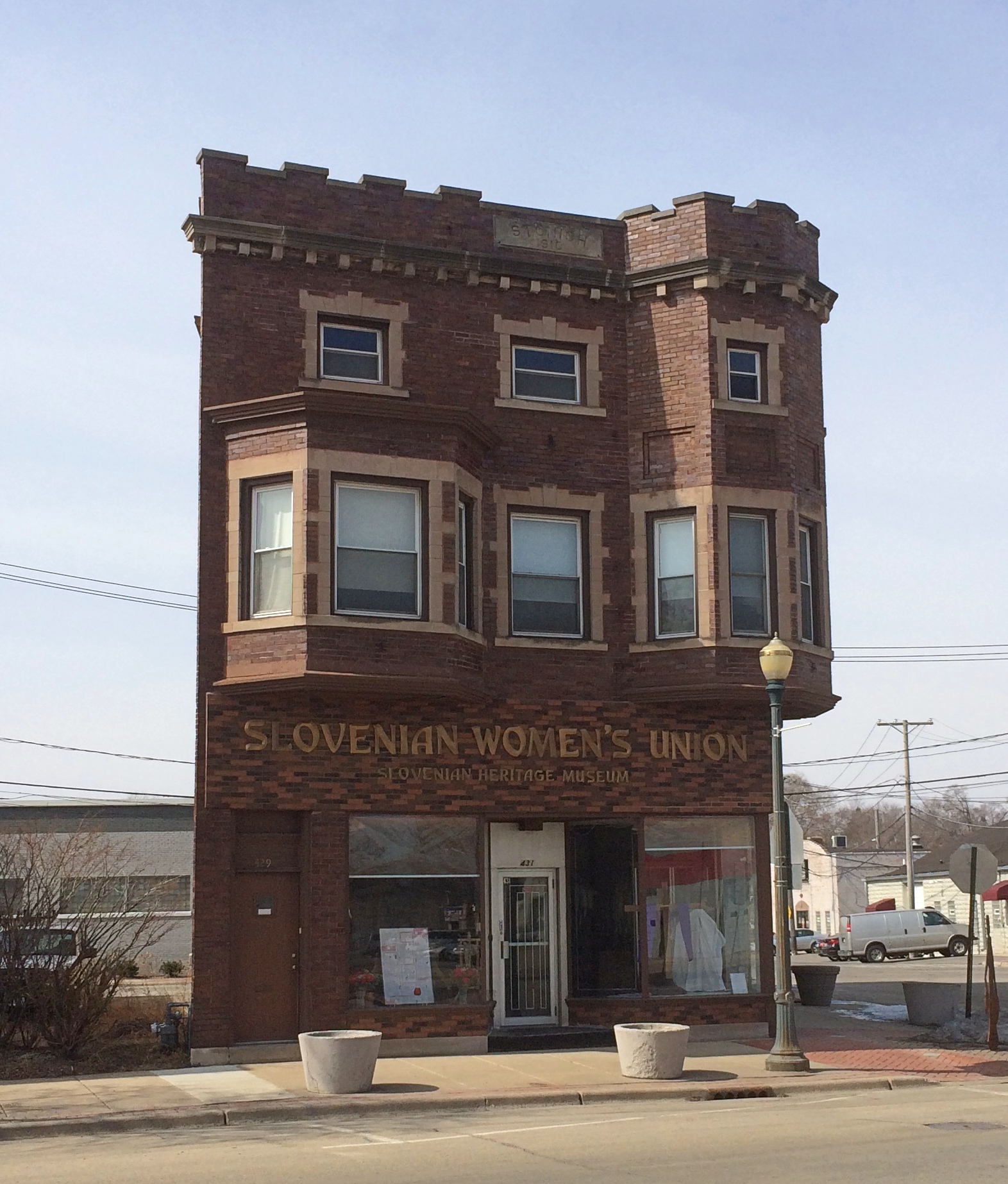
Across the street from the church is this building, headquarters of the Slovenian Union of America as well as the Slovenian Women’s Union of America Heritage Museum. The building dates from 1910.Slovenian Union of America / Slovenian Women's Union of America Heritage Museum

Closed, of course. My kind of little museum, though, so we might visit some other time. Might visit Slovenia some other time, too, with any luck. I hear it’s a pleasant place to visit.

Hadley Valley Preserve

On Sunday after leaving the Joliet Iron Works Historic Site, we planned to get takeout at a place in Joliet found via Google Maps, but after driving a few blocks, an old-fashioned technique for finding something to eat kicked in. That is, we saw it ourselves, and stopped on impulse.

Chicken-N-Spice. The place looked good, and it was: crispy fried chicken, warm mashed potatoes and gravy and tender biscuits. It was still a little cool to eat outside, so we found a spot to park and ate in the car.

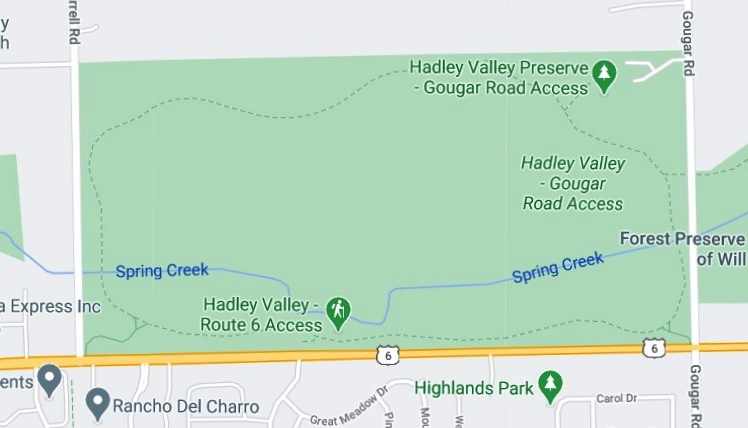
After lunch we drove to the Kansas-shaped Hadley Valley Preserve, a unit of the Forest Preserve District of Will County.

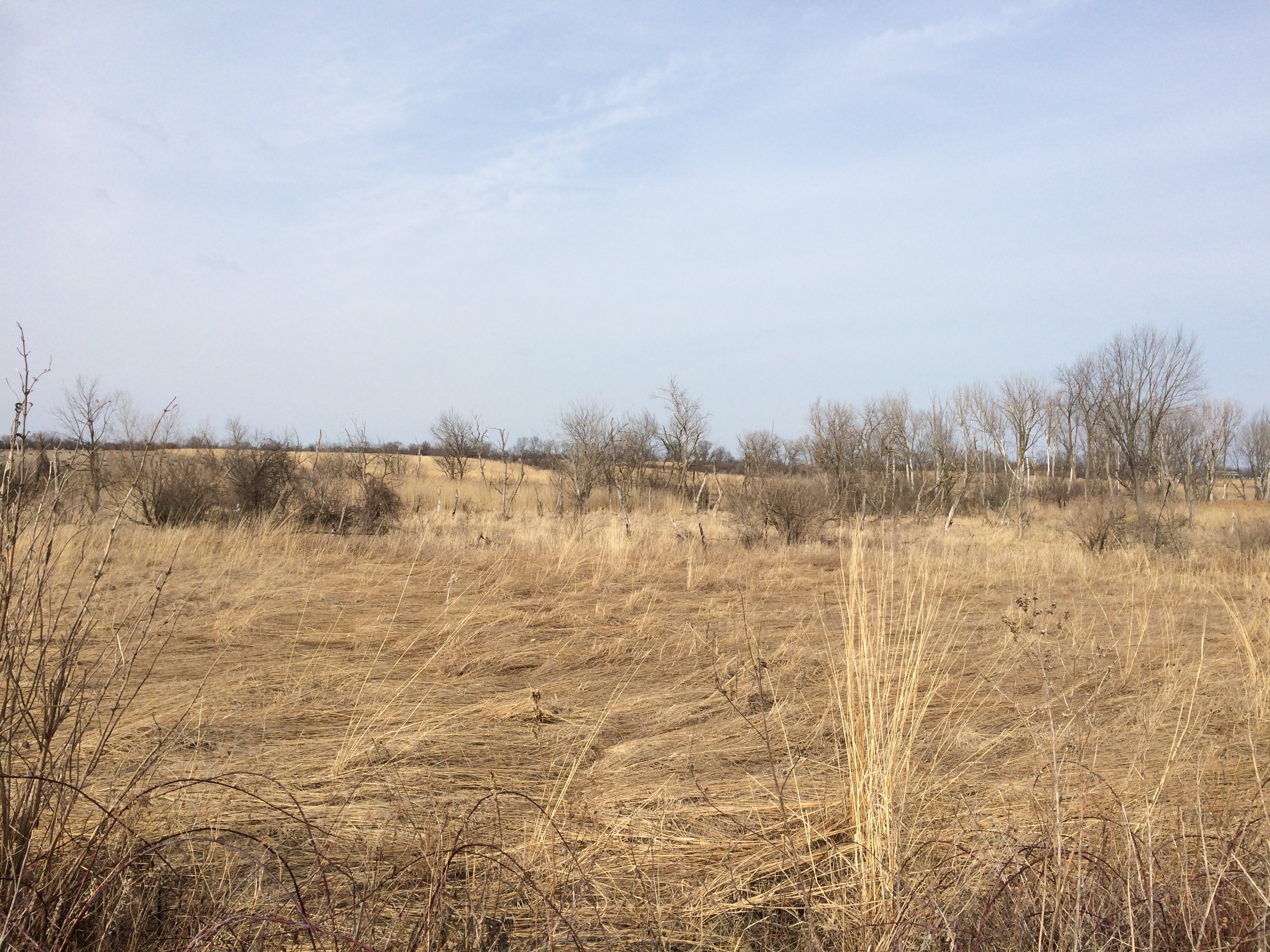
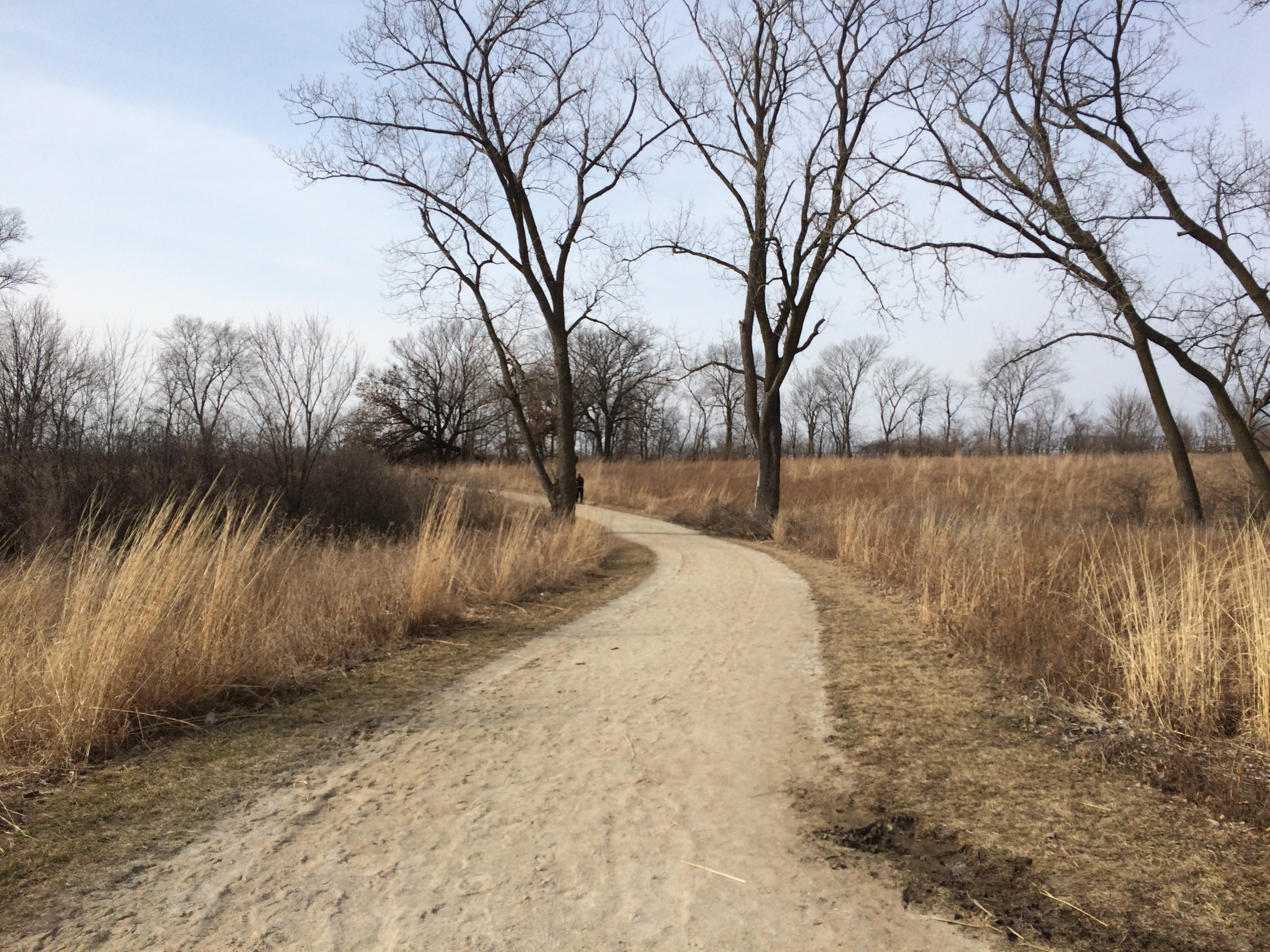
Not really much of a valley, but the 685-acre preserve is a savanna, according to the FPD: a grassland with scattered tree growth and a mix of shrubs and wildflowers (in season).

Looks that way.Hadley Valley Preserve

Hadley Valley PreserveThe trail makes an oval all the way around. We walked the whole thing counterclockwise, about 2.5 miles, with temps in the mid-50s and sunshine that wasn’t oppressive. Most of the mud had dried up by the time we walked it, unlike last week’s trail.
Hadley Valley Preserve
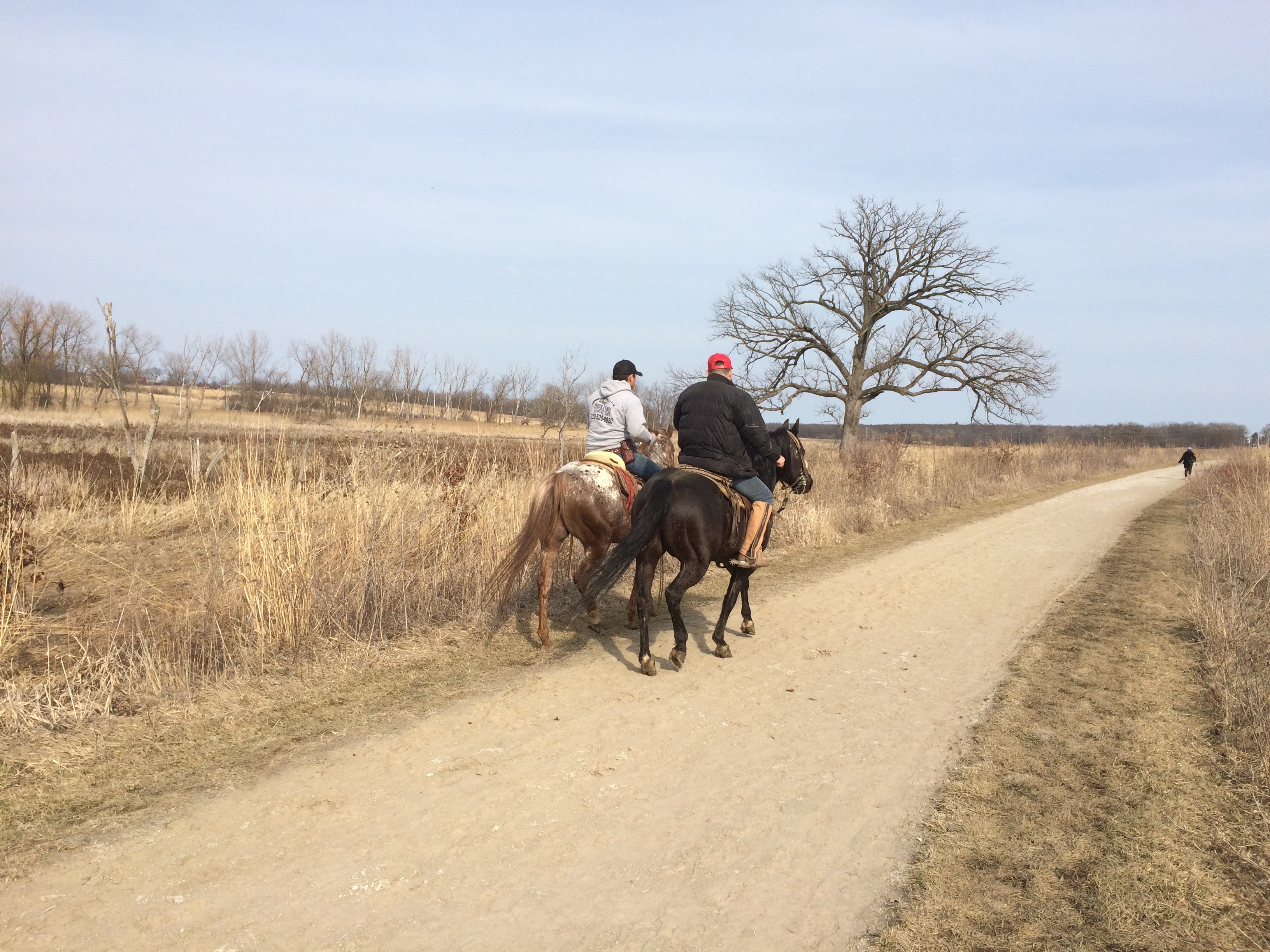
There were other walkers but also horses and their riders, about a dozen all together at one point or another on the trail.
Hadley Valley Preserve
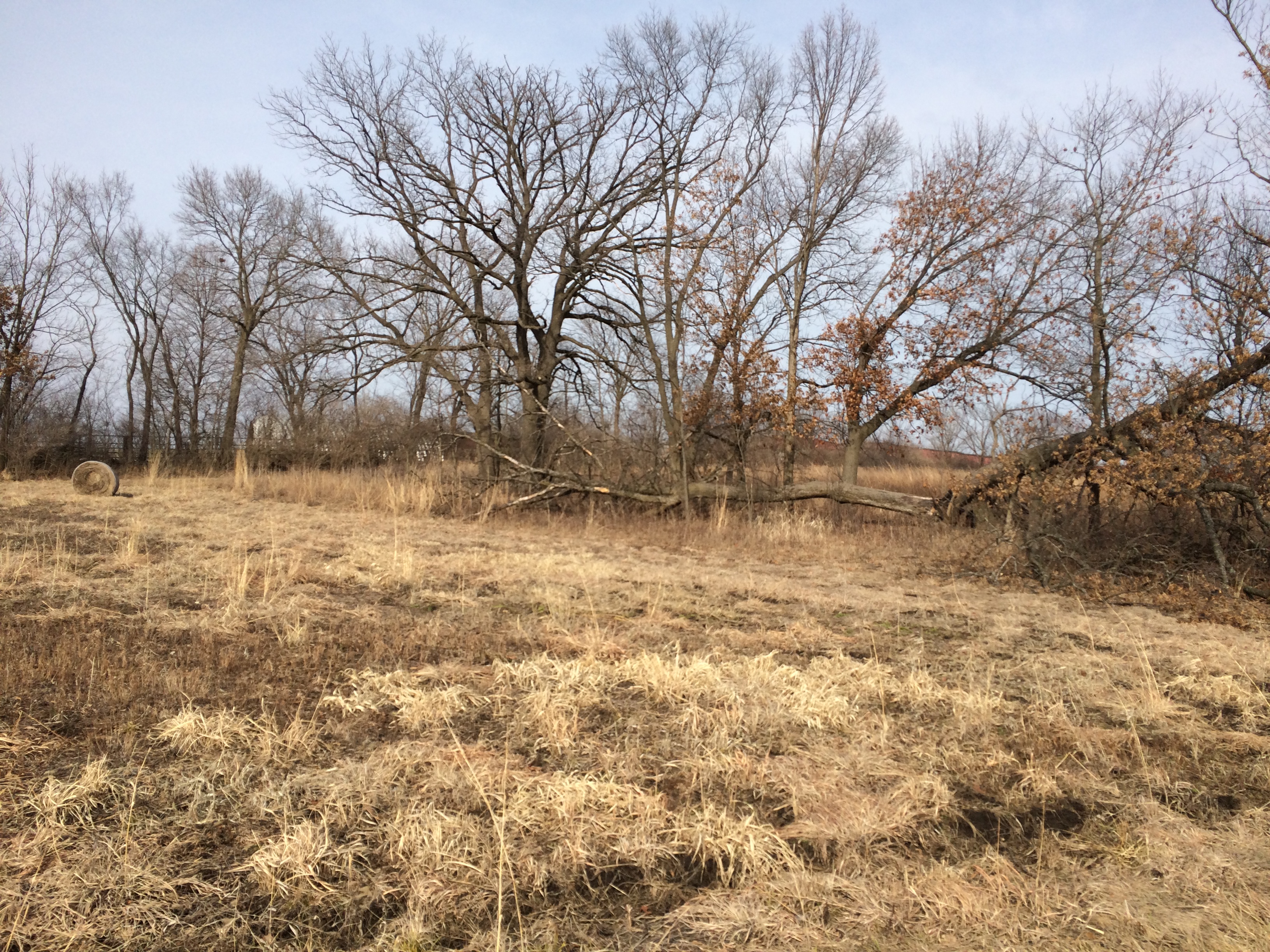
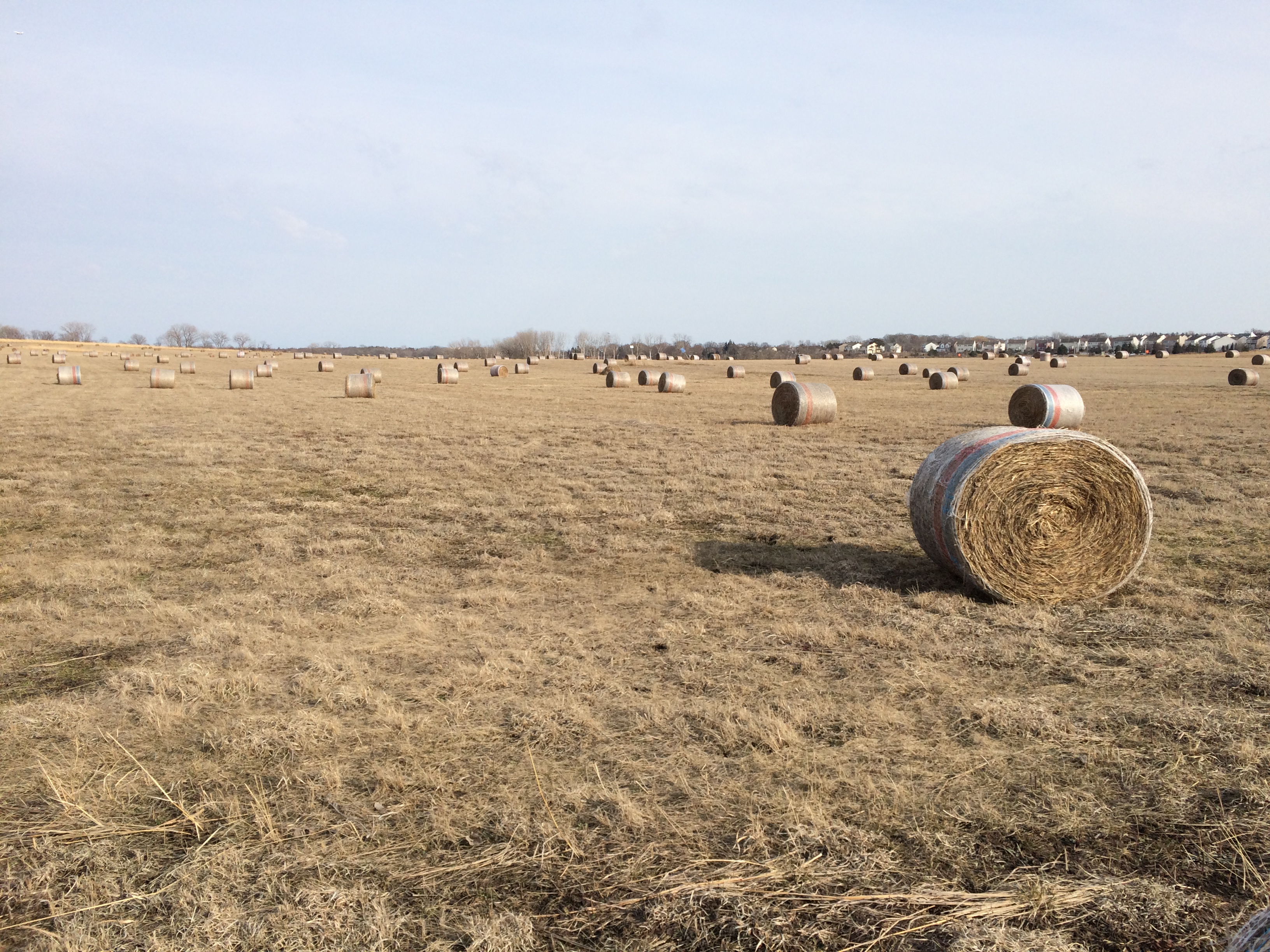
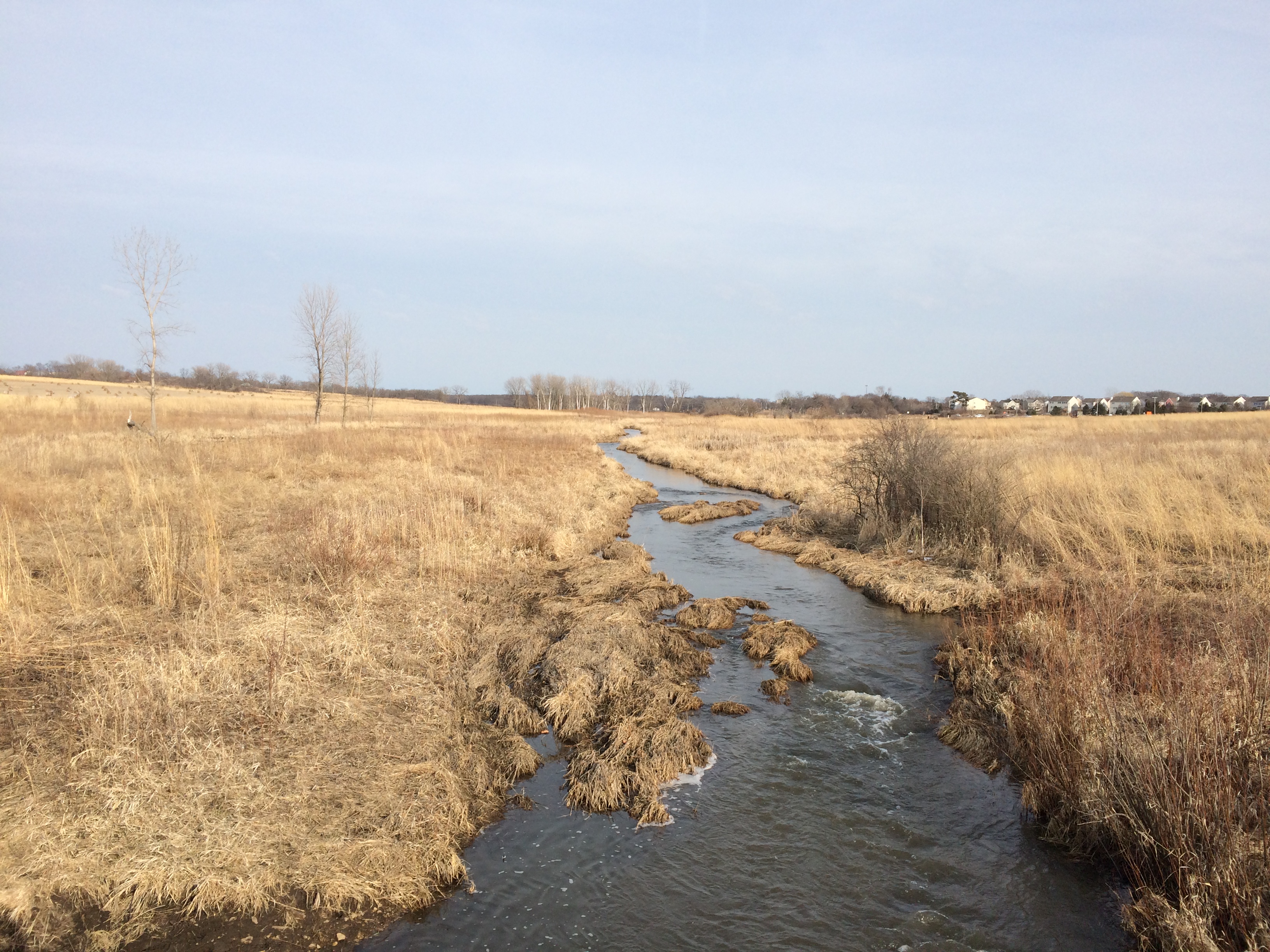
Rolls of hay. Not as picturesque as possible, but the scattered rolls have some charm.Hadley Valley PreserveSpring Creek runs from east to west through the length of the preserve.
Hadley Valley Preserve
The creek eventually connects with Hickory Creek in Joliet, and from there flows to the Des Plaines River and, of course, the far-off Gulf of Mexico eventually.

Joliet Iron Works Historic Site

For early March, and especially considering the snows and bitter days of February, Sunday felt gloriously warm. Temps were in the mid-50s by the early afternoon, and we needed no further encouragement to go find a place to walk, though it took some driving to get there.

We went south. There are lots of places to see in southern metro Chicago, including the Joliet Iron Works Historic Site.
Joliet Iron Works Historic Site
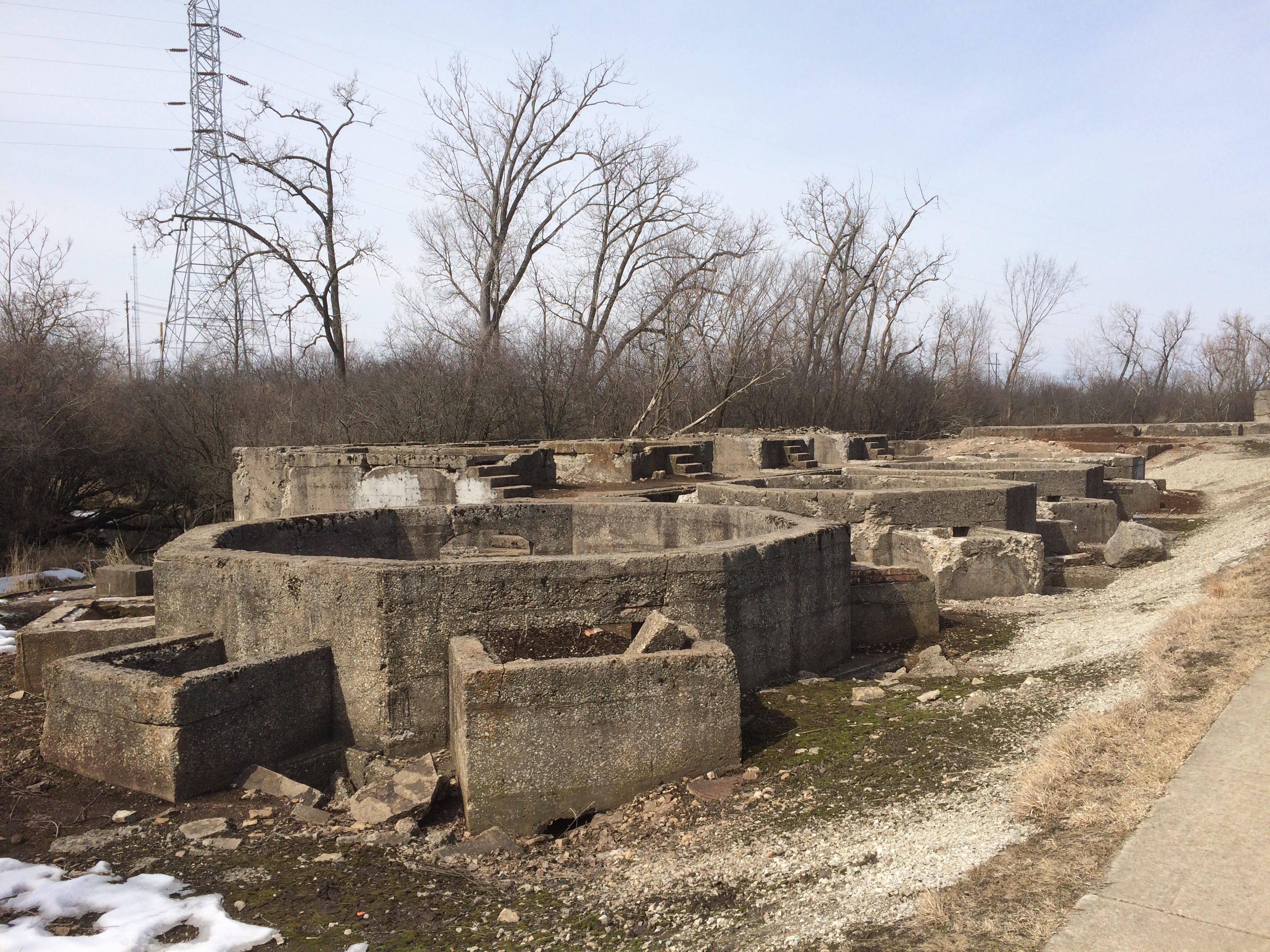
Industrial ruins, that is. Unfortunately not the towering metal husks you might see in Pittsburgh or Birmingham, Alabama, but worth a look all the same.

A path runs through the ruins about a half mile, roughly parallel to RR tracks to the east, and the Illinois & Michigan Canal to the west, though those aren’t always visible.
Joliet Iron Works Historic Site
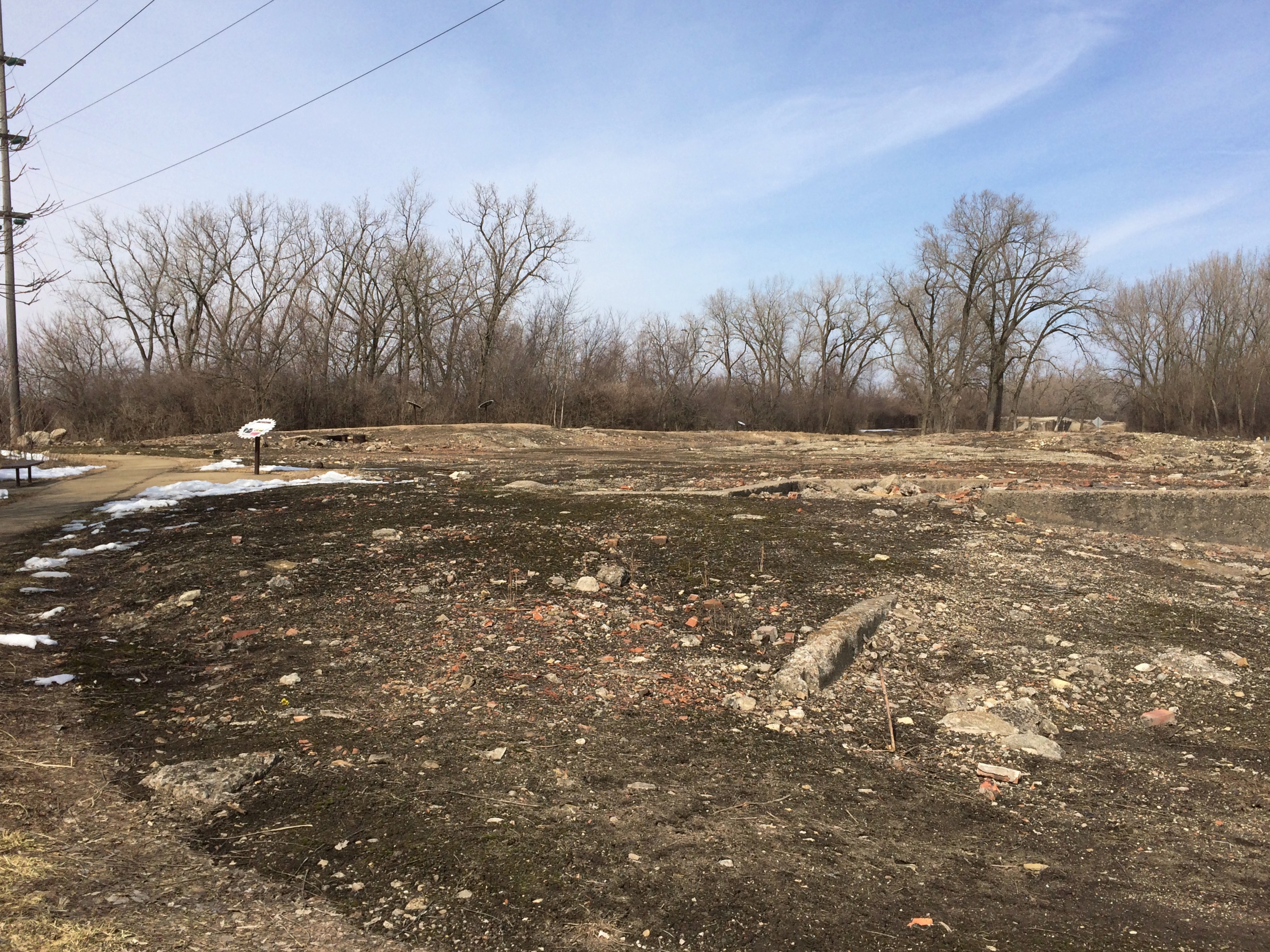
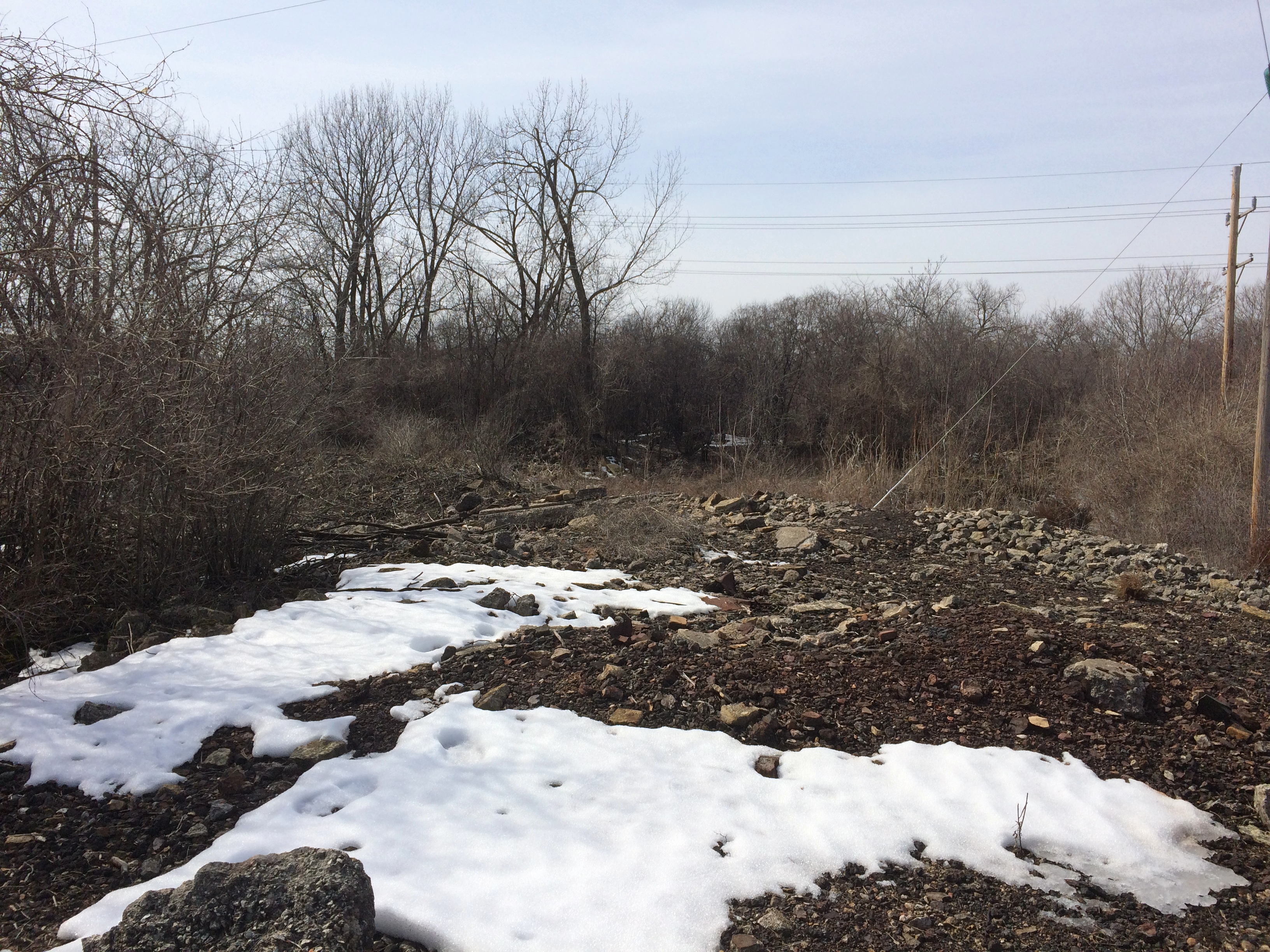
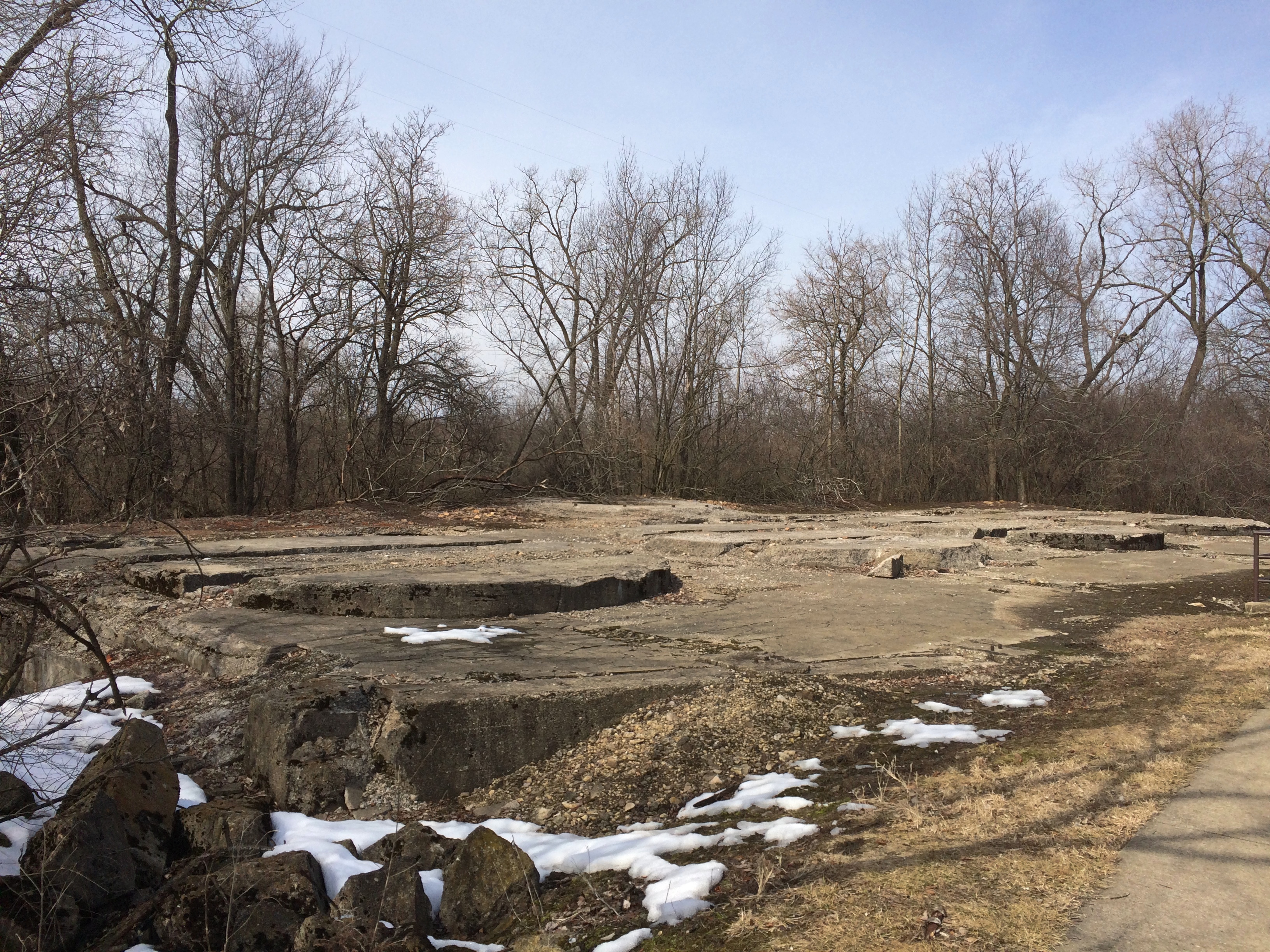
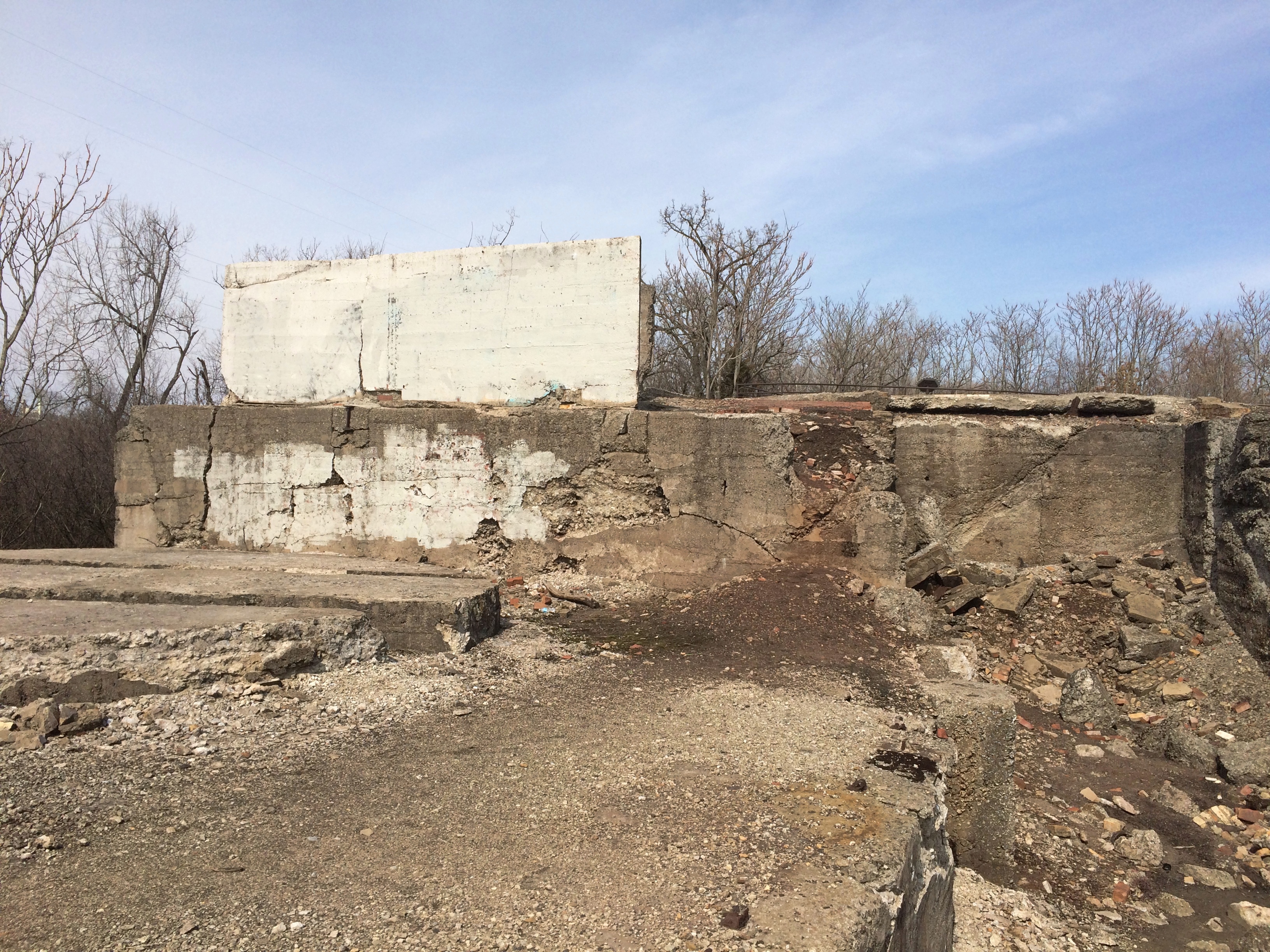
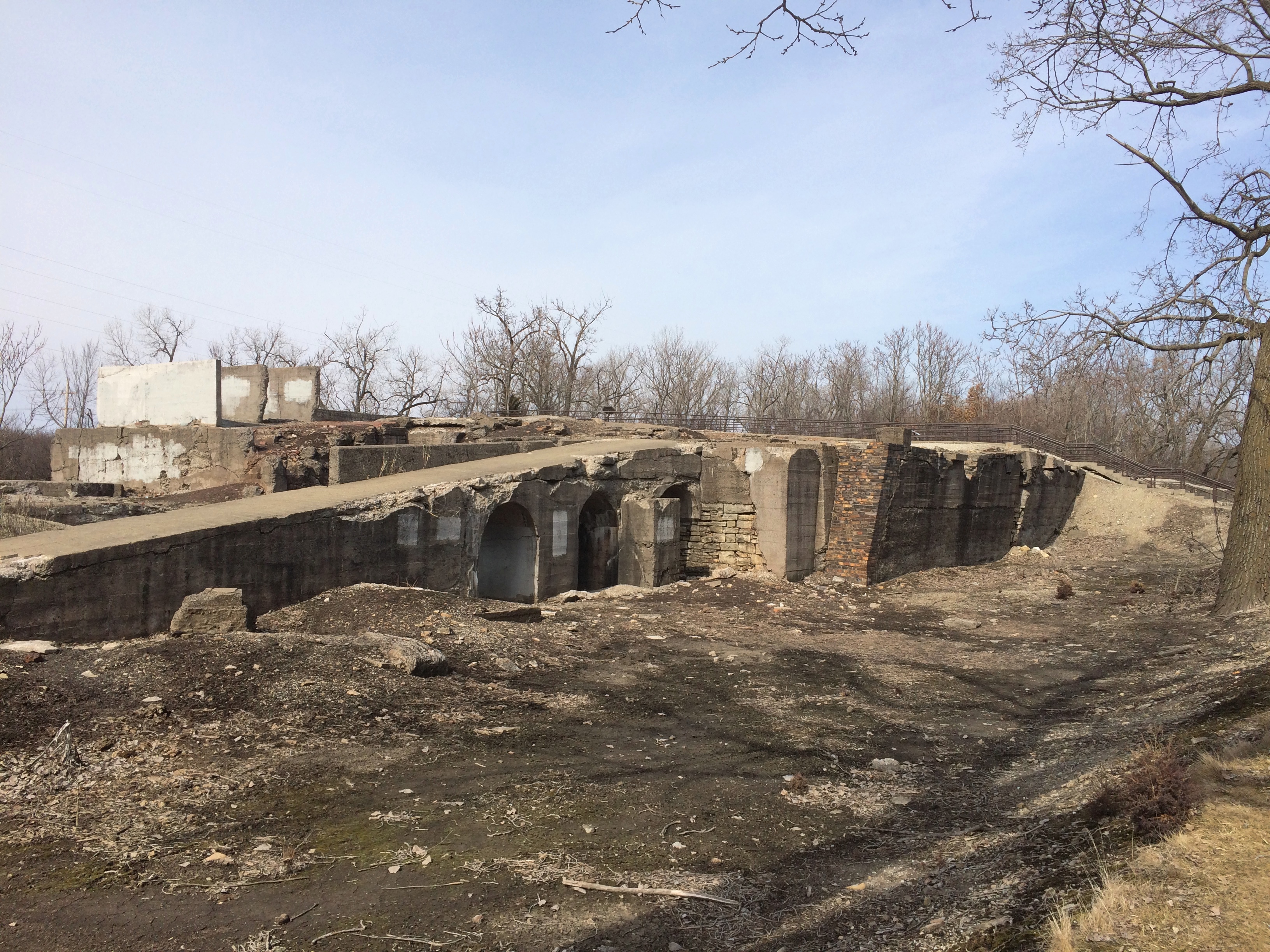
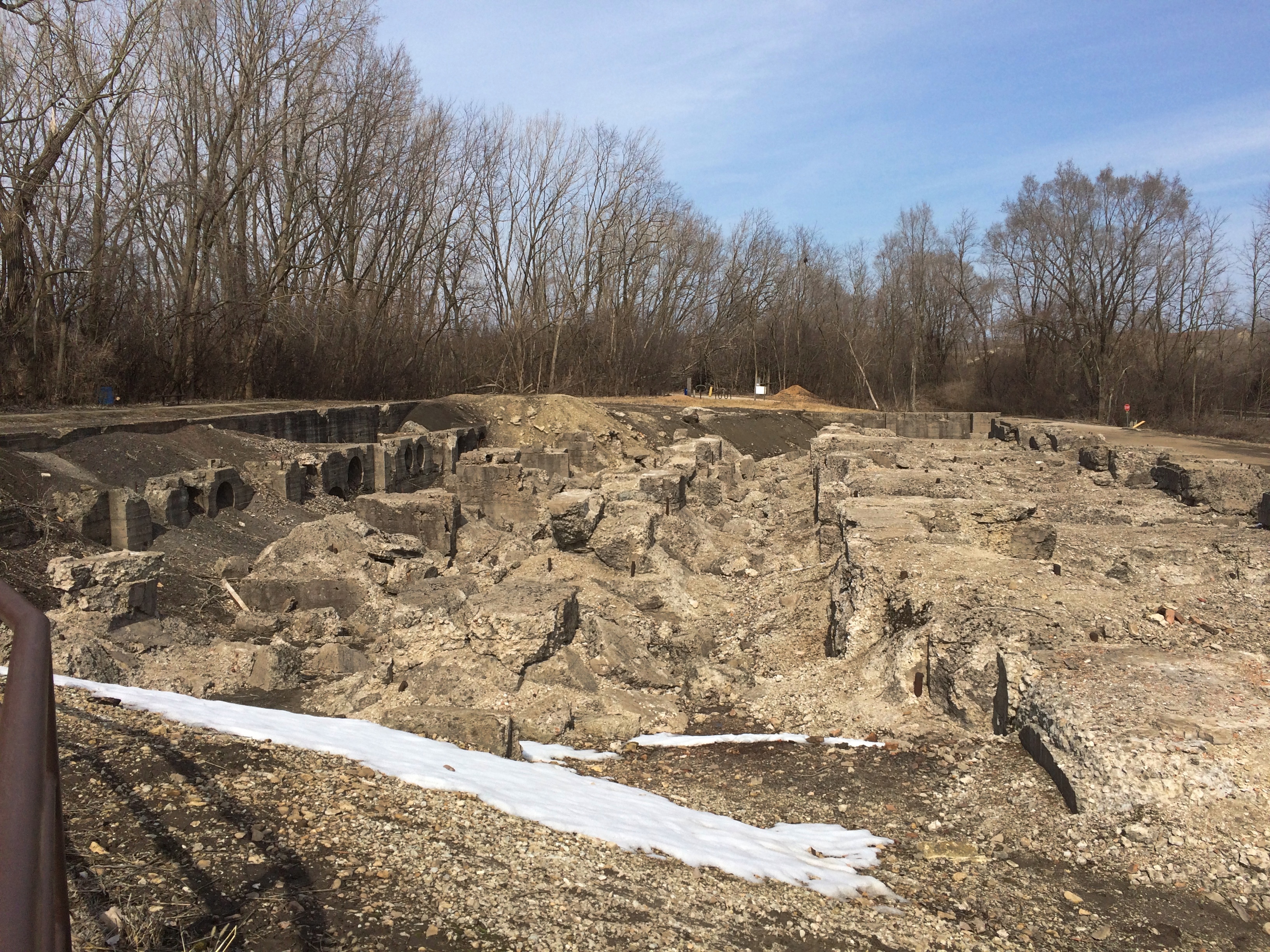
Toward the southern end of the site, it’s mostly rubble, and not always much at that.Joliet Iron Works Historic Site Joliet Iron Works Historic Site Joliet Iron Works Historic SiteFurther north, there are the stubs of the sizable structures that used to be there.Joliet Iron Works Historic Site Joliet Iron Works Historic Site Joliet Iron Works Historic Site

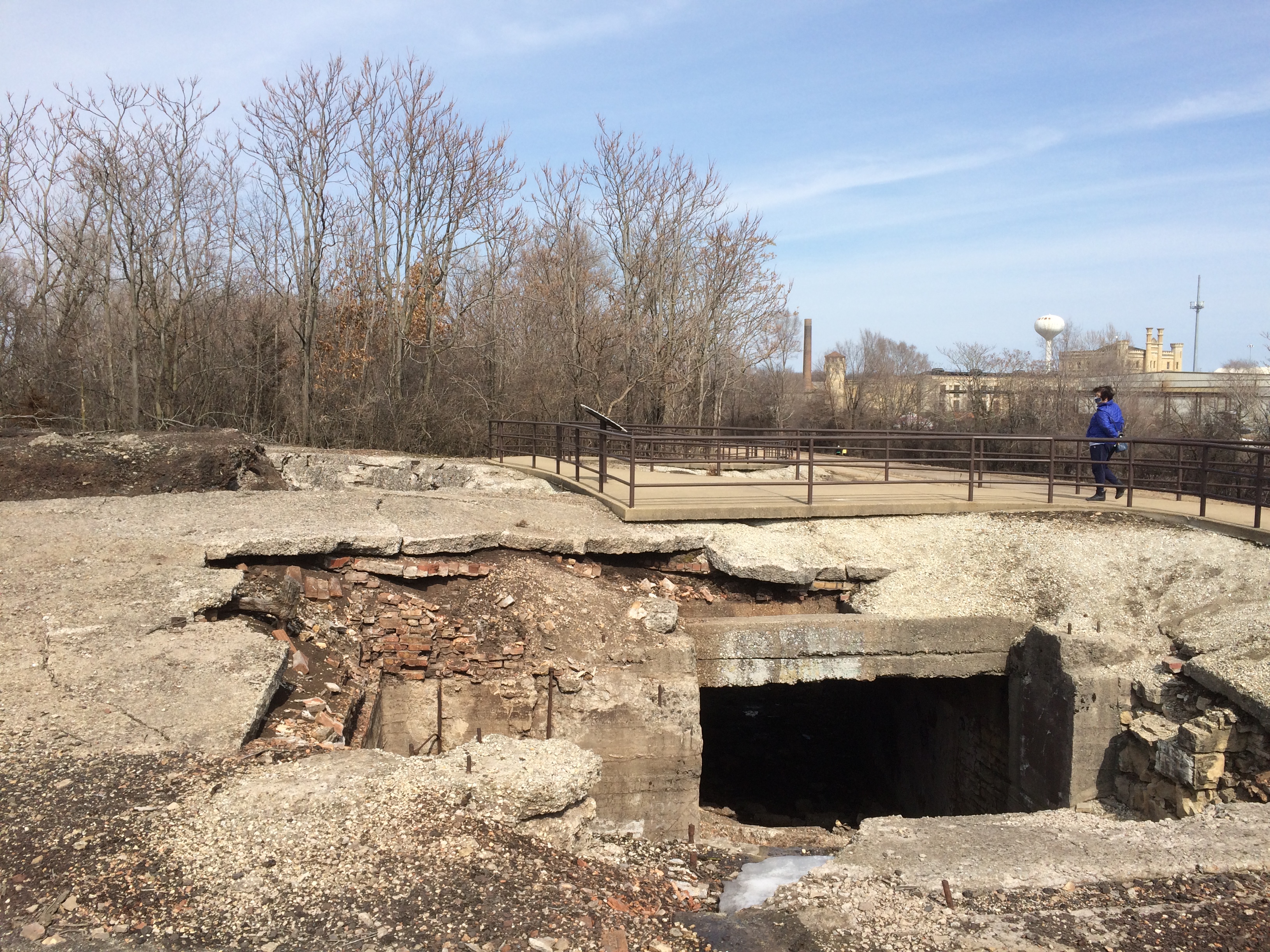
Including some dark holes.
Joliet Iron Works Historic Site
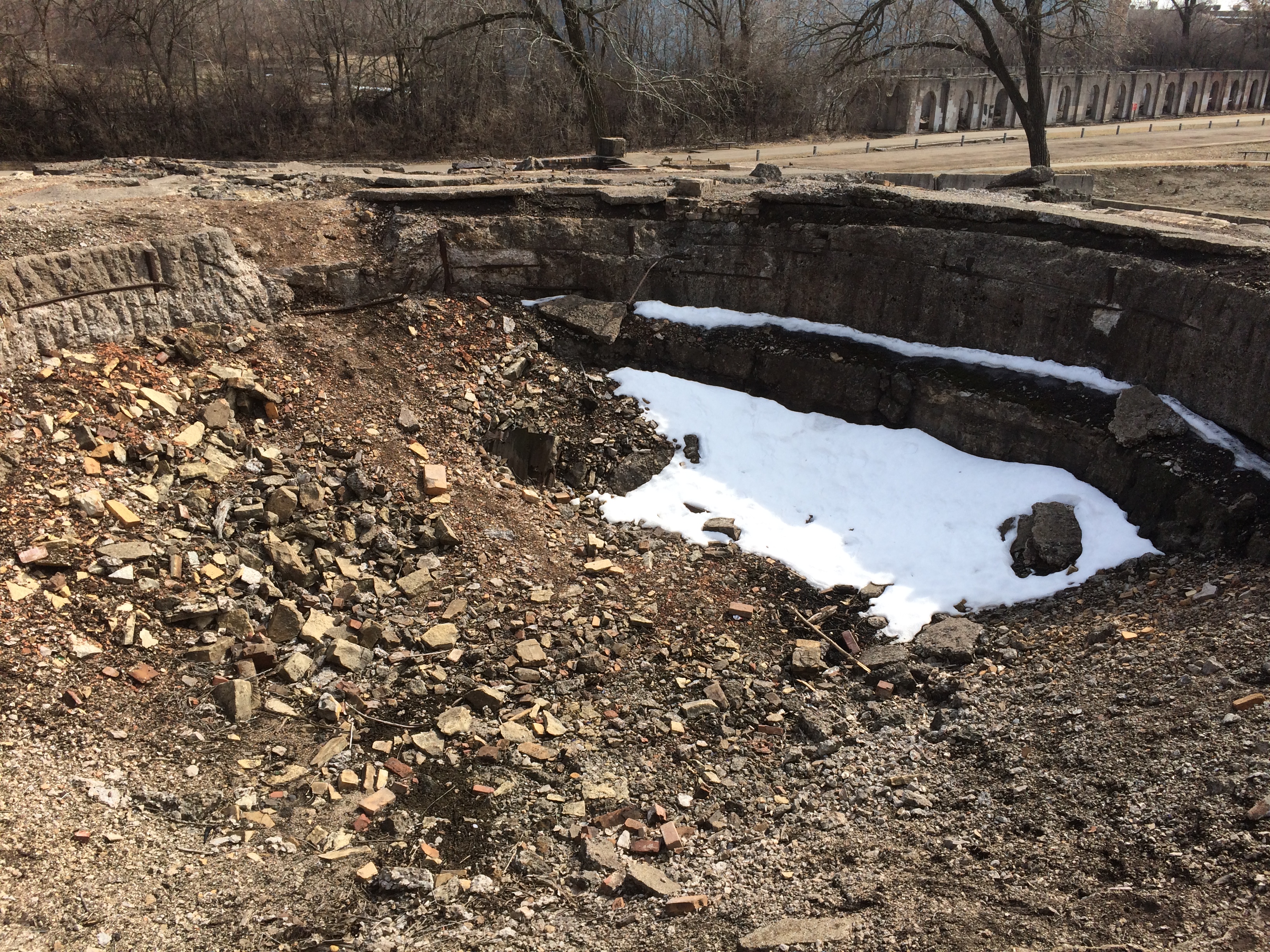
This pit is the foundation of a once mighty, and mighty dangerous, blast furnace.
Joliet Iron Works Historic Site
Once I was reminded of some of the images of Knossos that I’ve seen. Like this one.Joliet Iron Works Historic Site
“The factory opened in 1869 and was a massive facility for the time….” notes Atlas Obscura. “Employing four huge blast furnaces and a few thousand employees, the metal works produced around 2,000 tons of raw pig iron each day.”

Not sure where that figure came from. On site, one of the signs said that soon after the plant opened, the total was 50 tons of pig iron a day. By 1910, production was 400 tons a day.

“The plant kept putting out metals until 1936 when it closed for a short time before being reopened [for the war effort]. However, its new life was not to last that long either, as the works became unprofitable and were abandoned in the 1980s.”

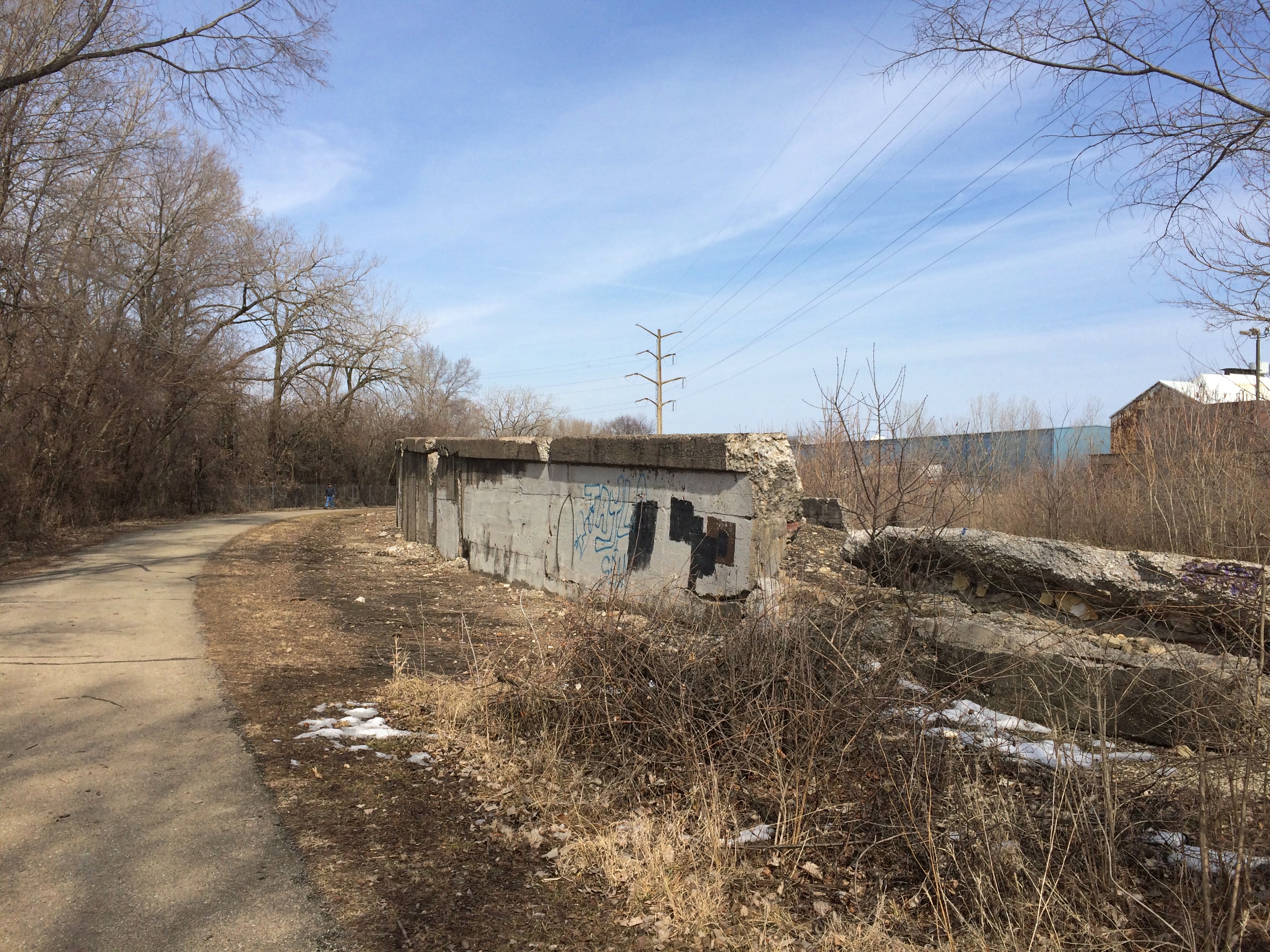
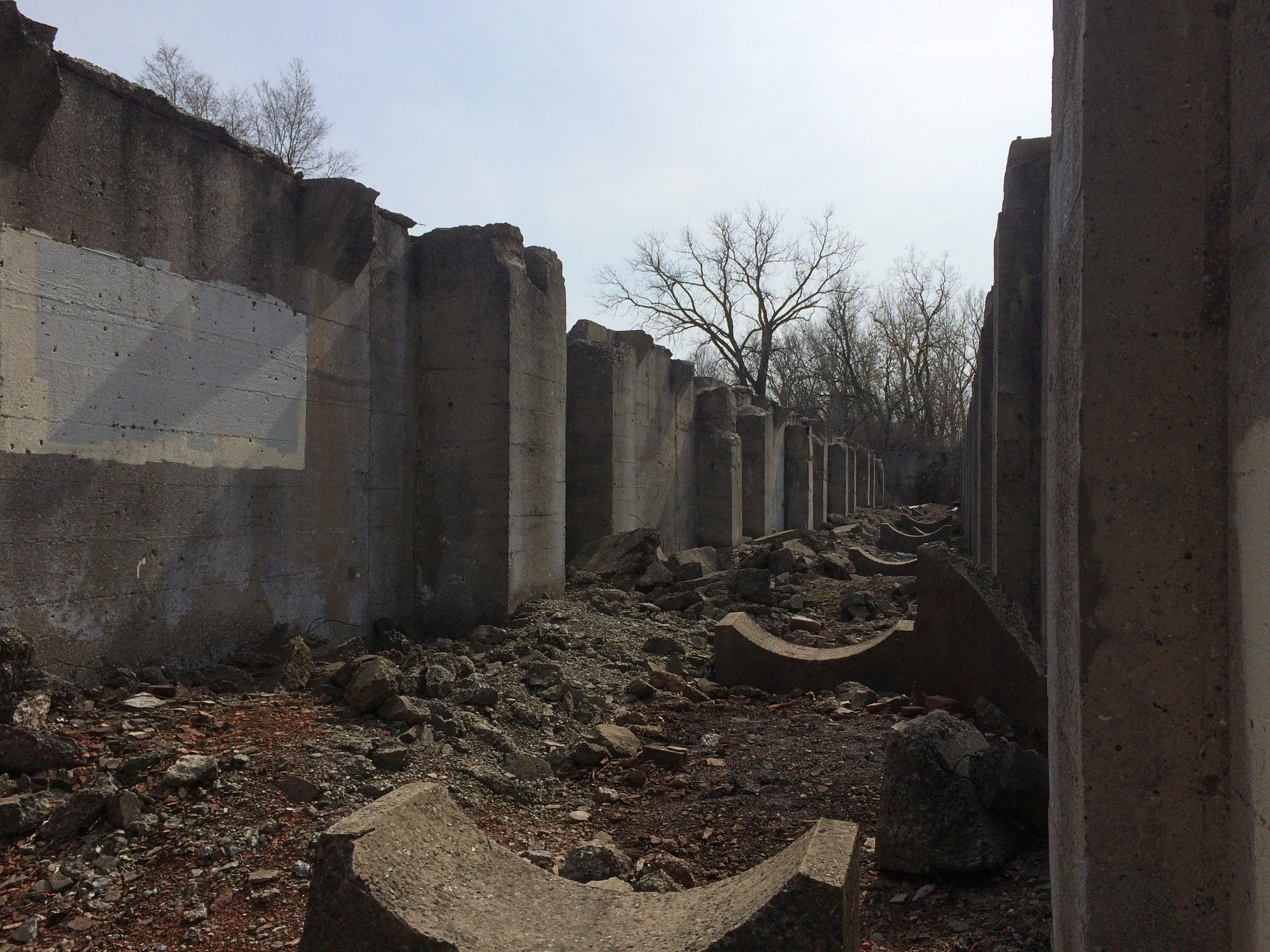
Surprisingly little graffiti marks the ruins, though there are places where it’s clear it has been painted over. Such as here.
Joliet Iron Works Historic Site
But new graffiti is probably added regularly.
Joliet Iron Works Historic Site
The Forest Preserve District of Will County acquired the site in the 1990s, and stabilization efforts have been enough to allow it to be open to the public. Parts of the site, anyway.
Joliet Iron Works Historic Site
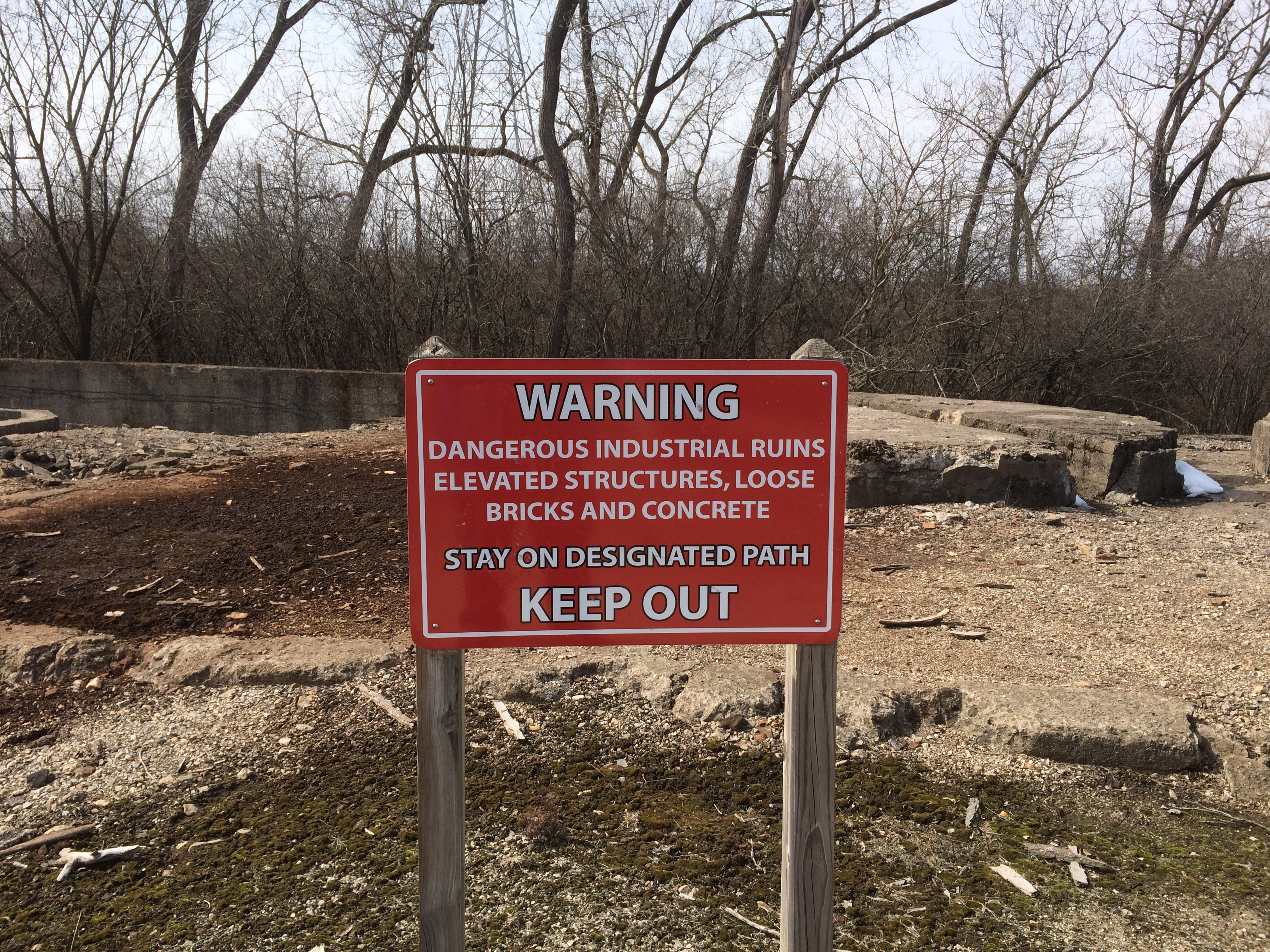
You can’t say you haven’t been warned.

Tottori Sand Dunes, 1992

Pleasant spring-ish weekend. Sour old man winter will return again sometime soon, of course, but probably not in full force as spring slowly gains the upper hand.

Referring to the Tottori Sand Dunes, Wikipedia has this to say, among other things: “Each year, around two million visitors — mostly from within Japan and East Asia — visit the dunes.[citation needed]”

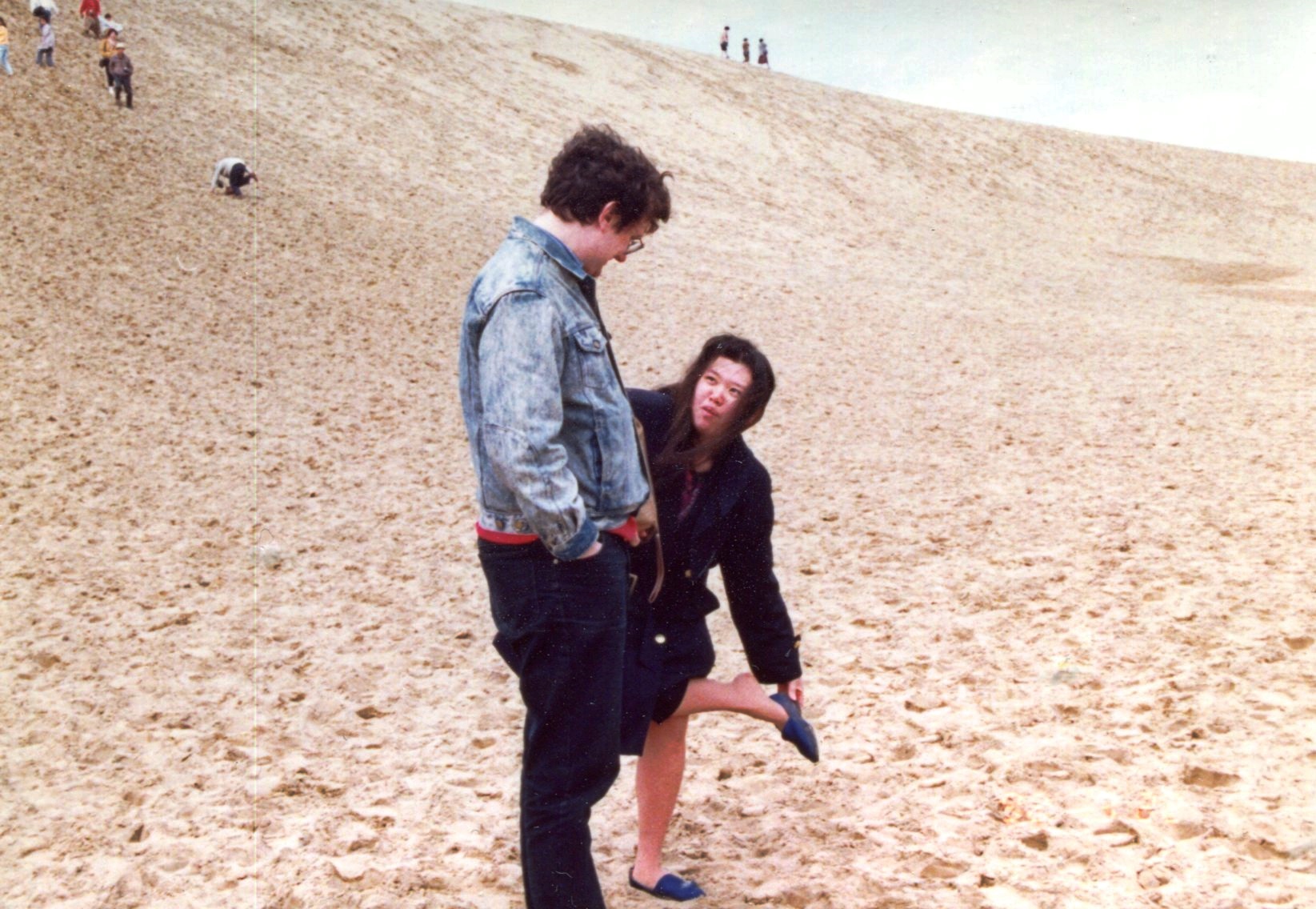
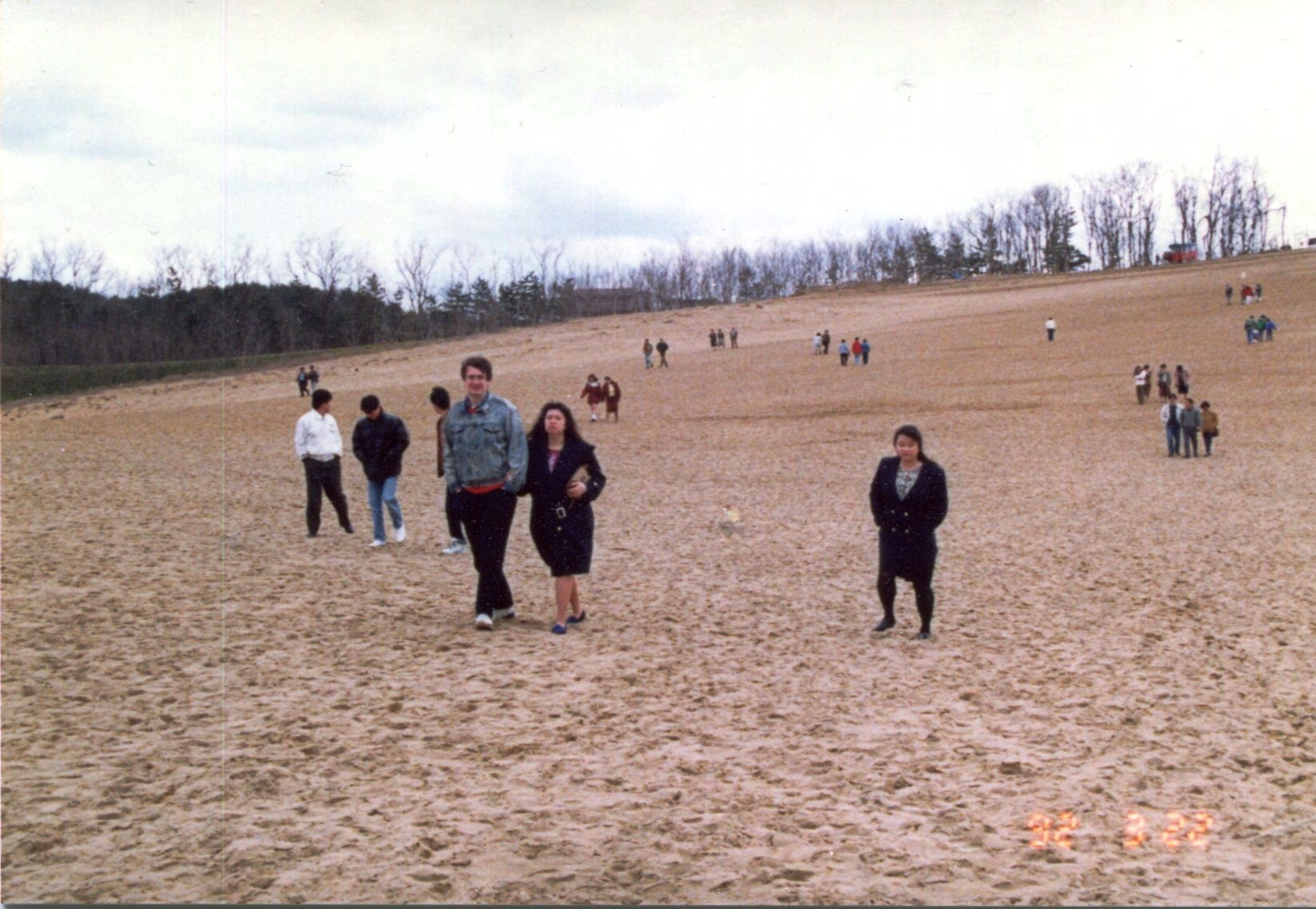
Maybe so. When we went there in March 1992, the place was pretty popular.Tottori Sand Dunes Tottori Sand Dunes Tottori Sand Dunes

The dunes aren’t that far from the heavily populated Kansai region — Osaka-Kyoto-Kobe — and they count as a novelty draw since Japan doesn’t a lot in the way of epic sand dunes. If that’s what you want to see, Tottori is the place to go. The dunes stretch nine miles from east to west, and are a little more than a mile wide. At their highest, they rise about 165 feet over the Sea of Japan.

“The Sendai River carries sediment from the nearby Chugoku Mountains that eventually washes out into the Sea of Japan,” JNTO says, along with images of the area wider than anything I have. “Strong sea currents and winds work together to push these sediments back onto the shore to form the sand dunes. These same intense winds continuously move and re-shape the dunes.”

The dunes supposedly inspired Kobo Abe’s novel, The Woman in the Dunes (砂の女 Suna no Onna, “Sand Woman”), which I haven’t read. Years ago I did see the 1964 movie based on the novel, which is a well known avant-garde film and, I thought, relentlessly grim. Fitting for a retelling of the Sisyphus myth.

Thursday Dribs

Shouldn’t there be drabs as well? Maybe, but I did that not too many Thursdays ago.

“Drib is known in some English, Irish and Scottish dialects from at least the eighteenth century, meaning an inconsiderable quantity or a drop and most probably is a variant form of drip or drop,” says the always interesting World Wide Words.

“The experts are undecided whether the second half is a mere echo of the first, as in reduplicated compounds like helter-skelter, see-saw and hurly-burly, or if drab is a real word in its own right.”

It is a word, but in the sense of dull. The Thursday Drabs would suggest that I passed the day listlessly, but that wasn’t the case at all. For one thing, going out for a walk is now pretty easy and, except when the wind kicks up, not too bad. All the ice has vanished from almost all of the sidewalks. Walking the dog is mostly a pleasure again.
These February scenes are gone as well. Some snow still endures, forming snow archipelagos on lawns, especially in shady northern exposures, but there’s a little less of it every day.
Also good to see: croci emerging from the earth. Some in our back yard, and some especially vigorous patches on the grounds of Quincy Adams Wagstaff Elementary, where we sometimes walk the dog.

Not long ago, I found a 12 oz. jar of preserves tucked away deep in our canned (and jarred) goods pantry: cherry raspberry preserves, product of Brownwood Farms of Williamsburg, Michigan. That sounded familiar, but I couldn’t place it for a moment.

The lid, though tight, sported a light coating of dust. That doesn’t bode well for the edibility of the edibles inside.

Then it occurred to me. We’d bought these preserves way up in Grand Traverse County in the summer of 2007 during a visit. Naturally, this made me a little leery of even opening the thing, much less eating it. But I got it open and didn’t see (or more importantly) smell anything amiss.

Been eating my 2000s-vintage preserves on various kinds of bread since then, here in the 2020s, and it’s delicious. After all, Grand Traverse is justly known for its cherries and raspberries and other berries. I’m glad the preserve was literally true in the case of these preserves.

Arlington Cemetery & Elm Lawn Memorial Park

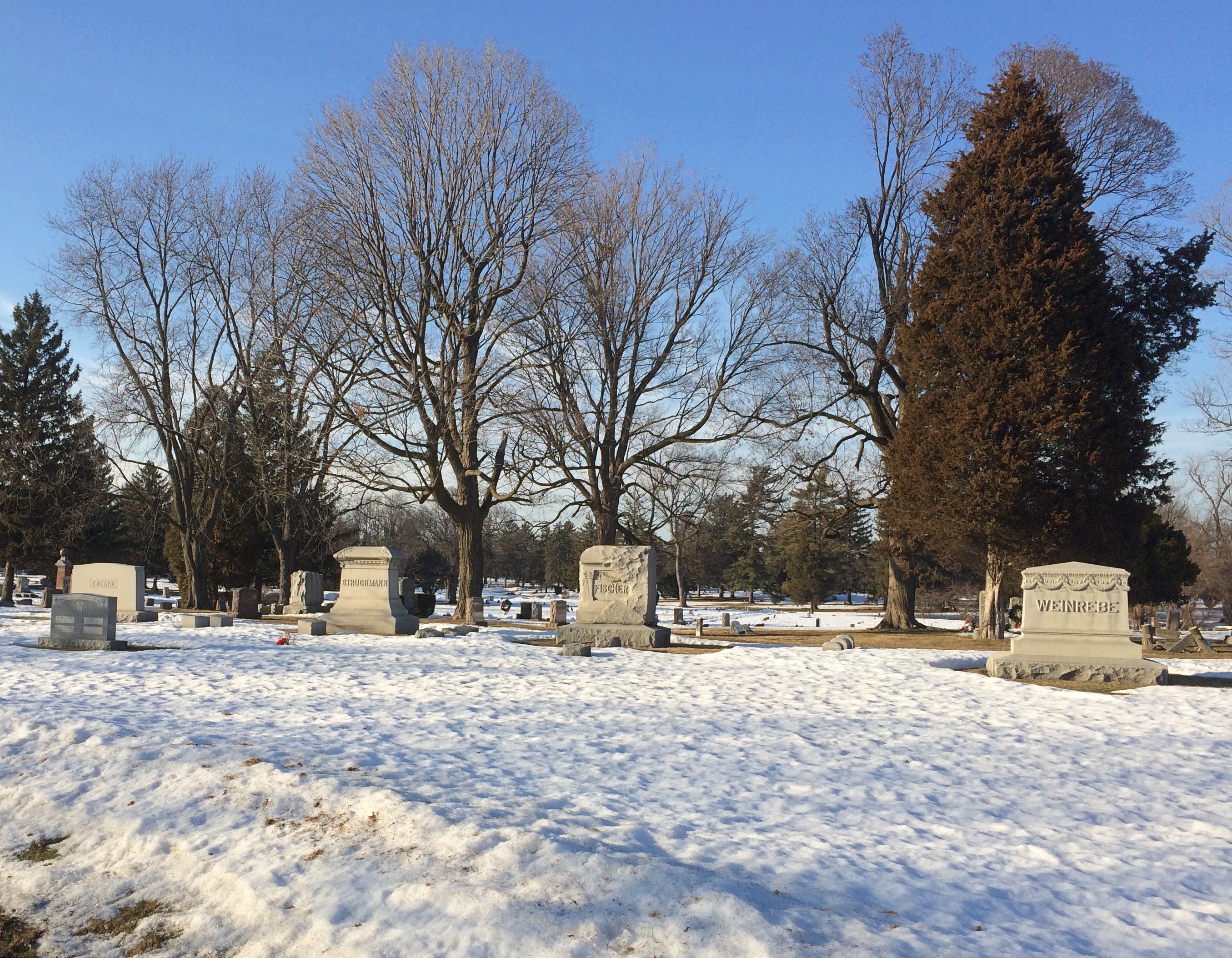
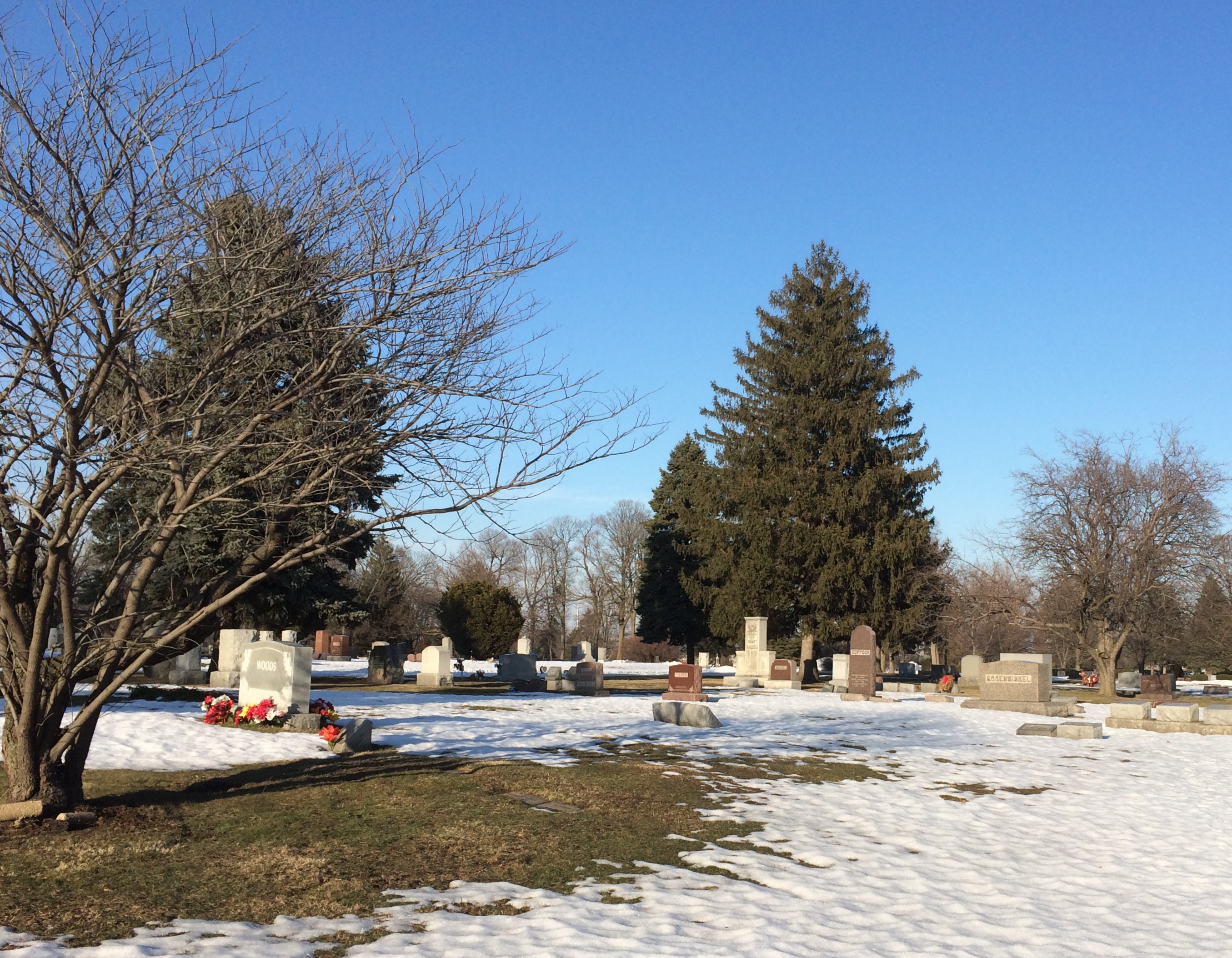
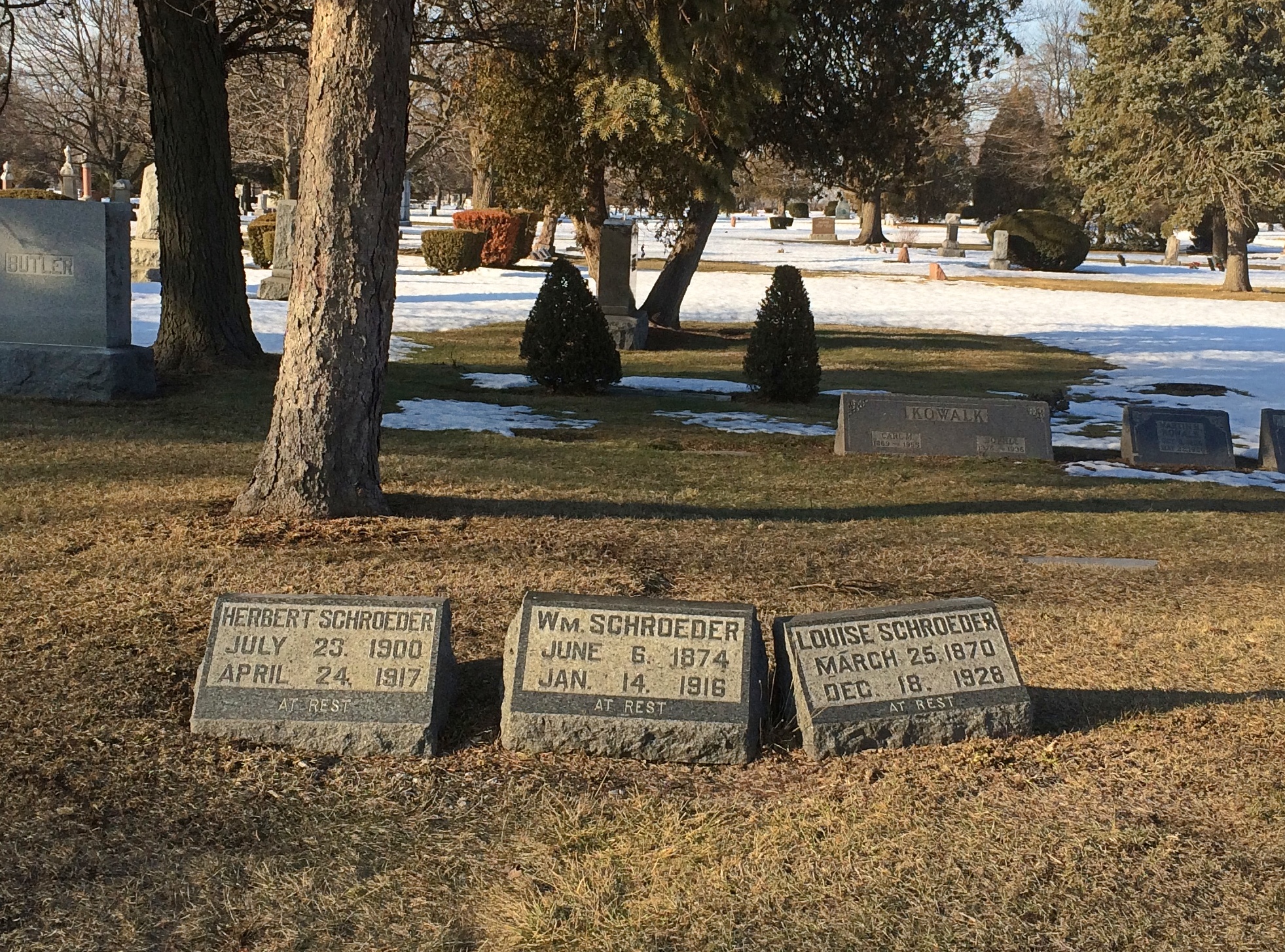
Due south of Mount Emblem Cemetery are twin burial grounds, Arlington Cemetery and Elm Lawn Memorial Park, also in Elmhurst, Illinois. On Saturday I headed south from Mount Emblem along County Line Road, fully intending to find an entrance to I-290 and proceed home, but I noticed the two cemeteries before I got that far.

I’ve been driving by those cemeteries for years, seeing them from the highway, not realizing they were distinct and never getting around to seeing them any closer. Though the afternoon was getting chillier and patches of snow still covered the ground, I figured I’d take a look.

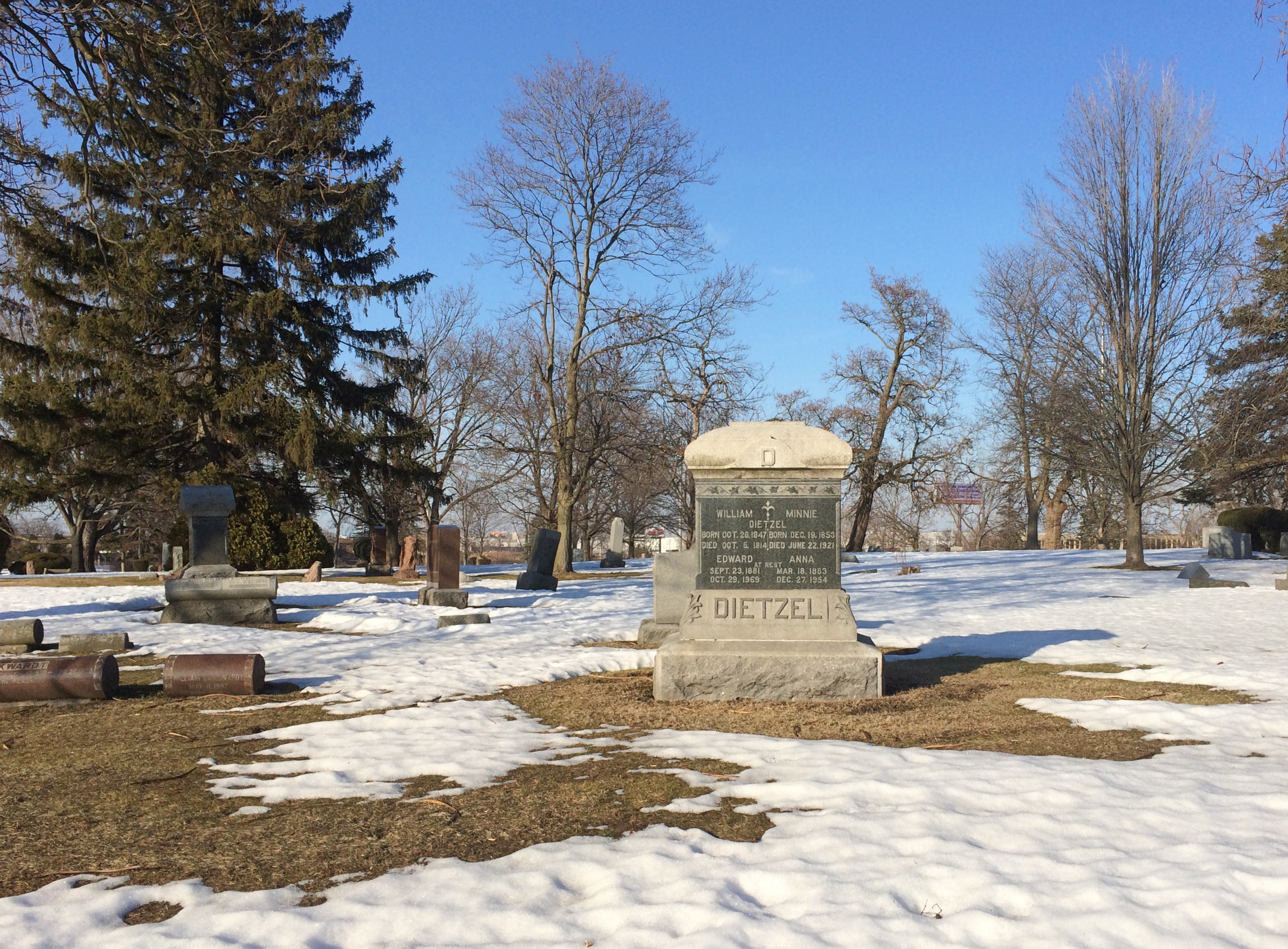
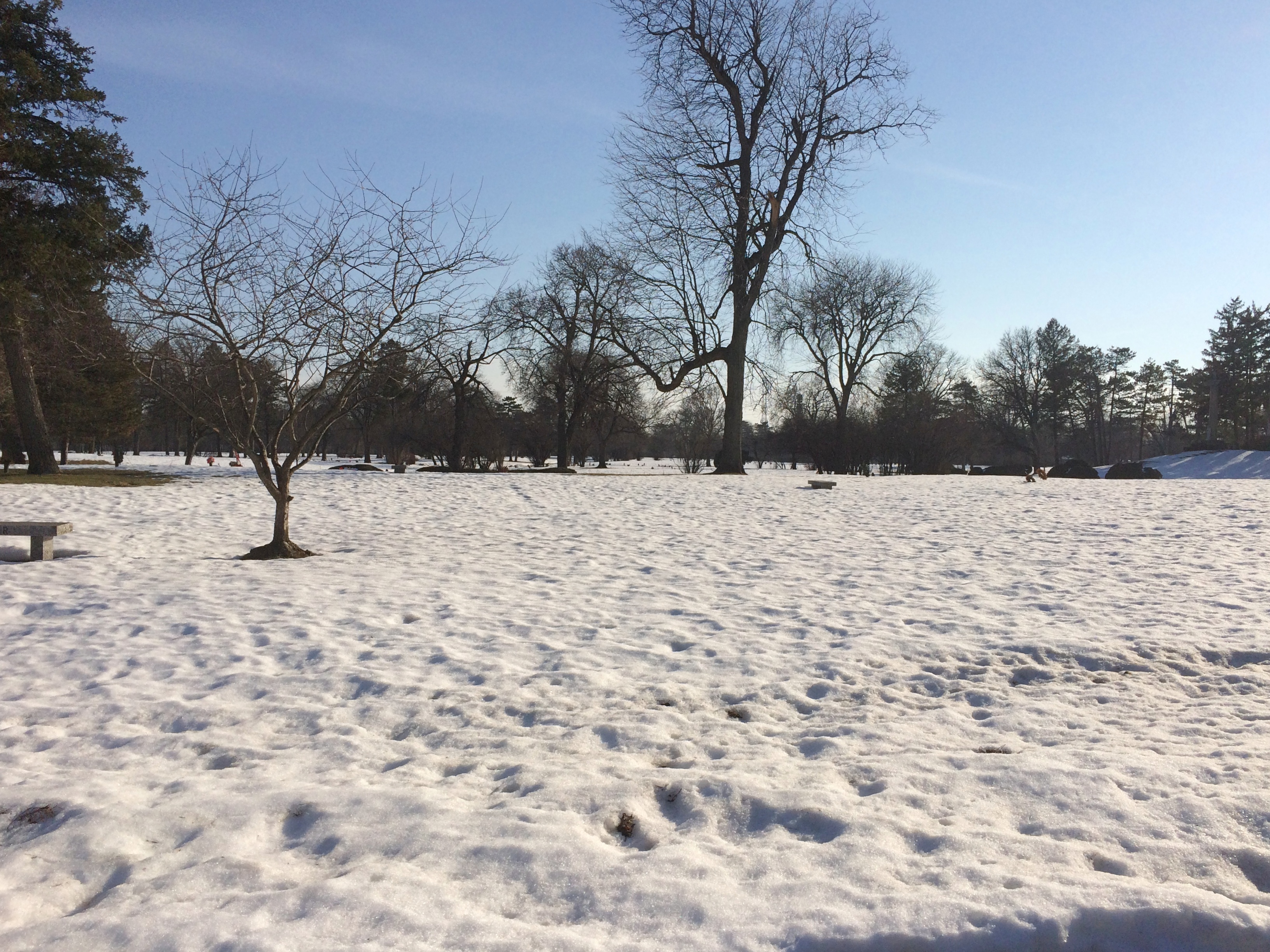
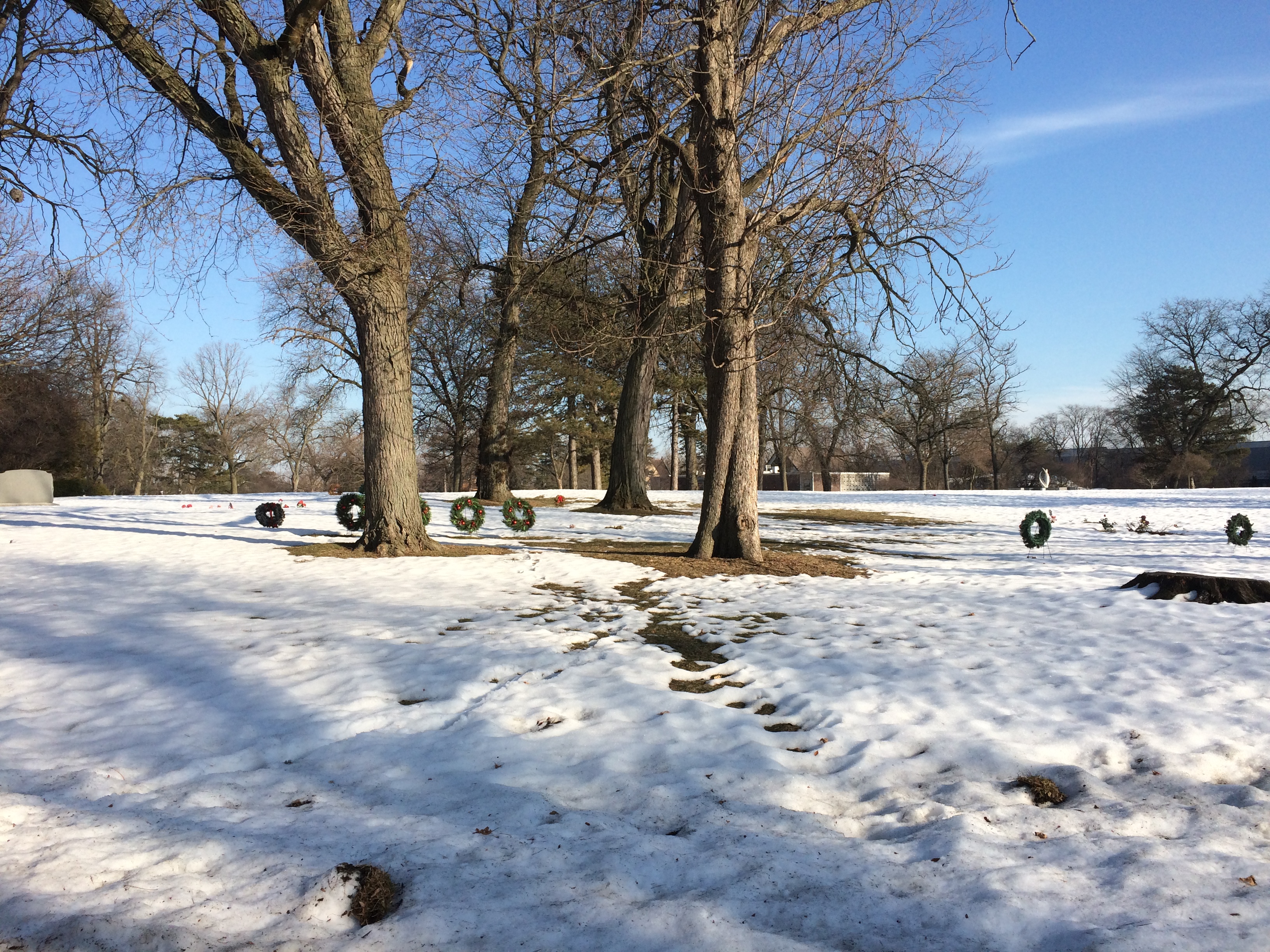
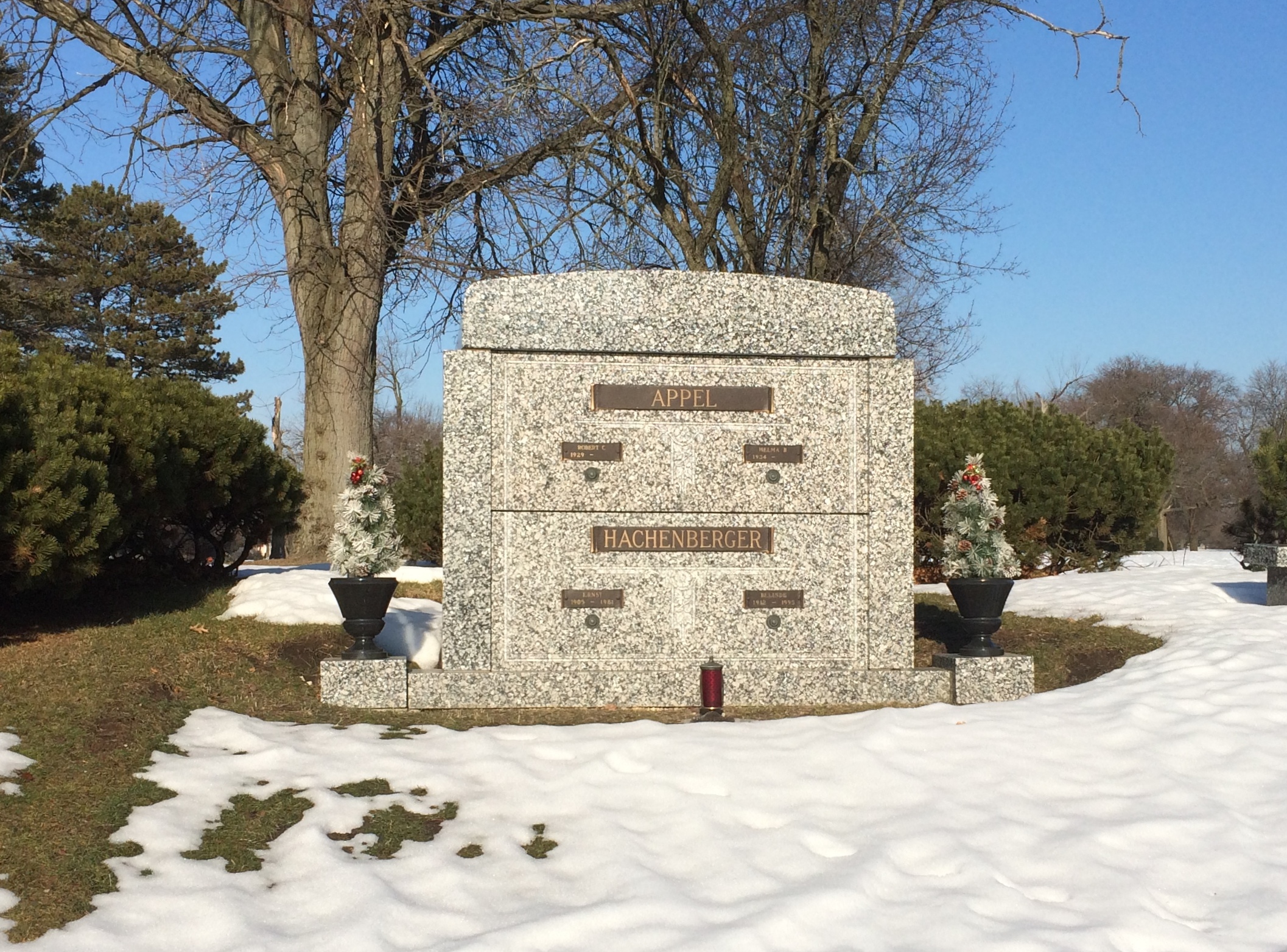
These images are of Arlington Cemetery, which is to the east.
Arlington Cemetery Elmhurst Illinois
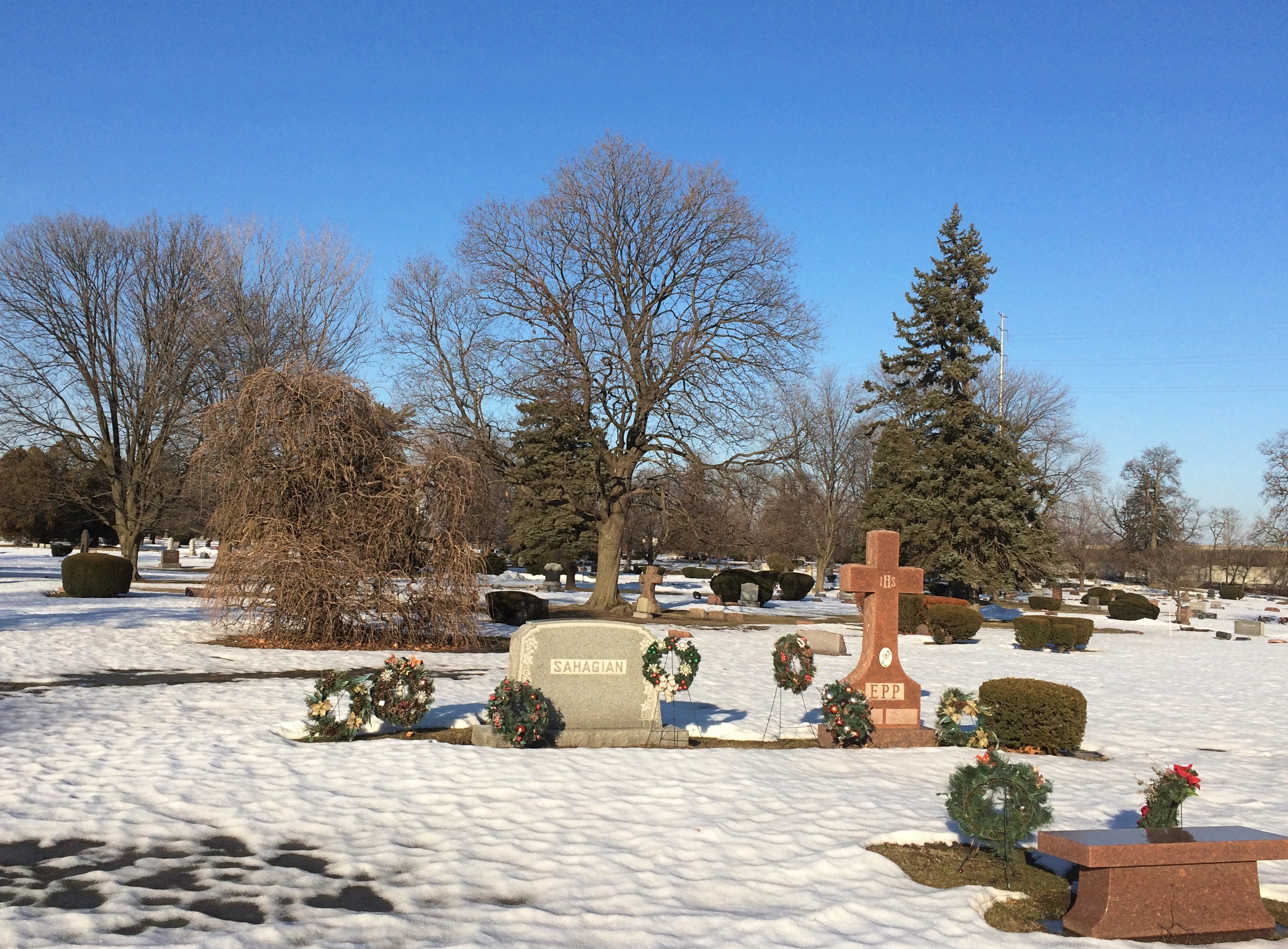
These are of Elm Lawn, to the west.
Elm Lawn Cemetery Elmhurst Illinois
A better aesthetic than Mount Emblem, which is say more standing stones, and the cemeteries ought to be nice in the spring and summer. It’s hard to tell in the winter whether these concerns, of some years ago, have been addressed.

As a casual visitor, there was no difference between the two. No fence or other demarcation. I noticed that the Arlington office building was permanently closed, with a sign referring visitors to go to the Elm Lawn office a few hundred feet away. Indeed, according to the cemetery’s web site, the two have been combined under single ownership for more than 25 years.

The permanent residents probably don’t care about any of that. If they do, they’re keeping quiet.
Elm Lawn Cemetery Elmhurst Illinois
A small section of Elm Lawn (I think) that I drove by is designated the Valley of Peace Shia Cemetery, which must be fairly new. Considering the demographics of the northwest suburbs, that’s thinking ahead on the part of cemetery ownership.

Mount Emblem Cemetery

A cemetery with most of its memorials flush to the ground — a mid-century notion that hopefully has faded — looks like a snow-covered field in winter. That can be nice, but it doesn’t say cemetery, and the added beauty of stones in the snow, rather than under it, is missing.

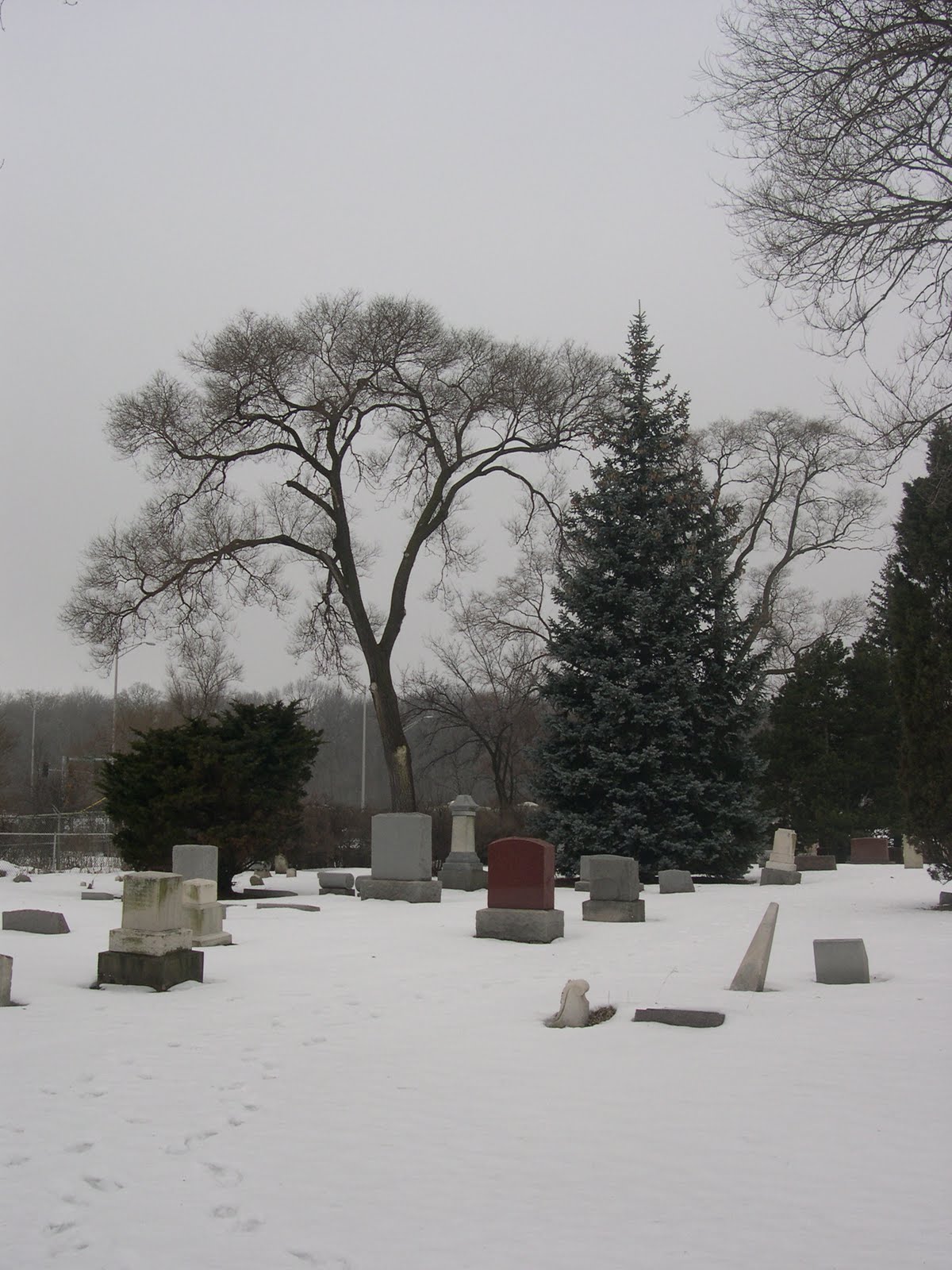
There were stones in the snow at the Elk Grove Cemetery in January 2010.
Elk Grove Cemetery 2010
Mount Emblem Cemetery in Elmhurst, Illinois, has all the ingredients to be a striking cemetery except standing stones. So on Saturday, I saw mainly this kind of scene.
Mount Emblem Cemetery
With a few reminders that loved ones are memorized somewhere under there.
Mount Emblem Cemetery
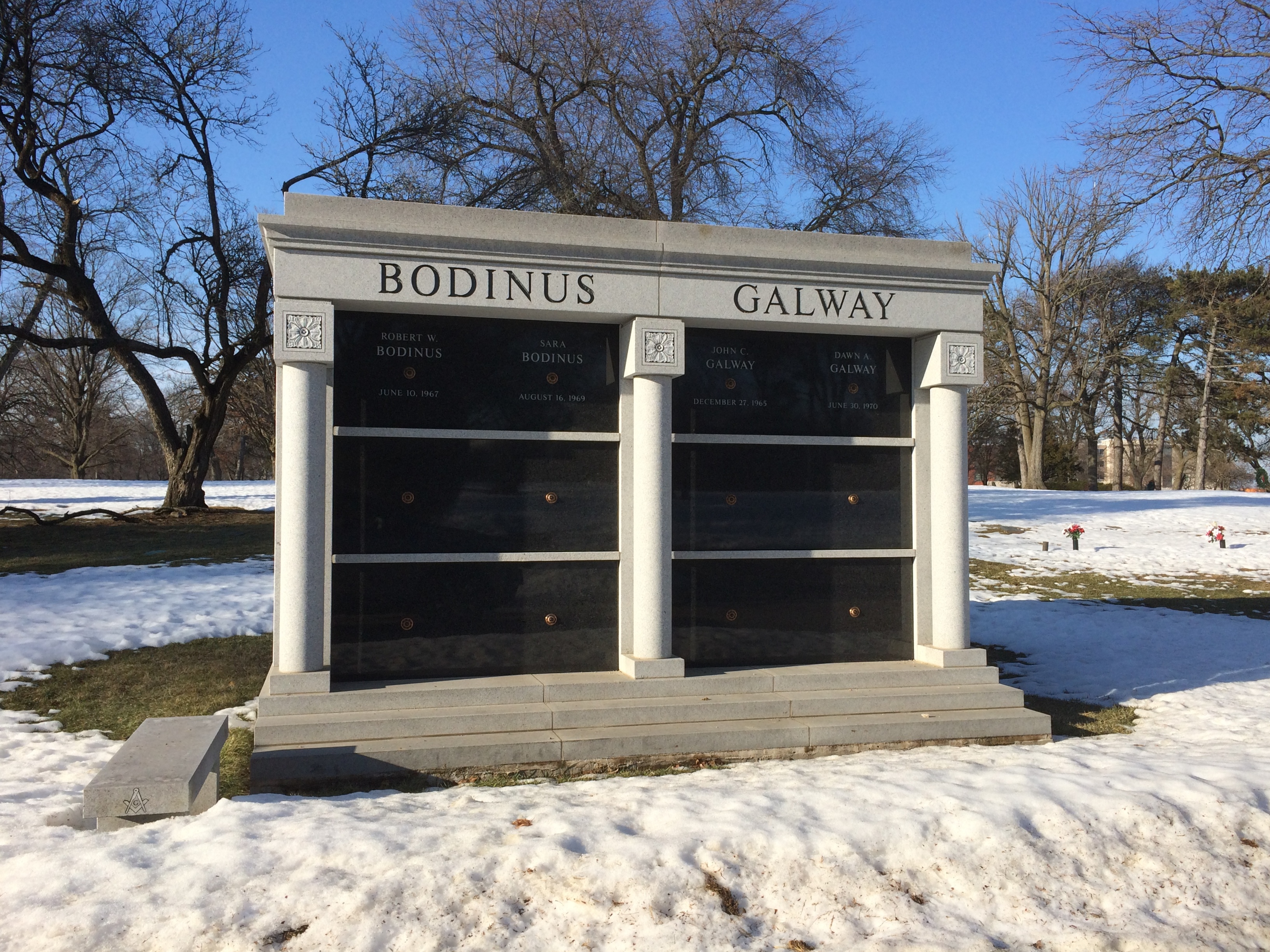
There are a few structures that won’t be denied their place in the pale winter sun.
Mount Emblem Cemetery
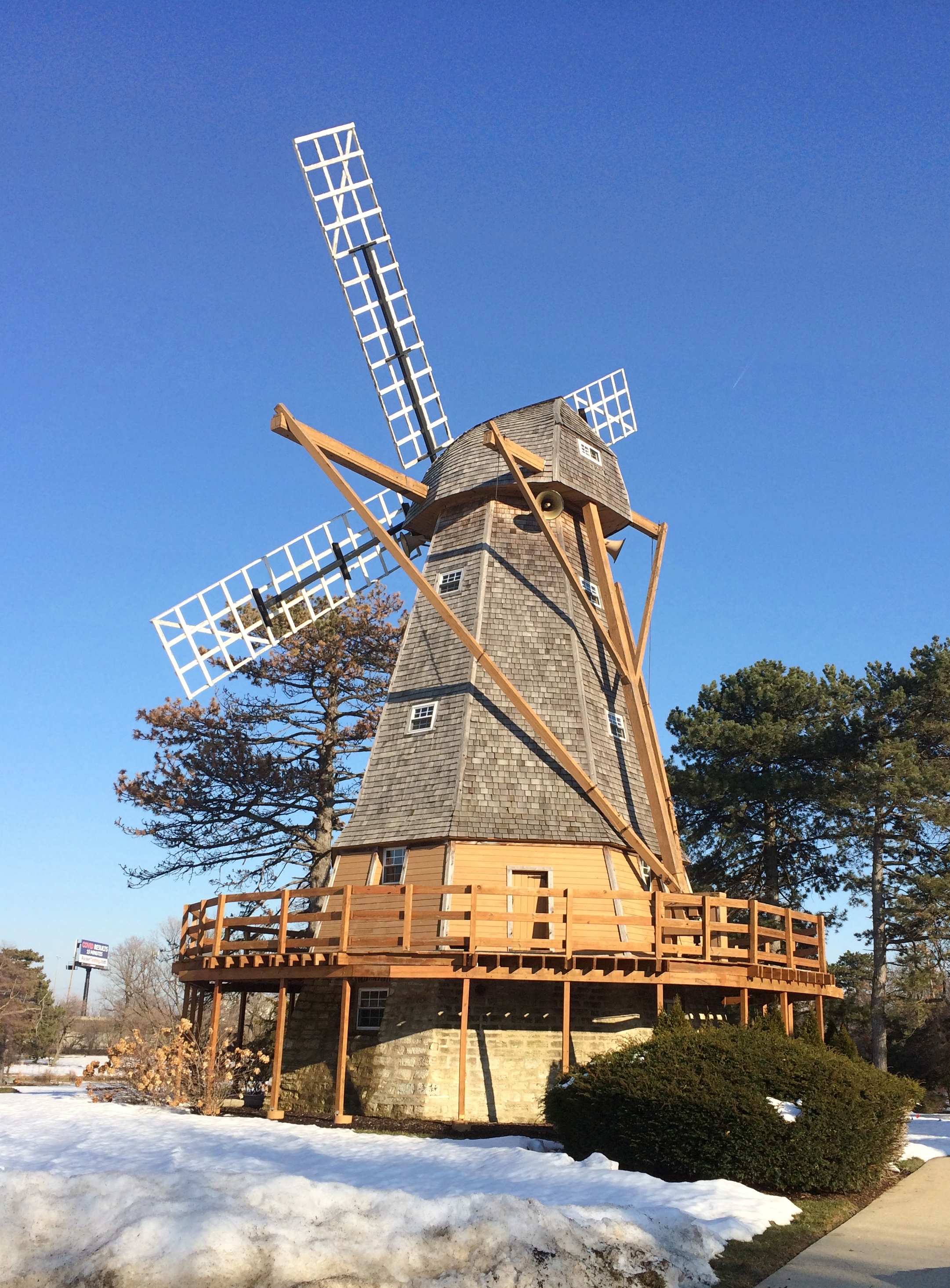
Mount Emblem has, however, one thing unique in any cemetery I’ve been to, or know about: a Dutch-style windmill.
Mount Emblem Cemetery
It’s the Fischer Windmill, built in the mid-19th century, long before the cemetery was established.

“The windmill was built sometime between 1849 and 1865 by Henry Fischer, after he inherited part of the family farm from his father, Frederick L. Fischer, one of the original settlers in the county,” the Chicago Tribune reported in 1995. “It took two hired millwrights about three years to build it, including six months to fashion the main cogwheel.

“The main framework of the windmill is cypress, and it rests on a stone foundation. It features hand-hewn shafts and gearing of white oak and hickory… The mill ground wheat and corn for local farmers until the demand declined after the turn of the century.”

The cemetery association bought it in 1925 and, according to the Trib, installed chimes. I didn’t hear any chimes, but I did notice two loudspeakers mounted on the structure.

Cricket Creek Forest Preserve

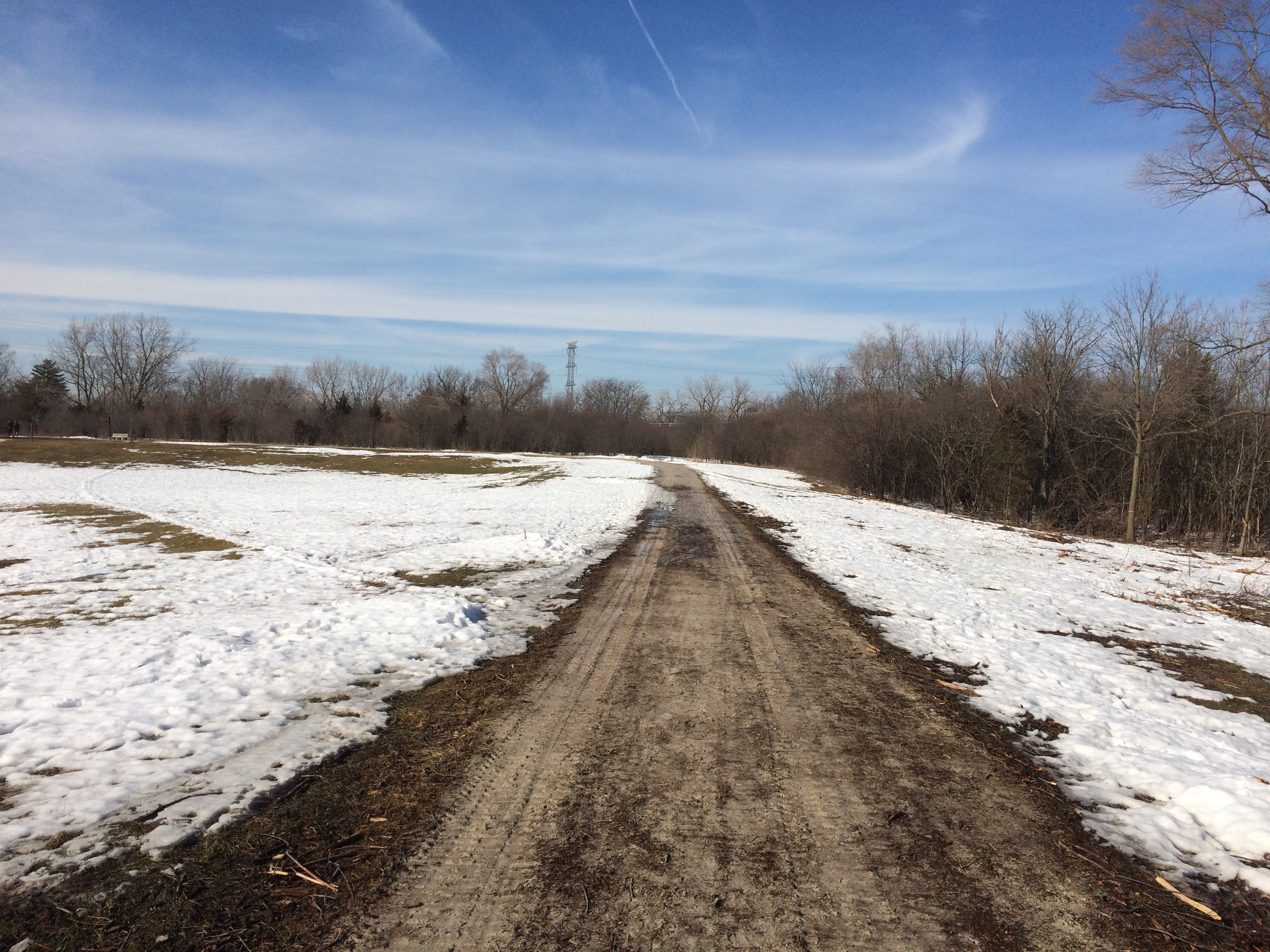
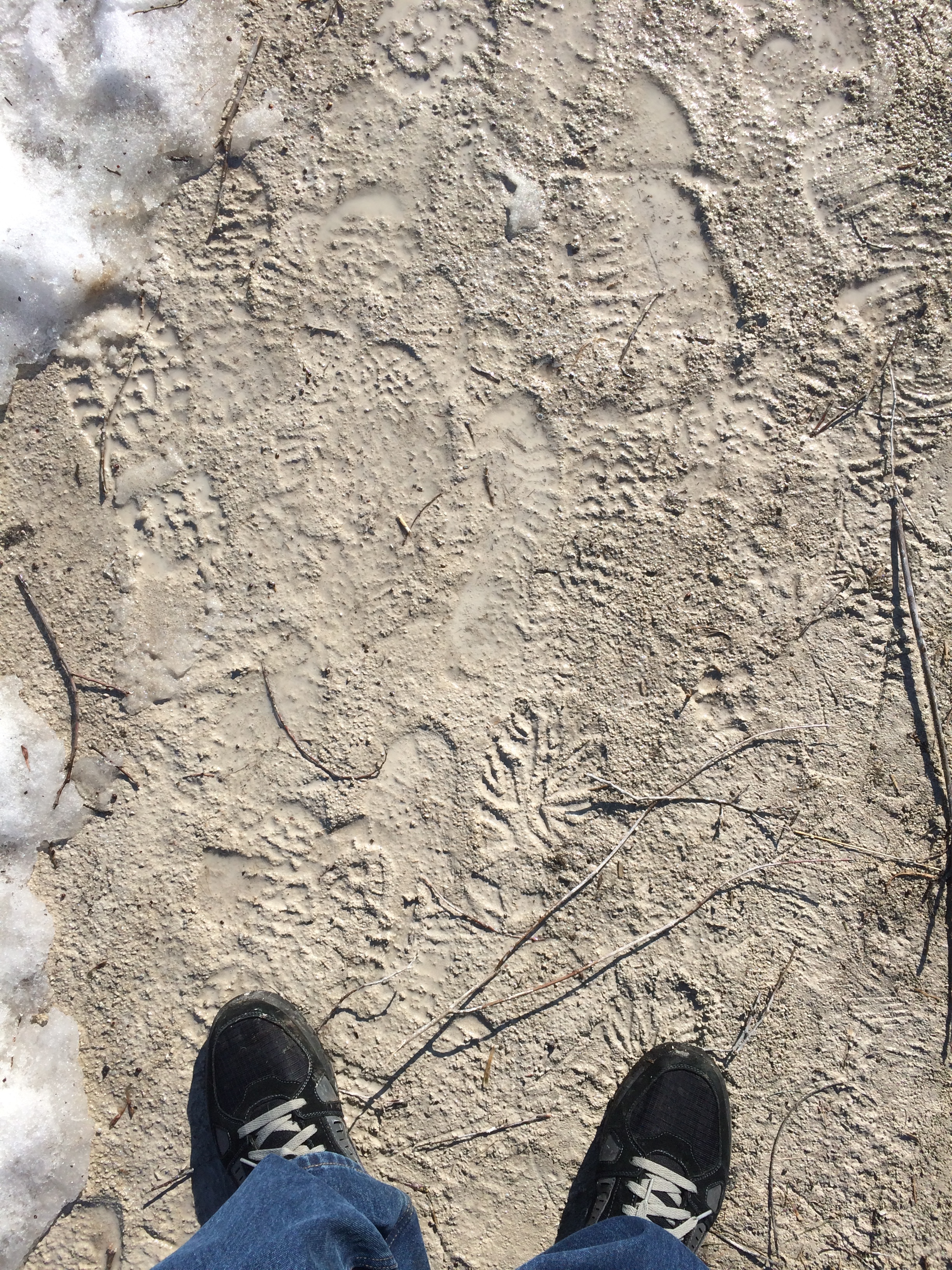
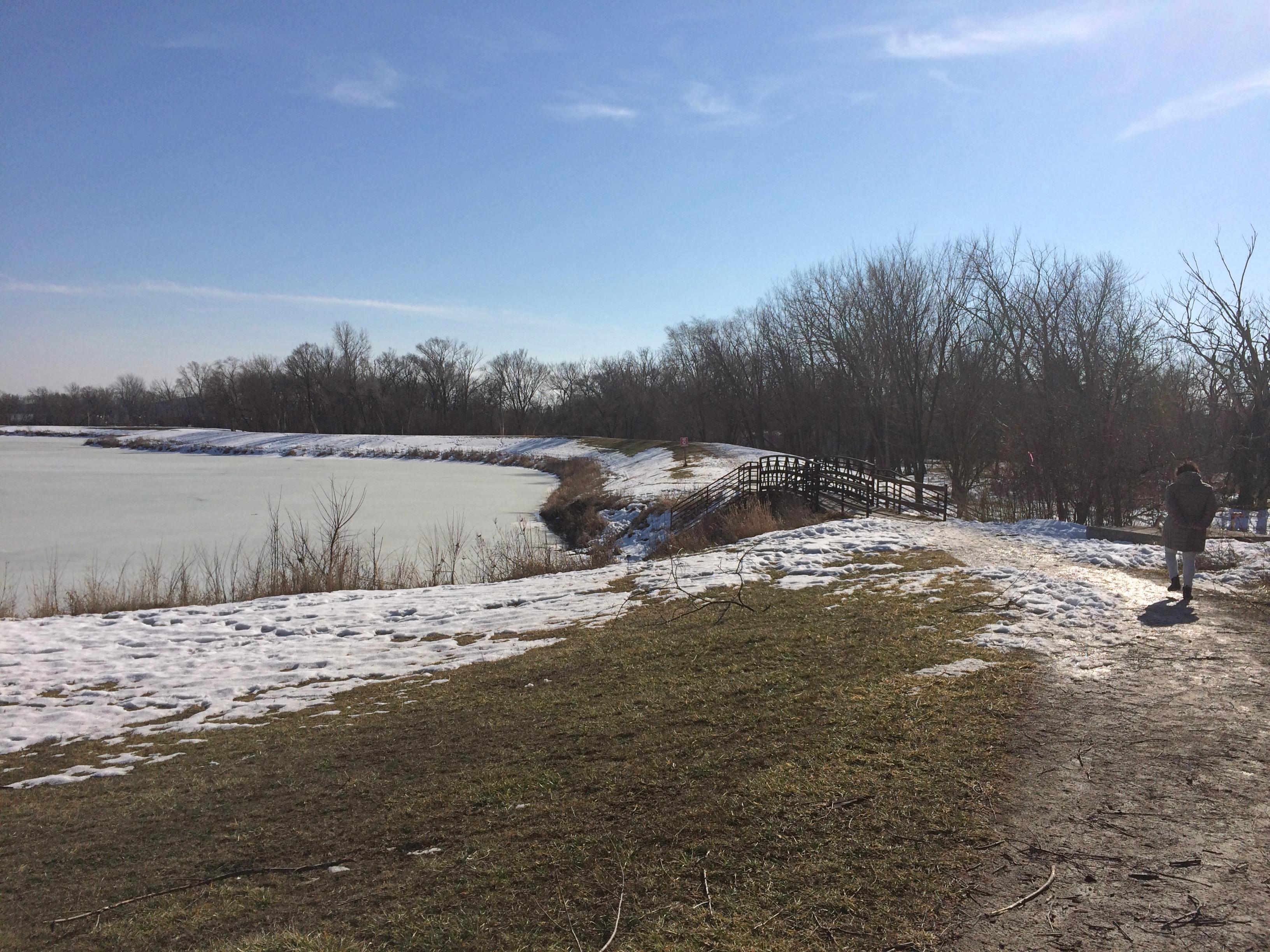
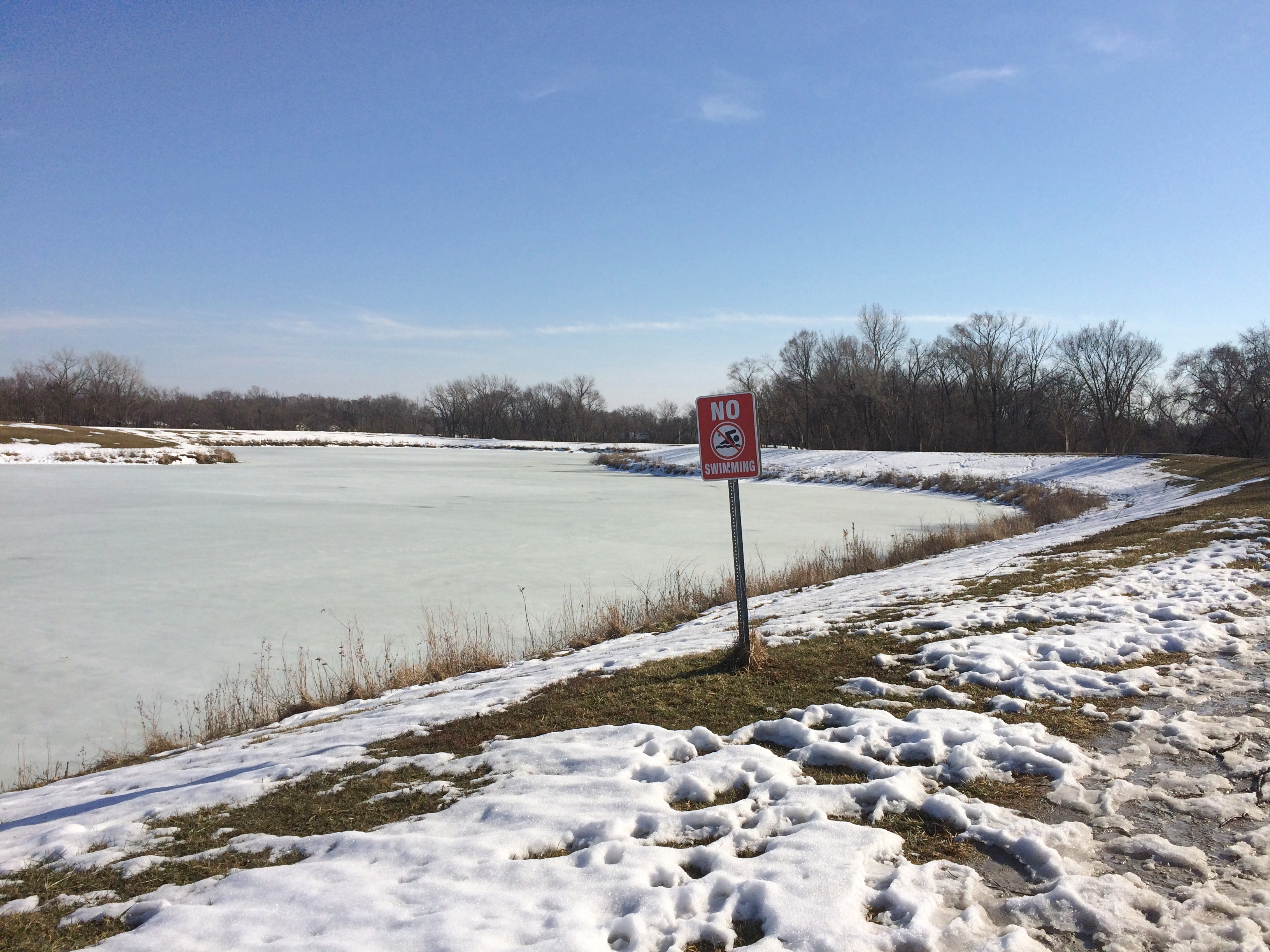
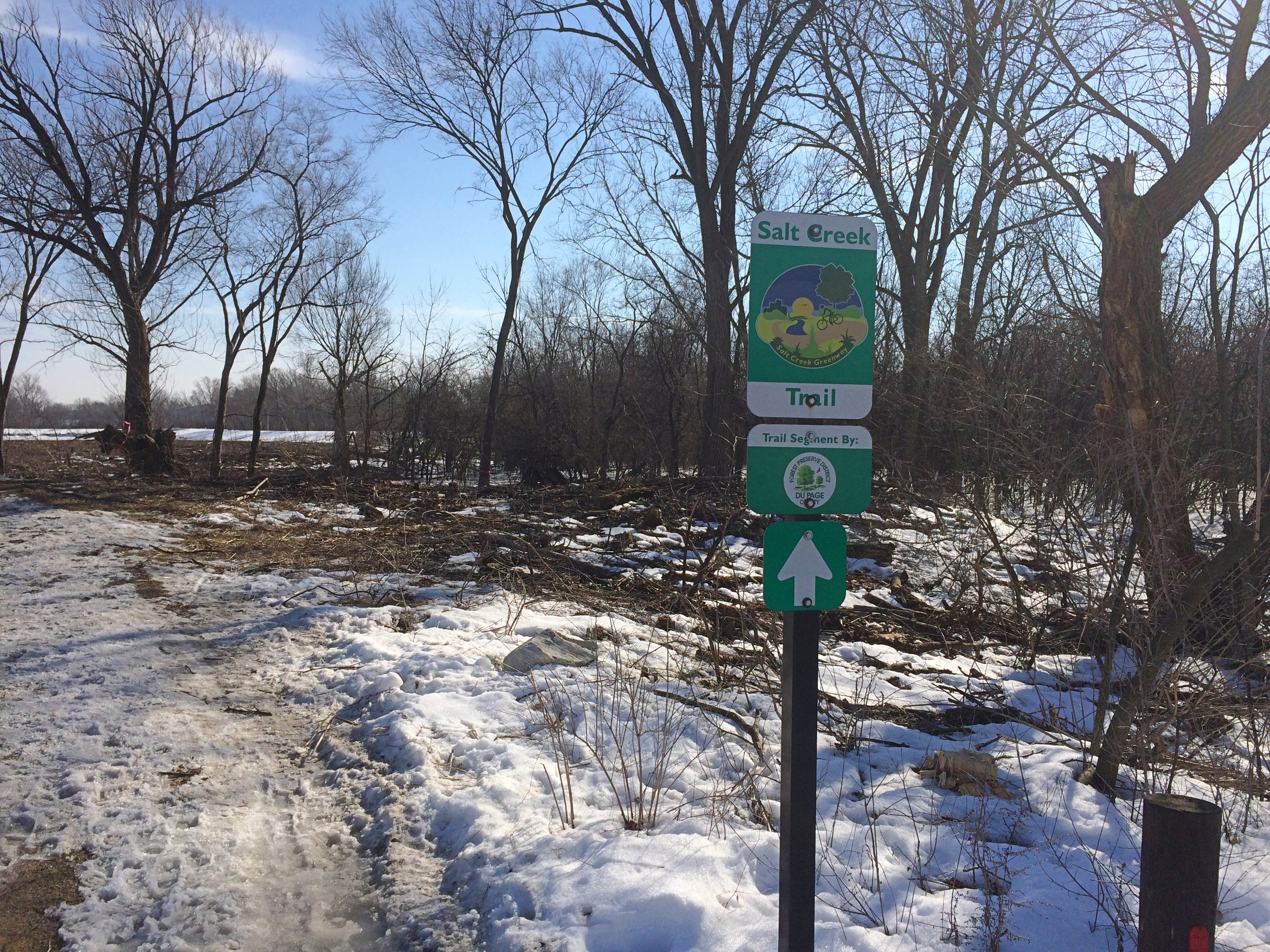
Saturday wasn’t exactly warm, but it was above freezing, sunny and mostly windless, which had been true for some days before that. So we figured forest preserve paths might be clear of ice at least. We were mostly right, but not completely.
Cricket Creek Forest Preserve
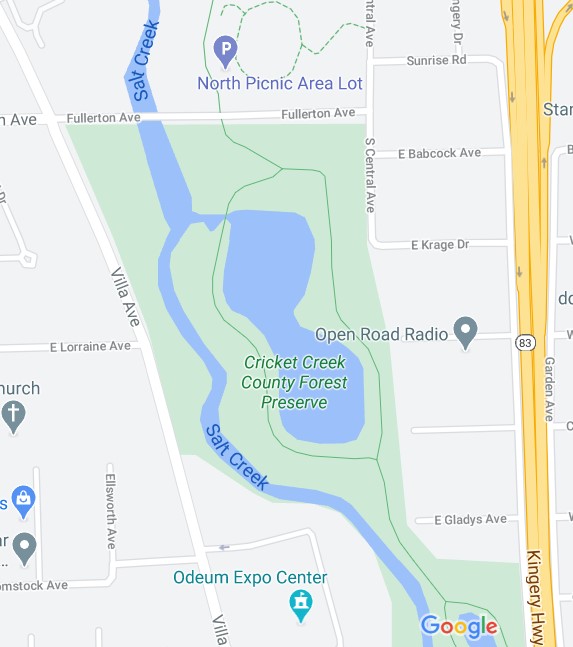
That’s at the north entrance of Cricket Creek Forest Preserve in Addison, which generally follows Salt Creek as it meanders through DuPage County. The Salt Creek Trail runs through the 208-acre forest preserve.

The map depicts only the northern section of Cricket Creek. Further south are two more ponds, including one reserved for model boat sailing.

“The land was prairie until the late 1930s, when it started to transform into agricultural fields dotted with homes,” the DuPage County FPD says. “The Forest Preserve District acquired the first 40 acres in 1974 and made subsequent purchases through 2016, eventually transforming a flood-prone housing development into a beautiful forest preserve.”

The trails are crushed limestone.
Cricket Creek Forest Preserve
The photos don’t really show it, but underfoot on the path was a crushed limestone slush, making for occasionally sicky mud. Better than ice, I’d say.
Cricket Creek Forest Preserve
We made it most of the way around the pond, until we came to patches of unmelted snow and ice.
Cricket Creek Forest Preserve
So we turned around and went to the other side of the pond, essentially doing a U-shape partly around the pond. Not the most idyllic walk, but walking ought to be an all-season activity, including winter — mild winter days, that is.

NC 40 Yrs Ago

March 3, 1981

As I write, each moment takes me further east that I’ve ever been. It’s noon and we’re on NC state highway 64, a rural route to the coast, which is about an hour away. Writing from the front passenger seat, mostly between the fairly few bumps and potholes.

Temps high 50s, so windows up. On a warmer day, this would be a great road to roll down your windows and crank the radio.

We pass on either side of us stands of thick pine alternating with open farmland. To our front, an open two-lane road all the way to a pinpoint on the horizon; a straight-razor cut all the way ahead. Behind me is Stuart, who is napping in the back seat with a silly grin on his face.

Normally, I’d say the day began too early, that is, 6:30 am, but it was worth it. After a breakfast composed of those mammoth Shredded Wheat biscuits, which I hadn’t seen in years, we left Durham.

2:15 Nag’s Head. Saw the Atlantic Ocean proper for the first time just below the Joe Justice fishing pier, which was closed.

3:30 The Bodie Island lighthouse is to my left. In the time it’s taking me to write, we’ve started crossing the enormous bridge to Hatteras Is. Fleetwood Mac is on the radio.

Today’s mostly been a day of travel, with Neal driving his parents’ 13-year-old station wagon, me in front navigating, and Stuart in back among some of the provisions. Once we got to the coast early in the afternoon, heading through Nag’s Head and north to the Wright Brothers National Monument to see where their plane memorably hopped x feet that day in 1903.

We climbed to the top of Kill Devil Hill, from which the Wrights tested their gliders. We then wandered south to Jockey’s Ridge, a titanic sand dune, and climbed to the top. We watched hang gliders launching from the dune and befriended a big black dog, who was chasing hang gliders when he wasn’t playing with us. Must have belonged to one of the people hang gliding, since he didn’t look ragged enough to be a dog living on its own.

As we left, he followed us part of the way toward the parking lot, but then turned around. We were sorry to see him go, but he couldn’t have come with us even if he wanted to. We headed south to where we are now, Hatteras.