The Normal Theater

One of the things Ann wanted to do when we were visiting was see a showing of Beetlejuice at the Normal Theater, a single-screen moviehouse of ’30s vintage only a few minutes’ walk from her dorm. Since Yuriko didn’t want to see the movie, she stayed in our room with the dog and I went to the show with Ann.

As it happened, I’d never seen that movie. Neither had Ann, but she didn’t have the opportunity to see it when it was new. Not sure why I didn’t. I saw a fair number of movies in my late ’80s Chicago bachelor days — first run, foreign and arthouse — both highly memorable (e.g., The Princess Bride) and much less so (e.g., the ’87 movie version of Dragnet).

It’s a fun romp. A good example of a movie that doesn’t take itself that seriously, entertainment by a talented cast working from a good script that also includes all sorts of interesting visual detail. Tim Burton certainly has a gift for the visual, which you’d think would be mandatory to be a director, but apparently not.

Lots of weirdness, bright and dark, all mixed in effective ways. For a few moments, I’d swear the look of the afterlife owed a lot to German Expressionism, but also Brazil and Kafka, with B horror movies and screwball comedies and Fellini and Saturday morning cartoons and who knows what else thrown in to the rest of the movie.

Now I believe I need to see some of the other Tim Burton movies I’ve missed, such as Edward Scissorhands, The Nightmare Before Christmas, Big Fish, Sweeney Todd and Big Eyes, and maybe re-watch Pee-wee’s Big Adventure and Batman, which I haven’t seen since the decade they were made.

Better yet, I saw Beetlejuice‘s rampant weirdness in a real movie theater. Not a multiplex, either. The Normal Theater is one of the scant few survivors of another age of moviehouses: a neighborhood theater from that time when a lot of neighborhoods had them.
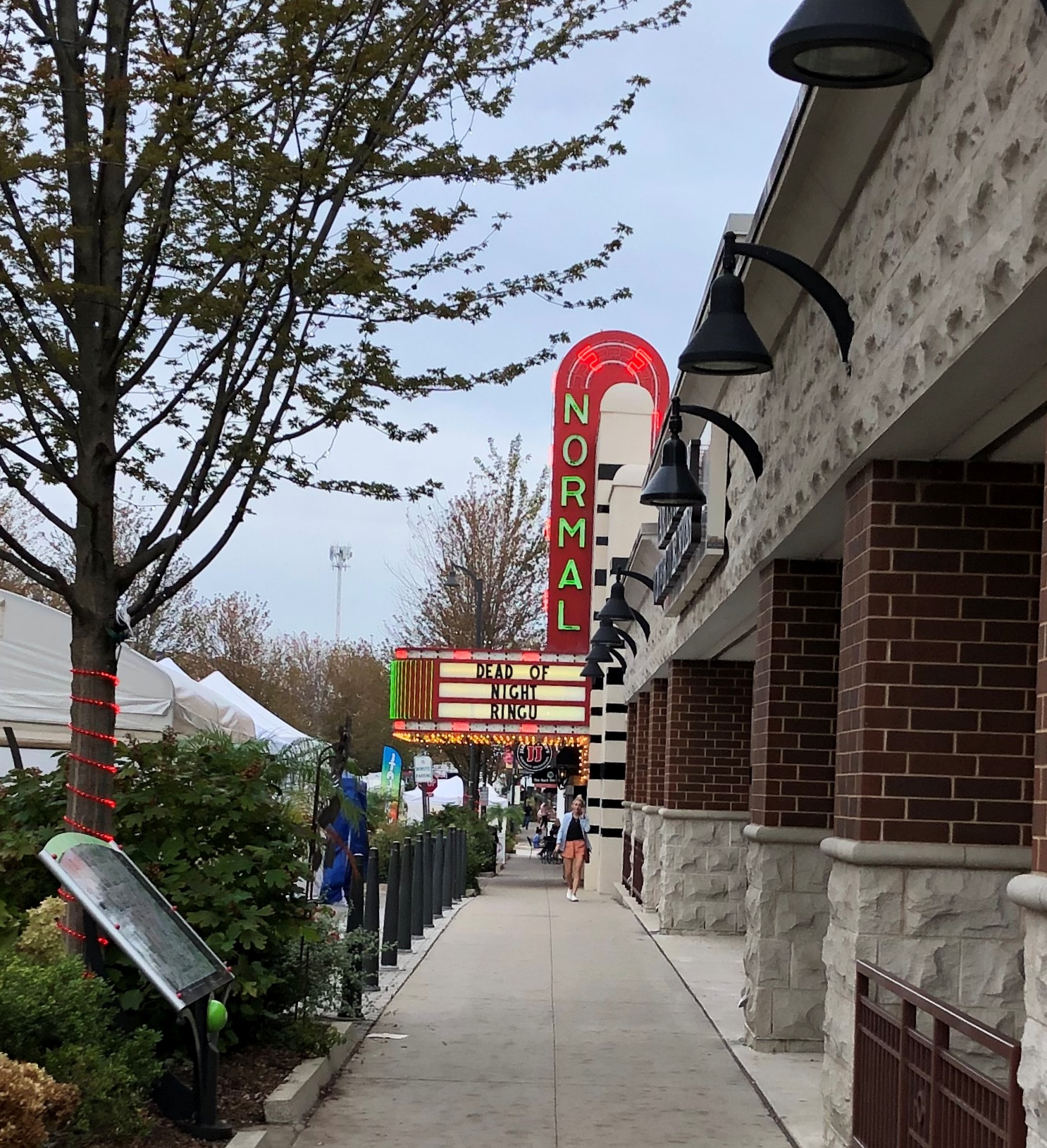
Normal Theater

It isn’t a movie palace, but its Art Moderne style is charming to modern eyes, which are inured to bland interiors.

“The architect was Arthur F. Moratz, youngest sibling of Paul O. Moratz, another prominent local architect,” the theater web site says, which also includes some good pictures. “In Bloomington, Arthur Moratz buildings include the acclaimed Art Deco-style Holy Trinity Catholic Church at the north end of downtown, and his own residence, 317 East Chestnut Street.”

When it opened in 1937, the theater had 620 seats (these days, 385). First movie: Double or Nothing, with Bing Crosby and Martha Raye. Soon it found its niche in the world of Normal moviehouses.

“The Normal, generally speaking, did not screen the just-released prestige pictures and big budget epics,” the web site says. “Those were shown instead at the Irvin (and sometimes the Castle), which were both owned by Publix Great States Theatres. After all, why would the chain compete against itself? For its part, the Normal was known for genre and B pictures, especially westerns and musicals, as well as second-run fare.”

Of course, after its heyday, the theater followed the usual course for such places, with the 1960s and ’70 being unkind to it, though the Normal limped into the ’80s, surviving as a discount theater (dollar tickets and later $1.50).

I remember paying $1 at the Josephine Theatre in San Antonio ca. 1974 to see a Marx Bros. double feature, two of their lesser-shown works, Out West and At the Circus (I think, though one of them might have been The Big Store). Later in the ’70s, that theater showed X-rated pictures, which were advertised in small print in the newspapers, and no one I knew ever went there. I’m glad to say that the Josephine was later restored, and until the pandemic at least, was open.

As for the Normal, I don’t know whether it ever showed dirty movies (the web site is silent on the matter), but in any case, it closed in 1991. “The reason we closed it is that nobody went to it,” the owner said at the time. No doubt.

Amazing to relate, the town of Normal then bought the place, and a combination of federal grants, donations and local tax dollars was used to restore the theater, with a re-opening in 1994. It’s been showing old movies, foreign films and art pictures ever since — everything a nonstandard, nonchain theater should show. Admission: $6. A bargain these days.

This month is devoted to various horror and horror-adjacent movies, serious and not. Besides Beetlejuice, on the bill are Halloween (1978), PG: Psycho Goreman, The Witch, The Brood, Nightmare on Elm Street and its immediate sequel, Destroy All Monsters, Dead of Night (Ealing Studios), Mad Monster Party and The Rocky Horror Picture Show.

I encouraged Ann to take advantage of the theater, and I think she might. The movie theaters I had access to in college, especially Sarratt Cinema at Vanderbilt and the Texas Union Theater at UT, were an entertaining part of my education — something I didn’t appreciate until some years later.
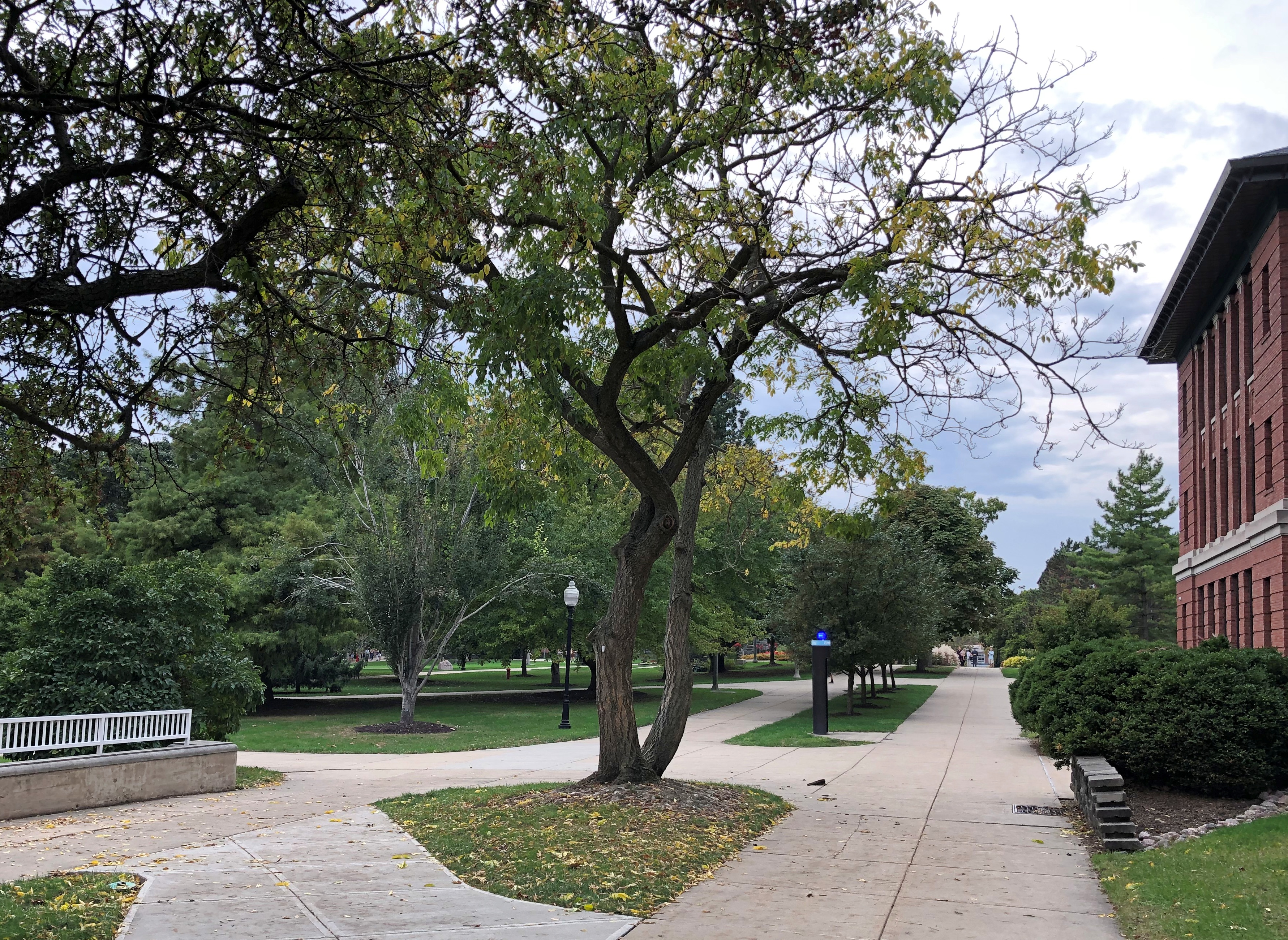
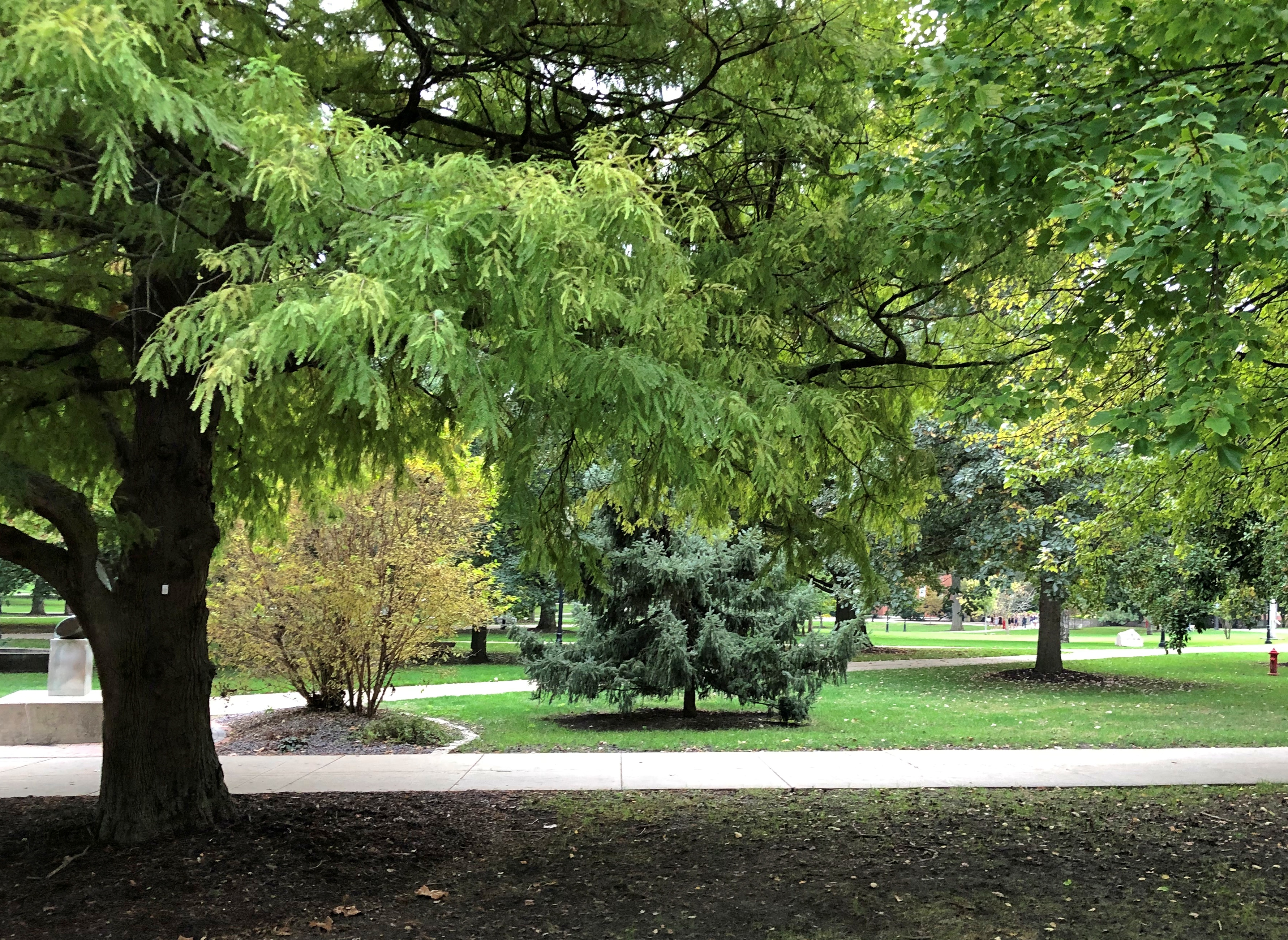
ISU Quad Walkabout

Heavy rain for a while today and cooler temps, but not till afternoon, so there was time for one more lunch on my deck.

Ann invited us to visit her over the weekend, which we did, heading down to Normal on Saturday morning and returning Sunday afternoon, spending the night in a motel near I-55. Daytime temps were nearly as warm as when I dropped her off at ISU in August.

Toward the end of the day on Saturday, it had cooled enough for a short walk — including the dog, whom we brought — around the prettier parts of campus. Mostly that meant the ISU Quad. What’s a university without a quad or two?

As mentioned yesterday, most of the foliage is still green. An eastern approach to the Quad.ISU Quad

ISU Quad

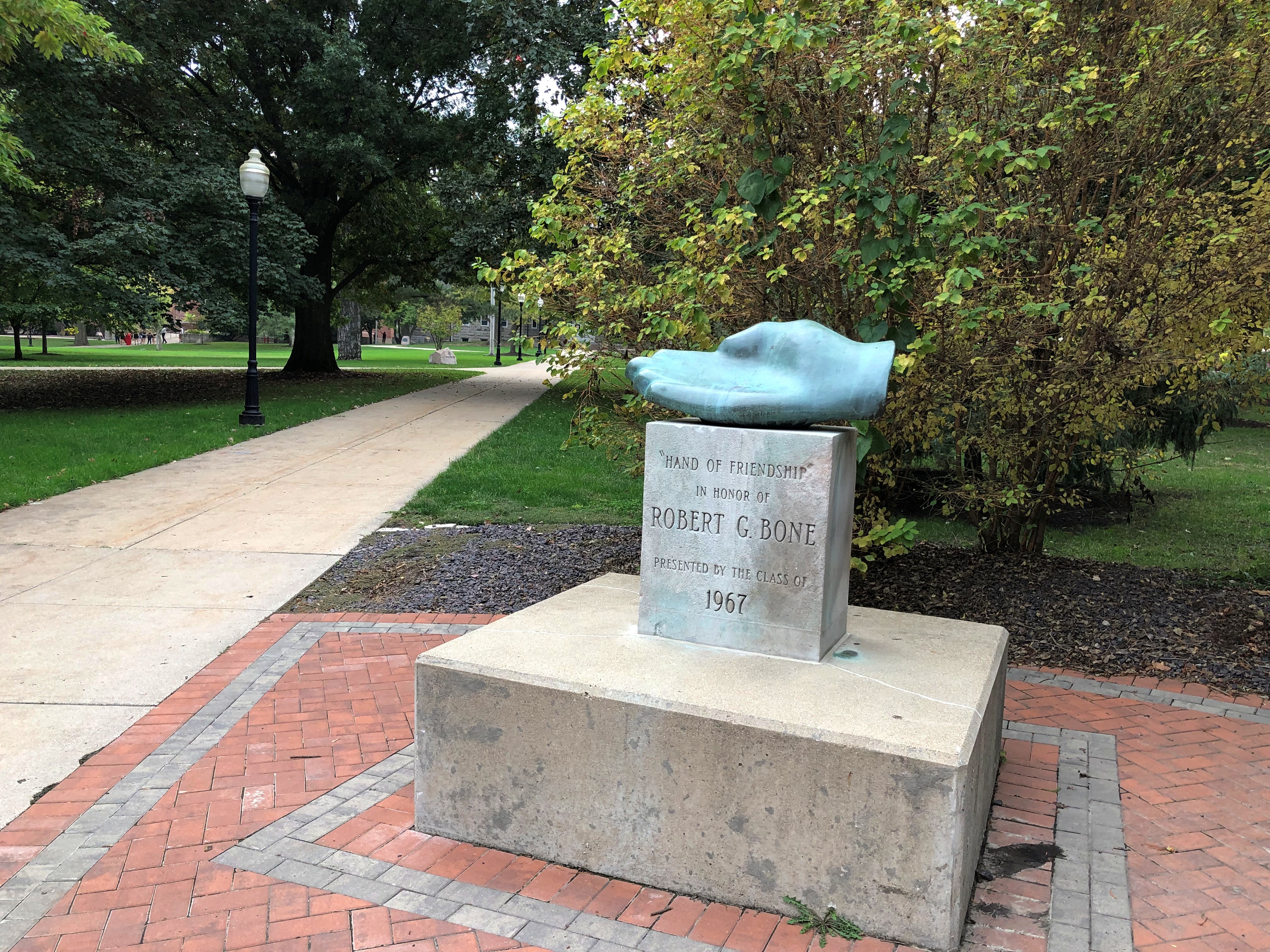
“The Hand of Friendship,” which honors Robert G. Bone.ISU Quad

Bone (1906-1991) was the ninth president of Illinois State Normal University, which was renamed Illinois State University during his tenure. Though only president for 11 years (1956-67), he oversaw a lot of construction, including the tower where Ann lives. Later, the school’s student center was named after him.

The Quad also counts as the heart of the arboretum that spans the campus — the Fell Arboretum, to cite its formal name, honoring one Jesse Fell.

Fell (1808-87) was the sort of businessman that America spawned in the 19th-century — lawyer, real estate speculator, newspaper publisher and sawmill owner. Specific to Illinois, he was a friend of Lincoln’s. He founded towns in central Illinois and helped organize counties there as well, and is considered a founder of ISU.

As for the arboretum, apparently Fell not only profited from cutting down trees, but was a fanatic when it come to planting them, so ISU named it in his honor.

Elsewhere, we saw a plaque on a rock honoring the horticulturist who designed the original landscape for the campus, William Saunders (1822-1900), who also happened to be a founder of the National Grange of the Order of Patrons of Husbandry, an organization I had only scant knowledge of before. That is to say, little that I remember, though I’m sure heard about the Granger movement in a U.S. history class. Always good to learn or re-learn something.

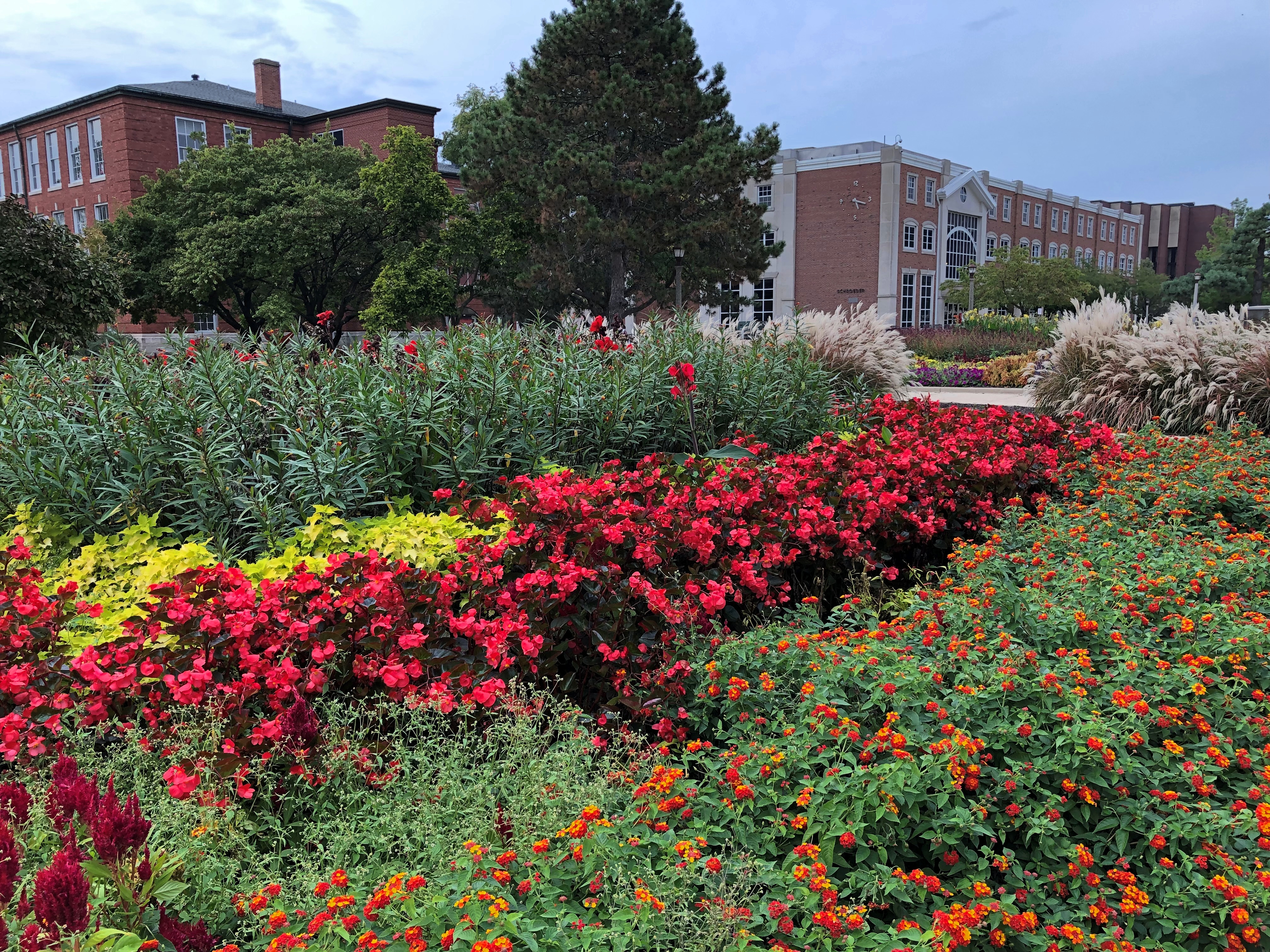
In the middle of the Quad is a lush garden.ISU Quad

ISU Quad

ISU Quad

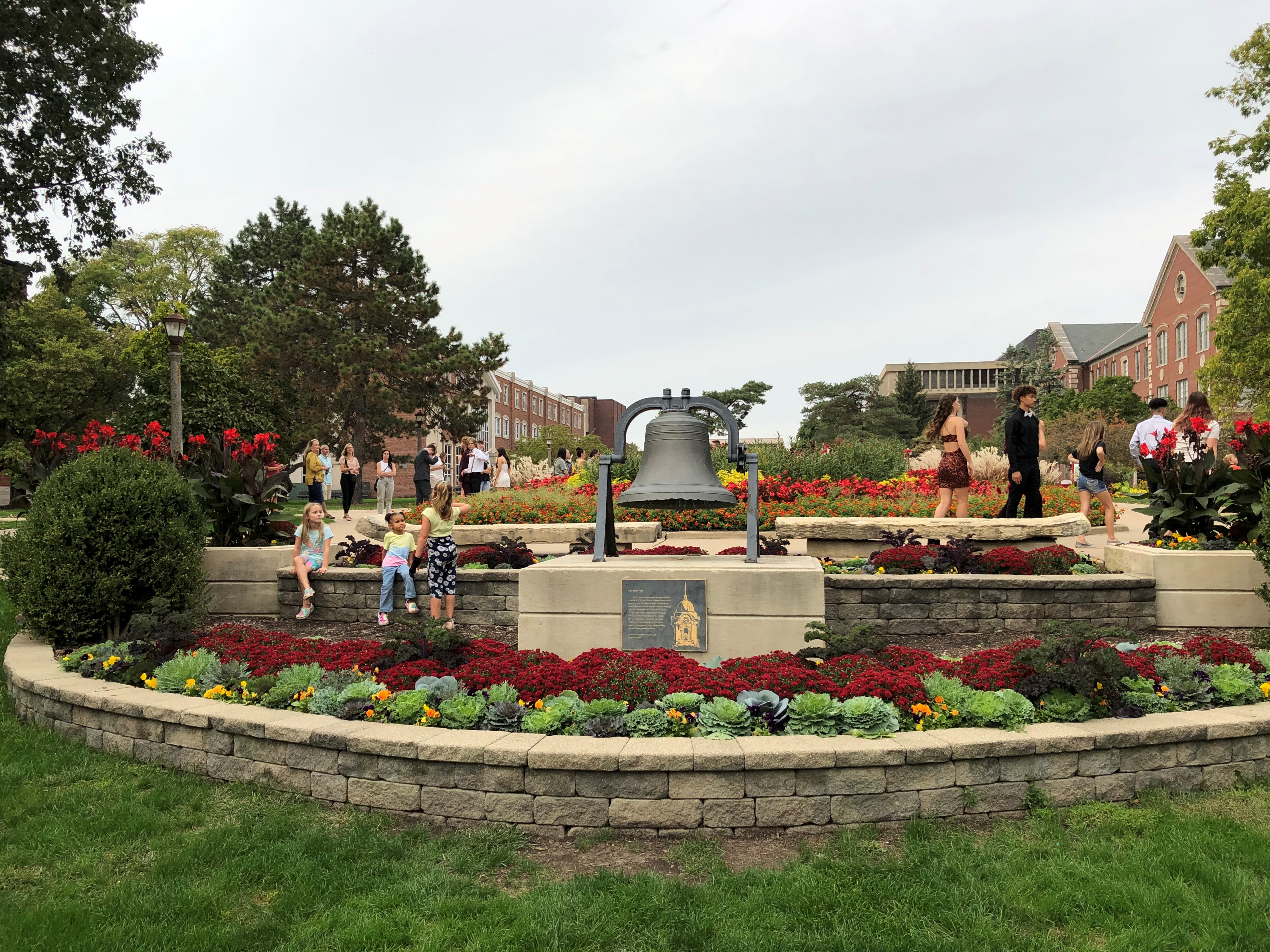
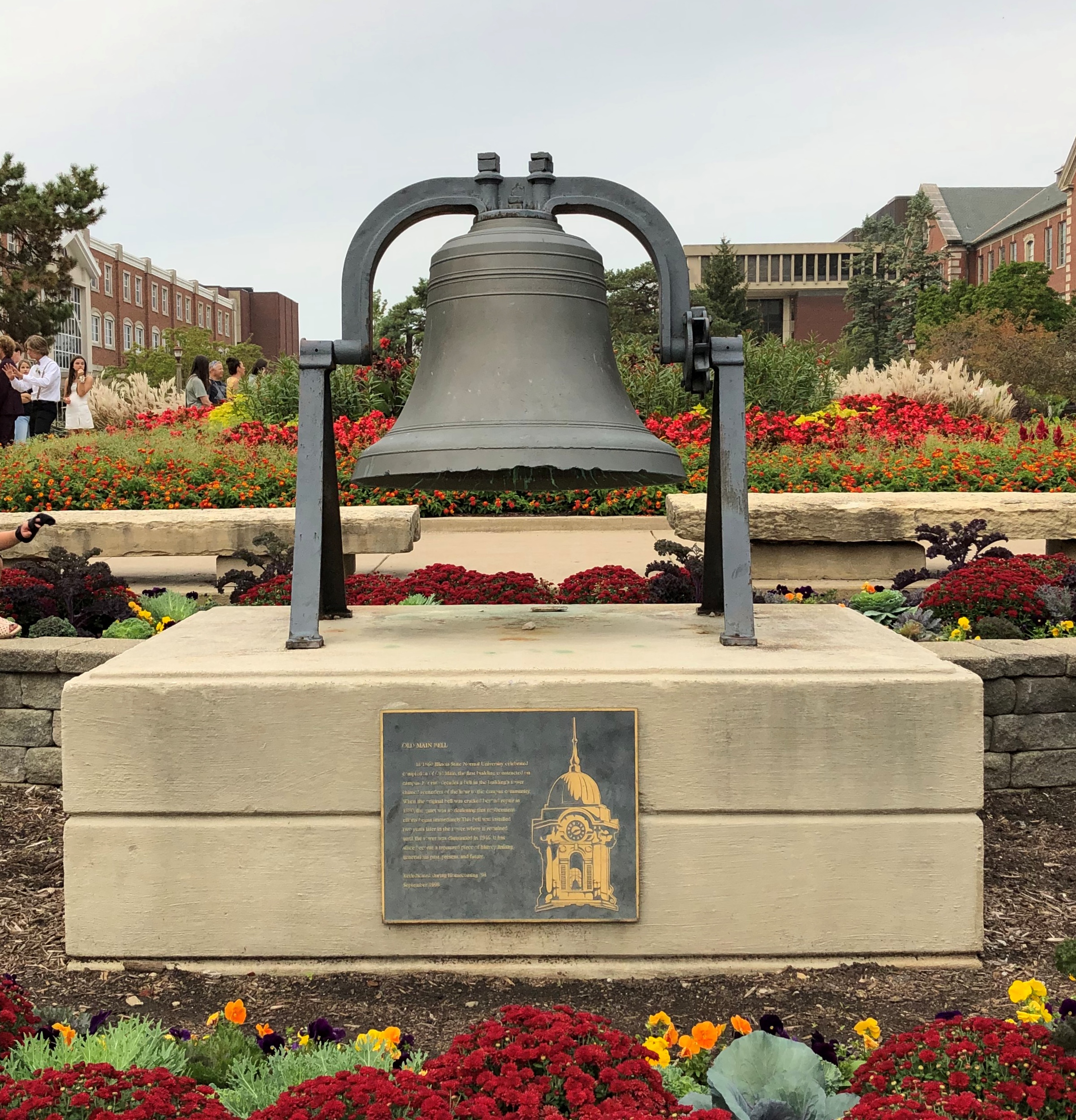
The centerpiece is the Old Main Bell, dating from 1880.
ISU Quad Old Main Bell

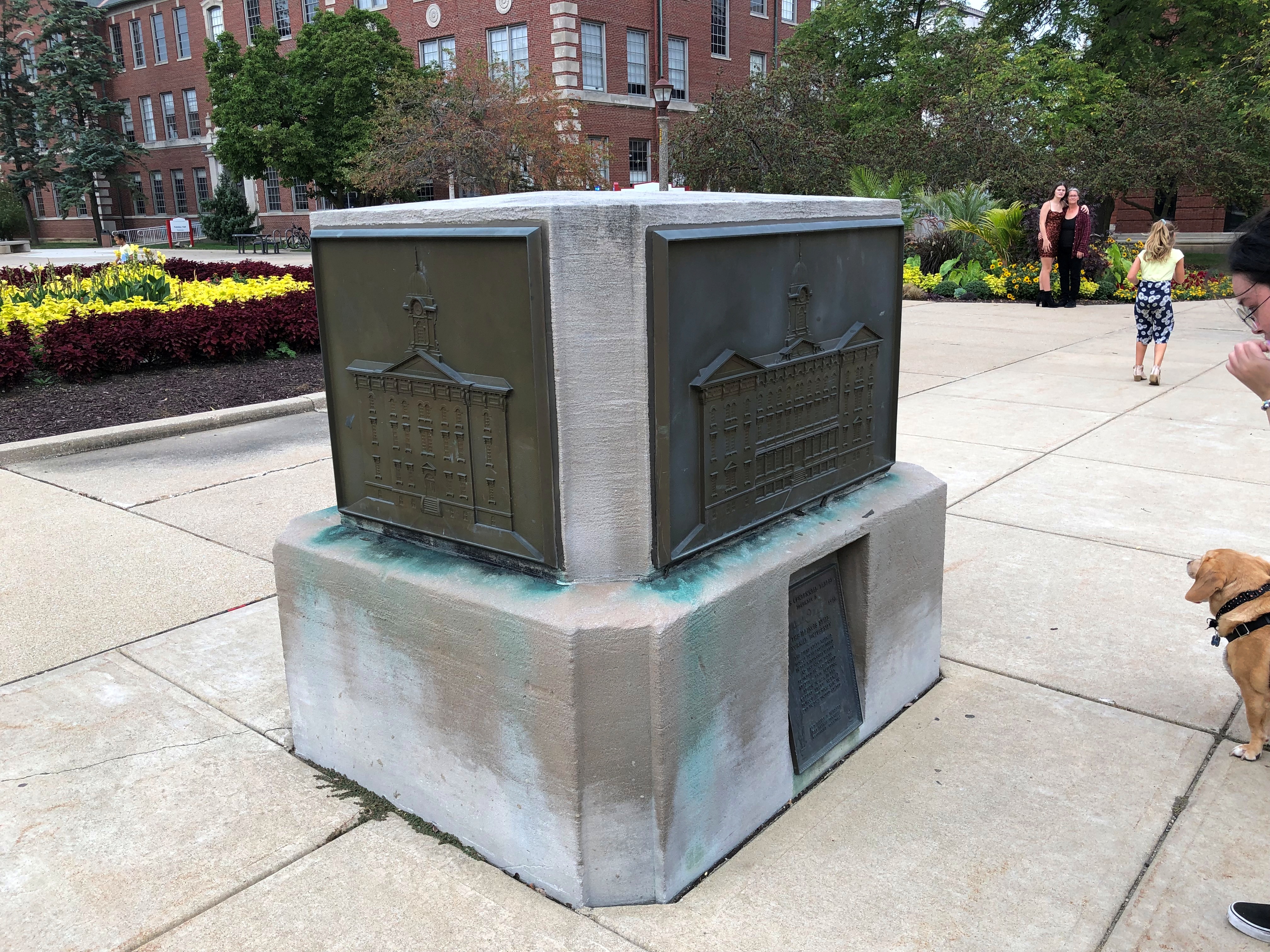
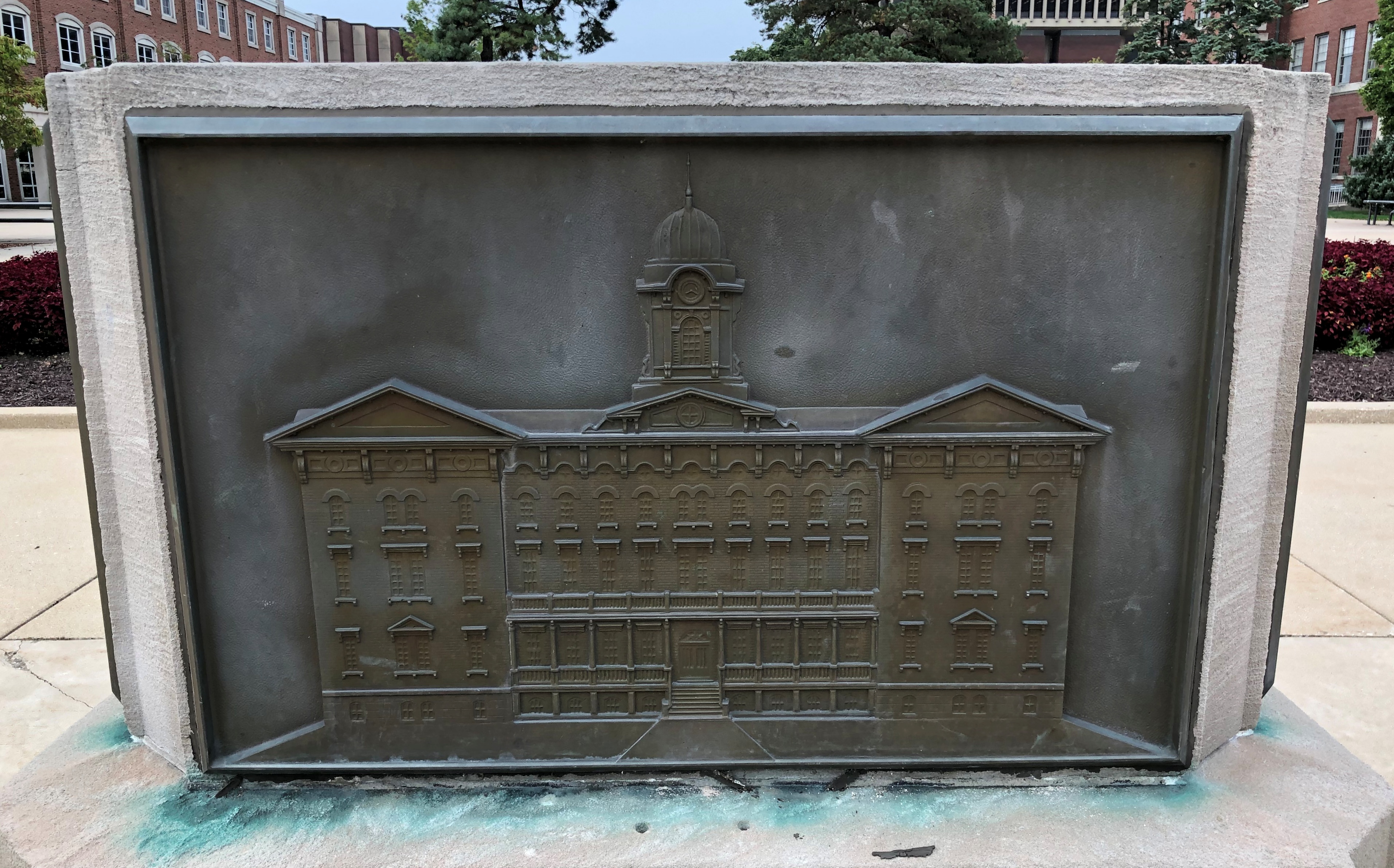
Old Main was the campus’ first building, which stood from 1857 to 1958. A memorial honors the building not far from its bell. Unusually, it depicts all four elevations of the building.
ISU Quad Old Main
ISU Quad Old Main

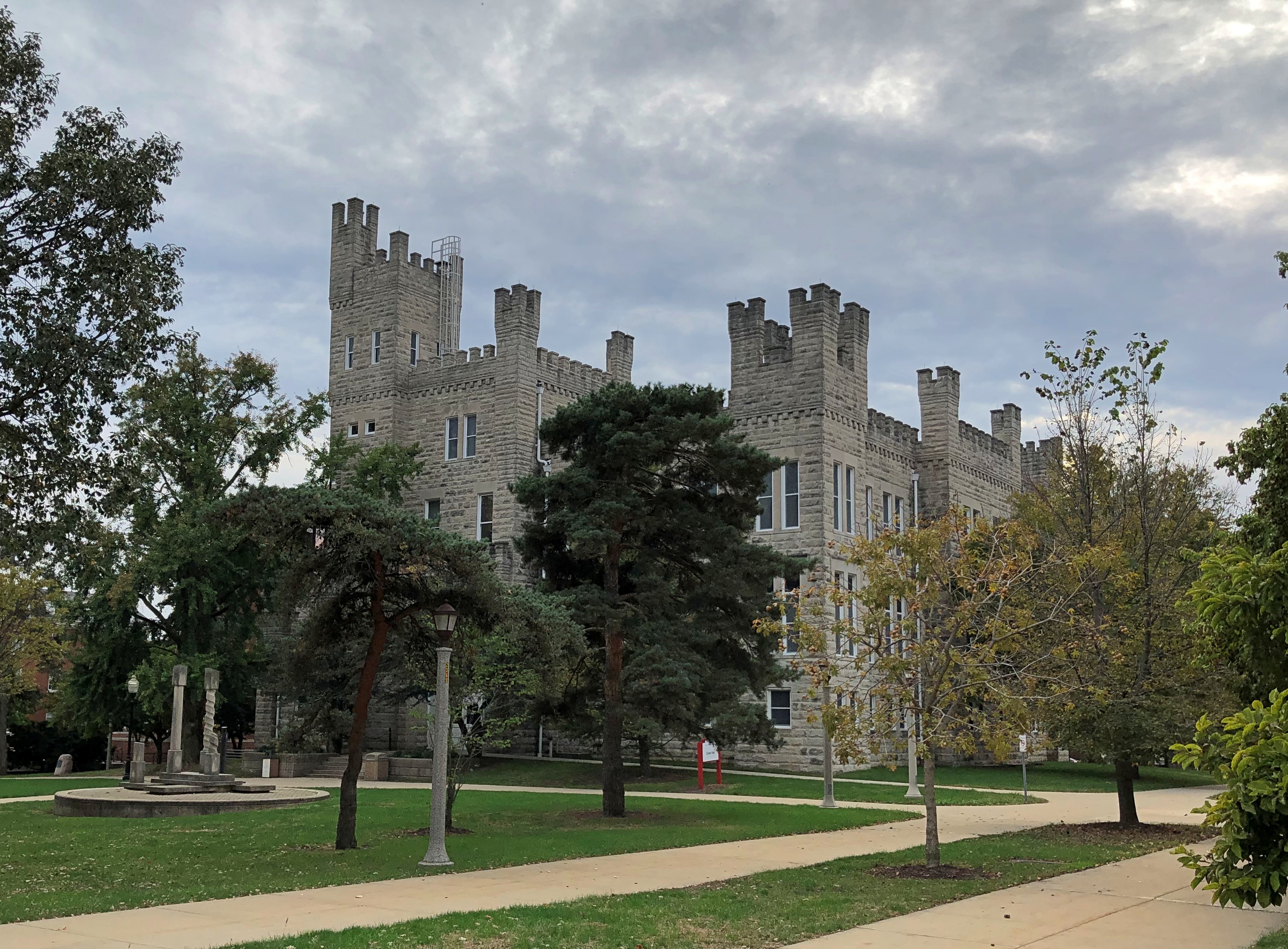
We wandered on. This is Cook Hall.

“One of Illinois State’s most interesting buildings and the oldest one still standing on the Quad, Cook Hall was originally built to be a gymnasium,” ISU tells me. “It was completed in 1897 and was named after John Williston Cook, the University’s 4th President (1890-1899). He earned his diploma in 1865 from Illinois State Normal University and in 1876 he became a Professor of Mathematics.

“The building has also been known as the ‘Old Castle’ or ‘The Gymnasium.’ The governor at the time, John Altgeld, had a great liking for medieval castles and insisted all new state construction during his term in office resemble castles. You’ll find a Cook Hall look-alike at many other state schools; they are called ‘Altgeld’s Folly.’ ”

Really? I had to look into that more, and found this Wiki item about Altgeld Castles. It does indeed seem that a raft of crenellated, or quasi-crenellated buildings at Illinois state schools dates from the 1890s. I remember seeing Altgeld Hall at UIUC, but didn’t know it was part of a pattern. An eccentric pattern. That’s two things I learned (or relearned) today; makes for a good Monday.

October Present & Past

Summer is lingering late this year. Sunny and in the mid-80s F. today.

Spent some time on the deck this evening, after dark, listening to the crickets — and the traffic. Looking at Jupiter and a waxing crescent Moon. Marveling at how not-cold or even cool it is. Warm enough, at least during the first few hours after dark, to sit around comfortably in a t-shirt. (One I bought in North Pole, Alaska, featuring the outline of a moose.)

Most the foliage is still green, though the honey locusts along the streets are yellow. But not the one in my back yard. Maybe it’s the carbon monoxide. The grass is still green too. I mowed the back yard just before sunset today. Last time this year, I hope.

Previous Octobers have sometimes been more October-like. Sometimes not. A picture from October 2006.

One thing I don’t do any more: visit places to entertain small children. They have grown, and usually entertain themselves, as it should be.

A May Day in October

Woke to gentle rain this morning. That’s more pleasant on a Saturday morning, but still a good aural experience on a Thursday.

By afternoon, it was partly cloudy and warm, something like a good day in May. I dried off my chair and spent a few minutes on the deck about 3:30, after finishing a particularly intense bit of work.Show your face and bend my mind

Cloudy or not, a parade of planes is always headed for O’Hare.
Show your face and bend my mind

About an hour later, a thunderstorm passed through, but I was already back inside. All in all, a spring day here in the fall.

Stir-Fried Fish Cake

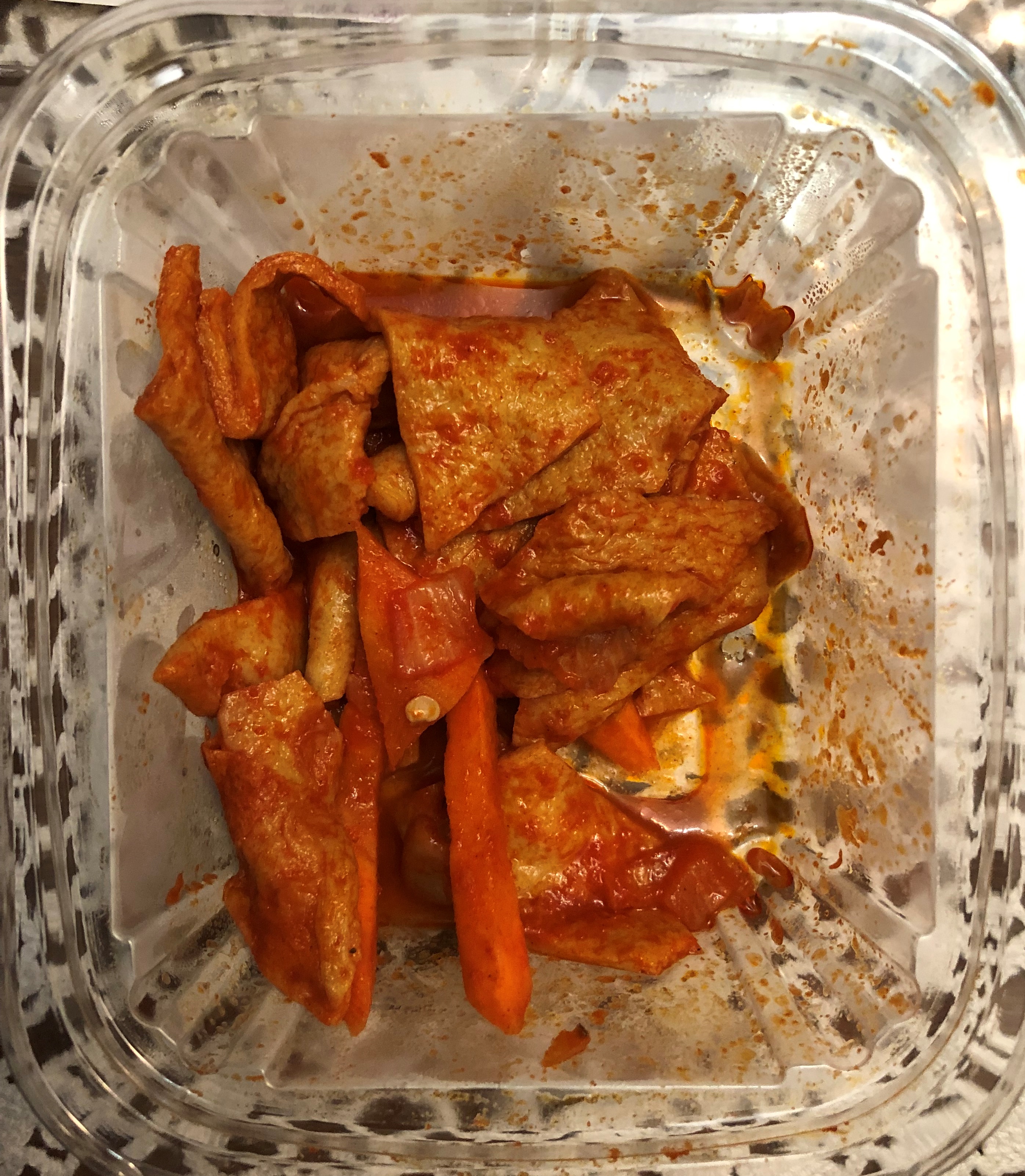
Stir-fried fish cake is something you’ll usually get among the many and delicious side dishes served in Korean restaurants. I remember having it as long ago as the late ’80s, when I frequented a Korean restaurant on N. Clark St. in Chicago that I think is long gone, as well as some of the restaurants on Lawrence Ave. during the same decade, when the Albany Park neighborhood was Chicago’s Koreatown.

The Korean population there has dwindled in the 21st century, WBEZ reports. These days, metro Chicago’s Korean hub is suburban Niles, which indeed has a very large H Mart that we occasionally visit.

You can get stir-fried fish cake (eomuk) there to eat at home.

Niles is a little far for us, so Yuriko typically visits the smaller H Mart in Schaumburg, an outpost of the brand. Besides good Korean food, H Mart carries other Asian items, sometimes — often? — cheaper than at the Japanese grocery stores in Arlington Heights.

“It’s typically, a mix of Alaskan pollock, cod, tilapia and others depending on the region and season,” Future Dish says of eomuk, also known as odeng.

“The leftover pieces from these fishes are grounded into a paste and mixed with flour. Then finely chopped carrots, onion, salt, sugar and other ingredients are mixed into the thick and sticky paste.

“The paste is rolled, shaped and cut into various shapes (sheets, balls and ovals). Then deep-fried for a few minutes.”

It might not look good in my picture, but it sure is.

Now if You’re Ready, Oysters Dear, We Can Begin to Feed

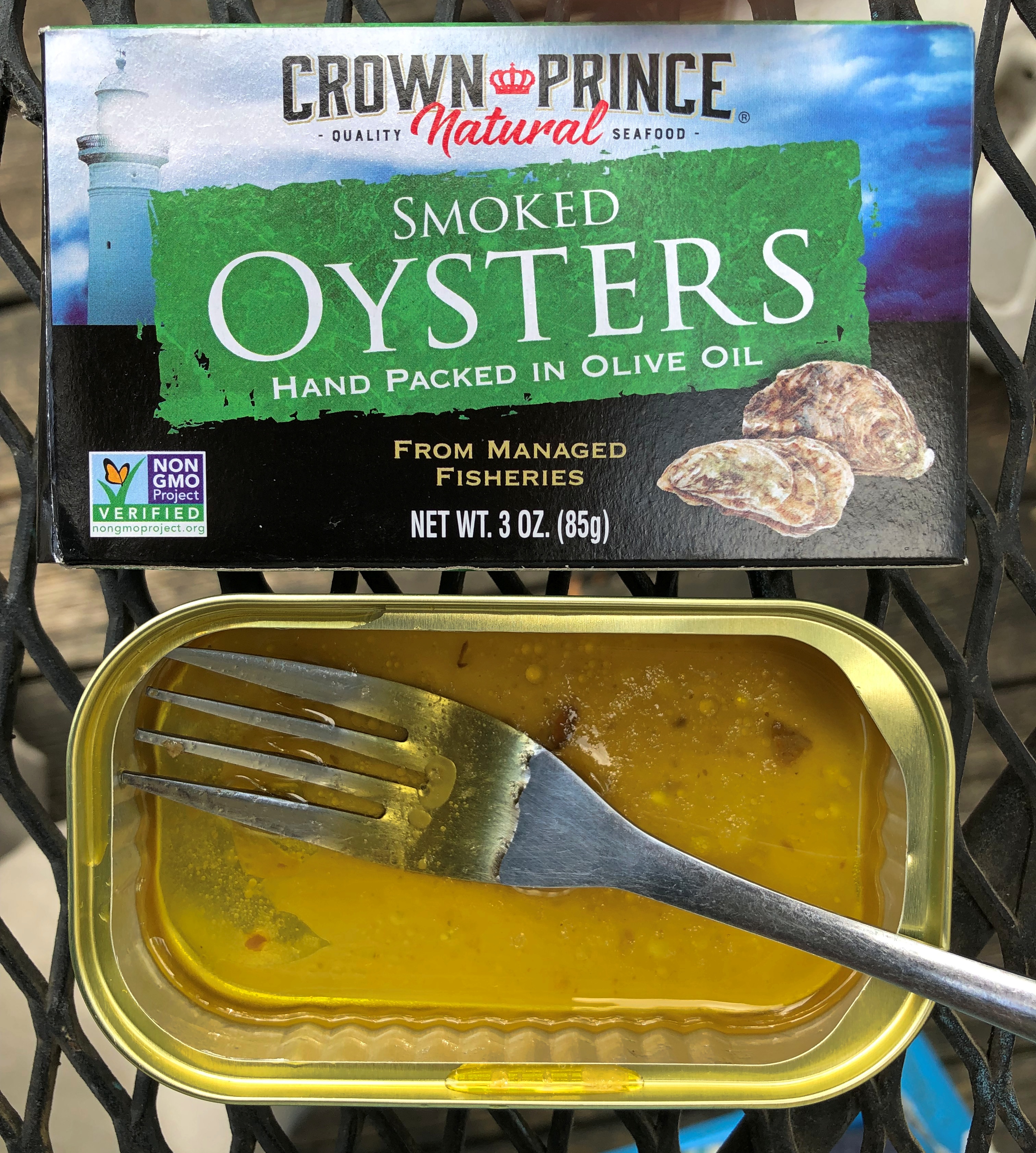
Still able to eat lunch comfortably on the deck some days. Not long ago, part of my lunch included a tin (well, aluminum container) of Crown Prince Natural brand oysters, imported by Crown Prince Inc. of Industry, California. I don’t eat a lot of oysters, and none will ever be as good as the fresh-shucked oysters I ate while drinking kamikazes at the Fishery in Nashville during the fantastic plastic summer of ’82.

Still, there it was in our pantry. Why not make it part of an al fresco lunch, out among the turning trees? Not sure how long we’d had the tin. But I knew I had to hurry. Best if used by May 1, 2025, the box says.

I made short work of them.

The box tells me that these are “sustainably raised and harvested in South Korean coastal waters. Freshly shucked, smoked over oak and packed in Turkish olive oil.”

The box is further careful to point out that each tin (that’s one serving) contains 1,305 mg of omega-3 fatty acids, like that’s a good thing. Maybe it is, but I’m feeling too lazy to look into it, because looking up nutritional information online potentially means macheting your way through a jungle of nonsense.

Also, non-GMO verified. Wouldn’t want to eat any Frankenoysters, I suppose.

South Korean oysters and Turkish olive oil is an intriguing combo. That they can be combined in the same container and sold for a modest sum here in North America is, I believe, a testament to the vast reach of the global economy, even in a time when international logistics is gummed up.

“Often called ‘the milk of the sea’ for its high nutrient content, the oyster has long been a staple of the South Korean diet,” Bloomberg reports.

“Originally harvested by free divers, oysters are now grown in ocean farms along the country’s southern coastline and shipped overseas to the U.S., Japan and Hong Kong. Appetite for the delicacy has made South Korea the world’s second-largest exporter of the shelled mollusks.”

One more thing: a surprising lot has been said about this particular kind of mollusk.

But none like Lewis Carroll. Select verses:

” ‘The time has come,’ the Walrus said,
‘To talk of many things:
Of shoes — and ships — and sealing-wax —
Of cabbages — and kings —
And why the sea is boiling hot —
And whether pigs have wings.’
…
A loaf of bread,’ the Walrus said,
Is what we chiefly need:
Pepper and vinegar besides
Are very good indeed —
Now if you’re ready, Oysters dear,
We can begin to feed.’
…
‘O Oysters,’ said the Carpenter,
You’ve had a pleasant run!
Shall we be trotting home again?’
But answer came there none —
And this was scarcely odd, because
They’d eaten every one.”

오레오

Acquired at H Mart not long ago (a box, flattened).

I didn’t know that Oreos (오레오) are available in Korea, but it doesn’t surprise me. Who doesn’t like Oreos? It is a little surprising that Korean-made Oreos are sold in a grocery store in the United States, even one that specializes in Korean products. The label tells me that they were made by the Mi Ga Bang Co. of Gangwon Provence, South Korea.

Presumably to Nabisco specifications. I’m glad to report that inside the box, the cookies are exactly the same as domestic Oreos — at least in appearance and taste, down to the distinctive Oreo design on the face of the cookie that hasn’t changed in my recollection. The cookie that Hydrox could not beat.

The Former Hokkaido Government Office Building

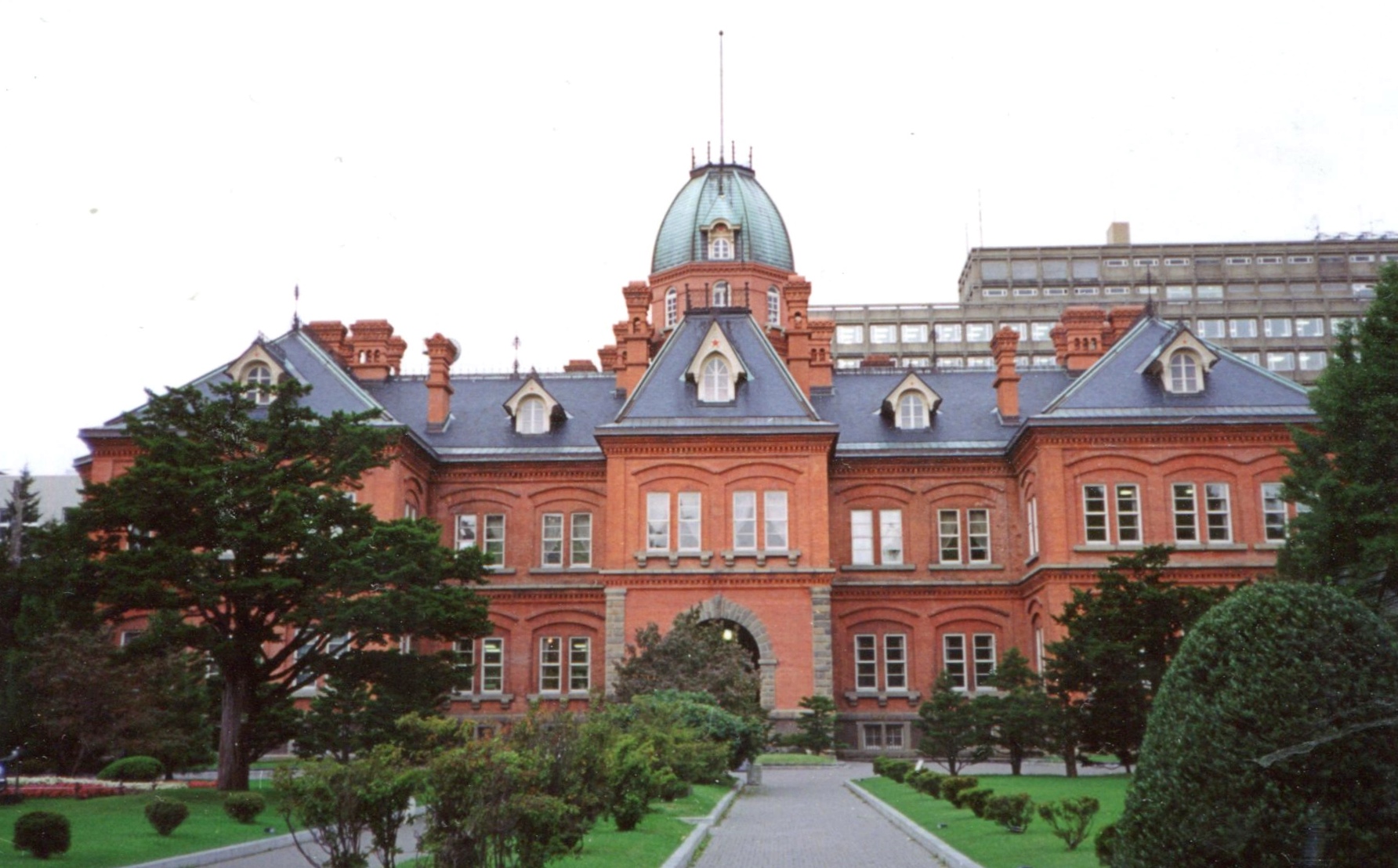
We spent time in Sapporo during our late September/early October 1993 visit to Hokkaido, and one of the more charming structures to be found there is the Former Hokkaido Government Office Building. A handsome pile of 2.5 million or so bricks.Old Hokkaido Government Building

I understand the local nickname is Akarenga, or Red Bricks. That seems fitting.

The building dates from early Meiji period, when settling Hokkaido was seen as a priority, and for a time housed the offices of the Hokkaido Development Commission, and later the government of the prefecture. It burned down twice in the earliest years and was always rebuilt (but I don’t think it fell into a swamp).

“Completed in 1888, the American neo-baroque style brick style brick building was designed by engineers of the Hokkaido Government and was constructed with many local building materials…” says the prefectural government.

“In 1968, it was restored to its original state in commemoration of the centennial of Hokkaido… and it was designated as a National Important Cultural Property in 1969.”

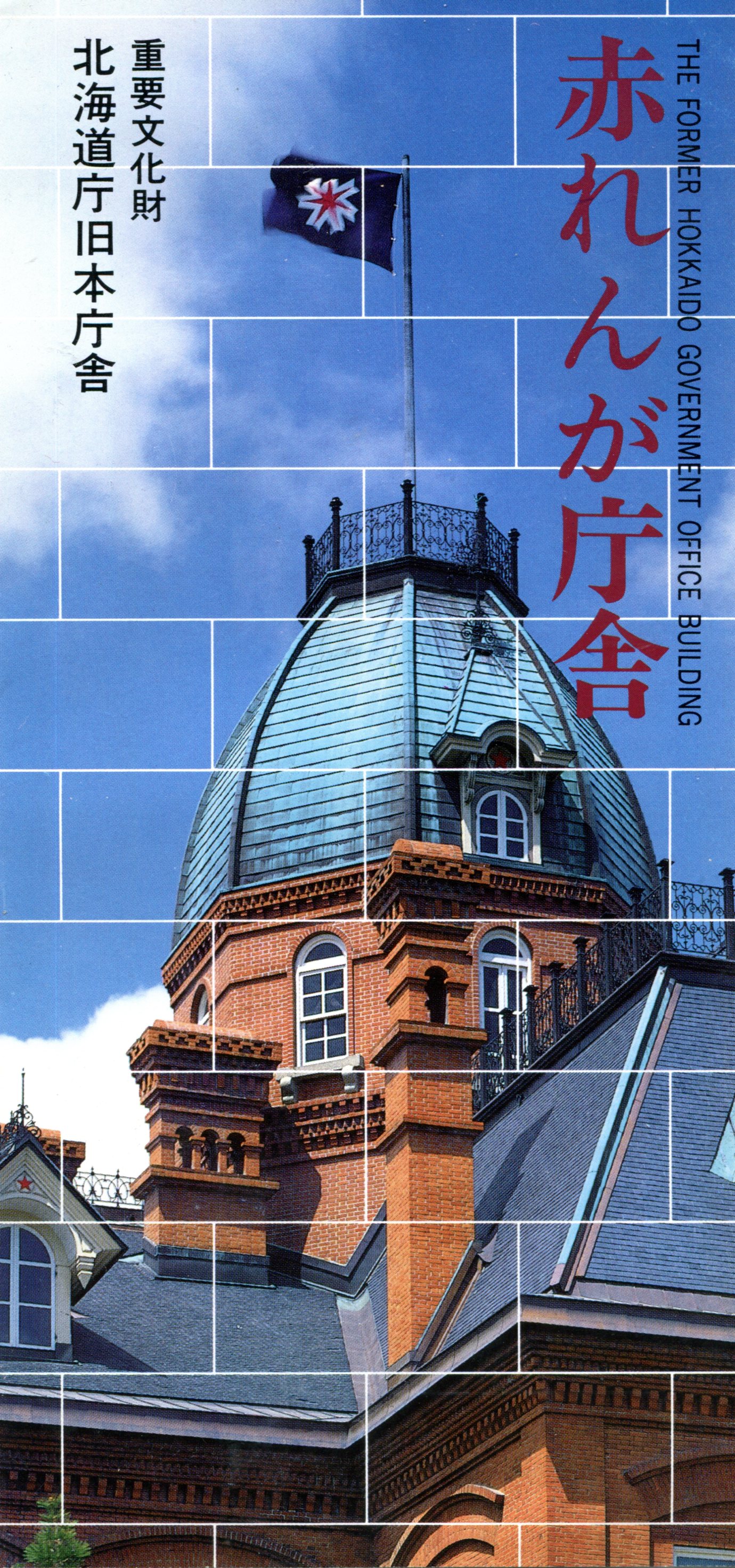
These days (as in 1993), it houses a small museum and the prefecture’s archives. I know we went in, but I don’t remember what was on display. Note the flag on the pole on the pamphlet I picked up at the building, but not in the picture I took.

I might not have seen the flag of Hokkaido there, but I do like it.

Two More Milwaukee Churches

Royal road to the unconscious, eh? Last night a pleasant elderly couple appeared in a dream: “Mr. and Mrs. Folger.” He didn’t look like anyone I knew, but she looked like Virginia Christine. I know, of course, that wasn’t her name in the commercials, but tell it to the unconscious.

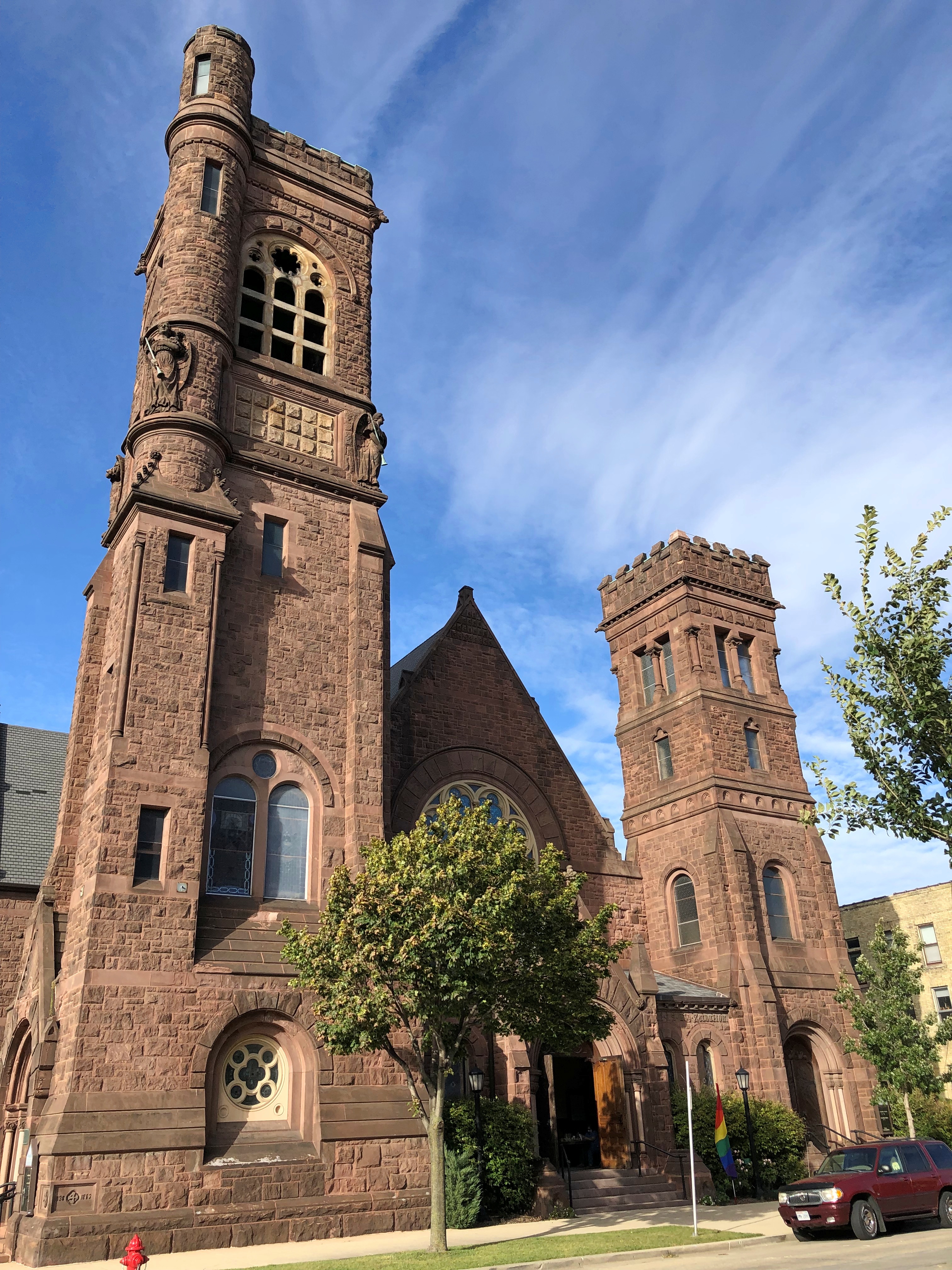
The last two Doors Open places we visited in Milwaukee on Saturday were churches, not far from the cluster of churches we saw in 2017 along or near Juneau St. One this time was St. Paul’s Episcopal Church.St. Paul's Episcopal Milwaukee

A Richardsonian Romanesque design by the busy Victorian architect Edward Townsend Mix, completed in 1884 for the oldest Episcopal parish in Milwaukee. No Cream City brick this time, but rather another Wisconsin material: red Lake Superior Sandstone, found near the Apostle Islands, and (I think) similar to Jacobsville Sandstone up in the UP.St. Paul's Episcopal Church, Milwaukee

St. Paul's Episcopal Church, Milwaukee

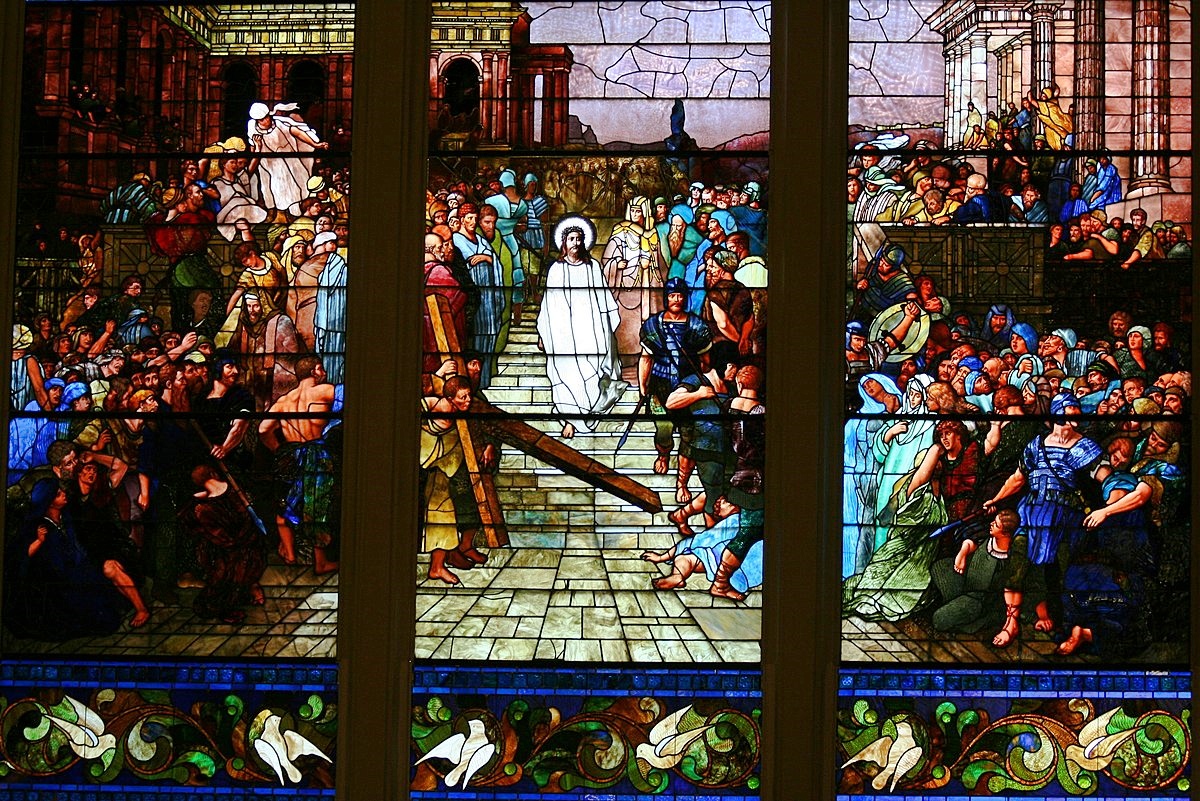
The church is known for its Tiffany windows, one of which is reportedly the largest opalescent glass window the studios of Louis Comfort Tiffany ever made, at 22 feet x 28 feet. That would be “Christ Leaving the Praetorium.” My pictures didn’t turn out so well, but fortunately there’s a public domain image available.

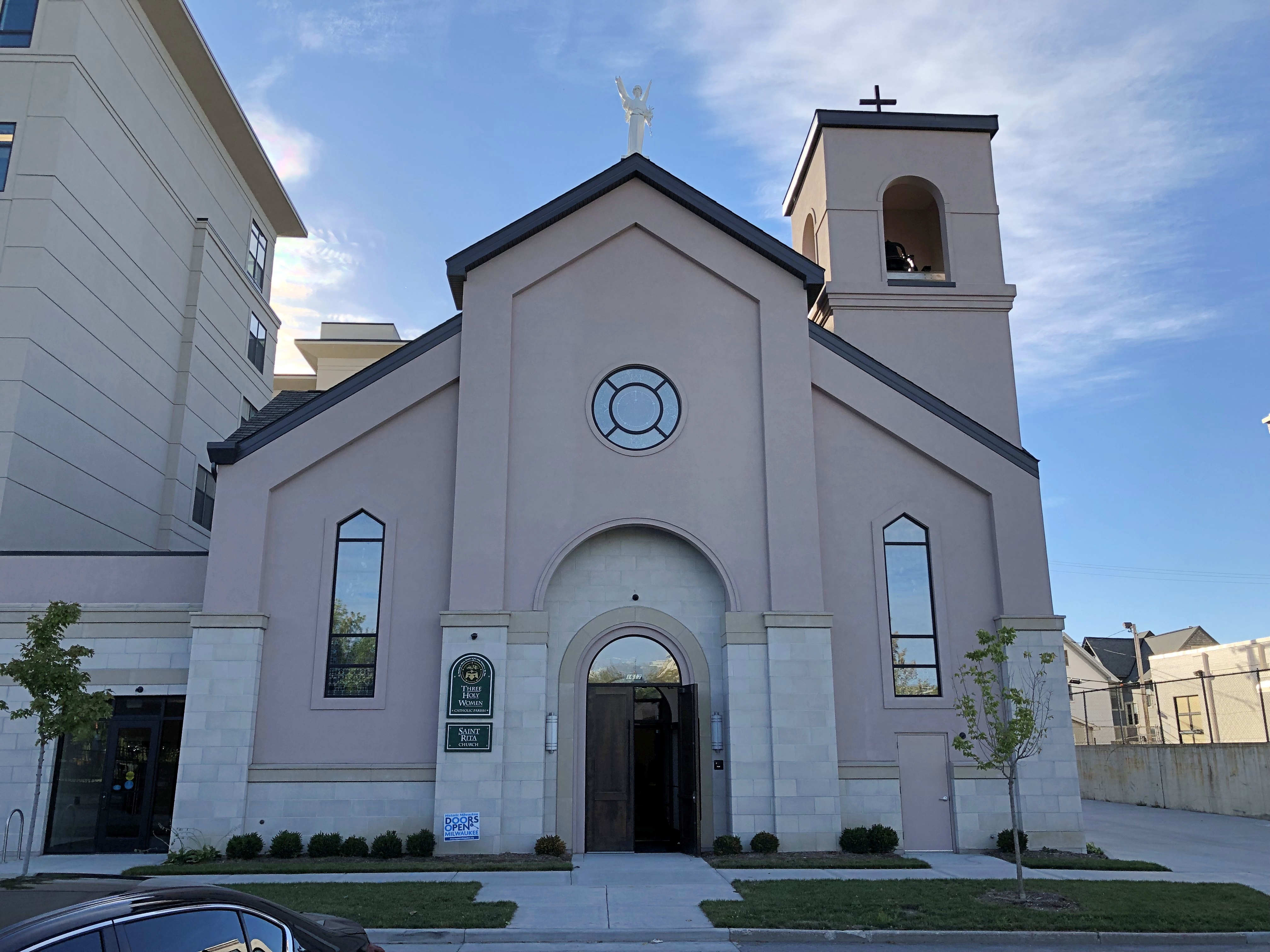
A few blocks away is St. Rita Catholic Church. Its current iteration didn’t exist when we were nearby in 2017. The church was completed only last year.St. Rita Church Milwaukee

“St. Rita Church at 1601 N. Cass St. began in 1933 as a mission outpost of the old Italian parish, the Blessed Virgin of Pompeii Church in Milwaukee’s Third Ward,” the Three Holy Women Parish web site says. “Its basement church was blessed as a new independent parish in 1937, then a building was erected and blessed in 1939… In 2018, the church was demolished with plans to build St. Rita Square, a six-story senior housing campus operated by Capri Senior Communities, along with a new St. Rita Church.”

Some elements of the new church were part of the old St. Rita, and a few were even part of the Blessed Virgin of Pompeii, which was razed in 1967 for highway construction.

“One of those artifacts, an eight-foot-tall bronze statue of Gabriel, is already visible to passersby,” Urban Milwaukee reported in early 2020. “Sculpted in 1904, the year the pink church [Blessed Virgin of Pompeii] was constructed, it had been on the top of St. Rita since 1969. It now rests atop its third church.”

St. Rita has an inviting but relatively spare interior.
St. Rita Church Milwaukee

The church also has some nice stained glass.
St. Rita Church Milwaukee

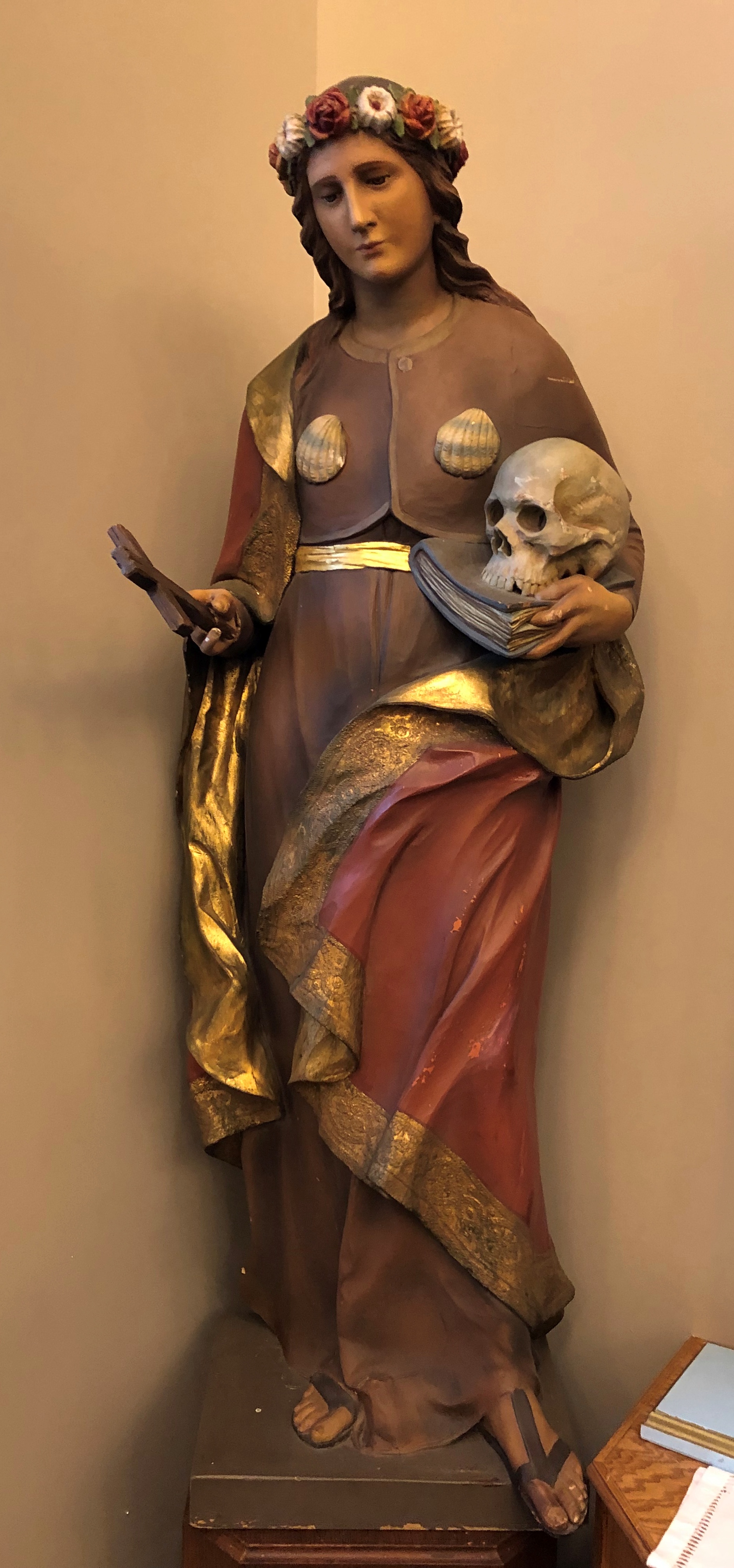
I didn’t know much about the saint. Anything, actually. She’s Rita of Cascia (1381-1457).
St. Rita Church Milwaukee

Now I know a little more, such as she’s the patron of abused spouses and difficult marriages, among many other awful situations.

Forest Home Cemetery & Arboretum, Milwaukee

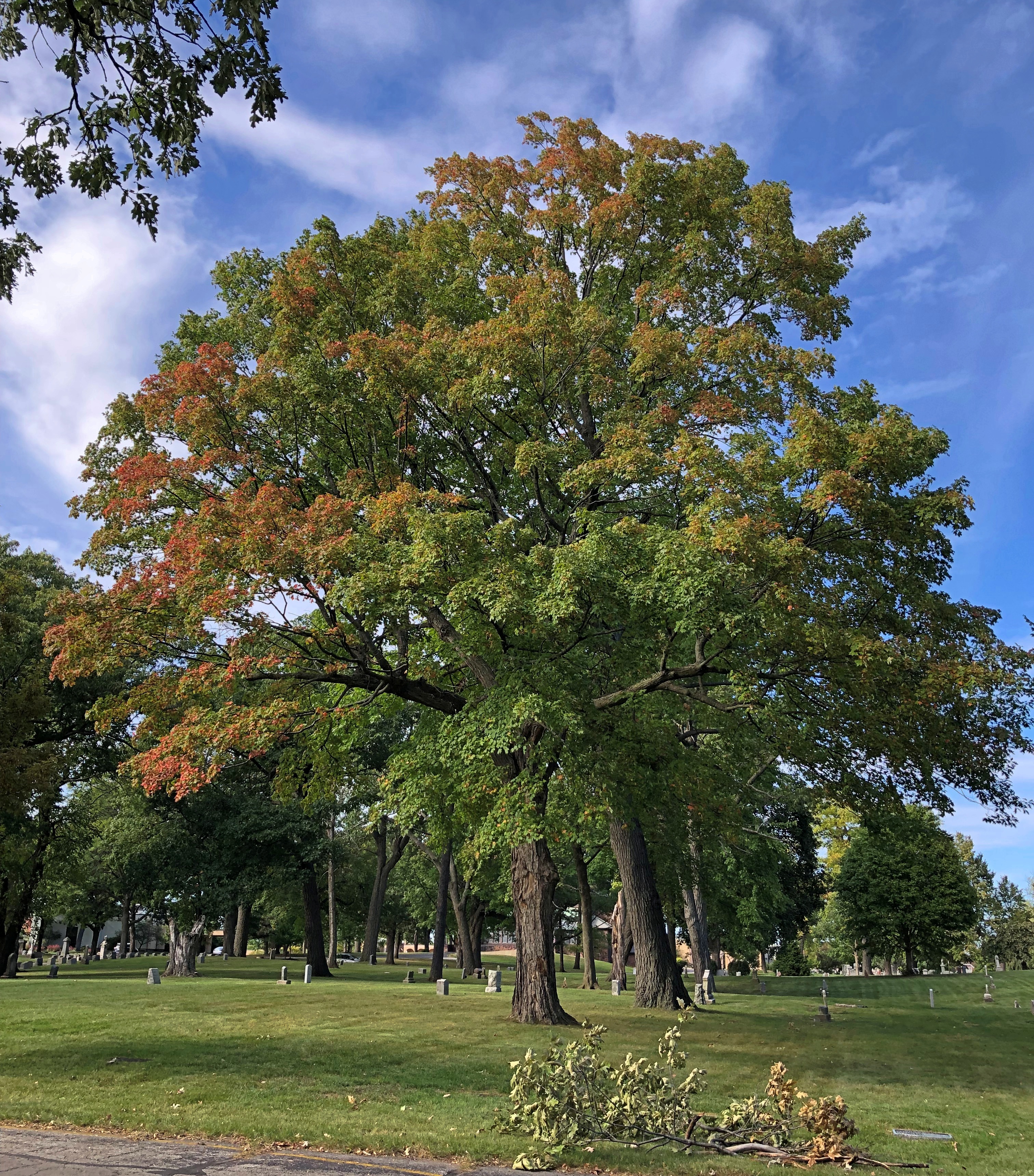
A touch of fall in southern Wisconsin.Forest Home Cemetery & Arboretum

A touch more every day, for sure, but this is how the foliage appeared on Saturday at Forest Home Cemetery & Arboretum, Milwaukee, which is mostly still green.

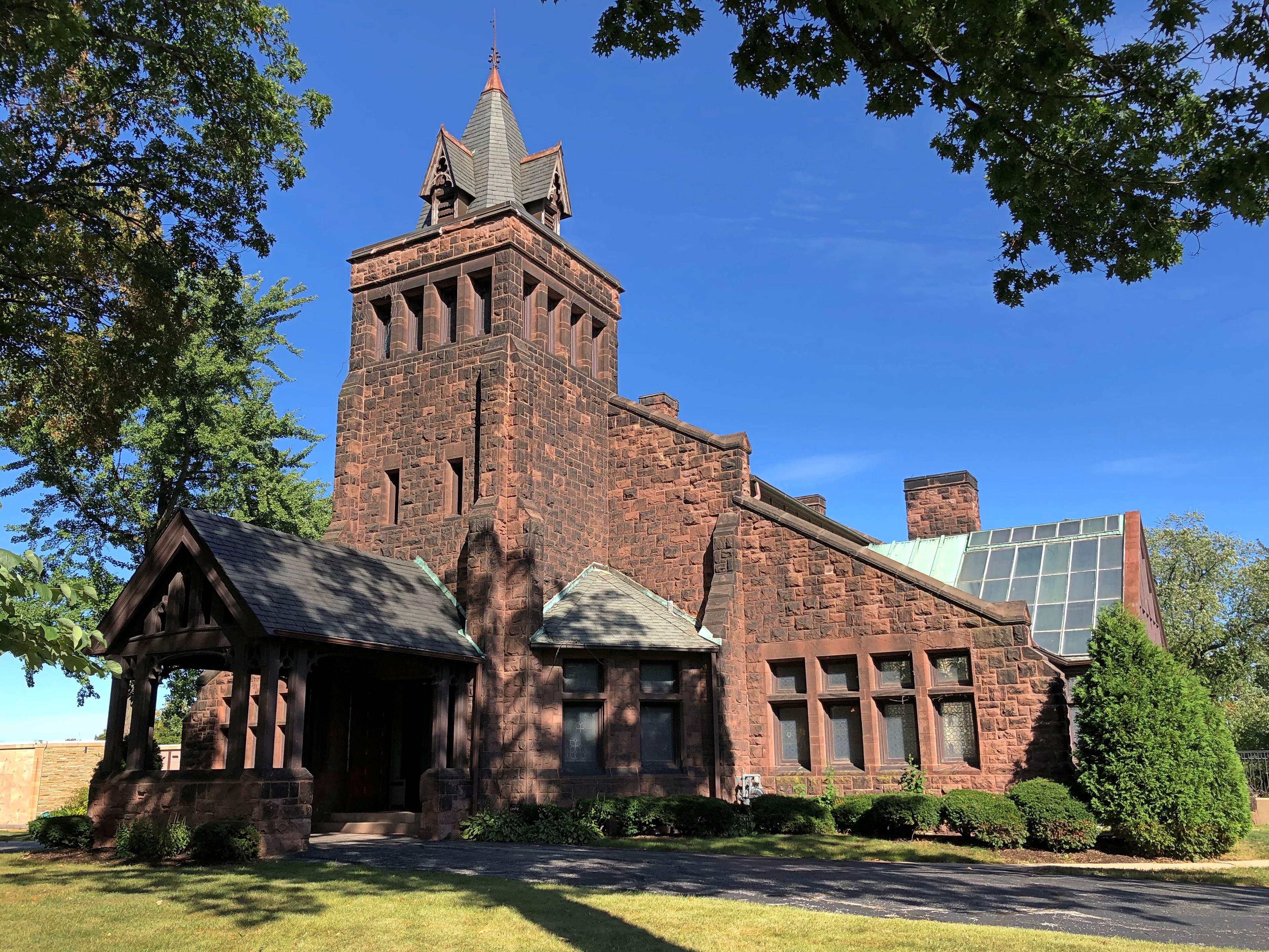
The cemetery’s chapel was part of Open Doors Milwaukee over the weekend. It is a handsome structure, completed in 1892.Forest Home Cemetery & Arboretum

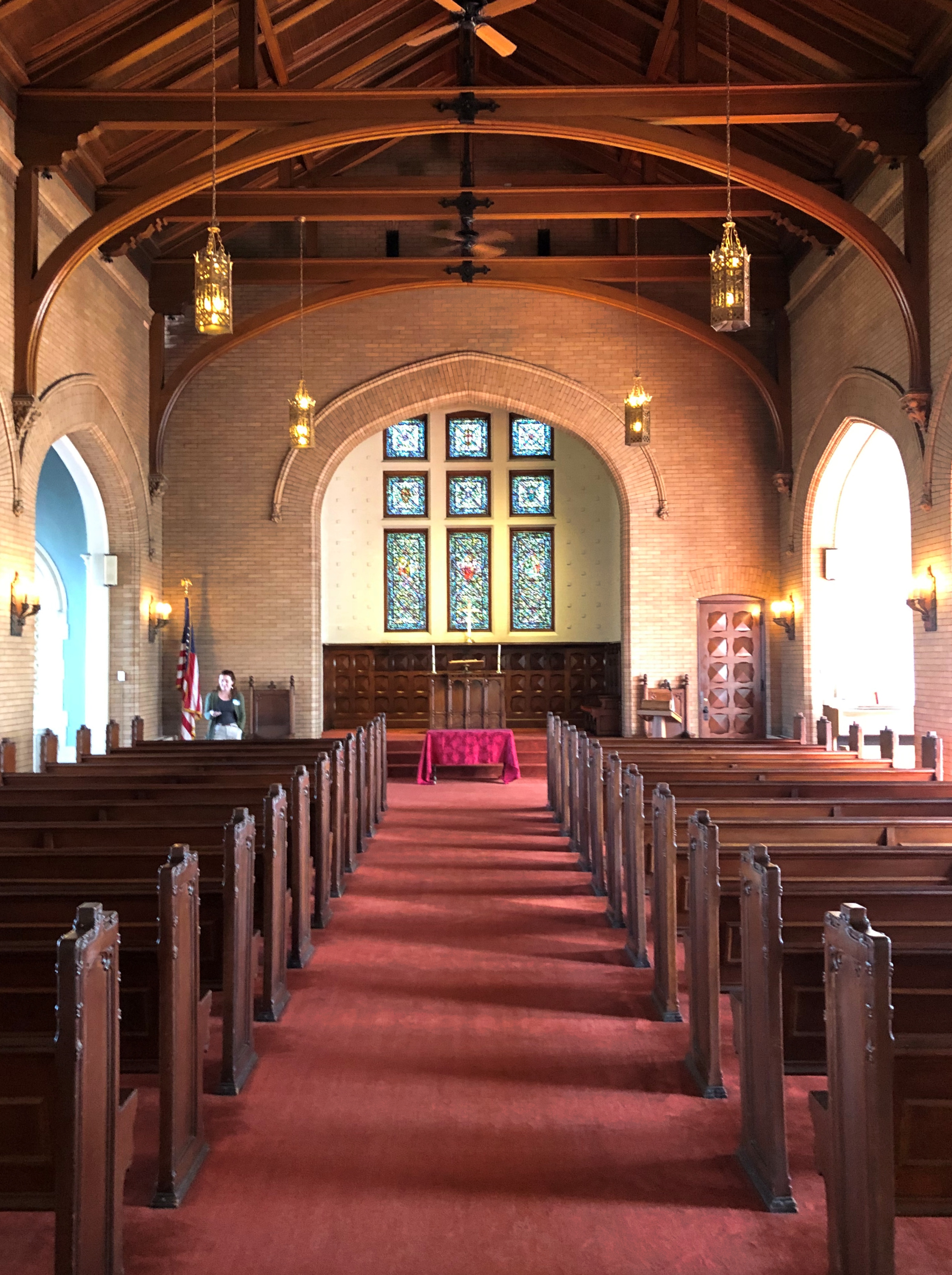
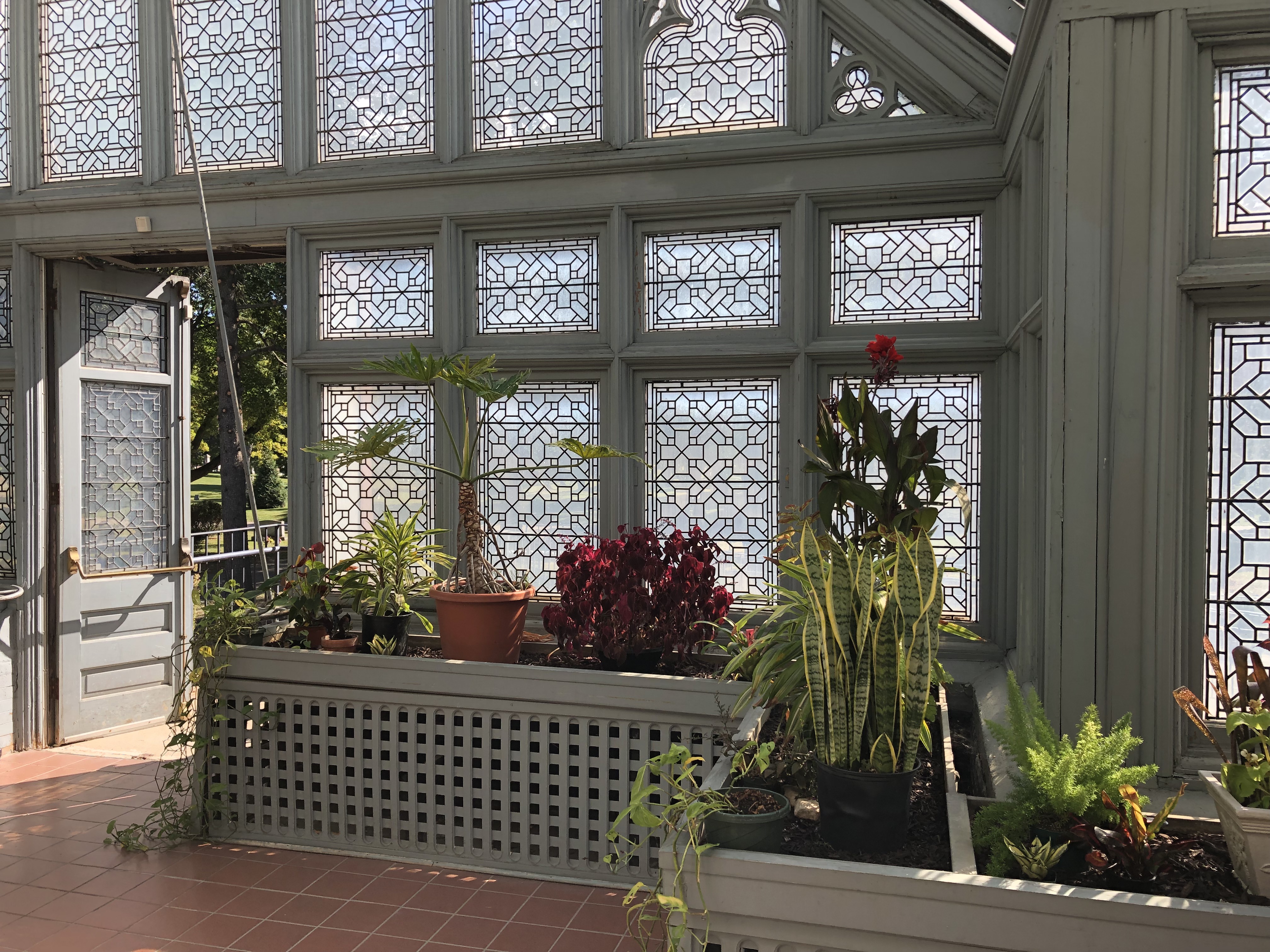
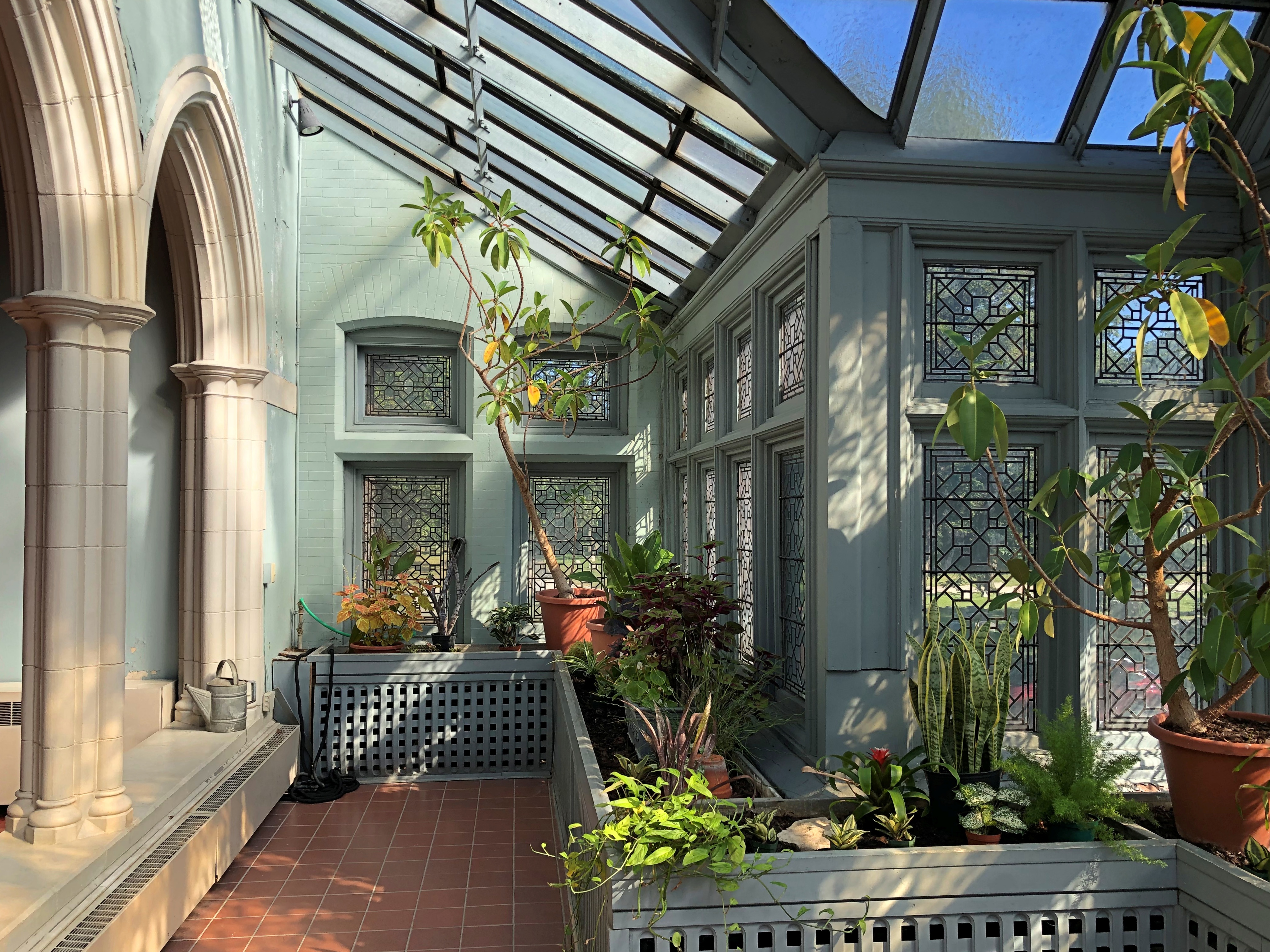
“With an exterior of gracefully aged reddish-brown Lake Superior sandstone, the interior features stately buttresses, fine leaded-glass windows and spacious conservatories containing lush tropical foliage,” the cemetery web site notes, a little heavy on the adjectives. “Many of the tropical plants are decades-old and provide a comforting ambiance that truly sets the Chapel apart from others built before, or since.”Forest Home Cemetery & Arboretum

The conservatory elements are on either side of the main nave-like room. I put it that way because, according to a docent on site, no denomination has ever consecrated the space.Forest Home Cemetery & Arboretum

Forest Home Cemetery & Arboretum

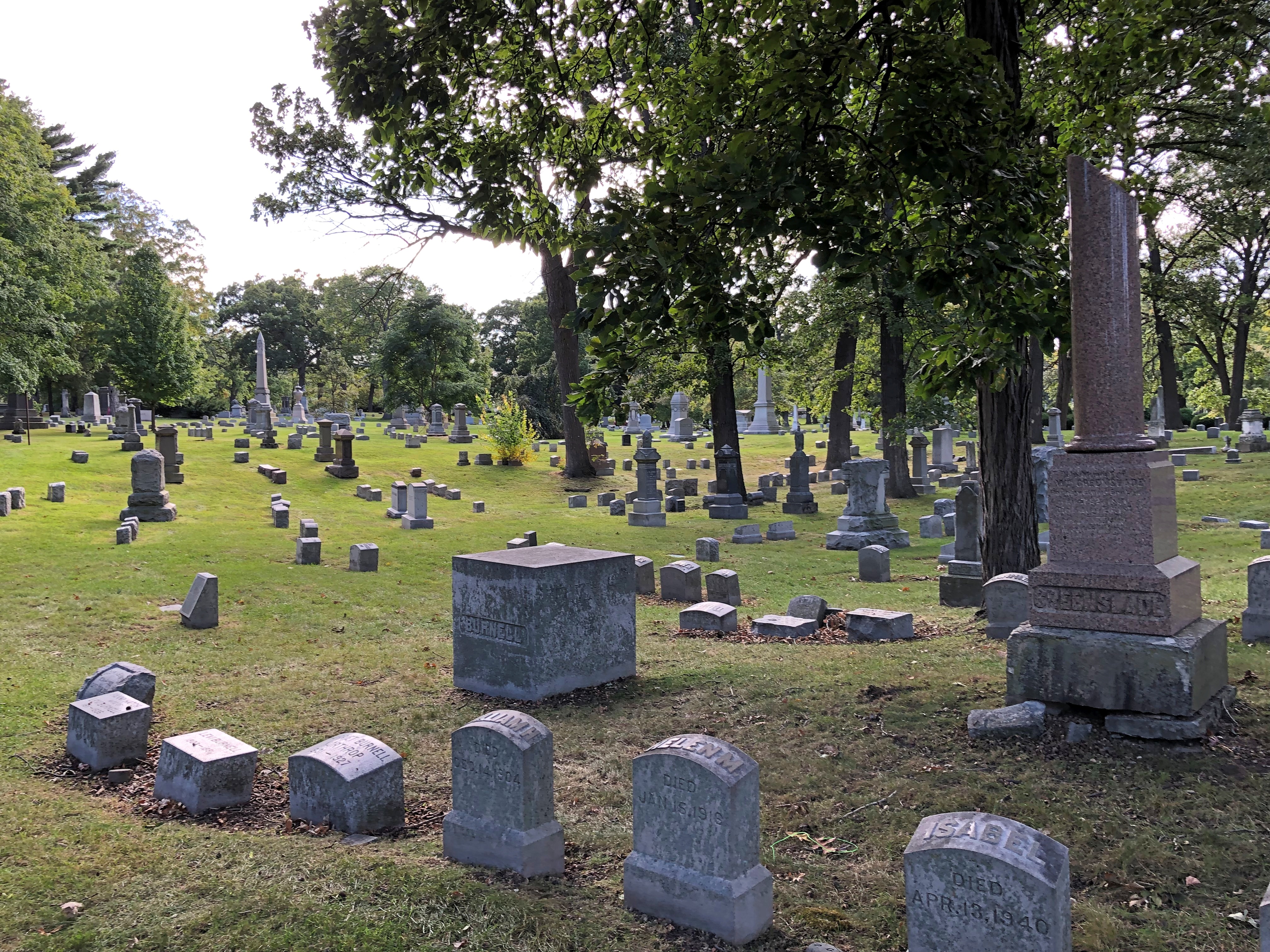
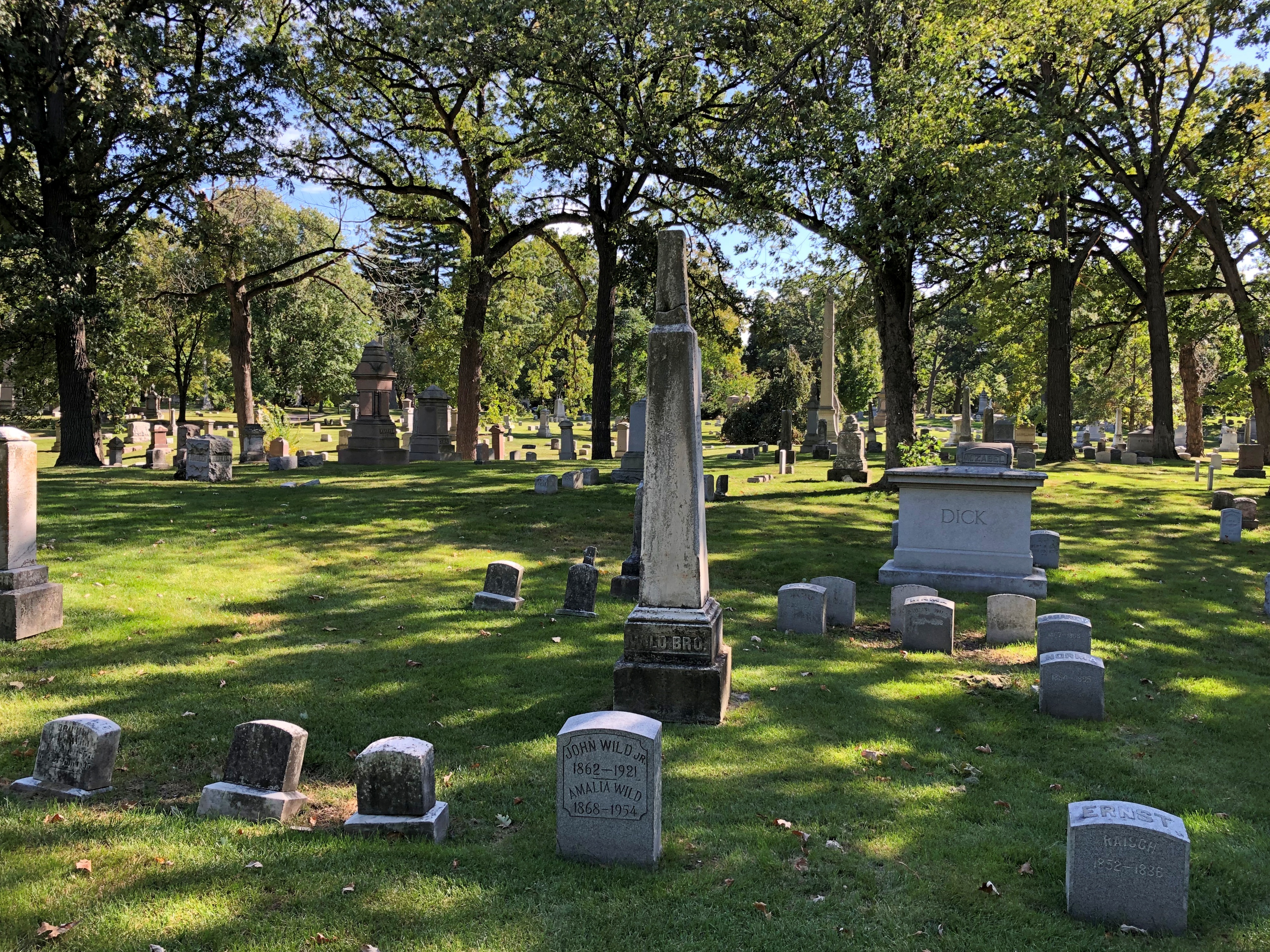
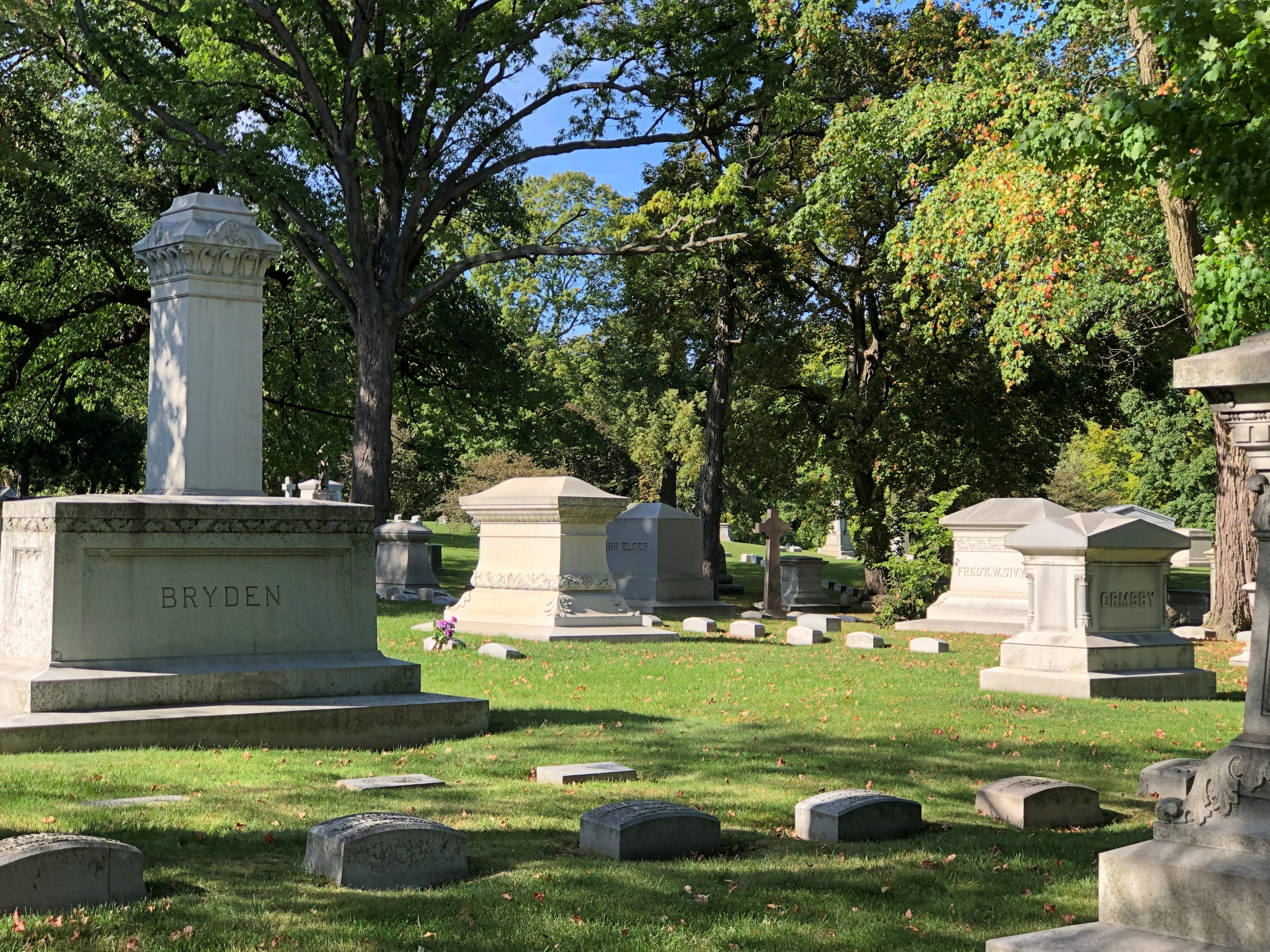
As for the cemetery proper, some 118,000 people reside there.Forest Home Cemetery & Arboretum, Milwaukee

Forest Home Cemetery & Arboretum, Milwaukee

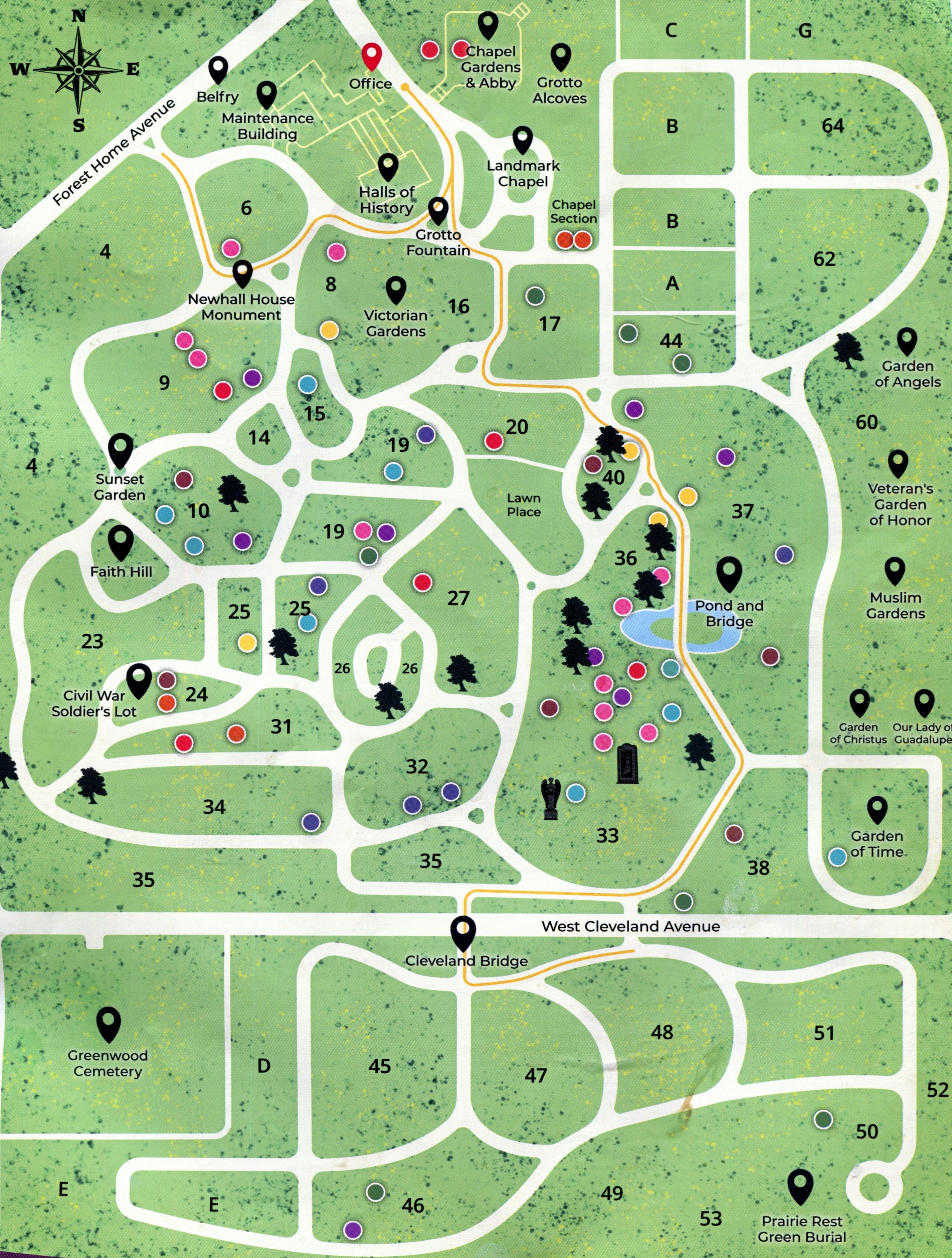
The nonprofit that runs the cemetery publishes a wonderful, 20-page full-color guidebook and was giving them away for Open Doors Milwaukee. Maybe they’re always given away, but anyway I got one and used it liberally during my visit.

“Forest Home Cemetery was established in 1850 by St. Paul’s Episcopal Church as a cemetery for the city,” the guide says. “As Milwaukee expanded, the cemetery became the final resting place for 26 mayors, more than 1,000 Civil War veterans and countless prominent people who left their marks on Milwaukee’s history… the property was one of the first landscaped sites in Milwaukee offering a natural respite. Designed by Increase A. Lapham, known as Wisconsin’s first naturalist, it is considered one of the finest examples of a rural garden cemetery in the Upper Midwest.”

Increase Lapham. Makes me smile. Name your babies Increase, hipsters. You could do a lot worse, considering the distinction of this particular Increase.

“A self-educated engineer and naturalist, Increase Lapham [1811-1875] was Wisconsin’s first scientist and one of its foremost citizens,” the Wisconsin Historical Society notes. “He wrote the first book published in Wisconsin, made the first accurate maps of the state, investigated Wisconsin’s effigy mounds, native trees and grasses, climatic patterns and geology, and helped found many of the schools, colleges and other cultural institutions that still enrich the state today.”

More important than the text, the guidebook includes a detailed map and a color-coded key to the notable burials at Forest Home.

Yellow: Beer Barons; Pink: [Other] Industrialists & Business Magnates; Brown: Pioneers, Inventors & Publishers; Orange: Mayors & Founders; Aqua: Notable Women; Red: Black Leaders & Abolitionists; Purple: Entertainers, Artists & Art Collectors; Deep Blue: Military Heroes; Green: Tragic and Distinctive Burials, such as the memorial to the victims of the 1883 Newhall House Hotel Fire, which General and Mrs. Tom Thumb survived, the grave of John “Babbacombe” Lee, and five victims of the 1903 Iroquois Theatre Fire in Chicago.

All together, the guide lists 65 notable burials. Far too many to see during our hour jaunt through the property, but I managed to find a few, which as always is enough. I was especially interested in finding beer barons. A whole category for beer barons; that’s Milwaukee for you.

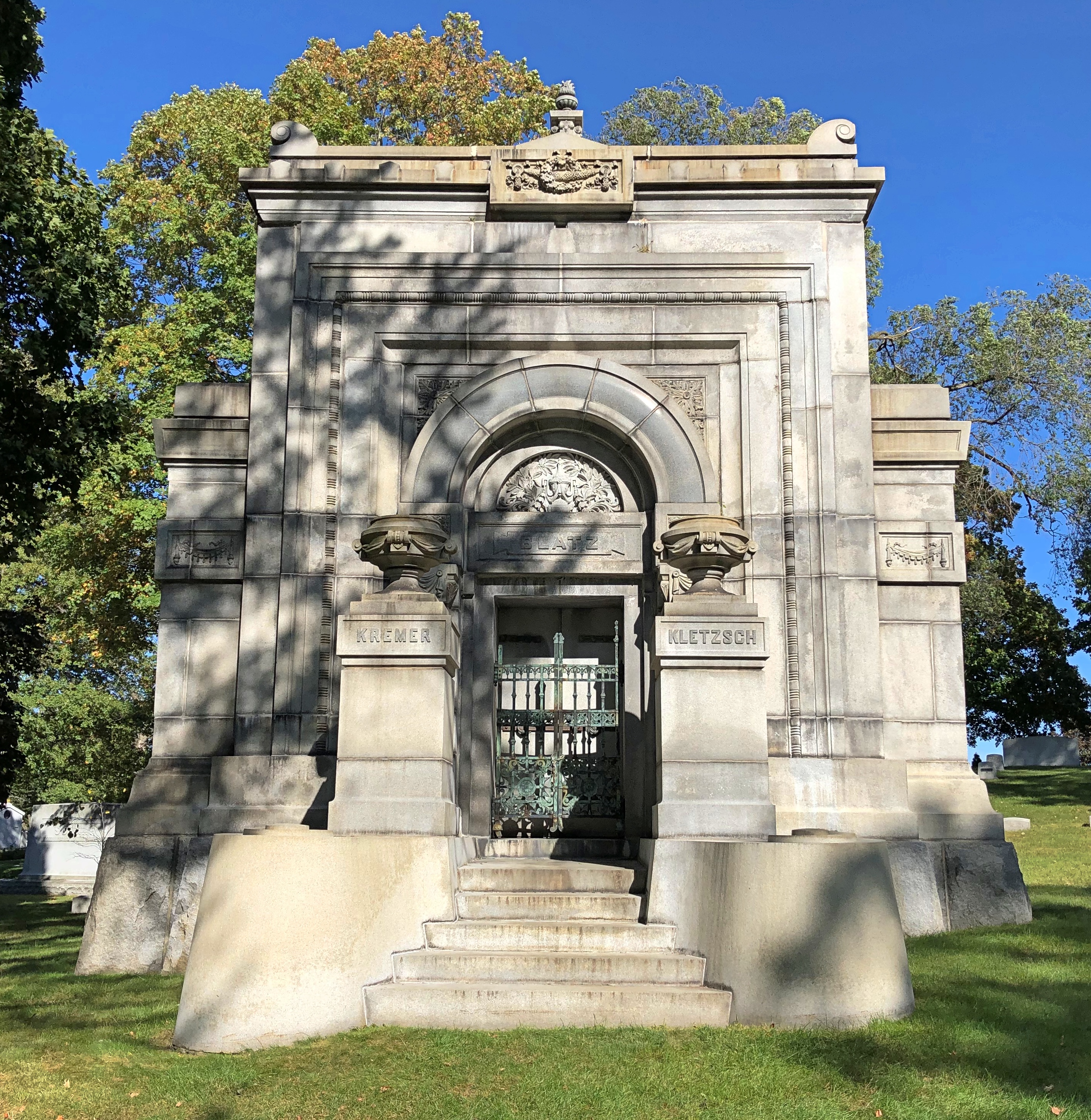
Valentin Blatz (1826-94).Forest Home Cemetery & Arboretum, Milwaukee

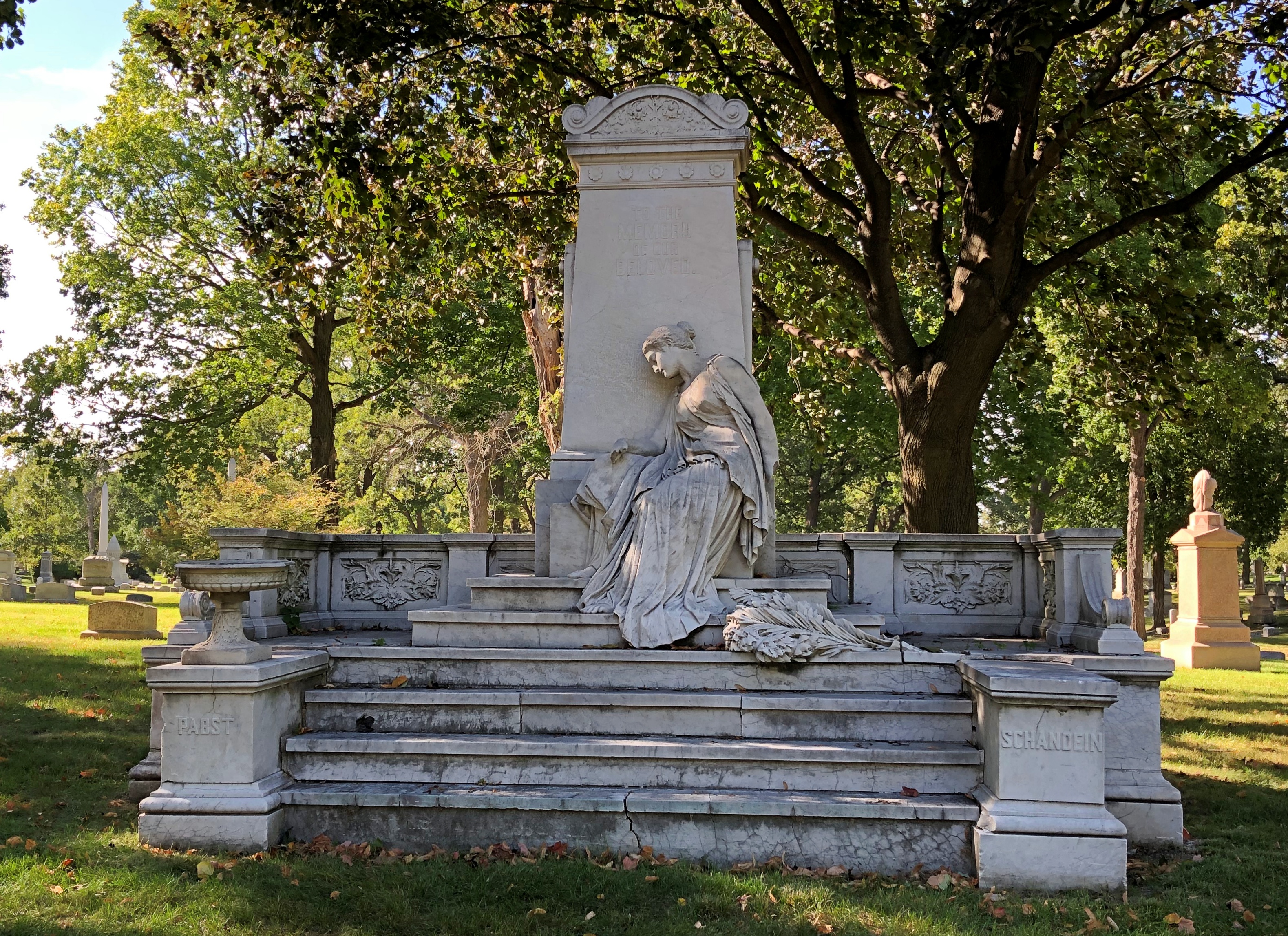
Frederick Pabst (1836-1901).Forest Home Cemetery & Arboretum, Milwaukee

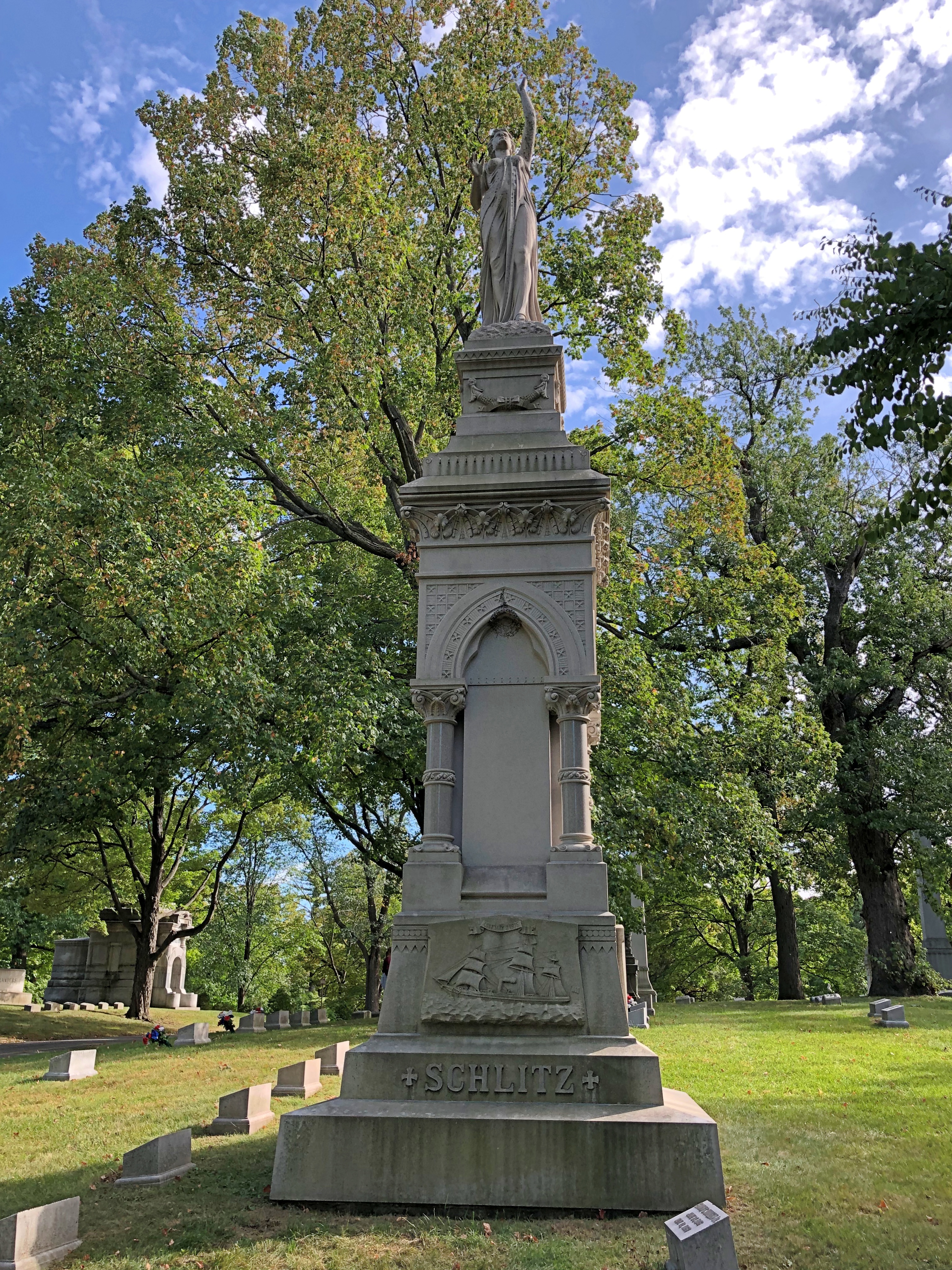
The cenotaph of Joseph Schlitz (1831-75).
Forest Home Cemetery & Arboretum, Milwaukee

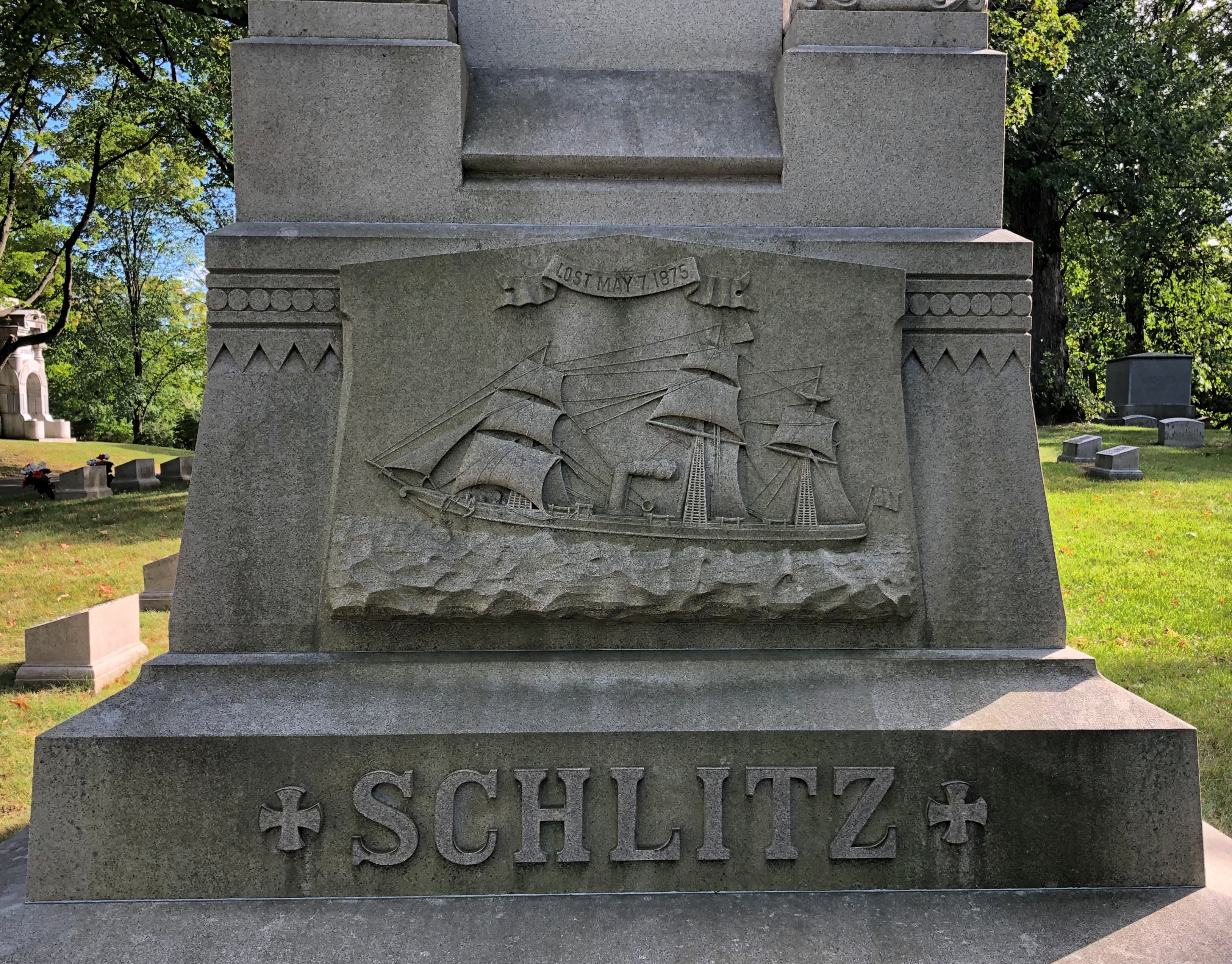
If I knew it, I’d forgotten that Schlitz died in the sinking of the SS Schiller off the Isles of Scilly on May 7, 1875. The ship is carved on the cenotaph.Forest Home Cemetery & Arboretum, Milwaukee

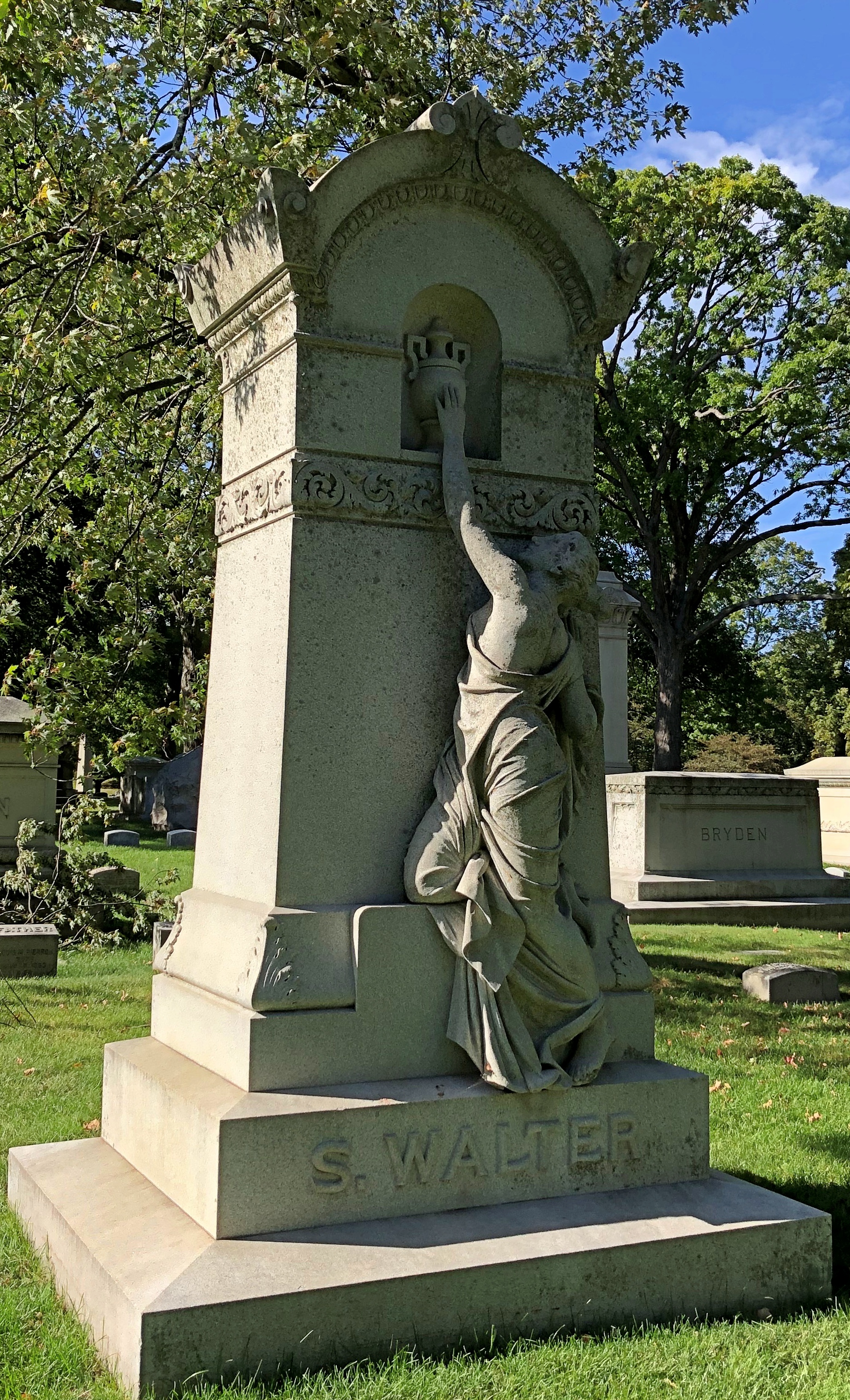
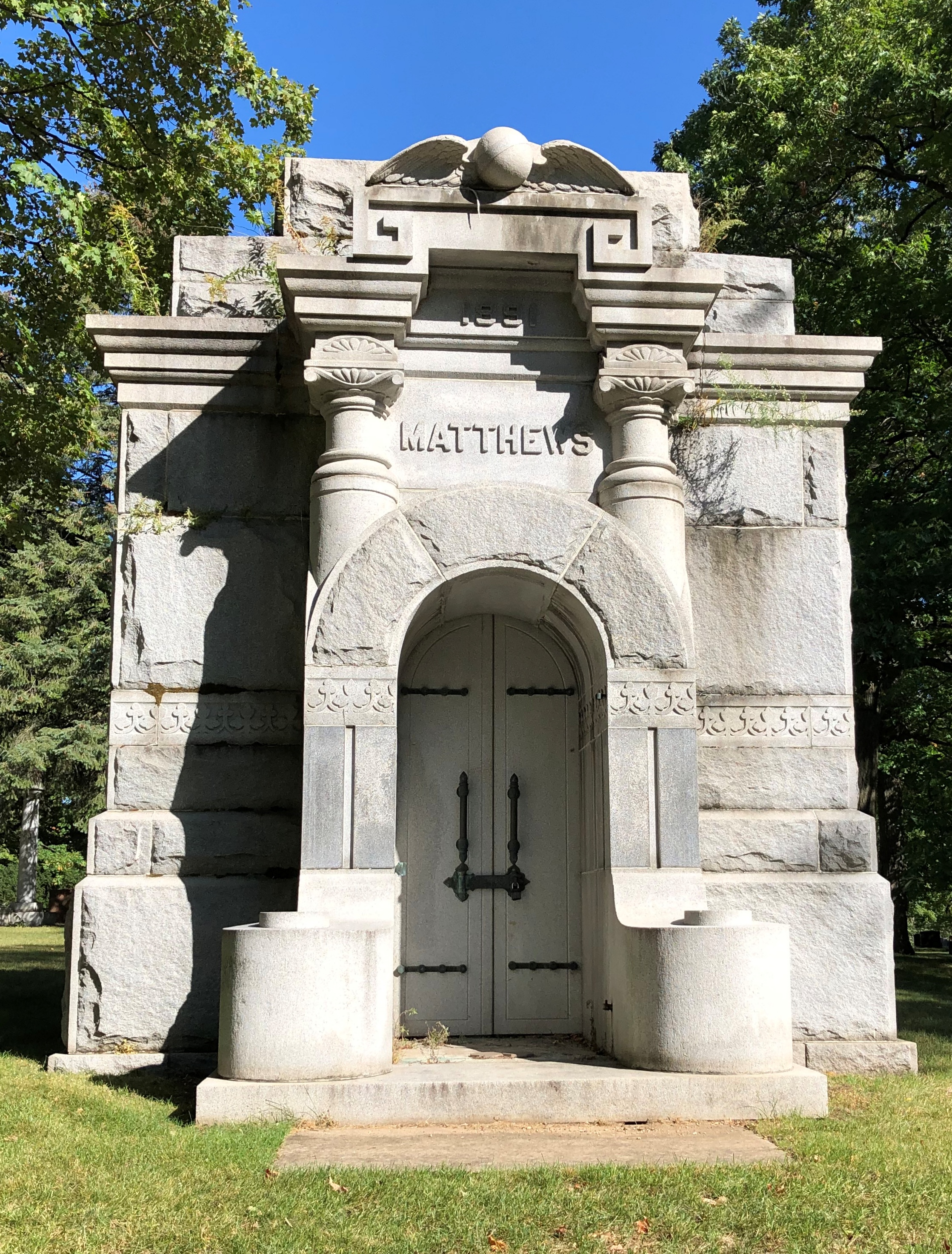
Those three were among the largest memorials in the cemetery, but hardly the only striking ones.Forest Home Cemetery & Arboretum, Milwaukee

Forest Home Cemetery & Arboretum, Milwaukee

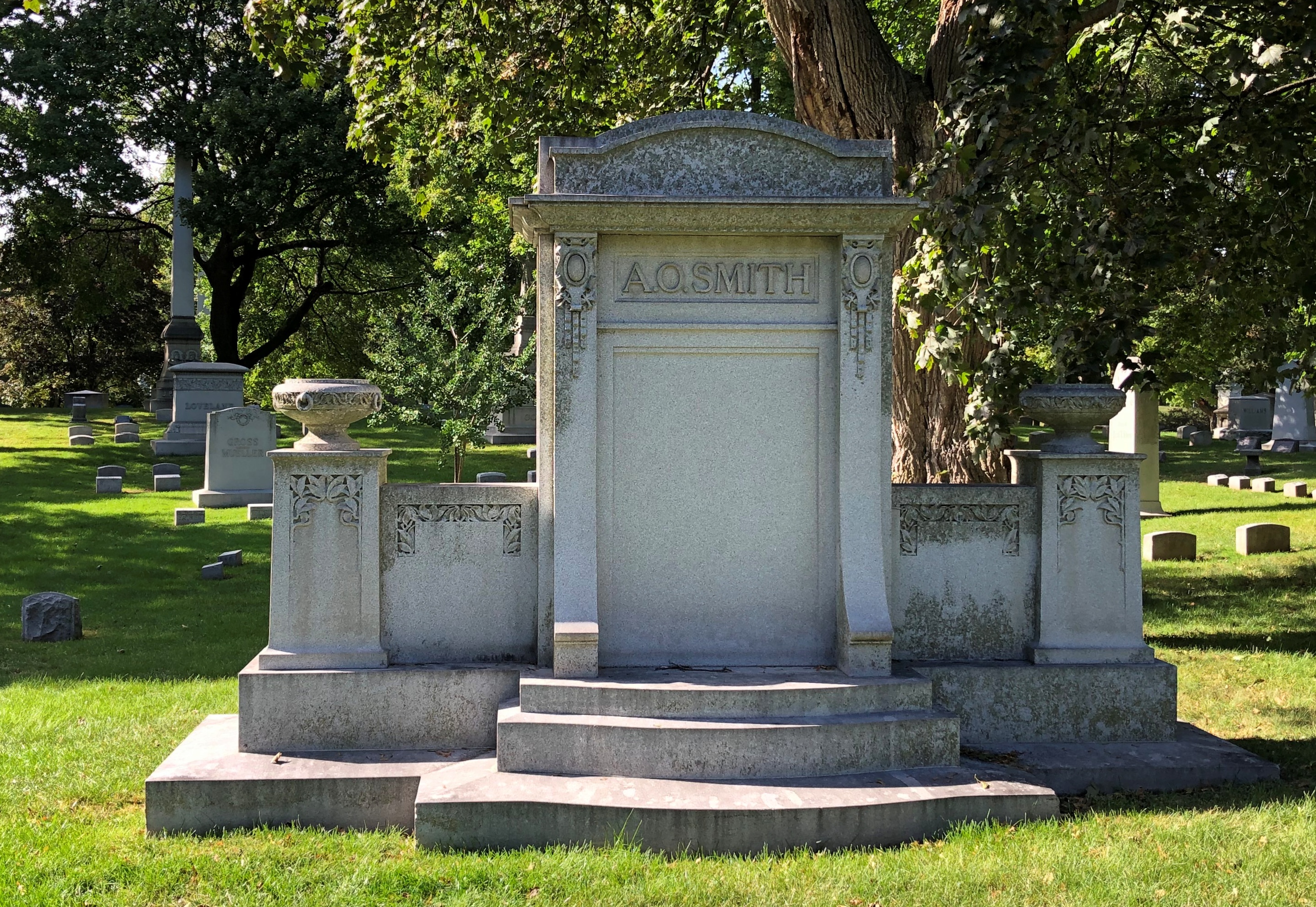
I chanced across the stone memorializing company founder A.O. Smith.
Forest Home Cemetery & Arboretum, Milwaukee

As an industrial concern, A.O. Smith has experienced an interesting trajectory. Over the years, it has made bicycle parts, steel vehicle frames, bomb casings and other munitions for the World Wars, brewery tanks, water heaters, air conditioning components, boilers and more. It’s still headquartered in Milwaukee.

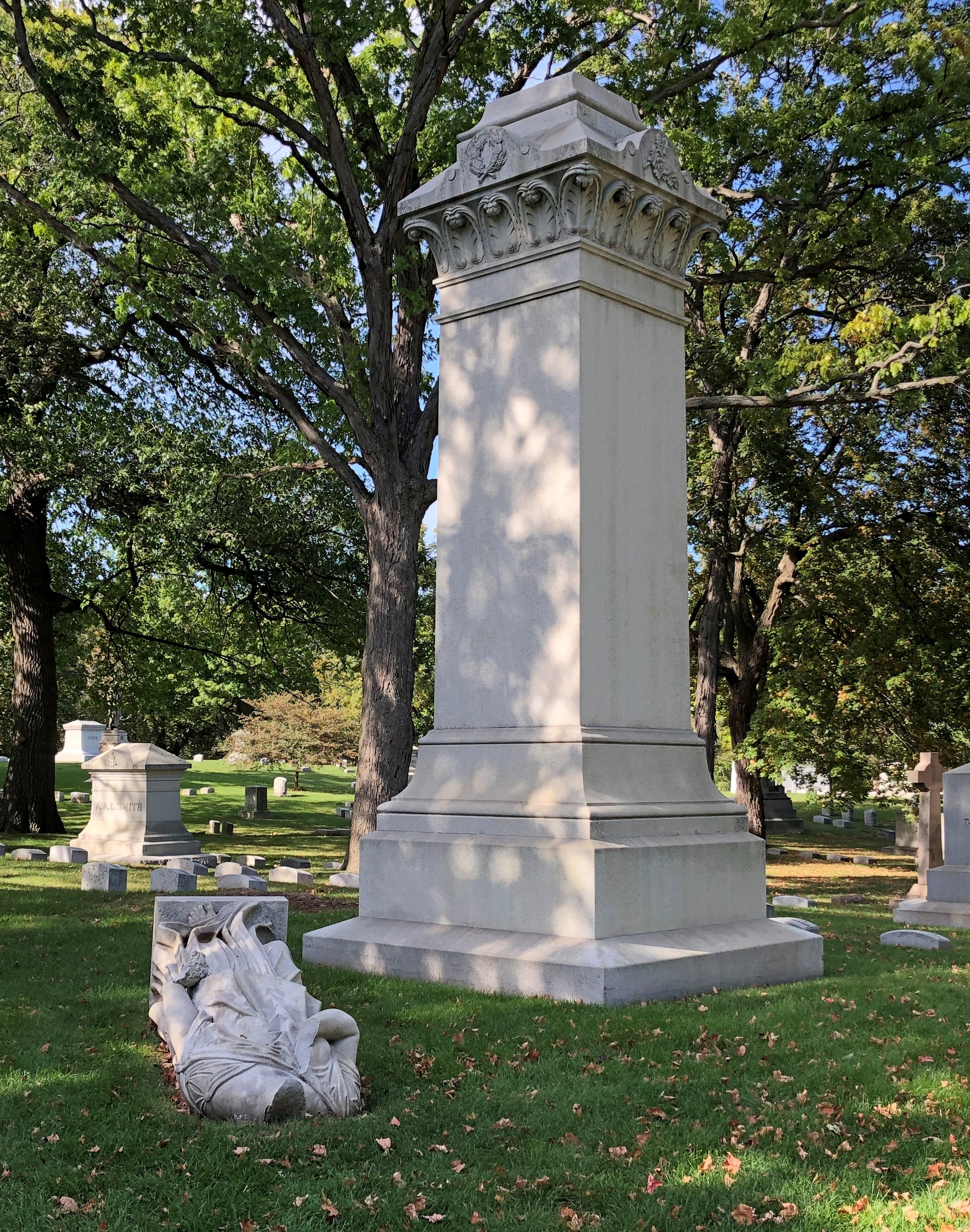
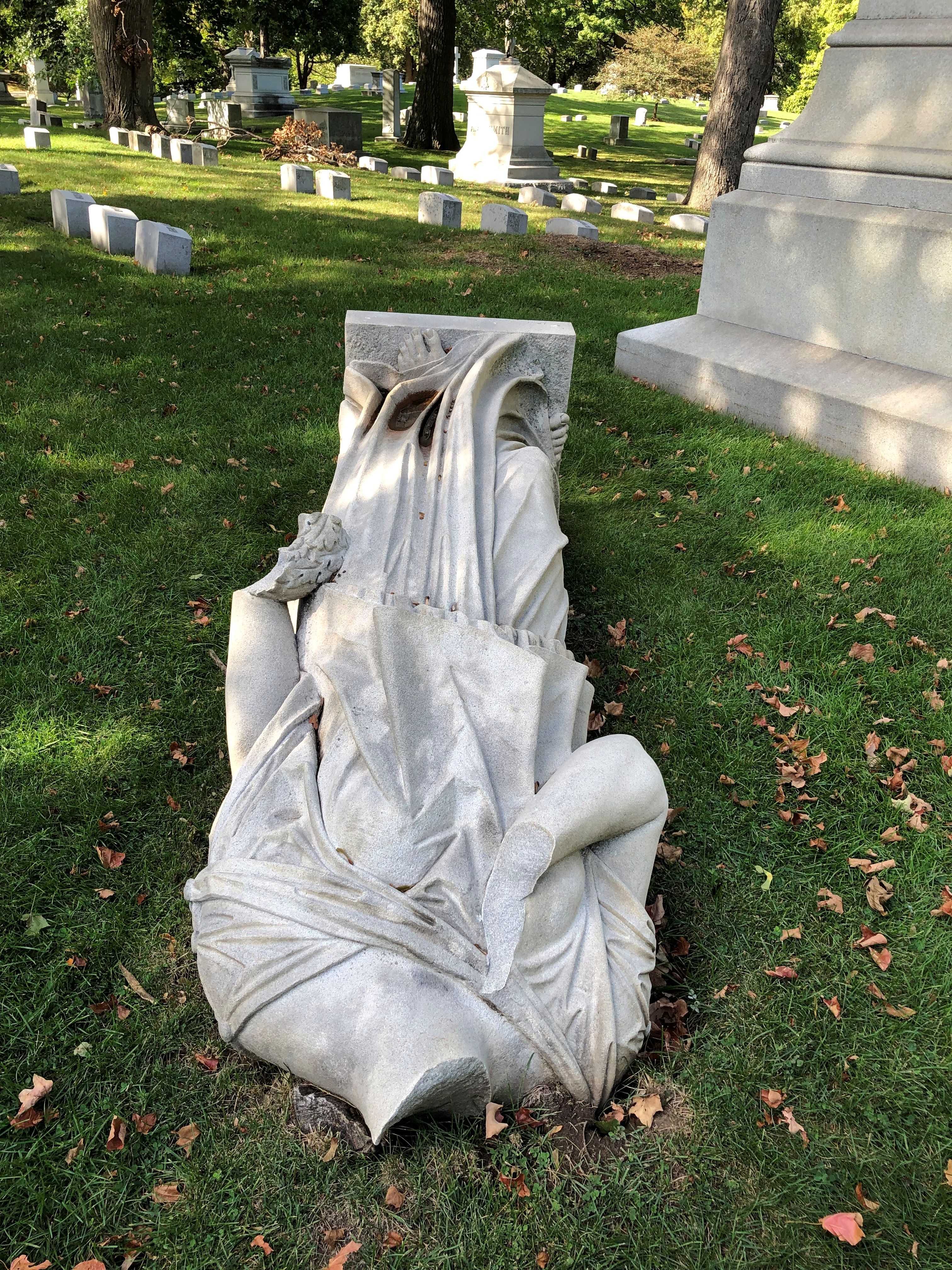
We noticed that the statue on top of the memorial of one Emil Schneider had toppled to the ground at some point recently.Forest Home Cemetery & Arboretum, Milwaukee

The head and hands are missing. Go figure.
Forest Home Cemetery & Arboretum, Milwaukee

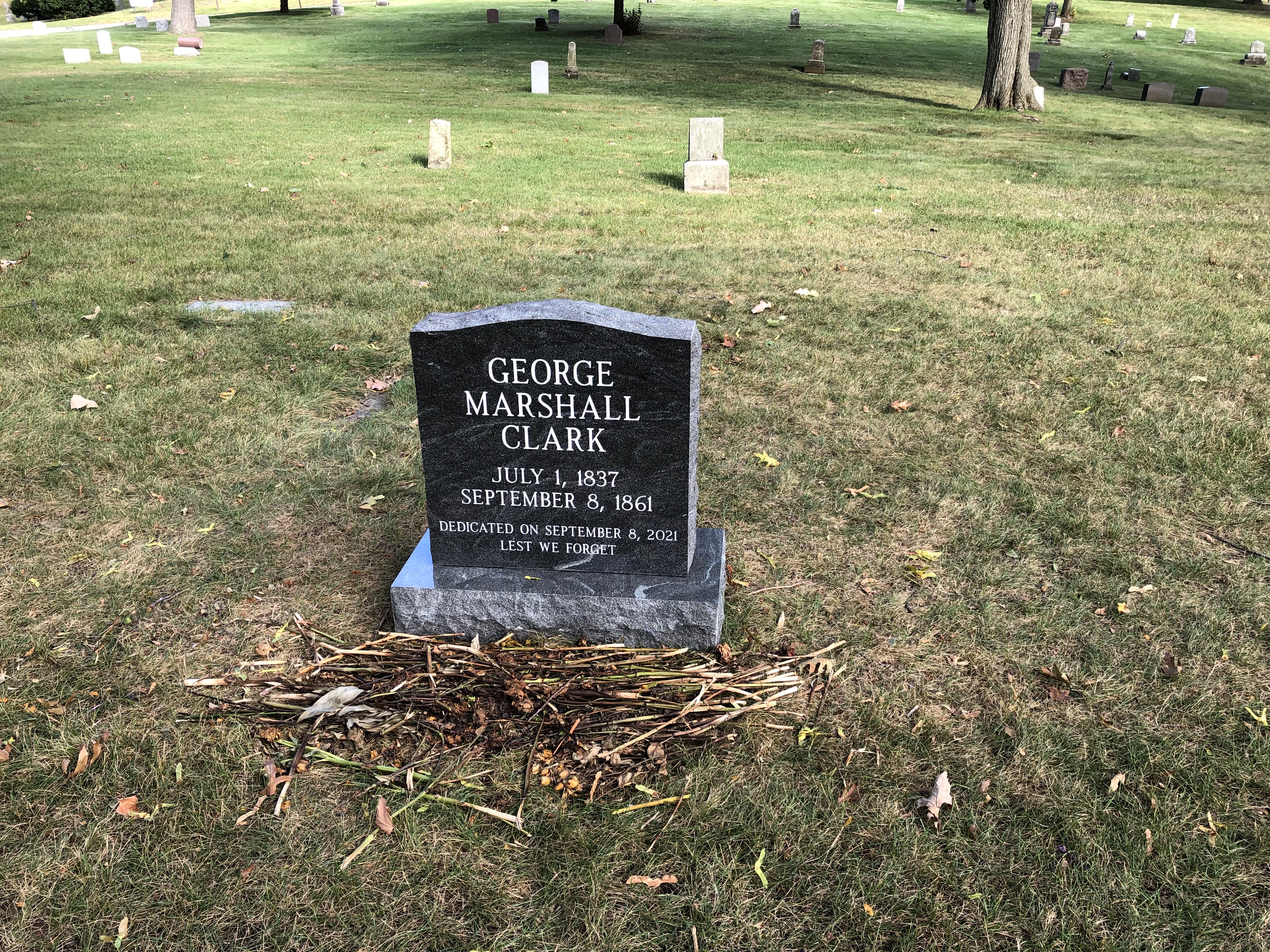
Toward the end of our walk, we noticed George Marshall Clark (1837-61), whose spanking new stone was dedicated only a few weeks ago, on the 160th anniversary of his lynching.Forest Home Cemetery & Arboretum, Milwaukee

As I said, there was only time to see a small fraction of the notable burials. Among the others listed, I’d heard of a few that we didn’t see, such sausage king Fred Usinger, Gen. Billy Mitchell and insurance executive Edmund Fitzgerald, who lent his name to the ore carrier that famously sunk in Lake Superior in 1975.

Many more stones memorialize interesting people I’d never heard of, including Increase Lapham, see above. The world is full of such. That’s one reason to visit cemeteries, or at least those with useful guidebooks.

A selection, including slightly edited text provided by the guide:

Harrison C. Hobart (1815-1902). Union Gen. Hobart was captured at Chickamauga. Along with two other officers, he devised a plan to dig an escape tunnel, working in secret for months until 109 prisoners crawled to freedom.

Christopher L. Sholes (1819-90). Inventor of the QWERTY keyboard typewriter.
Georgia Green Stebbins (1846-1921). Stebbins was the keeper of the North Point Lighthouse for 33 years. Her father, Daniel Green, initially held the job, but was in ill health, so Stebbins unofficially performed his duties for seven years before being appointed to the position.

Xay Dang Xiong (1943-2018). Xiong was a Hmong veteran from Laos who risked his life in secrecy working with the CIA during the Vietnam War. He spent 16 years in the Royal Lao Army fighting in numerous battles while commanding 4,500 troops… Col. Xiong received a full military burial.
Carl Zeidler (1908-42). Elected mayor of Milwaukee in 1940, Zeidler requested a leave from his duties in 1942 to fight in WWII. He died six months later when his ship, the USS LaSalle, was torpedoed and everyone on board perished. Because his remains were never recovered, he was memorialized with a cenotaph. (His brother Frank Zeidler (1912-2006), three-term socialist mayor of the city, is also in the cemetery.)