Apollo 12 & Artemis 3 & Europa Clipper

Just today I thought, it’s almost the 50th anniversary of Apollo 12, isn’t it? So I checked. Yes. The launch, best known for lightning striking the Saturn V seconds into the flight, was 50 years ago today. It was fitting to celebrate Apollo 11 this year, but the other missions deserve a mention (and yet, I forgot Apollo 10).

It was a Saturday morning, so instead of cartoons — which is what I usually watched — I watched the launch. I didn’t think it was any less great simply for being the second try at a manned landing on the Moon. This video is roughly what I would have seen — minus any color at all — on our black-and-white TV, though it’s the raw feed to London. T-minus zero is at nearly 22 minutes into the video.

I remember the primitive animation that kicked in during all of the launches when the rocket was high enough. In the case of Apollo 12, that was after the rocket disappeared into the clouds, which was pretty soon. I also remember thinking about the fate of the cameras positioned right under the rocket during the launch. Were they completely destroyed, as you’d think, or shielded in some clever way?

Now I know: “The challenge of placing cameras under the F-1 engines was a team effort,” Space News says about the Apollo 8 launch, but the cameras — 37 and 39 — were there for each later launch.

“It included special help from Corning Glass to produce a port that would survive conditions worse than being on the sun. A thick cylinder of steel bolted into the Pad A concrete reinforcement was also built to hold the cameras.

“The project was accomplished successfully in a few weeks with only one problem: the ports had to be replaced for every launch. The black ceramic on the adjacent flame deflector vaporized and coated the surface – after they had done their job of providing a view like no other.”

Apollo 12 was eventful besides being hit by lightning — for the flawless LM landing on the Moon, the examination of Surveyor 3 by the moonwalkers, the reported camaraderie of the crew (as ably dramatized in From the Earth to the Moon) and the long-lasting package of experiments left behind.

A short video history of the flight by NASA.

Naturally, all this reading about space led me to recent news about the Artemis program. I hadn’t heard that NASA actually has a year in mind for a manned — make that woman- and manned — Artemis 3 landing near the south pole of the Moon, namely 2024.

Oh, really? The excited eight-year-old that watched the Apollo 12 launch wants it to be so. The late middle-aged man I am now is a little more skeptical. Has full funding for such a venture even been appropriated?

Besides, as I understand it, two missions on an as-yet unflown giant rocket — the dully named Space Launch System — have to go perfectly before a Moon landing: one without a crew, one with a crew, but not to the surface of the Moon. Well, maybe, is all I can say.

Except I can also say that Artemis is a good solid name for it. Sister of Apollo. None of this focus-group-style naming, which produces namby-pamby names like New Horizons or InSight. Orion is likewise a good choice for the capsule, since he hunted with Artemis — both were hunters — in Crete.

More likely to launch in the mid-2020s is Europa Clipper. That’s a good name, too. It has a very specific mission: find out more about the watery world of Europa.

“Scientists are almost certain that hidden beneath the icy surface of Europa is a saltwater ocean thought to contain about twice as much water as Earth’s global ocean,” NASA says. “It may be the most promising place in our solar system to find present-day environments suitable for some form of life beyond Earth.

“Slightly smaller than Earth’s Moon, Europa’s water-ice surface is crisscrossed by long, linear fractures, cracks, ridges and bands. The moon’s ice shell is probably 10 to 15 miles (15 to 25 kilometers) thick, beneath which the ocean is estimated to be 40 to 100 miles (60 to 150 kilometers) deep. Like Earth, Europa is thought to also contain a rocky mantle and iron core.”

The Ocean of Europa. Sounds like the title of story in a SF pulp from a bygone period. The 21st-century reality of exploring Europa is cooler by far.
The Witch of November 2019

It hasn’t just been cold for November since Monday, temps have been reaching into the realm of damn cold, briefly dropping below zero Fahrenheit early this morning, or maybe into imaginary numbers. Later in the day, it reached a balmy 25 degrees or so. Bah.

It’s a major early winter weather event, now gripping much of the nation. Guess that means I’m a part of something larger than myself. They say that’s important for self-esteem, or happiness, or something, but I don’t think weather events count toward that sense of belonging.

Also, northern Illinois got about three inches of snow on Monday. Not the first time I’ve seen Veterans Day-Armistice Day snow, but more fell than in 2013. At least we didn’t get hit with something along the lines of the Armistice Day blizzard of 1940 or the Big Blow of 1913, both of which showed the power of the Witch of November.

The Illinois Holocaust Museum & Education Center

The first time I ever heard of anyone denying the reality of the Holocaust was when I did an article about the fact that there were such people for my student newspaper in college, ca. 1980. I interviewed a VU history professor about it — a professor who would later teach a semester-long Holocaust seminar that I took. I’d never heard of such a thing. Who would say such a thing?

This venomous wanker, for one, who was too extreme for the John Birch Society, and who libeled William F. Buckley. For his part, Buckley said that the wanker (not his word) epitomized “the fever swamps of the crazed right.”

I don’t remember whether the wanker’s name came up in the interview, but the name of his publishing company did, which I remember after all these years. Back then, it produced books and pamphlets. Now the same ideas are spread by social media posts that sprout like poisonous toadstools.

I remembered all that when I visited the Illinois Holocaust Museum & Education Center on Sunday.
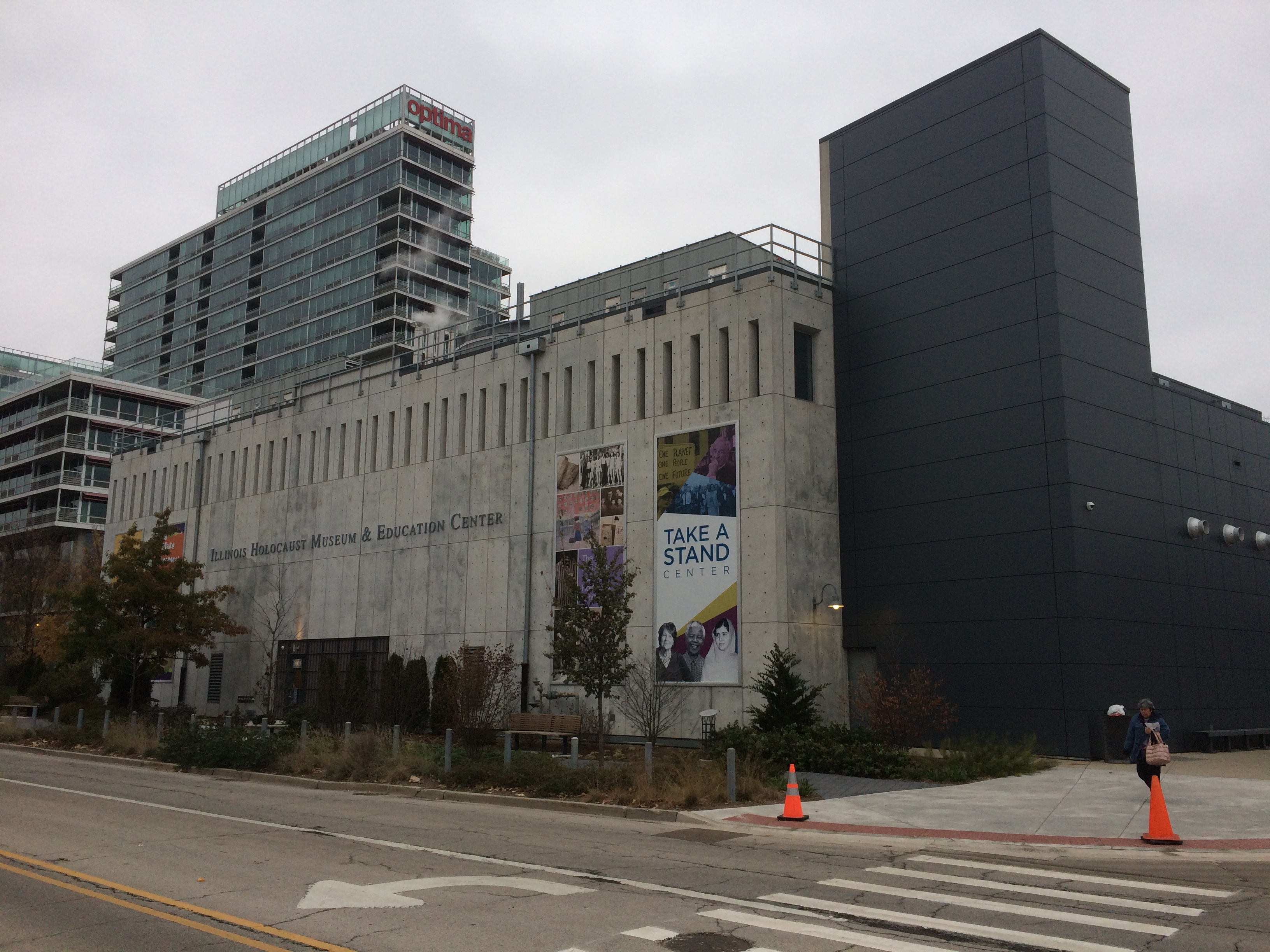
The Illinois Holocaust Museum & Education CenterI also remembered news reports in 1978 about Neo-Nazis who wanted to march in Skokie, which had a sizable population of Holocaust survivors. The prospect of such a march inspired the creation of the organization, the Holocaust Memorial Foundation of Illinois, that would eventually (2009) open the museum, which is in Skokie.

The motive for founding such a museum is clear enough: tell the story, show the documentation, put the testimony out for all too see — or do nothing while evil people lie about what happened.

I arrived just in time to be admitted, at about 4 in the afternoon, under overcast skies, so it was hard to get a good look at the building. I did not, for example, notice that roughly half of the structure is black — including the entrance — and other other half white — including the exit. The entrance/exit can be seen in this photo, taken in the light of a June day. The museum is a work by Chicago architect Stanley Tigerman, who died just this year.
I only had an hour, which wasn’t enough. I need to go back sometime. The Holocaust exhibit takes up most of the first floor, which is where I spent the hour. The exhibit winds its way through a number of small rooms and alcoves, running more-or-less chronologically from a description of Jewish life in Europe in the early 20th century to the rise of the Nazis and the increasingly harsh repressions of that regime, eventually to become industrialized mass murder.
The museum acknowledges that the Nazis murdered many other people, but its focus is on the genocide of European Jews. Much of the story is familiar, at least to me, but for those less familiar with the history, the museum does a good job of walking visitors through the steps toward the Final Solution.

The many documents on display fascinated me as much as anything else. Germany, Nazi or otherwise, is a document-happy country, and there they were: letters, notes, passports, visas, orders, lists, ID papers, records of various kinds, and on and on. Now just paper on display, but some of them vitally important to the people who originally had them; probably life or death, in the case of exit papers.

The many photos were haunting. Some were of survivors, before the ordeal began, or when things were bad but not as bad as they would be. Others were of the doomed. Yet others were those whose fate is unclear, but who likely perished. The museum’s videos were short and to the point, and often featuring testimony from survivors who later lived in the Chicago area, the ranks of whom must now be thinning rapidly. They told of uncertainty, suffering, everyday life in the ghettos, the struggle to escape, efforts to resist against impossible odds.

By the time the museum announced that it was closing, I’d made through the early Nazi years and the beginning of the war and to the first displays concerning the Final Solution, but I could have easily spent more time.

From that point in the museum, finding the exit turned out to be more of a challenge than I’d have thought. Tigerman and interior designer Yitzchak Mais made a little maze-like, a little disorienting, which must have been on purpose. I’ve read similar things about the U.S. Holocaust Memorial Museum in Washington, DC. I navigated my way out using the red-letter EXIT signs mandated by fire codes.

Armistice Day 2019

Not quite a year ago — after November 11 last year — we saw They Shall Not Grow Old in a movie theater. I was skeptical about the colorization of WWI, but came away convinced that Peter Jackson and his talented technical team had done a superb job of it. More than colorizing, but also adding appropriate sound and making the speed of the film more natural to our eyes.

They shall grow not old, as we that are left grow old:
Age shall not weary them, nor the years condemn.
At the going down of the sun and in the morning
We will remember them.

— Laurence Binyon (1914)

The Branson Scenic Railway

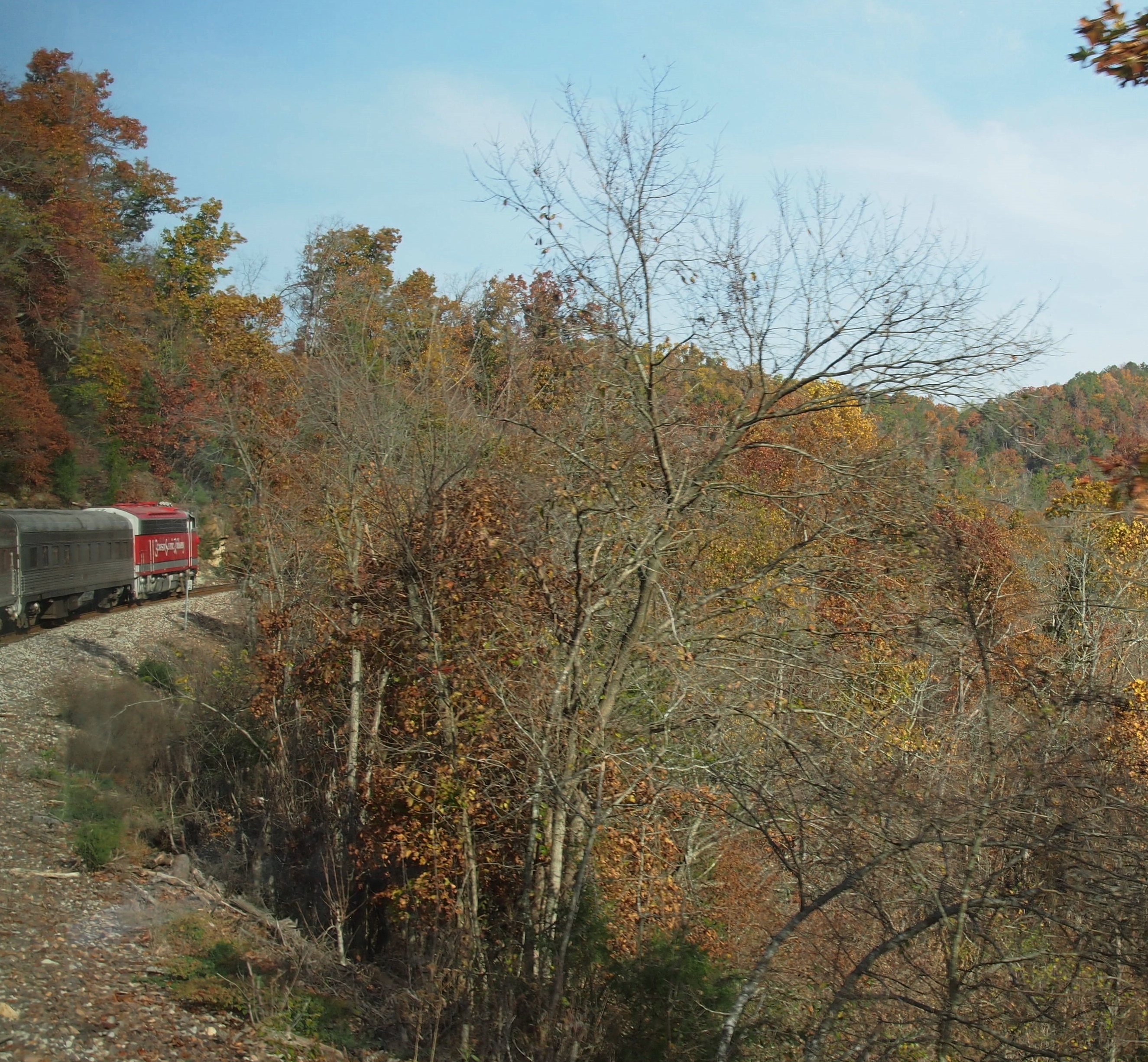
During my visit to Branson in November 2012, I took an excursion on the Branson Scenic Railway. Nothing like hopping aboard a pleasure train pulled by mid-century locomotives.
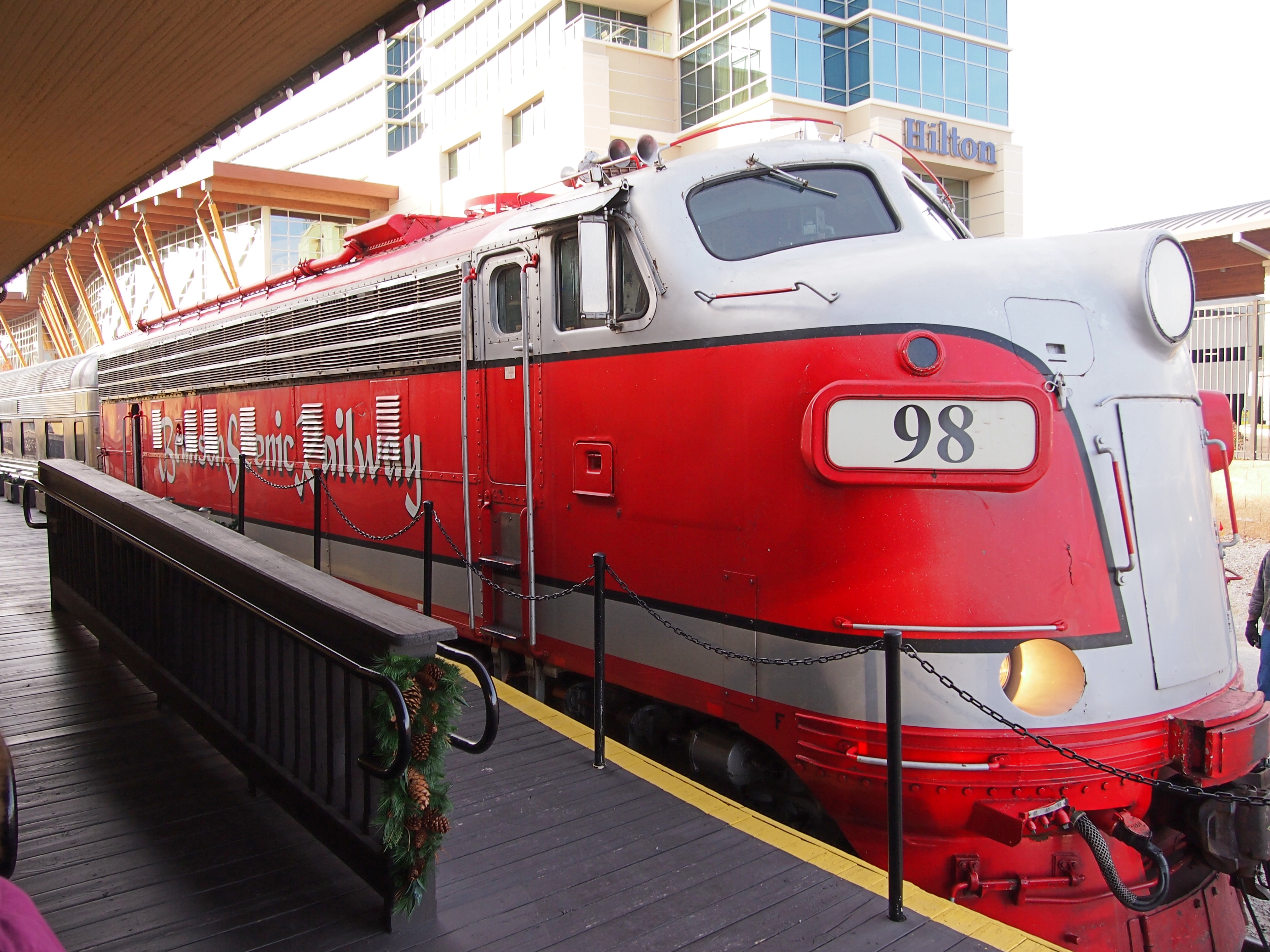
Branson Scenic RailwaySpecifically, according to the railroad’s web site, “BSRX 98, Locomotive, 1951 EMD F9PH, rebuilt 1981, has HEP (Formerly B&O, then MARC #83).” I looked up HEP, at least: head-end power. Nice to know that the locomotive has hep.

The web site further explains: “Traveling on a working commercial railroad line, the train’s direction of travel… is determined by the Missouri and Northern Arkansas Railroad just prior to departure. At that time, the train will go either north or south. The northern route goes as far as Galena, Missouri, to the James River Valley; and the southern route extends into Arkansas to the Barren Fork Trestle.”

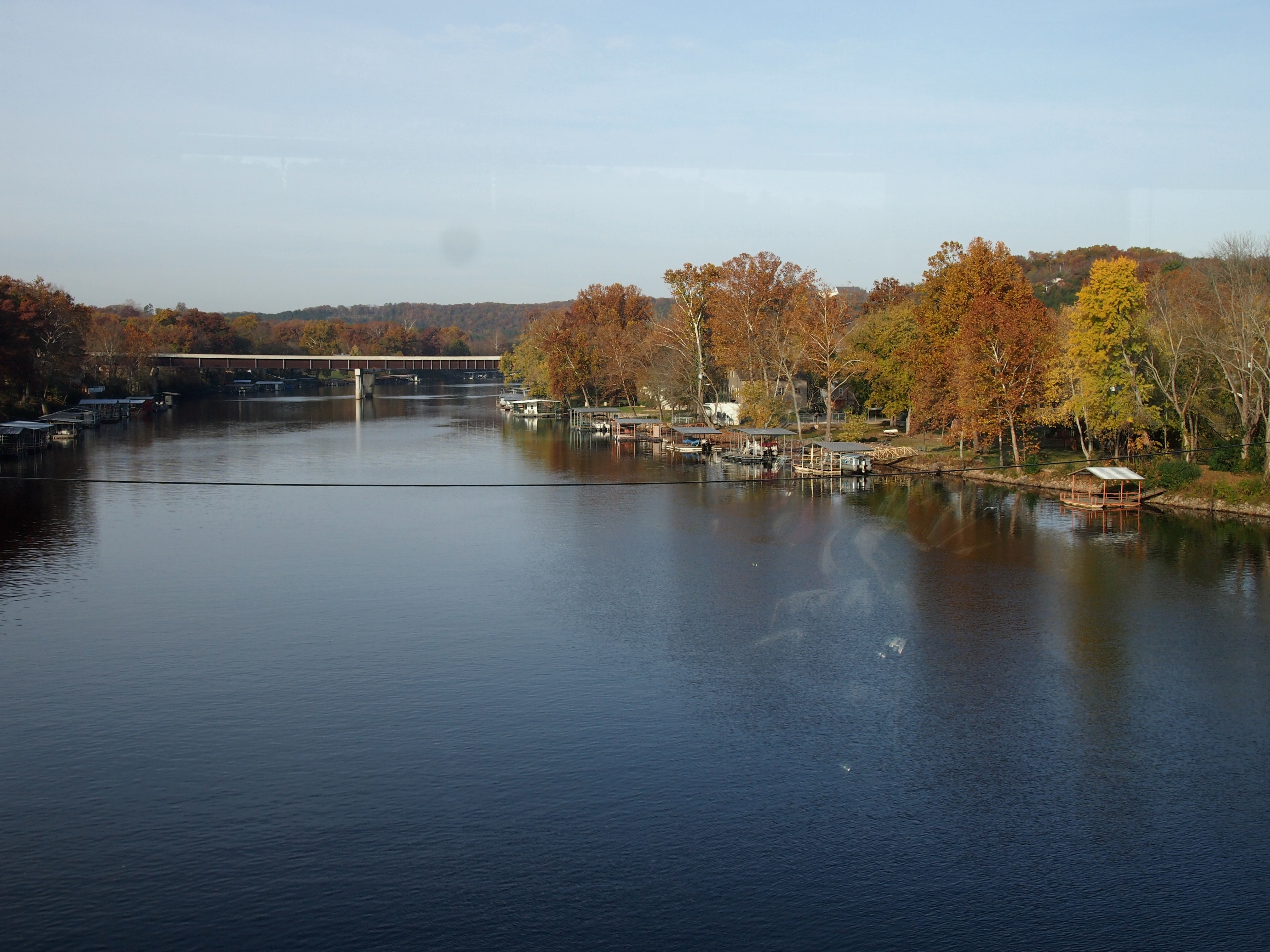
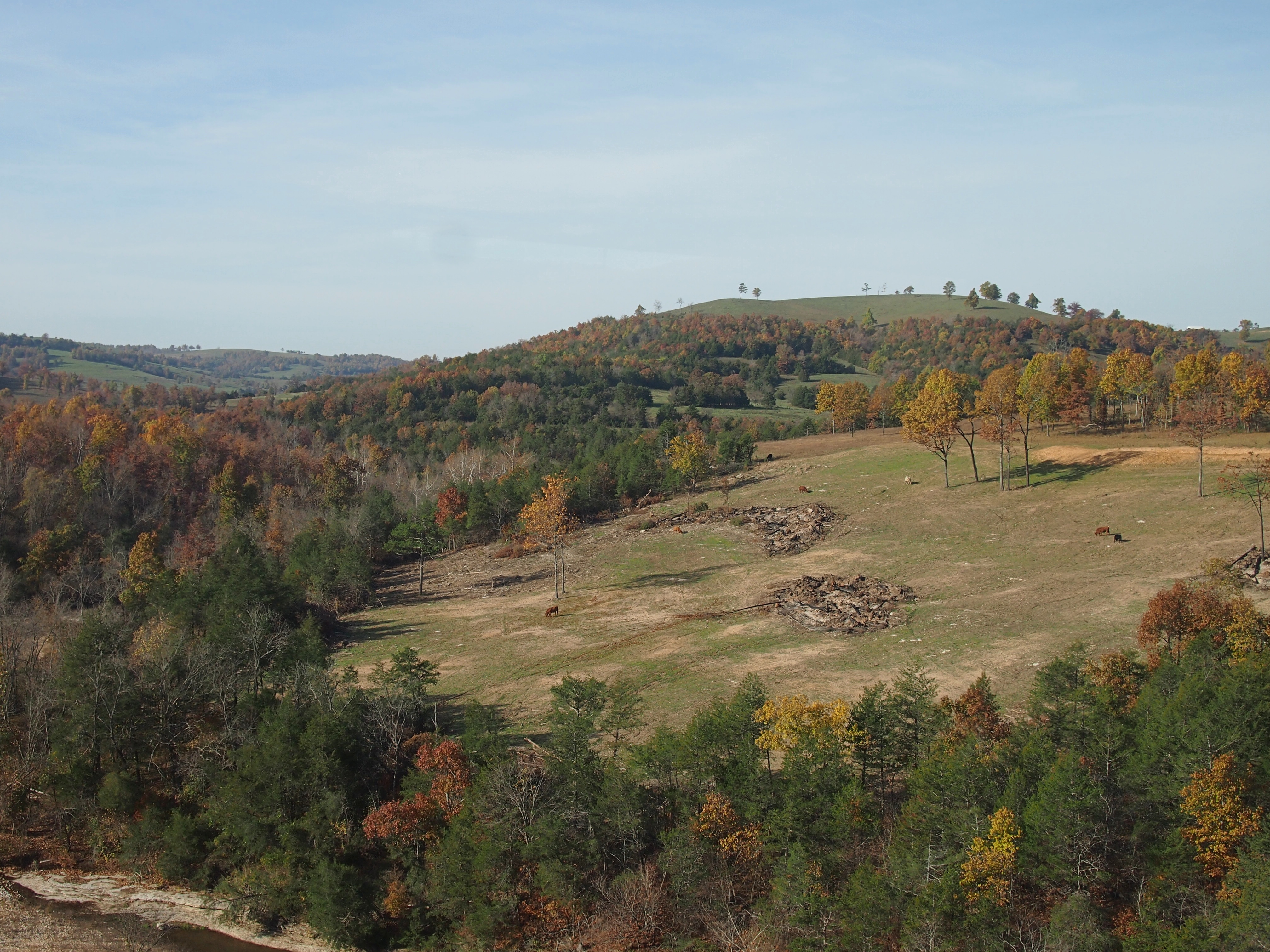
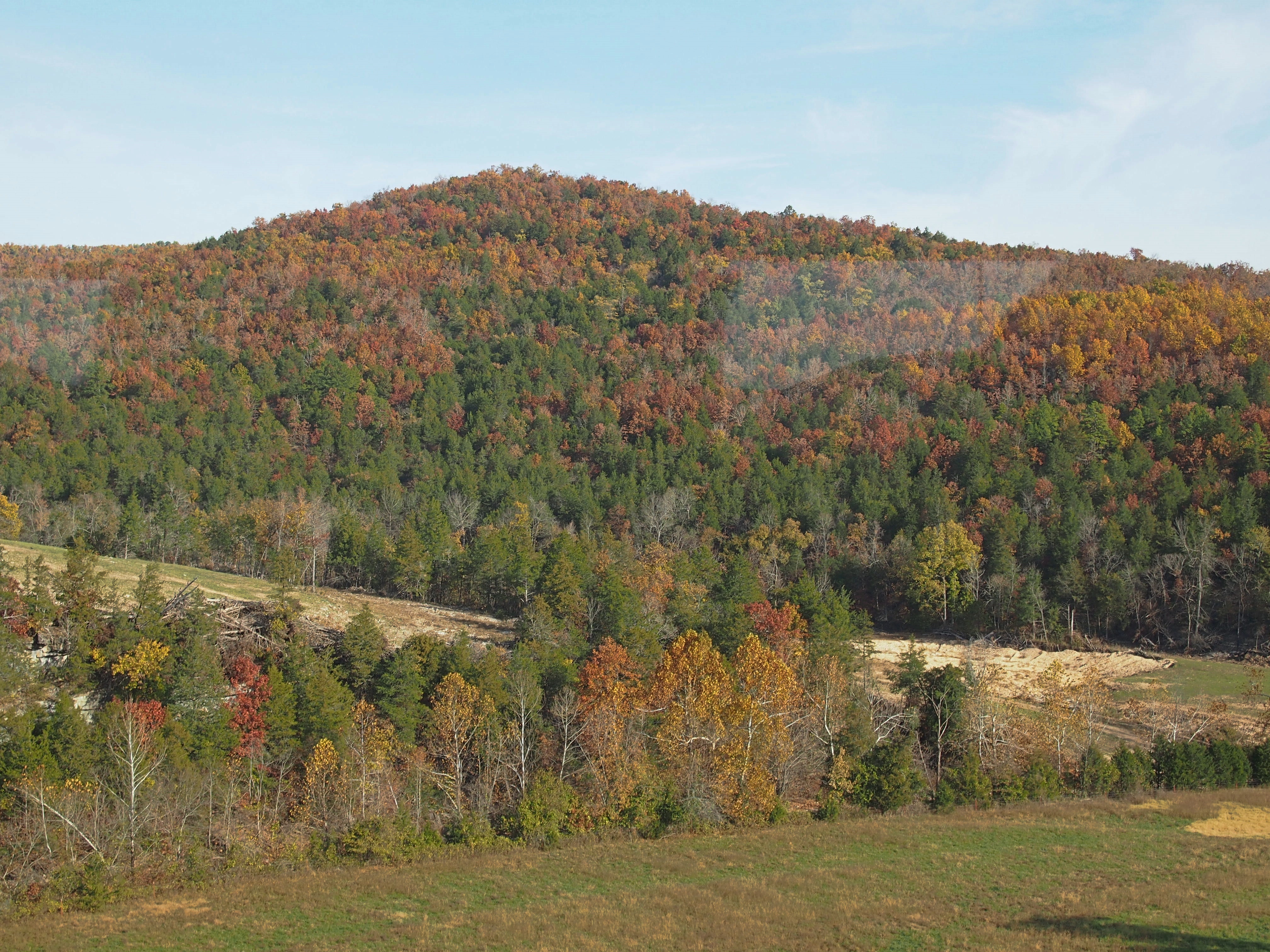
We went south into Arkansas, which isn’t actually that far from Branson, across water and through hills and woods and tunnels, just as the leaves were turning nicely.Near Branson Mo

Near Branson MoNear Branson MoNear Branson Mo“The construction of the White River Railway in the early 1900s made the area accessible for tourists and is largely responsible for the development of Branson and the Ozarks as a tourism destination… The route crosses the White River in Branson, now Lake Taneycomo, and then runs along side of it after taking a fifty-mile short cut over the Ozark Mountains.

“This was part of the Missouri Pacific Railroad between Kansas City, Missouri, and Little Rock, Arkansas. It became a part of the Union Pacific after the UP bought the MOPAC. The Missouri and Northern Arkansas Railroad now operates the line.

“In 1993, the Branson Scenic Railway was formed, and through a lease arrangement with the MNA, runs excursions through this historic route March through December.”

A train through the Alps it isn’t, but it’s scenic all the same.

Recent Eats

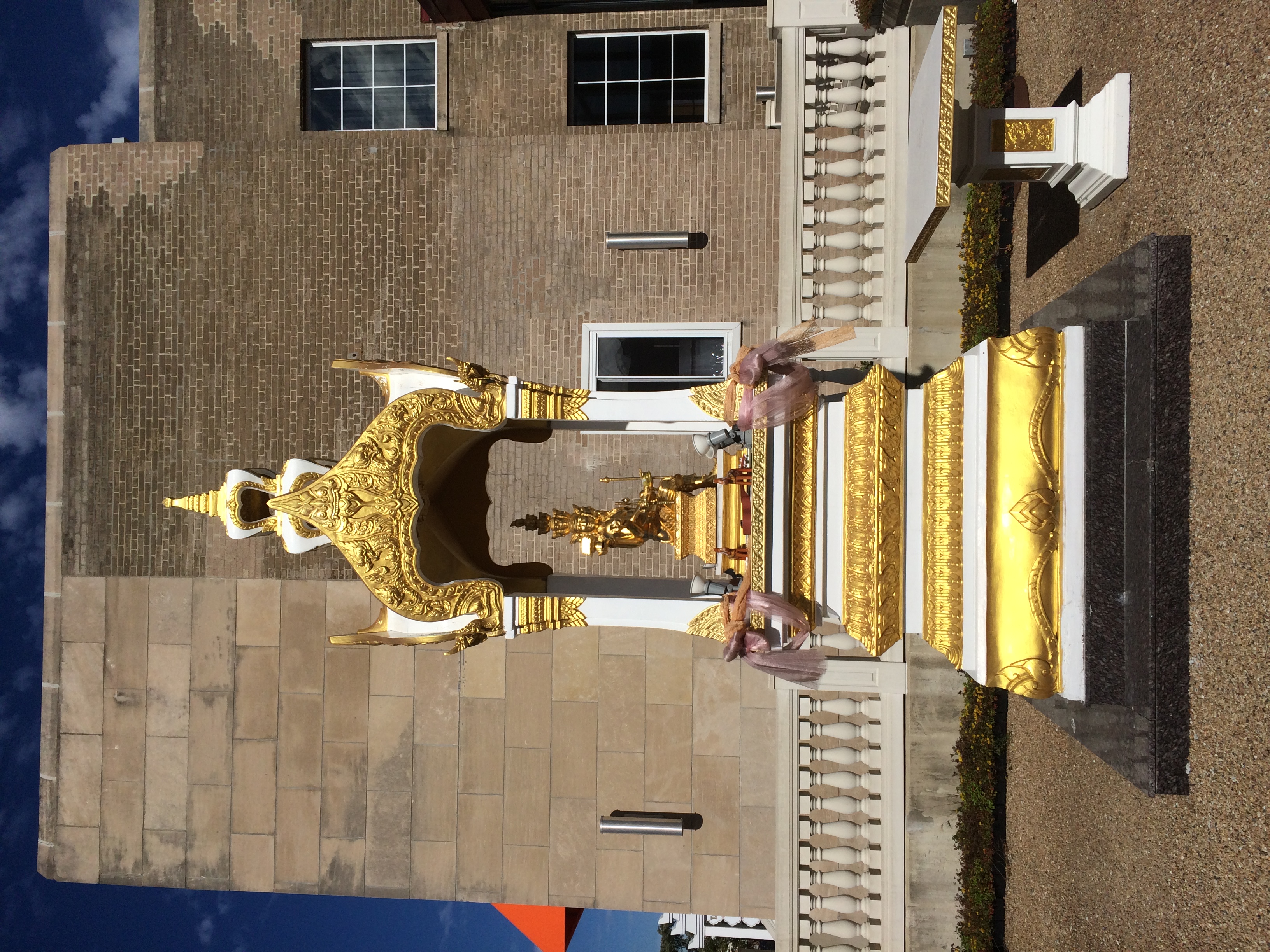
During Open House Chicago last month, we saw this.
Taste of Thai Town ChicagoNothing to do with the event. It’s a Thai shrine of some kind. Not sure whether it counts as a spirit house, but the building behind it (from this angle) is a Thai restaurant — Taste of Thai Town at 4461 N. Pulaski. Previously, the building housed a Chicago PD station. We ate lunch there and were well satisfied with the meal.

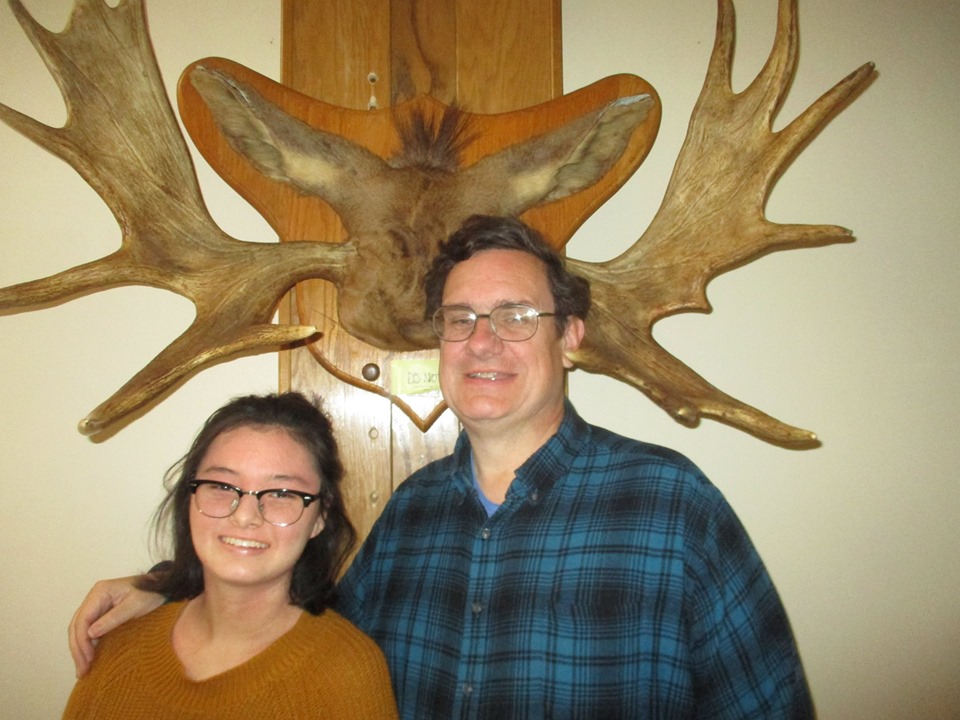
In Virginia last month, Ann and I ate at Moose’s by the Creek in Charlottesville. It’s a large diner, decorated with a couple of enormous moose heads, many antlers and other reminders of sizable members of the deer family. Had some good sandwiches there, and when I paid, the woman at the register — it might have been co-owner Melinda “Moose” Stargell herself — said she wanted to take our picture under a major pair of antlers.

For Moose’s by the Creek’s Facebook page. Lots of customers have their pictures there. She said we were free to download it for ourselves, so here it is.

Moose by the CreekI had to be careful not to bump up against any of those points. Moose’s by the Creek also gave us some stickers.

We had dinner the first evening in Richmond at Belmont Pizzeria in the Museum District, a pleasant old neighborhood not too far from VCU, so maybe students eat its pizza too. Mostly it was takeout, with the large kitchen completely visible from the ordering counter, but there were a few tables, so we sat down to eat as a parade of people came in to get their orders. It was a popular joint, full of wonderful smells, and when we got our pizza — which had shrimp on it — we found it to be wonderful too.

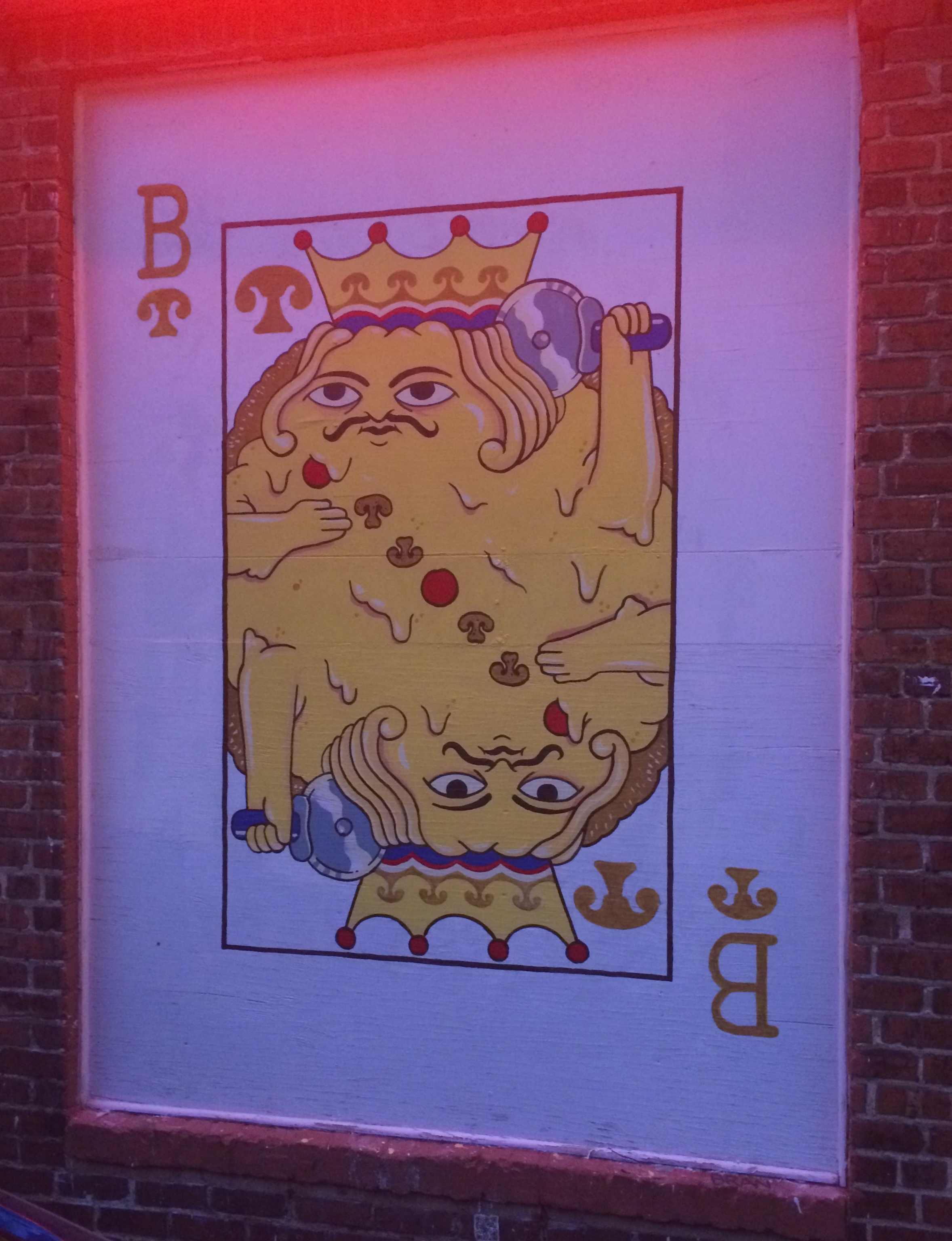
Belmont Pizzeria has a curious bit of wall art on the outside.

Belmont Pizzeria Richmond

Even without the art, it was the best meal I had in Virginia, though the hipster waffles were a close second and, as I said, Moose’s was good too.

Christ the King & Trinity United Methodist

Our visits during the 2019 Open House Chicago event on October 19 weren’t only to churches — just mostly. The opportunity was there.

In the mid-afternoon, we headed down to the Beverly neighborhood on the Southwest Side. Next year, no long drives between neighborhoods — we spent too much time jammed on the Kennedy Expressway, then the Dan Ryan Expressway. I should have known better. But the sites were worth it.

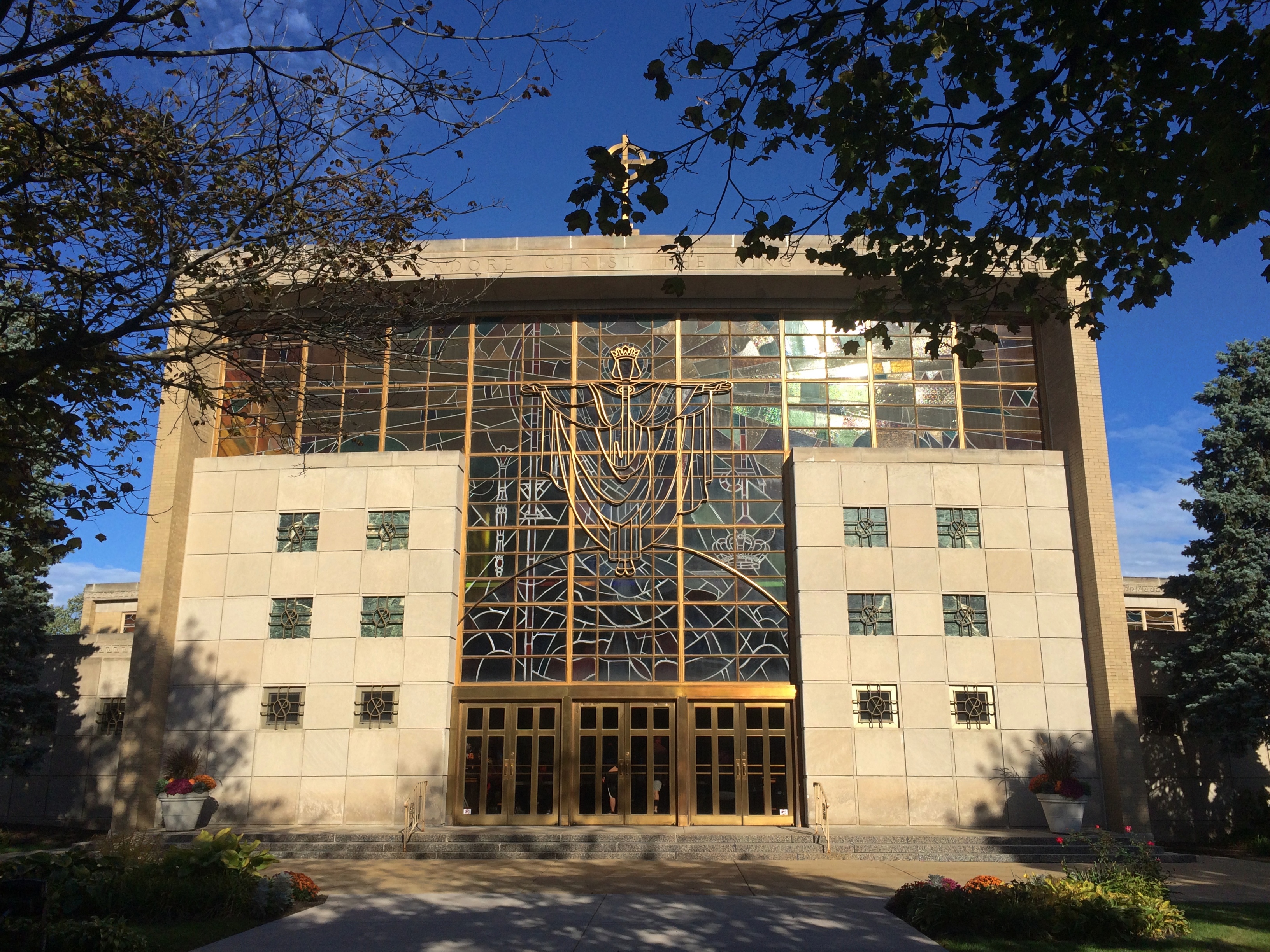
Eventually, we got to Beverly. First stop, Christ the King.Christ the King Beverly Chicago

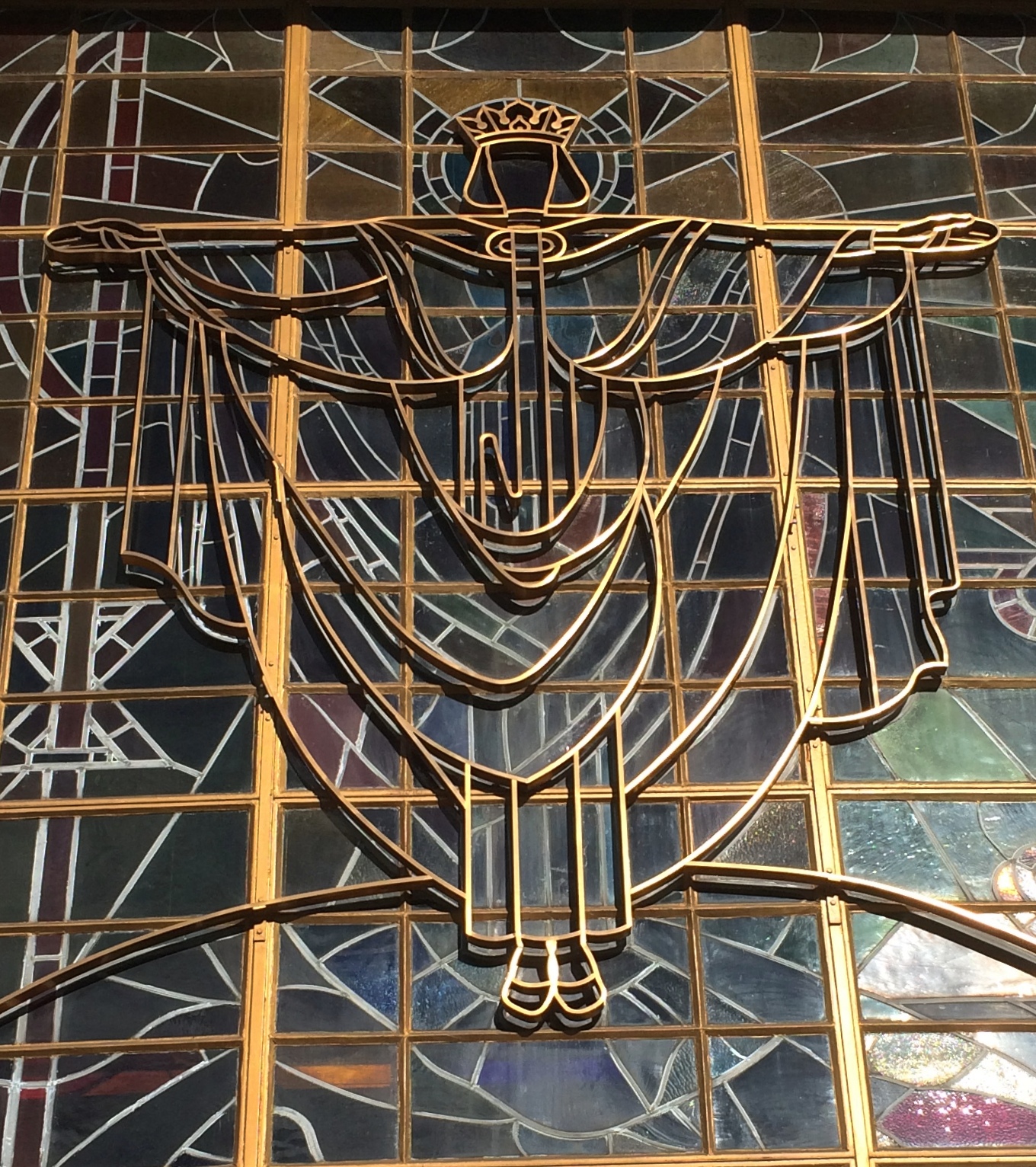
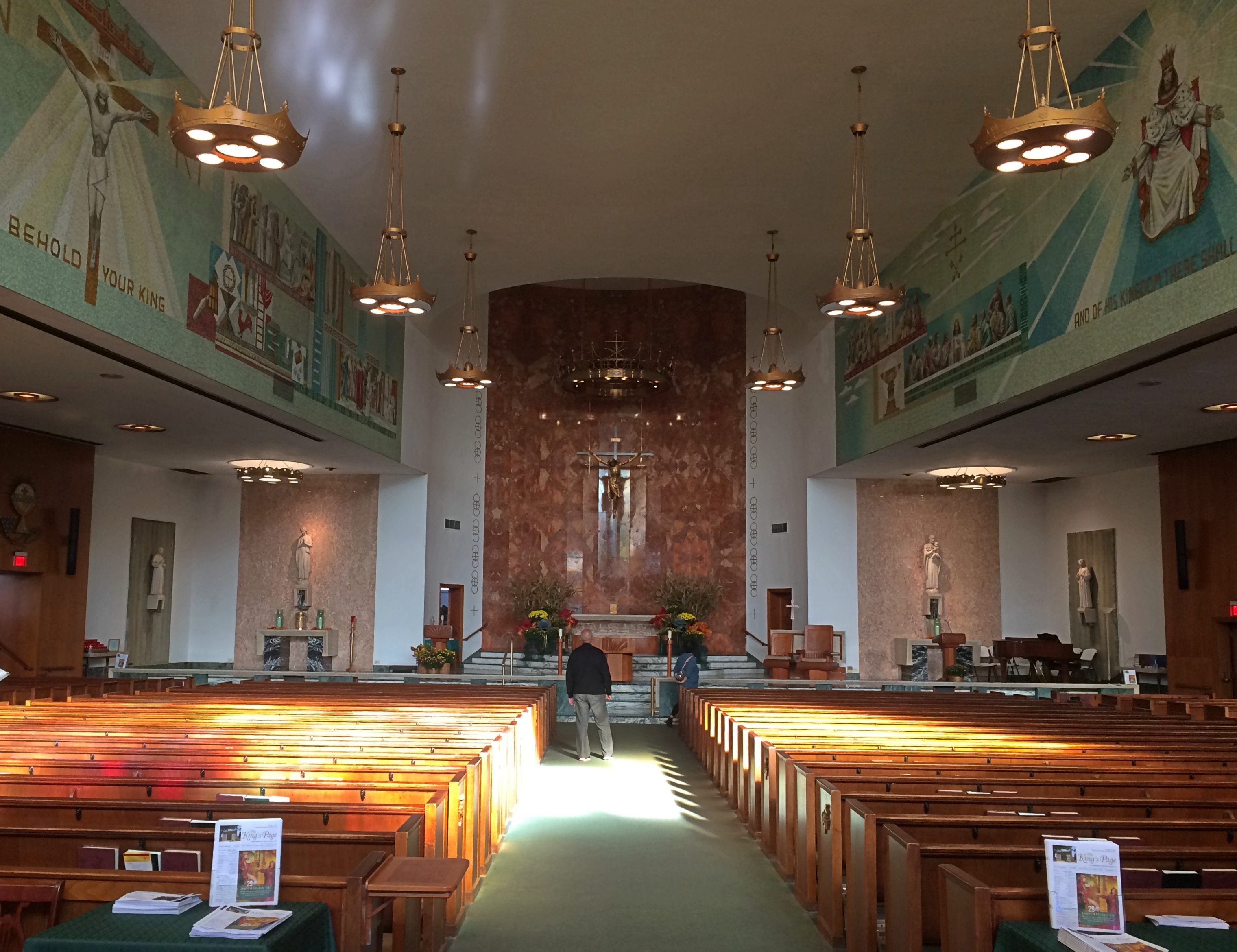
Christ the King Beverly ChicagoMidcentury Modern, with distinctive brass and glass, completed in 1955. Design by Fox & Fox, who are still in business.
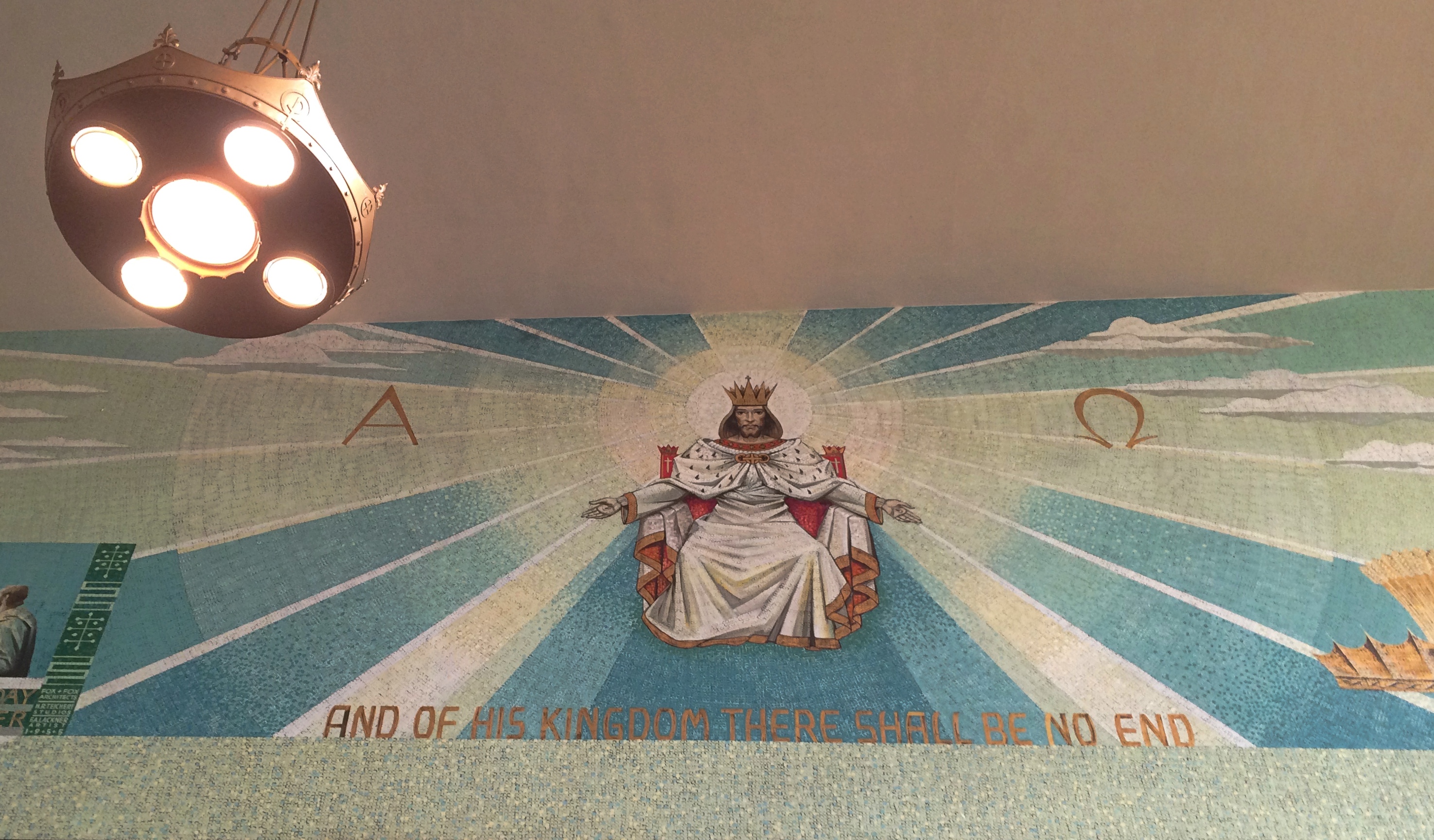
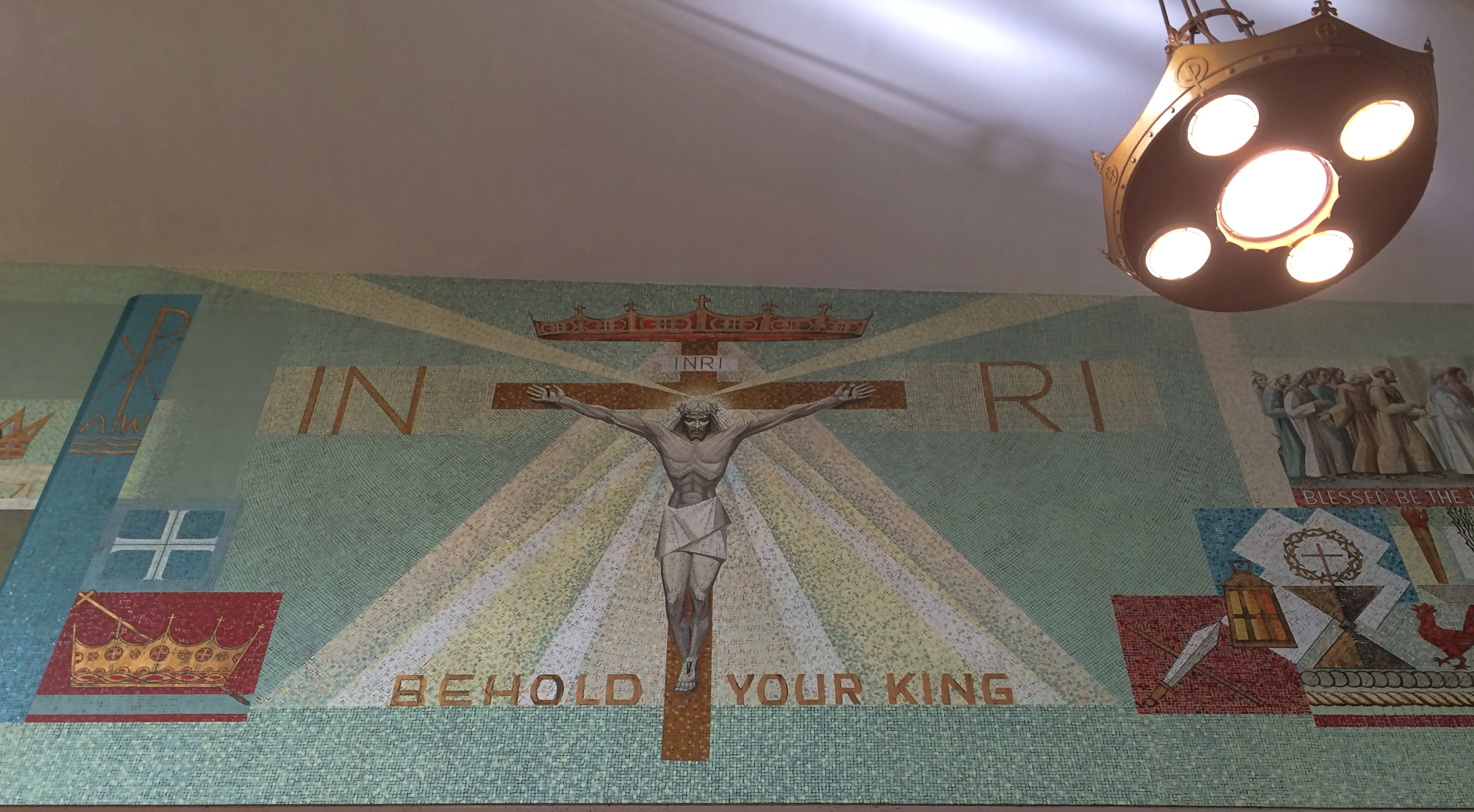
Christ the King Beverly ChicagoThe King of Kings indeed. Painted to look like a mosaic from the floor.
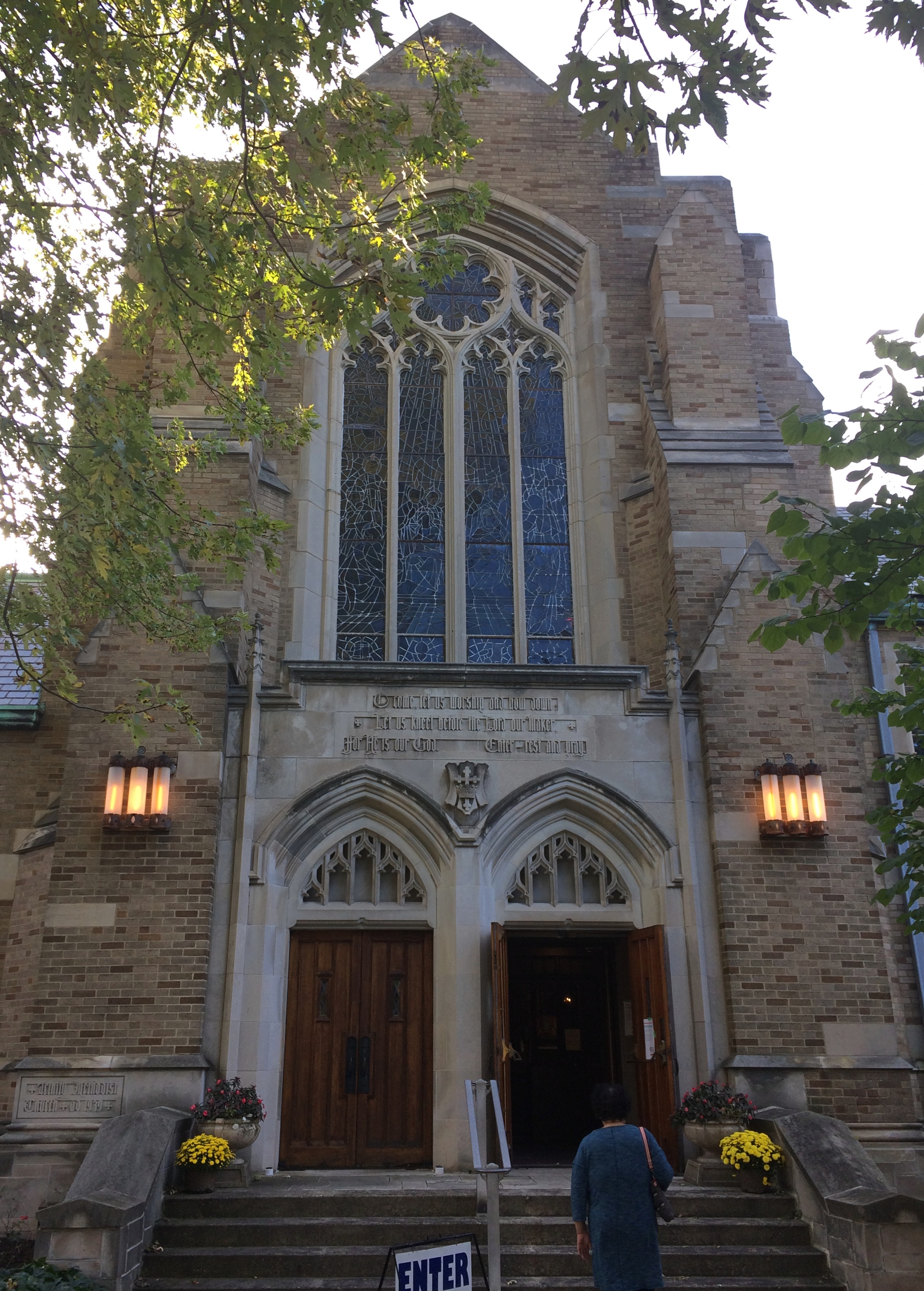
Christ the King Beverly ChicagoChrist the King Beverly ChicagoSome blocks to the south is Trinity United Methodist, designed by Ralph E. Stotzel and Edward F. Jansen.
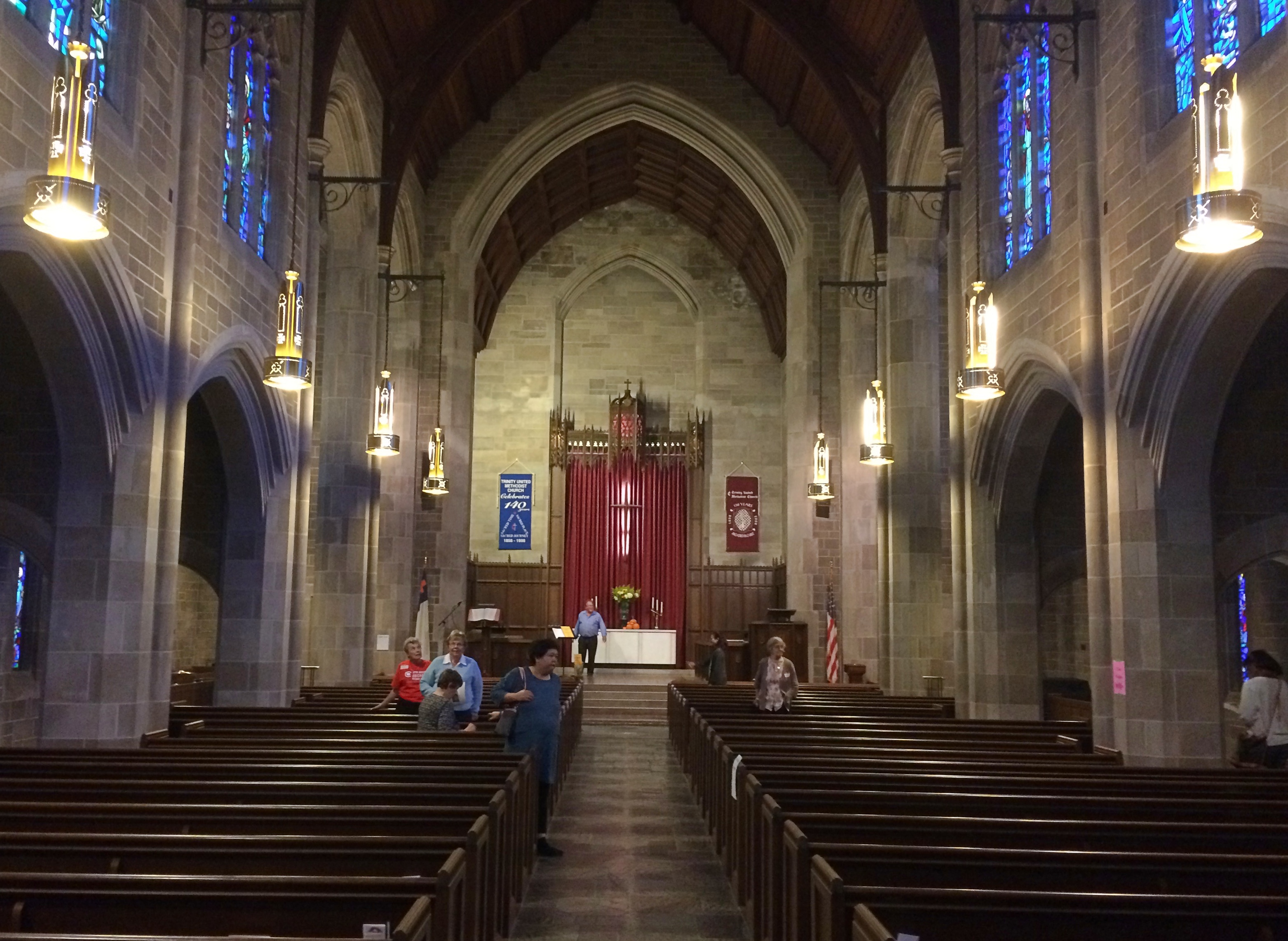
Trinity United Methodist Beverly Chicago“The present building is its 5th location, begun with the construction of the community house — the northern portion of the current building — in 1924. Construction of the Gothic sanctuary was delayed by the Great Depression, but it was completed in 1940,” says Open House.

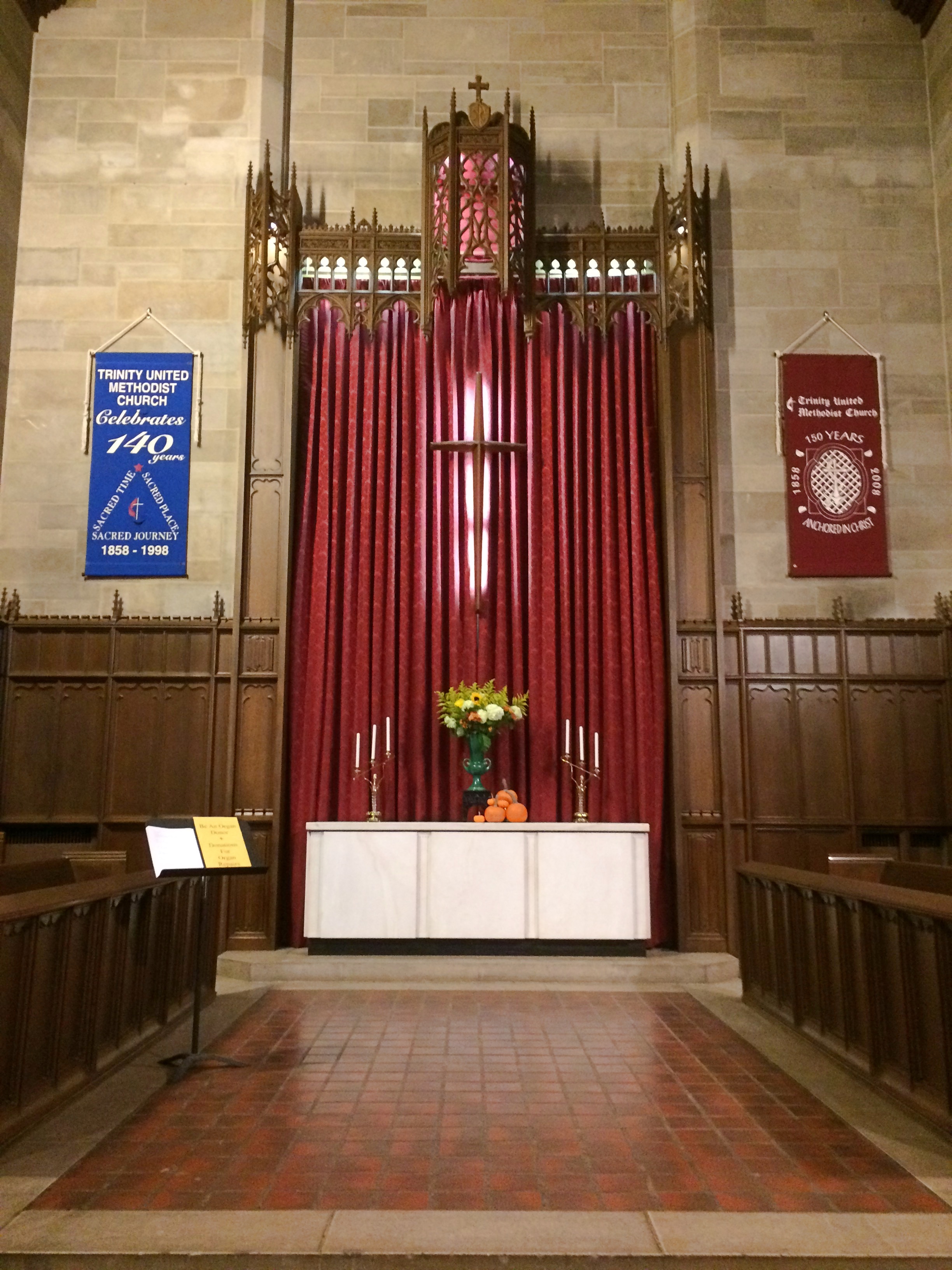
Trinity United Methodist Beverly Chicago

Trinity United Methodist Beverly ChicagoThe church also has a fine organ.

We heard it in action. According to the church, it is a Möller Pipe Organ, opus 8240, with three manuals and 26 ranks, installed in 1951. Apparently the M.P. Möller Organ Co. of Hagerstown, Md., was a busy organ-maker in its day.

St. Benedict the African

As a saint, Benedict the African (1526-89), or Benedict the Moor, has enjoyed longstanding popularity in Italy, Spain and Latin America, and is also the patron saint of African-Americans. I didn’t know any of that before we visited St. Benedict the African, a church in the Englewood neighborhood of Chicago, as part of Open House Chicago on October 19, but I was going to learn.

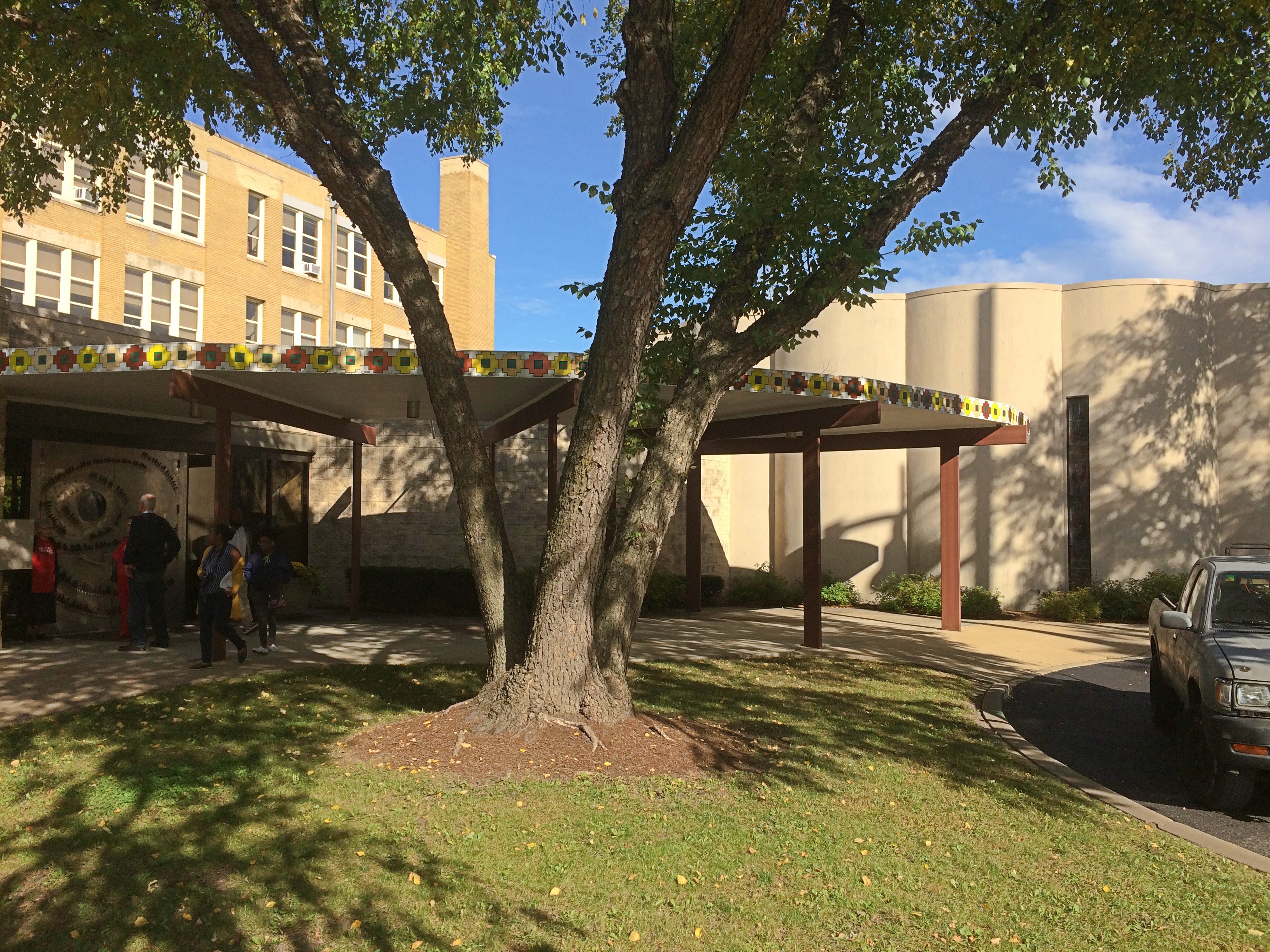
The exterior looked unpromising. It’s a modernist design completed in 1989 by Belli & Belli. “Eight parishes were consolidated into St. Benedict the African in the 1980s, the building was designed specifically with and for its predominantly African-American community,” Open House says.
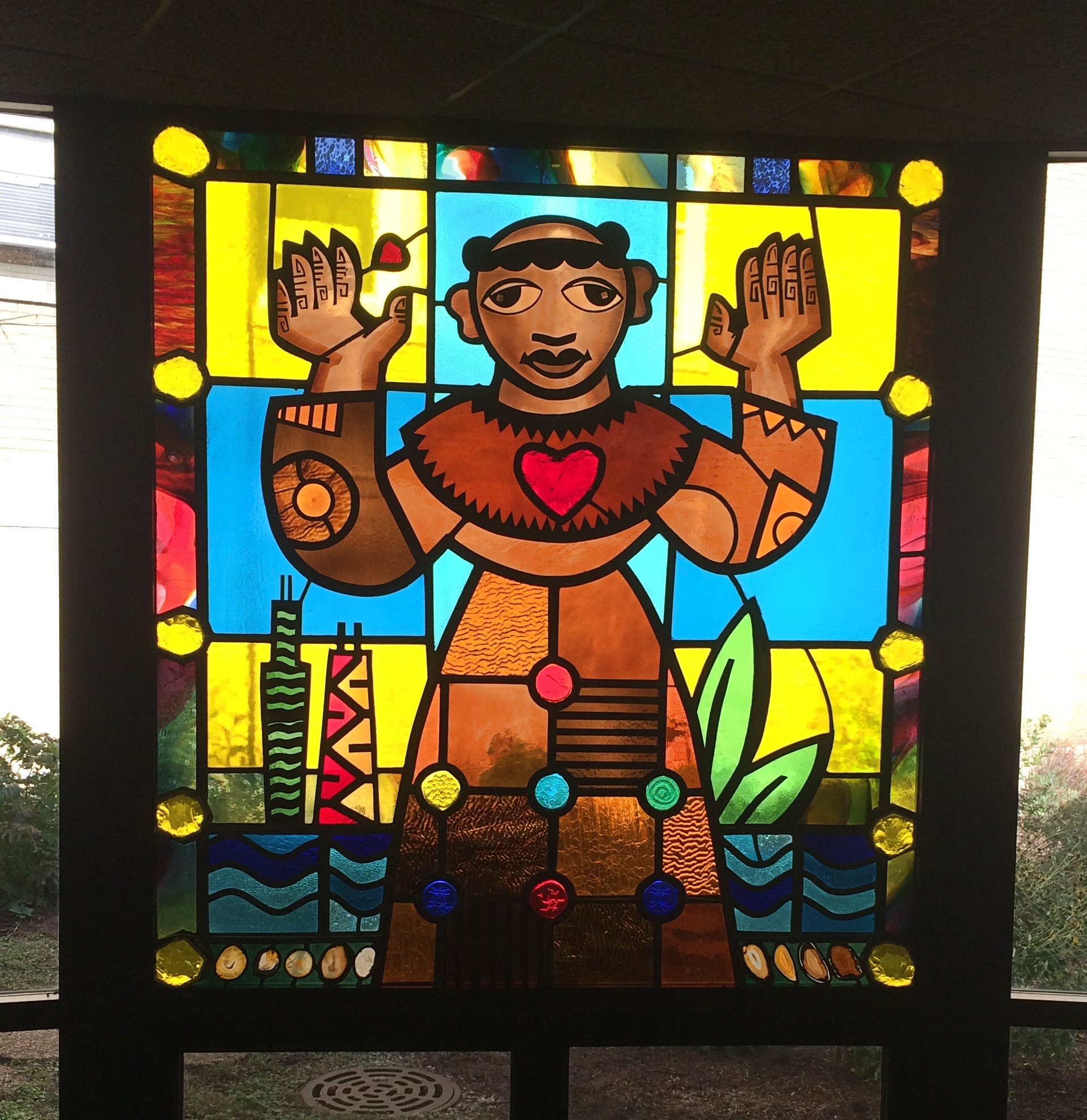
St Benedict the African ChicagoThe exterior might be utilitarian, but inside is a whole other story. A whole other remarkable story. A welcoming St. Benedict is one of the first figures you see.
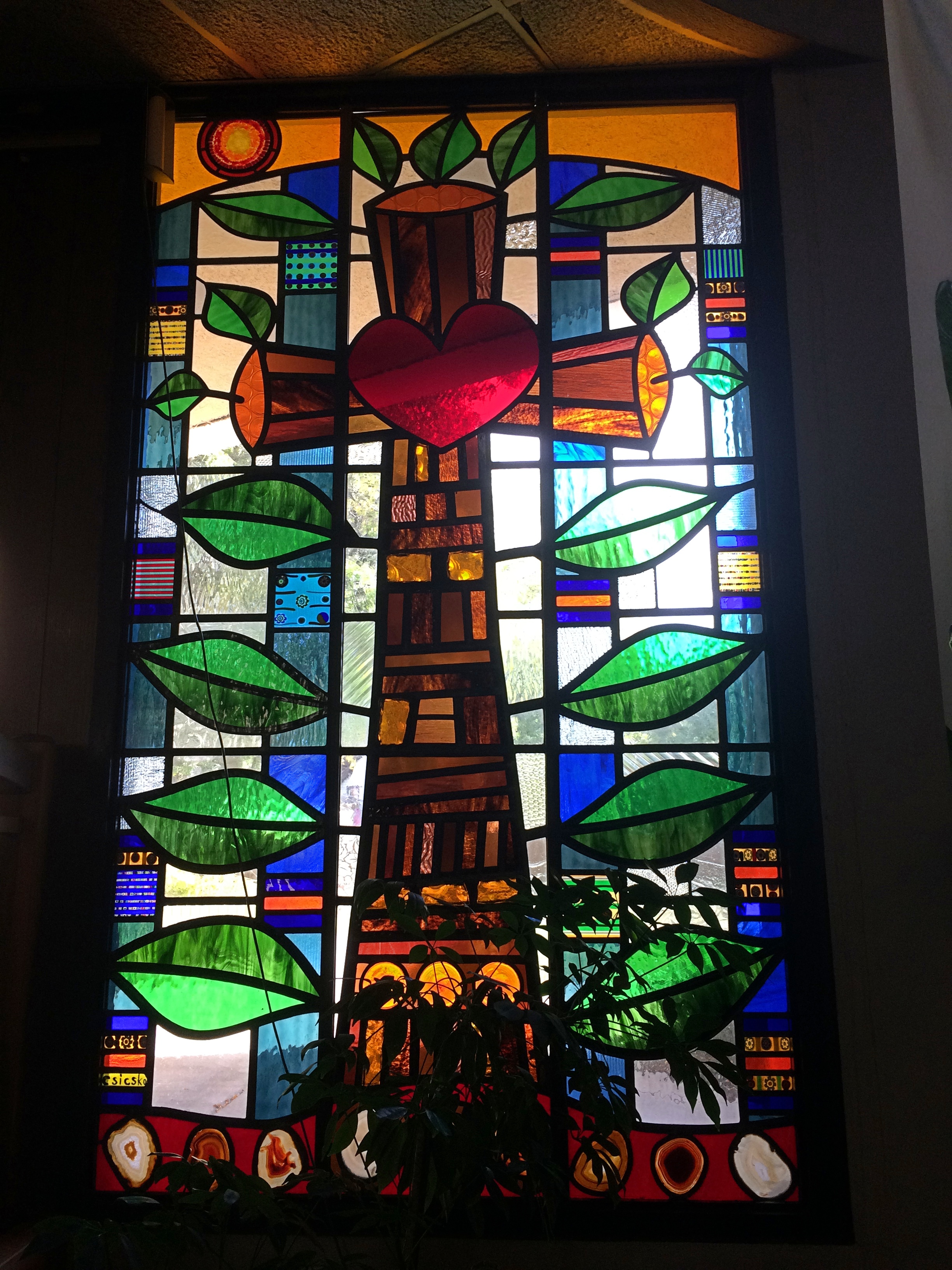
St Benedict the African ChicagoFashioned from Ethiopian glass (there’s an industry there) by local artist David Csicsko to honor Benedict’s parents’ birthplace. The Sears Tower and the John Hancock building are in the background.

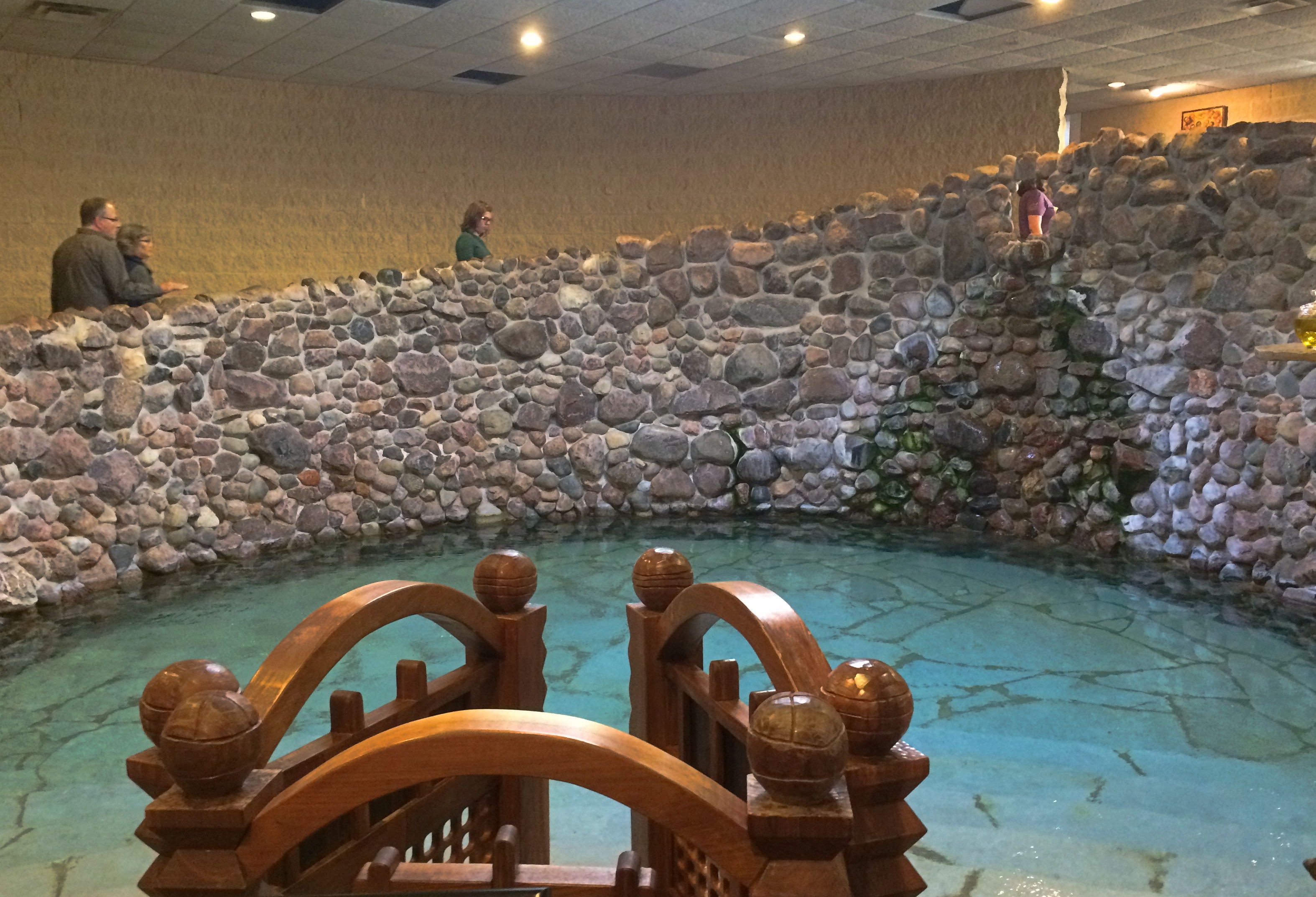
Not far from that window is an astonishingly large baptismal pool (too big to be called a font?). Open House claims that at 10,000 gallons, it’s one of the world’s largest.
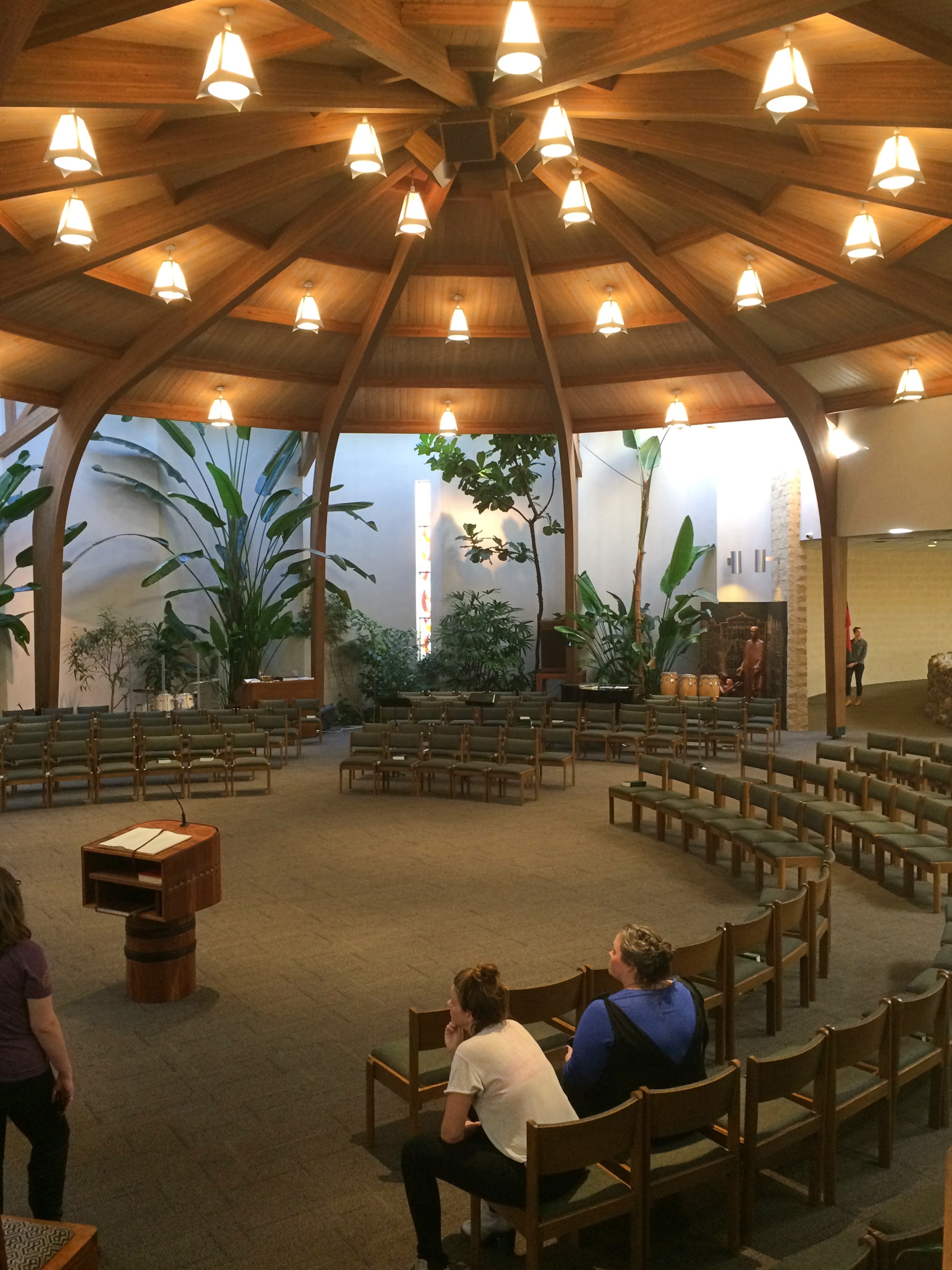
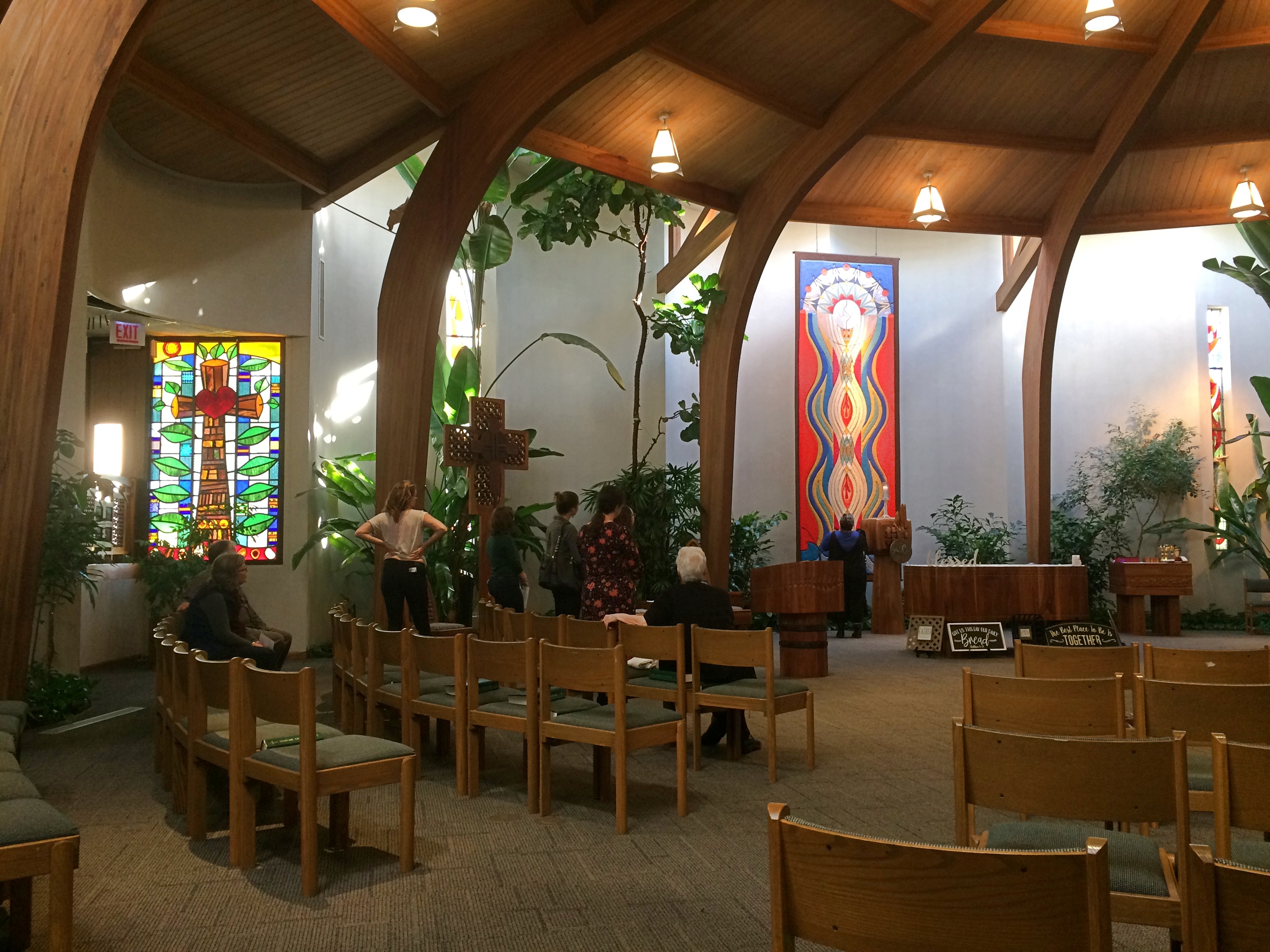
St Benedict the African ChicagoThe sanctuary is in the round.
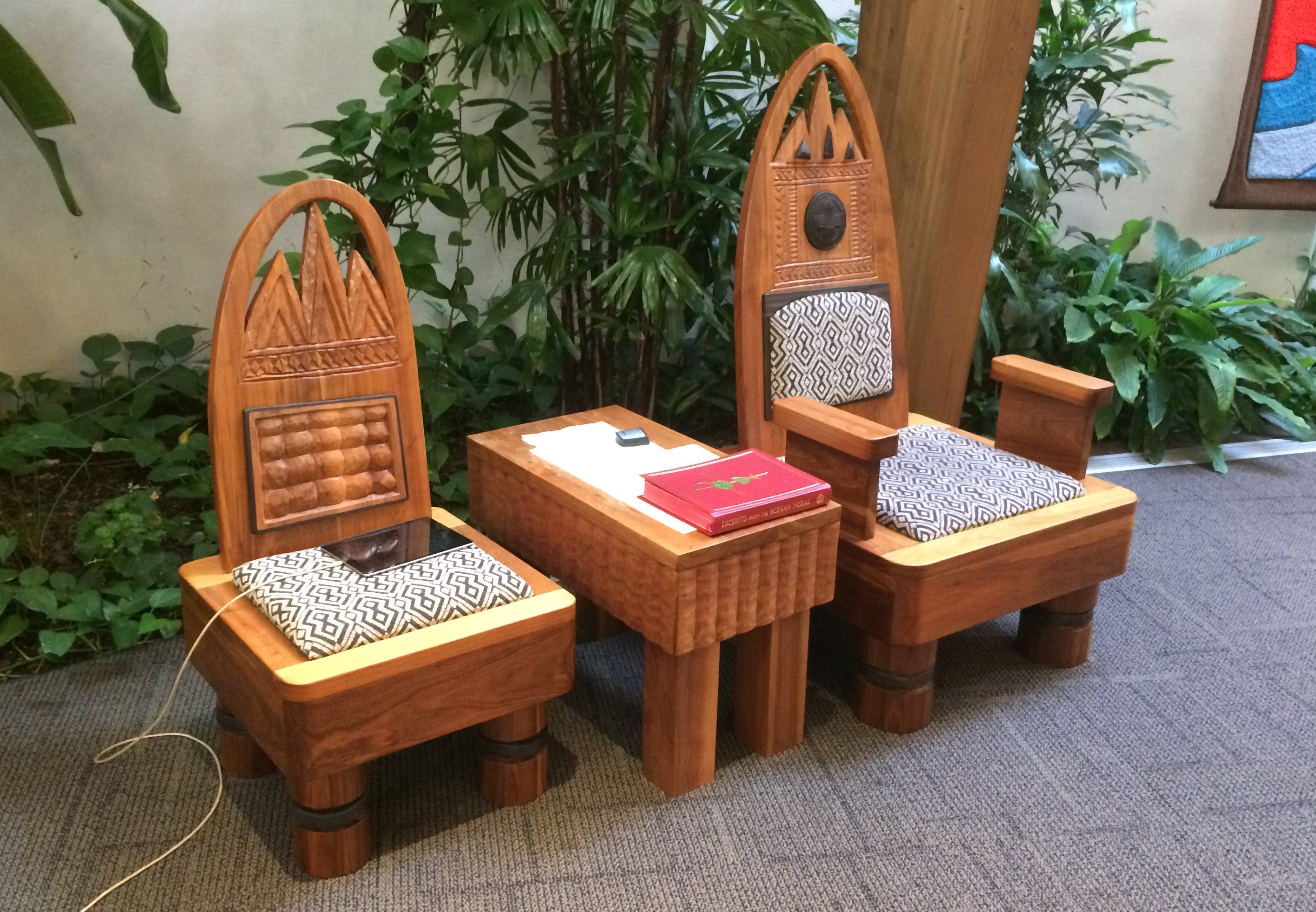
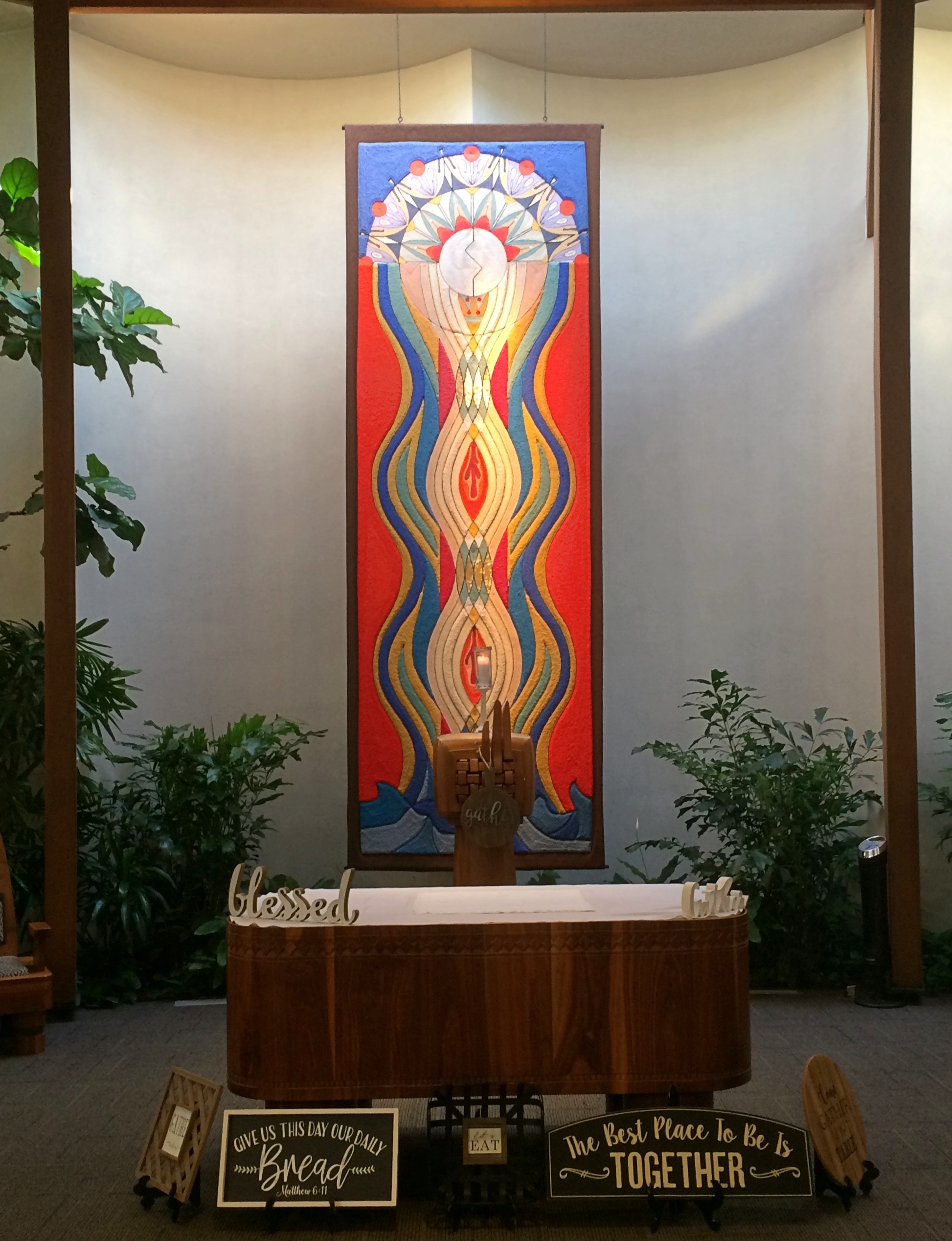
St Benedict the African ChicagoSt Benedict the African ChicagoSt Benedict the African Chicago“An inspired 200-pound, hand-woven tapestry adorns the wall behind the altar and depicts a dancing flame (the spirit of God), choppy waters (daily strife), and the broken body of Christ image as the Bread of Life,” the church says.

St Benedict the African Chicago

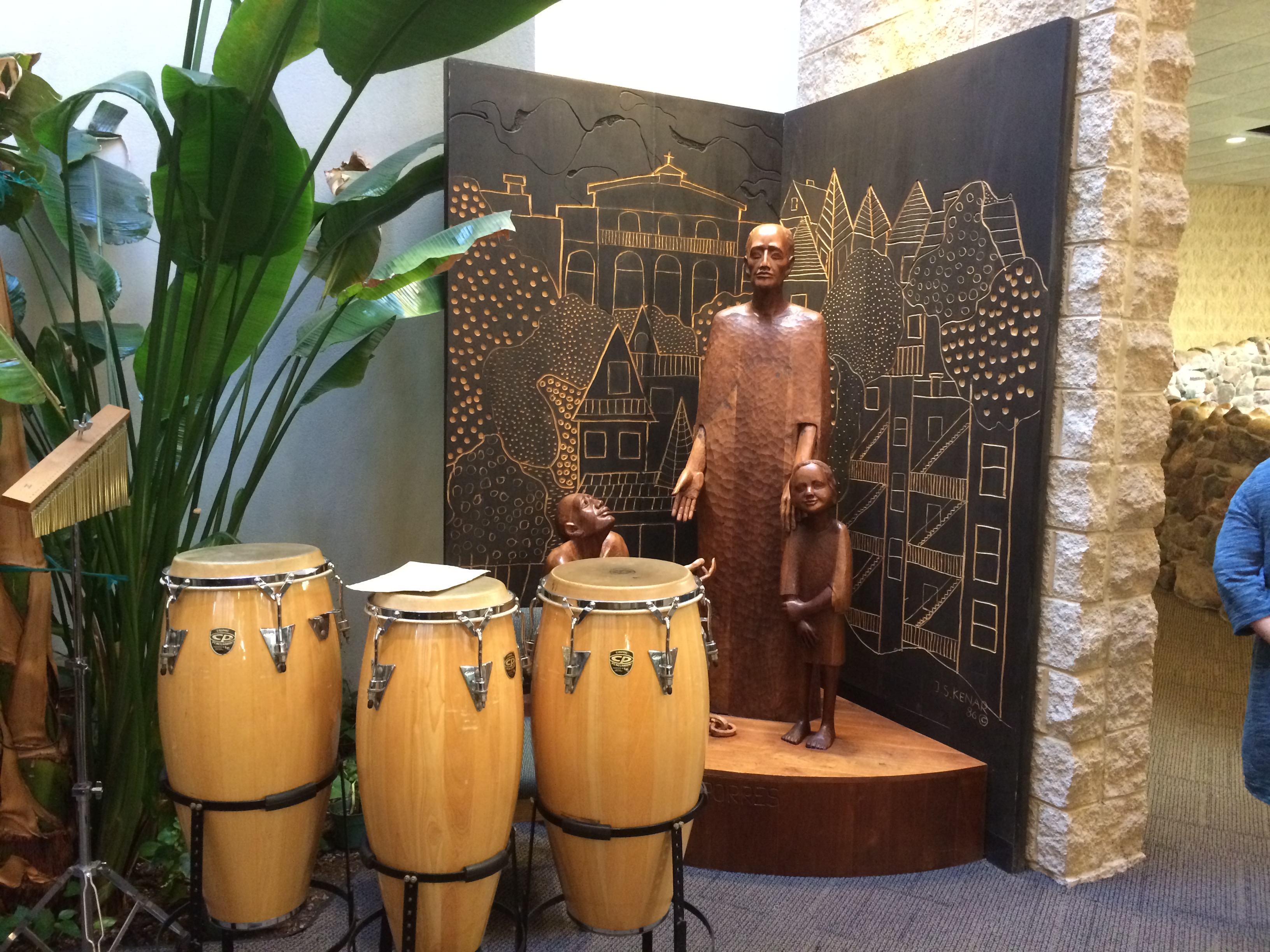
In wood, a depiction of St. Martin de Porres, another saint I knew nothing about before visiting the church.

St Benedict the African Chicago

More Csicsko glass. A Living Cross.
St Benedict the African ChicagoElsewhere is another one of his windows, or a pair actually, depicting Sojourner Truth, Harriet Tubman, Rosa Parks and Sister Thea Bowman, the last of whom was new to me as well.

Our Lady of Victory & St. Edward (the Confessor)

According to Open House Chicago, Our Lady of Victory is in the Portage Park neighborhood of Chicago, though it isn’t that far south of the Copernicus Center in Jefferson Park. Other sources put the church in Jefferson Park.

Never mind, Our Lady of Victory was our first church of the day during Open House. Others would follow.

Our Lady of Victory ChicagoUnderneath the main church is a chapel. According to a parishioner on hand to talk to visitors, the chapel was completed decades before the rest of the church — 1928, designed by E. Brielmaier & Sons. Then work stopped. First there were hard times, then there was a war.

“Work on the upper church was delayed until it was finally completed in 1954,” Open House says. “The tan stone of the Spanish-style exterior was selected specifically to complement the color of the ornate terra-cotta around the original entrance.”

By this time, different architects were on the job: Meyer & Cook.Our Lady of Victory ChicagoOur Lady of Victory Chicago“The warmth of the exterior extends to the sanctuary’s lavish tan and pink marble and terrazzo. Polychromatic details throughout, particularly in the stained glass, wooden Stations of the Cross and other painted elements contribute to a colorful and welcoming space tied together with subtle Art Deco influences.”

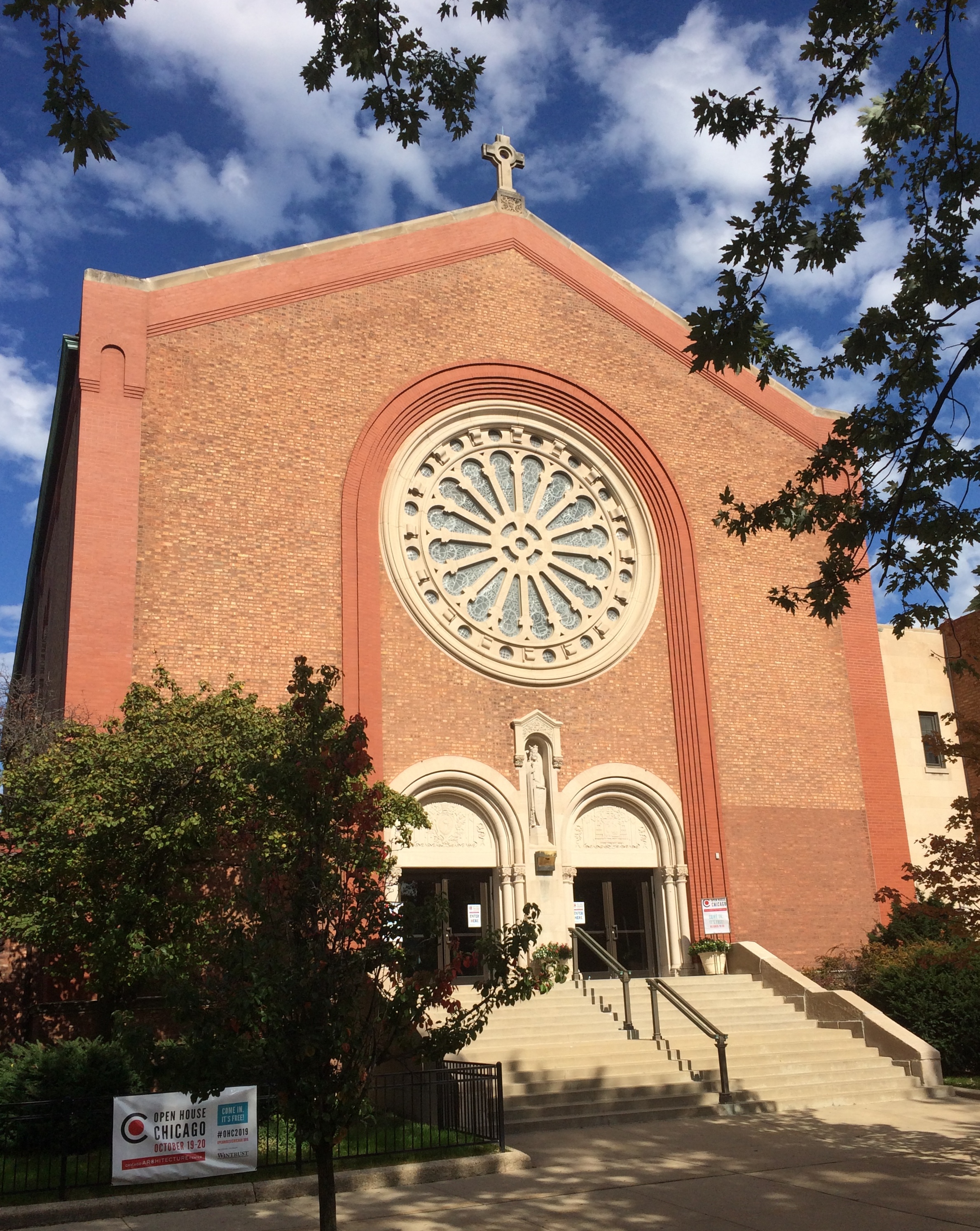
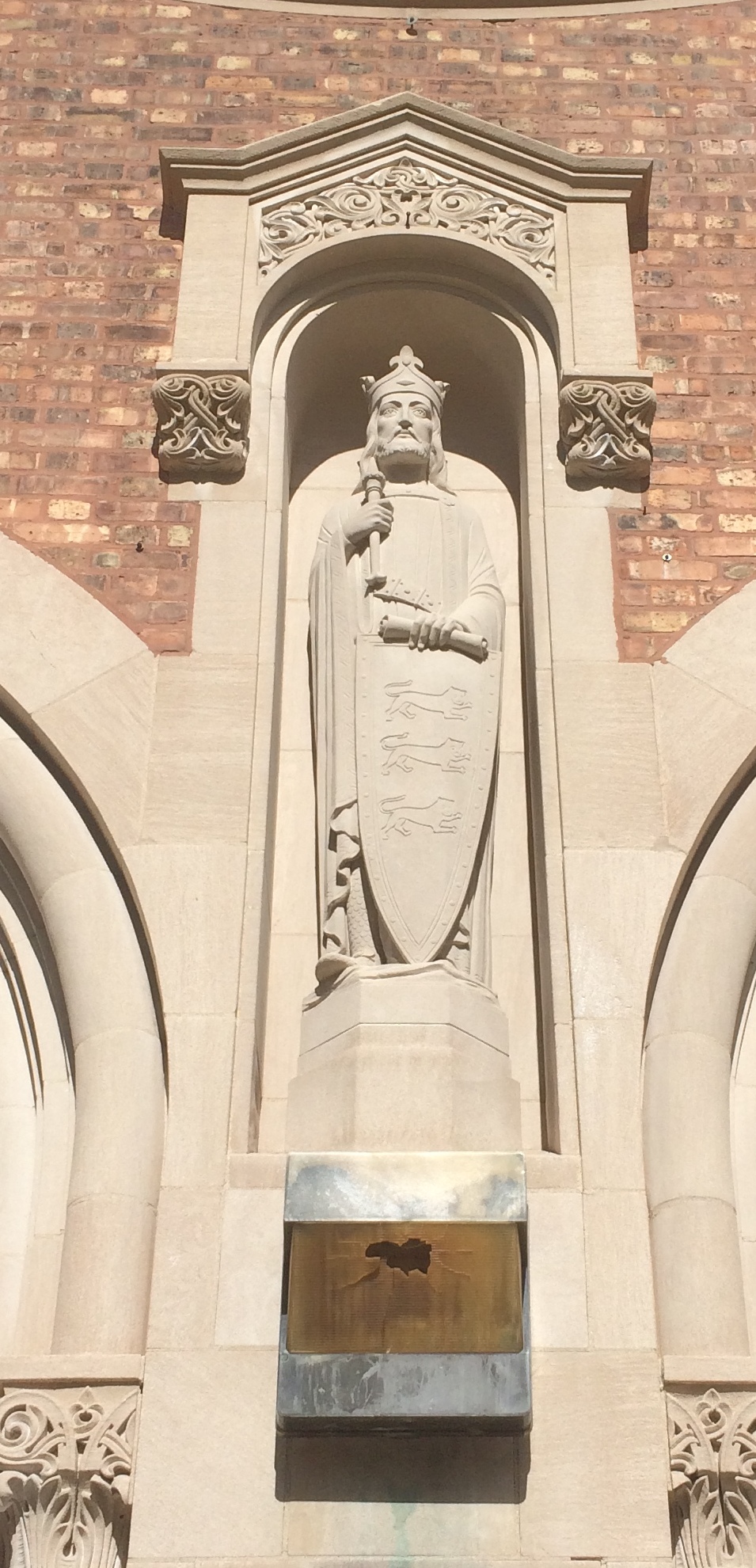
East of Our Lady of Victory, and east of the Kennedy Expressway in the Irving Park neighborhood, is St. Edward. I don’t know that I’ve ever visited a church named for Edward the Confessor, but there it was.
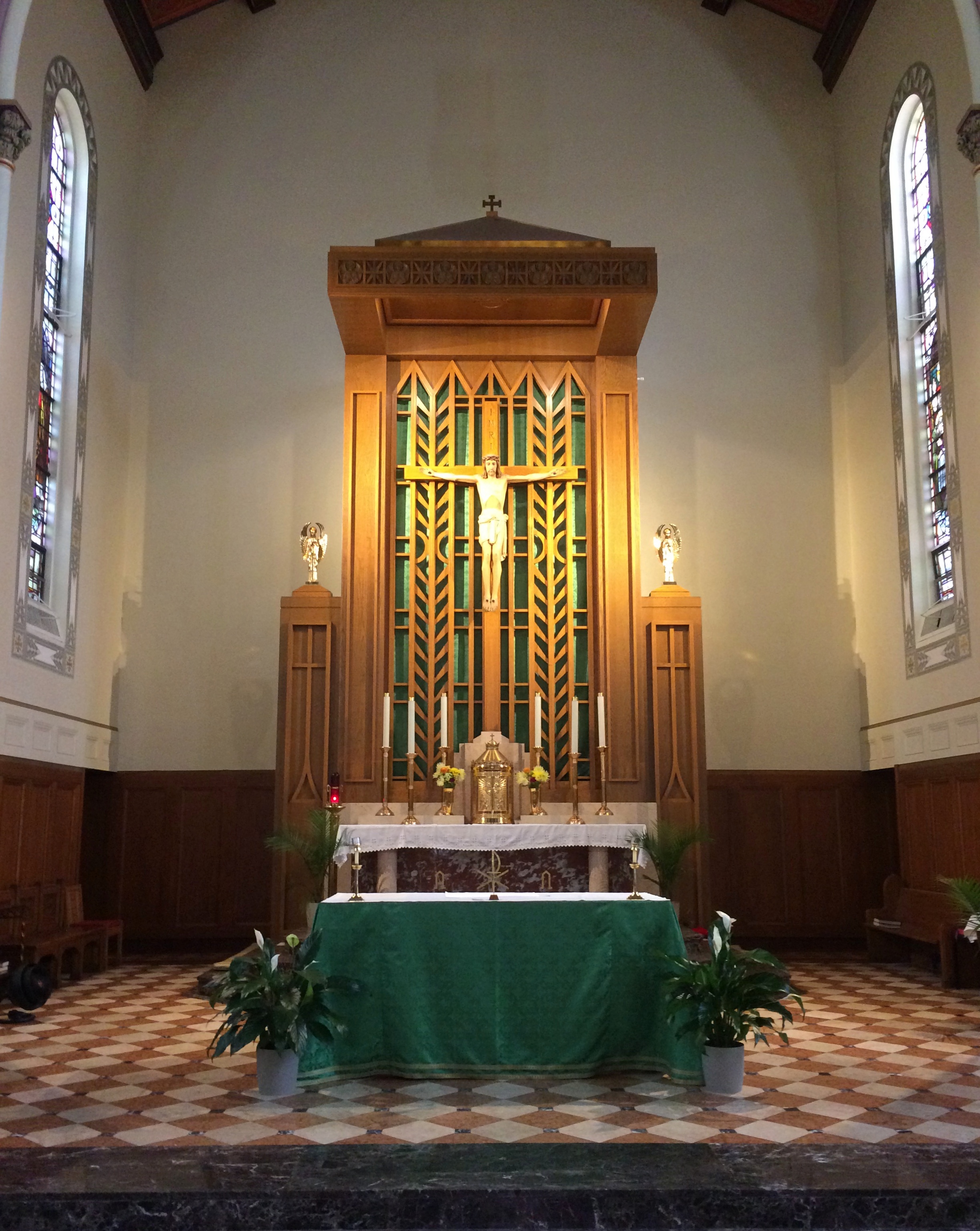
St Edward Church ChicagoAnd there he is.
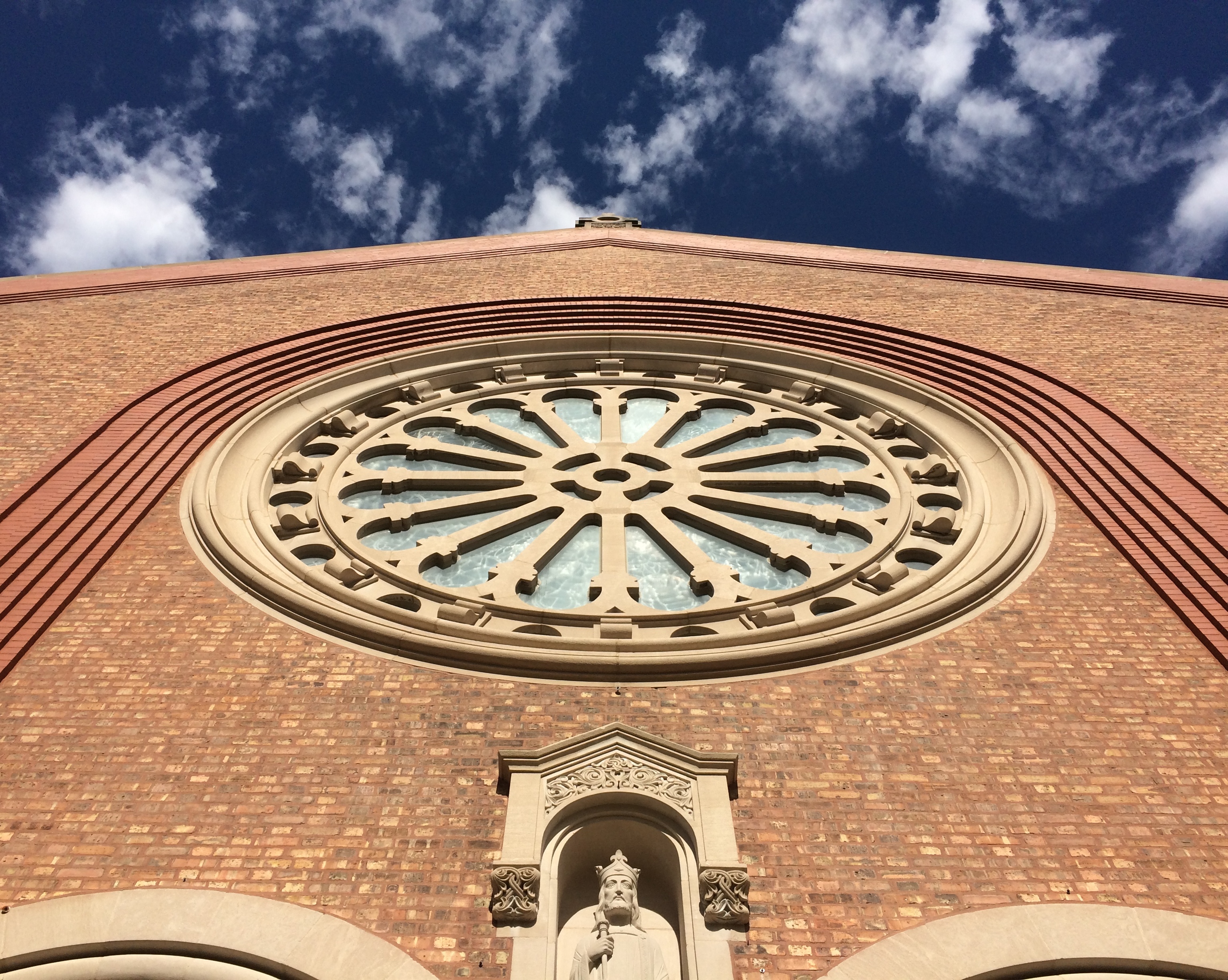
St Edward Church ChicagoQuite a view, looking straight up.
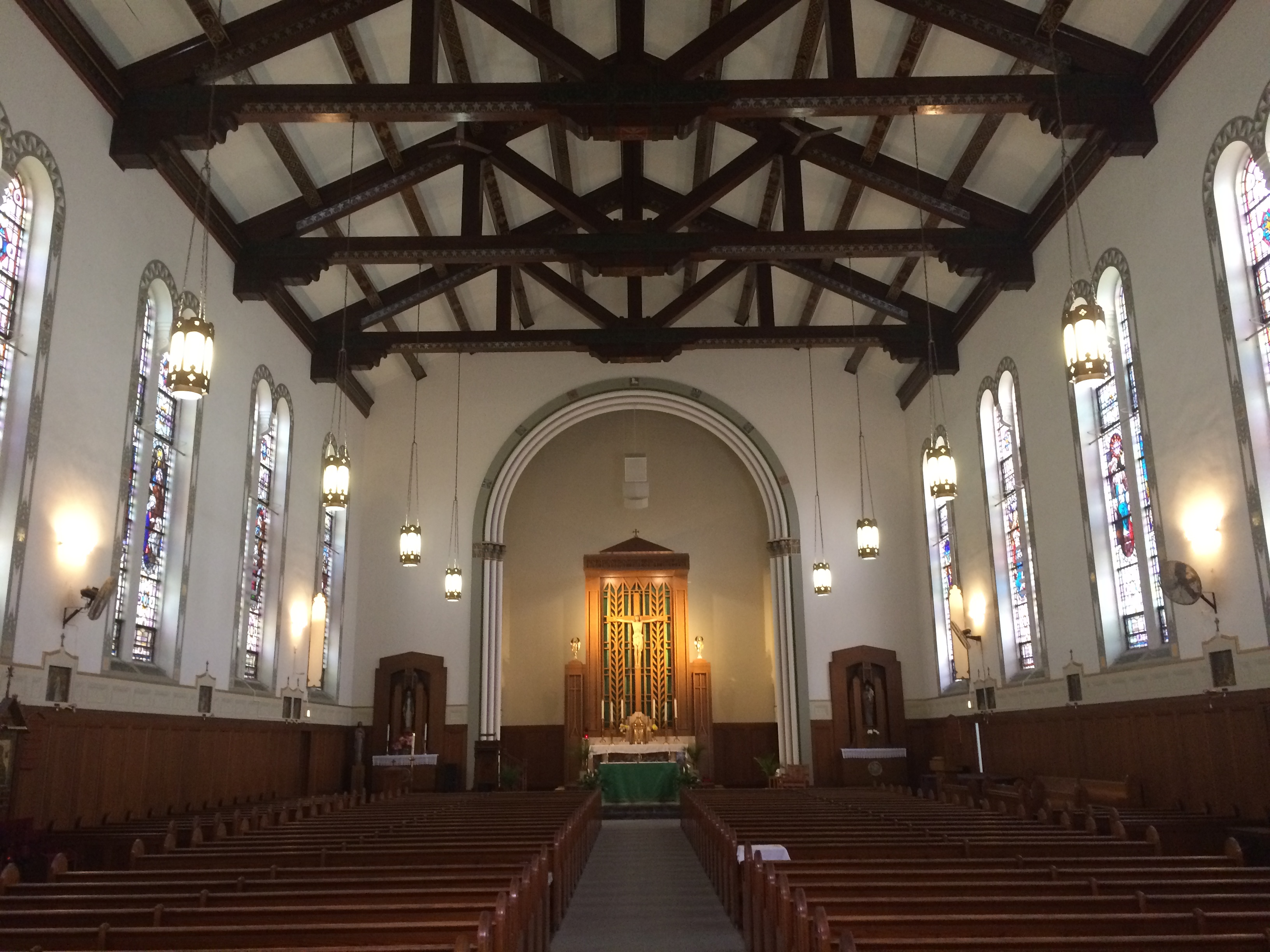
St Edward Church ChicagoThe church has a similar construction history as Our Lady of Victory, except the archdiocese managed to complete it before the war. “Plans to build the current St. Edward Church began around 1926,” Open House Chicago notes.

“Construction of the lower level was completed, but the work was halted because of the Depression. Worship took place in the lower church at basement level. The upper church was completed in 1940.”

St Edward Church Chicago

St Edward Church ChicagoThe distinctive feature of St. Edward is in the narthex. Not too many churches you can say that about.

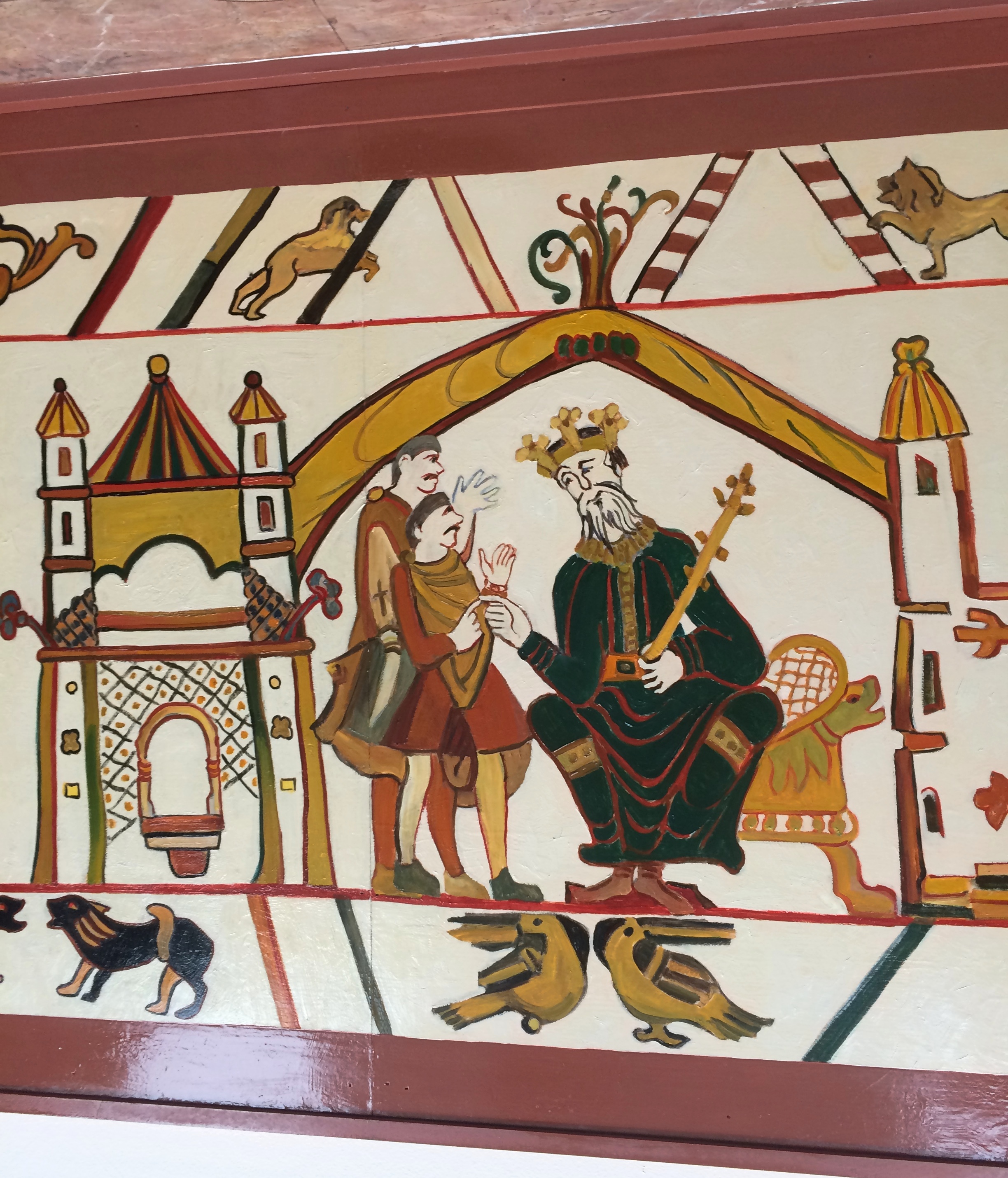
More specifically, all around the narthex ceiling is a painted replica of the first third of the Bayeux Tapestry, done in oils by an artist named Mae Connor-Anderson and completed in 2005. It’s about 75 feet long and you have to crane your neck to appreciate it, or — as I did for a few moments — lay on the floor.

Just inside the nave a parishioner, maybe only a shade older than I am, sat at a small table with some material about the church and especially the Tapestry, mostly some photocopied sheets. I took an interest and told him that I’d seen the Tapestry. He seemed a little excited at that — not only someone who knew what it was, but who had actually seen it. He told me that he wanted to see it himself, but hadn’t gotten around to it.

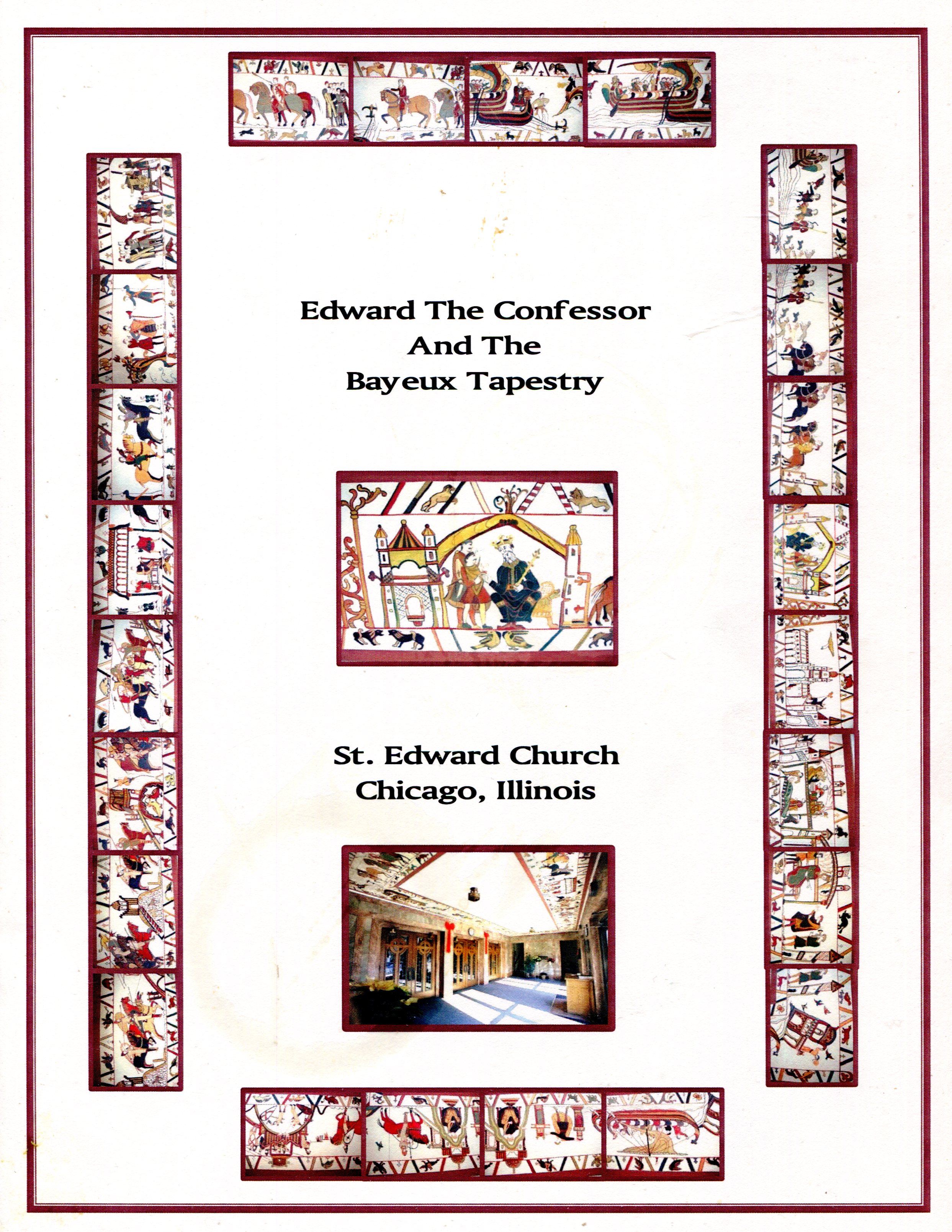
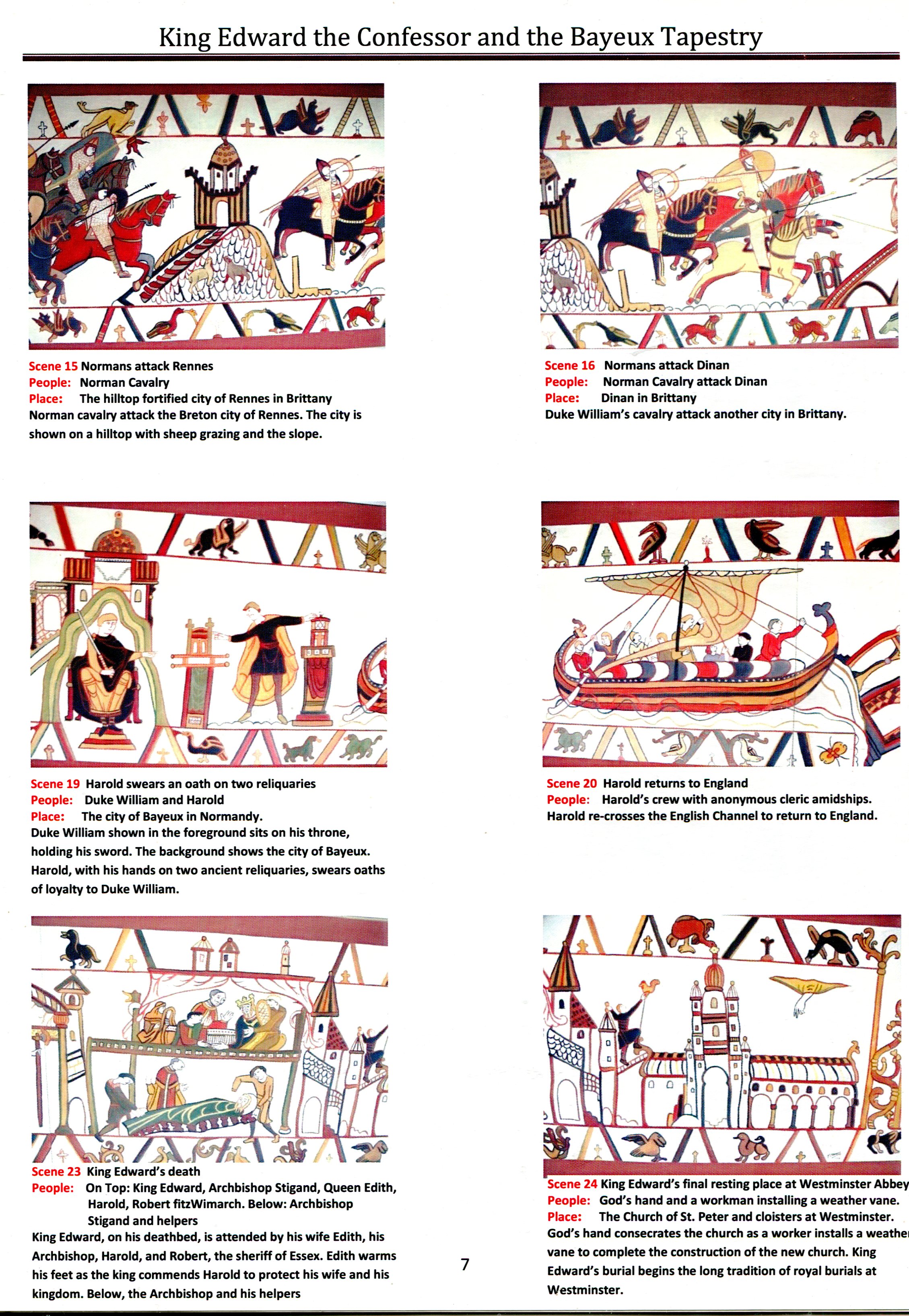
So we talked some more about the Tapestry and St. Edward’s replica, and just before I left, he told me to wait a second. From under the table, he produced a professionally made 12-page booklet about the St. Edward and the Tapestry and gave it to me. The cover:
St Edward Church ChicagoThe first third was reproduced on the ceiling for reasons of space, but also because it begins with King Edward meeting Harold II — perfidious Harold, according to Norman propaganda — and ends with Edward being interred at Westminster Abbey. Other adjustments were made as well, including leaving the Latin tituli out.

An example page of the booklet:
St Edward Church ChicagoFrom my perch on the floor, I was determined to get at least one image of the ceiling painting.
St Edward Church ChicagoWho else but good King Edward?

Jefferson Park, Chicago

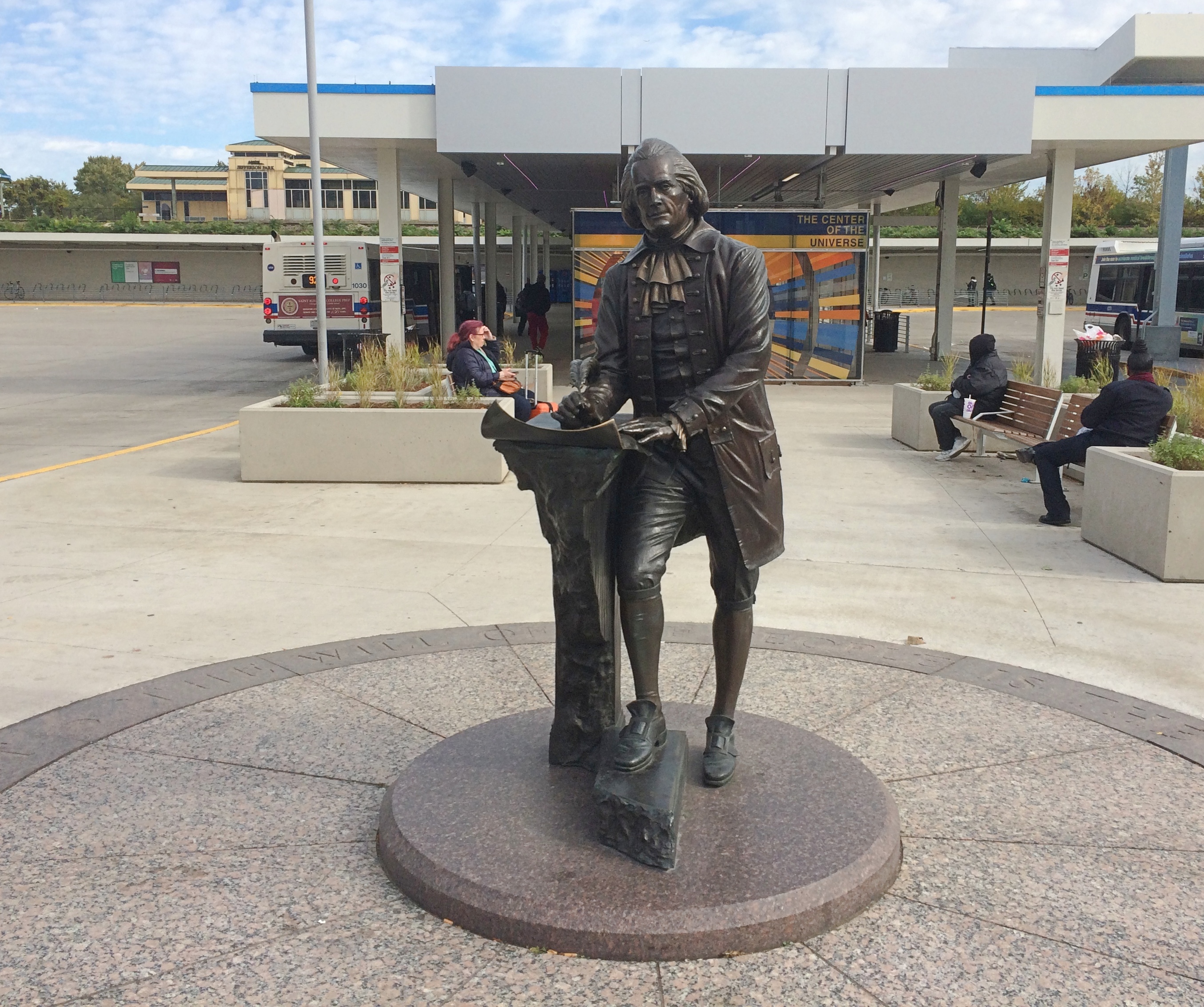
The weekend after I returned from Virginia, where we encountered a number of statues of Thomas Jefferson, I found myself in front of a statue of Thomas Jefferson. In Chicago. In the neighborhood known as Jefferson Park on the Northwest Side.
Jefferson Park Jefferson statueHe’s standing in front of an open-air CTA bus terminal. Actually, an intermodal station, since the Jefferson Park El stop is back there, too.

“The statue depicts Jefferson standing at a podium as he signed the Declaration of Independence,” says Chicago-L. “The statue stands on a circular granite base, divided into 13 wedges representing the 13 original colonies. One of Jefferson’s quotations — ‘The will of the people is the only legitimate foundation of any government’ — is imprinted around the outer edge.

“A time capsule, which includes essays from the children from schools in the surrounding area, was buried at the statue’s feet. The statue was made possible through a fund drive organized by the Jefferson Park Chamber of Commerce.”

Elsewhere, I found that it’s the work of Edward Hlavka, erected in 2005.

As interesting as an eye-level bronze of a Founding Father might be, I hadn’t come to Jefferson Park for that. Rather, the area was our first stop during Open House Chicago 2019 on October 19. The fact that I just gotten back from a trip wasn’t going to keep me away. Besides, it was a pleasant fall day in Chicago.

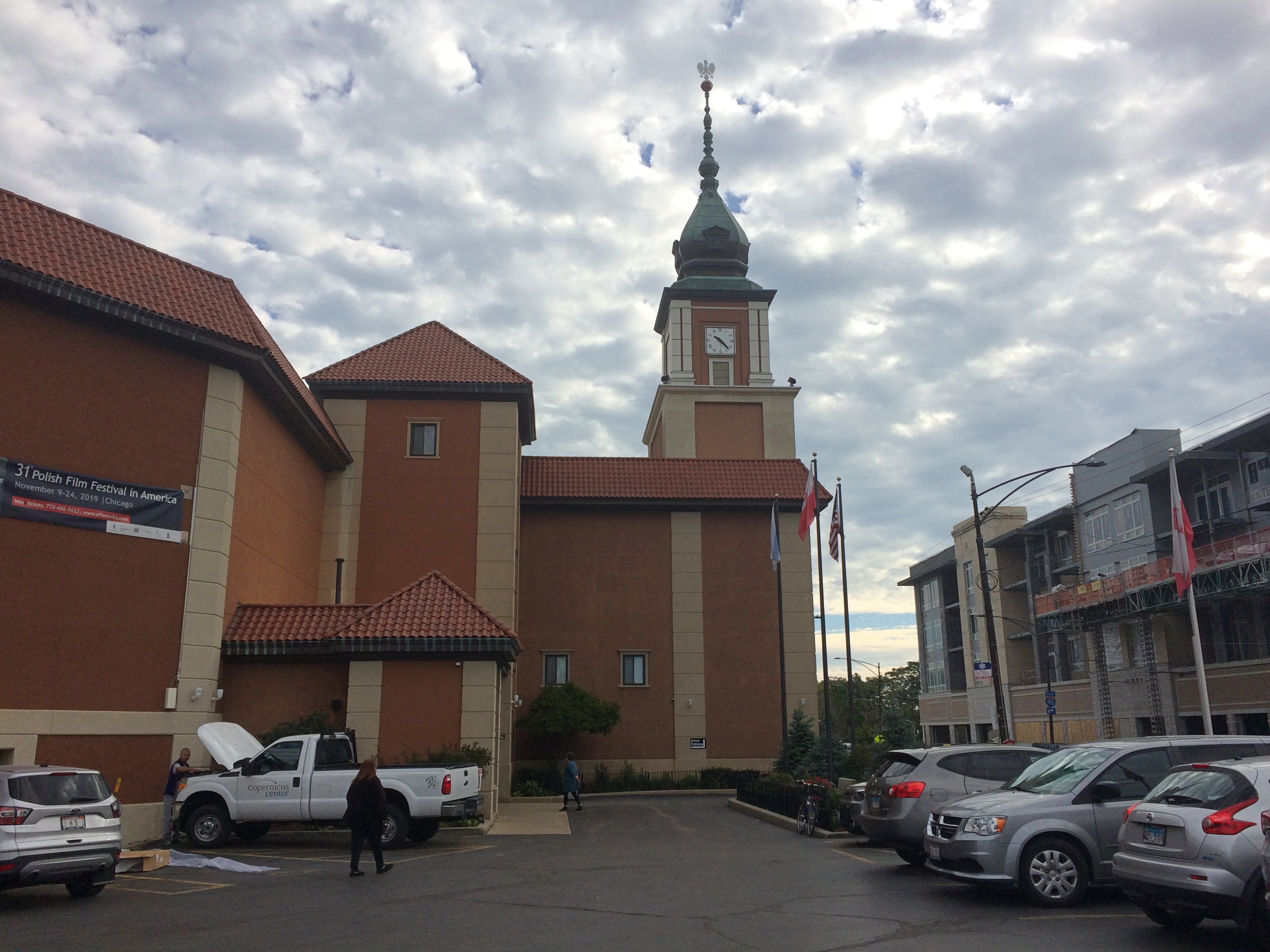
First we went to the Copernicus Center on W. Lawrence Ave.
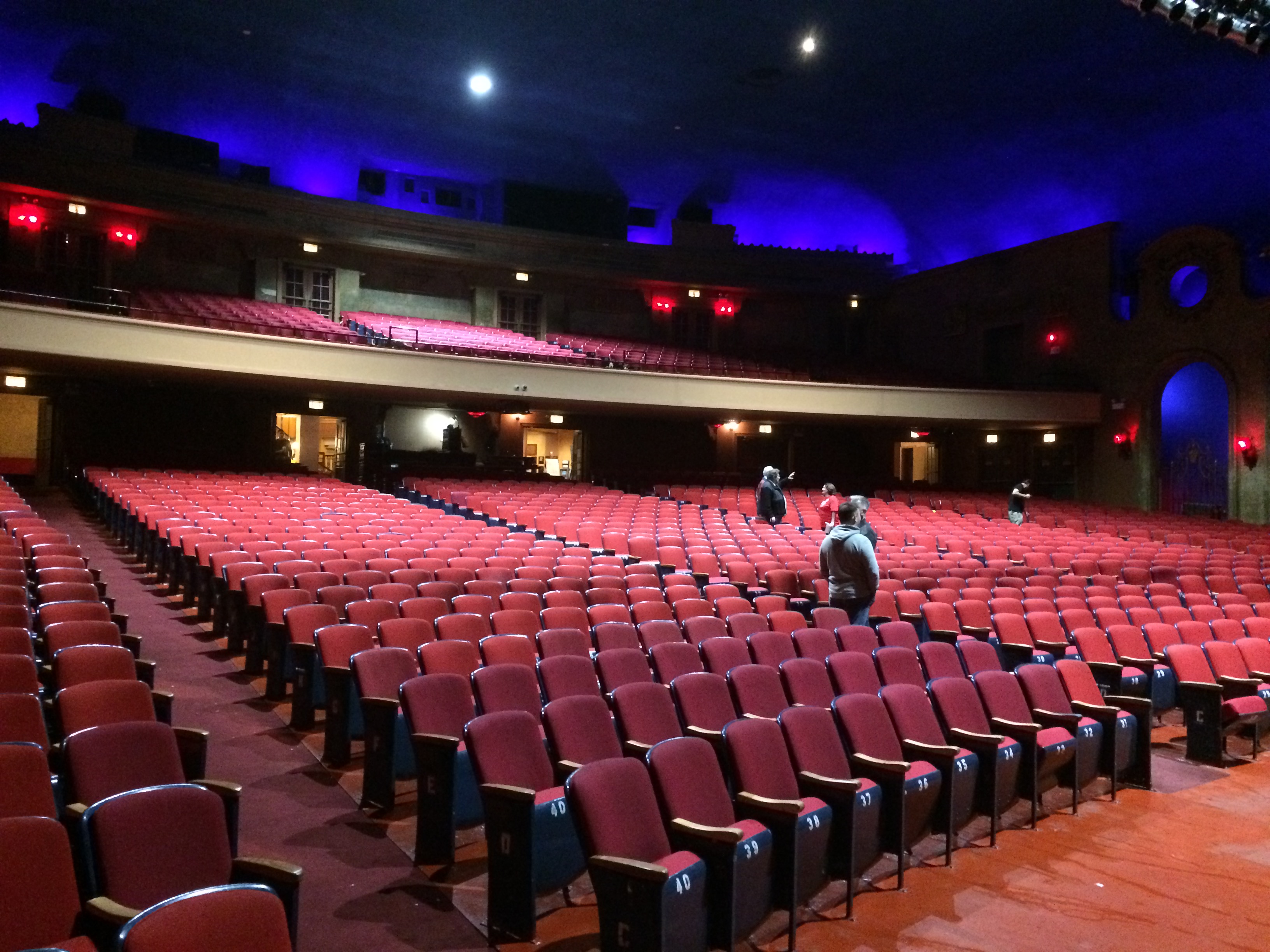
Copernicus Center ChicagoThese days, the Copernicus Center is an event venue owned by the Copernicus Foundation, a Polish-American society, which holds events of interest to the local Polish population, but that’s not all. Looking at its list of upcoming events, I found a concert by Iranian pop singer Shadmehr Aghili; Praise Experience, “one of the biggest African gospel concerts in Chicago”; and a stage show called Cleopatra Metio la Pata, “Por fin llega a los Estados Unidos la sexy comedia musical!”

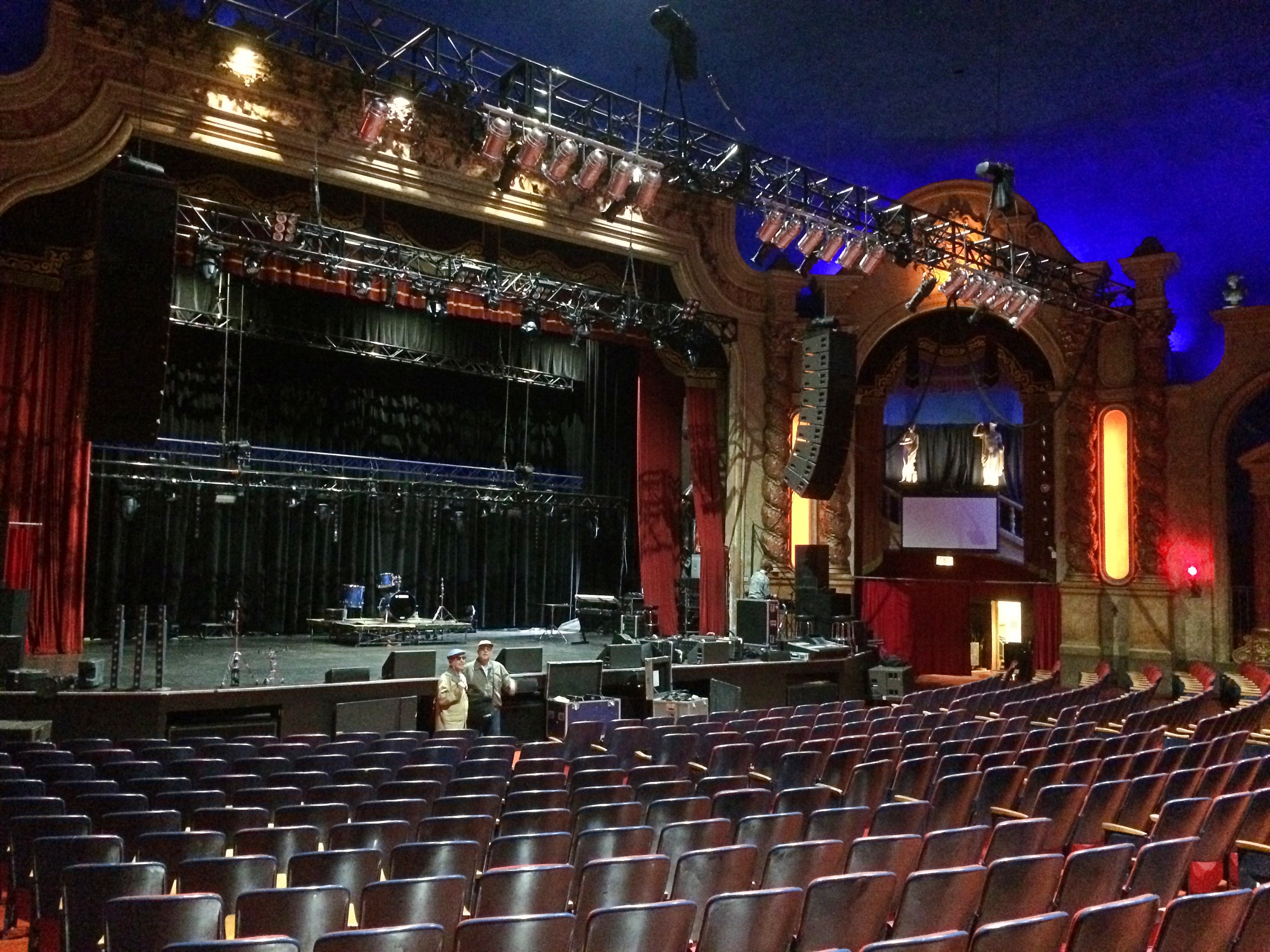
The building opened in 1930 as the Gateway Theatre, “designed in Atmospheric style with classical Roman-inspired flourishes; complete with a dark blue, starlit sky in the 2,092-seat auditorium, and classical statuary and vines on the side walls,” Cinema Treasures says. A movie palace, in other words. Mason Gerardi Rapp of Rapp & Rapp did the design.

Movies are still shown at the Copernicus — the Polish Film Festival in America is coming there soon — but mostly the stage holds live shows.

Gateway Theatre Rapp and RappGateway Theatre Rapp and RappFrom there, we walked along Milwaukee Ave., passing the Jefferson statue, and soon arrived at the Jefferson Masonic Temple.
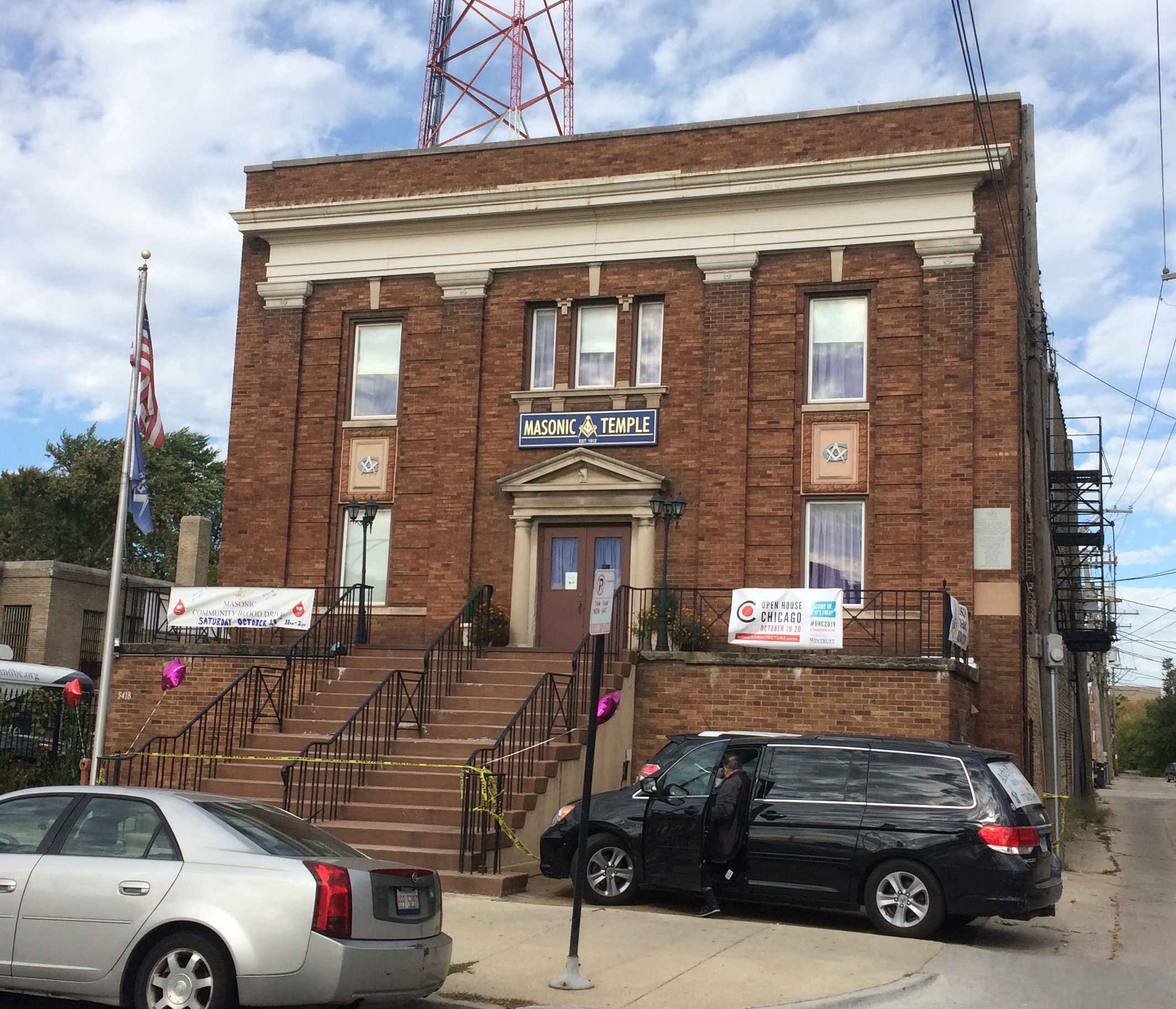
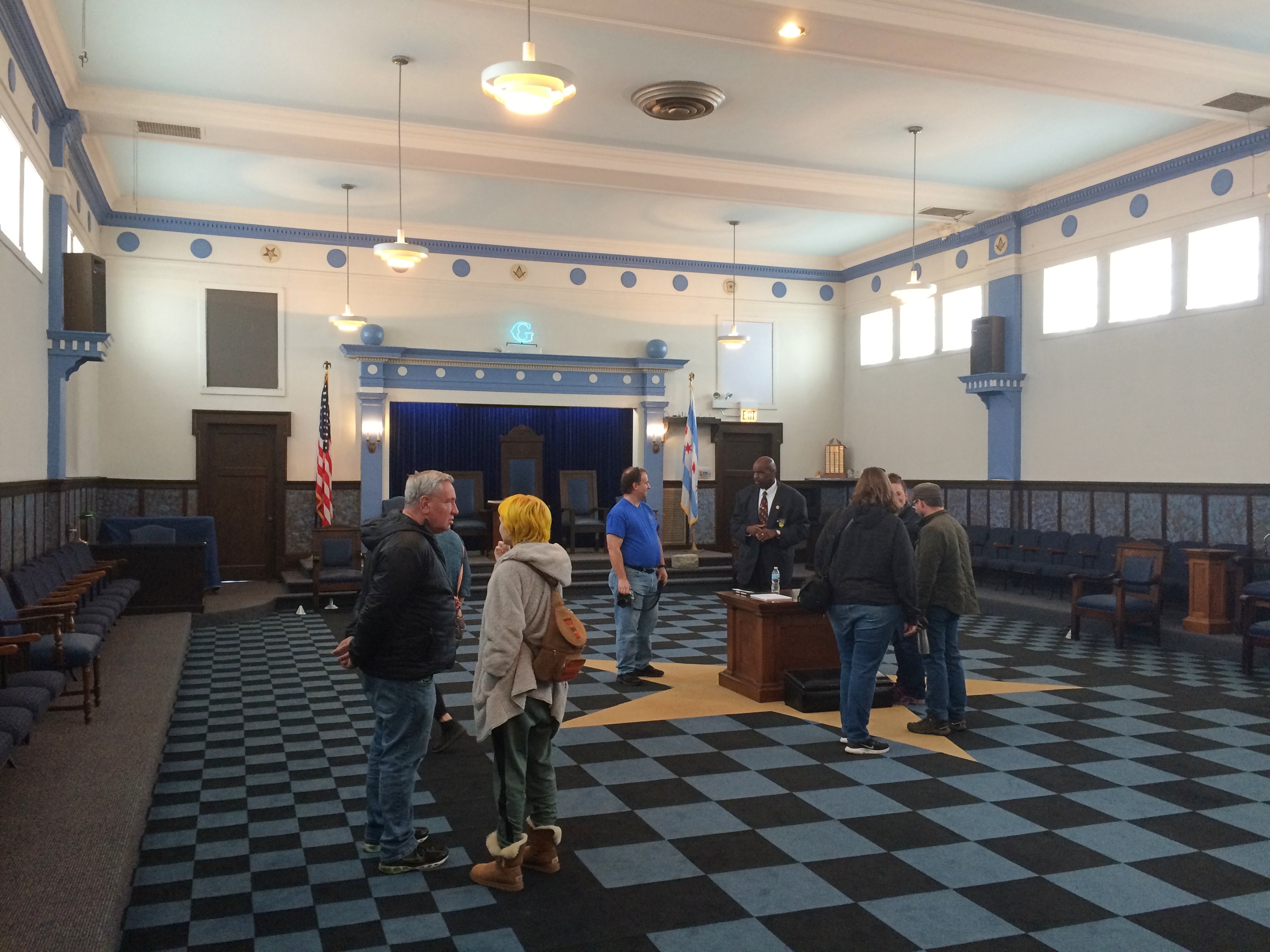
Jefferson Masonic Temple ChicagoThe main room was open.
A mason was on hand, the fellow wearing the tie, to talk about the temple and Masonry. The subject of the Anti-Masonic Party didn’t come up.

“The Jefferson Masonic Temple, completed in 1913, is one of a few remaining active Masonic Temples in the city limits of Chicago…” Open House Chicago notes. “The Providence Lodge, which built the structure, eventually merged with the King Oscar Lodge, and the space is now shared by several different Lodges and owned by the nonprofit Jefferson Masonic Temple Association.”