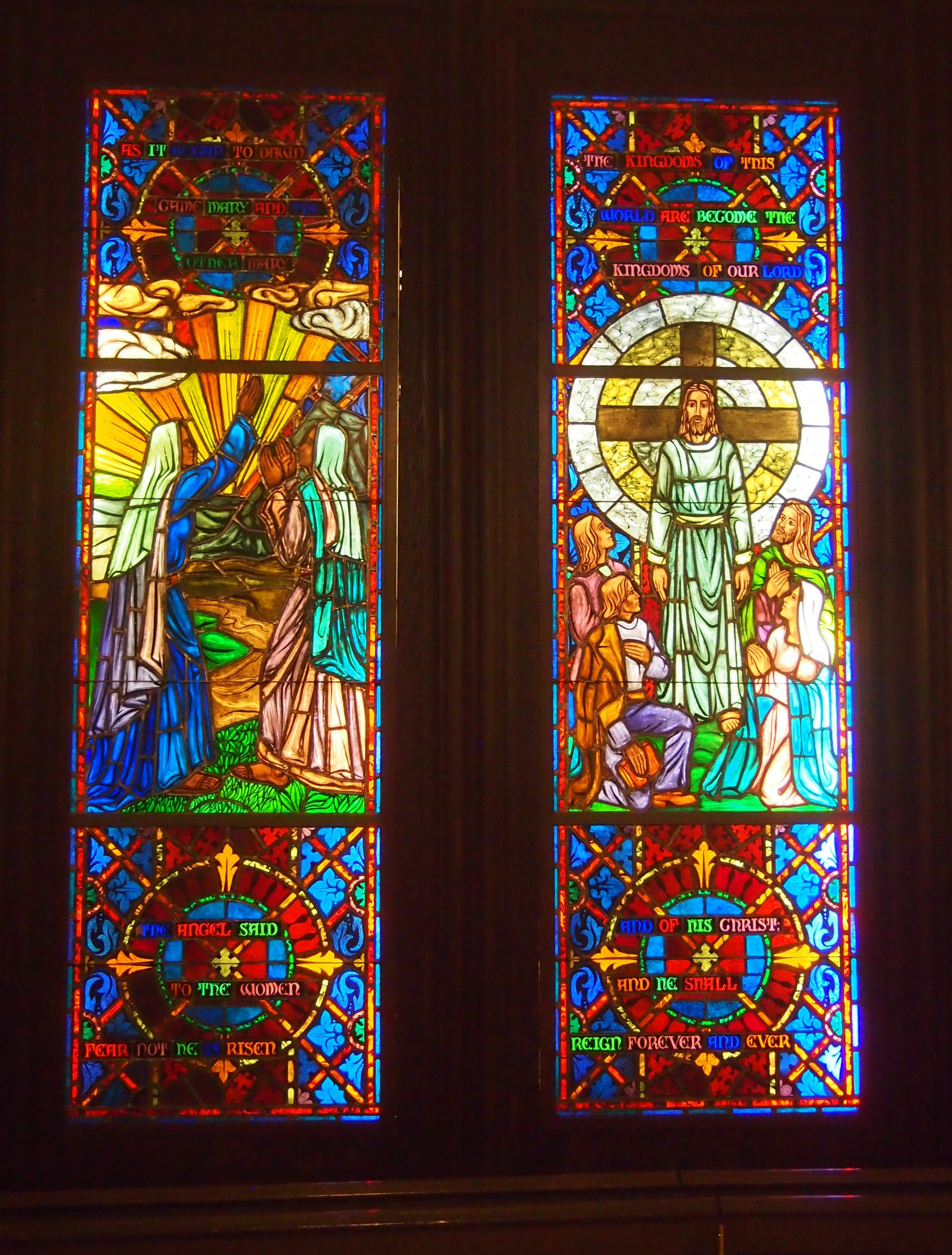
The Milwaukee Theatre

On October 14, 1912, former President Theodore Roosevelt took a bullet in the chest at the Gilpatrick Hotel in Milwaukee, but went on to deliver his presidential campaign speech at the Milwaukee Auditorium across the street soon afterward.

“Friends, I shall ask you to be as quiet as possible,” TR said. “I don’t know whether you fully understand that I have just been shot; but it takes more than that to kill a Bull Moose. But fortunately I had my manuscript, so you see I was going to make a long speech, and there is a bullet — there is where the bullet went through — and it probably saved me from it going into my heart.”

In later years, especially during an early 21st-century renovation, the Milwaukee Auditorium evolved into the Milwaukee Theatre, which is officially the Miller High Life Theatre these days, because beer money bought the naming rights recently.
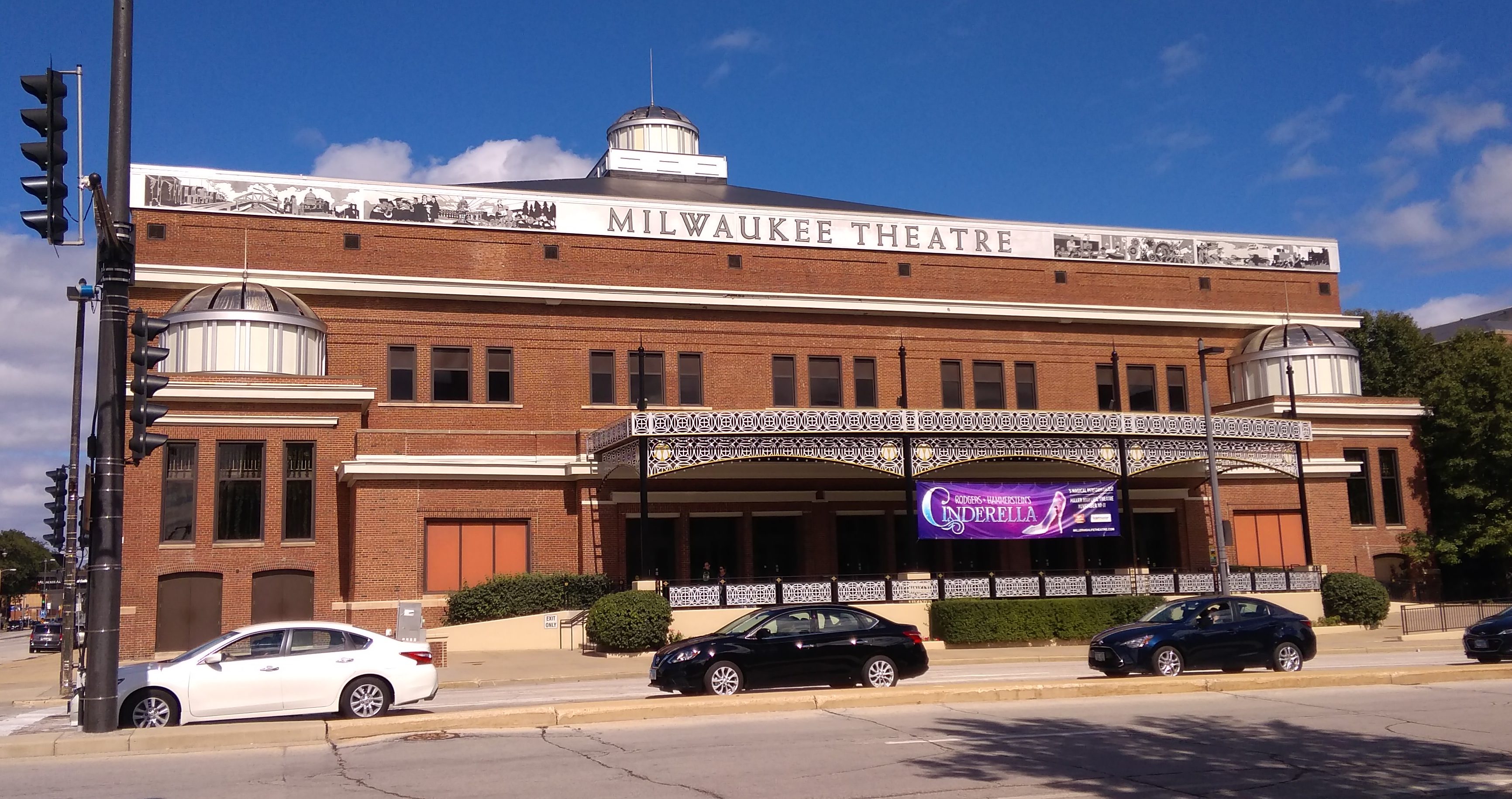
Never mind that. What I want to know is, where is the plaque commemorating TR’s speech?

Maybe there is one, but I didn’t see it. Or why didn’t our tour guide through the theater on Saturday mention this remarkable event? I knew the story of the attempted assassination, but didn’t connect it with the Milwaukee Theatre until today.

In any case, the theater looks like a first-rate venue, seating more than 4,000. The view from the stage.

Here’s the view from the stage when space aliens started kidnapping people standing there, via tractor beams (and how do those work, anyway?).
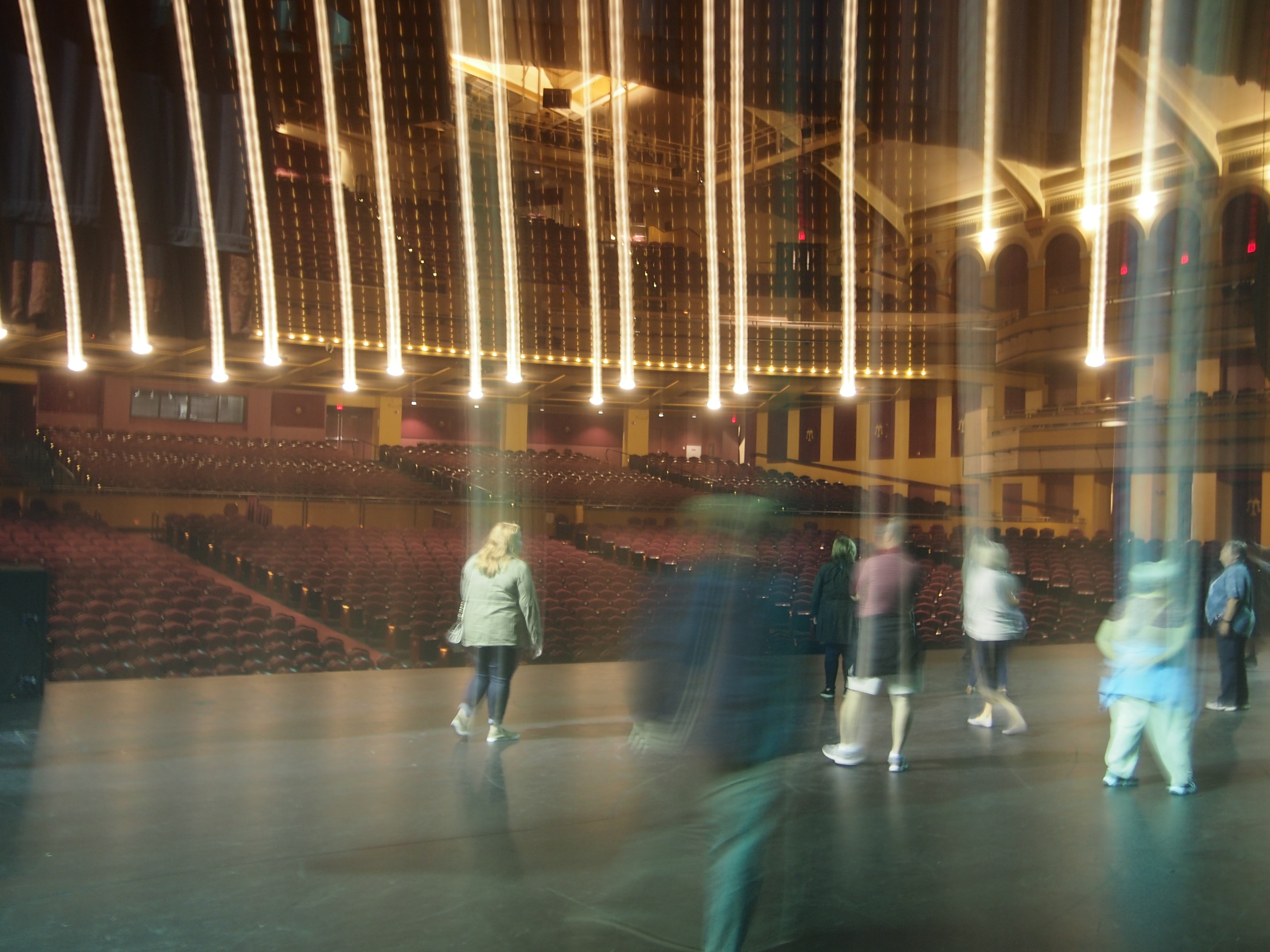
Or maybe I jiggled the camera during a relatively long exposure.

We toured other parts of the venue as well, including the elegant side halls Kilbourn and Plankinton — named for long-ago donors — with the former decorated by murals depicting Milwaukee history. We also saw the green room.
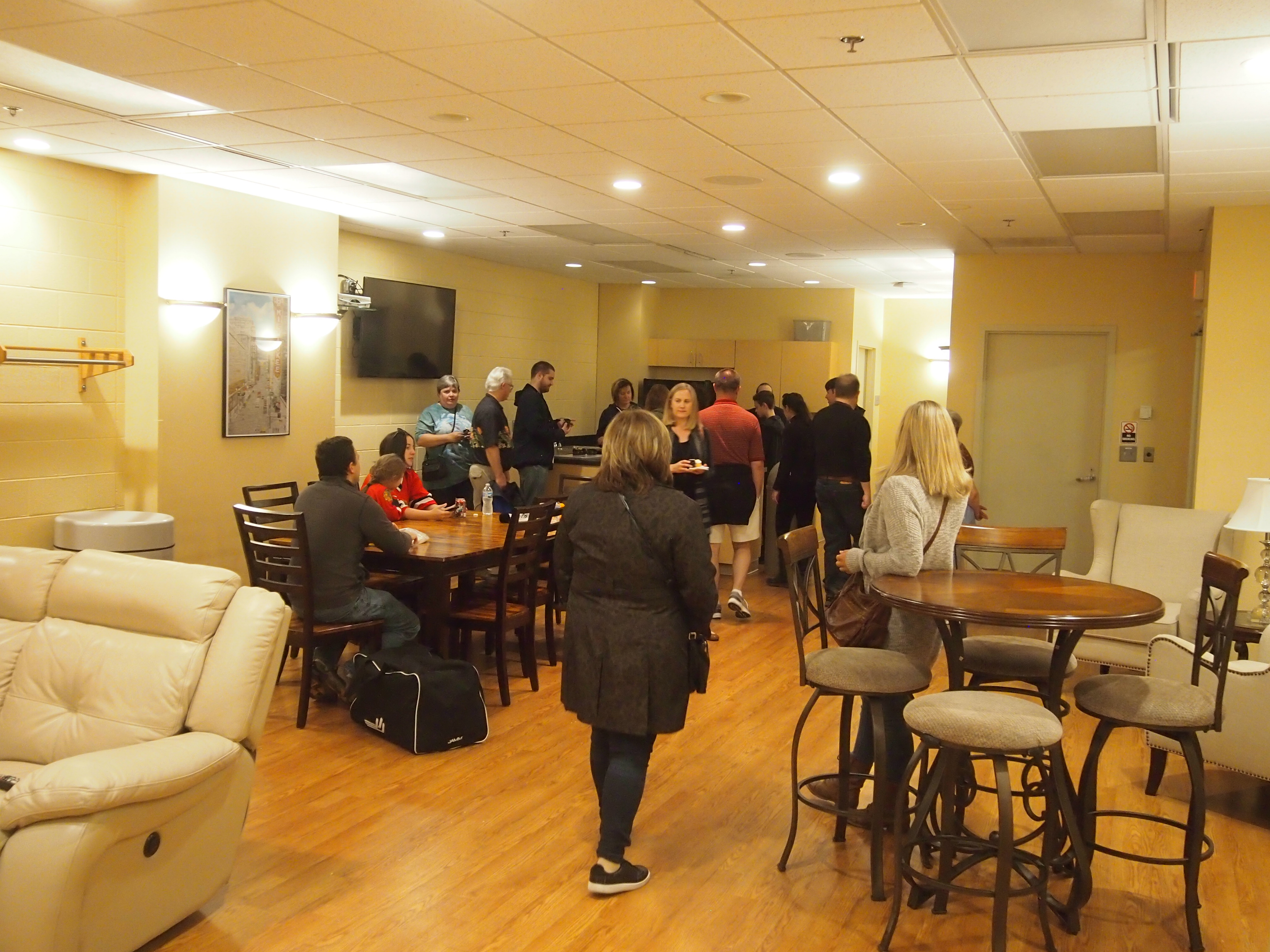
Where Miller High Life Theatre-themed cupcakes were offered for our refreshment. I have to say that’s something I’d never seen before.
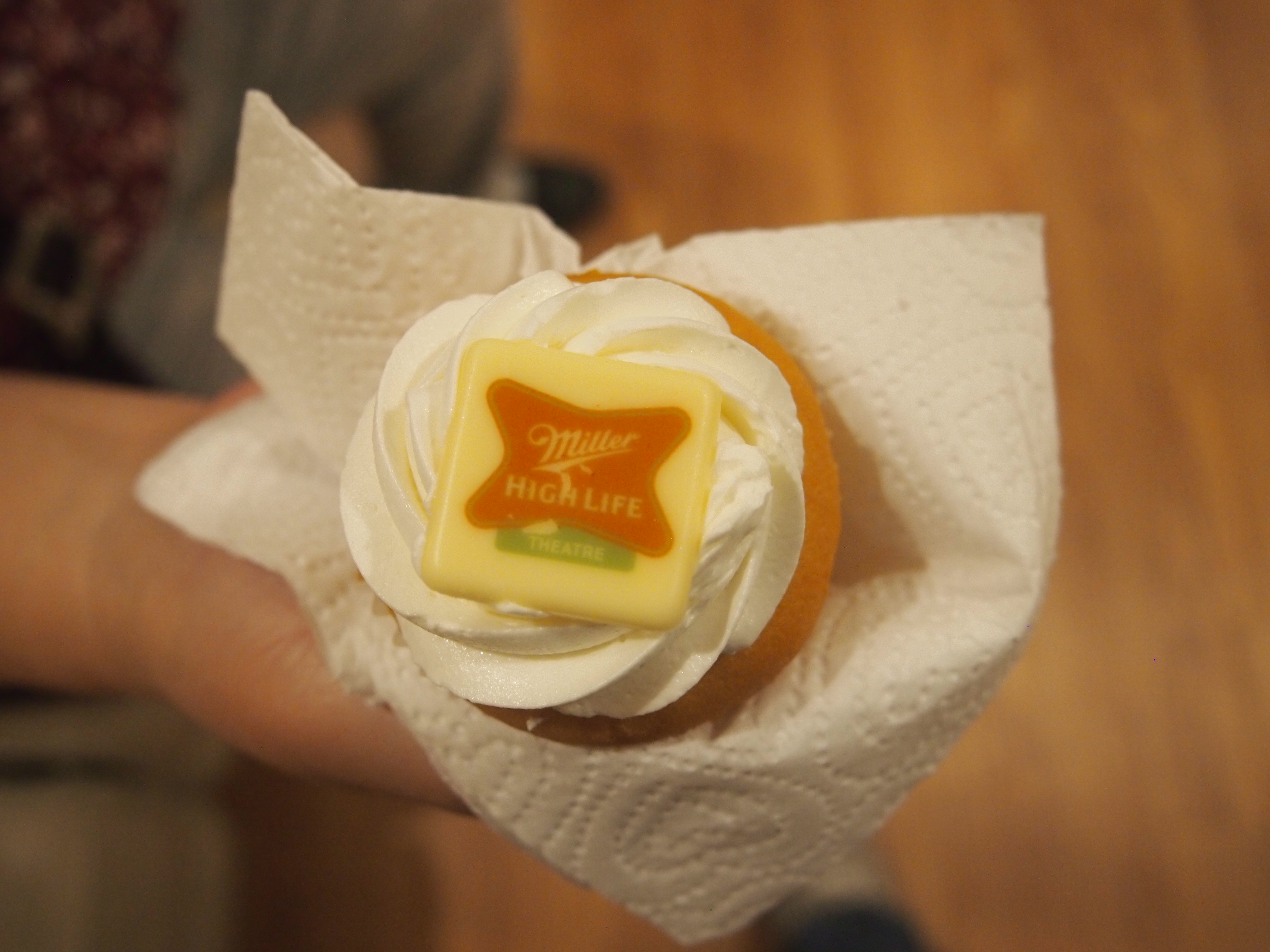
You’d think a light shade of green would be the thing for the green room walls, for tradition’s sake, but no. Then again, I’ve read it isn’t clear that most green rooms ever were really green. Just another phrase origin lost to time.

Next to the theater is the UW–Milwaukee Panther Arena, which seats as many as 12,700. That too was open for the Doors Open Milwaukee event.
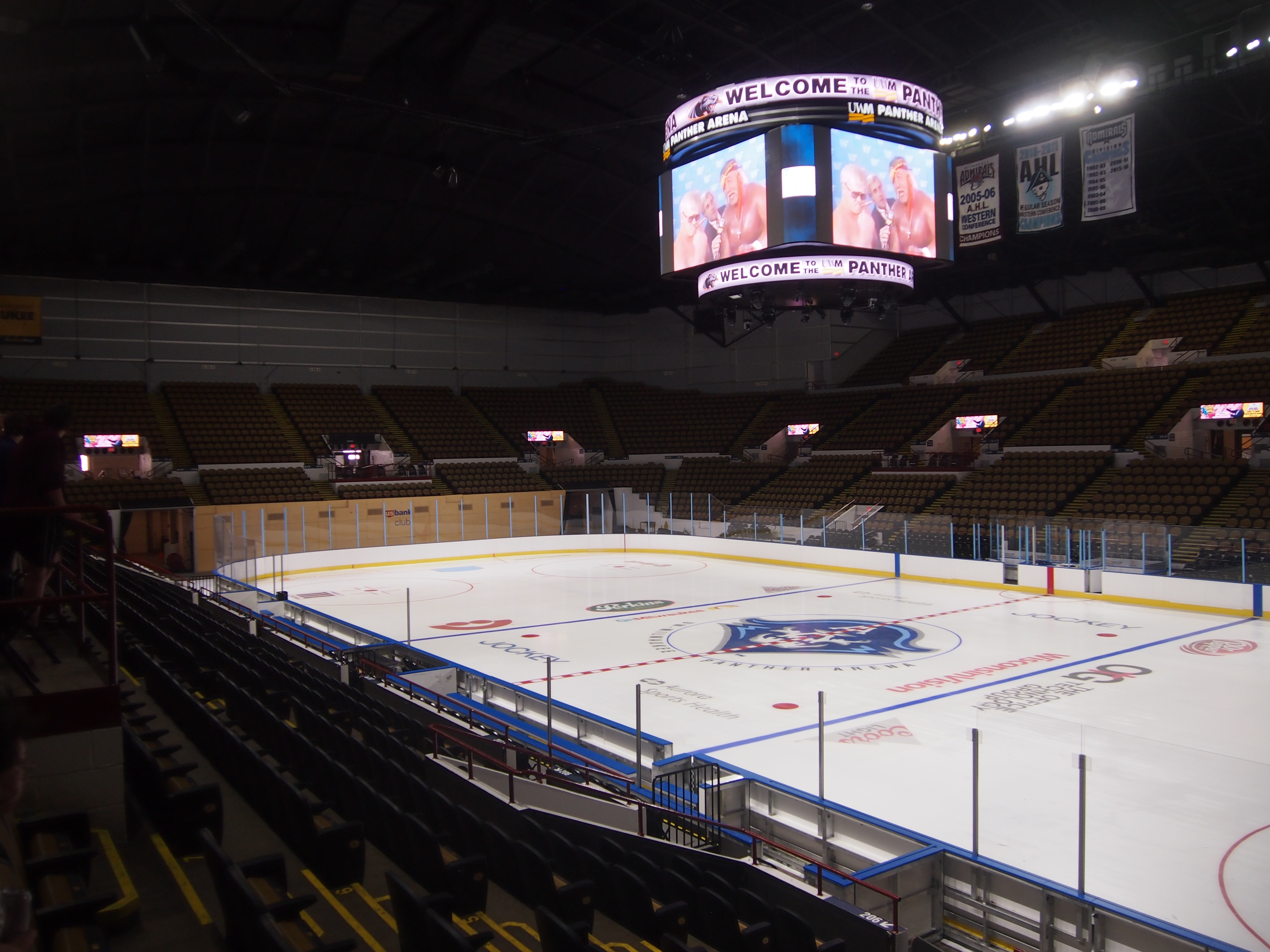
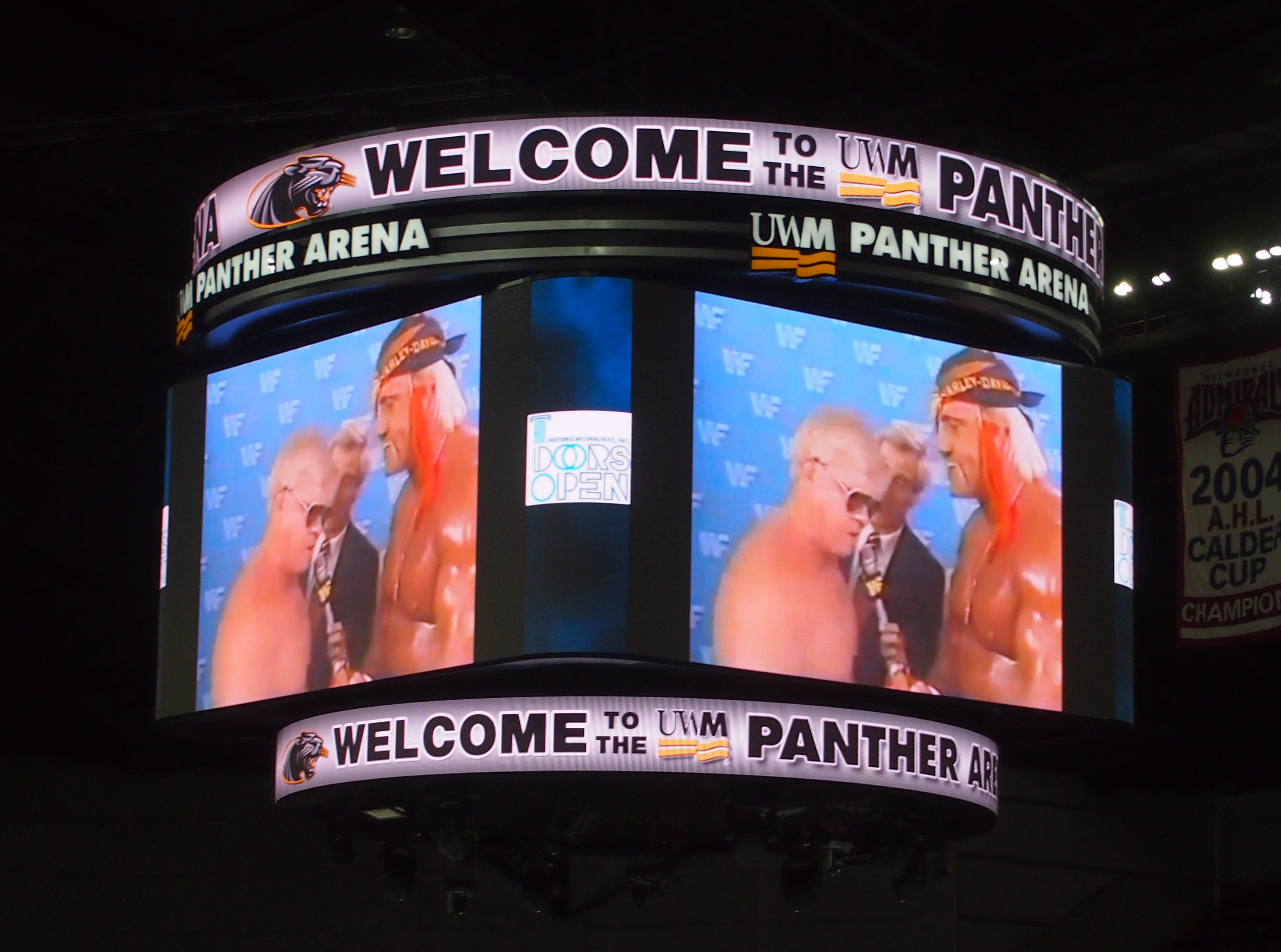
These days the arena is home to the Milwaukee Panthers men’s basketball team of the NCAA, as well as the Brewcity Bruisers, a roller derby league based in Milwaukee. For the record, the Bruisers are a member of the Women’s Flat Track Derby Association.
Milwaukee Doors Open ’18

We went to Milwaukee on Saturday for this year’s Milwaukee Doors Open, a fine event that more cities in this country would do well to emulate. Doors Open and Open House have a fair number of participating cities around the world, but by my count only Atlanta, Chicago, Denver, Milwaukee, Lowell, Mass., and New York in the U.S.

Last year during the event, we visited five Milwaukee churches and one secular building, City Hall. After visiting six churches just last week in Chicago, we took a break from religious sites and focused on other kinds of buildings: a theater, an arena, a former clubhouse that’s now an event venue, a library and a planetarium.

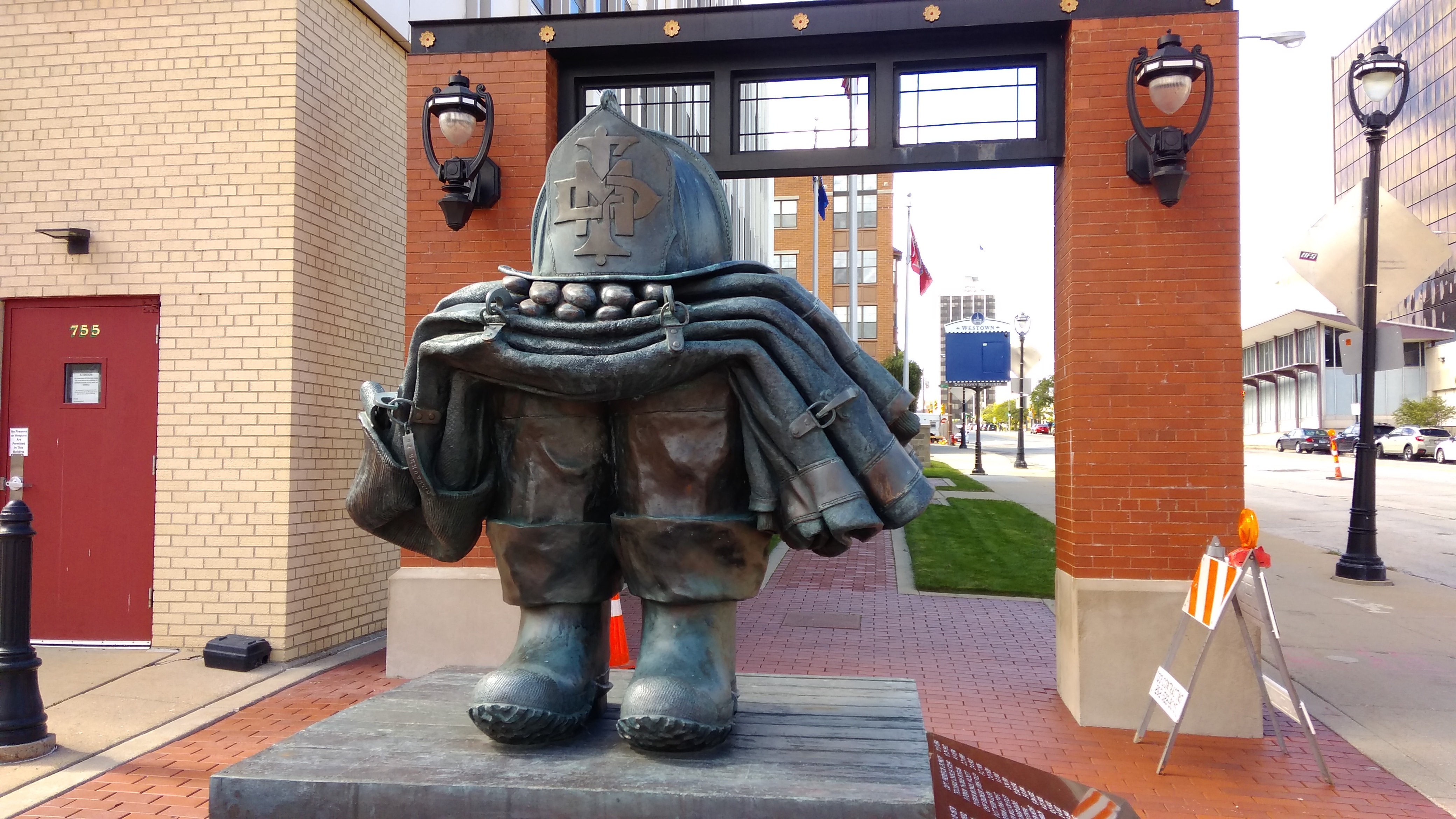
The Doors Open buildings weren’t the only things we saw. For instance, in downtown Milwaukee I noticed this memorial on the grounds of the Milwaukee Fire Dept. HQ, called “The Last Alarm.”Words on one side the plinth explained: Traditionally, in the Milwaukee Fire Department, when a fire fighter dies in the line of duty, his-her boots, topped by a fire fighting coat and helmet, are placed in the procession. As the funeral cortege of the fallen firer fighter approaches, the on-duty crew comes to attention and offers a final salute. This empty turnout gear not only symbolizes the missing fire fighter, but also the emptiness felt by family, friends, and fellow fire fighters who share the loss.

On another side of the plinth is a list of Milwaukee FD firefighters who died in the line of duty.

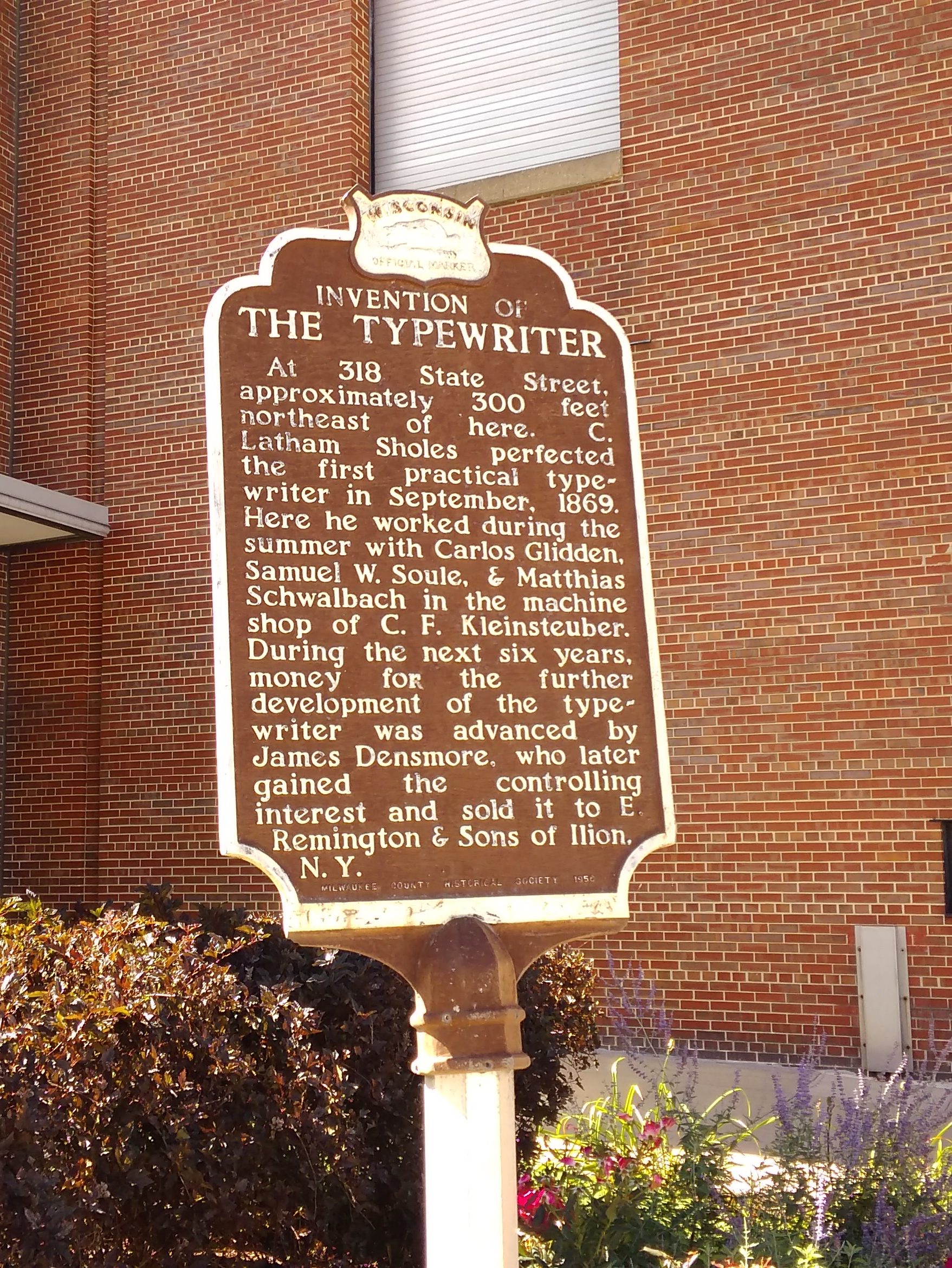
A few blocks away is an historical marker about the typewriter. It’s pretty much self-explanatory, at the least to the aging part of the population that grew up with typewriters.

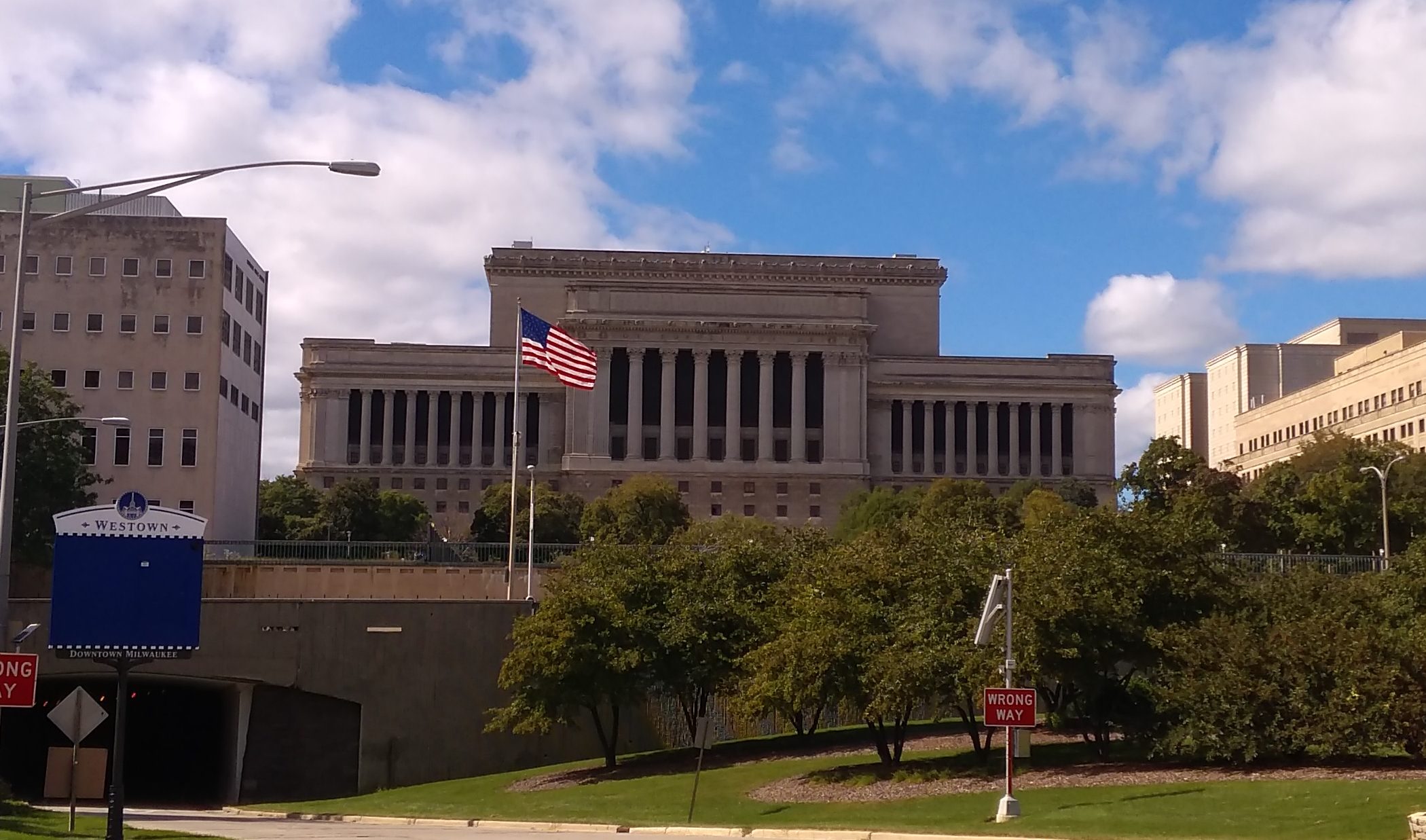
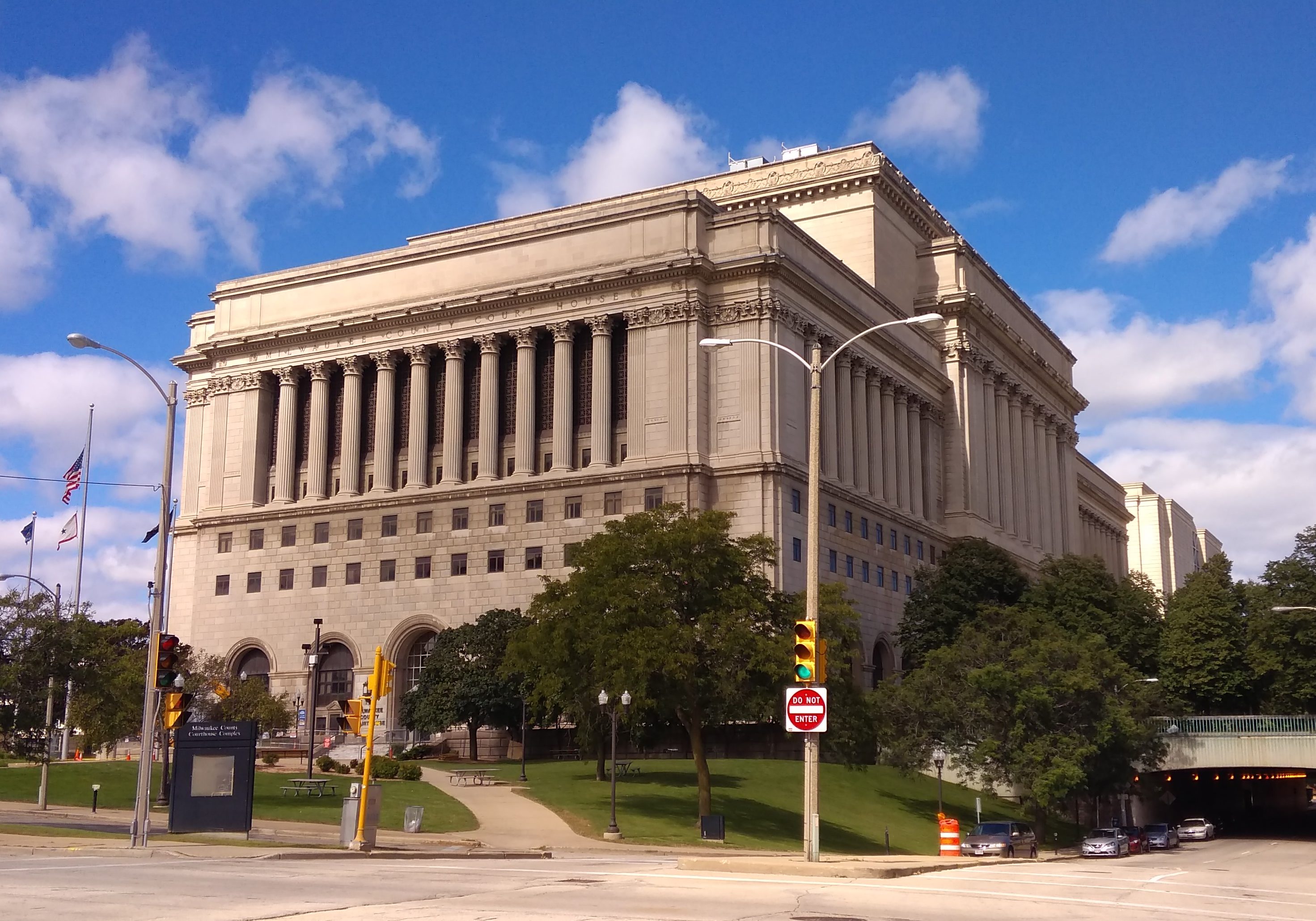
Also downtown is the Milwaukee County Courthouse, and imposing neo-classical edifice by McKim, Mead, and White, finished in 1931. From the east.

Another view, from the southeast, roughly.

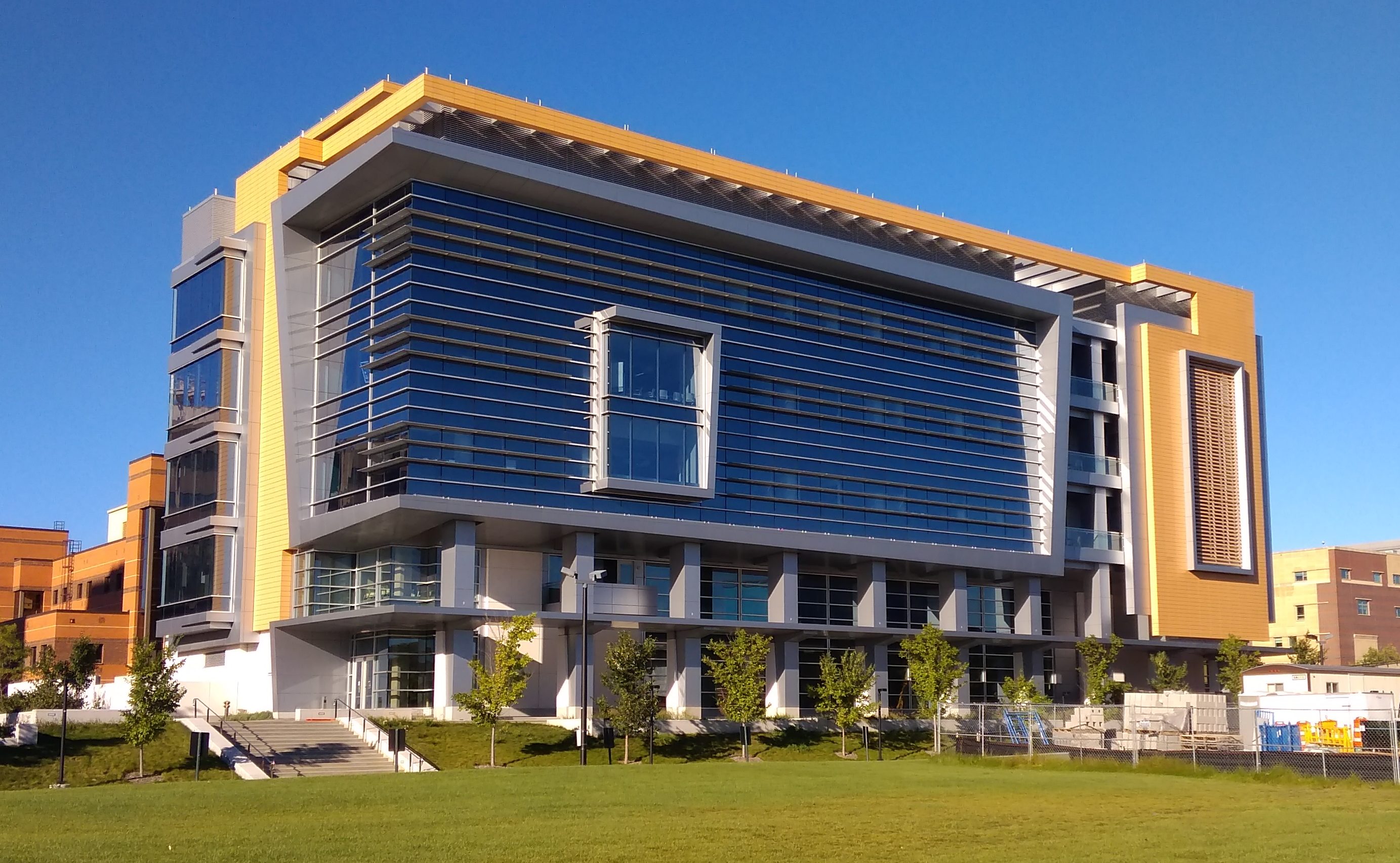
In the afternoon, we left downtown to visit the campus of the University of Wisconsin- Milwaukee, which is in the northern reaches of the city, not far from Lake Michigan. Though not open for a tour, I thought this building was interesting.

It’s the Kenwood Interdisciplinary Research Complex, which includes labs, classrooms, offices and meeting spaces for the university’s physics, chemistry and the Environmental Health Sciences doctoral program within the Zilber School of Public Health. Finished in 2015.

Postmodern, I suppose. According to Flad Architects, who designed it, “the exterior expression of yellow terracotta, exposed concrete and metal panels is rendered as an assemblage of components, a metaphor for the research and innovation happening within.” That is to say, pay attention, Science is happening here.

Not far away is a sizable concrete sculpture.

Not the most aesthetic assemblage of material, or even concrete, that I’ve ever seen. But it has a cool name: “Jantar-Mantar,” which I suppose is an homage to the astronomical observatories in India of that name, though without the hyphen. Erected in 1995.

Narendra Patel, who used to teach art at the university, is listed on the plaque as the sculptor, with the piece otherwise “created and completed through the hard work and direction of Dennis Manley and the following students of sculpture [lists 14 names].”

Postcard From Russia

First coolish weekend since spring. Or rather warmish days and coolish nights. The beginning of the same slide into winter as every year.

A postcard I picked up in Russia in 1994.

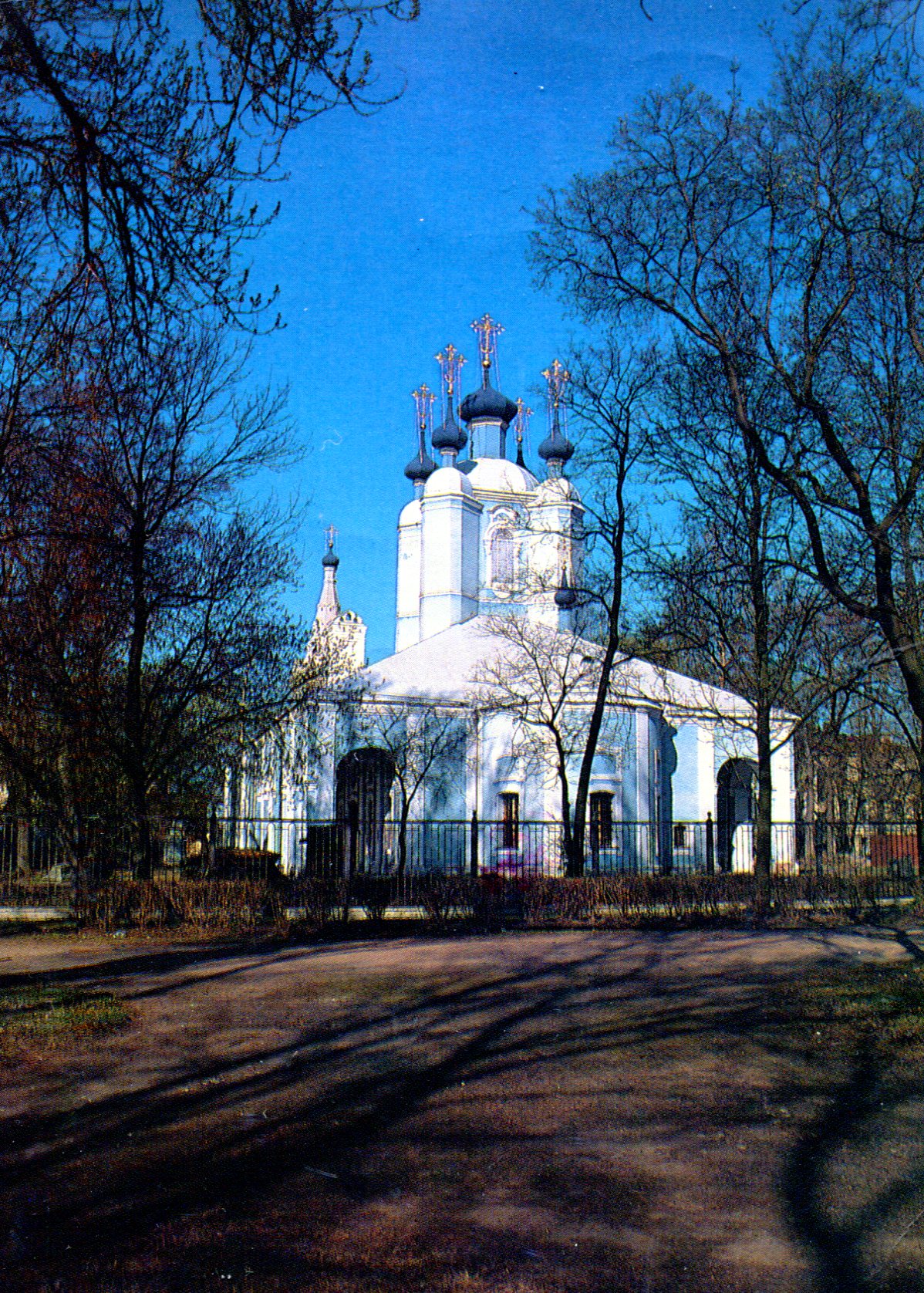
The Sampsonievsky Cathedral (St Sampson’s), St. Petersburg. Looks like it’s been restored since the postcard was made. If I remember right, the building wasn’t even open when we visited St. Petersburg.

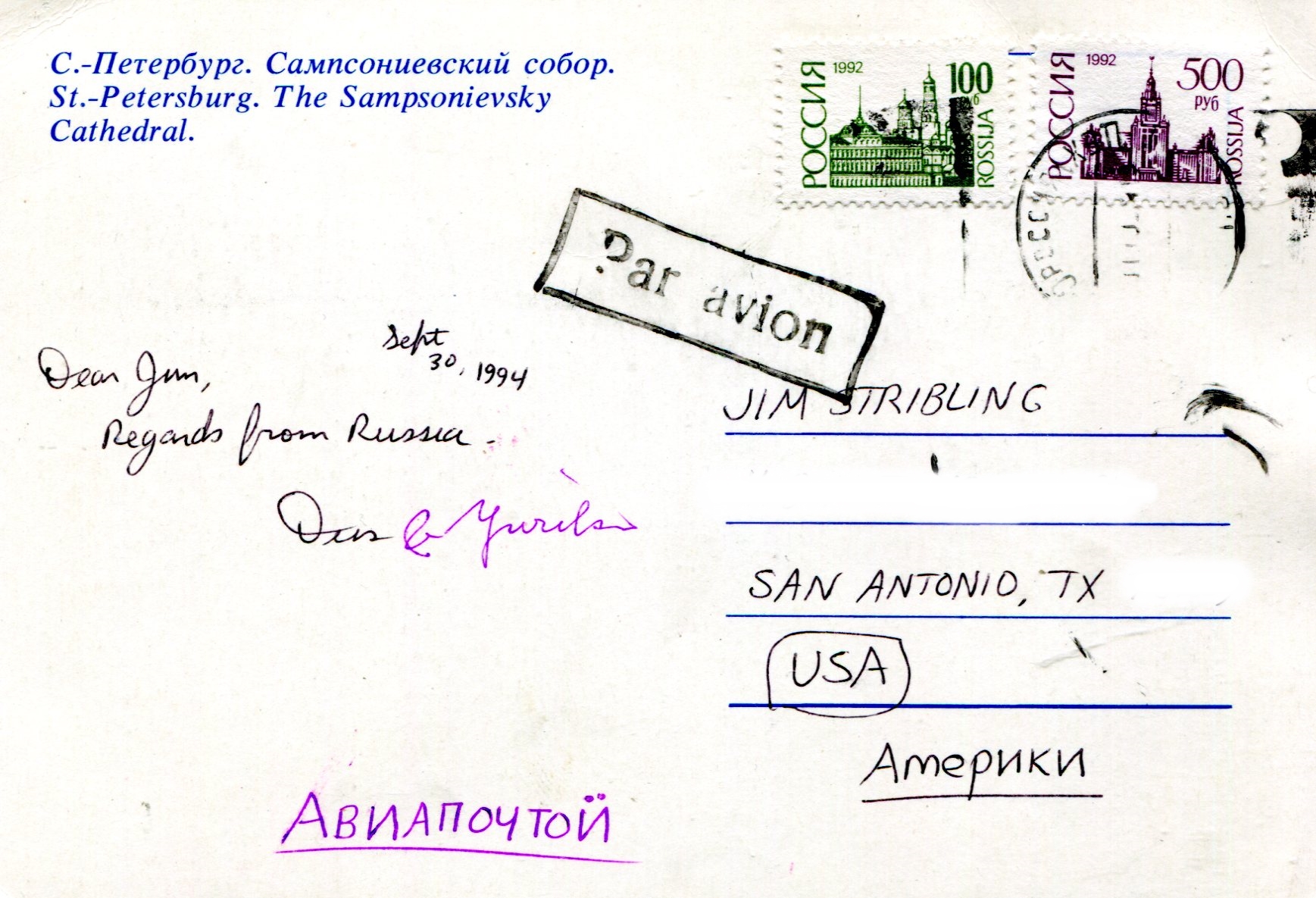
Anyway, at the time I sent the card to my brother Jim with a simple message.

Address whited out for posting. 600 rubles would have been… anywhere from 20 to 30 U.S. cents, since the exchange rate bucked around from 2,000 to 3,000 rubles to the dollar during the two weeks we were in country. Not bad for an international mailing.

I probably sent a dozen cards from the main post office, an elegant structure dating back to the time of Catherine the Great, and still a post office in the Soviet and post-Soviet eras. Elegant, but a little dingy. If these pictures are accurate, the place has been spiffed up since the mid-90s.

The Church of St. Barbara

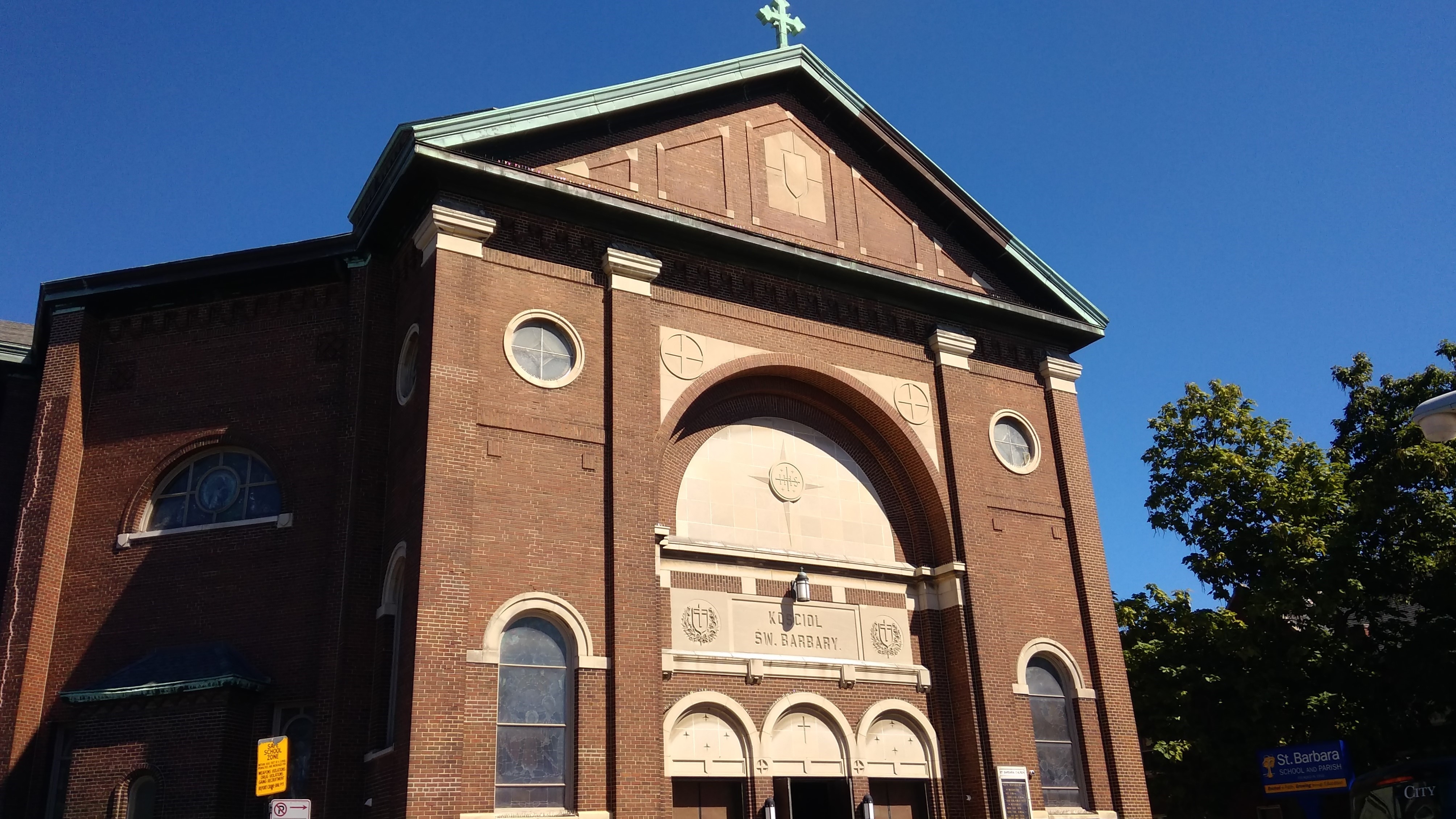
The last stop for bus #4 on this year’s church tour in the Bridgeport neighborhood of Chicago was the Church of St. Barbara on S. Throop St.
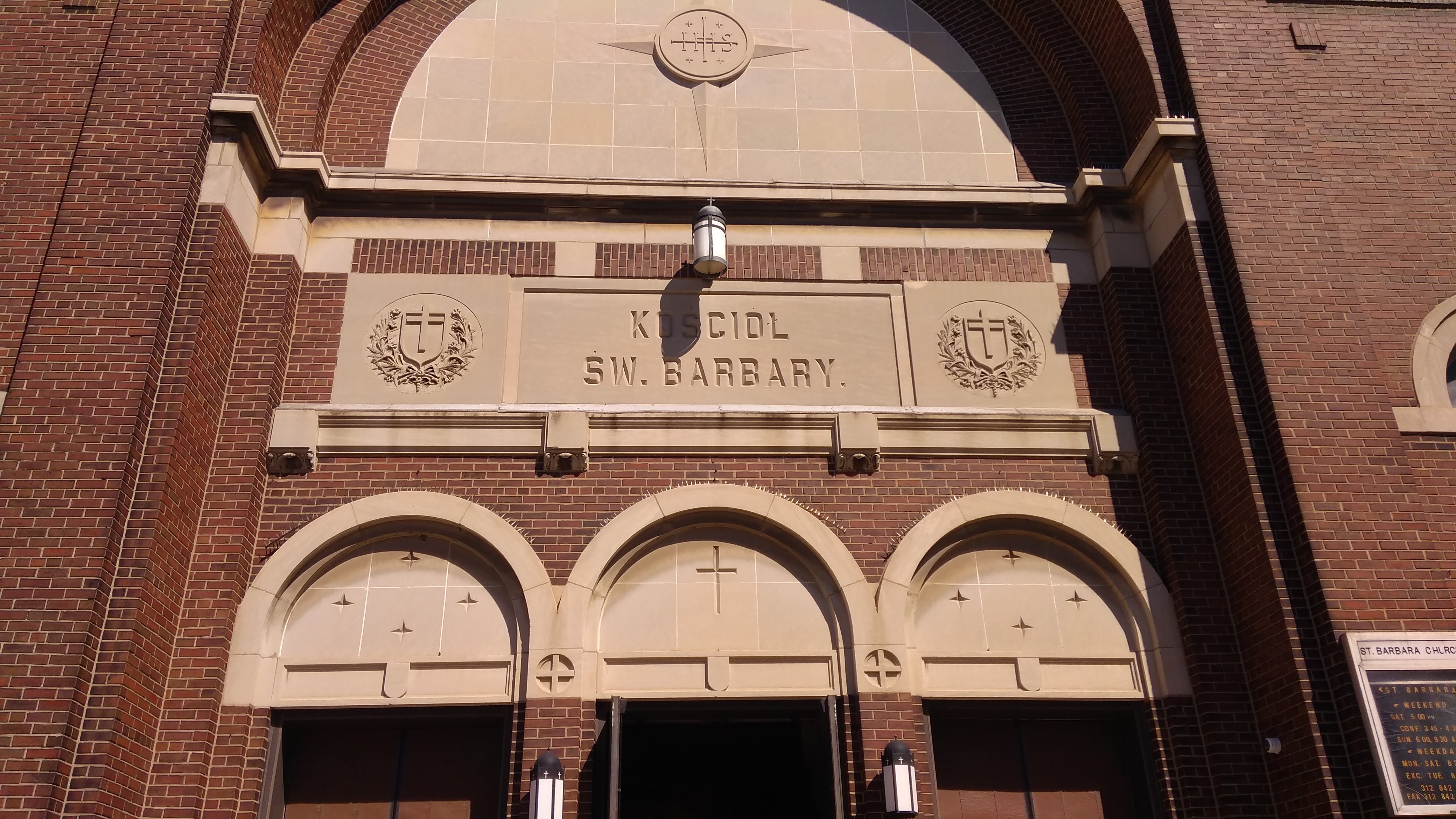
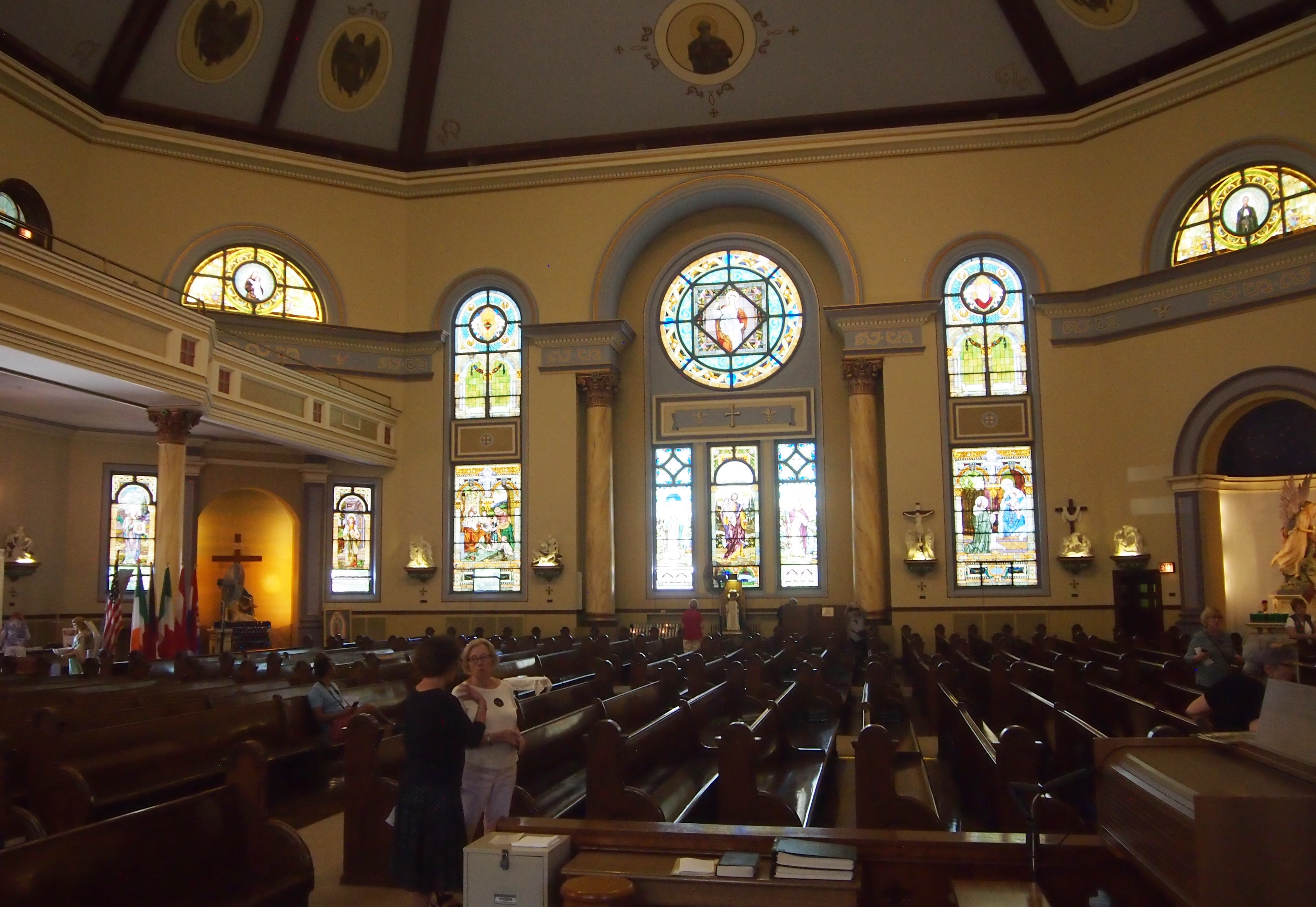
It’s an octagonal Renaissance-style church and another edifice created by a Polish congregation in the early 20th century. These days, the congregation is much more  ethnically mixed, but Polish still greets visitors at the main entrance.
St. Barbara is another Worthmann & Steinbach design, finished in 1914, the second we saw on Saturday after First Lutheran Church of the Trinity. Architects tend to be ecumenical in their clients, I figure. A commission’s a commission.

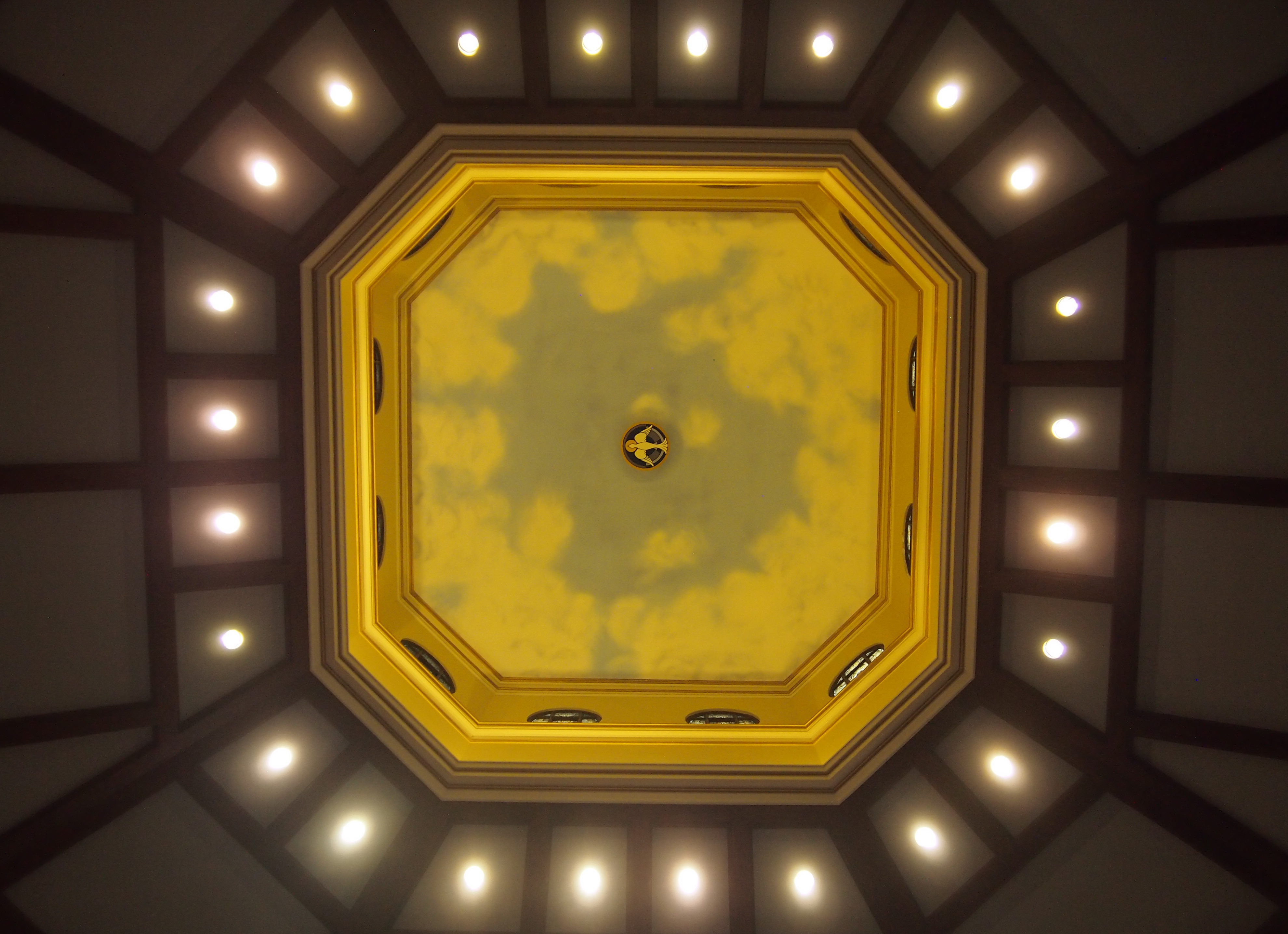
The octagonal shape makes it a little hard to comprehend the interior by looking straight ahead. You have to spend time looking around.
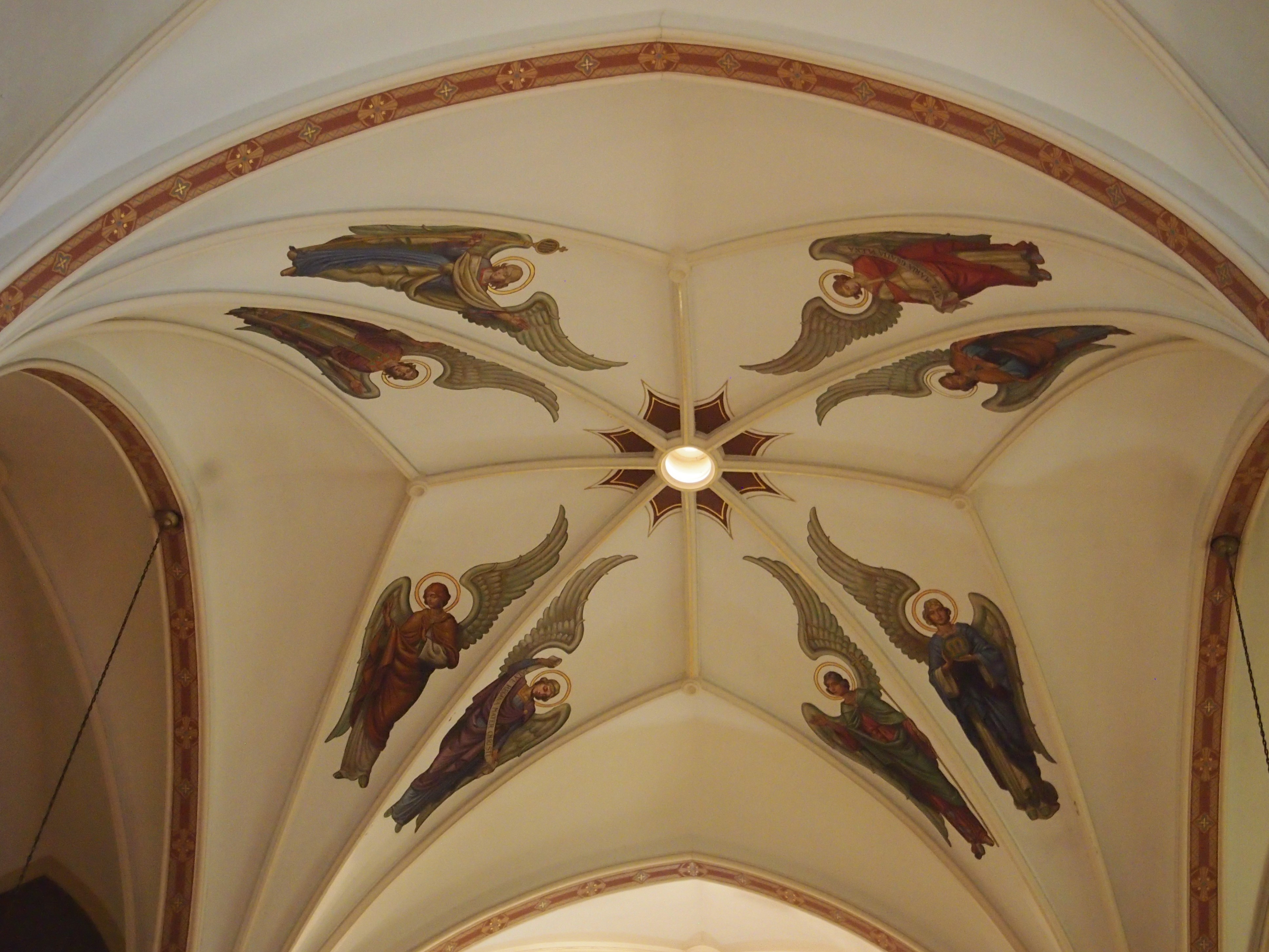
And looking up.
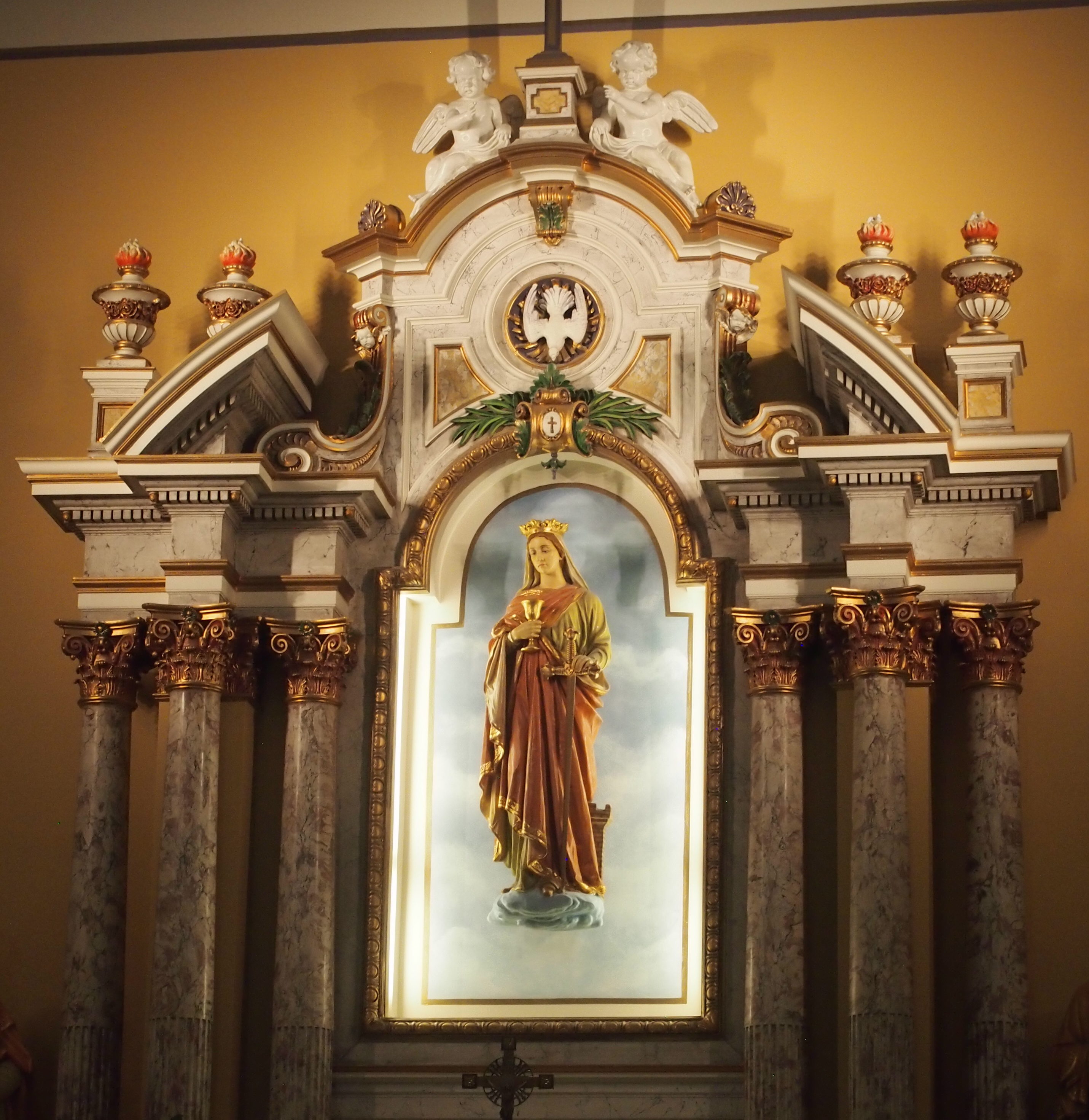
Here’s St. Barbara, looking down on the altar.
I couldn’t remember who St. Barbara was thought to be, but the sword is distinctive. So I looked her up later.

“Virgin and Martyr,” New Advent says. “There is no reference to St. Barbara contained in the authentic early historical authorities for Christian antiquity, neither does her name appear in the original recension of St. Jerome’s martyrology. Veneration of the saint was common, however, from the seventh century.

“Barbara was the daughter of a rich heathen named Dioscorus. She was carefully guarded by her father who kept her shut up in a tower in order to preserve her from the outside world… Before going on a journey her father commanded that a bath-house be erected for her use near her dwelling, and during his absence Barbara had three windows put in it, as a symbol of the Holy Trinity, instead of the two originally intended.

“When her father returned she acknowledged herself to be a Christian; upon this she was ill-treated by him and dragged before the prefect of the province, Martinianus, who had her cruelly tortured and finally condemned her to death by beheading. The father himself carried out the death sentence, but in punishment for this he was struck by lightning on the way home and his body consumed.

“The legend that her father was struck by lightning caused her, probably, to be regarded by the common people as the patron saint in time of danger from thunderstorms and fire, and later by analogy, as the protector of artillerymen and miners.”

One of those very popular saints without any actual historical basis, it seems. No matter. She has a lot of places named after her besides the city in California.

After looking around the sanctuary, we went to the adjacent school for snacks. That’s where I saw something else I’d never seen before.

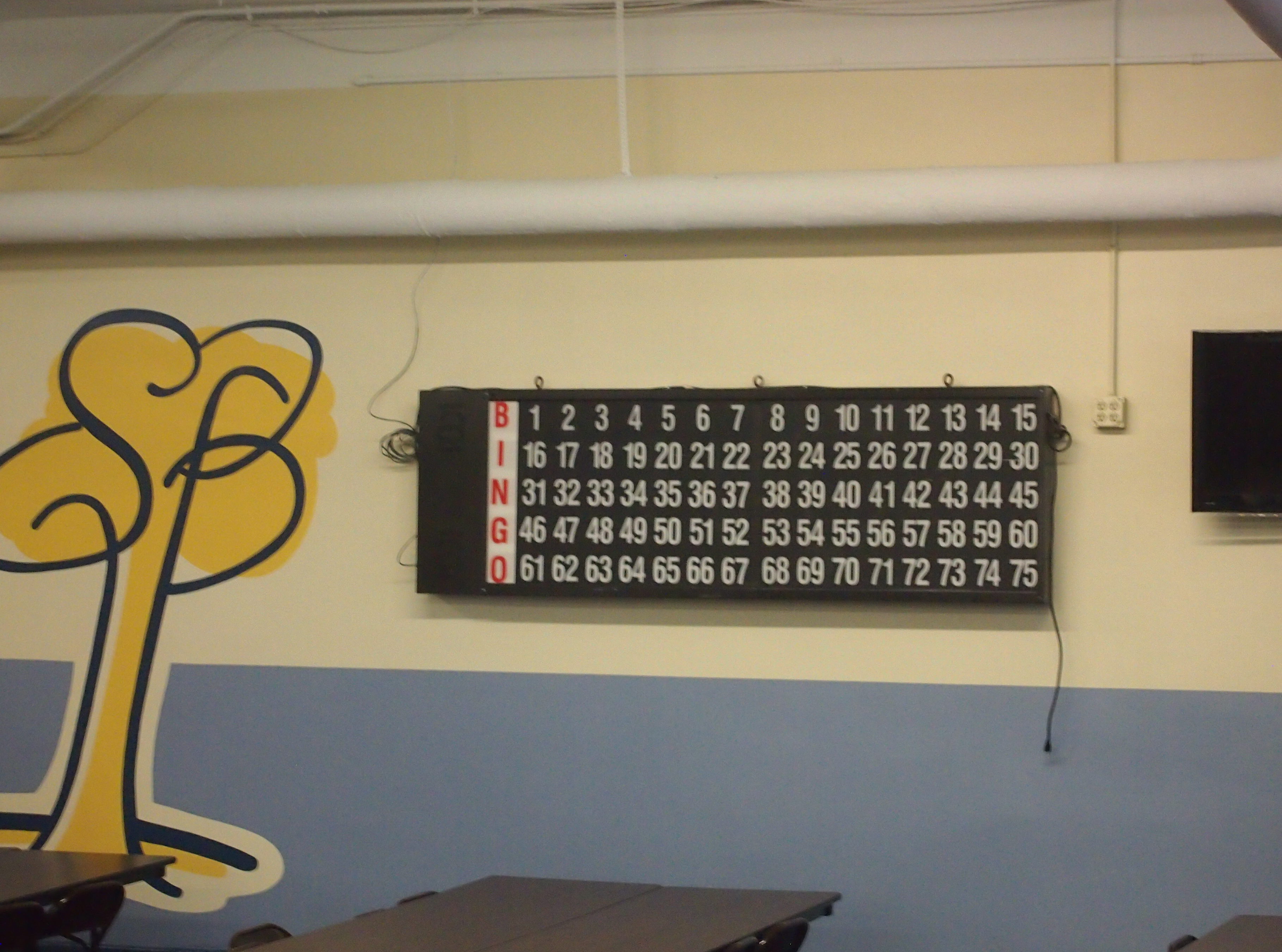
A bingo sign. Plugged in and everything. Pretty much as mysterious to me as the tales of St. Barbara.
All Saints-St. Anthony Church

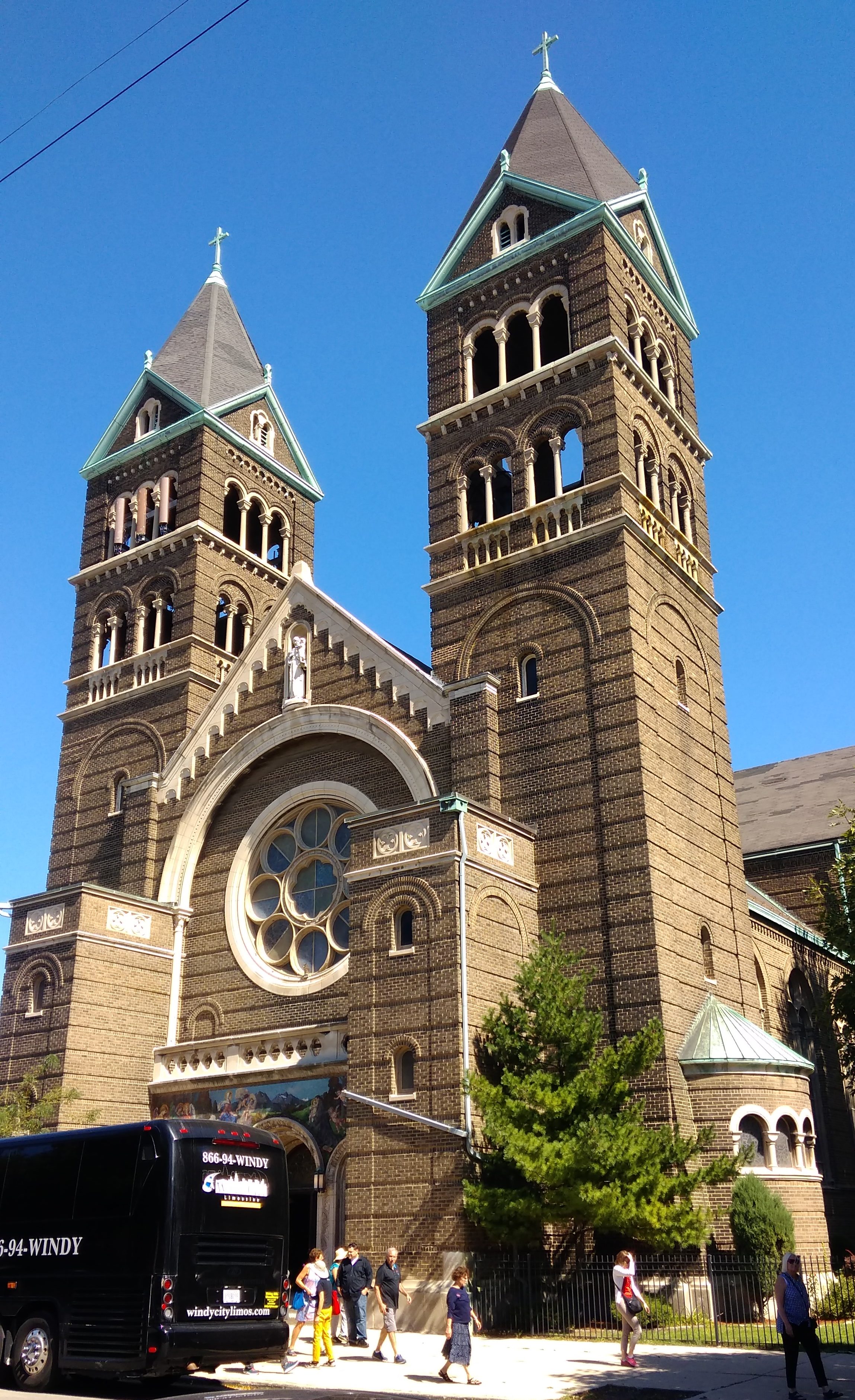
After we visited the relatively spare First Lutheran Church of the Trinity in the Bridgeport neighborhood, we experienced a more ornate style at All Saints-St. Anthony on W. 28th St.
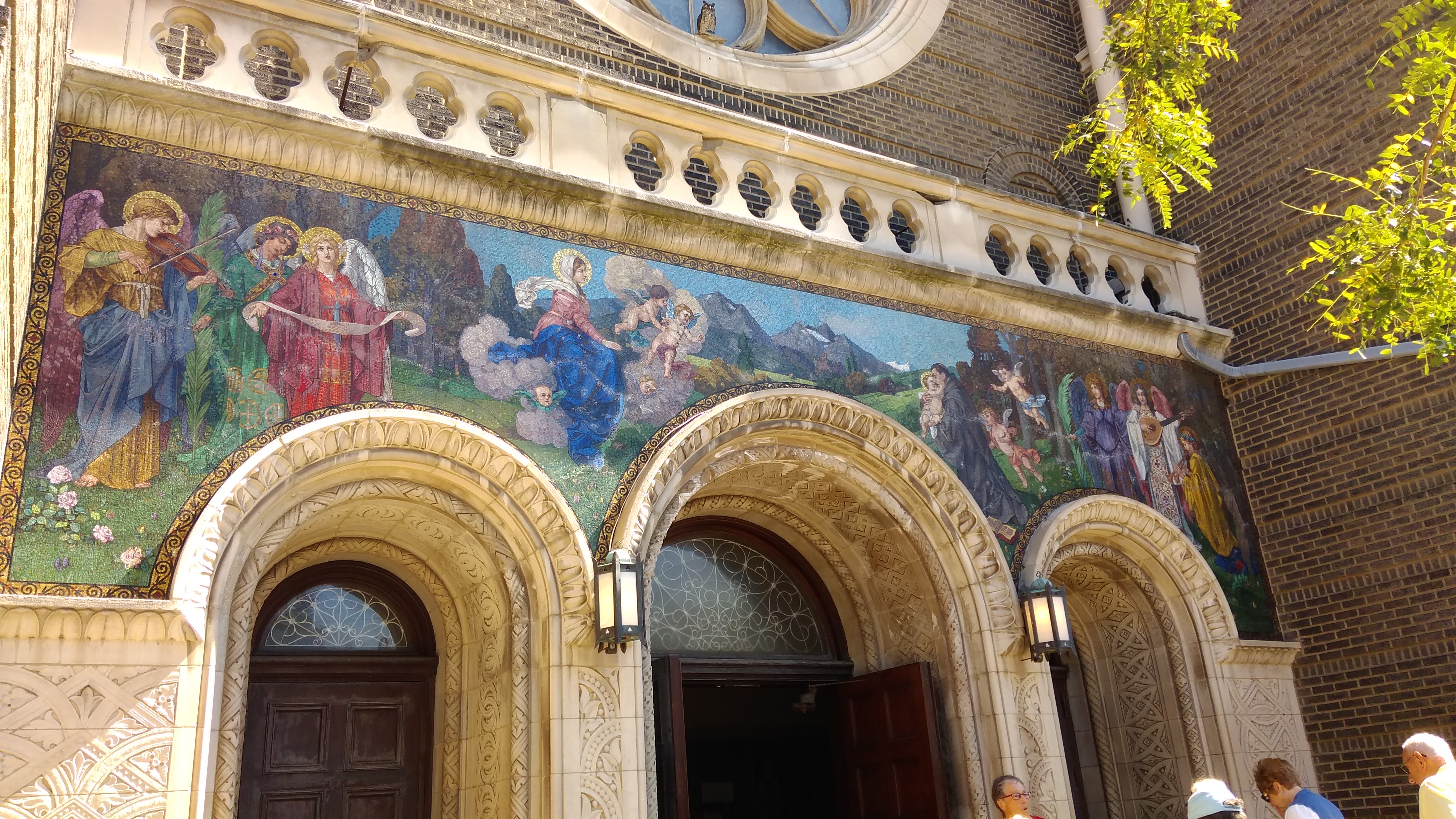
The Romanesque style church was another work by Henry Schlacks, completed in 1915. According to a history of the two congregations that formed the present church, “Pre-eminent among the distinguishing features of the Church, even today, is a mosaic of the vision of St. Anthony of Padua adorning the exterior above the main entrance.”

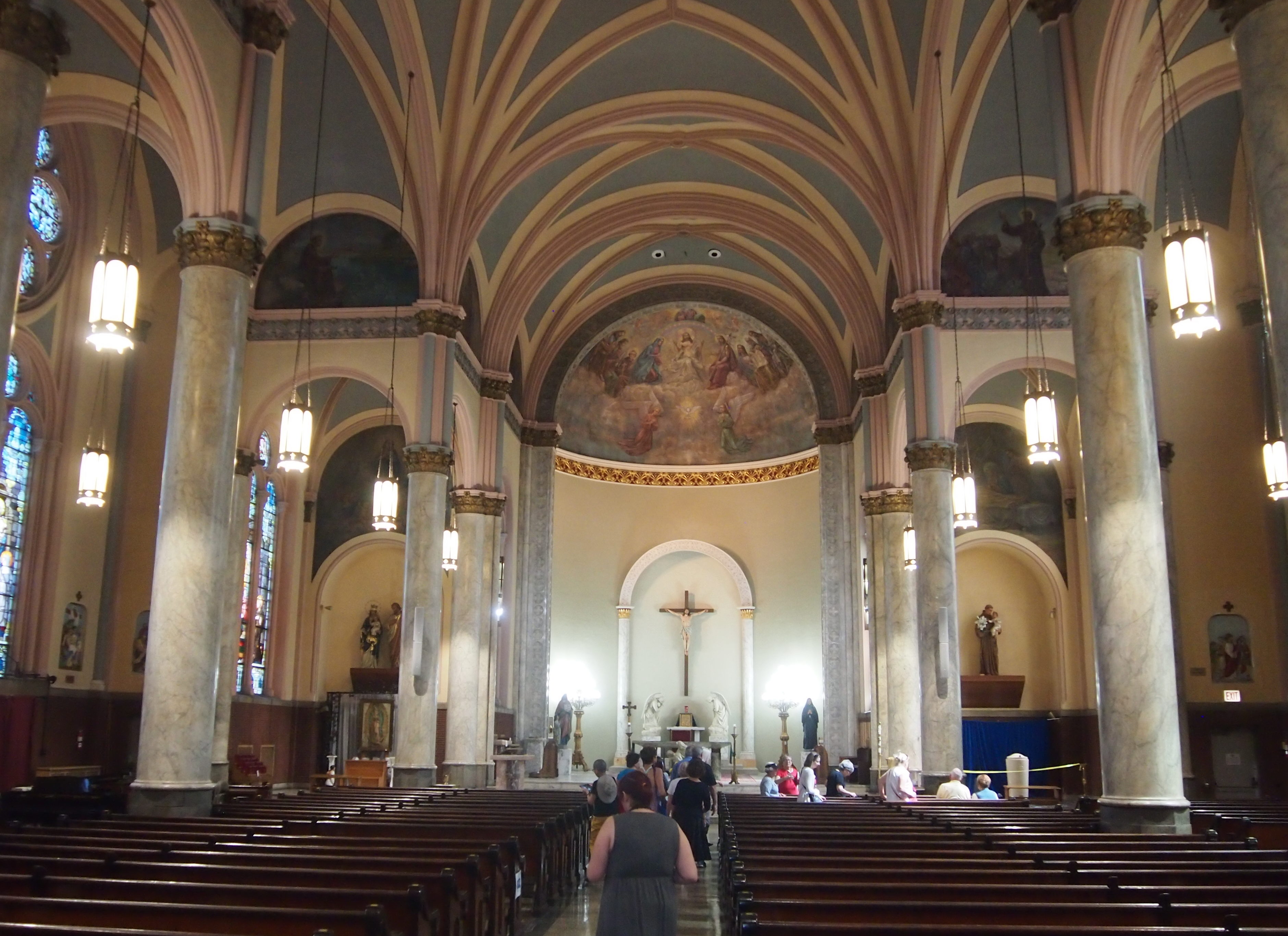
The view toward the apse.
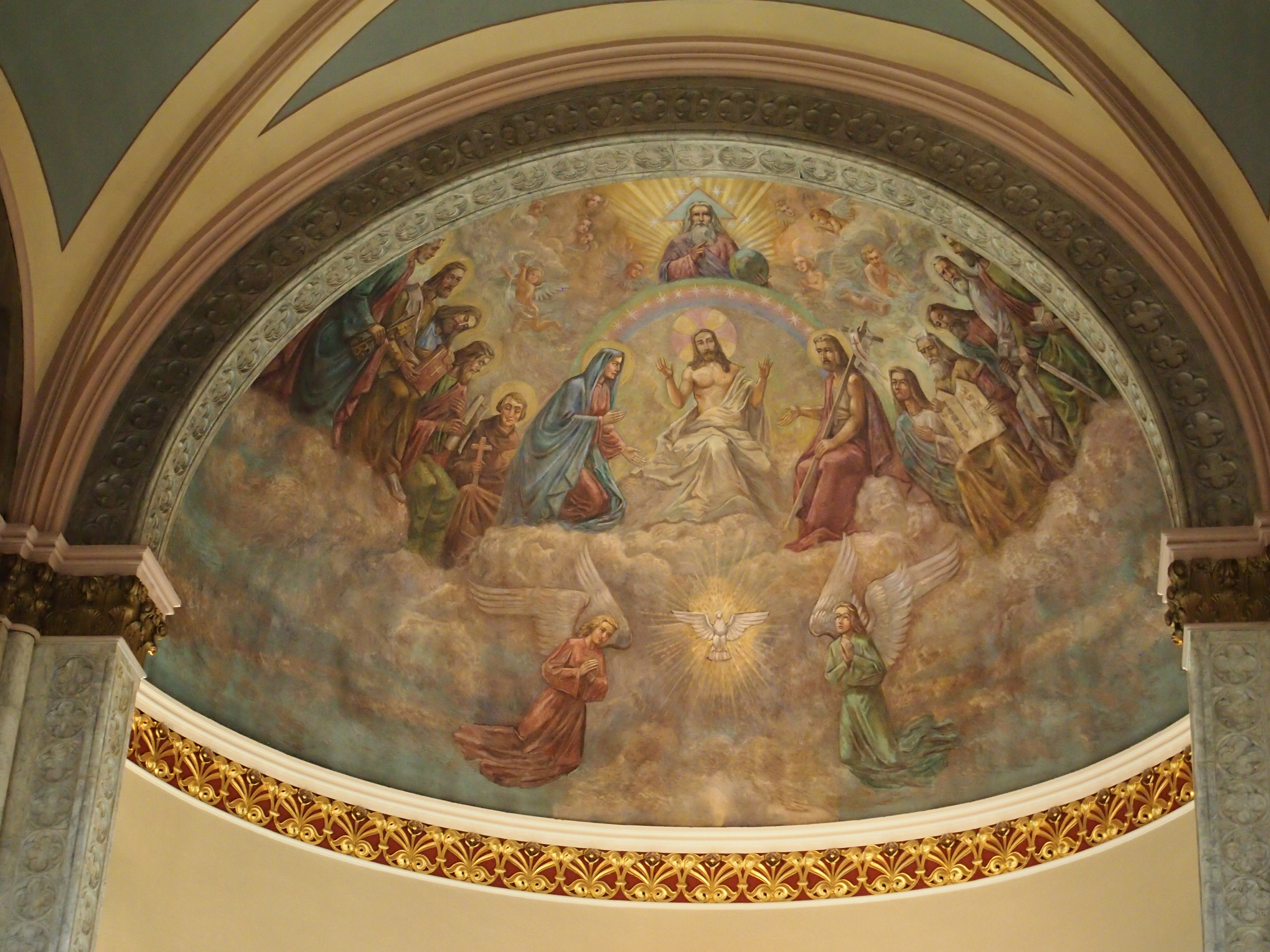
The mural behind the altar.
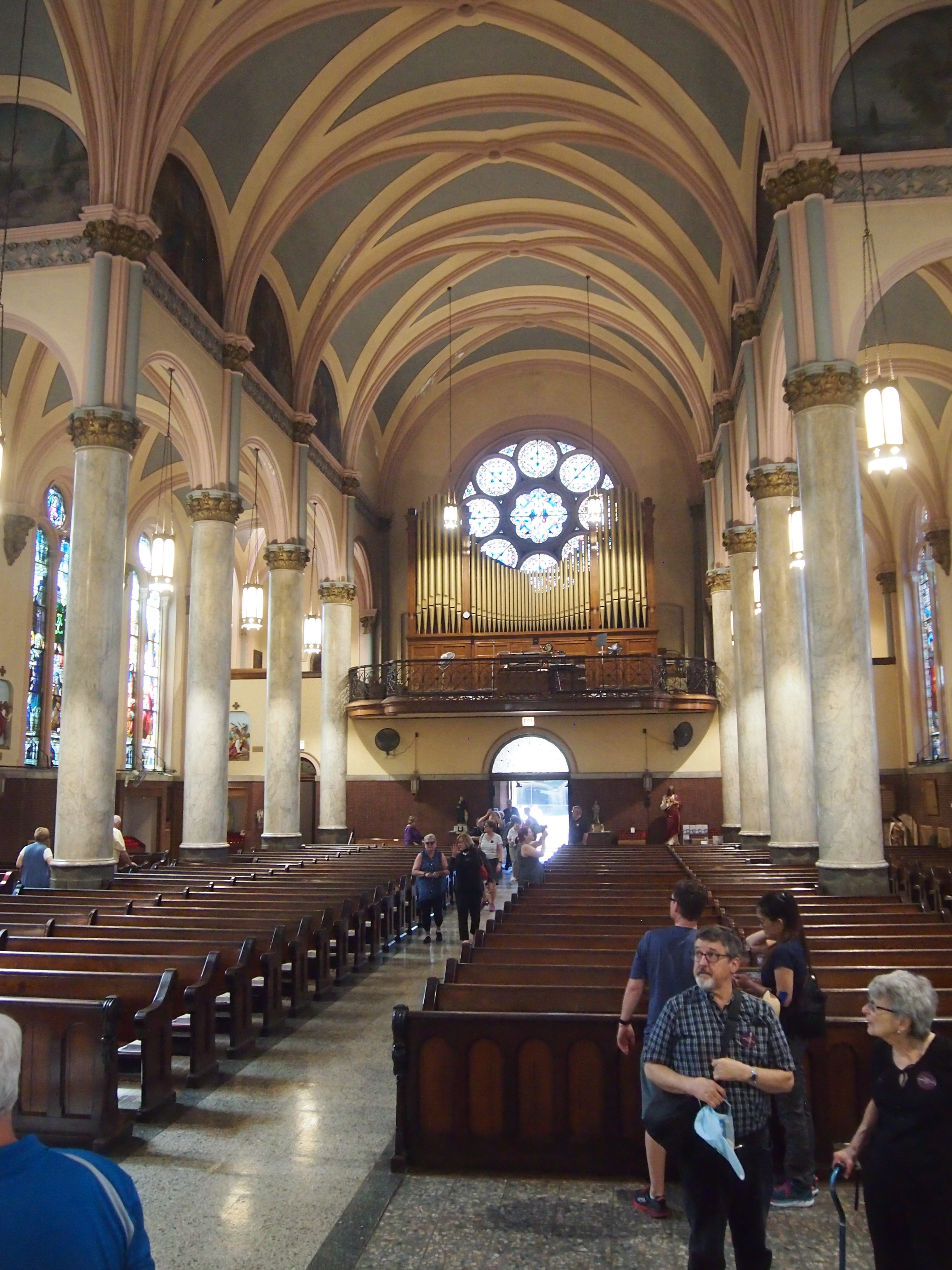
Back toward the narthex.
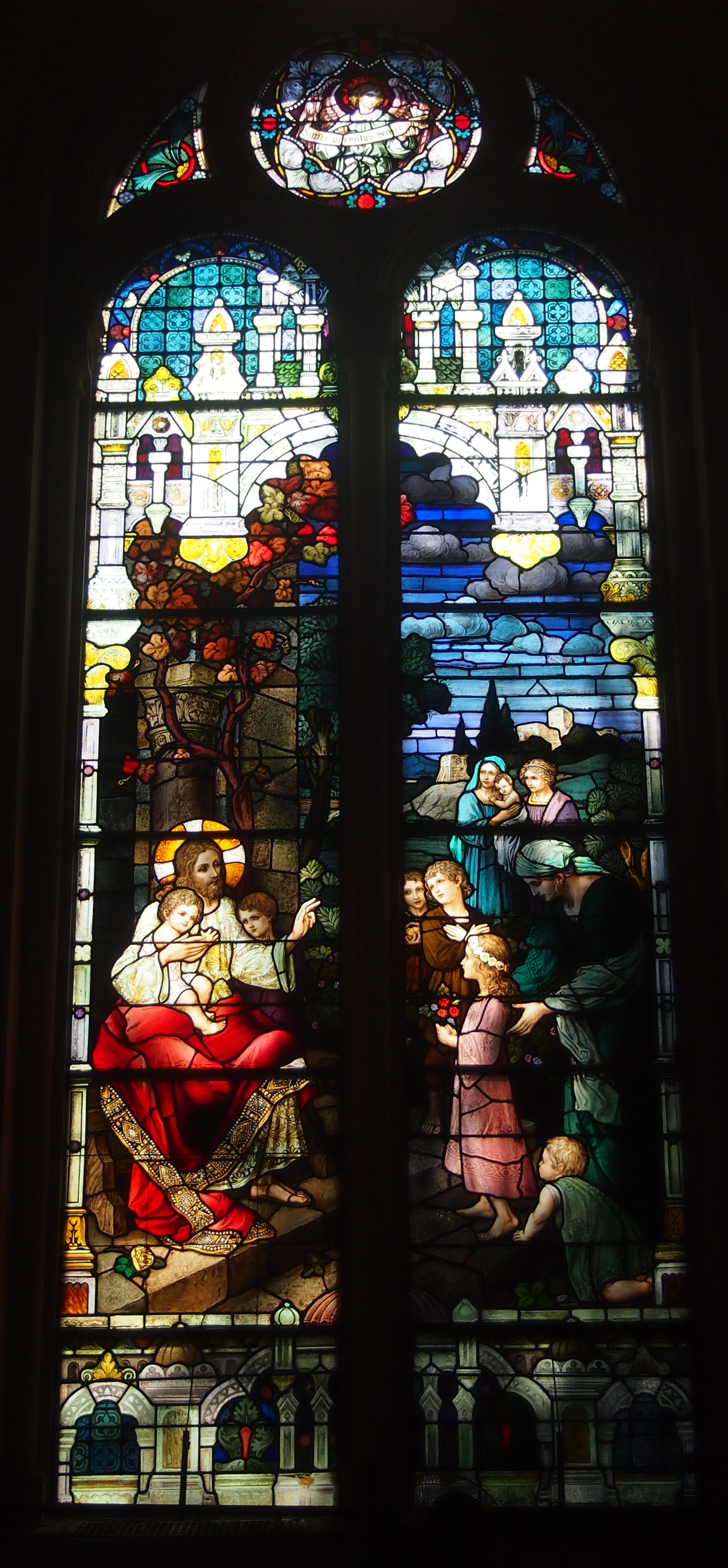
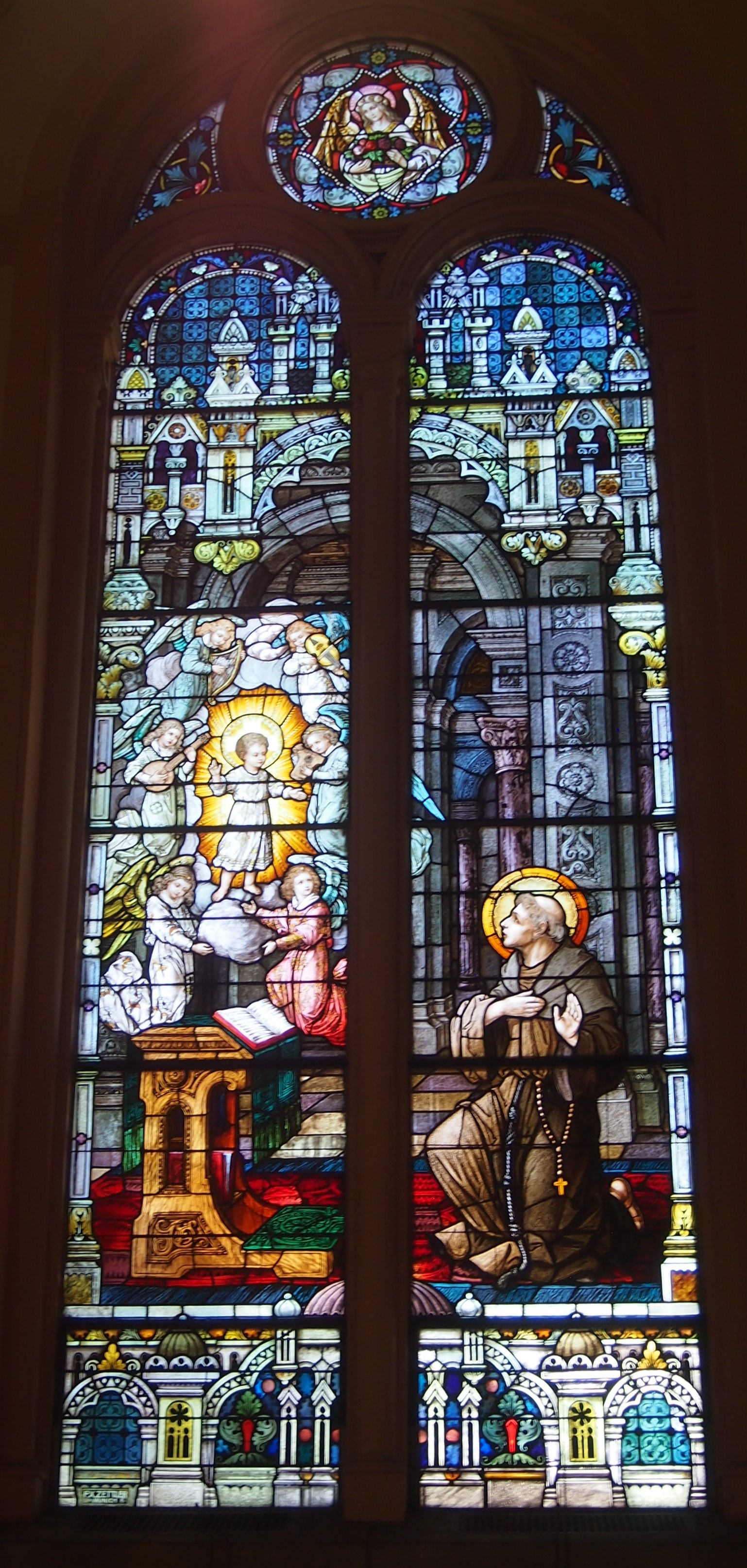
The church’s stained glass is attributed to Franz Xaver Zettler, whom I’ve run across before.
Though Bavarian, Zettler did a lot of American windows.

First Lutheran Church of the Trinity

Mostly Catholic immigrants have populated the Bridgeport neighborhood in Chicago over the years, but not entirely. There were many Germans there once upon a time, some of whom happened to be Lutheran.

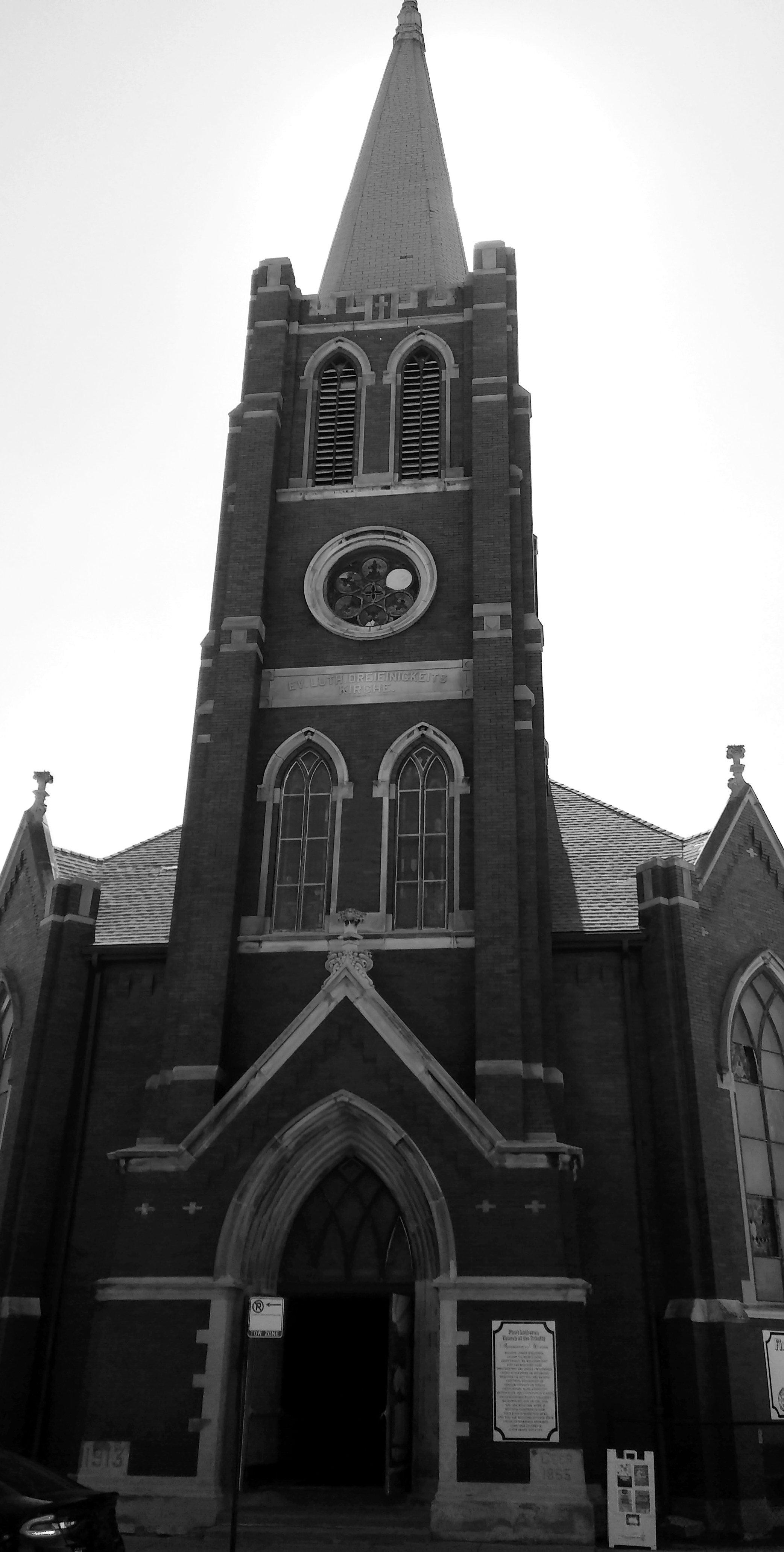
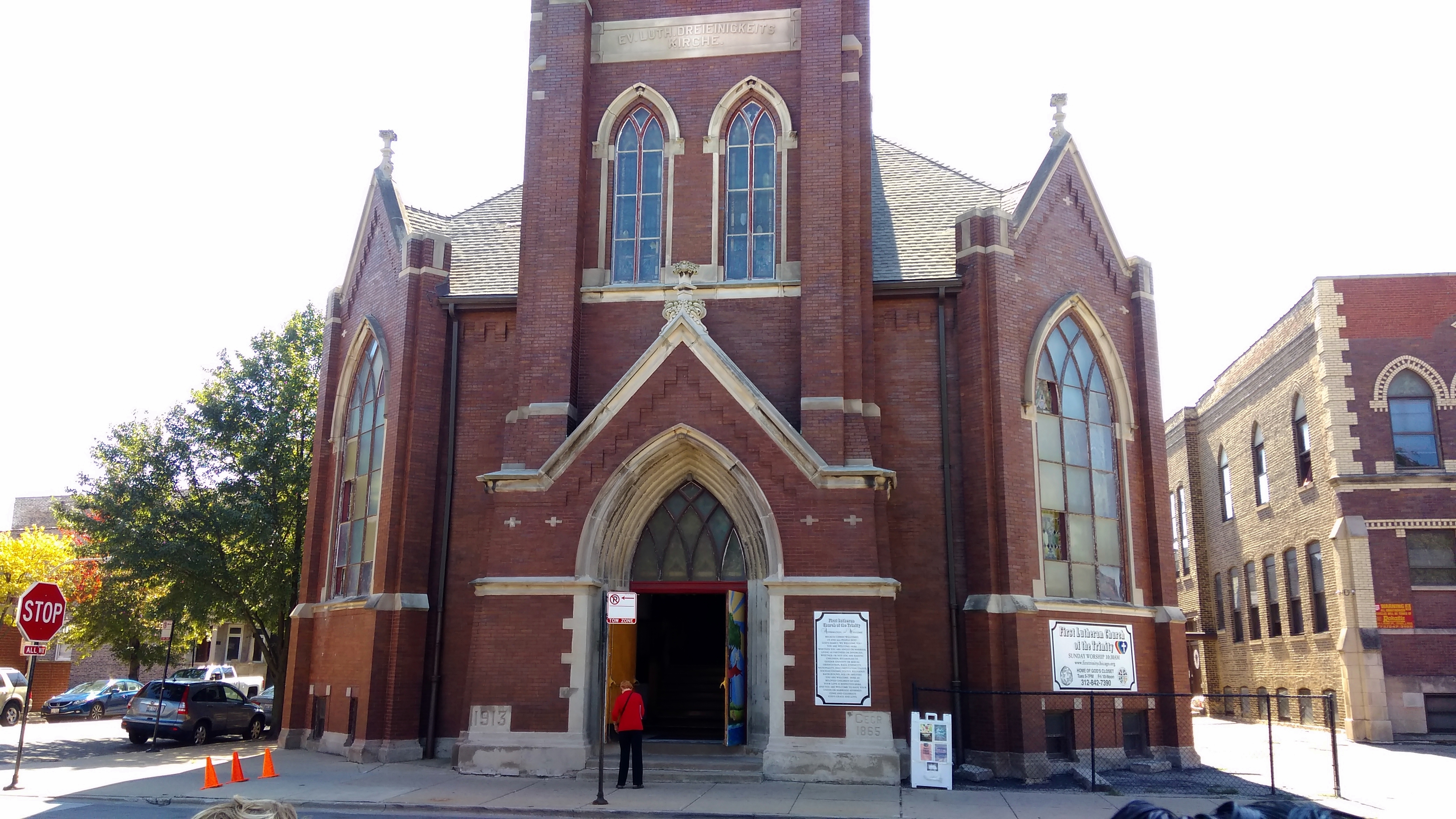
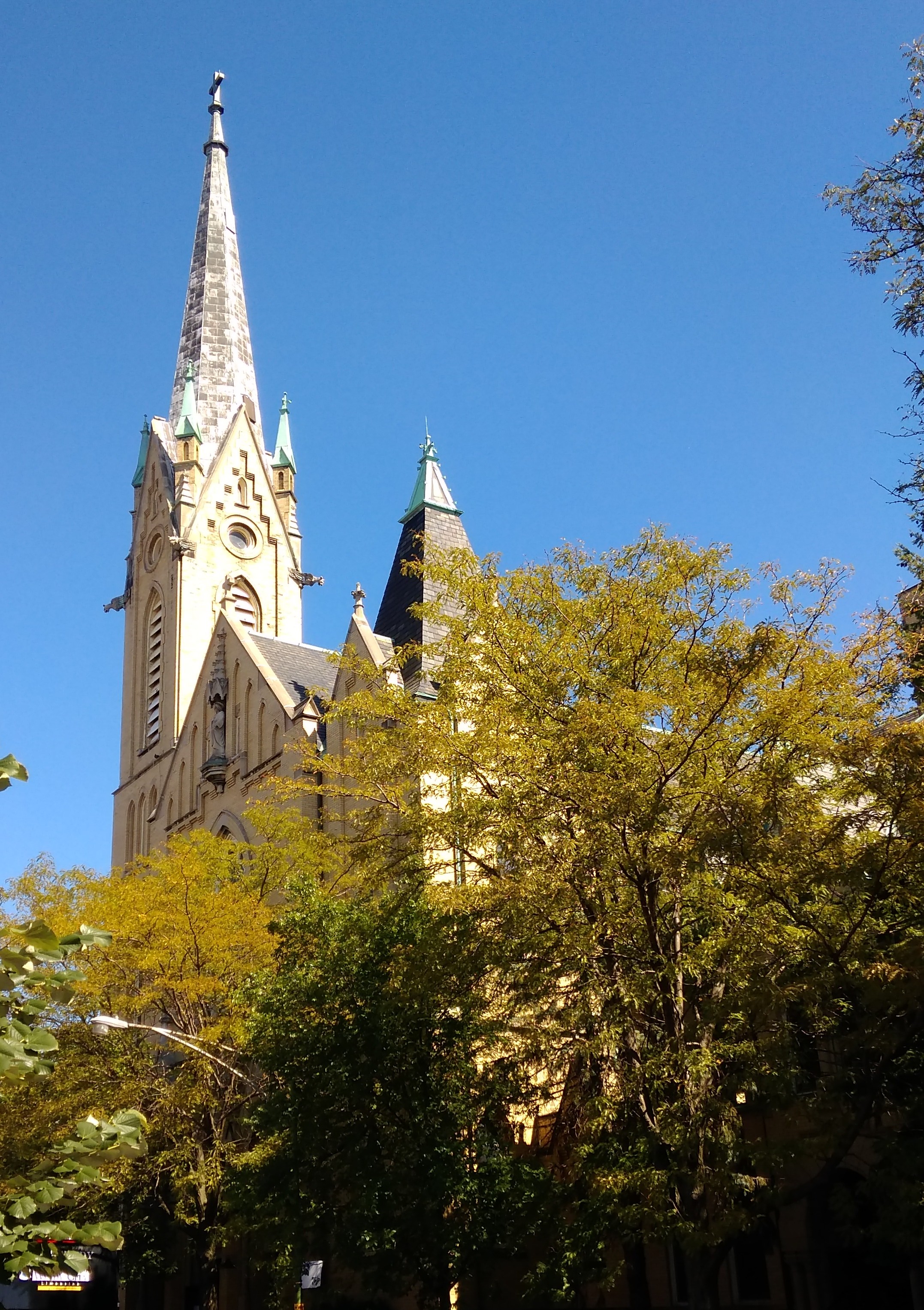
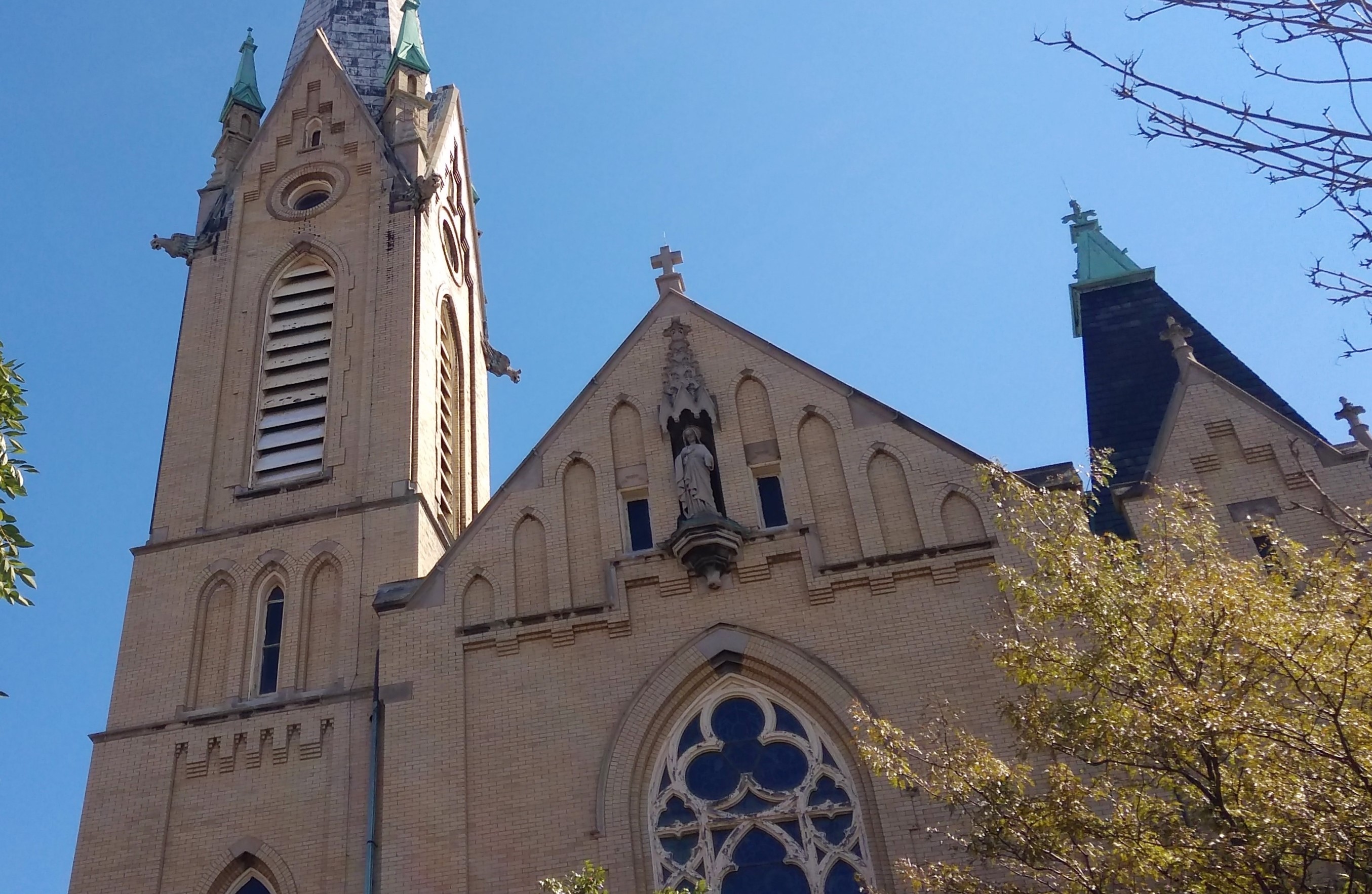
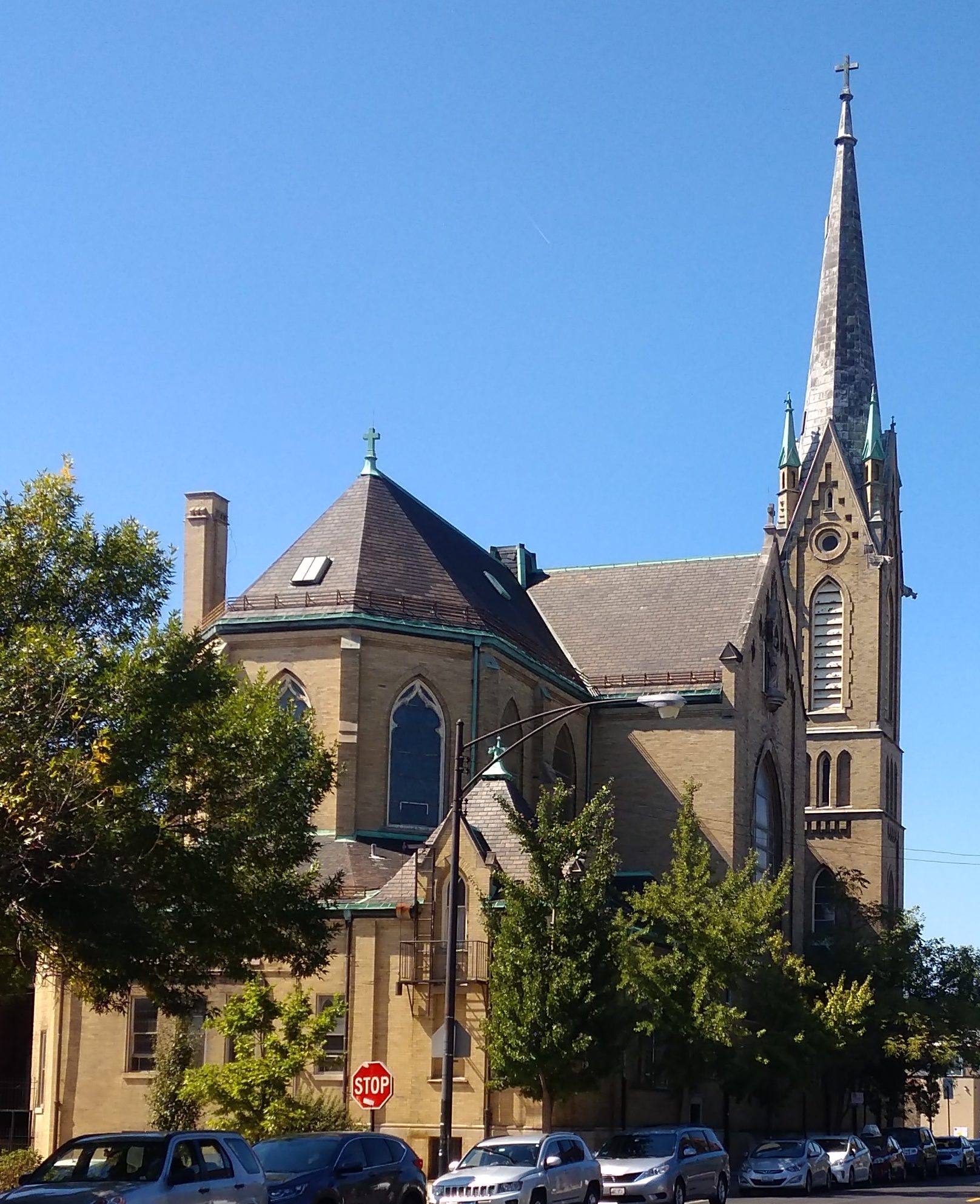
First Lutheran Church of the Trinity rises over W. 31st St. and has since 1913. It was the only Protestant church we visited on the tour.

Worthmann & Steinbach did the Gothic design. They also did St. Mary of the Angels, while Steinbach did Covenant Presbyterian Church.

“Currently the oldest Christian congregation in the Bridgeport neighborhood of Chicago [founded in 1865], First Trinity was originally located on the southeast corner of 25th Place and S. Canal,” the church web site notes. “After the railroad took possession of that property, the church moved to its current location… in the early 20th century.

“The church started out as a German immigrant parish named Ev. Luth. Dreieinigkeits (Evangelical Lutheran Trinity), supported an elementary school, and earned the nickname ‘Mother Church of the South Side’ by numerous branch schools that eventually developed into daughter congregations on the South Side of Chicago.”

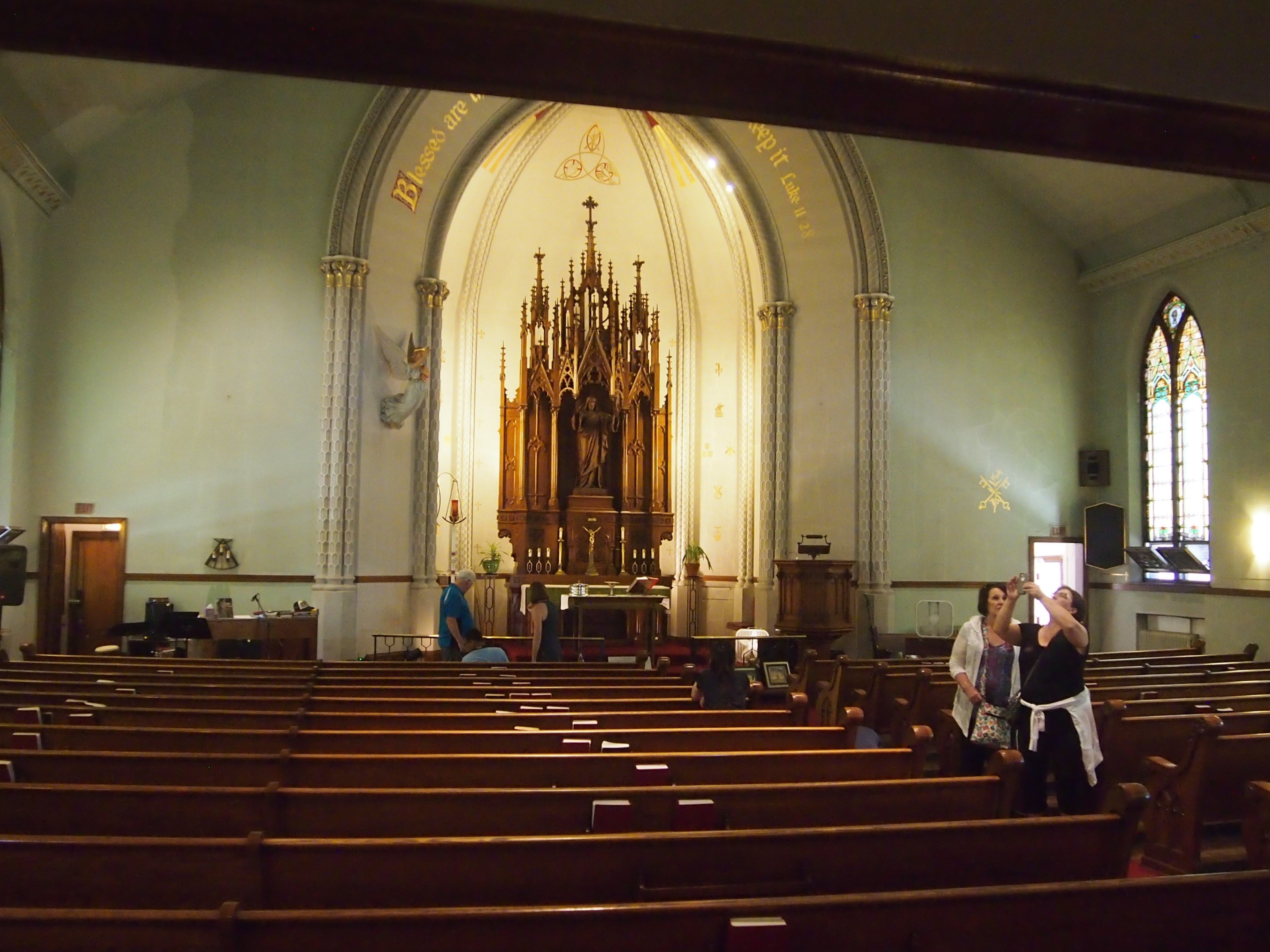
The last service in German was sometime in the 1950s, if I remember the docent right. During a renovation at some point the line from Scripture (Luke 11:28) was changed from German to English.

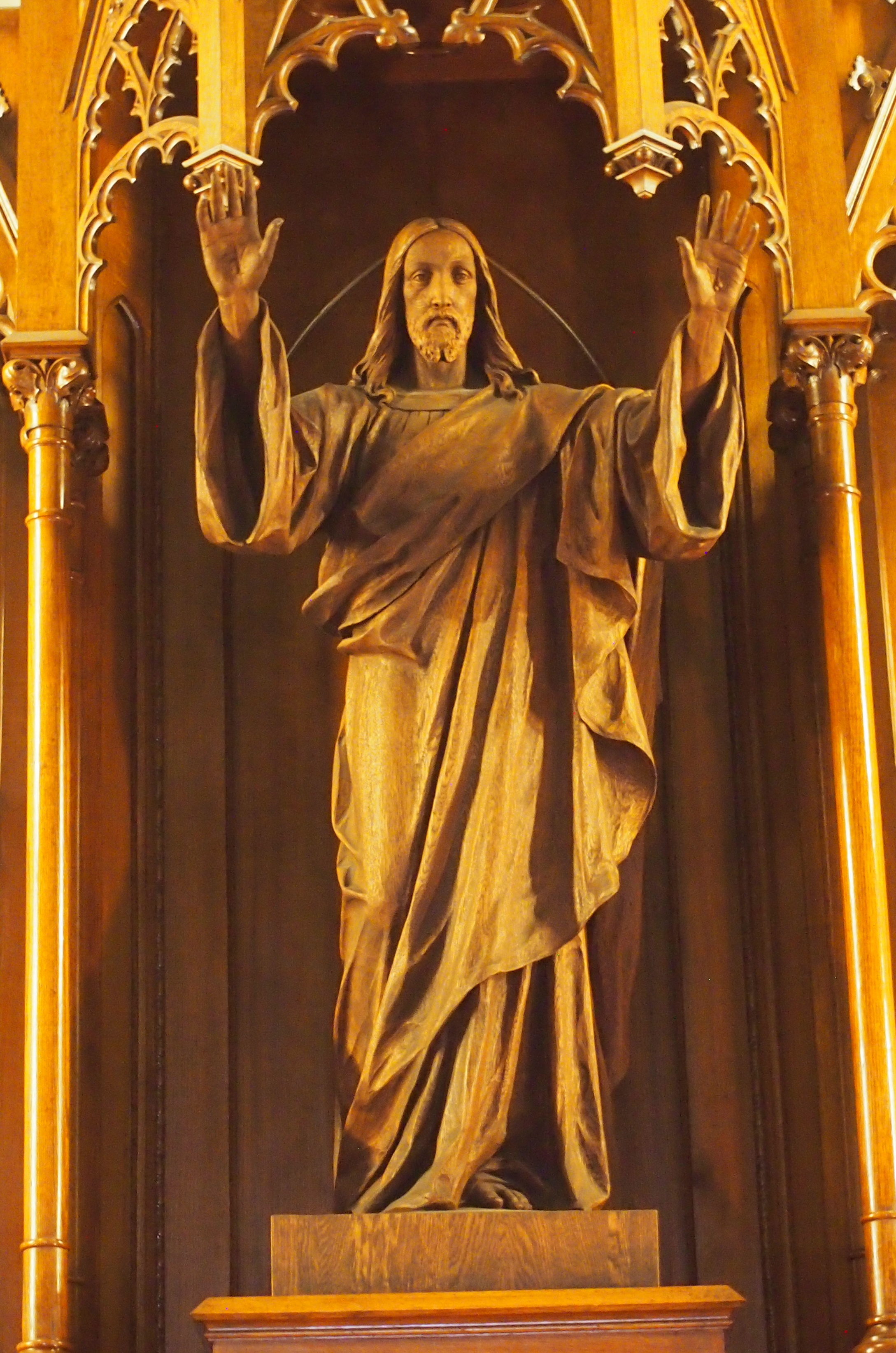
Inside, as you’d expect, the adornment is toned down.

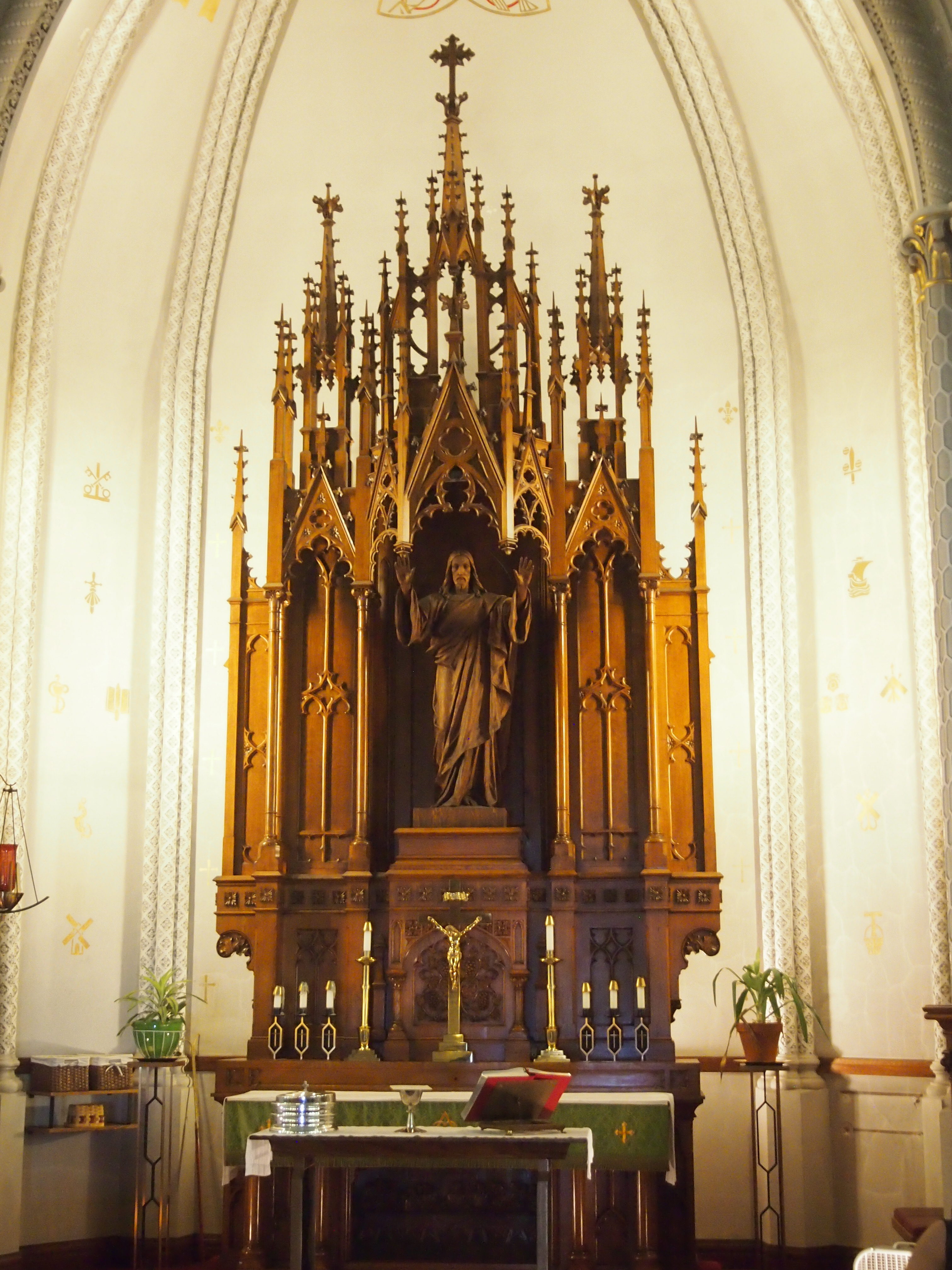
As the docent said, there isn’t much to distract you front looking straight ahead.
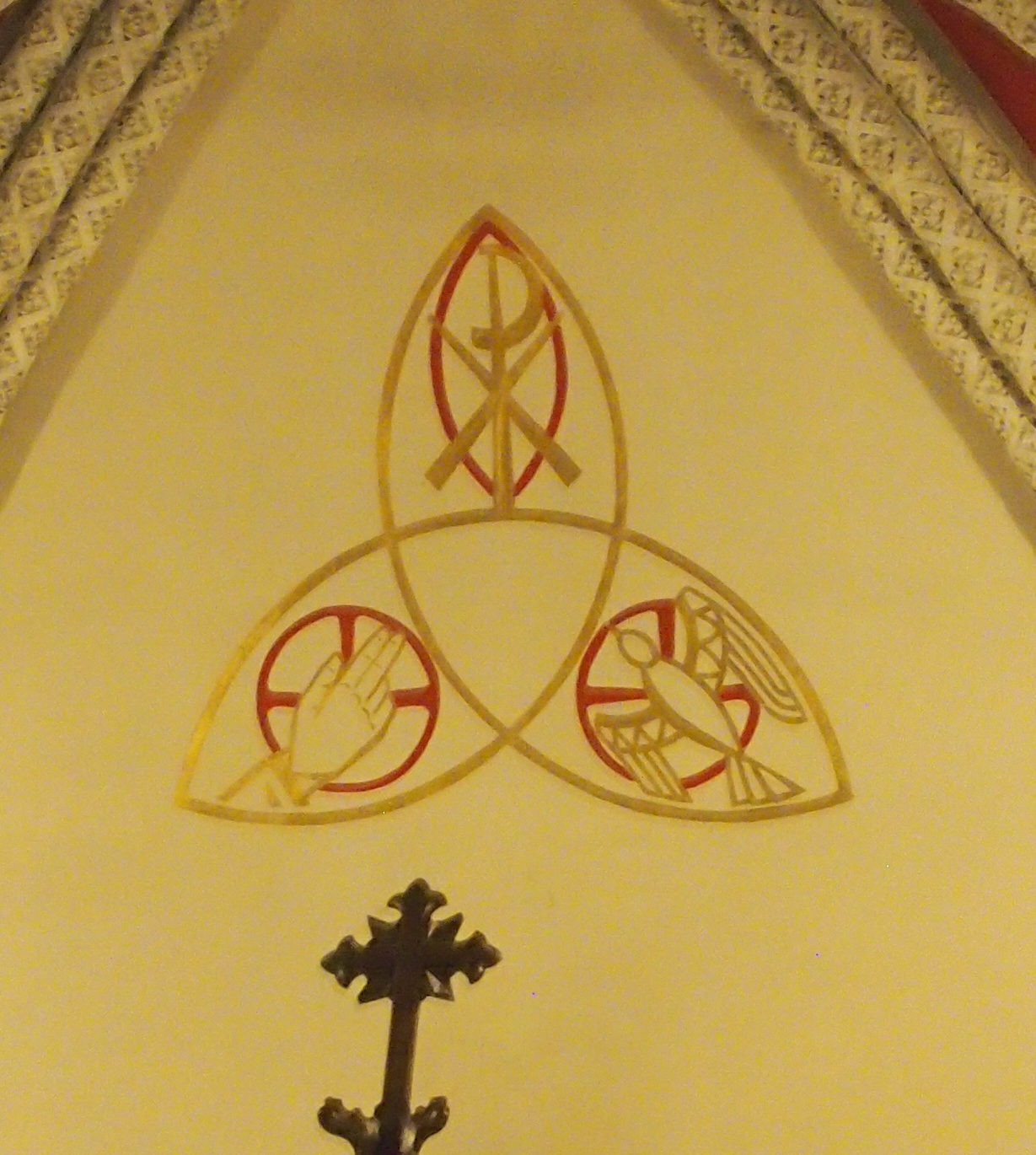
I thought the trefoil over the altar was an interesting detail.
I don’t think I’ve seen one quite like it. Completely fitting, considering the name of the church.

Monastery of the Holy Cross and Ling Shen Ching Tze Buddhist Temple

Two stops on the churches by bus tour in the Bridgeport neighborhood of Chicago on Saturday weren’t churches any more, not at least as they’d originally been built. One was the Monastery of the Holy Cross on S. Aberdeen St.

Hermann Gaul designed the Gothic structure as Immaculate Conception Church in 1908. You have to like a tower that sports gargoyles.
It occurred to me that Gargoyle or the Gargoyles would be a good name for a punk or metal band, but as usual keener minds are ahead of me.

Eventually the church closed due to declining attendance, and some Benedictines took the place over in 1991. I understand that the monks have to be self-sustaining, so they operate a bed and breakfast on the property (which we did not see), and also sell coffins and CDs of their plainsong.

I’d say the brothers have done a pretty good job of keeping up the place.

As well as providing sacred art.
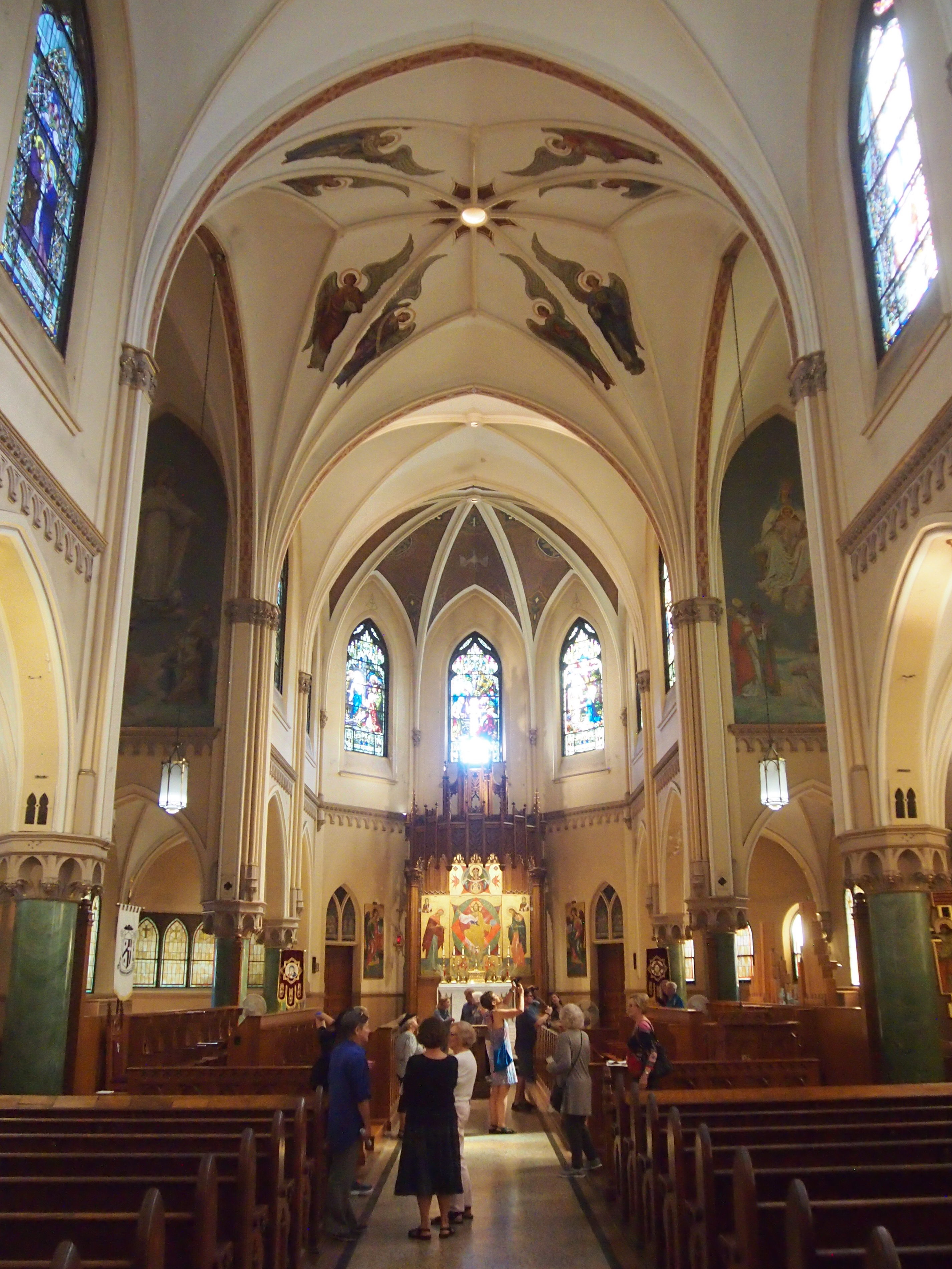
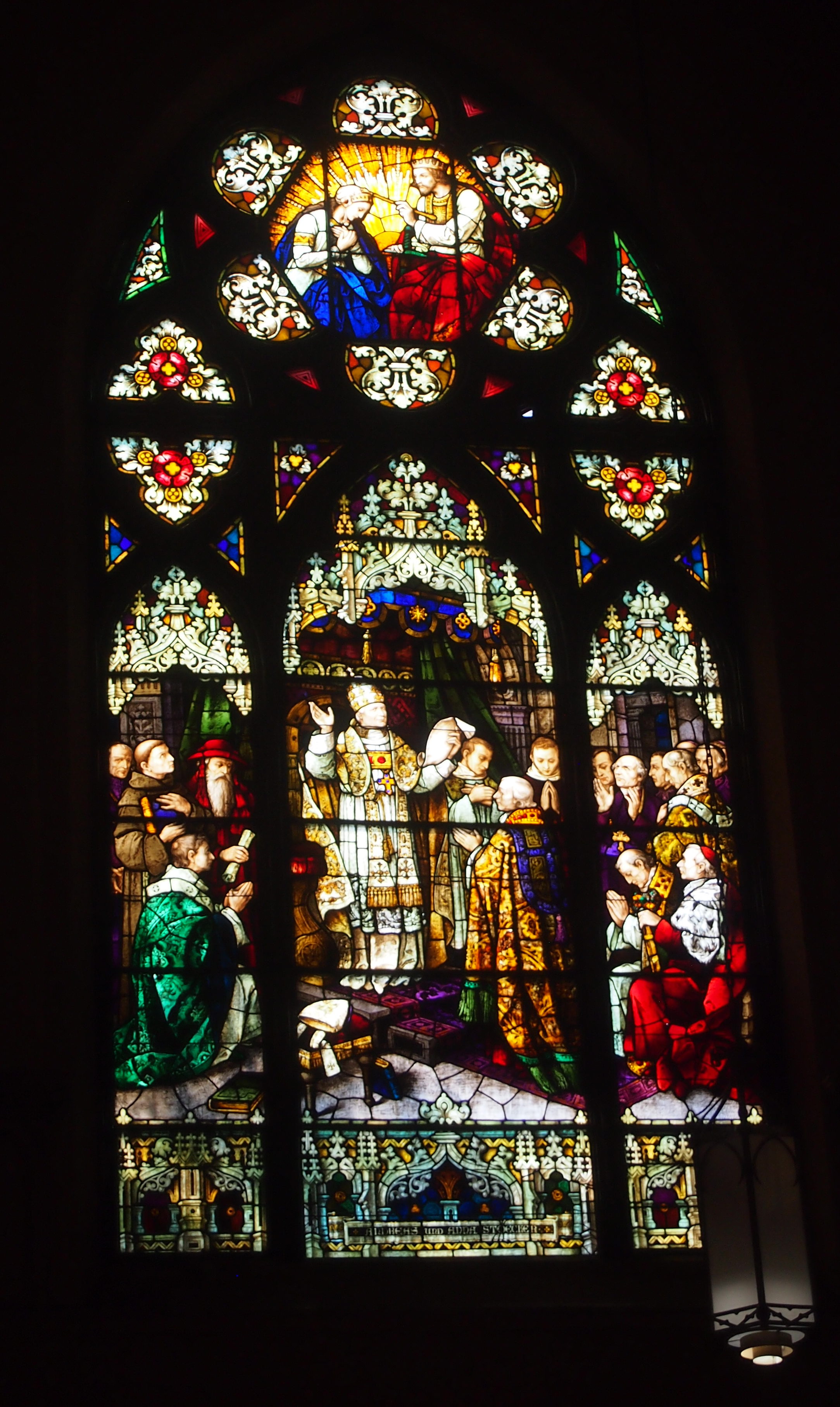
Here’s an unusual subject for a stained glass window, but it does reference the original name of the church. The glass depicts Pius IX promulgating Ineffabilis Deus, which defined the dogma of the Immaculate Conception, in 1854.
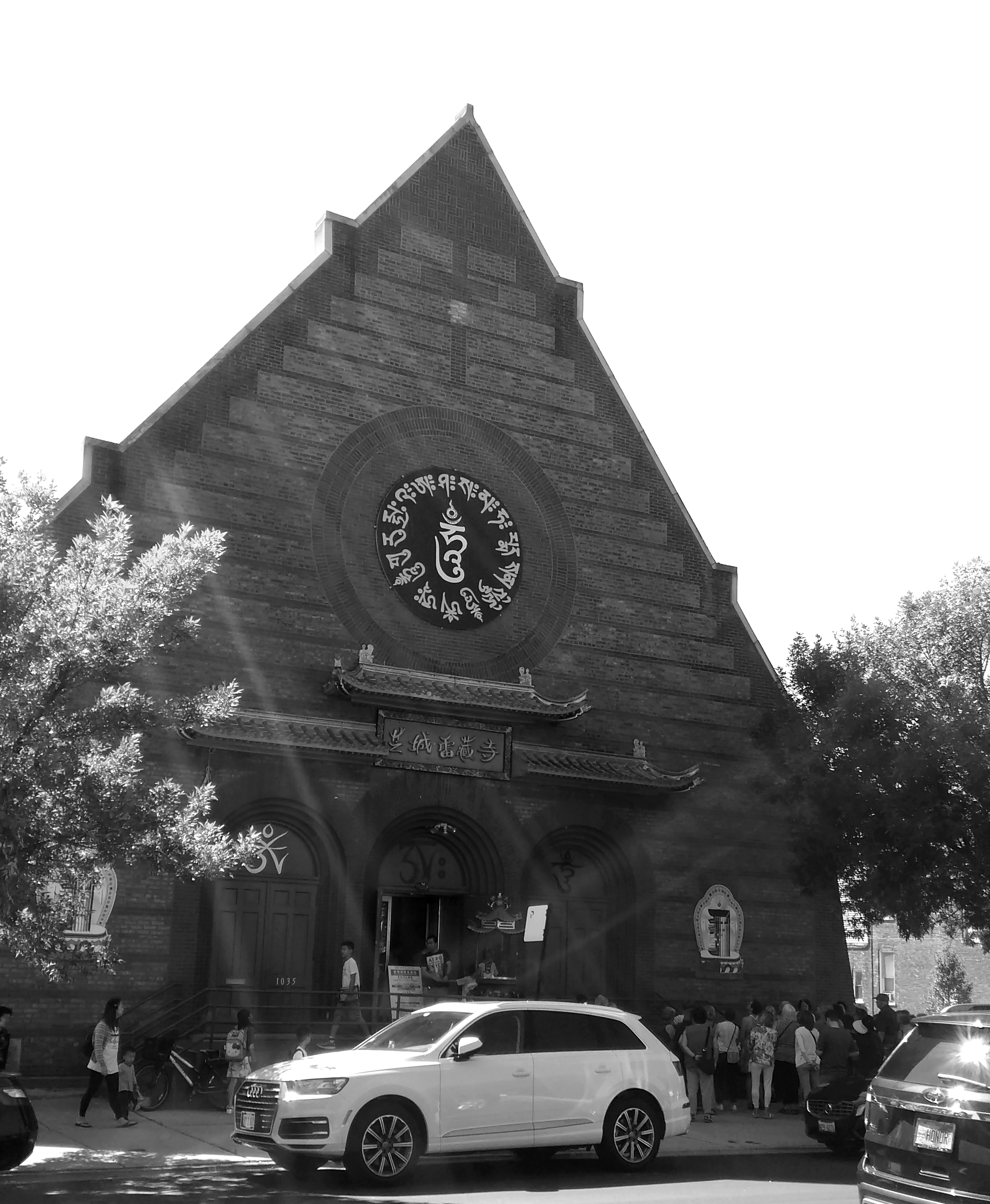
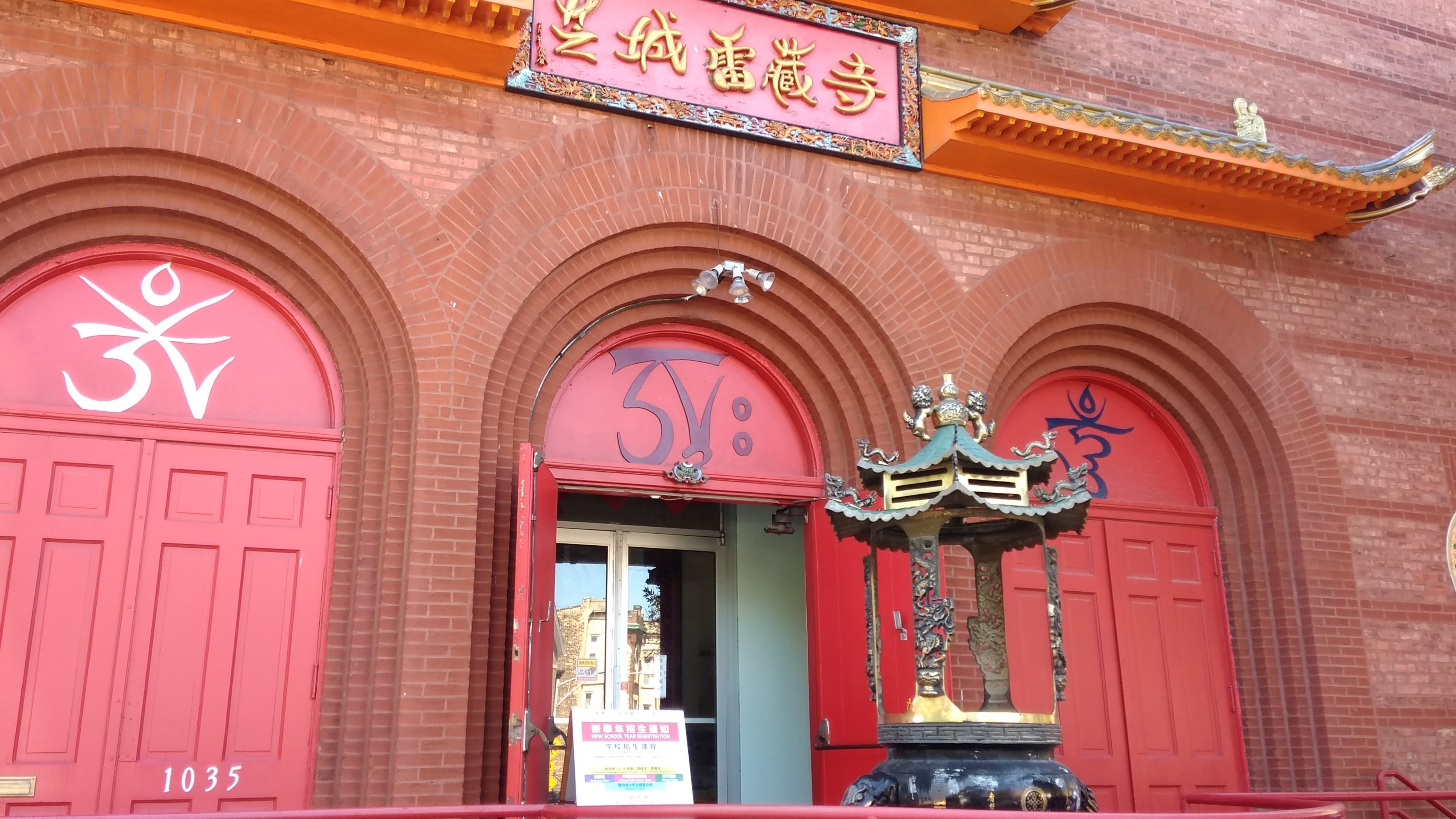
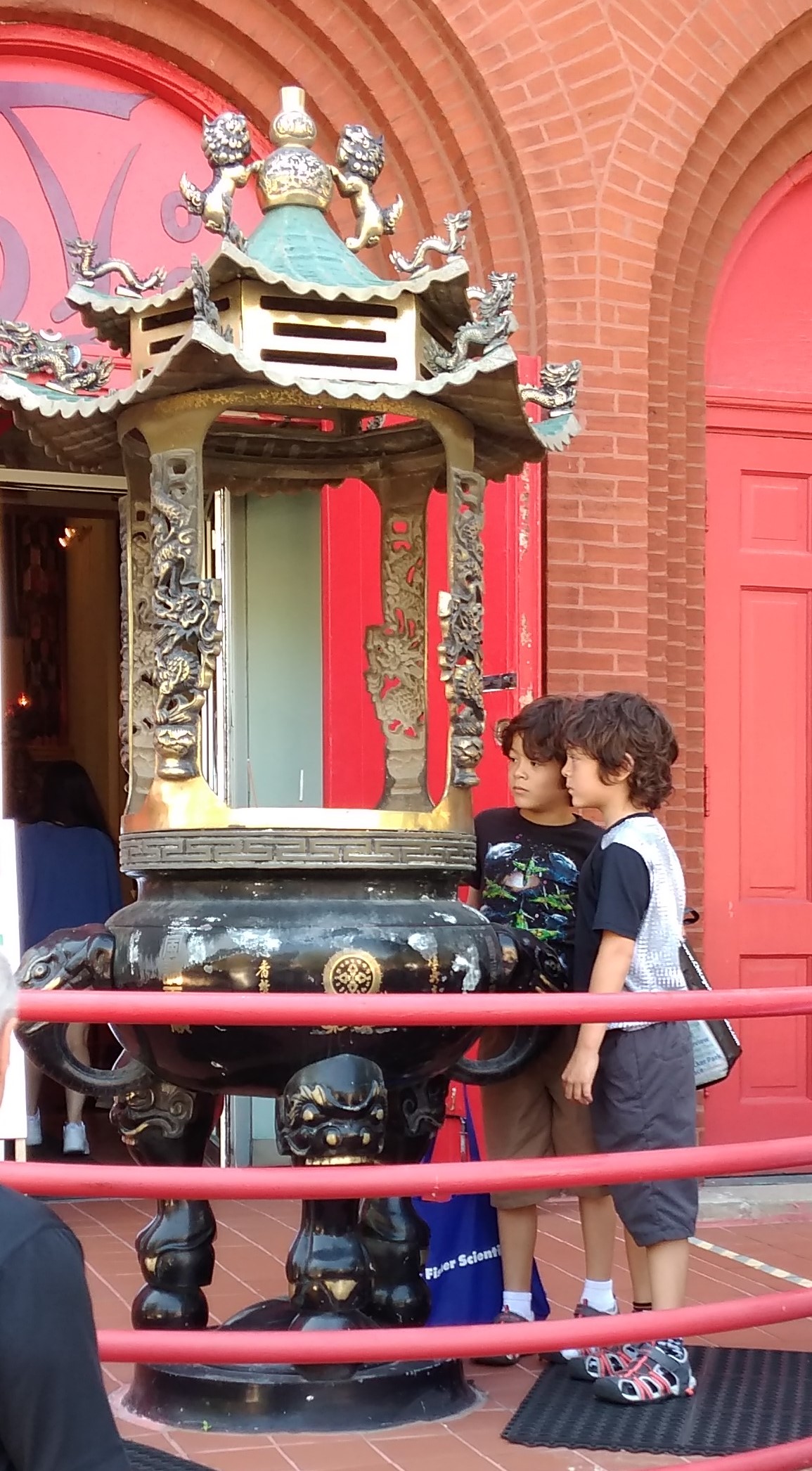
A block away from Monastery of the Holy Cross is Ling Shen Ching Tze Buddhist Temple, on W. 31st St. For most of its existence, the structure was Emmanuel Presbyterian Church. Which looks better, at least at the time of day I visited, in monochrome.

John Wellborn Root designed the church before his unfortunate death at 41, and Daniel Burnham oversaw its construction in 1894. In 1994, Ling Shen Ching Tze acquired the property.

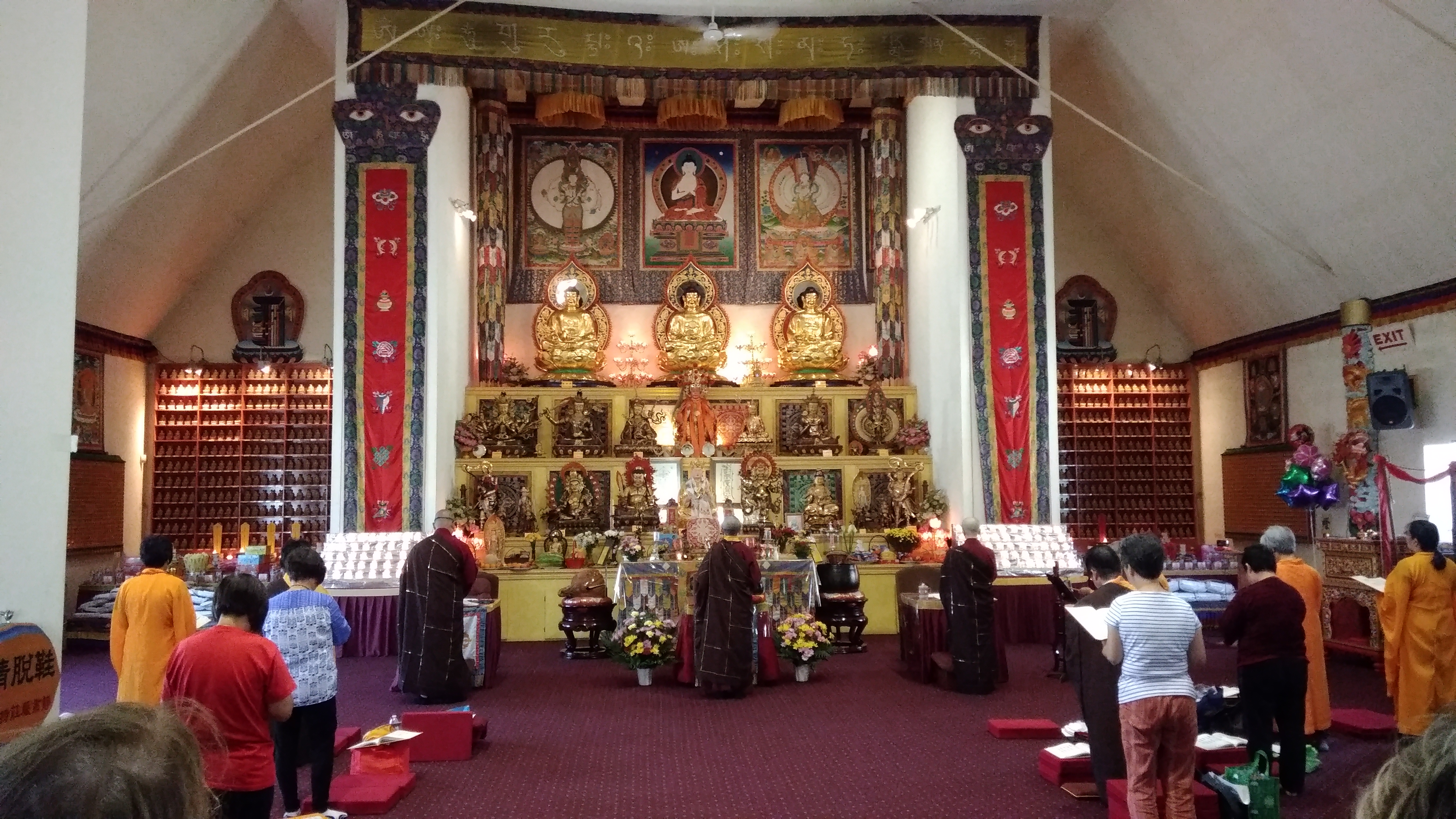
A service was going on when we visited, so we could only peek inside.
The temple’s headquarters is in Washington state. As far as I can tell, it’s devoted to the teaching of Taoism, Sutrayana and Tantric philosophies. A mite different from Presbyterianism, no doubt.

St. Mary of Perpetual Help

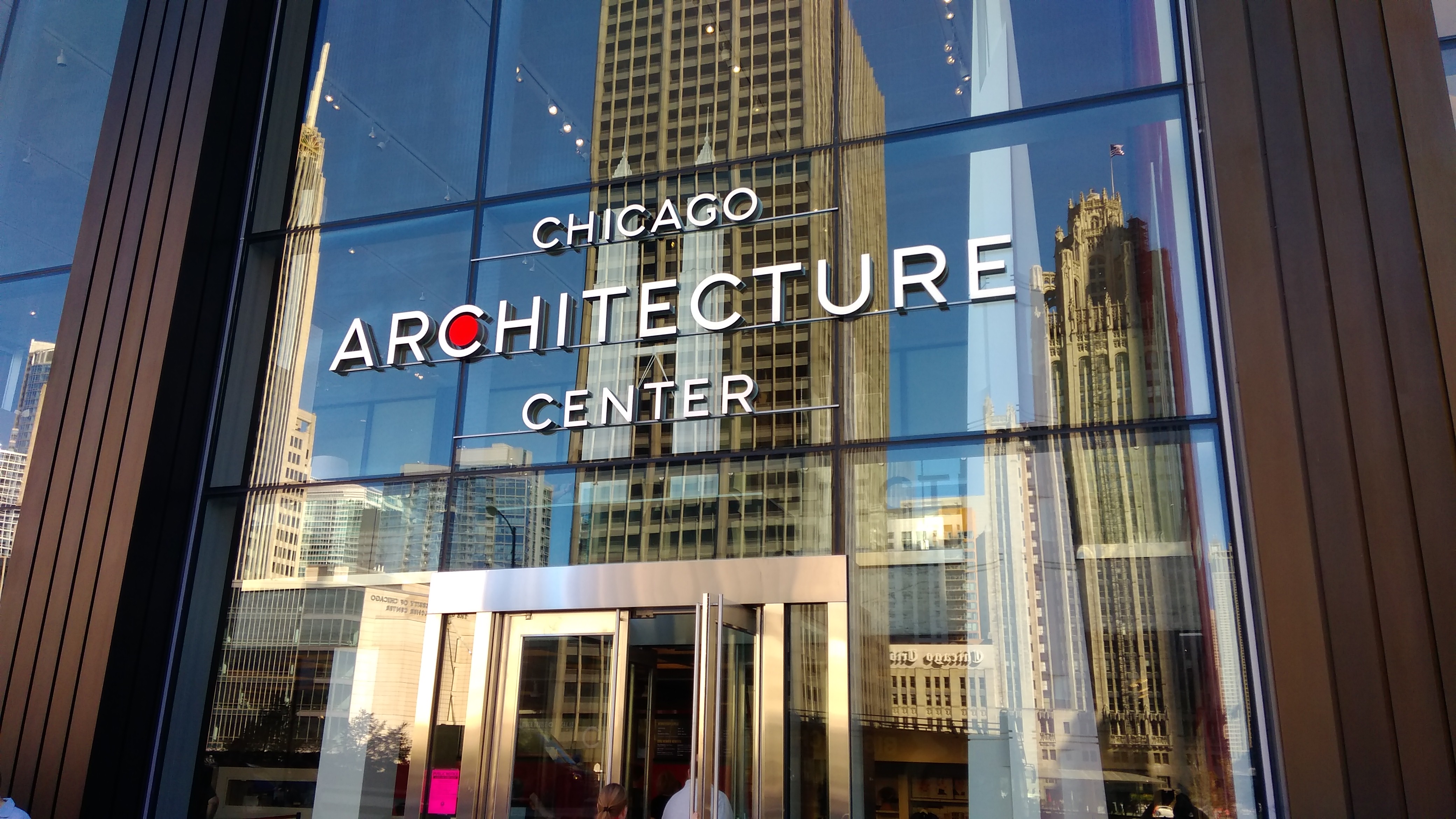
It’s been a few years since we took a church bus tour — 2014 and ’15, as it happens — so a while ago I looked into this year’s offerings from the newly renamed and relocated Chicago Architecture Center on E. Wacker Dr.

Formerly, Chicago Architecture Foundation. Why did the organization give up the solidity of foundation for the generic center?

Never mind, the tours look as good as ever. The church bus tour selection this year was a cluster of churches in the Bridgeport neighborhood of Chicago. Actually, four Christian churches, one monastery, and one Buddhist temple in a building that used to be a church, but has been modified to meet the needs of the Chinese-American population moving into Bridgeport from nearby Chinatown.

Even now, Bridgeport evokes the Irish. After all, that’s the neighborhood that gave Chicago the Daleys and, going back a little further, Mr. Dooley. Of course in our time, other ethnicities are in the mix, such as the aforementioned Chinese, but also an Hispanic population. As far as I can tell, Bridgeport never really was home to just one group, because even in the early days there were Irish, but also Germans, Poles, Lithuanians, Italians and Bohemians.

It hasn’t always been a peaceful place. “Bridgeport once stood as a bastion of white ethnic communities,” the Encyclopedia of Chicago says. “Racial and ethnic strife has always been part of its history. An almost legendary clash between the Germans and the Irish occurred in 1856. During the Civil War pro-Confederate rallies were held in the neighborhood. In the twentieth century Polish and Lithuanian gangs often clashed along Morgan Street.”

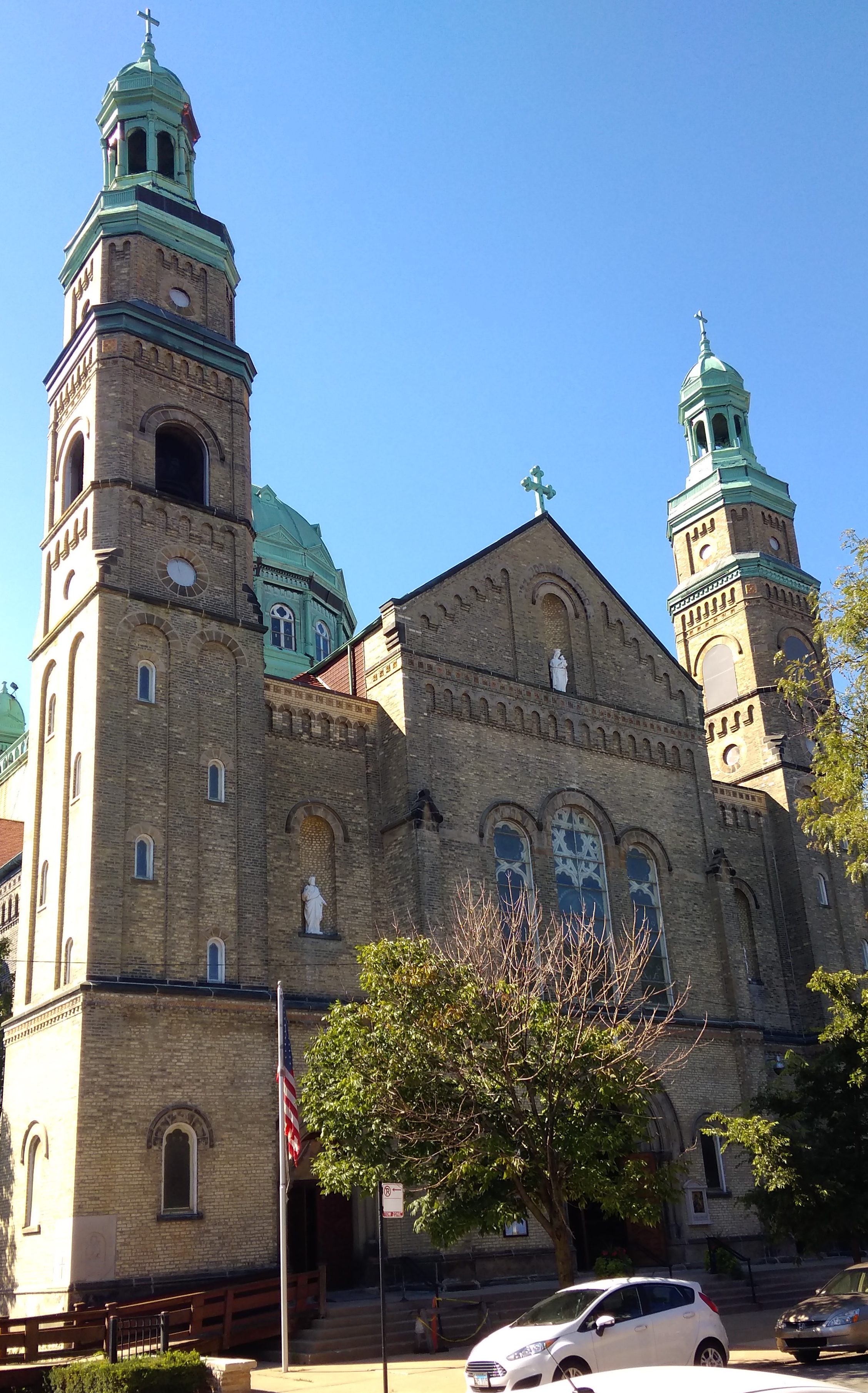
St. Mary of Perpetual Help, tucked away on W. 32nd St. in Bridgeport, originally had a Polish congregation. It’s a magnificent blend of styles, with Romanesque on the outside.
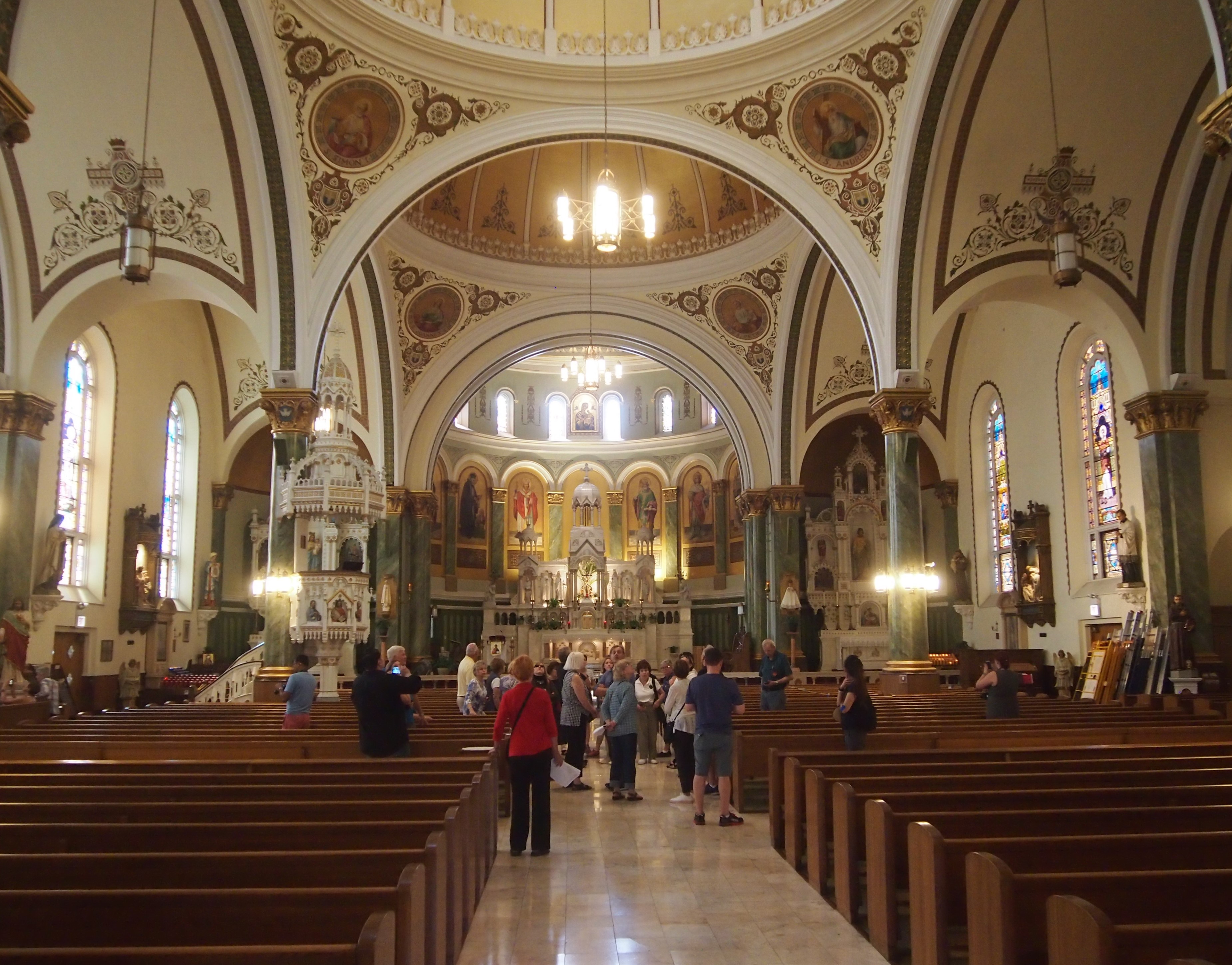
Inside, a handsome Byzantine style.

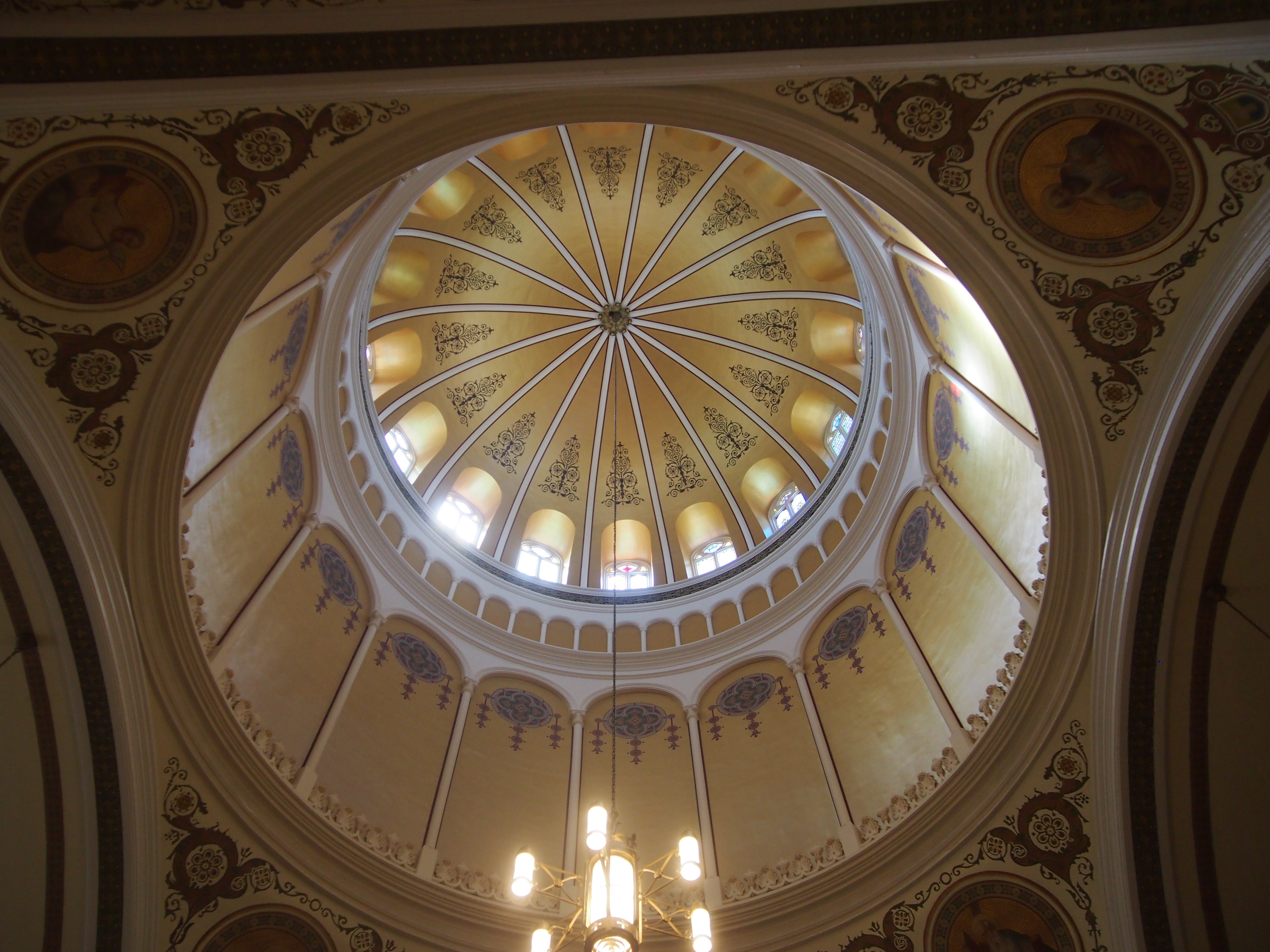
With impressive domes, though I didn’t manage a good shot of any of their exteriors.
Henry Engelbert designed the church, which was completed in 1892. He’s listed as one of the designers of Our Lady of Sorrows Basilica in Chicago, but he’s better known for his work in New York City. St. Mary of Perpetual Help’s interior was by John A. Mallin, who did the interiors of a lot of churches in his long career.

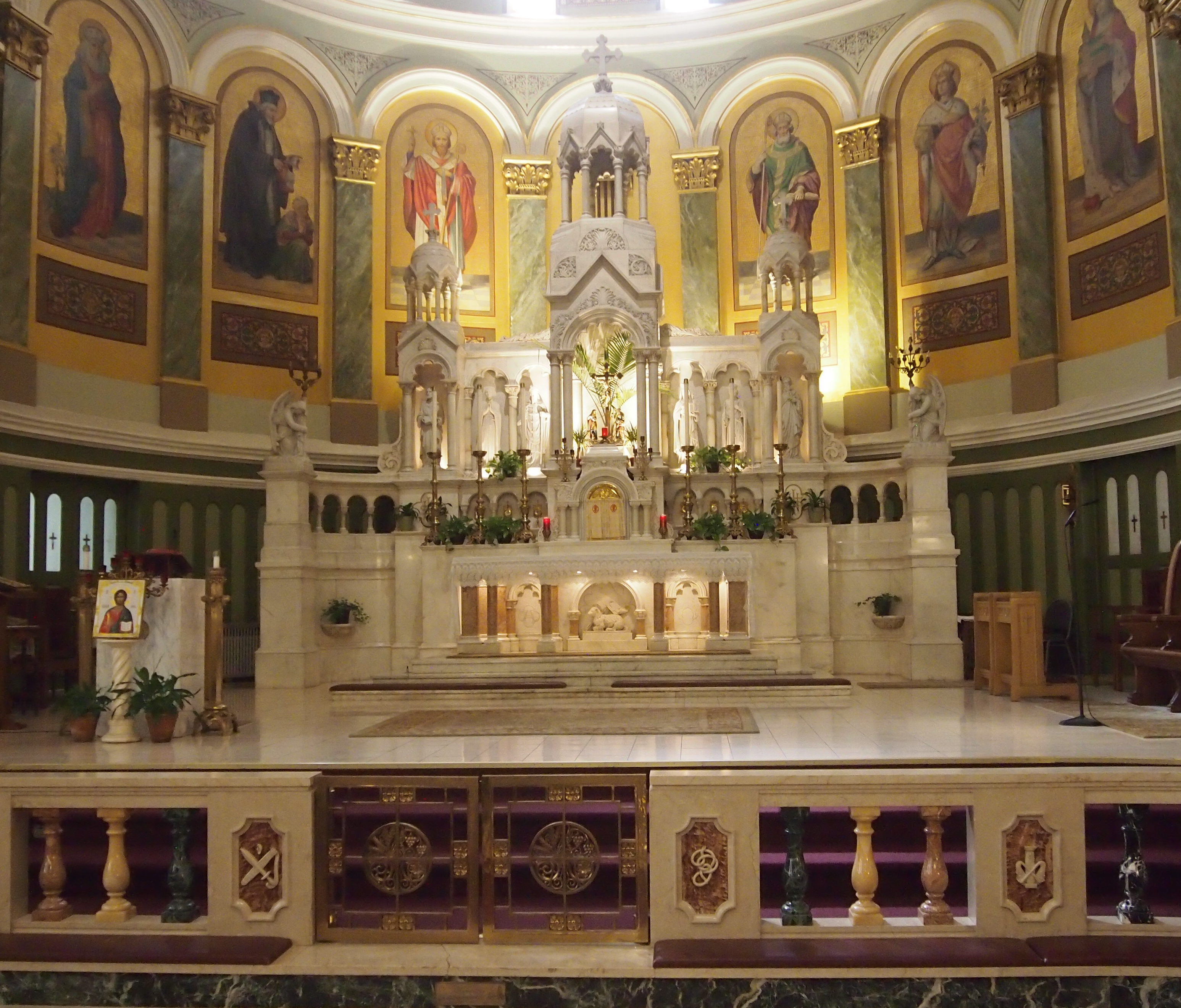
Here’s the resplendent altar.
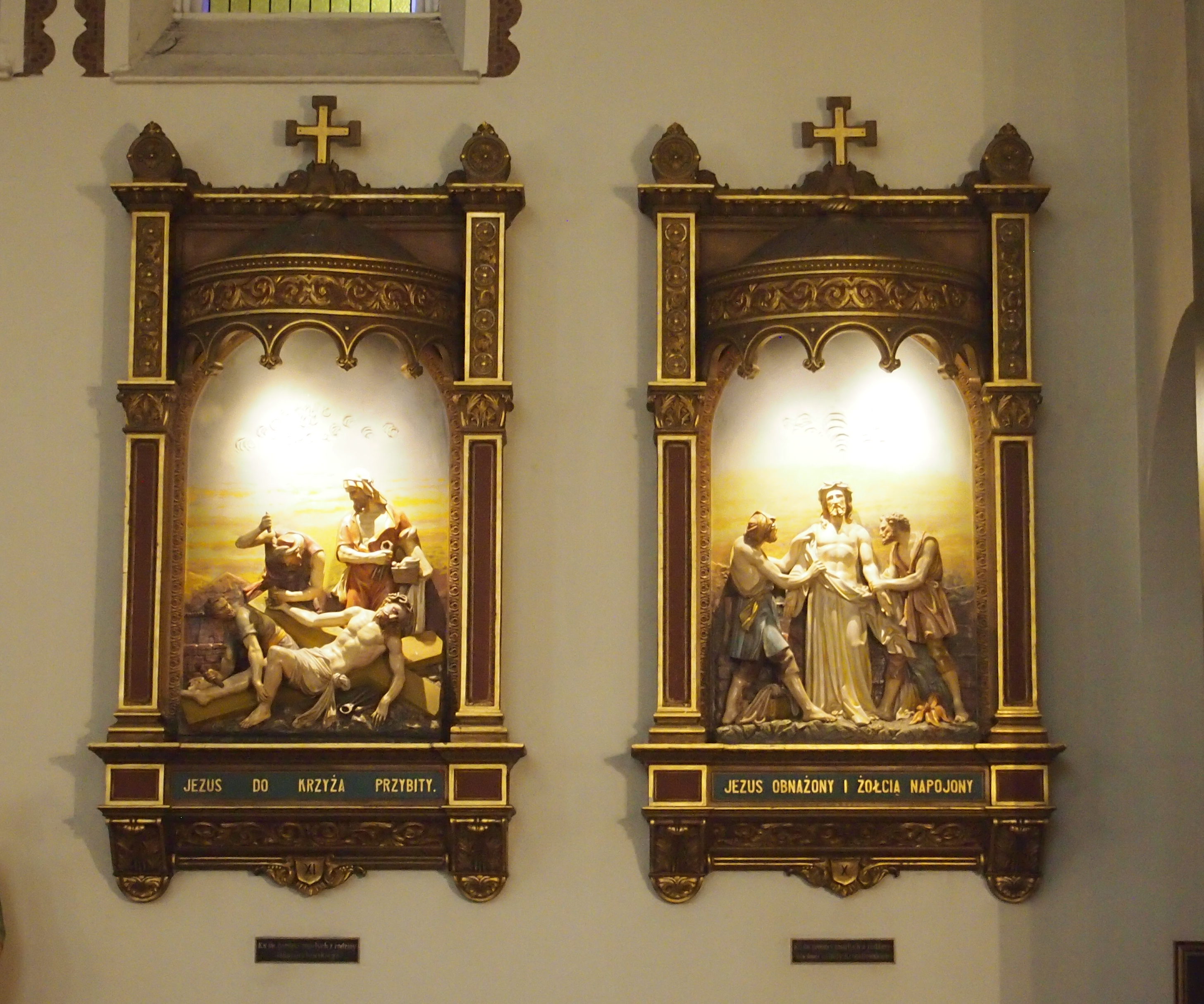
Stations of the Cross, with original Polish.

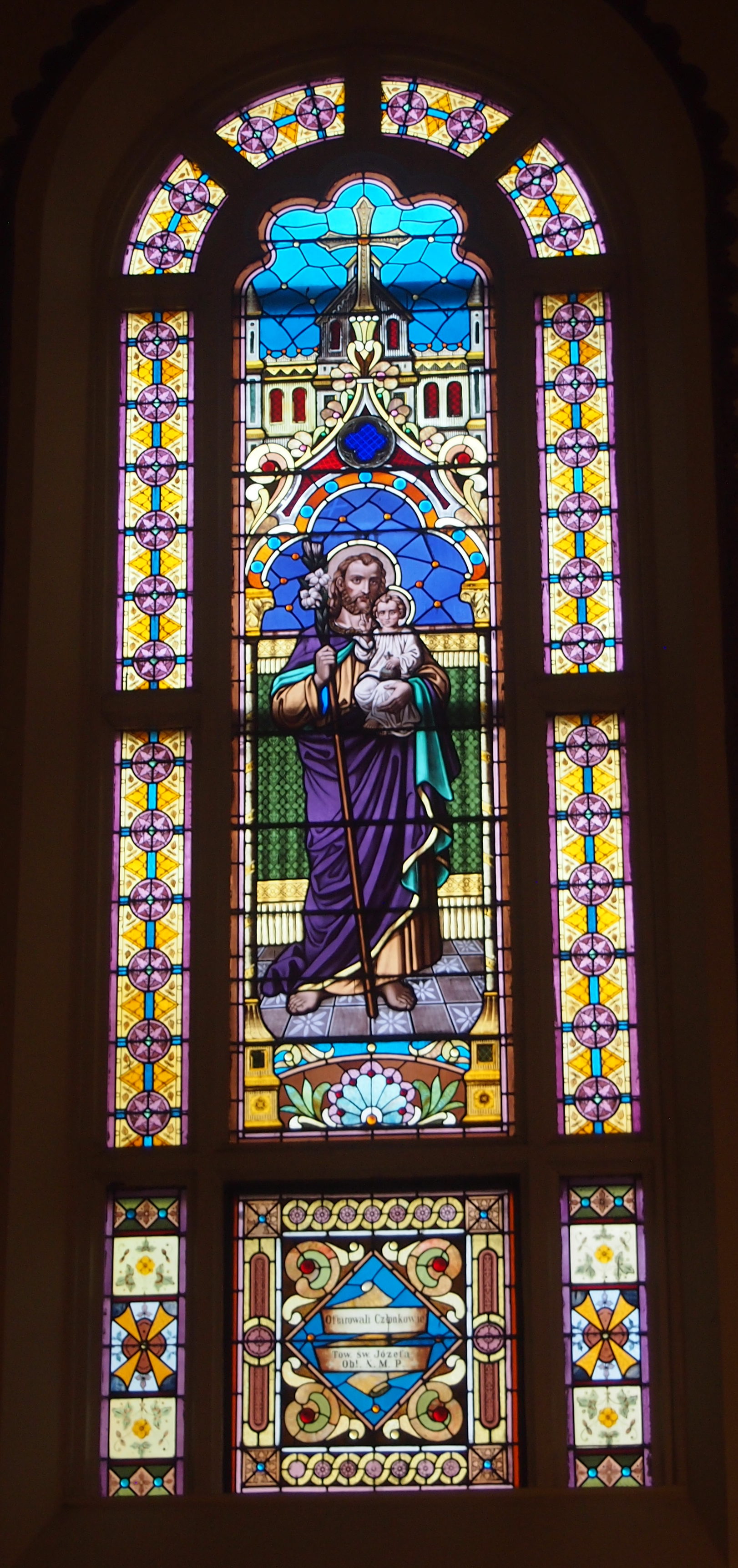
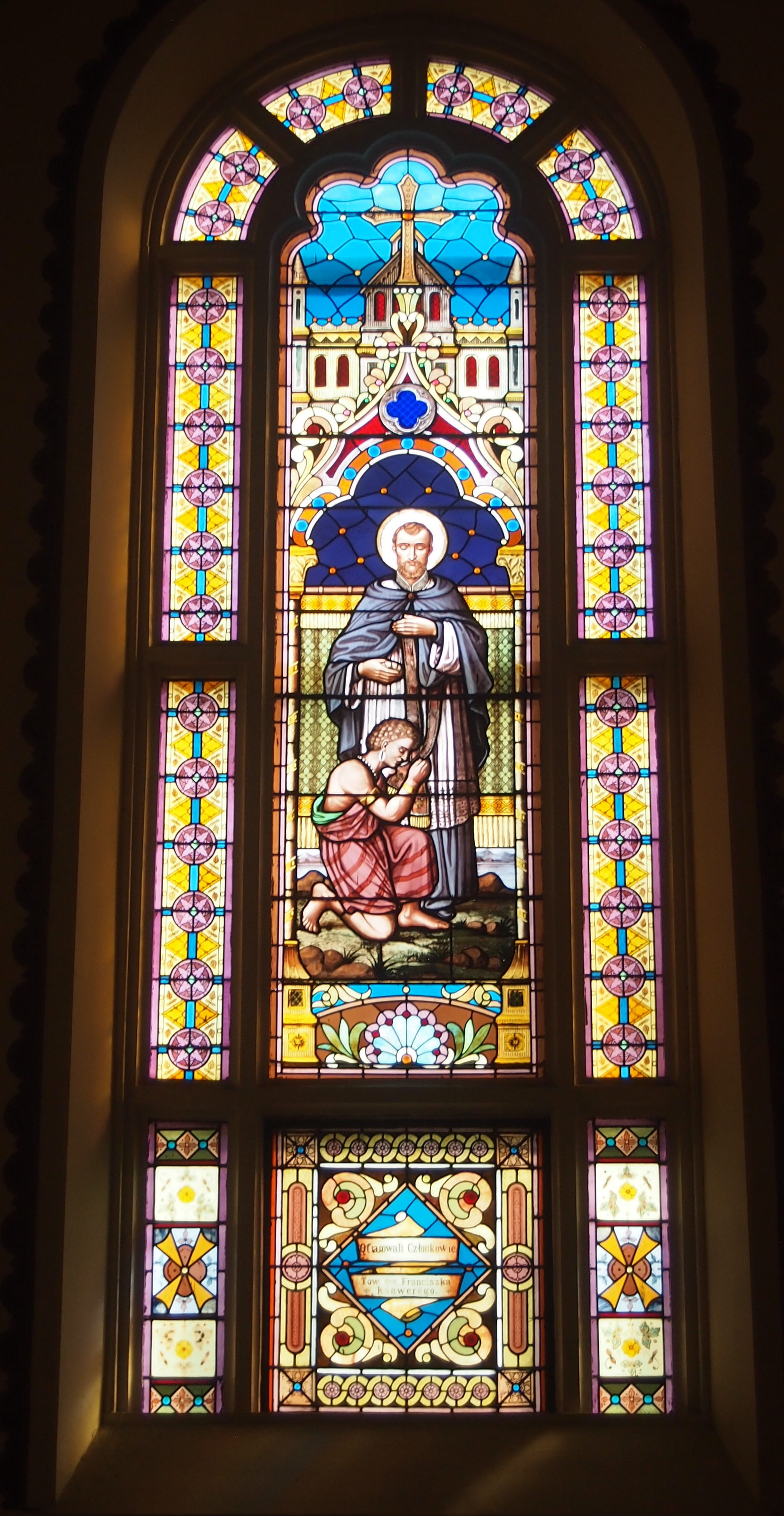
First-rate stained glass, as you’d expect.

Everything looks impressively new, but that’s because during the decades of the 21st century so far, the parish has undertaken major restoration work both exterior and interior. Being able to raise that kind of money must count as a minor miracle, though probably not in the theological sense.

I Am What I Am, Even on Thursdays

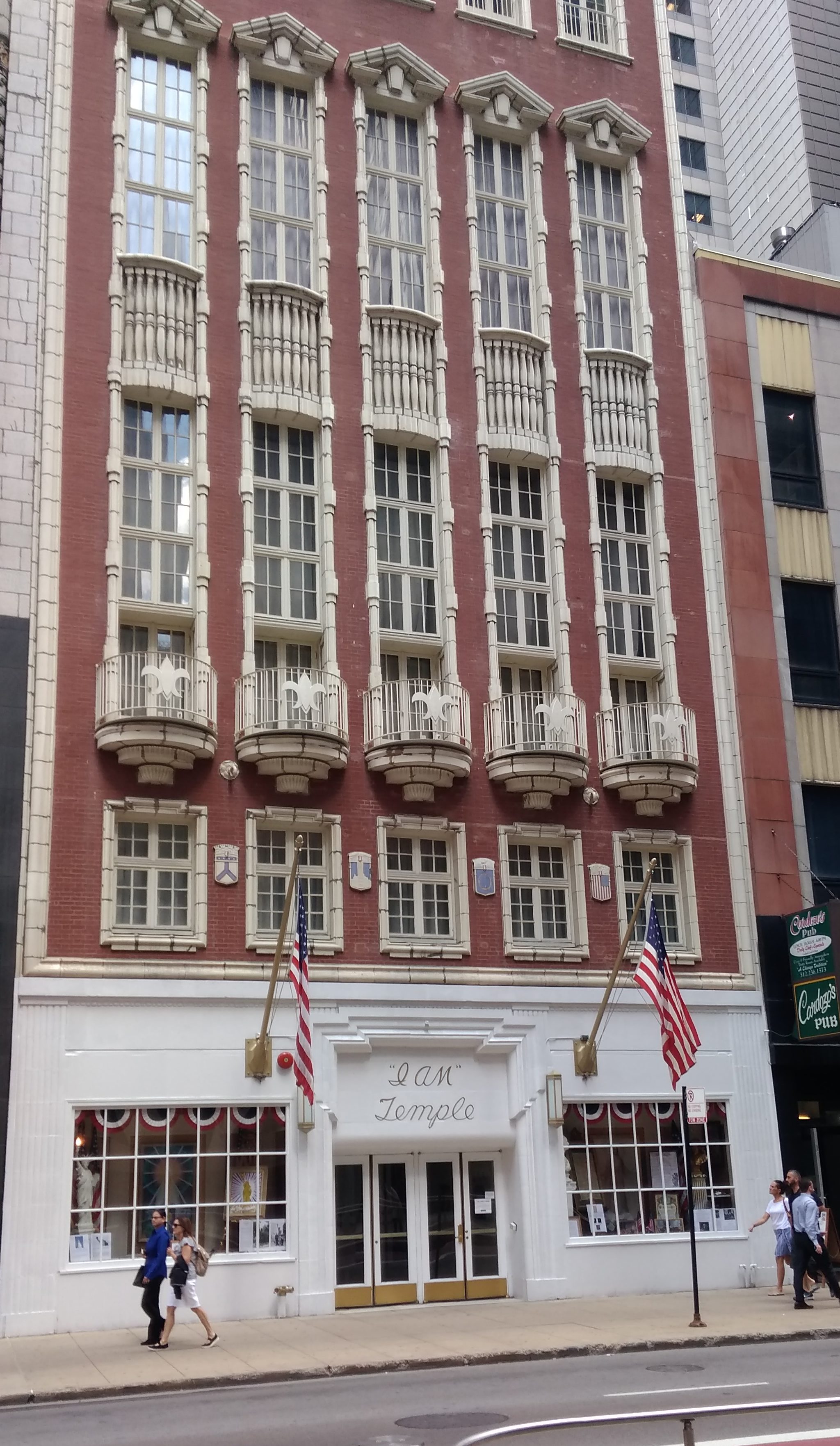
Something else I snapped while on foot downtown Chicago last week: the front of the I AM Temple on W. Washington St.

I didn’t go in. A sign on the door says ring bell and wait for someone. I prefer my religious sites to be self-service.

The organization’s HQ happens to be in the northwest suburbs, not downtown. Without digressing into detail — a foray into the rabbit hole, that is — it’s enough to say that, according to Britannica, “I AM movement, theosophical movement founded in Chicago in the early 1930s by Guy W. Ballard (1878–1939), a mining engineer, and his wife, Edna W. Ballard (1886–1971)…. Ballard claimed that in 1930 during a visit to Mount Shasta (a dormant volcano in northern California), he was contacted by St. Germain, one of the Ascended Masters of the Great White Brotherhood.”

Is it possible that Popeye is a prophet of this movement? After all, he appeared ca. 1930 and was known to say, “I yam what I yam.”

Also, why are rabbit holes a metaphor for endless, bewildering complications? Are rabbit holes that complex? Maybe warrens are, but that isn’t the way the saying goes. Wouldn’t ant nests or prairie dog towns be more suitable?

Another day, another stash of Roman coins dug up in Italy. Late Roman imperial era, the article says.

Bonus: they were gold coins. That’s something I’d like to find in the basement, though strictly speaking, we don’t have a basement. Roman gold-coin hordes must be pretty scarce in the New World, anyway.

Late Roman imperial era, eh? I can imagine it: “Quick, find a place to bury the gold! The Visigoths are coming! We’ll come back for it later.”

The event probably wasn’t that dramatic, but someone put the horde there, presumably not to lose track of it — but they did, for 1,500 or more years. Distant posterity is the beneficiary.

Strictly by coincidence, Ann and I watched the first episode of I, Claudius last weekend, which is available on disk (but not on demand: what kind of world is this?). Been a long time since I’ve seen it. Early ’90s, I think, as it was available in Japan on VHS. I also saw it when I was roughly Ann’s age, on PBS when it was pretty new.

The other day I used bifurcation in an article. That’s more common in business writing than one might think, since it’s sometimes used to describe markets dividing in some way or other (often, winners and losers). It’s also I word I can never remember how to spell, so I always look it up.

Google has replaced a trip to a dictionary as the default for spelling. Sad to say, since the possibility of lateral learning is rife while thumbing through a dictionary. Many times in earlier years I spied an entry, not the one I was looking for, and thought, I didn’t know that word.

Then again, there can be sideways learning with Google. If you let it. Not satisfied with mere spelling, I fed “bifurcation” into Google News to see what would happen. Every single hit on the first page linked to items in the Indian English-language media.

From the Times of India:

GMDA can’t plan drain bifurcation now, say greens

Bifurcate HC too: Centre backs Telangana’s petition in SC

Bifurcation of Badshapur drain on cards to avert flooding in Hero …

From The Hindu:

‘Telangana drawing water from NSP without KRMB approval’

Demand for bifurcation of municipal corporation getting stronger

From the New Indian Express:

Centre to expedite High Court bifurcation: Vinod Kumar

Clearly, the word gets more mileage on the Subcontinent than in this country.

Two Downtown Chicago Churches

Yesterday evening at about 8:15 I was out walking the dog — sometimes it’s an after-dark activity now that there’s more darkness — and I spotted a pale yellow slender crescent moon hanging just over the western horizon. Low enough to appear luminously large. Quite a sight.

Just after the new moon signifying Rosh Hashanah, I realized. I couldn’t remember the year’s number, so I looked that up: 5779.

While downtown last week, on the way back to Union Station to return home, I ducked briefly into two churches. I’d been in them before, but they’re always good for a look.
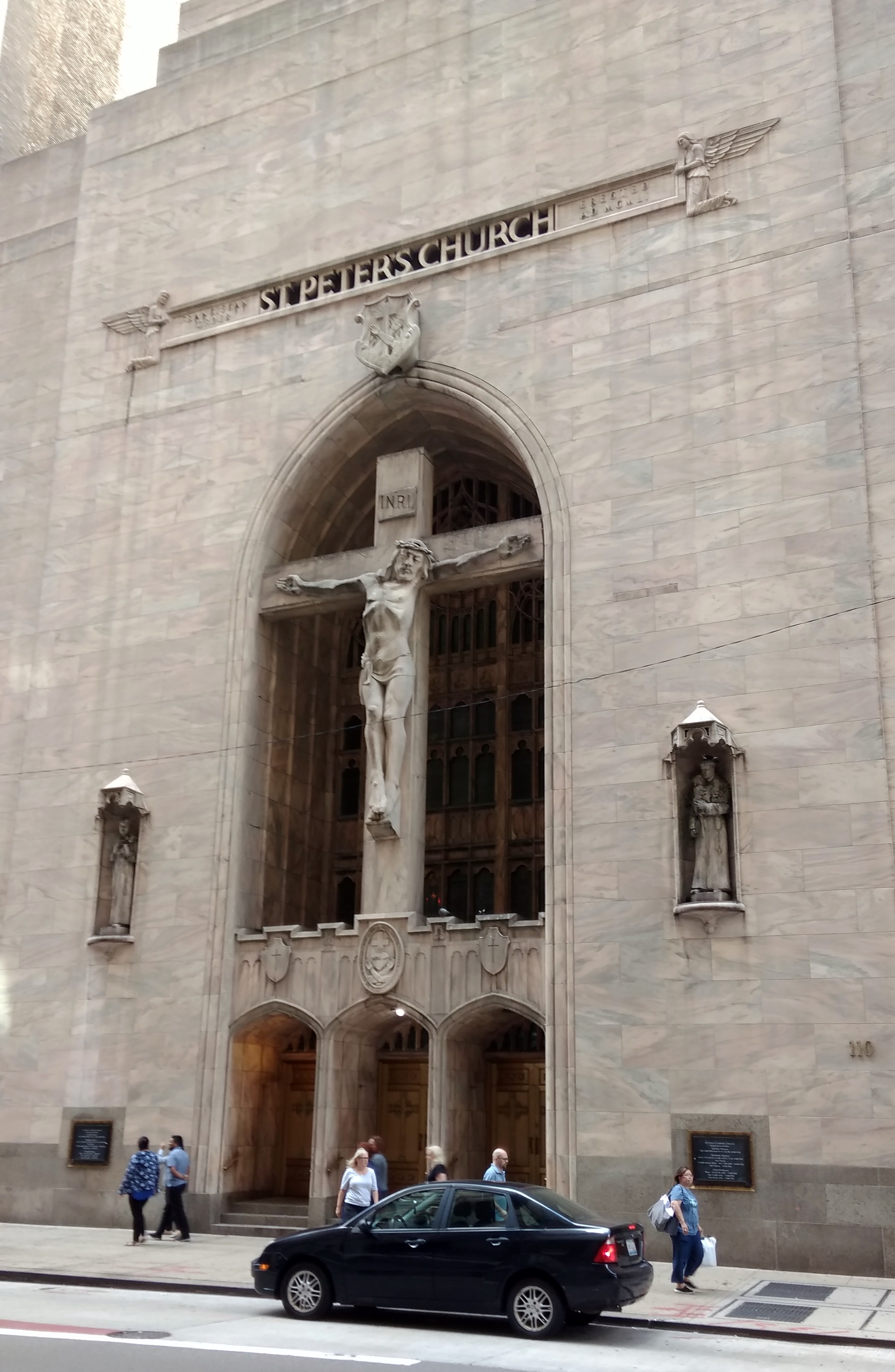
One was St. Peter’s in the Loop, a Catholic church on W. Madison St.
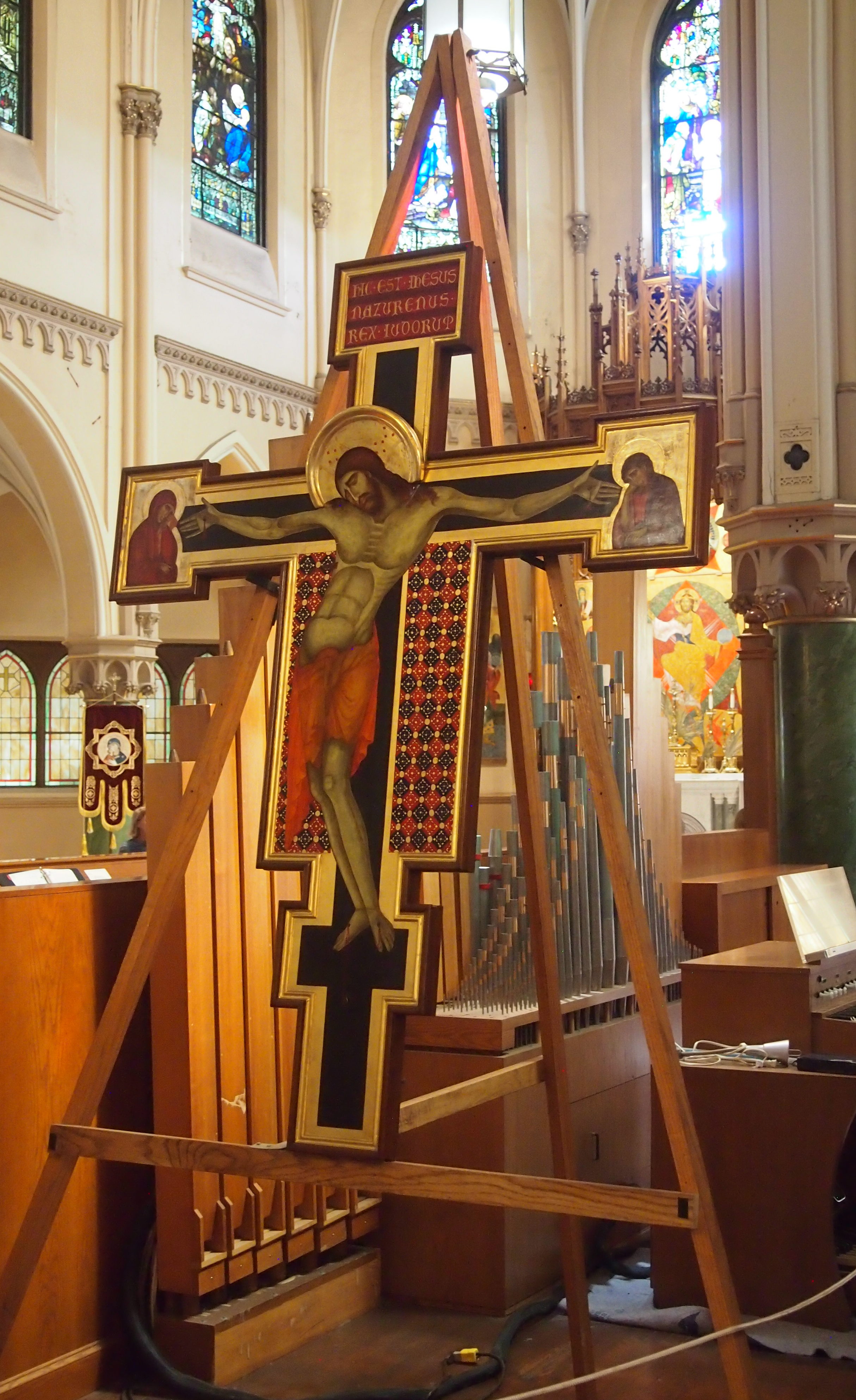
The enormous crucifix is by Latvian artist Arvid Strauss. The building dates from 1953. According to Heavenly City: The Architectural Tradition of Catholic Chicago by Denis McNamara, “the stepped-back roof profile of the exterior recalls the Art Deco skyscapers [architects Vitzthum and Burns] had designed and gave the church a modern sensibility, but the facade retained the sign value of churchliness with Gothic decorative elements, pink Georgia marble, and [the] monumental exterior cruxifix…”

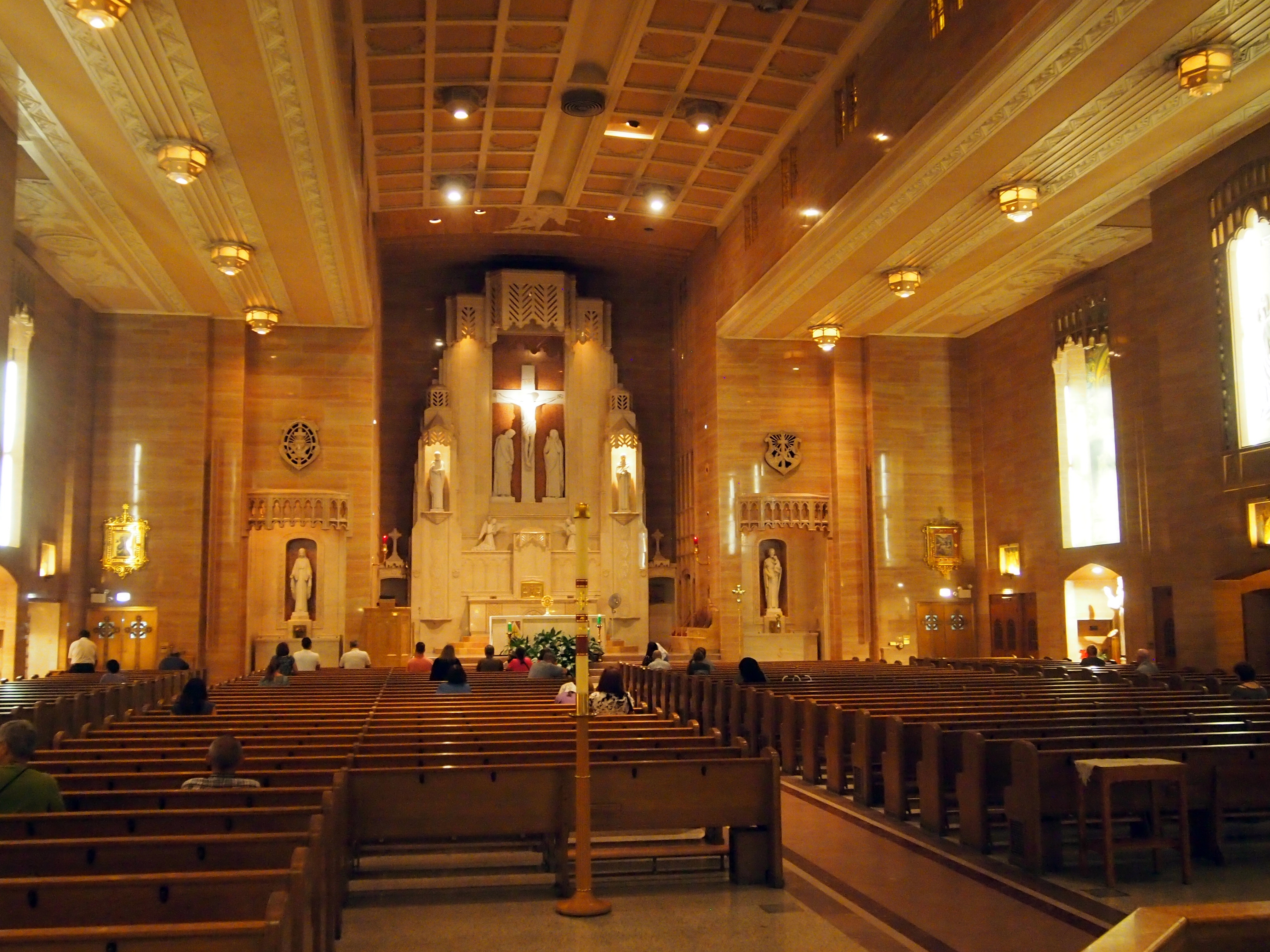
The interior. Sacred deco, you might call it.
The building is more just the sanctuary. Tucked away in the structure, hidden from casual visitors like me, are an auditorium, library, offices, meeting rooms and friary completed with living quarters, kitchen and a chapel for the Franciscans who run the place.

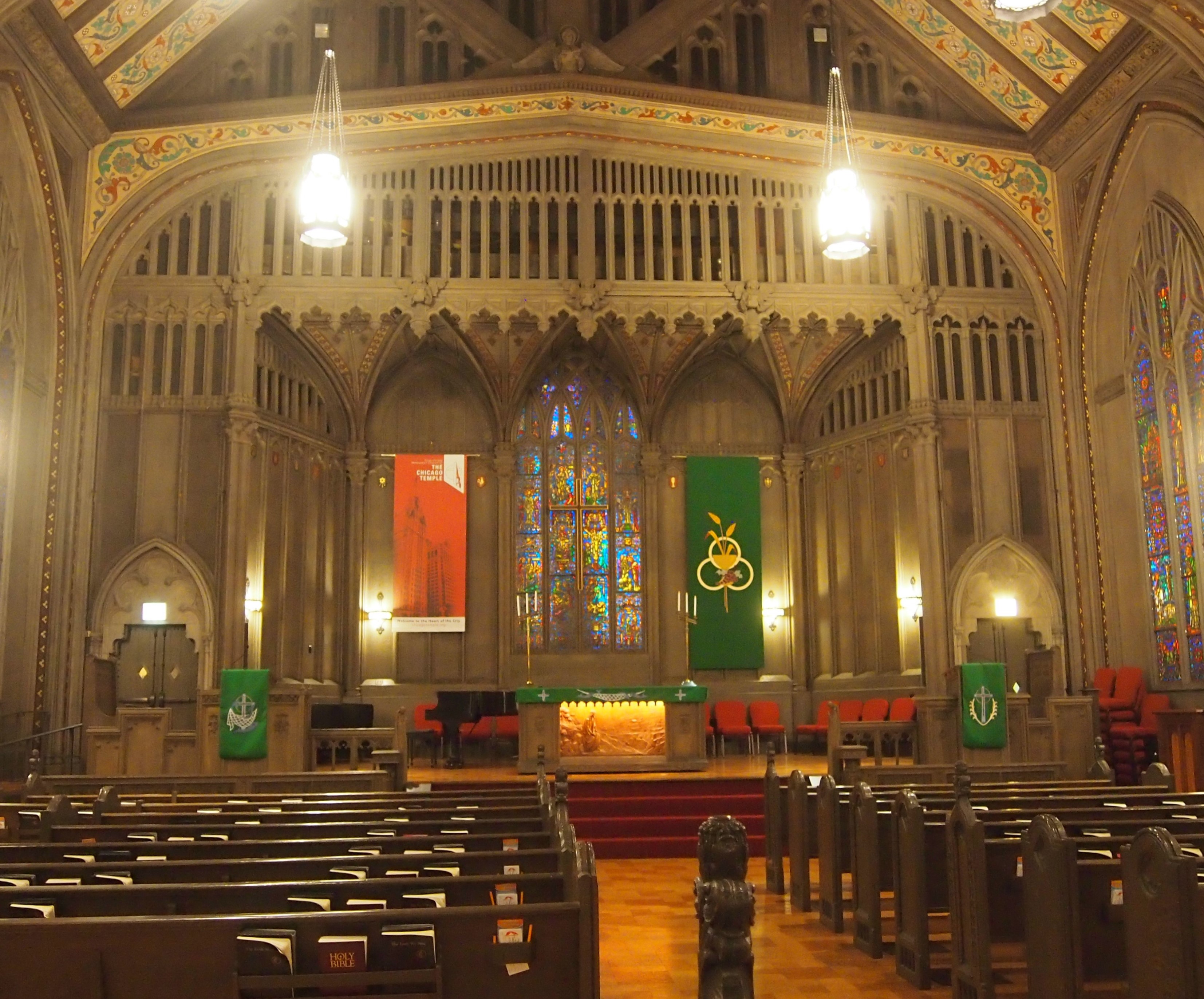
Not far away is the First United Methodist Church at the Chicago Temple, an unusual arrangement for a church. It’s at the base and top floors of a 568-foot skyscraper on W. Washington St. I didn’t take any exteriors, but this is what it looks like. A Holabird & Roche design from the 1920s.

It features another handsome interior.
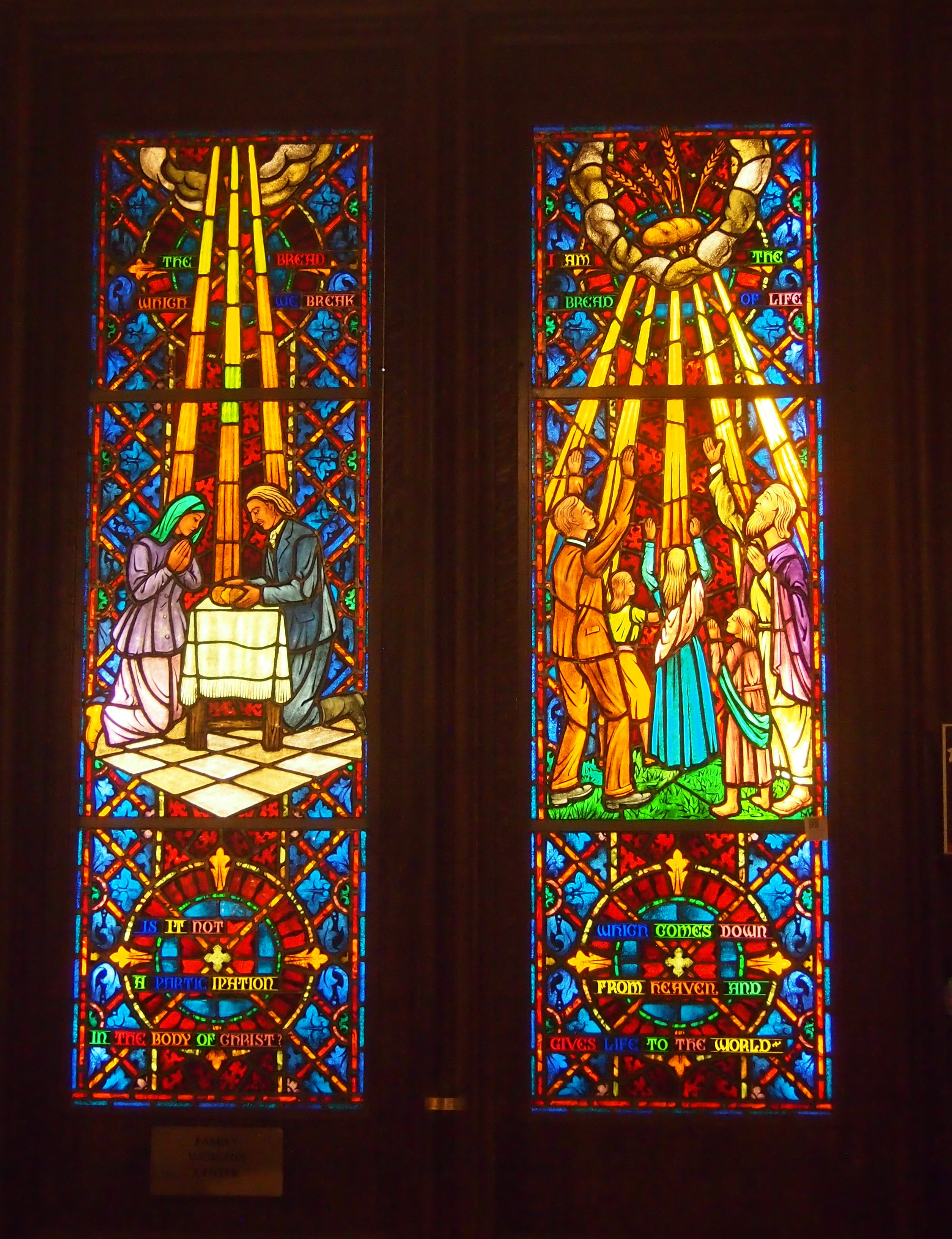
With fine stained glass.

I had no time to tour the Sky Chapel again — I visited ca. 2002 — which is at top of the building and open every day at 2 p.m. It’s a sacred space unlike any other I know.