The Briscoe Western Art Museum

On Tuesdays, the Briscoe Western Art Museum in downtown San Antonio — in full, the Dolph and Janey Briscoe Western Art Museum — offers free admission from 4 to 9 p.m., so after wrapping up my work that day last week, I decided to visit within that window of discount opportunity. It’s still a fairly new museum, open only since 2013, so I’d never been.

The building, which is on W. Market St., is not new. It was the main city library from 1930 to 1968, so I don’t remember it as that, though my mother and grandparents would have known it.

The lobby is striking. This image was taken before the installation of a reception desk toward the back, and a large bronze, John Coleman’s “Visions of Change.” A lot of restoration apparently went into bringing the interior roughly back to its library-era look.

For some decades after the library moved, the building housed the Hertzberg Circus Collection, an enormous array of circus artifacts that the library used to own. That I remember. Vaguely. I know I went once as a kid. Around the beginning of the 21st century, the Witte Museum acquired the collection and plans were laid for the current museum.

Something like the Eiteljorg Museum in Indianapolis, the Briscoe focuses on art from both the Indian and non-Indian populations of the West, but it also has a lot of artifacts. In nine galleries on three levels, that includes paintings, sculptures, guns and other weapons, such as a fancy sword owned by Santa Anna, saddles — Pancho Villa’s and Roy Rogers’ — jewelry, Mexican santos and retablos, a chuck wagon, a replica stage coach, and a collection of spurs that takes up an entire wall.

There are some Texas touches, such as a windmill in motion. Other Western states have them, but windmills have a special place in the history of Texas.

There’s a de facto shrine to Dolf and Janey Briscoe in the form of Dolf’s desk and some other items. As you’d expect, the Briscoes donated art and ponied up money to make the museum possible.
Good old Dolf. I think of him as a mellow governor, as befitting his ’70s time in office. I’m sure that’s nonsense, though: you don’t get to be a successful politico, much less governor of a large state, by being mellow. Not even if you start out as one of the richest men in the state. Rich in a traditional Texas way, too: a vast ranching operation. None of this microchip or cyber-fortune wealth for Dolf (well, maybe he branched into all that before he died in 2010).

My own favorite item in the museum: a large diorama behind glass walls depicting the storming of the Alamo. Carelessly, I didn’t check to see who created it, though it might be the work of one Tom Feeley. The museum’s web site is unhelpful in telling me. But whoever it was did a first-rate job.

The diorama includes all of the walls standing at the time of the siege, plus the buildings, and thousands of two- or so inch figures — armed Mexicans and Texians, horses, cannons — all done with incredible attention to detail. It captures the moment when the defenders, surrounded on all four sides by masses of Mexican soldiers, are about to be overwhelmed; but they’re still fighting.

Headphones are attached to a low wall below the glass, and you can listen to short items about various participants in the battle — the big three of Travis, Crockett and Bowie, of course, but also Susanna Dickinson, Joe (Travis’ slave), Gen. Cos and Santa Anna.

Near the diorama is a life-sized bronze of Travis, “Col. Travis — The Line” by James Muir, who specializes in heroic and allegorical work. That is, it depicts Travis drawing his famed line in the sand. A se non è vero, è ben trovato sort of story if there ever was one.

The artists in the museum’s temporary exhibit were a little unexpected: Andy Warhol and Billy Schenck. The Warhol part of the exhibit is very late Warhol (he died the next year): his 1986 Cowboys & Indians series. The artist gave his colorful and instantly recognizable treatment to the likes of John Wayne, Annie Oakley, George Custer, Geronimo and TR, among others.

Warhol might have been at risk, in earlier decades, of being a hopelessly dated artist, one whose reputation is forever stuck in the 1960s. Somehow he seems to have avoided that.

I’m less familar with Billy Schenck, who, unlike Warhol, is still alive and working. He’s “Warhol of the West,” according to the museum, and there are some similarities, especially in his generous displays of color. On the whole, he’s a match for Warhol. His work on exhibit at the Briscoe includes a number of the pieces in the slideshow at his web site.

South Texas, Summer ’18: The King William District in July

Just back from eight days in San Antonio. Most of the time I visited with family or worked, since my kind of work is mobile. Also, temps in the high 90s and sometimes over 100 degrees F. discouraged me from too much wandering around during the day.

Even so, last Sunday toward the late afternoon I drove down to the King William District, which is leafy this time of year and so not quite unbearably hot, and took a few short walks.

“The district encompasses land that was once irrigated farm land belonging to the Mission San Antonio de Valero, commonly known as the Alamo,” the City of San Antonio says. “When the mission was secularized in 1793, the lands were divided among the resident Indian families from the mission or sold at public auction. In the 1860s the area was subdivided into lots and laid out with the present streets.

“In the mid-nineteenth century… a great many Germans, who had immigrated to Texas in the 1840s, began to settle in this area… The area developed into an idyllic neighborhood of large, impressive houses designed in the Greek Revival, Victorian, and Italianate styles.

“The main street into the neighborhood was given the name King William in honor of King Wilhelm I, King of Prussia in the 1870s. During World War I, when America was at war with Germany, the name was changed to Pershing Avenue. A few years after the war ended the King William name was restored.”

These days there’s a Pershing Ave. in San Antonio, but it’s further north, fittingly not far from Fort Sam Houston. By the mid-20th century, the King William District was run down. By the late 20th century, restoration was under way.

One of my short walks took me along King William St., which is an important street in the district, but hardly the only one. The array of houses made me think of the East End Historic District in Galveston. In King William, there are large and historic houses such as the Villa Finale.
The Steves Homested. One of these days, I’ll take the tour.Edward Steves was a successful businessman in lumber in San Antonio in the 19th century, and Steves & Sons, which makes doors, is still around. I went to high school with a girl who was descended from Steves on her mother’s side.

There are plenty of other large and not-so-large houses on the street, most of which are worth a look.
That last one is the Alfred Giles House. One the architect of that name designed for himself. He’s thought to have done the Steves Homestead, and he certainly designed a lot of buildings in Texas, including some county courthouses (such for Goliad County and Presidio County) and even some in Monterrey, Mexico.

High Summer Misc.

Time for a high summer break. Back to posting around July 22.

Last night around midnight I spent a few pleasant minutes on my deck. Temps were neither hot nor cold, the noise from traffic was subdued, and Mars hung above the garage, a pretty orange point of light. The suburban haze dimmed it some, of course, but not enough to obscure the planet as a object of contemplation.

We, as in human beings, could go to Mars if we really wanted to. So far we don’t. The people who will go there might not be born yet, but I think they will go.

Closer to home, I visited a mall recently and decided to document something that might not be around much longer.

The same retailer has a location in Chicago — a neighborhood store, smaller than the suburban locations, that I drive by sometimes — that’s closing. Or maybe it has already. I wouldn’t mind documenting it either, but it would be a pain in the butt to find parking, and then a vantage to get a good shot.

In another store, an actual bookstore that sells other things, I saw these recently.

I know there are a lot of variations on Monopoly, but Deadpool Monopoly? Walking Dead Monopoly? Golden Girls Monopoly?

Somewhere out there is a collector of Monopoly editions. Must be hard to keep up. Or maybe the Smithsonian, or the Library of Congress, has tasked itself to preserve a copy of every edition. Maybe not. Maybe Golden Girls Monopoly will be highly prized for its rarity by collectors during the Monopoly craze of the 2160s.

Finally, a picture of Independence Day fireworks here in suburban Chicago.

Not a great picture. But not bad for a phone camera.

Grandpa Tom

Learned today that a high school friend of mine, Tom — another Tom, not the one we visited Mexico City with, but rather the one in this picture — has lately become a grandfather.

He’s about six months older than I am. I knew this particular Tom as far back as fourth or fifth grade, pushing 50 years ago, when we hung out a lot. Less in high school, but still a fair amount. Both of us were Class of ’79. Went to his wedding in 1986.

It’s a tempus fugit moment. Circle of life, that sort of thing. Guess it’s going happen more often in the coming years, just as there was a wave of weddings among my contemporaries beginning in the mid-80s and then a bunch of births. Congratulations to Tom and his wife Rebecca.

Oz Park

Oz Park is a mid-sized green space on the North Side of Chicago, bounded by W. Webster Ave. on the north and W. Dickens Ave. on the south, though there’s a patch of it south of Dickens; and N. Larrabee St. on the east and N. Burling St. on the west, which is a block east of Halsted.

After strolling north on Halsted recently, I visited Oz Park. Baseball fields and tennis courts take up much of the park, and people were using them to the fullest the day I wandered by. A fair share of the park is wooded or grassy, with walking or bicycling paths snaking through. Occasionally life is a walk in the park.

Oz Park is a successful example of urban renewal. That movement gets a bad rap, and it mostly should, but there are worthwhile spots as a result.

“In the 1960s, the Lincoln Park Conservation Association approached the City of Chicago in efforts to improve the community, and the neighborhood was soon designated as the Lincoln Park Urban Renewal Area,” the Chicago Park District says.

“The urban renewal plan identified a 13 acre-site for a new park, and in 1974, the Chicago Park District acquired the land. In 1976, the park was officially named Oz Park in honor of Lyman Frank Baum (1856-1919), the author of The Wonderful Wizard of Oz.”

Baum didn’t live in Lincoln Park, but he did live in Chicago, so close enough. Certain aspects of the park honor his work, such as the Emerald Garden.

In more recent decades, Wizard of Oz characters have come to the park, such as the Scarecrow, who’s at one of the Emerald Garden entrances.
“In the early 1990s, the Oz Park Advisory Council and the Lincoln Park Chamber of Commerce commissioned artist John Kearney to create a Tin Man sculpture, installed in October 1995, the Cowardly Lion, installed in May 2001, and the 7 ft., 800 lb. cast bronze Scarecrow, installed June 2005,” the park district says. “In Spring 2007 Dorothy & Toto joined their friends in the park.”

Being first, the Tin Man is the most prominent, standing in a highly visible spot where Larabee, Webster and Lincoln Ave. meet (Lincoln’s a diagonal that passes by the northeast corner of the park).

West of the Tin Man are Dorothy and Toto, standing back a bit in the shade.
Note the Ruby Slippers, not Silver Shoes. Artist’s prerogative, I guess.

I didn’t see the Cowardly Lion, but I figured he was elsewhere was in the park. As he is.

North Halsted, North to Dickens

Recently while in the city I took a stroll on N. Halsted St. from North Ave. to W. Dickens Ave. It was a pleasant summer day, but a little hot, so I spent most of my walk on the east side of the street — the shady side.

Sure, the song says to direct your feet to the sunny side of the street. That might be all right some times of the year, but not so much on a clear summer day.

As I wandered along, I decided to take pictures of ordinary North Side buildings along Halsted. I didn’t keep careful notes, but anyone wanting to know exact locations can consult Google Streetview.

Here’s the corner of Halsted and Dickens. Nice building. Then I turned east on Dickens.

Just a small sample. Halsted is a long street, passing through interesting areas both north and south in the city.

The Day I Met Casper David Friedrich

Odd what makes an impression. The Charlottenburg Palace? Good, very good. Casper David Friedrich? I was fascinated. Unfortunately, I haven’t seen that many of his paintings since — some at the Hermitage in St. Petersburg, as I recall, and maybe one at the Met and one at the Louvre that I’m not sure I saw. Most of them are still in Germany.

July 8, 1983

Breakfast and then on the bus around 9. The wrong bus. But we found the right one before long and soon were downtown, heading our separate ways. I found the U-bahn and went out to the 1936 Olympic Stadium, still complete with fascist sculpture, which reminded me some of archaic Greek statuettes with their smiles. Saw the pool where The Festival of Beauty diving sequences were filmed.

Took the U-bahn and then walked to Schloss Charlottenburg. First I wandered the expansive grounds and saw the busts of the 12 Caesars and their wives. Went into the palace for a tour. Wore woolies over our shoes and looked at the fine old furniture and the vast collection of porcelain, among other things.

Back on the U-bahn. Met Steve, who had had his hair cut (part of the experience of visiting Berlin, he said), and we went to the National Gallery. Impressive collection, Neoclassical, Romantic, Impressionist, some early Modern, took in Monets, Renoirs, some Picassos. Especially taken with Renoir’s “Im Sommer.” Hard not to be.

Then I saw an entire wall of Casper David Friedrich. I didn’t remember ever seeing anything of his, or knowing much other than the name. Wow. I spent some time with them. Especially “Mann und Frau in Betrachtung des Mondes” and “Eichbaum im Schnee.”

The gallery wasn’t that large, which was a virtue, and later we headed for the Reichstag to catch a bus. En route we passed as close to the Brandenburg Gate as you can without getting shot at.

Back in West Berlin we ate some fish for dinner and Steve returned to the hostel. I walked some more and discovered a glittering shopping center off Budapester Straße. Then I went back to the hostel, tired.

The Hegeler Carus Mansion

Back to posting on July 8. A good Independence Day to all.

Before we went to Streator to see the Walldog murals, we visited LaSalle, Illinois. Like Streator, LaSalle is in LaSalle County, though it isn’t the county seat either — Ottawa is. Unlike Streator, LaSalle is on an Interstate. On two of them, in fact, at the junction of I-80 and I-39.

Those roads were still far in the future when a German, Edward C. Hegeler, came to LaSalle in the late 1850s. Before long he and his partner Frederick William Matthiessen, another German, were American zinc barons whose fortunes were made during the Civil War.

Why LaSalle? It was near coal deposits and the Illinois & Michigan Canal, besides a rail connection to Chicago. Smelting zinc required a lot of coal in those days. Zinc was to be had in southern Wisconsin. Cheaper to bring the zinc to Illinois than the coal to Wisconsin, I suppose.

As propertied men of the Gilded Age often did, Hegeler had a mansion built for himself and his large brood. In our time, it’s the Hegeler Carus Mansion, completed in 1876 in that Second Empire style we associate with eerie residences because of the drawings of Charles Addams.
William W. Boyington designed the house. He’s better known for the Chicago Water Tower, but he also did the Joliet State Pen and the current Illinois State Capitol.

The Carus in the name is after Hegeler’s son-in-law, Paul Carus, who wasn’t a zinc baron. He was a scholar, eventually running Open Court Publishing Co., which was founded by old man Hegeler, who clearly didn’t have a one-track zinc-oriented mind. Open Court published — publishes, it’s still around — titles in philosophy, science, and religion.

We took the 3 p.m. tour of the Hegeler Carus Mansion on Saturday, partly as something to do during the hotest part of a hot day. The house doesn’t have central AC, but thick walls and wall units and fans made it tolerable inside.

A third-generation member of the Hegeler-Carus clan lived in the house until 2004, when he died aged more than 100. Now a foundation owns the place, and it’s doing the slow work of restoring the mansion. A few rooms are finished, complete with high Victorian furniture and wall and floor decor — there are some elaborately styled floors in this house — and many, many books.

“The elaborate interior decoration of the Hegeler Carus mansion is the work of August Fiedler, a talented German-American who excelled in interior design and furniture making,” says The Story of a House. “Although he designed many interiors in Chicago and elsewhere, most have been lost, leaving the Hegeler Carus as the largest and most intact surviving example of his work.”

Most of the rooms aren’t finished yet. Still, the flavor of the place is distinct. A historic property doesn’t have to be a House Beautiful specimen to be enjoyable.

Murals & Milestones in Streator

Early in June, when we were visiting Arcola, Illinois, I noticed that the town sported more murals than it did during our 2007 visit. In fact, I didn’t remember any from that time. That’s because in 2012, Walldogs came to town and painted the murals.

I found that out by looking at Arcola’s web site, which mentioned the Walldogs, and then I looked them up. “The Walldogs are a group of highly skilled sign painters and mural artists from all over the globe…” the group’s web site says.

“Once a year, hundreds of Walldogs gather in one lucky town or city to paint multiple murals and old-fashioned wall advertisements. This meet – or festival – is usually held during the span of 4 or 5 days ending on a Sunday.”

More about the group was published recently by The Times, the area’s local paper.

While reading about the group, I noticed that the next Walldogs event was going to be in Streator, Illinois at the end of June. I knew right away that I wanted to go to Streator during the event, and that is what we did on Saturday. Since it was nearly 100 degrees F. during the early afternoon, we timed the visit so we didn’t get there until around 5:30 in the afternoon, when things had cooled off to around 90 or so, and it was easier to find shade.

Streator was glad to get the Walldogs, at least to judge by signs like this, placed in the window of a resale shop.

This is a mural to commemorate the event itself. It notes that this year is the 150th anniversary of Streator, the 200th anniversary of Illinois entering the Union, and 25 years of Walldogs events.
We’d been to Streator once before, but only for a short visit in 2005 that absolutely no one but me remembered.

I wrote in a previous BTST: “Illinois 18 took us exclusively through flatlands, once the Illinois River valley was behind us, and on to Streator. Streator’s one of those towns that the Interstate system has completely bypassed. It didn’t seem any worse for it, though, with all the usual features of rural Illinois county seats [sic]: a small downtown, a district of fine-trim houses, a trailer park or two, parks, schools, a police station, firehouse, and library with a historic marker out front dedicated to the discoverer of Pluto.”

I stopped to read the sign, but didn’t even get out of the car. That was all I did in Streator. This time around, I knew that Clyde Tombaugh was going to get his own prominent Walldog mural in Streator, and sure enough, that was one of the first of the spanking-new murals we saw when we got to town.

So new, in fact, that the artists were still working on it.
Just before we left, however, the mural was visible for all to see.

It did me good to know that Streator hasn’t forgotten its favorite astronomical son, a lad from the Midwest who discovered a whole planet. I bet Pluto isn’t anything but a planet to the good people of Streator. Me either.

Murals tend to be stylized, and so Tombaugh’s a stylized astronomer, looking through an eyepiece. Even in the 1920s and ’30s, I don’t think professional astronomers did that very much. After all, Tombaugh discovered Pluto by the tedious task of comparing photographic plates by eye, something that computers certainly do now.

Nearby were other walls with other brand-new murals, such as WWII Canteen.

They too are stylized, but supposedly there’s a story behind the couple on the wall. I didn’t get the details

Here’s Edward Plumb, a film composer who worked for Disney back when Walt himself was in charge, and who happened to be a grandson of the cofounder of Streator, Col. Ralph Plumb.

I noticed that Plumb’s mural is on the side of the boarded up Majestic Theater. No doubt once upon a time, you could hear his scores there as Disney movies played at the Majestic.

On this wall in the afternoon sun are Col. Plumb and Worthy Streator, town founders, along with the miners who came to dig coal in Streator’s early days, and a canary.

Some of the murals were being painted on aluminum panels fixed to temporary wooden scaffolding. The panels, I was told by a fellow who may or may not have been with the event, would be attached to walls later. Walls maybe not otherwise suitable for taking paint directly.

One honored native son was Clarence Mulford, creator of Hopalong Cassidy.

I’d say that Hopalong Cassidy is pretty much the definition of a forgotten figure from fiction. Even when I was growing up, he was little more than a vague Western character with an odd name.

Another forgotten name, though not from fiction: Calbraith Rodgers.
Rodgers had his moment in the public eye in 1911, when he flew the Vin Fiz Flyer, a Wright Brothers machine, coast-to-coast over the course of about three months. Vin Fiz was a soft drink, in case anyone thinks product sponsorship is a new thing.

According to Wiki: “The support team rode on a three-car train called the Vin Fiz Special, and included Charlie Taylor, the Wright brothers’ bicycle shop and aircraft mechanic, who built their first and later engines and knew every detail of Wright airplane construction; Rodgers’ wife Mabel; his mother; reporters; and employees of Armour and Vin Fiz.”

There’s a movie comedy in that story. Or there was, back in the 1960s, when the likes of The Great Race and Those Magnificent Men in Their Flying Machines were made.

Rodgers might have reached further heights of aviation fame, but he died in a crash soon after his transcontinental flight. In fact, according to the International Bird Strike Committee, he was the first person to die because his airplane struck a bird: “The first fatal bird strike accident was in 1912 at Long Beach in California, when a gull (Larus sp.) lodged in the flying controls of a Wright Flyer, killing Cal Rodgers.”

A mural honoring Engine No. 34 of the obscure Streator & Clinton RR.

Here are the Howe brothers, Orion and Lyston.
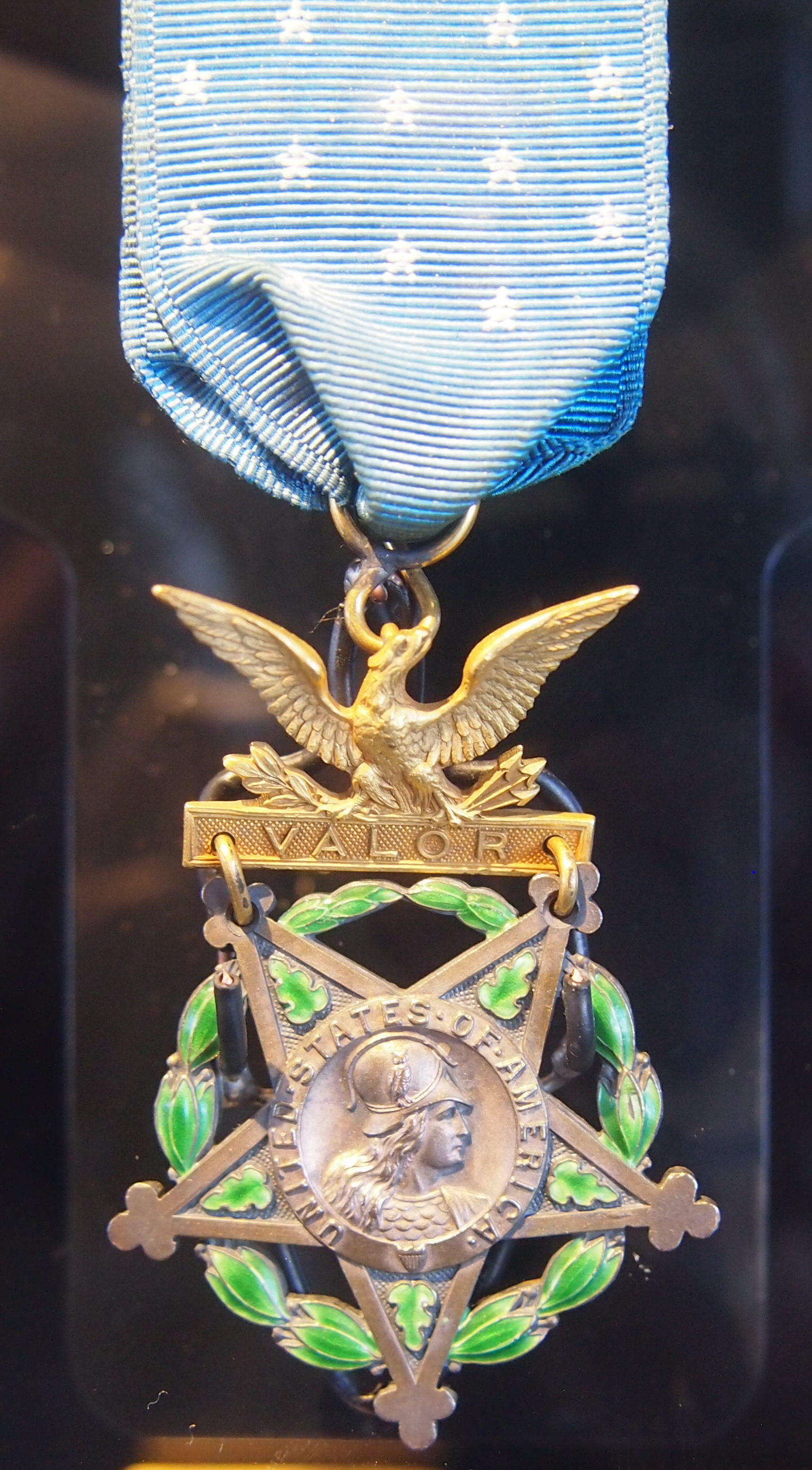
They were drummer boys from Streator with the 55th Regiment Illinois Volunteer Infantry. Lyston has the distinction of being the youngest known drummer boy in the war, and Orion received the Medal of Honor for his conduct at Vicksburg.

The lads have a memorial in the park, not far from where their mural was painted.
The citation for Orion says: “A drummer boy, 14 years of age, and severely wounded and exposed to a heavy fire from the enemy, he persistently remained upon the field of battle until he had reported to Gen. W. T. Sherman the necessity of supplying cartridges for the use of troops under command of Colonel Malmborg.”

A Day in Malacca

July 5, 1992.

Up fairly early and went to Bukit China, which sports a massive hillside cemetery populated by Malaysian Chinese. The graves have peculiar, horseshoe-shaped walls surrounding small areas dug out of the side of the hill; the gravestones themselves are in the dugout. Some look new, others neglected.

A long walk then took me to (1) the Dutch Cemetery, which contained mostly British graves and (2) the Dutch Church, which is Anglican — and there was a service going on in Cantonese, I think. I sat in a while.

Had lunch at Kim Swee Huat, not bad fried noodles, sweet and sour pork, and a great fruit lasi. On the way to lunch I saw a Chinese funeral procession pass by on the street.

[Wish I’d added a little more detail about that, but I did take a picture in which the procession is barely visible.]
[As well as some pictures of the streets of Malacca. Including an example of baking fusion of some kind.]
From lunch I went back up to Bukit St. Paul (St. Paul Hill). [Bukit St. Paul features the ruins of St. Paul’s Church, among other things. A church structure of one kind or another has been on the site since shortly after the Portuguese conquest of Malacca more than 500 years ago.]

Afterwards I visited the Muzium Budaya, the Cultural Museum. The wooden building is a marvel of its kind, and the displays interesting.

[Again with an abbreviated description. Per Wiki, “the building is a modern reconstruction of the palace of the Melaka Sultanate. It showcases the history of the region.]

Afterwards, I went back to my room to cool down, though stopping at a bookstore I discovered along the way, where I bought The Roman Games by Roland Auguet.

Around sunset, I sought out dinner, and had a remarkable one at Sri Lakshmi Vilas [even more remarkable, it may still be open], a south Indian daun pisang. That means banana leaves, the “plates” on which the food is served.

I had mutton and fish and rice and veggies on a banana leaf that I ate with my fingers, which is the way to do it. Not the best Indian food I’ve ever had, but pretty good, and certainly the most interesting presentation. Even better, it cost M$5.30, or a little more than $2.

After eating, I took a walk through old Malacca. The Kampong Kling Mosque wasn’t open to me, but light and noise were pouring from the open windows of one of the side structures, which I figured might be an attached school. Some rambunctious kids were inside.

Nearby, I saw the Sri Poyatha Moorthi temple and the Cheng Hoon Teng temple. At Cheng Hoon Teng, a large ceremony of some kind was going on, with a lot of chanting. I watched for a while. No one paid the slightest bit of attention to me.