“Batcolumn”

Lest we forget, today is the centennial of the sinking of the RMS Lusitania. It’s getting some attention online. The latest book about the subject, Dead Wake: The Last Crossing of the Lusitania, came out recently, and I plan to read it in the near future. It’s by Erik Larson, who wrote The Devil in the White City, which is a strong recommendation, so I’m looking forward to it.

One more item from my May Day foray to downtown Chicago: “Batcolumn,” a very tall (101 feet) statue standing in front of the Harold Washington Social Security Administration building at 600 W. Madison St.
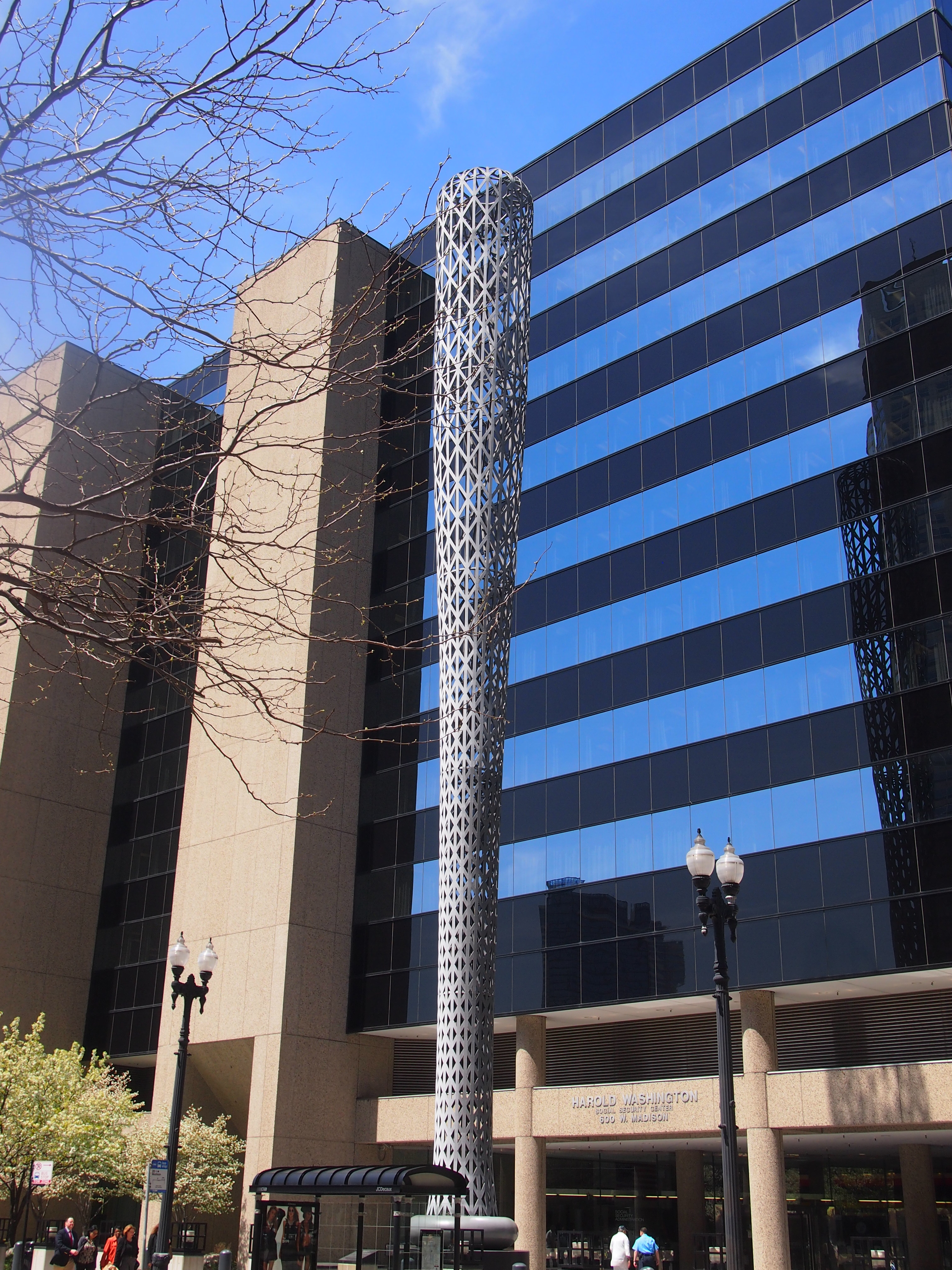
Batcolumn, May 1, 2015The sculpture was erected (and it must have been some job) in 1977, commissioned by the GSA. That reportedly annoyed people who objected to spending public money on making interesting things, but here it is, nearly 40 years later. I don’t know that it’s a favorite bit of public art among Chicagoans — not like the Picasso or the Bean — but everyone’s seen it, and no one seems to object to it any more. I think the government got its money’s worth.

The Swedish-born U.S. sculptor Claes Oldenburg did the work. His specialty: large versions of ordinary objects. While looking at some of his other items on line, one looked familiar right away.
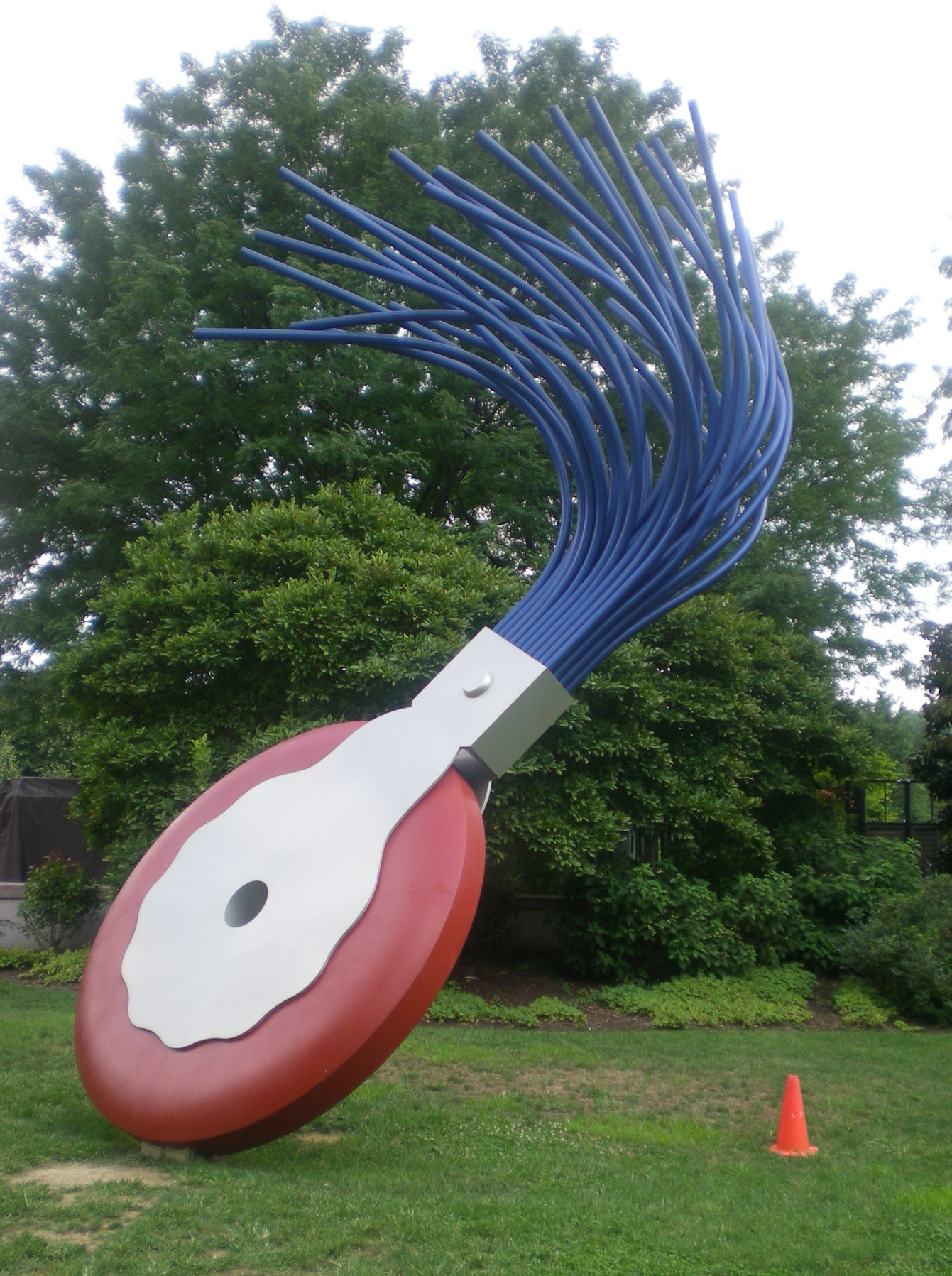
Claes Oldenburg, Typewriter Eraser, ScaleXIt’s “Typewriter Eraser, Scale X,” which we saw at the National Gallery of Art Sculpture Garden in Washington DC in 2011. Back in 1998, I think, I also saw “Spoonbridge and Cherry” at the Walker Art Center in Minneapolis.
“Agora”

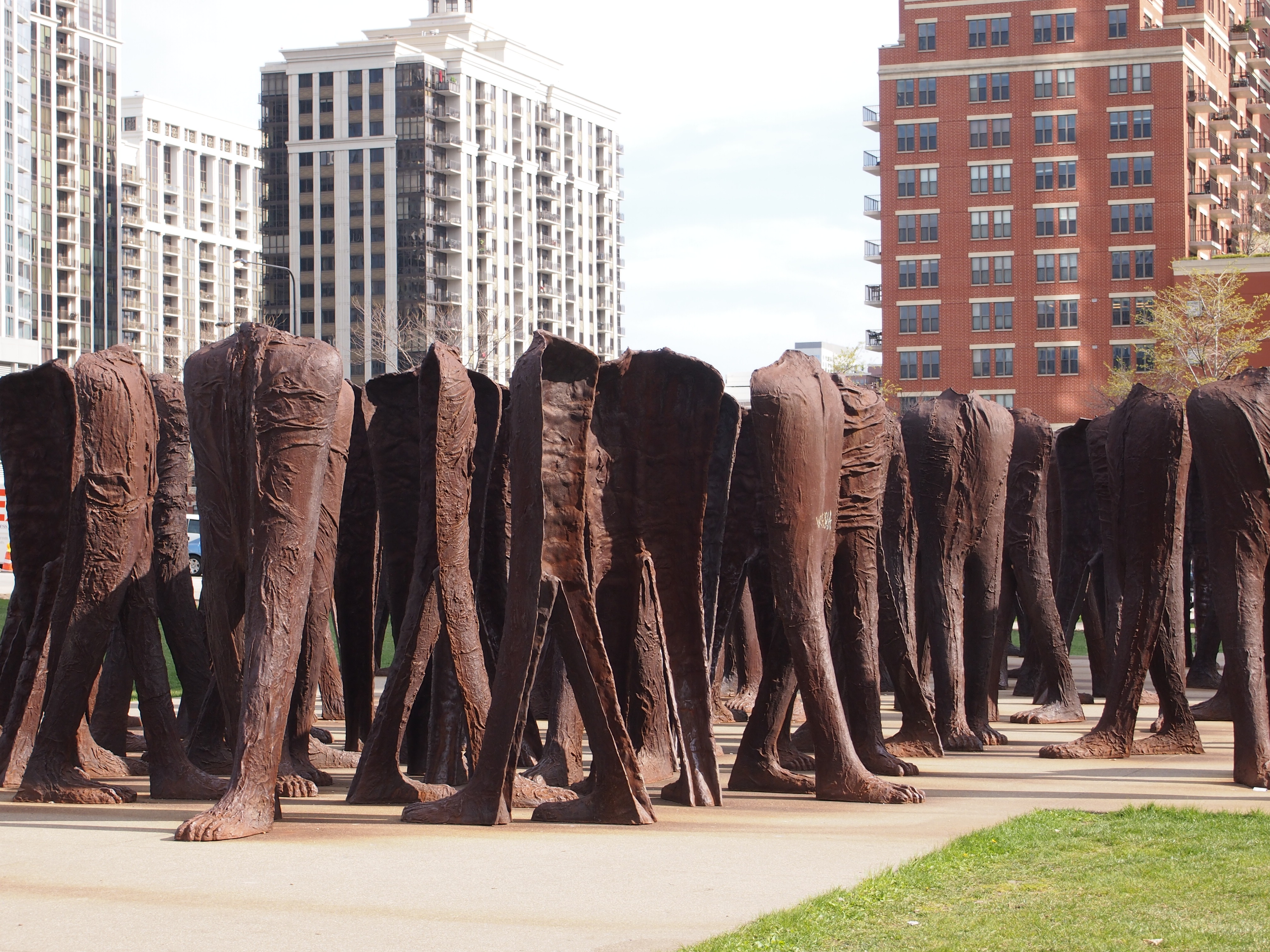
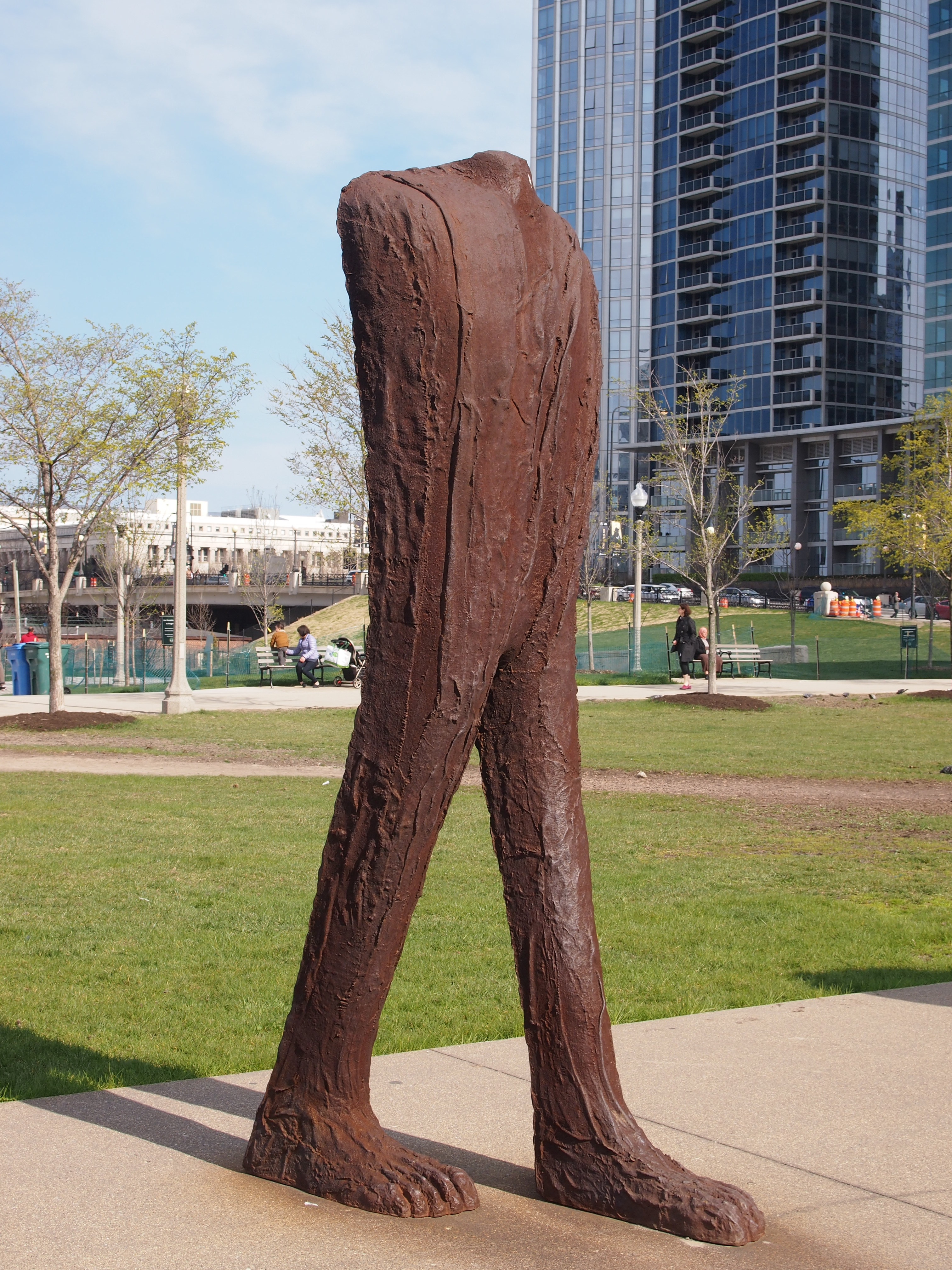
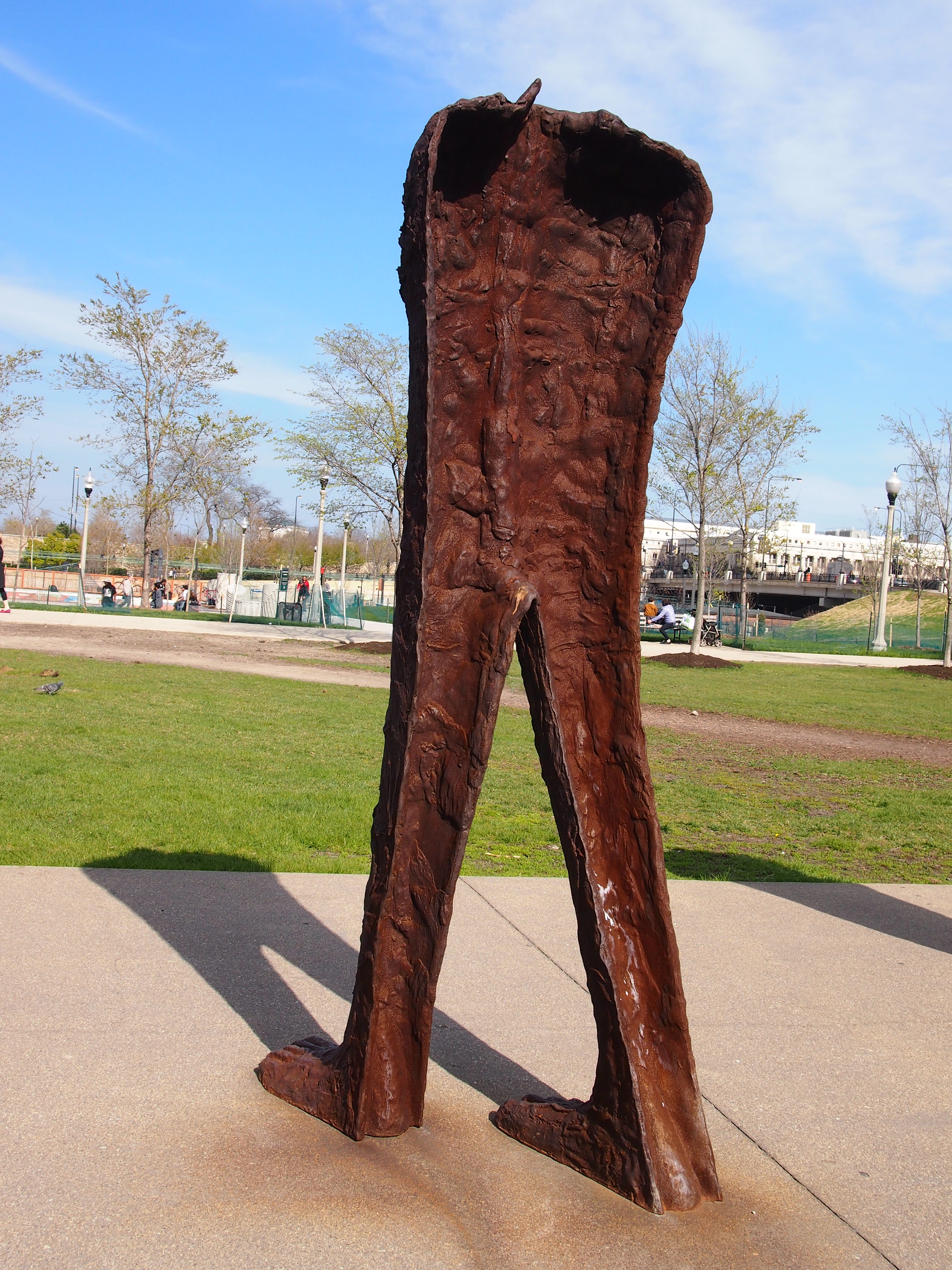
As far south as you can go in Grant Park, near the corner of Michigan Ave. and Roosevelt Rd., there’s a permanent sculpture installation called “Agora,” by the Polish sculptor Magdalena Abakanowicz.

“Agora” includes iron figures that look like this from one angle.

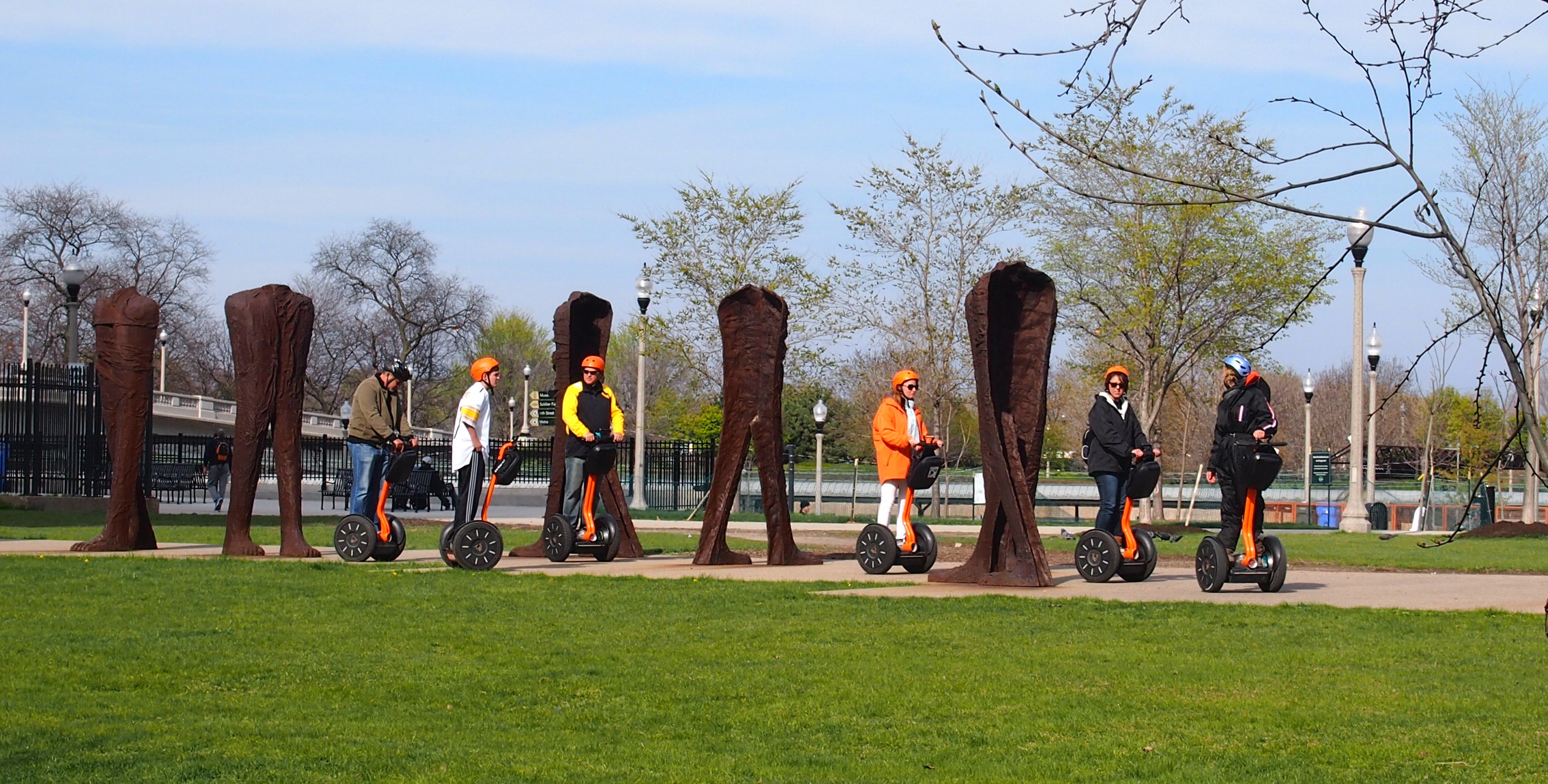
Agora, May 1, 2015And like this from another.

Agora, May 1, 2015They look alike at first glance, but actually the texture of the iron is different on each one. There are 106 of them.

Yeah, it's a little creepyThey’re roughly in two groups, but some of them are at a distance from the rest. Abakanowicz cast them at the Srem Foundry in Poland from 2003 to ’06.
The work also seems to attract the attention of roving bands of Segwayers.

Grant Park, May 1, 2015As I looked at the half-figures, I thought, they seem really familiar. Where have I seen them before, or at least something similar?

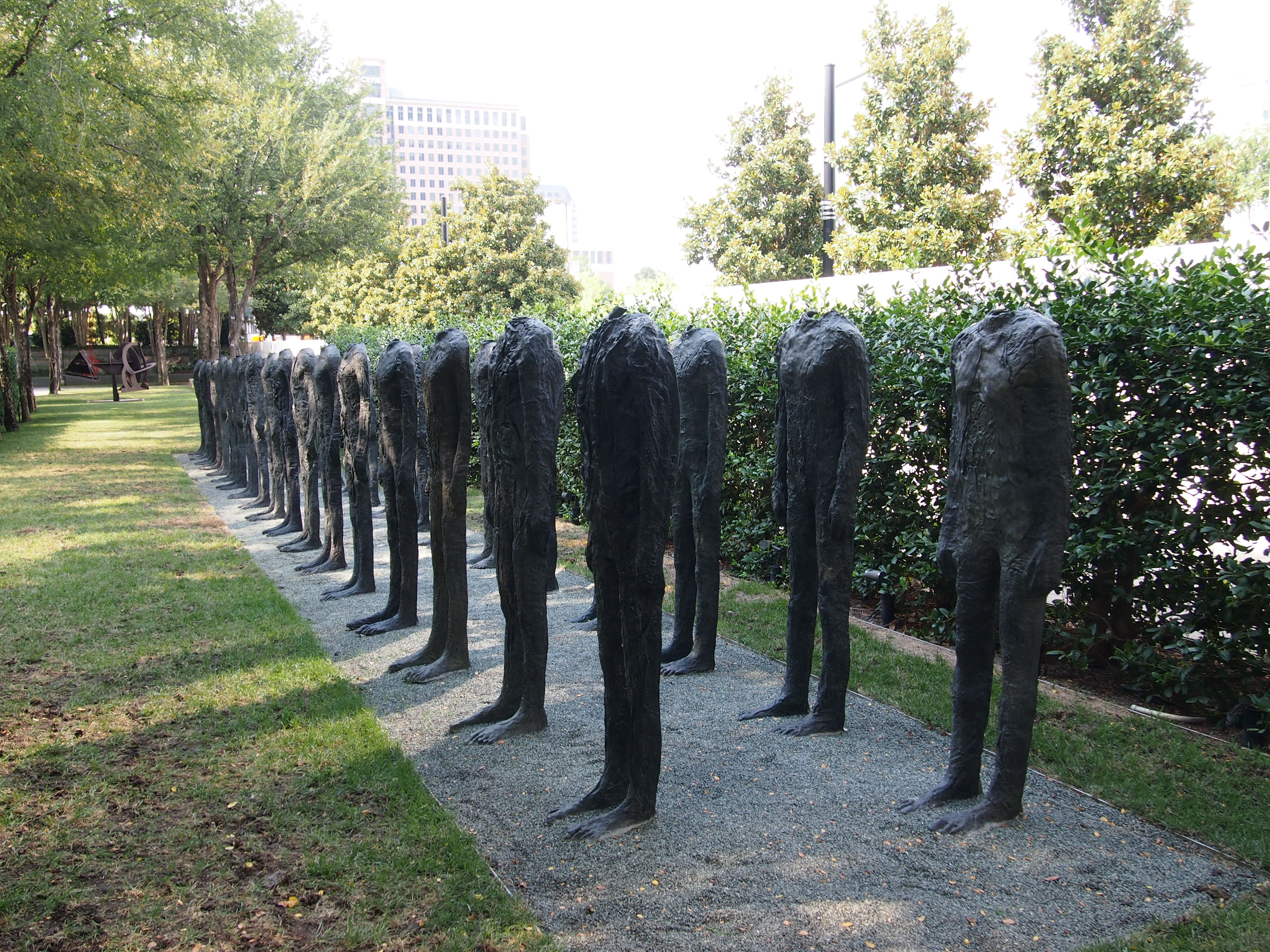
Nasher Museum, 2013The Nasher Sculpture Center in Dallas in ’13, that’s where, which has another grouping of cast-iron figures by Abakanowicz. The headless halves were in long lines instead of milling around like at an agora.

South Grant Park Sculpture &c.

The thing to do when walking to the southern reaches of Grant Park in downtown Chicago on a warm Friday afternoon is take a look at some of the less-famed artworks installed there. That’s what I’d do, anyway.

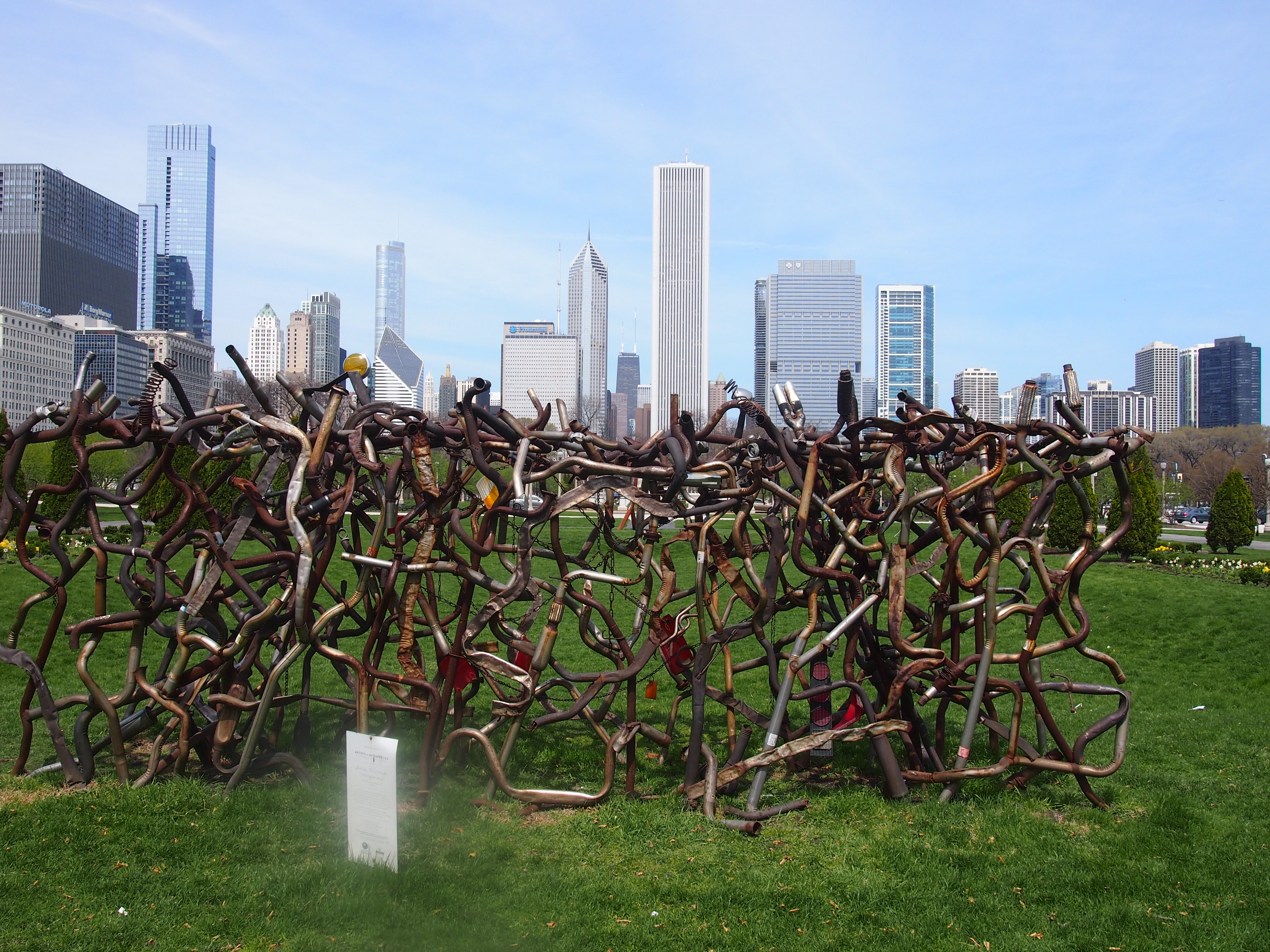
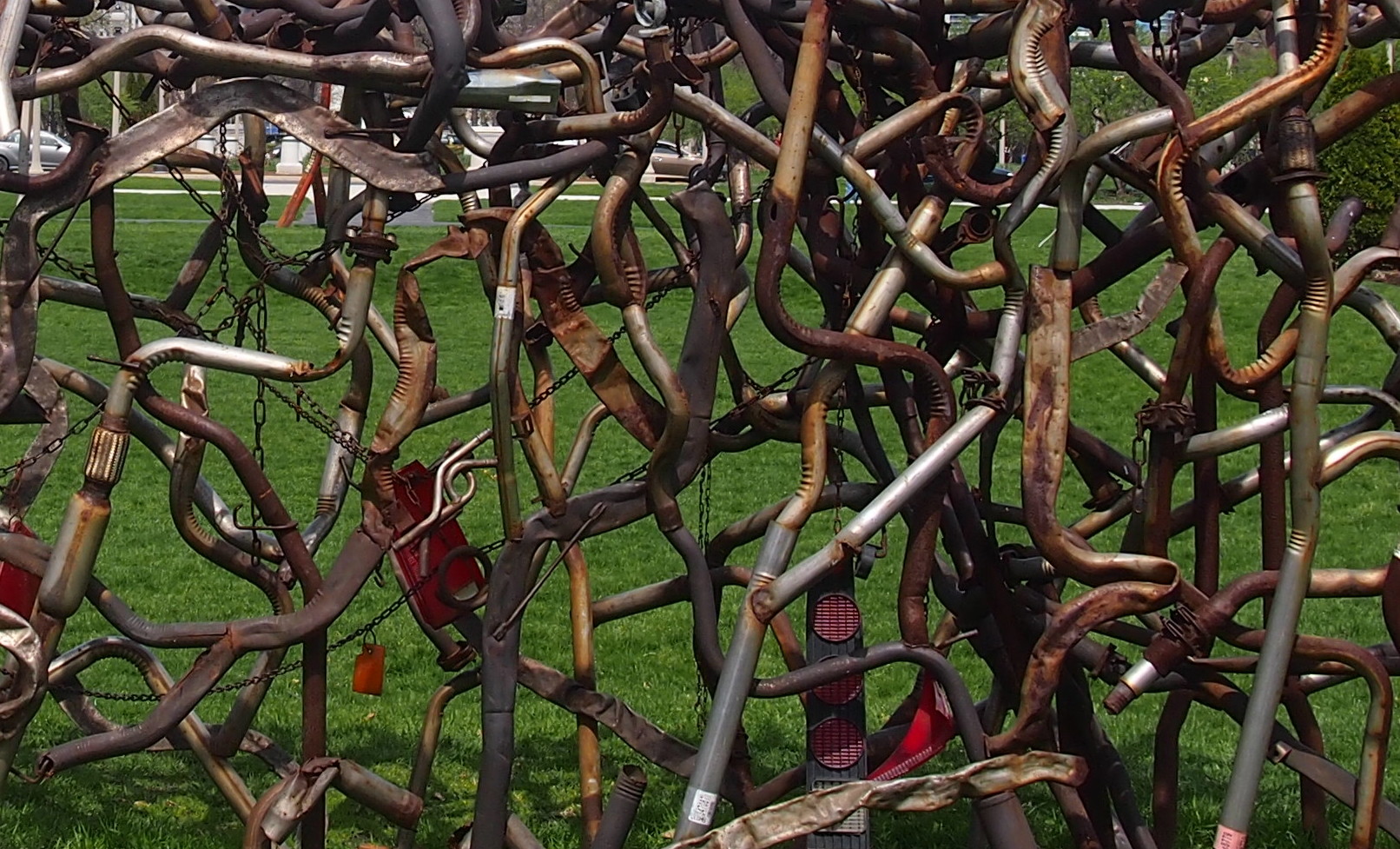
Such as “Hedgerow” by Chicago sculptor Lucy Slivinski, composed of vehicle exhaust pipes and reflectors and other auto oddments.

HedgerowIt was created in 2006, a nearby sign says, as part of an exhibit called Artists + Automobiles, for which the artists were “asked to use salvaged auto parts as the inspiration and primary material.” Yep.
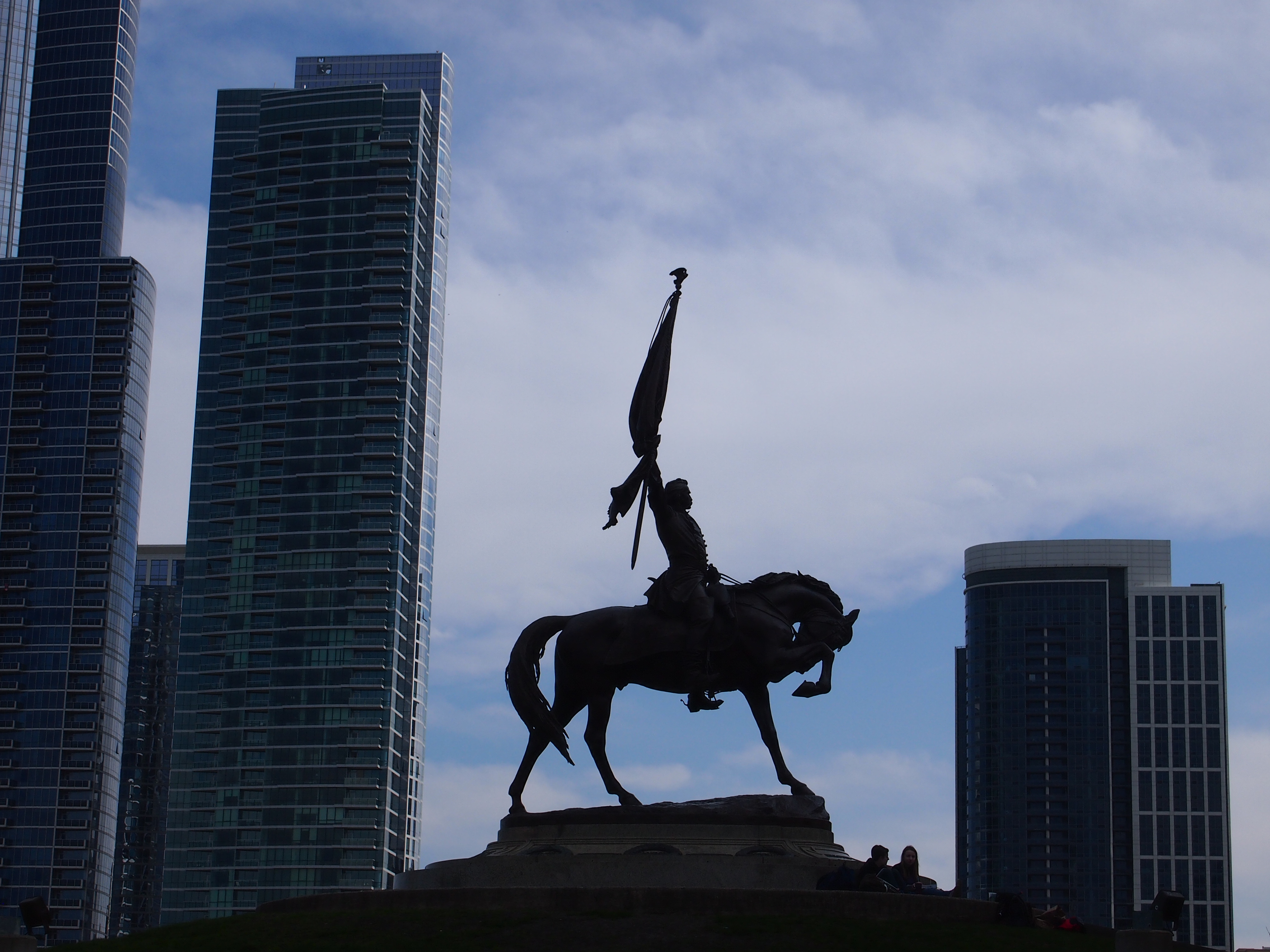
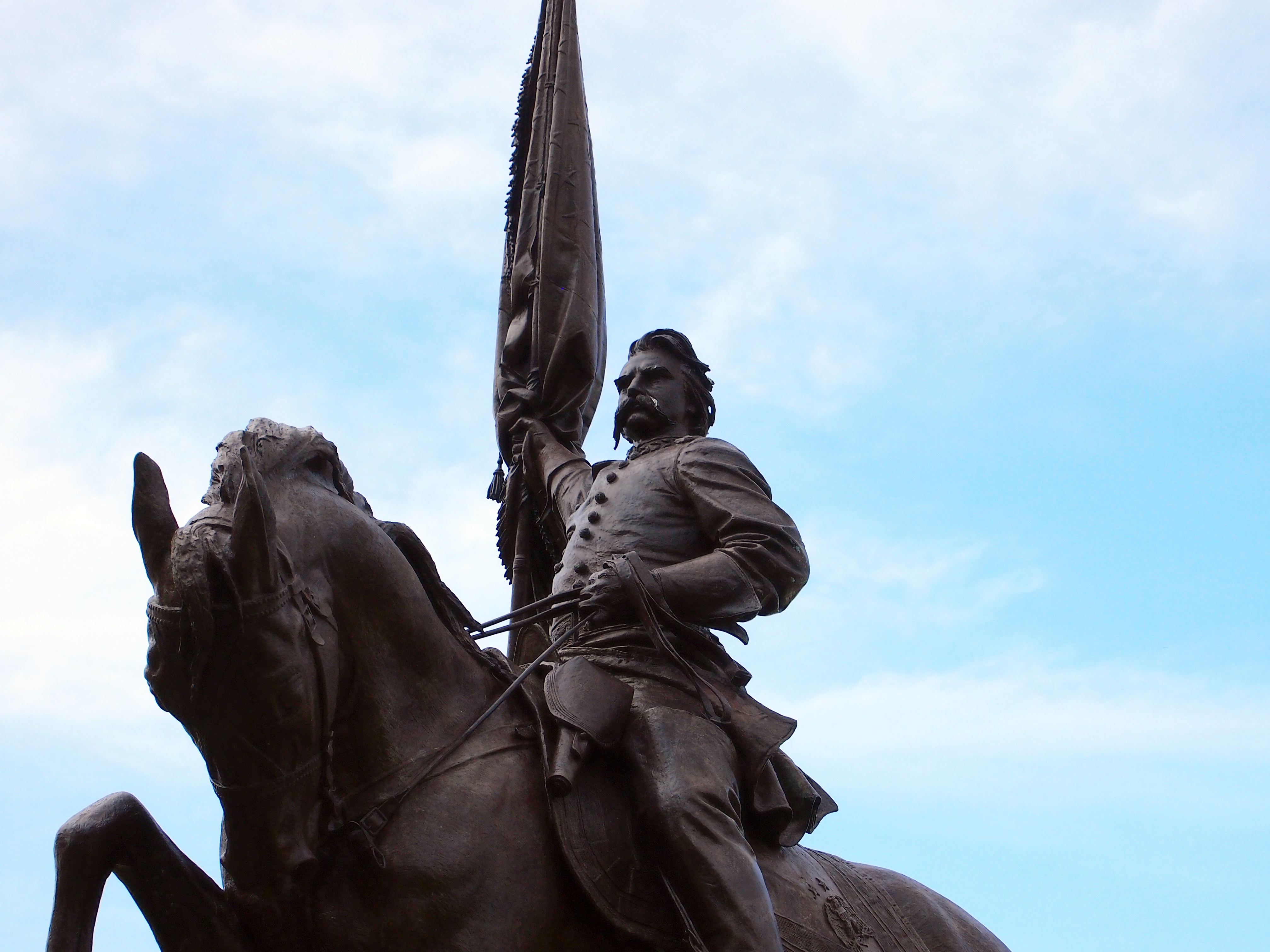
HedgerowFurther south, and closer to Michigan Ave., is the more conventional equestrian statue of Gen. John A. Logan. He’s remembered by Civil War aficionados, but by not many others, I’d say, even in Illinois, despite the part he played in the war or in establishing Decoration Day.
Logan memorial, Chicago, May 1, 2015There’s a John A. Logan Museum in Downstate Illinois. I didn’t know that. Its web site describes him this way: “Who was John A. Logan? General Grant’s favorite officer, one of Illinois’ most powerful Senators, Founder of Memorial Day as a national holiday, and among Mark Twain’s favorite public speakers.

“Or as historian Gary Ecelbarger has said, ‘John A. Logan may be the most noteworthy nineteenth century American to escape notice in the twenty-first century.’ What pushed him from becoming Abraham Lincoln’s bitter rival to campaigning for Lincoln’s re­election? How does an avid racist and author of Illinois’ Black Laws become an advocate for African American Civil Rights and education?

“Visit the General John A. Logan Museum and maybe you will better understand why Frederick Douglas [sic] said, if a man like Black Jack Logan can have a change of heart, then there is hope for everyone.”
Gen. Logan, May 1, 2015His statue is on top of a (probably manmade) hillock. It’s no ordinary equestrian statue, though — it’s a Saint-Gaudens. Any statue by the creator of the Double Eagle is all right by me. Much more about the creation of the statue, which was supposed to be erected at the site of the ’93 World’s Fair but instead came to Grant Park, is at the informative Connecting the Windy City blog. When the statue was originally put there, the site wasn’t an obscure patch of a city park, but very near Central Station, an intercity passenger terminal for the Illinois Central RR, gone now for 40+ years.

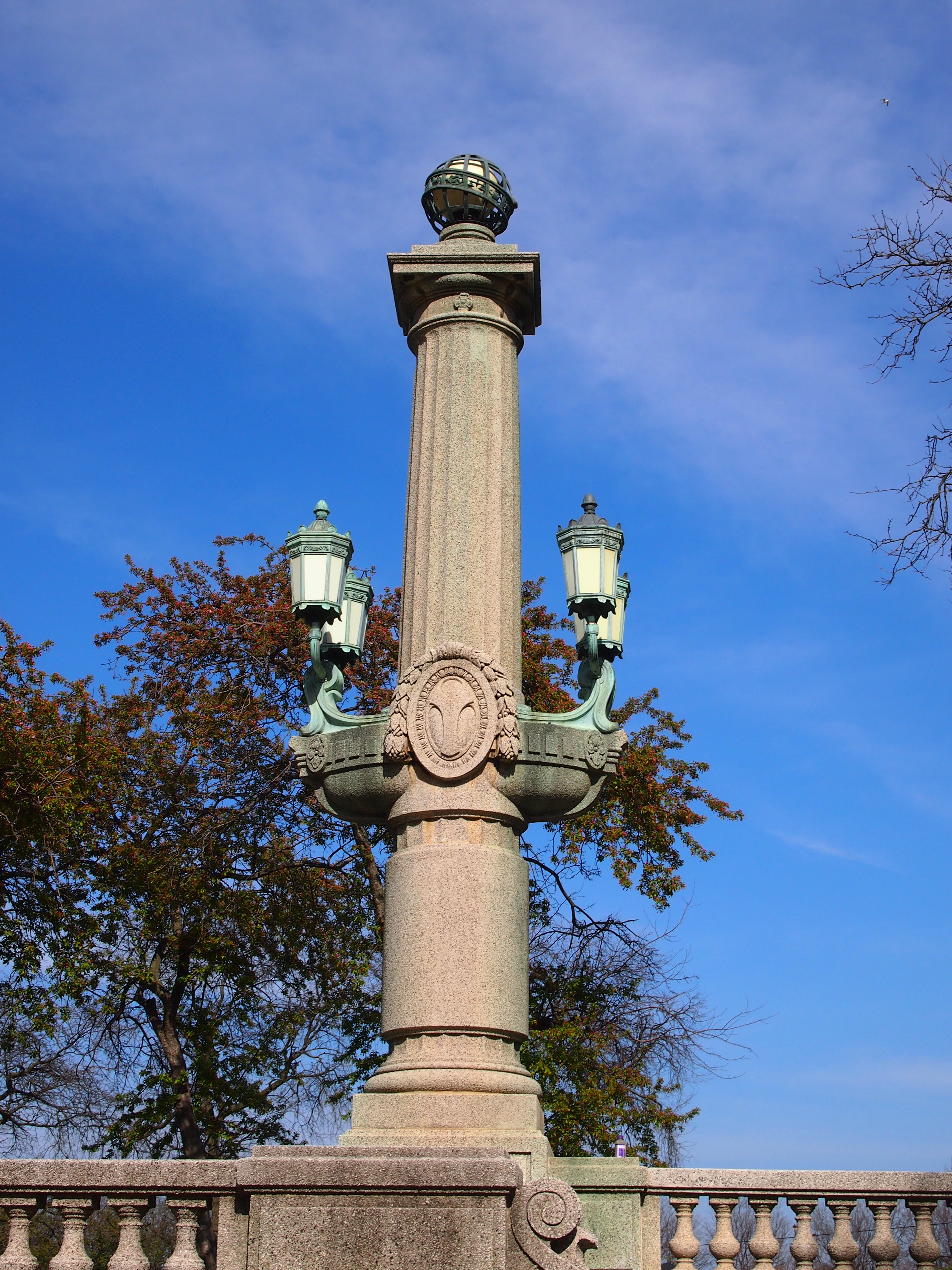
Not far from Gen. Logan, I took a look at some of the concrete lampposts in the park, picking up on some details I’d never noticed before. A fair number of them look like this.

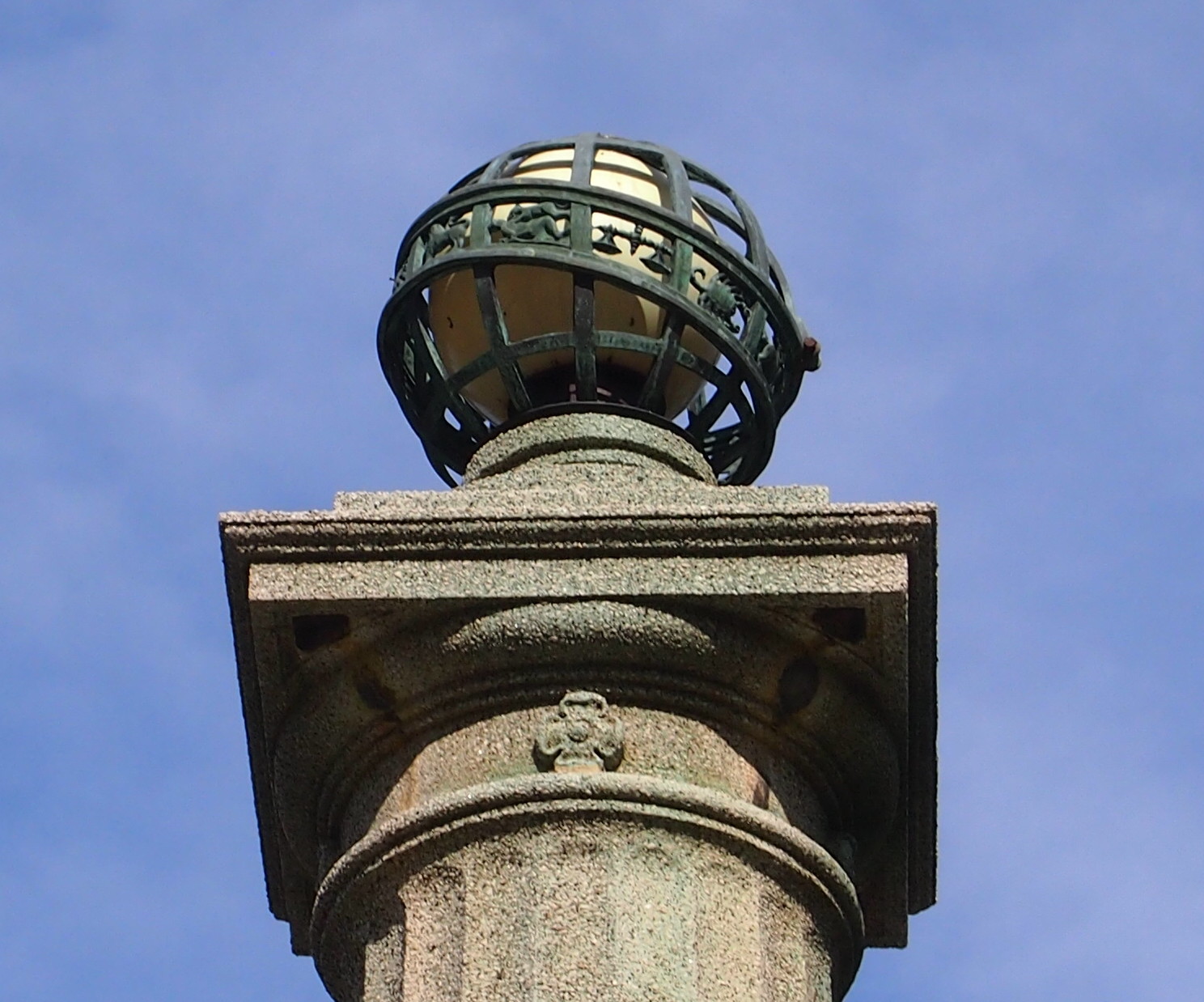
lamppost, Grant Park, May 1, 2015Atop the posts are globes, ringed by the zodiac.

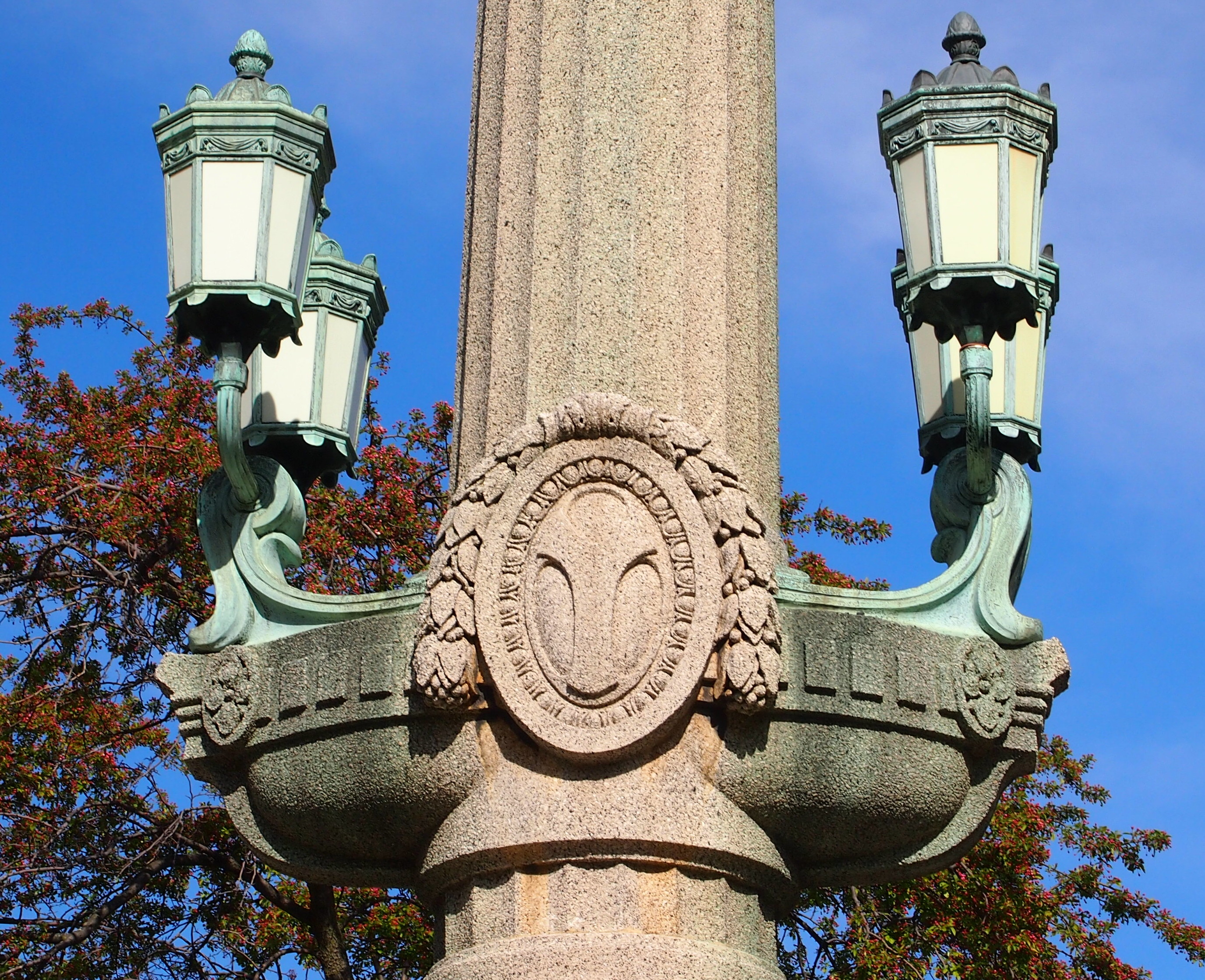
lamppost, Grant Park, May 1, 2015Note the Municipal Device.
lamppost, Grant Park, May 1, 2015Once you learn what it is, you see it everywhere in Chicago.

Football, You Bet

May Day was a genuine spring day this year, clear and warm enough for the season. I spent some of it on a walkabout in downtown Chicago, starting west of the Loop and wandering more or less east and south until I reached Grant Park. At Congress Pkwy. and Dearborn St., I noticed barricades in front of the Auditorium Theater Building. A long line of people, many of them wearing football jerseys, stood behind them.

Then I remembered hearing on the radio that the NFL draft was being held in Chicago this year, and giving it no more thought. If I had, I’d have guessed it was in a major hotel ballroom somewhere, but it turns out it was in the Auditorium Theatre.

There, and at a large white temporary tent in Grant Park, across Michigan Ave. at Congress. As the NFL’s senior vice president of events, Peter O’Reilly, explains on league’s web site: “Every year we can’t really satisfy the demand for fans that want to be inside the theater, so now we’re creating this Draft Town in Grant Park, just across from the Auditorium Theatre, in order to allow more fans to experience the excitement of the draft.”

The line of people, a block long, was waiting to get into the tent, and I’d bet they paid hard gold coins for the thrill. A large electronic sign on the tent said, “Look, Another Profit Center for the NFL!”

Actually, it said “Chi-Town is Draft Town.”

The sidewalks along Michigan Ave. were lousy with fans wearing football jerseys and lanyards with plastic badges, which probably let them into the tent. Cops were everywhere, presumably to keep a lid on any sports riots later. (Which were probably no new thing even at the time of the Nika Riots.)

The NFL draft wasn’t on my mind when I started walking, and it didn’t remain top of mind very long. I pressed on toward the far southern end of Grant Park, away from crowds, cops and mass-market sports.

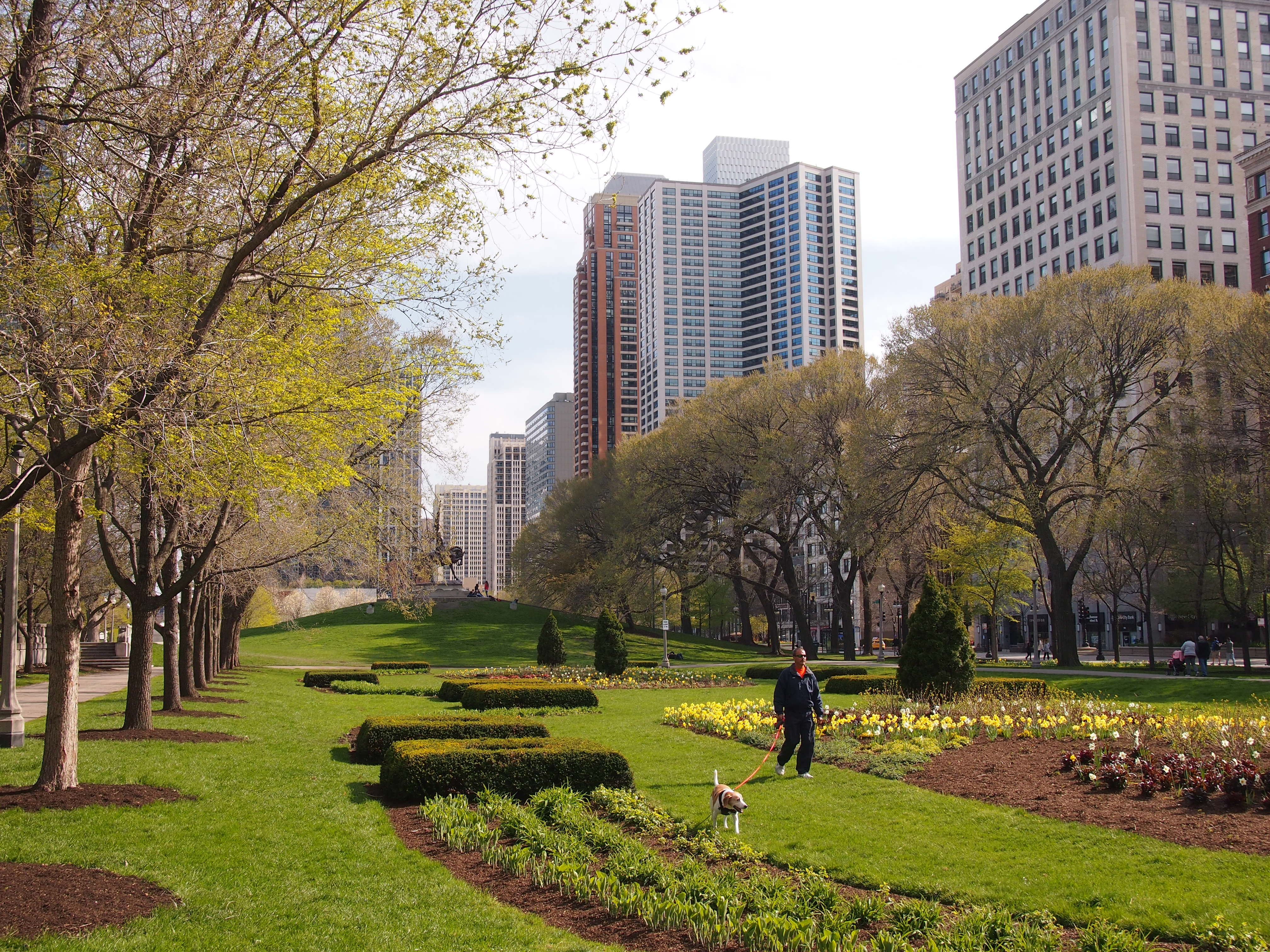
Grant Park, May 1, 2015I don’t remember the last time I was in this part of Grant Park. It was a fine place to be on a warm Friday afternoon.

Naptimes, 30 Years Apart

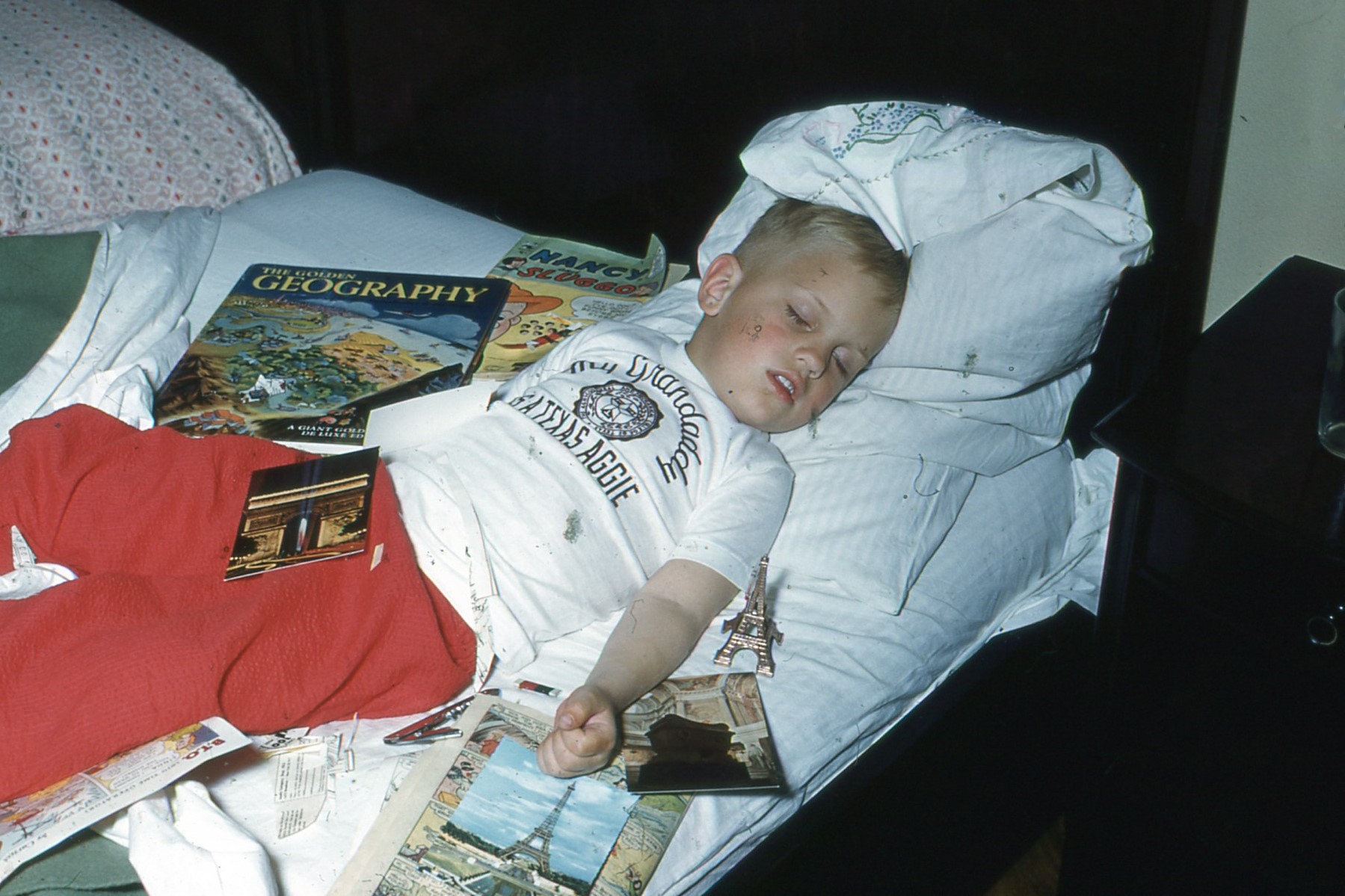
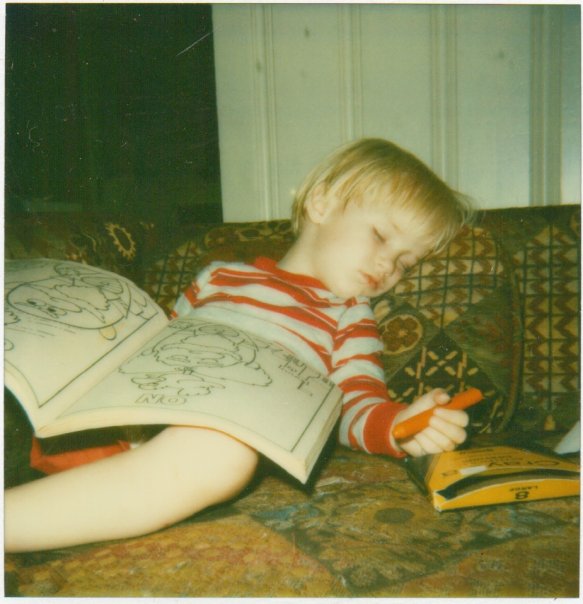
Last time I was in San Antonio, I dipped into my father’s collection of slides, mostly unexamined for at least 50 years, and pulled out a handful for scanning. The handwriting on the following slide said: “Jay Stribling sleeping, May 1956.” My brother that is, when he was four. No place is noted, but I suppose it was in Germany.

JayMay1956I looked up The Golden Geography. It’s by Elsa Jane Werner, illustrated by Cornelius De Witt, and originally published 1952. A lot of them must have been printed, since they seem easily available now online. I don’t remember it around the house in later years, which can mean only one thing. The only reason a book ever left our house is that it fell apart completely.

A casual Google search doesn’t uncover a scan of that Nancy & Sluggo comic, and it isn’t worth pursuing very far. The Eiffel Tower was a souvenir from my parents’ trip to Paris. I’m told they went without their small children, my brothers, which is what I would have done. They bought one for Jay and one for Jim, and the towers are still in my mother’s house, though not so shiny these days.

When I sent the image to Jay, he shared it with his sons. The eldest, my nephew Sam, sent us a picture of him at a similar age (in the 1980s) and in similar repose.

1936928_237230045005_6188398_nTime flies, things don’t change.

FEC from the PRC

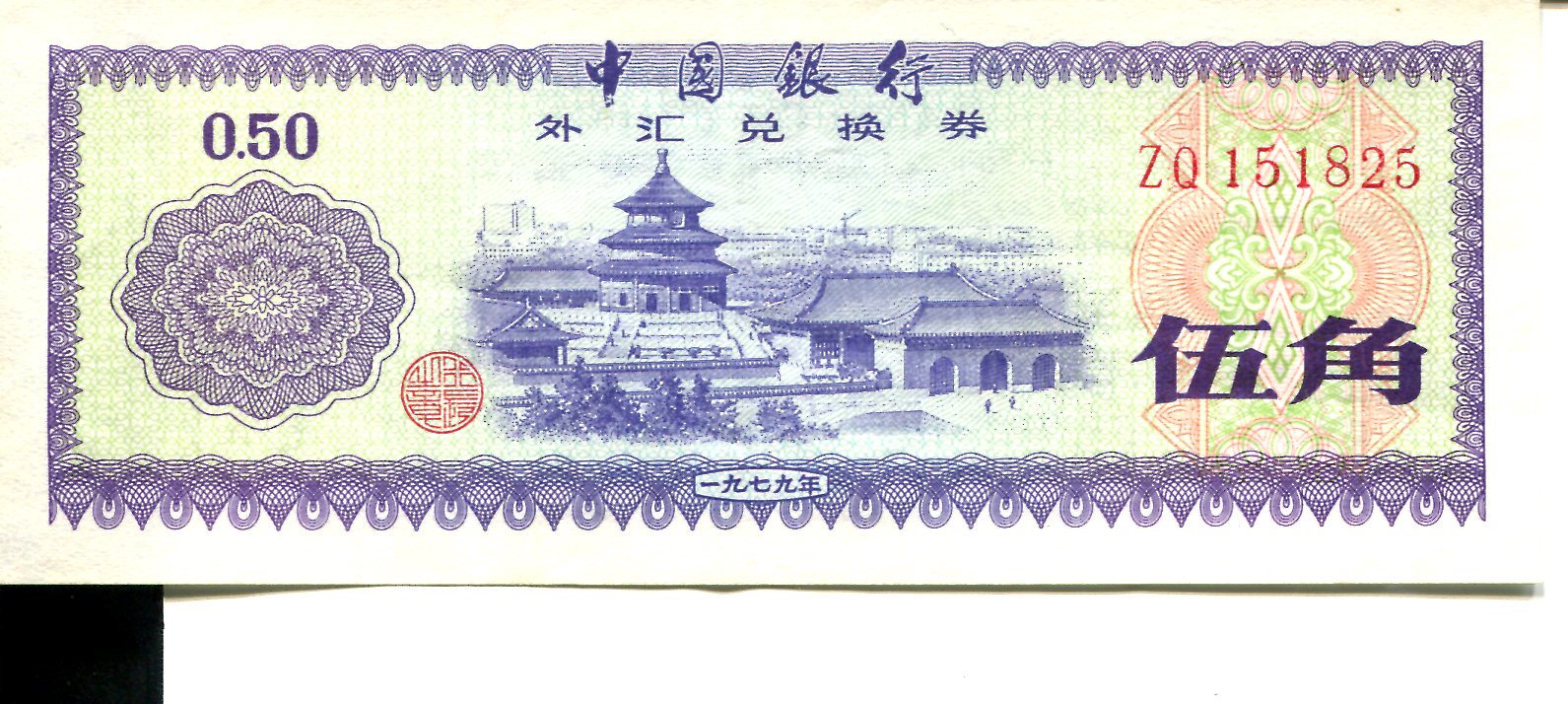
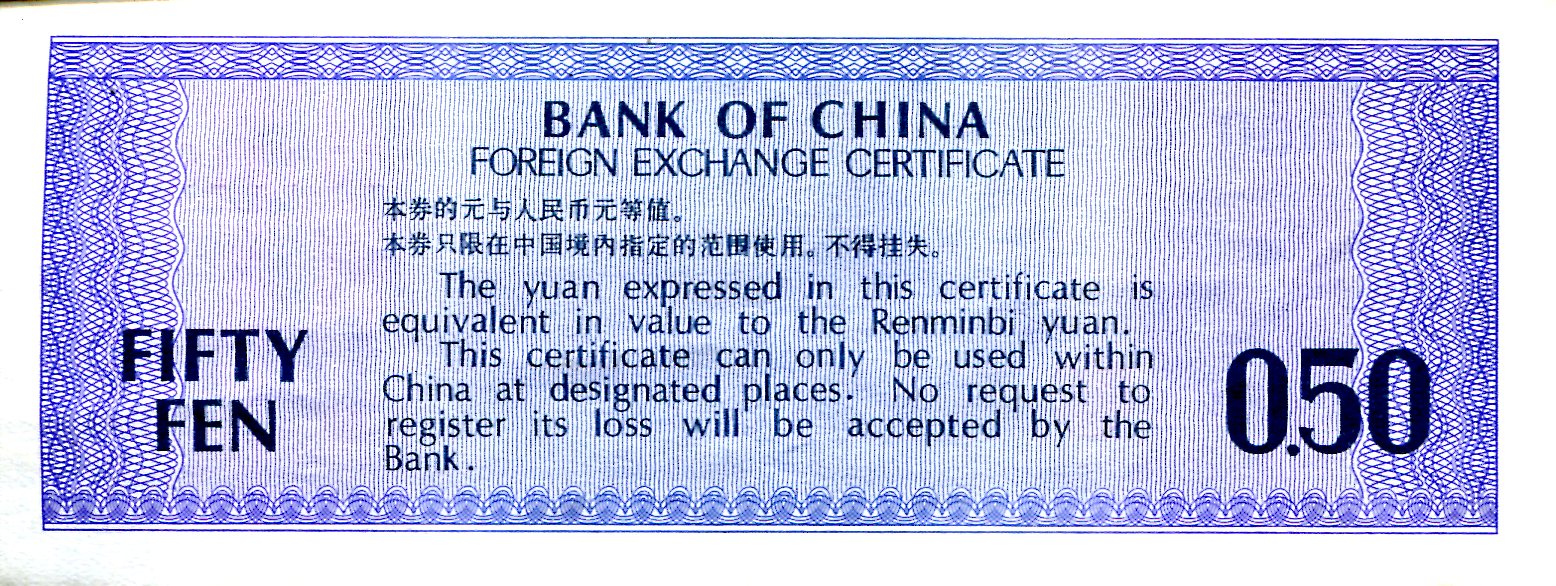
One more scrap of former currency (for now). And by scrap, I mean that almost literally, since this Foreign Exchange Certificate from the People’s Republic of China measures 5.25 x 2 inches. It’s more like script than a note.

FECI’ve posted about this currency before, so no need to re-write about it, only re-post: “I only changed money once outside of the Bank of China, when Yuriko and I were sitting on a bench and she reminded me of the FECs that I had — not much, only about ¥110. I took them out of my wallet to look at them, and a man next to me on the bench, who had previously expressed no interest in us, suddenly offered a 1-to-1 exchange for RMB. I accepted the deal. I don’t know what profit he got from it, since FECs were being phased out, but he must have gotten something.

50 fenFor some reason, probably my partiality to odd souvenirs, I kept this one. Maybe it wasn’t worth bothering with, since this particular note is 50 fen — or half a yuan, the base currency (it was about 8.7 yuan to the dollar then, so 50 fen was 6 cents or so). Ten fen is called a jiao, but I’m not sure how close an equivalent of a dime that is. That is, everyone understands that a dime is 10 cents, but it’s fairly rare to count in dimes. I don’t know whether the Chinese usually count in fen or some combination of fen and jiao.

More from before: “RMB, or Renminbi (人民币), ‘People’s Money,’ is Chinese currency, of which the yuan is the main denomination. From 1979 to early 1994, just before we visited, foreigners in China were supposed to use FECs instead of RMB, which the government sold to foreigners at a premium to RMB. But as usual with this kind of thing, I understand that rule wasn’t rigidly enforced, especially by the early 1990s. We didn’t have to worry about it in any case, and thinking back on it now, I’m not sure how I got the FECs.”

Sir Issac & His Toblerone

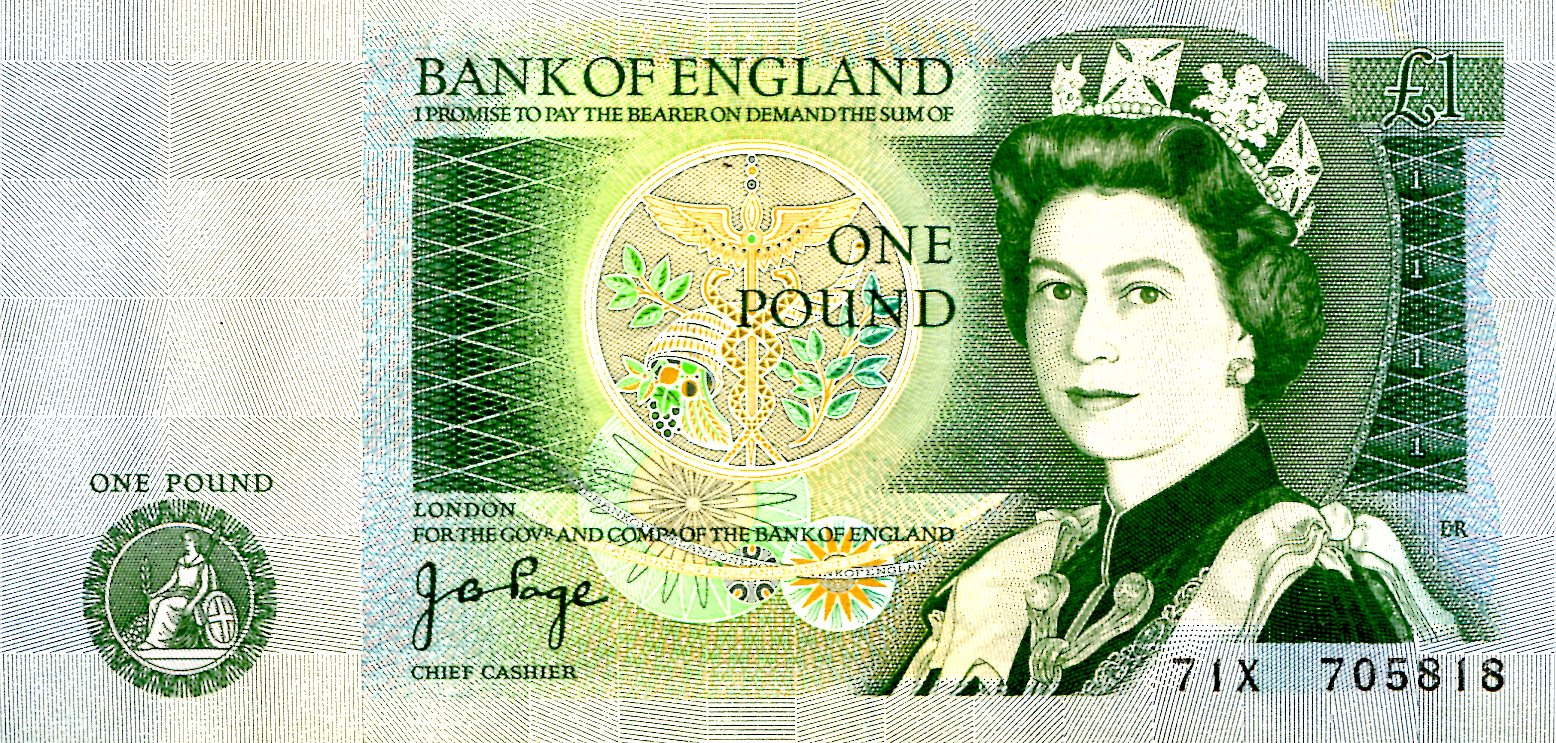
I might be misremembering, but when I saw an episode of Yes, Minister on a Virgin Air flight out of Stansted in ’94, I think that one of the characters handed another a pound note for some reason. That got a chuckle from someone British seated nearby, who observed that the one-pound note was long gone. As it would have been by then, by about 10 years, replaced by a pound coin in 1984 (the US dollar note, while an icon, is also increasingly an outlier).
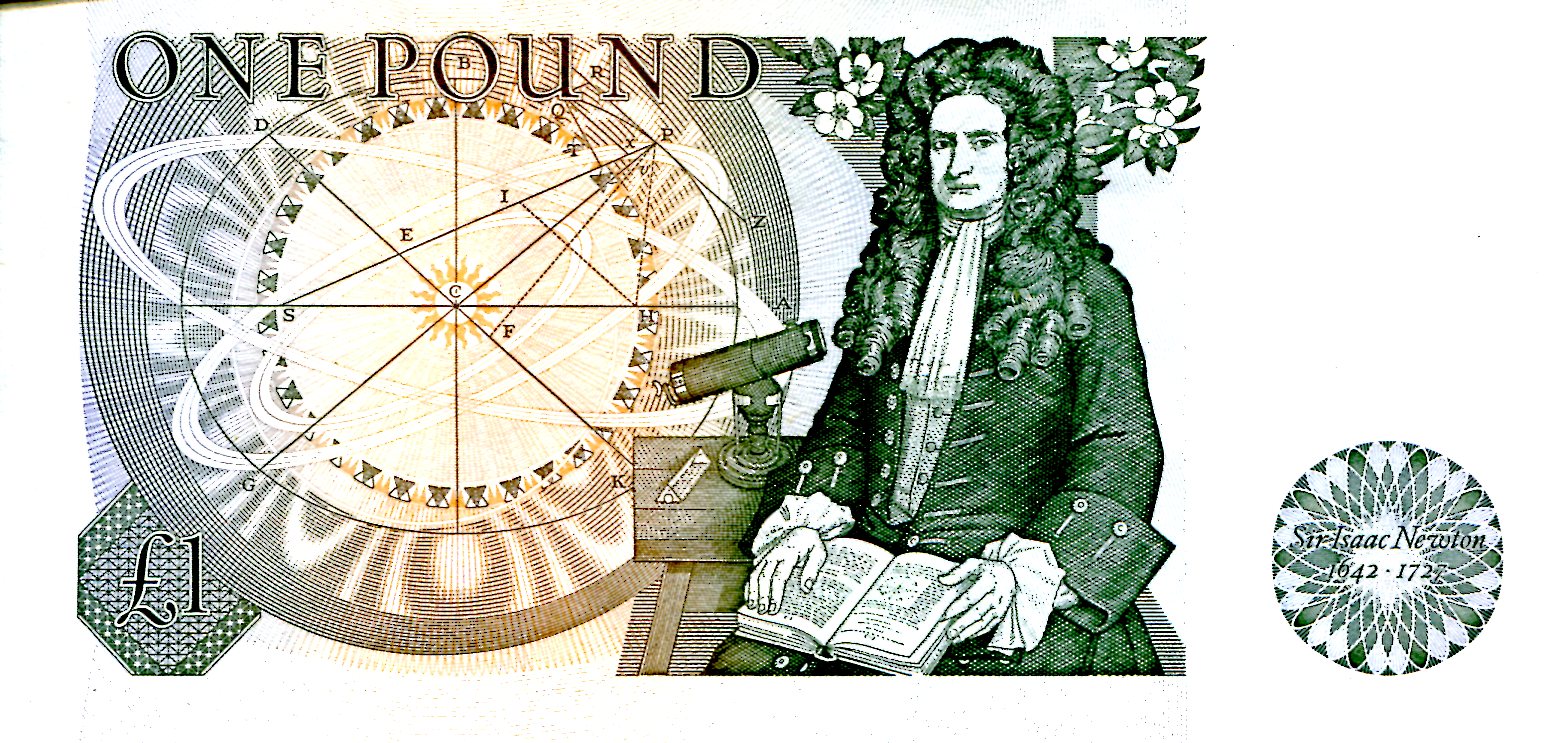
pound noteI must have acquired this note in the UK in 1983. It’s crisp and unused. This particular one was part of Series D, first issued in 1978 and finally withdrawn in 1988. I understand, however, that if I take it to the Bank of England, I’ll receive a pound coin in exchange.

Sir Isaac Newton graces the back. According to one source — a book called Religion, Science, and Worldview: Essays in Honor of Richard S. Westfall (2002) — the portrait was based on two paintings by Sir Godfrey Kneller, and on the table beside Newton is a telescope and a triangluar prism (taken by jokers to be a Toblerone bar).

pound noteHe’s holding a copy of the first edition of the Principia, open to the pages that contain a diagram of a Keplerian ellipse. I know that Newton built on Kepler’s work to compute the acceleration of bodies, but what the diagram describes exactly is beyond me. So is the knowledge required to assess this line in Religion, Science, and Worldview: “The large diagram that occupies the left half of the note is also from Proposition XI, but evidently from the Cajori edition of the Motte translation of the Pemberton third Latin edition.”

The book further asserts that the original issue in 1978 had a mistake in one of the diagram’s lines, corrected in 1981. That means I have a note made after 1981. There’s more discussion about the Sun in the diagram not being at one of the foci of the ellipse, but mistakenly at the center. Even a fan of currency minutiae like me can’t be bothered to care.

Złotych No Mo’

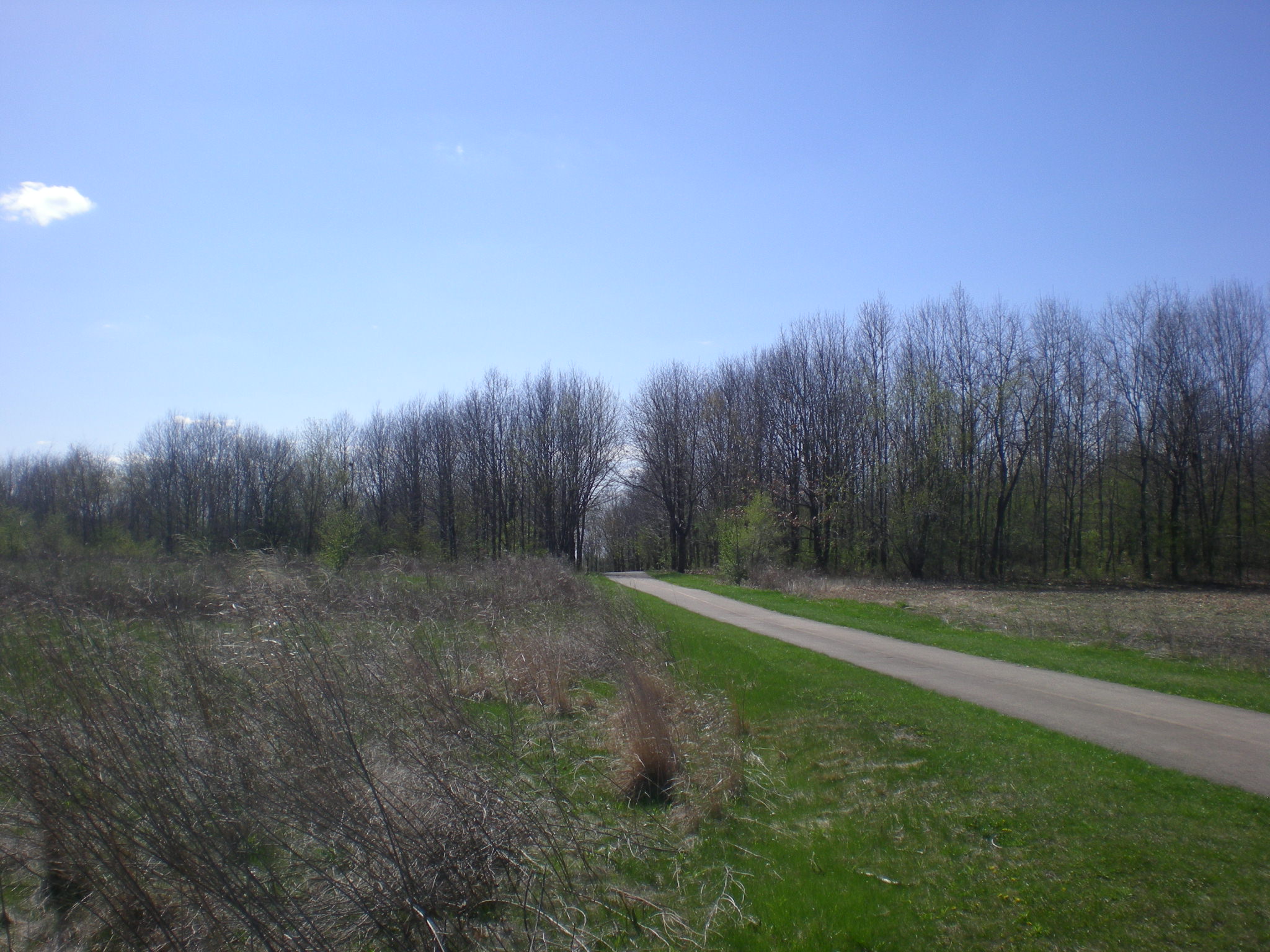
The awakening spring at Poplar Creek Forest Preserve on Sunday.

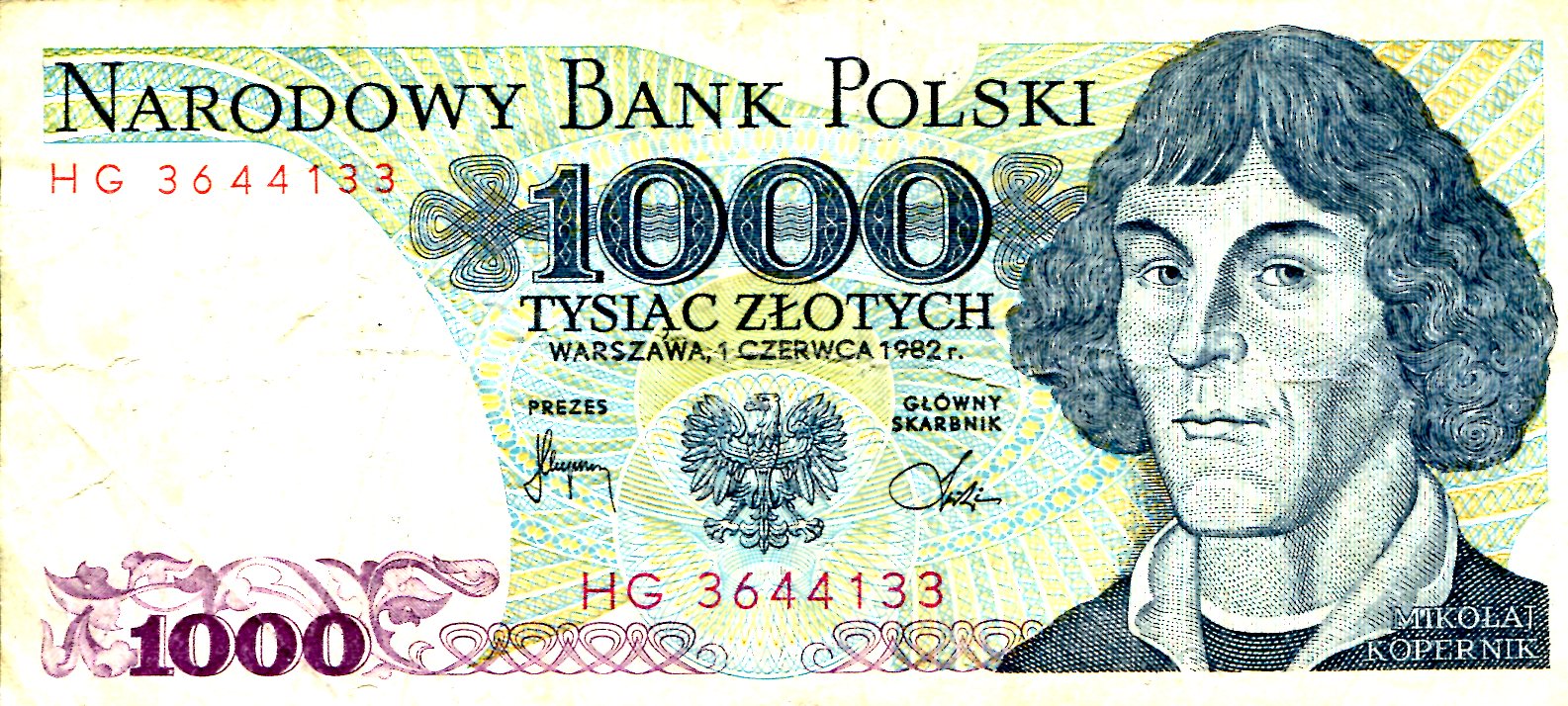
Poplar Creek, April 2015Poland had one of the smallest currencies of any country I’ve been to, since we got there a few months ahead of the redenomination of 1995. Soon notes like this Communist-era 1,000 złotych would be obsolete.
1000złotychThey were already small change. If I remember right, the exchange rate was about 20,000 złotych to the US dollar, making this note worth about a nickel. No coins were in circulation in late 1994 in Poland, only notes; and somewhere in my envelope of worthless foreign money, I have a 50-złotych note: all of 0.25 cents at the time.

I was glad to see Copernicus on the note, even if he’s a little horse-faced in the portrait, which is clearly based on this painting, dated 1580, some decades after his death. Maybe he looked like that.

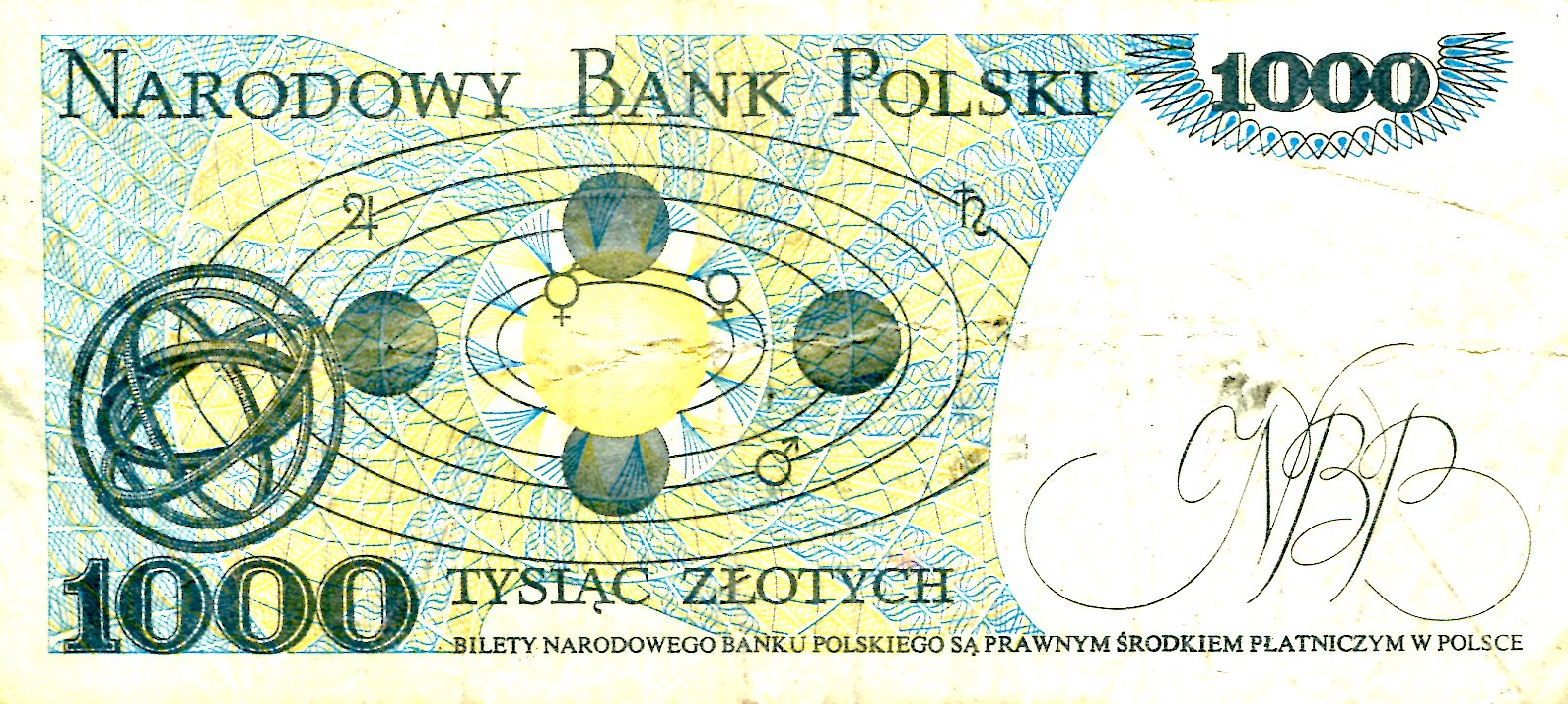
1000złotych-2Fittingly, a Copernican solar system on the other side. As I said, the note has long been superseded by new currency at 10,000 to 1. No euros for Poland yet, though. Understandably, they’re a mite skittish about the common currency just now.

An Old Ringgit

Warmth + Rain =
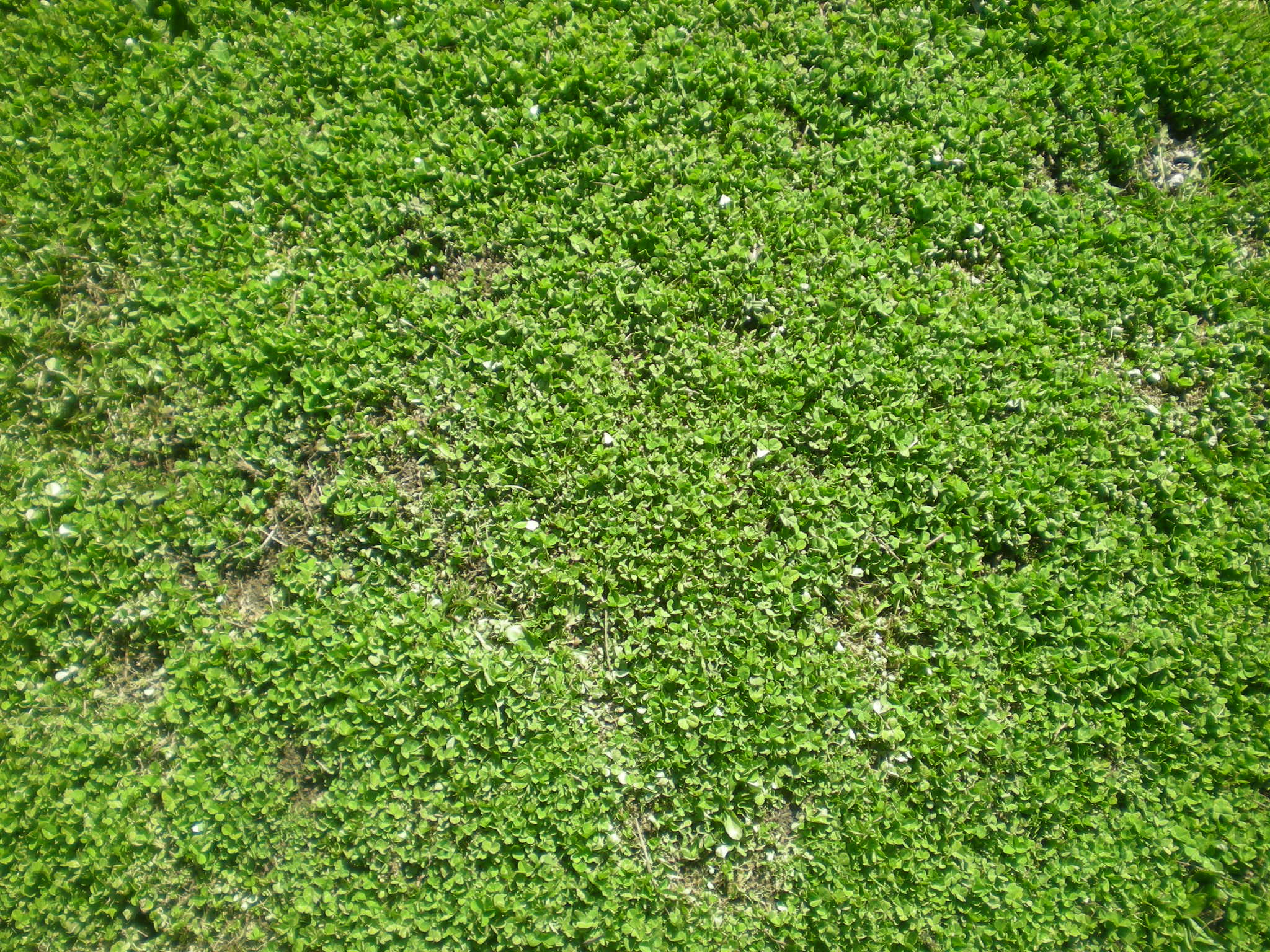
clover April 2015At least here in temperate North America. Flowers are emerging, too, as well as bush buds. The trees are still more cautious about the whole notion of spring, but they’re coming around.

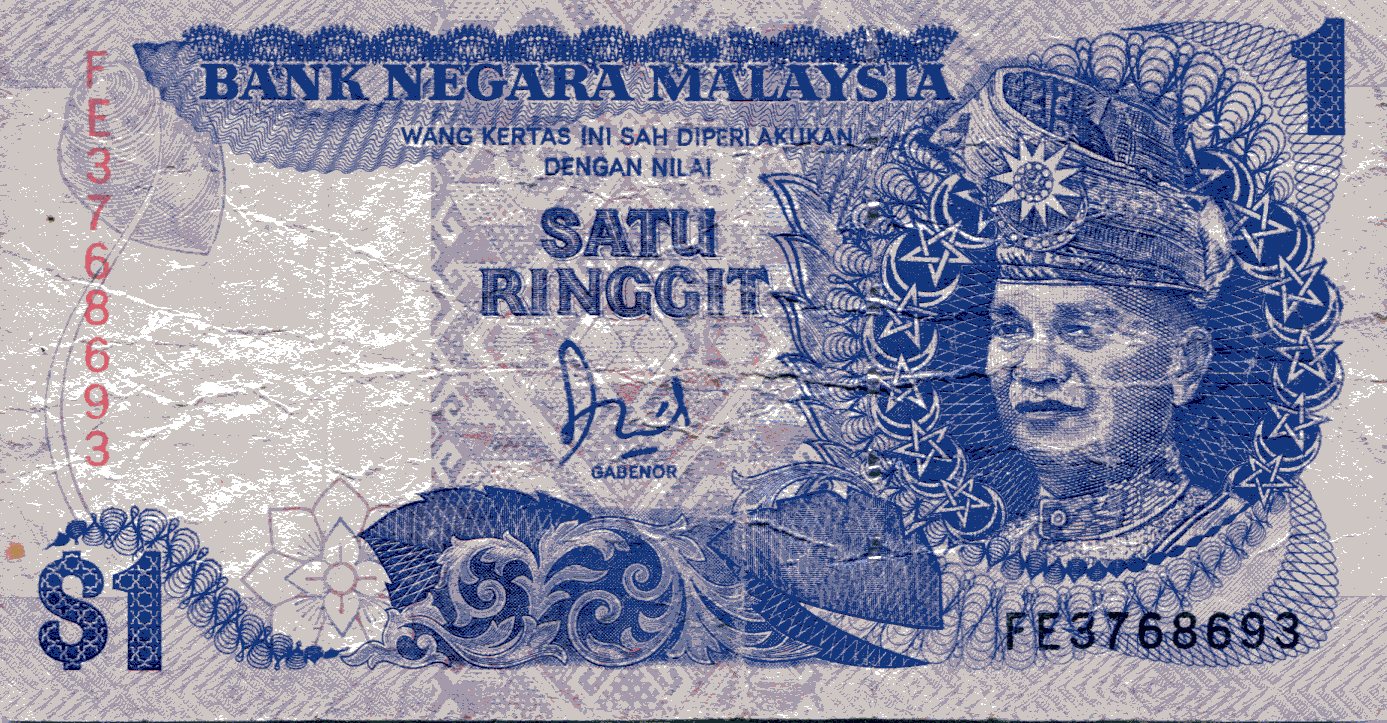
Tucked away in my envelope of nearly worthless — sometimes flat-out worthless — paper money is a RM1 I picked up either in 1992 or ’94. The formal name is a ringgit, though informally it’s a Malaysian dollar.

M$1By the early 1990s, the note was on its way out, replaced by a dollar coin, an example of which I don’t have. These days, RM1 is worth about US 28 cents; I remember it trading for about 40 cents. I’d do pricing in my head in dollars, even though my pay was in yen, and 40 cents to the ringgit made it easy: half minus 10 percent (Singapore dollars were half plus 10 percent in those days).

The portrait on the note is Tuanku Abdul Rahman ibni Almarhum Tuanku Muhammad (died 1960), the first Yang di-Pertuan Agong of Malaya. That is, the supreme head of state, elected by the country’s other sultans, in office before the country was reorganized as Malaysia. I don’t think there’s any monarchical position anywhere else quite like it.
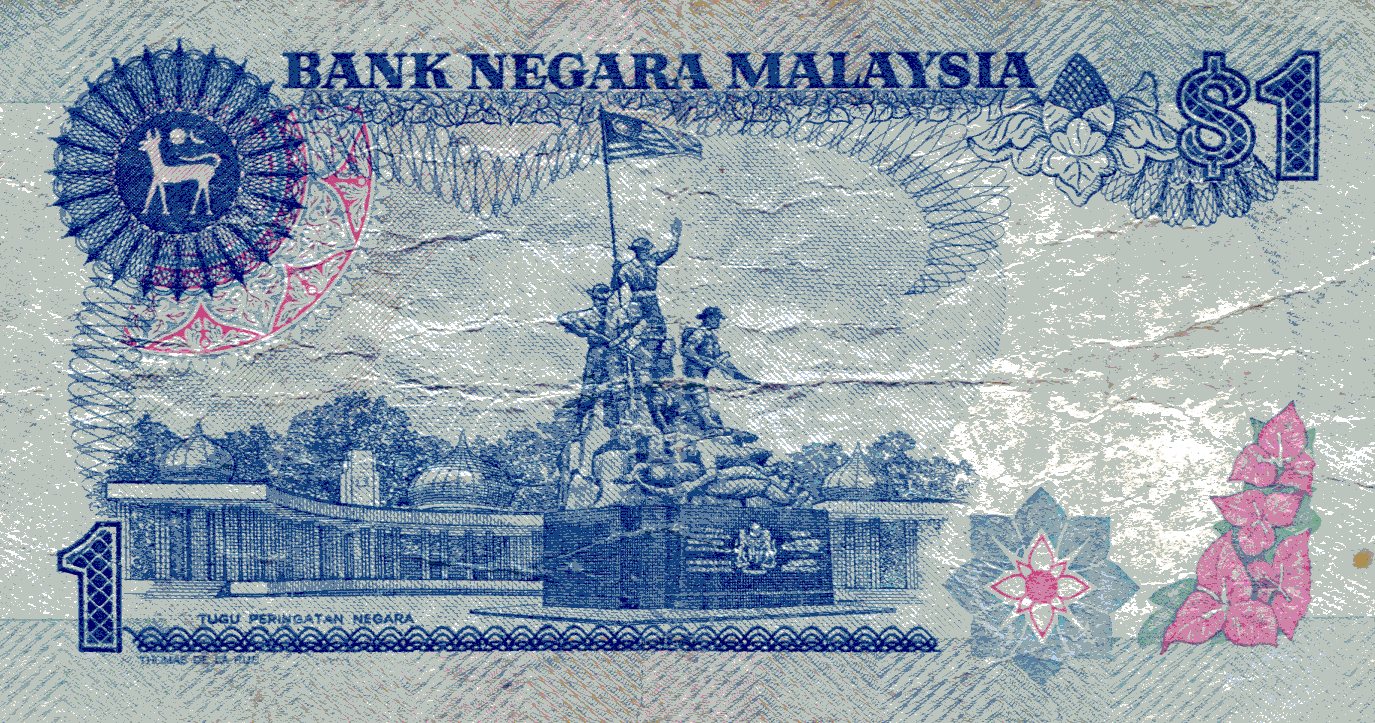
M$1-2That’s the National Monument in Kuala Lumpur, which memorializes the Malaysian dead of the Japanese occupation and the Malayan Emergency.

Shanghai Views

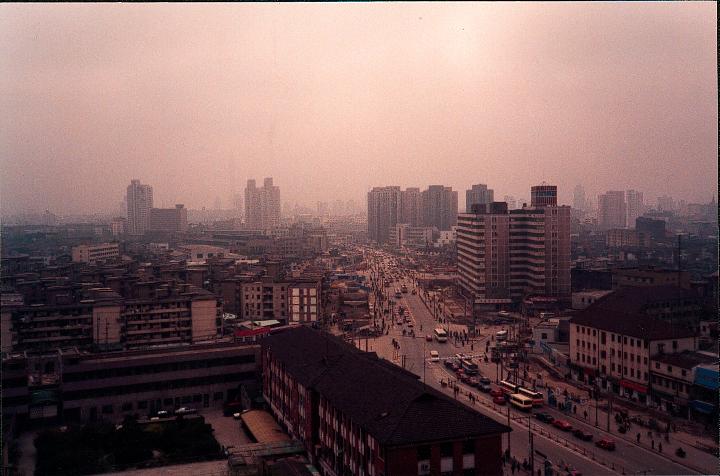
The view is from the first hotel we stayed at in Shanghai in late April 1994, whose name and exact location I forget. Even so, I’ll bet there are a lot more buildings in this view these days, if the view still exists. It was a cloudy day, but I think there’s some smog in the mix. The air’s probably not any cleaner now.

Shanghai1994-1Soon we relocated to a hotel near the Bund — the Astor House Hotel, which in those days was part inexpensive hotel, part cheap-looking office space. It clearly had a magnificent and storied past, with a slow decline post-1949 and especially during the Cultural Revolution. Word was the hotel was going to be razed, which would have been a damned shame. Fortunately, it’s been renovated since then, and while probably not cheap any more, it’s still a jewel of the Bund.

Shanghai1994-2The Bund was a fine place for walking, as it was designed to be.