The Oak Park Love Locks

Lilly sometimes studies at the other desk in my office. This evening the object of her studies was various bones, for her anatomy class (I’m pretty sure that subject wasn’t offered at my bronze-age high school). I suggested that she can learn bones listening to “Dry Bones.” She’s used to this kind of suggestion.

On Friday, I was briefly in Oak Park. But long enough to take a look at the Oak Park Love Locks.
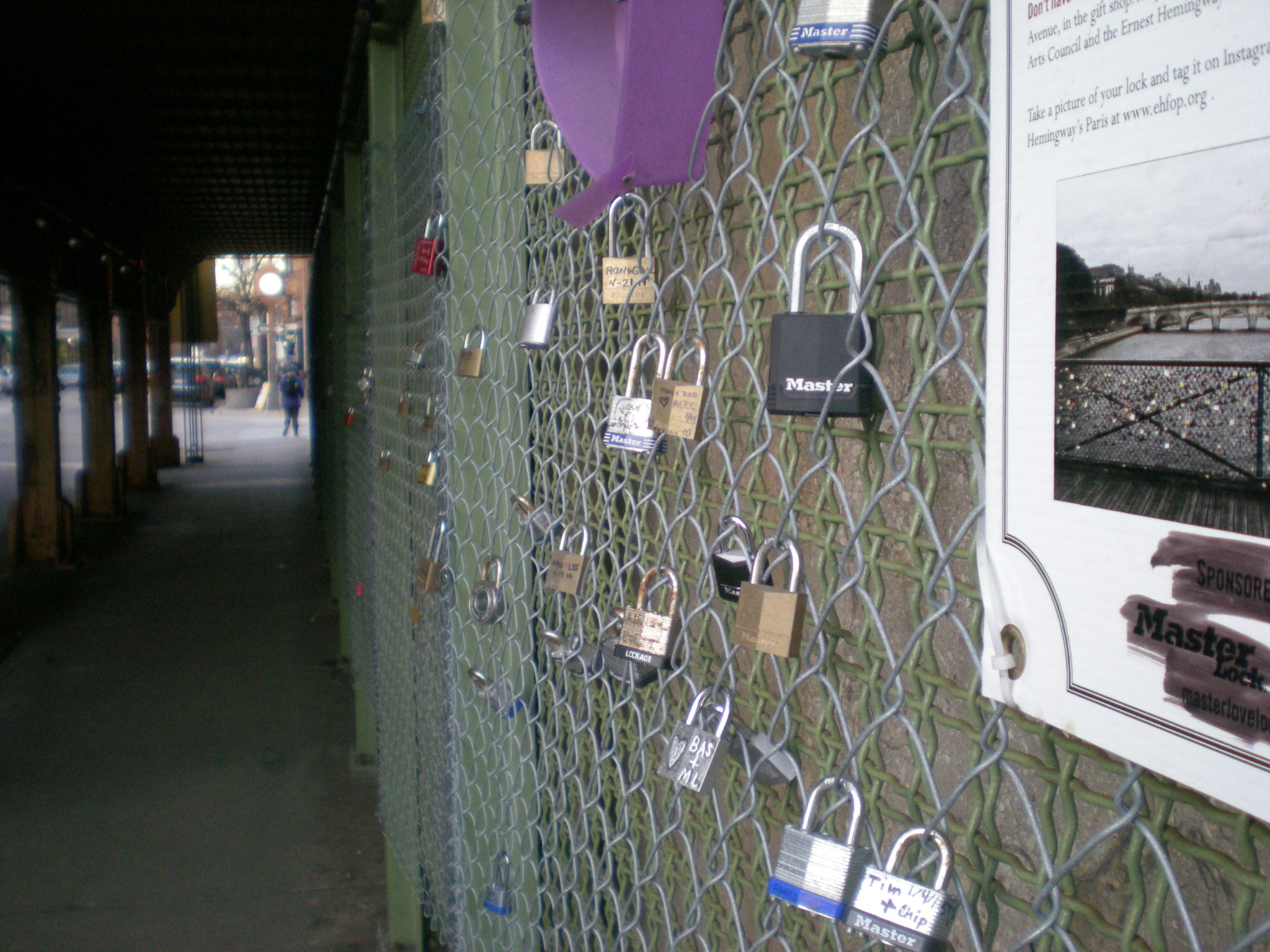
Oak Park Jan 30, 2015They are at the Metra and El line underpass on Oak Park Ave. They’re a little thin on this side of the underpass (the south side), but thicker on the north side, where there was also a lot less light.

A helpful sign posted by the Oak Park Area Arts Council says, in part: “On a bridge over the river Seine in Paris, lovers write their names and dates on padlocks, attach them to the rails, and throw the padlock key into the river to symbolize their commitment. The locks form a colorful, metallic tapestry that testifies to the power of undying love.

“As part of The Ernest Hemingway Foundation of Oak Park’s Hemingway Birthday Celebration, we are bringing this part of Paris to Oak Park and inviting the community to create its own statement of romance.”

Something about this cries out to be mocked. According to some sources, Parisians aren’t particularly fond of this practice, which isn’t very old either — certainly nothing Hemingway had anything to do with. And while bridges on the Seine might inspire romance, a dimly lit concrete-and-steel underpass in suburban Chicago doesn’t have any of that vibe. Also — just to note — the thing is sponsored by a major padlock maker. Bet they have romance in their corporate heart.

If the Arts Council really wants to bring some of Hemingway’s Paris to the 21st century Midwest, I have a few suggestions: cafes and zinc bars with subsidized drinks, so they’re cheap like Paris in the ’20s; a bookstore that looks exactly like Shakespeare and Company; and a statue of the gentlemen who invented pharmacy.
Sort of a Blizzard ’15

Going into yesterday’s snow event, it was simply going to be a winter storm. At some point during the storm, officialdom started calling it a blizzard. I’m skeptical. A lot of snow fell, but it took all night and day, and some wind blew, but it wasn’t a howling fury. That’s what a blizzard is to me: howling fury. Like in ’99 or ’11.

I went outside twice yesterday and once this morning for snow removal. So it the pain-in-the-butt, risk-your-heart sense, I guess it was a blizzard. The Tribune tells me that “As of about 7 a.m. Monday, O’Hare International Airport had a total of 19.3 inches of snow, making it the fifth-largest multiday storm on record, according to the National Weather Service.”

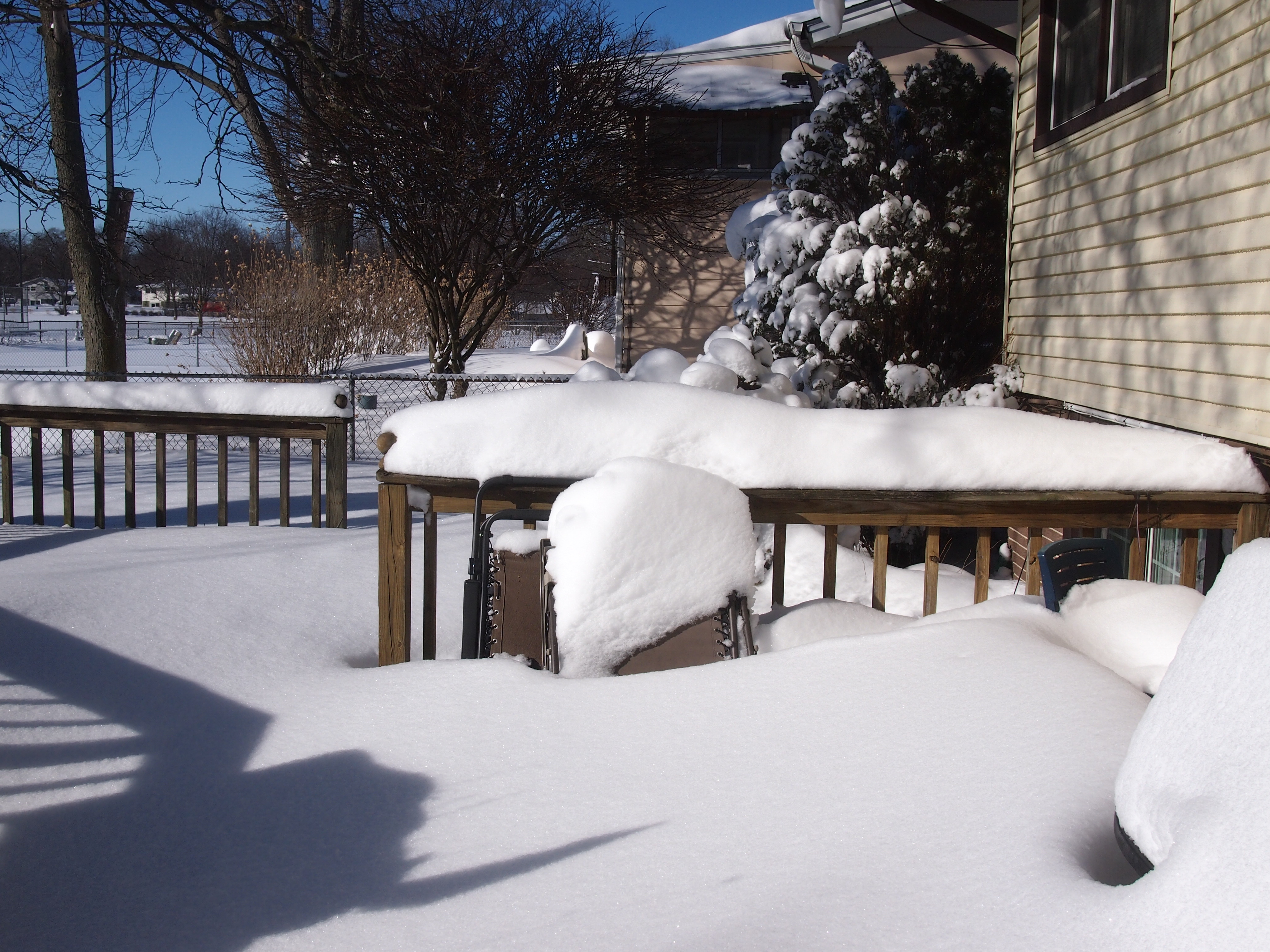
The snow certainly made mighty piles. On my deck, some of them.

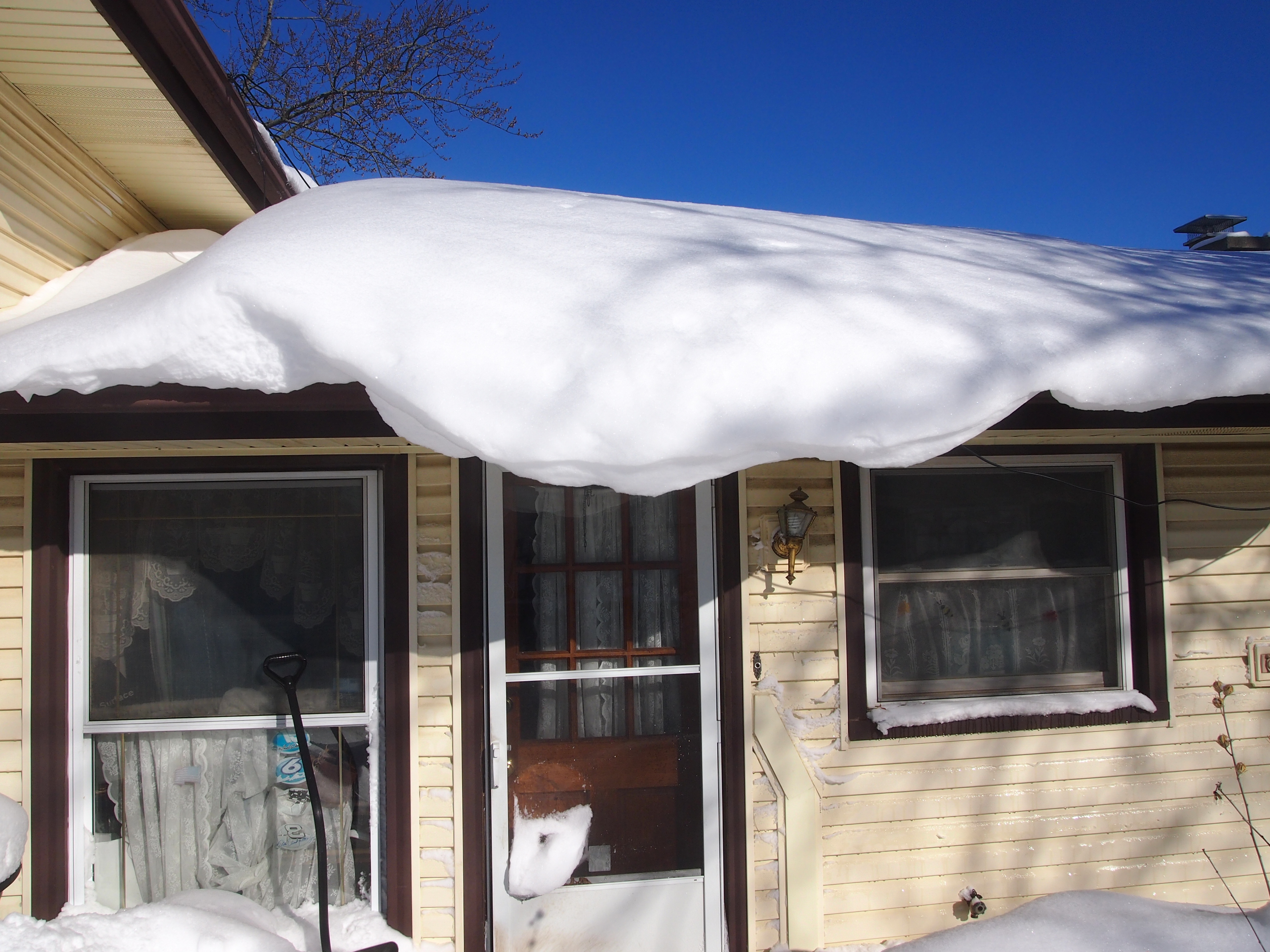
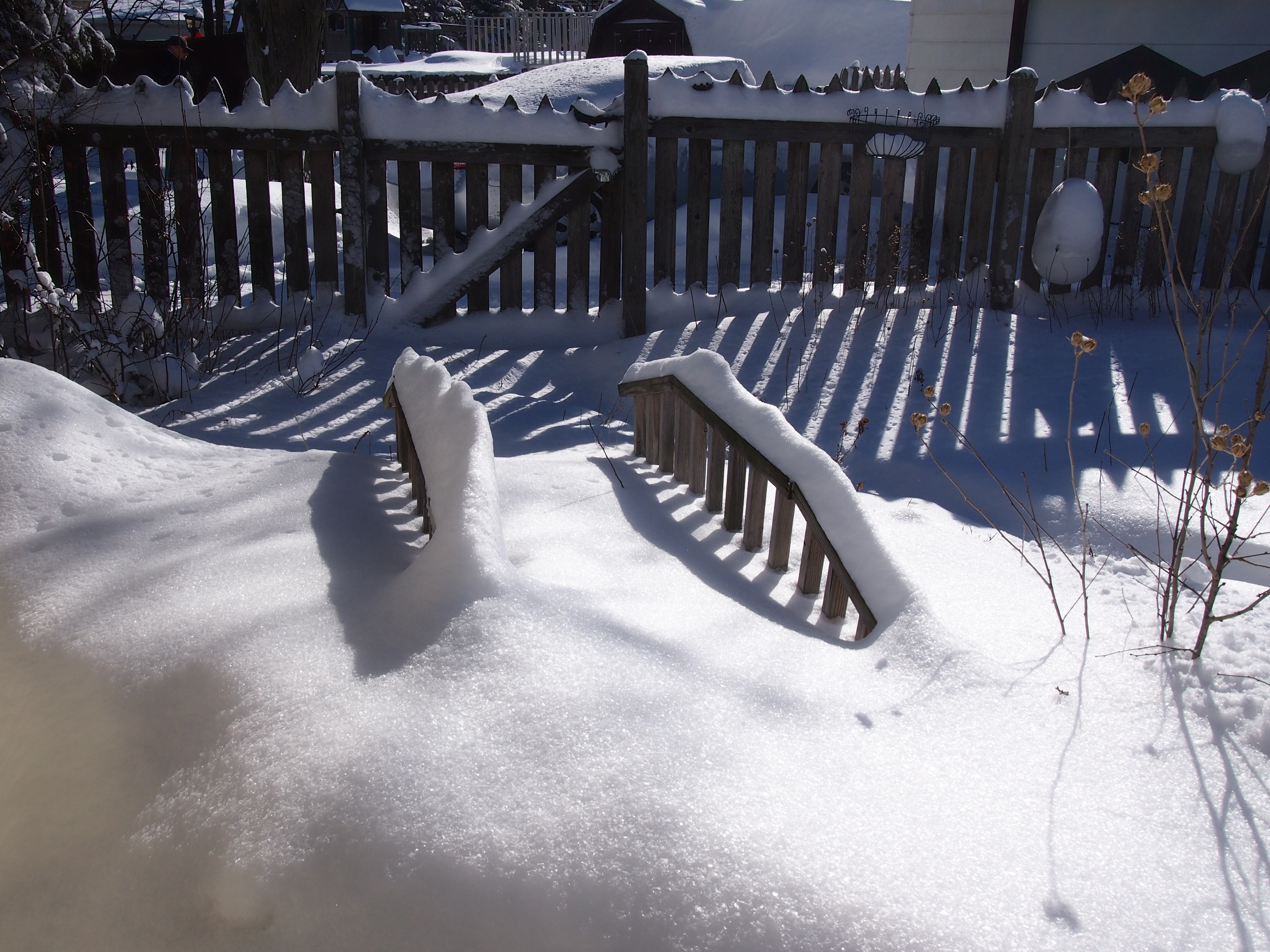
Feb 2, 2015Also, the ornamental bridge is just as buried this time as in 2011. (Has it really be four years since that happened? Four years to the day, in fact, before the latest storm?)

Feb 2, 2015The wind sculpted some odd forms. On the other side of our roof, there wasn’t much snow cover at all.

Feb 2, 2015It looks like you can’t open the door with our hitting the snow lip, but it’s hanging far enough away that the door doesn’t touch it.

Snow in Osaka

Snow throughout the night and into the day today. Not a blizzard exactly, just a steady build up with some wind. Just when our driveway was more-or-less clear from previous non-blizzard buildup. But at least it’s February. The best thing about that is that it’s not January any more.

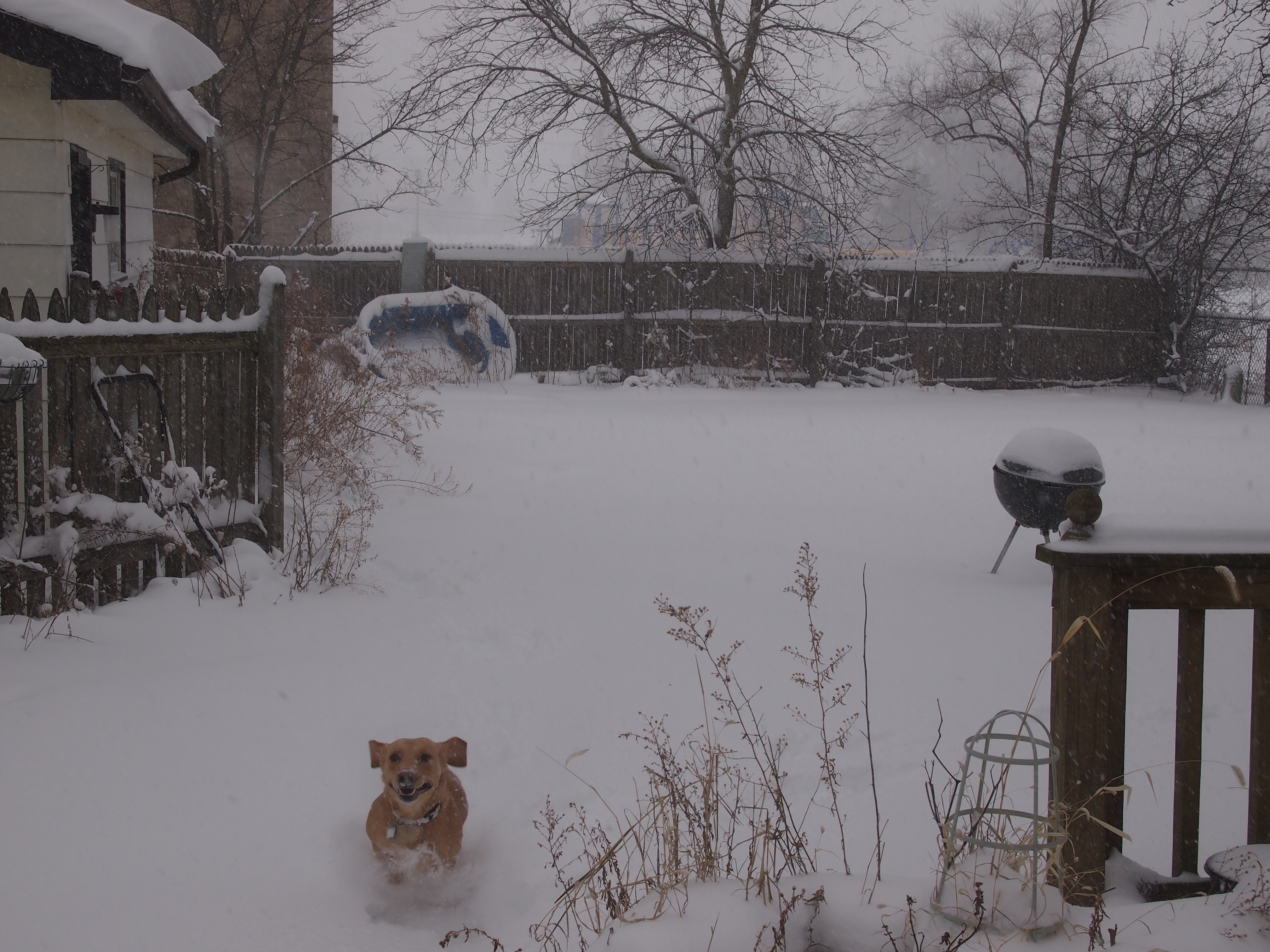
The view of the back yard around noon today. Much more snow was to come.

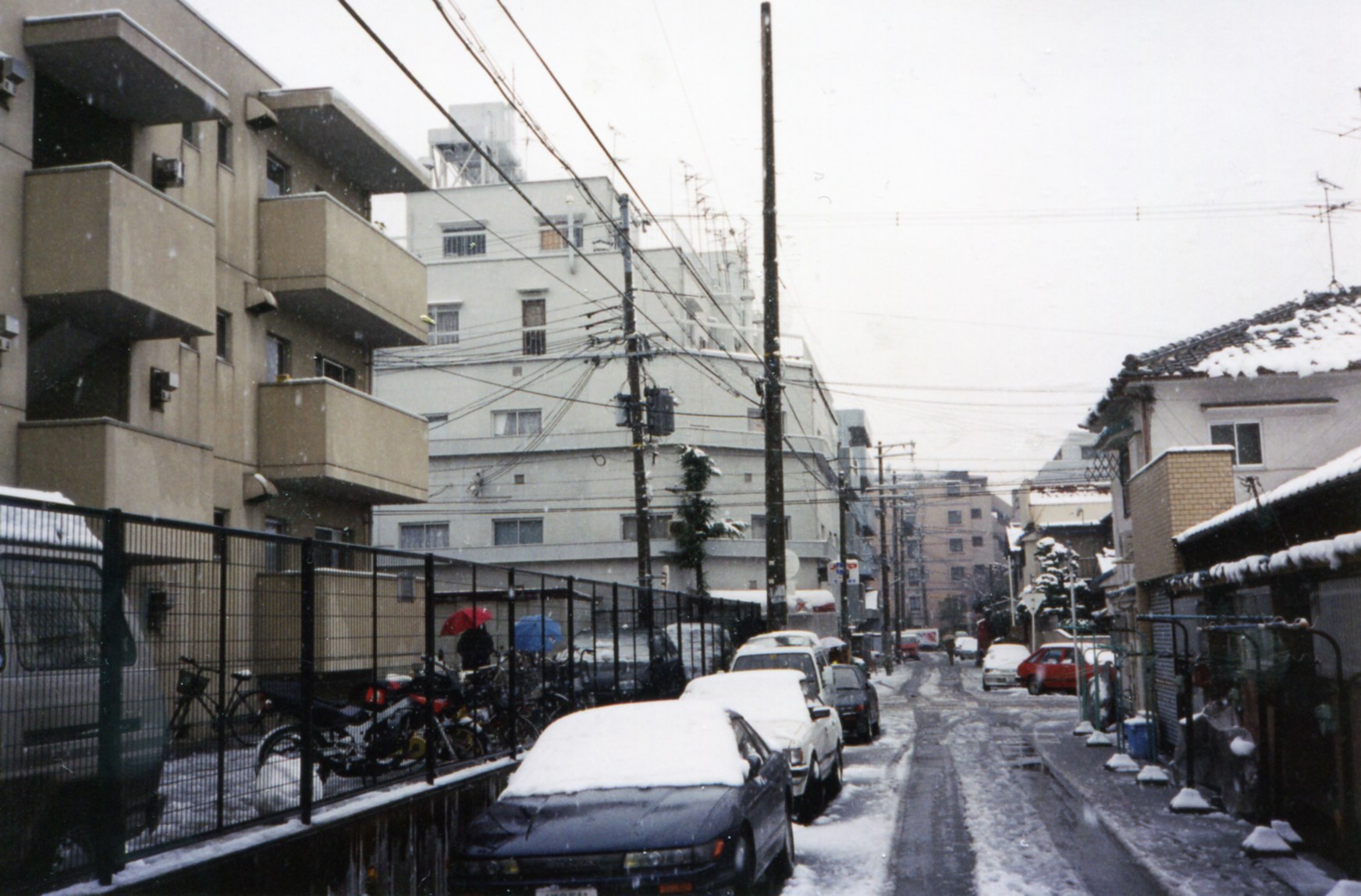
Feb 1 2015 Dog in snowOsaka’s hot and humid much of the year, with mild winters. A gas-burning space heater was all I needed to heat my small apartment in the winter. But it did get cold. Early in 1994, Osaka got snow. Like the San Antonio snow event 21 years earlier, it was novel enough so that I took pictures.

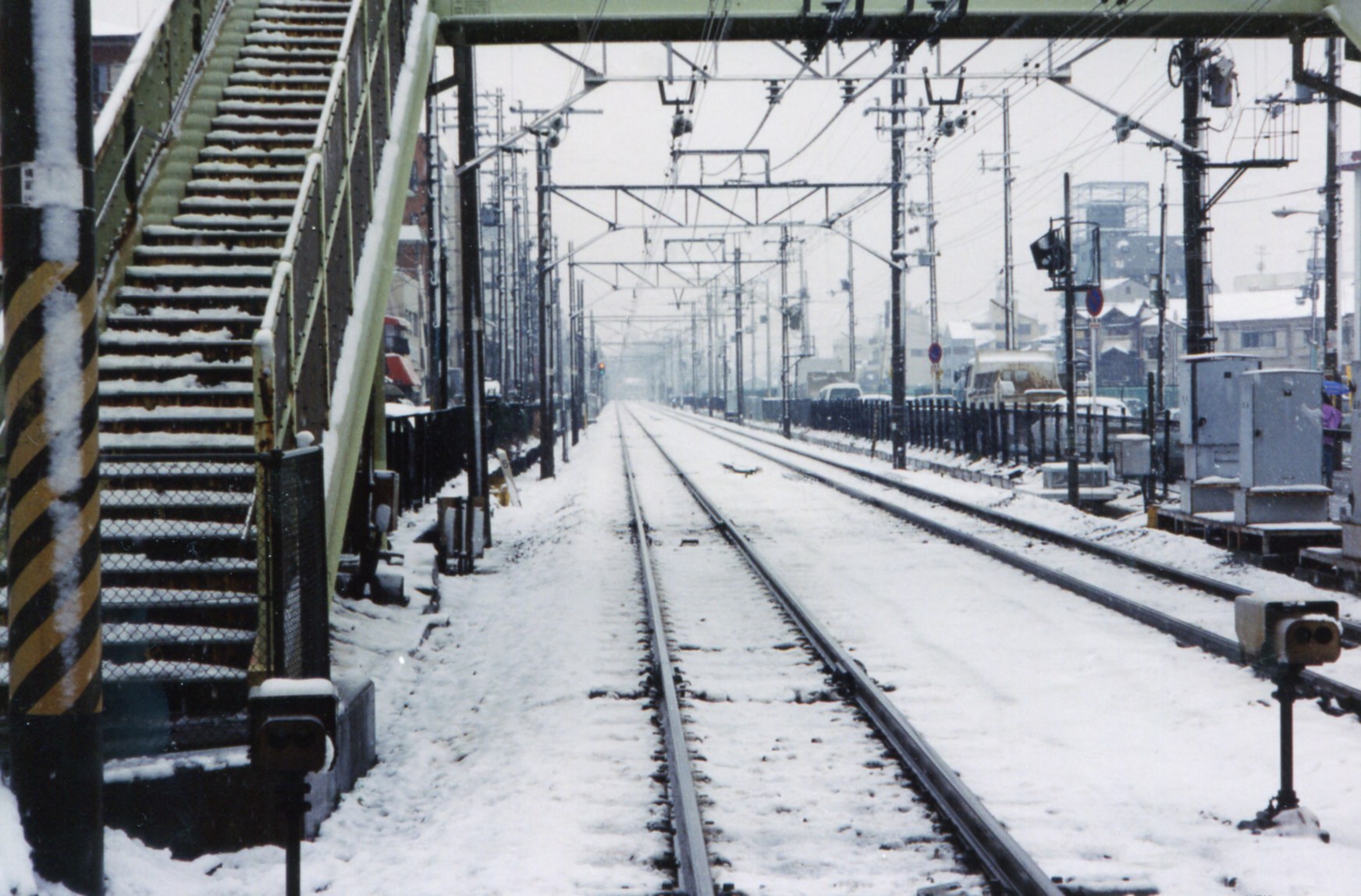
Osakasnow94.1Just a coating. The white building in the background was my apartment building, known as the Sunshine Mansion. The windows of my third-story unit are mostly obscured in this shot by the twin utility poles, but I had a fairly good view.

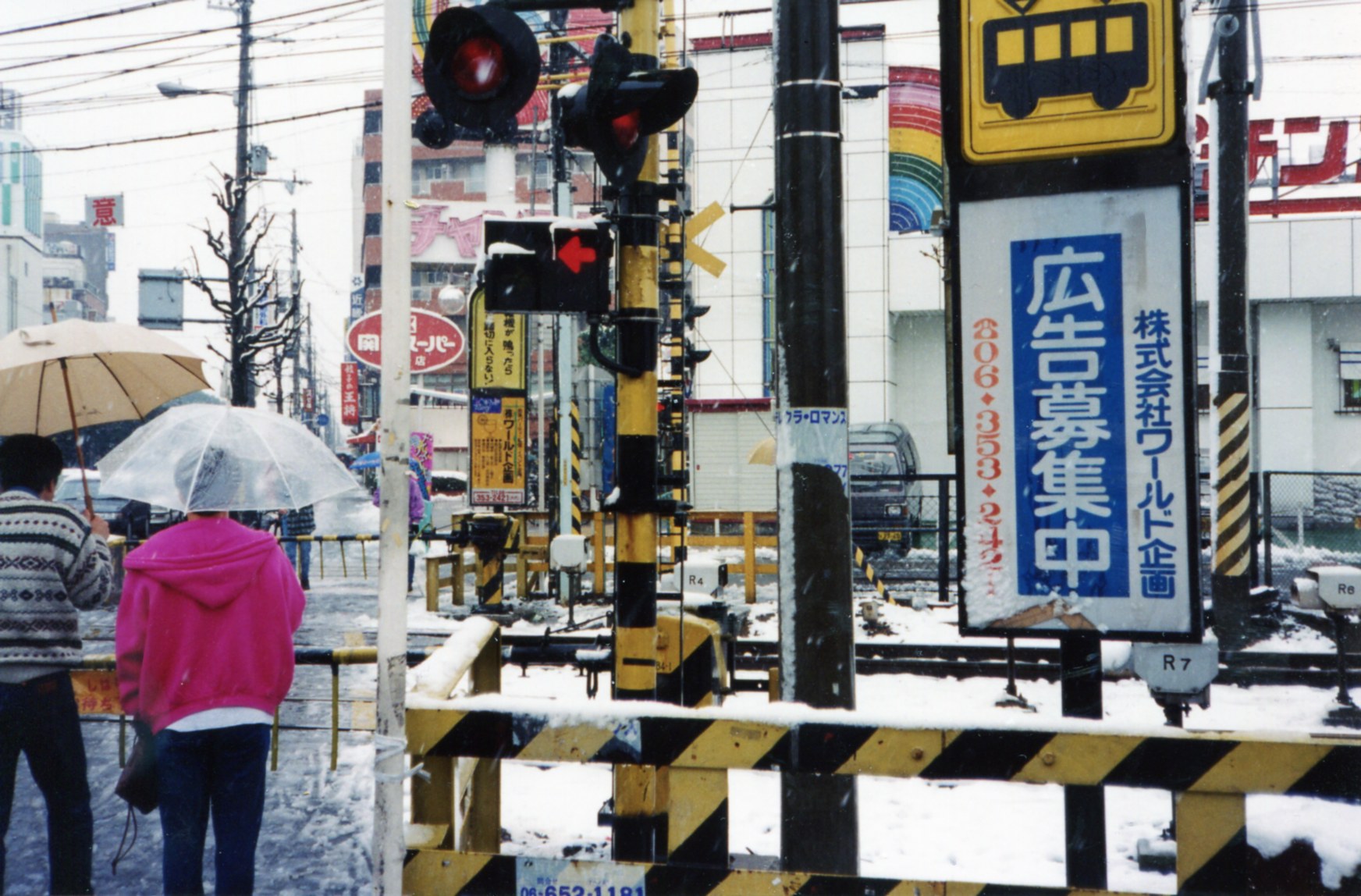
Osakasnow94.2A few blocks away is the Nagai crossing of the JR Hanwa Line. The partial rainbow marks the site of a pachinko parlor. Behind that was a grocery store I went to often (pachinko, never).

Osakasnow94.3Follow those tracks far enough, and you get to Wakayama. In the other direction is the much closer Tennoji terminus, which is in the city of Osaka. But I rarely took the Hanwa line. Not far away was the Nagai station of the Midosuji Line of the Osaka subway system, which is how I usually got around.

Lopado­temacho­selacho­galeo­kranio­leipsano­drim­hypo­trimmato­silphio­parao­melito­katakechy­meno­kichl­epi­kossypho­phatto­perister­alektryon­opte­kephallio­kigklo­peleio­lagoio­siraio­baphe­tragano­pterygon

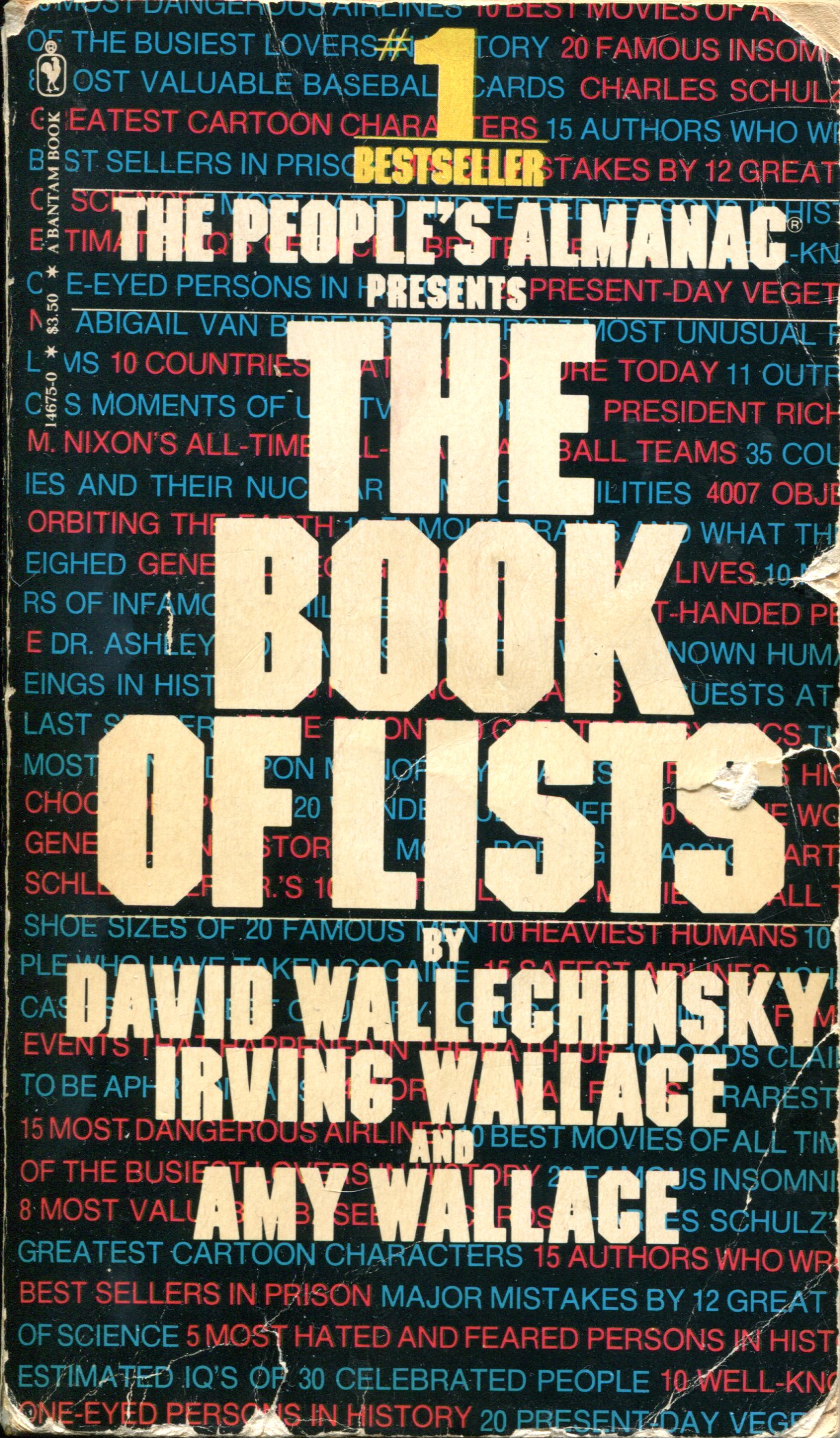
Just showing off. This week I thumbed through my beaten-up copy of The Book of Lists (1977), and came across its list of long words. Such as Lopado­temacho­selacho­galeo­kranio­leipsano­drim­hypo­trimmato­silphio­parao­melito­katakechy­meno­kichl­epi­kossypho­phatto­perister­alektryon­opte­kephallio­kigklo­peleio­lagoio­siraio­baphe­tragano­pterygon. These days, that word has its own Wiki page. As is probably should.

BookofListsIt’s been years since I looked at the book, but looking again I can see why it was a mammoth bestseller. It’s one of the best browsing books that I know of, and the godfather of the slide show and the listicle. The back cover promises: the 10 worst films of all time; 7 famous men who died virgins; 10 sensational thefts; 15 famous event that happened in a bathtub; 20 famous high school dropouts; 9 breeds of dogs that bite the most; 10 doctors who tried to get away with murder; the 14 worst human fears; and much, much more! That last one’s no hype. The book comes in at 519 pages with fairly dense text.

The male virgins, incidentally, are on page 321, a list based on conjecture (and weaselly calling them “full-time or part-time” virgins). More accurate would be a list of historical figures suspected of long periods of celibacy, but that kind of phasing wouldn’t get enough eyeballs, to put it in modern terms. On the list: Isaac Newton, Immanuel Kant, Louis XVI, John Ruskin, George Bernard Shaw, Havelock Ellis, Adolf Hitler.

Another interesting list, more-or-less at random: Top 10 Air Aces of World War I. Of course, everyone’s heard of the number-one ace, Rittmeister Manfred von Richthofen, one way or another. But what about number 2 and 3 — a Frenchman and Briton, respectively? That would be Capt. René Fonck and Maj. Edward Mannoch. (Though Wiki puts Mannoch at number 5.)

And one more fun one: people who became words. Bloomer, Bowdler, Boycott, Braille, Chauvin, Diesel, Guillotin, Lynch, Nicot, Quisling, Sacher-Masoch, and of course John Montagu, the Earl of Sandwich.

Air Plant Trio

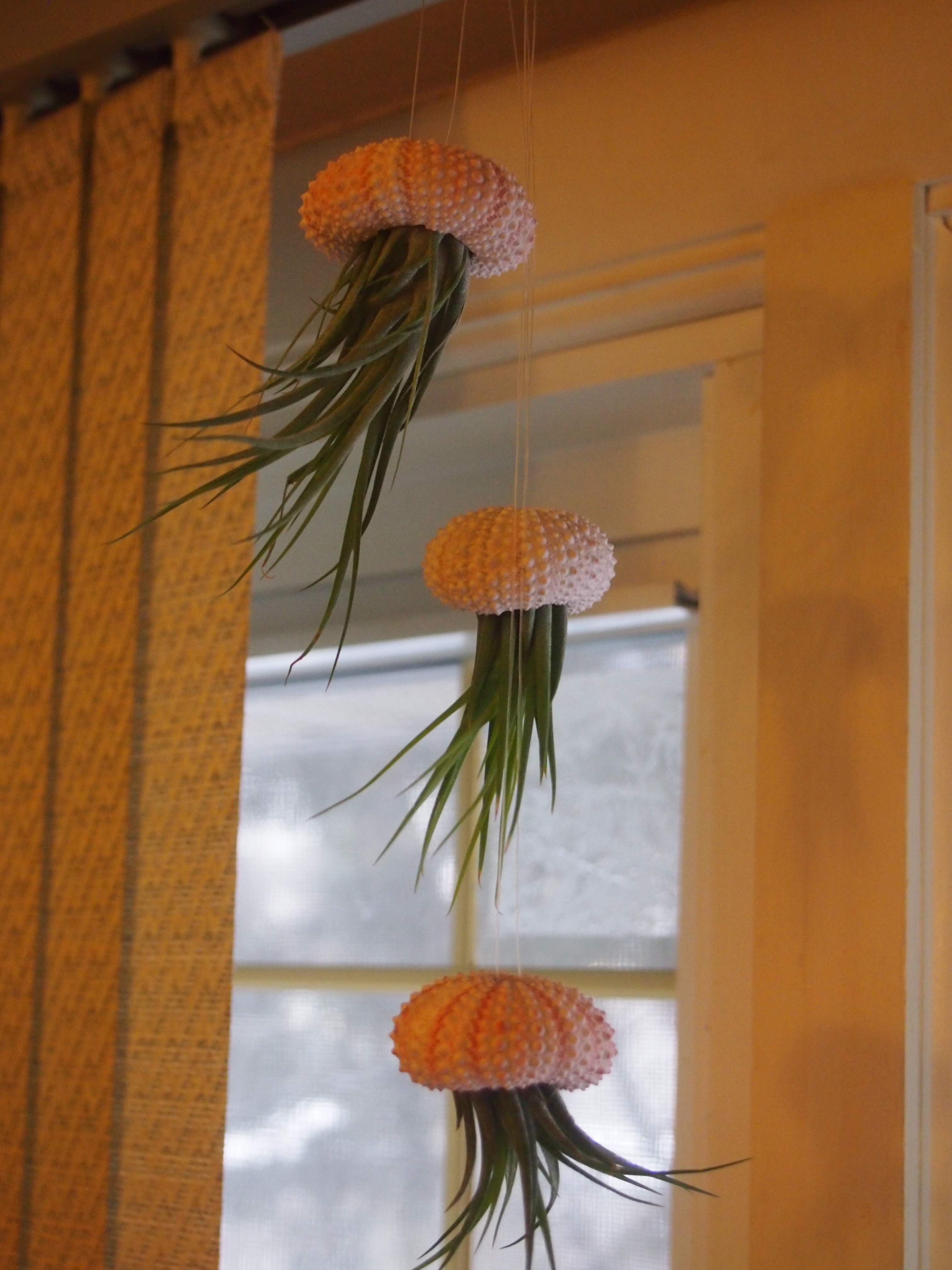
Lately we can look up from our dining table and see a trio of tillandsias.

Air plants 2015“Tillandsia is the largest genus in the bromeliad family, accounting for approximately 550 of the over 2,500 species of bromeliads,” the aptly named Plant Oddities web site tells us. “They are native to the warmer climates of the Americas. Commonly known as air plants, they are found from jungle to rain forest to arid desert environments – from sea level to high mountain regions.

“Most Tillandsia species use their root systems to attach themselves to trees or rocks and absorb moisture and nutrients through their leaves. This classifies them as epiphytes. Absorption occurs through small scales on their leaves called trichomes… Since Tillandsia’s are epiphytes, the mounting medium you choose is limited only by your imagination. These hardy plants are adaptable and tolerant to a wide range of environmental conditions and require minimal care.”

boss air plant 2015My nephew Dees and his girlfriend Eden thoughtfully sent us these air plants for Christmas. The last time I was at their apartment in Austin, I’d seen some hanging near one of their windows and asked what they were.

Efficient Neighbors & Us

Rec’d a letter from our electric utility, ComEd, a while ago — a “Home Energy Report,” it says, for the period October 25 to December 26. I don’t remember seeing one before. Could be members of utility middle management cooked them up for the purpose of better serving the energy-consuming public. That or keeping busy.

The letter says we’ve used 2 percent less electricity than my “efficient neighbors” for the two-month period above. Who? It helpfully explains the universe of neighbors in this case is about “100 occupied nearby homes that are similar in size to yours and have gas heat.” Efficient neighbors are the “most efficient 20 percent from the All Neighbors group.”

Ah, but over the last 12 months, we’ve used 20 percent more electricity than those efficient people, the letter also says (yet still less than the universe of 100 neighbors). Makes me think the most recent months are a fluke. Can’t think of anything we’ve been doing to cut electric use, though I’ve switched off a lot of lights in empty rooms. But I’ve always done that.

Never mind, we can still claim to be righteously green. A nice letter is one thing, but what about a rate reduction. No? I didn’t think so.

Oz Day ’15

Early Sunday morning more snow fell here in northern Illinois. About as much as in the pictures of subtropical Texas with snow posted yesterday — which is to say, not much for this part of the country. Not even enough to cover the grass completely. On the whole, it hasn’t been so snowy this winter, unlike last. But there’s still time for that.

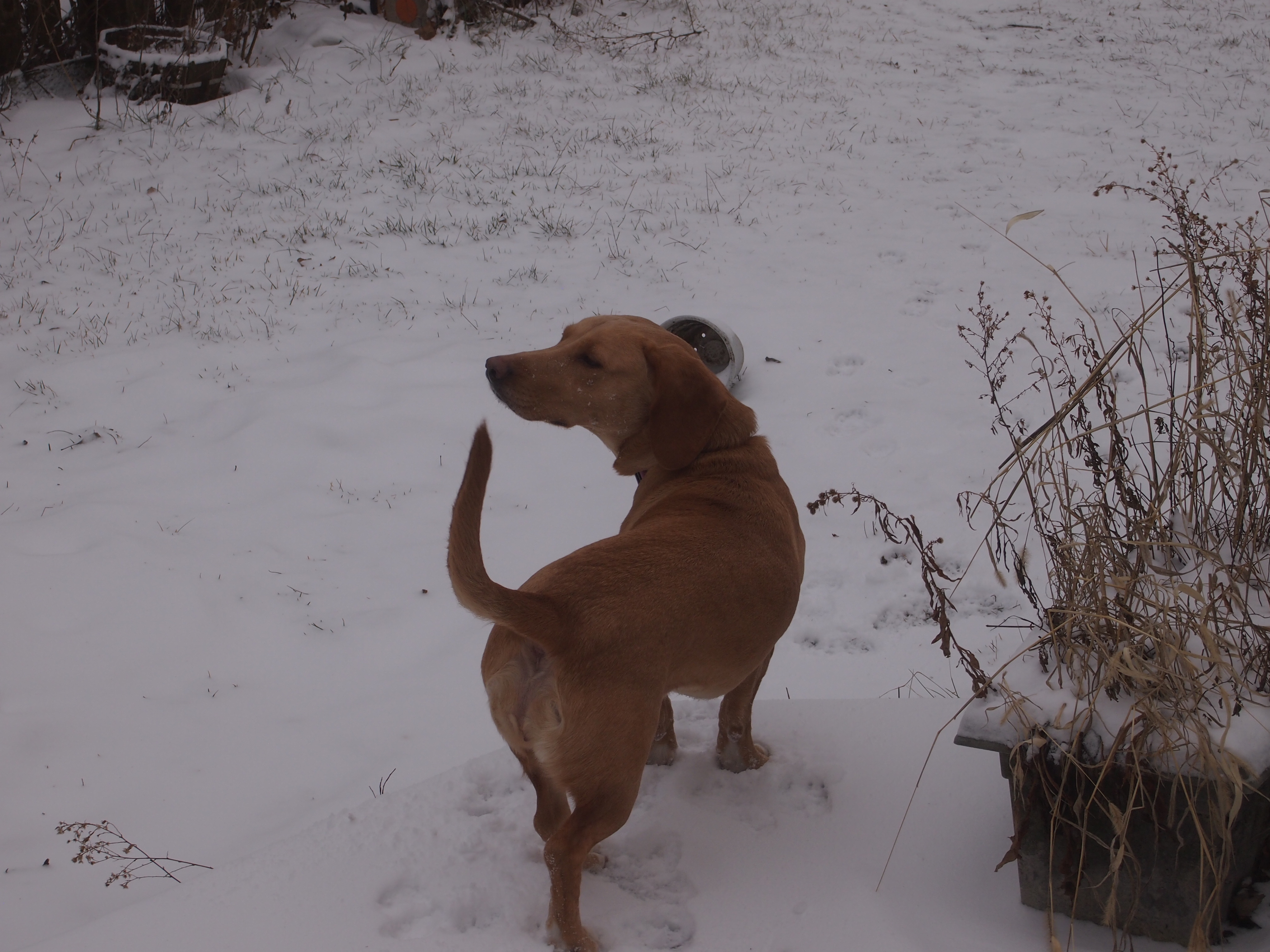
Snow doesn’t deter the dog from checking for the sight, sound, and smell of intruders on her domain.

Payton Jan 25 2015Australia Day’s rolled around again. We could use a bit of that Southern Hemisphere summer about now, but not the aridity. Years ago, I had access to National Lampoon’s Tenth Anniversary Anthology, 1970-1980, which included japery by the young PJ O’Rourke, originally published in the magazine’s May 1976 issue: “Foreigners Around the World,” subhead, “A Brief Survey of the Various Foreign Types, Their Chief Characteristics, Customs, and Manners.”

More than 30 years later, I remember parts of it. So I found it online. The entire thing is linked here. It isn’t for the easily offended. From the section on Australia:

AUSTRALIANS: Violently loud alcoholic roughnecks whose idea of fun is to throw up on your car. The national sport is breaking furniture and the average daily consumption of beer in Sydney is ten and three quarters Imperial gallons for children under the age of nine. “Making a Shambles” is required study in the primary schools and all Australians are bilingual, speaking both English and Sheep…

Proper Forms of Address: Steady there, Cool off, For Christ’s sake, not in the sink, Stay back, I’ve got a gun!

Snow in San Antonio

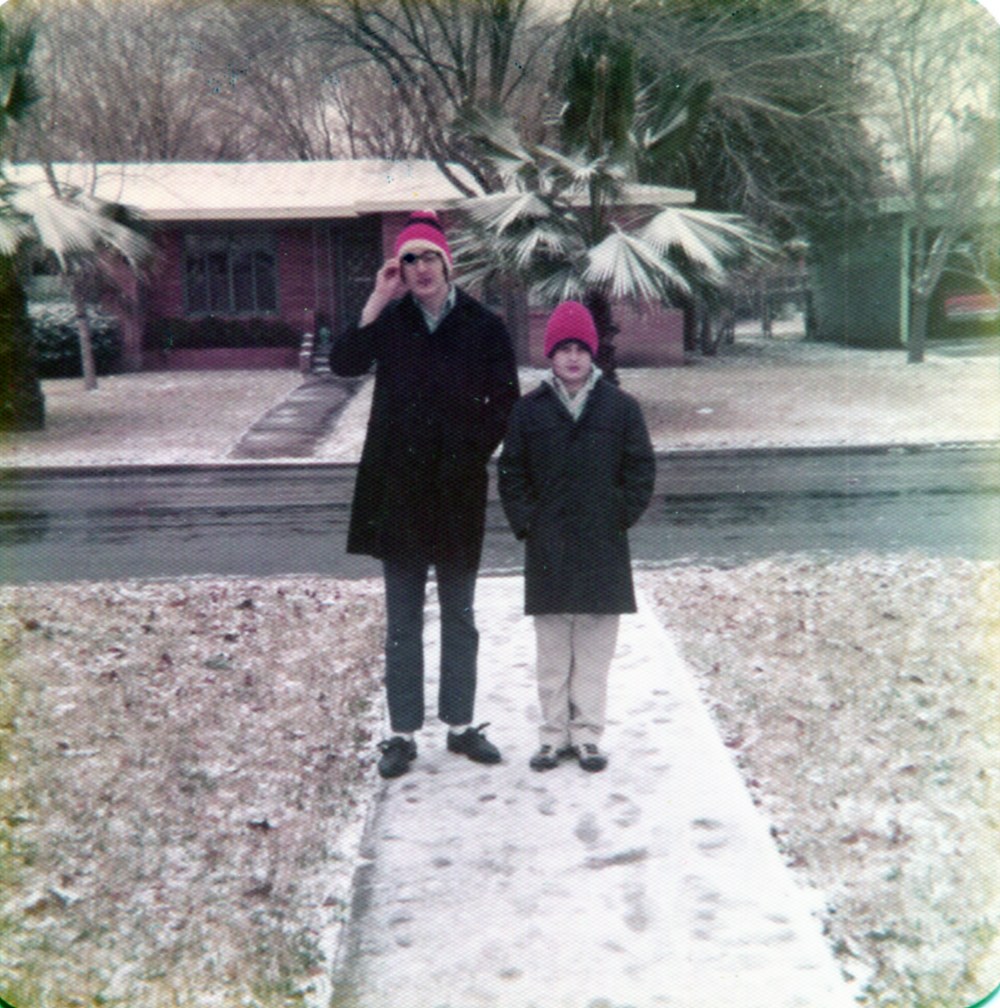
In the winter of 1973, snow fell on San Antonio twice. That much I remember. That’s memorable because the number of times that snow stuck to ground in San Antonio during my youth there — 1968 to 1979 — was twice. By the time a foot or so fell in 1985, I was elsewhere. The 3 inches that fell in San Antonio February 1966 was before my time, but that might have been when it snowed heavily in North Texas, where I was. I remember that too.

Jan1973-1So naturally we went out for a look. And to take pictures. I’m with Jim in the above image, and I took the one of Jay and Jim below.

Jan1973-4This must have been the first snowfall, which was 0.8 inches on Jan 11. It looks like that much, not the 2 inches that fell on Feb. 8. Also, I doubt that Jay would have been around in February.

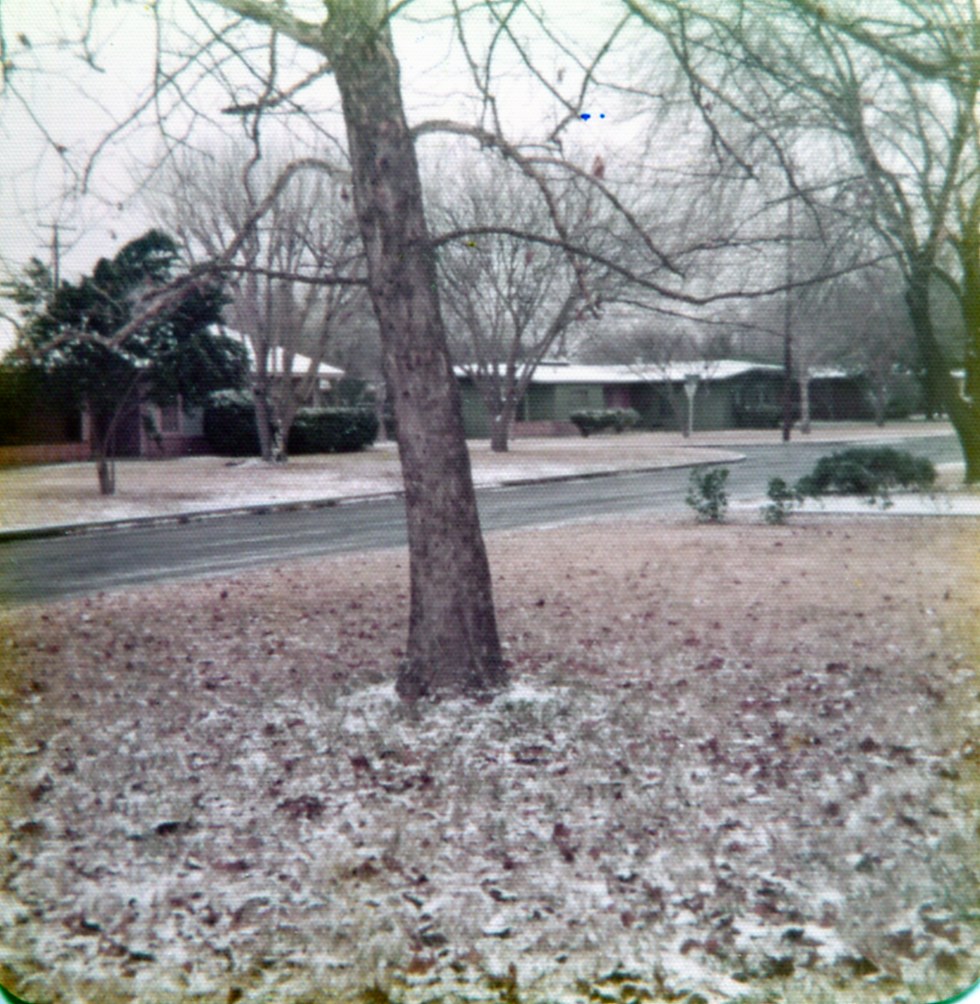
Jan1973-2A front yard picture of a tree long ago dead and removed. I don’t know why I didn’t take any pictures of the February snow. Maybe no film. More likely sloth.

Jan1973-3

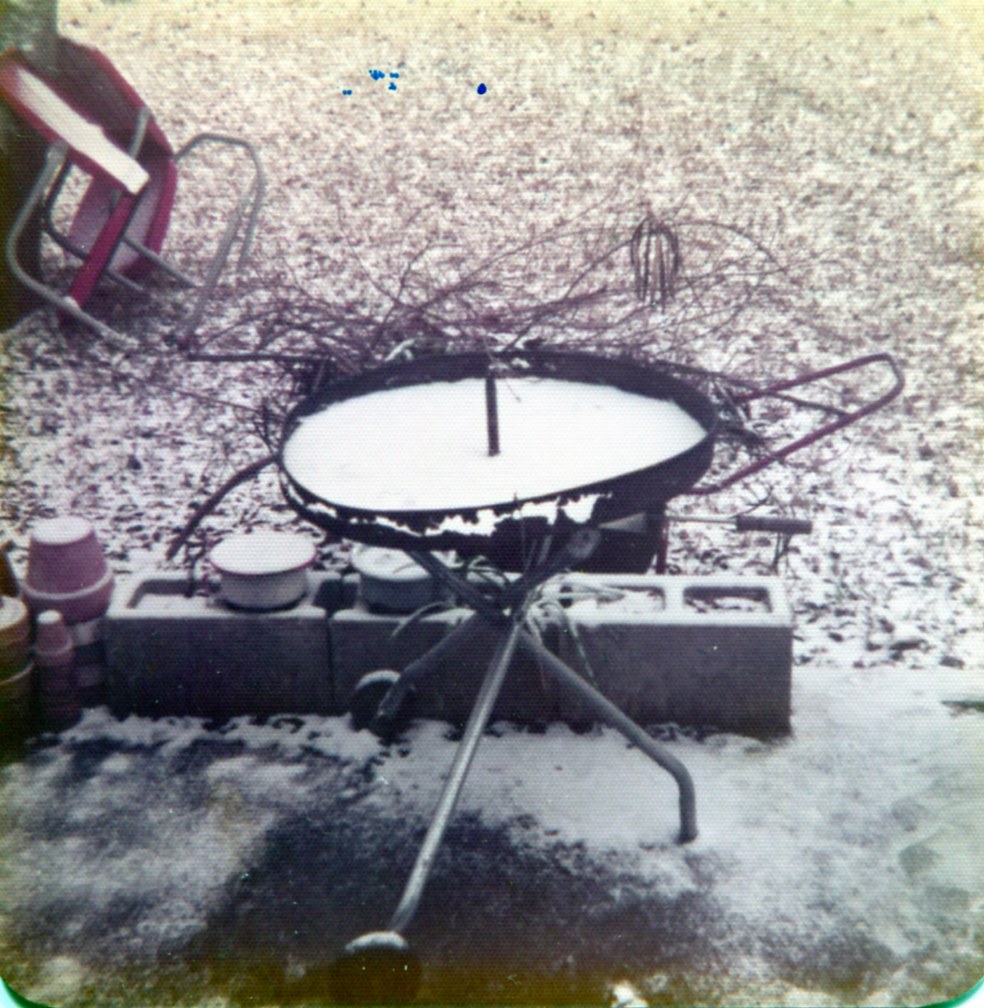
Back yard picture, on the deck that was later covered. At the time, it was open, and home to a decaying grill. Mostly I don’t remember cooking much on the grill, just building fires in it from time to time.

Thursday Odds and Ends

Throwback Thursday? Where did that come from? I’m always late to the meme party, not that that makes any difference. I first saw the term after I sent my old friend Tom an image of him that I scanned from a color slide.

TomJones1979I took it outside my house in the spring of 1979, and it’s now proof that Tom once had hair. He posted it on his Facebook page on Jan. 1, calling it a “Throwback Thursday” picture (though curiously, Jan. 1 is a day people tend to look ahead). I don’t think I’ll throwback on Thursdays, except for this picture. Thursday’s a good day for odds and ends, though.

Part of Isaac’s Storm, which is mainly about the Galveston Hurricane of 1900 (see Jan. 19), mentions previous big blows in passing, such as the Great Storm of 1703, which slammed into Great Britain. I didn’t know, for instance, that that storm destroyed — completely scoured off the rocks — the first Eddystone Light. With builder Henry Winstanley and his crew, who were doing repairs, still inside. More about all four lighthouses on those rocks is here, including the incredible fate of the lighthouse keeper when the second one burned down. Here’s a short of a fellow visiting the current lighthouse (a cool destination if there ever was one).

I don’t think I have the patience to read Daniel Defoe’s work on the subject, The Storm — or, to give it its full name, The Storm: Or, a Collection of the Most Remarkable Casualties and Disasters Which Happen’d in the Late Dreadful Tempest, Both by Sea and Land — which is available thanks to Project Gutenberg. But it’s good browsing. Some people died in 1703 from falling chimneys, for instance:

In Threadneedle-Street, one Mr. Simpson, a Scrivener being in Bed and fast a-sleep, heard nothing of the Storm; but the rest of the Family being more sensible of Danger, some of them went up, and wak’d him; and telling him their own Apprehensions, press’d him to rise; but he too fatally sleepy, and consequently unconcern’d at the Danger, told them, he did not apprehend any Thing; and so, notwithstanding all their Persuasions, could not be prevailed with to rise: they had not been gone many Minutes out of his Chamber, before the Chimneys fell in, broke through the Roof over him, and kill’d him in his Bed.

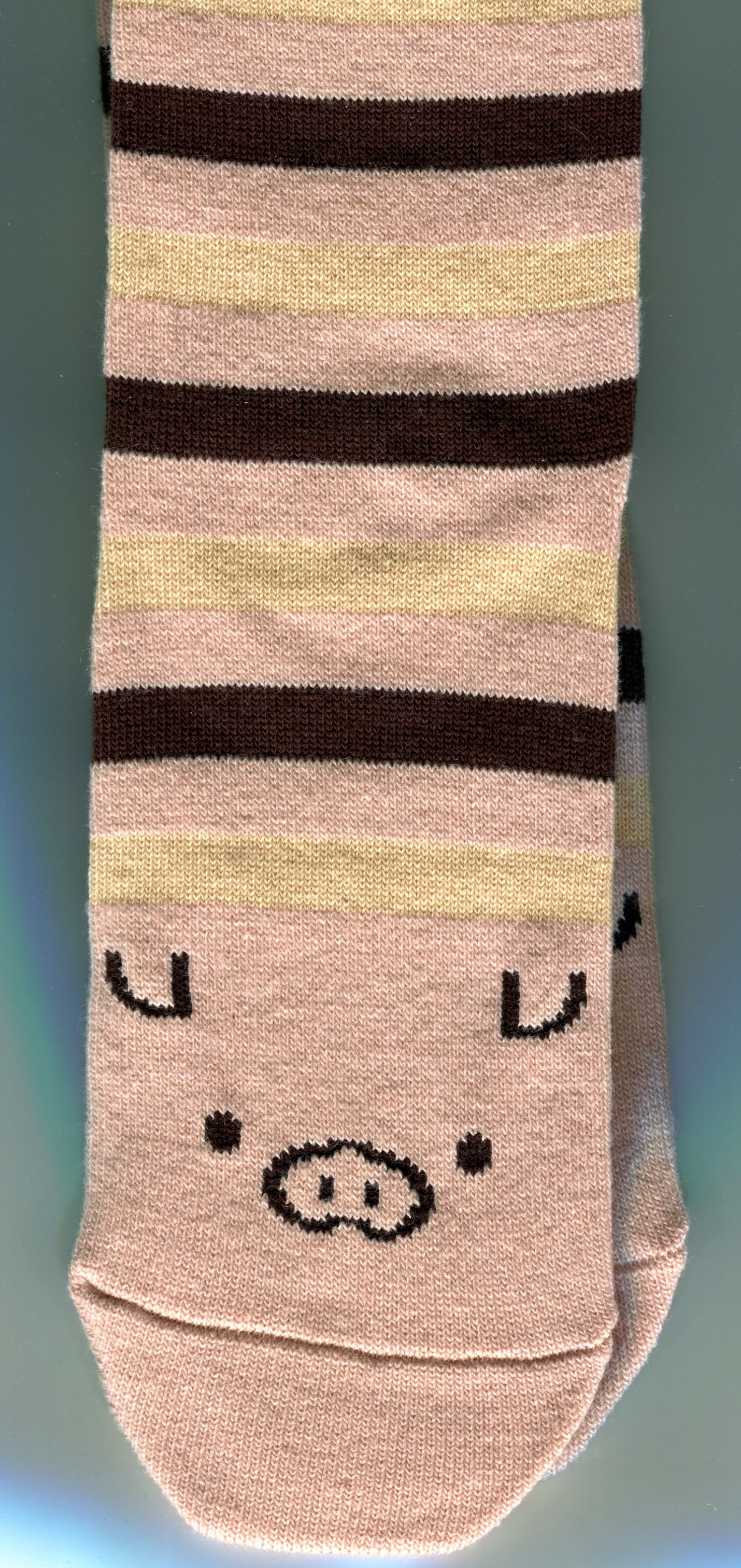
I suppose that counts as a throwback, too, though I bet most people who use the term don’t go back as far as 1703. So here’s something new: socks that Yuriko brought back from Japan for Ann.

JsocksToo cute for words, as Japanese design sometimes is.

-gate

I read the term “deflategate” for the first time today. Peculiar, but not funny enough to laugh at. Even better when referring to that incredibly, absolutely minor flap about deflated footballs — and it did make me laugh — is “ballghazi.”

Which made me wonder: just how many incredibly, absolutely minor flaps have had that -gate suffix attached to them in the last 40 years? Wiki, as usual, makes a stab at such a list, but there’s probably no way to know them all. I’d never heard of many of those on the list, and for good reason, since it includes the likes of “Flakegate”:

Photographs of the wedding reception of TV presenter Anthea Turner were used to promote Cadbury’s then new Snowflake chocolate bar, bringing scorn from the tabloid press and causing Turner to claim this was not part of the £450,000 by OK! magazine paid her for exclusive access to her wedding.

The article also credits, or blames, columnist William Safire (whom I didn’t realize has been dead for five years until I looked him up) with getting the ball rolling on -gate. Could be. But it might have been more spontaneous than that, as language tends to be.

I also wonder: in another 40 years (say), is anyone going to remember that the construction started with Watergate? The suffix has legs enough to survive that long, but historical amnesia being what it is, I can imagine some as-yet unborn person thinking, “Gate? That’s strange. Where did that come from?” And then either forgetting about it, or finding out by tapping the gizmo that pulls up whatever information ocean is sloshing around in the future.