Humboldt Park

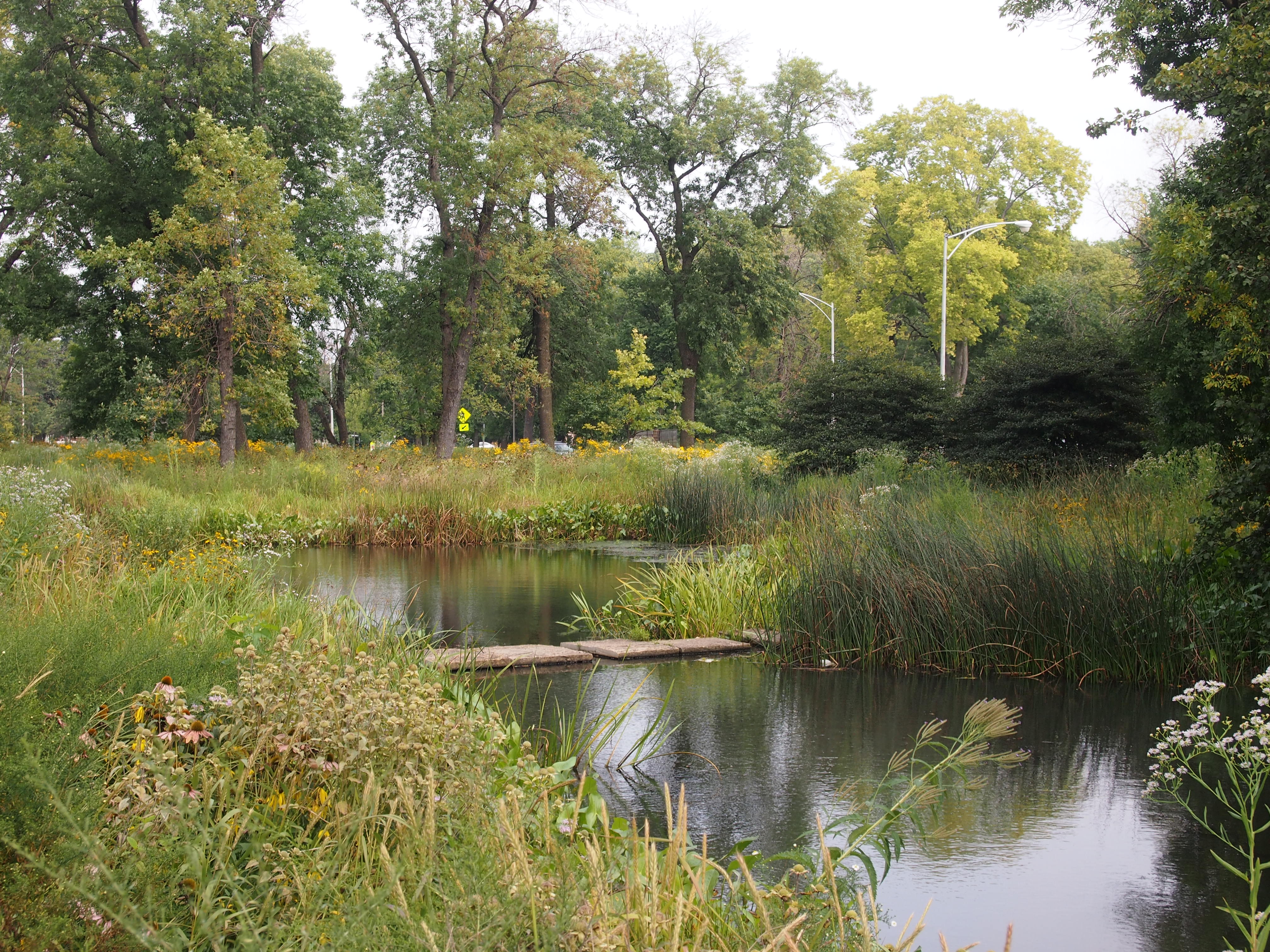
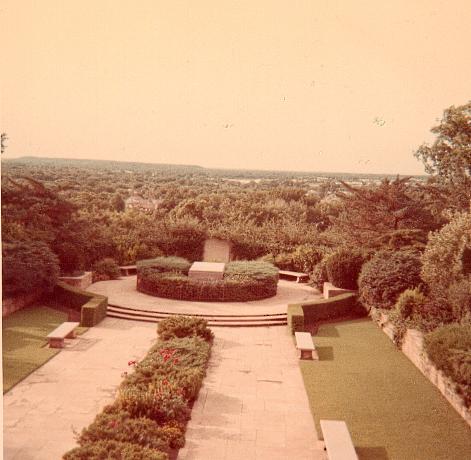
The day before we went to Millennium Park, which was full of people, I went by myself to Humboldt Park, which is also in Chicago, for about an hour’s walkabout. Few people were there, even though it was the Friday before a holiday weekend, but maybe the population picks up on Saturdays and Sundays. Even so, the place seemed underused, considering how gorgeous parts of it are. Especially along the banks of the “prairie river” that runs through part of it – a landscape element by Jens Jensen, whom I’ve run across before.
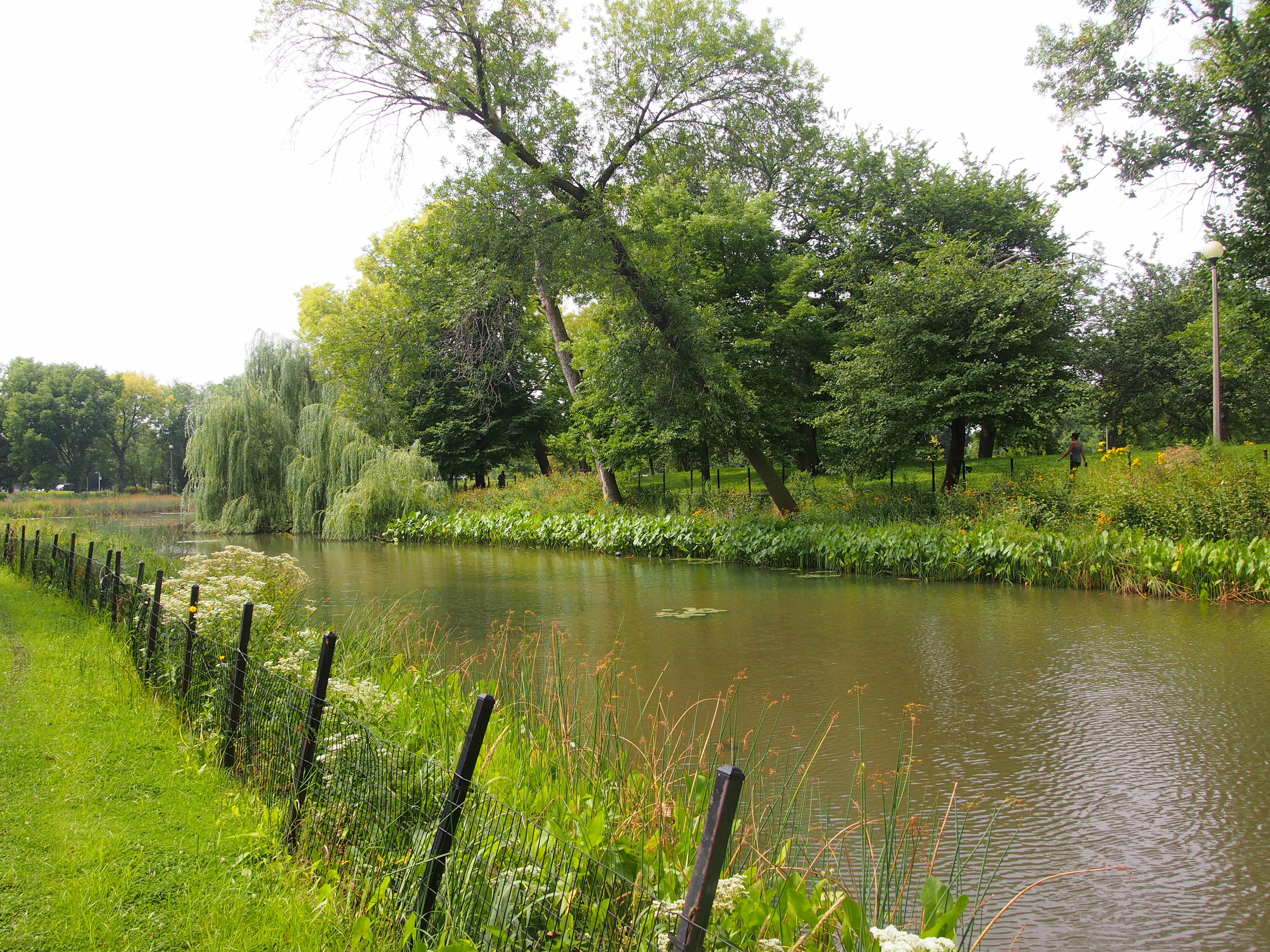
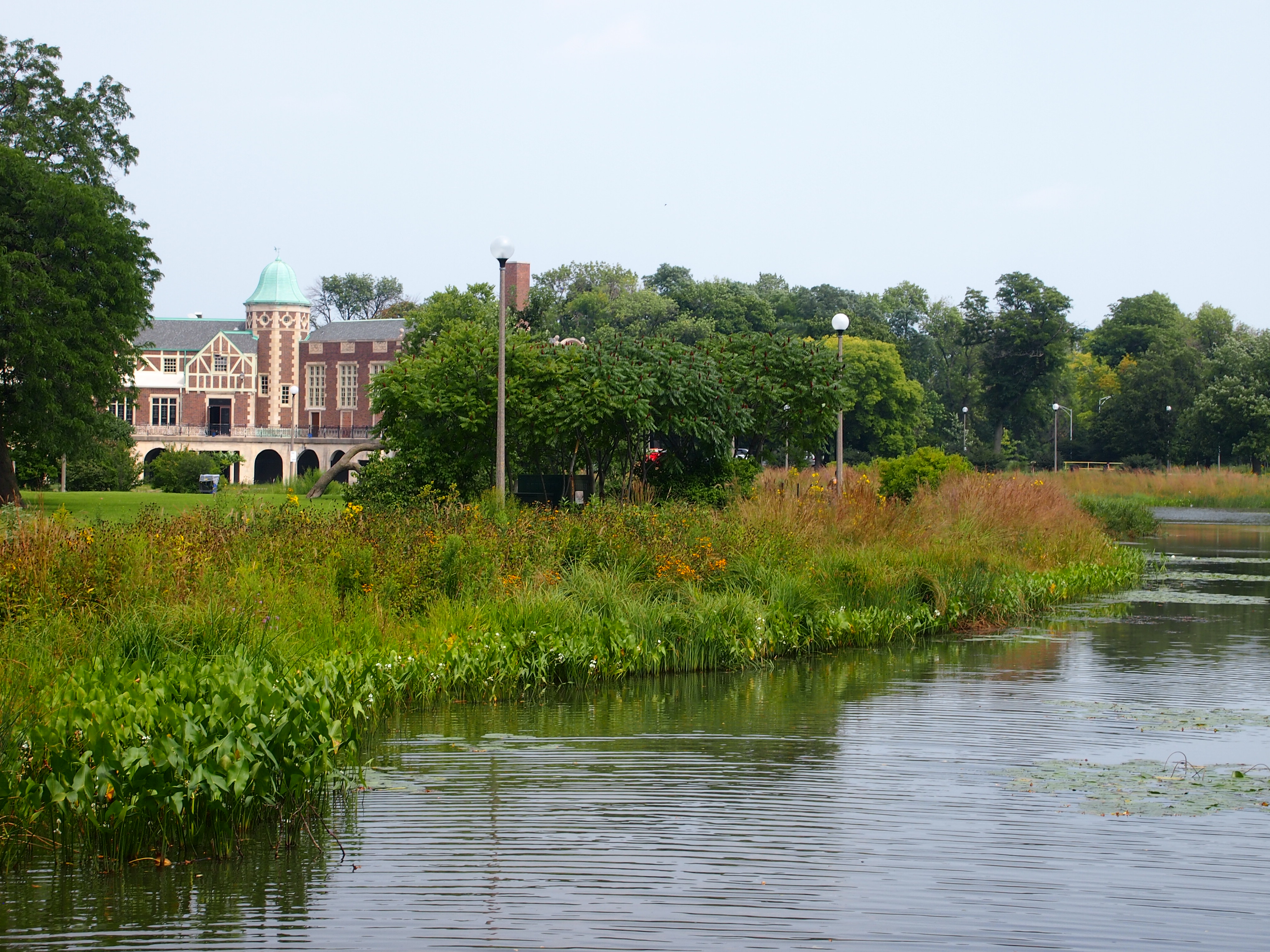
Humboldt Park, August 2014Humboldt Park, August 2014Humboldt Park, August 2014“In 1869, shortly after the creation of the West Park System, neighborhood residents requested that the northernmost park be named in honor of Baron Freidrich Heinrich Alexander von Humboldt (1759-1859), the famous German scientist and explorer,” the Chicago Park District says. “Two years later, completed plans for the entire ensemble of Humboldt, Garfield, and Douglas parks and connecting boulevards were completed by William Le Baron Jenney, who is best known today as the father of the skyscraper. Having studied engineering in Paris during the construction of that city’s grand park and boulevard system in the 1850s, Jenney was influenced by French design.

“The construction of Humboldt Park was slow, however, and the original plan was followed only for the park’s northeastern section. Jens Jensen, a Danish immigrant who had begun as a laborer, worked his way up to Superintendent of Humboldt Park in the mid-1890s… [Eventually], deteriorating and unfinished areas of Humboldt Park allowed Jensen to experiment with his evolving Prairie style. For instance, Jensen extended the park’s existing lagoon into a long meandering ‘prairie river.’

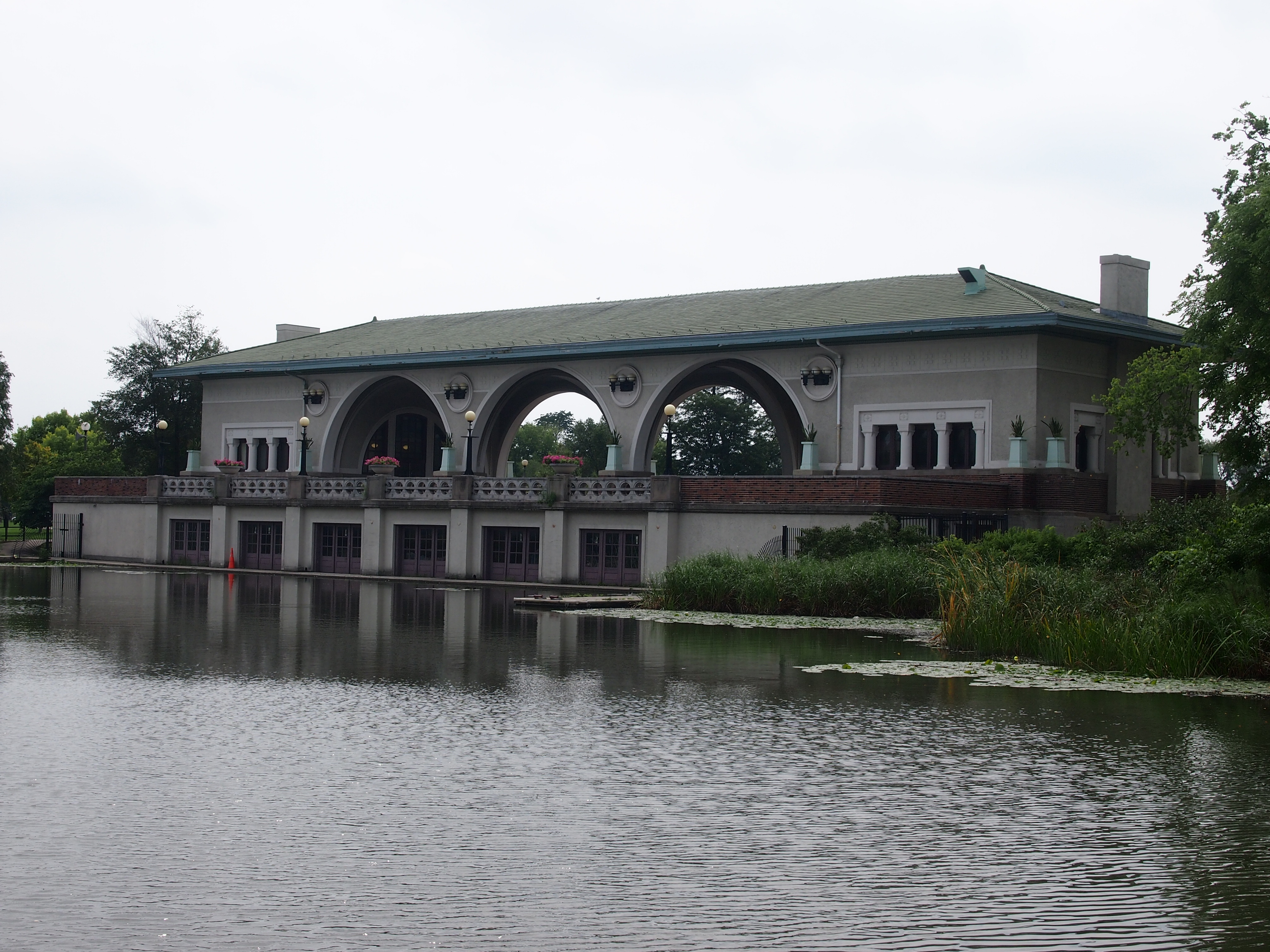
“He commissioned Prairie School architects Schmidt, Garden, and Martin to design an impressive boat house and refectory building which still stands at one end of the historic music court.”

The boat house is a fine structure.
Humboldt Park, August 2014The view of the lagoon from the boat house is nice as well.
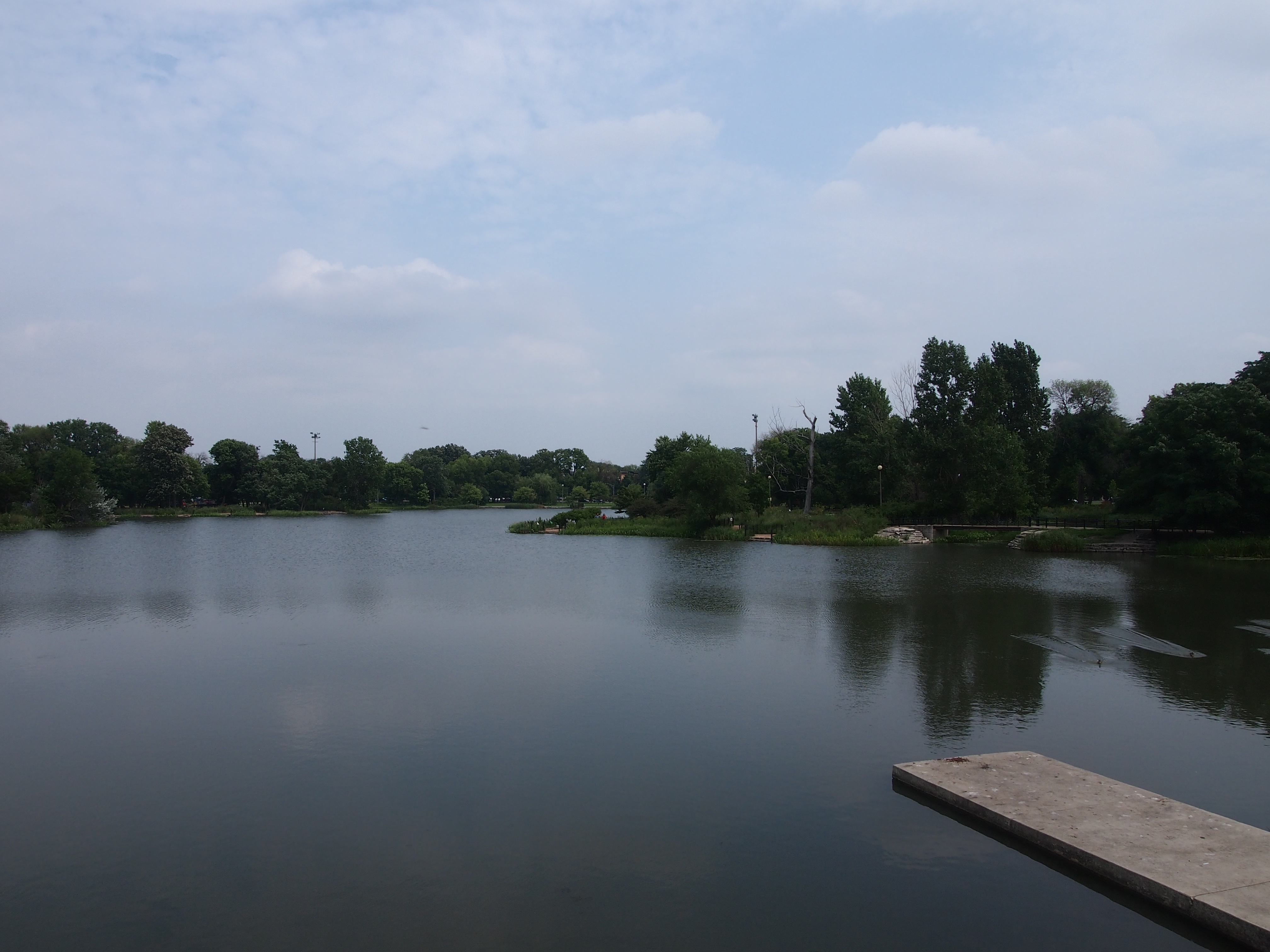
Humboldt Park, August 2014A few people were fishing from the edge of the lagoon. I was looking at it. That was the entirety of the human presence there at that mid-afternoon moment. It was a little hard to believe that 9 million or so people live within 30 or 40 miles of this body of water except, of course, for the ambient traffic noise from nearby Humboldt Blvd. and Division St.
Jazz Fest and Big New Head ’14

While I was eating lunch on my deck today — the opportunities for that will be rarer as the weeks ahead pass — the dog took a sudden interest in one of my lower pant legs, sniffing and snorting with gusto. I noticed a small black ant crawling on it. The dog had too. In a moment, she’d eaten the ant.

I’ve seen her chase flies and bees (and lucky for her, never catch any), but this was a first. It didn’t seem to be a biting kind of ant. Ants on the hoof, snack food for dogs.

Did some gadding about in Chicago over Labor Day weekend. On Saturday, Yuriko and Ann and I went to the city and met my nephew Dees, his girlfriend Eden, and an old friend of theirs, and eventually ended up at Millennium Park. Dees and Eden were visiting from Texas, staying with friends here. That reminded me a bit of the Labor Day weekends of my youth, when I usually went out of town — to Chicago (before I lived there), New York, Boston, and Washington DC — though one year (’85) my old friends came to me, and we gadded around Nashville.

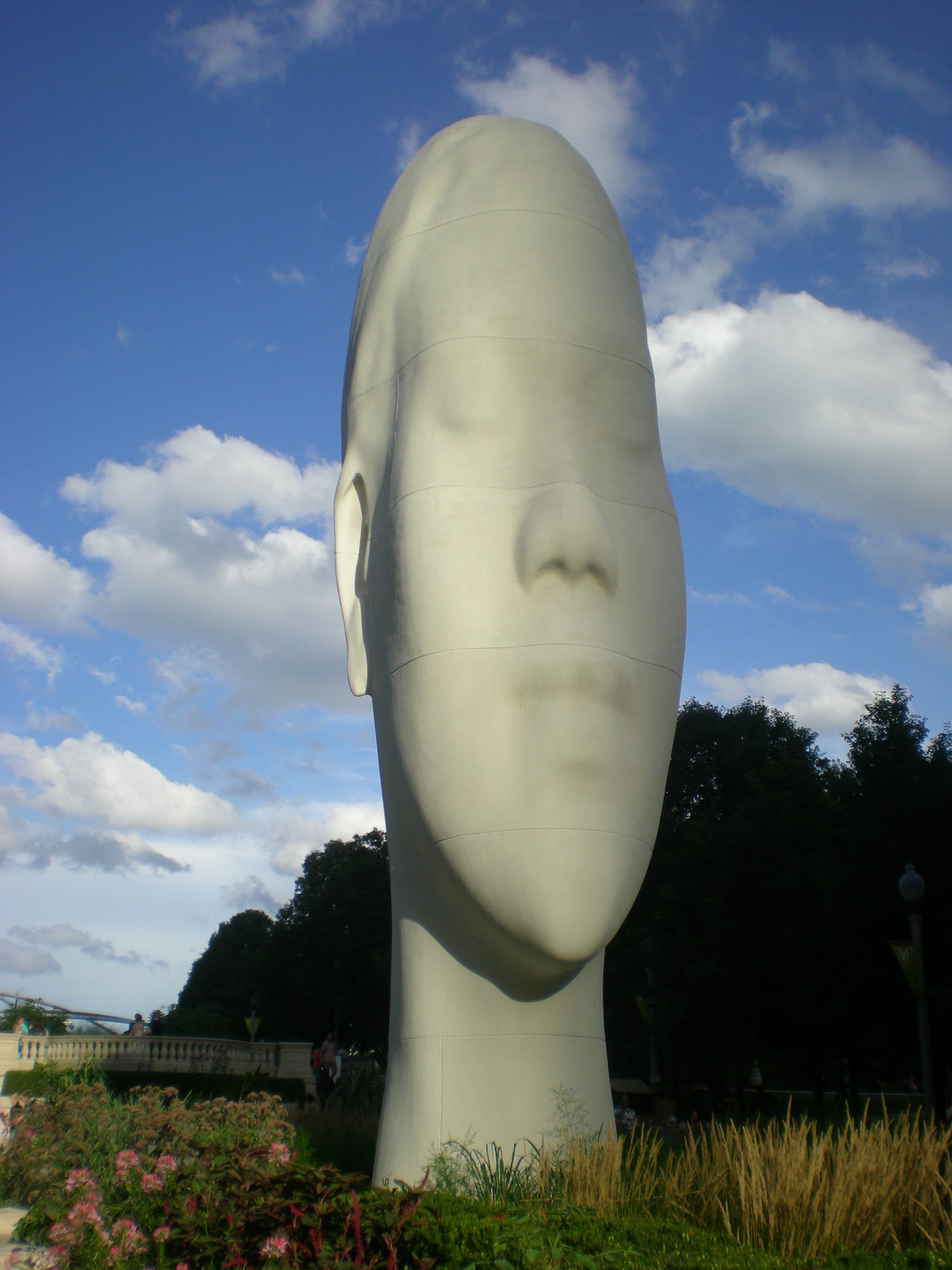
There’s a new face near Michigan Ave.

Millennium Park, Aug 2014It’s called “Looking Into My Dreams, Awilda,” by Jaume Plensa, the Spaniard who did Crown Fountain, the twin towers of alternating faces that spit water in the warm months, which isn’t far from the new sculpture. The Tribune says that “Awilda is 39 feet tall, made of marble and resin; the internal frame is fiberglass. She arrived from Spain in 15 pieces, then was bolted together.” It’ll be there until the end of 2015.

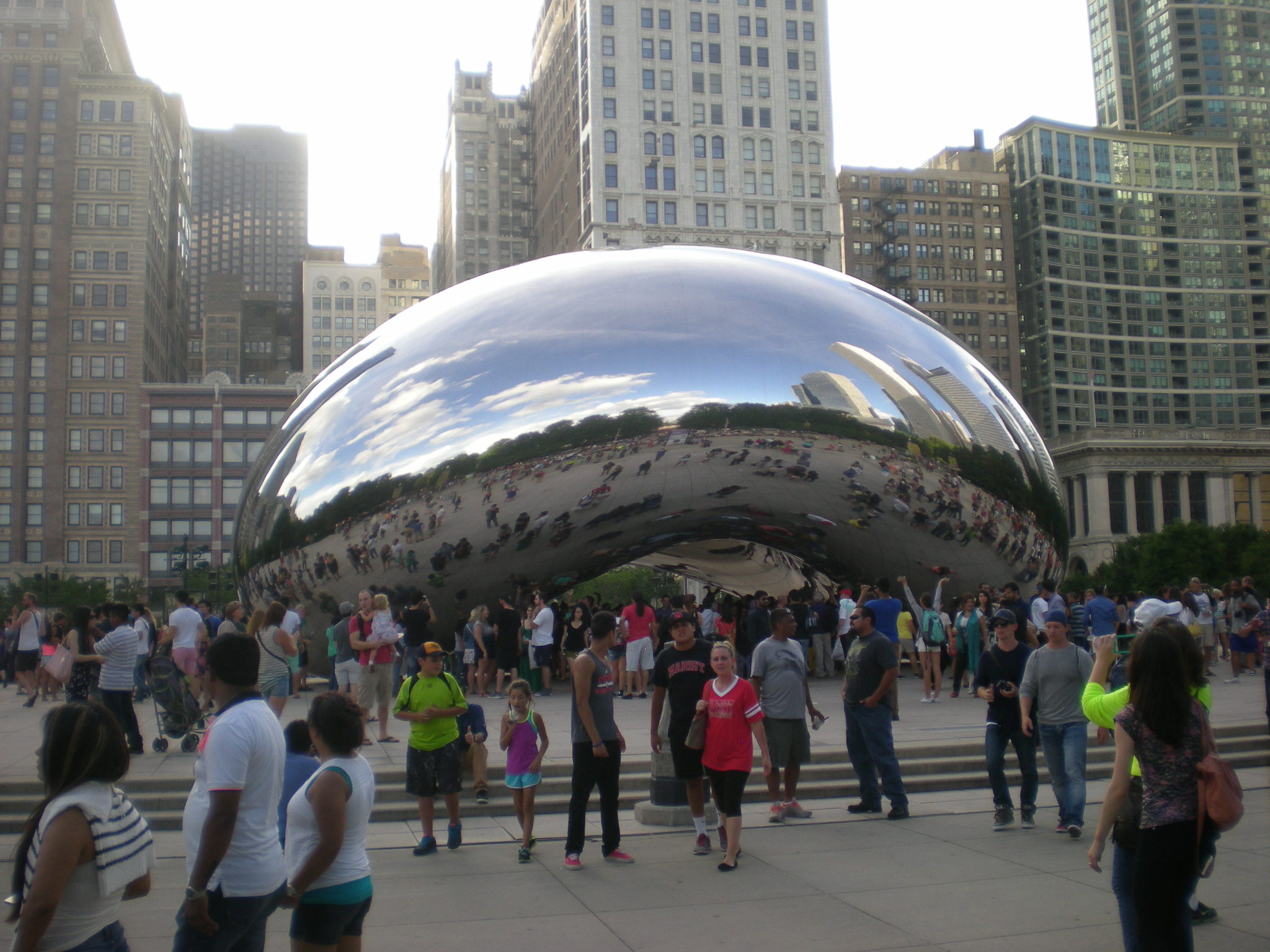
The Bean was as popular as ever.

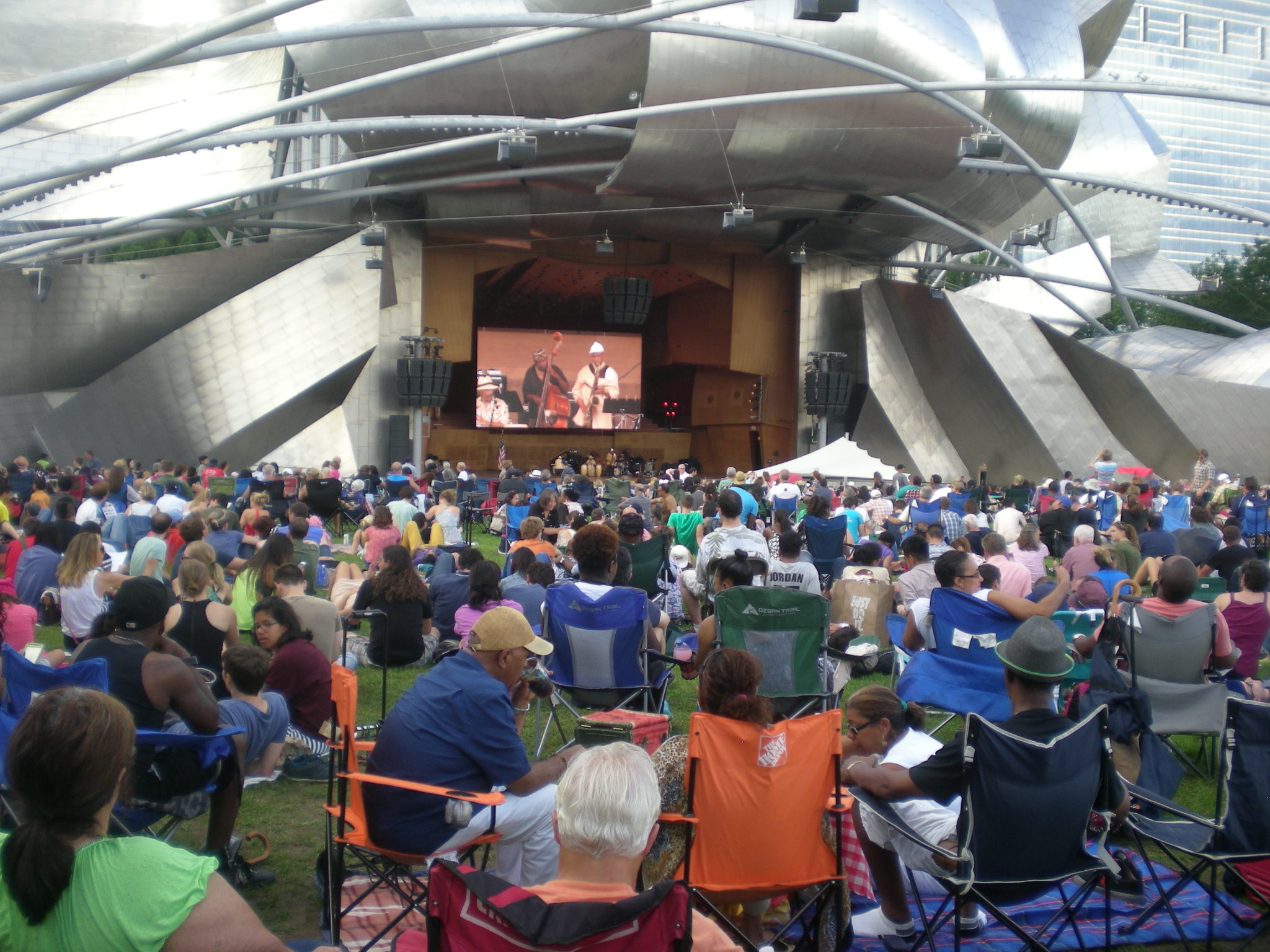
Aug30.14 035We spent a while at the Chicago Jazz Festival at Pritzker Pavilion. The last time I went to the Chicago Jazz Festival was – 1996? Maybe. This time we left fairly early, but were around long enough to hear Ari Brown, Chicago sax man of long standing. At 70, the man can blow.

Ari Brown, August 2014Still hot in the late afternoon, and a bit humid, but it was a good place to sit and listen. It helped not to get rained on, which was a distinct risk over the weekend.

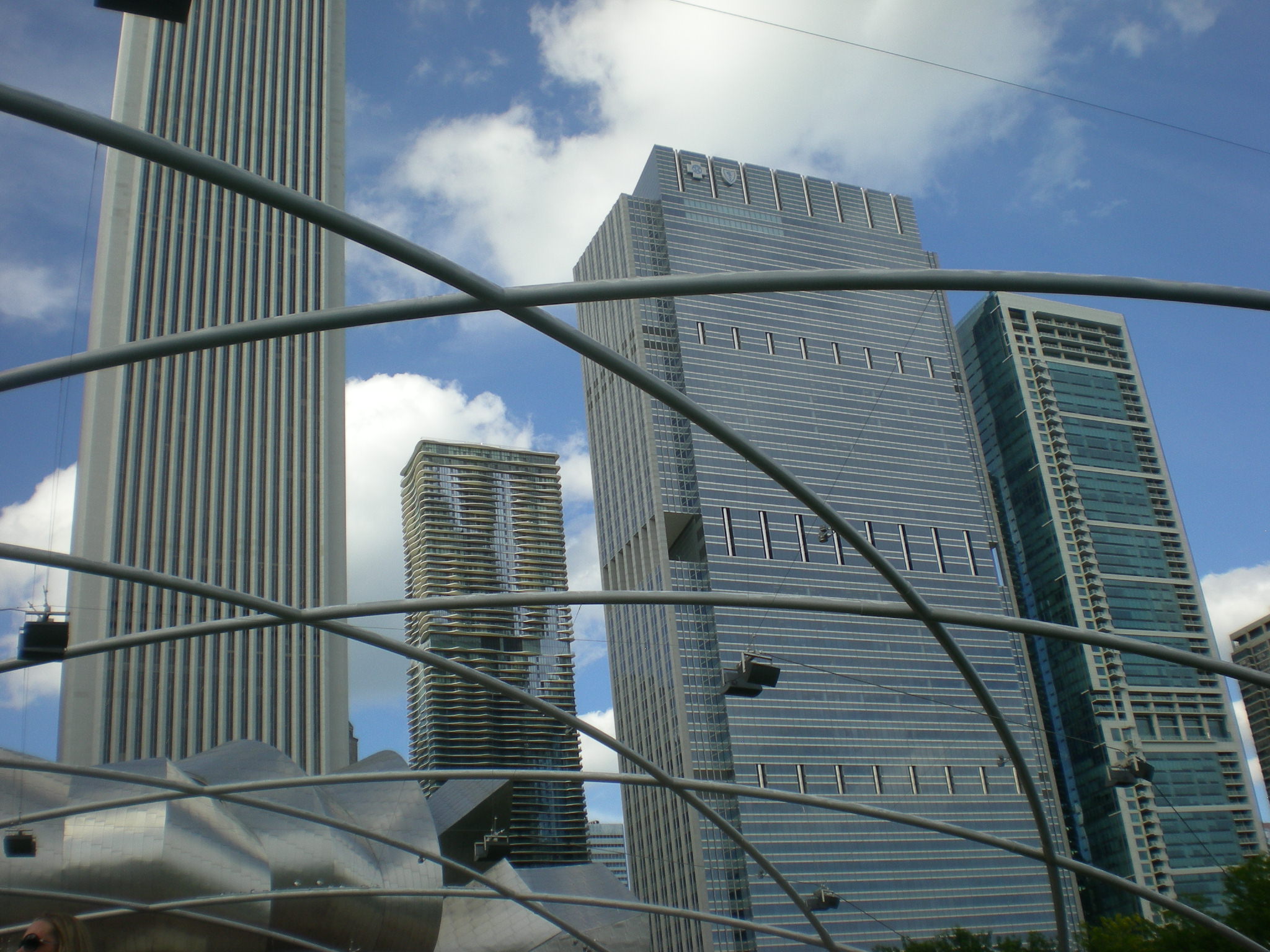
Millennium Park, Aug 2014Behind the stage rise the skyscrapers of the East Loop. I’ve always liked the view.

The Bluff Spring Fen

Back again on September 2. Labor Day weekend is no time to do work, if you can avoid it.

When in doubt, go to a dictionary. If one isn’t enough, go to two or more. First, the American Heritage Dictionary of the English Language, New College Edition, print version. Fen: “Low, flat, swampy land; a bog; marsh.” Next, Merriam-Webster, online version. Fen: “Low land that is covered wholly or partly with water unless artificially drained and that usually has peaty alkaline soil and characteristic flora (as of sedges and reeds).”

I found myself wondering about the exact definition of a fen when walking through a fen the other day. The Bluff Spring Fen. It was clearly a low wetland, and I’ll say this about a fen in August, especially in a rainy year — there’s a lot of characteristic flora.

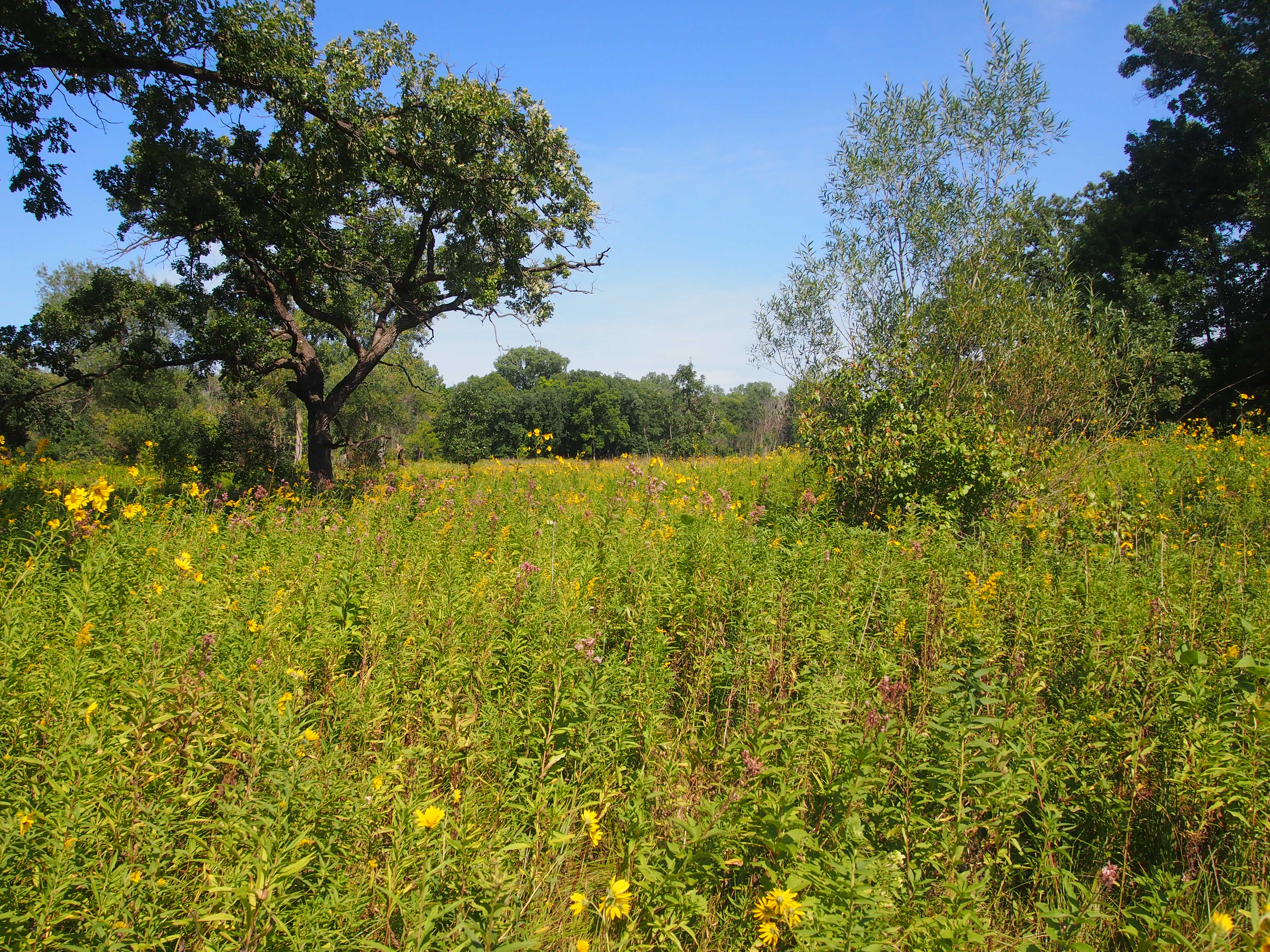
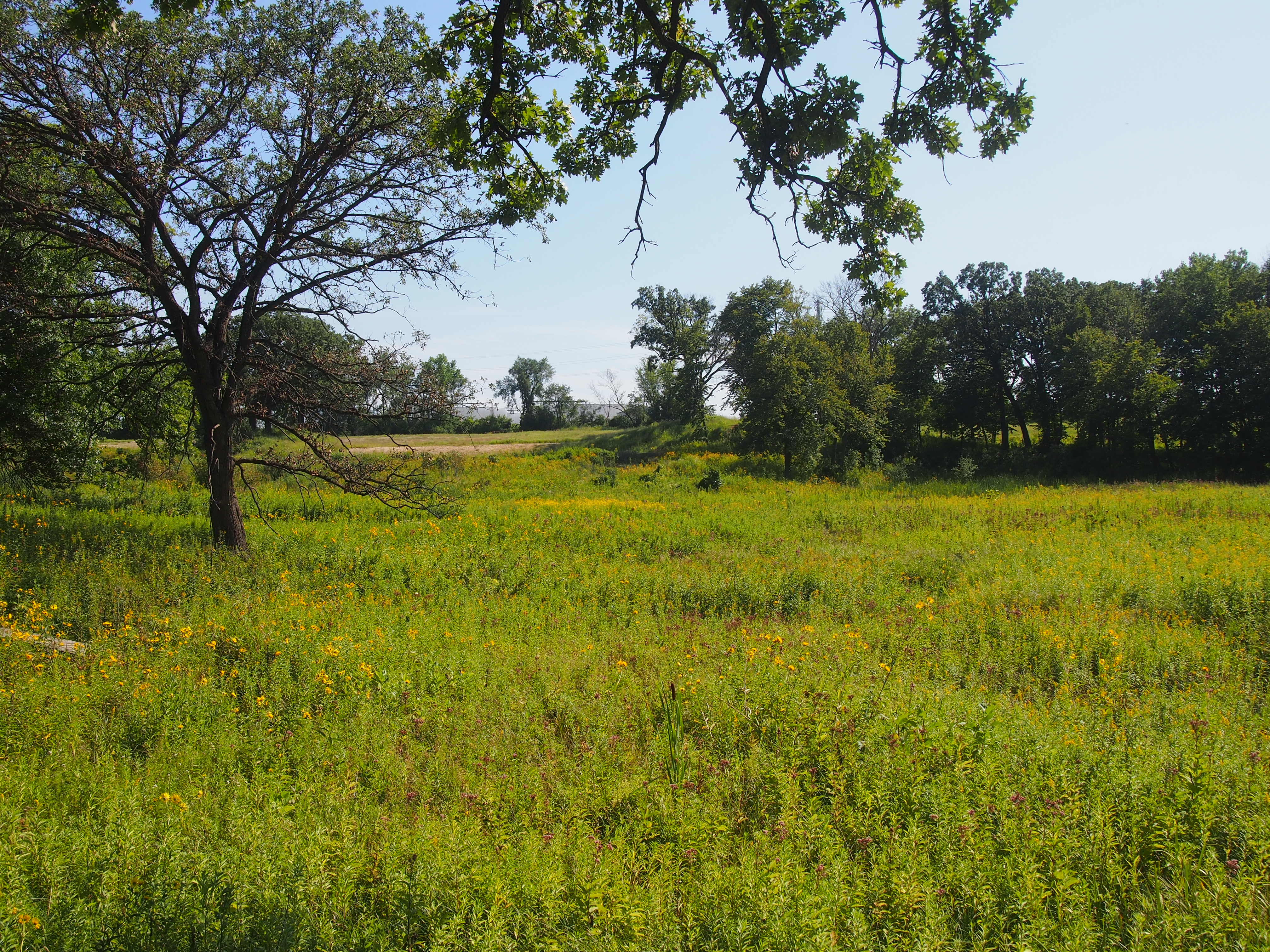
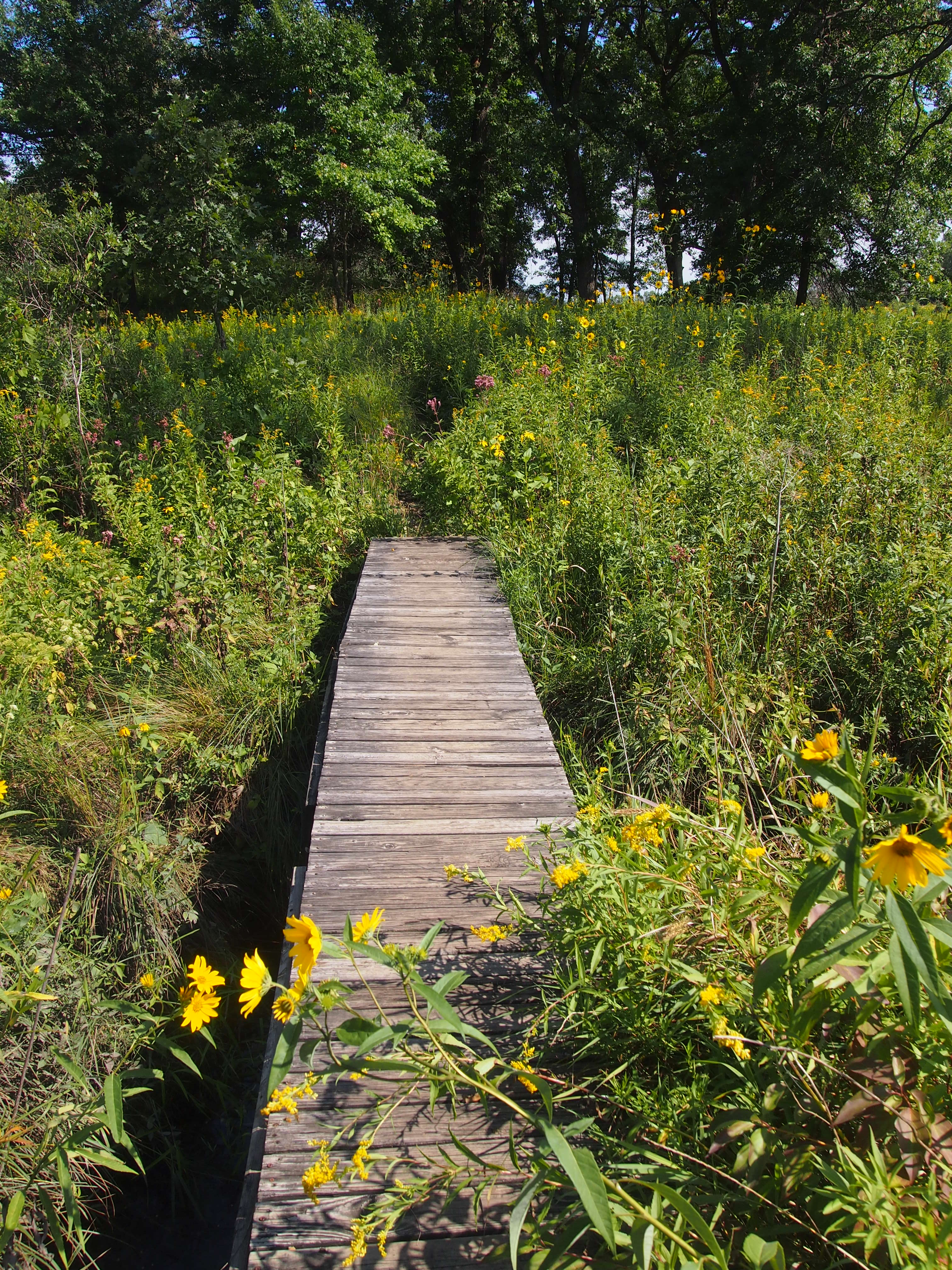
Bluff Spring FenBluff Spring Fen, August 2014The only visible work of man is the footpath through the fen, which isn’t very visible, except in those few spots where wooden planks cross extra-low, extra-damp terrain.

Bluff Spring Fen plankThe fen is next to the Bluff City Cemetery, described yesterday. Toward the bottom of the bluff, in fact, and accessible through the cemetery grounds. The web site of Friends of the Bluff Spring Fen gives a more complicated definition of this particular fen: “Bluff Spring Fen is a 100-acre Illinois Nature Preserve in Elgin, Illinois, named for its rich, calcareous fens. These rare wetlands are fed by springs coming up through the ground bringing mineral-rich water. This alkaline water comes out of the ground at about 50 degrees, keeping the springs and streams flowing year round, and supporting animals and specialized plants that are adapted to these conditions.

“The Fen is not just the wetlands. It is a myriad of habitats including prairies, savannas, wetlands, and woodlands. Each one of these groups can be broken down further into subcategories… Rare and endangered species can be found here, such as the Small White Lady’s Slipper Orchids, the Baltimore Checkerspot Butterflies, and the Elfin Skimmer Dragonflies. To date, over 450 plant species, 57 butterfly species, more than 20 dragonfly species, and almost 100 bird species, including 33 nesting, have been recorded at the Fen.”

I don’t know if I saw any Elfin Skimmer Dragonflies, but I did see a lot of dragonflies. Squadrons of dragonflies. All beating their wings, causing typhoons in the South China Sea. Or was that butterflies? Saw a fair number of them, too. But not as many mosquitoes as I expected, fortunately. Always a good thing when you’re out in the middle of a fen.

The Bluff City Cemetery, Elgin

At Costco the other day, I was waiting in line at the keep-’em-in-the-store food service window, which is across from the row of check-out stands. The line was about eight people deep, and had started to snake toward the check-out stands, partially blocking the flow of people and shopping carts as they headed for the exit.

“Please move the line against the wall,” a Costco employee told everyone in line. It was a reasonable request, and we all moved away from the check-out row. A few seconds later, a man wheeled his cart past us in the line, and said, “Thanks. There’s no more Thermopylae.”

Did he actually say that? I wondered. I decided he had. I didn’t particularly feel like we were holding off a host of Persians, but I chuckled anyway. That’s someone who’s read his Herodotus. Or more likely, watched 300.

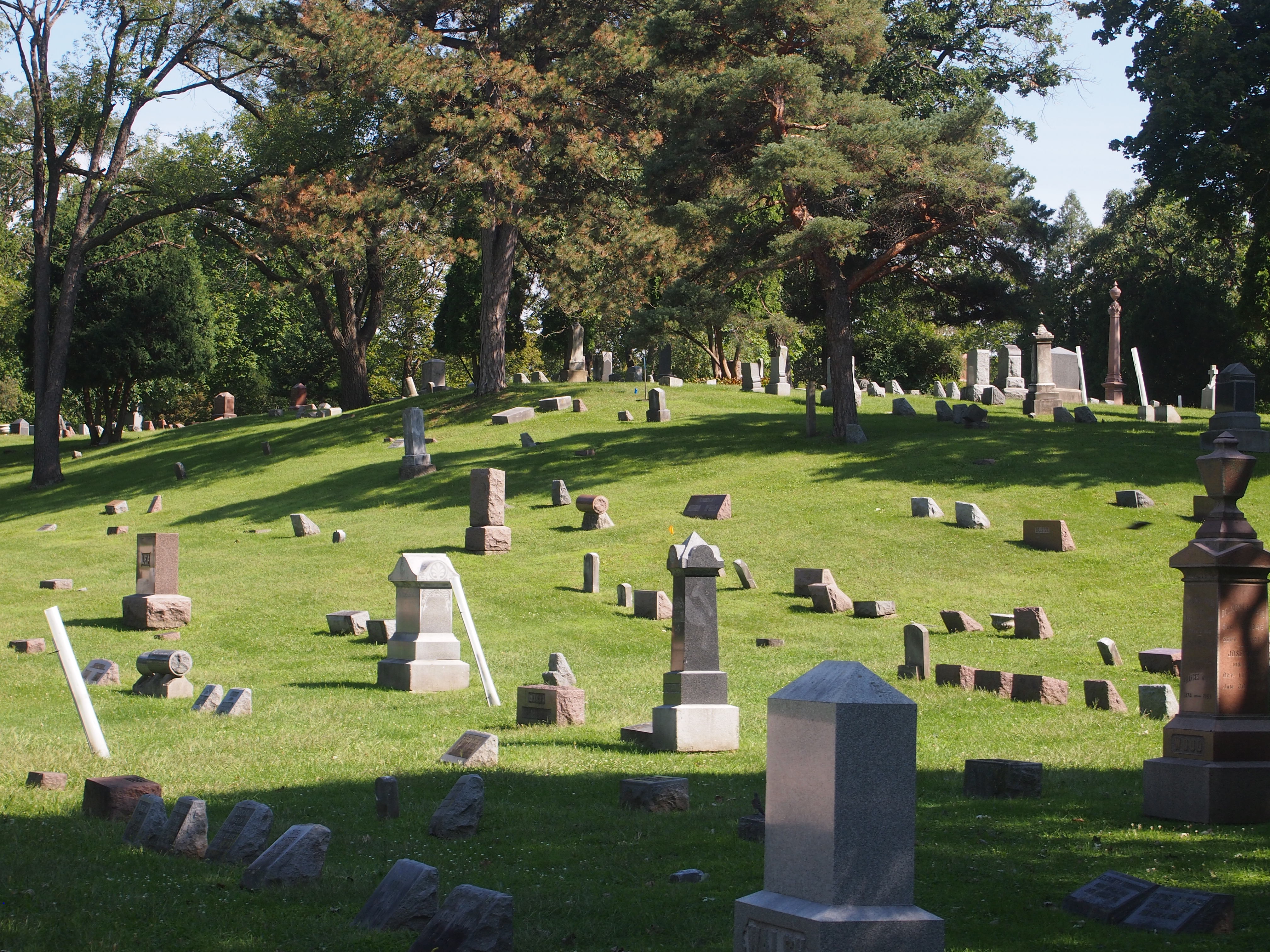
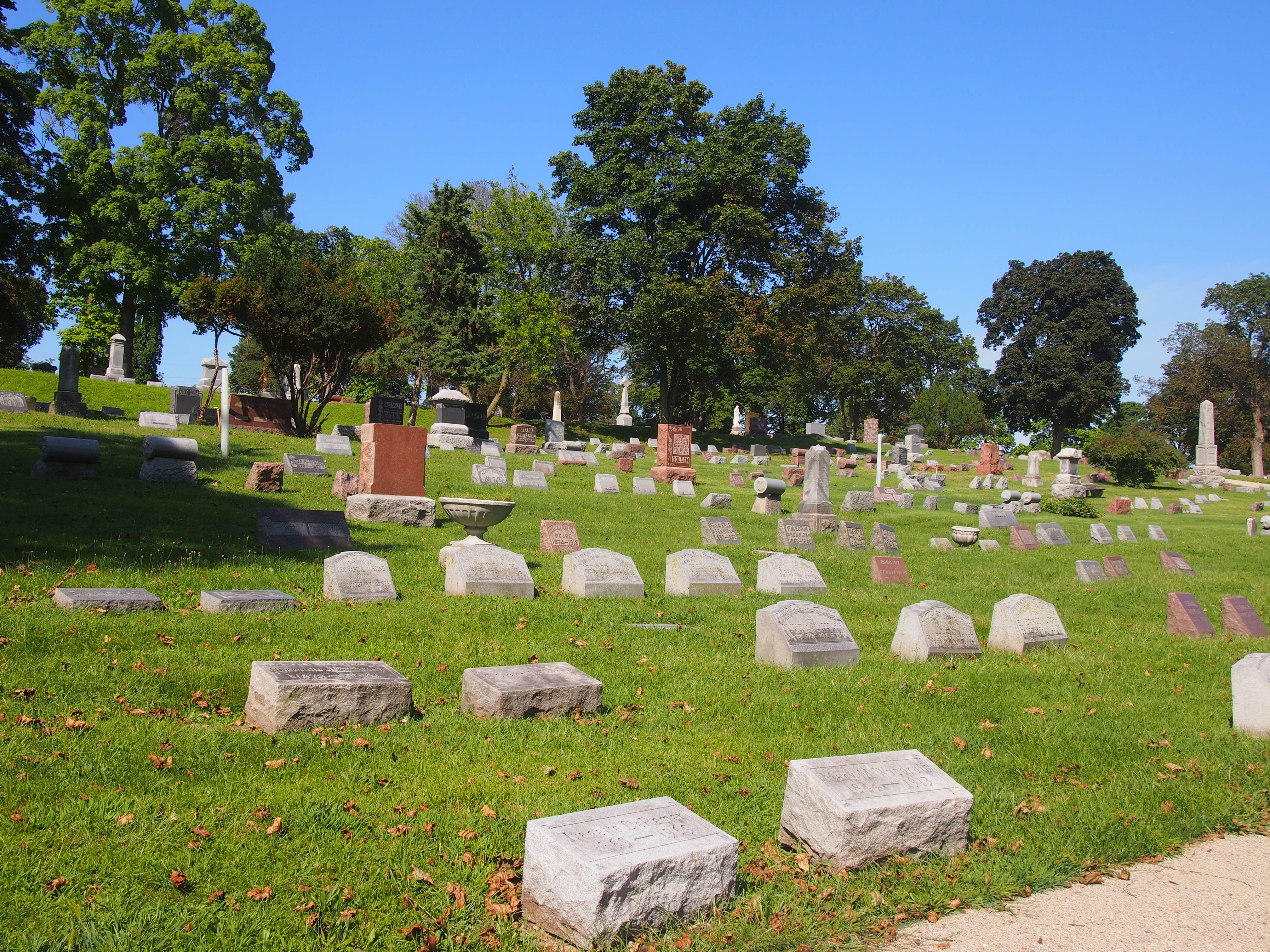
I spent some time one warm day recently at the Bluff City Cemetery in Elgin, Illinois, which has been a municipal burying ground since 1889. It’s a large place, 108 acres, and unusually uneven for Illinois terrain. My guess is that as a rolling bluff, the site wasn’t good for much else, so it became the cemetery.

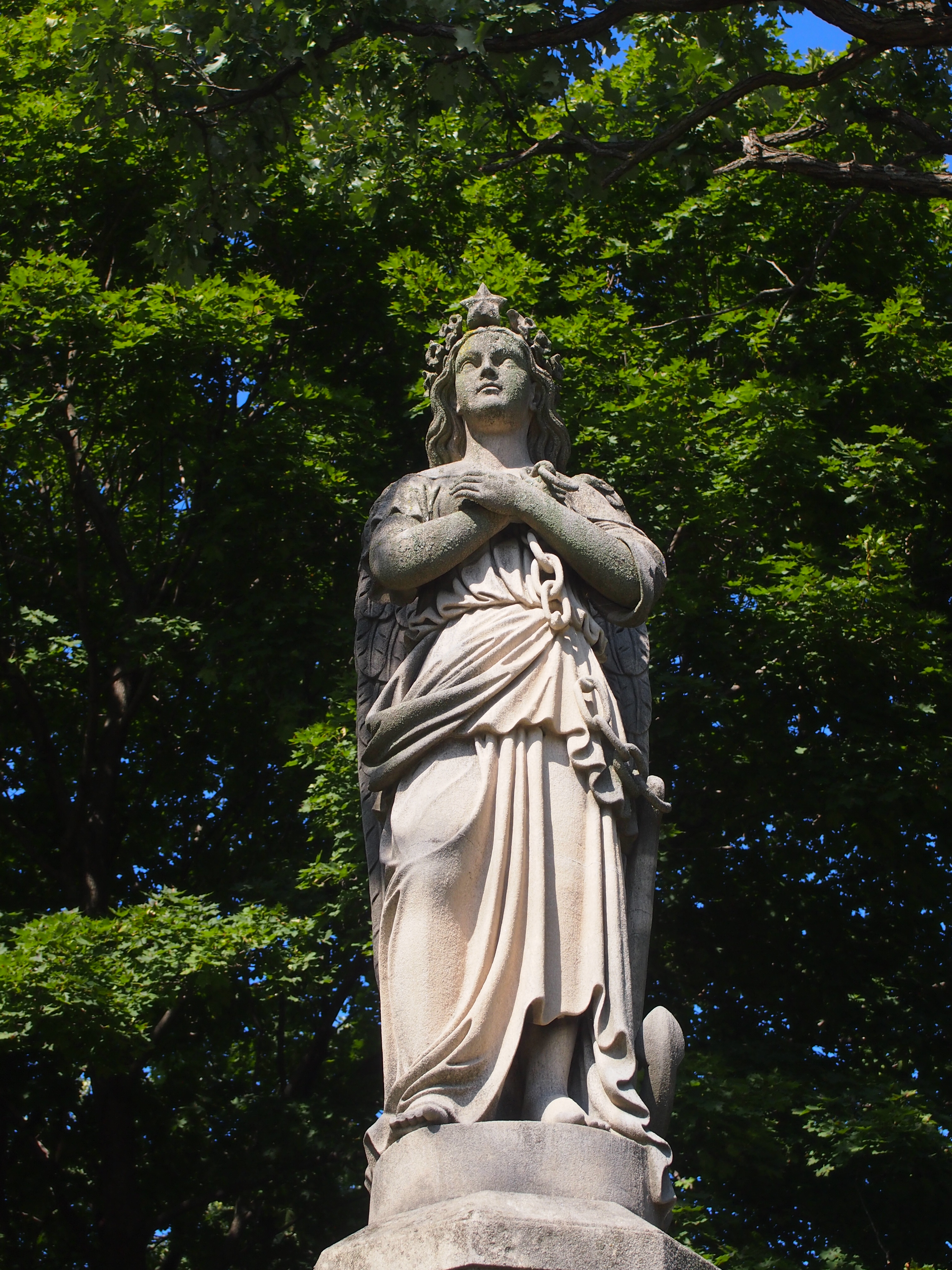
Bluff City CemeteryBluff City Cemetery, August 2014A lot of mature trees, a lot of stones. Not a lot of funerary art, but I did see some examples, such as this figure, atop a monument to people named Hanson, and holding what looks like a chain attached to an anchor. I’ve read that anchors were early Christian symbols of hope, and are sometimes found on funerary art, though I can’t say I’ve ever seen one before.

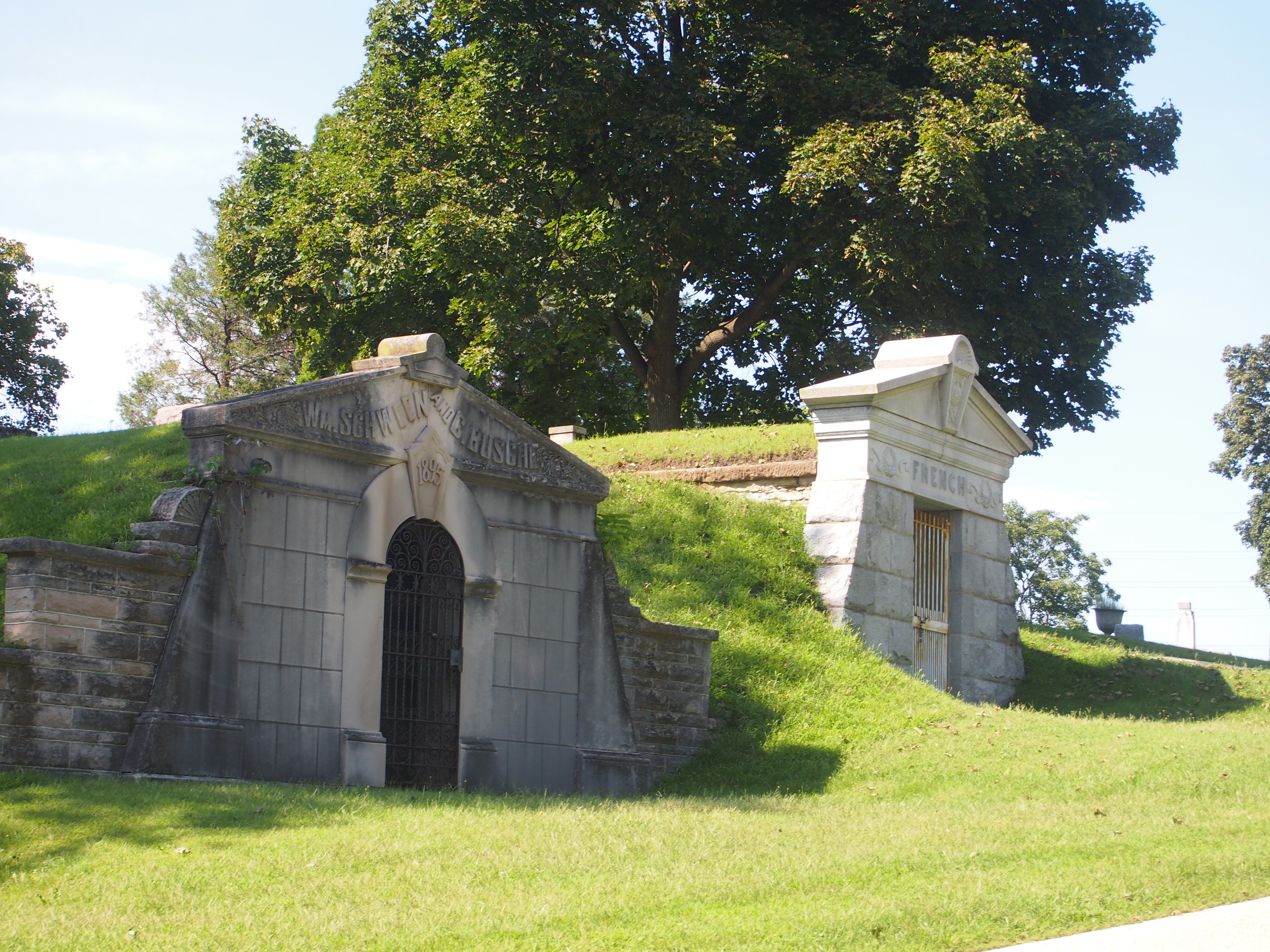
Bluff City Cemetery, Elgin, Ill.The cemetery also sports a few burial vaults built into the hillside.

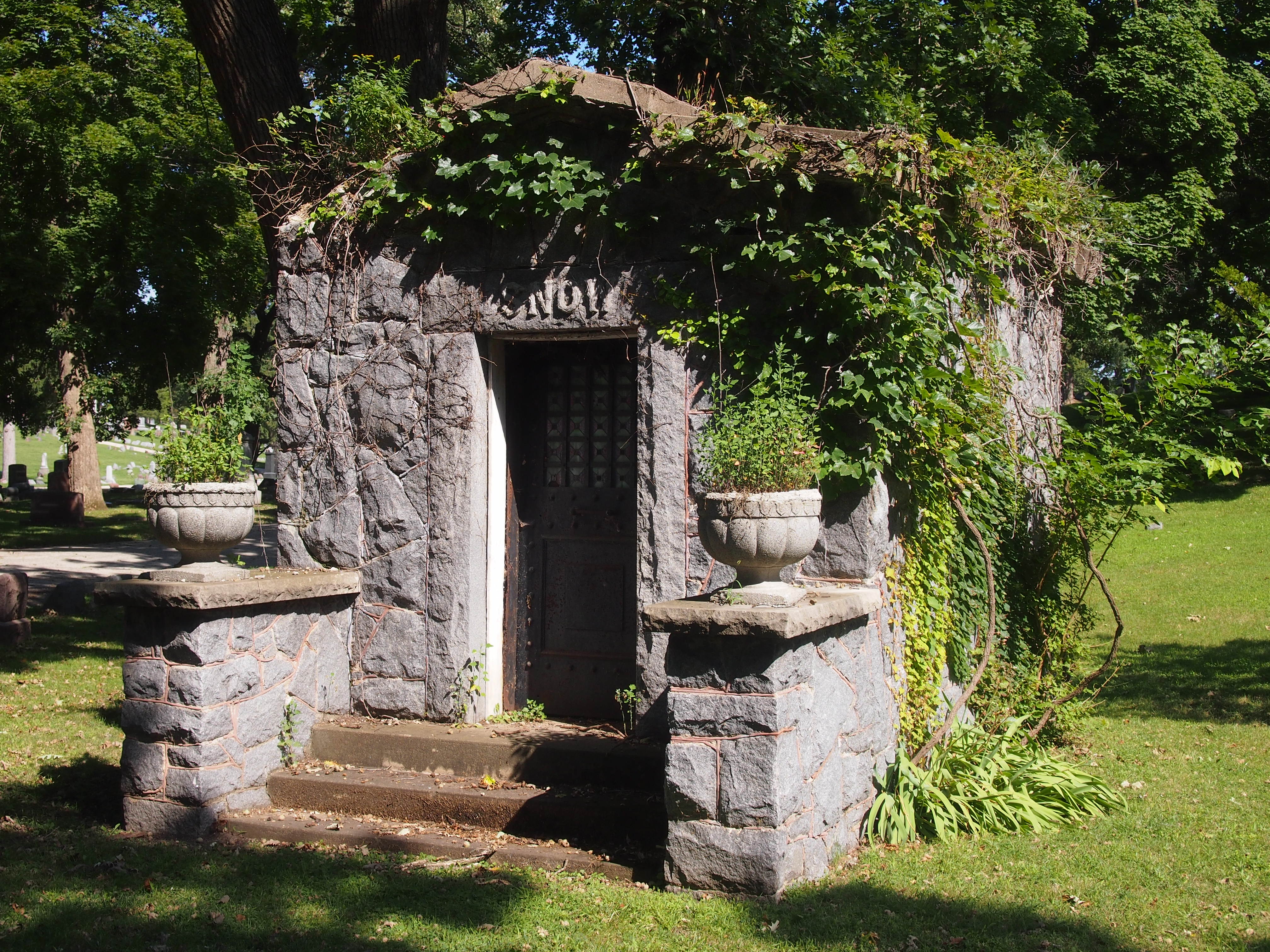
Bluff City Cemetery, August 2014There are some small mausoleums as well. I liked the Snow mausoleum, with its ivy.

Bluff City Cemetery, August 2014The Snows are under a large oak tree, and the entire time I was there it spat acorns at the ground near me.

A National Champion Red Ash

Not long ago I was tramping around a small section of Spring Valley that I’d never visited, and I found a plaque I’d never seen. That’s a minor thrill. Guess I’m peculiar that way about plaques. It says:

NATIONAL CHAMPION

RED ASH

Planted here April 29, 2001

The 450-year-old parent tree is in Dowiagiac [sic], MI

Schaumburg Park District

Alas, the park district misspelled “Dowagiac,” which is a town in southwest Michigan, in bronze. Further investigation reveals that this particular tree has descendants elsewhere, including on the grounds of the Pentagon. Sen. Carl Levin spoke at the planting of a red ash there on September 10, 2002, as a memorial. Excerpts from his speech:

“The tree we plant this morning, like the other eight planted over the weekend, are actual parts of the largest – and probably oldest – red ash tree in America. That champion tree is located in Dowagiac, Michigan.

Buds from that tree were taken and propagated by the Milarch Family Nursery in Copemish, Michigan, which seven years ago launched an inspired initiative called the Champion Tree Project. The purpose of the project is to take buds from America’s “champion” or historically significant trees and propagate them in “living libraries” throughout the country.

“ ‘Champion’ trees are the largest of their species. There are 826 species of trees in this country; Michigan has 49 champions.

“The champion red ash that these trees are part of is 95 feet tall. The trunk is over 21 feet around. It weighs somewhere between 160 and 200 tons. Most impressively, the tree is estimated to be about 450 years old.”

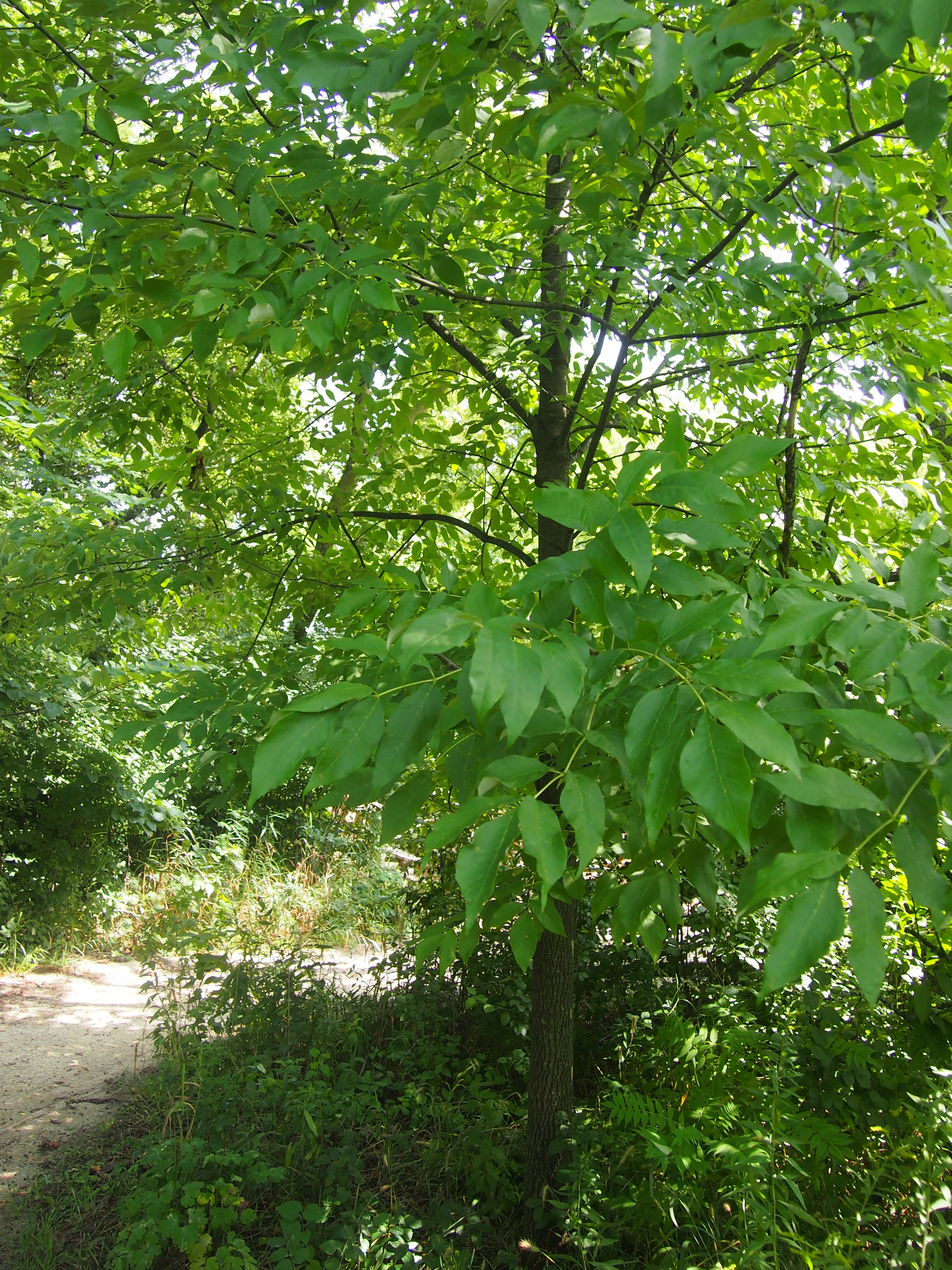
Here’s the Spring Valley red ash. It’s got a ways to go to be so tall and so heavy, but maybe it will as the centuries pass.

Red Ash, Schaumburg, August 2014Apparently, the Champion Tree effort is still going on, though known as the Archangel Ancient Tree Archive.

Meanwhile, far from all red ash trees, large and small, I was happy to read the following from NASA yesterday: “The Pluto-bound New Horizons spacecraft has traversed the orbit of Neptune. This is its last major crossing en route to becoming the first probe to make a close encounter with distant Pluto on July 14, 2015. The sophisticated piano-sized spacecraft, which launched in January 2006, reached Neptune’s orbit — nearly 2.75 billion miles from Earth — in a record eight years and eight months. New Horizons’ milestone matches precisely the 25th anniversary of the historic encounter of NASA’s Voyager 2 spacecraft with Neptune on Aug. 25, 1989.”

Jupiter and especially Saturn are show-offs, but Uranus and especially Neptune have a quiet majesty. I remember well seeing the pictures of Neptune’s blue orb in the pre-Internet newspapers and magazines of 1989. These days, of course, you can find images of Neptune easily.

RIP, Wayne Grothe

Dark clouds most of the day promising rain, but not delivering, at least not as of about 6 p.m. Cool air did blow through, however, ending a short series of humid days. It felt like the tropics out there for a while.

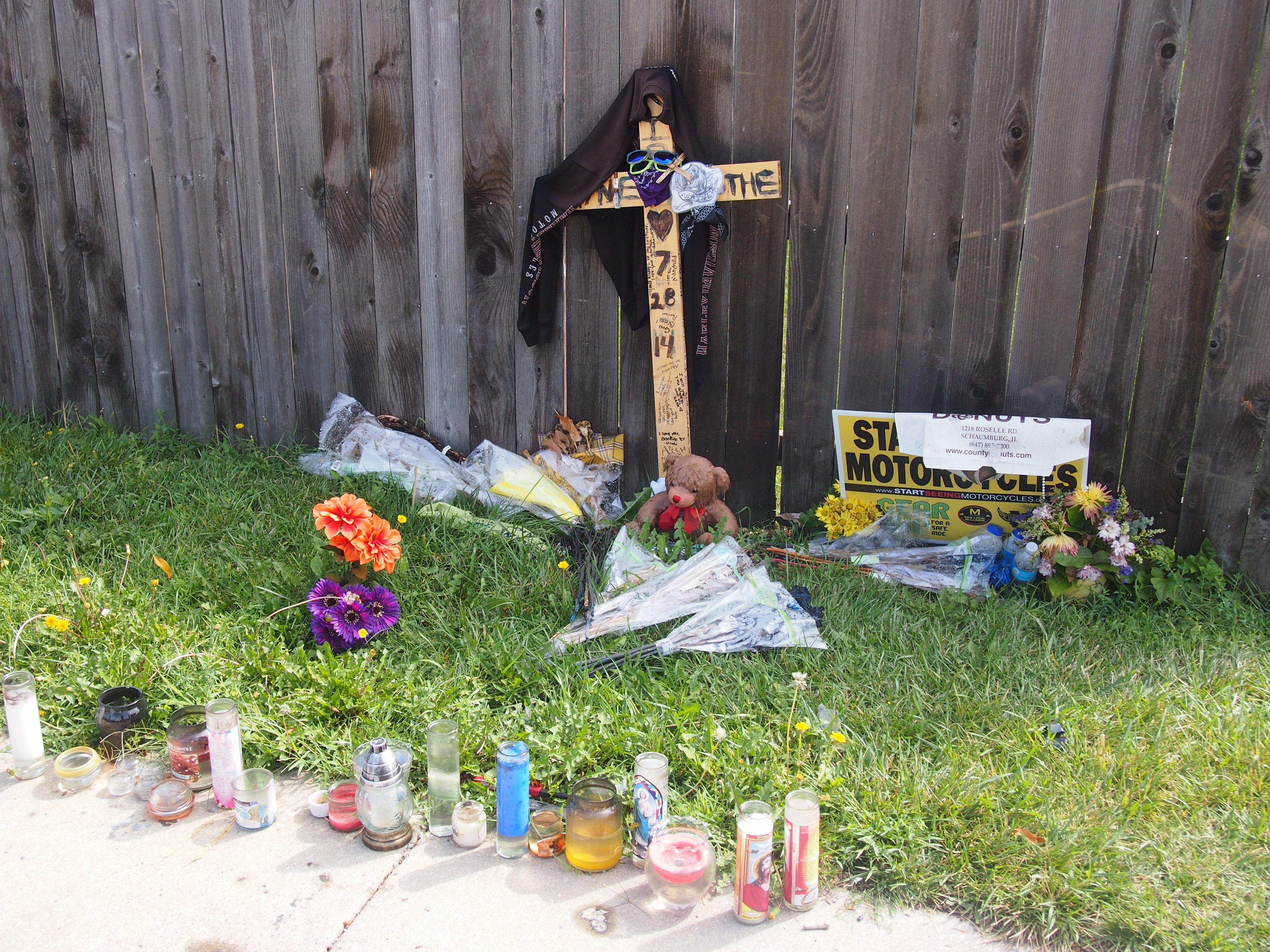
All too often, I see spontaneous memorials beside the road. Their frequency is sometimes haunting, such as the white crosses every few miles along some highway stretches in the Dakotas. A few days ago, I stopped to take a closer look at a memorial that’s at an intersection I often pass through. In fact, I would have passed through the day of the fatal accident – July 28 – but the road was closed.

Wayne Grothe memorial Aug 2014Next to the road, another sign.

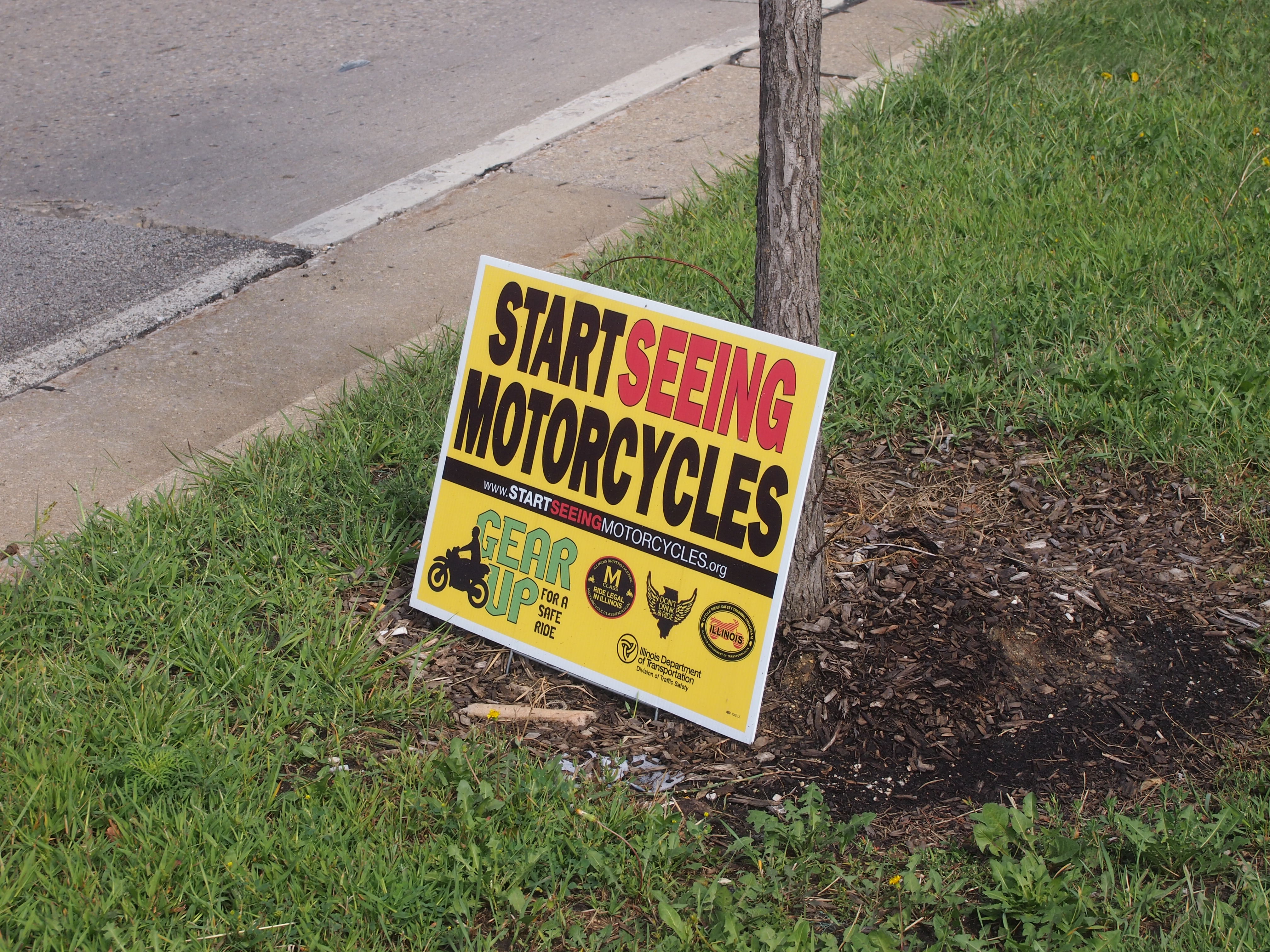
Start Seeing MotorcyclesAll I know about the accident is what I’ve read: “A motorcyclist killed in a crash with another vehicle in Schaumburg Monday afternoon has been identified by Schaumburg police,” said the Daily Herald the next day.

“Wayne Grothe, 23, of Hoffman Estates was riding a motorcycle when it collided with a four-door Taurus driven by a 77-year-old Schaumburg woman just before 1 p.m. near the intersection of Roselle Road and Hartford Drive… The female driver was taken to Alexian Brothers Medical Center in Elk Grove with minor injuries.

“Roselle Road between Weathersfield Way and Wise Road was closed for several hours while police investigated.

“No charges have been filed in the crash and the investigation continues.”

Summer of 1969. Maybe.

Terrific storm early Saturday afternoon. I watched most of it from the front entrance of a Schaumburg Park District facility, outside the building but under a sturdy overhang. We didn’t want to venture out into the parking lot for a while, so strong was the lightning and fierce the rain (though not much wind, oddly). One crack of lightning – right at the beginning of the rain, and unexpected – seemed like it was just across the street. I was looking directly at it. A woman crossing the parking lot was even more startled that I was, but it didn’t hit her.

About 45 years ago, my mother, my brothers and I went on a driving vacation around  the South. I was eight, and I’d been staying with my uncle and aunt in Ardmore, Okla. for a while previously (arriving there the day Neil Armstrong and Buzz Aldrin walked on the Moon), so the trip might have been late July, early August.

My mother and brothers came up to Ardmore, and from there we headed east through Arkansas and Tennessee, getting as far as Chattanooga. Then we returned to Texas by way of Georgia (briefly), Alabama, Mississippi, and Louisiana. This must have taken about a week. I remember staying in a motel somewhere west of Memphis, and a five-story hotel in Chattanooga. We also stayed with relatives in Philadelphia, Mississippi. We must have stayed with my mother’s friend near Houston, too, but I don’t remember that, or any other place we might have stayed.

We went to Shiloh and Chickamauga, and the Hermitage in Nashville, and I don’t remember where else. We saw a lot of signs that said some variation of SEE ROCK CITY. According to this site, there are only about 100 of them left. Tennessee and some of the other states involved ought to pony up some funds to help preserve what’s left, since it’s a part of Southern heritage.

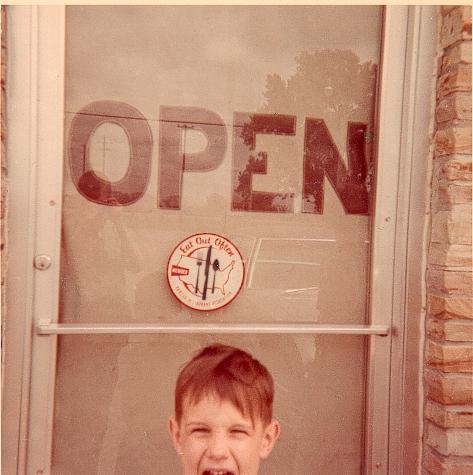
There seem to be only a handful of images from the trip. Jay took this one outside some eatery. I used to dislike the picture, but I like it now. Look carefully under the “O” and you can see a reflection of Jay taking the picture.

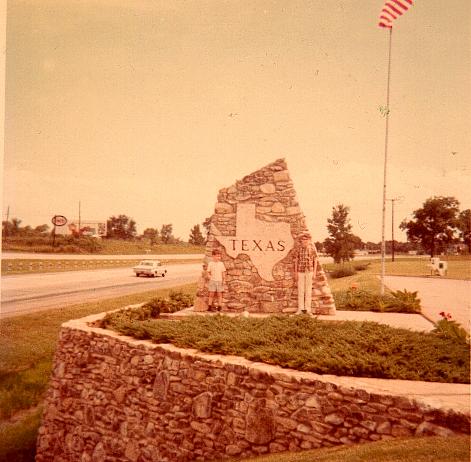
1969This is at a Texas welcome center. I’m on the left, my brother Jim on the right. Taken when we returned? That’s what I assume, since the only time we crossed a Texas border together was on the return. Before that I’d been in Oklahoma. Hard-to-see detail: on the other side of the highway is an ad for Esso, complete with a tiger.

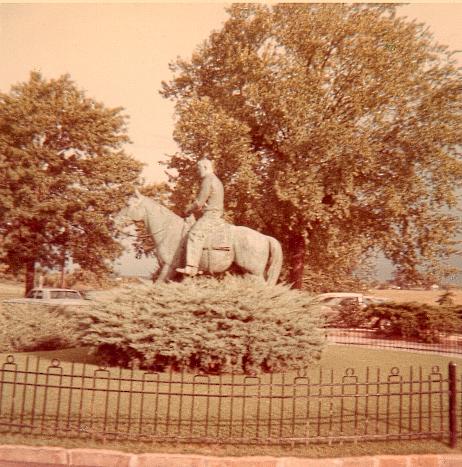
TexasborderJay tells me the following two pictures are the Will Rogers Memorial Museum, which is just northeast of Tulsa. I’m not entirely sure we visited there in 1969, but it’s also entirely possible. I have no memory of the place.

aug1969.1An equestrian Will. Fitting for a man so adept at rope tricks, I suppose, though you’d think he’d be holding a lasso.

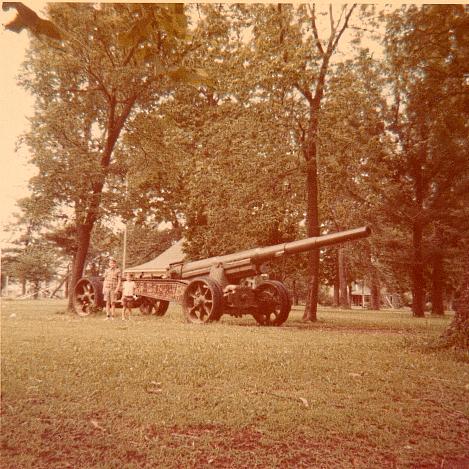
aug1969.2Here’s one I can’t pinpoint in time or space, and Jay can’t either.

aug1969.3I’m with Jim, in front of what seems to be a WWI-vintage cannon. It’s clearly summer. That’s about all I can tell. All the back says is Summer 1969, but even that’s suspect, since I wrote it sometime in the mid- or late ’70s. It’s easy to misremember.

Team of Rivals

Rain early in the morning, again in the afternoon, and more promised for Friday morning. You could call it a rainy spell. Just when the grass and other flora were looking a little thirsty from the intermittent August heat.

The other day I picked up Team of Rivals at a resale shop. Hardcover version, in decent condition. Cost: $1.75 plus tax. Considering my known interest in presidential history, it’s about time I got around to reading some Doris Kearns Goodwin. I haven’t gotten far yet, but so far so good. I’m looking forward to a detailed account of the Republican Convention of 1860. Remarkable how history turns on such seemingly small events.

And I’m going to wonder, where did I see Goodwin speak? I know I did, at some real estate convention or other in the early or mid-2000s, back when I used to go to such things more regularly. Can’t remember exactly when or where, though. Speakers I saw at one time or other included her, but also the elder George Bush (post-presidency), James Cavill, Newt Gingrich, James Lovell, and Colin Powell.

Not a Multi-Legged Creature

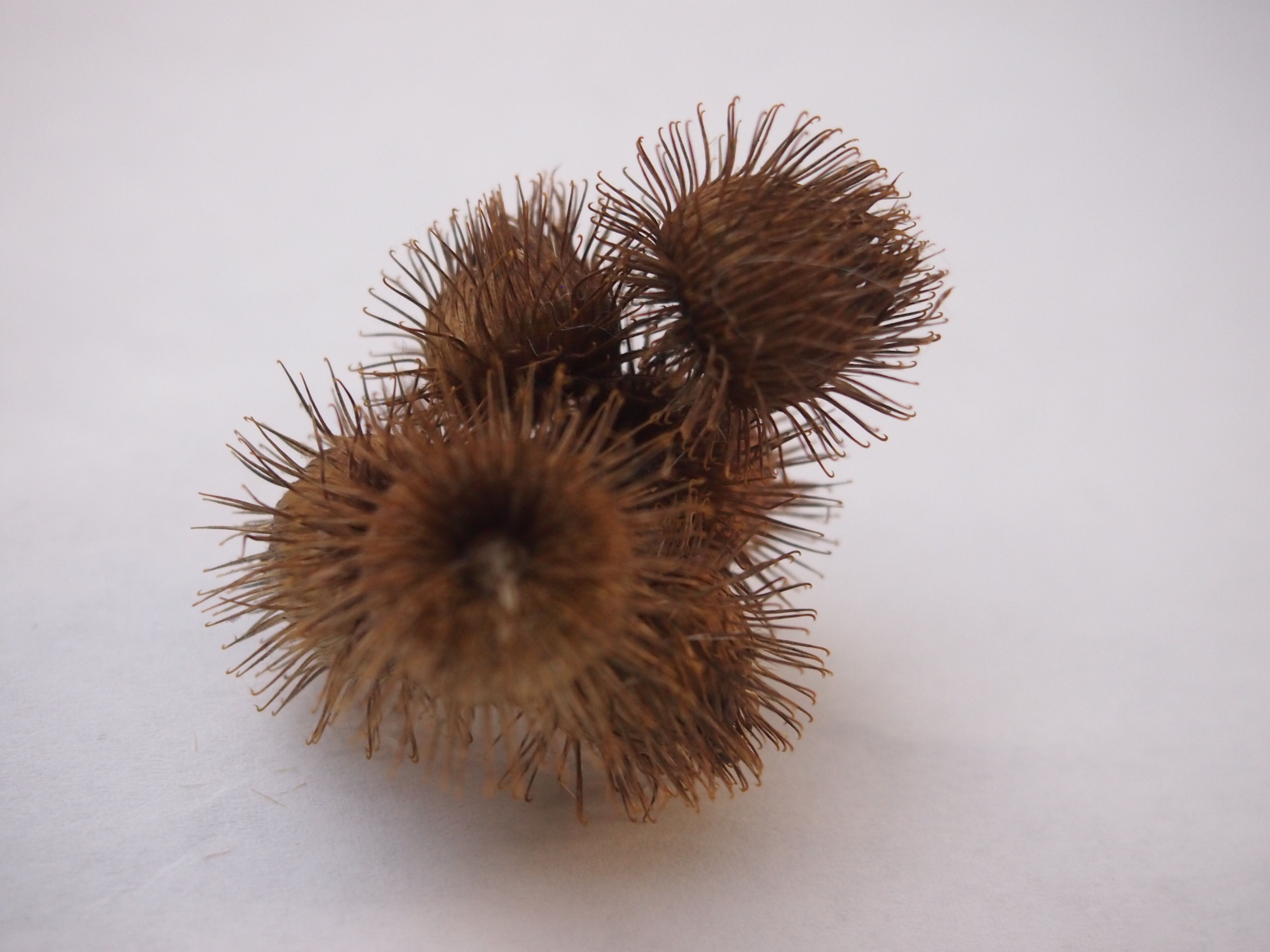
Returning from my garage this afternoon, I discovered this clinging to one my sleeves. It startled me for a split second. “Sir, there is a multi-legged creature crawling on your shoulder.”

burr, August 2014It’s a burr from a large volunteer plant that grows next to our deck. The picture I took distorts the thing itself, as pictures often do. The burr measures only about an inch and a half in each direction.

It’s from the same plant that’s been growing there for years – here’s an image from June 2007 (and the plant’s slightly visible in the day before yesterday’s pic, behind the US flag). By late August, its stems and leaves are browning, leaving behind a lot of burrs. They’re gentle burrs, just grabbing onto your clothing, but not sharp enough to stab you. The Velcro of the plant world.

Water, Water, Water

It might be the summer of pouring a bucket of ice water over your head – which will probably be remembered in the way flagpole sitting and goldfish swallowing are – but I’m not participating. The first I heard about it (ice water pouring, not flagpole sitting) was yesterday as I was driving Lilly and her friends somewhere. They were talking about it. But I would have heard about it today anyway, since I noticed something about it online at a place I usually visit.

I spotted peewee football players practicing in the park visible from my deck today, instead of baseball players. Some baseball will still be practiced and played in the weeks ahead. But peewee footballers mean the end of summer is nigh. So does the beginning of school. Lilly starts Thursday; Ann next Tuesday.

Even so, it’s still summer. This is the kind of thing you see during that season.

water truck

Not long ago, the village replaced some turf they’d dug up at the edge of my front lawn. Every now and then, a water truck shows up to water it.