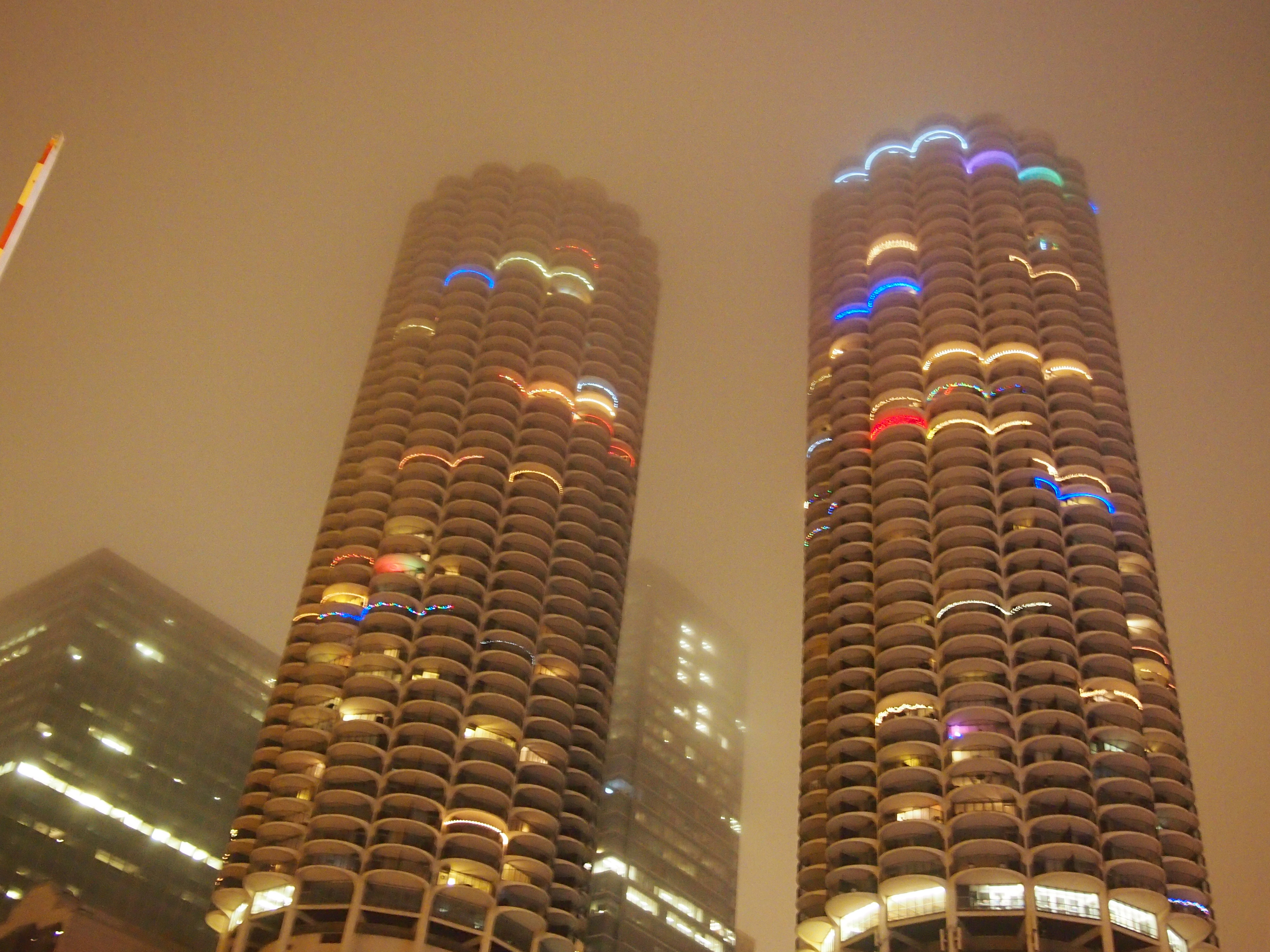
St. Luke’s Lutheran Church, Park Ridge

You might call St. Luke’s Lutheran Church at 205 N. Prospect Ave. in Park Ridge an example of Suburban Gothic, but apparently that’s the name of a movie that came out last year. Anyway, it’s a handsome English Gothic-style church in the suburbs. We were back in Park Ridge Saturday afternoon for the last stop on the Churches by Bus tour.

St Luke'sThe building has the distinction of being designed in the late 1920s by Elisabeth Martini (1886-1984), the first woman to be the proprietor of an architectural firm in Chicago. Mostly she did houses, but it seems that she was a member of this church, and did the design work for a payment of $60 a month for the rest of her life, which turned out to be another 50-odd years, though it might not have been adjusted for inflation.

Adjoining the sanctuary (next to the bus in my picture) is a 2010 addition by Douglas E. Lasch of Jaeger, Nickola, Kuhlman & Associates, which replaced a smaller addition from the 1970s and blends in remarkably well with the original structure. He has his own shop now, Faith Environ Studio, which focuses “primarily on providing architectural services to faith-based and other non-profit clients.”

St. Luke’s sanctuary has an elegant interior.

St Luke'sThe stained glass windows tell of the Old and New Testaments. I’m sure the representation of Moses in one of the windows was meant seriously, but I can’t shake the idea that he’s grinning. Maybe it’s the eyes. “See what I have here! Commandments! Ten of them! Aren’t they terrific?”
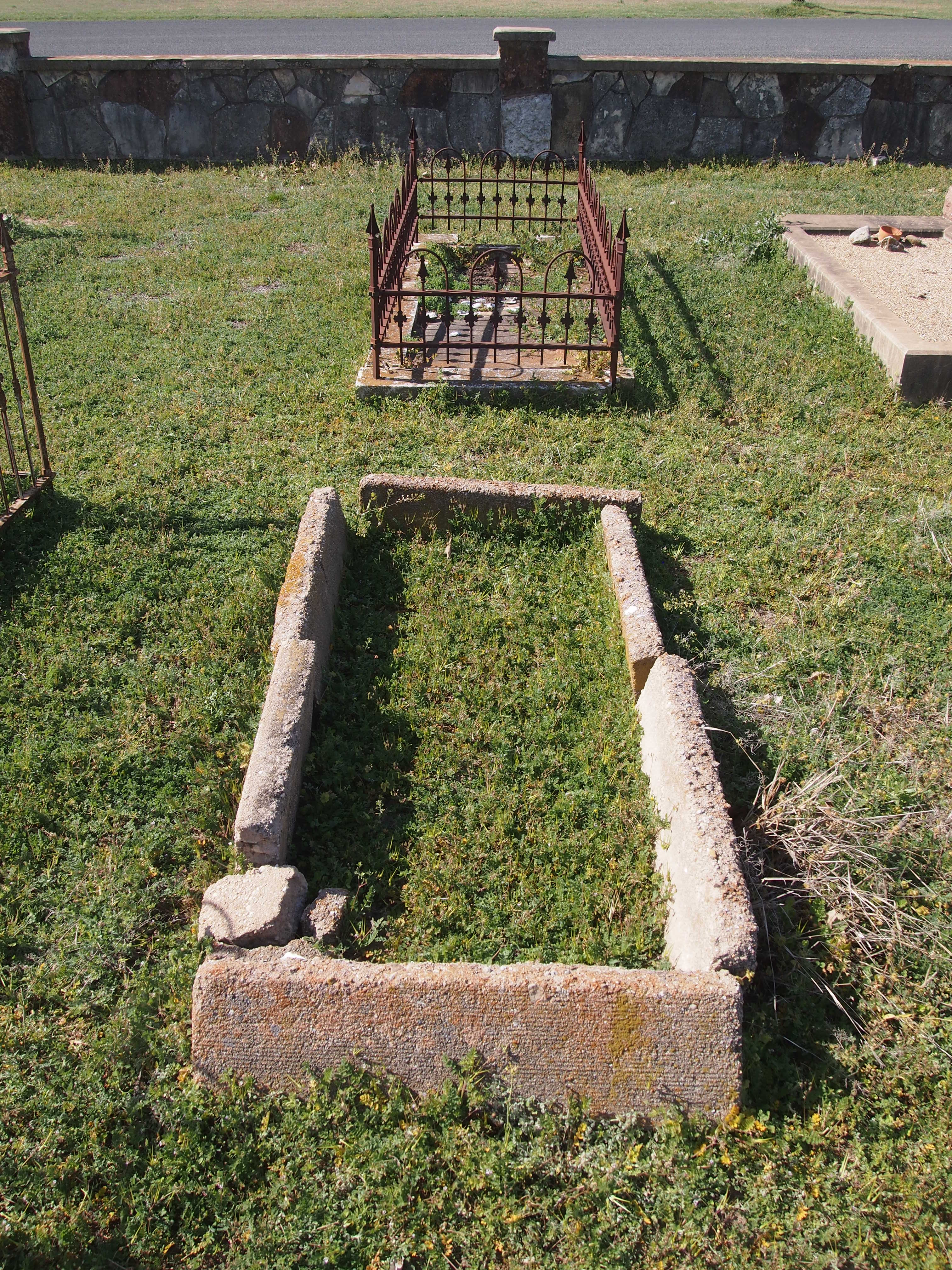
MosesLuther, on the other hand, looks fairly serious, but not grim.

LutherI suppose those are the 95 theses on the door. A little hard to read at this scale. Wonder if they’re microprinted in the original Latin? I didn’t check. Never mind, the text is easily available on line in Latin and English (and other languages).

I haven’t looked at the theses since sometime in a college history class, so I was amused to find No. 86: “Again, ‘Why does not the pope, whose wealth is today greater than the wealth of the richest Crassus, build this one basilica of St. Peter with his own money rather than with the money of poor believers?’ ”

Ah, if only in our time and place we could mention Crassus without having to explain who he was. Then again, if those poor believers were able to understand that they were doing their little part to build the grandest church in Christendom, would they have been particularly upset?

One more thing about St. Luke’s in Park Ridge, which I read about later. It’s the home to the Bottle Band. Odd the things you find out. More about the band here.

Our Lady of Hope, Rosemont

The newest church on our bus tour last Saturday was Our Lady of Hope, a Catholic church at 9711 W. Devon Ave., just barely in the boundaries of the small suburb of Rosemont, which is better known for its proximity to O’Hare and various entertainment venues. In fact, while I might be wrong, it seems to be the only church with a location in Rosemont, based on a Google map search.

Built only in 1986 (which seems new to me), the church counts as a “Modern Prairie” style, according to the Chicago Architecture Foundation. “Modern Prairie designs are often devoid of frills and decoration, but build character through asymmetrical shape, and large open spaces,” the CAF says.

Frill-less indeed, especially on the outside.
Our Lady of HopeAlso true to its prairie-style forerunners, the entrance isn’t immediately apparent, but once you go in, you do find large open spaces. I liked the curve into the nave — maybe this space counts as the narthex, though probably that terminology went out with traditional church decor.
Out Lady of HopeA semicircle of seats faces the altar. The lighting was such that I didn’t get a decent shot of the altar. The seats, on the other hand, were quite visible.
Our Lady of HopeThere was some representational art, but not much. Such as this group standing among plants.
Our Lady of HopeA young architect named Leslie Ventsch, working at the time for developer Opus Corp., designed the structure. These days he’s a design director at Gensler, according to LinkedIn. He won a Burnham Award in the mid-80s, for a different structure.

St. Joseph the Betrothed Ukrainian Greek-Catholic Church

Go to 5000 N. Cumberland on the Northwest Side of Chicago, and then to the back of the building at that address, and you’ll be looking at this.

St Joseph'sIn full, the English name of this church is St. Joseph the Betrothed Ukrainian Greek-Catholic Church. The church is part of the the Ukrainian Catholic Eparchy of Saint Nicholas of Chicago, a diocese of the Ukrainian Greek Catholic Church. St. Nicholas Cathedral, which we visited last fall, is the mother church of this group. For simplicity, I’ll call this church St. Joseph’s, which is an Eastern church in full communion with Rome.

As a building, St. Joseph’s is an impressive use of glass, concrete and steel, completed in 1977, which such materials weren’t always so impressively used (and they still aren’t). The docent asserted that some people are reminded of rockets when they look at the church, but I think of those pneumatic tubes you use at drive-through banks. Still, they work somehow as building elements.

St Joseph'sThere are 13 domes, as often the case in Eastern churches, the center for Christ and 12 others for the Apostles (I assume that includes Matthias, who took Judas’ place). A Ukrainian-born Philadelphia architect named Zenon Mazurkevycz (Mazurkevich) designed the church. He seems best known for St. Joseph’s, though he’s obviously done other structures.

St Joseph'sThe inside is ornate and also light-filled, on account of the tall windows on all sides. I assume the scaffolding over the sanctuary are temporary.

St Joseph'sMazurkevycz is quoted, in this blog at least, as saying, “We are dealing with a very functional architecture today no matter what we do, but church architecture is aesthetically functional more than anything else… It probably is the last architecture, as our buildings become more regimented, in which you can be exuberant.”

Exuberant is a good word for this church, inside and out.

Holy Resurrection Serbian Orthodox Cathedral

Holy Resurrection Serbian Orthodox Cathedral, at 5701 N. Redwood Dr. in Chicago and our tour’s second stop, isn’t far from O’Hare. Even if we hadn’t known that before visiting it, we would have found out standing outside the cathedral listening to the docent describe some of its features. Every few minutes, a plane would noisily fly by and she’d have to pause. In the background, Kennedy Expressway noise was also noticeable.

As we approached the building, I recognized the domes on top. They’re visible from the Kennedy. I’d seen them many times, but never knew they were part of this particular religious edifice. Pictures of the exterior and its domes are here, though more colorful than I saw.

This is the entrance, on the west side of the church, of course.

Holy ResurrectionHoly ResurrectionRadoslav Kovacevic designed the building, which was completed in 1973. According to his 2002 obit in the Tribune, the Belgrade-born Chicago architect “designed about two dozen houses of worship for Russian, Greek, Serbian, Protestant and Roman Catholic congregations,” as well as schools and commercial buildings. His funeral mass was held at Holy Resurrection.

Holy ResurrectionHere’s the interior center dome and its Christ the Almighty and chandelier. Not sure if that counts as a horus, since it isn’t one of those circular jobs with depictions of the saints and apostles.

Holy ResurrectionAs you’d expect, the walls sported many murals, such as this one depicting the Raising of Lazarus. Note the fellow unwrapping Lazarus. He seems to be covering his nose. Lazarus had been dead a while, after all. I didn’t know until recently that Lazarus Saturday, the day before Palm Sunday, is celebrated in the Orthodox tradition.

Holy ResurrectionThe church sports plenty of excellent mosaics, too.

Holy ResurrectionTo the left (observer’s left, to the north) of the iconostasis is St. Sava.

Holy ResurrectionThat’s a detail from this mosaic, which is a reproduction of a painting called “Sava blessing Serb youth.”

St SavaThe original painting dates from 1921, the creation of Serbian artist Uroš Predić. I’d never heard of the saint nor the artist before. Remarkable the things you can learn just looking around.

First United Methodist Church, Park Ridge

Late yesterday morning, Yuriko and I were in Park Ridge, Ill., an inner northwest suburb of Chicago. On the whole, it’s a handsome suburb, well marked by prosperity. A lot of rain had fallen on Friday as thunderstorms rolled through, but by Saturday morning the day was well on its way to being pleasant and clear.

So it was a good day to be on the Chicago Architecture Foundation Churches by Bus tour, as we did last year. This year, the tour visited six churches on the Northwest Side of Chicago and two of its adjoining suburbs: Park Ridge as well as the diminutive Rosemont, which is better known for its convention center and theaters and restaurants near O’Hare.

We were on Bus # 4 again. Our first stop was First United Methodist Church at 418 W. Touhy Ave. in Park Ridge.
First United Methodist Church, Park RidgeAs suburban congregations go, it’s an old church, founded in 1856, with the original sanctuary built in 1857. The church building we saw dates from the 1920s, a Tudor Revival design by two men once in Daniel Burnham’s employ, Thomas Tallmadge and Vernon Watson. Inside, it isn’t particularly ornate.

First MethodistExcept for the six large stained-glass windows, completed in 1940. They were fashioned by Conrad Schmitt Studios in Wisconsin, which is apparently still around, and designed by a young German immigrant named Conrad Pickel, whose children run a stained-glass studio in Florida.

Stained Glass!The organ in back is much newer, installed only during this century. The organist (seen looking down at the sanctuary) played a bit for us. It has an excellent sound.
Big organ!The church has a couple of other distinctions besides its design. Hillary Clinton attended church here growing up in Park Ridge, and it’s also home to one of the first  Boy Scout Troops in the nation (the docent claimed it was the first), continuously active since 1912.

Pacific Northwest Etc.

For once, I happened to be on the right side of the airplane when the pilot pointed something out. Namely, one of the massive forest fires burning on August 21 in the mountains of Washington state. It was an enormously tall, light gray cloud, reaching down toward the irregular ground below. If you looked carefully, you’d notice that very near the ground the cloud was tinged orange. I’d never seen the likes of it before.

Two days later, one of my ambitions on the road was to see Mount St. Helens, that storied volcano whose eruption captured the nation’s attention in the spring of 1980. No dice. When I got to the Mount St. Helens National Volcanic Monument visitors center, the ranger there told me that while I could drive to the lookout points, visibility was nil because of forest fire smoke.

The only volcano I saw on this trip was on a sign not too far from the famed volcano.

Washington state, Aug 2015I consulted my map and picked out something else in the vicinity to see. That turned out to be Mossyrock Dam in Lewis County, Wash.

Mossyrock DamNote the haze in the background. That was everywhere in the distance that day. Mossyrock Dam dates from toward the end of the U.S. dam-building frenzy of the 20th century, being completed in 1968 (the frenzy has moved to China in our time). It dams the Cowlitz River, a tributary of the Columbia, and its main purpose is hydroelectric production. According to a number of sources, Mossyrock is the tallest dam in Washington state. I’d have guessed the Grand Coulee Dam, but maybe it just gets better press.

While I was reading about the dam, I came across an article about some towns that were flooded by the creation of the lake. That’s interesting, but I was also reminded of hearing about the 1940s flooding of the town of Stribling, Tennessee. I’m pretty sure my cousin Cook Wilson of Mississippi told my brother Jay, and Jay told me. Or maybe Cook told both of us at the same time, but I would have been pretty young, eight or so.

I looked it up again, and Stribling is under Kentucky Lake, one of the Between the Rivers lakes created by the TVA. When I was a kid, I imagined that such a town included whole buildings covered with water, and if you dove down, you could open the doors and look inside flooded buildings. It didn’t occur to me that pretty much everything would have been carted away before the inundation, even if only for scrap, leaving only building foundations, if that. Which would soon be silted over.

I also saw some mossy trees near the Mossyrock Dam.
Washington state, Aug 2015And a sign that might as well have said ABANDON ALL HOPE… What’s the point of this road?
Go the hell awayThis is Riffe Lake, created by the Mossyrock Dam, and just as hazy that day.
Riffe LakeI noticed this plaque near the dam’s observation point. I’m glad the men have some kind of memorial. More than the many more who died building the Coulee seem to have gotten.
In MemoriamSomething else I didn’t get to do: the Portland Aerial Tram. On the morning I got to Portland, I could see it, but without a more detailed map, I couldn’t get to the damned thing. The part of town that’s home to one of the terminals, which is on the river, is essentially cut off from the rest of town by a freeway, and if you don’t know the exact way to get past that obstacle, you’re out of luck. By the late afternoon, when I had a better map and could find the tram, it was closed. Ah, well.
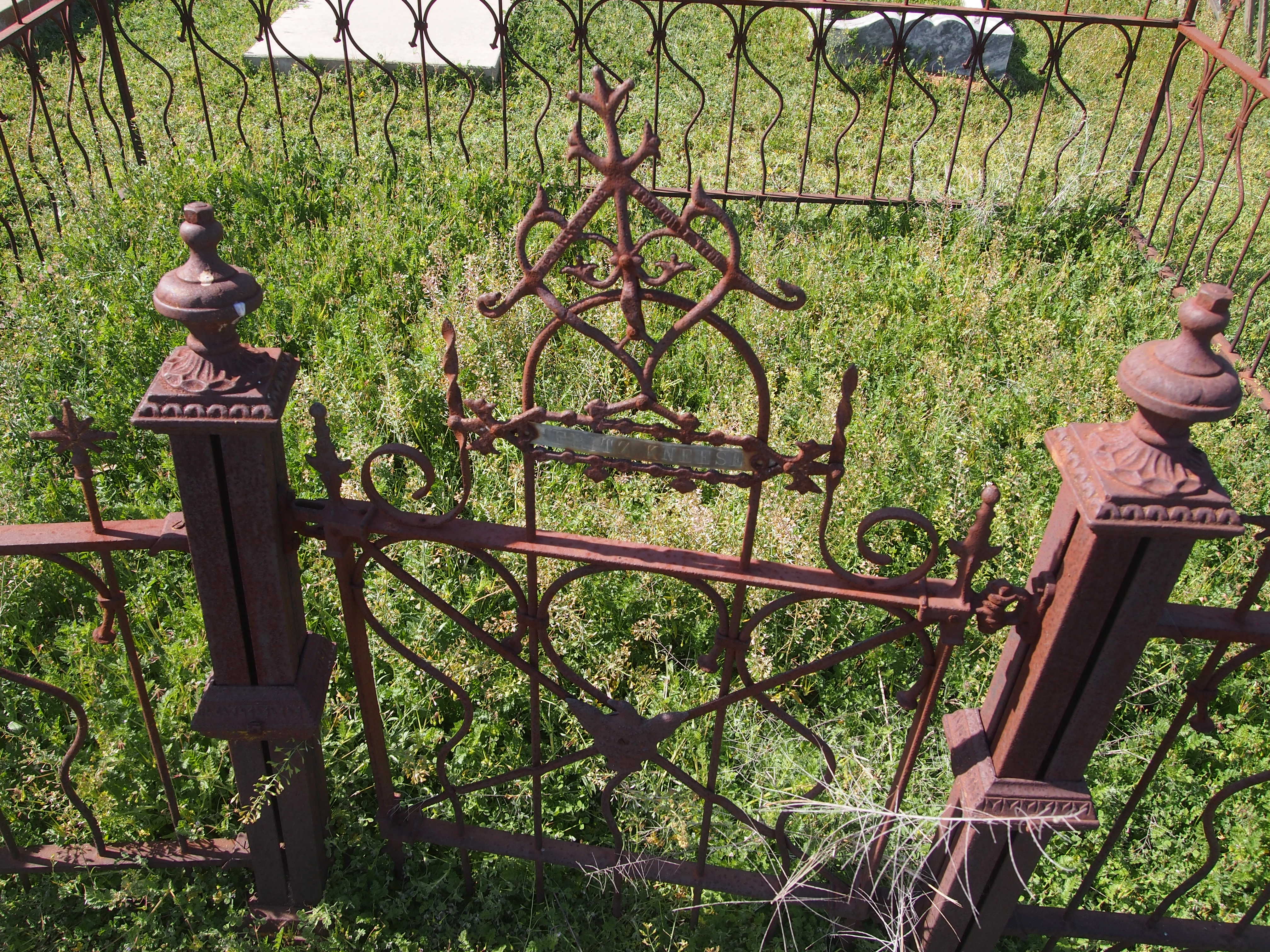
Portland Aerial TramPortland has a number of light rail lines, and I rode those just to ride them. I also noticed these signs near the lines, something I’ve never seen anywhere else.
PortlandUp north, one thing I noticed about major Canadian surface streets — or at least those streets in the Vancouver area — was that there’s no such thing as a double yellow line. BC 99 turns from a limited-access highway into a six-lane major street as you enter the city, and it’s divided by a single yellow line. It’s silly how unnerving that was, because the difference is only a few inches. Even so, all that separates you from a mass of cars and trucks coming at you is a thin yellow line instead of a double thickness of two. Canadian drivers must be used to it.

Know what else Vancouver doesn’t seem to have? Free parking. Not even at Stanley Park.
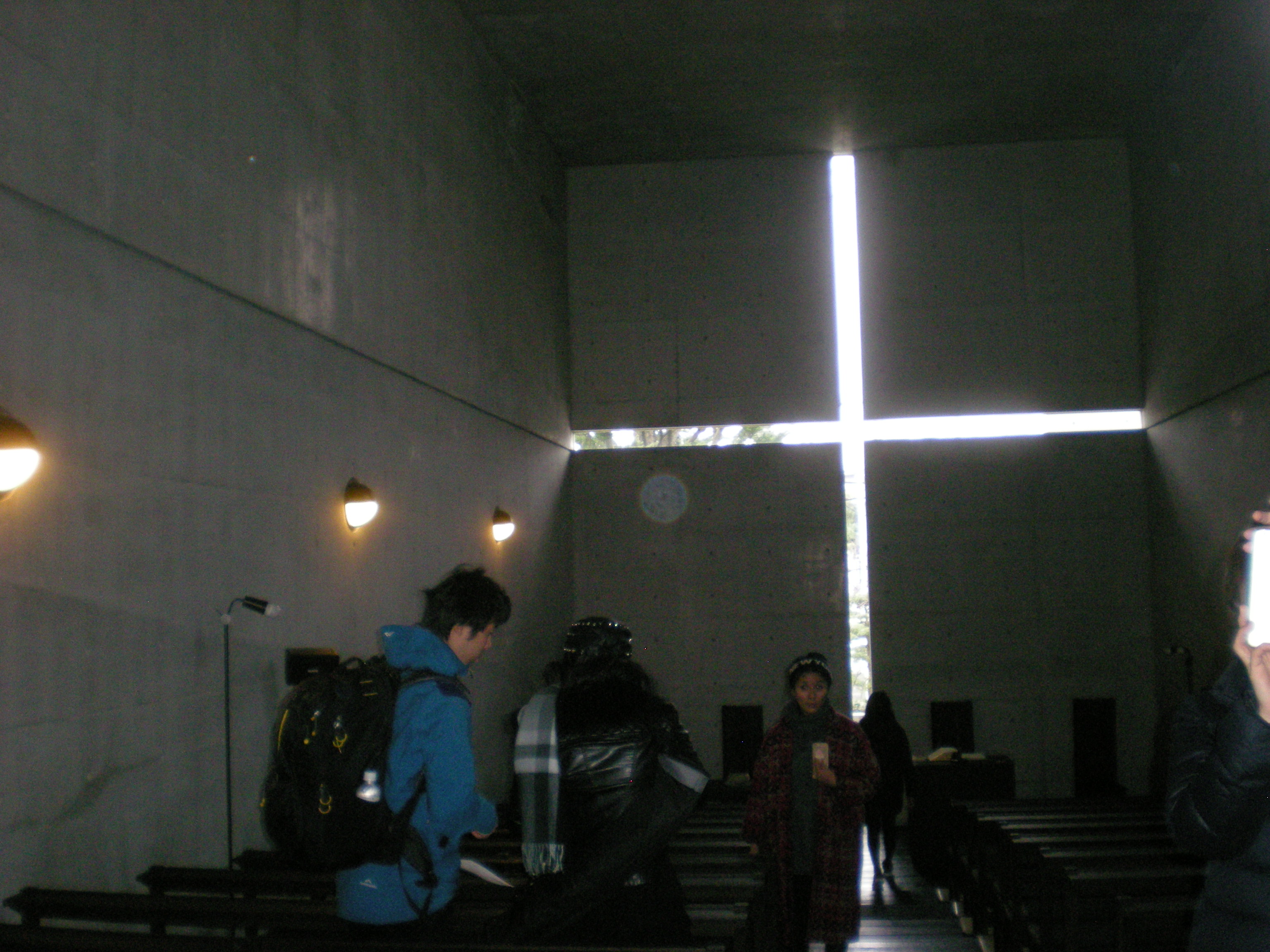
Finally, the Bullitt Center in Seattle, one of the greenest buildings in the nation, and a marvel of a building in that way.

The Bullitt Building, SeattleFor instance, that hat of a roof? An array of solar panels that produces more power than the building uses. As part of my work, I got a tour from the property manager. This is my writeup of the visit.

A Few Fine Portland Buildings

Drive into a large city for the first time, without the benefit of some GPS box advising you, and with few exceptions, it’ll be confusing for a while. The way the streets are connected seems to make little sense. They don’t match your maps, or rather, what you think you remember from looking at your maps. Signage isn’t what it should be (often just an impression, but objectively true in Boston). The route you want to go is under construction. There’s always someone right behind you when you need to make a critical decision about turning, but you’re never in the lane you need to be anyway.

It sounds like I’m complaining, but not really. Once the worst of the drive is over — because you do get where you’re going, usually — you’ve had the satisfaction of navigating through a strange place. You’ve also seen, even fleetingly, some things you wouldn’t have otherwise. GPS is fine if you have a meeting to attend or a plane to catch, but otherwise it obviates the need to guide yourself through new territory with maps, landmarks you know ahead of time, and your own sense of direction.

I plowed through parts all three cities — Portland, Vancouver, and Seattle — on different occasions last week, each causing me temporary location frustration. Each time when it was over, it was worth it. When I found a parking garage in downtown Portland early on the afternoon of August 22 and set out on foot, it was wonderful not to be in that car anymore, and taking in what the streets of Portland had to offer.

The first thing I took in was the air. A light haze and the smell of a not-too-distant fire hung everywhere. It wasn’t a choking haze, or even one that made me cough, but it carried a distinct odor. Smelled like one’s clothes after grilling, especially the burned wood. The source was the vast complex of forest fires then raging in eastern Washington — still raging — and which only a few days before had killed three U.S. Forest Service firefighters near Twisp, Wash., all young men.

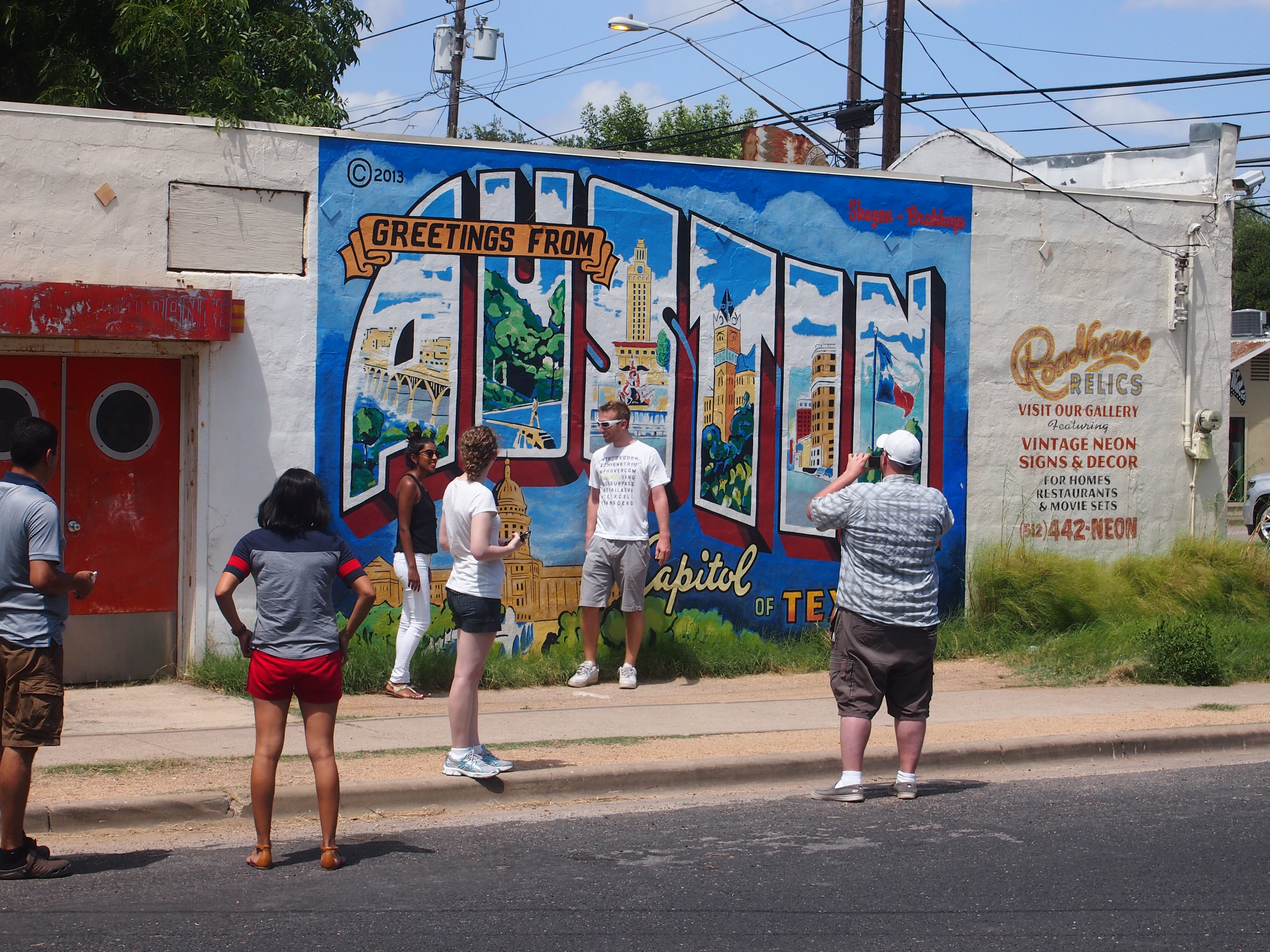
Portland is known for a number of things, such as trying to rival Austin for urban weird. More on that later. I want to point out that downtown Portland, and the nearby Pearl District, have some exceptionally fine buildings a century or more old that aren’t remotely weird. Such as the New Market Block (1872).

New Market, PortlandThe Blagen Block (1888).

Blagan Block, PortlandBlagan Block, PortlandThe Postal Building (1900).
Postal Building, PortlandAnd the Pittock Block (1914). Among a good many others, including more modern structures.
Pittock Block, PortlandI have a fondness for buildings with visible fire escapes.

Also worth noting: Portland’s a sizable industrial town. Not something you hear about much either. I spent the night at some distance from the city center at a motel on U.S. 30 near the Willametta River, a major tributary to the Columbia, both of which are working rivers. The motel was in an industrial zone, both for manufacturing and distribution, and I know there are other areas similarly industrial in greater Portland. It isn’t the largest industrial market even in the Northwest, but it’s large enough to have current and projected development of nearly 2 million square feet.

The Menil Collection

On the morning of July 11, Ann and I drove into the heart of greater Houston, starting near Hobby Airport and stopping en route at a doughnut shop (Shipley, which has good doughnuts and is genuinely regional), post office, and Half Price Books, all located previously by using that marvel of the age, Google maps. But not, I want to say, using any GPS gizmo or other cheaters’ device in the car, since we had none. Later generations — people alive now, probably — might marvel at that, since they won’t know how to get from point A to B, C, or D without a machine telling them how.

As an adult visitor, I’ve more-or-less bypassed Houston over the years. It could have easily been a much more familiar city if, say, I’d gone to Rice. Or if family or old friends lived there instead of San Antonio, Austin and Dallas. So driving through was both new and oddly familiar. The neighborhoods and the houses and shops feel like Texas, but the greenery’s different, so I’d find myself walking along noticing bushes I couldn’t quite place or drooping leaves that didn’t look quite right or flowers new to my eye. Something like wandering around in Australia, but not quite as weird.

Around 11, as the sun was high and hot, we arrived at The Menil Collection. Perfect time to spend in an air conditioned building looking at art-stuff. I wanted to see one of Houston’s renowned museums, but not an overwhelmingly large one, since I had other plans for the afternoon. The museum also had a locational advantage, with easy access to the highway I wanted to take out of town. It also has a large collection of surrealists.

Nothing like some surrealists to brighten your day. I’m impressed by the raw weirdness of them. How did they think of that? John and Dominique de Menil, the oil millionaires who founded the museum, seem to have an early and abiding interest in the likes of Giorgio de Chirico, Max Ernst, René Magritte, Man Ray, and Yves Tanguy. Plus a few Dalis and Miros, among others. Oddly enough, but fitting, there’s also a room devoted to objects that various surrealists owned that reportedly inspired the artists. Exotic curiosities, that is. I didn’t make any notes, but I’m pretty sure I saw a shrunken head or two and a spiny suit of pseudo-armor.

According to the museum literature, the de Menils were also taken with Cubism and neoplastic abstraction, but we must have missed most of those. Or maybe most of them were off display, since I understand that the museum rotates its 17,000 objects with some vigor. We did happen on a nice collection of ancient Greek and Roman objects and afterward some African art, housing in a gallery looking out on an enclosed and inaccessible (to us) garden.

The museum itself is a spacious, light-filled space, except for some of the intentionally darkened galleries. Renzo Piano designed the structure. Seems like he gets all sorts of plum jobs. This one dates from the mid-1980s. The Texas State Historical Association describes it well: “The main museum building is on a tract of nine city blocks purchased by the Menils in the Montrose section of Houston. In accord with Mrs. Menil’s desire for a building that was ‘small on the outside and big on the inside…’ At forty feet by 142 feet and a maximum height of forty-five feet, the building dominates the neighborhood without overwhelming it, due in large part to its grey wood siding, white trim, and black canvas awnings.

“Renzo Piano, perhaps best known for his high-tech Pompidou Center project in Paris, produced an equally innovative if less visually startling technical miracle for the Menil Collection. Working with engineer Peter Rice he achieved an interior illuminated by natural light that passes through glass and is deflected by a series of 300 ferro-cement ‘leaves,’ thus protecting the works of art from direct sunlight. A series of glass-enclosed interior gardens enhances the natural ambiance of the galleries.” Some good images of the place are here.

Next, we walked over to the Rothko Chapel, which is part of the Menil Collection as well. It’s a short distance to the east, tucked in among the houses and trees of an otherwise well-established middle-class neighborhood. You expect certain things from a chapel, and the Rothko Chapel, with its enormous black Rothkos staring back at you from all around the interior walls, is a marvel at contradicting your expectations. Even so, its form is still clearly that of chapel, without overt religious symbols. But you can also imagine that these big black shapes are fragments of the Void, or something just as unnerving, staring right back at you. Quite a thing for the artist to pull off.

Ann, being 12, wasn’t quite so impressed. She appreciated the air conditioning. The Rothkos, not so much.

Here’s an example of art-speak. Whoever wrote the Wiki description of the Rothko Chapel said this: “The Chapel is the culmination of six years of Rothko’s life and represents his gradually growing concern for the transcendent. For some, to witness these paintings is to submit one’s self to a spiritual experience, which, through its transcendence of subject matter, approximates that of consciousness itself. It forces one to approach the limits of experience and awakens one to the awareness of one’s own existence. For others, the Chapel houses fourteen large paintings whose dark, nearly impenetrable surfaces represent hermeticism and contemplation.”

Submit one’s self to a spiritual experience, eh? Approximates that of consciousness itself? Abstract expressionism is notorious for evoking the kind of reaction Ann had: Why is this rectangle of color art? Why is it hanging here? Is this a joke? I don’t feel that way. The colors are interesting, especially when you start to eye the texture. You know, color is the subject. Look closely and it’s more than a Pantone monocolor; there’s more than one shade. I’m glad people paint this way. But I don’t see the need to discuss the genre with the artistic equivalent of technobabble.

Further away, but not too far, is the Byzantine Fresco Chapel, also part of the Menil (now, I’ve read, simply called the BFC). Sad to say, there’s no Byzantine fresco there. After some years in place, it’s been returned to its home in Cyprus. Now the building will house temporary installations. The one occupying the space now is “The Infinity Machine.” A pretentious title, maybe, but it was intriguing. That made up for missing the fresco.

The installation was a rotating mobile about two stories high, going all the way up to the high ceiling (the room is large: about 116,000 cubic feet). It consisted of dozens of antique mirrors hanging by cords of varying lengths. Some mirrors were hanging high, some low. Some were large, some hand-held mirrors. A mechanism turned the mobile so that the mirrors rotated around the room about twice a minute. The was room was mostly dim, but changing lights from the side illuminated the whirling mirrors in endlessly alternating patterns.

You sat on a bench along the wall and watched. You could, in theory, go over to the mirrors and maybe be hit by some as they passed by, since there was nothing to separate you from them except an admonition from the sole guard in the room not to do that.

There’s an audio component as well: sound files made by converting data gathered by various spacecraft as they’ve explored the outer planets and their moons. Don’t ask me how that’s done, it’s beyond my understanding. Something NASA calls Spooky Sounds, but that’s not quite right. Anyway, together with the motion of the mirrors and the dance of the light, the installation is quite a show. The artists are a married couple from British Columbia, Janet Cardiff and George Bures. More about it here, include a video that’s better than nothing, but hardly does it justice.

The Astrodome Still Stands

When I was small, maybe six or seven, I saw the Astrodome. Even better, I went inside the Astrodome on a tour. We were visiting Houston in the late ’60s and in those days the domed stadium was a wonder of the world, or so it was called. Arguably so, since represented a modern innovation on an ancient structure.

I was especially impressed by how high the highest seats seemed to be. The stadium was empty during our tour, and I imagined that the people in the highest seats would need to hold on to their arm rests or they’d tumble out toward the field below. That’s the kind of thing a six-year-old might imagine, but my brother Jay, who was in his teens at the time, says the sheer size of the place was impressive even if you weren’t small.

For the record: The Astrodome stands 18 stories tall, covering 9.5 acres. The dome is 710 feet in diameter and the ceiling is 208 feet above the playing surface, which itself sits 25 feet below street level.

Flying into Houston’s Hobby Airport earlier this month, I looked down and saw NRG Stadium. I knew it was NRG Stadium because those three letters, which belong to a three-initial energy company, are emblazoned on the structure in a very visible way. It has a blocky shape. Then I noticed another, rounded stadium not far away.

Could it be — ? Yes, it was the Astrodome. Not used for anything now, but still standing after 50 years. Wankers may yet destroy it, as wankers are known to do (e.g., Penn Station), but I hope it’ll be repurposed here in the 21st century.

The East End Historic District, Galveston

The East End Historic District covers over 50 city blocks in Galveston. In July the time to take a stroll in such a place is early in the morning — not something we did — or late in the afternoon, which we did. It’s a delightful mix of housing styles, or as the East End Historic District Association puts it, offers views of “a towering pillar, shadowed silhouettes of ornate carvings, a splash of stained glass in a window, welcoming porches or a bit of wrought iron fencing.”

It also has trees large enough to move the sidewalks from underneath with their roots. Ann asked about the malformed sidewalks, and I explained that the roots did it slowly over the years.

The Julius Ruhl Residence, at the corner of Sealy and 15th and dating from the 1870s, has a widow’s walk. That’s just not something you see in suburban Chicago.
Galveston, July 2015Many houses sport fine porches. A good thing to have in pre-air conditioned times. Or even after air conditioning was invented.
Galveston, July 2015This is the J.C. Trube Castle.
Galveston, July 2015It dates from the 1890s. Its web site — the place is a commercial enterprise now, available for weddings and other events — says the building is “constructed of bricks covered by stucco mixed with Belgium cement creating a rusticated stone effect. The mansard slate roof with seven gables and the battlement tower give the historic home a castle distinction. The observation deck on the top of the tower offers a view of both the gulf and the harbor.”

The building is also one of the few remaining designs of architect Alfred Muller.  Nicholas J. Clayton didn’t design everything in 19th-century Galveston. The Prussian-born Muller also had the relative good fortune to die a few years before the 1900 hurricane.

More pretty houses.
Galveston July 2015Galveston July 2015Note the plaques to the left of the door on this house.
Galveston July 2015Galveston July 2015The upper one’s a little hard to read, but it says 1900 Storm Survivor. Hurricanes are serious business around here. Lest we forget, Ike slapped Galveston as furiously as Katrina hit New Orleans.